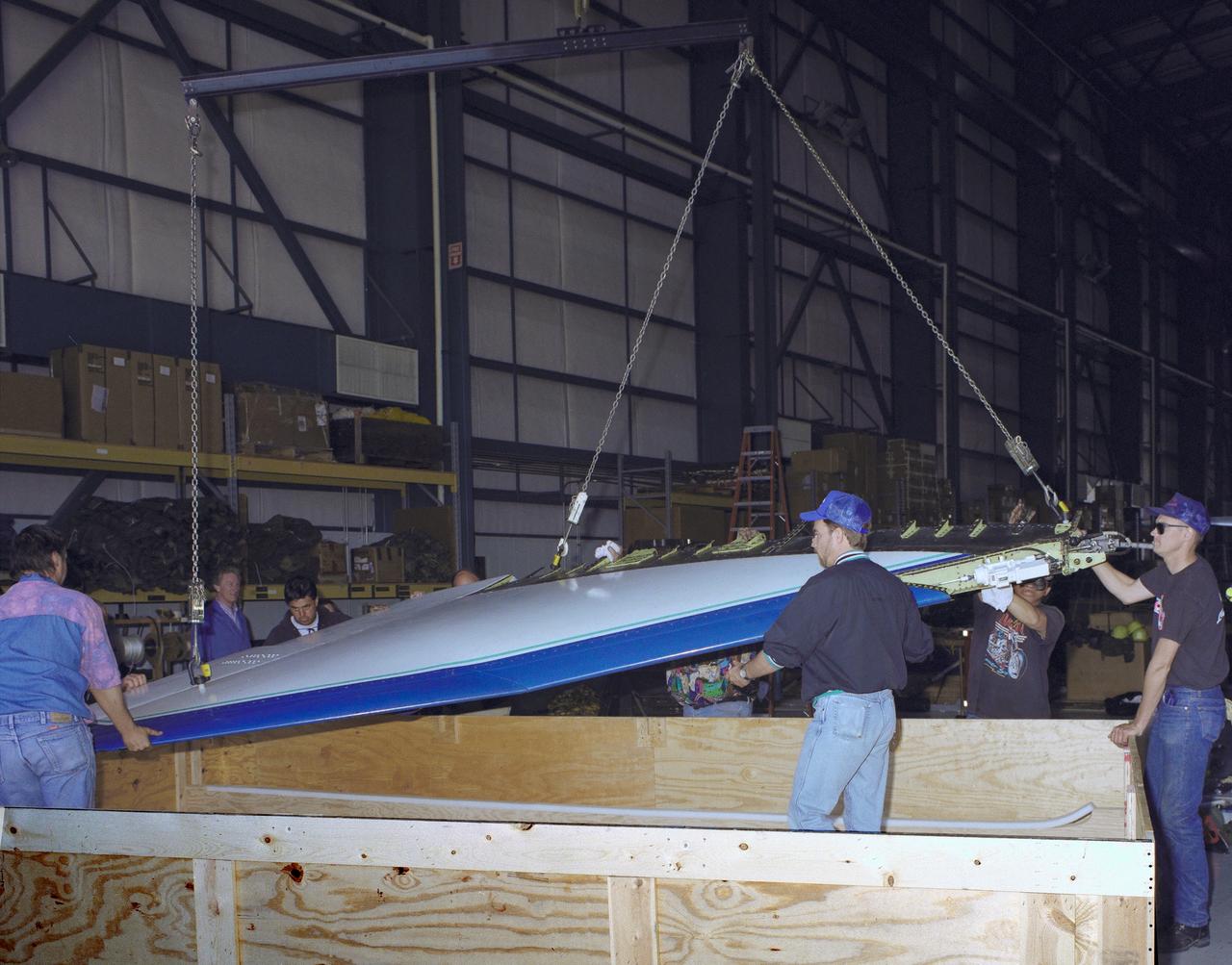
The right wing of the X-31 Enhanced Fighter Maneuverability Technology Demonstrator Aircraft is seen here being put into a shipping container May 18, 1995, at NASA's Dryden Flight Research Center, Edwards, California, by U.S. and German members of the program. To fit inside an Air Force Reserve C-5 transport, which was used to ferry the X-31 to Europe on May 22, 1995, the right wing had to be removed. Manching, Germany, was used as a staging base to prepare the aircraft for participation in the Paris Air Show. At the air show on June 11 through the 18th, the X-31 demonstrated the value of using thrust vectoring (directing engine exhaust flow) coupled with advanced flight control systems to provide controlled flight at very high angles of attack. The aircraft arrived back at Edwards in an Air Force Reserve C-5 on June 25, 1995, and off loaded at Dryden the 27th. The X-31 aircraft was developed jointly by Rockwell International's North American Aircraft Division (now part of Boeing) and Daimler-Benz Aerospace (formerly Messerschmitt-Bolkow-Blohm), under sponsorship by the U.S. Department of Defense and the German Federal Ministry of Defense.
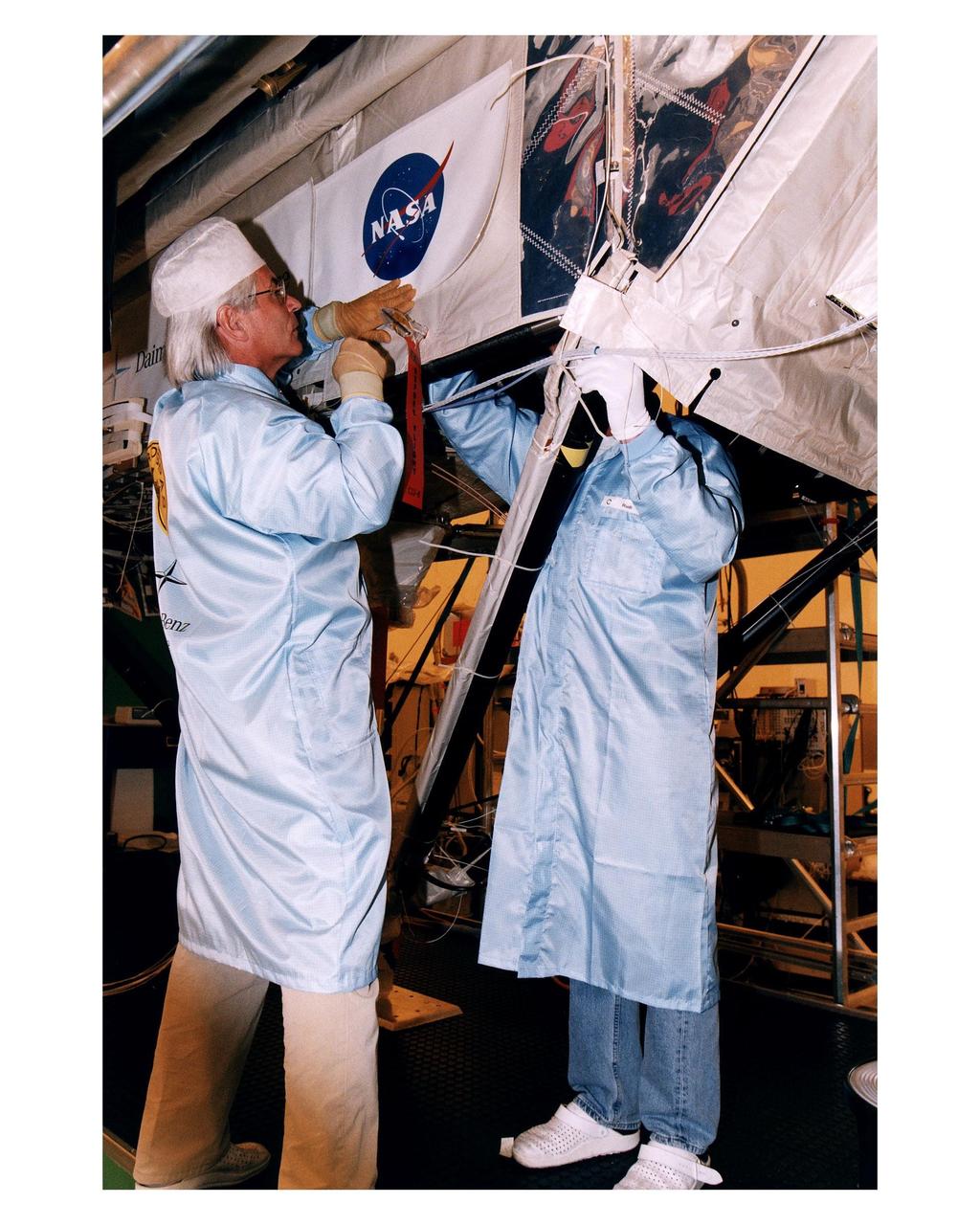
Employees of Daimler-Benz Aerospace in the Multi-Payload Processing Facility install insulation on the Cryogenic Infrared Spectro-meters and Telescopes for the Atmosphere-Shuttle Pallet Satellite-2 (CRISTA-SPAS-2) payload for the STS-85 mission. The CRISTA is a system of three telescopes and four spectrometers to measure infrared radiation emitted by the Earth’s middle atmosphere. During the 11- day mission, the CRISTA-SPAS-2 free-flying satellite will be deployed from the Space Shuttle Discovery and retrieved later in the flight. Also onboard the satellite will be the Middle Atmosphere High Resolution Spectrograph Investigation (MAHRSI) to measure ultraviolet radiation emitted and scattered by the Earth’s atmosphere
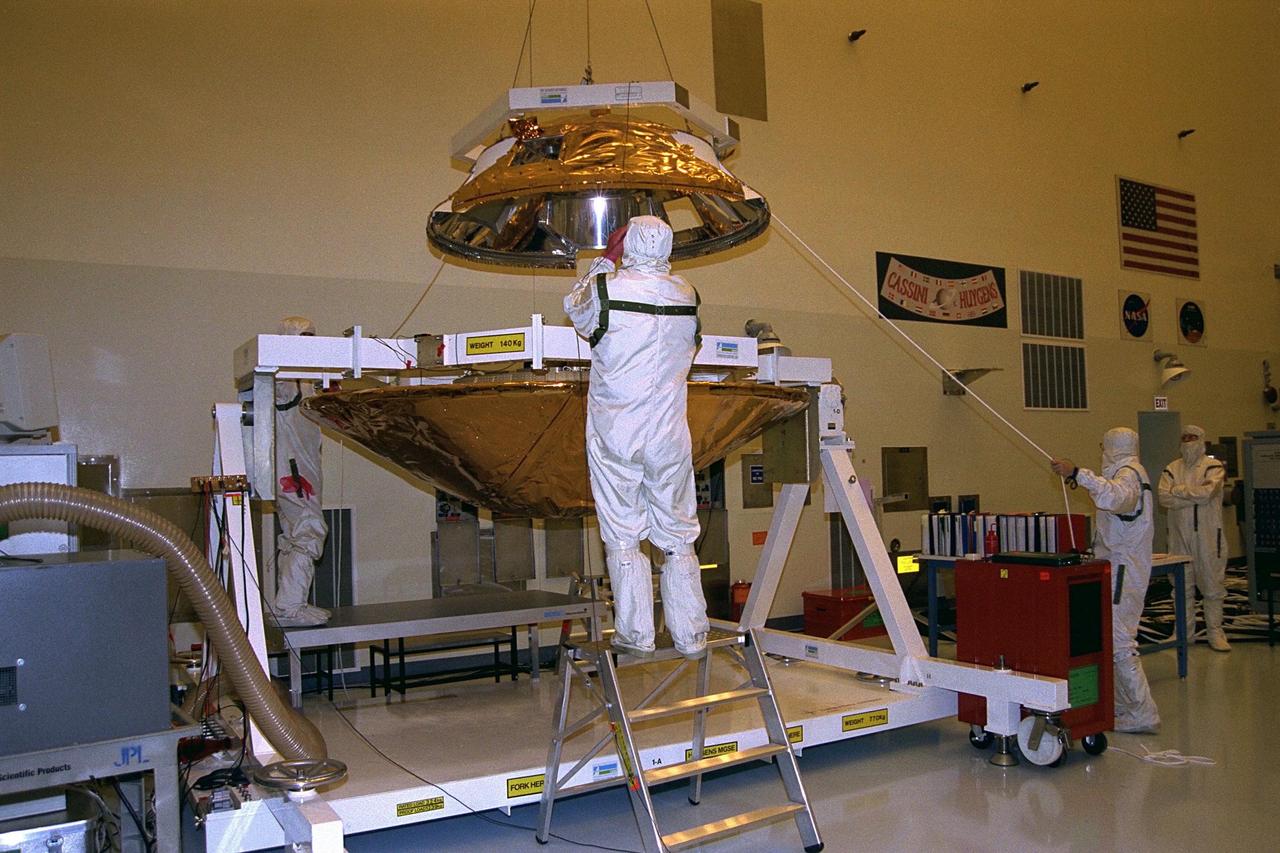
Daimler-Benz Aerospace staff install the back cover on the Huygens probe in the Payload Hazardous Servicing Facility at KSC in July. Instruments mounted on the probe, which was developed by the European Space Agency (ESA), will receive atmospheric and surface data on Saturn’s main moon, Titan, to send back to Earth as part of the Cassini mission. The back cover, yet to be attached to the Cassini orbiter, will protect the probe during descent onto Titan. A four-year, close-up study of the Saturnian system, the mission is scheduled for launch from Cape Canaveral Air Station in October 1997. It will take seven years for the spacecraft to reach Saturn. Aerospatiale is the prime contractor for ESA
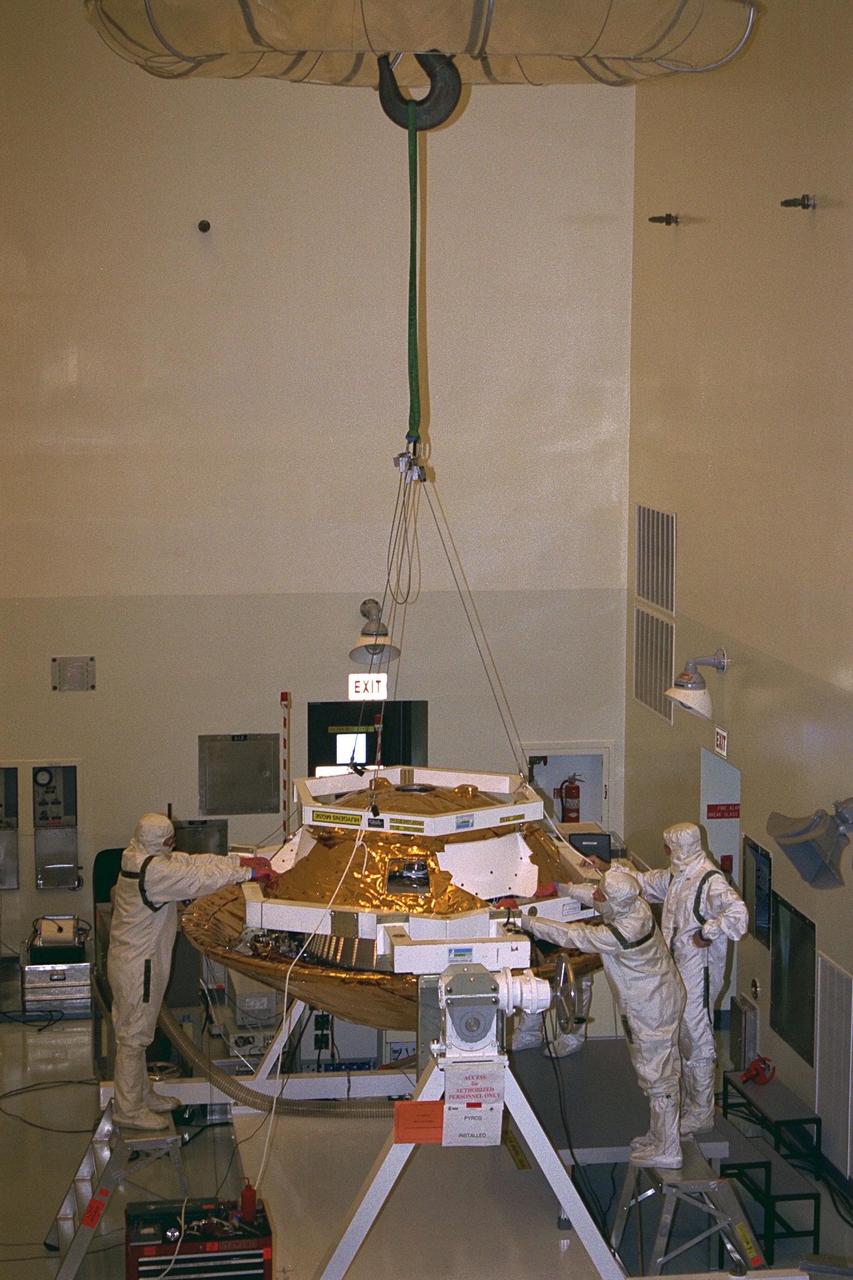
Daimler-Benz Aerospace staff install the back cover on the Huygens probe in the Payload Hazardous Servicing Facility at KSC in July. Instruments mounted on the probe, which was developed by the European Space Agency (ESA), will receive atmospheric and surface data on Saturn’s main moon, Titan, to send back to Earth as part of the Cassini mission. The back cover, yet to be attached to the Cassini orbiter, will protect the probe during descent onto Titan. A four-year, close-up study of the Saturnian system, the mission is scheduled for launch from Cape Canaveral Air Station in October 1997. It will take seven years for the spacecraft to reach Saturn. Aerospatiale is the prime contractor for ESA
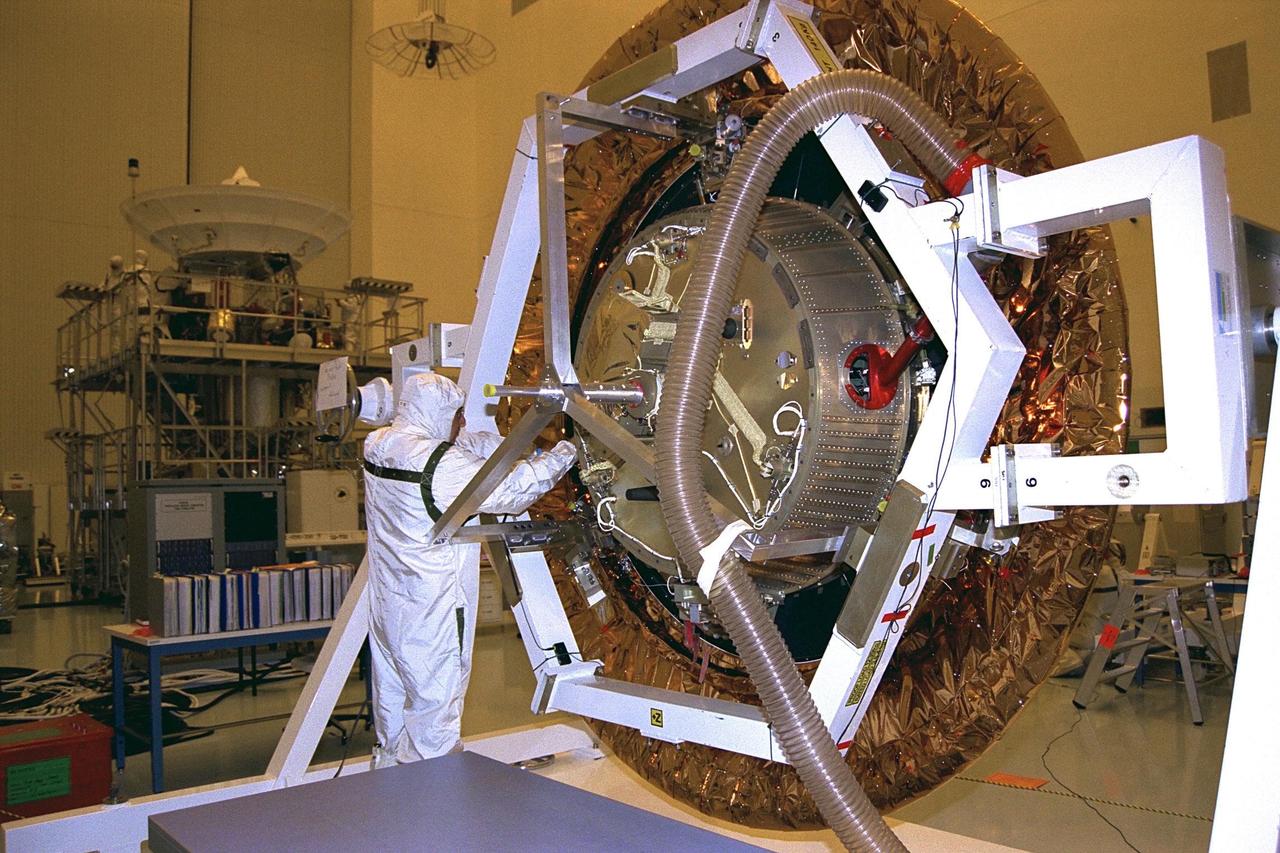
A Daimler-Benz Aerospace staff member inspects the heat shield of the Huygens probe after the shield was installed in the Payload Hazardous Servicing Facility at KSC in July. Instruments mounted on the probe, which is owned by the European Space Agency, will receive atmospheric and surface data on Saturn’s main moon, Titan, to send back to Earth as part of the Cassini mission. The back cover, yet to be attached to the Cassini orbiter, will protect the probe during descent onto Titan. A four-year, close-up study of the Saturnian system, the mission is scheduled for launch from Cape Canaveral Air Station in October 1997. It will take seven years for the spacecraft to reach Saturn. Aerospatiale is the prime contractor for ESA
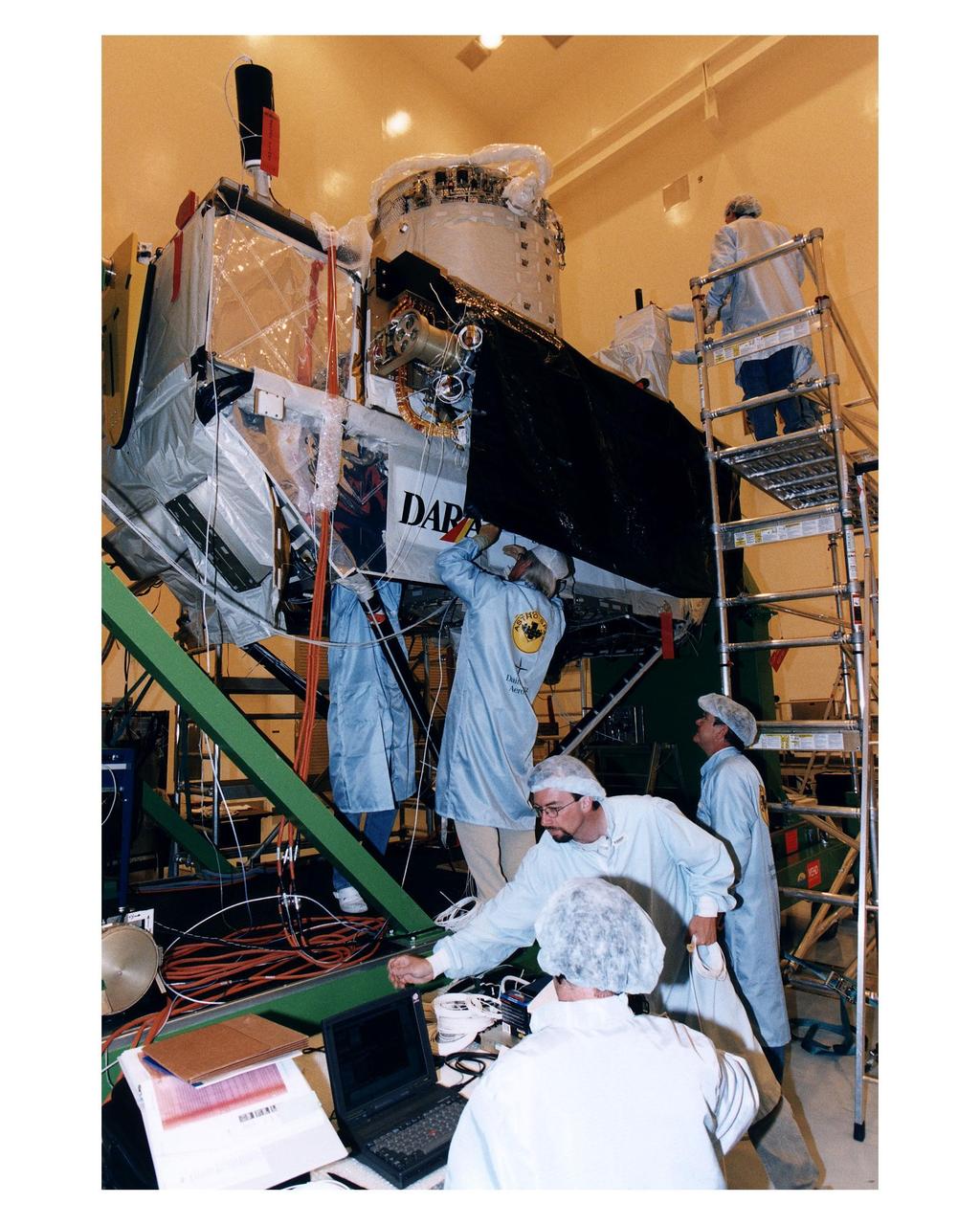
Employees of Daimler-Benz Aerospace in the Multi-Payload Processing Facility install insulation on the Cryogenic Infrared Spectro-meters and Telescopes for the Atmosphere-Shuttle Pallet Satellite-2 (CRISTA-SPAS-2) payload for the STS-85 mission. The CRISTA is a system of three telescopes and four spectrometers to measure infrared radiation emitted by the Earth’s middle atmosphere. During the 11- day mission, the CRISTA-SPAS-2 free-flying satellite will be deployed from the Space Shuttle Discovery and retrieved later in the flight. Also onboard the satellite will be the Middle Atmosphere High Resolution Spectrograph Investigation (MAHRSI) to measure ultraviolet radiation emitted and scattered by the Earth’s atmosphere
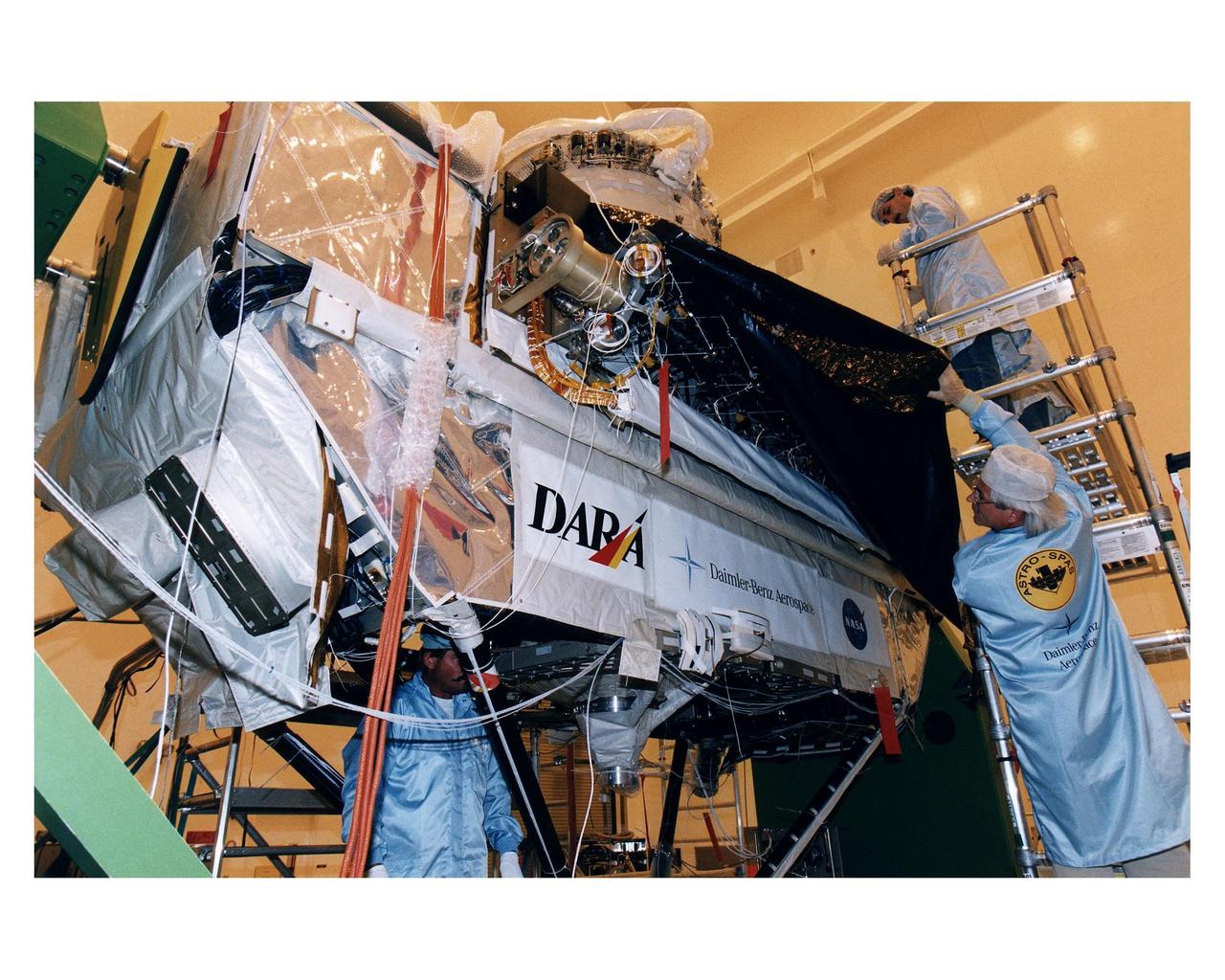
Employees of Daimler-Benz Aerospace in the Multi-Payload Processing Facility install insulation on the Cryogenic Infrared Spectro-meters and Telescopes for the Atmosphere-Shuttle Pallet Satellite-2 (CRISTA-SPAS-2) payload for the STS-85 mission. The CRISTA is a system of three telescopes and four spectrometers to measure infrared radiation emitted by the Earth’s middle atmosphere. During the 11- day mission, the CRISTA-SPAS-2 free-flying satellite will be deployed from the Space Shuttle Discovery and retrieved later in the flight. Also onboard the satellite will be the Middle Atmosphere High Resolution Spectrograph Investigation (MAHRSI) to measure ultraviolet radiation emitted and scattered by the Earth’s atmosphere
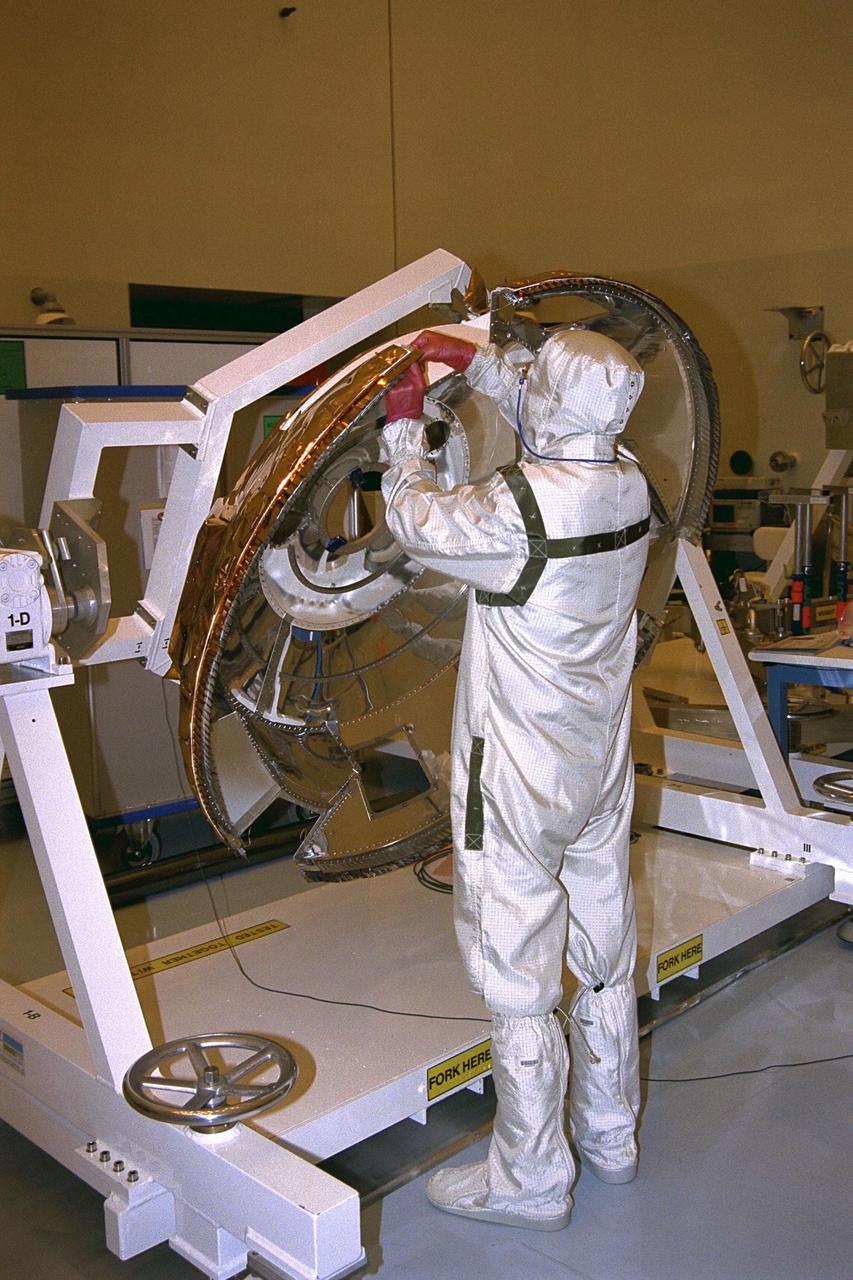
A Daimler-Benz Aerospace staff member installs thermal blanket insulation on the back cover of the Huygens probe in the Payload Hazardous Servicing Facility at KSC in July. Instruments mounted on the probe, which is owned by the European Space Agency (ESA), will receive atmospheric and surface data on Saturn’s main moon, Titan, to send back to Earth as part of the Cassini mission. The back cover, yet to be attached to the Cassini orbiter, will protect the probe during descent onto Titan. A four-year, close-up study of the Saturnian system, the mission is scheduled for launch from Cape Canaveral Air Station in October 1997. It will take seven years for the spacecraft to reach Saturn. Aerospatiale is the prime contractor for ESA
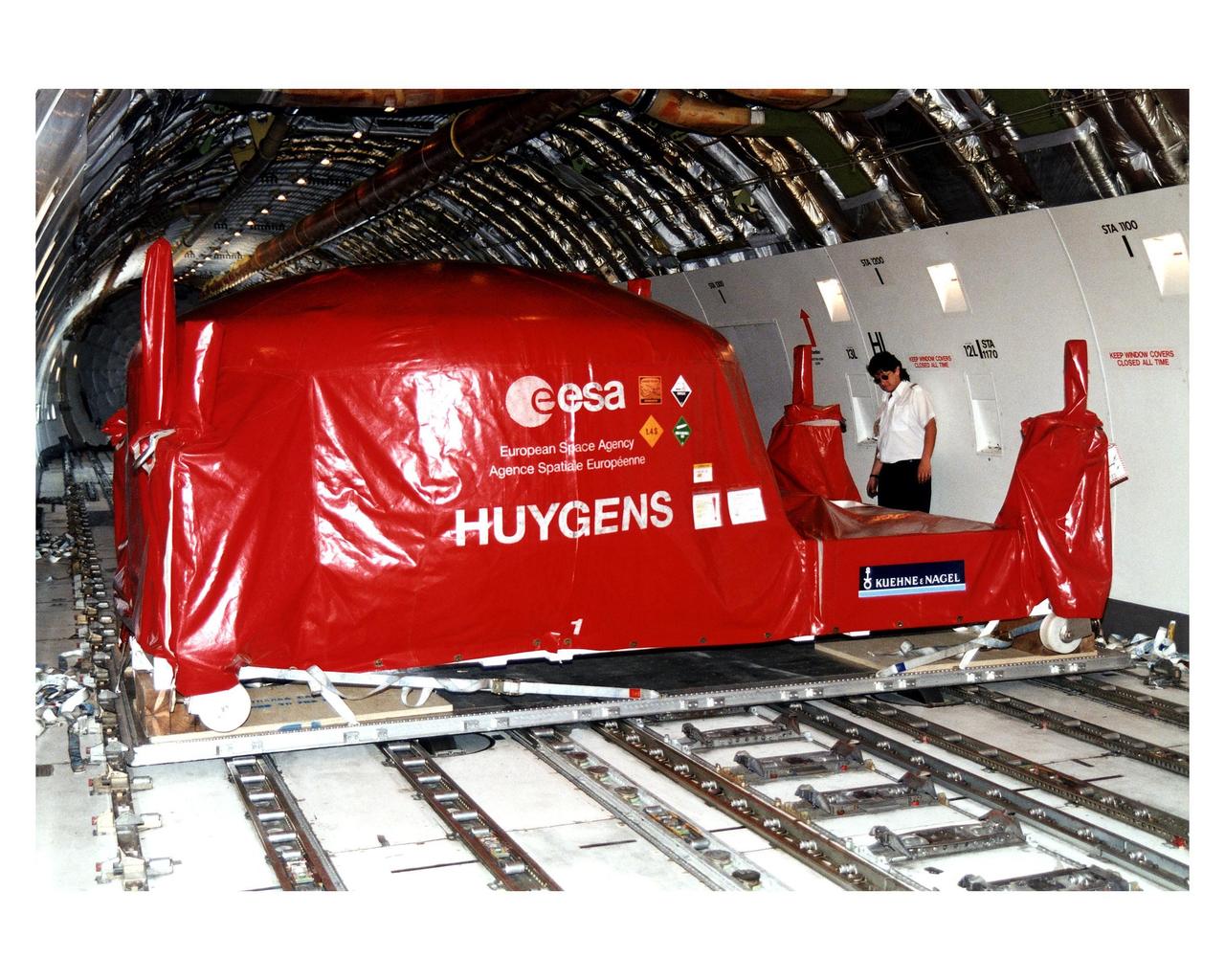
The Huygens probe, which will study the clouds, atmosphere and surface of Saturn's moon, Titan, as part of the Cassini mission to Saturn, arrives in a cargo plane at the Skid Strip, Cape Canaveral Air Station (CCAS). The probe was designed and developed for the European Space Agency (ESA) by a European industrial consortium led by Aerospatiale as prime contractor. Over the past year, it was integrated and tested at the facilities of Daimler Benz Aerospace Dornier Satellitensysteme in Germany. The probe will be mated to the Cassini orbiter, which was designed and assembled at NASA's Jet Propulsion Laboratory in California. The Cassini launch is targeted for October 6 from CCAS aboard a Titan IVB/Centaur expendable launch vehicle. After arrival at Saturn in 2004, the probe will be released from the Cassini orbiter to enter the Titan atmosphere
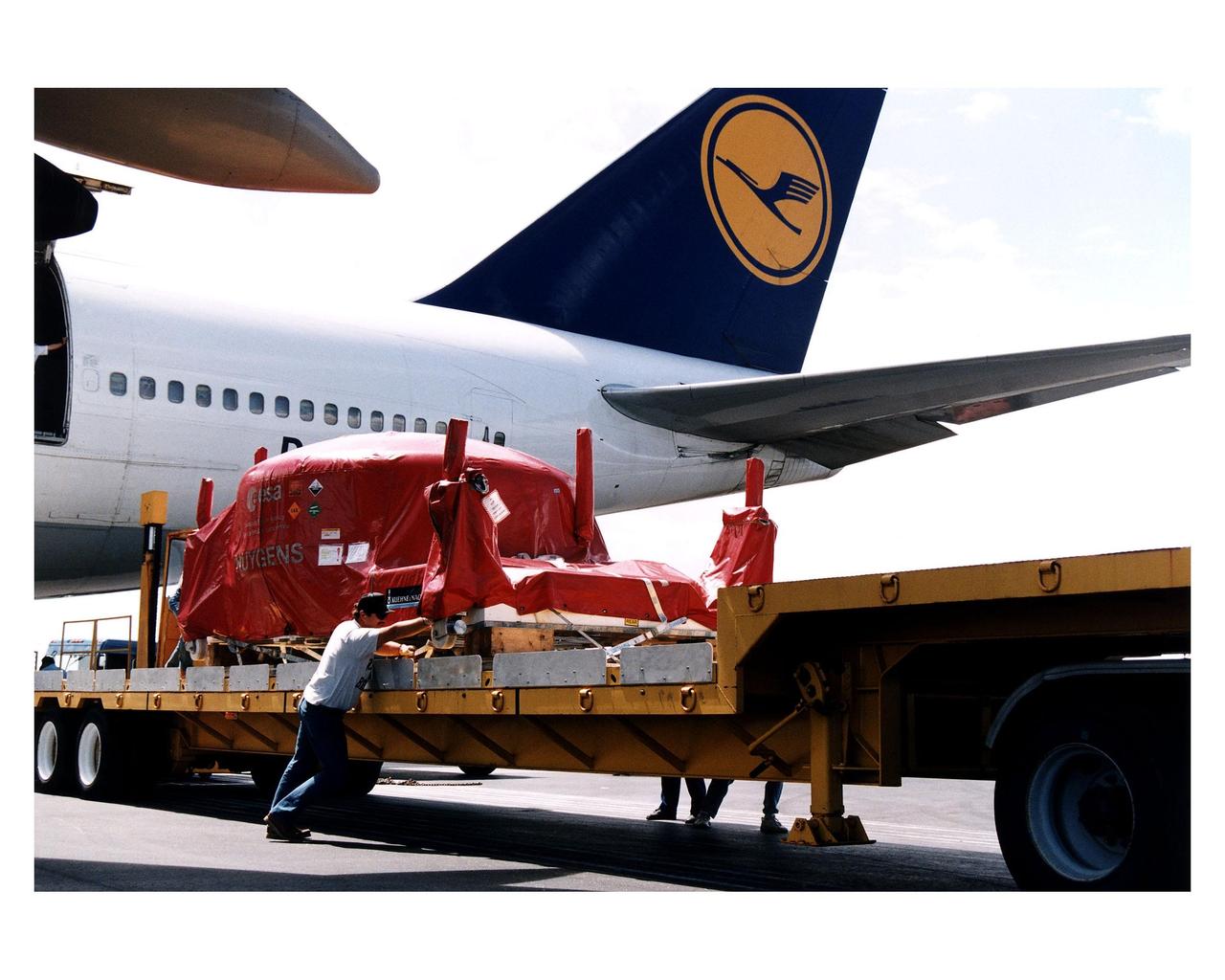
The Huygens probe, which will study the clouds, atmosphere and surface of Saturn's largest moon, Titan, as part of the Cassini mission to Saturn, is prepared for transport from the Skid Strip, Cape Canaveral Air Station (CCAS), after being off-loaded from a plane. The probe was designed and developed for the European Space Agency (ESA) by a European industrial consortium led by Aerospatiale as prime contractor. Over the past year, it was integrated and tested at the facilities of Daimler Benz Aerospace Dornier Satellitensysteme in Germany. The probe will be mated to the Cassini orbiter, which was designed and assembled at NASA's Jet Propulsion Laboratory in California. The Cassini launch is targeted for October 6 from CCAS aboard a Titan IVB/Centaur expendable launch vehicle. After arrival at Saturn in 2004, the probe will be released from the Cassini orbiter to slowly descend through the Titan atmosphere to the moon's surface
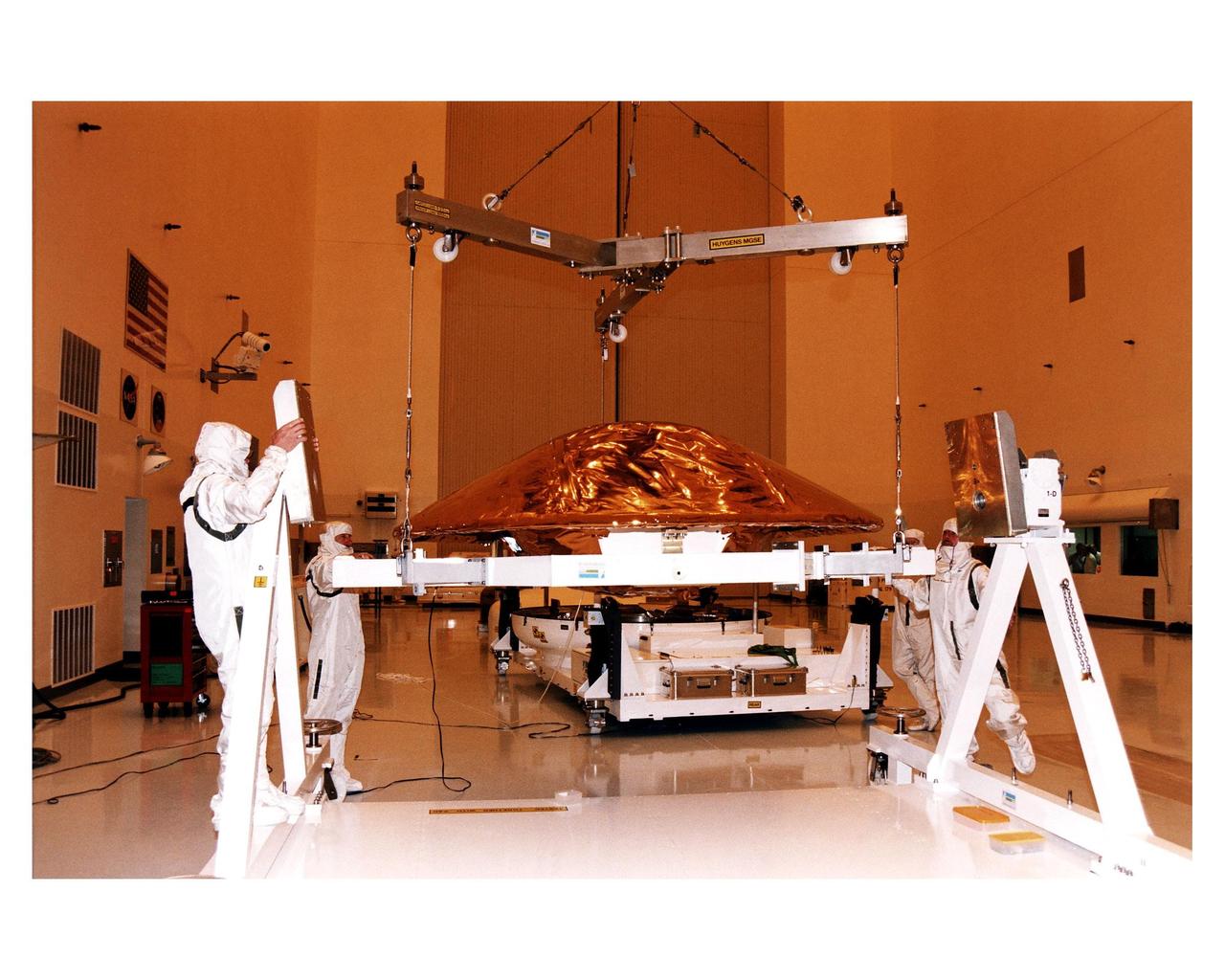
Workers in the Payload Hazardous Servicing Facility prepare to begin prelaunch processing of the Huygens probe, which will study the clouds, atmosphere and surface of Saturn's largest moon, Titan, as part of the Cassini mission to Saturn. The probe was designed and developed for the European Space Agency (ESA) by a European industrial consortium led by Aerospatiale as prime contractor. Over the past year, it was integrated and tested at the facilities of Daimler Benz Aerospace Dornier Satellitensysteme in Germany. The probe will be mated to the Cassini orbiter, which was designed and assembled at NASA's Jet Propulsion Laboratory in California. The Cassini launch is targeted for October 6 from CCAS aboard a Titan IVB/Centaur expendable launch vehicle. After arrival at Saturn in 2004, the probe will be released from the Cassini orbiter to slowly descend through the Titan atmosphere to the moon's surface
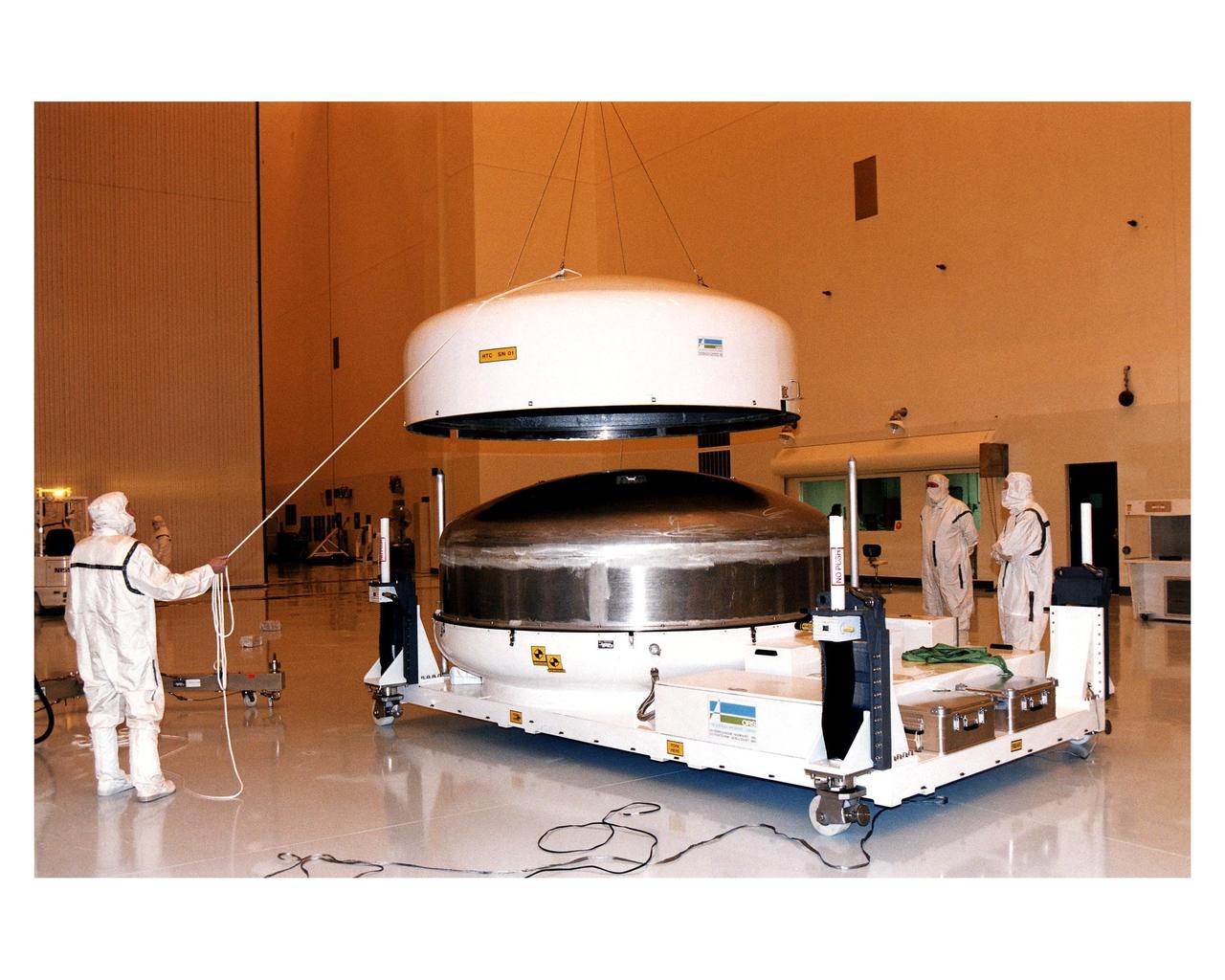
Workers in the Payload Hazardous Servicing Facility prepare to begin prelaunch processing of the Huygens probe, which will study the clouds, atmosphere and surface of Saturnþs largest moon, Titan, as part of the Cassini mission to Saturn. The probe was designed and developed for the European Space Agency (ESA) by a European industrial consortium led by Aerospatiale as prime contractor. Over the past year, it was integrated and tested at the facilities of Daimler Benz Aerospace Dornier Satellitensysteme in Germany. The probe will be mated to the Cassini orbiter, which was designed and assembled at NASA's Jet Propulsion Laboratory in California. The Cassini launch is targeted for October 6 from CCAS aboard a Titan IVB/Centaur expendable launch vehicle. After arrival at Saturn in 2004, the probe will be released from the Cassini orbiter to slowly descend through the Titan atmosphere to the moon's surface
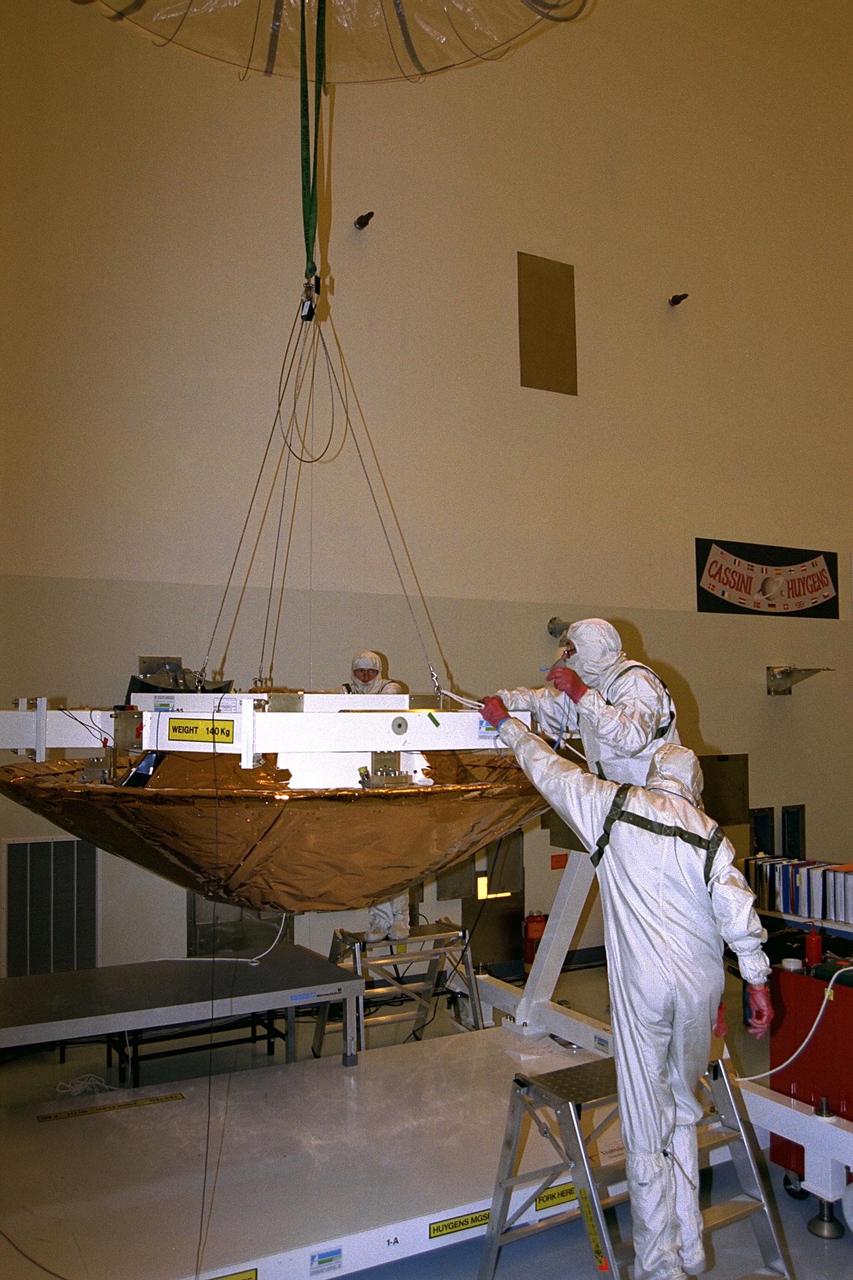
Daimler-Benz Aerospace staff prepare to remove the lift fixture used to install the back cover on the Huygens probe, the conical structure in the white workstand, in the Payload Hazardous Servicing Facility at KSC. Instruments mounted on the probe, which was developed by the European Space Agency (ESA), will receive atmospheric and surface data on Saturn’s main moon, Titan, to send back to Earth as part of the Cassini mission. The back cover, yet to be attached to the Cassini orbiter, will protect the probe during descent onto Titan. A four-year, close-up study of the Saturnian system, Cassini is scheduled for launch from Cape Canaveral Air Station in October 1997. It will take seven years for the spacecraft to reach Saturn. Aerospatiale is the prime contractor for ESA
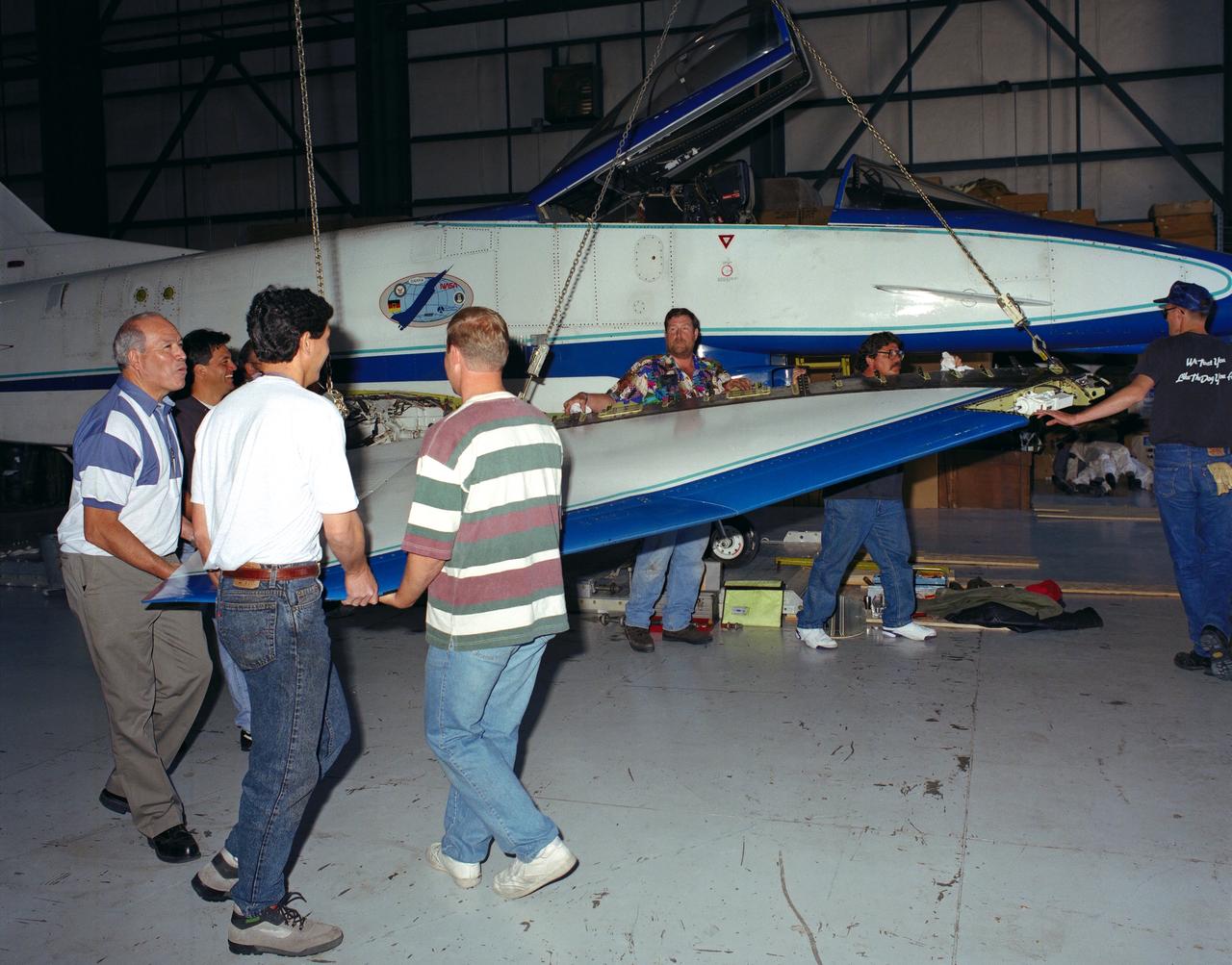
U.S. and German personnel of the X-31 Enhanced Fighter Maneuverability Technology Demonstrator aircraft program removing the right wing of the aircraft, which was ferried from Edwards Air Force Base, California, to Europe on May 22, 1995 aboard an Air Force Reserve C-5 transport. The X-31, based at the NASA Dryden Flight Research Center was ferried to Europe and flown in the Paris Air Show in June. The wing of the X-31 was removed on May 18, 1995, to allow the aircraft to fit inside the C-5 fuselage. Officials of the X-31 project used Manching, Germany, as a staging base to prepare the aircraft for the flight demonstration. At the air show, the X-31 demonstrated the value of using thrust vectoring (directing engine exhaust flow) coupled with advanced flight control systems to provide controlled flight at very high angles of attack. The aircraft arrived back at Edwards in a Air Force Reserve C-5 on June 25, 1995 and off loaded at Dryden June 27. The X-31 aircraft was developed jointly by Rockwell International's North American Aircraft Division (now part of Boeing) and Daimler-Benz Aerospace (formerly Messerschmitt-Bolkow-Blohm), under sponsorship by the U.S. Department of Defense and the German Federal Ministry of Defense.
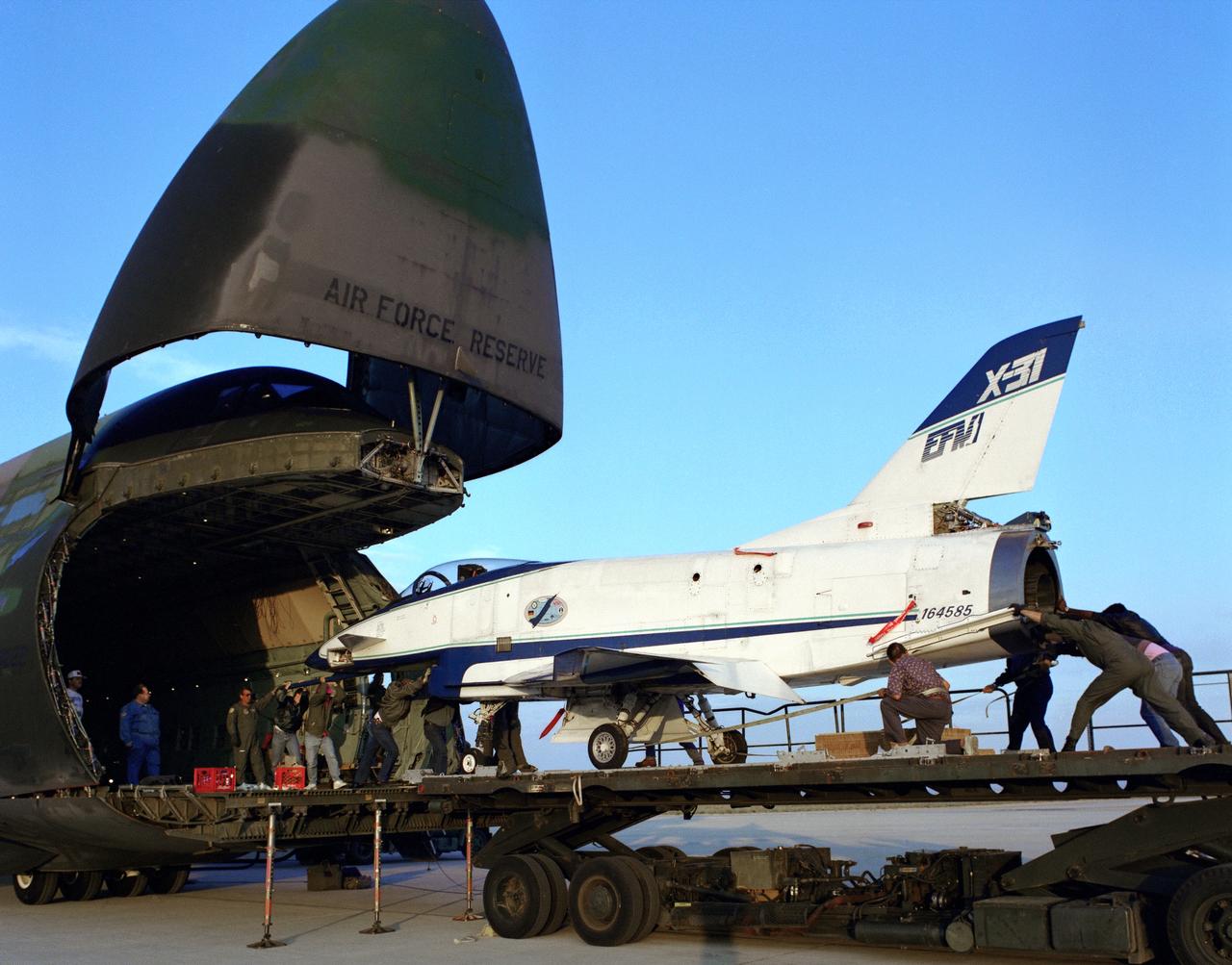
The X-31 Enhanced Fighter Maneuverability Technology Demonstrator Aircraft, based at the NASA Dryden Flight Research Center, Edwards, California, begins rolling aboard an Air Force Reserve C-5 transport which ferried it on May 22, 1995 to Europe where it was flown in the Paris Air Show in June 1995. To fit in the C-5 the right wing of the X-31 had to be removed. At the air show, the X-31 demonstrated the value of using thrust vectoring (directing engine exhaust flow) coupled with advanced flight control systems to provide controlled flight at very high angles of attack.
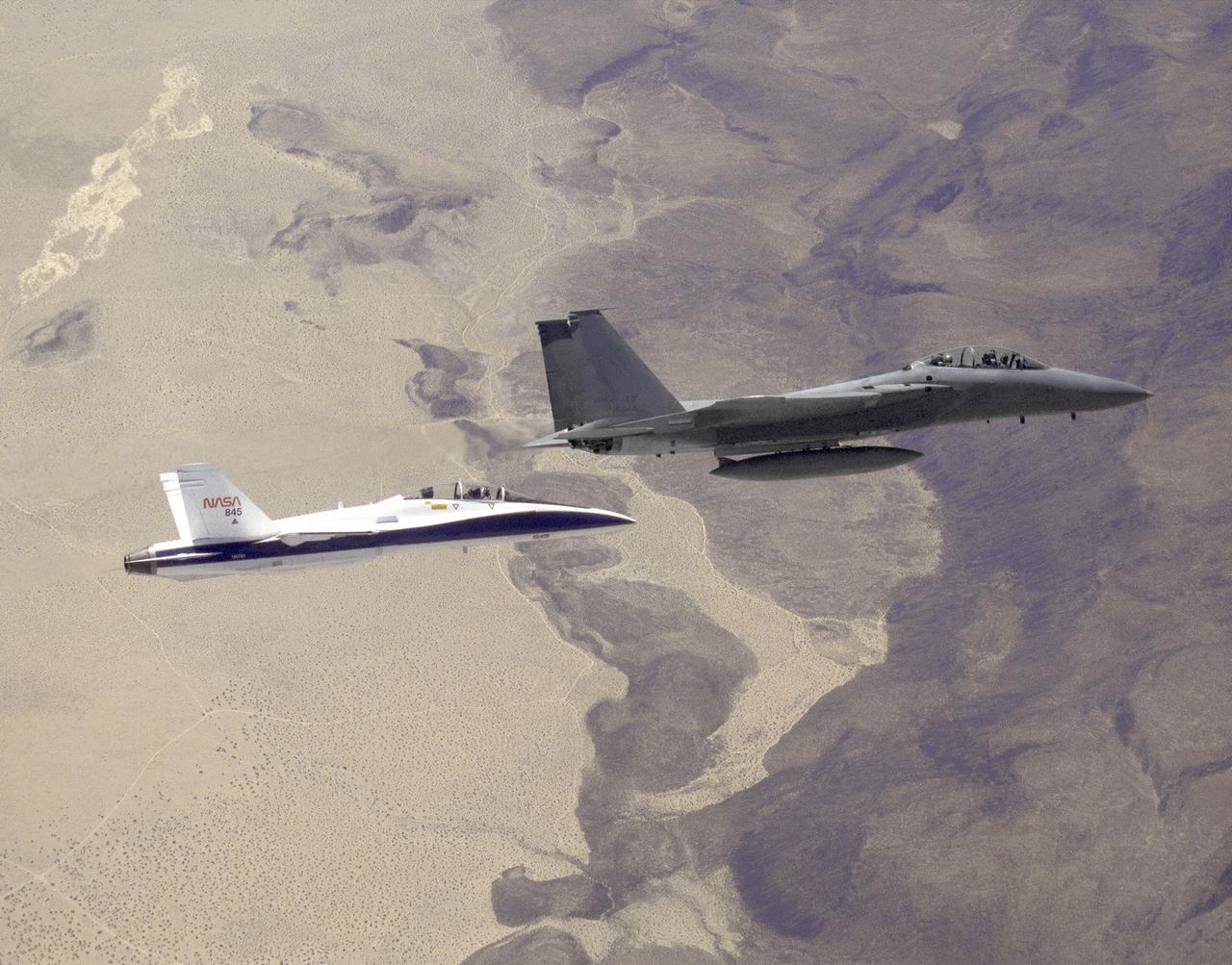
The three thrust-vectoring aircraft at Edwards, California, each capable of flying at extreme angles of attack, cruise over the California desert in formation during flight in March 1994. They are, from left, NASA's F-18 High Alpha Research Vehicle (HARV), flown by the NASA Dryden Flight Research Center; the X-31, flown by the X-31 International Test Organization (ITO) at Dryden; and the Air Force F-16 Multi-Axis Thrust Vectoring (MATV) aircraft.
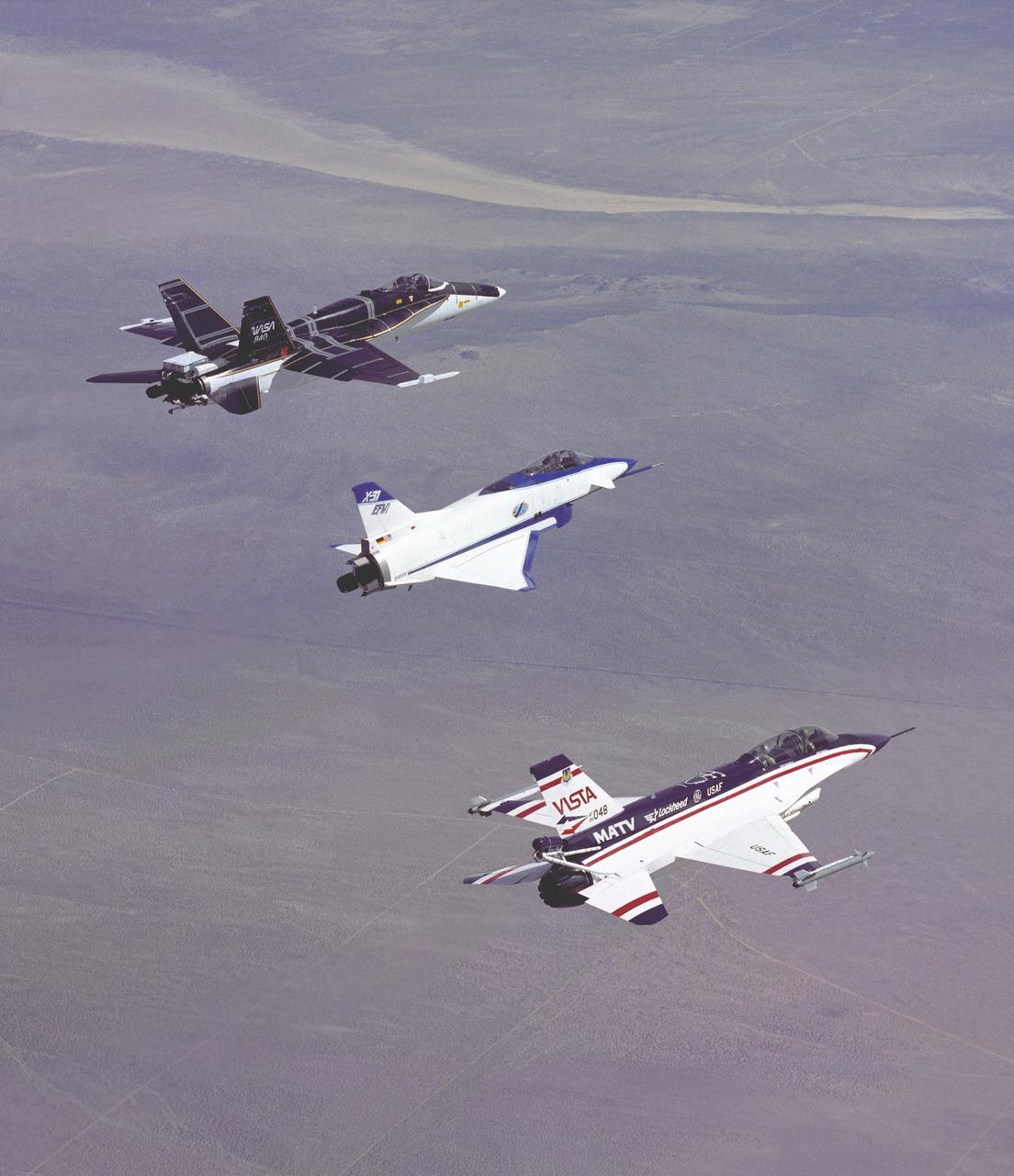
The three thrust-vectoring aircraft at Edwards, California, each capable of flying at extreme angles of attack, cruise over the California desert in formation during flight in March 1994. They are, from left, NASA's F-18 High Alpha Research Vehicle (HARV), flown by the NASA Dryden Flight Research Center; the X-31, flown by the X-31 International Test Organization (ITO) at Dryden; and the Air Force F-16 Multi-Axis Thrust Vectoring (MATV) aircraft.
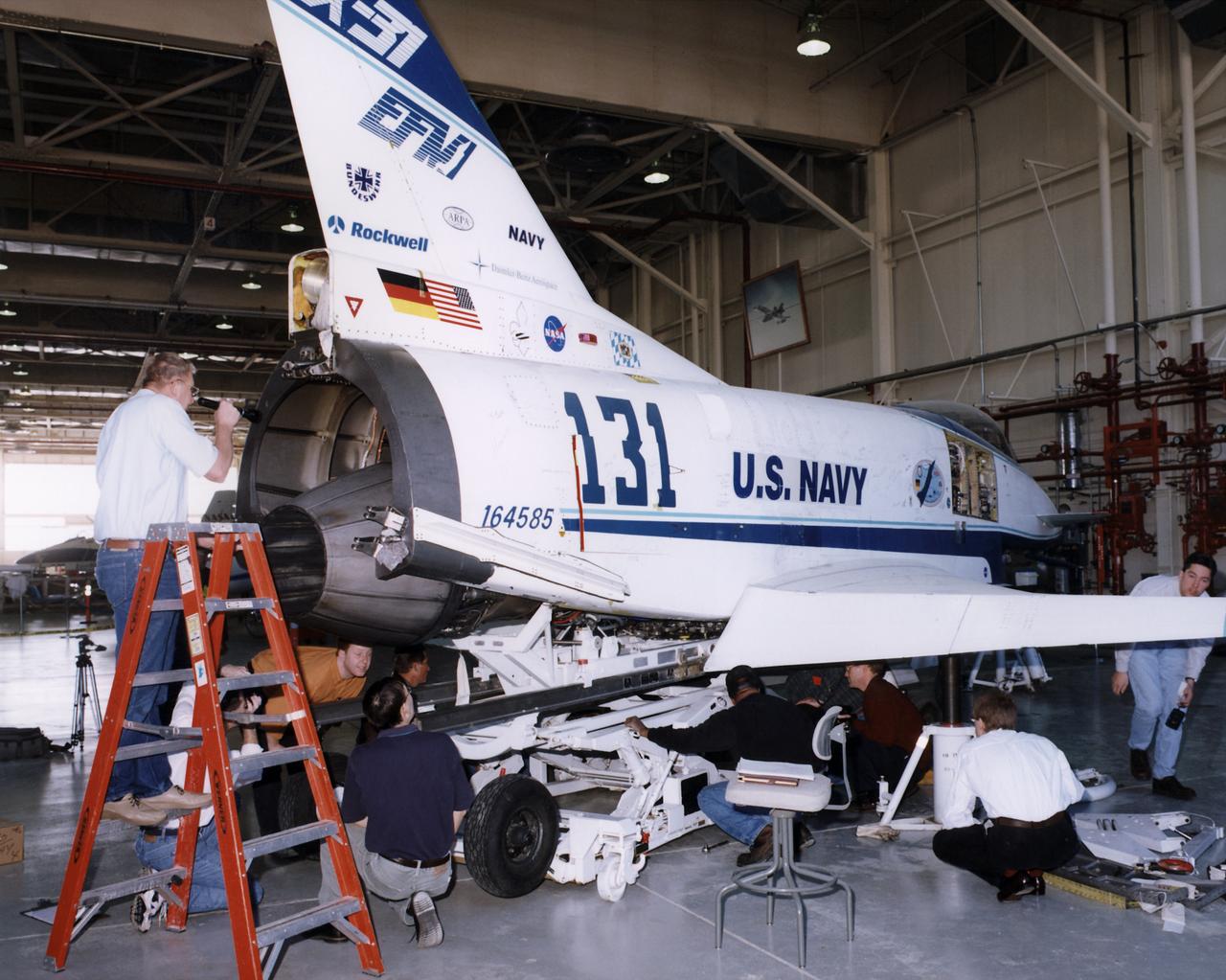
X-31 team members perform an engine fit check on the X-31 Enhanced Fighter Maneuverability demonstrator aircraft in a hangar at the Dryden Flight Research Center, Edwards, California.