
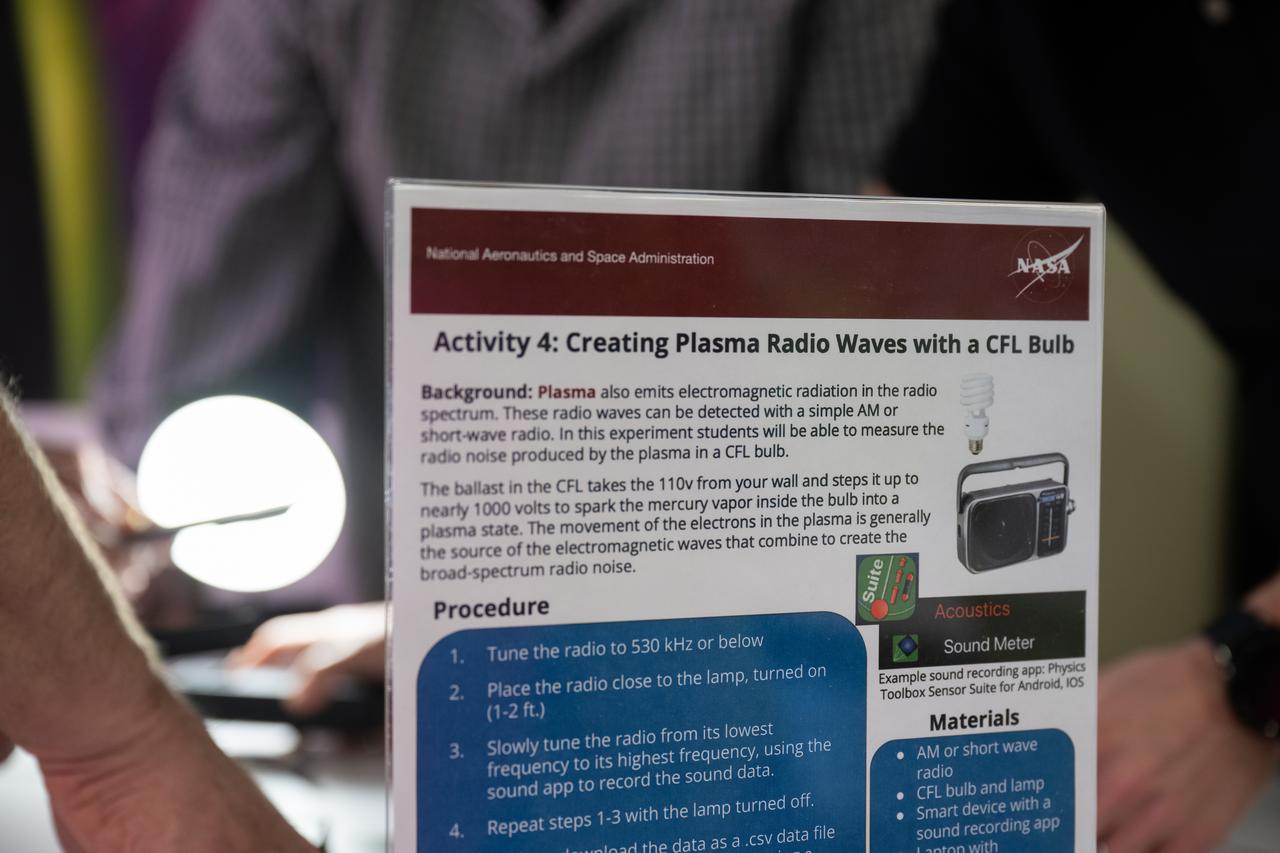
A diagram is seen during a teacher professional development event hosted by the NASA Heliophysics Education Activation Team (HEAT) at the Dallas Arboretum, Saturday, April 6, 2024, in Dallas, Texas. Photo Credit: (NASA/Keegan Barber)

NASA Heliophysics Science Division Instrument Systems Engineer Patrick Haas, right, demonstrates heliophysics activities during a teacher professional development event hosted by the NASA Heliophysics Education Activation Team (HEAT) at the Dallas Arboretum, Saturday, April 6, 2024, in Dallas, Texas. Photo Credit: (NASA/Keegan Barber)
Local educators participate in heliophysics activities during a teacher professional development event hosted by the NASA Heliophysics Education Activation Team (HEAT) at the Dallas Arboretum, Saturday, April 6, 2024, in Dallas, Texas. Photo Credit: (NASA/Keegan Barber)

Local educators participate in heliophysics activities during a teacher professional development event hosted by the NASA Heliophysics Education Activation Team (HEAT) at the Dallas Arboretum, Saturday, April 6, 2024, in Dallas, Texas. Photo Credit: (NASA/Keegan Barber)

Local educators participate in heliophysics activities during a teacher professional development event hosted by the NASA Heliophysics Education Activation Team (HEAT) at the Dallas Arboretum, Saturday, April 6, 2024, in Dallas, Texas. Photo Credit: (NASA/Keegan Barber)

NASA Heliophysics Science Division Instrument Systems Engineer Patrick Haas, left, demonstrates heliophysics activities during a teacher professional development event hosted by the NASA Heliophysics Education Activation Team (HEAT) at the Dallas Arboretum, Saturday, April 6, 2024, in Dallas, Texas. Photo Credit: (NASA/Keegan Barber)
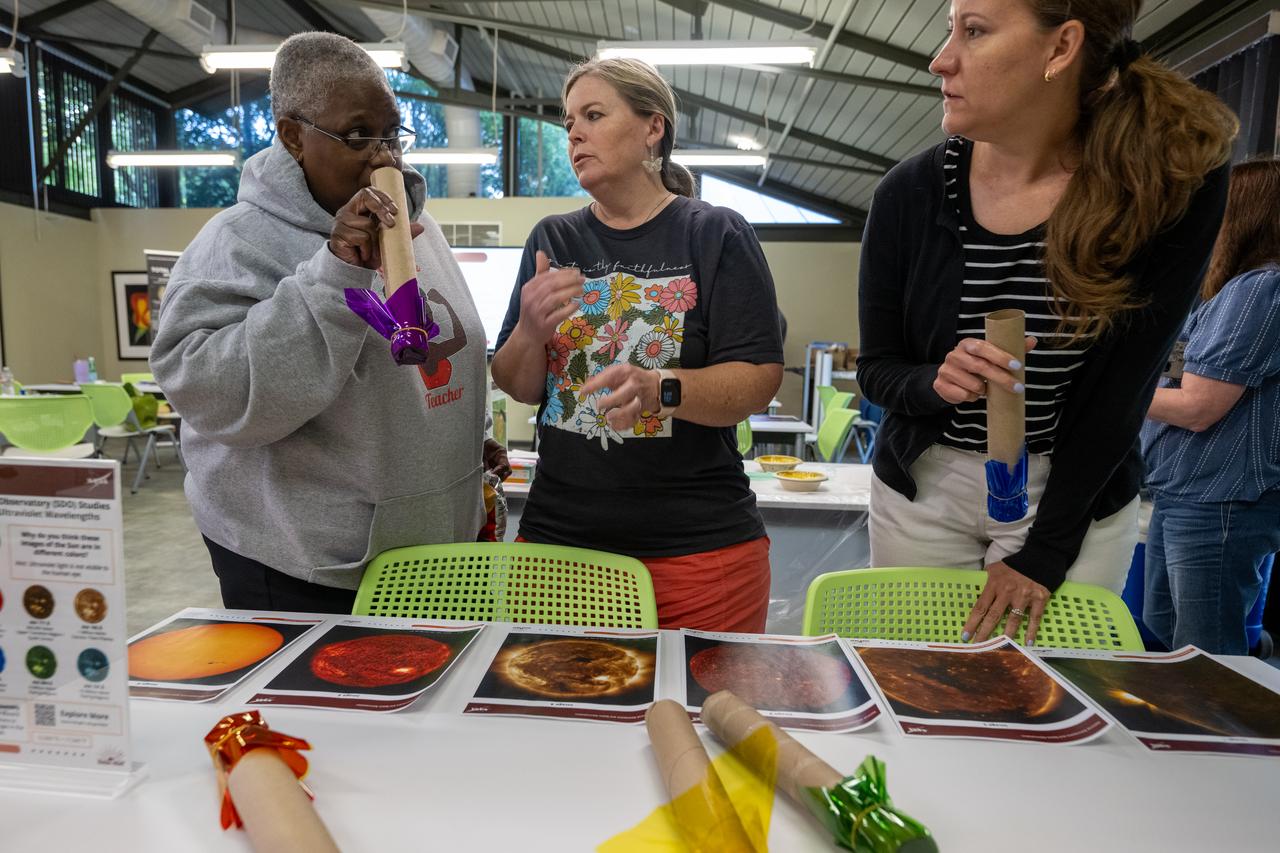
Local educators participate in heliophysics activities during a teacher professional development event hosted by the NASA Heliophysics Education Activation Team (HEAT) at the Dallas Arboretum, Saturday, April 6, 2024, in Dallas, Texas. Photo Credit: (NASA/Keegan Barber)

Local educators participate in heliophysics activities during a teacher professional development event hosted by the NASA Heliophysics Education Activation Team (HEAT) at the Dallas Arboretum, Saturday, April 6, 2024, in Dallas, Texas. Photo Credit: (NASA/Keegan Barber)

A guest embellishes their solar eclipse glasses at the Dallas Arboretum, Sunday, April 7, 2024, in Dallas, Texas. On Monday, April 8, a total solar eclipse will sweep across a narrow portion of the North American continent from Mexico’s Pacific coast to the Atlantic coast of Newfoundland, Canada, while a partial solar eclipse will be visible across the entire North American continent along with parts of Central America and Europe. Photo Credit: (NASA/Keegan Barber)
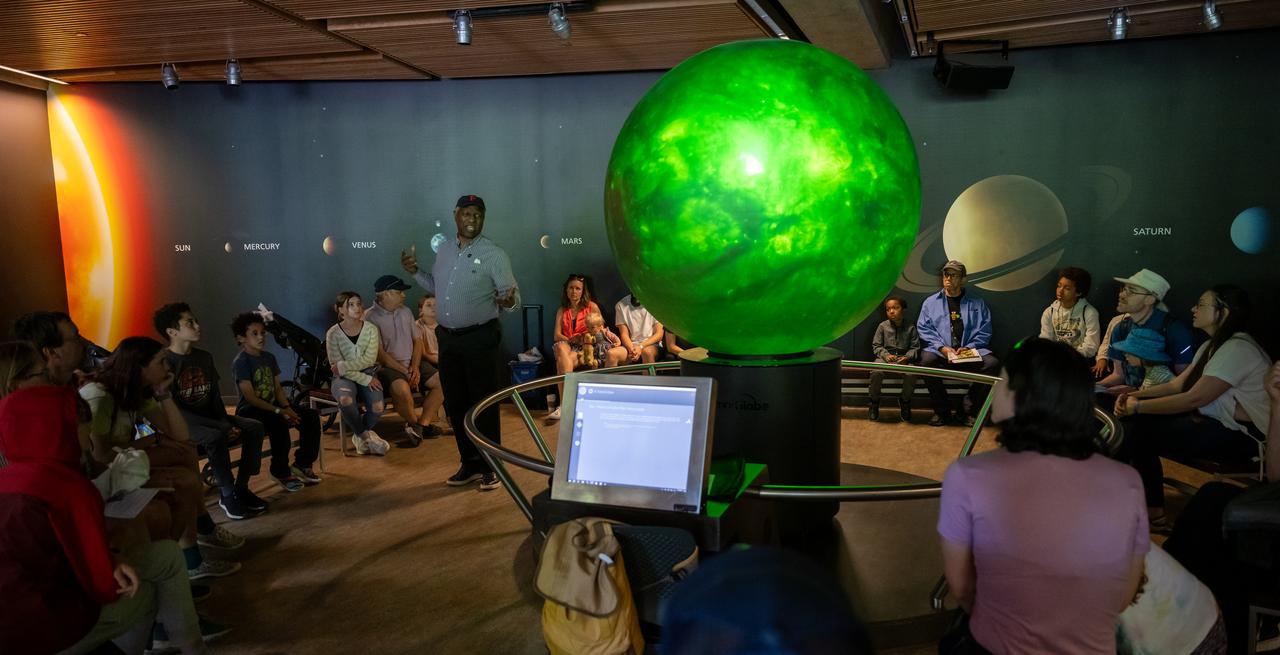
Maurice Henderson speaks to guests about the upcoming total solar eclipse at the Dallas Arboretum, Sunday, April 7, 2024, in Dallas, Texas. On Monday, April 8, a total solar eclipse will sweep across a narrow portion of the North American continent from Mexico’s Pacific coast to the Atlantic coast of Newfoundland, Canada, while a partial solar eclipse will be visible across the entire North American continent along with parts of Central America and Europe. Photo Credit: (NASA/Keegan Barber)

Maurice Henderson speaks to guests about the upcoming total solar eclipse at the Dallas Arboretum, Sunday, April 7, 2024, in Dallas, Texas. On Monday, April 8, a total solar eclipse will sweep across a narrow portion of the North American continent from Mexico’s Pacific coast to the Atlantic coast of Newfoundland, Canada, while a partial solar eclipse will be visible across the entire North American continent along with parts of Central America and Europe. Photo Credit: (NASA/Keegan Barber)

Guests learn about the upcoming total solar eclipse from NASA staff at the Dallas Arboretum, Sunday, April 7, 2024, in Dallas, Texas. On Monday, April 8, a total solar eclipse will sweep across a narrow portion of the North American continent from Mexico’s Pacific coast to the Atlantic coast of Newfoundland, Canada, while a partial solar eclipse will be visible across the entire North American continent along with parts of Central America and Europe. Photo Credit: (NASA/Keegan Barber)

A solar eclipse glasses crafting station is seen at the Dallas Arboretum, Sunday, April 7, 2024, in Dallas, Texas. On Monday, April 8, a total solar eclipse will sweep across a narrow portion of the North American continent from Mexico’s Pacific coast to the Atlantic coast of Newfoundland, Canada, while a partial solar eclipse will be visible across the entire North American continent along with parts of Central America and Europe. Photo Credit: (NASA/Keegan Barber)
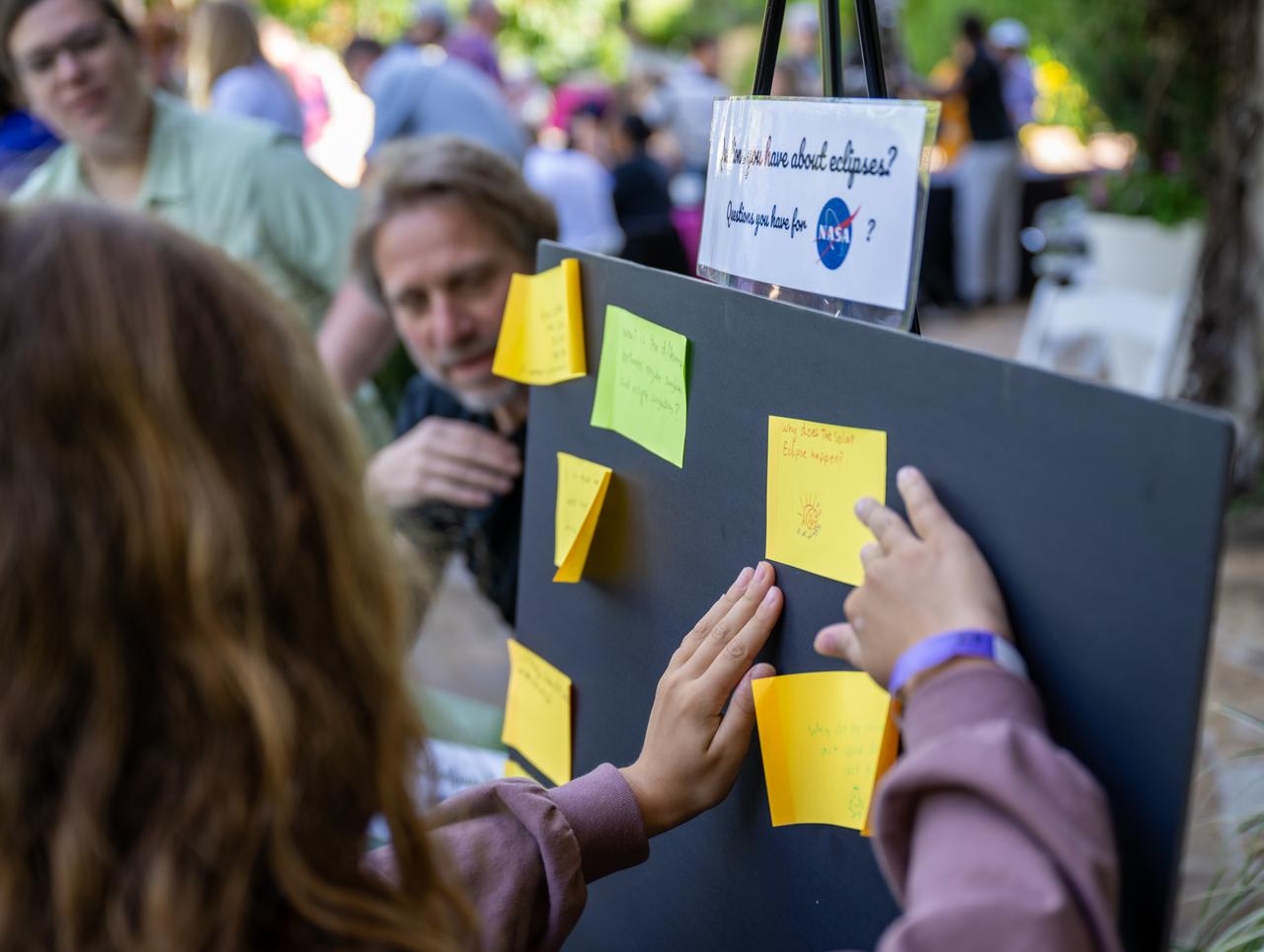
Guests place their questions about the solar eclipse upon a board at the Dallas Arboretum, Sunday, April 7, 2024, in Dallas, Texas. On Monday, April 8, a total solar eclipse will sweep across a narrow portion of the North American continent from Mexico’s Pacific coast to the Atlantic coast of Newfoundland, Canada, while a partial solar eclipse will be visible across the entire North American continent along with parts of Central America and Europe. Photo Credit: (NASA/Keegan Barber)

Guests pose for a photo in front of a floral solar eclipse display at the Dallas Arboretum, Sunday, April 7, 2024, in Dallas, Texas. On Monday, April 8, a total solar eclipse will sweep across a narrow portion of the North American continent from Mexico’s Pacific coast to the Atlantic coast of Newfoundland, Canada, while a partial solar eclipse will be visible across the entire North American continent along with parts of Central America and Europe. Photo Credit: (NASA/Keegan Barber)
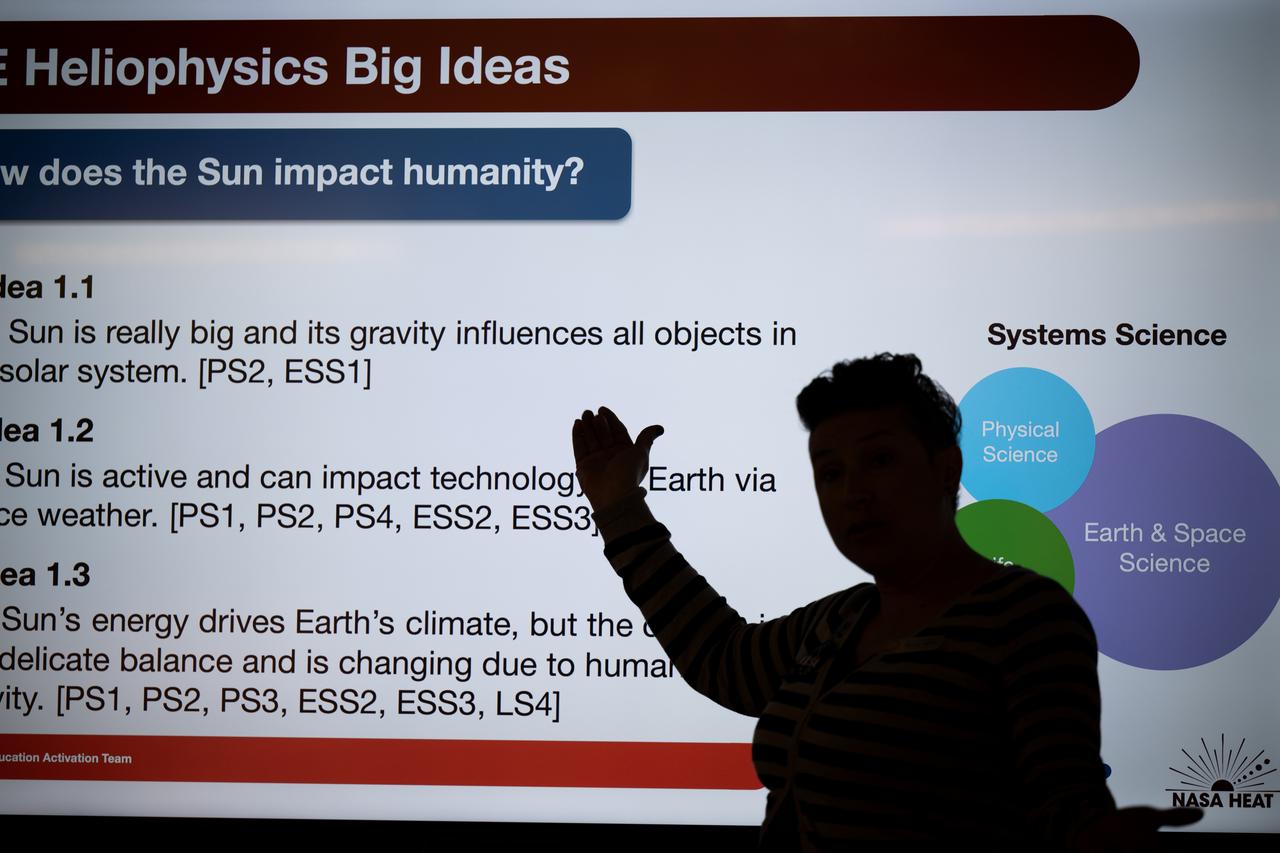
NASA Education Specialist Christine Milotte gives a presentation during a teacher professional development event hosted by the NASA Heliophysics Education Activation Team (HEAT) at the Dallas Arboretum, Saturday, April 6, 2024, in Dallas, Texas. Photo Credit: (NASA/Keegan Barber)
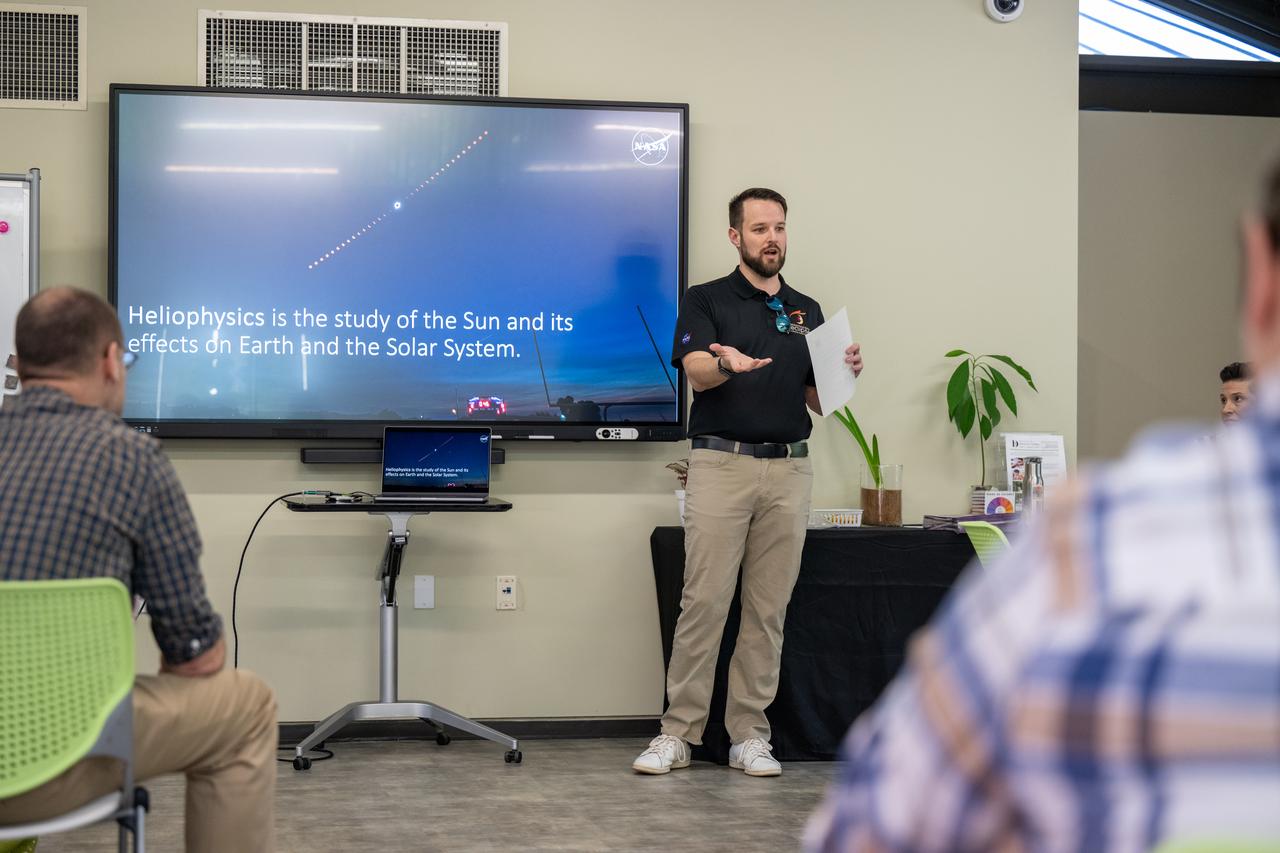
NASA Heliophysics Division Director Dr. Joseph Westlake delivers remarks during a teacher professional development event hosted by the NASA Heliophysics Education Activation Team (HEAT) at the Dallas Arboretum, Saturday, April 6, 2024, in Dallas, Texas. Photo Credit: (NASA/Keegan Barber)

NASA Education Specialist Christine Milotte demonstrates heliophysics activities during a teacher professional development event hosted by the NASA Heliophysics Education Activation Team (HEAT) at the Dallas Arboretum, Saturday, April 6, 2024, in Dallas, Texas. Photo Credit: (NASA/Keegan Barber)

NASA Heliophysics Division Director Dr. Joseph Westlake delivers remarks during a teacher professional development event hosted by the NASA Heliophysics Education Activation Team (HEAT) at the Dallas Arboretum, Saturday, April 6, 2024, in Dallas, Texas. Photo Credit: (NASA/Keegan Barber)

NASA Education Specialist Christine Milotte gives a presentation during a teacher professional development event hosted by the NASA Heliophysics Education Activation Team (HEAT) at the Dallas Arboretum, Saturday, April 6, 2024, in Dallas, Texas. Photo Credit: (NASA/Keegan Barber)
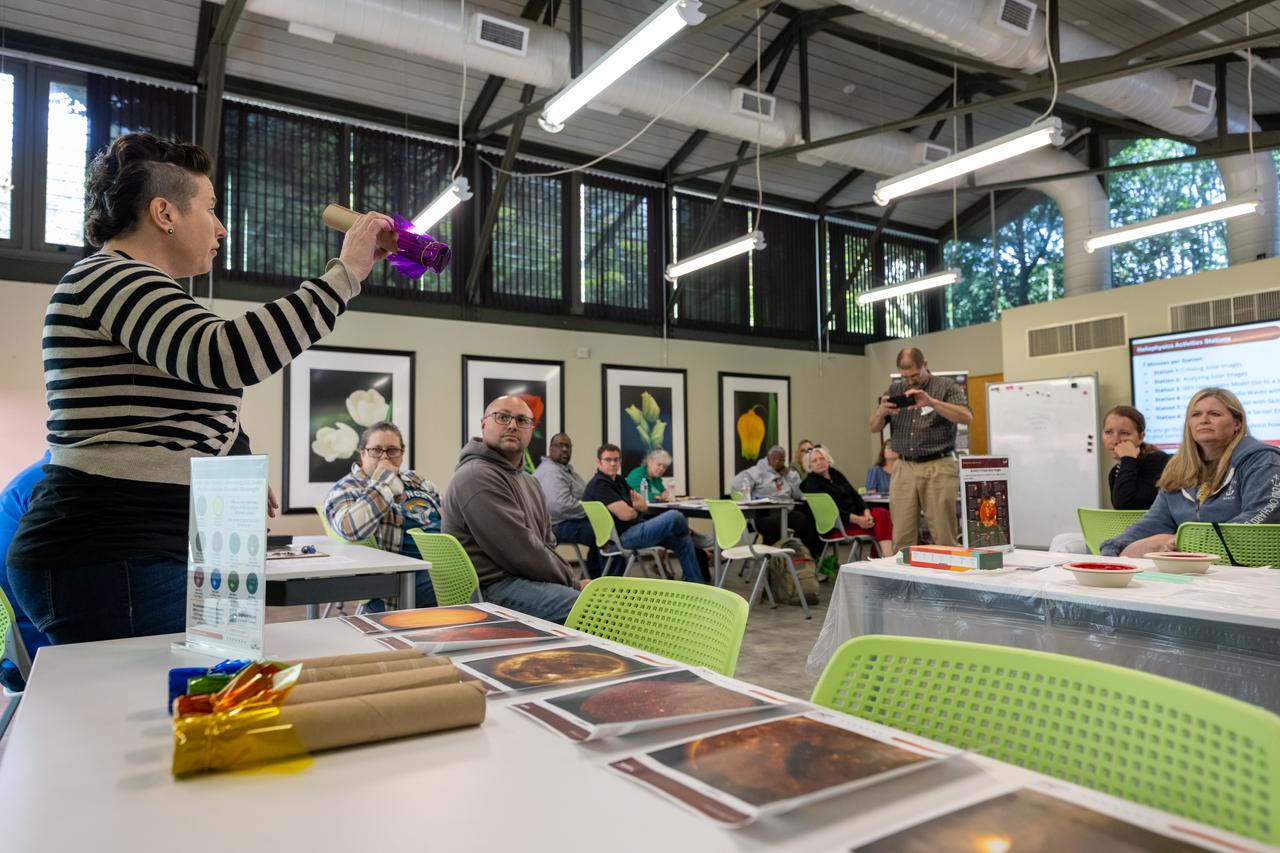
NASA Education Specialist Christine Milotte demonstrates heliophysics activities during a teacher professional development event hosted by the NASA Heliophysics Education Activation Team (HEAT) at the Dallas Arboretum, Saturday, April 6, 2024, in Dallas, Texas. Photo Credit: (NASA/Keegan Barber)

NASA Heliophysics Division Director Dr. Joseph Westlake delivers remarks during a teacher professional development event hosted by the NASA Heliophysics Education Activation Team (HEAT) at the Dallas Arboretum, Saturday, April 6, 2024, in Dallas, Texas. Photo Credit: (NASA/Keegan Barber)

NASA Principal Scientist Carolyn Ng speaks to guests about the upcoming total solar eclipse at the Dallas Arboretum, Sunday, April 7, 2024, in Dallas, Texas. On Monday, April 8, a total solar eclipse will sweep across a narrow portion of the North American continent from Mexico’s Pacific coast to the Atlantic coast of Newfoundland, Canada, while a partial solar eclipse will be visible across the entire North American continent along with parts of Central America and Europe. Photo Credit: (NASA/Keegan Barber)
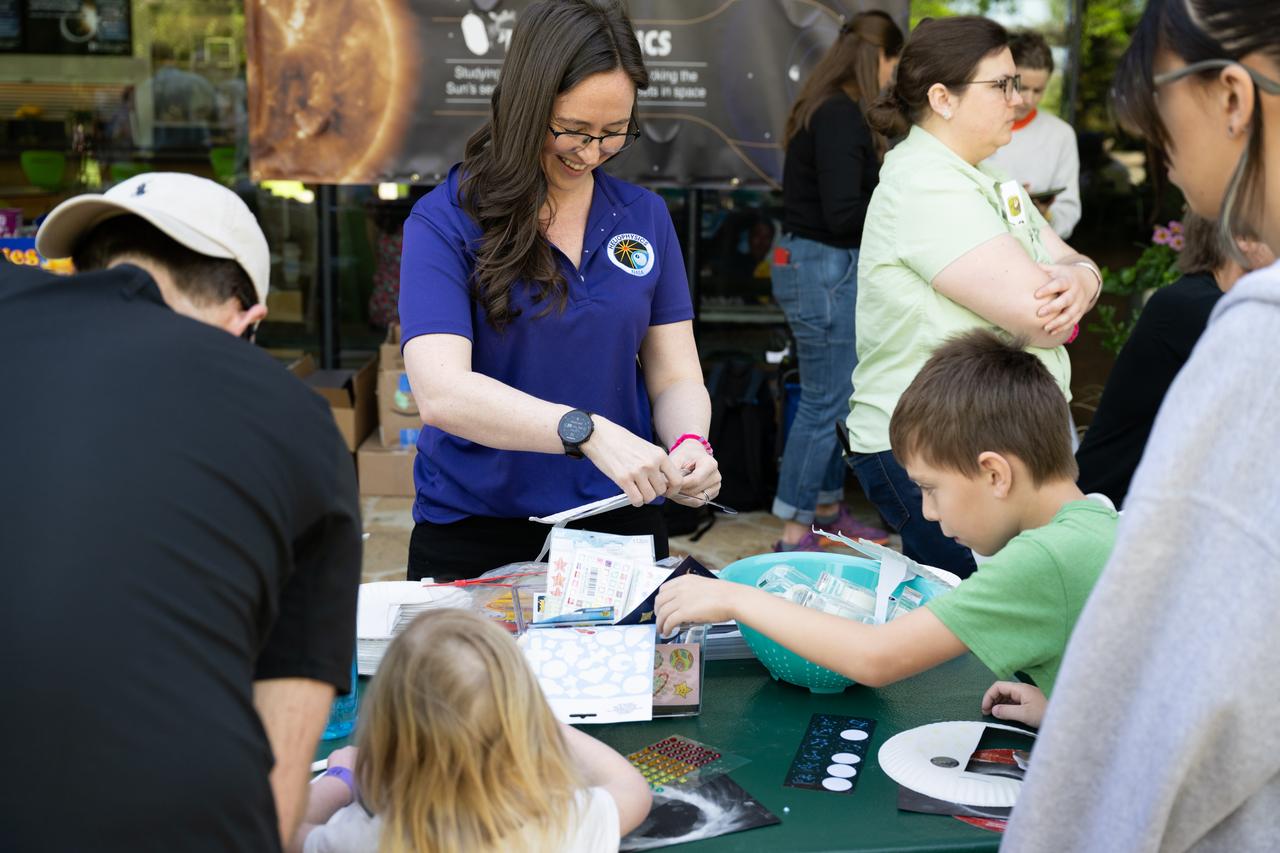
NASA Heliophysics Laboratory Research Scientist Ashley Greeley, center, works with guests at the solar eclipse glasses crafting station at the Dallas Arboretum, Sunday, April 7, 2024, in Dallas, Texas. On Monday, April 8, a total solar eclipse will sweep across a narrow portion of the North American continent from Mexico’s Pacific coast to the Atlantic coast of Newfoundland, Canada, while a partial solar eclipse will be visible across the entire North American continent along with parts of Central America and Europe. Photo Credit: (NASA/Keegan Barber)

Former NASA astronaut Alvin Drew, right, speaks with guests at the Dallas Arboretum, Sunday, April 7, 2024, in Dallas, Texas. On Monday, April 8, a total solar eclipse will sweep across a narrow portion of the North American continent from Mexico’s Pacific coast to the Atlantic coast of Newfoundland, Canada, while a partial solar eclipse will be visible across the entire North American continent along with parts of Central America and Europe. Photo Credit: (NASA/Keegan Barber)
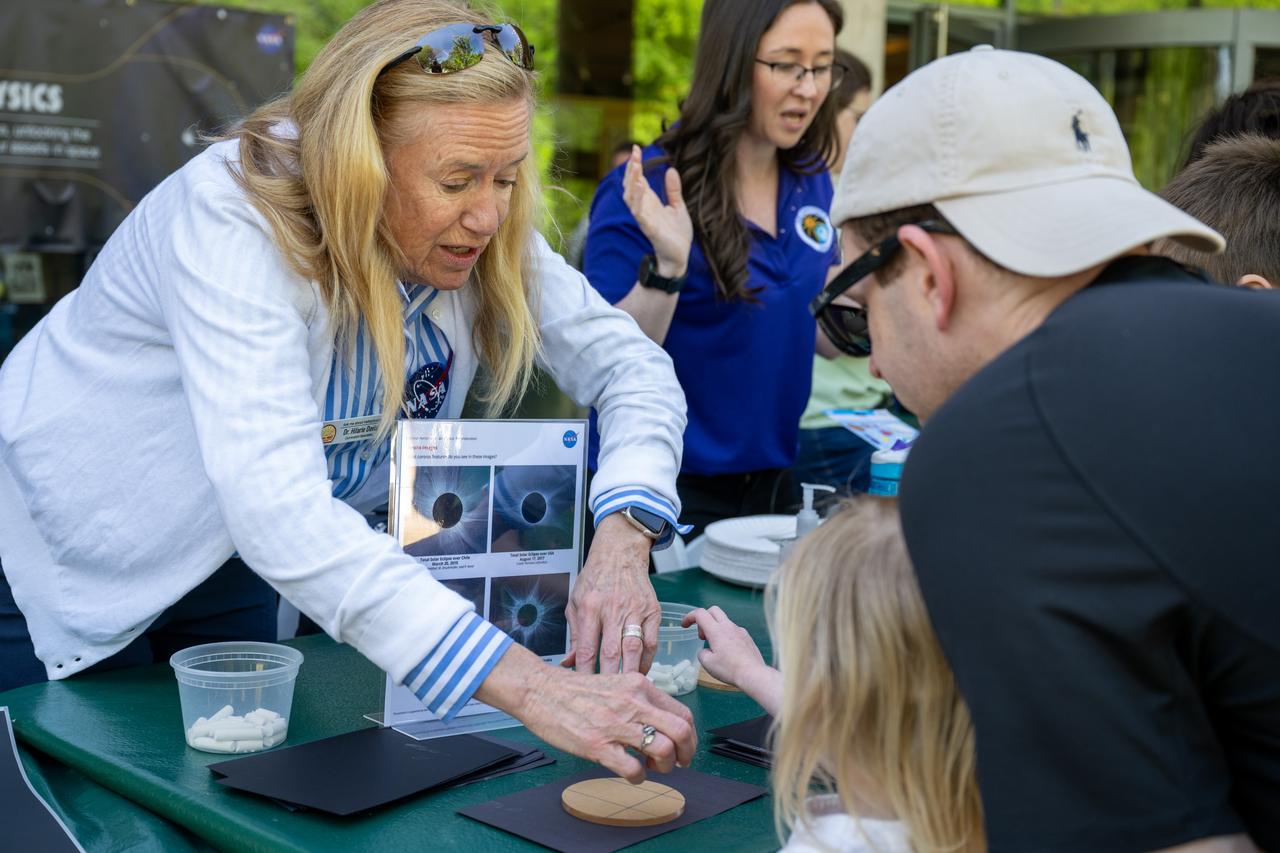
NASA Curriculum Specialist Dr. Hilarie Davis speaks to guests about the upcoming total solar eclipse at the Dallas Arboretum, Sunday, April 7, 2024, in Dallas, Texas. On Monday, April 8, a total solar eclipse will sweep across a narrow portion of the North American continent from Mexico’s Pacific coast to the Atlantic coast of Newfoundland, Canada, while a partial solar eclipse will be visible across the entire North American continent along with parts of Central America and Europe. Photo Credit: (NASA/Keegan Barber)
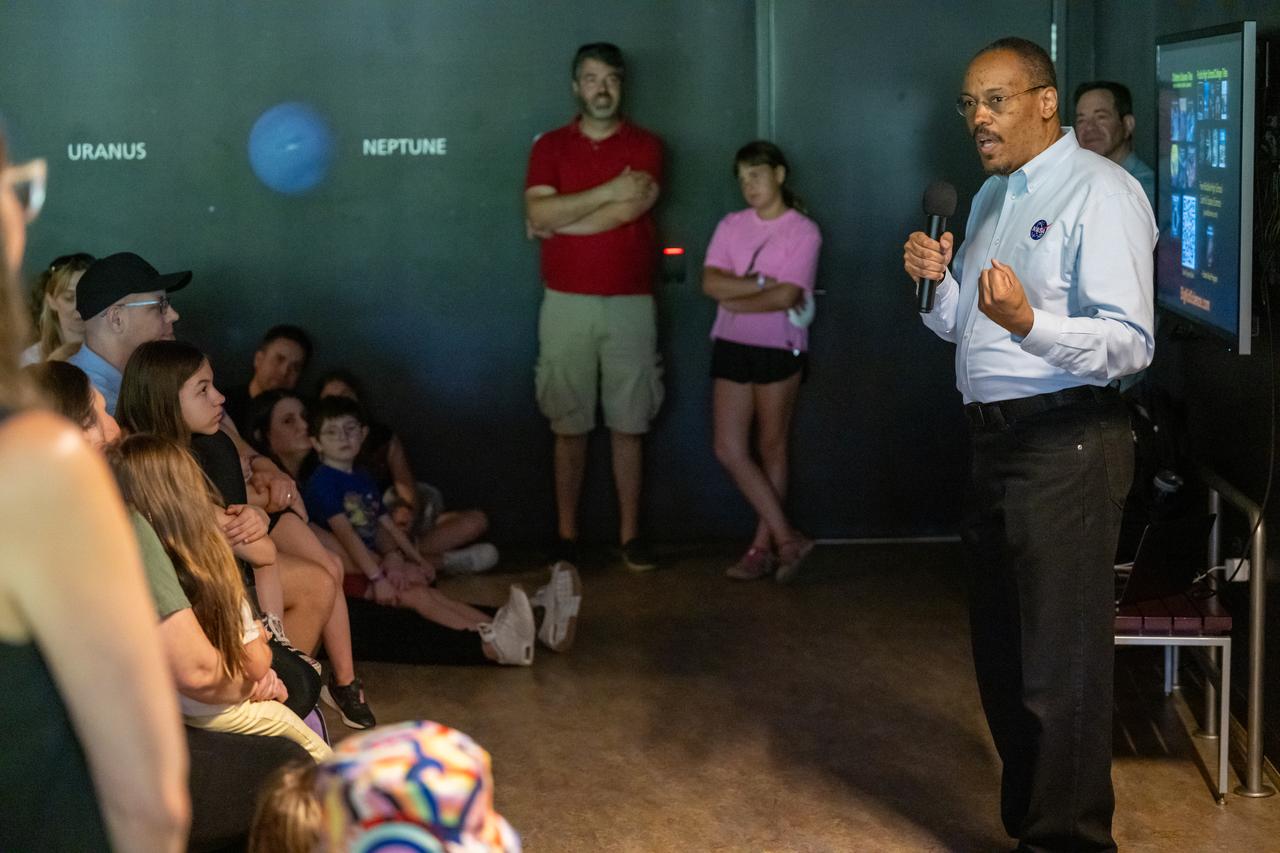
Former NASA astronaut Alvin Drew, right, speaks with guests at the Dallas Arboretum, Sunday, April 7, 2024, in Dallas, Texas. On Monday, April 8, a total solar eclipse will sweep across a narrow portion of the North American continent from Mexico’s Pacific coast to the Atlantic coast of Newfoundland, Canada, while a partial solar eclipse will be visible across the entire North American continent along with parts of Central America and Europe. Photo Credit: (NASA/Keegan Barber)

NASA Earth Science Education and Outreach Lead Dr. Trena Ferrell, second from right, hands out educational materials to guests at the Dallas Arboretum, Sunday, April 7, 2024, in Dallas, Texas. On Monday, April 8, a total solar eclipse will sweep across a narrow portion of the North American continent from Mexico’s Pacific coast to the Atlantic coast of Newfoundland, Canada, while a partial solar eclipse will be visible across the entire North American continent along with parts of Central America and Europe. Photo Credit: (NASA/Keegan Barber)

NASA Heliophysics Science Division Instrument Systems Engineer Patrick Haas speaks to guests about the upcoming total solar eclipse at the Dallas Arboretum, Sunday, April 7, 2024, in Dallas, Texas. On Monday, April 8, a total solar eclipse will sweep across a narrow portion of the North American continent from Mexico’s Pacific coast to the Atlantic coast of Newfoundland, Canada, while a partial solar eclipse will be visible across the entire North American continent along with parts of Central America and Europe. Photo Credit: (NASA/Keegan Barber)

NASA Deputy Associate Administrator Casey Swails speaks to guests about the upcoming total solar eclipse at the Dallas Arboretum, Monday, April 8, 2024, in Dallas, Texas. A total solar eclipse swept across a narrow portion of the North American continent from Mexico’s Pacific coast to the Atlantic coast of Newfoundland, Canada. A partial solar eclipse was visible across the entire North American continent along with parts of Central America and Europe. Photo Credit: (NASA/Keegan Barber)

NASA Deputy Associate Administrator Casey Swails speaks to guests about the upcoming total solar eclipse at the Dallas Arboretum, Monday, April 8, 2024, in Dallas, Texas. A total solar eclipse swept across a narrow portion of the North American continent from Mexico’s Pacific coast to the Atlantic coast of Newfoundland, Canada. A partial solar eclipse was visible across the entire North American continent along with parts of Central America and Europe. Photo Credit: (NASA/Keegan Barber)

NASA Deputy Associate Administrator Casey Swails speaks to guests about the upcoming total solar eclipse at the Dallas Arboretum, Monday, April 8, 2024, in Dallas, Texas. A total solar eclipse swept across a narrow portion of the North American continent from Mexico’s Pacific coast to the Atlantic coast of Newfoundland, Canada. A partial solar eclipse was visible across the entire North American continent along with parts of Central America and Europe. Photo Credit: (NASA/Keegan Barber)

NASA Deputy Associate Administrator Casey Swails speaks to guests about the upcoming total solar eclipse at the Dallas Arboretum, Monday, April 8, 2024, in Dallas, Texas. A total solar eclipse swept across a narrow portion of the North American continent from Mexico’s Pacific coast to the Atlantic coast of Newfoundland, Canada. A partial solar eclipse was visible across the entire North American continent along with parts of Central America and Europe. Photo Credit: (NASA/Keegan Barber)

NASA Deputy Associate Administrator Casey Swails speaks to guests about the upcoming total solar eclipse at the Dallas Arboretum, Monday, April 8, 2024, in Dallas, Texas. A total solar eclipse swept across a narrow portion of the North American continent from Mexico’s Pacific coast to the Atlantic coast of Newfoundland, Canada. A partial solar eclipse was visible across the entire North American continent along with parts of Central America and Europe. Photo Credit: (NASA/Keegan Barber)

Guests decorate their protective glasses at the Dallas Arboretum prior to the total solar eclipse, Monday, April 8, 2024, in Dallas, Texas. A total solar eclipse swept across a narrow portion of the North American continent from Mexico’s Pacific coast to the Atlantic coast of Newfoundland, Canada. A partial solar eclipse was visible across the entire North American continent along with parts of Central America and Europe. Photo Credit: (NASA/Keegan Barber) in Dallas, Texas on Monday, April 8, 2024. A total solar eclipse swept across a narrow portion of the North American continent from Mexico’s Pacific coast to the Atlantic coast of Newfoundland, Canada. A partial solar eclipse was visible across the entire North American continent along with parts of Central America and Europe. Photo Credit: (NASA/Keegan Barber)

Guests learn about the total solar eclipse from NASA staff at the Dallas Arboretum, Monday, April 8, 2024, in Dallas, Texas. A total solar eclipse swept across a narrow portion of the North American continent from Mexico’s Pacific coast to the Atlantic coast of Newfoundland, Canada. A partial solar eclipse was visible across the entire North American continent along with parts of Central America and Europe. Photo Credit: (NASA/Keegan Barber) in Dallas, Texas on Monday, April 8, 2024. A total solar eclipse swept across a narrow portion of the North American continent from Mexico’s Pacific coast to the Atlantic coast of Newfoundland, Canada. A partial solar eclipse was visible across the entire North American continent along with parts of Central America and Europe. Photo Credit: (NASA/Keegan Barber)
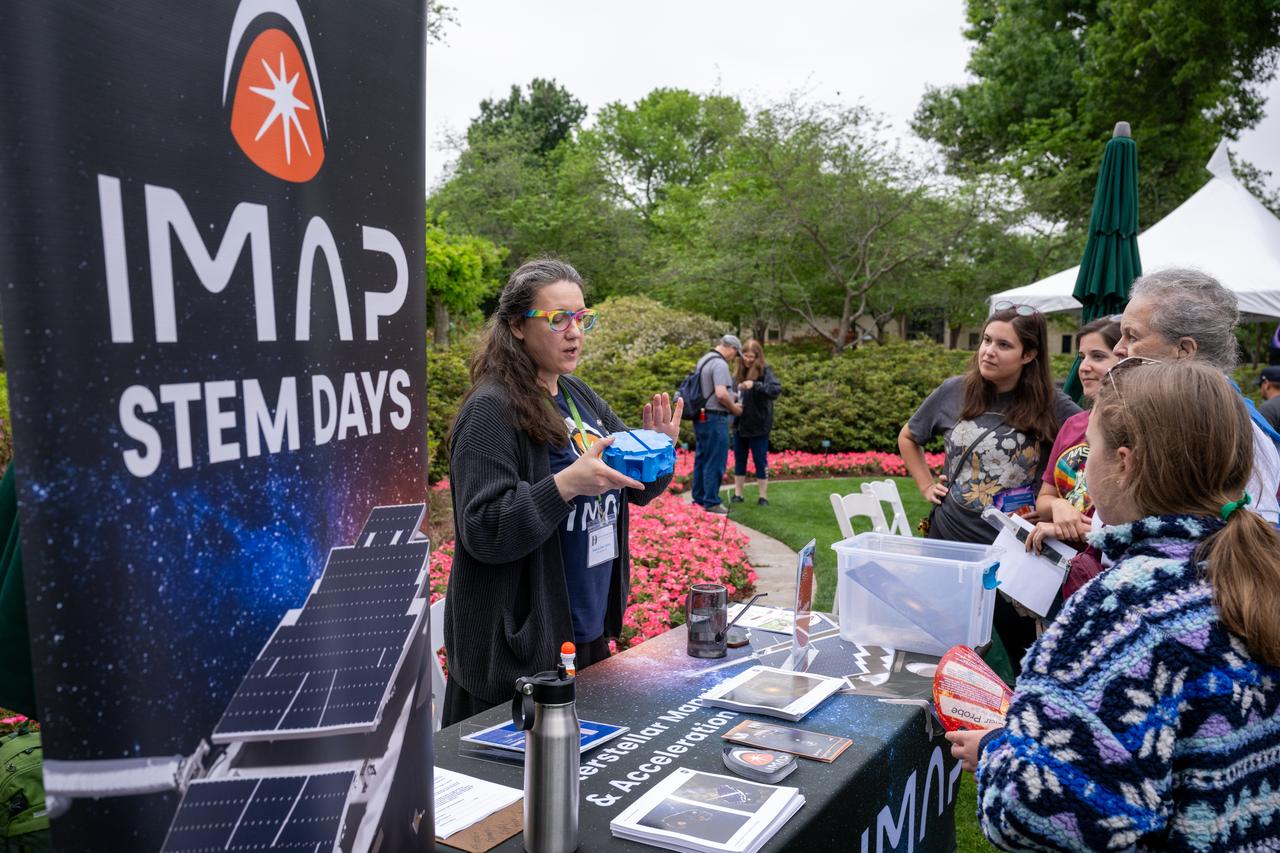
Guests learn about the total solar eclipse from NASA staff at the Dallas Arboretum, Monday, April 8, 2024, in Dallas, Texas. A total solar eclipse swept across a narrow portion of the North American continent from Mexico’s Pacific coast to the Atlantic coast of Newfoundland, Canada. A partial solar eclipse was visible across the entire North American continent along with parts of Central America and Europe. Photo Credit: (NASA/Keegan Barber) in Dallas, Texas on Monday, April 8, 2024. A total solar eclipse swept across a narrow portion of the North American continent from Mexico’s Pacific coast to the Atlantic coast of Newfoundland, Canada. A partial solar eclipse was visible across the entire North American continent along with parts of Central America and Europe. Photo Credit: (NASA/Keegan Barber)
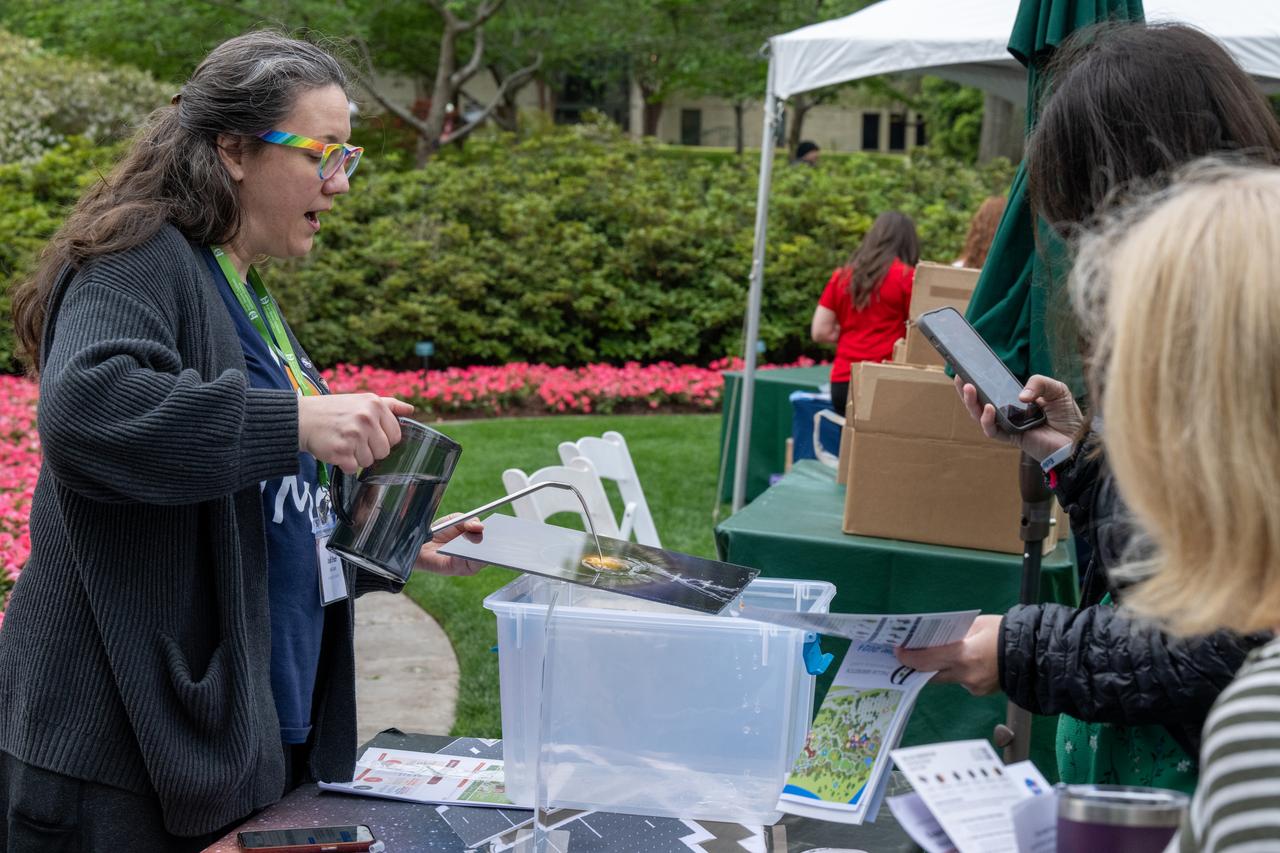
Guests learn about the total solar eclipse from NASA staff at the Dallas Arboretum, Monday, April 8, 2024, in Dallas, Texas. A total solar eclipse swept across a narrow portion of the North American continent from Mexico’s Pacific coast to the Atlantic coast of Newfoundland, Canada. A partial solar eclipse was visible across the entire North American continent along with parts of Central America and Europe. Photo Credit: (NASA/Keegan Barber) in Dallas, Texas on Monday, April 8, 2024. A total solar eclipse swept across a narrow portion of the North American continent from Mexico’s Pacific coast to the Atlantic coast of Newfoundland, Canada. A partial solar eclipse was visible across the entire North American continent along with parts of Central America and Europe. Photo Credit: (NASA/Keegan Barber)

Guests learn about the total solar eclipse from NASA staff at the Dallas Arboretum, Monday, April 8, 2024, in Dallas, Texas. A total solar eclipse swept across a narrow portion of the North American continent from Mexico’s Pacific coast to the Atlantic coast of Newfoundland, Canada. A partial solar eclipse was visible across the entire North American continent along with parts of Central America and Europe. Photo Credit: (NASA/Keegan Barber) in Dallas, Texas on Monday, April 8, 2024. A total solar eclipse swept across a narrow portion of the North American continent from Mexico’s Pacific coast to the Atlantic coast of Newfoundland, Canada. A partial solar eclipse was visible across the entire North American continent along with parts of Central America and Europe. Photo Credit: (NASA/Keegan Barber)

Guests learn about the total solar eclipse from NASA staff at the Dallas Arboretum, Monday, April 8, 2024, in Dallas, Texas. A total solar eclipse swept across a narrow portion of the North American continent from Mexico’s Pacific coast to the Atlantic coast of Newfoundland, Canada. A partial solar eclipse was visible across the entire North American continent along with parts of Central America and Europe. Photo Credit: (NASA/Keegan Barber) in Dallas, Texas on Monday, April 8, 2024. A total solar eclipse swept across a narrow portion of the North American continent from Mexico’s Pacific coast to the Atlantic coast of Newfoundland, Canada. A partial solar eclipse was visible across the entire North American continent along with parts of Central America and Europe. Photo Credit: (NASA/Keegan Barber)

Guests learn about the total solar eclipse from NASA staff at the Dallas Arboretum, Monday, April 8, 2024, in Dallas, Texas. A total solar eclipse swept across a narrow portion of the North American continent from Mexico’s Pacific coast to the Atlantic coast of Newfoundland, Canada. A partial solar eclipse was visible across the entire North American continent along with parts of Central America and Europe. Photo Credit: (NASA/Keegan Barber) in Dallas, Texas on Monday, April 8, 2024. A total solar eclipse swept across a narrow portion of the North American continent from Mexico’s Pacific coast to the Atlantic coast of Newfoundland, Canada. A partial solar eclipse was visible across the entire North American continent along with parts of Central America and Europe. Photo Credit: (NASA/Keegan Barber)

Guests learn about the total solar eclipse from NASA staff at the Dallas Arboretum, Monday, April 8, 2024, in Dallas, Texas. A total solar eclipse swept across a narrow portion of the North American continent from Mexico’s Pacific coast to the Atlantic coast of Newfoundland, Canada. A partial solar eclipse was visible across the entire North American continent along with parts of Central America and Europe. Photo Credit: (NASA/Keegan Barber) in Dallas, Texas on Monday, April 8, 2024. A total solar eclipse swept across a narrow portion of the North American continent from Mexico’s Pacific coast to the Atlantic coast of Newfoundland, Canada. A partial solar eclipse was visible across the entire North American continent along with parts of Central America and Europe. Photo Credit: (NASA/Keegan Barber)

Guests learn about the total solar eclipse from NASA staff at the Dallas Arboretum, Monday, April 8, 2024, in Dallas, Texas. A total solar eclipse swept across a narrow portion of the North American continent from Mexico’s Pacific coast to the Atlantic coast of Newfoundland, Canada. A partial solar eclipse was visible across the entire North American continent along with parts of Central America and Europe. Photo Credit: (NASA/Keegan Barber) in Dallas, Texas on Monday, April 8, 2024. A total solar eclipse swept across a narrow portion of the North American continent from Mexico’s Pacific coast to the Atlantic coast of Newfoundland, Canada. A partial solar eclipse was visible across the entire North American continent along with parts of Central America and Europe. Photo Credit: (NASA/Keegan Barber)

Guests learn about the total solar eclipse from NASA staff at the Dallas Arboretum, Monday, April 8, 2024, in Dallas, Texas. A total solar eclipse swept across a narrow portion of the North American continent from Mexico’s Pacific coast to the Atlantic coast of Newfoundland, Canada. A partial solar eclipse was visible across the entire North American continent along with parts of Central America and Europe. Photo Credit: (NASA/Keegan Barber) in Dallas, Texas on Monday, April 8, 2024. A total solar eclipse swept across a narrow portion of the North American continent from Mexico’s Pacific coast to the Atlantic coast of Newfoundland, Canada. A partial solar eclipse was visible across the entire North American continent along with parts of Central America and Europe. Photo Credit: (NASA/Keegan Barber)

Guests learn about the total solar eclipse from NASA staff at the Dallas Arboretum, Monday, April 8, 2024, in Dallas, Texas. A total solar eclipse swept across a narrow portion of the North American continent from Mexico’s Pacific coast to the Atlantic coast of Newfoundland, Canada. A partial solar eclipse was visible across the entire North American continent along with parts of Central America and Europe. Photo Credit: (NASA/Keegan Barber) in Dallas, Texas on Monday, April 8, 2024. A total solar eclipse swept across a narrow portion of the North American continent from Mexico’s Pacific coast to the Atlantic coast of Newfoundland, Canada. A partial solar eclipse was visible across the entire North American continent along with parts of Central America and Europe. Photo Credit: (NASA/Keegan Barber)

Guests learn about the total solar eclipse from NASA staff at the Dallas Arboretum, Monday, April 8, 2024, in Dallas, Texas. A total solar eclipse swept across a narrow portion of the North American continent from Mexico’s Pacific coast to the Atlantic coast of Newfoundland, Canada. A partial solar eclipse was visible across the entire North American continent along with parts of Central America and Europe. Photo Credit: (NASA/Keegan Barber) in Dallas, Texas on Monday, April 8, 2024. A total solar eclipse swept across a narrow portion of the North American continent from Mexico’s Pacific coast to the Atlantic coast of Newfoundland, Canada. A partial solar eclipse was visible across the entire North American continent along with parts of Central America and Europe. Photo Credit: (NASA/Keegan Barber)

Guests learn about the total solar eclipse from NASA staff at the Dallas Arboretum, Monday, April 8, 2024, in Dallas, Texas. A total solar eclipse swept across a narrow portion of the North American continent from Mexico’s Pacific coast to the Atlantic coast of Newfoundland, Canada. A partial solar eclipse was visible across the entire North American continent along with parts of Central America and Europe. Photo Credit: (NASA/Keegan Barber) in Dallas, Texas on Monday, April 8, 2024. A total solar eclipse swept across a narrow portion of the North American continent from Mexico’s Pacific coast to the Atlantic coast of Newfoundland, Canada. A partial solar eclipse was visible across the entire North American continent along with parts of Central America and Europe. Photo Credit: (NASA/Keegan Barber)

Guests pose for a photo at the Dallas Arboretum, Monday, April 8, 2024, in Dallas, Texas. A total solar eclipse swept across a narrow portion of the North American continent from Mexico’s Pacific coast to the Atlantic coast of Newfoundland, Canada. A partial solar eclipse was visible across the entire North American continent along with parts of Central America and Europe. Photo Credit: (NASA/Keegan Barber) in Dallas, Texas on Monday, April 8, 2024. A total solar eclipse swept across a narrow portion of the North American continent from Mexico’s Pacific coast to the Atlantic coast of Newfoundland, Canada. A partial solar eclipse was visible across the entire North American continent along with parts of Central America and Europe. Photo Credit: (NASA/Keegan Barber)
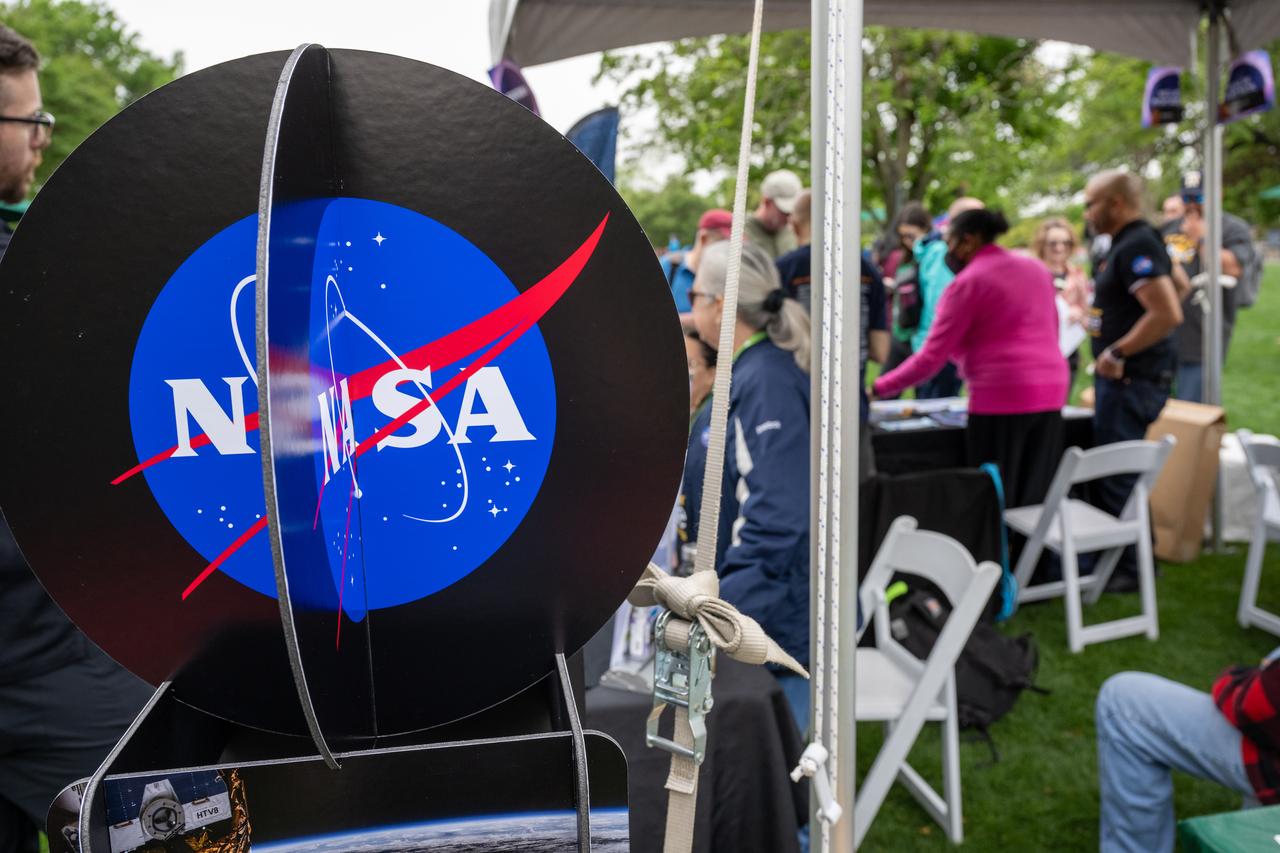
Guests learn about the total solar eclipse from NASA staff at the Dallas Arboretum, Monday, April 8, 2024, in Dallas, Texas. A total solar eclipse swept across a narrow portion of the North American continent from Mexico’s Pacific coast to the Atlantic coast of Newfoundland, Canada. A partial solar eclipse was visible across the entire North American continent along with parts of Central America and Europe. Photo Credit: (NASA/Keegan Barber) in Dallas, Texas on Monday, April 8, 2024. A total solar eclipse swept across a narrow portion of the North American continent from Mexico’s Pacific coast to the Atlantic coast of Newfoundland, Canada. A partial solar eclipse was visible across the entire North American continent along with parts of Central America and Europe. Photo Credit: (NASA/Keegan Barber)
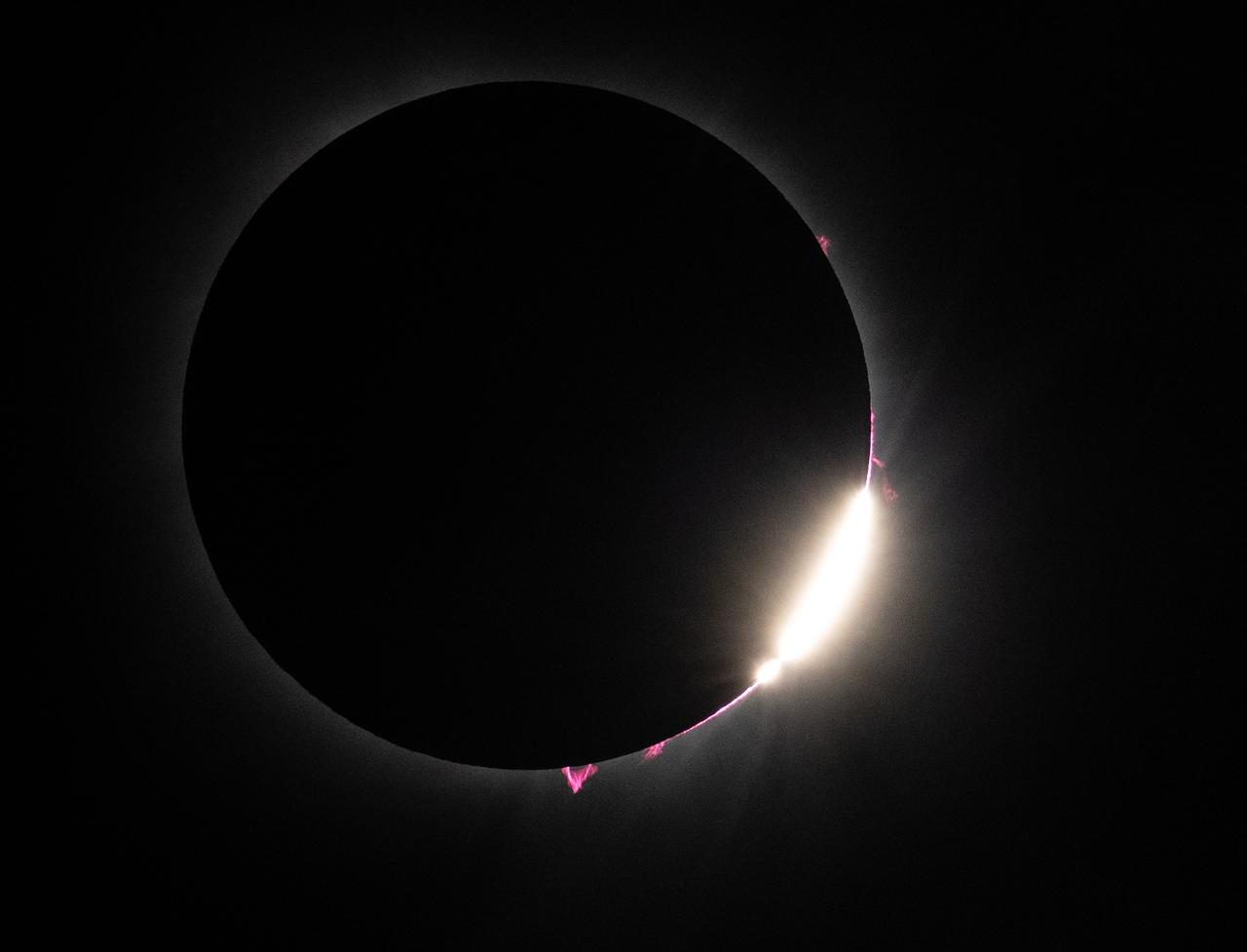
Bailey's Beads and solar prominences are seen just after totality in Dallas, Texas on Monday, April 8, 2024. A total solar eclipse swept across a narrow portion of the North American continent from Mexico’s Pacific coast to the Atlantic coast of Newfoundland, Canada. A partial solar eclipse was visible across the entire North American continent along with parts of Central America and Europe. Photo Credit: (NASA/Keegan Barber) in Dallas, Texas on Monday, April 8, 2024. A total solar eclipse swept across a narrow portion of the North American continent from Mexico’s Pacific coast to the Atlantic coast of Newfoundland, Canada. A partial solar eclipse was visible across the entire North American continent along with parts of Central America and Europe. Photo Credit: (NASA/Keegan Barber)
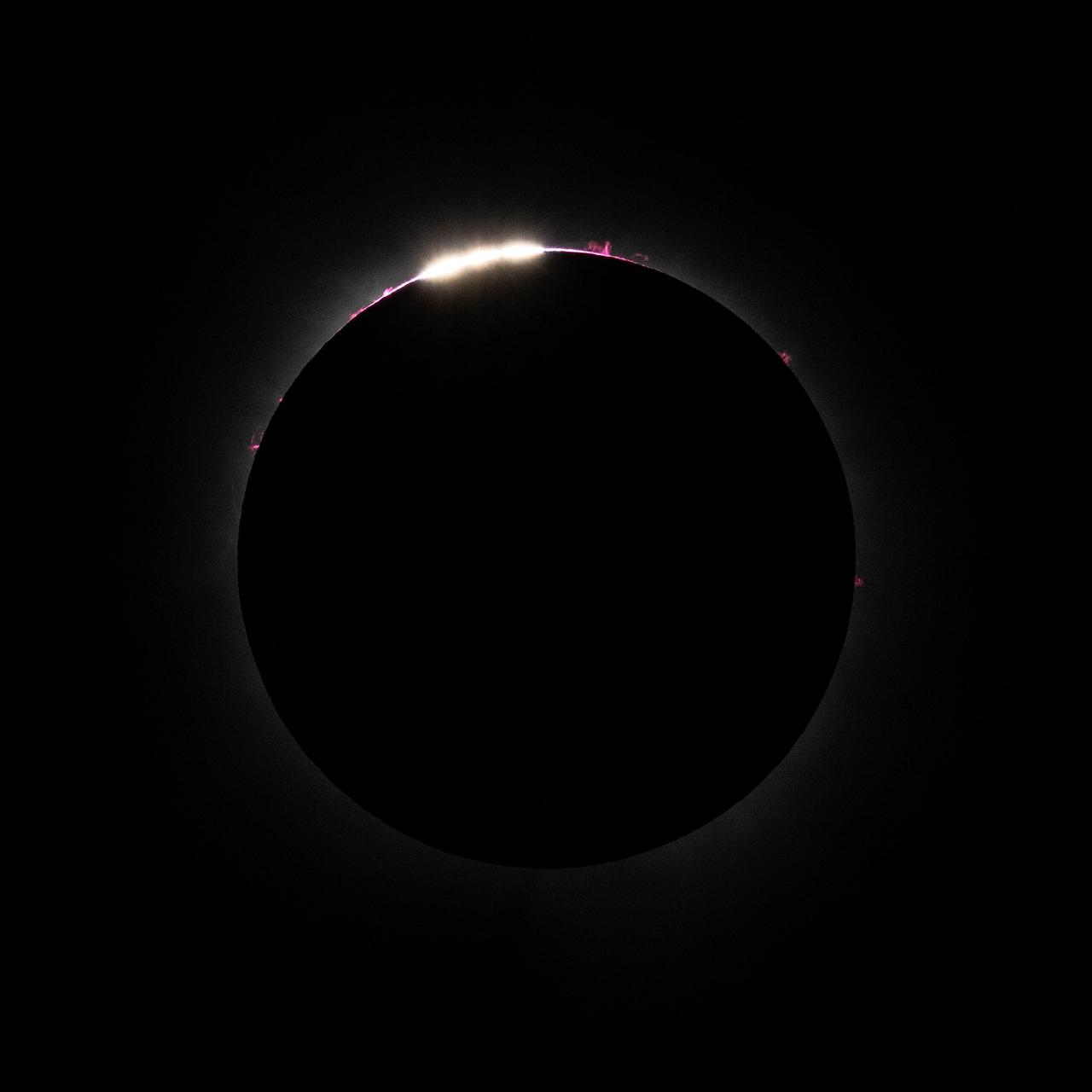
Bailey's Beads are seen just before totality in Dallas, Texas on Monday, April 8, 2024. A total solar eclipse swept across a narrow portion of the North American continent from Mexico’s Pacific coast to the Atlantic coast of Newfoundland, Canada. A partial solar eclipse was visible across the entire North American continent along with parts of Central America and Europe. Photo Credit: (NASA/Keegan Barber)
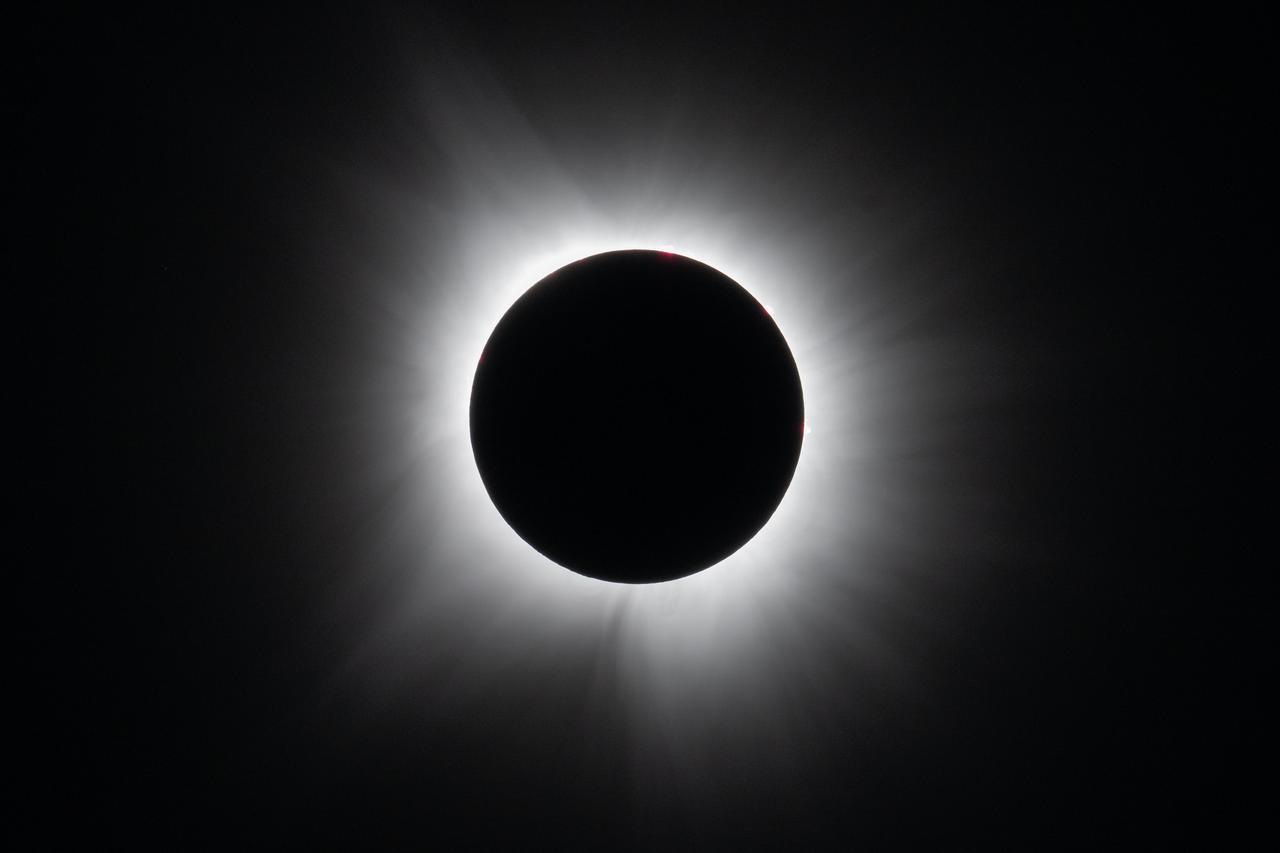
A total solar eclipse is seen in Dallas, Texas on Monday, April 8, 2024. A total solar eclipse swept across a narrow portion of the North American continent from Mexico’s Pacific coast to the Atlantic coast of Newfoundland, Canada. A partial solar eclipse was visible across the entire North American continent along with parts of Central America and Europe. Photo Credit: (NASA/Keegan Barber)

People are seen as they watch a total solar eclipse in Dallas, Texas on Monday, April 8, 2024. A total solar eclipse swept across a narrow portion of the North American continent from Mexico’s Pacific coast to the Atlantic coast of Newfoundland, Canada. A partial solar eclipse was visible across the entire North American continent along with parts of Central America and Europe. Photo Credit: (NASA/Keegan Barber)
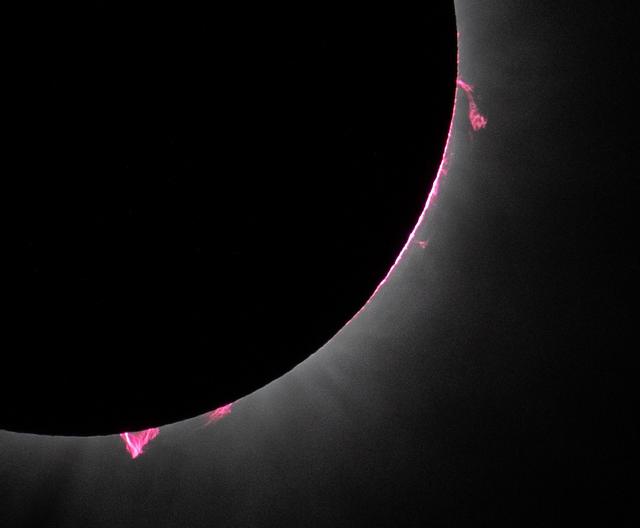
Solar prominences are seen during a total solar eclipse in Dallas, Texas on Monday, April 8, 2024. A total solar eclipse swept across a narrow portion of the North American continent from Mexico’s Pacific coast to the Atlantic coast of Newfoundland, Canada. A partial solar eclipse was visible across the entire North American continent along with parts of Central America and Europe. Photo Credit: (NASA/Keegan Barber)
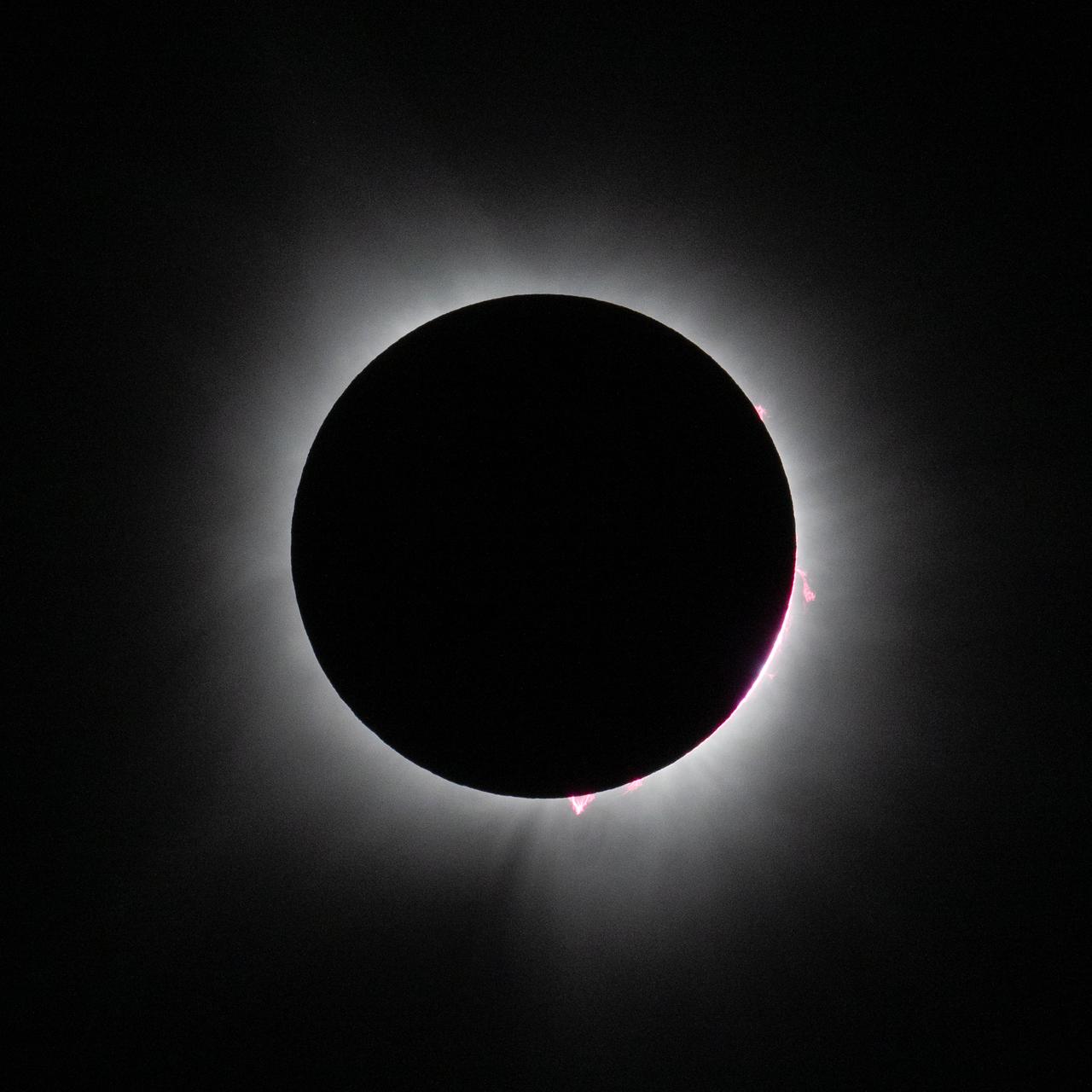
A total solar eclipse is seen in Dallas, Texas on Monday, April 8, 2024. A total solar eclipse swept across a narrow portion of the North American continent from Mexico’s Pacific coast to the Atlantic coast of Newfoundland, Canada. A partial solar eclipse was visible across the entire North American continent along with parts of Central America and Europe. Photo Credit: (NASA/Keegan Barber)
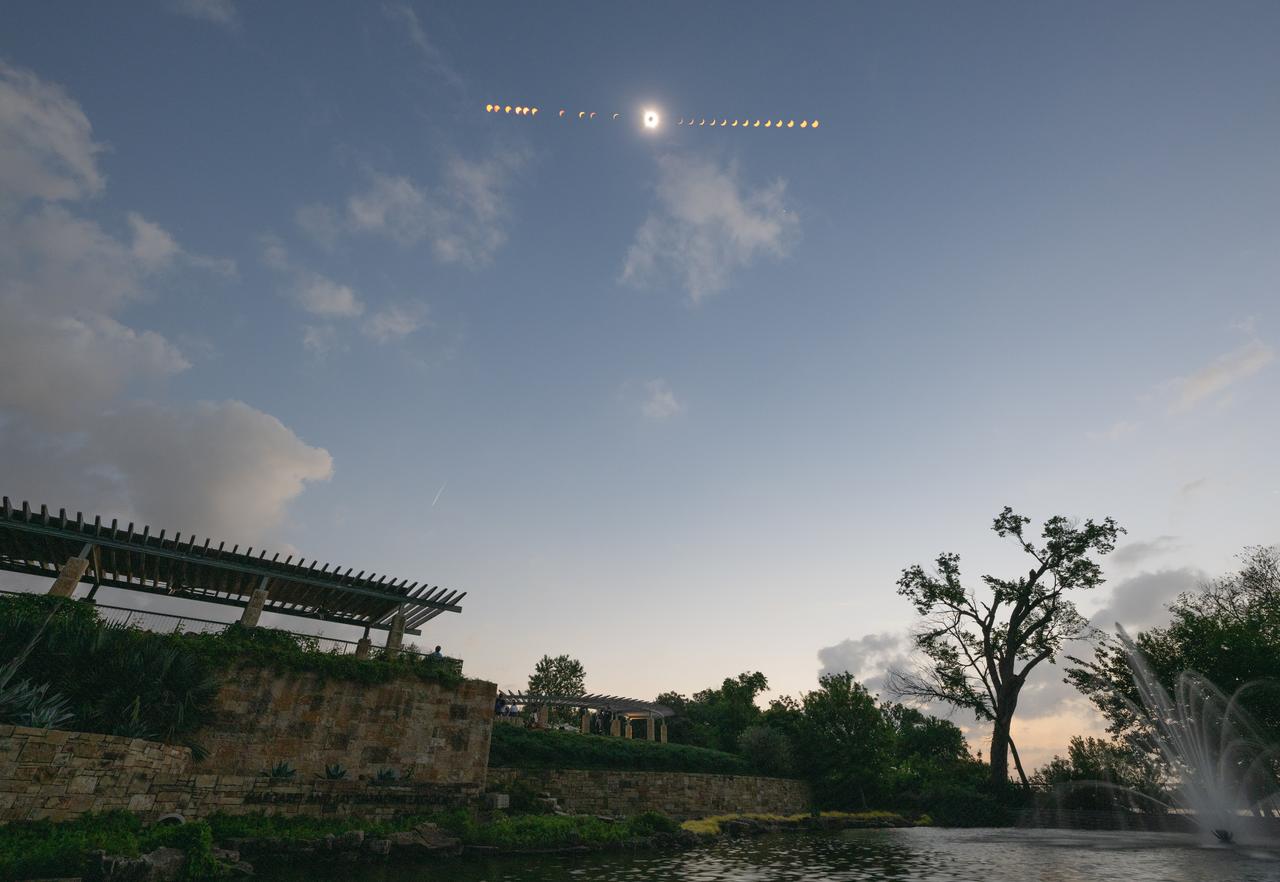
This composite image of multiple exposures shows the progression of a total solar eclipse in Dallas, Texas on Monday, April 8, 2024. A total solar eclipse swept across a narrow portion of the North American continent from Mexico’s Pacific coast to the Atlantic coast of Newfoundland, Canada. A partial solar eclipse was visible across the entire North American continent along with parts of Central America and Europe. Photo Credit: (NASA/Keegan Barber)
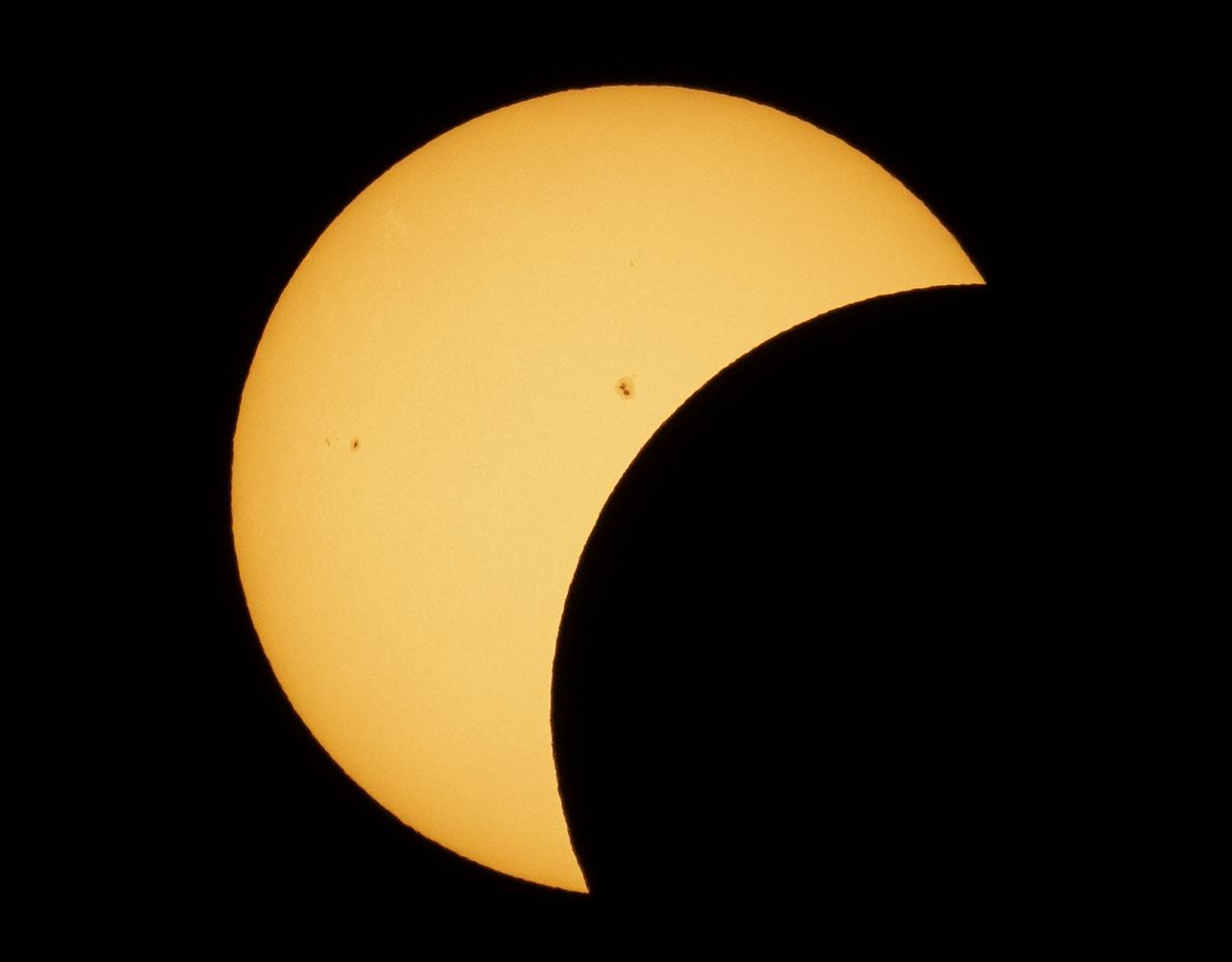
The Moon is seen passing in front of the Sun during a partial solar eclipse in Dallas, Texas on Monday, April 8, 2024. A total solar eclipse swept across a narrow portion of the North American continent from Mexico’s Pacific coast to the Atlantic coast of Newfoundland, Canada. A partial solar eclipse was visible across the entire North American continent along with parts of Central America and Europe. Photo Credit: (NASA/Keegan Barber)
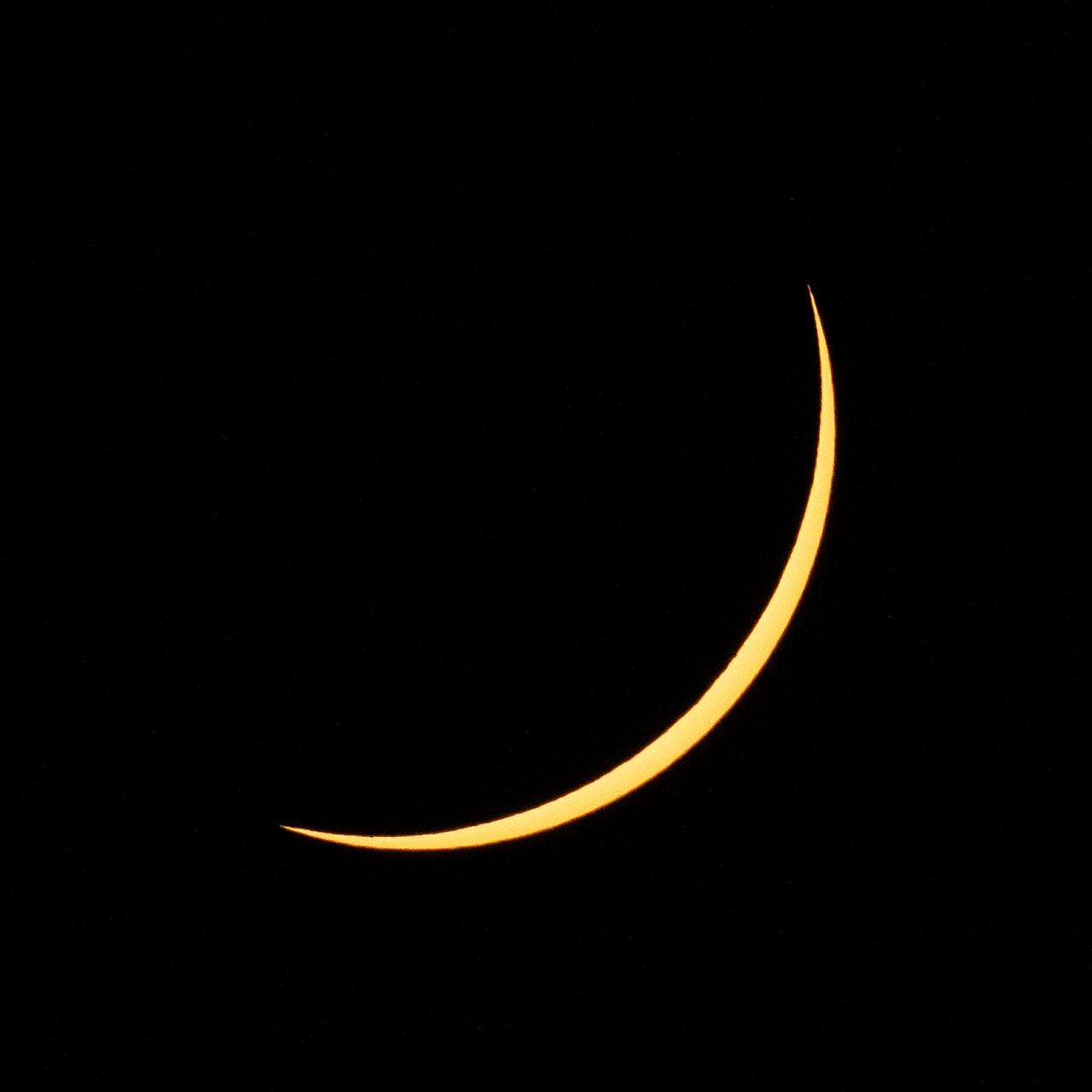
The Moon is seen passing in front of the Sun during a partial solar eclipse in Dallas, Texas on Monday, April 8, 2024. A total solar eclipse swept across a narrow portion of the North American continent from Mexico’s Pacific coast to the Atlantic coast of Newfoundland, Canada. A partial solar eclipse was visible across the entire North American continent along with parts of Central America and Europe. Photo Credit: (NASA/Keegan Barber)

People are seen as they watch a total solar eclipse in Dallas, Texas on Monday, April 8, 2024. A total solar eclipse swept across a narrow portion of the North American continent from Mexico’s Pacific coast to the Atlantic coast of Newfoundland, Canada. A partial solar eclipse was visible across the entire North American continent along with parts of Central America and Europe. Photo Credit: (NASA/Keegan Barber)
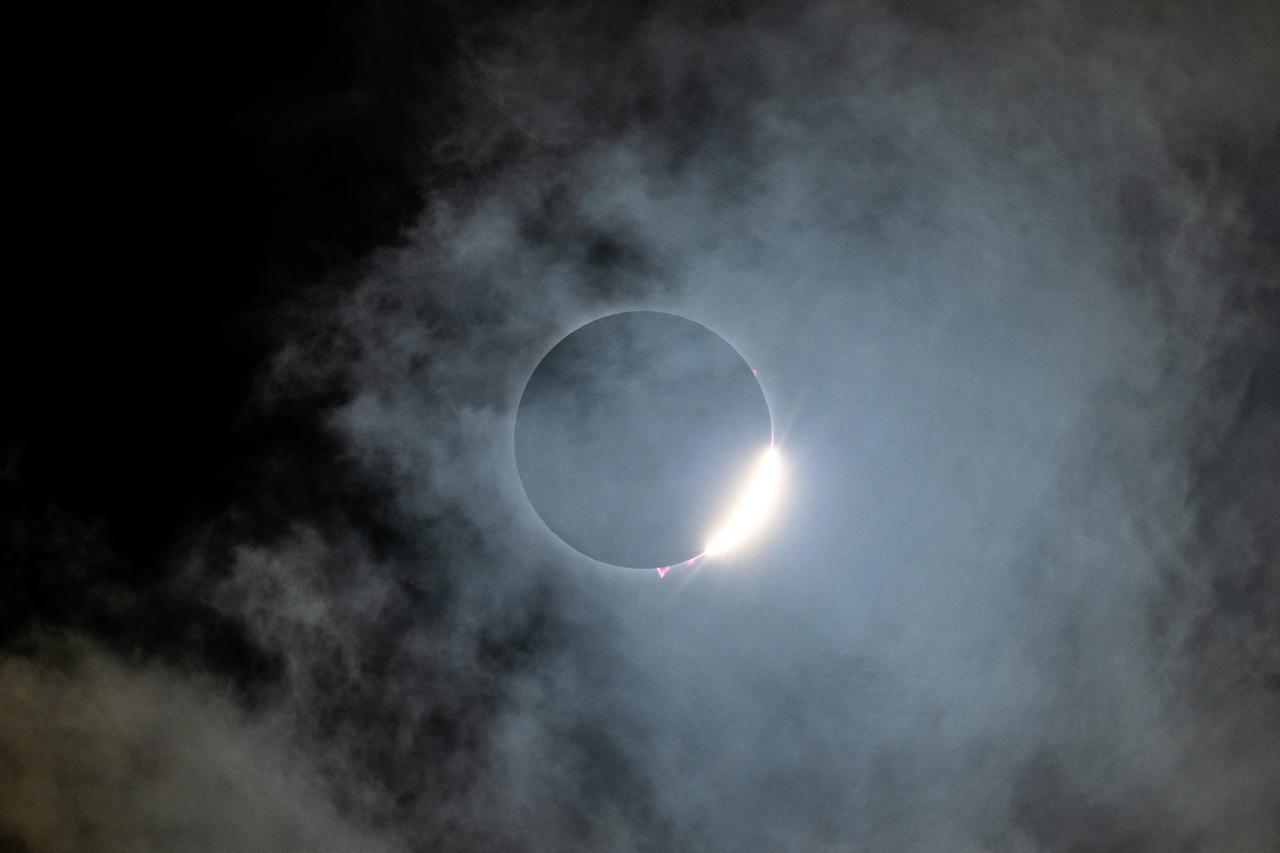
A total solar eclipse is seen in Dallas, Texas on Monday, April 8, 2024. A total solar eclipse swept across a narrow portion of the North American continent from Mexico’s Pacific coast to the Atlantic coast of Newfoundland, Canada. A partial solar eclipse was visible across the entire North American continent along with parts of Central America and Europe. Photo Credit: (NASA/Keegan Barber)
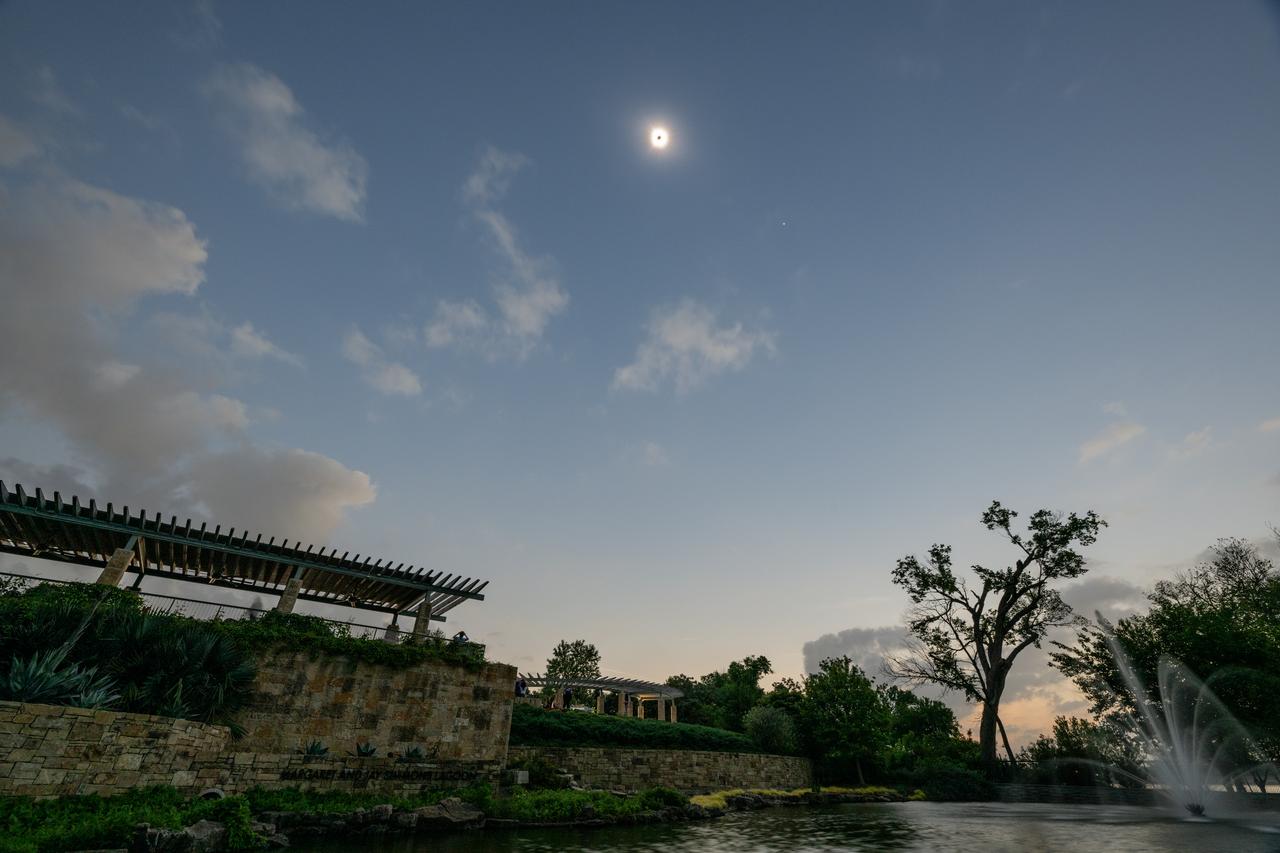
A total solar eclipse is seen in Dallas, Texas on Monday, April 8, 2024. A total solar eclipse swept across a narrow portion of the North American continent from Mexico’s Pacific coast to the Atlantic coast of Newfoundland, Canada. A partial solar eclipse was visible across the entire North American continent along with parts of Central America and Europe. Photo Credit: (NASA/Keegan Barber)

This composite image of multiple exposures shows the progression of a total solar eclipse in Dallas, Texas on Monday, April 8, 2024. A total solar eclipse swept across a narrow portion of the North American continent from Mexico’s Pacific coast to the Atlantic coast of Newfoundland, Canada. A partial solar eclipse was visible across the entire North American continent along with parts of Central America and Europe. Photo Credit: (NASA/Keegan Barber)
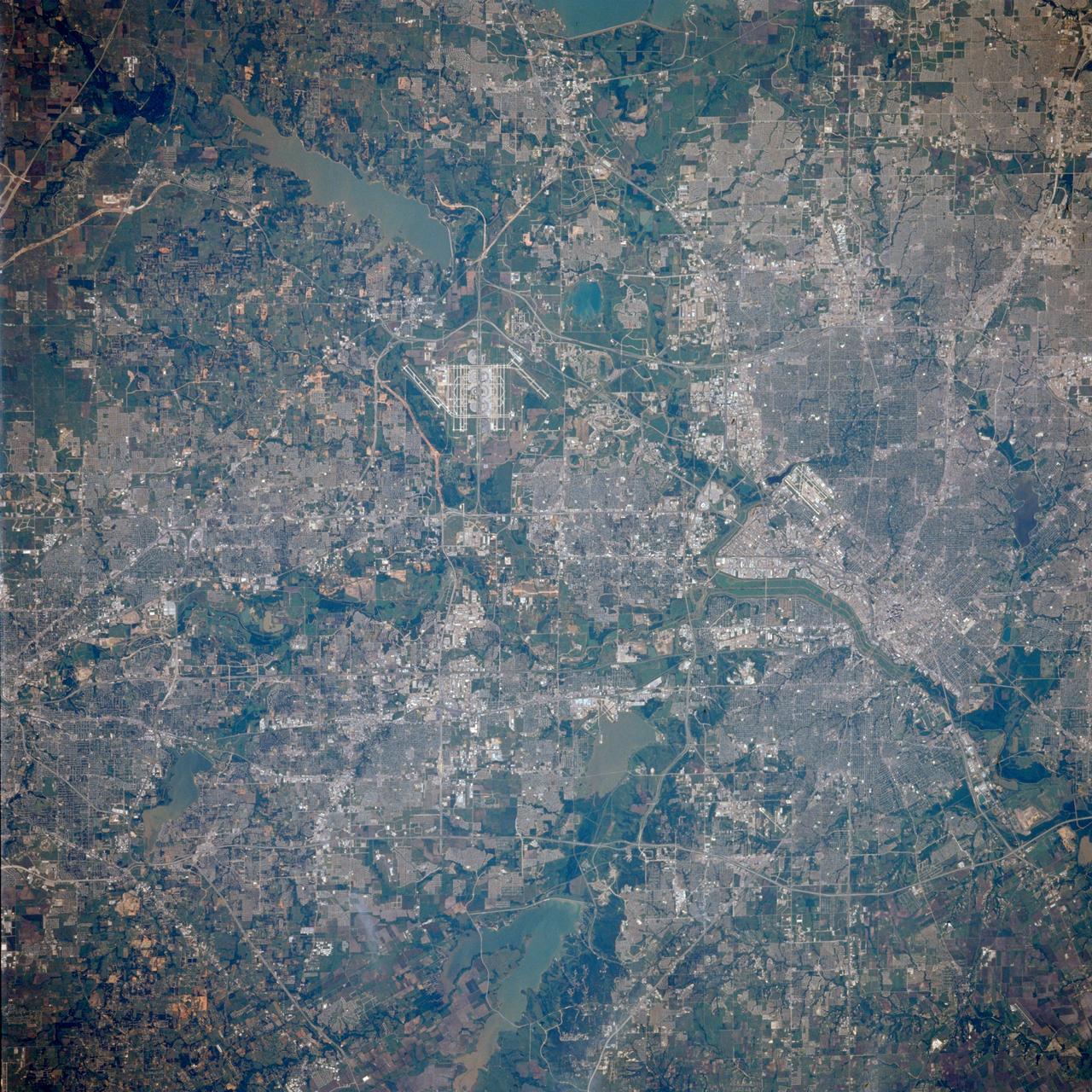
STS039-85-032 (28 April-6 May 1991) --- A large portion of the Dallas - Fort Worth metropolitan area is seen in this 70mm frame, photographed from the Earth-orbiting Space Shuttle Discovery. Hold photograph with the Dallas - Ft. Worth Airport directly above the center point of the picture so that north will be at the top. Compared with Apollo 6 pictures made 23 years earlier (April 1968), this photo indicates notable growth in the municipalities between Dallas and Ft. Worth as well as great outer growth of the two cities. (Most of the western portions of Ft. Worth did not make it into this frame). Easily recognizable bodies of water are Grapevine Lake and North Lake (both near the huge airport), Mountain Creek Lake (southwest of Dallas), Lake Arlington (southeast of Ft. Worth) and the Trinity River which flows southward to the Gulf of Mexico.
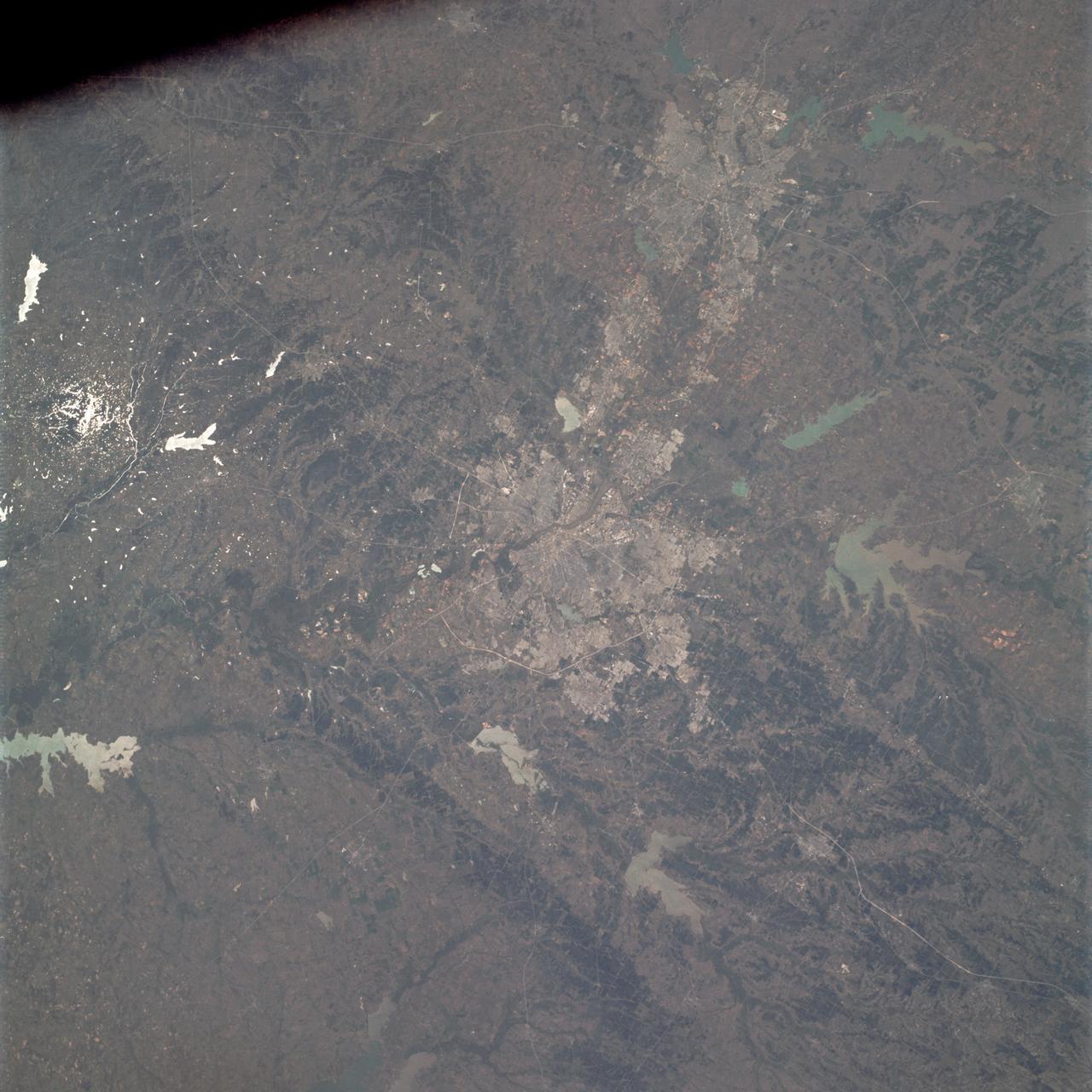
AS09-21-3299 (3-13 March 1969) --- Dallas-Fort Worth area as photographed from the Apollo 9 spacecraft during its Earth-orbital mission. The superhighways leading out of two cities are clearly visible. The largest body of water north of Dallas is the Garza-Little Elm Reservoir. Cedar Creek Reservoir is located to the southeast of Dallas. The City of Denton is near left center edge of picture at junction of two highways leading from Fort Worth and Dallas.
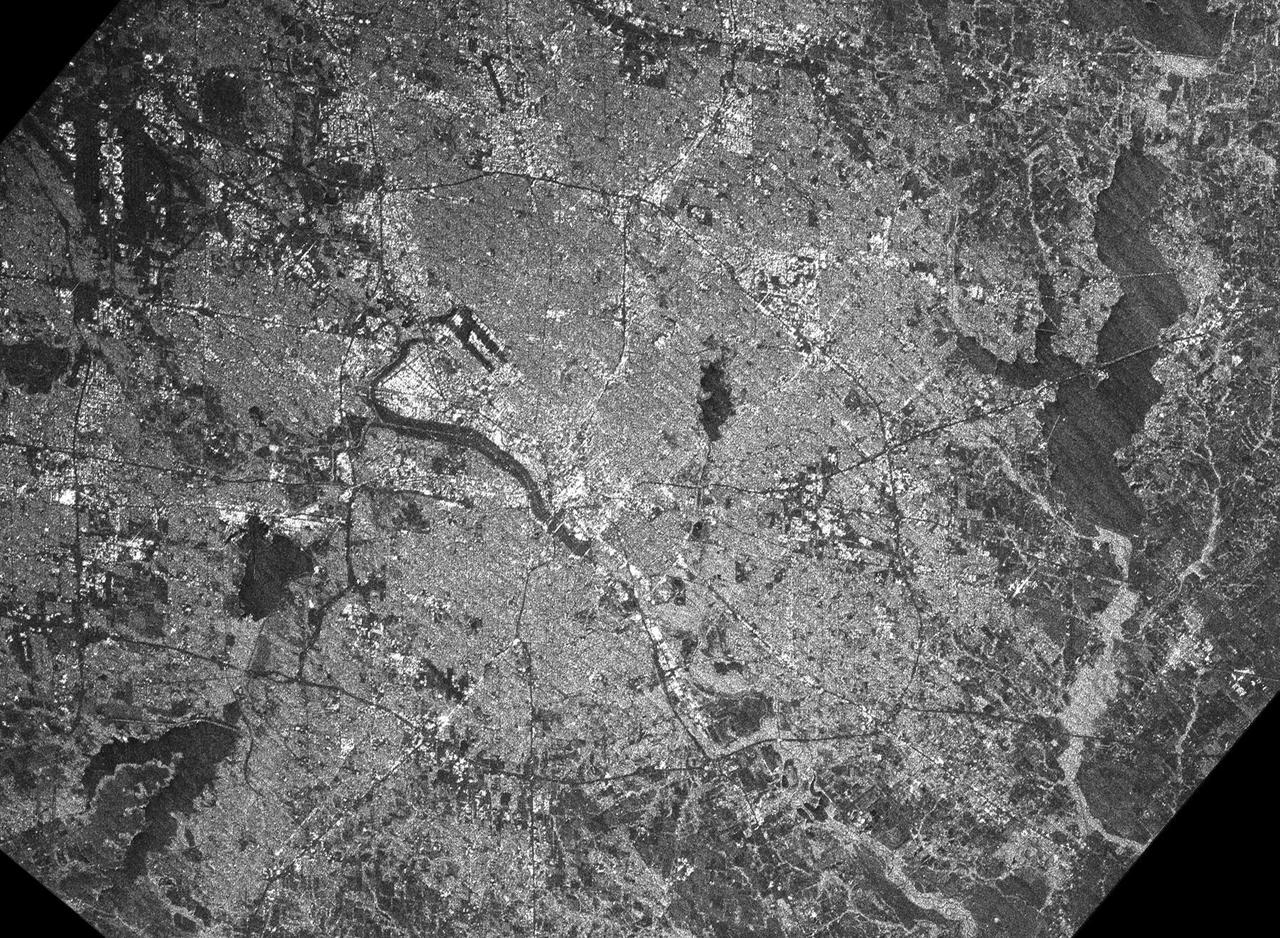
This radar image acquired by NASA Shuttle Radar Topography Mission SRTM from data collected on February 18, 2000 shows the Dallas-Fort Worth metropolitan area in Texas.

AS06-02-1462 (4 April 1968) --- View of the Dallas-Fort Worth, Texas, area as photographed from the unmanned Apollo 6 (Spacecraft 020/Saturn 502) space mission. The highway and expressway system in and around both cities is clearly visible. North is toward left side of picture. Grapevine Reservoir and Garza-Little Elm Reservoir are to the north-west of Dallas. The city of Denton can be seen in left center of picture at conjunction of highways leading to both Fort Worth and Dallas. The Brazos River is in lower right corner. This photograph was made three hours and nine minutes after liftoff of the Apollo 6 space flight.

Years before Huntsville, Alabama got its start in missiles and space, the community was known as the State's leading cotton producer. This is a historical photo of the Dallas Cotton Mills printed in "The Huntsville Post" December 27, 1900. (Courtesy of Huntsville/Madison County Public Library)
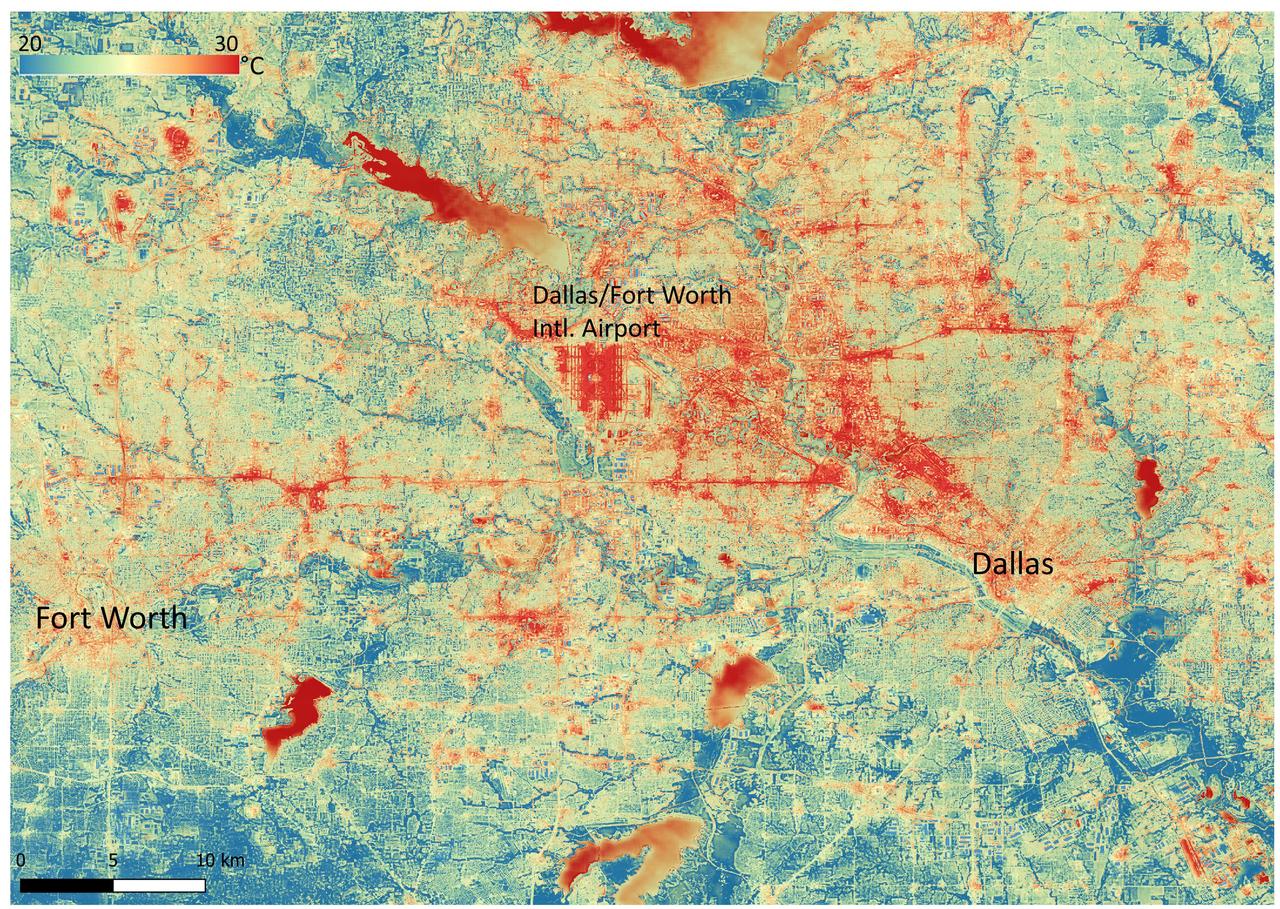
NASA's Ecosystem Spaceborne Thermal Radiometer Experiment on Space Station (ECOSTRESS) instrument recorded this image of ground surface temperatures in Dallas and Fort Worth, Texas, on June 20, 2022, at 7:17 a.m. Central Daylight Time. Even early in the day, manmade urban surfaces near city centers and transportation networks – streets, roads, and highways shown in red and orange – are warmer than the outskirts by up to 18 degrees Fahrenheit (10 degrees Celsius). The paved surfaces at Dallas/Fort Worth International Airport, shown in red near the top-center of the image, had the warmest temperatures, exceeding 86 F (30 C). Natural land surfaces such as vegetation and streams in rural areas, shown in green and blue, are cooler than nearby large bodies of water, shown in red and yellow, that tend to retain more heat overnight due to their higher heat capacity. Cities are usually warmer than open land because of human activities and the materials used in building and construction. Streets are often the hottest part of the built environment due to asphalt paving. Dark-colored surfaces absorb more heat from the Sun than lighter-colored ones; asphalt absorbs up to 95% of solar radiation and retains the heat for hours into the nighttime. ECOSTRESS measures the temperature of the ground, which is hotter than the air temperature during the daytime. The instrument launched to the space station in 2018. Its primary mission is to identify plants' thresholds for water use and water stress, giving insight into their ability to adapt to a warming climate. However, ECOSTRESS is also useful for documenting other heat-related phenomena, like patterns of heat absorption and retention. Its high-resolution images, with a pixel size of about 225 feet (70 meters) by 125 feet (38 meters), are a powerful tool for understanding our environment. https://photojournal.jpl.nasa.gov/catalog/PIA25422
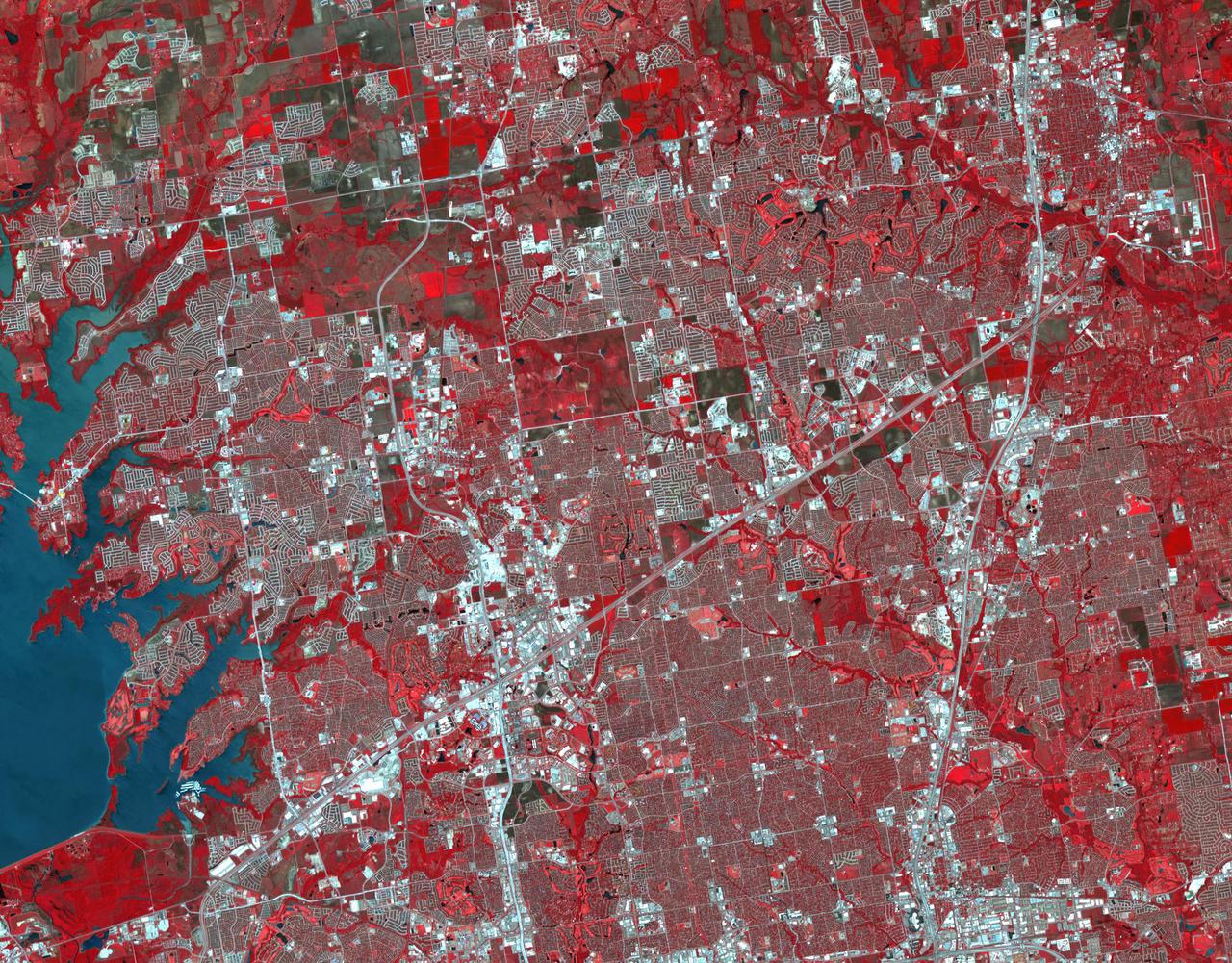
Frisco, Texas is a city in the Dallas-Fort Worth metroplex, located about 40 km (24.9 mi) northeast of the Dallas/Fort Worth International Airport. Founded in 1860 along the Shawnee Trail, the town has become a bedroom community for workers in Dallas-Fort Worth. The city saw explosive growth between April 9, 1984 when the Landsat TM image was acquired, and April 15, 2018 when the ASTER image was acquired. Population grew from 4,500 to 174,000. The images cover an area of 27 by 34.5 km (16.7 by 21.4 mi), and are located at 33.1 degrees north, 96.8 degrees west. https://photojournal.jpl.nasa.gov/catalog/PIA22552
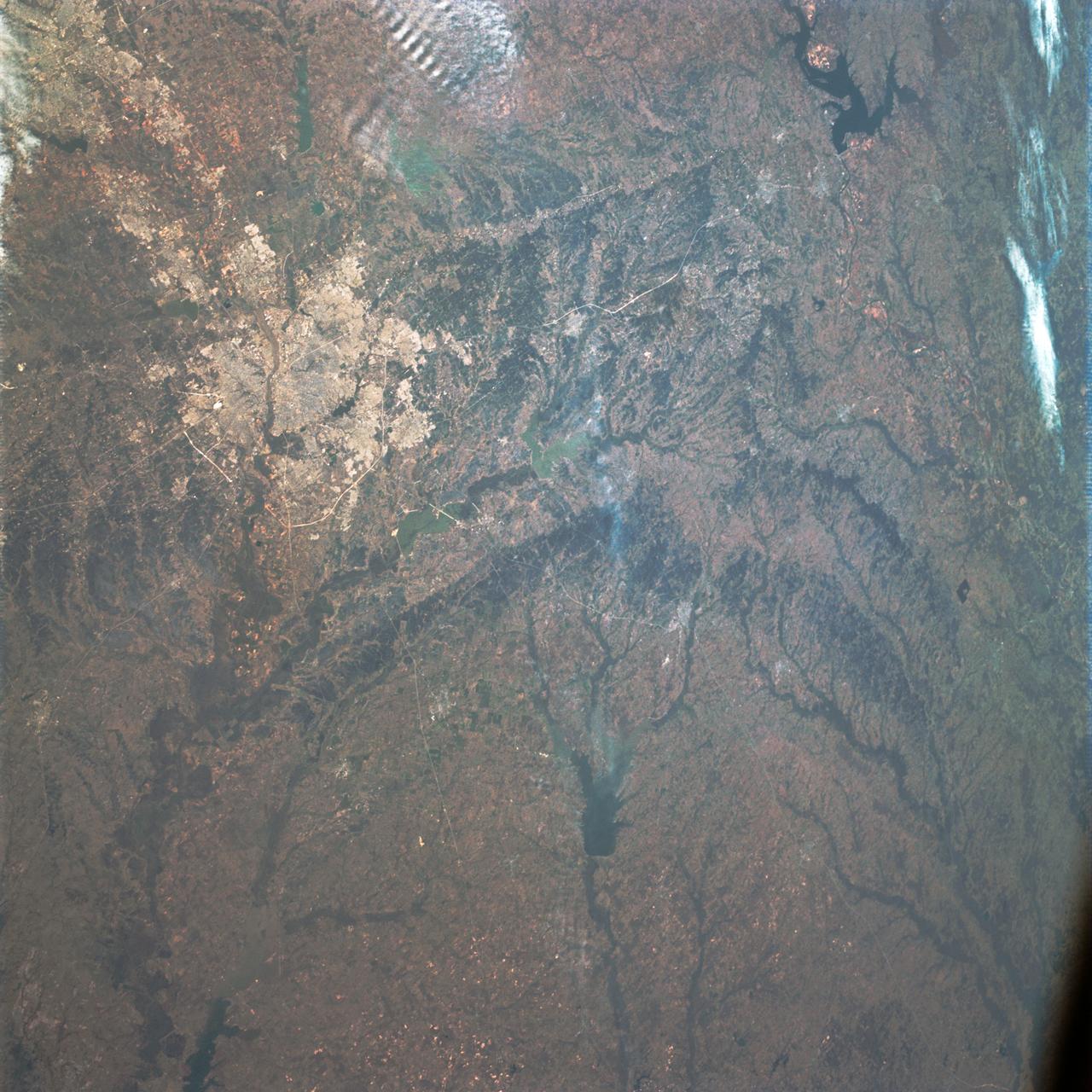
AS09-23-3586 (11 March 1969) --- Dallas, Ft. Worth, Sherman, Denison, Red River, and Lake Texoma, as photographed from the Apollo 9 spacecraft during its 122nd revolution of Earth.
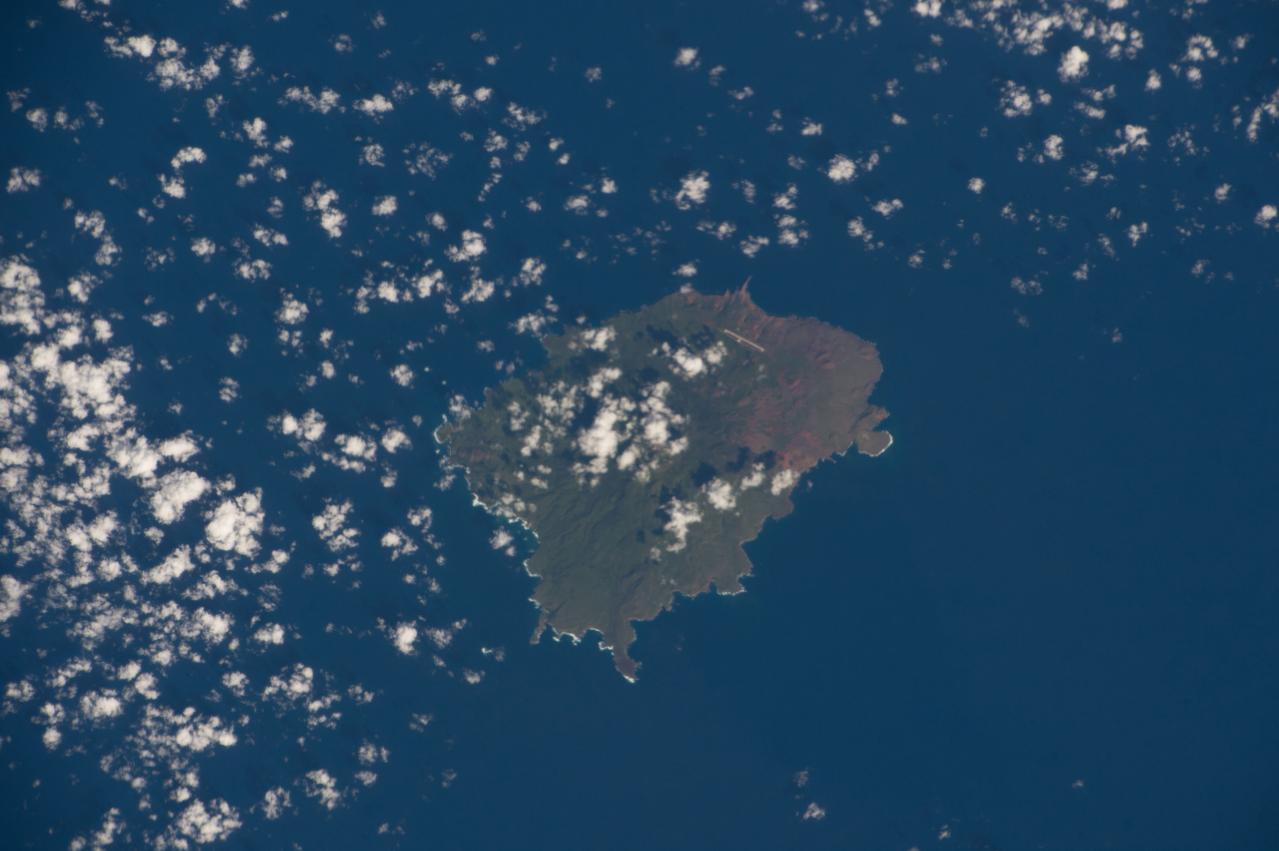
GMT349_21_37_Terry Virts_mexico houston dallas sunglint on texas_129

GMT349_21_37_Terry Virts_mexico houston dallas sunglint on texas_129
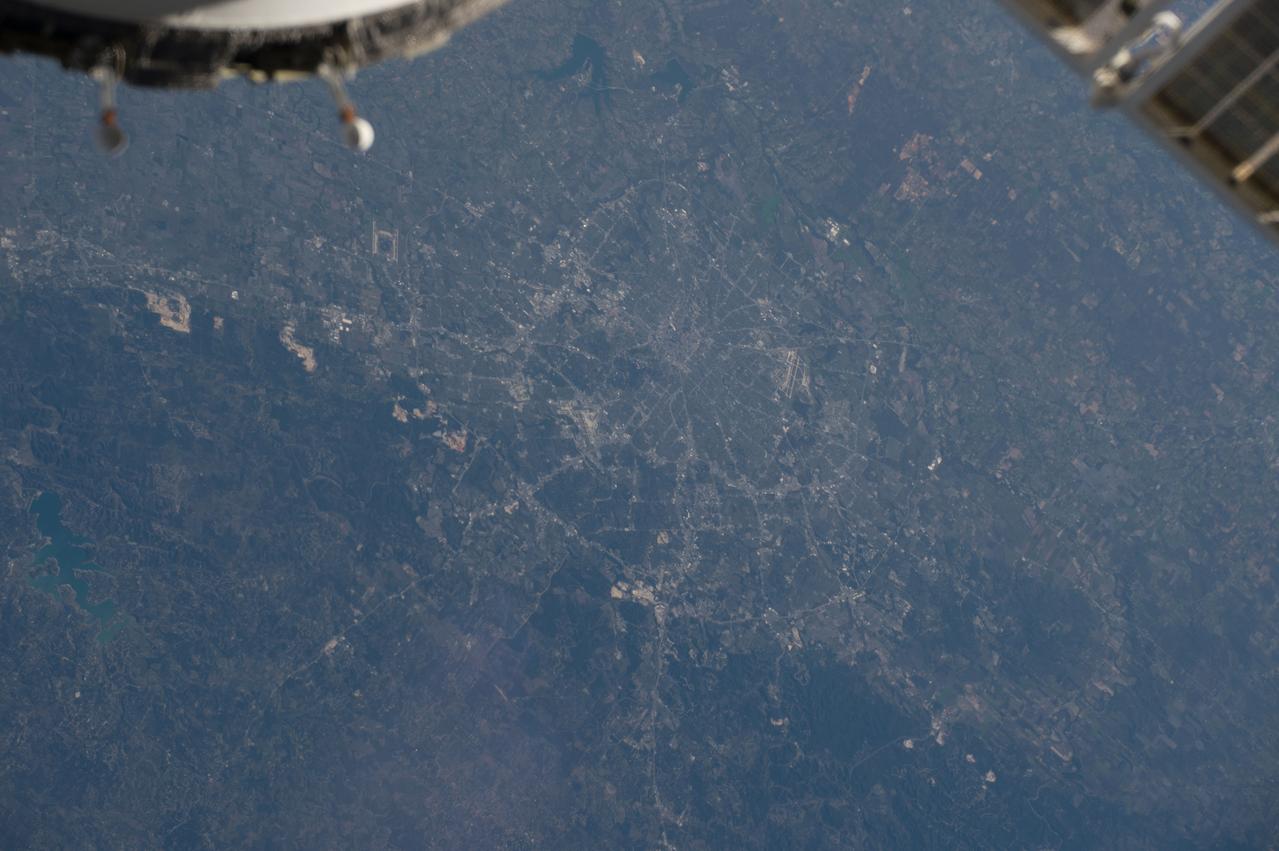
GMT349_21_37_Terry Virts_mexico houston dallas sunglint on texas_129
GMT349_21_37_Terry Virts_mexico houston dallas sunglint on texas_129
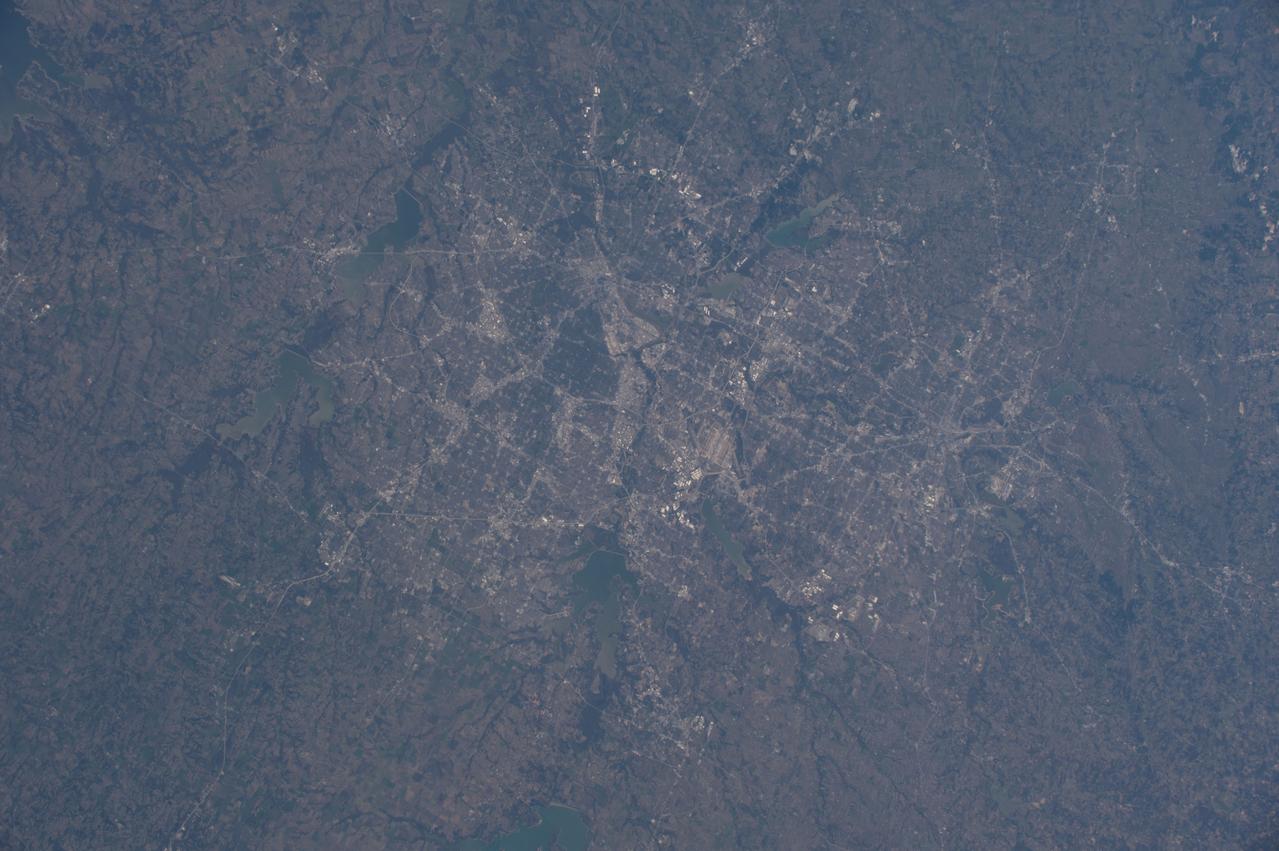
GMT349_21_37_Terry Virts_mexico houston dallas sunglint on texas_129
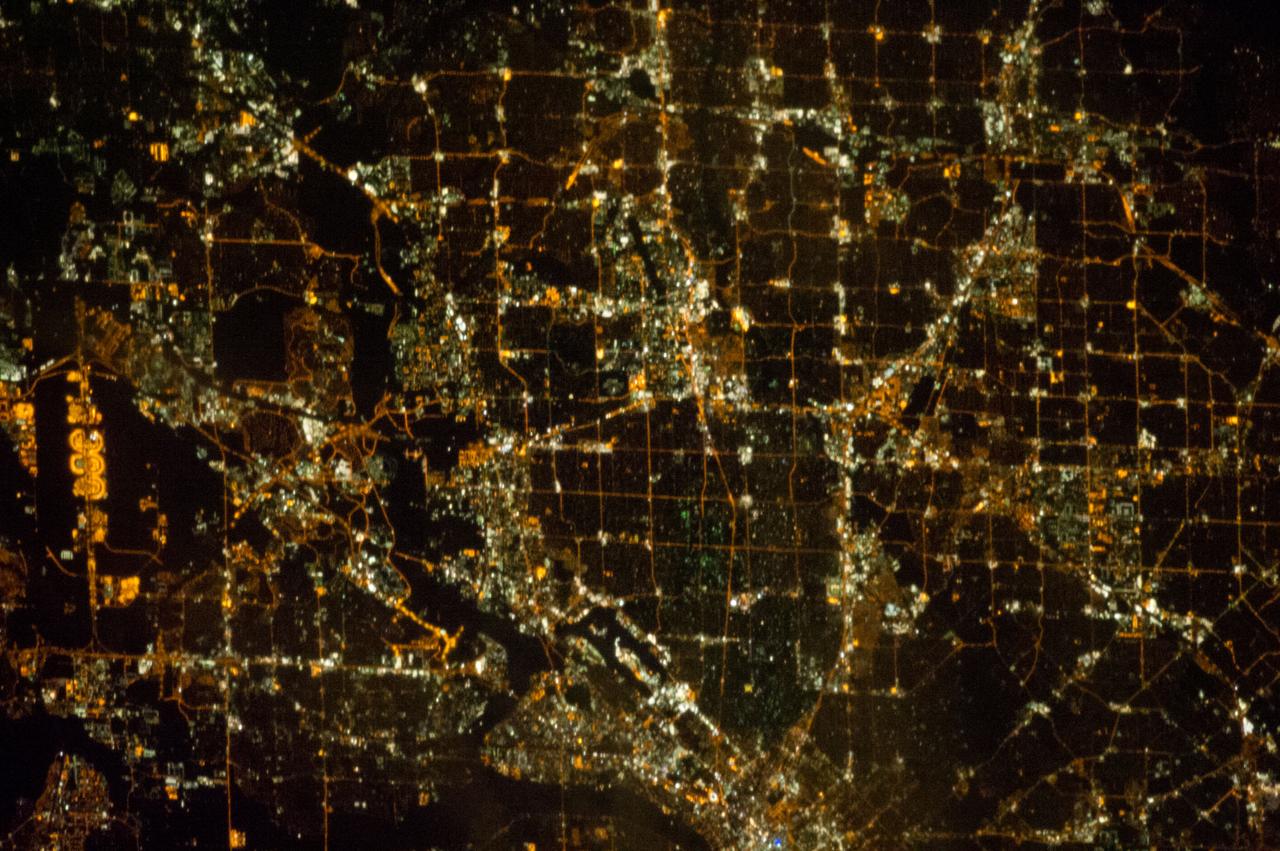
ISS033-E-021663 (15 Nov. 2012) --- A nighttime view of the Dallas, Texas metropolitan area is featured in this image photographed by an Expedition 33 crew member on the International Space Station. Most metropolitan areas of the western United States are configured over large areas with a regular street grid pattern that is highly recognizable from space, particularly at night. The northern Dallas metropolitan area exhibits this pattern. The north-south and east-west grid pattern of major surface streets is highlighted by orange street lighting, lending a fishnet-like appearance to the urban area. Within this framework, smaller residential and commercial buildings and streets give green-gray stipple patterns to some blocks. The airplane terminals of Dallas-Fort Worth International Airport are lit with golden-yellow lights, and surrounded by relatively dark runways and fields at left. Likewise, the runways of Dallas Love Field at lower center are recognizable by their darkness. Other dark areas within the metro region are open space, parks, and water bodies. Dallas is part of the larger Dallas-Fort Worth-Arlington Metropolitan Statistical Area (population 6,526,548 in 2011) as recognized by the U.S. Census Bureau; to most Texans, it is simply ?DFW? or ?the Metroplex.? Several of the larger urban areas within DFW are visible in this image; Dallas, Garland and Richardson all have populations above 100,000 according to the North Central Texas Council of Governments. While historically the economy of Dallas was based in the oil and cotton industries, today commerce, technology, healthcare, and transportation are the major economic drivers.

XV-15 (N703NA) Tiltrotor at the Dallas Convention Center Heliport/Vertiport Bell Photo number 042869

FAST CTAS system operation trials at Dallas/Ft Worth, Tx (DFW TRACON ATC Automation Tool)

FAST CTAS system operation trials at Dallas/Ft Worth, Tx (DFW TRACON ATC Automation Tool)

FAST CTAS system operation trials at Dallas/Ft Worth, Tx (DFW TRACON ATC Automation Tool)

FAST CTAS system operation trials at Dallas/Ft Worth, Tx (DFW TRACON ATC Automation Tool)
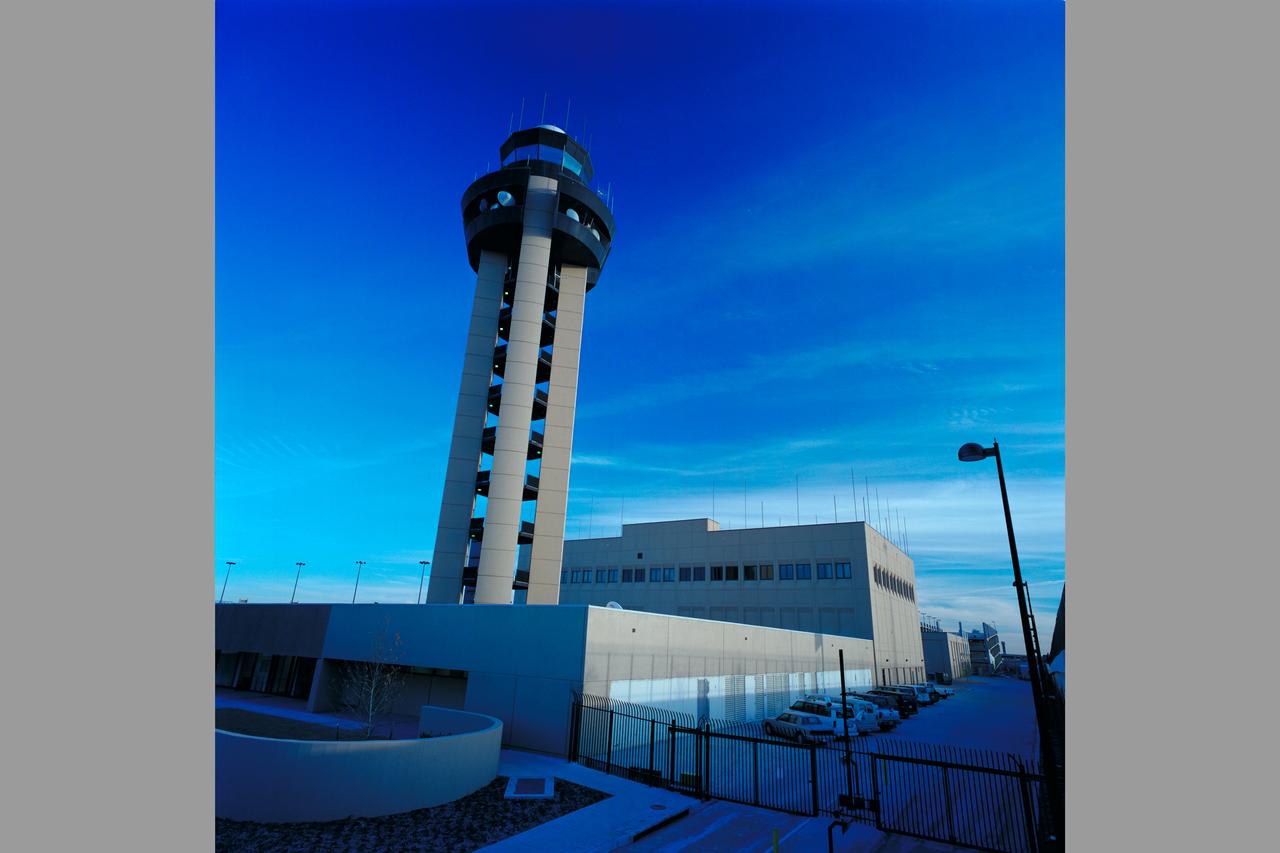
FAST CTAS system operation trials at Dallas/Ft Worth, Tx (DFW TRACON ATC Automation Tool)

FAST CTAS system operation trials at Dallas/Ft Worth, Tx (DFW TRACON ATC Automation Tool)

FAST CTAS system operation trials at Dallas/Ft Worth, Tx (DFW TRACON ATC Automation Tool)
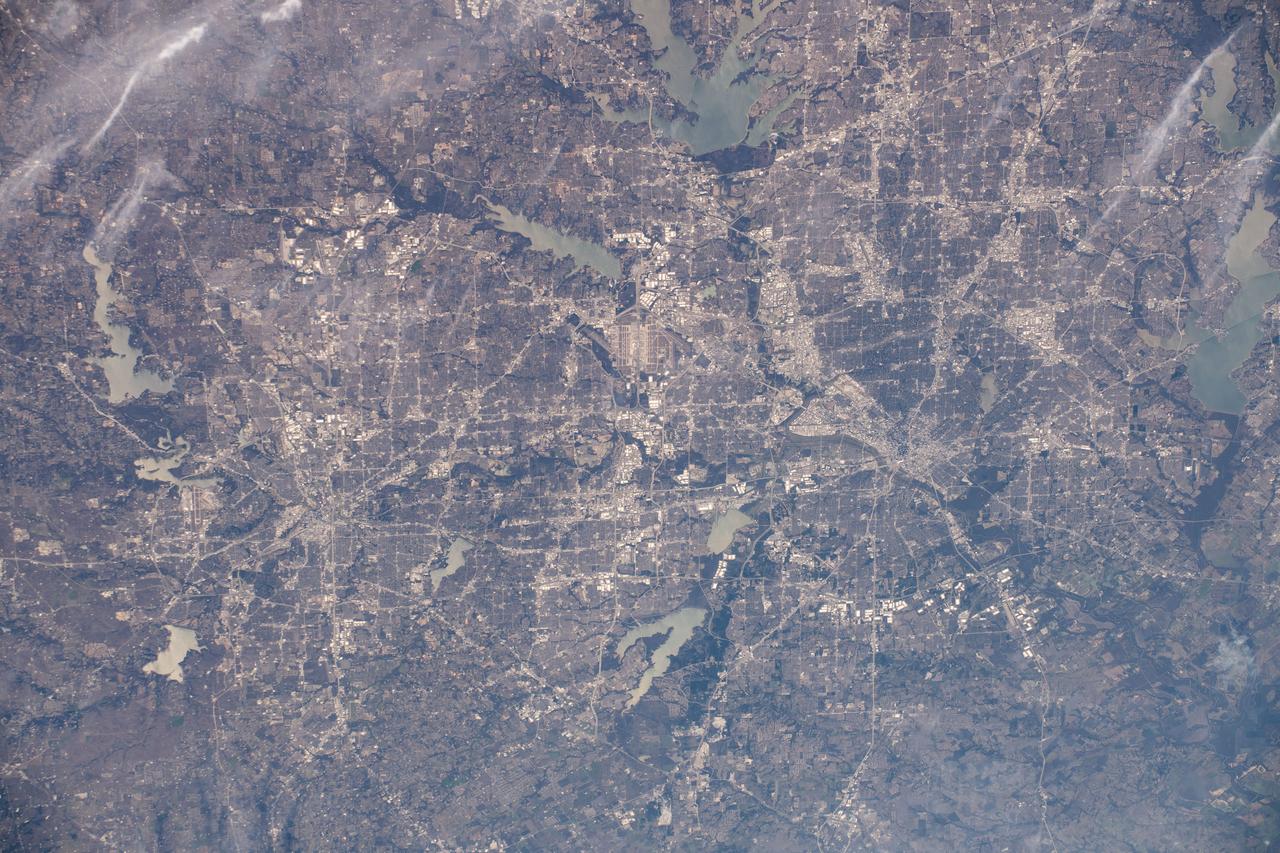
iss061e067843 (Dec. 6, 2019) --- The Dallas-Fort Worth, Texas metropolitan area is pictured along with such landmarks as DFW International Airport and Dallas Love Field Airport from an altitude of 258 miles. Several bodies of water are pictured including Joe Pool Lake, Mountain Creek Lake, White Rock Lake, Lake Ray Hubbard, Lewisville Lake and Grapevine Lake among others.
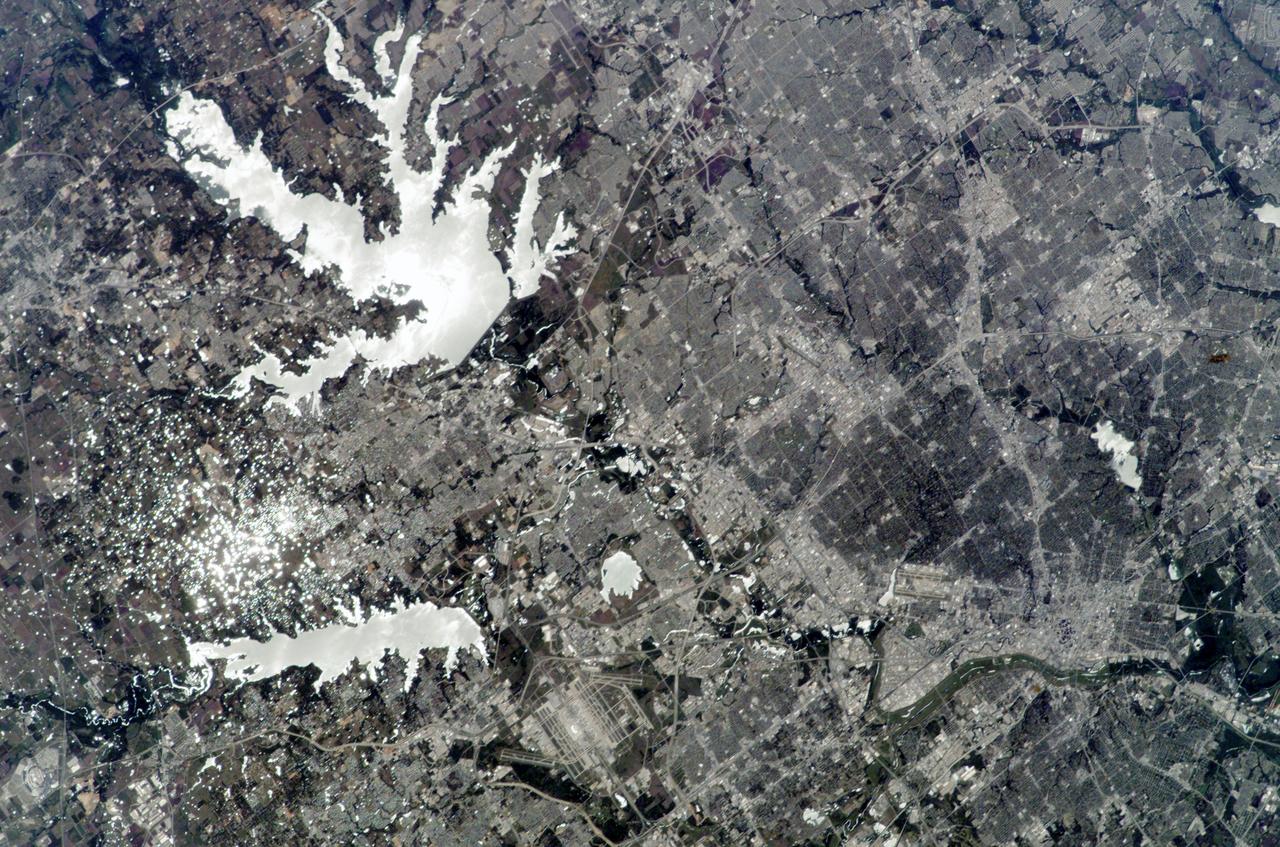
ISS010-E-24596 (14 April 2005) --- Dallas, Texas is featured in this image photographed by an Expedition 10 crew member on the International Space Station. The Dallas-Fort Worth metropolitan area is the largest in Texas with an approximate population of 6 million people in 2005. Founded by John Neely Bryan in 1841, the city became the center for the United States oil economy with the discovery of oilfields to the east of the city in 1930. The Dallas-Forth Worth region today is a major corporate, banking, and technological center. This image captures the northwestern portion of the metropolitan area. Standing water bodies such as Lake Lewisville and Grapevine Lake are highlighted by sunglint, where the surface of the water acts as a mirror reflecting sunlight back towards the astronauts on the Station. Using the sunglint to define edges of water helps when mapping water bodies and stream courses on a landscape ? note the region of small ponds to the north of Grapevine Lake highlighted by sunglint. Photo credit: NASA

The Orion Pad Abort-1 pathfinder on display at an event outside American Airlines Center in Dallas on Jan. 27, 2012. Part of Batch image transfer from Flickr.

iss071e007521 (April 11, 2024) --- Dallas, Texas, its eastern suburbs, and Lake Ray Hubbard are pictured from the International Space Station as it orbited 260 miles above the Lone Star State.
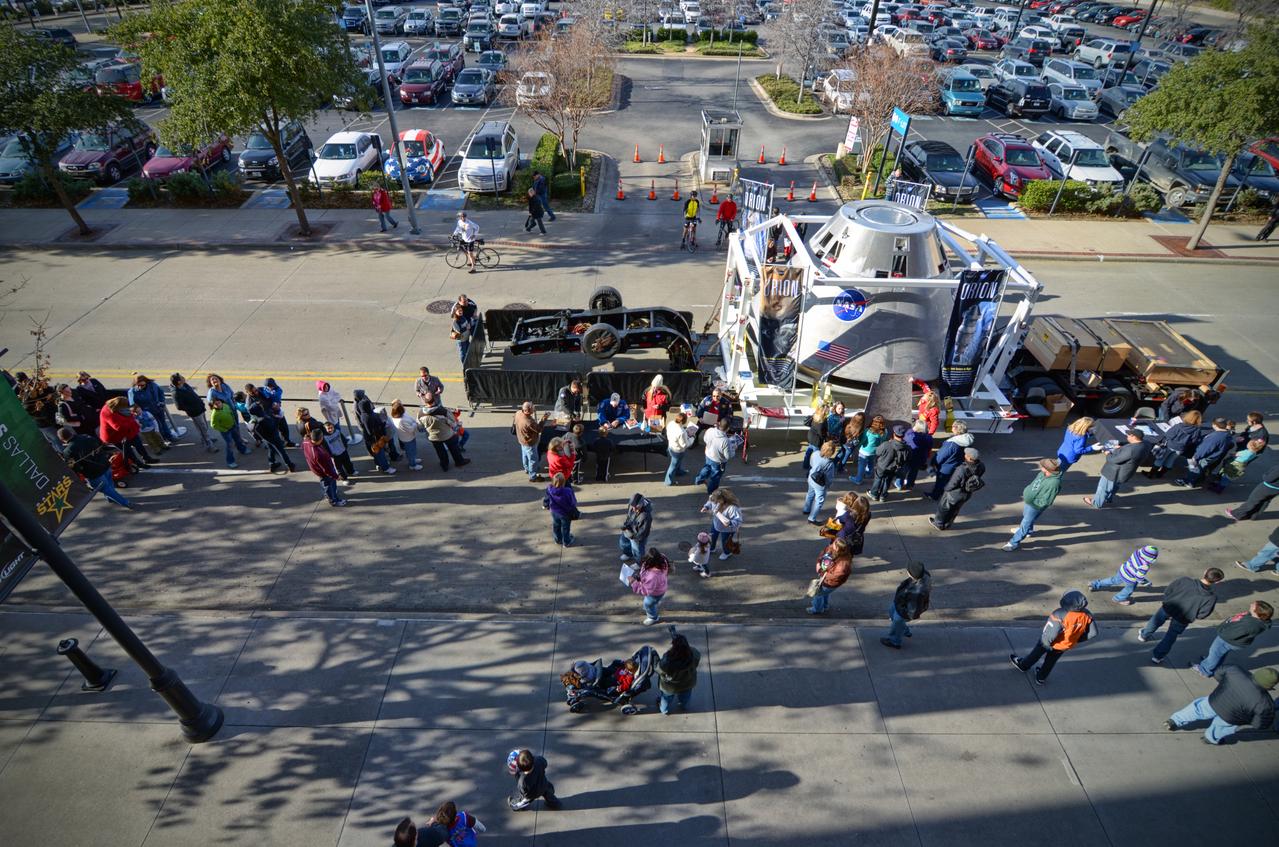
The Orion Pad Abort-1 pathfinder on display at an event outside American Airlines Center in Dallas on Jan. 27, 2012. Part of Batch image transfer from Flickr.
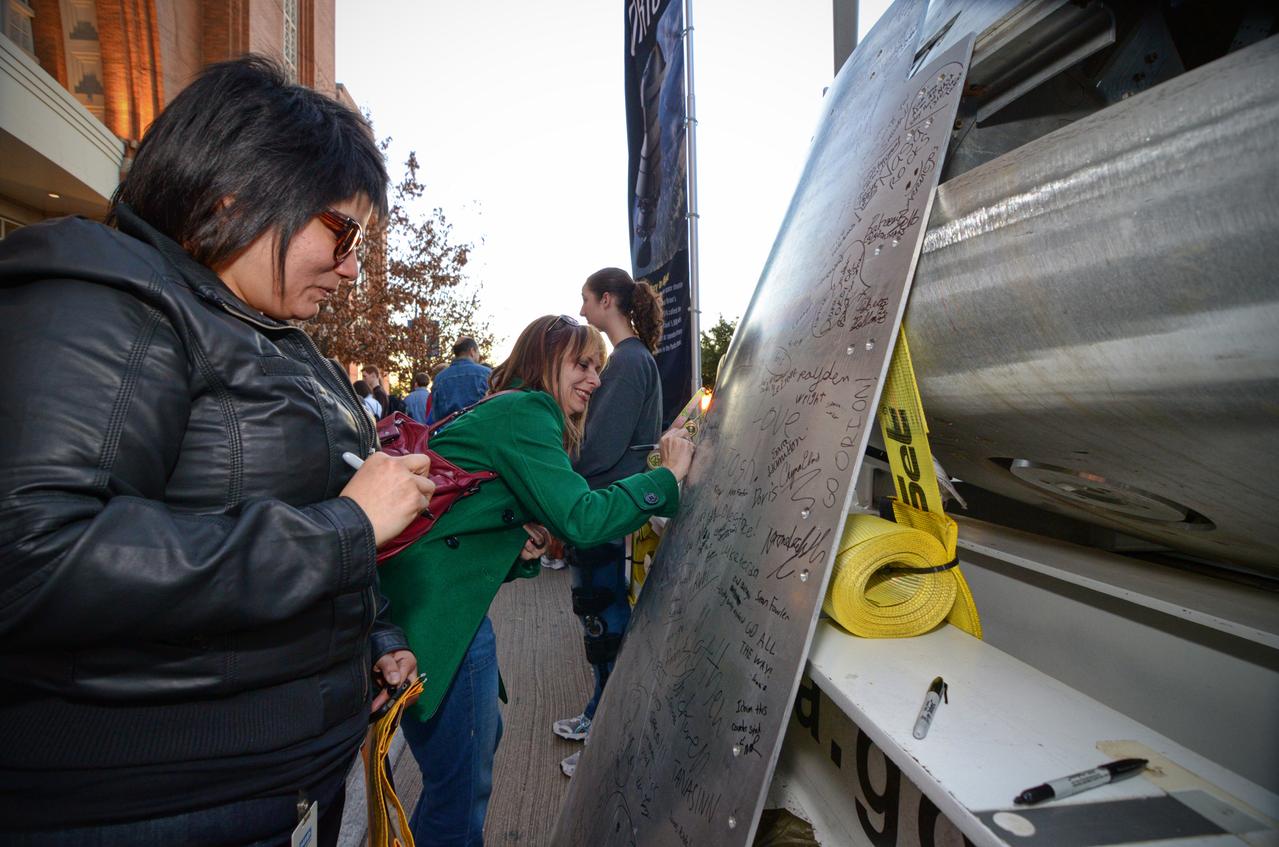
The Orion Pad Abort-1 pathfinder on display at an event outside American Airlines Center in Dallas on Jan. 27, 2012. Part of Batch image transfer from Flickr.

The Orion Pad Abort-1 pathfinder on display at an event outside American Airlines Center in Dallas on Jan. 27, 2012. Part of Batch image transfer from Flickr.
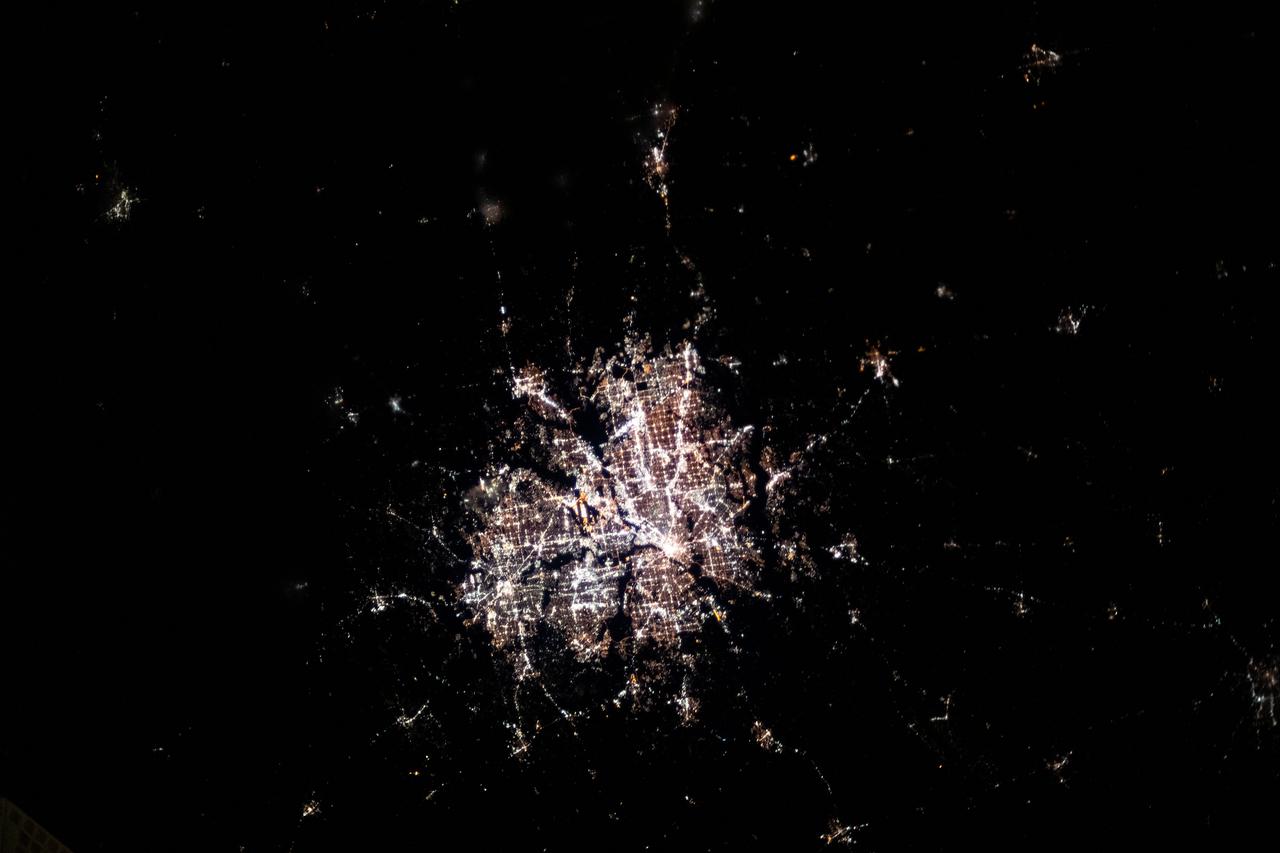
iss061e113495 (Jan. 3, 2020) --- The International Space Station was orbiting 260 miles above central Texas when this nighttime photograph was taken of the Dallas-Fort Worth metropolitan area.

The Orion Pad Abort-1 pathfinder on display at an event outside American Airlines Center in Dallas on Jan. 27, 2012. Part of Batch image transfer from Flickr.
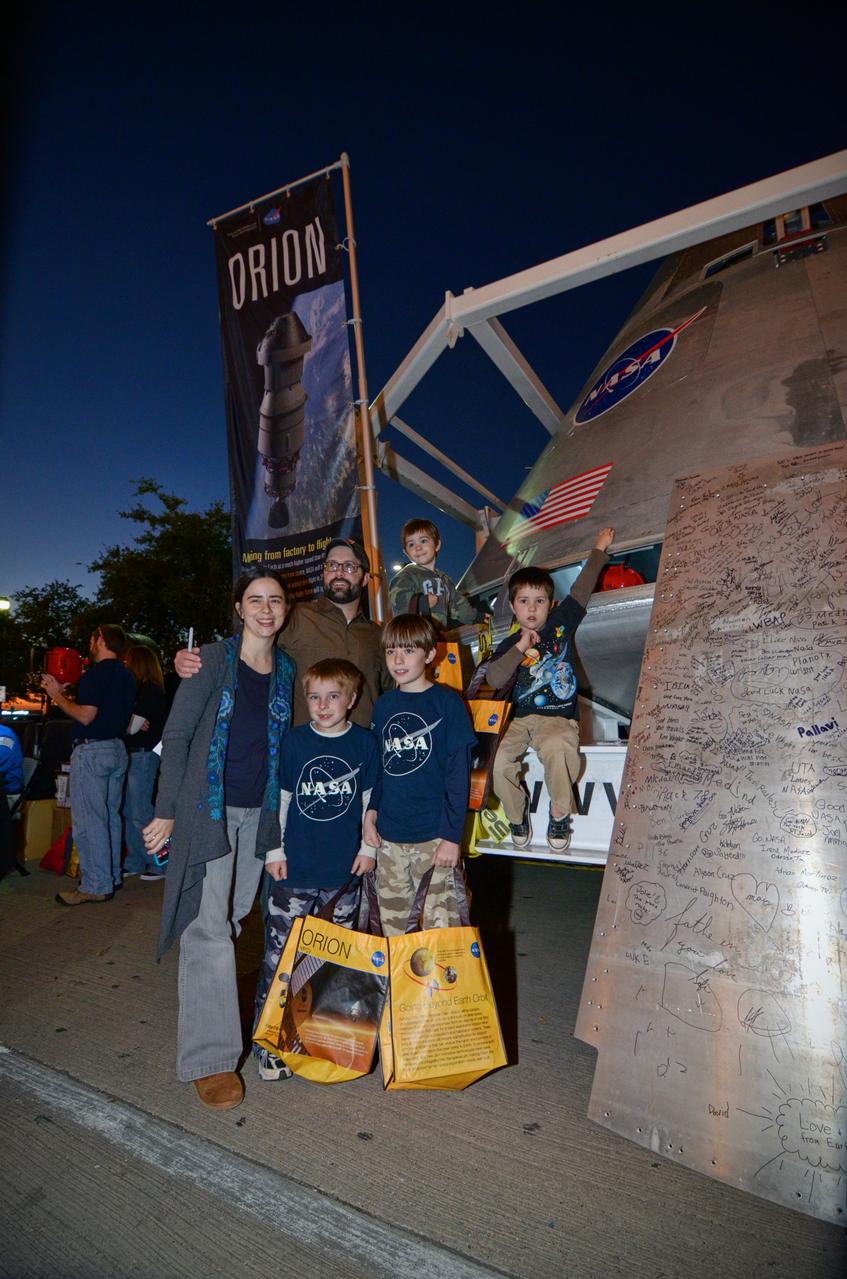
The Orion Pad Abort-1 pathfinder on display at an event outside American Airlines Center in Dallas on Jan. 27, 2012. Part of Batch image transfer from Flickr.
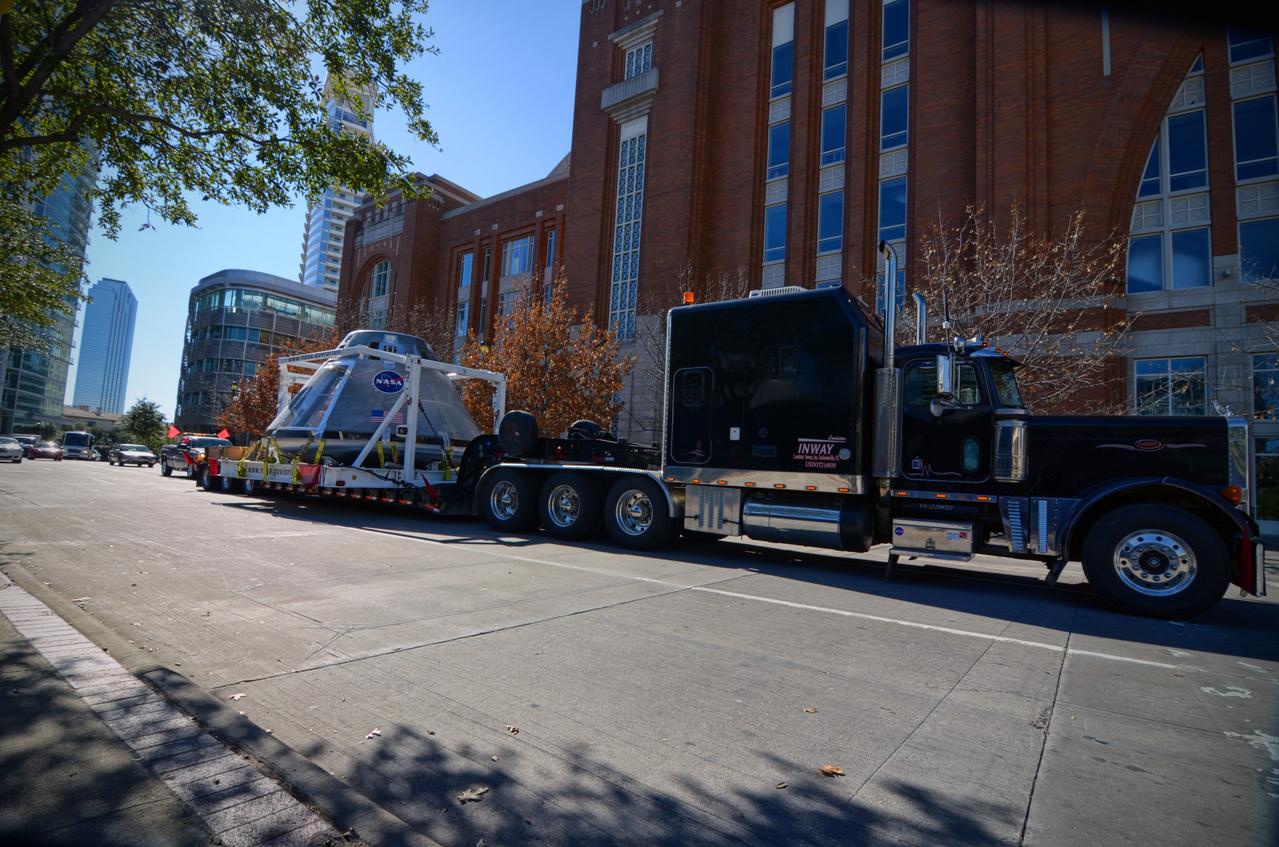
The Orion Pad Abort-1 pathfinder on display at an event outside American Airlines Center in Dallas on Jan. 27, 2012. Part of Batch image transfer from Flickr.

The Orion Pad Abort-1 pathfinder on display at an event outside American Airlines Center in Dallas on Jan. 27, 2012. Part of Batch image transfer from Flickr.

The Orion Pad Abort-1 pathfinder on display at an event outside American Airlines Center in Dallas on Jan. 27, 2012. Part of Batch image transfer from Flickr.

Image of dog on leash taken during view of the Orion Pad Abort-1 pathfinder on display at an event outside American Airlines Center in Dallas on Jan. 27, 2012. Part of Batch image transfer from Flickr.

The Orion Pad Abort-1 pathfinder on display at an event outside American Airlines Center in Dallas on Jan. 27, 2012. Part of Batch image transfer from Flickr.
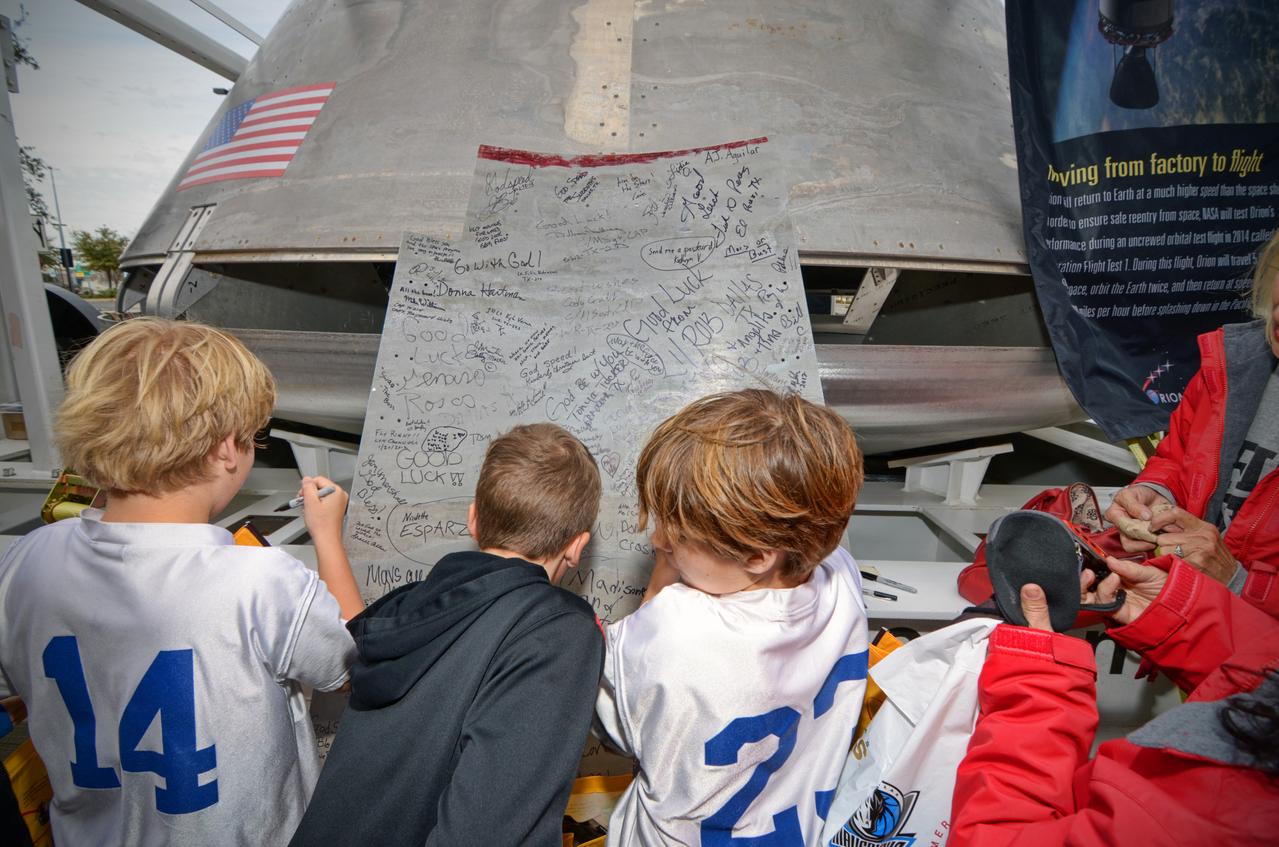
The Orion Pad Abort-1 pathfinder on display at an event outside American Airlines Center in Dallas on Jan. 27, 2012. Part of Batch image transfer from Flickr.