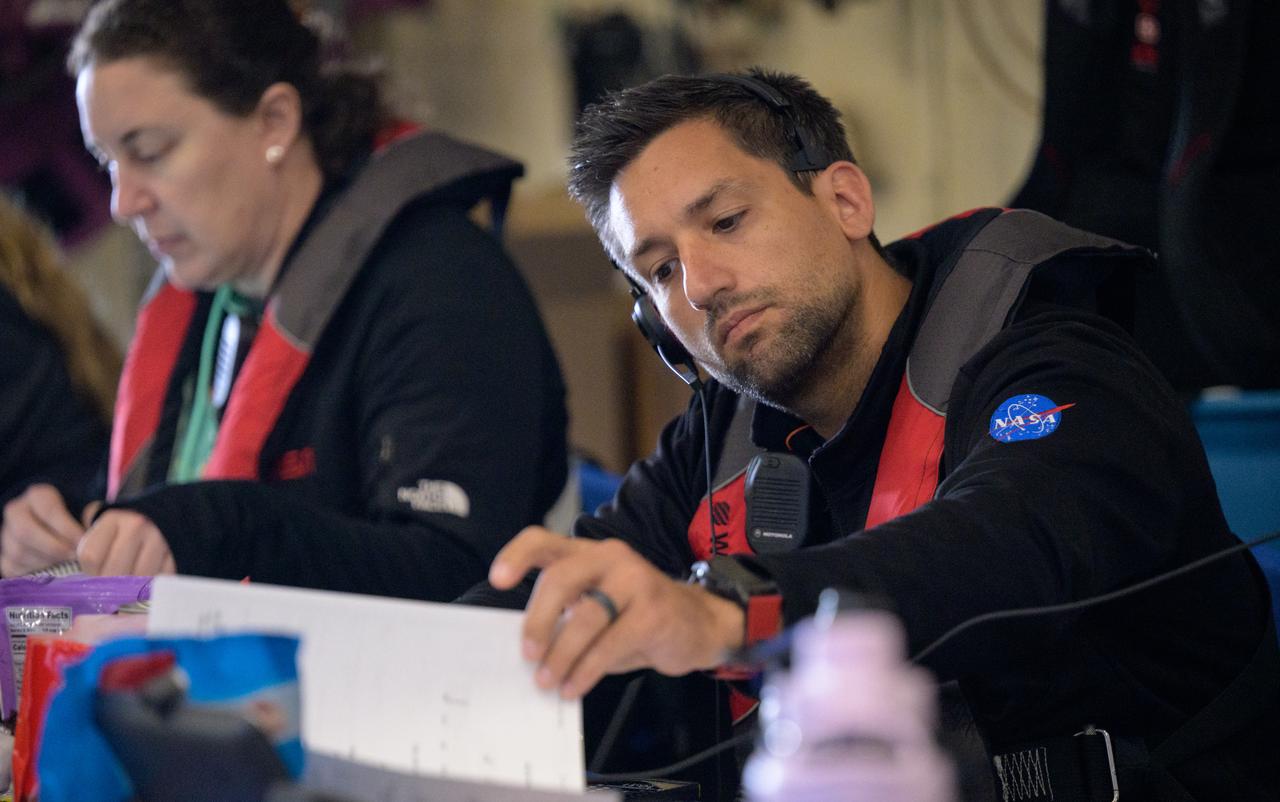
NASA Test Director Daniel Florez is seen as he and other members of NASA’s Landing and Recovery team recover the Crew Module Test Article (CMTA), a full scale mockup of the Orion spacecraft, as teams practice Artemis recovery operations during Underway Recovery Test-12 onboard USS Somerset off the coast of California, Saturday, March 29, 2025. During the test, NASA and Department of Defense teams are practicing to ensure recovery procedures are validated as NASA plans to send Artemis II around the Moon and splashdown in the Pacific Ocean. Photo Credit: (NASA/Bill Ingalls)
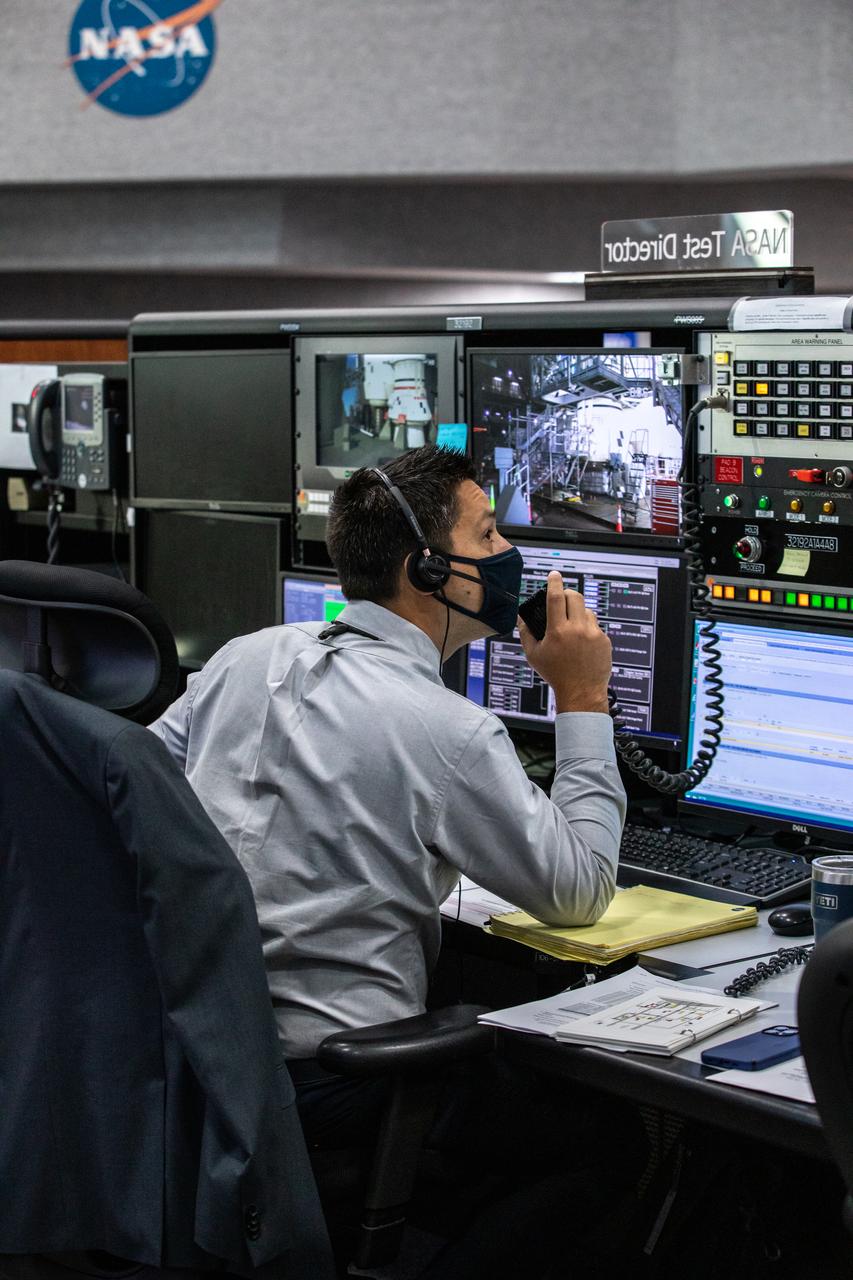
Artemis teams conduct the final simulation for the Artemis I mission inside the Launch Control Center at NASA’s Kennedy Space Center in Florida on Aug. 4, 2022. Artemis I will be the first integrated test of NASA’s Space Launch System (SLS) rocket and Orion spacecraft. During the flight, Orion will launch atop the most powerful rocket in the world and fly farther than any spacecraft for humans has ever flown. The spacecraft will stay in space longer than any human spacecraft has without docking to the International Space Station and return home faster than ever before. Shown here is Daniel Florez, NASA test director.
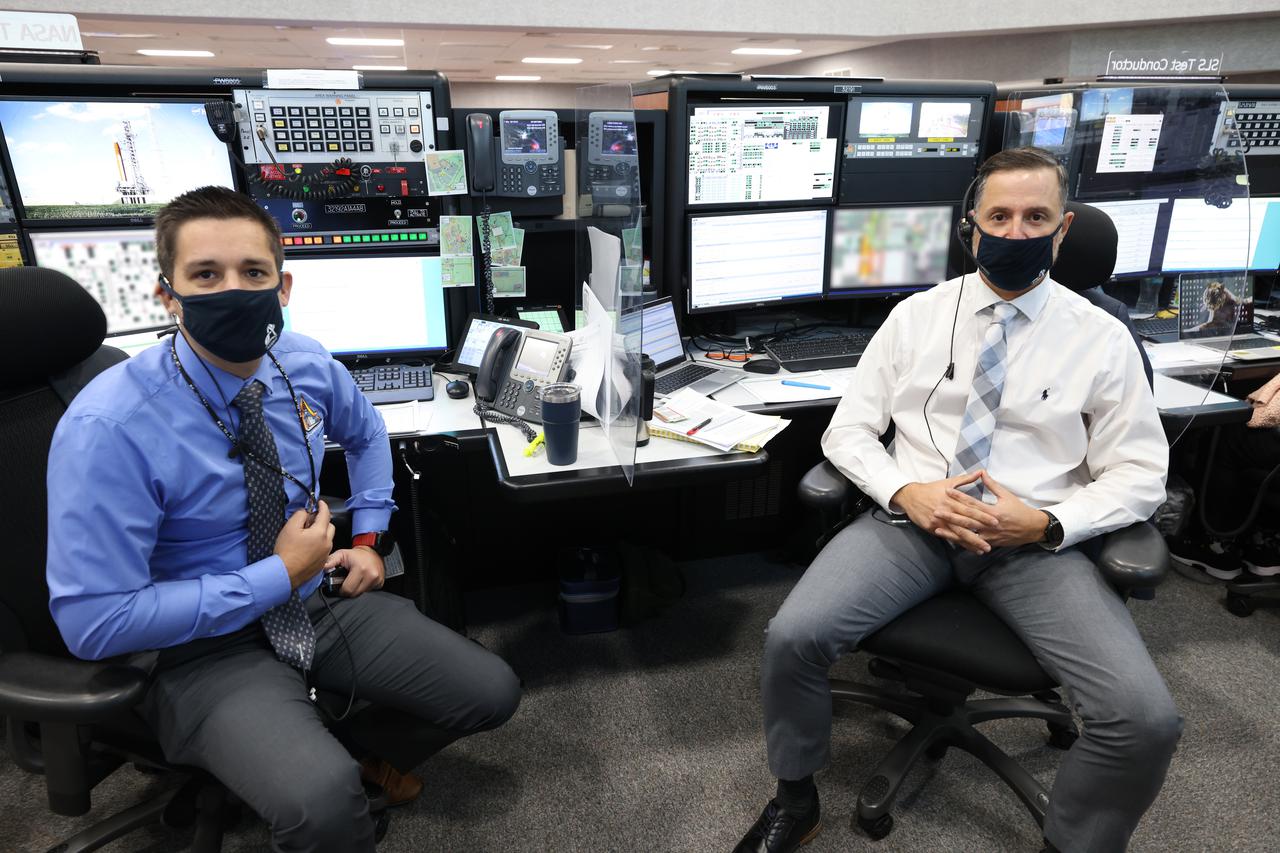
NASA Test Directors Daniel Florez, left, and Carlos Monje, right, with Exploration Ground Systems, are seated at their consoles inside Firing Room 1 of the Launch Control Center at NASA’s Kennedy Space Center in Florida on Dec. 13, 2021. They are participating in a joint integrated simulation for the Artemis I launch that covered both cryogenic loading and terminal countdown portions of prelaunch activities. Members of NASA’s mission management team and launch team conducted the simulation together. The Kennedy team was certified for the Artemis I launch. During Artemis I, the agency’s Orion spacecraft will lift off from Kennedy aboard NASA’s most powerful rocket – the Space Launch System – to fly farther than any spacecraft built for humans has ever flown. Through NASA’s Artemis missions, the agency, along with commercial and international partners, will establish a sustainable human presence on the Moon to prepare for missions to Mars.

NASA Test Directors Daniel Florez, right, and Carlos Monje, left, with Exploration Ground Systems, are seated at their consoles inside Firing Room 1 of the Launch Control Center at NASA’s Kennedy Space Center in Florida on Dec. 13, 2021. They are participating in a joint integrated simulation for the Artemis I launch that covered both cryogenic loading and terminal countdown portions of prelaunch activities. Members of NASA’s mission management team and launch team conducted the simulation together. The Kennedy team was certified for the Artemis I launch. During Artemis I, the agency’s Orion spacecraft will lift off from Kennedy aboard NASA’s most powerful rocket – the Space Launch System – to fly farther than any spacecraft built for humans has ever flown. Through NASA’s Artemis missions, the agency, along with commercial and international partners, will establish a sustainable human presence on the Moon to prepare for missions to Mars.
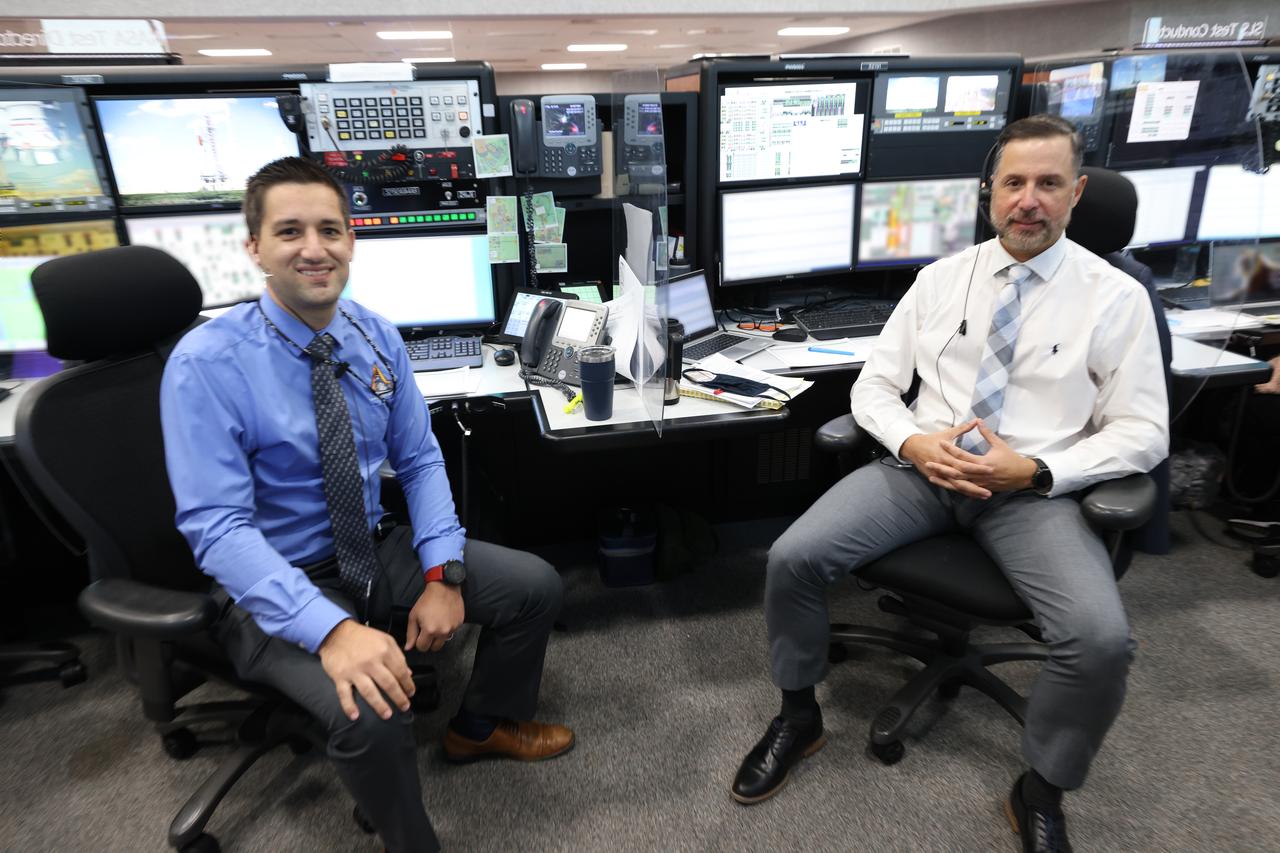
NASA Test Directors Daniel Florez, left, and Carlos Monje, are seated at consoles inside Firing Room 1 of the Launch Control Center at NASA’s Kennedy Space Center in Florida on Dec. 13, 2021. They are participating in a joint integrated simulation for the Artemis I launch that covered both cryogenic loading and terminal countdown portions of prelaunch activities. Members of NASA’s mission management team and launch team conducted the simulation together. The Kennedy team was certified for the Artemis I launch. During Artemis I, the agency’s Orion spacecraft will lift off from Kennedy aboard NASA’s most powerful rocket – the Space Launch System – to fly farther than any spacecraft built for humans has ever flown. Through NASA’s Artemis missions, the agency, along with commercial and international partners, will establish a sustainable human presence on the Moon to prepare for missions to Mars.