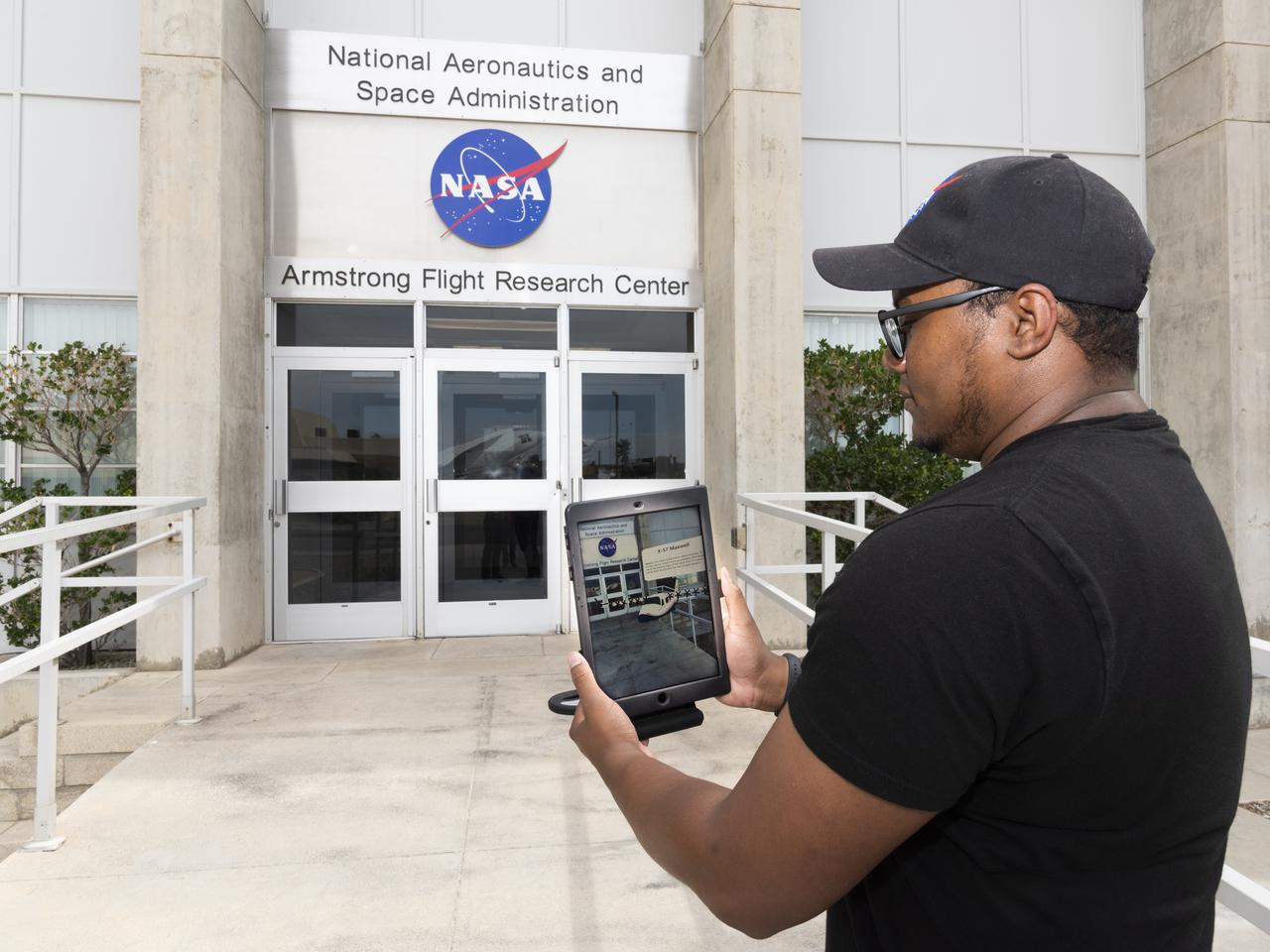
Daniel Williams, intern, shows what the app looks like while in use with the 3D model of the X-57 Maxwell displayed on the screen.

Stability and Control Branch Photo: Names, rows front to back, people left to right: Row 1: 1. ?? Graduate Student (USAF) 2. Robert Dunning 3. Rhonda Harvey Poppen 4. Katherine G. Johnson 5. ?? Graduate Student (USAF) 6. Vladislav Klein Row 2: 1. Mario Smith 2. Jeff Williams 3. N. Sundararajan 4. Tony Fontana 5. John Young Row 3: 1. Lawrence Taylor 2. Jim Batterson 3. Suresh Joshi 4. Daniel P. Giesy Row 4: 1. Bill Suit 2. Albert A. Schy 3. Al Hamer 4. Ernest Armstrong 5. Claude Keckler Row 5: 1. Chris Brown 2. Robert Bullock 3. Ray Montgomery 4. Jim Williams 5. Sahajendra Singh 6. Graduate Student (Egypt) Names given by Daniel P. Giesy.
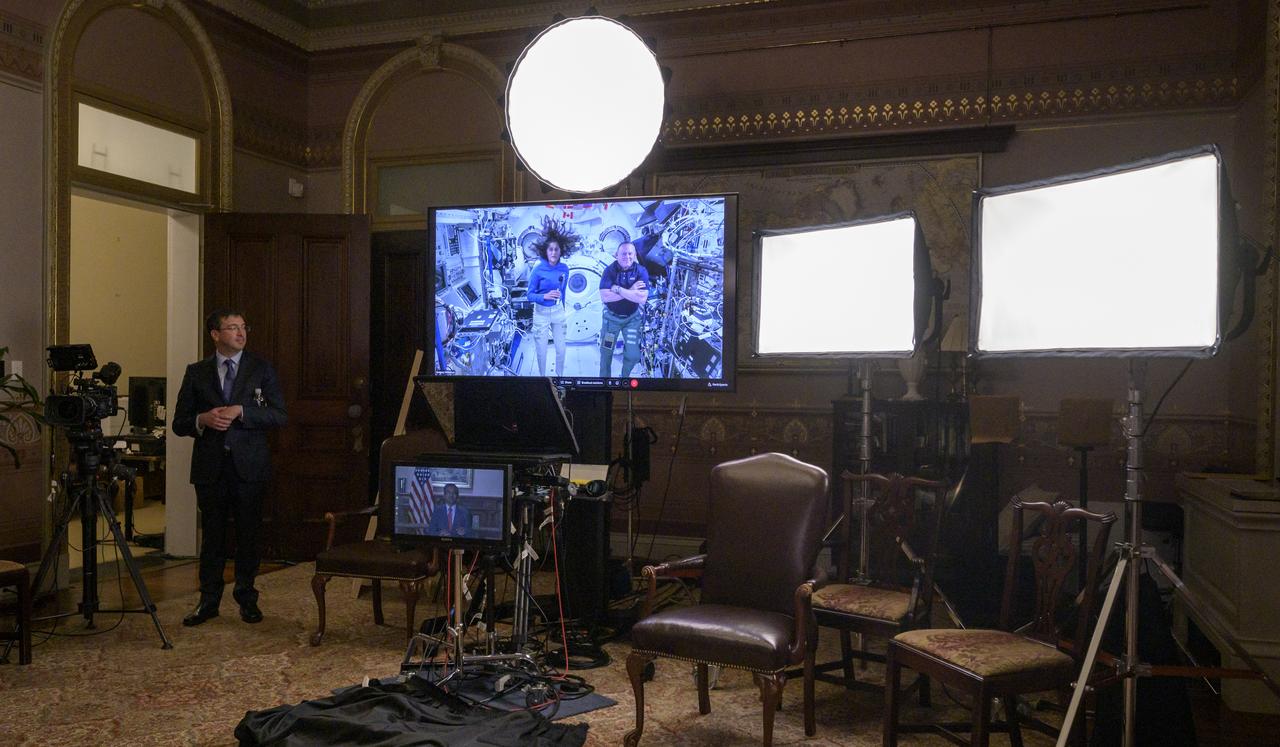
Daniel Evans, NASA's Director of Civil Space Policy standing left, looks on as NASA’s Boeing Crew Flight Test crew members Suni Williams, left, and Butch Wilmore are seen aboard the International Space Station on a monitor during an Earth-to-space call with Chirag Parikh, Deputy Assistant to the President and Executive Secretary of the National Space Council, Monday, June 10, 2024 at the Eisenhower Executive Office Building in Washington. Parikh spoke to Williams and Wilmore about their mission aboard Boeing’s Starliner Spacecraft. Photo Credit: (NASA/Bill Ingalls)
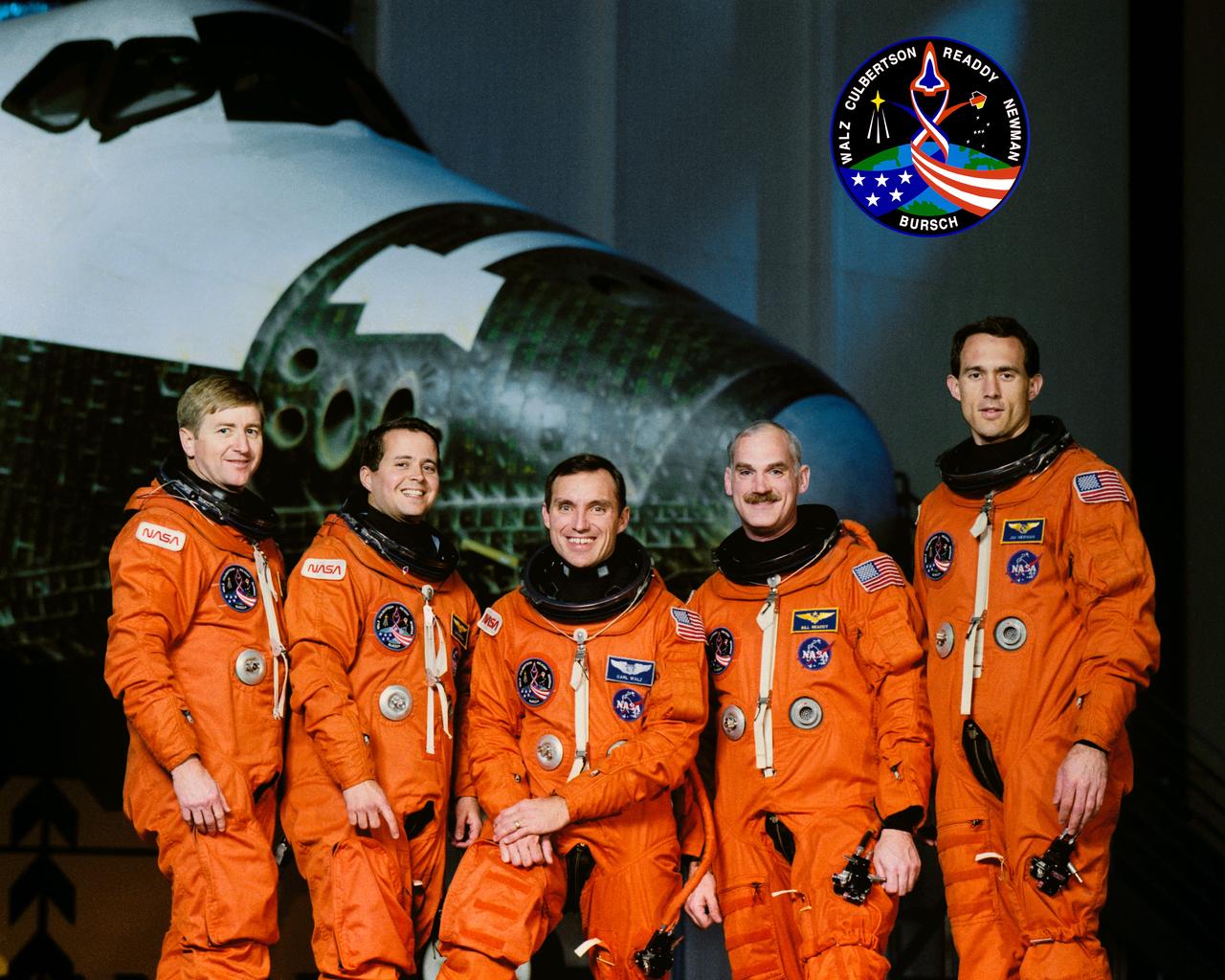
STS051-S-002 (June 1993) --- These five NASA astronauts have been assigned to fly aboard the Space Shuttle Discovery for the STS-51 mission, scheduled for July, 1993. Left to right are astronauts Frank L. Culbertson, Jr., mission commander; Daniel W. Bursch and Carl E. Walz, mission specialists; William F. Readdy, pilot; and James H. Newman, mission specialist.
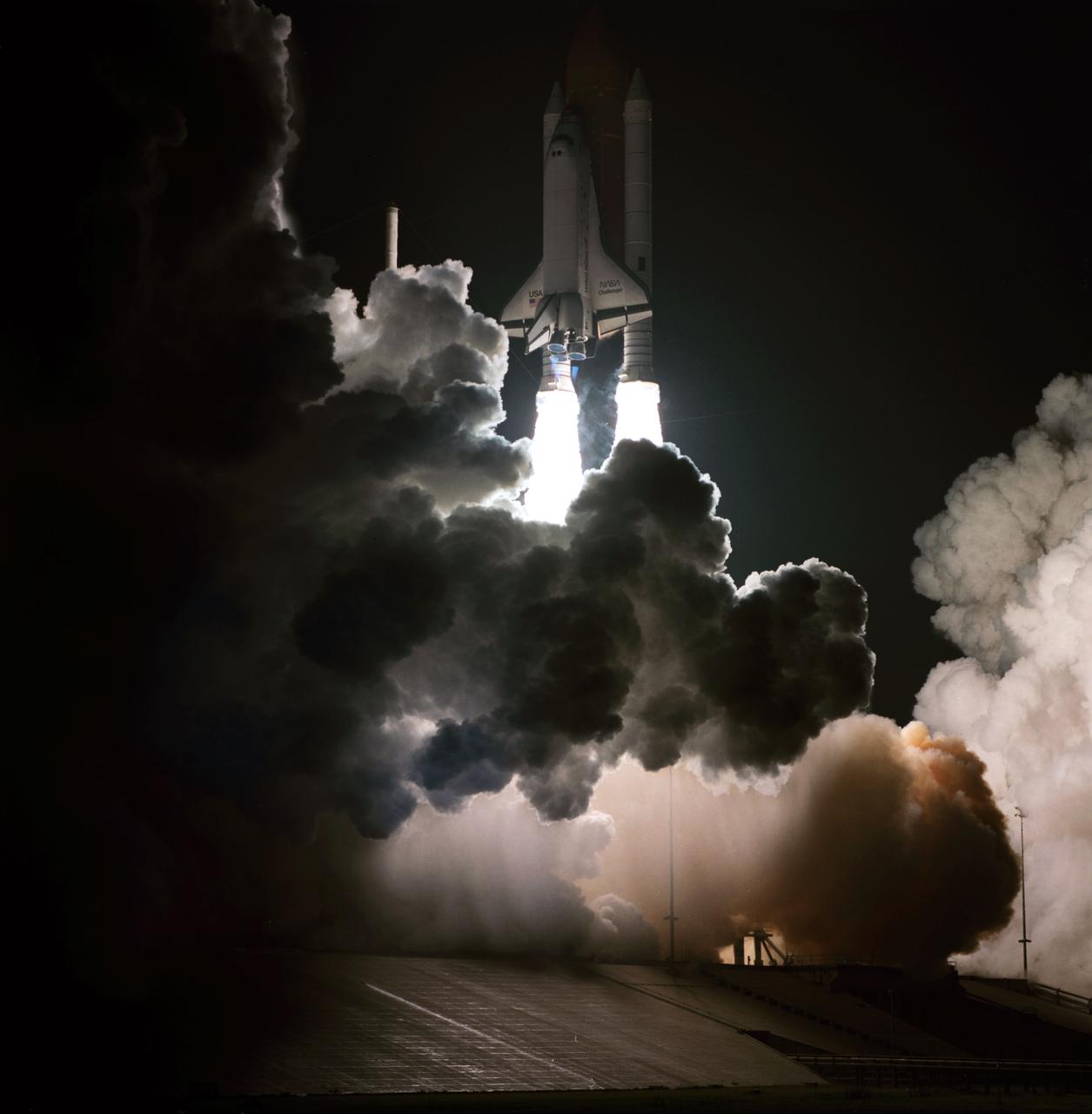
S83-39513 (30 Aug. 1983) --- NASA's eighth space shuttle launch lights up the Florida sky at 2:32 a.m. (EDT), Aug. 30, 1983. The Challenger's third flight is the first to have its beginnings in darkness. Five astronauts and an assortment of experiments are aboard the reusable vehicle. Crew members are astronauts Richard H. Truly, STS-8 commander; Daniel C. Brandenstein, pilot; and Dale A. Gardner, Guion S. Bluford and William E. Thornton, all mission specialists. Photo credit: NASA
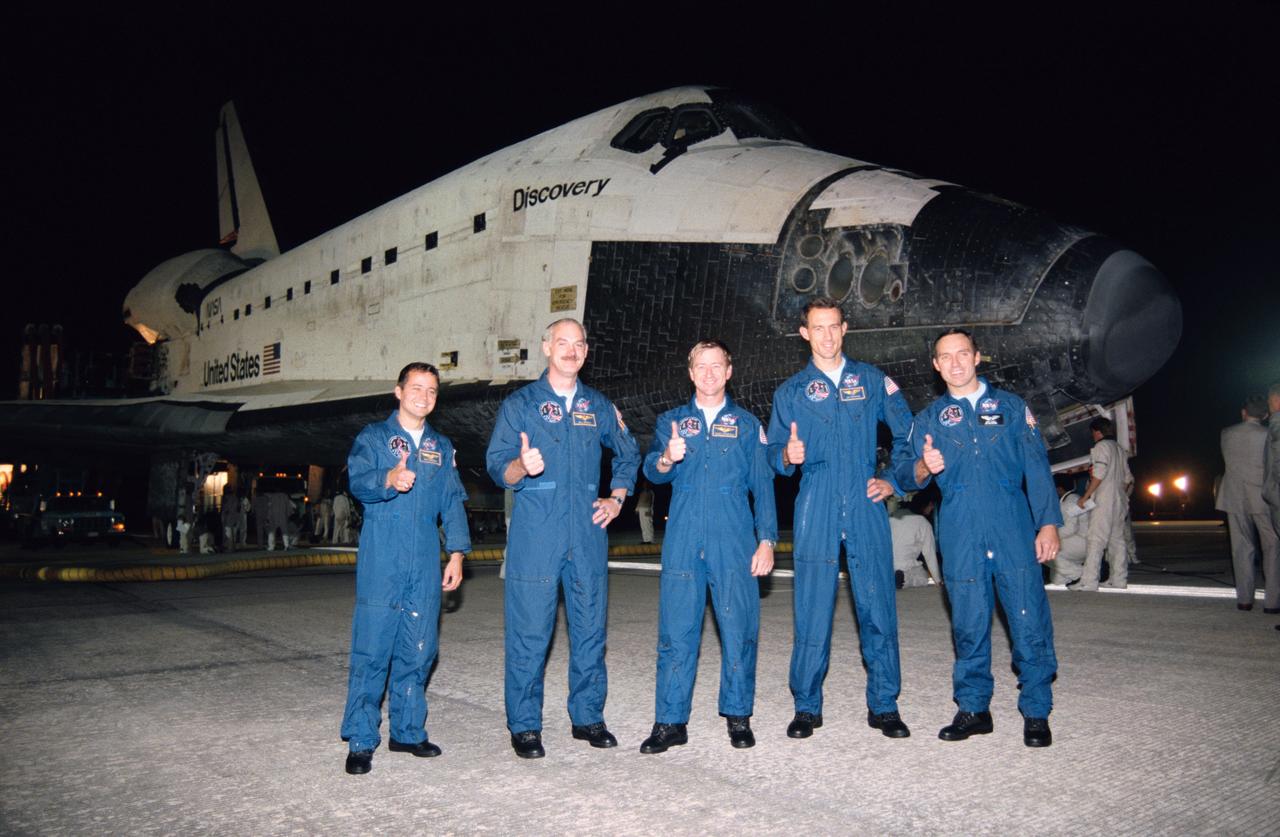
STS051-S-161 (22 Sept 1993) --- Thumbs up from all five crew members signal the successful completion of almost ten full days in space. Backdropped against Discovery -- their in-space "home" for the flight -- are, left to right, astronauts Daniel W. Bursch, William F. Readdy, Frank L. Culbertson Jr., James H. Newman and Carl E. Walz.
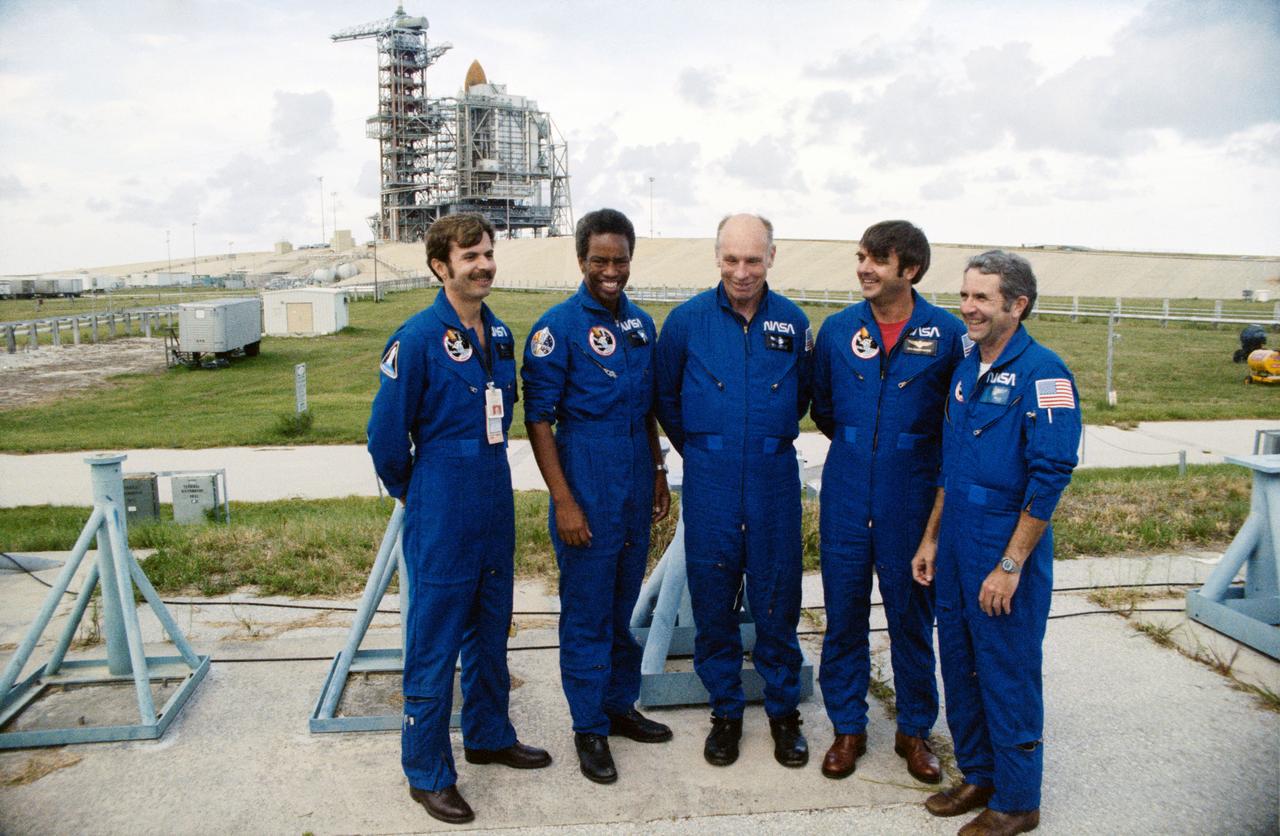
S83-38479 (16 Aug 1983) --- STS-8 crew poses at pad 39A at Kennedy Space Center (KSC) during a session with the news media. From left to right are Astronauts Dale A. Gardner, Guion S. Bluford, and Dr. William E. Thornton, all mission specialists; Daniel C. Brandenstein, pilot; and Richard F. Truly, crew commander.
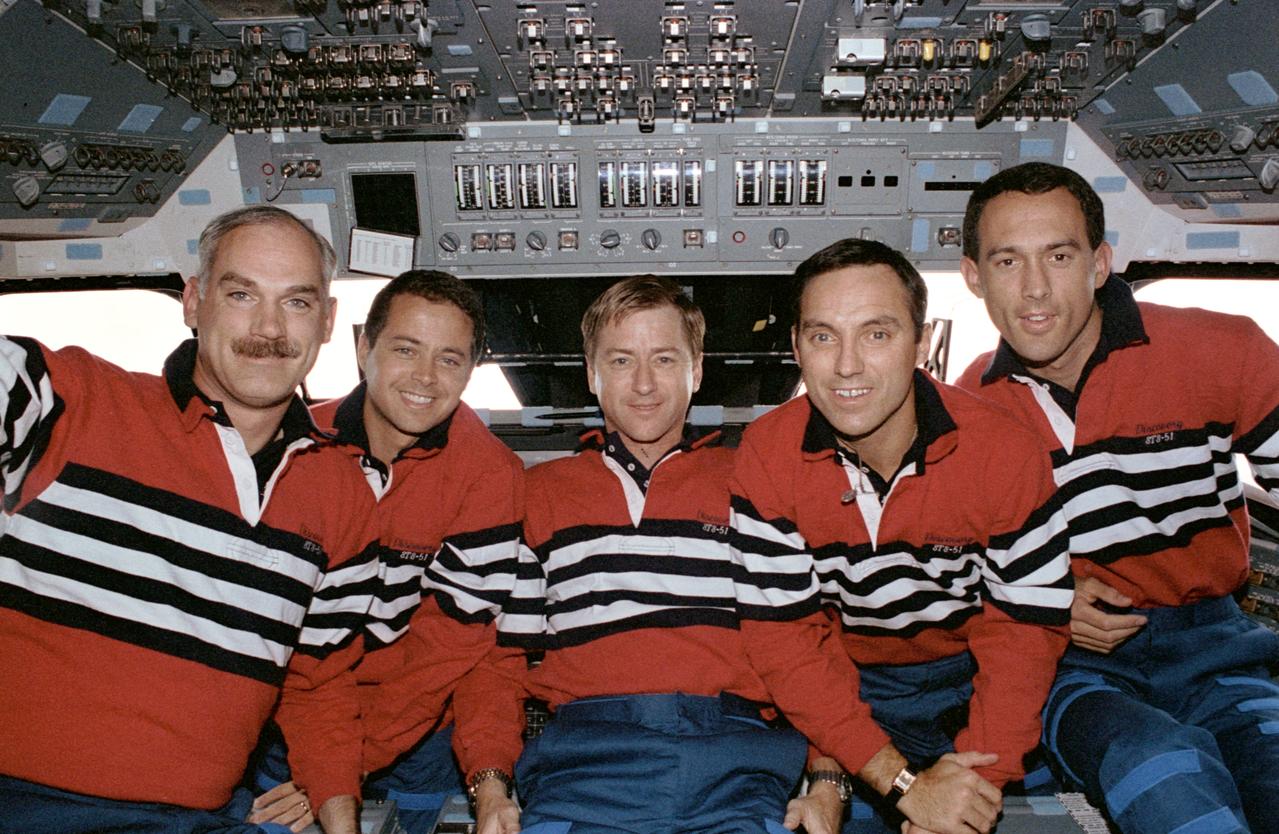
STS051-44-005 (12-22 sept 1993) --- The five crew members pose for the traditional inflight crew portrait on the Space Shuttle Discovery's flight deck. Left to right are astronauts William F. Readdy, Daniel W. Bursch, Frank L. Culbertson, Jr., Carl E. Walz and James H. Newman. Culbertson is mission commander, with Readdy serving as pilot and the others are mission specialists.
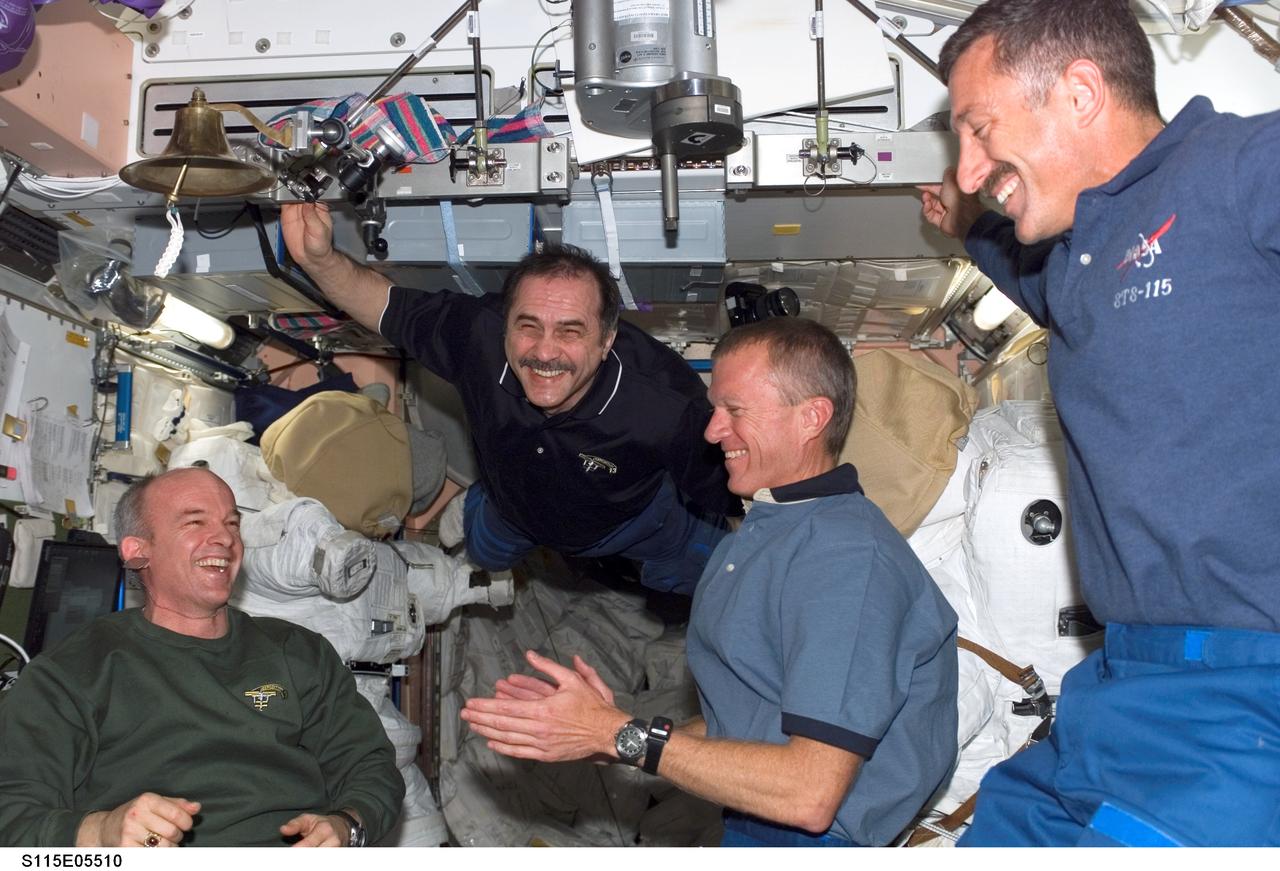
S115-E-05510 (11 Sept. 2006) --- Expedition 13 and STS-115 crewmembers reunite onboard the International Space Station soon after docking. A smiling cosmonaut Pavel Vinogradov, Expedition 13 commander representing Russia's Federal Space Agency, floats into the scene, joining (from left) astronauts Jeffrey N. Williams, Expedition 13 flight engineer and NASA station science officer; Brent W. Jett Jr., STS-115 commander, and Daniel C. Burbank, STS-115 mission specialist.
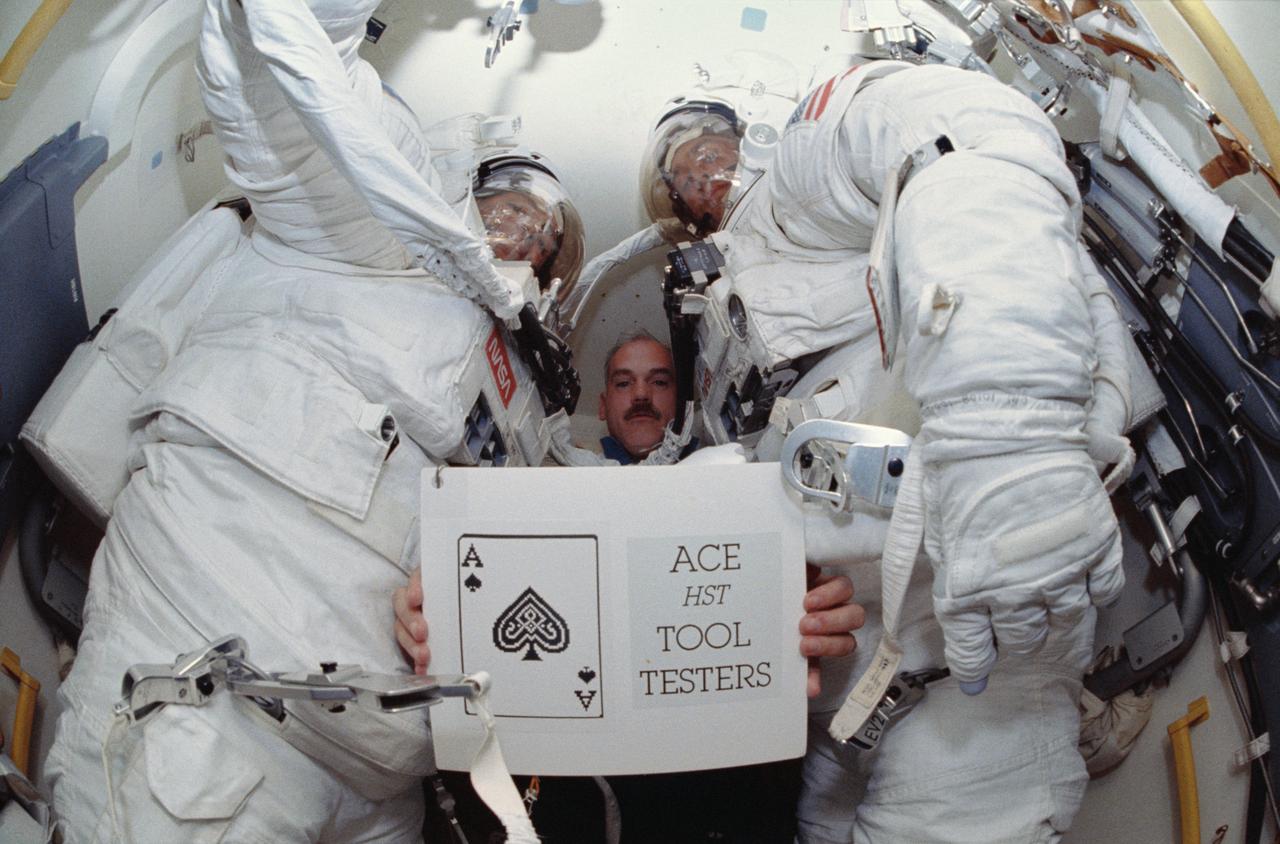
STS051-66-009 (16 Sept 1993) --- In Discovery's airlock, astronaut William F. Readdy, pilot, holds up a STS-51 slogan -- "Ace HST Tool Testers" -- for still and video cameras to record. Readdy is flanked by astronauts Carl E. Walz (left) and James H. Newman, who had just shared a lengthy period of extravehicular activity (EVA) in and around Discovery's cargo bay. Not pictured are astronauts Frank L. Culbertson Jr., mission commander, and Daniel W. Bursch, mission specialist.
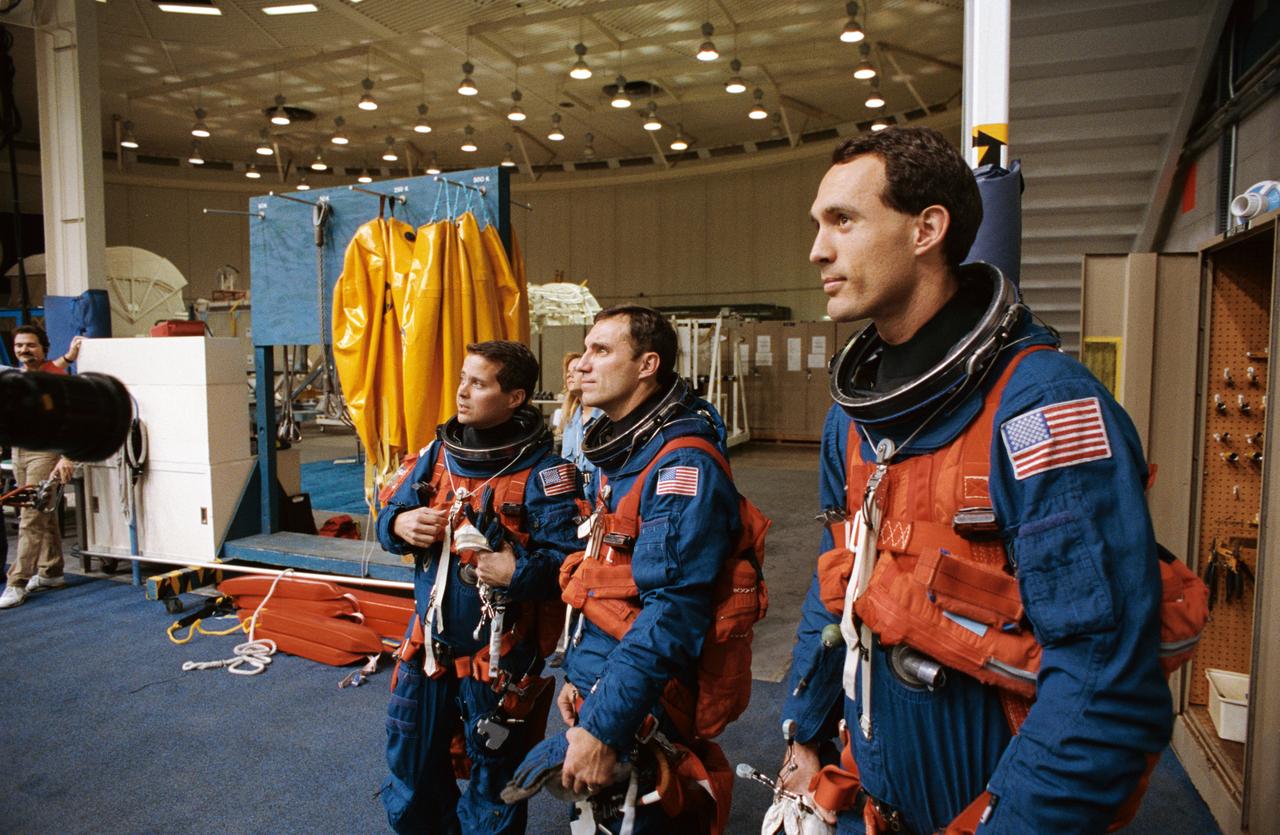
S93-31929 (24 March 1993) --- The three mission specialists for NASA's STS-51 mission watch as a crewmate (out of frame) simulates a parachute jump into water during emergency bailout training exercises at the Johnson Space Center's Weightless Environment Training Facility (WET-F). Left to right are astronauts Daniel W. Bursch, Carl E. Walz and James H. Newman. Out of frame are astronauts Frank L. Culbertson and William F. Readdy, commander and pilot, respectively.
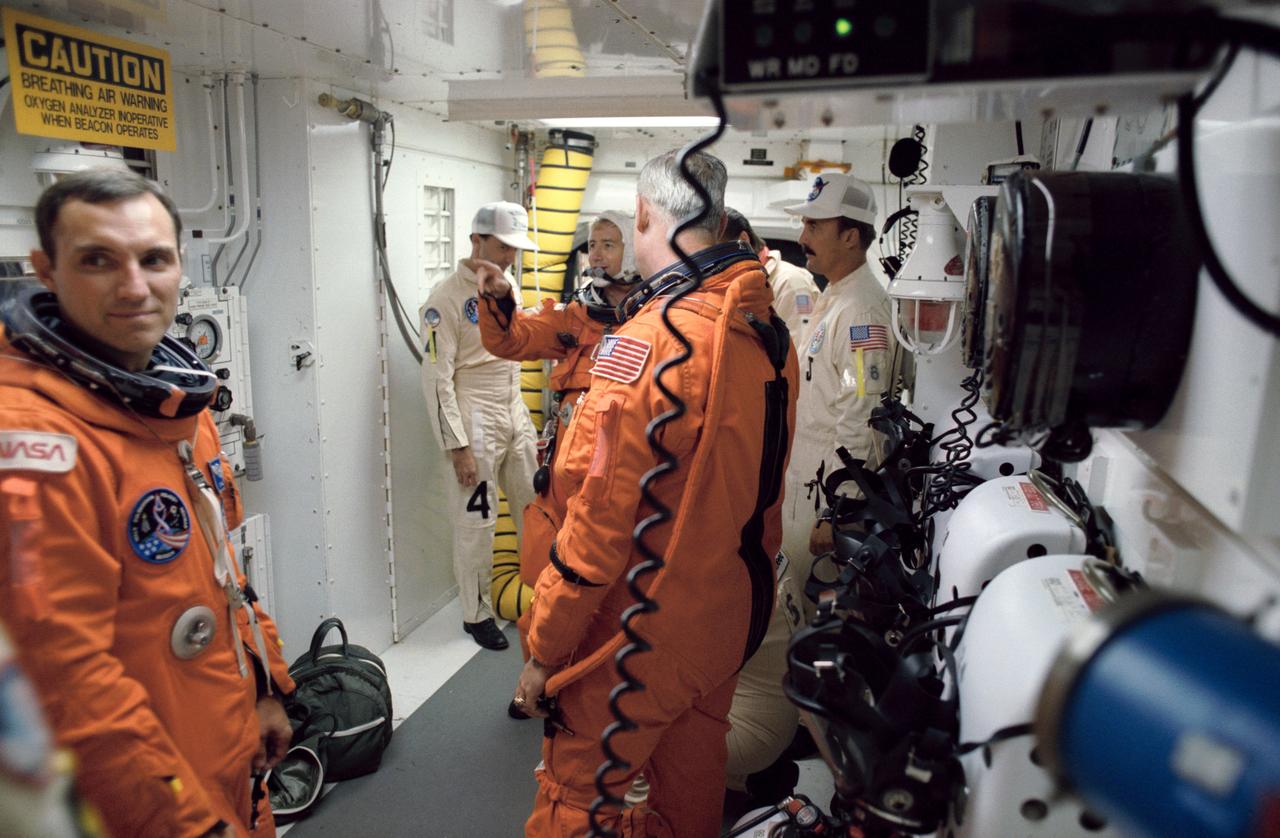
STS051-S-109 (12 Sept 1993) --- Inside the White Room, three astronaut crew members for the STS-51 flight await their queues to ingress the Space Shuttle Discovery. Wearing the partial pressure launch and entry suits are, left to right, Carl E. Walz, mission specialist; Frank L. Culbertson Jr., mission commander; and William F. Readdy, pilot. Not pictured are astronauts James H. Newman and Daniel W. Bursch. Launch occurred at 7:45 a.m. (EDT), September 12, 1993.
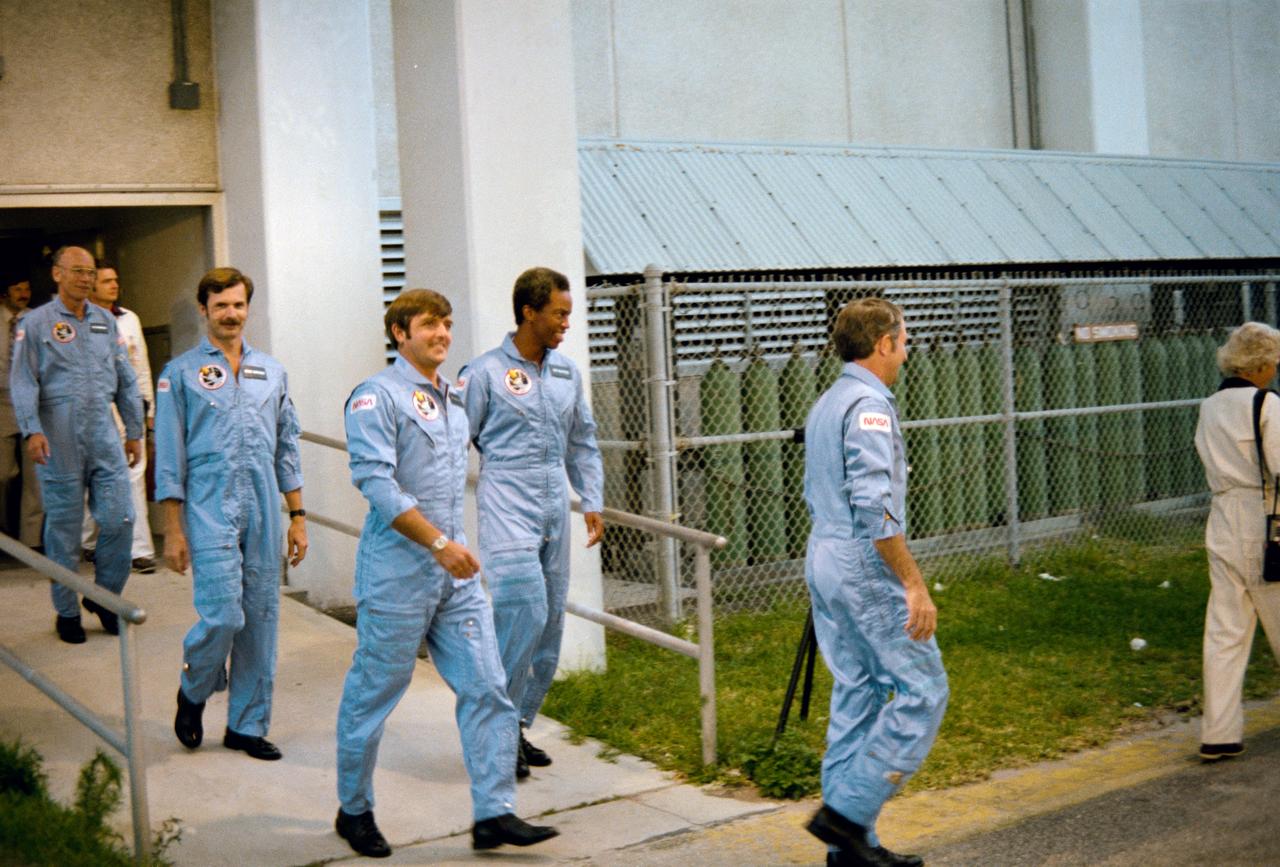
S83-39237 (6 Aug 1983) --- The five astronaut crewmembers of NASA?s STS-8 mission leave the operations and checkout building at the Kennedy Space during a rehearsal for their August 30 launch at KSC?s launch complex 39. They are, from the right, Astronauts Richard H. Truly, commander; Daniel C. Brandenstein, pilot; and Guion S. Bluford, Dale A. Gardner and William E. Thornton, all mission specialists.
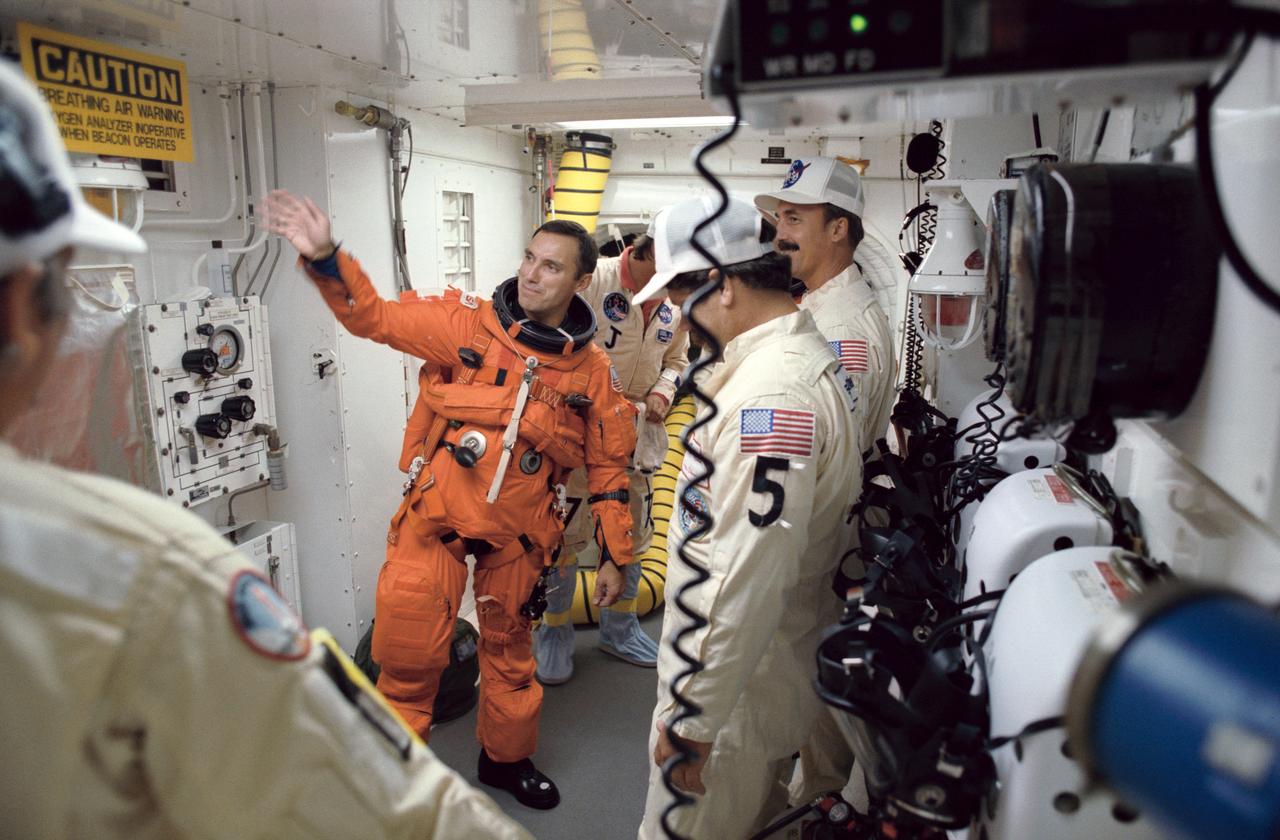
STS051-S-112 (12 Sept 1993) --- Inside the White Room, astronaut Carl E. Walz talks to suit technicians prior to ingressing the Space Shuttle Discovery. Walz, mission specialist, was joined by astronauts Frank L. Culbertson Jr., mission commander; William F. Readdy, pilot; and James H. Newman and Daniel W. Bursch, mission specialists for the almost ten-day flight. Launch occurred at 7:45 a.m. (EDT), September 12, 1993.
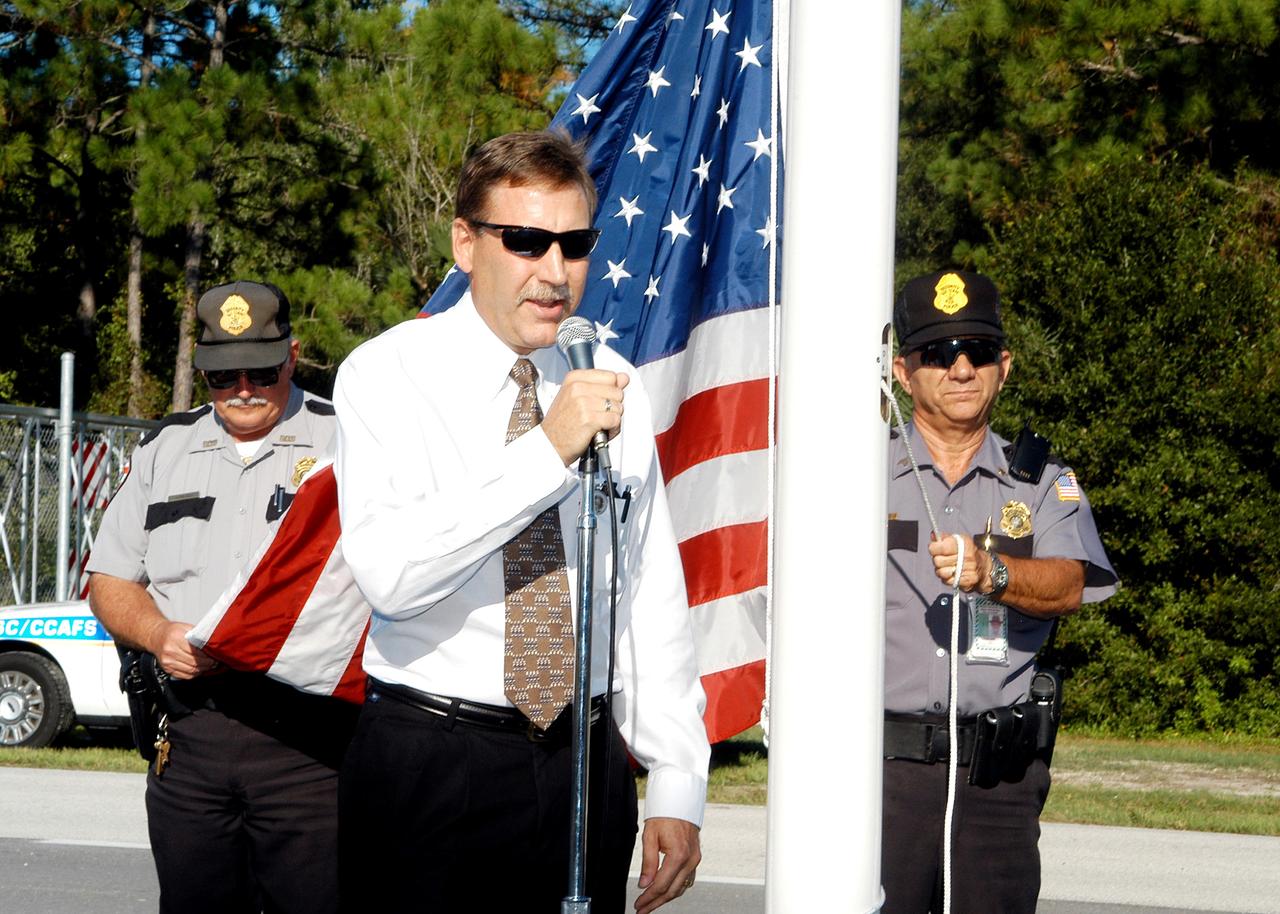
KENNEDY SPACE CENTER, FLA. - Daniel L. Tweed, with the Facilities Division, NASA Spaceport Services, addresses attendees at the ribbon cutting for the KSC Security gates. Tweed was project manager. The two new Security gates on Kennedy Parkway (Gate 2) and NASA Parkway (Gate 3) were activated Aug. 1, allowing the general public to have access to the new Space Commerce Way, which will provide access to the Research Park and KSC Visitor Complex, and providing an alternate route for the general public between Titusville and Merritt Island that is accessible 24 hours a day. The gates are staffed 24 hours daily. Others taking part in the ribbon cutting were Center Director Jim Kennedy; Chief, Protective & Safe Guards Office, Calvin L. Burch; SGS Deputy Program Manager William A. Sample; and Bobby Porter, with Oneida Construction.
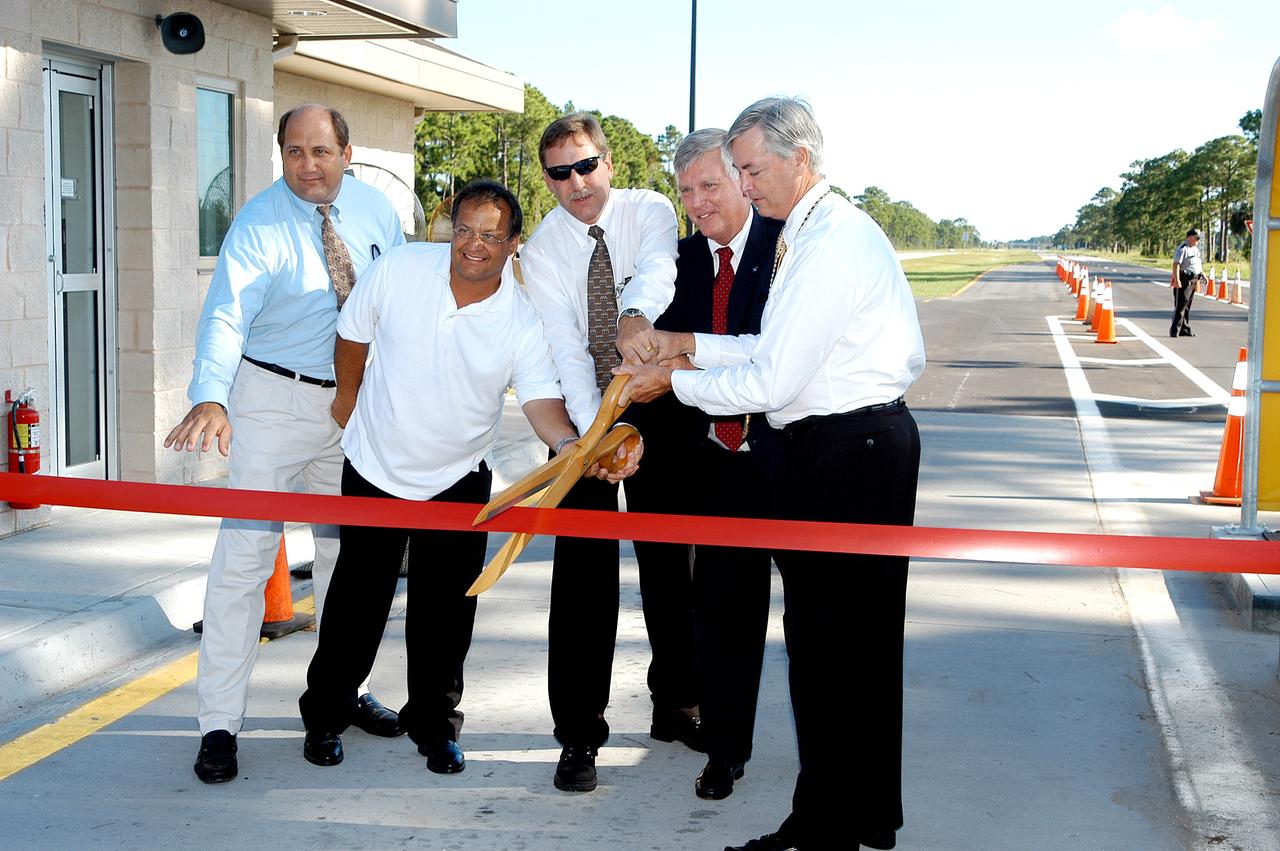
KENNEDY SPACE CENTER, FLA. - Key officials are poised to cut the ribbon officially dedicating the new Security gates on Kennedy Parkway (Gate 2) and NASA Parkway (Gate 3). From left are Wally Schroeder, with Jones, Edmunds & Associates; Bobby Porter, with Oneida Construction; Daniel Tweed, NASA project manager; Jim Kennedy, Center director; and William Sample, SGS deputy program manager. The new gates were activated Aug. 1, allowing the general public to have access to the new Space Commerce Way, which will provide access to the Research Park and KSC Visitor Complex, and providing an alternate route for the general public between Titusville and Merritt Island that is accessible 24 hours a day. The gates are staffed 24 hours daily.
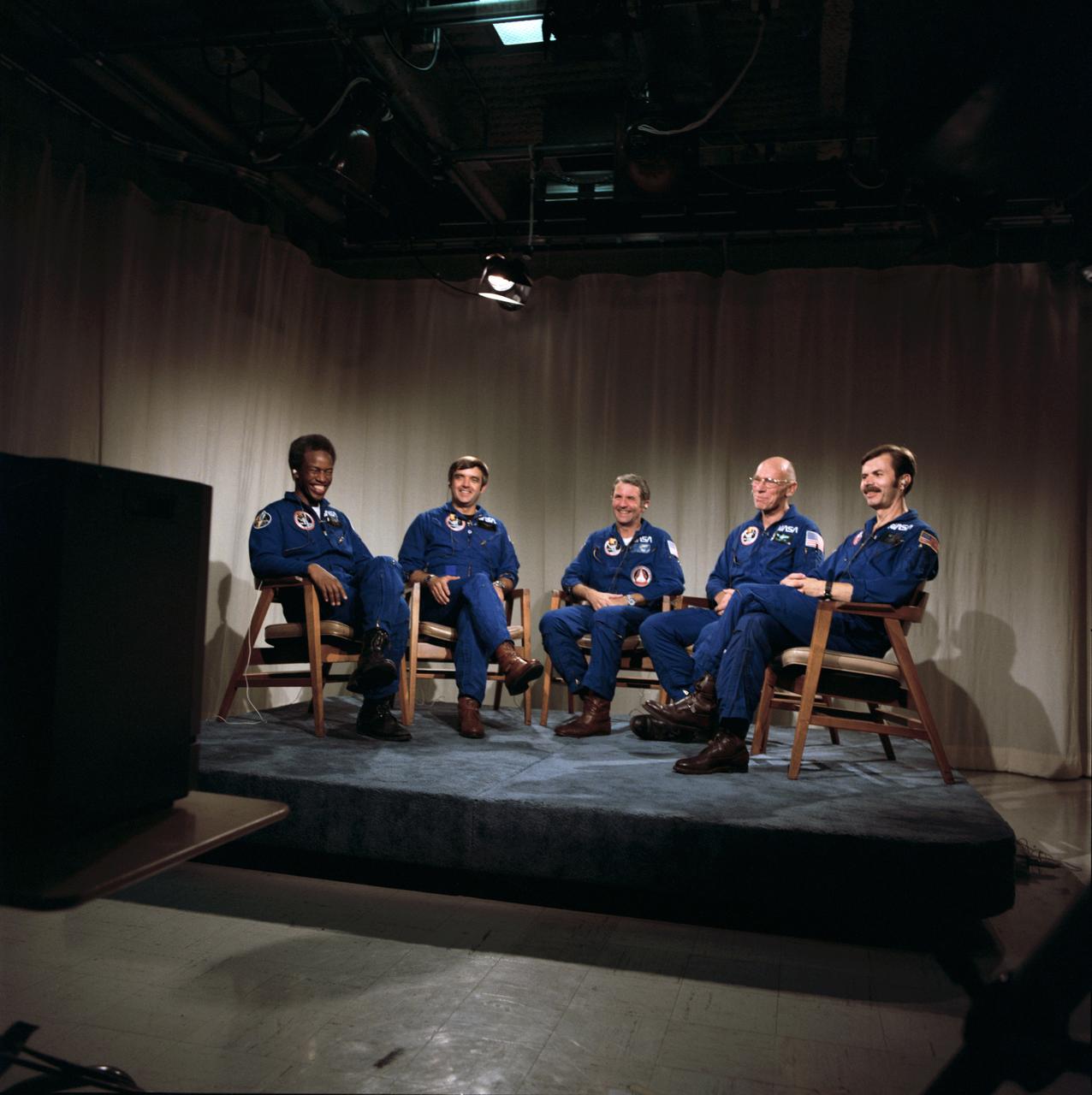
S83-39693 (5 Sept 1983) --- The five member astronaut crew of the Space Shuttle Challenger for STS-8 responds to a comment made by President Ronald Reagan during a post flight telephone conversation with the chief executive. The five astronauts earlier today landed the reusable spacecraft at Edwards Air Force Base in California and were flown to JSC via NASA aircraft. Richard H. Truly, center, is crew commander. Pilot for the six day flight was Daniel C. Brandenstein, second left. The mission specialist were Guion S. Bluford, left: Dr. William S. Thornton, second right, and Dale A. Gardner, right.
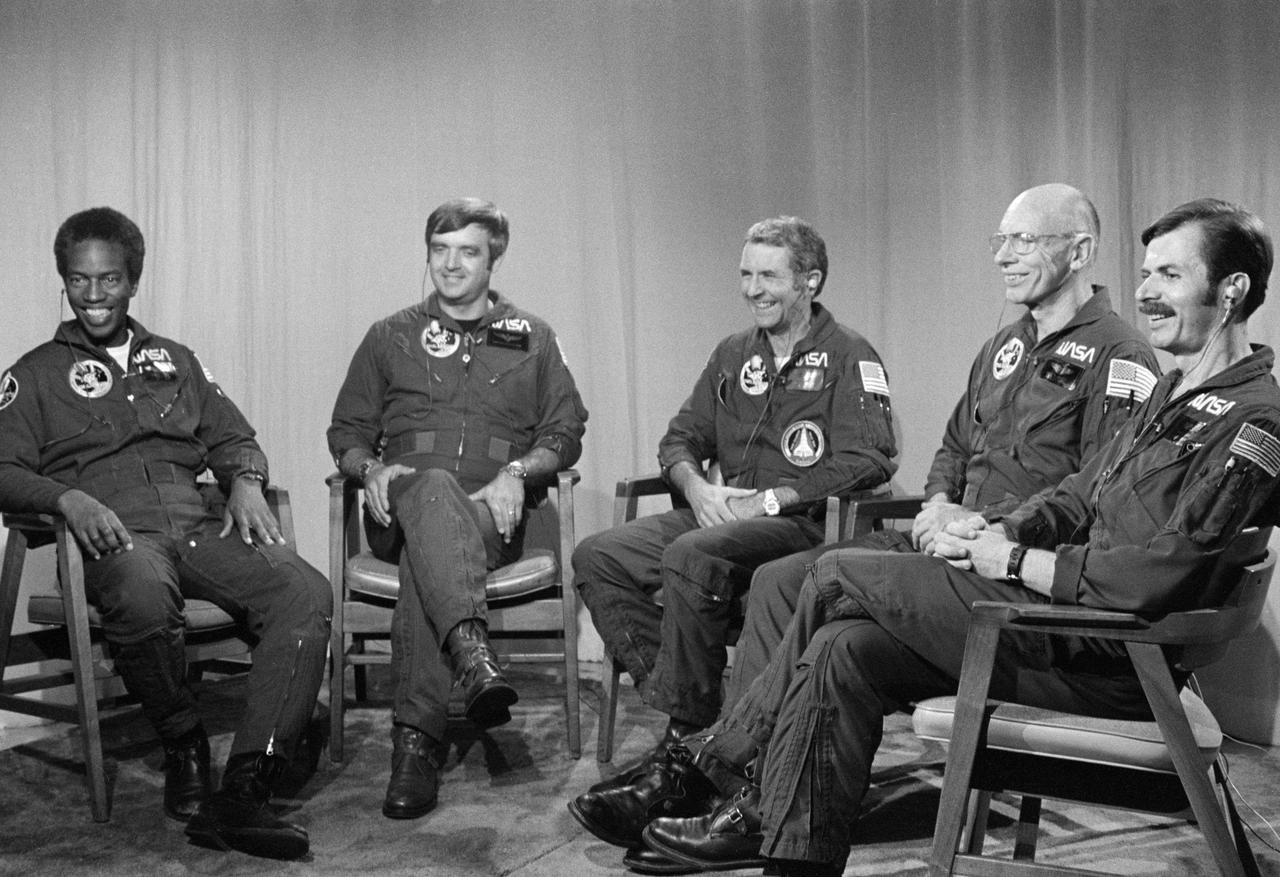
S83-39696 (5 Sept 1983) --- The five member astronaut crew of the Space Shuttle Challenger for STS-8 responds to a comment made by President Ronald Reagan during a post flight telephone conversation with the chief executive. The five astronauts earlier today landed the reusable spacecraft at Edwards Air Force Base in California and were flown to JSC via NASA aircraft. Richard H. Truly, center, is crew commander. Pilot for the six day flight was Daniel C. Brandenstein, second left. The mission specialist were Guion S. Bluford, left: Dr. William S. Thornton, second right, and Dale A. Gardner, right. Photo credit: NASA
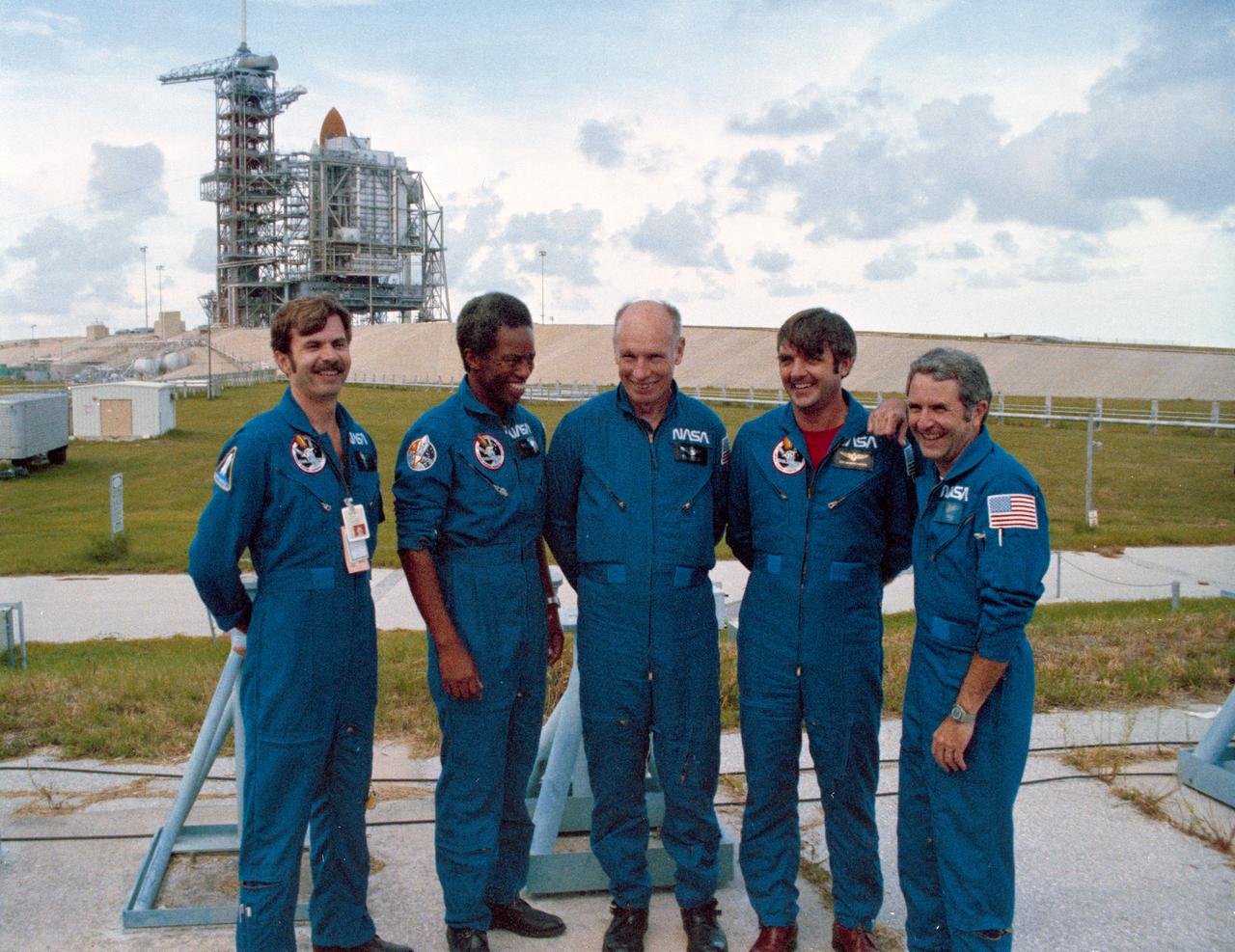
S83-38389 (6 Aug. 1983) --- The STS-8 crew members pause for a crew photo at Pad 39A after a question and answer session with the press. They were about to participate in the STS-8 countdown demonstration test. They will repeat many of their measures on Aug. 30 when they are scheduled to lift off aboard the space shuttle Challenger. From left to right are astronauts Dale A. Gardner, Guion S. Bluford, Dr. William E. Thornton, all mission specialists; Daniel C. Brandenstein, pilot; and Richard F. Truly, commander. The Challenger is in the background at complex 39.
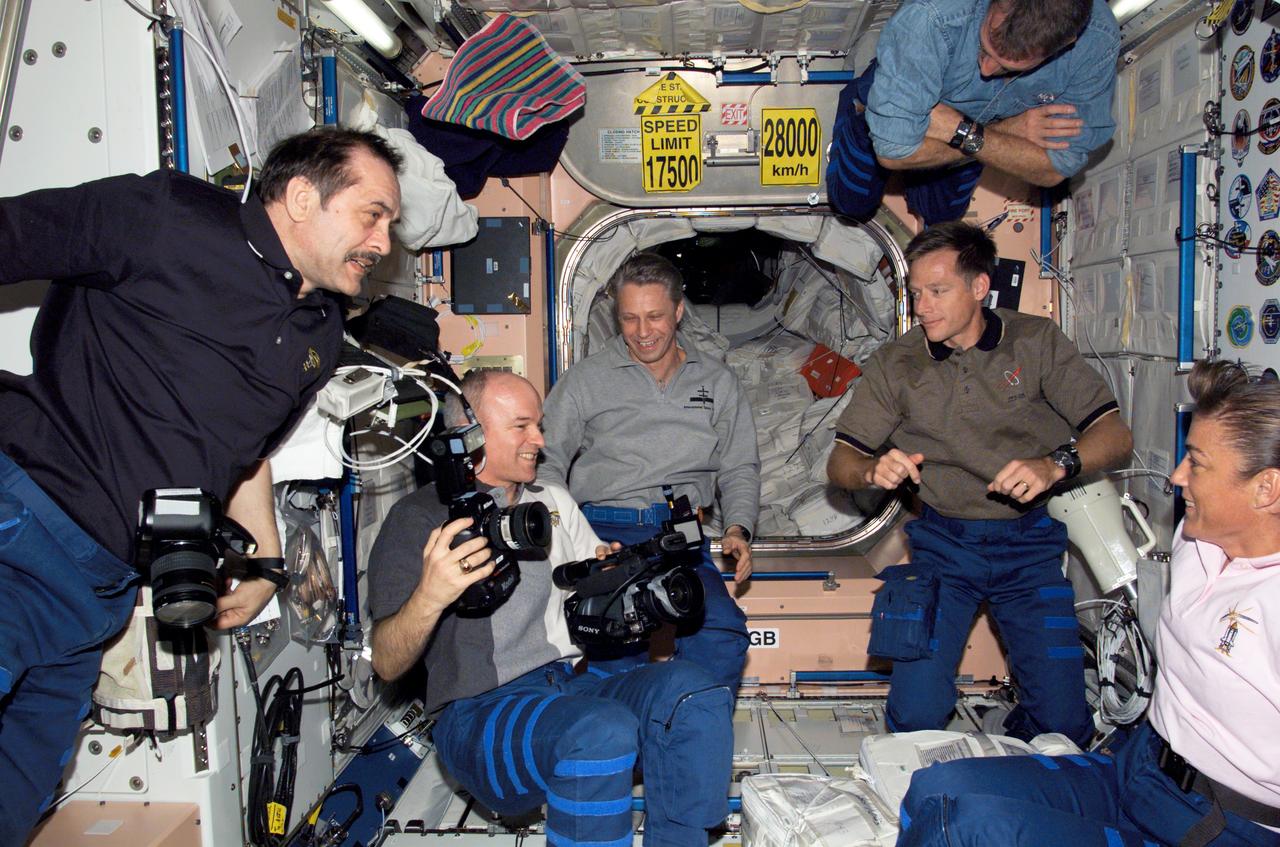
S115-E-06523 (16 Sept. 2006) --- STS-115 and Expedition 13 crewmembers enjoy a light moment in the Unity node of the International Space Station while Space Shuttle Atlantis was docked with the station. From the left are cosmonaut Pavel V. Vinogradov, Expedition 13 commander representing Russia's Federal Space Agency; astronauts Jeffrey N. Williams, NASA space station science officer and flight engineer; Thomas Reiter, flight engineer representing the European Space Agency (ESA); Christopher J. Ferguson, STS-115 pilot; Daniel C. Burbank (top) and Heidemarie M. Stefanyshyn-Piper, both STS-115 mission specialists.

STS008-16-454 (30 Aug-5 Sept 1983) --- Following a precedent set early two decades ago during the Gemini program, three members of the STS-8 astronaut crew aboard the Earth-orbiting Space Shuttle Challenger reveal their military backgrounds and loyalties. Astronauts (left to right) Dale A. Gardner, Richard H. Truly and Daniel C. Brandenstein leave no mystery as to their alma mater and gridiron sentimentalities as they display U.S. Navy stickers. The trio was photographed by Astronaut Guion S. Bluford on the flight deck. Truly is crew commander; Brandenstein, pilot; and Gardner and Bluford, along with Dr. William E. Thornton are all mission specialists for this six-day flight.
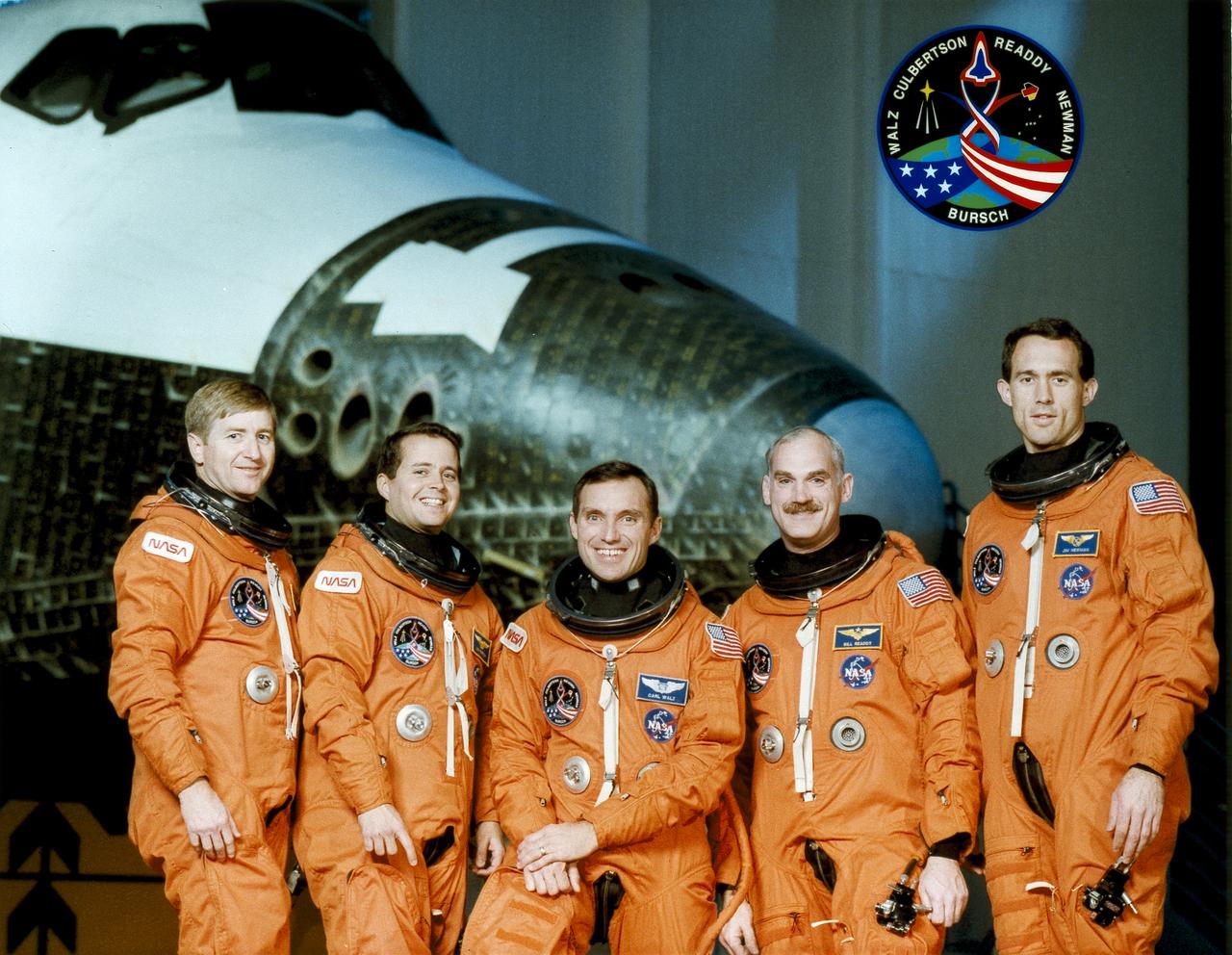
The STS-51 crew portrait features (left to right): Frank L. Culbertson, commander; Daniel W. Bursch, mission specialist; Carl E. Walz, mission specialist; William F. Readdy, pilot; and James H. Newman, mission specialist. The crew of five launched aboard the Space Shuttle Discovery on September 12, 1993 at 7:45:00 am (EDT). Two primary payloads included the Advanced Communications Technology Satellite (ACTS), and the Orbiting and Retrievable Far and Extreme Ultraviolet Spectrograph Shuttle Pallet Satellite (OERFEUS-SPAS).
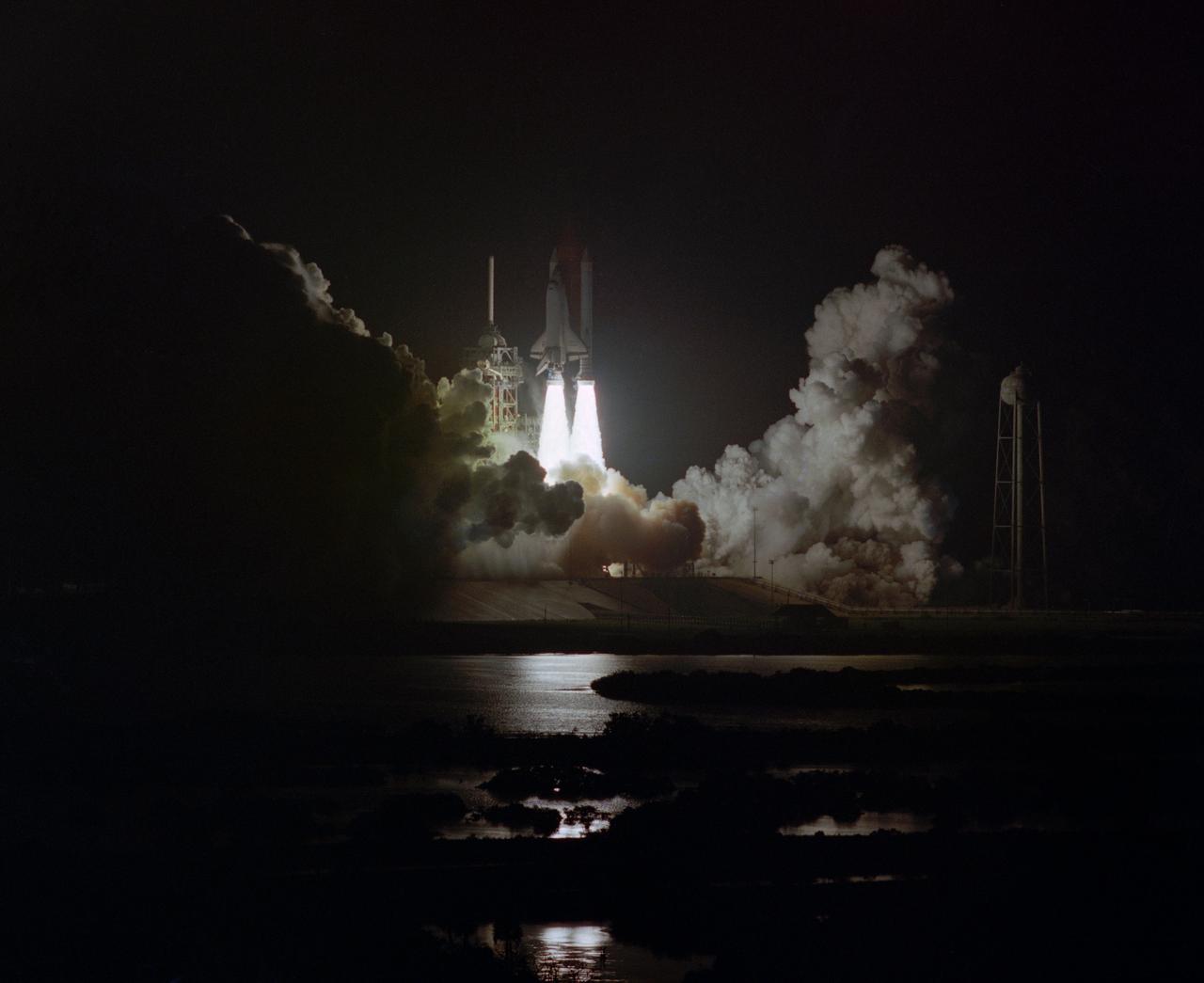
S83-39512 (30 Aug. 1983) --- NASA's eighth space shuttle launch lights up the Florida sky at 2:32 a.m. (EDT), Aug. 30, 1983. The space shuttle Challenger's third flight is the first to have its beginnings in darkness. Five astronauts and an assortment of experiments are aboard the reusable vehicle. Crew members are astronauts Richard H. Truly, STS-8 commander; Daniel C. Brandenstein, pilot; and Dale A. Gardner, Guion S. Bluford and William E. Thornton, all mission specialists. Photo credit: NASA
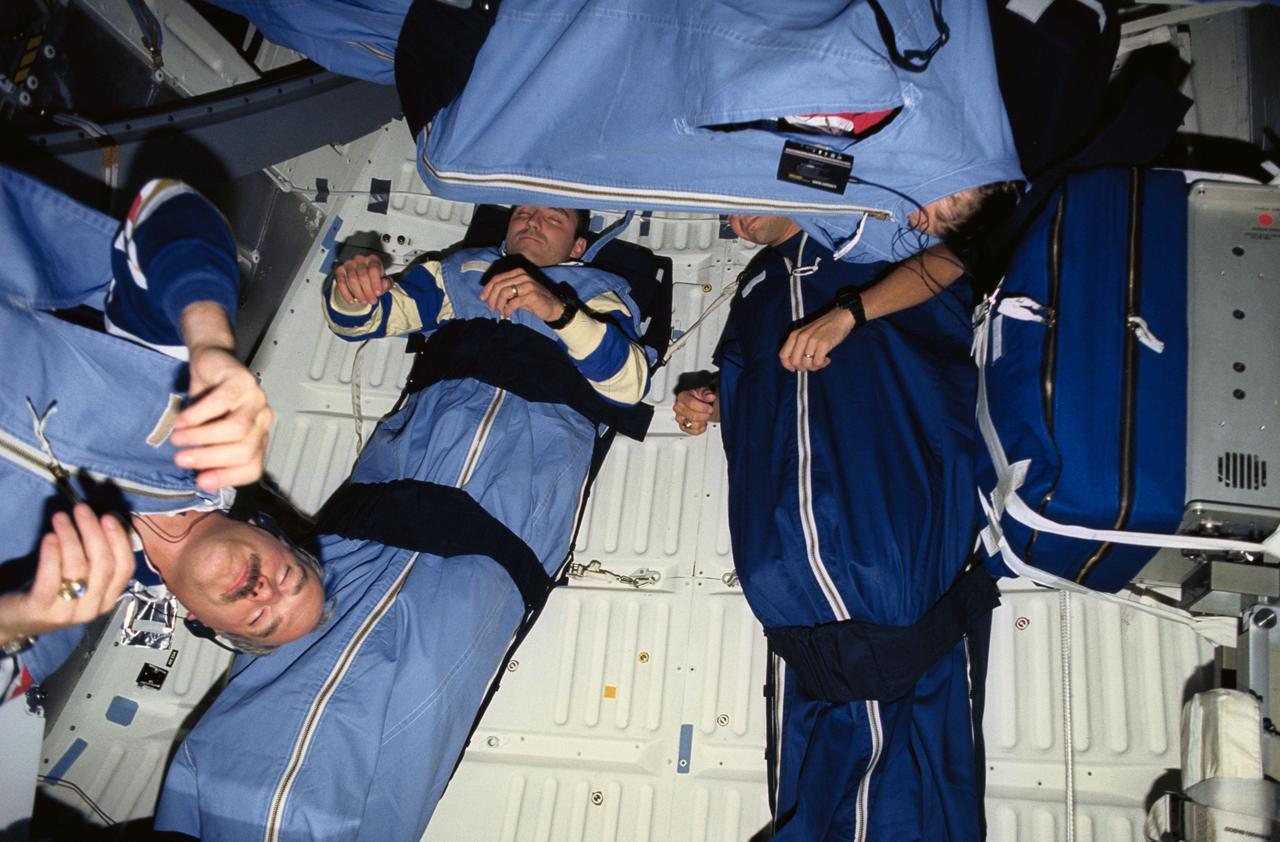
STS051-20-037 (12-22 Sept 1993) --- Four of the five astronaut crew members were photographed during one of their sleep periods on the Space Shuttle Discovery's mid-deck. At bottom center, astronaut Frank L. Culbertson, Jr., mission commander, is barely visible, with most of his body zipped securely in the sleep restraint. Others, left to right, are astronauts Daniel W. Bursch and Carl E. Walz, mission specialists, and William F. Readdy, pilot. The photograph was taken by astronaut James H. Newman, mission specialist.
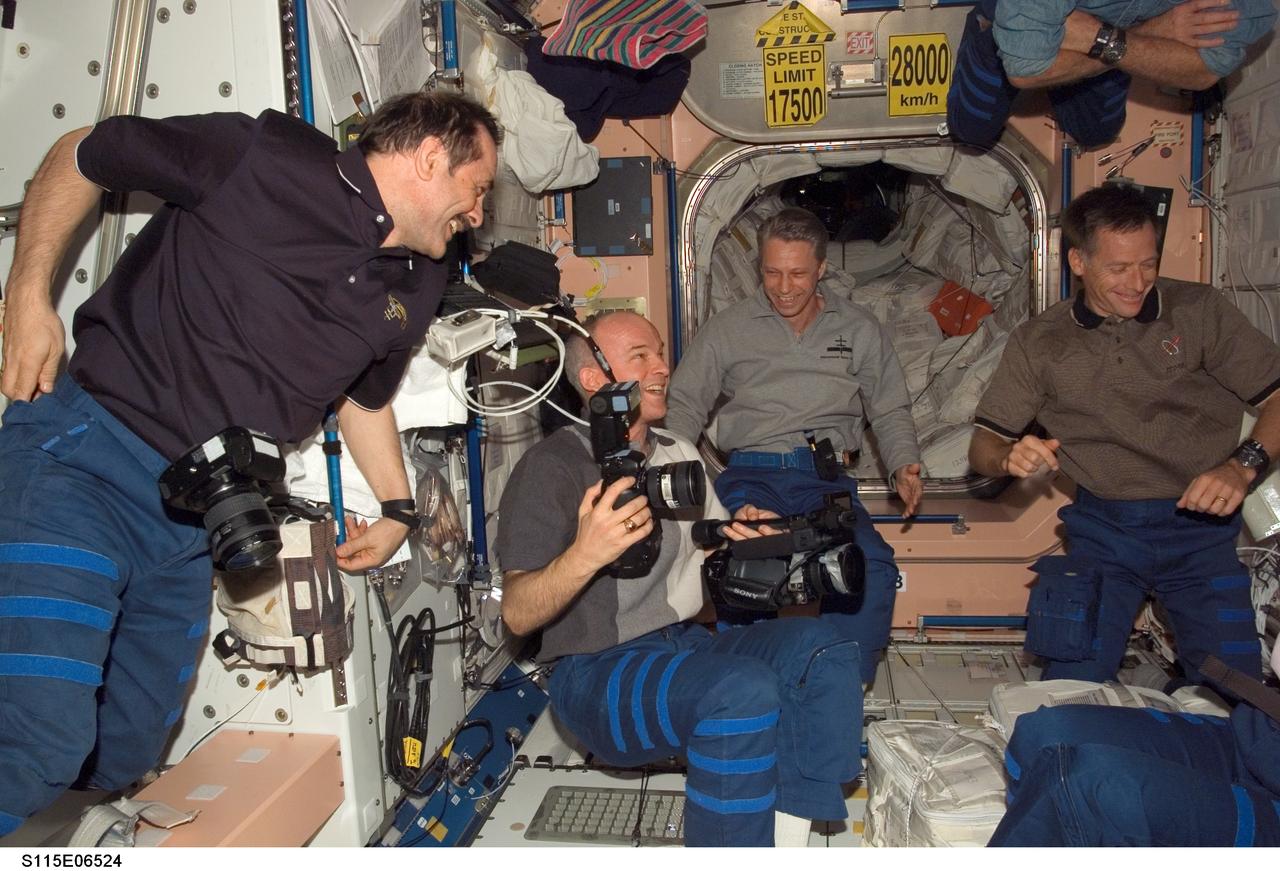
S115-E-06524 (16 Sept. 2006) --- STS-115 and Expedition 13 crewmembers enjoy a light moment in the Unity node of the International Space Station while Space Shuttle Atlantis was docked with the station. From the left are cosmonaut Pavel V. Vinogradov, Expedition 13 commander representing Russia's Federal Space Agency; astronauts Jeffrey N. Williams, NASA space station science officer and flight engineer; Thomas Reiter, flight engineer representing the European Space Agency (ESA); Christopher J. Ferguson, STS-115 pilot; Daniel C. Burbank (partially out of frame) and Heidemarie M. Stefanyshyn-Piper (partially out of frame), both STS-115 mission specialists.
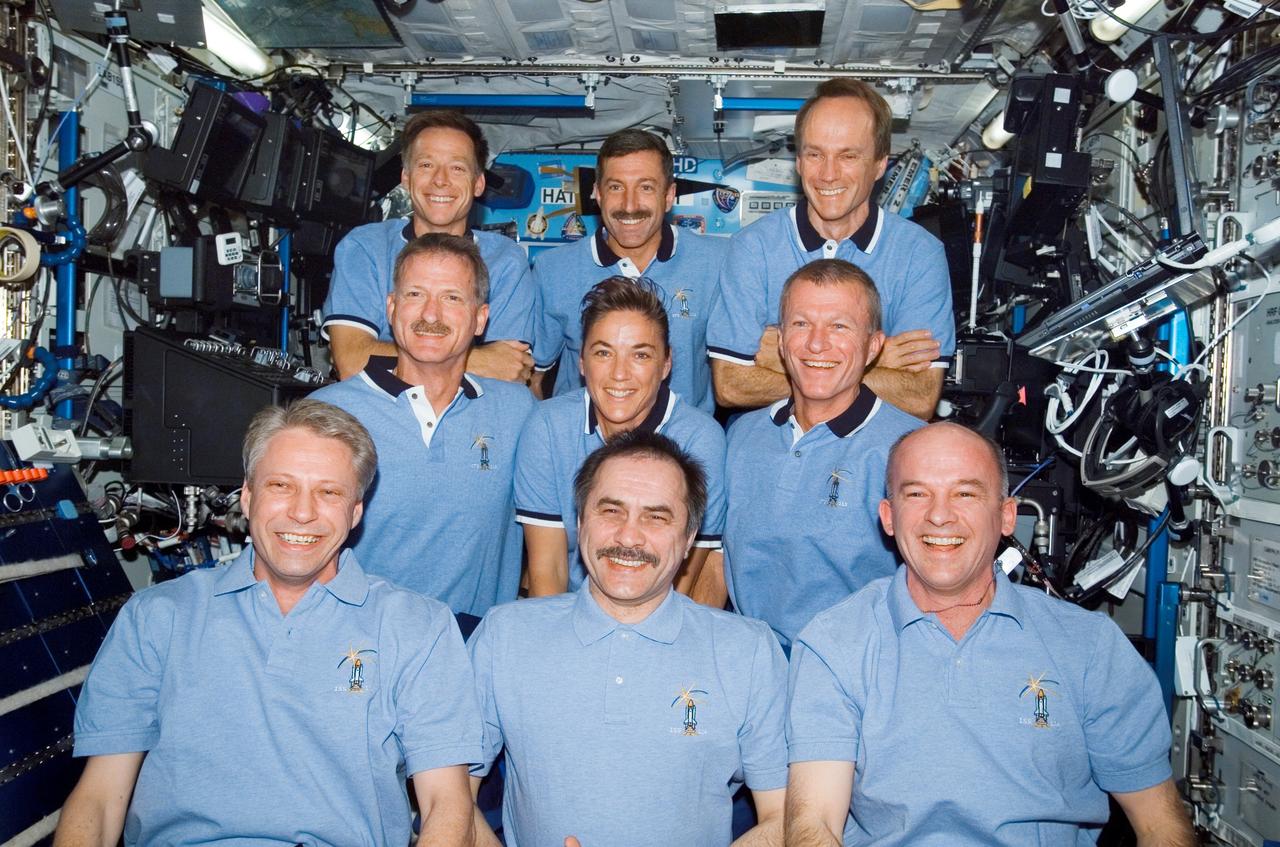
ISS013-E-81630 (16 Sept. 2006) --- The Expedition 13 and STS-115 crewmembers gather for a group portrait during a joint crew press conference in the Destiny laboratory of the International Space Station while Space Shuttle Atlantis was docked with the station. From the left (front row) are European Space Agency (ESA) astronaut Thomas Reiter, Expedition 13 flight engineer; cosmonaut Pavel V. Vinogradov, commander representing Russia's Federal Space Agency; and astronaut Jeffrey N. Williams, NASA space station science officer and flight engineer. From the left (second row) are astronauts Joseph R. Tanner, Heidemarie M. Stefanyshyn-Piper, both STS-115 mission specialists; and Brent W. Jett, Jr., STS-115 commander. From the left (top row) are astronauts Christopher J. Ferguson, pilot; Daniel C. Burbank and Canadian Space Agency astronaut Steven G. MacLean, both mission specialists.
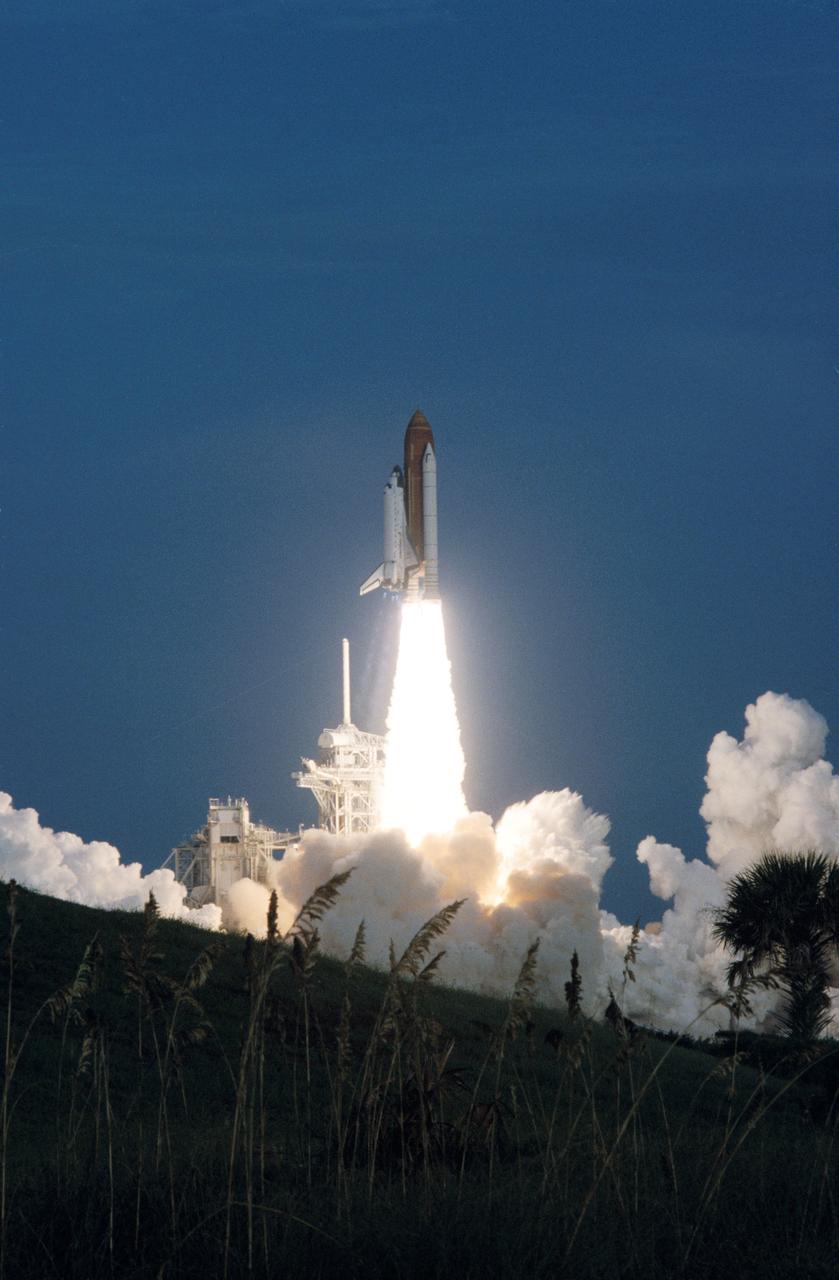
STS051-S-108 (12 Sept. 1993) --- The Space Shuttle Discovery soars toward a nine-day stay in Earth-orbit to support the mission. Launch occurred at 7:45 a.m. (EDT) September 12, 1993. Note the diamond shock effect coming from the thrust of the three main engines. Onboard the shuttle were astronauts Frank L. Culbertson, Jr., William F. Readdy, Daniel W. Bursch, James H. Newman and Carl E. Walz, along with a number of payloads. The payloads included the Advanced Communications Technology Satellite (ACTS) with its Transfer Orbit Stage (TOS), the Orbiting Retrievable Far and Extreme Ultraviolet Spectrometer (ORFEUS) and its Shuttle Pallet Satellite (SPAS) carrier. This photograph was taken with a 35mm camera.
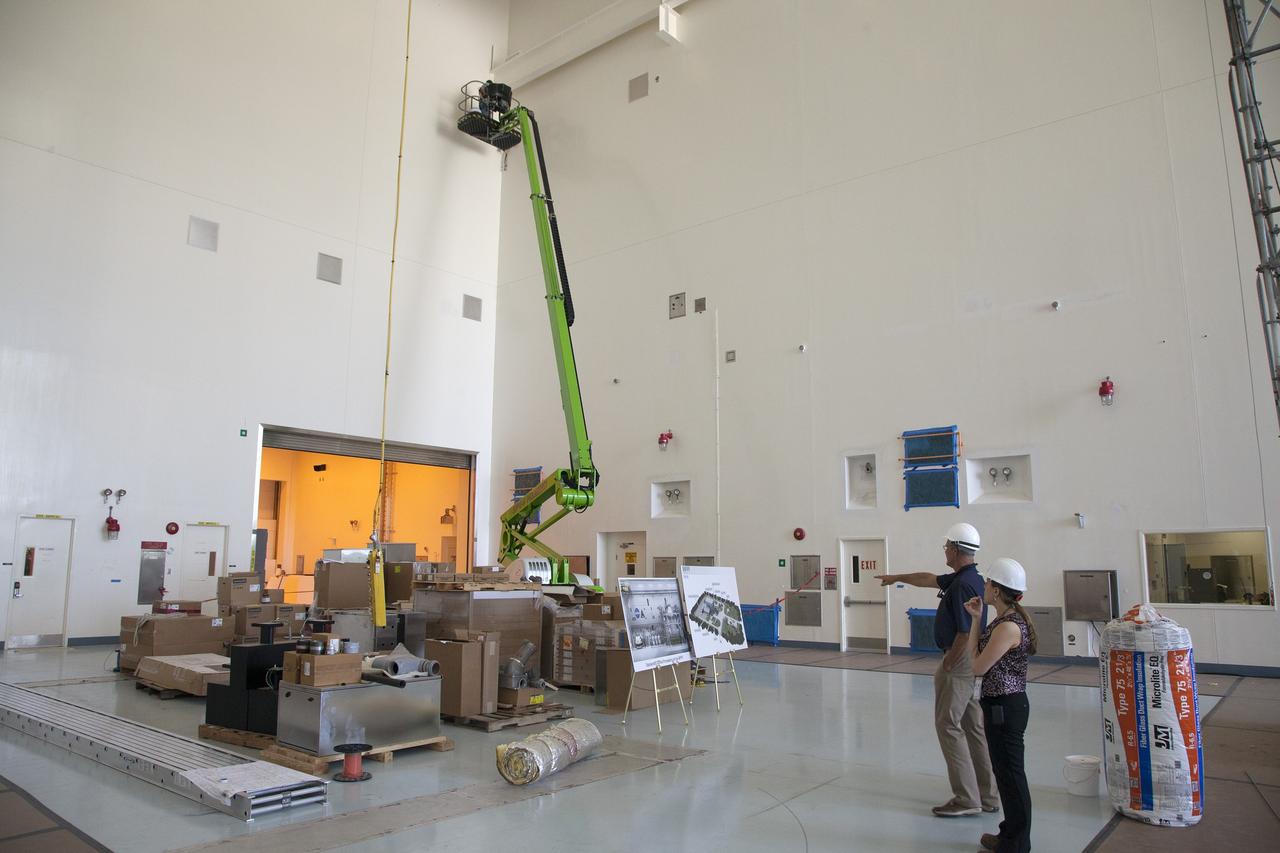
CAPE CANAVERAL, Fla. – Modifications continue on the Multi-Payload Processing Facility, or MPPF, at NASA's Kennedy Space Center in Florida. Inside the high bay, Skip Williams, Ground Systems Development and Operations, or GSDO, deputy project manager for the spacecraft offline element integration team, points out artist illustrations of how the MPPF's interior and exterior will look after modifications and upgrades have been completed. Kennedy's Center Operations Directorate is overseeing upgrades to the MPPF for GSDO Program. The extensive upgrades and modernizations will support processing of Orion spacecraft for NASA's exploration missions. The 19,647-square-foot building, originally constructed in 1995, primarily will be used for Orion hypergolic fueling, ammonia servicing and high-pressure gas servicing and checkout before being transported to the Vehicle Assembly Building for integration with the Space Launch System. Photo credit: NASA/Daniel Casper

FDCD Branch Stability and Control branch: Names, rows front to back, people left to right: Ground level: 1. ?? 2. Debra L. Livingston 3. Katherine G. Johnson 4. Robert Dunning Step 1: 1. Ellie Fillmore (?) 2. Al Hamer 3. Suresh Joshi Step 2: 1. John Young 2. Ernest Armstrong 3. Vladislav Klein 4. Charles T. Woolley Step 3: 1. Lawrence Taylor 2. Tony Fontana Step 4: 1. Bill Suit 2. Jane Carpenter 3. Daniel P. Giesy 4. Mario Smith Step 5: 1. Albert Schy 2. Ray Montgomery 3. Sahajendra Singh Top level: 1: Jim Batterson 2. Jim Williams 3. Claude Keckler 4. N. Sundararajan Behind all: John Shebalin Names given by Danial P. Giesy
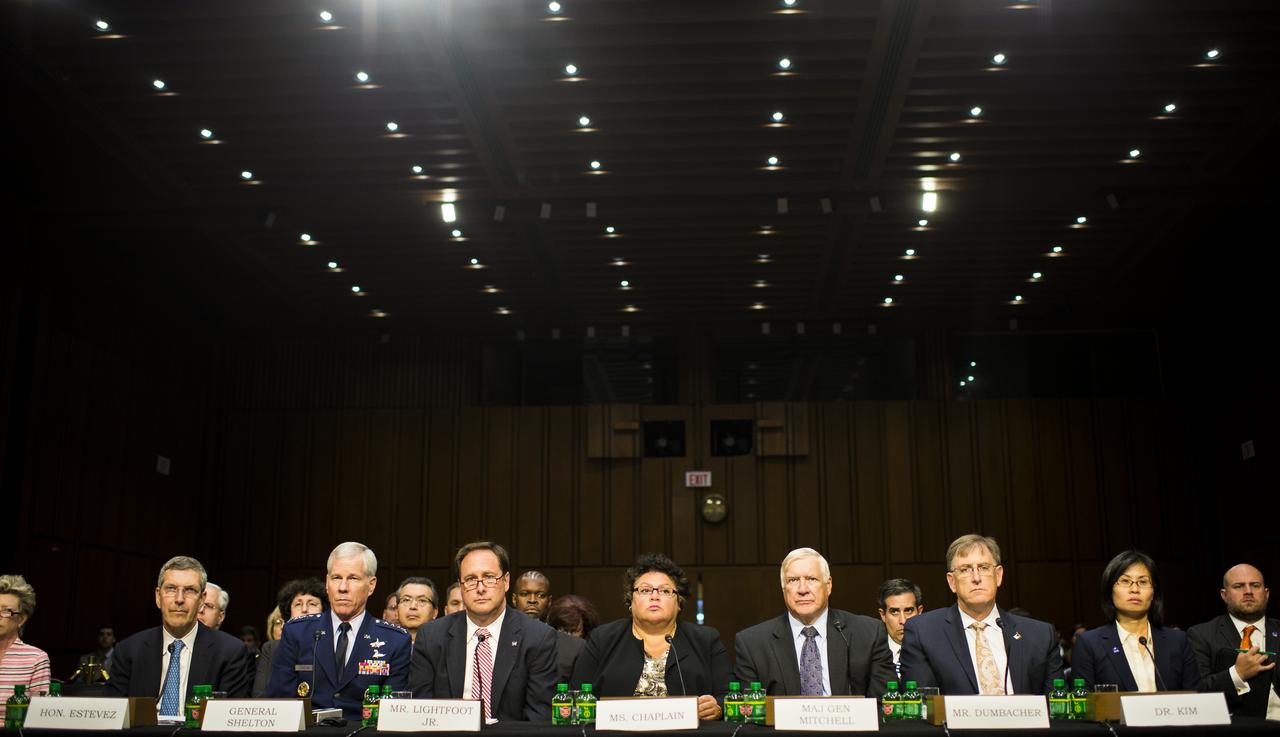
From left; Hon. Alan Estevez, Principle Deputy Under Secretary of Defense for Acquisition, Technology, and Logistics; General William Shelton, Commander of the United States Air Force Space Command; Robert Lightfoot, NASA Associate Administrator; Cristina Chaplain, Director of Acquisition and Sourcing Management at the Government Accountability Office; major General Howard Mitchell (USAF Ret.), Vice President for Program Assessments at The Aerospace Corporation; Daniel Dunbacher, Professor of Practice in the Department of Aeronautics and Aerospace Engineering at Purdue University; and Dr. Yool Kim, Senior Engineer at The Rand Corporation; are seen during a hearing in front of the Senate Subcommittee on Strategic Forces and Senate Committee on Commerce, Science, and Transportation on Wednesday, July 16, 2014, at the Hart Senate Office Building in Washington, DC. The Senate hearing focused on assured access to space.
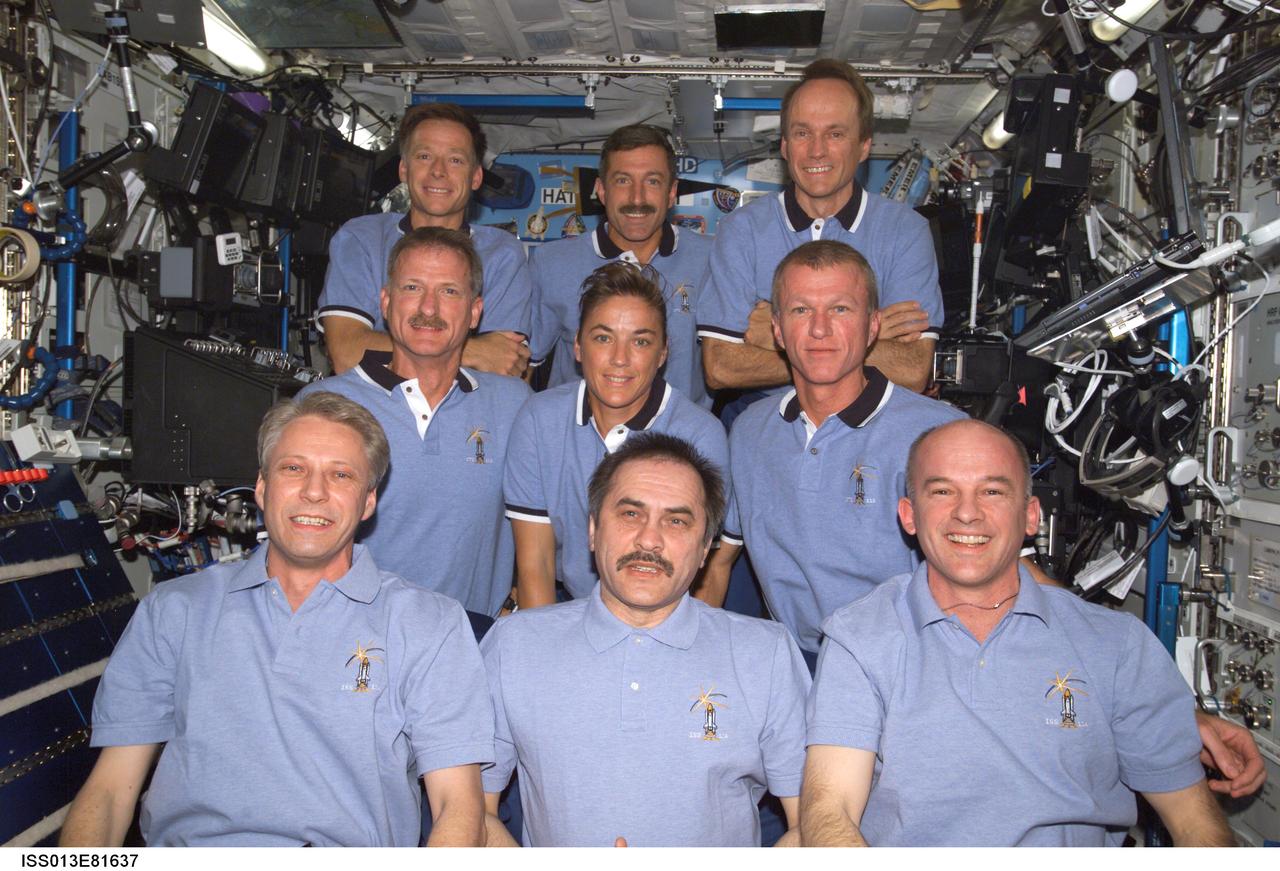
ISS013-E-81637 (16 Sept. 2006) --- The Expedition 13 and STS-115 crewmembers gather for a group portrait during a joint crew press conference in the Destiny laboratory of the International Space Station while Space Shuttle Atlantis was docked with the station. From the left (front row) are European Space Agency (ESA) astronaut Thomas Reiter, Expedition 13 flight engineer; cosmonaut Pavel V. Vinogradov, commander representing Russia's Federal Space Agency; and astronaut Jeffrey N. Williams, NASA space station science officer and flight engineer. From the left (second row) are astronauts Joseph R. Tanner, Heidemarie M. Stefanyshyn-Piper, both STS-115 mission specialists; and Brent W. Jett, Jr., STS-115 commander. From the left (top row) are astronauts Christopher J. Ferguson, pilot; Daniel C. Burbank and Canadian Space Agency astronaut Steven G. MacLean, both mission specialists.
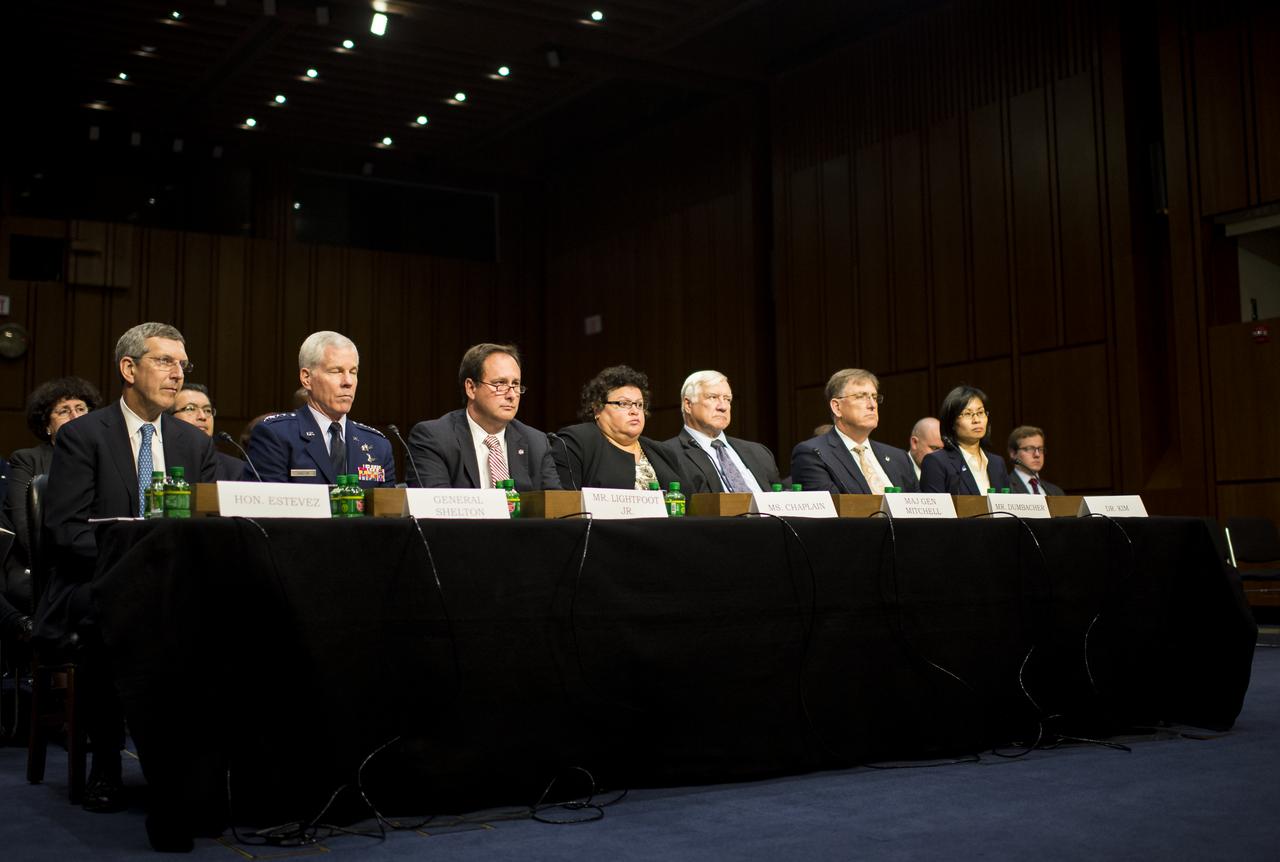
From left; Hon. Alan Estevez, Principle Deputy Under Secretary of Defense for Acquisition, Technology, and Logistics; General William Shelton, Commander of the United States Air Force Space Command; Robert Lightfoot, NASA Associate Administrator; Cristina Chaplain, Director of Acquisition and Sourcing Management at the Government Accountability Office; major General Howard Mitchell (USAF Ret.), Vice President for Program Assessments at The Aerospace Corporation; Daniel Dunbacher, Professor of Practice in the Department of Aeronautics and Aerospace Engineering at Purdue University; and Dr. Yool Kim, Senior Engineer at The Rand Corporation; are seen during a hearing in front of the Senate Subcommittee on Strategic Forces and Senate Committee on Commerce, Science, and Transportation on Wednesday, July 16, 2014, at the Hart Senate Office Building in Washington, DC. The Senate hearing focused on assured access to space.
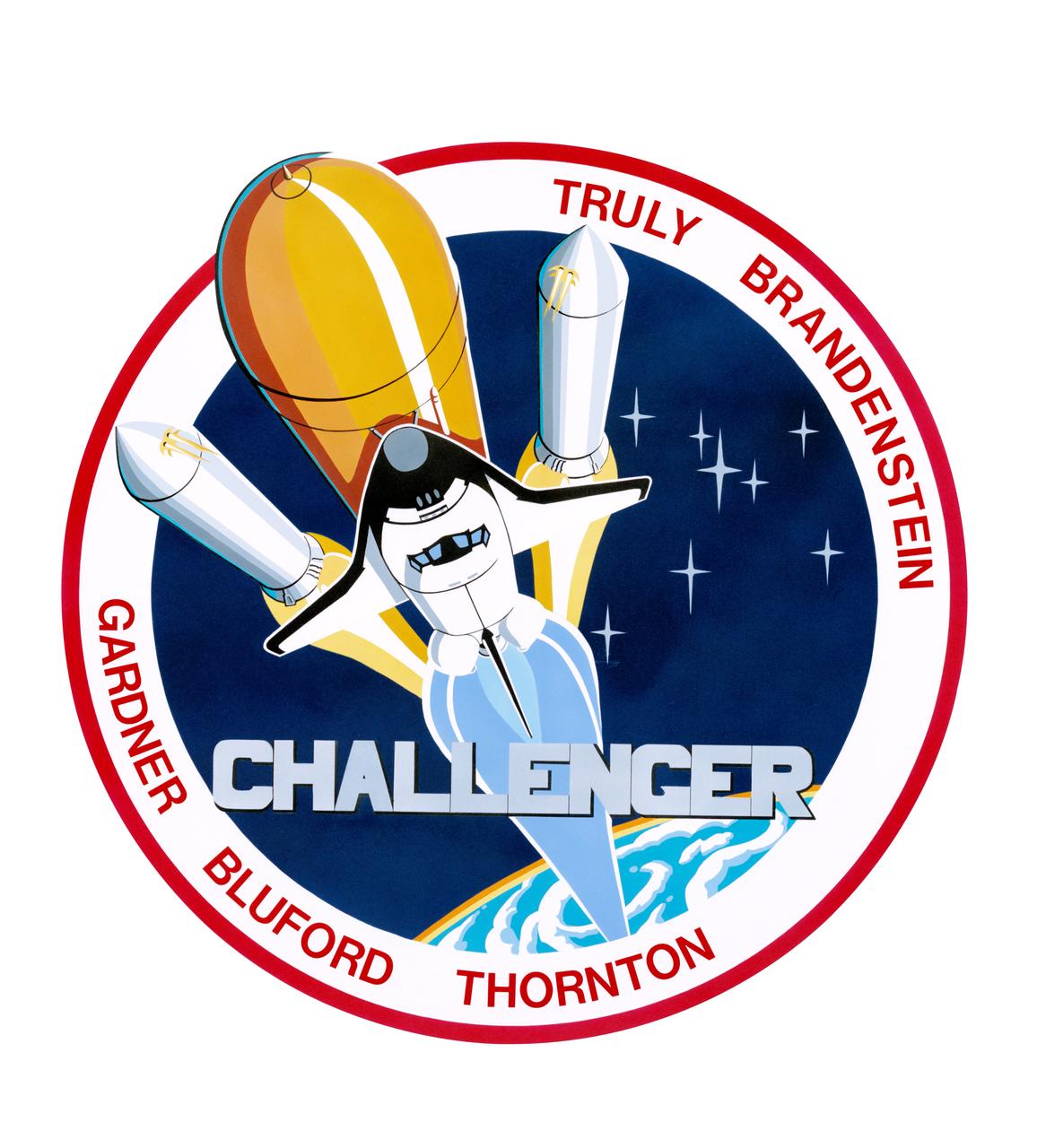
S83-30608 (29 April 1983) --- The night launch of the space shuttle Challenger heading toward its third Earth-orbital mission is featured in the official insignia for STS-8. The eighth flight of the United States Space Transportation System (STS) is represented by eight stars of the constellation Aquila, "The Eagle," astronauts Richard H. Truly, commander; Daniel C. Brandenstein, pilot; Dale A. Gardner, Guion S. Bluford, and William E. Thornton -- all mission specialists -- have their surnames on the border of the insignia. The NASA insignia design for space shuttle flights is reserved for use by the astronauts and for other official use as the NASA Administrator may authorize. Public availability has been approved only in the forms of illustrations by the various news media. When and if there is any change in this policy, which is not anticipated, the change will be publicly announced. Photo credit: NASA
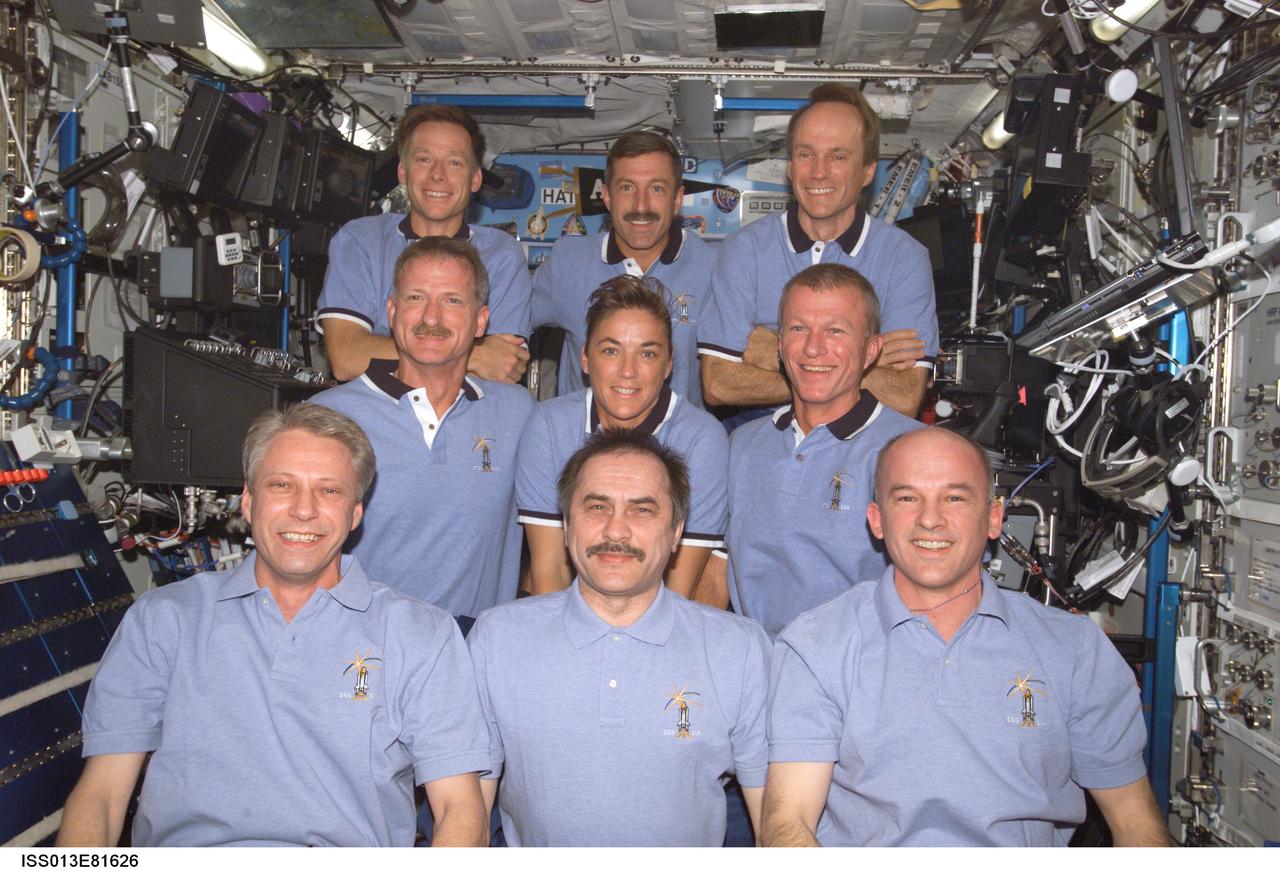
ISS013-E-81626 (16 Sept. 2006) --- The Expedition 13 and STS-115 crewmembers gather for a group portrait during a joint crew press conference in the Destiny laboratory of the International Space Station while Space Shuttle Atlantis was docked with the station. From the left (front row) are European Space Agency (ESA) astronaut Thomas Reiter, Expedition 13 flight engineer; cosmonaut Pavel V. Vinogradov, commander representing Russia's Federal Space Agency; and astronaut Jeffrey N. Williams, NASA space station science officer and flight engineer. From the left (second row) are astronauts Joseph R. Tanner, Heidemarie M. Stefanyshyn-Piper, both STS-115 mission specialists; and Brent W. Jett, Jr., STS-115 commander. From the left (top row) are astronauts Christopher J. Ferguson, pilot; Daniel C. Burbank and Canadian Space Agency astronaut Steven G. MacLean, both mission specialists.
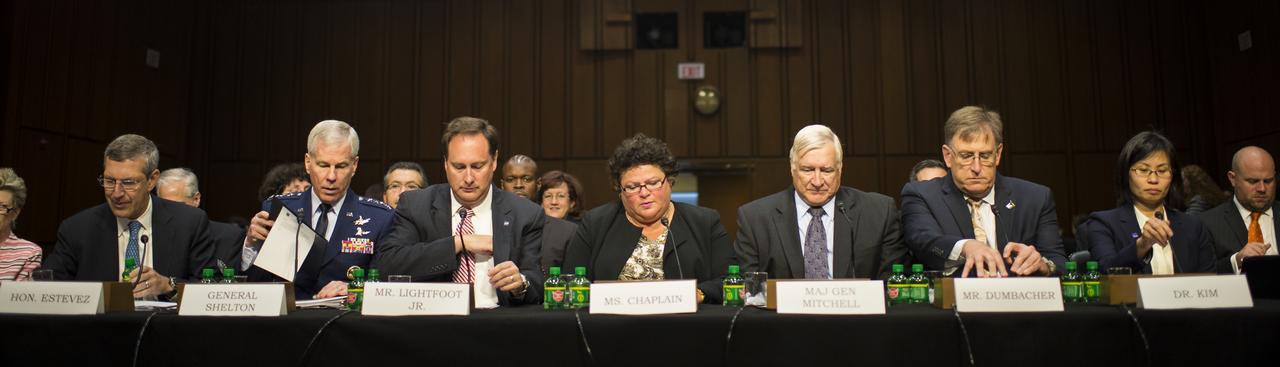
From left; Hon. Alan Estevez, Principle Deputy Under Secretary of Defense for Acquisition, Technology, and Logistics; General William Shelton, Commander of the United States Air Force Space Command; Robert Lightfoot, NASA Associate Administrator; Cristina Chaplain, Director of Acquisition and Sourcing Management at the Government Accountability Office; major General Howard Mitchell (USAF Ret.), Vice President for Program Assessments at The Aerospace Corporation; Daniel Dunbacher, Professor of Practice in the Department of Aeronautics and Aerospace Engineering at Purdue University; and Dr. Yool Kim, Senior Engineer at The Rand Corporation; are seen during a hearing in front of the Senate Subcommittee on Strategic Forces and Senate Committee on Commerce, Science, and Transportation on Wednesday, July 16, 2014, at the Hart Senate Office Building in Washington, DC. The Senate hearing focused on assured access to space.
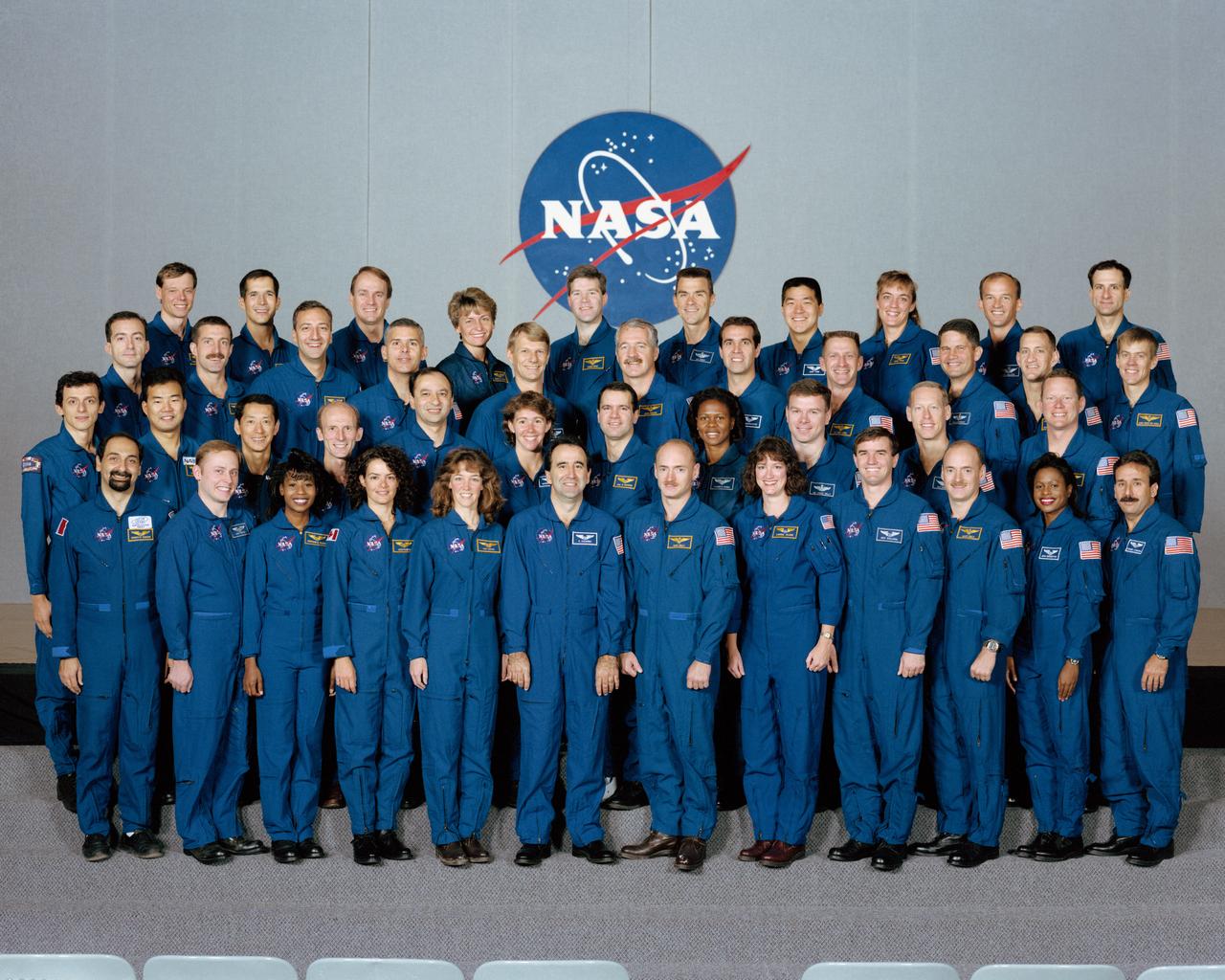
S96-18546 (5 Nov. 1996) --- Following their selection from among 2,400 applicants, the 44 astronaut candidates begin a lengthy period of training and evaluation at NASA's Johnson Space Center as they gather for their group portrait. This year?s class is the largest in the history of space shuttle astronauts and their early program predecessors. Ten pilots and 25 mission specialists make up the internationally diverse class. The international trainees represent the Canadian, Japanese, Italian, French, German and European space agencies. Back row ? from the left, Christer Fuglesang, John Herrington, Steve MacLean, Peggy Whitson, Stephen Frick, Duane Carey, Daniel Tani, Heidemarie Stefanyshyn-Piper, Jeffrey Williams and Donald Pettit. Second to back row ? from the left, Philippe Perrin, Daniel Burbank, Michael Massimino, Lee Morin, Piers Sellers, John Phillips, Richard Mastraccio, Christopher Loria, Paul Lockhart, Charles Hobaugh and William McCool. Second to front row ? from the left, Pedro Duque, Soichi Noguchi, Mamoru Mohri, Gerhard Thiele, Mark Polansky, Sandra Magnus, Paul Richards, Yvonne Cagle, James Kelly, Patrick Forrester and David Brown. Front row ? from the left, Umberto Guidoni, Edward Fincke, Stephanie Wilson, Julie Payette, Lisa Nowak, Fernando Caldeiro, Mark Kelly, Laurel Clark, Rex Walheim, Scott Kelly, Joan Higginbotham and Charles Camarda. Guidoni represents the Italian Space Agency (ASI). Fuglesang and Duque represent the European Space Agency (ESA). Mohri and Noguchi represent the Japanese Space Agency (NASDA). MacLean and Payette are with the Canadian Space Agency. Perrin is associated with the French Space Agency (CNES) and Thiele represents the German Space Agency (DARA). Photo credit: NASA or National Aeronautics and Space Administration
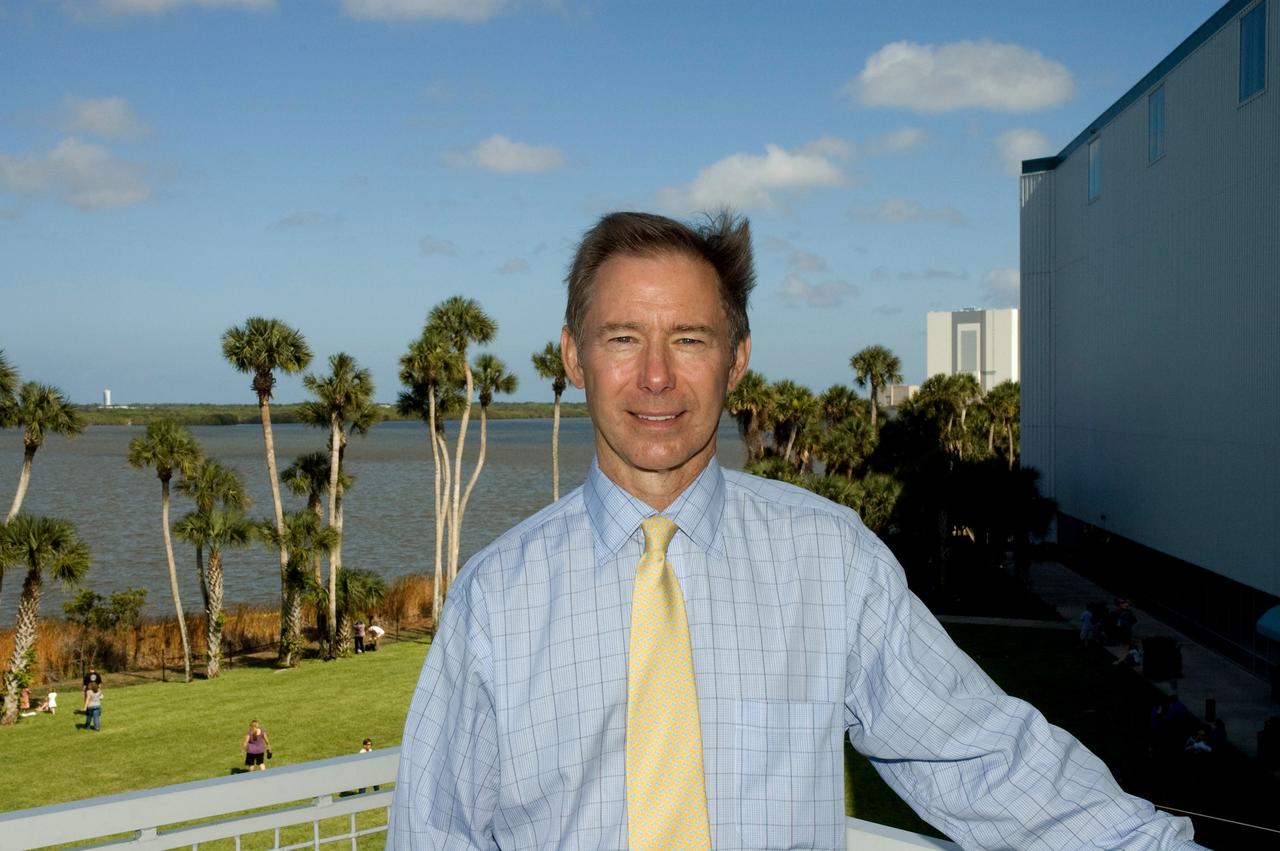
CAPE CANAVERAL, Fla. -- Brewster Shaw is a former astronaut from the first graduating class of astronauts after the Apollo program. He and others from the class were guests at NASA's Kennedy Space Center for the launch of space shuttle Discovery on its STS-124 mission. Shaw is Vice President and General Manager, Space Exploration, for Integrated Defense Systems, The Boeing Company. In 1978 a new group of 35 astronauts was selected after nine years without new astronauts. The pilots were Daniel Brandenstein, Michael Coats, Richard Covey, John Creighton, Robert Gibson, Frederick D. Gregory, Frederick Hauck, Jon McBride, Francis "Dick" Scobee, Brewster Shaw, Loren Shriver, David Walker and Donald Williams. The mission specialists were Guion Bluford, James Buchli, John Fabian, Anna Fisher, Dale Gardner, S. David Griggs, Terry Hart, Steven Hawley, Jeffrey Hoffman, Shannon Lucid, Ronald McNair, Richard Mullane, Steven Nagel, George Nelson, Ellison Onizuka, Judith Resnik, Sally Ride, Rhea Seddon, Robert Stewart, Kathryn D. Sullivan, Norman Thagard and James van Hoften. Since then, a new group has been selected roughly every two years. Photo credit: NASA/Jim Grossmann
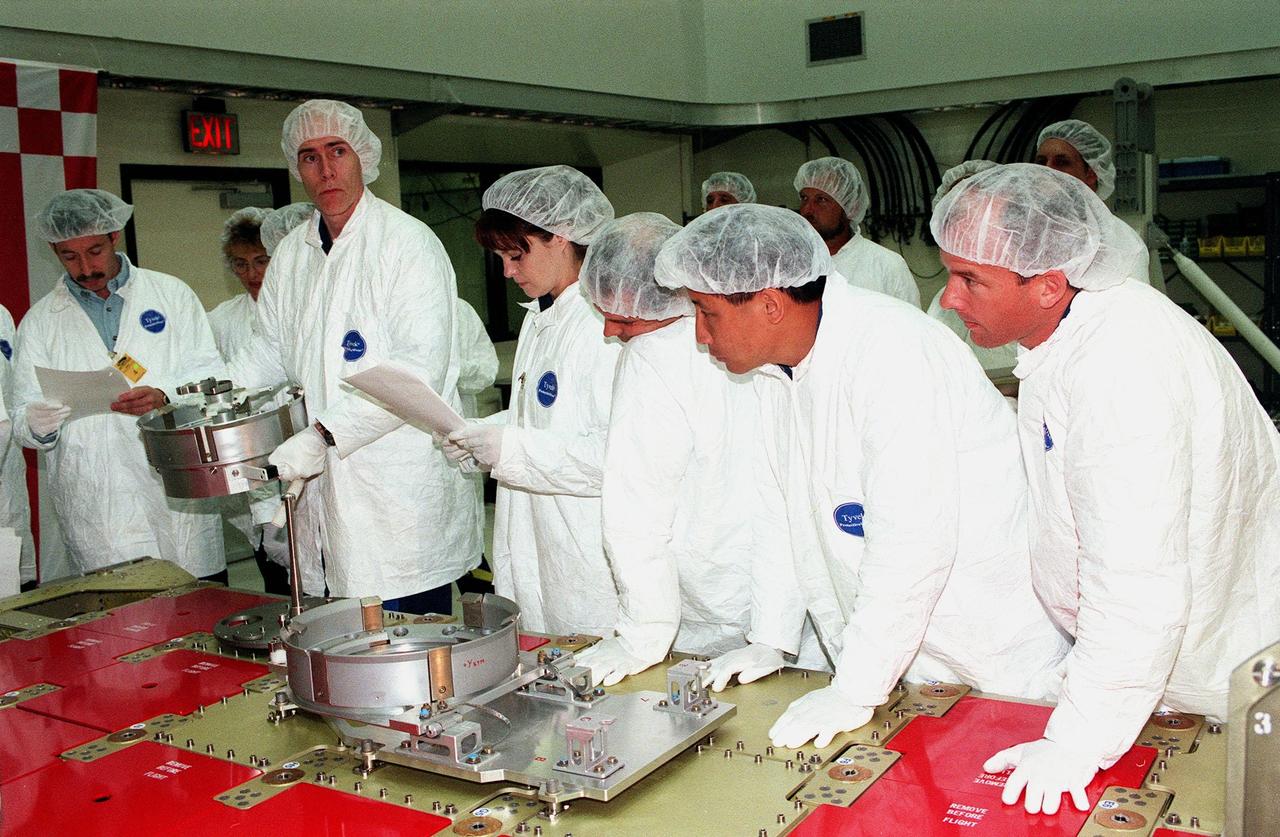
Two Shuttle crews take part in familiarization activities at Astrotech in Titusville, Fla. From left are STS-96 Mission Specialists Daniel T. Barry and Tamara E. Jernigan, and Pilot Rick Douglas Husband; plus STS-101 Mission Specialists Edward Tsang Lu and Jeffrey N. Williams. They are looking at components of a Russian cargo crane, the Strela, to be mounted to the exterior of the Russian station segment on the International Space Station (ISS). Both missions include the SPACEHAB Double Module, carrying internal and resupply cargo for Station outfitting. For the first time, STS-96 will include an Integrated Cargo Carrier (ICC) that will carry the Strela; the SPACEHAB Oceaneering Space System Box (SHOSS), which is a logistics items carrier; and a U.S.-built crane (ORU Transfer Device, or OTD) that will be stowed on the station for use during future ISS assembly missions. The ICC can carry up to 6,000 lb of unpressurized payload. It was built for SPACEHAB by DaimlerChrysler Aerospace of Bremen and RSC Energia of Korolev, Russia. STS-96 is targeted for launch on May 24 from Launch Pad 39B. STS-101 is scheduled to launch in early December 1999

CAPE CANAVERAL, Fla. -- A group from the first graduating class of astronauts after the Apollo program gathers at the Banana River viewing site at NASA's Kennedy Space Center before the launch of space shuttle Discovery on its STS-124 mission. In 1978 a new group of 35 astronauts was selected after nine years without new astronauts. The pilots were Daniel Brandenstein, Michael Coats, Richard Covey, John Creighton, Robert Gibson, Frederick D. Gregory, Frederick Hauck, Jon McBride, Francis "Dick" Scobee, Brewster Shaw, Loren Shriver, David Walker and Donald Williams. The mission specialists were Guion Bluford, James Buchli, John Fabian, Anna Fisher, Dale Gardner, S. David Griggs, Terry Hart, Steven Hawley, Jeffrey Hoffman, Shannon Lucid, Ronald McNair, Richard Mullane, Steven Nagel, George Nelson, Ellison Onizuka, Judith Resnik, Sally Ride, Rhea Seddon, Robert Stewart, Kathryn D. Sullivan, Norman Thagard and James van Hoften. Since then, a new group has been selected roughly every two years. Photo credit: NASA/Jim Grossmann

S78-26481 (January 1978) --- This is a montage of the individual portraits of the 35-member 1978 class of astronaut candidates. From left to right are Guion S. Bluford, Daniel C. Brandenstein, James F. Buchli, Michael L. Coats, Richard O. Covey, John O. Creighton, John M. Fabian, Anna L. Fisher, Dale A. Gardner, Robert L. Gibson, Frederick D. Gregory, S. David Griggs, Terry J. Hart, Frederick H. (Rick) Hauck, Steven A. Hawley, Jeffrey A. Hoffman, Shannon W. Lucid, Jon A. McBride, Ronald E. McNair, Richard M. (Mike) Mullane, Steven R. Nagel, George D. Nelson, Ellison S. Onizuka, Judith A. Resnik, Sally K. Ride, Francis R. (Dick) Scobee, Rhea Seddon, Brewster H. Shaw Jr., Loren J. Shriver, Robert L. Stewart, Kathryn D. Sullivan, Norman E. Thagard, James D. Van Hoften, David M. Walker and Donald E. Williams. Photo credit: NASA or National Aeronautics and Space Administration
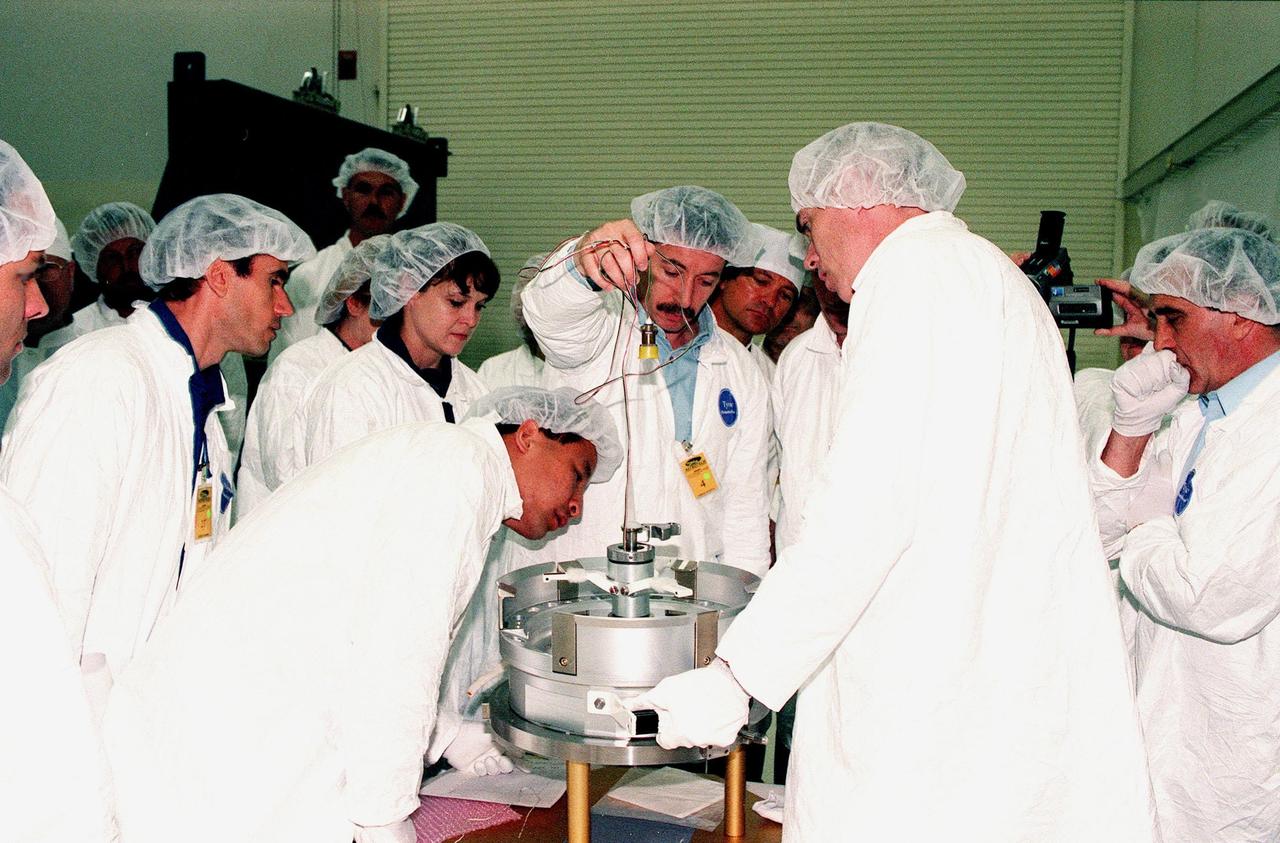
Two Shuttle crews take part in familiarization activities at Astrotech in Titusville, Fla. From left are STS-101 Mission Specialist Jeffrey N. Williams and Yuri Ivanovich Malenchenko, with the Russian Space Agency; STS-96 Mission Specialist Tamara E. Jernigan; STS-101 Mission Specialist Edward Tsang Lu (leaning over); a technician with RSC Energia of Korolev, Russia; Manfred Nordhoff, with DaimlerChrysler Aerospace; STS-96 Mission Specialist Daniel T. Barry; and another technician with RSC Energia. They are looking at components of the Russian cargo crane, Strela, to be mounted to the exterior of the Russian station segment on the International Space Station (ISS). Both missions include the SPACEHAB Double Module, carrying internal and resupply cargo for Station outfitting. For the first time, STS-96 will include an Integrated Cargo Carrier (ICC) that will carry the Strela; the SPACEHAB Oceaneering Space System Box (SHOSS), which is a logistics items carrier; and a U.S.-built crane (ORU Transfer Device, or OTD) that will be stowed on the station for use during future ISS assembly missions. The ICC can carry up to 6,000 lb of unpressurized payload. It was built for SPACEHAB by DaimlerChrysler Aerospace of Bremen and RSC Energia of Korolev, Russia. STS-96 is targeted for launch on May 24 from Launch Pad 39B. STS-101 is scheduled to launch in early December 1999
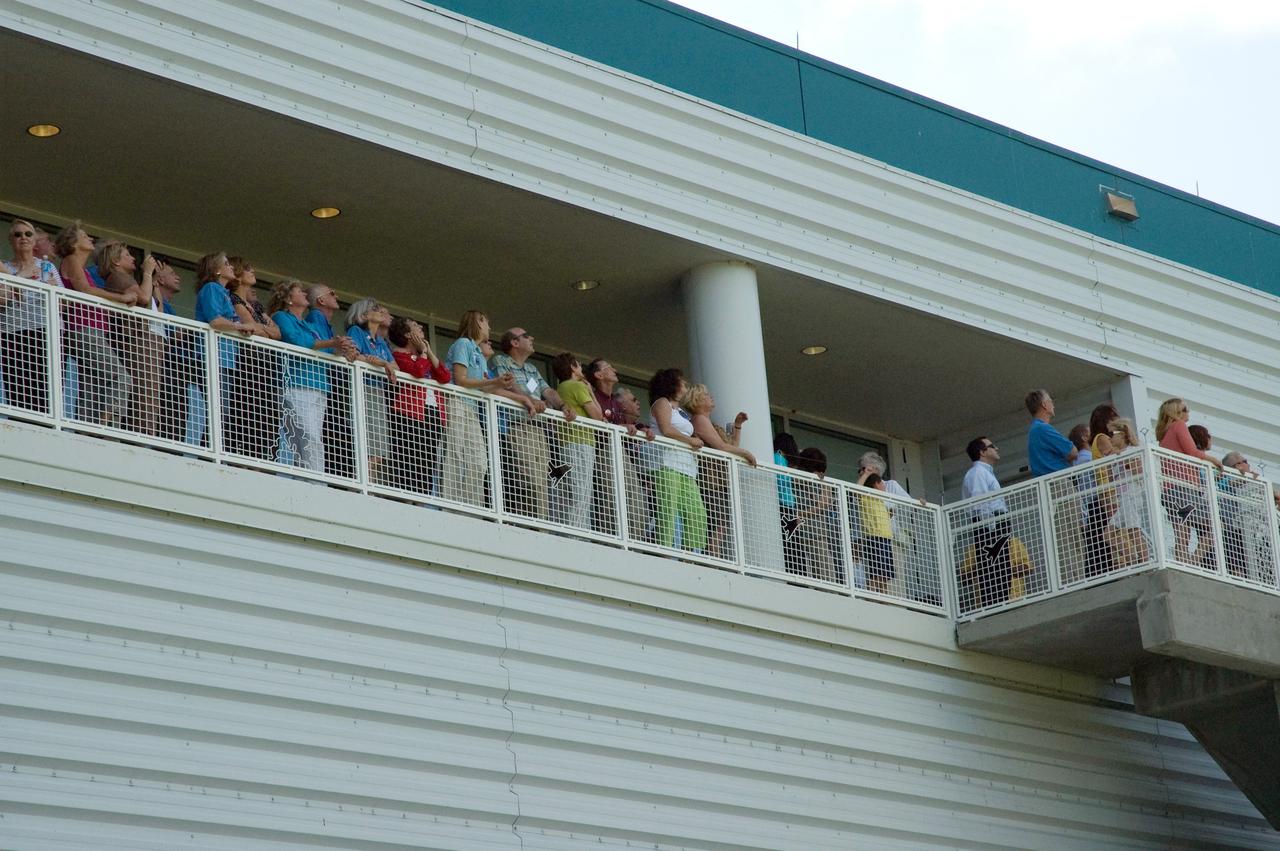
CAPE CANAVERAL, Fla. -- All eyes look skyward as space shuttle Discovery launches on its STS-124 mission. The group gathered here at the Banana River viewing site at NASA's Kennedy Space Center are members of the first graduating class of astronauts after the Apollo program. In 1978 a new group of 35 astronauts was selected after nine years without new astronauts. The pilots were Daniel Brandenstein, Michael Coats, Richard Covey, John Creighton, Robert Gibson, Frederick D. Gregory, Frederick Hauck, Jon McBride, Francis "Dick" Scobee, Brewster Shaw, Loren Shriver, David Walker and Donald Williams. The mission specialists were Guion Bluford, James Buchli, John Fabian, Anna Fisher, Dale Gardner, S. David Griggs, Terry Hart, Steven Hawley, Jeffrey Hoffman, Shannon Lucid, Ronald McNair, Richard Mullane, Steven Nagel, George Nelson, Ellison Onizuka, Judith Resnik, Sally Ride, Rhea Seddon, Robert Stewart, Kathryn D. Sullivan, Norman Thagard and James van Hoften. Since then, a new group has been selected roughly every two years. Photo credit: NASA/Jim Grossmann
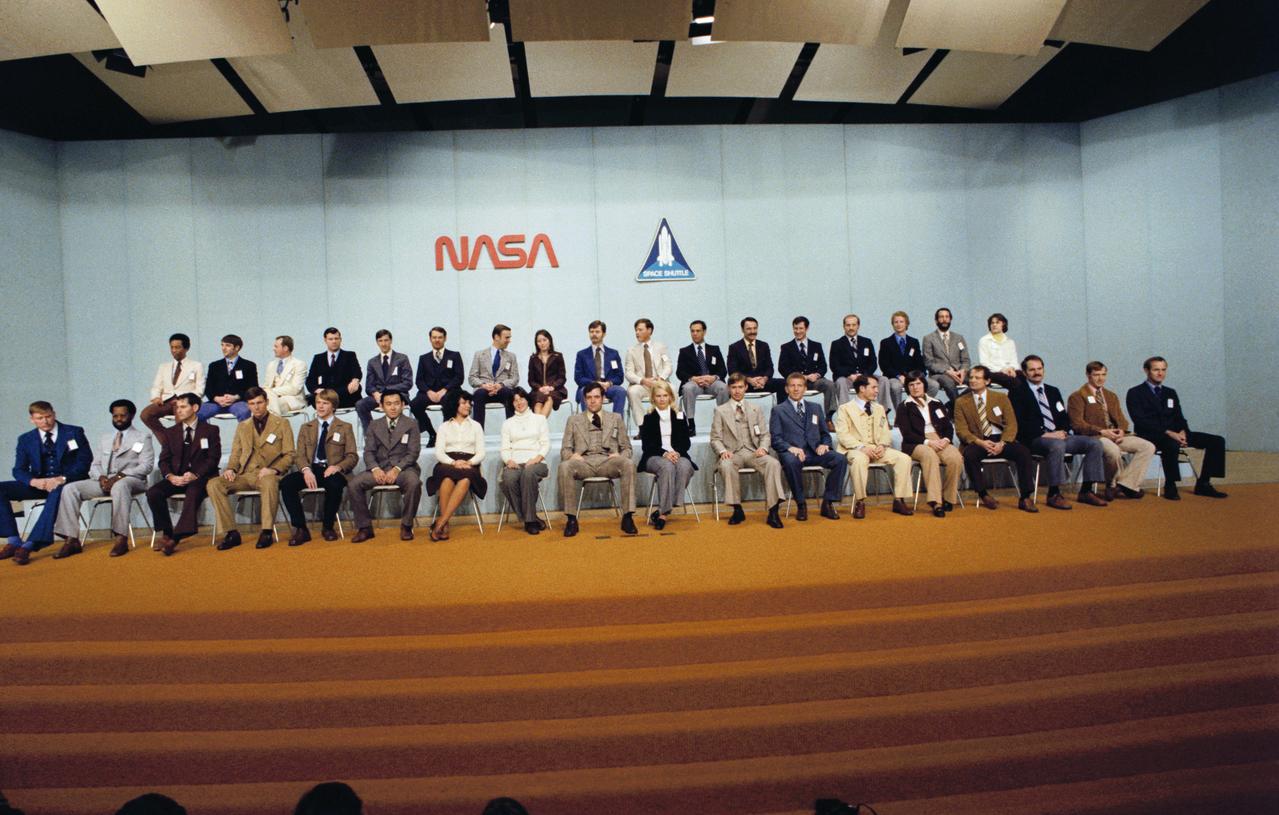
S78-26569 (31 Jan. 1978) --- The 35 new astronaut candidates, presented Jan. 31, 1978, in the Building 2 auditorium at NASA's Johnson Space Center, pose for photographers. They are arranged in alphabetical order with top left as beginning point and bottom right as stopping point. They are Guion S. Bluford, Daniel C. Brandenstein, James F. Buchli, Michael L. Coats, Richard O. Covey, John O. Creighton, John M. Fabian, Anna L. Fisher, Dale A. Gardner, Robert L. Gibson, Frederick D. Gregory, S. David Griggs, Terry J. Hart, Frederick H. (Rick) Hauck, Steven A. Hawley, Jeffrey A. Hoffman, Shannon W. Lucid, Jon A. McBride, Ronald E. McNair, Richard M. (Mike) Mullane, Steven R. Nagel, George D. Nelson, Ellison S. Onizuka, Judith A. Resnik, Sally K. Ride, Francis R. (Dick) Scobee, Rhea Seddon, Brewster H. Shaw Jr., Loren J. Shriver, Robert L. Stewart, Kathryn D. Sullivan, Norman E. Thagard, James D. van Hoften, David M. Walker and Donald E. Williams. Photo credit: NASA or National Aeronautics and Space Administration
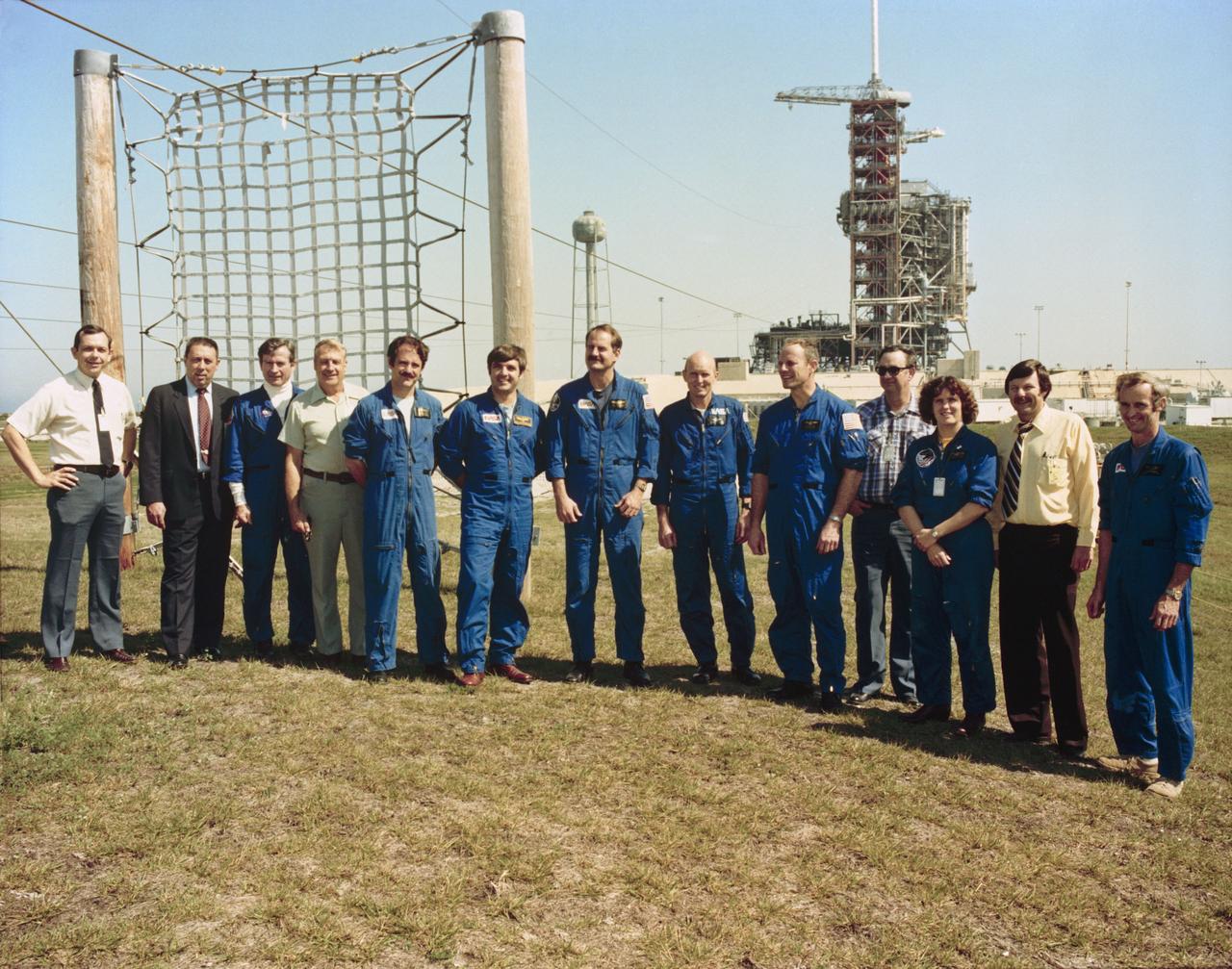
S82-28457 (19 Feb. 1982) --- Member of the JSC astronaut corps., STS-3 vehicle integration test (VIT) team and other personnel pose for a photograph at the completion of a countdown demonstration test (CDDT) and safety briefings at Launch Pad 39A, Kennedy Space Center (KSC). Participants are, from the left, Wilbur J. Etbauer, engineer with the VIT team; George W. S. Abbey, director of flight operations at JSC; astronaut John W. Young, chief of the astronaut office at JSC; Jack Fleming of Rockwell International; mission specialist-astronaut John M. Lounge; astronaut Daniel C. Brandenstein; mission specialist-astronaut James D. Van Hoften; astronauts C. Gordon Fullerton and Jack Lousma, prime crew for STS-3; Olan J. Bertrand, VIT team member; mission specialist-astronaut Kathryn D. Sullivan; Richard W. Nygren, head of the VIT team; and astronaut Donald E. Williams. The space shuttle Columbia is obscured by its service structure on Launch Pad 39A in the background. Part of slide-wire type emergency escape system is visible in the picture. Photo credit: NASA
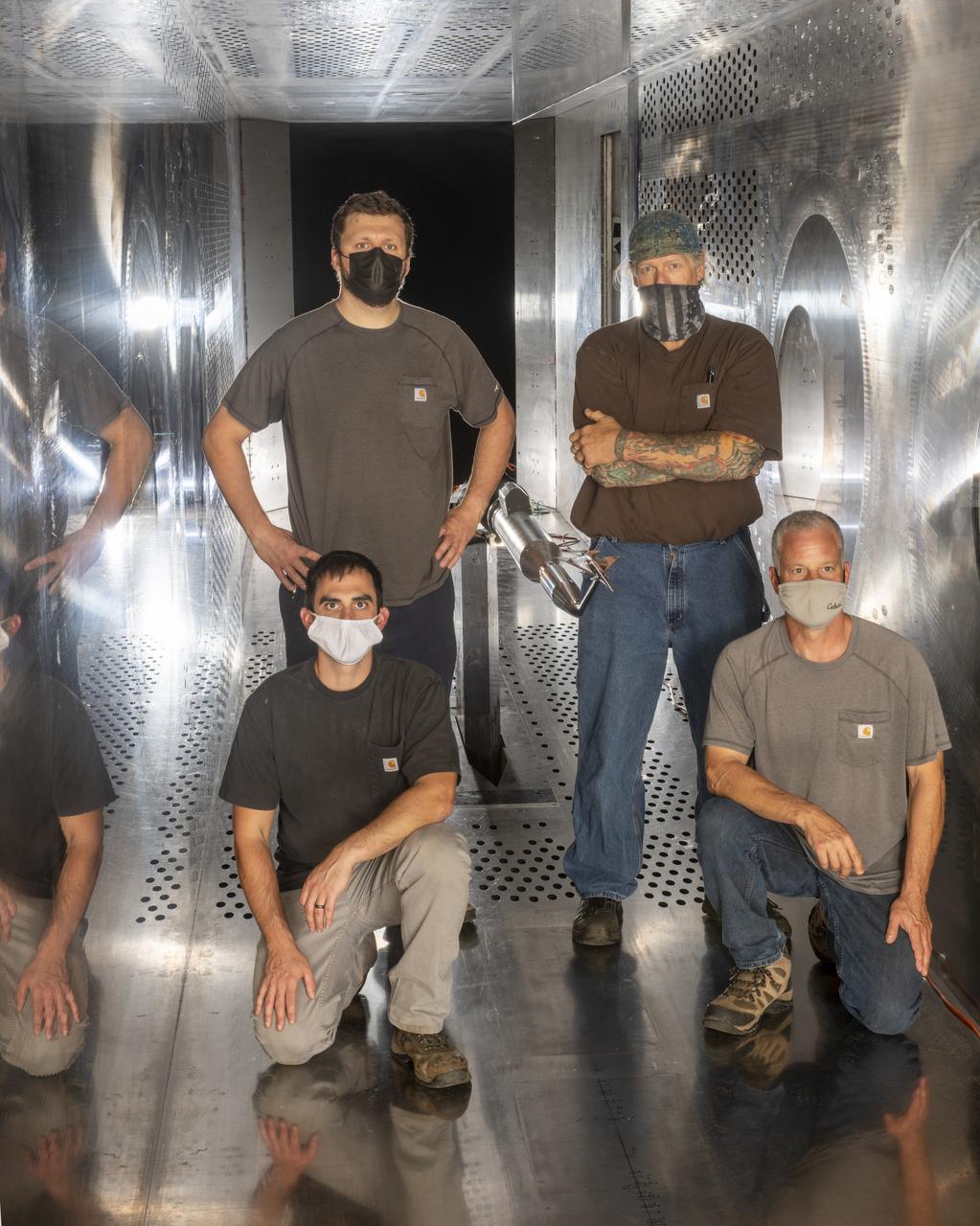
Commercial Supersonic Transport, CST Project, X-59 Sonic Boom Test Model, in the 8x6-foot Supersonic Wind Tunnel, SWT