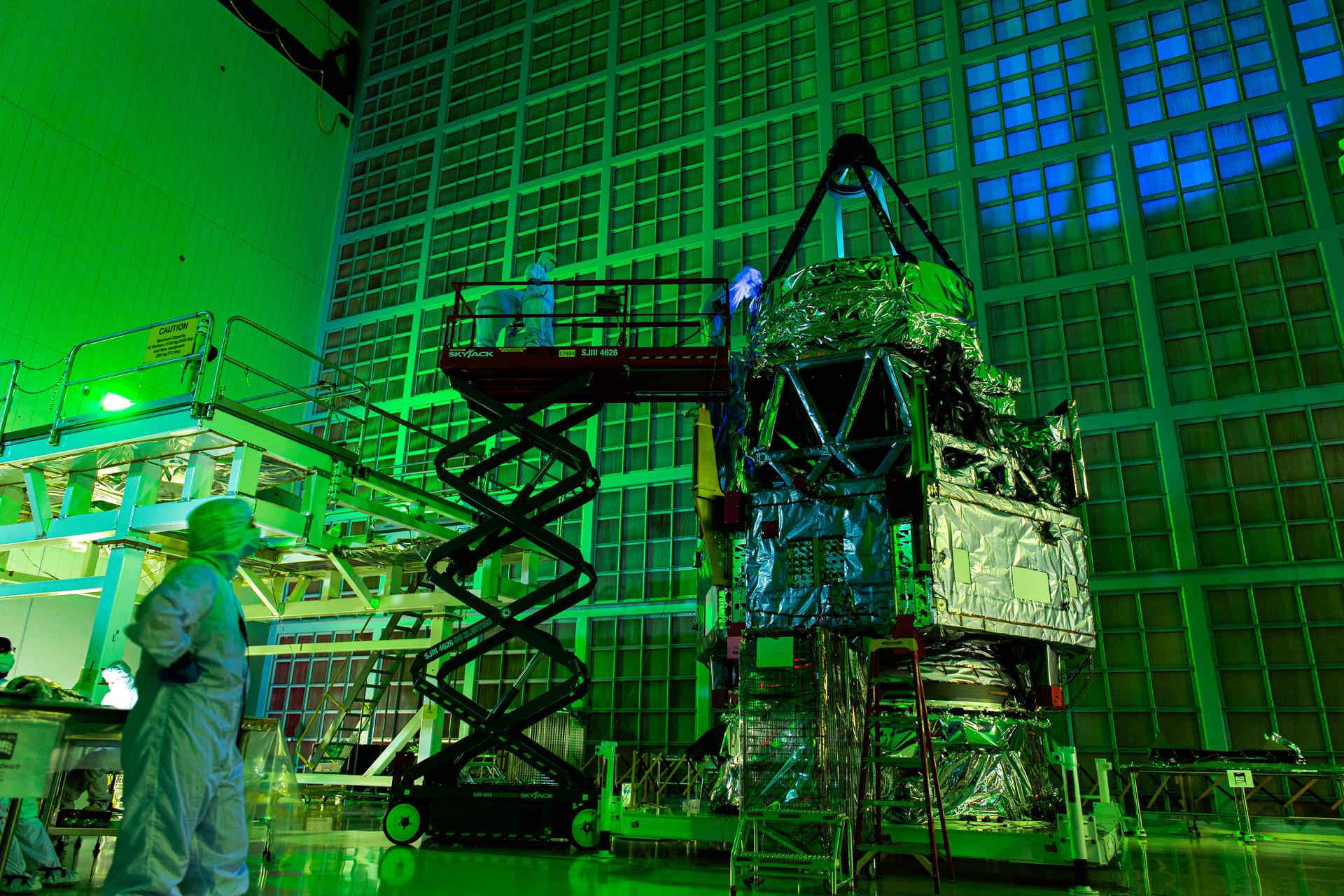
Roman Space Telescope team members inspect the primary mirror in the dark using flashlights and UV lights to help them see any contamination, inside the cleanroom at Goddard Space Flight Center, Greenbelt Md., July 2, 2025. The green glow of the room is due to a long exposure time, the green comes from a light on the left wall which indicates optimal airflow through the room. This photo has been approved for public release. NASA/Mike Guinto
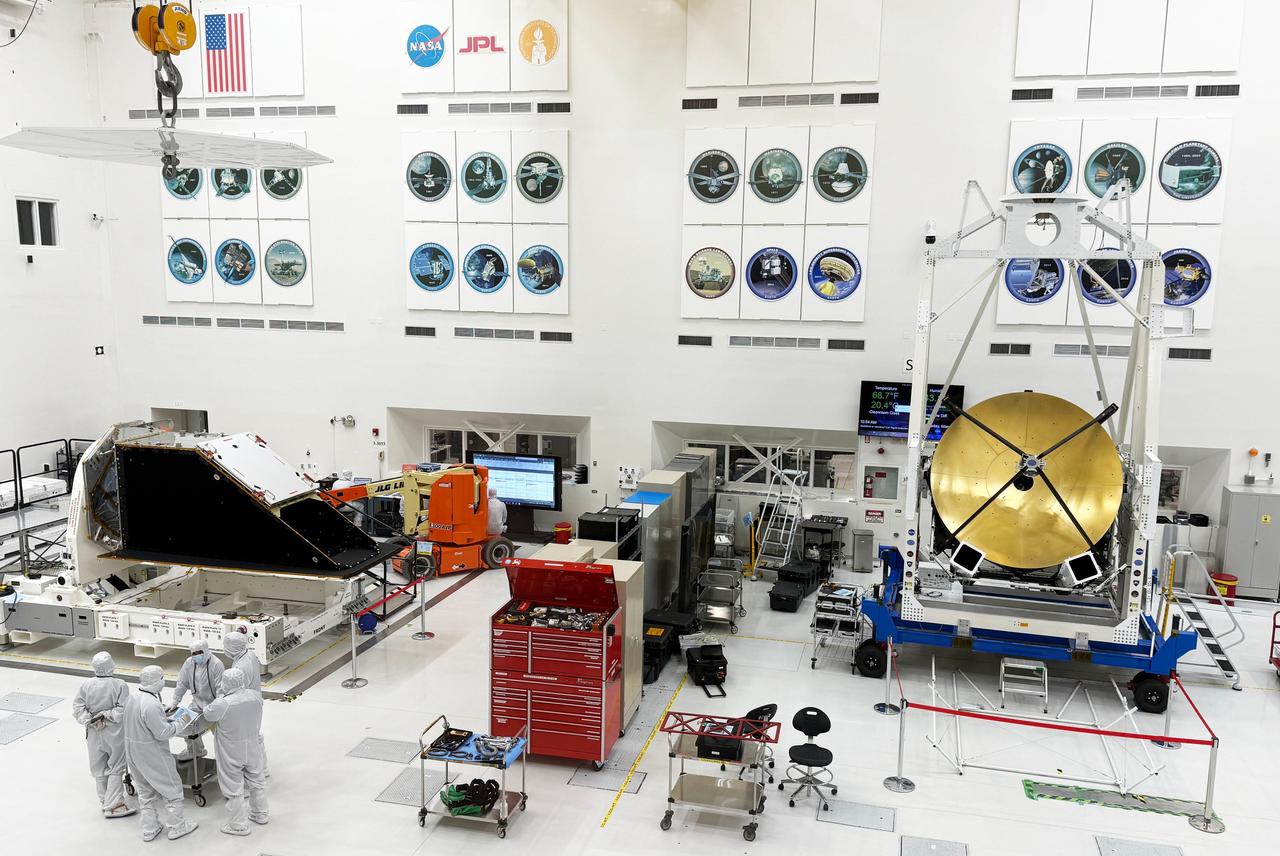
The dark, bulky instrument enclosure for NASA's NEO Surveyor is seen here (left) in the High Bay 1 clean room of the Spacecraft Assembly Facility at NASA's Jet Propulsion Laboratory in Southern California in March 2025. A major component of the mission, the instrument enclosure journeyed back to JPL in early March after completing environmental testing at NASA's Johnson Space Center in Houston. The gold-coated, circular antenna at right is part of the telescope for NASA's ASTHROS (Astrophysics Stratospheric Telescope for High Spectral Resolution Observations at Submillimeter-wavelengths), an atmospheric balloon mission; it has been in the clean room since December 2024. https://photojournal.jpl.nasa.gov/catalog/PIA26584
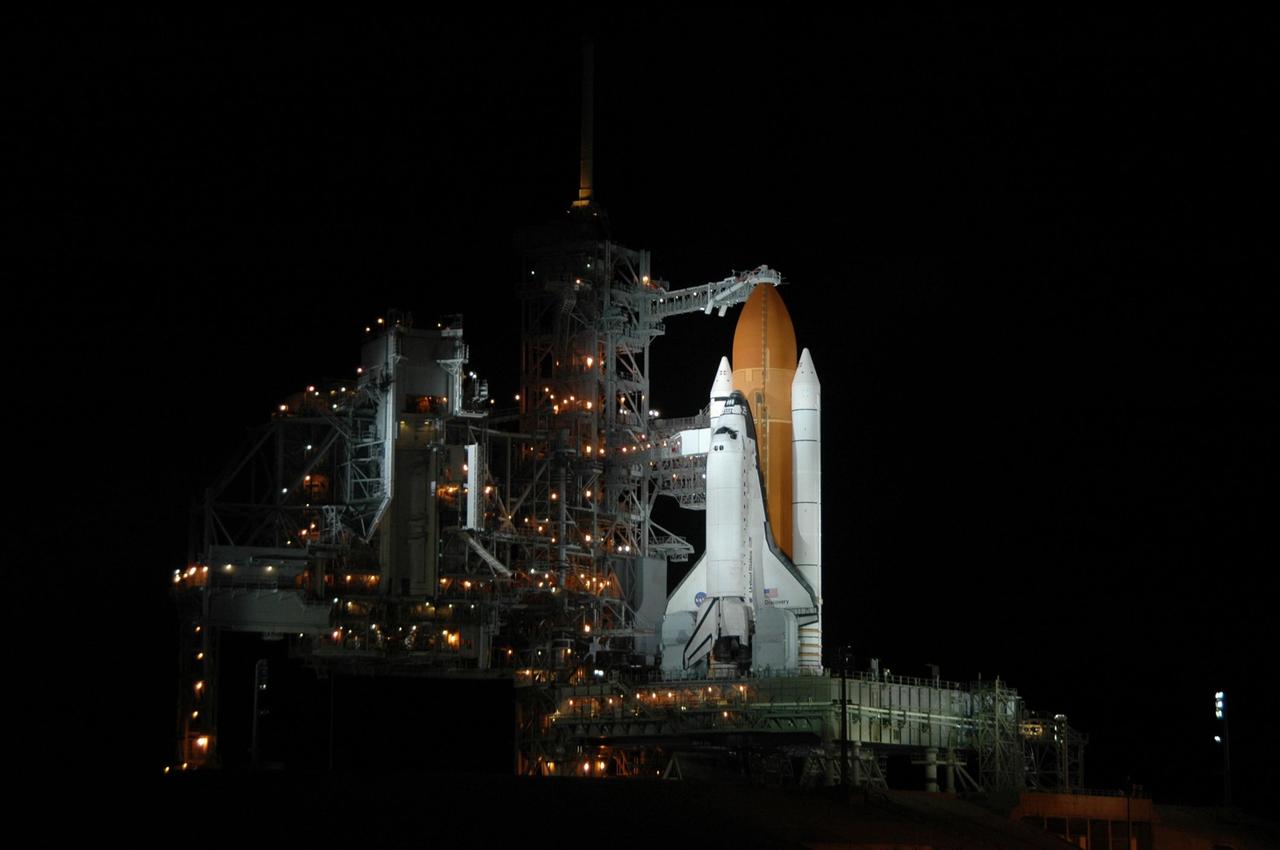
KENNEDY SPACE CENTER, FLA. - On Launch Pad 39B, Space Shuttle Discovery is bathed in spotlights under dark skies after the scrub of the launch attempt on mission STS-121. The White Room is still extended toward the cockpit area where the STS-121 crew patiently waited for the launch just hours earlier. The launch was scrubbed due to weather concerns and postponed 24 hours. Photo credit: NASA/Ken Thornsley
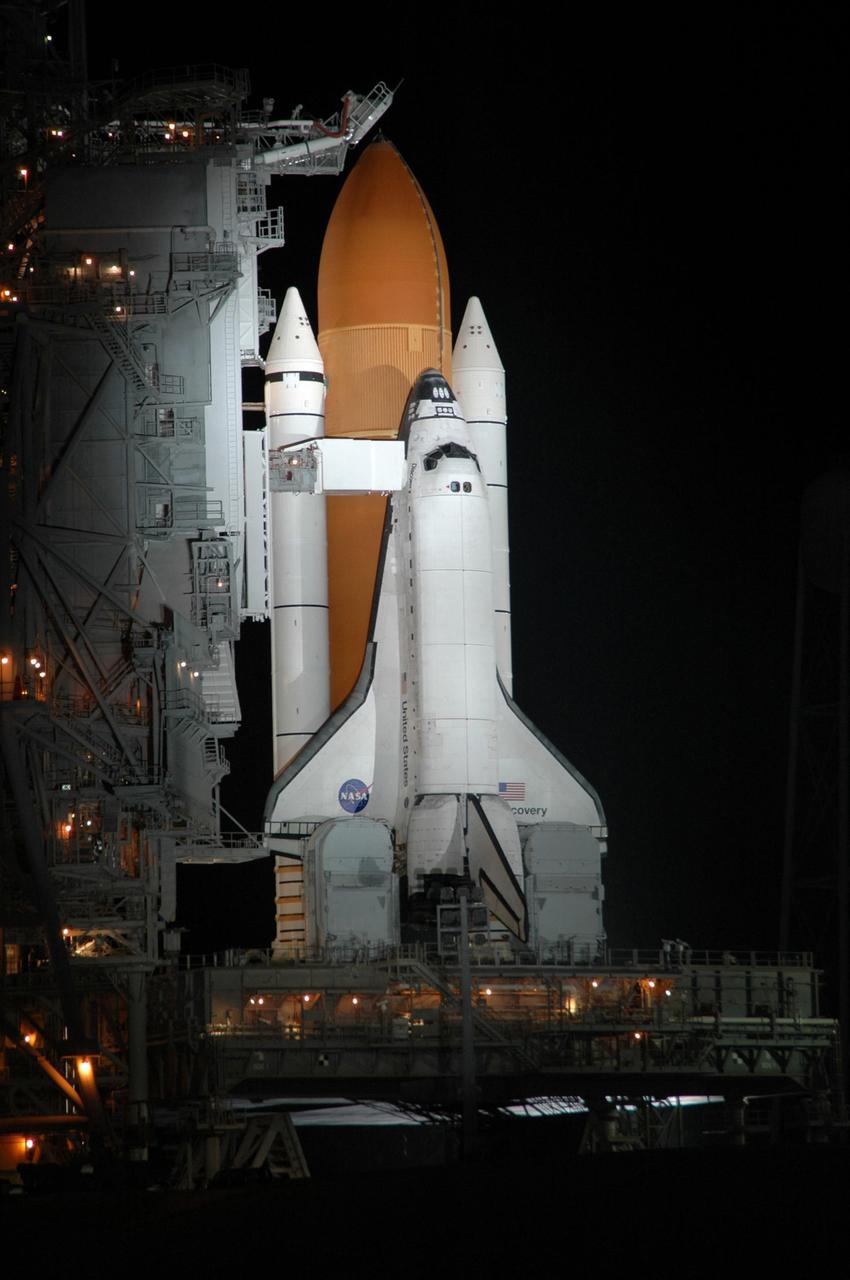
KENNEDY SPACE CENTER, FLA. - On Launch Pad 39B, Space Shuttle Discovery is bathed in spotlights under dark skies after the scrub of the launch attempt on mission STS-121. The White Room extends toward the cockpit area where the STS-121 crew patiently waited for the launch just hours earlier. The launch was scrubbed due to weather concerns and postponed 24 hours. Photo credit: NASA/Ken Thornsley
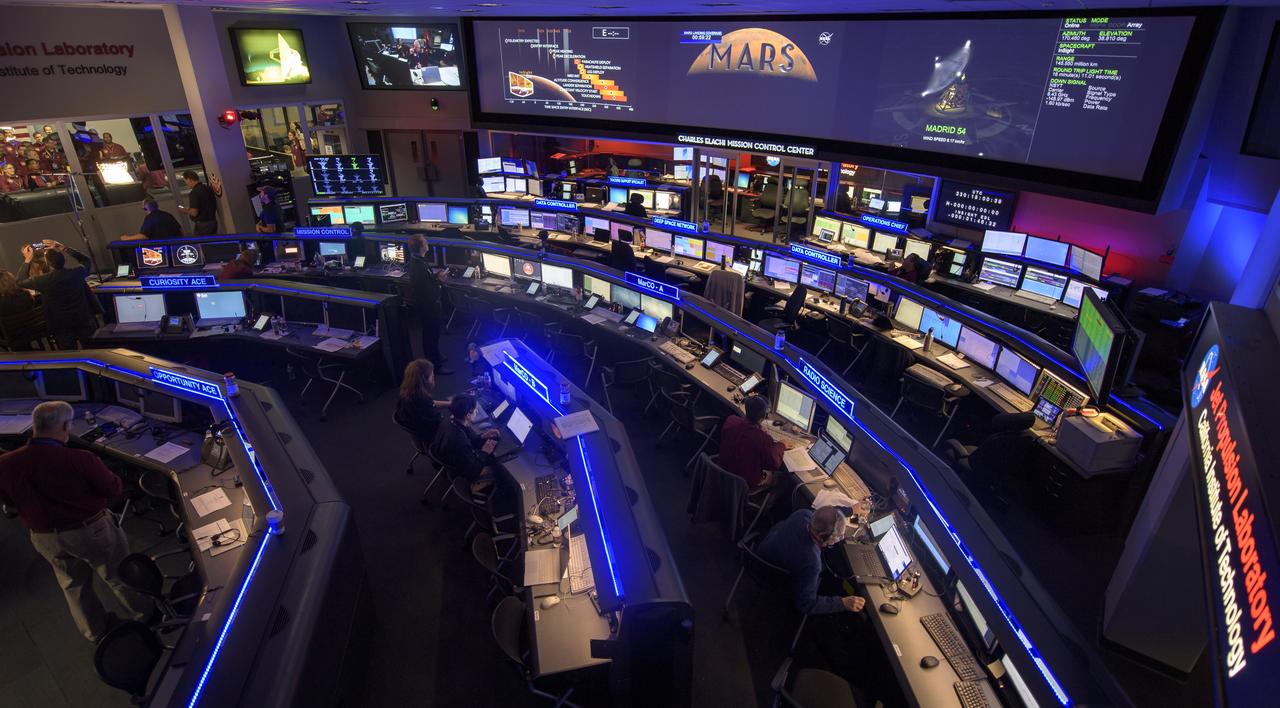
The Dark Room is seen as the Mars InSight and Mars Cube One (MarCO) teams prepare for a landing on Mars, Monday, Nov. 26, 2018 at NASA's Jet Propulsion Laboratory in Pasadena, California. InSight, short for Interior Exploration using Seismic Investigations, Geodesy and Heat Transport, is a Mars lander designed to study the "inner space" of Mars: its crust, mantle, and core. Photo Credit: (NASA/Bill Ingalls)

A technician operates articulating equipment to rotate the Near-Earth Object Surveyor (NEO Surveyor) mission's aluminum optical bench – part of the spacecraft's telescope – in a clean room at NASA's Jet Propulsion Laboratory in Southern California on July 17, 2024. NEO Surveyor's sole instrument is a "three-mirror anastigmat telescope," which will rely on a set of curved mirrors to focus light onto its infrared detectors in such a way that minimizes optical aberrations. When complete, the telescope will be housed inside an instrument enclosure – being built in a different JPL clean room – that is fabricated from dark composite material that allows heat to escape, helping to keep the telescope cool and prevent its own heat from obscuring observations. https://photojournal.jpl.nasa.gov/catalog/PIA26387
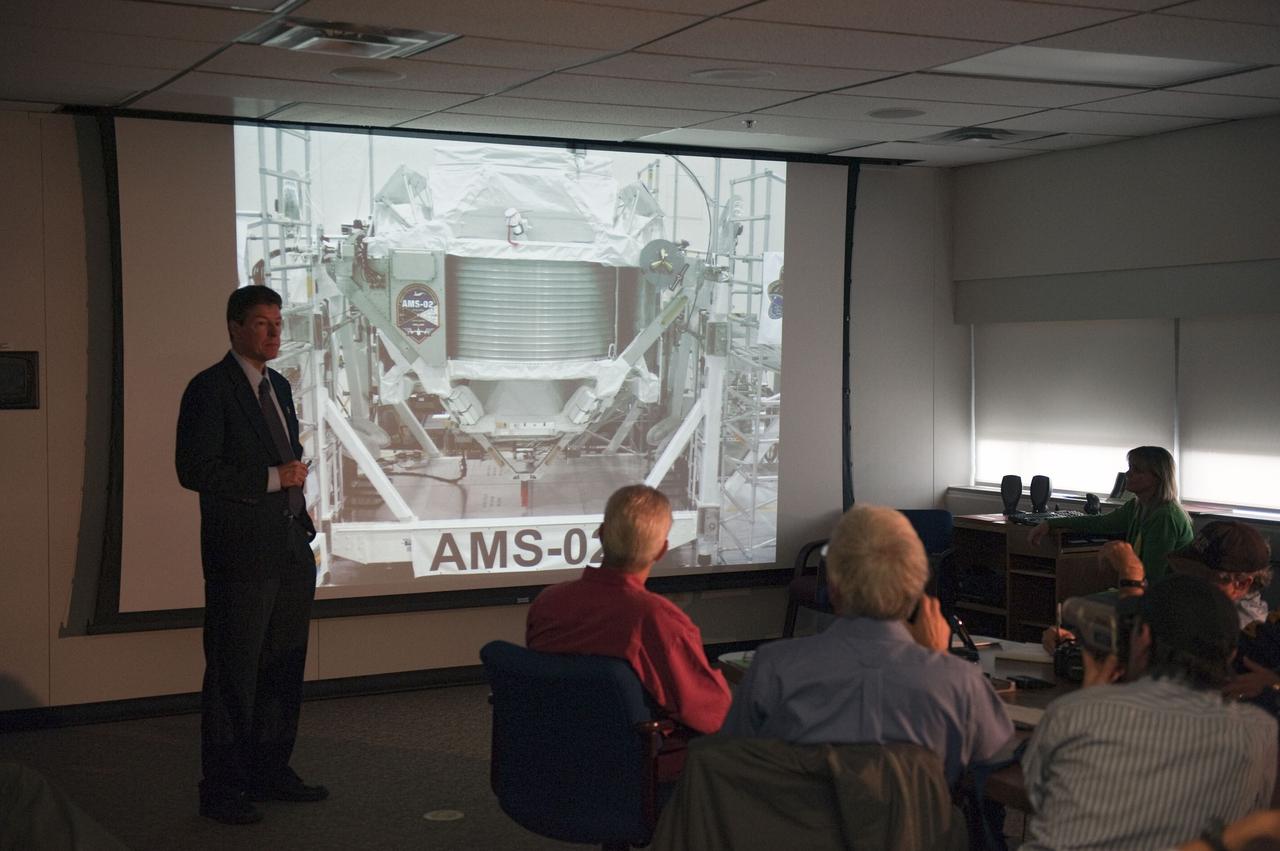
CAPE CANAVERAL, Fla. -- In the Space Station Processing Facility's conference room at NASA's Kennedy Space Center in Florida, Ken Bollweg, Alpha Magnetic Spectrometer-2 (AMS) deputy project manager, talks to media about the particle physics detector. AMS is designed to operate as an external experiment on the International Space Station. It will use the unique environment of space to study the universe and its origin by searching for dark matter. AMS-2 will fly to the station aboard space shuttle Endeavour's STS-134 mission targeted to launch April 19 at 7:48 p.m. EDT. For more information visit, www.nasa.gov/mission_pages/shuttle/shuttlemissions/sts134/index.html. Photo credit: NASA/Glenn Benson
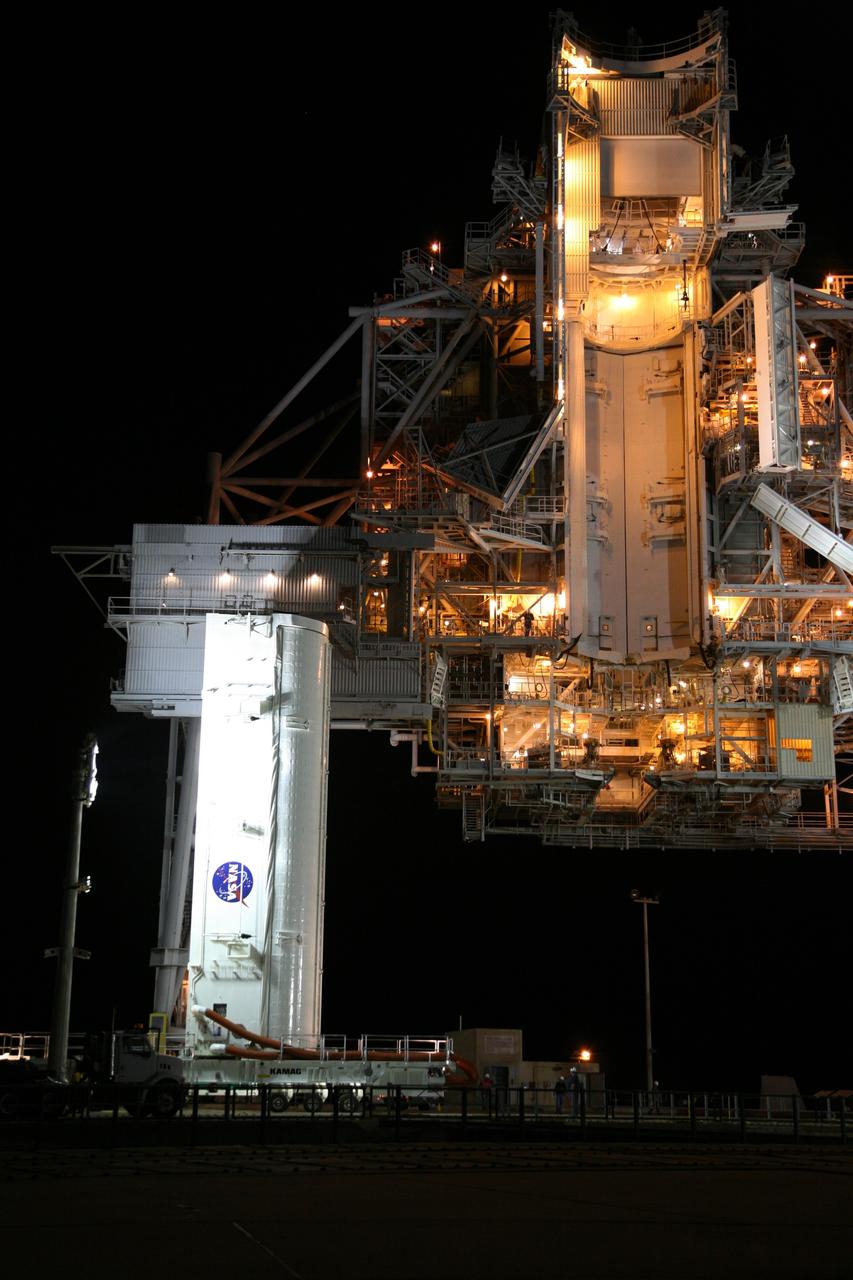
CAPE CANAVERAL, Fla. - Spotlighted in the dark of early morning, the payload canister with space shuttle Endeavour's STS-126 mission payload inside arrives on Launch Pad 39A at NASA's Kennedy Space Center in Florida. Inside the canister are the Multi-Purpose Logistics Module Leonardo and the Lightweight Multi-Purpose Experiment Support Structure Carrier. At right is the rotating service structure with the Payload Changeout Room, or PCR, above. The payload canister will release its cargo into the PCR. Later, the payload will be installed in Endeavour's payload bay. Endeavour is targeted for launch on Nov. 14. Photo credit: NASA/Dimitri Gerondidakis
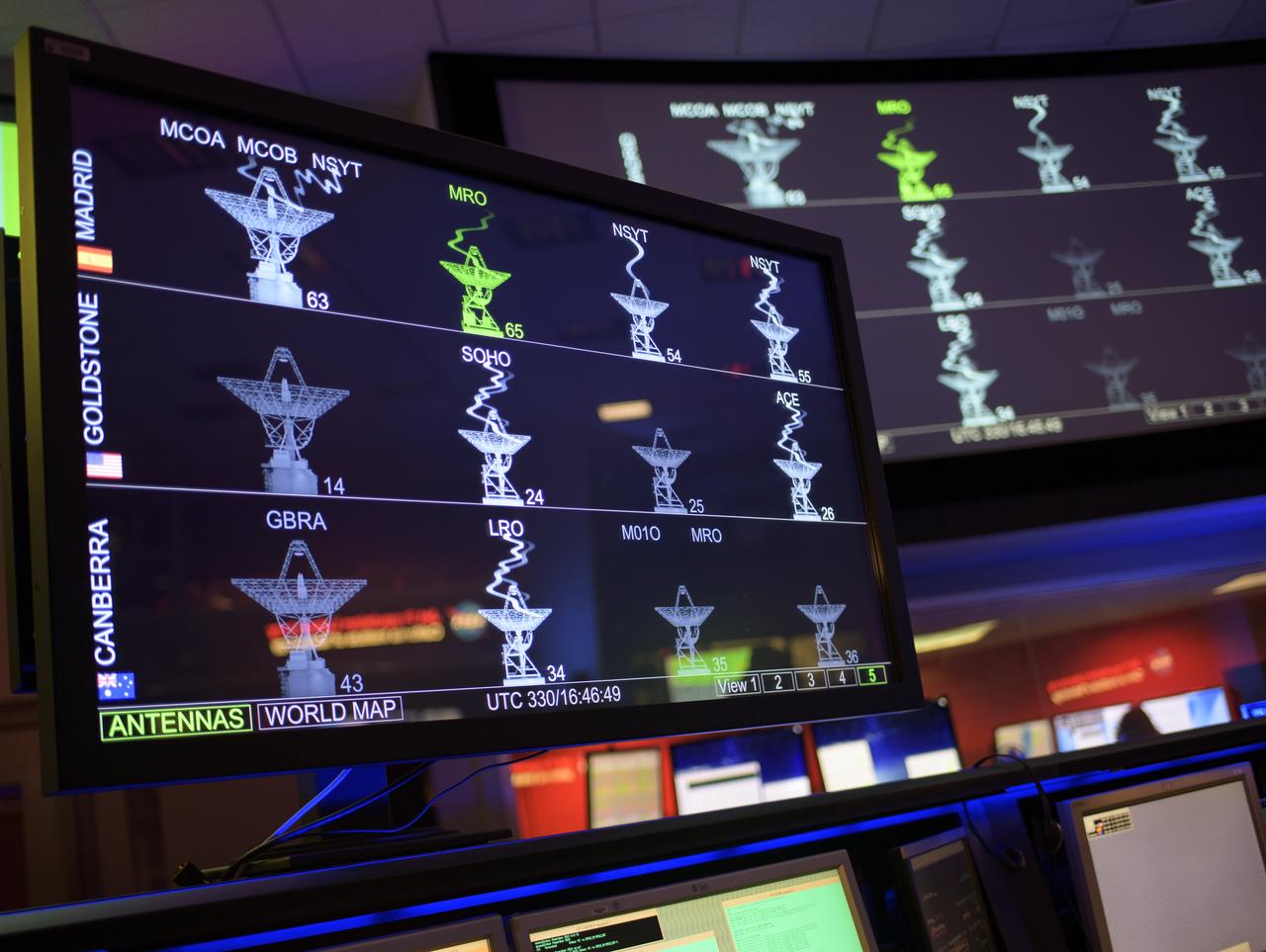
Monitors show the status of NASA's Deep Space Network ahead of the Mars InSight landing, Monday, Nov. 26, 2018 at NASA's Jet Propulsion Laboratory in Pasadena, California. InSight, short for Interior Exploration using Seismic Investigations, Geodesy and Heat Transport, is a Mars lander designed to study the "inner space" of Mars: its crust, mantle, and core. Photo Credit: (NASA/Bill Ingalls)

NASA's Ingenuity Mars Helicopter carries a small swatch of muslin material from the lower-left wing of the Wright Brothers Flyer 1. Located on the underside of the helicopter's solar panel (the dark rectangle), the swatch is attached with dark orange polymide tape to a cable extending from the panel, and then further secured in place with white polyester cord used to bind cables together. A gray dot of epoxy at the intersection of the three wraps of cord prevents the lacing from loosening as the rotor blades (upper pair seen at bottom of image) rotate at up to 2,400 rpm. The entire process, from enclosing the material in the plastic to affixing it onto the helicopter took, approximately 30 minutes. The swatch of material from the Wright brothers' first airplane was obtained from the Carillon Historical Park, in Dayton, Ohio — home to the Wright Brothers National Museum. The image was taken in a clean room at NASA's Jet Propulsion Laboratory in Southern California on January 15, 2020. https://photojournal.jpl.nasa.gov/catalog/PIA24291
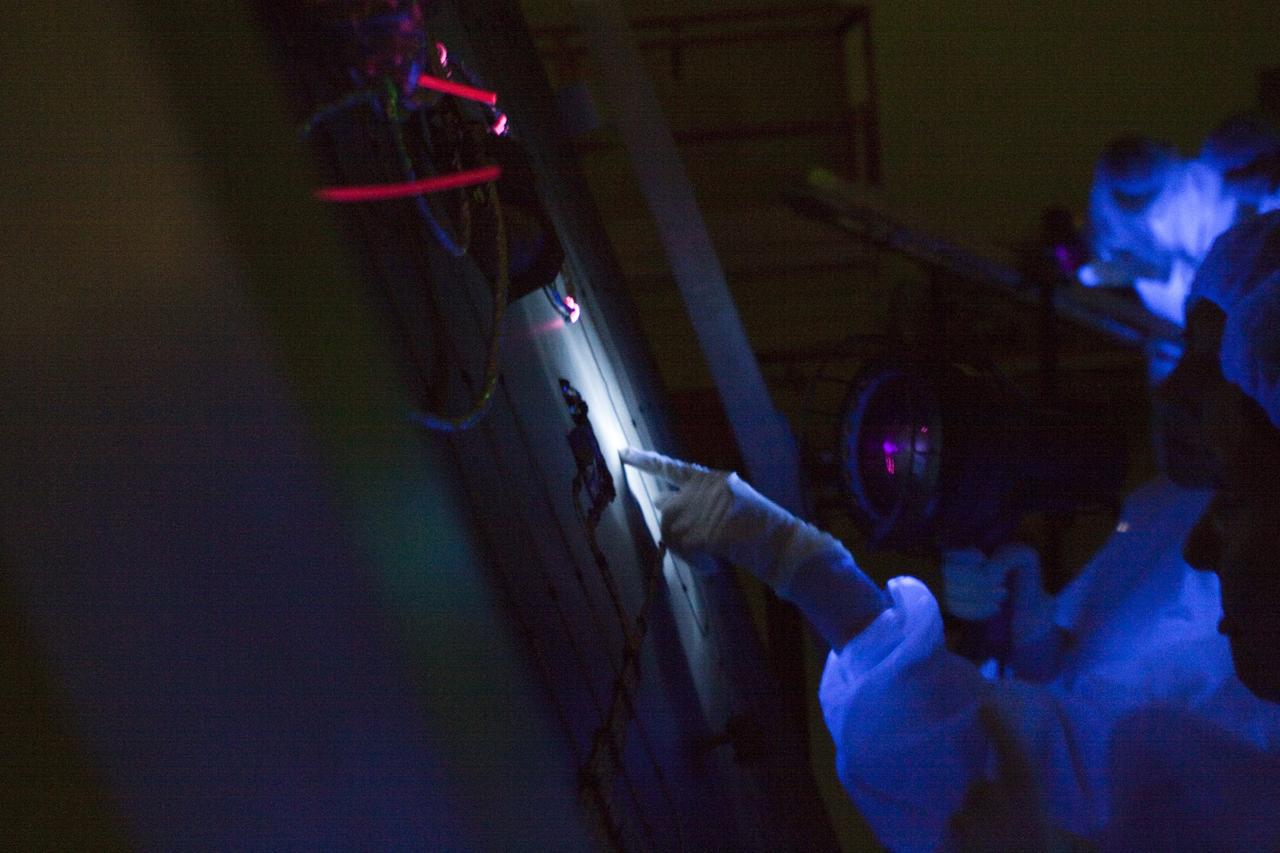
CAPE CANAVERAL, Fla. – Working in near-darkness inside the clean room high bay at the Astrotech payload processing facility near NASA’s Kennedy Space Center in Florida, technicians use black lights to inspect a solar panel on one of NASA's twin Radiation Belt Storm Probes. The technicians are dressed in clean-room attire known as “bunny suits.” Black-light inspection uses UVA fluorescence to detect possible microcontamination, small cracks or fluid leaks. The Radiation Belt Storm Probes, or RBSP, mission will help us understand the sun’s influence on Earth and near-Earth space by studying the Earth’s radiation belts on various scales of space and time. RBSP will begin its mission of exploration of Earth's Van Allen radiation belts and the extremes of space weather after its launch aboard a United Launch Alliance Atlas V rocket. Launch is targeted for Aug. 23. For more information, visit http://www.nasa.gov/rbsp. Photo credit: NASA/Jim Grossmann

A mirror set to be installed inside the telescope for NASA's Near-Earth Object Surveyor (NEO Surveyor) is seen during an inspection of the mirror's surface at NASA's Jet Propulsion Laboratory in Southern California on July 17, 2024. Being built in a JPL clean room, the infrared telescope is the spacecraft's only instrument and it will be used to seek out some of the hardest-to-find near-Earth objects that may pose a hazard to our planet. The reflection of principal optical engineer Brian Monacelli can be seen in the mirror. Known as a "three-mirror anastigmat telescope," the instrument will rely on a set of curved mirrors to focus light onto its infrared detectors in such a way that minimizes optical aberrations. Before being installed, the mirrors were examined for any debris or damage. Then, JPL's team of optomechanical technicians and engineers attached the mirrors to the telescope's "optical bench" in August. Next, they will measure the telescope's performance and align the telescope's mirrors. When complete, the telescope will be housed inside an instrument enclosure – being built at JPL in a different clean room – that is fabricated from dark composite material that allows heat to escape, helping to keep the telescope cool and prevent its own heat from obscuring observations. https://photojournal.jpl.nasa.gov/catalog/PIA26386
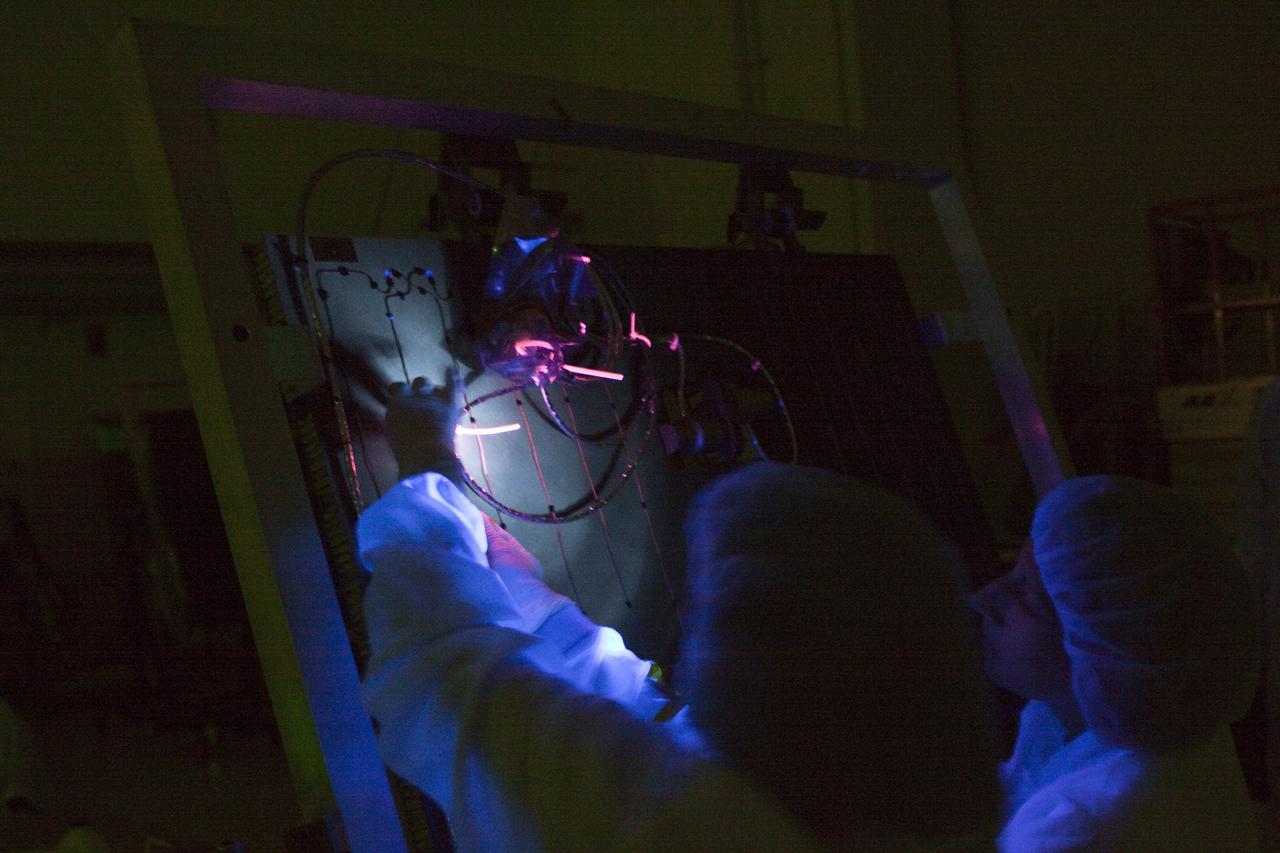
CAPE CANAVERAL, Fla. – Working in near-darkness inside the clean room high bay at the Astrotech payload processing facility near NASA’s Kennedy Space Center in Florida, technicians use black lights to inspect a solar panel on one of NASA's twin Radiation Belt Storm Probes. The technicians are dressed in clean-room attire known as “bunny suits.” Black-light inspection uses UVA fluorescence to detect possible microcontamination, small cracks or fluid leaks. The Radiation Belt Storm Probes, or RBSP, mission will help us understand the sun’s influence on Earth and near-Earth space by studying the Earth’s radiation belts on various scales of space and time. RBSP will begin its mission of exploration of Earth's Van Allen radiation belts and the extremes of space weather after its launch aboard a United Launch Alliance Atlas V rocket. Launch is targeted for Aug. 23. For more information, visit http://www.nasa.gov/rbsp. Photo credit: NASA/Jim Grossmann
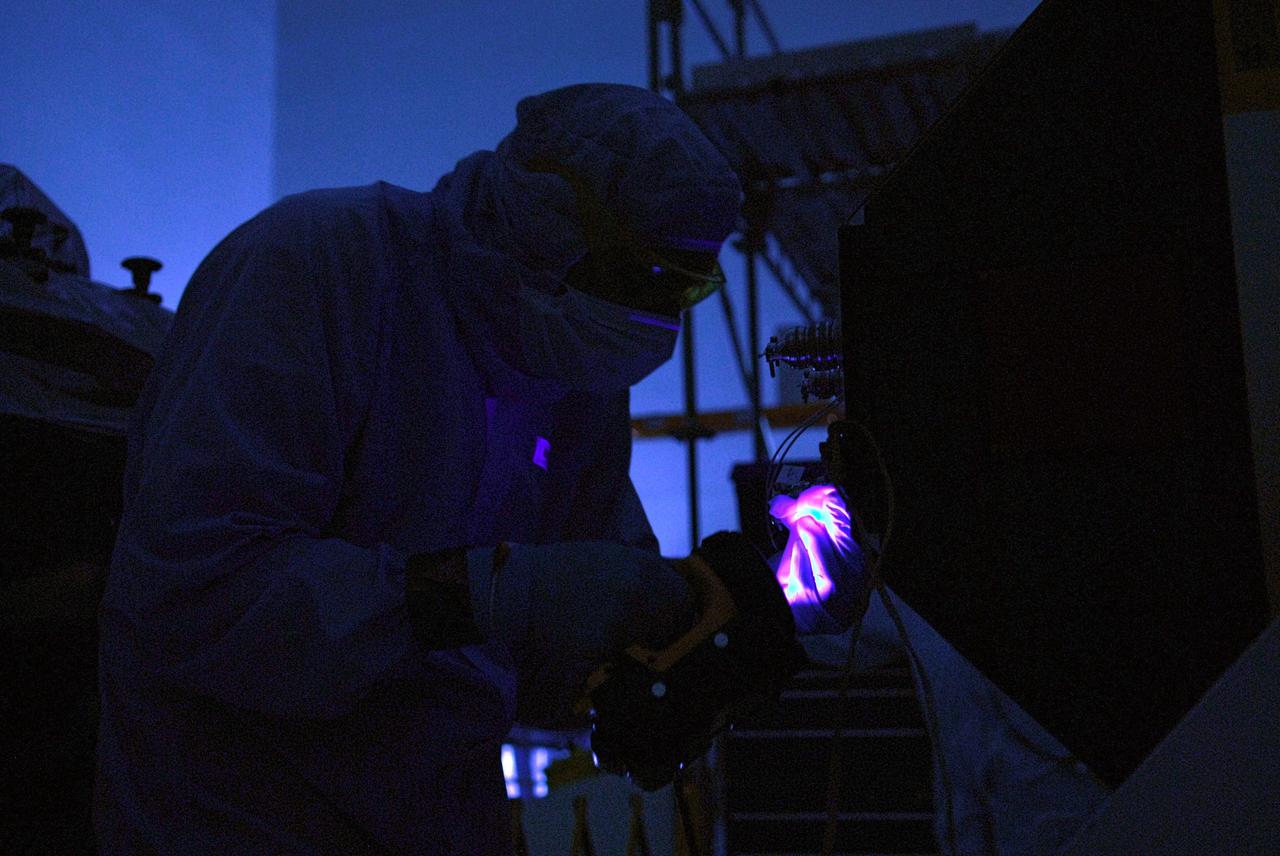
CAPE CANAVERAL, Fla. – In the clean room of the Payload Hazardous Processing Facility at NASA's Kennedy Space Center, a worker from NASA's Goddard Space Flight Center uses black light inspection for a thorough cleaning of the Cosmic Origins Spectrograph, or COS. Black light inspection uses UVA fluorescence to detect possible particulate microcontamination, minute cracks or fluid leaks. The COS will be installed on the Hubble Space Telescope on space shuttle Atlantis' STS-125 mission. COS will be the most sensitive ultraviolet spectrograph ever flown on Hubble and will probe the "cosmic web" - the large-scale structure of the universe whose form is determined by the gravity of dark matter and is traced by galaxies and intergalactic gas. The COS far-ultraviolet channel has a sensitivity 30 times greater than that of previous spectroscopic instruments for the detection of extremely low light levels. Launch of Atlantis on the STS-125 mission is targeted for Oct. 8. Photo credit: NASA/Kim Shiflett

CAPE CANAVERAL, Fla. – In the clean room of the Payload Hazardous Processing Facility at NASA's Kennedy Space Center, an overhead crane moves the Cosmic Origins Spectrograph, or COS, toward a protective enclosure on the Orbital Replacement Unit Carrier, part of the payload for the fifth and final Hubble servicing mission, STS-125. Other payloads include the Flight Support System, the Super Lightweight Interchangeable Carrier and the Multi-Use Lightweight Equipment, or MULE, carrier. COS will be the most sensitive ultraviolet spectrograph ever flown on Hubble and will probe the "cosmic web" - the large-scale structure of the universe whose form is determined by the gravity of dark matter and is traced by galaxies and intergalactic gas. The COS far-ultraviolet channel has a sensitivity 30 times greater than that of previous spectroscopic instruments for the detection of extremely low light levels. Launch of Atlantis on the STS-125 mission is targeted for Oct. 8. Photo credit: NASA/Kim Shiflett
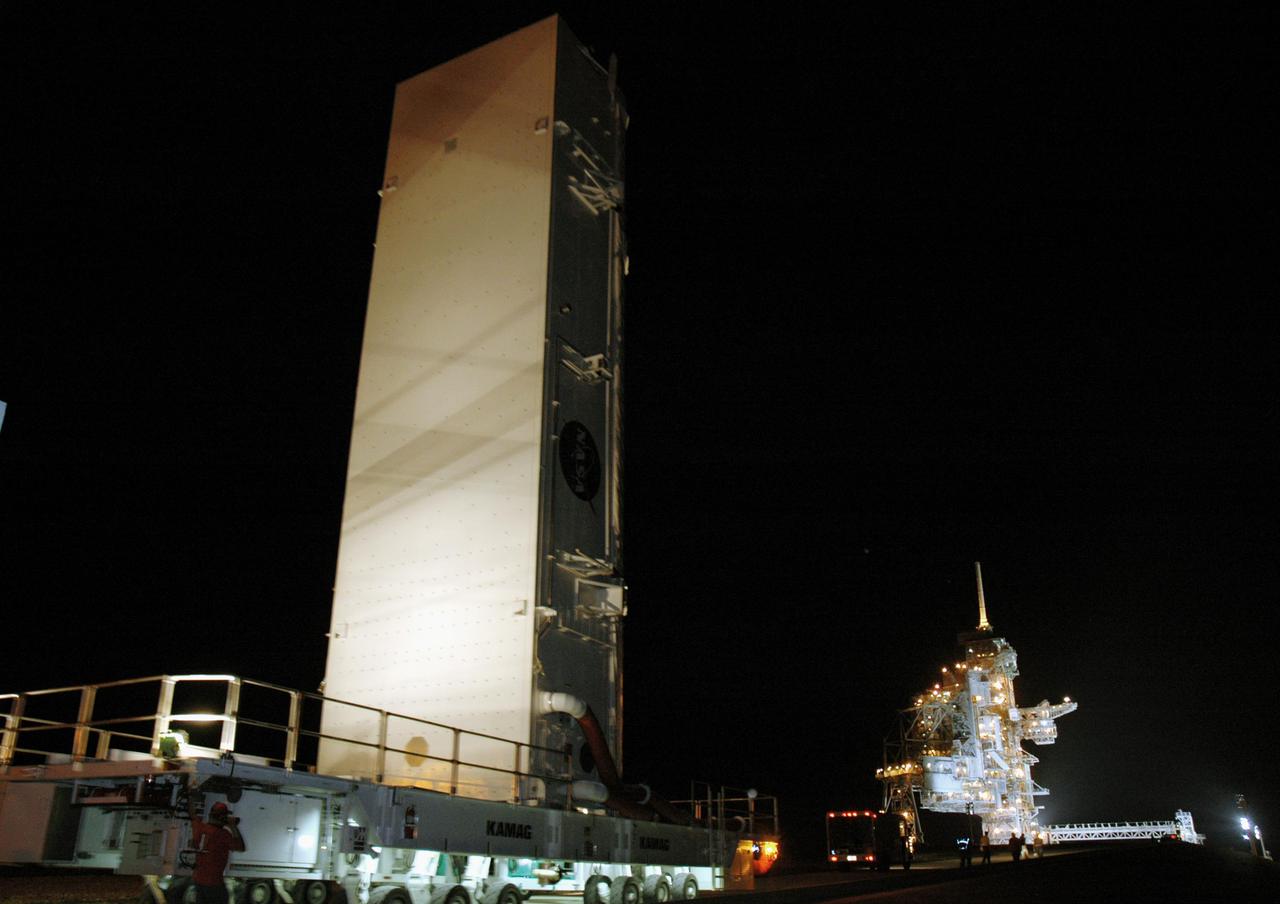
KENNEDY SPACE CENTER, FLA. - In the dark before dawn, the payload canister carrying payloads that will launch aboard Space Shuttle Discovery's Return to Flight mission STS-114 rolls toward Launch Pad 39B. There, it will be lifted up alongside the Rotating Service Structure to the Payload Changeout Room where the payloads will be removed. Discovery’s payloads include the Multi-Purpose Logistics Module Raffaello, the Lightweight Multi-Purpose Experiment Support Structure Carrier (LMC), and the External Stowage Platform-2 (ESP-2). Raffaello will deliver supplies to the International Space Station including food, clothing and research equipment. The LMC will carry a replacement Control Moment Gyroscope and a tile repair sample box. The ESP-2 is outfitted with replacement parts. Discovery’s launch window extends from July 13 through July 31.
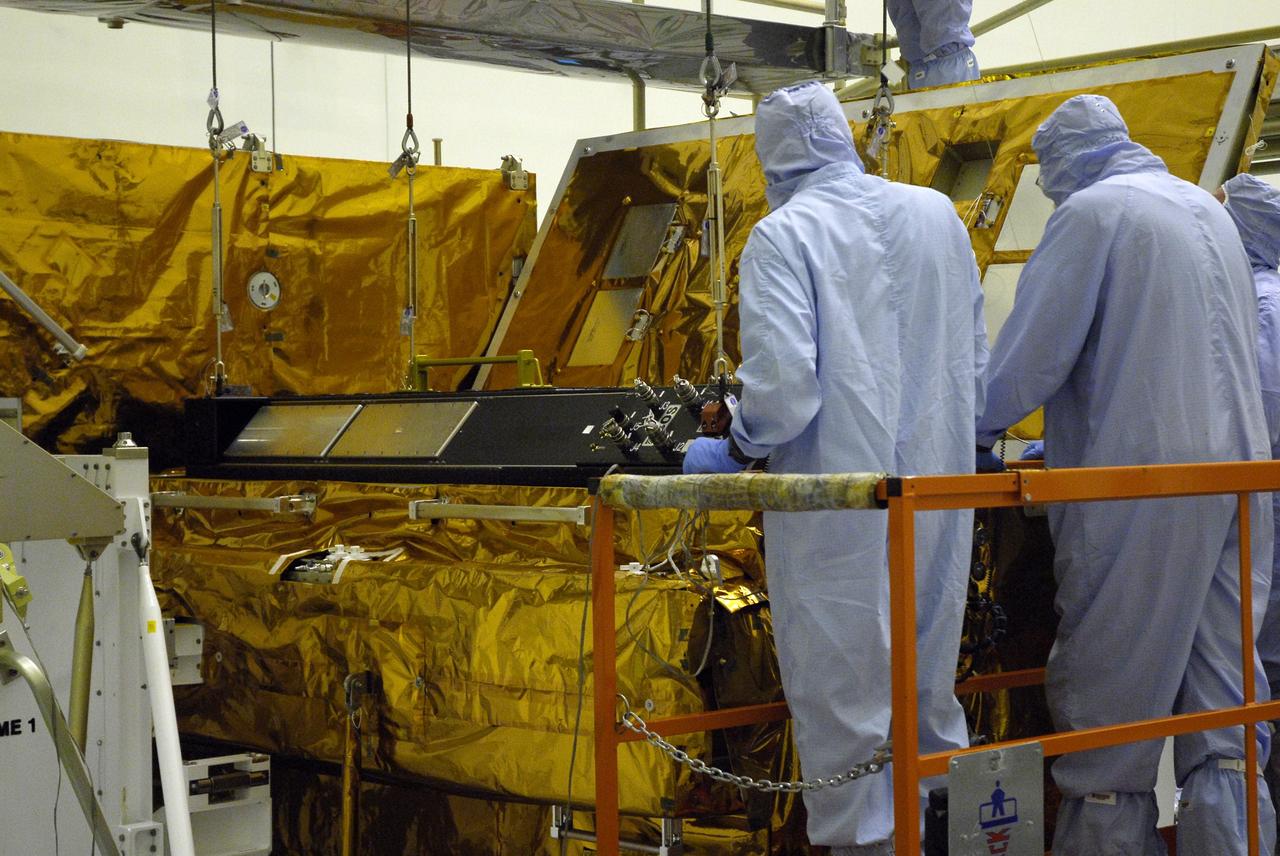
CAPE CANAVERAL, Fla. – In the clean room of the Payload Hazardous Processing Facility at NASA's Kennedy Space Center, an overhead crane settles the Cosmic Origins Spectrograph, or COS, in a protective enclosure on the Orbital Replacement Unit Carrier, part of the payload for the fifth and final Hubble servicing mission, STS-125. Other payloads include the Flight Support System, the Super Lightweight Interchangeable Carrier and the Multi-Use Lightweight Equipment, or MULE, carrier. COS will be the most sensitive ultraviolet spectrograph ever flown on Hubble and will probe the "cosmic web" - the large-scale structure of the universe whose form is determined by the gravity of dark matter and is traced by galaxies and intergalactic gas. The COS far-ultraviolet channel has a sensitivity 30 times greater than that of previous spectroscopic instruments for the detection of extremely low light levels. Launch of Atlantis on the STS-125 mission is targeted for Oct. 8. Photo credit: NASA/Kim Shiflett
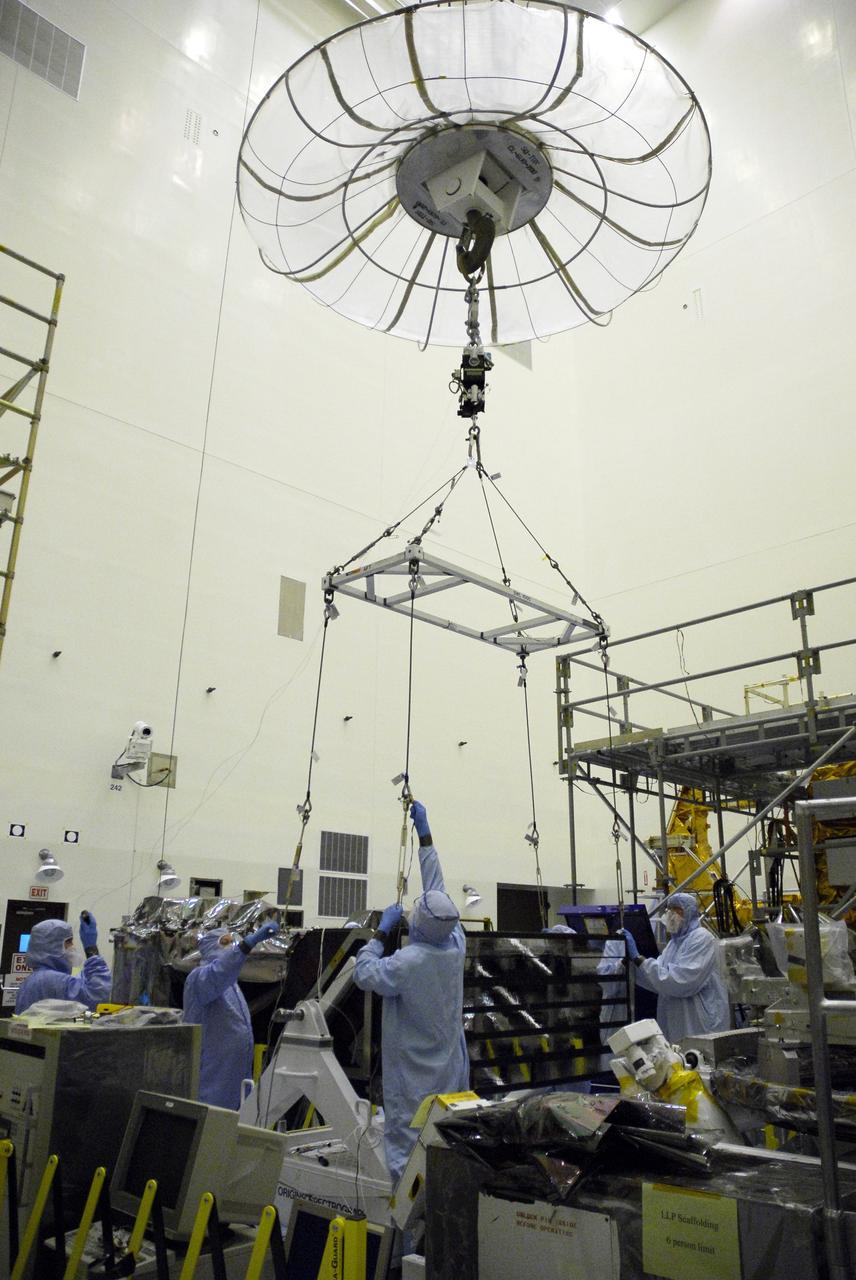
CAPE CANAVERAL, Fla. – In the clean room of the Payload Hazardous Processing Facility at NASA's Kennedy Space Center, workers prepare to attach an overhead crane to the Cosmic Origins Spectrograph, or COS. The COS will be lifted and moved to a protective enclosure on the Orbital Replacement Unit Carrier, part of the payload for the fifth and final Hubble servicing mission, STS-125. Other payloads include the Flight Support System, the Super Lightweight Interchangeable Carrier and the Multi-Use Lightweight Equipment, or MULE, carrier. COS will be the most sensitive ultraviolet spectrograph ever flown on Hubble and will probe the "cosmic web" - the large-scale structure of the universe whose form is determined by the gravity of dark matter and is traced by galaxies and intergalactic gas. The COS far-ultraviolet channel has a sensitivity 30 times greater than that of previous spectroscopic instruments for the detection of extremely low light levels. Launch of Atlantis on the STS-125 mission is targeted for Oct. 8. Photo credit: NASA/Kim Shiflett
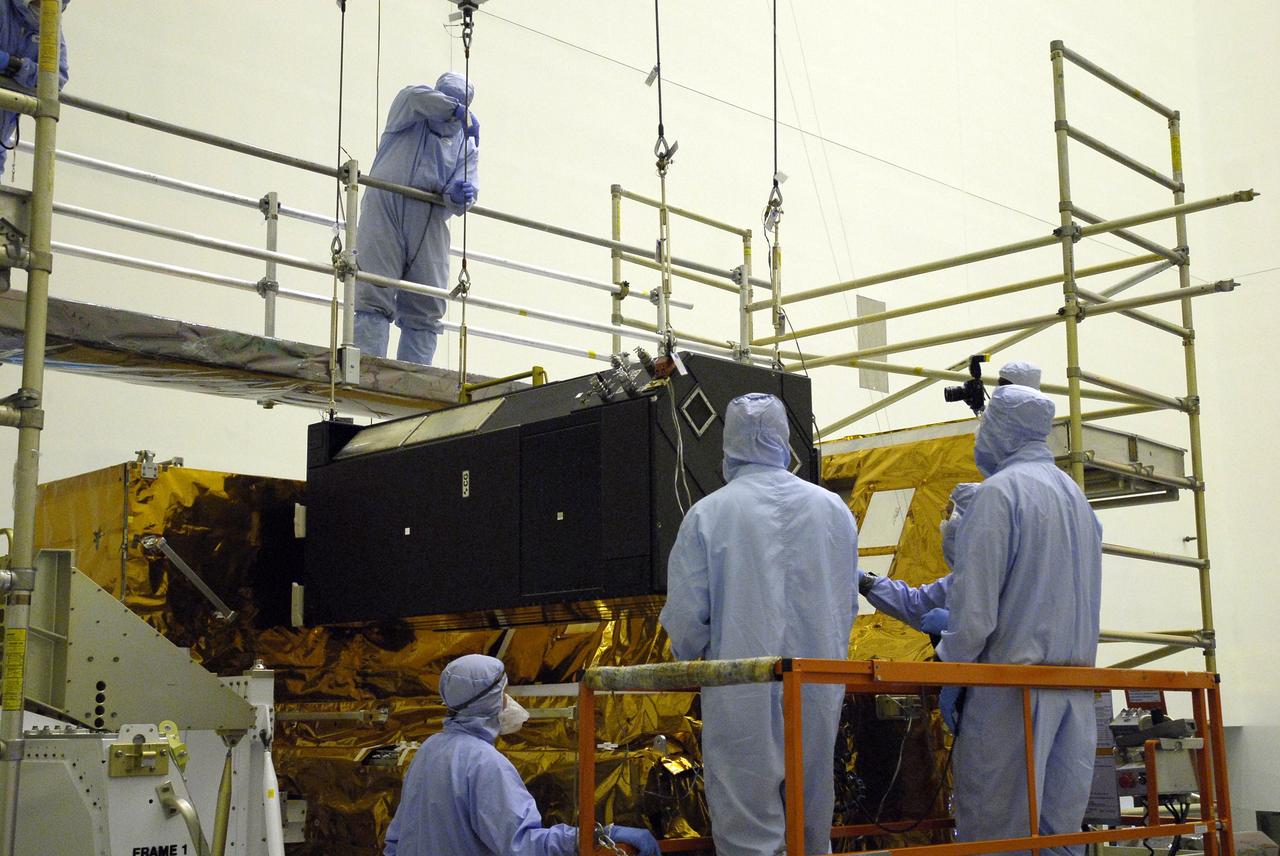
CAPE CANAVERAL, Fla. – In the clean room of the Payload Hazardous Processing Facility at NASA's Kennedy Space Center, an overhead crane lowers the Cosmic Origins Spectrograph, or COS, into a protective enclosure on the Orbital Replacement Unit Carrier, part of the payload for the fifth and final Hubble servicing mission, STS-125. Other payloads include the Flight Support System, the Super Lightweight Interchangeable Carrier and the Multi-Use Lightweight Equipment, or MULE, carrier. COS will be the most sensitive ultraviolet spectrograph ever flown on Hubble and will probe the "cosmic web" - the large-scale structure of the universe whose form is determined by the gravity of dark matter and is traced by galaxies and intergalactic gas. The COS far-ultraviolet channel has a sensitivity 30 times greater than that of previous spectroscopic instruments for the detection of extremely low light levels. Launch of Atlantis on the STS-125 mission is targeted for Oct. 8. Photo credit: NASA/Kim Shiflett

CAPE CANAVERAL, Fla. – In the clean room of the Payload Hazardous Processing Facility at NASA's Kennedy Space Center, a worker from NASA's Goddard Space Flight Center uses black light inspection for a thorough cleaning of the Cosmic Origins Spectrograph, or COS. Black light inspection uses UVA fluorescence to detect possible particulate microcontamination, minute cracks or fluid leaks. The COS will be installed on the Hubble Space Telescope on space shuttle Atlantis' STS-125 mission. COS will be the most sensitive ultraviolet spectrograph ever flown on Hubble and will probe the "cosmic web" - the large-scale structure of the universe whose form is determined by the gravity of dark matter and is traced by galaxies and intergalactic gas. The COS far-ultraviolet channel has a sensitivity 30 times greater than that of previous spectroscopic instruments for the detection of extremely low light levels. Launch of Atlantis on the STS-125 mission is targeted for Oct. 8. Photo credit: NASA/Kim Shiflett
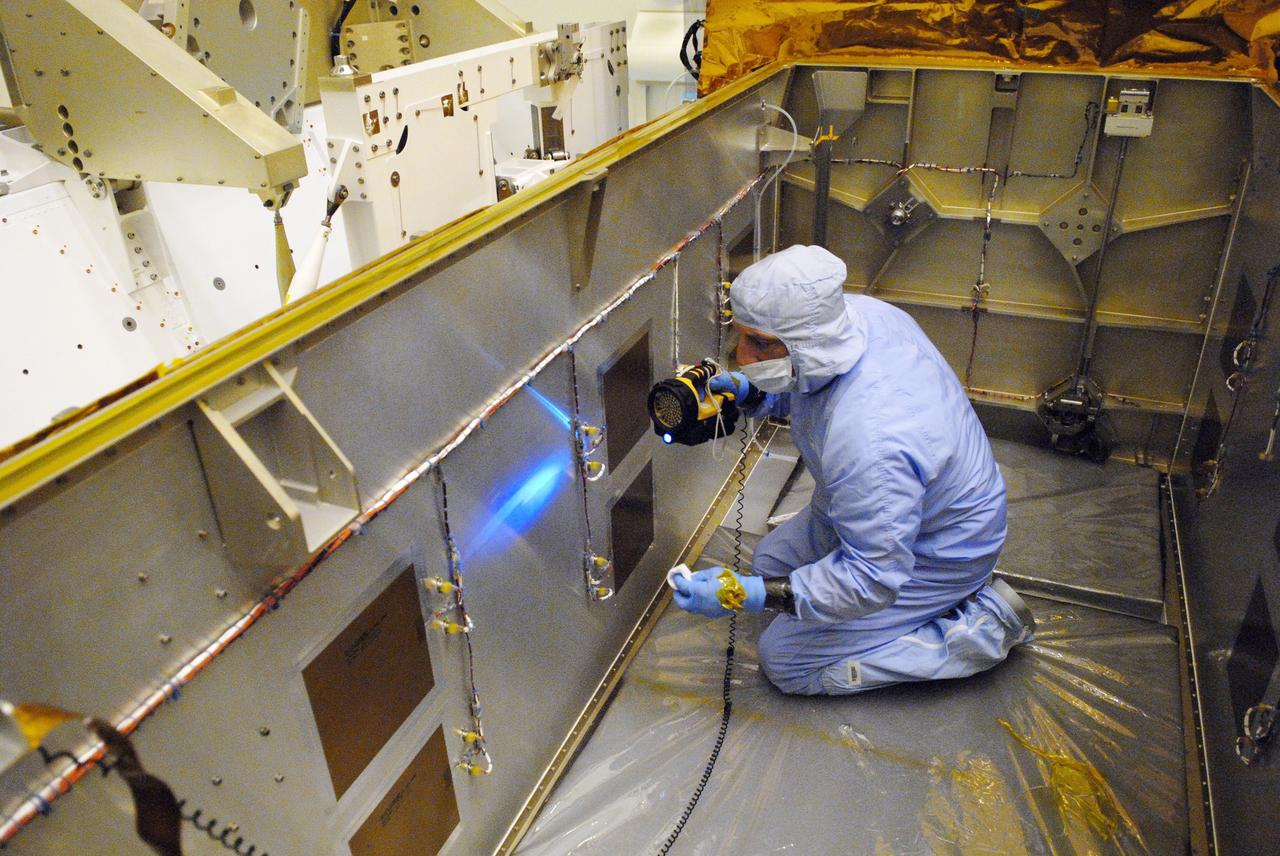
CAPE CANAVERAL, Fla. – In the clean room of the Payload Hazardous Processing Facility at NASA's Kennedy Space Center, workers from NASA's Goddard Space Flight Center use black light inspection for a thorough cleaning of the protective carrier for the Cosmic Origins Spectrograph, or COS. Black light inspection uses UVA fluorescence to detect possible particulate microcontamination, minute cracks or fluid leaks. The COS will be installed on the Hubble Space Telescope on space shuttle Atlantis' STS-125 mission. COS will be the most sensitive ultraviolet spectrograph ever flown on Hubble and will probe the "cosmic web" - the large-scale structure of the universe whose form is determined by the gravity of dark matter and is traced by galaxies and intergalactic gas. The COS far-ultraviolet channel has a sensitivity 30 times greater than that of previous spectroscopic instruments for the detection of extremely low light levels. Launch of Atlantis on the STS-125 mission is targeted for Oct. 8. Photo credit: NASA/Kim Shiflett
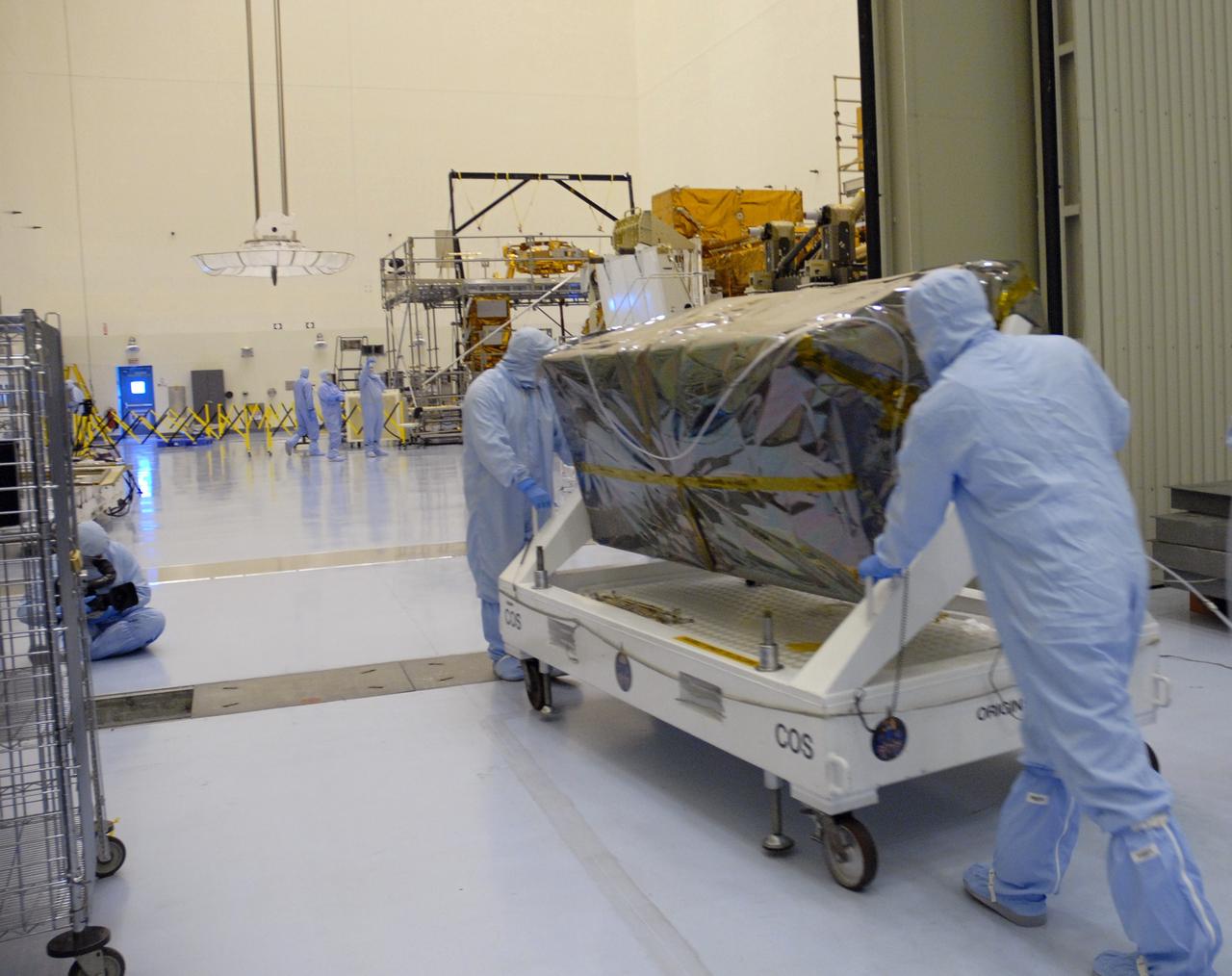
CAPE CANAVERAL, Fla. – At NASA's Kennedy Space Center, workers from NASA's Goddard Space Flight Center roll the Cosmic Origins Spectrograph, or COS, into the clean room of the Payload Hazardous Servicing Facility. The COS will be installed on the Hubble Space Telescope on space shuttle Atlantis' STS-125 mission. COS will be the most sensitive ultraviolet spectrograph ever flown on Hubble and will probe the "cosmic web" - the large-scale structure of the universe whose form is determined by the gravity of dark matter and is traced by galaxies and intergalactic gas. COS's far-ultraviolet channel has a sensitivity 30 times greater than that of previous spectroscopic instruments for the detection of extremely low light levels. Launch of STS-125 is targeted for Oct. 8. Photo credit: NASA/Jack Pfaller
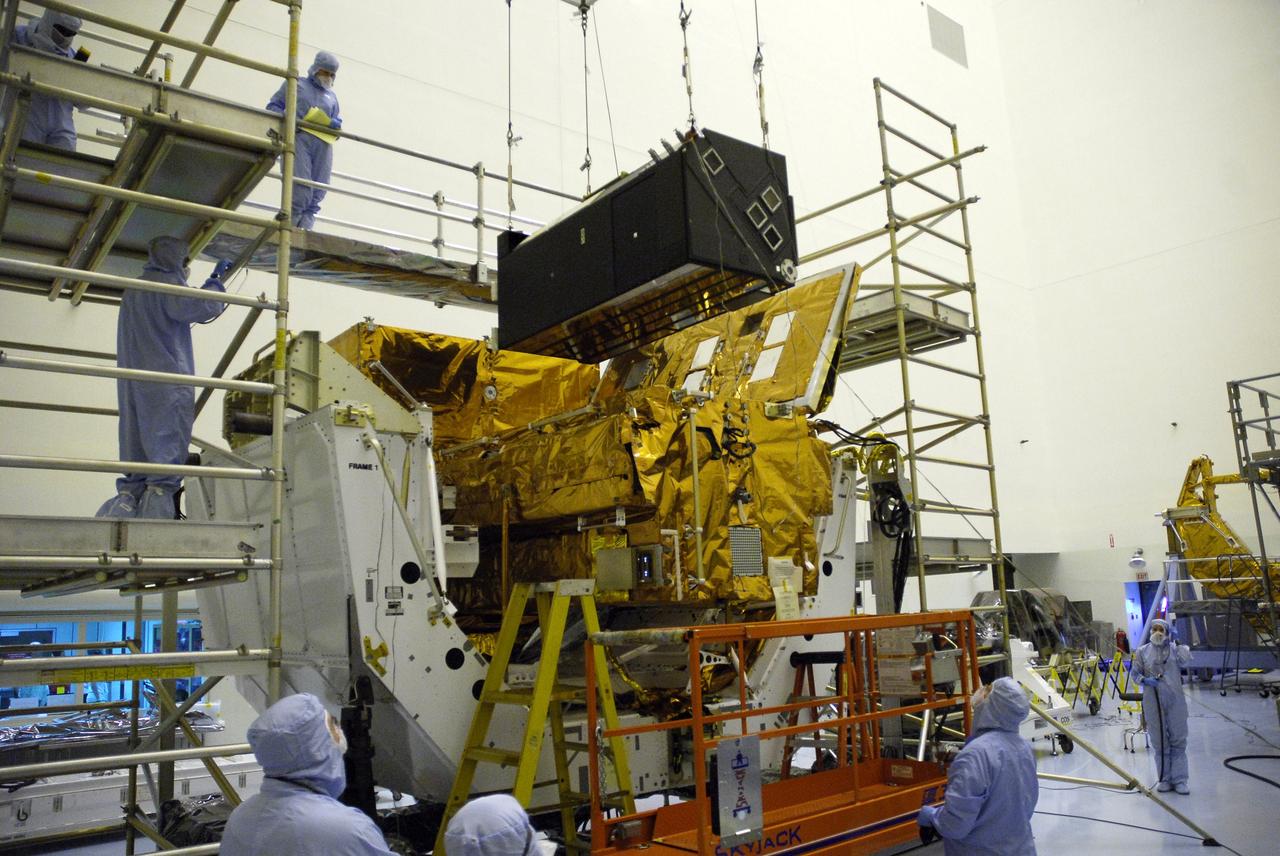
CAPE CANAVERAL, Fla. – In the clean room of the Payload Hazardous Processing Facility at NASA's Kennedy Space Center, an overhead crane lowers the Cosmic Origins Spectrograph, or COS, toward a protective enclosure on the Orbital Replacement Unit Carrier, part of the payload for the fifth and final Hubble servicing mission, STS-125. Other payloads include the Flight Support System, the Super Lightweight Interchangeable Carrier and the Multi-Use Lightweight Equipment, or MULE, carrier. COS will be the most sensitive ultraviolet spectrograph ever flown on Hubble and will probe the "cosmic web" - the large-scale structure of the universe whose form is determined by the gravity of dark matter and is traced by galaxies and intergalactic gas. The COS far-ultraviolet channel has a sensitivity 30 times greater than that of previous spectroscopic instruments for the detection of extremely low light levels. Launch of Atlantis on the STS-125 mission is targeted for Oct. 8. Photo credit: NASA/Kim Shiflett
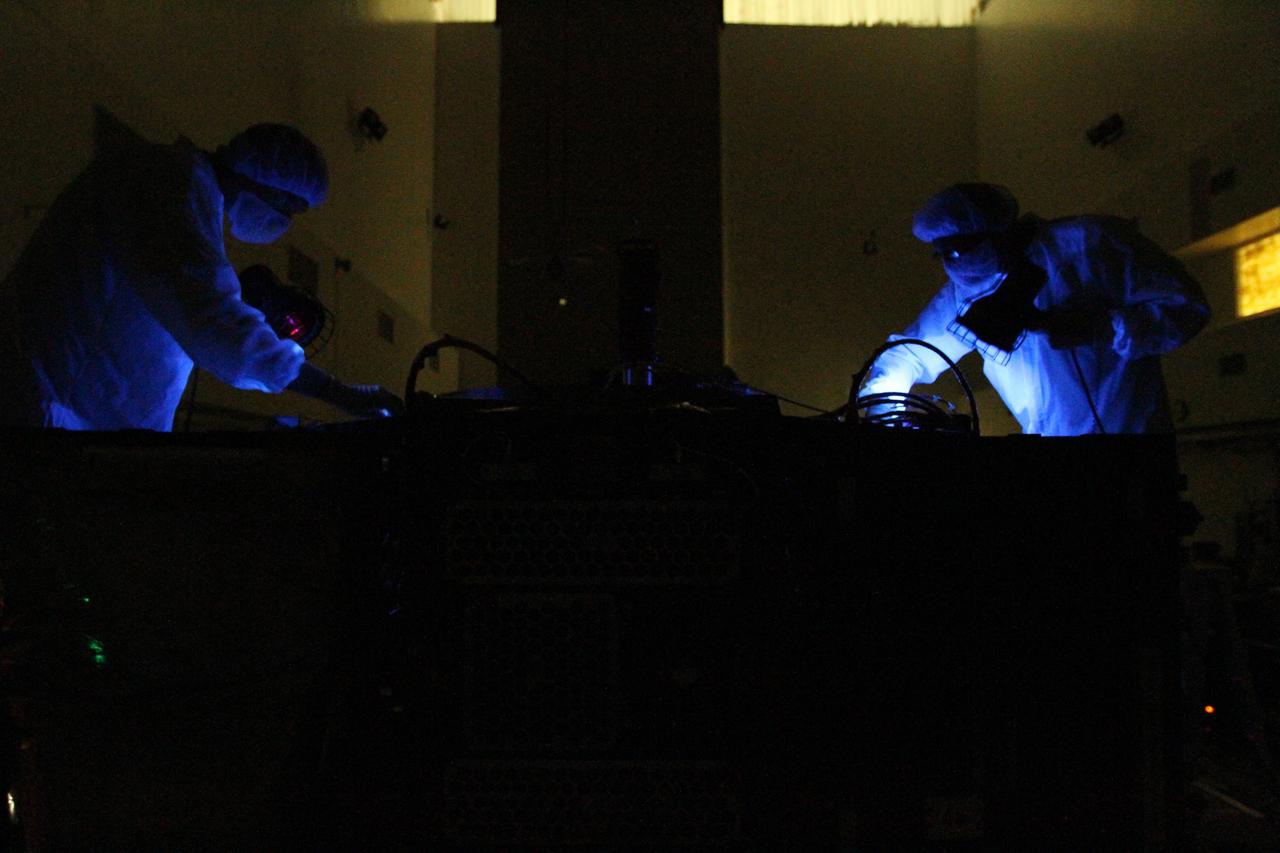
CAPE CANAVERAL, Fla. – Working in near-darkness inside the high bay clean room at the Astrotech payload processing facility, two technicians use black lights to inspect of one of NASA's twin Radiation Belt Storm Probes. Black light inspection uses UVA fluorescence to detect possible microcontamination, small cracks or fluid leaks. The Radiation Belt Storm Probes, or RBSP, mission will help us understand the sun’s influence on Earth and near-Earth space by studying the Earth’s radiation belts on various scales of space and time. RBSP will begin its mission of exploration of Earth's Van Allen radiation belts and the extremes of space weather after its launch aboard a United Launch Alliance Atlas V rocket. For more information, visit http://www.nasa.gov/rbsp. Photo credit: NASA/Kim Shiflett
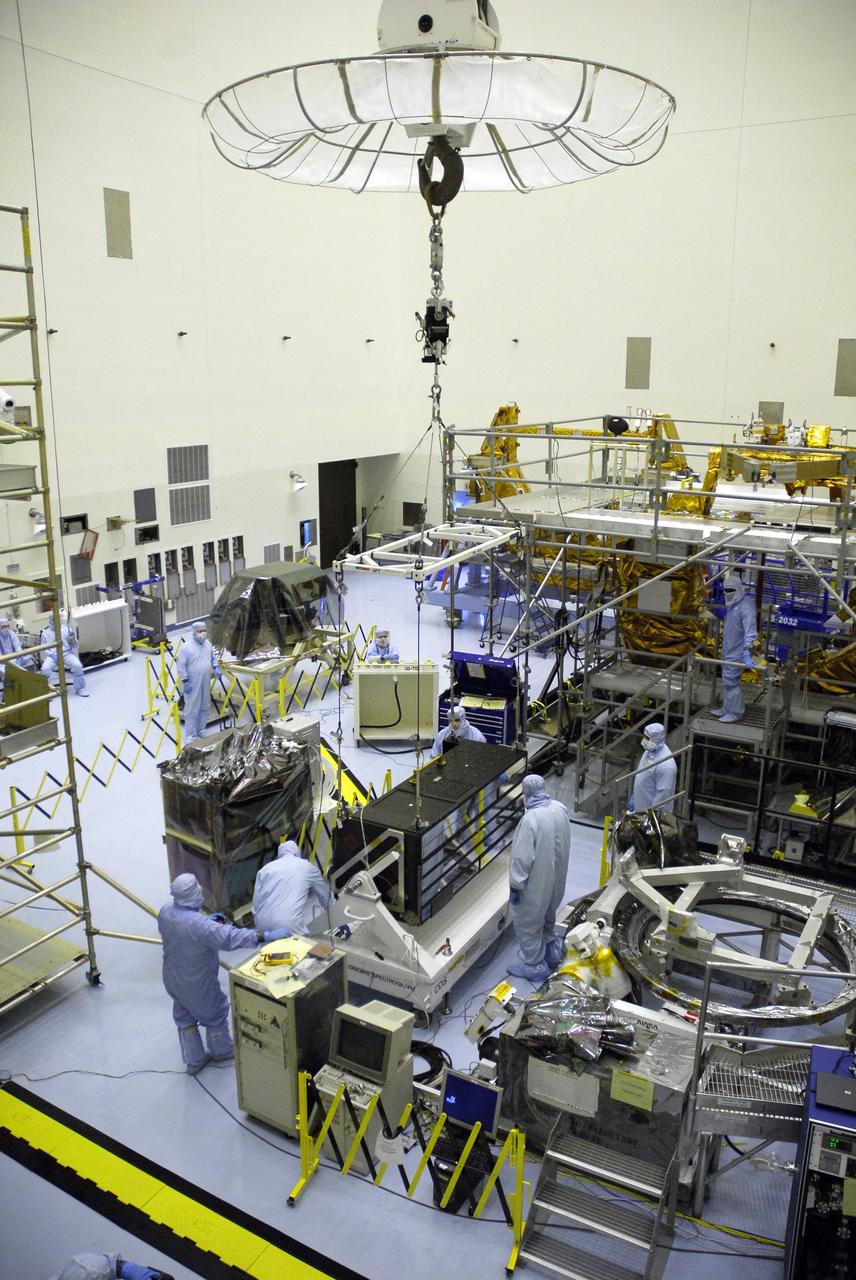
CAPE CANAVERAL, Fla. – In the clean room of the Payload Hazardous Processing Facility at NASA's Kennedy Space Center, an overhead crane lifts the Cosmic Origins Spectrograph, or COS. The COS is being lifted and moved to a protective enclosure on the Orbital Replacement Unit Carrier, part of the payload for the fifth and final Hubble servicing mission, STS-125. Other payloads include the Flight Support System, the Super Lightweight Interchangeable Carrier and the Multi-Use Lightweight Equipment, or MULE, carrier. COS will be the most sensitive ultraviolet spectrograph ever flown on Hubble and will probe the "cosmic web" - the large-scale structure of the universe whose form is determined by the gravity of dark matter and is traced by galaxies and intergalactic gas. The COS far-ultraviolet channel has a sensitivity 30 times greater than that of previous spectroscopic instruments for the detection of extremely low light levels. Launch of Atlantis on the STS-125 mission is targeted for Oct. 8. Photo credit: NASA/Kim Shiflett

CAPE CANAVERAL, Fla. – In the clean room of the Payload Hazardous Processing Facility at NASA's Kennedy Space Center, workers attach an overhead crane to the Cosmic Origins Spectrograph, or COS. The COS is being lifted and moved to a protective enclosure on the Orbital Replacement Unit Carrier, part of the payload for the fifth and final Hubble servicing mission, STS-125. Other payloads include the Flight Support System, the Super Lightweight Interchangeable Carrier and the Multi-Use Lightweight Equipment, or MULE, carrier. COS will be the most sensitive ultraviolet spectrograph ever flown on Hubble and will probe the "cosmic web" - the large-scale structure of the universe whose form is determined by the gravity of dark matter and is traced by galaxies and intergalactic gas. The COS far-ultraviolet channel has a sensitivity 30 times greater than that of previous spectroscopic instruments for the detection of extremely low light levels. Launch of Atlantis on the STS-125 mission is targeted for Oct. 8. Photo credit: NASA/Kim Shiflett
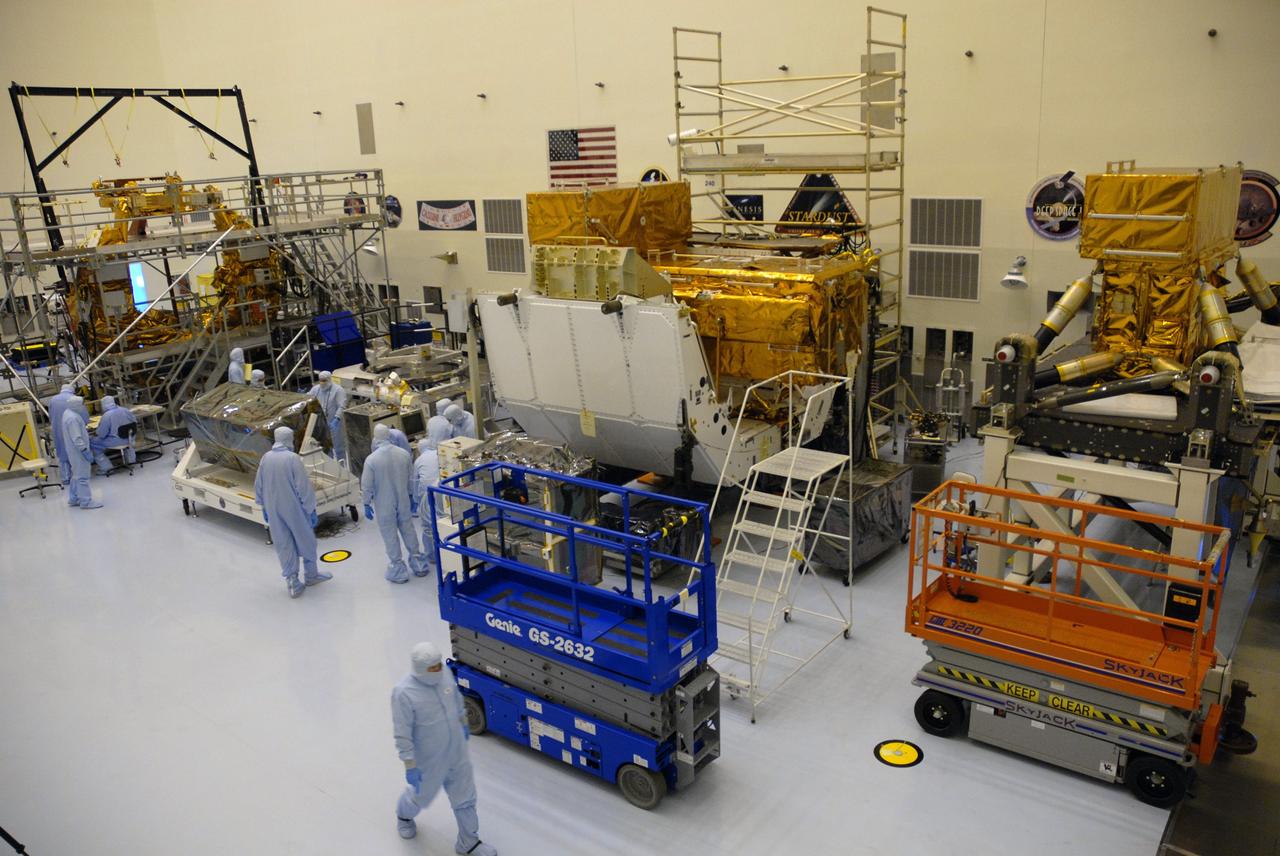
CAPE CANAVERAL, Fla. – At NASA's Kennedy Space Center, workers from NASA's Goddard Space Flight Center roll the Cosmic Origins Spectrograph, or COS, into position in the clean room of the Payload Hazardous Servicing Facility for instrument testing and integration with the Flight Support System carrier. The COS will be installed on the Hubble Space Telescope on space shuttle Atlantis' STS-125 mission. COS will be the most sensitive ultraviolet spectrograph ever flown on Hubble and will probe the "cosmic web" - the large-scale structure of the universe whose form is determined by the gravity of dark matter and is traced by galaxies and intergalactic gas. COS's far-ultraviolet channel has a sensitivity 30 times greater than that of previous spectroscopic instruments for the detection of extremely low light levels. Launch of STS-125 is targeted for Oct. 8. Photo credit: NASA/Jack Pfaller
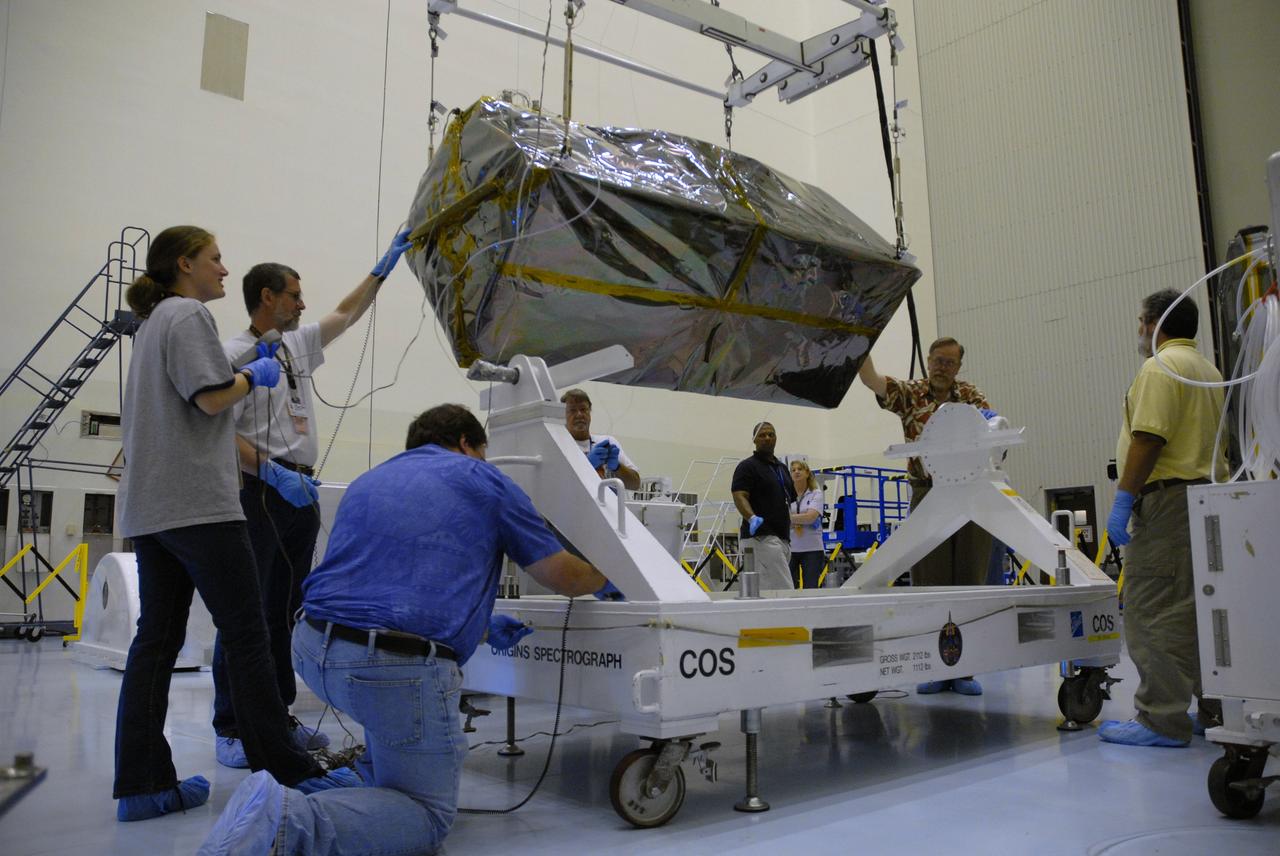
CAPE CANAVERAL, Fla. – In the airlock of the Payload Hazardous Servicing Facility at NASA's Kennedy Space Center, workers from NASA's Goddard Space Flight Center lift the Cosmic Origins Spectrograph, or COS, from its transportation canister onto a dolly for its move into the clean room. The COS will be installed on the Hubble Space Telescope on space shuttle Atlantis' STS-125 mission. COS will be the most sensitive ultraviolet spectrograph ever flown on Hubble and will probe the "cosmic web" - the large-scale structure of the universe whose form is determined by the gravity of dark matter and is traced by galaxies and intergalactic gas. COS's far-ultraviolet channel has a sensitivity 30 times greater than that of previous spectroscopic instruments for the detection of extremely low light levels. Launch of STS-125 is targeted for Oct. 8. Photo credit: NASA/Jack Pfaller
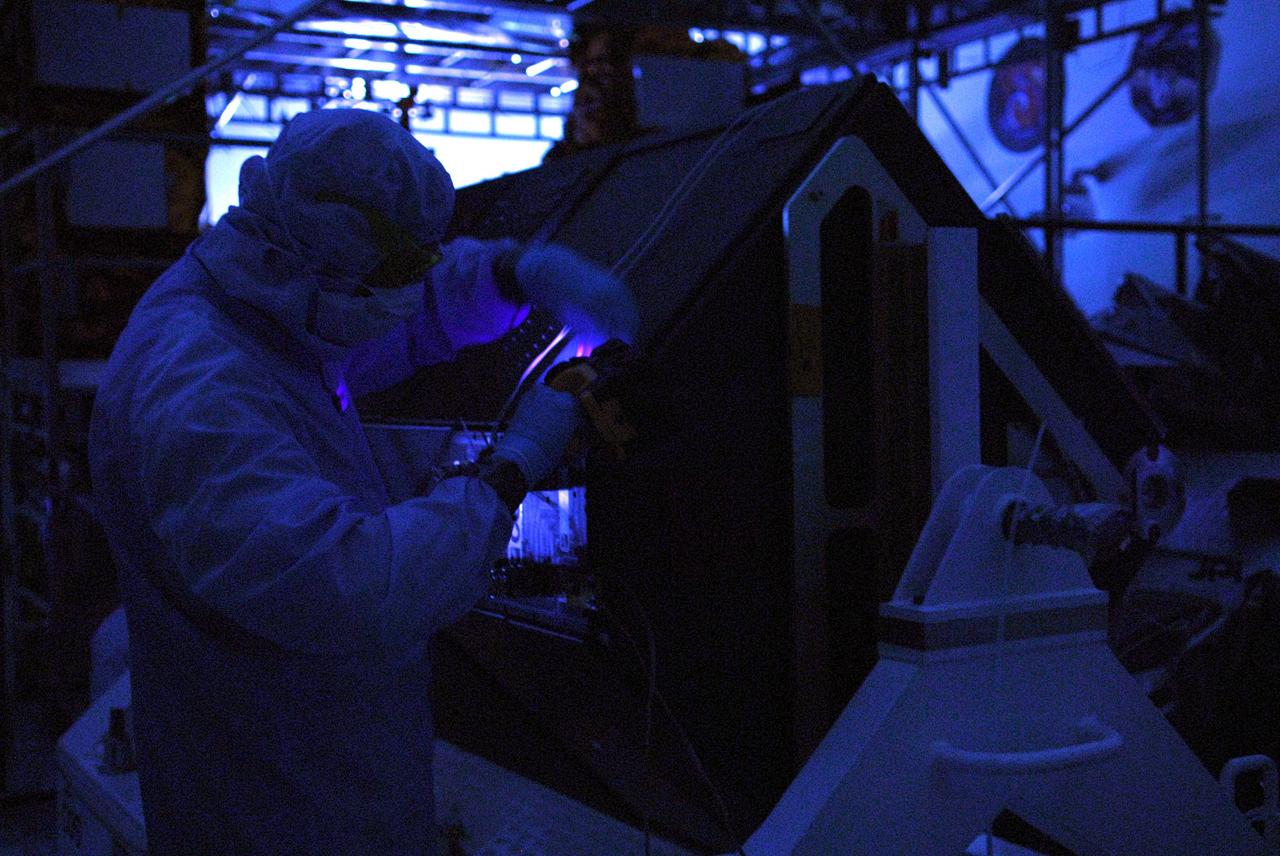
CAPE CANAVERAL, Fla. – In the clean room of the Payload Hazardous Processing Facility at NASA's Kennedy Space Center, a worker from NASA's Goddard Space Flight Center uses black light inspection for a thorough cleaning of the Cosmic Origins Spectrograph, or COS. Black light inspection uses UVA fluorescence to detect possible particulate microcontamination, minute cracks or fluid leaks. The COS will be installed on the Hubble Space Telescope on space shuttle Atlantis' STS-125 mission. COS will be the most sensitive ultraviolet spectrograph ever flown on Hubble and will probe the "cosmic web" - the large-scale structure of the universe whose form is determined by the gravity of dark matter and is traced by galaxies and intergalactic gas. The COS far-ultraviolet channel has a sensitivity 30 times greater than that of previous spectroscopic instruments for the detection of extremely low light levels. Launch of Atlantis on the STS-125 mission is targeted for Oct. 8. Photo credit: NASA/Kim Shiflett
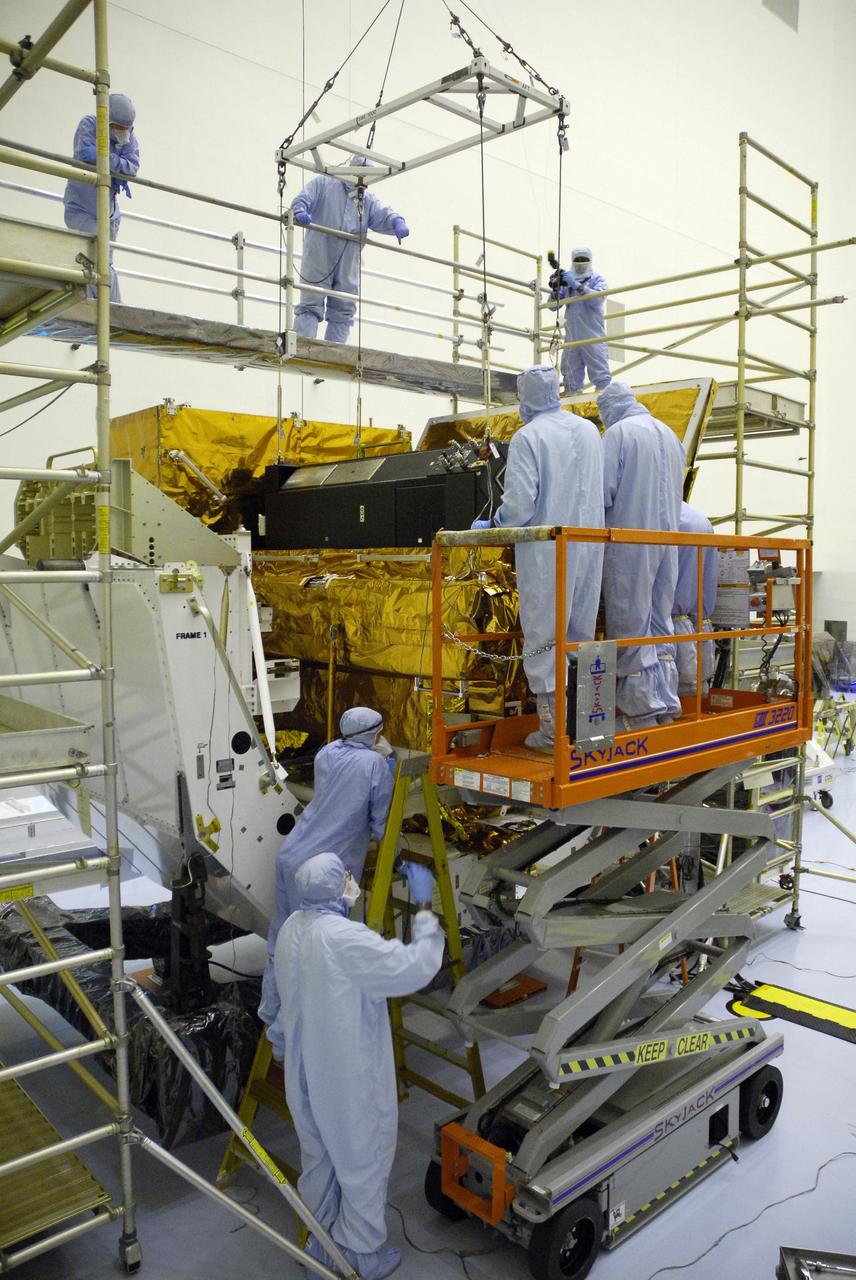
CAPE CANAVERAL, Fla. – In the clean room of the Payload Hazardous Processing Facility at NASA's Kennedy Space Center, an overhead crane lowers the Cosmic Origins Spectrograph, or COS, into a protective enclosure on the Orbital Replacement Unit Carrier, part of the payload for the fifth and final Hubble servicing mission, STS-125. Other payloads include the Flight Support System, the Super Lightweight Interchangeable Carrier and the Multi-Use Lightweight Equipment, or MULE, carrier. COS will be the most sensitive ultraviolet spectrograph ever flown on Hubble and will probe the "cosmic web" - the large-scale structure of the universe whose form is determined by the gravity of dark matter and is traced by galaxies and intergalactic gas. The COS far-ultraviolet channel has a sensitivity 30 times greater than that of previous spectroscopic instruments for the detection of extremely low light levels. Launch of Atlantis on the STS-125 mission is targeted for Oct. 8. Photo credit: NASA/Kim Shiflett
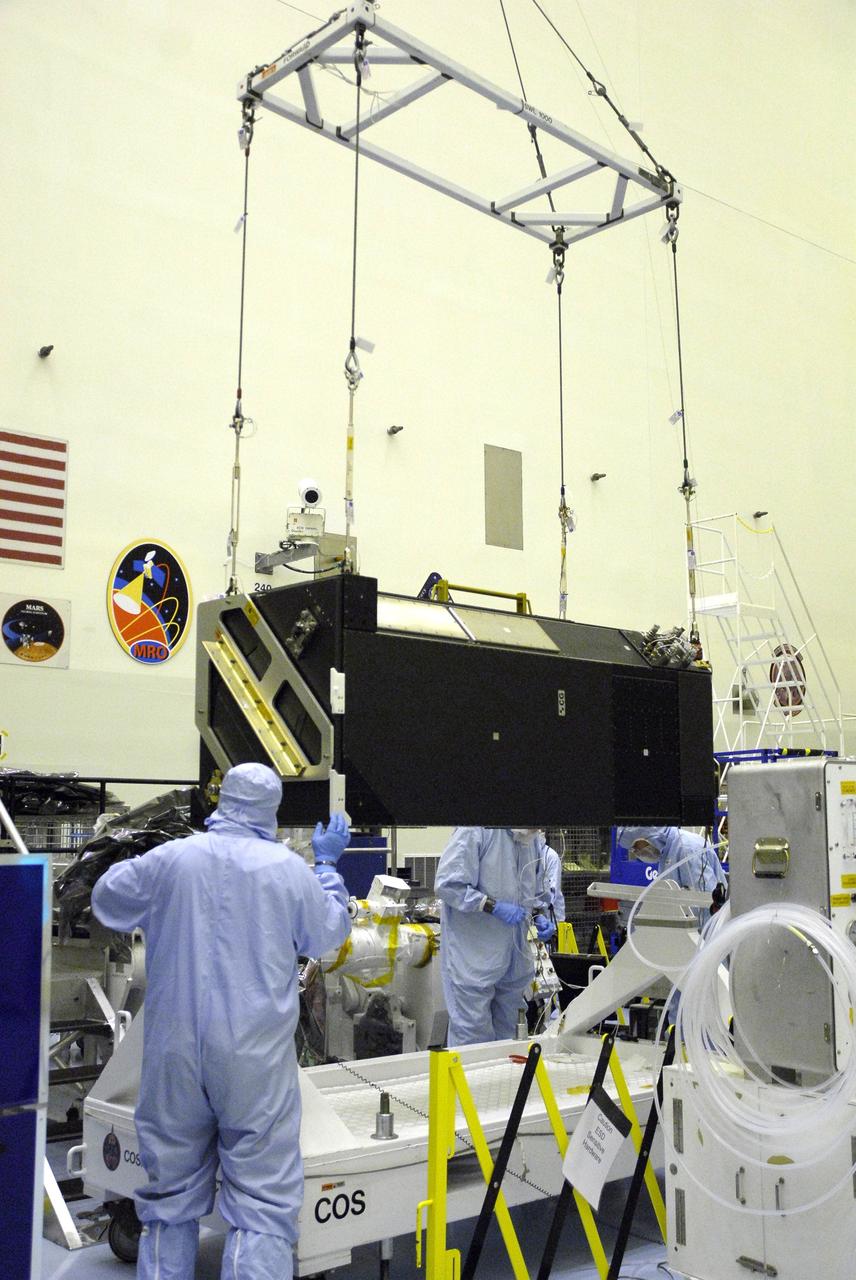
CAPE CANAVERAL, Fla. – In the clean room of the Payload Hazardous Processing Facility at NASA's Kennedy Space Center, an overhead crane lifts the Cosmic Origins Spectrograph, or COS. The COS is being lifted and moved to a protective enclosure on the Orbital Replacement Unit Carrier, part of the payload for the fifth and final Hubble servicing mission, STS-125. Other payloads include the Flight Support System, the Super Lightweight Interchangeable Carrier and the Multi-Use Lightweight Equipment, or MULE, carrier. COS will be the most sensitive ultraviolet spectrograph ever flown on Hubble and will probe the "cosmic web" - the large-scale structure of the universe whose form is determined by the gravity of dark matter and is traced by galaxies and intergalactic gas. The COS far-ultraviolet channel has a sensitivity 30 times greater than that of previous spectroscopic instruments for the detection of extremely low light levels. Launch of Atlantis on the STS-125 mission is targeted for Oct. 8. Photo credit: NASA/Kim Shiflett
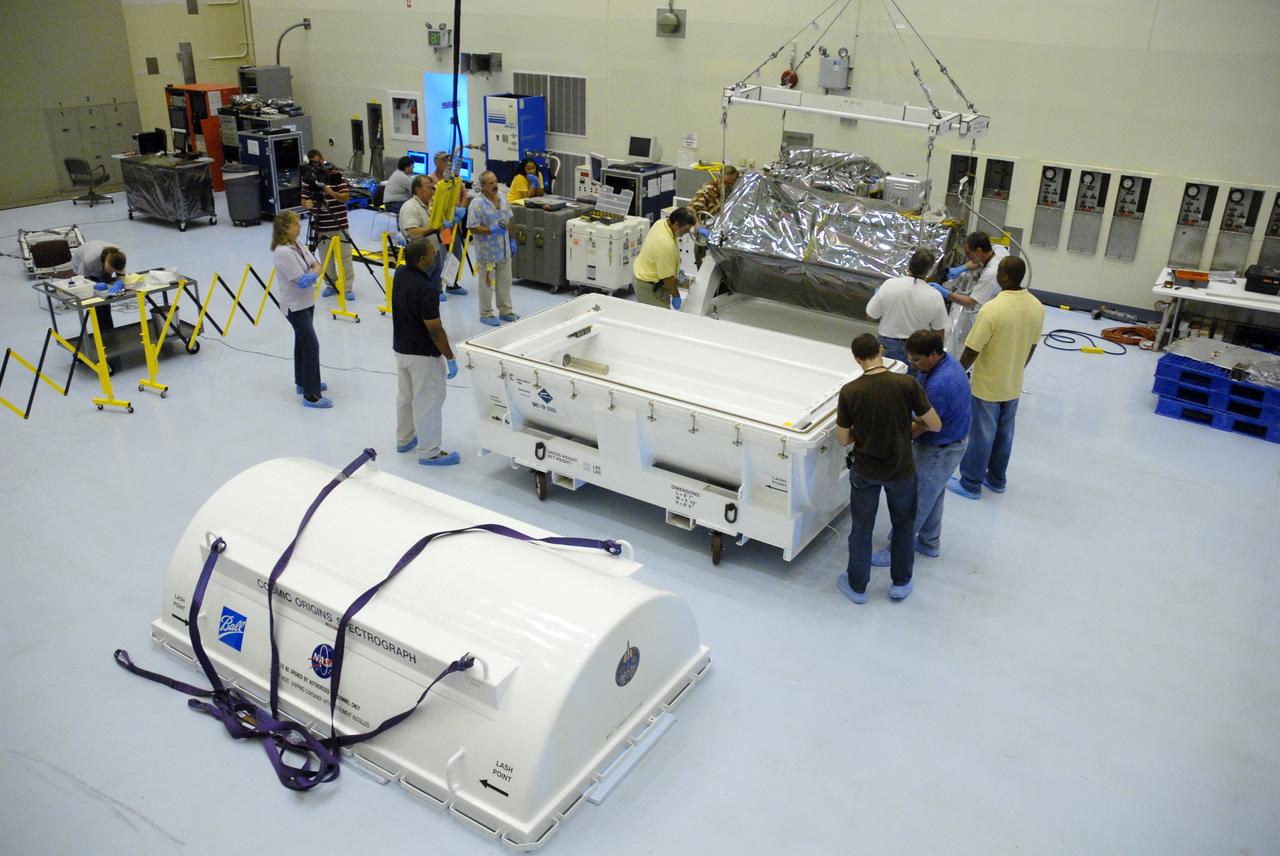
CAPE CANAVERAL, Fla. – In the airlock of the Payload Hazardous Servicing Facility at NASA's Kennedy Space Center, workers from NASA's Goddard Space Flight Center lower the Cosmic Origins Spectrograph, or COS, onto a dolly for its move into the clean room. The COS will be installed on the Hubble Space Telescope on space shuttle Atlantis' STS-125 mission. COS will be the most sensitive ultraviolet spectrograph ever flown on Hubble and will probe the "cosmic web" - the large-scale structure of the universe whose form is determined by the gravity of dark matter and is traced by galaxies and intergalactic gas. COS's far-ultraviolet channel has a sensitivity 30 times greater than that of previous spectroscopic instruments for the detection of extremely low light levels. Launch of STS-125 is targeted for Oct. 8. Photo credit: NASA/Jack Pfaller

CAPE CANAVERAL, Fla. – In the clean room of the Payload Hazardous Processing Facility at NASA's Kennedy Space Center, an overhead crane lifts the Cosmic Origins Spectrograph, or COS. The COS is being lifted and moved to a protective enclosure on the Orbital Replacement Unit Carrier, part of the payload for the fifth and final Hubble servicing mission, STS-125. Other payloads include the Flight Support System, the Super Lightweight Interchangeable Carrier and the Multi-Use Lightweight Equipment, or MULE, carrier. COS will be the most sensitive ultraviolet spectrograph ever flown on Hubble and will probe the "cosmic web" - the large-scale structure of the universe whose form is determined by the gravity of dark matter and is traced by galaxies and intergalactic gas. The COS far-ultraviolet channel has a sensitivity 30 times greater than that of previous spectroscopic instruments for the detection of extremely low light levels. Launch of Atlantis on the STS-125 mission is targeted for Oct. 8. Photo credit: NASA/Kim Shiflett
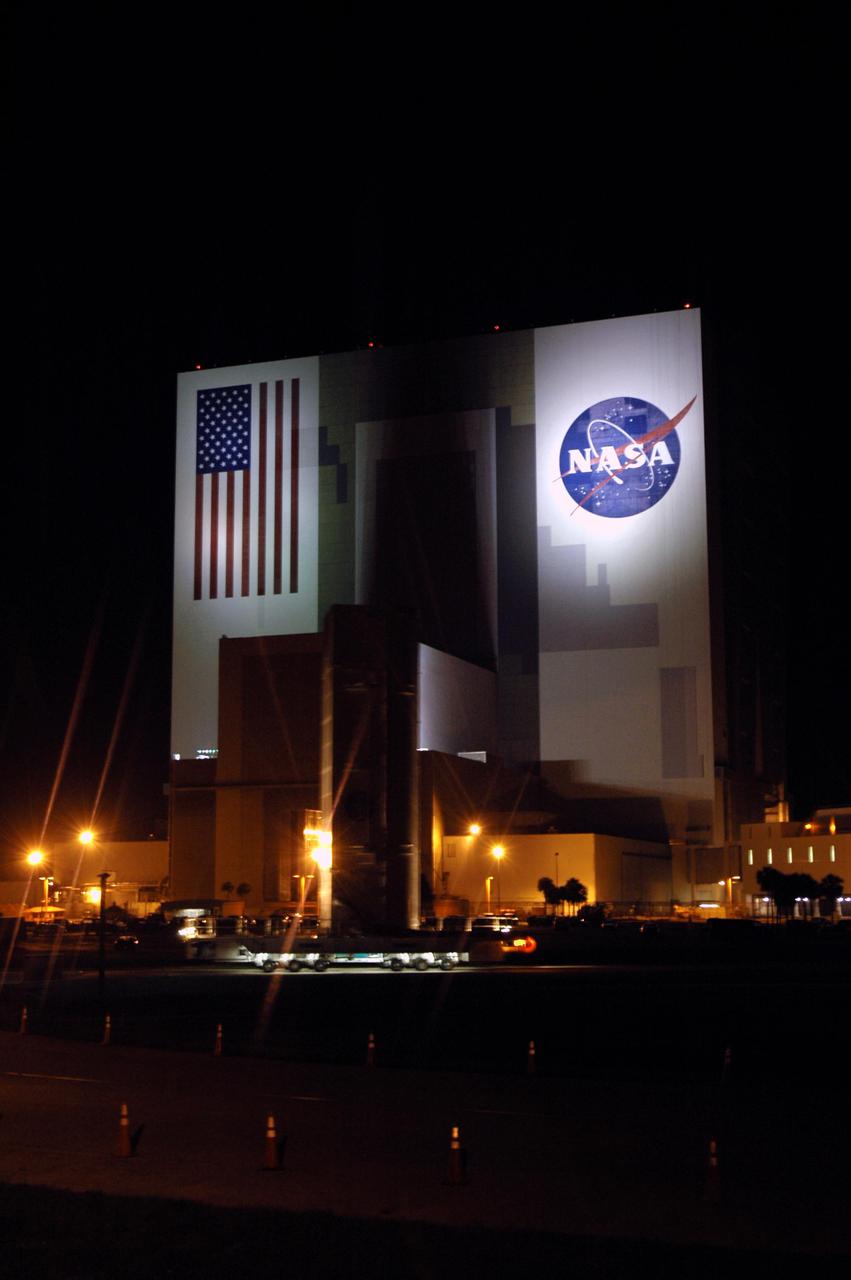
KENNEDY SPACE CENTER, FLA. - In the dark before dawn, the payloads that will launch aboard Space Shuttle Discovery's Return to Flight mission STS-114 roll past the Vehicle Assembly Building at NASA’s Kennedy Space Center. Enclosed in a payload canister, the payloads are heading for Launch Pad 39B. The canister will be lifted up alongside the Rotating Service Structure to the Payload Changeout Room where the STS-114 payloads will be removed. Discovery’s payloads include the Multi-Purpose Logistics Module Raffaello, the Lightweight Multi-Purpose Experiment Support Structure Carrier (LMC), and the External Stowage Platform-2 (ESP-2). Raffaello will deliver supplies to the International Space Station including food, clothing and research equipment. The LMC will carry a replacement Control Moment Gyroscope and a tile repair sample box. The ESP-2 is outfitted with replacement parts. Discovery’s launch window extends from July 13 through July 31.
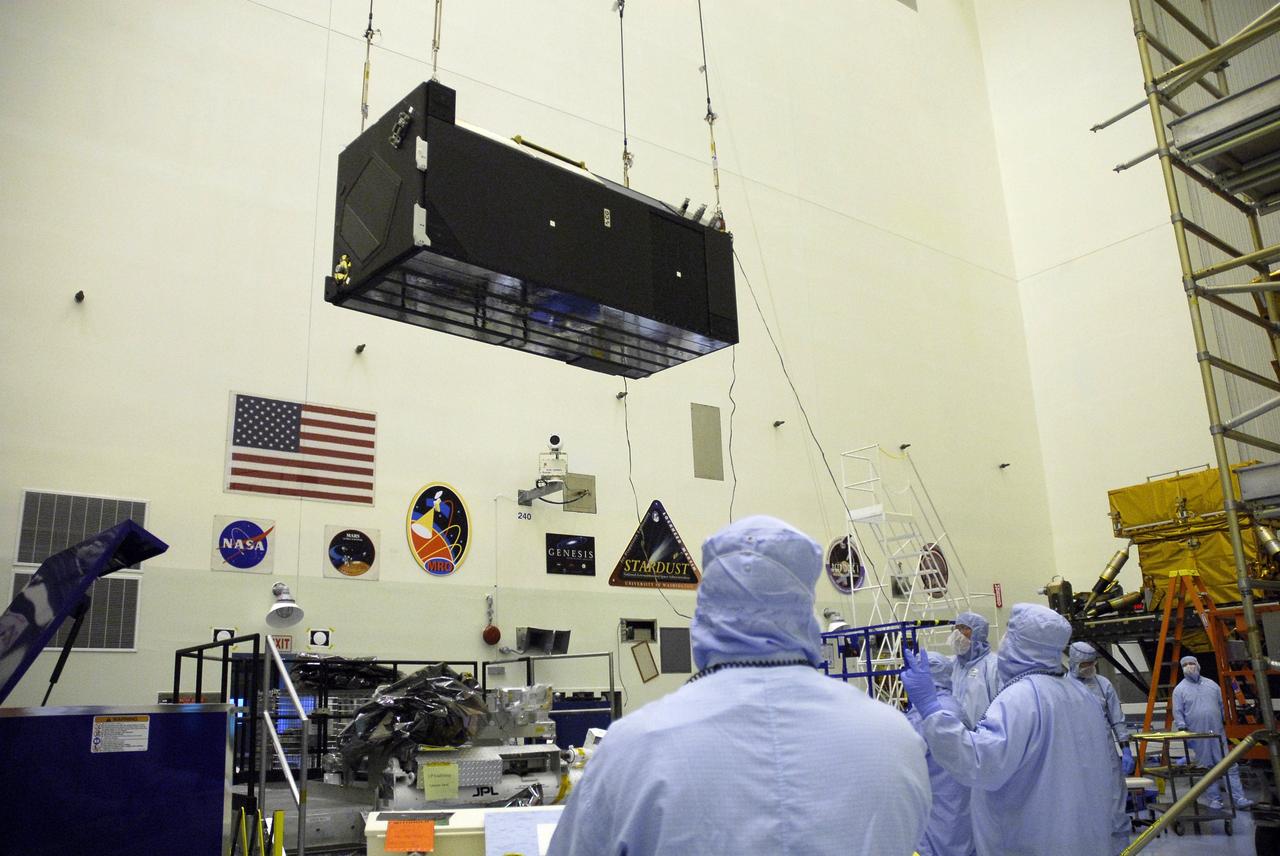
CAPE CANAVERAL, Fla. – In the clean room of the Payload Hazardous Processing Facility at NASA's Kennedy Space Center, an overhead crane moves the Cosmic Origins Spectrograph, or COS, toward a protective enclosure on the Orbital Replacement Unit Carrier, part of the payload for the fifth and final Hubble servicing mission, STS-125. Other payloads include the Flight Support System, the Super Lightweight Interchangeable Carrier and the Multi-Use Lightweight Equipment, or MULE, carrier. COS will be the most sensitive ultraviolet spectrograph ever flown on Hubble and will probe the "cosmic web" - the large-scale structure of the universe whose form is determined by the gravity of dark matter and is traced by galaxies and intergalactic gas. The COS far-ultraviolet channel has a sensitivity 30 times greater than that of previous spectroscopic instruments for the detection of extremely low light levels. Launch of Atlantis on the STS-125 mission is targeted for Oct. 8. Photo credit: NASA/Kim Shiflett
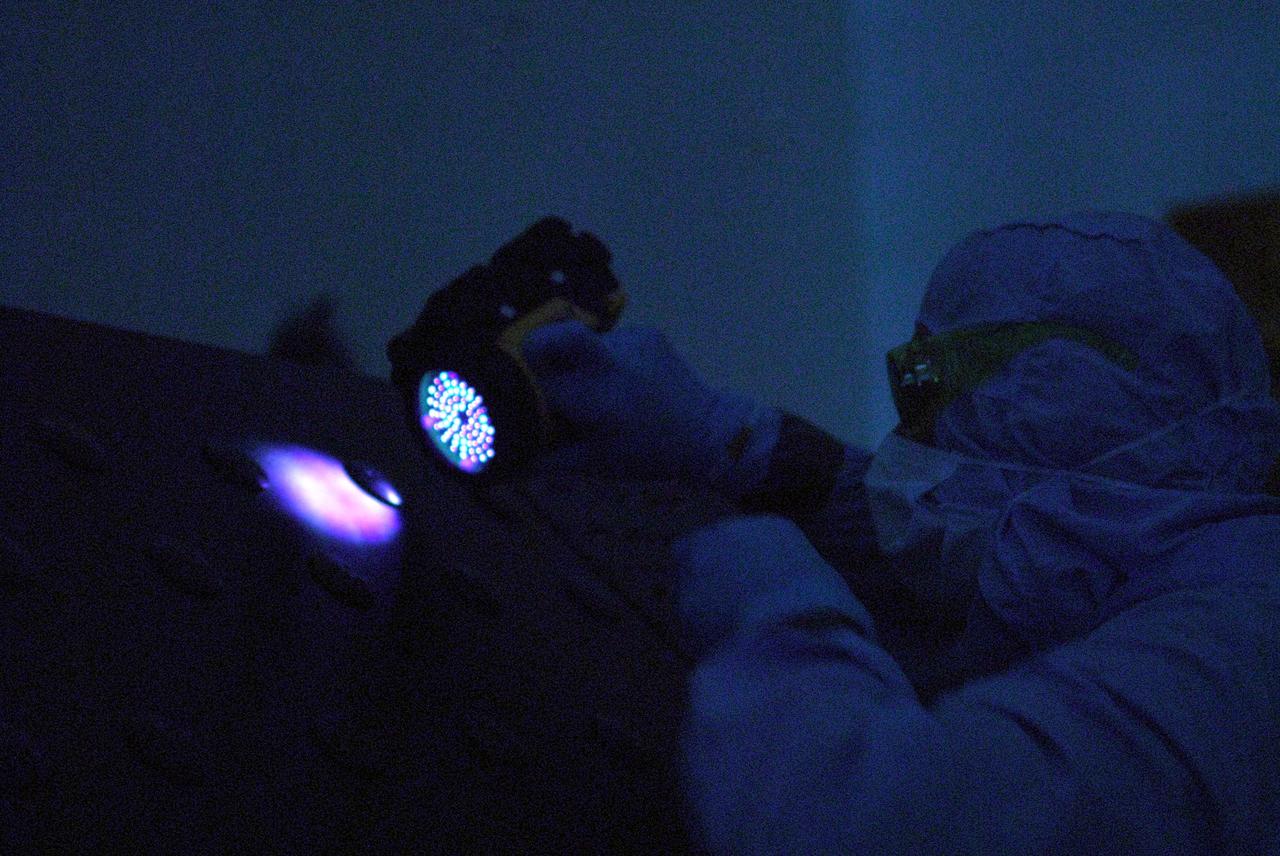
CAPE CANAVERAL, Fla. –In the clean room of the Payload Hazardous Processing Facility at NASA's Kennedy Space Center, a worker from NASA's Goddard Space Flight Center uses black light inspection for a thorough cleaning of the Cosmic Origins Spectrograph, or COS. Black light inspection uses UVA fluorescence to detect possible particulate microcontamination, minute cracks or fluid leaks. The COS will be installed on the Hubble Space Telescope on space shuttle Atlantis' STS-125 mission. COS will be the most sensitive ultraviolet spectrograph ever flown on Hubble and will probe the "cosmic web" - the large-scale structure of the universe whose form is determined by the gravity of dark matter and is traced by galaxies and intergalactic gas. The COS far-ultraviolet channel has a sensitivity 30 times greater than that of previous spectroscopic instruments for the detection of extremely low light levels. Launch of Atlantis on the STS-125 mission is targeted for Oct. 8. Photo credit: NASA/Kim Shiflett
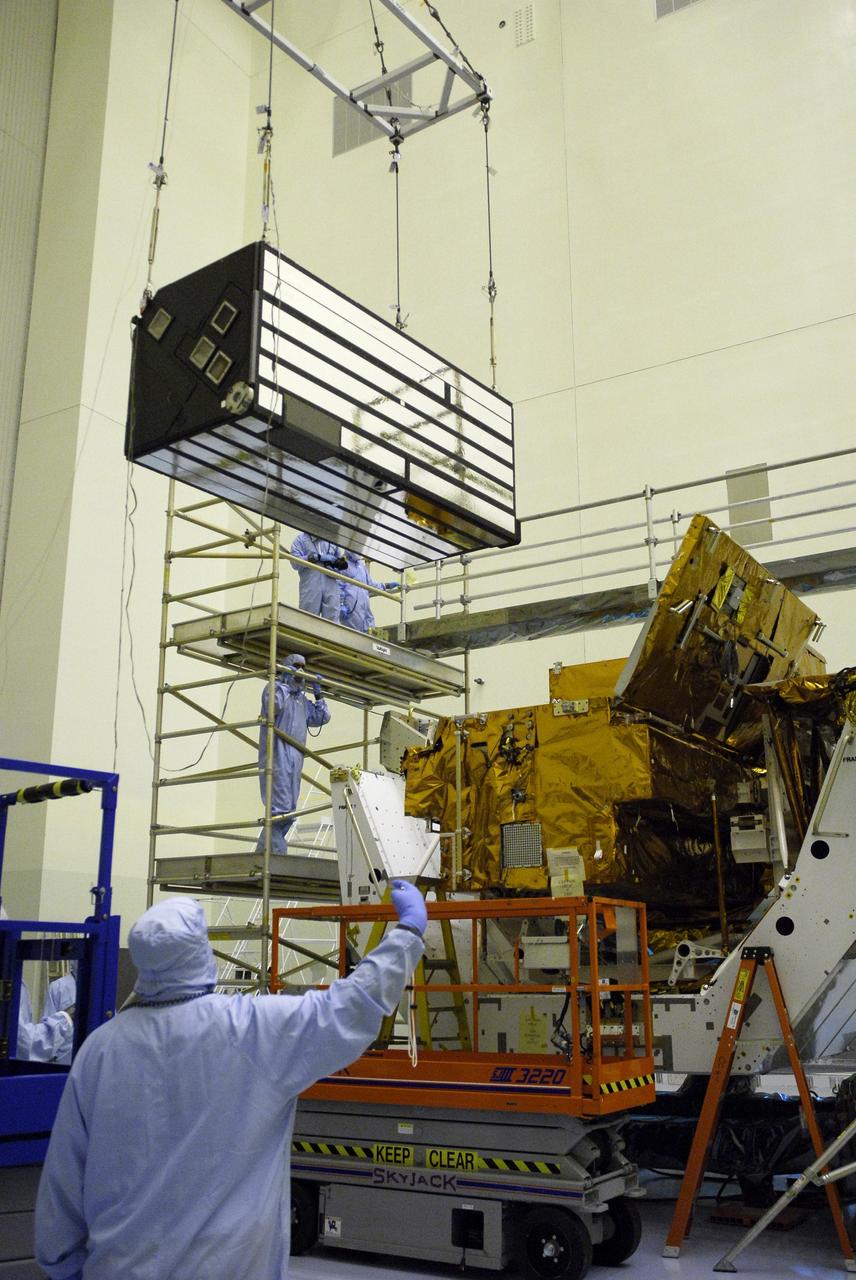
CAPE CANAVERAL, Fla. – In the clean room of the Payload Hazardous Processing Facility at NASA's Kennedy Space Center, an overhead crane lowers the Cosmic Origins Spectrograph, or COS, toward a protective enclosure on the Orbital Replacement Unit Carrier, part of the payload for the fifth and final Hubble servicing mission, STS-125. Other payloads include the Flight Support System, the Super Lightweight Interchangeable Carrier and the Multi-Use Lightweight Equipment, or MULE, carrier. COS will be the most sensitive ultraviolet spectrograph ever flown on Hubble and will probe the "cosmic web" - the large-scale structure of the universe whose form is determined by the gravity of dark matter and is traced by galaxies and intergalactic gas. The COS far-ultraviolet channel has a sensitivity 30 times greater than that of previous spectroscopic instruments for the detection of extremely low light levels. Launch of Atlantis on the STS-125 mission is targeted for Oct. 8. Photo credit: NASA/Kim Shiflett

CAPE CANAVERAL, Fla. –The outside of the Cosmic Origins Spectrograph, or COS, is seen before black light inspection in the clean room of the Payload Hazardous Processing Facility at NASA's Kennedy Space Center. Black light inspection uses UVA fluorescence to detect possible particulate microcontamination, minute cracks or fluid leaks. The COS will be installed on the Hubble Space Telescope on space shuttle Atlantis' STS-125 mission. COS will be the most sensitive ultraviolet spectrograph ever flown on Hubble and will probe the "cosmic web" - the large-scale structure of the universe whose form is determined by the gravity of dark matter and is traced by galaxies and intergalactic gas. The COS far-ultraviolet channel has a sensitivity 30 times greater than that of previous spectroscopic instruments for the detection of extremely low light levels. Launch of Atlantis on the STS-125 mission is targeted for Oct. 8. Photo credit: NASA/Kim Shiflett
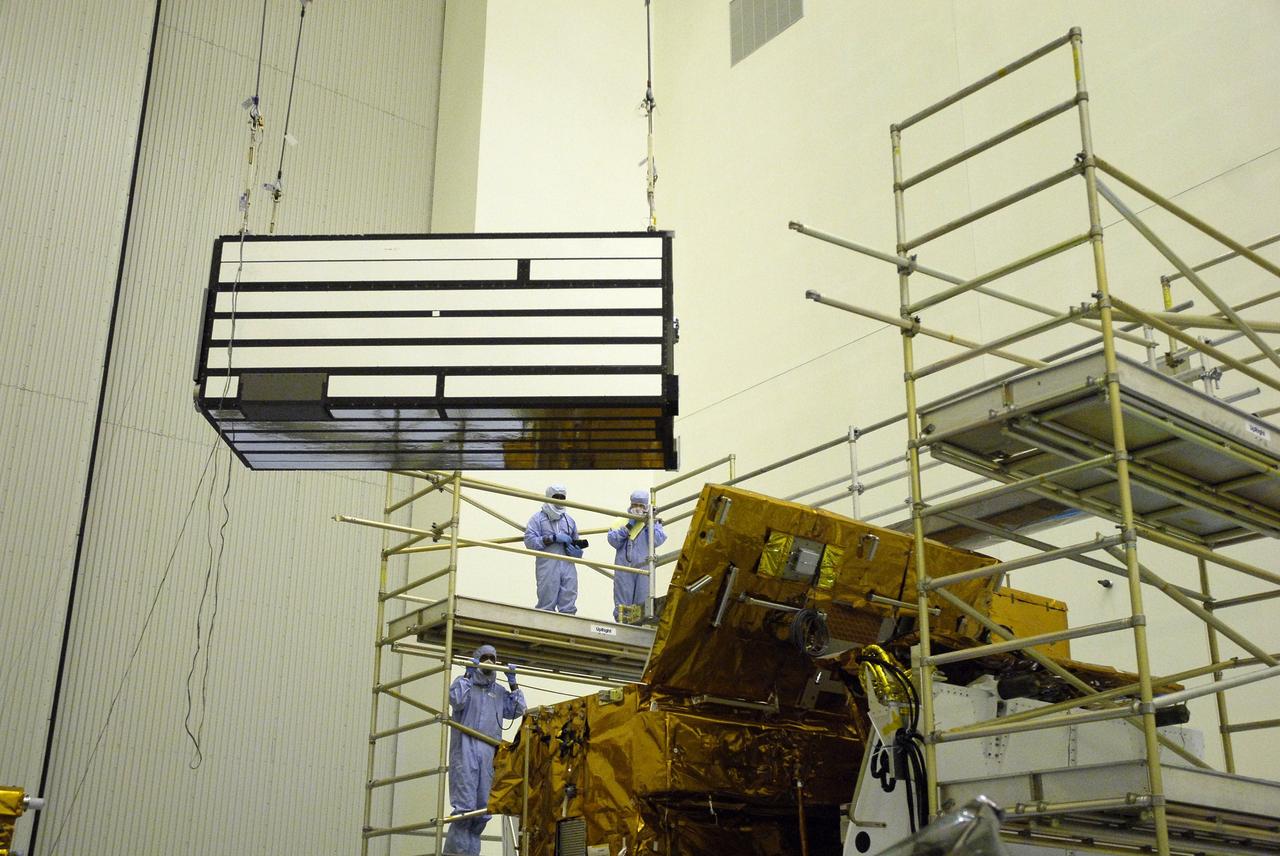
CAPE CANAVERAL, Fla. – In the clean room of the Payload Hazardous Processing Facility at NASA's Kennedy Space Center, an overhead crane lowers the Cosmic Origins Spectrograph, or COS, toward a protective enclosure on the Orbital Replacement Unit Carrier, part of the payload for the fifth and final Hubble servicing mission, STS-125. Other payloads include the Flight Support System, the Super Lightweight Interchangeable Carrier and the Multi-Use Lightweight Equipment, or MULE, carrier. COS will be the most sensitive ultraviolet spectrograph ever flown on Hubble and will probe the "cosmic web" - the large-scale structure of the universe whose form is determined by the gravity of dark matter and is traced by galaxies and intergalactic gas. The COS far-ultraviolet channel has a sensitivity 30 times greater than that of previous spectroscopic instruments for the detection of extremely low light levels. Launch of Atlantis on the STS-125 mission is targeted for Oct. 8. Photo credit: NASA/Kim Shiflett
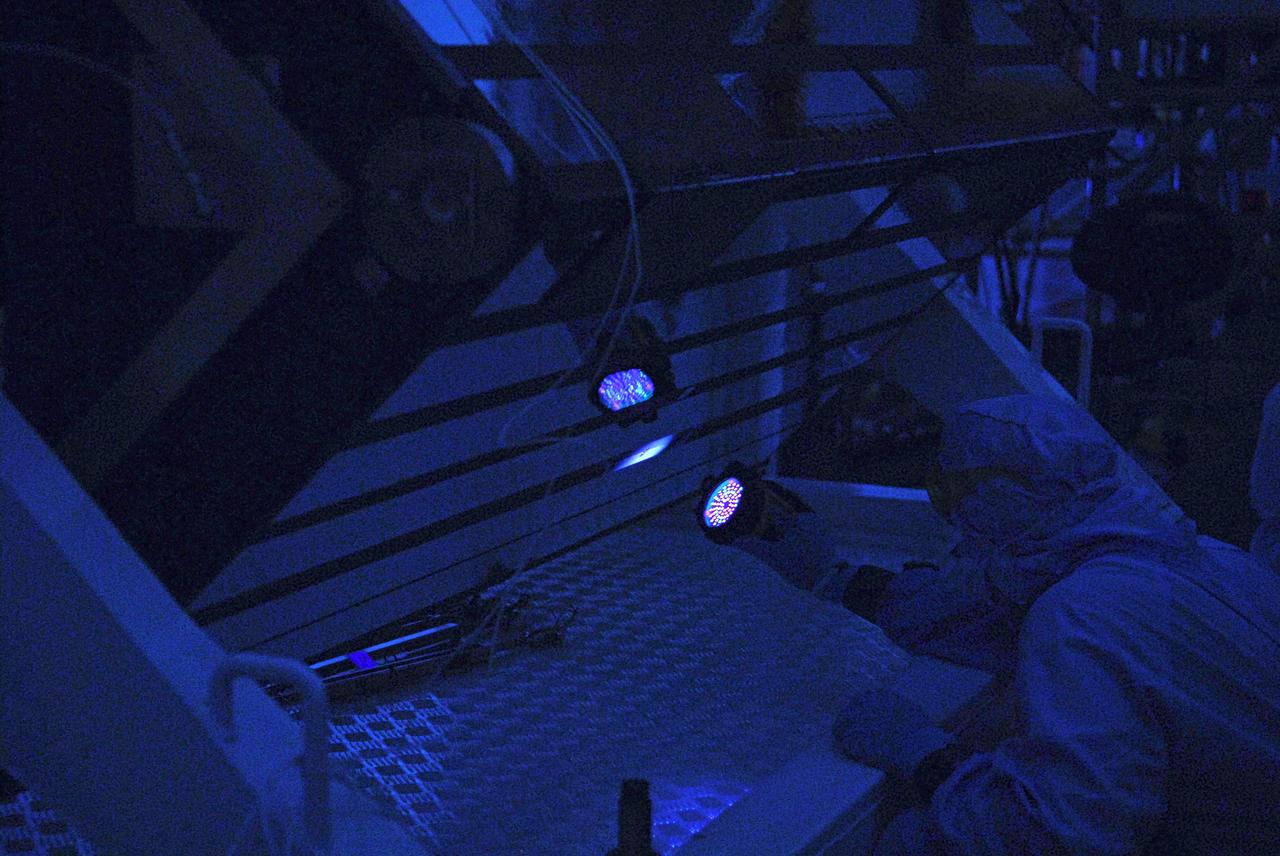
CAPE CANAVERAL, Fla. – In the clean room of the Payload Hazardous Processing Facility at NASA's Kennedy Space Center, a worker from NASA's Goddard Space Flight Center uses black light inspection for a thorough cleaning of the Cosmic Origins Spectrograph, or COS. Black light inspection uses UVA fluorescence to detect possible particulate microcontamination, minute cracks or fluid leaks. The COS will be installed on the Hubble Space Telescope on space shuttle Atlantis' STS-125 mission. COS will be the most sensitive ultraviolet spectrograph ever flown on Hubble and will probe the "cosmic web" - the large-scale structure of the universe whose form is determined by the gravity of dark matter and is traced by galaxies and intergalactic gas. The COS far-ultraviolet channel has a sensitivity 30 times greater than that of previous spectroscopic instruments for the detection of extremely low light levels. Launch of Atlantis on the STS-125 mission is targeted for Oct. 8. Photo credit: NASA/Kim Shiflett
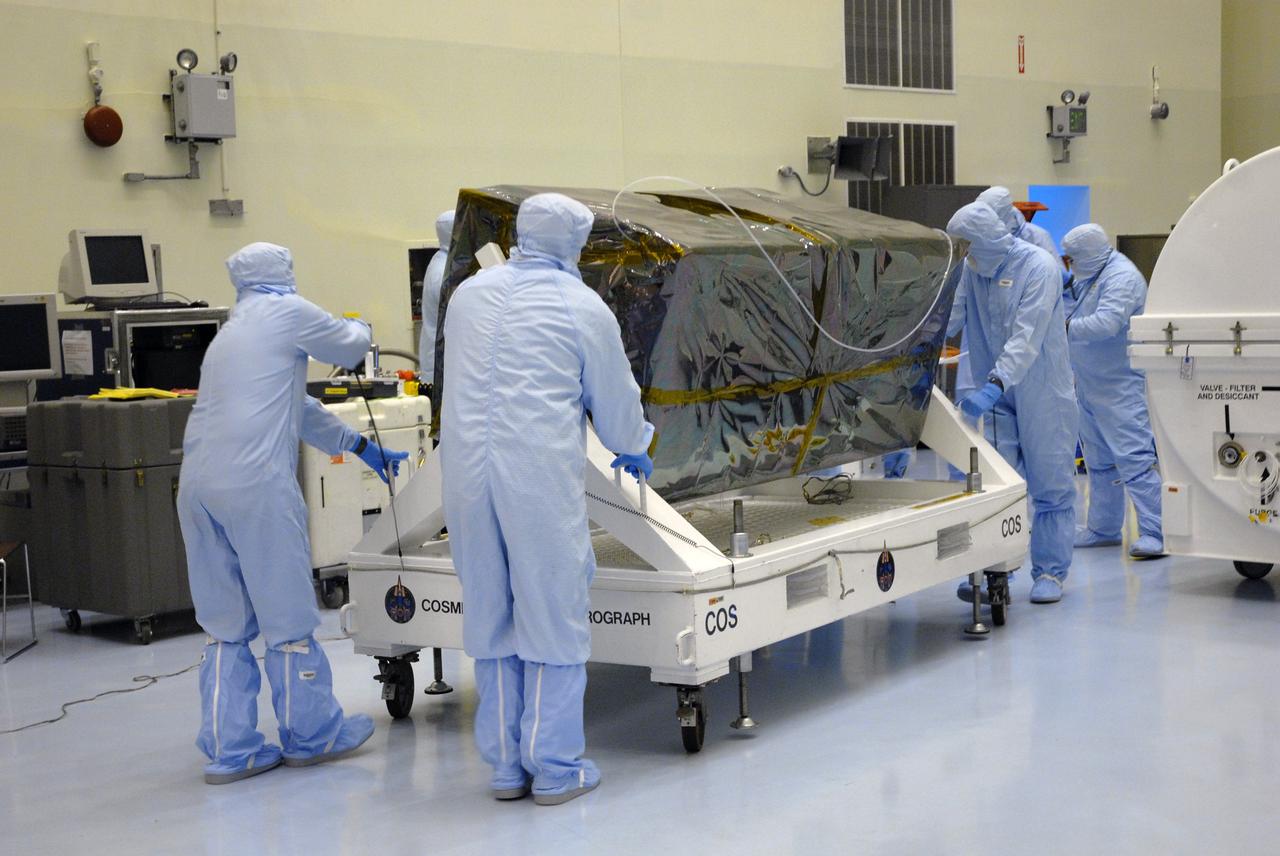
CAPE CANAVERAL, Fla. – At NASA's Kennedy Space Center, workers from NASA's Goddard Space Flight Center roll the Cosmic Origins Spectrograph, or COS, from the airlock, where it was removed from the shipping container, to the clean room of the Payload Hazardous Servicing Facility. The COS will be installed on the Hubble Space Telescope on space shuttle Atlantis' STS-125 mission. COS will be the most sensitive ultraviolet spectrograph ever flown on Hubble and will probe the "cosmic web" - the large-scale structure of the universe whose form is determined by the gravity of dark matter and is traced by galaxies and intergalactic gas. COS's far-ultraviolet channel has a sensitivity 30 times greater than that of previous spectroscopic instruments for the detection of extremely low light levels. Launch of STS-125 is targeted for Oct. 8. Photo credit: NASA/Jack Pfaller

CAPE CANAVERAL, Fla. – At NASA's Kennedy Space Center, workers from NASA's Goddard Space Flight Center roll the Cosmic Origins Spectrograph, or COS, into position in the clean room of the Payload Hazardous Servicing Facility for instrument testing. The COS will be installed on the Hubble Space Telescope on space shuttle Atlantis' STS-125 mission. COS will be the most sensitive ultraviolet spectrograph ever flown on Hubble and will probe the "cosmic web" - the large-scale structure of the universe whose form is determined by the gravity of dark matter and is traced by galaxies and intergalactic gas. COS's far-ultraviolet channel has a sensitivity 30 times greater than that of previous spectroscopic instruments for the detection of extremely low light levels. Launch of STS-125 is targeted for Oct. 8. Photo credit: NASA/Jack Pfaller
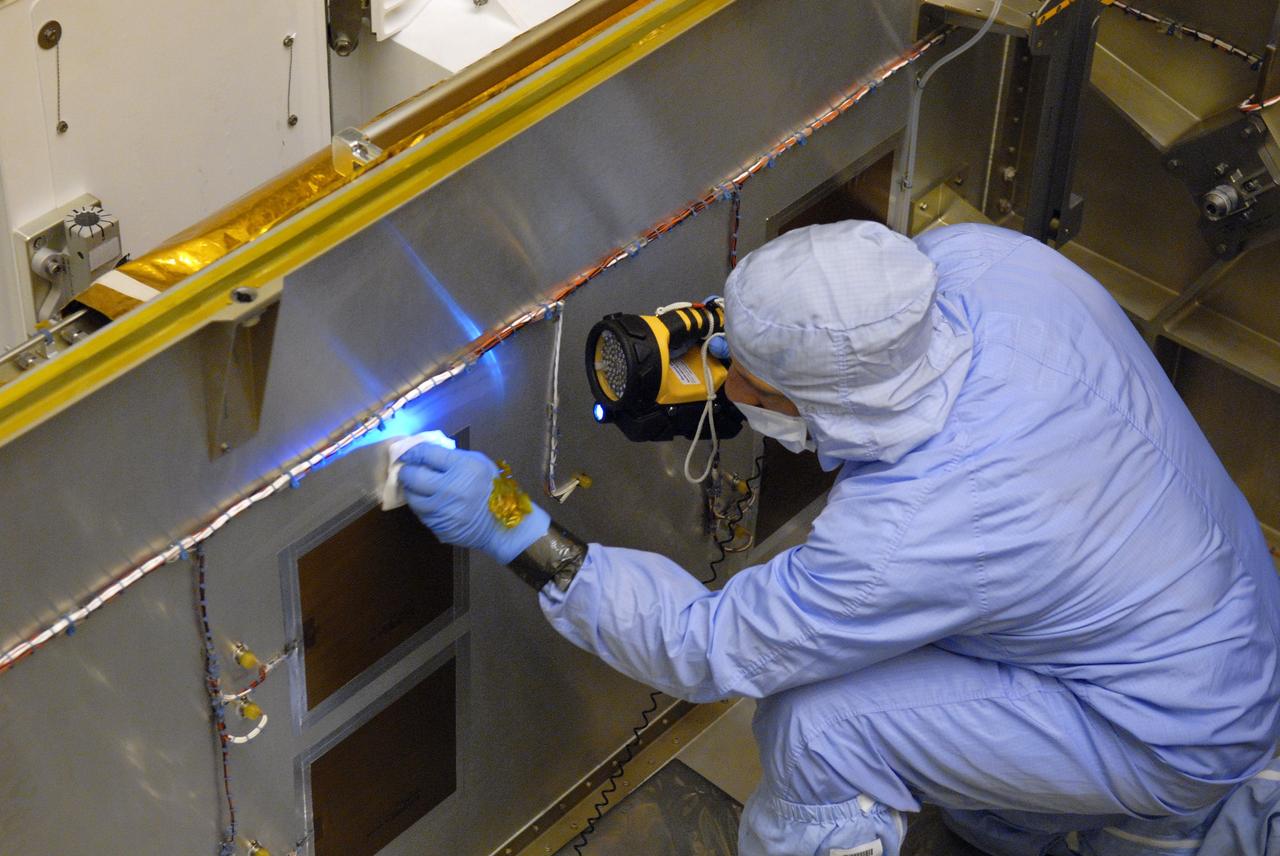
CAPE CANAVERAL, Fla. – In the clean room of the Payload Hazardous Processing Facility at NASA's Kennedy Space Center, workers from NASA's Goddard Space Flight Center use black light inspection for a thorough cleaning of the protective carrier for the Cosmic Origins Spectrograph, or COS. Black light inspection uses UVA fluorescence to detect possible particulate microcontamination, minute cracks or fluid leaks. The COS will be installed on the Hubble Space Telescope on space shuttle Atlantis' STS-125 mission. COS will be the most sensitive ultraviolet spectrograph ever flown on Hubble and will probe the "cosmic web" - the large-scale structure of the universe whose form is determined by the gravity of dark matter and is traced by galaxies and intergalactic gas. The COS far-ultraviolet channel has a sensitivity 30 times greater than that of previous spectroscopic instruments for the detection of extremely low light levels. Launch of Atlantis on the STS-125 mission is targeted for Oct. 8. Photo credit: NASA/Kim Shiflett
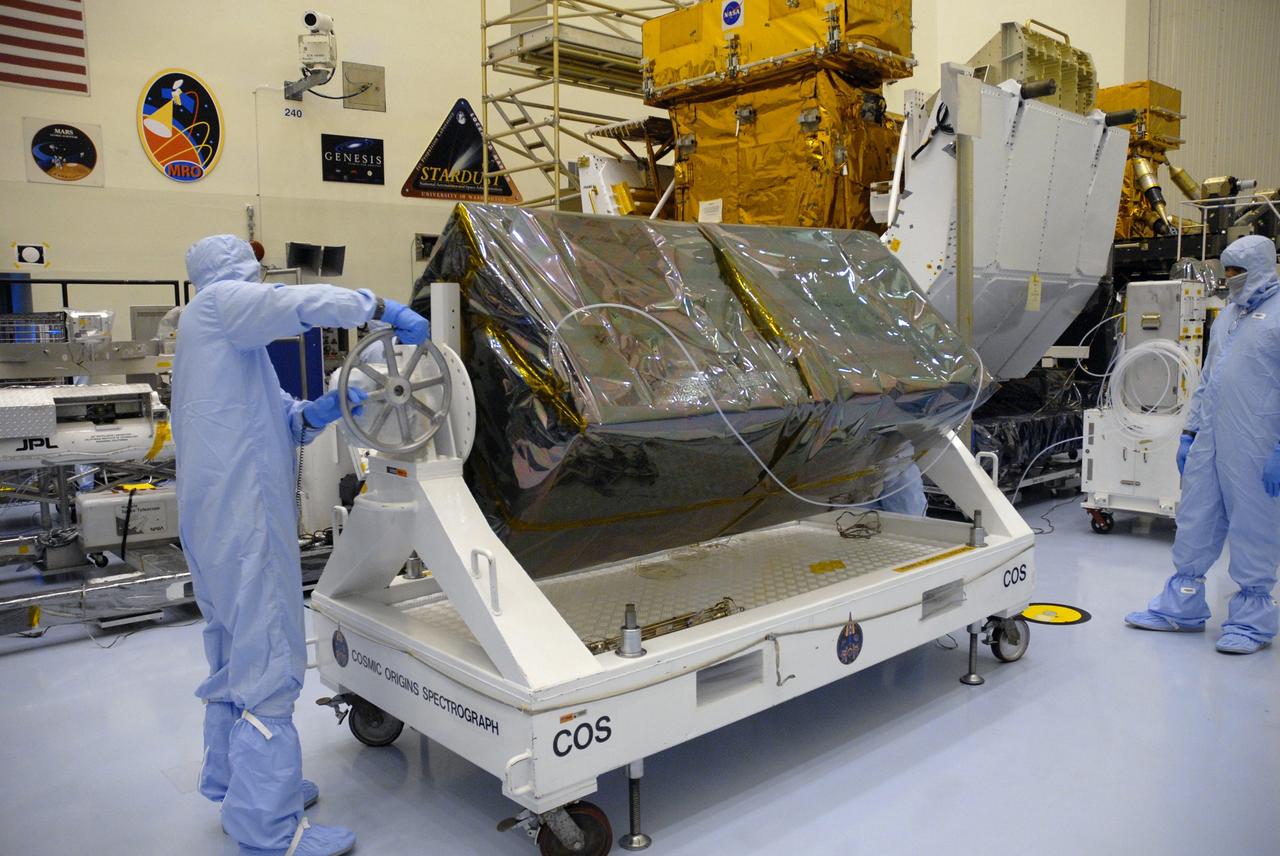
CAPE CANAVERAL, Fla. – At NASA's Kennedy Space Center, workers from NASA's Goddard Space Flight Center prepare the Cosmic Origins Spectrograph, or COS, for instrument testing and integration with the Flight Support System carrier in the clean room of the Payload Hazardous Servicing Facility. The COS will be installed on the Hubble Space Telescope on space shuttle Atlantis' STS-125 mission. COS will be the most sensitive ultraviolet spectrograph ever flown on Hubble and will probe the "cosmic web" - the large-scale structure of the universe whose form is determined by the gravity of dark matter and is traced by galaxies and intergalactic gas. COS's far-ultraviolet channel has a sensitivity 30 times greater than that of previous spectroscopic instruments for the detection of extremely low light levels. Launch of STS-125 is targeted for Oct. 8. Photo credit: NASA/Jack Pfaller
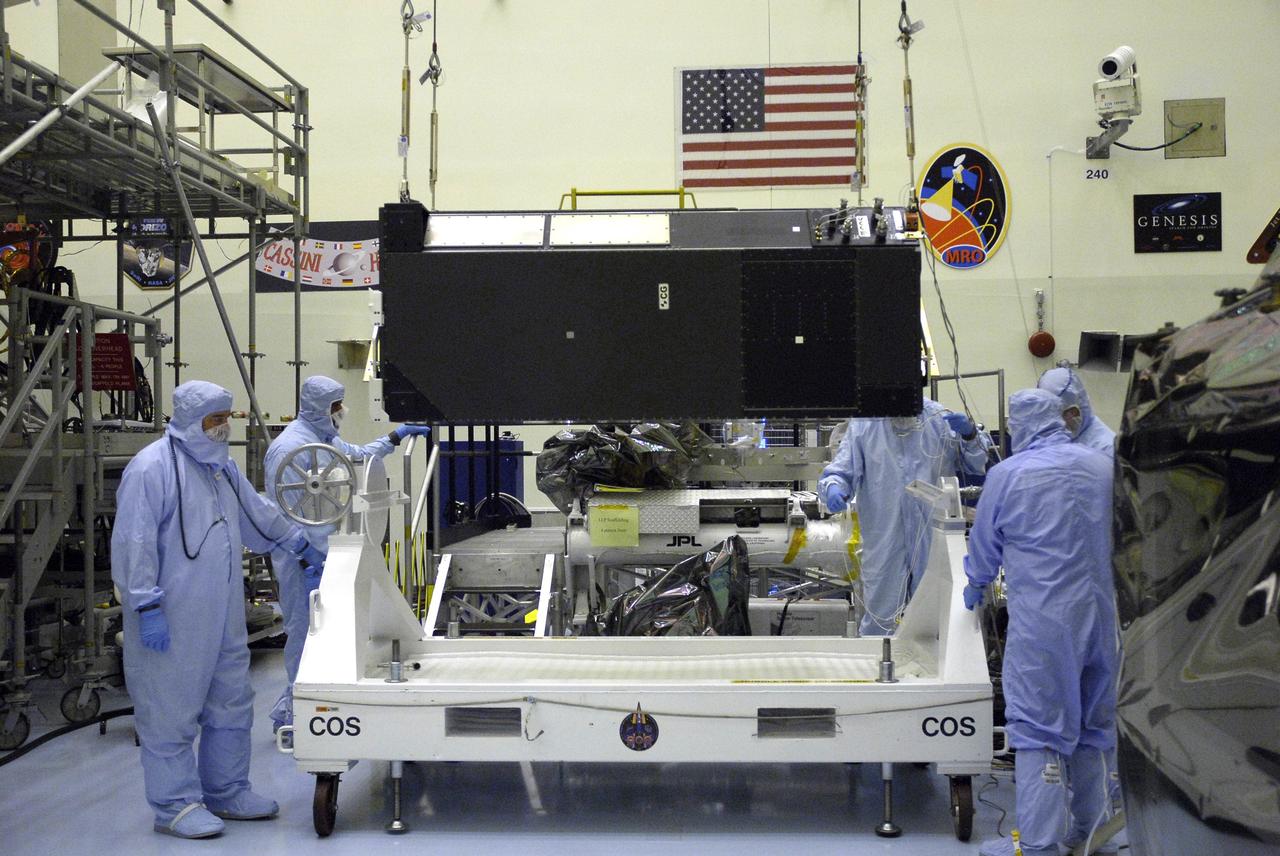
CAPE CANAVERAL, Fla. – In the clean room of the Payload Hazardous Processing Facility at NASA's Kennedy Space Center, an overhead crane lifts the Cosmic Origins Spectrograph, or COS. The COS is being lifted and moved to a protective enclosure on the Orbital Replacement Unit Carrier, part of the payload for the fifth and final Hubble servicing mission, STS-125. Other payloads include the Flight Support System, the Super Lightweight Interchangeable Carrier and the Multi-Use Lightweight Equipment, or MULE, carrier. COS will be the most sensitive ultraviolet spectrograph ever flown on Hubble and will probe the "cosmic web" - the large-scale structure of the universe whose form is determined by the gravity of dark matter and is traced by galaxies and intergalactic gas. The COS far-ultraviolet channel has a sensitivity 30 times greater than that of previous spectroscopic instruments for the detection of extremely low light levels. Launch of Atlantis on the STS-125 mission is targeted for Oct. 8. Photo credit: NASA/Kim Shiflett
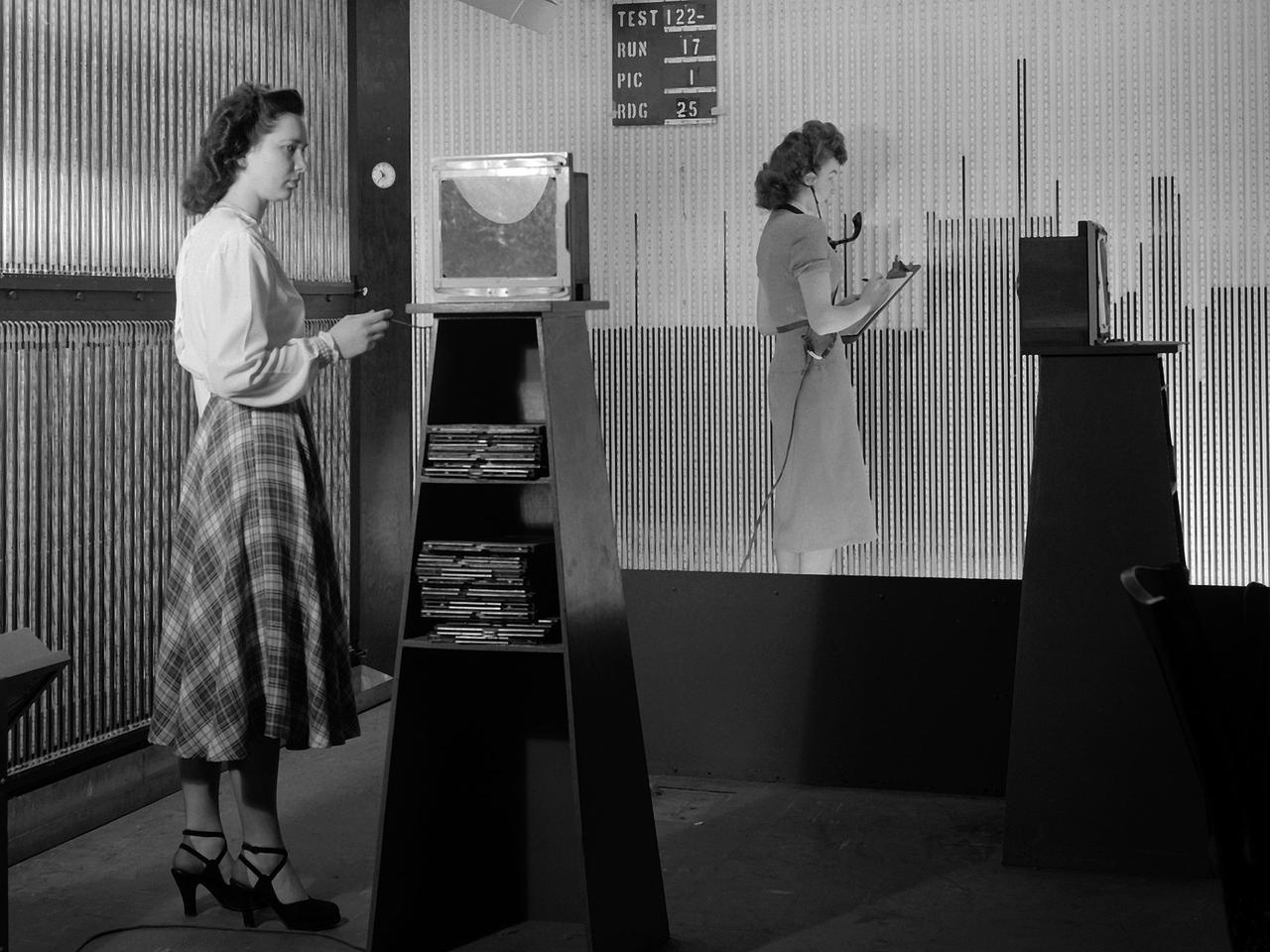
Female computers at the National Advisory Committee for Aeronautics (NACA) Lewis Flight Propulsion Laboratory copy pressure readings from rows of manometers below the 18- by 18-inch Supersonic Wind Tunnel. The computers obtained test data from the manometers and other instruments, made the initial computations, and plotted the information graphically. Based on these computations, the researchers planned their next test or summarized their findings in a report. Manometers were mercury-filled glass tubes that were used to indicate different pressure levels from inside the test facility or from the test article. Manometers look and function very similarly to thermometers. Dozens of pressure sensing instruments were installed for each test. Each was connected to a manometer tube located inside the control room. The mercury inside the manometer rose and fell with the pressure levels. The dark mercury can be seen in this photograph at different levels within the tubes. Since this activity was dynamic, it was necessary to note the levels at given points during the test. This was done using both computer notations and photography.
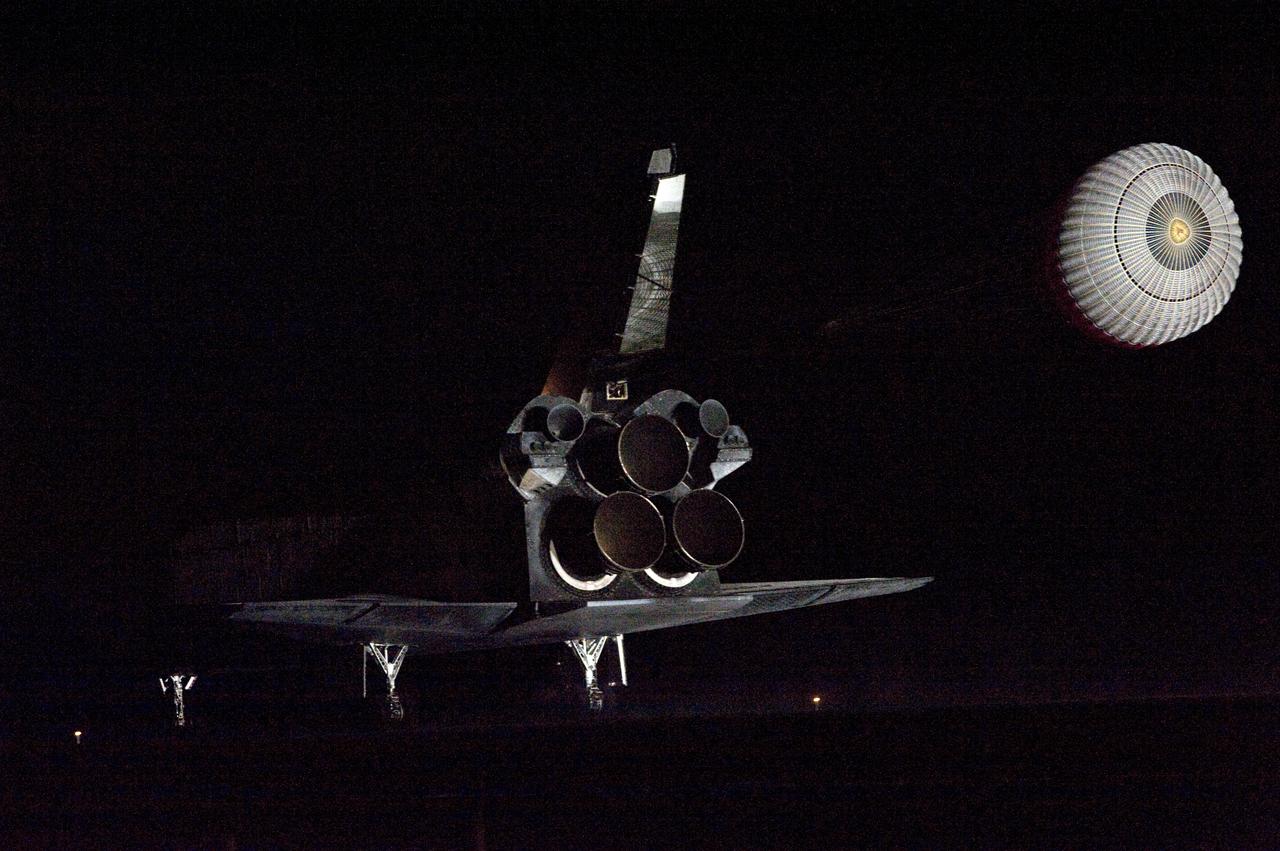
CAPE CANAVERAL, Fla. - Darkness shrouds space shuttle Endeavour as it touches down on Runway 15 at the Shuttle Landing Facility at NASA's Kennedy Space Center in Florida. After 14 days in space, Endeavour's 5.7-million-mile STS-130 mission is completed on orbit 217. Main gear touchdown was at 10:20:31 p.m. EST followed by nose gear touchdown at 10:20:39 p.m. and wheels stop at 10:22:10 p.m. It was the 23rd night landing in shuttle history and the 17th at Kennedy. Aboard are Commander George Zamka; Pilot Terry Virts; and Mission Specialists Robert Behnken, Nicholas Patrick, Kathryn Hire and Stephen Robinson. During Endeavour's STS-130 mission, astronauts installed the Tranquility node, a module that provides additional room for crew members and many of the station's life support and environmental control systems. Attached to Tranquility is a cupola with seven windows that provide a panoramic view of Earth, celestial objects and visiting spacecraft. The module was built in Turin, Italy, by Thales Alenia Space for the European Space Agency. The orbiting laboratory is approximately 90 percent complete now in terms of mass. STS-130 was the 24th flight for Endeavour, the 32nd shuttle mission devoted to ISS assembly and maintenance, and the 130th shuttle mission to date. For information on the STS-130 mission and crew, visit http:__www.nasa.gov_mission_pages_shuttle_shuttlemissions_sts130_index.html. Photo credit: NASA_Tom Joseph
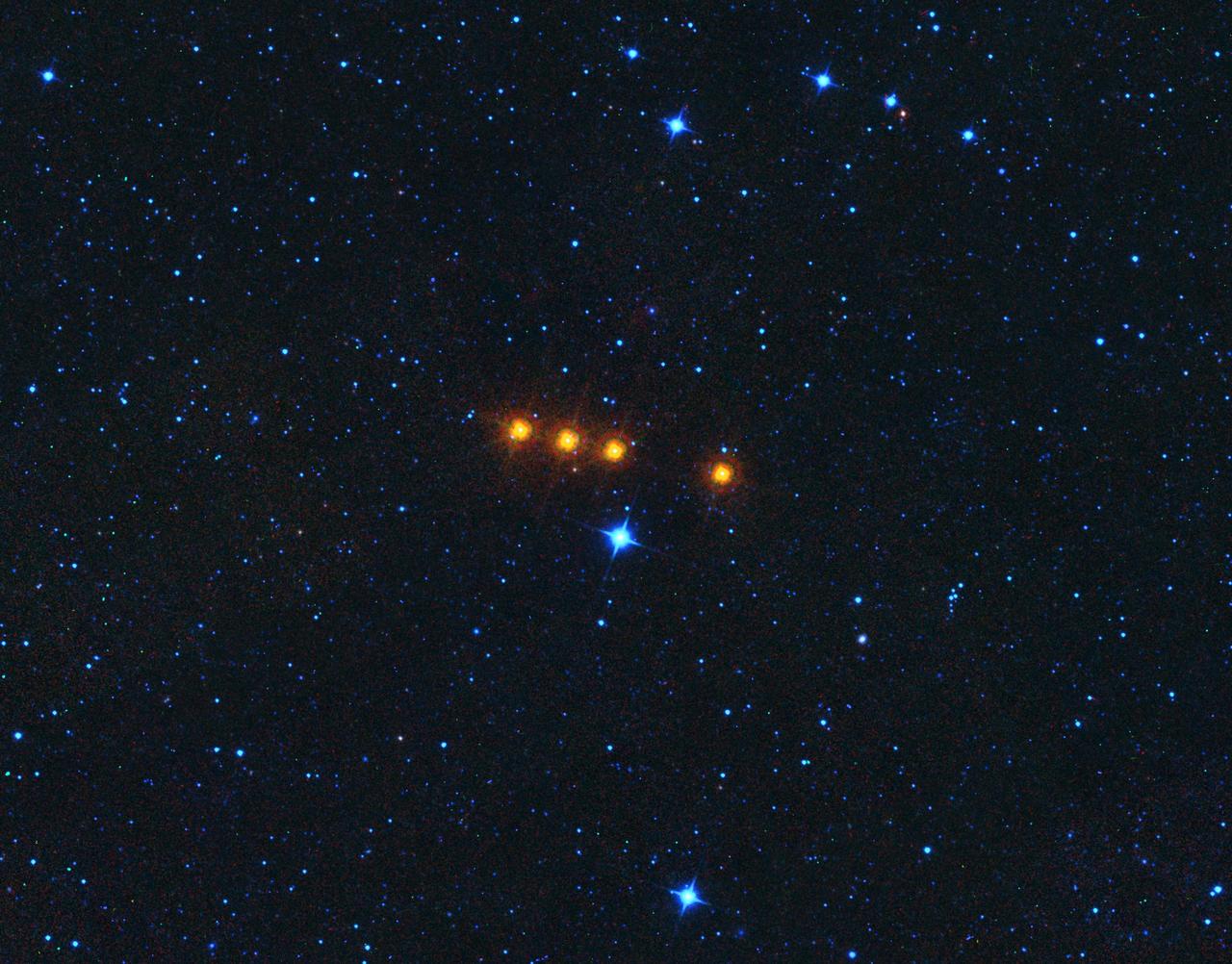
The asteroid Euphrosyne glides across a field of background stars in this time-lapse view from NASA's WISE spacecraft. WISE obtained the images used to create this view over a period of about a day around May 17, 2010, during which it observed the asteroid four times. Because WISE (renamed NEOWISE in 2013) is an infrared telescope, it senses heat from asteroids. Euphrosyne is quite dark in visible light, but glows brightly at infrared wavelengths. This view is a composite of images taken at four different infrared wavelengths: 3.4 microns (color-coded blue), 4.6 microns (cyan), 12 microns (green) and 22 microns (red). The moving asteroid appears as a string of red dots because it is much cooler than the distant background stars. Stars have temperatures in the thousands of degrees, but the asteroid is cooler than room temperature. Thus the stars are represented by shorter wavelength (hotter) blue colors in this view, while the asteroid is shown in longer wavelength (cooler) reddish colors. The WISE spacecraft was put into hibernation in 2011 upon completing its goal of surveying the entire sky in infrared light. WISE cataloged three quarters of a billion objects, including asteroids, stars and galaxies. In August 2013, NASA decided to reinstate the spacecraft on a mission to find and characterize more asteroids. http://photojournal.jpl.nasa.gov/catalog/PIA19645
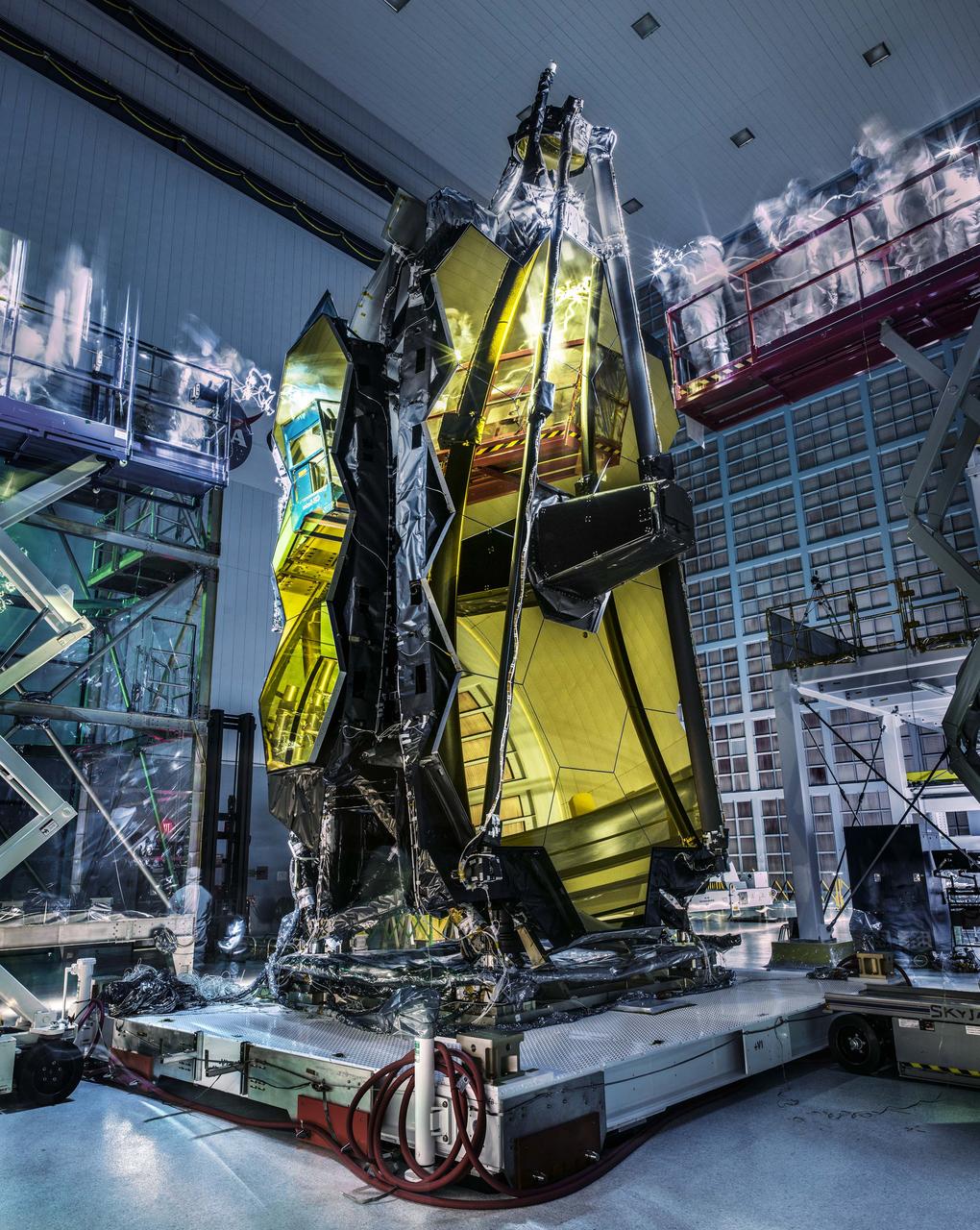
What happens when the lights are turned out in the enormous clean room that currently houses NASA's James Webb Space Telescope? The technicians who are inspecting the telescope and its expansive golden mirrors look like ghostly wraiths in this image as they conduct a "lights out inspection" in the Spacecraft Systems Development and Integration Facility (SSDIF) at NASA's Goddard Space Flight Center in Greenbelt, Maryland. The clean room lights were turned off to inspect the telescope after it experienced vibration and acoustic testing. The contamination control engineer used a bright flashlight and special ultraviolet flashlights to inspect for contamination because it's easier to find in the dark. NASA photographer Chris Gunn said "The people have a ghostly appearance because it's a long exposure." He left the camera's shutter open for a longer than normal time so the movement of the technicians appear as a blur. He also used a special light "painting" technique to light up the primary mirror. The James Webb Space Telescope is the scientific successor to NASA's Hubble Space Telescope. It will be the most powerful space telescope ever built. Webb is an international project led by NASA with its partners, ESA (European Space Agency) and the Canadian Space Agency. For more information about the Webb telescope visit: <a href="http://www.jwst.nasa.gov" rel="nofollow">www.jwst.nasa.gov</a> or <a href="http://www.nasa.gov/webb" rel="nofollow">www.nasa.gov/webb</a> Image Credit: NASA/Chris Gunn
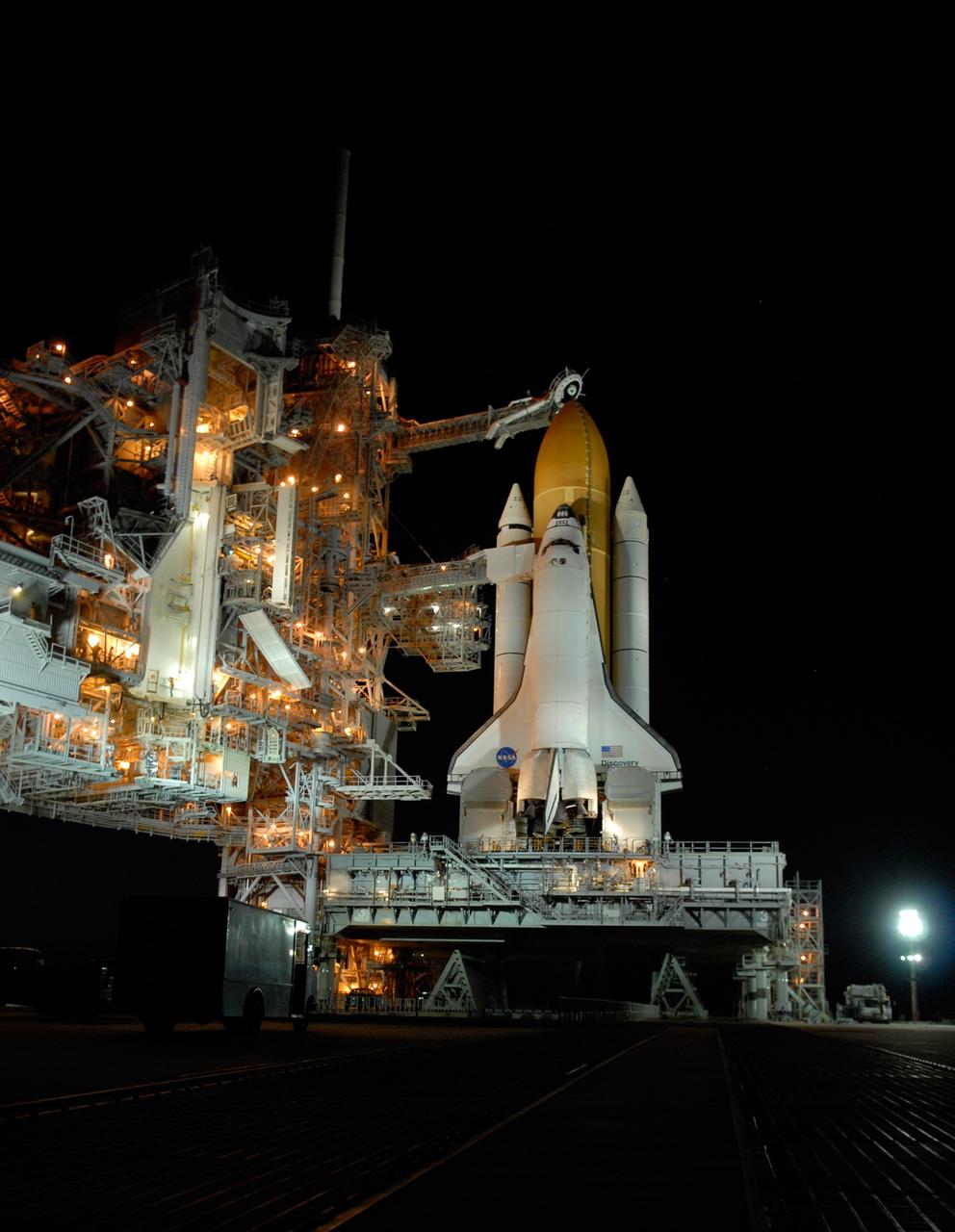
CAPE CANAVERAL, Fla. -- Against the dark sky, lights bathe space shuttle Discovery, revealed after rollback of the rotating service structure in preparation for launch on the STS-124 mission. First motion was at 8:33 p.m. and rollback was complete at 9:07 p.m. The rotating structure provides protected access to the shuttle for changeout and servicing of payloads at the pad. It is supported by a rotating bridge that pivots on a vertical axis on the west side of the pad's flame trench. After the RSS is rolled back, the orbiter is ready for fuel cell activation and external tank cryogenic propellant loading operations. The pad is cleared to the perimeter gate for operations to fill the external tank with about 500,000 gallons of cryogenic propellants used by the shuttle’s main engines. This is done at the pad approximately eight hours before the scheduled launch. Above the orange external tank is the oxygen vent hood, called the "beanie cap," at the end of the gaseous oxygen vent arm extending from the fixed service structure. Vapors are created as the liquid oxygen in the external tank boil off. The hood vents the gaseous oxygen vapors away from the space shuttle vehicle. Below is the orbiter access arm with the White Room at the end, flush against the shuttle. The White Room provides access into the shuttle. The STS-124 mission is the second of three flights launching components to complete the Japan Aerospace Exploration Agency's Kibo laboratory. The shuttle crew will install Kibo's large Japanese Pressurized Module and its remote manipulator system, or RMS. The 14-day flight includes three spacewalks. Launch is scheduled for 5:02 p.m. May 31. Photo credit: NASA/Troy Cryder
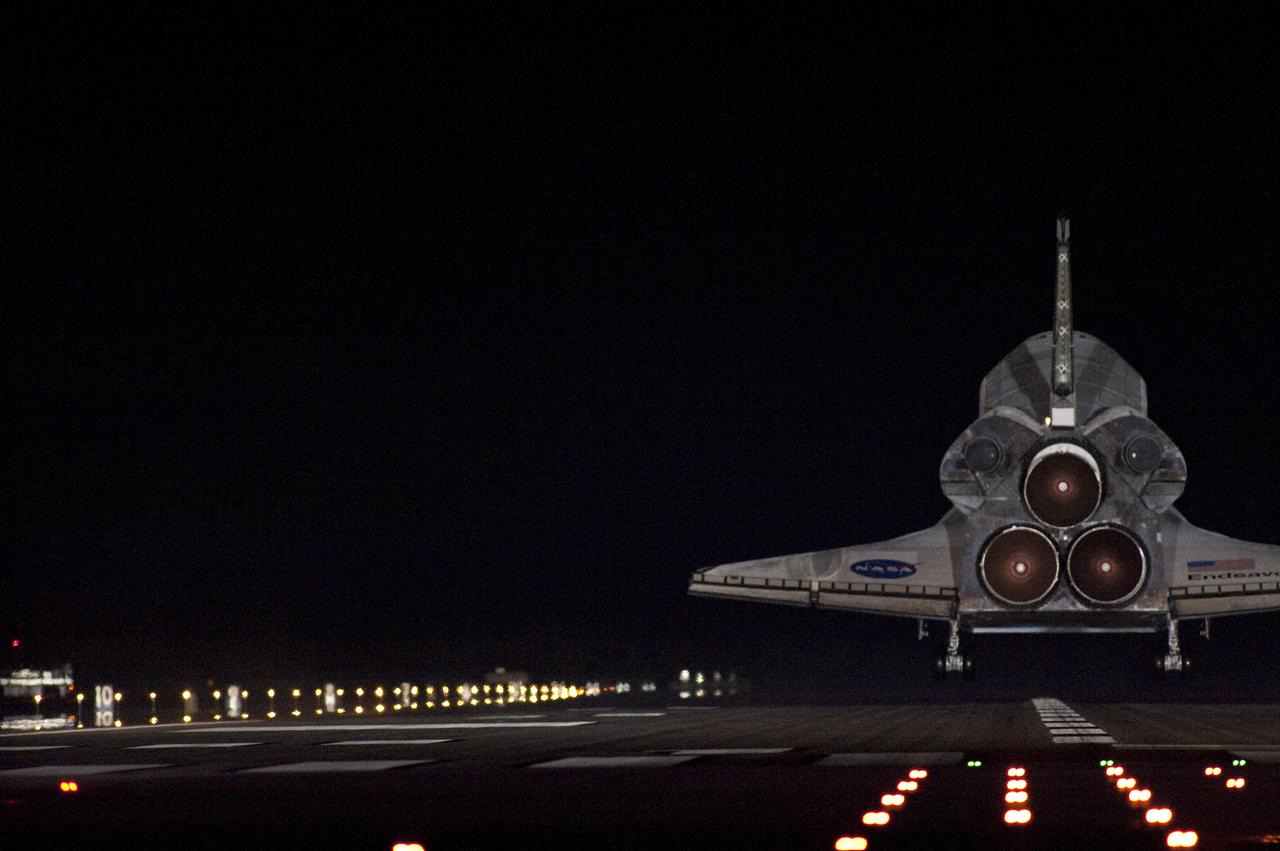
CAPE CANAVERAL, Fla. - Under the veil of darkness, space shuttle Endeavour nears touchdown on Runway 15 at the Shuttle Landing Facility at NASA's Kennedy Space Center in Florida after 14 days in space, completing the 5.7-million-mile STS-130 mission to the International Space Station on orbit 217. Main gear touchdown was at 10:20:31 p.m. EST followed by nose gear touchdown at 10:20:39 p.m. and wheels stop at 10:22:10 p.m. It was the 23rd night landing in shuttle history and the 17th at Kennedy. Aboard are Commander George Zamka; Pilot Terry Virts; and Mission Specialists Robert Behnken, Nicholas Patrick, Kathryn Hire and Stephen Robinson. During Endeavour's STS-130 mission, astronauts installed the Tranquility node, a module that provides additional room for crew members and many of the station's life support and environmental control systems. Attached to Tranquility is a cupola with seven windows that provide a panoramic view of Earth, celestial objects and visiting spacecraft. The module was built in Turin, Italy, by Thales Alenia Space for the European Space Agency. The orbiting laboratory is approximately 90 percent complete now in terms of mass. STS-130 was the 24th flight for Endeavour, the 32nd shuttle mission devoted to ISS assembly and maintenance, and the 130th shuttle mission to date. For information on the STS-130 mission and crew, visit http:__www.nasa.gov_mission_pages_shuttle_shuttlemissions_sts130. Photo credit: NASA_Sandra Joseph and Kevin O'Connell
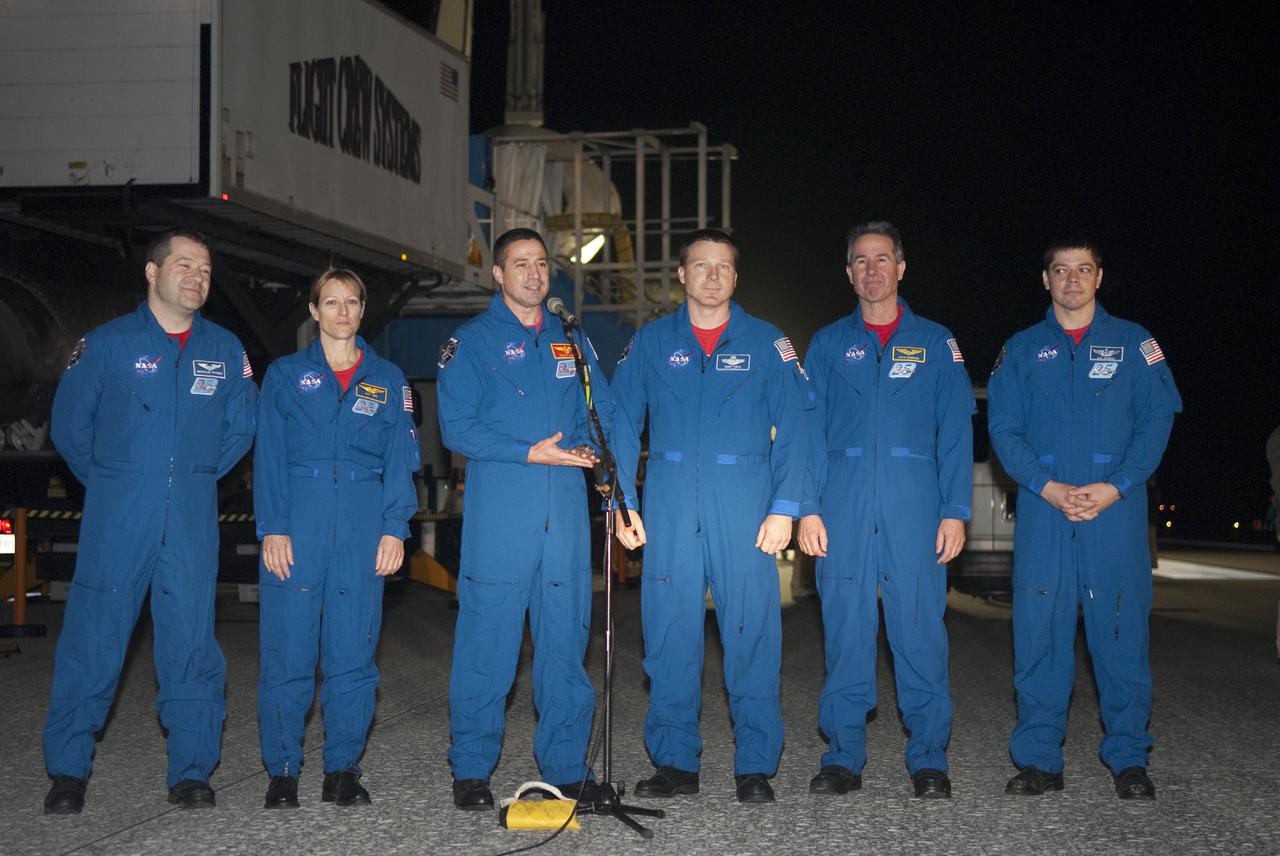
CAPE CANAVERAL, Fla. - 'We're back as we came. It's dark outside,' quips STS-130 Commander George Zamka following space shuttle Endeavour's successful landing on Runway 15 at the Shuttle Landing Facility at NASA's Kennedy Space Center in Florida. From left are Mission Specialists Nicholas Patrick and Kathryn Hire, Zamka, Pilot Terry Virts, and Mission Specialists Stephen Robinson and Robert Behnken. After 14 days in space, Endeavour's 5.7-million-mile STS-130 mission was completed on orbit 217. Main gear touchdown was at 10:20:31 p.m. EST followed by nose gear touchdown at 10:20:39 p.m. and wheels stop at 10:22:10 p.m. It was the 23rd night landing in shuttle history and the 17th at Kennedy. During Endeavour's STS-130 mission, astronauts installed the Tranquility node, a module that provides additional room for crew members and many of the station's life support and environmental control systems. Attached to Tranquility is a cupola with seven windows that provide a panoramic view of Earth, celestial objects and visiting spacecraft. The module was built in Turin, Italy, by Thales Alenia Space for the European Space Agency. The orbiting laboratory is approximately 90 percent complete now in terms of mass. STS-130 was the 24th flight for Endeavour, the 32nd shuttle mission devoted to ISS assembly and maintenance, and the 130th shuttle mission to date. For information on the STS-130 mission and crew, visit http:__www.nasa.gov_mission_pages_shuttle_shuttlemissions_sts130_index.html. Photo credit: NASA_Kim Shiflett

The primary mirror of NASA's James Webb Space Telescope consisting of 18 hexagonal mirrors looks like a giant puzzle piece standing in the massive clean room of NASA's Goddard Space Flight Center in Greenbelt, Maryland. Appropriately, combined with the rest of the observatory, the mirrors will help piece together puzzles scientists have been trying to solve throughout the cosmos. Webb's primary mirror will collect light for the observatory in the scientific quest to better understand our solar system and beyond. Using these mirrors and Webb's infrared vision scientists will peer back over 13.5 billion years to see the first stars and galaxies forming out of the darkness of the early universe. Unprecedented infrared sensitivity will help astronomers to compare the faintest, earliest galaxies to today's grand spirals and ellipticals, helping us to understand how galaxies assemble over billions of years. Webb will see behind cosmic dust clouds to see where stars and planetary systems are being born. It will also help reveal information about atmospheres of planets outside our solar system, and perhaps even find signs of the building blocks of life elsewhere in the universe. The Webb telescope was mounted upright after a "center of curvature" test conducted at Goddard. This initial center of curvature test ensures the integrity and accuracy, and test will be repeated later to verify those same properties after the structure undergoes launch environment testing. In the photo, two technicians stand before the giant primary mirror. For information on the Webb's Center of Curvature test, visit: <a href="http://go.nasa.gov/2fidD9S" rel="nofollow">go.nasa.gov/2fidD9S</a> Credit: NASA/Goddard/Chris Gunn <b><a href="http://www.nasa.gov/audience/formedia/features/MP_Photo_Guidelines.html" rel="nofollow">NASA image use policy.</a></b> <b><a href="http://www.nasa.gov/centers/goddard/home/index.html" rel="nofollow">NASA Goddard Space Flight Center</a></b> enables NASA’s mission through four scientific endeavors: Earth Science, Heliophysics, Solar System Exploration, and Astrophysics. Goddard plays a leading role in NASA’s accomplishments by contributing compelling scientific knowledge to advance the Agency’s mission. <b>Follow us on <a href="http://twitter.com/NASAGoddardPix" rel="nofollow">Twitter</a></b> <b>Like us on <a href="http://www.facebook.com/pages/Greenbelt-MD/NASA-Goddard/395013845897?ref=tsd" rel="nofollow">Facebook</a></b> <b>Find us on <a href="http://instagrid.me/nasagoddard/?vm=grid" rel="nofollow">Instagram</a></b>
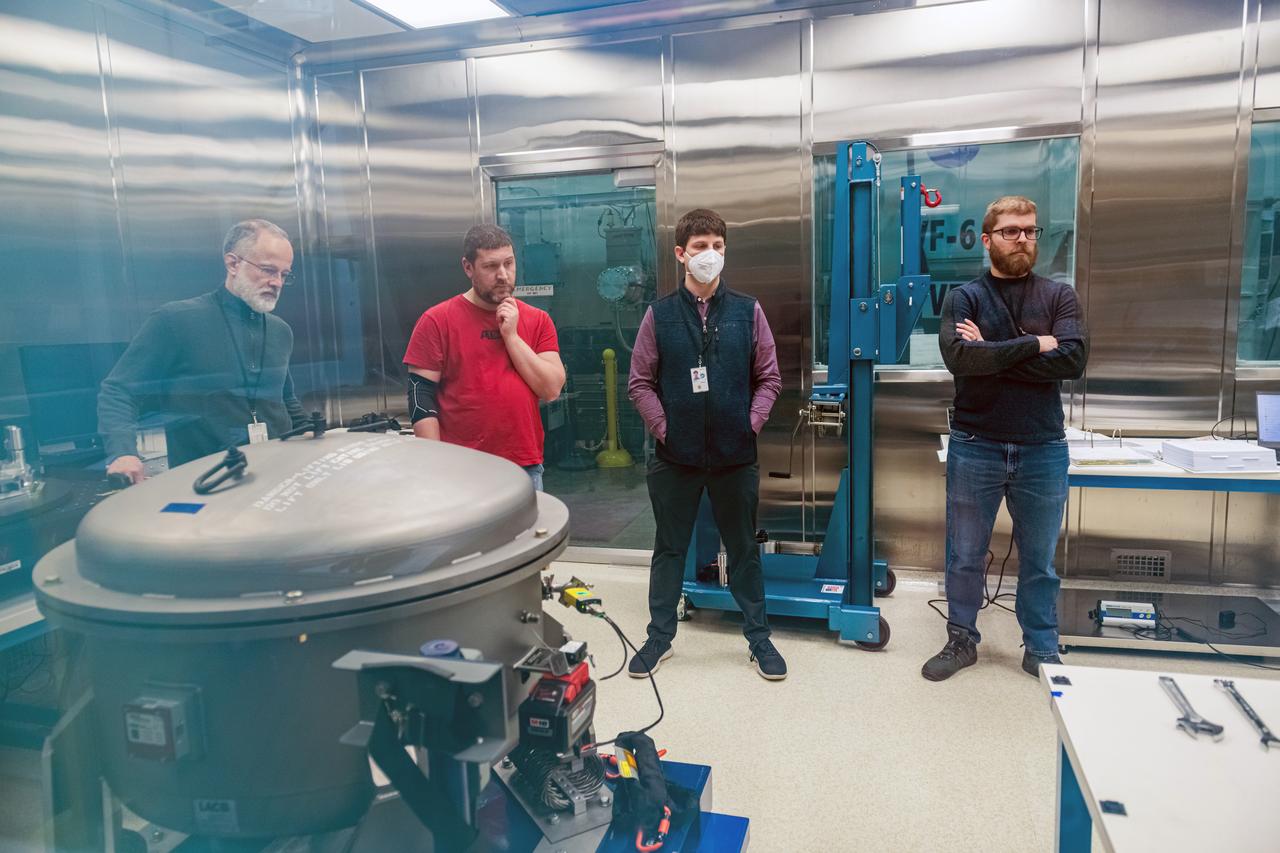
NASA Glenn Research Center has received the first of three Advanced Electric Propulsion System (AEPS) thrusters for the Gateway lunar space station. Built by L3Harris Technologies, the thruster will undergo testing before integration with Gateway’s Power and Propulsion Element, launching with the HALO module ahead of Artemis IV.