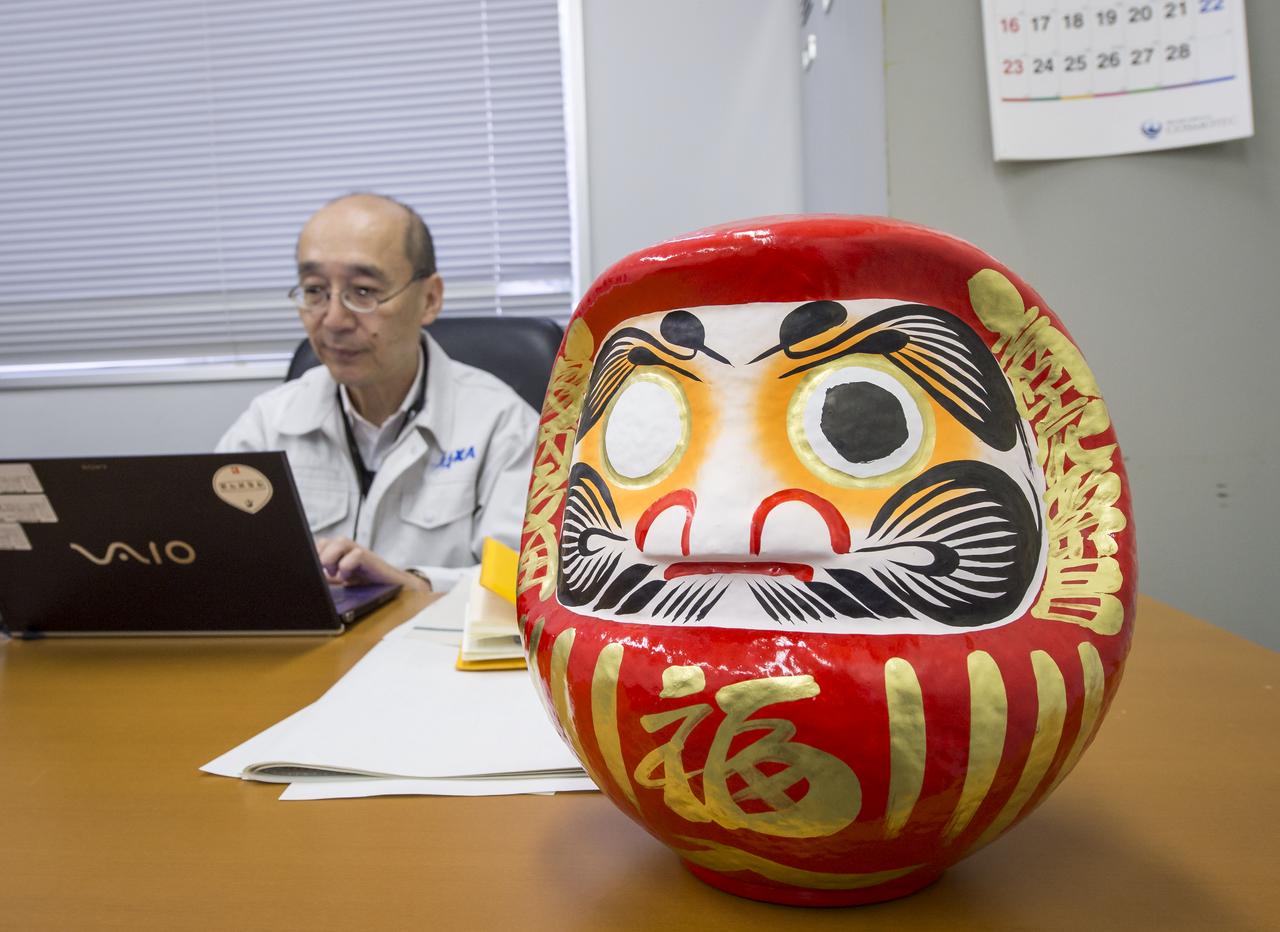
A daruma doll is seen on the desk of Masahiro Kojima, GPM Dual-frequency Precipitation Radar project manager, Japan Aerospace Exploration Agency (JAXA), at the Tanegashima Space Cener's Range Control Center (RCC), Wednesday, Feb. 26, 2014, Tanegashima, Japan. One eye of the daruma doll is colored in when a goal is set and the second eye is colored in at the completion of the goal. JAXA plans to launch an H-IIA rocket carrying the NASA-JAXA, Global Precipitation Measurement (GPM) Core Observatory from the space center on Feb. 28, 2014. Once launched, the GPM spacecraft will collect information that unifies data from an international network of existing and future satellites to map global rainfall and snowfall every three hours. Photo Credit: (NASA/Bill Ingalls)
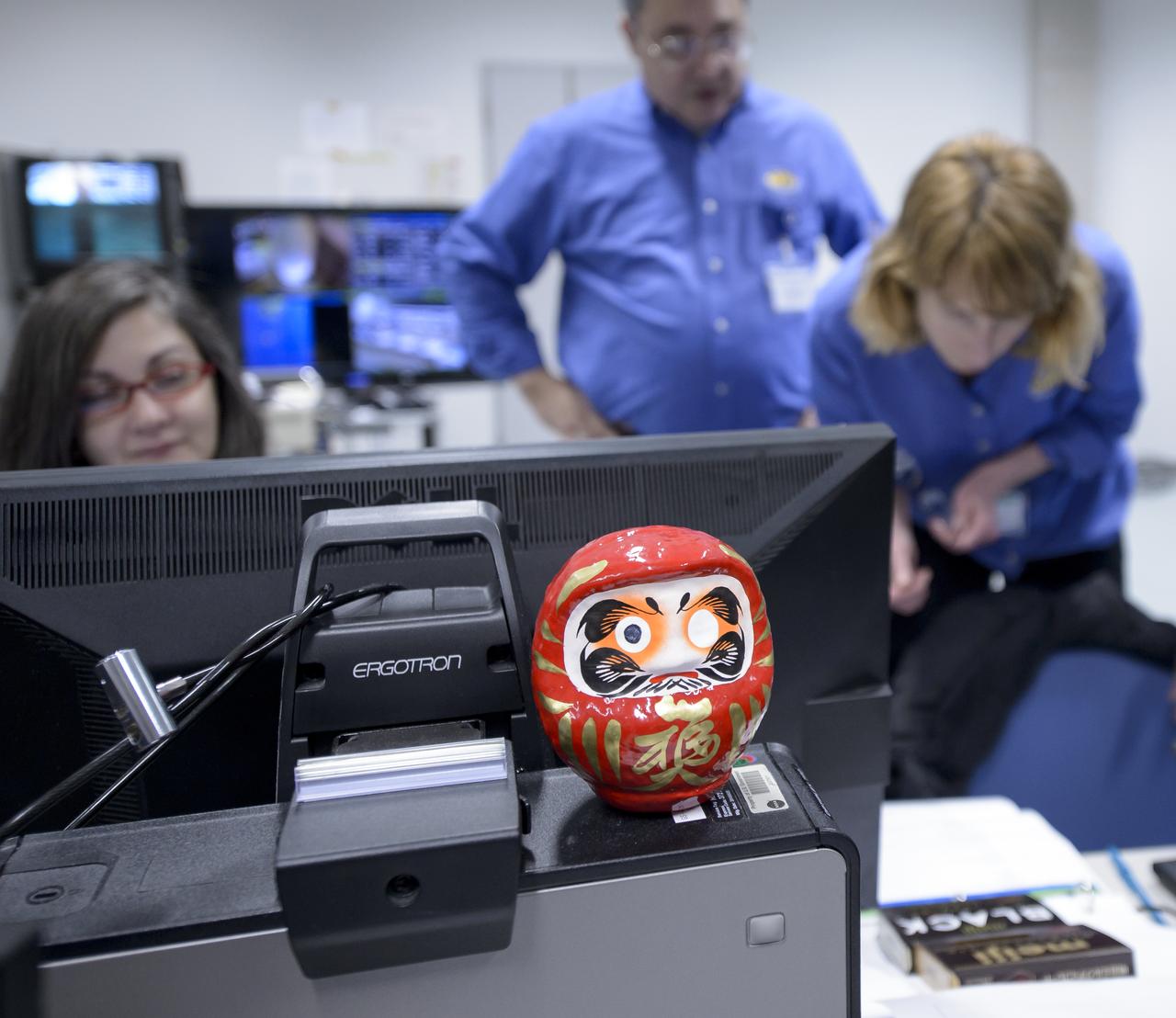
A daruma doll is seen amongst the NASA GPM Mission launch team in the Spacecraft Test and Assembly Building 2 (STA2) during the all-day launch simulation for the Global Precipitation Measurement (GPM) Core Observatory, Saturday, Feb. 22, 2014, Tanegashima Space Center (TNSC), Tanegashima Island, Japan. One eye of the daruma doll is colored in when a goal is set, in this case a successful launch of GPM, and the second eye is colored in at the completion of the goal. Japan Aerospace Exploration Agency (JAXA) plans to launch an H-IIA rocket carrying the GPM Core Observatory on Feb. 28, 2014. The NASA-JAXA GPM spacecraft will collect information that unifies data from an international network of existing and future satellites to map global rainfall and snowfall every three hours. Photo Credit: (NASA/Bill Ingalls)
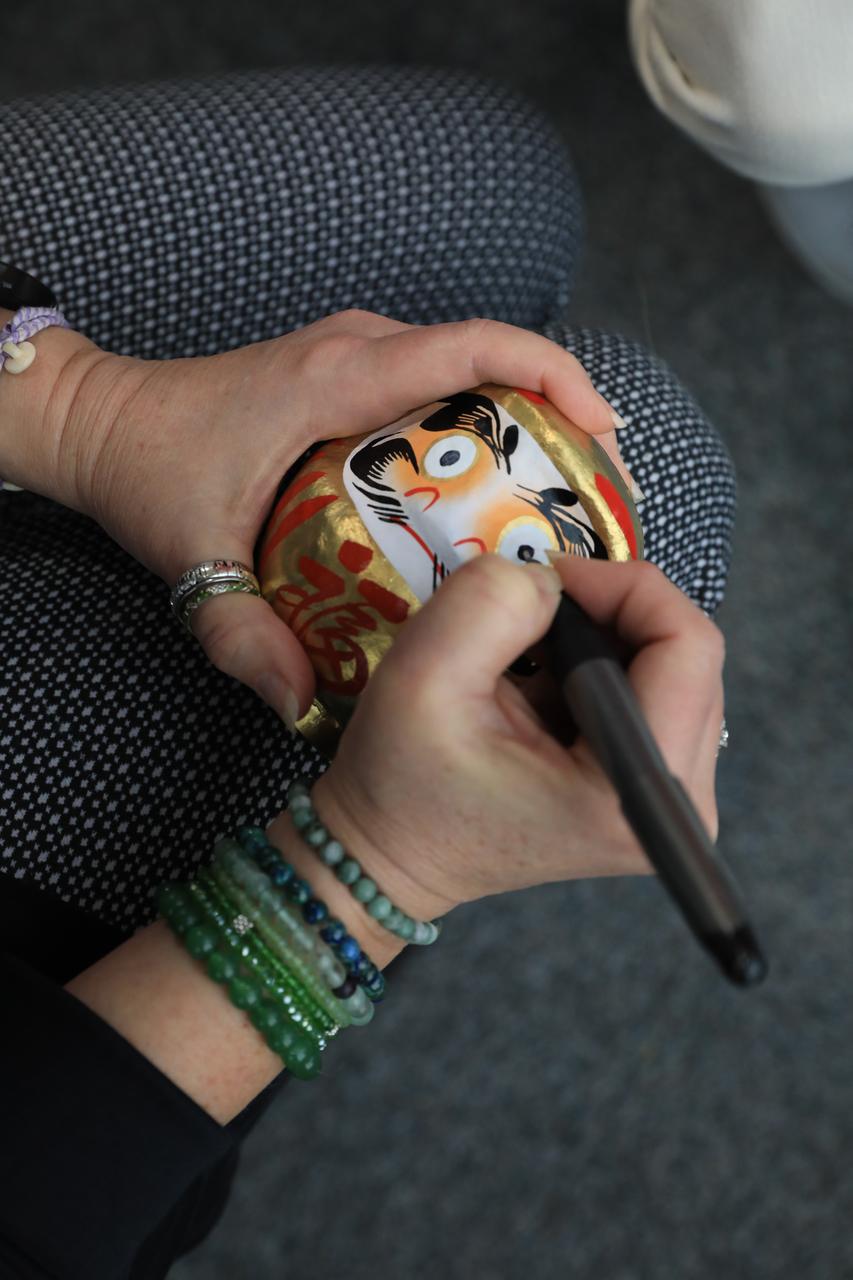
Artemis launch director, Charlie Blackwell-Thompson and associate administrator of NASA’s Space Operations Mission Directorate, Kathryn Lueders finish coloring in the other eye of the Japanese Daruma doll to highlight the successful Artemis I mission on Dec. 20, 2022 in Firing Room 1 of the Rocco A. Petrone Launch Control Center at NASA’s Kennedy Space Center in Florida. The Japan Aerospace Exploration Agency gave a Daruma doll to both Lueders and associate administrator for the Exploration Systems Development Mission Directorate, Jim Free as a token of good luck prior to the Artemis I launch. Free filled in his eye on Dec. 11, 2022, with Artemis I Ascent and Entry Flight Director Judd Frieling in Mission Control Center at NASA’s Johnson Space Center in Houston, Texas.
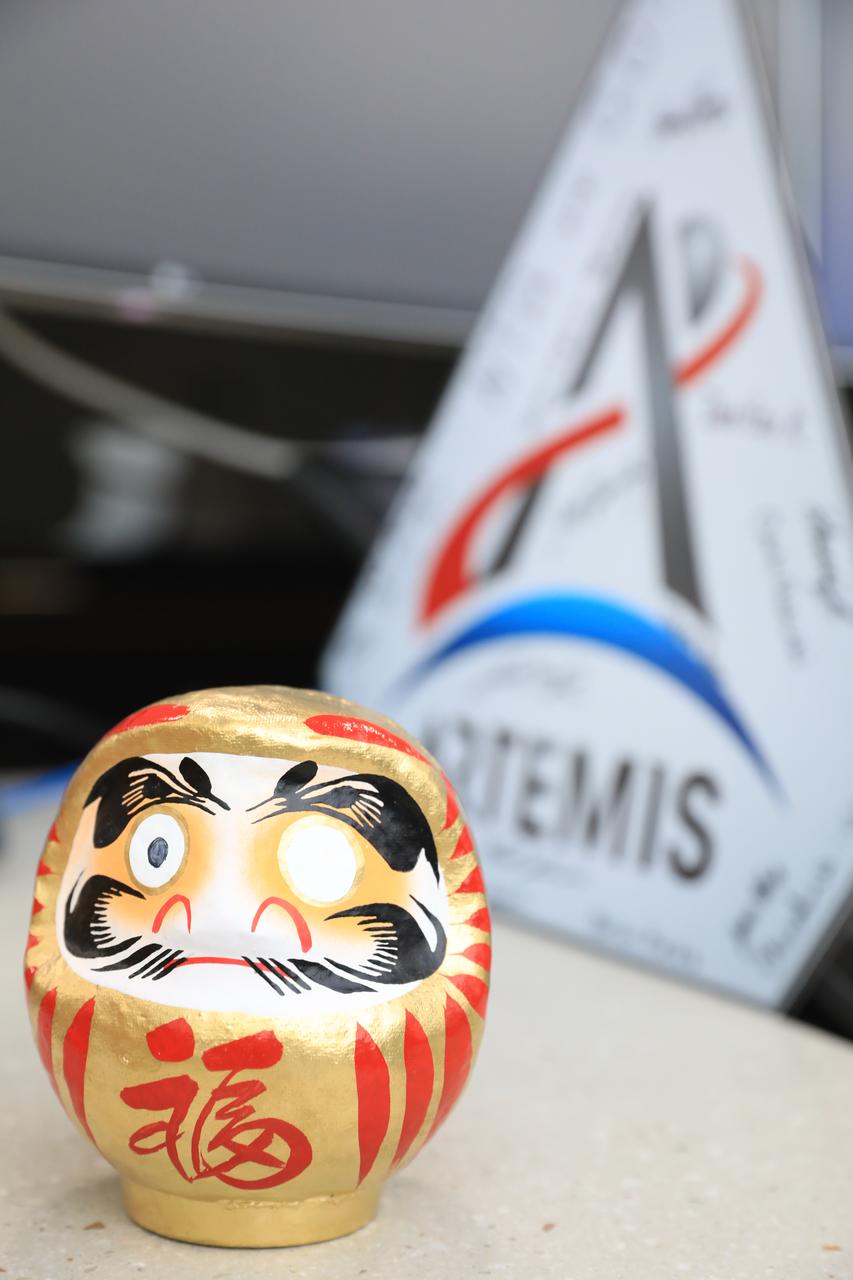
Artemis launch director, Charlie Blackwell-Thompson and associate administrator of NASA’s Space Operations Mission Directorate, Kathryn Lueders finish coloring in the other eye of the Japanese Daruma doll to highlight the successful Artemis I mission on Dec. 20, 2022 in Firing Room 1 of the Rocco A. Petrone Launch Control Center at NASA’s Kennedy Space Center in Florida. The Japan Aerospace Exploration Agency gave a Daruma doll to both Lueders and associate administrator for the Exploration Systems Development Mission Directorate, Jim Free as a token of good luck prior to the Artemis I launch. Free filled in his eye on Dec. 11, 2022, with Artemis I Ascent and Entry Flight Director Judd Frieling in Mission Control Center at NASA’s Johnson Space Center in Houston, Texas.
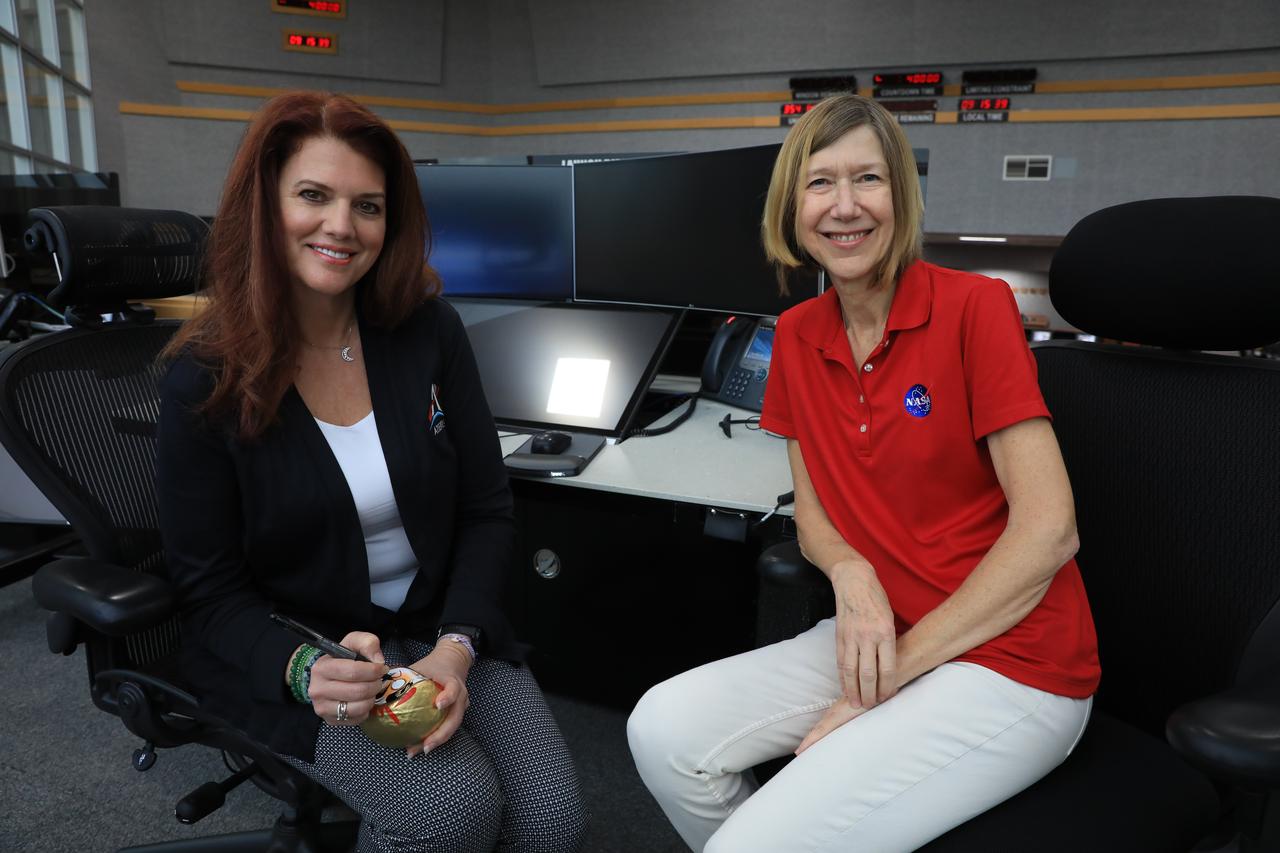
Artemis launch director, Charlie Blackwell-Thompson and associate administrator of NASA’s Space Operations Mission Directorate, Kathryn Lueders finish coloring in the other eye of the Japanese Daruma doll to highlight the successful Artemis I mission on Dec. 20, 2022 in Firing Room 1 of the Rocco A. Petrone Launch Control Center at NASA’s Kennedy Space Center in Florida. The Japan Aerospace Exploration Agency gave a Daruma doll to both Lueders and associate administrator for the Exploration Systems Development Mission Directorate, Jim Free as a token of good luck prior to the Artemis I launch. Free filled in his eye on Dec. 11, 2022, with Artemis I Ascent and Entry Flight Director Judd Frieling in Mission Control Center at NASA’s Johnson Space Center in Houston, Texas.
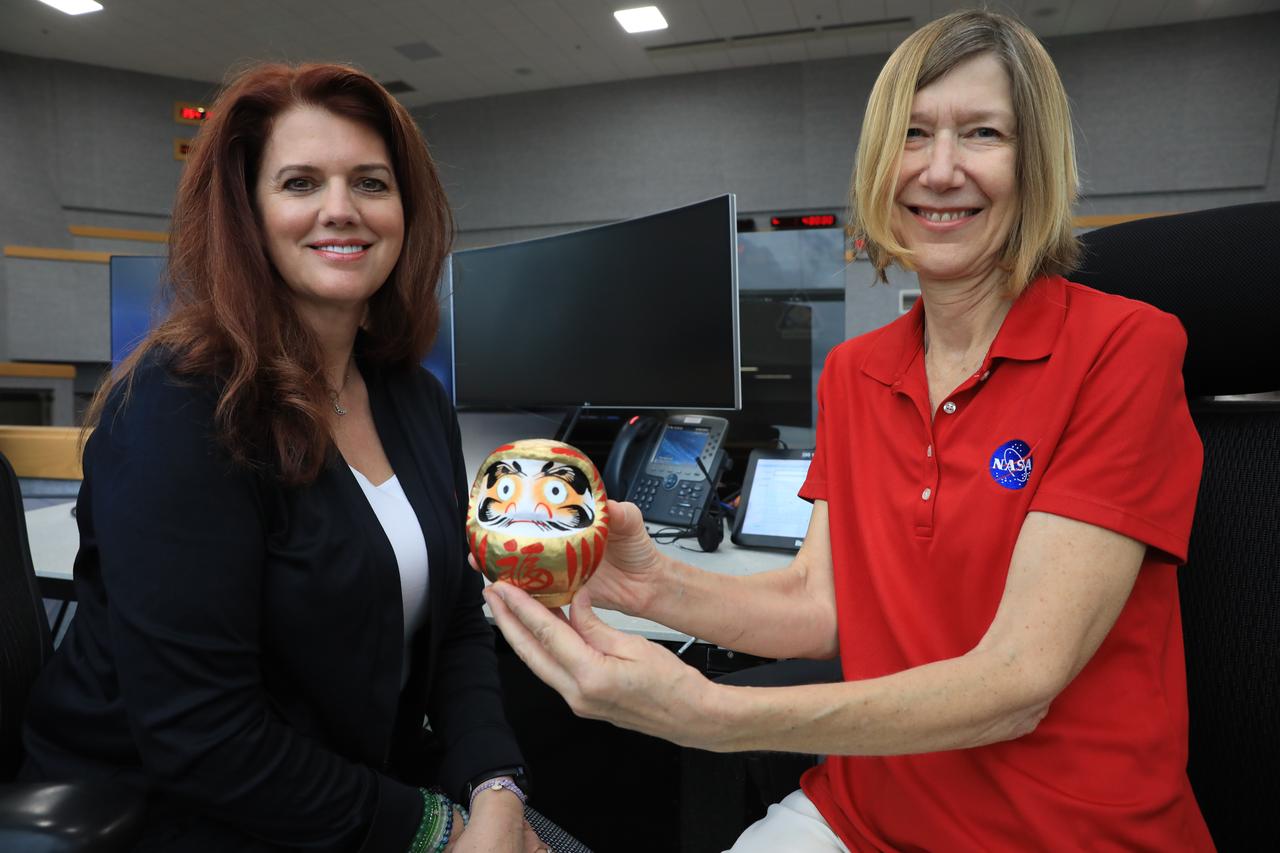
Artemis launch director, Charlie Blackwell-Thompson and associate administrator of NASA’s Space Operations Mission Directorate, Kathryn Lueders finish coloring in the other eye of the Japanese Daruma doll to highlight the successful Artemis I mission on Dec. 20, 2022 in Firing Room 1 of the Rocco A. Petrone Launch Control Center at NASA’s Kennedy Space Center in Florida. The Japan Aerospace Exploration Agency gave a Daruma doll to both Lueders and associate administrator for the Exploration Systems Development Mission Directorate, Jim Free as a token of good luck prior to the Artemis I launch. Free filled in his eye on Dec. 11, 2022, with Artemis I Ascent and Entry Flight Director Judd Frieling in Mission Control Center at NASA’s Johnson Space Center in Houston, Texas.
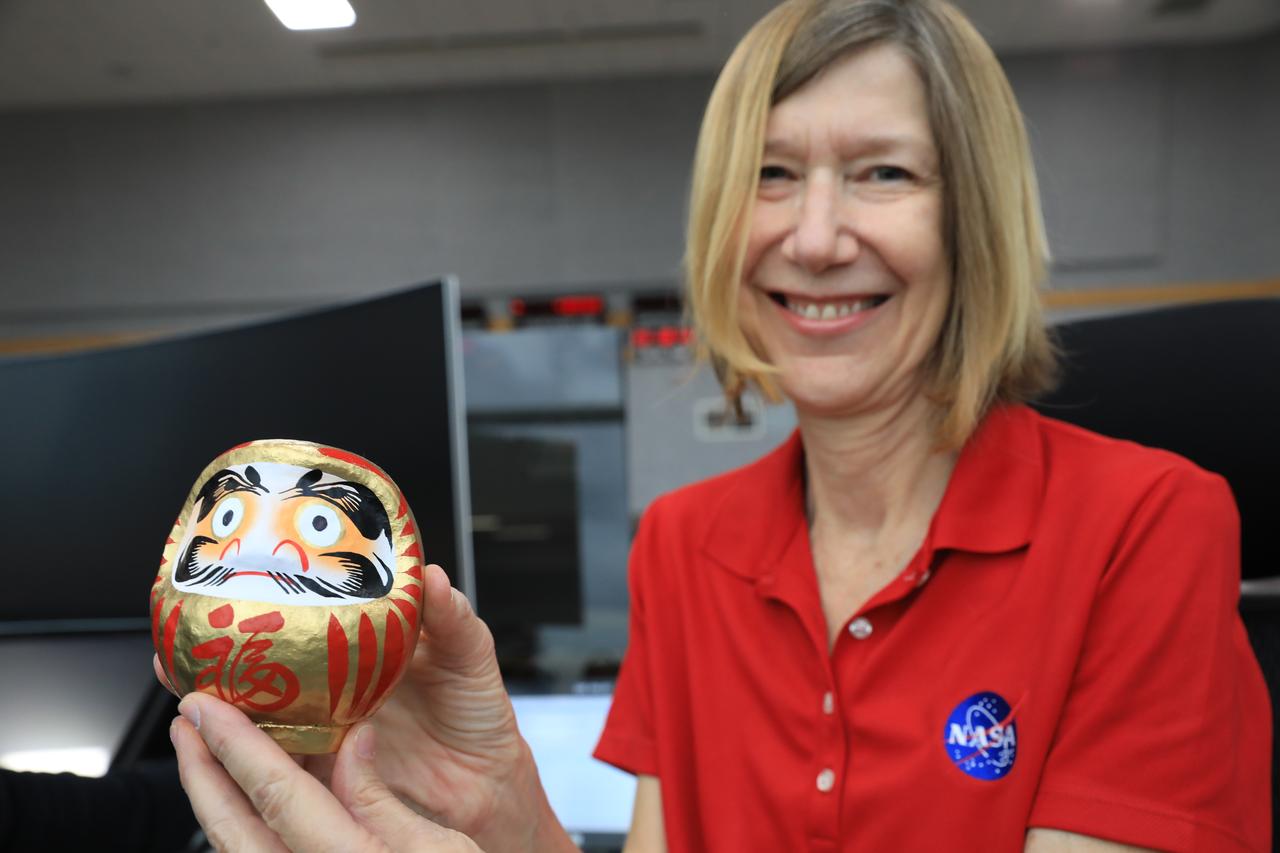
Artemis launch director, Charlie Blackwell-Thompson and associate administrator of NASA’s Space Operations Mission Directorate, Kathryn Lueders finish coloring in the other eye of the Japanese Daruma doll to highlight the successful Artemis I mission on Dec. 20, 2022 in Firing Room 1 of the Rocco A. Petrone Launch Control Center at NASA’s Kennedy Space Center in Florida. The Japan Aerospace Exploration Agency gave a Daruma doll to both Lueders and associate administrator for the Exploration Systems Development Mission Directorate, Jim Free as a token of good luck prior to the Artemis I launch. Free filled in his eye on Dec. 11, 2022, with Artemis I Ascent and Entry Flight Director Judd Frieling in Mission Control Center at NASA’s Johnson Space Center in Houston, Texas.
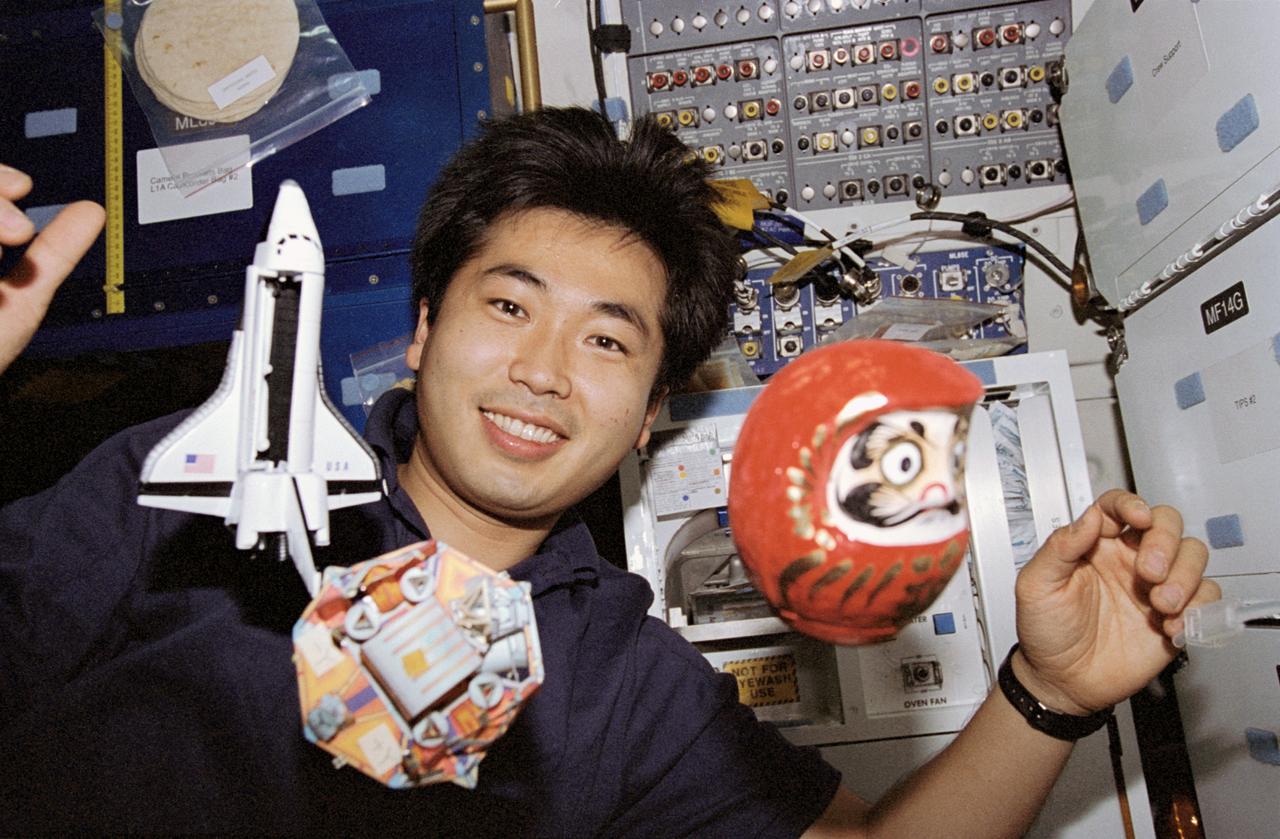
STS072-330-024 (11-20 Jan. 1996) --- During his off-duty time onboard the Space Shuttle Endeavour, astronaut Koichi Wakata finds it a simple task to juggle objects in a microgravity environment. Wakata represented Japan's National Development Space Agency (NASDA) on the flight. The Japanese Space Flyer Unit (SFU) and the Space Shuttle Endeavour models are joined in the juggling act by a daruma, a ceremonial Japanese doll.
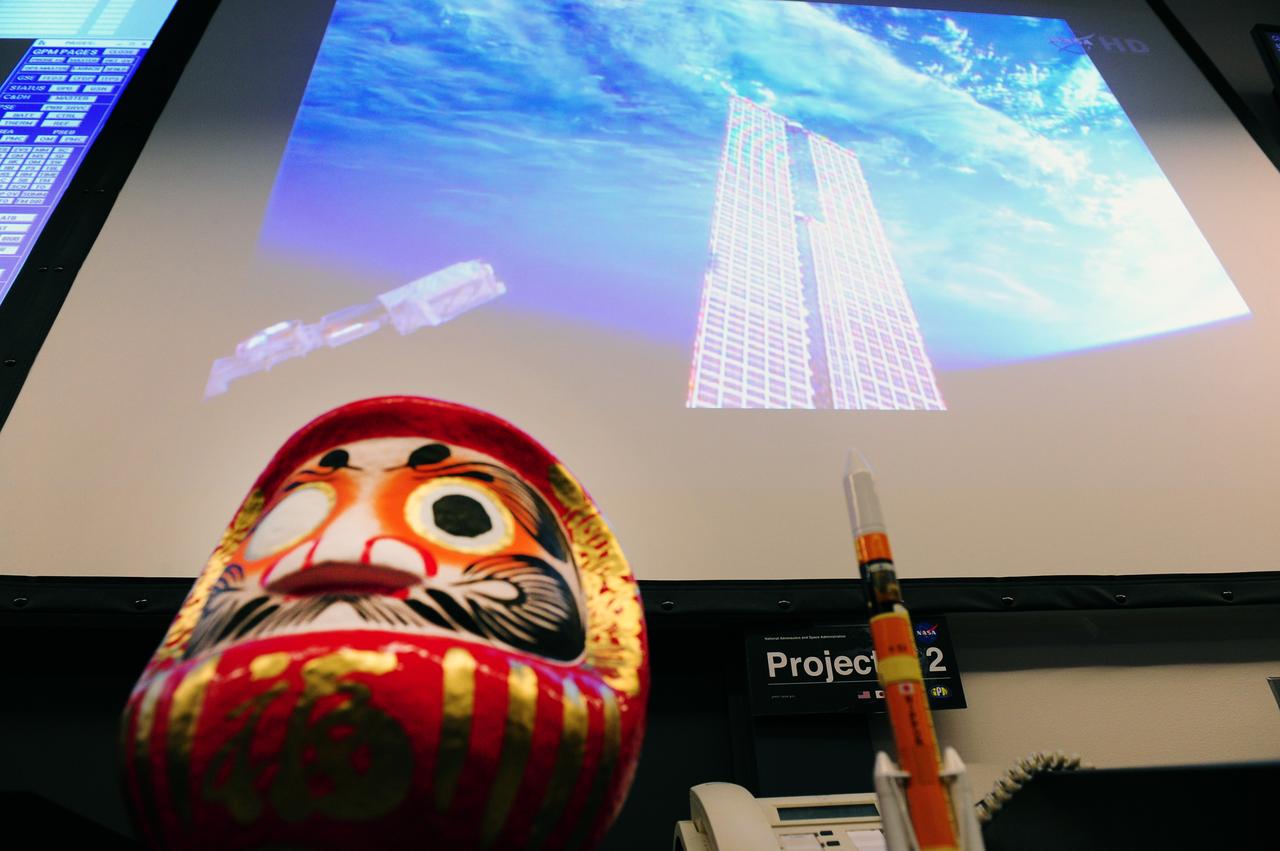
The Daruma doll is a symbol of good luck and in Japan is often given as a gift for encouragement to reach a goal. When the goal is set, one eye is colored in. When the goal is achieved, the other eye is colored. <a href="http://www.flickr.com/photos/nasahqphoto/12714130984/in/set-72157641344480584" target="_blank">An identical doll</a> sits in the control room at the Japan Aerospace Agency’s (JAXA) Tanegashima Space Center, leading up to the launch of the joint NASA-JAXA Global Precipitation Measurement mission’s Core Observatory. <b>Credit: NASA's Goddard Space Flight Center/Debbie McCallum</b> GPM's Core Observatory is poised for launch from the Japan Aerospace Exploration Agency's Tanegashima Space Center, scheduled for the afternoon of Feb. 27, 2014 (EST). GPM is a joint venture between NASA and the Japan Aerospace Exploration Agency. The GPM Core Observatory will link data from a constellation of current and planned satellites to produce next-generation global measurements of rainfall and snowfall from space. The GPM mission is the first coordinated international satellite network to provide near real-time observations of rain and snow every three hours anywhere on the globe. The GPM Core Observatory anchors this network by providing observations on all types of precipitation. The observatory's data acts as the measuring stick by which partner observations can be combined into a unified data set. The data will be used by scientists to study climate change, freshwater resources, floods and droughts, and hurricane formation and tracking. <b><a href="http://www.nasa.gov/audience/formedia/features/MP_Photo_Guidelines.html" rel="nofollow">NASA image use policy.</a></b> <b><a href="http://www.nasa.gov/centers/goddard/home/index.html" rel="nofollow">NASA Goddard Space Flight Center</a></b> enables NASA’s mission through four scientific endeavors: Earth Science, Heliophysics, Solar System Exploration, and Astrophysics. Goddard plays a leading role in NASA’s accomplishments by contributing compelling scientific knowledge to advance the Agency’s mission. <b>Follow us on <a href="http://twitter.com/NASAGoddardPix" rel="nofollow">Twitter</a></b> <b>Like us on <a href="http://www.facebook.com/pages/Greenbelt-MD/NASA-Goddard/395013845897?ref=tsd" rel="nofollow">Facebook</a></b> <b>Find us on <a href="http://instagram.com/nasagoddard?vm=grid" rel="nofollow">Instagram</a></b>