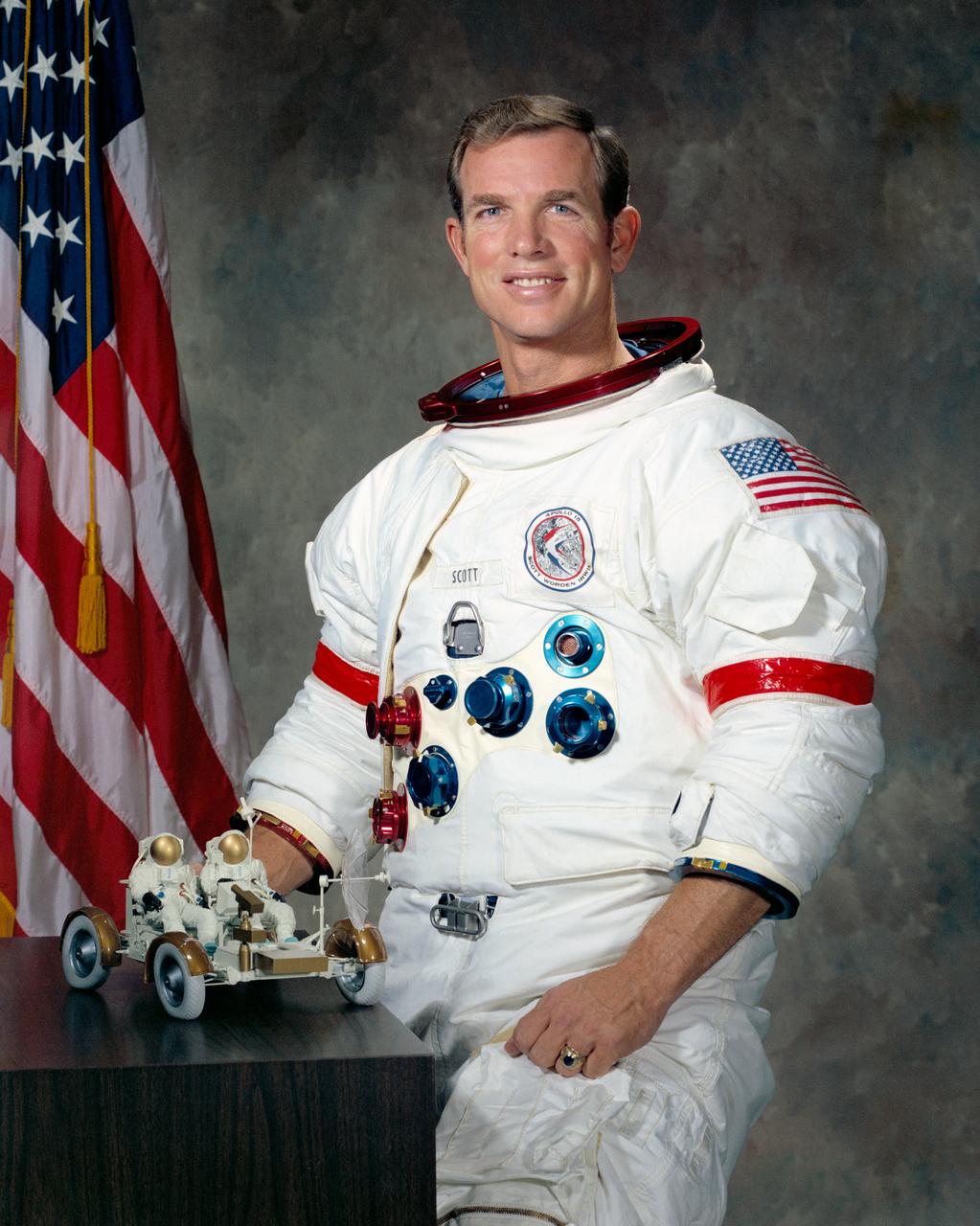
S71-52276 (1971) --- Astronaut David R. Scott
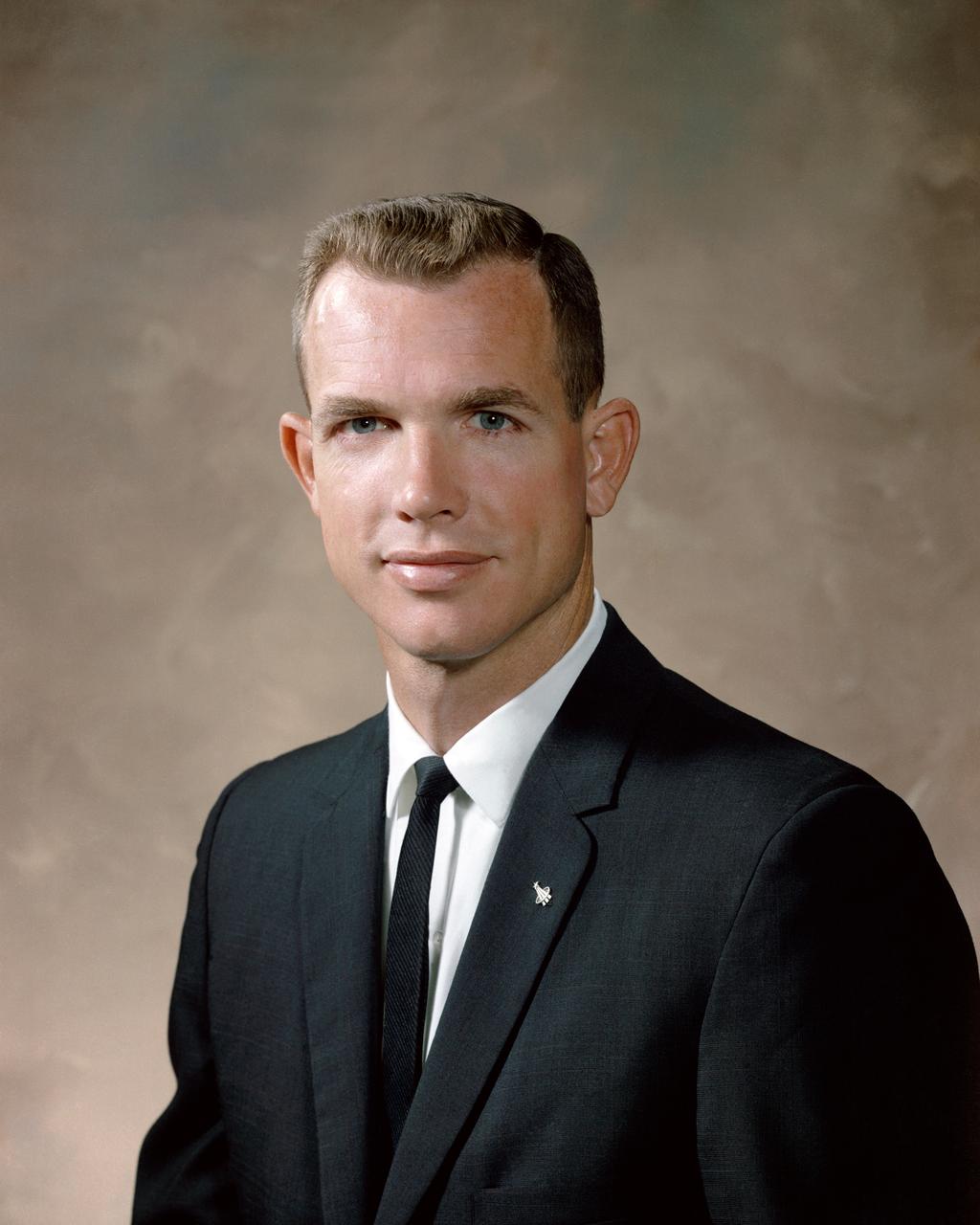
S64-31472 (1964) --- Astronaut David R. Scott. Photo credit: NASA
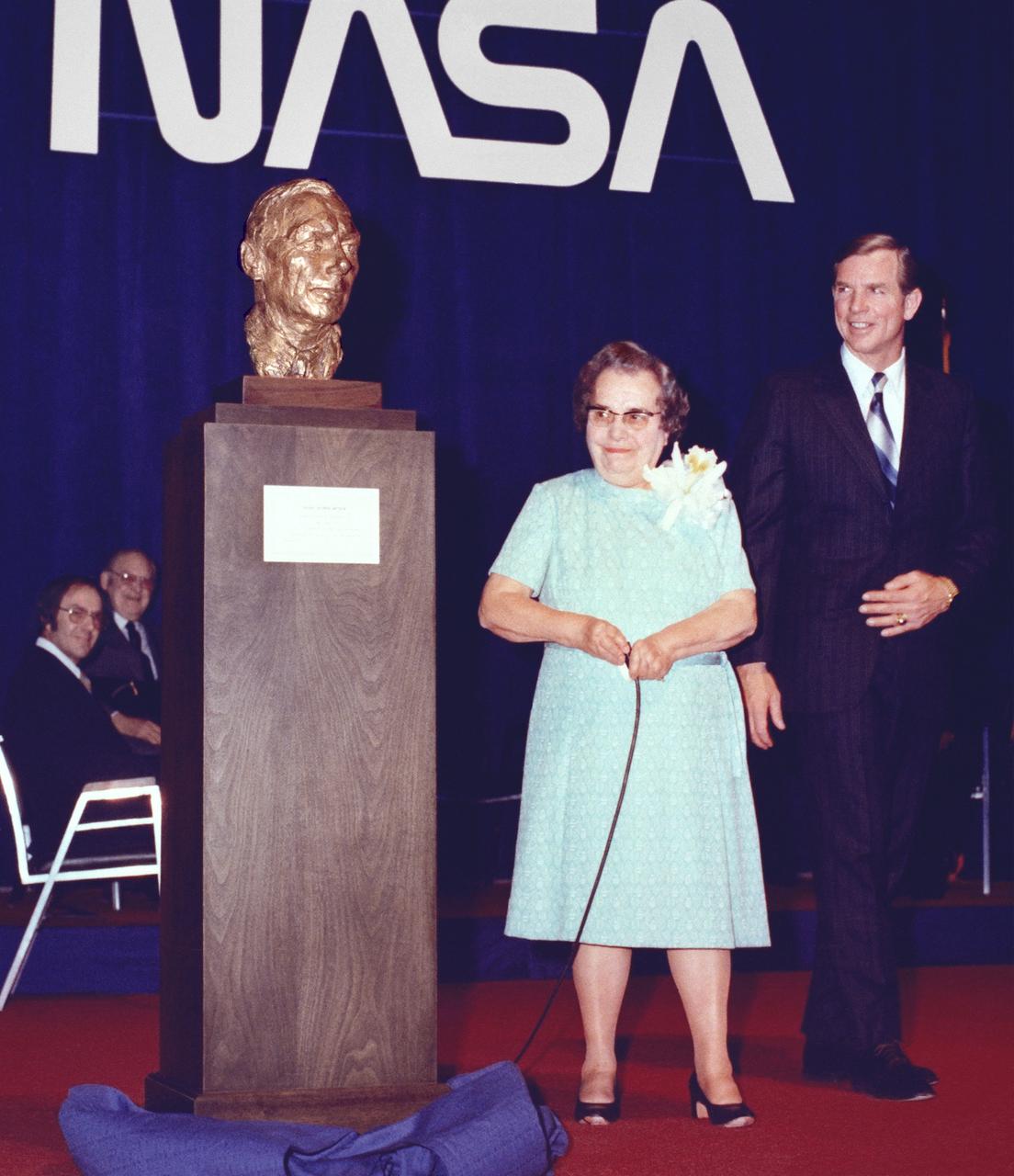
On March 26, 1976, the NASA Flight Research Center opened its doors to hundreds of guests for the dedication of the center in honor of Hugh Latimer Dryden. The dedication was very much a local event; following Center Director David Scott’s opening remarks, the Antelope Valley High School’s symphonic band played the national anthem. Invocation was given followed by recognition of the invited guests. Dr. Hugh Dryden, a man of total humility, received praise from all those present. Dryden, who died in 1965, had been a pioneering aeronautical scientist who became director of the National Advisory Committee for Aeronautics (NACA) in 1949 and then deputy administrator of the NACA’s successor, NASA, in 1958. Very much interested in flight research, he had been responsible for establishing a permanent facility at the location later named in his honor. As Center Director David Scott looks on, Mrs. Hugh L. Dryden (Mary Libbie Travers) unveils the memorial to her husband at the dedication ceremony.On March 26, 1976, the NASA Flight Research Center opened its doors to hundreds of guests for the dedication of the center in honor of Hugh Latimer Dryden.
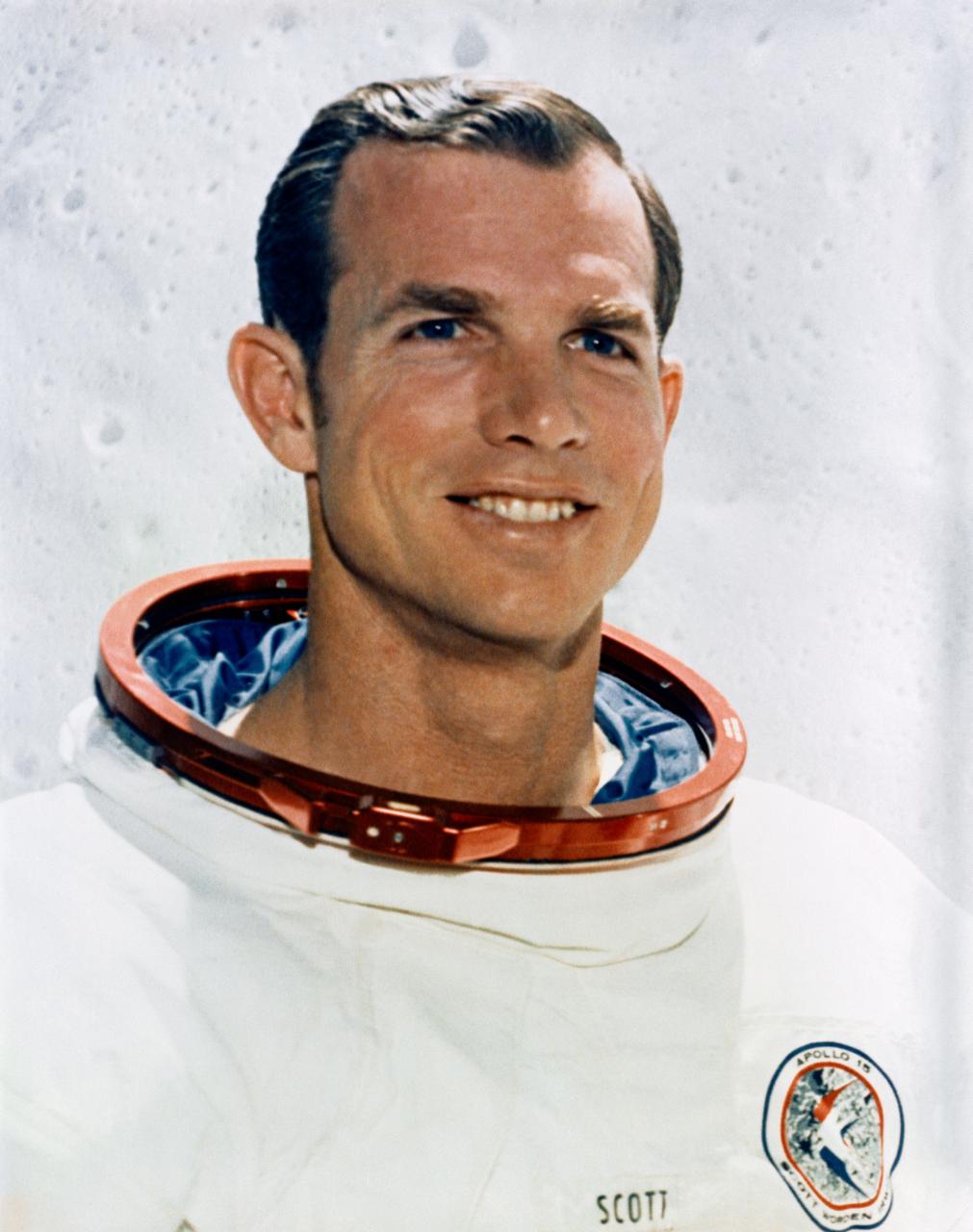
S71-39483 (1971) --- Astronaut David R. Scott
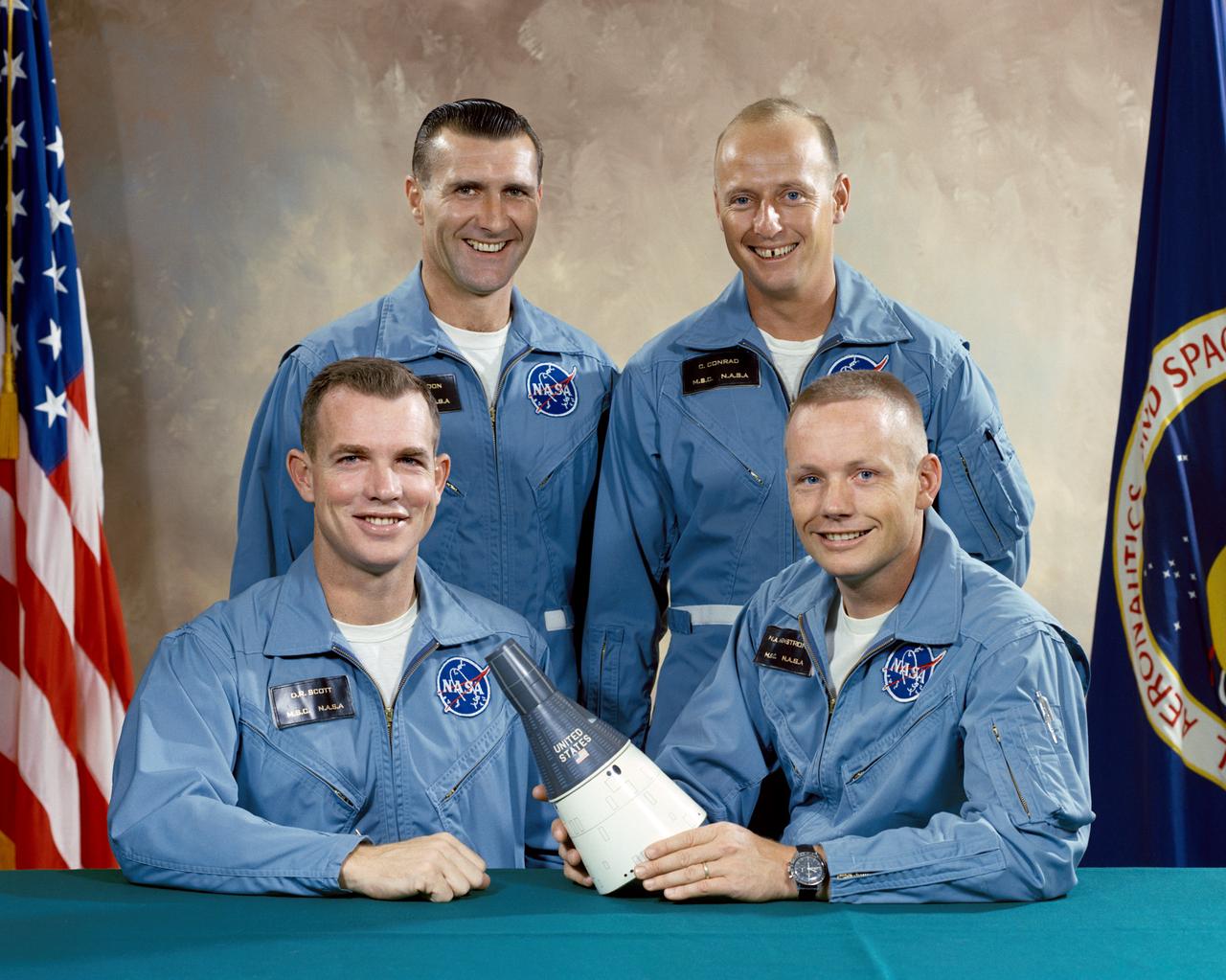
S65-58502 (4 Nov. 1965) --- This is the portrait of the prime and backup crew members of the Gemini-Titan 8 (GT-8) mission. Astronauts David R. Scott (left), pilot; and astronaut Neil A. Armstrong, command pilot, are the prime crew of the Gemini-8 mission. Backup crew (left to right, standing) are astronauts Richard F. Gordon Jr., pilot; and Charles Conrad Jr., command pilot. Photo credit: NASA
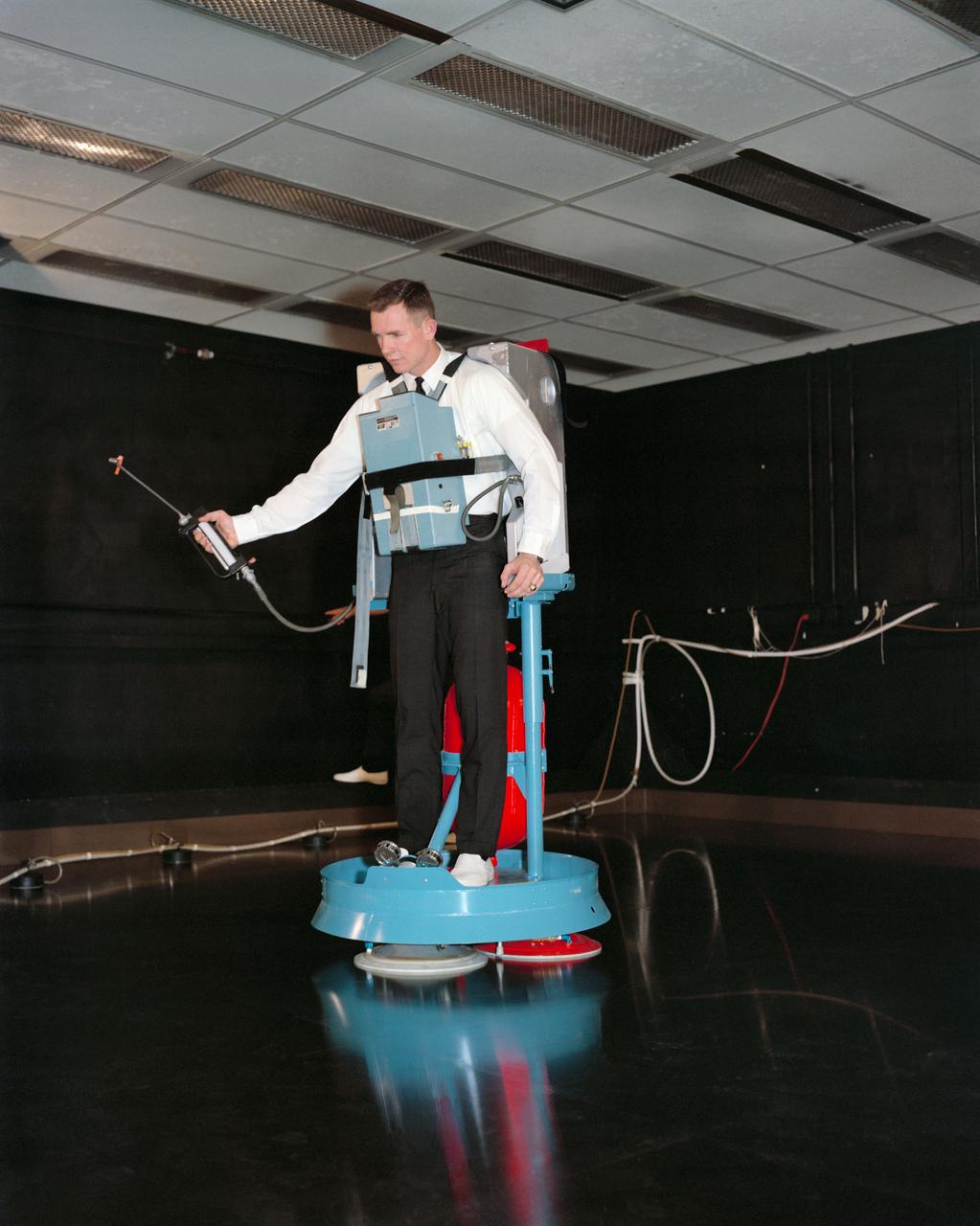
S66-19284 (1 Feb. 1966) --- Astronaut David R. Scott practicing for Gemini-8 extravehicular activity (EVA) in building 4 of the Manned Spacecraft Center on the air bearing floor. He is wearing the Hand-Held Maneuvering Unit which he will use during the EVA. Photo credit: NASA
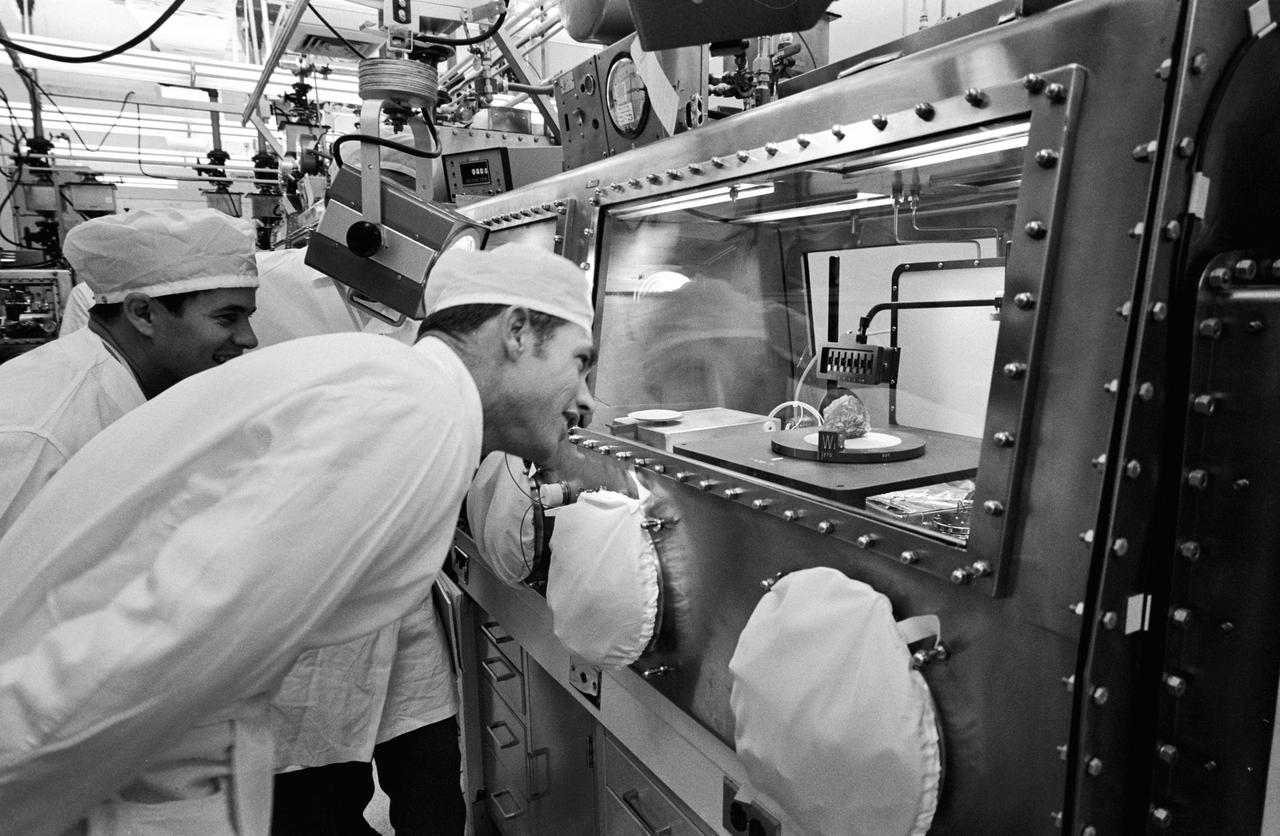
S71-43477 (12 Aug. 1971) --- Astronaut David R. Scott, right, commander of the Apollo 15 mission, gets a close look at the sample referred to as "Genesis rock" in the Non-Sterile Nitrogen Processing Line (NNPL) in the Lunar Receiving Laboratory (LRL) at the Manned Spacecraft Center (MSC). Scientist-astronaut Joseph P. Allen IV, left, an Apollo 15 spacecraft communicator, looks on with interest. The white-colored rock has been given the permanent identification of 15415.
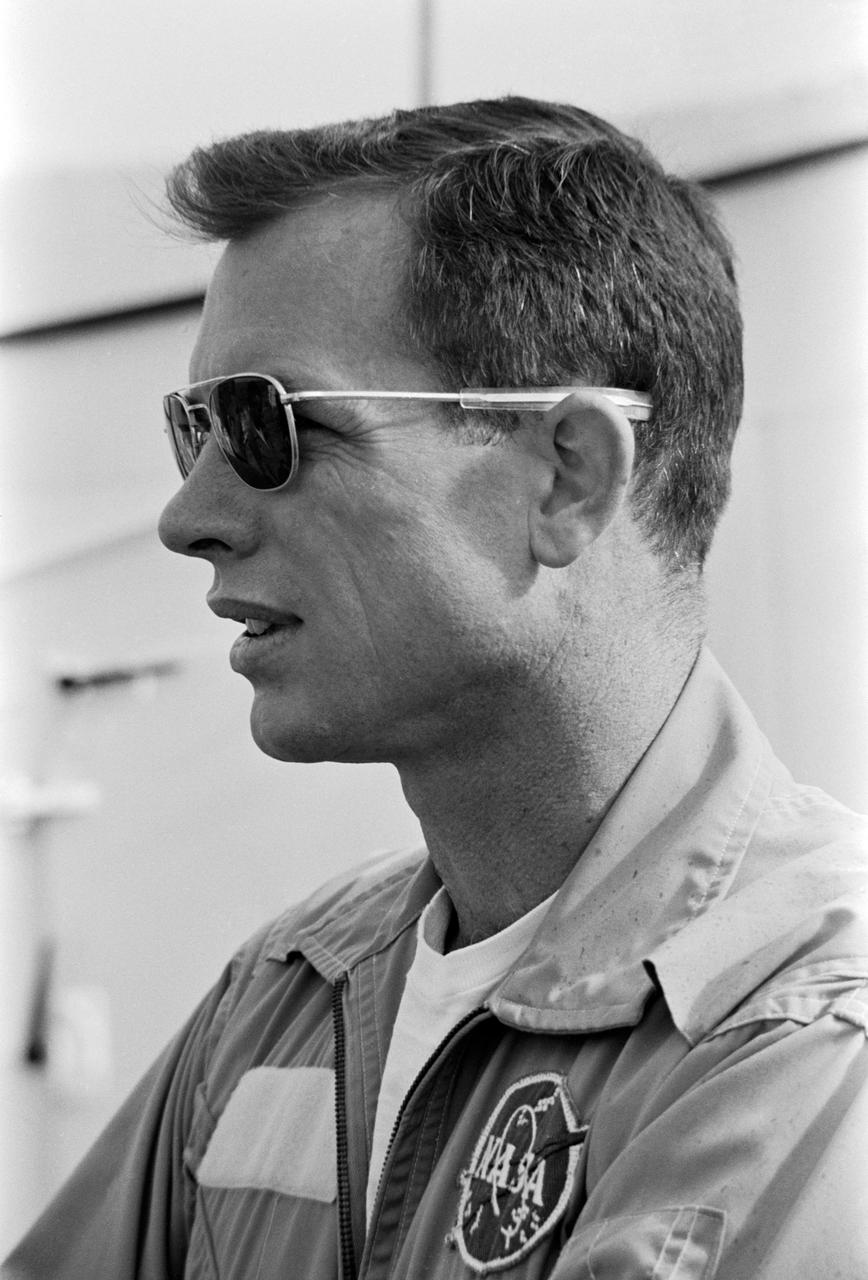
S68-54810 (5 Nov. 1968) --- Astronaut David R. Scott, command module pilot of the Apollo 9 (Spacecraft 104/Lunar Module 3/Saturn 504) space mission, relaxes on the deck of the NASA Motor Vessel Retriever prior to participating in water egress training in the Gulf of Mexico.
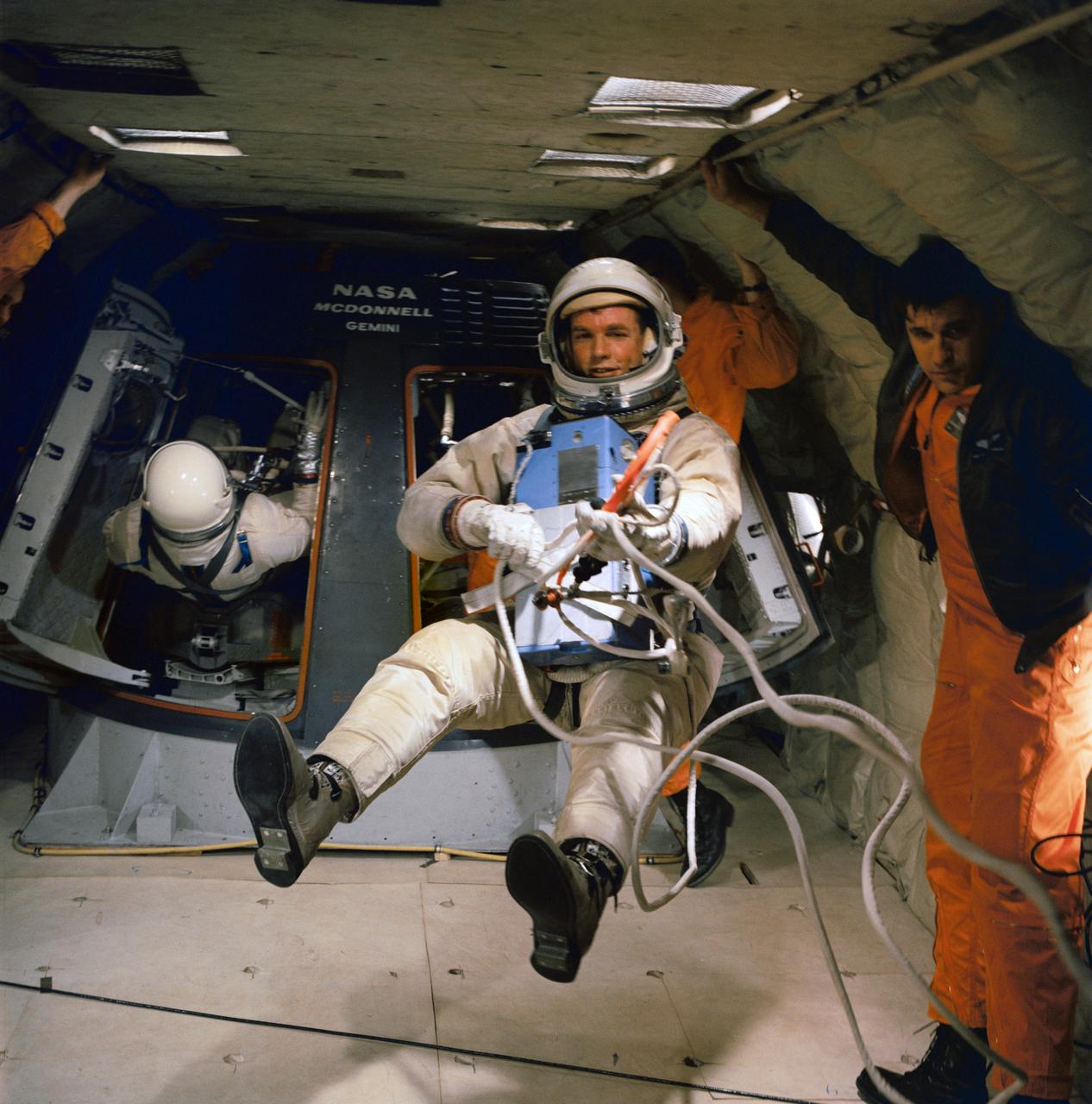
S66-21411 (18 Feb. 1966) --- Astronaut David R. Scott, in full spacesuit, holds maneuvering unit while suspended in a weightless state during extravehicular activity (EVA) training in a C-135 Air Force plane. Photo credit: NASA
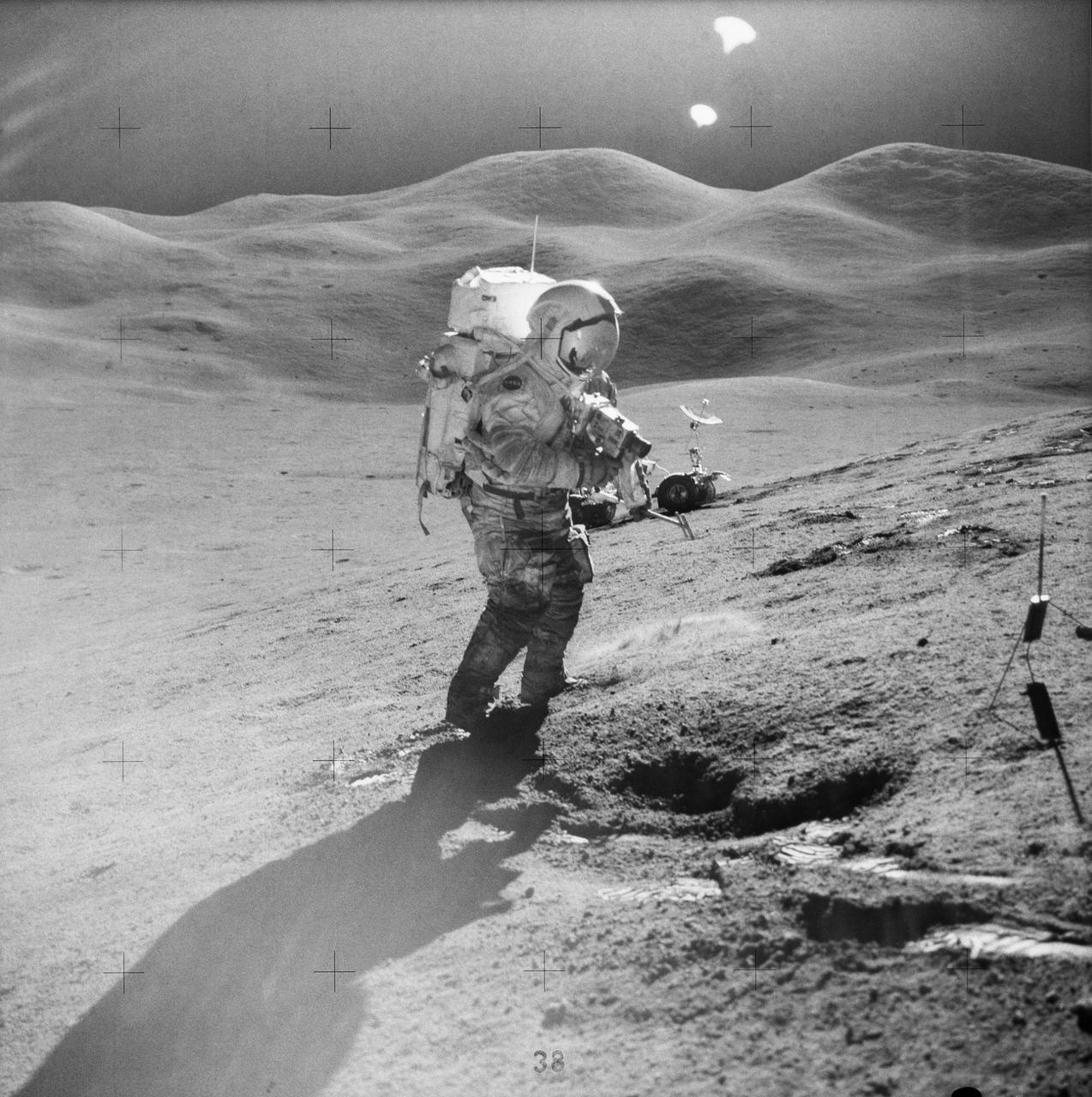
AS15-85-11514 (31 July-2 Aug. 1971) --- Astronaut David R. Scott, commander, standing on the slope of Hadley Delta, uses a 70mm camera during Apollo 15 extravehicular activity (EVA) on the lunar surface. He is 10.5 miles (or 17.5 kilometers) from the base of the Apennine Mountains seen in the background. Scott carries tongs in his left hand. The Lunar Roving Vehicle (LRV) is in the background. This view is looking east. While astronauts Scott and James B. Irwin, lunar module pilot, descended in the Lunar Module (LM) "Falcon" to explore the moon, astronaut Alfred M. Worden, command module pilot, remained with the Command and Service Modules (CSM) in lunar orbit.
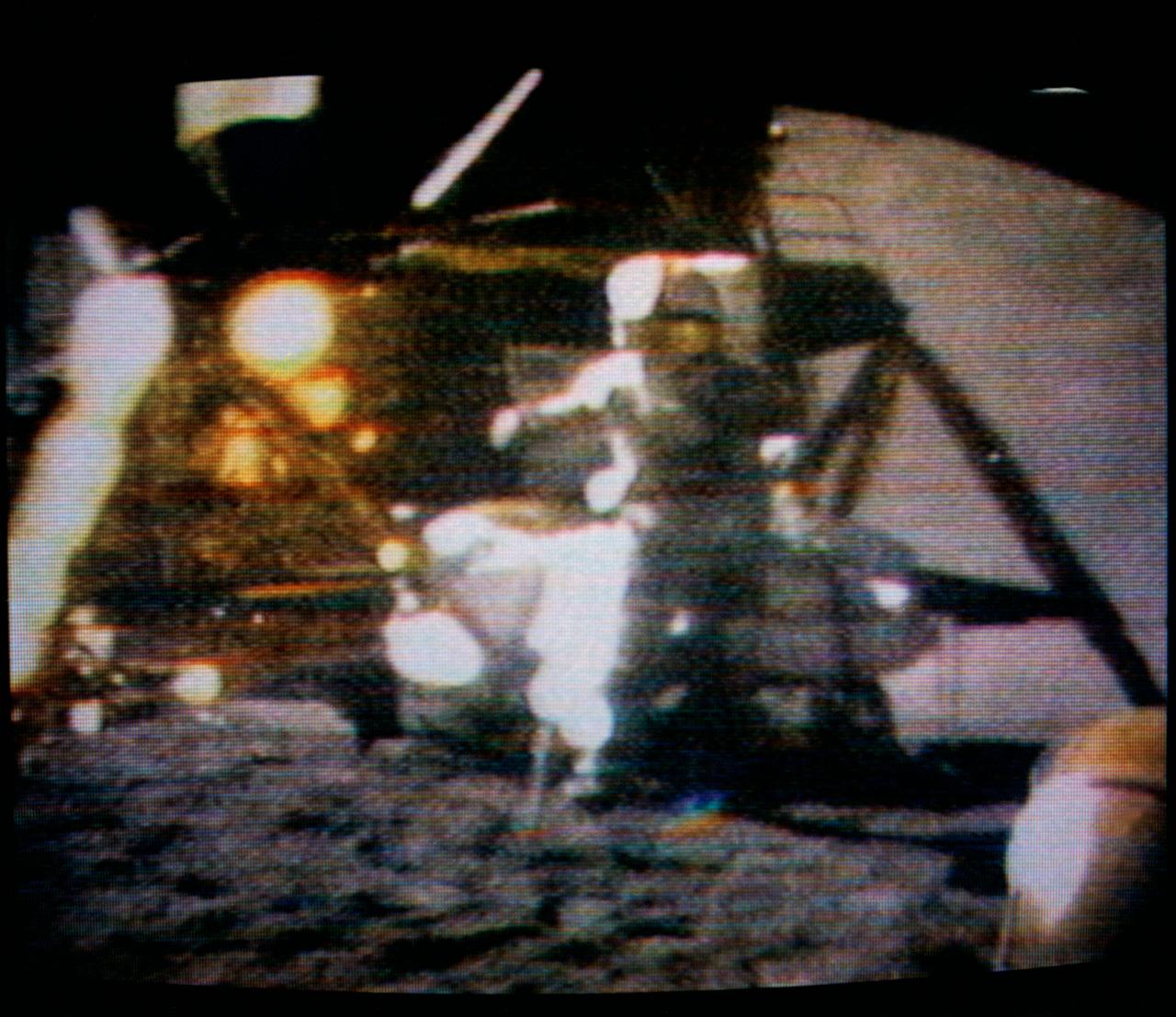
S71-43788 (2 Aug. 1971) --- Astronaut David R. Scott, Apollo 15 commander, watches a geological hammer and a feather hit the lunar surface simultaneously in a test of Galileo's law of motion concerning falling bodies, as seen in this color reproduction taken from a transmission made by the RCA color television camera mounted on the Lunar Roving Vehicle (LRV). Scott released the hammer from his right hand and the feather from his left at the same instant. Galileo (1564-1642) was the great Italian astronomer and physicist. This experiment occurred toward the end of the third and final lunar surface extravehicular activity (EVA) by astronauts Scott and James B. Irwin, lunar module pilot. While Scott and Irwin descended in the Lunar Module (LM) to explore the moon, astronaut Alfred M. Worden, command module pilot, remained in the Command and Service Modules (CSM) in lunar orbit.

AS15-85-11437 (31 July 1971) --- Astronaut David R. Scott, commander, with tongs and gnomon in hand, studies a boulder on the slope of Hadley Delta during the Apollo 15 lunar landing mission's first extravehicular activity (EVA). The Lunar Roving Vehicle (LRV), "Rover", is in the right foreground. The view is looking slightly south of west. "Bennett Hill" is at extreme right. Astronaut James B. Irwin, lunar module pilot, took this photograph. While astronauts Scott and Irwin descended together in the Lunar Module (LM) "Falcon" to explore the Hadley-Apennine area of the moon, astronaut Alfred M. Worden, command module pilot, remained with the Command and Service Modules (CSM) in lunar orbit.
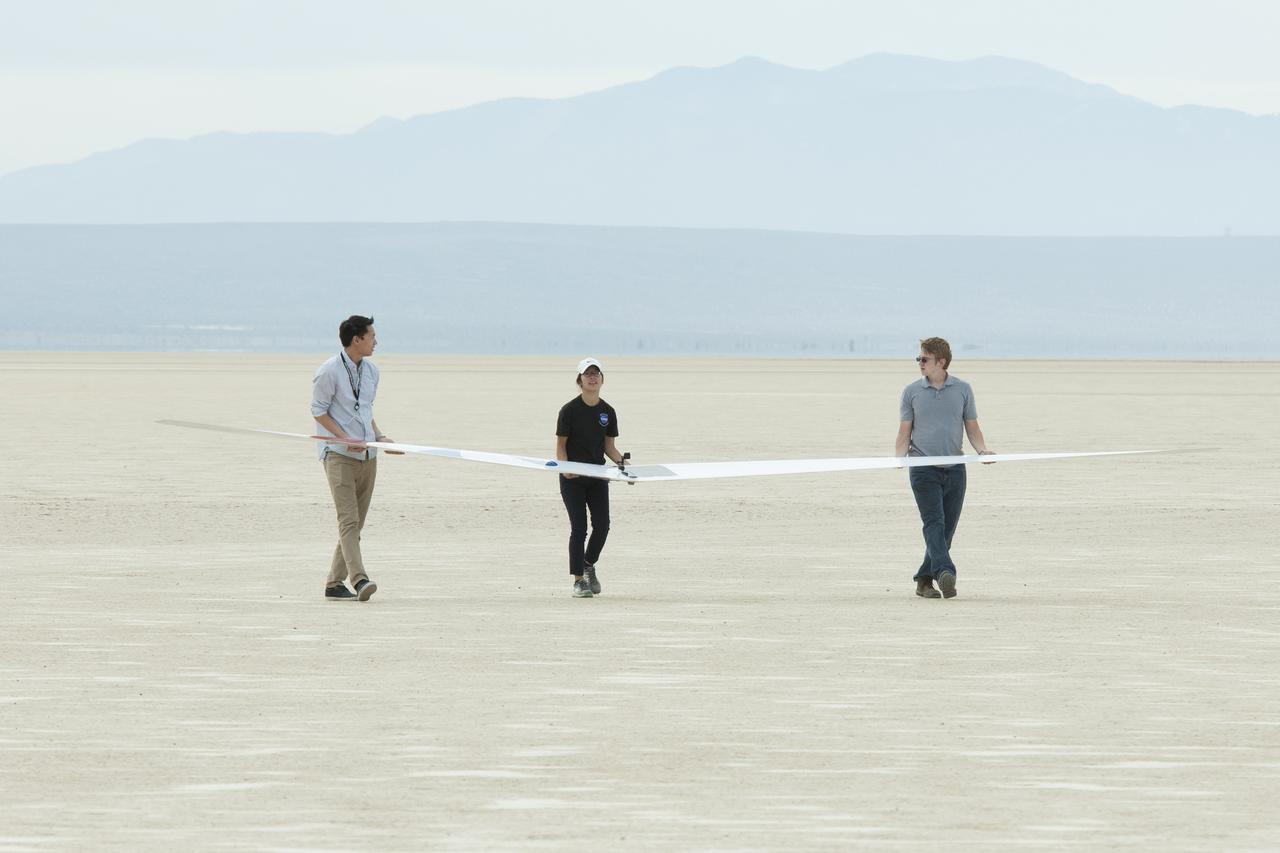
David Lee, Golda Nguyen and Scott Gleason recover the Prandtl-D No. 3 after one of its first flights.

S66-18602 (16 March 1966) --- Astronauts Neil A. Armstrong and David R. Scott sit with their spacecraft hatches open while awaiting the arrival of the recovery ship, the USS Leonard F. Mason after the successful completion of their Gemini-8 mission. They are assisted by U.S. Navy divers. The overhead view shows the Gemini-8 spacecraft with the yellow flotation collar attached to stabilize the spacecraft in choppy seas. The green marker dye is highly visible from the air and is used as a locating aid. Photo credit: NASA
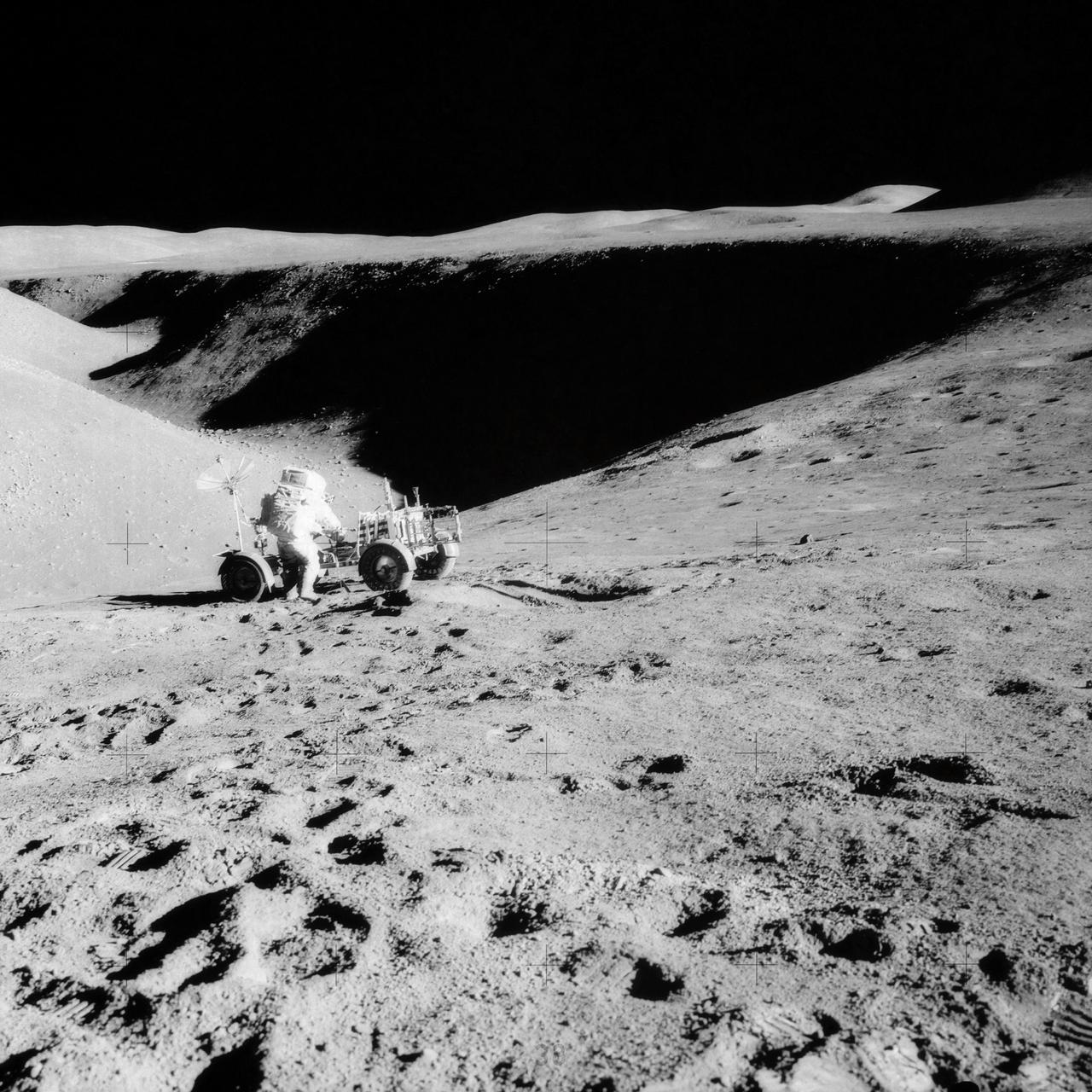
AS15-85-11451 (31 July 1971) --- Astronaut David R. Scott, mission commander, performs a task at the Lunar Roving Vehicle parked on the edge of Hadley Rille during the first Apollo 15 lunar surface extravehicular activity (EVA). This photograph was taken by astronaut James B. Irwin, lunar module pilot, from the flank of St. George Crater. The view is looking north along the rille.
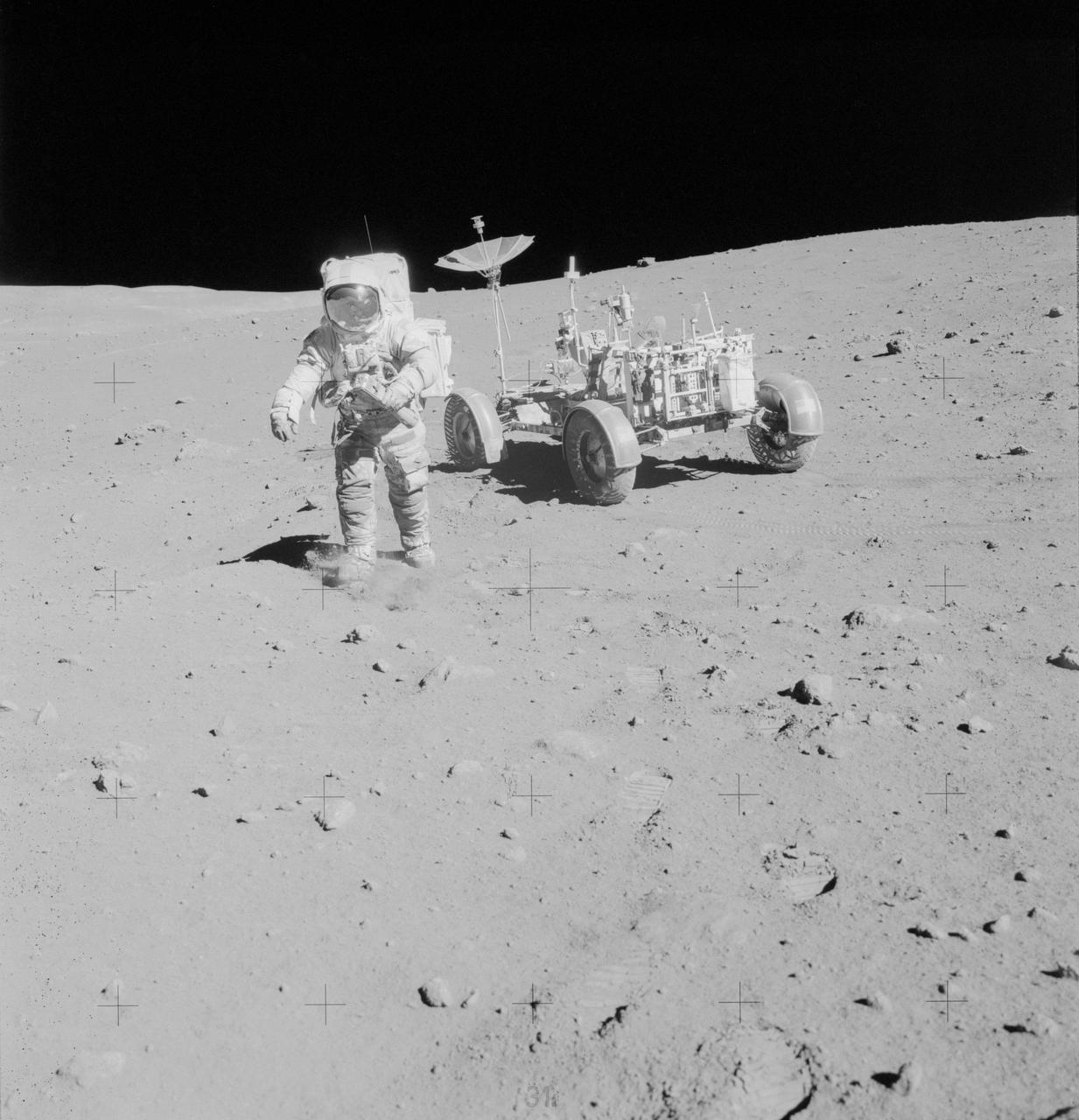
AS15-82-11168 (2 Aug. 1971) --- Astronaut James B. Irwin, lunar module pilot, walks away from the Lunar Roving Vehicle (LRV) during the third Apollo 15 lunar surface extravehicular activity (EVA) at the Hadley-Apennine landing site. The LRV is parked a short distance from the rim of Hadley Rille. The far wall of the rille is in the distance at extreme upper left. Irwin is holding the 500mm Hasselblad camera in his left hand. This photograph was taken by astronaut David R. Scott, commander. While astronauts Scott and Irwin descended in the Lunar Module (LM) to explore the moon, astronaut Alfred M. Worden, command module pilot, remained with the Command and Service Modules (CSM) in lunar orbit.
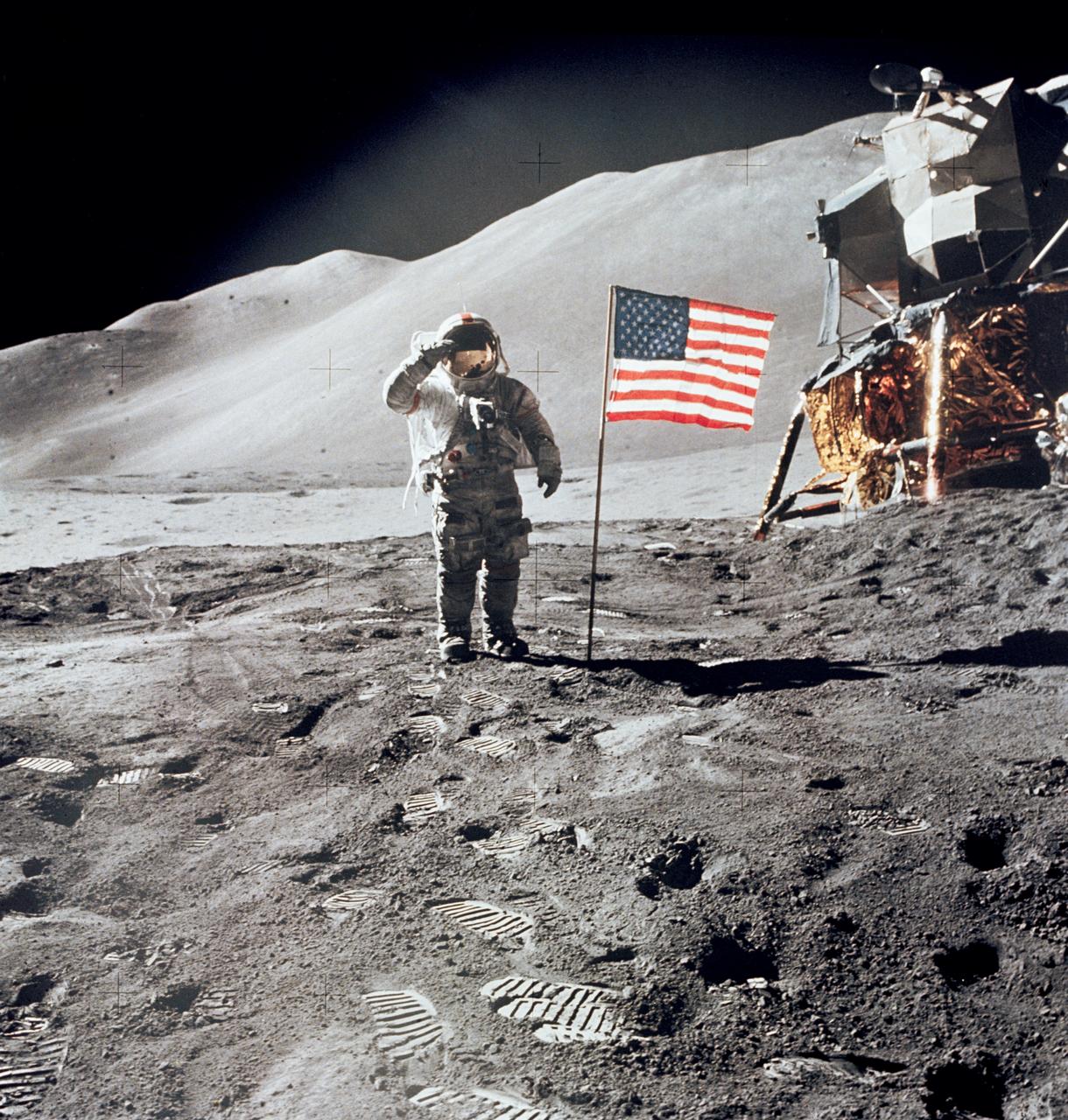
AS15-88-11863 (1 Aug. 1971) --- Astronaut David R. Scott, commander, gives a military salute while standing beside the deployed United States flag during the Apollo 15 lunar surface extravehicular activity (EVA) at the Hadley-Apennine landing site. The flag was deployed toward the end of EVA-2. The Lunar Module (LM), "Falcon," is partially visible on the right. Hadley Delta in the background rises approximately 4,000 meters (about 13,124 feet) above the plain. The base of the mountain is approximately 5 kilometers (about three statue miles) away. This photograph was taken by astronaut James B. Irwin, lunar module pilot. While astronauts Scott and Irwin descended in the LM to explore the moon, astronaut Alfred M. Worden, command module pilot, remained in lunar orbit in the Command and Service Modules (CSM).
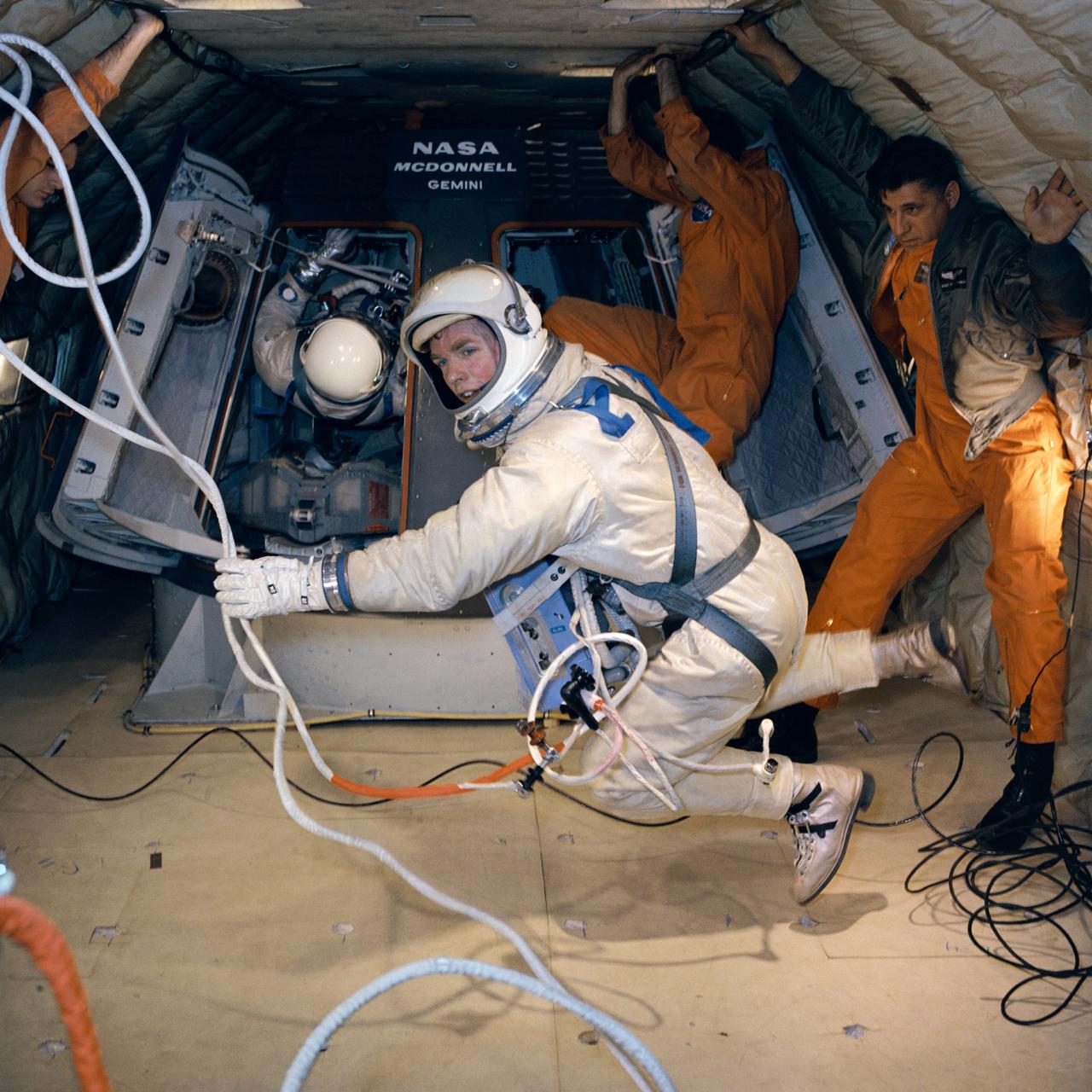
S66-21416 (18 Feb. 1966) --- Astronaut David R. Scott, in full spacesuit, holds maneuvering unit while suspended in a weightless state during extravehicular activity (EVA) training in a C-135 Air Force plane. Photo credit: NASA
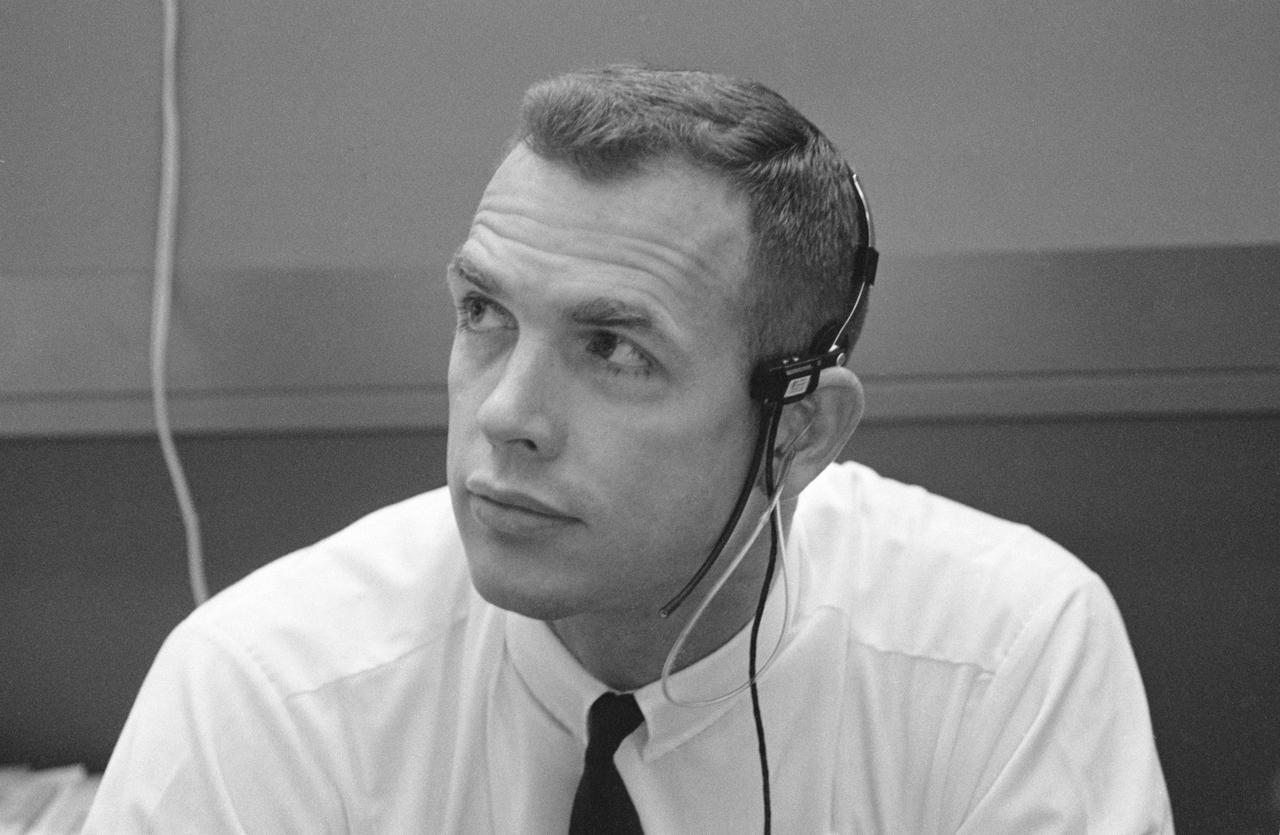
S69-39590 (20 July 1969) --- Astronaut David R. Scott is seated at a console in the Mission Operations Control Room (MOCR) in the Mission Control Center (MCC), Building 30, during the Apollo 11 lunar landing mission. He is watching a television monitor during the lunar surface extravehicular activity (EVA) in which astronauts Neil A. Armstrong and Edwin E. Aldrin Jr. participated. Scott is the backup crew commander for the scheduled Apollo 12 lunar landing mission.
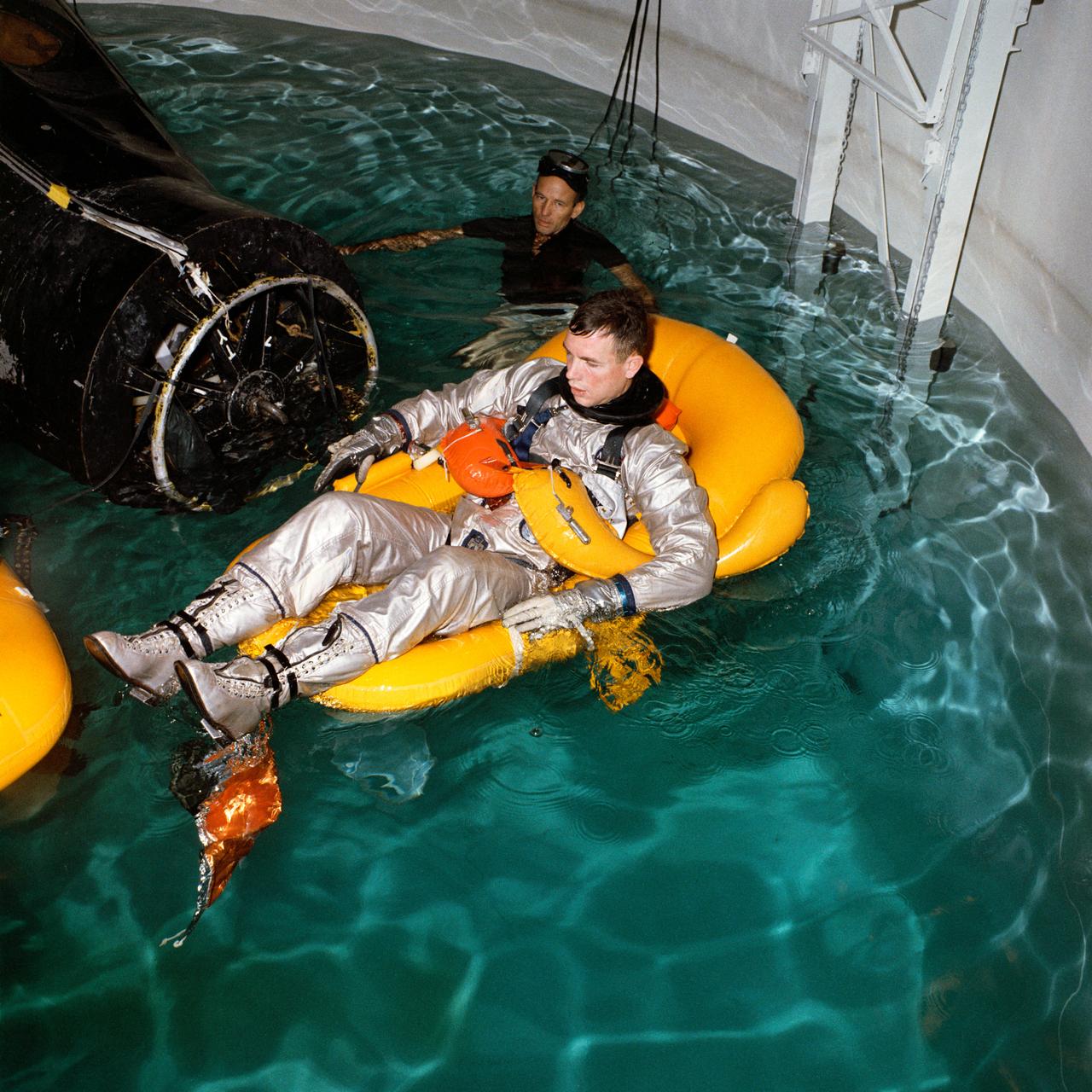
S66-15743 (5 Jan. 1966) --- Astronaut David R. Scott, pilot of the Gemini-8 prime crew, undergoes water egress training in a special tank in building 260A at the Manned Spacecraft Center (MSC), Houston, Texas. An MSC swimmer assists in the training exercise. A boilerplate model of a Gemini spacecraft floats in the water beside Scott. Photo credit: NASA
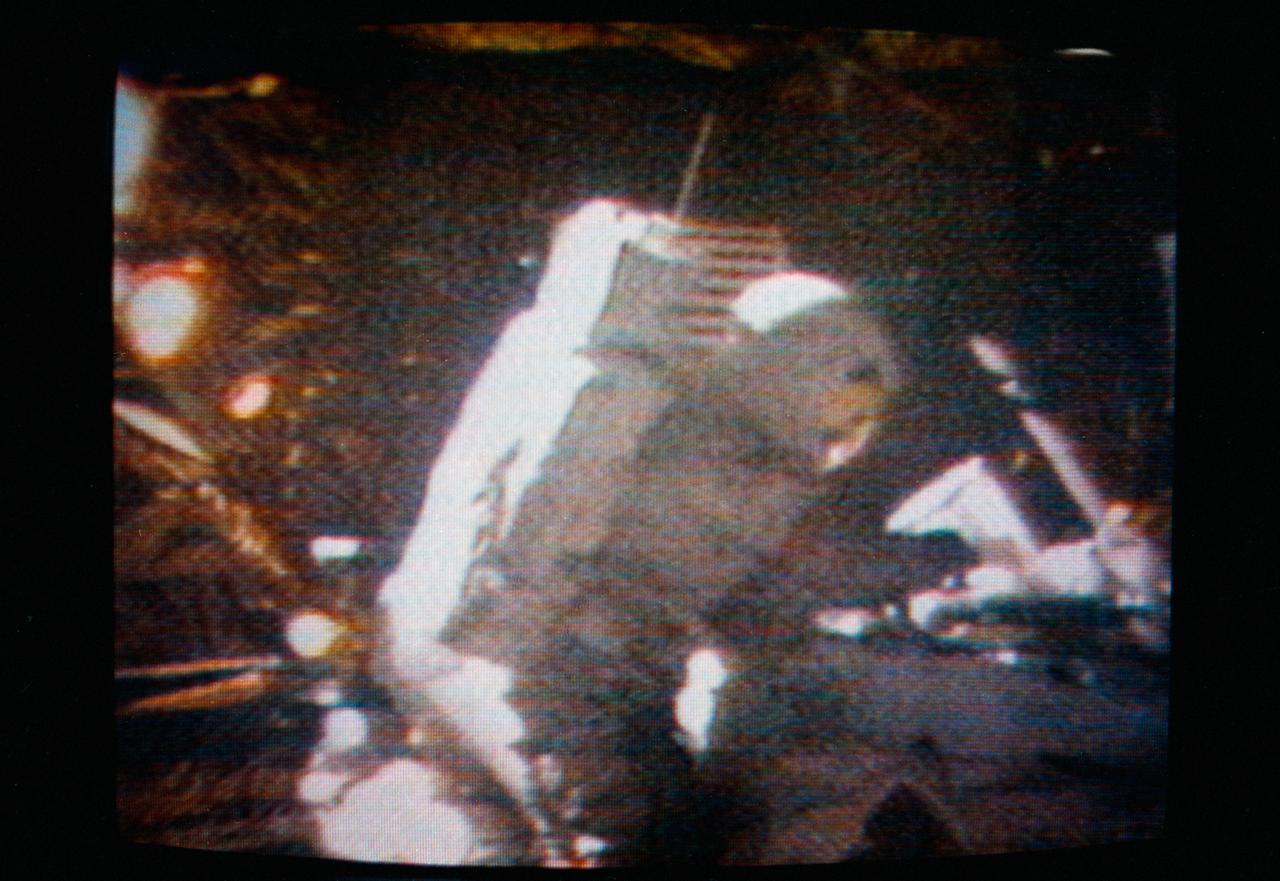
S71-43785 (2 Aug. 1971) --- Astronaut David R. Scott, Apollo 15 commander, performs the act of cancelling the first Apollo 15 commemorative postage stamp on the moon, as seen in this color reproduction taken from a transmission made by the RCA color television camera mounted on the Lunar Roving Vehicle. Scott holds a stamp cancellation device in his right hand. The new commemorative postage stamp heralds: "United States in Space -- A Decade of Achievement." The U.S. Postal Service chose artist Robert McCall of Paradise Valley, Arizona, to design the new U.S. eight-cent stamp. The stamp cancellation occurred toward the end of the third and final lunar surface extravehicular activity by astronauts Scott and James B. Irwin, lunar module pilot.
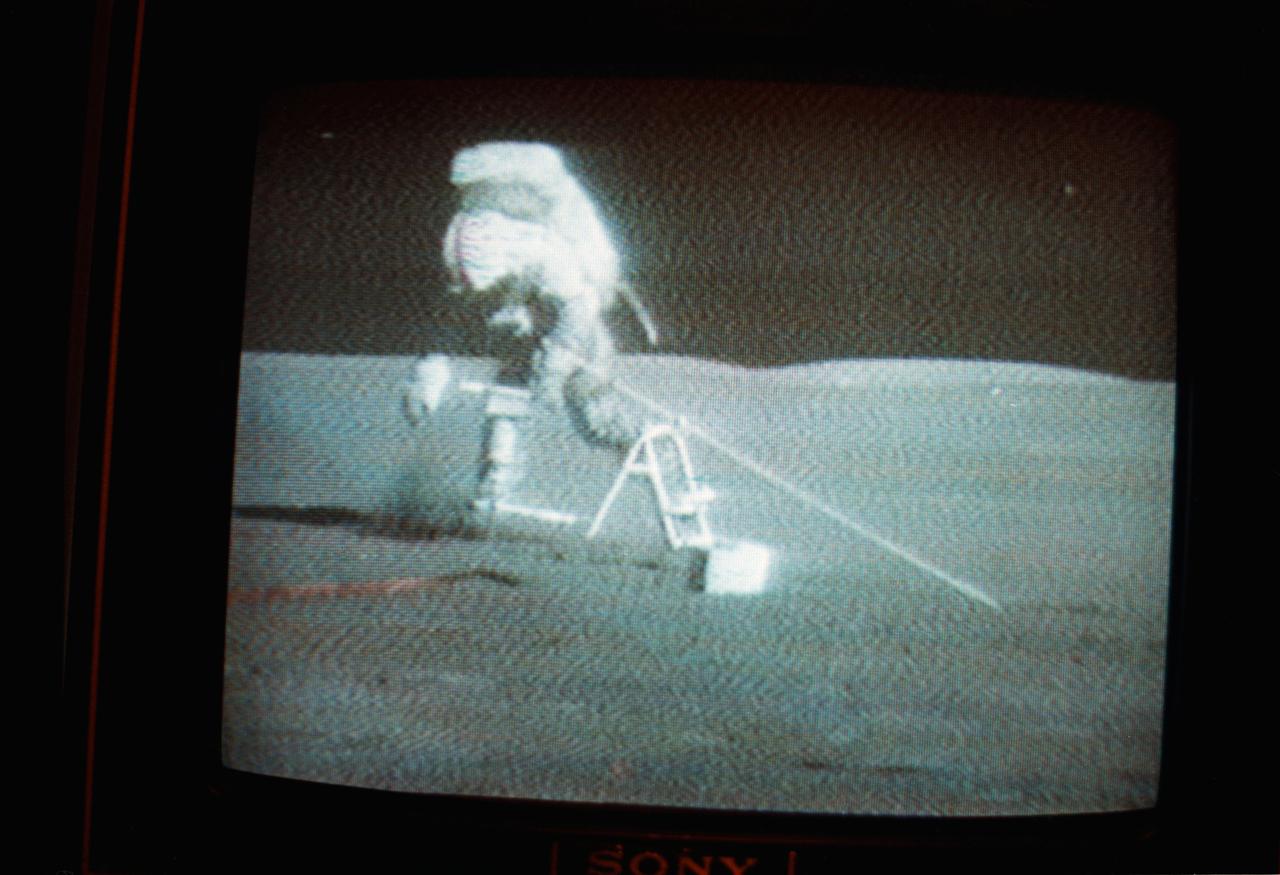
S71-41501 (1 Aug. 1971) --- Astronaut David R. Scott, Apollo 15 commander, is seen carrying the Apollo Lunar Surface Drill (ALSD) during the second lunar surface extravehicular activity (EVA) in this black and white reproduction taken from a color transmission made by the RCA color television camera mounted on the Lunar Roving Vehicle (LRV). This transmission was the fourth made during the mission.
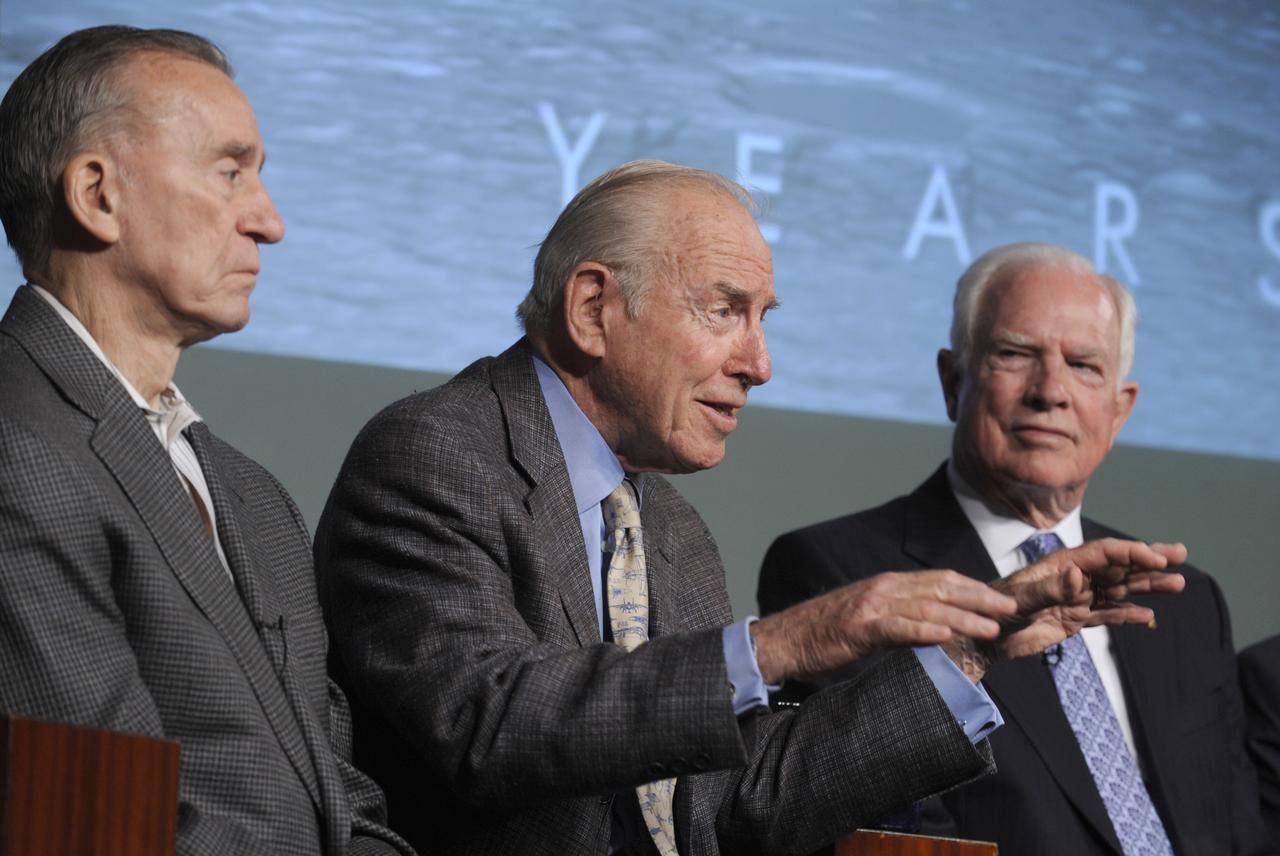
Astronaut James Lovell (Apollo 8 Apollo 13), center, flanked by Walt Cunningham (Apollo 7), left, and David Scott (Apollo 9 Apollo 15) responds during the 40th anniversary of the Apollo 11 mission and the walk on the moon press conference, Monday, July 20, 2009, at NASA Headquarters in Washington. Photo Credit: (NASA/Paul E. Alers)
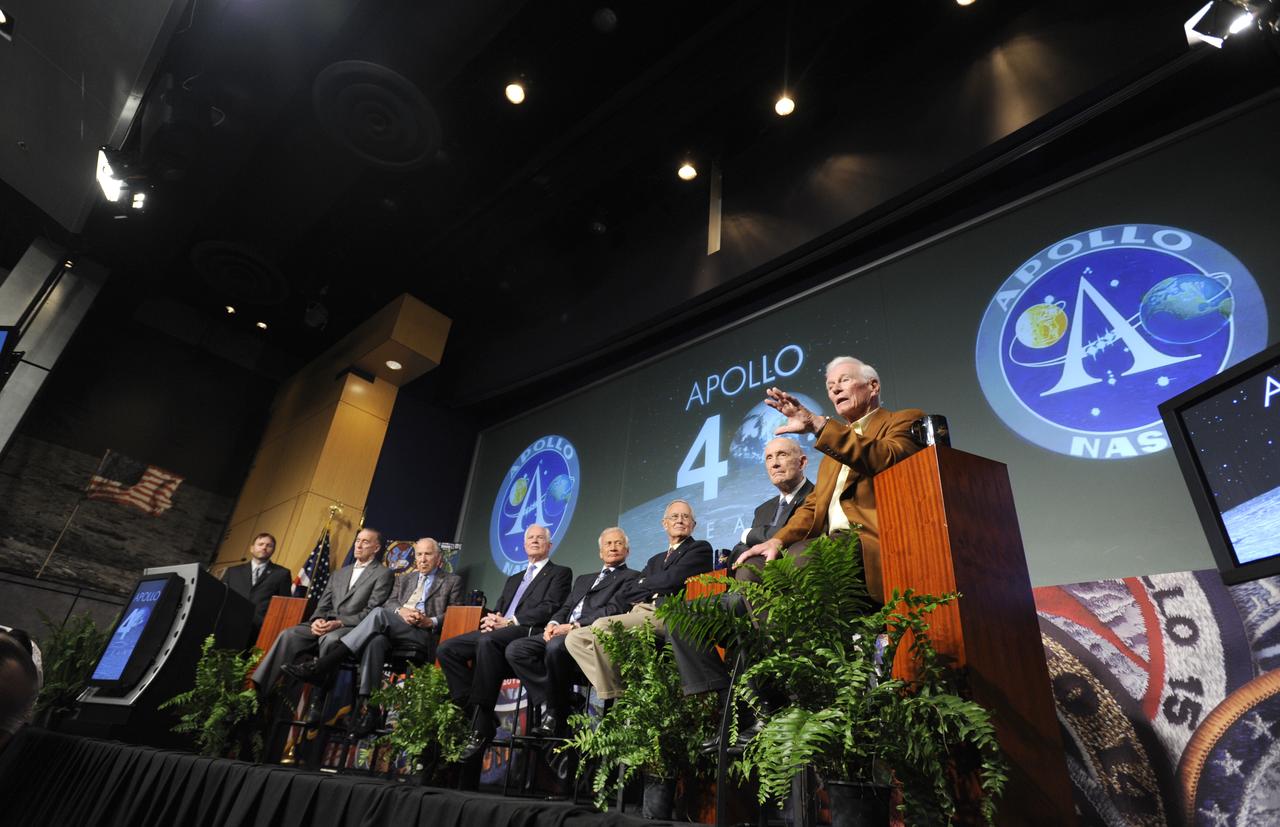
Apollo astronauts from left, Walt Cunningham (Apollo 17), James Lovell (Apollo 8 Apollo 13), David Scott (Apollo 9 Apollo 15), Buzz Aldrin (Apollo 11), Charles Duke (Apollo 16), Thomas Stafford (Apollo 10) and Eugene Cernan (Apollo 17) are seen during the 40th anniversary of the Apollo 11 mission and the walk on the moon press conference, Monday, July 20, 2009, at NASA Headquarters in Washington. Photo Credit: (NASA/Paul E. Alers)
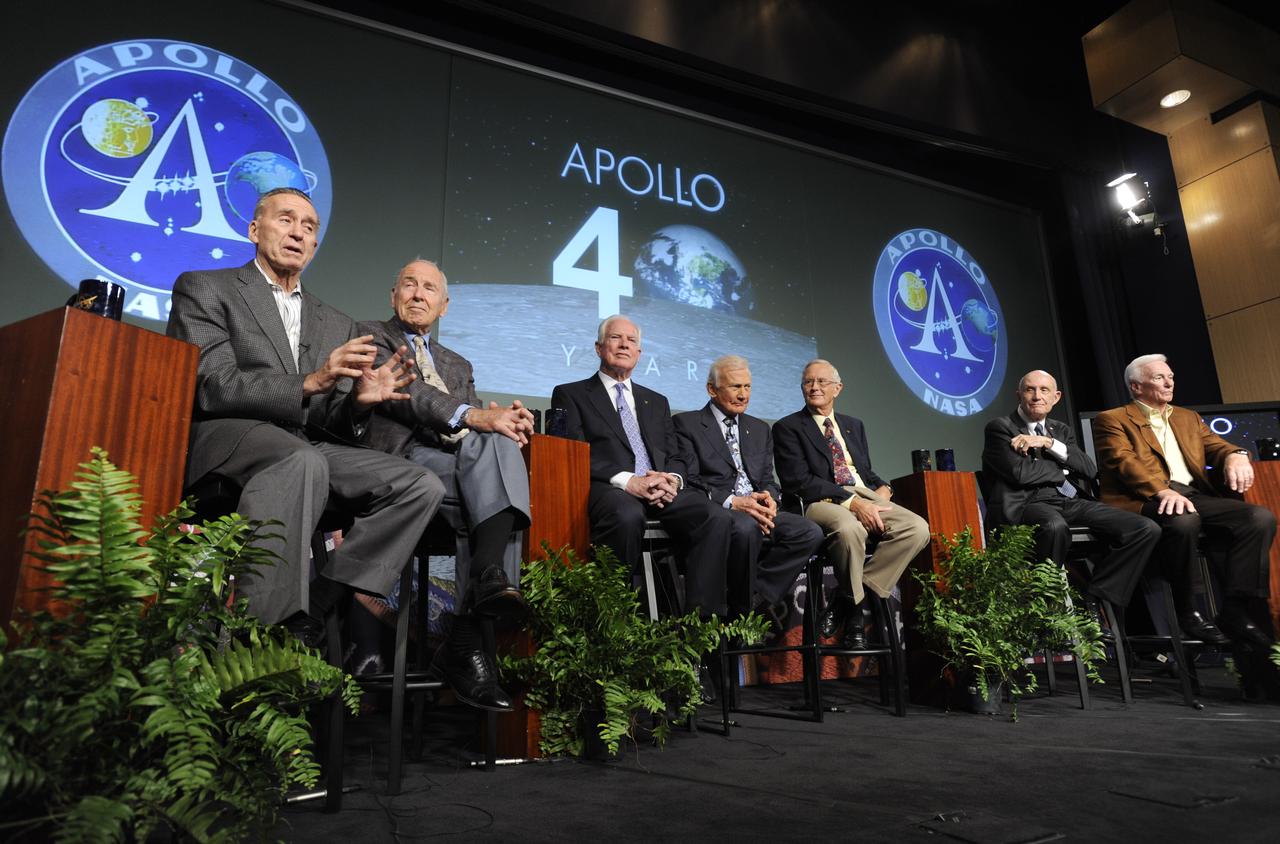
Apollo astronauts from left, Walt Cunningham (Apollo 17), James Lovell (Apollo 8 Apollo 13), David Scott (Apollo 9 Apollo 15), Buzz Aldrin (Apollo 11), Charles Duke (Apollo 16), Thomas Stafford (Apollo 10) and Eugene Cernan (Apollo 17) are seen during the 40th anniversary of the Apollo 11 mission and the walk on the moon press conference, Monday, July 20, 2009, at NASA Headquarters in Washington. Photo Credit: (NASA/Paul E. Alers)

Apollo astronauts from left, Walt Cunningham (Apollo 17), James Lovell (Apollo 8 Apollo 13), David Scott (Apollo 9 Apollo 15), Buzz Aldrin (Apollo 11), Charles Duke (Apollo 16), Thomas Stafford (Apollo 10) and Eugene Cernan (Apollo 17) are seen during the 40th anniversary of the Apollo 11 mission and the walk on the moon press conference, Monday, July 20, 2009, at NASA Headquarters in Washington. Photo Credit: (NASA/Paul E. Alers)
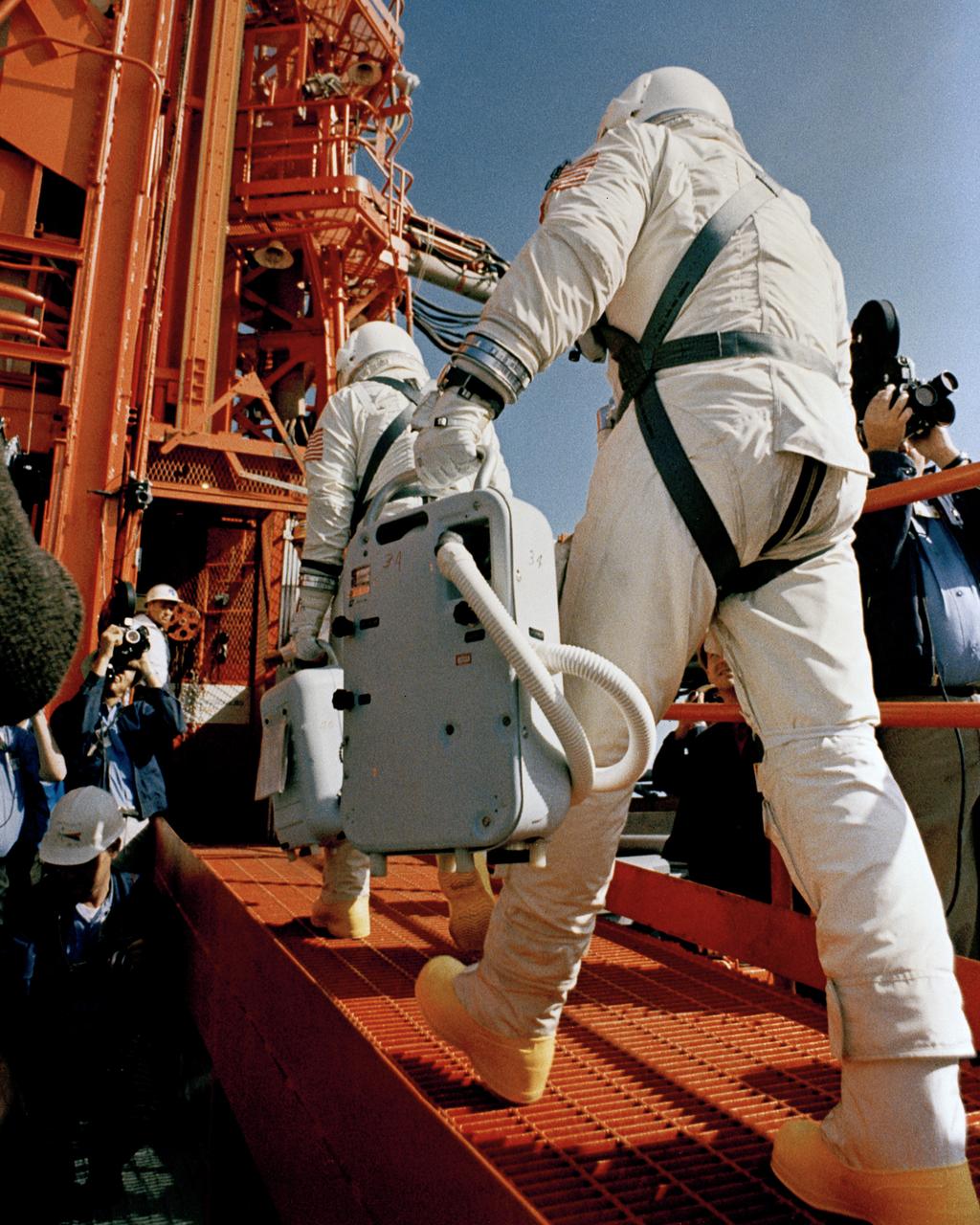
KSC-66C-1861 Gemini-8 Astronauts Neil Armstrong and David Scott are shown entering elevator at Complex 19, Cape Kennedy. (jrs)
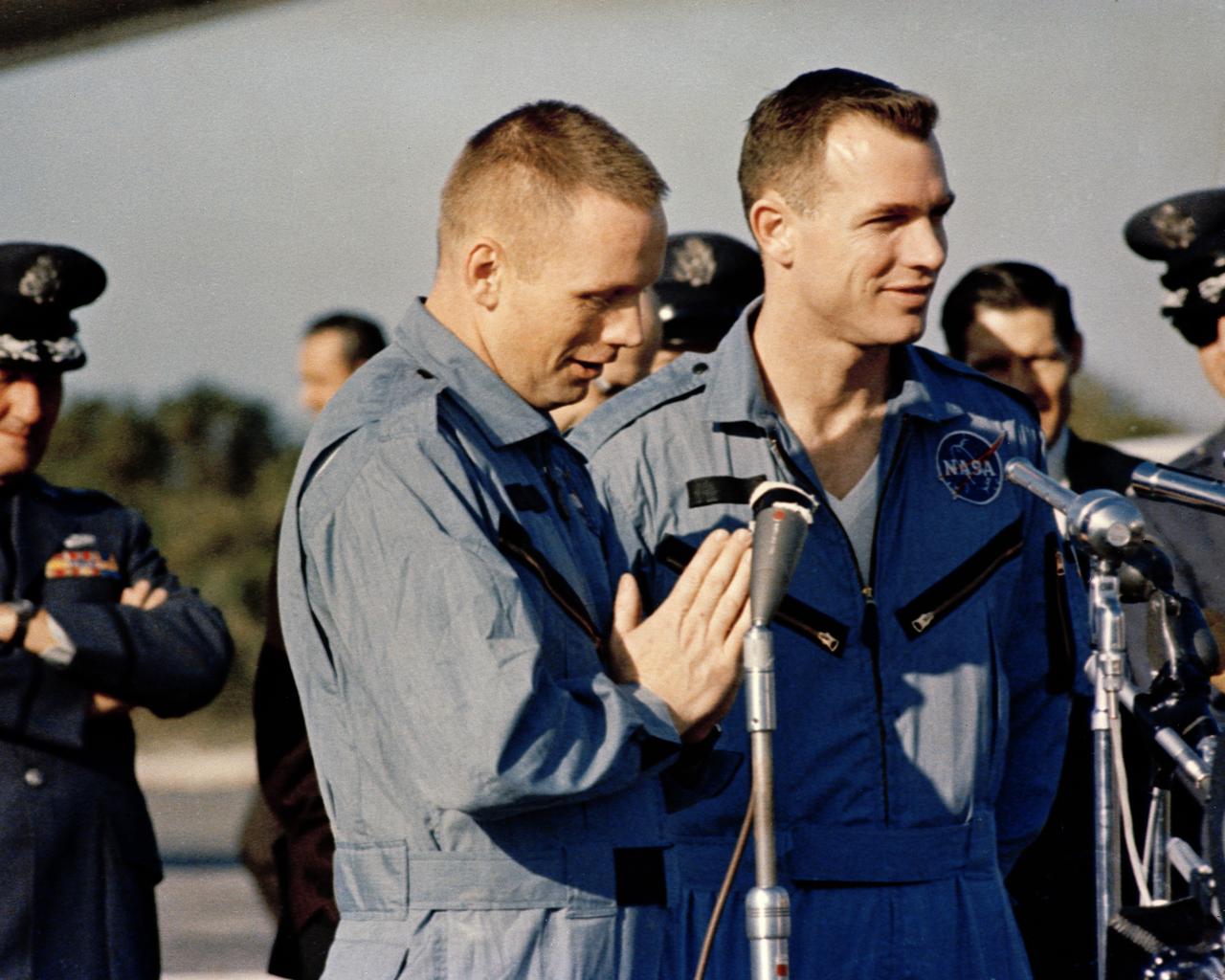
KSC-66C-1881 Astronauts Neil Armstrong and David Scott say a few words for the crowd that greeted them on their arrival at Skid Strip from Hawaii. (jrs)
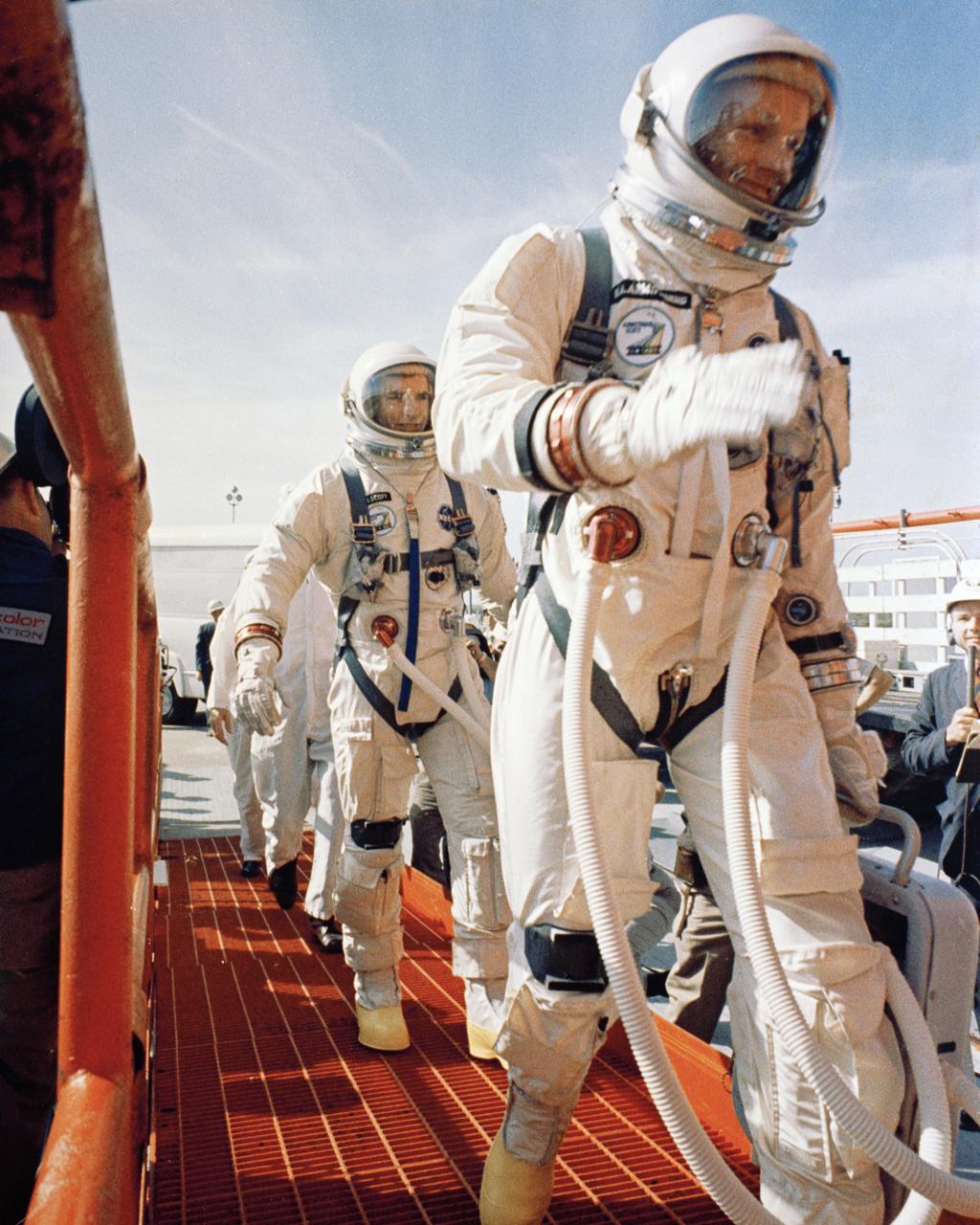
KSC-66C-1863 Gemini-8 Astronauts Neil Armstrong and David Scott prepare to enter elevator at Complex 19, Cape Kennedy. (jrs)
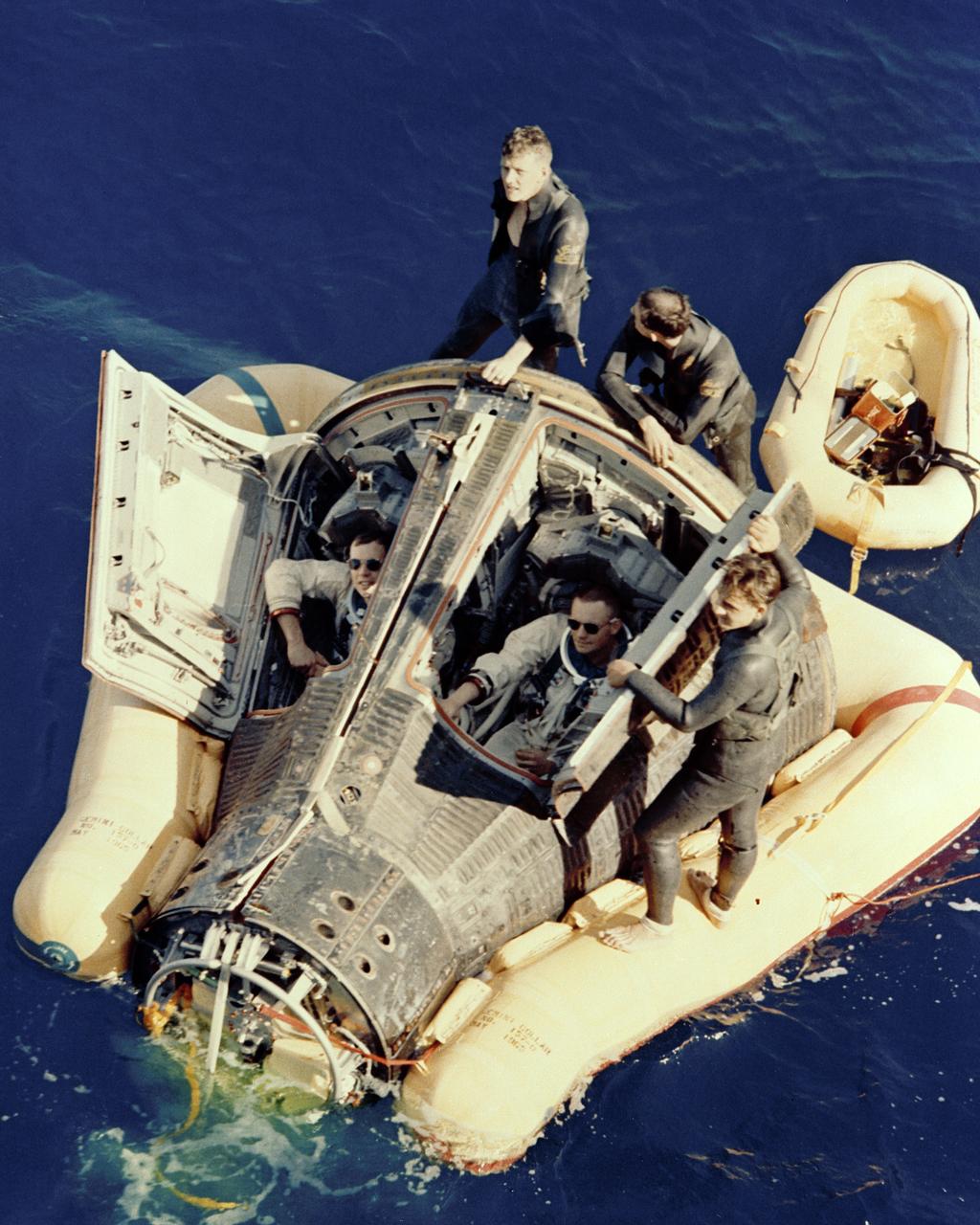
KSC-66C-1879 GT-8 recovery with Astronauts Neil A. Armstrong, Command Pilot and David R. Scott, Pilot in pacific after their GT-8 Flight.
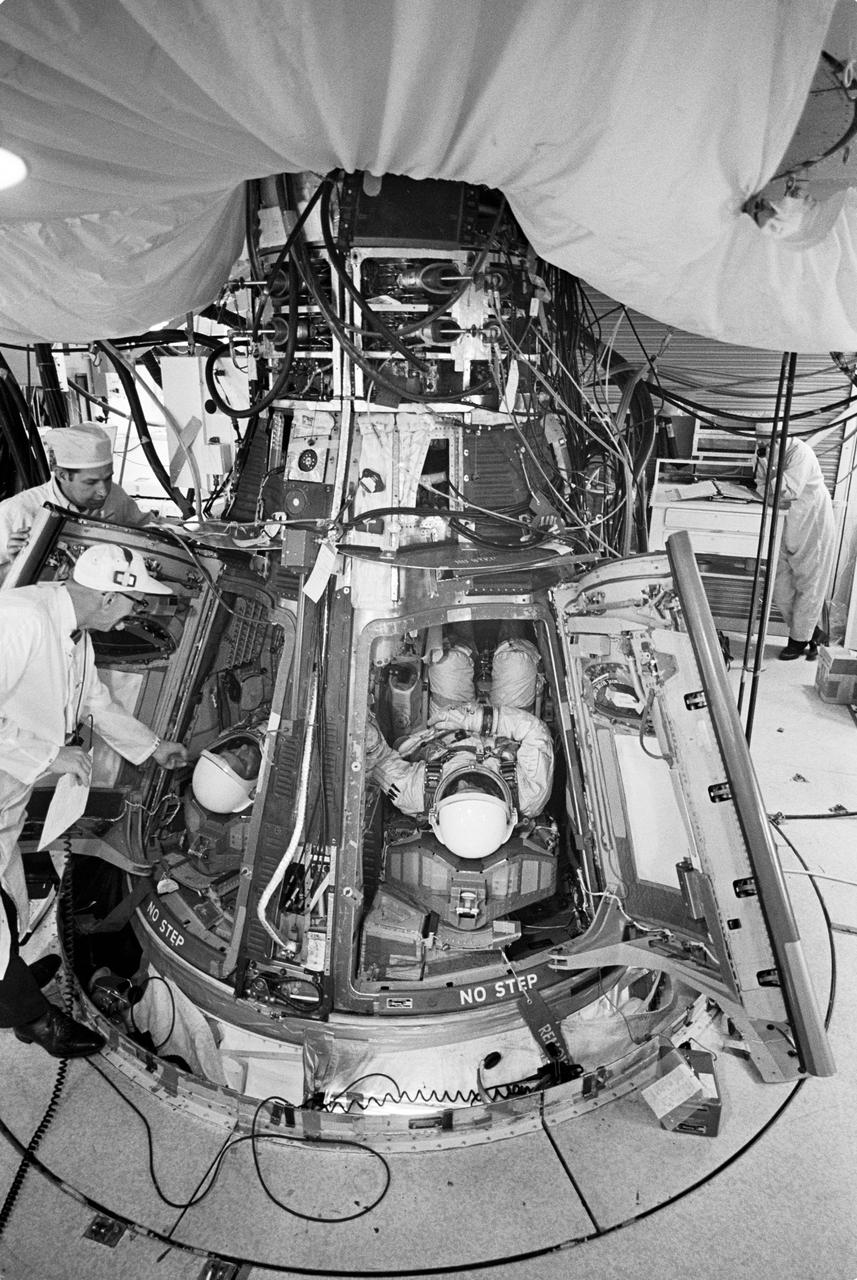
S66-24403 (16 March 1966) --- Astronauts David R. Scott and Neil A. Armstrong inserted into Gemini-8 spacecraft prior to liftoff. Photo credit: NASA
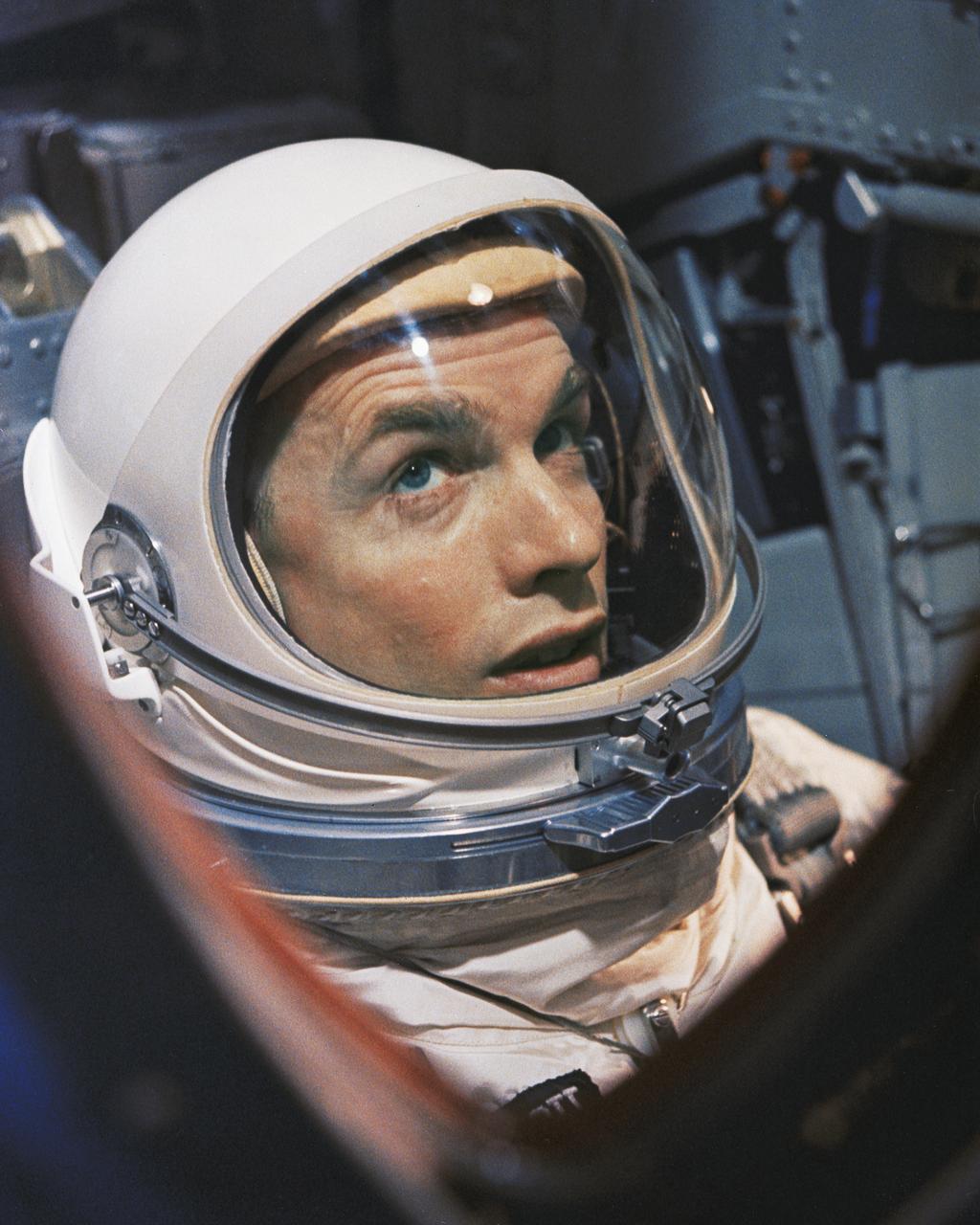
KSC-66C-1871 Gemini 8 Pilot David R. Scott seen through window of Gemini 8 Spacecraft just before liftoff. (jrs)
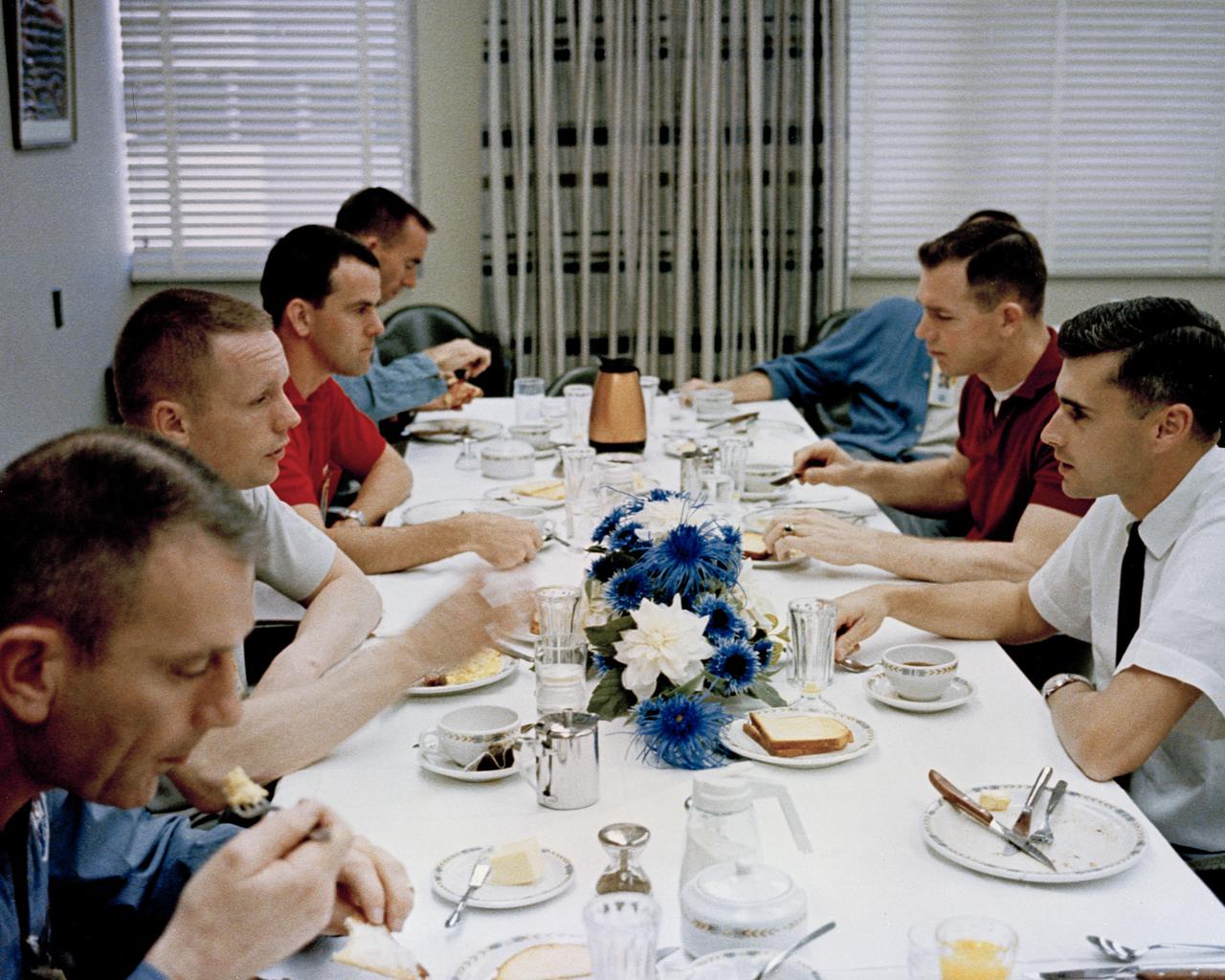
KSC-66C-1847 Gemini-8 Astronauts Neil Armstrong and David Scott enjoy breakfast with fellow Astronauts prior to Liftoff. (jrs)
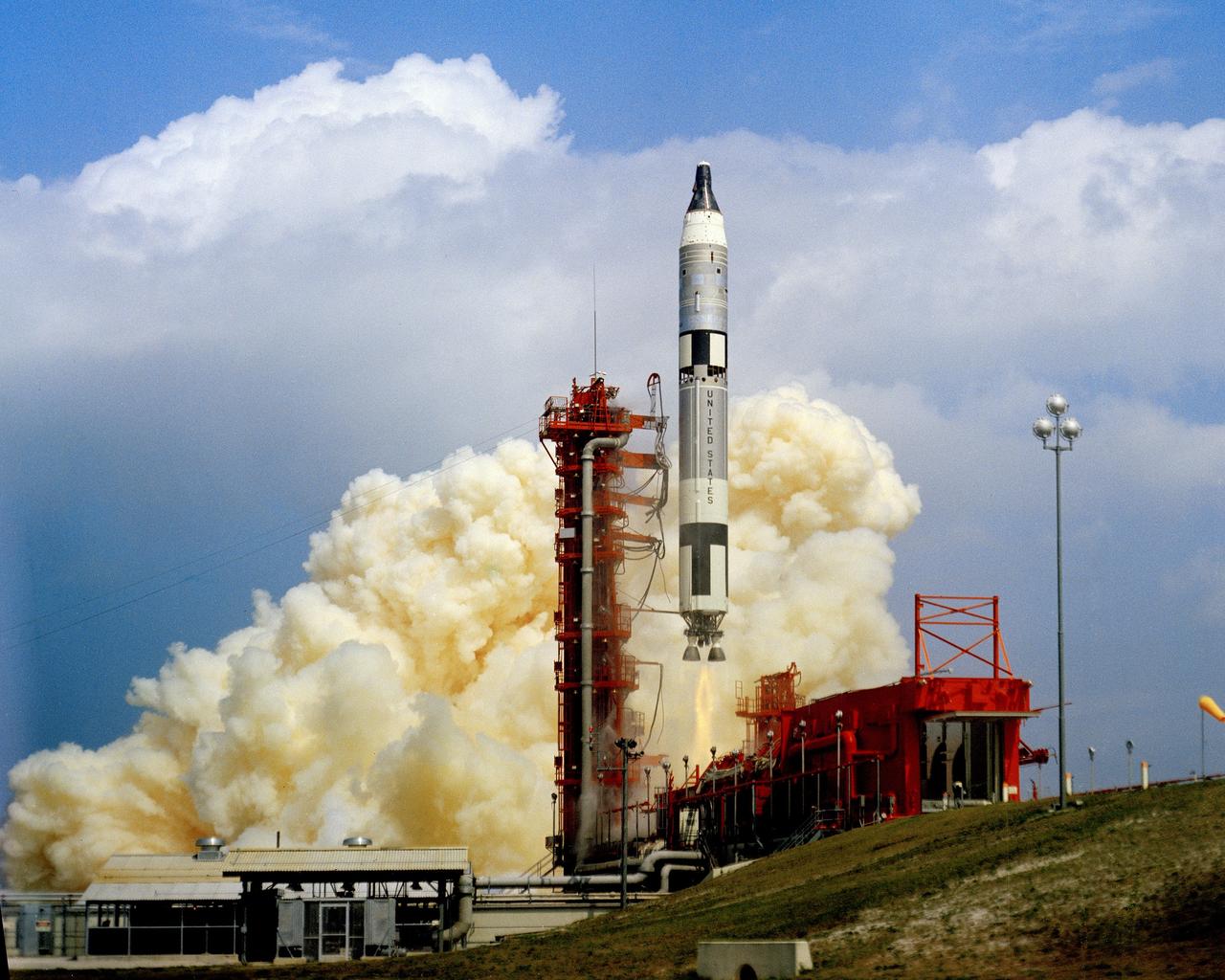
CAPE KENNEDY, Fla. -- At Cape Kennedy Air Force Station in Florida, Gemini 8 lifts off atop a Titan II rocket with command pilot Neil A. Armstrong and pilot David R. Scott aboard. They plan to rendezvous and dock with an Agena target satellite and Scott will perform a spacewalk. Photo Credit: NASA

Nancy Bray, director of Spaceport Integration and Services at NASA's Kennedy Space Center, left, is joined by Myrna Scott, center, and Dr. David Tipton, chief of Aerospace Medicine and Occupational Health, in cutting a ceremonial ribbon dedicating the Randal E. Scott Radiological Control Center at the Florida spaceport. Myrna Scott is the widow of Randy Scott, who was a professional health physicist of more than 40 years. He served as the Florida spaceport's Radiation Protection Officer for 14 years until his death June 17, 2016.

Nancy Bray, director of Spaceport Integration and Services at NASA's Kennedy Space Center, left, is joined by Myrna Scott, center, and Dr. David Tipton, chief of Aerospace Medicine and Occupational Health, in cutting a ceremonial ribbon dedicating the Randal E. Scott Radiological Control Center at the Florida spaceport. Myrna Scott is the widow of Randy Scott, who was a professional health physicist of more than 40 years. He served as the Florida spaceport's Radiation Protection Officer for 14 years until his death June 17, 2016.

Nancy Bray, director of Spaceport Integration and Services at NASA's Kennedy Space Center, left, is joined by Myrna Scott, center, and Dr. David Tipton, chief of Aerospace Medicine and Occupational Health, in cutting a ceremonial ribbon dedicating the Randal E. Scott Radiological Control Center at the Florida spaceport. Myrna Scott is the widow of Randy Scott, who was a professional health physicist of more than 40 years. He served as the Florida spaceport's Radiation Protection Officer for 14 years until his death June 17, 2016.
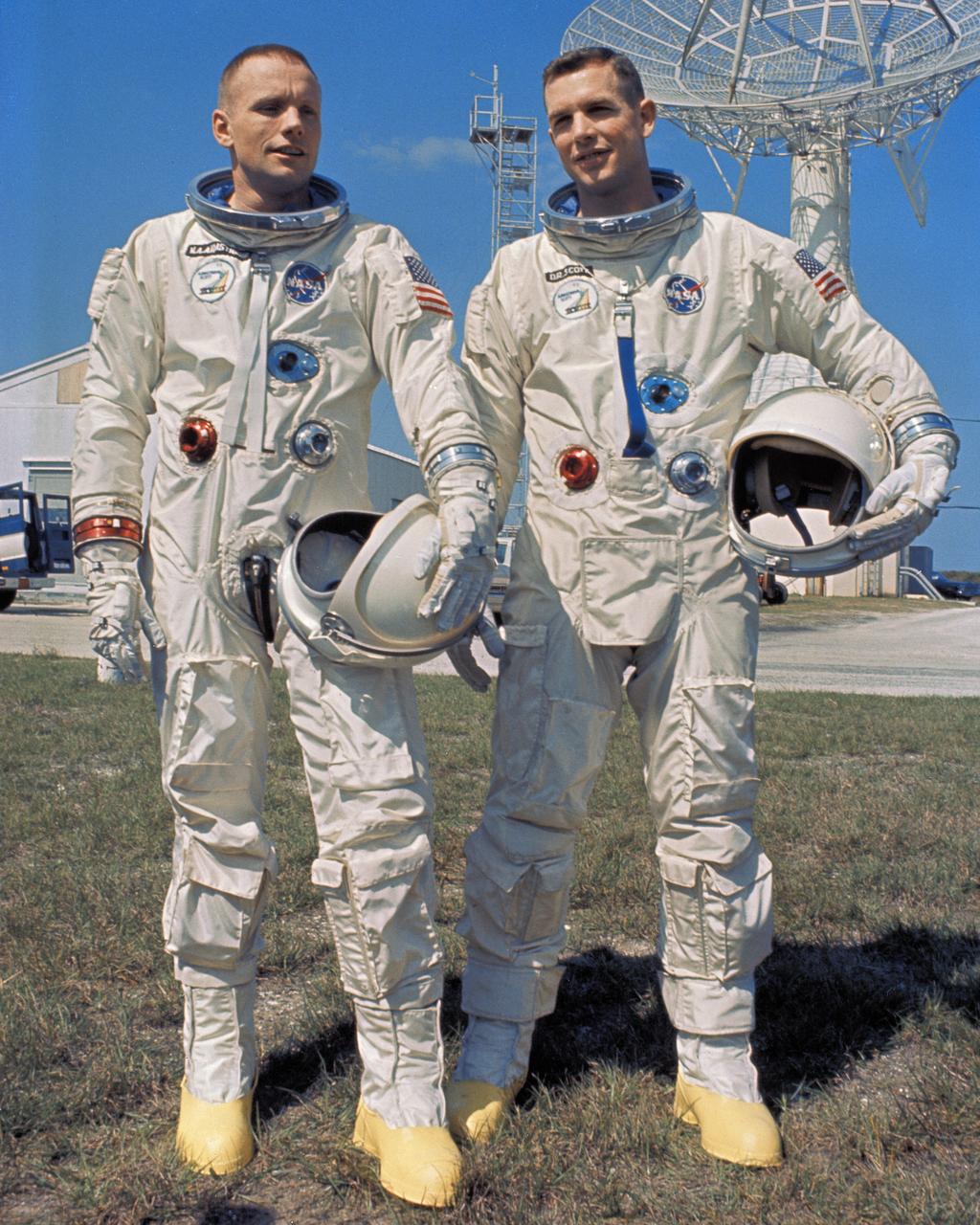
KSC-66C-1846 Gemini-8 Astronauts Neil A. Armstrong, Command Pilot, and David R. Scott, Pilot, during a Photo Session for the Press outside Mission Control Center, Cape Kennedy, FLA. (jrs)
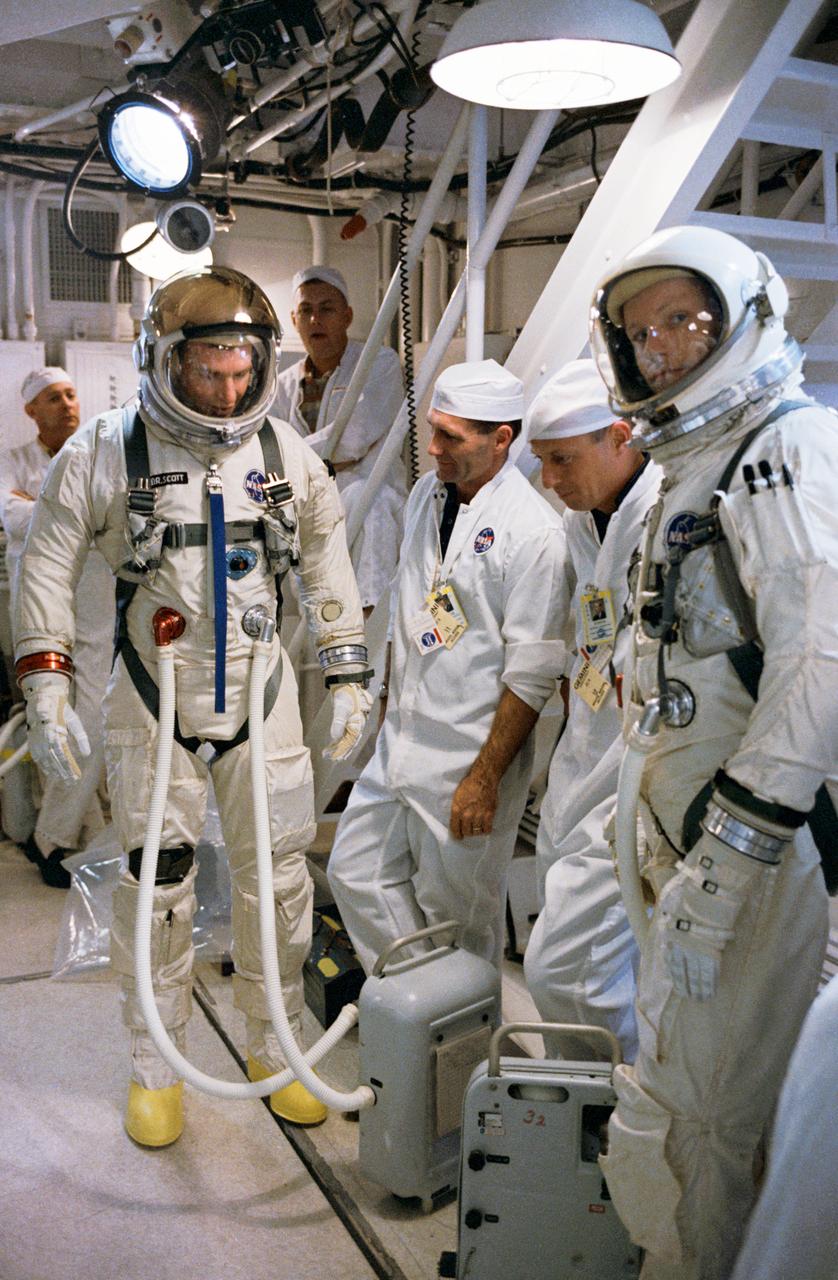
S66-24422 (11 March 1966) --- Astronauts David R. Scott (left) and Neil A. Armstrong, both in full spacesuits, in white room entering the Gemini-8 spacecraft during countdown simulation. Photo credit: NASA
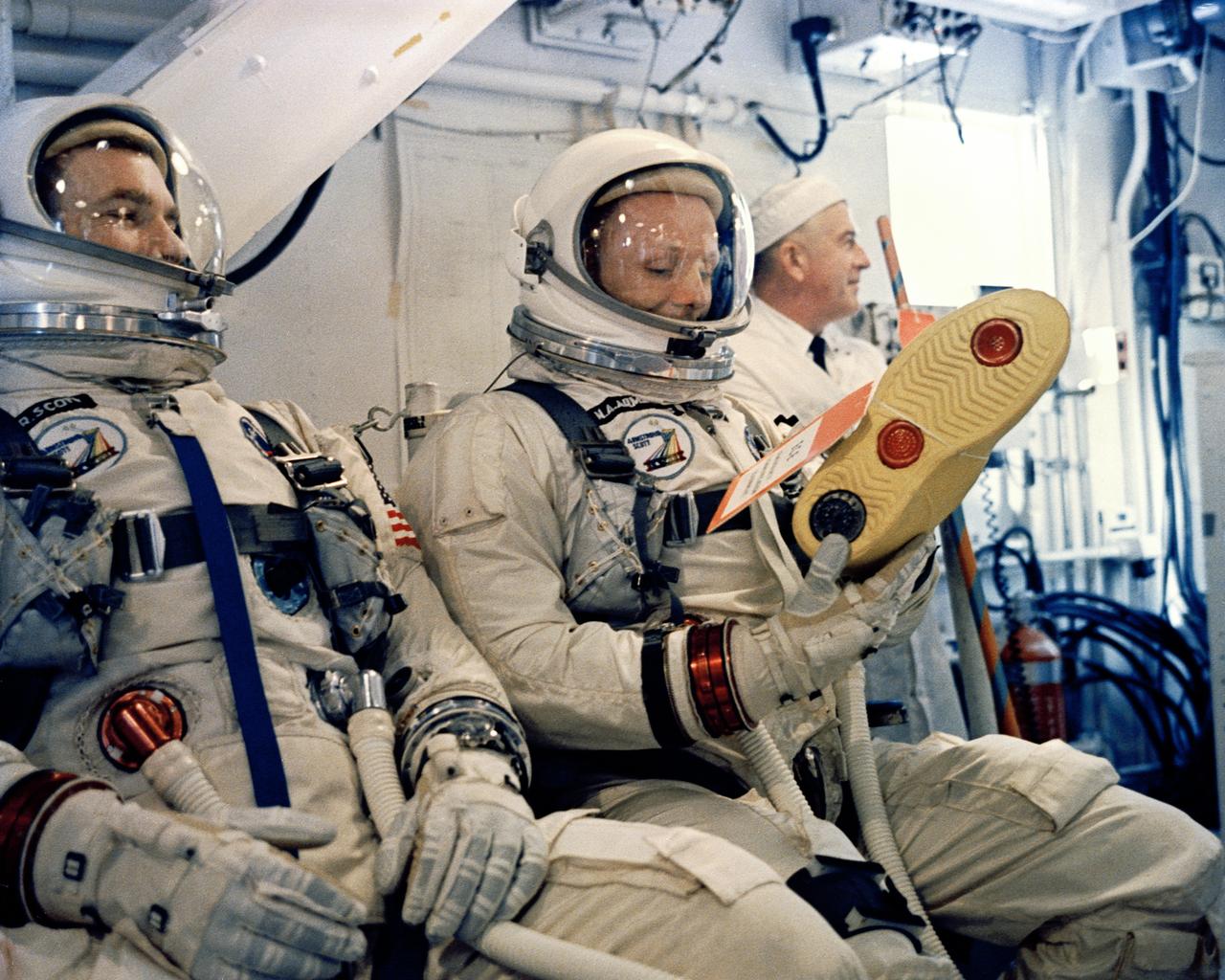
KSC-66C-1875 Astronauts David Scott and Neil Armstrong wait for the order to board their Gemini 8 Spacecraft in the White Room at Cape Kennedy, Complex 19. (jrs)
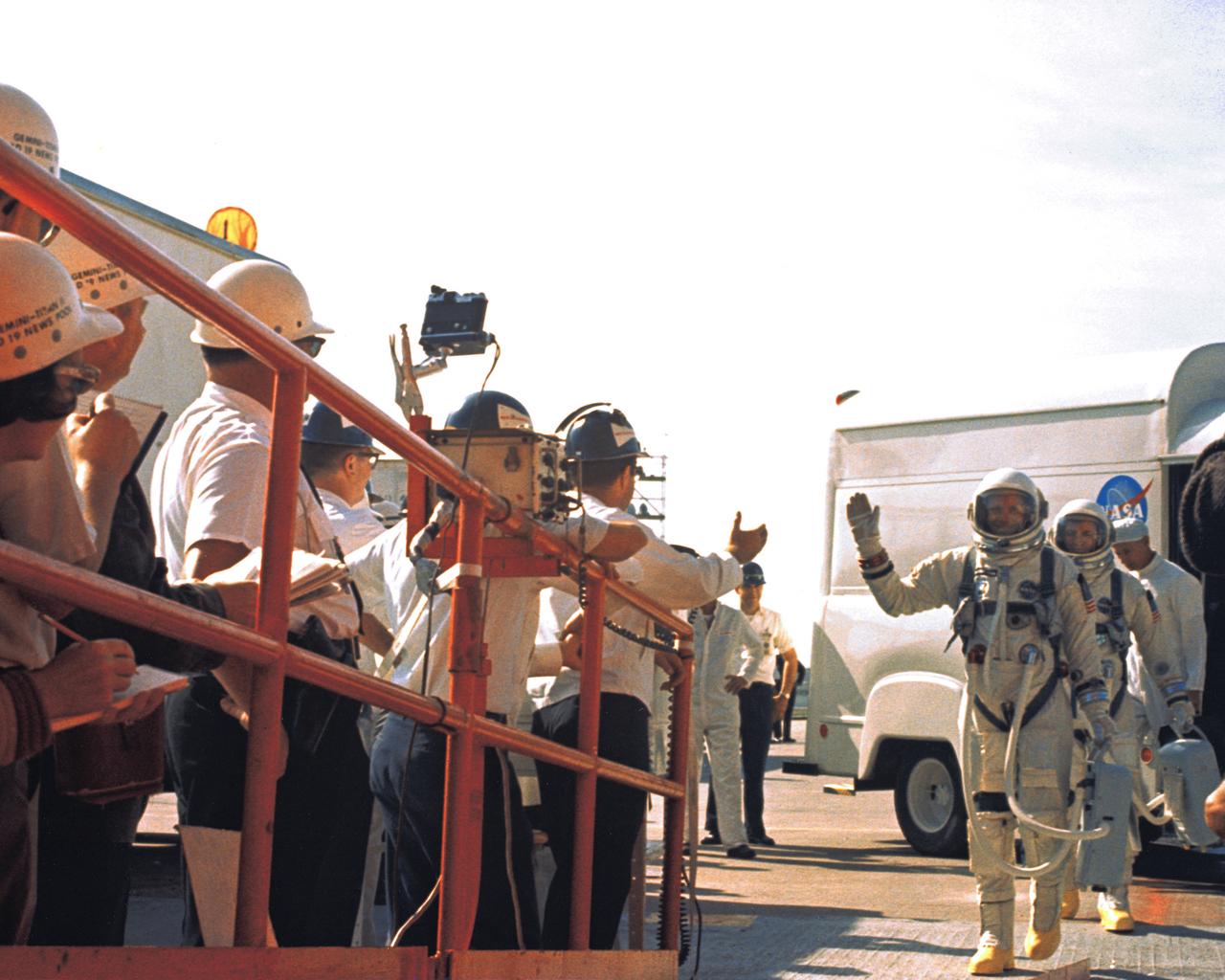
KSC-66C-1855 Gemini-8 Astronauts Neil A. Armstrong and David R. Scott leave Transfer Van at Complex 19, Cape Kennedy prior to boarding their Gemini 8 Spacecraft. (jrs)
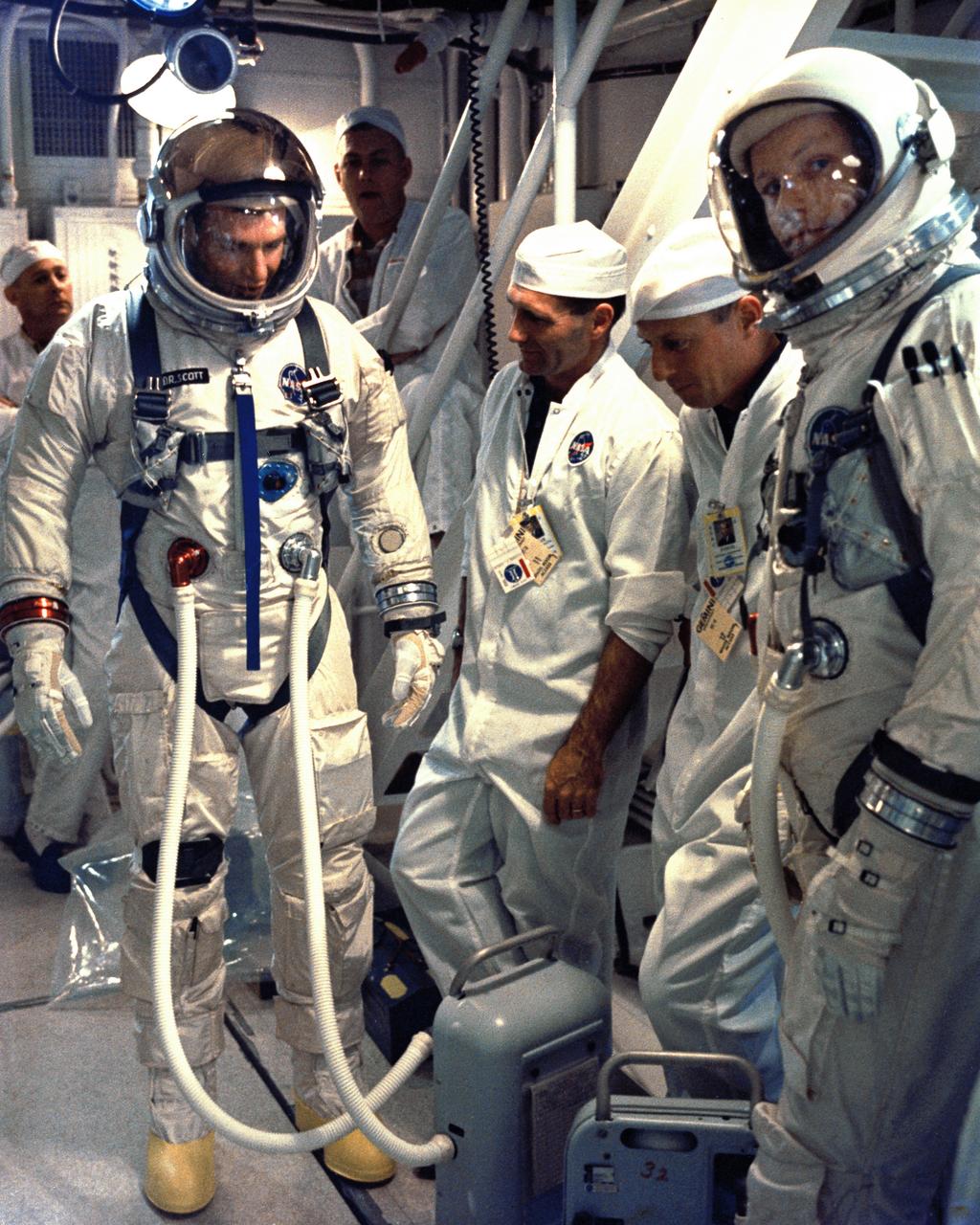
KSC-66C-1841 Gemini-8 Astronauts Neil A. Armstrong, Command Pilot, and David R. Scott, Pilot, arrive at White Room, Complex 19 to enter Spacecraft for Simulation Test. (jrs)
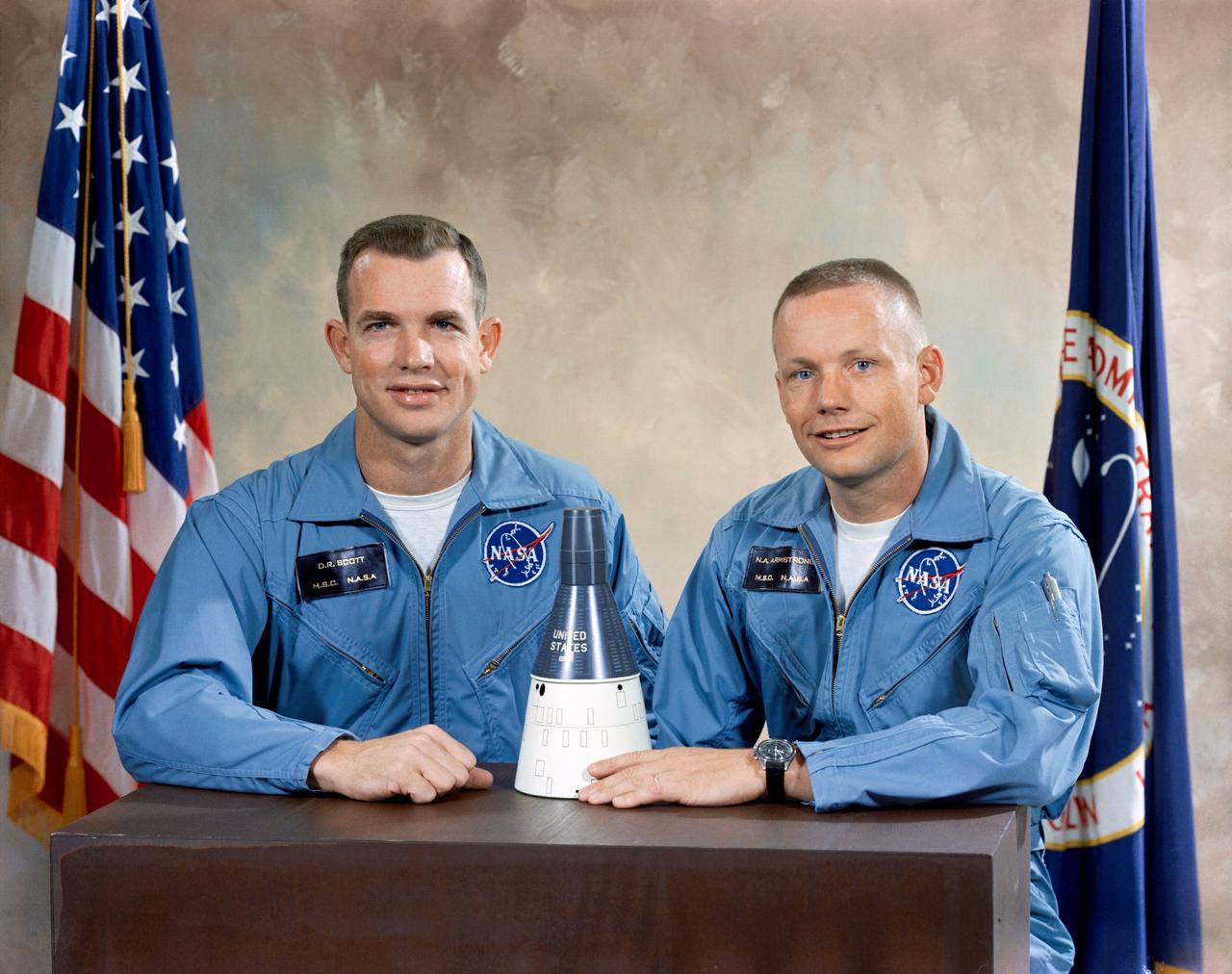
S65-58499 (4 Nov. 1965) --- Astronauts Neil A. Armstrong (right), command pilot; and David R. Scott, pilot, are the prime crewmen of the Gemini-8 space mission. Photo credit: NASA
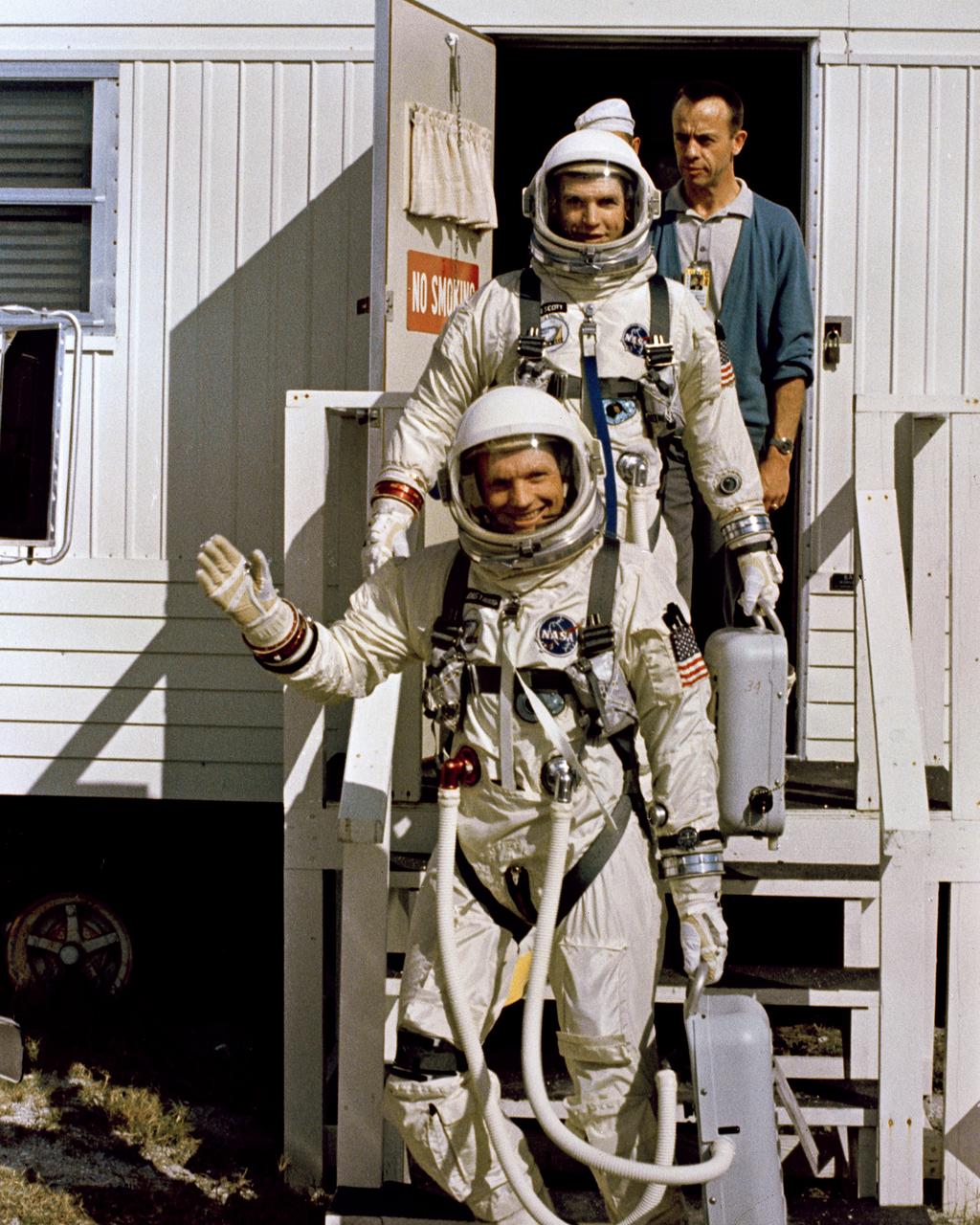
KSC-66C-1869 Astronauts Neil Armstrong and David Scott leave Suiting Trailer and enter Transfer Van at Cape Kennedy prior to boarding their Spacecraft for Gemini 8 Mission. (jrs)
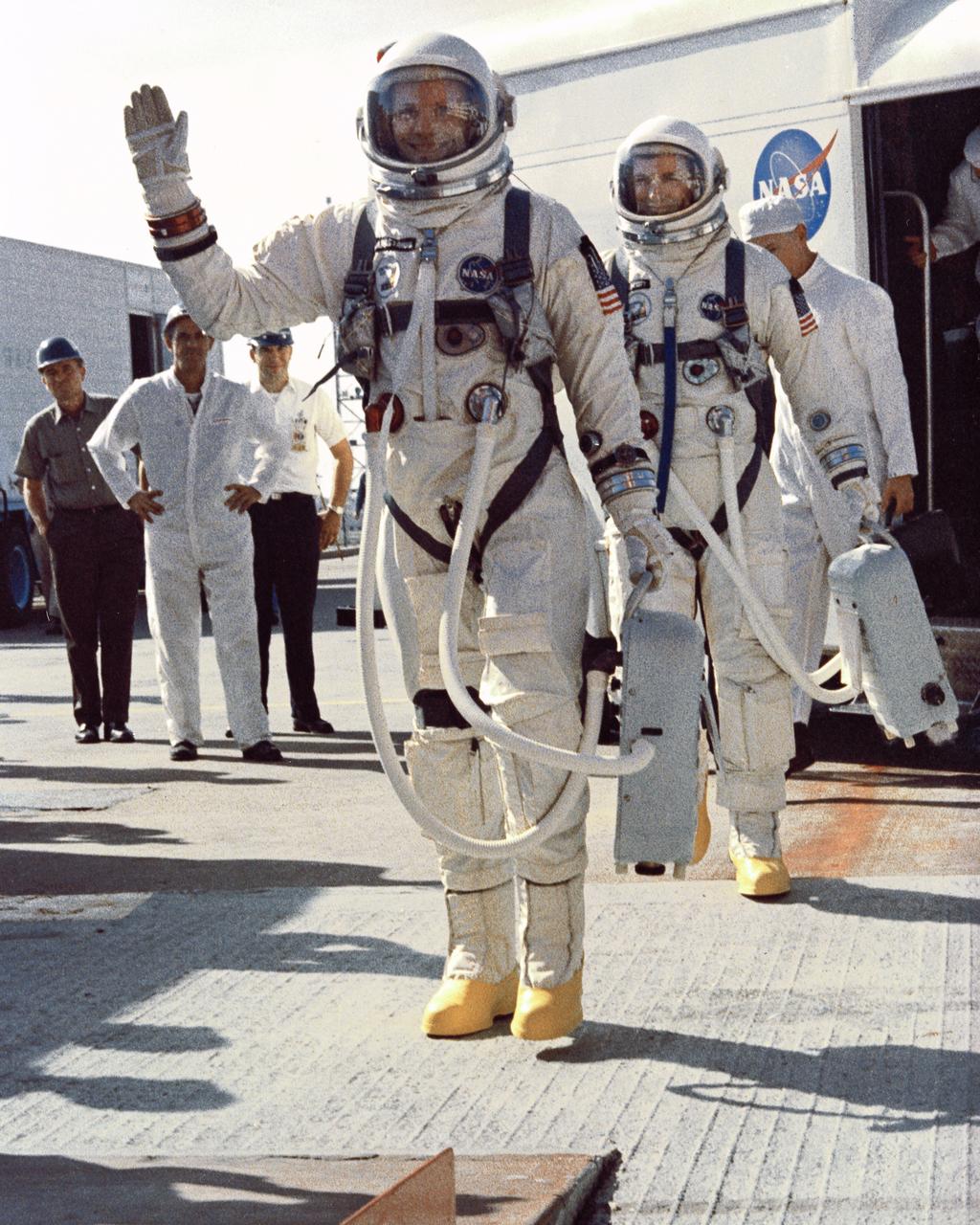
KSC-66C-1867 Gemini-8 Astronauts Neil A. Armstrong and David R. Scott leave Transfer Van at Complex 19, Cape Kennedy prior to boarding their Gemini 8 Spacecraft. (jrs)
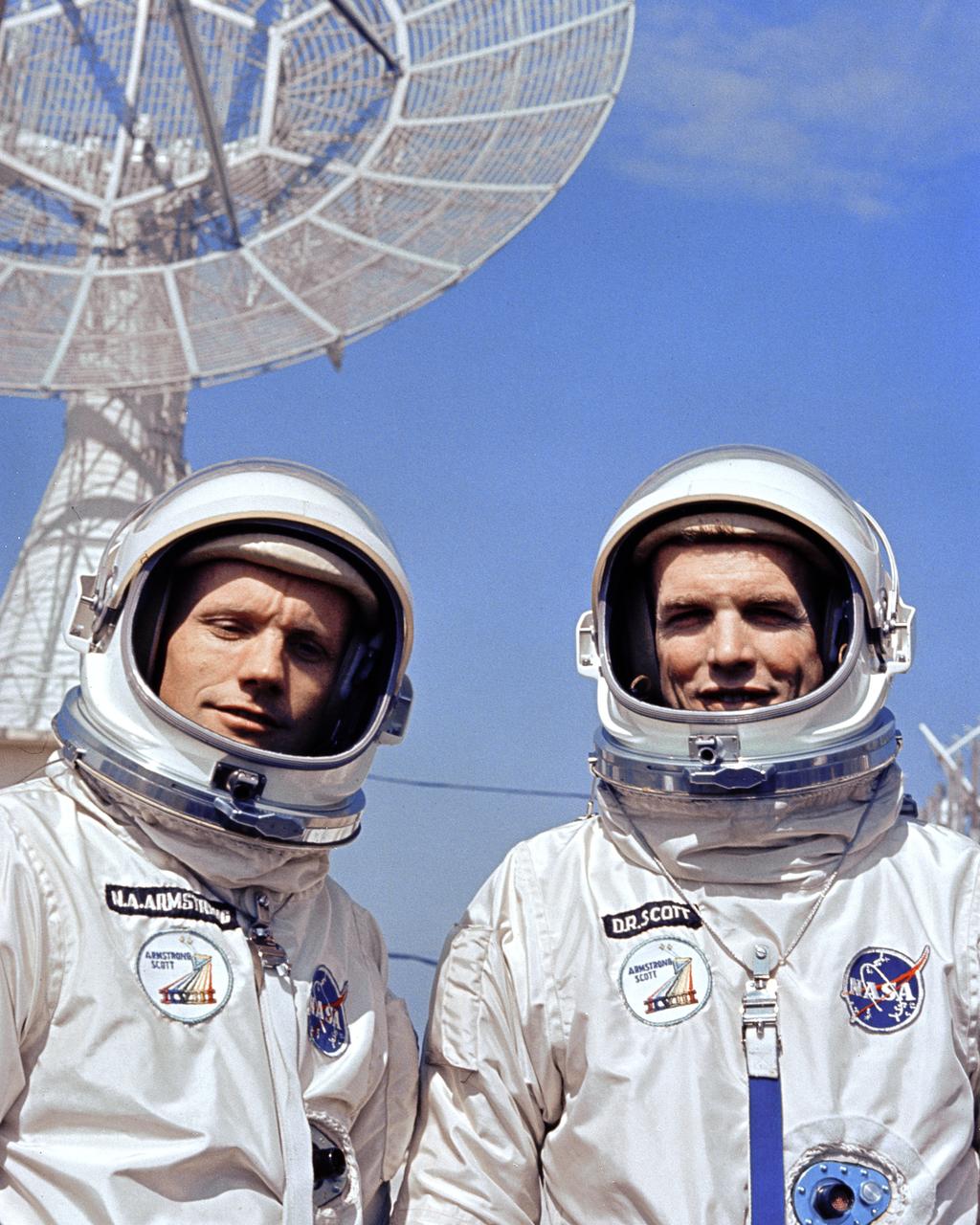
KSC-66C-1845 Gemini-8 Astronauts Neil A. Armstrong, Command Pilot, and David R. Scott, Pilot, during a Photo Session for the Press outside Mission Control Center, Cape Kennedy. (jrs)
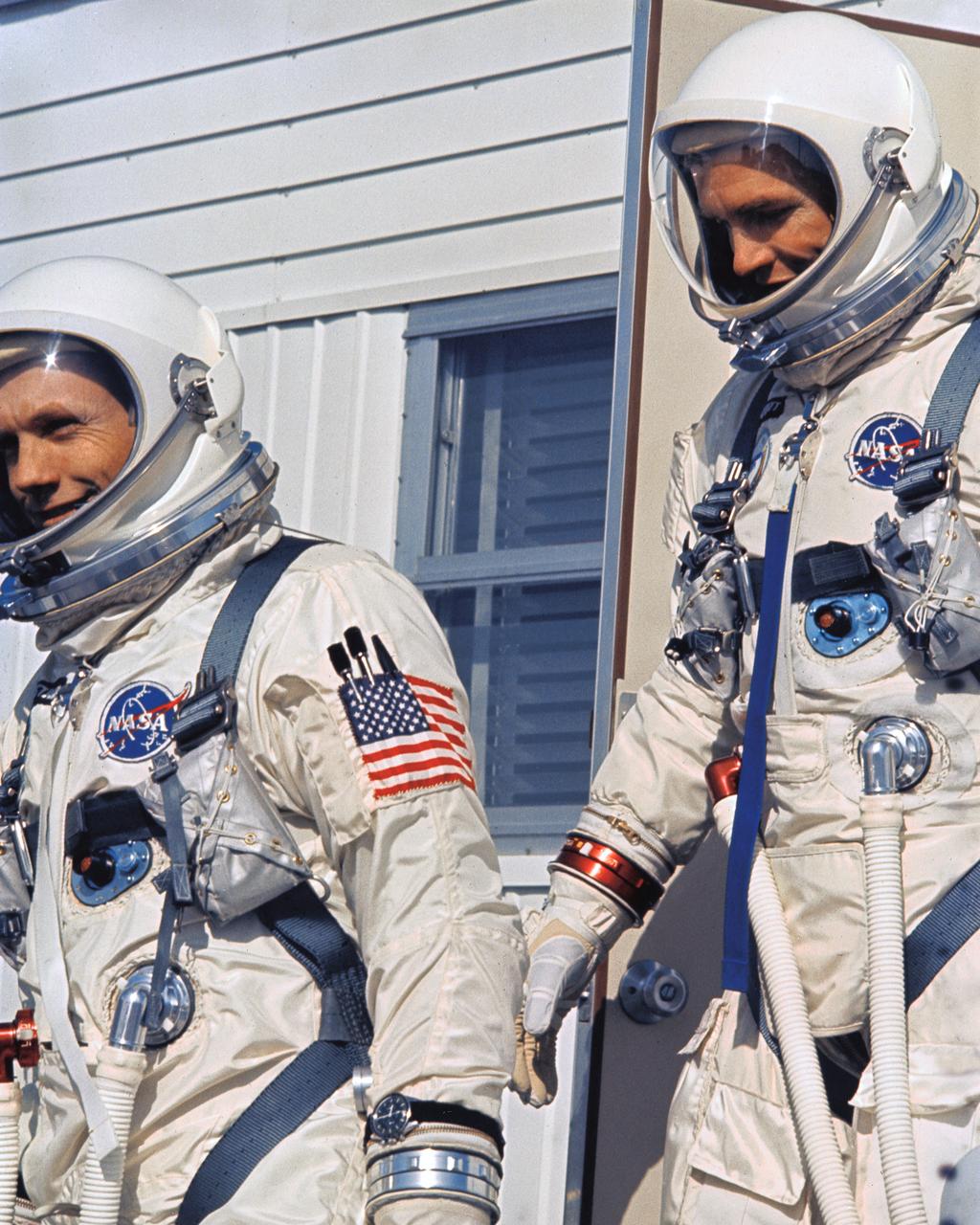
KSC-66C-1851 Astronauts Neil Armstrong and David Scott leave Suiting Trailer to enter Transfer Van, Complex 19, Cape Kennedy prior to boarding their Spacecraft for Gemini 8 Mission. (jrs)
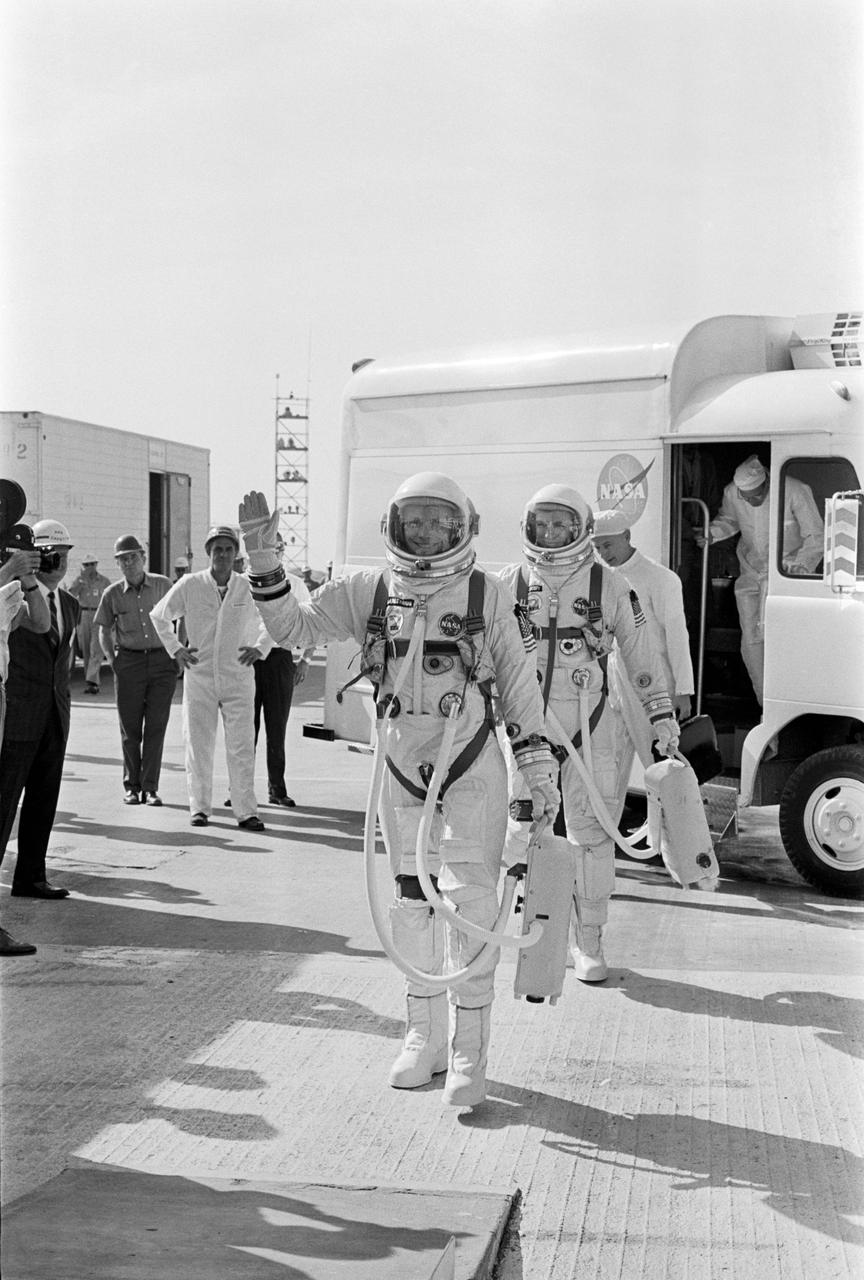
S66-24447 (16 March 1966) --- Astronauts Neil A. Armstrong and David R. Scott walk up the ramp at Pad 19 during Gemini-8 prelaunch countdown. Photo credit: NASA
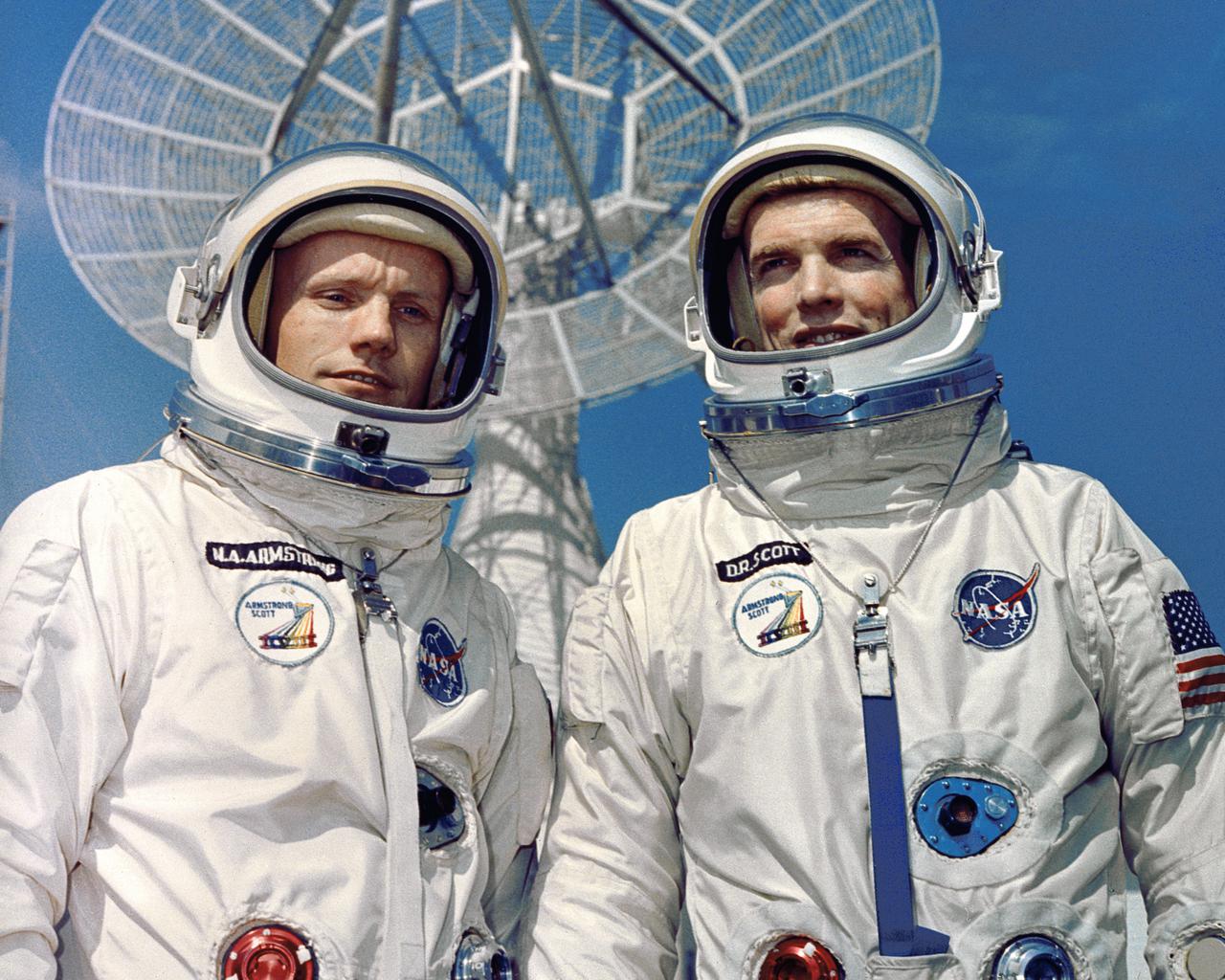
CAPE CANAVERAL, Fla. – Gemini 8 astronauts Neil A. Armstrong, command pilot, and David R. Scott, pilot, during a photosSession for the press outside Mission Control Center, Cape Kennedy. Photo credit: NASA
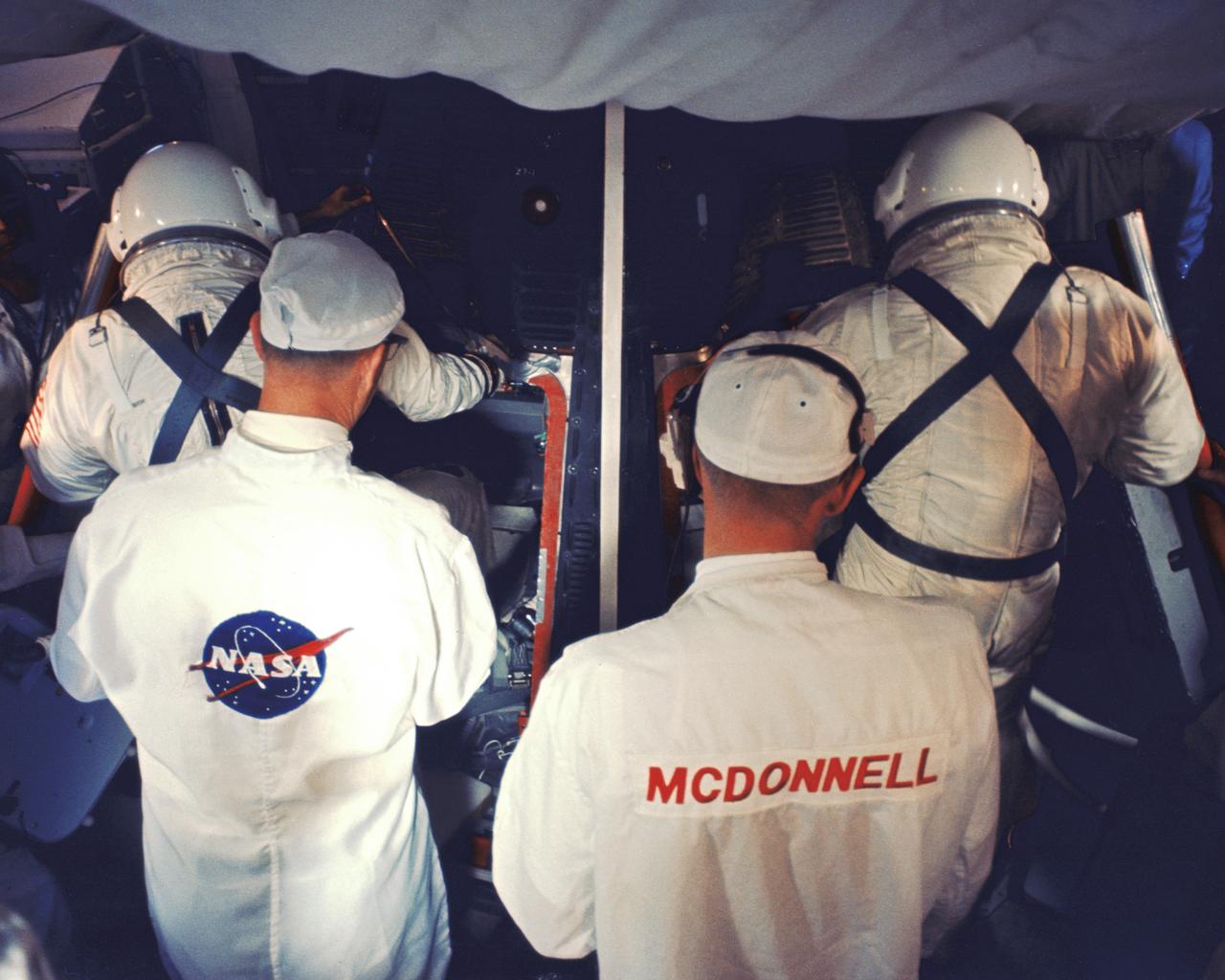
KSC-66C-1852 Gemini-8 Astronauts Neil A. Armstrong and David R. Scott are helped into their Gemini 8 Spacecraft by White Room technicians at Complex 19, Cape Kennedy, Prior to Liftoff. (jrs)
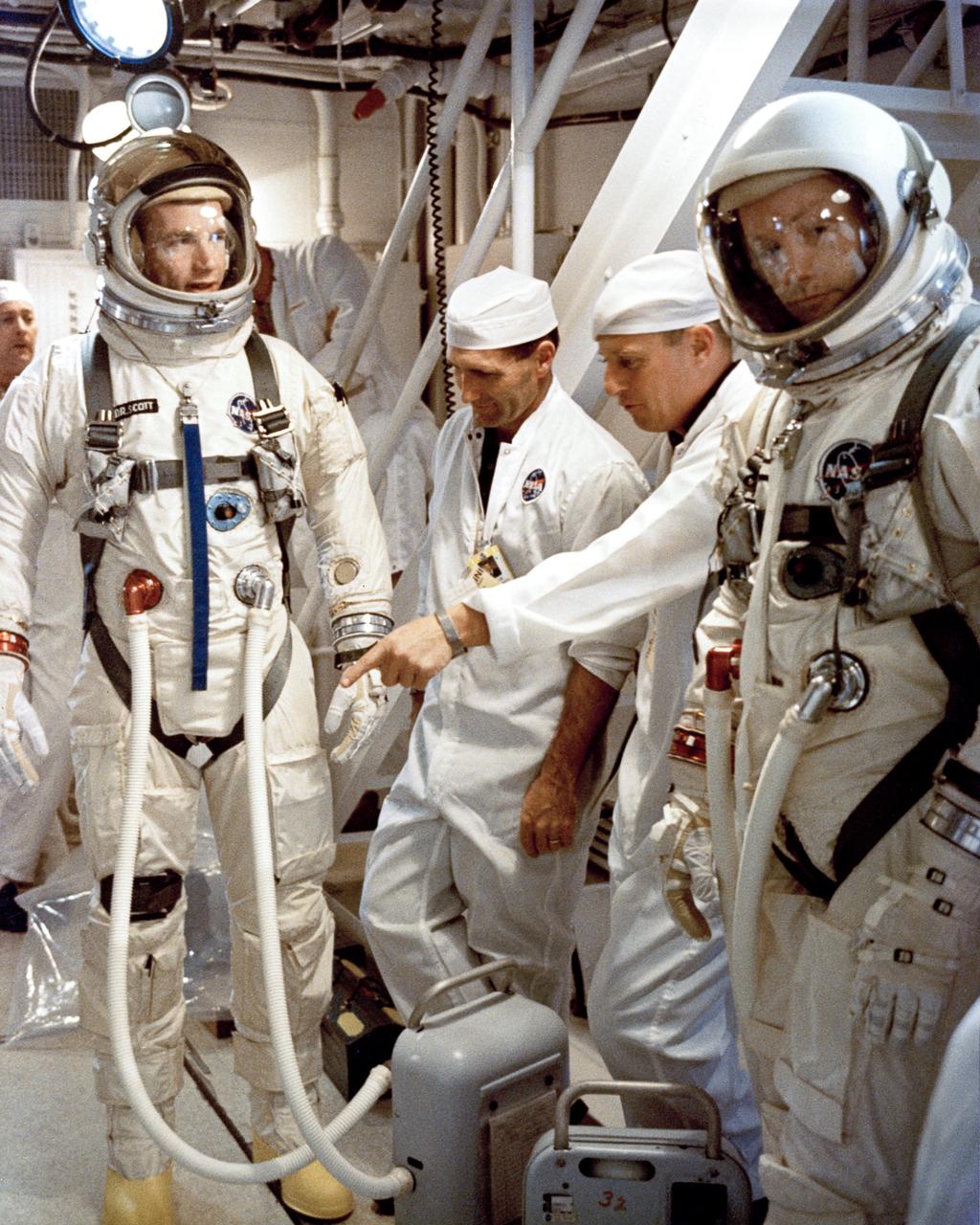
KSC-66C-1836 Gemini-8 Astronauts Neil A. Armstrong, Command Pilot, and David R. Scott, Pilot arrive at White Room, Complex 19 to enter Spacecraft for Simulation Test. (jrs)
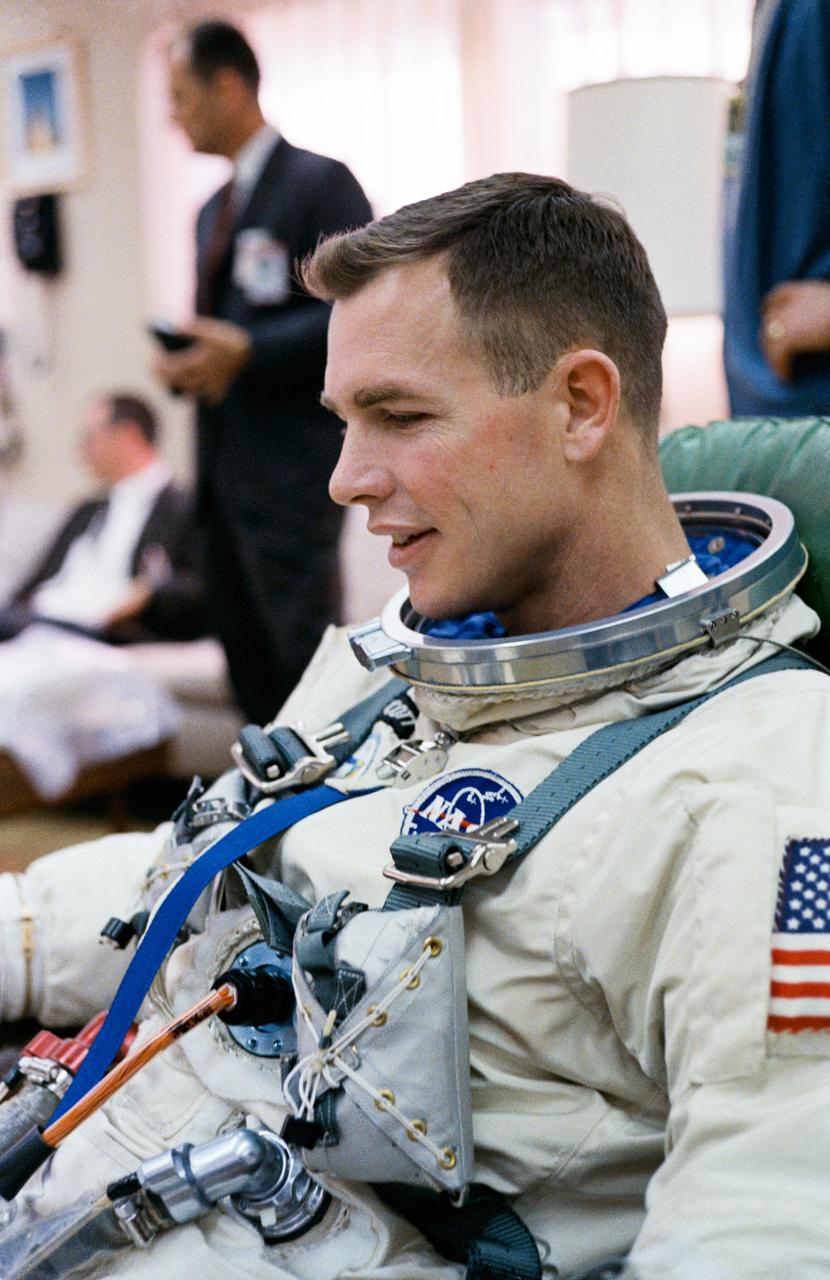
S66-24491 (16 March 1966) --- Astronaut David R. Scott, pilot of the Gemini-8 spaceflight, relaxes in the Launch Complex 16 trailer during suiting up operations for the Gemini-8 mission. Photo credit: NASA
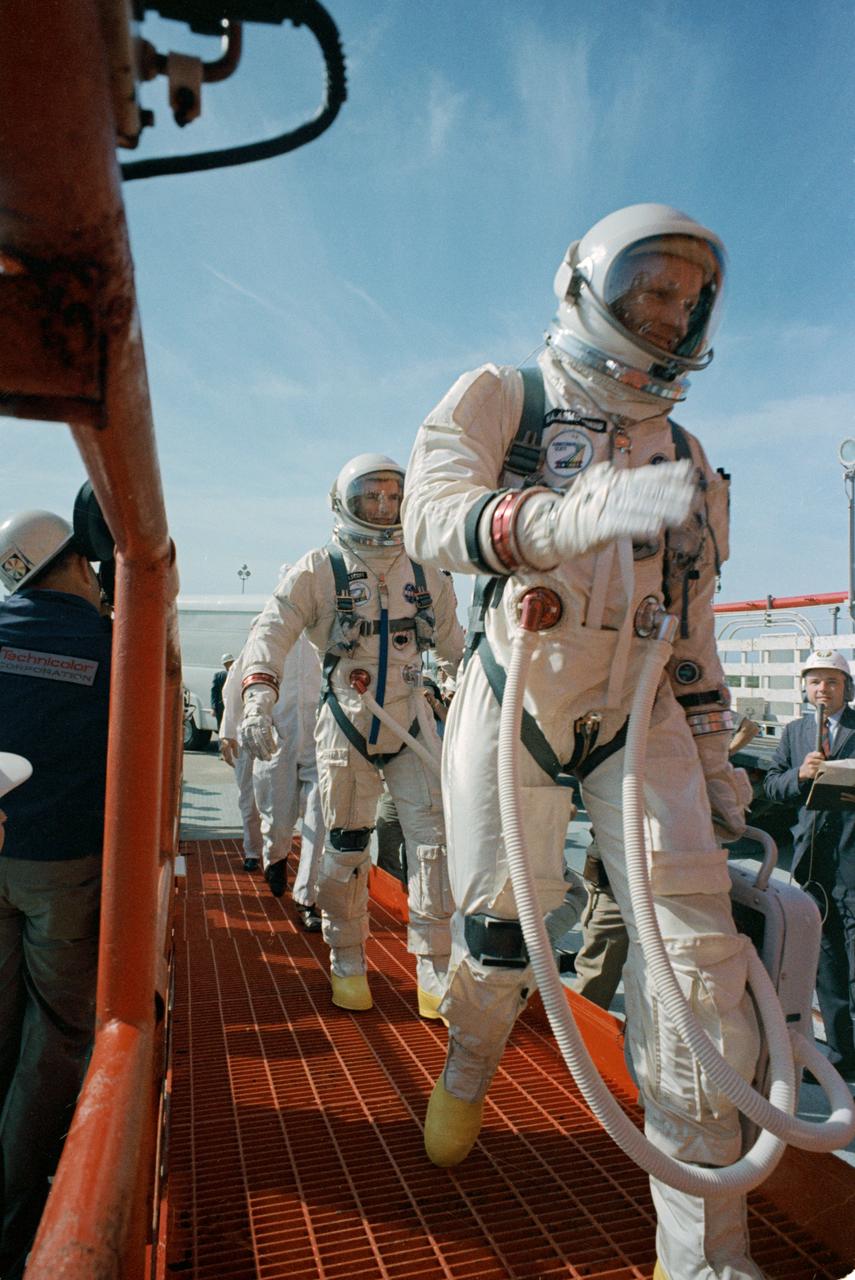
S66-24478 (16 March 1966) --- Astronauts Neil A. Armstrong (foreground), command pilot, and David R. Scott, pilot, walk up the ramp at Pad 19 during the Gemini-8 prelaunch countdown. Photo credit: NASA
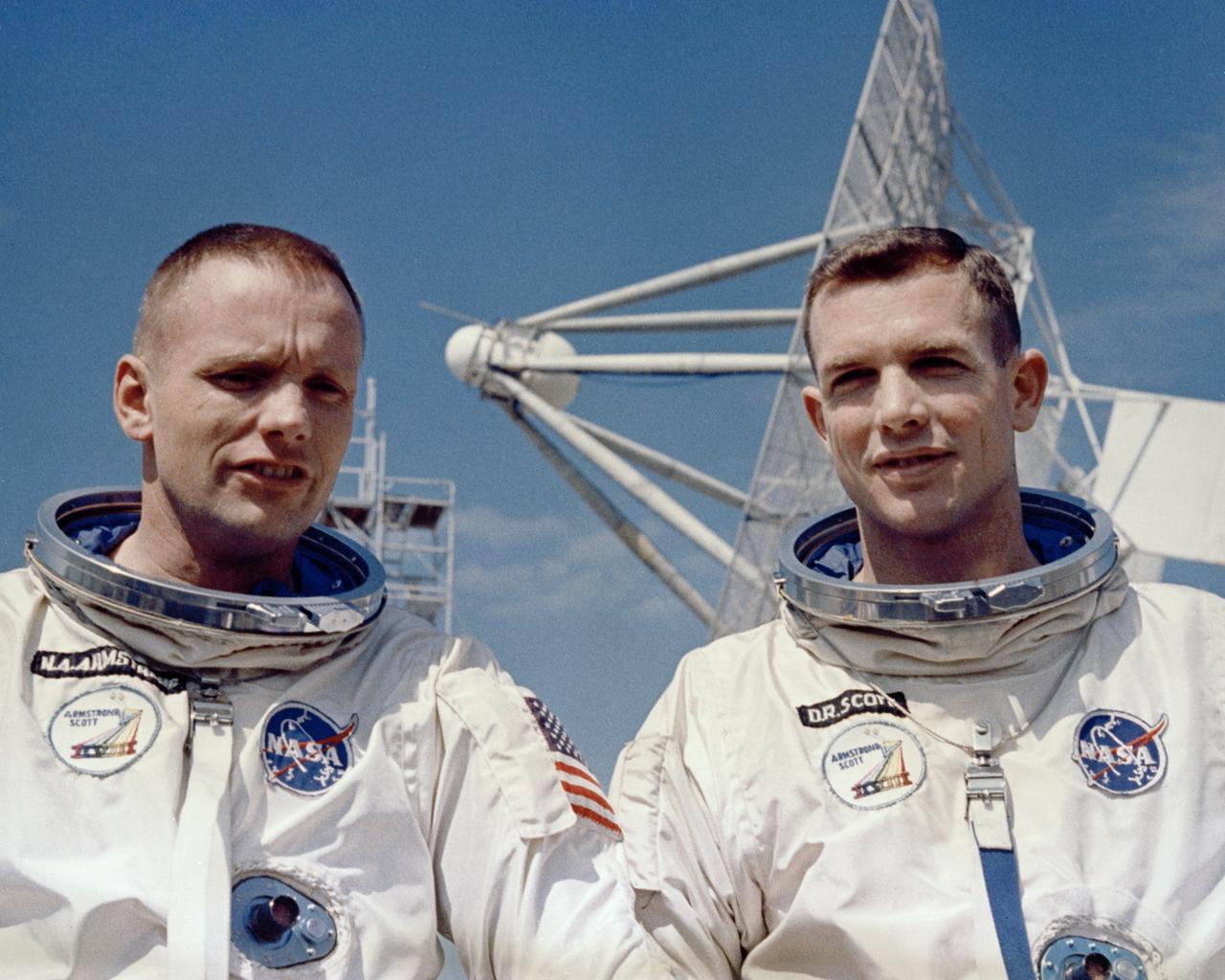
CAPE CANAVERAL, Fla. – Gemini 8 astronauts Neil A. Armstrong, command pilot, and David R. Scott, pilot, during a photosSession for the press outside Mission Control Center, Cape Kennedy. Photo credit: NASA
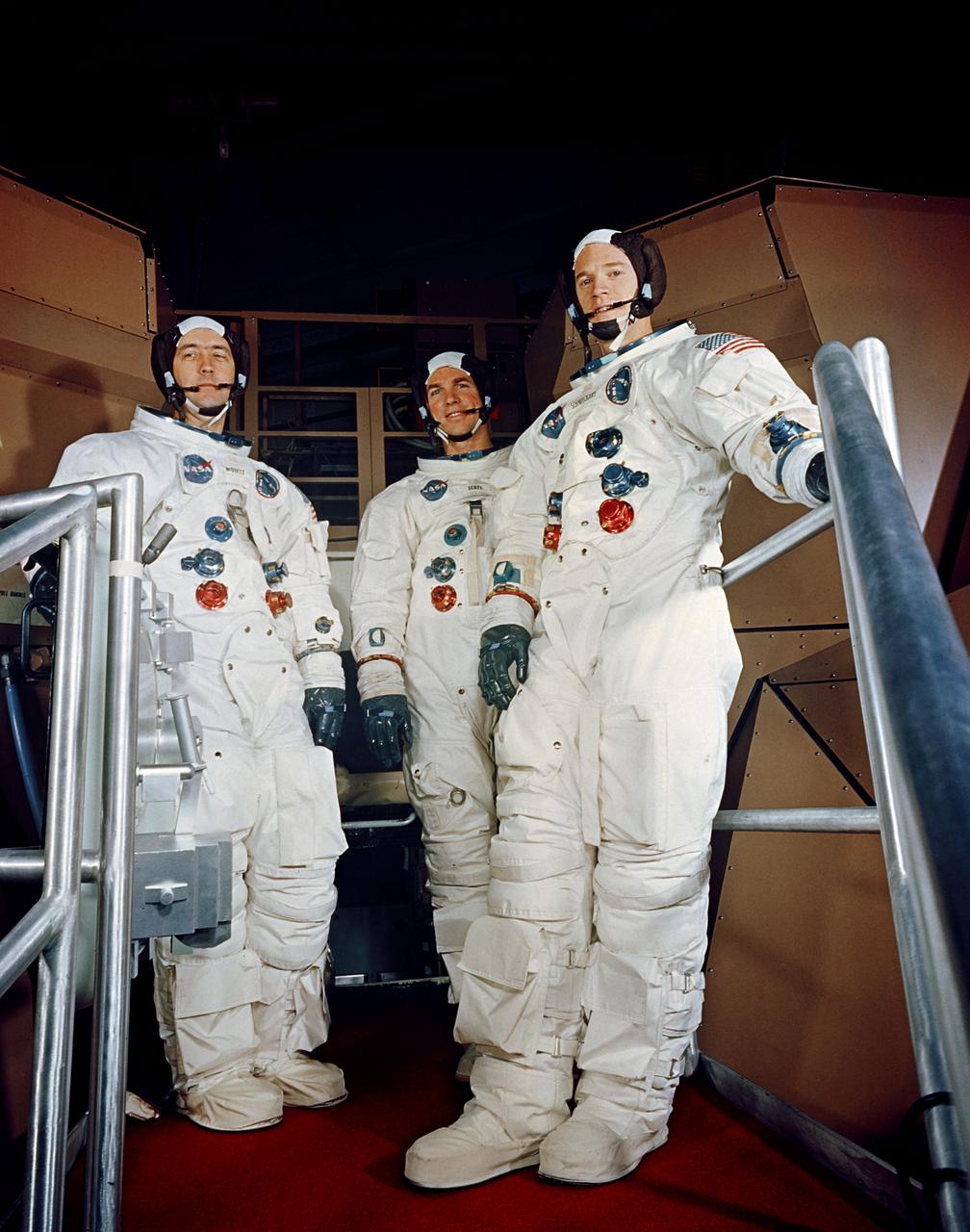
S69-19983 (17 Feb. 1969) --- The Apollo 9 crew is shown suited up for a simulated flight in the Apollo Mission Simulator at the Kennedy Space Center (KSC). Left to right are astronauts James A. McDivitt, commander; David R. Scott, command module pilot; and Russell L. Schweickart, lunar module pilot.

S66-20017 (3 Feb. 1966) --- Astronaut David R. Scott holds maneuvering unit while suspended in a weightless state during extravehicular activity (EVA) training in a C-135 Air Force plane. Photo credit: NASA
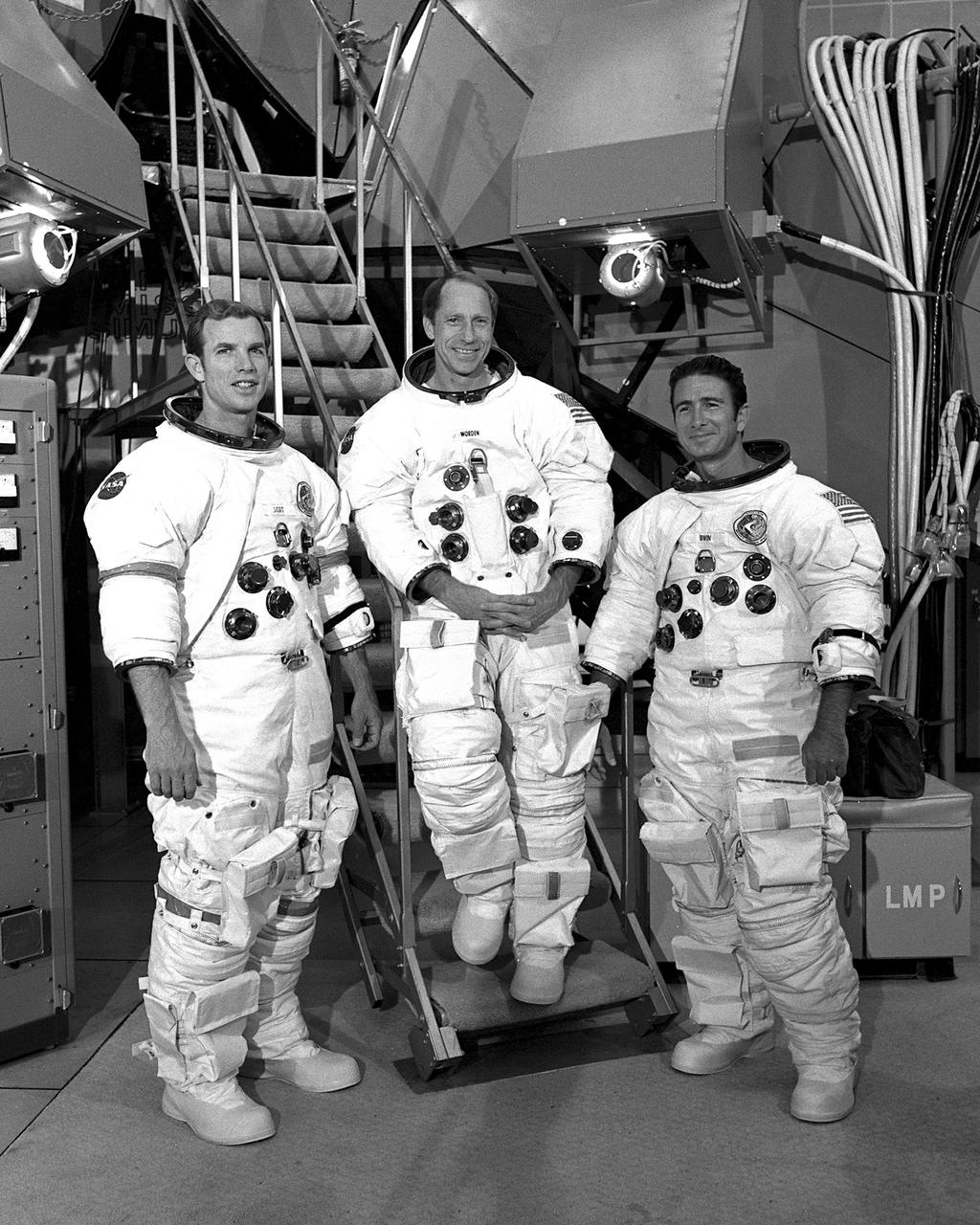
KENNEDY SPACE CENTER, FLA. - The Apollo 15 flight crew, Commander David R. Scott, Lunar Module Pilot James B. Irwin, and Command Module Pilot Alfred M. Worden, Jr., participate in a mission simulation in the Command Module and the Lunar Module.
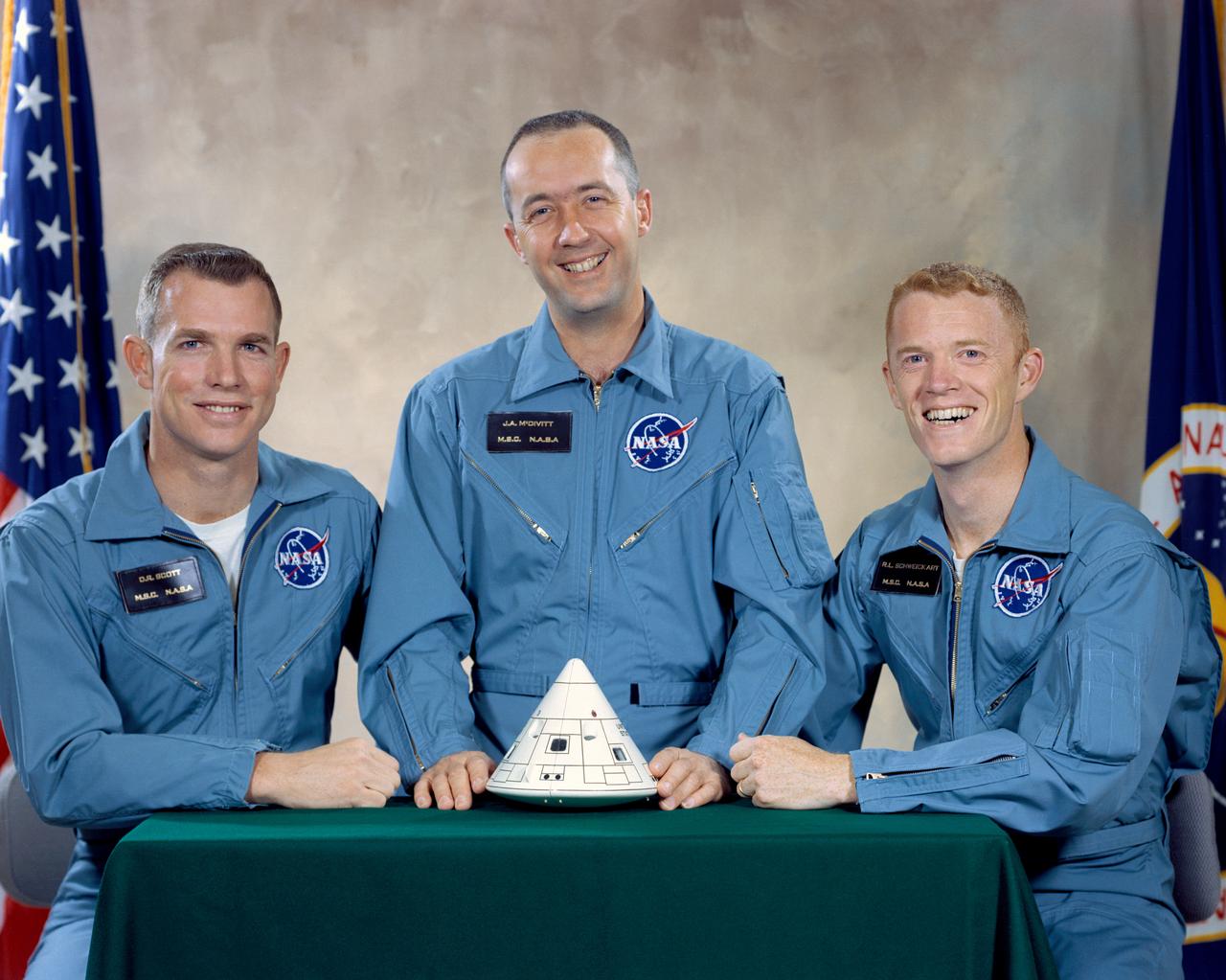
S66-30237 (March 1966) --- These three astronauts have been named as the prime crew of the Apollo 9 mission. They are (left to right) David R. Scott, command module pilot; James A. McDivitt, commander; and Russell L. Schweickart, lunar module pilot.
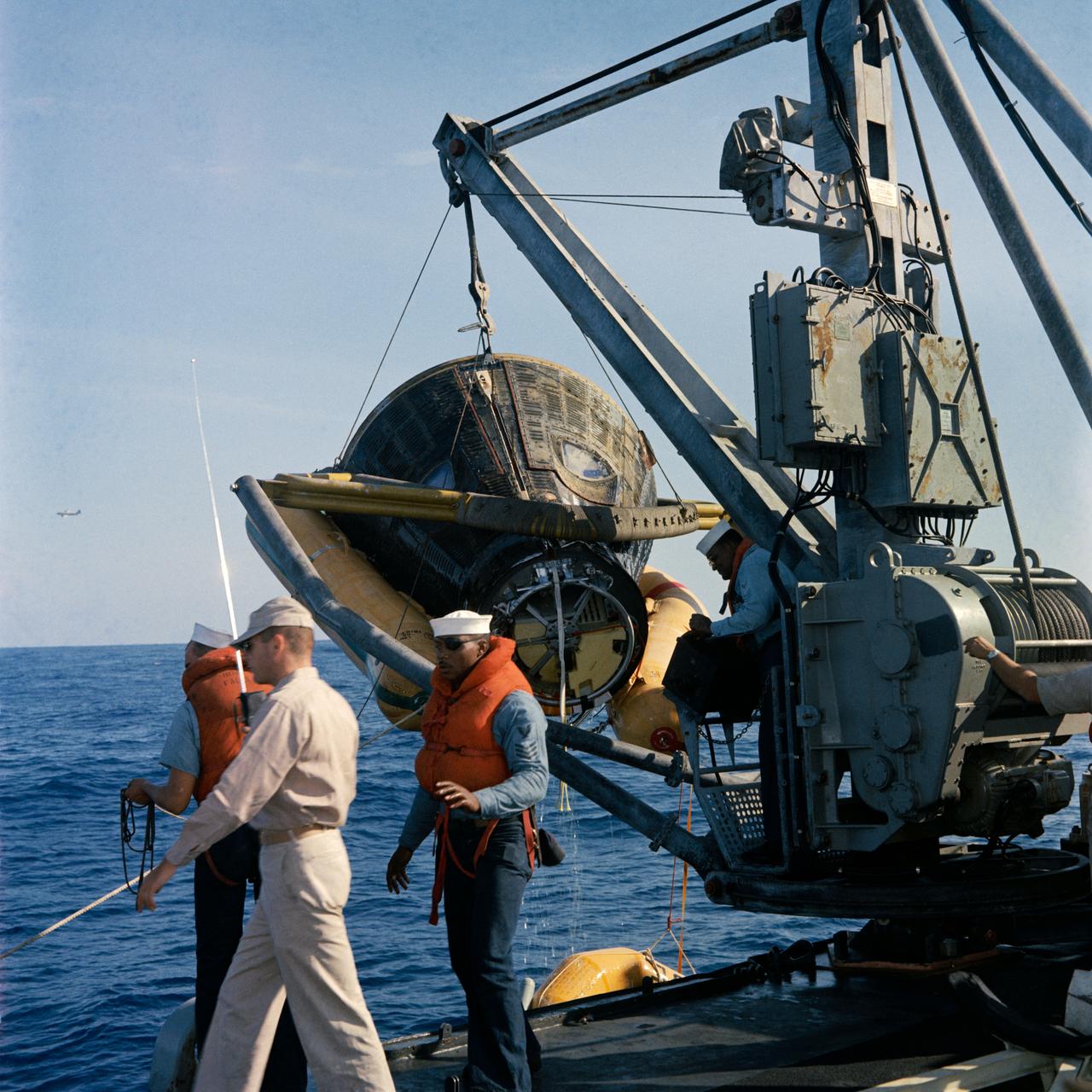
S66-26037 (16 March 1966) --- The Gemini-8 spacecraft, with astronauts Neil A. Armstrong and David R. Scott still aboard, is hoisted aboard the destroyer USS Leonard F. Mason. Trouble with the Gemini-8 Orbit Attitude and Maneuvering System (OAMS) forced an early termination of the mission. Photo credit: NASA
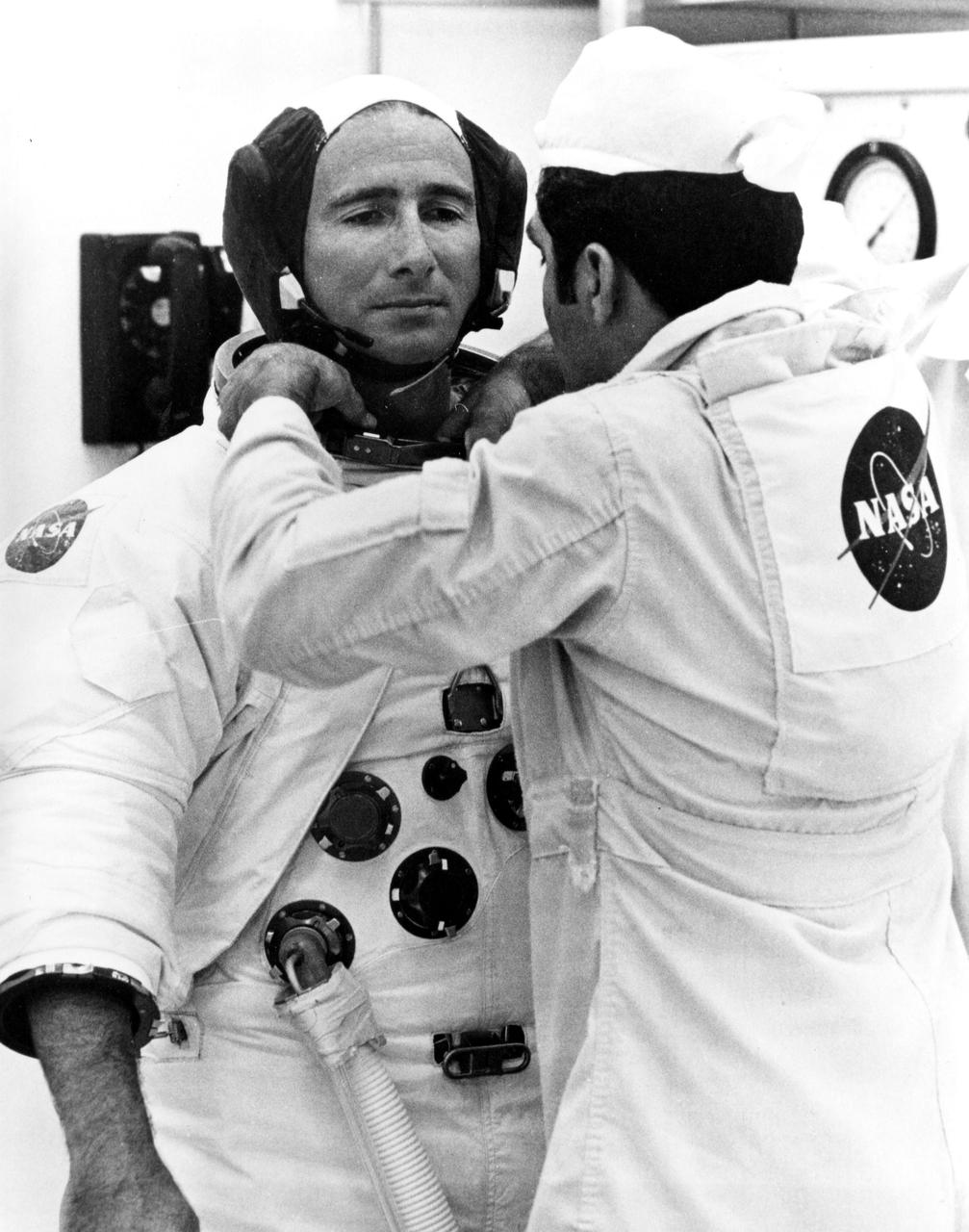
KENNEDY SPACE CENTER, FLA. -- A technician adjusts the spacesuit of Apollo 15 Lunar Module Pilot James B. Irwin prior to his launch to the Moon today with astronauts David R. Scott and Alfred N. Worden. The National Aeronautics and Space Administration directs the Apollo program.
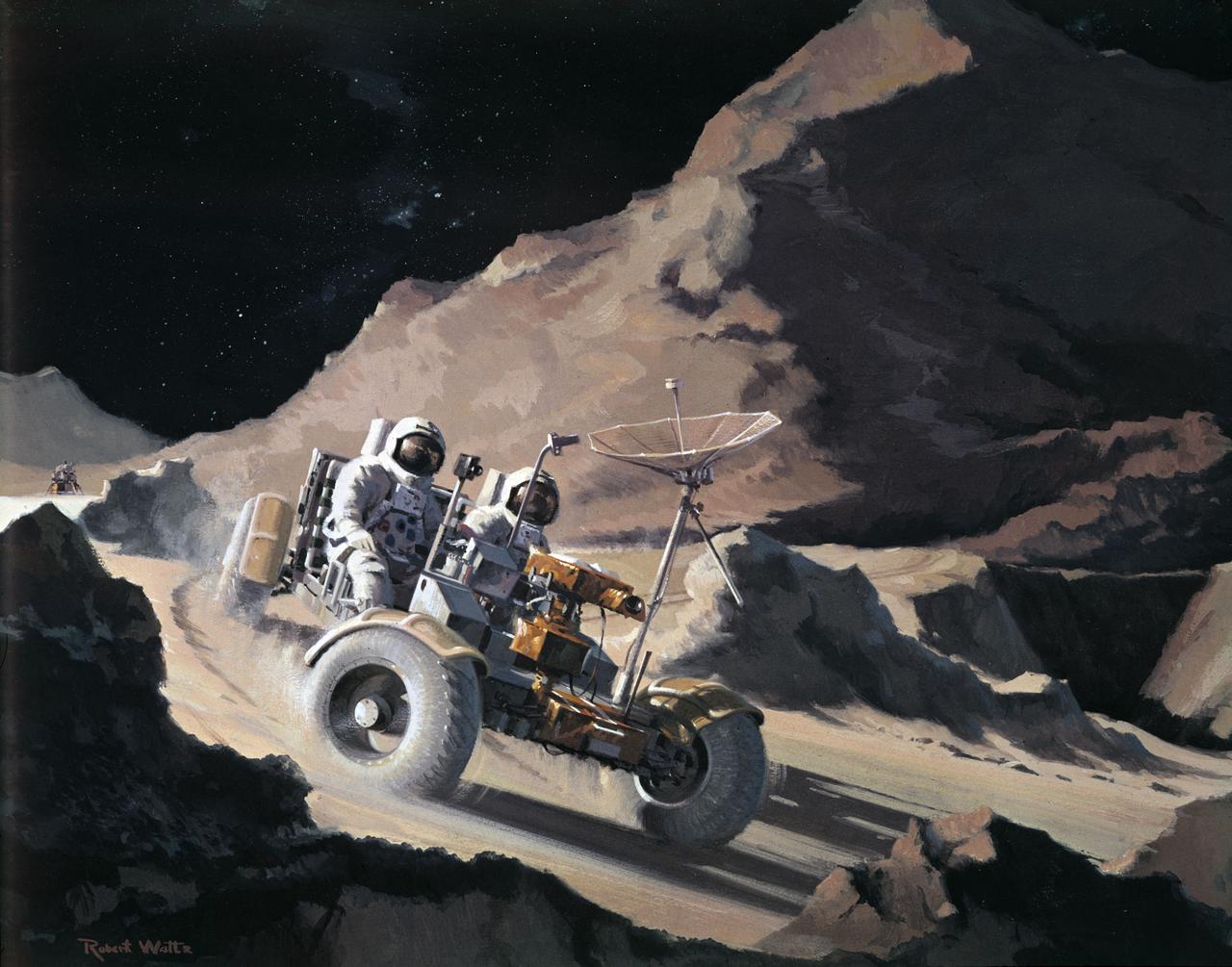
S71-39868 (July 1971) --- An artist's concept of the Apollo 15 Hadley-Apennine landing area showing the two moon-exploring crewmen on a traverse in their Lunar Roving Vehicle (LRV). The two figures represent astronauts David R. Scott, commander, and James B. Irwin, lunar module pilot. The artwork is by Teledyne Ryan.
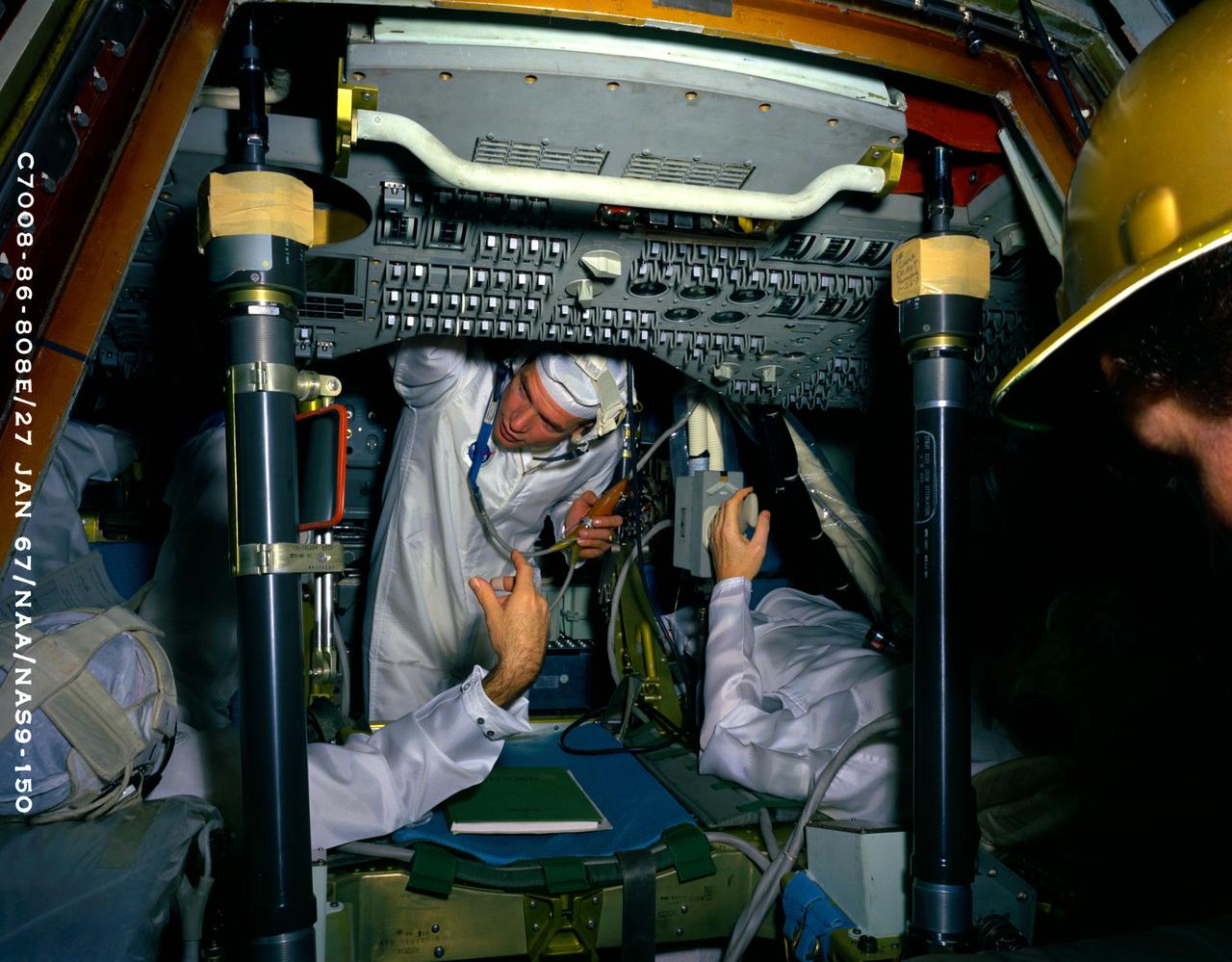
S67-23078 (27 Jan. 1967) --- Three astronauts (later to be named the Apollo 9 prime crew) in Apollo spacecraft 101 Command module during Apollo crew compartment fit and function test. Left to right are astronauts James A. McDivitt, David R. Scott, and Russell L. Schweickart.
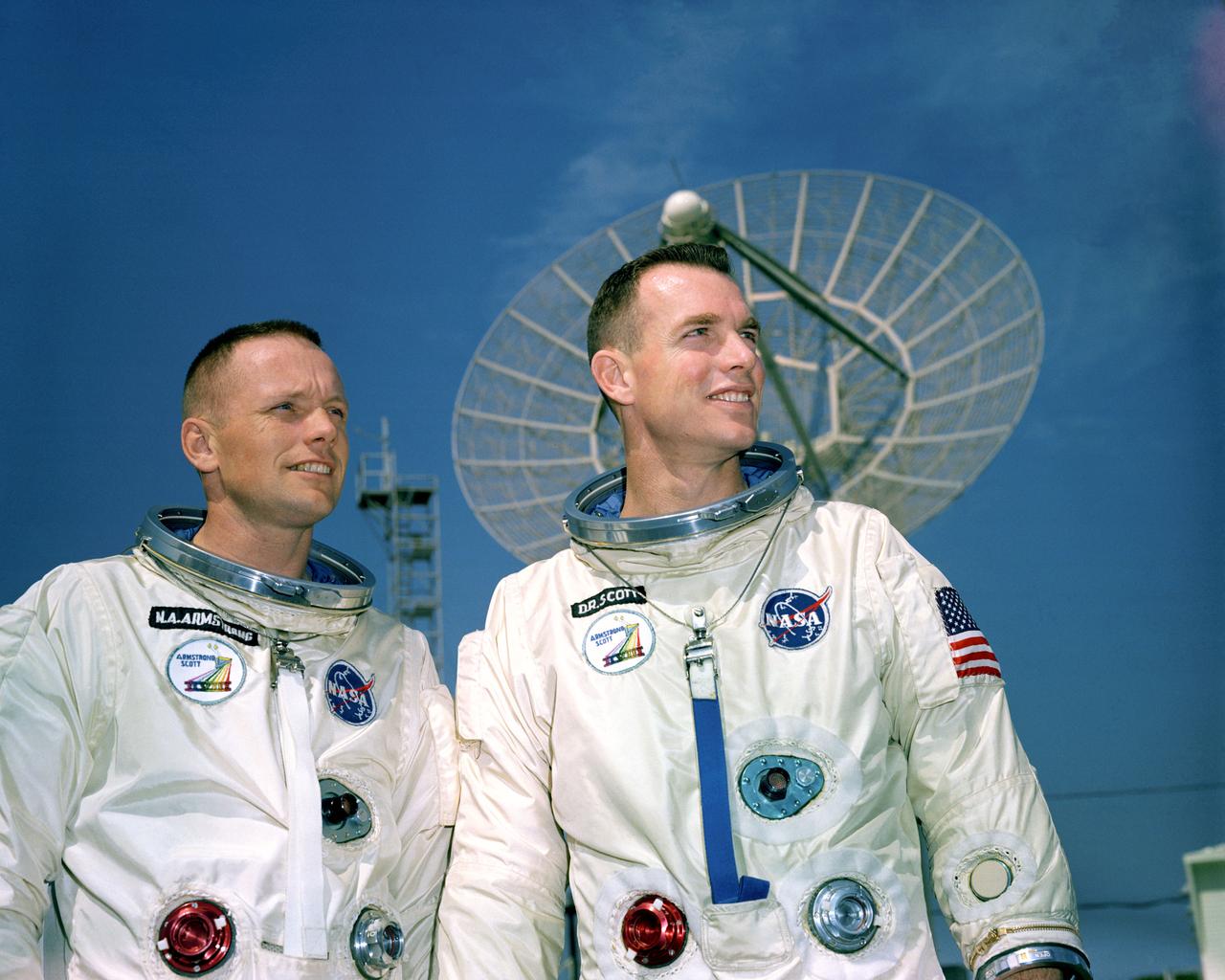
S66-27513 (11 March 1966) --- Astronauts Neil A. Armstrong (left), command pilot, and David R. Scott, pilot, the Gemini-8 prime crew, during a photo session outside the Kennedy Space Center (KSC) Mission Control Center. They are standing in front of a radar dish. Photo credit: NASA
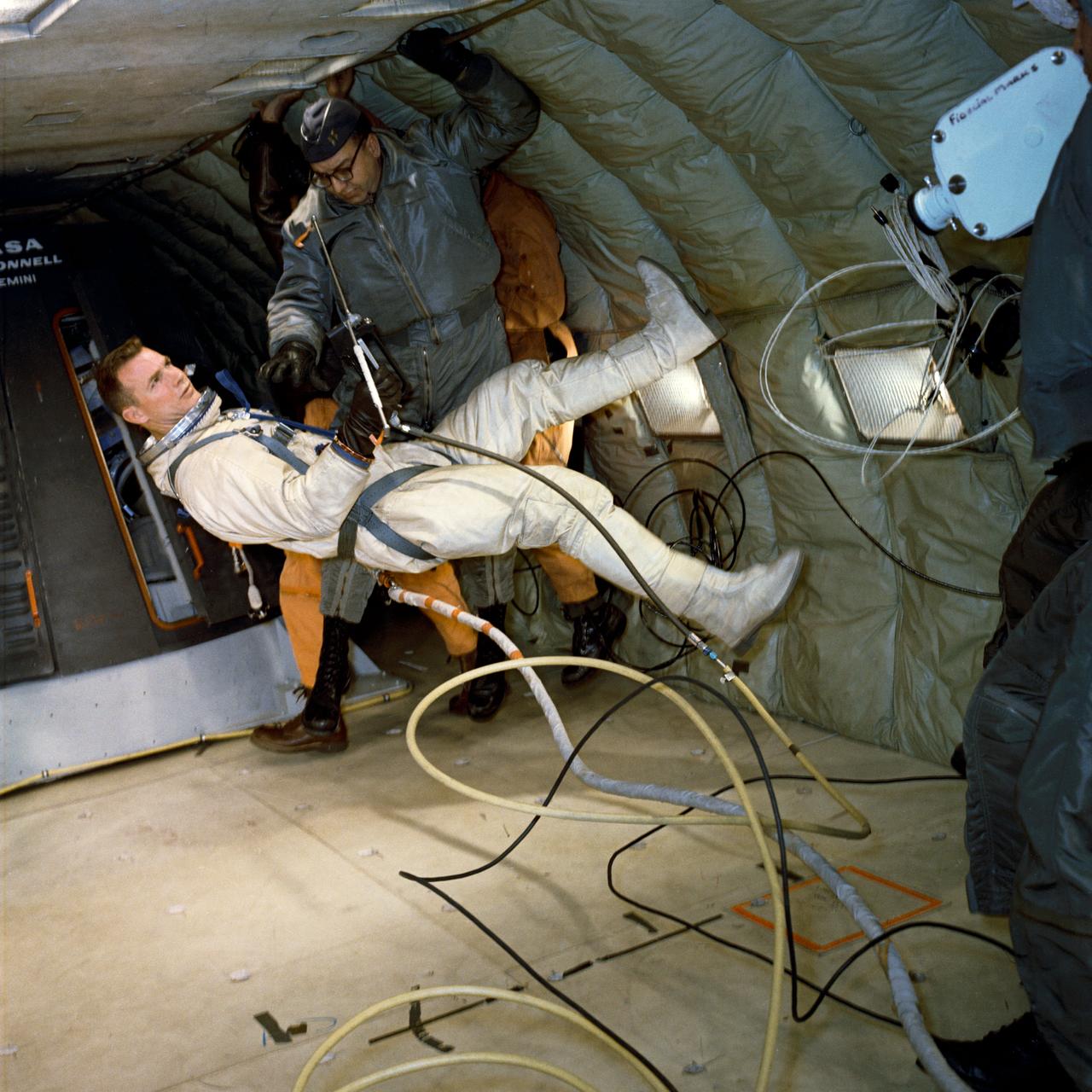
S66-20016 (3 Feb. 1966) --- Astronaut David R. Scott holds maneuvering unit while suspended in a weightless state during extravehicular activity (EVA) training in a C-135 Air Force plane. Photo credit: NASA
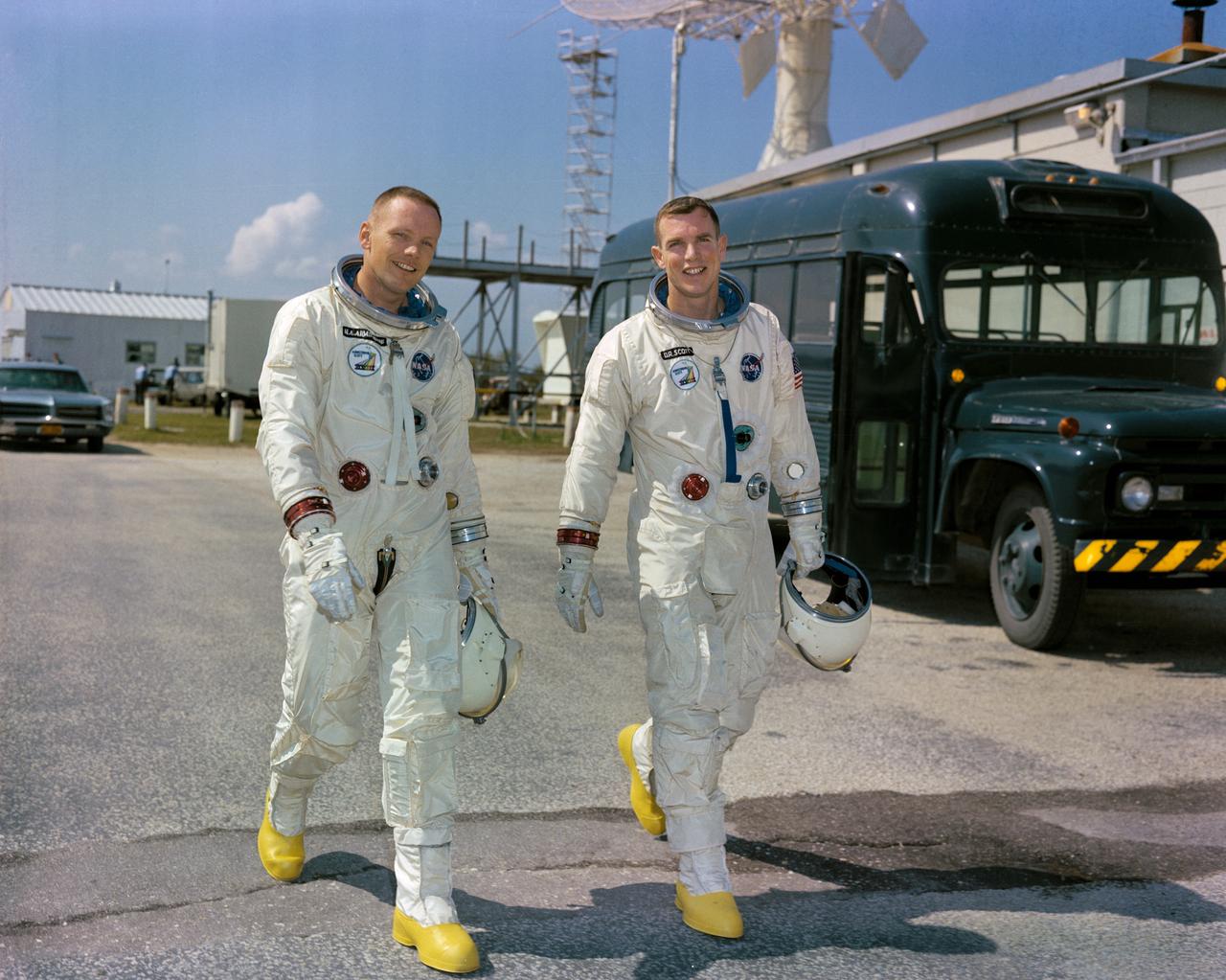
S66-27511 (11 March 1966) --- Astronauts Neil A. Armstrong (left), command pilot, and David R. Scott, pilot, the Gemini-8 prime crew, during a photo session outside the Kennedy Space Center (KSC) Mission Control Center. Both men are wearing full spacesuits and carrying their helmets. Photo credit: NASA
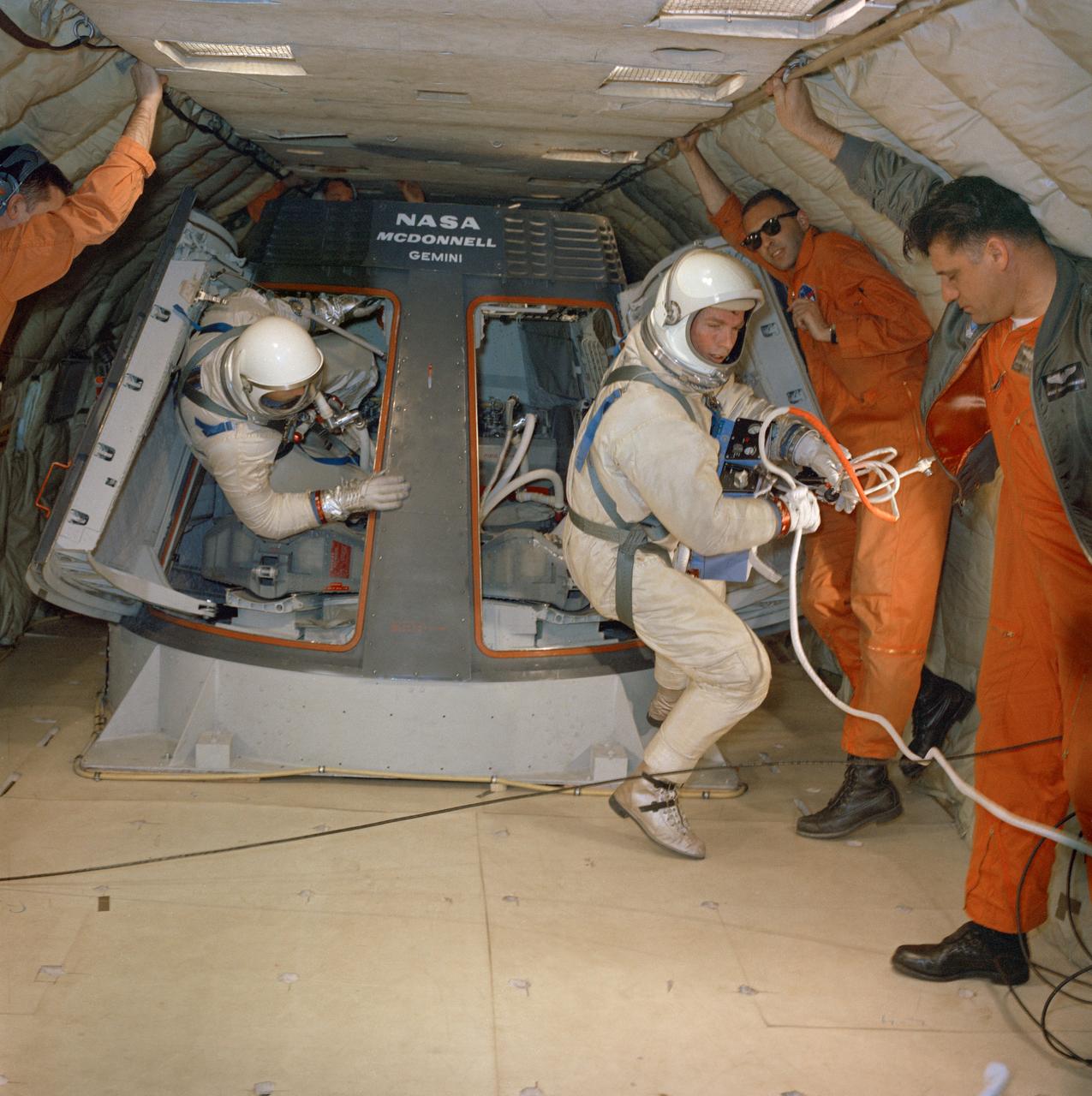
S66-21409 (18 Feb. 1966) --- Astronaut David R. Scott, in full spacesuit, holds maneuvering unit while suspended in a weightless state during extravehicular activity (EVA) training in a C-135 Air Force plane. Photo credit: NASA
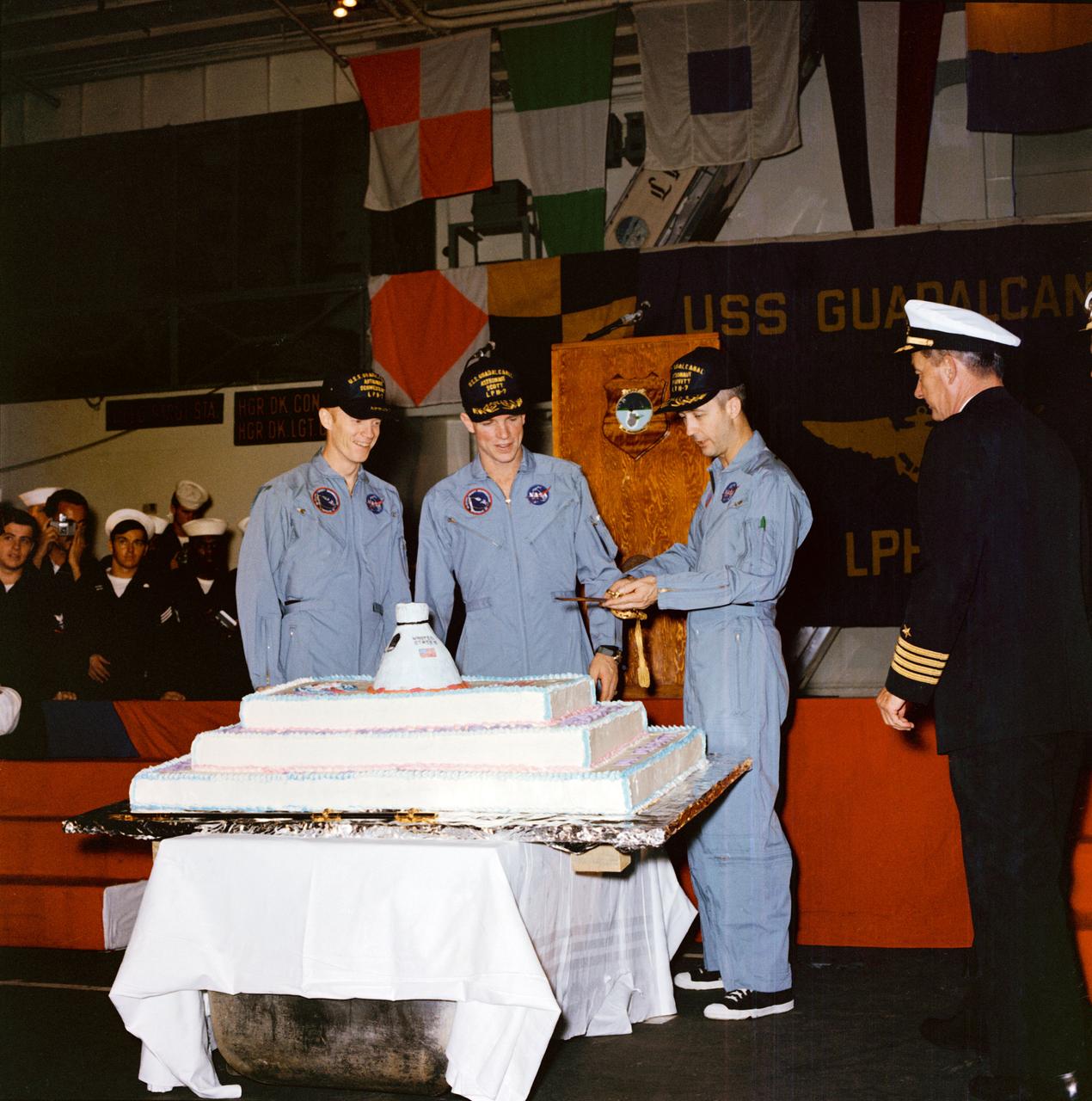
The Apollo 9 crew prepares to cut the 350-pound cake which was baked on the U.S.S. Guadalcanal in their honor. Left to right, are Astronauts Russell L. Schweickart, David R. Scott, and James A. McDivitt. Looking on at right is Capt. Roy M. Sudduth, commanding officer of the U.S.S. Guadalcanal.
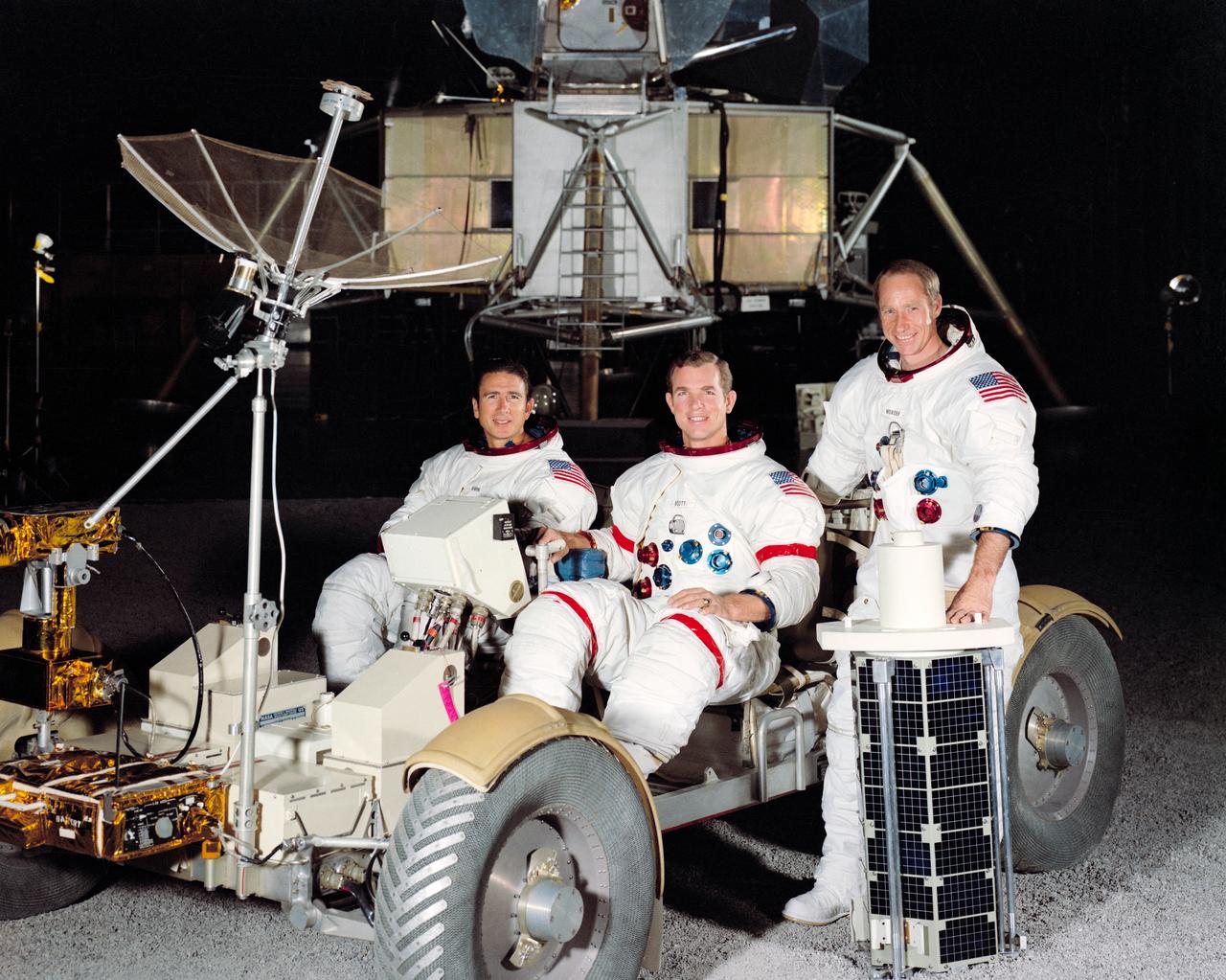
S71-22407 (March 1971) --- These three astronauts have been named by the National Aeronautics and Space Administration (NASA) as the prime crew men of the Apollo 15 lunar landing mission. They are, left to right, James B. Irwin, lunar module pilot; David R. Scott, commander; and Alfred M. Worden, command module pilot.
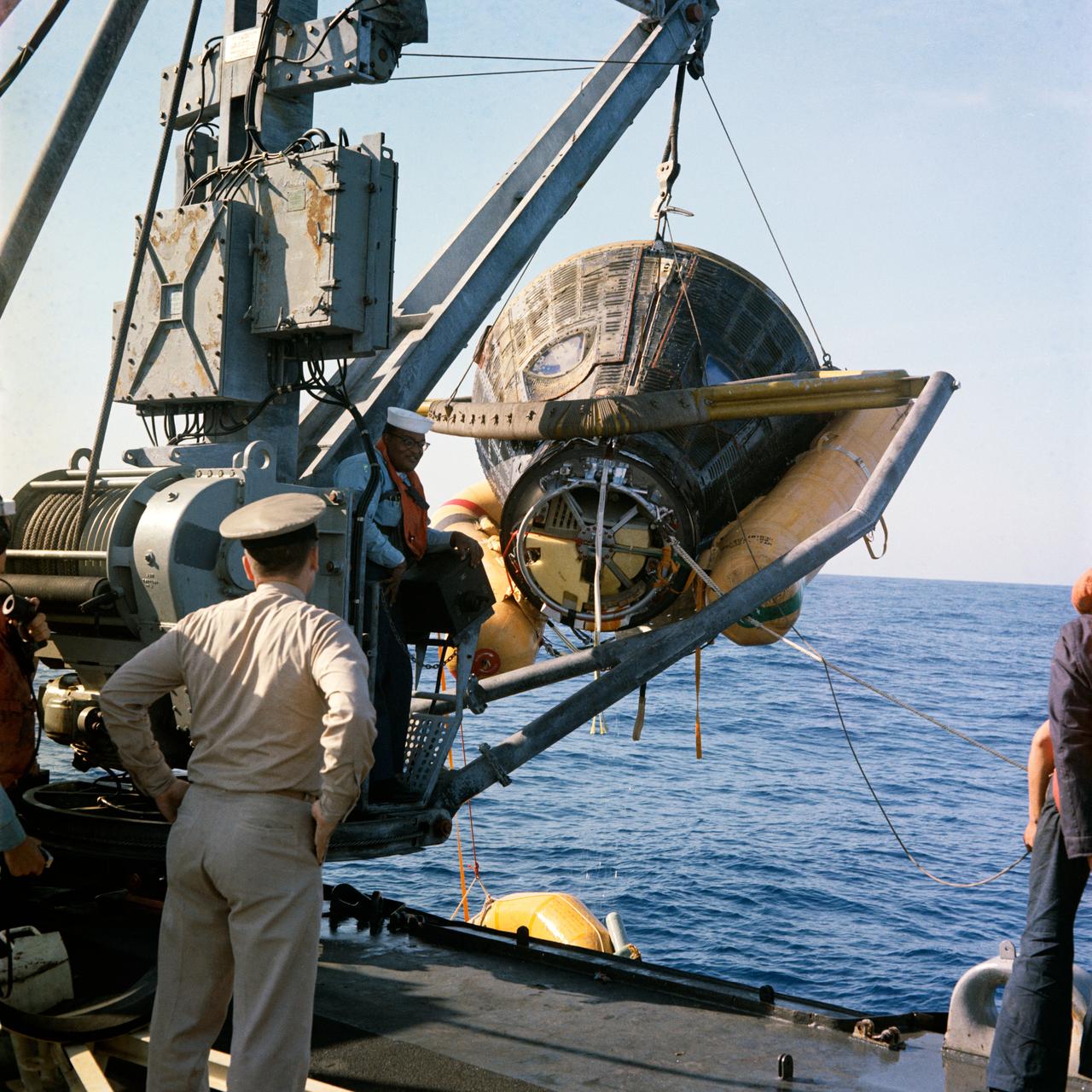
S66-18613 (16 March 1966) --- The Gemini-8 spacecraft, with astronauts Neil A. Armstrong and David R. Scott still aboard, is hoisted aboard the destroyer USS Leonard F. Mason. Trouble with the Gemini-8 Orbit Attitude and Maneuvering System (OAMS) forced an early termination of the mission. Photo credit: NASA
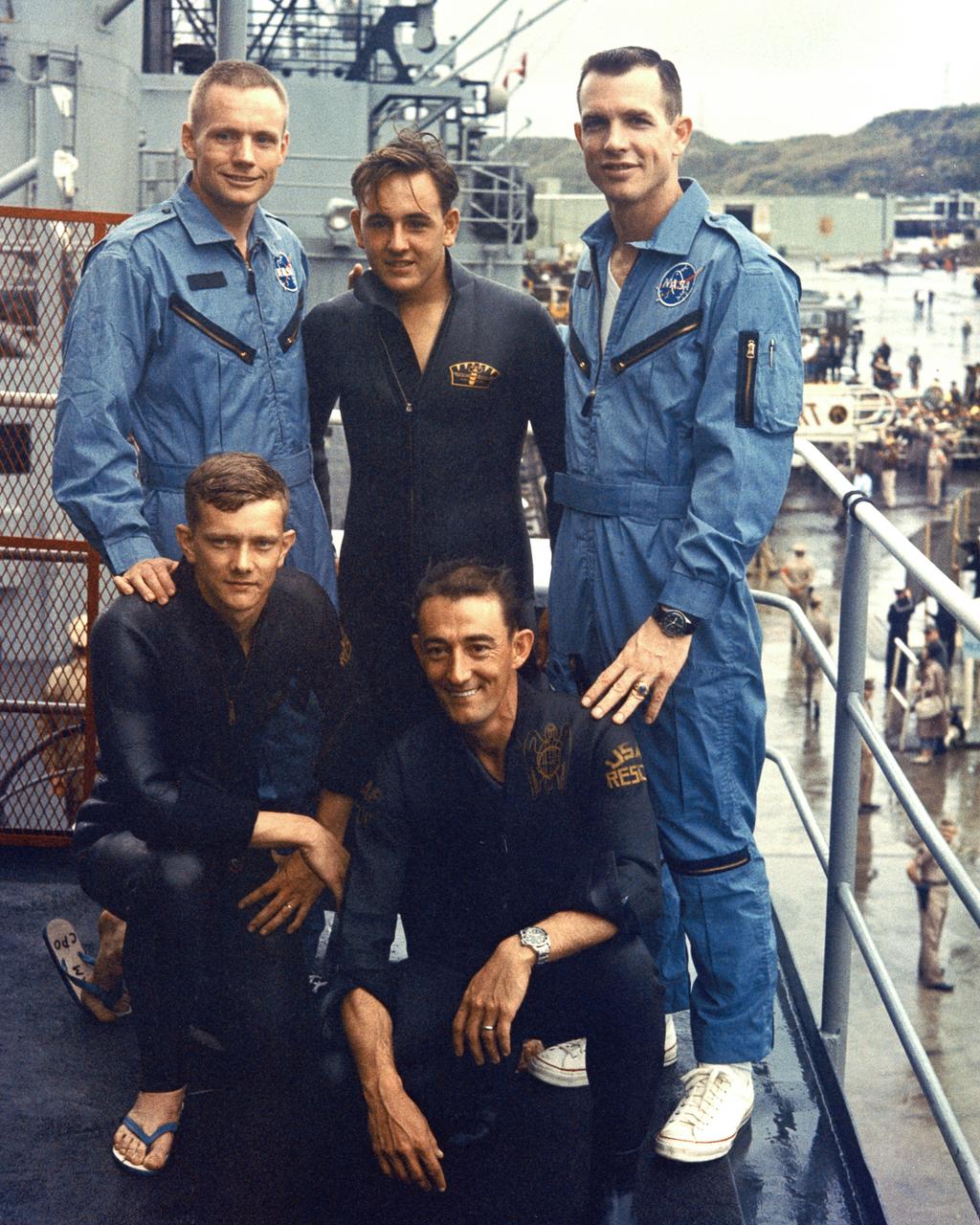
KSC-66C-1878 Gemini 8 Astronauts pose with the PARA-RESCUE team. Left-to-right, top: Neil Armstrong, E. M. Neil, David Scott; bottom row: L. D. Huyett and G. N. Moore. (jrs)
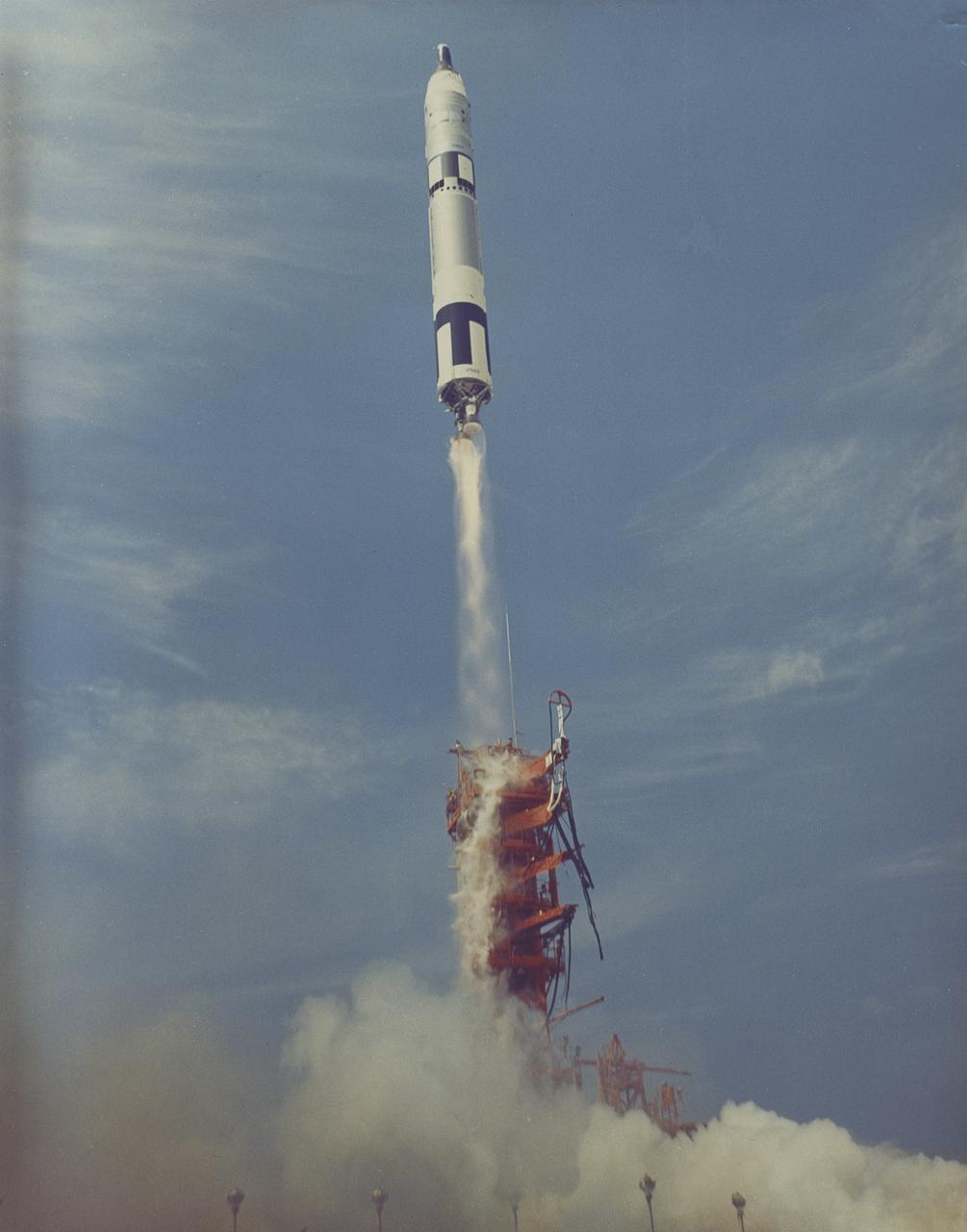
A Titan booster launched the Gemini 8 spacecraft on March 16, 1966 from launch complex 19 Cape Kennedy, Florida. The flight crew for the 3 day mission, astronauts Neil A. Armstrong and David R. Scott, achieved the first rendezvous and docking to Atlas/Agena in Earth orbit.

S66-18607 (18 March 1966) --- Astronauts Neil A. Armstrong (center), Gemini-8 command pilot, and David R. Scott, pilot, arrive at Hickam Field, Hawaii on their way from Naha, Okinawa, to Cape Kennedy, Florida. Astronaut Walter M. Schirra Jr. is at extreme left. Photo credit: NASA
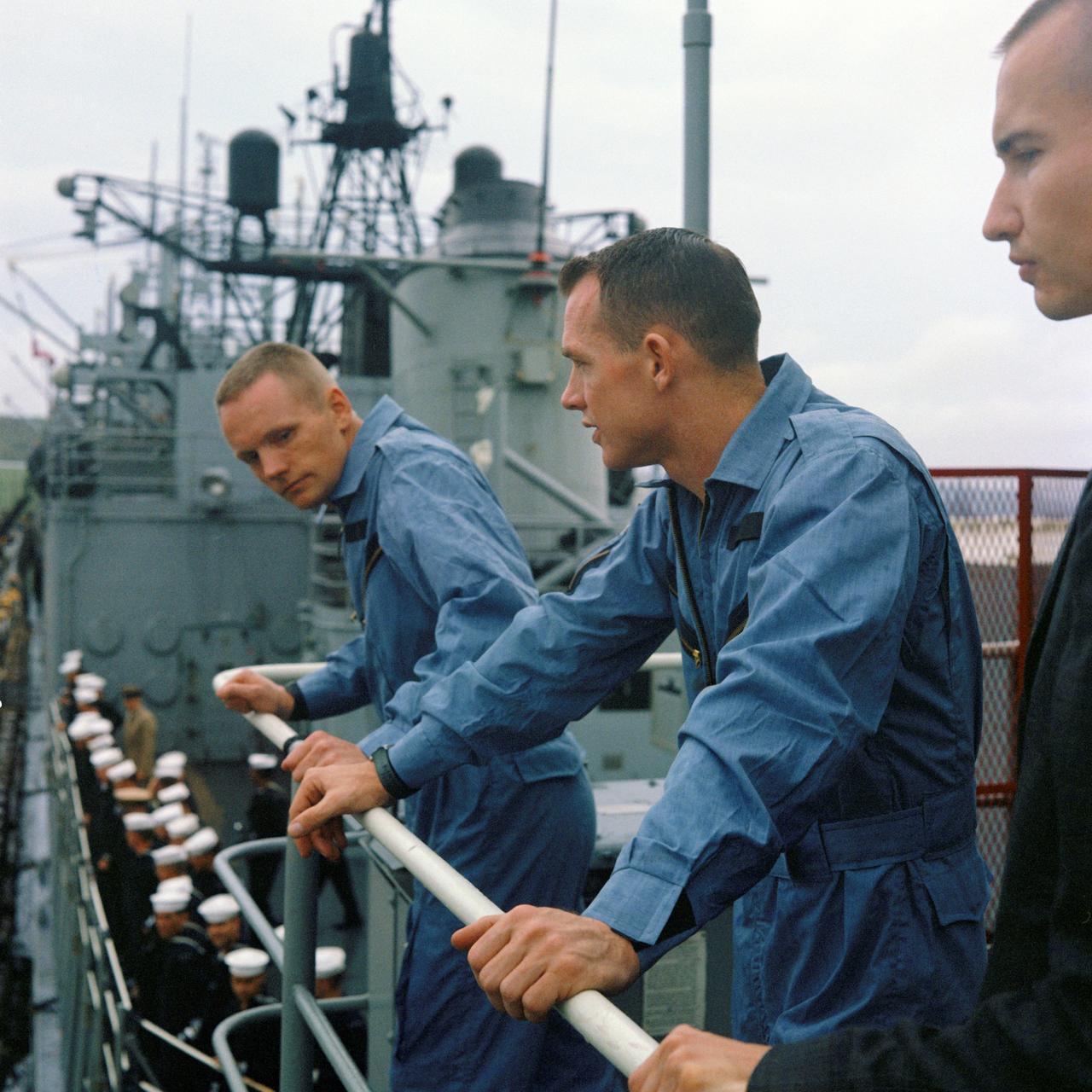
S66-18609 (17 March 1966) --- Astronauts David R. Scott (left), Gemini-8 pilot, and Neil A. Armstrong, command pilot, stand on the deck of the destroyer USS Leonard F. Mason upon its arrival at Nahs, Okinawa. Photo credit: NASA
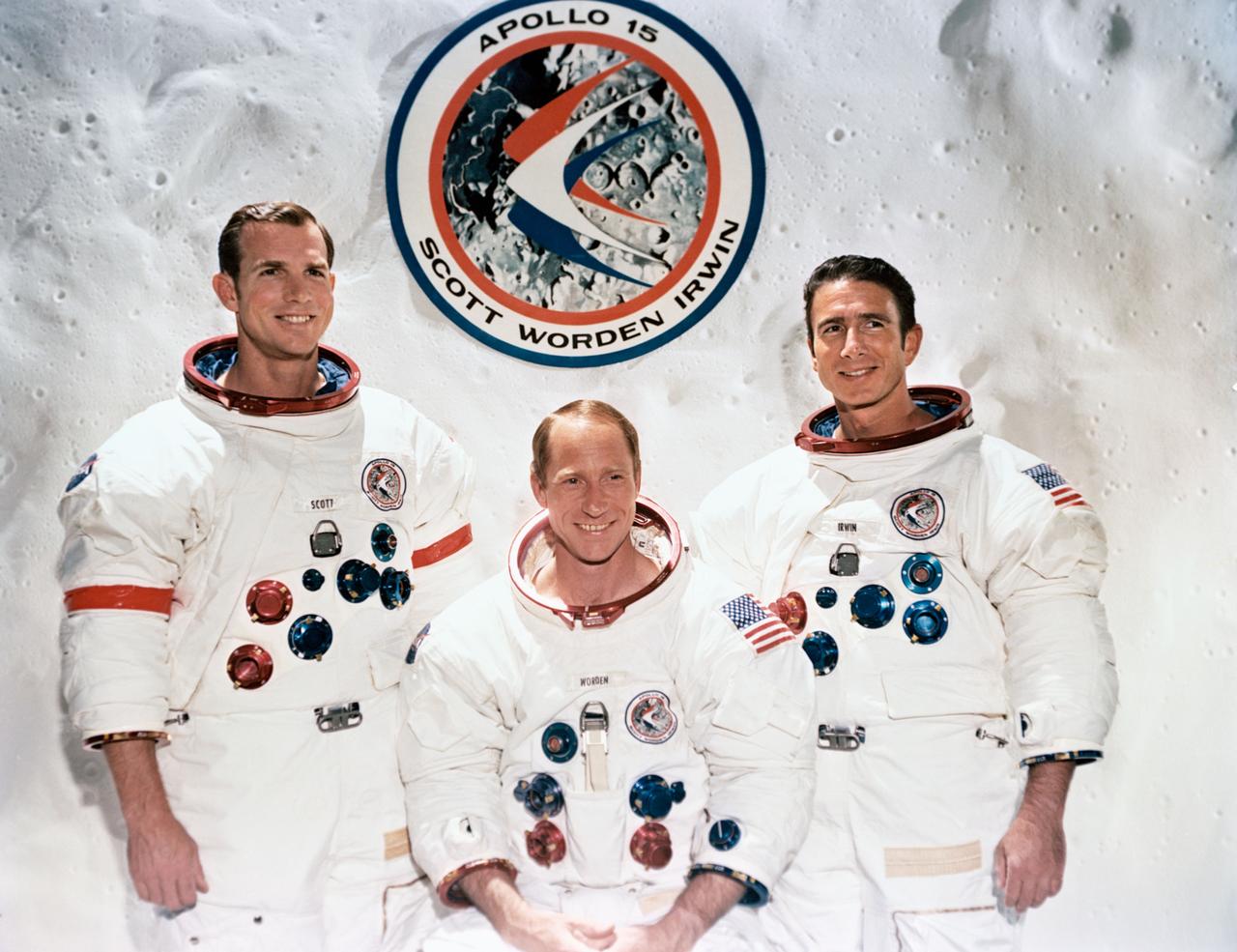
S71-37963 (July 1971) --- These three astronauts are the prime crew of the Apollo 15 lunar landing mission. They are, left to right, David R. Scott, commander; Alfred M. Worden, command module pilot; and James B. Irwin, lunar module pilot. The Apollo 15 emblem is in the background.

S69-17590 (18 Dec. 1968) --- These three astronauts are the prime crew of the Apollo 9 (Spacecraft 104/ Lunar Module 3/ Saturn 504) space mission. Left to right, are James A. McDivitt, commander; David R. Scott, command module pilot; and Russell L. Schweickart, lunar module pilot.

S66-24406 (16 March 1966) --- Close-up view of astronaut David R. Scott, pilot of the Gemini-8 spaceflight, making final adjustments and checks in the spacecraft during the Gemini-8 prelaunch countdown. In the background almost out of view is astronaut Neil A. Armstrong, command pilot. Photo credit: NASA
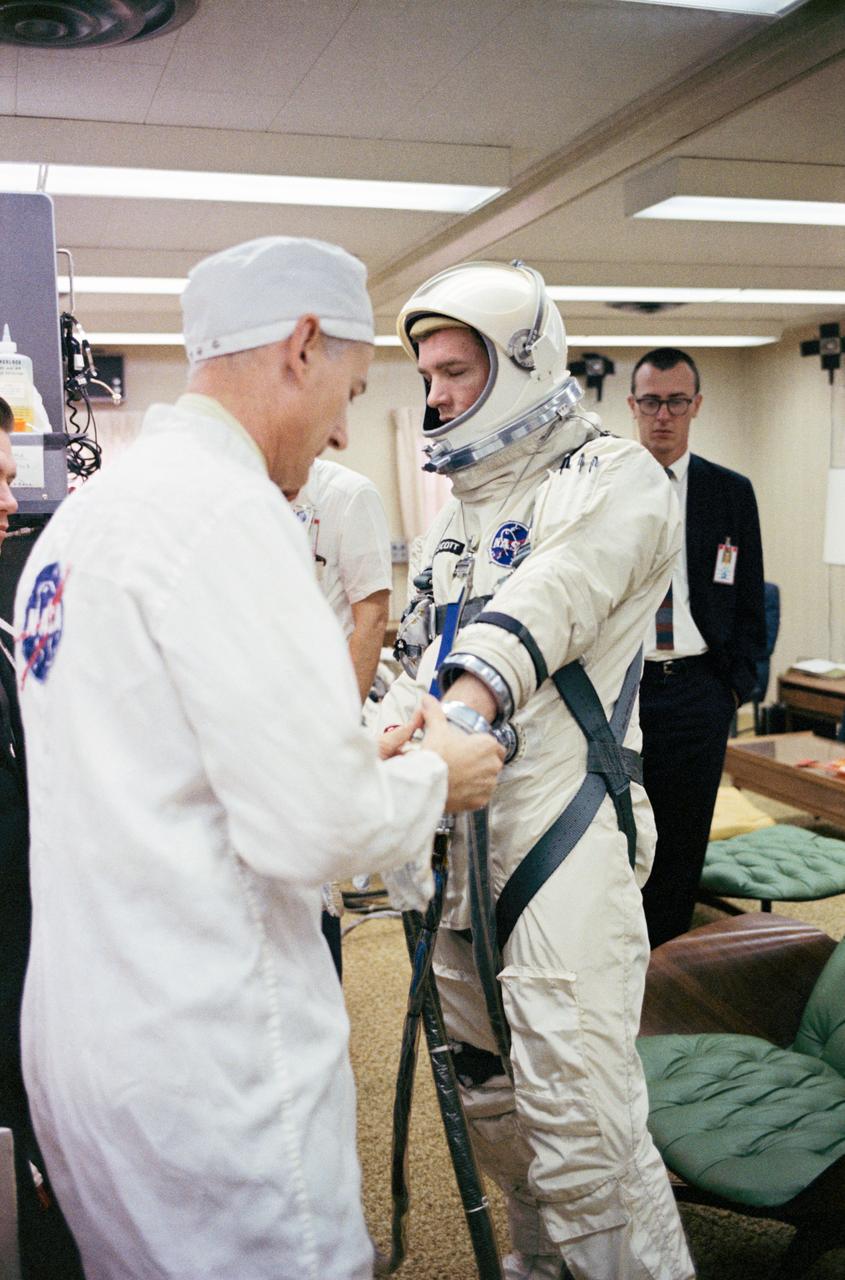
S66-24405 (16 March 1966) --- Astronaut David R. Scott, pilot of the Gemini-8 spaceflight, in the Launch Complex 16 trailer during suiting up operations for the Gemini-8 mission. NASA suit technician Joe Schmitt helps the astronaut put on his gloves. Photo credit: NASA
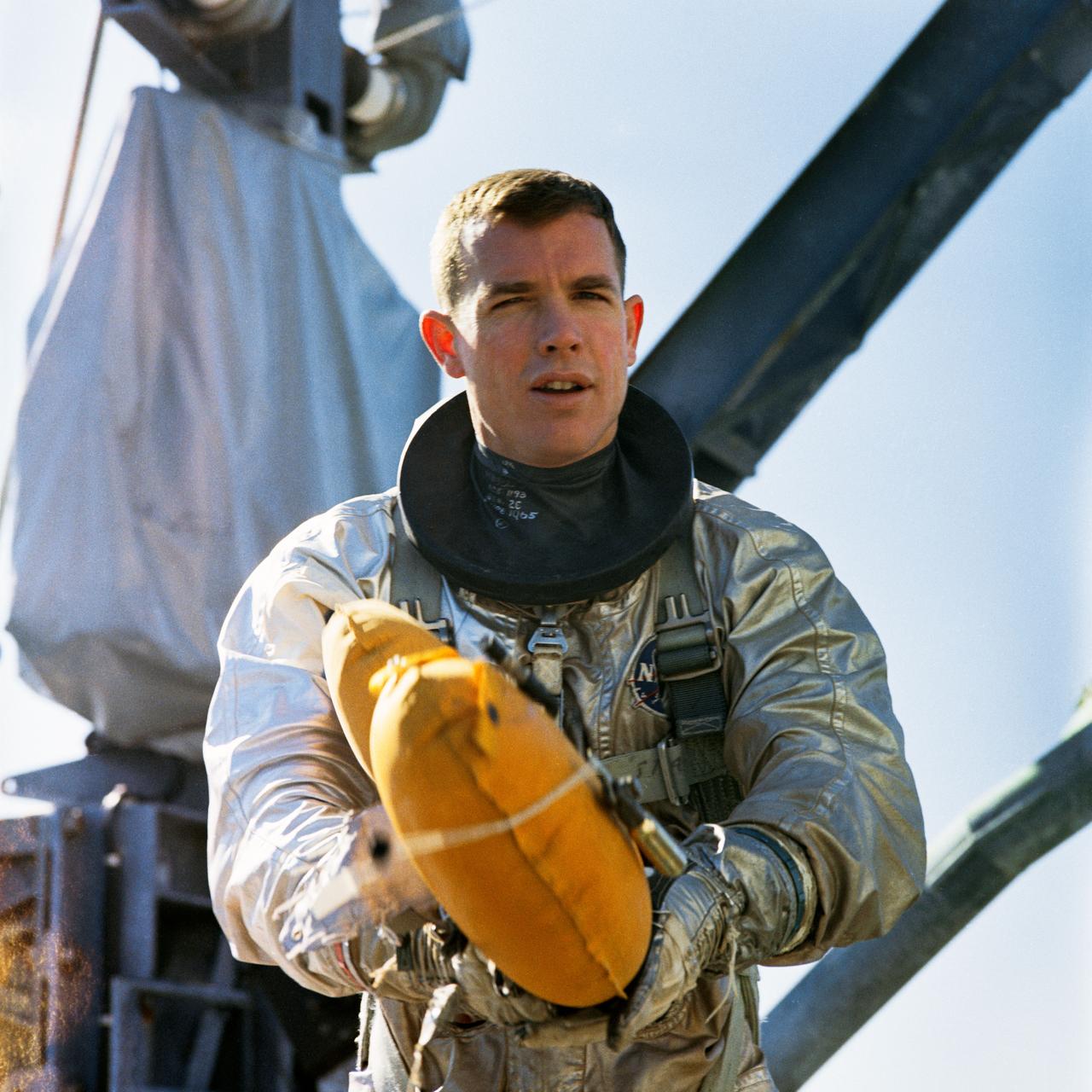
S66-17282 (15 Jan. 1966) --- Astronaut David R. Scott, pilot of the Gemini-8 prime crew, stands on deck of the NASA Motor Vessel Retriever after suiting up for water egress training in the Gulf of Mexico. Photo credit: NASA
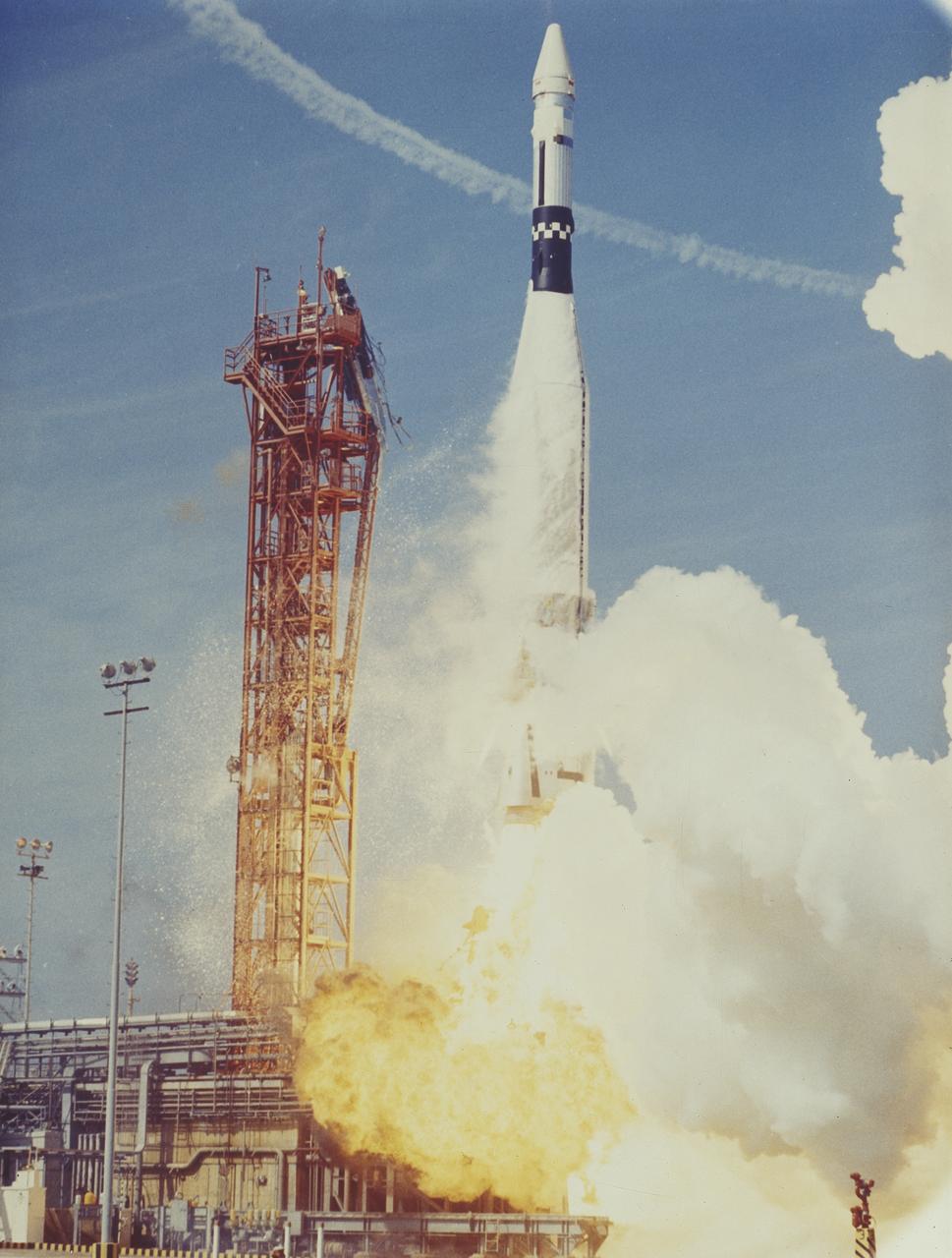
On March 16, 1966, an Atlas booster launched an Agena Target Vehicle for the Gemini 8 mission. The flight crew for the 3 day mission, astronauts Neil A. Armstrong and David R. Scott, achieved the first rendezvous and docking to Atlas/Agena in Earth orbit.
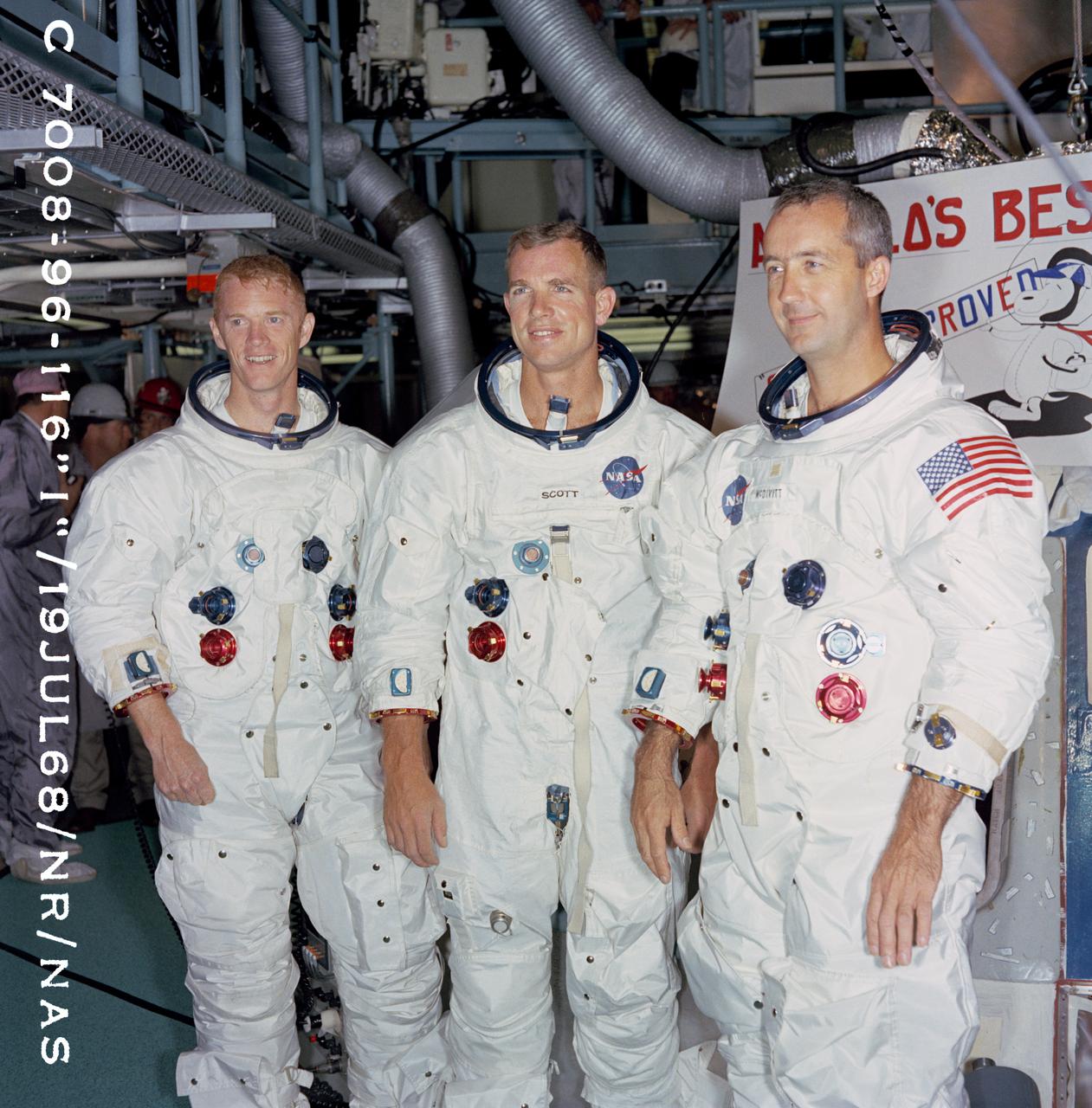
S68-42164 (19 July 1968) --- The prime crew of the third manned Apollo space mission stands in front of the Apollo Command Module 103 after egress during crew compartment fit and function test activity. Left to right are astronauts Russell L. Schweickart, David R. Scott, and James A. McDivitt.
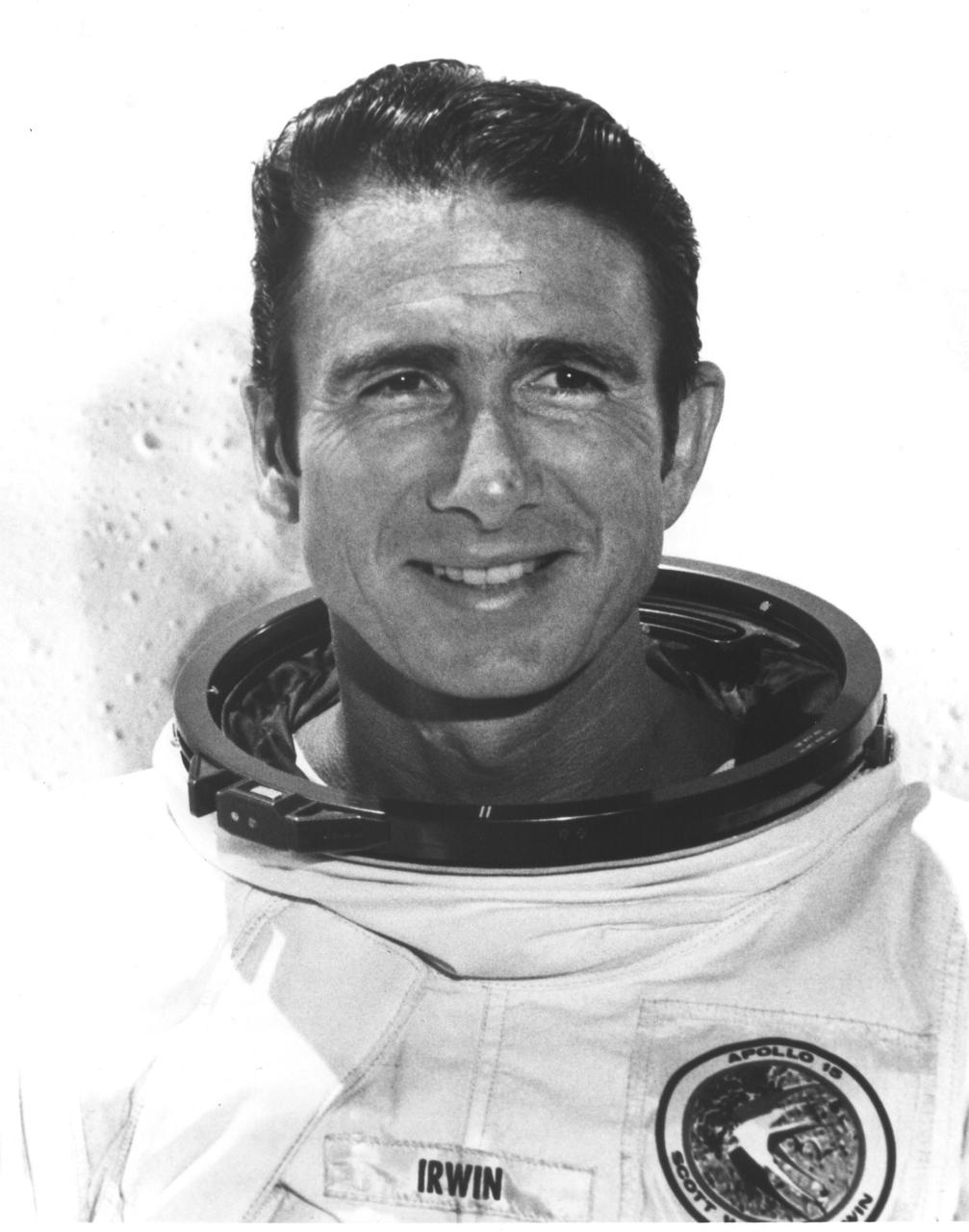
KENNEDY SPACE CENTER, FLA. -- Apollo 15 Lunar Module Pilot James B. Irwin will be making his first space flight when he is launched to the Moon with astronauts David R. Scott and AlfredN. Worden. Irwin and Scott will conduct three traverses of the Moon's Hadley-Apennine region while Worden maintains the command module in lunar orbit and conducts experiments. They will be launched to the Moon no earlier than July 26, 1971.
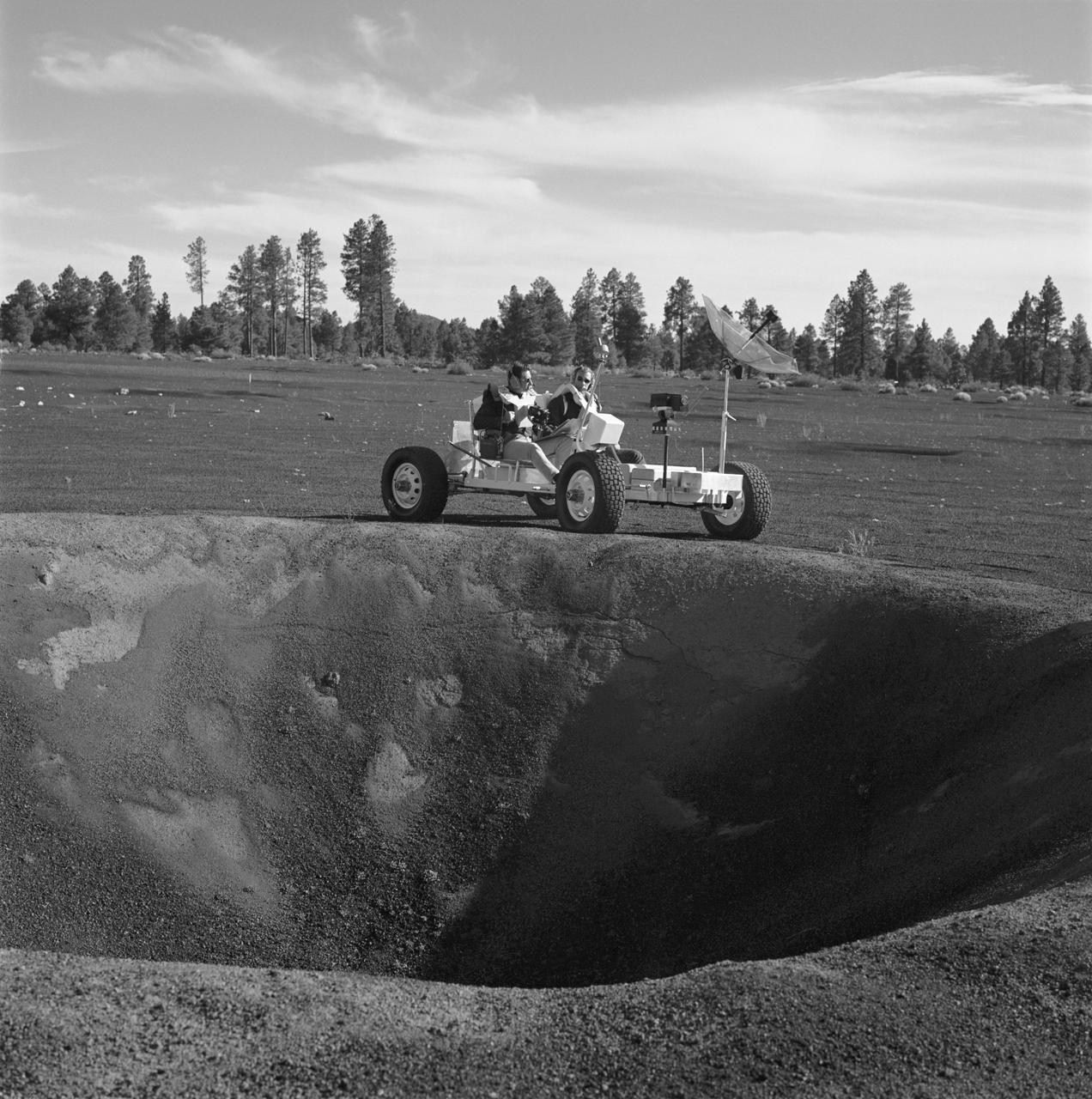
S70-53300 (2-3 Nov. 1970) --- Two Apollo 15 crew members, riding a Lunar Roving Vehicle (LRV) simulator, participate in geology training at the Cinder Lake crater field in Arizona. Astronaut David R. Scott, Apollo 15 commander, seated on the left; and to Scott's right is astronaut James B. Irwin, lunar module pilot. They have stopped at the rim of a 30-feet deep crater to look over the terrain. The simulator, called "Grover", was built by the United States Geological Survey.
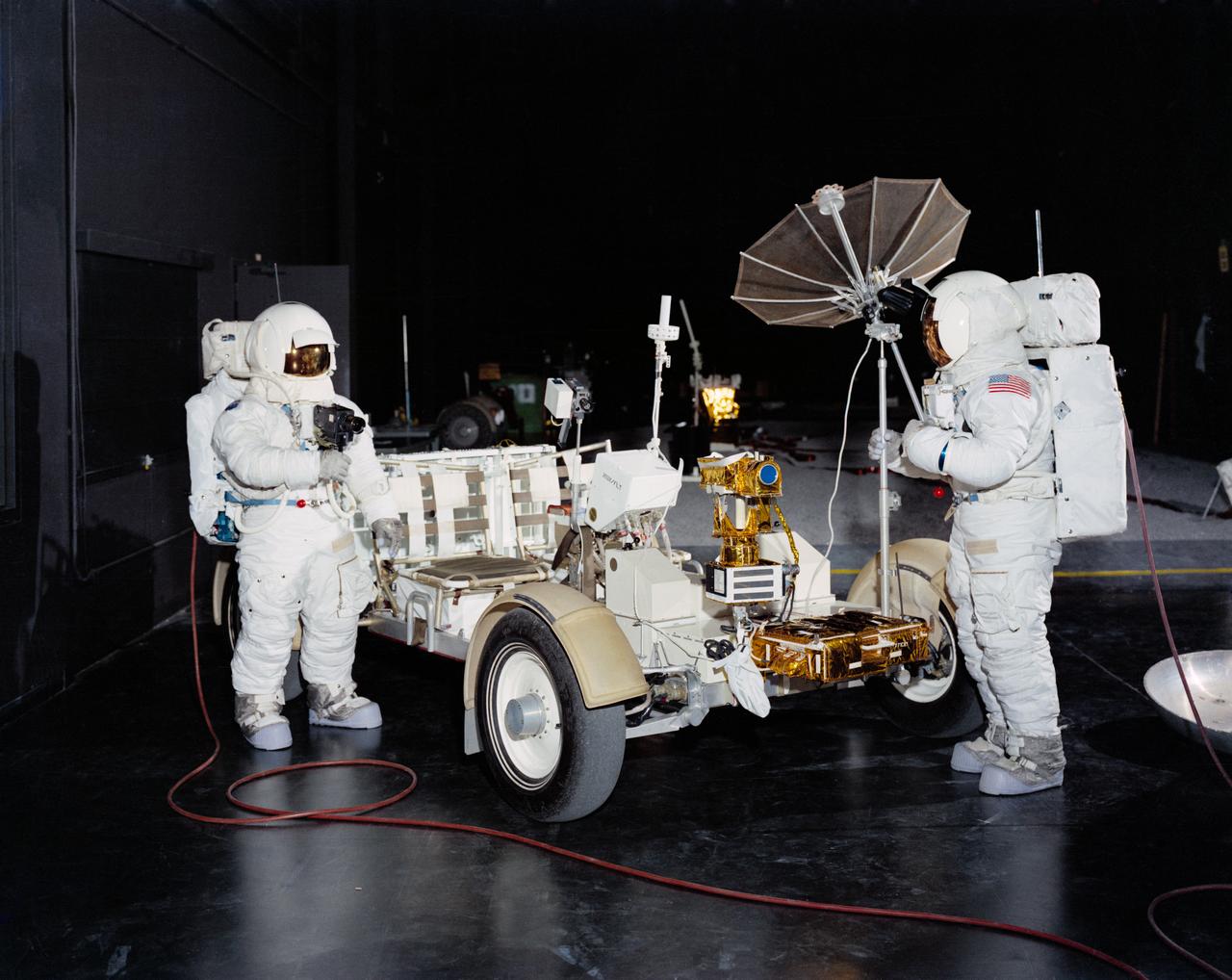
S71-16722 (January 1971) --- Two members of the prime crew of the Apollo 15 lunar landing mission are shown with the Lunar Roving Vehicle "one G" trainer in Building 5, Mission Simulation and Training Facility, Manned Spacecraft Center. Astronaut David R. Scott (on right) is the Apollo 15 commander; and astronaut James B. Irwin is the lunar module pilot. A Lunar Roving Vehicle similar to this trainer will be used by Scott and Irwin during their Apollo 15 lunar surface extravehicular activity.
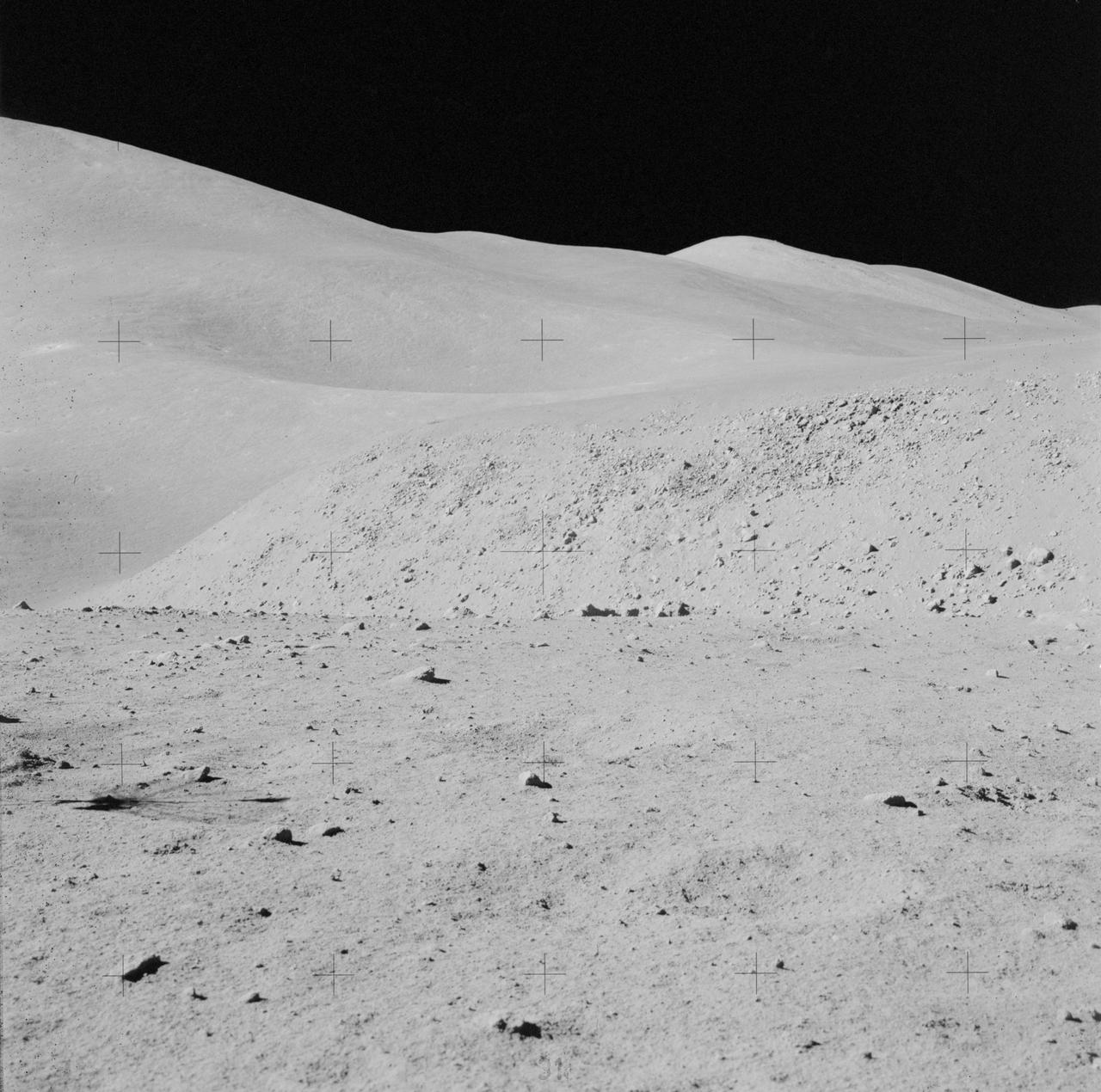
AS15-82-11123 (2 Aug. 1971) --- A view of the "strewn rock" scene encountered by Apollo 15 astronauts David R. Scott, commander, and James B. Irwin, lunar module pilot, during their third extravehicular activity (EVA) of the mission. Irwin took this photograph with a handheld 70mm camera. While astronauts Scott and Irwin descended in the Lunar Module (LM) "Falcon" to explore the moon, astronaut Alfred M. Worden, command module pilot, remained with the Command and Service Modules (CSM) in lunar orbit.

S71-39867 (June 1971) --- Astronauts David R. Scott (right), commander, and James B. Irwin, lunar module pilot, are shown on the Lunar Roving Vehicle (LRV) at the Kennedy Space Center (KSC), Florida, during Apollo 15 lunar surface extravehicular activity (EVA) simulations. While astronauts Scott and Irwin descend in the Lunar Module (LM) "Falcon" to explore the moon, astronaut Alfred M. Worden, command module pilot, will remain with the Command and Service Modules (CSM) in lunar orbit.

AS09-20-3064 (6 March 1969) --- Excellent view of the docked Apollo 9 Command and Service Modules (CSM) and Lunar Module (LM), with Earth in the background, during astronaut David R. Scott's stand-up extravehicular activity (EVA), on the fourth day of the Apollo 9 Earth-orbital mission. Scott, command module pilot, is standing in the open hatch of the Command Module (CM). Astronaut Russell L. Schweickart, lunar module pilot, took this photograph of Scott from the porch of the LM. Inside the LM was astronaut James A. McDivitt, Apollo 9 commander.

AS15-85-11471 (31 July 1971) --- Astronaut David R. Scott, commander, is seated in the Lunar Roving Vehicle (LRV) during the first Apollo 15 lunar surface extravehicular activity (EVA) at the Hadley-Apennine landing site. This photograph was taken by astronaut James B. Irwin, lunar module pilot. While astronauts Scott and Irwin descended in the Lunar Module (LM) "Falcon" to explore the Hadley-Apennine area of the moon, astronaut Alfred M. Worden, command module pilot, remained with the Command and Service Modules (CSM) in lunar orbit.

S71-22401 (March 1971) --- These three astronauts have been named by the National Aeronautics and Space Administration (NASA) as the prime crew members of the Apollo 15 lunar landing mission. They are, left to right, David R. Scott, commander; Alfred M. Worden, command module pilot; and James B. Irwin, lunar module pilot. The crew is posed behind the subsatellite that they will deploy from the lunar surface during the Apollo 15 mission. Astronauts Scott and Irwin will descend in the Lunar Module (LM) to explore the moon, while astronaut Worden will remain with the Command and Service Modules (CSM) in lunar orbit.
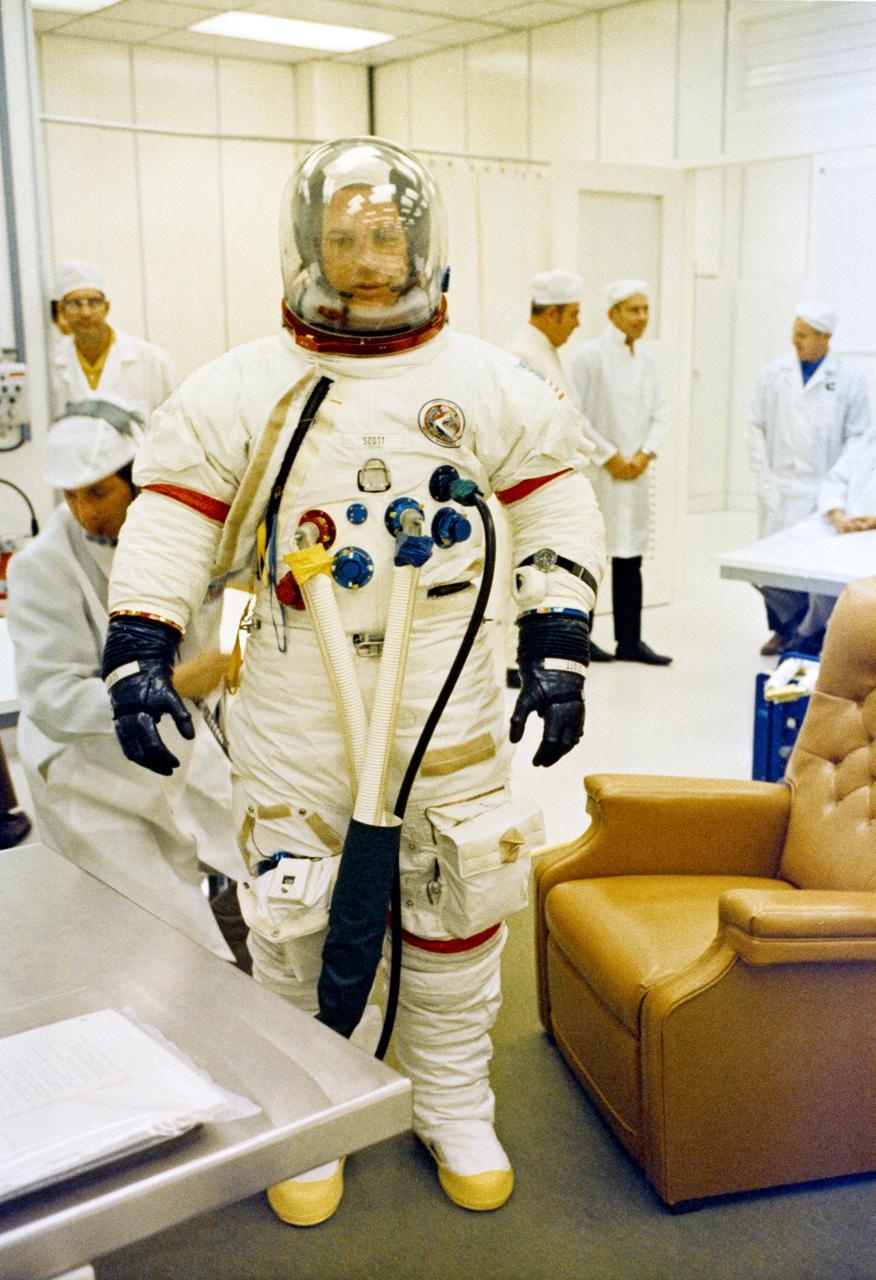
S71-41409 (26 July 1971) --- Astronaut David R. Scott, commander of the Apollo 15 lunar landing mission, goes through suiting up operations in the Kennedy Space Center's (KSC) Manned Spacecraft Operations Building (MSOB) during the Apollo 15 prelaunch countdown. Minutes later astronauts Scott; Alfred M. Worden, command module pilot; and James B. Irwin, lunar module pilot, rode a special transport van over to Pad A, Launch Complex 39, where their spacecraft awaited them. The Apollo 15 space vehicle was launched at 9:34:00:79 a.m. (EDT), July 26, 1971.

S69-27746 (13 March 1969) --- The Apollo 9 crew awaits the arrival of a recovery helicopter from the USS Guadalcanal, prime recovery ship for the Apollo 9 10-day Earth-orbital space mission. Astronaut James A. McDivitt, commander, stands in hatch of spacecraft. Already in life raft are astronauts Russell L. Schweickart (foreground), lunar module pilot, and David R. Scott, command module pilot. Scott is taking a picture of McDivitt. Splashdown occurred at 12:00:53 p.m. (EST), March 13, 1969, only 4.5 nautical miles from the USS Guadalcanal. U.S. Navy underwater demolition team swimmers assist in the recovery operations.
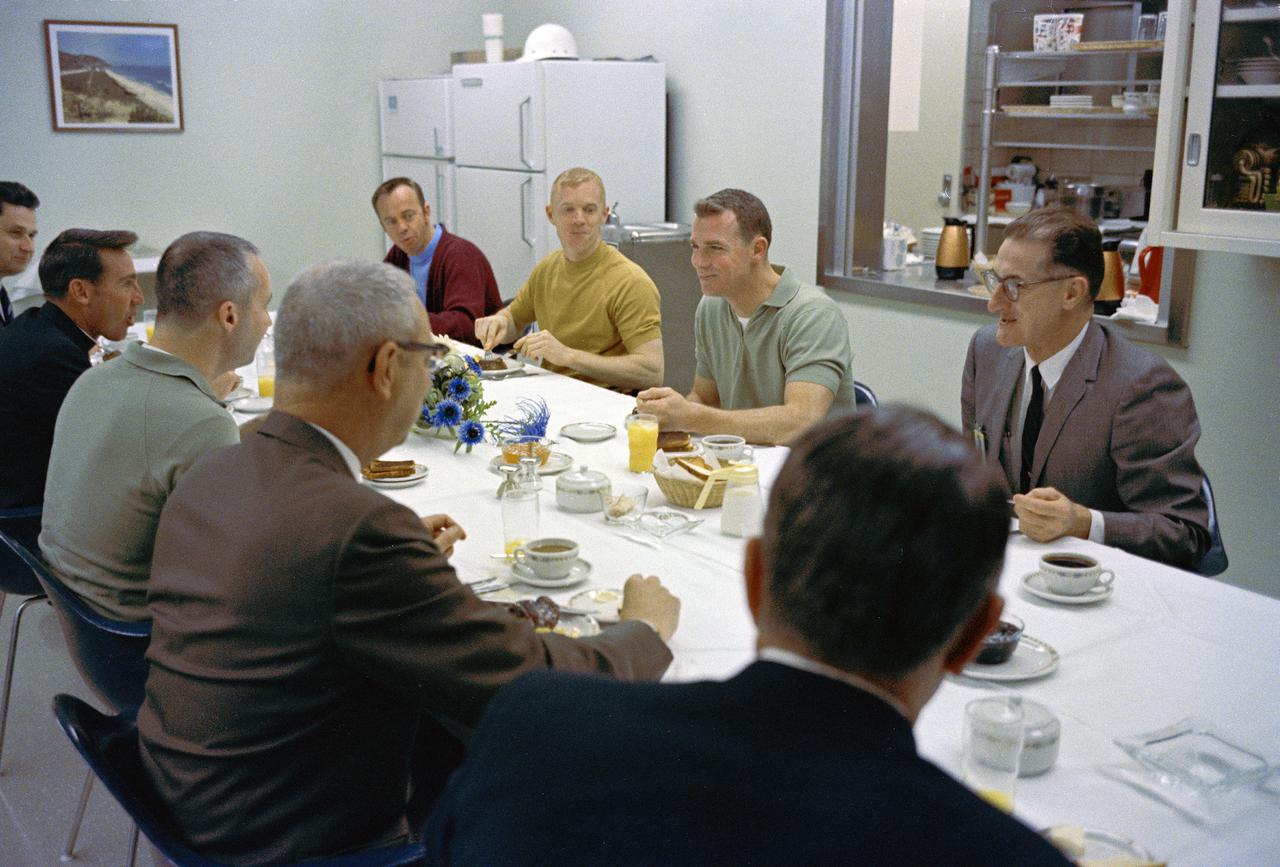
CAPE CANAVERAL, Fla. -- Apollo 9 Astronauts James A. McDivitt, David R. Scott, and Russell L. Schweickart breakfast with guests in their crew quarters of few hours before their launch into Earth orbit to test the Lunar Module spacecraft. Left to right across the table are Brig. Gen. C.H. Bolender, Scott, Schweickart, and Alan Shepard, Chief of the Astronaut Office and America's first man in space. Foreground, second from left, is Kenneth Kleinknect astronaut McDivitt his clergyman from Nassau Bay, Texas, The Rev. Laurence Connelly and George Skurla, Grumman Aircraft base manager at the spaceport. Grumman builds the Lunar Module spacecraft. Photo credit: NASA
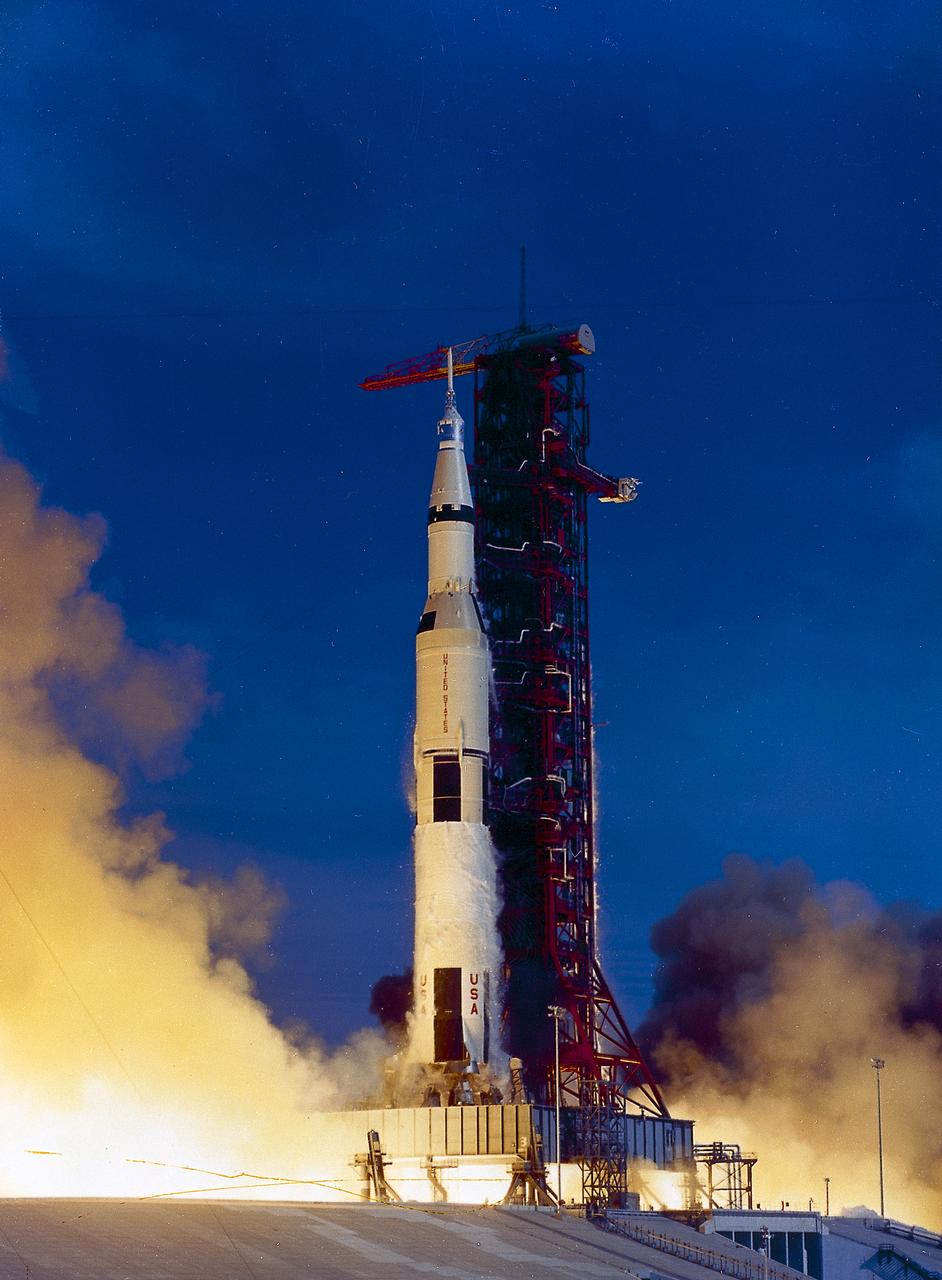
The fifth marned lunar landing mission, Apollo 15 (SA-510), carrying a crew of three astronauts: Mission commander David R. Scott, Lunar Module pilot James B. Irwin, and Command Module pilot Alfred M. Worden Jr., lifted off on July 26, 1971. Astronauts Scott and Irwin were the first to use a wheeled surface vehicle, the Lunar Roving Vehicle, or the Rover, which was designed and developed by the Marshall Space Flight Center, and built by the Boeing Company. Astronauts spent 13 days, nearly 67 hours, on the Moon's surface to inspect a wide variety of its geological features.
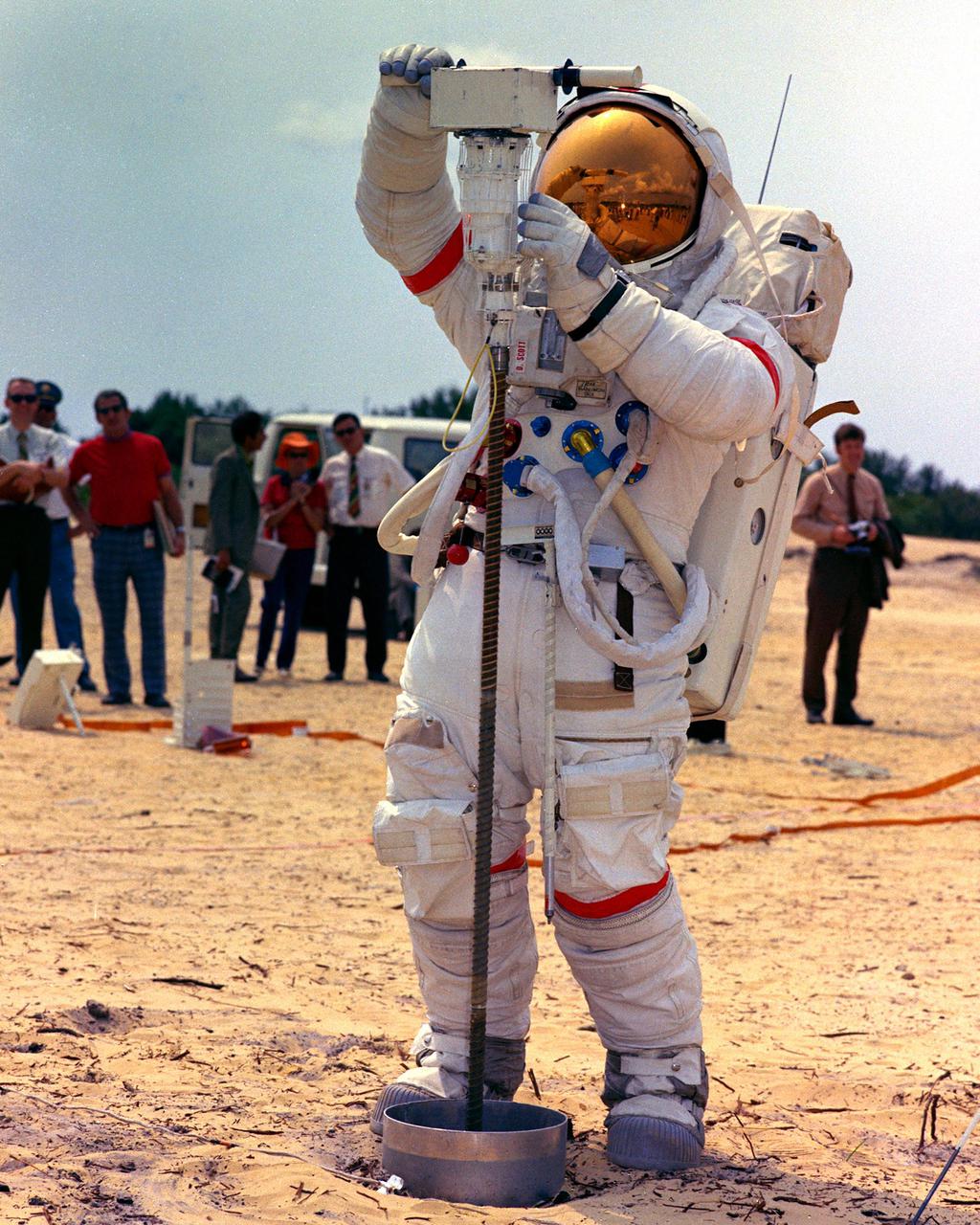
KENNEDY SPACE CENTER, FLA. - Apollo 15 Commander David R. Scott operates the battery-powered Lunar Surface Drill during a training exercise at a man-made replica of the Moon's Hadley-Apennine region at the Kennedy Space Center. During his upcoming mission, scheduled to begin no earlier than July 26, 1971, Scott will drill to a depth of about 10 feet to obtain lunar surface core samples and conduct the Heat Flow Experiment. This experiment is designed to measure the rate of heat loss from the interior of the Moon. Lunar Module Pilot James B. Irwin will accompany Scott on the surface while Astronaut Alfred M. Worden will pilot the Command Module while in lunar orbit.
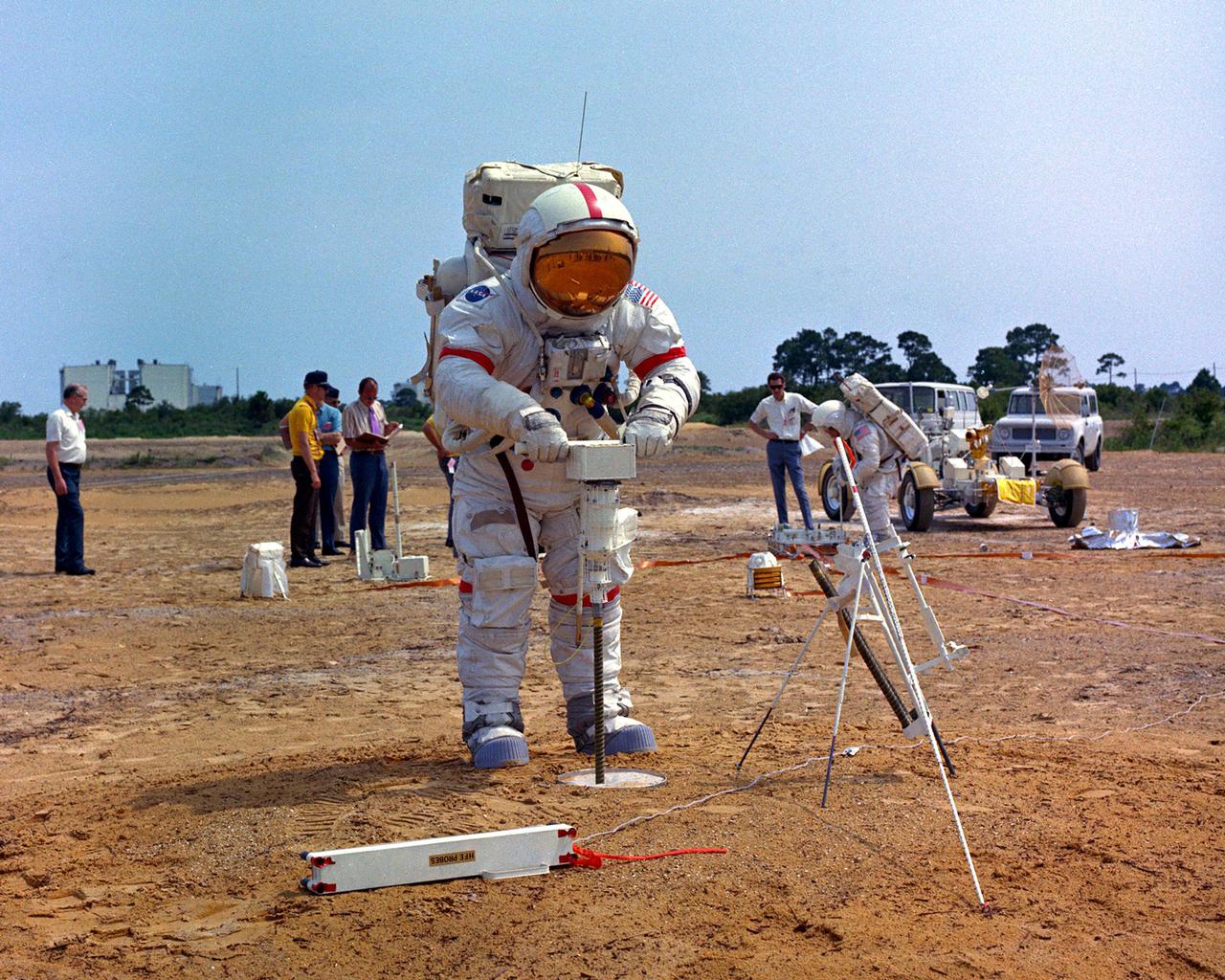
KENNEDY SPACE CENTER, FLA. - Apollo 15 Commander David R. Scott operates the battery-powered Lunar Surface Drill during a training exercise at a man-made replica of the Moon's Hadley-Apennine region at the Kennedy Space Center. During his upcoming mission, scheduled to begin no earlier than July 26, 1971, Scott will drill to a depth of about 10 feet to obtain lunar surface core samples and conduct the Heat Flow Experiment. This experiment is designed to measure the rate of heat loss from the interior of the Moon. Lunar Module Pilot James B. Irwin will accompany Scott on the surface while Astronaut Alfred M. Worden will pilot the Command Module while in lunar orbit.
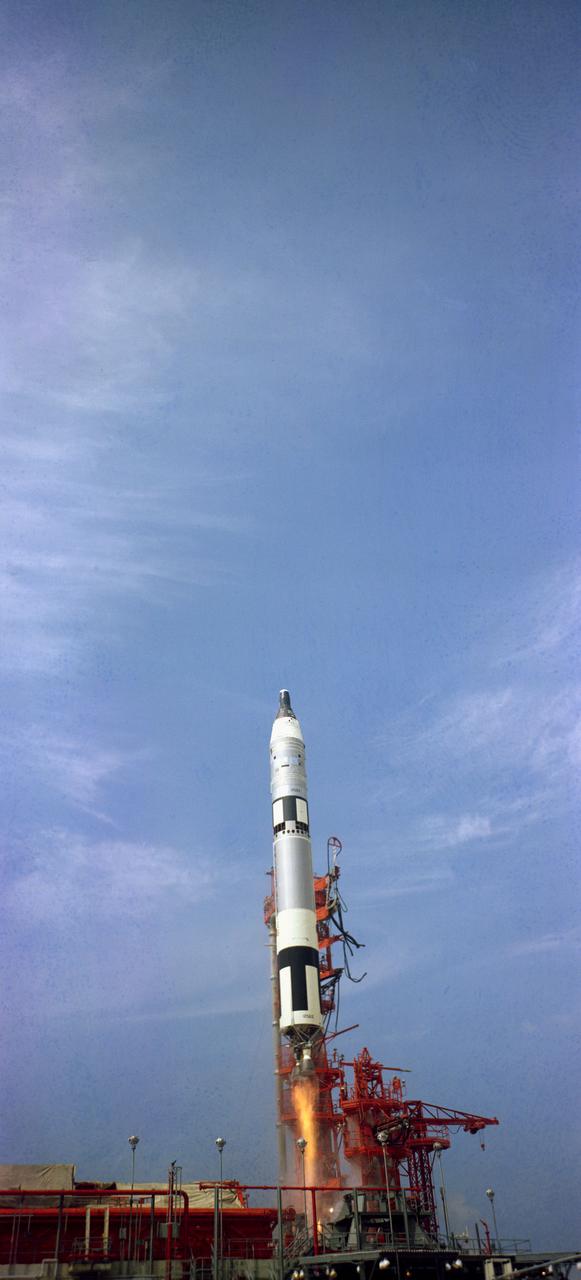
S66-24465 (16 March 1966) --- The Gemini-Titan 8 (GT-8), carrying astronauts Neil A. Armstrong, command pilot, and David R. Scott, pilot, was successfully launched by the National Aeronautics and Space Administration's (NASA) John F. Kennedy Space Center (KSC) at 11:41 a.m. (EST), March 16, 1966. An attempt will be made to rendezvous and dock the Gemini-8 spacecraft with Agena Docking Target Vehicle. Photo credit: NASA
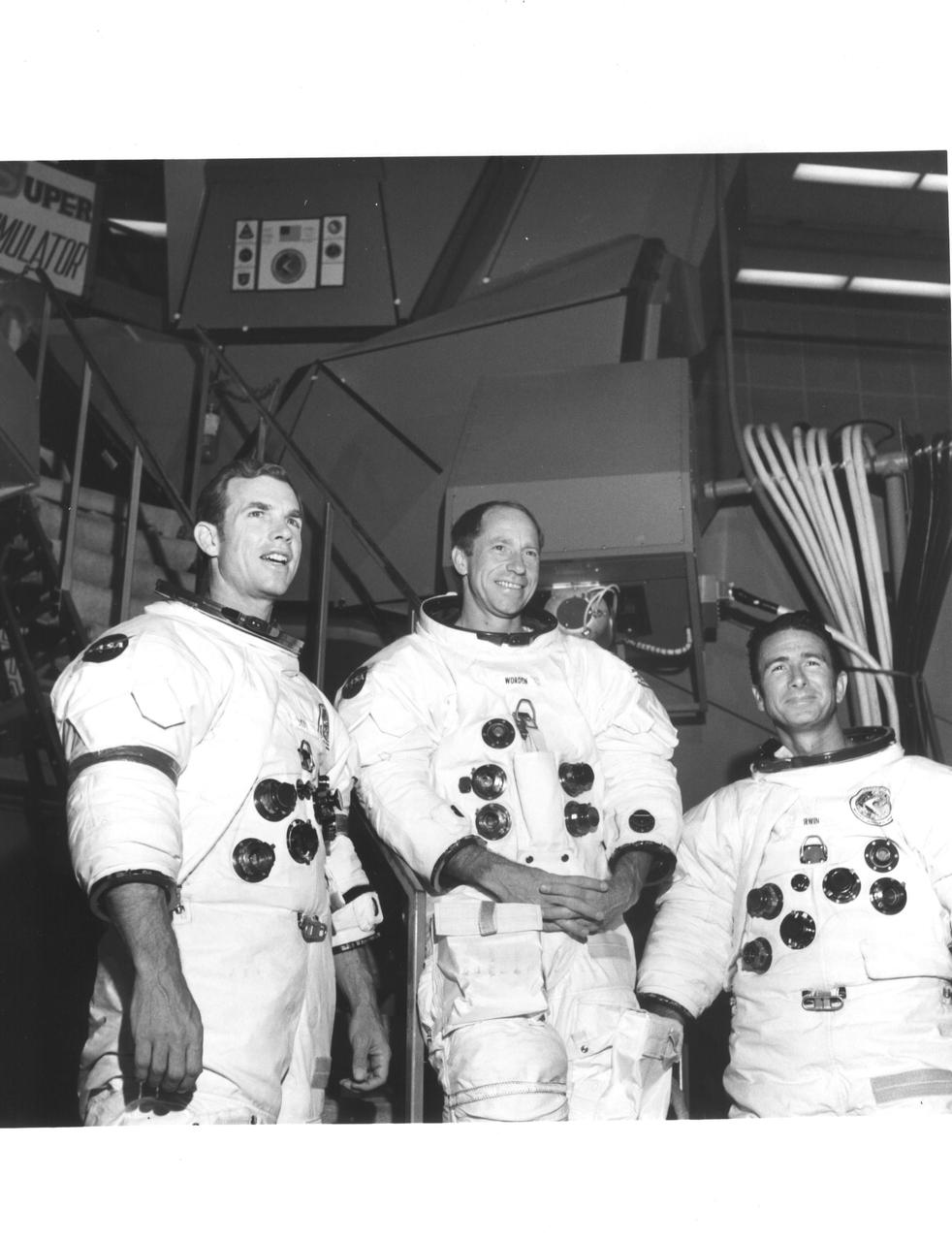
KENNEDY SPACE CENTER, FLA. -- The Apollo 15 astronauts pause in front of a mission simulator during a training exercise at the Kennedy Space Center. The trio will be launched to the Moon no earlier than July 26, 1971. They are, left to right, David R. Scott, commander; Alfred N. Worden, command module pilot; and James B. Irwin, lunar module pilot.
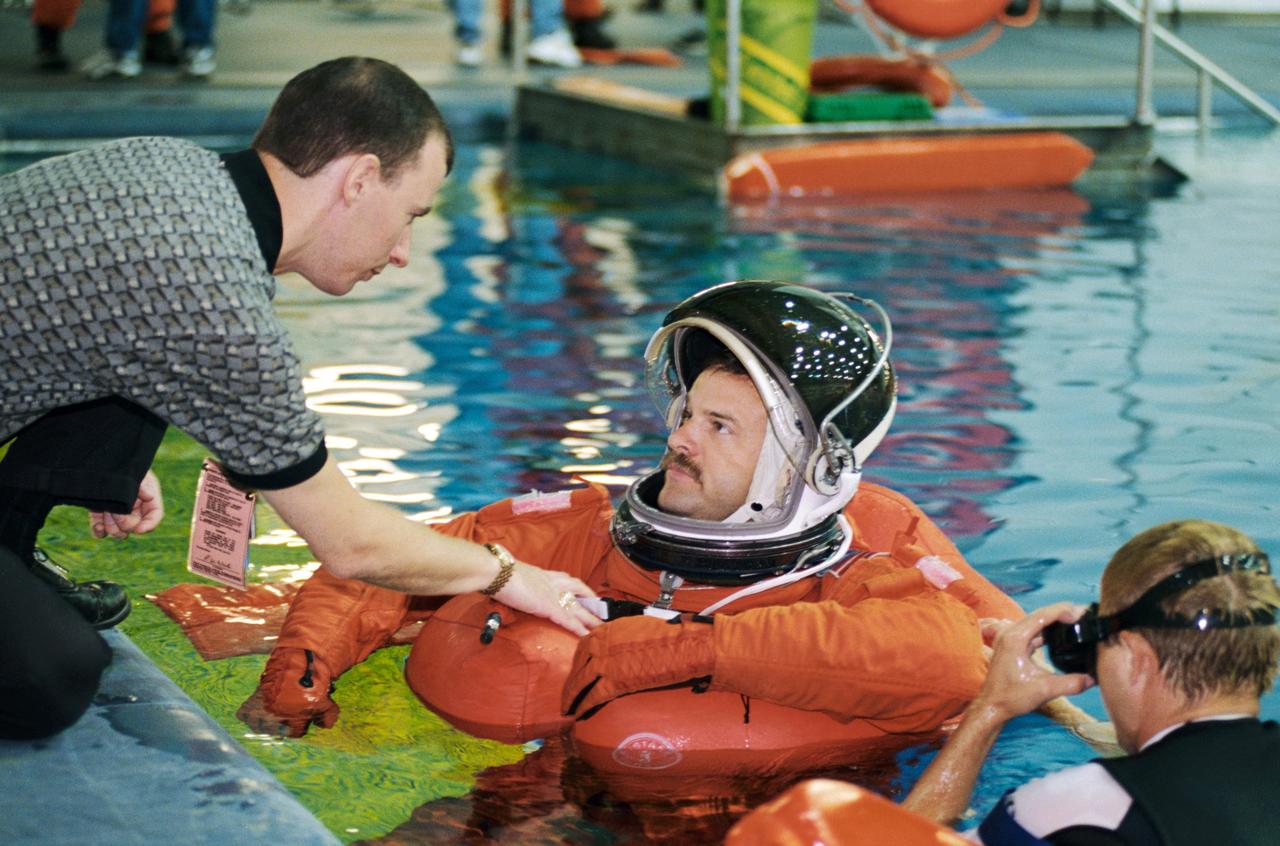
JSC2001-01921 (12 July 2001) --- Astronaut Scott D. Altman, STS-109 mission commander, is assisted by United Space Alliance (USA) crew trainer David Pogue and a diver during an emergency bailout training session in the Neutral Buoyancy Laboratory (NBL) near the Johnson Space Center (JSC). STS-109 will be the 108th shuttle flight and the fourth Hubble Space Telescope (HST) servicing mission.
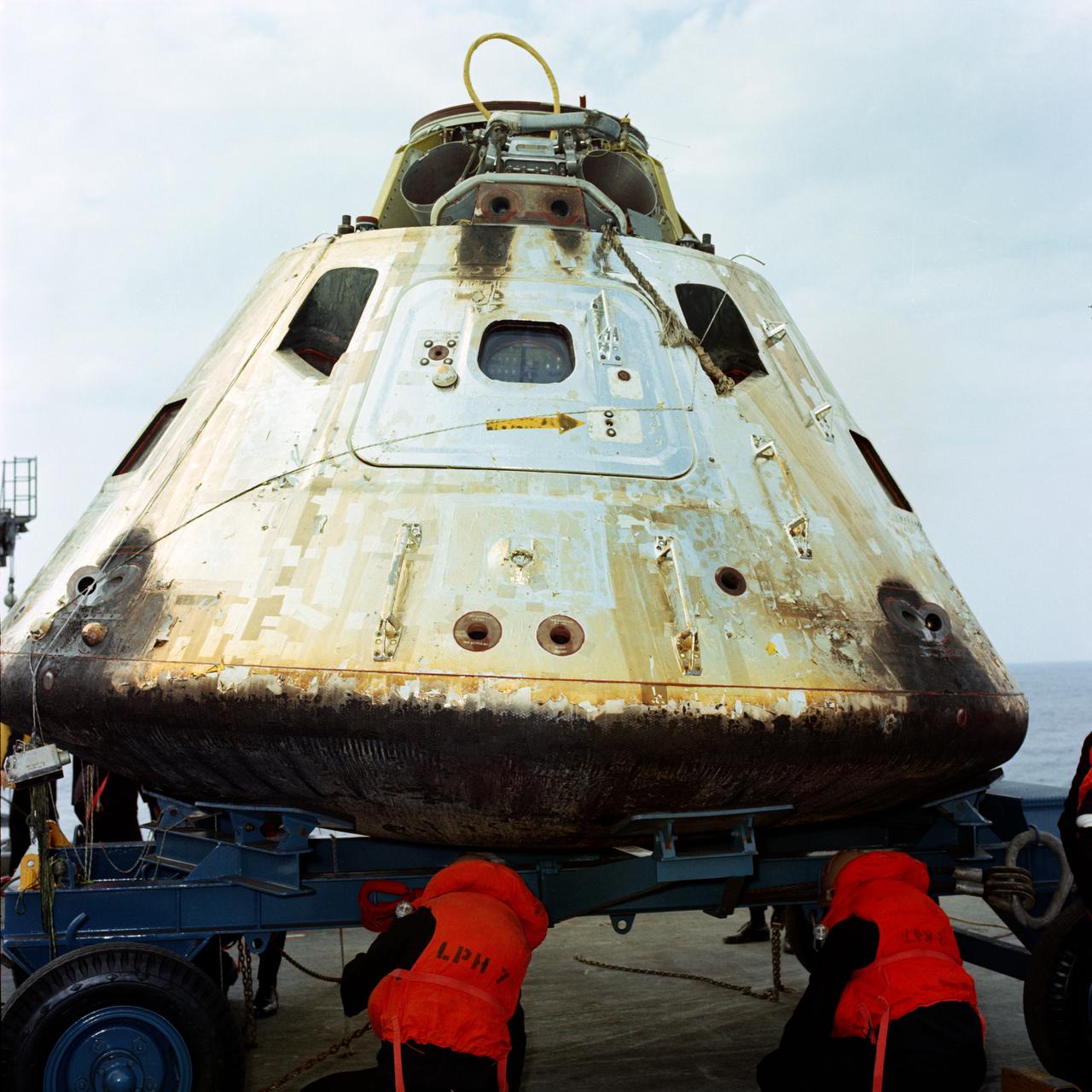
S69-20239 (13 March 1969) --- Close-up view of the Apollo 9 Command Module (CM) as it sets on dolly on the deck of the USS Guadalcanal just after being hoisted from the water. The Apollo 9 spacecraft, with astronauts James A. McDivitt, David R. Scott, and Russell L. Schweickart aboard, splashed down at 12:00:53 p.m. (EST), March 13, 1969, only 4.5 nautical miles from the aircraft carrier to conclude a successful 10-day Earth-orbital mission in space.
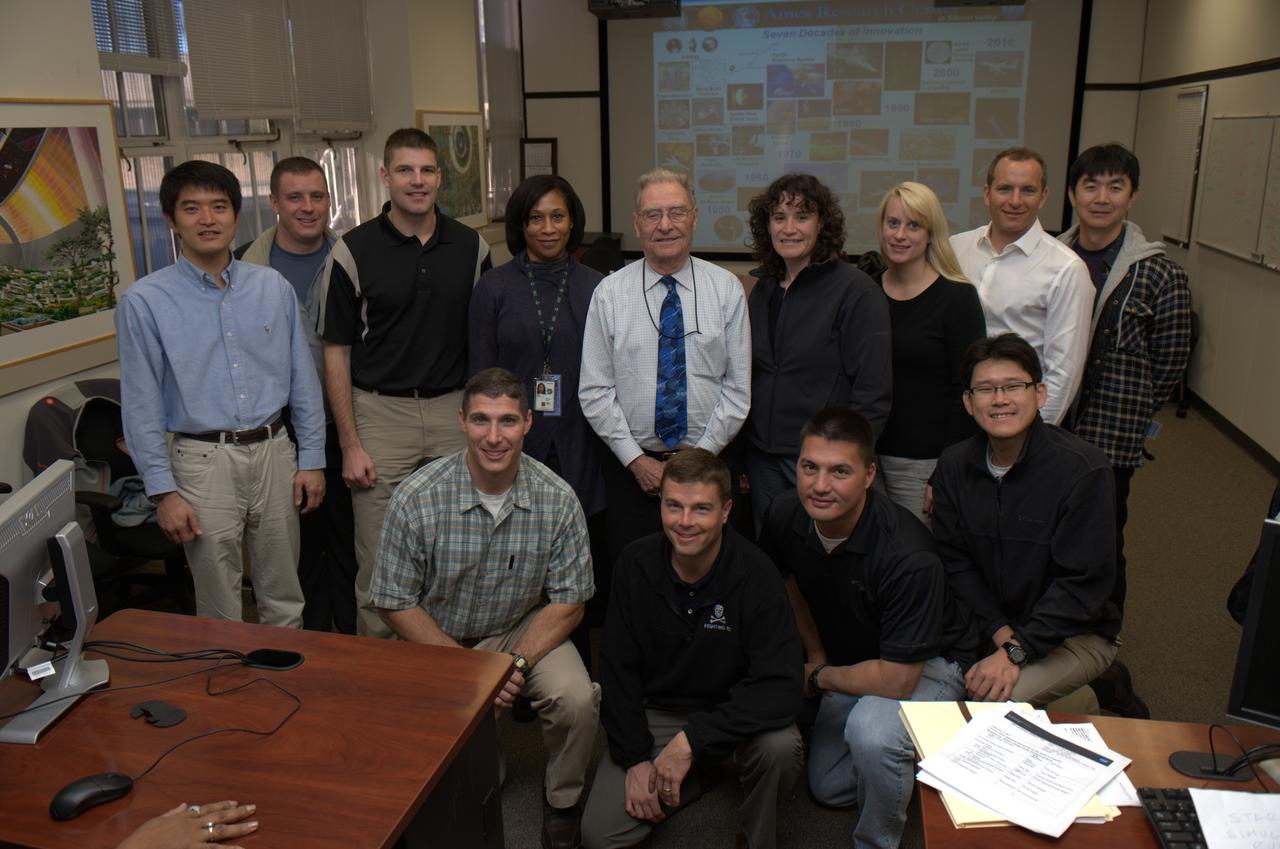
The 14 member 2009 class of NASA astronauts, Japan Aerospace Explortion Agency (JAXA) astronauts and Canadian Space Agency astronauts visit Ames Research Center. From left to right back row are Takuya Onishi (JAXA), Scott Tingle, Jeremy Hansen, Jeanette Epps, Jack Boyd (Ames), Serena Aunon, Kathleen (Kate) Rubins, David Saint-Jacques (CSA) Kimiya Yui (JAXA), Michael Hopkins, Gregory (Reid) Wiseman, Kjell Lundgren, Norishige Kanai (JAXA).

NASA senior leaders participate in a procurement discussion with employees on Nov. 29, 2022, at the agency’s Kennedy Space Center in Florida. The conversation focused on strengthening acquisition and program management within the agency. From left are David Mitchell, chief program management officer; Craig McArthur, OCFO/director for Strategic Investments Division; Scott Barber, associate general counsel for Acquisition Law; Karla Smith Jackson, assistant administrator for Procurement; NASA Associate Administrator Bob Cabana; and NASA Deputy Administrator Pam Melroy.