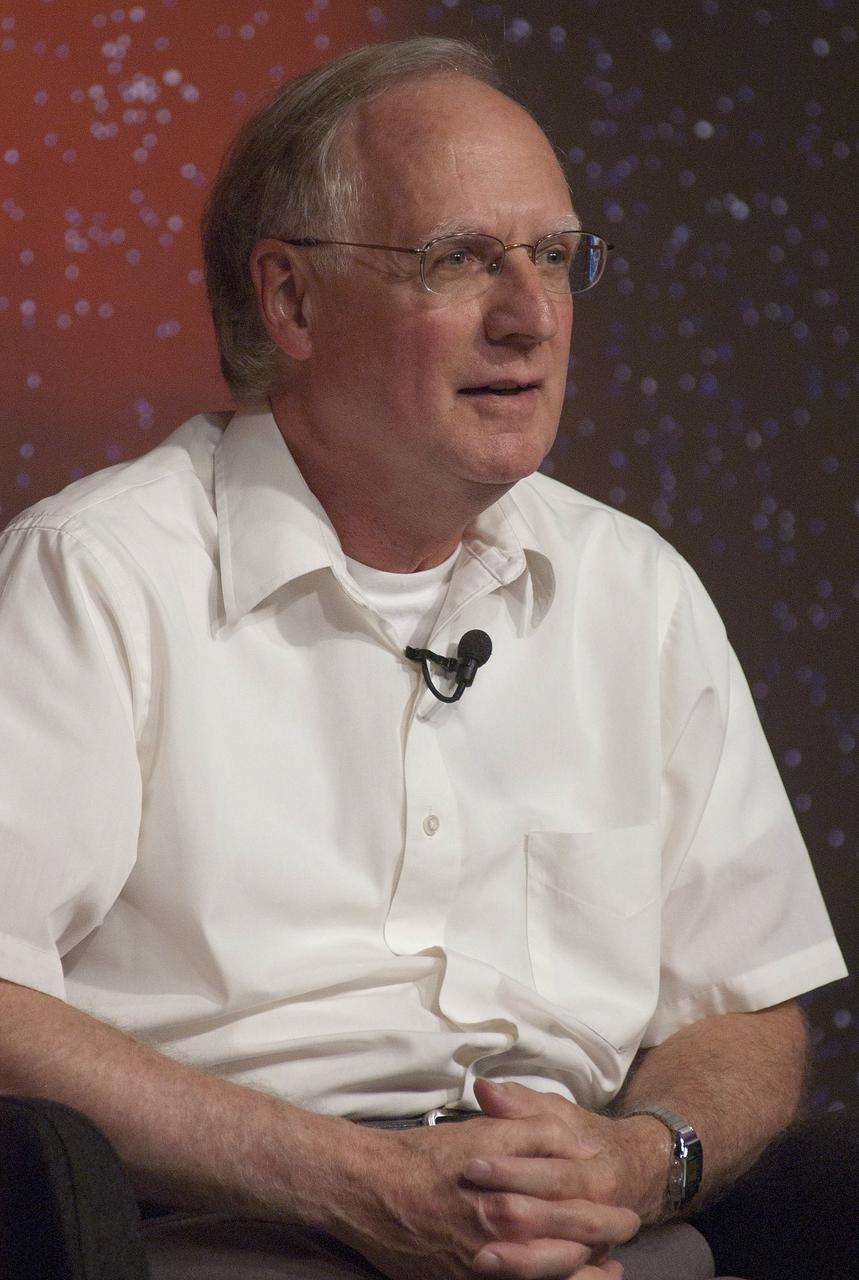
David Webb, a research physicist from the Institute for Scientific Research at Boston College speaks during a press briefing, Thursday, Aug. 18, 2011, at NASA Headquarters in Washington. The briefing was held to discuss new details about the structure of solar storms and the impact they have on Earth. The new information comes from NASA's Solar Terrestrial Relations Observatory, or STEREO, spacecraft and other NASA probes. Photo Credit: (NASA/GSFC/Rebecca Roth)
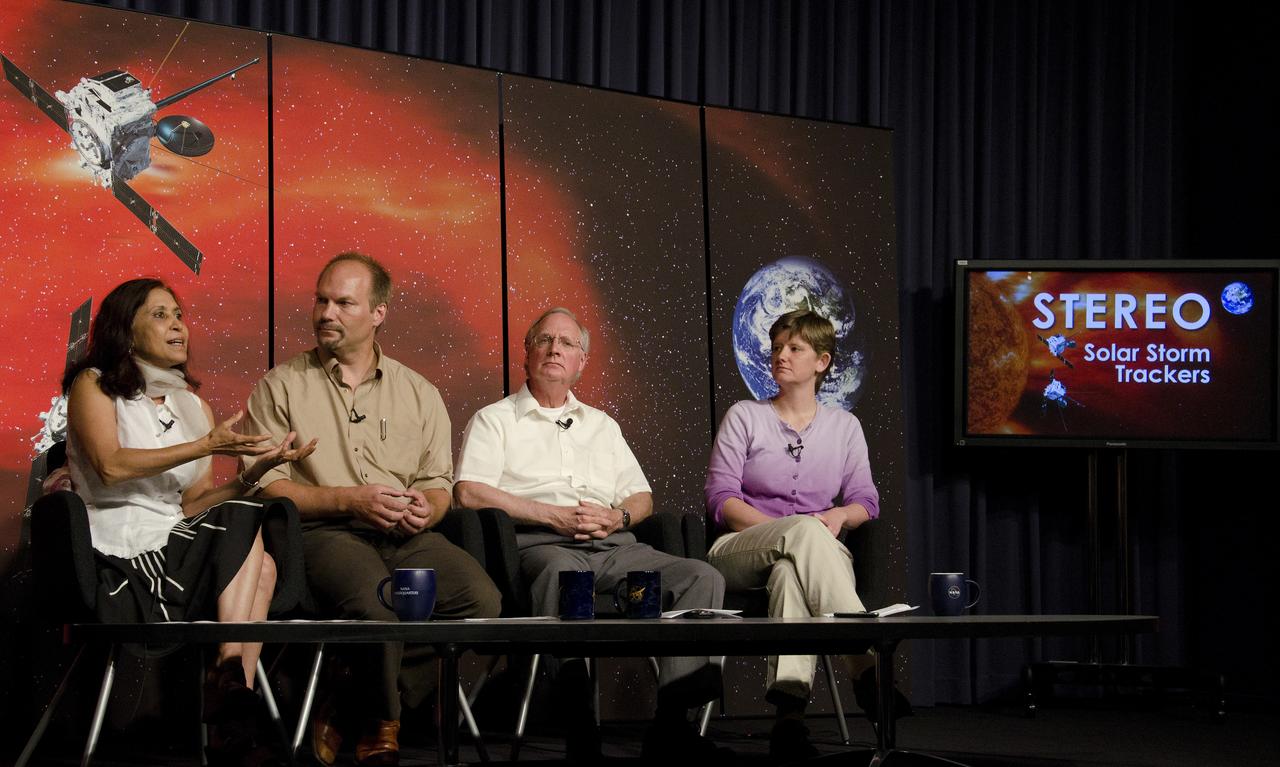
Madhulika Guhathakurta, seated left, STEREO program scientist, speaks during a press briefing, Thursday, Aug. 18, 2011, at NASA Headquarters in Washington as Craig DeForest, David Webb and Alysha Reinard, look on. The briefing was held to discusses new details about the structure of solar storms and the impact they have on Earth. The new information comes from NASA's Solar Terrestrial Relations Observatory, or STEREO, spacecraft and other NASA probes. Photo Credit: (NASA/GSFC/Rebecca Roth).
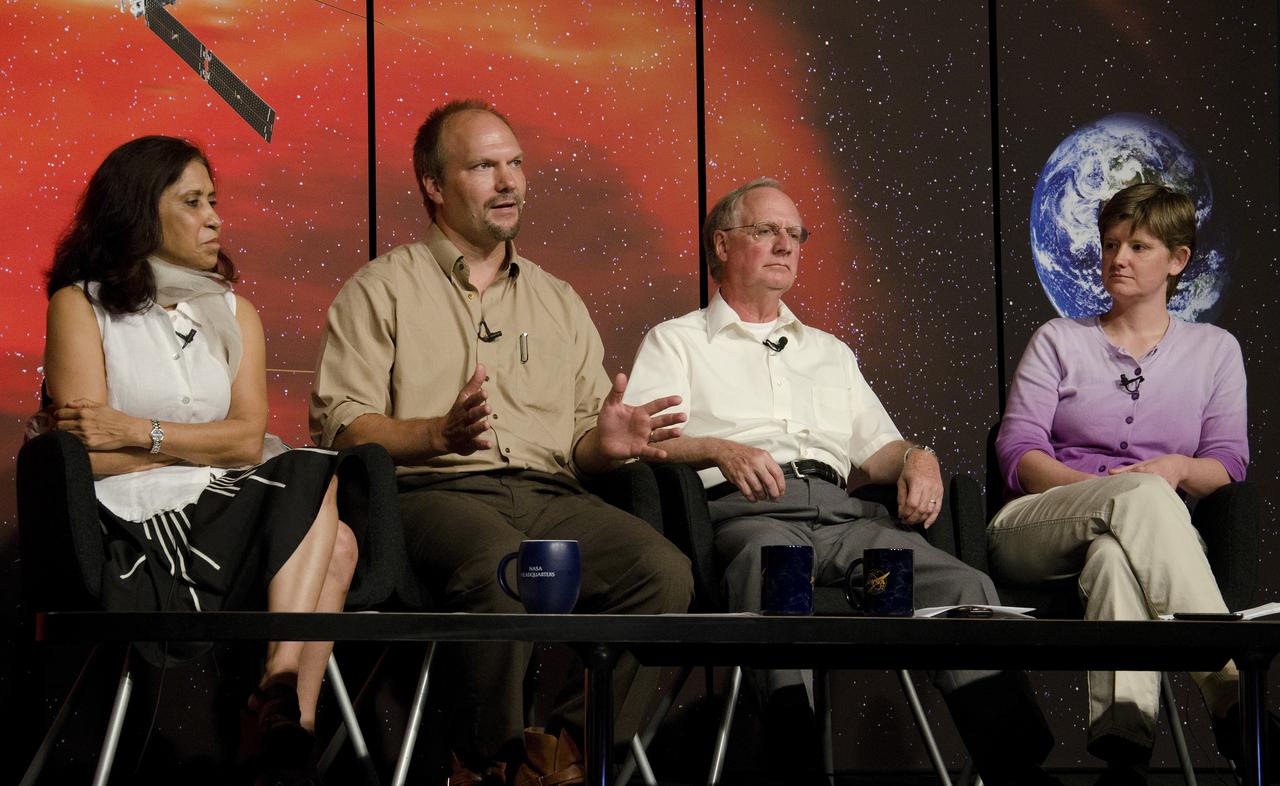
Craig DeForest, second from left, speaks during a press briefing, Thursday, Aug. 18, 2011, at NASA Headquarters in Washington as Madhulika Guhathakurta, left, David Webb and Alysha Reinard look on. The briefing was held to discusses new details about the structure of solar storms and the impact they have on Earth. The new information comes from NASA's Solar Terrestrial Relations Observatory, or STEREO, spacecraft and other NASA probes. Photo Credit: (NASA/GSFC/Rebecca Roth)
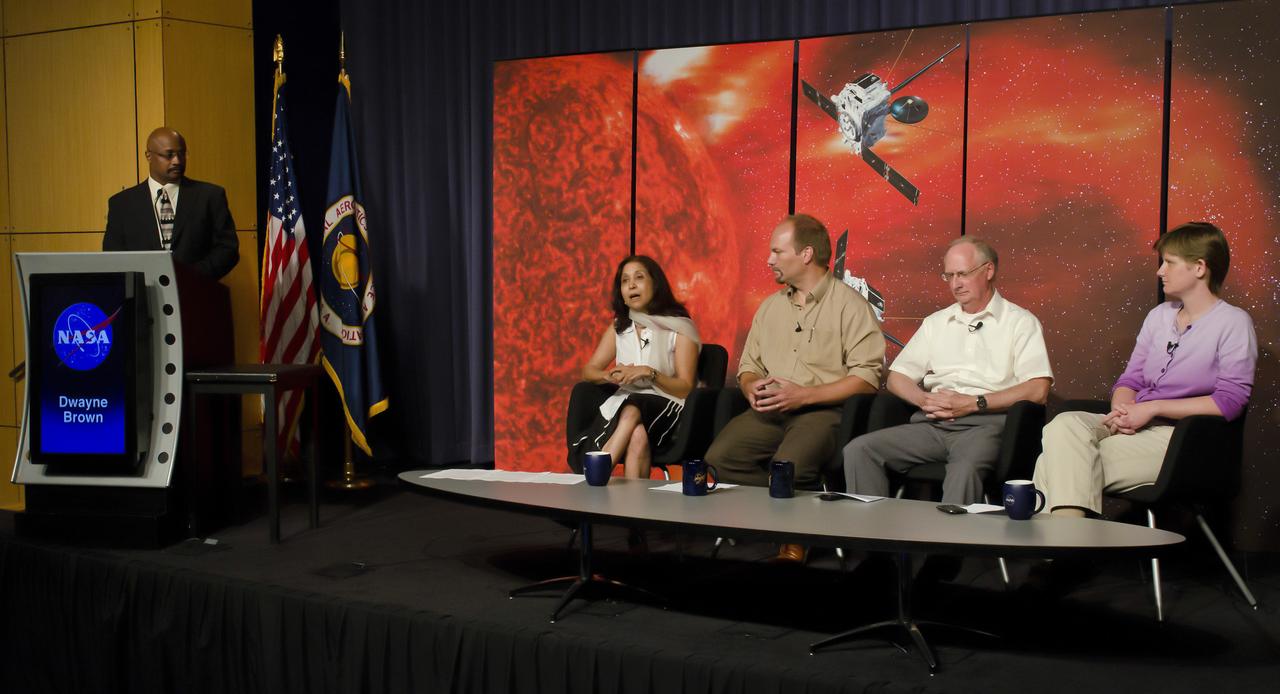
Madhulika Guhathakurta, seated left, STEREO program scientist, speaks during a press briefing, Thursday, Aug. 18, 2011, at NASA Headquarters in Washington as Craig DeForest, David Webb and Alysha Reinard, look on. The briefing was held to discusses new details about the structure of solar storms and the impact they have on Earth. The new information comes from NASA's Solar Terrestrial Relations Observatory, or STEREO, spacecraft and other NASA probes. Photo Credit: (NASA/GSFC/Rebecca Roth)
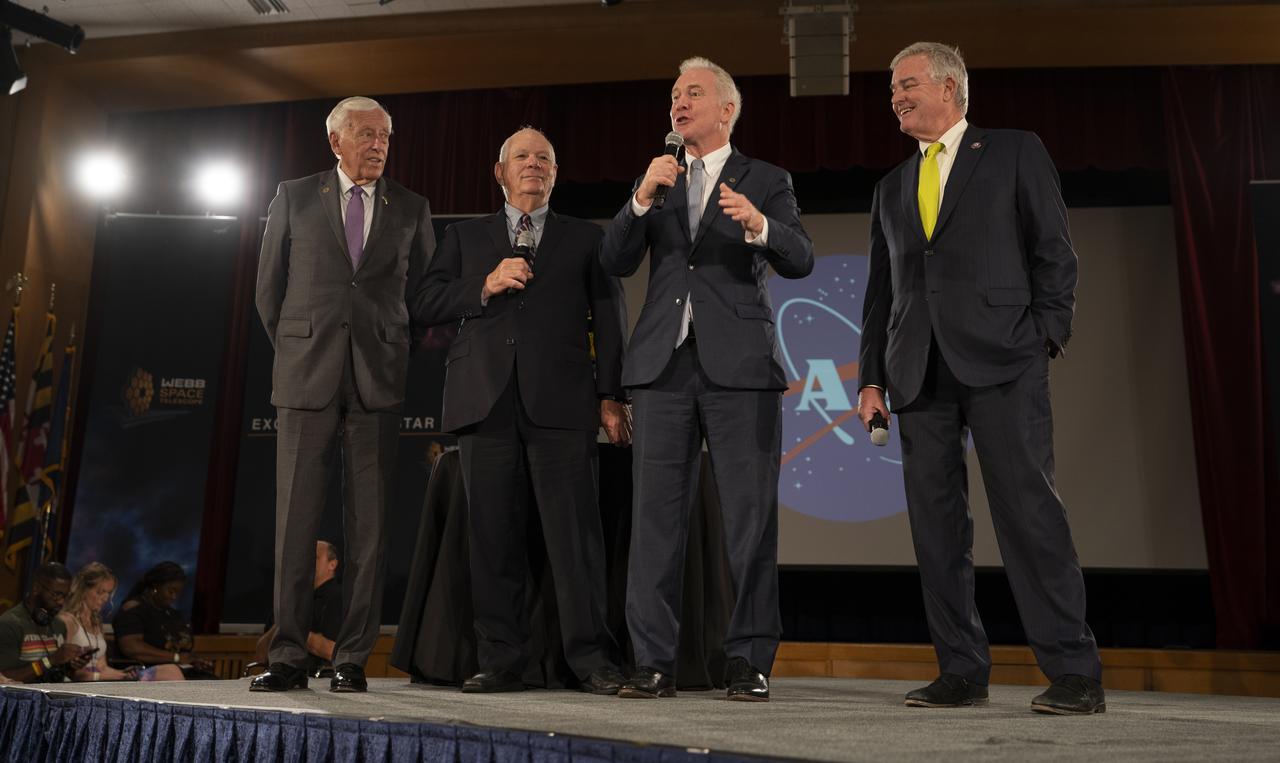
Rep. Steny Hoyer, D-Md, left, Sen. Ben Cardin, D-Md., second from left, and Rep. David Trone, D-Md, right, are seen as Sen. Chris Van Hollen, D-Md., second from right, delivers remarks ahead of the release of the first images from NASA’s James Webb Space Telescope, Tuesday, July 12, 2022, at NASA’s Goddard Space Flight Center in Greenbelt, Md. The first full-color images and spectroscopic data from the James Webb Space Telescope, a partnership with ESA (European Space Agency) and the Canadian Space Agency (CSA), are a demonstration of the power of Webb as the telescope begins its science mission to unfold the infrared universe. Photo Credit: (NASA/Taylor Mickal)
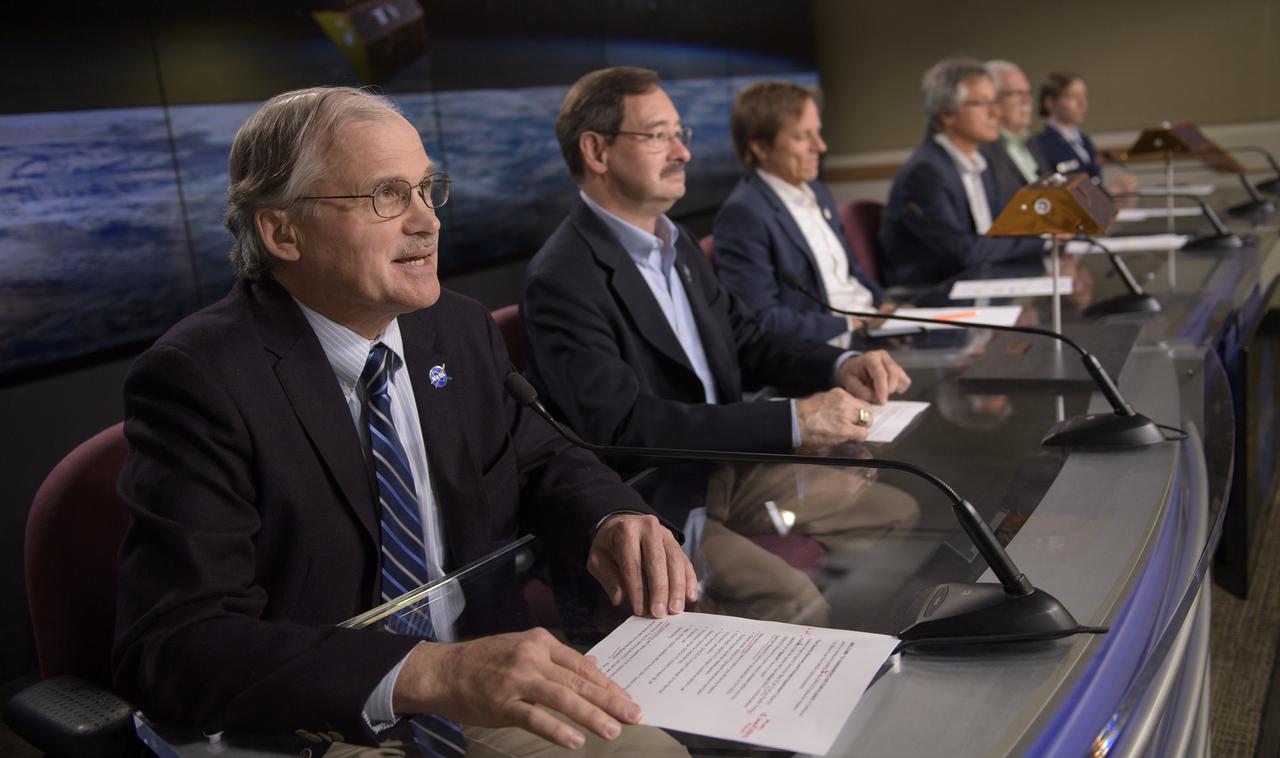
NASA Headquarters Public Affairs Officer Steve Cole, left, moderates the Gravity Recovery and Climate Experiment Follow-On (GRACE-FO) mission prelaunch media briefing with David Jarrett, GRACE-FO program executive in the Earth Science Division at NASA Headquarters; Frank Webb, GRACE-FO project scientist at JPL; Frank Flechtner, GRACE-FO project manager for the German Research Centre for Geosciences (GFZ) in Potsdam, Germany; Phil Morton, NASA GRACE-FO project manager at JPL; and Capt. Jennifer Haden, weather officer, 30th Space Wing, Vandenberg Air Force Base, right, Monday, May 21, 2018, at Vandenberg Air Force Base in California. The twin GRACE-FO spacecraft will measure changes in how mass is redistributed within and among Earth's atmosphere, oceans, land and ice sheets, as well as within Earth itself. Photo Credit: (NASA/Bill Ingalls)
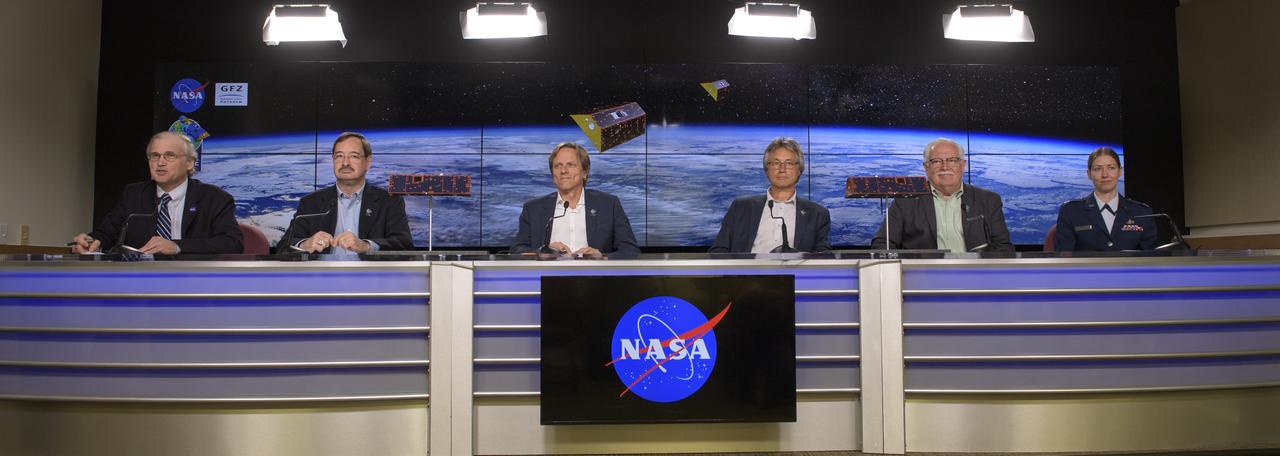
NASA Headquarters Public Affairs Officer Steve Cole, left, moderates the Gravity Recovery and Climate Experiment Follow-On (GRACE-FO) mission prelaunch media briefing with David Jarrett, GRACE-FO program executive in the Earth Science Division at NASA Headquarters; Frank Webb, GRACE-FO project scientist at JPL; Frank Flechtner, GRACE-FO project manager for the German Research Centre for Geosciences (GFZ) in Potsdam, Germany; Phil Morton, NASA GRACE-FO project manager at JPL; and Capt. Jennifer Haden, weather officer, 30th Space Wing, Vandenberg Air Force Base, right, Monday, May 21, 2018, at Vandenberg Air Force Base in California. The twin GRACE-FO spacecraft will measure changes in how mass is redistributed within and among Earth's atmosphere, oceans, land and ice sheets, as well as within Earth itself. Photo Credit: (NASA/Bill Ingalls)
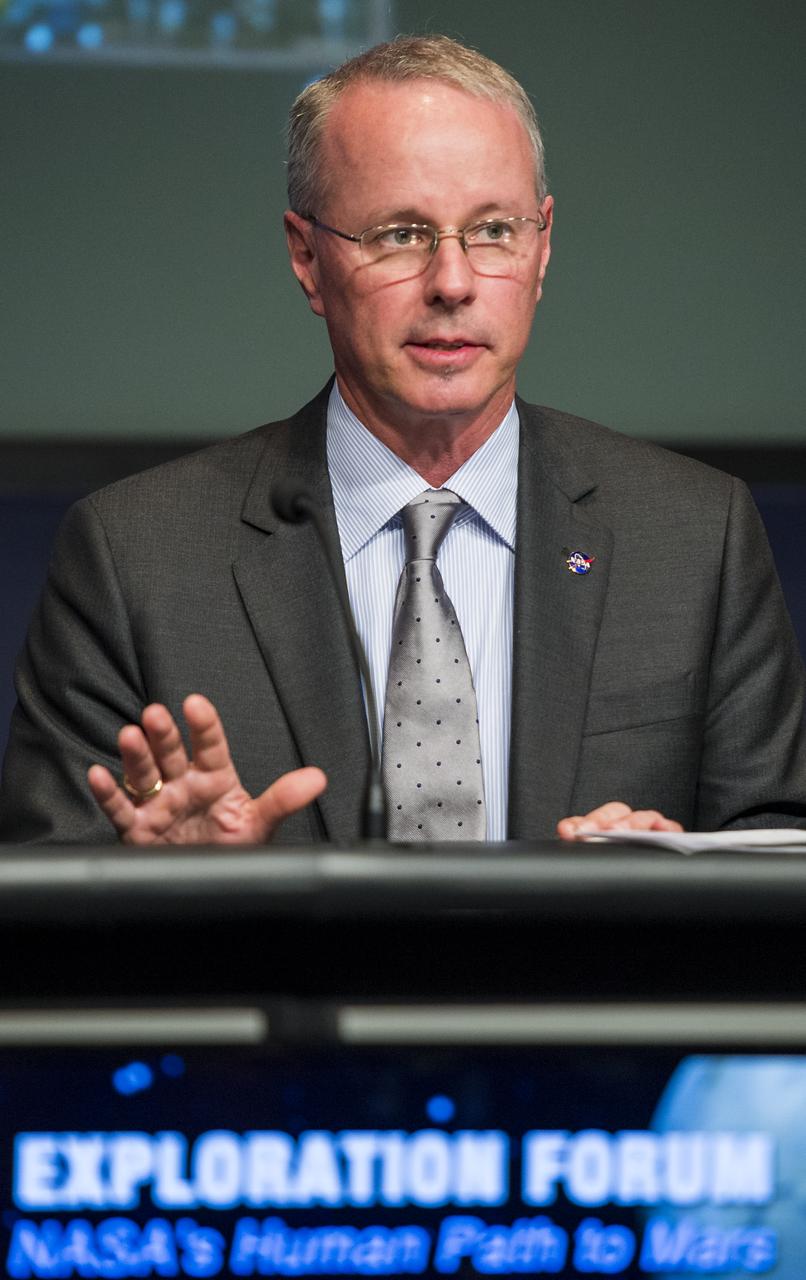
David Miller, NASA Chief Technologist, participate in a panel discussion during an Exploration Forum showcasing NASA's human exploration path to Mars in the James E. Webb Auditorium at NASA Headquarters on Tuesday, April 29, 2014. Photo Credit: (NASA/Joel Kowsky)
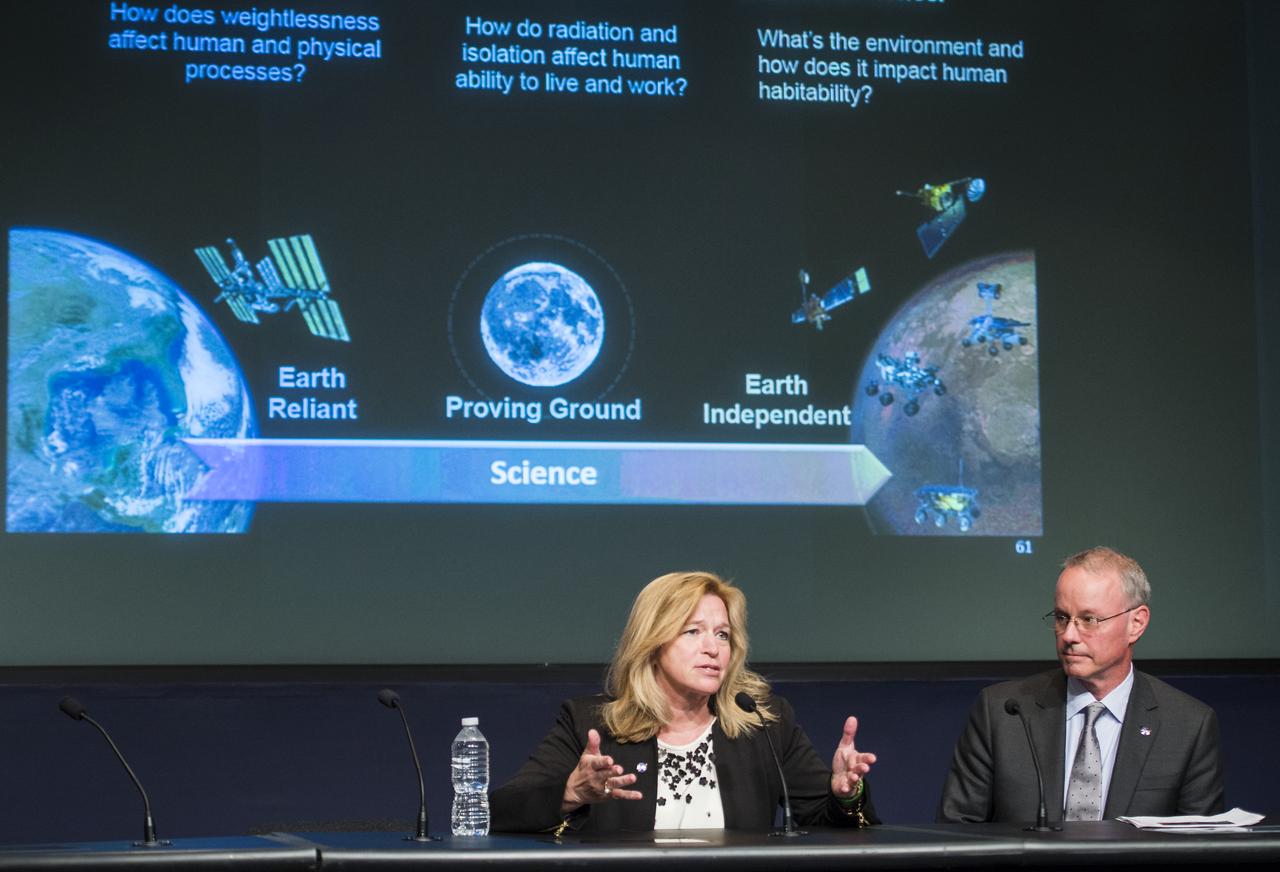
Ellen Stofan, NASA Chief Scientist, left, and David Miller, NASA Chief Technologist, right, participate in a panel discussion during an Exploration Forum showcasing NASA's human exploration path to Mars in the James E. Webb Auditorium at NASA Headquarters on Tuesday, April 29, 2014. Photo Credit: (NASA/Joel Kowsky)

S73-33655 (1973) --- Left to right, Lynda Bird Johnson Robb, Charles Robb, Claudia "Lady Bird" Johnson, Texas Governor Dolph Briscoe, Christopher C. Kraft, Jr., James Webb, actor David Niven, and nurse Lt. Dolores B. "Dee" O'Hara with NASA officials during formal dedication ceremonies at JSC. Photo credit: NASA
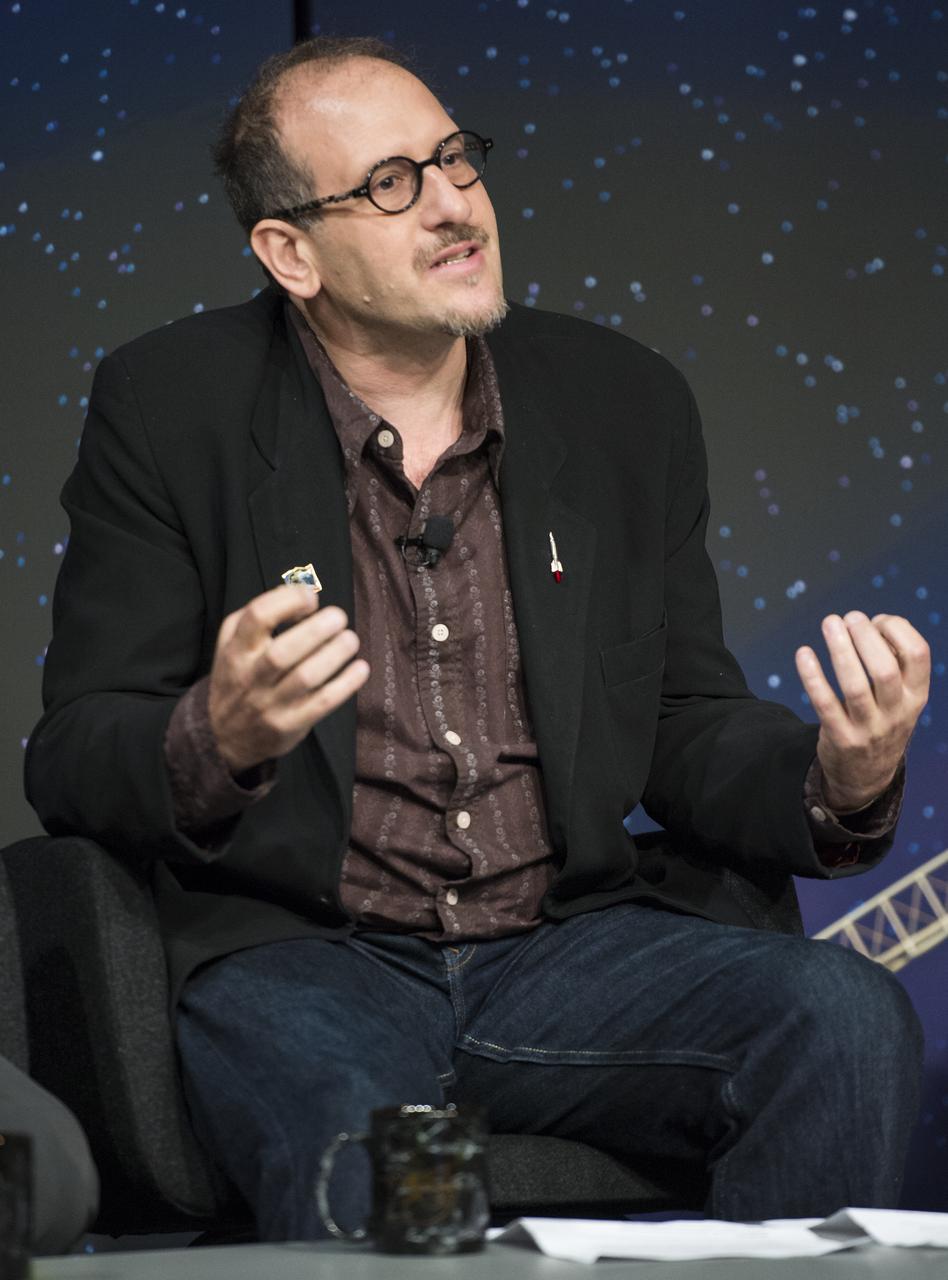
Dr. David H. Grinspoon, senior scientist at the Planetary Science Institute, speaks about working on NASA's Voyager team while serving as moderator for a panel discussion at the "NASA's New Horizons Pluto Mission: Continuing Voyager's Legacy of Exploration" event on Monday, August, 25, 2014, in the James E. Webb Auditorium at NASA Headquarters in Washington, DC. The panelists gave their accounts of Voyager's encounter with Neptune and discussed their current assignments on NASA's New Horizons mission to Pluto. Photo Credit: (NASA/Joel Kowsky)
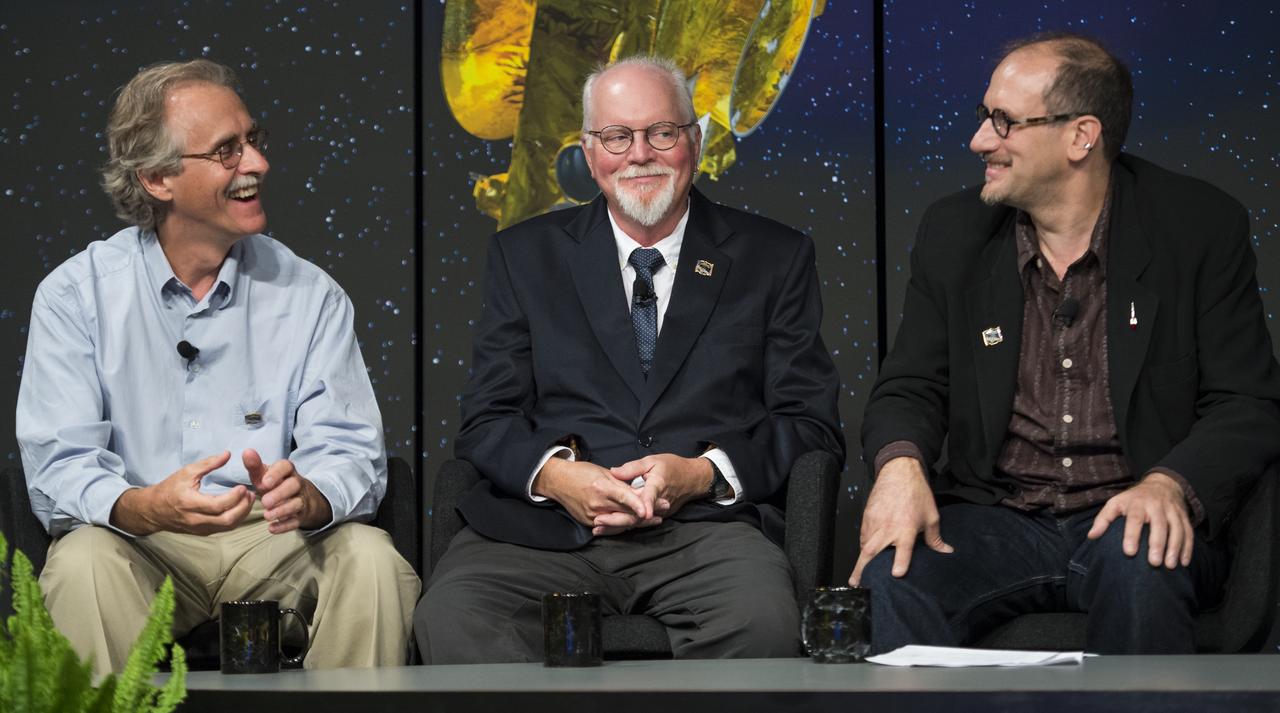
Dr. John Spencer, senior scientist at the Southwest Research Institute, left, Dr. Jeffrey Moore, senior scientist at NASA Ames Researh Center, center, and Dr. David H. Grinspoon, senior scientist at the Plentary Science Institute, left, are seen during a panel discussion at the "NASA's New Horizons Pluto Mission: Continuing Voyager's Legacy of Exploration" event on Monday, August, 25, 2014, in the James E. Webb Auditorium at NASA Headquarters in Washington, DC. The panelists gave their accounts of Voyager's encounter with Neptune and discussed their current assignments on NASA's New Horizons mission to Pluto. Photo Credit: (NASA/Joel Kowsky)
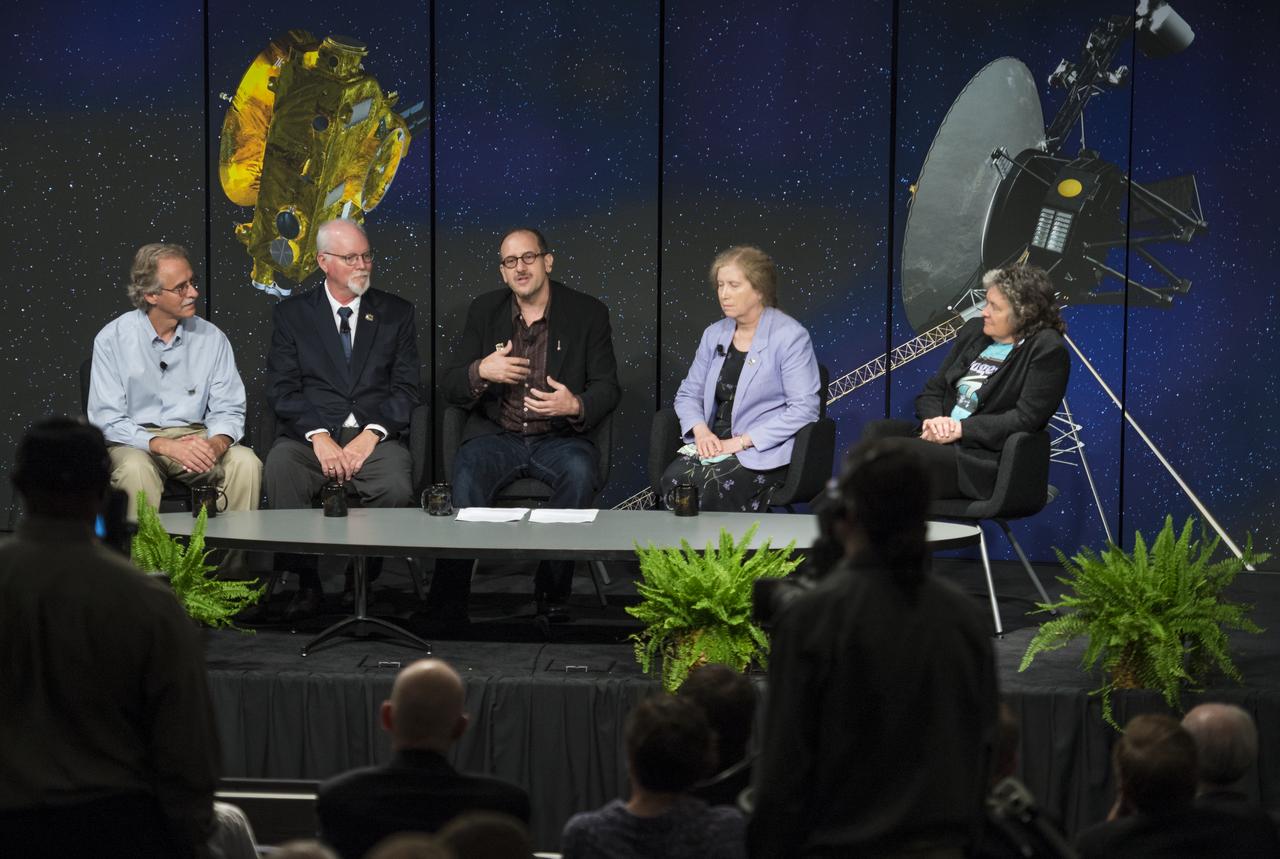
New Horizons science team members: Dr. John Spencer, senior scientist at the Southwest Research Institute, left, Dr. Jeffrey Moore, senior scientist at NASA Ames Research Center, second from left, Dr. David H. Grinspoon, senior scientist at the Planetary Science Institute, center, Dr. Bonnie Buratti, senior scientist at NASA's Jet Propulsion Laboratory, second from right, and Dr. Fran Bagenal, senior scientist at the University of Colorado, are seen during a panel discussion at the "NASA's New Horizons Pluto Mission: Continuing Voyager's Legacy of Exploration" event on Monday, August, 25, 2014, in the James E. Webb Auditorium at NASA Headquarters in Washington, DC. The panelists gave their accounts of Voyager's encounter with Neptune and discussed their current assignments on NASA's New Horizons mission to Pluto. Photo Credit: (NASA/Joel Kowsky)

NASA image release April 14, 2011 NASA engineer Ernie Wright looks on as the first six flight ready James Webb Space Telescope's primary mirror segments are prepped to begin final cryogenic testing at NASA's Marshall Space Flight Center in Huntsville, Ala. Credit: NASA/MSFC/David Higginbotham To read more go to: <a href="http://www.nasa.gov/centers/marshall/news/jwst/11-111.html" rel="nofollow">www.nasa.gov/centers/marshall/news/jwst/11-111.html</a> <b><a href="http://www.nasa.gov/centers/goddard/home/index.html" rel="nofollow">NASA Goddard Space Flight Center</a></b> enables NASA’s mission through four scientific endeavors: Earth Science, Heliophysics, Solar System Exploration, and Astrophysics. Goddard plays a leading role in NASA’s accomplishments by contributing compelling scientific knowledge to advance the Agency’s mission. <b>Follow us on <a href="http://twitter.com/NASA_GoddardPix" rel="nofollow">Twitter</a></b> <b>Join us on <a href="http://www.facebook.com/pages/Greenbelt-MD/NASA-Goddard/395013845897?ref=tsd" rel="nofollow">Facebook</a></b>

KENNEDY SPACE CENTER, FLA. -- Space Shuttle Discovery and the mobile launcher platform sit on Launch Pad 39B for mission STS-116. The shuttle's external tank is capped by the oxygen vent hood (at top). Below it is the orbiter access arm which swings out from the fixed service structure to the orbiter crew compartment hatch to allow personnel to enter the crew compartment. The outer end of the access arm ends in an environmental chamber (white room) that mates with the orbiter and holds six persons. The arm remains in the extended position until seven minutes 24 seconds before launch to provide emergency egress for the flight crew. At right, the U.S. flag flies at half-staff in accordance with special Presidential Proclamation No. 3044, due to the death of Senior Border Patrol Agent David N. Webb. The rollout of Discovery from the Vehicle Assembly Building began at 12:29 a.m. The shuttle was harddown on the pad at 9:03 a.m. The mission is No. 20 to the International Space Station and construction flight 12A.1. The mission payload is the SPACEHAB module, the P5 integrated truss structure and other key components. The launch window for mission STS-116 opens Dec. 7. Photo credit: NASA/George Shelton
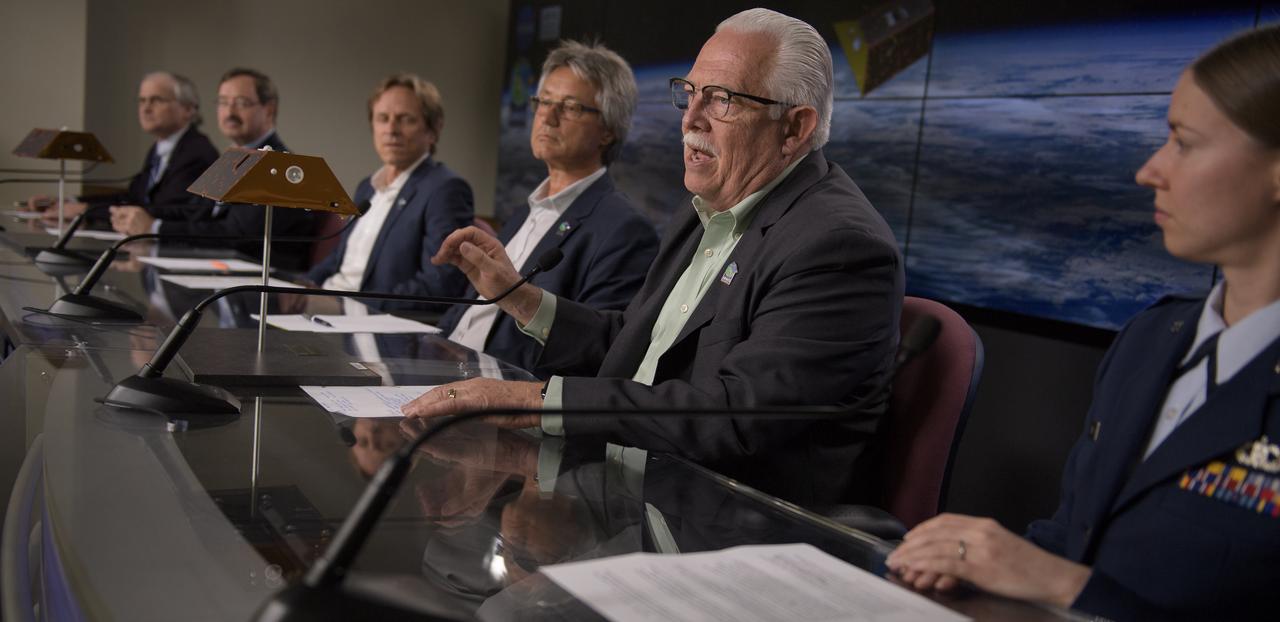
Phil Morton, NASA GRACE-FO project manager at JPL, second from right, discusses the Gravity Recovery and Climate Experiment Follow-On (GRACE-FO) mission during a prelaunch media briefing, Monday, May 21, 2018, at Vandenberg Air Force Base in California. The twin GRACE-FO spacecraft will measure changes in how mass is redistributed within and among Earth's atmosphere, oceans, land and ice sheets, as well as within Earth itself. Photo Credit: (NASA/Bill Ingalls)
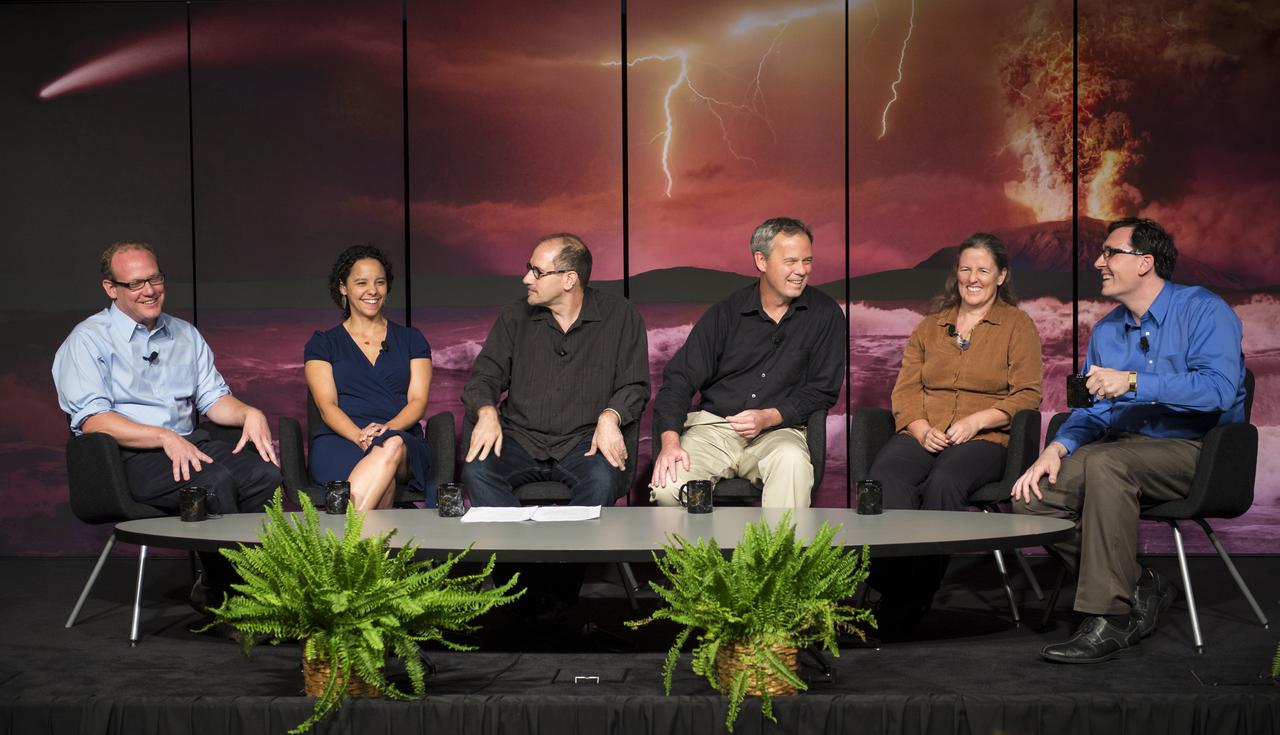
Panelists discuss how research on early Earth could help guide our search for habitable planets orbiting other stars at the “Ancient Earth, Alien Earths” Event at NASA Headquarters in Washington, DC Wednesday, August 20, 2014. The event was sponsored by NASA, the National Science Foundation (NSF), and the Smithsonian Institution and was moderated by Dr. David H. Grinspoon, Senior Scientist at the Planetary Science Institute. Photo Credit: (NASA/Aubrey Gemignani)

Panelists pose for a group photo at the “Ancient Earth, Alien Earths” Event at NASA Headquarters in Washington, DC Wednesday, August 20, 2014. The event was sponsored by NASA, the National Science Foundation (NSF), and the Smithsonian Institution and highlighted how research on early Earth could help guide our search for habitable planets orbiting other stars. Photo Credit: (NASA/Aubrey Gemignani)

Dr. David H. Grinspoon, Senior Scientist, Planetary Science Institute, moderates a panel at the “Ancient Earth, Alien Earths” Event at NASA Headquarters in Washington, DC Wednesday, August 20, 2014. The event was sponsored by NASA, the National Science Foundation (NSF), and the Smithsonian Institution and highlighted how research on early Earth could help guide our search for habitable planets orbiting other stars. Photo Credit: (NASA/Aubrey Gemignani)