
NASA Hubble Space Telescope snapped these images of the asteroid Vesta in preparation for the Dawn spacecraft visit in 2011. The images show the difference in brightness and color on the asteroid surface.
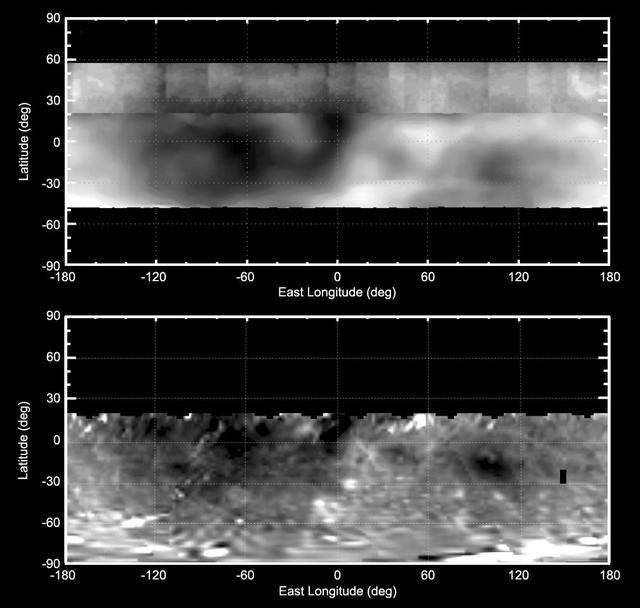
These two maps of the giant asteroid Vesta show patterns of brightness from NASA Hubble Space Telescope top and NASA Dawn spacecraft bottom. Hubble view is from an orbit around Earth. Dawn went into orbit around Vesta from 2011 to 2012.
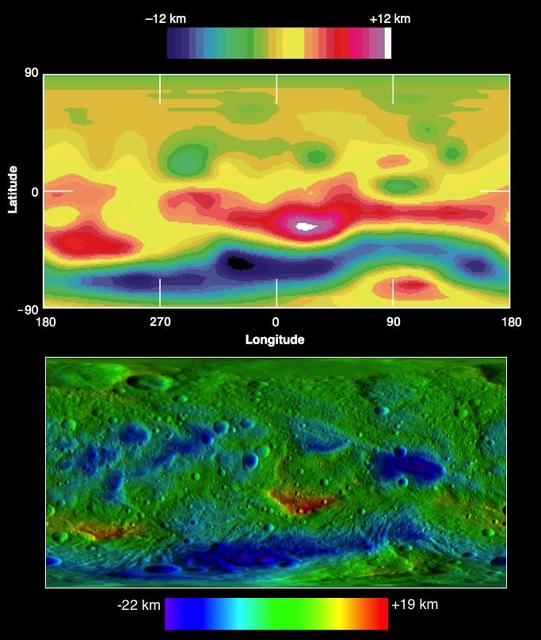
These two images compare topographic maps of the giant asteroid Vesta as discerned by NASA Hubble Space Telescope top and as seen by NASA Dawn spacecraft bottom. Hubble has been in an orbit around Earth, while Dawn orbited Vesta from 2011 to 2012.
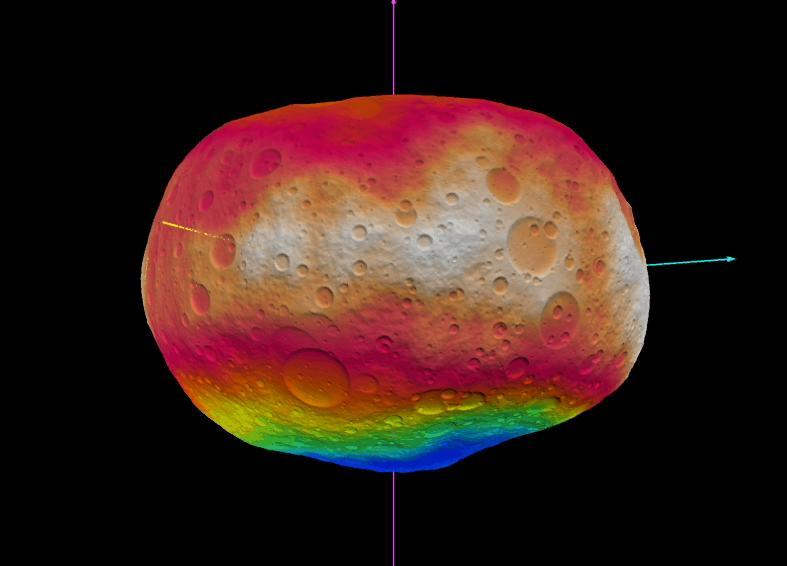
This image shows NASAS Dawn scientists best guess to date of what the surface of the protoplanet Vesta might look like; it incorporates the best data on dimples and bulges from ground-based telescopes and NASA Hubble Space Telescope.
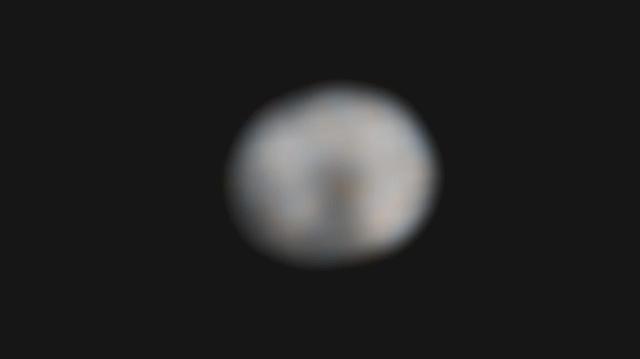
Hubble Wide Field Camera 3 observed the potato-shaped asteroid in preparation for the visit by NASA Dawn spacecraft in 2011. This is one frame from a movie showing the difference in brightness and color on the asteroid surface.
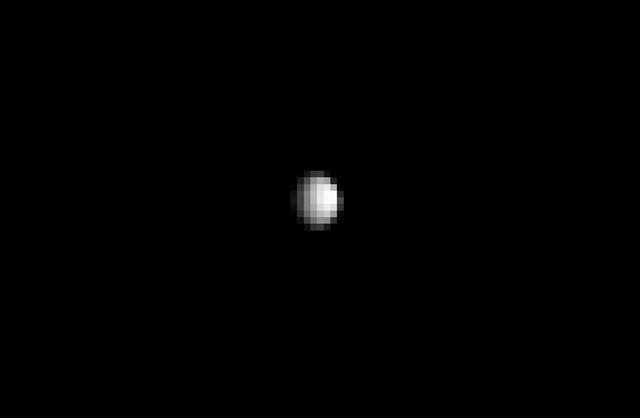
From about three times the distance from Earth to the moon, NASA's Dawn spacecraft spies its final destination -- the dwarf planet Ceres. The resolution of this image does not yet exceed the best views of Ceres, which were obtained by the Hubble Space Telescope (see PIA10235). Nonetheless, Ceres' spherical shape is clearly revealed here. Sunlight illuminates the dwarf planet from the right, leaving a sliver of the surface in shadow at left. A zoomed-in view is provided in Figure 1, along with the original unmagnified, uncropped view. The image was taken on Dec. 1, 2014 with the Dawn spacecraft's framing camera, using a clear spectral filter. Dawn was about 740,000 miles (1.2 million kilometers) from Ceres at the time. Ceres is 590 miles (950 kilometers) across and was discovered in 1801. http://photojournal.jpl.nasa.gov/catalog/PIA19049
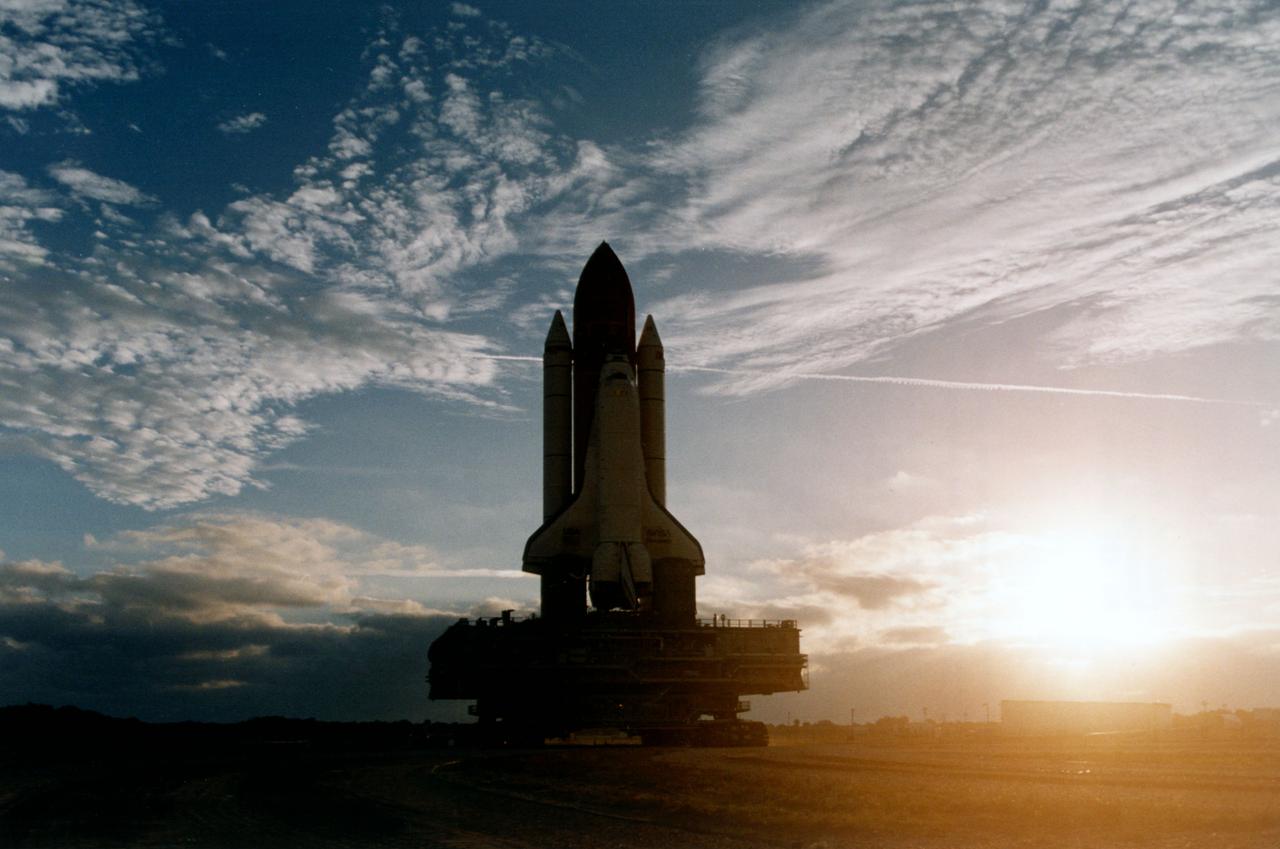
KENNEDY SPACE CENTER, FLORIDA STS-82 PREPARATIONS VIEW --- Scattered clouds at dawn provide the backdrop for the Space Shuttle Discovery as it moves along the Kennedy Space Center (KSC) Crawlerway toward Launch Pad 39A in preparation for the STS-82 mission. The Space Shuttle is on a mobile launch platform, and the entire assemblage is being carried by a large tracked vehicle called the Crawler Transporter. A seven-member crew of astronauts will perform the second servicing of the orbiting Hubble Space Telescope (HST) during the scheduled ten-day STS-82 flight. Launch is currently targeted for February 11, 1997.
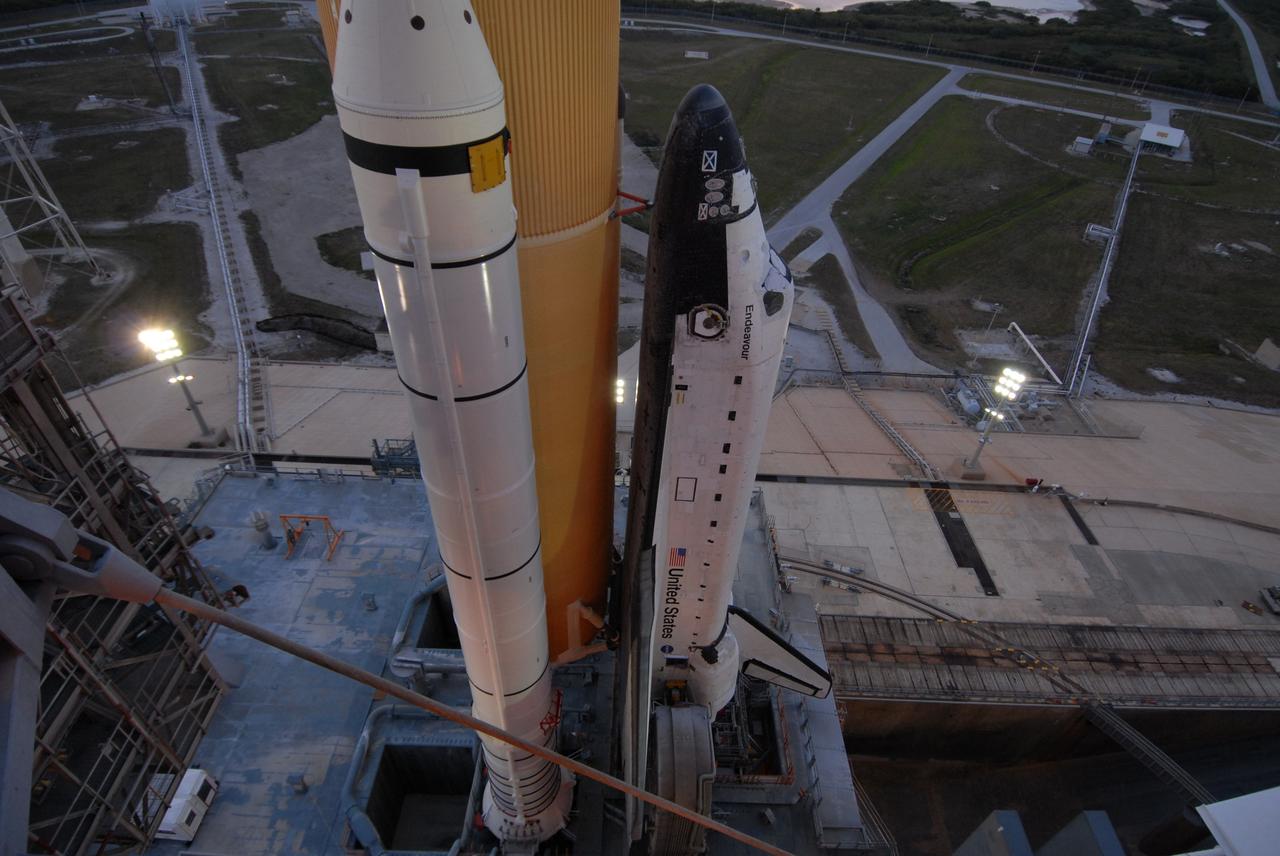
CAPE CANAVERAL, Fla. – Dawn's early light reveals space shuttle Endeavour secure on Launch Pad 39B at NASA's Kennedy Space Center in Florida. First motion of the rollout from the Vehicle Assembly Building was at 11:57 p.m. EDT April 16. Endeavour will be prepared on the pad for liftoff in the unlikely event that a rescue mission is necessary following space shuttle Atlantis' launch on the STS-125 mission to service NASA's Hubble Space Telescope. After Atlantis is cleared to land, Endeavour will move to Launch Pad 39A for its upcoming STS-127 mission to the International Space Station, targeted to launch June 13. Photo credit: NASA/Jack Pfaller
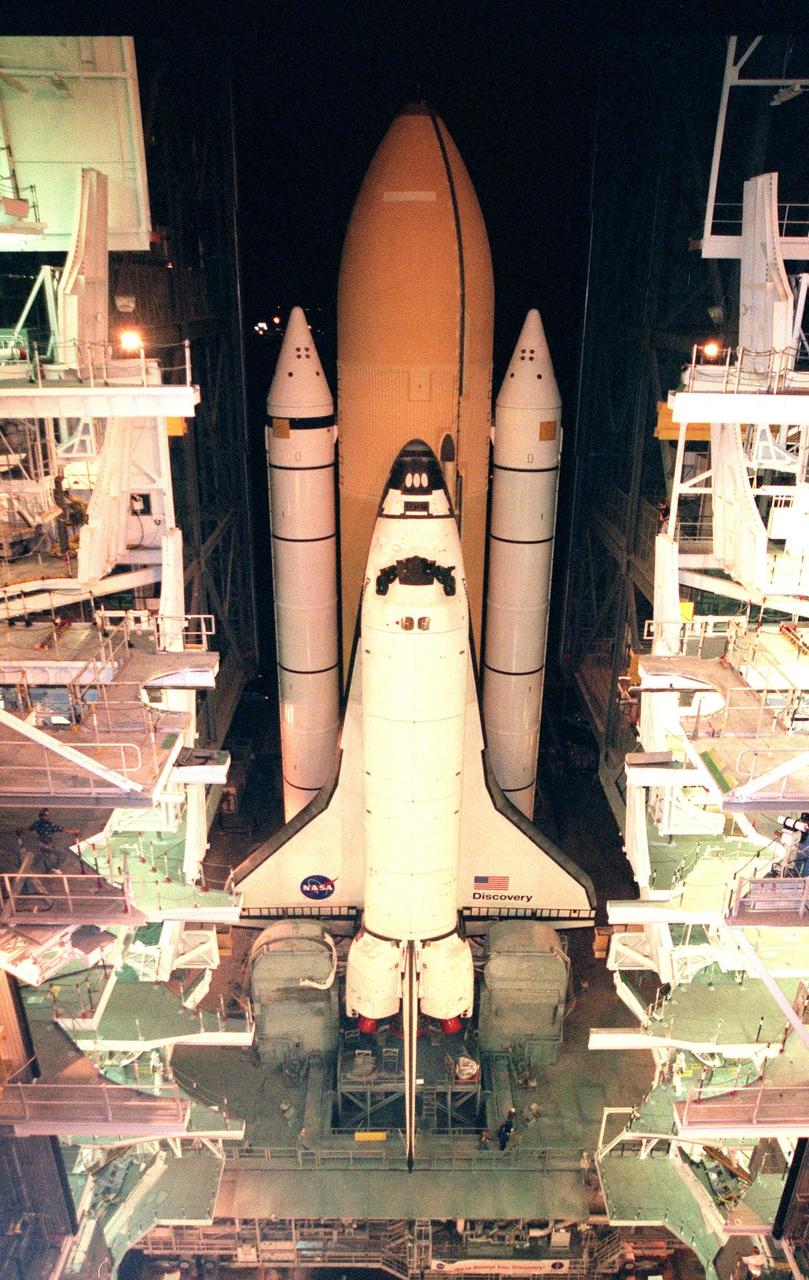
In the pre-dawn hours, STS-95 Space Shuttle Discovery, on the Mobile Launch Platform, exits the doors of the Vehicle Assembly Building as it begins rollout to Launch Complex Pad 39B via the crawler transporter. The 4.2-mile trip takes approximately 6 hours. Once at the launch pad, the orbiter, external tank and solid rocket boosters will undergo final preparations for the launch, scheduled to lift off Oct. 29. The mission includes research payloads such as the Spartan solar-observing deployable spacecraft, the Hubble Space Telescope Orbital Systems Test Platform, the International Extreme Ultraviolet Hitchhiker, as well as the SPACEHAB single module with experiments on space flight and the aging process
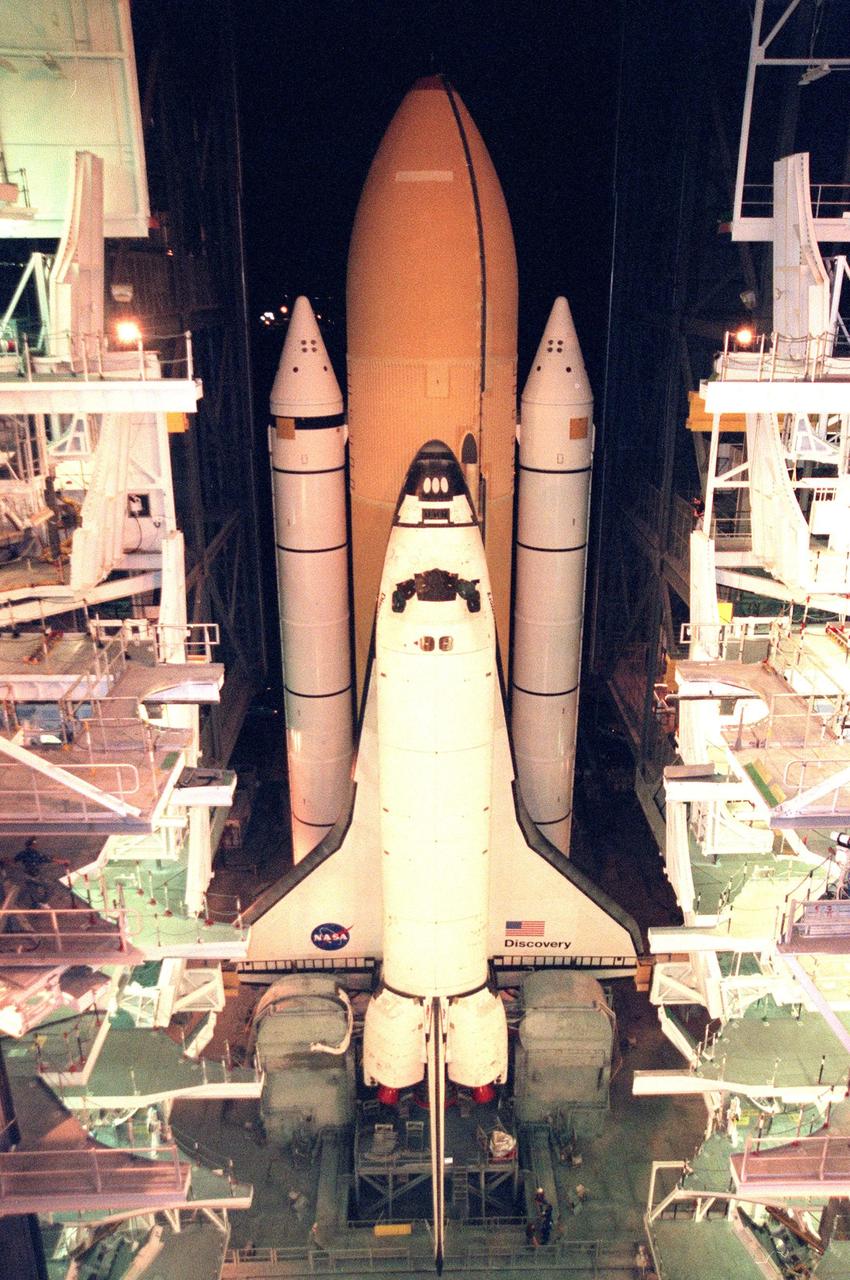
In the pre-dawn hours, STS-95 Space Shuttle Discovery, on the Mobile Launch Platform, begins rollout from the Vehicle Assembly Building to Launch Complex Pad 39B via the crawler transporter. The 4.2-mile trip takes approximately 6 hours. Once at the launch pad, the orbiter, external tank and solid rocket boosters will undergo final preparations for the launch, scheduled to lift off Oct. 29. The mission includes research payloads such as the Spartan solar-observing deployable spacecraft, the Hubble Space Telescope Orbital Systems Test Platform, the International Extreme Ultraviolet Hitchhiker, as well as the SPACEHAB single module with experiments on space flight and the aging process
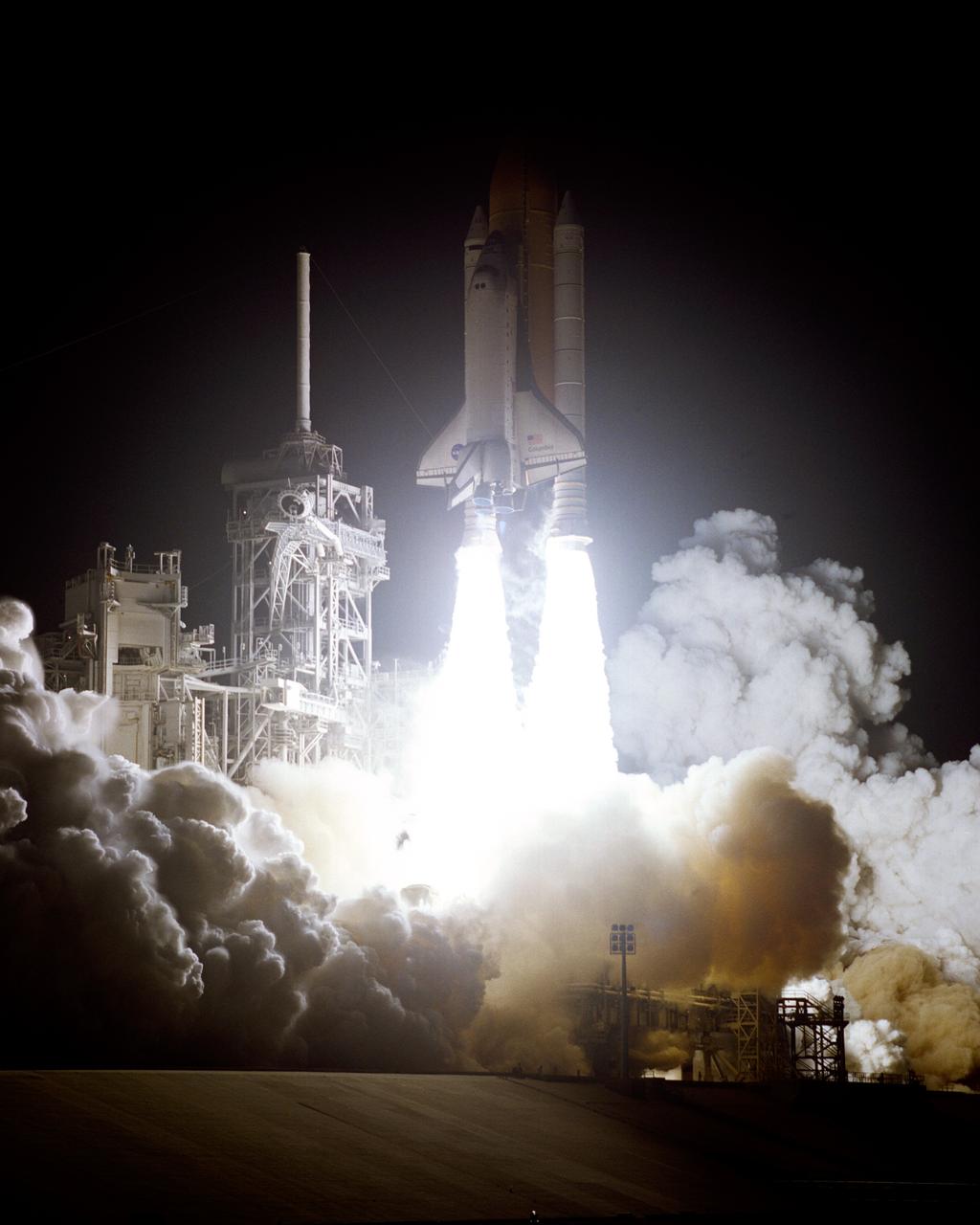
STS109-S-007 (1 March 2002) --- The Space Shuttle Columbia begins its 27th flight in the pre-dawn hours from Launch Pad 39A. Liftoff for STS-109 occurred at 6:22:02:08 a.m., EST (11:22:02:08 GMT). The goal of the mission is the maintenance and upgrade of the Hubble Space Telescope, to be carried out in five space walks. On board the spacecraft were astronauts Scott D. Altman, Duane G. Carey, Nancy J. Currie, John M. Grunsfeld, James H. Newman, Richard M. Linnehan and Michael J. Massimino.

Dawn breaks behind STS-95 Space Shuttle Discovery, on the Mobile Launch Platform, as it approaches Launch Complex Pad 39B after a 6-hour, 4.2-mile trip from the Vehicle Assembly Building. At the launch pad, the orbiter, external tank and solid rocket boosters will undergo final preparations for the launch, scheduled to lift off Oct. 29. The mission includes research payloads such as the Spartan solar-observing deployable spacecraft, the Hubble Space Telescope Orbital Systems Test Platform, the International Extreme Ultraviolet Hitchhiker, as well as the SPACEHAB single module with experiments on space flight and the aging process
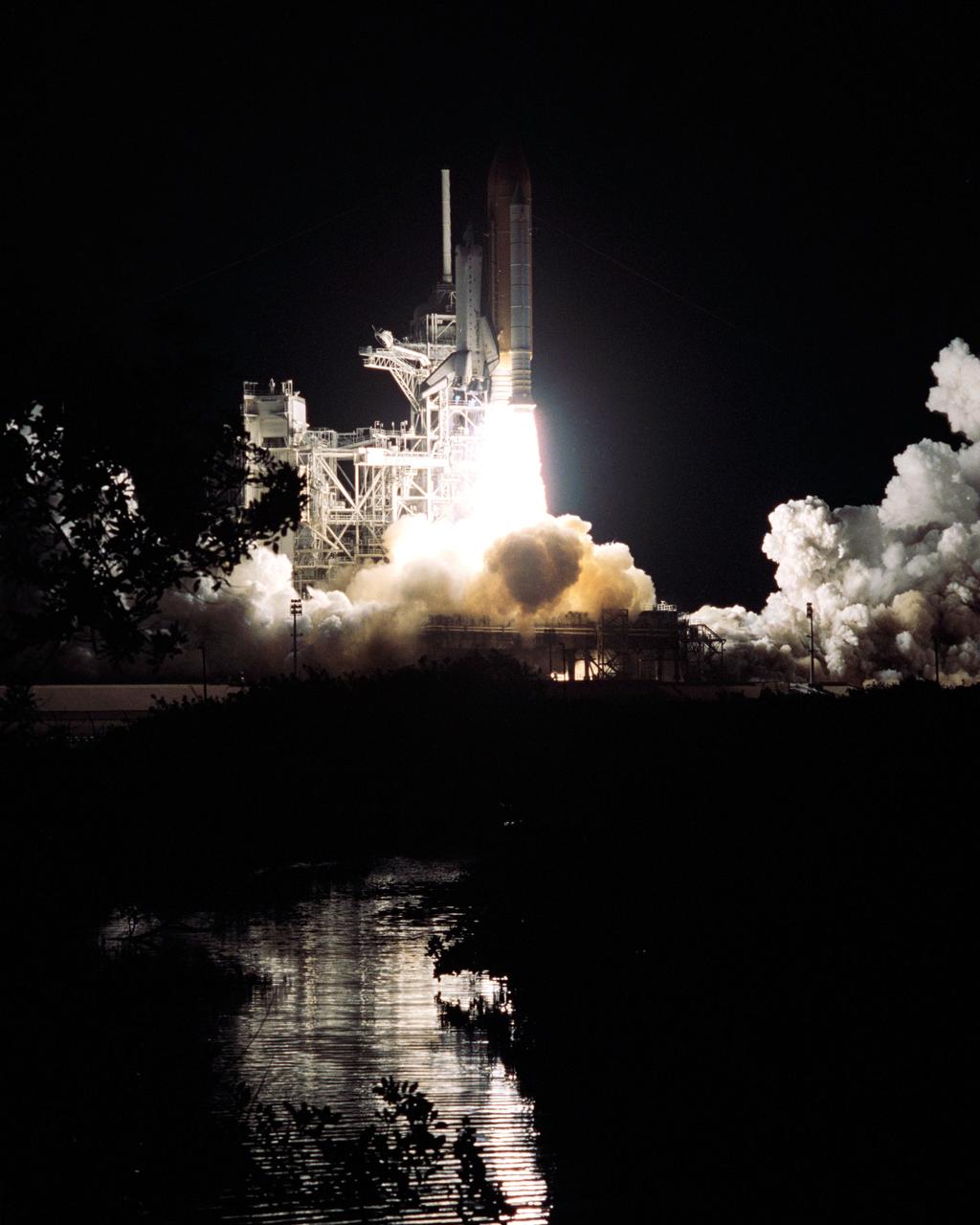
STS109-S-006 (1 March 2002) --- The Space Shuttle Columbia begins its 27th flight in the pre-dawn hours from Launch Pad 39A. Liftoff for STS-109 occurred at 6:22:02:08 a.m., EST (11:22:02:08 GMT). The goal of the mission is the maintenance and upgrade of the Hubble Space Telescope, to be carried out in five space walks. On board the spacecraft were astronauts Scott D. Altman, Duane G. Carey, Nancy J. Currie, John M. Grunsfeld, James H. Newman, Richard M. Linnehan and Michael J. Massimino.
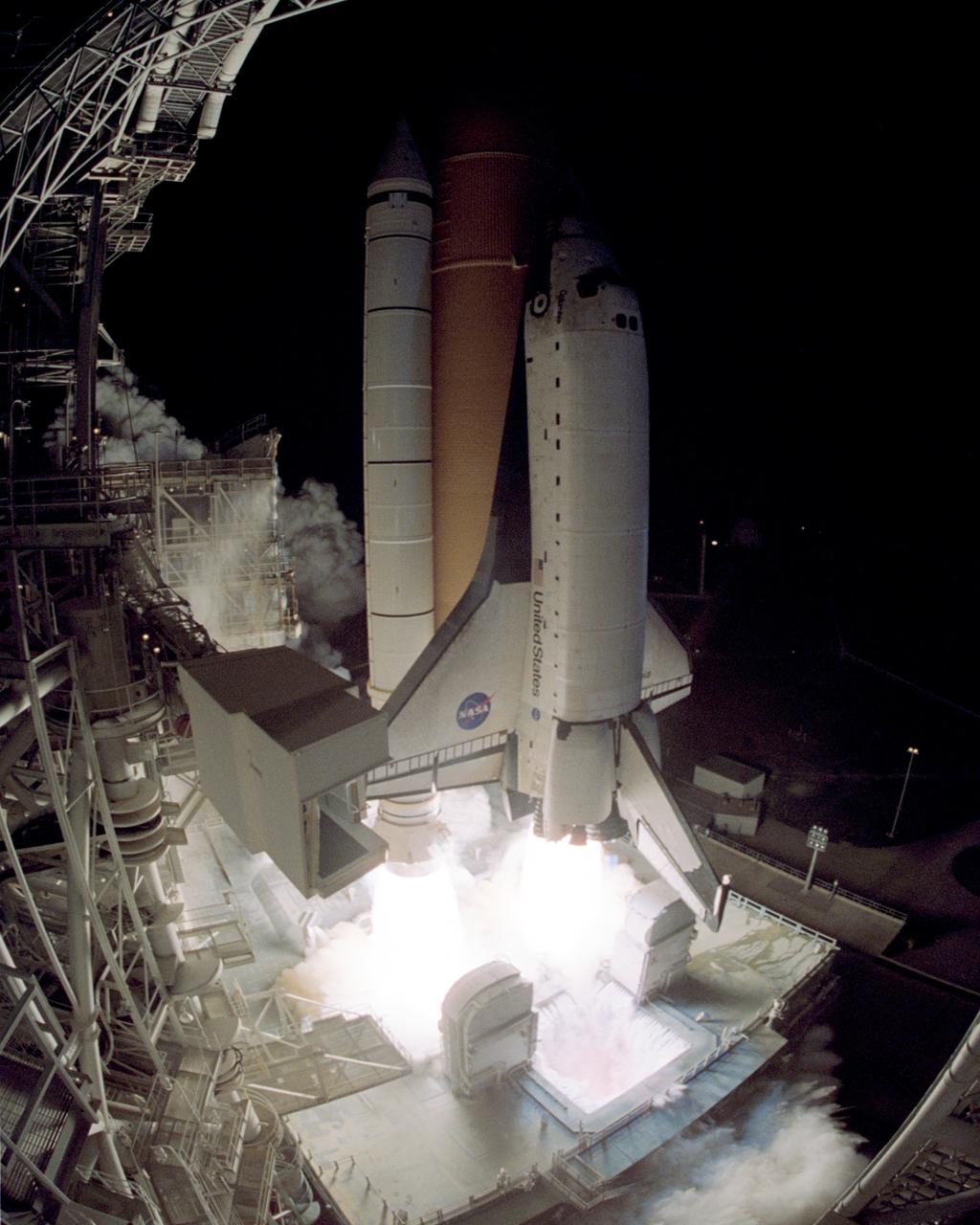
STS109-S-005 (1 March 2002) --- The Space Shuttle Columbia begins its 27th flight in the pre-dawn hours from Launch Pad 39A. Liftoff for STS-109 occurred at 6:22:02:08 a.m., EST (11:22:02:08 GMT). The goal of the mission is the maintenance and upgrade of the Hubble Space Telescope, to be carried out in five space walks. On board the spacecraft were astronauts Scott D. Altman, Duane G. Carey, Nancy J. Currie, John M. Grunsfeld, James H. Newman, Richard M. Linnehan and Michael J. Massimino.
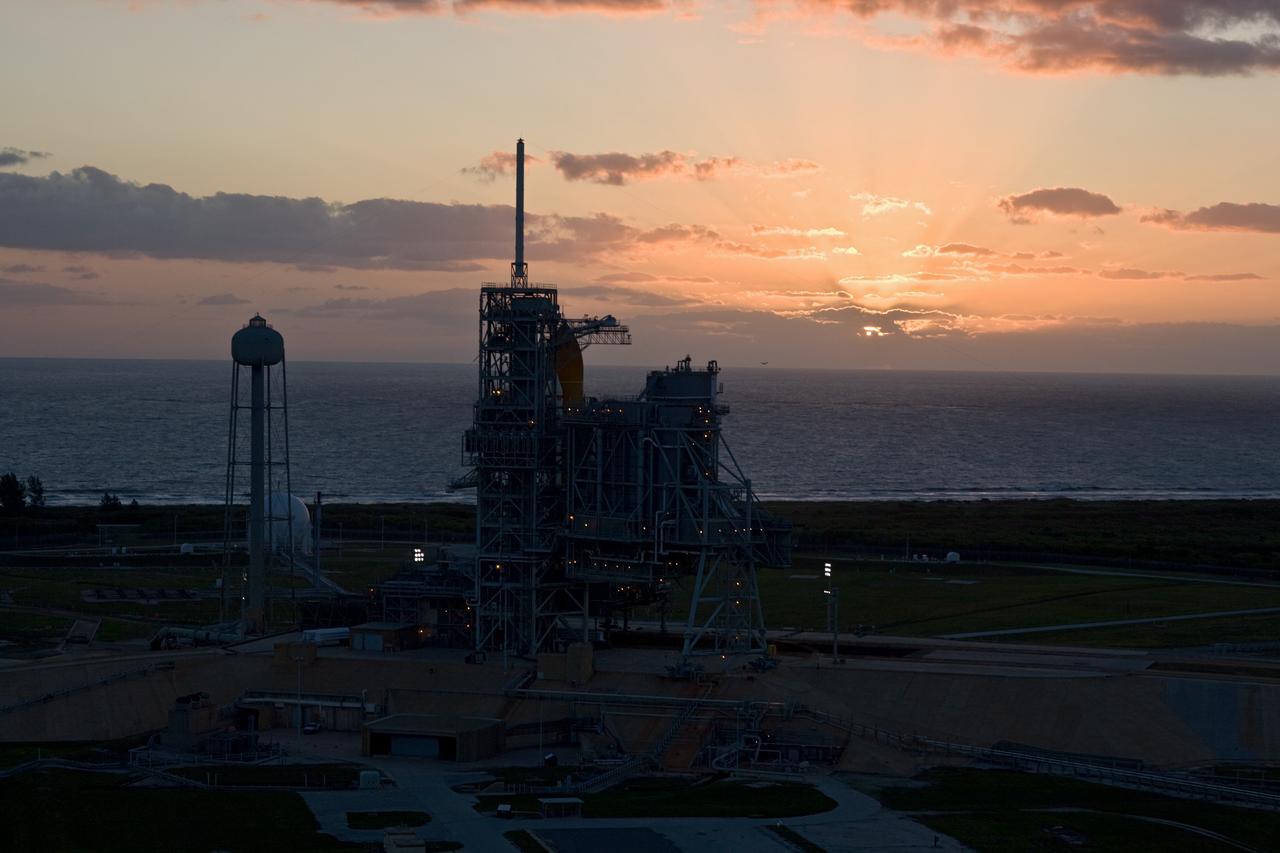
CAPE CANAVERAL, Fla. –– Dawn breaks over the Atlantic Ocean behind space shuttle Atlantis on Launch Pad 39A at NASA's Kennedy Space Center in Florida. Atlantis is targeted to launch May 12 on its STS-125 mission. Space shuttle Endeavour sits on Launch Pad 39B, probably the final time two shuttles will be on launch pads at the same time with the space shuttle fleet set for retirement in 2010. Endeavour will be prepared on the pad for liftoff in the unlikely event that a rescue mission is necessary following space shuttle Atlantis' launch on the STS-125 mission to service NASA's Hubble Space Telescope. After Atlantis is cleared to land, Endeavour will move to Launch Pad 39A for its upcoming STS-127 mission to the International Space Station, targeted to launch June 13. Photo credit: NASA/Dimitri Gerondidakis
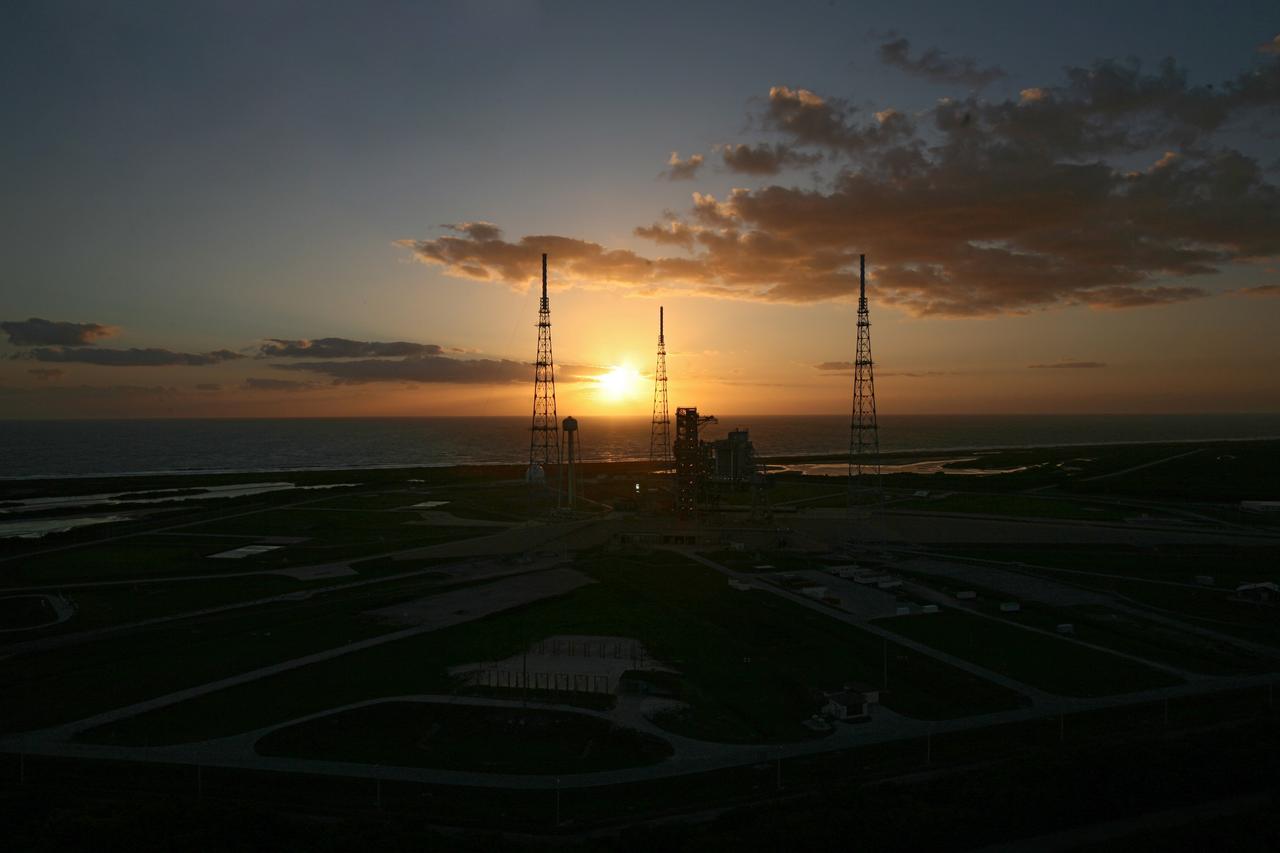
CAPE CANAVERAL, Fla. –– Dawn rises over the Atlantic Ocean behind space shuttle Endeavour on Launch Pad 39B at NASA's Kennedy Space Center in Florida. Surrounding the pad are the lightning towers erected for NASA's Constellation Program, which will use the pad for Ares rocket launches. Endeavour has joined space shuttle Atlantis, which is on pad 39A. This is probably the final time two shuttles will be on launch pads at the same time with the space shuttle fleet set for retirement in 2010. Endeavour will be prepared on the pad for liftoff in the unlikely event that a rescue mission is necessary following space shuttle Atlantis' launch on the STS-125 mission to service NASA's Hubble Space Telescope. After Atlantis is cleared to land, Endeavour will move to Launch Pad 39A for its upcoming STS-127 mission to the International Space Station, targeted to launch June 13. Photo credit: NASA/Dimitri Gerondidakis
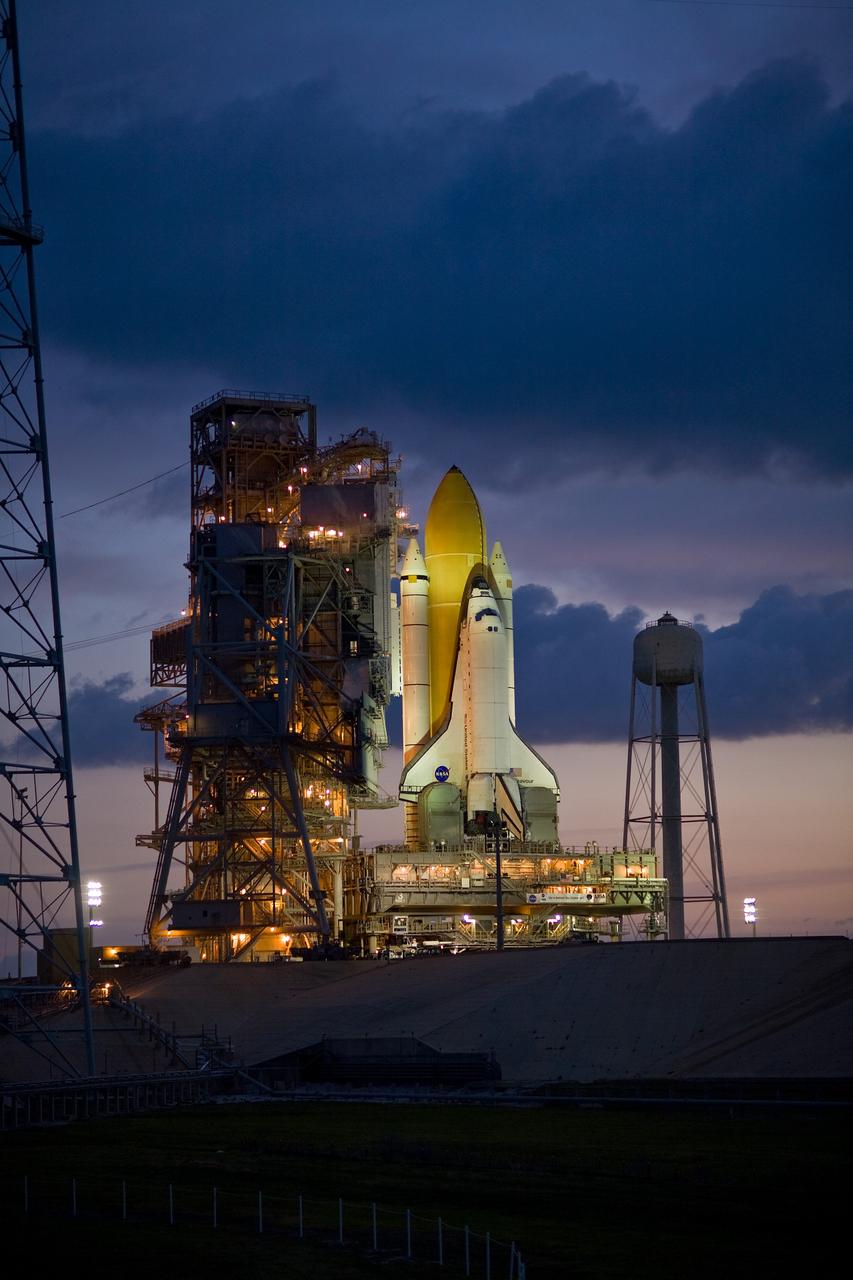
CAPE CANAVERAL, Fla. –– As dawn begins to brighten the sky over Launch Pad 39B at NASA's Kennedy Space Center in Florida, space shuttle Endeavour is seen bathed in lights from the fixed service structure. Endeavour joins Atlantis, which is on Launch Pad 39A. With the space shuttle fleet set for retirement in 2010, this is expected to be the final time two shuttles will be on launch pads at the same time. Endeavour will be prepared on the pad for liftoff in the unlikely event that a rescue mission is necessary following space shuttle Atlantis' launch on the STS-125 mission to service NASA's Hubble Space Telescope. After Atlantis is cleared to land, Endeavour will move to Launch Pad 39A for its upcoming STS-127 mission to the International Space Station, targeted to launch June 13. Photo credit: NASA/Dimitri Gerondidakis
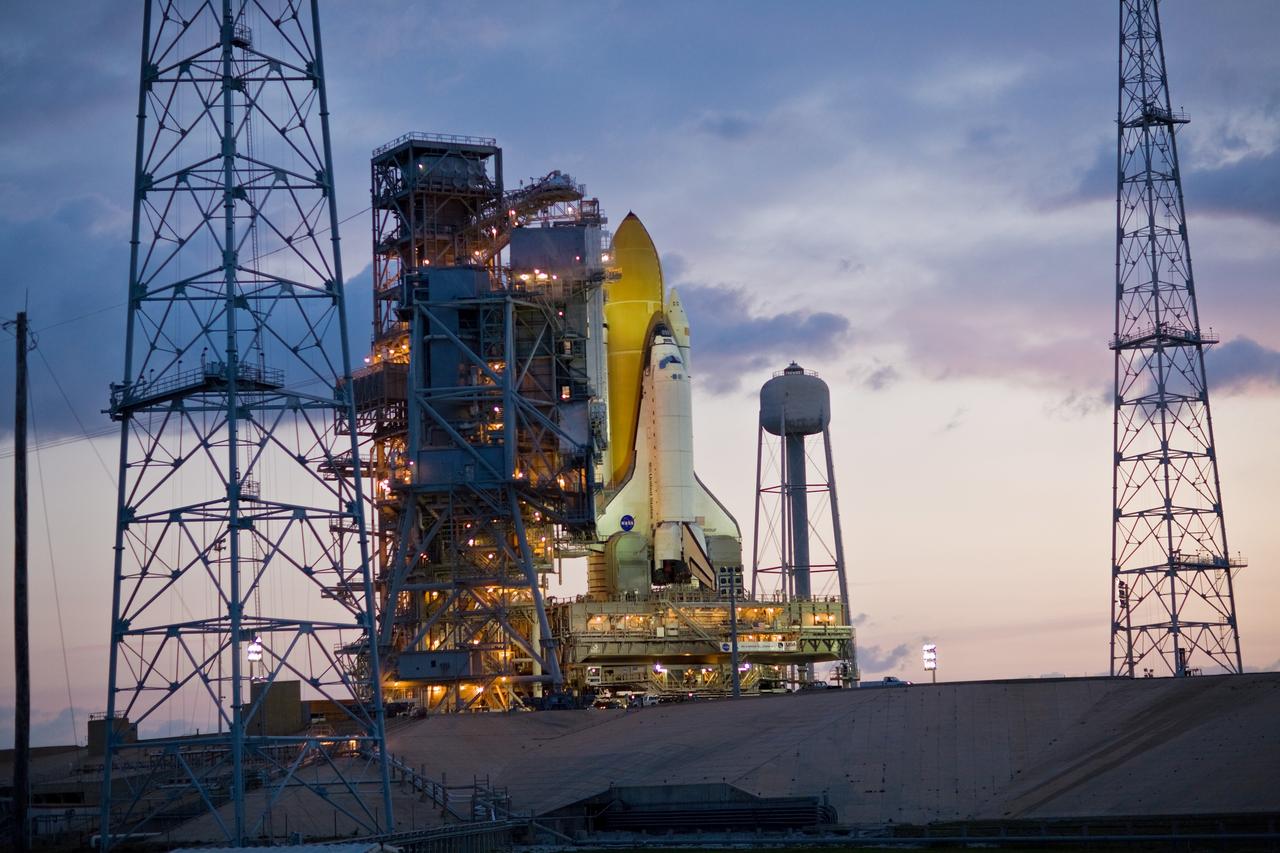
CAPE CANAVERAL, Fla. –– As dawn begins to brighten the sky over Launch Pad 39B at NASA's Kennedy Space Center in Florida, space shuttle Endeavour is seen bathed in lights from the fixed service structure. Endeavour joins Atlantis, which is on Launch Pad 39A. The towers around the launch pad were erected for NASA's Constellation Program, which will use the pad for Ares rocket launches. With the space shuttle fleet set for retirement in 2010, this is expected to be the final time two shuttles will be on launch pads at the same time. Endeavour will be prepared on the pad for liftoff in the unlikely event that a rescue mission is necessary following space shuttle Atlantis' launch on the STS-125 mission to service NASA's Hubble Space Telescope. After Atlantis is cleared to land, Endeavour will move to Launch Pad 39A for its upcoming STS-127 mission to the International Space Station, targeted to launch June 13. Photo credit: NASA/Dimitri Gerondidakis
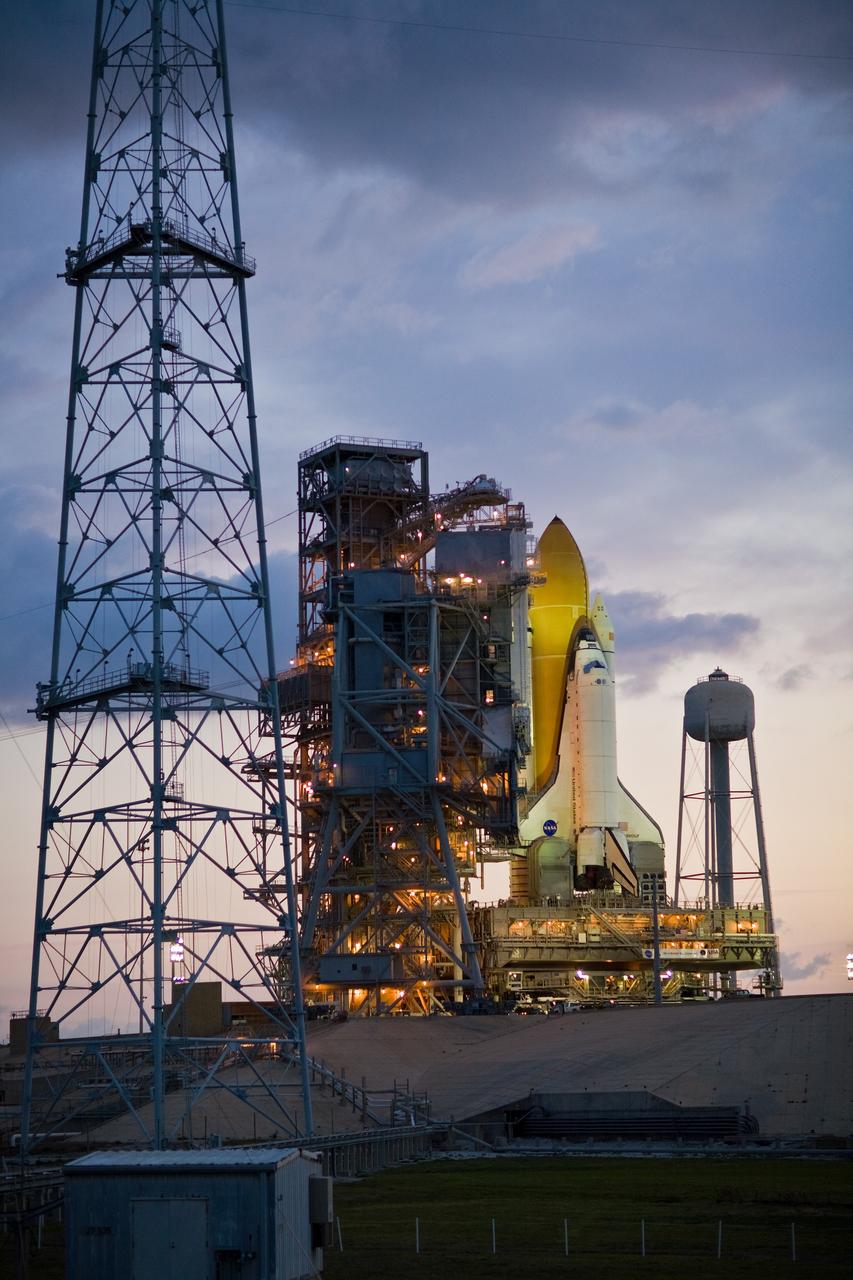
CAPE CANAVERAL, Fla. –– Under a dawn sky, space shuttle Endeavour is still bathed in light from the fixed service structure. Endeavour joins Atlantis, which is on Launch Pad 39A at NASA's Kennedy Space Center in Florida. The towers around the launch pad were erected for NASA's Constellation Program, which will use the pad for Ares rocket launches. With the space shuttle fleet set for retirement in 2010, this is expected to be the final time two shuttles will be on launch pads at the same time. Endeavour will be prepared on the pad for liftoff in the unlikely event that a rescue mission is necessary following space shuttle Atlantis' launch on the STS-125 mission to service NASA's Hubble Space Telescope. After Atlantis is cleared to land, Endeavour will move to Launch Pad 39A for its upcoming STS-127 mission to the International Space Station, targeted to launch June 13. Photo credit: NASA/Dimitri Gerondidakis

CAPE CANAVERAL, Fla. –– Space shuttle Endeavour is silhouetted against the dawn pink sky on Launch Pad 39B at NASA's Kennedy Space Center in Florida. Surrounding the pad are the lightning towers erected for NASA's Constellation Program, which will use the pad for Ares rocket launches. Dotting the still dark sky at upper right is the moon. Endeavour will be prepared on the pad for liftoff in the unlikely event that a rescue mission is necessary following space shuttle Atlantis' launch May 12 on the STS-125 mission to upgrade NASA's Hubble Space Telescope. After Atlantis is cleared to land, Endeavour will move to Launch Pad 39A for its upcoming STS-127 mission to the International Space Station, targeted to launch June 13. Photo credit: NASA/Jack Pfaller
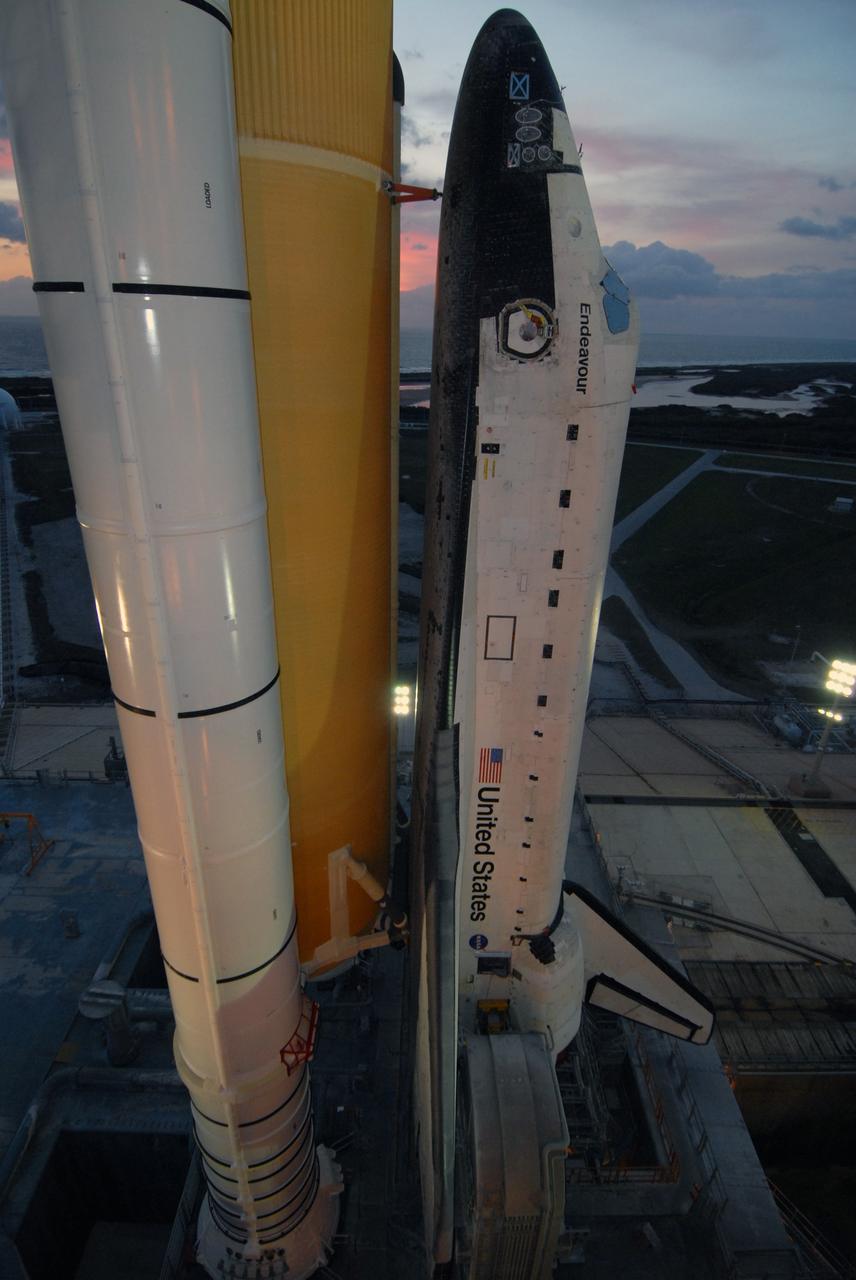
CAPE CANAVERAL, Fla. – Just before dawn, space shuttle Endeavour, installed on the mobile launcher platform atop the crawler-transporter, is secure on Launch Pad 39B at NASA's Kennedy Space Center in Florida. First motion out of the Vehicle Assembly Building was at 11:57 p.m. EDT April 16. Endeavour will be prepared on the pad for liftoff in the unlikely event that a rescue mission is necessary following space shuttle Atlantis' launch on the STS-125 mission to service NASA's Hubble Space Telescope. After Atlantis is cleared to land, Endeavour will move to Launch Pad 39A for its upcoming STS-127 mission to the International Space Station, targeted to launch June 13. Photo credit: NASA/Jack Pfaller
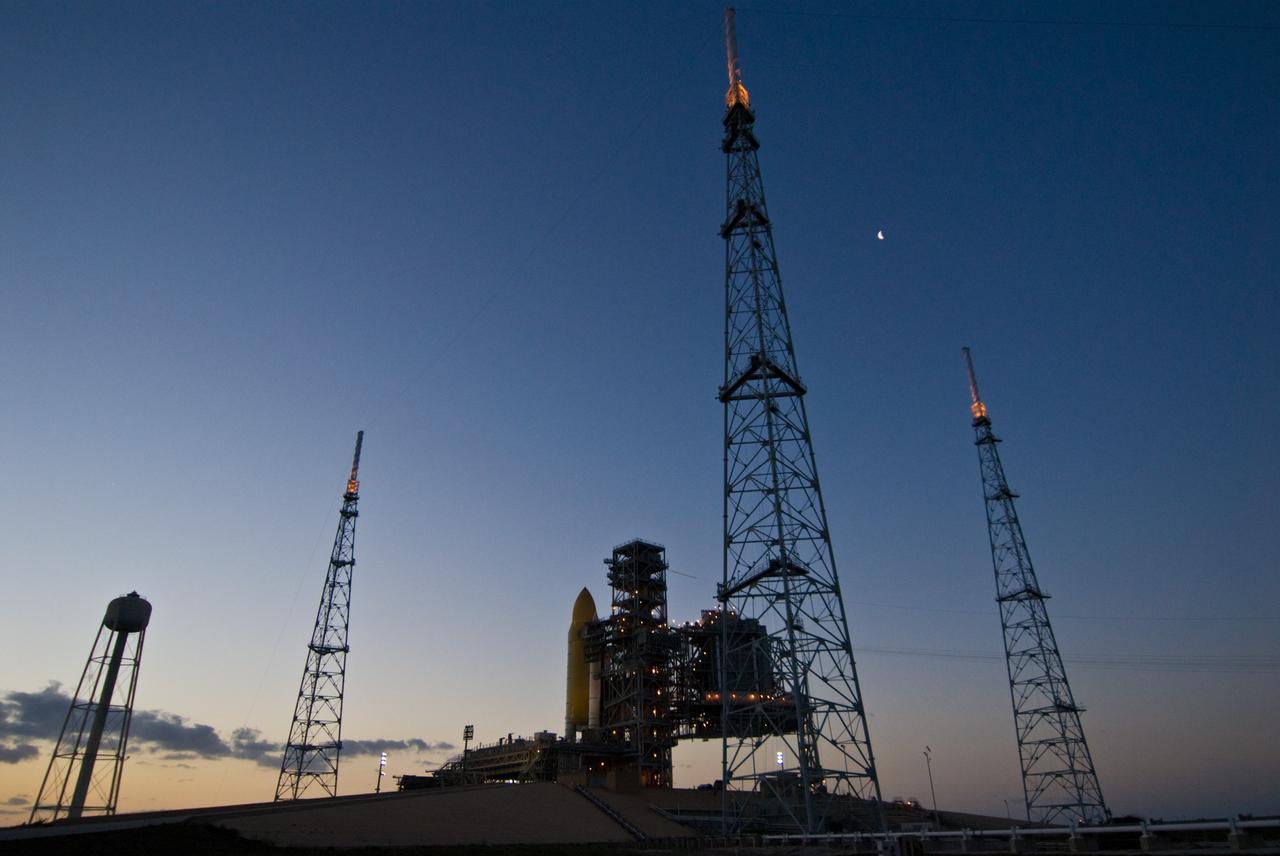
CAPE CANAVERAL, Fla. –– Space shuttle Endeavour is silhouetted against the dawn pink sky on Launch Pad 39B at NASA's Kennedy Space Center in Florida. Surrounding the pad are the lightning towers erected for NASA's Constellation Program, which will use the pad for Ares rocket launches. Dotting the dark blue sky at upper right is the moon. Endeavour will be prepared on the pad for liftoff in the unlikely event that a rescue mission is necessary following space shuttle Atlantis' launch May 12 on the STS-125 mission to upgrade NASA's Hubble Space Telescope. After Atlantis is cleared to land, Endeavour will move to Launch Pad 39A for its upcoming STS-127 mission to the International Space Station, targeted to launch June 13. Photo credit: NASA/Jack Pfaller
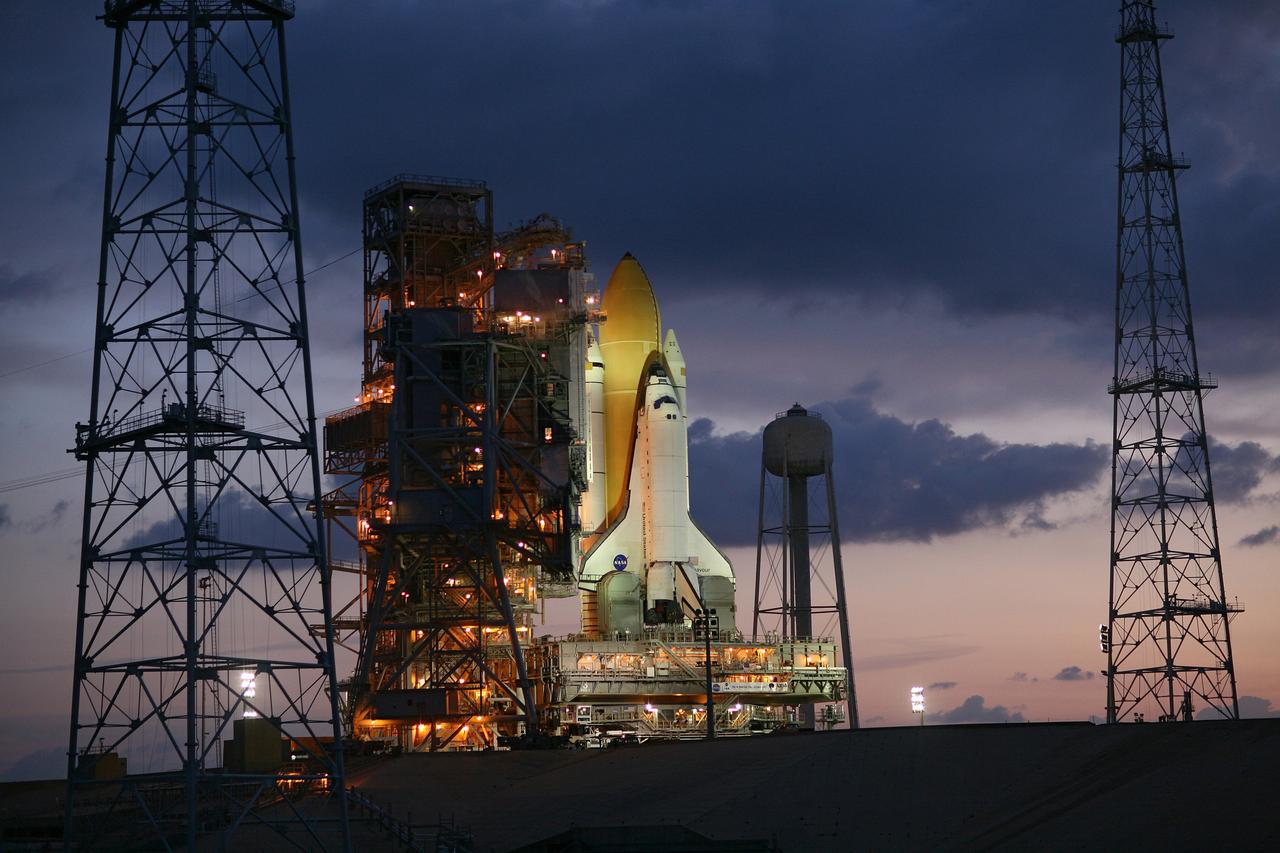
CAPE CANAVERAL, Fla. – Just before dawn, space shuttle Endeavour is bathed in xenon lights after being secured on Launch Pad 39B at NASA's Kennedy Space Center in Florida. First motion on rollout from the Vehicle Assembly Building was at 11:57 p.m. EDT April 16. On either side of the pad are two of the new lightning towers erected for NASA's Constellation Program, which will use the pad for Ares rocket launches. Endeavour will be prepared on the pad for liftoff in the unlikely event that a rescue mission is necessary following space shuttle Atlantis' launch on the STS-125 mission to service NASA's Hubble Space Telescope. After Atlantis is cleared to land, Endeavour will move to Launch Pad 39A for its upcoming STS-127 mission to the International Space Station, targeted to launch June 13. Photo credit: NASA/Dimitri Gerondidakis
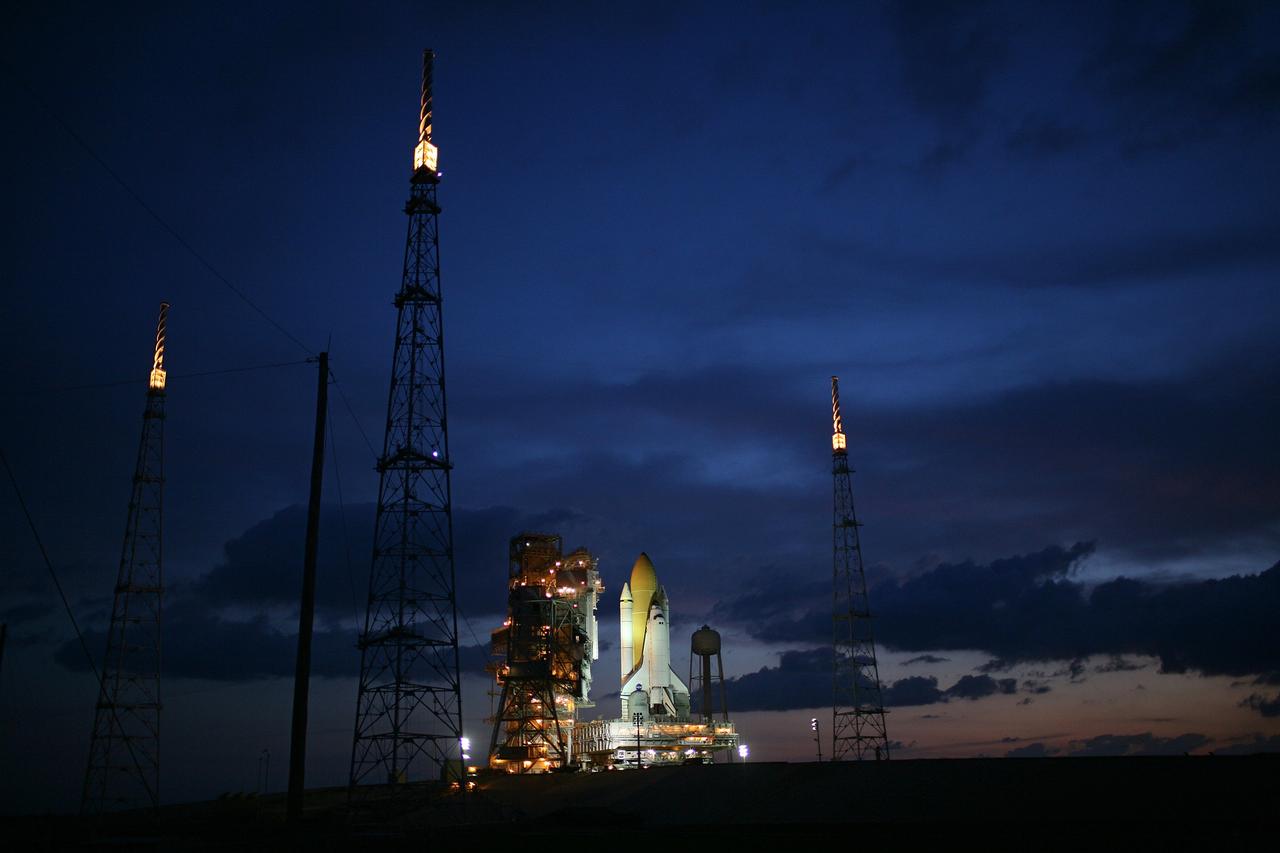
CAPE CANAVERAL, Fla. – Just before dawn, space shuttle Endeavour is bathed in xenon lights after being secured on Launch Pad 39B at NASA's Kennedy Space Center in Florida. First motion on rollout from the Vehicle Assembly Building was at 11:57 p.m. EDT April 16. Surrounding the pad are the new lightning towers erected for NASA's Constellation Program, which will use the pad for Ares rocket launches. Endeavour will be prepared on the pad for liftoff in the unlikely event that a rescue mission is necessary following space shuttle Atlantis' launch on the STS-125 mission to service NASA's Hubble Space Telescope. After Atlantis is cleared to land, Endeavour will move to Launch Pad 39A for its upcoming STS-127 mission to the International Space Station, targeted to launch June 13. Photo credit: NASA/Dimitri Gerondidakis
![KENNEDY SPACE CENTER, FLA. -- Space Shuttle Columbia emblazons the pre-dawn clouds as it soars into the sky on its 27th flight into space on mission STS-109. Liftoff occurred at 6:22:02:08 a.m. EST(11:22:02:08 GMT). The goal of the mission is the maintenance and upgrade of the Hubble Space Telescope, to be carried out in five spacewalks. The crew of STS-109 comprises Commander Scott D. Altman, Pilot Duane G. Carey, Payload Commander John M. Grunsfeld, and Mission Specialists Nancy Jane Currie, Richard M. Linnehan, James H. Newman and Michael J. Massimino. After an 11-day mission, Columbia is expected to return to Kennedy March 12 about 4:35 a.m. EST (09:35 GMT). [Photo by Anita Barrett]](https://images-assets.nasa.gov/image/KSC-02pd0217/KSC-02pd0217~medium.jpg)
KENNEDY SPACE CENTER, FLA. -- Space Shuttle Columbia emblazons the pre-dawn clouds as it soars into the sky on its 27th flight into space on mission STS-109. Liftoff occurred at 6:22:02:08 a.m. EST(11:22:02:08 GMT). The goal of the mission is the maintenance and upgrade of the Hubble Space Telescope, to be carried out in five spacewalks. The crew of STS-109 comprises Commander Scott D. Altman, Pilot Duane G. Carey, Payload Commander John M. Grunsfeld, and Mission Specialists Nancy Jane Currie, Richard M. Linnehan, James H. Newman and Michael J. Massimino. After an 11-day mission, Columbia is expected to return to Kennedy March 12 about 4:35 a.m. EST (09:35 GMT). [Photo by Anita Barrett]
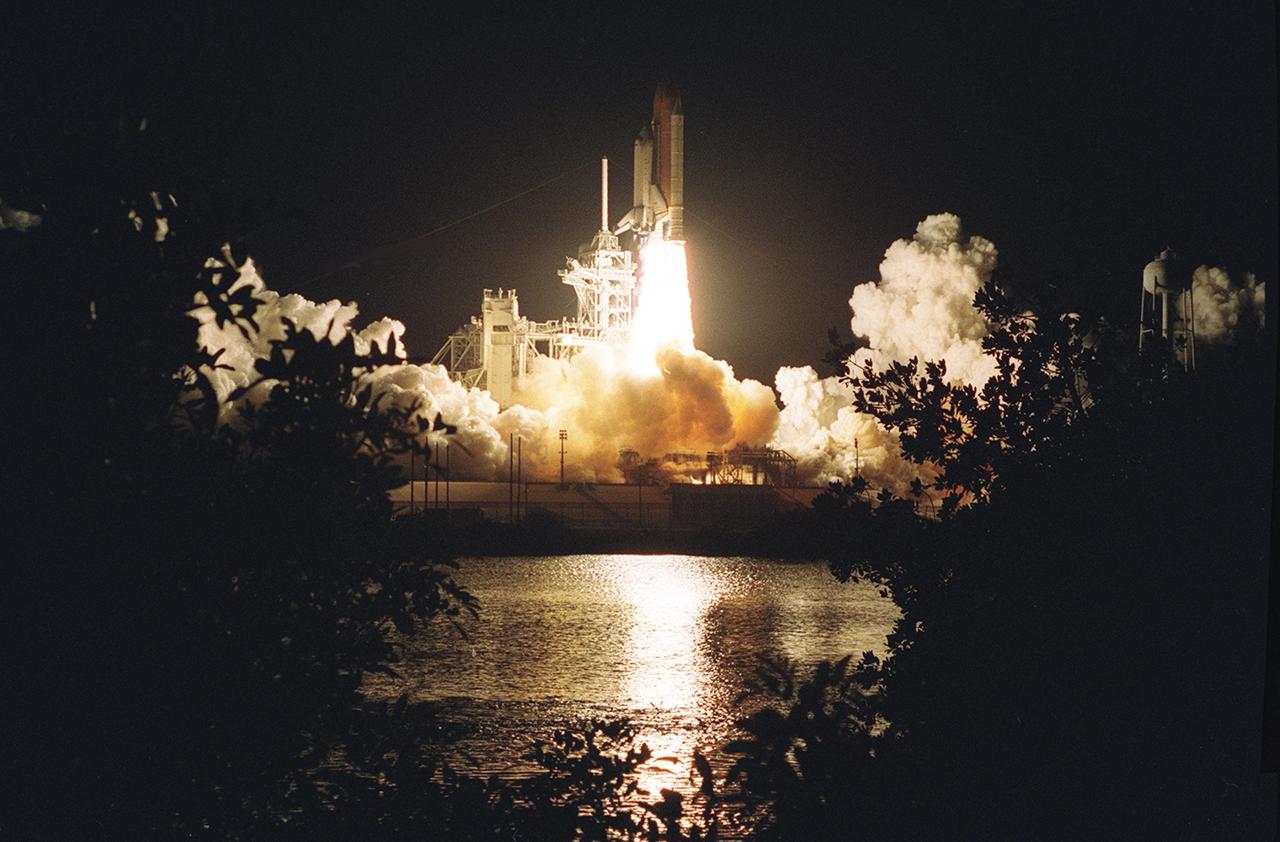
KENNEDY SPACE CENTER, Fla. - Trees and shrubs are silhouetted on the near bank by the brilliant exhaust of Space Shuttle Columbia as it hurtles into the pre-dawn sky on mission STS-109. Liftoff of Columbia occurred at 6:22:02:08 a.m. EST (11:22:02:08 GMT). This was the 27th flight of the vehicle and 108th in the history of the Shuttle program. The goal of the mission is the maintenance and upgrade of the Hubble Space Telescope, to be carried out in five spacewalks. The crew comprises Commander Scott D. Altman, Pilot Duane G. Carey, Payload Commander John M. Grunsfeld, and Mission Specialists Nancy Jane Currie, Richard M. Linnehan, James H. Newman and Michael J. Massimino. After the 11-day mission, Columbia is expected to return to KSC March 12 about 4:35 a.m. EST (09:35 GMT)
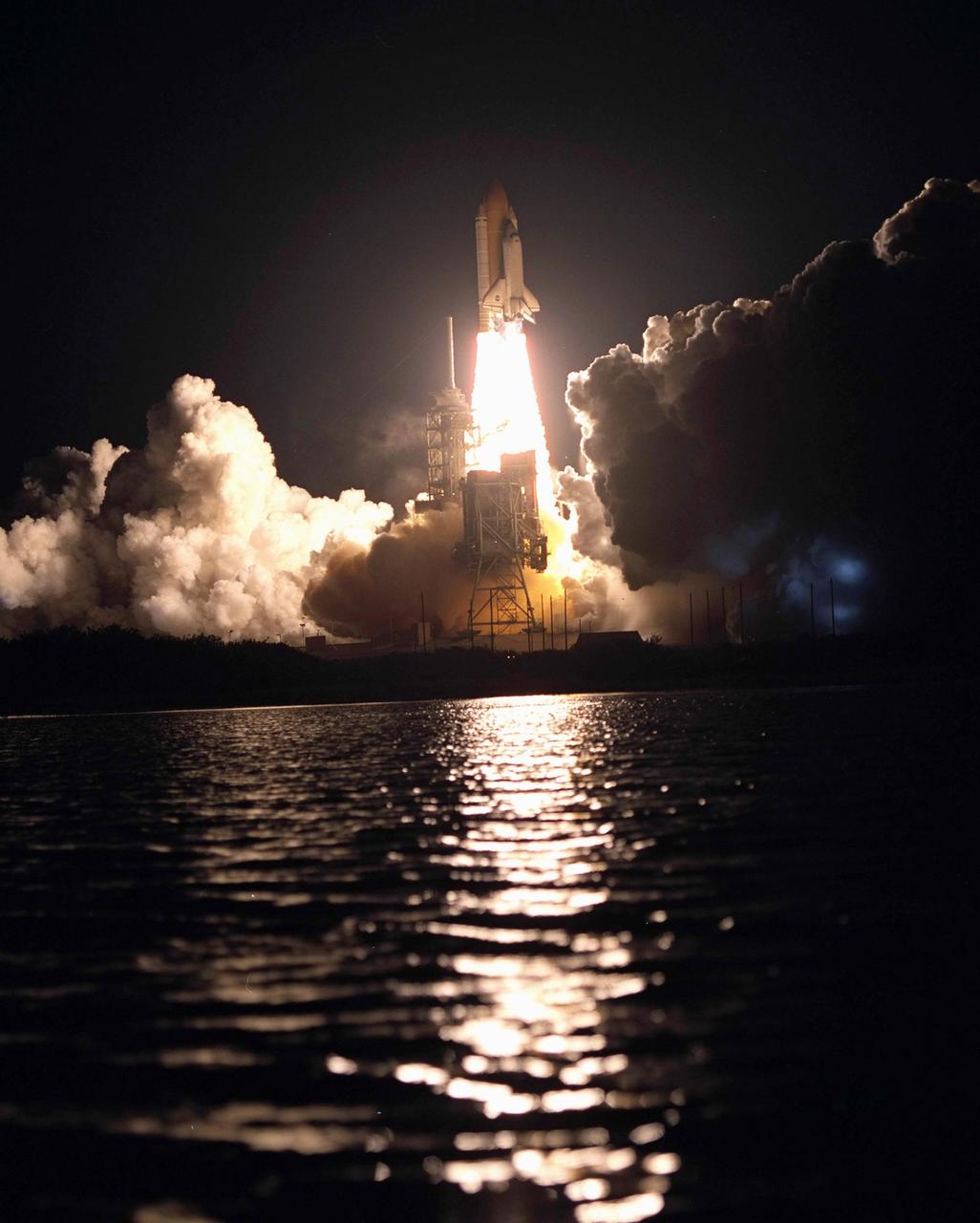
KENNEDY SPACE CENTER, Fla. - With its fiery exhaust casting a beam across the water and billows of smoke casting shadows, Space Shuttle Columbia roars into the pre-dawn sky on mission STS-109. Liftoff occurred at 6:22:02:08 a.m. EST (11:22:02:08 GMT). This was the 27th flight of the vehicle and 108th in the history of the Shuttle program. The goal of mission STS-109 is the maintenance and upgrade of the Hubble Space Telescope, to be carried out in five spacewalks. The crew comprises Commander Scott D. Altman, Pilot Duane G. Carey, Payload Commander John M. Grunsfeld, and Mission Specialists Nancy Jane Currie, Richard M. Linnehan, James H. Newman and Michael J. Massimino. After the 11-day mission, Columbia is expected to return to KSC March 12 about 4:35 a.m. EST (09:35 GMT).
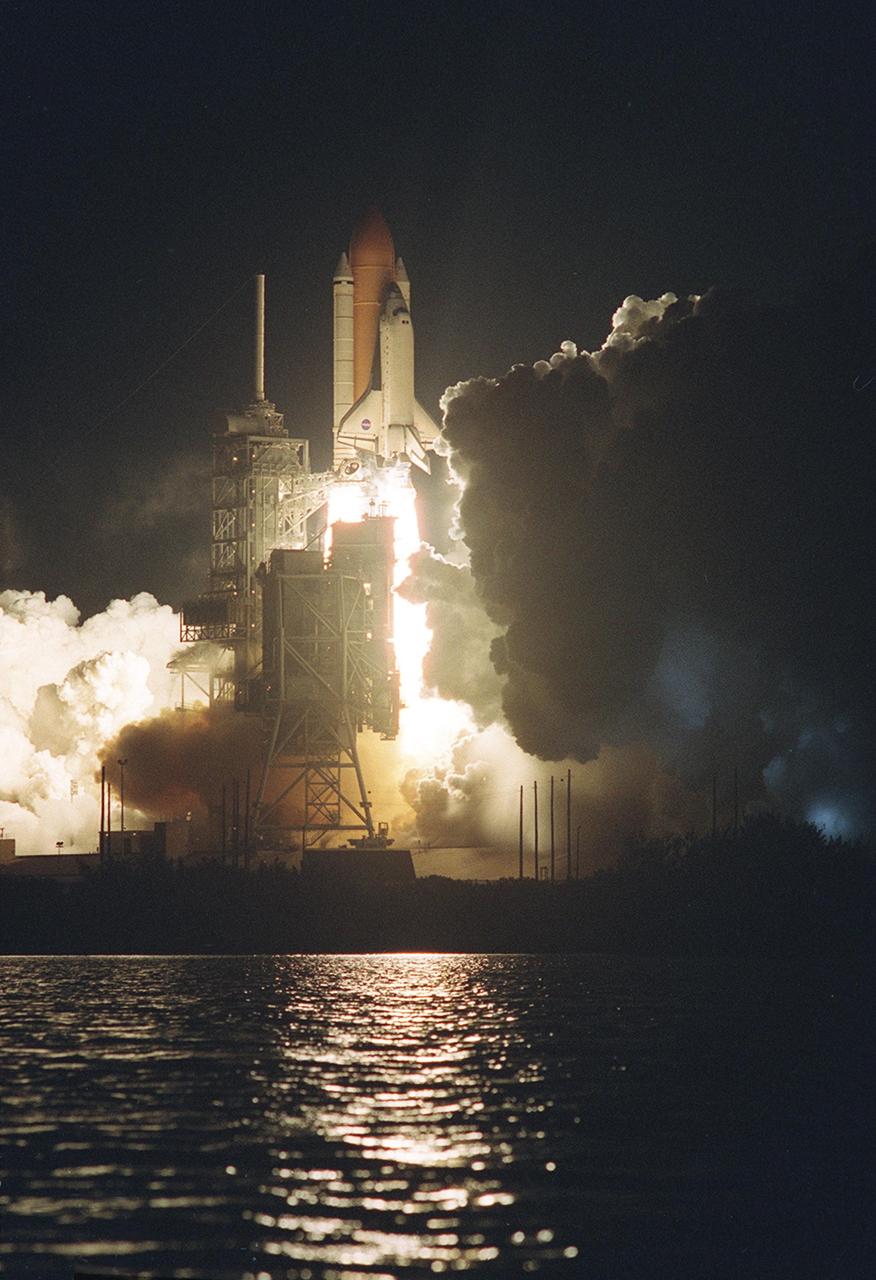
KENNEDY SPACE CENTER, Fla. - As Space Shuttle Columbia hurtles into the pre-dawn sky on mission STS-109, its brilliant exhaust illuminates the clouds of smoke and steam and spreads across the nearby water. Liftoff of Columbia occurred at 6:22:02:08 a.m. EST (11:22:02:08 GMT). This was the 27th flight of the vehicle and 108th in the history of the Shuttle program. The goal of the mission is the maintenance and upgrade of the Hubble Space Telescope, to be carried out in five spacewalks. The crew comprises Commander Scott D. Altman, Pilot Duane G. Carey, Payload Commander John M. Grunsfeld, and Mission Specialists Nancy Jane Currie, Richard M. Linnehan, James H. Newman and Michael J. Massimino. After the 11-day mission, Columbia is expected to return to KSC March 12 about 4:35 a.m. EST (09:35 GMT)
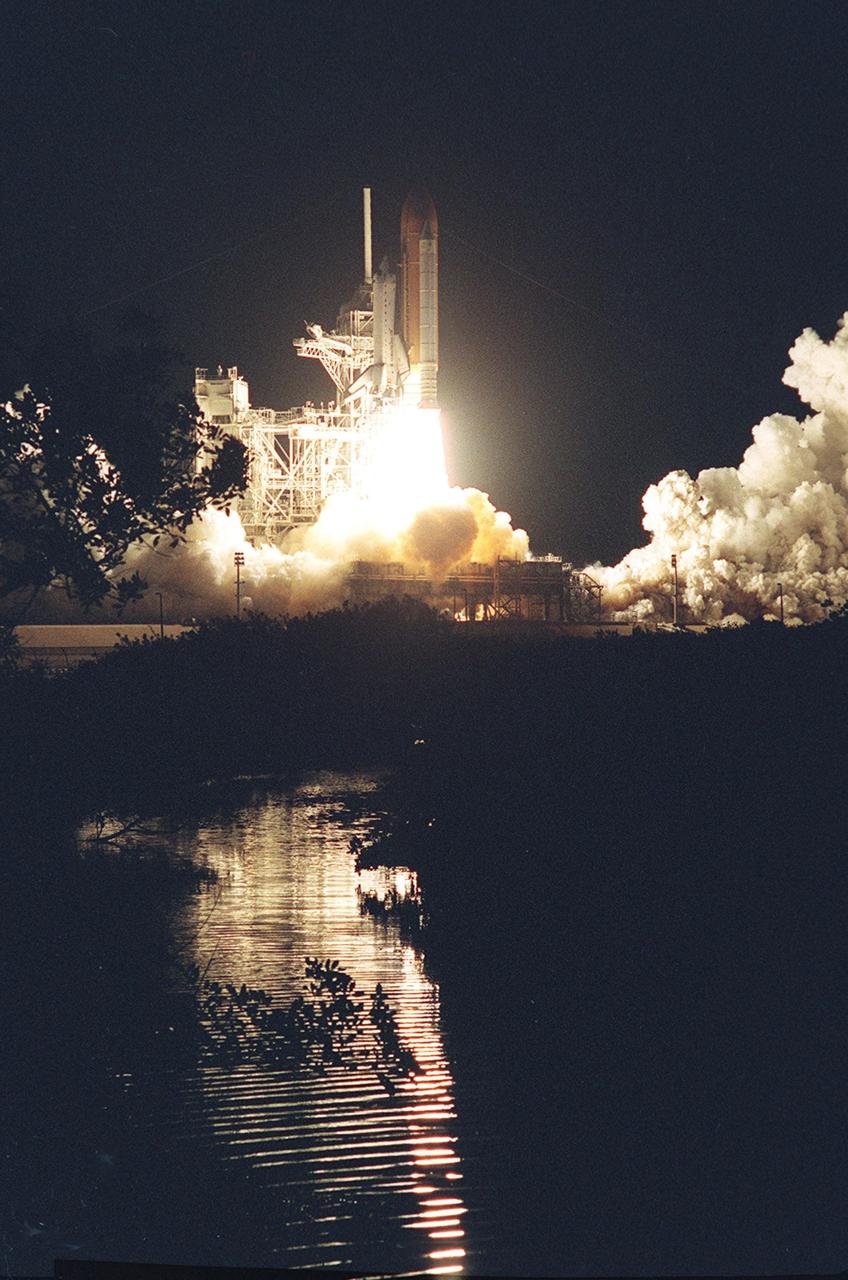
KENNEDY SPACE CENTER, Fla. - As Space Shuttle Columbia hurtles into the pre-dawn sky on mission STS-109, its brilliant exhaust spreads across the launch pad and nearby water. Liftoff of Columbia occurred at 6:22:02:08 a.m. EST (11:22:02:08 GMT). This was the 27th flight of the vehicle and 108th in the history of the Shuttle program. The goal of the mission is the maintenance and upgrade of the Hubble Space Telescope, to be carried out in five spacewalks. The crew comprises Commander Scott D. Altman, Pilot Duane G. Carey, Payload Commander John M. Grunsfeld, and Mission Specialists Nancy Jane Currie, Richard M. Linnehan, James H. Newman and Michael J. Massimino. After the 11-day mission, Columbia is expected to return to KSC March 12 about 4:35 a.m. EST (09:35 GMT)
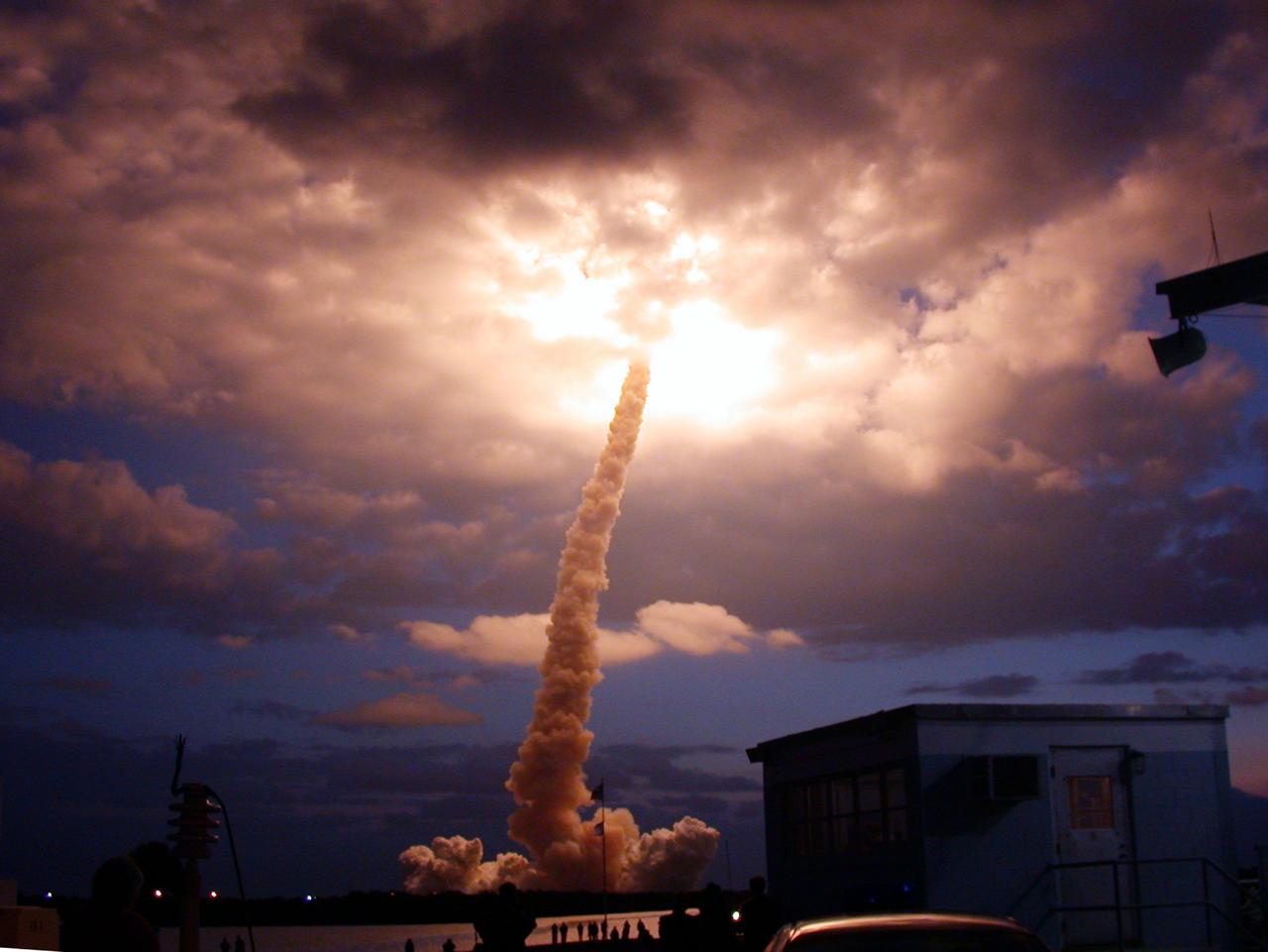
Carrying a crew of seven, the Space Shuttle Orbiter Columbia soared through some pre-dawn clouds into the sky as it began its 27th flight, STS-109. Launched March 1, 2002, the goal of the mission was the maintenance and upgrade of the Hubble Space Telescope (HST). The Marshall Space Flight Center had the responsibility for the design, development, and construction of the HST, which is the most complex and sensitive optical telescope ever made, to study the cosmos from a low-Earth orbit. The HST detects objects 25 times fainter than the dimmest objects seen from Earth and provides astronomers with an observable universe 250 times larger than is visible from ground-based telescopes, perhaps as far away as 14 billion light-years. The HST views galaxies, stars, planets, comets, possibly other solar systems, and even unusual phenomena such as quasars, with 10 times the clarity of ground-based telescopes. During the STS-109 mission, the telescope was captured and secured on a work stand in Columbia's payload bay using Columbia's robotic arm. Here four members of the crew performed five spacewalks completing system upgrades to the HST. Included in those upgrades were: replacement of the solar array panels; replacement of the power control unit (PCU); replacement of the Faint Object Camera (FOC) with a new advanced camera for Surveys (ACS); and installation of the experimental cooling system for the Hubble's Near-Infrared Camera and Multi-object Spectrometer (NICMOS), which had been dormant since January 1999 when it original coolant ran out. Lasting 10 days, 22 hours, and 11 minutes, the STS-109 mission was the 108th flight overall in NASA's Space Shuttle Program.
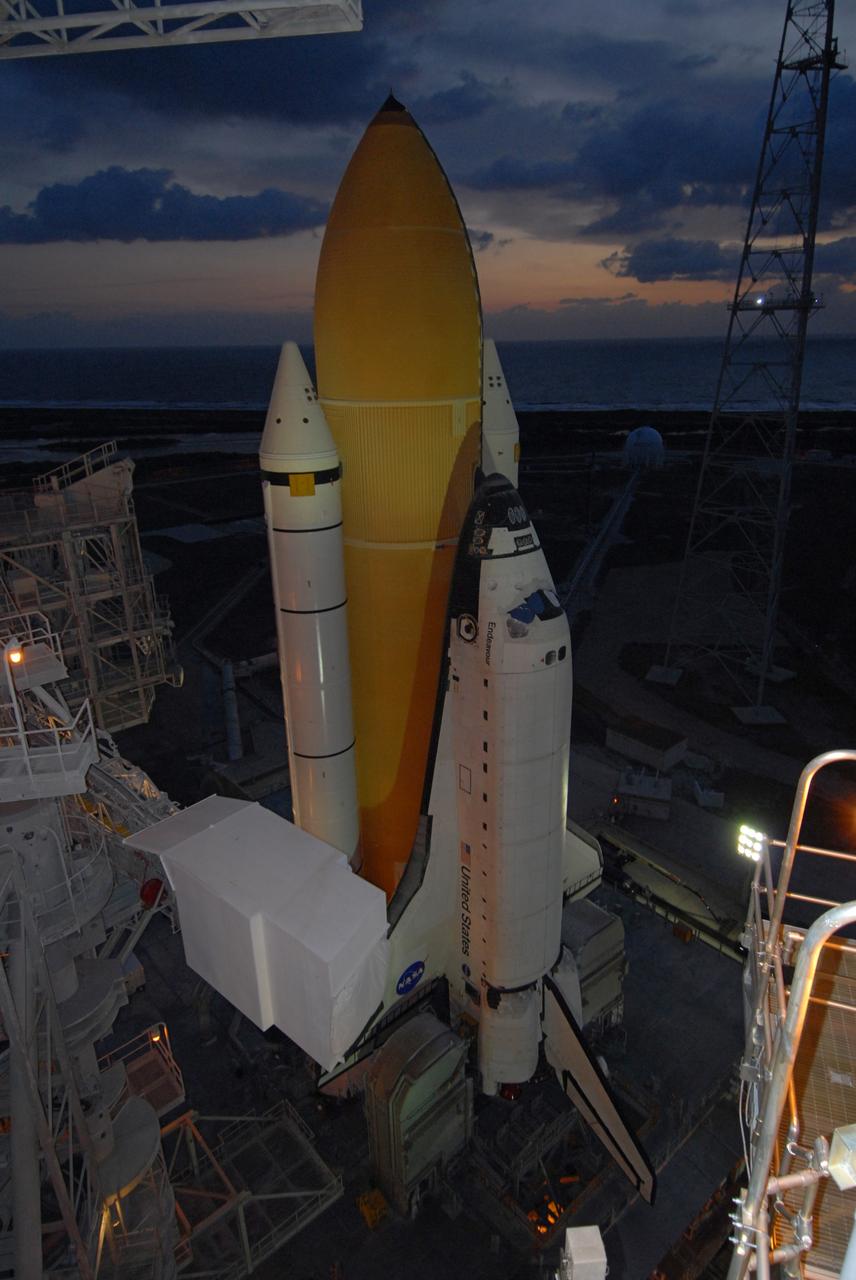
CAPE CANAVERAL, Fla. – Just before dawn, space shuttle Endeavour, installed on the mobile launcher platform atop the crawler-transporter, is on Launch Pad 39B at NASA's Kennedy Space Center in Florida. First motion out of the Vehicle Assembly Building was at 11:57 p.m. EDT April 16. The shuttle was secure on the pad at 7:17 a.m. EDT April 17. On the left of the shuttle is the White Room at the end of the orbiter access arm, 147 feet above the pad. When in place against the shuttle, the White Room provides access into the crew compartment on the shuttle. Endeavour will be prepared on the pad for liftoff in the unlikely event that a rescue mission is necessary following space shuttle Atlantis' launch on the STS-125 mission to service NASA's Hubble Space Telescope. After Atlantis is cleared to land, Endeavour will move to Launch Pad 39A for its upcoming STS-127 mission to the International Space Station, targeted to launch June 13. Photo credit: NASA/Jack Pfaller
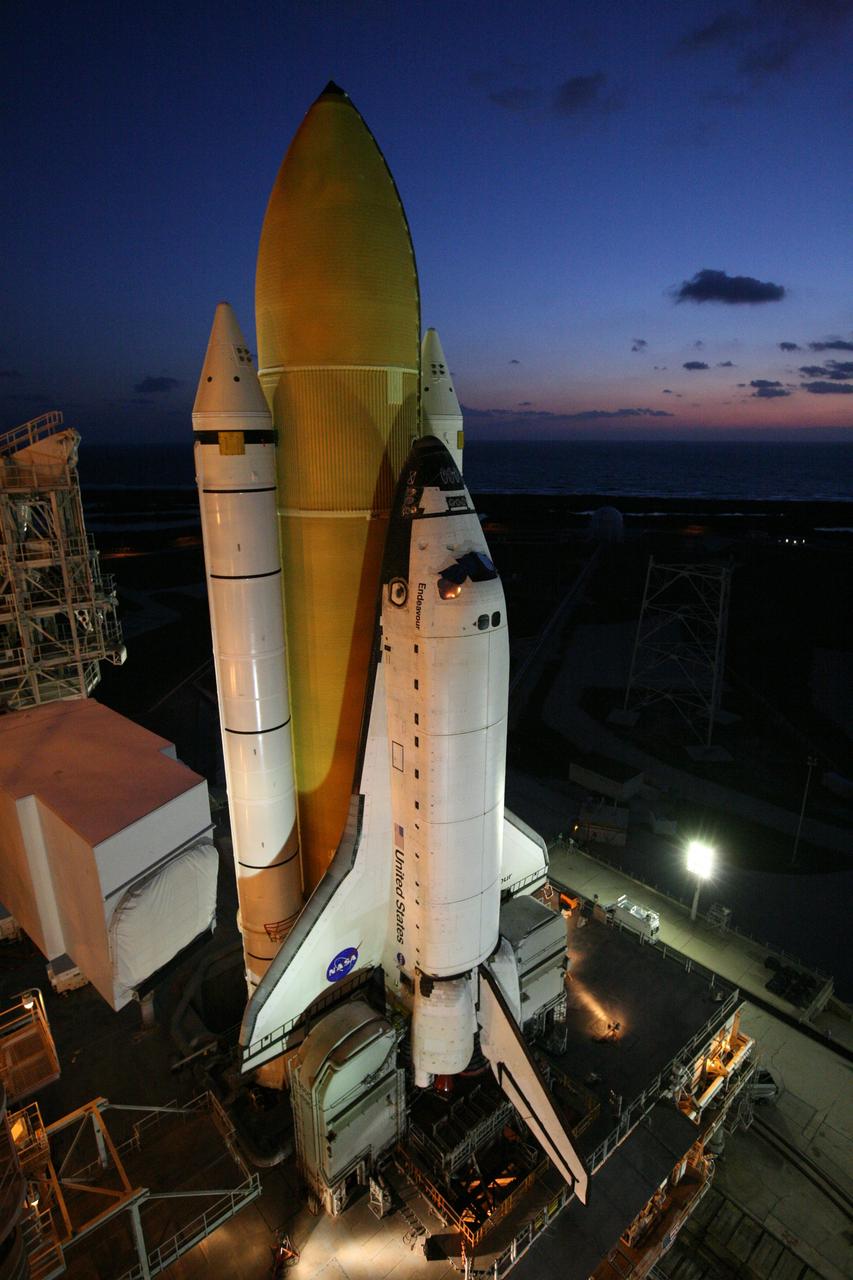
CAPE CANAVERAL, Fla. - Sitting atop its mobile launcher platform, space shuttle Endeavour welcomes the dawn after arriving on Launch Pad 39B. The shuttle includes the while solid rocket boosters and orange external fuel tank. First motion out of the VAB was at 11:15 p.m. Sept. 18. Endeavour completed the 4.2-mile journey to Launch Pad 39B on Sept. 19 at 6:59 a.m. EDT. For the first time since July 2001, two shuttles are on the launch pads at the same time at the center. Endeavour will stand by at pad B in the unlikely event that a rescue mission is necessary during space shuttle Atlantis' upcoming mission to repair NASA's Hubble Space Telescope, targeted to launch Oct. 10. After Endeavour is cleared from its duty as a rescue spacecraft, it will be moved to Launch Pad 39A for the STS-126 mission to the International Space Station. That flight is targeted for launch Nov. 12. Photo credit: NASA/Dimitri Gerondidakis
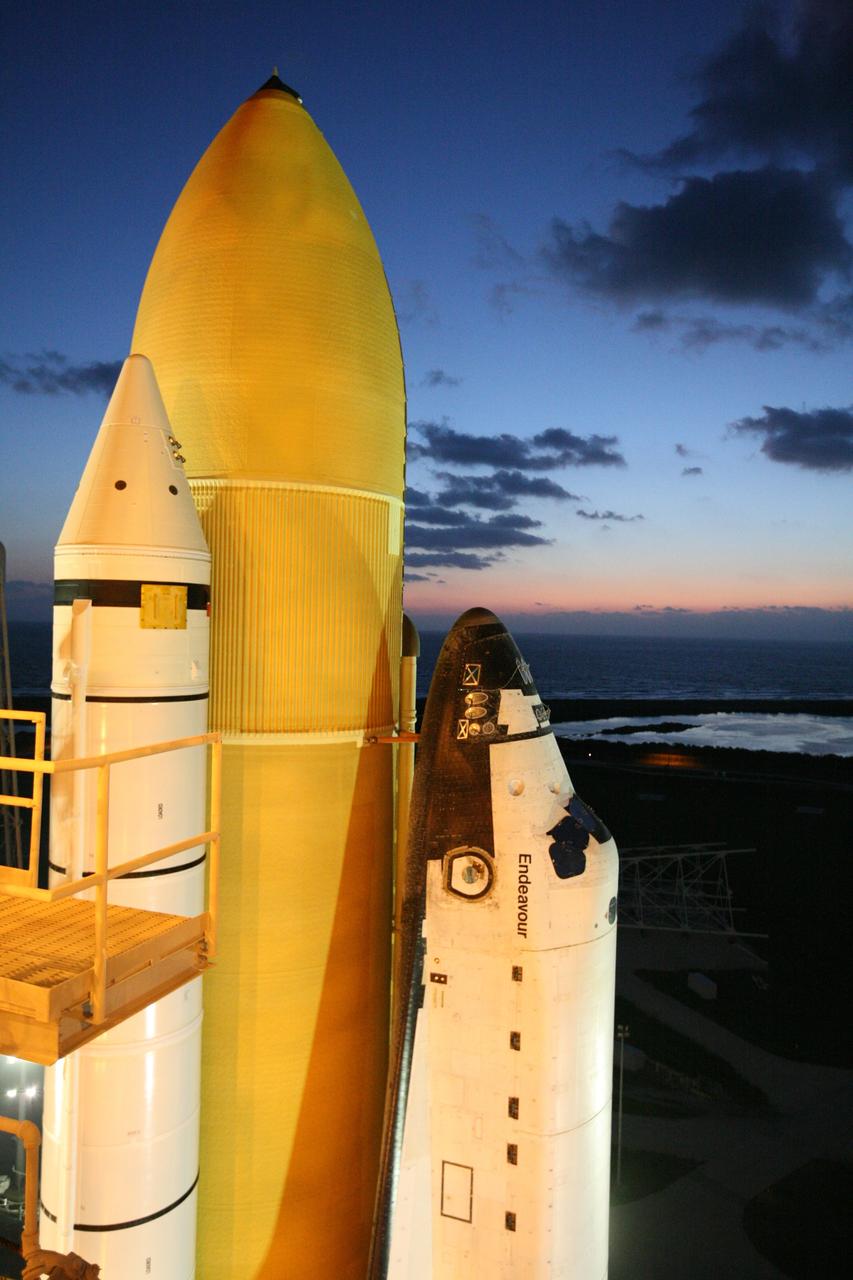
CAPE CANAVERAL, Fla. - Space shuttle Endeavour is framed against a breaking-dawn sky after arriving on Launch Pad 39B. The shuttle includes the while solid rocket boosters and orange external fuel tank at left. First motion out of the VAB was at 11:15 p.m. Sept. 18. Endeavour completed the 4.2-mile journey to Launch Pad 39B on Sept. 19 at 6:59 a.m. EDT. For the first time since July 2001, two shuttles are on the launch pads at the same time at the center. Endeavour will stand by at pad B in the unlikely event that a rescue mission is necessary during space shuttle Atlantis' upcoming mission to repair NASA's Hubble Space Telescope, targeted to launch Oct. 10. After Endeavour is cleared from its duty as a rescue spacecraft, it will be moved to Launch Pad 39A for the STS-126 mission to the International Space Station. That flight is targeted for launch Nov. 12. Photo credit: NASA/Dimitri Gerondidakis
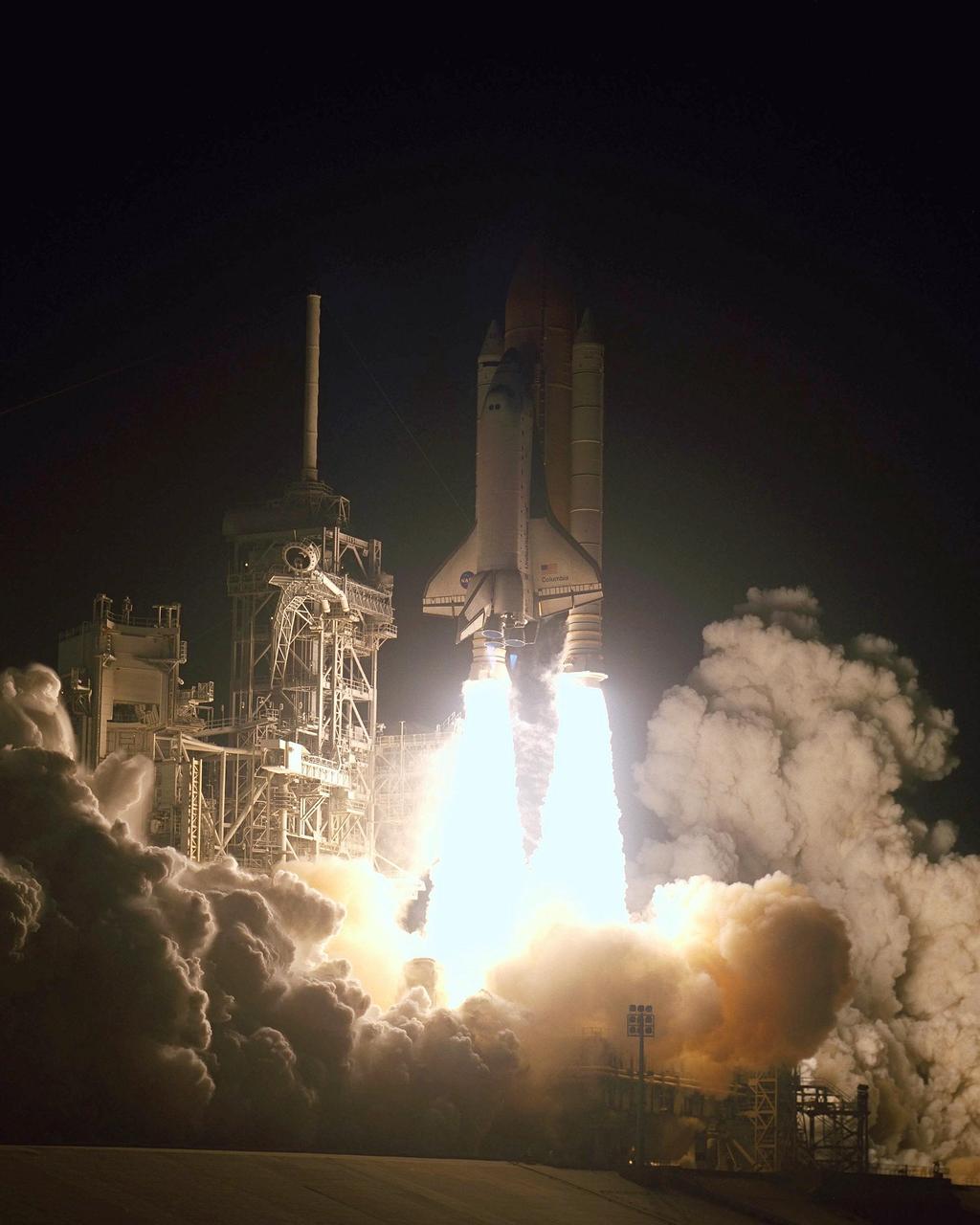
KENNEDY SPACE CENTER, Fla. - The flaming solid rocket boosters, looking like inverted torches, help hurl Space Shuttle Columbia into the pre-dawn sky on mission STS-109. The light illuminates the Fixed Service Structure at left, with its 80-foot lightning mast on top. . Liftoff of Columbia occurred at 6:22:02:08 a.m. EST (11:22:02:08 GMT). This was the 27th flight of the vehicle and 108th in the history of the Shuttle program. The goal of the mission is the maintenance and upgrade of the Hubble Space Telescope, to be carried out in five spacewalks. The crew comprises Commander Scott D. Altman, Pilot Duane G. Carey, Payload Commander John M. Grunsfeld, and Mission Specialists Nancy Jane Currie, Richard M. Linnehan, James H. Newman and Michael J. Massimino. After the 11-day mission, Columbia is expected to return to KSC March 12 about 4:35 a.m. EST (09:35 GMT)
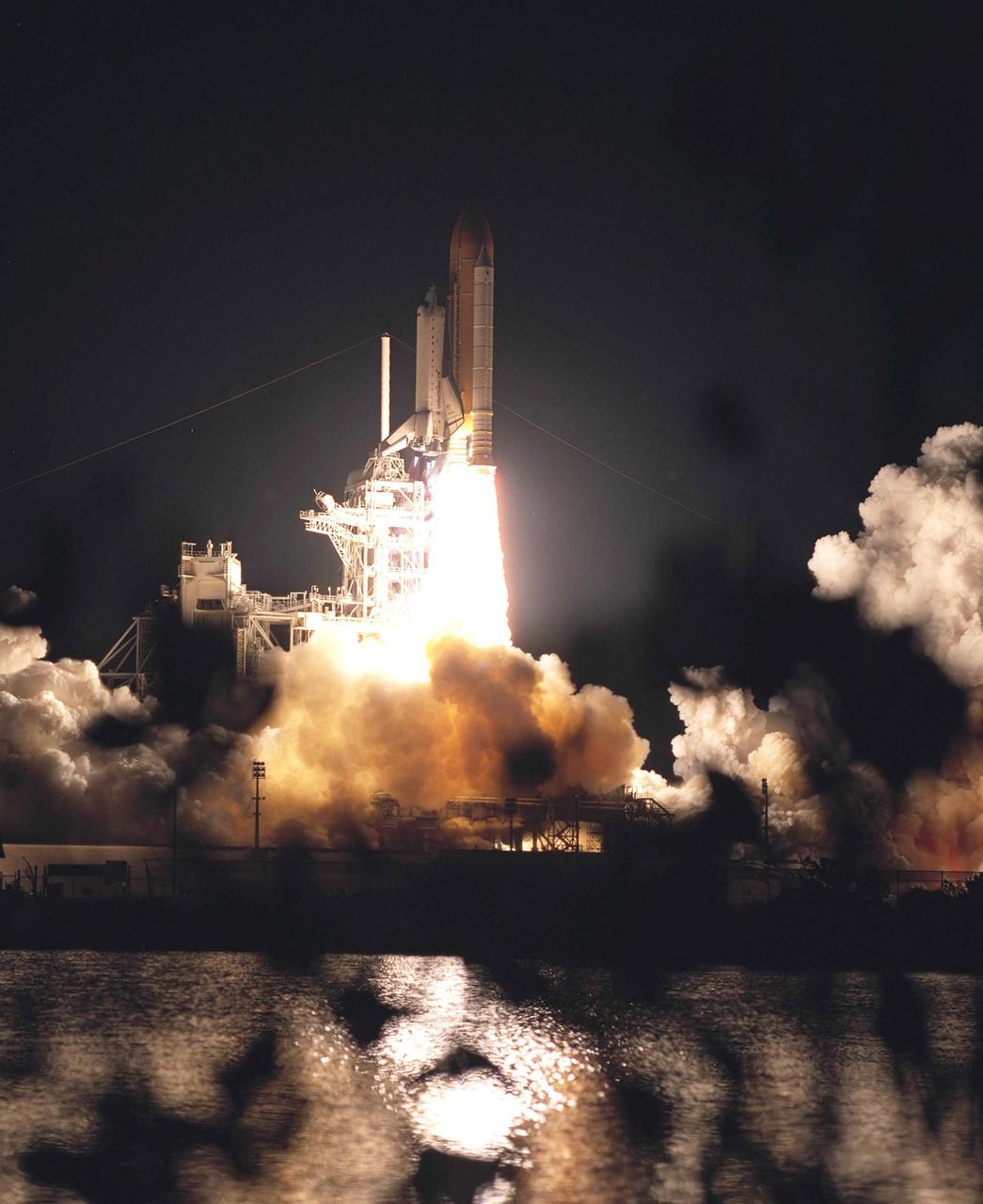
KENNEDY SPACE CENTER, Fla. - Space Shuttle Columbia roars past the lighting mast on launch pad 39A as its fiery exhaust emblazons the pre-dawn sky and nearby water. Both the Rotating Service Structure (left) and Fixed Service Structure are clearly defined in the brilliant light. Liftoff of Columbia on mission STS-109 occurred at 6:22:02:08 a.m. EST (11:22:02:08 GMT). This was the 27th flight of the vehicle and 108th in the history of the Shuttle program. The goal of the mission is the maintenance and upgrade of the Hubble Space Telescope, to be carried out in five spacewalks. The crew comprises Commander Scott D. Altman, Pilot Duane G. Carey, Payload Commander John M. Grunsfeld, and Mission Specialists Nancy Jane Currie, Richard M. Linnehan, James H. Newman and Michael J. Massimino. After the 11-day mission, Columbia is expected to return to KSC March 12 about 4:35 a.m. EST (09:35 GMT).