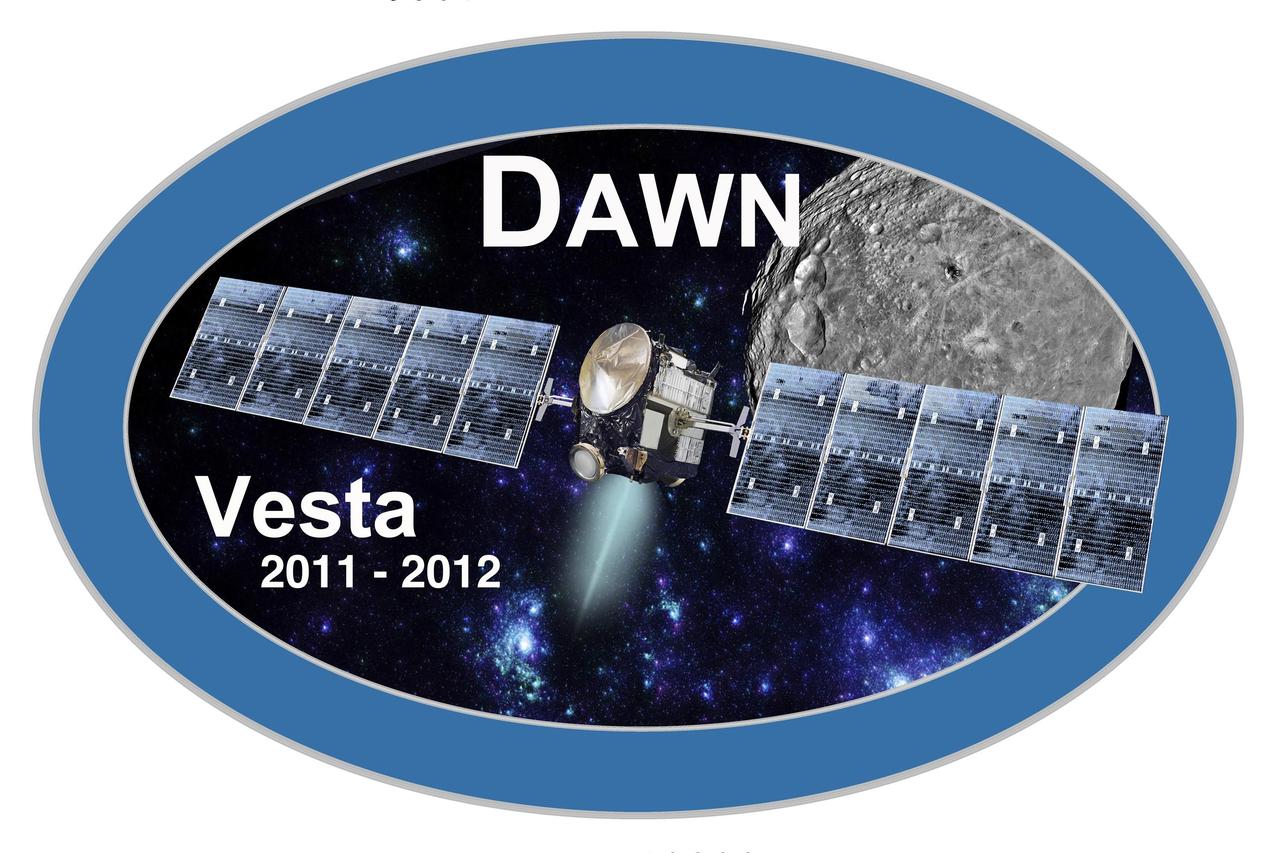
Dawn mission Vesta Logo, part of NASA Dawn Mission Art series. http://photojournal.jpl.nasa.gov/catalog/PIA19372
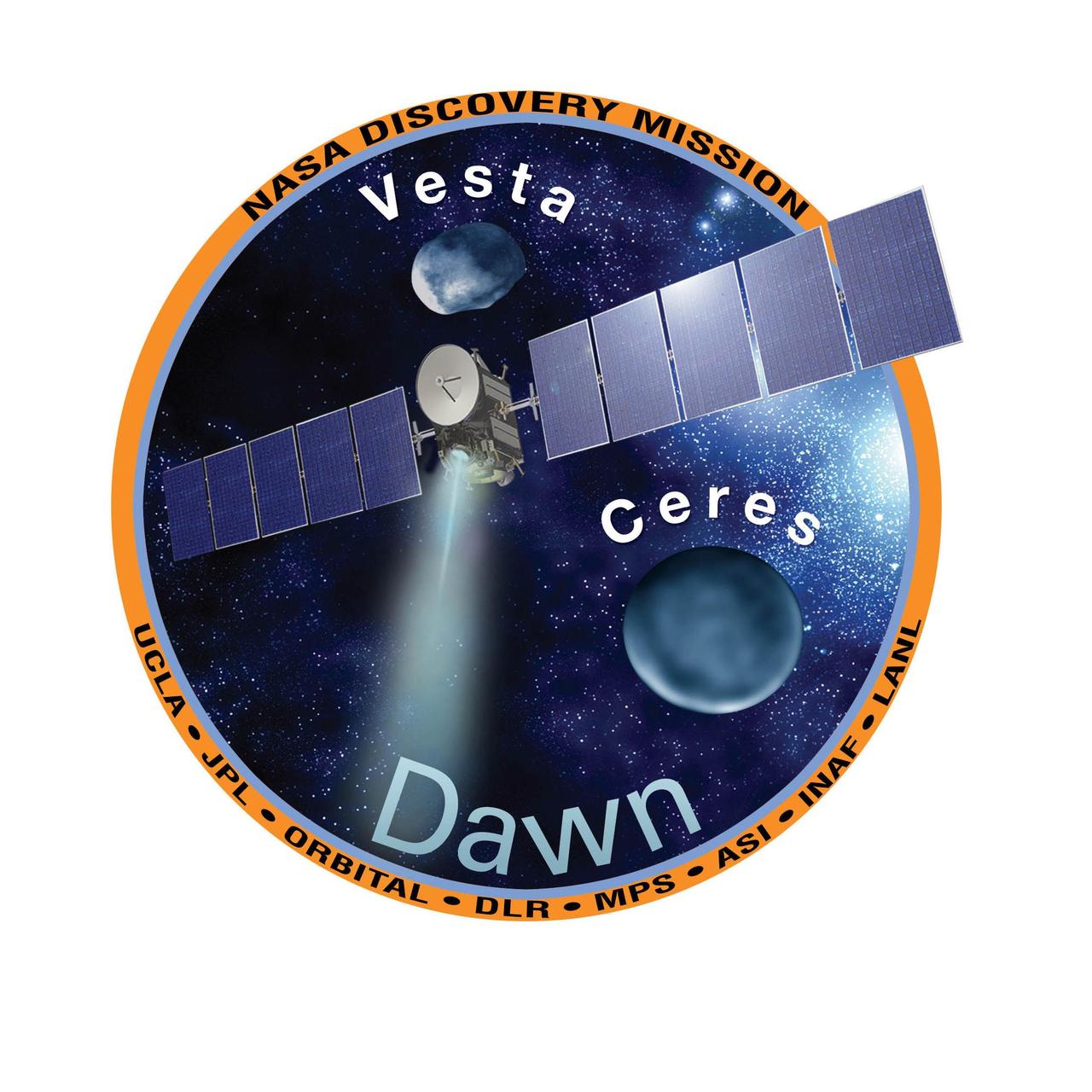
NASA Dawn mission patch, part of the Dawn Mission Art series. http://photojournal.jpl.nasa.gov/catalog/PIA19375
KENNEDY SPACE CENTER, FLA. -- This logo represents the mission of the Dawn spacecraft. During its nearly decade-long mission, Dawn will study the asteroid Vesta and dwarf planet Ceres, celestial bodies believed to have accreted early in the history of the solar system. The mission hopes to unlock some of the mysteries of planetary formation, including the building blocks and the processes leading to their state today. The Dawn mission is managed by the Jet Propulsion Laboratory, a division of the California Institute of Technology in Pasadena, Calif., for NASA's Science Mission Directorate in Washington, D.C.
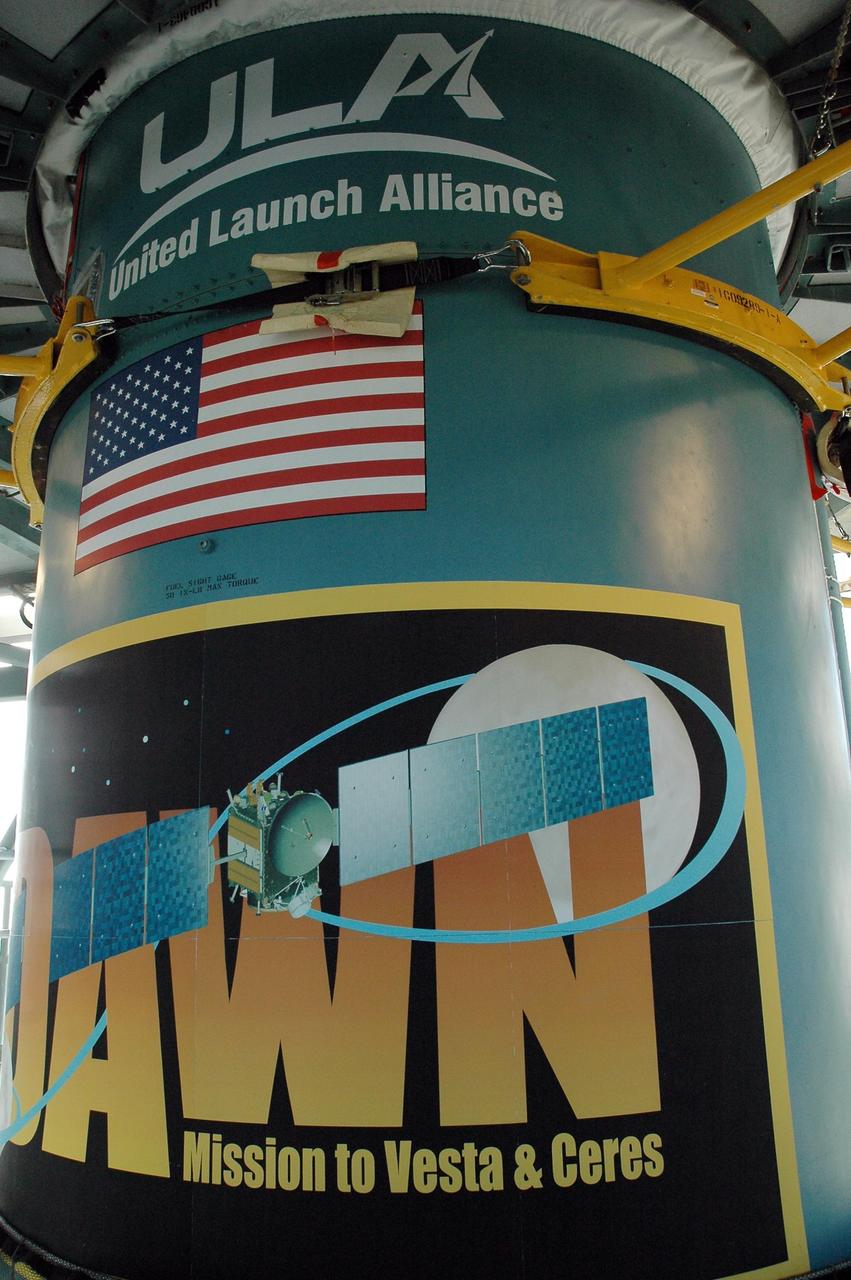
KENNEDY SPACE CENTER, FLA. -- At Launch Pad 17-B, at Cape Canaveral Air Force Station, the Delta II launch vehicle with NASA’s Dawn spacecraft mission logo can be seen as it is moved into position for stacking with the Delta II launch vehicle. Launch is scheduled for July 7. Dawn is the ninth mission in NASA's Discovery Program. The spacecraft will be the first to orbit two planetary bodies, asteroid Vesta and dwarf planet Ceres, during a single mission. Vesta and Ceres lie in the asteroid belt between Mars and Jupiter. It is also NASA’s first purely scientific mission powered by three solar electric ion propulsion engines. Photo credit: NASA/Troy Cryder.

The rising sun signifies the dawn of a new era of human Spaceflight, the first phase of the United States/Russian space partnership, Shuttle-Mir. Mir is shown in its proposed final on orbit configuration. The Shuttle is shown in a generic tunnel/Spacehab configuration. The Shuttle/Mir combination, docked to acknowledge the union of the two space programs, orbits over an Earth devoid of any definable features or political borders to emphasize Earth as the home planet for all humanity. The individual stars near the Space Shuttle and the Russian Mir Space Station represent the previous individual accomplishments of Russia's space program and that of the United States. The binary star is a tribute to the previous United States-Russian joint human Spaceflight program, the Apollo-Soyuz Test Project (ASTP). The flags of the two nations are symbolized by flowing ribbons of the national colors interwoven in space to represent the two nations joint exploration of space. NASA SHUTTLE and PKA MNP are shown in the stylized logo fonts of the two agencies that are conducting this program.
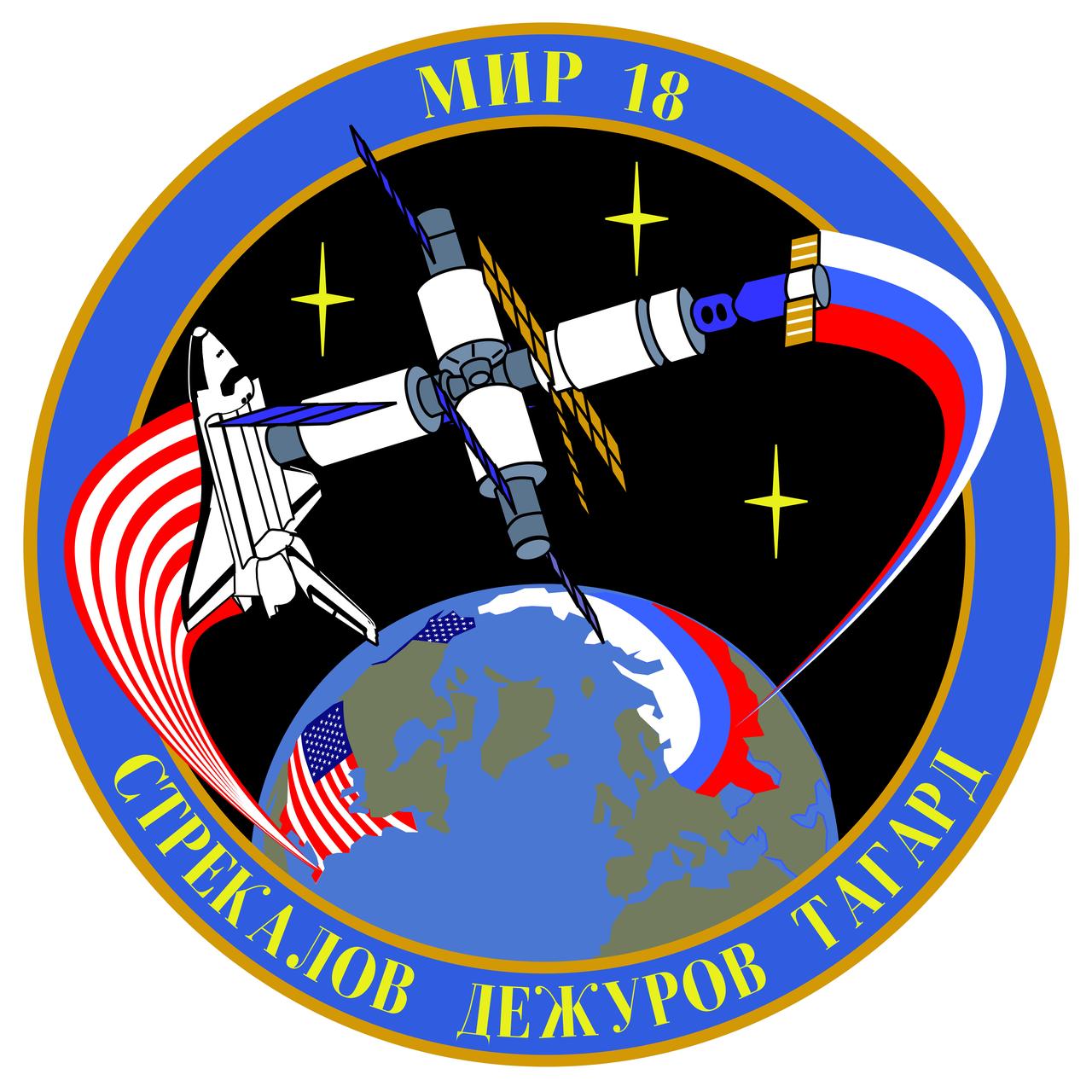
S94-36965 (20 Sept 1994) --- The rising sun signifies the dawn of a new era of human Spaceflight, the first phase of the U.S./Russian space partnership, Shuttle-Mir. Mir is shown in its proposed final on orbit configuration. The Shuttle is shown in a generic tunnel/Spacehab configuration. The Shuttle-Mir combination, docked to acknowledge the union of the two space programs, orbits over an Earth devoid of any definable features or political borders to emphasize Earth as the home planet for all humanity. The individual stars near the Shuttle and the Mir station represent the previous individual accomplishments of Russia's space program and that of the U.S. The binary star is a tribute to the previous U.S.-Russian joint human Spaceflight program, the Apollo-Soyuz Test Project. The flags of the two nations are symbolized by flowing ribbons of the national colors interwoven in space to represent the two nations joint exploration of space. NASA SHUTTLE and PKA MNP are shown in the stylized logo fonts of the two agencies that are conducting this program.