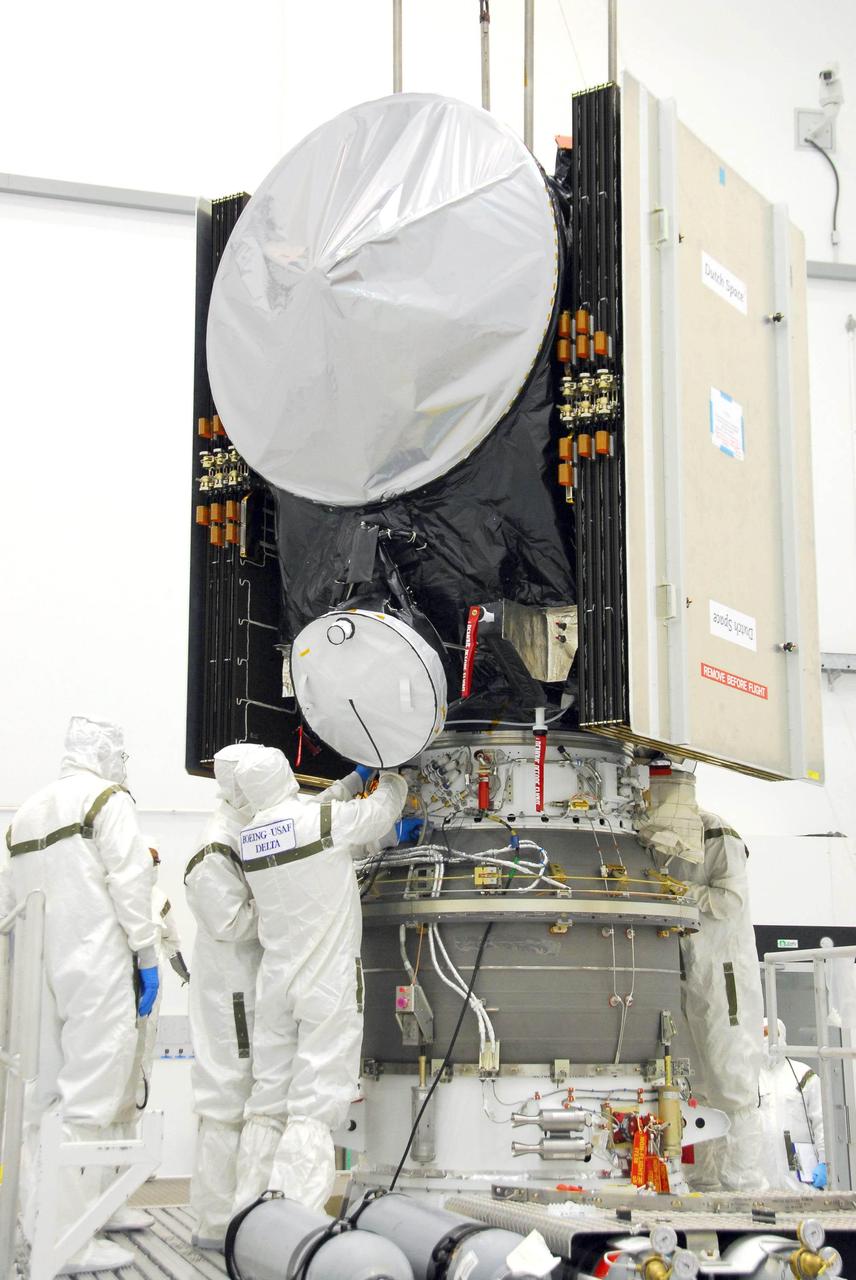
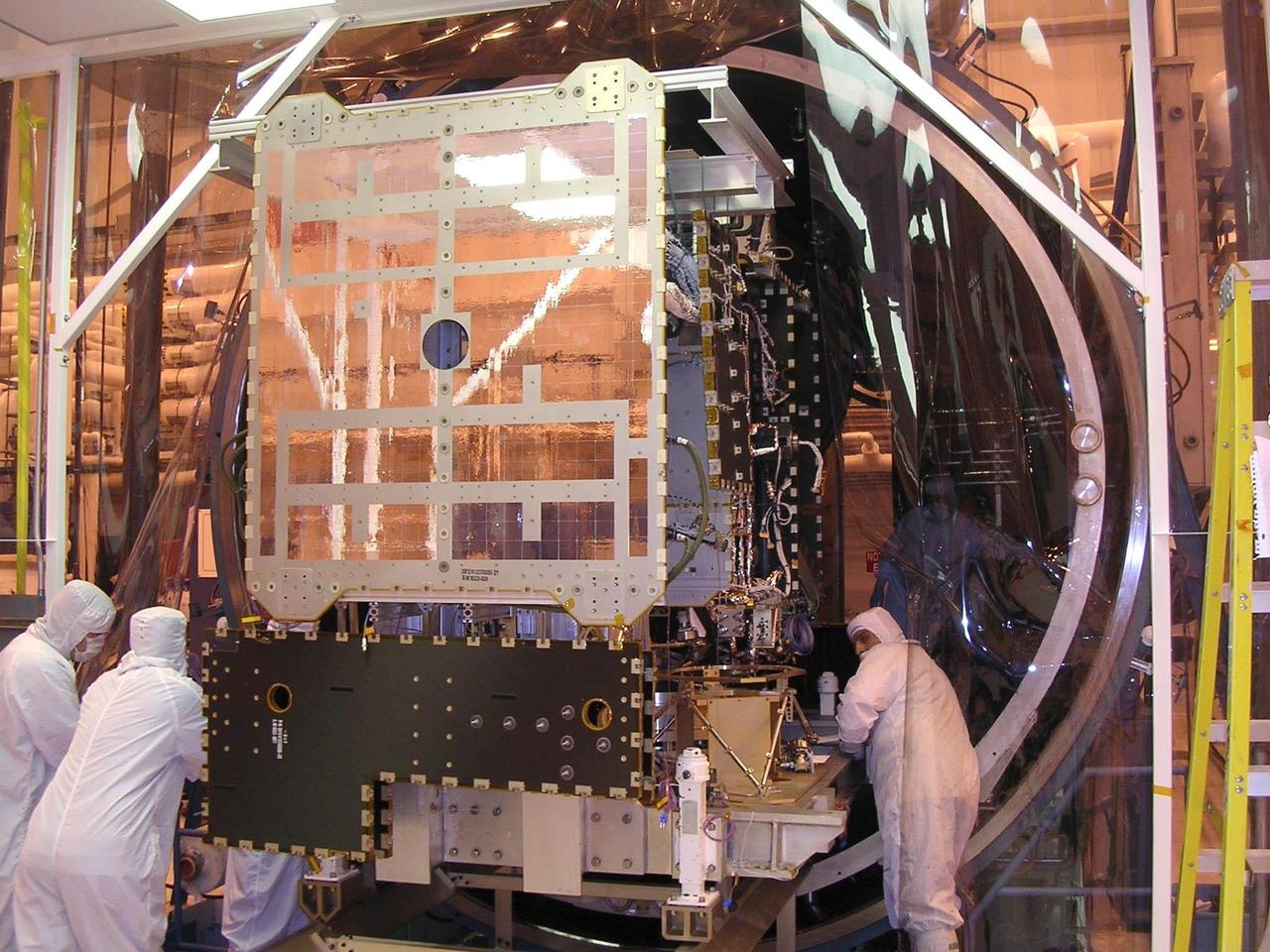
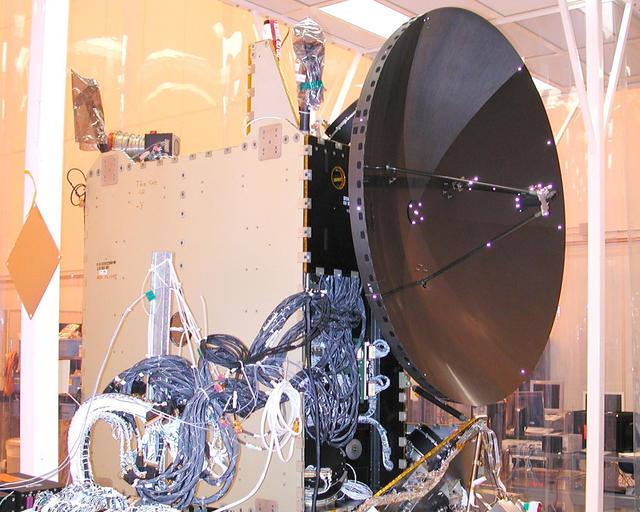
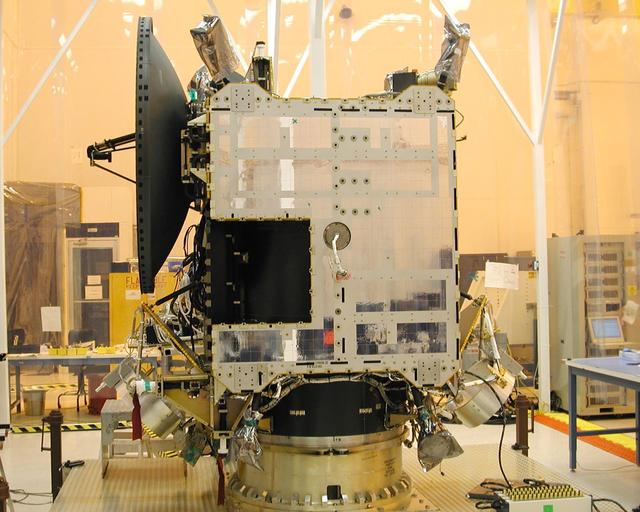
In Astrotech's Payload Processing Facility, an overhead crane lifts the Dawn spacecraft from its transporter. Dawn will be moved into clean room C for unbagging and further processing. Dawn's mission is to explore two of the asteroid belt's most intriguing and dissimilar occupants: asteroid Vesta and the dwarf planet Ceres. The Dawn mission is managed by JPL, a division of the California Institute of Technology in Pasadena, for NASA's Science Mission Directorate in Washington, D.C
Dawn Spacecraft Processing
In Astrotech's Payload Processing Facility, technicians help secure the Dawn spacecraft onto a moveable stand. Dawn will be moved into clean room C for unbagging and further processing. Dawn's mission is to explore two of the asteroid belt's most intriguing and dissimilar occupants: asteroid Vesta and the dwarf planet Ceres. The Dawn mission is managed by JPL, a division of the California Institute of Technology in Pasadena, for NASA's Science Mission Directorate in Washington, D.C.
Dawn Spacecraft Processing
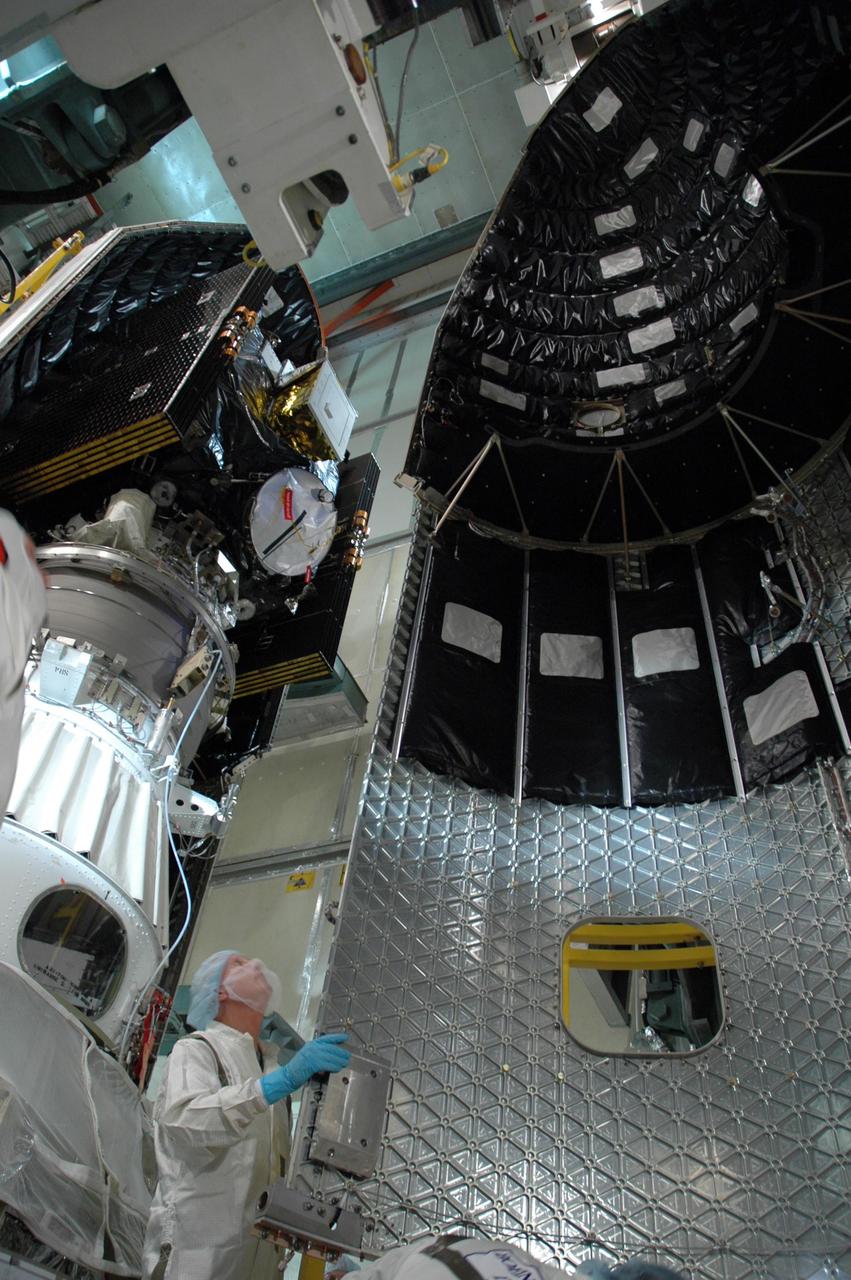
In clean room C of Astrotech's Payload Processing Facility, a worker wearing a "bunny suit," or clean-room attire, looks over the Dawn spacecraft after removing the protective cover, at bottom right. In the clean room, the spacecraft will undergo further processing. Dawn's mission is to explore two of the asteroid belt's most intriguing and dissimilar occupants: asteroid Vesta and the dwarf planet Ceres. The Dawn mission is managed by JPL, a division of the California Institute of Technology in Pasadena, for NASA's Science Mission Directorate in Washington, D.C.
Dawn Spacecraft Processing
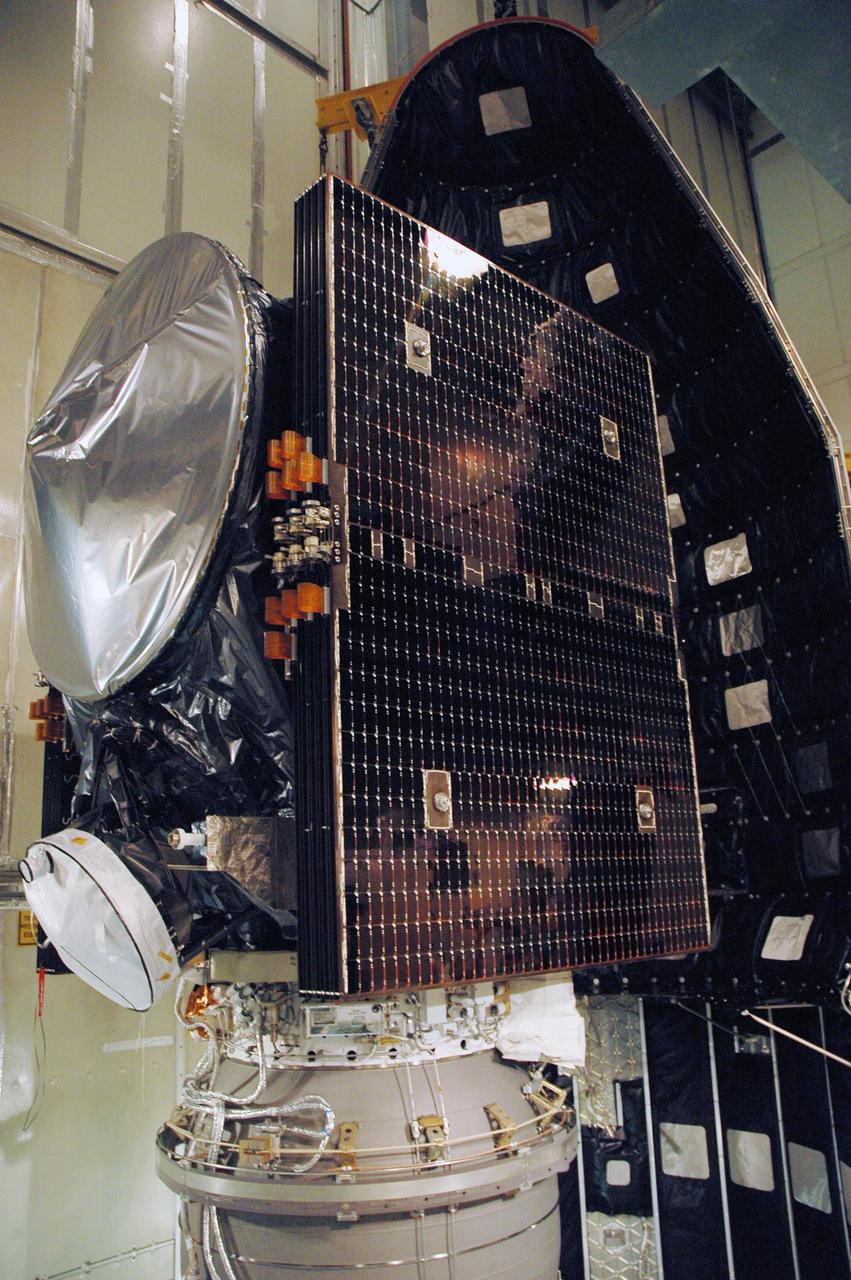
The Dawn spacecraft is seen here in clean room C of Astrotech's Payload Processing Facility. In the clean room, the spacecraft will undergo further processing. Dawn's mission is to explore two of the asteroid belt's most intriguing and dissimilar occupants: asteroid Vesta and the dwarf planet Ceres. The Dawn mission is managed by JPL, a division of the California Institute of Technology in Pasadena, for NASA's Science Mission Directorate in Washington, D.C.
Dawn Spacecraft Processing
In clean room C of Astrotech's Payload Processing Facility, a worker wearing a "bunny suit," or clean-room attire, begins removing the protective cover surrounding the Dawn spacecraft. In the clean room, the spacecraft will undergo further processing. Dawn's mission is to explore two of the asteroid belt's most intriguing and dissimilar occupants: asteroid Vesta and the dwarf planet Ceres. The Dawn mission is managed by JPL, a division of the California Institute of Technology in Pasadena, for NASA's Science Mission Directorate in Washington, D.C.
Dawn Spacecraft Processing
In clean room C of Astrotech's Payload Processing Facility, technicians dressed in "bunny suits," or clean-room attire, begin working on the Dawn spacecraft. Dawn's mission is to explore two of the asteroid belt's most intriguing and dissimilar occupants: asteroid Vesta and the dwarf planet Ceres. The Dawn mission is managed by JPL, a division of the California Institute of Technology in Pasadena, for NASA's Science Mission Directorate in Washington, D.C.
Dawn Spacecraft Processing
In clean room C of Astrotech's Payload Processing Facility, a worker wears a "bunny suit," or clean-room attire, next to the Dawn spacecraft, which will be unbagged and undergo further processing. Dawn's mission is to explore two of the asteroid belt's most intriguing and dissimilar occupants: asteroid Vesta and the dwarf planet Ceres. The Dawn mission is managed by JPL, a division of the California Institute of Technology in Pasadena, for NASA's Science Mission Directorate in Washington, D.C.
Dawn Spacecraft Processing
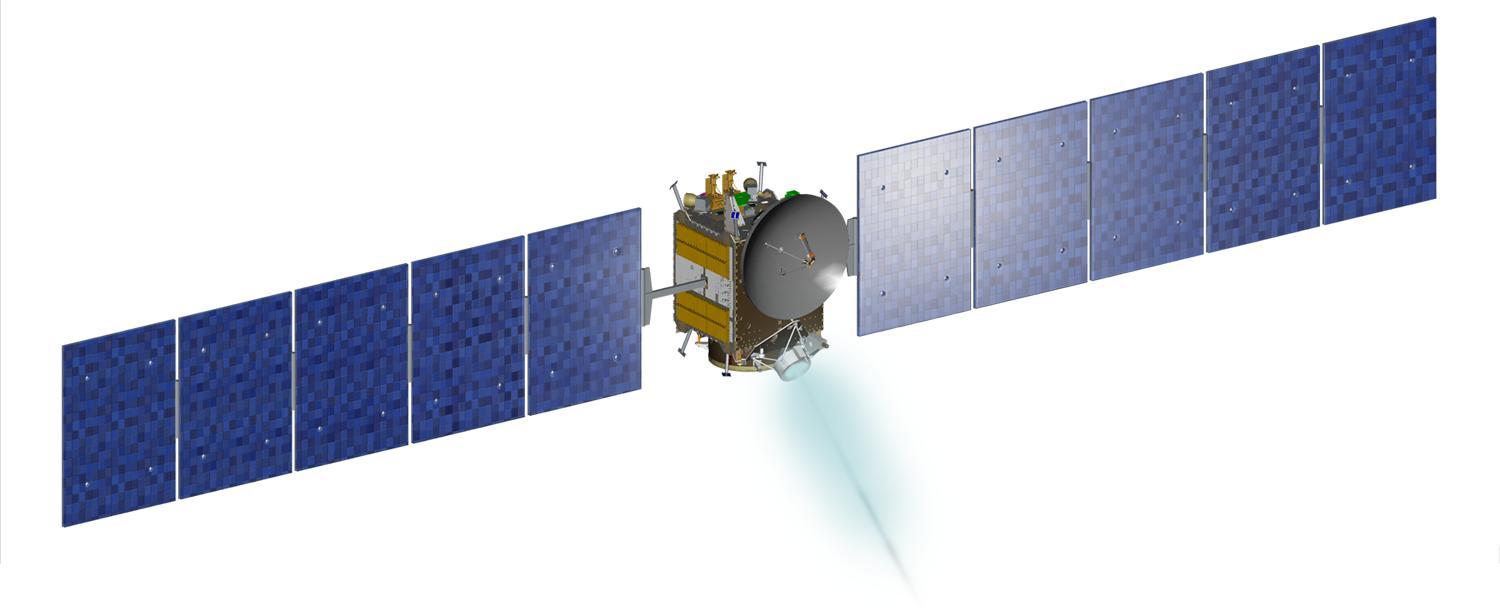
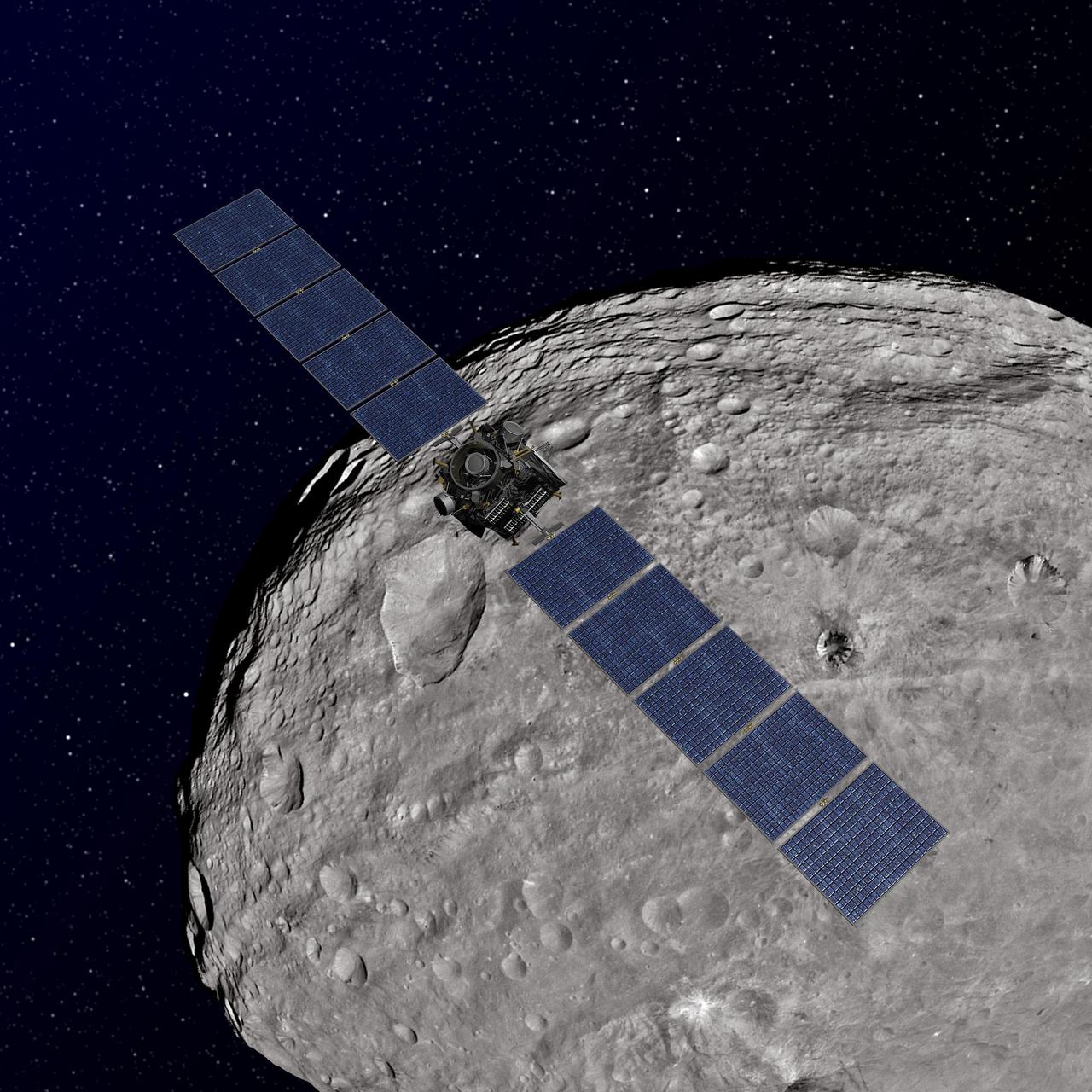
Artist rendition of NASA Dawn spacecraft, part of the Dawn Mission Art series.  http://photojournal.jpl.nasa.gov/catalog/PIA19376
Dawn Spacecraft
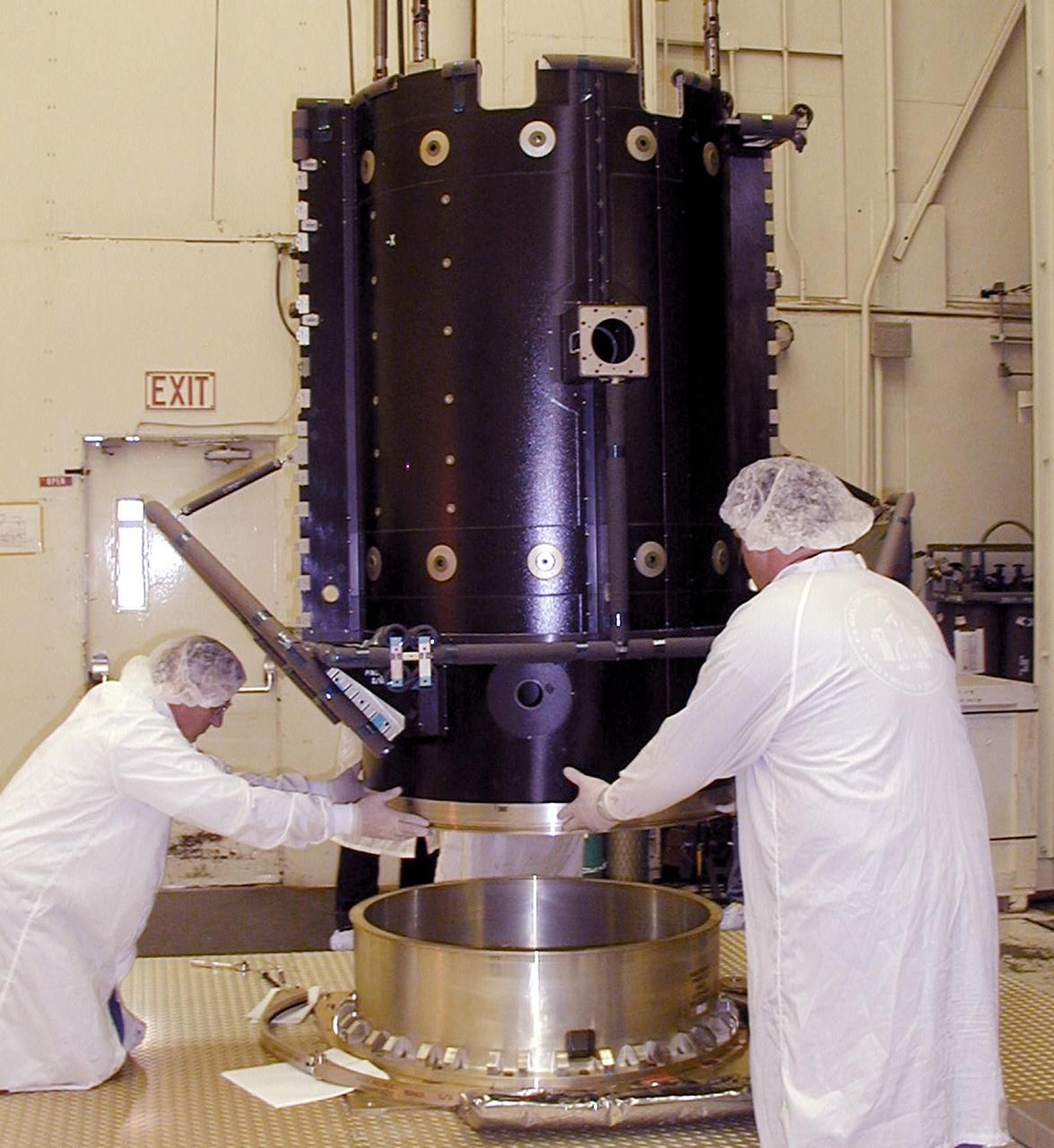
NASA Dawn spacecraft being assembled.
Dawn Spacecraft Being Assembled
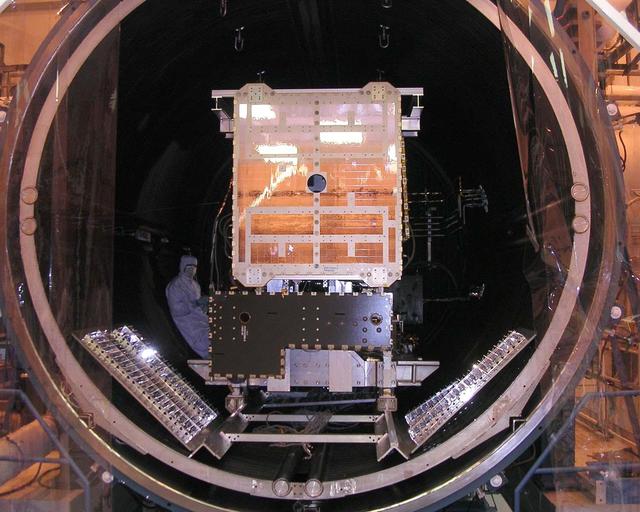
NASA Dawn spacecraft in thermal vacuum chamber.
Dawn Spacecraft in Thermal Vacuum Chamber
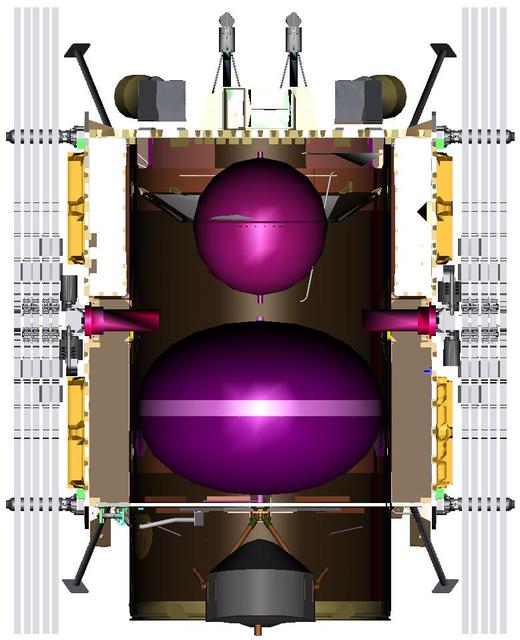
This illustration shows an inside view of the NASA Dawn spacecraft.
Illustration of Dawn Spacecraft Inside View
Workers secure the attachments of NASA Dawn spacecraft onto the upper stage booster.
Dawn Spacecraft Secured
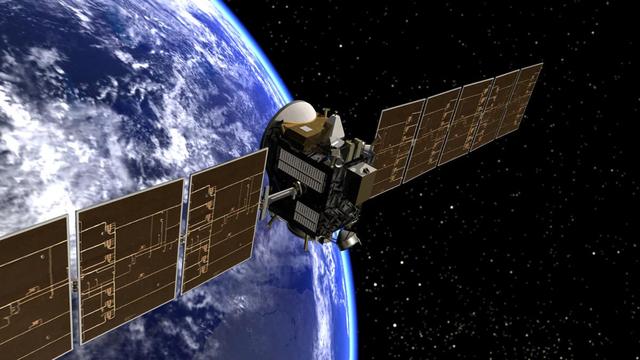
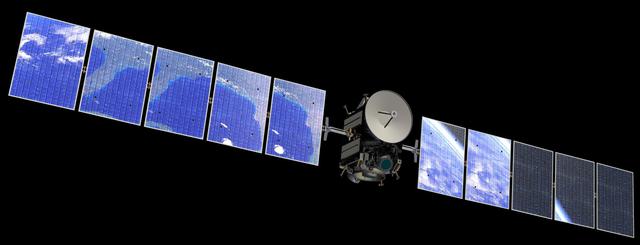
Artist concept of Earth reflection in Dawn spacecraft.
Earth Reflection in Dawn Spacecraft Artist Concept
Artist concept of Dawn spacecraft leaving Earth.
Dawn Spacecraft Leaving Earth Artist Concept
Artist concept of the Dawn spacecraft orbiting Ceres.
Dawn Spacecraft Orbiting Ceres Artist Concept
Artist concept of the Dawn spacecraft with Vesta and Ceres.
Dawn Spacecraft with Vesta and Ceres Artist Concept
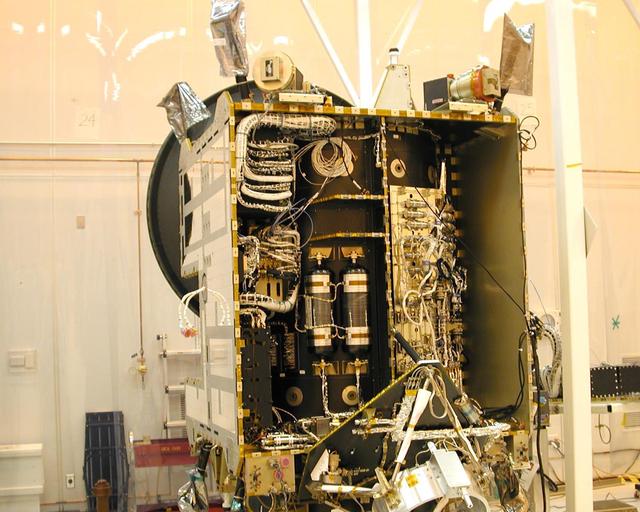
Exposed interior of NASA Dawn spacecraft showing ion propulsion system xenon feed system.
Exposed Interior of Dawn Spacecraft
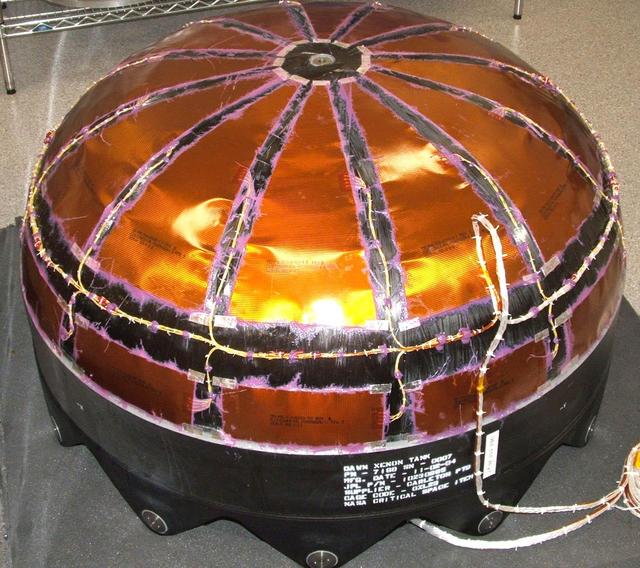
This image shows NASA Dawn spacecraft Xenon tank -- composite overwrapped  pressure vessel with titanium liner.
Dawn Spacecraft Xenon Tank
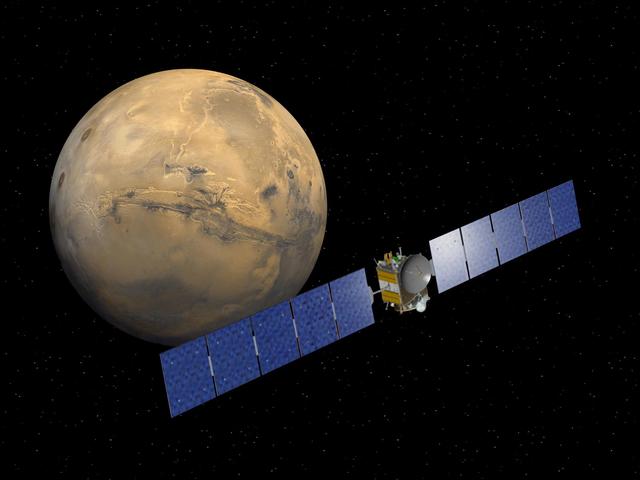
Artist rendering of NASA's Dawn spacecraft approaching Mars.  Dawn, part of NASA's Discovery Program of competitively selected missions, was launched in 2007 to orbit the large asteroid Vesta and the dwarf planet Ceres. The two bodies have very different properties from each other. By observing them both with the same set of instruments, Dawn will probe the early solar system and specify the properties of each body.  http://photojournal.jpl.nasa.gov/catalog/PIA18152
Artist Rendering of NASA Dawn Spacecraft Approaching Mars
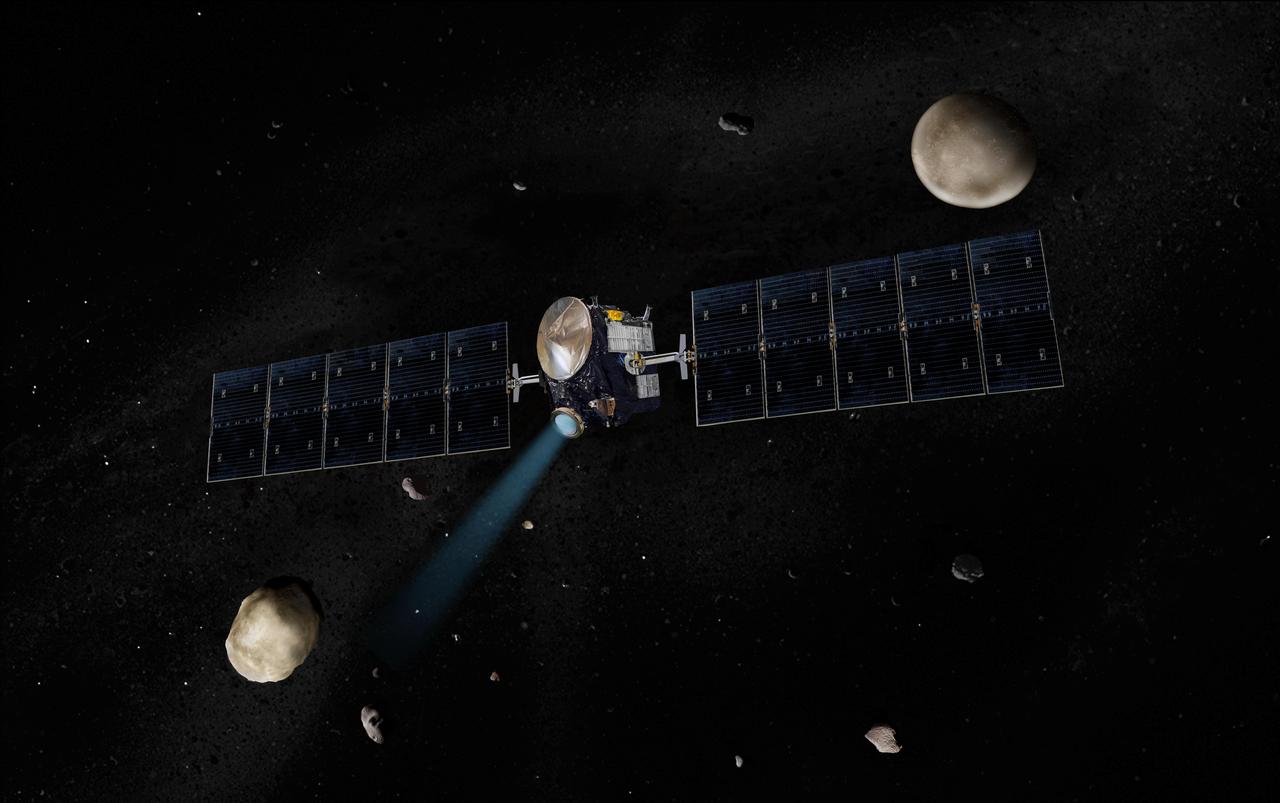
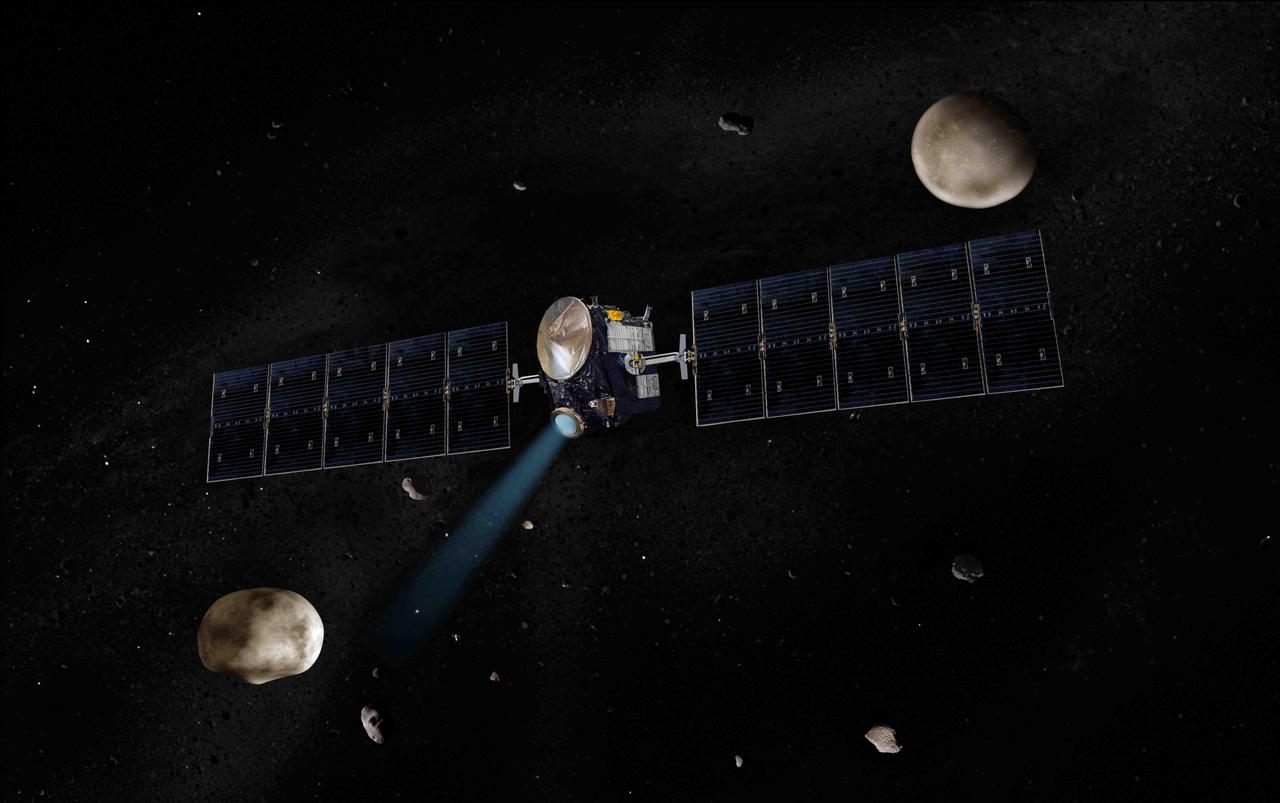
Artist concept of NASA Dawn spacecraft. The giant asteroid Vesta, Dawn next destination, is on the lower left. Another larger asteroid and Dawn second destination, Ceres, is on the upper right.
NASA Dawn Spacecraft Headed for Vesta Artist Concept
NASA Dawn spacecraft after installation of high gain antenna.
Dawn Spacecraft After Installation of High Gain Antenna
NASA Dawn spacecraft being moved into thermal vacuum chamber for bake-out.
Dawn Spacecraft Moved into Thermal Vacuum Chamber
NASA Dawn spacecraft after installation of high gain antenna.
Dawn Spacecraft After Installation of High Gain Antenna
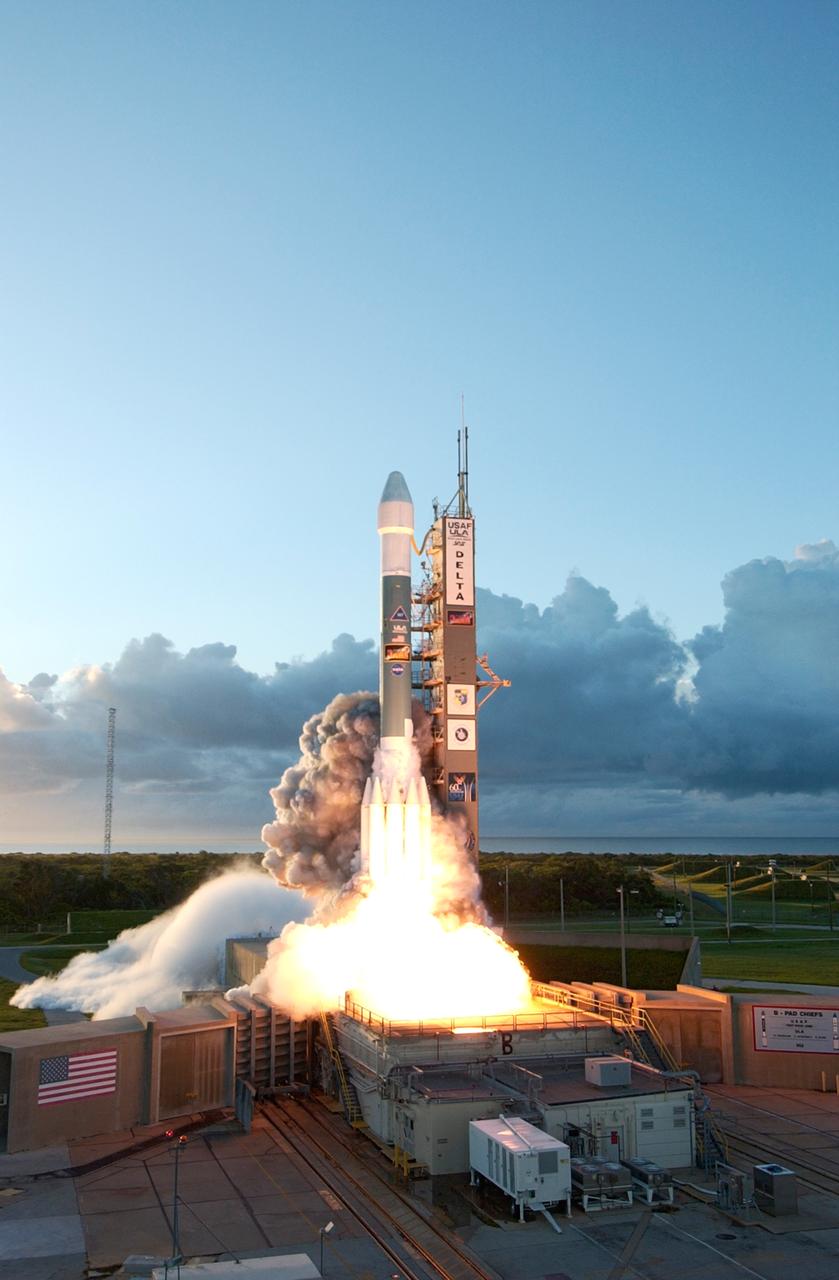
Against a backdrop of clouds on the horizon, the Delta II rocket carrying NASA's Dawn spacecraft rises from the smoke and fire on the launch pad to begin its 1.7-billion-mile journey through the inner solar system to study a pair of asteroids. Liftoff was at 7:34 a.m. EDT from Pad 17-B at Cape Canaveral Air Force Station. Dawn is the ninth mission in NASA's Discovery Program. The spacecraft will be the first to orbit two planetary bodies, asteroid Vesta and dwarf planet Ceres, during a single mission. Vesta and Ceres lie in the asteroid belt between Mars and Jupiter. It is also NASA's first purely scientific mission powered by three solar electric ion propulsion engines.
Delta II rocket carrying NASA's Dawn spacecraft launches from pa
This illustration shows the core structure with ion propulsion system installed aboard NASA Dawn spacecraft.
Illustration of Dawn Spacecraft Core Structure
Artist concept of the Dawn spacecraft gathering spectral data from Vesta.
Dawn Spacecraft Gathering Spectral Data from Vesta Artist Concept
Technician helps guide the second half of the fairing for installation around NASA Dawn spacecraft.
Payload Fairing Installation Around the Dawn Spacecraft
NASA Dawn spacecraft solar array wings are folded to fit inside nose section of protective fairing.
Dawn Spacecraft Ready for Payload Fairing Installation
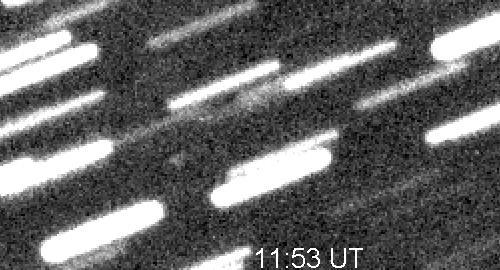
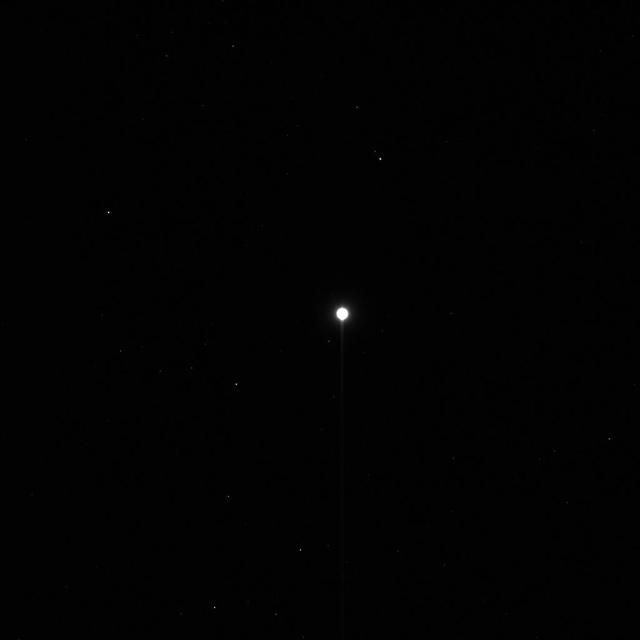
This image is a blinking of two 14-minute exposures of NASA Dawn spacecraft from 600,000 miles from Earth. Bill Dillon, a regular advanced user of Sierra Stars Observatory.
Image of Dawn Spacecraft 600,000 miles From Earth
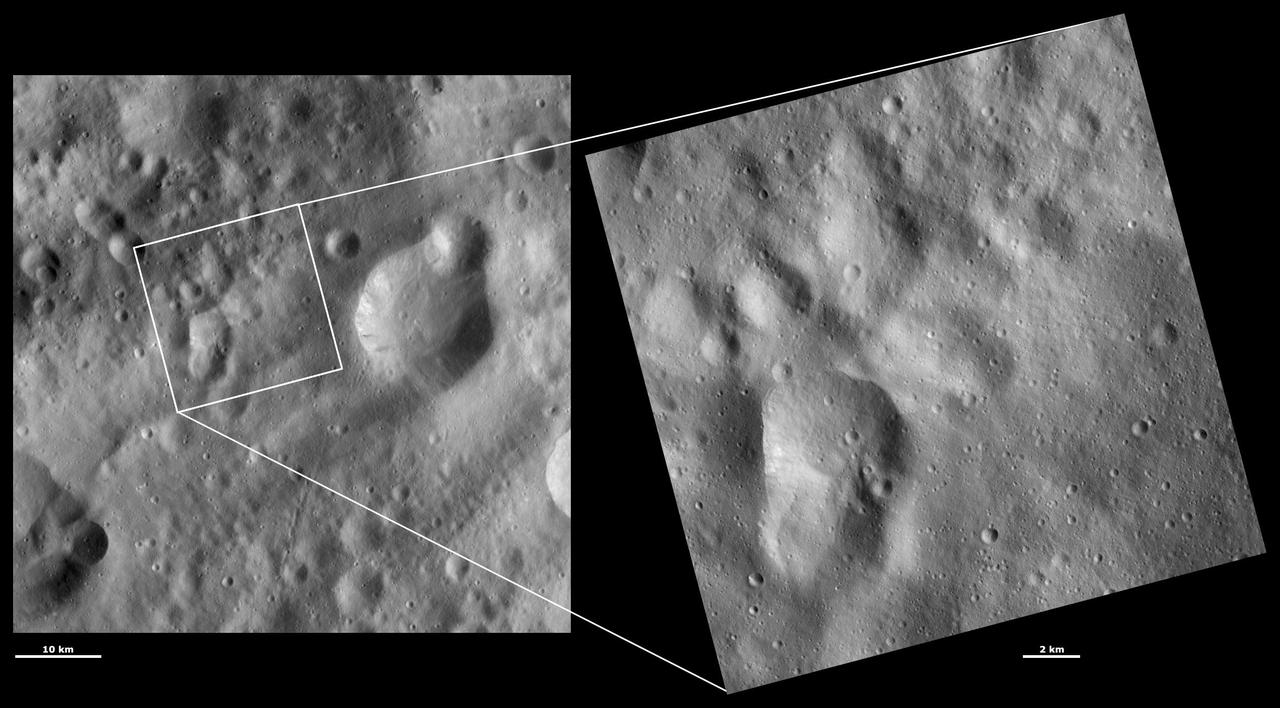
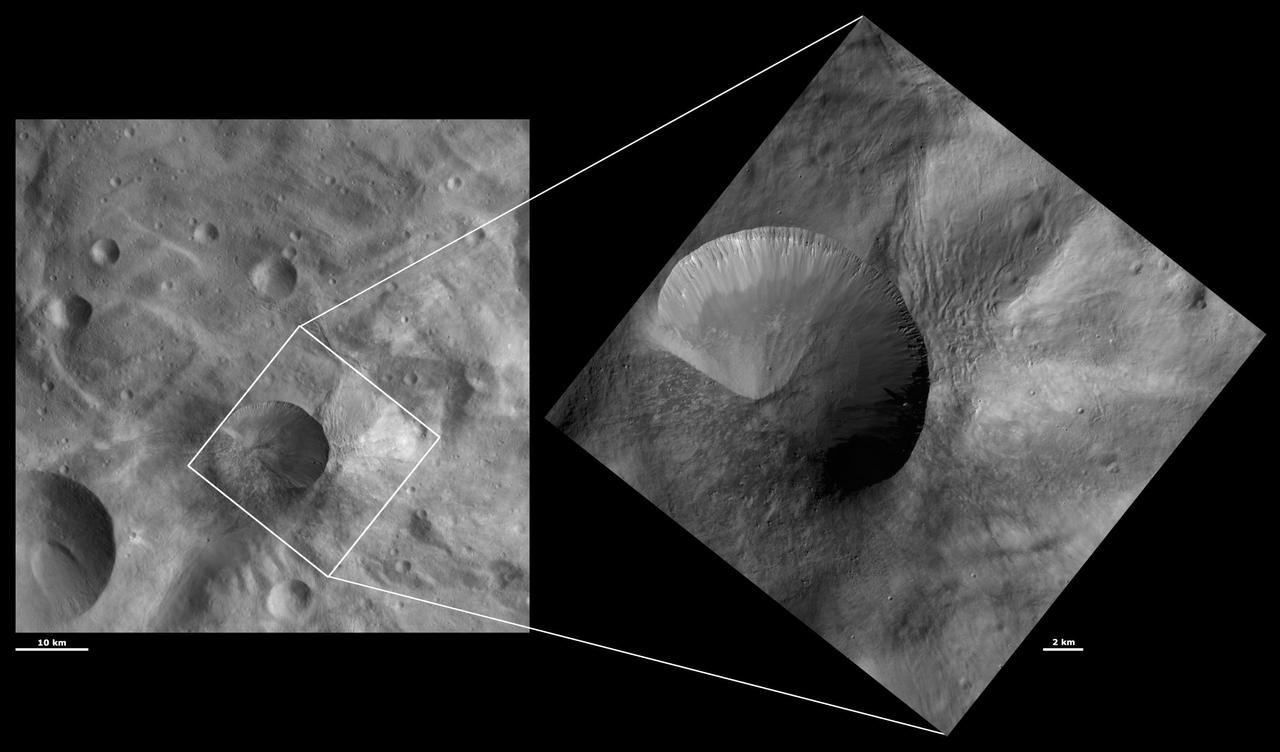
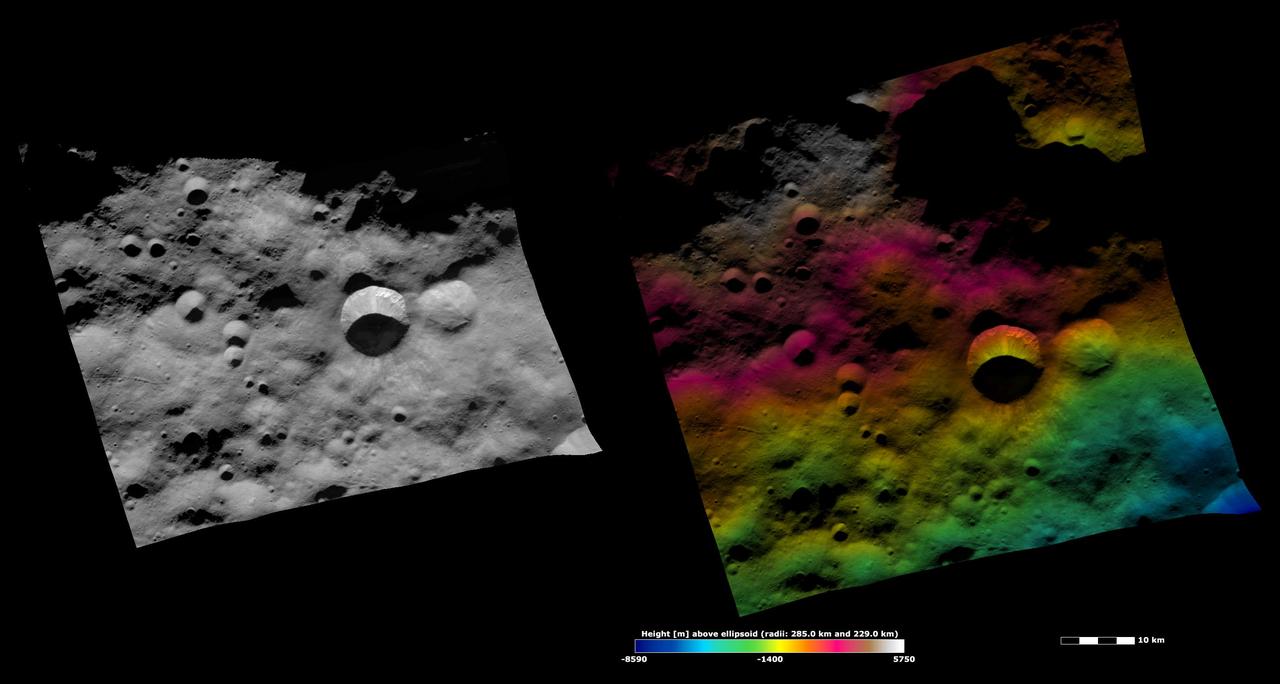
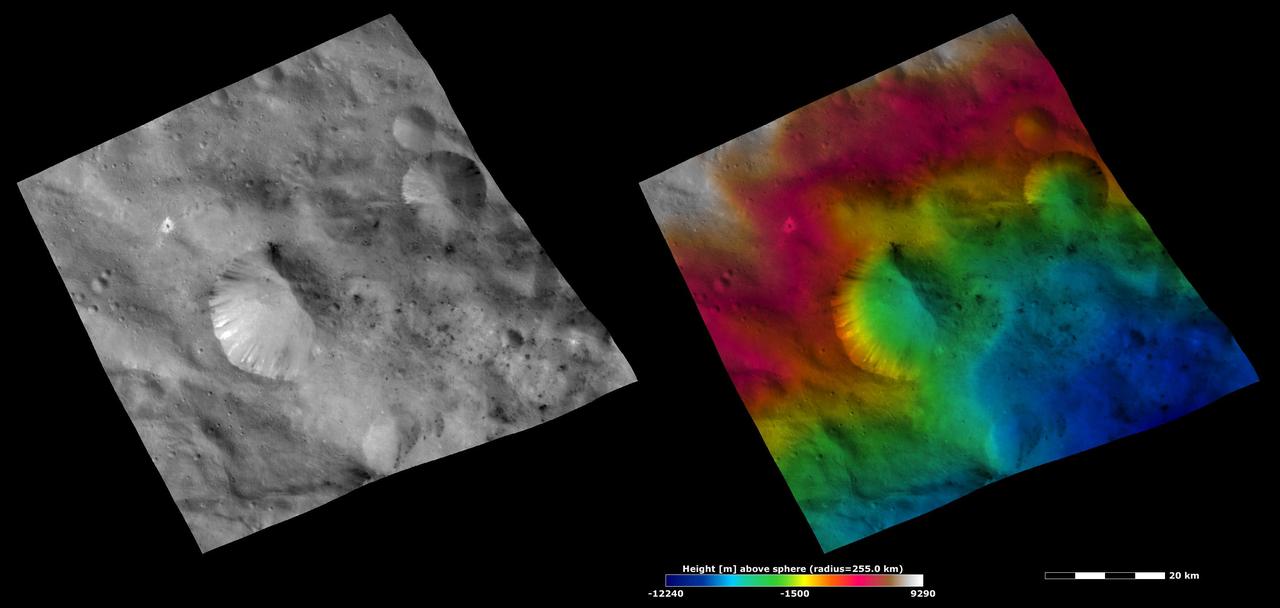
This image from NASA Dawn spacecraft is located in asteroid Vesta Caparronia quadrangle.
Subdued and Fresh Craters
The rim of Ezinu Crater is seen in this view from NASA Dawn spacecraft.
Dawn LAMO Image 66
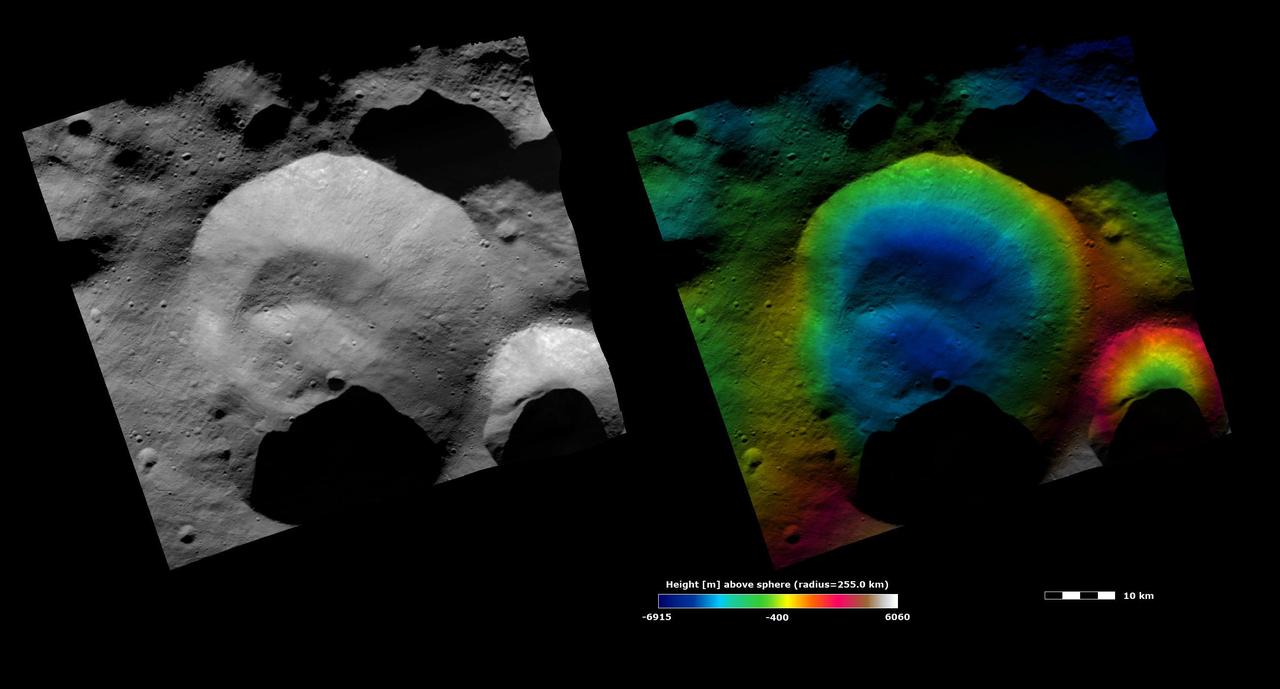
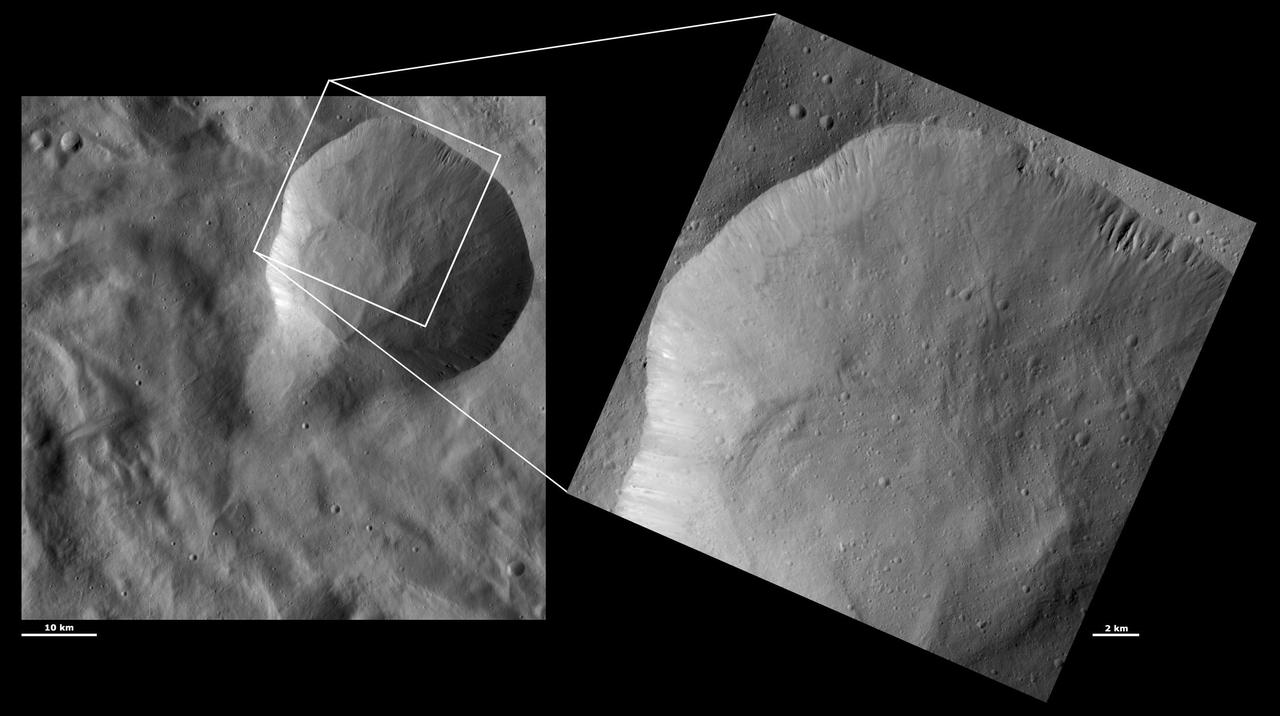
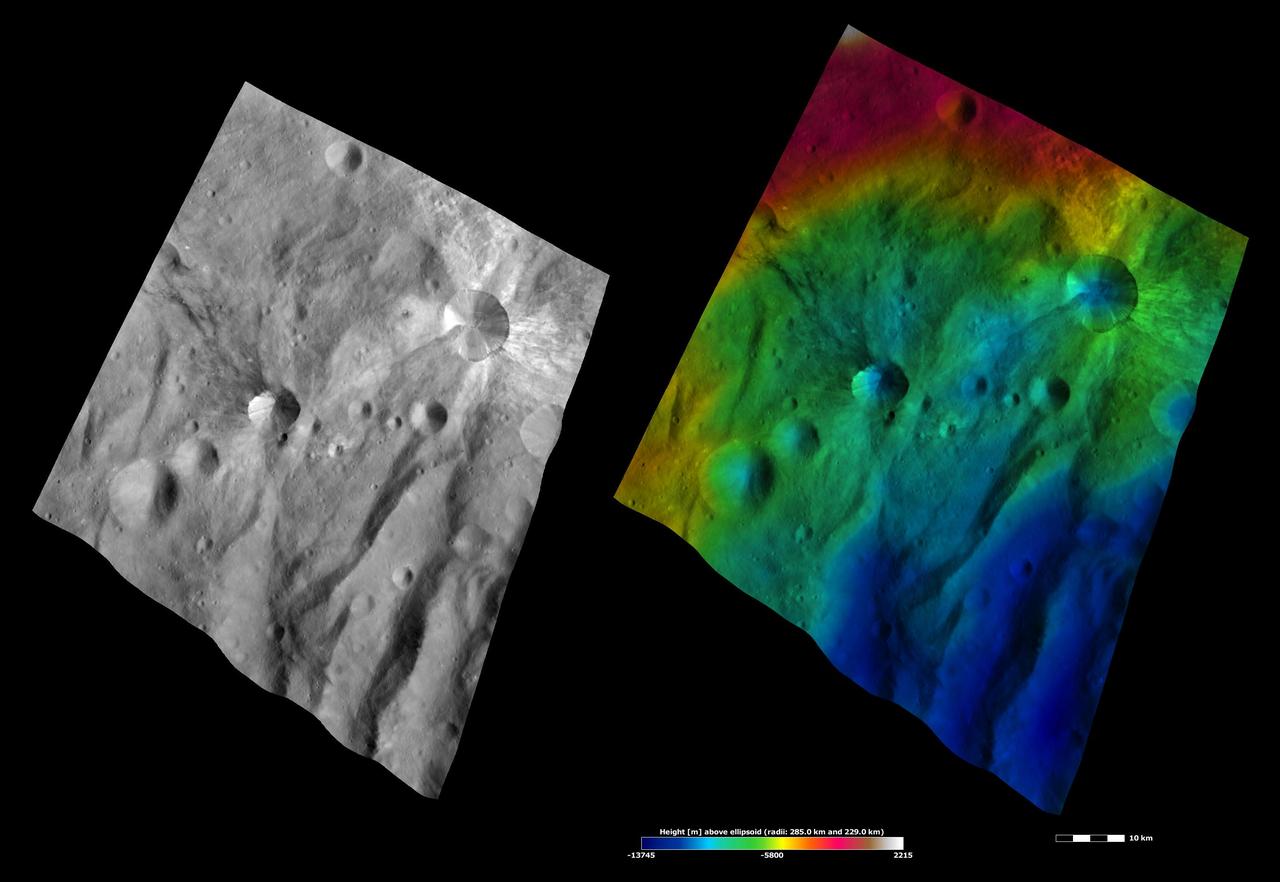
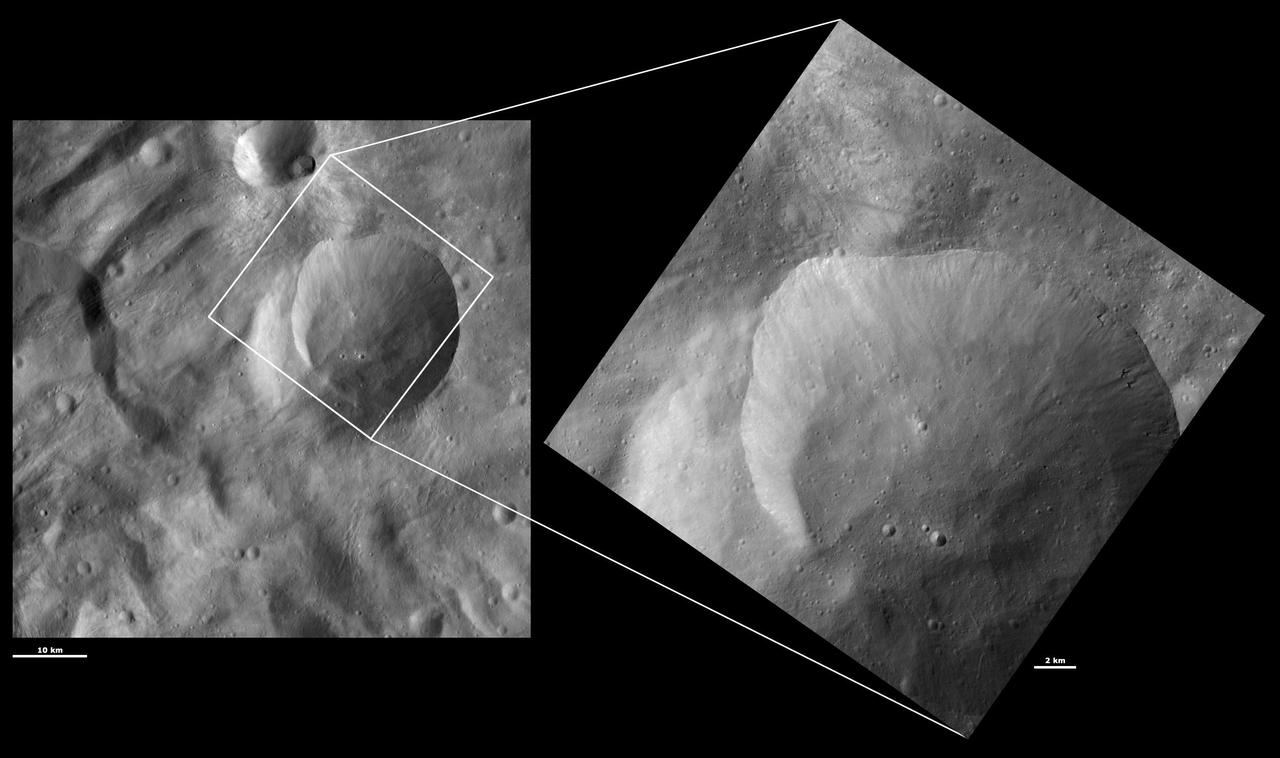
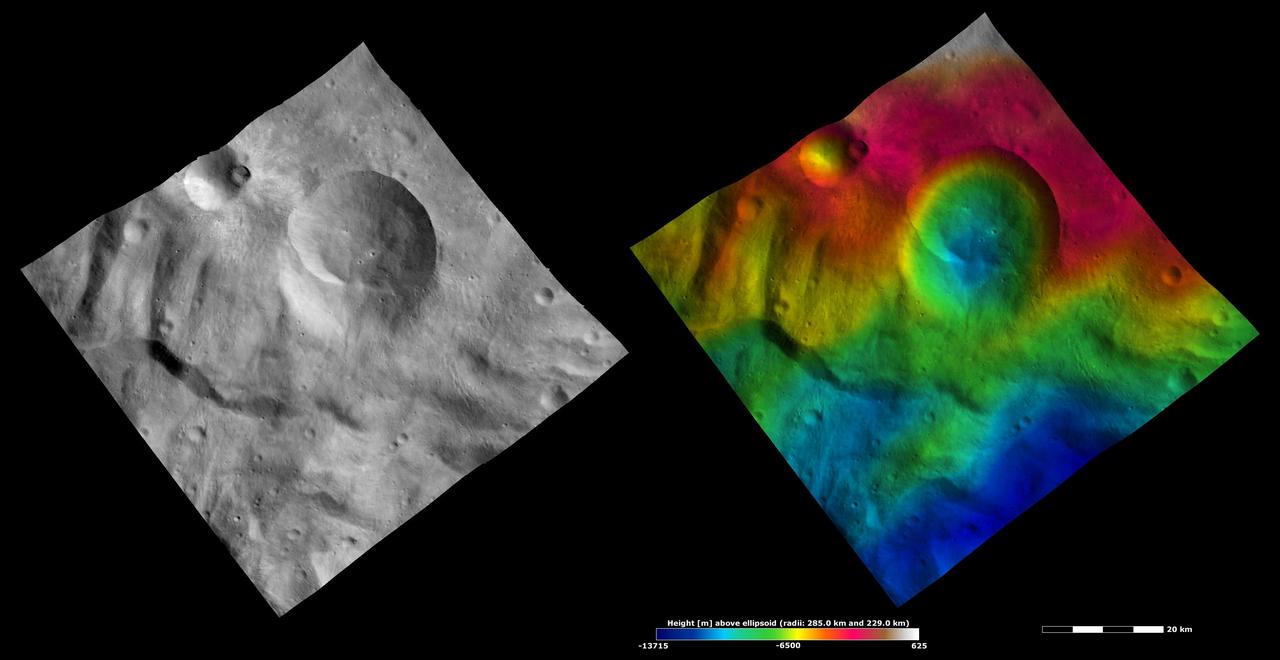
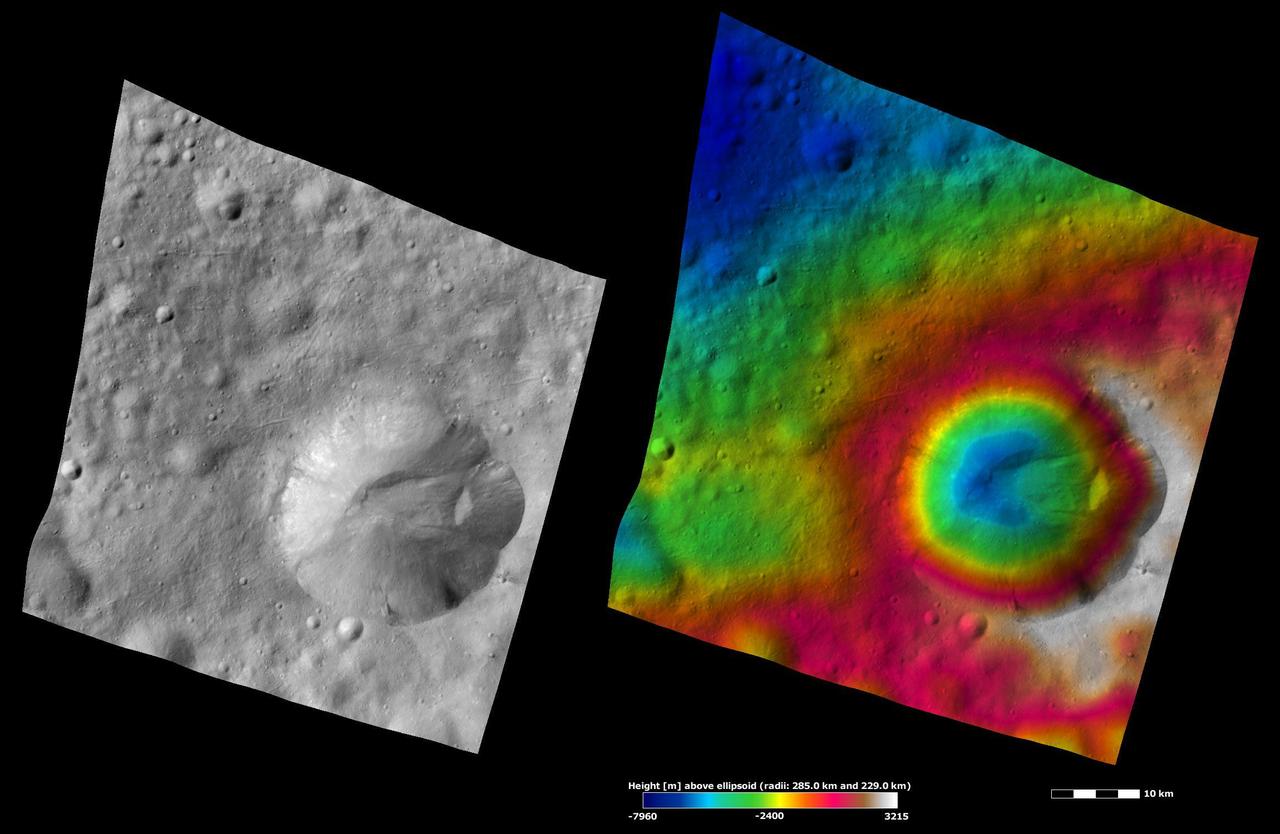
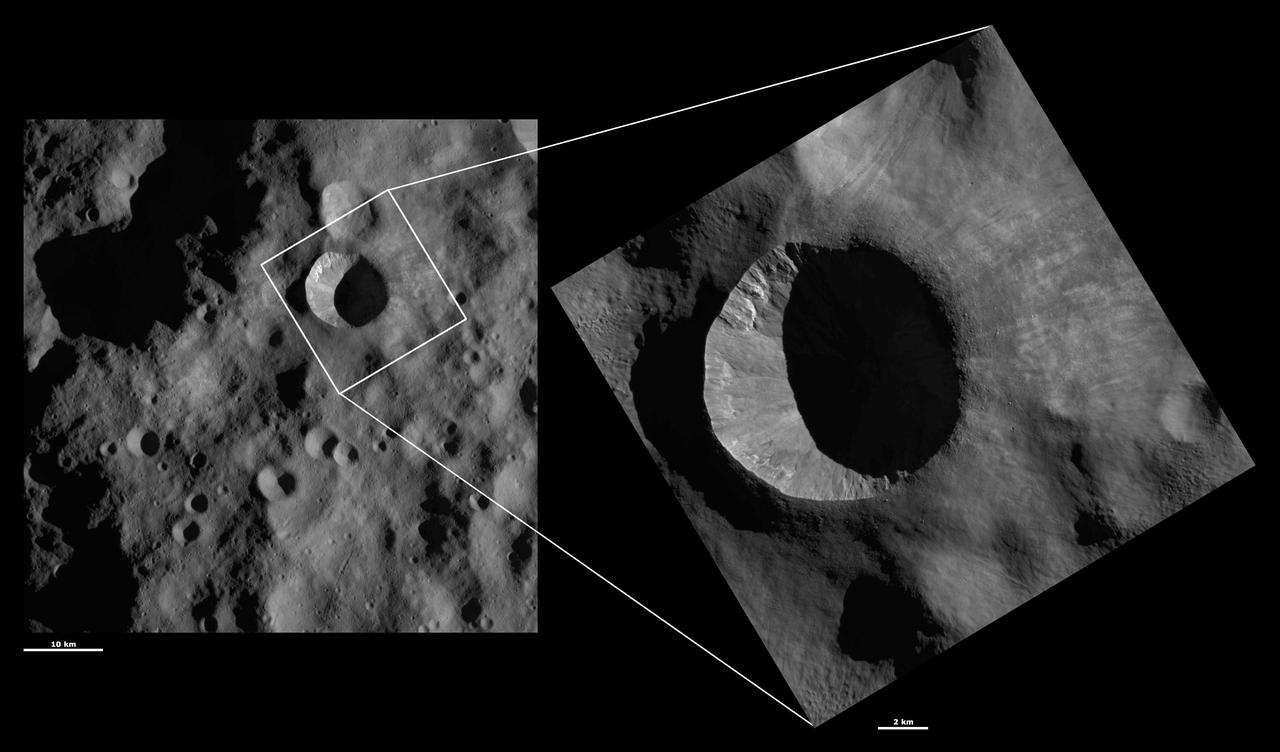
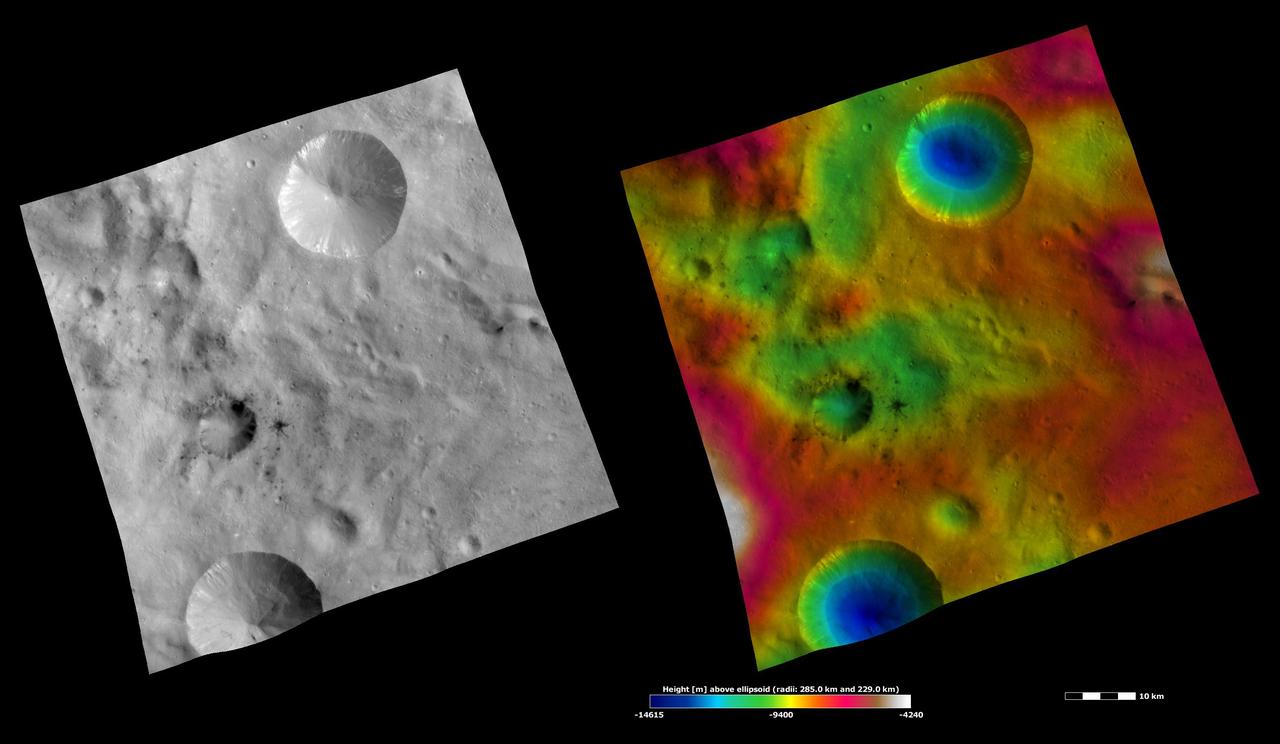
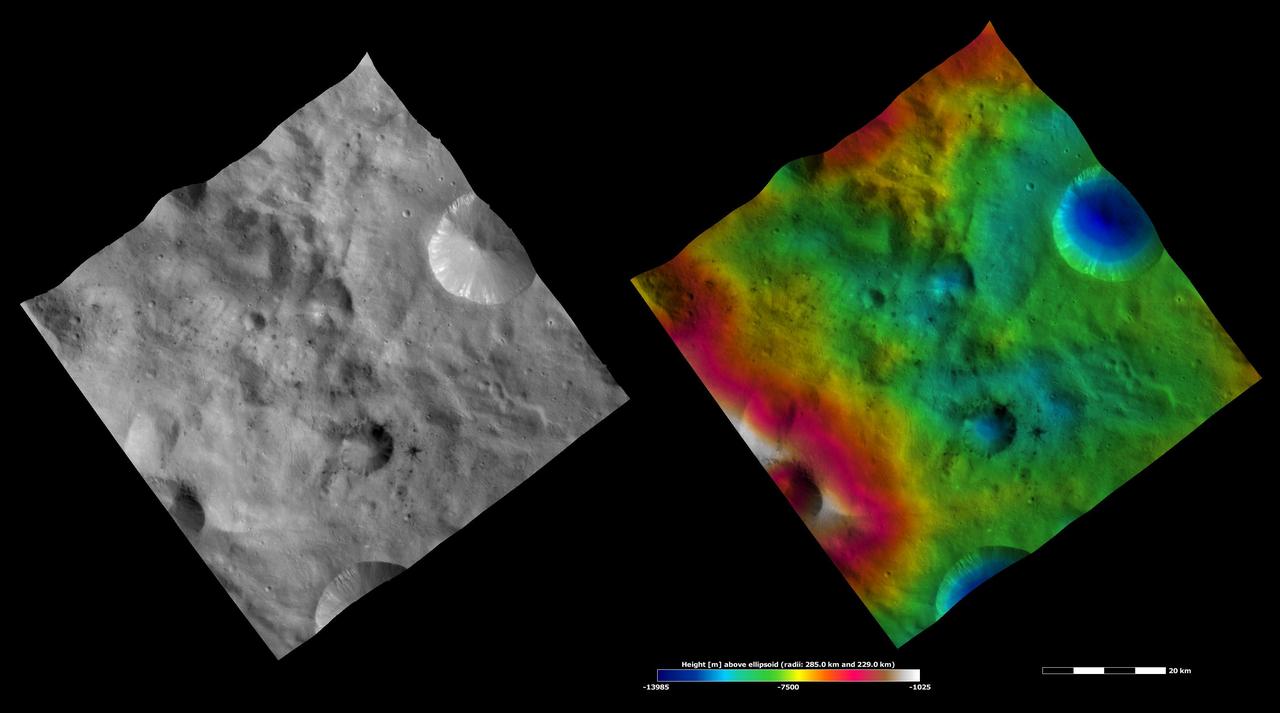
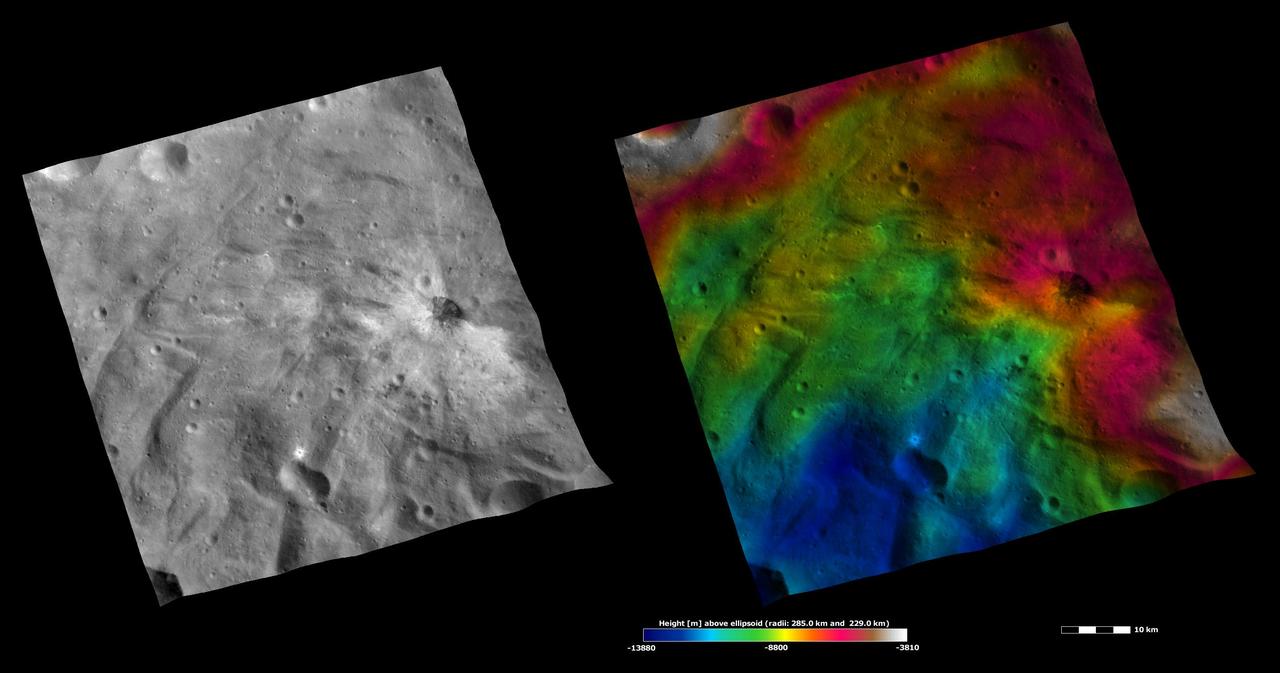
These images from NASA Dawn spacecraft show Caparronia crater on asteroid Vesta.
Topography and Albedo Image of Caparronia Crater
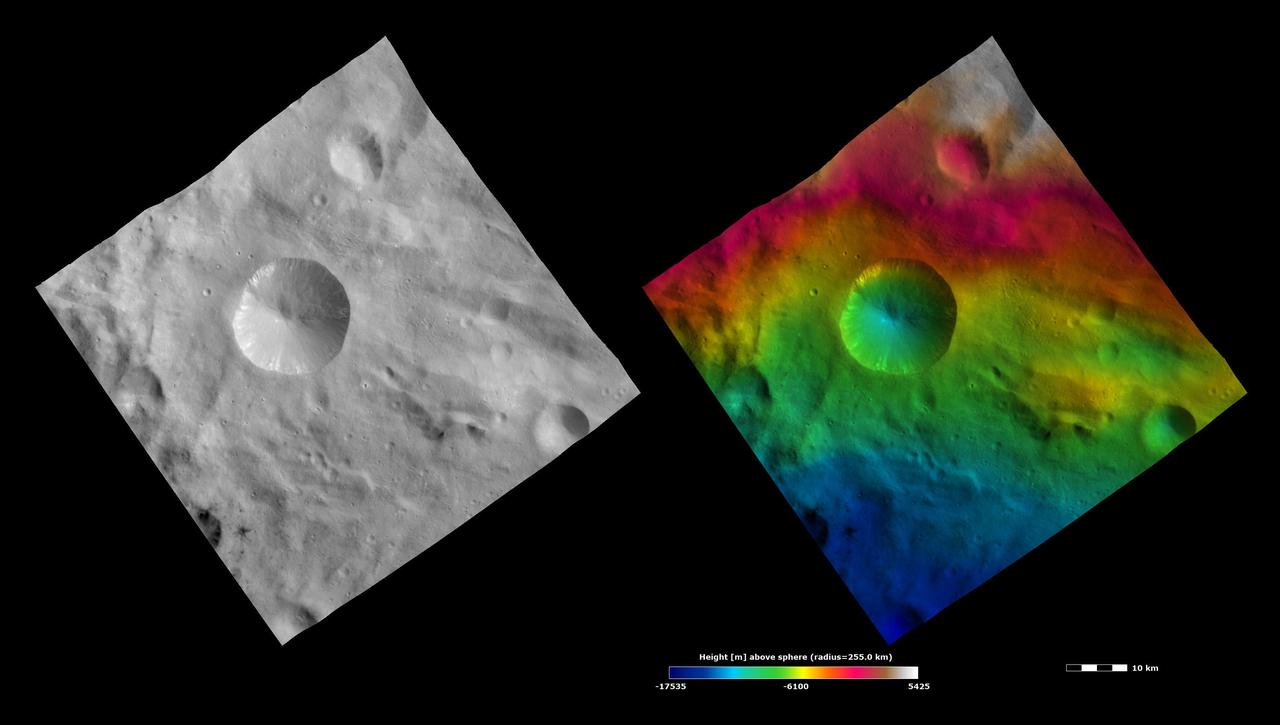
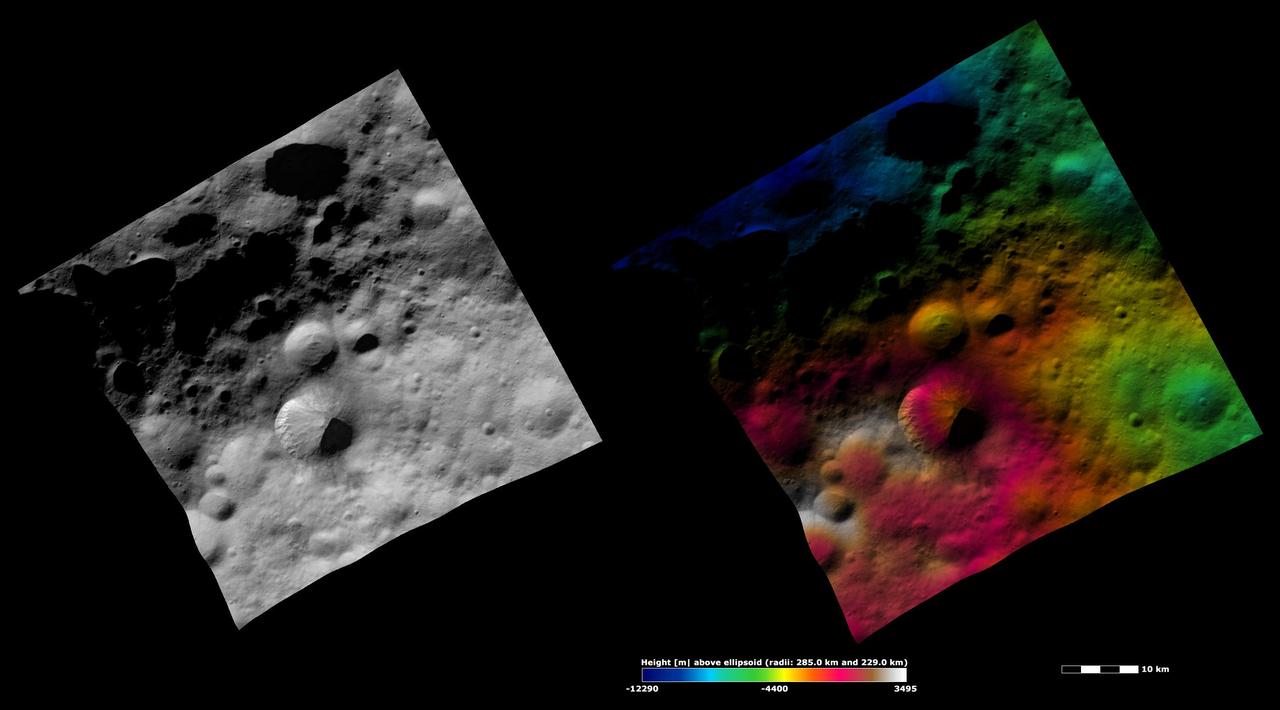
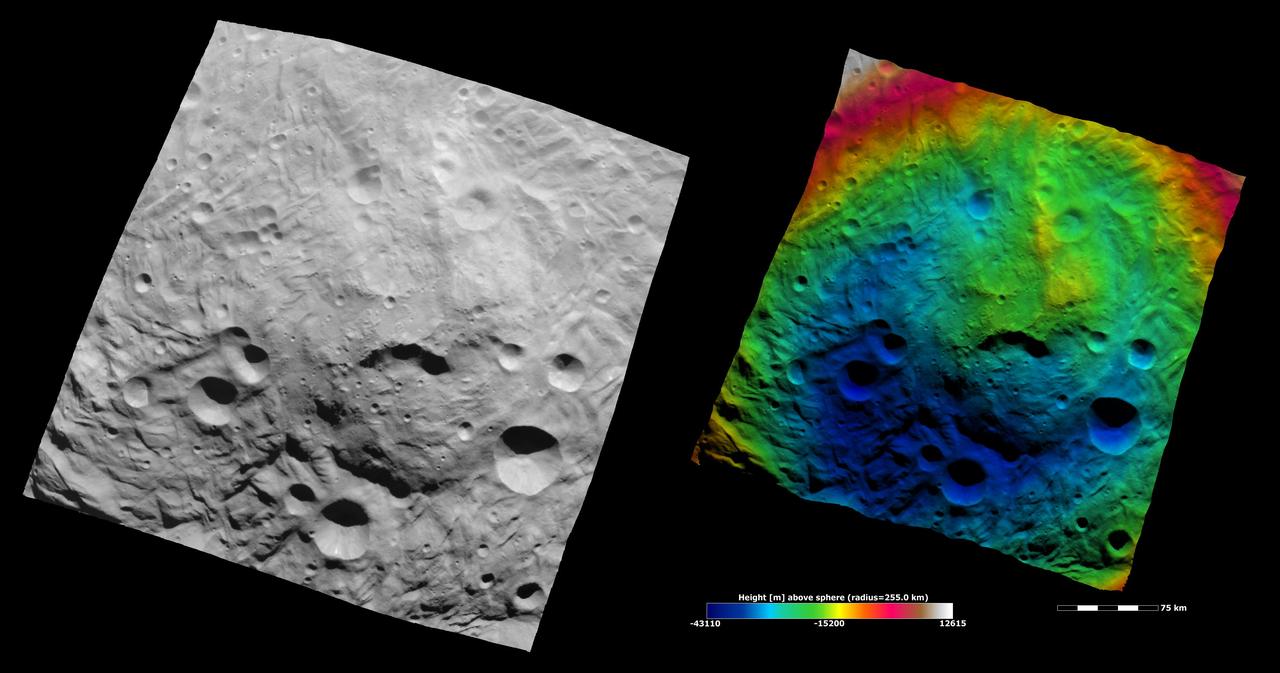
These images from NASA Dawn spacecraft show Sextilia crater on asteroid Vesta.
Topography and Albedo Image of Sextilia Crater
This image from NASA Dawn spacecraft shows Dawn visible and infrared spectrometer image, overlain on top of a framing camera image of the same region on asteroid Vesta.
Small-scale Surface Variations Seen with Dawn Visible and Infrared Spectrometer
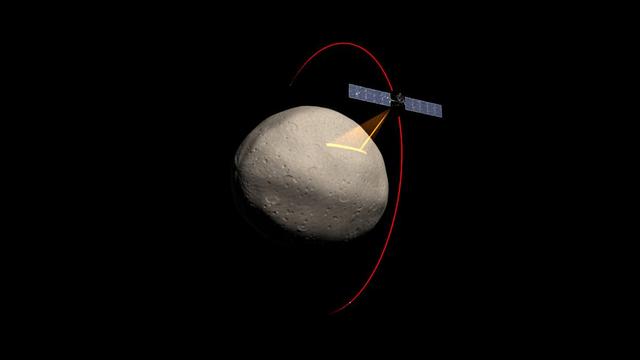
This artist concept shows NASA Dawn spacecraft orbiting the giant asteroid Vesta. The depiction of Vesta is based on images obtained by Dawn framing cameras.
Dawn Orbiting Vesta Artist Concept
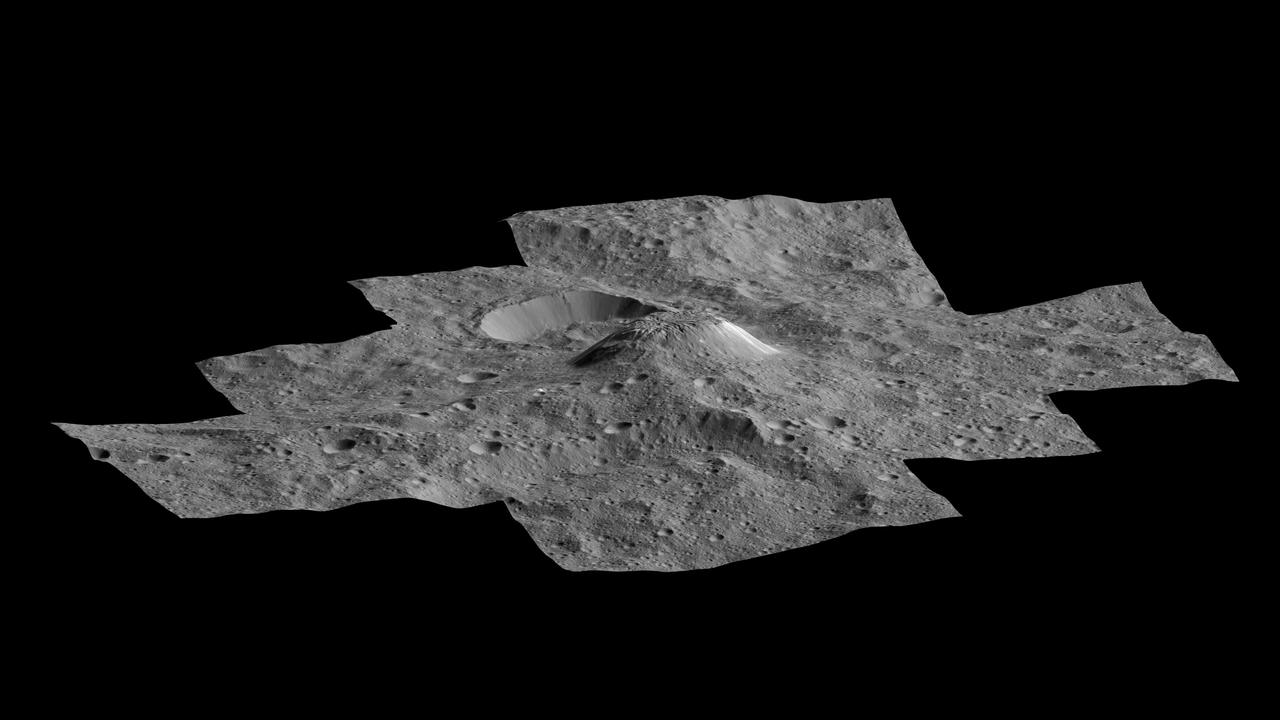
This side-perspective view of Ceres mysterious mountain Ahuna Mons was made with images from NASA Dawn spacecraft. Dawn took these images in December 2015.
Ahuna Mons Perspective View
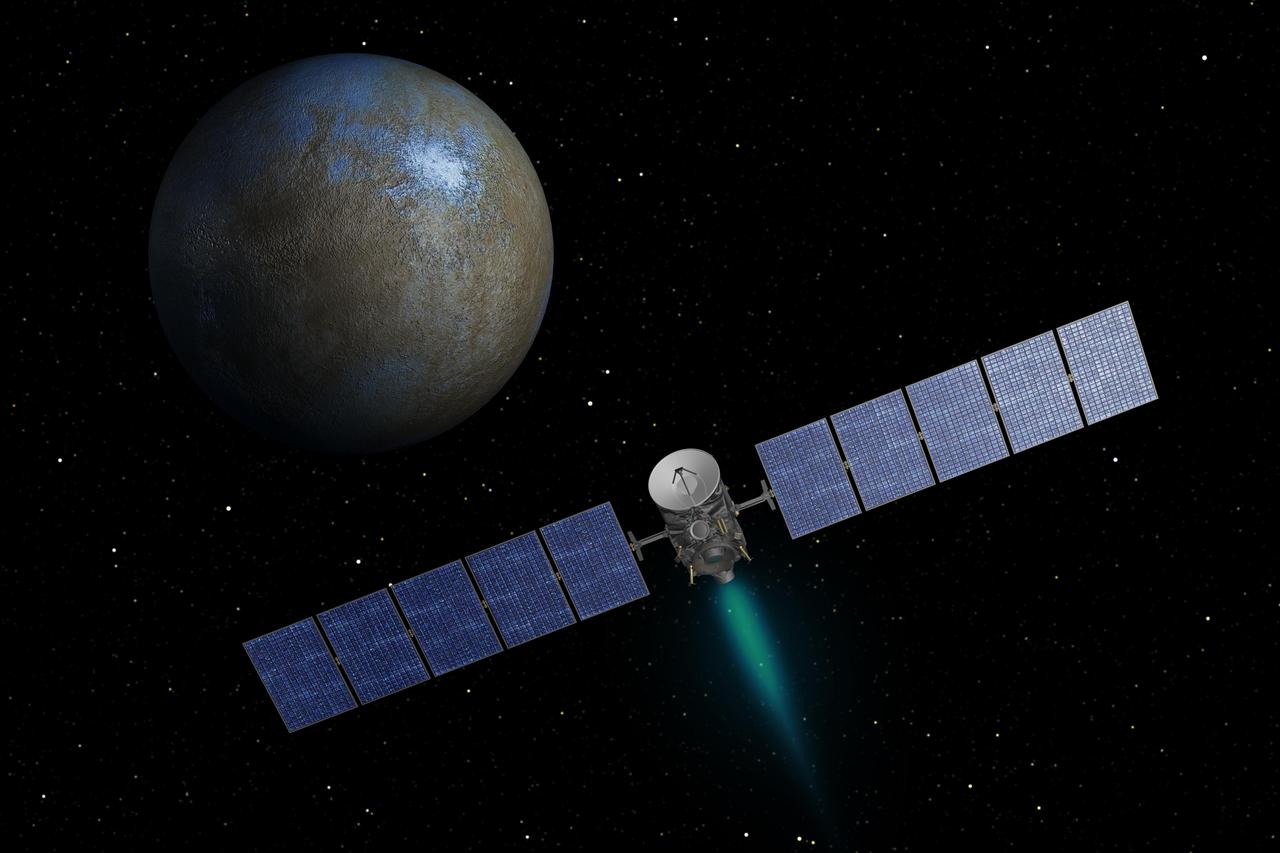
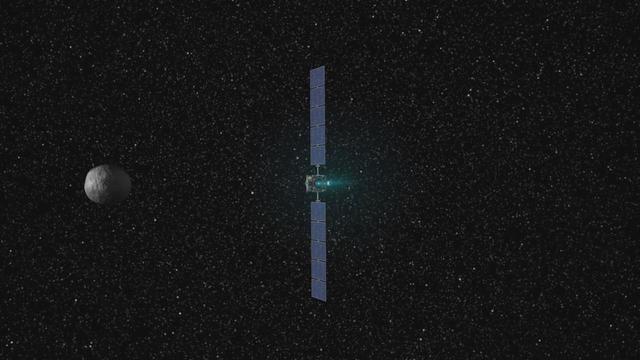
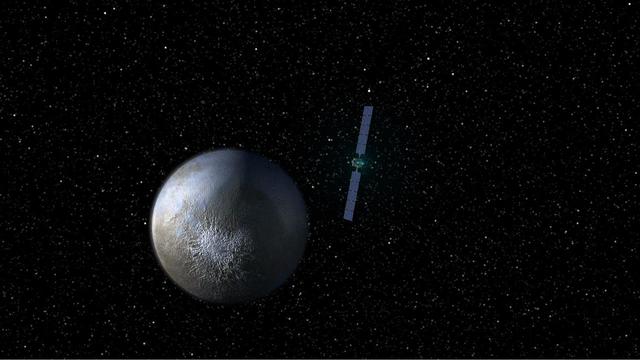
This artist concept shows NASA Dawn spacecraft heading toward the dwarf planet Ceres. When Dawn arrives, it will be the first spacecraft to go into orbit around two destinations in our solar system beyond Earth.
On the Way to Ceres Artist Concept
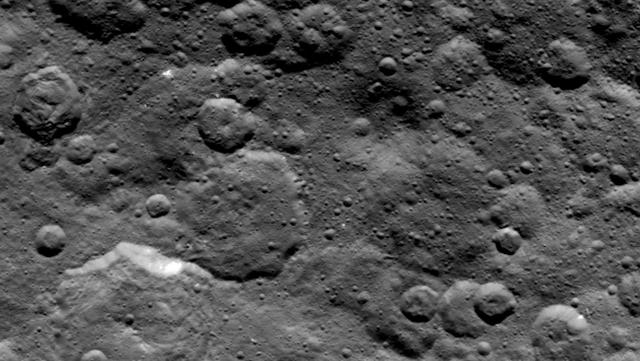
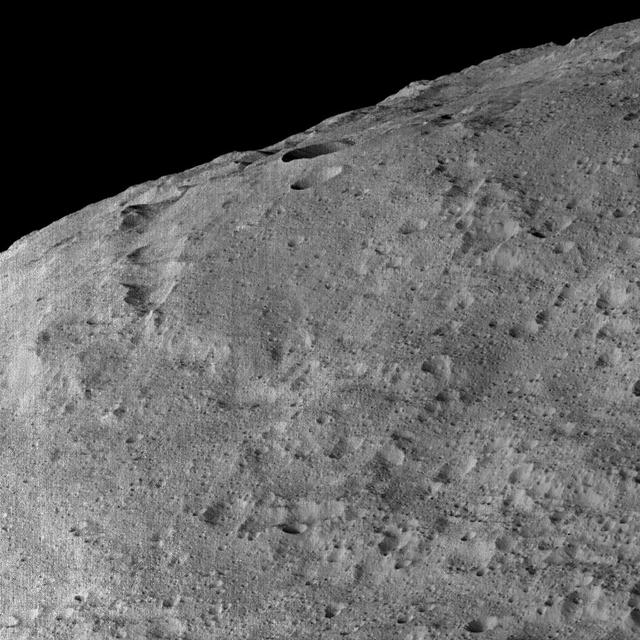
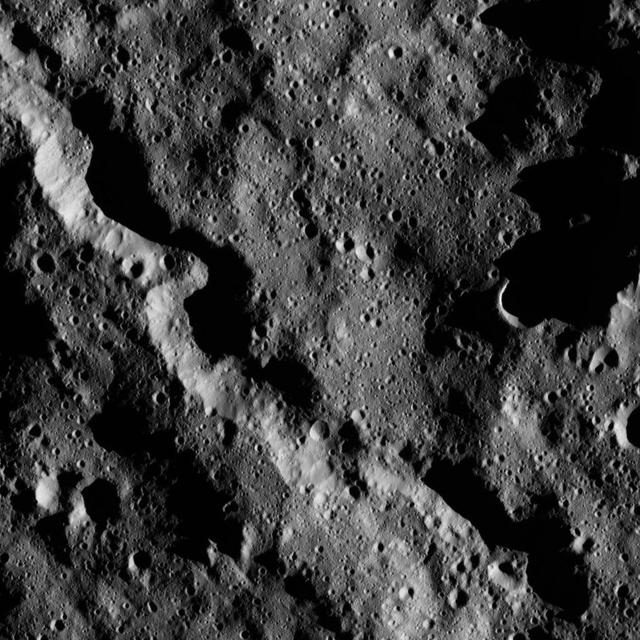
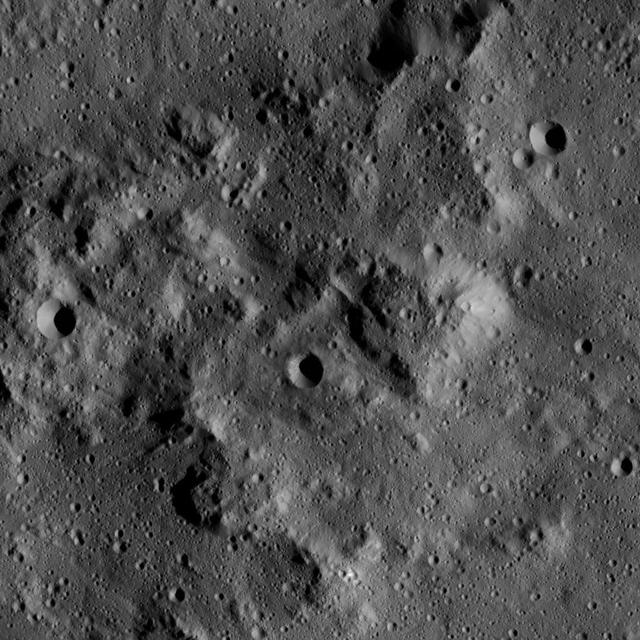
This image, taken by NASA Dawn spacecraft, shows a variety of small craters in the northern hemisphere of Ceres. The majority of Ceres images from Dawn show heavily cratered terrains such as this.
Dawn LAMO Image 50
Tupo Crater on Ceres is seen in this view from NASA Dawn spacecraft. This crater, located in the southern hemisphere of Ceres, was named for the Polynesian god of turmeric. Dawn captured the scene on Dec. 24, 2015.
Dawn LAMO Image 19
This artist concept shows NASA Dawn spacecraft arriving at the dwarf planet Ceres, the most massive body in the asteroid belt. Dawn is the first mission to visit a dwarf planet.
Dawn Arrival at Dwarf Planet Artist Concept
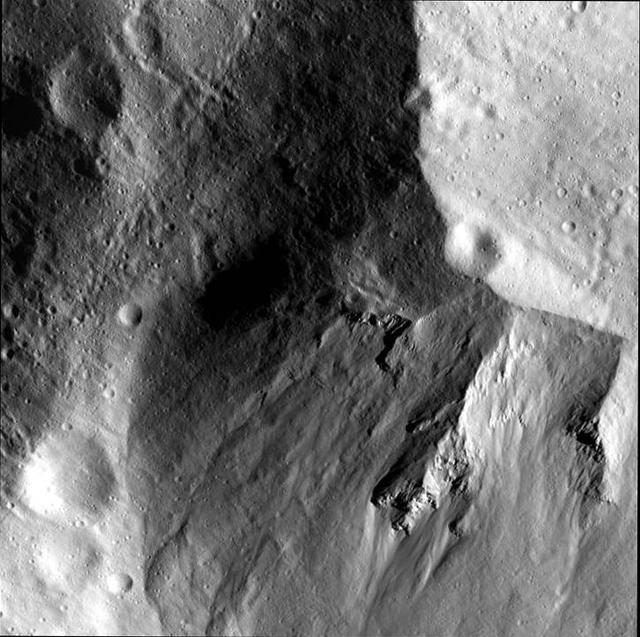
The shadowy outlines of the terrain in Vesta northern region are visible in this image from NASA Dawn spacecraft. The image comes from the last sequence of images Dawn obtained of the giant asteroid Vesta as it departed the giant asteroid.
Shadows of the North
This image shows the first, unprocessed image obtained by NASA Dawn spacecraft of the giant asteroid Vesta in front of a background of stars. It was obtained by Dawn framing camera on May 3, 2011.
Dawn First Glimpse of Vesta -- Unprocessed
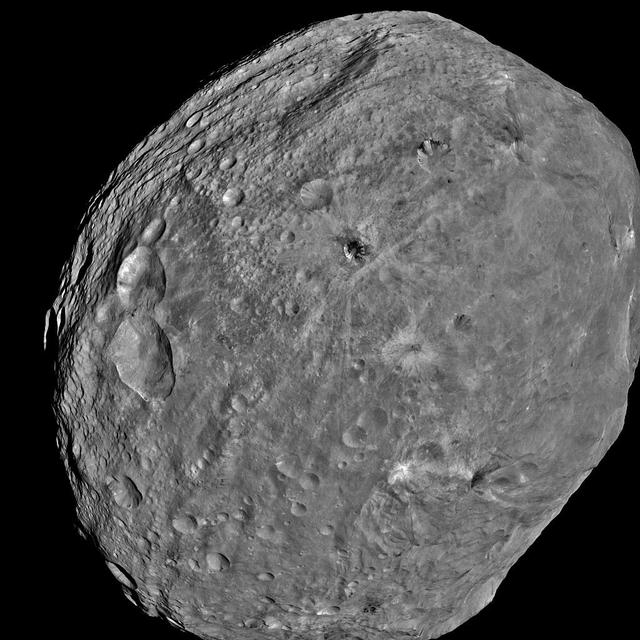
NASA Dawn spacecraft obtained this image of the giant asteroid Vesta with its framing camera on July 24, 2011. Dawn entered orbit around Vesta on July 15, and will spend a year orbiting the body.
Full-Frame Image of Vesta
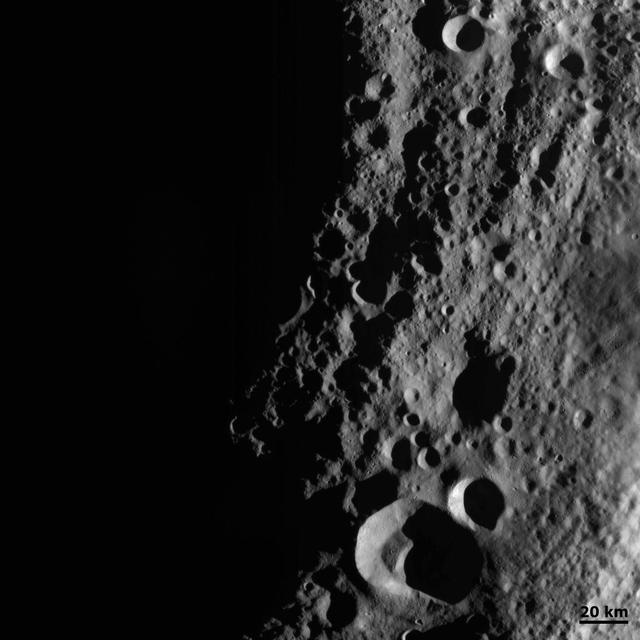
This image from NASA Dawn spacecraft shows a part of Vesta northern hemisphere, which is mostly in darkness. Since Dawn arrival at asteroid Vesta the sun has not illuminated Vesta most northerly latitudes.
Islands in the Darkness
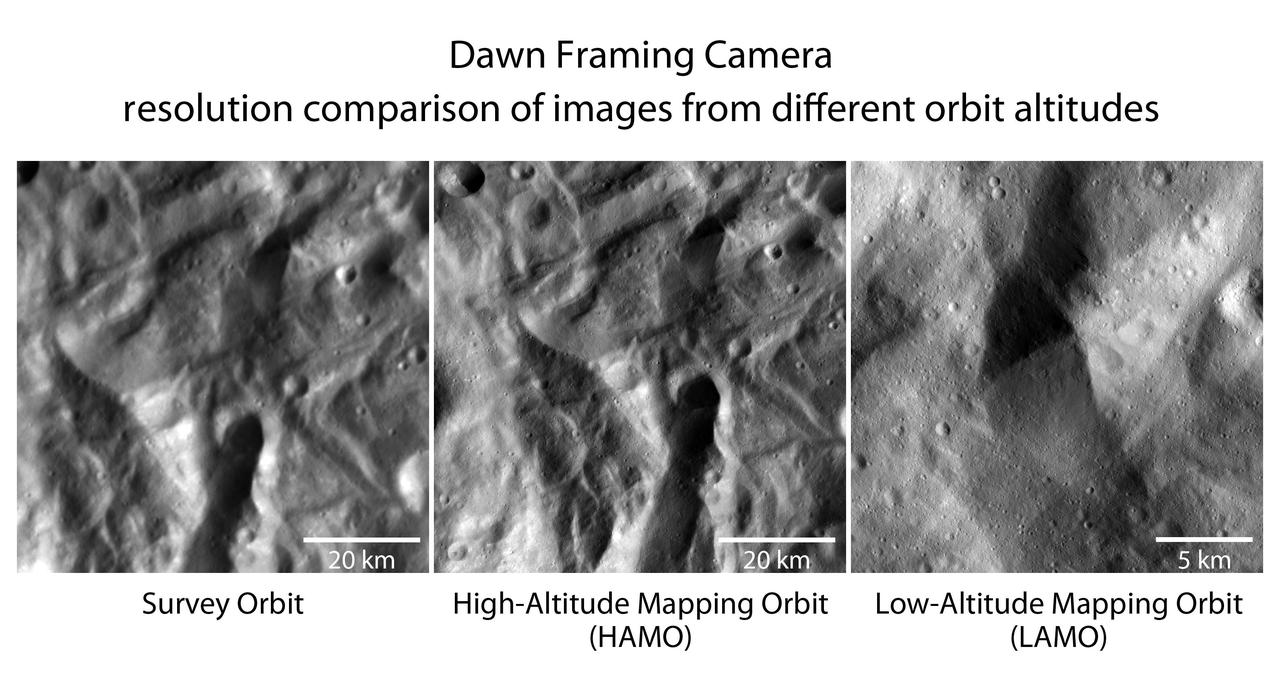
NASA Dawn spacecraft has spiraled closer and closer to the surface of the giant asteroid Vesta. These images were obtained by Dawn framing camera in the three phases of its campaign since arriving at Vesta in mid-2011.
Closer and Closer to the Vesta Surface
NASA Dawn spacecraft flys over dwarf planet Ceres which Dawn has been orbiting for mre than a year, providing us with fascinating views of an alien world.
Dawn LAMO Image 53
These images from NASA Dawn spacecraft are located in asteroid Vesta Oppia quadrangle, just south of Vesta equator; Claudia was chosen to anchor the coordinate system for Vesta used in the scientific investigations of the Dawn team.
HAMO and LAMO Images of Claudia Crater
NASA Dawn spacecraft flys over dwarf planet Ceres which Dawn has been orbiting for mre than a year, providing us with fascinating views of an alien world.
Unveiling Ceres Animation
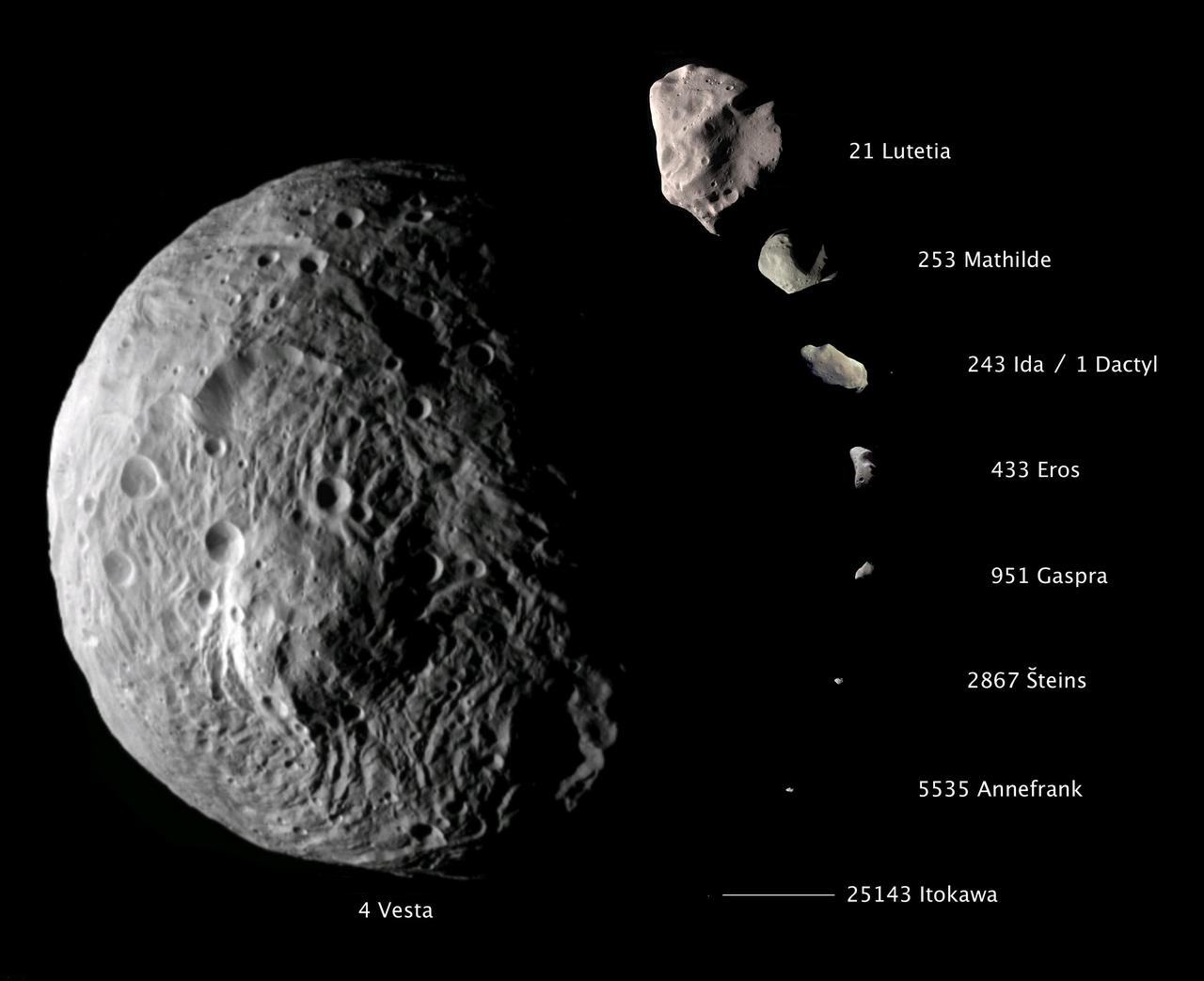
Vesta is the largest asteroid visited by a spacecraft. It is currently being observed by NASA Dawn spacecraft, which has entered orbit around Vesta.
Vesta Sizes Up
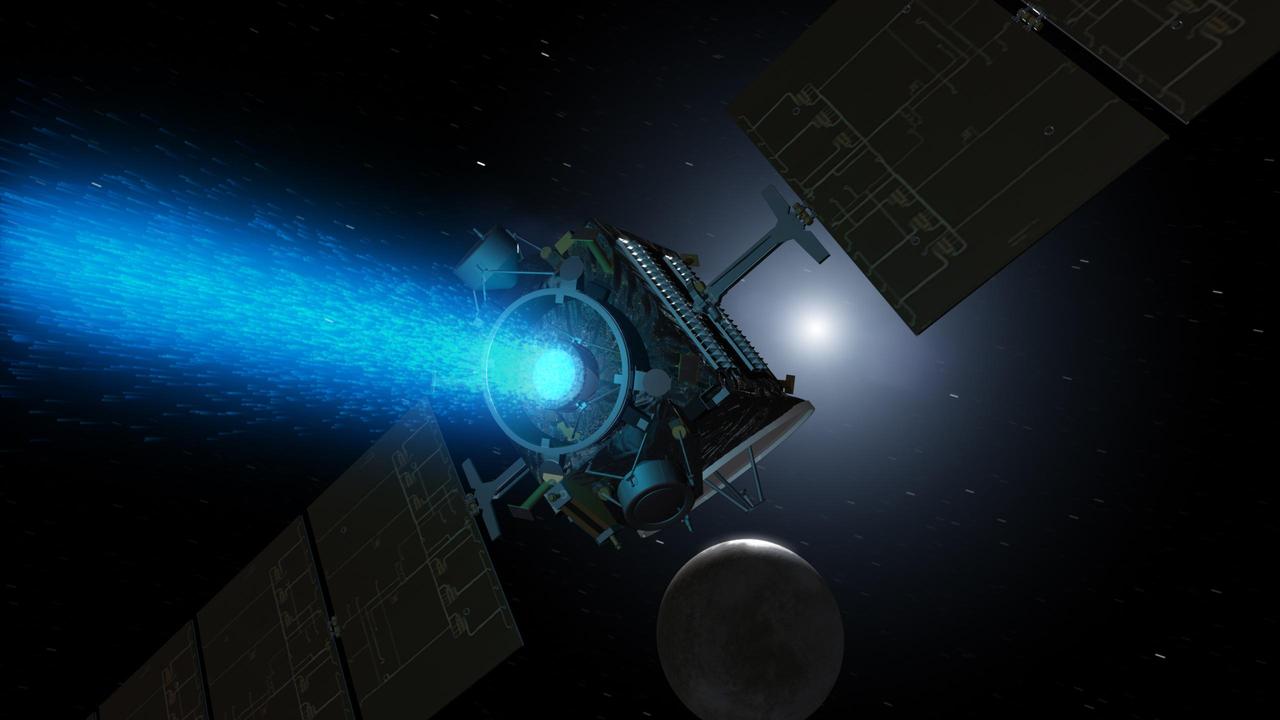
This artist concept shows NASA Dawn spacecraft arriving at the dwarf planet Ceres. Dawn travels through space using a technology called ion propulsion, with ions glowing with blue light are accelerated out of an engine, giving the spacecraft thrust.
Dawn Blue Glow Artist Concept
Craters in the northern hemisphere of dwarf planet Ceres are seen in this image taken by NASA's Dawn spacecraft on June 6, 2015.  This is among the first snapshots from Dawn's second mapping orbit, which is 2,700 miles (4,400 kilometers) in altitude. The resolution is 1,400 feet (410 meters) per pixel.  http://photojournal.jpl.nasa.gov/catalog/PIA19570
Ceres Northern Hemisphere in Survey
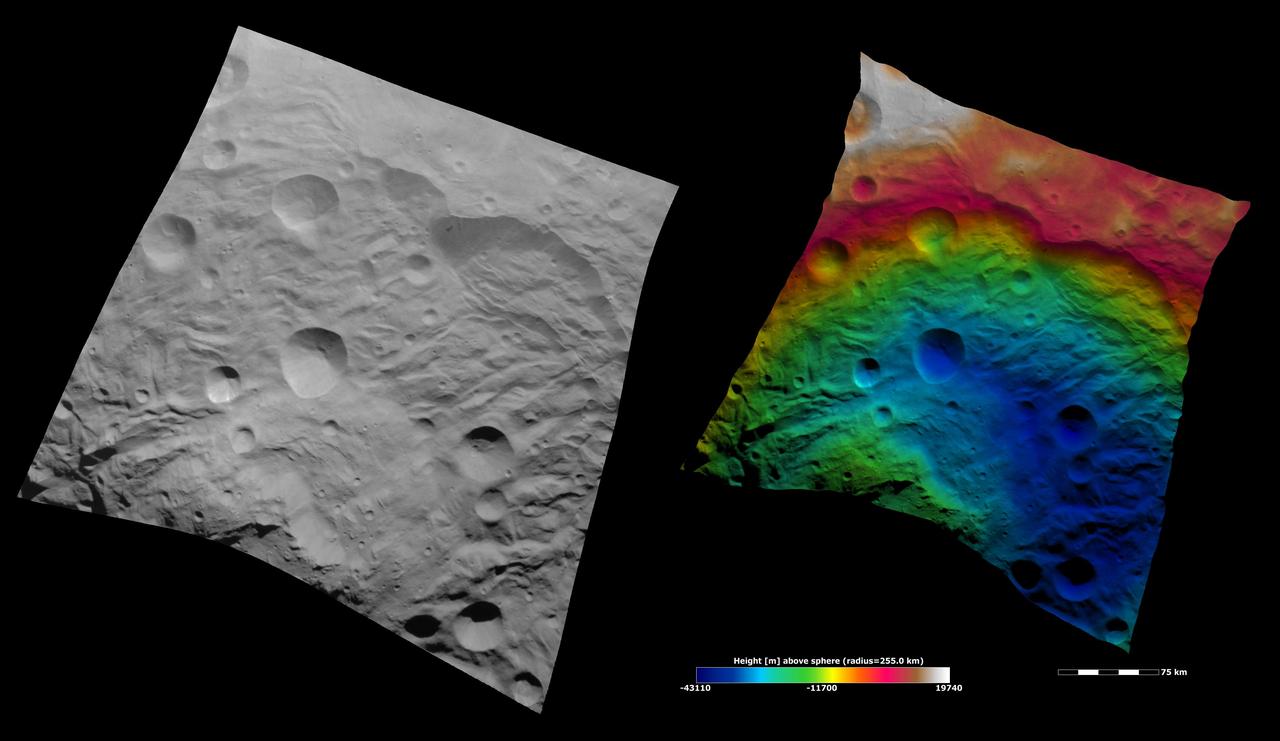
These images from NASA Dawn spacecraft are located in asteroid Vesta Sextilia quadrangle, in Vesta southern hemisphere.
Apparent Brightness and Topography Images of Helena and Laelia Craters
NASA Dawn spacecraft shows the central area of the south polar basin. This view is rotated by approximately 60°.
Topography of Vesta South Polar Region III
These images from NASA Dawn spacecraft are located in asteroid Vesta Lucaria Tholus quadrangle, in Vesta northern hemisphere.
Apparent Brightness and Topography Images of Publicia Crater
NASA Dawn spacecraft obtained this albedo image of asteroid Vesta with its framing camera on August 11th 2011.
Topography of Vesta South Polar Region I
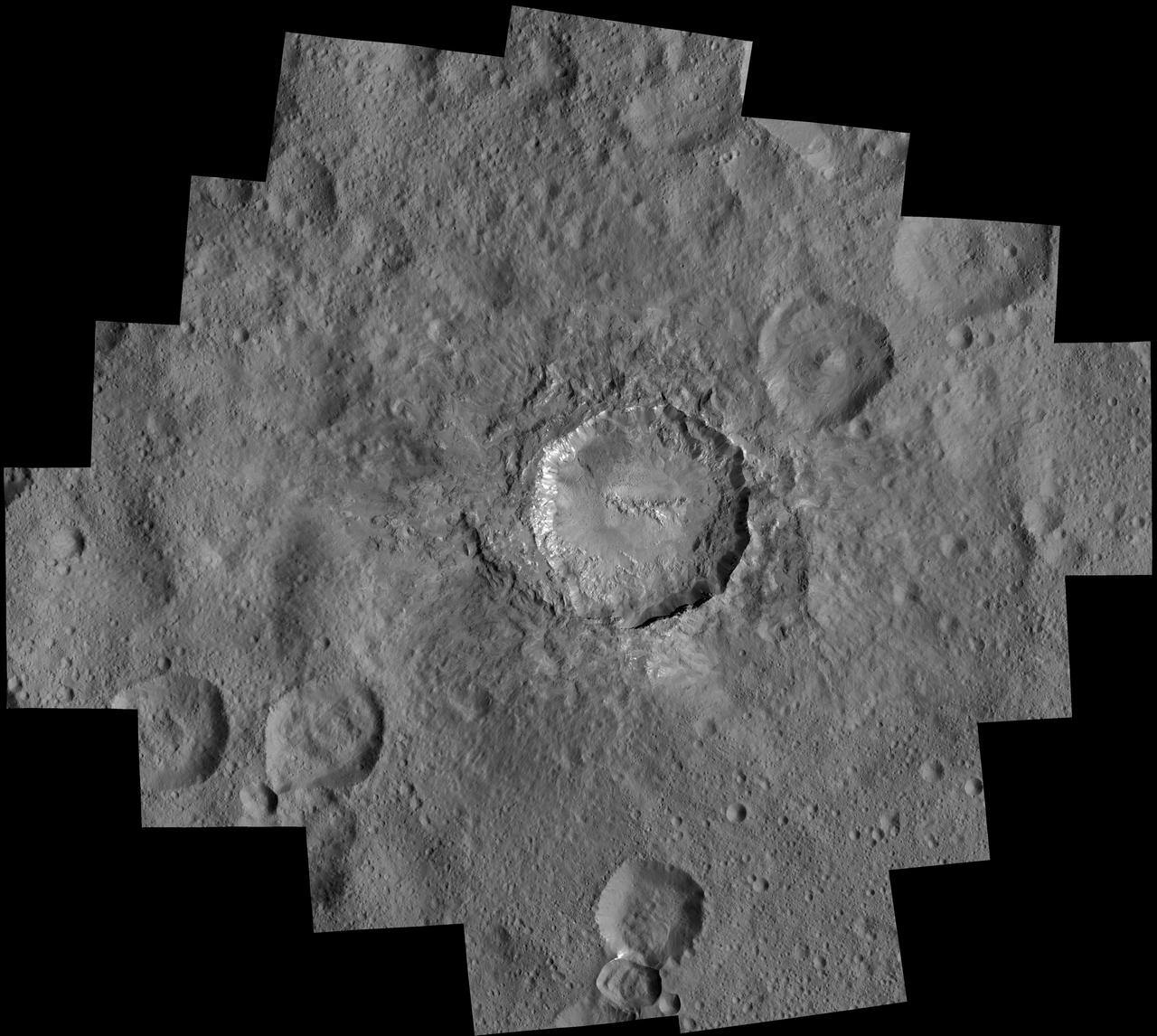
NASA Dawn spacecraft took images of Haulani Crater at a distance of 240 miles 385 kilometers from the surface of Ceres.
Haulani Crater at LAMO
These images from NASA Dawn spacecraft show an old, heavily cratered terrain around asteroid Vesta equator.
Topography and Albedo Image of Ancient Terrain with Ruined Crater
This frame from a movie presents a series of animations showing NASA Dawn spacecraft traveling to and operating at the giant asteroid Vesta.
Animation of Dawn Visit to Vesta
These images from NASA Dawn spacecraft are located in asteroid Vesta Numisia quadrangle, a few degrees below Vesta equator.
Apparent Brightness and Topography Images of Teia Crater
This composite image from NASA Dawn spacecraft is a simulated true color image of asteroid Vesta northern and equatorial regions.
Vesta Northern and Equatorial Regions in Simulated True Color
NASA Dawn spacecraft shows the central area of the south polar basin. This view is rotated by approximately 90°.
Topography of Vesta South Polar Region IV
These images from NASA Dawn spacecraft are located in asteroid Vesta Tuccia quadrangle, in Vesta southern hemisphere.
HAMO and LAMO Images of Antonia Crater
This is the first image obtained by NASA Dawn spacecraft after successfully entering orbit around Vesta.
Latest Image of Vesta captured by Dawn on July 17, 2011
This image, taken by NASA Dawn spacecraft, shows a knobby surface on Ceres. The region is adjacent to the giant impact crater Urvara.
Dawn LAMO Image 27
These images from NASA Dawn spacecraft are located in Vesta Numisia quadrangle, in Vesta northern hemisphere.
Fabia Crater, Apparent Brightness and Topography Images
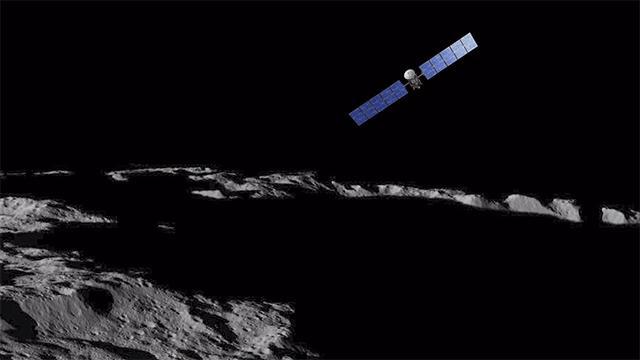
This image shows NASA Dawn spacecraft flying above Vesta, based on an artist concept of the surface of the giant asteroid.
Animation of Dawn Scanning and Flying Above Vesta Surface
These images from NASA Dawn spacecraft are located in asteroid Vesta Sextilia quadrangle, in Vesta southern hemisphere.
Apparent Brightness and Topography Images of Laelia Crater
These images from NASA Dawn spacecraft are located in asteroid Vesta Pinaria quadrangle, in Vesta southern hemisphere.
HAMO and LAMO Images of Aquilia Crater
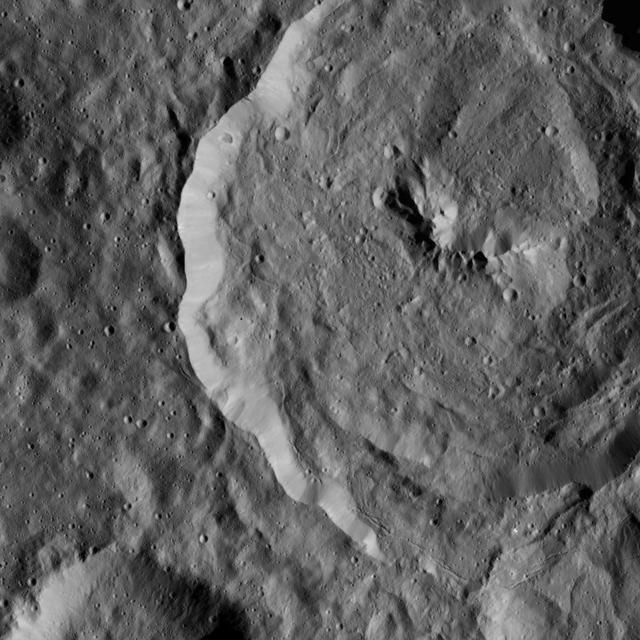
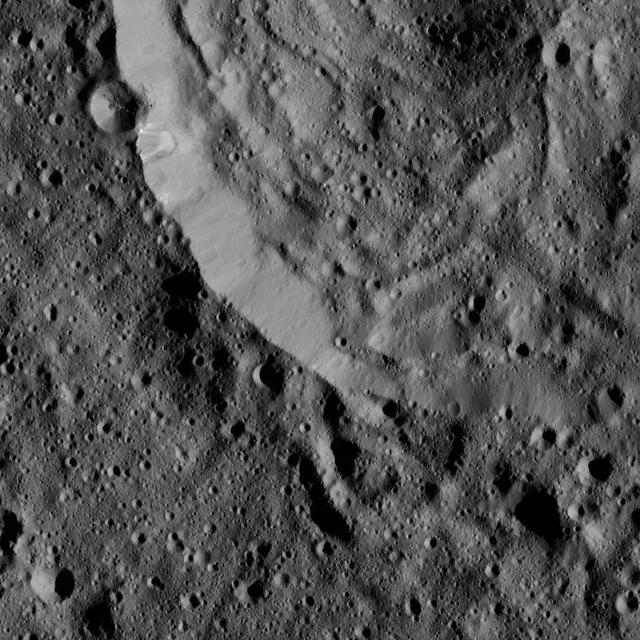
This Ceres scene captured by NASA Dawn spacecraft shows an ancient crater wall that has been disrupted, possibly by a landslide.
Dawn LAMO Image 100
These images from NASA Dawn spacecraft are located in Vesta Sextilia quadrangle, in asteroid Vesta southern hemisphere.
Apparent Brightness and Topography Images of Helena Crater
These images from NASA Dawn spacecraft are located in asteroid Vesta Tuccia quadrangle, in Vesta southern hemisphere.
Apparent Brightness and Topography Images of Eusebia Crater
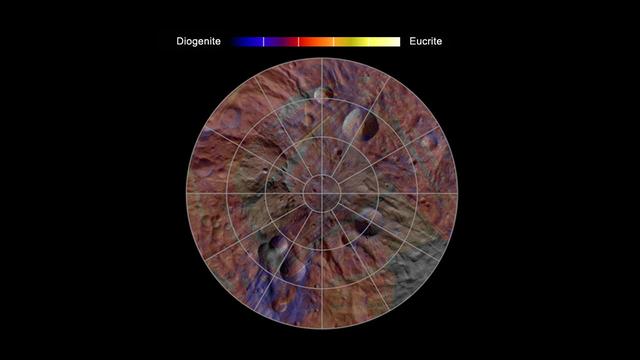
Scientists believe a large number of the meteorites that are found on Earth originate from the protoplanet Vesta. This image is from NASA Dawn spacecraft.
Possible Piece of Vesta
This mosaic depicts a portion of asteroid Vesta imaged by NASA Dawn spacecraft where pockets of bright materials are visible.
Map of Bright Areas on Vesta
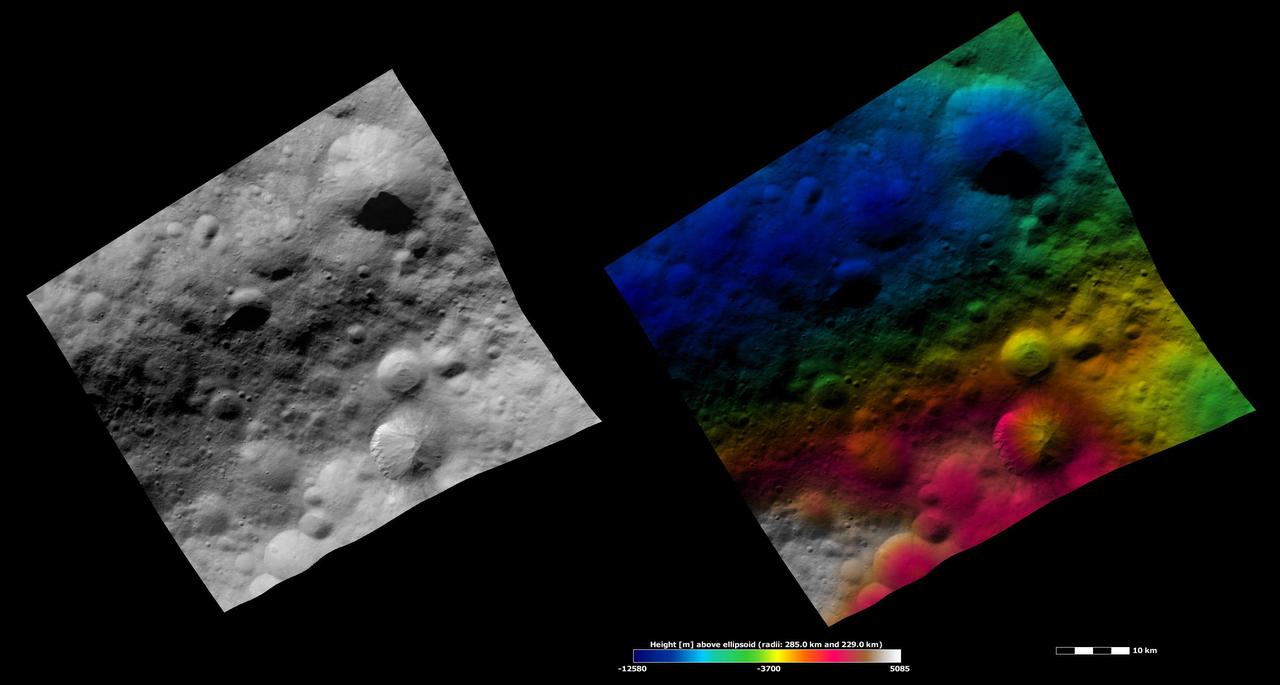
These apparent brightness and topography images from NASA Dawn spacecraft are located in asteroid Vesta Floronia quadrangle, in Vesta northern hemisphere.
Lepida Crater, Apparent Brightness and Topography Images
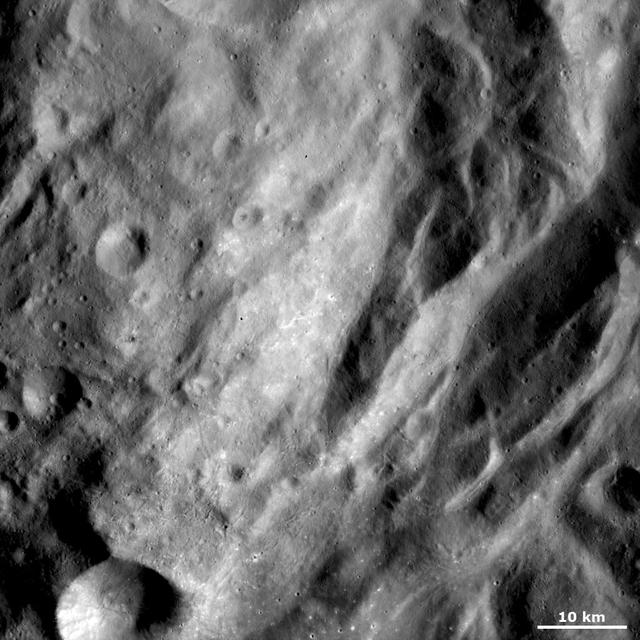
This image from NASA Dawn spacecraft shows some of the undulating terrain in asteroid Vesta southern hemisphere.
Undulating Terrain in Vesta Southern Hemisphere
These images from NASA Dawn spacecraft are located in asteroid Vesta Tuccia quadrangle, in Vesta southern hemisphere.
Apparent Brightness and Topography Images of Antonia Crater
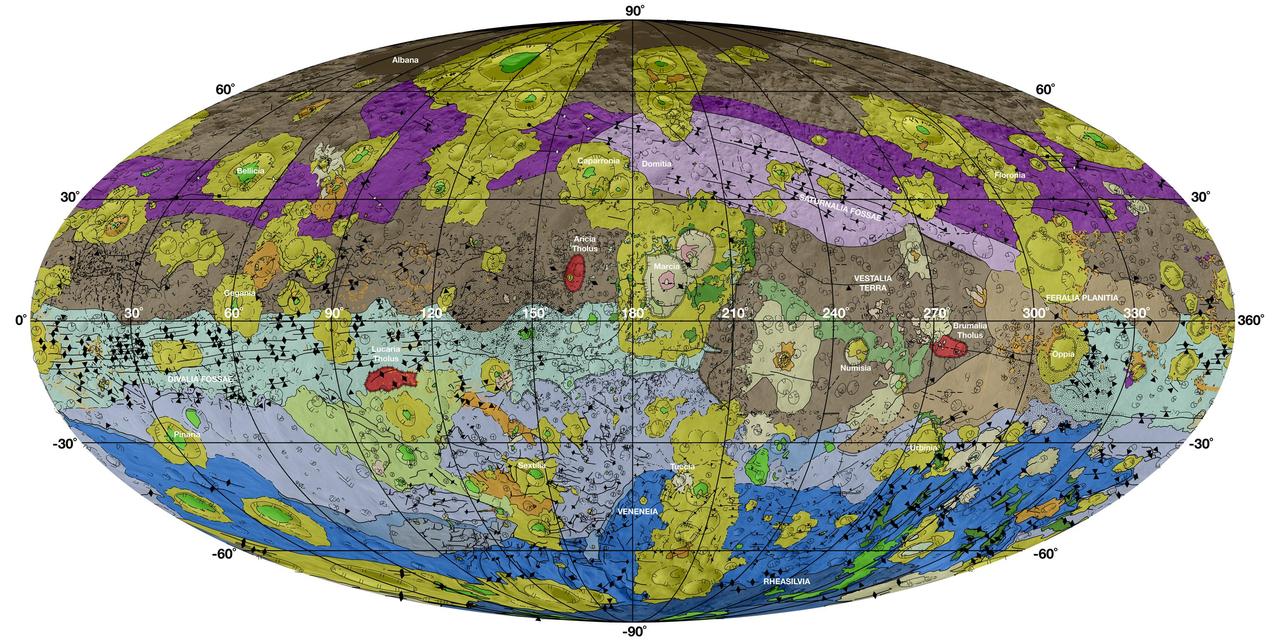
This high-resolution geological map of Vesta is derived from NASA Dawn spacecraft data.
Geological Map of Vesta
This view from NASA Dawn spacecraft shows a sinuous canyon in the southern hemisphere of Ceres, south of Yalode Crater.
Dawn LAMO Image 56
This image from NASA Dawn spacecraft shows the crater Numisia, located just south of the equator in the Numisia quadrangle on asteroid Vesta.
Bright Material at Numisia Crater
These images from NASA Dawn spacecraft are located in asteroid Vesta Numisia quadrangle, in Vesta southern hemisphere.
Apparent Brightness and Topography Images of Drusilla Crater
NASA Dawn spacecraft shows Oxo Crater is unique because of the relatively large lump in its crater rim.
Oxo Crater at LAMO
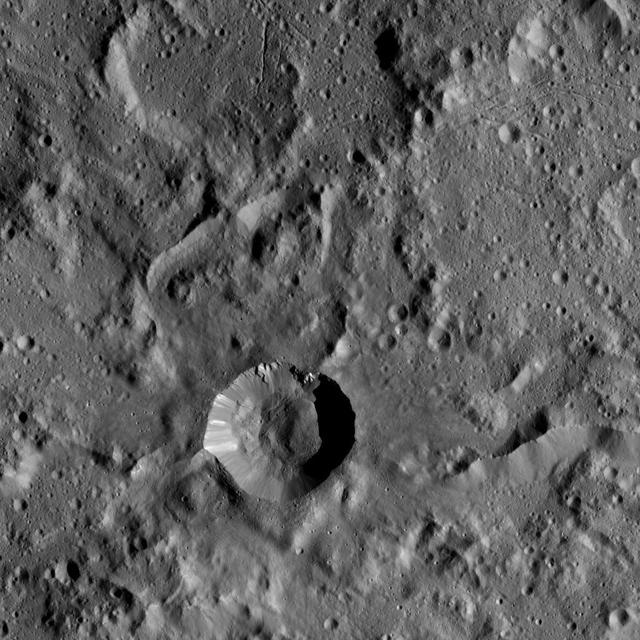
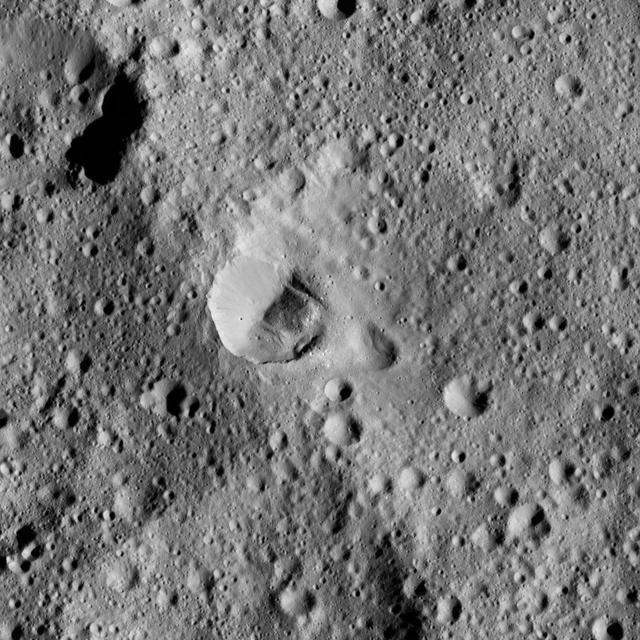
This view from NASA Dawn spacecraft shows a fresh crater among older terrain on Ceres, typical of the terrain of the dwarf planet.
Dawn LAMO Image 67
These images from NASA Dawn spacecraft are located in asteroid Vesta Bellicia quadrangle, in Vesta northern hemisphere.
HAMO and LAMO Images of Arruntia Crater
These images from NASA Dawn spacecraft are located in Urbinia quadrangle, in Vesta southern hemisphere.
HAMO and LAMO Images of Canuleia Crater
These images from NASA Dawn spacecraft show the brightness/darkness of asteroid Vesta surface. These images are located in Vesta Marcia quadrangle.
Brightness and Topography Images of a Dark Hill
These images from NASA Dawn spacecraft are located in asteroid Vesta Urbinia quadrangle, in Vesta southern hemisphere.
Apparent Brightness and Topography Images of Canuleia and Sossia Craters
These apparent brightness and topography images from NASA Dawn spacecraft are located in asteroid Vesta Bellicia quadrangle, in Vesta northern hemisphere.
Arruntia Crater, Apparent Brightness and Topography Image
This image from NASA Dawn spacecraft shows a rough surface covered with ejecta and fine grooves on the giant asteroid Vesta.
Rough Topography in the Rheasilvia Basin
This image from NASA Dawn spacecraft shows craters in various states of degradation on the asteroid Vesta.
Craters in Various States of Degradation
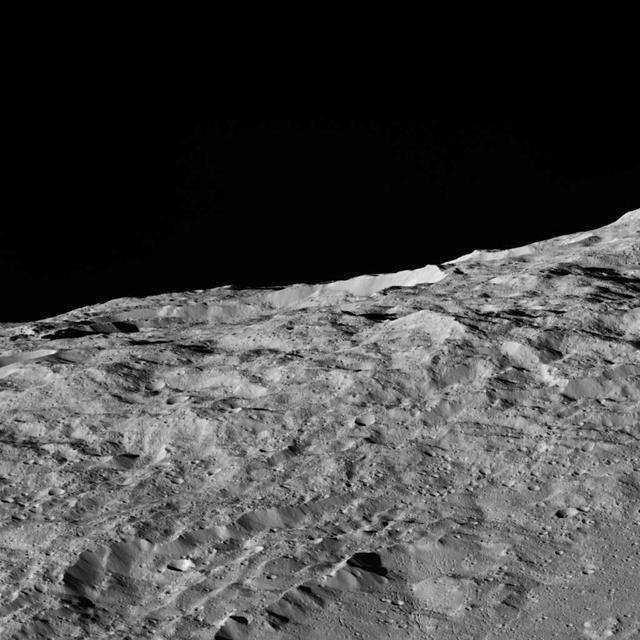
This view of Ceres, taken by NASA Dawn spacecraft on December 10, 2015, shows an area in the southern mid-latitudes of the dwarf planet.
Dawn Lowest Orbit: Southern Mid-Latitudes
This image from NASA Dawn spacecraft of asteroid Vesta shows Eusebia crater, which is the large crater in the top right of the image.
Eusebia Crater
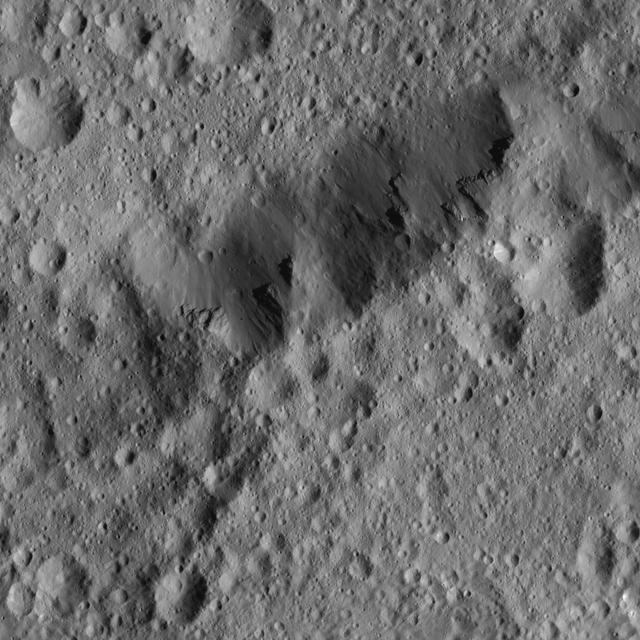
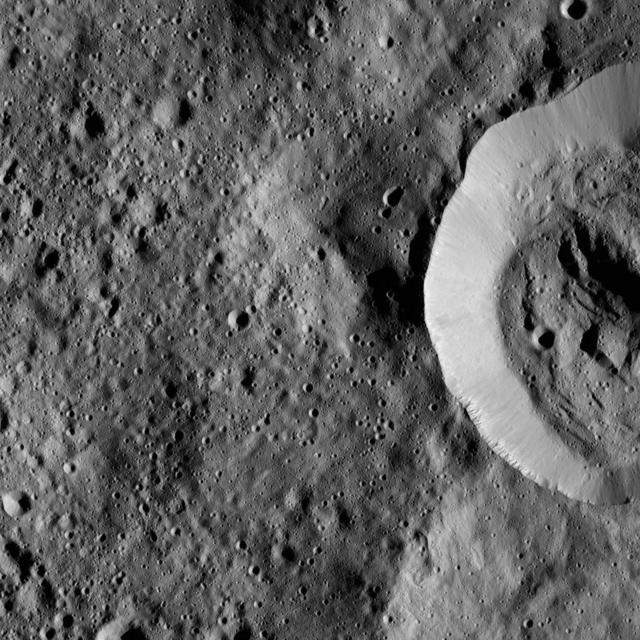
This view from NASA Dawn spacecraft features the sharp rim of a steep-walled crater on Ceres.
Dawn LAMO Image 110
This view from NASA Dawn spacecraft shows the rim of a crater near the south pole of Ceres, taken on Feb. 8, 2016.
Dawn LAMO Image 58
These images from NASA Dawn spacecraft are located in asteroid Vesta Urbinia quadrangle, in Vesta southern hemisphere.
Apparent Brightness and Topography Images of Justina Crater
These images from NASA Dawn spacecraft are located in asteroid Vesta Lucaria Tholus quadrangle, in Vesta southern hemisphere.
HAMO and LAMO Images of Aelia Crater
These apparent brightness and topography images from NASA Dawn spacecraft are located in asteroid Vesta Sextilia quadrangle, in Vesta southern hemisphere.
Serena Crater, Apparent Brightness and Topography Images
This view from NASA Dawn spacecraft shows two medium-sized craters at high northern latitudes on Ceres.
Dawn LAMO Image 86
This image of asteroid Vesta from NASA Dawn spacecraft shows a large crater with an irregularly shaped, reasonable sharp, fresh rim.
Spots of Dark Material Surrounding an Impact Crater
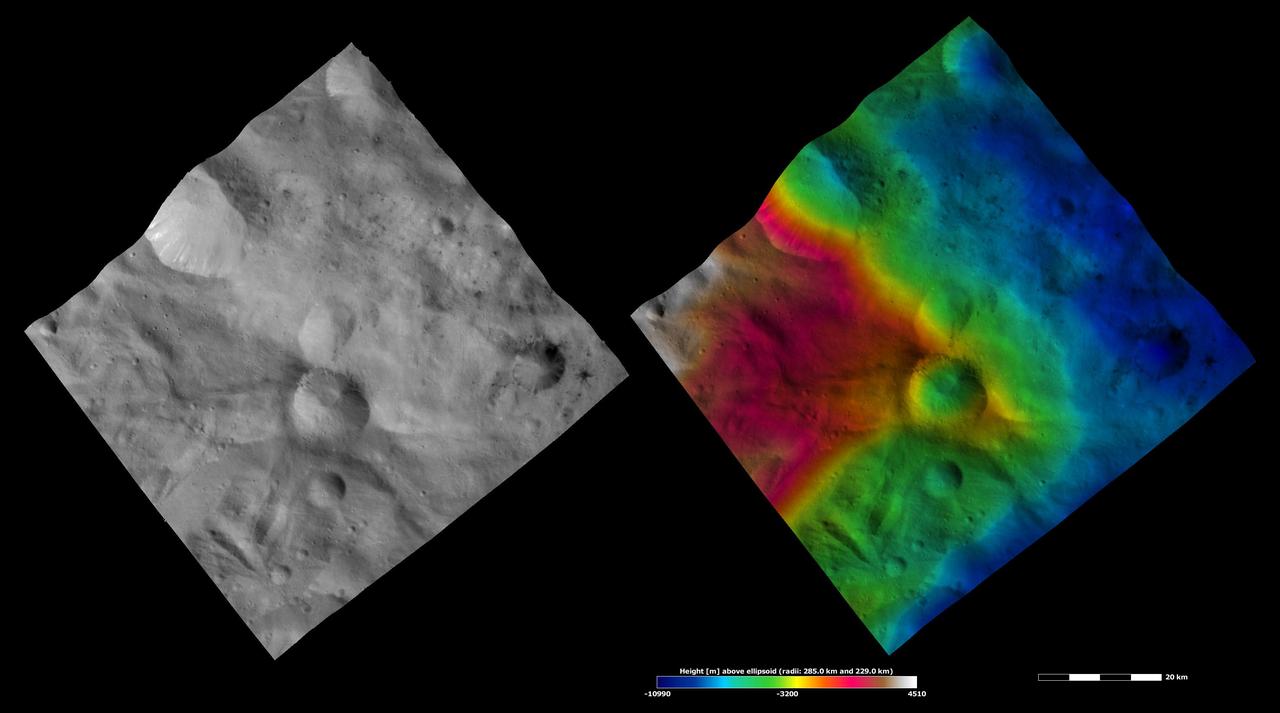
These apparent brightness and topography images from NASA Dawn spacecraft are located in asteroid Vesta Gegania quadrangle, in Vesta southern hemisphere.
Occia Crater, Apparent Brightness and Topography Images
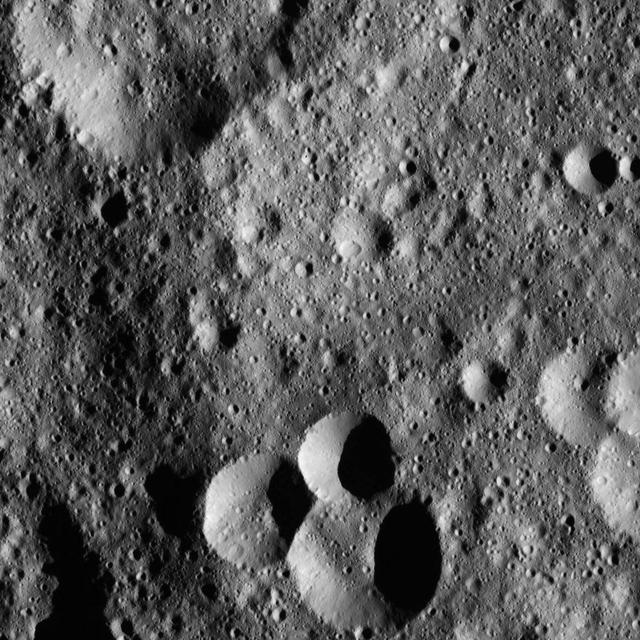
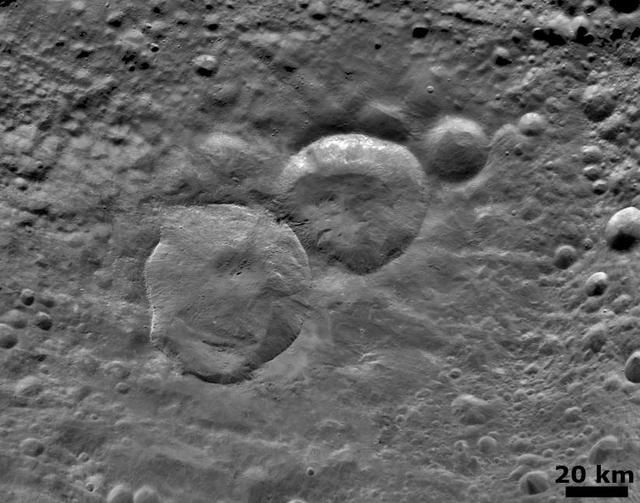
This image from NASA Dawn spacecraft shows a detailed view of three craters, informally nicknamed Snowman by the camera team members.
Detailed Snowman Crater