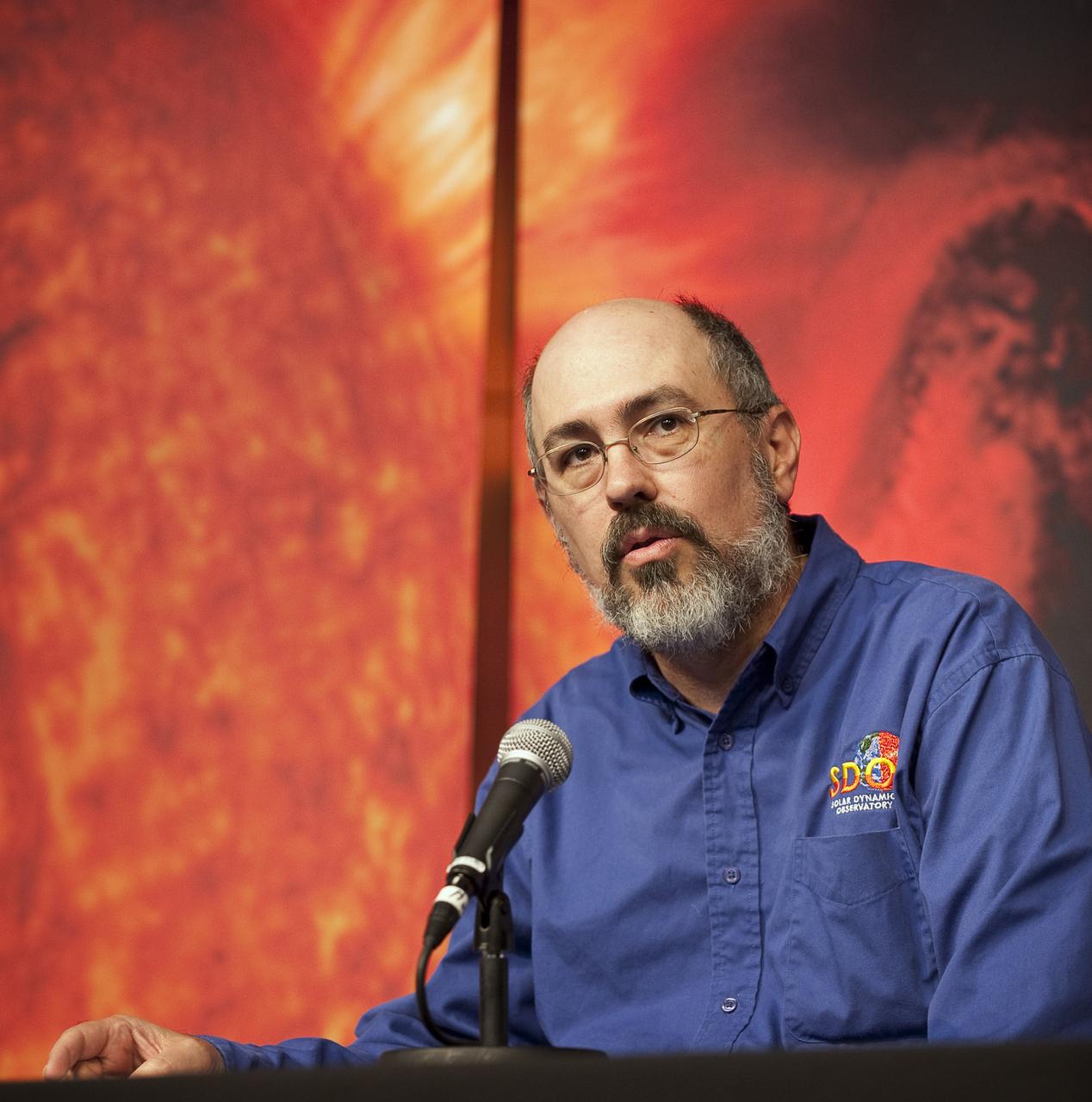
Dean Pesnell, SDO project scientist, Goddard Space Flight Center in Greenbelt, Md. speaks during a briefing to discuss recent images from NASA's Solar Dynamics Observatory, or SDO, Wednesday, April 21, 2010, at the Newseum in Washington. Photo Credit: (NASA/Carla Cioffi)
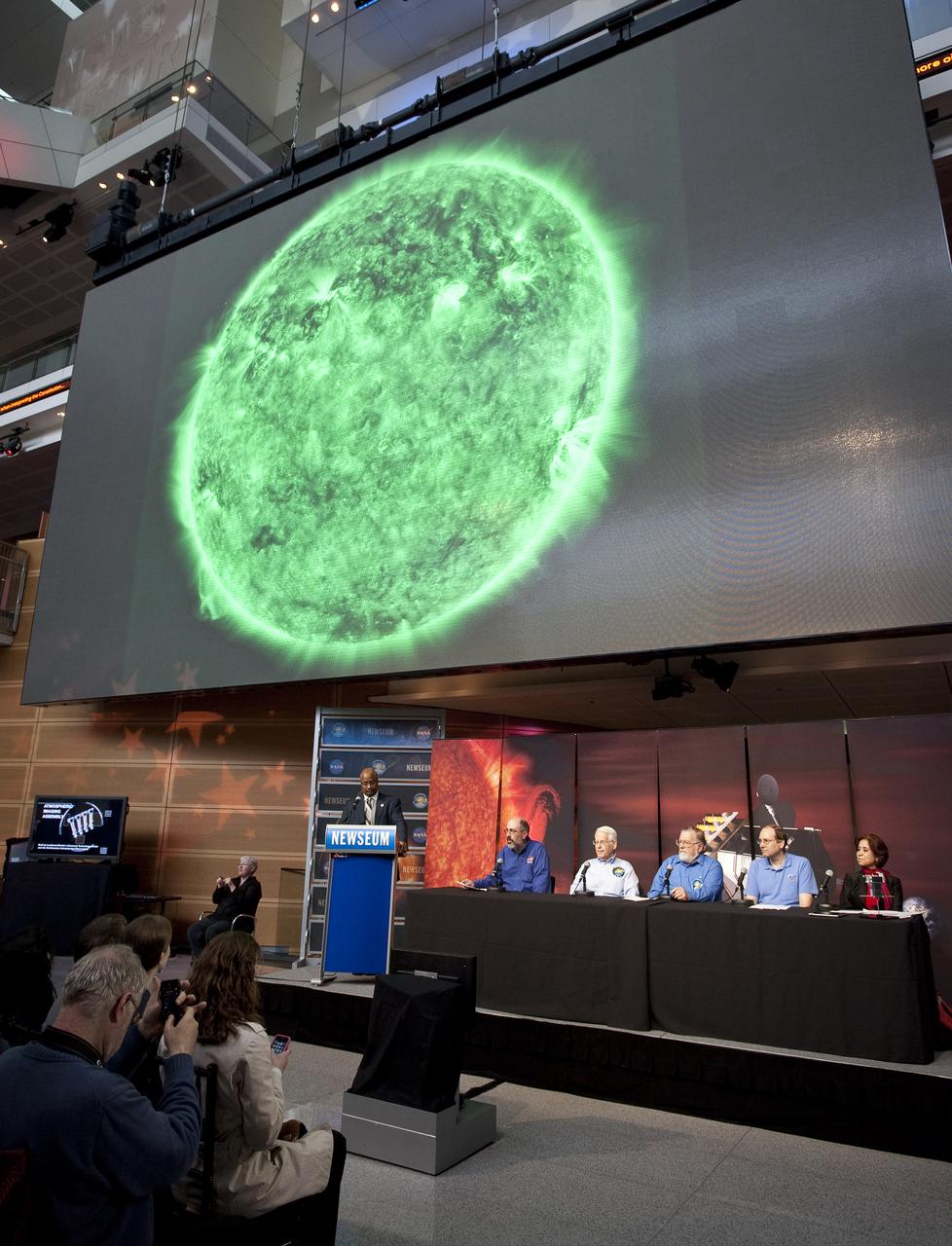
Scientists involved in NASA's Solar Dynamics Observatory (SDO) mission attend a press conference to discuss recent images captured by the SDO spacecraft Wednesday, April 21, 2010, at the Newseum in Washington. Pictured right to left are: Madhulika Guhathakurta, SDO program scientist, NASA Headquarters in Washington; Tom Woods, principal investigator, Extreme Ultraviolet Variability Experiment instrument, Laboratory for Atmospheric and Space Physics, University of Colorado in Boulder; Philip H. Scherrer, principal investigator, Helioseismic and Magnetic Imager instrument, Stanford University in Palo Alto; Alan Title, principal investigator, Atmospheric Imaging Assembly instrument, Lockheed Martin Solar and Astrophysics Laboratory in Palo Alto and Dean Pesnell, SDO project scientist, Goddard Space Flight Center in Greenbelt, Md. Photo Credit: (NASA/Carla Cioffi)
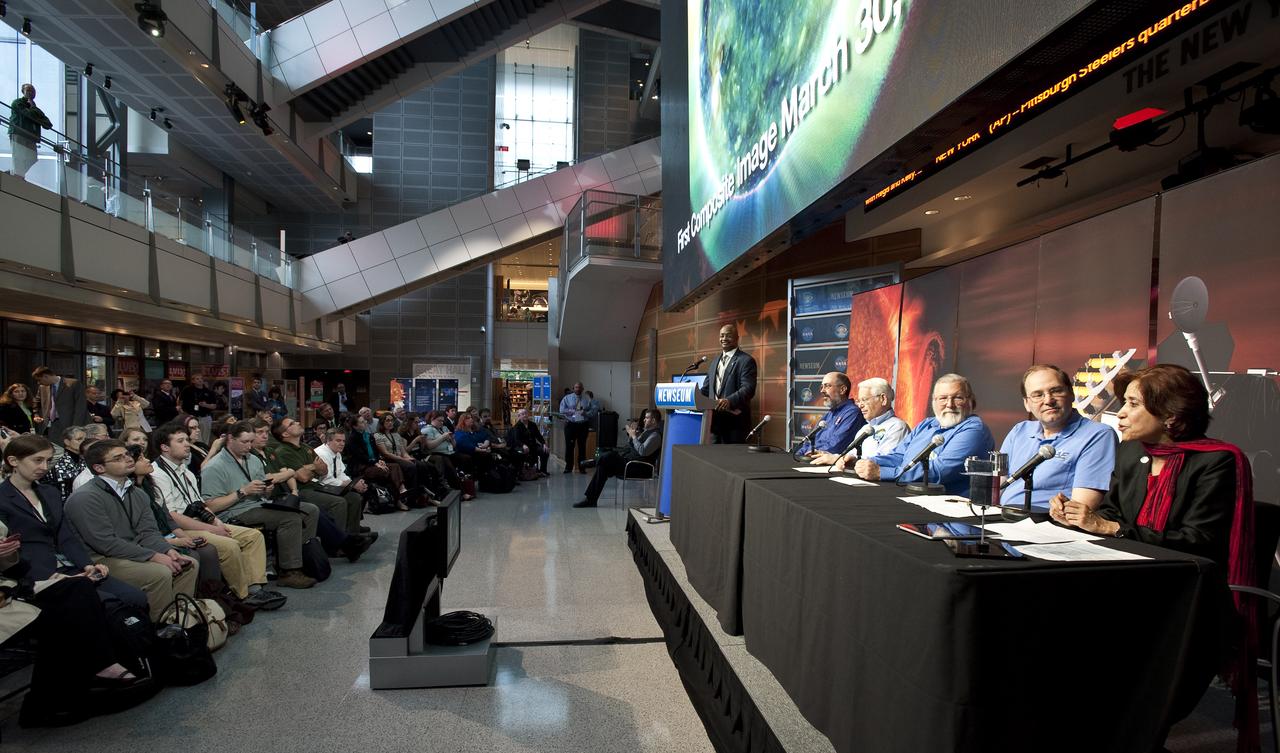
Madhulika Guhathakurta, far right, SDO Program Scientist at NASA Headquarters in Washington, speaks during a briefing to discuss recent images from NASA's Solar Dynamics Observatory, or SDO, Wednesday, April 21, 2010, at the Newseum in Washington. Pictured from left of Dr. Guhathakurta's are: Tom Woods, principal investigator, Extreme Ultraviolet Variability Experiment instrument, Laboratory for Atmospheric and Space Physics, University of Colorado in Boulder; Philip H. Scherrer, principal investigator, Helioseismic and Magnetic Imager instrument, Stanford University in Palo Alto; Alan Title, principal investigator, Atmospheric Imaging Assembly instrument, Lockheed Martin Solar and Astrophysics Laboratory in Palo Alto and Dean Pesnell, SDO project scientist, Goddard Space Flight Center in Greenbelt, Md. Photo Credit: (NASA/Carla Cioffi)
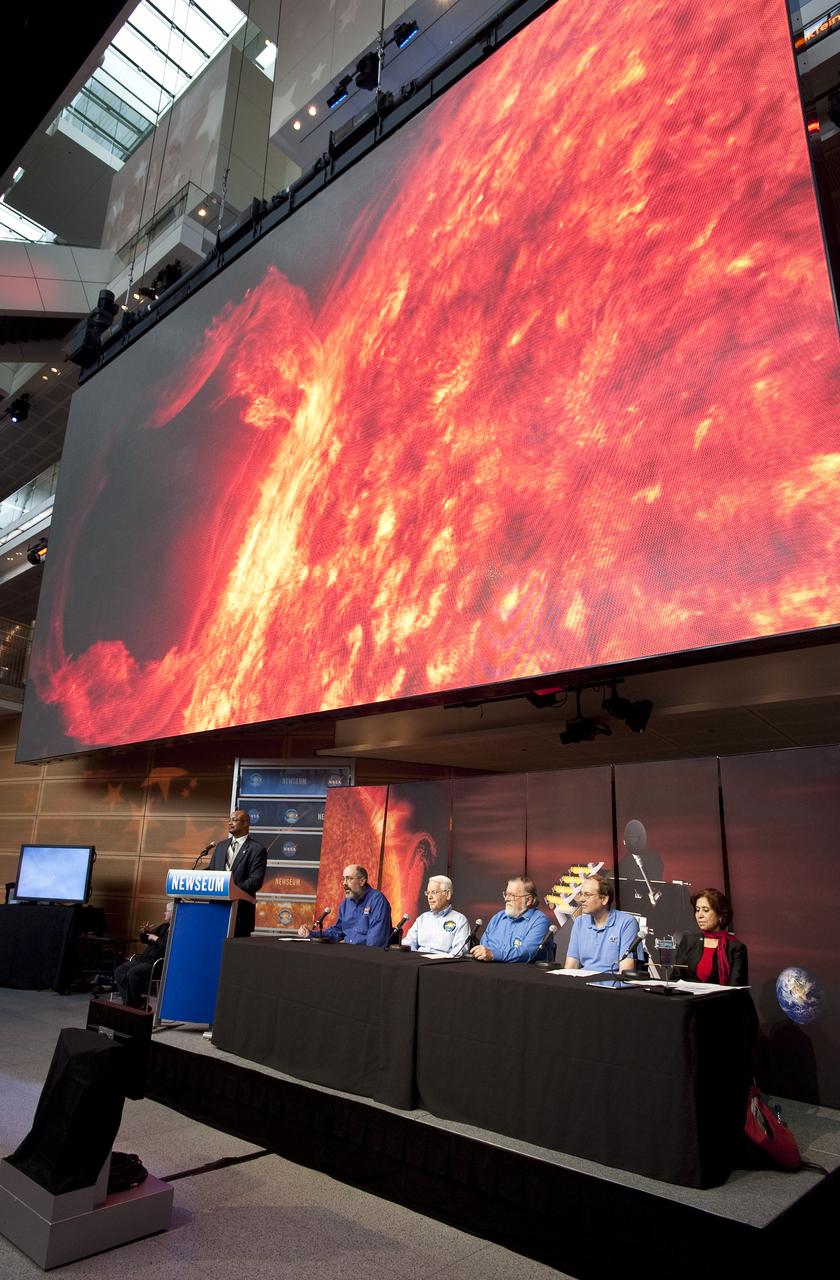
Scientists involved in NASA's Solar Dynamics Observatory (SDO) mission attend a press conference to discuss recent images captured by the SDO spacecraft Wednesday, April 21, 2010, at the Newseum in Washington. On Feb. 11, 2010, NASA launched the SDO spacecraft, which is the most advanced spacecraft ever designed to study the sun. Seated left to right are: Dean Pesnell, SDO project scientist, Goddard Space Flight Center in Greenbelt, Md.; Alan Title, principal investigator, Atmospheric Imaging Assembly instrument, Lockheed Martin Solar and Astrophysics Laboratory in Palo Alto; Philip H. Scherrer, principal investigator, Helioseismic and Magnetic Imager instrument, Stanford University in Palo Alto; Tom Woods, principal investigator, Extreme Ultraviolet Variability Experiment Instrument, Laboratory for Atmospheric and Space Physics, University of Colorado in Boulder and Madhulika Guhathakurta, SDO program scientist, NASA Headquarters in Washington. Photo Credit: (NASA/Carla Cioffi)
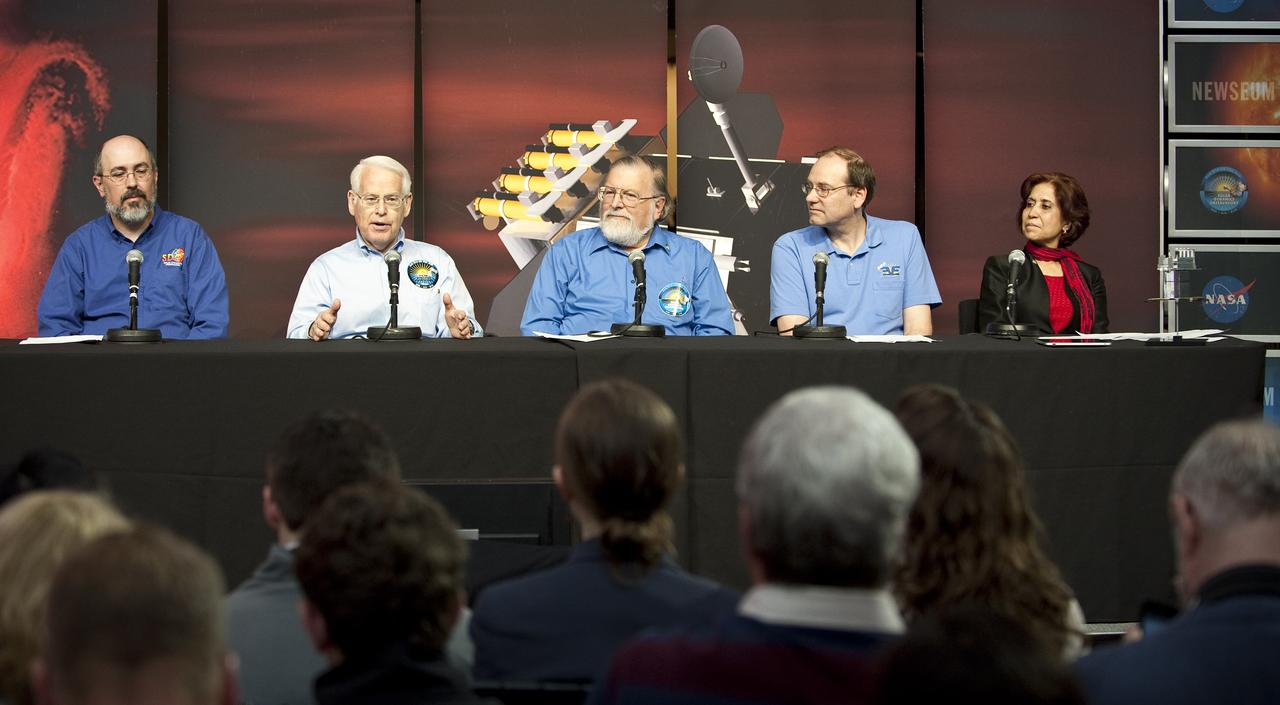
Alan Title, second from left, principal investigator, Atmospheric Imaging Assembly instrument, Lockheed Martin Solar and Astrophysics Laboratory in Palo Alto, speaks during a briefing to discuss recent images from NASA's Solar Dynamics Observatory, or SDO, Wednesday, April 21, 2010, at the Newseum in Washington. Launched on Feb. 11, 2010, SDO is the most advanced spacecraft ever designed to study the sun. During its five-year mission, it will examine the sun's magnetic field and also provide a better understanding of the role the sun plays in Earth's atmospheric chemistry and climate. Pictured from left to right: Dean Pesnell, SDO project scientist, Goddard Space Flight Center in Greenbelt, Md., Alan Title, Philip H. Scherrer, principal investigator, Helioseismic and Magnetic Imager instrument, Stanford University in Palo Alto, Tom Woods, principal investigator, Extreme Ultraviolet Variability Experiment instrument, Laboratory for Atmospheric and Space Physics, University of Colorado in Boulder and Madhulika Guhathakurta, SDO program scientist, NASA Headquarters in Washington. Photo Credit: (NASA/Carla Cioffi)
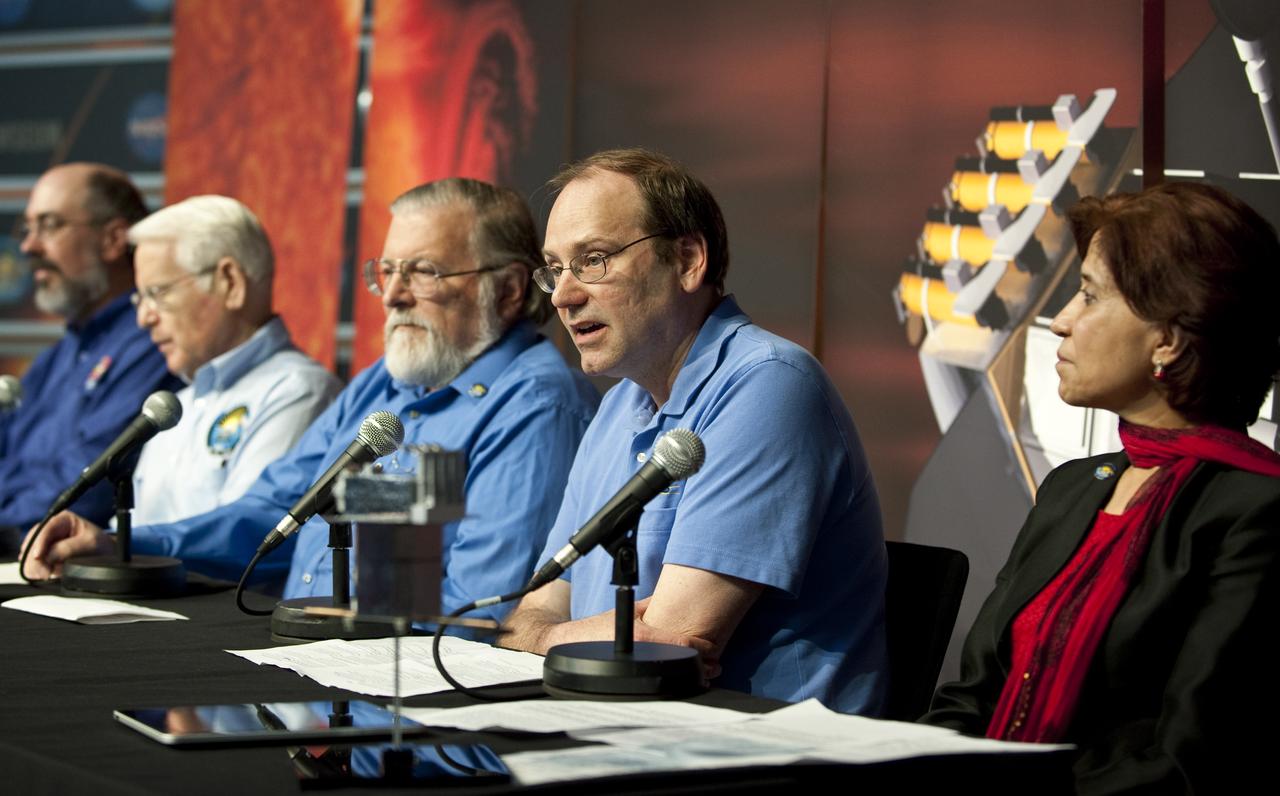
Tom Woods, (second from right), principal investigator, Extreme Ultraviolet Variability Experiment instrument, Laboratory for Atmospheric and Space Physics, University of Colorado in Boulder speaks during a briefing to discuss recent images from NASA's Solar Dynamics Observatory, or SDO, Wednesday, April 21, 2010, at the Newseum in Washington. Photo Credit: (NASA/Carla Cioffi)

CAPE CANAVERAL, Fla. – Dean Pesnell, NASA Goddard Space Flight Center project scientist for the Solar Dynamics Observatory, enjoys watching its launch from the Banana Creek viewing site at NASA's Kennedy Space Center in Florida. Liftoff from Launch Complex 41 on Cape Canaveral Air Force Station aboard a United Launch Alliance Atlas V rocket was at 10:23 a.m. EST Feb. 11. This is the 100th launch of a commercial Atlas_Centaur rocket. The observatory, known as SDO, is the first mission in NASA's Living With a Star Program and is designed to study the causes of solar variability and its impacts on Earth. The spacecraft's long-term measurements will give solar scientists in-depth information to help characterize the interior of the Sun, the Sun's magnetic field, the hot plasma of the solar corona, and the density of radiation that creates the ionosphere of the planets. The information will be used to create better forecasts of space weather needed to protect the aircraft, satellites and astronauts living and working in space. For information on SDO, visit http:__www.nasa.gov_sdo. Photo credit: NASA_Kim Shiflett

CAPE CANAVERAL, Fla. – NASA Goddard Space Flight Center scientists for the Solar Dynamics Observatory watch its launch from the Banana Creek viewing site at NASA's Kennedy Space Center in Florida. From left are Barbara Thompson, deputy project scientist; Dean Pesnell, project scientist; and Phillip Chamberlin, also a deputy project scientist. Liftoff from Launch Complex 41 on Cape Canaveral Air Force Station aboard a United Launch Alliance Atlas V rocket was at 10:23 a.m. EST Feb. 11. This is the 100th launch of a commercial Atlas_Centaur rocket. The observatory, known as SDO, is the first mission in NASA's Living With a Star Program and is designed to study the causes of solar variability and its impacts on Earth. The spacecraft's long-term measurements will give solar scientists in-depth information to help characterize the interior of the Sun, the Sun's magnetic field, the hot plasma of the solar corona, and the density of radiation that creates the ionosphere of the planets. The information will be used to create better forecasts of space weather needed to protect the aircraft, satellites and astronauts living and working in space. For information on SDO, visit http:__www.nasa.gov_sdo. Photo credit: NASA_Kim Shiflett
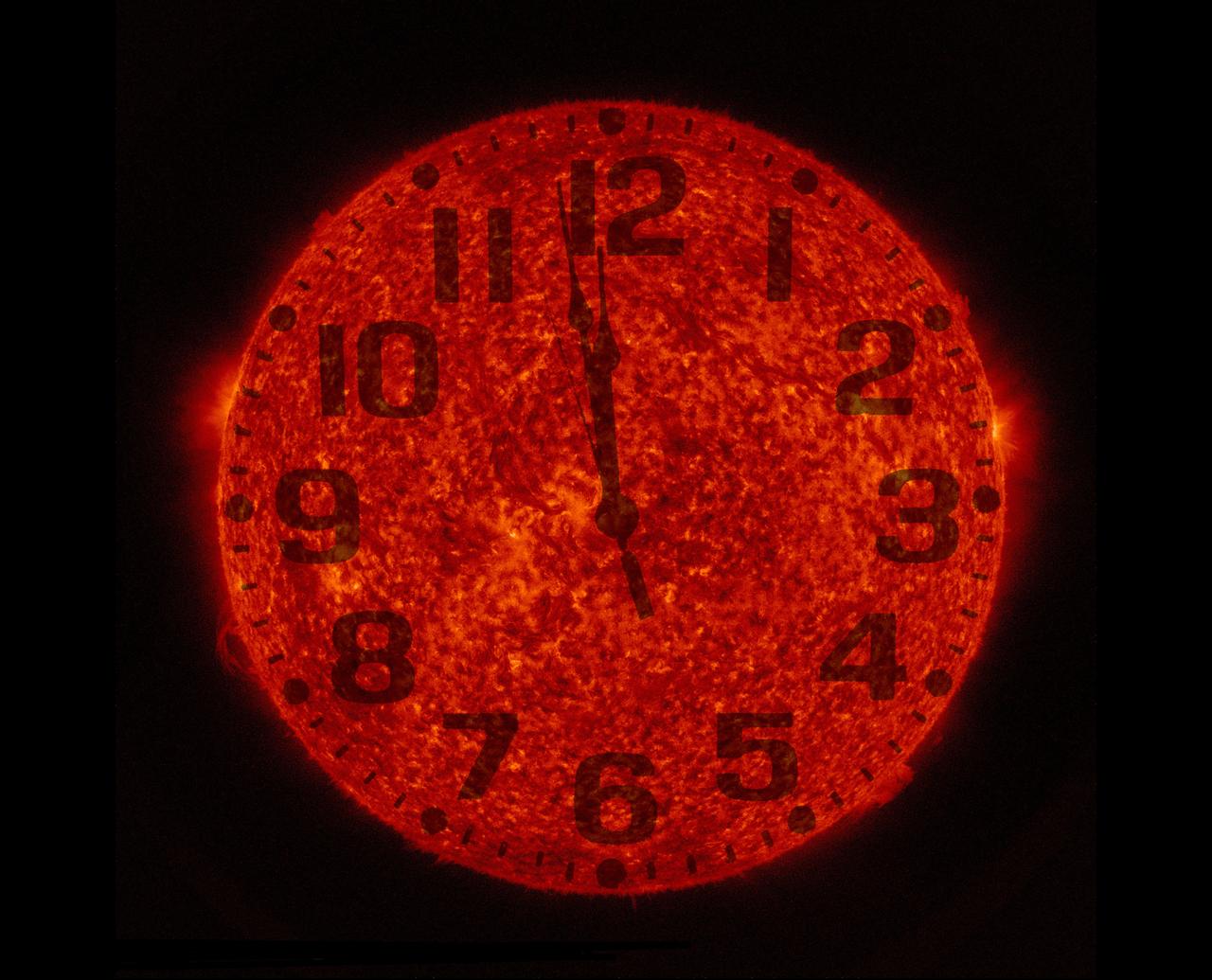
On Dec. 31, 2016, official clocks around the world will add a leap second just before midnight Coordinated Universal Time — which corresponds to 6:59:59 p.m. EST. NASA missions will also have to make the switch, including the Solar Dynamics Observatory, or SDO, which watches the sun 24/7. Clocks do this to keep in sync with Earth's rotation, which gradually slows down over time. When the dinosaurs roamed Earth, for example, our globe took only 23 hours to make a complete rotation. In space, millisecond accuracy is crucial to understanding how satellites orbit. "SDO moves about 1.9 miles every second," said Dean Pesnell, the project scientist for SDO at NASA's Goddard Space Flight Center in Greenbelt, Maryland. "So does every other object in orbit near SDO. We all have to use the same time to make sure our collision avoidance programs are accurate. So we all add a leap second to the end of 2016, delaying 2017 by one second." The leap second is also key to making sure that SDO is in sync with the Coordinated Universal Time, or UTC, used to label each of its images. SDO has a clock that counts the number of seconds since the beginning of the mission. To convert that count to UTC requires knowing just how many leap seconds have been added to Earth-bound clocks since the mission started. When the spacecraft wants to provide a time in UTC, it calls a software module that takes into consideration both the mission's second count and the number of leap seconds — and then returns a time in UTC.
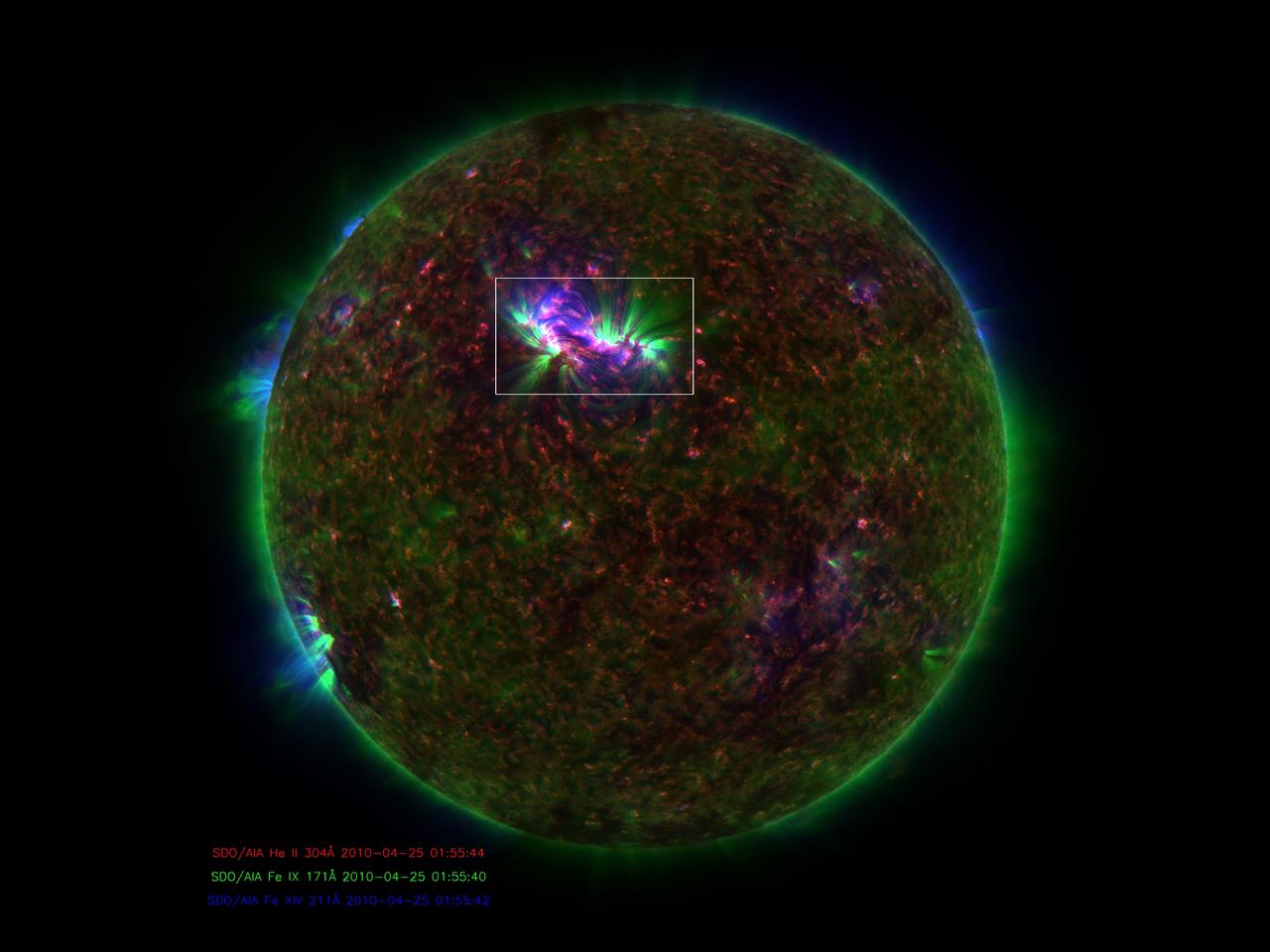
NASA image release January 6, 2010 Caption: Spicules on the sun, as observed by the Solar Dynamics Observatory. These bursts of gas jet off the surface of the sun at 150,000 miles per hour and contain gas that reaches temperatures over a million degrees. GREENBELT, Md. -- Observations from NASA's Solar Dynamics Observatory (SDO) and the Japanese satellite Hinode show that some gas in the giant, fountain-like jets in the sun's atmosphere known as spicules can reach temperatures of millions of degrees. The finding offers a possible new framework for how the sun's high atmosphere gets so much hotter than the surface of the sun. What makes the high atmosphere, or corona, so hot – over a million degrees, compared to the sun surface's 10,000 degrees Fahrenheit -- remains a poorly understood aspect of the sun's complicated space weather system. That weather system can reach Earth, causing auroral lights and, if strong enough, disrupting Earth's communications and power systems. Understanding such phenomena, therefore, is an important step towards better protecting our satellites and power grids. "The traditional view is that all the heating happens higher up in the corona," says Dean Pesnell, who is SDO's project scientist at NASA's Goddard Space Flight Center in Greenbelt, Md. "The suggestion in this paper is that cool gas is being ejected from the sun's surface in spicules and getting heated on its way to the corona." Spicules were first named in the 1940s, but were hard to study in detail until recently, says Bart De Pontieu of Lockheed Martin's Solar and Astrophysics Laboratory, Palo Alto, Calif. who is the lead author on a paper on this subject in the January 7, 2011 issue of Science magazine. In visible light, spicules can be seen to send large masses of so-called plasma – the electromagnetic gas that surrounds the sun – up through the lower solar atmosphere or photosphere. The amount of material sent up is stunning, some 100 times as much as streams away from the sun in the solar wind towards the edges of the solar system. But nobody knew if they contained hot gas. "Heating of spicules to the necessary hot temperatures has never been observed, so their role in coronal heating had been dismissed as unlikely," says De Pontieu. Now, De Pontieu's team -- which included researchers at Lockheed Martin, the High Altitude Observatory of the National Center for Atmospheric Research (NCAR) in Colorado and the University of Oslo, Norway -- was able to combine images from SDO and Hinode to produce a more complete picture of the gas inside these gigantic fountains. The scientists found that a large fraction of the gas is heated to a hundred thousand degrees, while a small fraction is heated to millions of degrees. Time-lapsed images show that this material spews up into the corona, with most falling back down towards the surface of the sun. However, the small fraction of the gas that is heated to millions of degrees does not immediately return to the surface. Given the large number of spicules on the Sun, and the amount of material in the spicules, the scientists believe that if even some of that super hot plasma stays aloft it would make a contribution to coronal heating. Astrophysicist Jonathan Cirtain, who is the U.S. project scientist for Hinode at NASA's Marshall Space Flight Center, Huntsville, Ala., says that incorporating such new information helps address an important question that reaches far beyond the sun. "This breakthrough in our understanding of the mechanisms which transfer energy from the solar photosphere to the corona addresses one of the most compelling questions in stellar astrophysics: How is the atmosphere of a star heated?" he says. "This is a fantastic discovery, and demonstrates the muscle of the NASA Heliophysics System Observatory, comprised of numerous instruments on multiple observatories." Hinode is the second mission in NASA's Solar Terrestrial Probes program, the goal of which is to improve understanding of fundamental solar and space physics processes. The mission is led by the Japan Aerospace Exploration Agency (JAXA) and the National Astronomical Observatory of Japan (NAOJ). The collaborative mission includes the U.S., the United Kingdom, Norway and Europe. NASA Marshall manages Hinode U.S. science operations and oversaw development of the scientific instrumentation provided for the mission by NASA, academia and industry. The Lockheed Martin Advanced Technology Center is the lead U.S. investigator for the Solar Optical Telescope on Hinode. SDO is the first mission in a NASA science program called Living With a Star, the goal of which is to develop the scientific understanding necessary to address those aspects of the sun-Earth system that directly affect our lives and society. NASA Goddard built, operates, and manages the SDO spacecraft for NASA's Science Mission Directorate in Washington. To learn more go to: <a href="http://www.nasa.gov/mission_pages/sdo/news/news20110106-spicules.html" rel="nofollow">www.nasa.gov/mission_pages/sdo/news/news20110106-spicules...</a> Credit: NASA Goddard/SDO/AIA <b><a href="http://www.nasa.gov/centers/goddard/home/index.html" rel="nofollow">NASA Goddard Space Flight Center</a></b> enables NASA’s mission through four scientific endeavors: Earth Science, Heliophysics, Solar System Exploration, and Astrophysics. Goddard plays a leading role in NASA’s accomplishments by contributing compelling scientific knowledge to advance the Agency’s mission. <b>Follow us on <a href="http://twitter.com/NASA_GoddardPix" rel="nofollow">Twitter</a></b> <b>Join us on <a href="http://www.facebook.com/pages/Greenbelt-MD/NASA-Goddard/395013845897?ref=tsd" rel="nofollow">Facebook</a></b>