
S69-40205 (27 July 1969) --- The crewmen of the Apollo 11 lunar landing mission go through their post flight debriefing session on Sunday, July 27, 1969. Left to right, are astronauts Edwin E. Aldrin Jr., lunar module pilot; Michael Collins, command module pilot; and Neil A. Armstrong, commander. They are seated in the debriefing room of the Crew Reception Area of the Lunar Receiving Laboratory at the Manned Spacecraft Center.
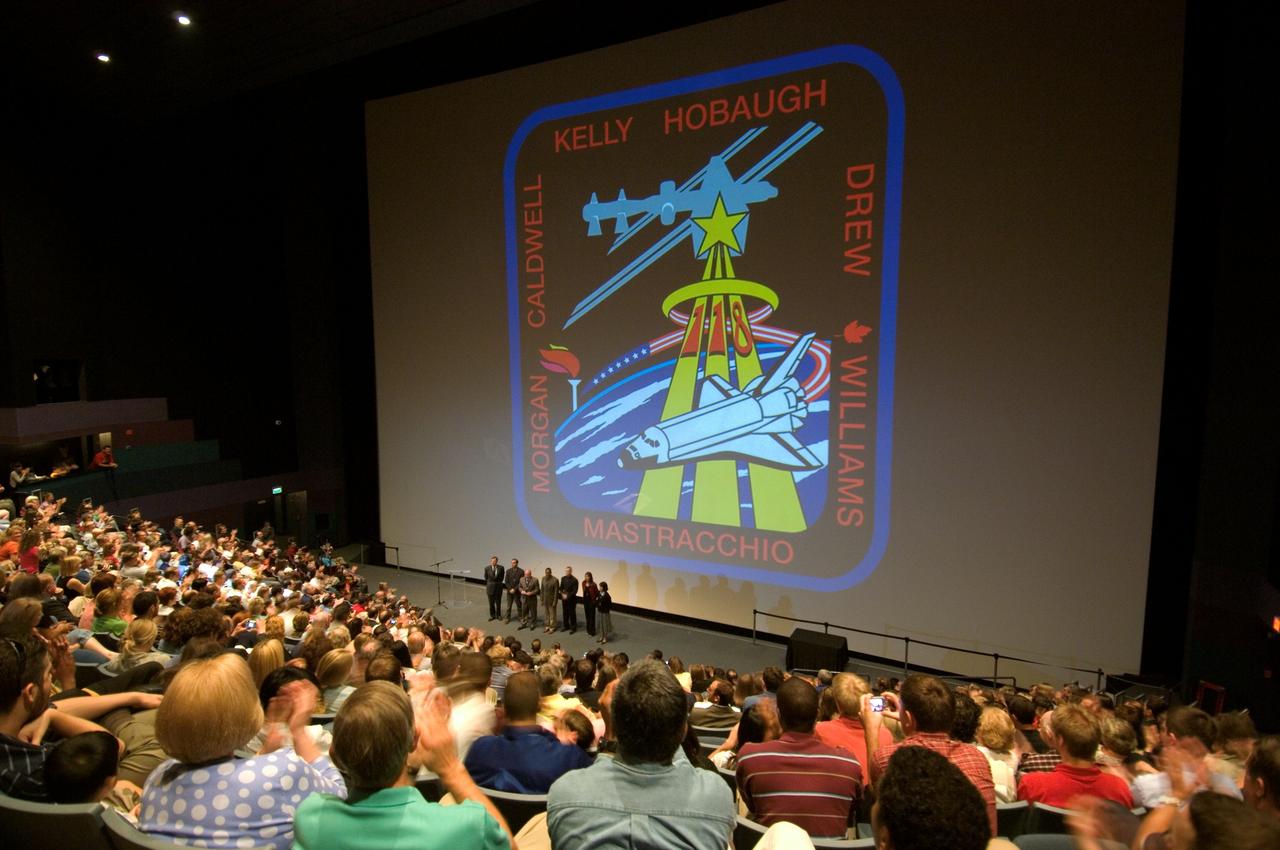
Photo taken during the STS-118 Crew Debriefing and Awards Presentation in Space Center Houston, Grumman Theatre. View is taken from behind audience of the large screen at the front of the theatre during the presentation.
S69-40209 (27 July 1969) --- The crewmen of the Apollo 11 lunar landing mission go through their post flight debriefing session on Sunday, July 27, 1969. Left to right, are astronauts Edwin E. Aldrin Jr., lunar module pilot; Michael Collins, command module pilot; and Neil A. Armstrong, commander. They are seated in the debriefing room of the Crew Reception Area of the Lunar Receiving Laboratory at the Manned Spacecraft Center (MSC). In the foreground are Donald K. Slayton (right), MSC Director of Flight Crew Operations; and Lloyd Reeder, training coordinator.

The flight operations crew for NASA’s QSF18 flight series debriefs following a flight with the F/A-18 research aircraft. The flight included a quiet supersonic dive maneuver at high altitudes off the coast to produce a sonic boom out over the ocean, with the intention of producing quieter “thumps” on land.
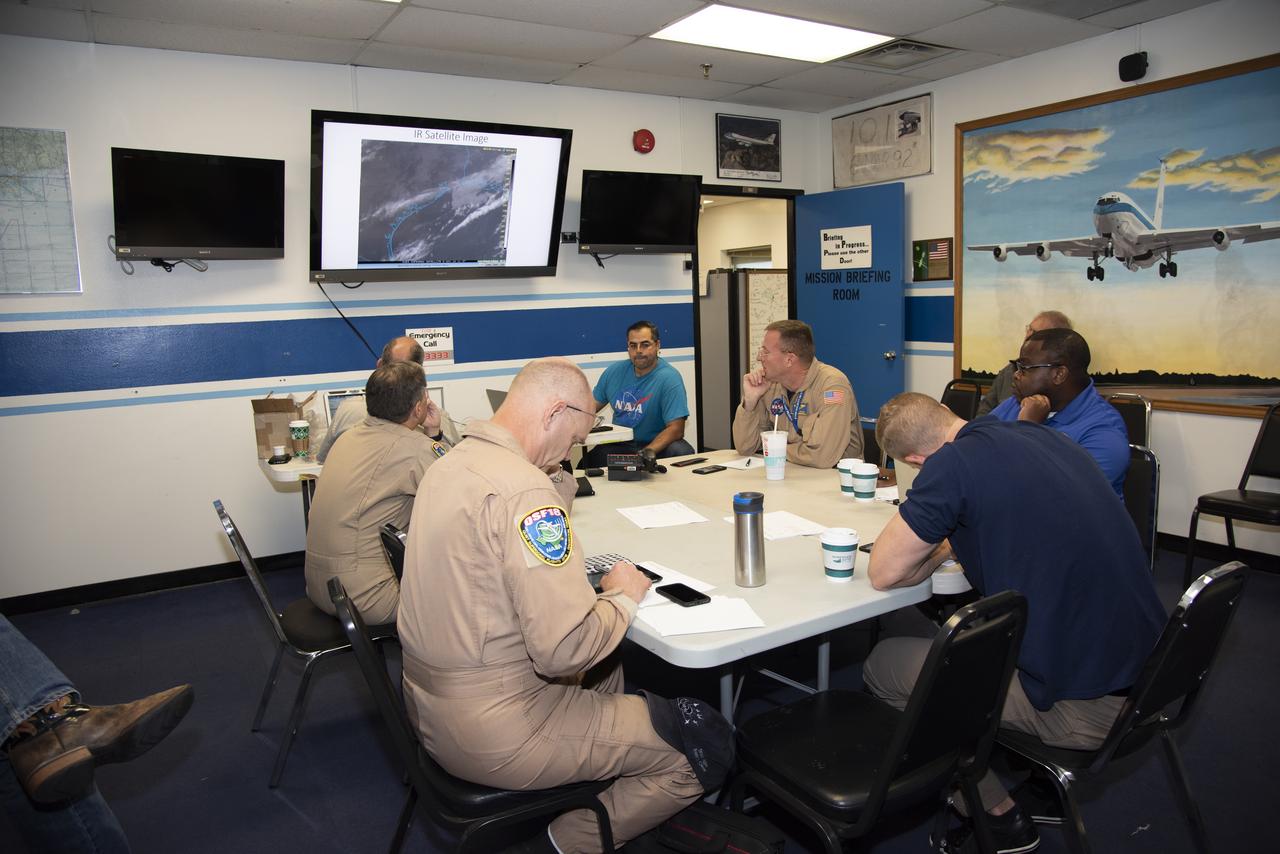
The flight operations crew for NASA’s QSF18 flight series debriefs following a flight with the F/A-18 research aircraft. The flight included a quiet supersonic dive maneuver at high altitudes off the coast to produce a sonic boom out over the ocean, with the intention of producing quieter “thumps” on land.
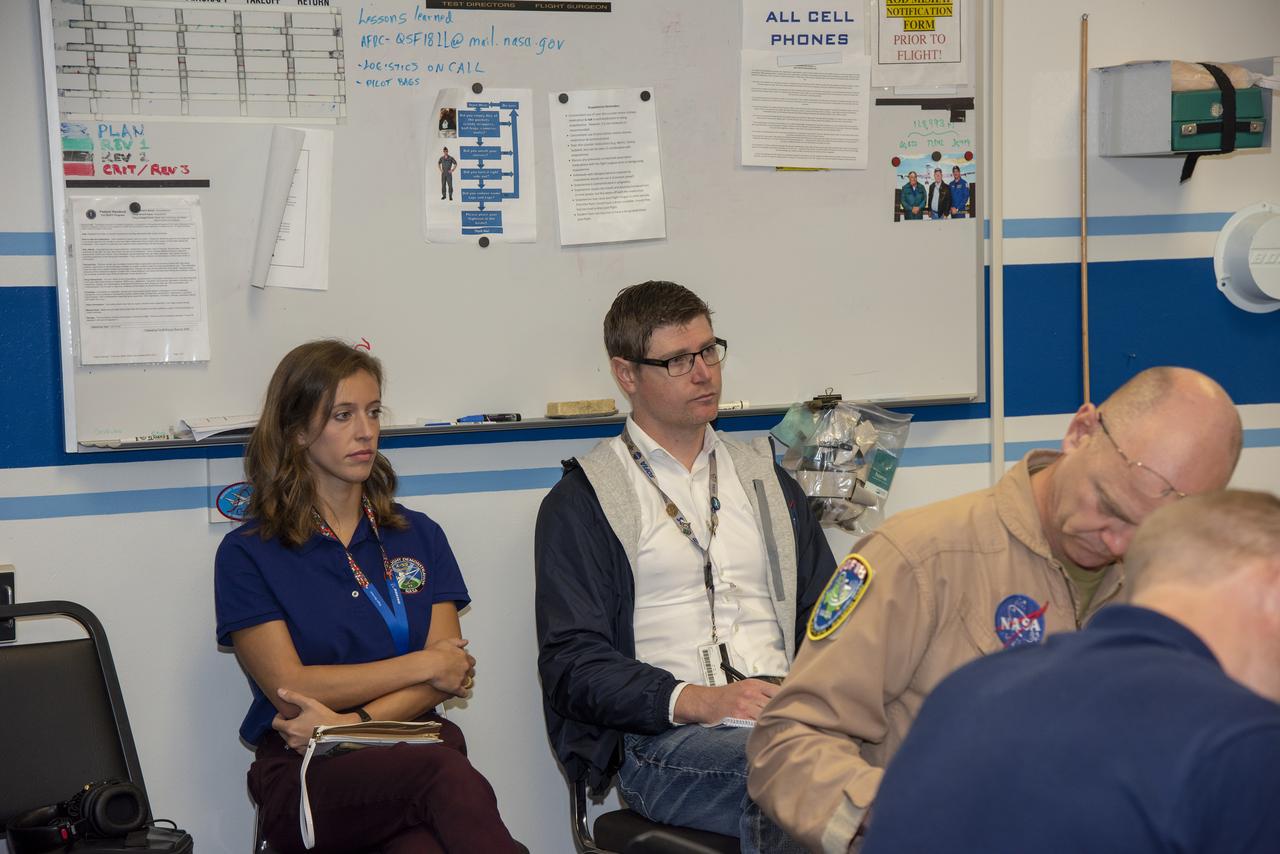
The flight operations crew for NASA’s QSF18 flight series debriefs following a flight with the F/A-18 research aircraft. The flight included a quiet supersonic dive maneuver at high altitudes off the coast to produce a sonic boom out over the ocean, with the intention of producing quieter “thumps” on land.
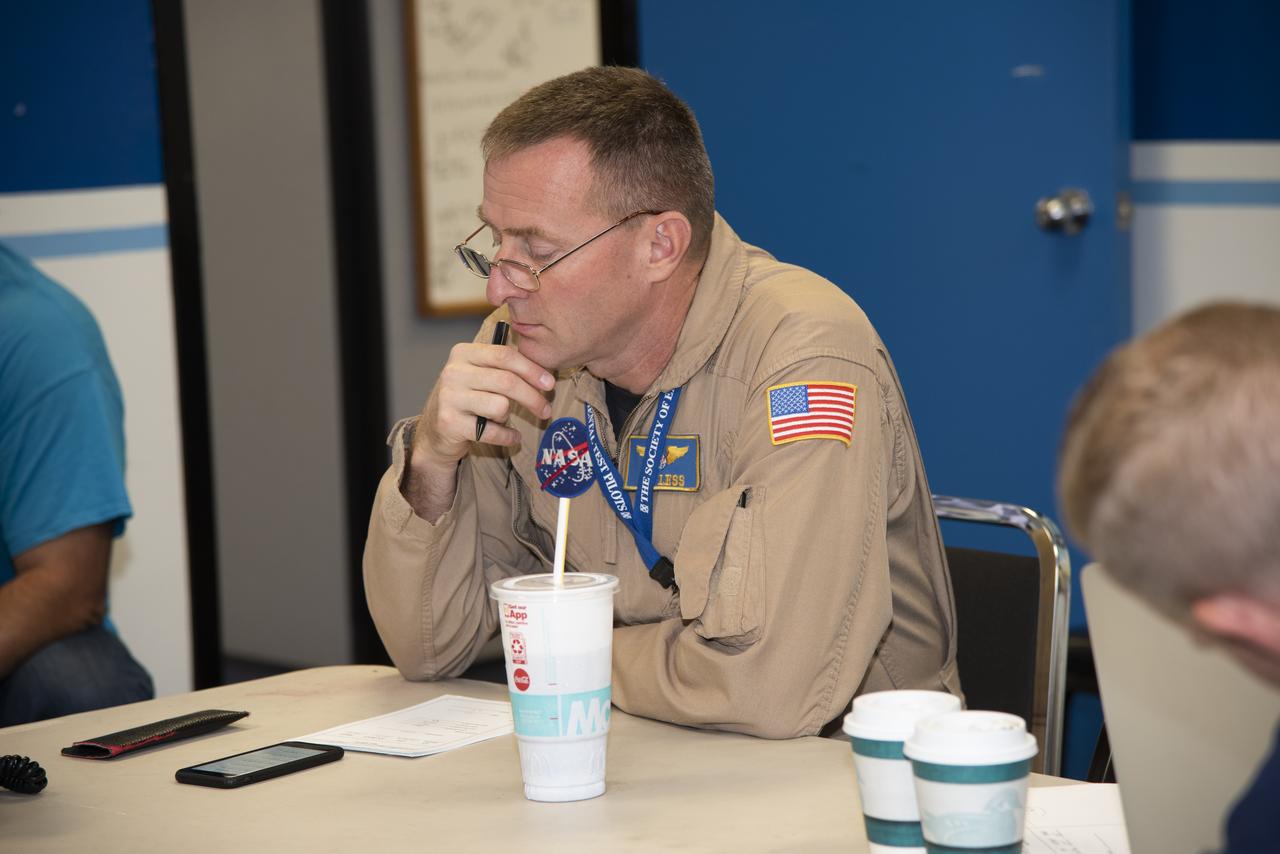
The flight operations crew for NASA’s QSF18 flight series debriefs following a flight with the F/A-18 research aircraft. The flight included a quiet supersonic dive maneuver at high altitudes off the coast to produce a sonic boom out over the ocean, with the intention of producing quieter “thumps” on land.
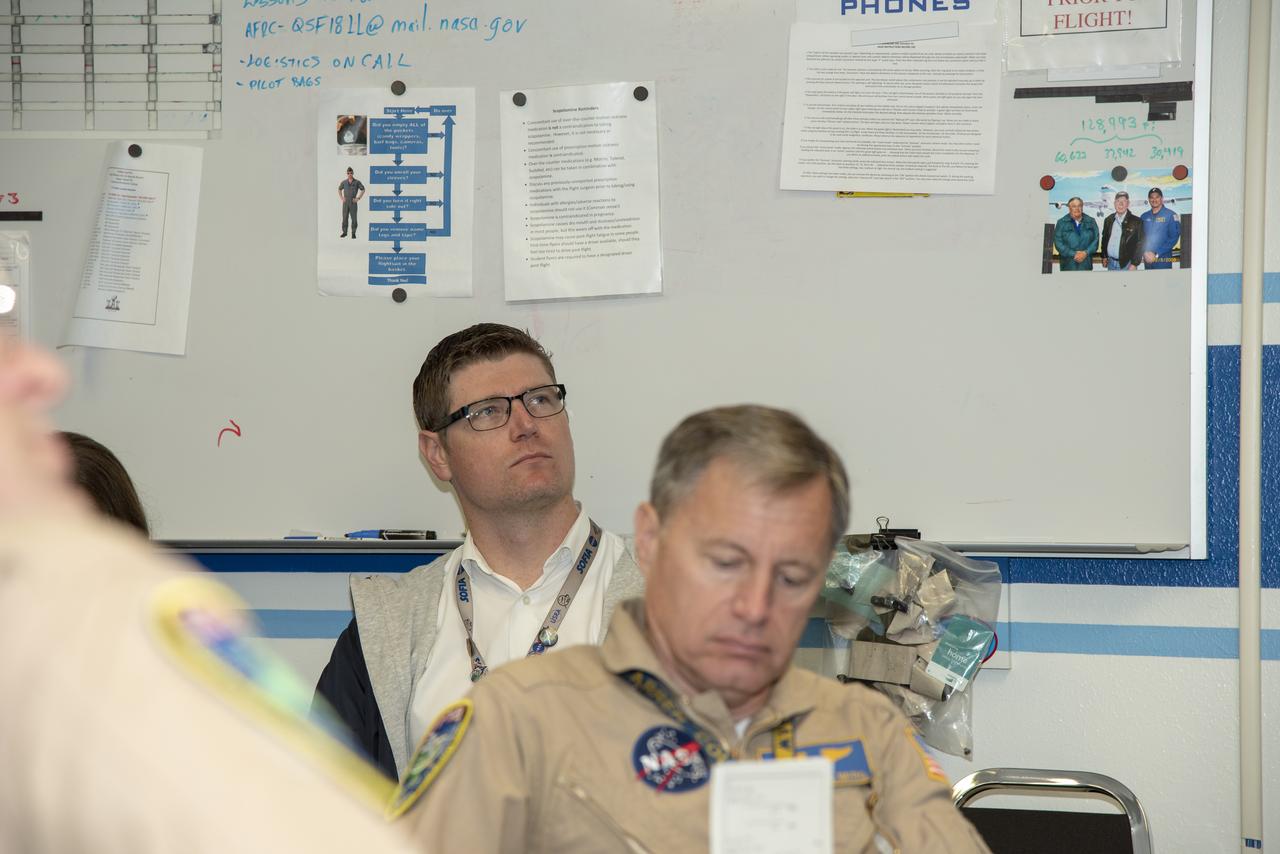
The flight operations crew for NASA's QSF18 flight series debriefs following a flight with the F/A-18 research aircraft. The flight included a quiet supersonic dive maneuver at high altitudes off the coast to produce a sonic boom out over the ocean, with the intention of producing quieter "thumps" on land.
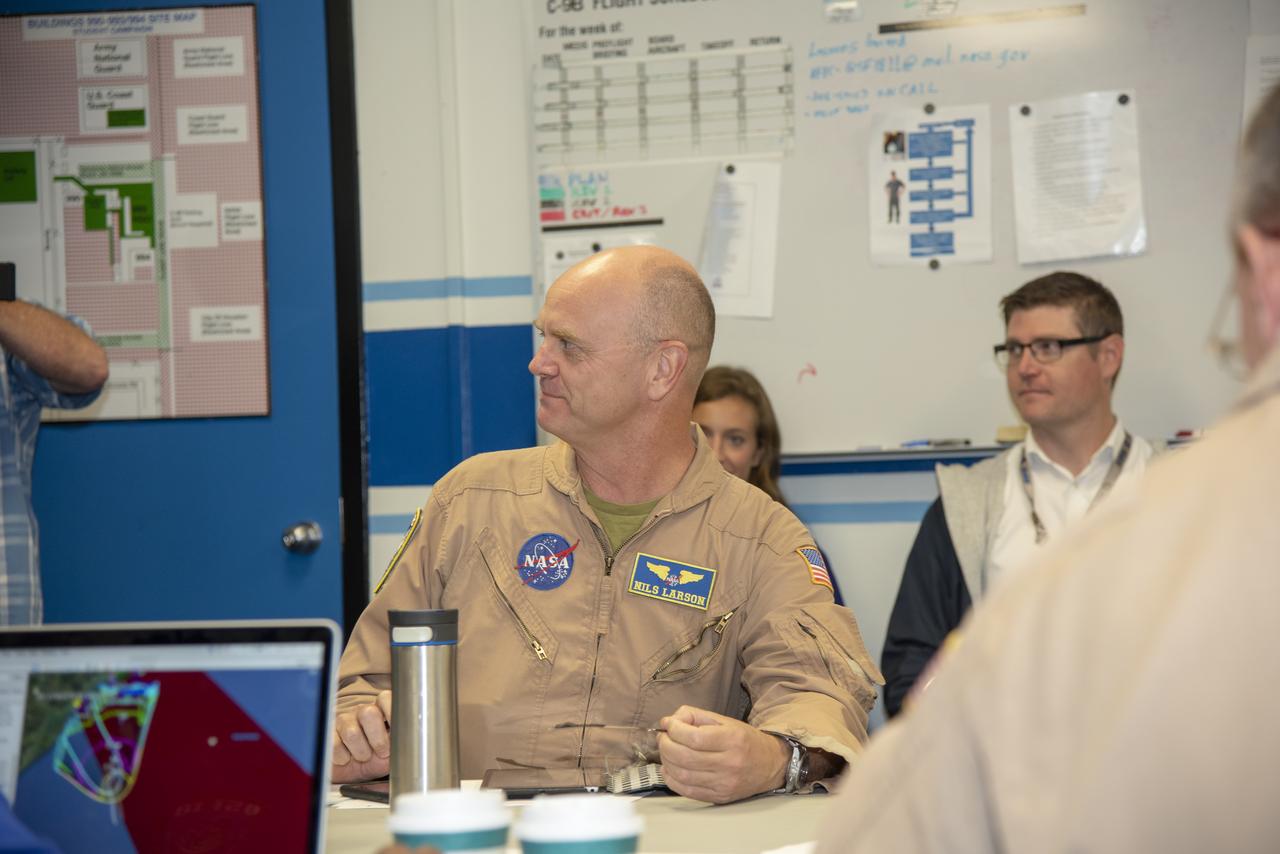
The flight operations crew for NASA’s QSF18 flight series debriefs following a flight with the F/A-18 research aircraft. The flight included a quiet supersonic dive maneuver at high altitudes off the coast to produce a sonic boom out over the ocean, with the intention of producing quieter “thumps” on land.
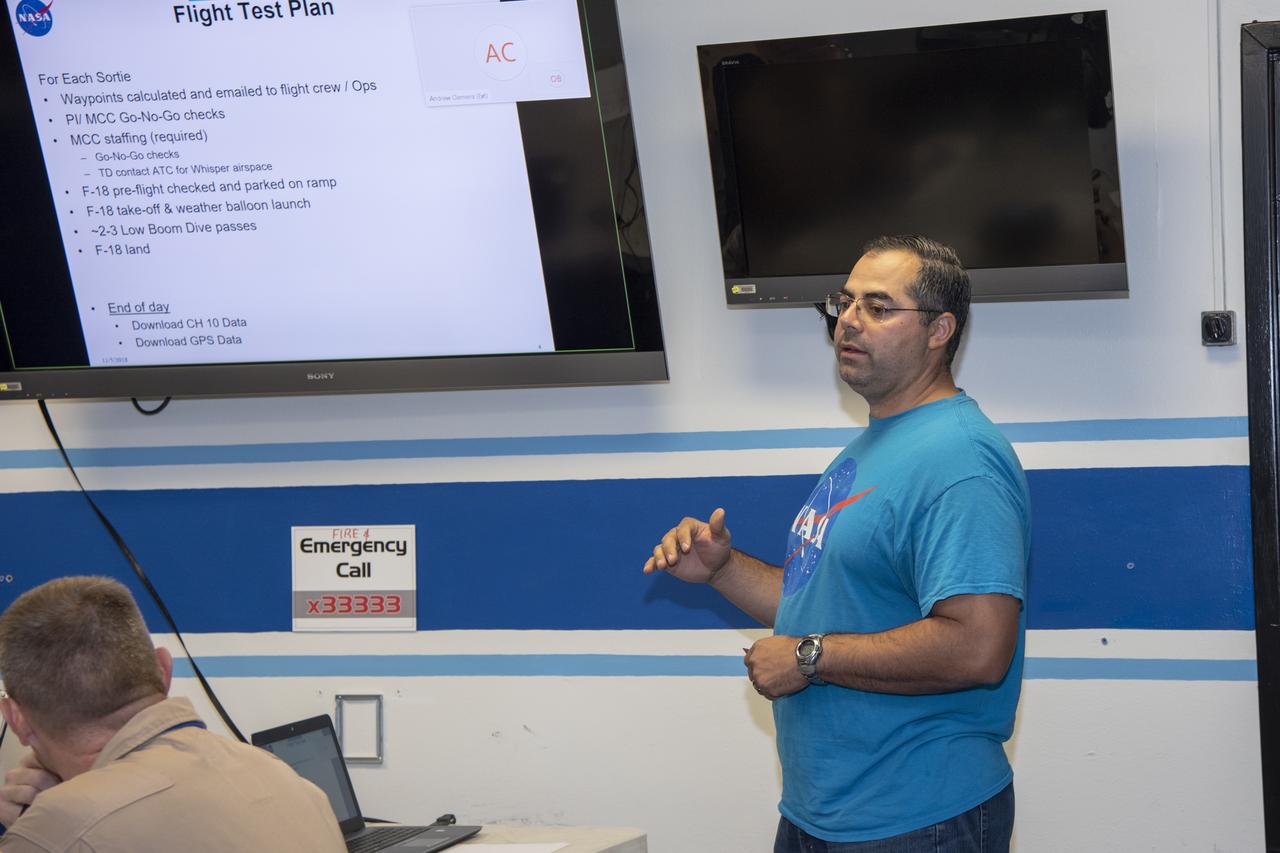
The flight operations crew for NASA’s QSF18 flight series debriefs following a flight with the F/A-18 research aircraft. The flight included a quiet supersonic dive maneuver at high altitudes off the coast to produce a sonic boom out over the ocean, with the intention of producing quieter “thumps” on land.
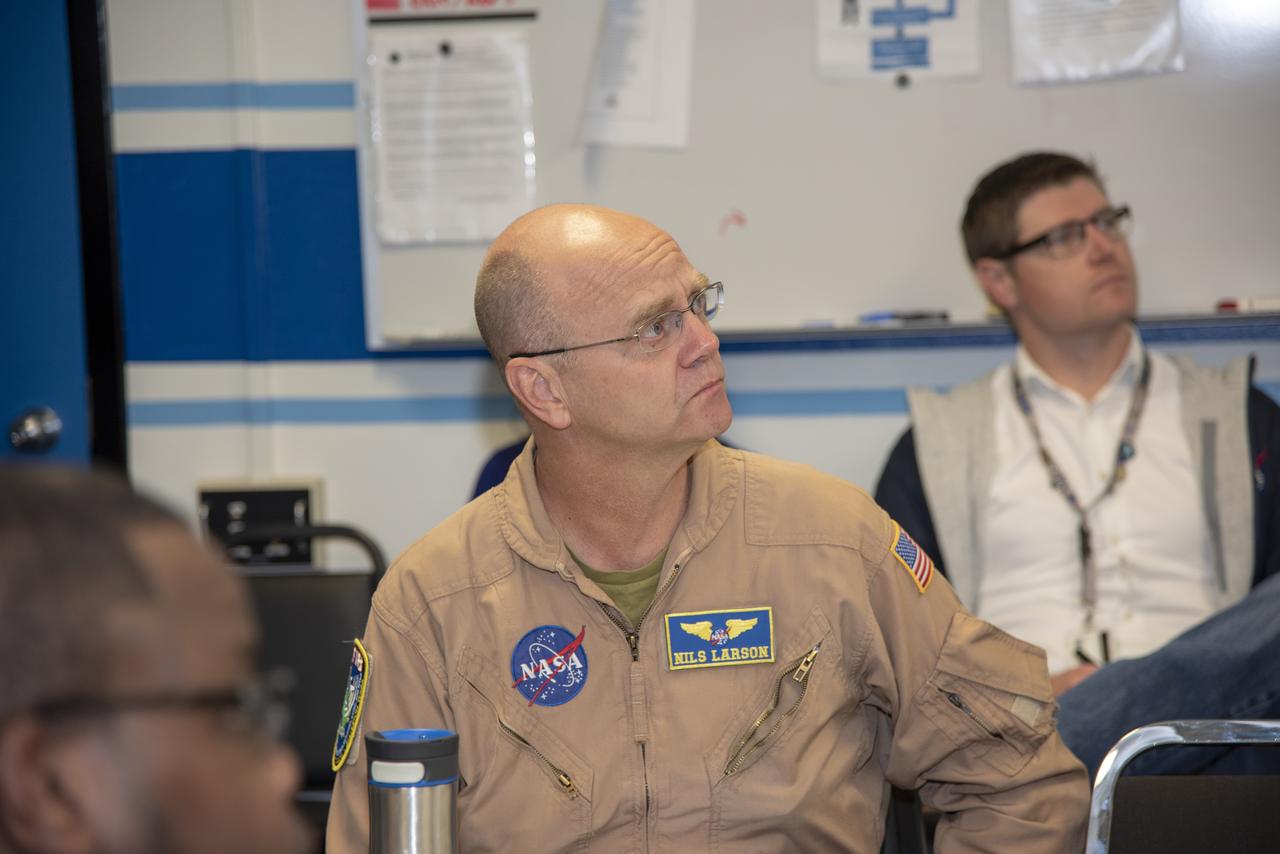
The flight operations crew for NASA’s QSF18 flight series debriefs following a flight with the F/A-18 research aircraft. The flight included a quiet supersonic dive maneuver at high altitudes off the coast to produce a sonic boom out over the ocean, with the intention of producing quieter “thumps” on land.

The flight operations crew for NASA's QSF18 flight series debriefs following a flight with the F/A-18 research aircraft. The flight included a quiet supersonic dive maneuver at high altitudes off the coast to produce a sonic boom out over the ocean, with the intention of producing quieter "thumps" on land.
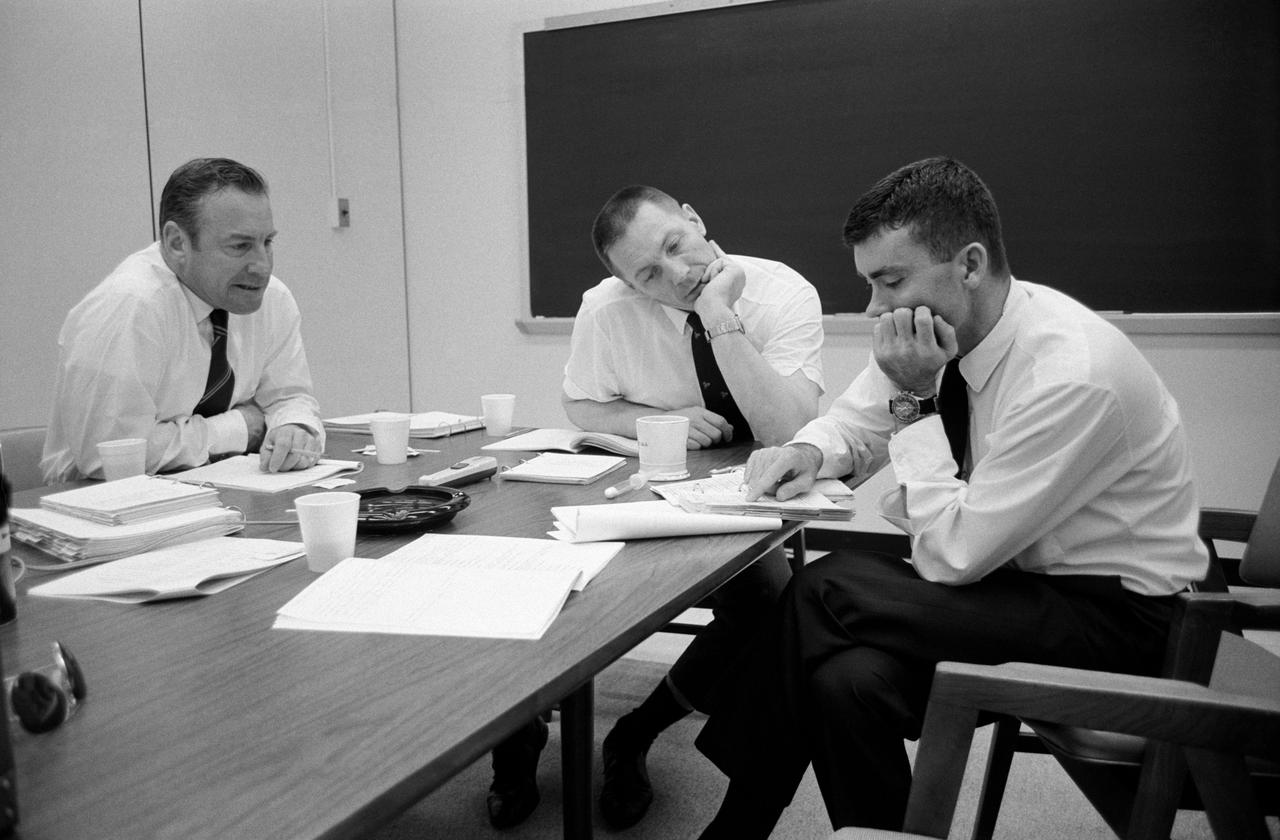
S70-35747 (20 April 1970) --- The three crew men of the problem plagued Apollo 13 mission are photographed during the first day of their postflight debriefing activity at the Manned Spacecraft Center (MSC). Left to right, are astronauts James A. Lovell Jr., commander; John L. Swigert Jr., command module pilot; and Fred W. Haise Jr., lunar module pilot. The apparent rupture of oxygen tank number two in the Apollo 13 Service Module (SM) and the subsequent damage forced the three astronauts to use the Lunar Module (LM) as a "lifeboat" to return home safely after their moon landing was canceled.

S81-30479 (April 1981) --- Astronauts John W. Young, second from left, and Robert L. Crippen, left, discuss photography from their recent STS-1 mission with astronauts Joe H. Engle, right, and Richard H. Truly during a post-mission debriefing session. Engle and Truly were backup crewmen for STS-1 and they have been named as prime crew members for STS-2, scheduled for a Sept. 30, 1981 liftoff. Photo credit: NASA
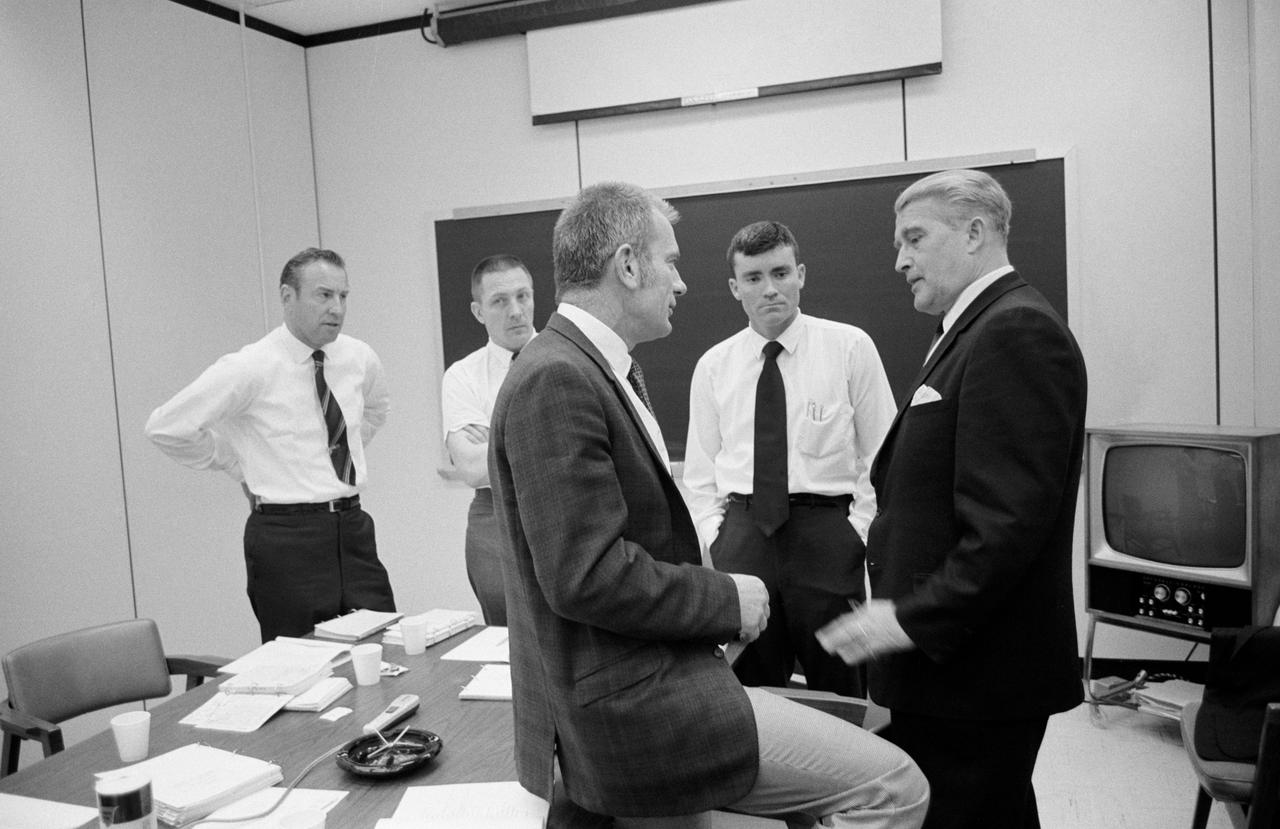
S70-35748 (20 April 1970) --- Dr. Donald K. Slayton (center foreground), MSC director of flight crew operations, talks with Dr. Wernher von Braun (right), famed rocket expert, at an Apollo 13 postflight debriefing session. The three crewmen of the problem-plagued Apollo 13 mission (left to right) in the background are astronauts James A Lovell Jr., commander; John L. Swigert Jr., command module pilot; and Fred W. Haise Jr., lunar module pilot. The apparent rupture of oxygen tank number two in the Apollo 13 Service Module (SM) and the subsequent damage forced the three astronauts to use the Lunar Module (LM) as a "lifeboat" to return home safely after their moon landing was canceled. Dr. von Braun is the deputy associate administrator for planning of the National Aeronautics and Space Administration (NASA).
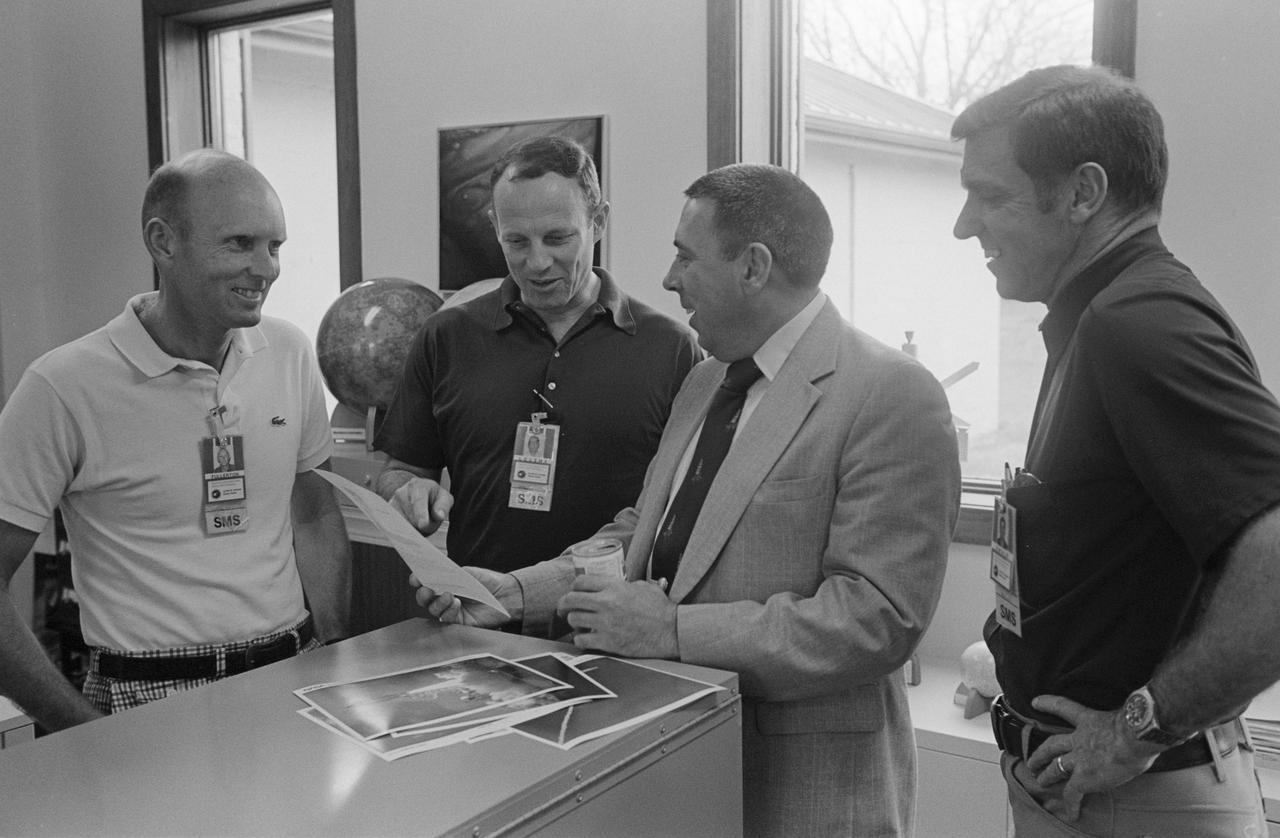
S82-28950 (1 April 1982) --- During a break from a debriefing session, the STS-3 crew members look over some of the photography of their launch from the Kennedy Space Center along with other participants of the meeting. Astronaut Jack R. Lousma is second from left; astronaut C. Gordon Fullerton is at left. They are commander and pilot, respectively, of STS-3. George W. S. Abbey, director of flight operations at JSC, is second from right, and astronaut Joe H. Engle, STS-2 commander, is at right. Photo credit: NASA
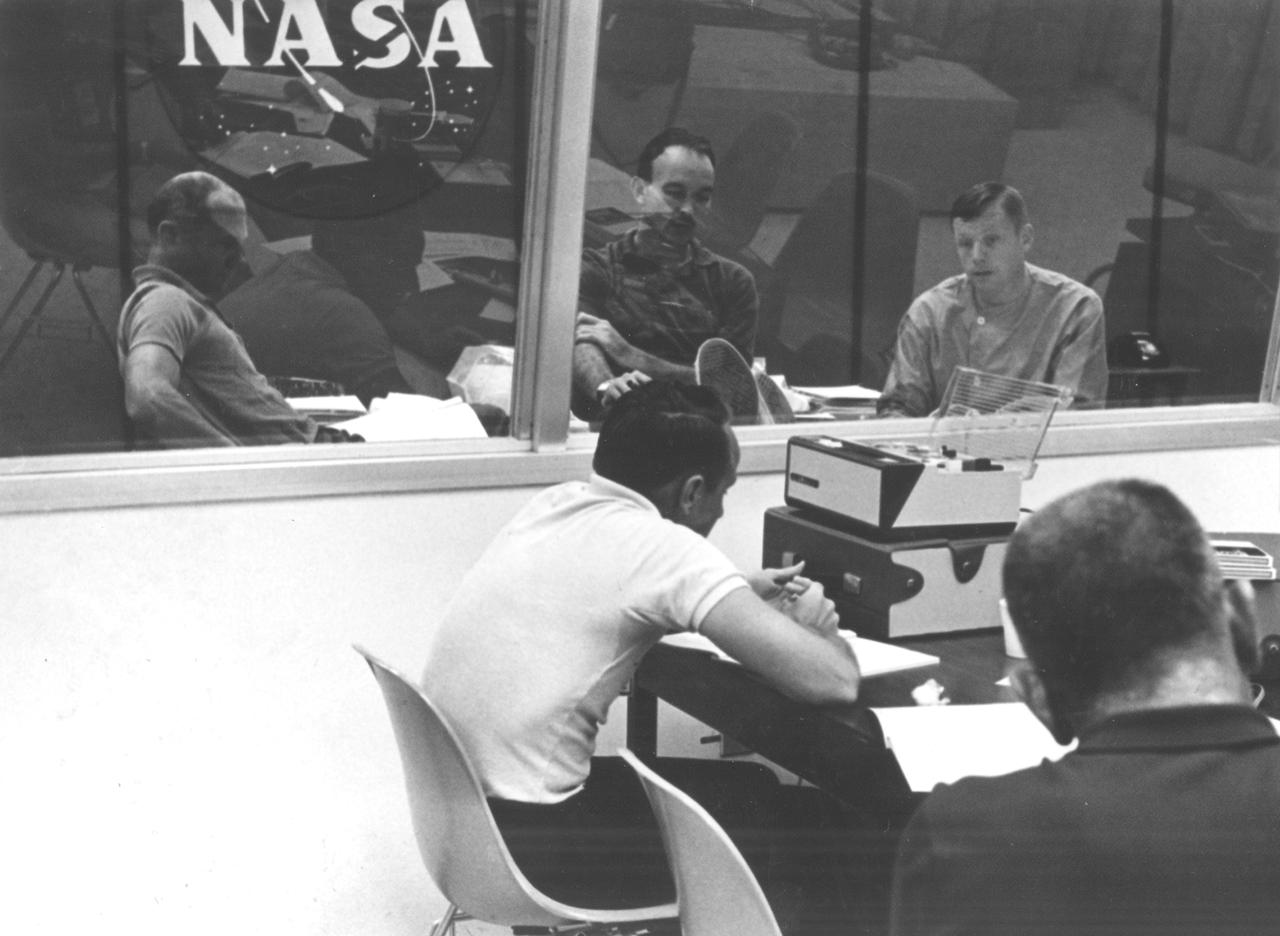
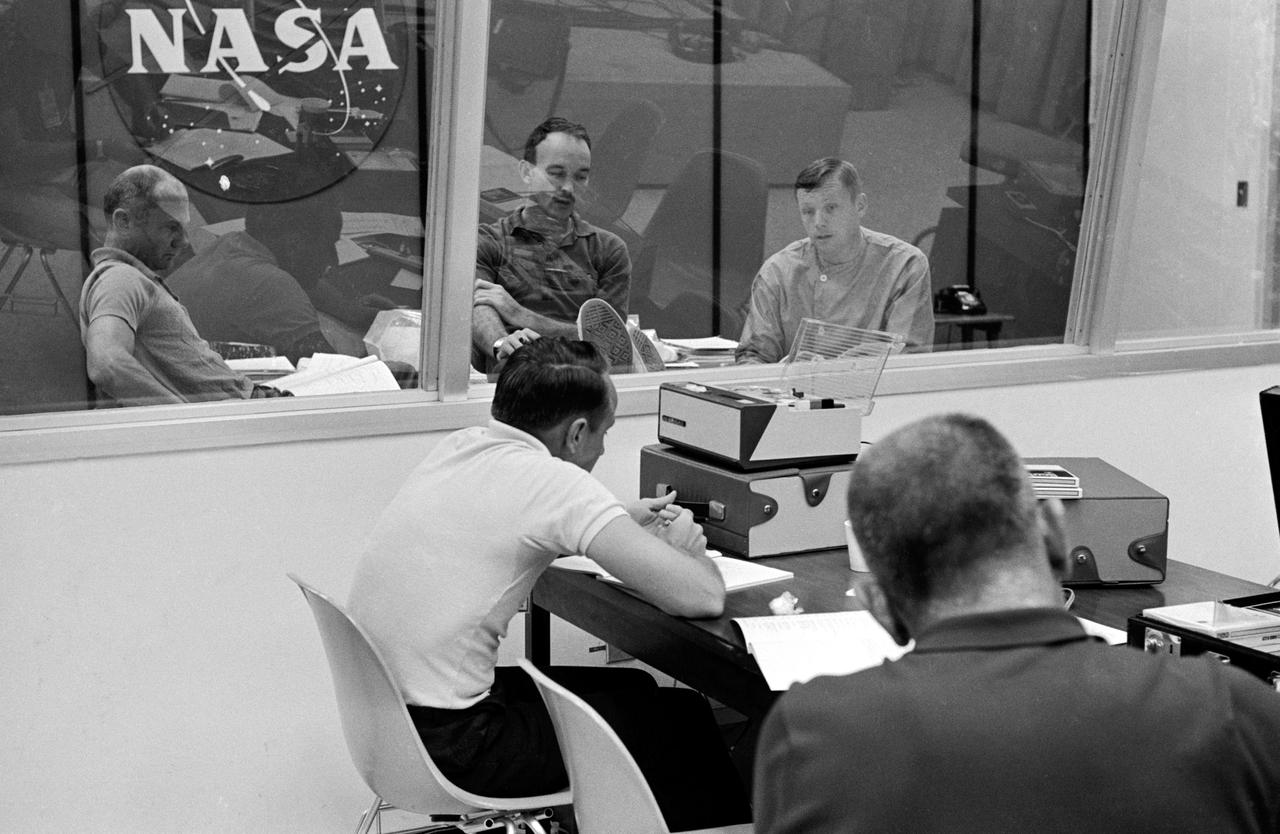
The Apollo 11 mission, the first manned lunar mission, launched from the Kennedy Space Center, Florida via the Marshall Space Flight Center (MSFC) developed Saturn V launch vehicle on July 16, 1969 and safely returned to Earth on July 24, 1969. Aboard the space craft were astronauts Neil A. Armstrong, commander; Michael Collins, Command Module (CM) pilot; and Edwin E. Aldrin Jr., Lunar Module (LM) pilot. The CM, piloted by Michael Collins remained in a parking orbit around the Moon while the LM, named “Eagle’’, carrying astronauts Neil Armstrong and Edwin Aldrin, landed on the Moon. During 2½ hours of surface exploration, the crew collected 47 pounds of lunar surface material for analysis back on Earth. The recovery operation took place in the Pacific Ocean where Navy para-rescue men recovered the capsule housing the 3-man Apollo 11 crew. The crew was airlifted to safety aboard the U.S.S. Hornet, where they were quartered in a Mobile Quarantine Facility (MQF) which served as their home until they reached the NASA Manned Spacecraft Center (MSC) Lunar Receiving Laboratory in Houston, Texas. The three are seen here at the MSC, still inside the MQF, undergoing their first debriefing on Sunday, August 3, 1969. Behind the glass are (L-R): Edwin Aldrin, Michael Collins, and Neil Armstrong.

Debriefing before the first test flight testing the visual display for the X59. The XVS display is aboard the B200.

Human factors engineer Casey Smith, left, and pilot Wayne Ringelberg, right, discuss simulation results during a flight debrief in the VMS control room, N243.
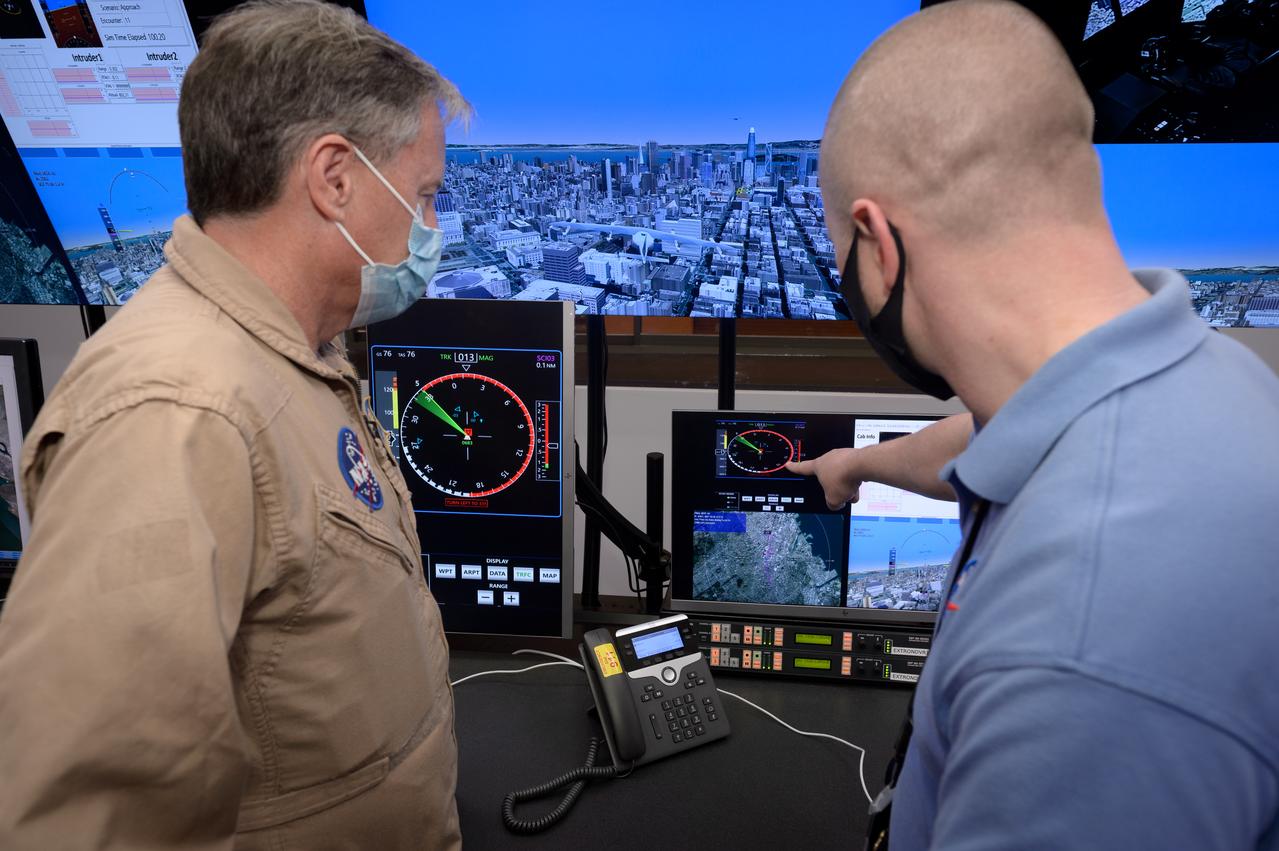
Human factors engineer Casey Smith, right, and pilot Wayne Ringelberg, left, discuss simulation results during a flight debrief in the VMS control room, N243.

Human factors engineer Casey Smith, left, and pilot Wayne Ringelberg, right, discuss simulation results during a flight debrief in the VMS control room, N243.
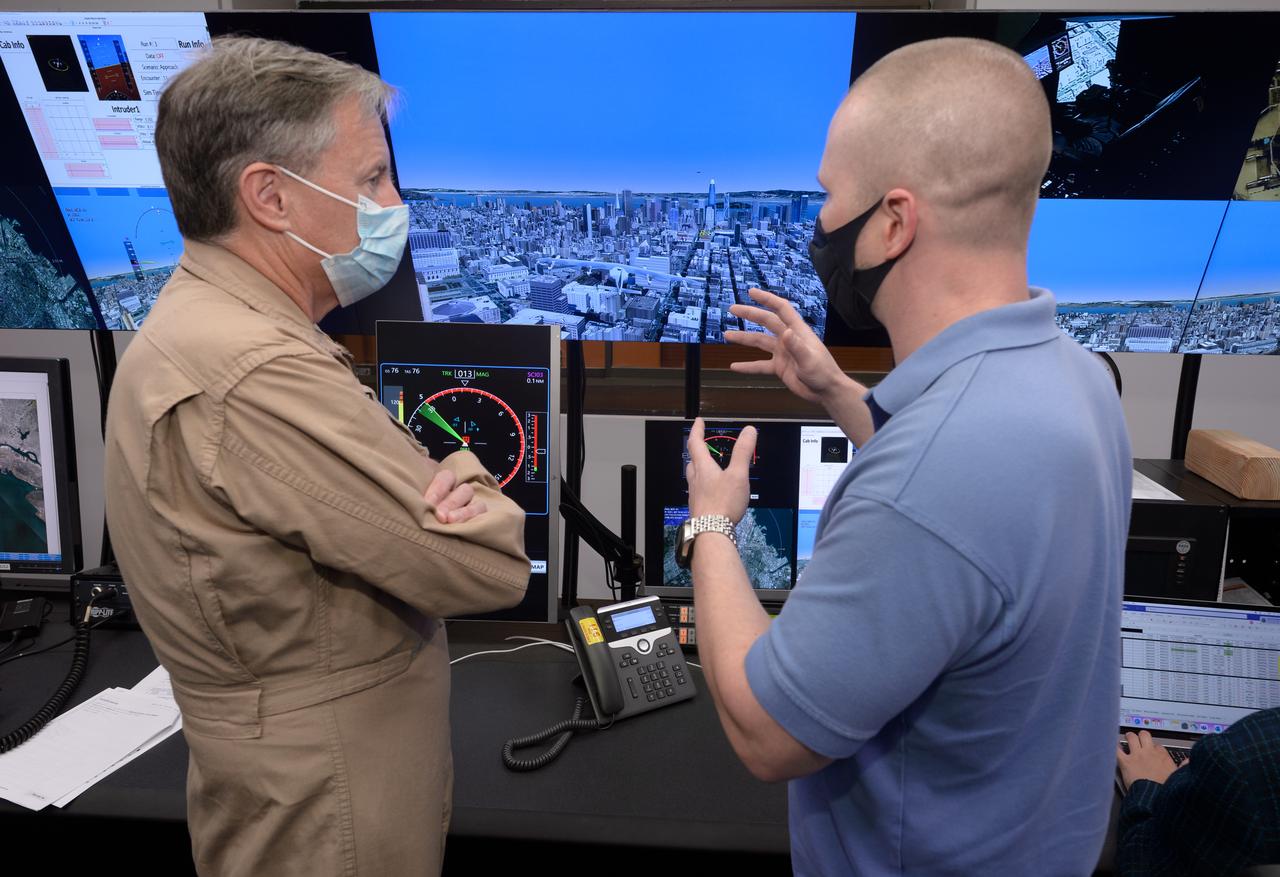
Human factors engineer Casey Smith, right, and pilot Wayne Ringelberg, left, discuss simulation results during a flight debrief in the VMS control room, N243.
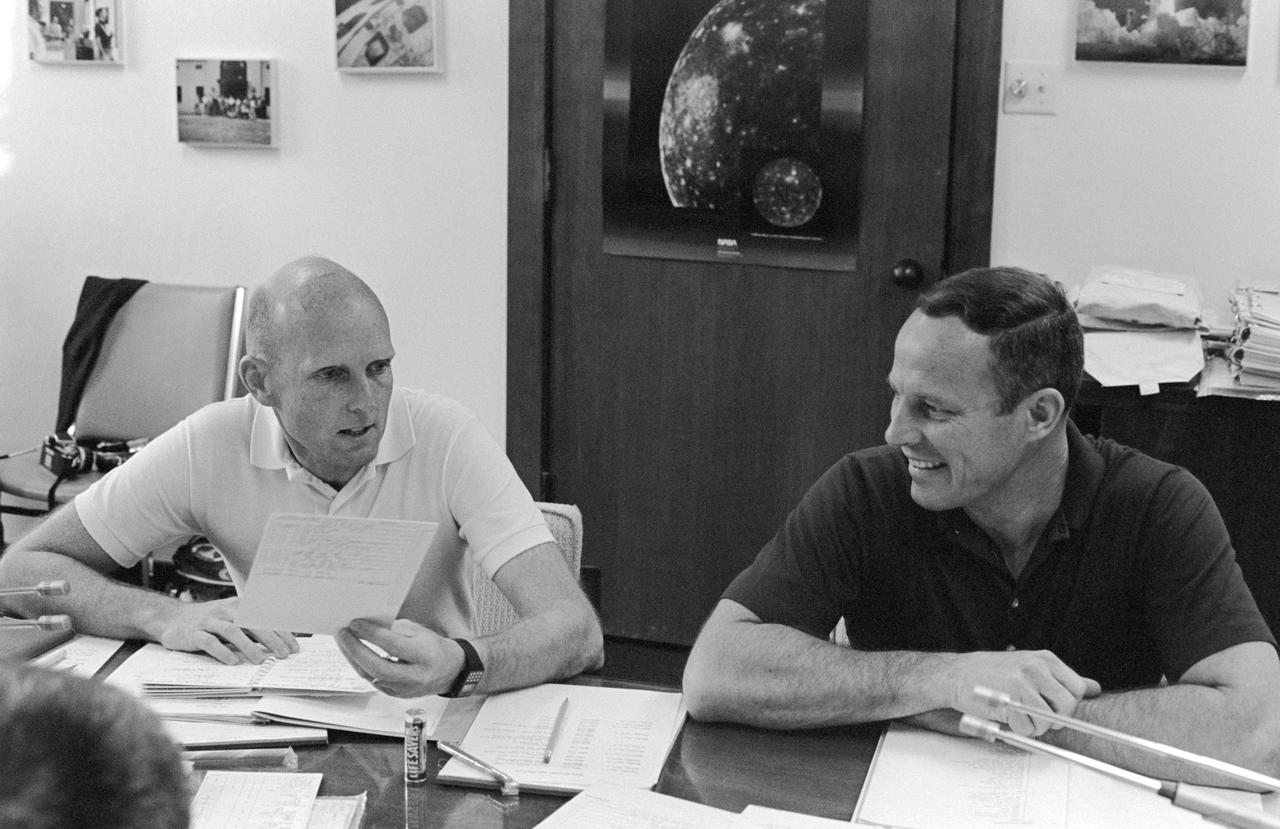
S82-28951 (1 April 1982) --- A light moment takes charge of a debriefing session for STS-3 and brings a smile to the face of its commander, astronaut Jack R. Lousma, right. Astronaut C. Gordon Fullerton, STS-3 pilot, left was one of eight other participants in the debriefing session. The two spent eight full days orbiting the Earth and conducting experiments for NASA?s third space transportation system mission aboard the Columbia. Photo credit: NASA
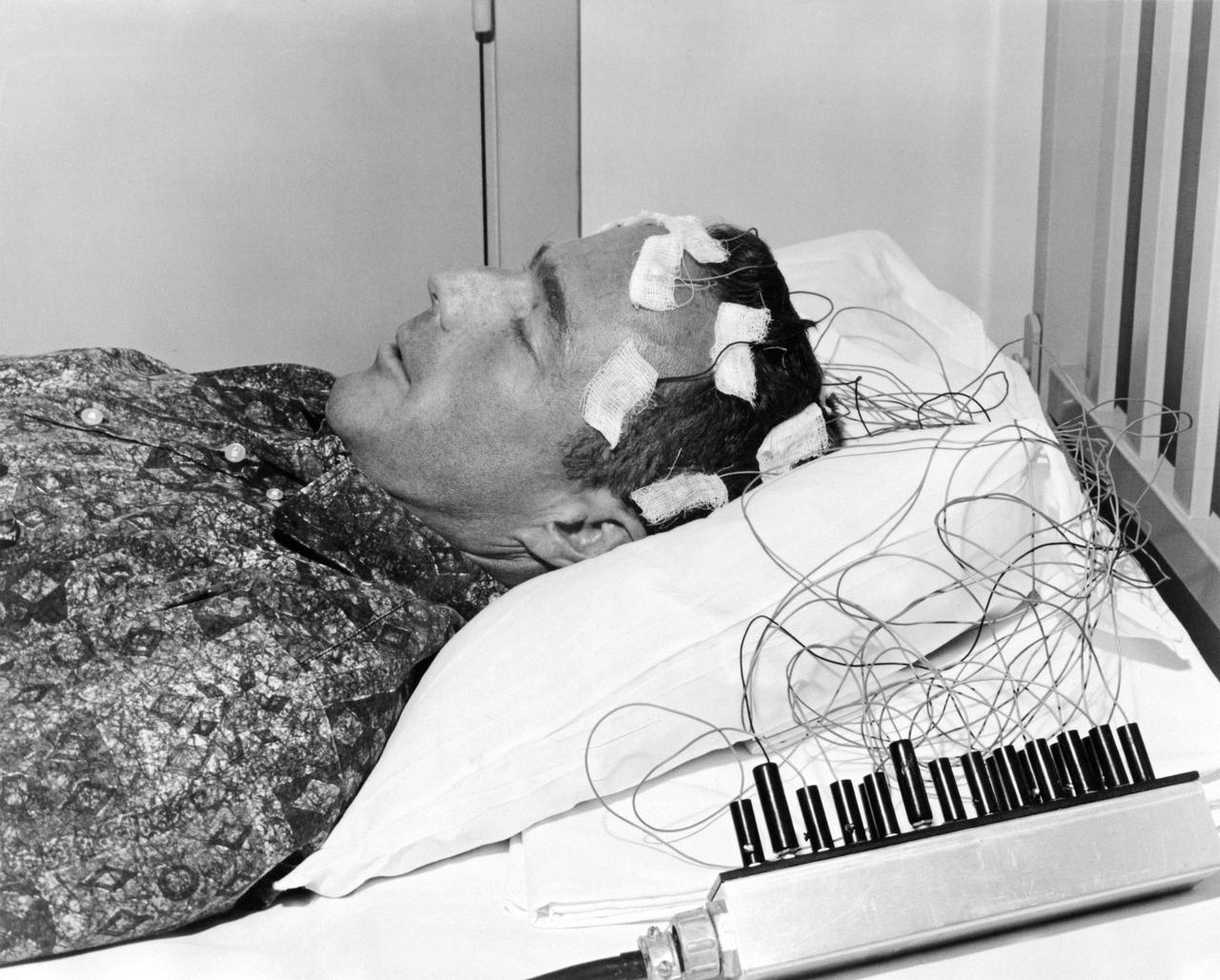
S62-04074 (1962) --- Mercury astronaut M. Scott Carpenter lies on a bed with biosensors attached to his head during astronaut training activities at Cape Canaveral, Florida. Photo credit: NASA
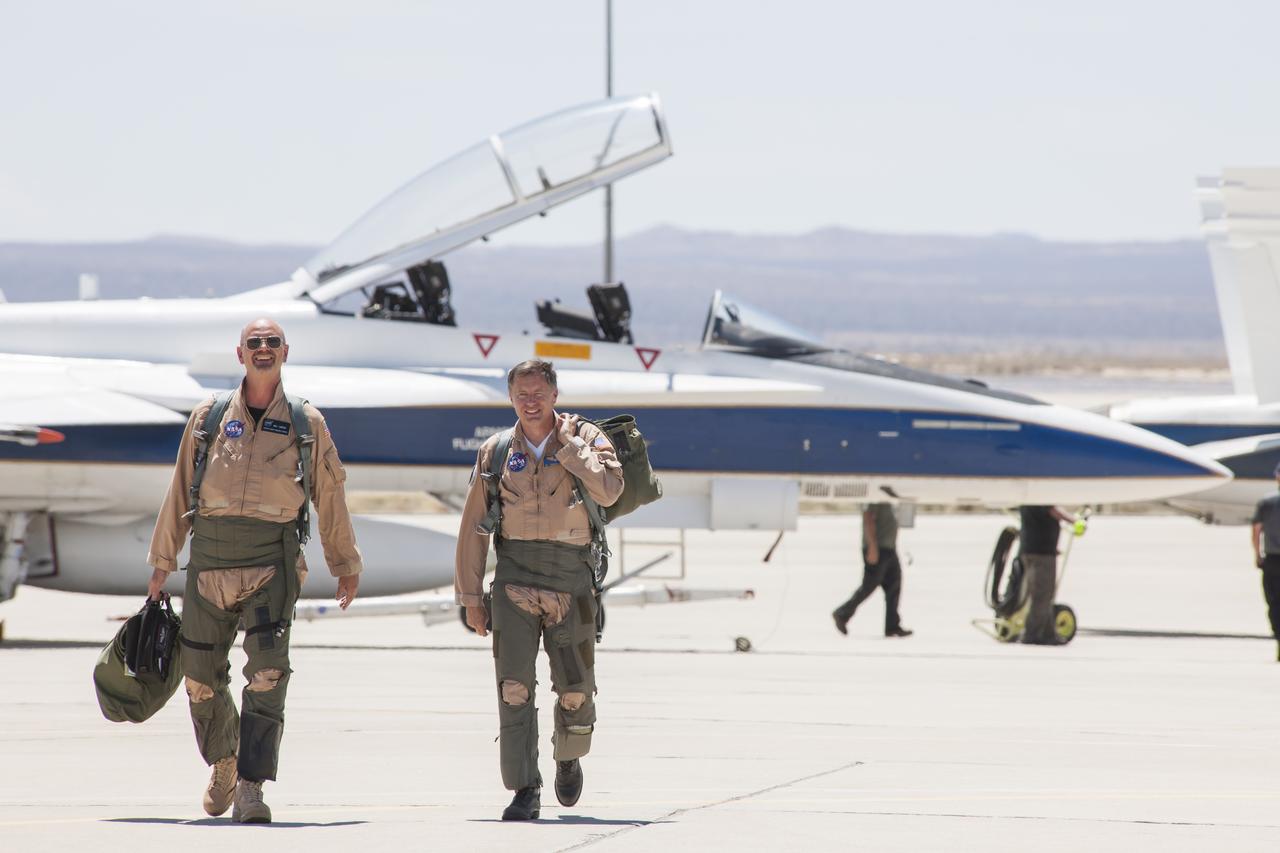
NASA pilot Nils Larson, and flight test engineer and pilot Wayne Ringelberg, head for a mission debrief after flying a NASA F/A-18 at Mach 1.38 to create sonic booms as part of the SonicBAT flight series at NASA’s Armstrong Flight Research Center in California, to study sonic boom signatures with and without the element of atmospheric turbulence.
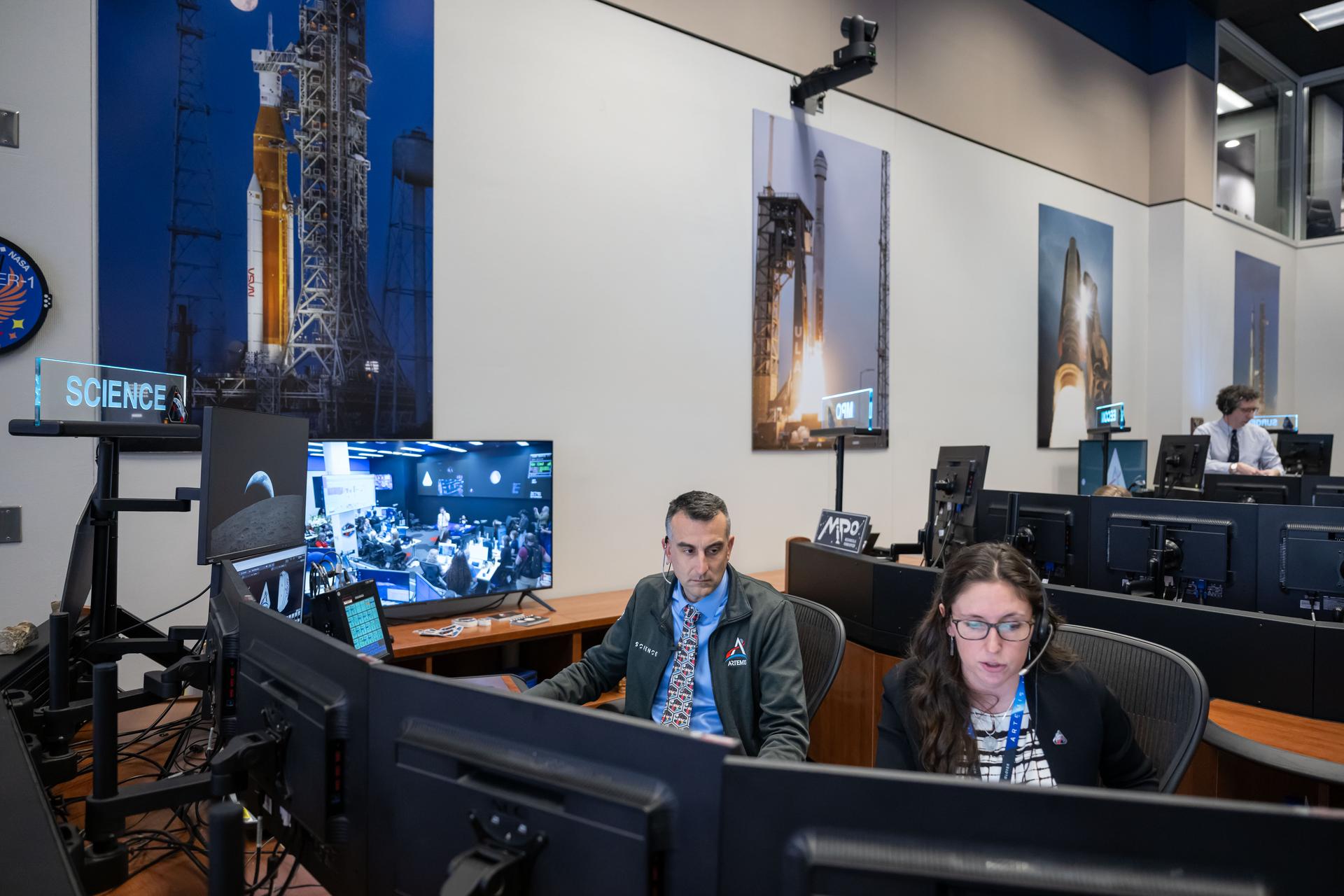
Artemis II Flight Control Team in White Flight Control Room (WFCR) during ISS Ship-to-Ship Call & Post Flyby Crew Debrief with Science Officer. Photo Date: April 7, 2026. Location: Building 30s, WFCR. Photo Credit: NASA/Robert Markowitz
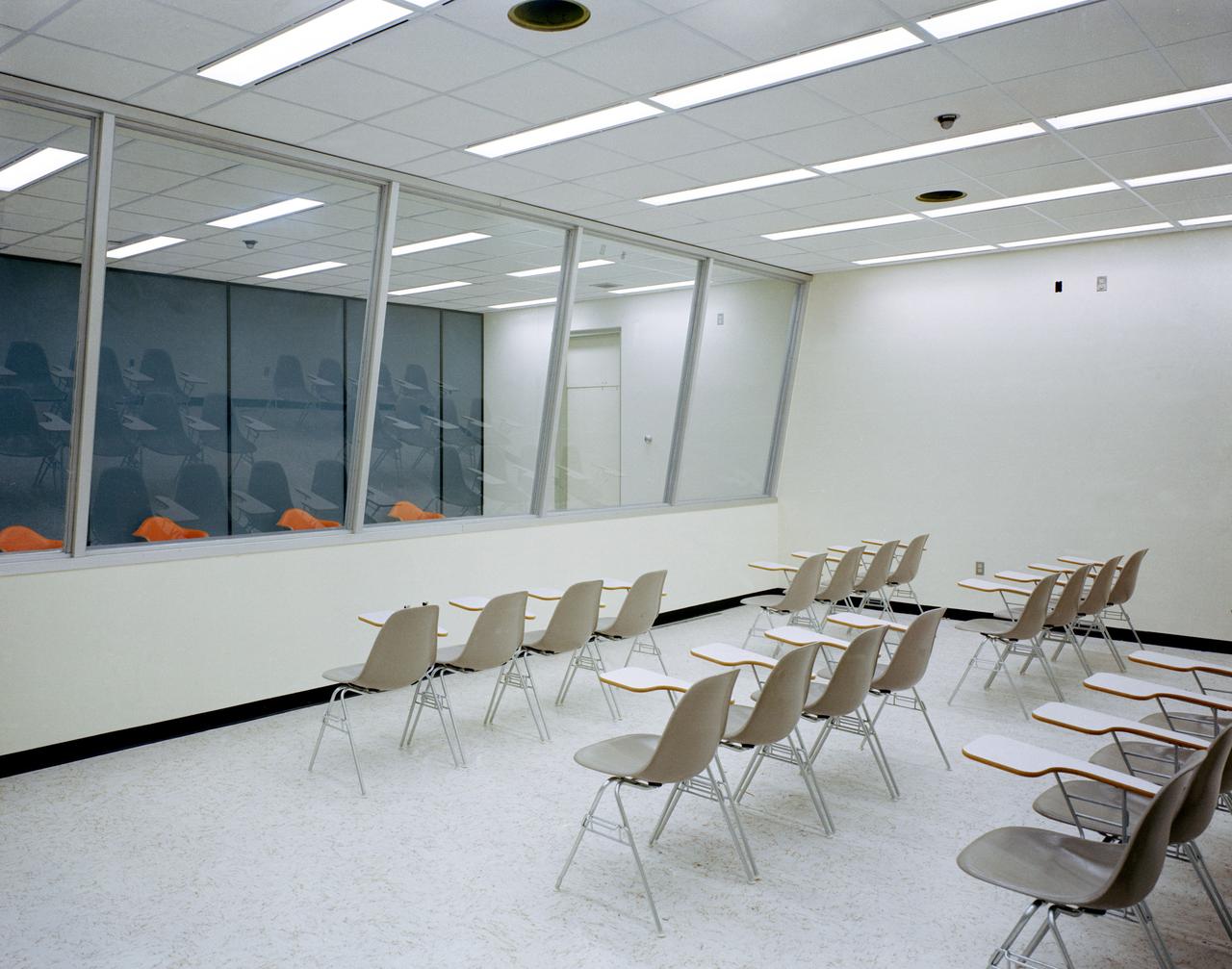
Room 190 of the Support and Administrative Facilities, CRA, LRL, Bldg 37. The room is a debriefing room which facilitates indirect contact with the Astronauts and CRA Medical Staff during quarantine periods. Also called the Press Room. MSC, Houston, TX
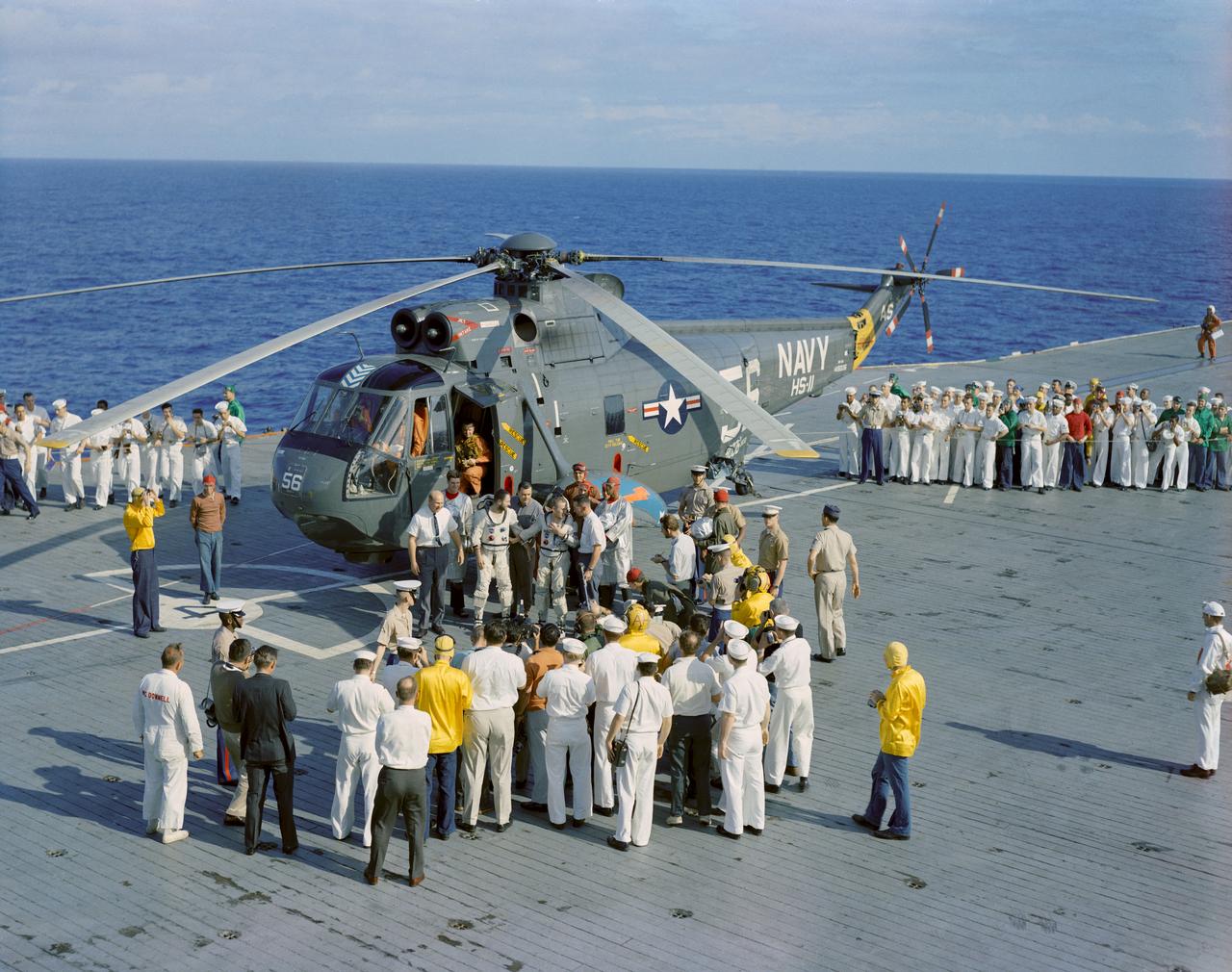
S65-63646 (18 Dec. 1965) --- The crew of the Gemini-7 spaceflight, astronauts Frank Borman, command pilot, and James A. Lovell Jr., pilot, arrive aboard the aircraft carrier USS Wasp. The astronauts were picked up from the ocean, following successful splashdown, by recovery helicopter and flown to the carrier to begin postflight medical and technical debriefings. Photo credit: NASA
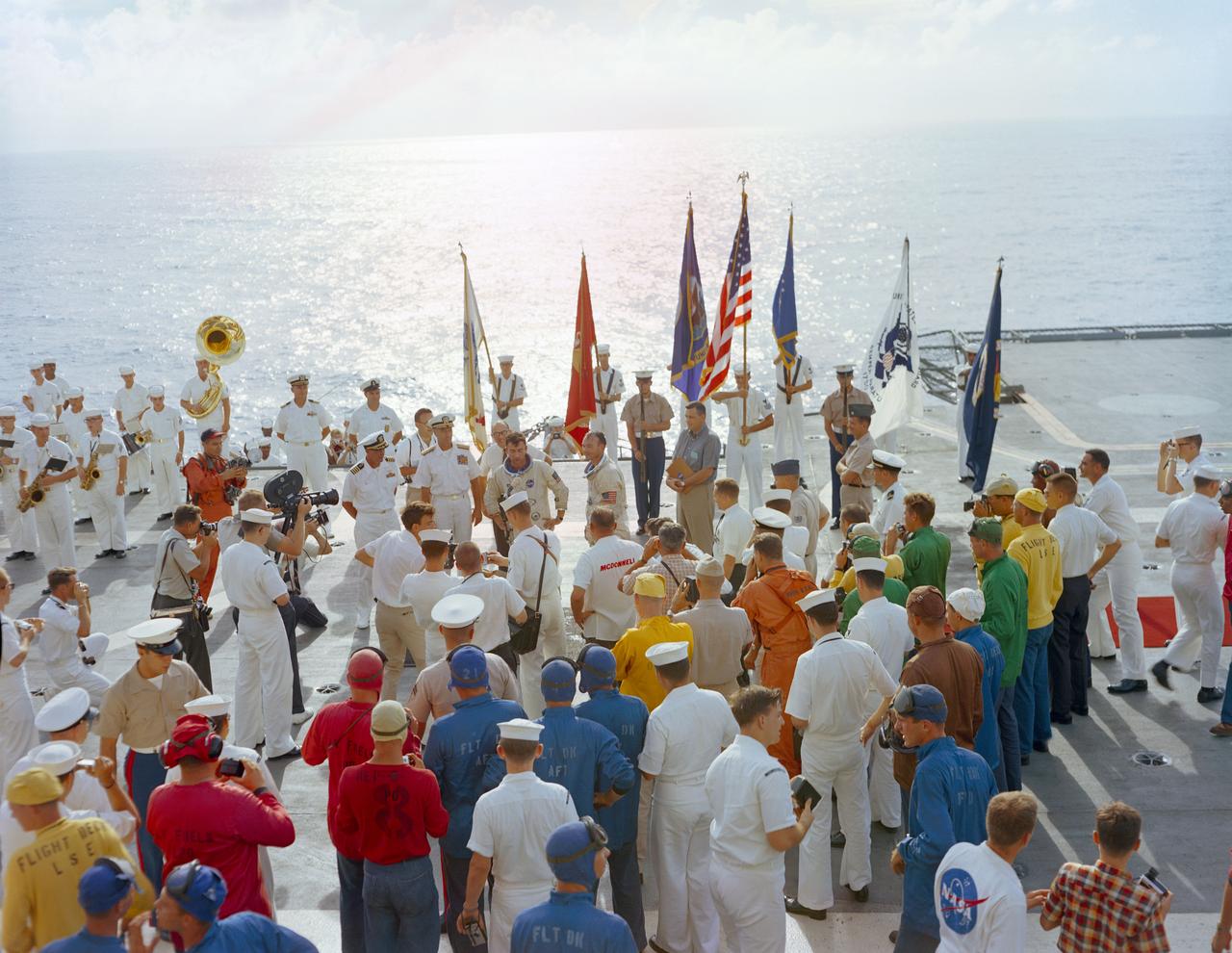
S66-42780 (21 July 1966) --- The crew of the Gemini-10 spaceflight, astronaut John W. Young (left), command pilot, and Michael Collins, pilot, talk on live radio and television during welcome aboard ceremonies on the deck of the USS Guadalcanal. The astronauts were picked up from the ocean, following a successful splashdown, by a recovery helicopter and flown to the Guadalcanal to begin postflight medical and technical debriefings. Photo credit: NASA

S69-40307 (30 July 1969) --- The crewmen of the historic Apollo 11 lunar landing mission stand in the serving line as they prepare to dine in the Crew Reception Area of the Lunar Receiving Laboratory, Building 37, Manned Spacecraft Center. Left to right, are astronauts Edwin E. Aldrin Jr., Michael Collins, and Neil A. Armstrong. They are continuing their postflight debriefings. The three astronauts will be released from quarantine on Aug. 11, 1969.
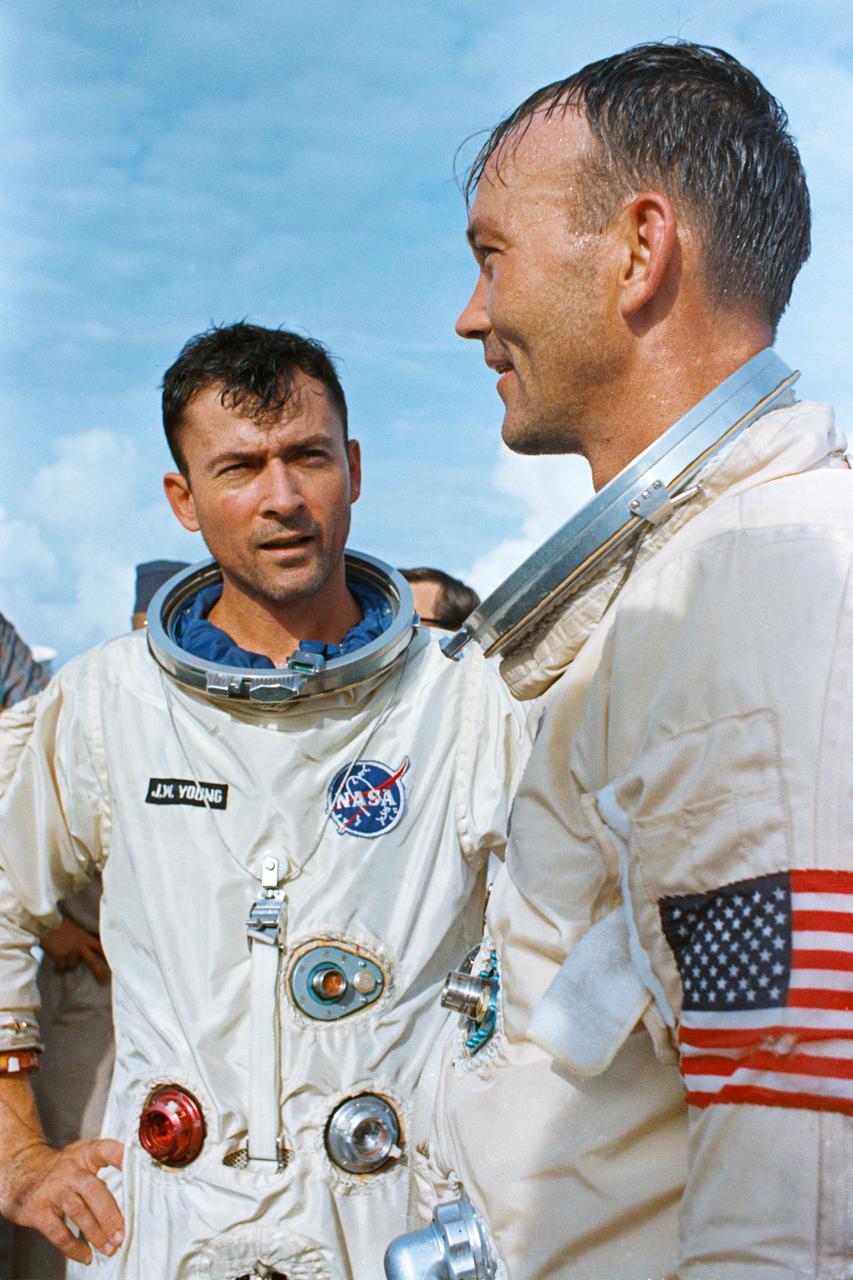
S66-42777 (21 July 1966) --- The crew of the Gemini-10 spaceflight, astronaut John W. Young (left), command pilot, and Michael Collins, pilot, aboard the recovery ship USS Guadalcanal. The astronauts were picked up from the ocean, following a successful splashdown, by a recovery helicopter and flown to the Guadalcanal to begin postflight medical and technical debriefings. Photo credit: NASA
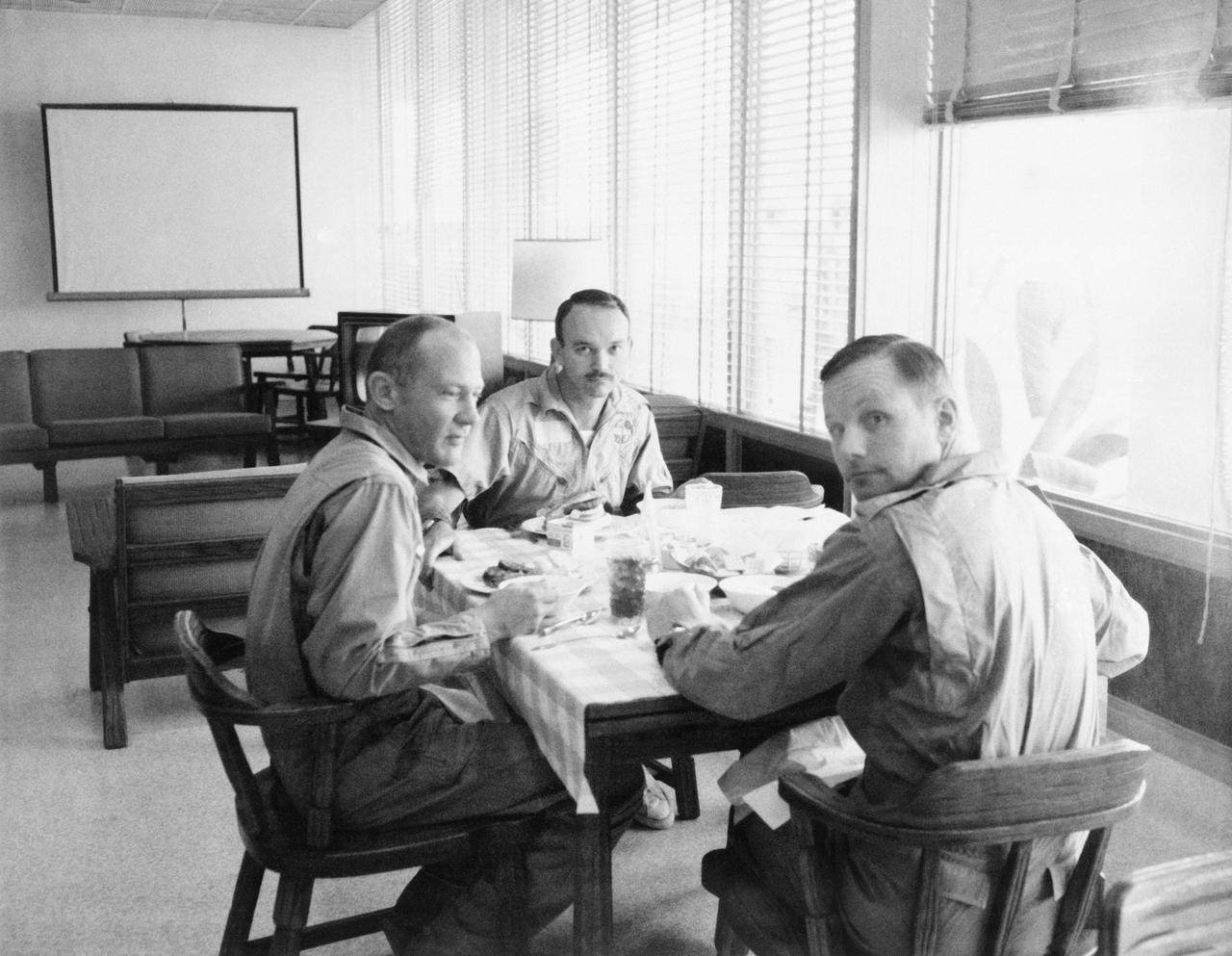
S69-40306 (30 July 1969) --- The crewmen of the historic Apollo 11 lunar landing mission are seen dining in the Crew Reception Area of the Lunar Receiving Laboratory, Building 37, Manned Spacecraft Center. Left to right, are astronauts Edwin E. Aldrin Jr., Michael Collins, and Neil A. Armstrong. They are continuing their postflight debriefings. The astronauts will be released from quarantine on Aug. 11, 1969.
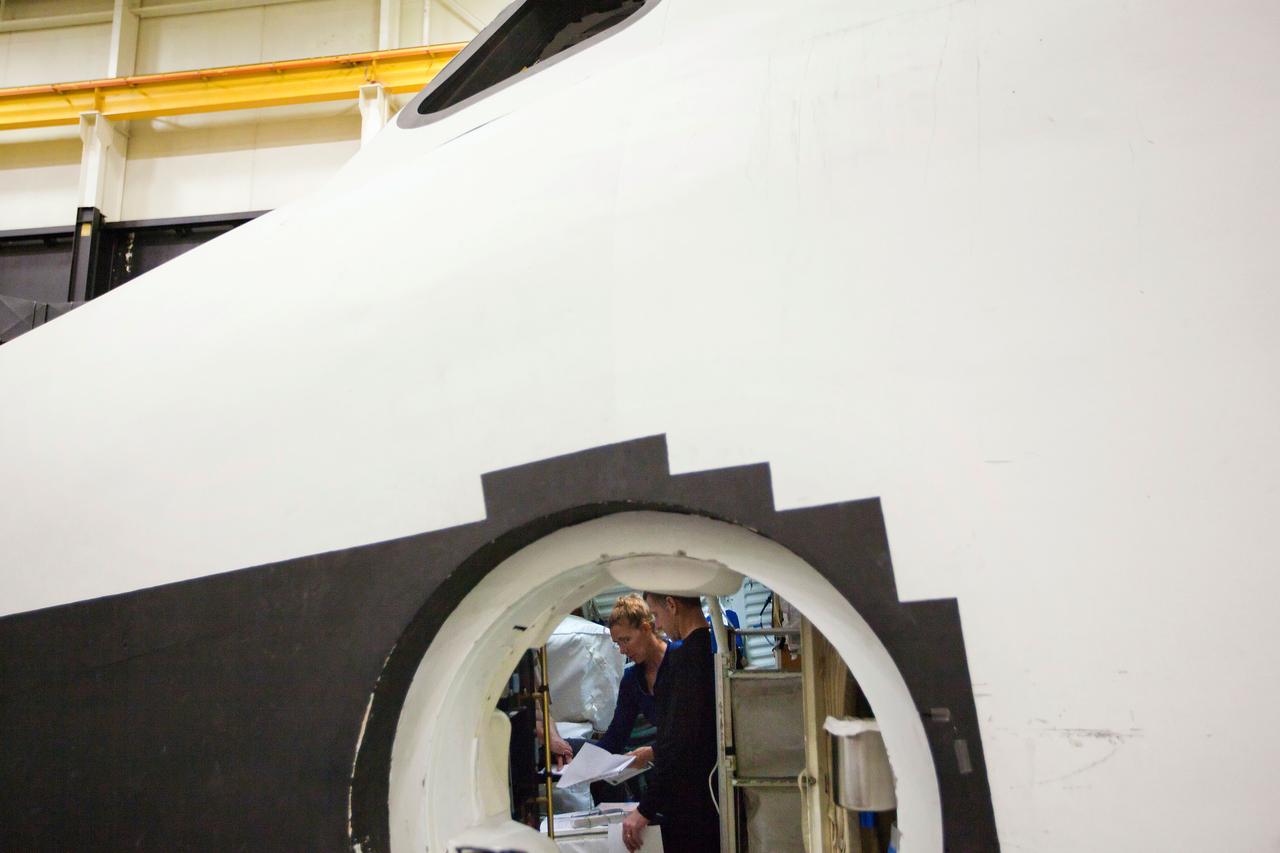
JSC2011-E-040286 (24 March 2011) --- NASA astronauts Sandy Magnus, STS-135 mission specialist, and Chris Ferguson, commander, are seen through a hatch as the crew of STS-135 debriefs after a post-insertion training session in the Full-Fuselage Trainer in the Space Vehicle Mock-up Facility at NASA's Johnson Space Center on March 24, 2011. Photo credit: NASA Photo/Houston Chronicle, Smiley N. Pool
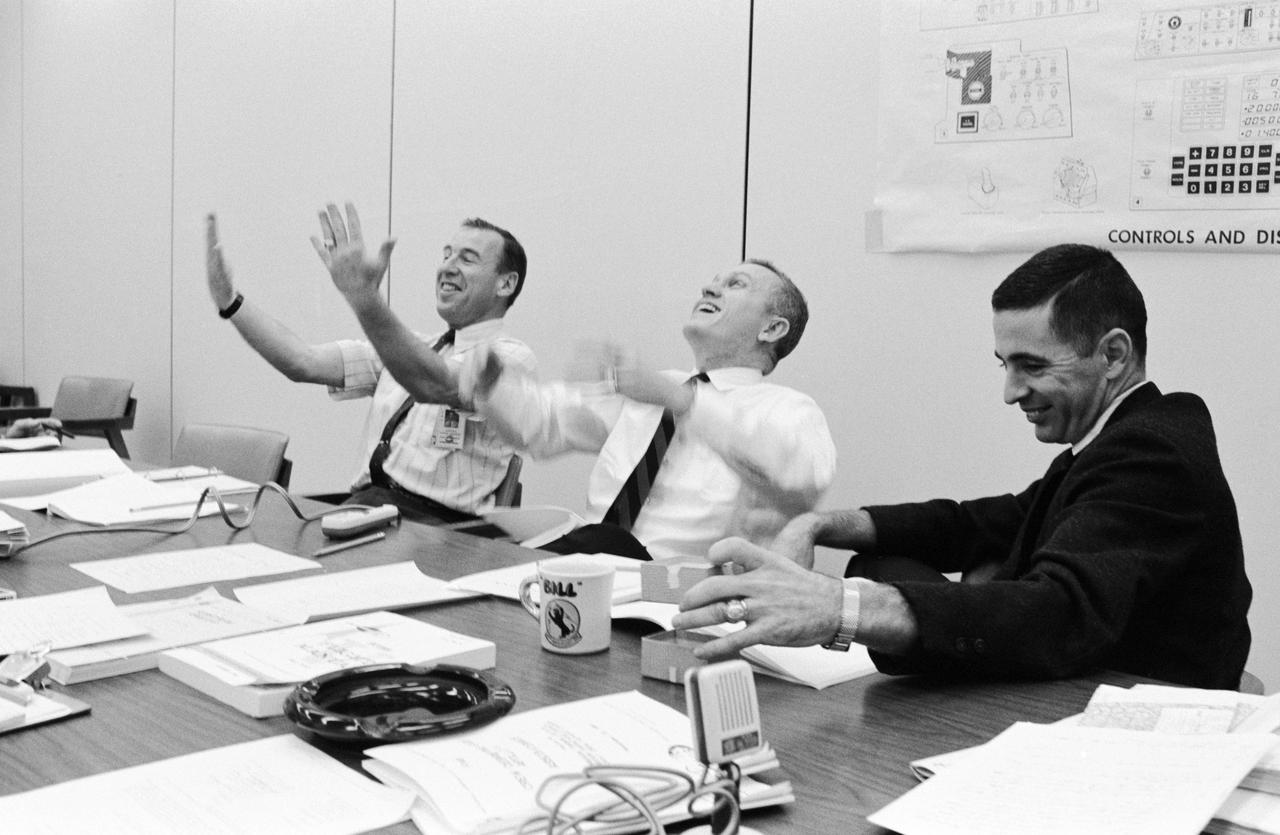
S68-56530 (30 Dec. 1968) --- The crew of the historic Apollo 8 lunar orbit mission participates in a technical de-briefing session in Building 4. Left to right, are astronauts James A. Lovell Jr., command module pilot; Frank Borman, commander; and William A. Anders, lunar module pilot.
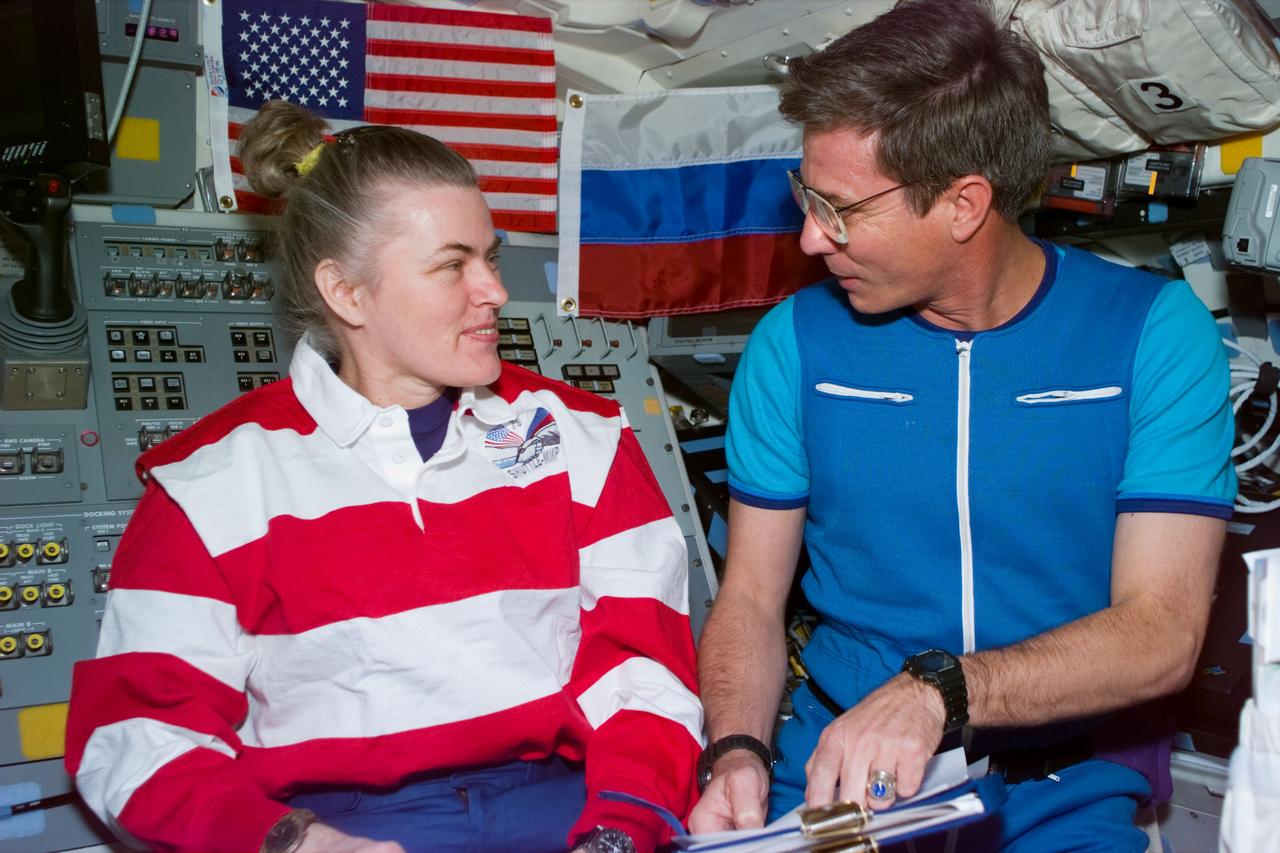
STS79-E-5131 (20 September 1996) --- Astronauts Shannon W. Lucid and John E. Blaha, sharing a third flight together in Earth-orbit (twice on the Space Shuttle Atlantis, once on the Space Shuttle Columbia), hold a brief-debrief session about their soon-to-be exchanged roles, during Flight Day 5. Blaha becomes a Mir-22 cosmonaut guest researcher for several months and Lucid ends a period of over six months aboard Mir as a cosmonaut guest researcher, having spent time with two Mir crews.
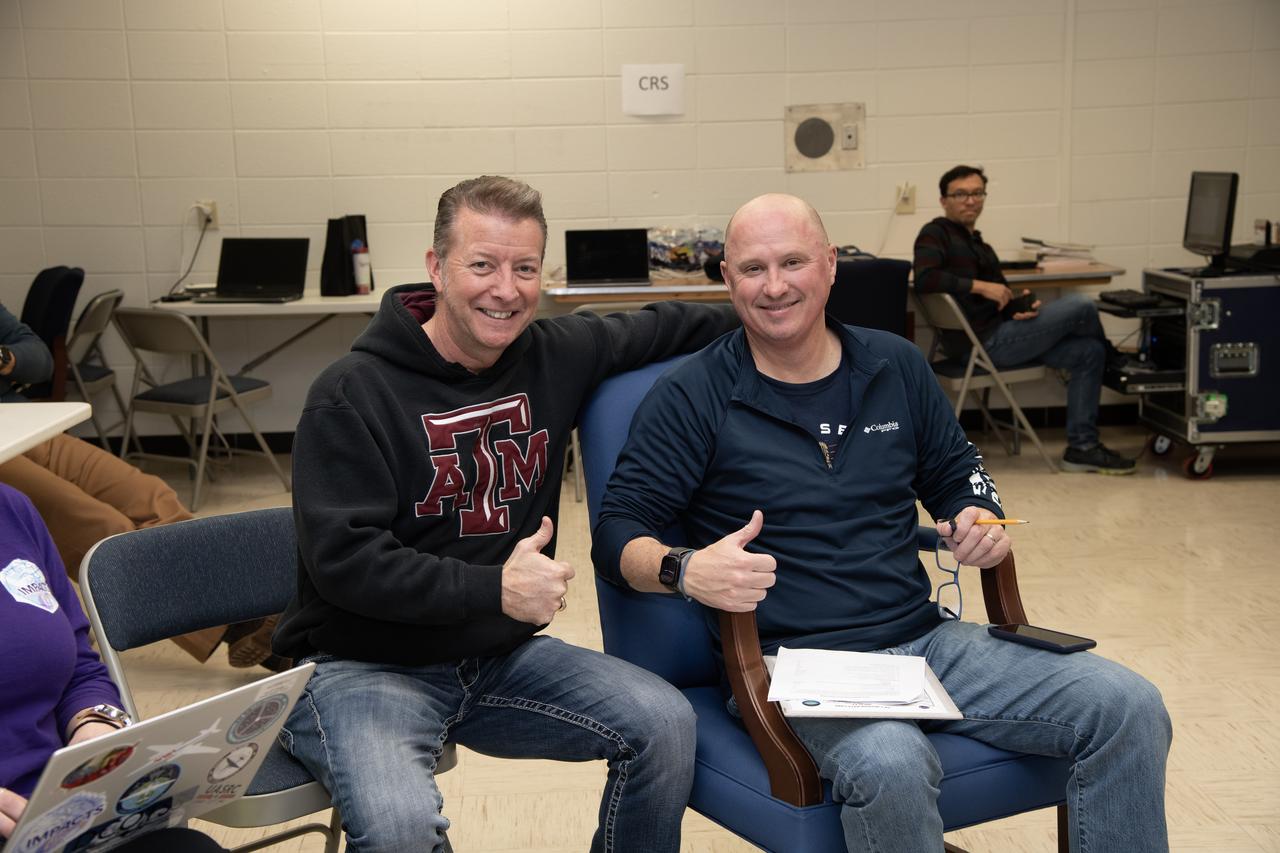
Dean Neeley and Kirt Stallings, ER-2 pilots from NASA’s Armstrong Flight Research Center in Edwards California, completed flights in support of the Investigation of Microphysics and Precipitation for Atlantic Coast-Threatening Storms (IMPACTS) mission. The IMPACTS team tracked storms across the Eastern United States to help understand how winter storms form and develop. Here Neeley and Stallings are seen in a lighter moment at debrief. The aircraft, which is based at NASA’s Armstrong Flight Research Center Building 703 in Palmdale, California, was temporarily based at Dobbins Air Reserve Base in Marietta, Georgia. The three-year IMPACTS campaign concluded on Feb. 28, 2023.
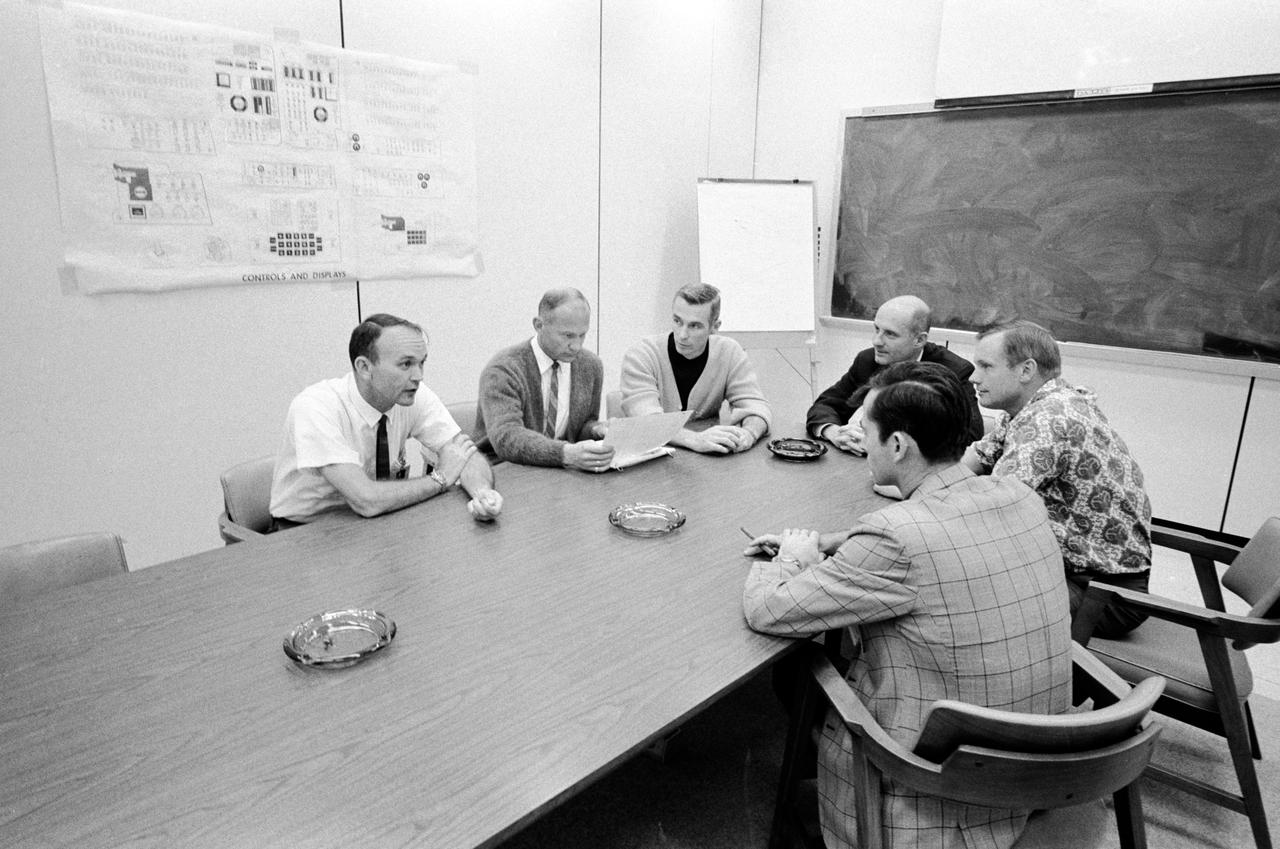
S69-35507 (June 1969) --- The prime crews of the Apollo 10 lunar orbit mission and the Apollo 11 lunar landing mission are photographed during an Apollo 10 postflight de-briefing session. Clockwise, from left, are astronauts Michael Collins, Apollo 11 command module pilot; Edwin E. Aldrin Jr., Apollo 11 lunar module pilot; Eugene A. Cernan, Apollo 10 lunar module pilot; Thomas P. Stafford, Apollo 10 commander; Neil A. Armstrong, Apollo 11 commander; and John W. Young, Apollo 10 command module pilot.
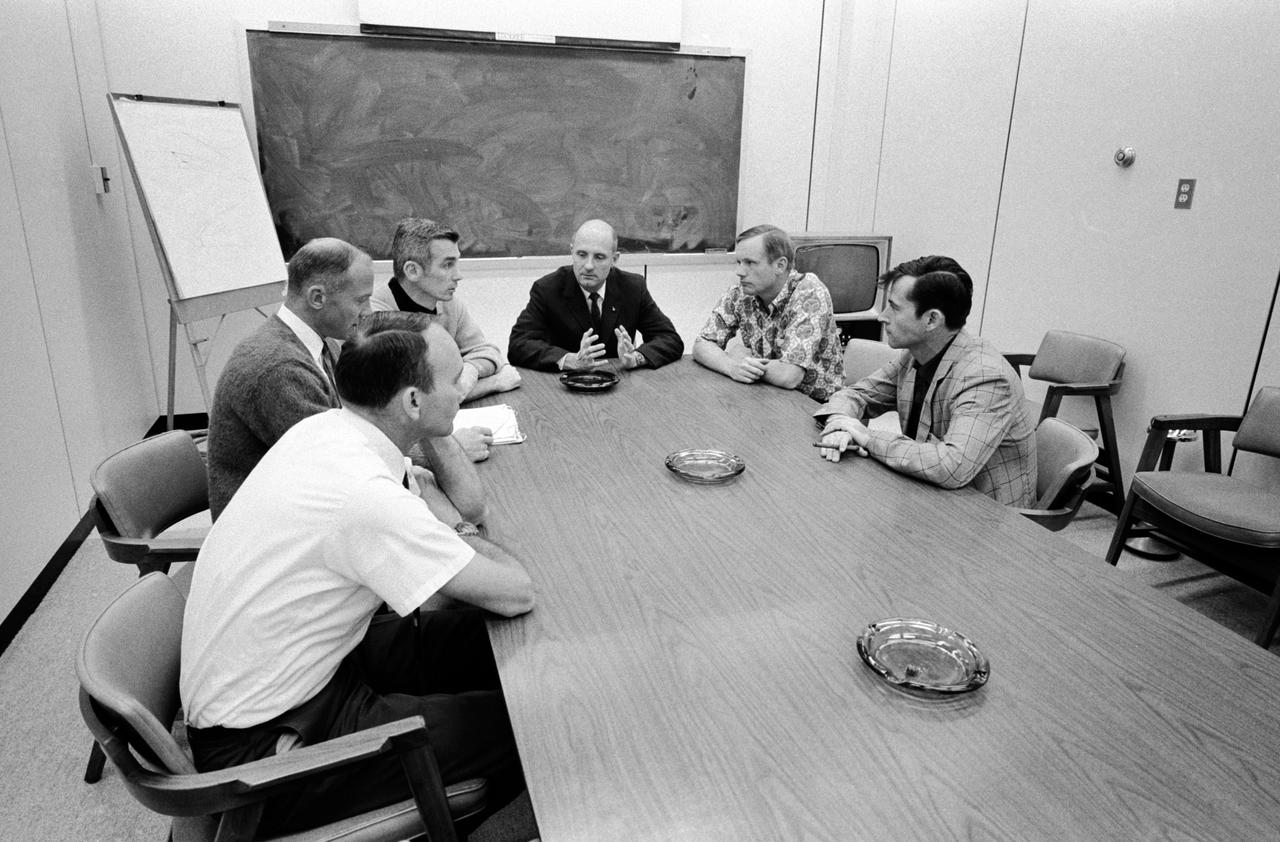
S69-35504 (June 1969) --- The prime crews of the Apollo 10 lunar orbit mission and the Apollo 11 lunar landing mission are photographed during an Apollo 10 postflight de-briefing session. Clockwise, from left foreground, are astronauts Michael Collins, Apollo 11 command module pilot; Edwin E. Aldrin Jr., Apollo 11 lunar module pilot; Eugene A. Cernan, Apollo 10 lunar module pilot; Thomas P. Stafford, Apollo 10 commander; Neil A. Armstrong, Apollo 11 commander; and John W. Young, Apollo 10 command module pilot.
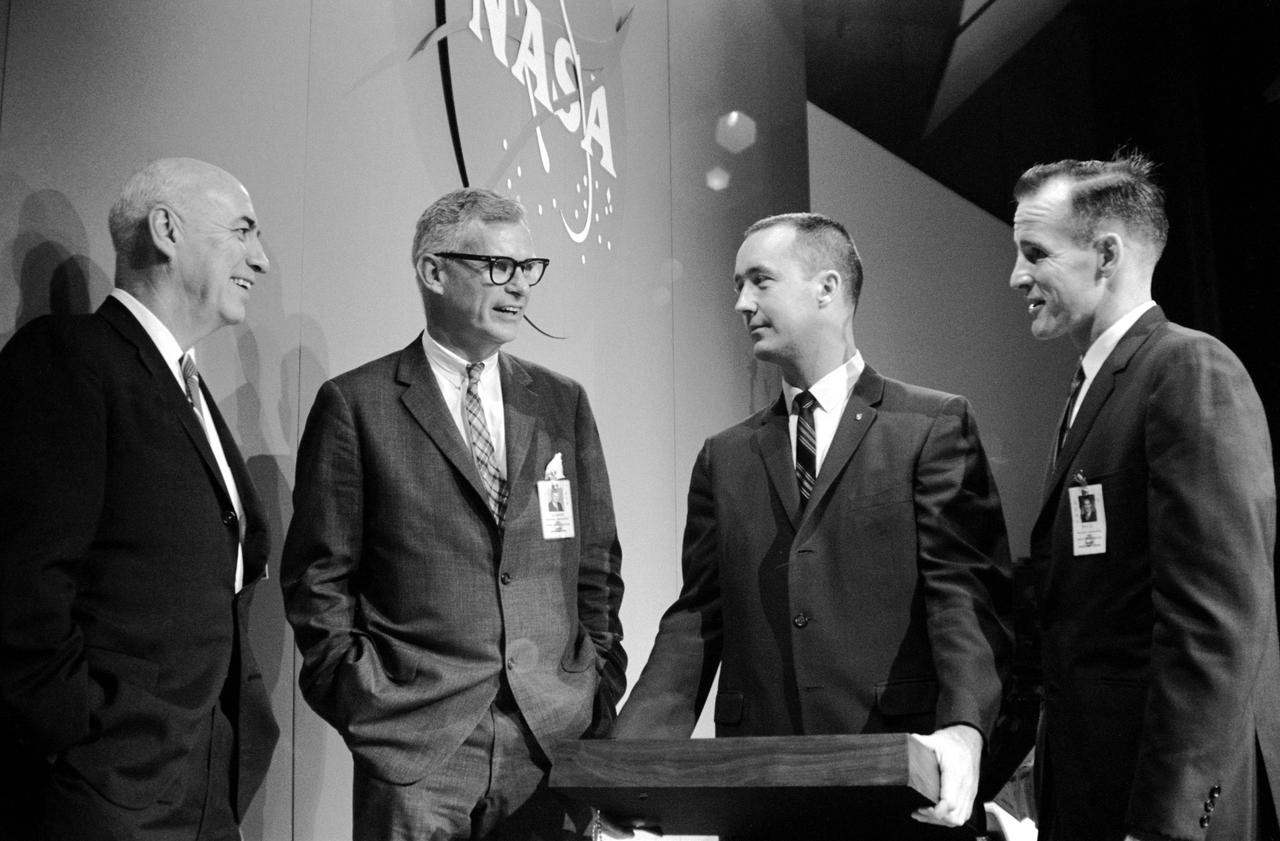
S65-33352 (11 June 1965) --- The Gemini-4 prime crew pose with two NASA officials after a press conference in the MSC auditorium. Left to right, are Dr. Robert R. Gilruth, MSC director; Dr. Robert C. Seamans Jr., associate administrator, National Aeronautics and Space Administration; astronaut James A. McDivitt, command pilot of the Gemini-4 flight; and astronaut Edward H. White II, pilot of the mission. The two astronauts had just returned to Houston following their debriefings at Cape Kennedy. The Gt-4 liftoff was at 10:16 a.m. (EST) on June 3, 1965. Time of splashdown ending the four-day, 62-revolution mission was at 12:12 p.m. on June 7, 1965.
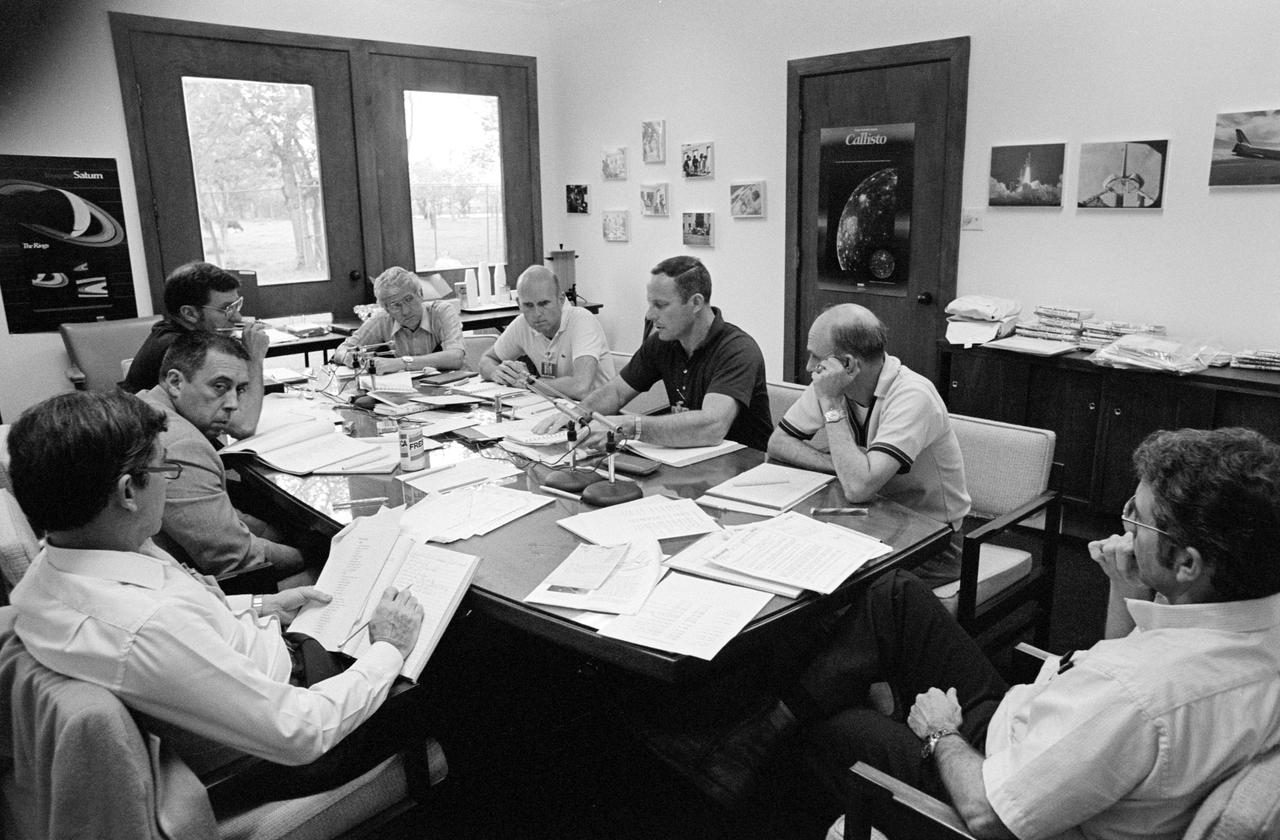
S82-28952 (1 April 1982) --- Crew members from STS-2 and STS-4 meet with the recently returned STS-3 astronauts for a debriefing session at the Johnson Space Center. Taking notes at bottom left foreground is astronaut John W. Young, STS-1 commander and chief of the Astronaut Office at JSC. Clockwise around the table, beginning with Young, are George W. S. Abbey, JSC Director of Flight Operations; and astronauts Joe E. Engle, STS-2 commander; Henry W. Hartsfield Jr., STS-4 pilot; C. Gordon Fullerton, STS-3 pilot; Jack R. Lousma, STS-3 commander; Thomas K. (Ken) Mattingly, STS-4 commander; and Richard H. Truly, STS-2 pilot. Photo credit: NASA