
NASA astronaut Raja Chari climbs through a hatch of Lockheed Martin’s deep space habitat ground prototype at NASA’s Kennedy Space Center in Florida on March 25, 2019. Chari is one of the astronauts helping engineers refine requirements for the design of an American-made deep space habitat for the Gateway. Astronauts provide important design perspective as they may one day live and work aboard the lunar outpost, which would be located about 250,000 miles from Earth. To date, five habitat prototypes have been developed through NASA’s Next Space Exploration for Technologies Partnerships, or NextSTEP. Lockheed Martin was the first to turn their habitat over to NASA for testing. Ground prototypes developed by Bigelow Aerospace, Boeing, Northrop Grumman and Sierra Nevada Corporation will be tested in the future at various facilities across the country. A sixth company, NanoRacks, plans to develop a prototype as well.
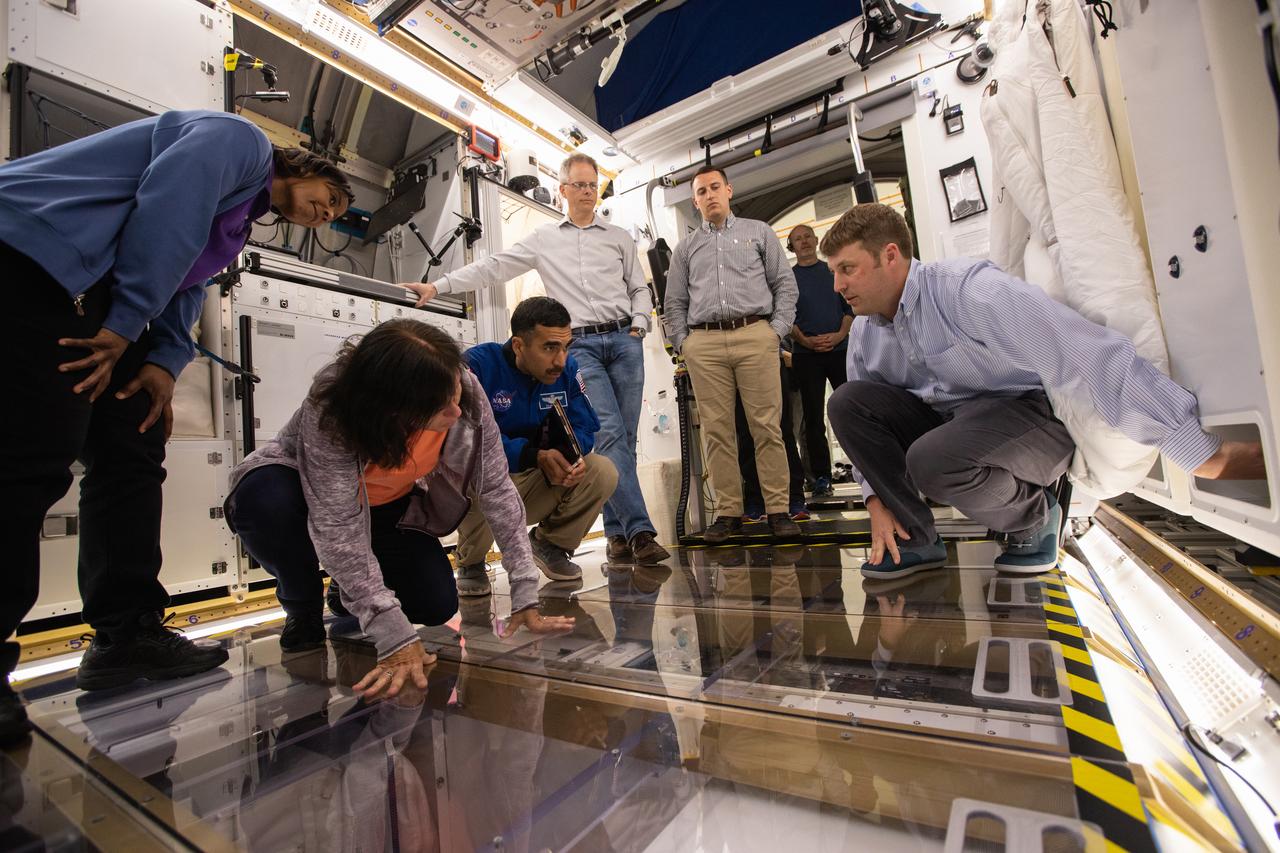
NASA began evaluating five habitat prototypes developed through NASA’s Next Space Exploration for Technologies Partnerships, or NextSTEP, to help engineers refine requirements for the design of an American-made deep space habitat for the Gateway. Lockheed Martin turned over its prototype to NASA, and testing began with crew on March 25, 2019, at Kennedy Space Center in Florida. Pictured inside the habitat prototype on March 26, 2019, from left are astronauts Stephanie Wilson, Shannon Walker and Raja Chari. Astronauts are participating in the evaluations to provide their perspectives as those who may one day live aboard the lunar outpost, which would be located about 250,000 miles from Earth. Ground prototypes developed by Bigelow Aerospace, Boeing, Northrop Grumman, and Sierra Nevada Corporation will be tested in the future at various facilities across the country. A sixth company, NanoRacks, plans to develop a prototype as well.
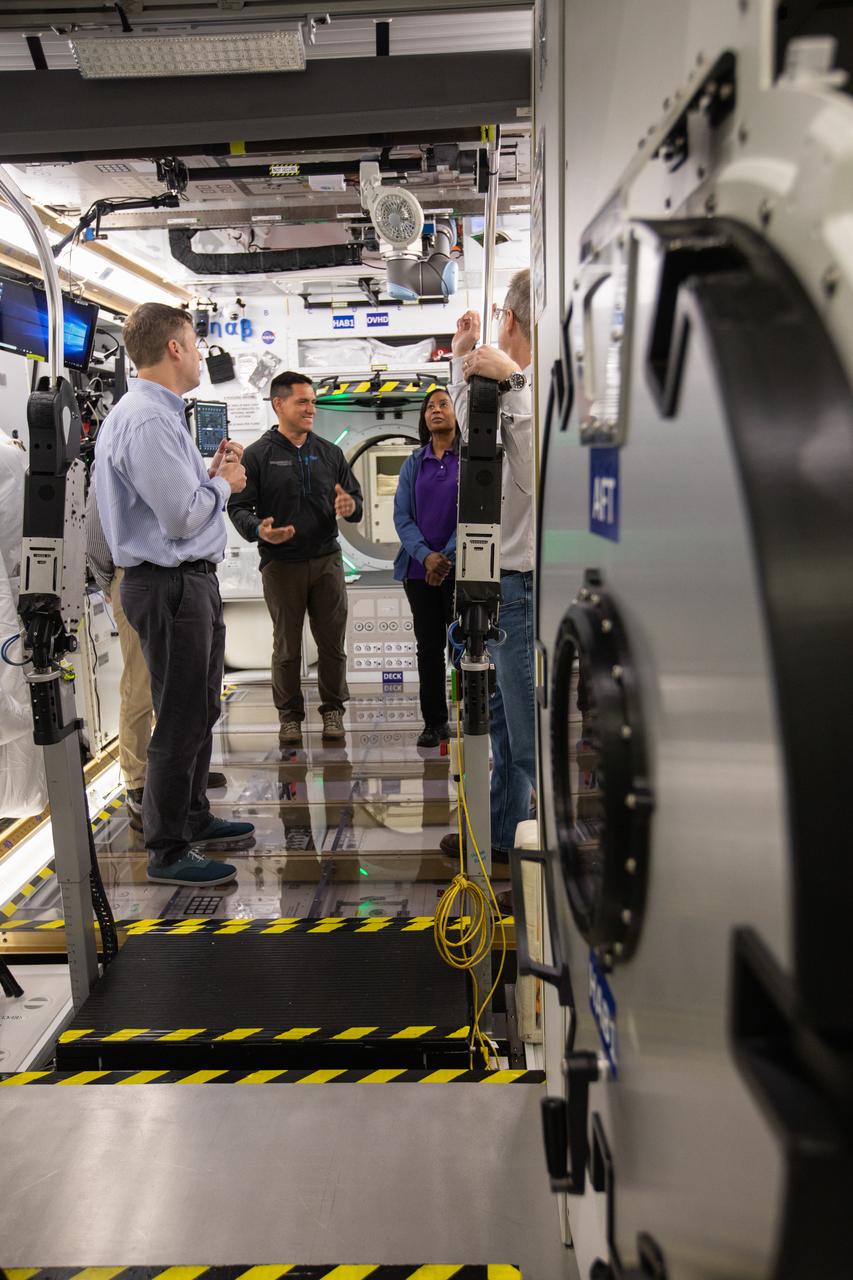
NASA began evaluating five habitat prototypes developed through NASA’s Next Space Exploration for Technologies Partnerships, or NextSTEP, to help engineers refine requirements for the design of an American-made deep space habitat for the Gateway. Lockheed Martin turned over its prototype to NASA, and testing began with crew on March 25, 2019, at Kennedy Space Center in Florida. Pictured inside the habitat prototype on March 26, 2019, second from left is astronaut Frank Rubio. Next to him is astronaut Stephanie Wilson. Astronauts are participating in the evaluations to provide their perspectives as those who may one day live aboard the lunar outpost, which would be located about 250,000 miles from Earth. Ground prototypes developed by Bigelow Aerospace, Boeing, Northrop Grumman, and Sierra Nevada Corporation will be tested in the future at various facilities across the country. A sixth company, NanoRacks, plans to develop a prototype as well.
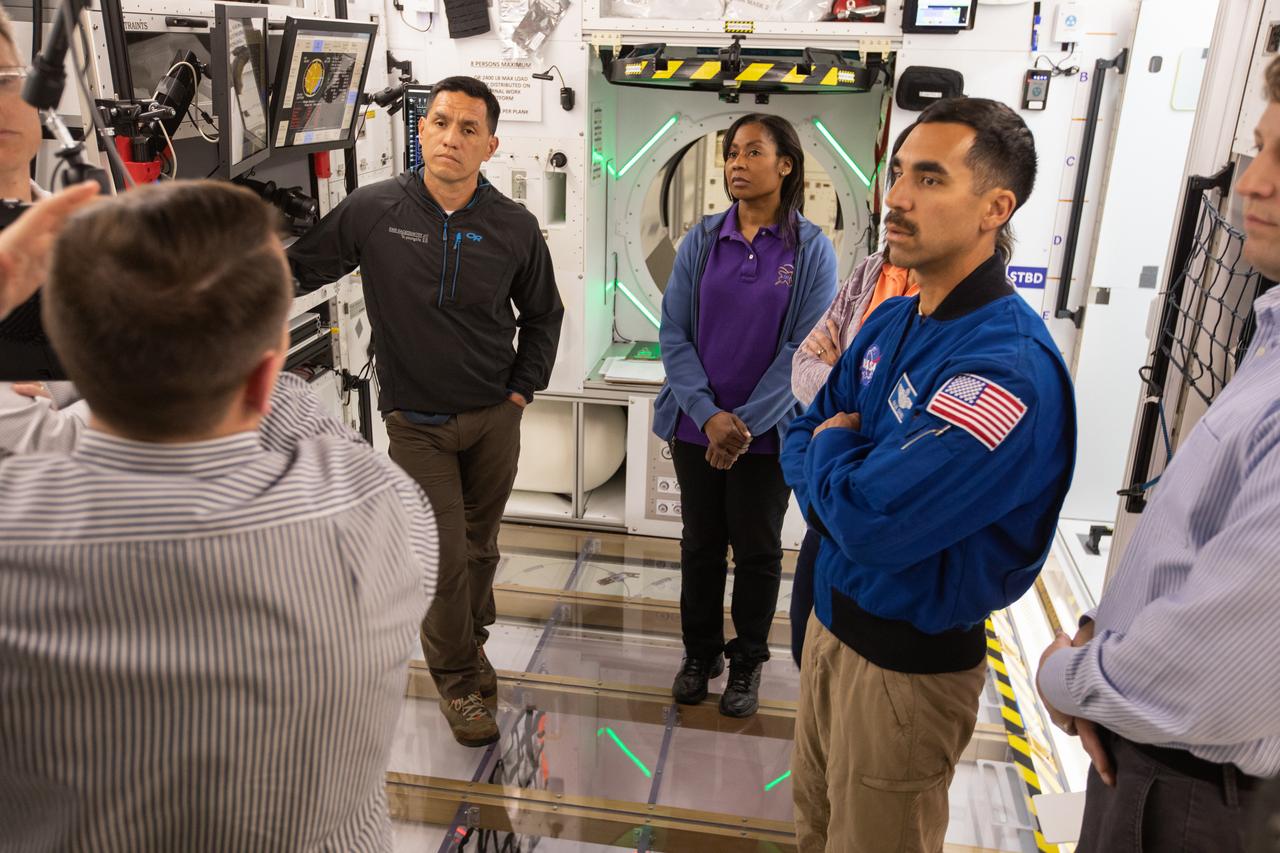
NASA began evaluating five habitat prototypes developed through NASA’s Next Space Exploration for Technologies Partnerships, or NextSTEP, to help engineers refine requirements for the design of an American-made deep space habitat for the Gateway. Lockheed Martin turned over its prototype to NASA, and testing began with crew on March 25, 2019, at Kennedy Space Center in Florida. Pictured inside the habitat prototype on March 26, 2019, from left are astronauts Frank Rubio, Stephanie Wilson and Raja Chari. Partially in view next to Chari is astronaut Shannon Walker. Astronauts are participating in the evaluations to provide their perspectives as those who may one day live aboard the lunar outpost, which would be located about 250,000 miles from Earth. Ground prototypes developed by Bigelow Aerospace, Boeing, Northrop Grumman, and Sierra Nevada Corporation will be tested in the future at various facilities across the country. A sixth company, NanoRacks, plans to develop a prototype as well.
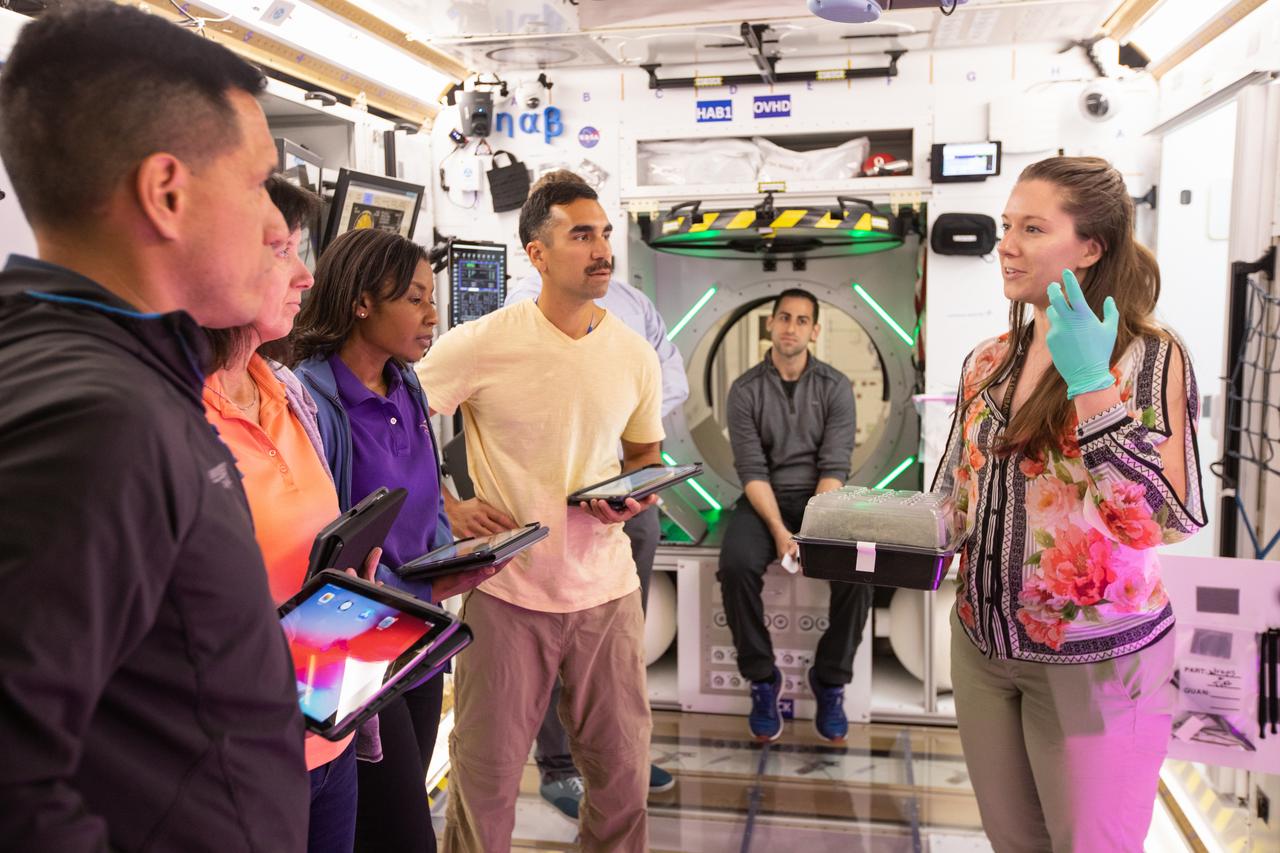
NASA began evaluating five habitat prototypes developed through NASA’s Next Space Exploration for Technologies Partnerships, or NextSTEP, to help engineers refine requirements for the design of an American-made deep space habitat for the Gateway. Lockheed Martin turned over its prototype to NASA, and testing began with crew on March 25, 2019, at Kennedy Space Center in Florida. Pictured inside the habitat prototype on March 26, 2019, from far left are astronauts Frank Rubio, Shannon Walker, Stephanie Wilson and Raja Chari. Astronauts are participating in the evaluations to provide their perspectives as those who may one day live aboard the lunar outpost, which would be located about 250,000 miles from Earth. Ground prototypes developed by Bigelow Aerospace, Boeing, Northrop Grumman, and Sierra Nevada Corporation will be tested in the future at various facilities across the country. A sixth company, NanoRacks, plans to develop a prototype as well.
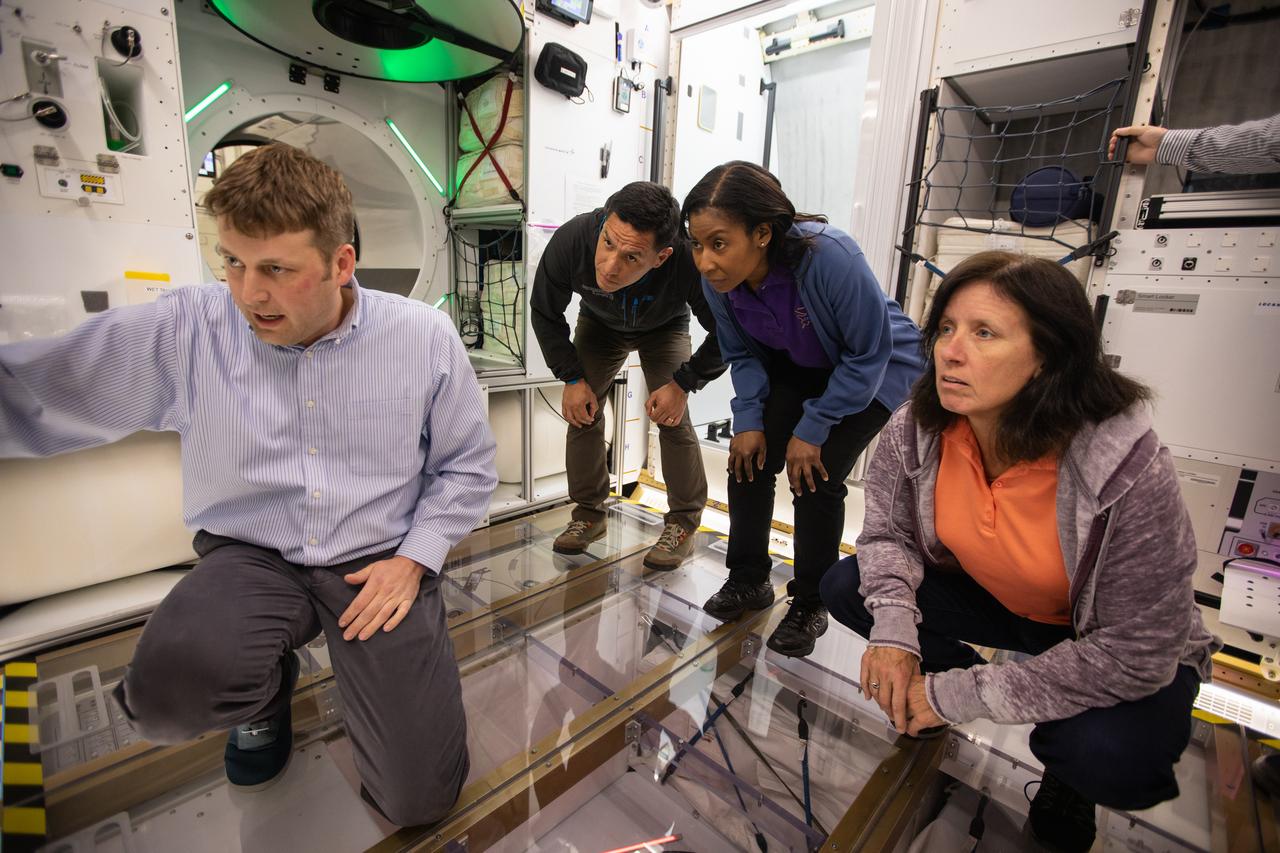
NASA began evaluating five habitat prototypes developed through NASA’s Next Space Exploration for Technologies Partnerships, or NextSTEP, to help engineers refine requirements for the design of an American-made deep space habitat for the Gateway. Lockheed Martin turned over its prototype to NASA, and testing began with crew on March 25, 2019, at Kennedy Space Center in Florida. Pictured inside the habitat prototype on March 26, 2019, in back from left are astronauts Frank Rubio, Stephanie Wilson and Shannon Walker. Astronauts are participating in the evaluations to provide their perspectives as those who may one day live aboard the lunar outpost, which would be located about 250,000 miles from Earth. Ground prototypes developed by Bigelow Aerospace, Boeing, Northrop Grumman, and Sierra Nevada Corporation will be tested in the future at various facilities across the country. A sixth company, NanoRacks, plans to develop a prototype as well.
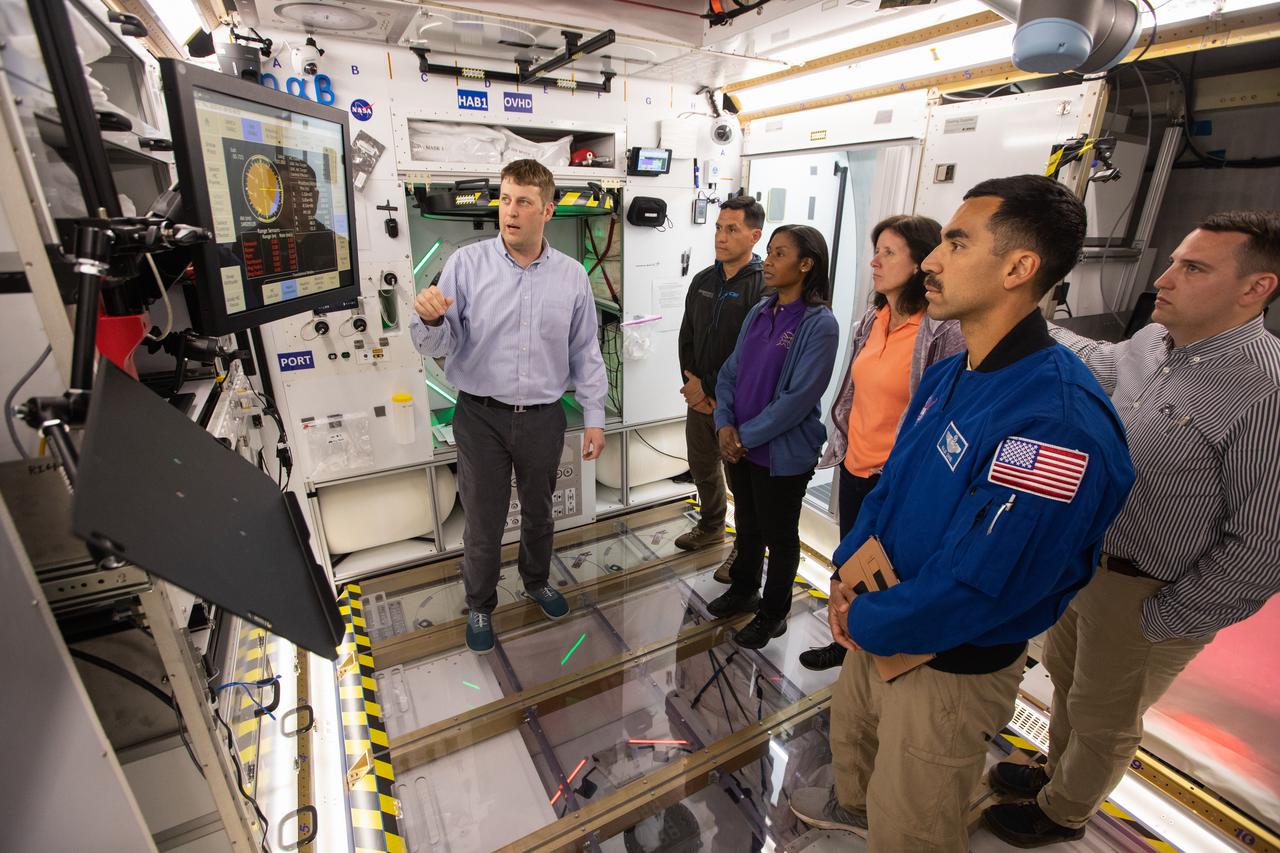
NASA began evaluating five habitat prototypes developed through NASA’s Next Space Exploration for Technologies Partnerships, or NextSTEP, to help engineers refine requirements for the design of an American-made deep space habitat for the Gateway. Lockheed Martin turned over its prototype to NASA, and testing began with crew on March 25, 2019, at Kennedy Space Center in Florida. Pictured inside the habitat prototype on March 26, 2019, beginning second from left are astronauts Frank Rubio, Raja Shari, Stephanie Wilson and Shannon Walker. Astronauts are participating in the evaluations to provide their perspectives as those who may one day live aboard the lunar outpost, which would be located about 250,000 miles from Earth. Ground prototypes developed by Bigelow Aerospace, Boeing, Northrop Grumman, and Sierra Nevada Corporation will be tested in the future at various facilities across the country. A sixth company, NanoRacks, plans to develop a prototype as well.
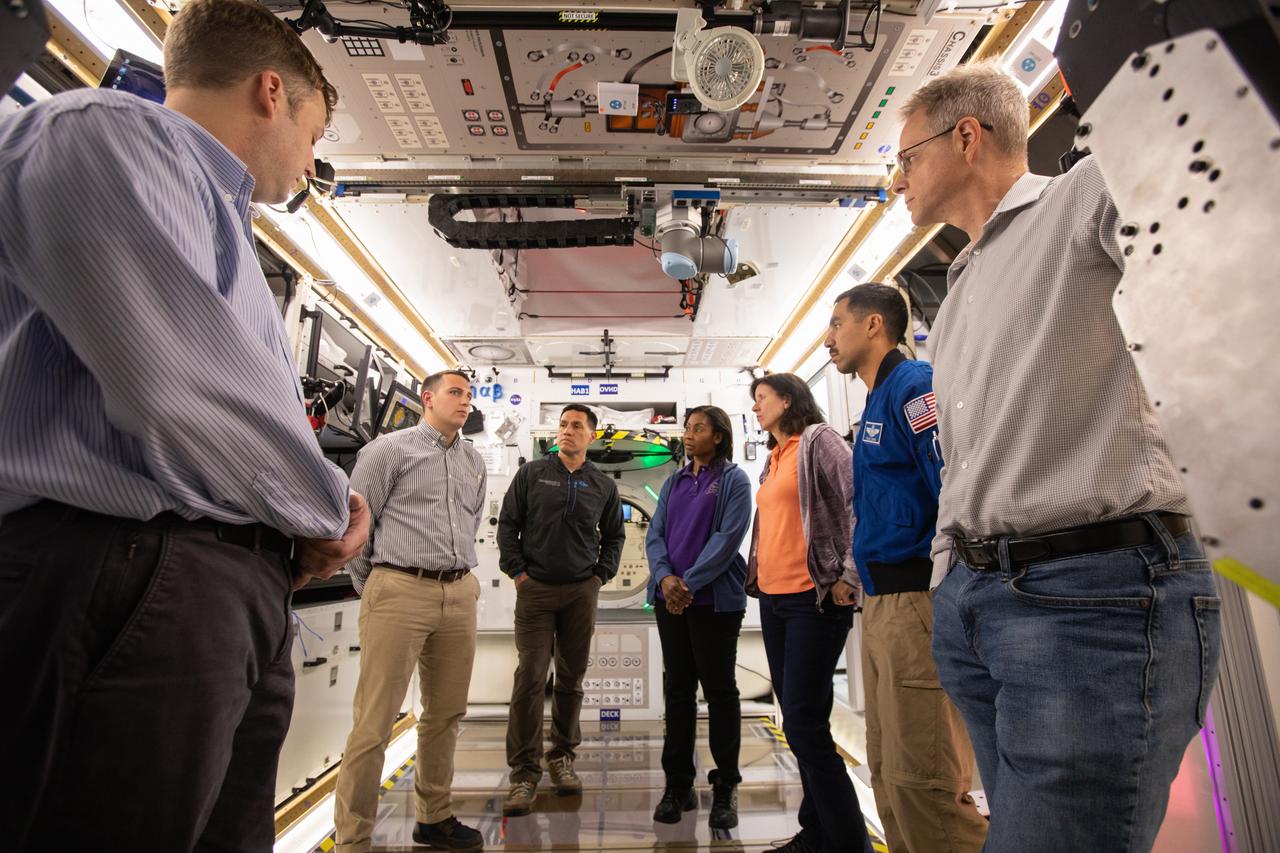
NASA began evaluating five habitat prototypes developed through NASA’s Next Space Exploration for Technologies Partnerships, or NextSTEP, to help engineers refine requirements for the design of an American-made deep space habitat for the Gateway. Lockheed Martin turned over its prototype to NASA, and testing began with crew on March 25, 2019, at Kennedy Space Center in Florida. Pictured inside the habitat prototype on March 26, 2019, beginning third from left are astronauts Frank Rubio, Stephanie Wilson, Shannon Walker and Raja Chari. Astronauts are participating in the evaluations to provide their perspectives as those who may one day live aboard the lunar outpost, which would be located about 250,000 miles from Earth. Ground prototypes developed by Bigelow Aerospace, Boeing, Northrop Grumman, and Sierra Nevada Corporation will be tested in the future at various facilities across the country. A sixth company, NanoRacks, plans to develop a prototype as well.
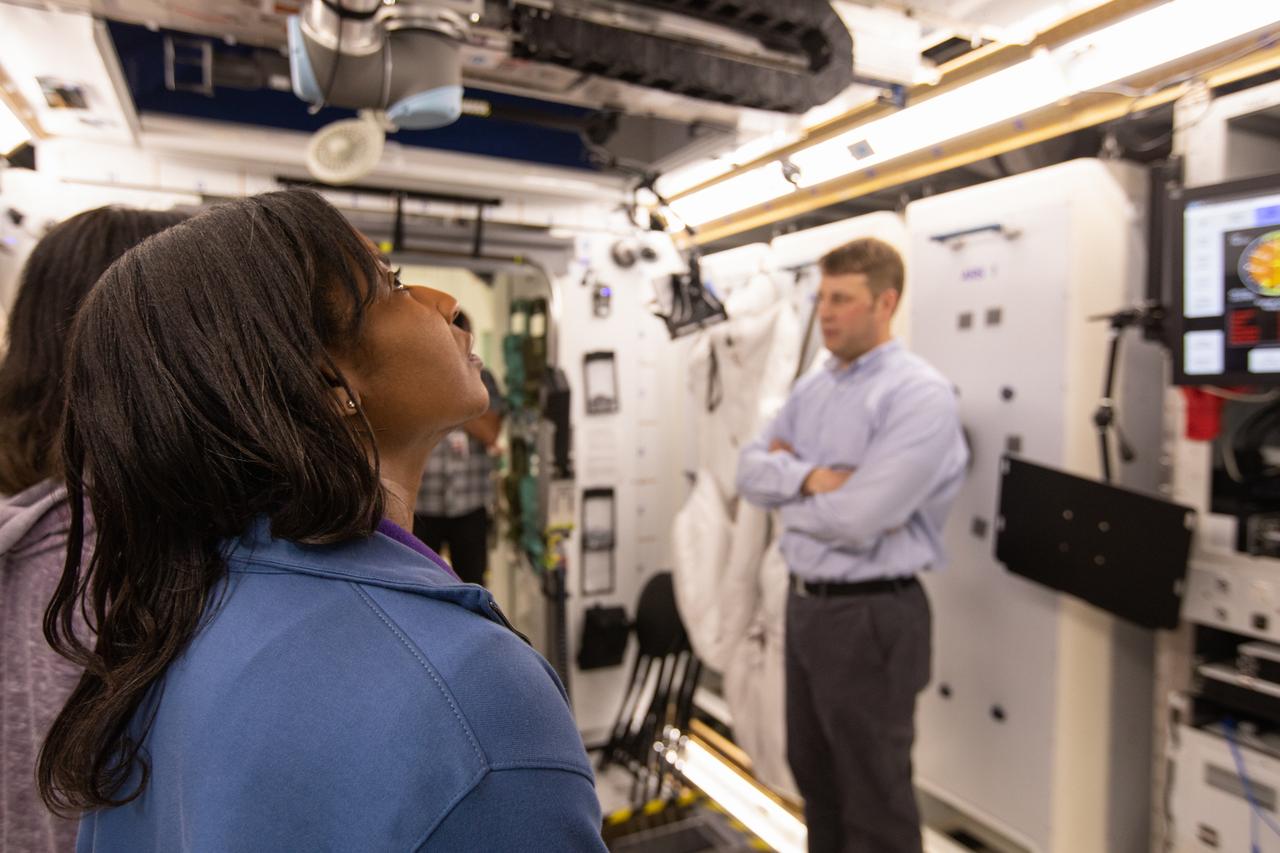
NASA began evaluating five habitat prototypes developed through NASA’s Next Space Exploration for Technologies Partnerships, or NextSTEP, to help engineers refine requirements for the design of an American-made deep space habitat for the Gateway. Lockheed Martin turned over its prototype to NASA, and testing began with crew on March 25, 2019, at Kennedy Space Center in Florida. Pictured inside the habitat prototype on March 26, 2019, at left is astronaut Stephanie Wilson. To her left, partially hidden is astronaut Shannon Walker. Astronauts are participating in the evaluations to provide their perspectives as those who may one day live aboard the lunar outpost, which would be located about 250,000 miles from Earth. Ground prototypes developed by Bigelow Aerospace, Boeing, Northrop Grumman, and Sierra Nevada Corporation will be tested in the future at various facilities across the country. A sixth company, NanoRacks, plans to develop a prototype as well.
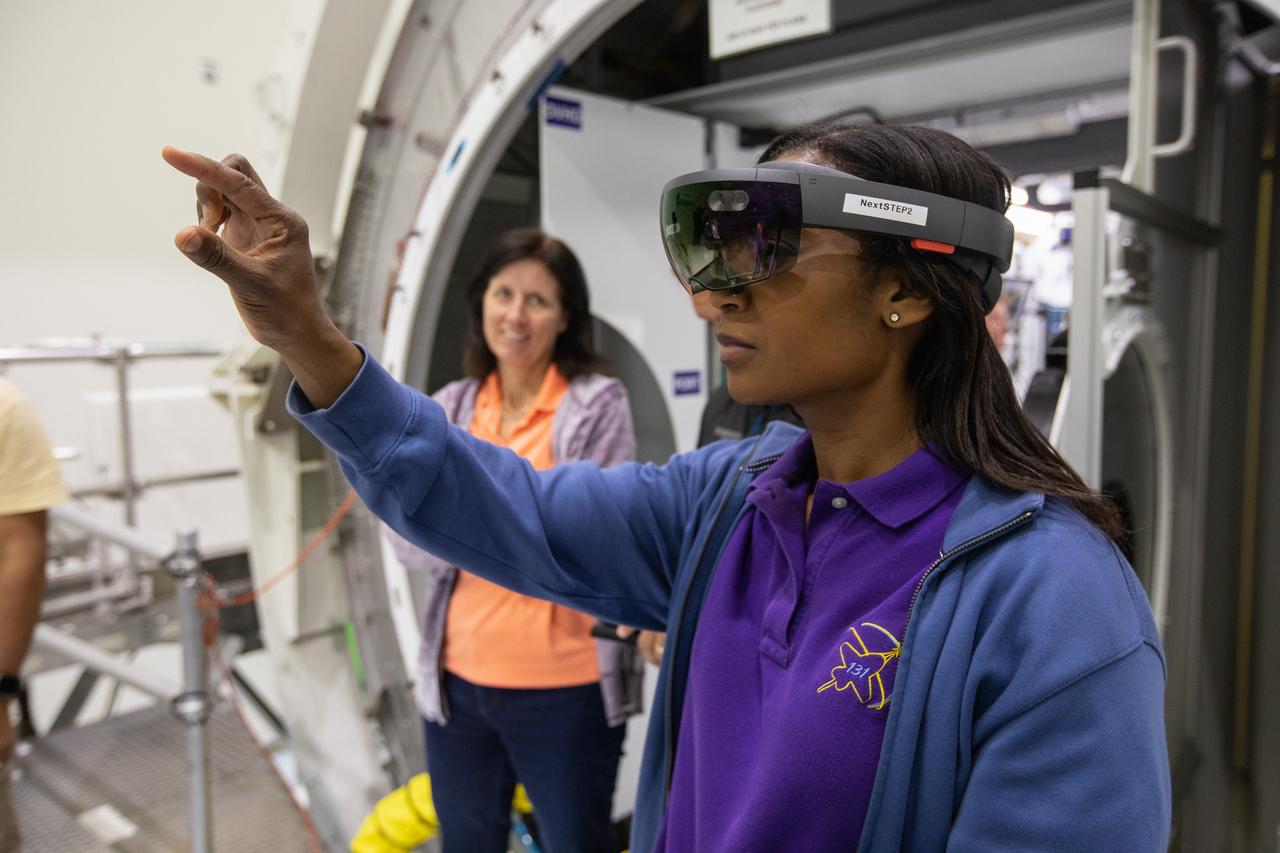
NASA began evaluating five habitat prototypes developed through NASA’s Next Space Exploration for Technologies Partnerships, or NextSTEP, to help engineers refine requirements for the design of an American-made deep space habitat for the Gateway. Lockheed Martin turned over its prototype to NASA, and testing began with crew on March 25, 2019, at Kennedy Space Center in Florida. Pictured inside the Space Station Processing Facility on March 26, 2019, from left are astronauts Shannon Walker and Stephanie Wilson. Astronauts are participating in the evaluations to provide their perspectives as those who may one day live aboard the lunar outpost, which would be located about 250,000 miles from Earth. Ground prototypes developed by Bigelow Aerospace, Boeing, Northrop Grumman, and Sierra Nevada Corporation will be tested in the future at various facilities across the country. A sixth company, NanoRacks, plans to develop a prototype as well.
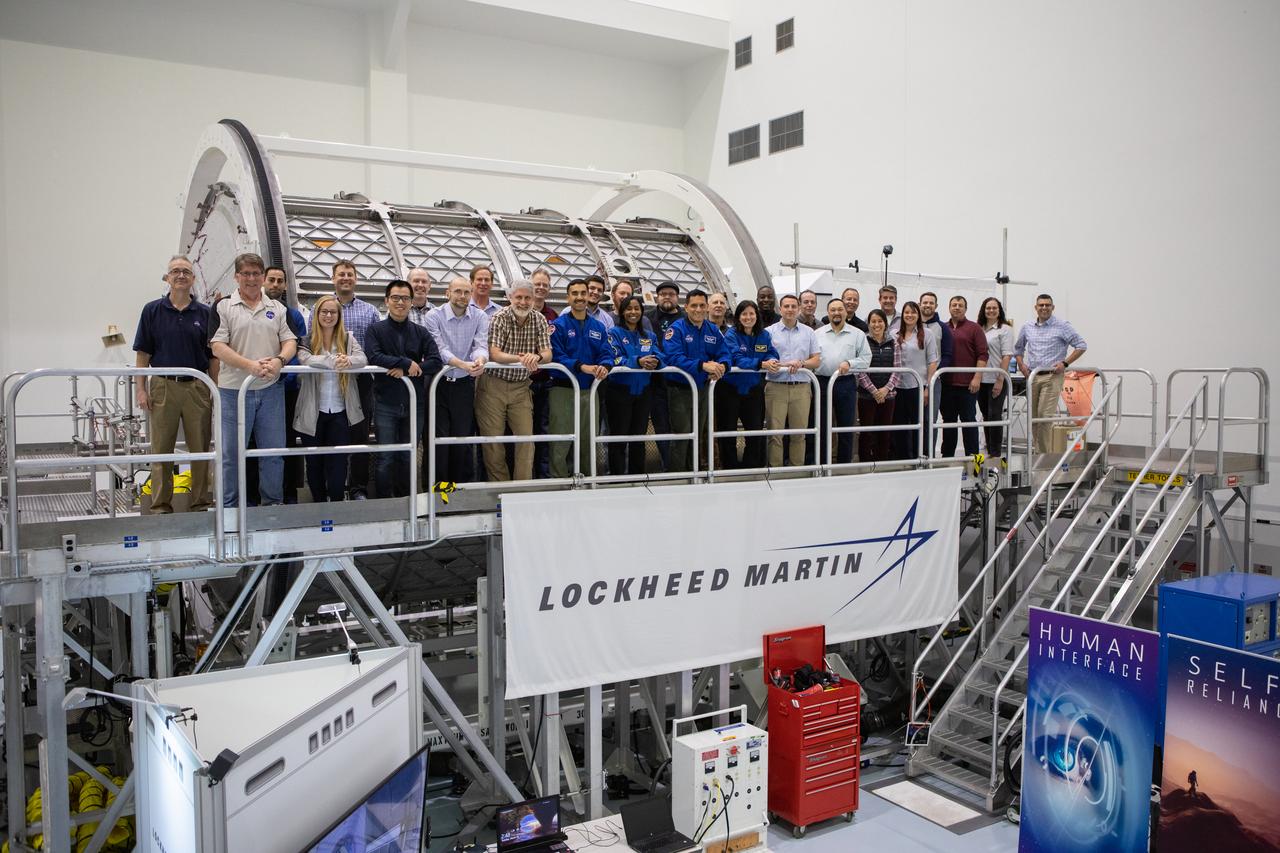
NASA began evaluating five habitat prototypes developed through NASA’s Next Space Exploration for Technologies Partnerships, or NextSTEP, to help engineers refine requirements for the design of an American-made deep space habitat for the Gateway. Lockheed Martin turned over its prototype to NASA, and testing began with crew on March 25, 2019, at Kennedy Space Center in Florida. Astronauts are participating in the evaluations to provide their perspectives as those who may one day live aboard the lunar outpost, which would be located about 250,000 miles from Earth. Ground prototypes developed by Bigelow Aerospace, Boeing, Northrop Grumman, and Sierra Nevada Corporation will be tested in the future at various facilities across the country. A sixth company, NanoRacks, plans to develop a prototype as well.
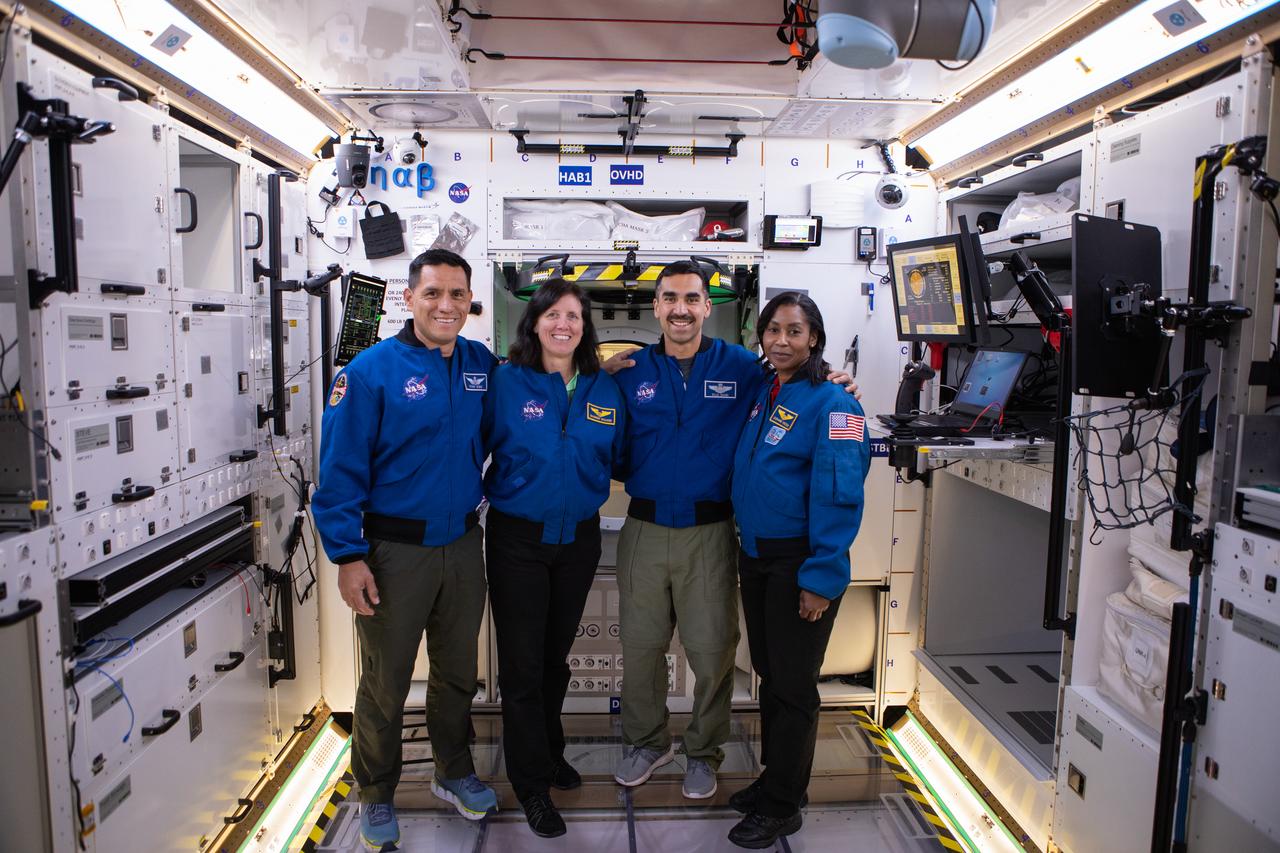
NASA began evaluating five habitat prototypes developed through NASA’s Next Space Exploration for Technologies Partnerships, or NextSTEP, to help engineers refine requirements for the design of an American-made deep space habitat for the Gateway. Lockheed Martin turned over its prototype to NASA, and testing began with crew on March 25, 2019, at Kennedy Space Center in Florida. Pictured, from left are astronauts Frank Rubio, Shannon Walker, Raja Chari and Stephanie Wilson. Astronauts are participating in the evaluations to provide their perspectives as those who may one day live aboard the lunar outpost, which would be located about 250,000 miles from Earth. Ground prototypes developed by Bigelow Aerospace, Boeing, Northrop Grumman, and Sierra Nevada Corporation will be tested in the future at various facilities across the country. A sixth company, NanoRacks, plans to develop a prototype as well.
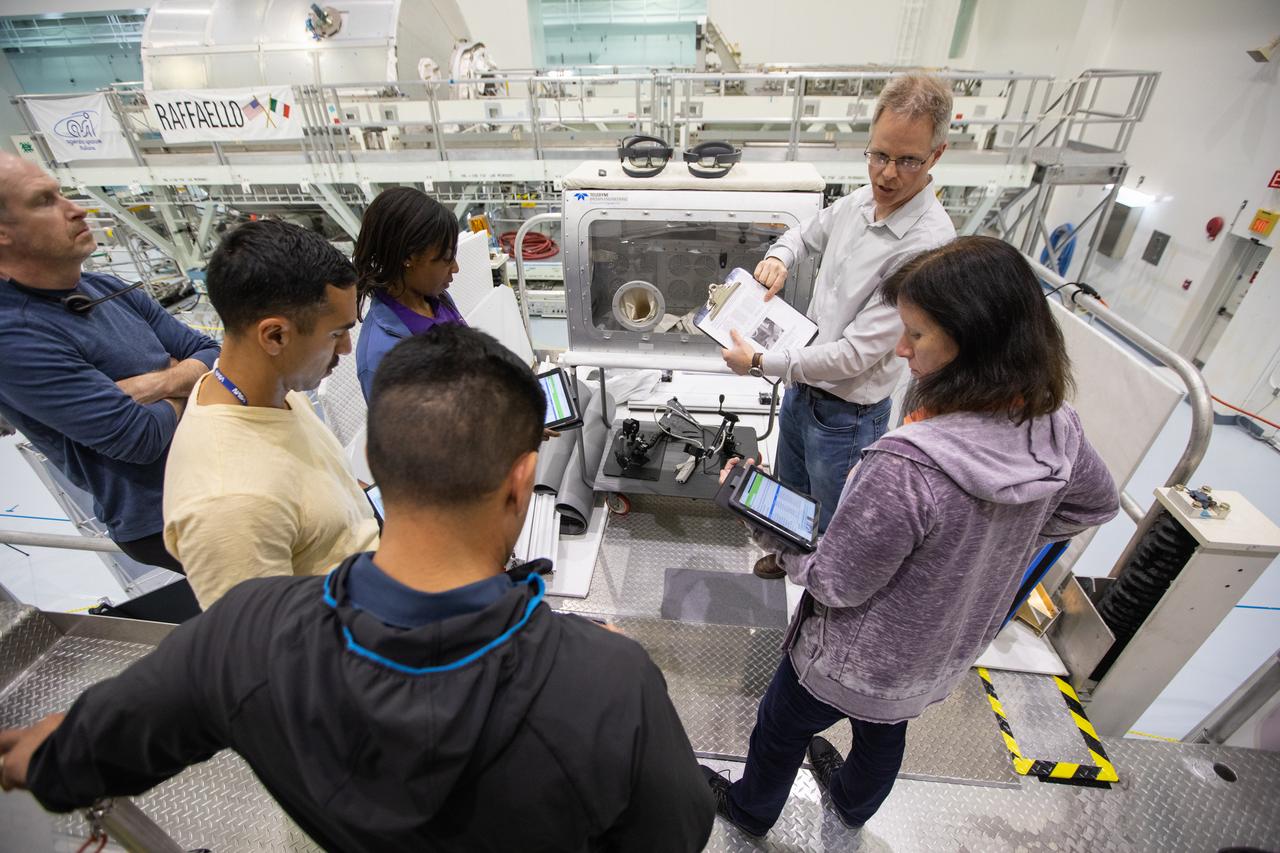
NASA began evaluating five habitat prototypes developed through NASA’s Next Space Exploration for Technologies Partnerships, or NextSTEP, to help engineers refine requirements for the design of an American-made deep space habitat for the Gateway. Lockheed Martin turned over its prototype to NASA, and testing began with crew on March 25, 2019, at Kennedy Space Center in Florida. Pictured inside the Space Station Processing Facility on March 26, 2019, from far left is astronaut Frank Rubio. In front of him, are Raja Chari and Stephanie Wilson. At right is astronaut Shannon Walker. Astronauts are participating in the evaluations to provide their perspectives as those who may one day live aboard the lunar outpost, which would be located about 250,000 miles from Earth. Ground prototypes developed by Bigelow Aerospace, Boeing, Northrop Grumman, and Sierra Nevada Corporation will be tested in the future at various facilities across the country. A sixth company, NanoRacks, plans to develop a prototype as well.

Lori Glaze, acting director of NASA’s Planetary Science Division, right, visited NASA’s Marshall Space Flight Center March 7 to see firsthand the work done by center scientists. Glaze, along with Marshall planetary scientists Renee Weber, left, and Debra Needham, center, and intern James Mavo, second from right, toured multiple facilities at Marshall – including the Deep Space Habitat facility – to discuss how Marshall is working to support astronauts on long-duration missions.
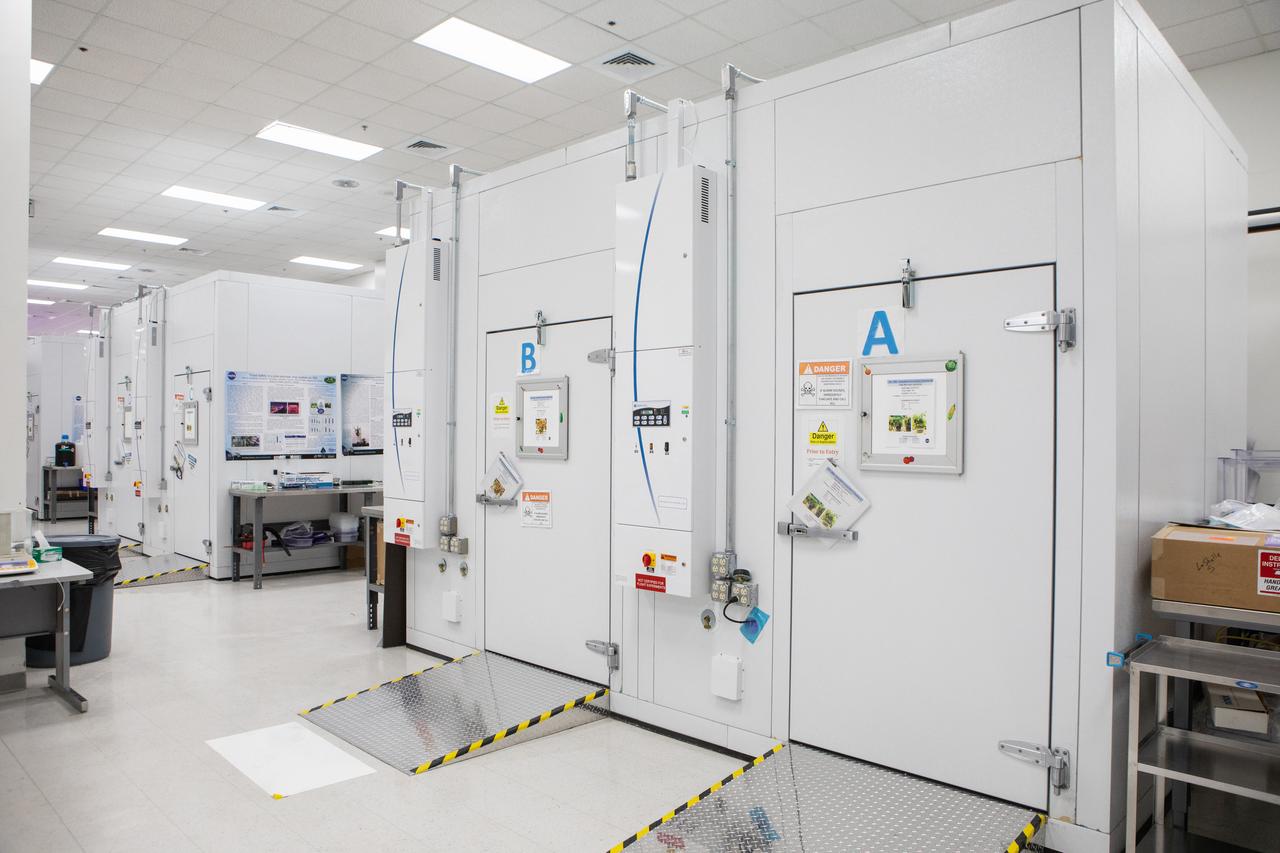
A view of the Veggie and Advanced Plant Habitat walk-in experiment chambers in a laboratory inside the Space Station Processing Facility (SSPF) at NASA's Kennedy Space Center in Florida, on May 16, 2019. The center is celebrating the SSPF’s 25th anniversary. The facility was built to process elements for the International Space Station. Now it is providing support for current and future NASA and commercial provider programs, including Commercial Resupply Services, Artemis 1, sending the first woman and next man to the Moon, and deep space destinations including Mars.
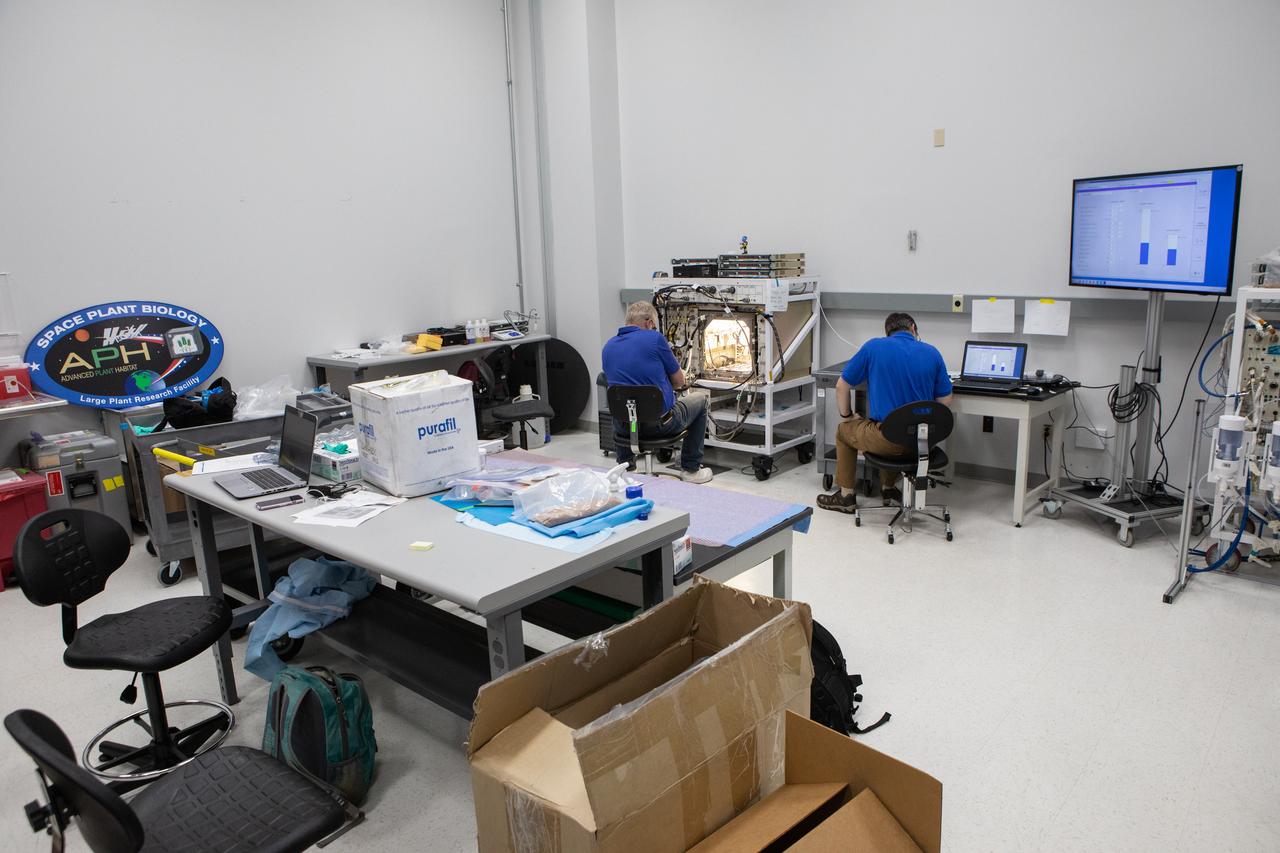
Researchers are testing plant growth in a ground unit of the Advanced Plant Habitat inside a laboratory in the Space Station Processing Facility (SSPF) at NASA's Kennedy Space Center in Florida, on May 16, 2019. The center is celebrating the SSPF’s 25th anniversary. The facility was built to process elements for the International Space Station. Now it is providing support for current and future NASA and commercial provider programs, including Commercial Resupply Services, Artemis 1, sending the first woman and next man to the Moon, and deep space destinations including Mars.
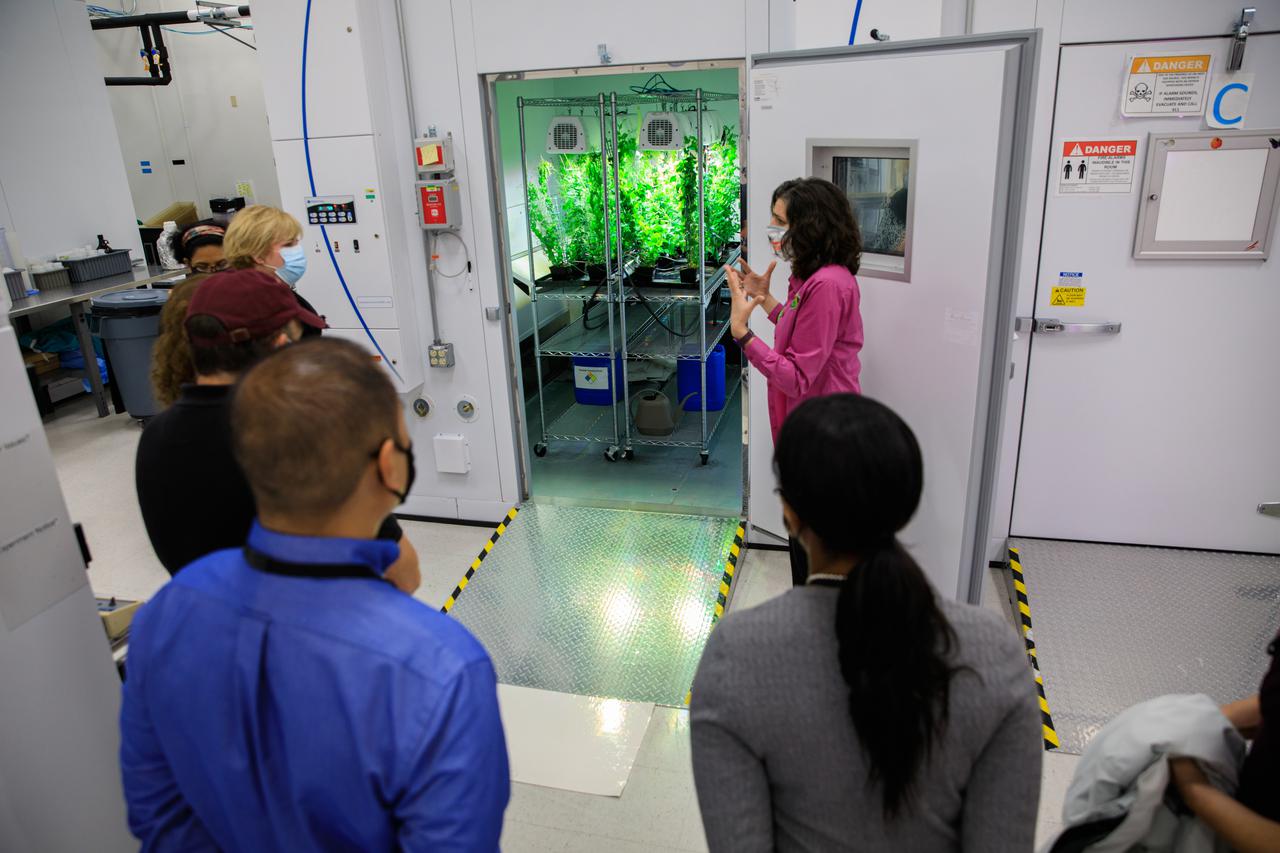
Senior leaders with Kennedy Space Center in Florida, familiarize newly appointed officials from NASA Headquarters with the center’s facilities during a tour on April 19, 2021. The group views plant experiments inside a growth chamber in the Space Station Processing Facility. Plant experiments at Kennedy supports research enabling deep space exploration including experiments in the Veggie and Advanced Plant Habitat systems aboard the International Space Station.
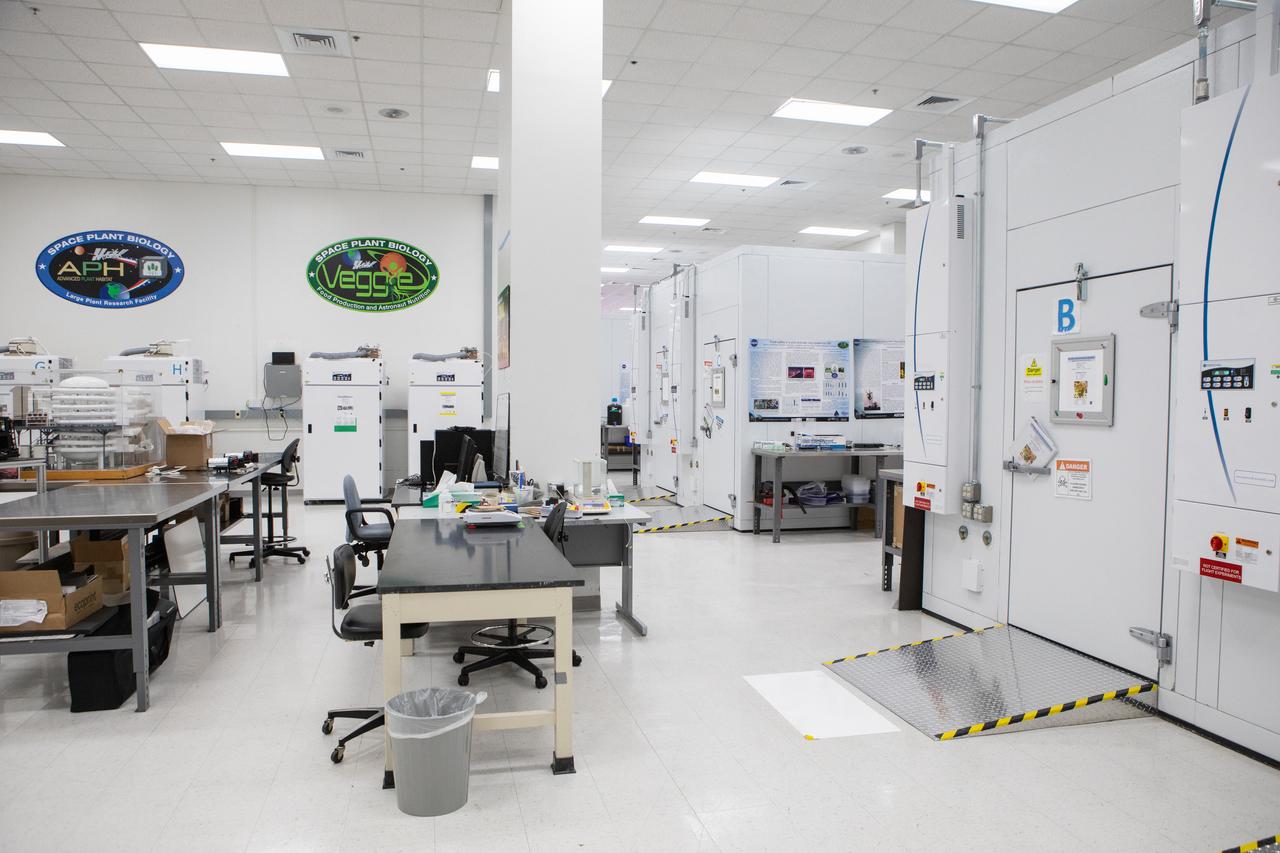
Ground unit experiment chambers for the Veggie plant growth system, at right, and the Advanced Plant Habitat, at left, are in view in a laboratory inside the Space Station Processing Facility (SSPF) at NASA’s Kennedy Space Center in Florida, on May 16, 2019. The center is celebrating the SSPF’s 25th anniversary. The facility was built to process elements for the International Space Station. Now it is providing support for current and future NASA and commercial provider programs, including Commercial Resupply Services, Artemis 1, sending the first woman and next man to the Moon, and deep space destinations including Mars.
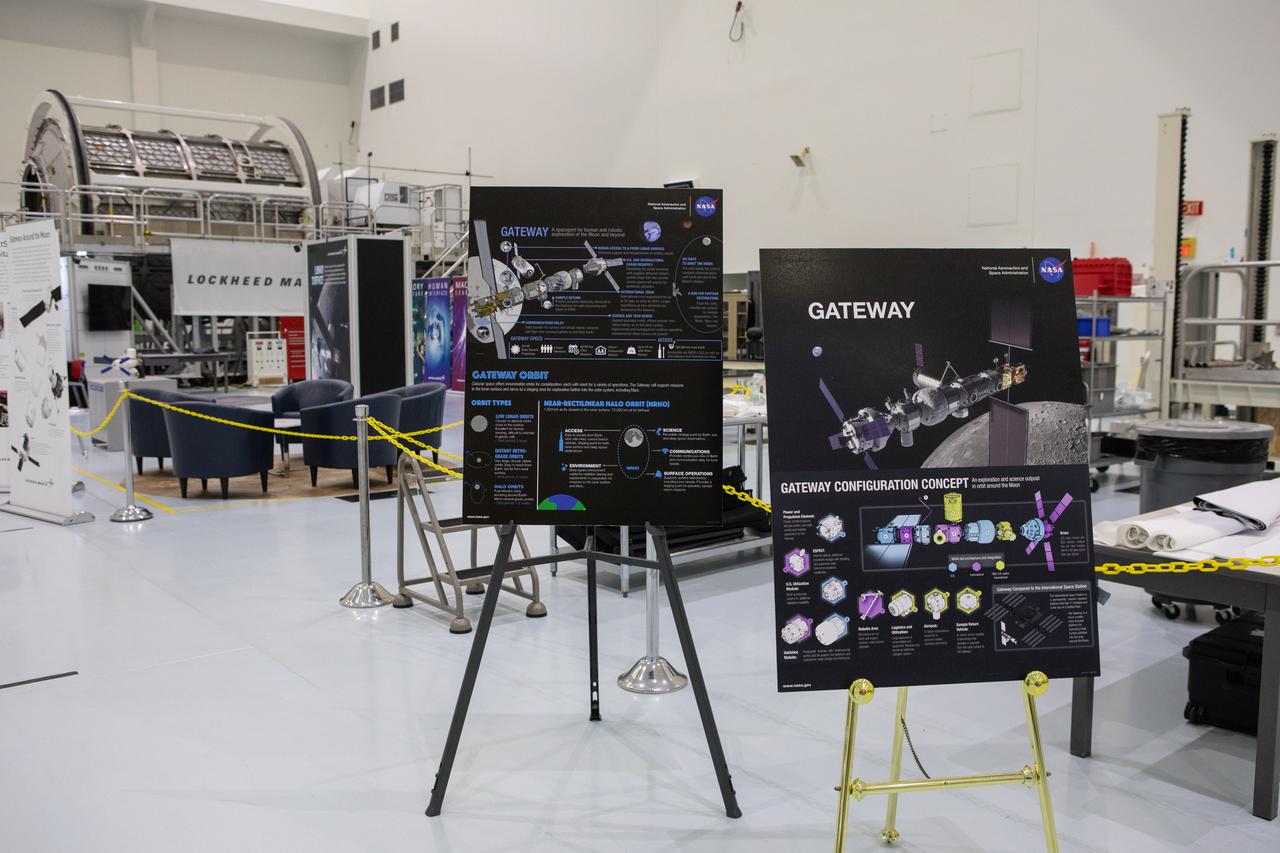
The Lockheed Martin prototype habitat for NASA’s lunar orbital platform, called the Gateway, is in view at far left in the high bay of the Space Station Processing Facility (SSPF) at NASA's Kennedy Space Center in Florida, on May 16, 2019. The center is celebrating the SSPF’s 25th anniversary. The facility was built to process elements for the International Space Station. Now it is providing support for current and future NASA and commercial provider programs, including Commercial Resupply Services, Artemis 1, sending the first woman and next man to the Moon, and deep space destinations including Mars.
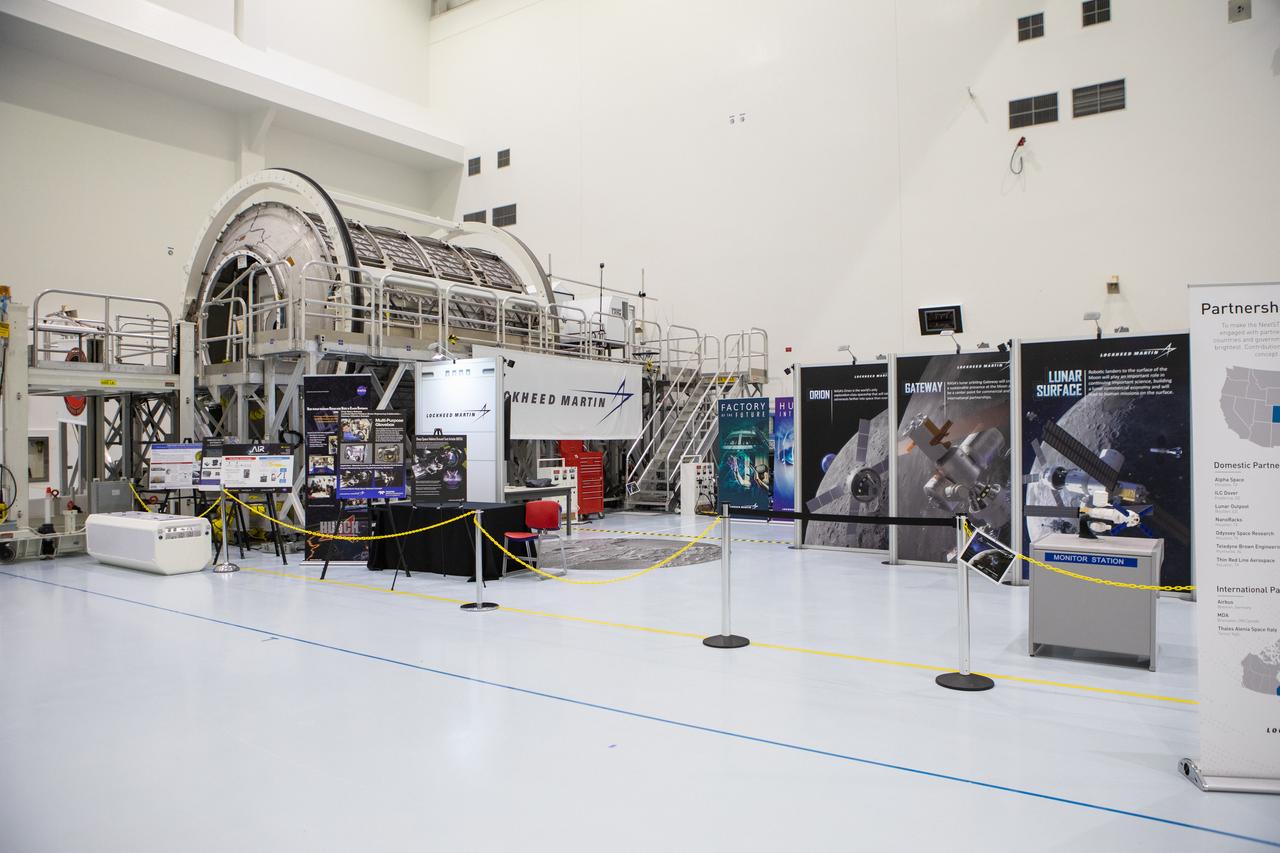
The Lockheed Martin prototype habitat for NASA’s lunar orbital platform, called the Gateway, is in view at left in the high bay of the Space Station Processing Facility (SSPF) at NASA's Kennedy Space Center in Florida, on May 16, 2019. The center is celebrating the SSPF’s 25th anniversary. The facility was built to process elements for the International Space Station. Now it is providing support for current and future NASA and commercial provider programs, including Commercial Resupply Services, Artemis 1, sending the first woman and next man to the Moon, and deep space destinations including Mars.
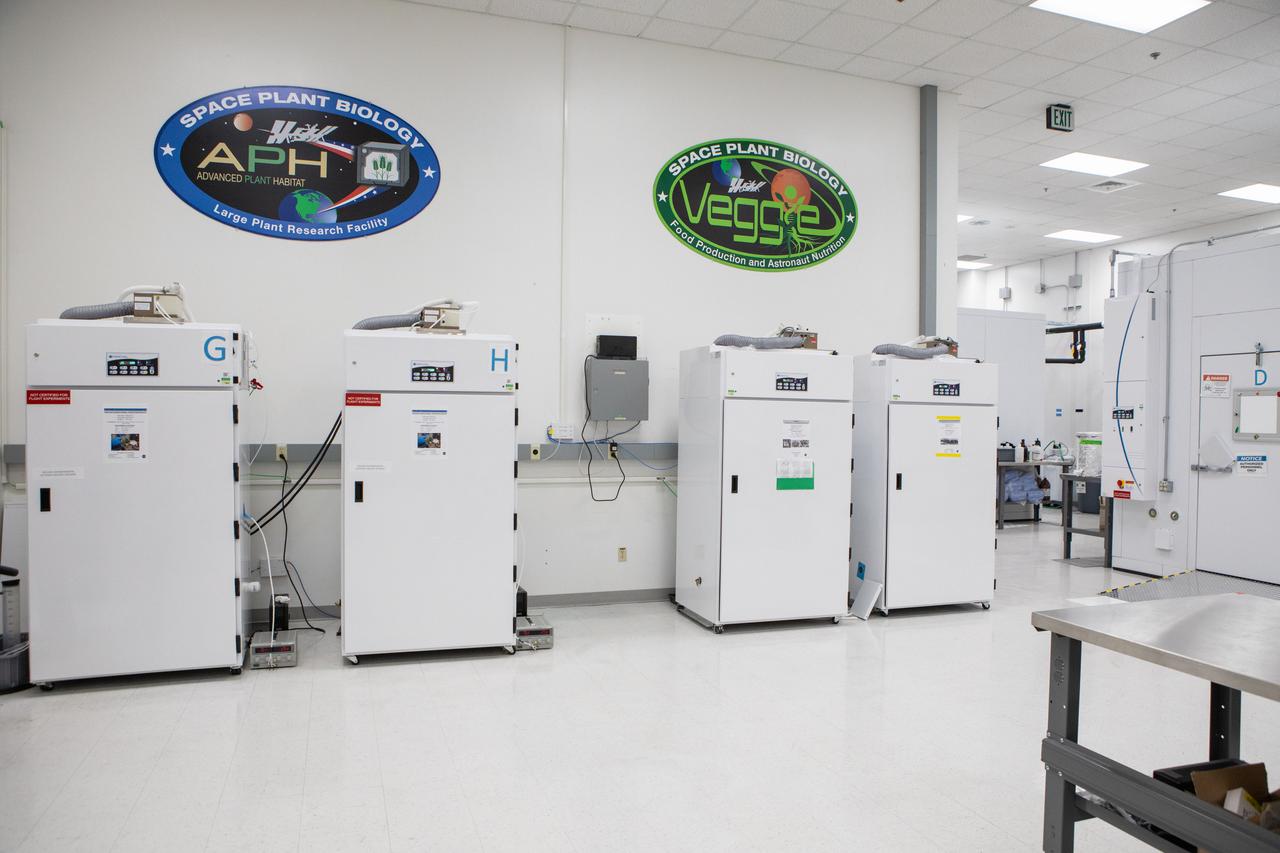
Ground unit experiment chambers for the Veggie plant growth system and the Advanced Plant Habitat are in view in a laboratory inside the Space Station Processing Facility (SSPF) at NASA’s Kennedy Space Center in Florida, on May 16, 2019. The center is celebrating the SSPF’s 25th anniversary. The facility was built to process elements for the International Space Station. Now it is providing support for current and future NASA and commercial provider programs, including Commercial Resupply Services, Artemis 1, sending the first woman and next man to the Moon, and deep space destinations including Mars.
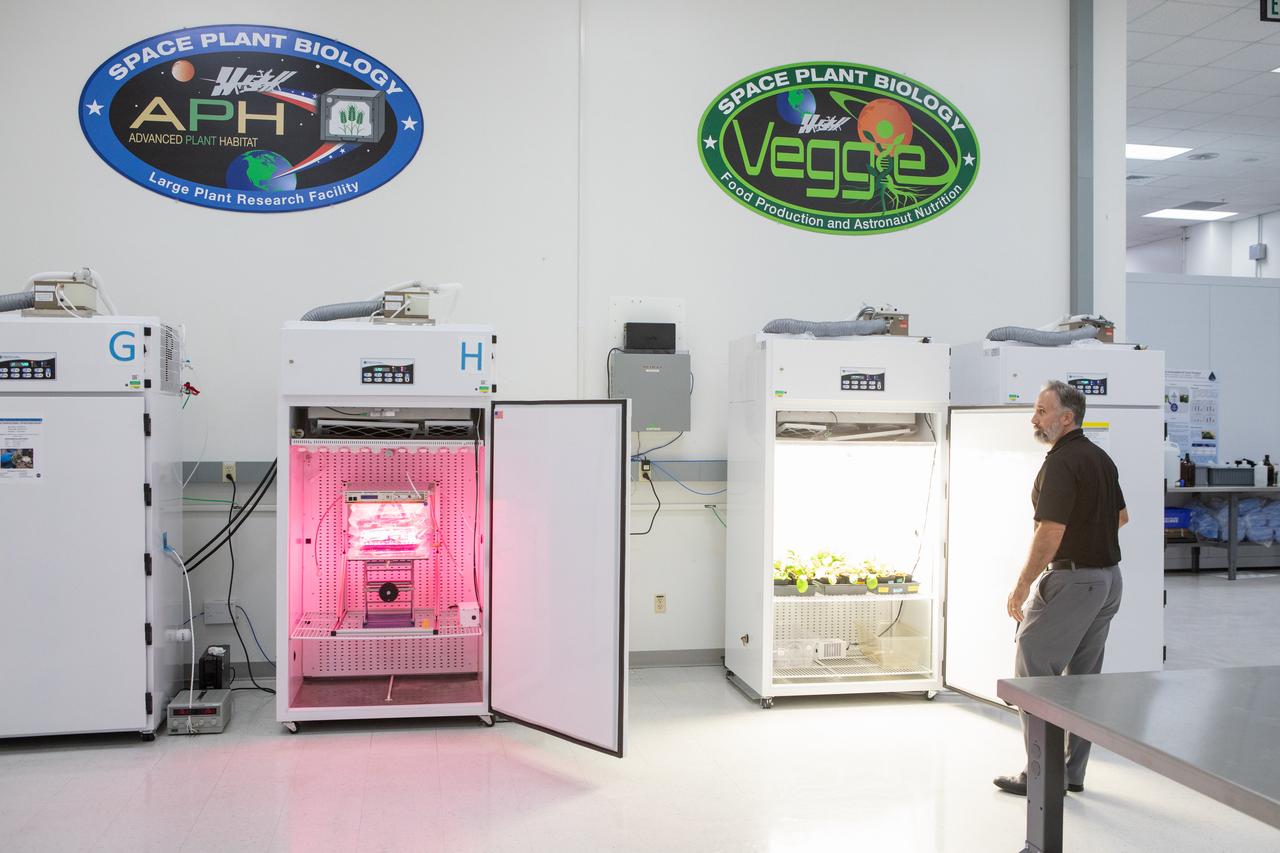
Ground unit experiment chambers for the Veggie plant growth system, at right, and the Advanced Plant Habitat, at left, are in view in a laboratory inside the Space Station Processing Facility (SSPF) at NASA’s Kennedy Space Center in Florida, on May 16, 2019. Trent Smith, Veggie project manager, Exploration Research and Technology Programs, checks the experiments. The center is celebrating the SSPF’s 25th anniversary. The facility was built to process elements for the International Space Station. Now it is providing support for current and future NASA and commercial provider programs, including Commercial Resupply Services, Artemis 1, sending the first woman and next man to the Moon, and deep space destinations including Mars.
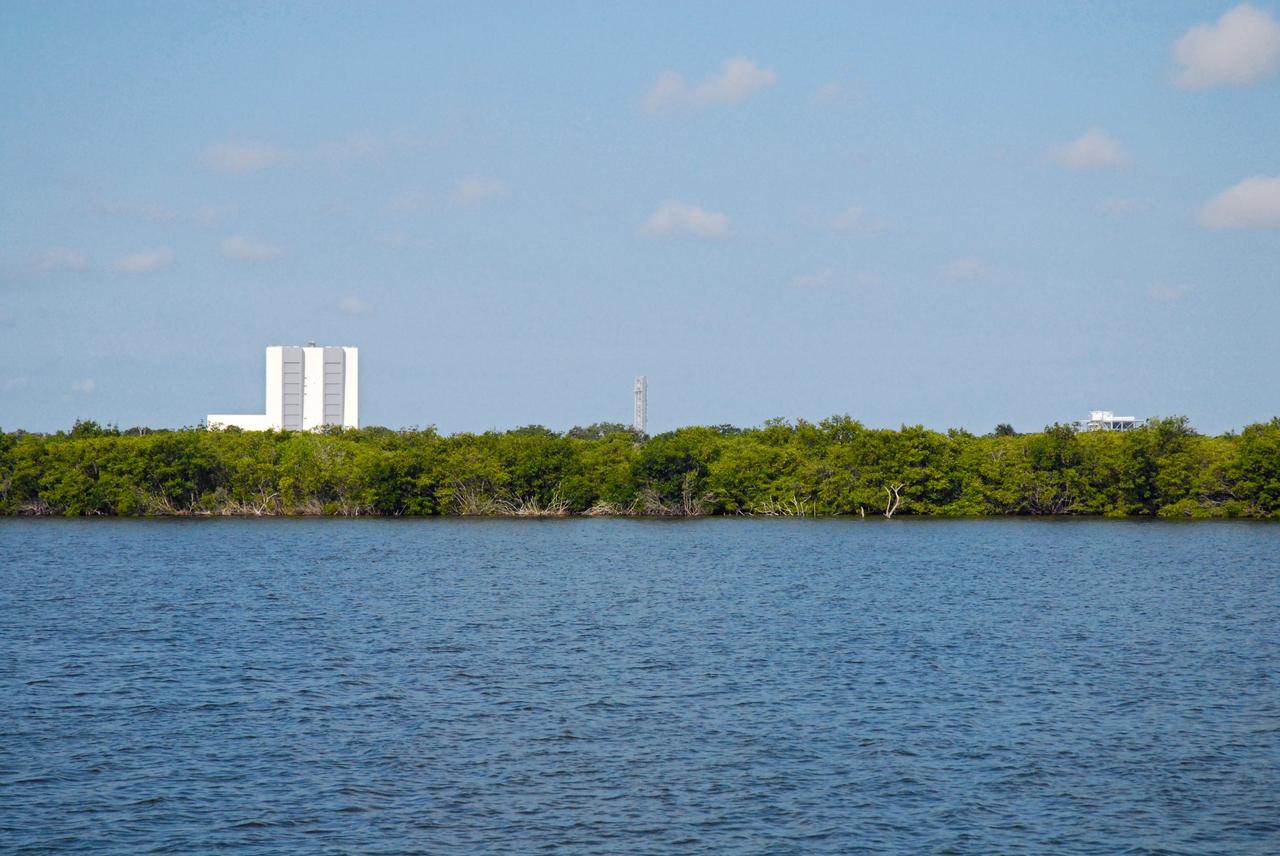
CAPE CANAVERAL, Fla. – The Vehicle Assembly Building, or VAB, and NASA's new mobile launcher, or ML, are seen in the distance during a field-guided boat tour of NASA's Kennedy Space Center in Florida. As part of the center's first-ever Innovation Expo, the tour, called "Living Outdoor Laboratory for Environmental Sustainability," is giving employees the opportunity to see the unique estuarine ecosystems that are protected from development by the presence of Kennedy and the Merritt Island National Wildlife Refuge. The 355-foot-tall ML structure, which took about two years to construct, will be modified by NASA’s Ground Systems Development and Operations, or GSDO, Program to support NASA’s Space Launch System, the heavy-lift rocket that will launch astronauts into deep space on future exploration missions. The diverse and healthy area encompassing about 140,000 acres of central Florida's east coast has been closed to the public for 50 years, allowing the coastal dunes, saltwater estuaries and marshes, freshwater impoundments, scrub, pine flatwoods, and hardwood hammocks to provide habitats for more than 1,000 species of plants and animals. Innovation Expo is showcasing the innovative work taking place throughout the center's facilities and labs to encourage employees to work together to solve future challenges. For more information, visit http://www.nasa.gov/kennedy. Photo credit: NASA
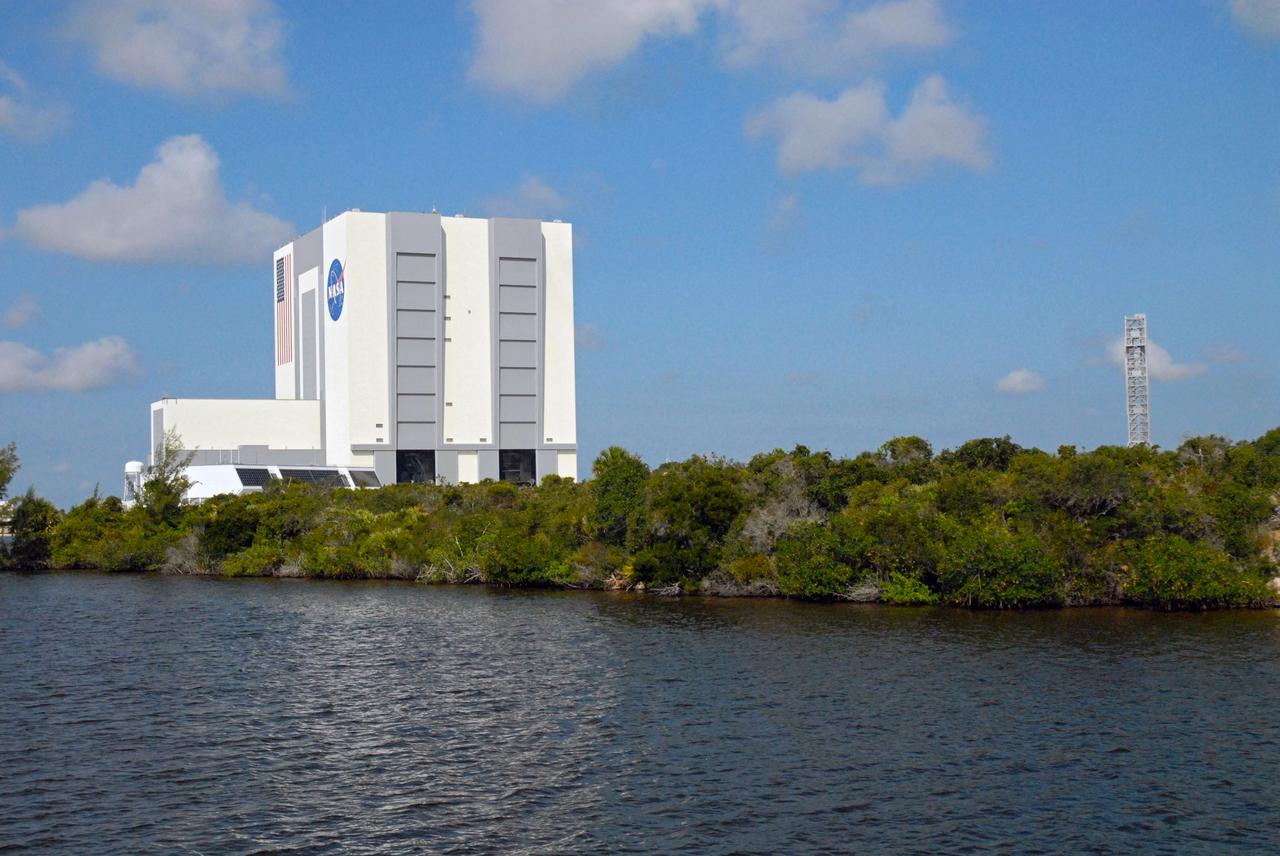
CAPE CANAVERAL, Fla. – The Vehicle Assembly Building, or VAB, and NASA's new mobile launcher, or ML, are seen during a field-guided boat tour of NASA's Kennedy Space Center in Florida. As part of the center's first-ever Innovation Expo, the tour, called "Living Outdoor Laboratory for Environmental Sustainability," is giving employees the opportunity to see the unique estuarine ecosystems that are protected from development by the presence of Kennedy and the Merritt Island National Wildlife Refuge. The 355-foot-tall ML structure, which took about two years to construct, will be modified by NASA’s Ground Systems Development and Operations, or GSDO, Program to support NASA’s Space Launch System, the heavy-lift rocket that will launch astronauts into deep space on future exploration missions. The diverse and healthy area encompassing about 140,000 acres of central Florida's east coast has been closed to the public for 50 years, allowing the coastal dunes, saltwater estuaries and marshes, freshwater impoundments, scrub, pine flatwoods, and hardwood hammocks to provide habitats for more than 1,000 species of plants and animals. Innovation Expo is showcasing the innovative work taking place throughout the center's facilities and labs to encourage employees to work together to solve future challenges. For more information, visit http://www.nasa.gov/kennedy. Photo credit: NASA
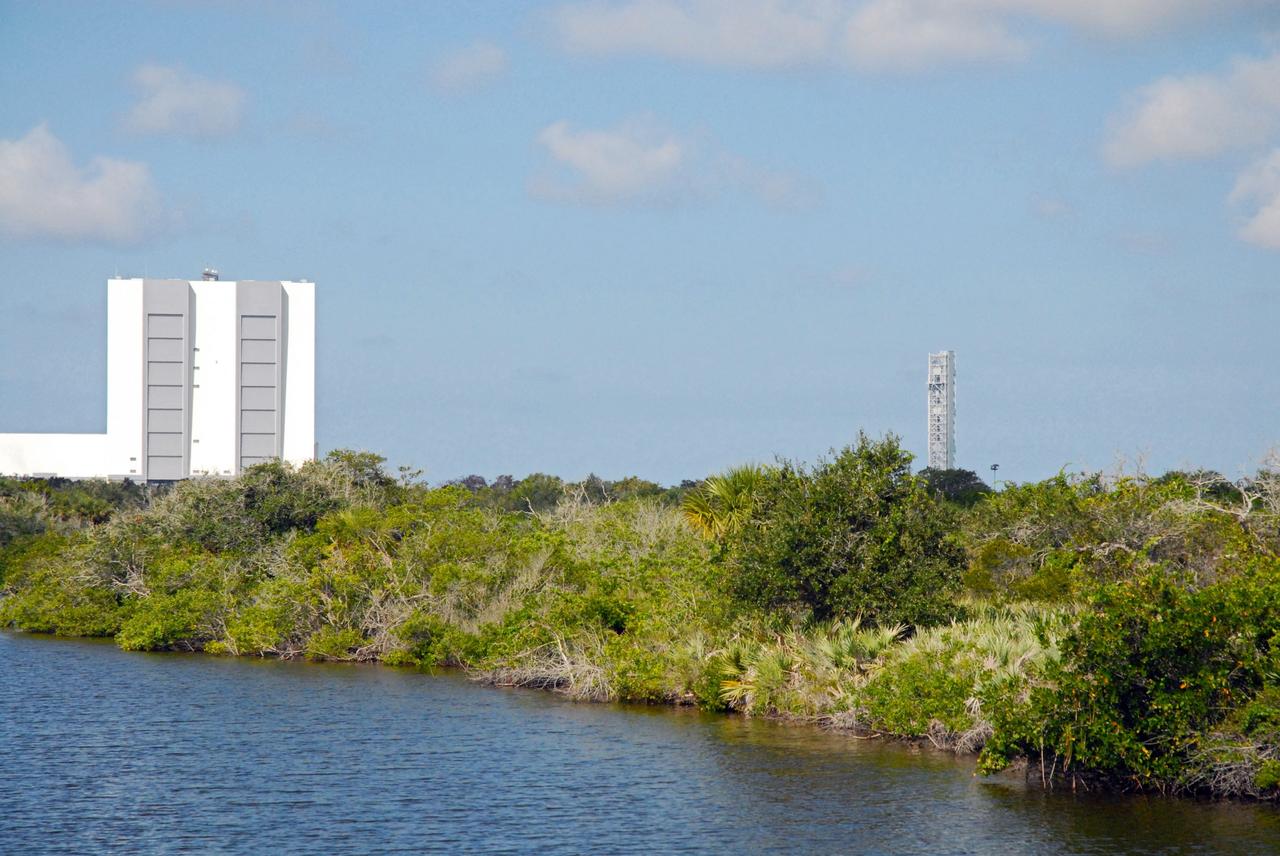
CAPE CANAVERAL, Fla. – The Vehicle Assembly Building, or VAB, and NASA's new mobile launcher, or ML, are seen in the distance during a field-guided boat tour of NASA's Kennedy Space Center in Florida. As part of the center's first-ever Innovation Expo, the tour, called "Living Outdoor Laboratory for Environmental Sustainability," is giving employees the opportunity to see the unique estuarine ecosystems that are protected from development by the presence of Kennedy and the Merritt Island National Wildlife Refuge. The 355-foot-tall ML structure, which took about two years to construct, will be modified by NASA’s Ground Systems Development and Operations, or GSDO, Program to support NASA’s Space Launch System, the heavy-lift rocket that will launch astronauts into deep space on future exploration missions. The diverse and healthy area encompassing about 140,000 acres of central Florida's east coast has been closed to the public for 50 years, allowing the coastal dunes, saltwater estuaries and marshes, freshwater impoundments, scrub, pine flatwoods, and hardwood hammocks to provide habitats for more than 1,000 species of plants and animals. Innovation Expo is showcasing the innovative work taking place throughout the center's facilities and labs to encourage employees to work together to solve future challenges. For more information, visit http://www.nasa.gov/kennedy. Photo credit: NASA
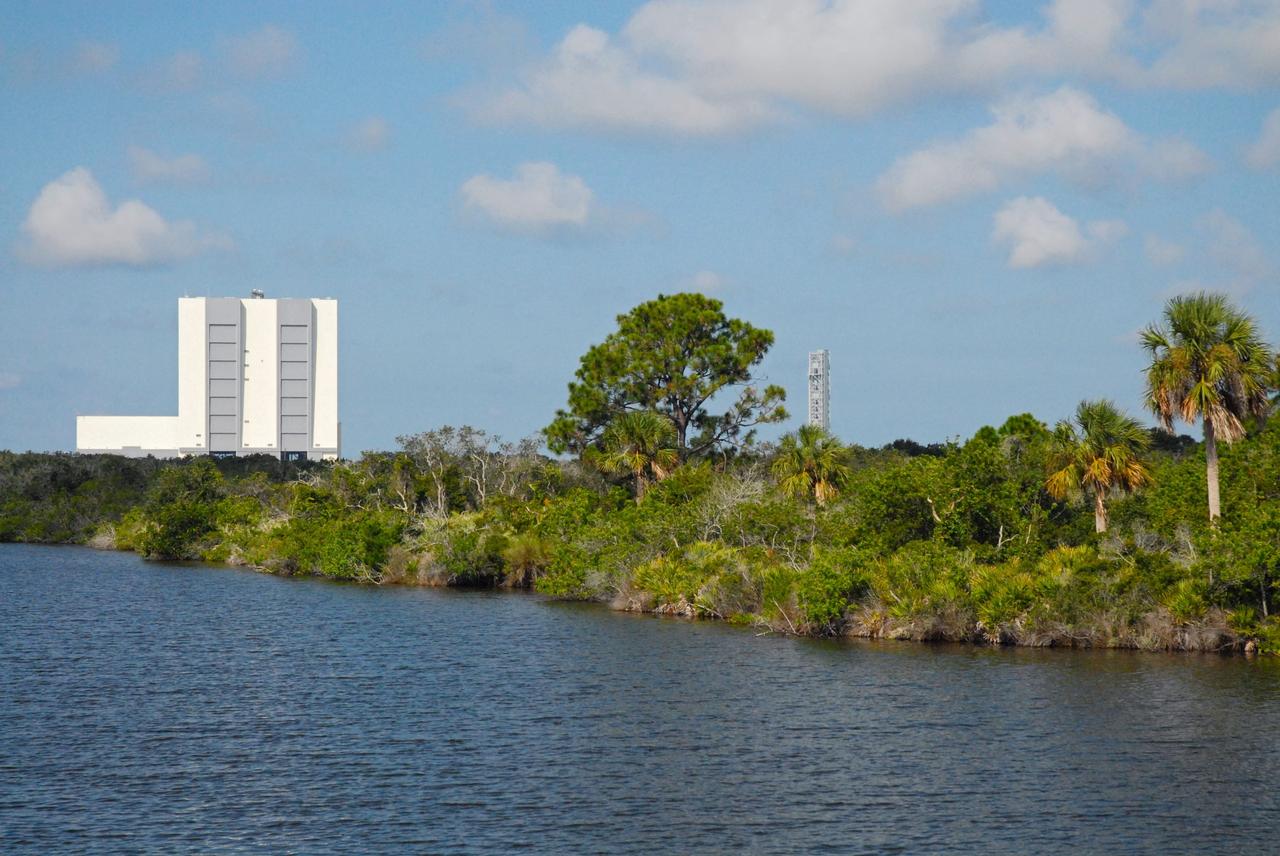
CAPE CANAVERAL, Fla. – The Vehicle Assembly Building, or VAB, and NASA's new mobile launcher, or ML, are seen in the distance during a field-guided boat tour of NASA's Kennedy Space Center in Florida. As part of the center's first-ever Innovation Expo, the tour, called "Living Outdoor Laboratory for Environmental Sustainability," is giving employees the opportunity to see the unique estuarine ecosystems that are protected from development by the presence of Kennedy and the Merritt Island National Wildlife Refuge. The 355-foot-tall ML structure, which took about two years to construct, will be modified by NASA’s Ground Systems Development and Operations, or GSDO, Program to support NASA’s Space Launch System, the heavy-lift rocket that will launch astronauts into deep space on future exploration missions. The diverse and healthy area encompassing about 140,000 acres of central Florida's east coast has been closed to the public for 50 years, allowing the coastal dunes, saltwater estuaries and marshes, freshwater impoundments, scrub, pine flatwoods, and hardwood hammocks to provide habitats for more than 1,000 species of plants and animals. Innovation Expo is showcasing the innovative work taking place throughout the center's facilities and labs to encourage employees to work together to solve future challenges. For more information, visit http://www.nasa.gov/kennedy. Photo credit: NASA
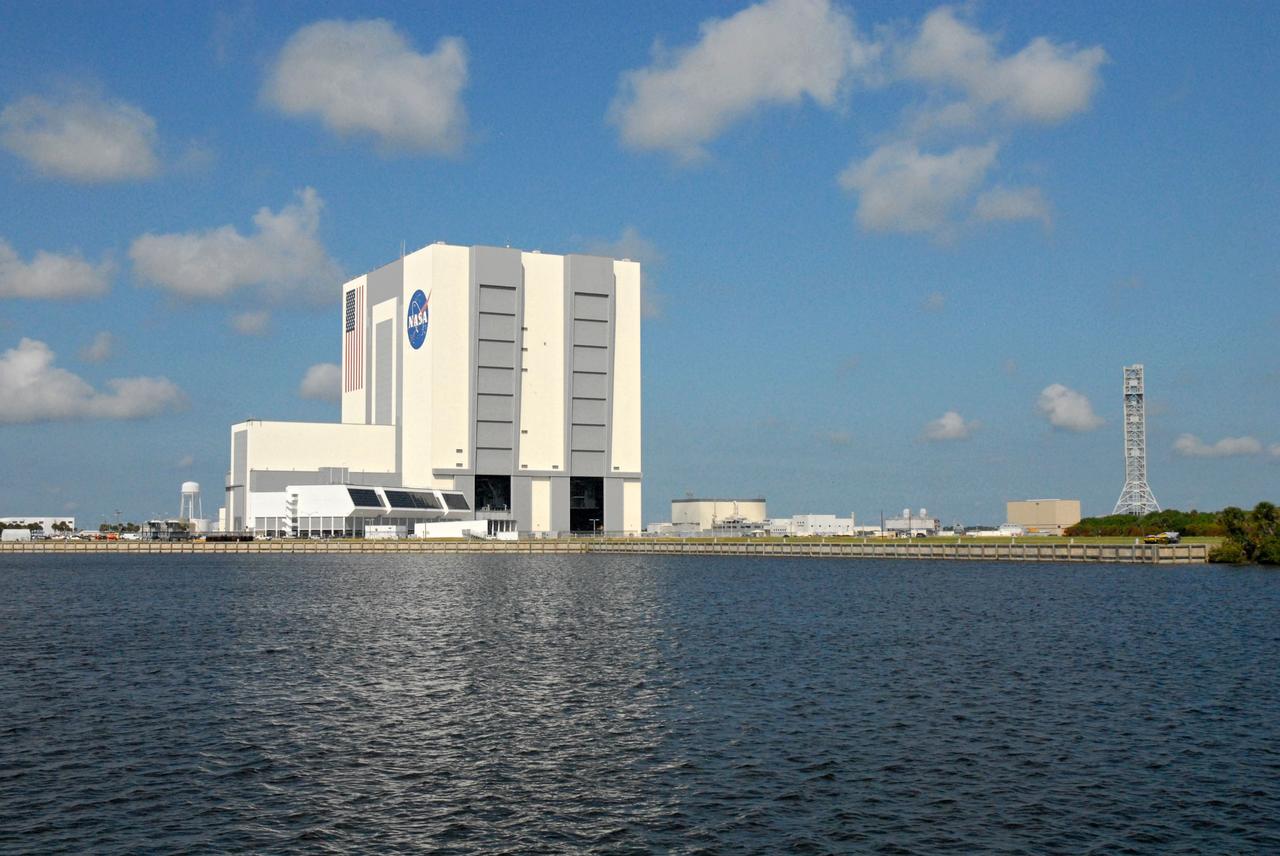
CAPE CANAVERAL, Fla. – The Vehicle Assembly Building, or VAB, and NASA's new mobile launcher, or ML, are seen during a field-guided boat tour of NASA's Kennedy Space Center in Florida. As part of the center's first-ever Innovation Expo, the tour, called "Living Outdoor Laboratory for Environmental Sustainability," is giving employees the opportunity to see the unique estuarine ecosystems that are protected from development by the presence of Kennedy and the Merritt Island National Wildlife Refuge. The 355-foot-tall ML structure, which took about two years to construct, will be modified by NASA’s Ground Systems Development and Operations, or GSDO, Program to support NASA’s Space Launch System, the heavy-lift rocket that will launch astronauts into deep space on future exploration missions. The diverse and healthy area encompassing about 140,000 acres of central Florida's east coast has been closed to the public for 50 years, allowing the coastal dunes, saltwater estuaries and marshes, freshwater impoundments, scrub, pine flatwoods, and hardwood hammocks to provide habitats for more than 1,000 species of plants and animals. Innovation Expo is showcasing the innovative work taking place throughout the center's facilities and labs to encourage employees to work together to solve future challenges. For more information, visit http://www.nasa.gov/kennedy. Photo credit: NASA