Deimos
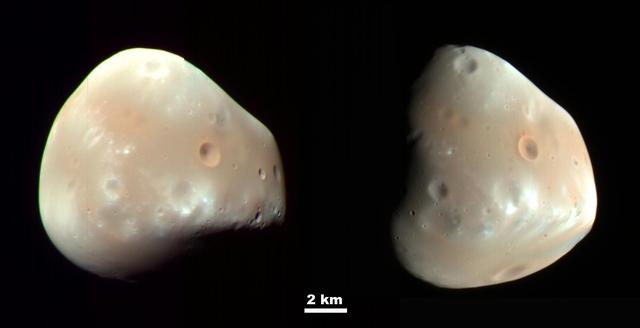
Martian Moon Deimos in High Resolution
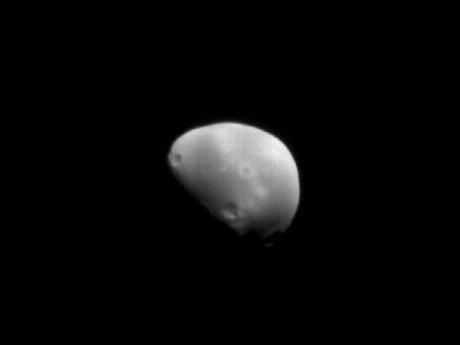
Deimos!
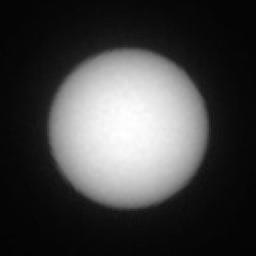
This series of images shows the Martian moon Deimos as it crossed in front of the Sun, as seen by NASA's Curiosity Mars rover on Sunday, March 17, 2019 (the 2,350th Martian day, or sol, of the mission). The images were captured by Curiosity's telephoto-lens camera, called its Mast Camera pair (right Mastcam). The images have been sped up by a factor of 10. Deimos is small enough that scientists consider it a transit rather than an eclipse. The Deimos transit lasted several minutes. Movie available at https://photojournal.jpl.nasa.gov/catalog/PIA23134
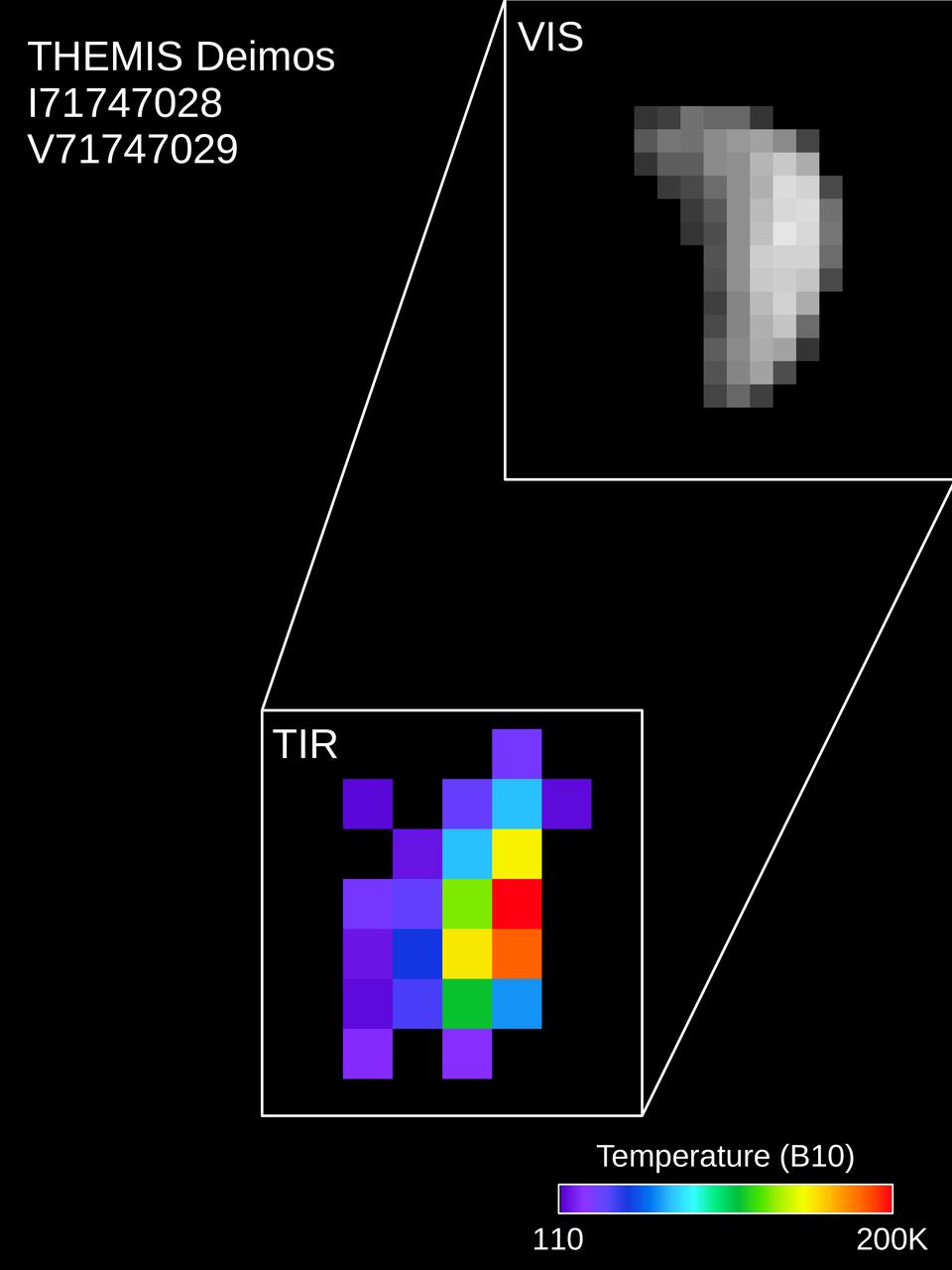
Colors in this image of the Martian moon Deimos indicate a range of surface temperatures detected by observing the moon on February 15, 2018, with the Thermal Emission Imaging System (THEMIS) camera on NASA's Mars Odyssey orbiter. The left edge of the small moon is in darkness, and the right edge in sunlight. Temperature information was derived from thermal-infrared imaging such as the grayscale image shown smaller at lower left with the moon in the same orientation. The color-coding merges information from THEMIS observations made in 10 thermal-infrared wavelength bands. This was the first observation of Deimos by Mars Odyssey; the spacecraft first imaged Mars' other moon, Phobos, on September 29, 2017. Researchers have been using THEMIS to examine Mars since early 2002, but the maneuver turning the orbiter around to point the camera at Phobos was developed only recently. https://photojournal.jpl.nasa.gov/catalog/PIA22250
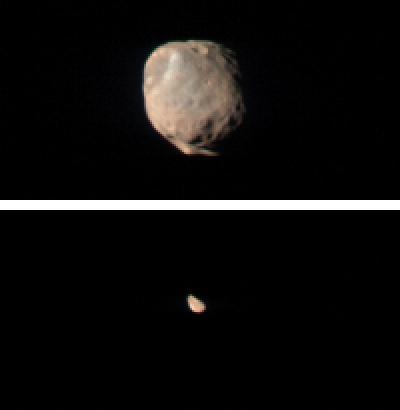
CRISM Views Phobos and Deimos
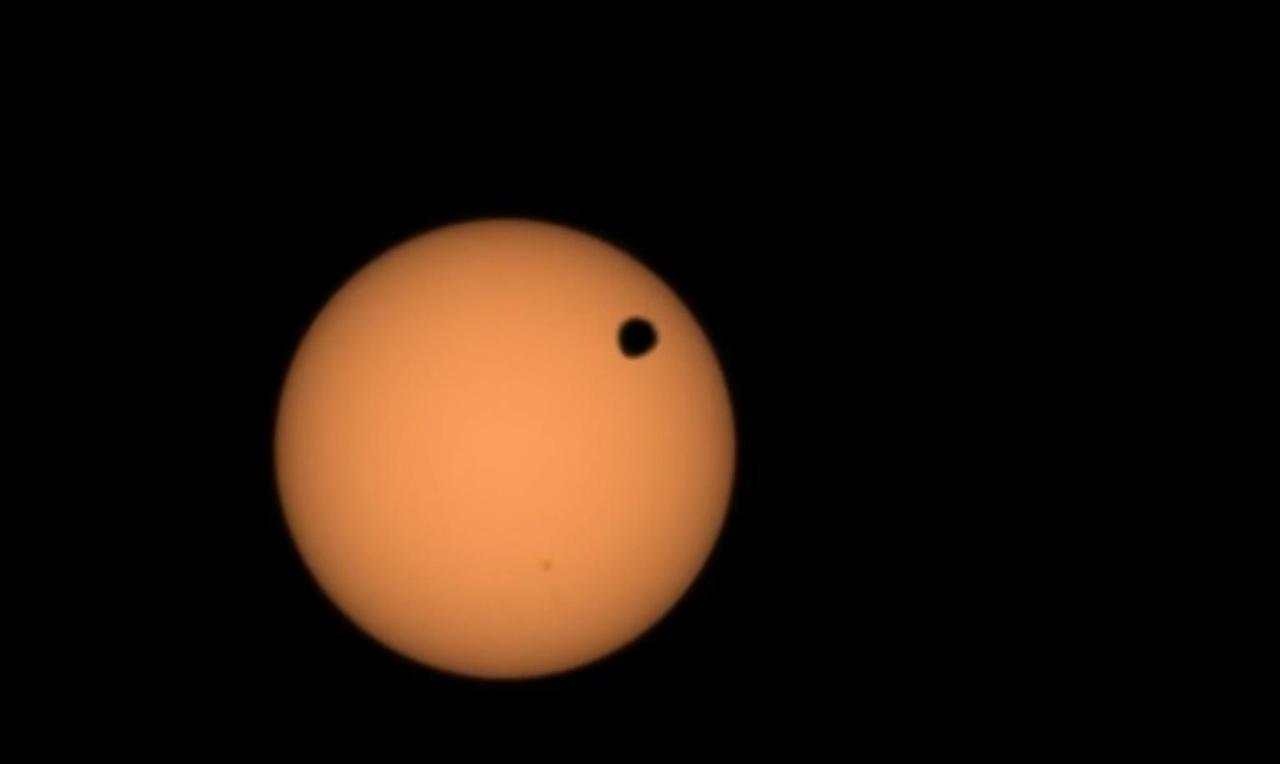
NASA's Perseverance Mars rover used its Mastcam-Z camera to capture the silhouette of Deimos, one of the two Martian moons, as it passed in front of the Sun on Jan. 19, 2024, the 1,037th Martian day, or sol, of the mission. This is one of several transits of Deimos that NASA's Mars rovers have captured. By comparing the various recordings over time, scientists can refine their understanding of the tiny moon's orbit, learning how it's changing. The video has been sped up by four times; the full transit took over two minutes. Arizona State University leads the operations of the Mastcam-Z instrument, working in collaboration with Malin Space Science Systems in San Diego, on the design, fabrication, testing, and operation of the cameras, and in collaboration with the Niels Bohr Institute of the University of Copenhagen on the design, fabrication, and testing of the calibration targets. A key objective for Perseverance's mission on Mars is astrobiology, including the search for signs of ancient microbial life. The rover will characterize the planet's geology and past climate, pave the way for human exploration of the Red Planet, and be the first mission to collect and cache Martian rock and regolith (broken rock and dust). Subsequent NASA missions, in cooperation with ESA (European Space Agency), would send spacecraft to Mars to collect these sealed samples from the surface and return them to Earth for in-depth analysis. The Mars 2020 Perseverance mission is part of NASA's Moon to Mars exploration approach, which includes Artemis missions to the Moon that will help prepare for human exploration of the Red Planet. Video available at https://photojournal.jpl.nasa.gov/catalog/PIA26249
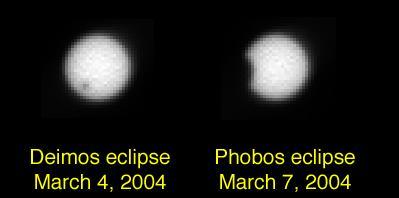
The panoramic camera on NASA Opportunity combines the first photographs of solar eclipses by Mars two moons, Deimos and Phobos. Deimos appears as a speck in front of the Sun and Phobos grazes its edge.
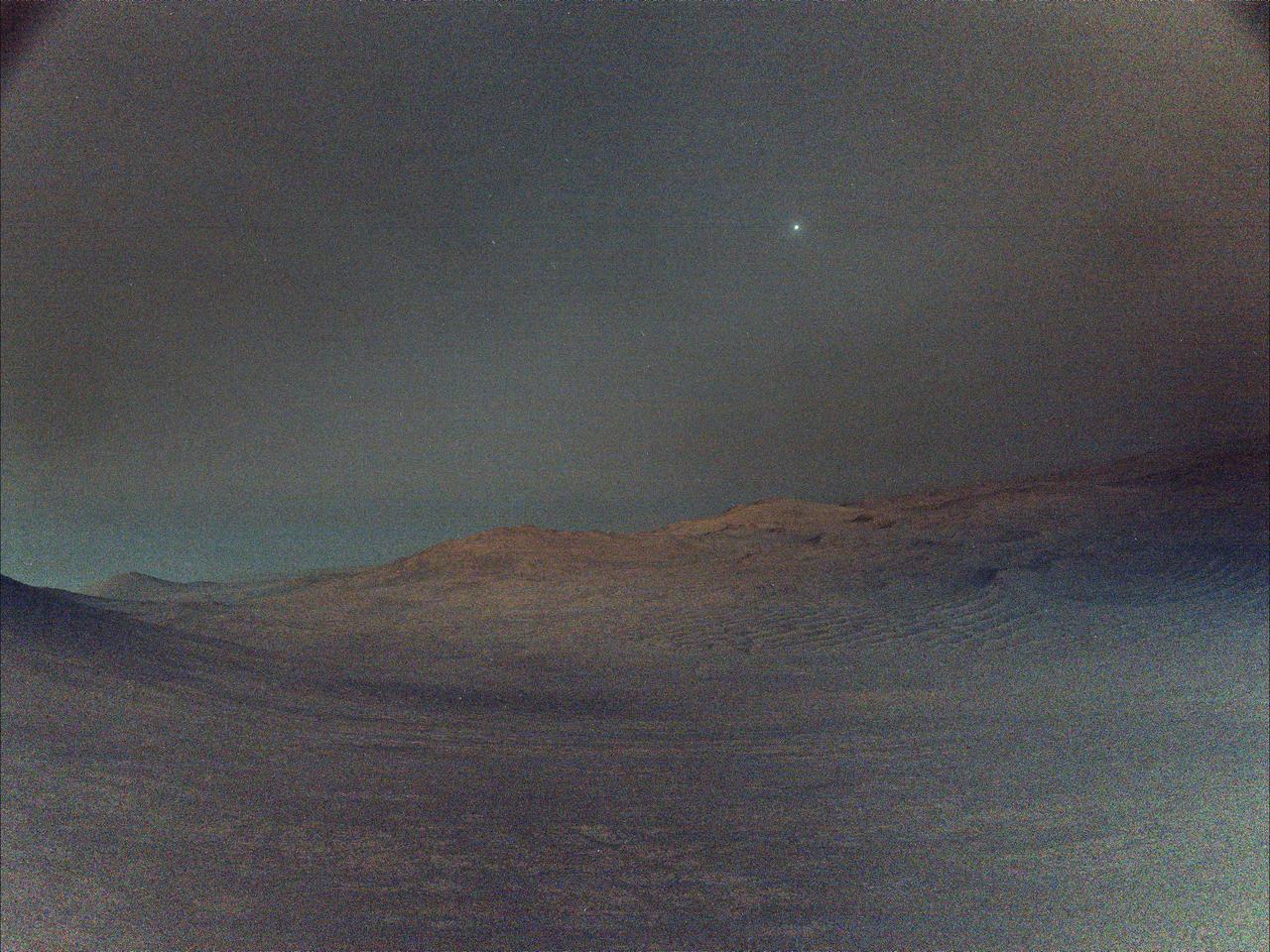
NASA's Perseverance rover captured this view of Deimos, the smaller of Mars' two moons, shining in the sky at 4:27 a.m. local time on March 1, 2025, the 1,433rd Martian day, or sol, of the mission. In the dark before dawn, the rover's left navigation camera used its maximum long-exposure time of 3.28 seconds for each of 16 individual shots, all of which were combined onboard the camera into a single image that was later sent to Earth. In total, the image represents an exposure time of about 52 seconds. The low light and long exposures add digital noise, making the image hazy. Many of the white specks seen in the sky are likely noise; some may be cosmic rays. Two of the brighter white specks are Regulus and Algieba, stars that are part of the constellation Leo. "Woodstock Crater," at center right, is roughly a half-mile (750 meters) away from the rover. At the time, Perseverance was making its way to a location called "Witch Hazel Hill." A key objective for Perseverance's mission on Mars is astrobiology, including the search for signs of ancient microbial life. The rover is characterizing the planet's geology and past climate, to help pave the way for human exploration of the Red Planet, and is the first mission to collect and cache Martian rock and regolith. NASA's Mars Sample Return Program, in cooperation with ESA (European Space Agency), is designed to send spacecraft to Mars to collect these sealed samples from the surface and return them to Earth for in-depth analysis. The Mars 2020 Perseverance mission is part of NASA's Mars Exploration Program portfolio and the agency's Moon to Mars exploration approach, which includes Artemis missions to the Moon that will help prepare for human exploration of the Red Planet. https://photojournal.jpl.nasa.gov/catalog/PIA26556
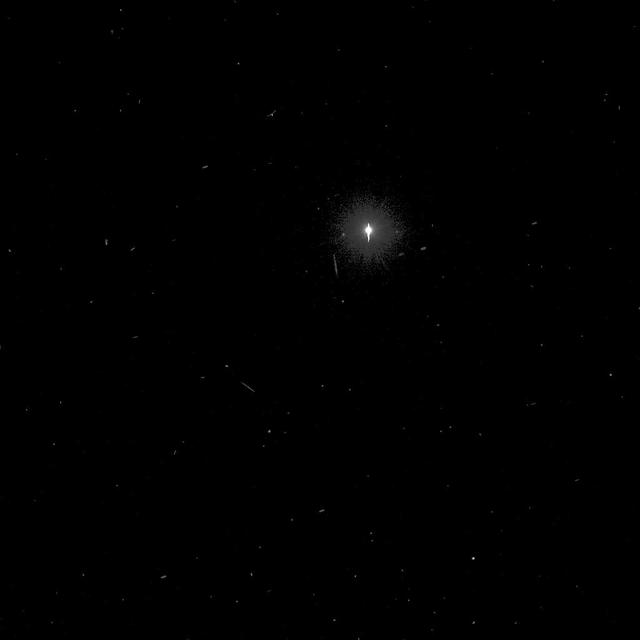
NASA Mars Exploration Rover Opportunity used its panoramic camera to snap pictures of Mars moon Deimos. Three frames were taken with long exposures to measure Deimos position with respect to the background stars. http://photojournal.jpl.nasa.gov/catalog/PIA12290

This montage shows asteroid 951 Gaspra top compared with Deimos lower left and Phobos lower right, the moons of Mars. http://photojournal.jpl.nasa.gov/catalog/PIA00078
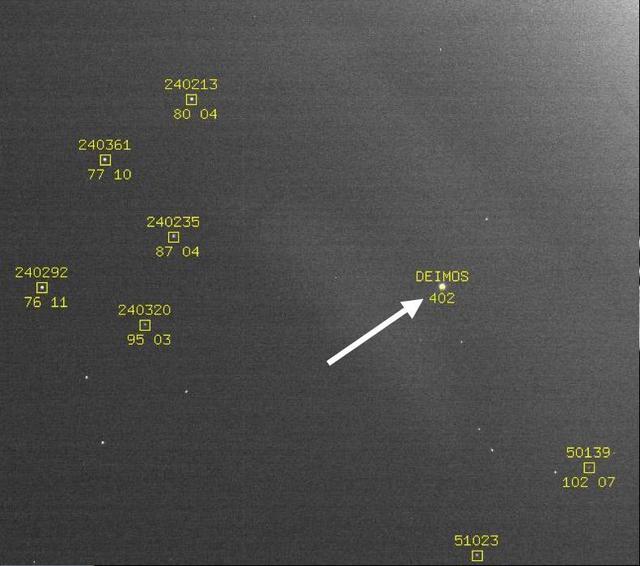
This image showing the position of the Martian moon Deimos against a background of stars is part of a successful technology demonstration completed by NASA Mars Reconnaissance Orbiter before arrival at Mars
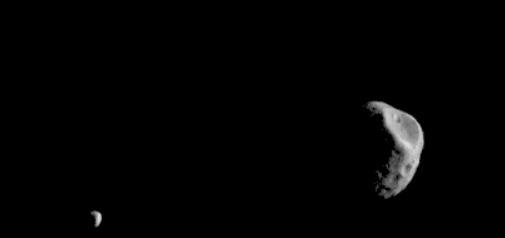
Phobos and Deimos, the moons of Mars, are seen by the Mars Odyssey orbiter's Thermal Emission Imaging System, or THEMIS, camera. The images were taken in visible-wavelength light. THEMIS also recorded thermal-infrared imagery in the same scan. The apparent motion is due to progression of the camera's pointing during the 17-second span of the February 15, 2018, observation, not from motion of the two moons. This was the second observation of Phobos by Mars Odyssey; the first was on September 29, 2017. Researchers have been using THEMIS to examine Mars since early 2002, but the maneuver turning the orbiter around to point the camera at Phobos was developed only recently. The distance to Phobos from Odyssey during the observation was about 3,489 miles (5,615 kilometers). The distance to Deimos from Odyssey during the observation was about 12,222 miles (19,670 kilometers). An animation is available at https://photojournal.jpl.nasa.gov/catalog/PIA22248
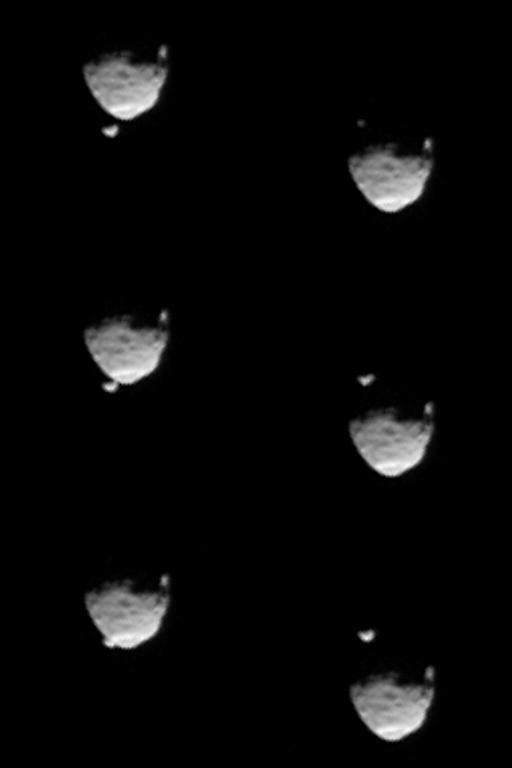
These six images from NASA Mars rover Curiosity show the two moons of Mars moments before left three and after right three the larger moon, Phobos, occulted Deimos on Aug. 1, 2013.
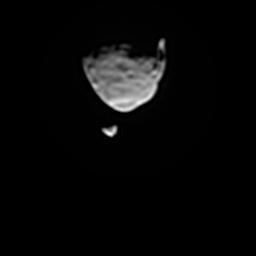
This image from a movie clip shows Phobos, the larger of the two moons of Mars, passing in front of the other Martian moon, Deimos, on Aug. 1, from the perspective of NASA Mars rover Curiosity.
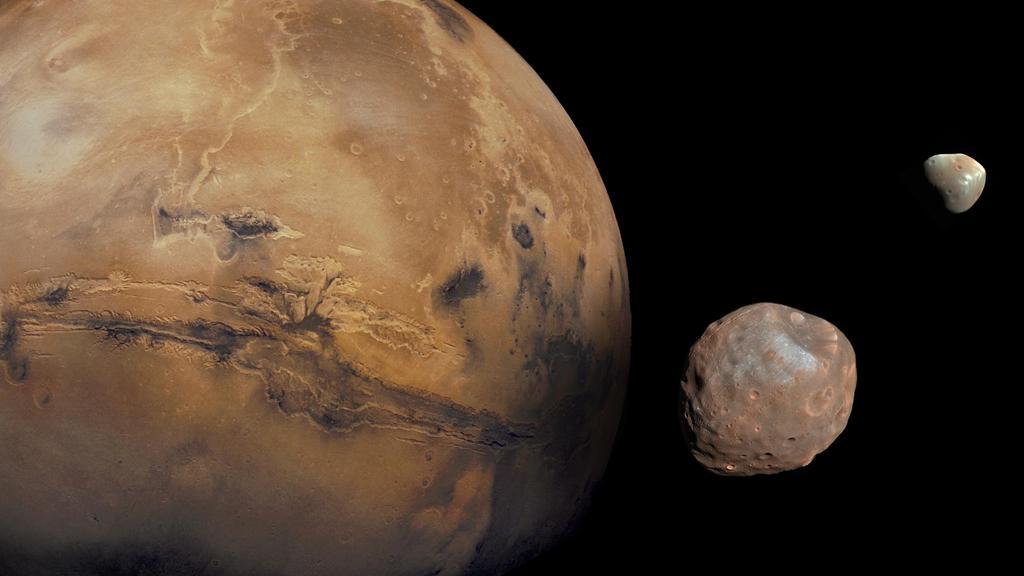
Mars is kept company by two cratered moons -- an inner moon named Phobos and an outer moon named Deimos.
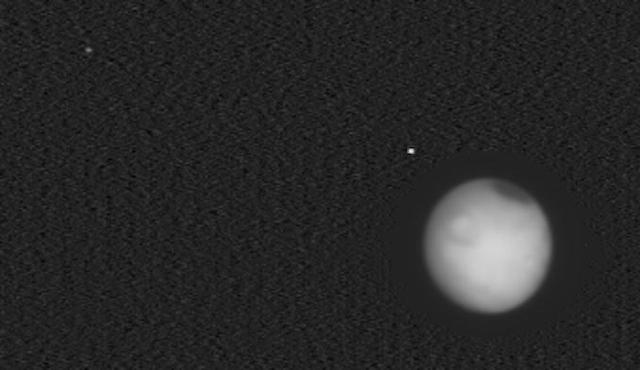
NASA's Europa Clipper captured this infrared image of the heat radiation from Mars and its moons Phobos (closest to Mars) and Deimos (seen in upper left corner) on Feb. 28, 2025, as the spacecraft approached the Red Planet while en route to the Jupiter system to investigate the icy moon Europa. The mission flew by Mars the next day, using the planet's gravity to help shape the spacecraft's trajectory. When the image was taken by the mission's Europa Thermal Emission Imaging System (E-THEMIS), the spacecraft was about 560,000 miles (900,000 kilometers) from the Red Planet. The image is composed of 200 individual frames, part of a continuous scan of 1,100 frames taken roughly a second apart over a period of 20 minutes. Scientists are using the tiny, point-like images of the moons to check the camera's focus. The image was captured using the middle of E-THEMIS's three long-wave infrared wavelength bands, which extend from about 14 to 28 micrometers. (A previously released E-THEMIS image of Mars used the shortest of the instrument's wavelength bands, extending from 7 to 14 micrometers and showing Mars in higher contrast.) The dark oval near the top of Mars is the planet's cold northern polar cap and is about minus 190 degrees Fahrenheit (minus 125 degrees Celsius). The circular feature seen on Mars is the region around Elysium Mons. The faint halo seen around the planet is due to the processing of the image. The two moons are about 250 times fainter than Mars, so scientists brightened the image (except for a region circling the planet) to make the moons more visible. The brightening also makes image noise more visible; the area surrounding Mars within the halo appears comparatively dark because it wasn't brightened. Europa Clipper launched from NASA's Kennedy Space Center in Florida on Oct. 14, 2024, and will arrive at the Jupiter system in 2030 to conduct about 50 flybys of Europa. The mission's main science goal is to determine whether there are places below Europa's surface that could support life. The mission's three main science objectives are to determine the thickness of the moon's icy shell and its surface interactions with the ocean below, to investigate its composition, and to characterize its geology. The mission's detailed exploration of Europa will help scientists better understand the astrobiological potential for habitable worlds beyond our planet. https://photojournal.jpl.nasa.gov/catalog/PIA26567
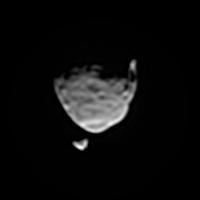
This view of the two moons of Mars comes from a set of images taken by NASA Mars rover Curiosity as the larger moon, Phobos, passed in front of the smaller one, Deimos, from Curiosity perspective, on Aug. 1, 2013.
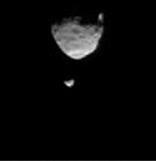
This frame from a movie clip shows the larger of Mars two moons, Phobos, passing in front of the smaller Martian moon, Deimos, as observed by NASA Mars rover Curiosity.
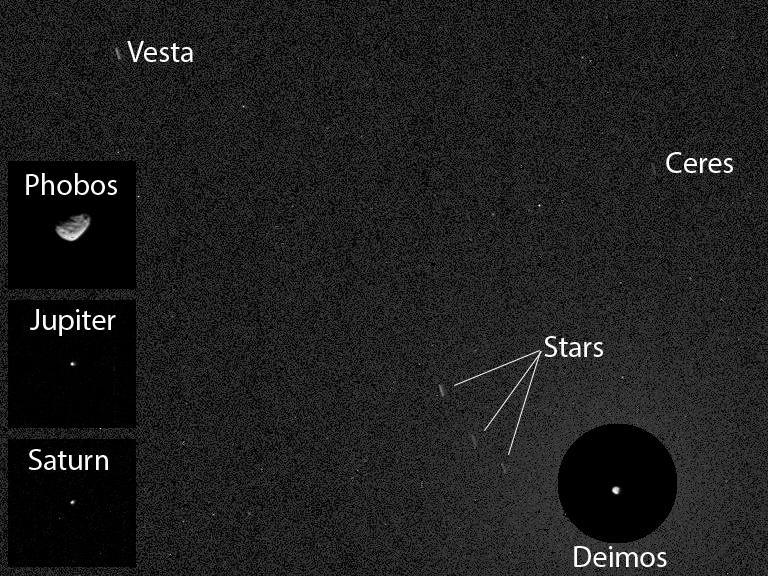
NASA Curiosity Mars rover has caught the first image of asteroids taken from the surface of Mars. The image includes two asteroids, Ceres and Vesta. This version includes Mars moon Deimos.
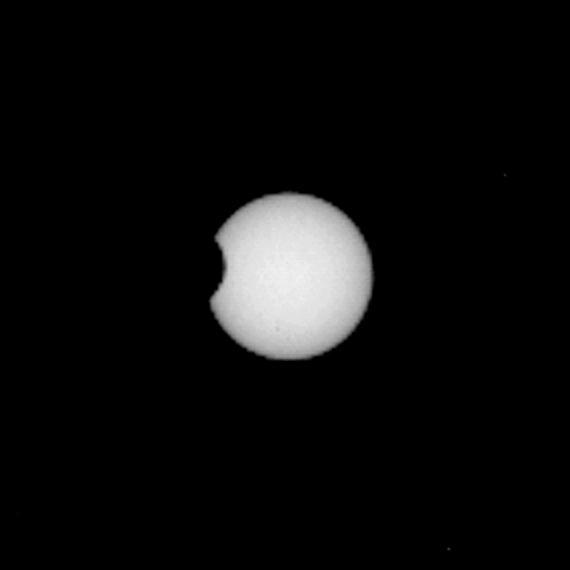
Mars has two small, asteroid-sized moons named Phobos and Deimos. This frame from an animation shows the point of view of the rover, located near the equator of Mars, as these moons occasionally pass in front of, or transit, the disk of the sun.
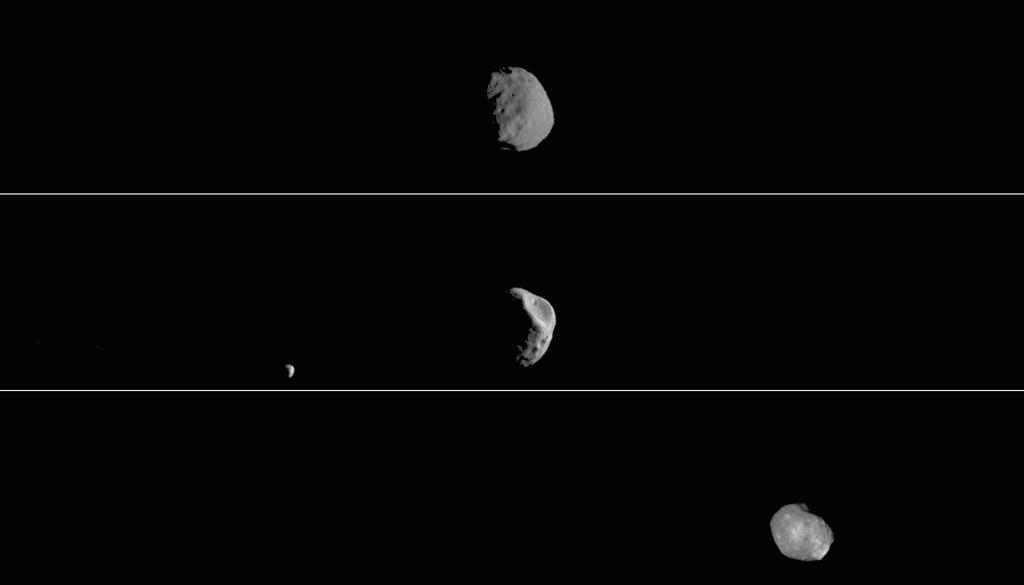
This movie shows three views of the Martian moon Phobos as viewed in visible light by NASA's 2001 Mars Odyssey orbiter. The apparent motion is due to movement by Odyssey's infrared camera, Thermal Emission Imaging System (THEMIS), rather than movement by the moon. Each of the three panels is a series of images taken on different dates (from top to bottom): Sept. 29, 2017; Feb. 15, 2018; and April 24, 2019. Deimos, Mars' other moon, can also be seen in the second panel. While displayed here in visible-wavelength light, THEMIS also recorded thermal-infrared imagery in the same scan. Movie available at https://photojournal.jpl.nasa.gov/catalog/PIA23208
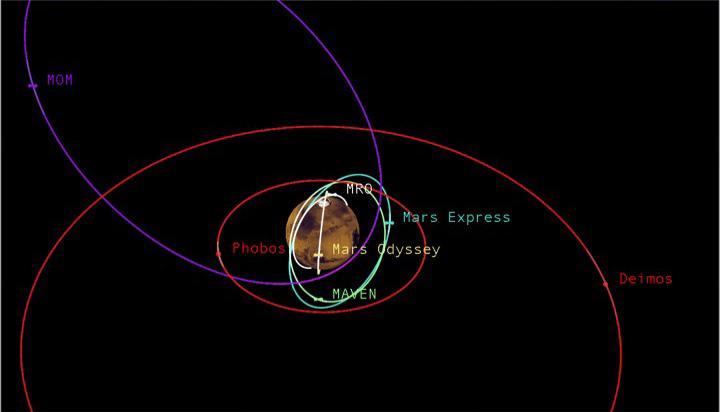
This graphic depicts the relative shapes and distances from Mars for five active orbiter missions plus the planet's two natural satellites. It illustrates the potential for intersections of the spacecraft orbits. The number of active orbiter missions at Mars increased from three to five in 2014. With the increased traffic, NASA has augmented a process for anticipating orbit intersections and avoiding collisions. NASA's Mars Odyssey and MRO (Mars Reconnaissance Orbiter) travel near-circular orbits. The European Space Agency's Mars Express, NASA's MAVEN (Mars Atmosphere and Volatile Evolution) and India's MOM (Mars Orbiter Mission), travel more elliptical orbits. Phobos and Deimos are the two natural moons of Mars. http://photojournal.jpl.nasa.gov/catalog/PIA19396
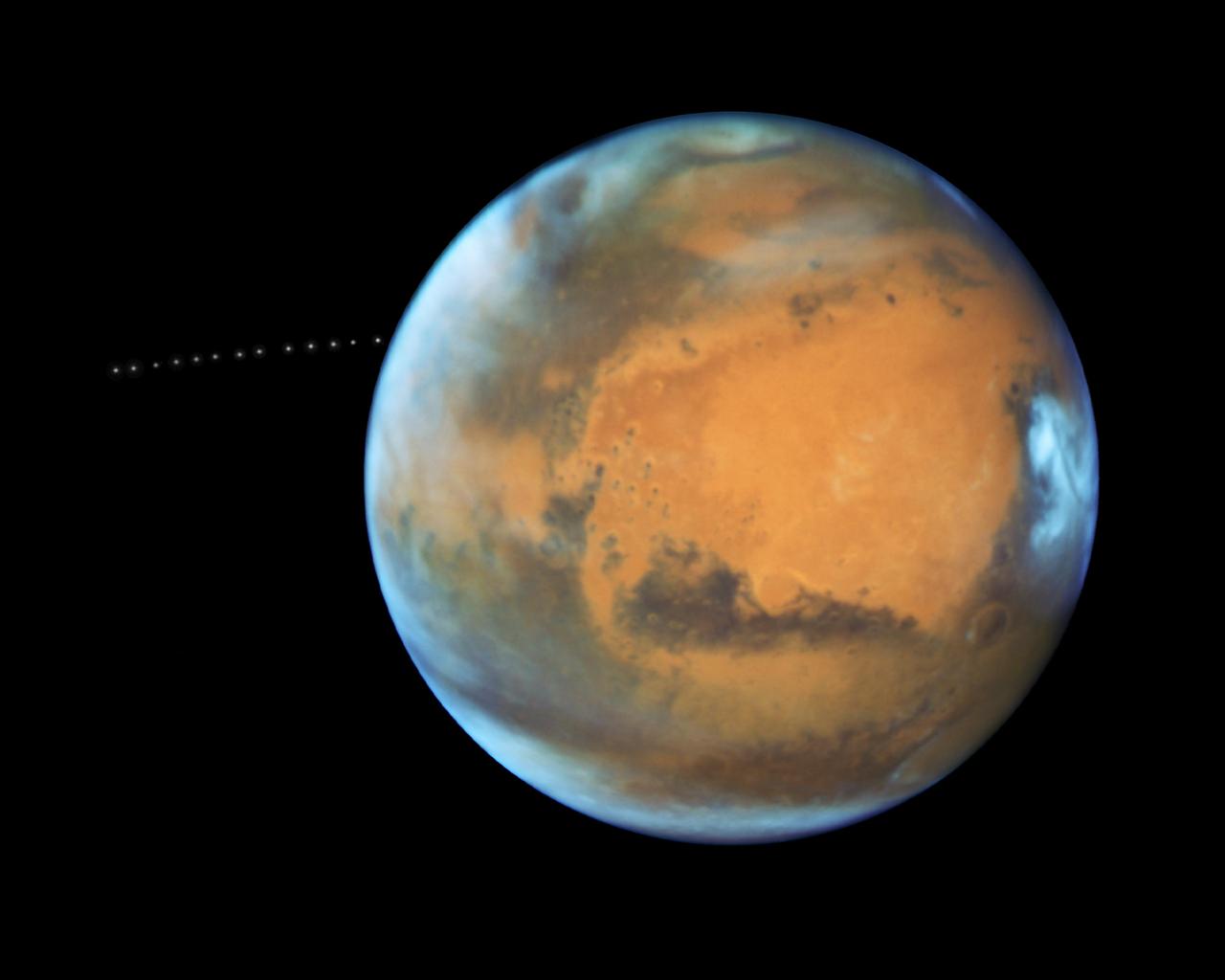
The sharp eye of NASA's Hubble Space Telescope has captured the tiny moon Phobos during its orbital trek around Mars. Because the moon is so small, it appears star-like in the Hubble pictures. Over the course of 22 minutes, Hubble took 13 separate exposures, allowing astronomers to create a time-lapse video showing the diminutive moon's orbital path. The Hubble observations were intended to photograph Mars, and the moon's cameo appearance was a bonus. A football-shaped object just 16.5 miles by 13.5 miles by 11 miles, Phobos is one of the smallest moons in the solar system. It is so tiny that it would fit comfortably inside the Washington, D.C. Beltway. The little moon completes an orbit in just 7 hours and 39 minutes, which is faster than Mars rotates. Rising in the Martian west, it runs three laps around the Red Planet in the course of one Martian day, which is about 24 hours and 40 minutes. It is the only natural satellite in the solar system that circles its planet in a time shorter than the parent planet's day. About two weeks after the Apollo 11 manned lunar landing on July 20, 1969, NASA's Mariner 7 flew by the Red Planet and took the first crude close-up snapshot of Phobos. On July 20, 1976 NASA's Viking 1 lander touched down on the Martian surface. A year later, its parent craft, the Viking 1 orbiter, took the first detailed photograph of Phobos, revealing a gaping crater from an impact that nearly shattered the moon. Phobos was discovered by Asaph Hall on August 17, 1877 at the U.S. Naval Observatory in Washington, D.C., six days after he found the smaller, outer moon, named Deimos. Hall was deliberately searching for Martian moons. Both moons are named after the sons of Ares, the Greek god of war, who was known as Mars in Roman mythology. Phobos (panic or fear) and Deimos (terror or dread) accompanied their father into battle. Close-up photos from Mars-orbiting spacecraft reveal that Phobos is apparently being torn apart by the gravitational pull of Mars. The moon is marred by long, shallow grooves that are probably caused by tidal interactions with its parent planet. Phobos draws nearer to Mars by about 6.5 feet every hundred years. Scientists predict that within 30 to 50 million years, it either will crash into the Red Planet or be torn to pieces and scattered as a ring around Mars. Orbiting 3,700 miles above the Martian surface, Phobos is closer to its parent planet than any other moon in the solar system. Despite its proximity, observers on Mars would see Phobos at just one-third the width of the full moon as seen from Earth. Conversely, someone standing on Phobos would see Mars dominating the horizon, enveloping a quarter of the sky. From the surface of Mars, Phobos can be seen eclipsing the sun. However, it is so tiny that it doesn't completely cover our host star. Transits of Phobos across the sun have been photographed by several Mars-faring spacecraft. The origin of Phobos and Deimos is still being debated. Scientists concluded that the two moons were made of the same material as asteroids. This composition and their irregular shapes led some astrophysicists to theorize that the Martian moons came from the asteroid belt. However, because of their stable, nearly circular orbits, other scientists doubt that the moons were born as asteroids. Such orbits are rare for captured objects, which tend to move erratically. An atmosphere could have slowed down Phobos and Deimos and settled them into their current orbits, but the Martian atmosphere is too thin to have circularized the orbits. Also, the moons are not as dense as members of the asteroid belt. Phobos may be a pile of rubble that is held together by a thin crust. It may have formed as dust and rocks encircling Mars were drawn together by gravity. Or, it may have experienced a more violent birth, where a large body smashing into Mars flung pieces skyward, and those pieces were brought together by gravity. Perhaps an existing moon was destroyed, reduced to the rubble that would become Phobos. Hubble took the images of Phobos orbiting the Red Planet on May 12, 2016, when Mars was 50 million miles from Earth. This was just a few days before the planet passed closer to Earth in its orbit than it had in the past 11 years. A time-lapse video captures a portion of the path that tiny Phobos takes around Mars. Over the course of 22 minutes, Hubble snapped 13 separate exposures of the little Martian moon. The video can be viewed at https://photojournal.jpl.nasa.gov/catalog/PIA21837