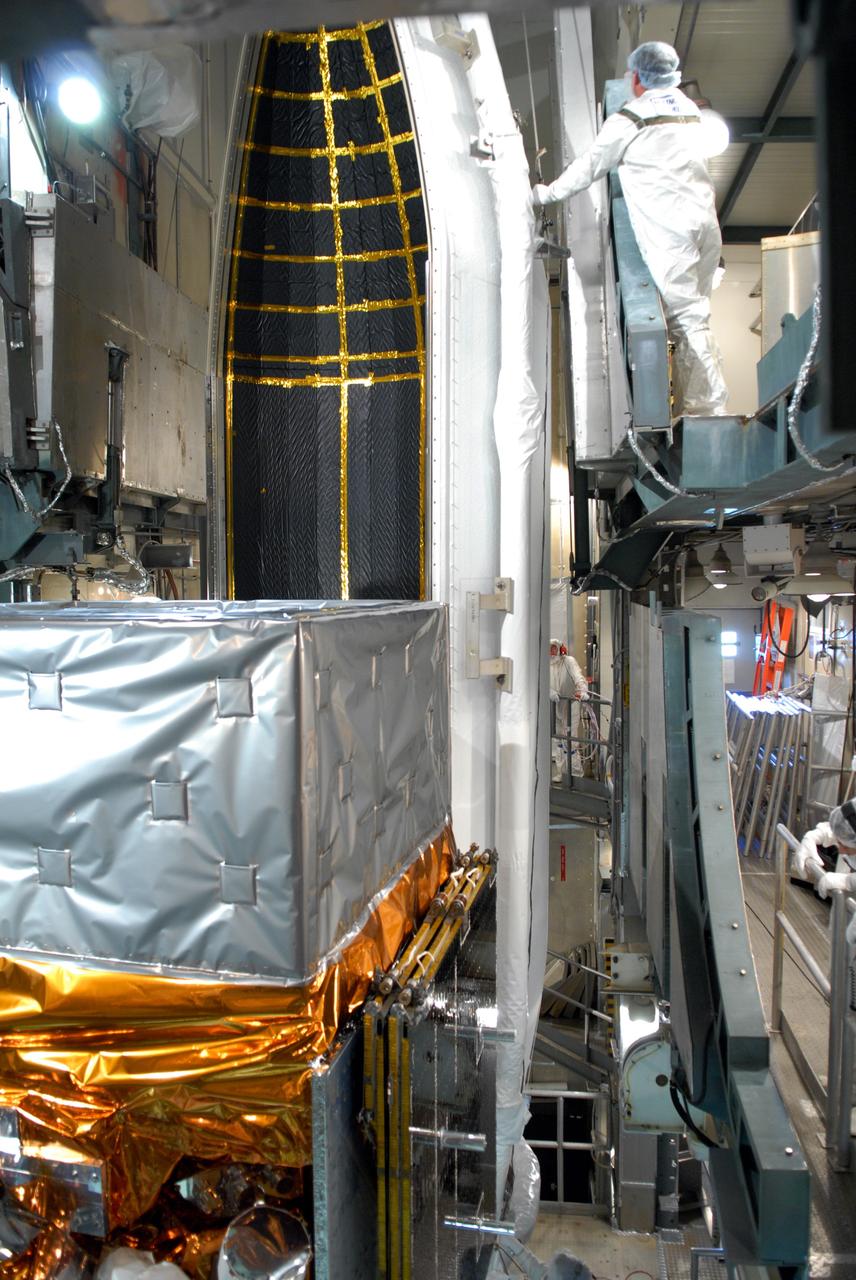
CAPE CANAVERAL, Fla. -- Inside the mobile service tower on Launch Pad 17-B at Cape Canaveral Air Force Station, workers help guide one section of the payload fairing into place around NASA's Gamma-Ray Large Area Space Telescope, or GLAST. The fairing is a molded structure that fits flush with the outside surface of the Delta II upper stage booster and forms an aerodynamically smooth nose cone, protecting the spacecraft during launch and ascent. GLAST is a powerful space observatory that will explore the Universe's ultimate frontier, where nature harnesses forces and energies far beyond anything possible on Earth; probe some of science's deepest questions, such as what our Universe is made of, and search for new laws of physics; explain how black holes accelerate jets of material to nearly light speed; and help crack the mystery of stupendously powerful explosions known as gamma-ray bursts. The launch date is targeted no earlier than June 3. Photo credit: NASA/Jim Grossmann
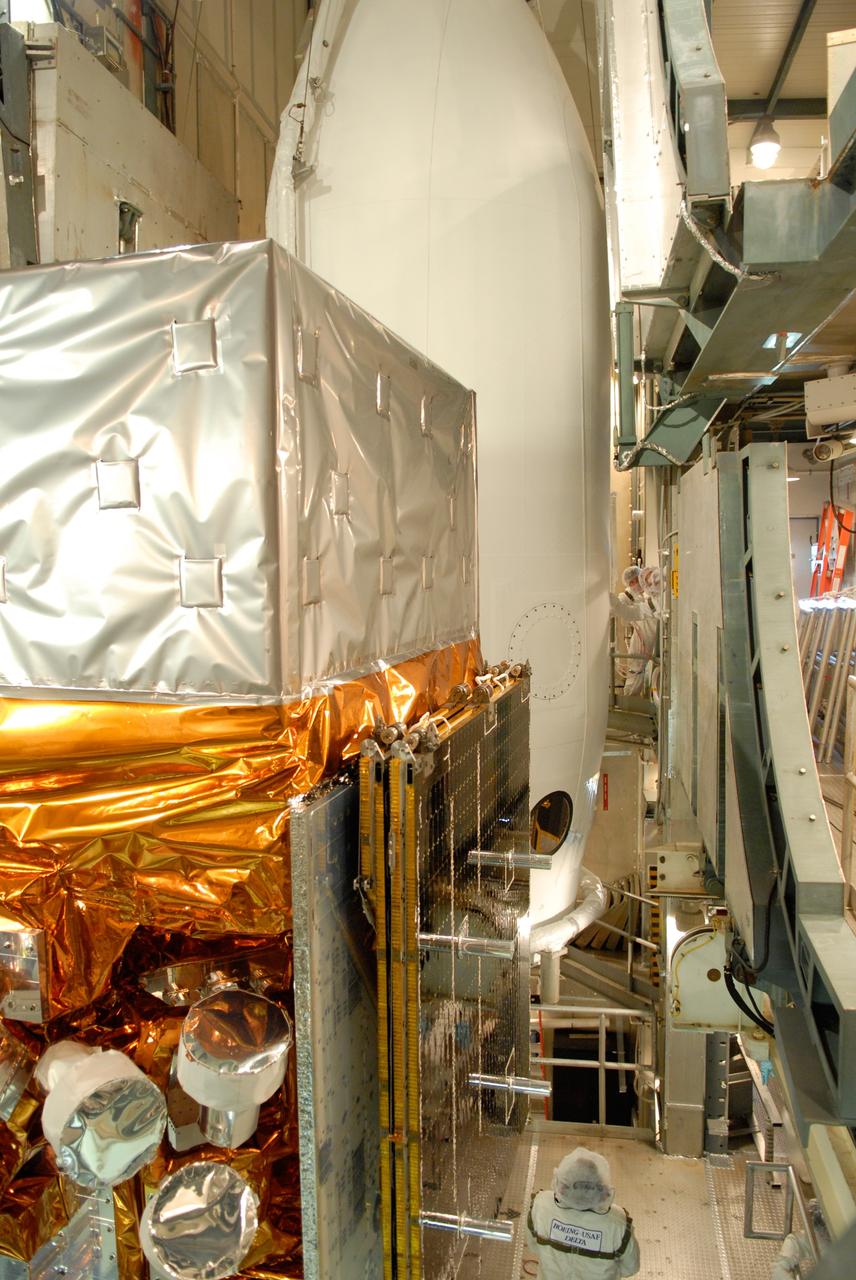
CAPE CANAVERAL, Fla. -- Inside the mobile service tower on Launch Pad 17-B at Cape Canaveral Air Force Station, NASA's Gamma-Ray Large Area Space Telescope, or GLAST, is ready for encapsulation in the payload fairing, which is seen behind it. The fairing is a molded structure that fits flush with the outside surface of the Delta II upper stage booster and forms an aerodynamically smooth nose cone, protecting the spacecraft during launch and ascent. GLAST is a powerful space observatory that will explore the Universe's ultimate frontier, where nature harnesses forces and energies far beyond anything possible on Earth; probe some of science's deepest questions, such as what our Universe is made of, and search for new laws of physics; explain how black holes accelerate jets of material to nearly light speed; and help crack the mystery of stupendously powerful explosions known as gamma-ray bursts. The launch date is targeted no earlier than June 3. Photo credit: NASA/Jim Grossmann
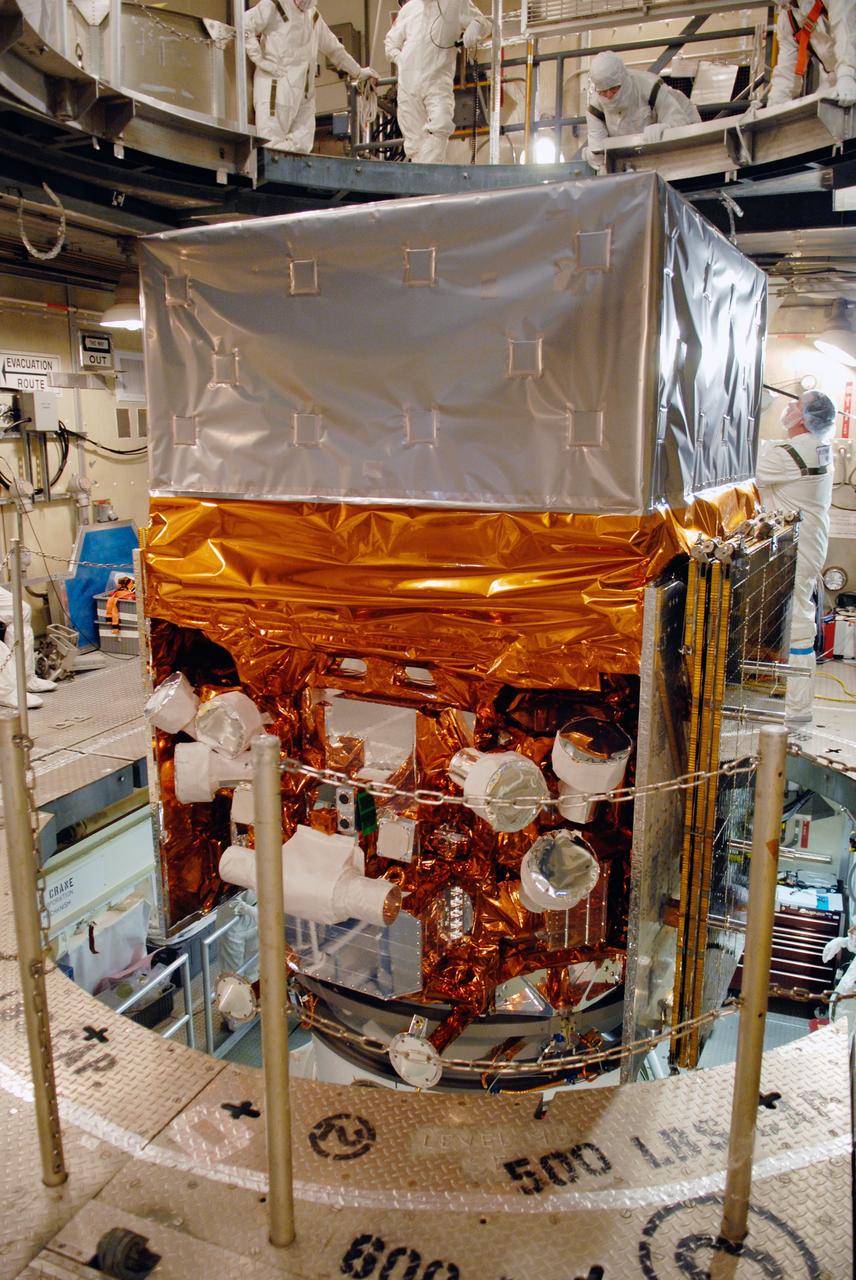
CAPE CANAVERAL, Fla. -- Inside the mobile service tower on Launch Pad 17-B at Cape Canaveral Air Force Station, NASA's Gamma-Ray Large Area Space Telescope, or GLAST, is ready for encapsulation in the payload fairing. The fairing is a molded structure that fits flush with the outside surface of the Delta II upper stage booster and forms an aerodynamically smooth nose cone, protecting the spacecraft during launch and ascent. GLAST is a powerful space observatory that will explore the Universe's ultimate frontier, where nature harnesses forces and energies far beyond anything possible on Earth; probe some of science's deepest questions, such as what our Universe is made of, and search for new laws of physics; explain how black holes accelerate jets of material to nearly light speed; and help crack the mystery of stupendously powerful explosions known as gamma-ray bursts. The launch date is targeted no earlier than June 3. Photo credit: NASA/Jim Grossmann
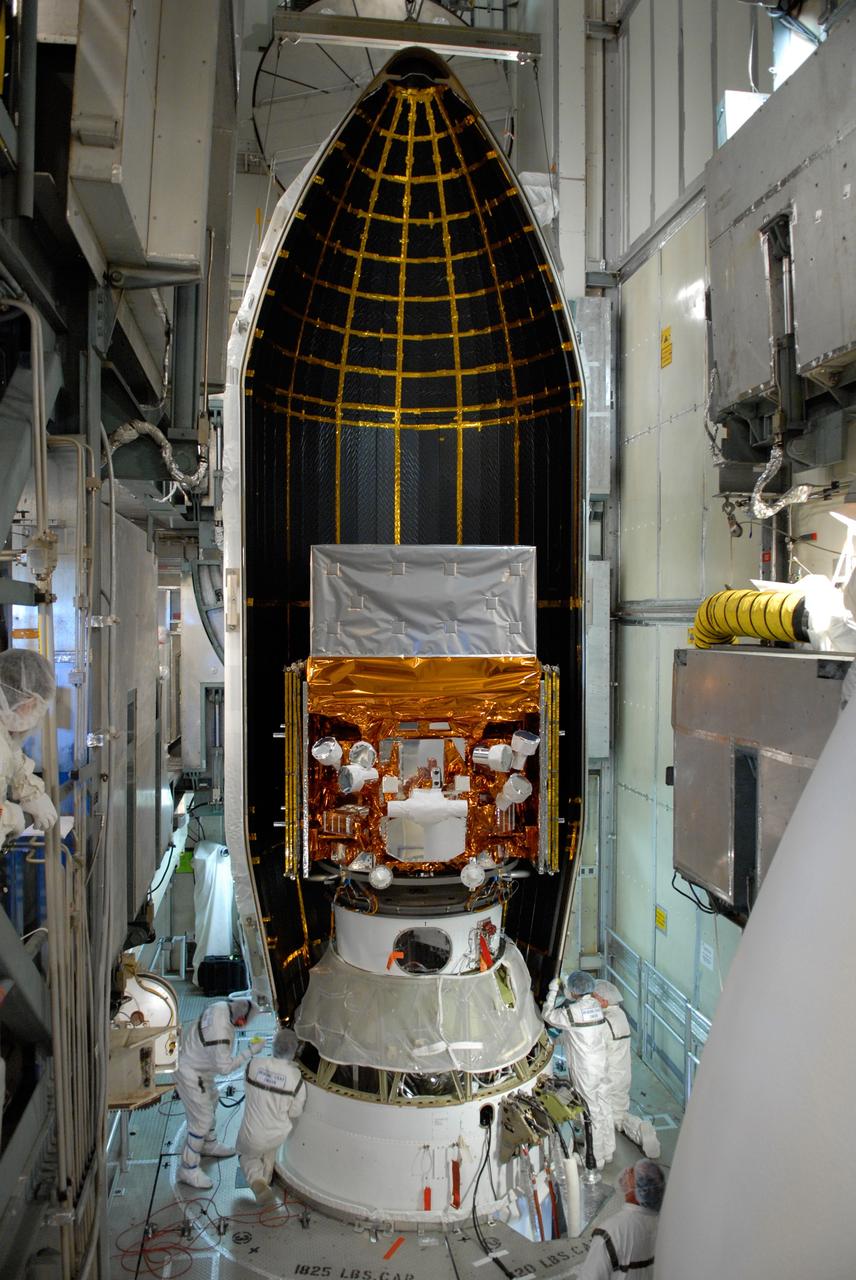
CAPE CANAVERAL, Fla. -- The first half of the payload fairing is moved into place around NASA's Gamma-Ray Large Area Space Telescope within the mobile service tower on Launch Pad 17-B at Cape Canaveral Air Force Station. The fairing is a molded structure that fits flush with the outside surface of the Delta II upper stage booster and forms an aerodynamically smooth nose cone, protecting the spacecraft during launch and ascent. GLAST is a powerful space observatory that will explore the Universe's ultimate frontier, where nature harnesses forces and energies far beyond anything possible on Earth; probe some of science's deepest questions, such as what our Universe is made of, and search for new laws of physics; explain how black holes accelerate jets of material to nearly light speed; and help crack the mystery of stupendously powerful explosions known as gamma-ray bursts. The launch date is targeted no earlier than June 3. Photo credit: NASA/Jim Grossmann
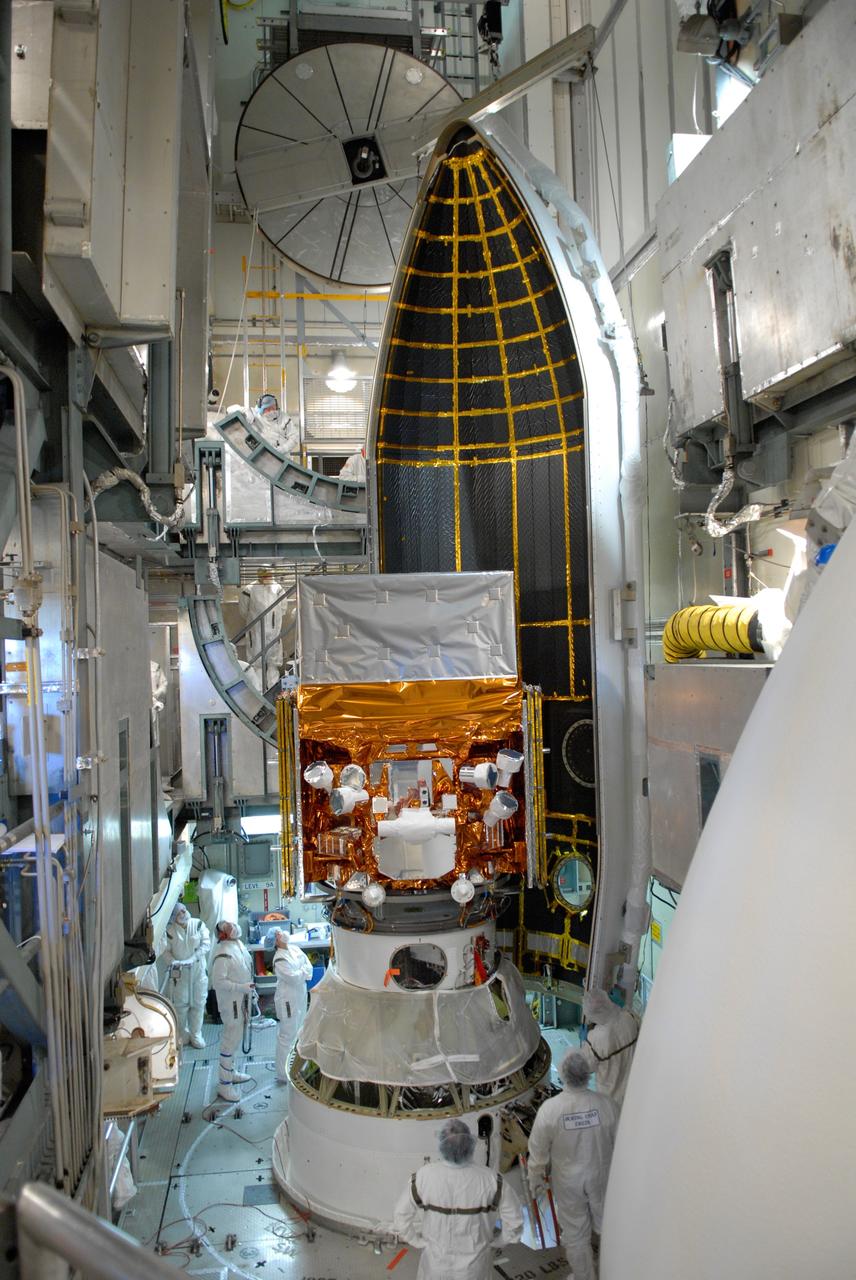
CAPE CANAVERAL, Fla. -- The first half of the payload fairing is ready to be moved around NASA's Gamma-Ray Large Area Space Telescope, or GLAST, within the mobile service tower on Launch Pad 17-B at Cape Canaveral Air Force Station. The fairing is a molded structure that fits flush with the outside surface of the Delta II upper stage booster and forms an aerodynamically smooth nose cone, protecting the spacecraft during launch and ascent. GLAST is a powerful space observatory that will explore the Universe's ultimate frontier, where nature harnesses forces and energies far beyond anything possible on Earth; probe some of science's deepest questions, such as what our Universe is made of, and search for new laws of physics; explain how black holes accelerate jets of material to nearly light speed; and help crack the mystery of stupendously powerful explosions known as gamma-ray bursts. The launch date is targeted no earlier than June 3. Photo credit: NASA/Jim Grossmann
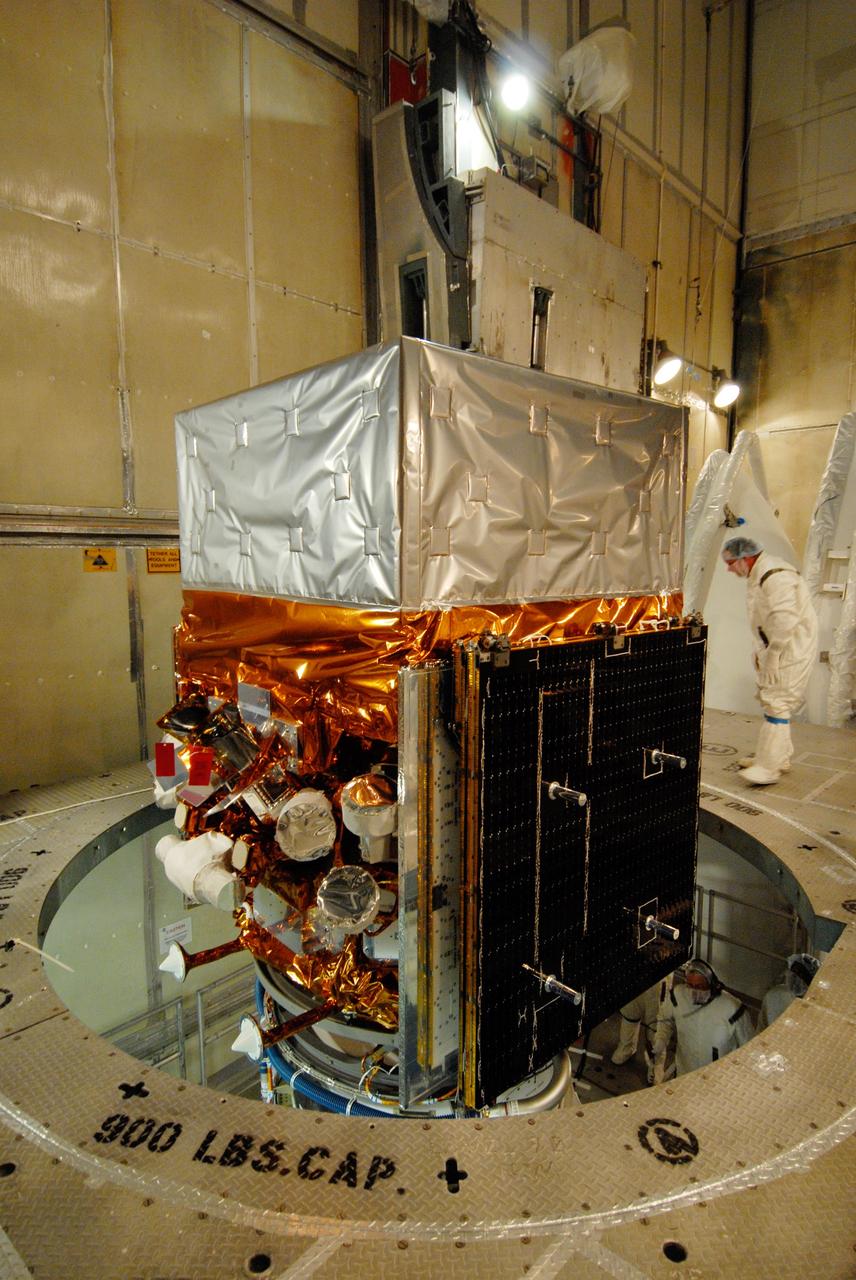
CAPE CANAVERAL, Fla. -- Inside the mobile service tower on Launch Pad 17-B at Cape Canaveral Air Force Station, NASA's Gamma-Ray Large Area Space Telescope, or GLAST, is ready for encapsulation in the payload fairing. The fairing is a molded structure that fits flush with the outside surface of the Delta II upper stage booster and forms an aerodynamically smooth nose cone, protecting the spacecraft during launch and ascent. GLAST is a powerful space observatory that will explore the Universe's ultimate frontier, where nature harnesses forces and energies far beyond anything possible on Earth; probe some of science's deepest questions, such as what our Universe is made of, and search for new laws of physics; explain how black holes accelerate jets of material to nearly light speed; and help crack the mystery of stupendously powerful explosions known as gamma-ray bursts. The launch date is targeted no earlier than June 3. Photo credit: NASA/Jim Grossmann
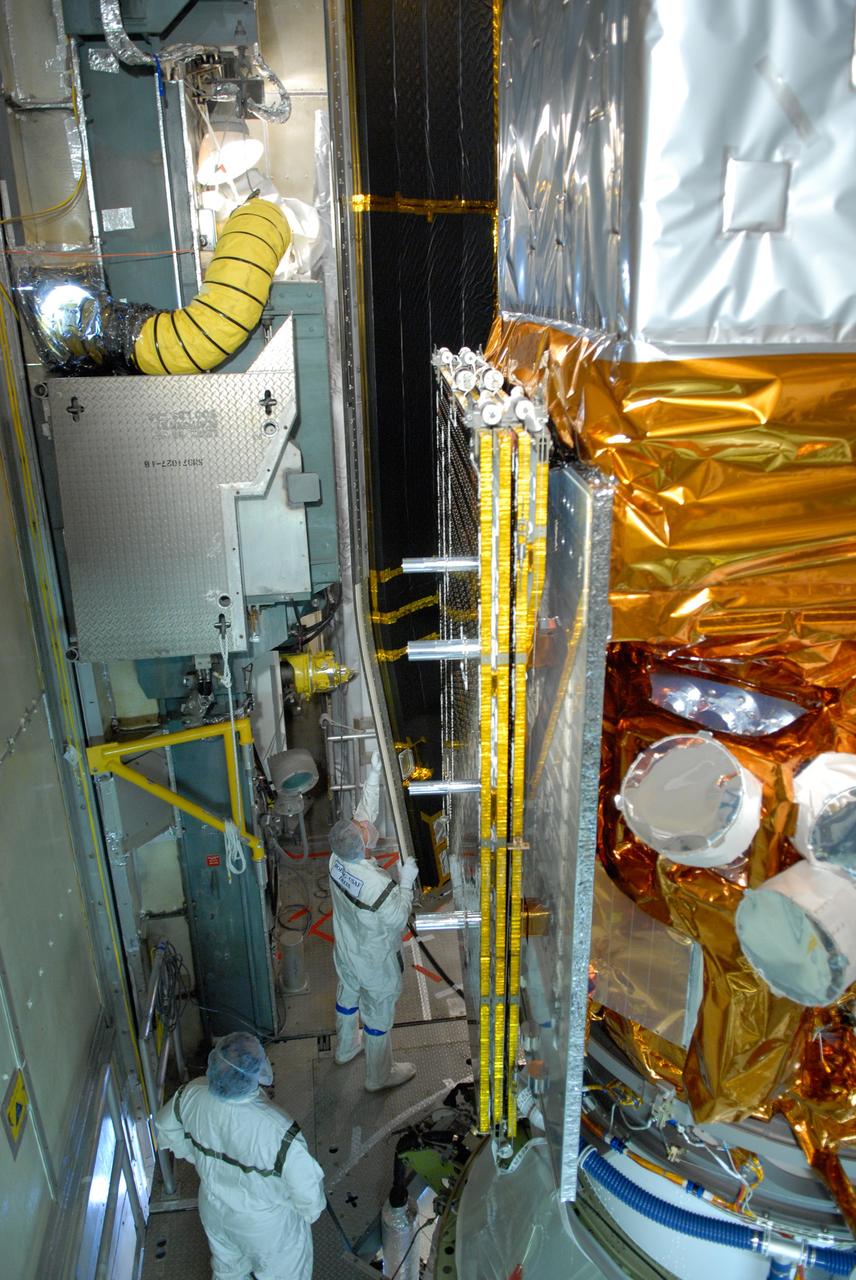
CAPE CANAVERAL, Fla. -- Inside the mobile service tower on Launch Pad 17-B at Cape Canaveral Air Force Station, workers help guide one section of the payload fairing into place around NASA's Gamma-Ray Large Area Space Telescope, or GLAST. The fairing is a molded structure that fits flush with the outside surface of the Delta II upper stage booster and forms an aerodynamically smooth nose cone, protecting the spacecraft during launch and ascent. GLAST is a powerful space observatory that will explore the Universe's ultimate frontier, where nature harnesses forces and energies far beyond anything possible on Earth; probe some of science's deepest questions, such as what our Universe is made of, and search for new laws of physics; explain how black holes accelerate jets of material to nearly light speed; and help crack the mystery of stupendously powerful explosions known as gamma-ray bursts. The launch date is targeted no earlier than June 3. Photo credit: NASA/Jim Grossmann
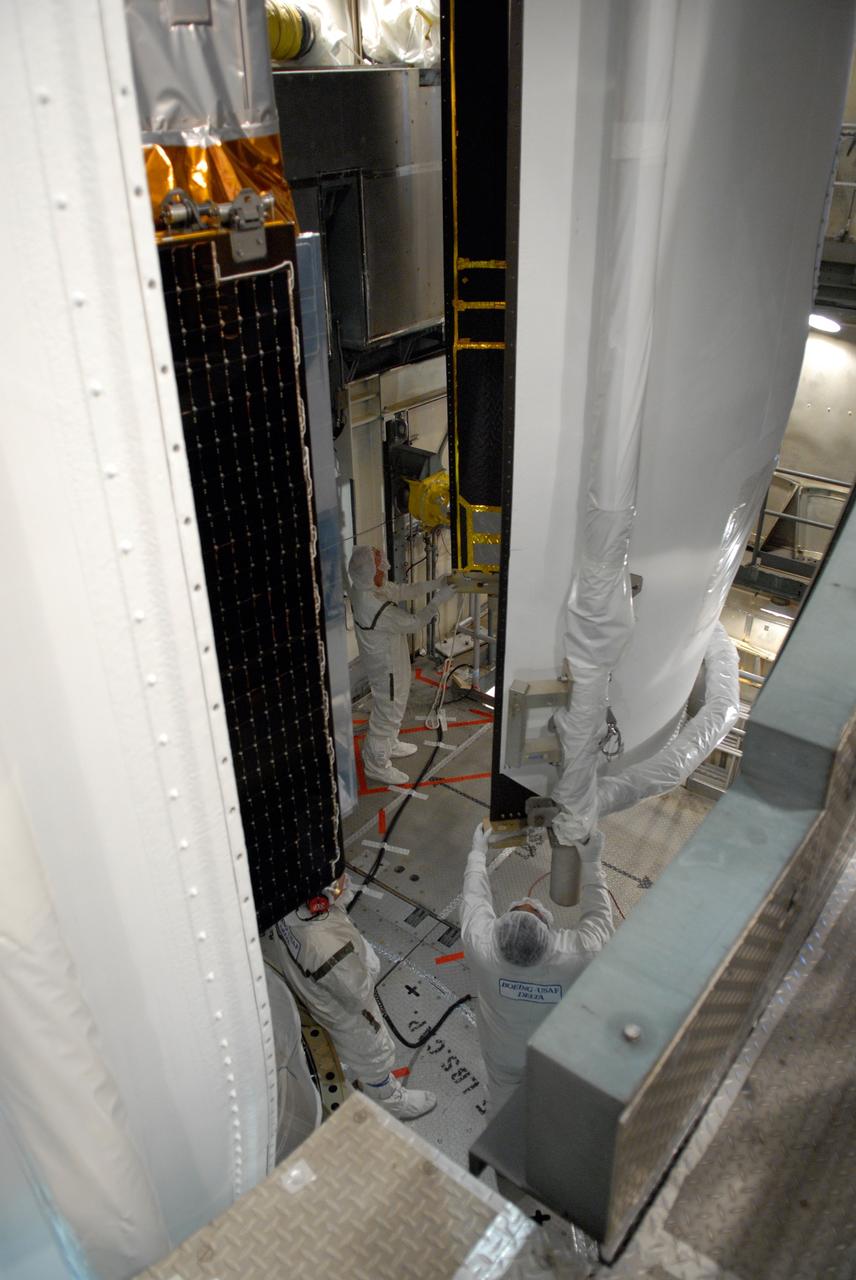
CAPE CANAVERAL, Fla. -- Inside the mobile service tower on Launch Pad 17-B at Cape Canaveral Air Force Station, workers help guide the second section of the payload fairing into place around NASA's Gamma-Ray Large Area Space Telescope, or GLAST. The first half is seen at left. The fairing is a molded structure that fits flush with the outside surface of the Delta II upper stage booster and forms an aerodynamically smooth nose cone, protecting the spacecraft during launch and ascent. GLAST is a powerful space observatory that will explore the Universe's ultimate frontier, where nature harnesses forces and energies far beyond anything possible on Earth; probe some of science's deepest questions, such as what our Universe is made of, and search for new laws of physics; explain how black holes accelerate jets of material to nearly light speed; and help crack the mystery of stupendously powerful explosions known as gamma-ray bursts. The launch date is targeted no earlier than June 3. Photo credit: NASA/Jim Grossmann
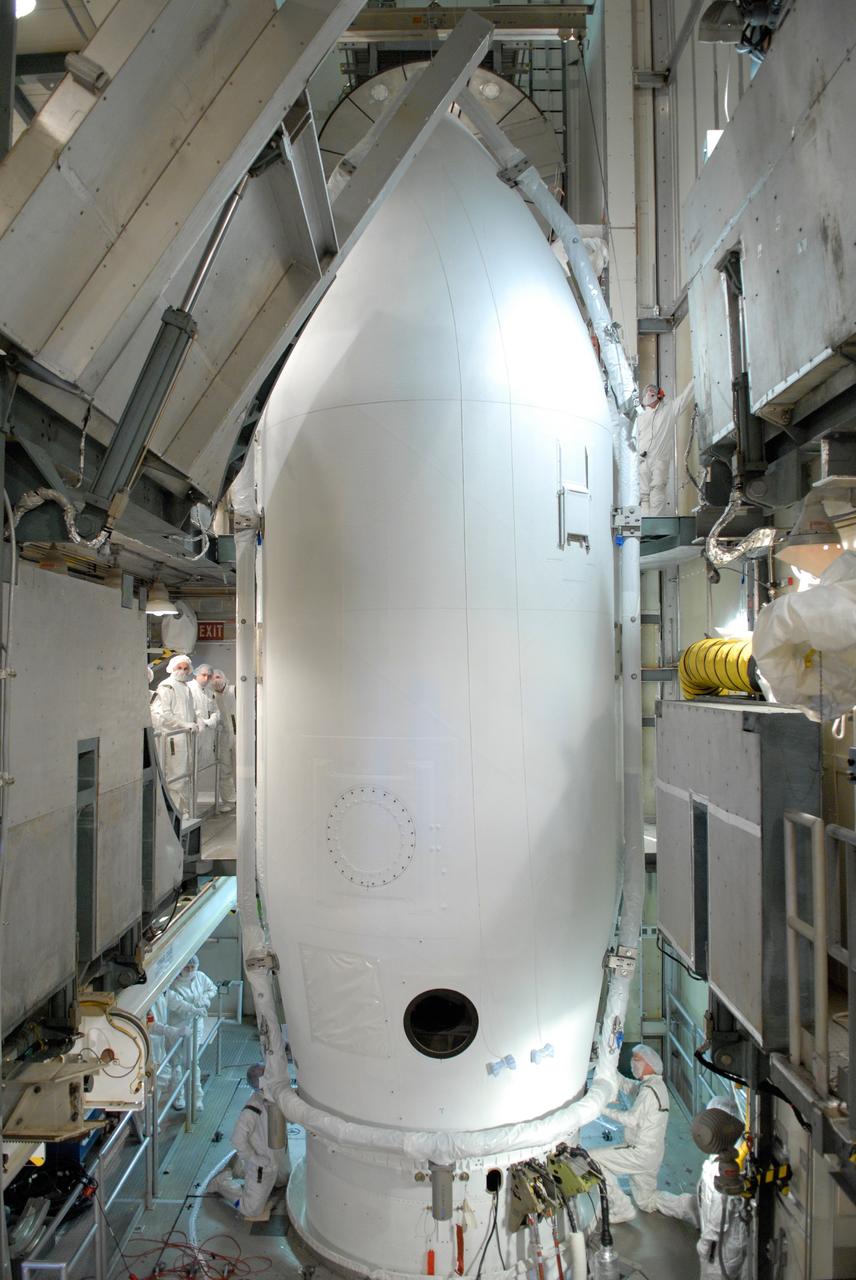
CAPE CANAVERAL, Fla. -- Inside the mobile service tower on Launch Pad 17-B at Cape Canaveral Air Force Station, workers connect the two sections of the payload fairing into place around NASA's Gamma-Ray Large Area Space Telescope, or GLAST. The fairing is a molded structure that fits flush with the outside surface of the Delta II upper stage booster and forms an aerodynamically smooth nose cone, protecting the spacecraft during launch and ascent. GLAST is a powerful space observatory that will explore the Universe's ultimate frontier, where nature harnesses forces and energies far beyond anything possible on Earth; probe some of science's deepest questions, such as what our Universe is made of, and search for new laws of physics; explain how black holes accelerate jets of material to nearly light speed; and help crack the mystery of stupendously powerful explosions known as gamma-ray bursts. The launch date is targeted no earlier than June 3. Photo credit: NASA/Jim Grossmann
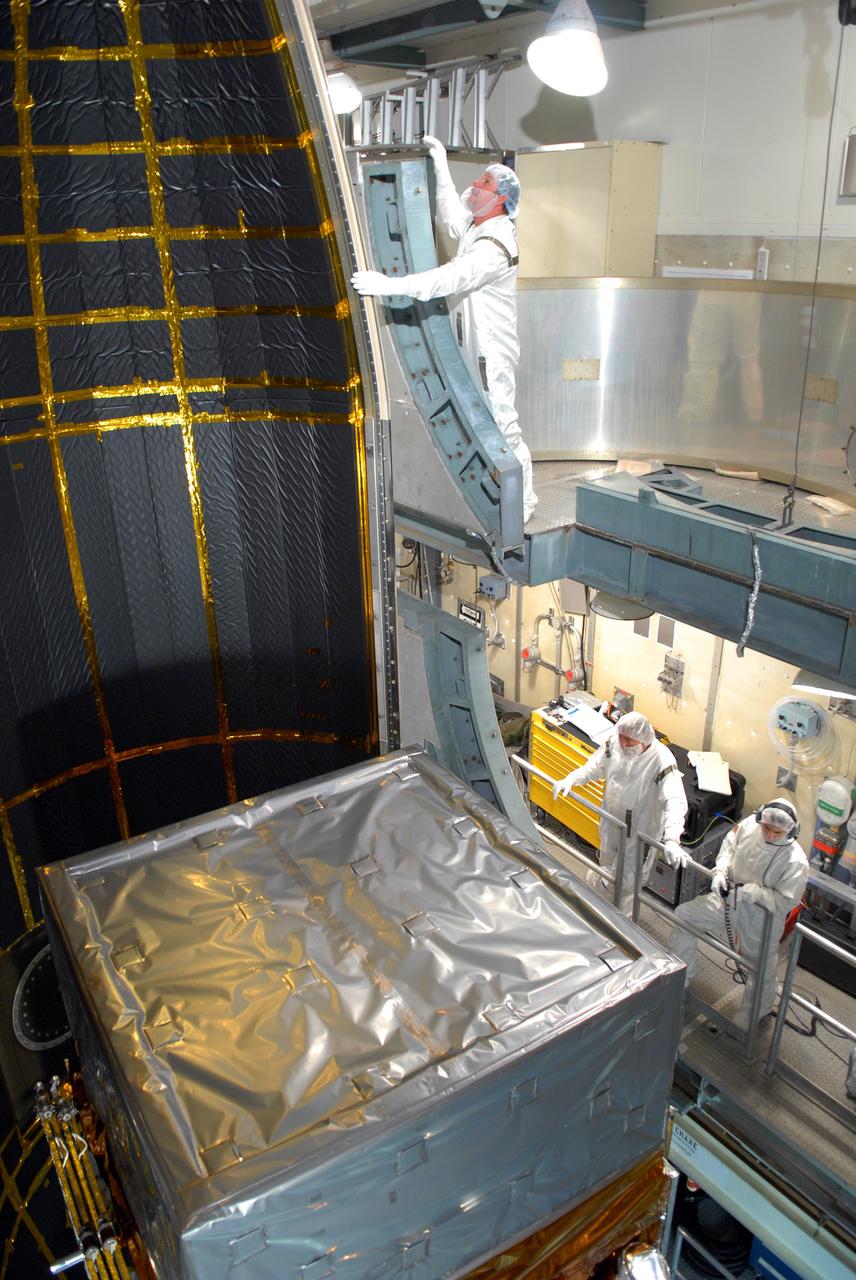
CAPE CANAVERAL, Fla. -- Inside the mobile service tower on Launch Pad 17-B at Cape Canaveral Air Force Station, workers help guide one section of the payload fairing into place around NASA's Gamma-Ray Large Area Space Telescope, or GLAST. The fairing is a molded structure that fits flush with the outside surface of the Delta II upper stage booster and forms an aerodynamically smooth nose cone, protecting the spacecraft during launch and ascent. GLAST is a powerful space observatory that will explore the Universe's ultimate frontier, where nature harnesses forces and energies far beyond anything possible on Earth; probe some of science's deepest questions, such as what our Universe is made of, and search for new laws of physics; explain how black holes accelerate jets of material to nearly light speed; and help crack the mystery of stupendously powerful explosions known as gamma-ray bursts. The launch date is targeted no earlier than June 3. Photo credit: NASA/Jim Grossmann
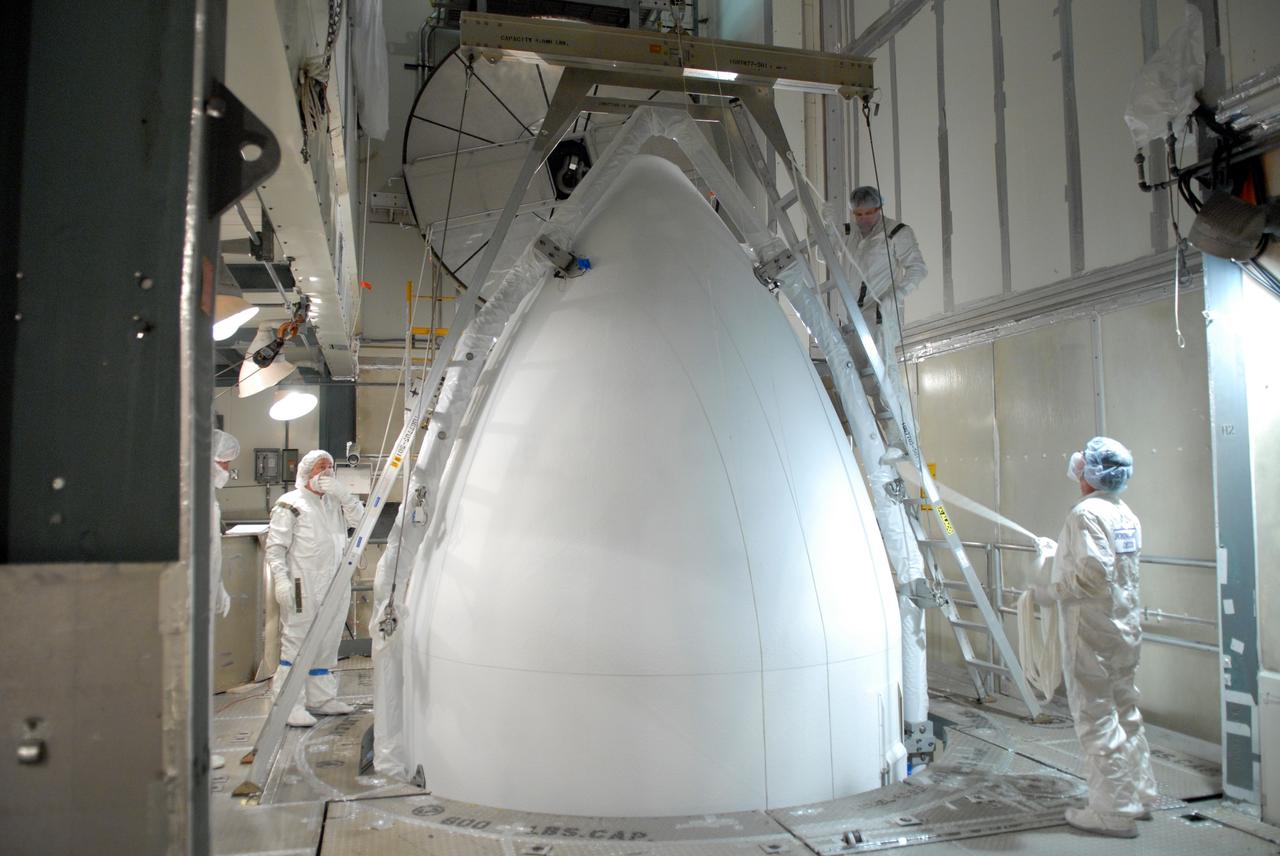
CAPE CANAVERAL, Fla. -- Inside the mobile service tower on Launch Pad 17-B at Cape Canaveral Air Force Station, workers secure the top of the payload fairing into place around NASA's Gamma-Ray Large Area Space Telescope, or GLAST. The fairing is a molded structure that fits flush with the outside surface of the Delta II upper stage booster and forms an aerodynamically smooth nose cone, protecting the spacecraft during launch and ascent. GLAST is a powerful space observatory that will explore the Universe's ultimate frontier, where nature harnesses forces and energies far beyond anything possible on Earth; probe some of science's deepest questions, such as what our Universe is made of, and search for new laws of physics; explain how black holes accelerate jets of material to nearly light speed; and help crack the mystery of stupendously powerful explosions known as gamma-ray bursts. The launch date is targeted no earlier than June 3. Photo credit: NASA/Jim Grossmann
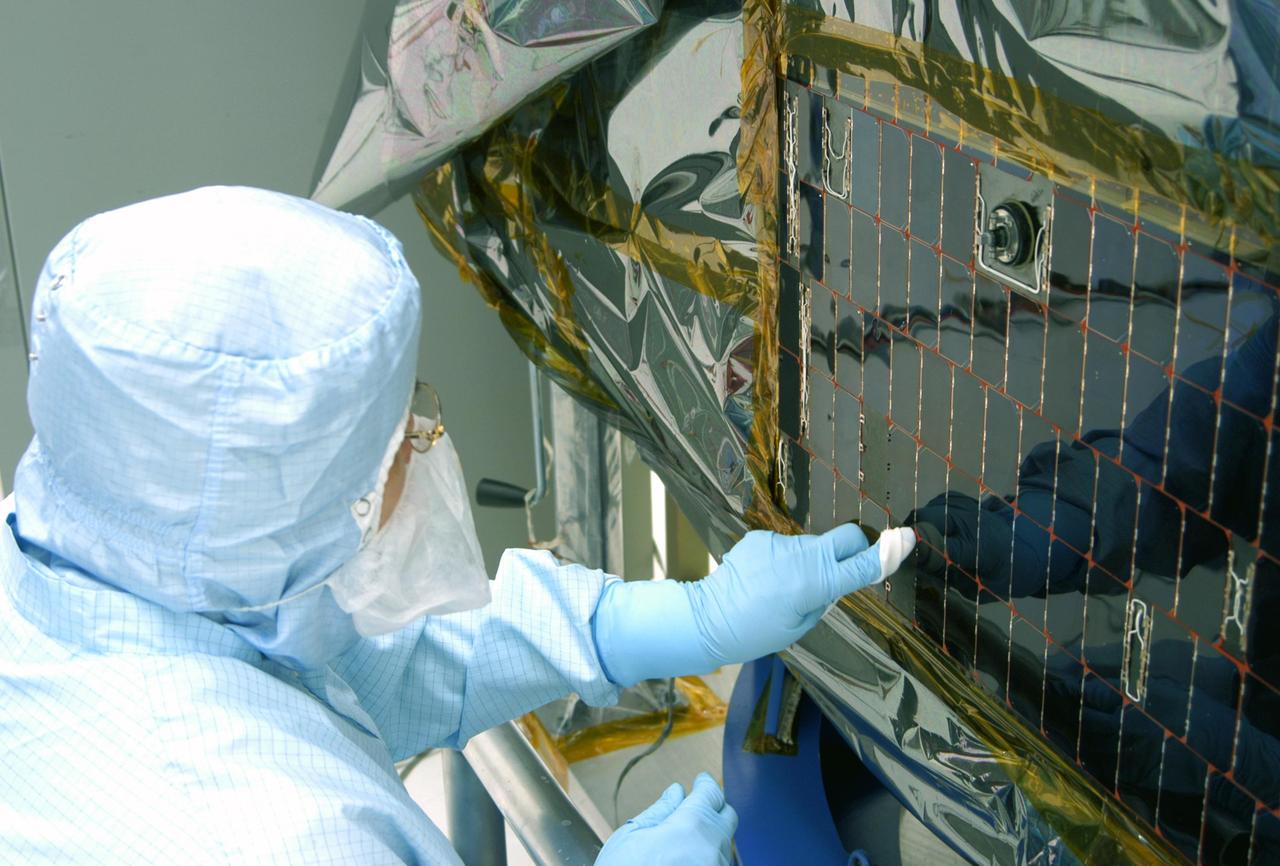
KENNEDY SPACE CENTER, FLA. - In the clean room at NASA’s Hangar AE on Cape Canaveral Air Force Station (CCAFS), a Spectrolab technician, Anna Herrera, points to an area on the Swift spacecraft’s solar array where cells will be removed and replaced. Swift is a first-of-its-kind, multi-wavelength observatory dedicated to the study of gamma-ray burst (GRB) science. Its three instruments will work together to observe GRBs and afterglows in the gamma-ray, X-ray, ultraviolet and optical wavebands. The main mission objectives for Swift are to determine the origin of gamma-ray bursts, classify gamma-ray bursts and search for new types, determine how the blast wave evolves and interacts with the surroundings, use gamma-ray bursts to study the early universe and perform the first sensitive hard X-ray survey of the sky. Swift is scheduled to launch Oct. 26 from Launch Pad 17-A, CCAFS, on a Boeing Delta 7320 rocket.
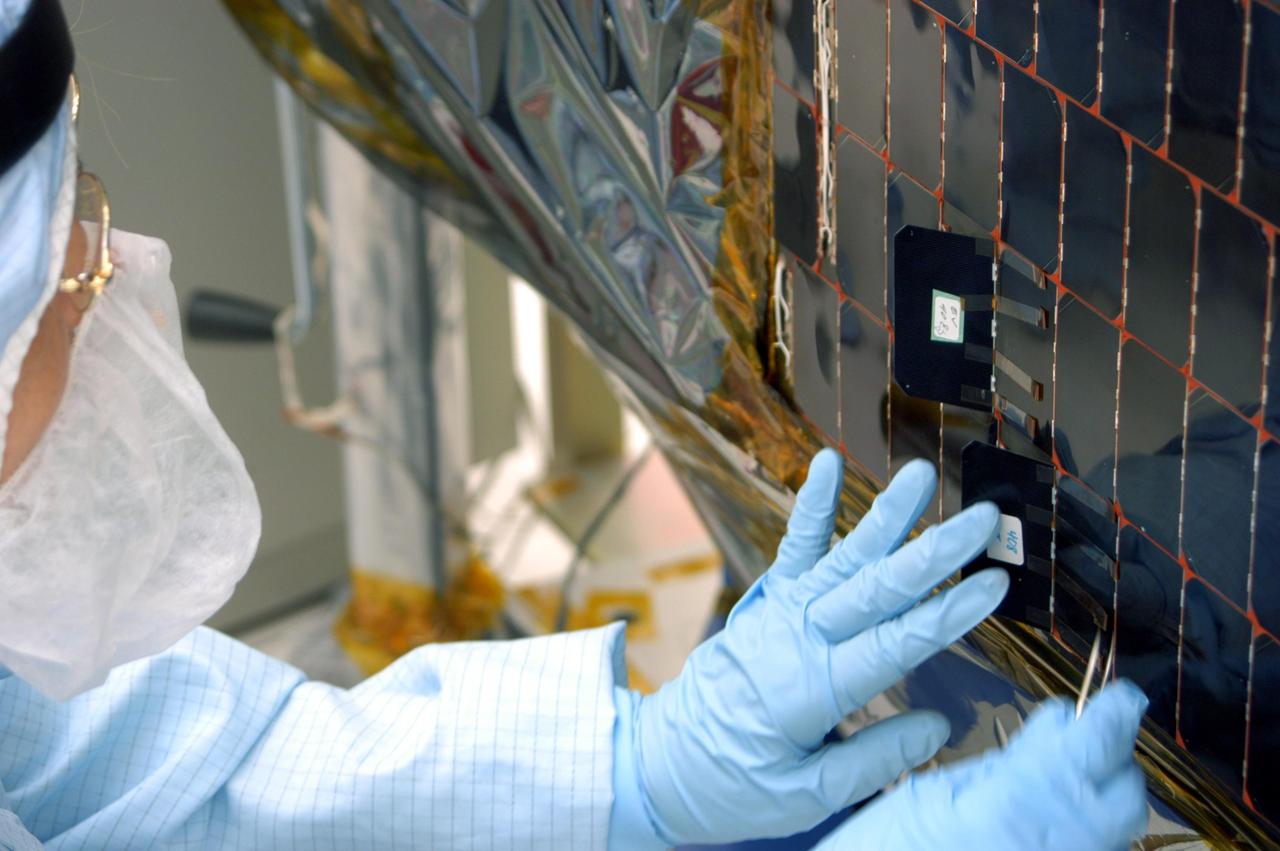
KENNEDY SPACE CENTER, FLA. - In the clean room at NASA’s Hangar AE on Cape Canaveral Air Force Station (CCAFS), a Spectrolab technician, Anna Herrera, places a new solar cell on the Swift spacecraft’s solar array. Swift is a first-of-its-kind, multi-wavelength observatory dedicated to the study of gamma-ray burst (GRB) science. Its three instruments will work together to observe GRBs and afterglows in the gamma-ray, X-ray, ultraviolet and optical wavebands. The main mission objectives for Swift are to determine the origin of gamma-ray bursts, classify gamma-ray bursts and search for new types, determine how the blast wave evolves and interacts with the surroundings, use gamma-ray bursts to study the early universe and perform the first sensitive hard X-ray survey of the sky. Swift is scheduled to launch Oct. 26 from Launch Pad 17-A, CCAFS, on a Boeing Delta 7320 rocket.
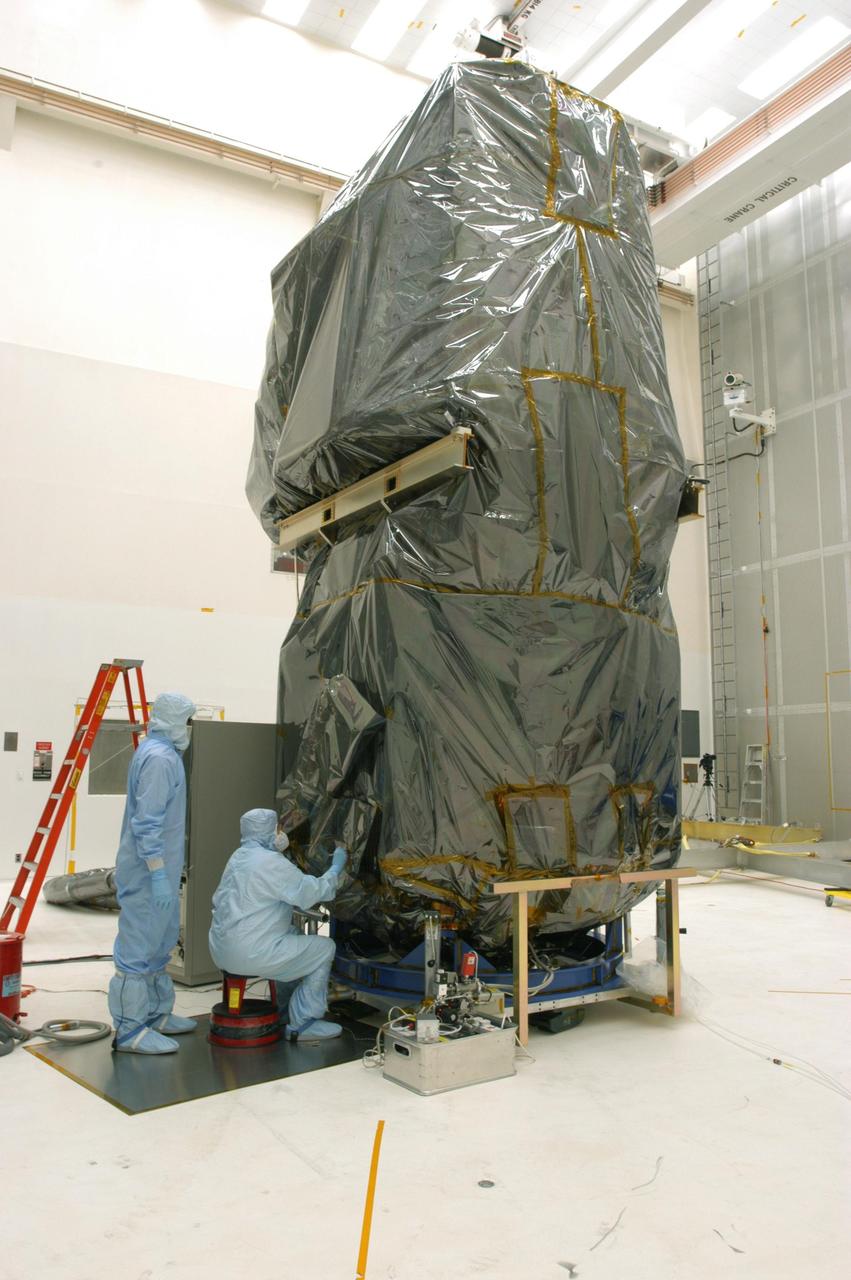
KENNEDY SPACE CENTER, FLA. - In the clean room at NASA’s Hangar AE on Cape Canaveral Air Force Station (CCAFS), Spectrolab technicians begin lifting the protective cover from the Swift spacecraft. Two of Swift’s solar cells on the solar array will be removed and replaced. Swift is a first-of-its-kind, multi-wavelength observatory dedicated to the study of gamma-ray burst (GRB) science. Its three instruments will work together to observe GRBs and afterglows in the gamma-ray, X-ray, ultraviolet and optical wavebands. The main mission objectives for Swift are to determine the origin of gamma-ray bursts, classify gamma-ray bursts and search for new types, determine how the blast wave evolves and interacts with the surroundings, use gamma-ray bursts to study the early universe and perform the first sensitive hard X-ray survey of the sky. Swift is scheduled to launch Oct. 26 from Launch Pad 17-A, CCAFS, on a Boeing Delta 7320 rocket.
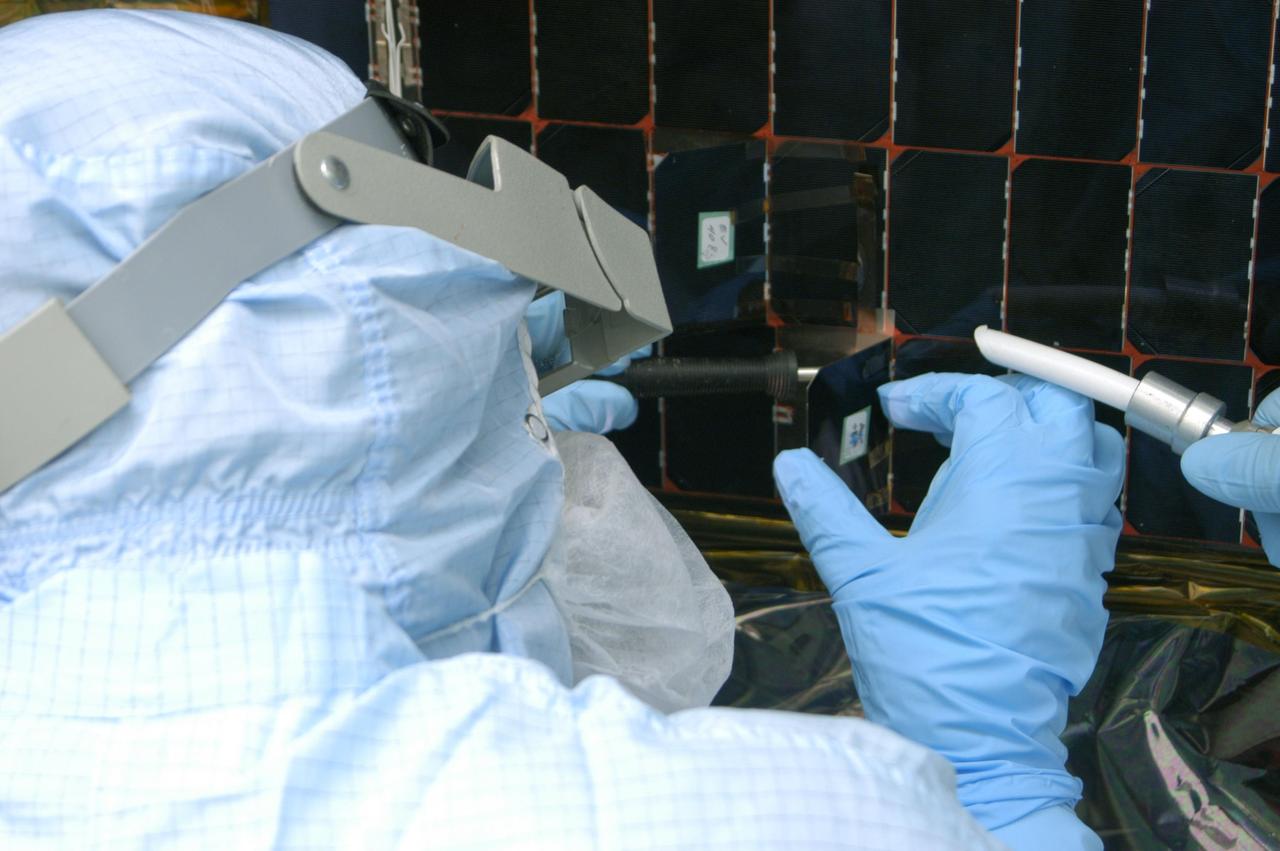
KENNEDY SPACE CENTER, FLA. - In the clean room at NASA’s Hangar AE on Cape Canaveral Air Force Station (CCAFS), a Spectrolab technician, Anna Herrera, places a new solar cell on the Swift spacecraft’s solar array. Swift is a first-of-its-kind, multi-wavelength observatory dedicated to the study of gamma-ray burst (GRB) science. Its three instruments will work together to observe GRBs and afterglows in the gamma-ray, X-ray, ultraviolet and optical wavebands. The main mission objectives for Swift are to determine the origin of gamma-ray bursts, classify gamma-ray bursts and search for new types, determine how the blast wave evolves and interacts with the surroundings, use gamma-ray bursts to study the early universe and perform the first sensitive hard X-ray survey of the sky. Swift is scheduled to launch Oct. 26 from Launch Pad 17-A, CCAFS, on a Boeing Delta 7320 rocket.
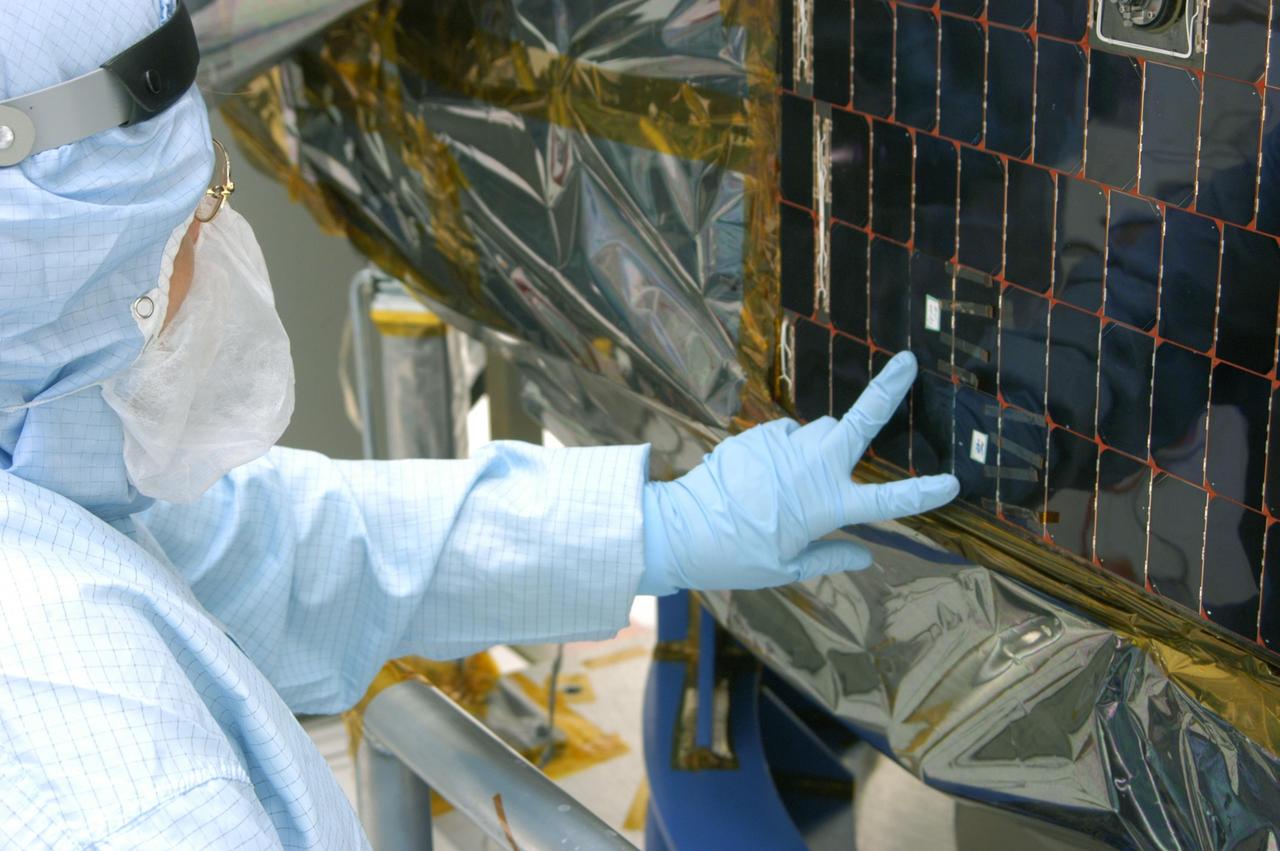
KENNEDY SPACE CENTER, FLA. - In the clean room at NASA’s Hangar AE on Cape Canaveral Air Force Station (CCAFS), a Spectrolab technician, Anna Herrera, points to the two new solar cells removed and replaced on the Swift spacecraft’s solar array. Swift is a first-of-its-kind, multi-wavelength observatory dedicated to the study of gamma-ray burst (GRB) science. Its three instruments will work together to observe GRBs and afterglows in the gamma-ray, X-ray, ultraviolet and optical wavebands. The main mission objectives for Swift are to determine the origin of gamma-ray bursts, classify gamma-ray bursts and search for new types, determine how the blast wave evolves and interacts with the surroundings, use gamma-ray bursts to study the early universe and perform the first sensitive hard X-ray survey of the sky. Swift is scheduled to launch Oct. 26 from Launch Pad 17-A, CCAFS, on a Boeing Delta 7320 rocket.
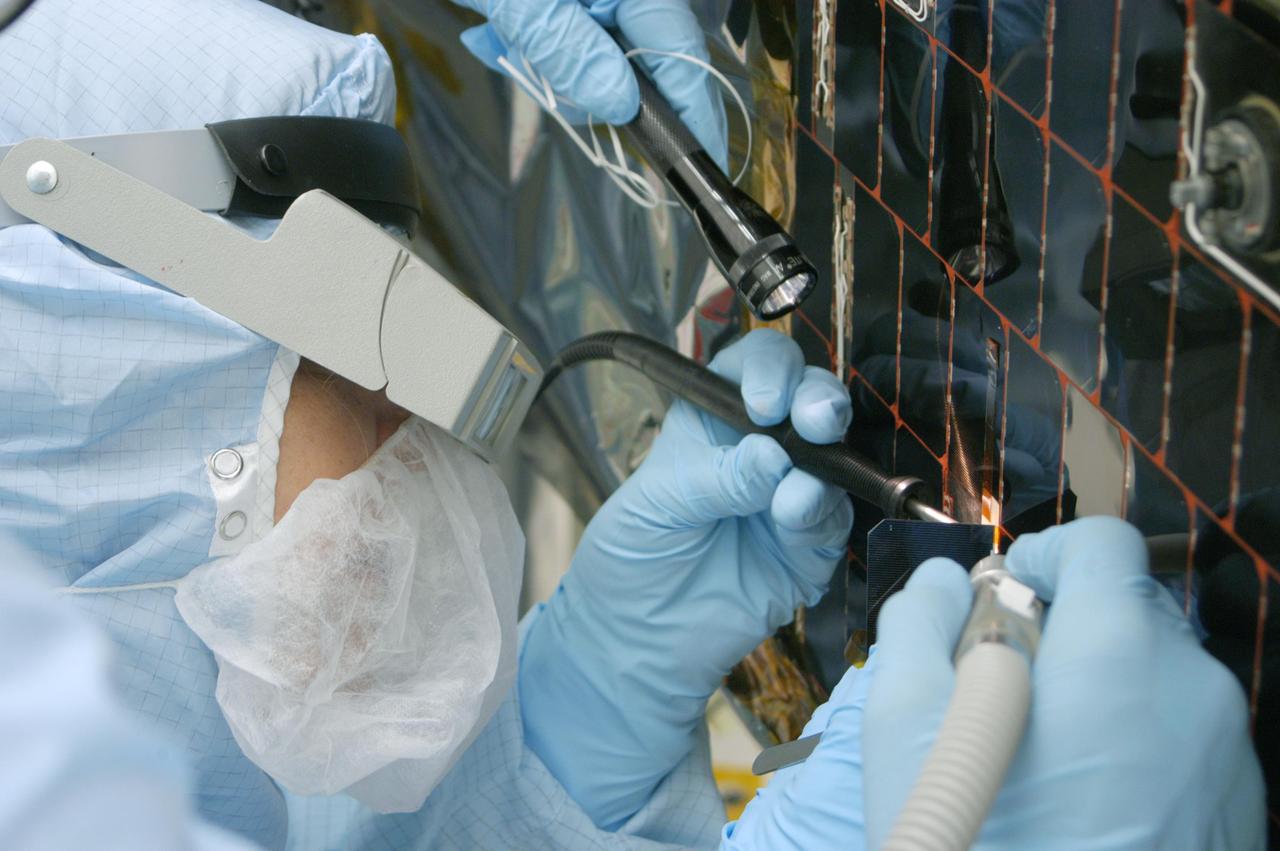
KENNEDY SPACE CENTER, FLA. - In the clean room at NASA’s Hangar AE on Cape Canaveral Air Force Station (CCAFS), a Spectrolab technician, Anna Herrera, removes one of the solar cells that will be replaced on the Swift spacecraft’s solar array. Swift is a first-of-its-kind, multi-wavelength observatory dedicated to the study of gamma-ray burst (GRB) science. Its three instruments will work together to observe GRBs and afterglows in the gamma-ray, X-ray, ultraviolet and optical wavebands. The main mission objectives for Swift are to determine the origin of gamma-ray bursts, classify gamma-ray bursts and search for new types, determine how the blast wave evolves and interacts with the surroundings, use gamma-ray bursts to study the early universe and perform the first sensitive hard X-ray survey of the sky. Swift is scheduled to launch Oct. 26 from Launch Pad 17-A, CCAFS, on a Boeing Delta 7320 rocket.
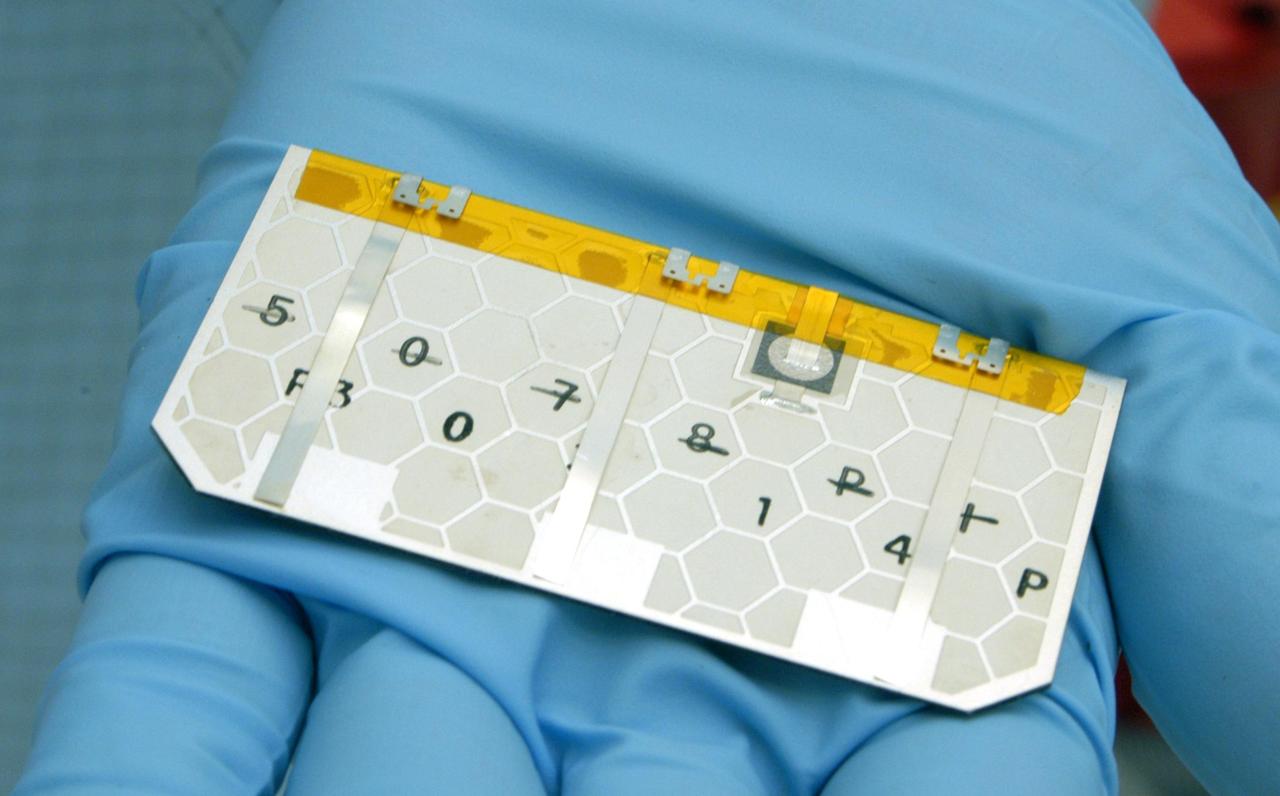
KENNEDY SPACE CENTER, FLA. - A closeup of one of the solar cells that will be removed and replaced on the Swift spacecraft’s solar array. Swift is a first-of-its-kind, multi-wavelength observatory dedicated to the study of gamma-ray burst (GRB) science. Its three instruments will work together to observe GRBs and afterglows in the gamma-ray, X-ray, ultraviolet and optical wavebands. The main mission objectives for Swift are to determine the origin of gamma-ray bursts, classify gamma-ray bursts and search for new types, determine how the blast wave evolves and interacts with the surroundings, use gamma-ray bursts to study the early universe and perform the first sensitive hard X-ray survey of the sky. Swift is scheduled to launch Oct. 26 from Launch Pad 17-A, CCAFS, on a Boeing Delta 7320 rocket.
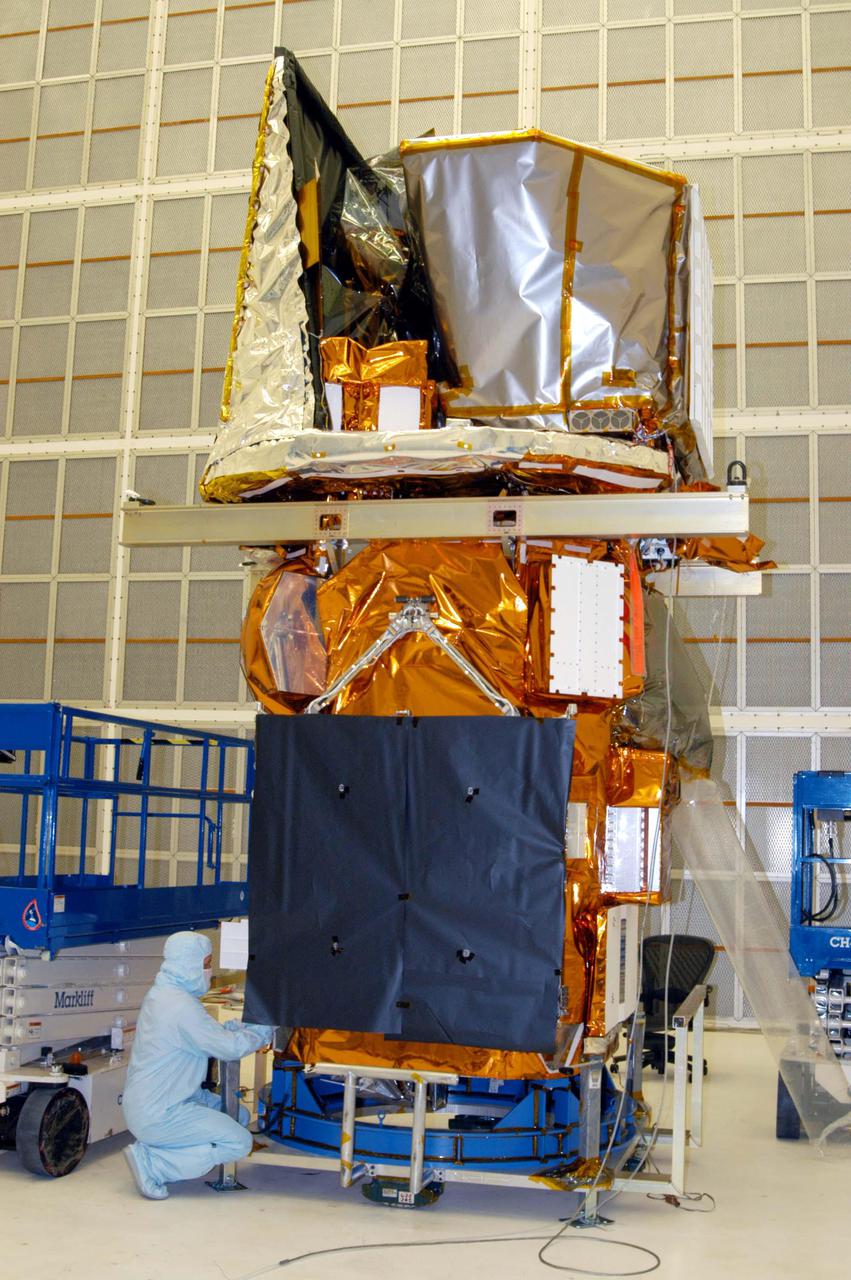
KENNEDY SPACE CENTER, FLA. - A technician at NASA’s Hangar AE, Cape Canaveral Air Force Station (CCAFS), prepares the Swift spacecraft to be lifted off its workstand. The spacecraft will be mated to a payload attach fitting, the interface between the spacecraft and the second stage of the Boeing Delta II rocket. Swift is a first-of-its-kind multi-wavelength observatory dedicated to the study of gamma-ray burst (GRB) science. Its three instruments will work together to observe GRBs and afterglows in the gamma ray, X-ray, ultraviolet and optical wavebands. Swift is expected to observe more than 200 gamma-ray bursts - the most comprehensive study of GRB afterglows to date - during its 2-year mission. Swift is scheduled to launch in November from Launch Pad 17-A at CCAFS.
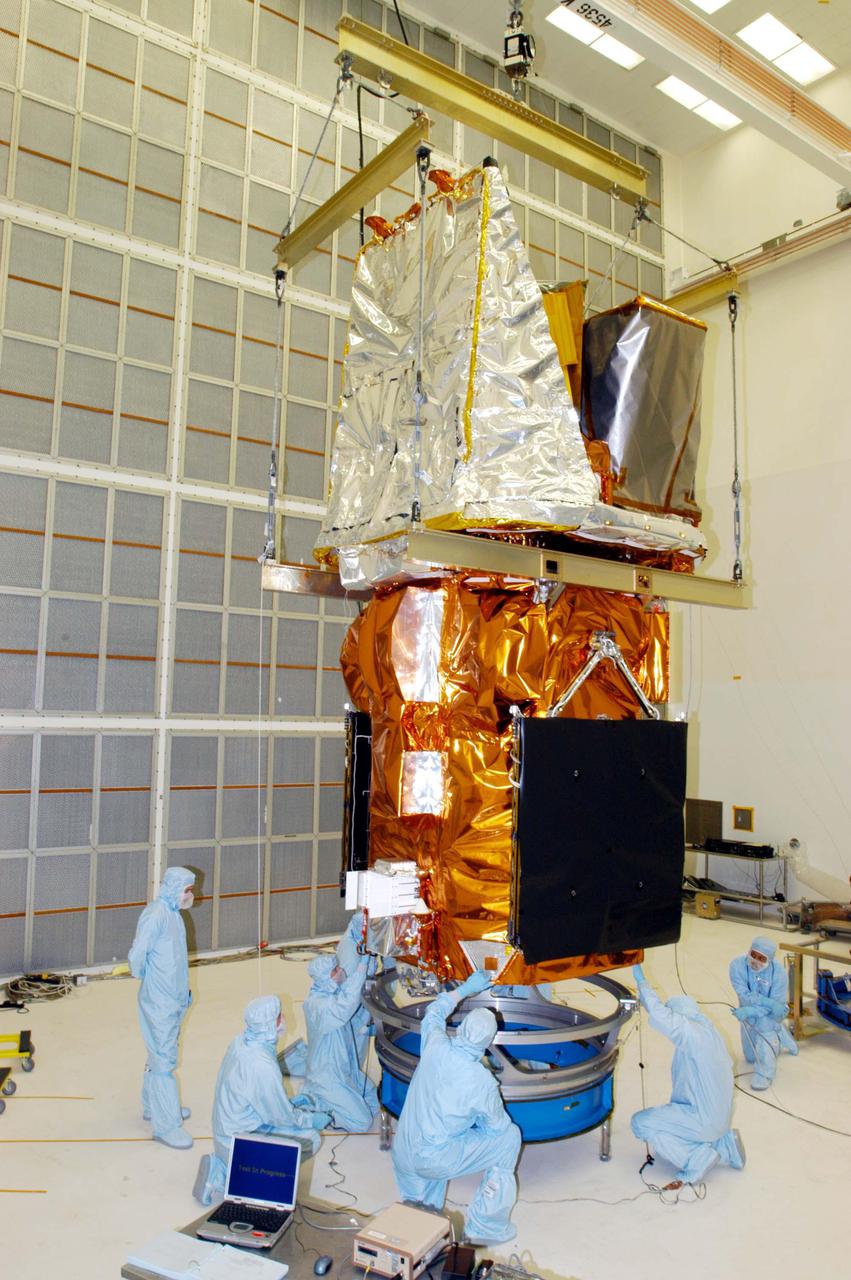
KENNEDY SPACE CENTER, FLA. - Technicians at NASA’s Hangar AE, Cape Canaveral Air Force Station (CCAFS), help guide the Swift spacecraft being lowered onto a payload attach fitting, the interface between the spacecraft and the second stage of the Boeing Delta II rocket. Swift is a first-of-its-kind multi-wavelength observatory dedicated to the study of gamma-ray burst (GRB) science. Its three instruments will work together to observe GRBs and afterglows in the gamma ray, X-ray, ultraviolet and optical wavebands. Swift is expected to observe more than 200 gamma-ray bursts - the most comprehensive study of GRB afterglows to date - during its 2-year mission. Swift is scheduled to launch in November from Launch Pad 17-A at CCAFS.
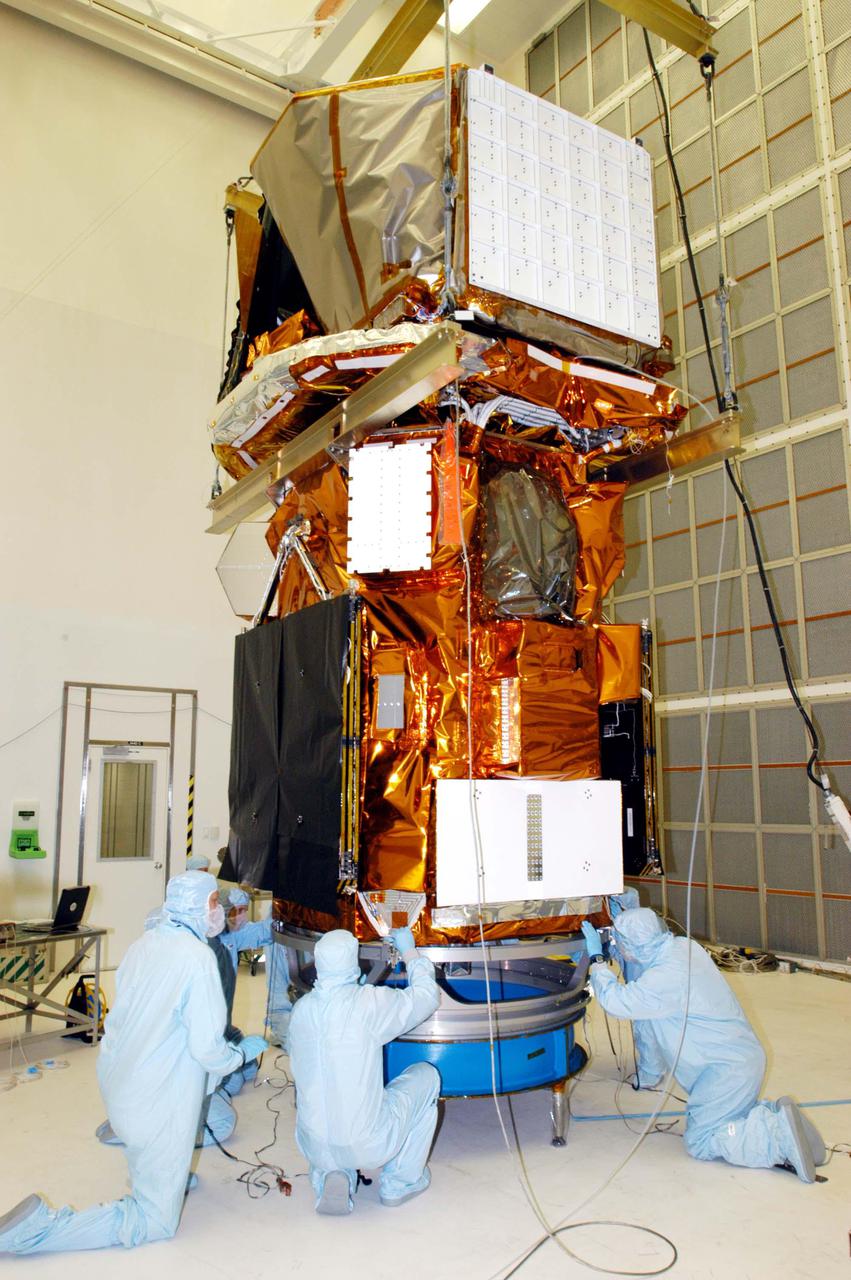
KENNEDY SPACE CENTER, FLA. - Technicians at NASA’s Hangar AE, Cape Canaveral Air Force Station (CCAFS), check the attachment of the Swift spacecraft to the payload attach fitting, the interface between the spacecraft and the second stage of the Boeing Delta II rocket. Swift is a first-of-its-kind multi-wavelength observatory dedicated to the study of gamma-ray burst (GRB) science. Its three instruments will work together to observe GRBs and afterglows in the gamma ray, X-ray, ultraviolet and optical wavebands. Swift is expected to observe more than 200 gamma-ray bursts - the most comprehensive study of GRB afterglows to date - during its 2-year mission. Swift is scheduled to launch in November from Launch Pad 17-A at CCAFS.
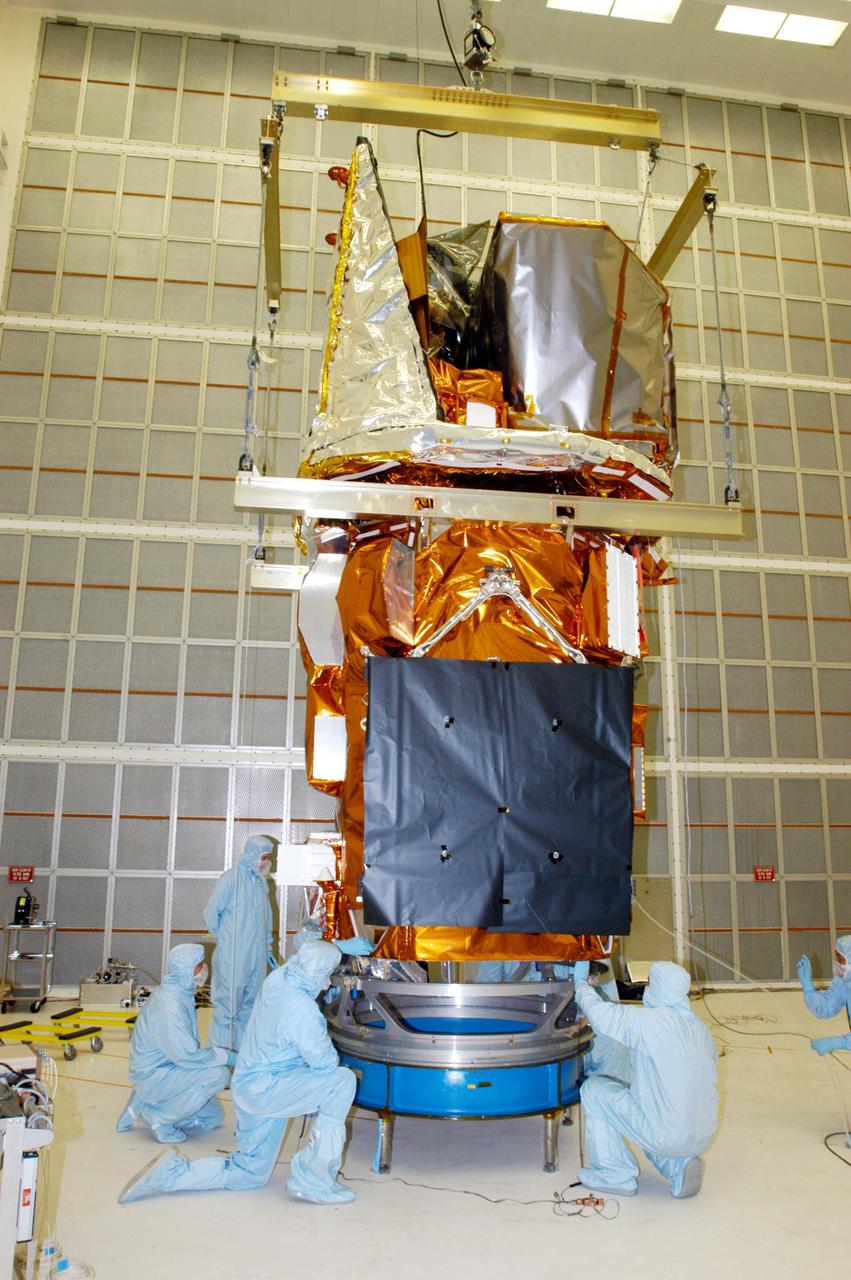
KENNEDY SPACE CENTER, FLA. - Technicians at NASA’s Hangar AE, Cape Canaveral Air Force Station (CCAFS), help guide the Swift spacecraft being lowered onto a payload attach fitting, the interface between the spacecraft and the second stage of the Boeing Delta II rocket. Swift is a first-of-its-kind multi-wavelength observatory dedicated to the study of gamma-ray burst (GRB) science. Its three instruments will work together to observe GRBs and afterglows in the gamma ray, X-ray, ultraviolet and optical wavebands. Swift is expected to observe more than 200 gamma-ray bursts - the most comprehensive study of GRB afterglows to date - during its 2-year mission. Swift is scheduled to launch in November from Launch Pad 17-A at CCAFS.
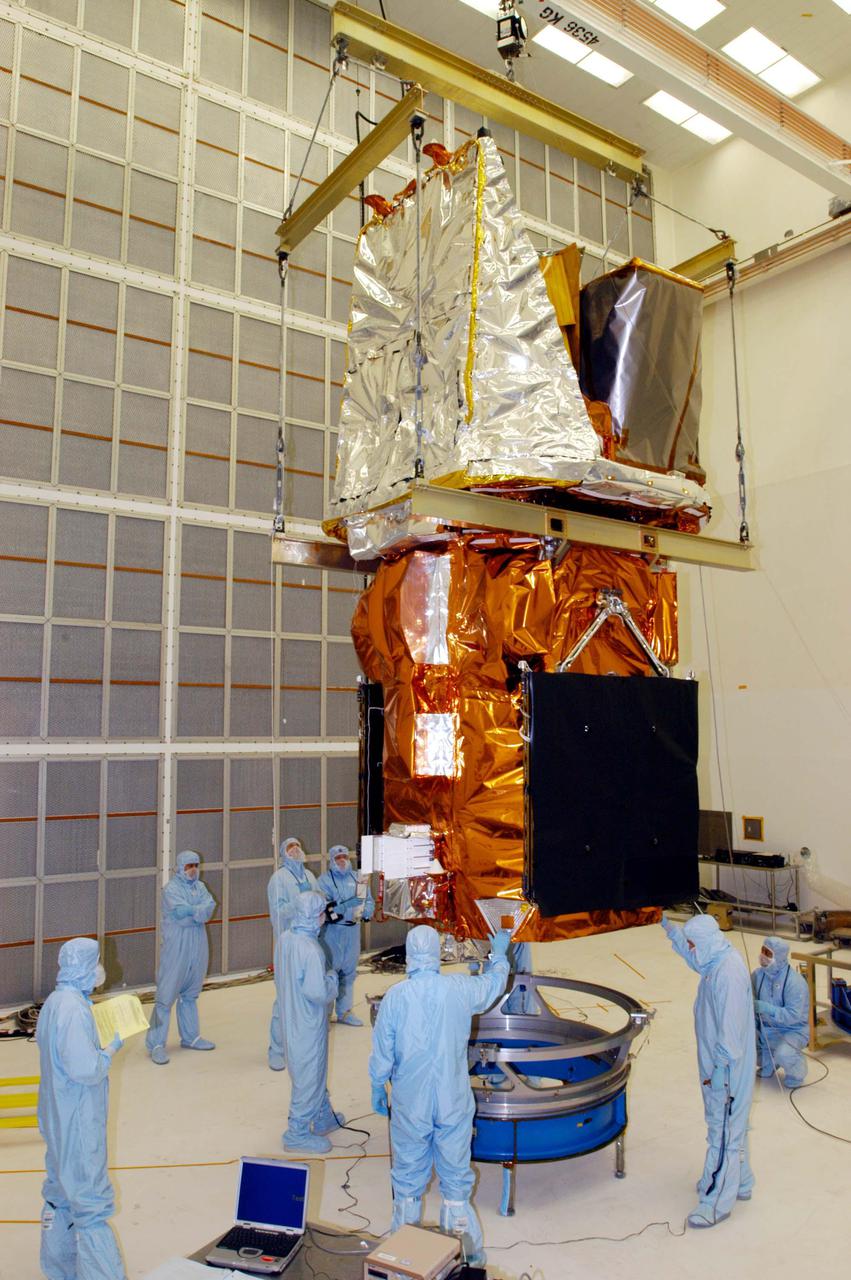
KENNEDY SPACE CENTER, FLA. - Technicians at NASA’s Hangar AE, Cape Canaveral Air Force Station (CCAFS), stand by while the Swift spacecraft is lowered toward a payload attach fitting, the interface between the spacecraft and the second stage of the Boeing Delta II rocket. Swift is a first-of-its-kind multi-wavelength observatory dedicated to the study of gamma-ray burst (GRB) science. Its three instruments will work together to observe GRBs and afterglows in the gamma ray, X-ray, ultraviolet and optical wavebands. Swift is expected to observe more than 200 gamma-ray bursts - the most comprehensive study of GRB afterglows to date - during its 2-year mission. Swift is scheduled to launch in November from Launch Pad 17-A at CCAFS.
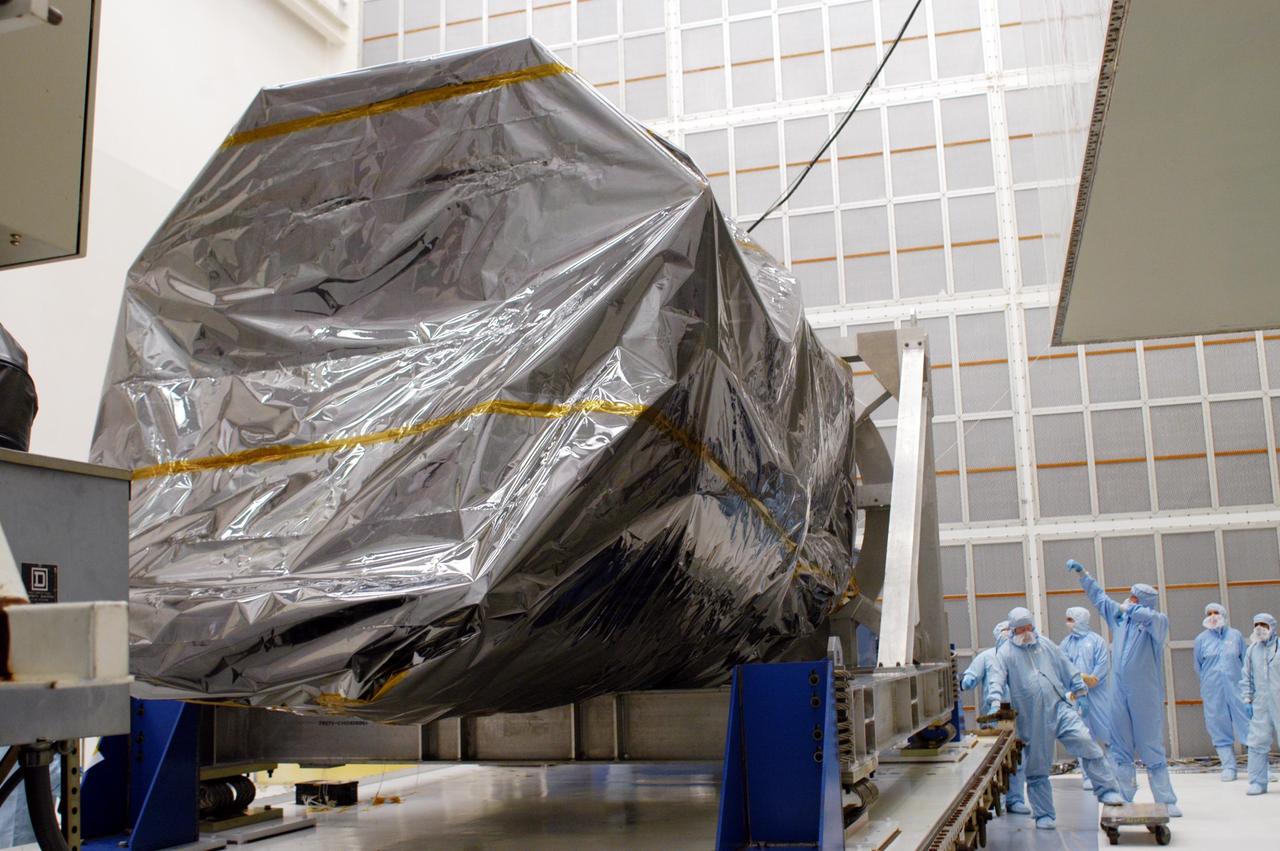
KENNEDY SPACE CENTER, FLA. - Inside Hangar AE at Cape Canaveral Air Force Station (CCAFS), workers observe the canister being lifted from the Swift spacecraft, which is enclosed in a protective cover. Swift is a first-of-its-kind, multi-wavelength observatory dedicated to the study of gamma-ray burst (GRB) science. Its three instruments will work together to observe GRBs and afterglows in the gamma-ray, X-ray and optical wavebands. Swift is part of NASA’s medium explorer (MIDEX) program being developed by an international collaboration. It will be launched no earlier than Oct. 7 into a low-Earth orbit on a Boeing Delta 7320 rocket from pad 17-A at CCAFS. During its nominal 2-year mission, Swift is expected to observe more than 200 bursts, which will represent the most comprehensive study of GRB afterglow to date.
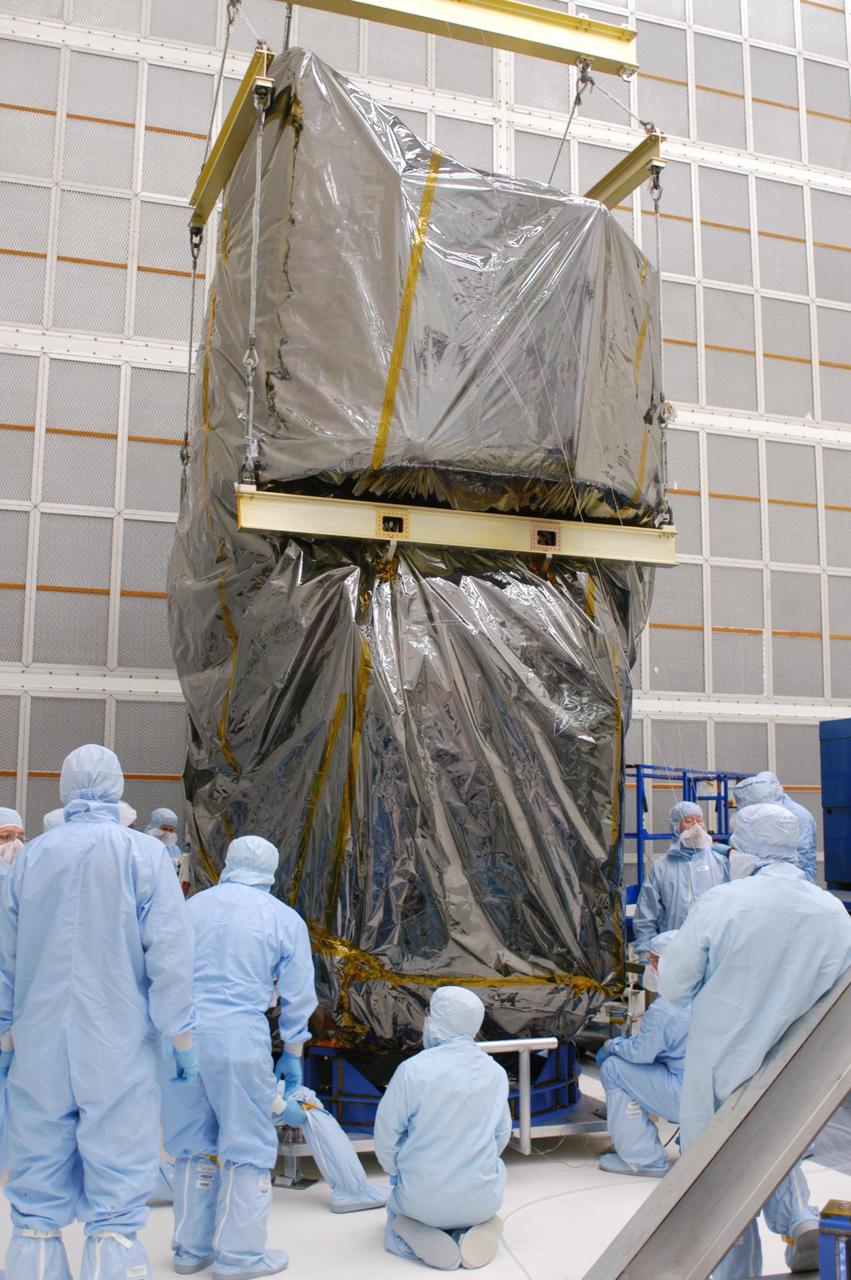
KENNEDY SPACE CENTER, FLA. - Inside Hangar AE at Cape Canaveral Air Force Station (CCAFS), workers secure the Swift spacecraft, wrapped in a protective cover, on a work stand. Swift is a first-of-its-kind, multi-wavelength observatory dedicated to the study of gamma-ray burst (GRB) science. Its three instruments will work together to observe GRBs and afterglows in the gamma-ray, X-ray and optical wavebands. Swift is part of NASA’s medium explorer (MIDEX) program being developed by an international collaboration. It will be launched no earlier than Oct. 7 into a low-Earth orbit on a Boeing Delta 7320 rocket from pad 17-A at CCAFS. During its nominal 2-year mission, Swift is expected to observe more than 200 bursts, which will represent the most comprehensive study of GRB afterglow to date.

KENNEDY SPACE CENTER, FLA. - Inside Hangar AE at Cape Canaveral Air Force Station (CCAFS), an overhead crane raises the Swift spacecraft, wrapped in a protective cover, to vertical before being placed on a work stand. Swift is a first-of-its-kind, multi-wavelength observatory dedicated to the study of gamma-ray burst (GRB) science. Its three instruments will work together to observe GRBs and afterglows in the gamma-ray, X-ray and optical wavebands. Swift is part of NASA’s medium explorer (MIDEX) program being developed by an international collaboration. It will be launched no earlier than Oct. 7 into a low-Earth orbit on a Boeing Delta 7320 rocket from pad 17-A at CCAFS. During its nominal 2-year mission, Swift is expected to observe more than 200 bursts, which will represent the most comprehensive study of GRB afterglow to date.
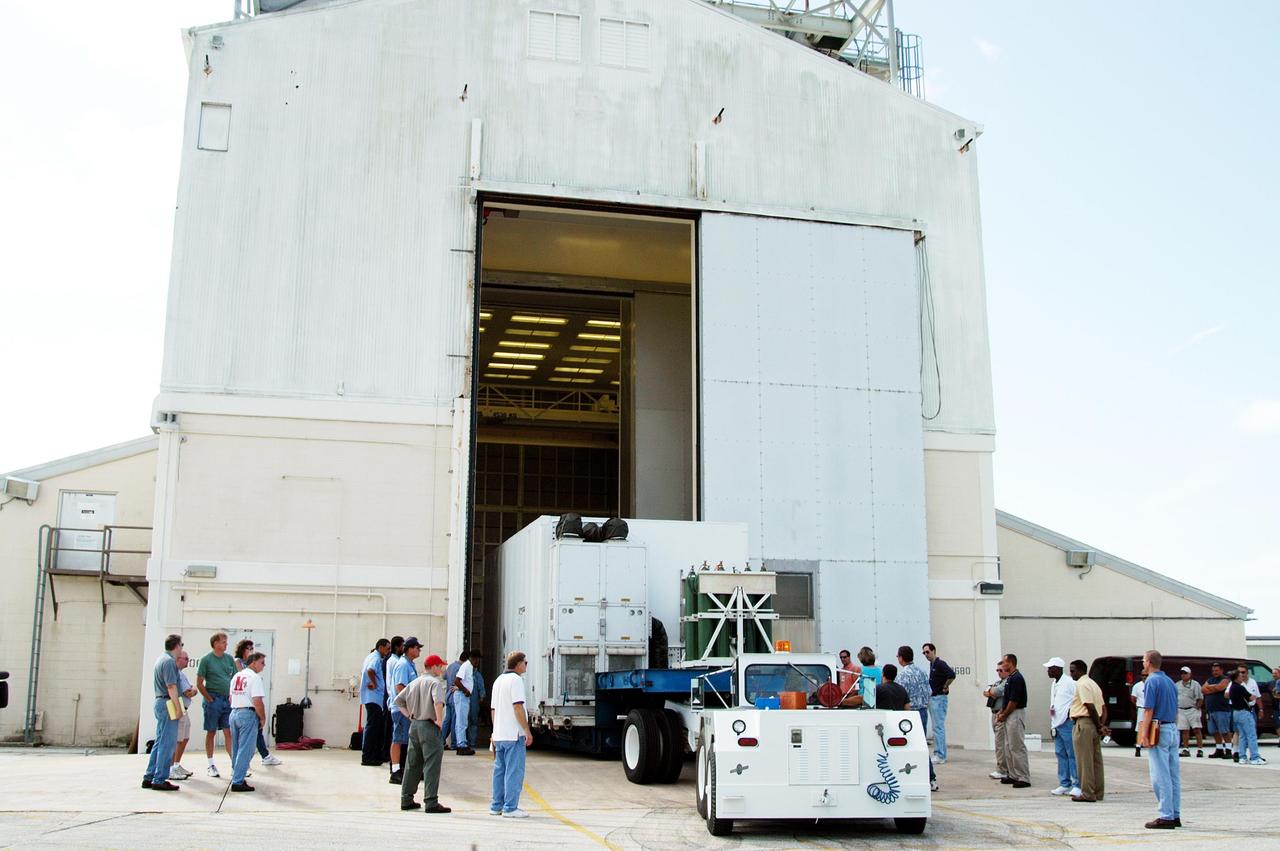
KENNEDY SPACE CENTER, FLA. - - The Swift spacecraft arrives at Hangar AE at Cape Canaveral Air Force Station (CCAFS). Swift is a first-of-its-kind, multi-wavelength observatory dedicated to the study of gamma-ray burst (GRB) science. Its three instruments will work together to observe GRBs and afterglows in the gamma-ray, X-ray and optical wavebands. Swift is part of NASA’s medium explorer (MIDEX) program being developed by an international collaboration. It will be launched no earlier than Oct. 7 into a low-Earth orbit on a Boeing Delta 7320 rocket from pad 17-A at CCAFS. During its nominal 2-year mission, Swift is expected to observe more than 200 bursts, which will represent the most comprehensive study of GRB afterglow to date.
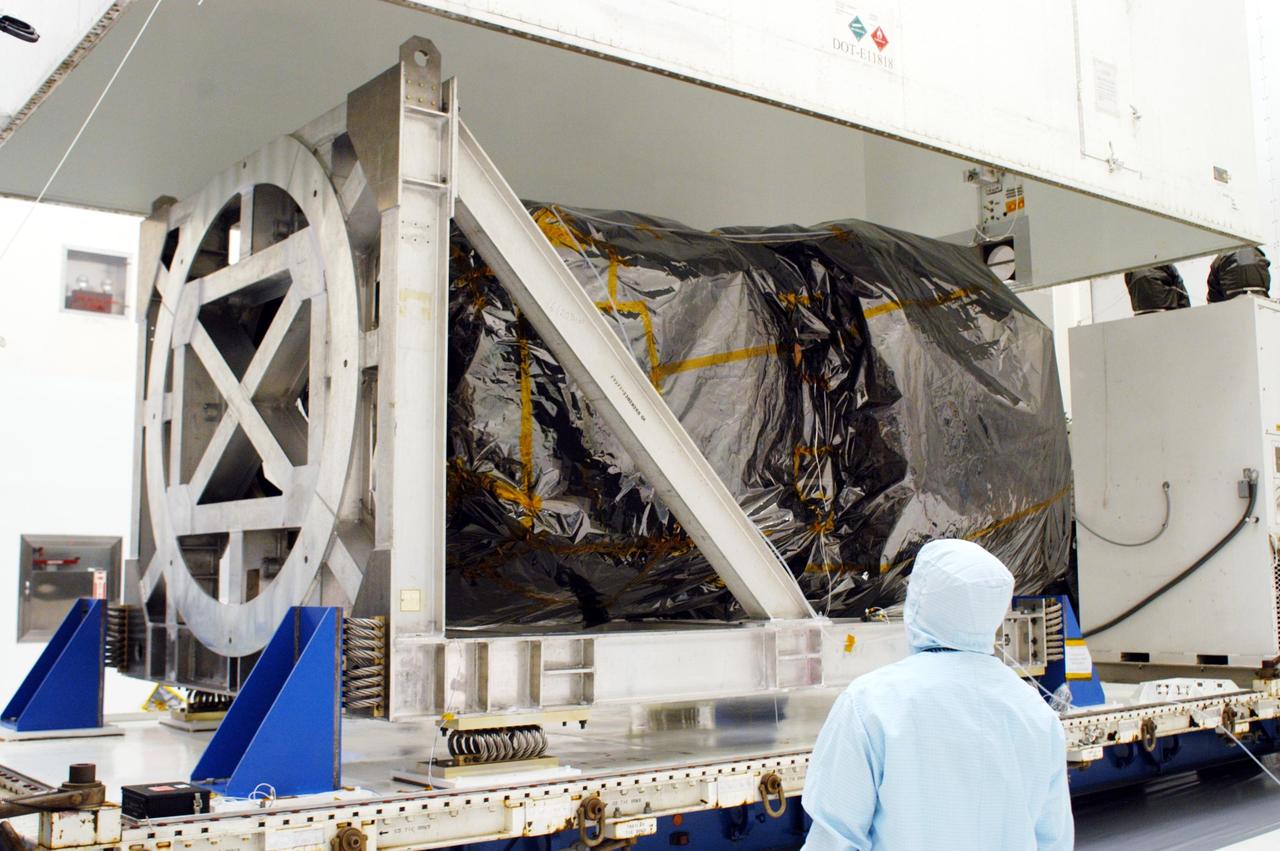
KENNEDY SPACE CENTER, FLA. - Inside Hangar AE at Cape Canaveral Air Force Station (CCAFS), workers observe the canister being lifted from the Swift spacecraft, which is enclosed in a protective cover. Swift is a first-of-its-kind, multi-wavelength observatory dedicated to the study of gamma-ray burst (GRB) science. Its three instruments will work together to observe GRBs and afterglows in the gamma-ray, X-ray and optical wavebands. Swift is part of NASA’s medium explorer (MIDEX) program being developed by an international collaboration. It will be launched no earlier than Oct. 7 into a low-Earth orbit on a Boeing Delta 7320 rocket from pad 17-A at CCAFS. During its nominal 2-year mission, Swift is expected to observe more than 200 bursts, which will represent the most comprehensive study of GRB afterglow to date.
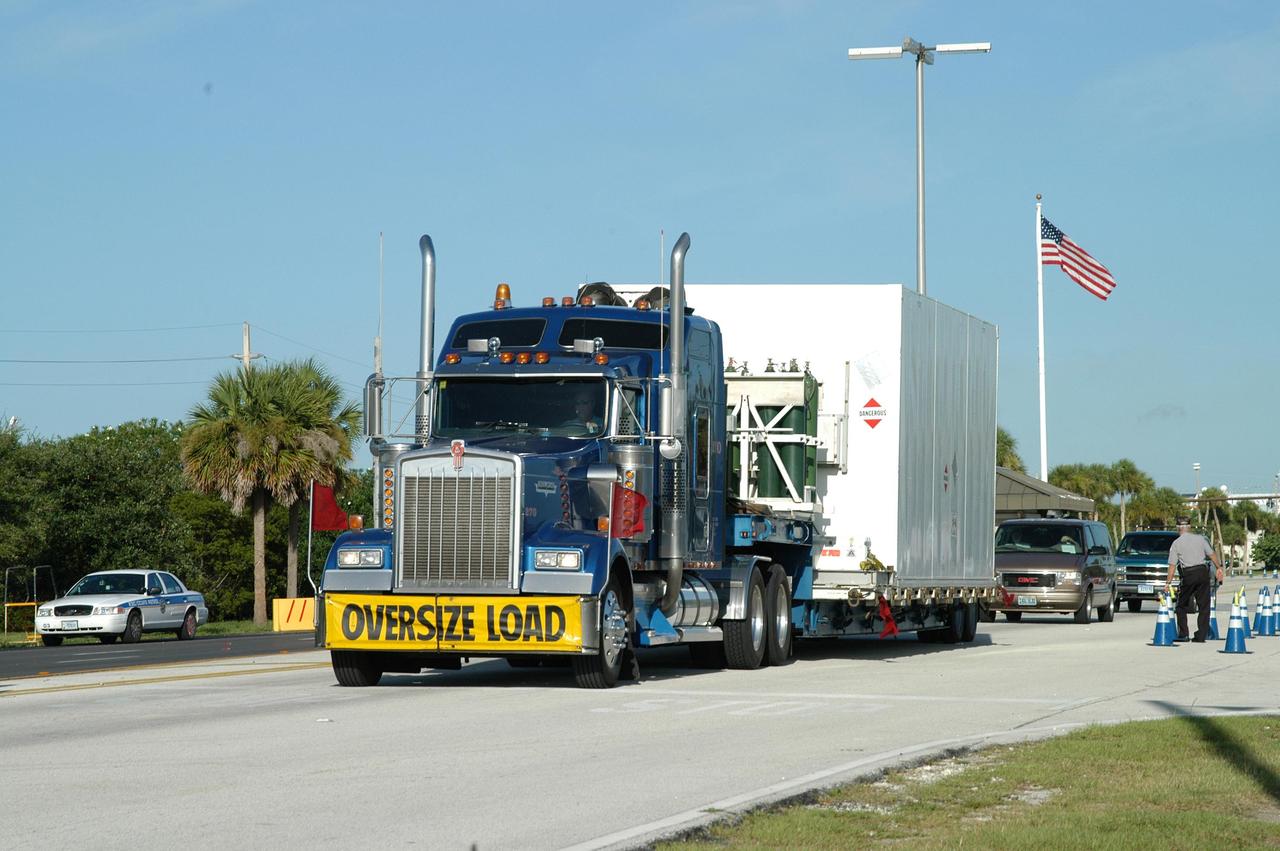
KENNEDY SPACE CENTER, FLA. - The Swift spacecraft is enroute to Hangar AE at Cape Canaveral Air Force Station (CCAFS). Swift is a first-of-its-kind, multi-wavelength observatory dedicated to the study of gamma-ray burst (GRB) science. Its three instruments will work together to observe GRBs and afterglows in the gamma-ray, X-ray and optical wavebands. Swift is part of NASA’s medium explorer (MIDEX) program being developed by an international collaboration. It will be launched no earlier than Oct. 7 into a low-Earth orbit on a Boeing Delta 7320 rocket from pad 17-A at CCAFS. During its nominal 2-year mission, Swift is expected to observe more than 200 bursts, which will represent the most comprehensive study of GRB afterglow to date.
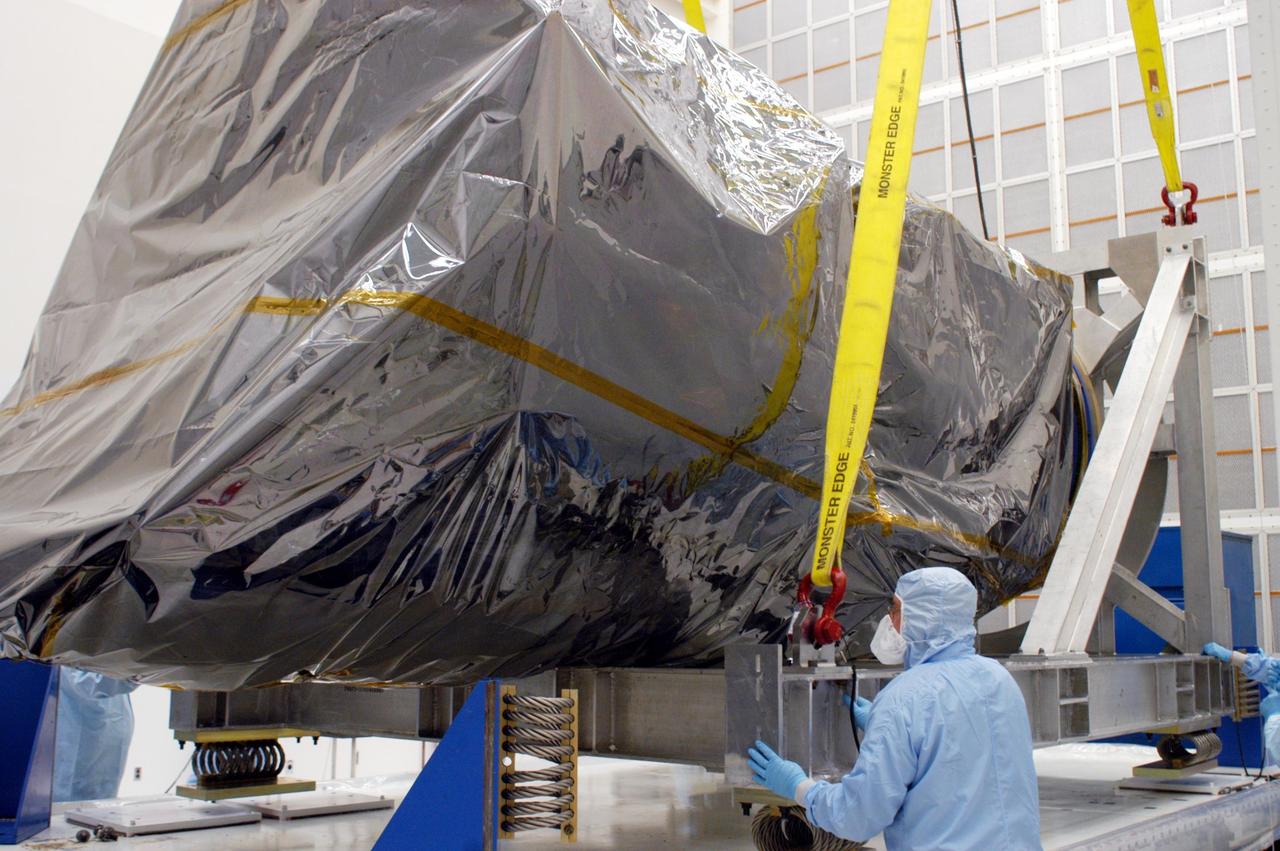
KENNEDY SPACE CENTER, FLA. - Inside Hangar AE at Cape Canaveral Air Force Station (CCAFS), workers attach straps from an overhead crane onto the platform under the Swift spacecraft, which is enclosed in a protective cover. Swift will be raised to vertical and placed on a work stand. Swift is a first-of-its-kind, multi-wavelength observatory dedicated to the study of gamma-ray burst (GRB) science. Its three instruments will work together to observe GRBs and afterglows in the gamma-ray, X-ray and optical wavebands. Swift is part of NASA’s medium explorer (MIDEX) program being developed by an international collaboration. It will be launched no earlier than Oct. 7 into a low-Earth orbit on a Boeing Delta 7320 rocket from pad 17-A at CCAFS. During its nominal 2-year mission, Swift is expected to observe more than 200 bursts, which will represent the most comprehensive study of GRB afterglow to date.
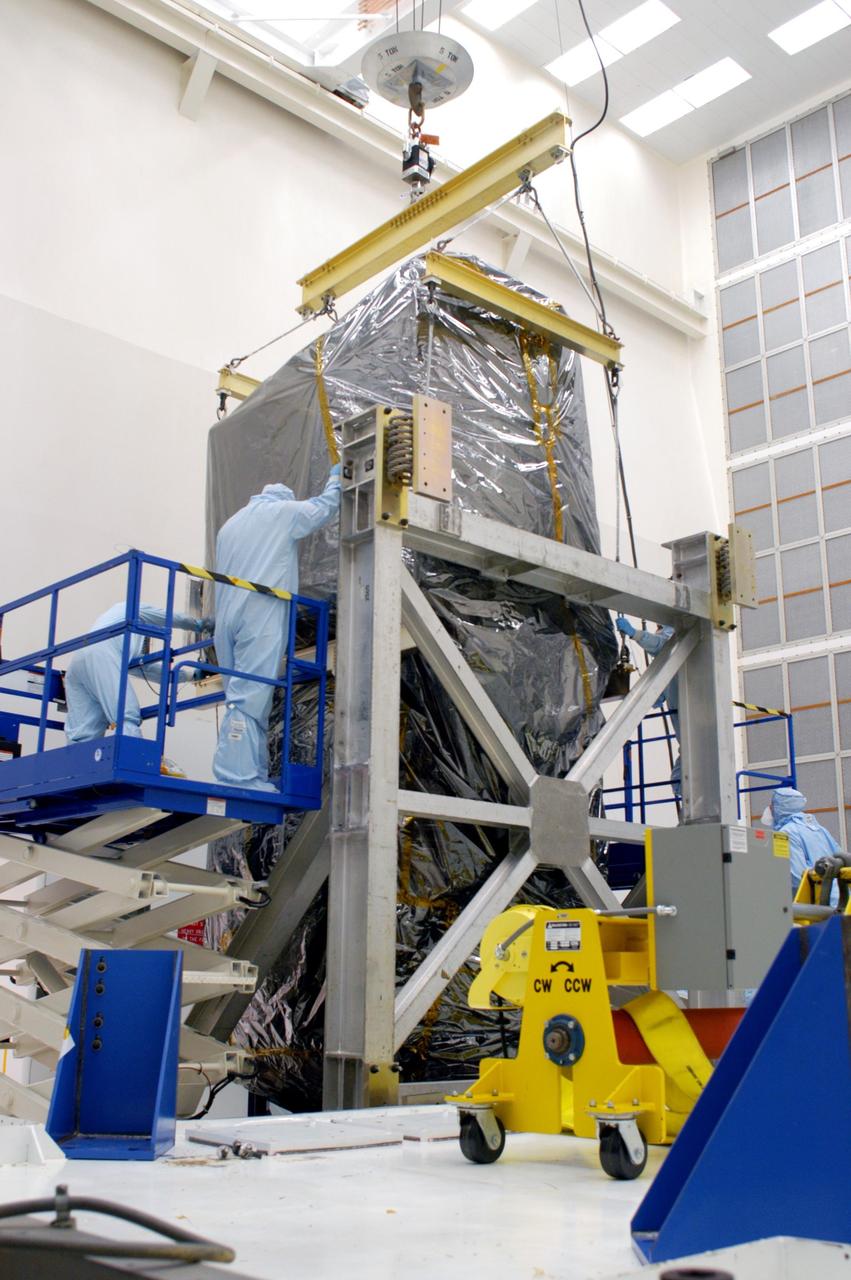
KENNEDY SPACE CENTER, FLA. - Inside Hangar AE at Cape Canaveral Air Force Station (CCAFS), workers secure the Swift spacecraft, wrapped in a protective cover, on a work stand. Swift is a first-of-its-kind, multi-wavelength observatory dedicated to the study of gamma-ray burst (GRB) science. Its three instruments will work together to observe GRBs and afterglows in the gamma-ray, X-ray and optical wavebands. Swift is part of NASA’s medium explorer (MIDEX) program being developed by an international collaboration. It will be launched no earlier than Oct. 7 into a low-Earth orbit on a Boeing Delta 7320 rocket from pad 17-A at CCAFS. During its nominal 2-year mission, Swift is expected to observe more than 200 bursts, which will represent the most comprehensive study of GRB afterglow to date.
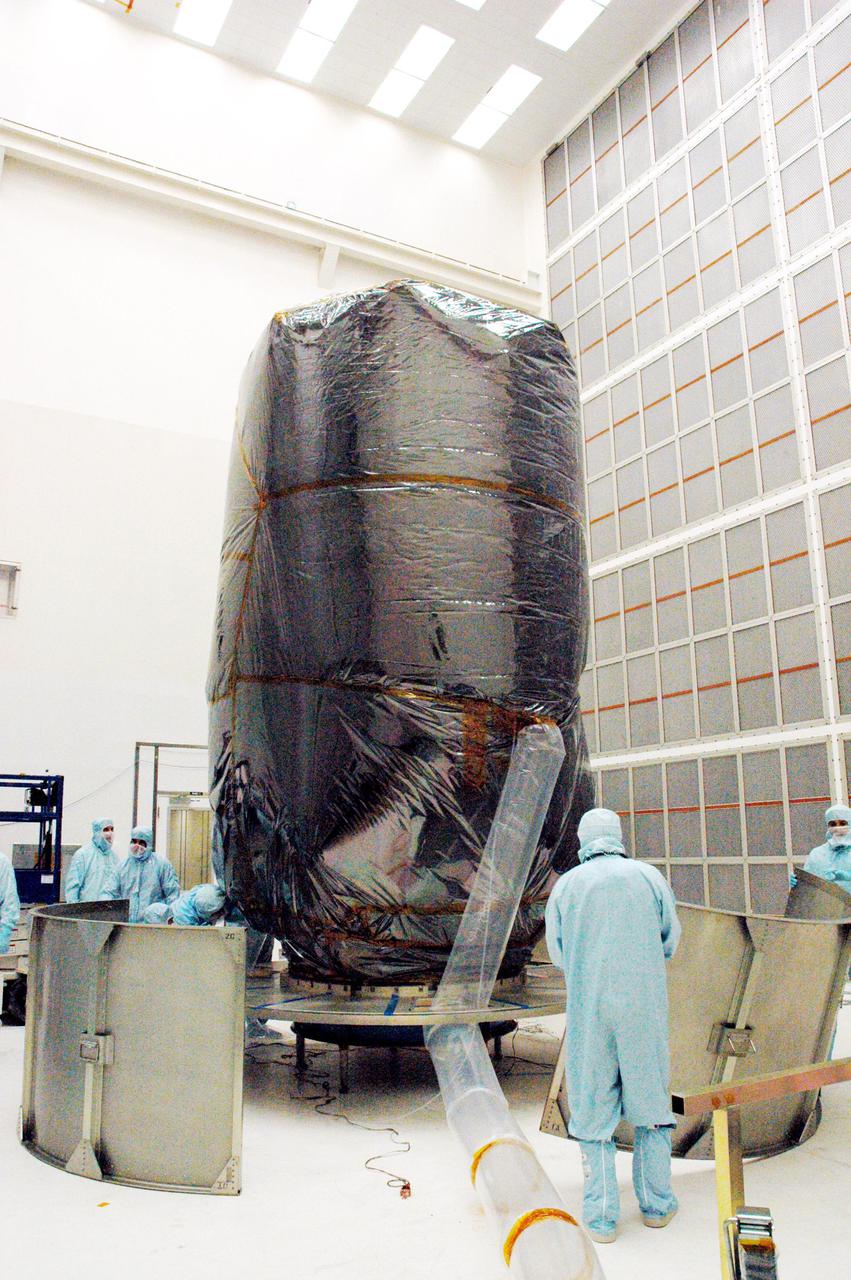
KENNEDY SPACE CENTER, FLA. - Boeing technicians in Hangar AE at Cape Canaveral Air Force Station (CCAFS) in Florida set up segments of the payload transfer canister that will be installed around the plastic-wrapped Swift spacecraft. The launch of the Swift observatory, a NASA spacecraft to pinpoint the location of gamma-ray bursts, is scheduled for Nov. 17 from Pad 17-A on CCAFS. Liftoff aboard a Boeing Delta II rocket is targeted at the opening of a one-hour launch window beginning at 12:09 p.m. EST. Gamma-ray bursts are distant, yet fleeting explosions that appear to signal the births of black holes. They are the most powerful explosions known in the universe, emitting more than 100 billion times the energy that the Sun emits in a year. Yet they last only from a few milliseconds to a few minutes, never to appear in the same spot again.
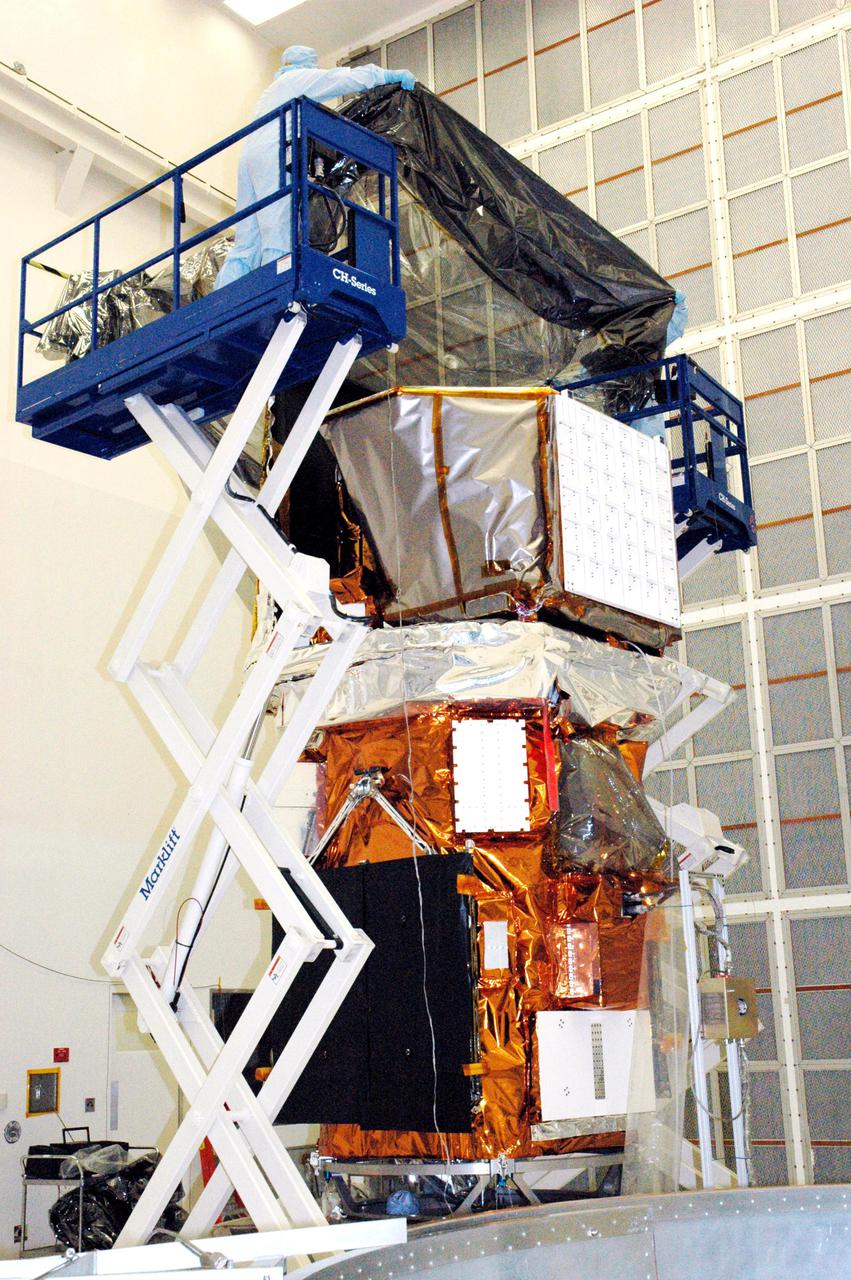
KENNEDY SPACE CENTER, FLA. - In Hangar AE at Cape Canaveral Air Force Station (CCAFS) in Florida, technicians with Spectrum Astro Inc. prepare to lower the protective cover over the Swift spacecraft before moving it to the launch pad. The launch of the Swift observatory, a NASA spacecraft to pinpoint the location of gamma-ray bursts, is scheduled for Nov. 17 from Pad 17-A on CCAFS. Liftoff aboard a Boeing Delta II rocket is targeted at the opening of a one-hour launch window beginning at 12:09 p.m. EST. Gamma-ray bursts are distant, yet fleeting explosions that appear to signal the births of black holes. They are the most powerful explosions known in the universe, emitting more than 100 billion times the energy that the Sun emits in a year. Yet they last only from a few milliseconds to a few minutes, never to appear in the same spot again.
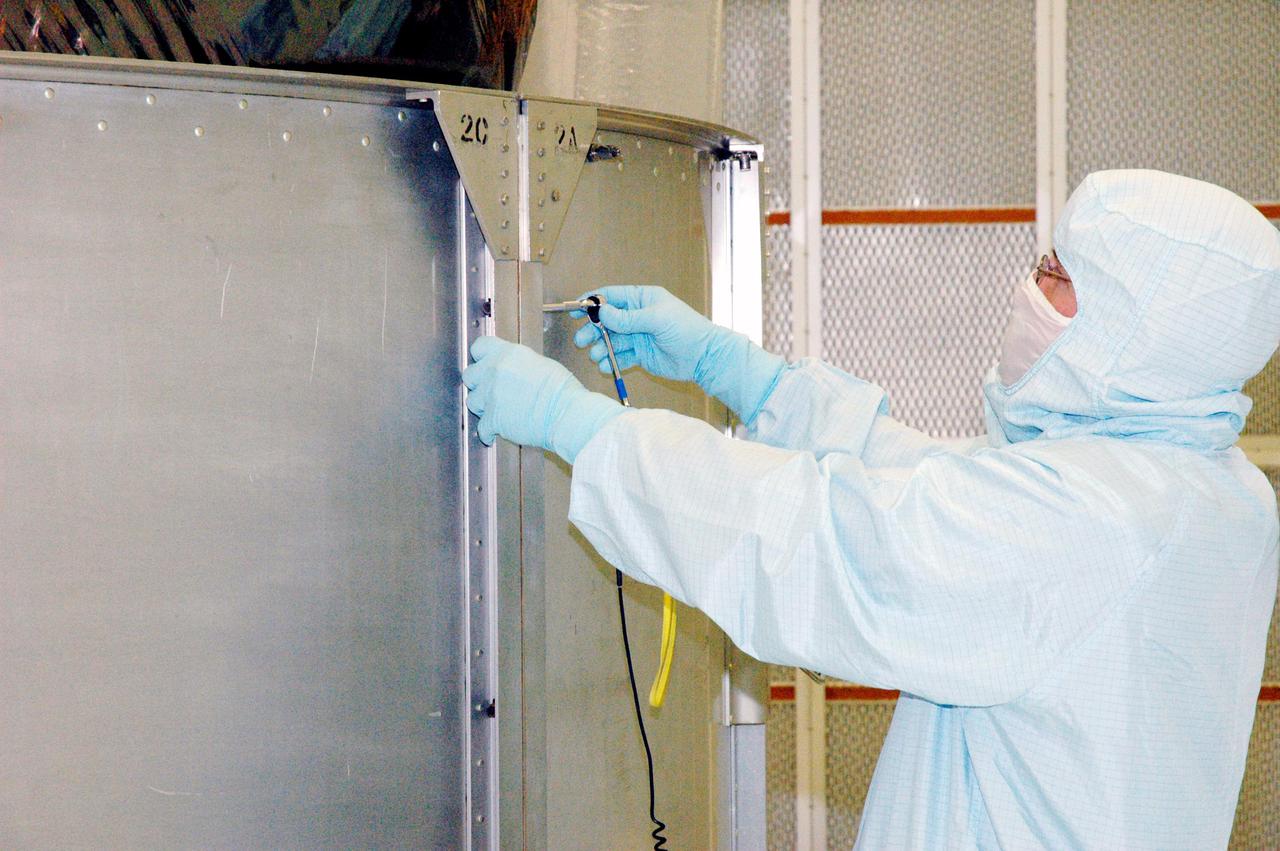
KENNEDY SPACE CENTER, FLA. - A Boeing technician in Hangar AE at Cape Canaveral Air Force Station (CCAFS) in Florida attaches two of the lower segments of the payload transfer canister being installed around the plastic-wrapped Swift spacecraft. The launch of the Swift observatory, a NASA spacecraft to pinpoint the location of gamma-ray bursts, is scheduled for Nov. 17 from Pad 17-A on CCAFS. Liftoff aboard a Boeing Delta II rocket is targeted at the opening of a one-hour launch window beginning at 12:09 p.m. EST. Gamma-ray bursts are distant, yet fleeting explosions that appear to signal the births of black holes. They are the most powerful explosions known in the universe, emitting more than 100 billion times the energy that the Sun emits in a year. Yet they last only from a few milliseconds to a few minutes, never to appear in the same spot again.
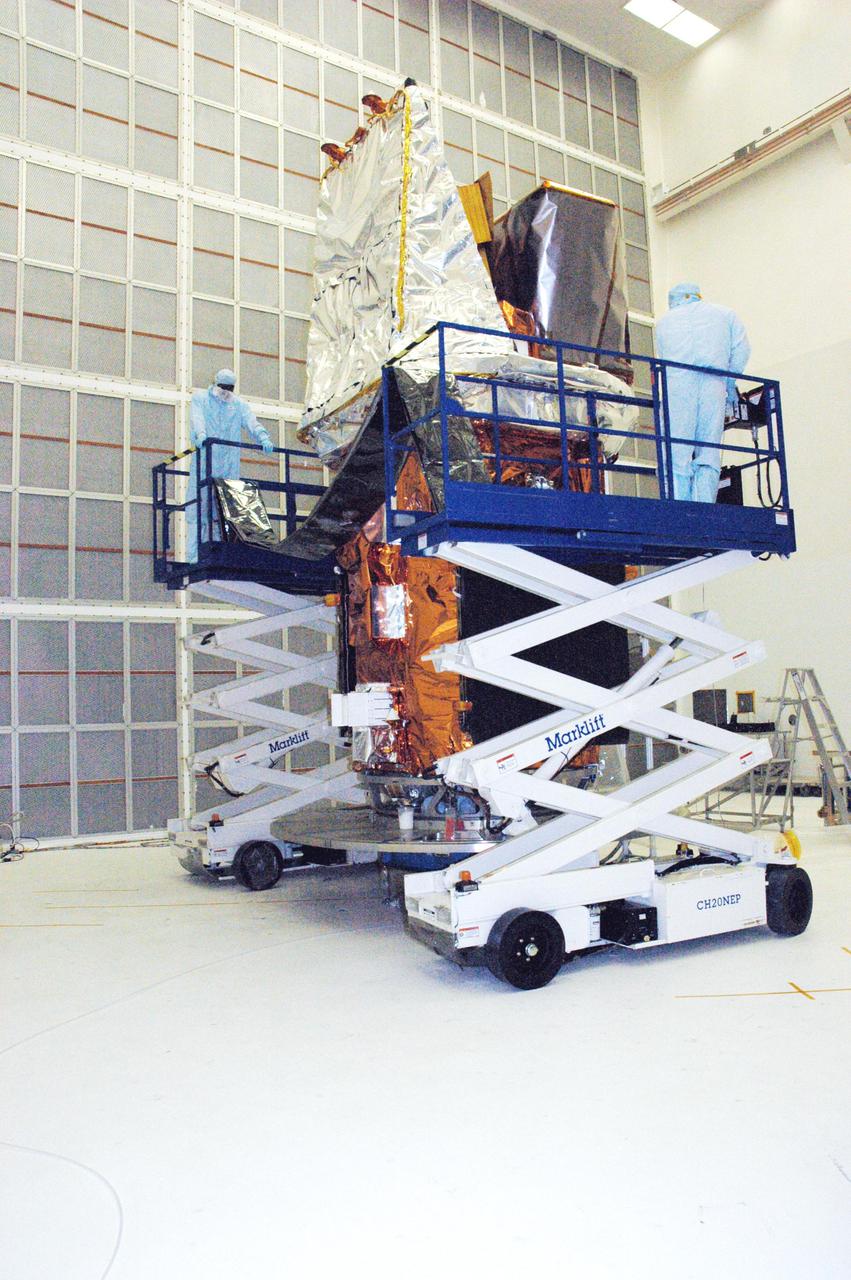
KENNEDY SPACE CENTER, FLA. - In Hangar AE at Cape Canaveral Air Force Station (CCAFS) in Florida, technicians with Spectrum Astro Inc. prepare to cover the Swift spacecraft with plastic before moving it to the launch pad. The launch of the Swift observatory, a NASA spacecraft to pinpoint the location of gamma-ray bursts, is scheduled for Nov. 17 from Pad 17-A on CCAFS. Liftoff aboard a Boeing Delta II rocket is targeted at the opening of a one-hour launch window beginning at 12:09 p.m. EST. Gamma-ray bursts are distant, yet fleeting explosions that appear to signal the births of black holes. They are the most powerful explosions known in the universe, emitting more than 100 billion times the energy that the Sun emits in a year. Yet they last only from a few milliseconds to a few minutes, never to appear in the same spot again.

KENNEDY SPACE CENTER, FLA. - Boeing technicians in Hangar AE at Cape Canaveral Air Force Station (CCAFS) in Florida install a second ring of segments of the payload transfer canister around the plastic-wrapped Swift spacecraft. The launch of the Swift observatory, a NASA spacecraft to pinpoint the location of gamma-ray bursts, is scheduled for Nov. 17 from Pad 17-A on CCAFS. Liftoff aboard a Boeing Delta II rocket is targeted at the opening of a one-hour launch window beginning at 12:09 p.m. EST. Gamma-ray bursts are distant, yet fleeting explosions that appear to signal the births of black holes. They are the most powerful explosions known in the universe, emitting more than 100 billion times the energy that the Sun emits in a year. Yet they last only from a few milliseconds to a few minutes, never to appear in the same spot again.

KENNEDY SPACE CENTER, FLA. - Spectrum Astro Inc. technicians in Hangar AE at Cape Canaveral Air Force Station (CCAFS) in Florida lower the protective cover over the Swift spacecraft before moving it to the launch pad. The launch of the Swift observatory, a NASA spacecraft to pinpoint the location of gamma-ray bursts, is scheduled for Nov. 17 from Pad 17-A on CCAFS. Liftoff aboard a Boeing Delta II rocket is targeted at the opening of a one-hour launch window beginning at 12:09 p.m. EST. Gamma-ray bursts are distant, yet fleeting explosions that appear to signal the births of black holes. They are the most powerful explosions known in the universe, emitting more than 100 billion times the energy that the Sun emits in a year. Yet they last only from a few milliseconds to a few minutes, never to appear in the same spot again.
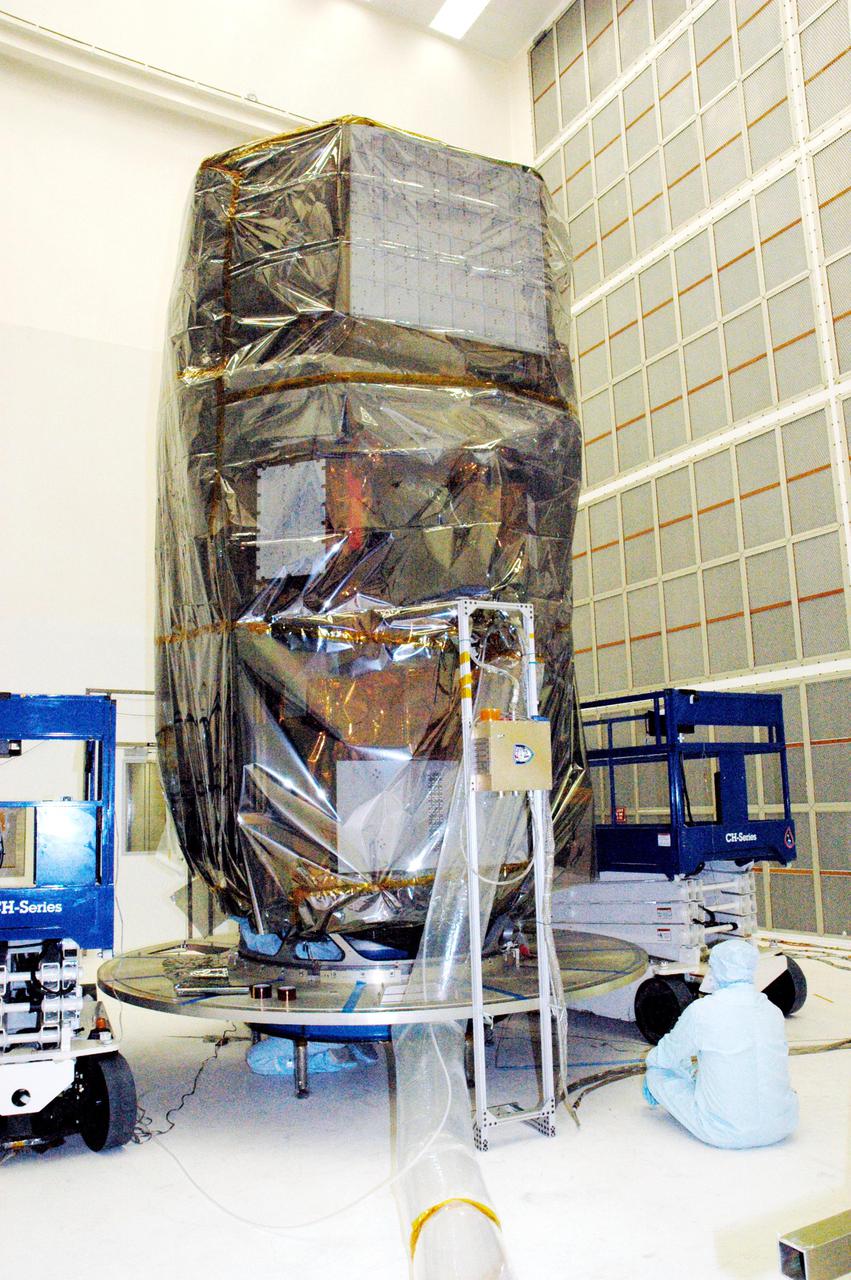
KENNEDY SPACE CENTER, FLA. - In Hangar AE at Cape Canaveral Air Force Station (CCAFS) in Florida, technicians with Spectrum Astro Inc. complete securing the plastic cover around the Swift spacecraft before moving it to the launch pad. The launch of the Swift observatory, a NASA spacecraft to pinpoint the location of gamma-ray bursts, is scheduled for Nov. 17 from Pad 17-A on CCAFS. Liftoff aboard a Boeing Delta II rocket is targeted at the opening of a one-hour launch window beginning at 12:09 p.m. EST. Gamma-ray bursts are distant, yet fleeting explosions that appear to signal the births of black holes. They are the most powerful explosions known in the universe, emitting more than 100 billion times the energy that the Sun emits in a year. Yet they last only from a few milliseconds to a few minutes, never to appear in the same spot again.
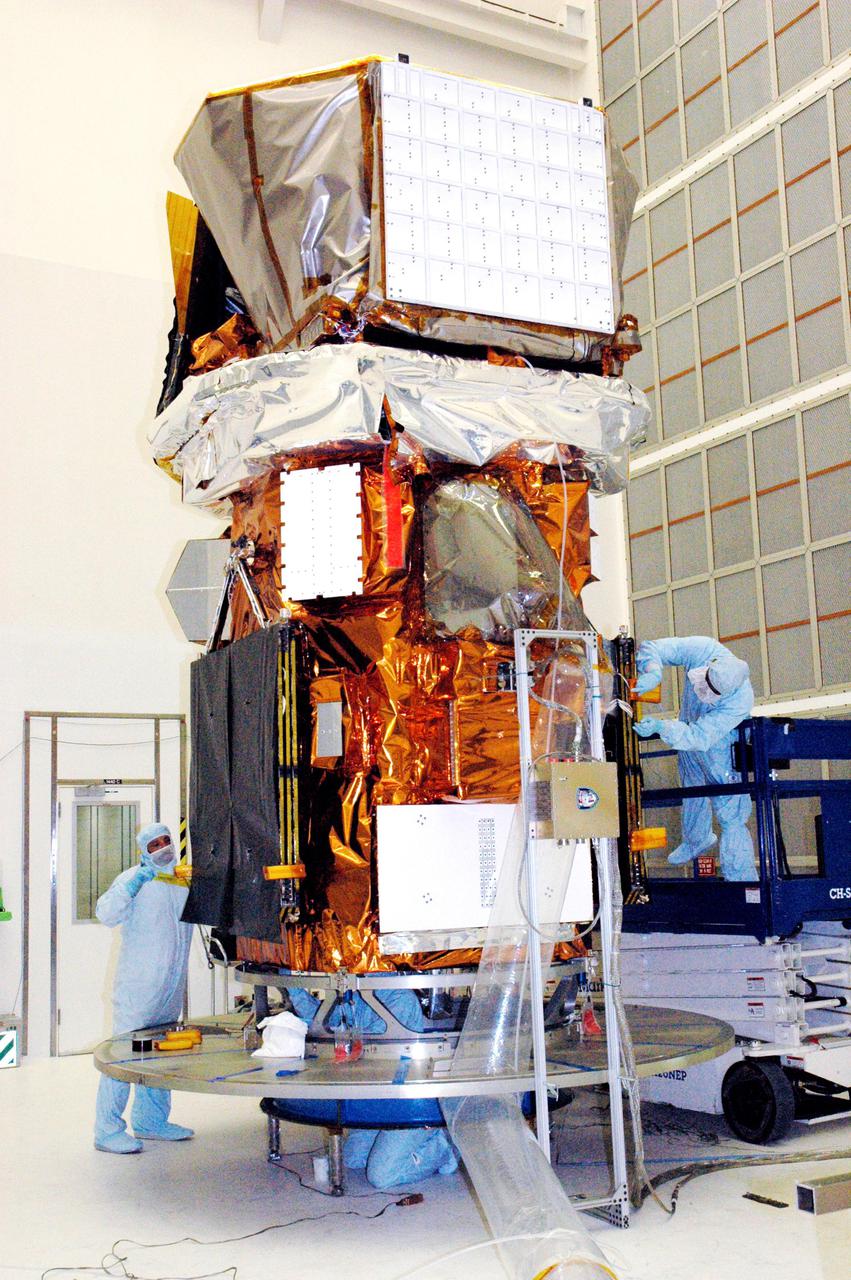
KENNEDY SPACE CENTER, FLA. - In Hangar AE at Cape Canaveral Air Force Station (CCAFS) in Florida, technicians with Spectrum Astro Inc. prepare to cover the Swift spacecraft with plastic before moving it to the launch pad. The launch of the Swift observatory, a NASA spacecraft to pinpoint the location of gamma-ray bursts, is scheduled for Nov. 17 from Pad 17-A on CCAFS. Liftoff aboard a Boeing Delta II rocket is targeted at the opening of a one-hour launch window beginning at 12:09 p.m. EST. Gamma-ray bursts are distant, yet fleeting explosions that appear to signal the births of black holes. They are the most powerful explosions known in the universe, emitting more than 100 billion times the energy that the Sun emits in a year. Yet they last only from a few milliseconds to a few minutes, never to appear in the same spot again.
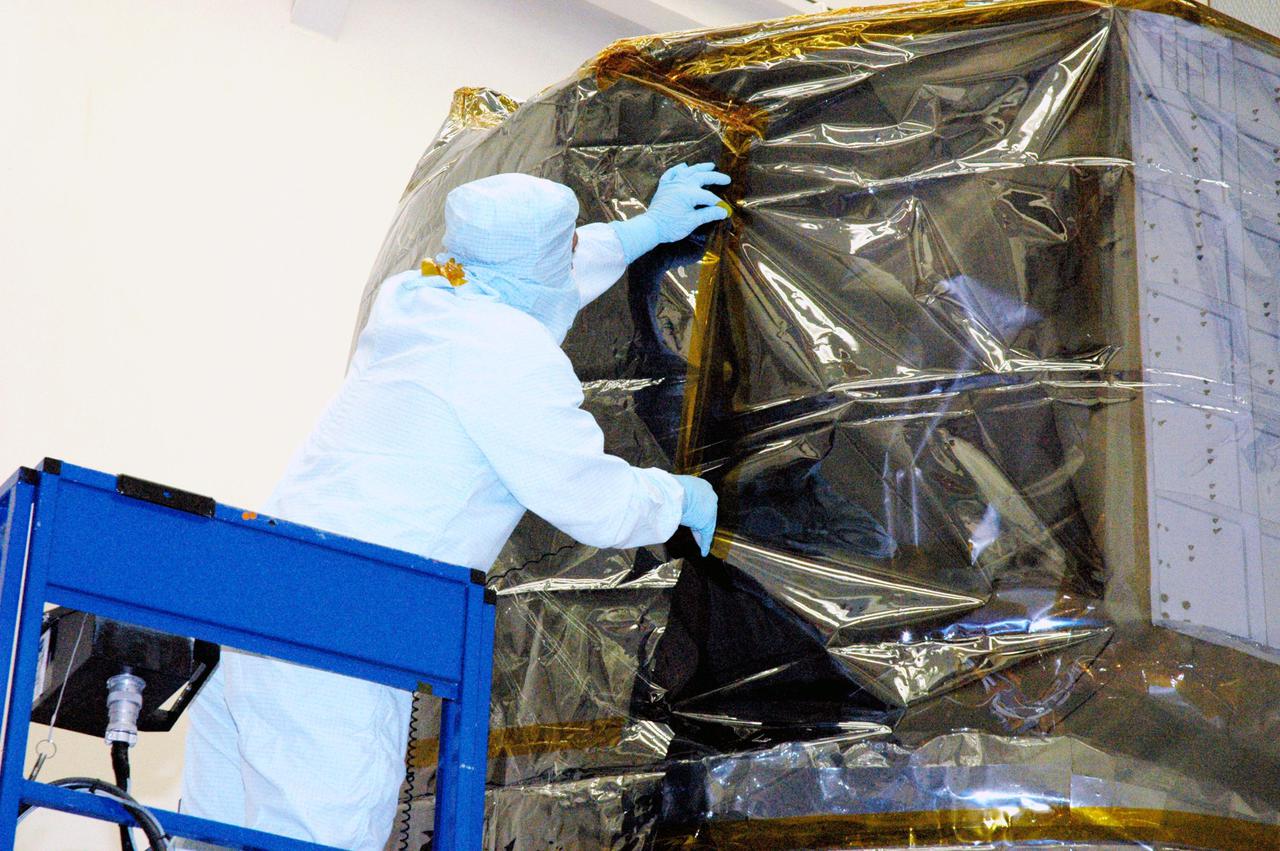
KENNEDY SPACE CENTER, FLA. - In Hangar AE at Cape Canaveral Air Force Station (CCAFS) in Florida, technicians with Spectrum Astro Inc. secure the plastic cover around the Swift spacecraft before moving it to the launch pad. The launch of the Swift observatory, a NASA spacecraft to pinpoint the location of gamma-ray bursts, is scheduled for Nov. 17 from Pad 17-A on CCAFS. Liftoff aboard a Boeing Delta II rocket is targeted at the opening of a one-hour launch window beginning at 12:09 p.m. EST. Gamma-ray bursts are distant, yet fleeting explosions that appear to signal the births of black holes. They are the most powerful explosions known in the universe, emitting more than 100 billion times the energy that the Sun emits in a year. Yet they last only from a few milliseconds to a few minutes, never to appear in the same spot again.
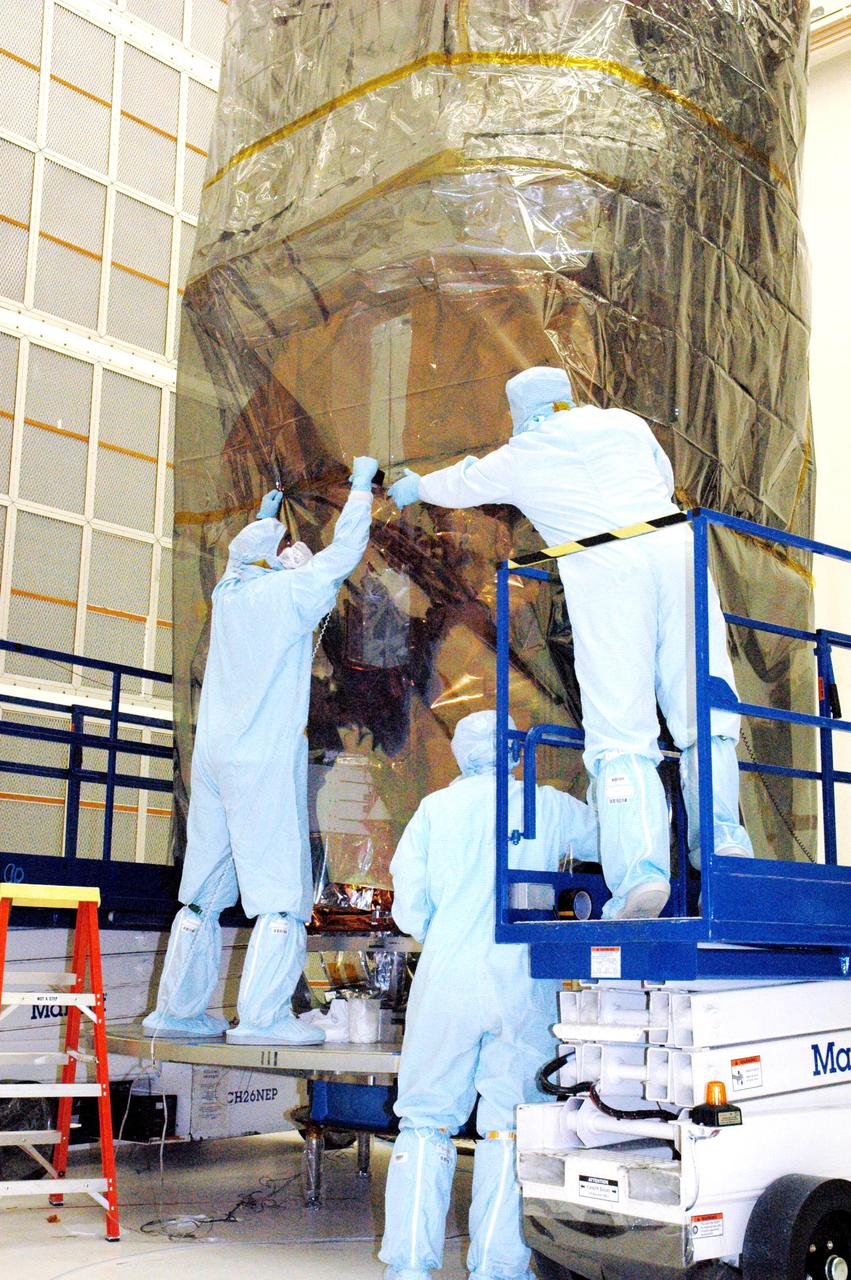
KENNEDY SPACE CENTER, FLA. - In Hangar AE at Cape Canaveral Air Force Station (CCAFS) in Florida, technicians with Spectrum Astro Inc. secure the plastic cover around the Swift spacecraft before moving it to the launch pad. The launch of the Swift observatory, a NASA spacecraft to pinpoint the location of gamma-ray bursts, is scheduled for Nov. 17 from Pad 17-A on CCAFS. Liftoff aboard a Boeing Delta II rocket is targeted at the opening of a one-hour launch window beginning at 12:09 p.m. EST. Gamma-ray bursts are distant, yet fleeting explosions that appear to signal the births of black holes. They are the most powerful explosions known in the universe, emitting more than 100 billion times the energy that the Sun emits in a year. Yet they last only from a few milliseconds to a few minutes, never to appear in the same spot again.

KENNEDY SPACE CENTER, FLA. - In Hangar AE at Cape Canaveral Air Force Station (CCAFS) in Florida, technicians with Spectrum Astro Inc. lower the protective cover over the Swift spacecraft before moving it to the launch pad. The launch of the Swift observatory, a NASA spacecraft to pinpoint the location of gamma-ray bursts, is scheduled for Nov. 17 from Pad 17-A on CCAFS. Liftoff aboard a Boeing Delta II rocket is targeted at the opening of a one-hour launch window beginning at 12:09 p.m. EST. Gamma-ray bursts are distant, yet fleeting explosions that appear to signal the births of black holes. They are the most powerful explosions known in the universe, emitting more than 100 billion times the energy that the Sun emits in a year. Yet they last only from a few milliseconds to a few minutes, never to appear in the same spot again.
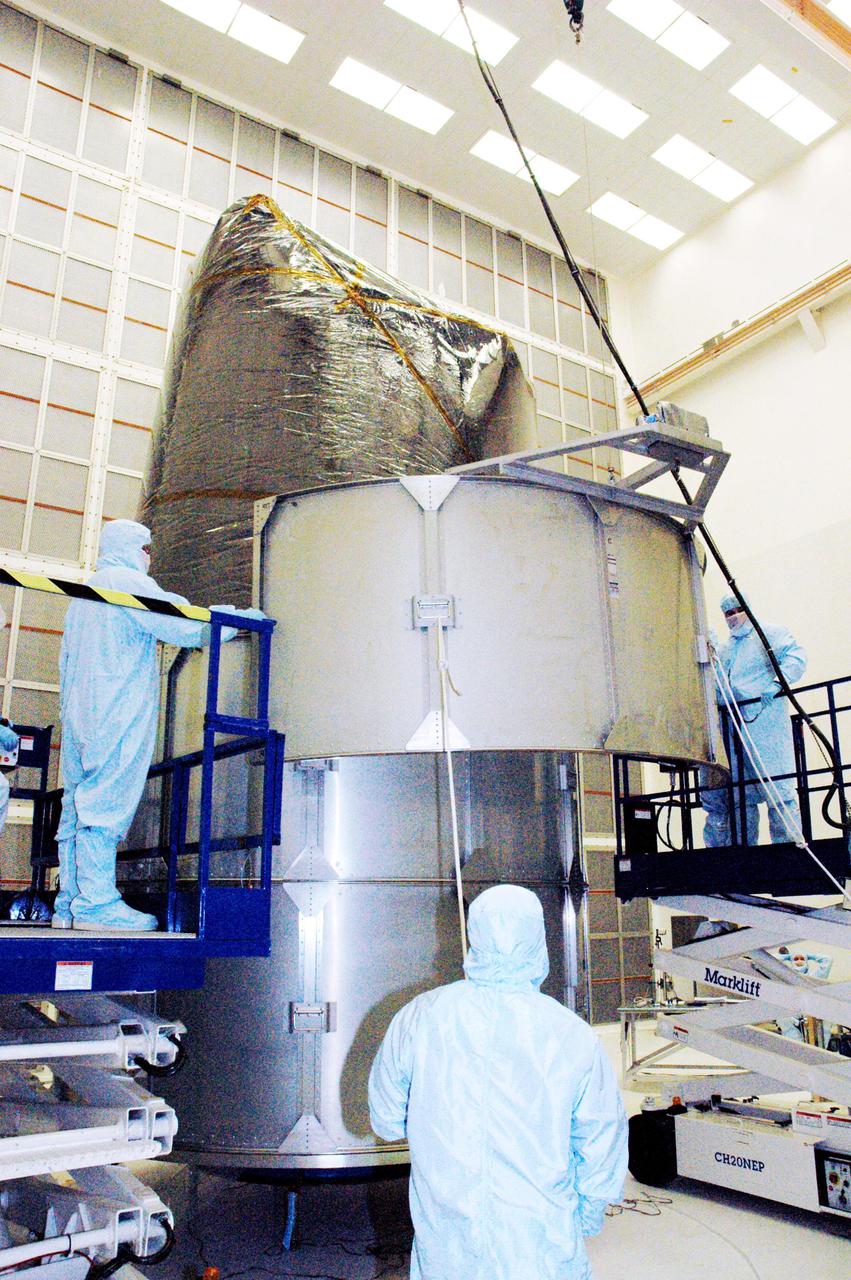
KENNEDY SPACE CENTER, FLA. - Boeing technicians in Hangar AE at Cape Canaveral Air Force Station (CCAFS) in Florida maneuver a segment of the payload transfer canister into place around the plastic-wrapped Swift spacecraft. The launch of the Swift observatory, a NASA spacecraft to pinpoint the location of gamma-ray bursts, is scheduled for Nov. 17 from Pad 17-A on CCAFS. Liftoff aboard a Boeing Delta II rocket is targeted at the opening of a one-hour launch window beginning at 12:09 p.m. EST. Gamma-ray bursts are distant, yet fleeting explosions that appear to signal the births of black holes. They are the most powerful explosions known in the universe, emitting more than 100 billion times the energy that the Sun emits in a year. Yet they last only from a few milliseconds to a few minutes, never to appear in the same spot again.
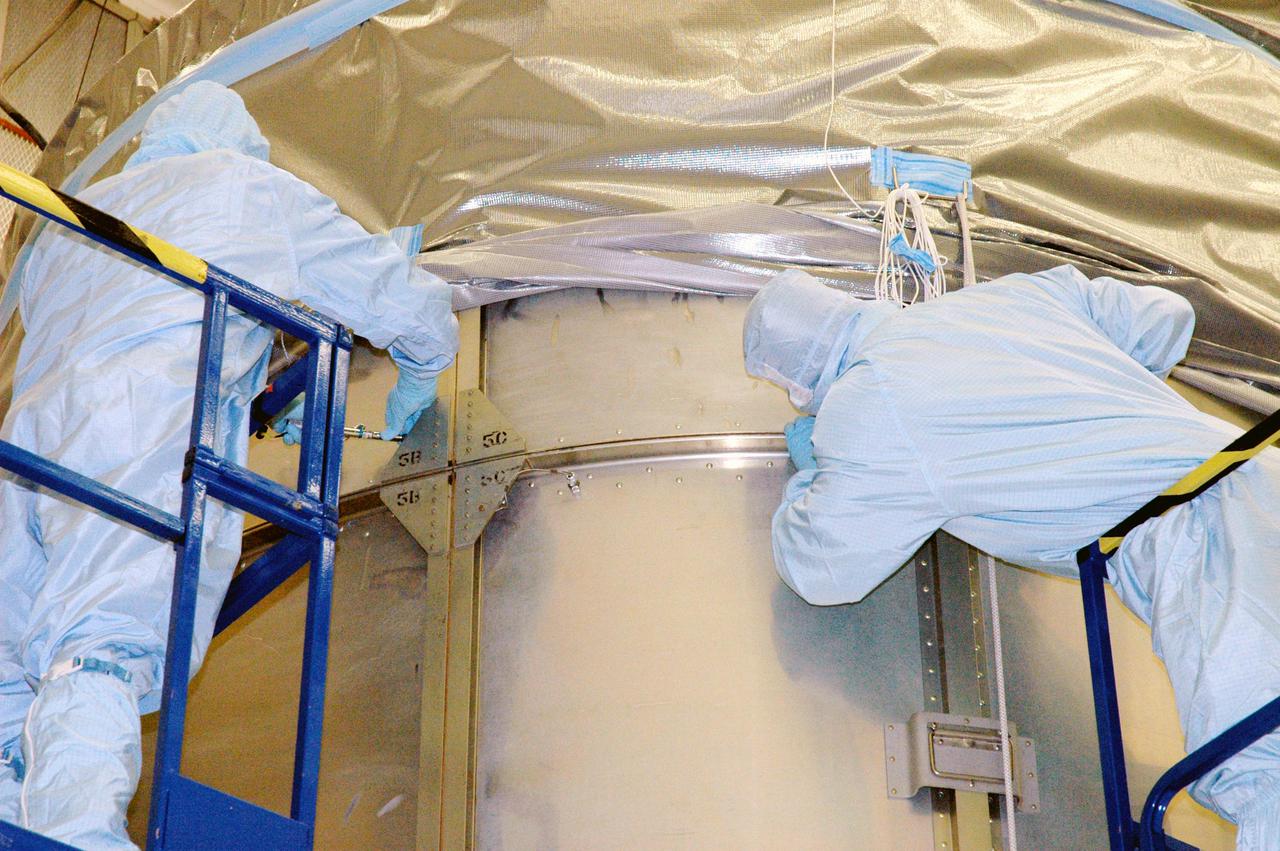
KENNEDY SPACE CENTER, FLA. - Boeing technicians in Hangar AE at Cape Canaveral Air Force Station (CCAFS) in Florida attach the top of the payload transfer canister to the lower segments that surround the plastic-wrapped Swift spacecraft. The top holds an additional cover that will be lowered into place over the canister. The launch of the Swift observatory, a NASA spacecraft to pinpoint the location of gamma-ray bursts, is scheduled for Nov. 17 from Pad 17-A on CCAFS. Liftoff aboard a Boeing Delta II rocket is targeted at the opening of a one-hour launch window beginning at 12:09 p.m. EST. Gamma-ray bursts are distant, yet fleeting explosions that appear to signal the births of black holes. They are the most powerful explosions known in the universe, emitting more than 100 billion times the energy that the Sun emits in a year. Yet they last only from a few milliseconds to a few minutes, never to appear in the same spot again.
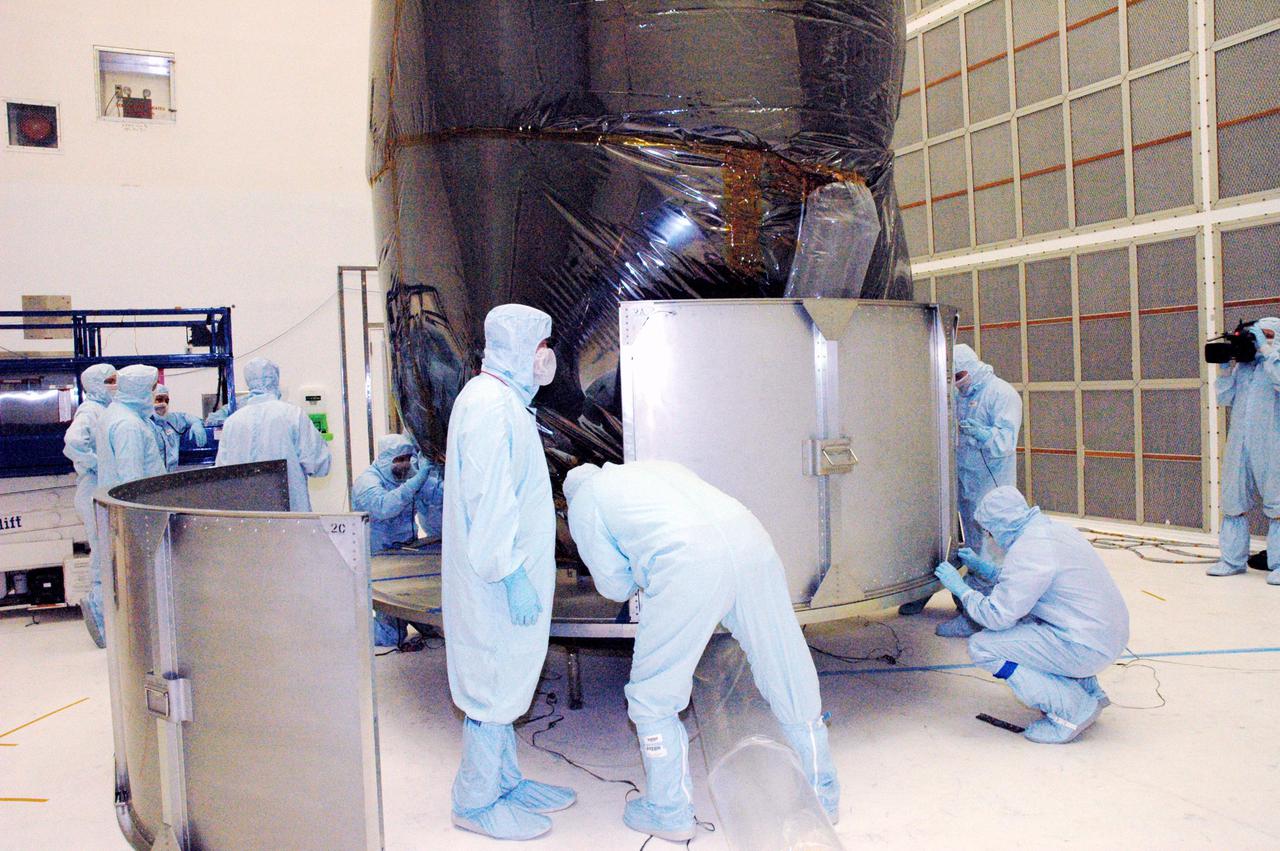
KENNEDY SPACE CENTER, FLA. - Boeing technicians in Hangar AE at Cape Canaveral Air Force Station (CCAFS) in Florida install the lower part of the payload transfer canister around the plastic-wrapped Swift spacecraft. The launch of the Swift observatory, a NASA spacecraft to pinpoint the location of gamma-ray bursts, is scheduled for Nov. 17 from Pad 17-A on CCAFS. Liftoff aboard a Boeing Delta II rocket is targeted at the opening of a one-hour launch window beginning at 12:09 p.m. EST. Gamma-ray bursts are distant, yet fleeting explosions that appear to signal the births of black holes. They are the most powerful explosions known in the universe, emitting more than 100 billion times the energy that the Sun emits in a year. Yet they last only from a few milliseconds to a few minutes, never to appear in the same spot again.

KENNEDY SPACE CENTER, FLA. - Boeing technicians in Hangar AE at Cape Canaveral Air Force Station (CCAFS) in Florida secure bands around the payload transfer canister to hold the plastic cover in place. The launch of the Swift observatory, a NASA spacecraft to pinpoint the location of gamma-ray bursts, is scheduled for Nov. 17 from Pad 17-A on CCAFS. Liftoff aboard a Boeing Delta II rocket is targeted at the opening of a one-hour launch window beginning at 12:09 p.m. EST. Gamma-ray bursts are distant, yet fleeting explosions that appear to signal the births of black holes. They are the most powerful explosions known in the universe, emitting more than 100 billion times the energy that the Sun emits in a year. Yet they last only from a few milliseconds to a few minutes, never to appear in the same spot again.
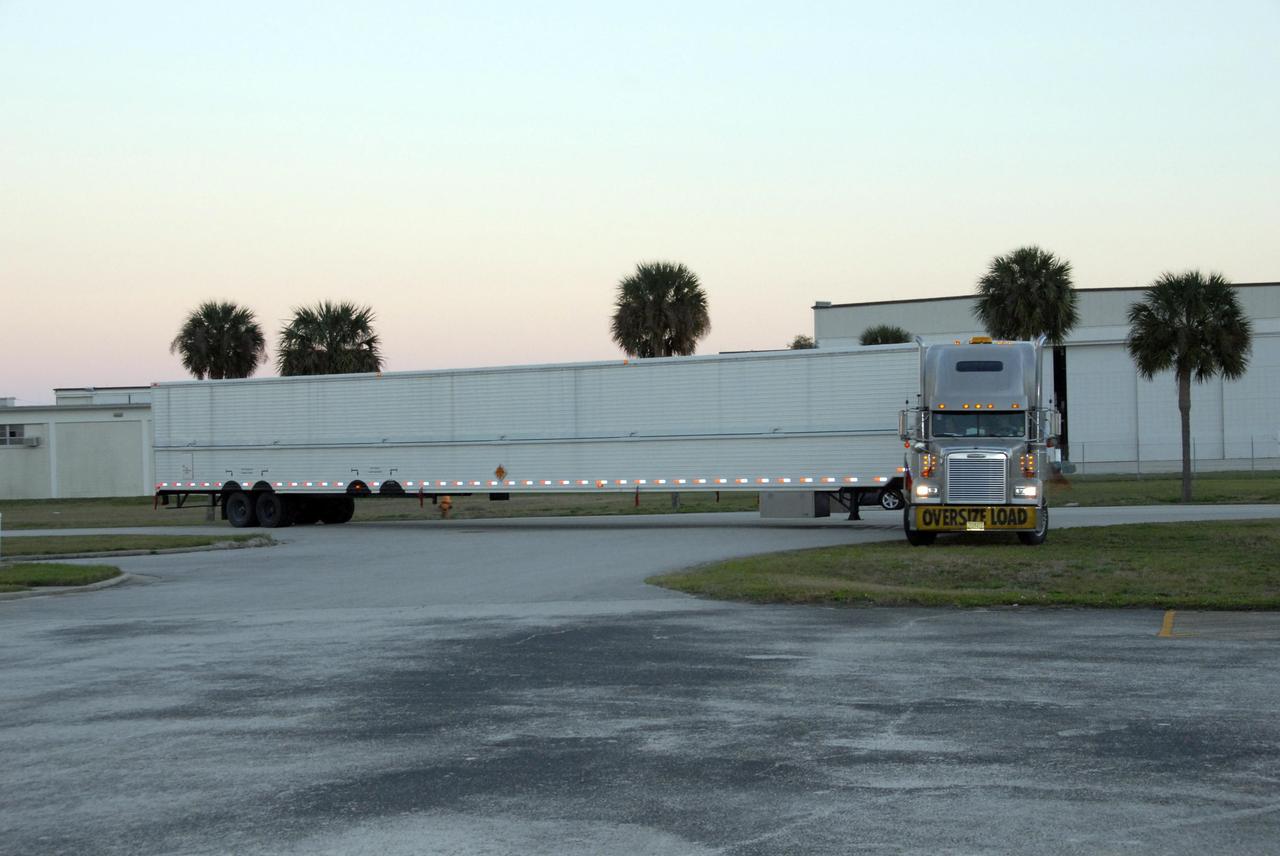
KENNEDY SPACE CENTER, FLA. -- The truck carrying the United Launch Alliance Delta II first stage arrives at Hangar M on Cape Canaveral Air Force Station in Florida. The Delta rocket will be used to launch the Gamma-Ray Large Area Space Telescope, or GLAST, in May from Launch Pad 17-B on CCAFS. The GLAST is a powerful space observatory that will explore the Universe's ultimate frontier, where nature harnesses forces and energies far beyond anything possible on Earth; probe some of science's deepest questions, such as what our Universe is made of, and search for new laws of physics; explain how black holes accelerate jets of material to nearly light speed; and help crack the mystery of stupendously powerful explosions known as gamma-ray bursts. Photo credit: NASA/George Shelton
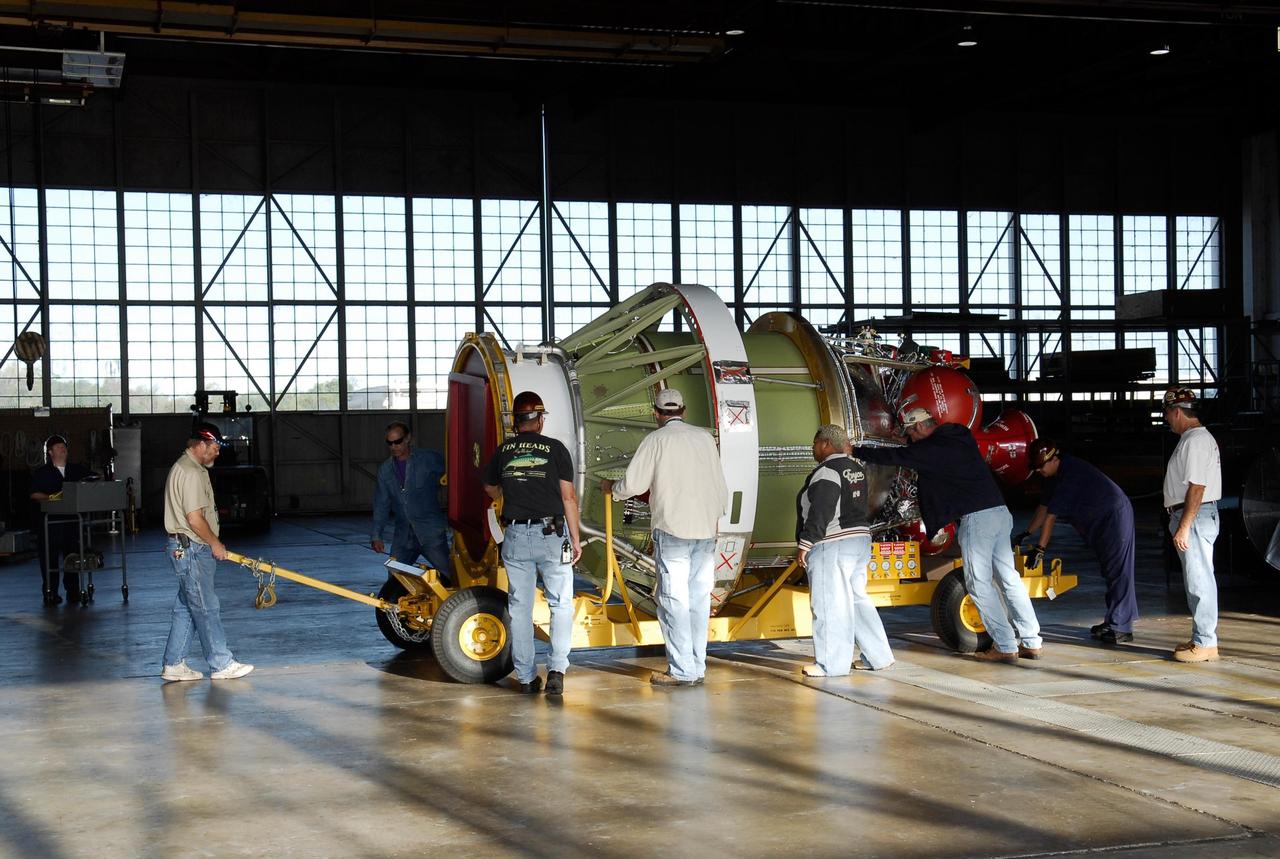
KENNEDY SPACE CENTER, FLA. -- At Cape Canaveral Air Force Station, the Delta II second stage for GLAST has arrived at Hangar M and is moved into place for weighing. The Delta rocket will be used to launch the Gamma-Ray Large Area Space Telescope, or GLAST, May 16 from Launch Pad 17-B on CCAFS. The GLAST is a powerful space observatory that will explore the Universe's ultimate frontier, where nature harnesses forces and energies far beyond anything possible on Earth; probe some of science's deepest questions, such as what our Universe is made of, and search for new laws of physics; explain how black holes accelerate jets of material to nearly light speed; and help crack the mystery of stupendously powerful explosions known as gamma-ray bursts. Photo credit: NASA/Kim Shiflett
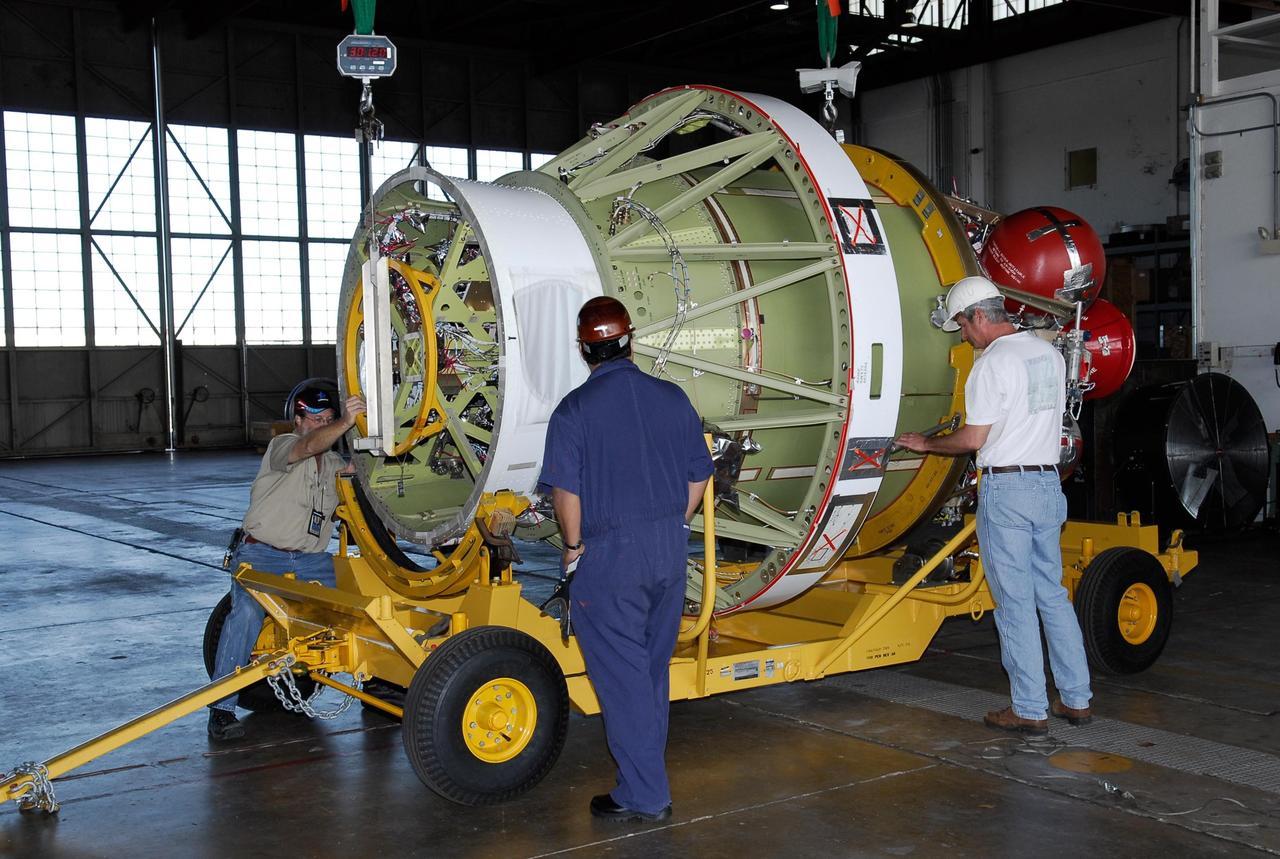
KENNEDY SPACE CENTER, FLA. -- At Cape Canaveral Air Force Station, workers prepare the Delta II second stage for GLAST for weighing. The Delta rocket will be used to launch the Gamma-Ray Large Area Space Telescope, or GLAST, May 16 from Launch Pad 17-B on CCAFS. The GLAST is a powerful space observatory that will explore the Universe's ultimate frontier, where nature harnesses forces and energies far beyond anything possible on Earth; probe some of science's deepest questions, such as what our Universe is made of, and search for new laws of physics; explain how black holes accelerate jets of material to nearly light speed; and help crack the mystery of stupendously powerful explosions known as gamma-ray bursts. Photo credit: NASA/Kim Shiflett
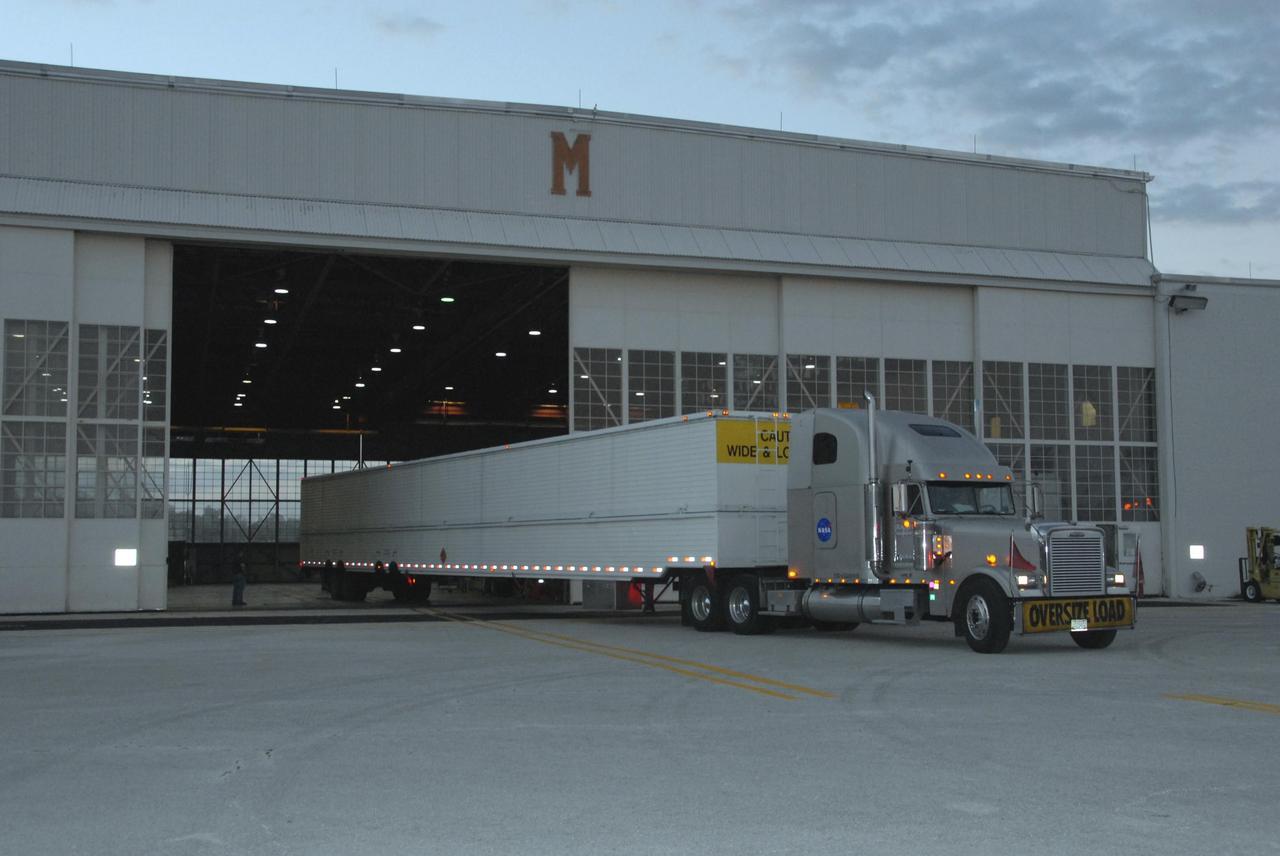
KENNEDY SPACE CENTER, FLA. -- The truck carrying the United Launch Alliance Delta II first stage backs into Hangar M on Cape Canaveral Air Force Station in Florida. The Delta rocket will be used to launch the Gamma-Ray Large Area Space Telescope, or GLAST, in May from Launch Pad 17-B on CCAFS. The GLAST is a powerful space observatory that will explore the Universe's ultimate frontier, where nature harnesses forces and energies far beyond anything possible on Earth; probe some of science's deepest questions, such as what our Universe is made of, and search for new laws of physics; explain how black holes accelerate jets of material to nearly light speed; and help crack the mystery of stupendously powerful explosions known as gamma-ray bursts. Photo credit: NASA/George Shelton
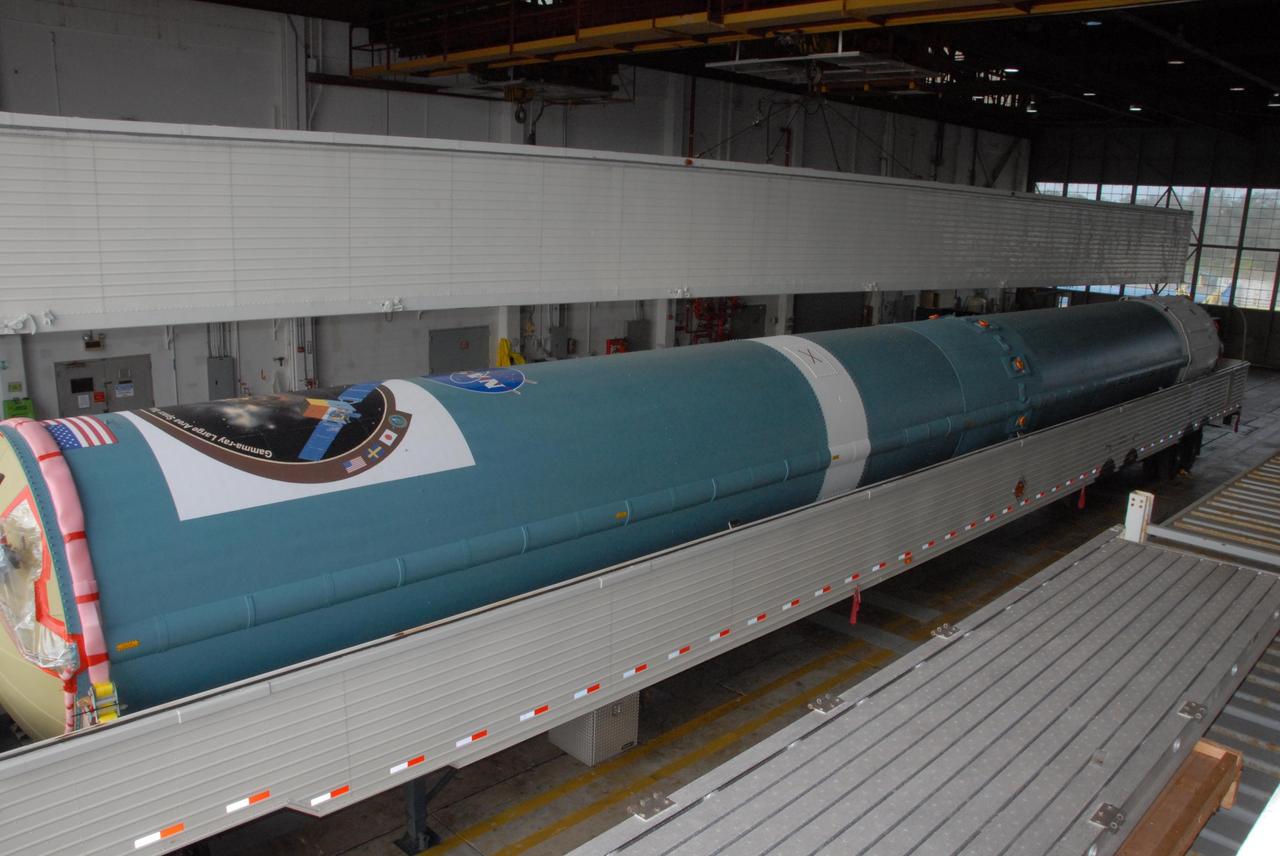
KENNEDY SPACE CENTER, FLA. -- In Hangar M on Cape Canaveral Air Force Station in Florida, the United Launch Alliance Delta II first stage is revealed after the cover was removed from the truck trailer that delivered it. The Delta rocket will be used to launch the Gamma-Ray Large Area Space Telescope, or GLAST, in May from Launch Pad 17-B on CCAFS. The GLAST is a powerful space observatory that will explore the Universe's ultimate frontier, where nature harnesses forces and energies far beyond anything possible on Earth; probe some of science's deepest questions, such as what our Universe is made of, and search for new laws of physics; explain how black holes accelerate jets of material to nearly light speed; and help crack the mystery of stupendously powerful explosions known as gamma-ray bursts. Photo credit: NASA/George Shelton
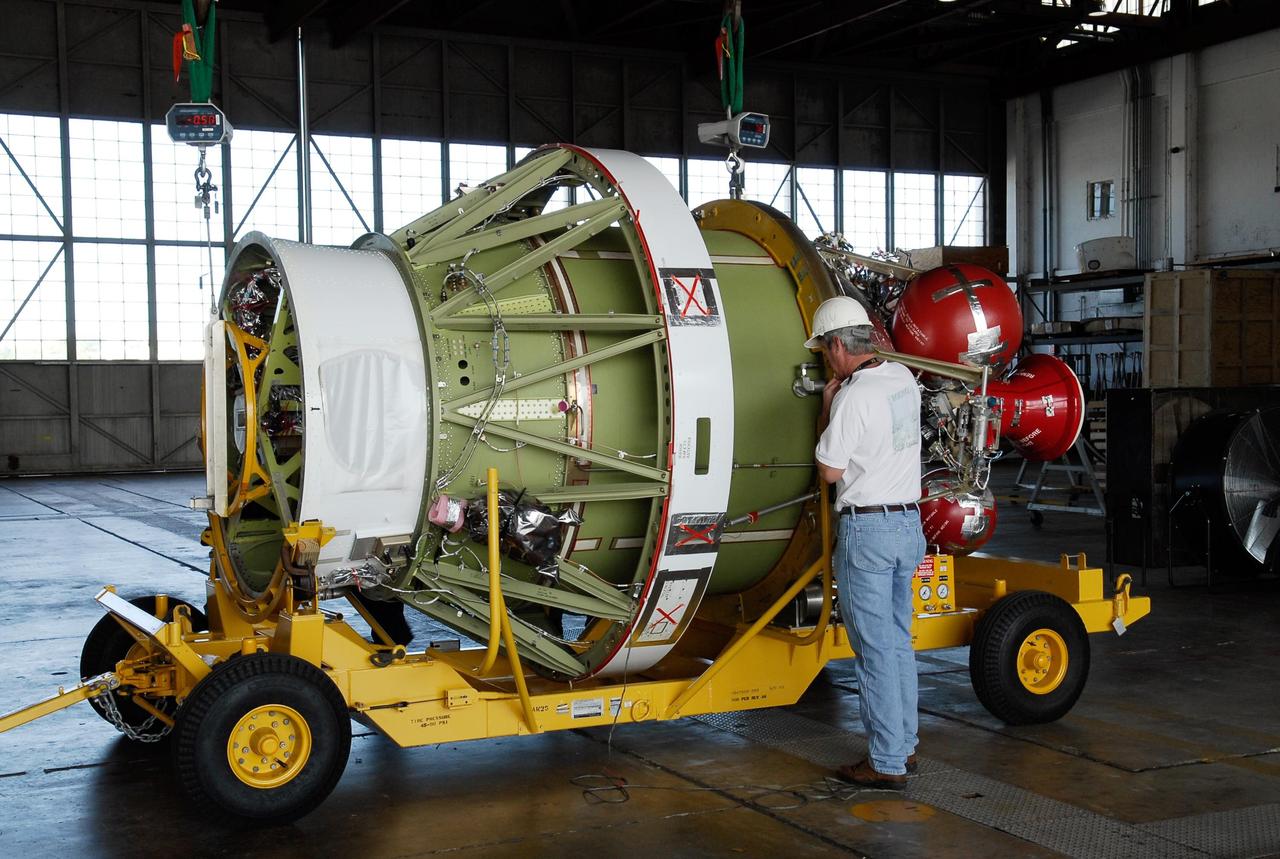
KENNEDY SPACE CENTER, FLA. -- At Cape Canaveral Air Force Station, the Delta II second stage for GLAST has arrived at Hangar M and is prepared for weighing. The Delta rocket will be used to launch the Gamma-Ray Large Area Space Telescope, or GLAST, May 16 from Launch Pad 17-B on CCAFS. The GLAST is a powerful space observatory that will explore the Universe's ultimate frontier, where nature harnesses forces and energies far beyond anything possible on Earth; probe some of science's deepest questions, such as what our Universe is made of, and search for new laws of physics; explain how black holes accelerate jets of material to nearly light speed; and help crack the mystery of stupendously powerful explosions known as gamma-ray bursts. Photo credit: NASA/Kim Shiflett
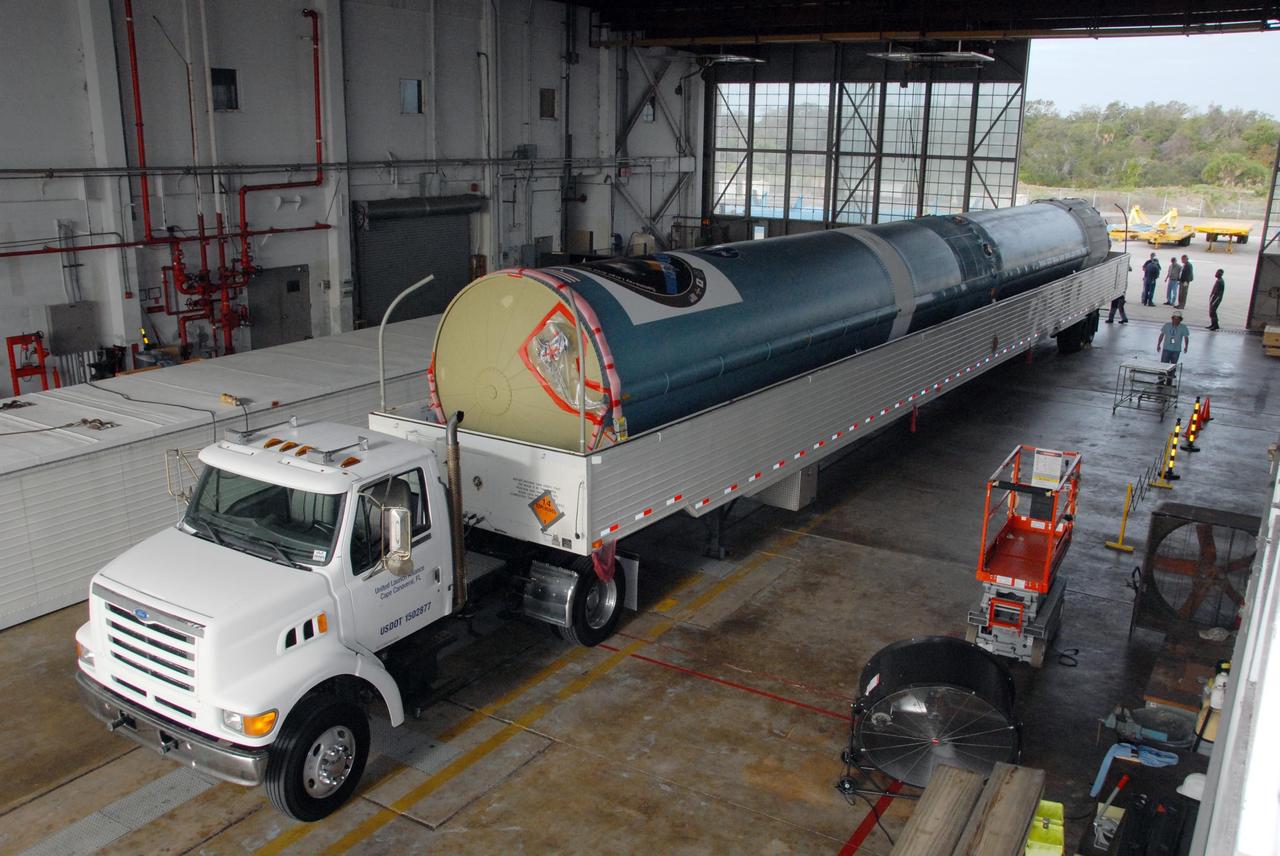
KENNEDY SPACE CENTER, FLA. -- In Hangar M on Cape Canaveral Air Force Station in Florida, the United Launch Alliance Delta II first stage is revealed after the cover was removed from the truck trailer that delivered it. The Delta rocket will be used to launch the Gamma-Ray Large Area Space Telescope, or GLAST, in May from Launch Pad 17-B on CCAFS. The GLAST is a powerful space observatory that will explore the Universe's ultimate frontier, where nature harnesses forces and energies far beyond anything possible on Earth; probe some of science's deepest questions, such as what our Universe is made of, and search for new laws of physics; explain how black holes accelerate jets of material to nearly light speed; and help crack the mystery of stupendously powerful explosions known as gamma-ray bursts. Photo credit: NASA/George Shelton
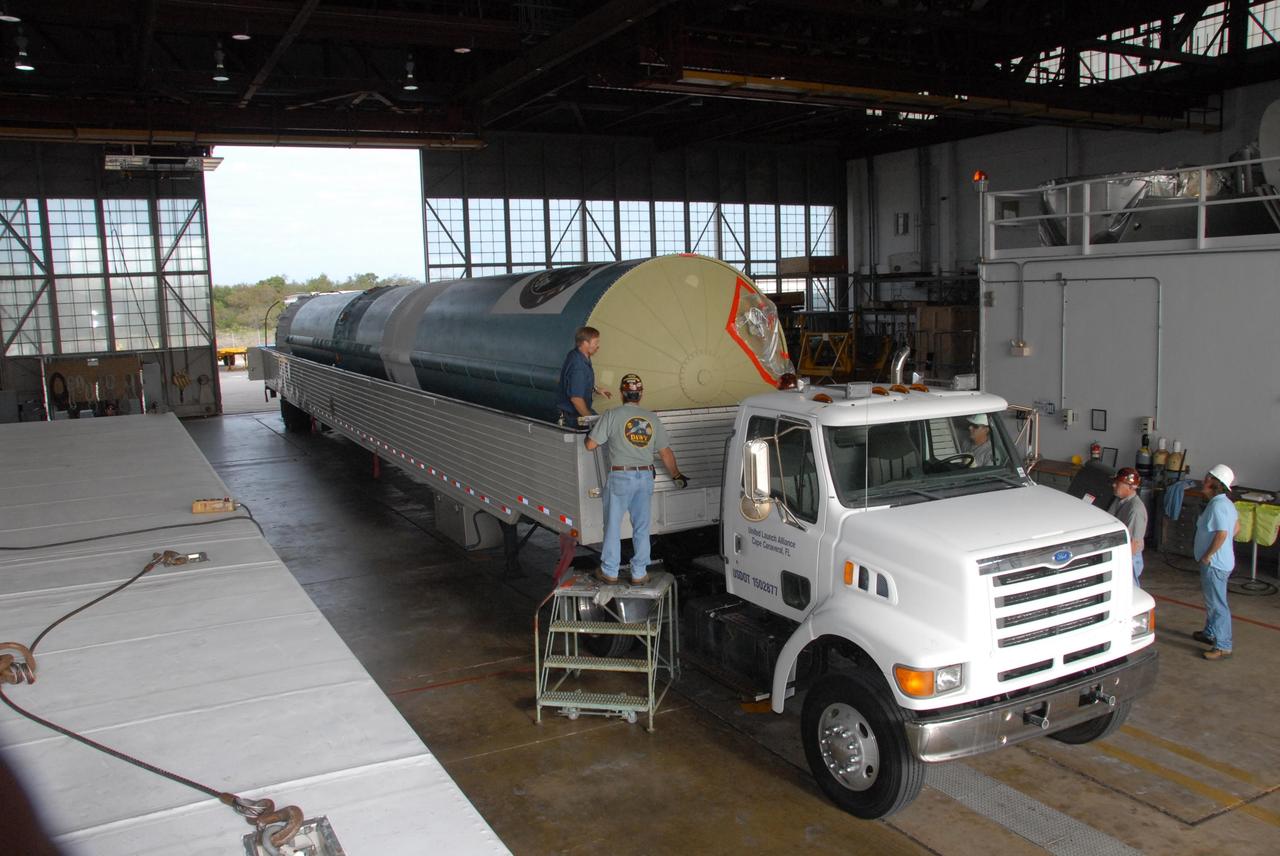
KENNEDY SPACE CENTER, FLA. -- In Hangar M on Cape Canaveral Air Force Station in Florida, the United Launch Alliance Delta II first stage is revealed after the cover was removed from the truck that delivered it. The Delta rocket will be used to launch the Gamma-Ray Large Area Space Telescope, or GLAST, in May from Launch Pad 17-B on CCAFS. The GLAST is a powerful space observatory that will explore the Universe's ultimate frontier, where nature harnesses forces and energies far beyond anything possible on Earth; probe some of science's deepest questions, such as what our Universe is made of, and search for new laws of physics; explain how black holes accelerate jets of material to nearly light speed; and help crack the mystery of stupendously powerful explosions known as gamma-ray bursts. Photo credit: NASA/George Shelton
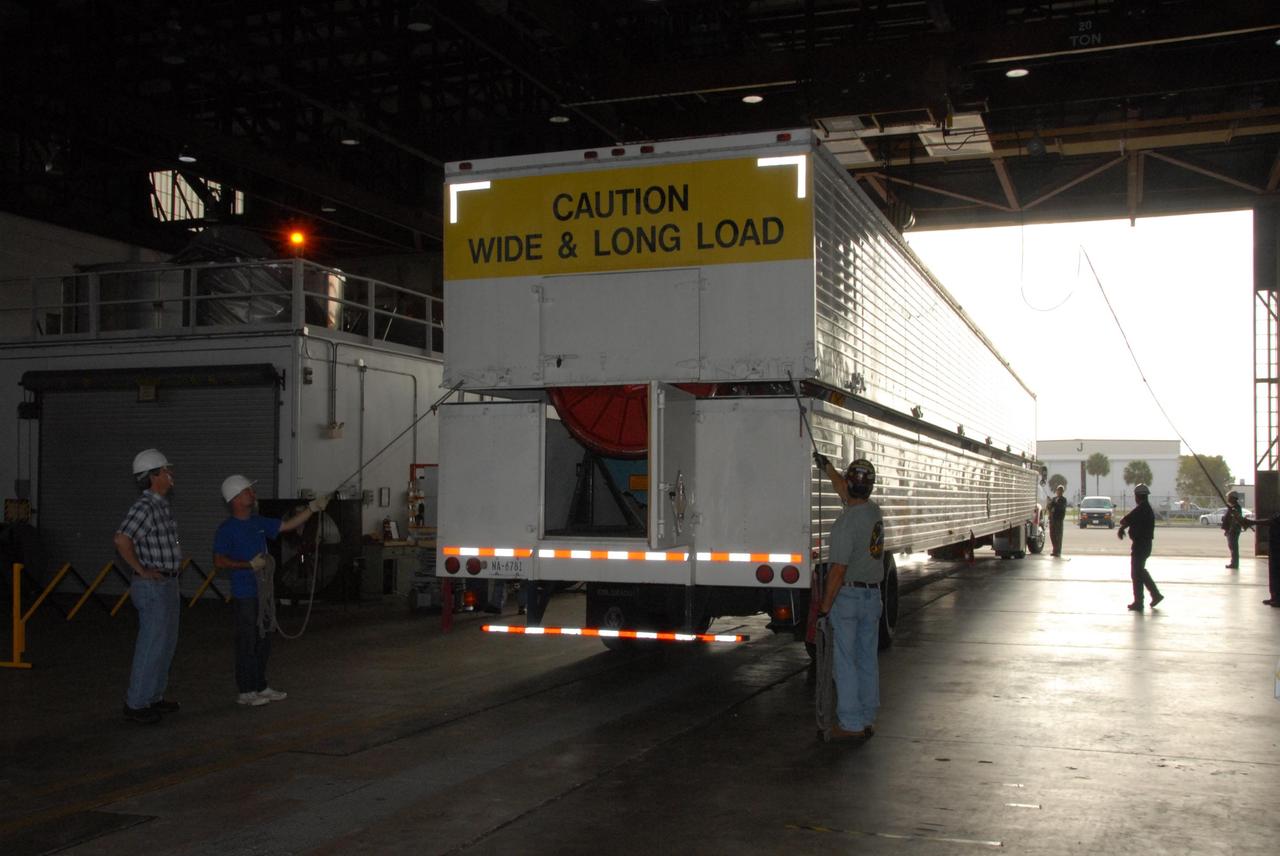
KENNEDY SPACE CENTER, FLA. -- Workers in Hangar M on Cape Canaveral Air Force Station in Florida open the truck trailer to offload the United Launch Alliance Delta II first stage. The Delta rocket will be used to launch the Gamma-Ray Large Area Space Telescope, or GLAST, in May from Launch Pad 17-B on CCAFS. The GLAST is a powerful space observatory that will explore the Universe's ultimate frontier, where nature harnesses forces and energies far beyond anything possible on Earth; probe some of science's deepest questions, such as what our Universe is made of, and search for new laws of physics; explain how black holes accelerate jets of material to nearly light speed; and help crack the mystery of stupendously powerful explosions known as gamma-ray bursts. Photo credit: NASA/George Shelton
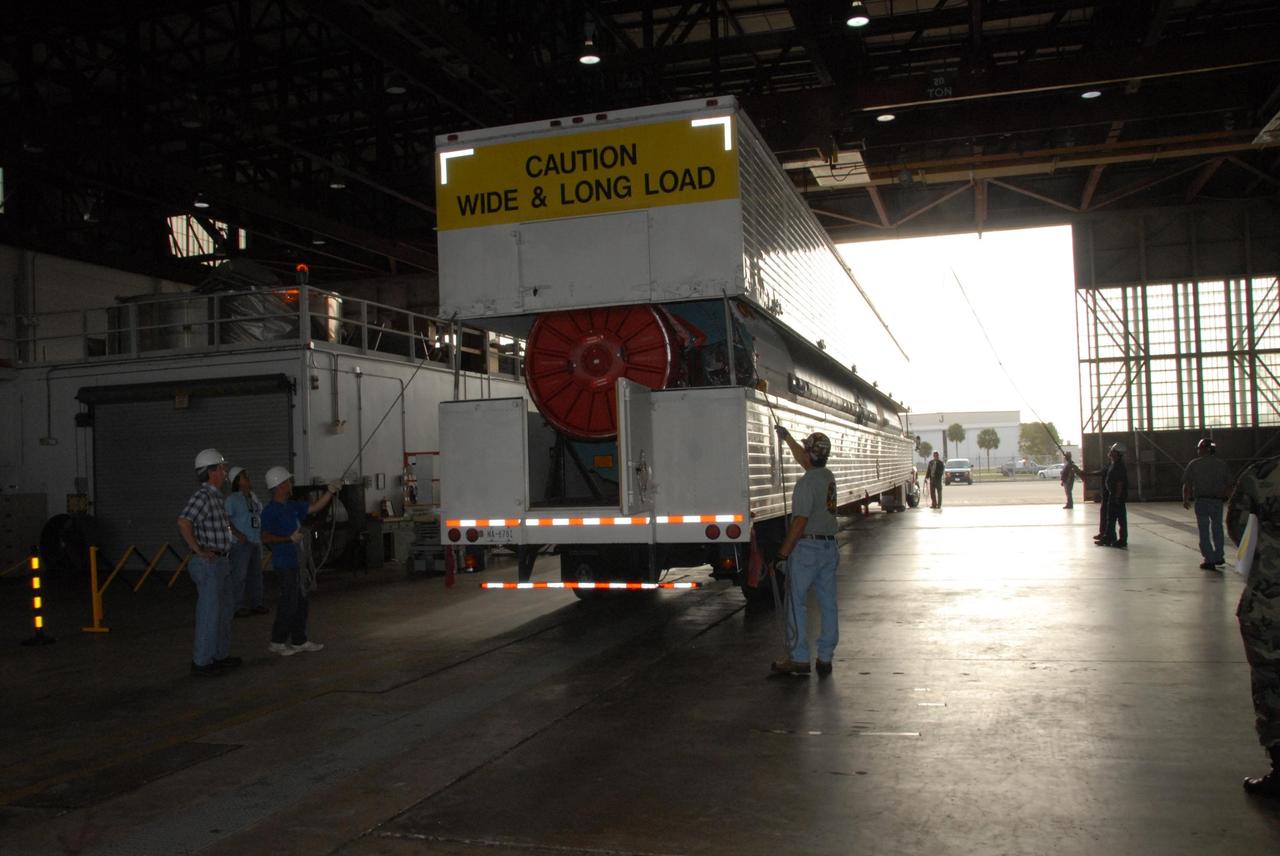
KENNEDY SPACE CENTER, FLA. -- Workers in Hangar M on Cape Canaveral Air Force Station in Florida get ready to remove the lid on the truck trailer to offload the United Launch Alliance Delta II first stage. Visible is the engine of the first stage. The Delta rocket will be used to launch the Gamma-Ray Large Area Space Telescope, or GLAST, in May from Launch Pad 17-B on CCAFS. The GLAST is a powerful space observatory that will explore the Universe's ultimate frontier, where nature harnesses forces and energies far beyond anything possible on Earth; probe some of science's deepest questions, such as what our Universe is made of, and search for new laws of physics; explain how black holes accelerate jets of material to nearly light speed; and help crack the mystery of stupendously powerful explosions known as gamma-ray bursts. Photo credit: NASA/George Shelton
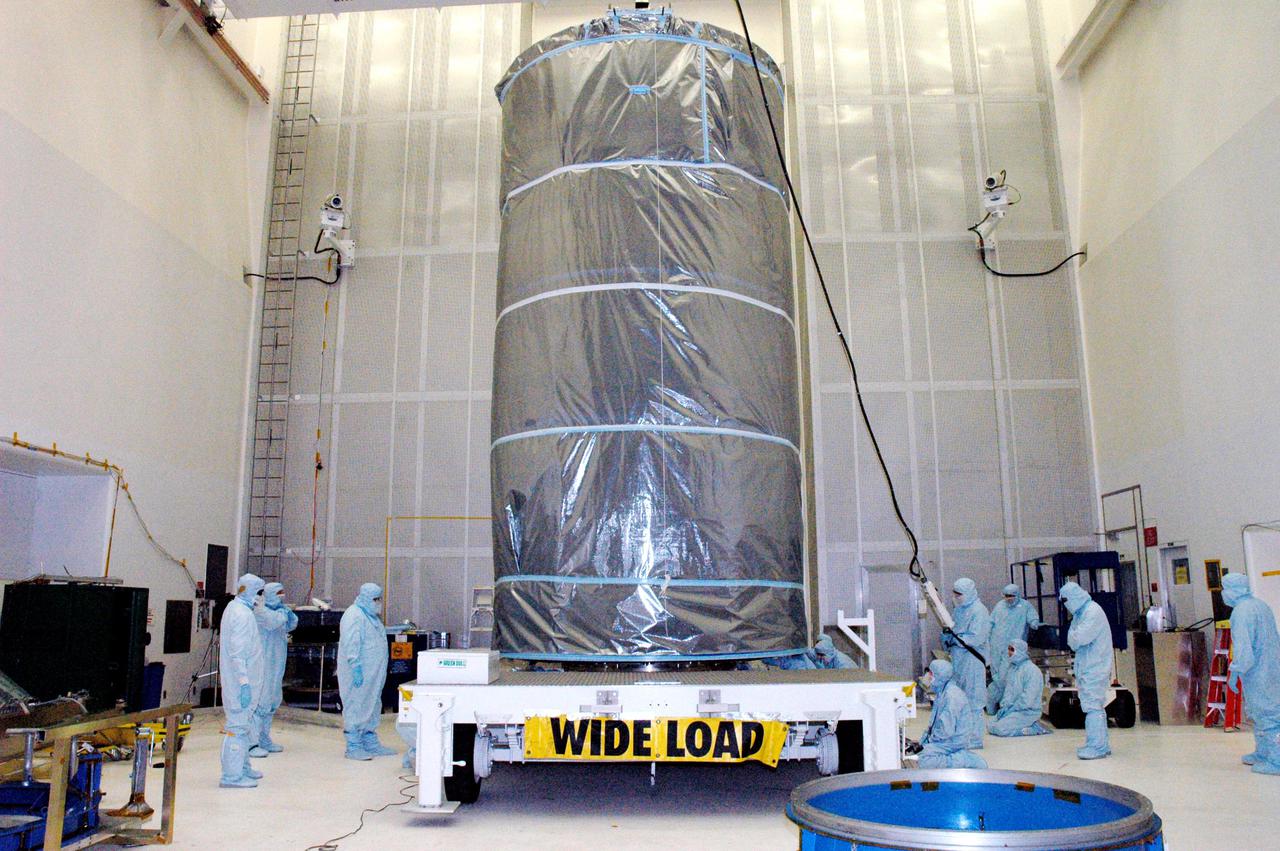
KENNEDY SPACE CENTER, FLA. - The Swift spacecraft, fully encased inside the payload transfer canister, is secured on a transport vehicle for a trip to the launch pad. The launch of the Swift observatory, a NASA spacecraft to pinpoint the location of gamma-ray bursts, is scheduled for Nov. 17 from Pad 17-A on CCAFS. Liftoff aboard a Boeing Delta II rocket is targeted at the opening of a one-hour launch window beginning at 12:09 p.m. EST. Gamma-ray bursts are distant, yet fleeting explosions that appear to signal the births of black holes. They are the most powerful explosions known in the universe, emitting more than 100 billion times the energy that the Sun emits in a year. Yet they last only from a few milliseconds to a few minutes, never to appear in the same spot again.
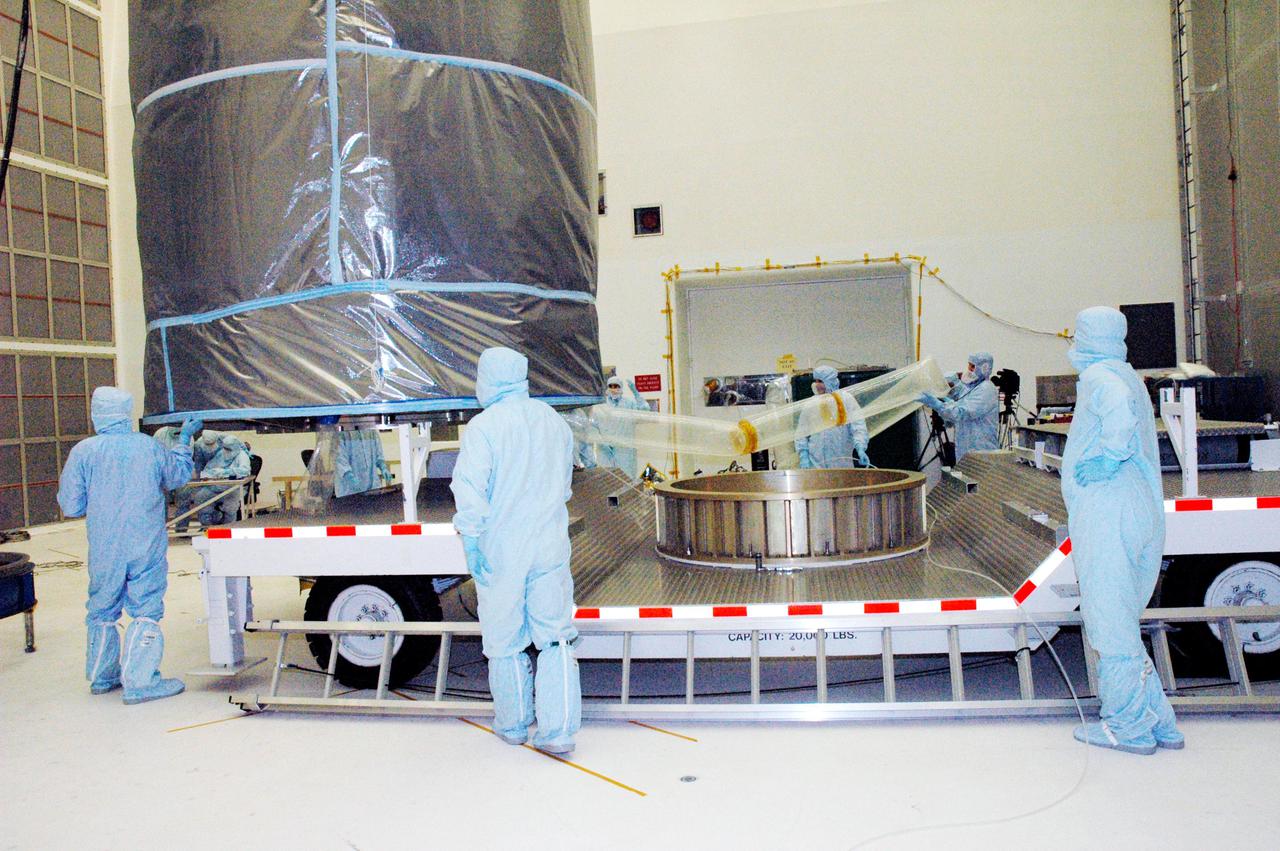
KENNEDY SPACE CENTER, FLA. - The Swift spacecraft, fully encased inside the payload transfer canister, is lifted onto a transport vehicle for a trip to the launch pad. The launch of the Swift observatory, a NASA spacecraft to pinpoint the location of gamma-ray bursts, is scheduled for Nov. 17 from Pad 17-A on CCAFS. Liftoff aboard a Boeing Delta II rocket is targeted at the opening of a one-hour launch window beginning at 12:09 p.m. EST. Gamma-ray bursts are distant, yet fleeting explosions that appear to signal the births of black holes. They are the most powerful explosions known in the universe, emitting more than 100 billion times the energy that the Sun emits in a year. Yet they last only from a few milliseconds to a few minutes, never to appear in the same spot again.
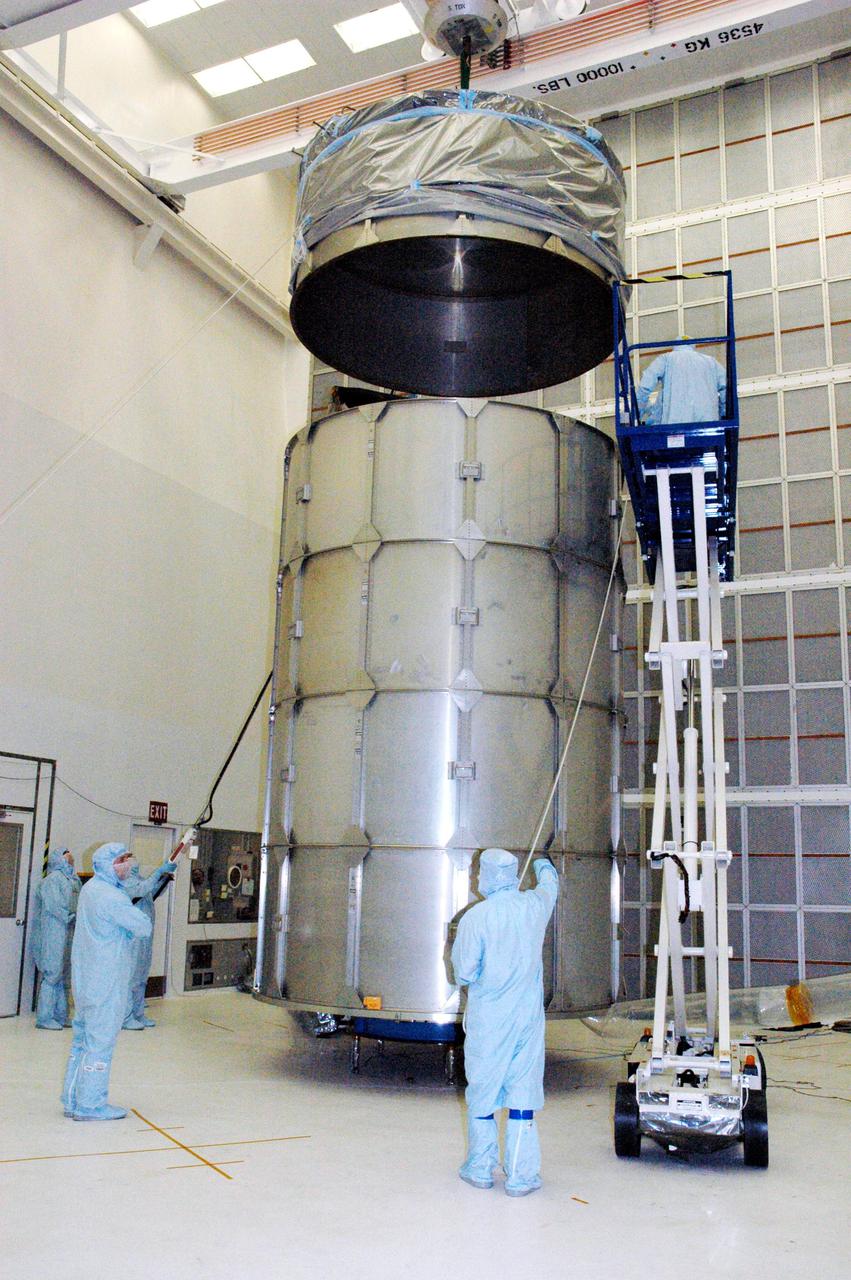
KENNEDY SPACE CENTER, FLA. - With four rows of payload transfer canister segments in place around the plastic-wrapped Swift spacecraft, Boeing technicians lower the top into place. The top holds an additional cover that will be lowered into place over the canister. The launch of the Swift observatory, a NASA spacecraft to pinpoint the location of gamma-ray bursts, is scheduled for Nov. 17 from Pad 17-A on CCAFS. Liftoff aboard a Boeing Delta II rocket is targeted at the opening of a one-hour launch window beginning at 12:09 p.m. EST. Gamma-ray bursts are distant, yet fleeting explosions that appear to signal the births of black holes. They are the most powerful explosions known in the universe, emitting more than 100 billion times the energy that the Sun emits in a year. Yet they last only from a few milliseconds to a few minutes, never to appear in the same spot again.
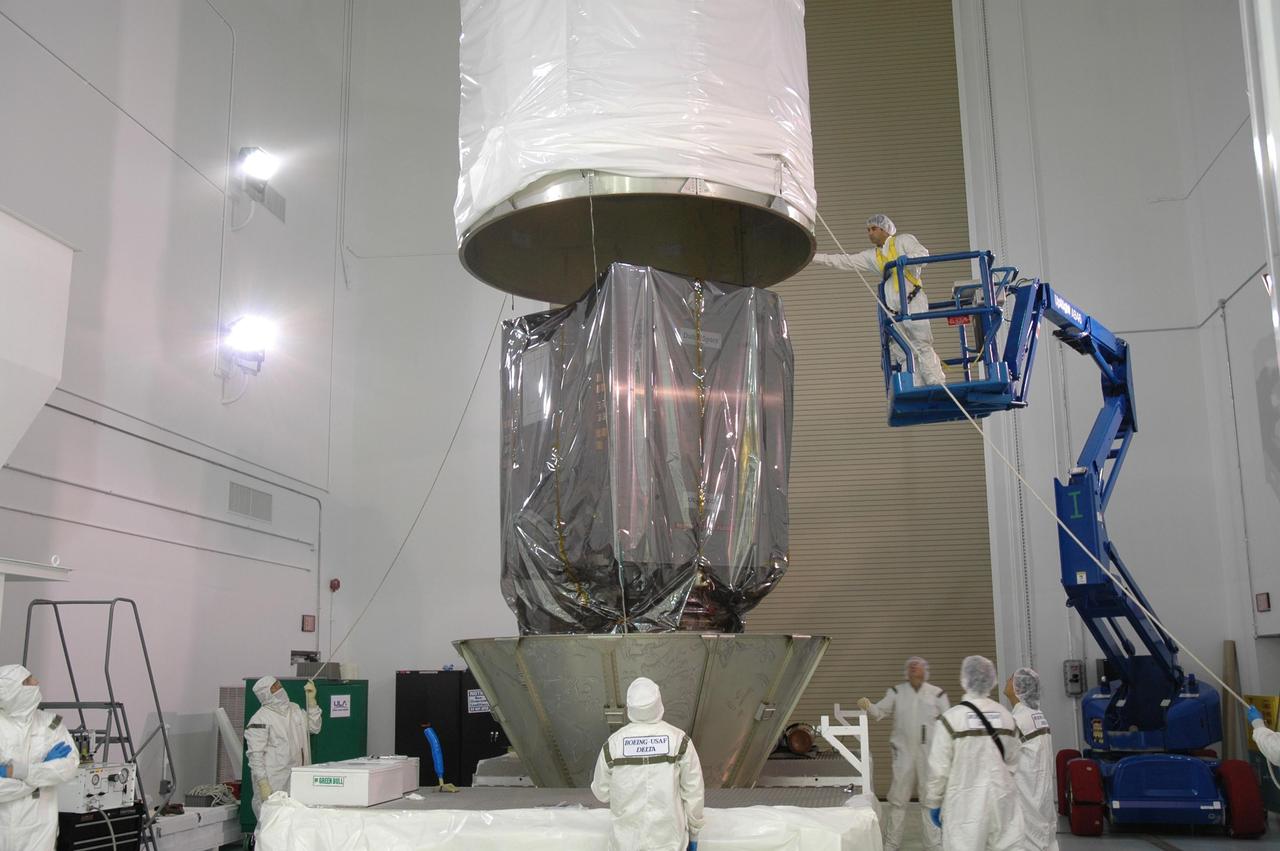
KENNEDY SPACE CENTER, FLA. -- At Astrotech Space Operations in Titusville, Fla., workers guide the upper transportation canister as it is lowered onto the Dawn spacecraft. The canister will be attached to the bottom segments already in place. The canister will protect the spacecraft and booster during transfer to Launch Pad 17-B at Cape Canaveral Air Force Station (CCAFS). During its nearly decade-long mission, the Dawn mission will study the asteroid Vesta and dwarf planet Ceres, celestial bodies believed to have accreted early in the history of the solar system. To carry out its scientific mission, the Dawn spacecraft will carry a visible camera, a visible and infrared mapping spectrometer, and a gamma ray and neutron spectrometer, whose data will be used in combination to characterize these bodies. In addition to the three instruments, radiometric and optical navigation data will provide data relating to the gravity field and thus bulk properties and internal structure of the two bodies. Data returned from the Dawn spacecraft could provide opportunities for significant breakthroughs in our knowledge of how the solar system formed. Launch via a Delta II rocket is scheduled in a window from 7:25 to 7:54 a.m. Sept. 26 from CCAFS. Photo credit: NASA/Jim Grossmann
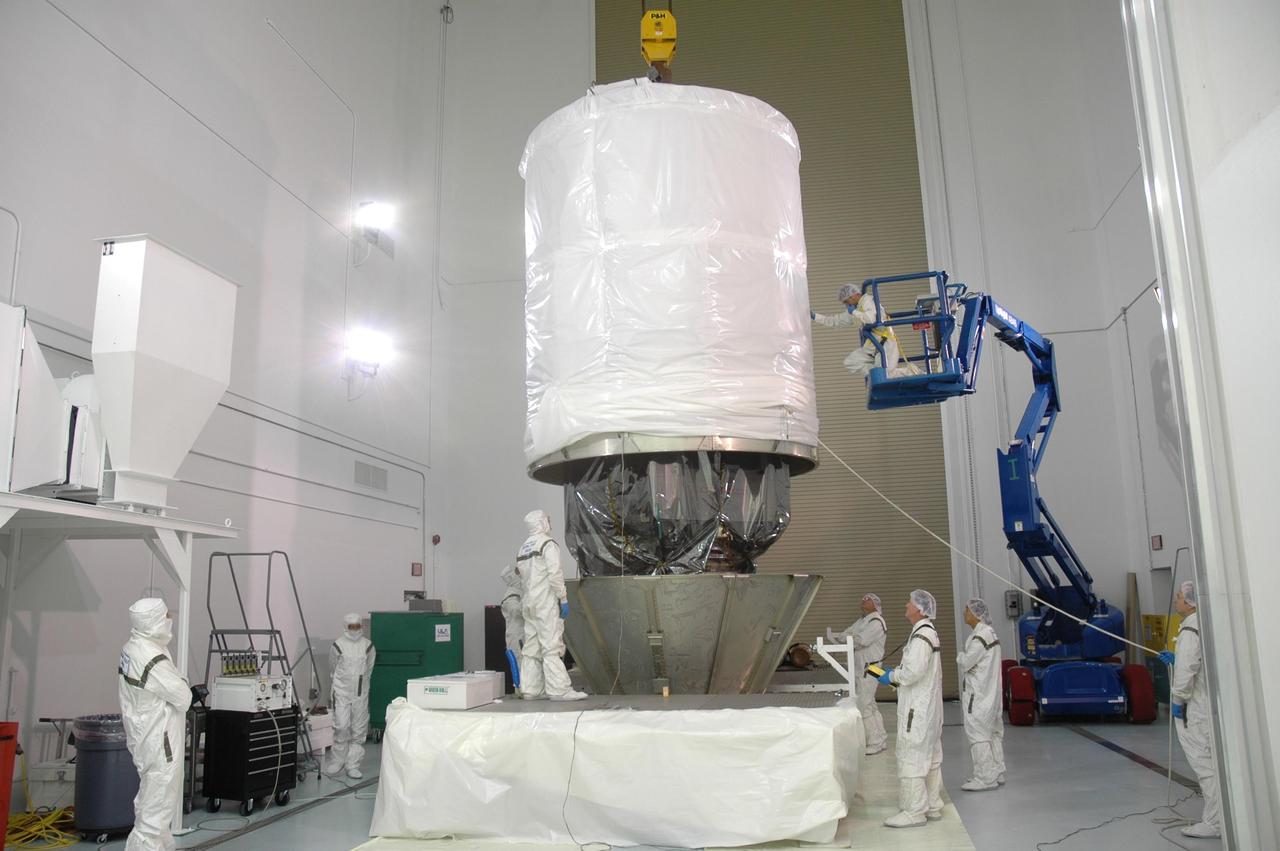
KENNEDY SPACE CENTER, FLA. -- At Astrotech Space Operations in Titusville, Fla., workers watch as the upper transportation canister is lowered over the Dawn spacecraft. The canister will be attached to the bottom segments already in place. The canister will protect the spacecraft and booster during transfer to Launch Pad 17-B at Cape Canaveral Air Force Station (CCAFS). During its nearly decade-long mission, the Dawn mission will study the asteroid Vesta and dwarf planet Ceres, celestial bodies believed to have accreted early in the history of the solar system. To carry out its scientific mission, the Dawn spacecraft will carry a visible camera, a visible and infrared mapping spectrometer, and a gamma ray and neutron spectrometer, whose data will be used in combination to characterize these bodies. In addition to the three instruments, radiometric and optical navigation data will provide data relating to the gravity field and thus bulk properties and internal structure of the two bodies. Data returned from the Dawn spacecraft could provide opportunities for significant breakthroughs in our knowledge of how the solar system formed. Launch via a Delta II rocket is scheduled in a window from 7:25 to 7:54 a.m. Sept. 26 from CCAFS. Photo credit: NASA/Jim Grossmann
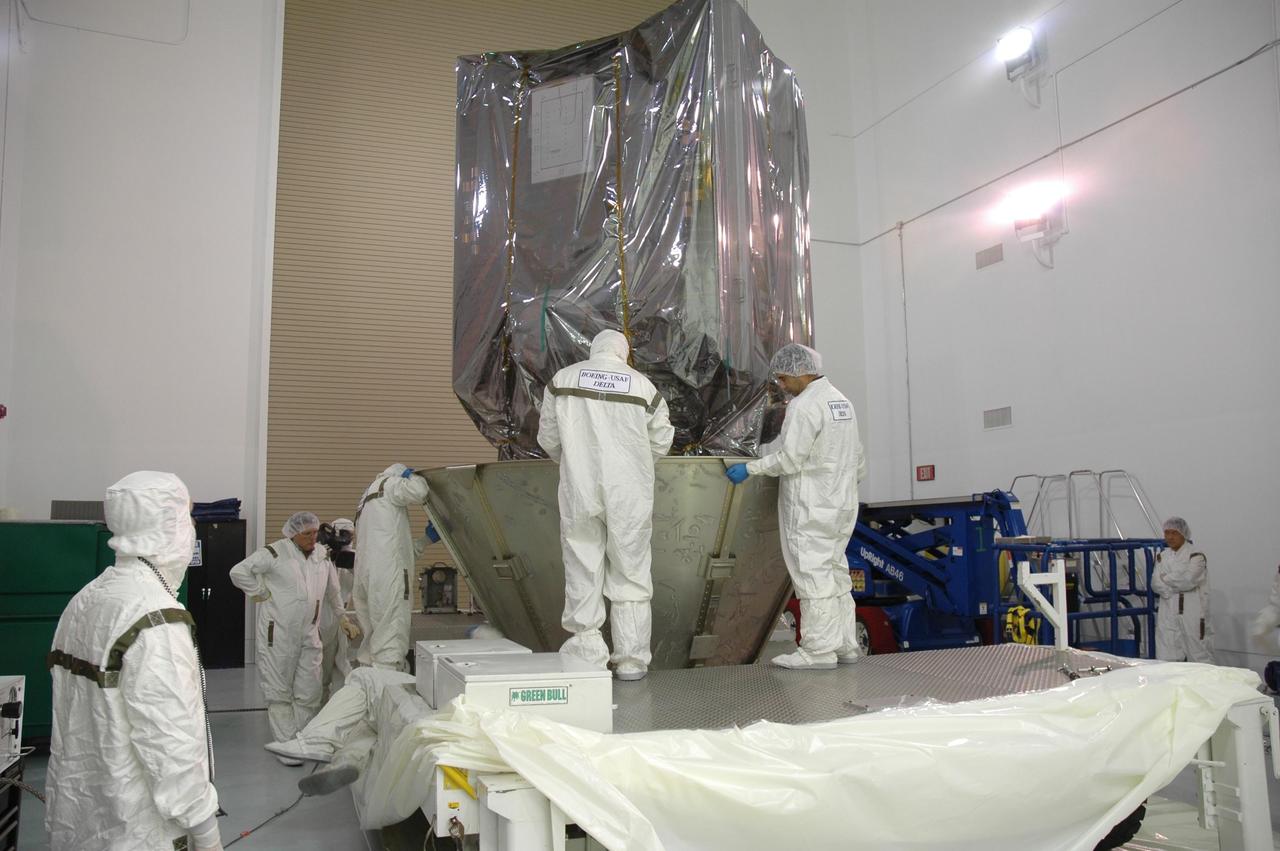
KENNEDY SPACE CENTER, FLA. -- At Astrotech Space Operations in Titusville, Fla., workers place the lower segments of the transportation canister around the upper stage booster beneath the Dawn spacecraft. The canister will protect the spacecraft and booster during transfer to Launch Pad 17-B at Cape Canaveral Air Force Station (CCAFS). During its nearly decade-long mission, the Dawn mission will study the asteroid Vesta and dwarf planet Ceres, celestial bodies believed to have accreted early in the history of the solar system. To carry out its scientific mission, the Dawn spacecraft will carry a visible camera, a visible and infrared mapping spectrometer, and a gamma ray and neutron spectrometer, whose data will be used in combination to characterize these bodies. In addition to the three instruments, radiometric and optical navigation data will provide data relating to the gravity field and thus bulk properties and internal structure of the two bodies. Data returned from the Dawn spacecraft could provide opportunities for significant breakthroughs in our knowledge of how the solar system formed. Launch via a Delta II rocket is scheduled in a window from 7:25 to 7:54 a.m. Sept. 26 from CCAFS. Photo credit: NASA/Jim Grossmann
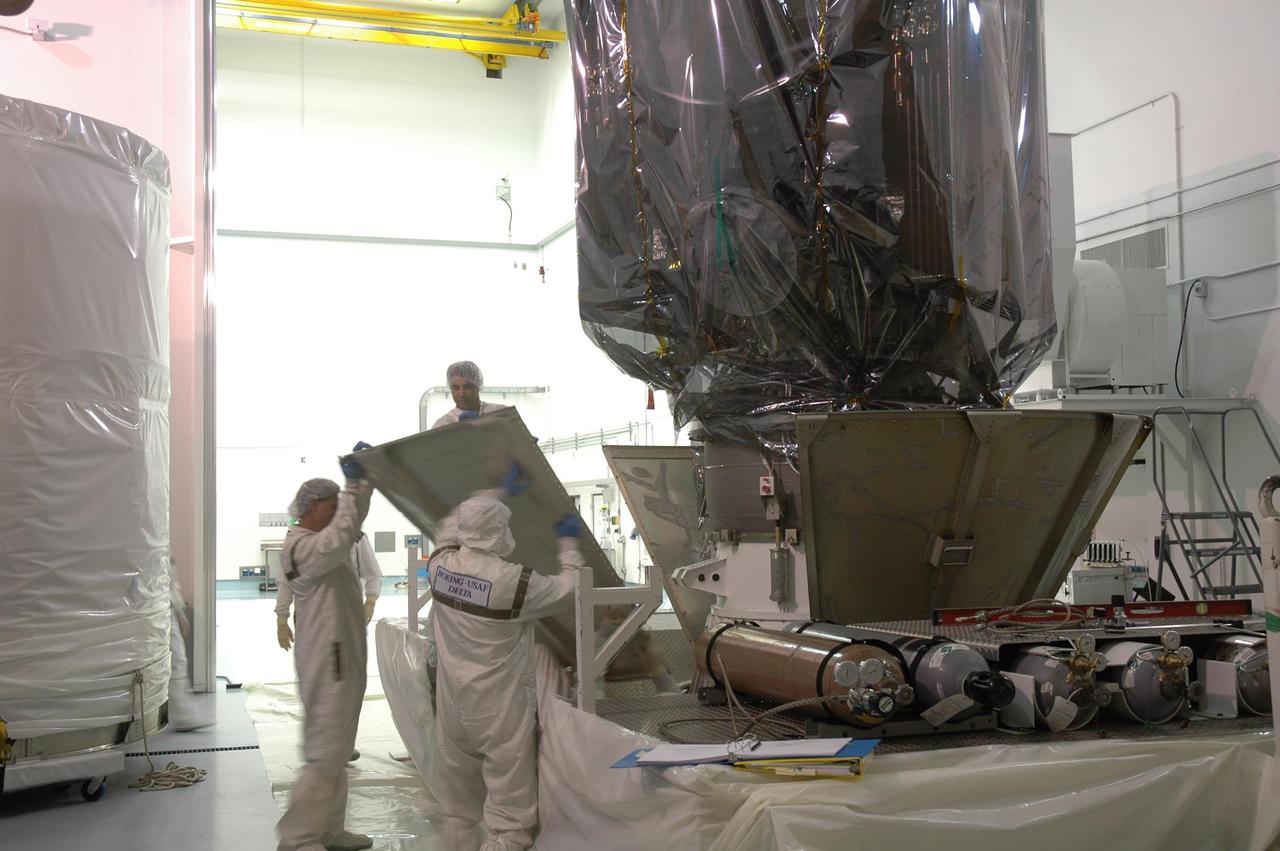
KENNEDY SPACE CENTER, FLA. -- At Astrotech Space Operations in Titusville, Fla., workers place another segment of the transportation canister around the upper stage booster beneath the Dawn spacecraft. The canister will protect the spacecraft and booster during transfer to Launch Pad 17-B at Cape Canaveral Air Force Station (CCAFS). During its nearly decade-long mission, the Dawn mission will study the asteroid Vesta and dwarf planet Ceres, celestial bodies believed to have accreted early in the history of the solar system. To carry out its scientific mission, the Dawn spacecraft will carry a visible camera, a visible and infrared mapping spectrometer, and a gamma ray and neutron spectrometer, whose data will be used in combination to characterize these bodies. In addition to the three instruments, radiometric and optical navigation data will provide data relating to the gravity field and thus bulk properties and internal structure of the two bodies. Data returned from the Dawn spacecraft could provide opportunities for significant breakthroughs in our knowledge of how the solar system formed. Launch via a Delta II rocket is scheduled in a window from 7:25 to 7:54 a.m. Sept. 26 from CCAFS. Photo credit: NASA/Jim Grossmann
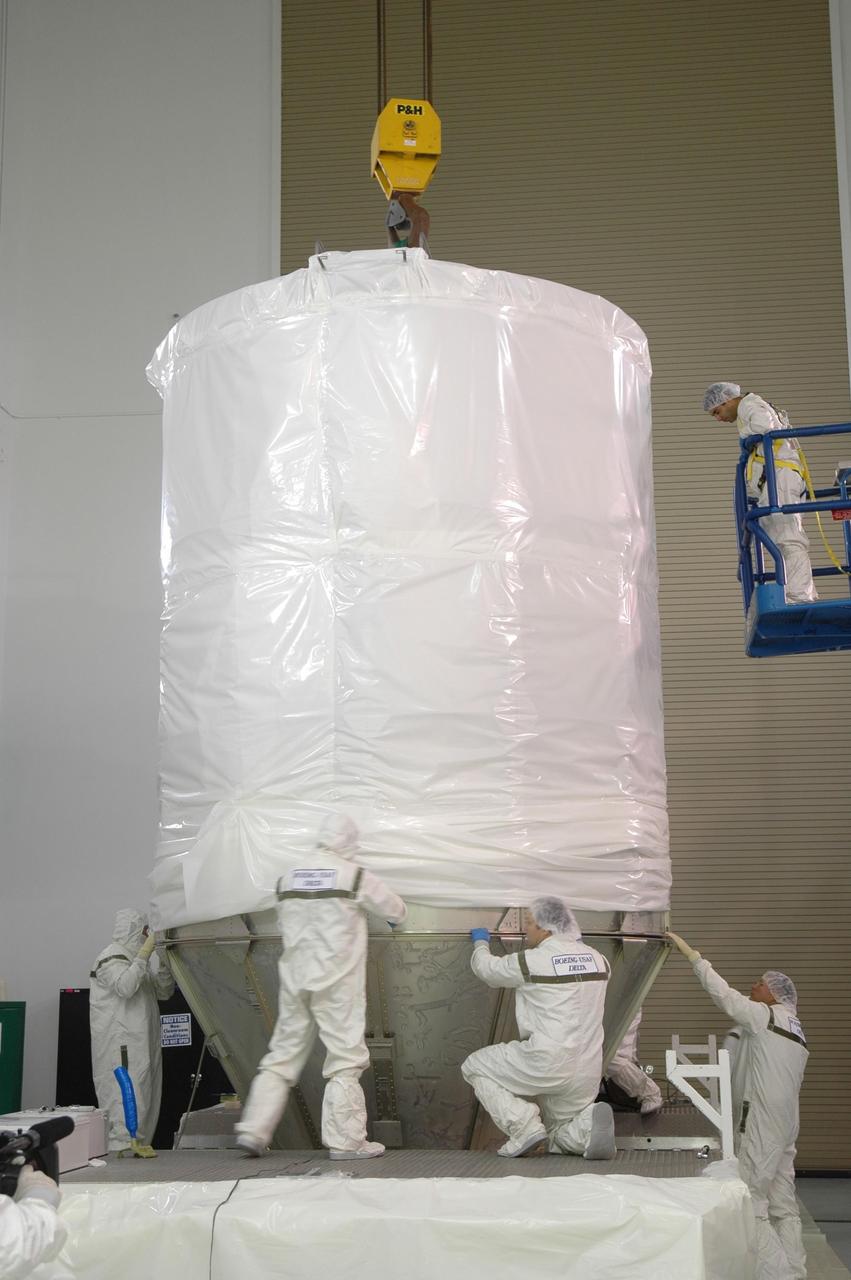
KENNEDY SPACE CENTER, FLA. -- At Astrotech Space Operations in Titusville, Fla., workers ensure the upper transportation canister is securely attached to the lower segments. The canister will protect the spacecraft and booster during transfer to Launch Pad 17-B at Cape Canaveral Air Force Station (CCAFS). During its nearly decade-long mission, the Dawn mission will study the asteroid Vesta and dwarf planet Ceres, celestial bodies believed to have accreted early in the history of the solar system. To carry out its scientific mission, the Dawn spacecraft will carry a visible camera, a visible and infrared mapping spectrometer, and a gamma ray and neutron spectrometer, whose data will be used in combination to characterize these bodies. In addition to the three instruments, radiometric and optical navigation data will provide data relating to the gravity field and thus bulk properties and internal structure of the two bodies. Data returned from the Dawn spacecraft could provide opportunities for significant breakthroughs in our knowledge of how the solar system formed. Launch via a Delta II rocket is scheduled in a window from 7:25 to 7:54 a.m. Sept. 26 from CCAFS. Photo credit: NASA/Jim Grossmann
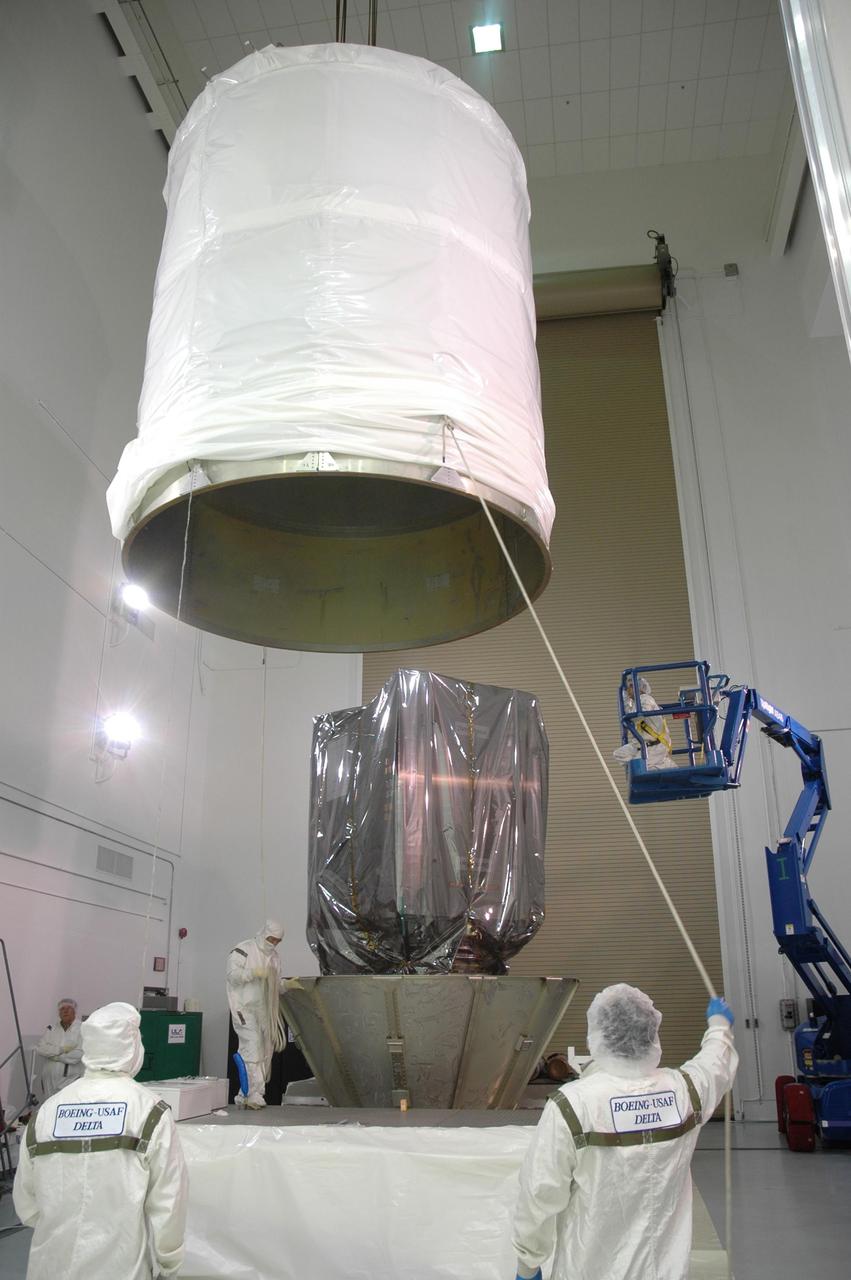
KENNEDY SPACE CENTER, FLA. -- At Astrotech Space Operations in Titusville, Fla., workers guide the upper transportation canister toward the Dawn spacecraft in the background. The canister will be lowered onto the lower segments and attached. The canister will protect the spacecraft and booster during transfer to Launch Pad 17-B at Cape Canaveral Air Force Station (CCAFS). During its nearly decade-long mission, the Dawn mission will study the asteroid Vesta and dwarf planet Ceres, celestial bodies believed to have accreted early in the history of the solar system. To carry out its scientific mission, the Dawn spacecraft will carry a visible camera, a visible and infrared mapping spectrometer, and a gamma ray and neutron spectrometer, whose data will be used in combination to characterize these bodies. In addition to the three instruments, radiometric and optical navigation data will provide data relating to the gravity field and thus bulk properties and internal structure of the two bodies. Data returned from the Dawn spacecraft could provide opportunities for significant breakthroughs in our knowledge of how the solar system formed. Launch via a Delta II rocket is scheduled in a window from 7:25 to 7:54 a.m. Sept. 26 from CCAFS. Photo credit: NASA/Jim Grossmann
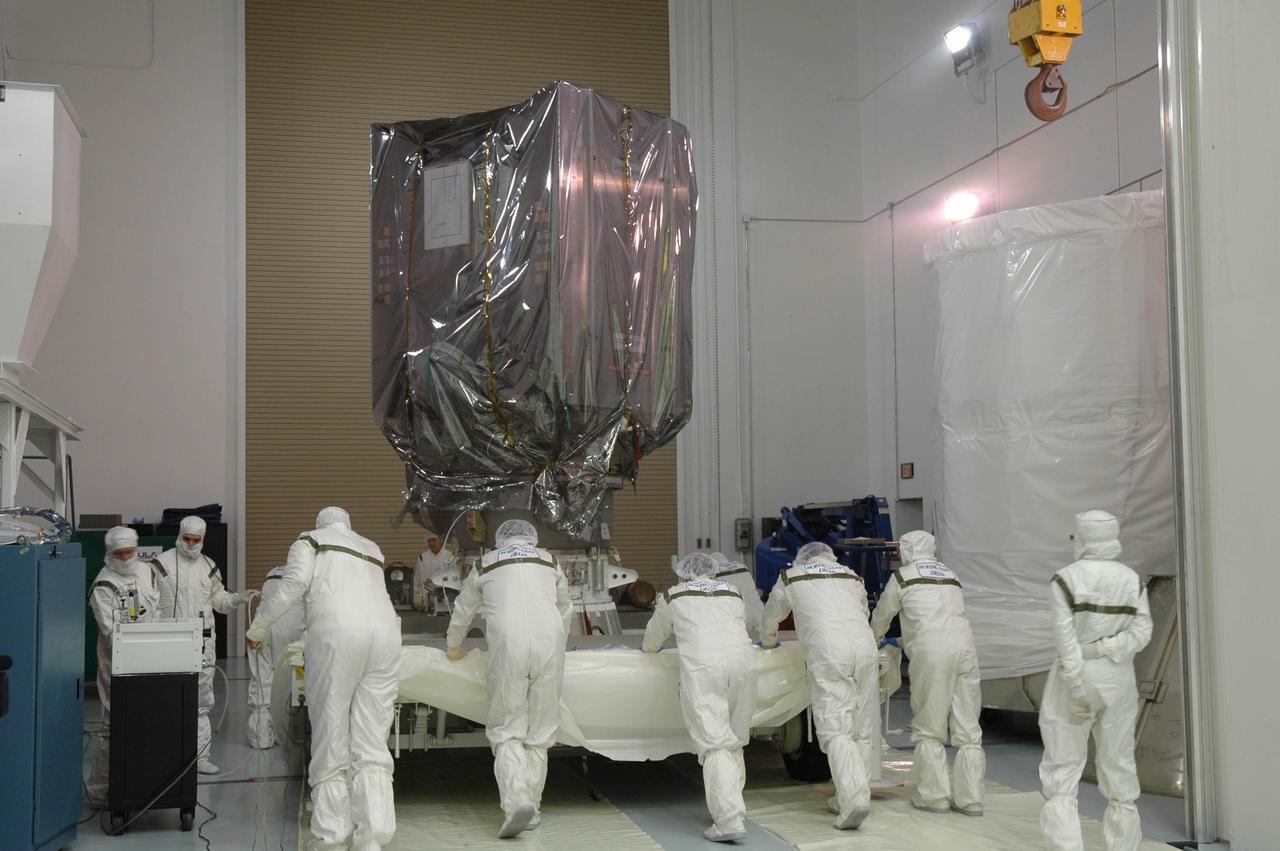
KENNEDY SPACE CENTER, FLA. -- At Astrotech Space Operations in Titusville, Fla., workers move the platform with the Dawn spacecraft. They are preparing to install the transportation canister around Dawn for transfer to Launch Pad 17-B at Cape Canaveral Air Force Station (CCAFS). During its nearly decade-long mission, the Dawn mission will study the asteroid Vesta and dwarf planet Ceres, celestial bodies believed to have accreted early in the history of the solar system. To carry out its scientific mission, the Dawn spacecraft will carry a visible camera, a visible and infrared mapping spectrometer, and a gamma ray and neutron spectrometer, whose data will be used in combination to characterize these bodies. In addition to the three instruments, radiometric and optical navigation data will provide data relating to the gravity field and thus bulk properties and internal structure of the two bodies. Data returned from the Dawn spacecraft could provide opportunities for significant breakthroughs in our knowledge of how the solar system formed. Launch via a Delta II rocket is scheduled in a window from 7:25 to 7:54 a.m. Sept. 26 from CCAFS. Photo credit: NASA/Jim Grossmann
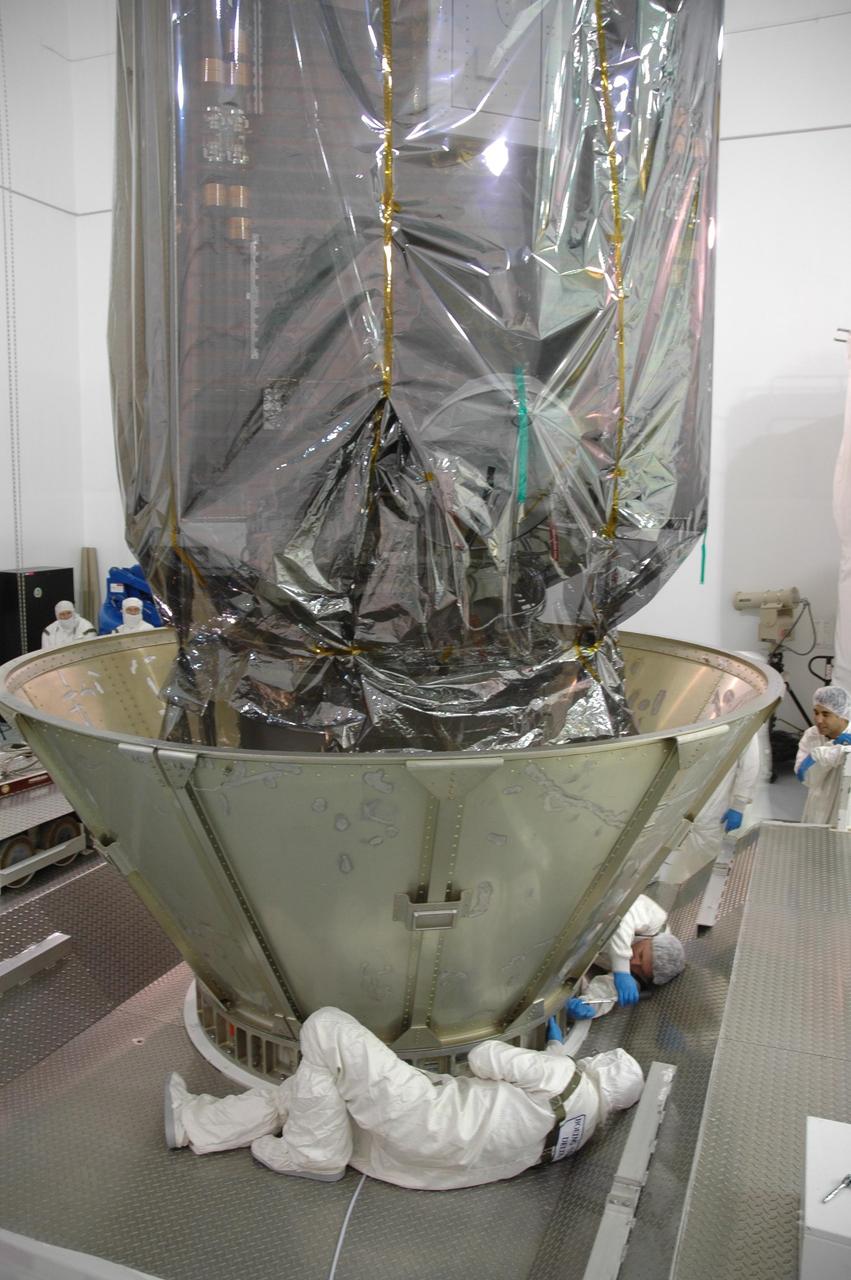
KENNEDY SPACE CENTER, FLA. -- At Astrotech Space Operations in Titusville, Fla., workers check the fitting on the lower transportation canister segments in place around the upper stage booster beneath the Dawn spacecraft. The canister will protect the spacecraft and booster during transfer to Launch Pad 17-B at Cape Canaveral Air Force Station (CCAFS). During its nearly decade-long mission, the Dawn mission will study the asteroid Vesta and dwarf planet Ceres, celestial bodies believed to have accreted early in the history of the solar system. To carry out its scientific mission, the Dawn spacecraft will carry a visible camera, a visible and infrared mapping spectrometer, and a gamma ray and neutron spectrometer, whose data will be used in combination to characterize these bodies. In addition to the three instruments, radiometric and optical navigation data will provide data relating to the gravity field and thus bulk properties and internal structure of the two bodies. Data returned from the Dawn spacecraft could provide opportunities for significant breakthroughs in our knowledge of how the solar system formed. Launch via a Delta II rocket is scheduled in a window from 7:25 to 7:54 a.m. Sept. 26 from CCAFS. Photo credit: NASA/Jim Grossmann
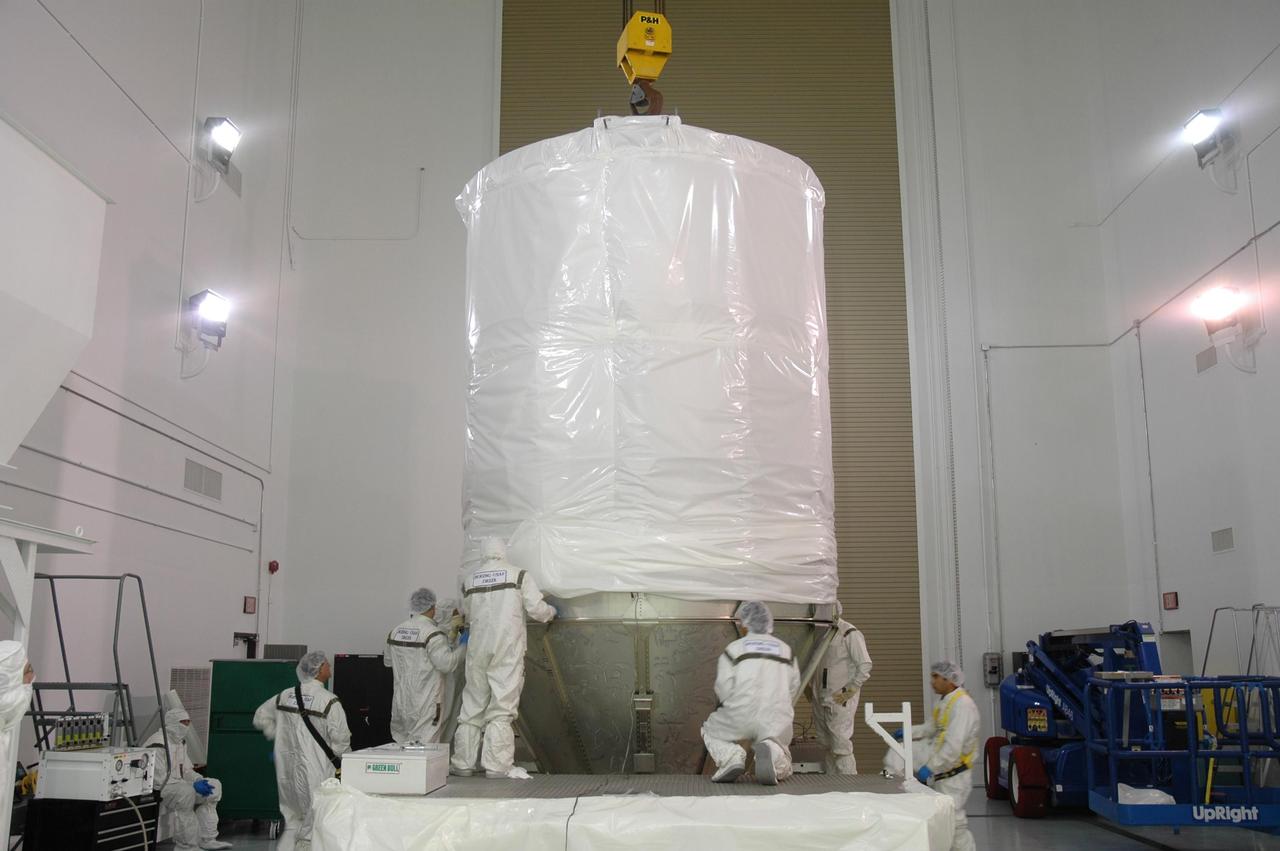
KENNEDY SPACE CENTER, FLA. -- At Astrotech Space Operations in Titusville, Fla., workers ensure the upper transportation canister is securely attached to the lower segments. The transportation canister will protect the spacecraft and booster during transfer to Launch Pad 17-B at Cape Canaveral Air Force Station (CCAFS). During its nearly decade-long mission, the Dawn mission will study the asteroid Vesta and dwarf planet Ceres, celestial bodies believed to have accreted early in the history of the solar system. To carry out its scientific mission, the Dawn spacecraft will carry a visible camera, a visible and infrared mapping spectrometer, and a gamma ray and neutron spectrometer, whose data will be used in combination to characterize these bodies. In addition to the three instruments, radiometric and optical navigation data will provide data relating to the gravity field and thus bulk properties and internal structure of the two bodies. Data returned from the Dawn spacecraft could provide opportunities for significant breakthroughs in our knowledge of how the solar system formed. Launch via a Delta II rocket is scheduled in a window from 7:25 to 7:54 a.m. Sept. 26 from CCAFS. Photo credit: NASA/Jim Grossmann

KENNEDY SPACE CENTER, FLA. -- On Launch Pad 17-B at Cape Canaveral Air Force Station, the Dawn spacecraft is lowered toward the awaiting Delta II rocket in the mobile service tower. Dawn will be mated with the Delta in preparation for launch. Dawn is scheduled for launch in a window from 7:25 to 7:54 a.m. Sept. 26 from CCAFS. During its nearly decade-long mission, the Dawn mission will study the asteroid Vesta and dwarf planet Ceres, celestial bodies believed to have accreted early in the history of the solar system. To carry out its scientific mission, the Dawn spacecraft will carry a visible camera, a visible and infrared mapping spectrometer, and a gamma ray and neutron spectrometer, whose data will be used in combination to characterize these bodies. In addition to the three instruments, radiometric and optical navigation data will provide data relating to the gravity field and thus bulk properties and internal structure of the two bodies. Data returned from the Dawn spacecraft could provide opportunities for significant breakthroughs in our knowledge of how the solar system formed. Photo credit: NASA/Jack Pfaller

KENNEDY SPACE CENTER, FLA. -- On Launch Pad 17-B at Cape Canaveral Air Force Station, workers in the mobile service tower keep watch as the Dawn spacecraft is lowered toward the awaiting Delta II rocket. Dawn will be mated with the Delta in preparation for launch. Dawn is scheduled for launch in a window from 7:25 to 7:54 a.m. Sept. 26 from CCAFS. During its nearly decade-long mission, the Dawn mission will study the asteroid Vesta and dwarf planet Ceres, celestial bodies believed to have accreted early in the history of the solar system. To carry out its scientific mission, the Dawn spacecraft will carry a visible camera, a visible and infrared mapping spectrometer, and a gamma ray and neutron spectrometer, whose data will be used in combination to characterize these bodies. In addition to the three instruments, radiometric and optical navigation data will provide data relating to the gravity field and thus bulk properties and internal structure of the two bodies. Data returned from the Dawn spacecraft could provide opportunities for significant breakthroughs in our knowledge of how the solar system formed. Photo credit: NASA/Jack Pfaller
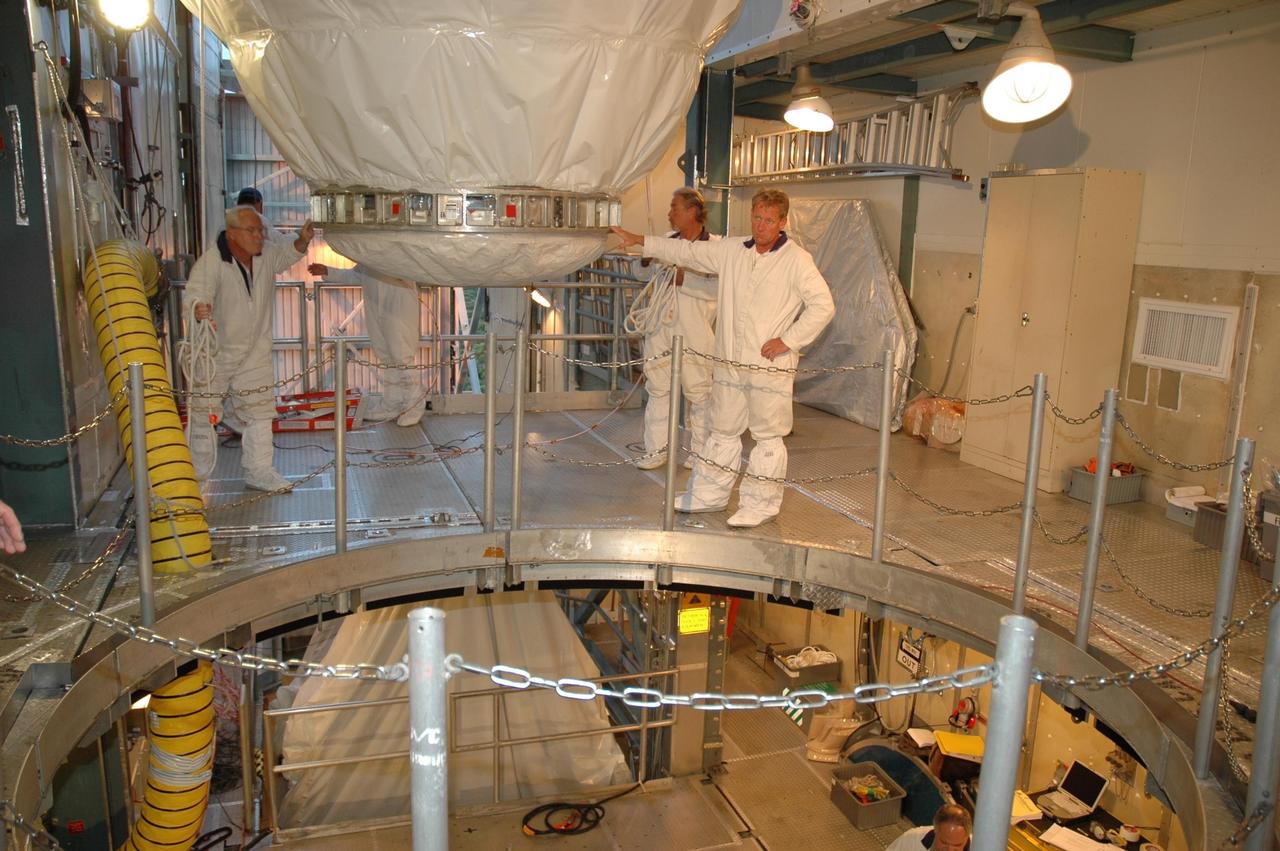
KENNEDY SPACE CENTER, FLA. -- On Launch Pad 17-B at Cape Canaveral Air Force Station, the Dawn spacecraft is moved toward the opening above the Delta II rocket in the mobile service tower. Dawn will be mated with the Delta in preparation for launch. Dawn is scheduled for launch in a window from 7:25 to 7:54 a.m. Sept. 26 from CCAFS. During its nearly decade-long mission, the Dawn mission will study the asteroid Vesta and dwarf planet Ceres, celestial bodies believed to have accreted early in the history of the solar system. To carry out its scientific mission, the Dawn spacecraft will carry a visible camera, a visible and infrared mapping spectrometer, and a gamma ray and neutron spectrometer, whose data will be used in combination to characterize these bodies. In addition to the three instruments, radiometric and optical navigation data will provide data relating to the gravity field and thus bulk properties and internal structure of the two bodies. Data returned from the Dawn spacecraft could provide opportunities for significant breakthroughs in our knowledge of how the solar system formed. Photo credit: NASA/Jack Pfaller

KENNEDY SPACE CENTER, FLA. -- In the mobile service tower on Launch Pad 17-B at Cape Canaveral Air Force Station, workers remove the transportation canister from around the Dawn spacecraft. After removal of the canister, Dawn will be mated with the waiting Delta II rocket. Dawn is scheduled for launch in a window from 7:25 to 7:54 a.m. EDT Sept. 26 from CCAFS. During its nearly decade-long mission, the Dawn mission will study the asteroid Vesta and dwarf planet Ceres, celestial bodies believed to have accreted early in the history of the solar system. To carry out its scientific mission, the Dawn spacecraft will carry a visible camera, a visible and infrared mapping spectrometer, and a gamma ray and neutron spectrometer, whose data will be used in combination to characterize these bodies. In addition to the three instruments, radiometric and optical navigation data will provide data relating to the gravity field and thus bulk properties and internal structure of the two bodies. Data returned from the Dawn spacecraft could provide opportunities for significant breakthroughs in our knowledge of how the solar system formed. Photo credit: NASA/Jim Grossmann
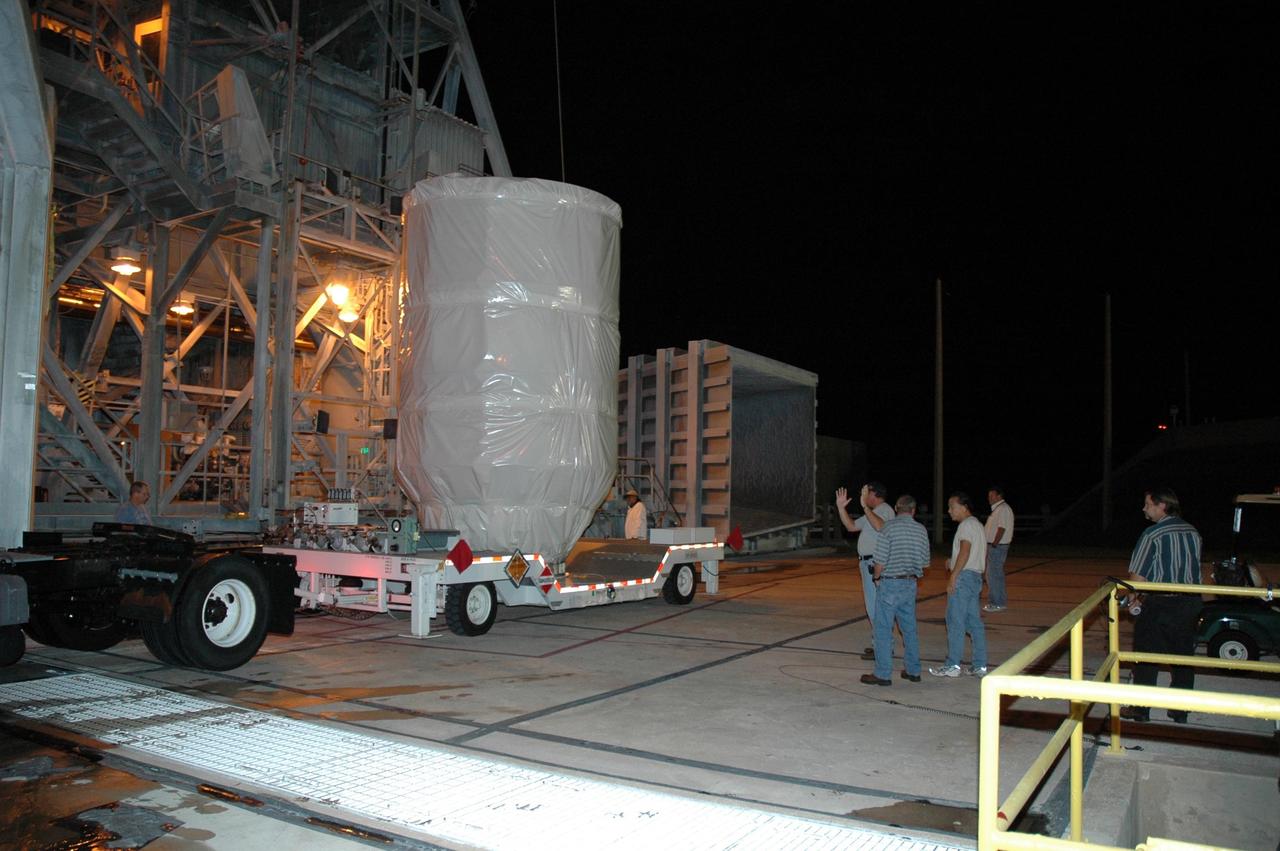
KENNEDY SPACE CENTER, FLA. -- The Dawn spacecraft arrives on Launch Pad 17-B at Cape Canaveral Air Force Station. At the pad, Dawn will be lifted into the mobile service tower and prepared for mating with the awaiting Delta II rocket. Dawn is scheduled for launch in a window from 7:25 to 7:54 a.m. Sept. 26 from CCAFS. During its nearly decade-long mission, the Dawn mission will study the asteroid Vesta and dwarf planet Ceres, celestial bodies believed to have accreted early in the history of the solar system. To carry out its scientific mission, the Dawn spacecraft will carry a visible camera, a visible and infrared mapping spectrometer, and a gamma ray and neutron spectrometer, whose data will be used in combination to characterize these bodies. In addition to the three instruments, radiometric and optical navigation data will provide data relating to the gravity field and thus bulk properties and internal structure of the two bodies. Data returned from the Dawn spacecraft could provide opportunities for significant breakthroughs in our knowledge of how the solar system formed. Photo credit: NASA/Jack Pfaller
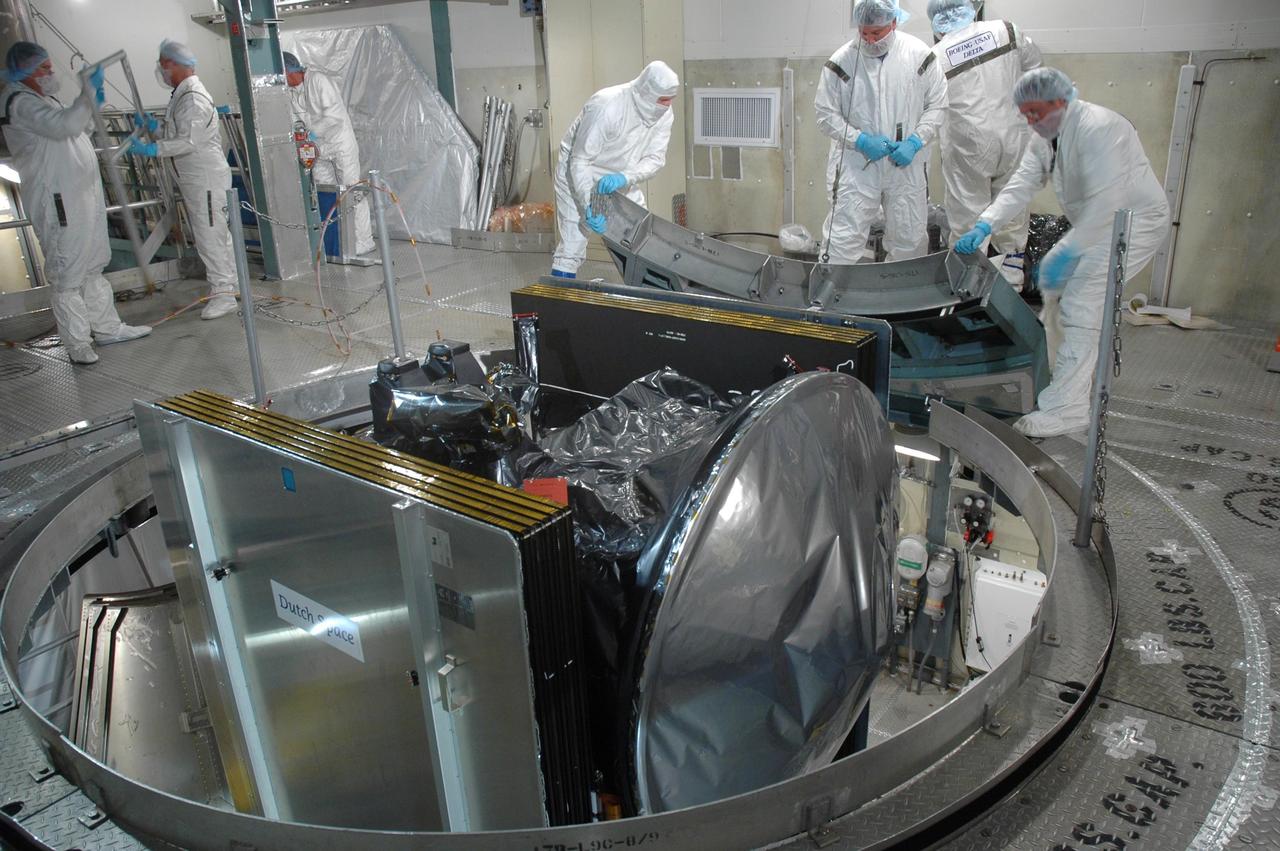
KENNEDY SPACE CENTER, FLA. -- In the mobile service tower on Launch Pad 17-B at Cape Canaveral Air Force Station, workers remove the lower segments of the transportation canister away from the Dawn spacecraft. After removal of the canister, Dawn will be mated with the waiting Delta II rocket. Dawn is scheduled for launch in a window from 7:25 to 7:54 a.m. EDT Sept. 26 from CCAFS. During its nearly decade-long mission, the Dawn mission will study the asteroid Vesta and dwarf planet Ceres, celestial bodies believed to have accreted early in the history of the solar system. To carry out its scientific mission, the Dawn spacecraft will carry a visible camera, a visible and infrared mapping spectrometer, and a gamma ray and neutron spectrometer, whose data will be used in combination to characterize these bodies. In addition to the three instruments, radiometric and optical navigation data will provide data relating to the gravity field and thus bulk properties and internal structure of the two bodies. Data returned from the Dawn spacecraft could provide opportunities for significant breakthroughs in our knowledge of how the solar system formed. Photo credit: NASA/Jim Grossmann
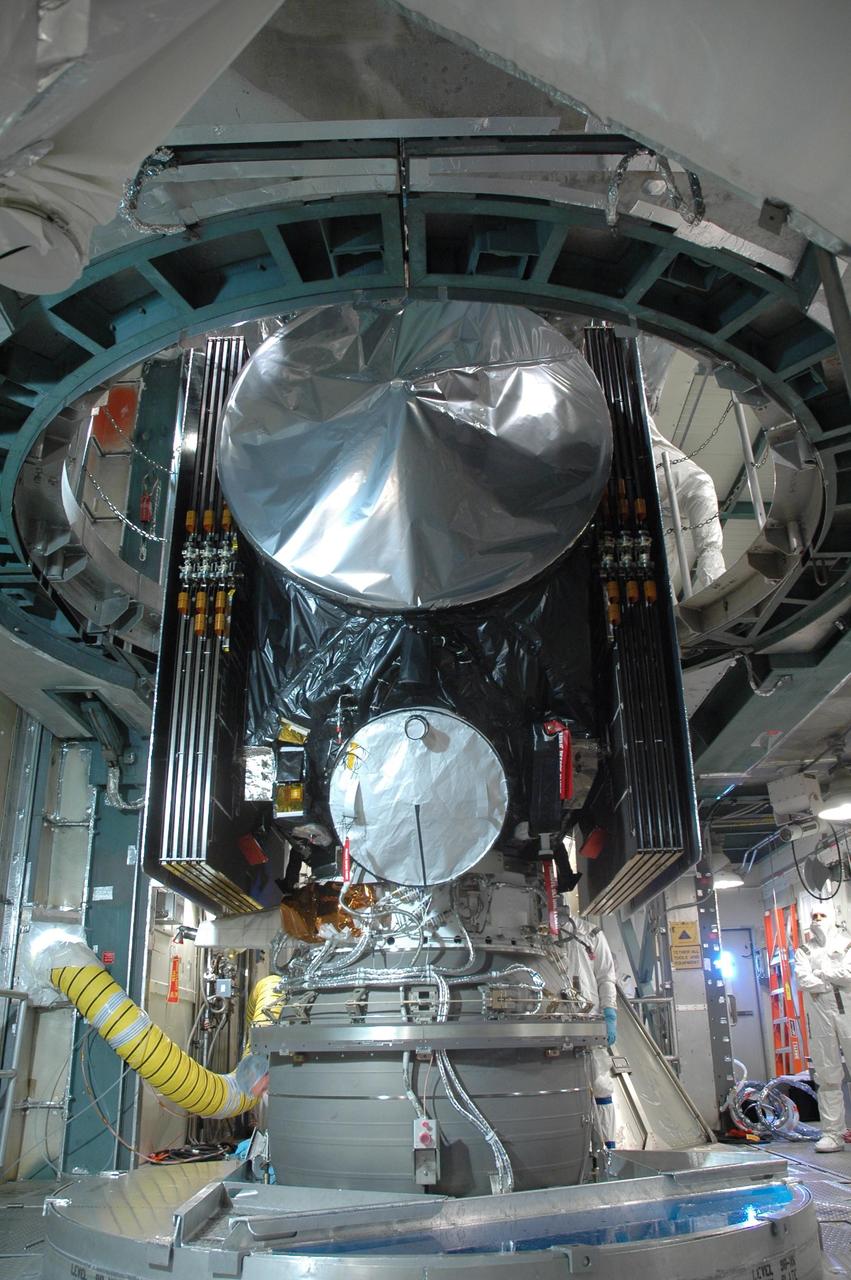
KENNEDY SPACE CENTER, FLA. -- In the mobile service tower on Launch Pad 17-B at Cape Canaveral Air Force Station, the upper transportation canister is lifted away from the Dawn spacecraft. After removal of the canister, Dawn will be mated with the waiting Delta II rocket. Dawn is scheduled for launch in a window from 7:25 to 7:54 a.m. EDT Sept. 26 from CCAFS. During its nearly decade-long mission, the Dawn mission will study the asteroid Vesta and dwarf planet Ceres, celestial bodies believed to have accreted early in the history of the solar system. To carry out its scientific mission, the Dawn spacecraft will carry a visible camera, a visible and infrared mapping spectrometer, and a gamma ray and neutron spectrometer, whose data will be used in combination to characterize these bodies. In addition to the three instruments, radiometric and optical navigation data will provide data relating to the gravity field and thus bulk properties and internal structure of the two bodies. Data returned from the Dawn spacecraft could provide opportunities for significant breakthroughs in our knowledge of how the solar system formed. Photo credit: NASA/Jim Grossmann
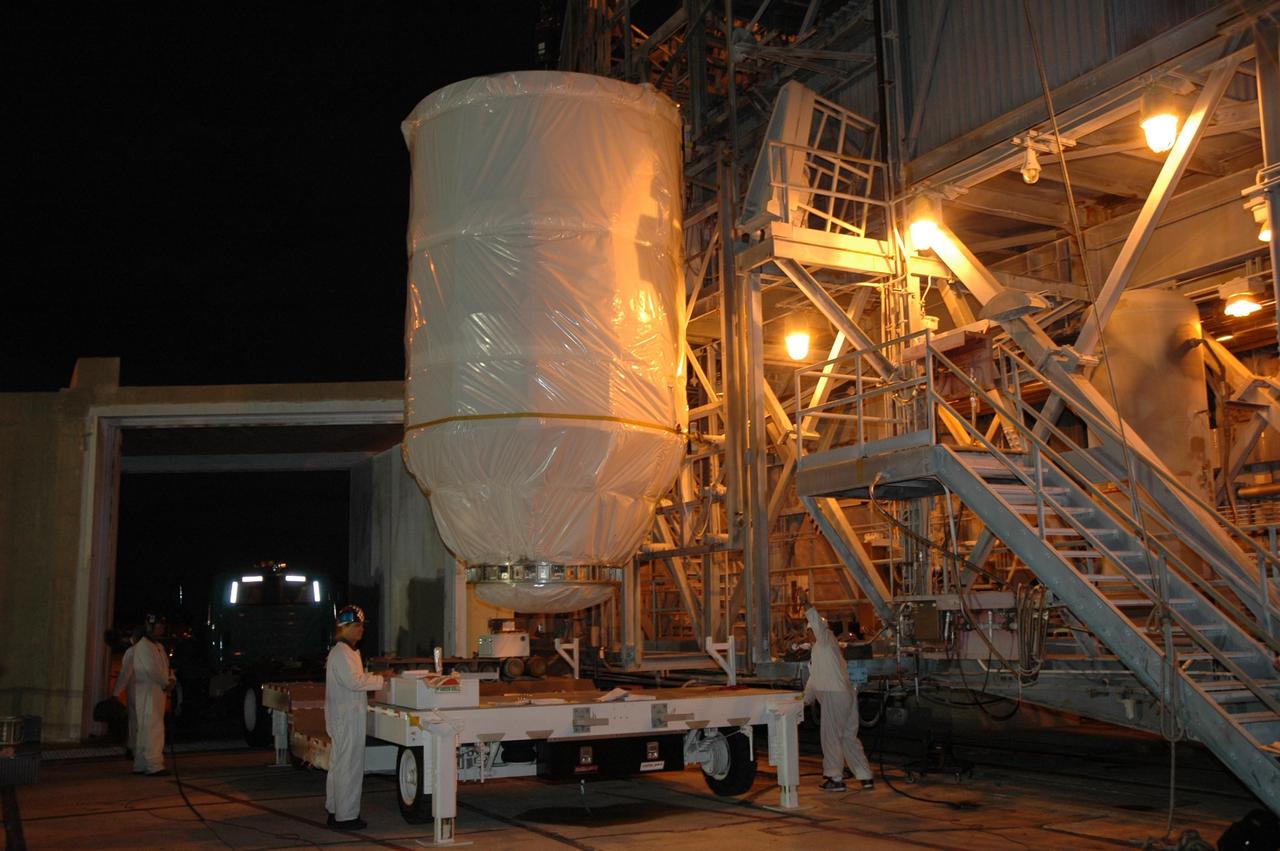
KENNEDY SPACE CENTER, FLA. -- On Launch Pad 17-B at Cape Canaveral Air Force Station, the Dawn spacecraft is lifted off its transporter. Dawn will be lifted into the mobile service tower and prepared for mating with the awaiting Delta II rocket.Dawn is scheduled for launch in a window from 7:25 to 7:54 a.m. Sept. 26 from CCAFS. During its nearly decade-long mission, the Dawn mission will study the asteroid Vesta and dwarf planet Ceres, celestial bodies believed to have accreted early in the history of the solar system. To carry out its scientific mission, the Dawn spacecraft will carry a visible camera, a visible and infrared mapping spectrometer, and a gamma ray and neutron spectrometer, whose data will be used in combination to characterize these bodies. In addition to the three instruments, radiometric and optical navigation data will provide data relating to the gravity field and thus bulk properties and internal structure of the two bodies. Data returned from the Dawn spacecraft could provide opportunities for significant breakthroughs in our knowledge of how the solar system formed. Photo credit: NASA/Jack Pfaller
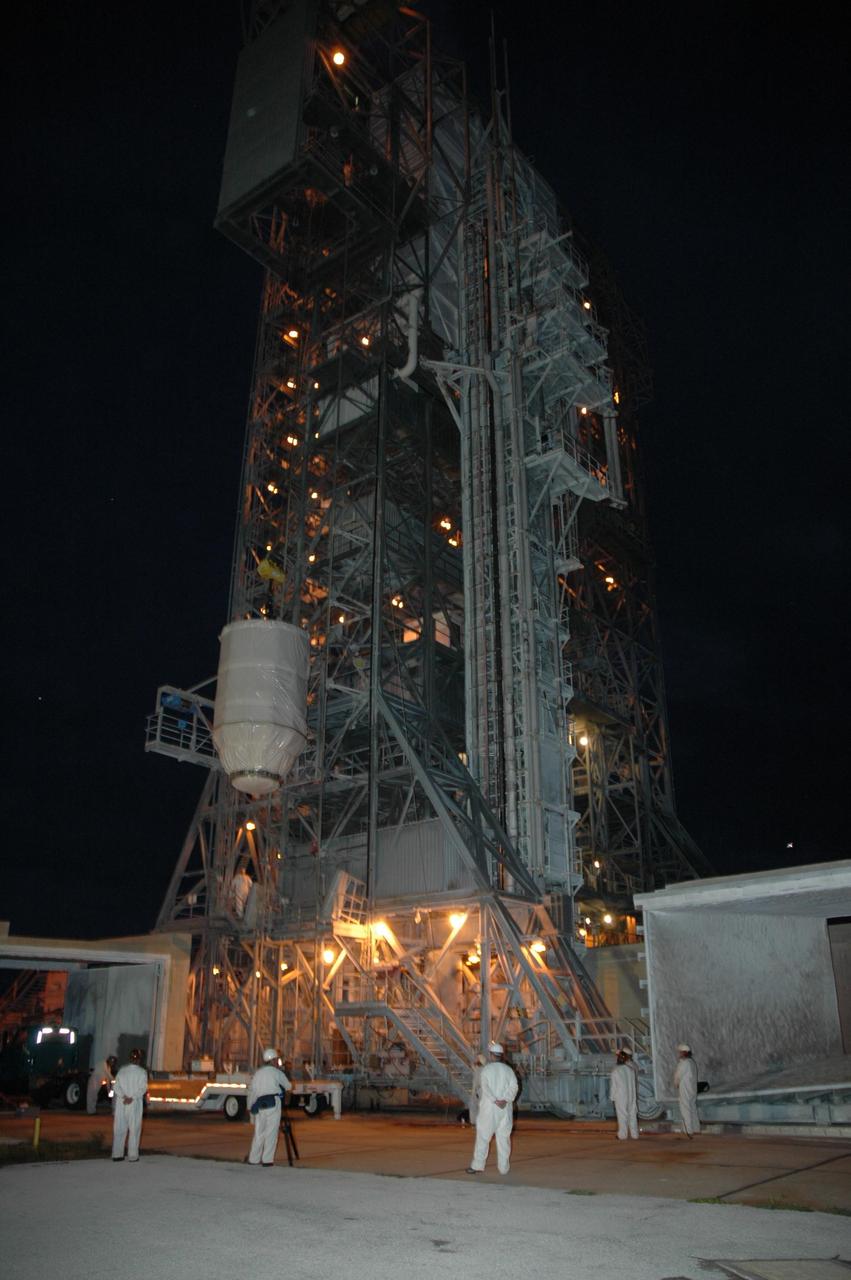
KENNEDY SPACE CENTER, FLA. -- On Launch Pad 17-B at Cape Canaveral Air Force Station, the Dawn spacecraft is lifted alongside the mobile service tower. At the top, Dawn will be prepared for mating with the awaiting Delta II rocket. Dawn is scheduled for launch in a window from 7:25 to 7:54 a.m. Sept. 26 from CCAFS. During its nearly decade-long mission, the Dawn mission will study the asteroid Vesta and dwarf planet Ceres, celestial bodies believed to have accreted early in the history of the solar system. To carry out its scientific mission, the Dawn spacecraft will carry a visible camera, a visible and infrared mapping spectrometer, and a gamma ray and neutron spectrometer, whose data will be used in combination to characterize these bodies. In addition to the three instruments, radiometric and optical navigation data will provide data relating to the gravity field and thus bulk properties and internal structure of the two bodies. Data returned from the Dawn spacecraft could provide opportunities for significant breakthroughs in our knowledge of how the solar system formed. Photo credit: NASA/Jack Pfaller

KENNEDY SPACE CENTER, FLA. -- On Launch Pad 17-B at Cape Canaveral Air Force Station, the Dawn spacecraft arrives at the upper level of the mobile service tower. It will be moved inside and prepared for mating with the awaiting Delta II rocket. Dawn is scheduled for launch in a window from 7:25 to 7:54 a.m. Sept. 26 from CCAFS. During its nearly decade-long mission, the Dawn mission will study the asteroid Vesta and dwarf planet Ceres, celestial bodies believed to have accreted early in the history of the solar system. To carry out its scientific mission, the Dawn spacecraft will carry a visible camera, a visible and infrared mapping spectrometer, and a gamma ray and neutron spectrometer, whose data will be used in combination to characterize these bodies. In addition to the three instruments, radiometric and optical navigation data will provide data relating to the gravity field and thus bulk properties and internal structure of the two bodies. Data returned from the Dawn spacecraft could provide opportunities for significant breakthroughs in our knowledge of how the solar system formed. Photo credit: NASA/Jack Pfaller
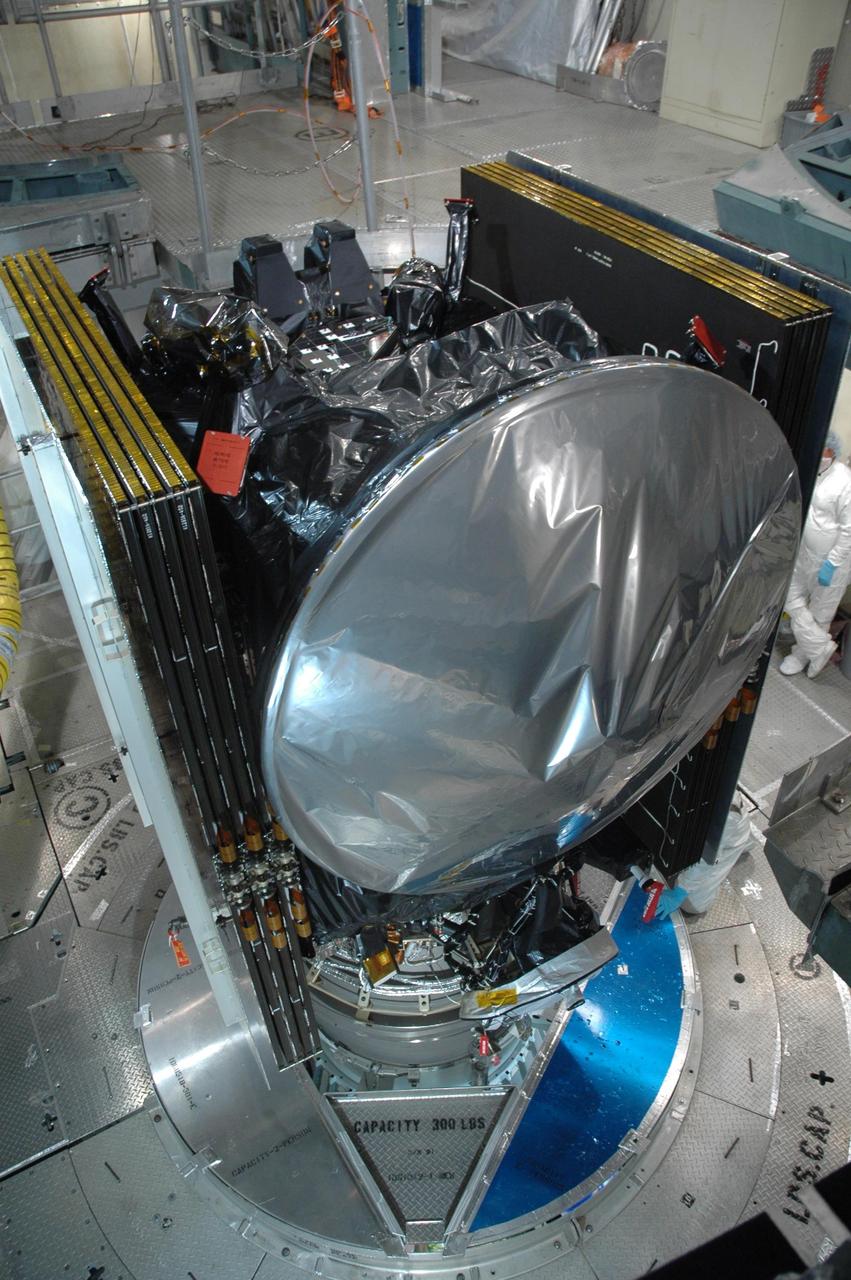
KENNEDY SPACE CENTER, FLA. -- In the mobile service tower on Launch Pad 17-B at Cape Canaveral Air Force Station, the Dawn spacecraft is ready for mating with the waiting Delta II rocket. Dawn is scheduled for launch in a window from 7:25 to 7:54 a.m. EDT Sept. 26 from CCAFS. During its nearly decade-long mission, the Dawn mission will study the asteroid Vesta and dwarf planet Ceres, celestial bodies believed to have accreted early in the history of the solar system. To carry out its scientific mission, the Dawn spacecraft will carry a visible camera, a visible and infrared mapping spectrometer, and a gamma ray and neutron spectrometer, whose data will be used in combination to characterize these bodies. In addition to the three instruments, radiometric and optical navigation data will provide data relating to the gravity field and thus bulk properties and internal structure of the two bodies. Data returned from the Dawn spacecraft could provide opportunities for significant breakthroughs in our knowledge of how the solar system formed. Photo credit: NASA/Jim Grossmann
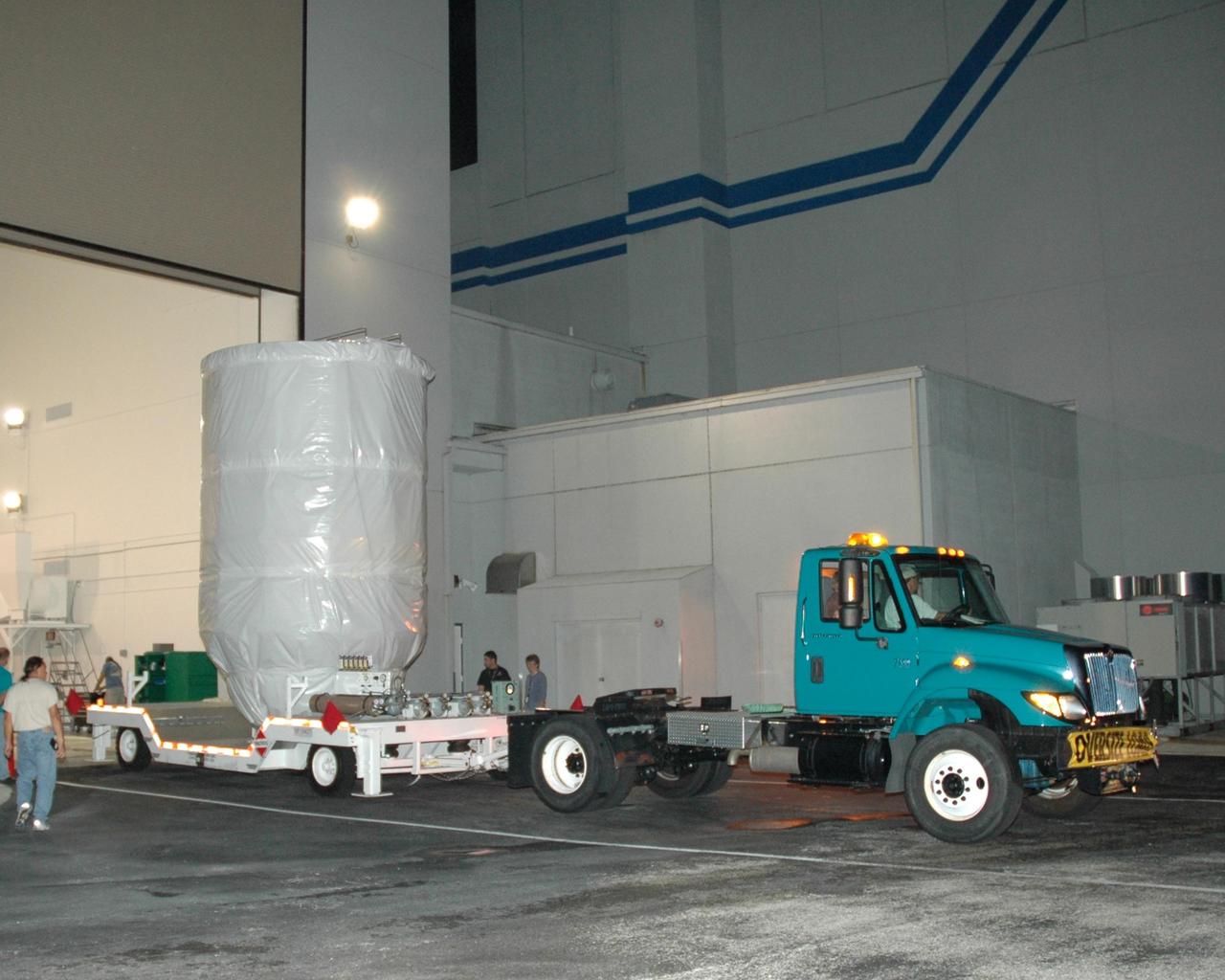
KENNEDY SPACE CENTER, FLA. -- The Dawn spacecraft is moved out of the Astrotech Space Operations facility, on its way to Launch Pad 17-B at Cape Canaveral Air Force Station. At the pad, Dawn will be lifted into the mobile service tower and prepared for mating with the awaiting Delta II rocket. Dawn is scheduled for launch in a window from 7:25 to 7:54 a.m. Sept. 26 from CCAFS. During its nearly decade-long mission, the Dawn mission will study the asteroid Vesta and dwarf planet Ceres, celestial bodies believed to have accreted early in the history of the solar system. To carry out its scientific mission, the Dawn spacecraft will carry a visible camera, a visible and infrared mapping spectrometer, and a gamma ray and neutron spectrometer, whose data will be used in combination to characterize these bodies. In addition to the three instruments, radiometric and optical navigation data will provide data relating to the gravity field and thus bulk properties and internal structure of the two bodies. Data returned from the Dawn spacecraft could provide opportunities for significant breakthroughs in our knowledge of how the solar system formed. Photo credit: NASA/Jack Pfaller

KENNEDY SPACE CENTER, FLA. -- On Launch Pad 17-B at Cape Canaveral Air Force Station, the Dawn spacecraft is lifted alongside the mobile service tower. At the top, Dawn will be prepared for mating with the awaiting Delta II rocket. Dawn is scheduled for launch in a window from 7:25 to 7:54 a.m. Sept. 26 from CCAFS. During its nearly decade-long mission, the Dawn mission will study the asteroid Vesta and dwarf planet Ceres, celestial bodies believed to have accreted early in the history of the solar system. To carry out its scientific mission, the Dawn spacecraft will carry a visible camera, a visible and infrared mapping spectrometer, and a gamma ray and neutron spectrometer, whose data will be used in combination to characterize these bodies. In addition to the three instruments, radiometric and optical navigation data will provide data relating to the gravity field and thus bulk properties and internal structure of the two bodies. Data returned from the Dawn spacecraft could provide opportunities for significant breakthroughs in our knowledge of how the solar system formed. Photo credit: NASA/Jack Pfaller