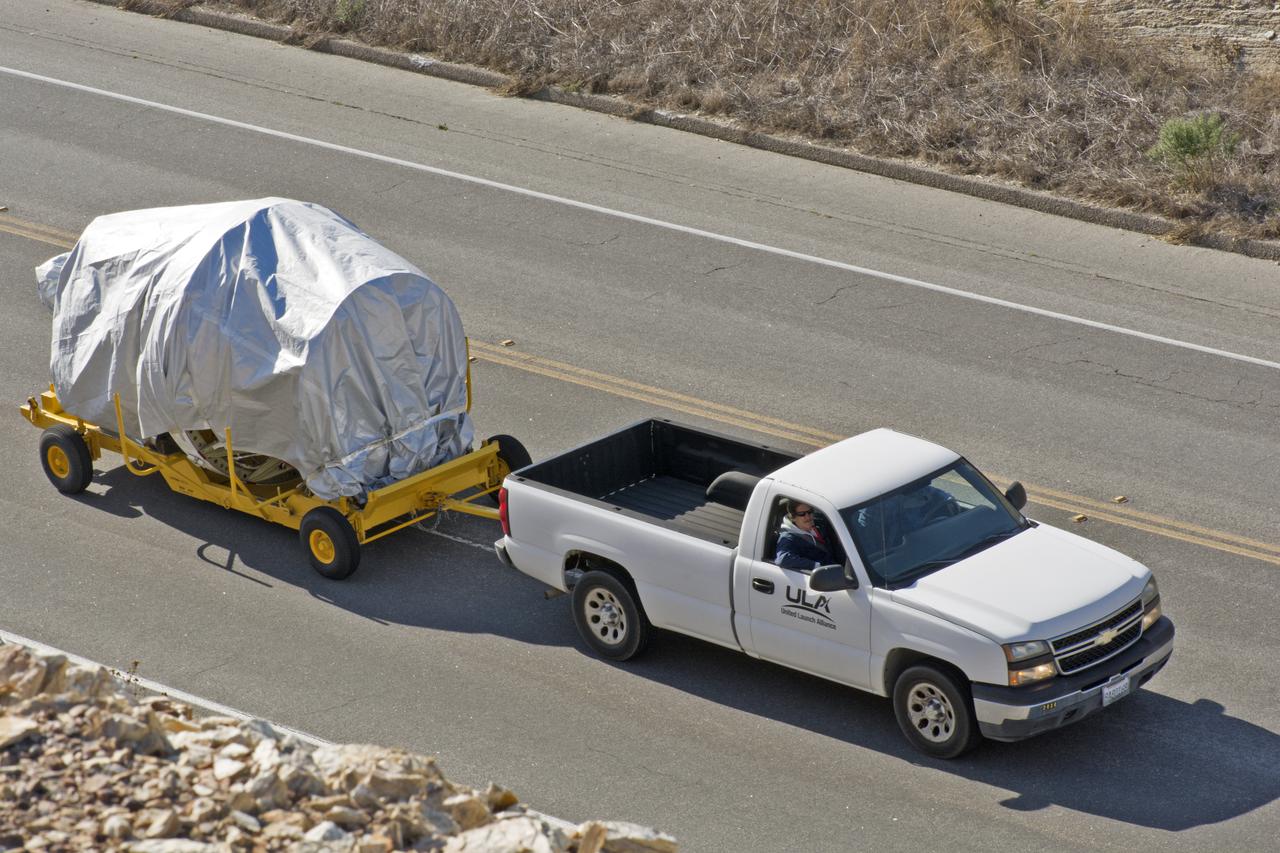
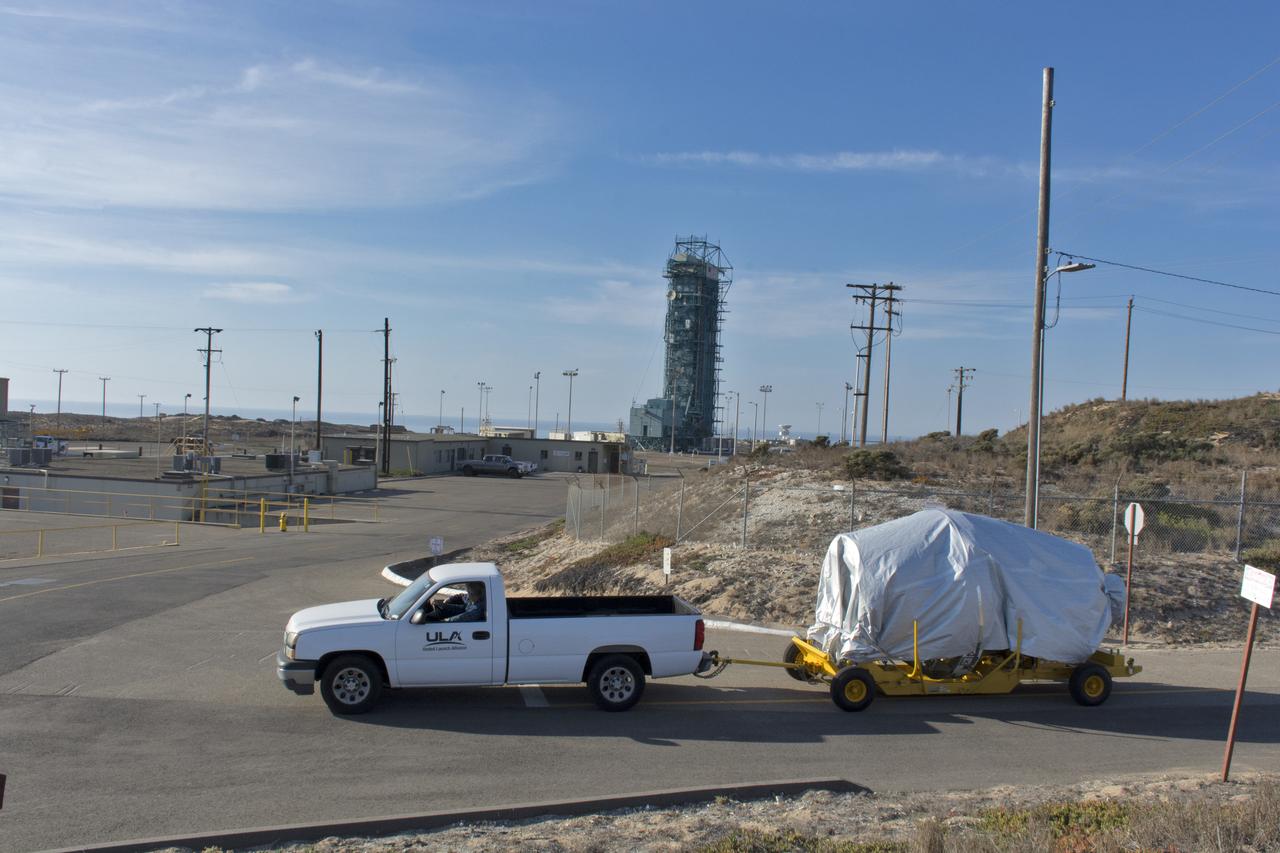
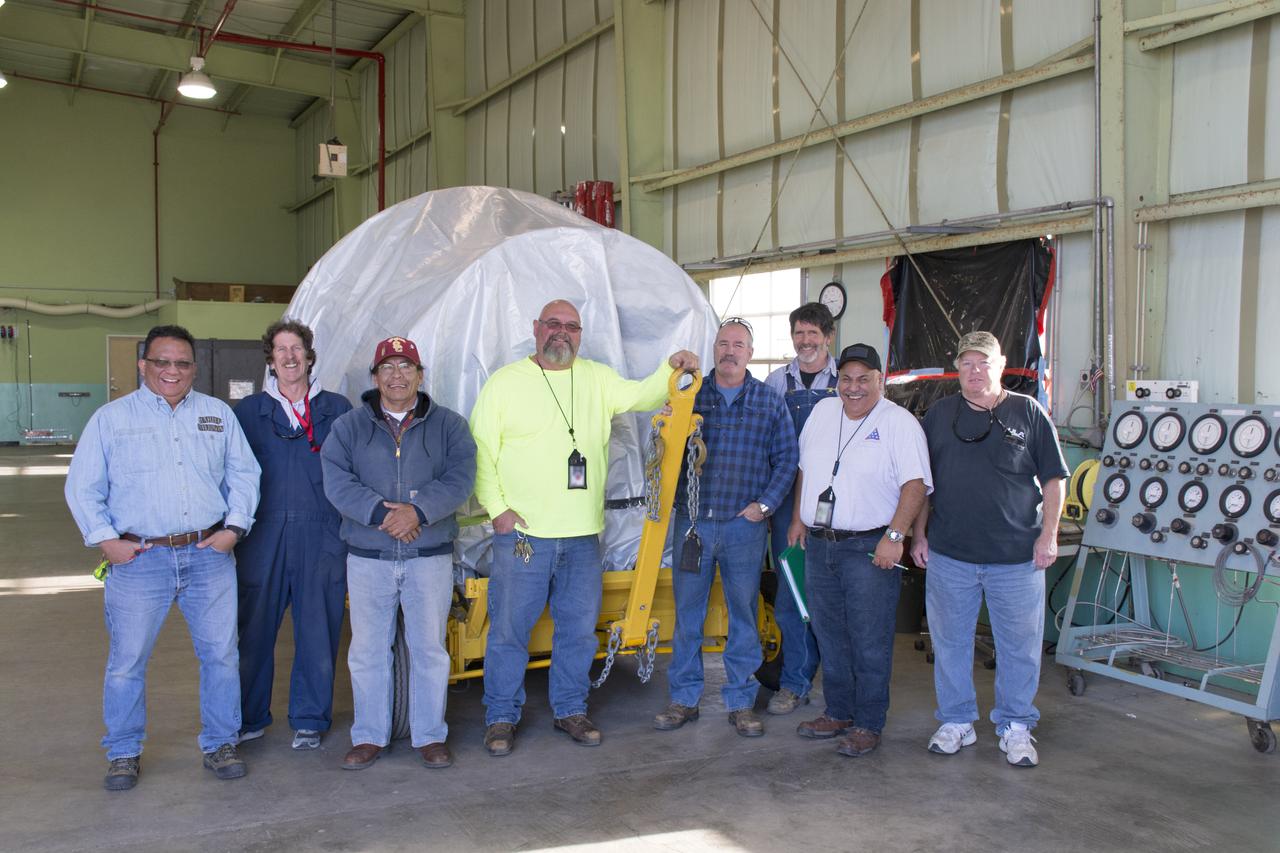
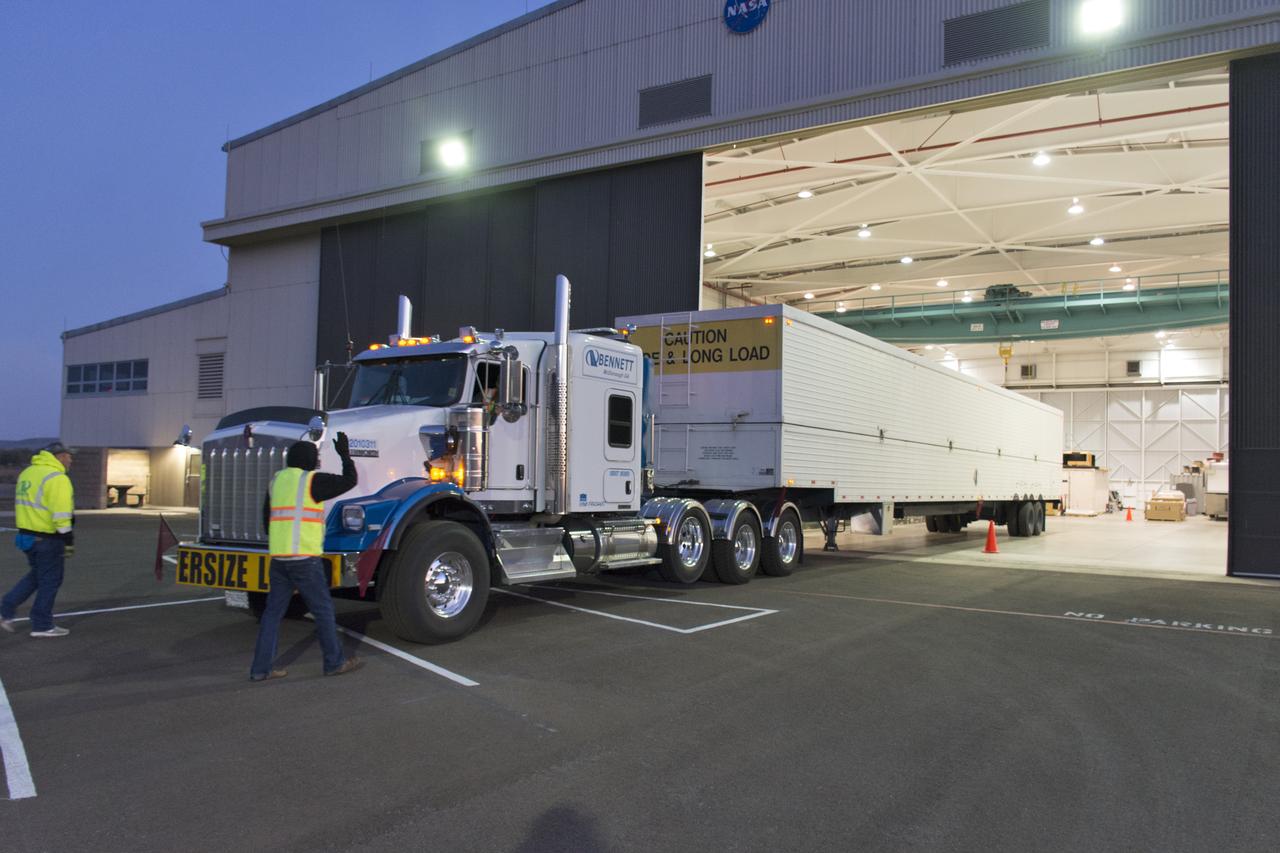
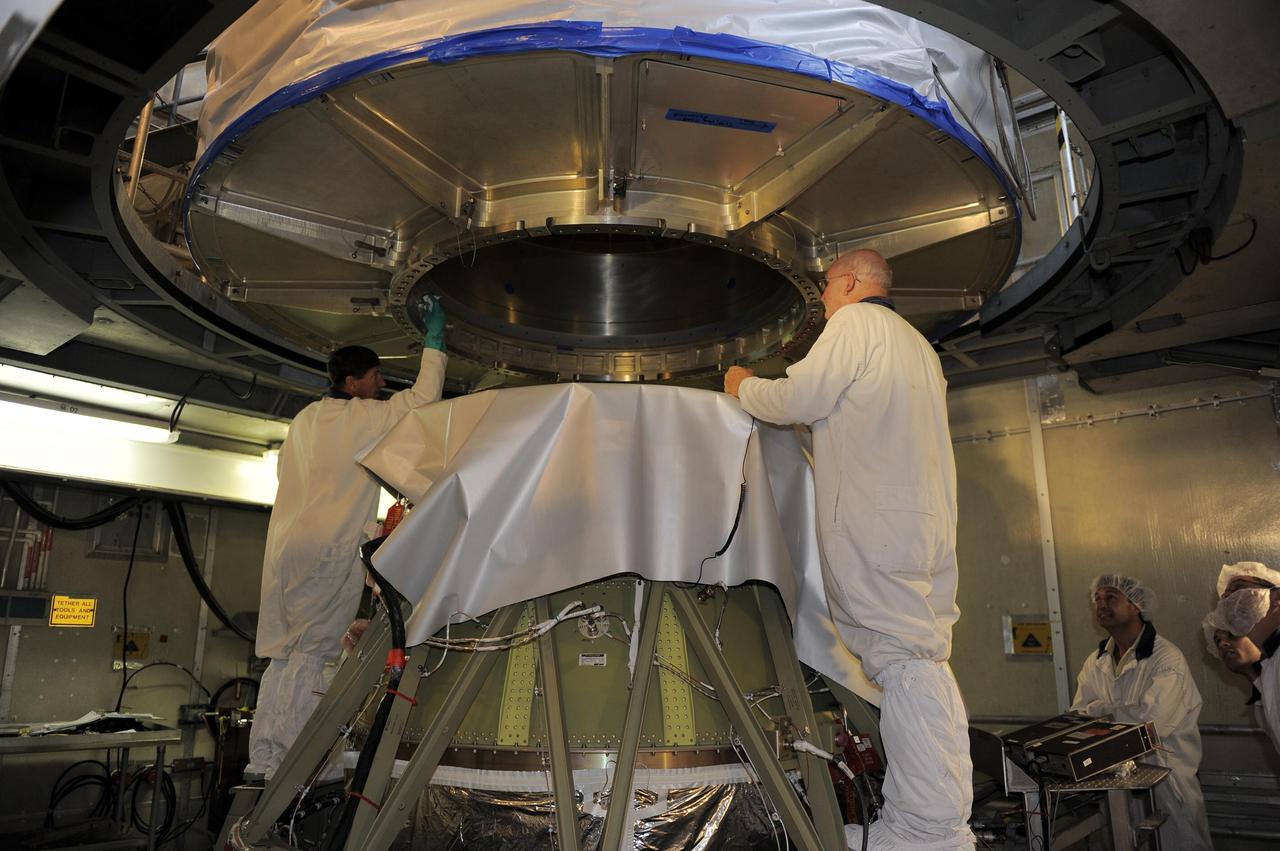
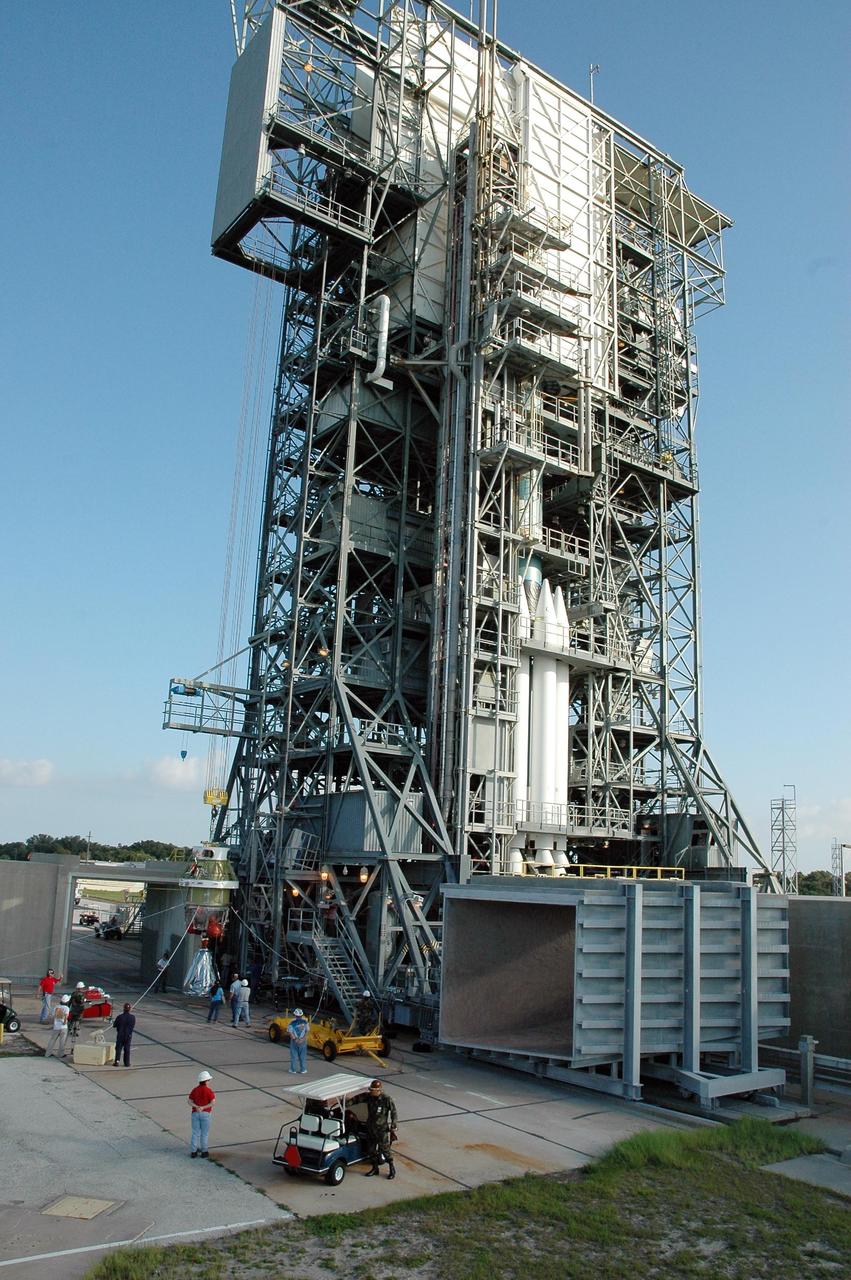
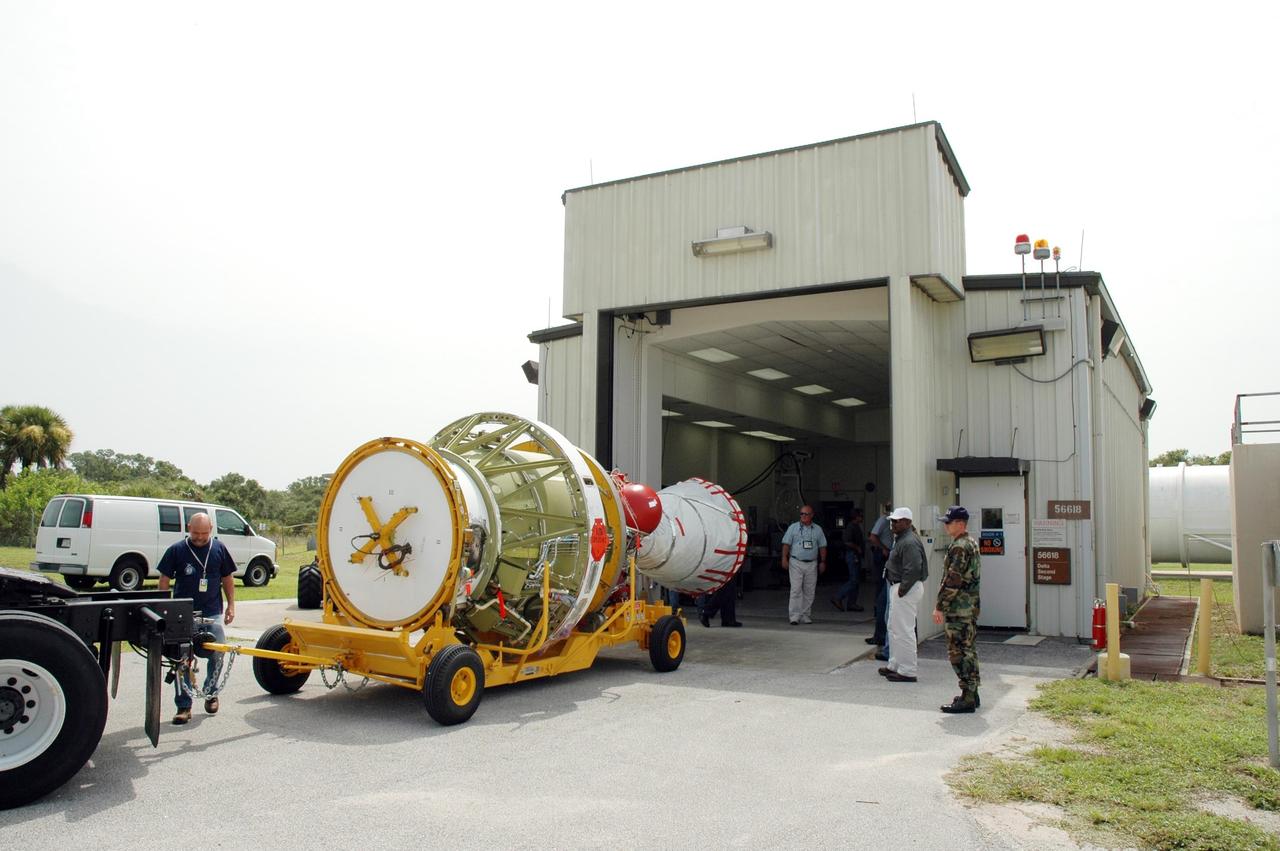
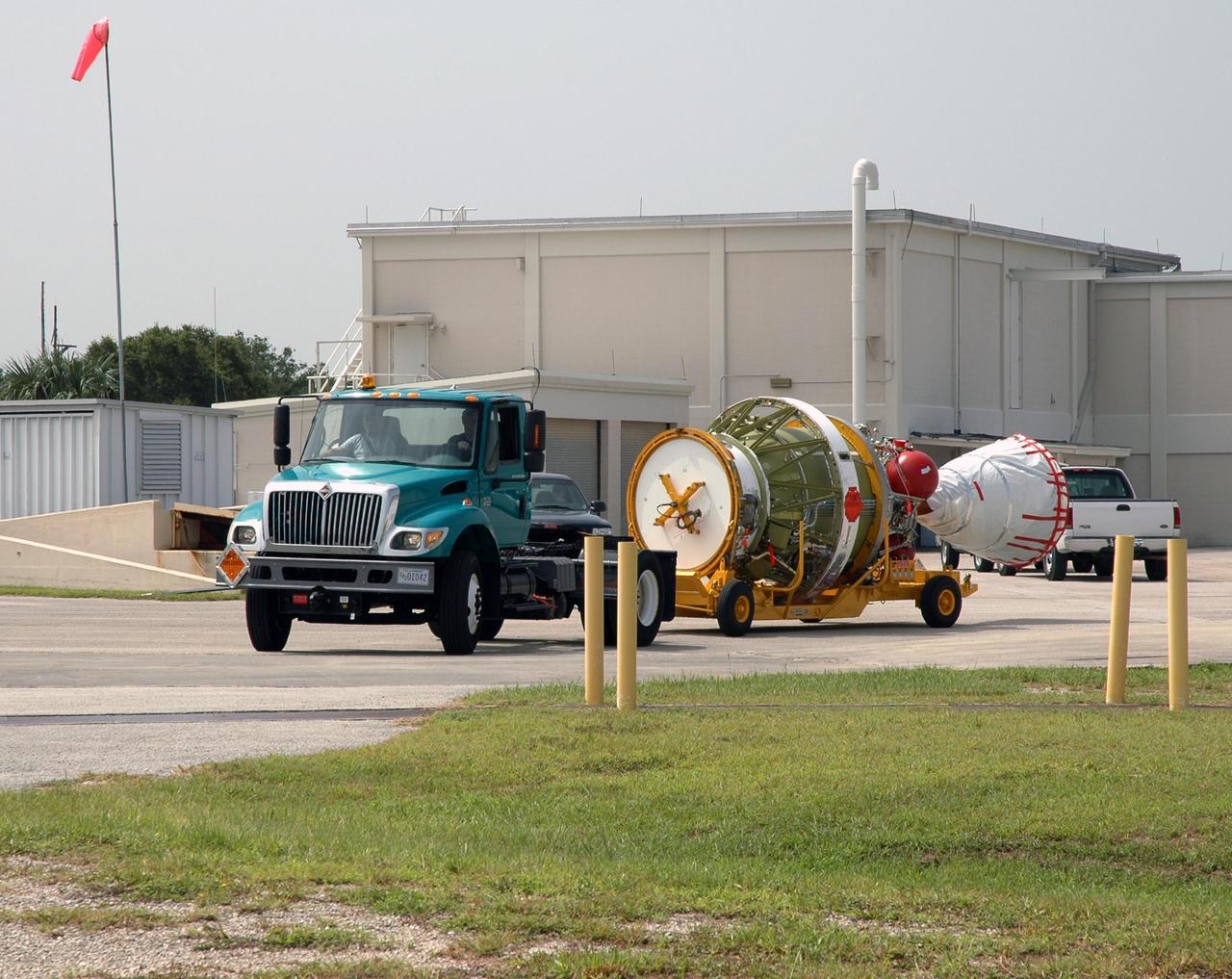
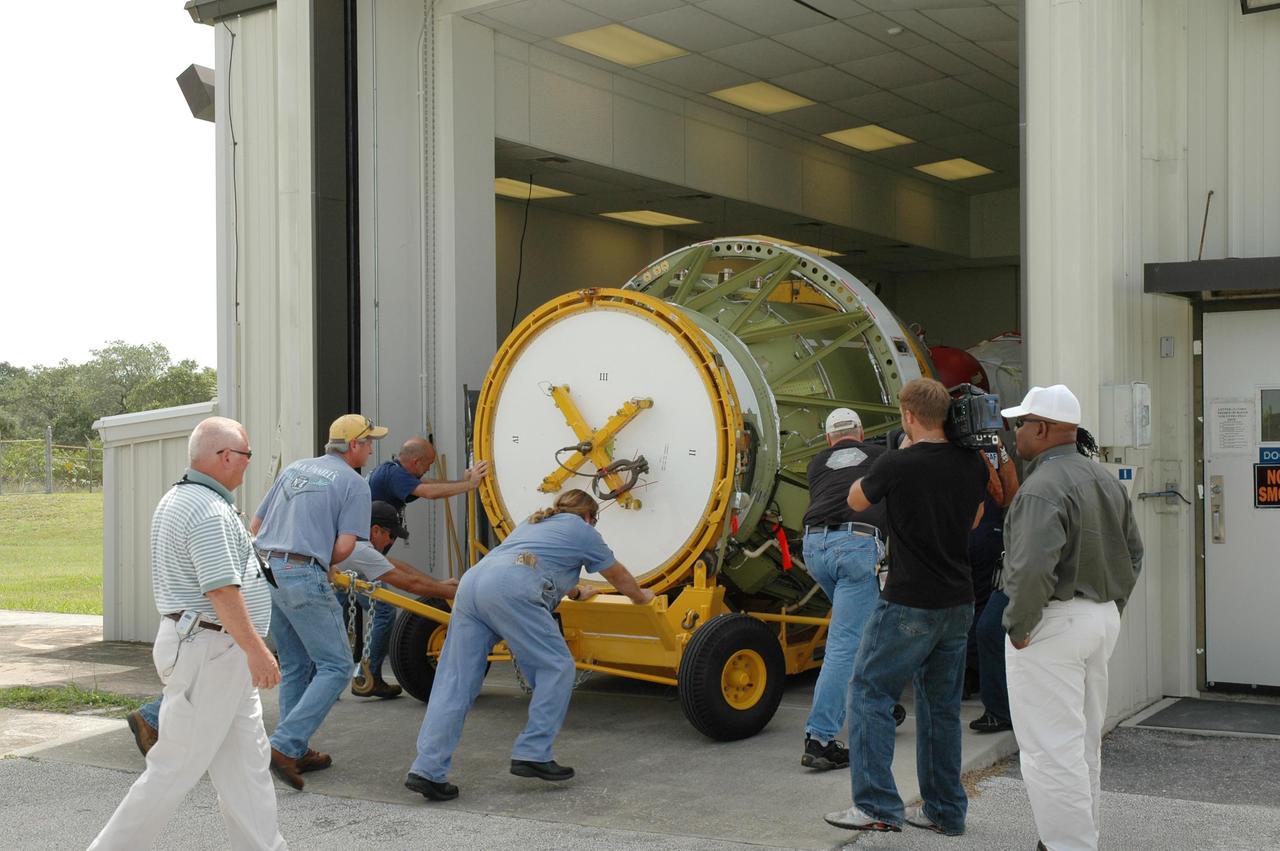
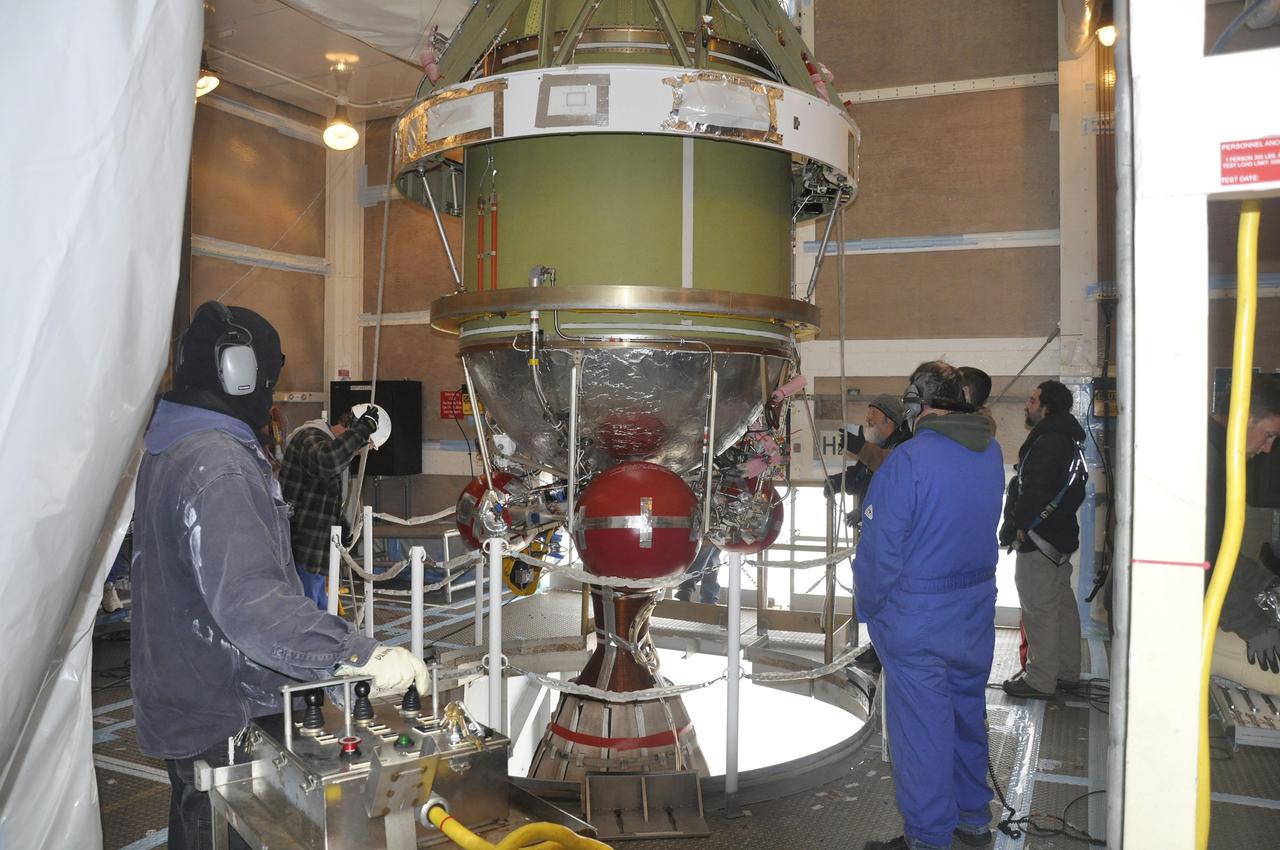
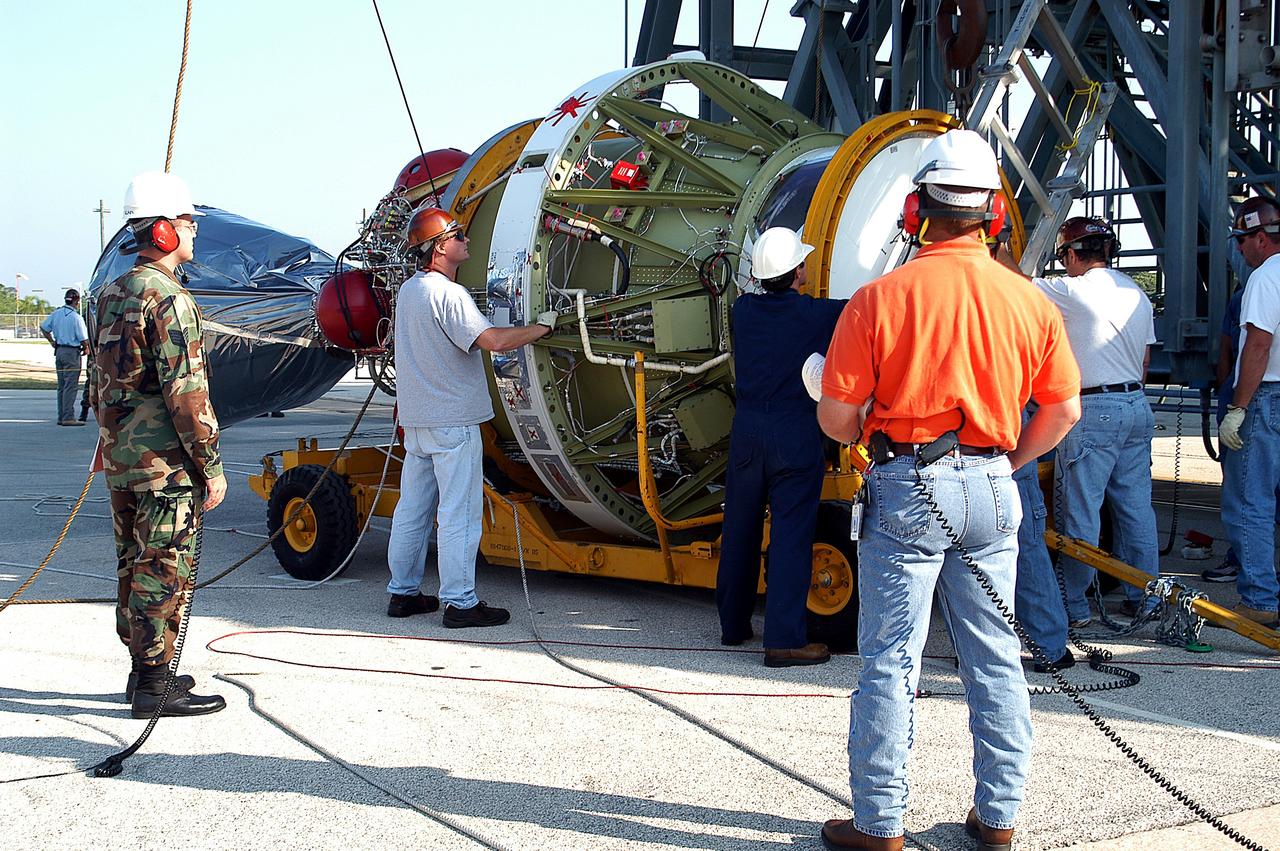
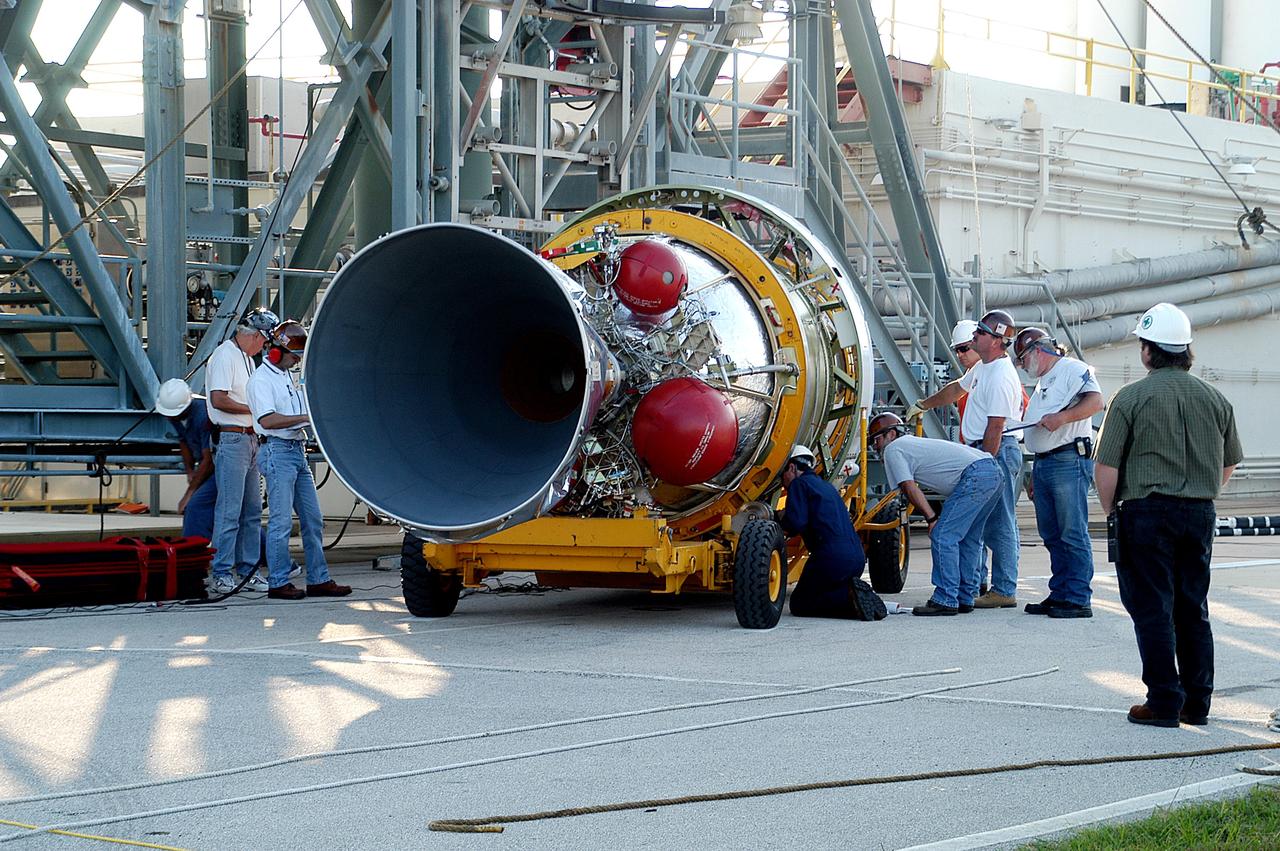
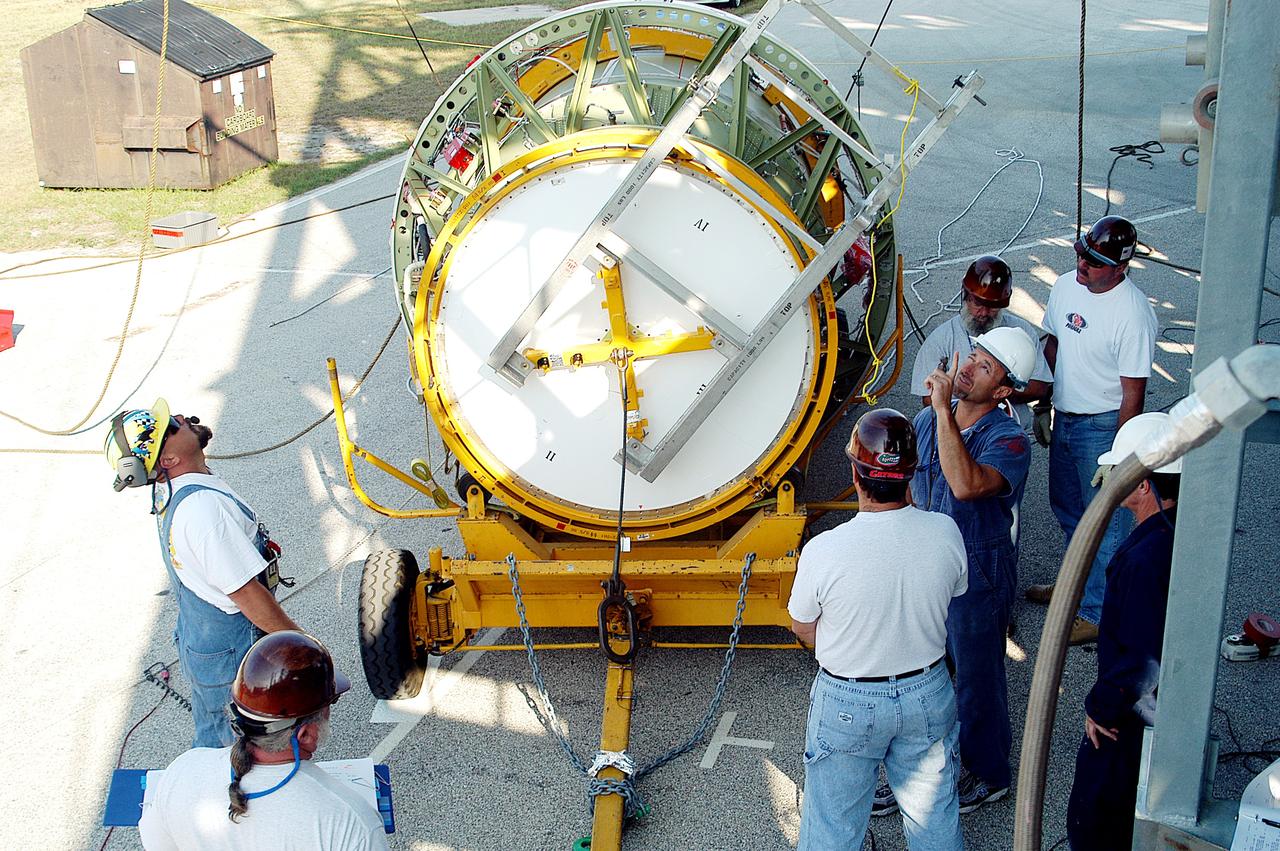
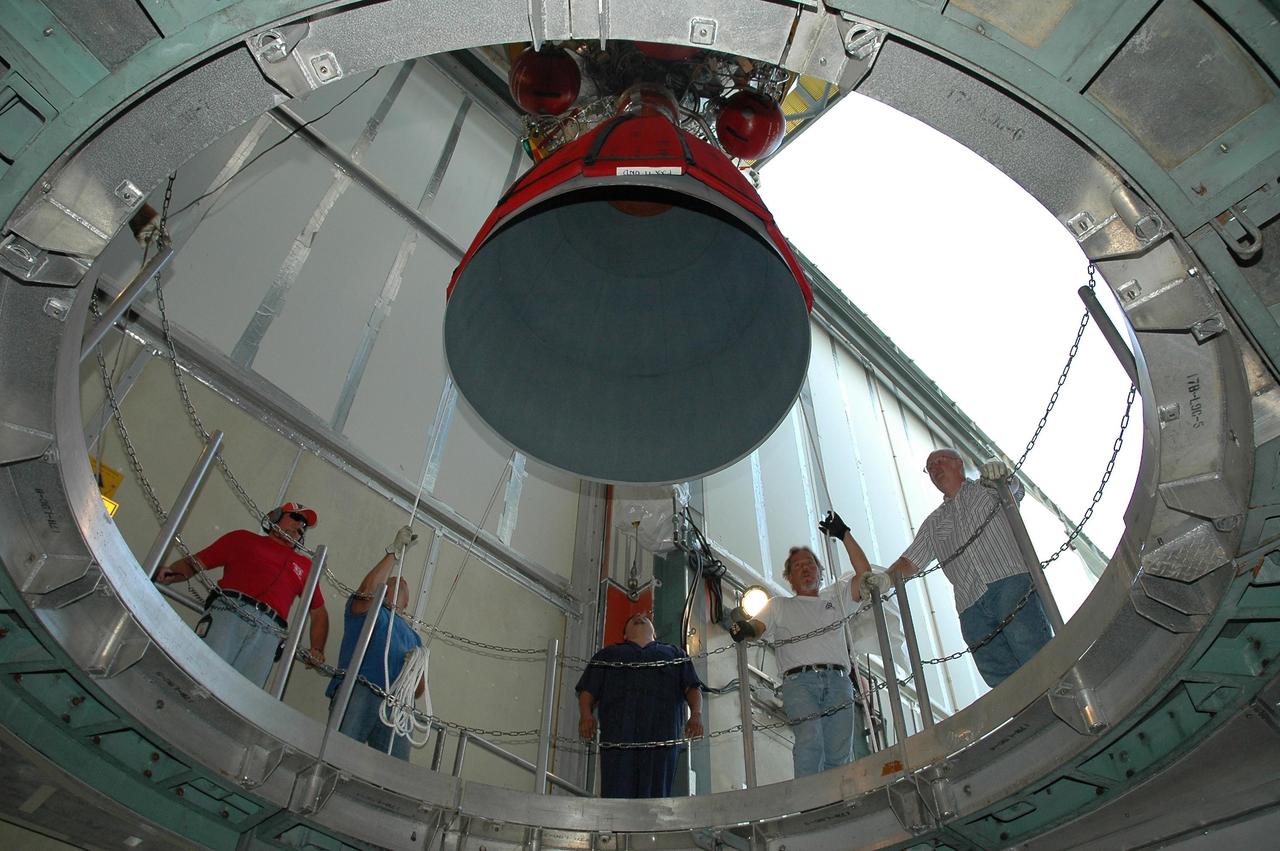
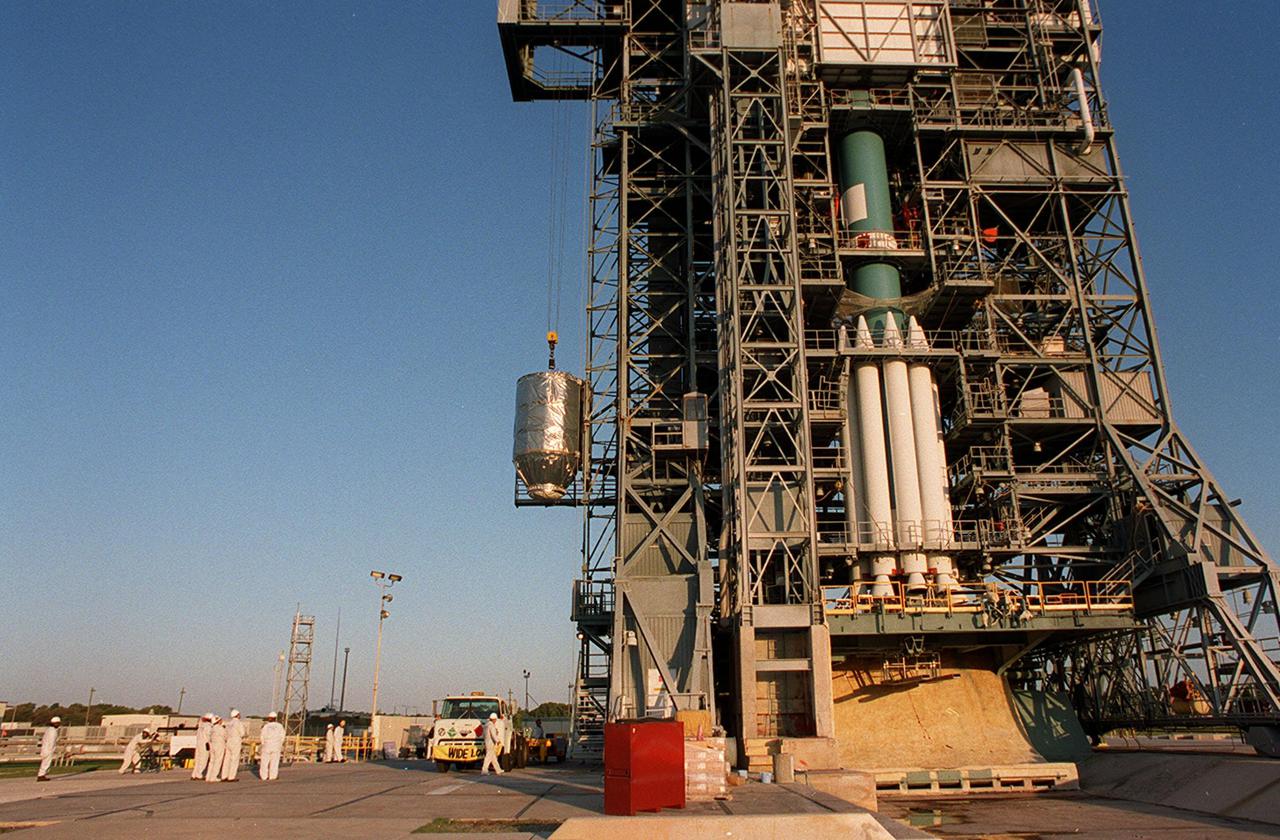
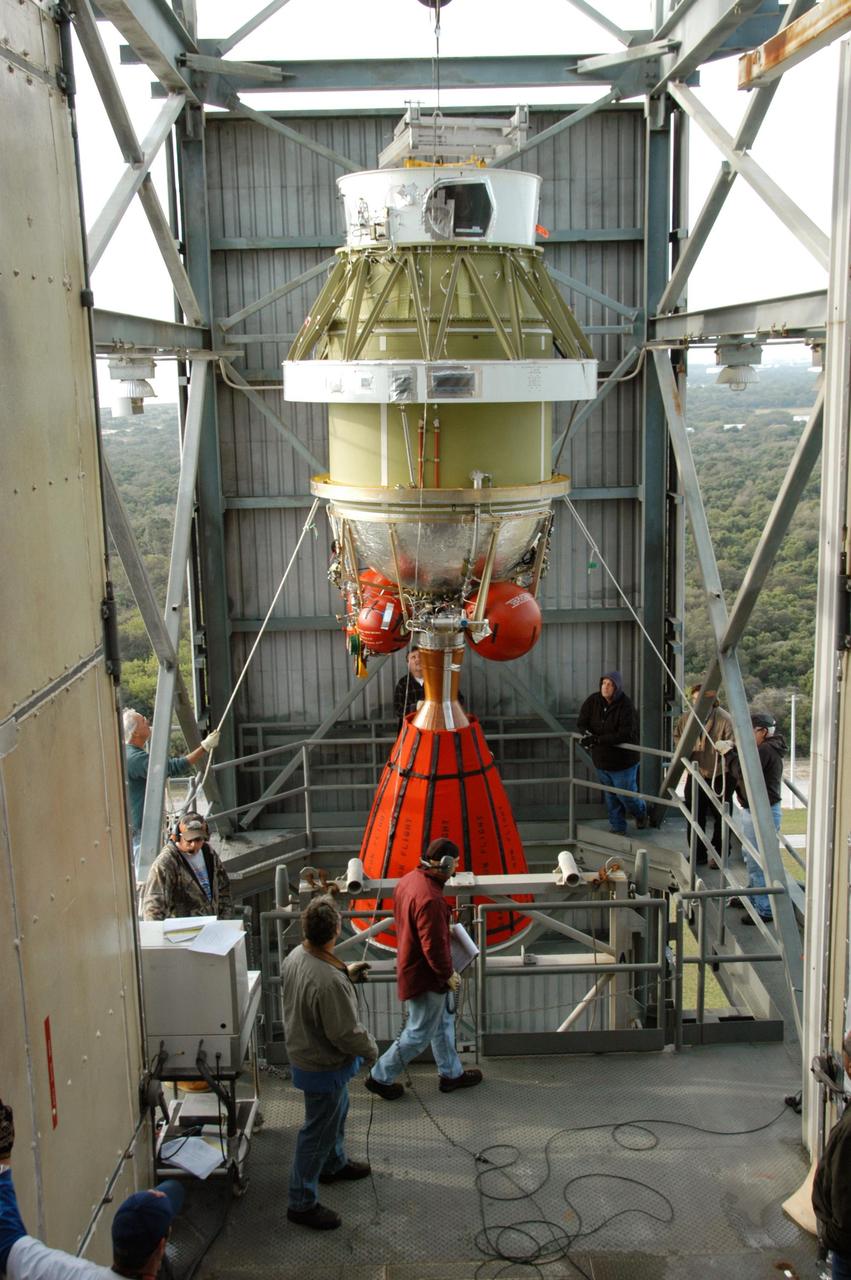
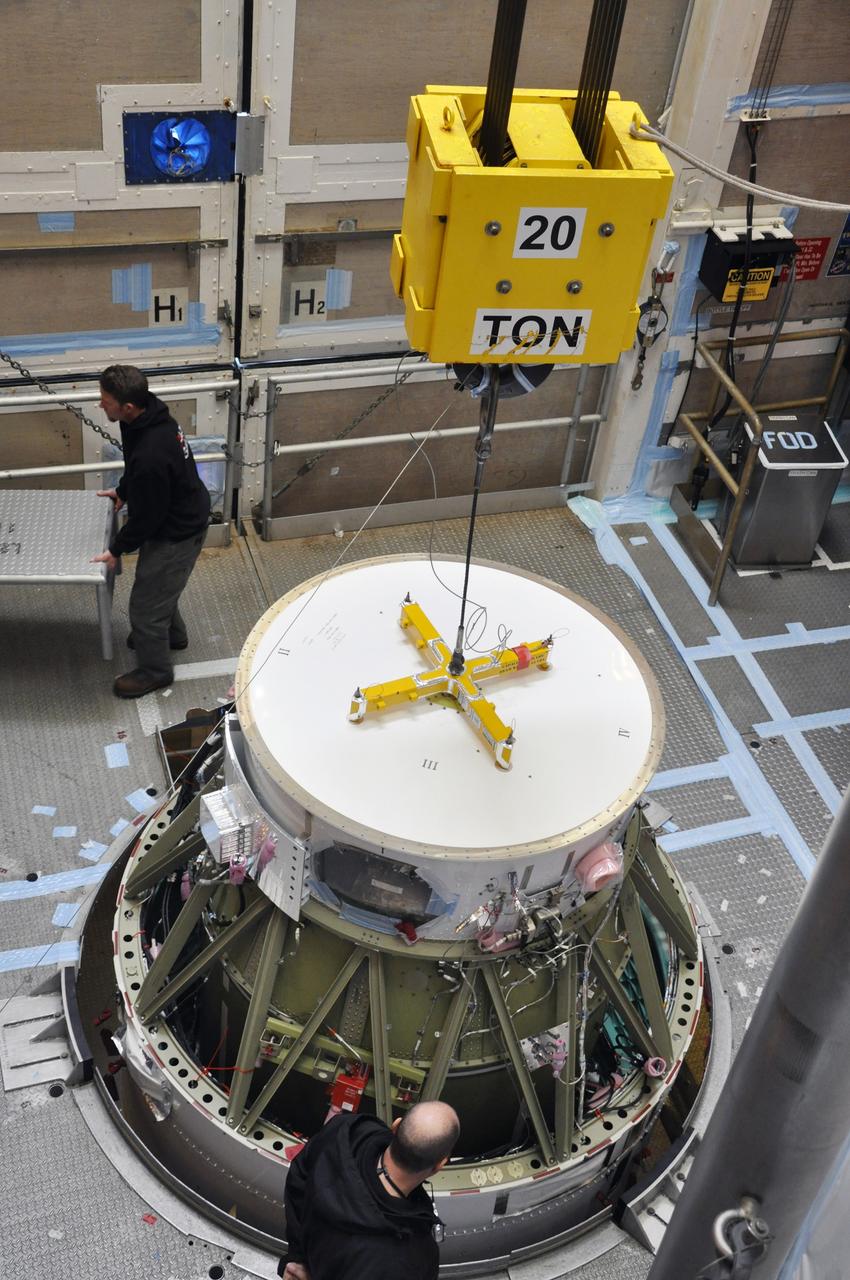
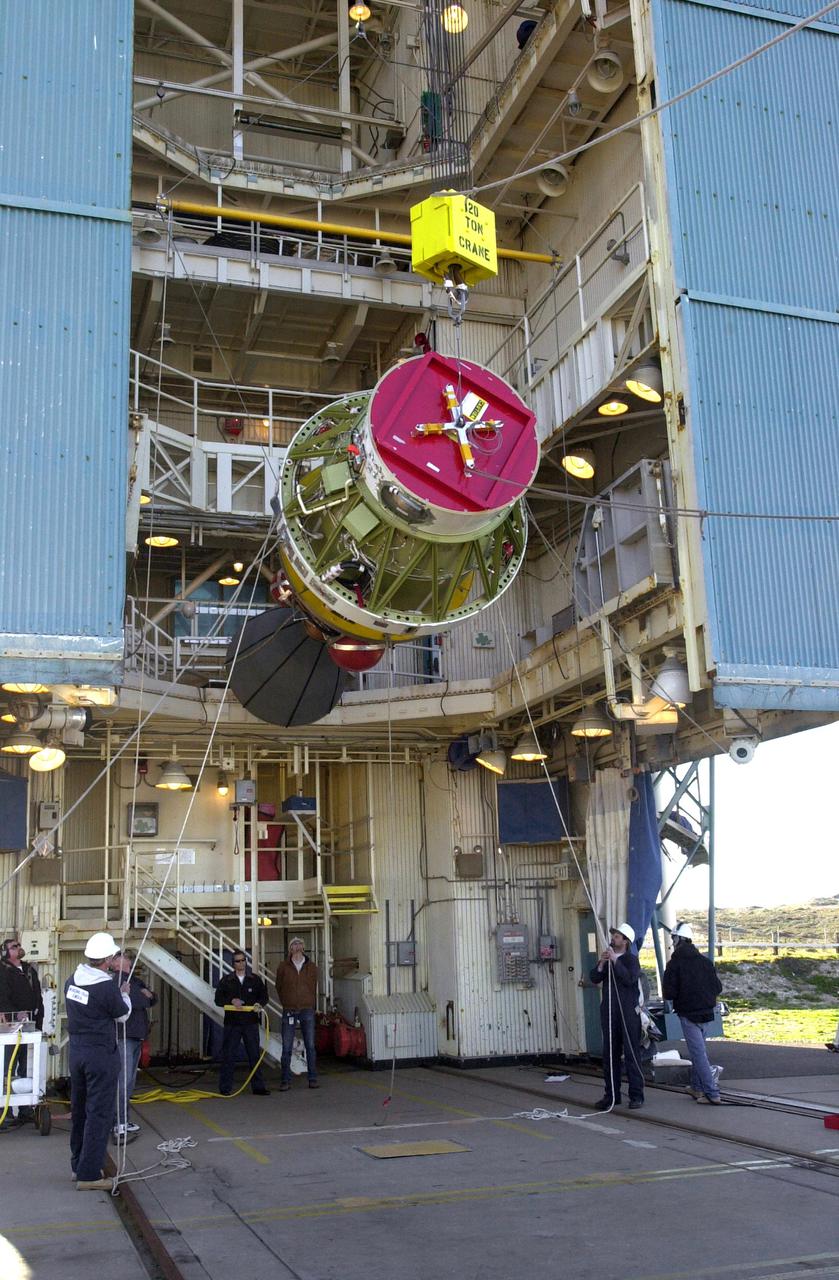
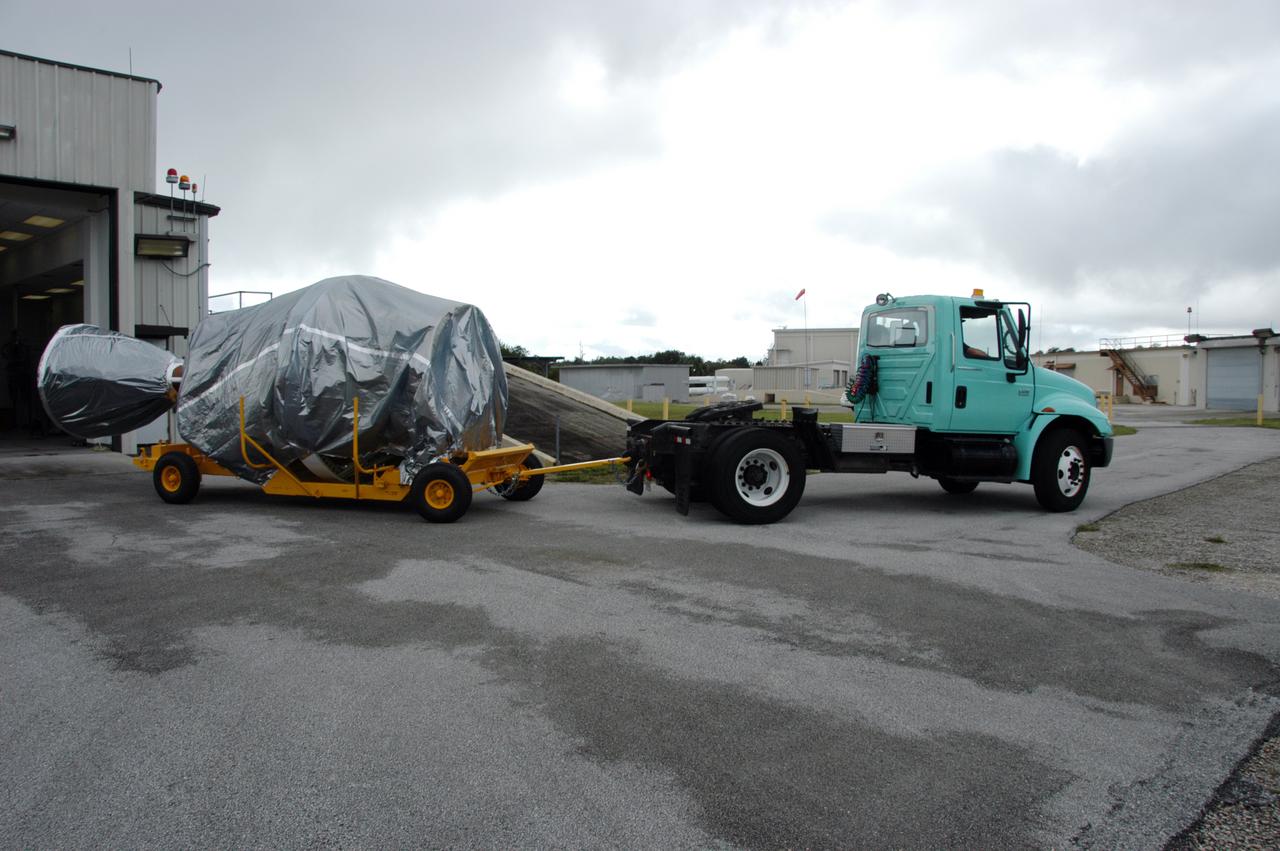
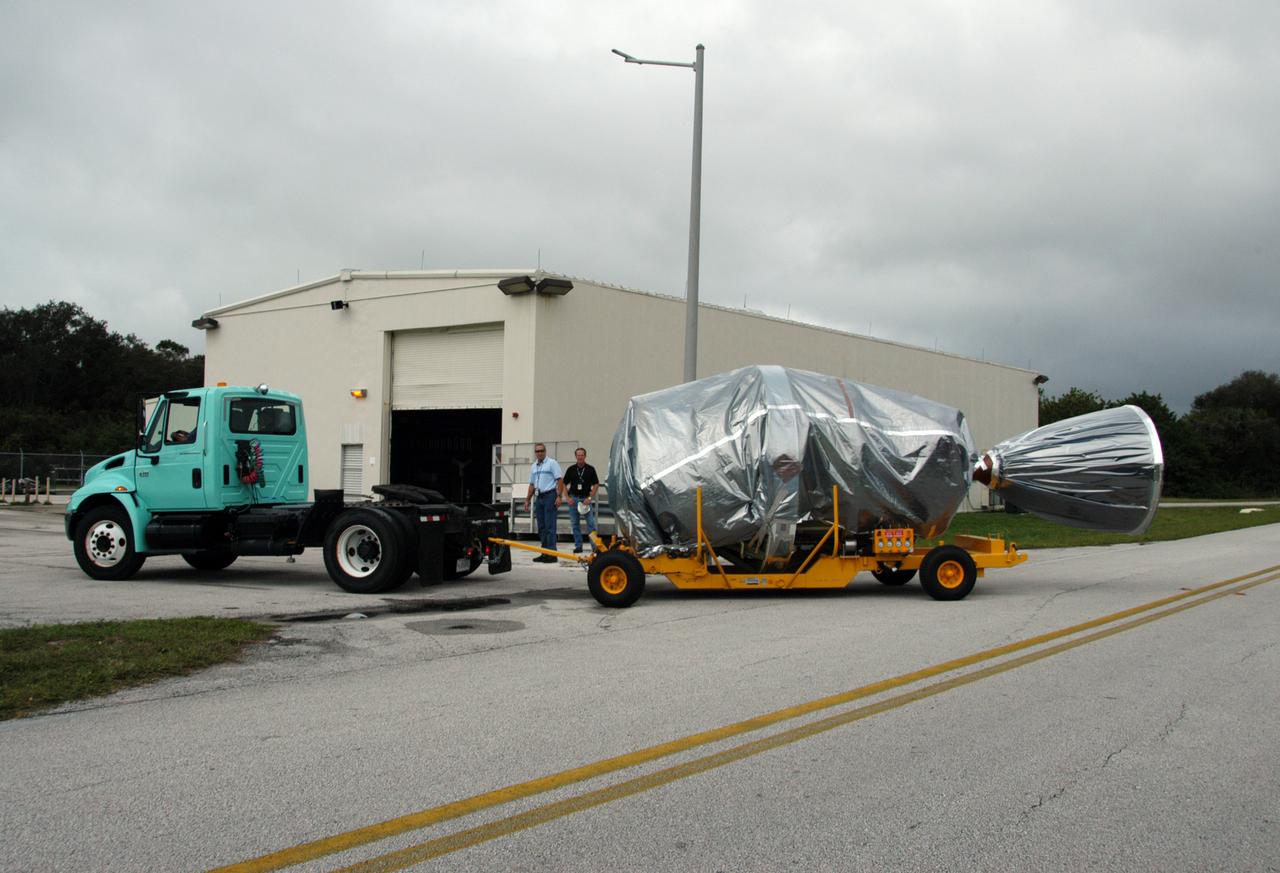
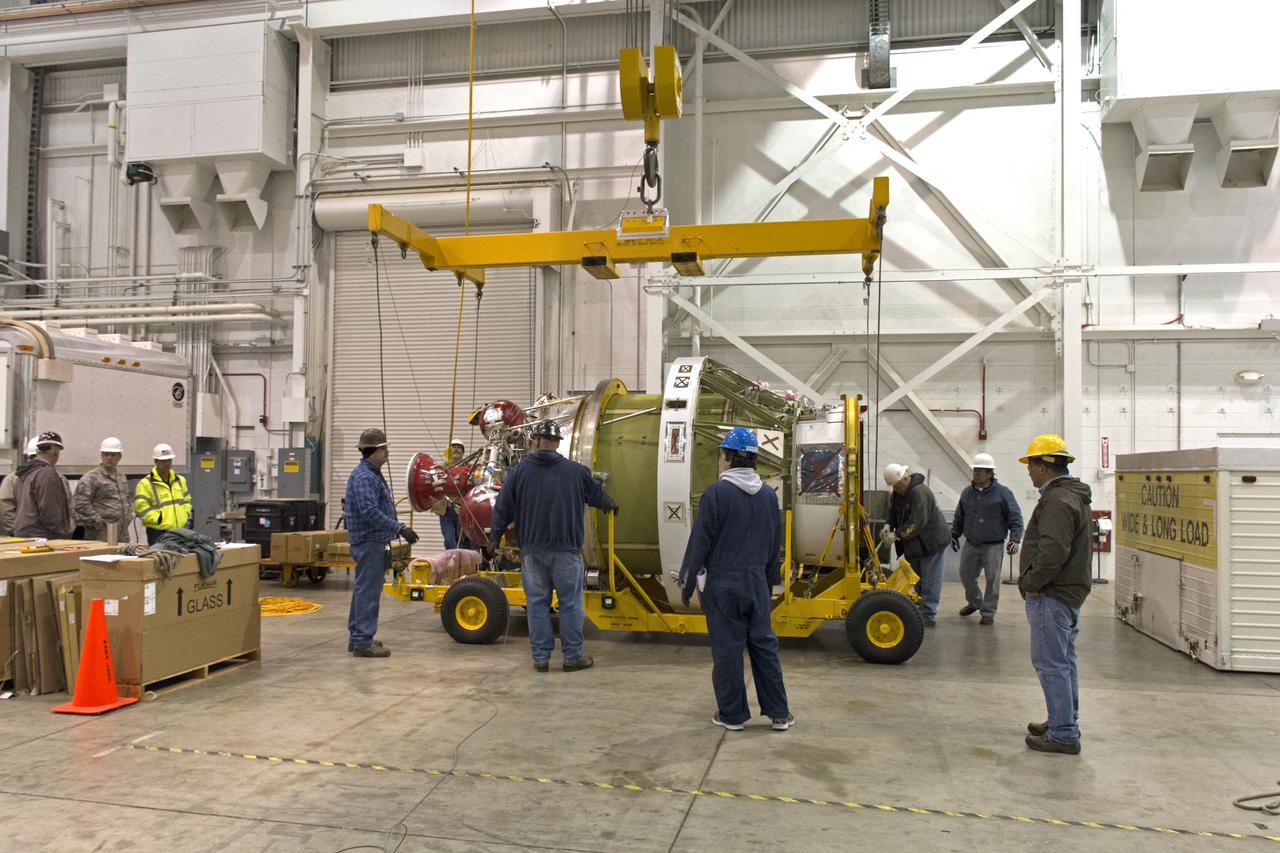
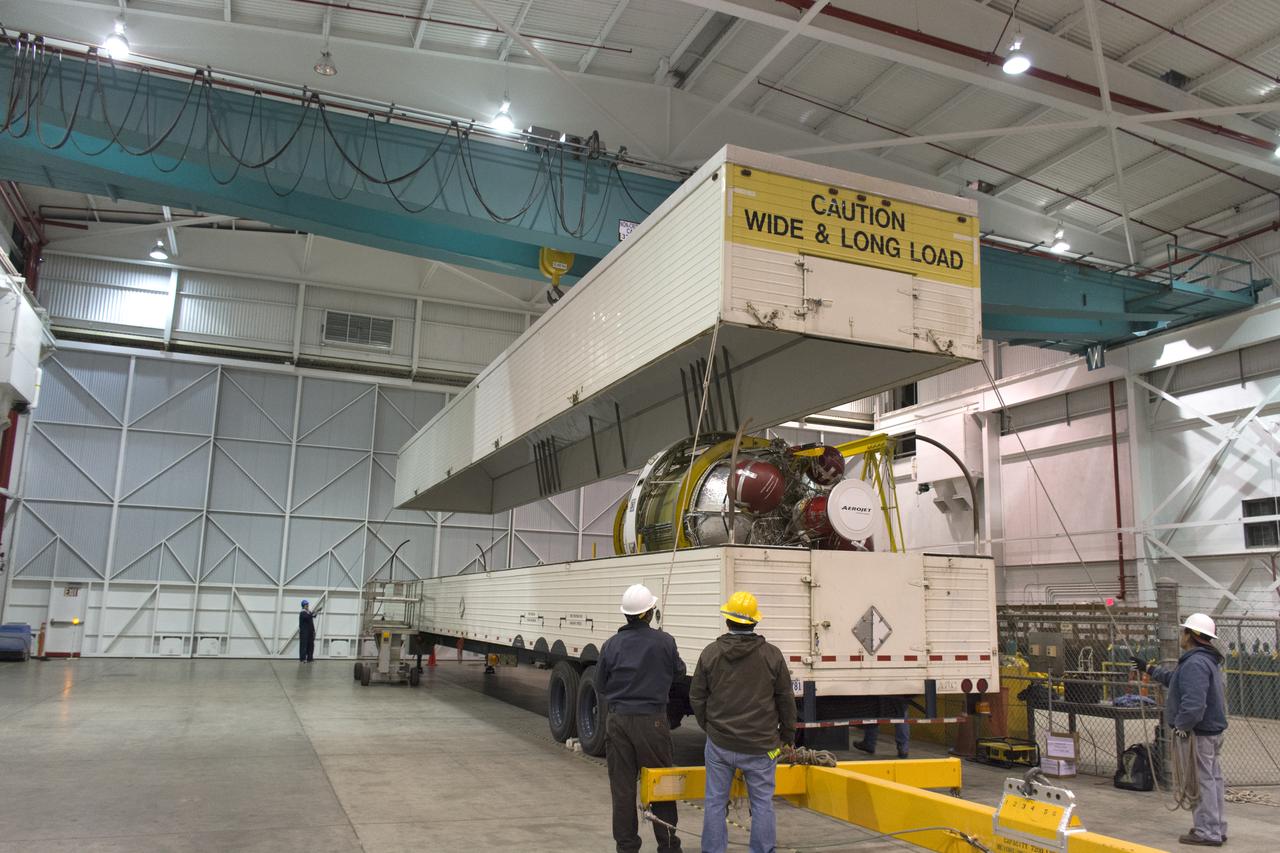
The covered Delta II second stage arrives at a checkout hangar on Cape Canaveral Air Force Station in Florida in preparation for transfer to Pad 17-B. At the pad, it will be lifted into the mobile service tower and mated with the first stage already in place. The Delta II is the launch vehicle for the THEMIS spacecraft. THEMIS consists of five identical probes, the largest number of scientific satellites ever launched into orbit aboard a single rocket. This unique constellation of satellites will resolve the tantalizing mystery of what causes the spectacular sudden brightening of the aurora borealis and aurora australis - the fiery skies over the Earth's northern and southern polar regions. THEMIS is scheduled to launch Feb. 15 from Cape Canaveral Air Force Station.
Delta II Second stage being moved to the pad
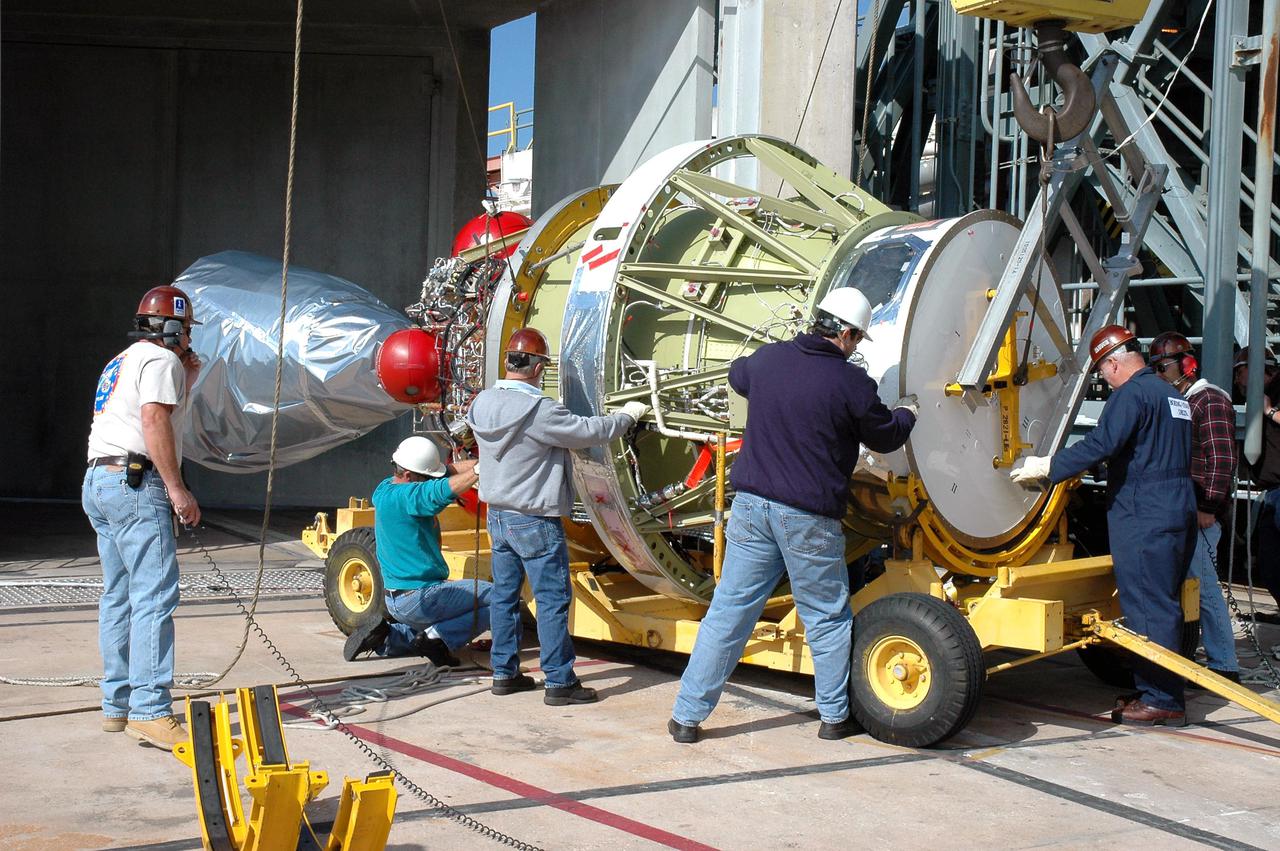
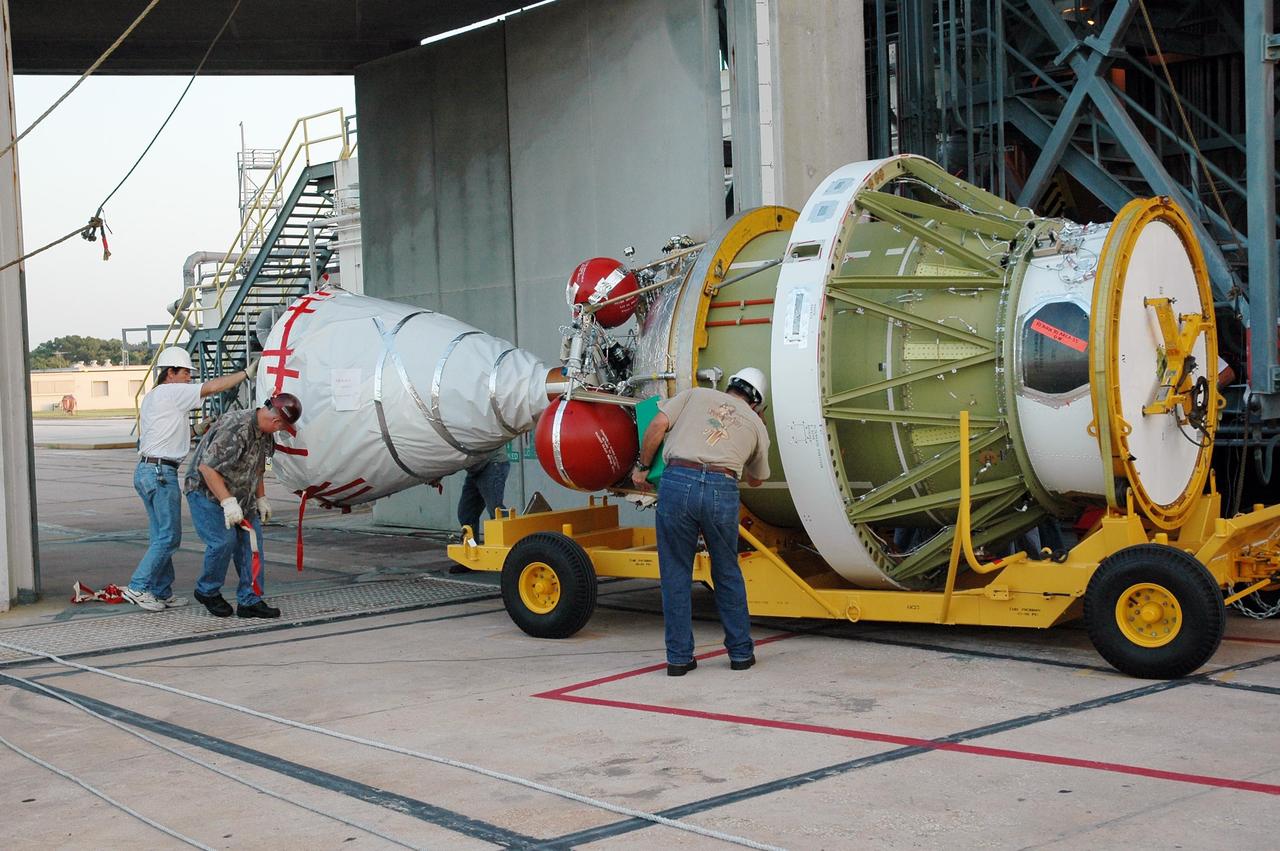
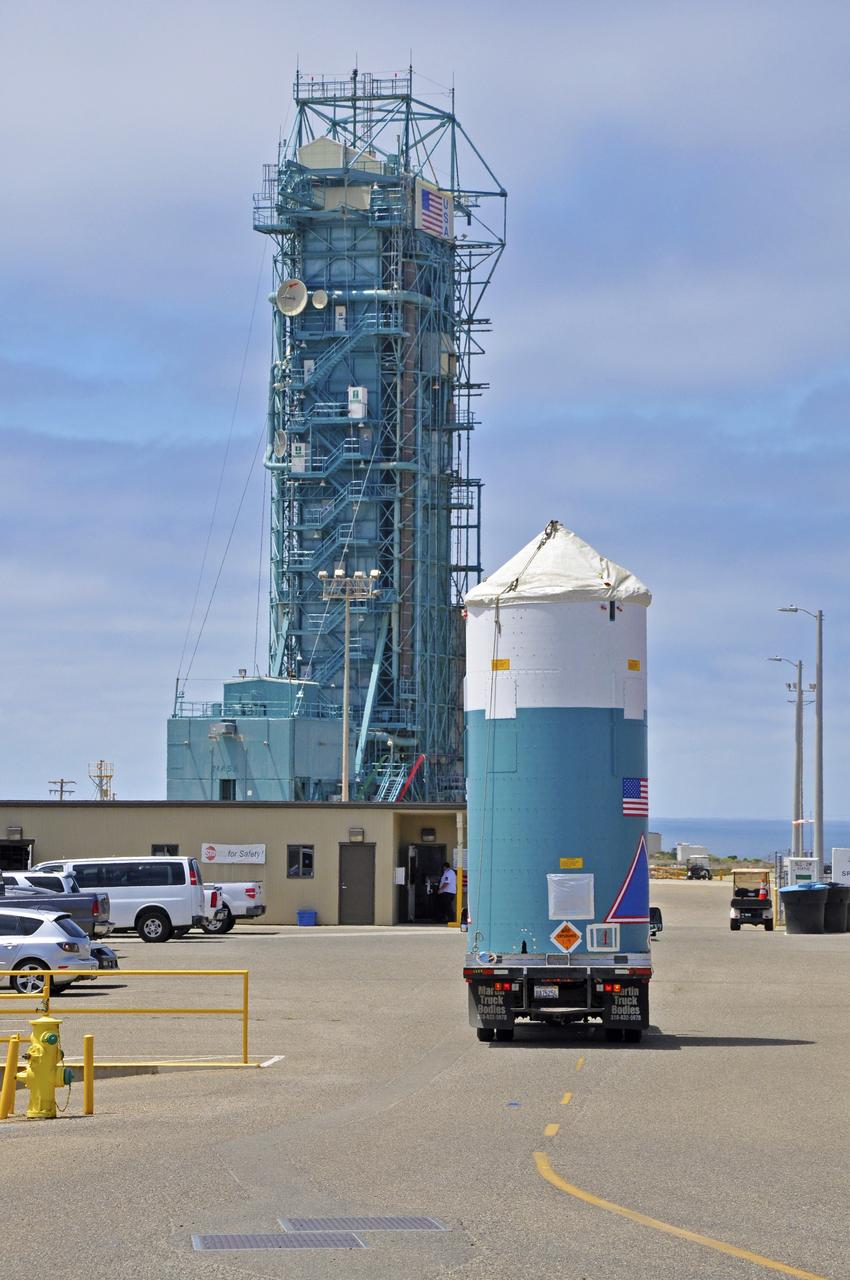
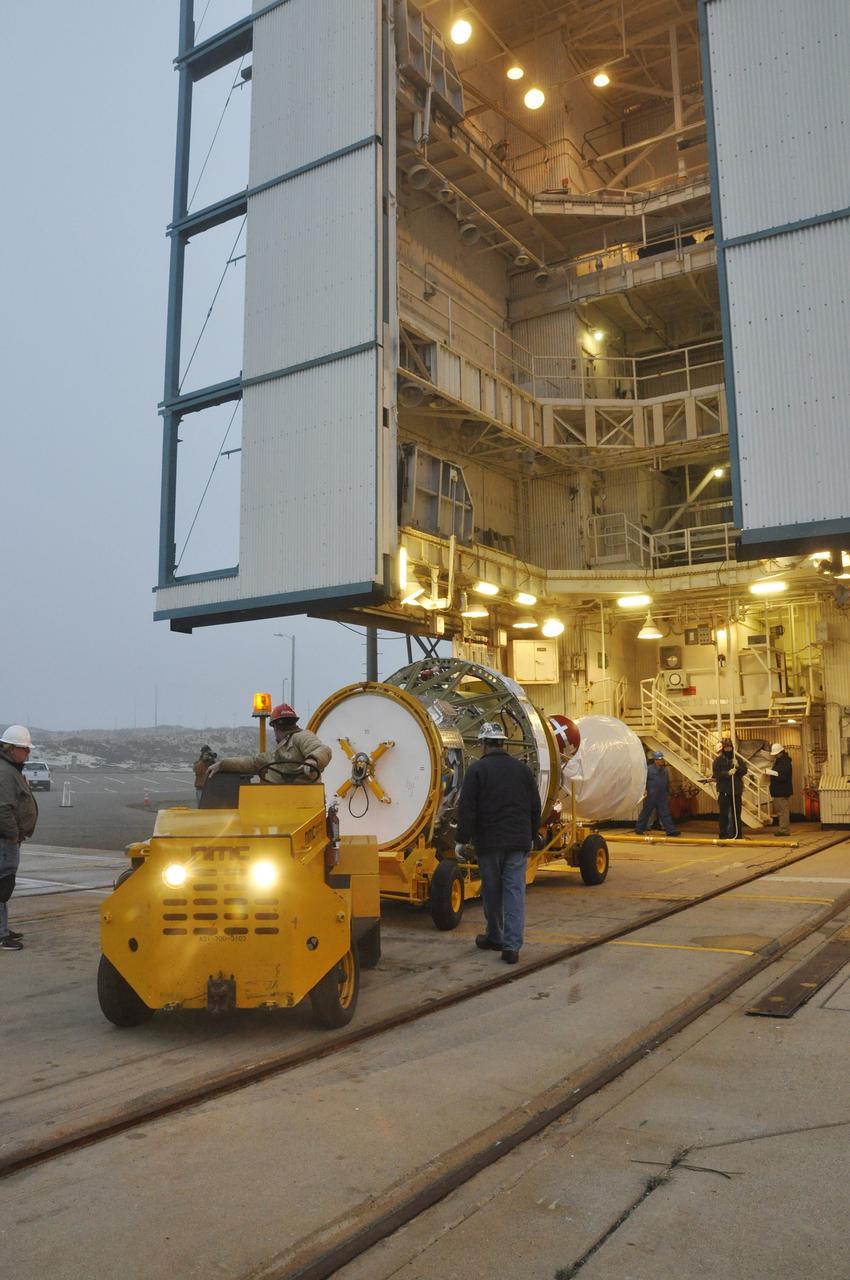
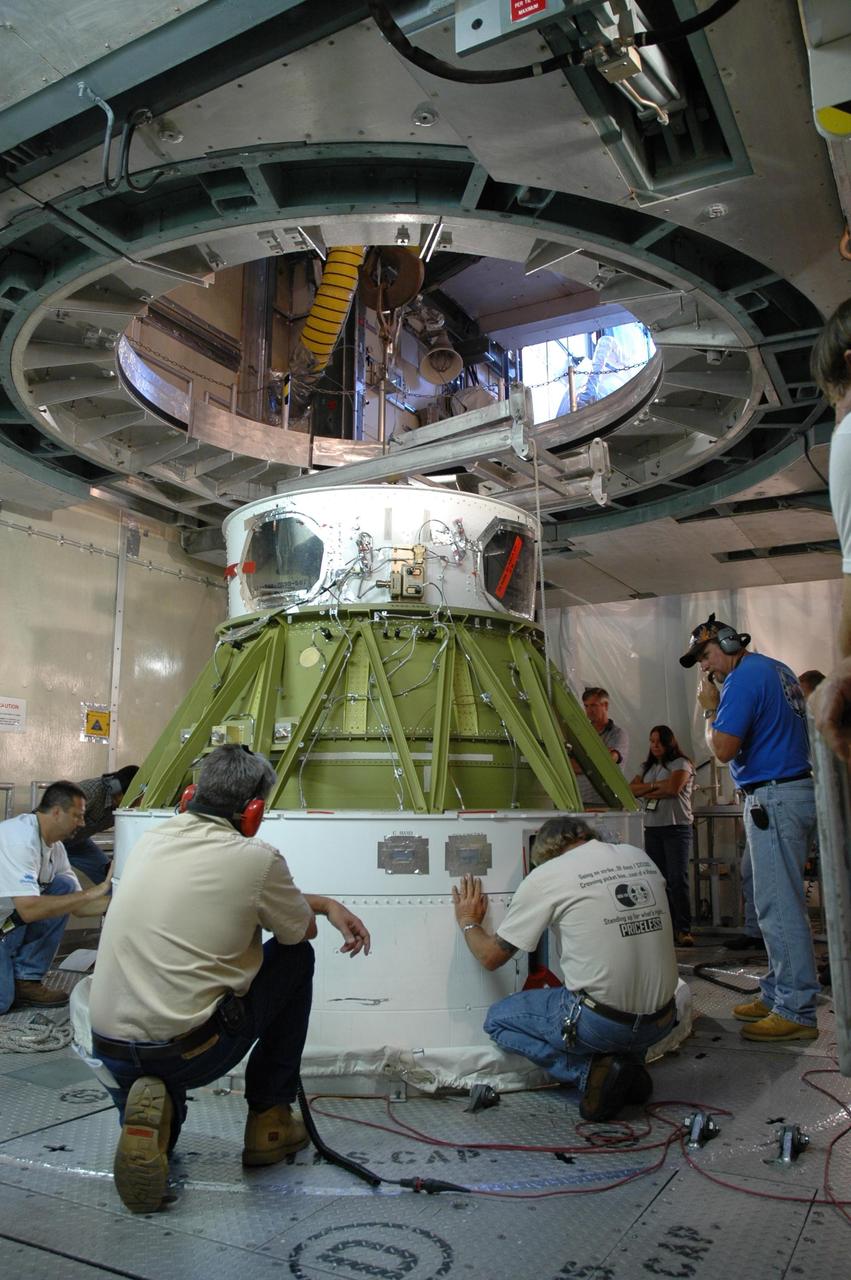
The covered Delta II second stage arrives at a checkout hangar on Cape Canaveral Air Force Station in Florida in preparation for transfer to Pad 17-B. At the pad, it will be lifted into the mobile service tower and mated with the first stage already in place. The Delta II is the launch vehicle for the THEMIS spacecraft. THEMIS consists of five identical probes, the largest number of scientific satellites ever launched into orbit aboard a single rocket. This unique constellation of satellites will resolve the tantalizing mystery of what causes the spectacular sudden brightening of the aurora borealis and aurora australis - the fiery skies over the Earth's northern and southern polar regions. THEMIS is scheduled to launch Feb. 15 from Cape Canaveral Air Force Station.
Delta II Second stage being moved to the pad
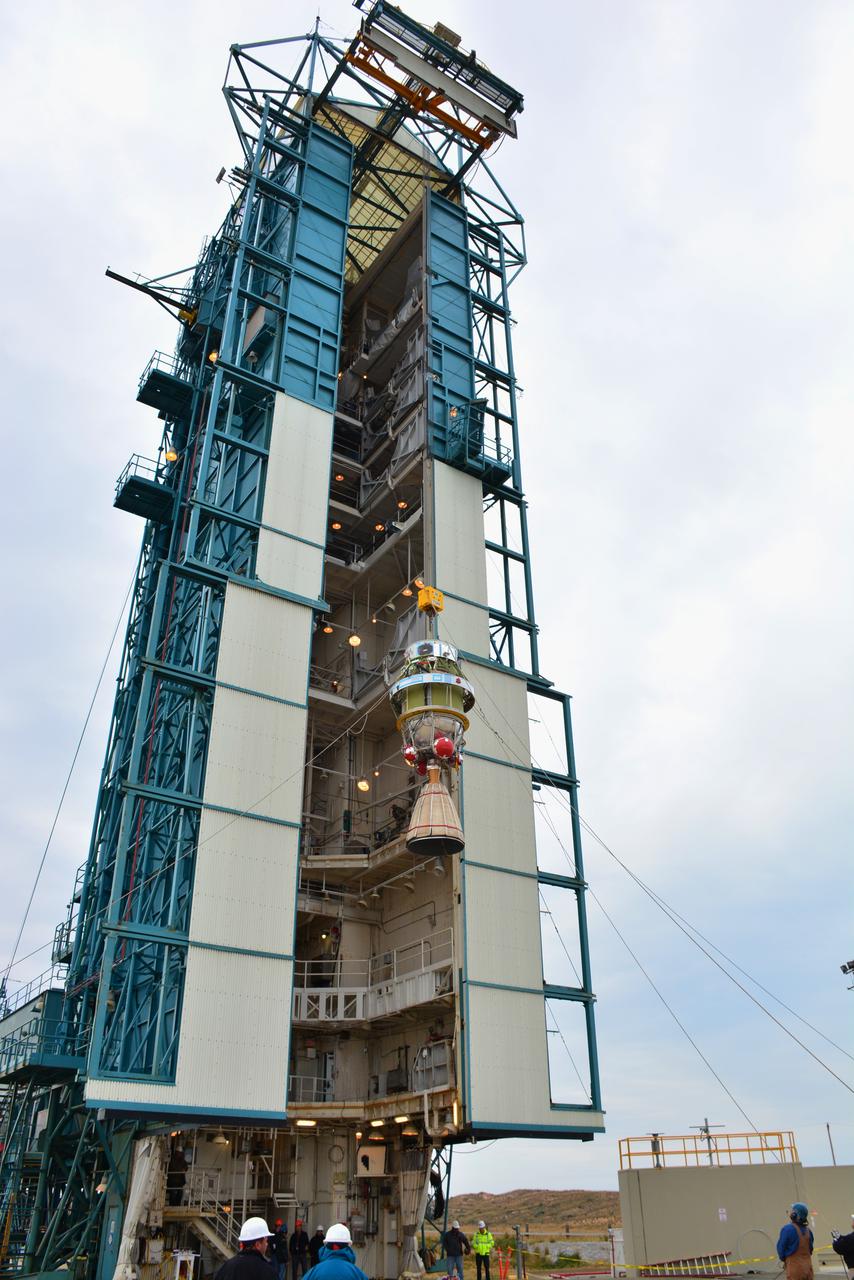
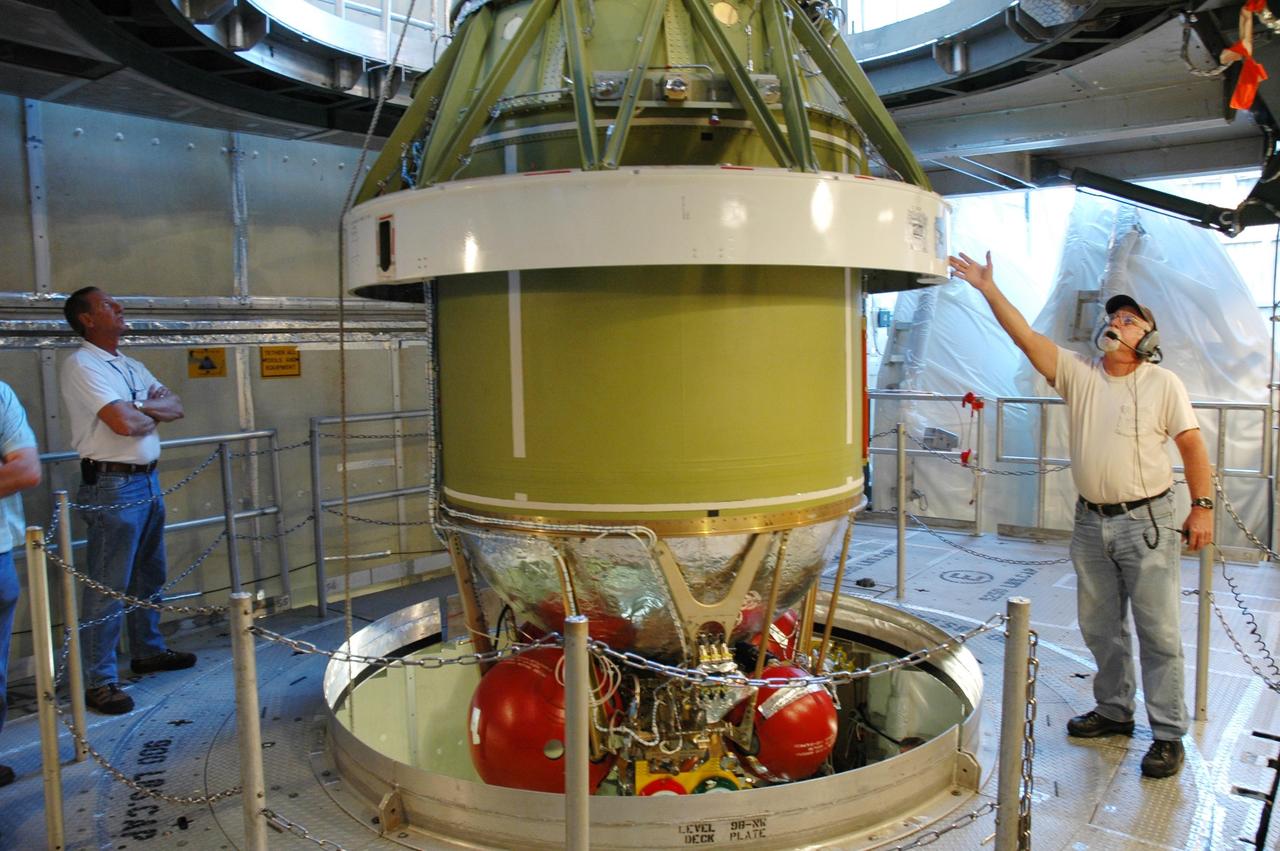
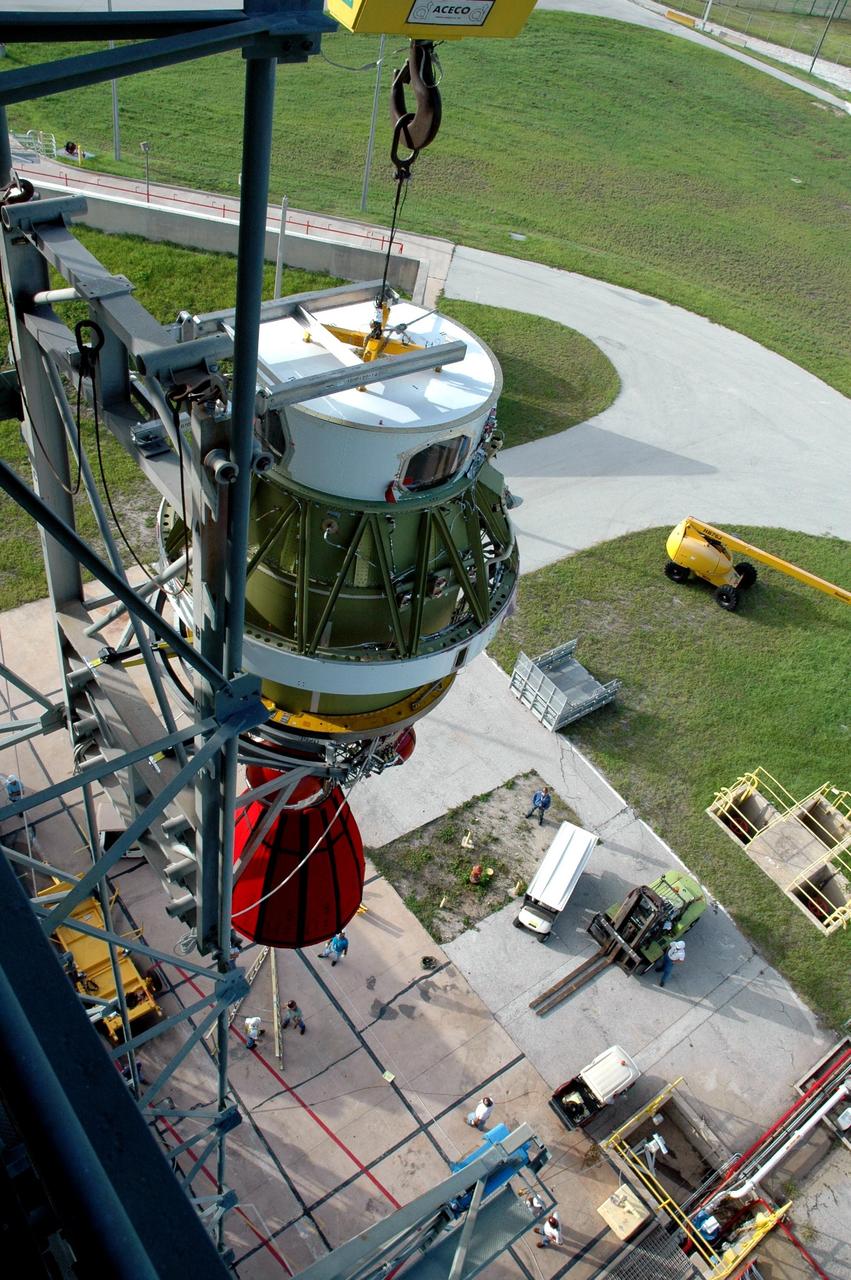
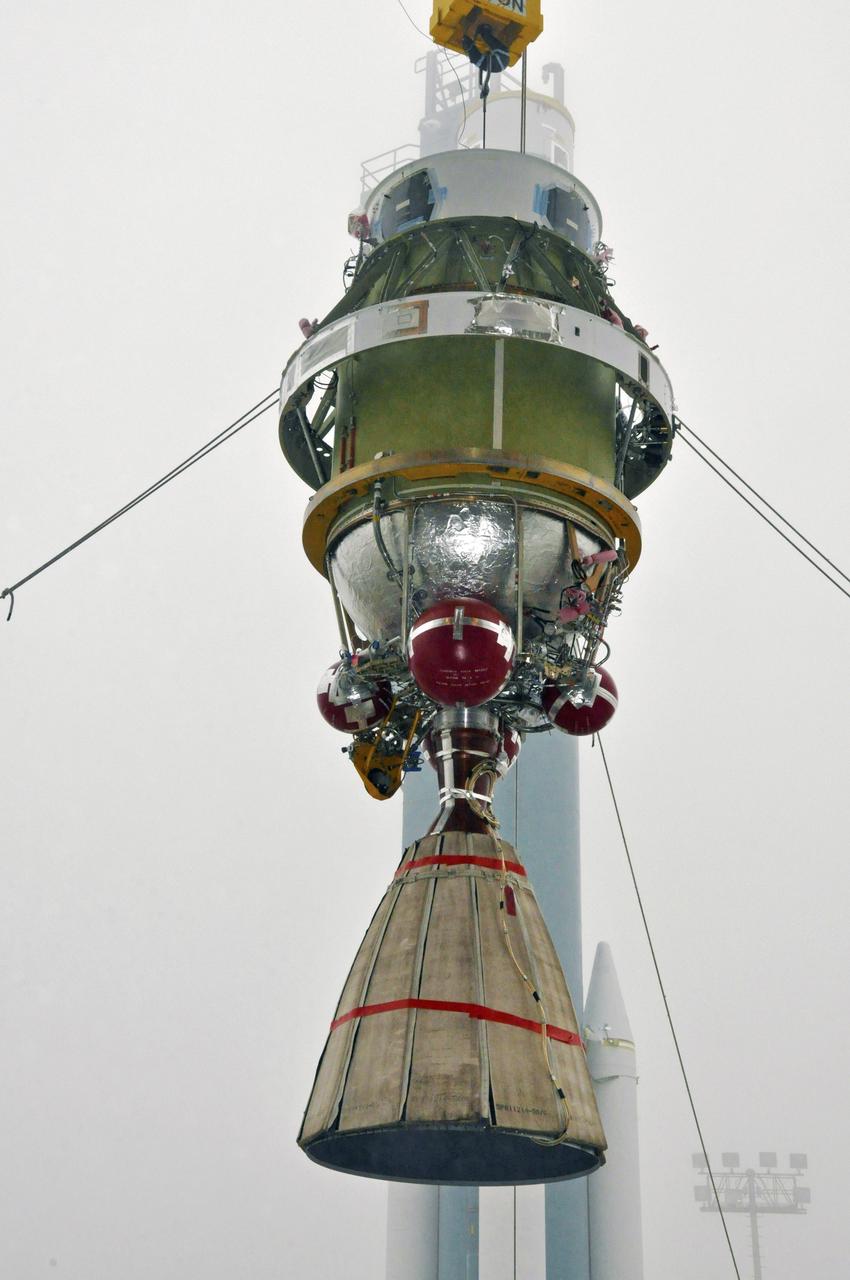
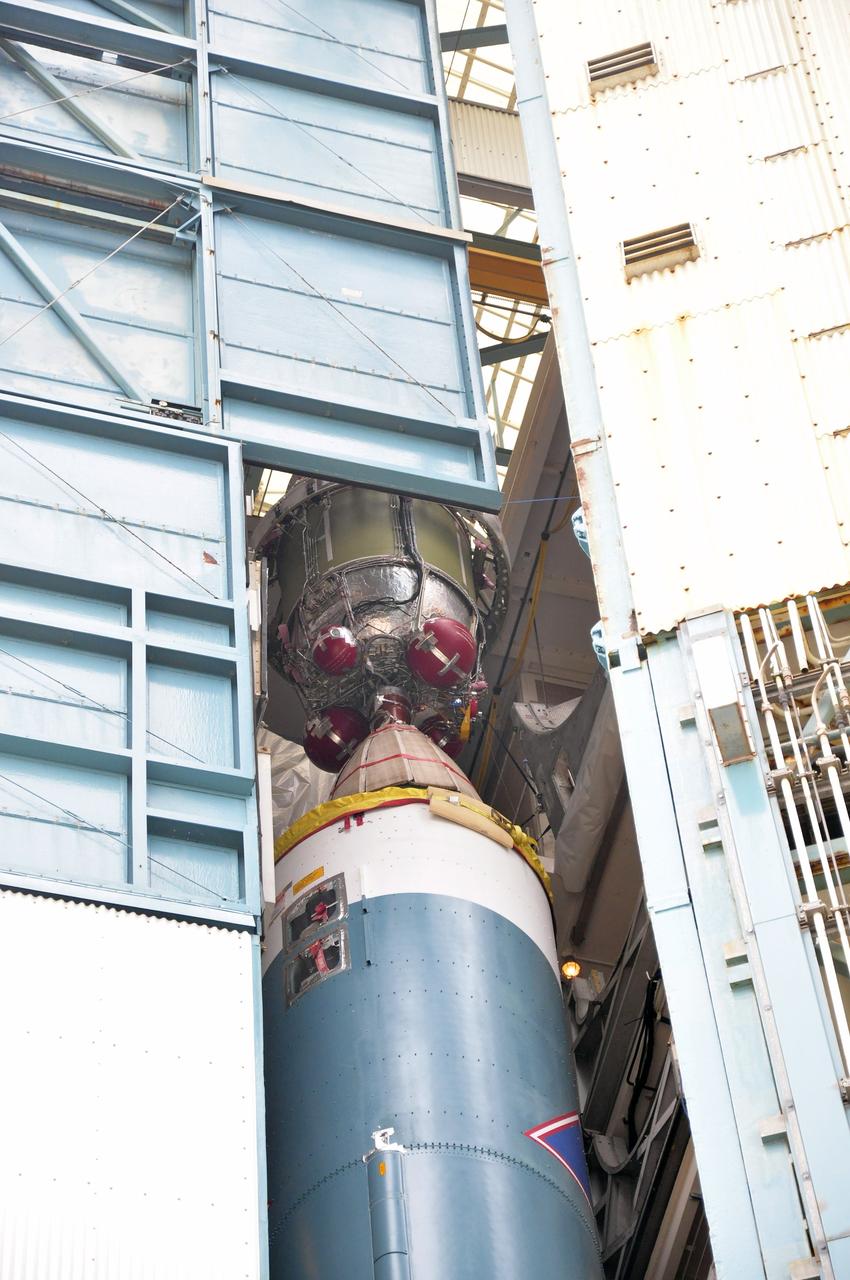
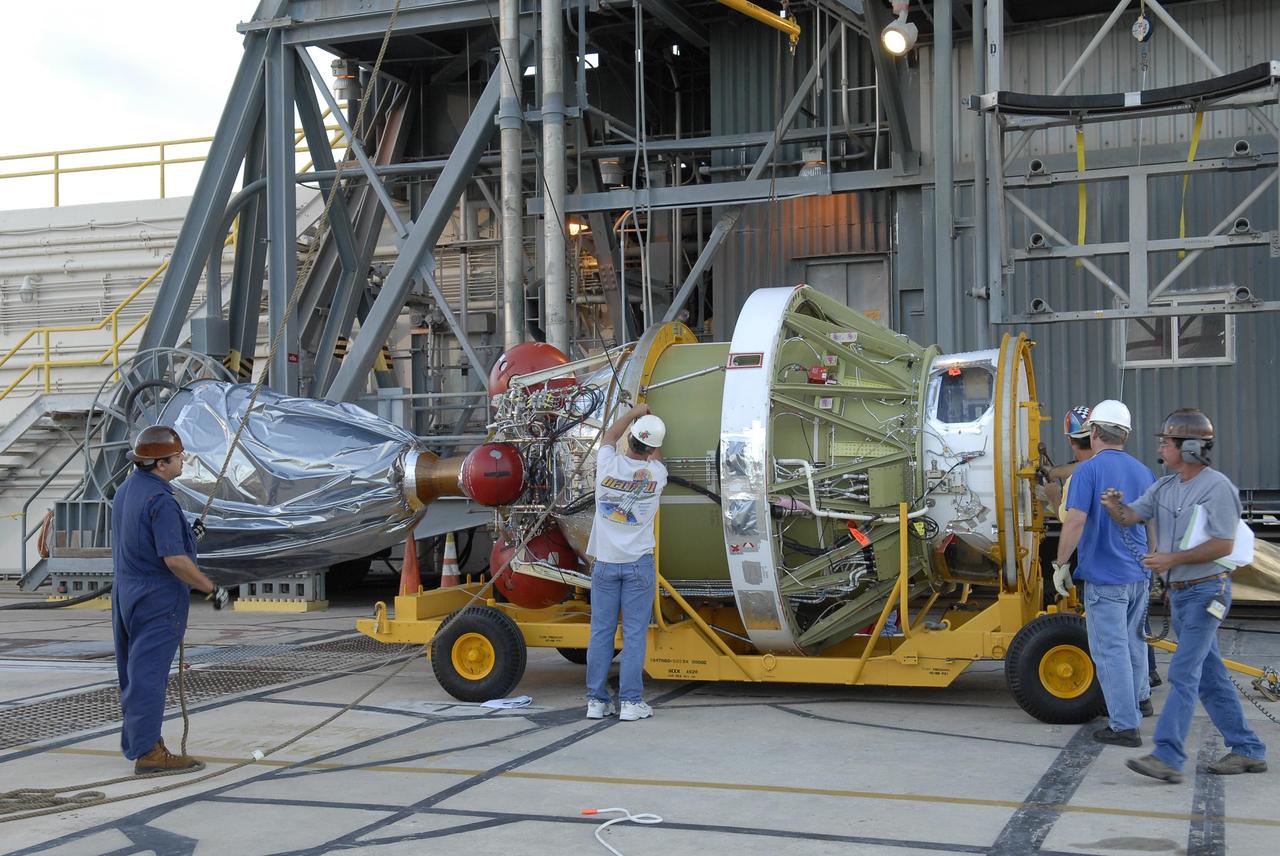
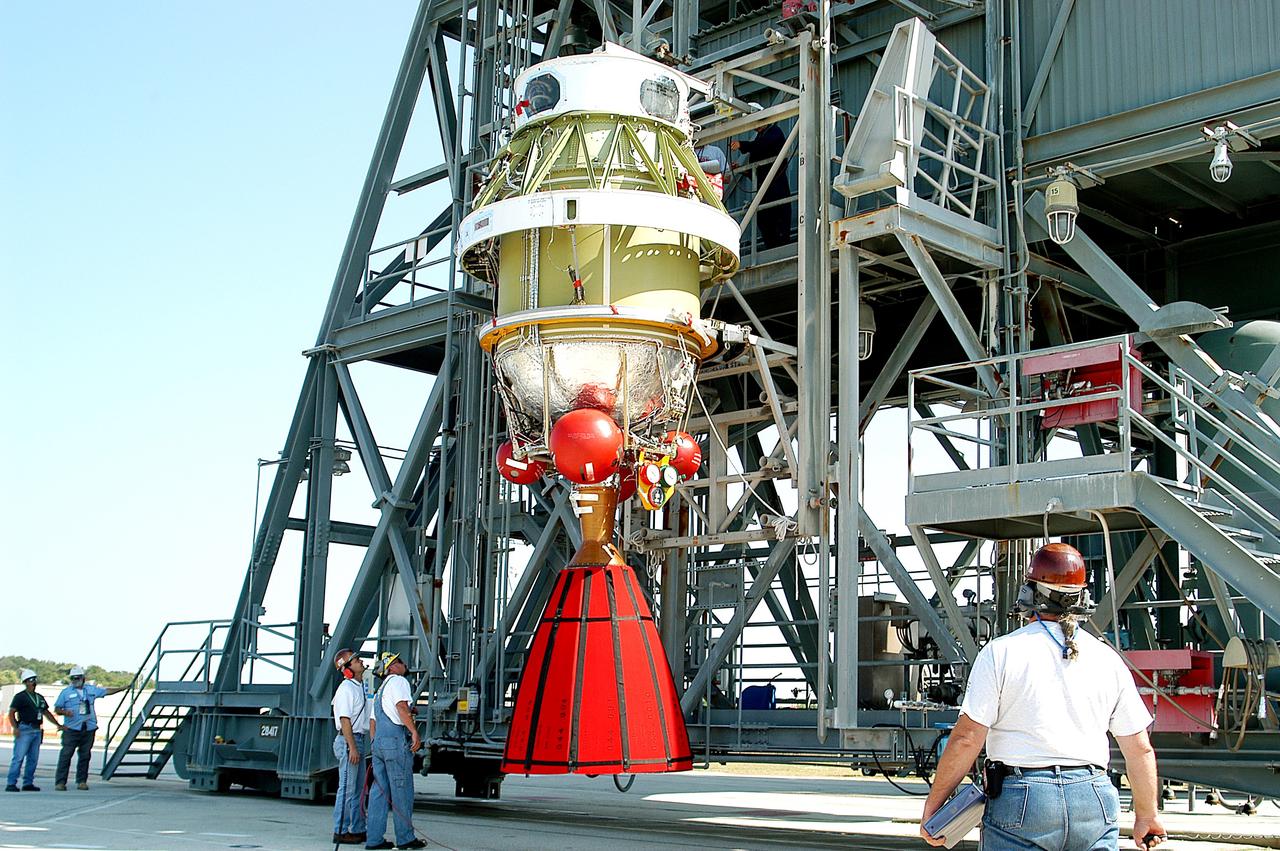
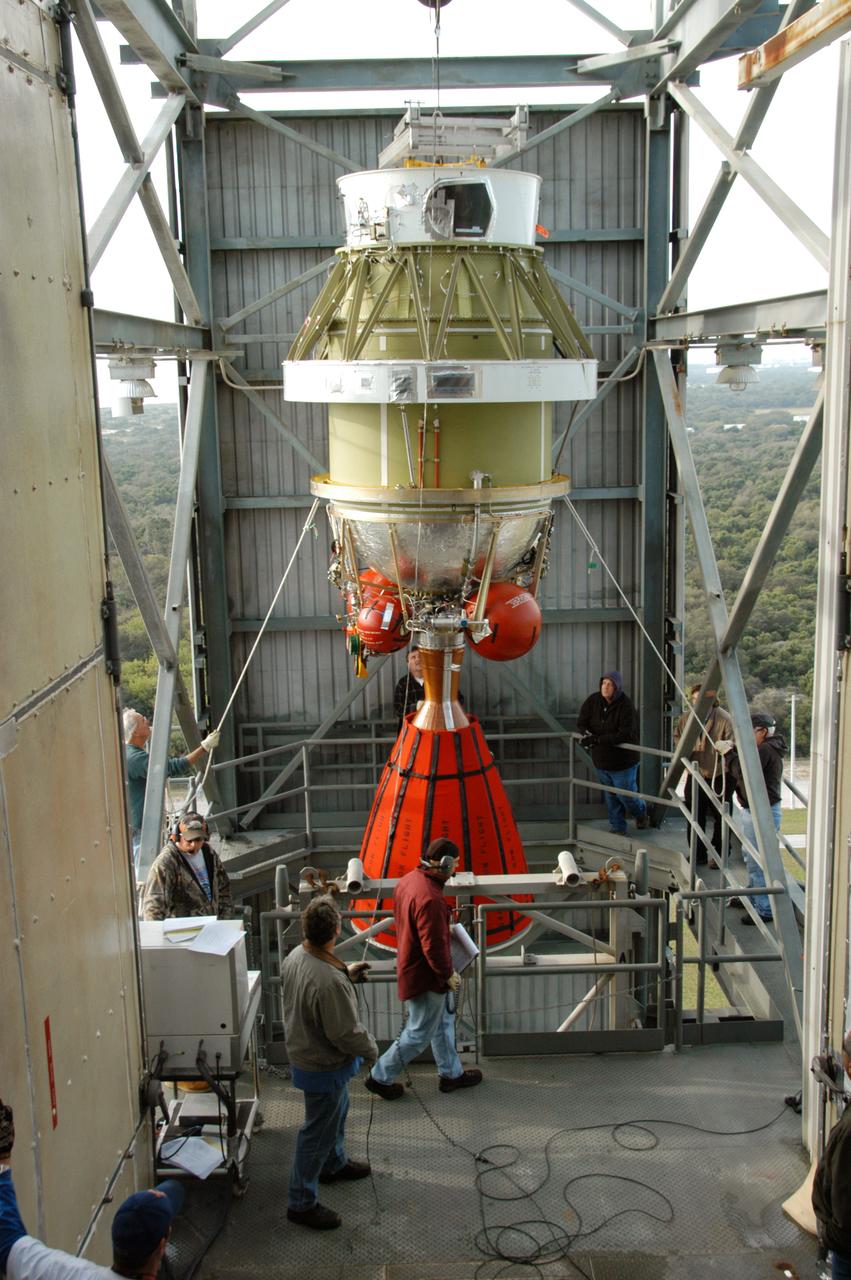
On Pad 17-B at Cape Canaveral Air Force Station, the Delta II second stage arrives at level 9 of the tower. The second stage will be moved inside and mated with the first stage already in place. The Delta II is the launch vehicle for the THEMIS spacecraft THEMIS consists of five identical probes, the largest number of scientific satellites ever launched into orbit aboard a single rocket. This unique constellation of satellites will resolve the tantalizing mystery of what causes the spectacular sudden brightening of the aurora borealis and aurora australis - the fiery skies over the Earth's northern and southern polar regions. THEMIS is scheduled to launch Feb. 15 from Cape Canaveral Air Force Station.
Delta II Second stage lift and mate
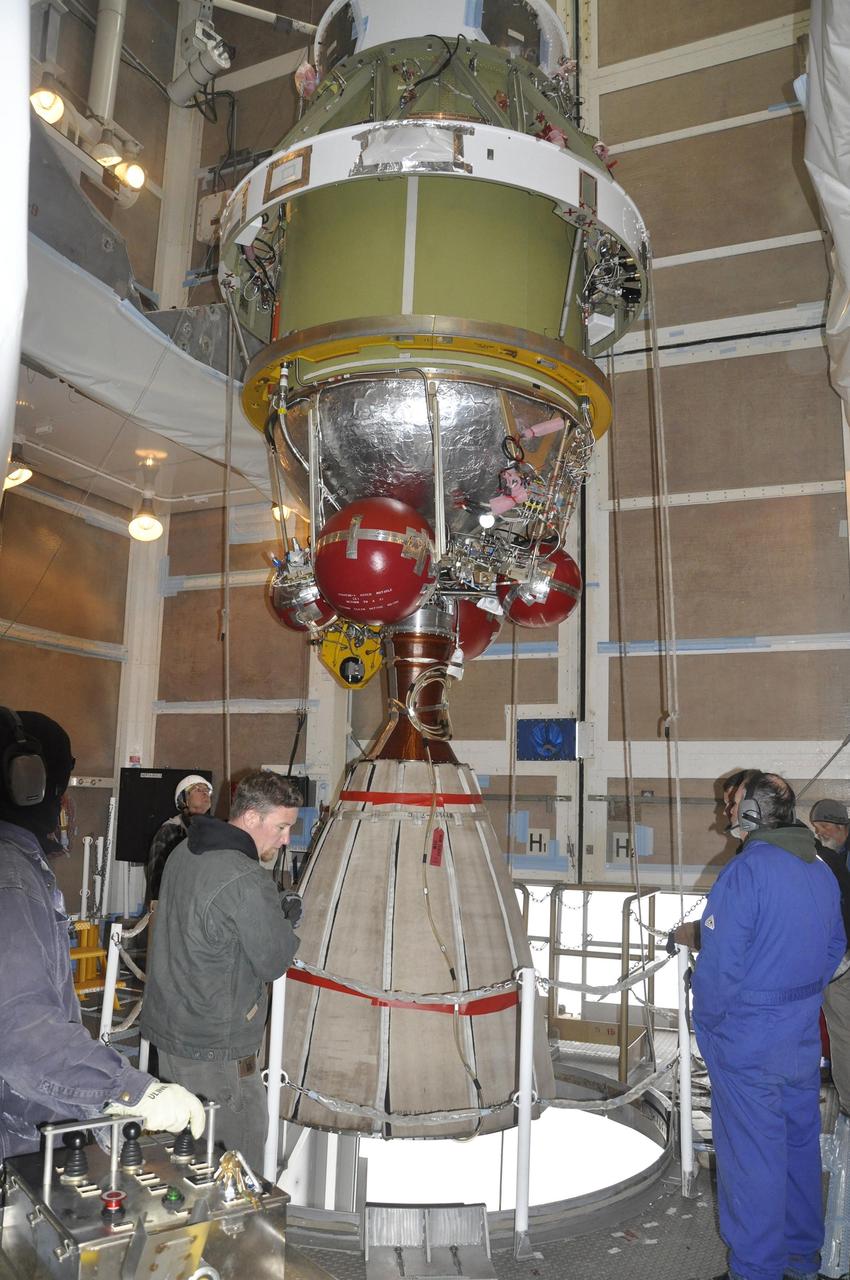
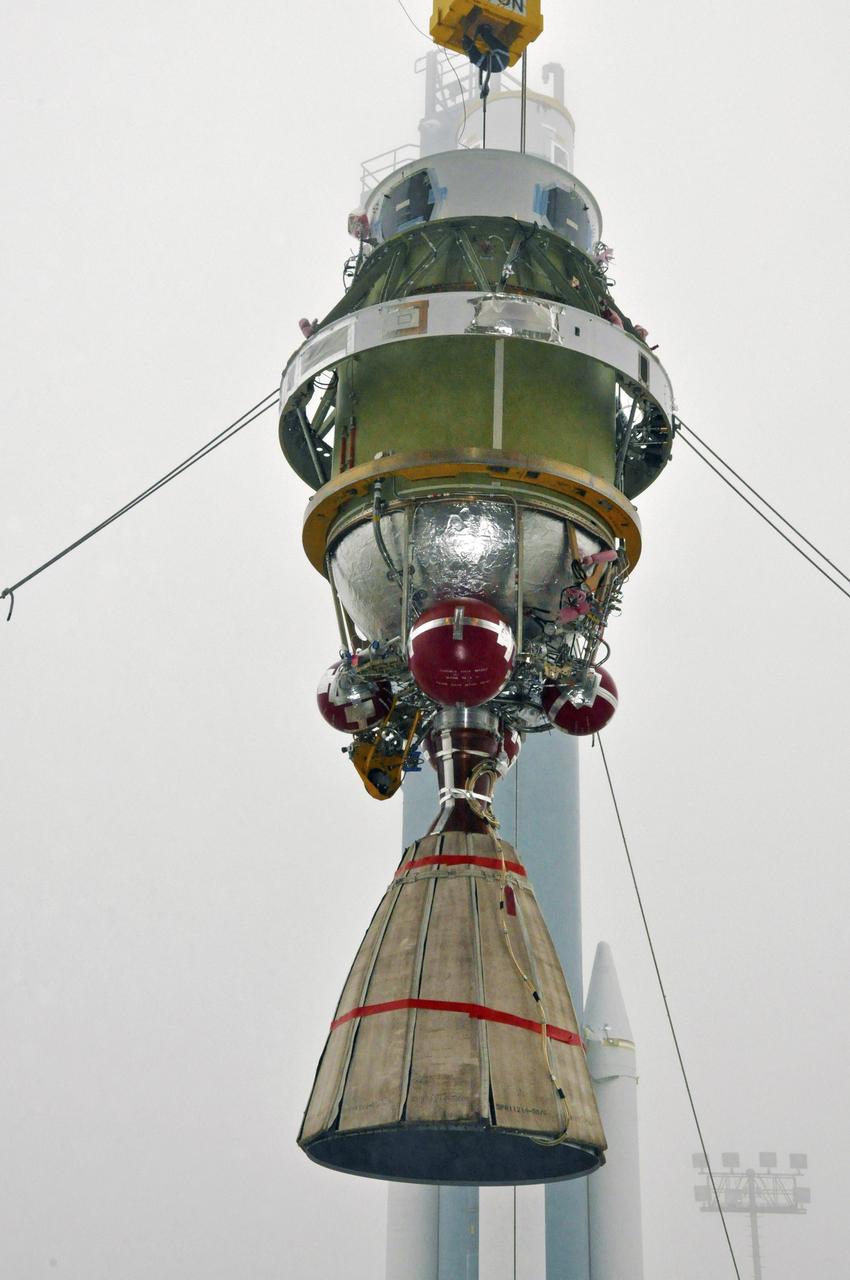
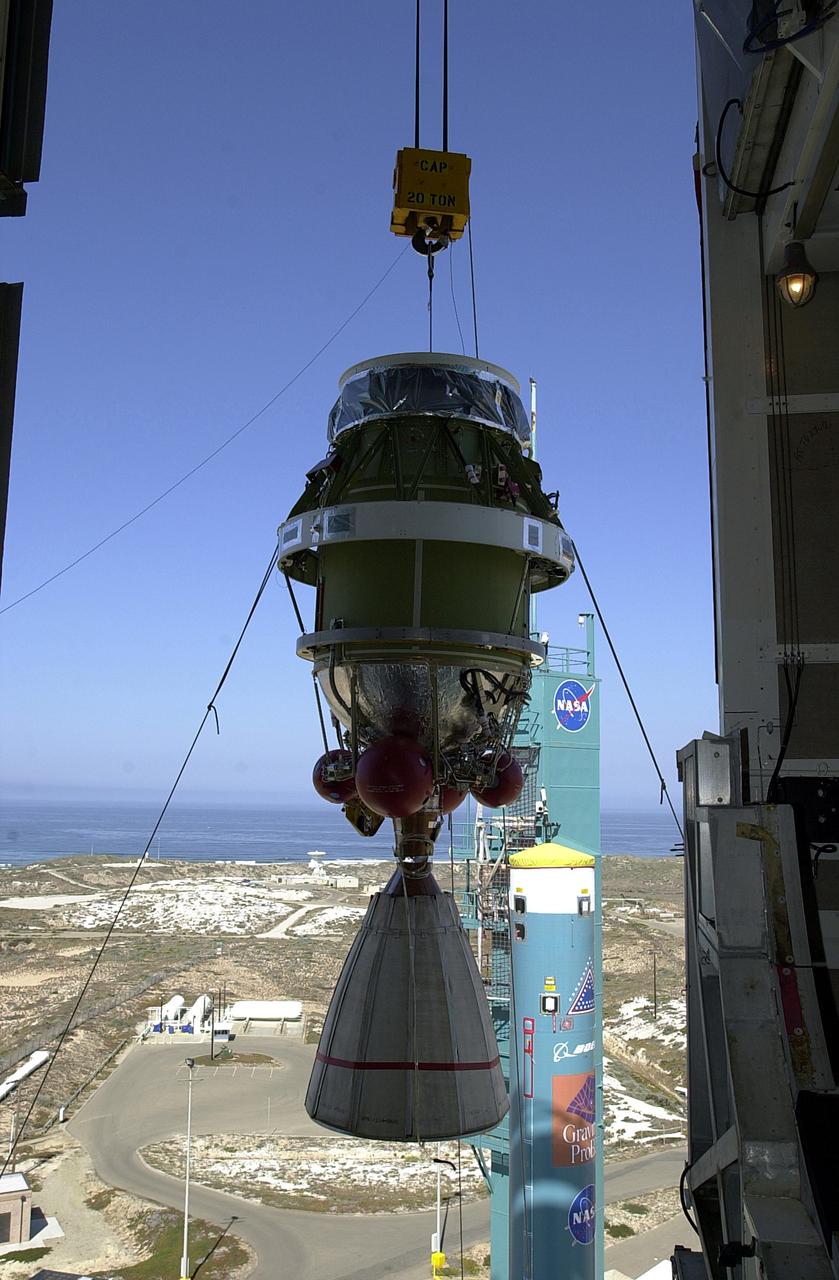
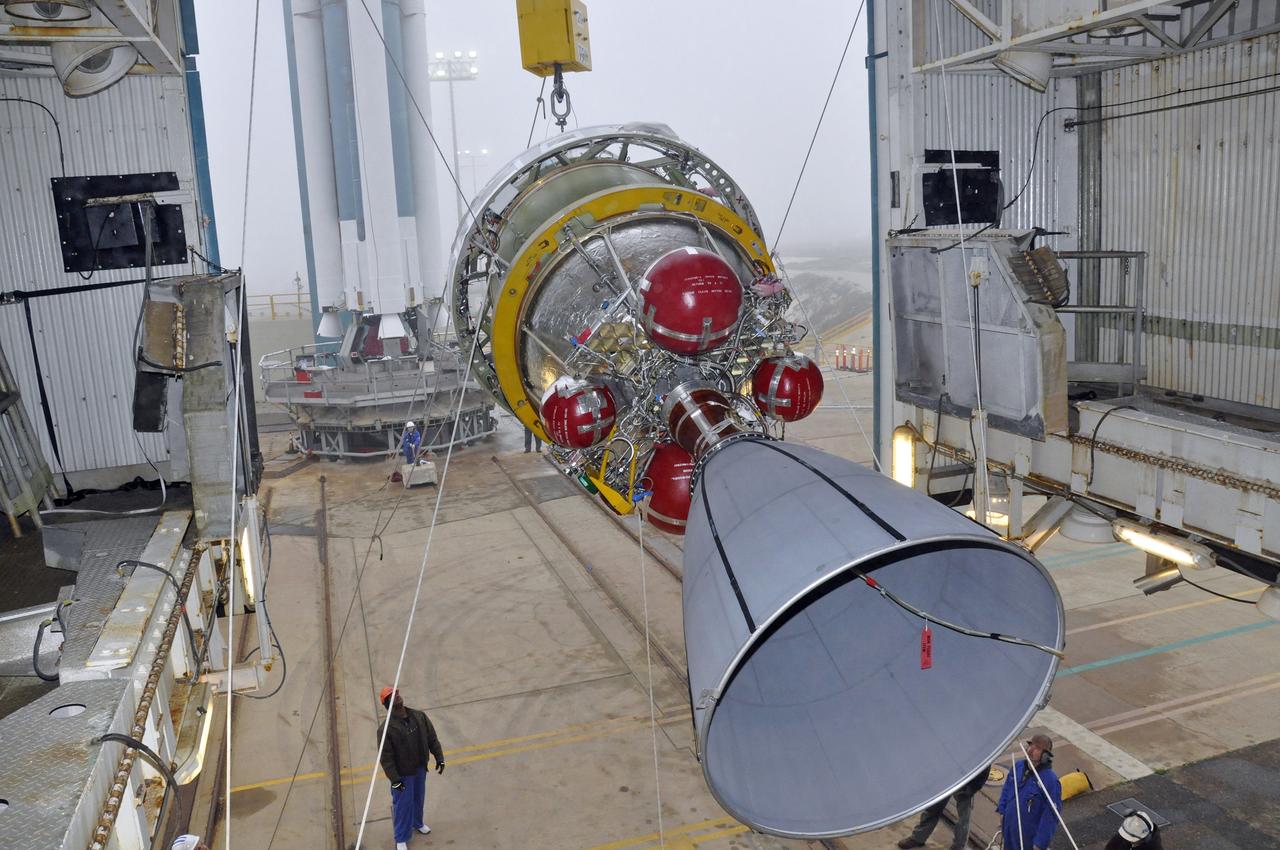
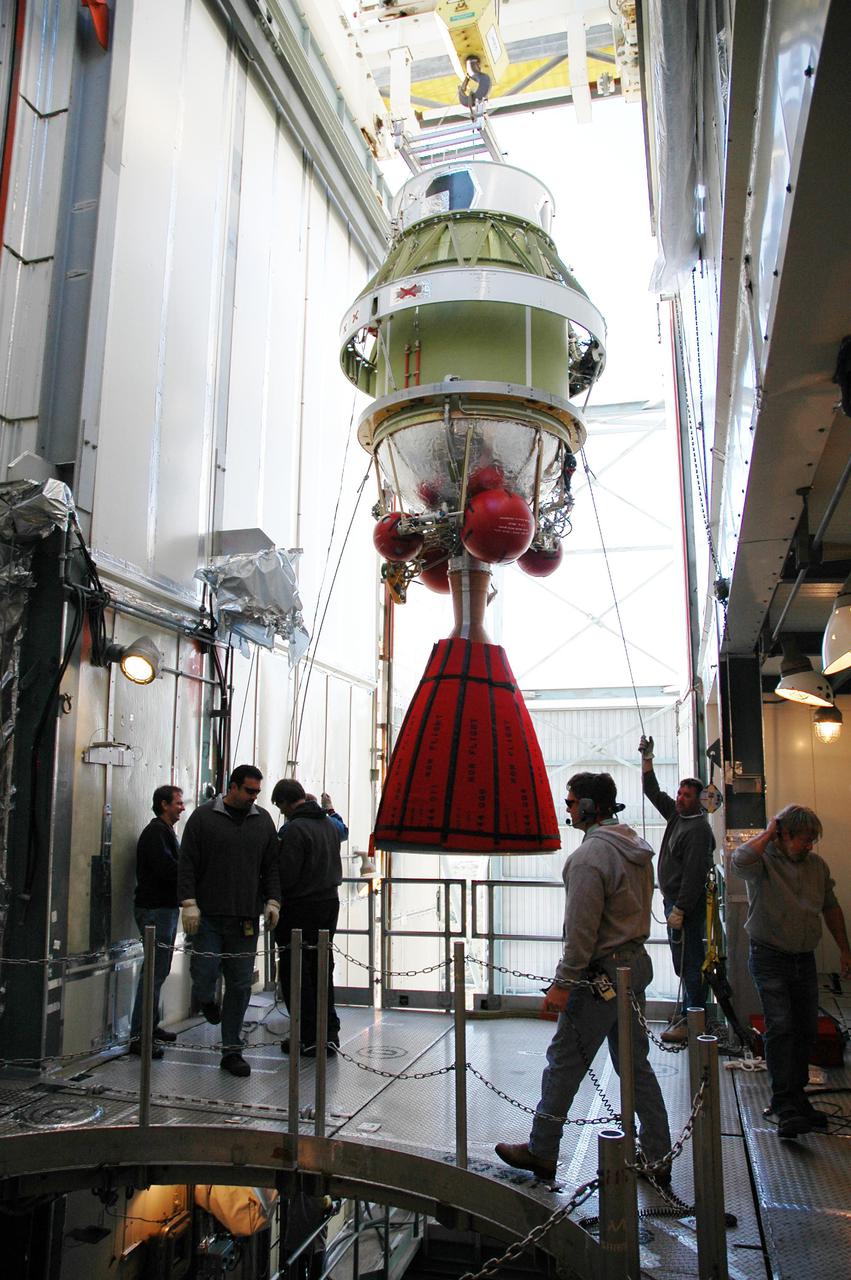
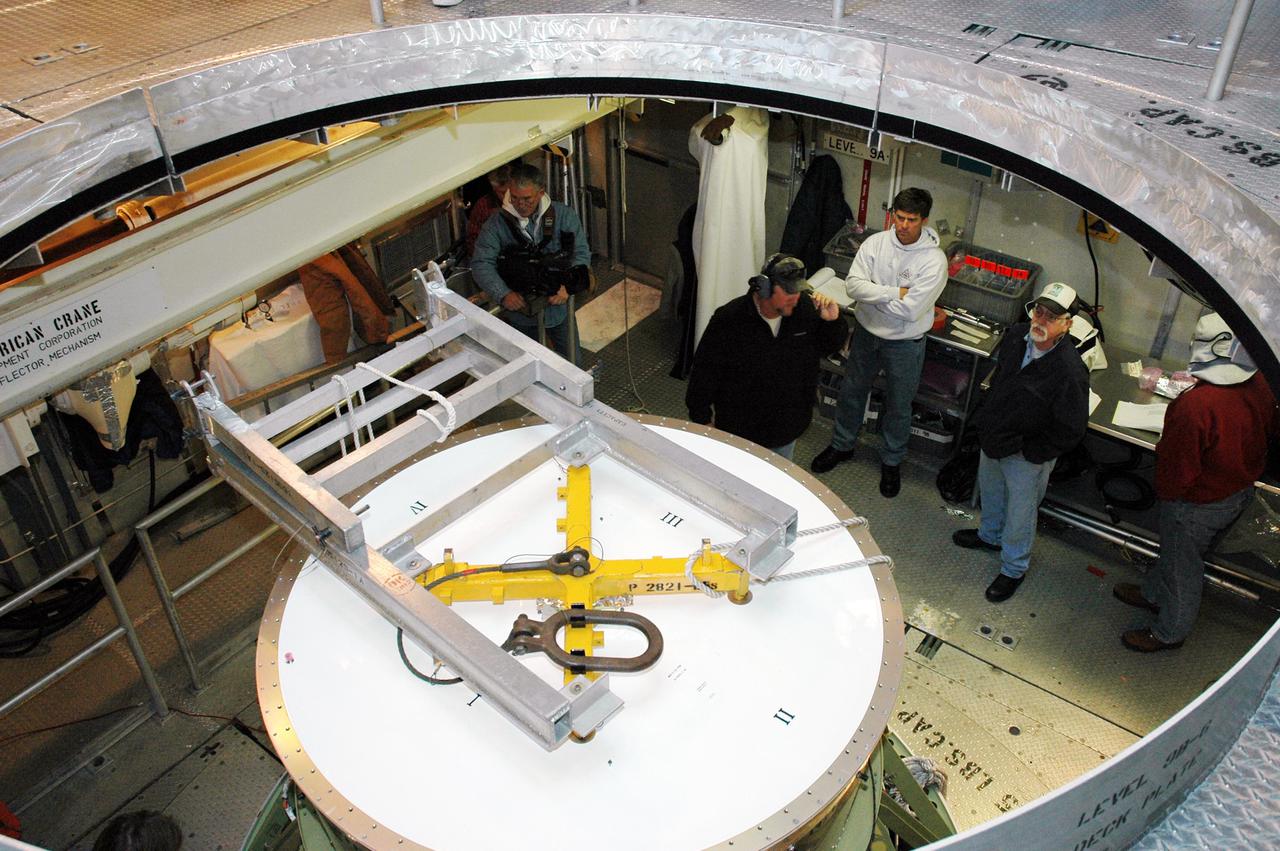
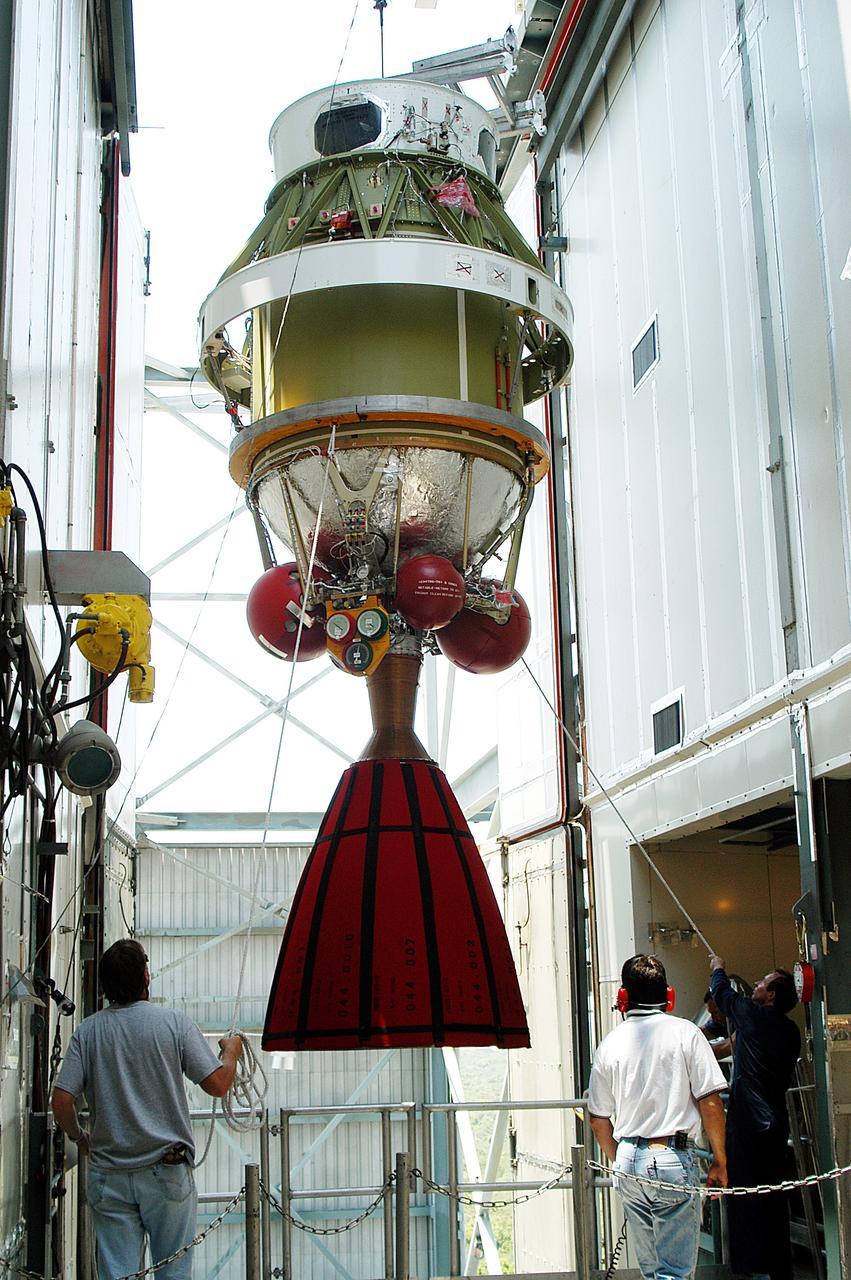
On Pad 17-B at Cape Canaveral Air Force Station, the Delta II second stage is being lowered toward the Delta II first stage, already in place inside the mobile service tower. The Delta II is the launch vehicle for the THEMIS spacecraft. THEMIS consists of five identical probes, the largest number of scientific satellites ever launched into orbit aboard a single rocket. This unique constellation of satellites will resolve the tantalizing mystery of what causes the spectacular sudden brightening of the aurora borealis and aurora australis - the fiery skies over the Earth's northern and southern polar regions. THEMIS is scheduled to launch Feb. 15 from Cape Canaveral Air Force Station.
Delta II Second stage lift and mate
On Pad 17-B at Cape Canaveral Air Force Station, the Delta II second stage is being lowered toward the Delta II first stage, already in place inside the mobile service tower. The Delta II is the launch vehicle for the THEMIS spacecraft. THEMIS consists of five identical probes, the largest number of scientific satellites ever launched into orbit aboard a single rocket. This unique constellation of satellites will resolve the tantalizing mystery of what causes the spectacular sudden brightening of the aurora borealis and aurora australis - the fiery skies over the Earth's northern and southern polar regions. THEMIS is scheduled to launch Feb. 15 from Cape Canaveral Air Force Station.
Delta II Second stage lift and mate
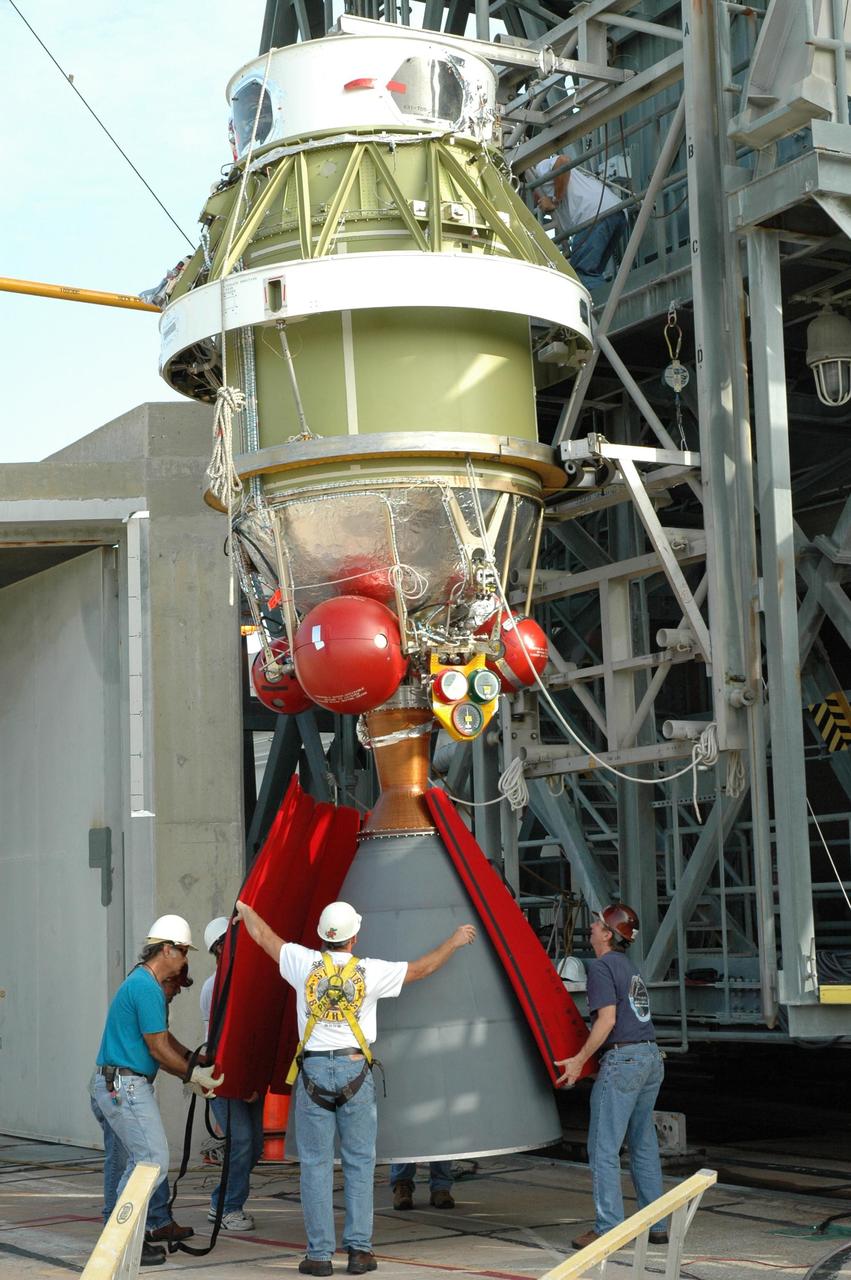
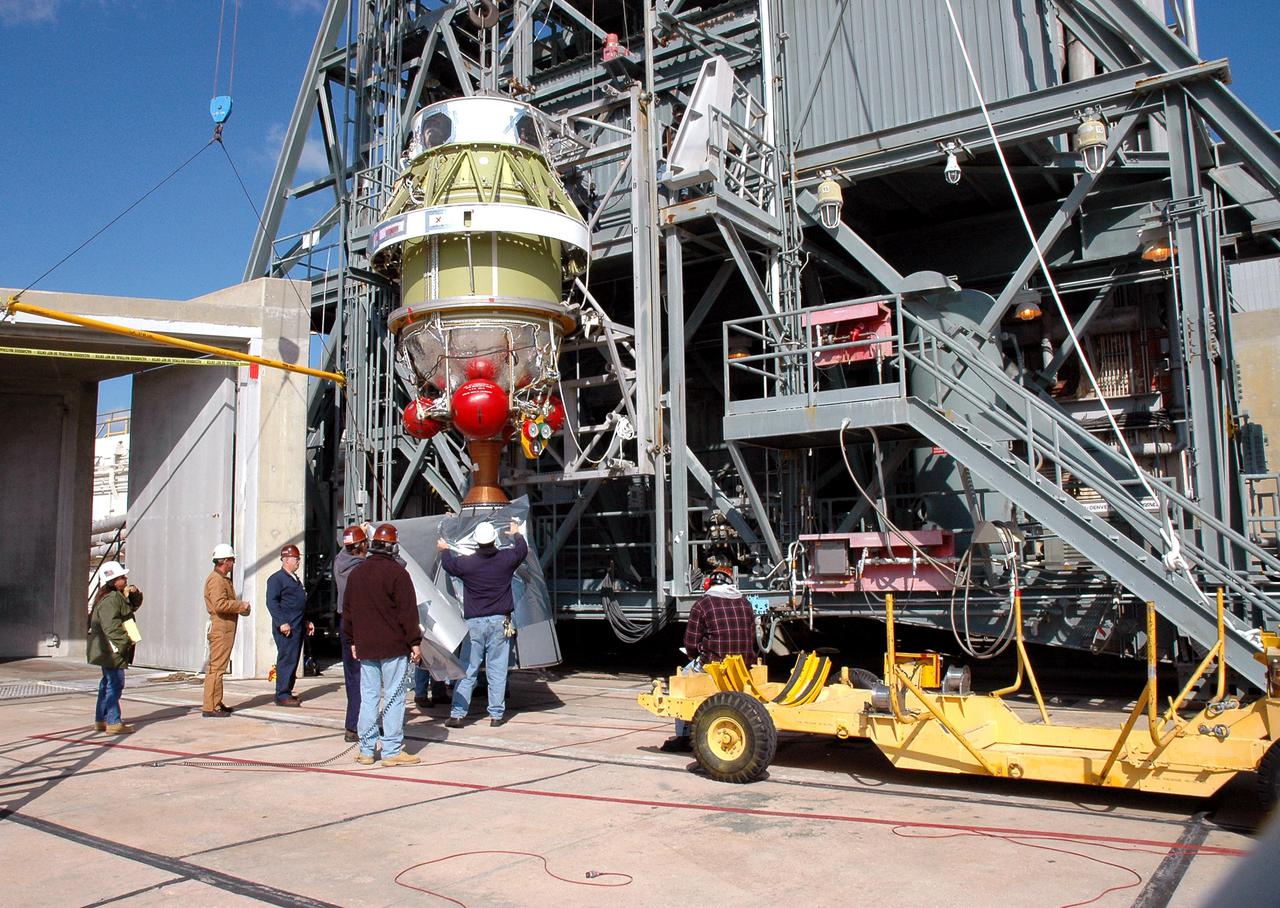
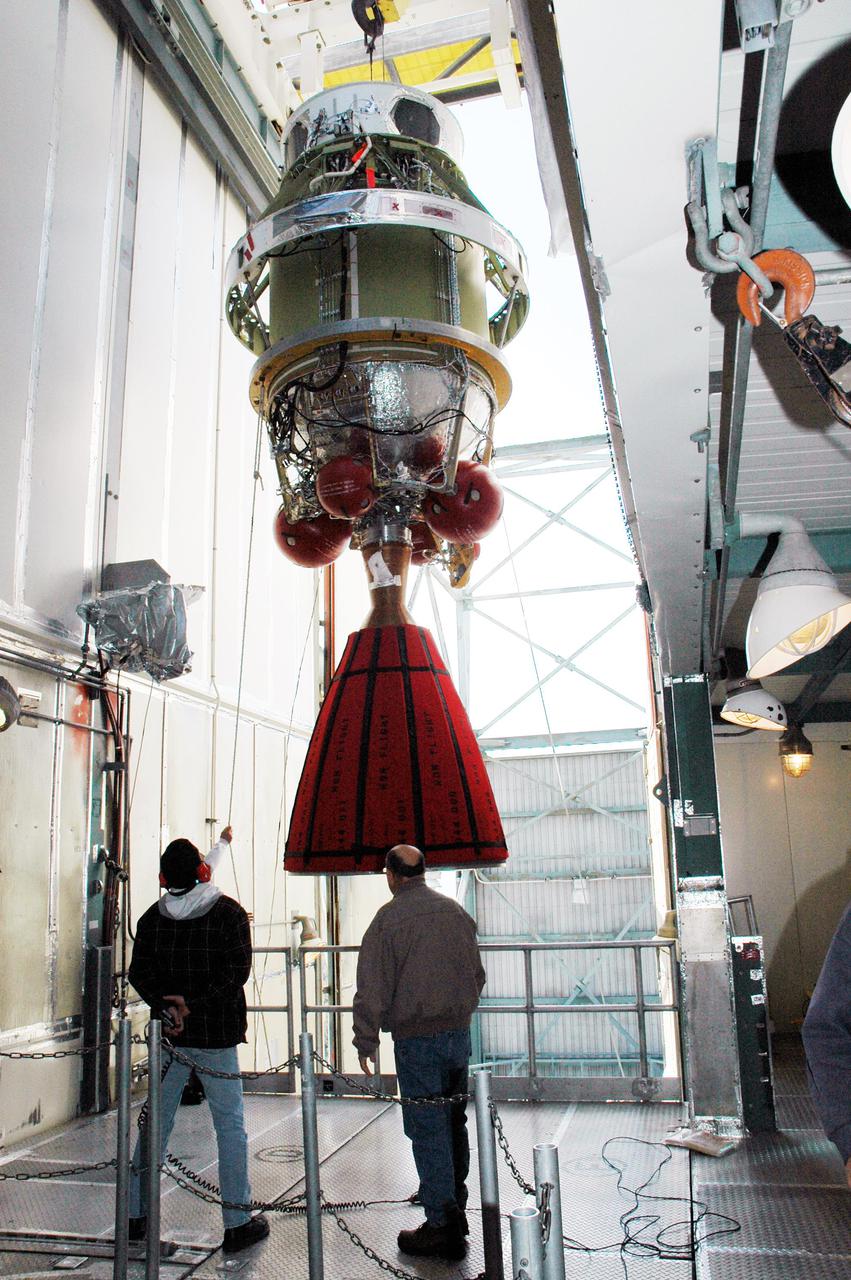
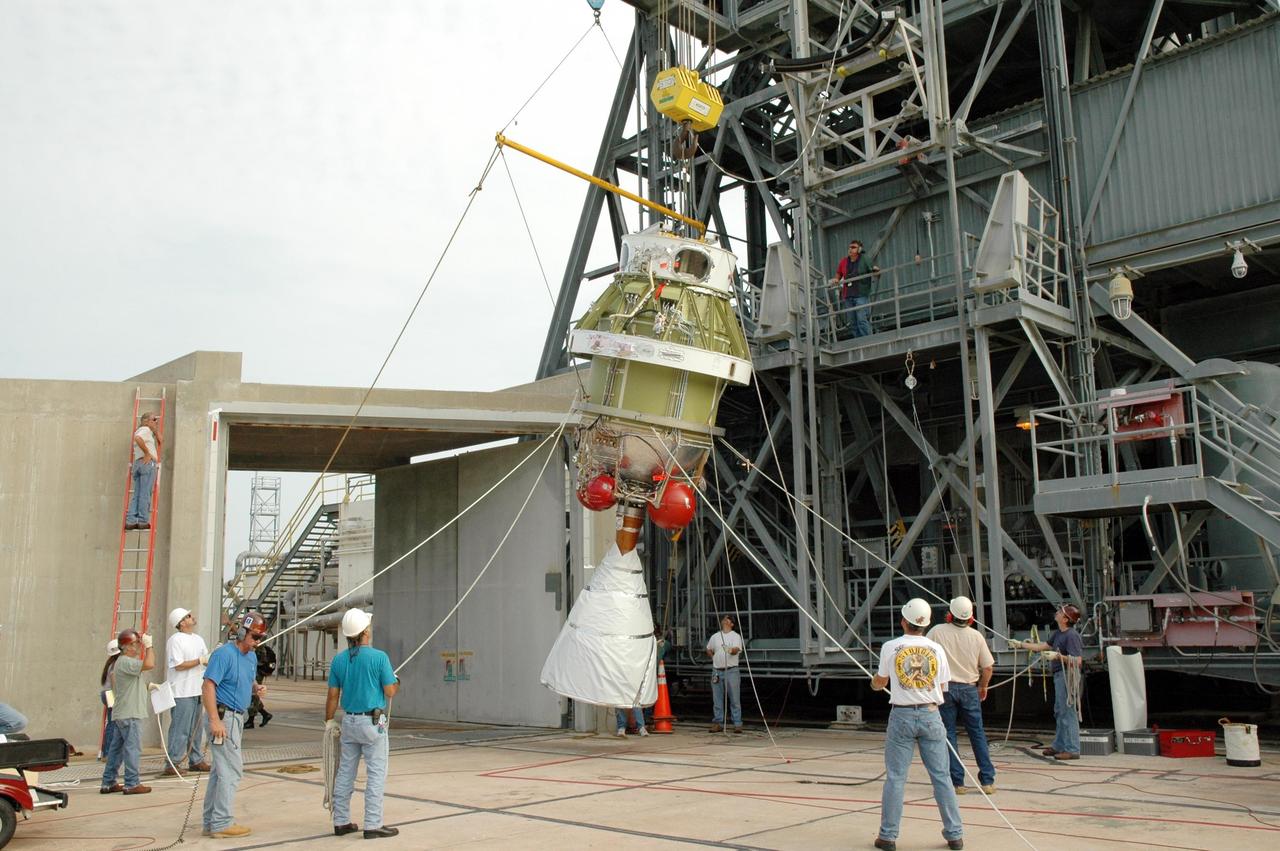
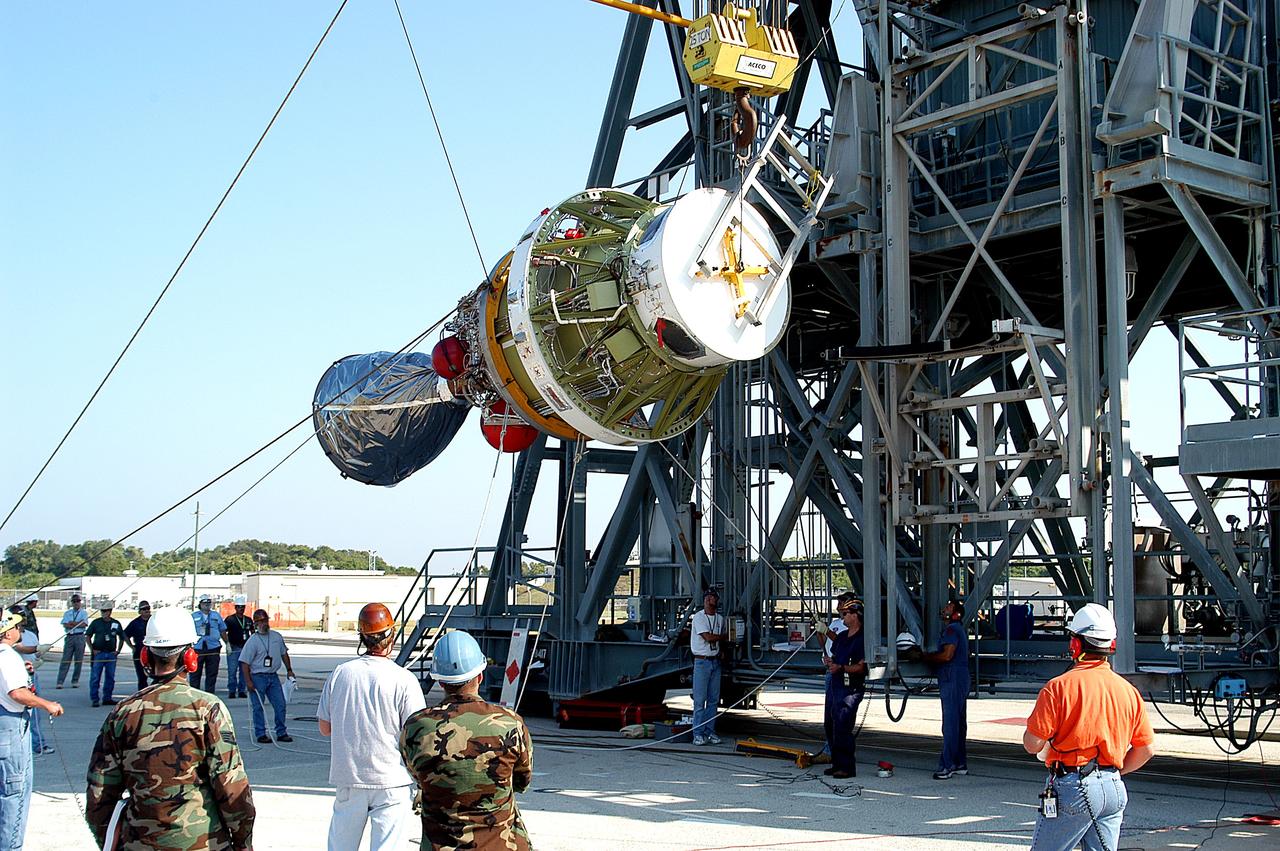
On Pad 17-B at Cape Canaveral Air Force Station, workers stand by while an overhead crane lifts the Delta II second stage to a vertical position. The second stage will be lifted into the mobile service tower and mated with the first stage already in place. The Delta II is the launch vehicle for the THEMIS spacecraft. THEMIS consists of five identical probes, the largest number of scientific satellites ever launched into orbit aboard a single rocket. This unique constellation of satellites will resolve the tantalizing mystery of what causes the spectacular sudden brightening of the aurora borealis and aurora australis - the fiery skies over the Earth's northern and southern polar regions. THEMIS is scheduled to launch Feb. 15 from Cape Canaveral Air Force Station.
Delta II Second stage lift and mate
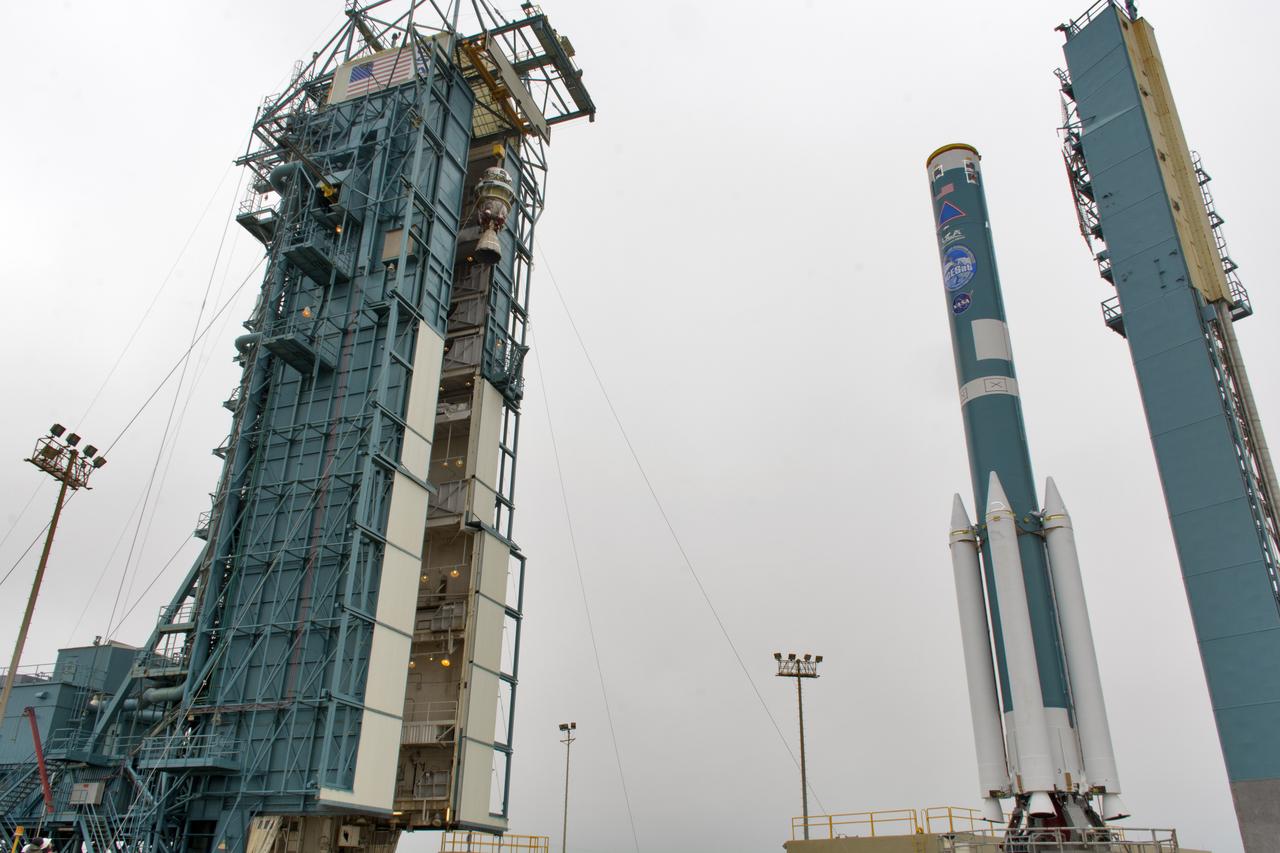
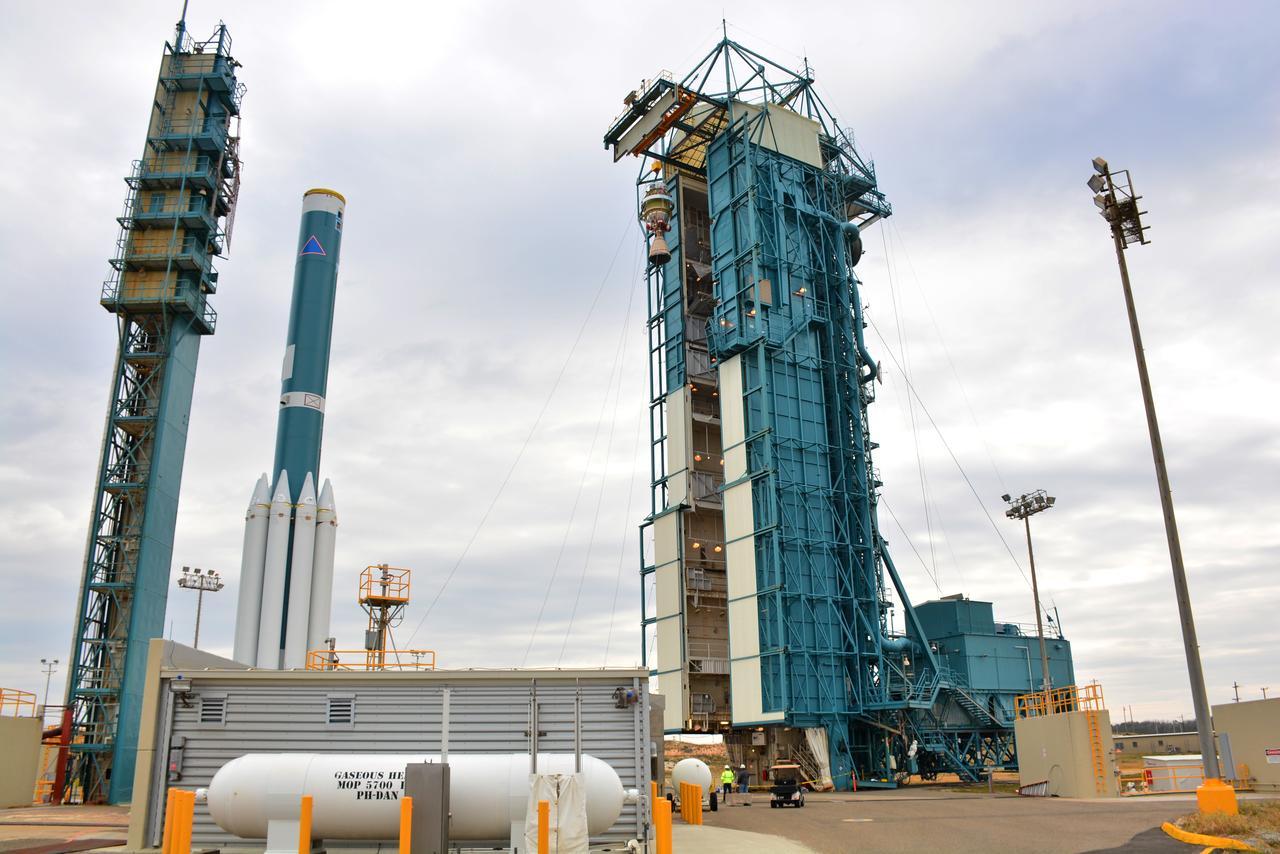
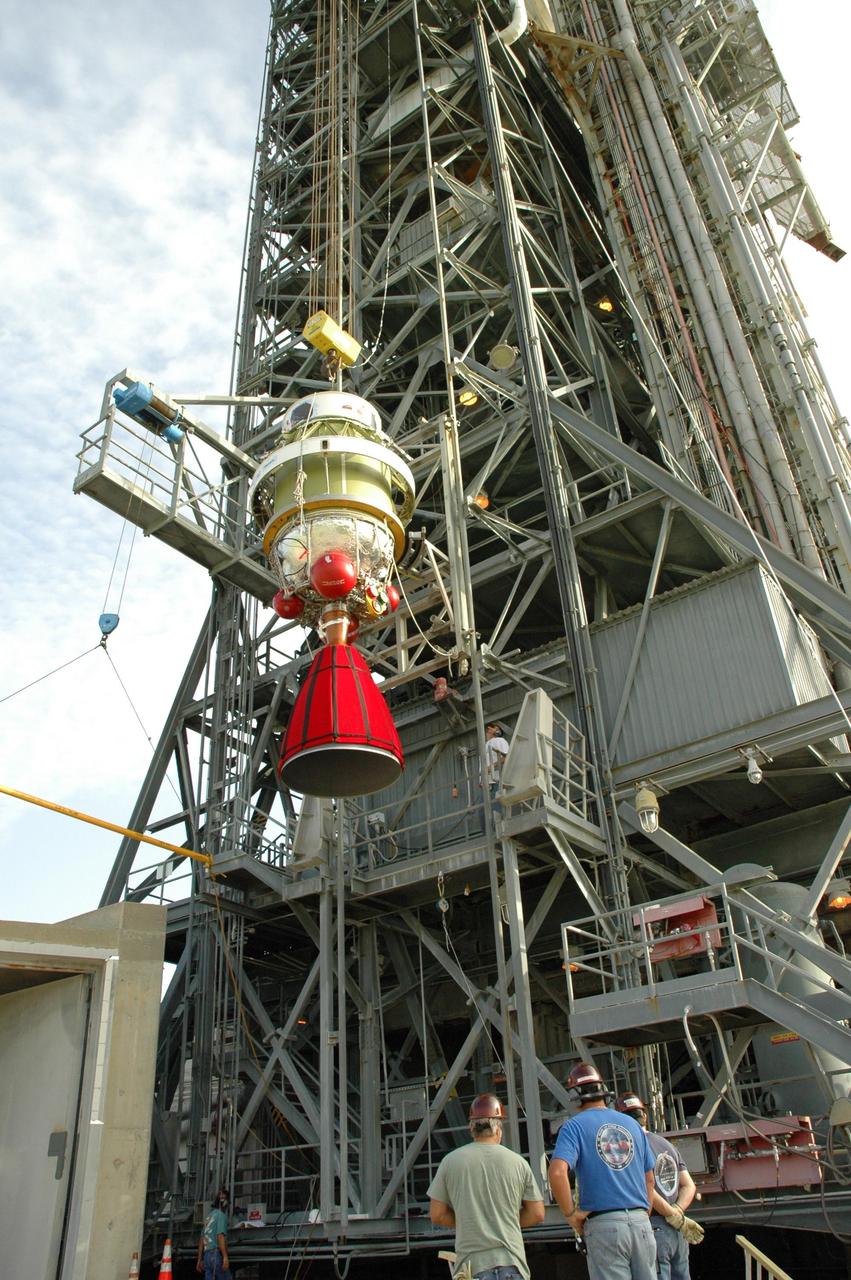
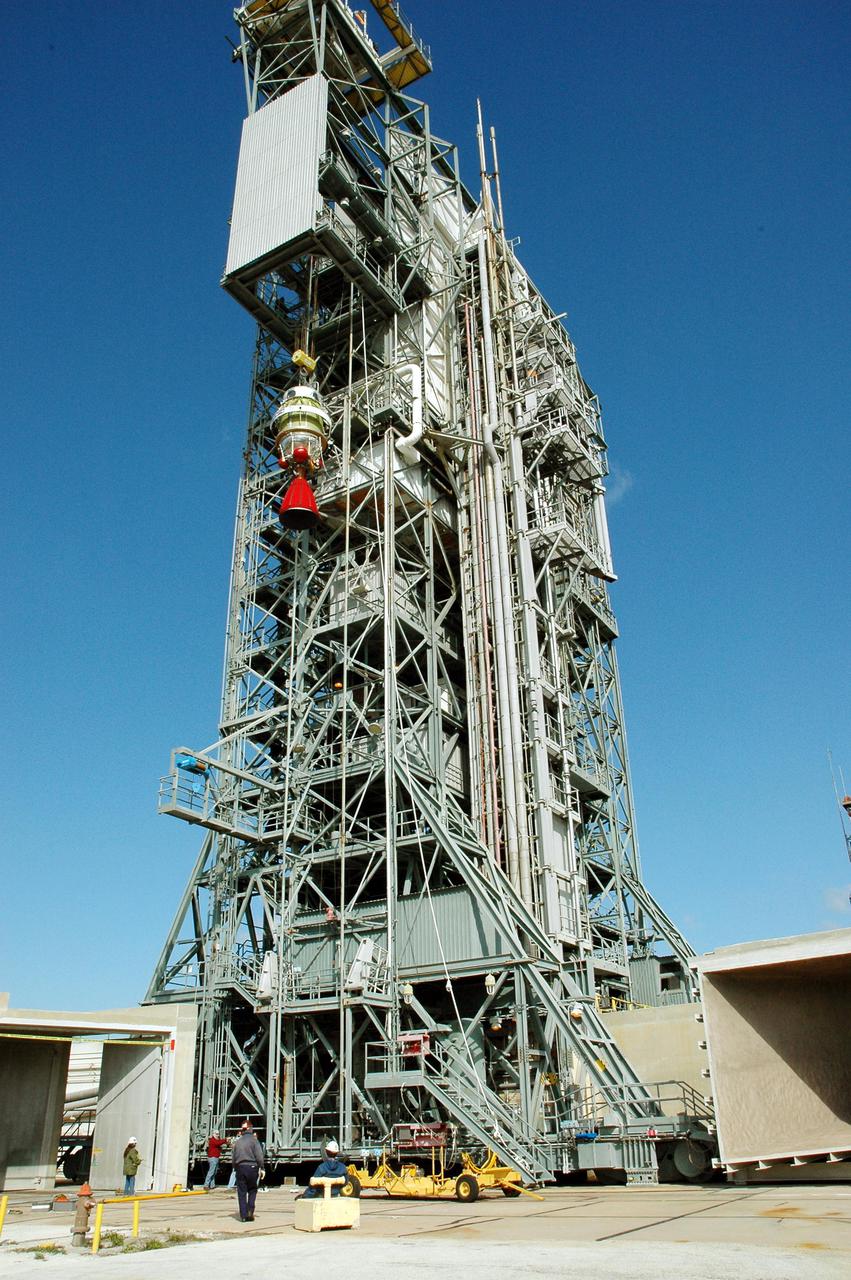
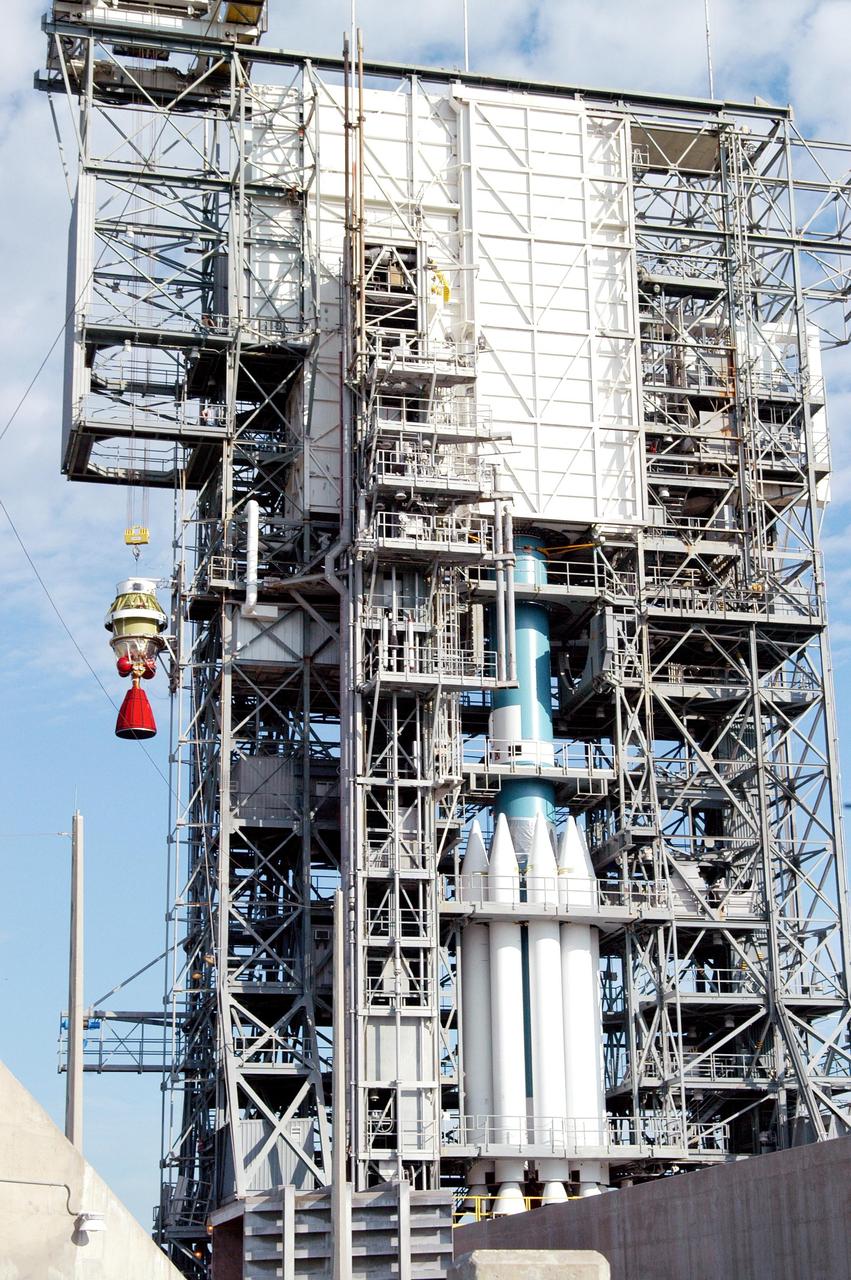
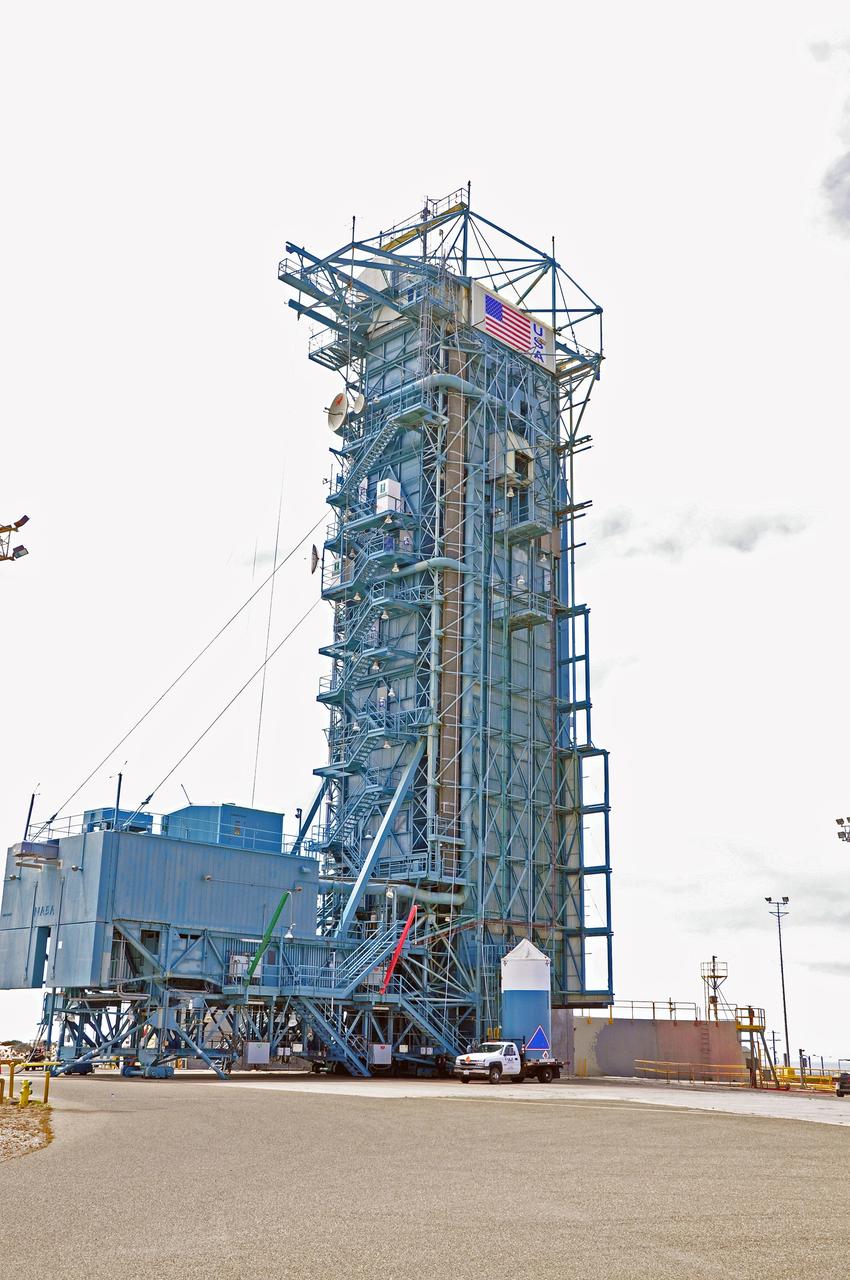
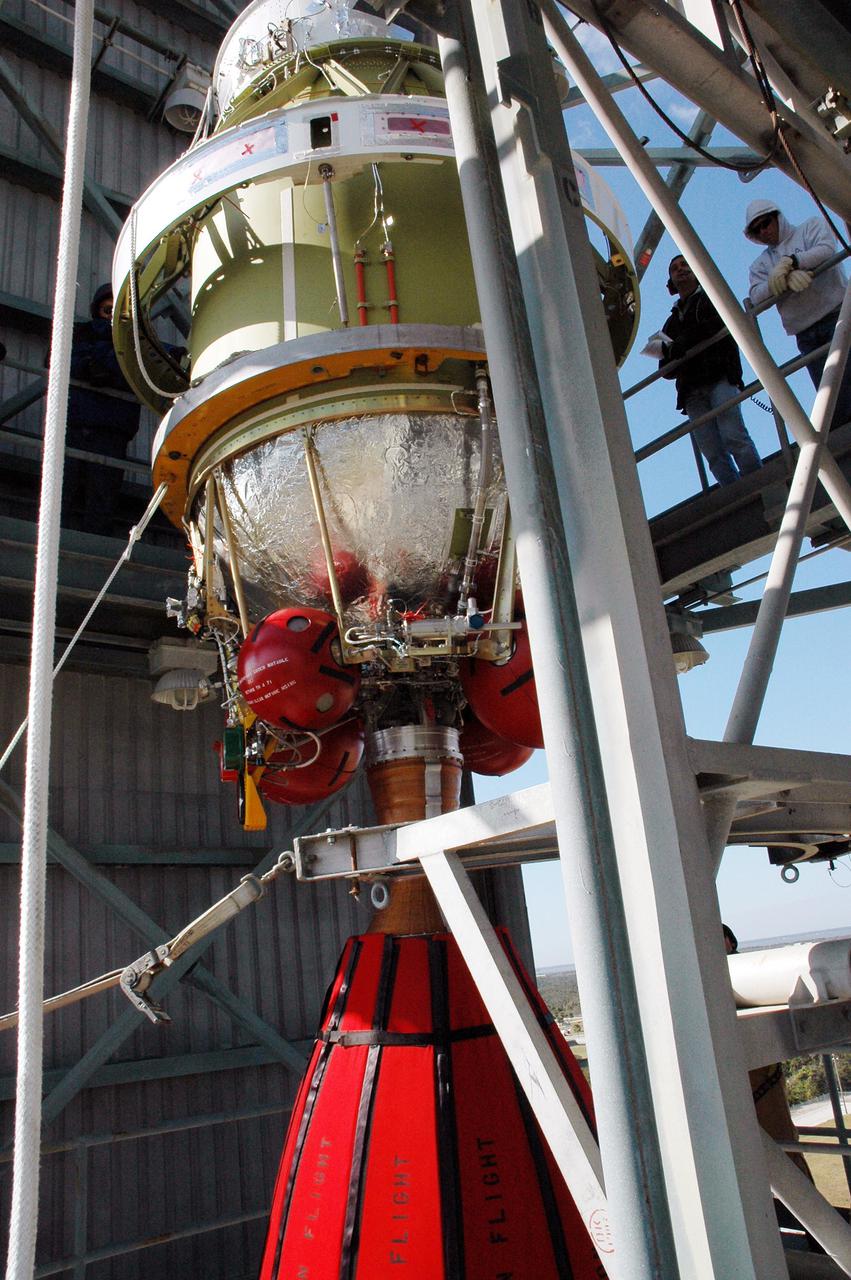
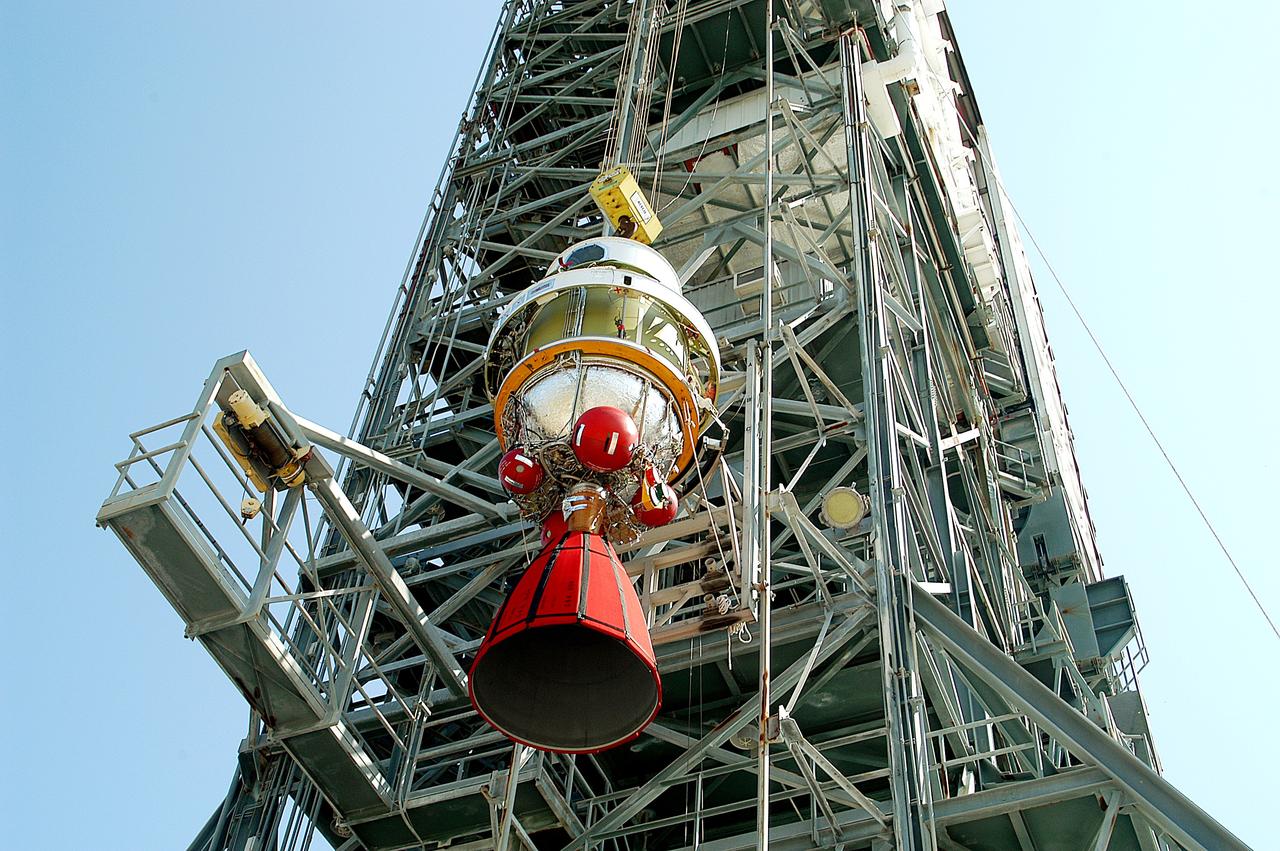
On Pad 17-B at Cape Canaveral Air Force Station, the Delta II second stage is being lifted alongside the mobile service tower. Once inside, it will be mated with the first stage already in place. The Delta II is the launch vehicle for the THEMIS spacecraft. THEMIS consists of five identical probes, the largest number of scientific satellites ever launched into orbit aboard a single rocket. This unique constellation of satellites will resolve the tantalizing mystery of what causes the spectacular sudden brightening of the aurora borealis and aurora australis - the fiery skies over the Earth's northern and southern polar regions. THEMIS is scheduled to launch Feb. 15 from Cape Canaveral Air Force Station.
Delta II Second stage lift and mate
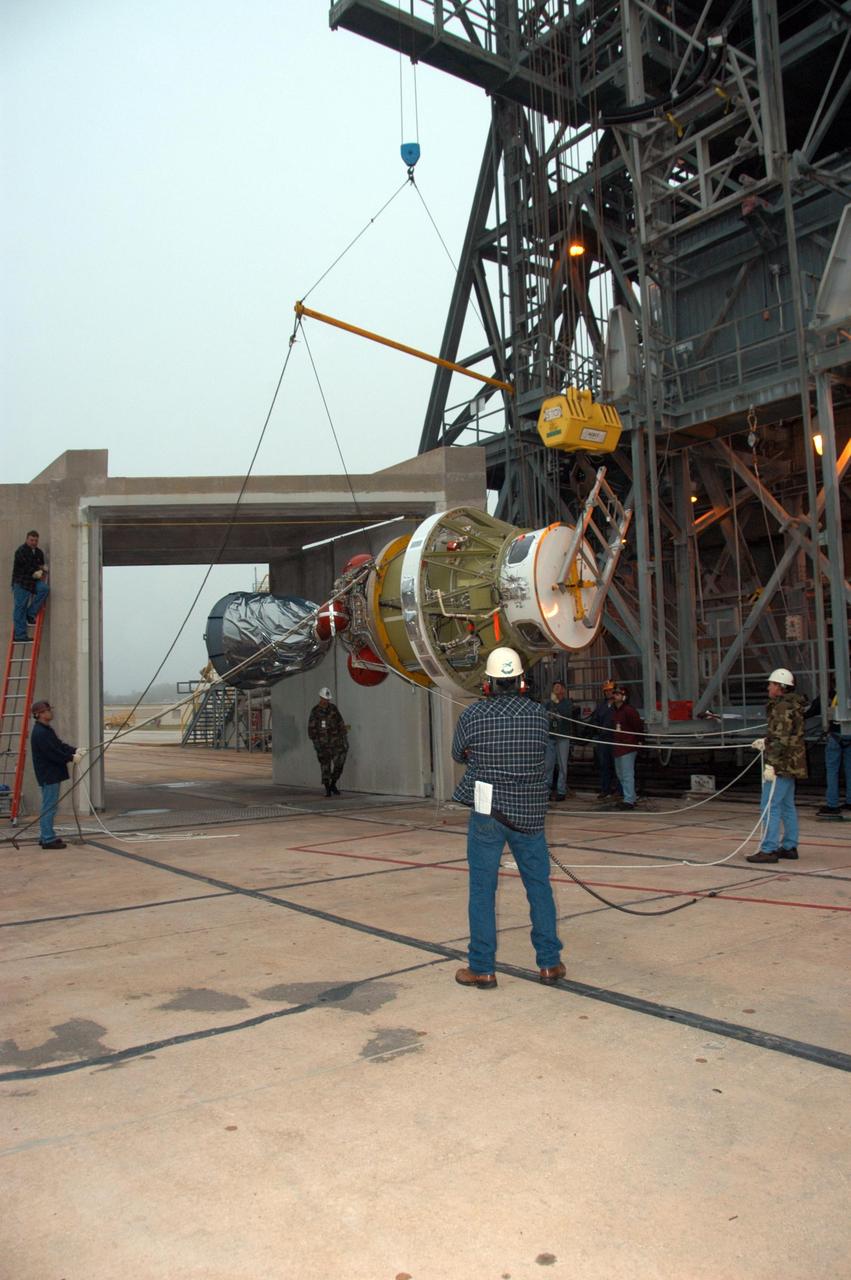
On Pad 17-B at Cape Canaveral Air Force Station, workers attach an overhead crane to the Delta II second stage in order to raise it to vertical. It will be lifted into the mobile service tower and mated with the first stage already in place. The Delta II is the launch vehicle for the THEMIS spacecraft. THEMIS consists of five identical probes, the largest number of scientific satellites ever launched into orbit aboard a single rocket. This unique constellation of satellites will resolve the tantalizing mystery of what causes the spectacular sudden brightening of the aurora borealis and aurora australis - the fiery skies over the Earth's northern and southern polar regions. THEMIS is scheduled to launch Feb. 15 from Cape Canaveral Air Force Station.
Delta II Second stage lift and mate
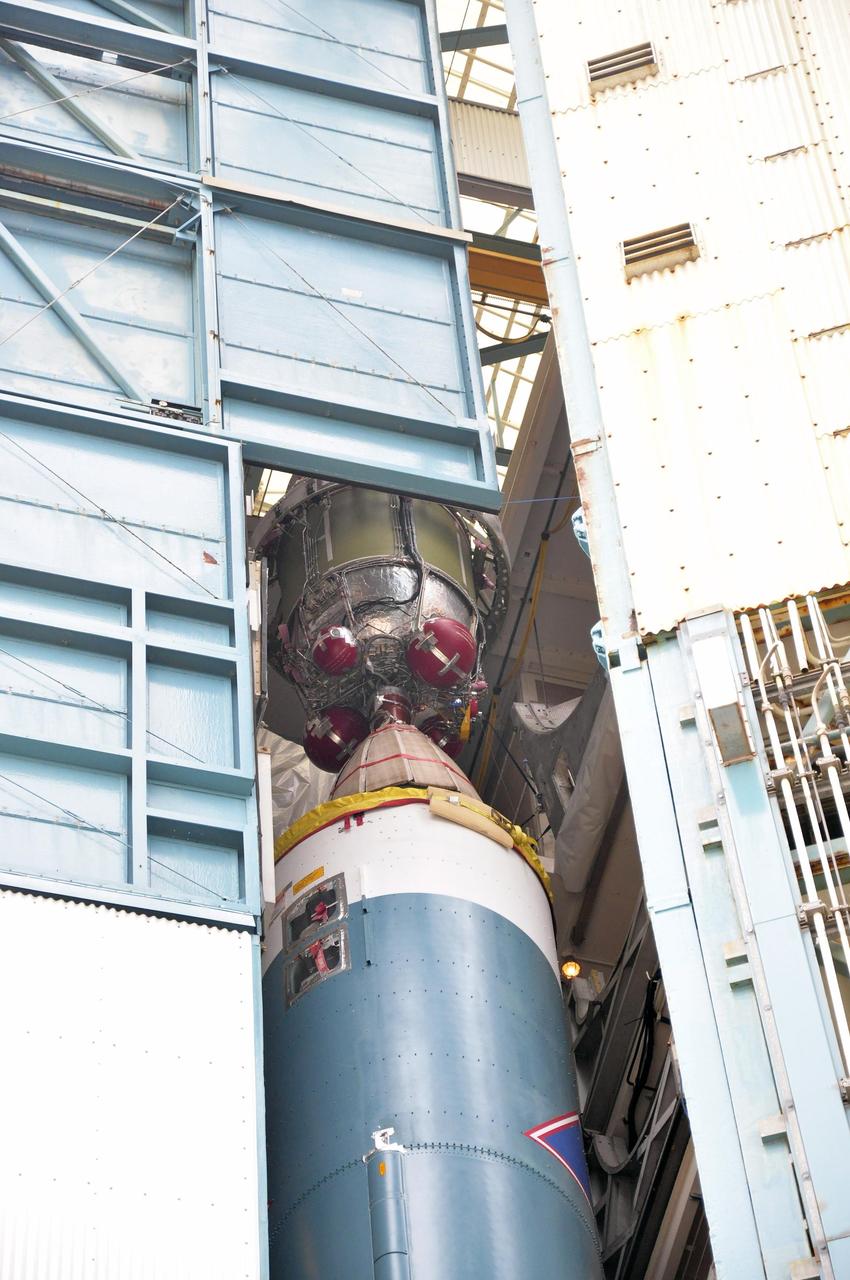
On Pad 17-B at Cape Canaveral Air Force Station, the Delta II second stage is moved inside level 9 of the tower. It will be mated with the first stage already in place. The Delta II is the launch vehicle for the THEMIS spacecraft. THEMIS consists of five identical probes, the largest number of scientific satellites ever launched into orbit aboard a single rocket. This unique constellation of satellites will resolve the tantalizing mystery of what causes the spectacular sudden brightening of the aurora borealis and aurora australis - the fiery skies over the Earth's northern and southern polar regions. THEMIS is scheduled to launch Feb. 15 from Cape Canaveral Air Force Station.
Delta II Second stage lift and mate
On Pad 17-B at Cape Canaveral Air Force Station, the Delta II second stage is being lifted alongside the mobile service tower. Once inside, it will be mated with the first stage already in place. The Delta II is the launch vehicle for the THEMIS spacecraft. THEMIS consists of five identical probes, the largest number of scientific satellites ever launched into orbit aboard a single rocket. This unique constellation of satellites will resolve the tantalizing mystery of what causes the spectacular sudden brightening of the aurora borealis and aurora australis - the fiery skies over the Earth's northern and southern polar regions. THEMIS is scheduled to launch Feb. 15 from Cape Canaveral Air Force Station.
Delta II Second stage lift and mate
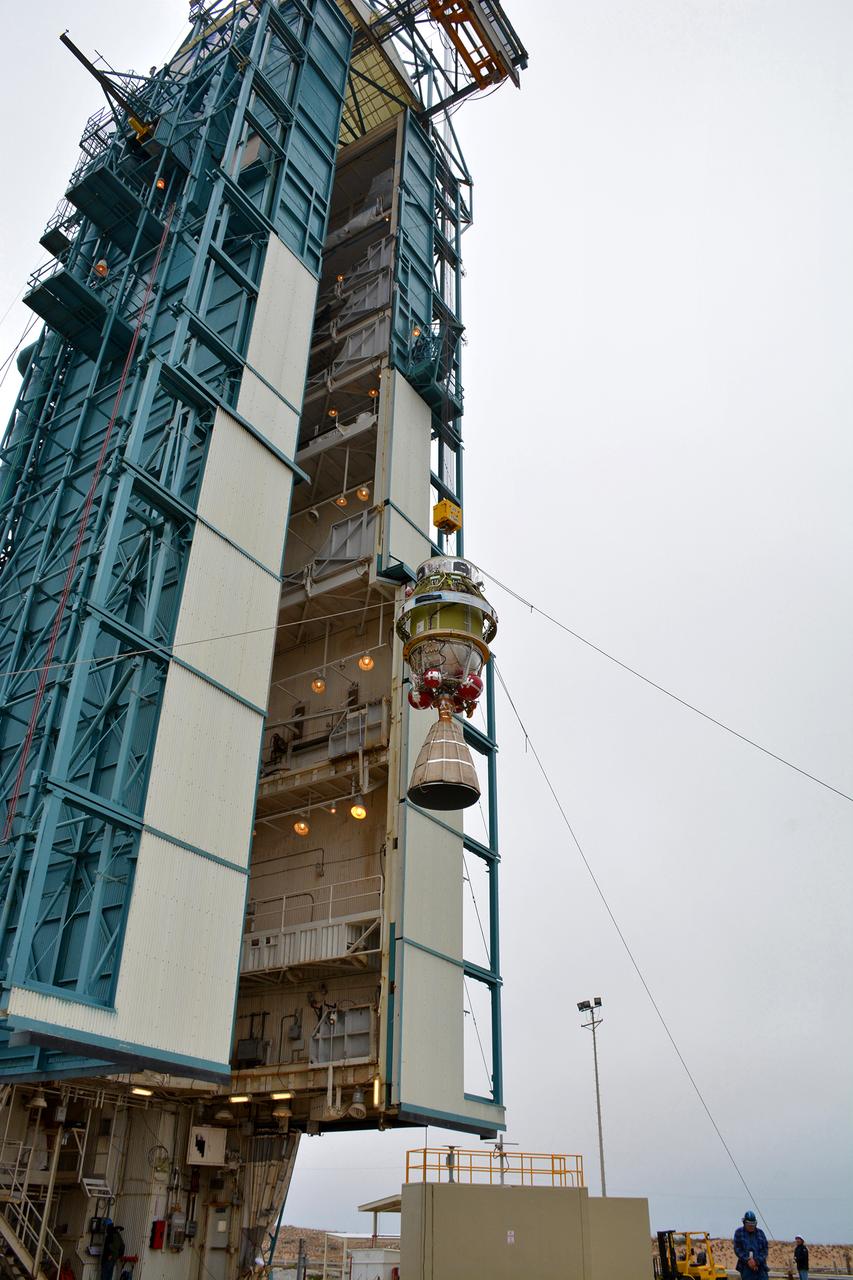
On Pad 17-B at Cape Canaveral Air Force Station, the Delta II second stage is lifted toward the mobile service tower. Once inside, it will be mated with the first stage already in place. The Delta II is the launch vehicle for the THEMIS spacecraft. THEMIS consists of five identical probes, the largest number of scientific satellites ever launched into orbit aboard a single rocket. This unique constellation of satellites will resolve the tantalizing mystery of what causes the spectacular sudden brightening of the aurora borealis and aurora australis - the fiery skies over the Earth's northern and southern polar regions. THEMIS is scheduled to launch Feb. 15 from Cape Canaveral Air Force Station.
Delta II Second stage lift and mate
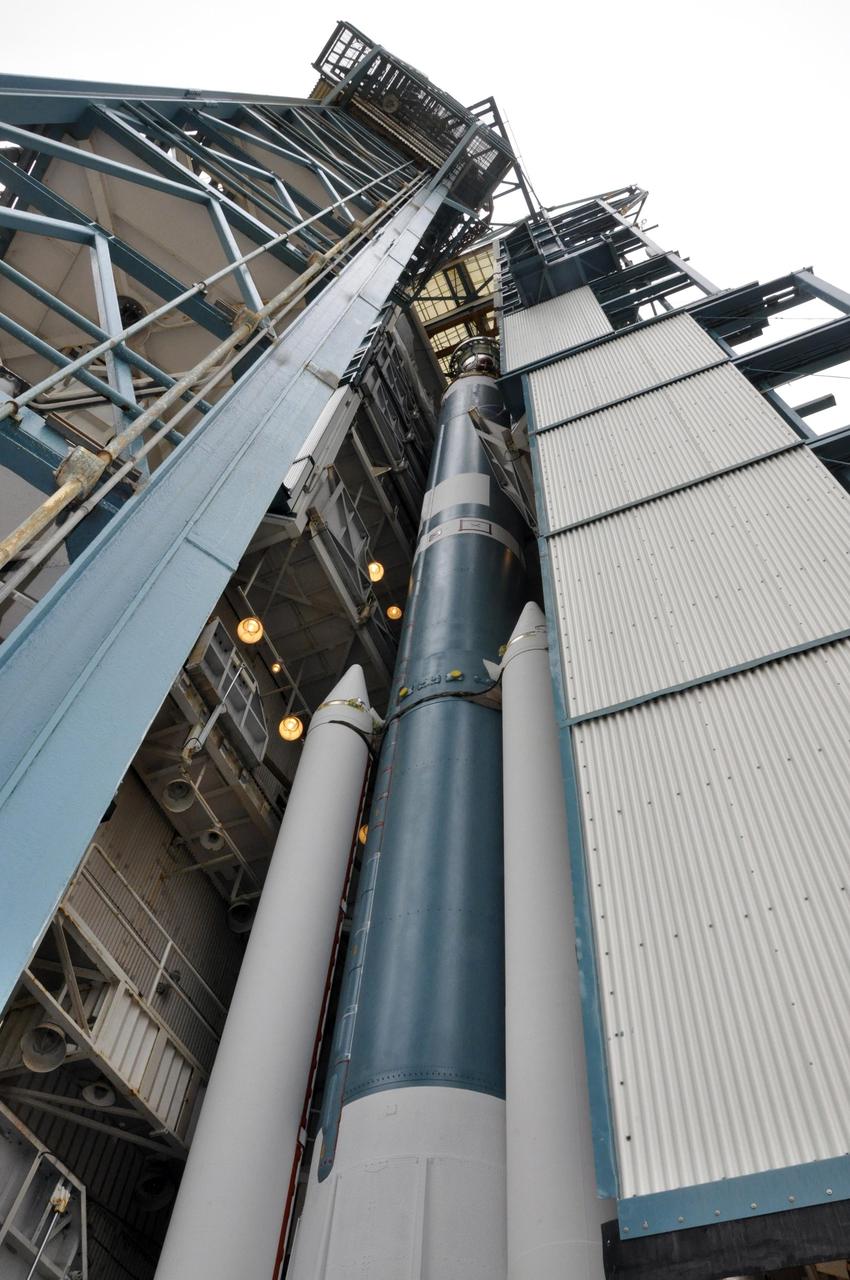
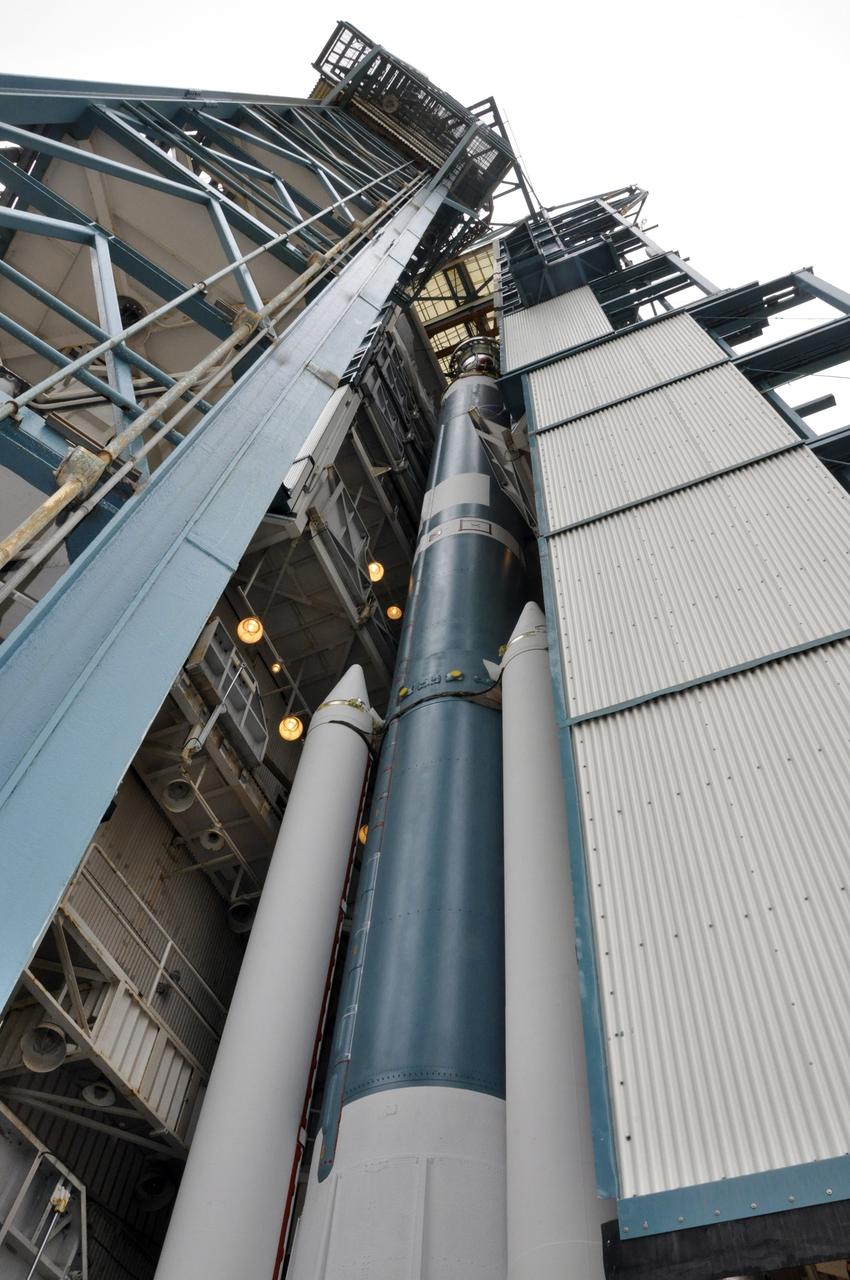
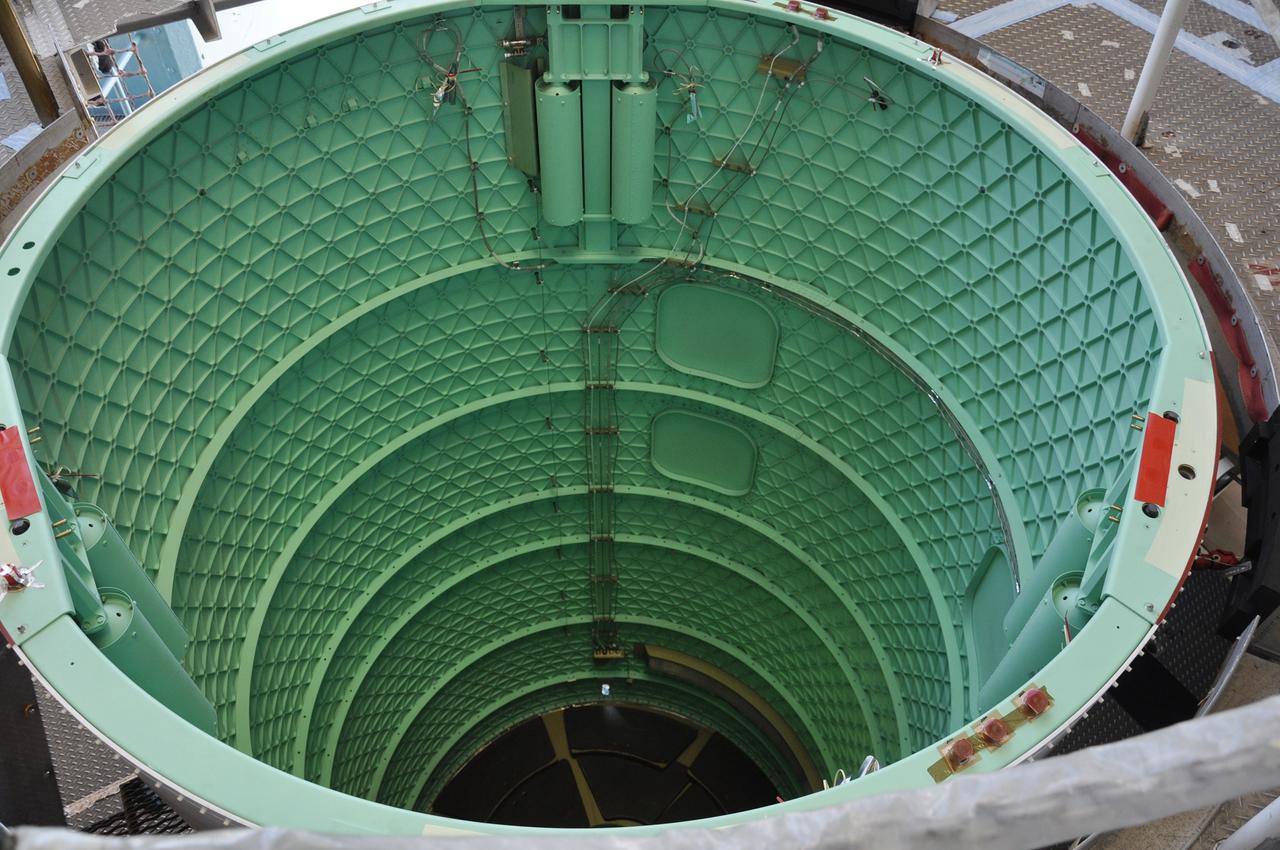
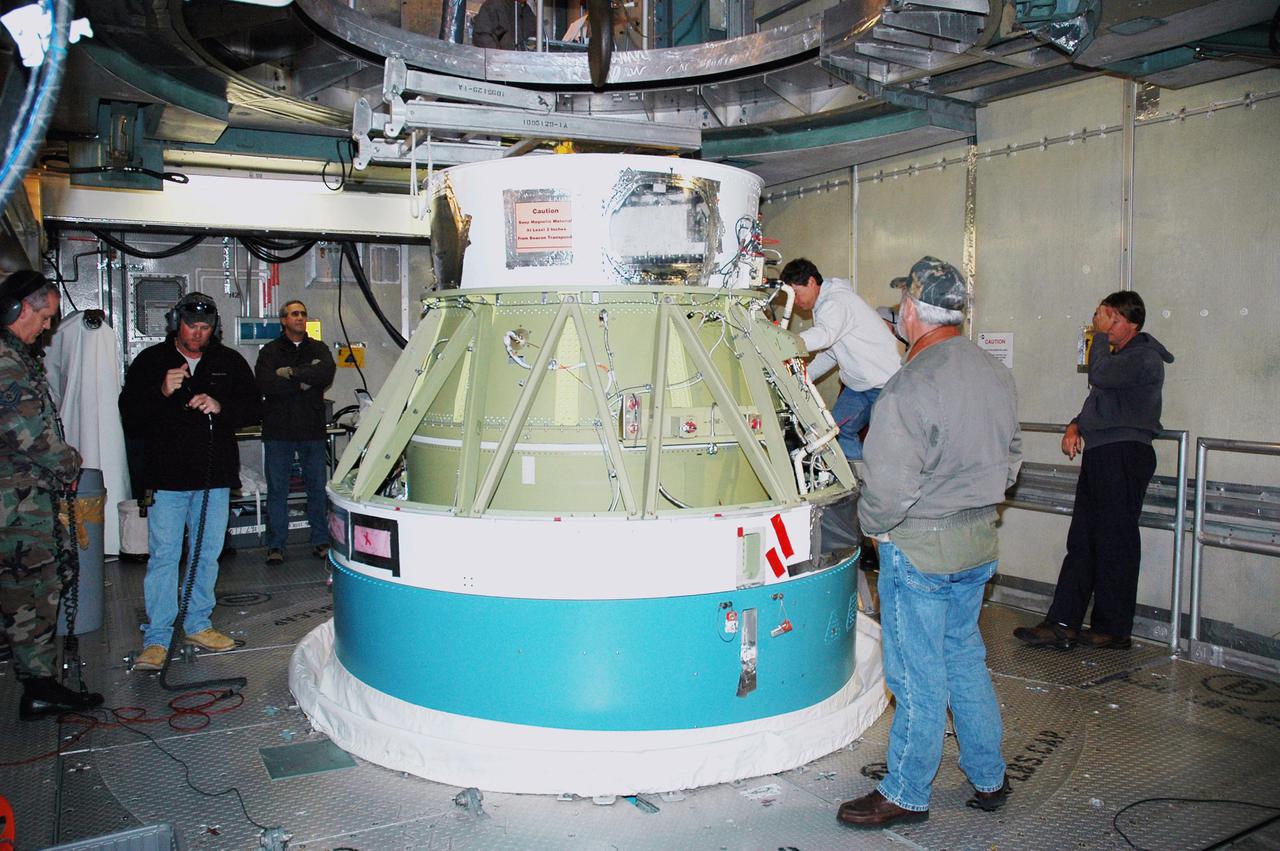
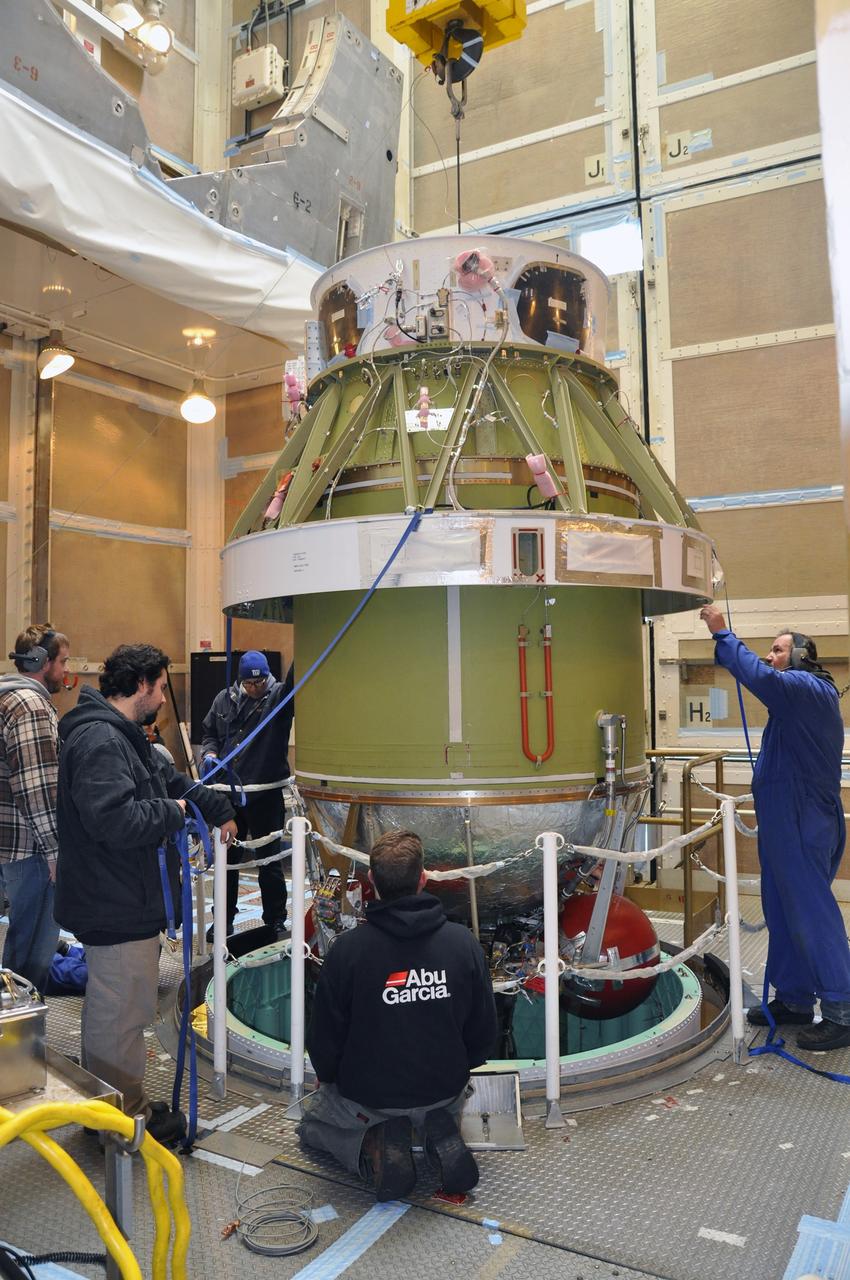
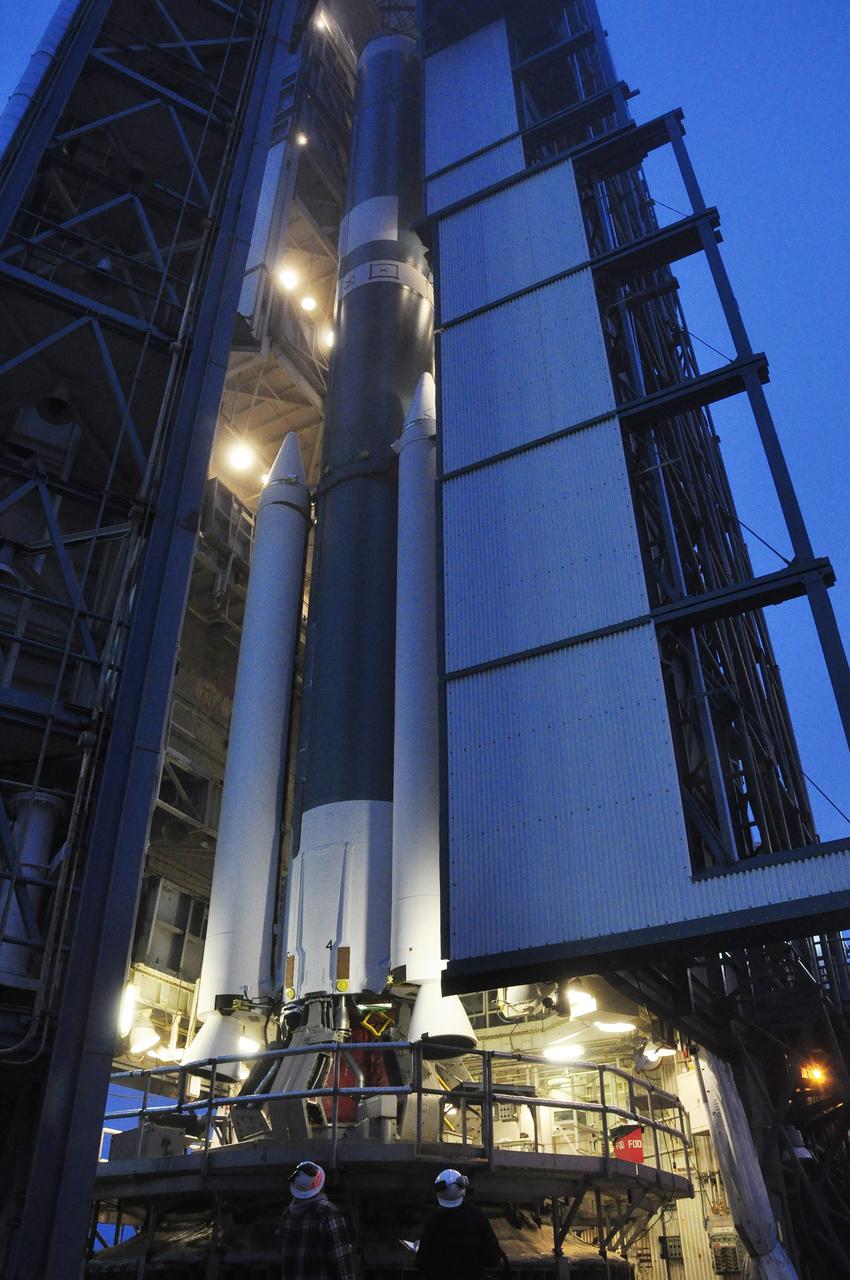
Inside the mobile service tower on Pad 17-B at Cape Canaveral Air Force Station, the Delta II second stage is mated with the first stage. The Delta II is the launch vehicle for the THEMIS spacecraft. THEMIS consists of five identical probes, the largest number of scientific satellites ever launched into orbit aboard a single rocket. This unique constellation of satellites will resolve the tantalizing mystery of what causes the spectacular sudden brightening of the aurora borealis and aurora australis - the fiery skies over the Earth's northern and southern polar regions. THEMIS is scheduled to launch Feb. 15 from Cape Canaveral Air Force Station.
Delta II Second stage lift and mate to first stage at complex 17
The United Launch Alliance Delta II second stage arrived at NASA's Building 1555 at Vandenberg Air Force Base in California. Technicians assist as a crane lifts the top of the shipping container up from the second stage so it can be offloaded and prepared for transport to the horizontal processing facility at Space Launch Complex-2. NASA's Ice, Cloud and land Elevation Satellite-2 (ICESat-2) will launch later this year on the final Delta II rocket. ICESat-2 will measure the height of a changing Earth, one laser pulse at a time, 10,000 laser pulses a second. The satellite will carry a single instrument, the Advanced Topographic Laser Altimeter System. ICESat-2 will help scientists investigate why, and how much our planet's frozen and icy areas, called the cryosphere, is changing in a warming climate.
Delta II ICESAT Second Stage Arrival
The United Launch Alliance Delta II second stage arrived at NASA's Building 1555 at Vandenberg Air Force Base in California. Technicians assist as a crane lifts the second stage up from the base of its shipping container. It will be prepared for transport to the horizontal processing facility at Space Launch Complex-2. NASA's Ice, Cloud and land Elevation Satellite-2 (ICESat-2) will launch later this year on the final Delta II rocket. ICESat-2 will measure the height of a changing Earth, one laser pulse at a time, 10,000 laser pulses a second. The satellite will carry a single instrument, the Advanced Topographic Laser Altimeter System. ICESat-2 will help scientists investigate why, and how much our planet's frozen and icy areas, called the cryosphere, is changing in a warming climate.
Delta II ICESAT Second Stage Arrival
The United Launch Alliance Delta II second stage arrived at NASA's Building 1555 at Vandenberg Air Force Base in California. Technicians assist as a crane lifts the top of the shipping container up from the second stage so it can be offloaded and prepared for transport to the horizontal processing facility at Space Launch Complex-2. NASA's Ice, Cloud and land Elevation Satellite-2 (ICESat-2) will launch later this year on the final Delta II rocket. ICESat-2 will measure the height of a changing Earth, one laser pulse at a time, 10,000 laser pulses a second. The satellite will carry a single instrument, the Advanced Topographic Laser Altimeter System. ICESat-2 will help scientists investigate why, and how much our planet's frozen and icy areas, called the cryosphere, is changing in a warming climate.
Delta II ICESAT Second Stage Arrival
Inside NASA's Building 1555 at Vandenberg Air Force Base in California, the United Launch Alliance Delta II second stage is secured on the base of a transporter. The second stage will be moved to the horizontal processing facility at Space Launch Complex-2. NASA's Ice, Cloud and land Elevation Satellite-2 (ICESat-2) will launch later this year on the final Delta II rocket. ICESat-2 will measure the height of a changing Earth, one laser pulse at a time, 10,000 laser pulses a second. The satellite will carry a single instrument, the Advanced Topographic Laser Altimeter System. ICESat-2 will help scientists investigate why, and how much our planet's frozen and icy areas, called the cryosphere, is changing in a warming climate
Delta II ICESAT Second Stage Arrival
Inside NASA's Building 1555 at Vandenberg Air Force Base in California, the United Launch Alliance Delta II second stage was lifted out of its shipping container and a crane is being used to lower it onto the base of a transporter. The second stage will be moved to the horizontal processing facility at Space Launch Complex-2. NASA's Ice, Cloud and land Elevation Satellite-2 (ICESat-2) will launch later this year on the final Delta II rocket. ICESat-2 will measure the height of a changing Earth, one laser pulse at a time, 10,000 laser pulses a second. The satellite will carry a single instrument, the Advanced Topographic Laser Altimeter System. ICESat-2 will help scientists investigate why, and how much our planet's frozen and icy areas, called the cryosphere, is changing in a warming climate.
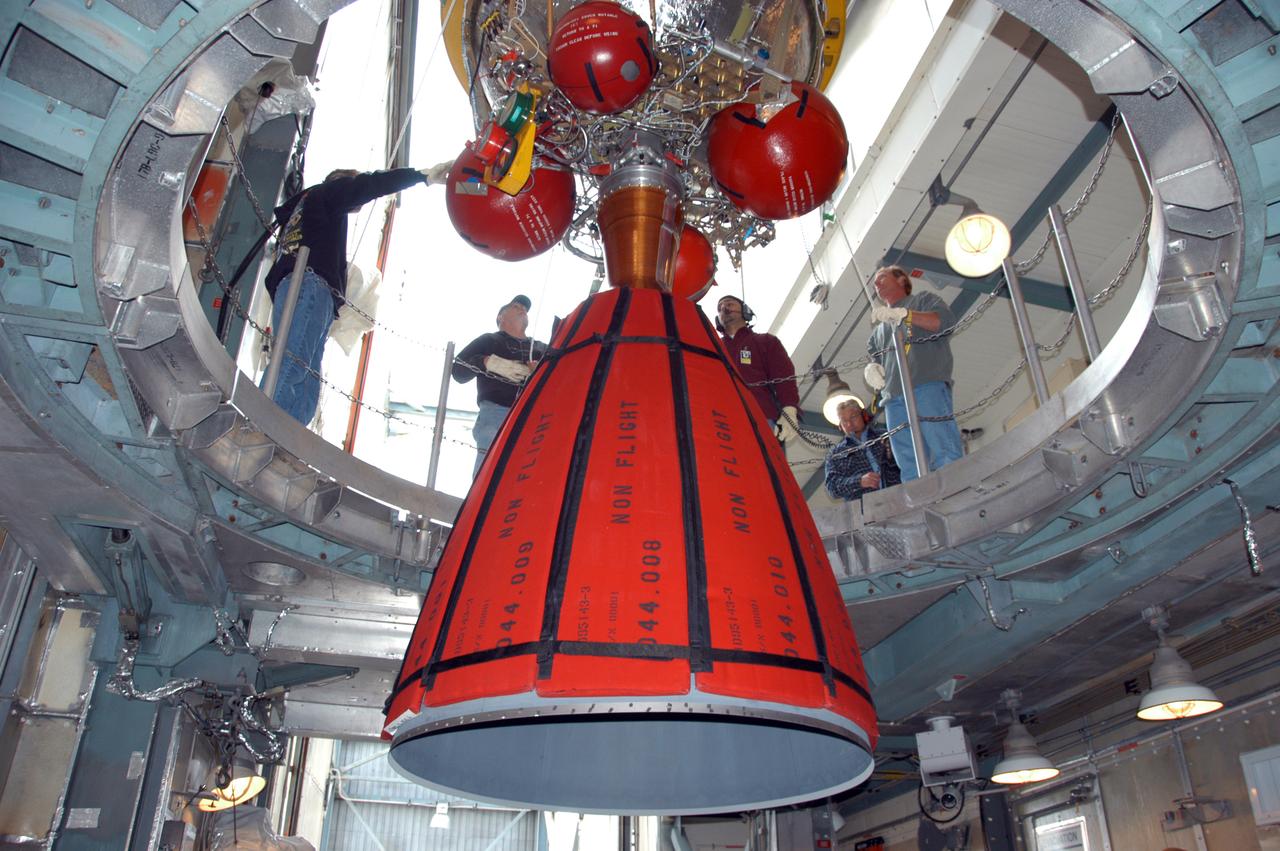
Delta II ICESAT Second Stage Arrival
The United Launch Alliance Delta II second stage emerges from NASA's Building 1555 at Vandenberg Air Force Base in California. It will be transported to the horizontal processing facility at Space Launch Complex-2. NASA's Ice, Cloud and land Elevation Satellite-2 (ICESat-2) will launch later this year on the final Delta II rocket. ICESat-2 will measure the height of a changing Earth, one laser pulse at a time, 10,000 laser pulses a second. The satellite will carry a single instrument, the Advanced Topographic Laser Altimeter System. ICESat-2 will help scientists investigate why, and how much our planet's frozen and icy areas, called the cryosphere, is changing in a warming climate.
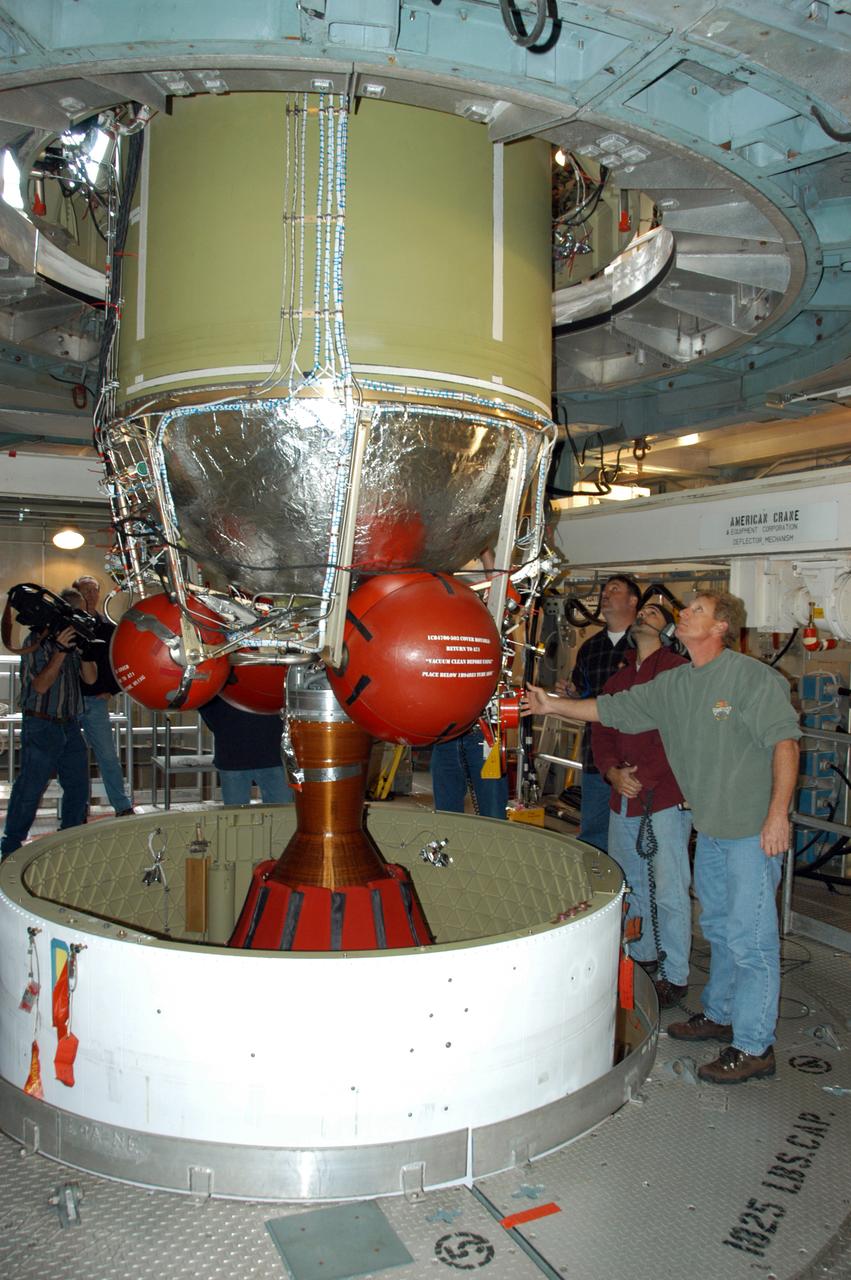
Delta II ICESAT Second Stage Arrival
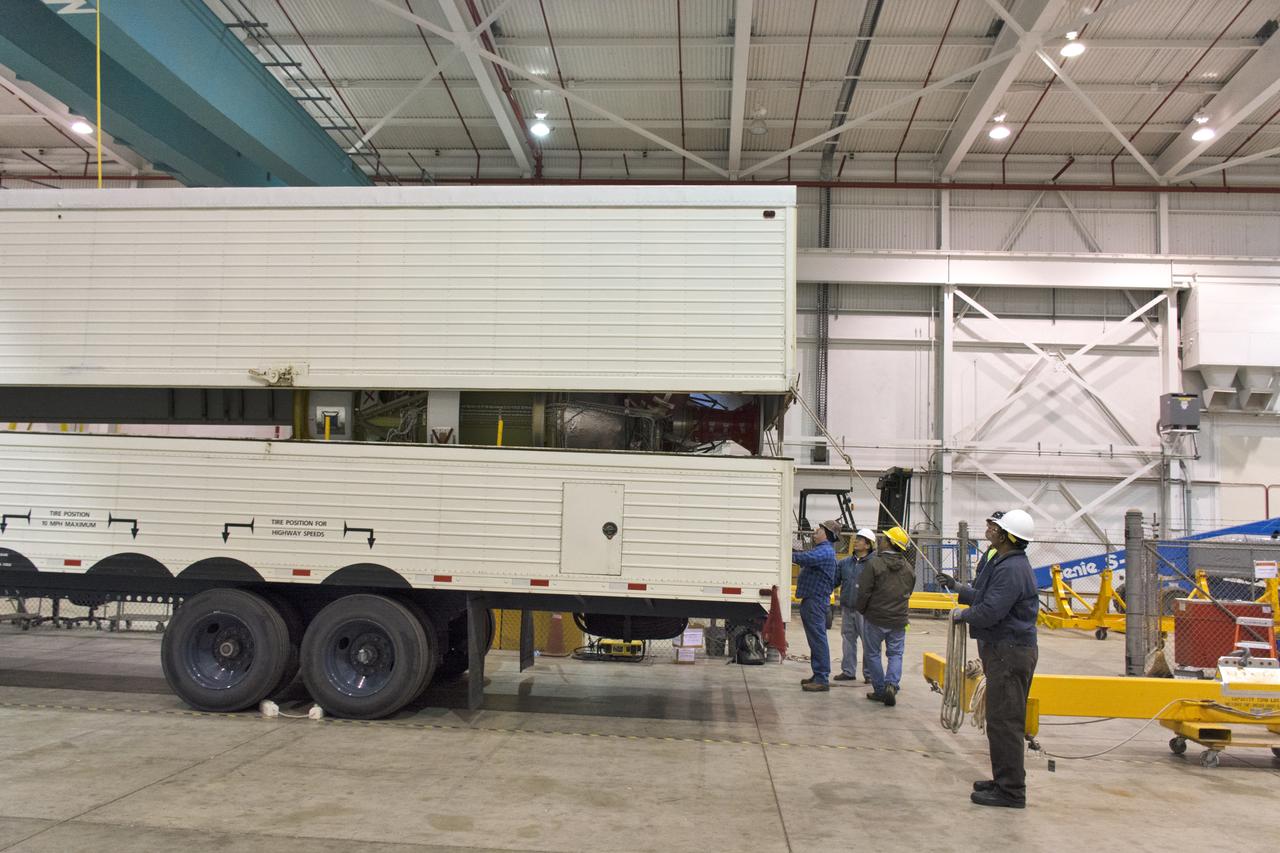
Workers stand with the Delta II second stage inside the horizontal processing facility at Space Launch Complex-2 at Vandenberg Air Force Base in California. NASA's Ice, Cloud and land Elevation Satellite-2 (ICESat-2) will launch later this year on the final Delta II rocket. ICESat-2 will measure the height of a changing Earth, one laser pulse at a time, 10,000 laser pulses a second. The satellite will carry a single instrument, the Advanced Topographic Laser Altimeter System. ICESat-2 will help scientists investigate why, and how much our planet's frozen and icy areas, called the cryosphere, is changing in a warming climate.
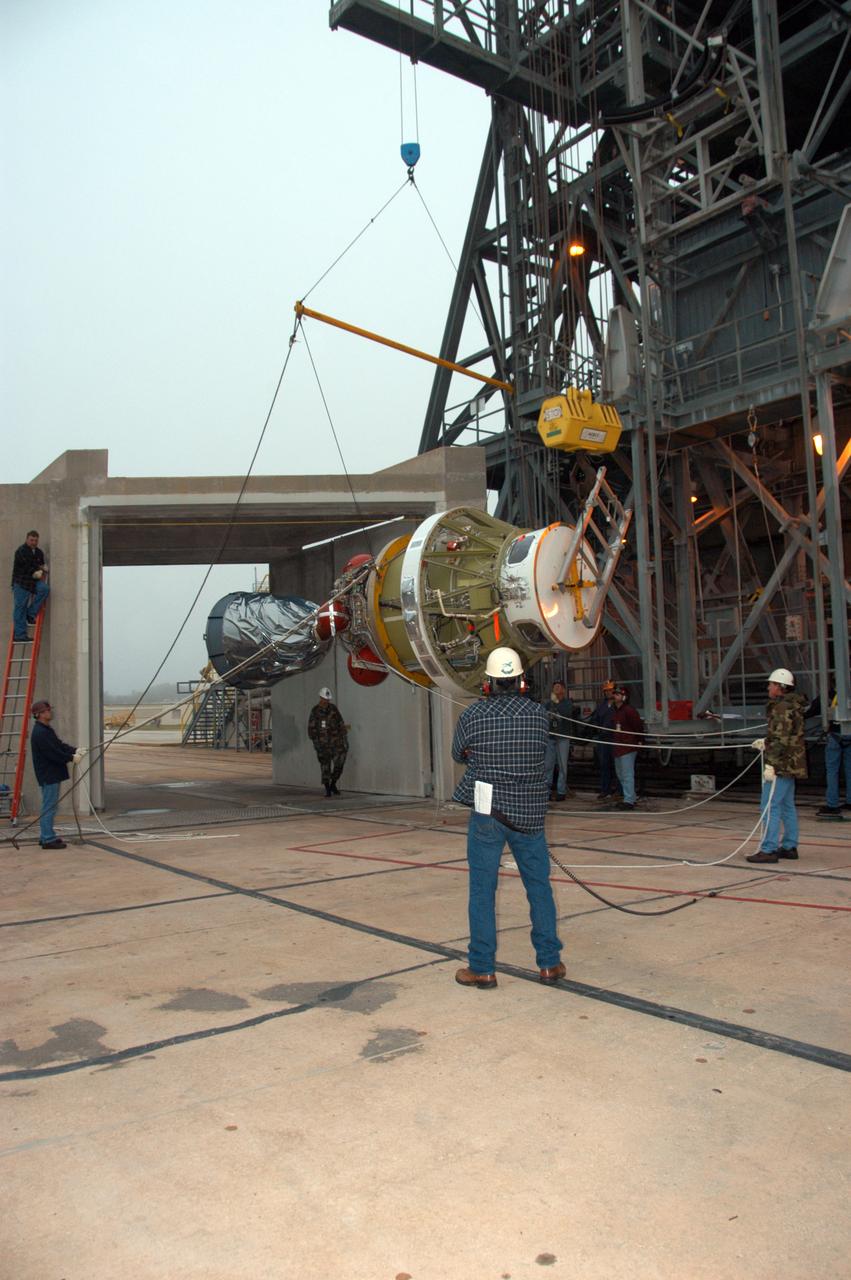
Delta II ICESAT Second Stage Arrival
The United Launch Alliance Delta II second stage is being transported to Space Launch Complex-2 at Vandenberg Air Force Base in California. NASA's Ice, Cloud and land Elevation Satellite-2 (ICESat-2) will launch later this year on the final Delta II rocket. ICESat-2 will measure the height of a changing Earth, one laser pulse at a time, 10,000 laser pulses a second. The satellite will carry a single instrument, the Advanced Topographic Laser Altimeter System. ICESat-2 will help scientists investigate why, and how much our planet's frozen and icy areas, called the cryosphere, is changing in a warming climate.
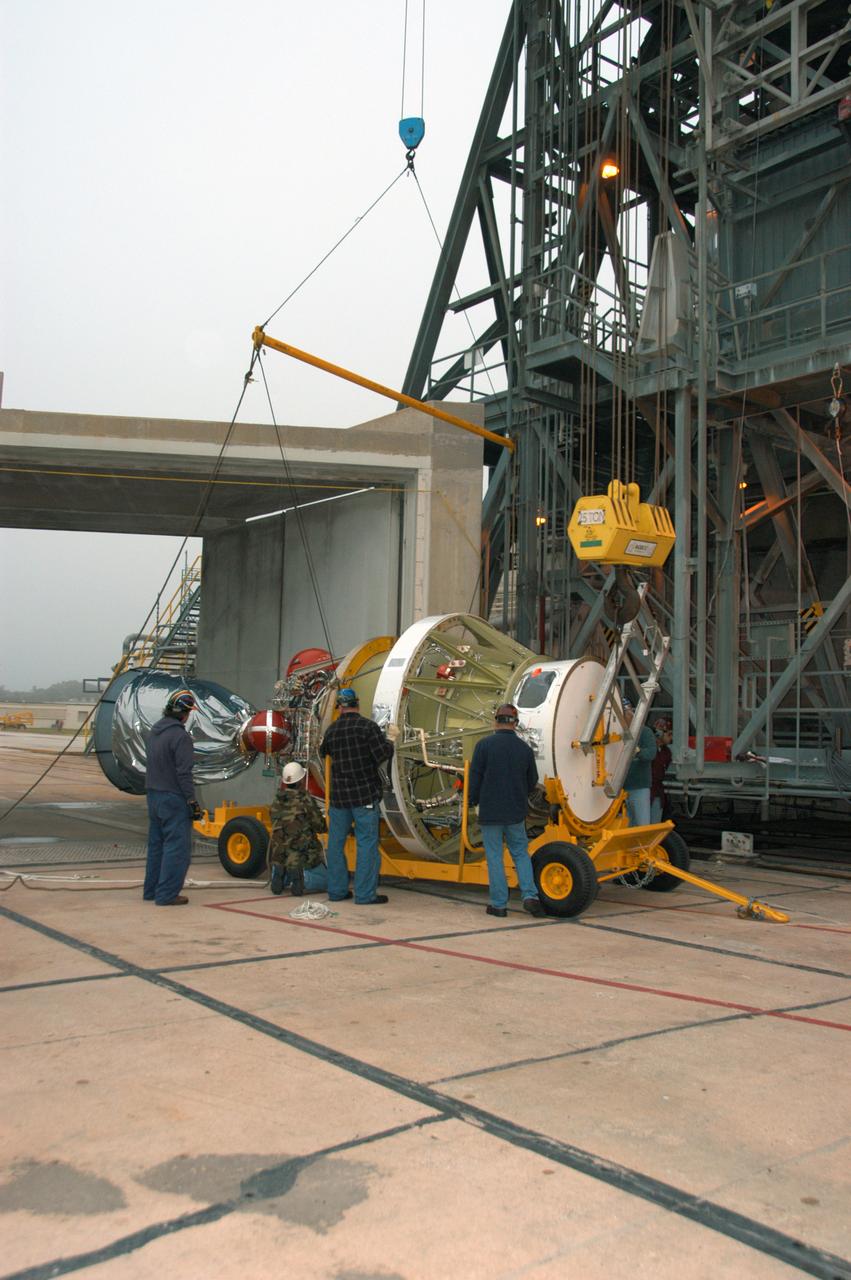
Delta II ICESAT Second Stage Arrival
The United Launch Alliance Delta II second stage arrives at NASA's Building 1555 at Vandenberg Air Force Base in California. It will be offloaded and prepared for transport to the horizontal processing facility at Space Launch Complex-2. NASA's Ice, Cloud and land Elevation Satellite-2 (ICESat-2) will launch later this year on the final Delta II rocket. ICESat-2 will measure the height of a changing Earth, one laser pulse at a time, 10,000 laser pulses a second. The satellite will carry a single instrument, the Advanced Topographic Laser Altimeter System. ICESat-2 will help scientists investigate why, and how much our planet's frozen and icy areas, called the cryosphere, is changing in a warming climate.
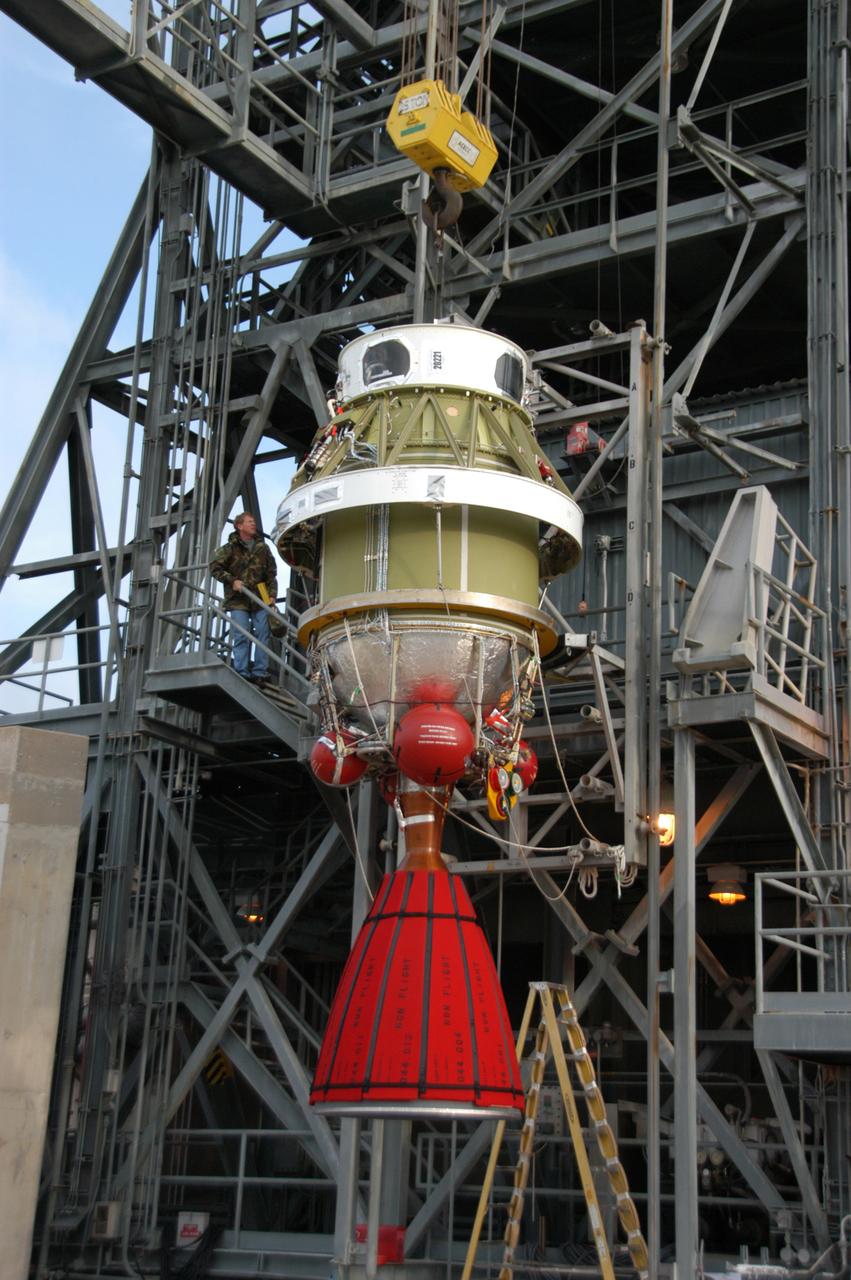
Delta II ICESAT Second Stage Arrival
The United Launch Alliance Delta II second stage has arrived at the horizontal processing facility at Space Launch Complex-2 at Vandenberg Air Force Base in California. NASA's Ice, Cloud and land Elevation Satellite-2 (ICESat-2) will launch later this year on the final Delta II rocket. ICESat-2 will measure the height of a changing Earth, one laser pulse at a time, 10,000 laser pulses a second. The satellite will carry a single instrument, the Advanced Topographic Laser Altimeter System. ICESat-2 will help scientists investigate why, and how much our planet's frozen and icy areas, called the cryosphere, is changing in a warming climate.
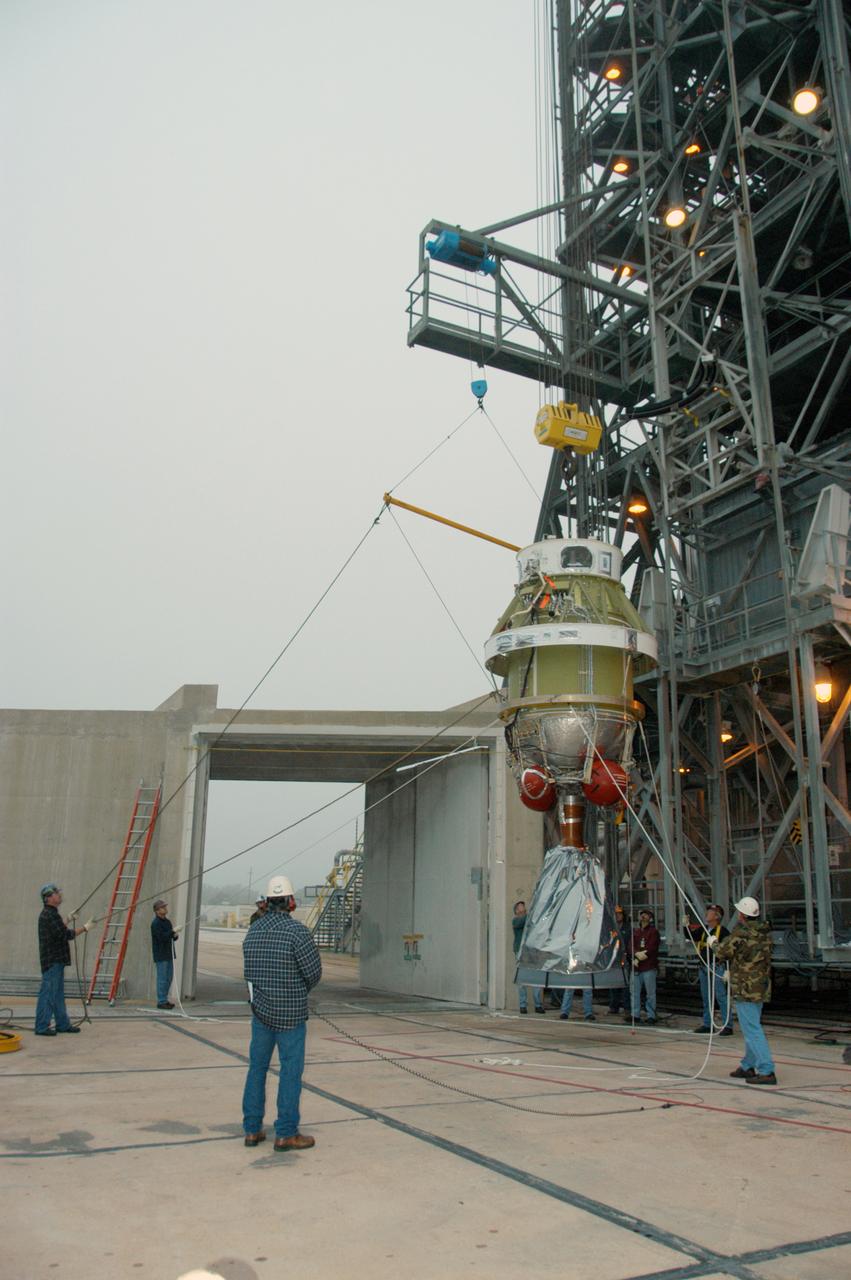
Delta II ICESAT Second Stage Arrival
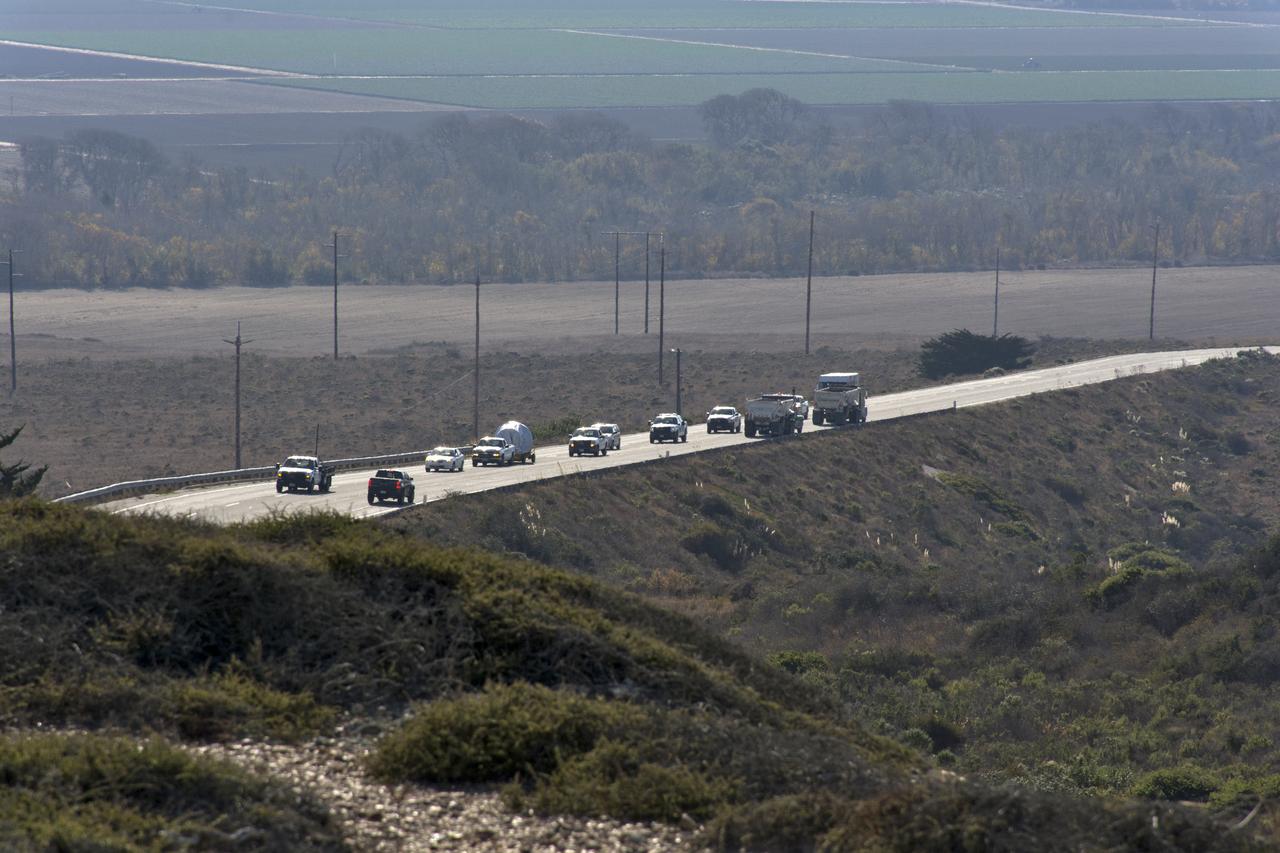
A convoy of vehicles accompanies the United Launch Alliance Delta II second stage on its way to the horizontal processing facility at Space Launch Complex-2 at Vandenberg Air Force Base in California. NASA's Ice, Cloud and land Elevation Satellite-2 (ICESat-2) will launch later this year on the final Delta II rocket. ICESat-2 will measure the height of a changing Earth, one laser pulse at a time, 10,000 laser pulses a second. The satellite will carry a single instrument, the Advanced Topographic Laser Altimeter System. ICESat-2 will help scientists investigate why, and how much our planet's frozen and icy areas, called the cryosphere, is changing in a warming climate.
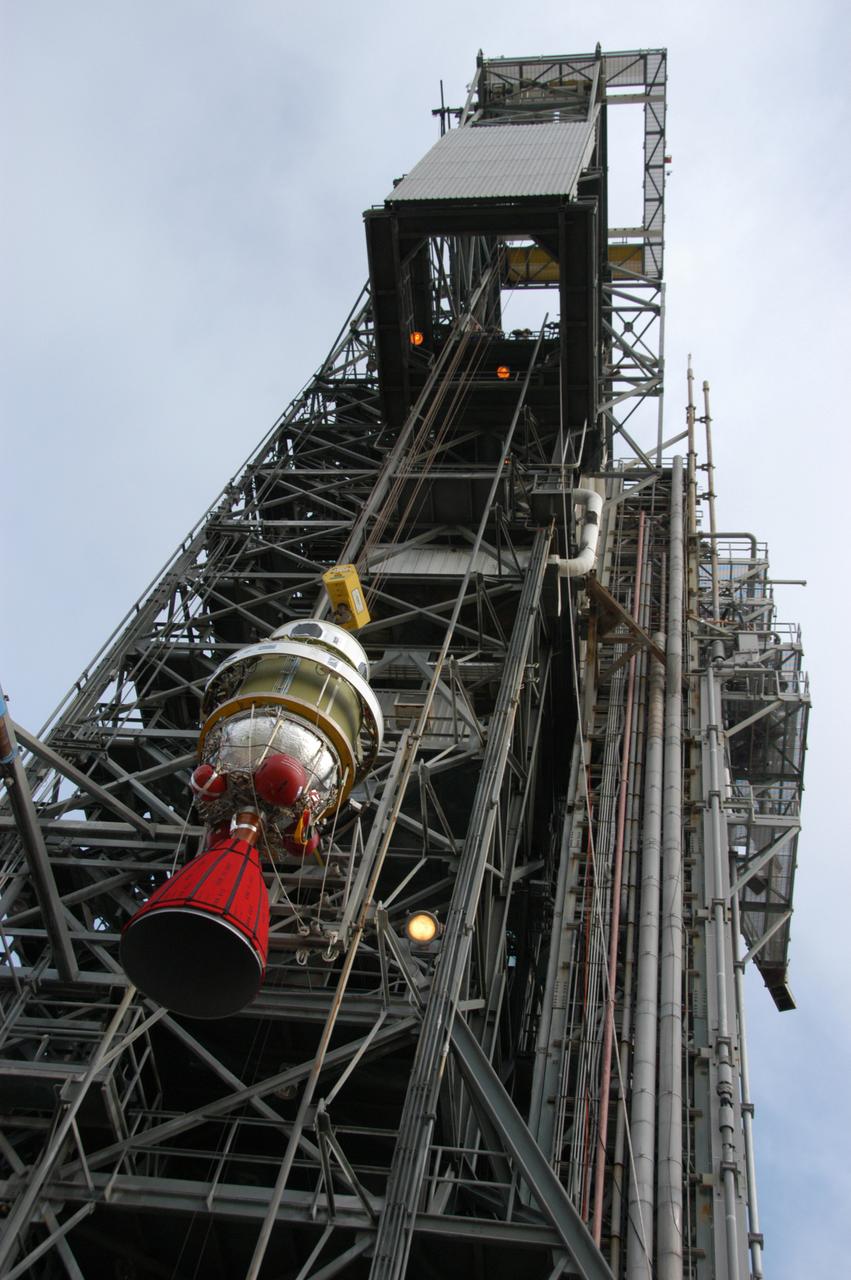
Delta II ICESAT Second Stage Arrival
The United Launch Alliance Delta II second stage is being transported to Space Launch Complex-2 at Vandenberg Air Force Base in California. NASA's Ice, Cloud and land Elevation Satellite-2 (ICESat-2) will launch later this year on the final Delta II rocket. ICESat-2 will measure the height of a changing Earth, one laser pulse at a time, 10,000 laser pulses a second. The satellite will carry a single instrument, the Advanced Topographic Laser Altimeter System. ICESat-2 will help scientists investigate why, and how much our planet's frozen and icy areas, called the cryosphere, is changing in a warming climate.
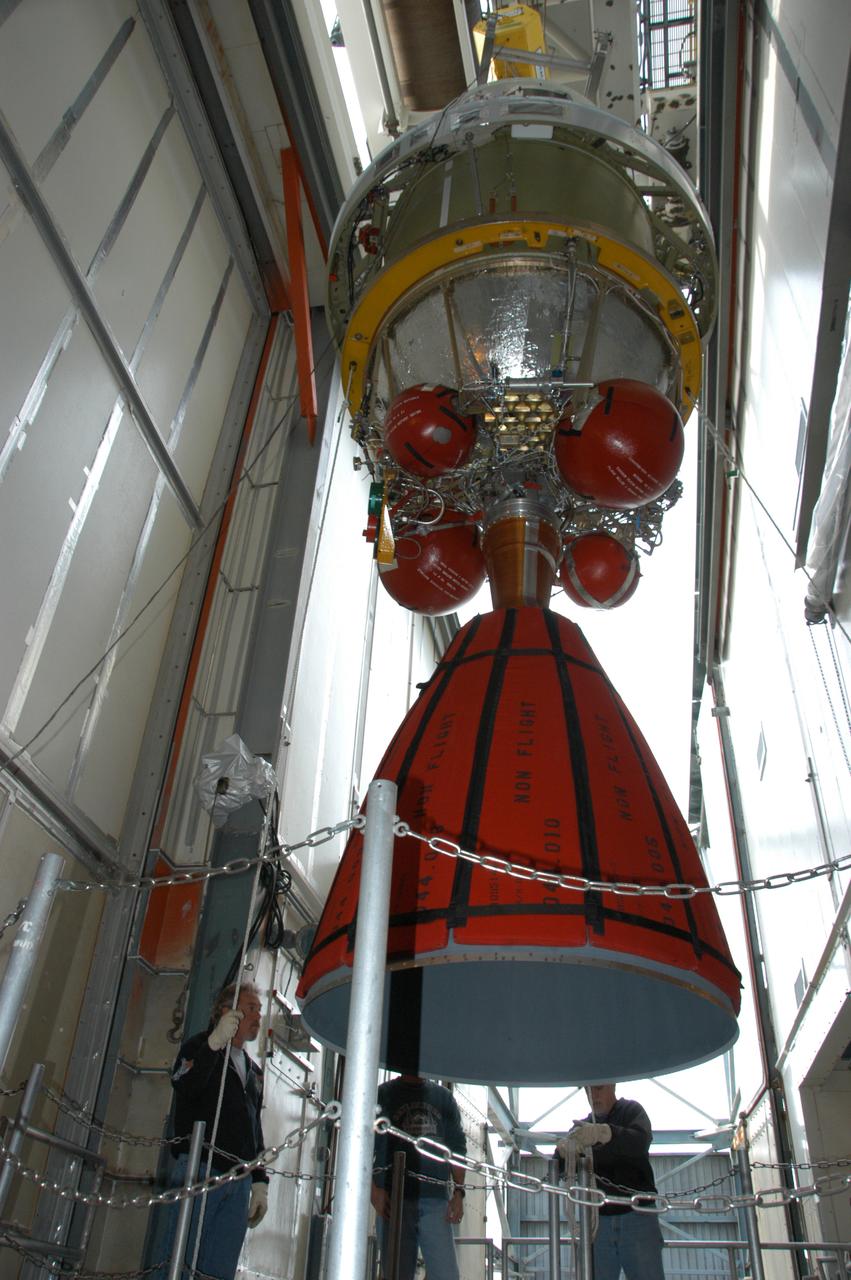
Delta II ICESAT Second Stage Arrival
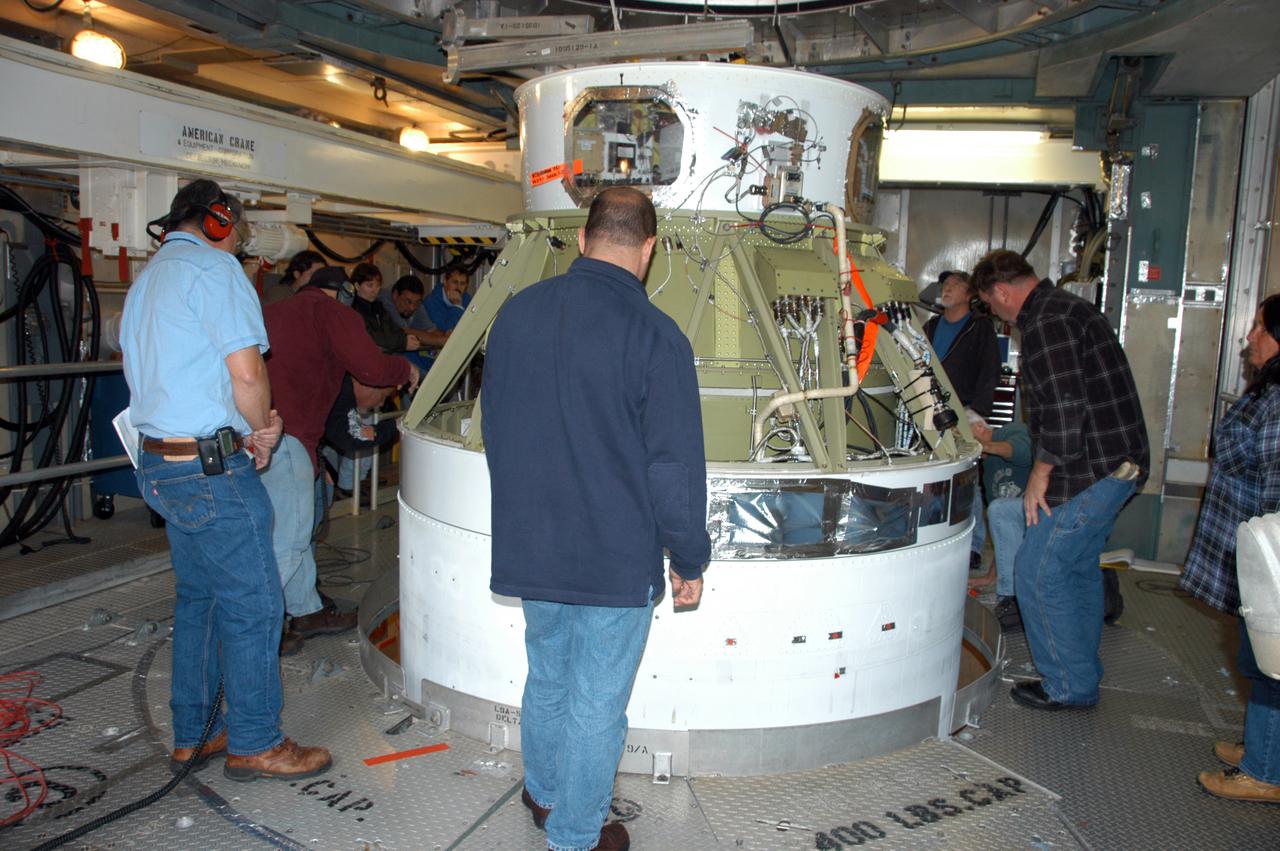
The United Launch Alliance Delta II second stage arrived at NASA's Building 1555 at Vandenberg Air Force Base in California. Technicians are assisting in offloading it and preparing it for transport to the horizontal processing facility at Space Launch Complex-2. NASA's Ice, Cloud and land Elevation Satellite-2 (ICESat-2) will launch later this year on the final Delta II rocket. ICESat-2 will measure the height of a changing Earth, one laser pulse at a time, 10,000 laser pulses a second. The satellite will carry a single instrument, the Advanced Topographic Laser Altimeter System. ICESat-2 will help scientists investigate why, and how much our planet's frozen and icy areas, called the cryosphere, is changing in a warming climate.
Delta II ICESAT Second Stage Arrival
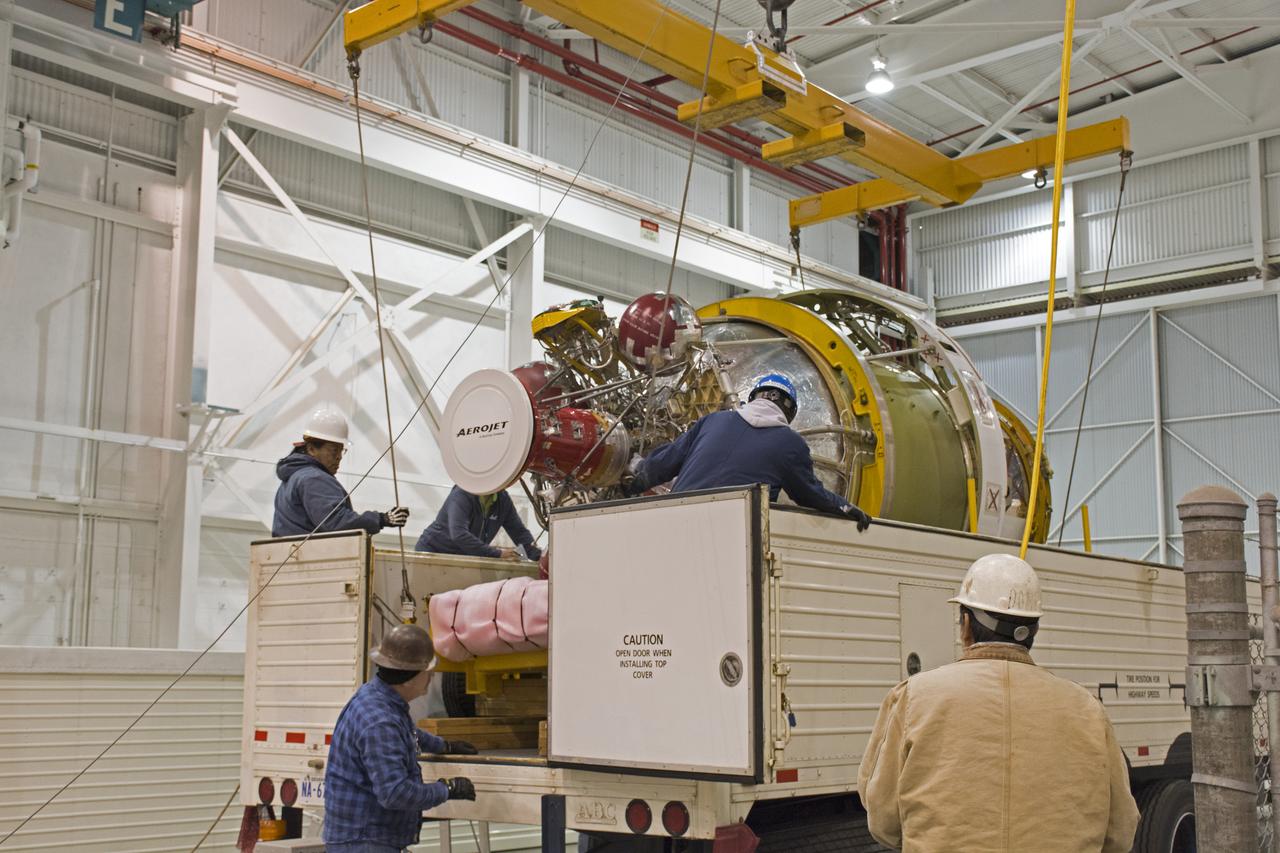
United Launch Alliance workers prepare the first stage of the Delta II second stage to be lifted up in the Vertical Processing Facility at Space Launch Complex 2 on June 21, 2018, at Vandenberg Air Force Base in California. The second stage will be attached to the top of the booster, or first stage, of the rocket.  NASA's Ice, Cloud and land Elevation Satellite-2 (ICESat-2) will launch on the final Delta II rocket. ICESat-2 will measure the height of a changing Earth, one laser pulse at a time, 10,000 laser pulses a second. The satellite will carry a single instrument, the Advanced Topographic Laser Altimeter System. ICESat-2 will help scientists investigate why, and how much our planet's frozen and icy areas, called the cryosphere, is changing in a warming climate.
Delta II ICESat-2 Second Stage Lift and Mate
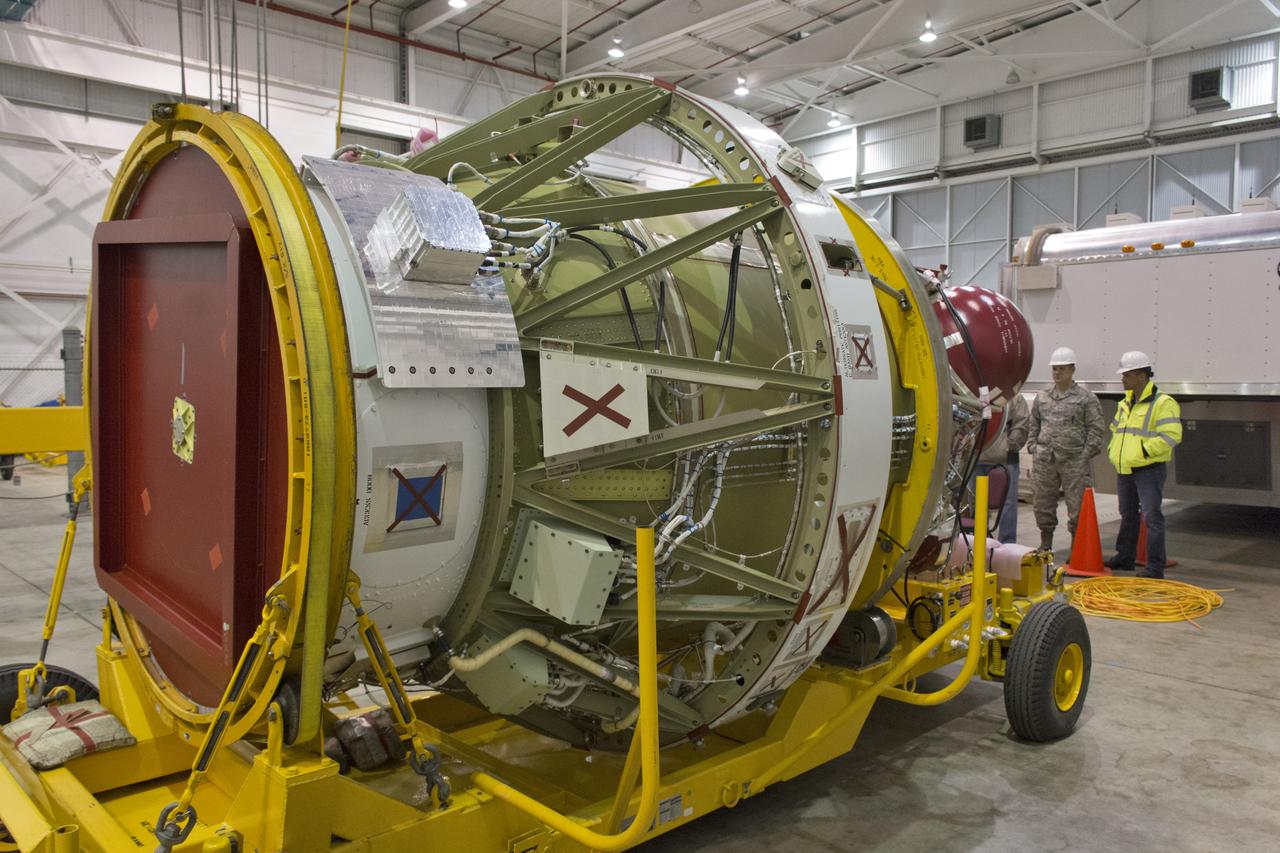
United Launch Alliance workers prepare the first stage of the Delta II second stage to be lifted up in the Vertical Processing Facility at Space Launch Complex 2 on June 21, 2018, at Vandenberg Air Force Base in California. The second stage will be attached to the top of the booster, or first stage, of the rocket.  NASA's Ice, Cloud and land Elevation Satellite-2 (ICESat-2) will launch on the final Delta II rocket. ICESat-2 will measure the height of a changing Earth, one laser pulse at a time, 10,000 laser pulses a second. The satellite will carry a single instrument, the Advanced Topographic Laser Altimeter System. ICESat-2 will help scientists investigate why, and how much our planet's frozen and icy areas, called the cryosphere, is changing in a warming climate.
Delta II ICESat-2 Second Stage Lift and Mate
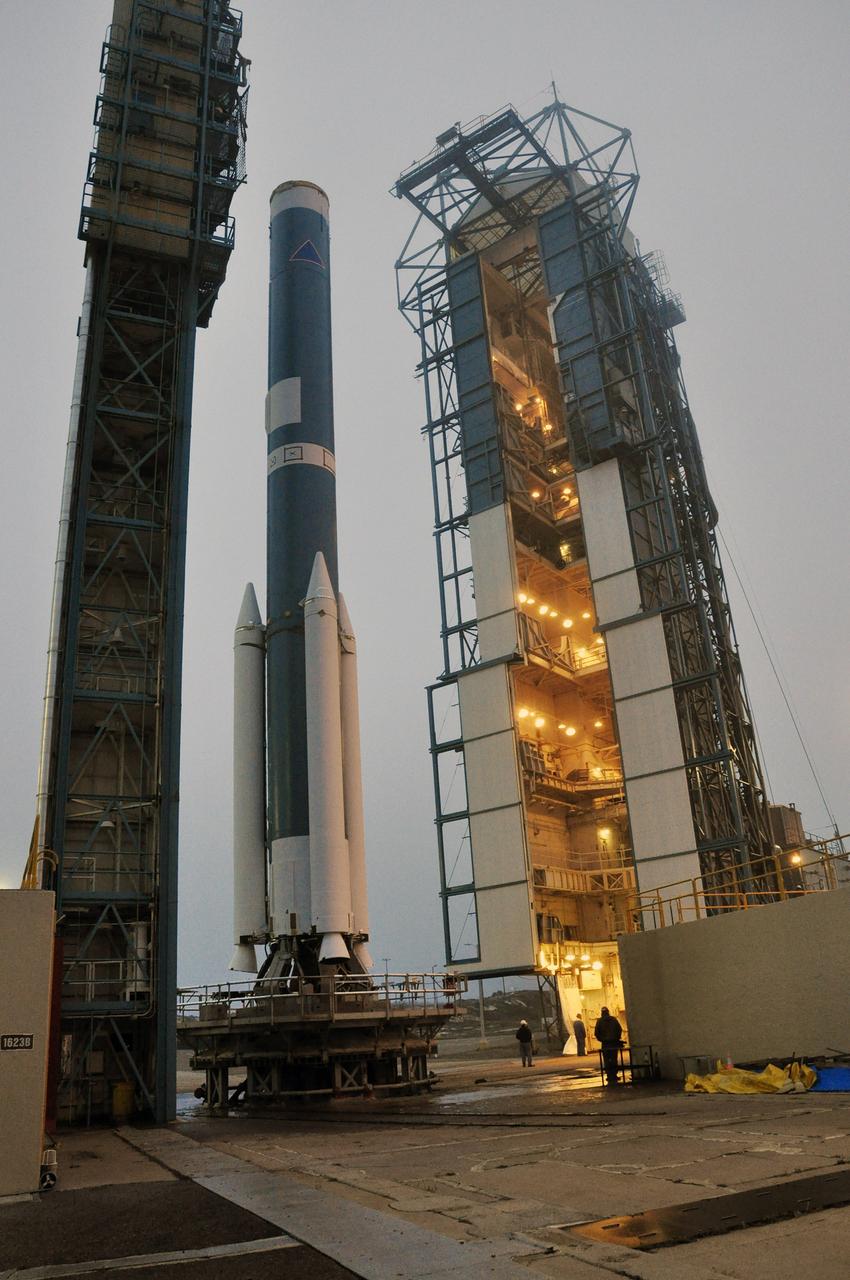
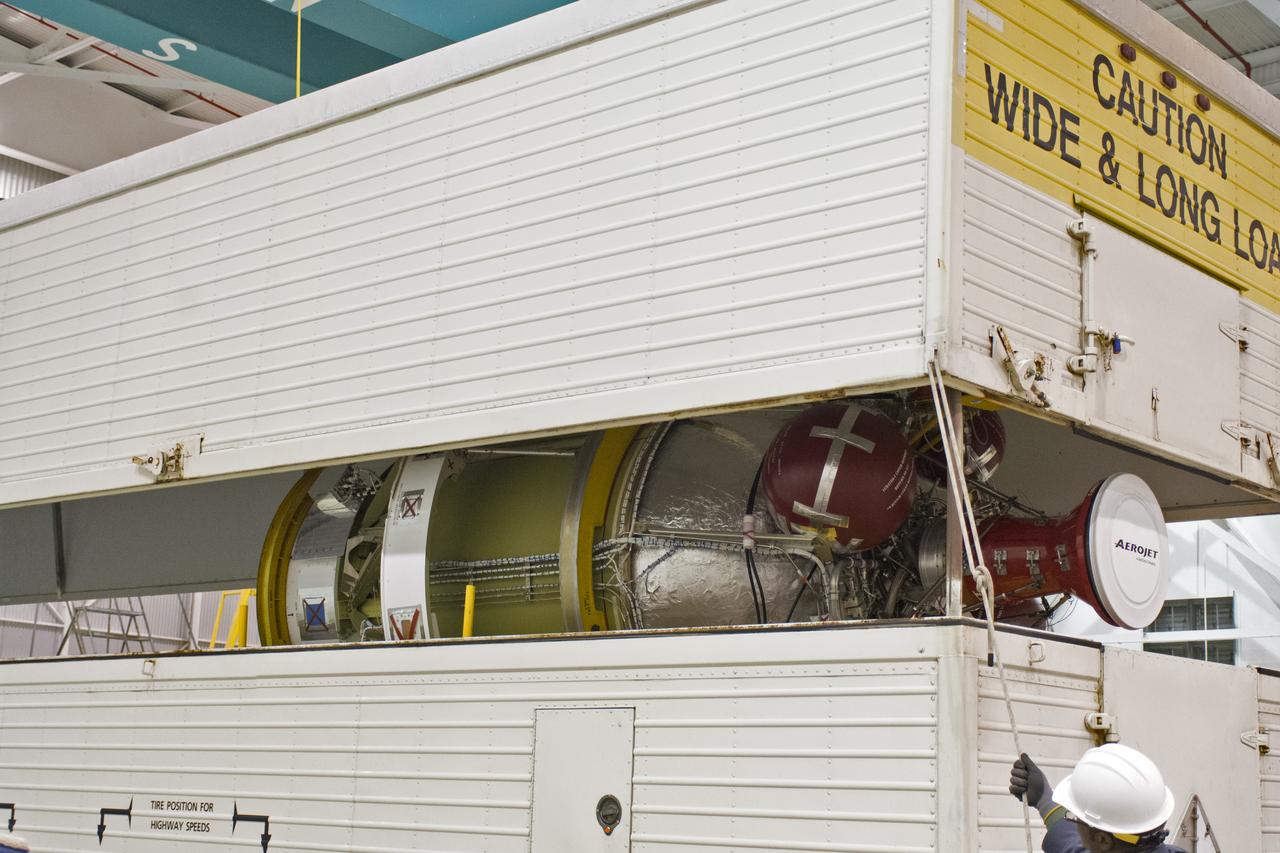
The second stage of the United Launch Alliance Delta II rocket is lifted high up at the Vertical Integration Facility, at left, at Space Launch Complex 2 on June 21, 2018, at Vandenberg Air Force Base in California. The second stage will be attached to the top of the booster, or first stage of the rocket, which is being moved out of the Mobile Service Tower, at right. NASA's Ice, Cloud and land Elevation Satellite-2 (ICESat-2) will launch on the final Delta II rocket. ICESat-2 will measure the height of a changing Earth, one laser pulse at a time, 10,000 laser pulses a second. The satellite will carry a single instrument, the Advanced Topographic Laser Altimeter System. ICESat-2 will help scientists investigate why, and how much our planet's frozen and icy areas, called the cryosphere, is changing in a warming climate.
Delta II ICESat-2 Second Stage Lift and Mate
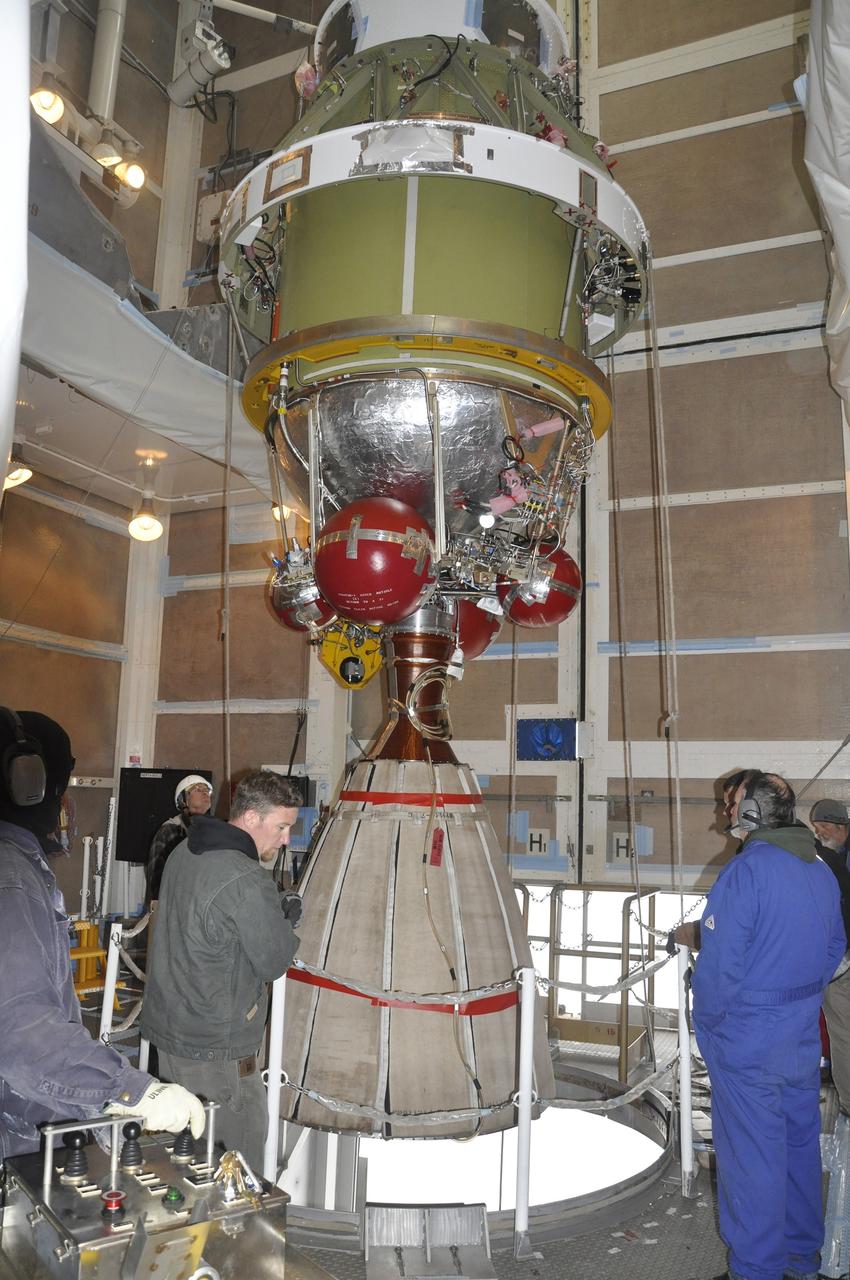
The United Launch Alliance Delta II second stage is lifted high up at the Vertical Integration Facility at Space Launch Complex 2 on June 12, 2018, at Vandenberg Air Force Base in California. The second stage will be attached to the top of the booster, or first stage of the rocket. NASA's Ice, Cloud and land Elevation Satellite-2 (ICESat-2) will launch on the final Delta II rocket. ICESat-2 will measure the height of a changing Earth, one laser pulse at a time, 10,000 laser pulses a second. The satellite will carry a single instrument, the Advanced Topographic Laser Altimeter System. ICESat-2 will help scientists investigate why, and how much our planet's frozen and icy areas, called the cryosphere, is changing in a warming climate.
Delta II ICESat-2 Second Stage Lift and Mate
Workers monitor the Delta II second stage for NASA OCO-2, as it is lifted into position for mating with the rocket first stage in the mobile service tower at Space Launch Complex 2 on Vandenberg Air Force Base in California.
Lifting NASA OCO-2 Delta II Launch Vehicle Second Stage into Position for Mating
The United Launch Alliance Delta II booster, or first stage, with the interstage attached on top is moved out of the Vertical Integration Facility (VIF) at Space Launch Complex 2 on June 21, 2018, at Vandenberg Air Force Base in California. The second stage will be lifted up at the VIF. NASA's Ice, Cloud and land Elevation Satellite-2 (ICESat-2) will launch on the final Delta II rocket. ICESat-2 will measure the height of a changing Earth, one laser pulse at a time, 10,000 laser pulses a second. The satellite will carry a single instrument, the Advanced Topographic Laser Altimeter System. ICESat-2 will help scientists investigate why, and how much our planet's frozen and icy areas, called the cryosphere, is changing in a warming climate.
Delta II ICESat-2 Second Stage Lift and Mate
The Delta II second stage for NASA Orbiting Carbon Observatory-2 mission, or OCO-2, is positioned atop the rocket first stage in the mobile service tower at Space Launch Complex 2 on Vandenberg Air Force Base in California.
Positioning NASA OCO-2 Delta II Launch Vehicle Second Stage for Mating
The Delta II second stage for NASA Orbiting Carbon Observatory-2 mission, or OCO-2, makes contact with the rocket first stage in the mobile service tower at Space Launch Complex 2 on Vandenberg Air Force Base in California.
Mating NASA OCO-2 Delta II Launch Vehicle First and Second Stages
At Vandenberg Air Force Base in California, a United Launch Alliance Delta II second stage is hoisted into the gantry at Space Launch Complex 2. It will be mounted atop first stage of the rocket, seen on the left, as preparations continue for the launch of the Joint Polar Satellite System-1 (JPSS-1) later this year. JPSS, a next-generation environmental satellite system, is a collaborative program between the National Oceanic and Atmospheric Administration (NOAA) and NASA.
Delta II JPSS-1 Second Stage Erection
At Vandenberg Air Force Base in California, a United Launch Alliance Delta II second stage is hoisted into the gantry at Space Launch Complex 2. It will be mounted atop first stage of the rocket as preparations continue for the launch of the Joint Polar Satellite System-1 (JPSS-1) later this year. JPSS, a next-generation environmental satellite system, is a collaborative program between the National Oceanic and Atmospheric Administration (NOAA) and NASA.
Delta II JPSS-1 Second Stage Erection
The Delta II second stage for NASA Orbiting Carbon Observatory-2 mission, or OCO-2, is lifted to the top of the mobile service tower at Space Launch Complex 2 on Vandenberg Air Force Base in California.
Lifting of NASA OCO-2 Delta II Launch Vehicle
NASA twin Gravity Recovery and Interior Laboratory GRAIL spacecraft are lowered onto the second stage of their Delta II launch vehicle. At top is the spacecraft adapter ring which holds the two lunar probes in their side-by-side launch configuration.
GRAIL Mission Comes Together
The United Launch Alliance Delta II rocket stands on Space Launch Complex 2 at Vandenberg Air Force Base in California. It is scheduled to launch the Joint Polar Satellite System-1 (JPSS-1) later this year. JPSS, a next-generation environmental satellite system, is a collaborative program between the National Oceanic and Atmospheric Administration (NOAA) and NASA.
Delta II JPSS-1 Second Stage Erection
The United Launch Alliance Delta II rocket stands on Space Launch Complex 2 at Vandenberg Air Force Base in California. It is scheduled to launch the Joint Polar Satellite System-1 (JPSS-1) later this year. JPSS, a next-generation environmental satellite system, is a collaborative program between the National Oceanic and Atmospheric Administration (NOAA) and NASA.
Delta II JPSS-1 Second Stage Erection
KENNEDY SPACE CENTER, FLA. -  On Launch Pad 17-B at Cape Canaveral Air Force Station in Florida, workers remove the protective covers from the engine nozzle on the second stage segment removed from the Delta II rocket.   At the Boeing plant in Alabama, a leak was observed in the second-stage oxidizer tank for another Delta II that had been scheduled to launch in November; therefore, all identical tanks scheduled for launch in the near future are being checked.  The second stage for the Delta II that will launch STEREO cannot be effectively tested while atop the first stage at Pad 17-B. STEREO stands for Solar Terrestrial Relations Observatory and comprises two spacecraft.  The STEREO mission is the first to take measurements of the sun and solar wind in 3-dimension. This new view will improve our understanding of space weather and its impact on the Earth.  STEREO is expected to lift off in late August 2006.  Photo credit: NASA/Jim Grossmann
KSC-06pd1694
KENNEDY SPACE CENTER, FLA. -  On Launch Pad 17-B at Cape Canaveral Air Force Station in Florida, the second stage segment of the Delta II rocket is lowered from the mobile service tower. At the Boeing plant in Alabama, a leak was observed in the second-stage oxidizer tank for another Delta II that had been scheduled to launch in November; therefore, all identical tanks scheduled for launch in the near future are being checked.  The second stage for the Delta II that will launch STEREO cannot be effectively tested while atop the first stage at Pad 17-B. STEREO stands for Solar Terrestrial Relations Observatory and comprises two spacecraft.  The STEREO mission is the first to take measurements of the sun and solar wind in 3-dimension. This new view will improve our understanding of space weather and its impact on the Earth.  STEREO is expected to lift off in late August 2006.  Photo credit: NASA/Jim Grossmann
KSC-06pd1692
KENNEDY SPACE CENTER, FLA. -  On Launch Pad 17-B at Cape Canaveral Air Force Station in Florida, the second stage segment of the Delta II rocket is lowered from the mobile service tower.  At the Boeing plant in Alabama, a leak was observed in the second-stage oxidizer tank for another Delta II that had been scheduled to launch in November; therefore, all identical tanks scheduled for launch in the near future are being checked.  The second stage for the Delta II that will launch STEREO cannot be effectively tested while atop the first stage at Pad 17-B. STEREO stands for Solar Terrestrial Relations Observatory and comprises two spacecraft.  The STEREO mission is the first to take measurements of the sun and solar wind in 3-dimension. This new view will improve our understanding of space weather and its impact on the Earth.  STEREO is expected to lift off in late August 2006.  Photo credit: NASA/Jim Grossmann
KSC-06pd1693
KENNEDY SPACE CENTER, FLA. -  Inside the mobile service tower on Launch Pad 17-B, the second stage segment is lifted away from the Delta II rocket below.  At the Boeing plant in Alabama, a leak was observed in the second-stage oxidizer tank for another Delta II that had been scheduled to launch in November; therefore, all identical tanks scheduled for launch in the near future are being checked.  The second stage for the Delta II that will launch STEREO cannot be effectively tested while atop the first stage at Pad 17-B. STEREO stands for Solar Terrestrial Relations Observatory and comprises two spacecraft.  The STEREO mission is the first to take measurements of the sun and solar wind in 3-dimension. This new view will improve our understanding of space weather and its impact on the Earth.  STEREO is expected to lift off in late August 2006.  Photo credit: NASA/Jim Grossmann
KSC-06pd1689
KENNEDY SPACE CENTER, FLA. -  After removal from the Boeing Delta II rocket, the second stage is lowered to the ground.  It will be stored temporarily until the inter-stage adapter on the rocket can be replaced.  Removal of the second stage will allow workers to then remove the rocket’s inter-stage adapter, which was found to be faulty during a review of launch vehicle hardware.  It will be replaced and the second stage re-installed within a few days.  Launch of Deep Impact is now scheduled no earlier than Jan. 12.
KSC-04pd-2611
VANDENBERG AFB, CALIF. - Workers on the mobile service tower at Space Launch Complex 2, Vandenberg Air Force Base, Calif., check the Delta II rocket’s second stage as it is mated with the first stage. The Delta II is the launch vehicle for the Gravity Probe B experiment, developed by Stanford University, Lockheed Martin and NASA’s Marshall Space Flight Center.   The Gravity Probe B will launch a payload of four gyroscopes into low-Earth polar orbit to test two extraordinary predictions of Albert Einstein’s general theory of relativity: the geodetic effect (how space and time are warped by the presence of the Earth) and frame dragging (how Earth’s rotation drags space and time around with it). Once in orbit, for 18 months each gyroscope’s spin axis will be monitored as it travels through local spacetime, observing and measuring these effects. The targeted launch date is Dec. 6, 2003.
VANDENBERG AFB, CALIF. - Workers on the mobile service tower at Space Launch Complex 2, Vandenberg Air Force Base, Calif., check the Delta II rocket’s second stage as it is mated with the first stage. The Delta II is the launch vehicle for the Gravity Probe B experiment, developed by Stanford University, Lockheed Martin and NASA’s Marshall Space Flight Center. The Gravity Probe B will launch a payload of four gyroscopes into low-Earth polar orbit to test two extraordinary predictions of Albert Einstein’s general theory of relativity: the geodetic effect (how space and time are warped by the presence of the Earth) and frame dragging (how Earth’s rotation drags space and time around with it). Once in orbit, for 18 months each gyroscope’s spin axis will be monitored as it travels through local spacetime, observing and measuring these effects. The targeted launch date is Dec. 6, 2003.
VANDENBERG AFB, CALIF. -  The second stage of the Delta II launch vehicle for the Gravity Probe B experiment is moved into the mobile service tower on Space Launch Complex 2, Vandenberg Air Force Base, Calif.   Behind it can be seen the first stage of the Delta II.  The Gravity Probe B will launch a payload of four gyroscopes into low-Earth polar orbit to test two extraordinary predictions of Albert Einstein’s general theory of relativity: the geodetic effect (how space and time are warped by the presence of the Earth) and frame dragging (how Earth’s rotation drags space and time around with it). Once in orbit, for 18 months each gyroscope’s spin axis will be monitored as it travels through local spacetime, observing and measuring these effects.  The experiment was developed by Stanford University, Lockheed Martin and NASA’s Marshall Space Flight Center.  The targeted launch date is Dec. 6, 2003.
VANDENBERG AFB, CALIF. - The second stage of the Delta II launch vehicle for the Gravity Probe B experiment is moved into the mobile service tower on Space Launch Complex 2, Vandenberg Air Force Base, Calif. Behind it can be seen the first stage of the Delta II. The Gravity Probe B will launch a payload of four gyroscopes into low-Earth polar orbit to test two extraordinary predictions of Albert Einstein’s general theory of relativity: the geodetic effect (how space and time are warped by the presence of the Earth) and frame dragging (how Earth’s rotation drags space and time around with it). Once in orbit, for 18 months each gyroscope’s spin axis will be monitored as it travels through local spacetime, observing and measuring these effects. The experiment was developed by Stanford University, Lockheed Martin and NASA’s Marshall Space Flight Center. The targeted launch date is Dec. 6, 2003.
VANDENBERG AFB, CALIF. -  Viewed from inside, the second stage of the Delta II launch vehicle for the Gravity Probe B experiment is lifted up the mobile service tower on Space Launch Complex 2, Vandenberg Air Force Base, Calif.   Behind it is the first stage of the Delta II.  The Gravity Probe B will launch a payload of four gyroscopes into low-Earth polar orbit to test two extraordinary predictions of Albert Einstein’s general theory of relativity: the geodetic effect (how space and time are warped by the presence of the Earth) and frame dragging (how Earth’s rotation drags space and time around with it). Once in orbit, for 18 months each gyroscope’s spin axis will be monitored as it travels through local spacetime, observing and measuring these effects.  The experiment was developed by Stanford University, Lockheed Martin and NASA’s Marshall Space Flight Center.  The targeted launch date is Dec. 6, 2003.
VANDENBERG AFB, CALIF. - Viewed from inside, the second stage of the Delta II launch vehicle for the Gravity Probe B experiment is lifted up the mobile service tower on Space Launch Complex 2, Vandenberg Air Force Base, Calif. Behind it is the first stage of the Delta II. The Gravity Probe B will launch a payload of four gyroscopes into low-Earth polar orbit to test two extraordinary predictions of Albert Einstein’s general theory of relativity: the geodetic effect (how space and time are warped by the presence of the Earth) and frame dragging (how Earth’s rotation drags space and time around with it). Once in orbit, for 18 months each gyroscope’s spin axis will be monitored as it travels through local spacetime, observing and measuring these effects. The experiment was developed by Stanford University, Lockheed Martin and NASA’s Marshall Space Flight Center. The targeted launch date is Dec. 6, 2003.
KENNEDY SPACE CENTER, FLA. -  On Pad 17-B, Cape Canaveral Air Force Station, Fla., the second stage of the Boeing Delta II rocket can be seen being lowered to the ground.  Removal of the second stage will allow workers to then remove the rocket’s inter-stage adapter, which was found to be faulty during a review of launch vehicle hardware.  It will be replaced and the second stage re-installed within a few days.  Launch of Deep Impact is now scheduled no earlier than Jan. 12.
KSC-04pd-2610
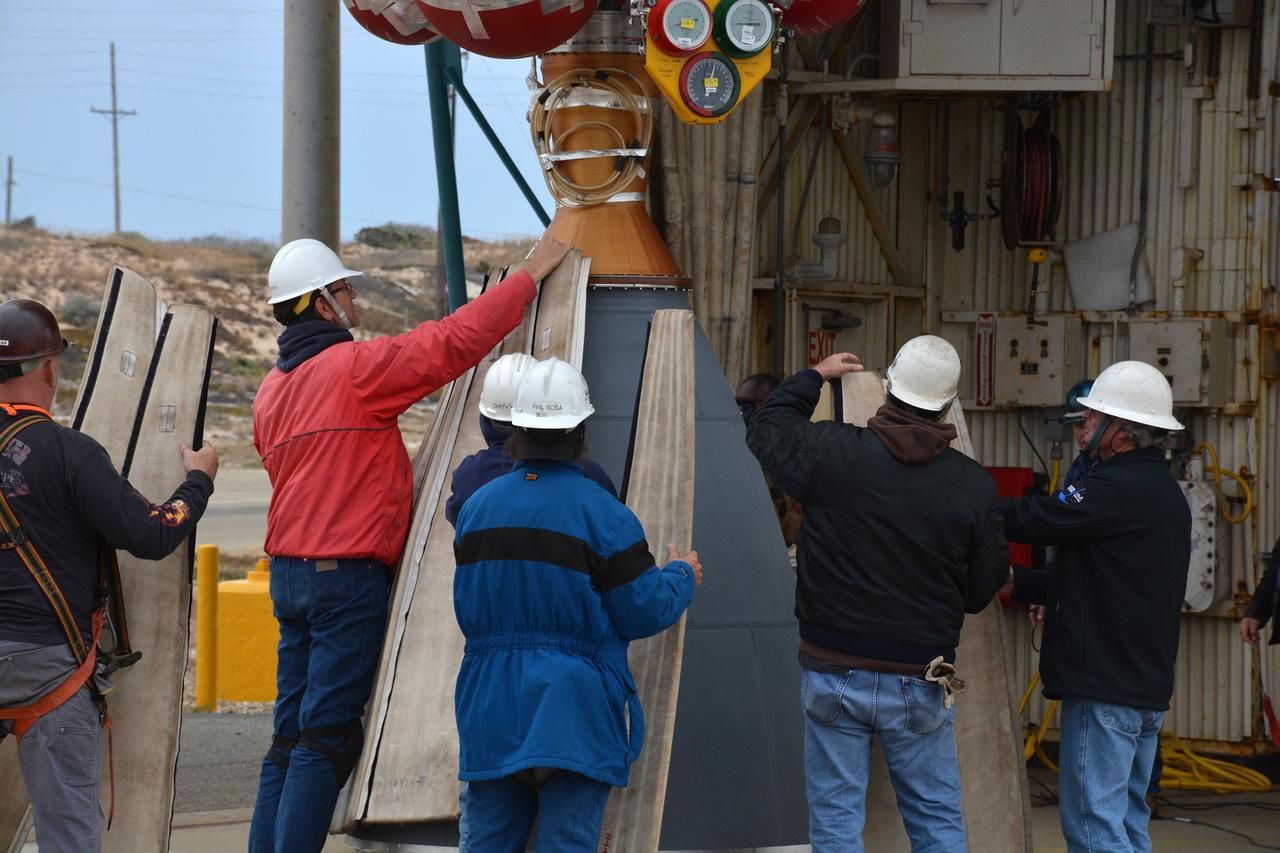
KENNEDY SPACE CENTER, FLA. -  On Pad 17-B, Cape Canaveral Air Force Station, Fla., the second stage of the Boeing Delta II rocket is lowered to the pad and Boeing workers remove the panels from the bell.  Removal of the second stage will allow workers to then remove the rocket’s inter-stage adapter, which was found to be faulty during a review of launch vehicle hardware.  It will be replaced and the second stage re-installed within a few days.  Launch of Deep Impact is now scheduled no earlier than Jan. 12.
KSC-04pd-2610a
KENNEDY SPACE CENTER, FLA. --  The second stage of the Delta II launch vehicle for the Dawn spacecraft is lifted alongside the mobile service tower on Launch Pad 17-B at Cape Canaveral Air Force Station.  At right can be seen the solid rocket boosters surrounding Delta's first stage.  The second stage will be mated with the first stage.   The Delta II-Heavy, manufactured by the United Launch Alliance, is scheduled to launch the Dawn spacecraft on its 4-year flight to the asteroid belt.  The Delta II-Heavy is the strongest rocket in the Delta II class. It will use three stages and nine solid-fueled booster rockets to propel Dawn on its way. A 9.5-foot payload fairing will protect the spacecraft from the heat and stresses of launch. Dawn's goal is to characterize the conditions and processes of the solar system's earliest epoch by investigating in detail the largest protoplanets that have remained intact since their formations: asteroid Vesta and the dwarf planet Ceres.  They reside in the extensive zone between Mars and Jupiter together with many other smaller bodies, called the asteroid belt.  Dawn is scheduled to launch July 7.  Photo credit: NASA/Jack Pfaller
KSC-07pd1511
KENNEDY SPACE CENTER, FLA. -  On Launch Pad 17-B at Cape Canaveral Air Force Station in Florida, the transporter carrying the second stage segment of a Delta II rocket arrives at the High-Pressure Test Facility for leak testing.  The segment was destacked from the Delta II rocket in the mobile service tower.  At the Boeing plant in Alabama, a leak was observed in the second-stage oxidizer tank for another Delta II that had been scheduled to launch in November; therefore, all identical tanks scheduled for launch in the near future are being checked.  The second stage for the Delta II that will launch STEREO cannot be effectively tested while atop the first stage at Pad 17-B. STEREO stands for Solar Terrestrial Relations Observatory and comprises two spacecraft.  The STEREO mission is the first to take measurements of the sun and solar wind in 3-dimension. This new view will improve our understanding of space weather and its impact on the Earth.  STEREO is expected to lift off in late August 2006.  Photo credit: NASA/Jim Grossmann
KSC-06pd1699
KENNEDY SPACE CENTER, FLA. -  On Launch Pad 17-B at Cape Canaveral Air Force Station in Florida, workers maneuver the transporter carrying the second stage segment of a Delta II rocket into the High-Pressure Test Facility for leak testing.  The segment was destacked from the Delta II rocket in the mobile service tower.  At the Boeing plant in Alabama, a leak was observed in the second-stage oxidizer tank for another Delta II that had been scheduled to launch in November; therefore, all identical tanks scheduled for launch in the near future are being checked.  The second stage for the Delta II that will launch STEREO cannot be effectively tested while atop the first stage at Pad 17-B. STEREO stands for Solar Terrestrial Relations Observatory and comprises two spacecraft.  The STEREO mission is the first to take measurements of the sun and solar wind in 3-dimension. This new view will improve our understanding of space weather and its impact on the Earth.  STEREO is expected to lift off in late August 2006.  Photo credit: NASA/Jim Grossmann
KSC-06pd1698
KENNEDY SPACE CENTER, FLA. -  On Launch Pad 17-B at Cape Canaveral Air Force Station in Florida, the second stage segment of a Delta II rocket is being transported to the High-Pressure Test Facility for leak testing.  The segment was destacked from the Delta II rocket in the mobile service tower. At the Boeing plant in Alabama, a leak was observed in the second-stage oxidizer tank for another Delta II that had been scheduled to launch in November; therefore, all identical tanks scheduled for launch in the near future are being checked.  The second stage for the Delta II that will launch STEREO cannot be effectively tested while atop the first stage at Pad 17-B. STEREO stands for Solar Terrestrial Relations Observatory and comprises two spacecraft.  The STEREO mission is the first to take measurements of the sun and solar wind in 3-dimension. This new view will improve our understanding of space weather and its impact on the Earth.  STEREO is expected to lift off in late August 2006.  Photo credit: NASA/Jim Grossmann
KSC-06pd1697
KENNEDY SPACE CENTER, FLA. -  The Boeing Delta II Heavy second-stage engine, the Aerojet AJ10-118K, is lifted up the mobile service tower on Pad 17-B, Cape Canaveral Air Force Station.  At right can be seen the first stage of the Delta II and the nine Solid Rocket Boosters surrounding it.  The Delta II is the launch vehicle for the MESSENGER (Mercury Surface, Space Environment, Geochemistry and Ranging) spacecraft, scheduled to lift off Aug. 2.  Bound for Mercury, the spacecraft is expected to reach orbit around the planet in March 2011.  MESSENGER was built for NASA by the Johns Hopkins University Applied Physics Laboratory in Laurel, Md.
KSC-04pd1448
KENNEDY SPACE CENTER, FLA. -  After removal from the Boeing Delta II rocket and off the mobile service tower on Pad 17-B, Cape Canaveral Air Force Station, Fla., the second stage is lowered onto a transporter.  The second stage will be stored temporarily until the inter-stage adapter on the rocket can be replaced.  Removal of the second stage will allow workers to then remove the rocket’s inter-stage adapter, which was found to be faulty during a review of launch vehicle hardware.  It will be replaced and the second stage re-installed within a few days.  Launch of Deep Impact is now scheduled no earlier than Jan. 12.
KSC-04pd-2612
VANDENBERG AIR FORCE BASE, Calif. – The Delta II second stage for NASA's Orbiting Carbon Observatory-2 mission, or OCO-2, is lifted to the top of the mobile service tower at Space Launch Complex 2 on Vandenberg Air Force Base in California. Operations are underway to mate the second stage of the rocket to the first stage already in place on the launch stand.     OCO-2 is scheduled to launch aboard a United Launch Alliance Delta II rocket in July. The rocket's second stage will insert OCO-2 into a polar Earth orbit.  OCO-2 will collect precise global measurements of carbon dioxide in the Earth's atmosphere and provide scientists with a better idea of the chemical compound's impacts on climate change. Scientists will analyze this data to improve our understanding of the natural processes and human activities that regulate the abundance and distribution of this important atmospheric gas. To learn more about OCO-2, visit http://oco.jpl.nasa.gov.  Photo credit: NASA/Randy Beaudoin
KSC-2014-2119
VANDENBERG AIR FORCE BASE, Calif. – The Delta II second stage for NASA's Orbiting Carbon Observatory-2 mission, or OCO-2, is lifted into the mobile service tower at Space Launch Complex 2 on Vandenberg Air Force Base in California. Operations are underway to mate the second stage of the rocket to the first stage already in place on the launch stand.     OCO-2 is scheduled to launch aboard a United Launch Alliance Delta II rocket in July. The rocket's second stage will insert OCO-2 into a polar Earth orbit.  OCO-2 will collect precise global measurements of carbon dioxide in the Earth's atmosphere and provide scientists with a better idea of the chemical compound's impacts on climate change. Scientists will analyze this data to improve our understanding of the natural processes and human activities that regulate the abundance and distribution of this important atmospheric gas. To learn more about OCO-2, visit http://oco.jpl.nasa.gov.  Photo credit: NASA/Randy Beaudoin
KSC-2014-2118
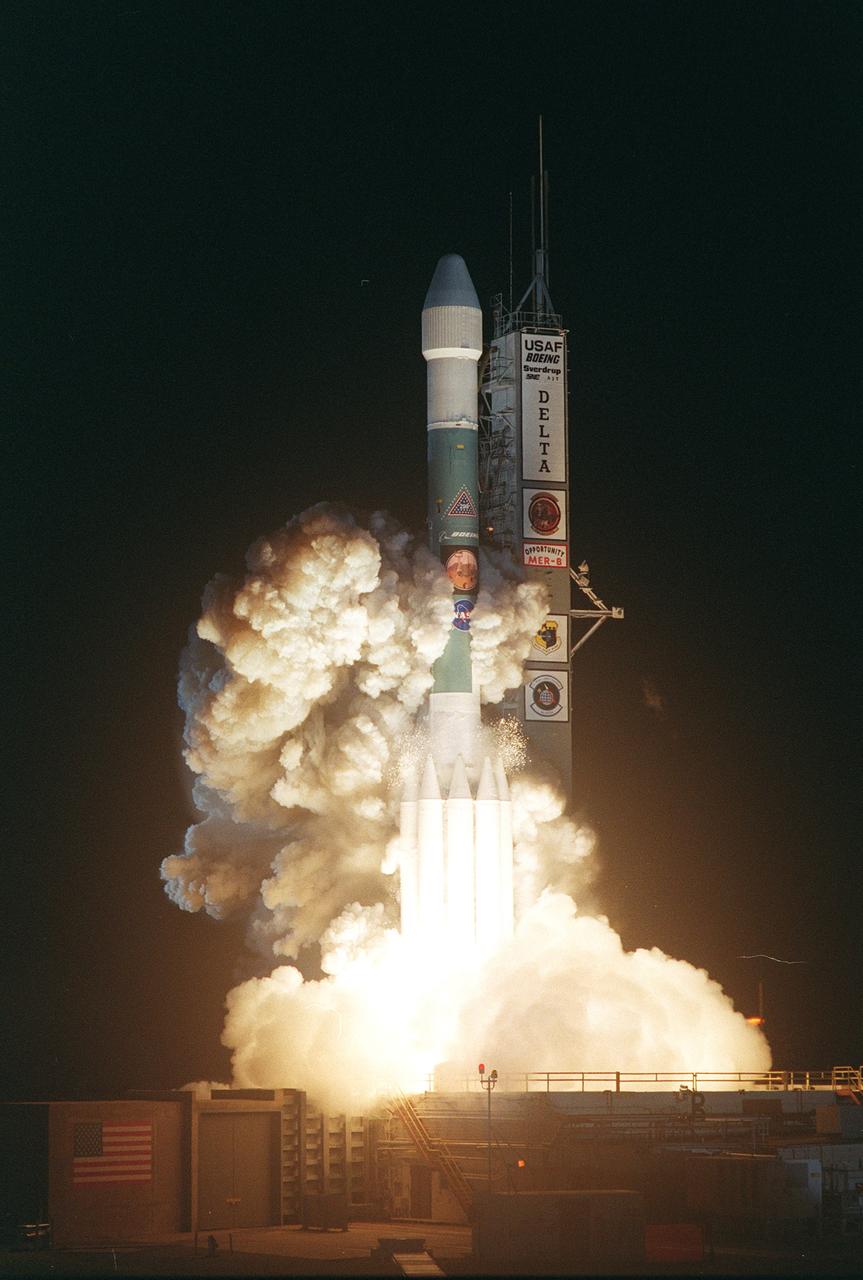
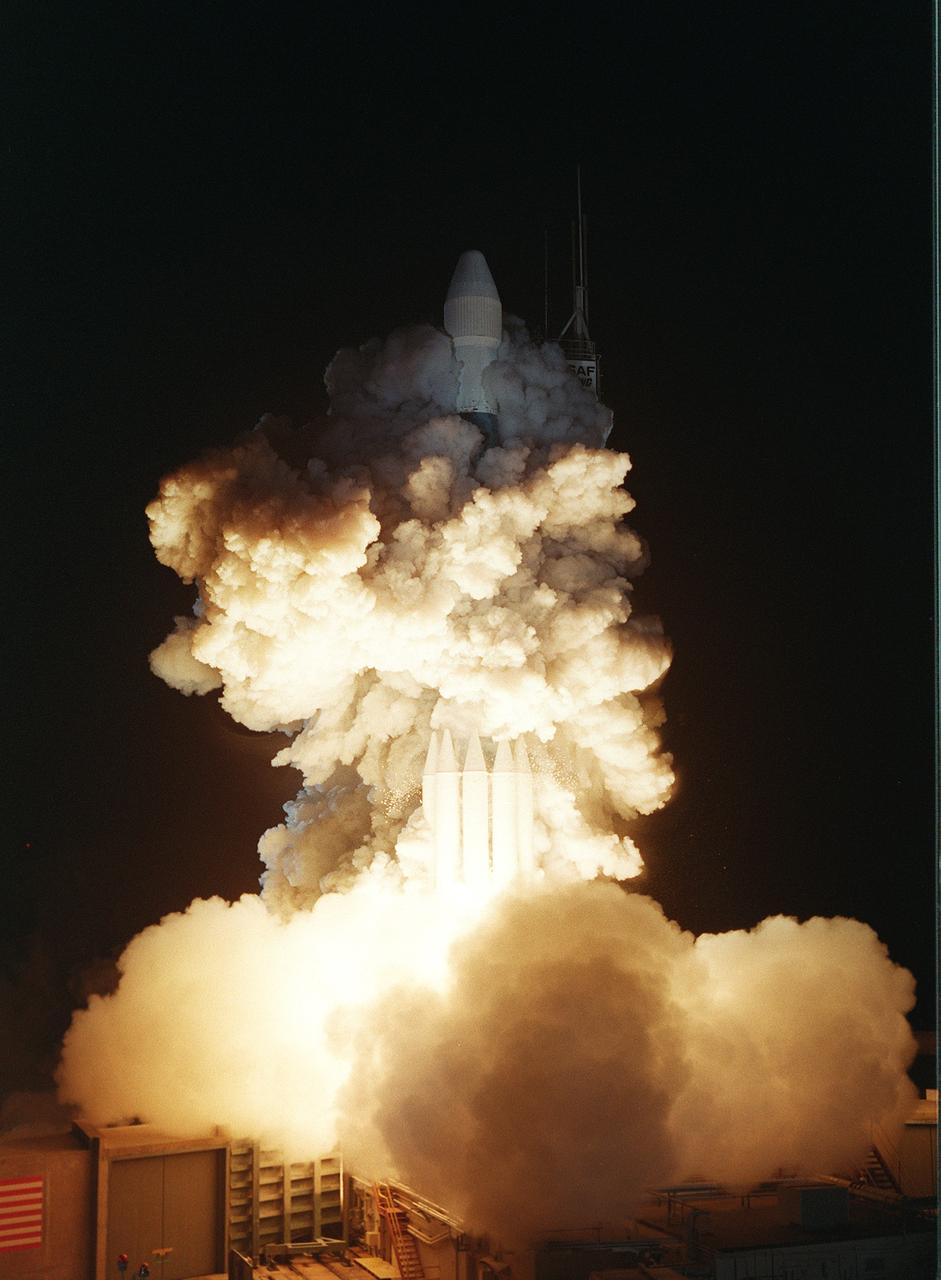
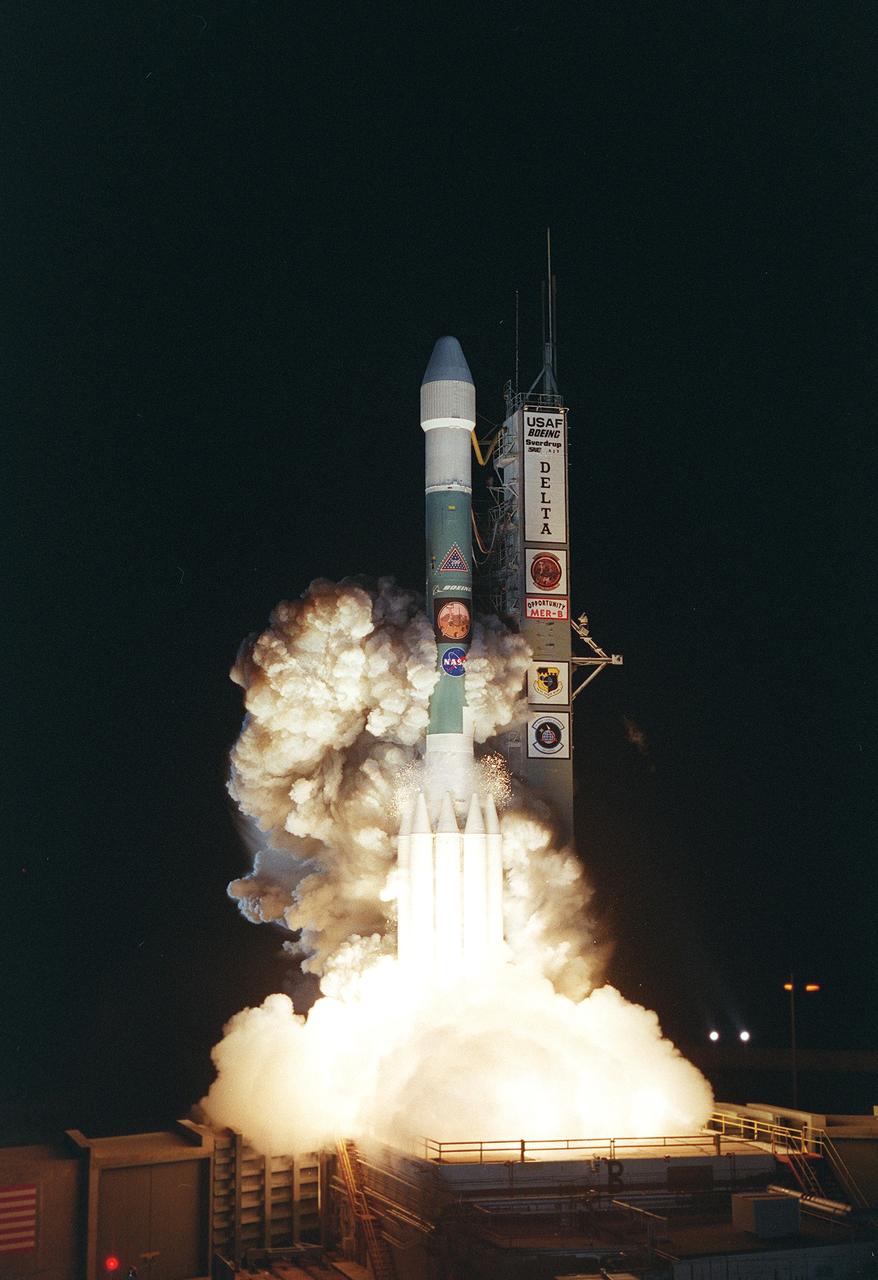
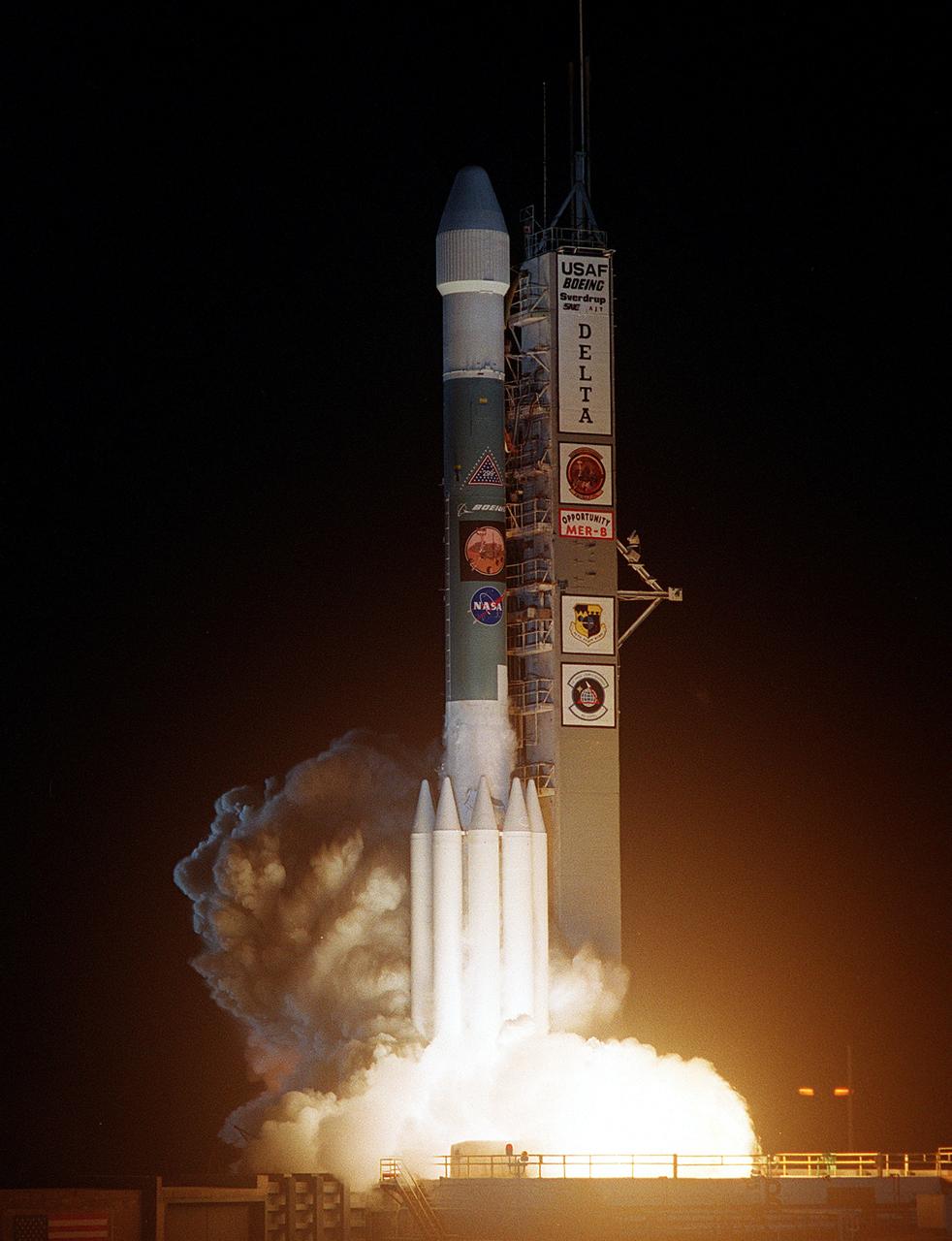
KENNEDY SPACE CENTER, FLA. - NASA launches its second Mars Exploration Rover, Opportunity, aboard a Delta II launch vehicle.  The bright glare briefly illuminated Florida Space Coast beaches.  Opportunity’s dash to Mars began with liftoff at 11:18:15 p.m. Eastern Daylight Time from Cape Canaveral Air Force Station, Fla.   The spacecraft separated successfully from the Delta's third stage 83 minutes later, after it had been boosted out of Earth orbit and onto a course toward Mars.
KENNEDY SPACE CENTER, FLA. - NASA launches its second Mars Exploration Rover, Opportunity, aboard a Delta II launch vehicle. The bright glare briefly illuminated Florida Space Coast beaches. Opportunity’s dash to Mars began with liftoff at 11:18:15 p.m. Eastern Daylight Time from Cape Canaveral Air Force Station, Fla. The spacecraft separated successfully from the Delta's third stage 83 minutes later, after it had been boosted out of Earth orbit and onto a course toward Mars.
KENNEDY SPACE CENTER, FLA. - From a burst of fire and smoke, the Delta II launch vehicle races into the sky carrying the second Mars Exploration Rover, Opportunity.  The bright glare briefly illuminated Florida Space Coast beaches.  Opportunity’s dash to Mars began with liftoff at 11:18:15 p.m. Eastern Daylight Time from Cape Canaveral Air Force Station, Fla.   The spacecraft separated successfully from the Delta's third stage 83 minutes later, after it had been boosted out of Earth orbit and onto a course toward Mars.
KENNEDY SPACE CENTER, FLA. - From a burst of fire and smoke, the Delta II launch vehicle races into the sky carrying the second Mars Exploration Rover, Opportunity. The bright glare briefly illuminated Florida Space Coast beaches. Opportunity’s dash to Mars began with liftoff at 11:18:15 p.m. Eastern Daylight Time from Cape Canaveral Air Force Station, Fla. The spacecraft separated successfully from the Delta's third stage 83 minutes later, after it had been boosted out of Earth orbit and onto a course toward Mars.
KENNEDY SPACE CENTER, FLA. - From a burst of fire and smoke, the Delta II launch vehicle races into the sky carrying the second Mars Exploration Rover, Opportunity.  The bright glare briefly illuminated Florida Space Coast beaches.  Opportunity’s dash to Mars began with liftoff at 11:18:15 p.m. Eastern Daylight Time from Cape Canaveral Air Force Station, Fla.   The spacecraft separated successfully from the Delta's third stage 83 minutes later, after it had been boosted out of Earth orbit and onto a course toward Mars.
KENNEDY SPACE CENTER, FLA. - From a burst of fire and smoke, the Delta II launch vehicle races into the sky carrying the second Mars Exploration Rover, Opportunity. The bright glare briefly illuminated Florida Space Coast beaches. Opportunity’s dash to Mars began with liftoff at 11:18:15 p.m. Eastern Daylight Time from Cape Canaveral Air Force Station, Fla. The spacecraft separated successfully from the Delta's third stage 83 minutes later, after it had been boosted out of Earth orbit and onto a course toward Mars.
KENNEDY SPACE CENTER, FLA. - NASA launches its second Mars Exploration Rover, Opportunity, aboard a Delta II launch vehicle.  The bright glare briefly illuminated Florida Space Coast beaches.  Opportunity’s dash to Mars began with liftoff at 11:18:15 p.m. Eastern Daylight Time from Cape Canaveral Air Force Station, Fla.   The spacecraft separated successfully from the Delta's third stage 83 minutes later, after it had been boosted out of Earth orbit and onto a course toward Mars.  [Photo courtesy of Ray Yost and Scott Andrews/NIKON]
KENNEDY SPACE CENTER, FLA. - NASA launches its second Mars Exploration Rover, Opportunity, aboard a Delta II launch vehicle. The bright glare briefly illuminated Florida Space Coast beaches. Opportunity’s dash to Mars began with liftoff at 11:18:15 p.m. Eastern Daylight Time from Cape Canaveral Air Force Station, Fla. The spacecraft separated successfully from the Delta's third stage 83 minutes later, after it had been boosted out of Earth orbit and onto a course toward Mars. [Photo courtesy of Ray Yost and Scott Andrews/NIKON]
KENNEDY SPACE CENTER, FLA. - NASA launches its second Mars Exploration Rover, Opportunity, aboard a Delta II launch vehicle.  The bright glare briefly illuminated Florida Space Coast beaches.  Opportunity’s dash to Mars began with liftoff at 11:18:15 p.m. Eastern Daylight Time from Cape Canaveral Air Force Station, Fla.   The spacecraft separated successfully from the Delta's third stage 83 minutes later, after it had been boosted out of Earth orbit and onto a course toward Mars.
KENNEDY SPACE CENTER, FLA. - NASA launches its second Mars Exploration Rover, Opportunity, aboard a Delta II launch vehicle. The bright glare briefly illuminated Florida Space Coast beaches. Opportunity’s dash to Mars began with liftoff at 11:18:15 p.m. Eastern Daylight Time from Cape Canaveral Air Force Station, Fla. The spacecraft separated successfully from the Delta's third stage 83 minutes later, after it had been boosted out of Earth orbit and onto a course toward Mars.
KENNEDY SPACE CENTER, FLA. -   At Launch Complex 17 on Cape Canaveral Air Force Station, the second stage of the Boeing Delta II launch vehicle for the STEREO spacecraft is returned to the pad.  The stage was tested for leaks in the High-Pressure Test Facility but no leak was observed.  The second stage will be remated with the Delta first stage.  STEREO stands for Solar Terrestrial Relations Observatory and comprises two spacecraft.  The STEREO mission is the first to take measurements of the sun and solar wind in 3-dimension. This new view will improve our understanding of space weather and its impact on the Earth.  STEREO is expected to lift off on Aug. 31.   Photo credit: NASA/Dimitri Gerondidakis
KSC-06pd1732
VANDENBERG AIR FORCE BASE, Calif. – The Delta II interstage adapter, or ISA, for NASA's Soil Moisture Active Passive mission, or SMAP, is ready to be lifted into the mobile service tower at Space Launch Complex 2 on Vandenberg Air Force Base in California.    A United Launch Alliance Delta II rocket will loft SMAP into orbit. The ISA connects the Delta II first and second stages and encloses the second stage engine and thrust section. The spacecraft will provide global measurements of soil moisture and its freeze/thaw state. These measurements will be used to enhance understanding of processes that link the water, energy and carbon cycles, and to extend the capabilities of weather and climate prediction models. The data returned also will be used to quantify net carbon flux in boreal landscapes and to develop improved flood prediction and drought monitoring capabilities. Launch is scheduled for November 2014. To learn more about SMAP, visit http://smap.jpl.nasa.gov.  Photo credit: NASA/Randy Beaudoin
KSC-2014-3496
VANDENBERG AIR FORCE BASE, Calif. – The Delta II interstage adapter, or ISA, for NASA's Soil Moisture Active Passive mission, or SMAP, approaches the mobile service tower at Space Launch Complex 2 on Vandenberg Air Force Base in California.       A United Launch Alliance Delta II rocket will loft SMAP into orbit. The ISA connects the Delta II first and second stages and encloses the second stage engine and thrust section. The spacecraft will provide global measurements of soil moisture and its freeze/thaw state. These measurements will be used to enhance understanding of processes that link the water, energy and carbon cycles, and to extend the capabilities of weather and climate prediction models. The data returned also will be used to quantify net carbon flux in boreal landscapes and to develop improved flood prediction and drought monitoring capabilities. Launch is scheduled for November 2014. To learn more about SMAP, visit http://smap.jpl.nasa.gov.  Photo credit: NASA/Randy Beaudoin
KSC-2014-3494
VANDENBERG AIR FORCE BASE, Calif. – Preparations are underway to hoist the Delta II interstage adapter, or ISA, for NASA's Soil Moisture Active Passive mission, or SMAP, into the mobile service tower at Space Launch Complex 2 on Vandenberg Air Force Base in California.    A United Launch Alliance Delta II rocket will loft SMAP into orbit. The ISA connects the Delta II first and second stages and encloses the second stage engine and thrust section. The spacecraft will provide global measurements of soil moisture and its freeze/thaw state. These measurements will be used to enhance understanding of processes that link the water, energy and carbon cycles, and to extend the capabilities of weather and climate prediction models. The data returned also will be used to quantify net carbon flux in boreal landscapes and to develop improved flood prediction and drought monitoring capabilities. Launch is scheduled for November 2014. To learn more about SMAP, visit http://smap.jpl.nasa.gov.  Photo credit: NASA/Randy Beaudoin
KSC-2014-3495
KENNEDY SPACE CENTER, FLA. -   On Launch Pad 17-B at Cape Canaveral Air Force Station, the second stage of the Boeing Delta II rocket is moved toward the opening under which is the Boeing Delta II rocket.  The second stage will be mated to the Delta II, which will launch NASA’s Deep Impact spacecraft. A NASA Discovery mission, Deep Impact will probe beneath the surface of Comet Tempel 1 on July 4, 2005, when the comet is 83 million miles from Earth, and reveal the secrets of its interior.  After releasing an impactor on a course to hit the comet’s sunlit side, Deep Impact’s flyby spacecraft will collect pictures and data of how the crater forms, measure the crater’s depth and diameter, as well as the composition of the interior of the crater and any material thrown out, and determine the changes in natural outgassing produced by the impact.  It will send the data back to Earth through the antennas of the Deep Space Network.
KSC-04pd-2461
VANDENBERG AIR FORCE BASE, Calif. – The Delta II interstage adapter, or ISA, for NASA's Soil Moisture Active Passive mission, or SMAP, is delivered to the mobile service tower at Space Launch Complex 2 on Vandenberg Air Force Base in California.     A United Launch Alliance Delta II rocket will loft SMAP into orbit. The ISA connects the Delta II first and second stages and encloses the second stage engine and thrust section. The spacecraft will provide global measurements of soil moisture and its freeze/thaw state. These measurements will be used to enhance understanding of processes that link the water, energy and carbon cycles, and to extend the capabilities of weather and climate prediction models. The data returned also will be used to quantify net carbon flux in boreal landscapes and to develop improved flood prediction and drought monitoring capabilities. Launch is scheduled for November 2014. To learn more about SMAP, visit http://smap.jpl.nasa.gov.  Photo credit: NASA/Randy Beaudoin
KSC-2014-3493
VANDENBERG AIR FORCE BASE, Calif. – The Delta II second stage for NASA's Orbiting Carbon Observatory-2 mission, or OCO-2, is towed into place at the base of the mobile service tower at Space Launch Complex 2 on Vandenberg Air Force Base in California. Operations are underway to lift the second stage into the tower.     OCO-2 is scheduled to launch aboard a United Launch Alliance Delta II rocket in July. The rocket's second stage will insert OCO-2 into a polar Earth orbit.  OCO-2 will collect precise global measurements of carbon dioxide in the Earth's atmosphere and provide scientists with a better idea of the chemical compound's impacts on climate change. Scientists will analyze this data to improve our understanding of the natural processes and human activities that regulate the abundance and distribution of this important atmospheric gas. To learn more about OCO-2, visit http://oco.jpl.nasa.gov.  Photo credit: NASA/Randy Beaudoin
KSC-2014-2117
KENNEDY SPACE CENTER, FLA. -  In the mobile service tower on Pad 17-B, Cape Canaveral Air Force Station, Fla., the second stage of the Boeing Delta II rocket is moved toward the front after demating from the inter-stage adapter. Removal of the second stage will allow workers to then remove the rocket’s inter-stage adapter, which was found to be faulty during a review of launch vehicle hardware.  It will be replaced and the second stage re-installed within a few days.  Launch of Deep Impact is now scheduled no earlier than Jan. 12.
KSC-04pd-2609
KENNEDY SPACE CENTER, FLA. -  In the mobile service tower on Pad 17-B, Cape Canaveral Air Force Station, Fla., the second stage of the Boeing Delta II rocket is moved toward the front after demating from the inter-stage adapter. Removal of the second stage will allow workers to then remove the rocket’s inter-stage adapter, which was found to be faulty during a review of launch vehicle hardware.  It will be replaced and the second stage re-installed within a few days.  Launch of Deep Impact is now scheduled no earlier than Jan. 12.
KSC-04pd-2608
VANDENBERG AIR FORCE BASE, Calif. – Workers lower the Delta II second stage for NASA's Orbiting Carbon Observatory-2 mission, or OCO-2, into position over the rocket's first stage in the mobile service tower at Space Launch Complex 2 on Vandenberg Air Force Base in California.  Operations are underway to mate the stages for launch.     OCO-2 is scheduled to launch aboard a United Launch Alliance Delta II rocket in July. The rocket's second stage will insert OCO-2 into a polar Earth orbit.  OCO-2 will collect precise global measurements of carbon dioxide in the Earth's atmosphere and provide scientists with a better idea of the chemical compound's impacts on climate change. Scientists will analyze this data to improve our understanding of the natural processes and human activities that regulate the abundance and distribution of this important atmospheric gas. To learn more about OCO-2, visit http://oco.jpl.nasa.gov.  Photo credit: NASA/Randy Beaudoin
KSC-2014-2121
VANDENBERG AIR FORCE BASE, Calif. – The Delta II second stage for NASA's Orbiting Carbon Observatory-2 mission, or OCO-2, makes contact with the rocket's first stage in the mobile service tower at Space Launch Complex 2 on Vandenberg Air Force Base in California. Operations are underway to mate the stages for launch.     OCO-2 is scheduled to launch aboard a United Launch Alliance Delta II rocket in July. The rocket's second stage will insert OCO-2 into a polar Earth orbit.  OCO-2 will collect precise global measurements of carbon dioxide in the Earth's atmosphere and provide scientists with a better idea of the chemical compound's impacts on climate change. Scientists will analyze this data to improve our understanding of the natural processes and human activities that regulate the abundance and distribution of this important atmospheric gas. To learn more about OCO-2, visit http://oco.jpl.nasa.gov.  Photo credit: NASA/Randy Beaudoin
KSC-2014-2123
VANDENBERG AIR FORCE BASE, Calif. – The Delta II second stage for NASA's Orbiting Carbon Observatory-2 mission, or OCO-2, is positioned atop the rocket's first stage in the mobile service tower at Space Launch Complex 2 on Vandenberg Air Force Base in California. Operations are underway to mate the stages for launch.     OCO-2 is scheduled to launch aboard a United Launch Alliance Delta II rocket in July. The rocket's second stage will insert OCO-2 into a polar Earth orbit.  OCO-2 will collect precise global measurements of carbon dioxide in the Earth's atmosphere and provide scientists with a better idea of the chemical compound's impacts on climate change. Scientists will analyze this data to improve our understanding of the natural processes and human activities that regulate the abundance and distribution of this important atmospheric gas. To learn more about OCO-2, visit http://oco.jpl.nasa.gov.  Photo credit: NASA/Randy Beaudoin
KSC-2014-2122
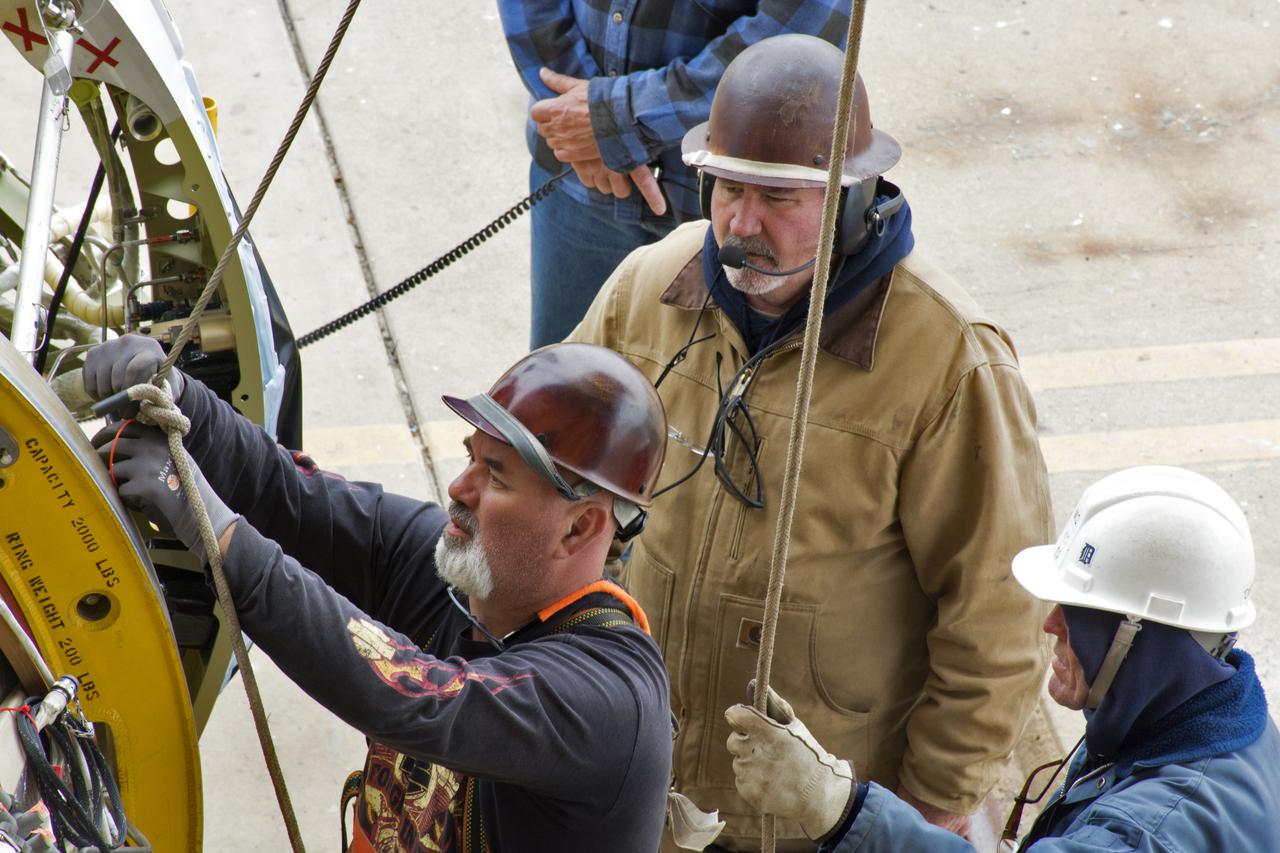
KENNEDY SPACE CENTER, FLA. -  On Launch Pad 17-B at Cape Canaveral Air Force Station in Florida, workers maneuver the ropes tied to the second stage segment as it is being lowered to a horizontal position.  It will be placed on a transporter and moved to the High-Pressure Test Facility for leak testing.  The segment was destacked from the Delta II rocket in the mobile service tower.  At the Boeing plant in Alabama, a leak was observed in the second-stage oxidizer tank for another Delta II that had been scheduled to launch in November; therefore, all identical tanks scheduled for launch in the near future are being checked.  The second stage for the Delta II that will launch STEREO cannot be effectively tested while atop the first stage at Pad 17-B. STEREO stands for Solar Terrestrial Relations Observatory and comprises two spacecraft.  The STEREO mission is the first to take measurements of the sun and solar wind in 3-dimension. This new view will improve our understanding of space weather and its impact on the Earth.  STEREO is expected to lift off in late August 2006.  Photo credit: NASA/Jim Grossmann
KSC-06pd1695
VANDENBERG AIR FORCE BASE, Calif. – The interstage adapter, or ISA, for NASA's Orbiting Carbon Observatory-2 mission, or OCO-2, is connected to the Delta II first stage in the mobile service tower at Space Launch Complex 2 on Vandenberg Air Force Base in California and ready for delivery of the rocket's second stage.    OCO-2 is scheduled to launch into a polar Earth orbit aboard a United Launch Alliance Delta II 7320-10C rocket in July. The ISA is the interface between the Delta II first and second stages. The second stage engine fits within the ISA. Once in orbit, OCO-2 will collect precise global measurements of carbon dioxide in the Earth's atmosphere and provide scientists with a better idea of the chemical compound's impacts on climate change. Scientists will analyze this data to improve our understanding of the natural processes and human activities that regulate the abundance and distribution of this important atmospheric gas. To learn more about OCO-2, visit http://oco.jpl.nasa.gov.  Photo credit: NASA/Randy Beaudoin
KSC-2014-2326
KENNEDY SPACE CENTER, FLA. -  Inside the mobile service tower on Launch Pad 17-B at Cape Canaveral Air Force Station in Florida, workers get ready to destack the second stage segment from the Delta II rocket below.  At the Boeing plant in Alabama, a leak was observed in the second-stage oxidizer tank for another Delta II that had been scheduled to launch in November; therefore, all identical tanks scheduled for launch in the near future are being checked.  The second stage for the Delta II that will launch STEREO cannot be effectively tested while atop the first stage at Pad 17-B. STEREO stands for Solar Terrestrial Relations Observatory and comprises two spacecraft.  The STEREO mission is the first to take measurements of the sun and solar wind in 3-dimension. This new view will improve our understanding of space weather and its impact on the Earth.  STEREO is expected to lift off in late August 2006.  Photo credit: NASA/Jim Grossmann
KSC-06pd1688
KENNEDY SPACE CENTER, FLA. -  In the mobile service tower on Pad 17-B, Cape Canaveral Air Force Station, Fla., Boeing technicians prepare to remove the second stage from the Boeing Delta II rocket that will launch the Deep Impact spacecraft.  Removal of the second stage will allow workers to then remove the rocket’s inter-stage adapter, which was found to be faulty during a review of launch vehicle hardware.  It will be replaced and the second stage re-installed within a few days.  Launch of Deep Impact is now scheduled no earlier than Jan. 12.
KSC-04pd-2604
KENNEDY SPACE CENTER, FLA. -  In the mobile service tower on Pad 17-B, Cape Canaveral Air Force Station, Fla., Boeing technicians prepare to demate the second stage of the Boeing Delta II rocket that will launch the Deep Impact spacecraft.  Removal of the second stage will allow workers to then remove the rocket’s inter-stage adapter, which was found to be faulty during a review of launch vehicle hardware.  It will be replaced and the second stage re-installed within a few days.  Launch of Deep Impact is now scheduled no earlier than Jan. 12.
KSC-04pd-2605
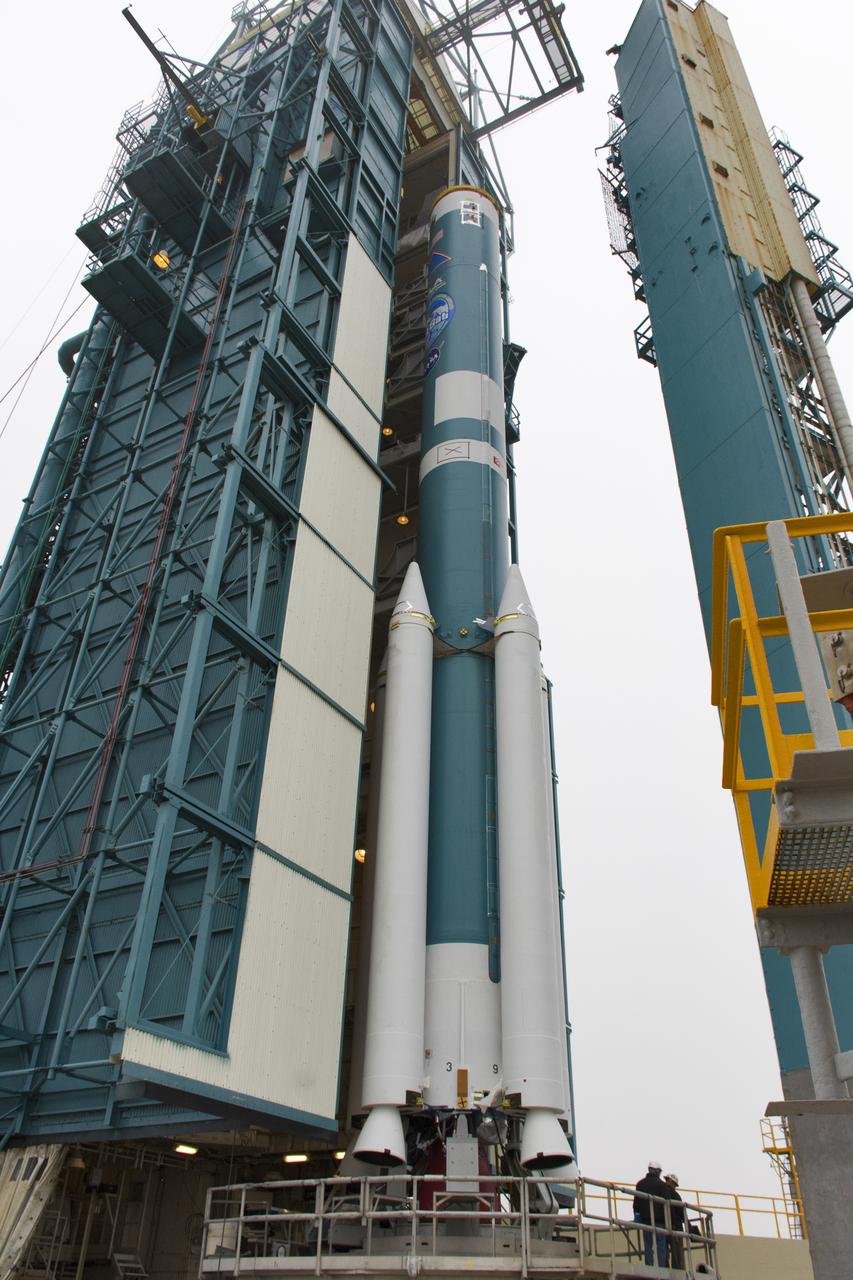
KENNEDY SPACE CENTER, FLA. --  The second stage of the Delta II launch vehicle for NASA's Phoenix Mars Lander arrives on Launch Pad 17-A at Cape Canaveral Air Force Station. The second stage will be lifted into the mobile service tower and mated with the Delta's first stage. The second stage will be lifted into the mobile service tower and mated with the first stage. Phoenix is scheduled to launch Aug. 3.   Phoenix will land in icy soils near the north polar permanent ice cap of Mars and explore the history of the water in these soils and any associated rocks, while monitoring polar climate. Landing on Mars is planned in May 2008 on arctic ground where a mission currently in orbit, Mars Odyssey, has detected high concentrations of ice just beneath the top layer of soil.  Photo credit: NASA/Kim Shiflett
KSC-07pd1691
With the Delta II rocket’s first and second stages standing by (right), the Mars Odyssey orbiter is lifted up the gantry on Launch Pad 17-A, Cape Canaveral Air Force Station, for mating with the Delta II. The spacecraft will map the Martian surface in search of geological features that could indicate the presence of water, now or in the past, and may contribute significantly toward understanding what will be necessary for a more sophisticated exploration of Mars. Launch is scheduled for 11:02 a.m. EDT April 7
KSC-01PP-0633
With the Delta II rocket’s first and second stages standing by (right), the Mars Odyssey orbiter is lifted up the gantry on Launch Pad 17-A, Cape Canaveral Air Force Station, for mating with the Delta II. The spacecraft will map the Martian surface in search of geological features that could indicate the presence of water, now or in the past, and may contribute significantly toward understanding what will be necessary for a more sophisticated exploration of Mars. Launch is scheduled for 11:02 a.m. EDT April 7
KSC01pp0633
KENNEDY SPACE CENTER, FLA. --  On Launch Pad 17-B at Cape Canaveral Air Force Station, the second stage of the Delta II launch vehicle for the Dawn spacecraft is lowered into the hole toward the Delta first stage below.  The two stages will be mated. The Delta II-Heavy, manufactured by the United Launch Alliance, is scheduled to launch the Dawn spacecraft on its 4-year flight to the asteroid belt.  The Delta II-Heavy is the strongest rocket in the Delta II class. It will use three stages and nine solid-fueled booster rockets to propel Dawn on its way. A 9.5-foot payload fairing will protect the spacecraft from the heat and stresses of launch. Dawn's goal is to characterize the conditions and processes of the solar system's earliest epoch by investigating in detail the largest protoplanets that have remained intact since their formations: asteroid Vesta and the dwarf planet Ceres.  They reside in the extensive zone between Mars and Jupiter together with many other smaller bodies, called the asteroid belt.  Dawn is scheduled to launch July 7.  Photo credit: NASA/Jack Pfaller
KSC-07pd1514
KENNEDY SPACE CENTER, FLA. - The second stage of a Delta II rocket arrives at Pad 17-B, Cape Canaveral Air Force Station. It will be mated to the Delta first stage already at the pad in preparation for the launch of the Mars Exploration Rover-1 (MER-B) on June 25.  NASA’s twin Mars Exploration Rovers are designed to study the history of water on Mars. These robotic geologists are equipped with a robotic arm, a drilling tool, three spectrometers, and four pairs of cameras that allow them to have a human-like, 3D view of the terrain. Each rover could travel as far as 100 meters in one day to act as Mars scientists' eyes and hands, exploring an environment where humans are not yet able to go. The launch of MER-2 (MER-A) is tentatively set for June 8.
KENNEDY SPACE CENTER, FLA. - The second stage of a Delta II rocket arrives at Pad 17-B, Cape Canaveral Air Force Station. It will be mated to the Delta first stage already at the pad in preparation for the launch of the Mars Exploration Rover-1 (MER-B) on June 25. NASA’s twin Mars Exploration Rovers are designed to study the history of water on Mars. These robotic geologists are equipped with a robotic arm, a drilling tool, three spectrometers, and four pairs of cameras that allow them to have a human-like, 3D view of the terrain. Each rover could travel as far as 100 meters in one day to act as Mars scientists' eyes and hands, exploring an environment where humans are not yet able to go. The launch of MER-2 (MER-A) is tentatively set for June 8.
KENNEDY SPACE CENTER, FLA. - The second stage of a Delta II rocket is raised to a vertical position and prepared for its lift up the launch tower on Pad 17-B, Cape Canaveral Air Force Station.  It will be mated to the Delta first stage already at the pad in preparation for the launch of the Mars Exploration Rover-1 (MER-B) on June 25.  NASA’s twin Mars Exploration Rovers are designed to study the history of water on Mars. These robotic geologists are equipped with a robotic arm, a drilling tool, three spectrometers, and four pairs of cameras that allow them to have a human-like, 3D view of the terrain. Each rover could travel as far as 100 meters in one day to act as Mars scientists' eyes and hands, exploring an environment where humans are not yet able to go. The launch of MER-2 (MER-A) is tentatively set for June 8.
KENNEDY SPACE CENTER, FLA. - The second stage of a Delta II rocket is raised to a vertical position and prepared for its lift up the launch tower on Pad 17-B, Cape Canaveral Air Force Station. It will be mated to the Delta first stage already at the pad in preparation for the launch of the Mars Exploration Rover-1 (MER-B) on June 25. NASA’s twin Mars Exploration Rovers are designed to study the history of water on Mars. These robotic geologists are equipped with a robotic arm, a drilling tool, three spectrometers, and four pairs of cameras that allow them to have a human-like, 3D view of the terrain. Each rover could travel as far as 100 meters in one day to act as Mars scientists' eyes and hands, exploring an environment where humans are not yet able to go. The launch of MER-2 (MER-A) is tentatively set for June 8.
KENNEDY SPACE CENTER, FLA. - The second stage of a Delta II rocket is lifted to the top of the launch tower on Pad 17-B, Cape Canaveral Air Force Station.  It will be mated to the Delta first stage already at the pad in preparation for the launch of the Mars Exploration Rover-1 (MER-B) on June 25.  NASA’s twin Mars Exploration Rovers are designed to study the history of water on Mars. These robotic geologists are equipped with a robotic arm, a drilling tool, three spectrometers, and four pairs of cameras that allow them to have a human-like, 3D view of the terrain. Each rover could travel as far as 100 meters in one day to act as Mars scientists' eyes and hands, exploring an environment where humans are not yet able to go. The launch of MER-2 (MER-A) is tentatively set for June 8.
KENNEDY SPACE CENTER, FLA. - The second stage of a Delta II rocket is lifted to the top of the launch tower on Pad 17-B, Cape Canaveral Air Force Station. It will be mated to the Delta first stage already at the pad in preparation for the launch of the Mars Exploration Rover-1 (MER-B) on June 25. NASA’s twin Mars Exploration Rovers are designed to study the history of water on Mars. These robotic geologists are equipped with a robotic arm, a drilling tool, three spectrometers, and four pairs of cameras that allow them to have a human-like, 3D view of the terrain. Each rover could travel as far as 100 meters in one day to act as Mars scientists' eyes and hands, exploring an environment where humans are not yet able to go. The launch of MER-2 (MER-A) is tentatively set for June 8.
KENNEDY SPACE CENTER, FLA. - The second stage of a Delta II rocket is moved into position at the top of the launch tower on Pad 17-B, Cape Canaveral Air Force Station.  It will be mated to the Delta first stage already at the pad in preparation for the launch of the Mars Exploration Rover-1 (MER-B) on June 25.  NASA’s twin Mars Exploration Rovers are designed to study the history of water on Mars. These robotic geologists are equipped with a robotic arm, a drilling tool, three spectrometers, and four pairs of cameras that allow them to have a human-like, 3D view of the terrain. Each rover could travel as far as 100 meters in one day to act as Mars scientists' eyes and hands, exploring an environment where humans are not yet able to go. The launch of MER-2 (MER-A) is tentatively set for June 8.
KENNEDY SPACE CENTER, FLA. - The second stage of a Delta II rocket is moved into position at the top of the launch tower on Pad 17-B, Cape Canaveral Air Force Station. It will be mated to the Delta first stage already at the pad in preparation for the launch of the Mars Exploration Rover-1 (MER-B) on June 25. NASA’s twin Mars Exploration Rovers are designed to study the history of water on Mars. These robotic geologists are equipped with a robotic arm, a drilling tool, three spectrometers, and four pairs of cameras that allow them to have a human-like, 3D view of the terrain. Each rover could travel as far as 100 meters in one day to act as Mars scientists' eyes and hands, exploring an environment where humans are not yet able to go. The launch of MER-2 (MER-A) is tentatively set for June 8.
KENNEDY SPACE CENTER, FLA. - The second stage of a Delta II rocket is raised to a vertical position for its lift up the launch tower on Pad 17-B, Cape Canaveral Air Force Station.  It will be mated to the Delta first stage already at the pad in preparation for the launch of the Mars Exploration Rover-1 (MER-B) on June 25.  NASA’s twin Mars Exploration Rovers are designed to study the history of water on Mars. These robotic geologists are equipped with a robotic arm, a drilling tool, three spectrometers, and four pairs of cameras that allow them to have a human-like, 3D view of the terrain. Each rover could travel as far as 100 meters in one day to act as Mars scientists' eyes and hands, exploring an environment where humans are not yet able to go. The launch of MER-2 (MER-A) is tentatively set for June 8.
KENNEDY SPACE CENTER, FLA. - The second stage of a Delta II rocket is raised to a vertical position for its lift up the launch tower on Pad 17-B, Cape Canaveral Air Force Station. It will be mated to the Delta first stage already at the pad in preparation for the launch of the Mars Exploration Rover-1 (MER-B) on June 25. NASA’s twin Mars Exploration Rovers are designed to study the history of water on Mars. These robotic geologists are equipped with a robotic arm, a drilling tool, three spectrometers, and four pairs of cameras that allow them to have a human-like, 3D view of the terrain. Each rover could travel as far as 100 meters in one day to act as Mars scientists' eyes and hands, exploring an environment where humans are not yet able to go. The launch of MER-2 (MER-A) is tentatively set for June 8.
KENNEDY SPACE CENTER, FLA. - Workers prepare to lift the second stage of a Delta II rocket up the launch tower on Pad 17-B, Cape Canaveral Air Force Station.  It will be mated to the Delta first stage already at the pad in preparation for the launch of the Mars Exploration Rover-1 (MER-B) on June 25.  NASA’s twin Mars Exploration Rovers are designed to study the history of water on Mars. These robotic geologists are equipped with a robotic arm, a drilling tool, three spectrometers, and four pairs of cameras that allow them to have a human-like, 3D view of the terrain. Each rover could travel as far as 100 meters in one day to act as Mars scientists' eyes and hands, exploring an environment where humans are not yet able to go. The launch of MER-2 (MER-A) is tentatively set for June 8.
KENNEDY SPACE CENTER, FLA. - Workers prepare to lift the second stage of a Delta II rocket up the launch tower on Pad 17-B, Cape Canaveral Air Force Station. It will be mated to the Delta first stage already at the pad in preparation for the launch of the Mars Exploration Rover-1 (MER-B) on June 25. NASA’s twin Mars Exploration Rovers are designed to study the history of water on Mars. These robotic geologists are equipped with a robotic arm, a drilling tool, three spectrometers, and four pairs of cameras that allow them to have a human-like, 3D view of the terrain. Each rover could travel as far as 100 meters in one day to act as Mars scientists' eyes and hands, exploring an environment where humans are not yet able to go. The launch of MER-2 (MER-A) is tentatively set for June 8.
KENNEDY SPACE CENTER, FLA. - The second stage of a Delta II rocket is lifted up the launch tower on Pad 17-B, Cape Canaveral Air Force Station.  It will be mated to the Delta first stage already at the pad in preparation for the launch of the Mars Exploration Rover-1 (MER-B) on June 25.  NASA’s twin Mars Exploration Rovers are designed to study the history of water on Mars. These robotic geologists are equipped with a robotic arm, a drilling tool, three spectrometers, and four pairs of cameras that allow them to have a human-like, 3D view of the terrain. Each rover could travel as far as 100 meters in one day to act as Mars scientists' eyes and hands, exploring an environment where humans are not yet able to go. The launch of MER-2 (MER-A) is tentatively set for June 8.
KENNEDY SPACE CENTER, FLA. - The second stage of a Delta II rocket is lifted up the launch tower on Pad 17-B, Cape Canaveral Air Force Station. It will be mated to the Delta first stage already at the pad in preparation for the launch of the Mars Exploration Rover-1 (MER-B) on June 25. NASA’s twin Mars Exploration Rovers are designed to study the history of water on Mars. These robotic geologists are equipped with a robotic arm, a drilling tool, three spectrometers, and four pairs of cameras that allow them to have a human-like, 3D view of the terrain. Each rover could travel as far as 100 meters in one day to act as Mars scientists' eyes and hands, exploring an environment where humans are not yet able to go. The launch of MER-2 (MER-A) is tentatively set for June 8.
KENNEDY SPACE CENTER, FLA. - Workers begin to lift the second stage of a Delta II rocket up the launch tower on Pad 17-B, Cape Canaveral Air Force Station.  It will be mated to the Delta first stage already at the pad in preparation for the launch of the Mars Exploration Rover-1 (MER-B) on June 25.  NASA’s twin Mars Exploration Rovers are designed to study the history of water on Mars. These robotic geologists are equipped with a robotic arm, a drilling tool, three spectrometers, and four pairs of cameras that allow them to have a human-like, 3D view of the terrain. Each rover could travel as far as 100 meters in one day to act as Mars scientists' eyes and hands, exploring an environment where humans are not yet able to go. The launch of MER-2 (MER-A) is tentatively set for June 8.
KENNEDY SPACE CENTER, FLA. - Workers begin to lift the second stage of a Delta II rocket up the launch tower on Pad 17-B, Cape Canaveral Air Force Station. It will be mated to the Delta first stage already at the pad in preparation for the launch of the Mars Exploration Rover-1 (MER-B) on June 25. NASA’s twin Mars Exploration Rovers are designed to study the history of water on Mars. These robotic geologists are equipped with a robotic arm, a drilling tool, three spectrometers, and four pairs of cameras that allow them to have a human-like, 3D view of the terrain. Each rover could travel as far as 100 meters in one day to act as Mars scientists' eyes and hands, exploring an environment where humans are not yet able to go. The launch of MER-2 (MER-A) is tentatively set for June 8.
KENNEDY SPACE CENTER, FLA. - The second stage of a Delta II rocket is prepared for lifting up the launch tower on Pad 17-B, Cape Canaveral Air Force Station.  It will be mated to the Delta first stage already at the pad in preparation for the launch of the Mars Exploration Rover-1 (MER-B) on June 25.  NASA’s twin Mars Exploration Rovers are designed to study the history of water on Mars. These robotic geologists are equipped with a robotic arm, a drilling tool, three spectrometers, and four pairs of cameras that allow them to have a human-like, 3D view of the terrain. Each rover could travel as far as 100 meters in one day to act as Mars scientists' eyes and hands, exploring an environment where humans are not yet able to go. The launch of MER-2 (MER-A) is tentatively set for June 8.
KENNEDY SPACE CENTER, FLA. - The second stage of a Delta II rocket is prepared for lifting up the launch tower on Pad 17-B, Cape Canaveral Air Force Station. It will be mated to the Delta first stage already at the pad in preparation for the launch of the Mars Exploration Rover-1 (MER-B) on June 25. NASA’s twin Mars Exploration Rovers are designed to study the history of water on Mars. These robotic geologists are equipped with a robotic arm, a drilling tool, three spectrometers, and four pairs of cameras that allow them to have a human-like, 3D view of the terrain. Each rover could travel as far as 100 meters in one day to act as Mars scientists' eyes and hands, exploring an environment where humans are not yet able to go. The launch of MER-2 (MER-A) is tentatively set for June 8.
VANDENBERG AIR FORCE BASE, Calif. – At Space Launch Complex 2 on Vandenberg Air Force Base in California, preparations are underway to mate the Delta II second stage for NASA's Orbiting Carbon Observatory-2 mission, or OCO-2, to the first stage of the rocket, already in place on the launch stand.     OCO-2 is scheduled to launch aboard a United Launch Alliance Delta II rocket in July. The rocket's second stage will insert OCO-2 into a polar Earth orbit.  OCO-2 will collect precise global measurements of carbon dioxide in the Earth's atmosphere and provide scientists with a better idea of the chemical compound's impacts on climate change. Scientists will analyze this data to improve our understanding of the natural processes and human activities that regulate the abundance and distribution of this important atmospheric gas. To learn more about OCO-2, visit http://oco.jpl.nasa.gov.  Photo credit: NASA/Randy Beaudoin
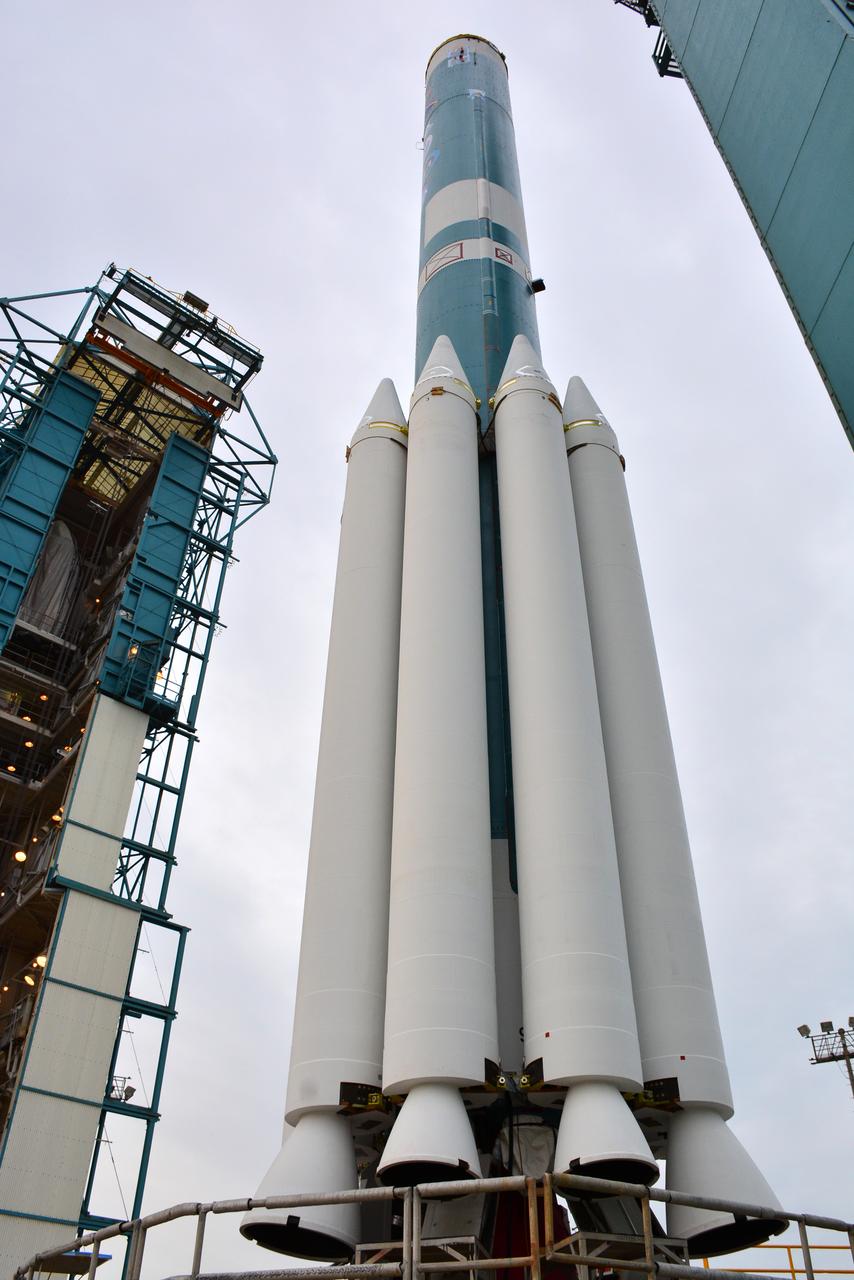
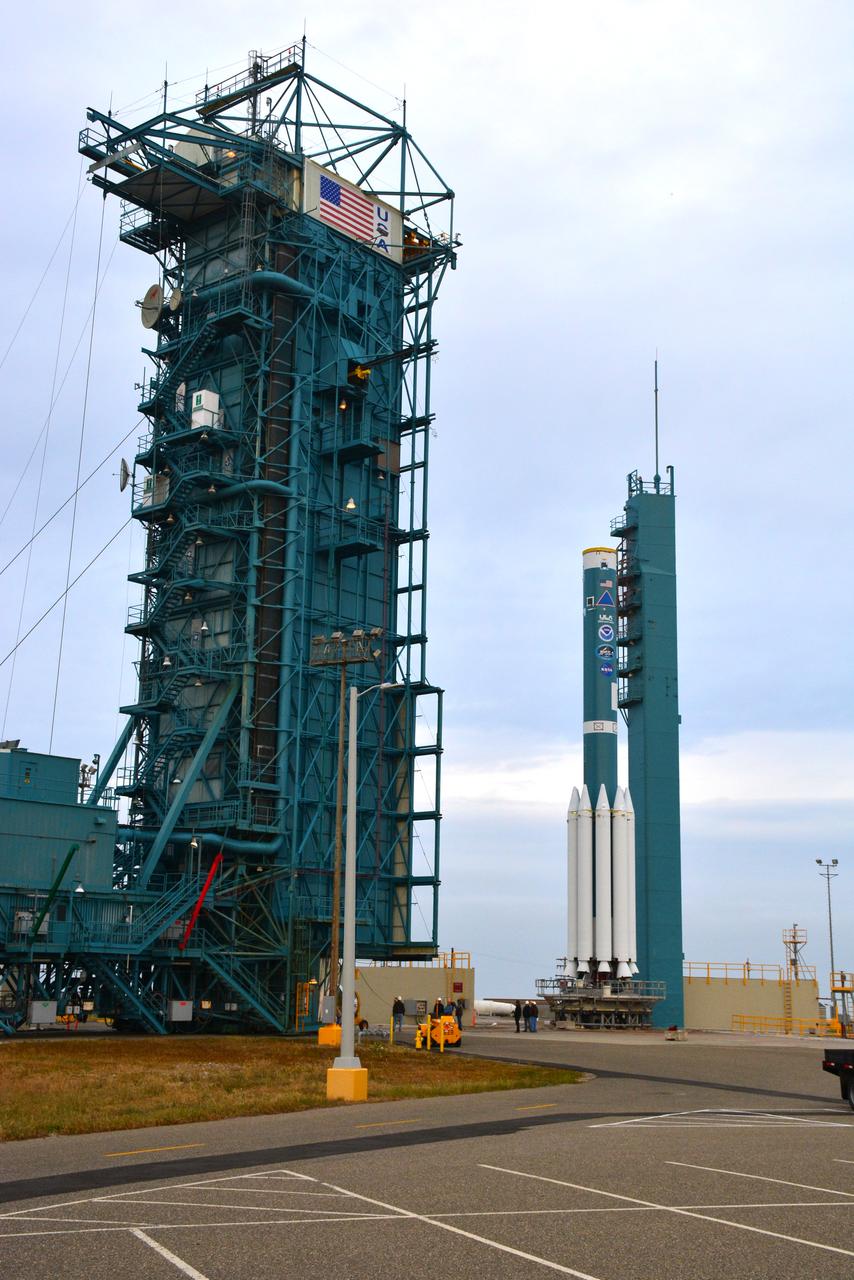
KSC-2014-2115
VANDENBERG AIR FORCE BASE, Calif. – Workers monitor the Delta II second stage for NASA's Orbiting Carbon Observatory-2 mission, or OCO-2, as it is lowered into position for mating with the rocket's first stage in the mobile service tower at Space Launch Complex 2 on Vandenberg Air Force Base in California.     OCO-2 is scheduled to launch aboard a United Launch Alliance Delta II rocket in July. The rocket's second stage will insert OCO-2 into a polar Earth orbit.  OCO-2 will collect precise global measurements of carbon dioxide in the Earth's atmosphere and provide scientists with a better idea of the chemical compound's impacts on climate change. Scientists will analyze this data to improve our understanding of the natural processes and human activities that regulate the abundance and distribution of this important atmospheric gas. To learn more about OCO-2, visit http://oco.jpl.nasa.gov.  Photo credit: NASA/Randy Beaudoin
KSC-2014-2124
VANDENBERG AIR FORCE BASE, Calif. – At Space Launch Complex 2 on Vandenberg Air Force Base in California, the mobile service tower rolls away from the launch stand supporting the Delta II first stage. Operations are underway to mate the rocket's first and second stages.     OCO-2 is scheduled to launch aboard a United Launch Alliance Delta II rocket in July. The rocket's second stage will insert OCO-2 into a polar Earth orbit.  OCO-2 will collect precise global measurements of carbon dioxide in the Earth's atmosphere and provide scientists with a better idea of the chemical compound's impacts on climate change. Scientists will analyze this data to improve our understanding of the natural processes and human activities that regulate the abundance and distribution of this important atmospheric gas. To learn more about OCO-2, visit http://oco.jpl.nasa.gov.  Photo credit: NASA/Randy Beaudoin
KSC-2014-2116
VANDENBERG AIR FORCE BASE, Calif. – Workers monitor the Delta II second stage for NASA's Orbiting Carbon Observatory-2 mission, or OCO-2, as it is lifted into position for mating with the rocket's first stage in the mobile service tower at Space Launch Complex 2 on Vandenberg Air Force Base in California.     OCO-2 is scheduled to launch aboard a United Launch Alliance Delta II rocket in July. The rocket's second stage will insert OCO-2 into a polar Earth orbit.  OCO-2 will collect precise global measurements of carbon dioxide in the Earth's atmosphere and provide scientists with a better idea of the chemical compound's impacts on climate change. Scientists will analyze this data to improve our understanding of the natural processes and human activities that regulate the abundance and distribution of this important atmospheric gas. To learn more about OCO-2, visit http://oco.jpl.nasa.gov.  Photo credit: NASA/Randy Beaudoin
KSC-2014-2120
VANDENBERG AIR FORCE BASE, Calif. – A 20-ton crane supports the Delta II second stage for NASA's Orbiting Carbon Observatory-2 mission, or OCO-2, as it is mated with the rocket's first stage in the mobile service tower at Space Launch Complex 2 on Vandenberg Air Force Base in California.     OCO-2 is scheduled to launch aboard a United Launch Alliance Delta II rocket in July. The rocket's second stage will insert OCO-2 into a polar Earth orbit.  OCO-2 will collect precise global measurements of carbon dioxide in the Earth's atmosphere and provide scientists with a better idea of the chemical compound's impacts on climate change. Scientists will analyze this data to improve our understanding of the natural processes and human activities that regulate the abundance and distribution of this important atmospheric gas. To learn more about OCO-2, visit http://oco.jpl.nasa.gov.  Photo credit: NASA/Randy Beaudoin
KSC-2014-2125
KENNEDY SPACE CENTER, FLA. --  On Pad 17-B at Cape Canaveral Air Force Station, workers stand by while an overhead crane lifts the Delta II second stage to a vertical position.  The second stage will be lifted into the mobile service tower and mated with the first stage already in place.  The Delta II is the launch vehicle for the THEMIS spacecraft. THEMIS consists of five identical probes, the largest number of scientific satellites ever launched into orbit aboard a single rocket. This unique constellation of satellites will resolve the tantalizing mystery of what causes the spectacular sudden brightening of the aurora borealis and aurora australis - the fiery skies over the Earth's northern and southern polar regions. THEMIS is scheduled to launch Feb. 15 from Cape Canaveral Air Force Station. Photo credit: NASA/George Shelton
KSC-07pd0124
KENNEDY SPACE CENTER, FLA. --  On Pad 17-B at Cape Canaveral Air Force Station, the Delta II second stage arrives at level 9 of the tower.  The second stage will be moved inside and mated with the first stage already in place.  The Delta II is the launch vehicle for the THEMIS spacecraft THEMIS consists of five identical probes, the largest number of scientific satellites ever launched into orbit aboard a single rocket. This unique constellation of satellites will resolve the tantalizing mystery of what causes the spectacular sudden brightening of the aurora borealis and aurora australis - the fiery skies over the Earth's northern and southern polar regions. THEMIS is scheduled to launch Feb. 15 from Cape Canaveral Air Force Station. Photo credit: NASA/George Shelton
KSC-07pd0128
VANDENBERG AIR FORCE BASE, CALIF. -  At Space Launch Complex 2 on Vandenberg Air Force Base in California, Boeing workers help guide the second stage of the Boeing Delta II rocket to a vertical position.  The second stage will be lifted and mated with the first stage.  The Delta II will launch the National Oceanic and Atmospheric Administration (NOAA-N) spacecraft.   After launch, NOAA-N will be renamed NOAA-18 and will provide measurements of the Earth's surface and atmosphere that will be entered into NOAA’s weather forecasting models and used for other environmental studies. Each day, the satellite will send data to NOAA’s Command and Data Acquisition station computers, adding vital information to forecasting models, especially over the oceans, where conventional data is lacking.  Launch of NOAA-N is scheduled for May 11, 2005.
KSC-05pd-0688