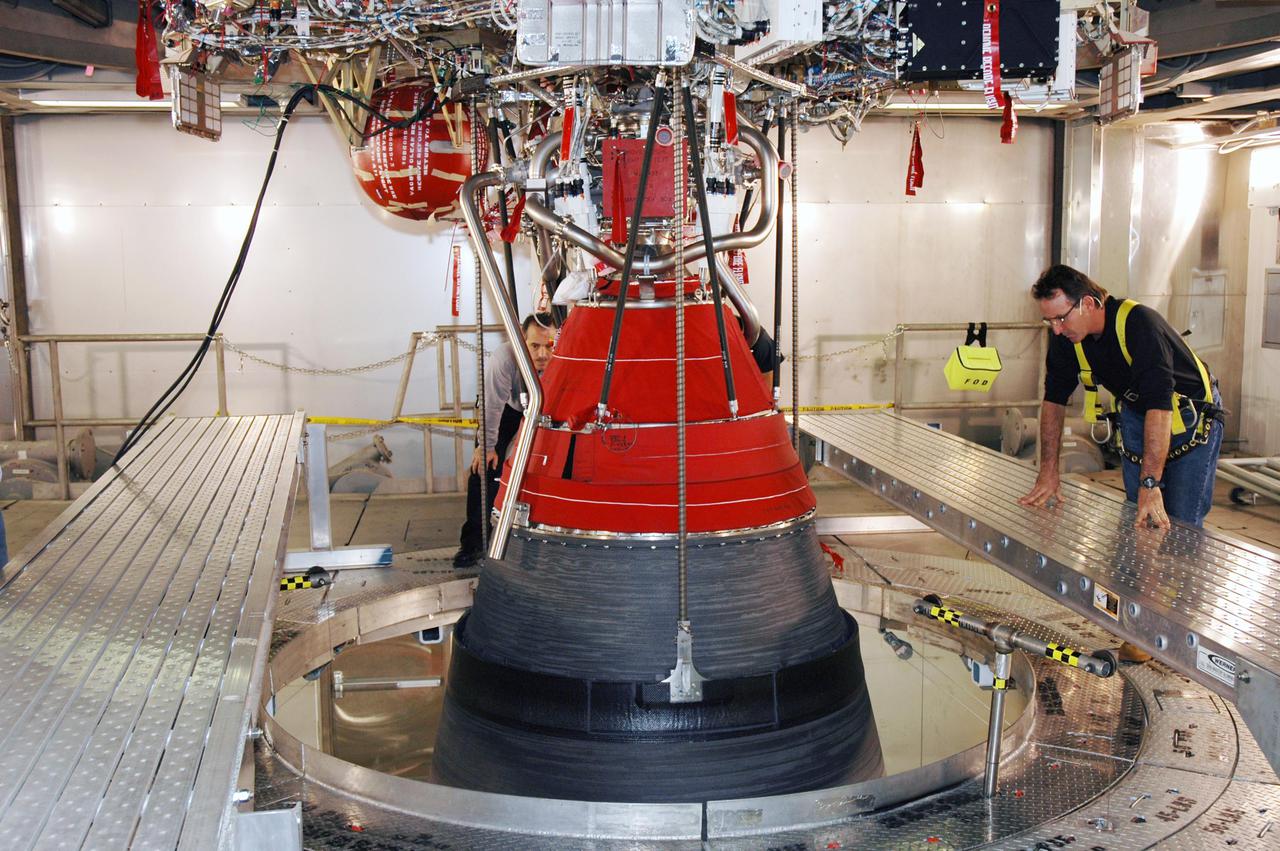
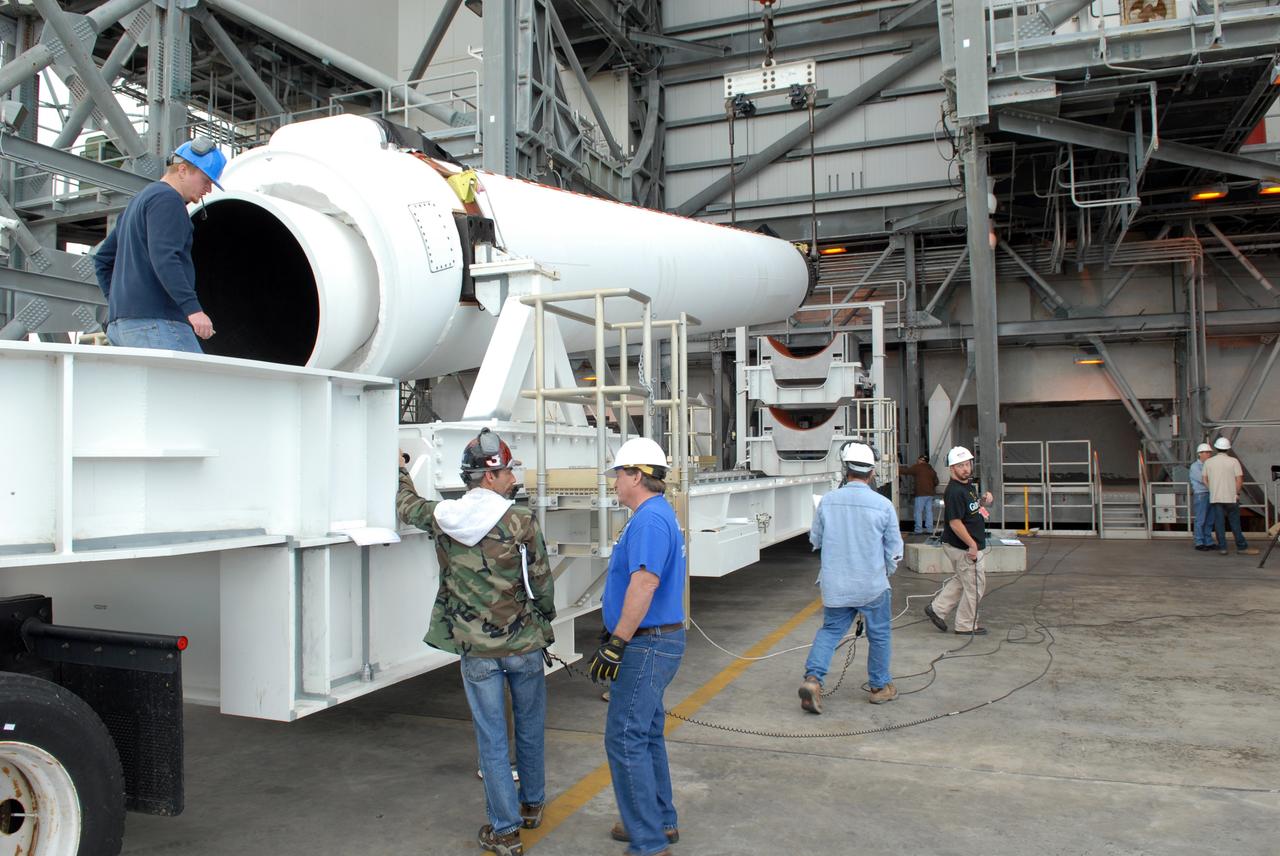
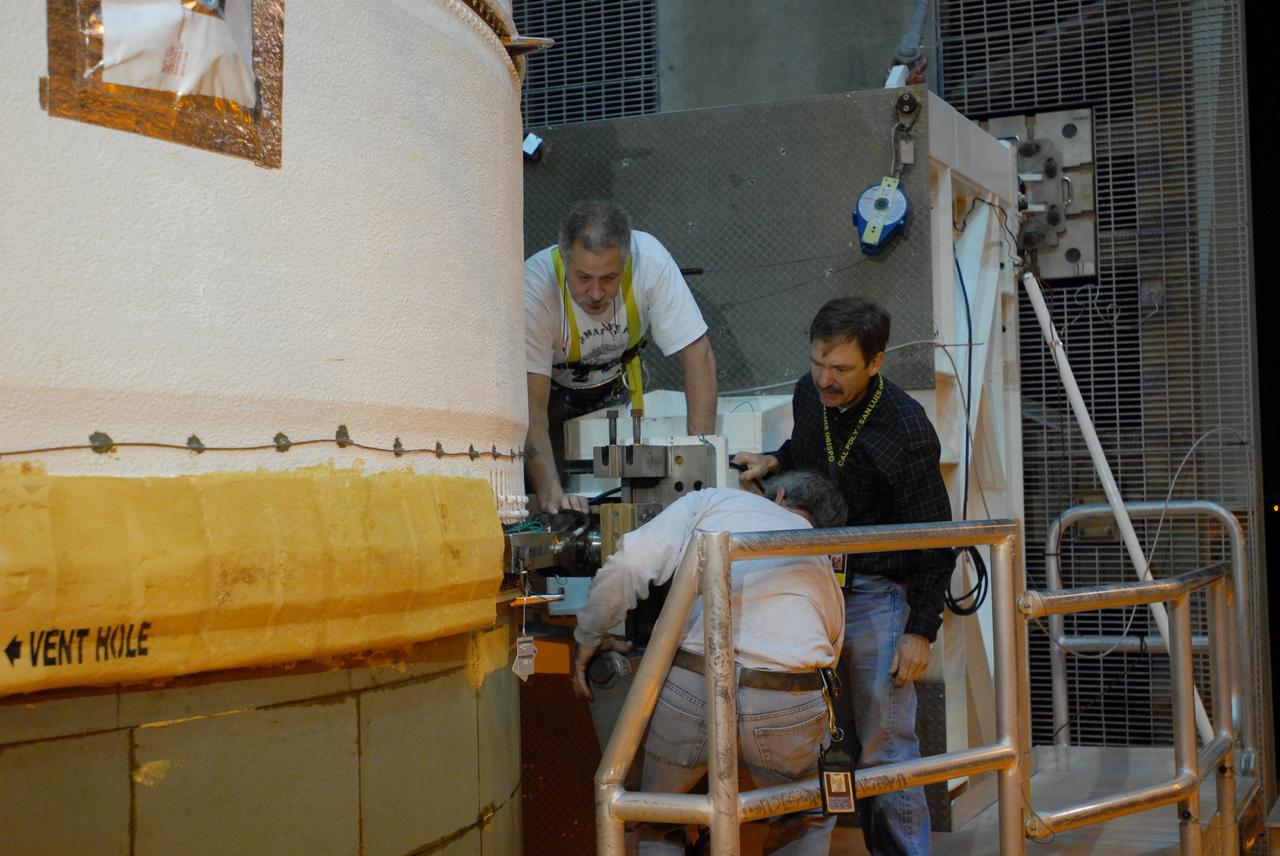
KENNEDY SPACE CENTER, FLA. - At the Delta Operations Center on Cape Canaveral Air Force Station, Fla., a technician monitors the Boeing Delta IV second stage nozzle extension during testing. The Delta IV is the launch vehicle for the GOES-N satellite. The Delta IV is the launch vehicle for GOES-N satellite. Geostationary Operational Environmental Satellites (GOES) are sponsored by the National Aeronautics and Space Administration (NASA) and the National Oceanic and Atmospheric Administration (NOAA). GOES-N is the first in the next series of GOES satellites, N-P. The multi-mission GOES series N-P will be a vital contributor to weather, solar and space operations and science. The GOES N-P series will aid activities ranging from severe storm warnings to resource management and advances in science. GOES-N is scheduled to launch May 4 from Cape Canaveral Air Force Station, Fla.
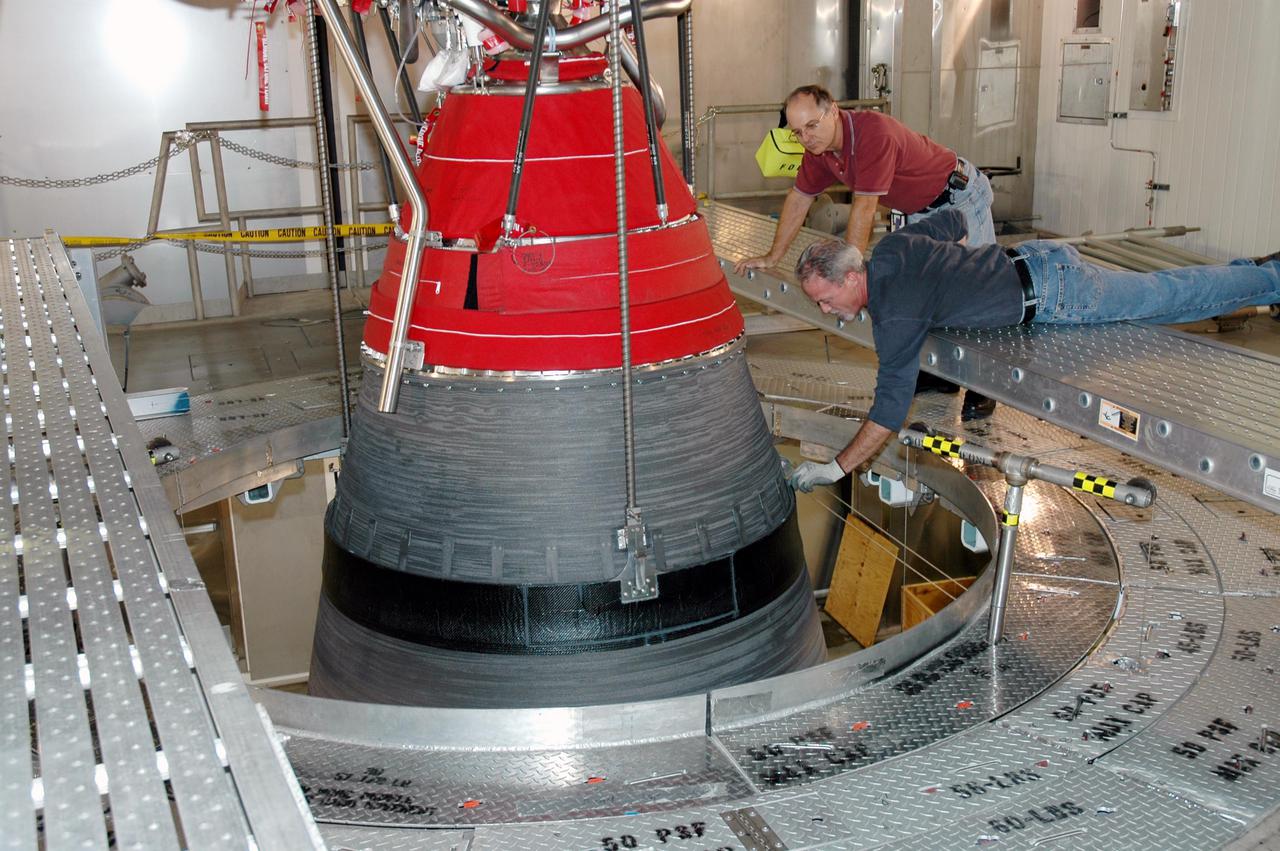
KENNEDY SPACE CENTER, FLA. - At the Delta Operations Center on Cape Canaveral Air Force Station, Fla., the Boeing Delta IV second stage nozzle extension is moved into place for testing. The Delta IV is the launch vehicle for the GOES-N satellite. The Delta IV is the launch vehicle for GOES-N satellite. Geostationary Operational Environmental Satellites (GOES) are sponsored by the National Aeronautics and Space Administration (NASA) and the National Oceanic and Atmospheric Administration (NOAA). GOES-N is the first in the next series of GOES satellites, N-P. The multi-mission GOES series N-P will be a vital contributor to weather, solar and space operations and science. The GOES N-P series will aid activities ranging from severe storm warnings to resource management and advances in science. GOES-N is scheduled to launch May 4 from Cape Canaveral Air Force Station, Fla.
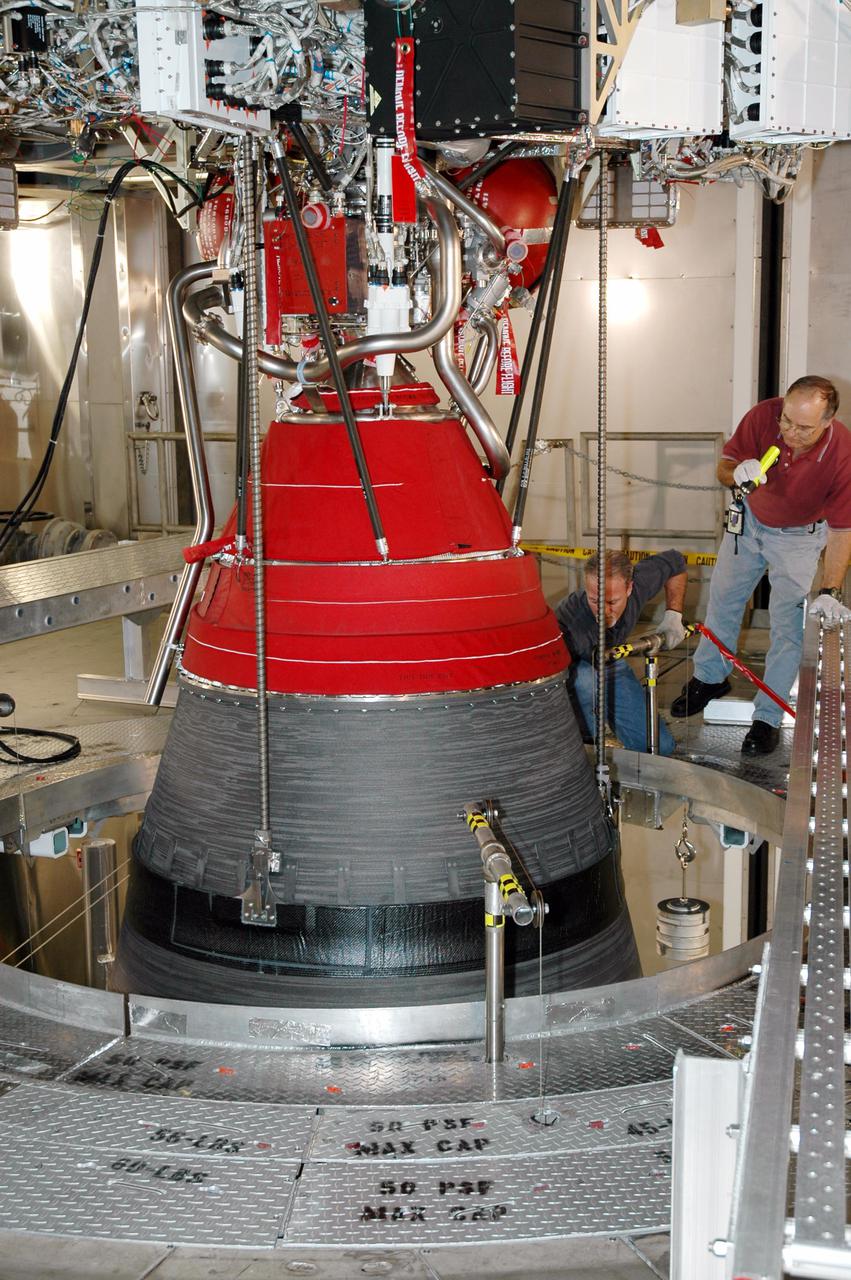
KENNEDY SPACE CENTER, FLA. - At the Delta Operations Center on Cape Canaveral Air Force Station, Fla., a technician monitors the Boeing Delta IV second stage nozzle extension during testing. The Delta IV is the launch vehicle for the GOES-N satellite. The Delta IV is the launch vehicle for GOES-N satellite. Geostationary Operational Environmental Satellites (GOES) are sponsored by the National Aeronautics and Space Administration (NASA) and the National Oceanic and Atmospheric Administration (NOAA). GOES-N is the first in the next series of GOES satellites, N-P. The multi-mission GOES series N-P will be a vital contributor to weather, solar and space operations and science. The GOES N-P series will aid activities ranging from severe storm warnings to resource management and advances in science. GOES-N is scheduled to launch May 4 from Cape Canaveral Air Force Station, Fla.
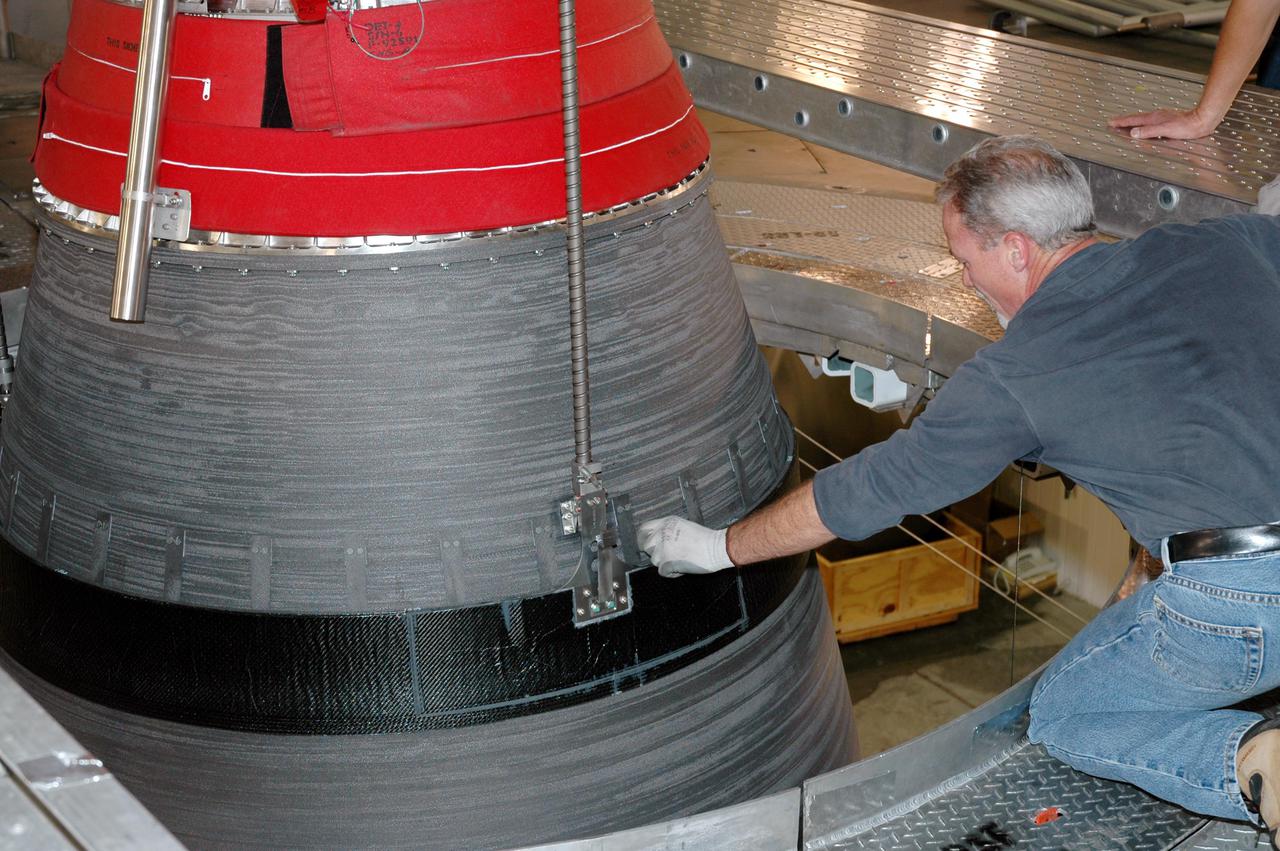
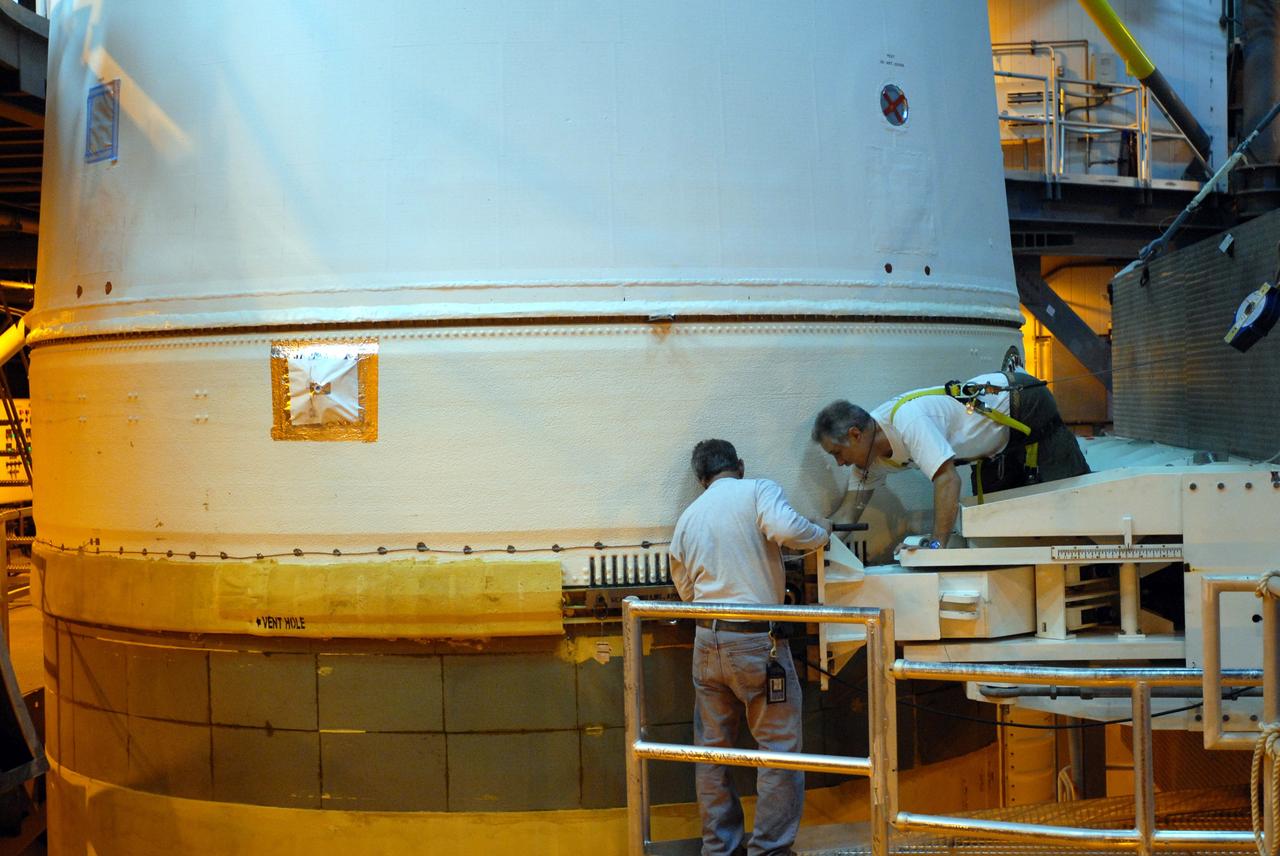
KENNEDY SPACE CENTER, FLA. - At the Delta Operations Center on Cape Canaveral Air Force Station, Fla., a technician closely checks the spacing as the Boeing Delta IV second stage nozzle extension is moved into place for testing. The Delta IV is the launch vehicle for the GOES-N satellite. The Delta IV is the launch vehicle for GOES-N satellite. Geostationary Operational Environmental Satellites (GOES) are sponsored by the National Aeronautics and Space Administration (NASA) and the National Oceanic and Atmospheric Administration (NOAA). GOES-N is the first in the next series of GOES satellites, N-P. The multi-mission GOES series N-P will be a vital contributor to weather, solar and space operations and science. The GOES N-P series will aid activities ranging from severe storm warnings to resource management and advances in science. GOES-N is scheduled to launch May 4 from Cape Canaveral Air Force Station, Fla.
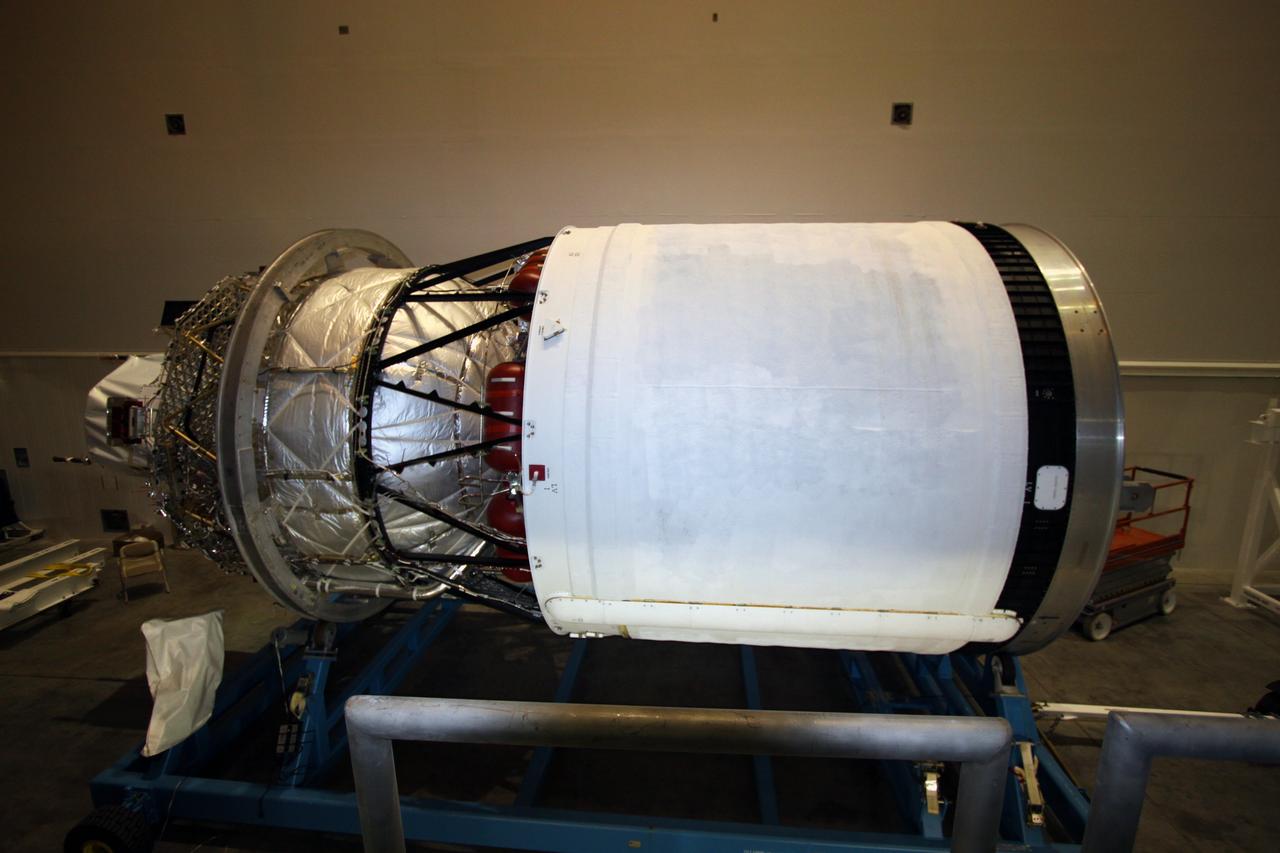
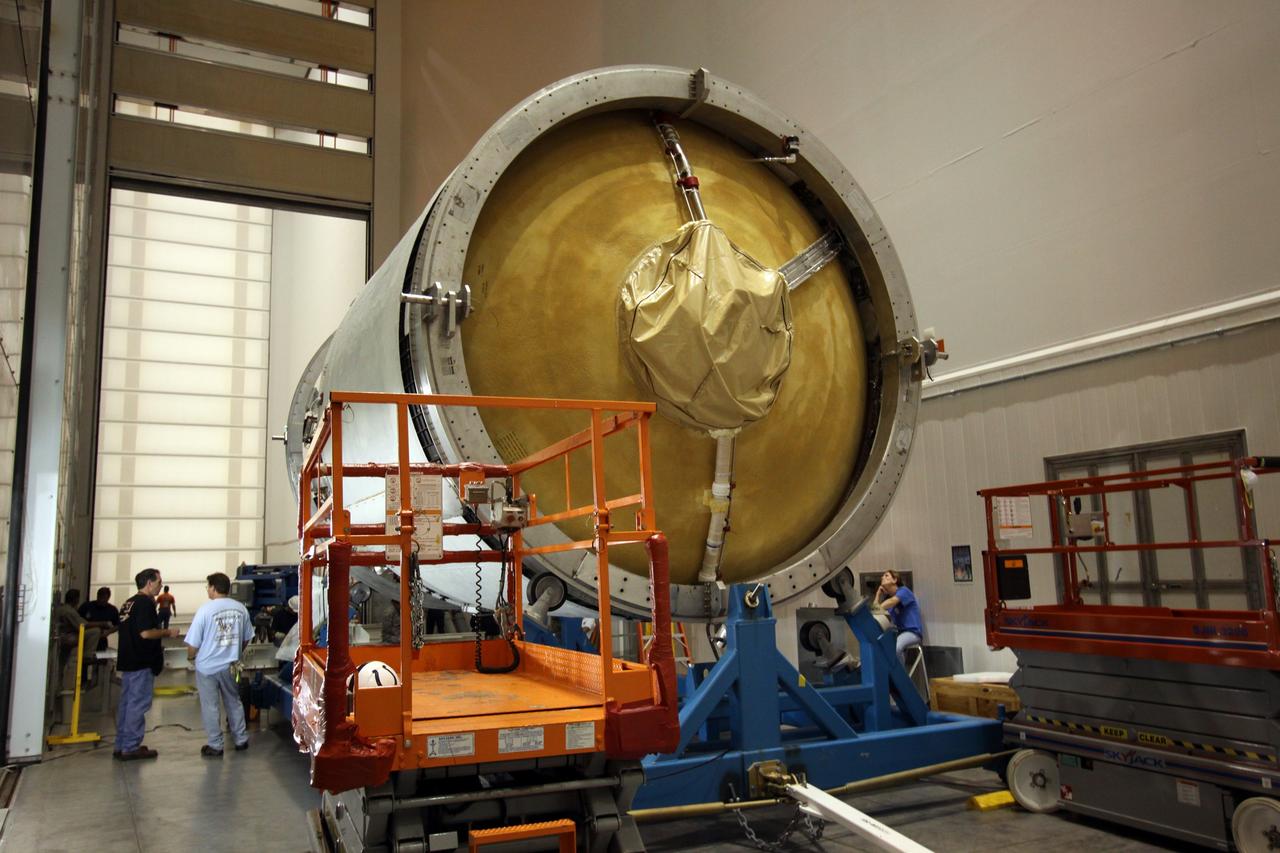
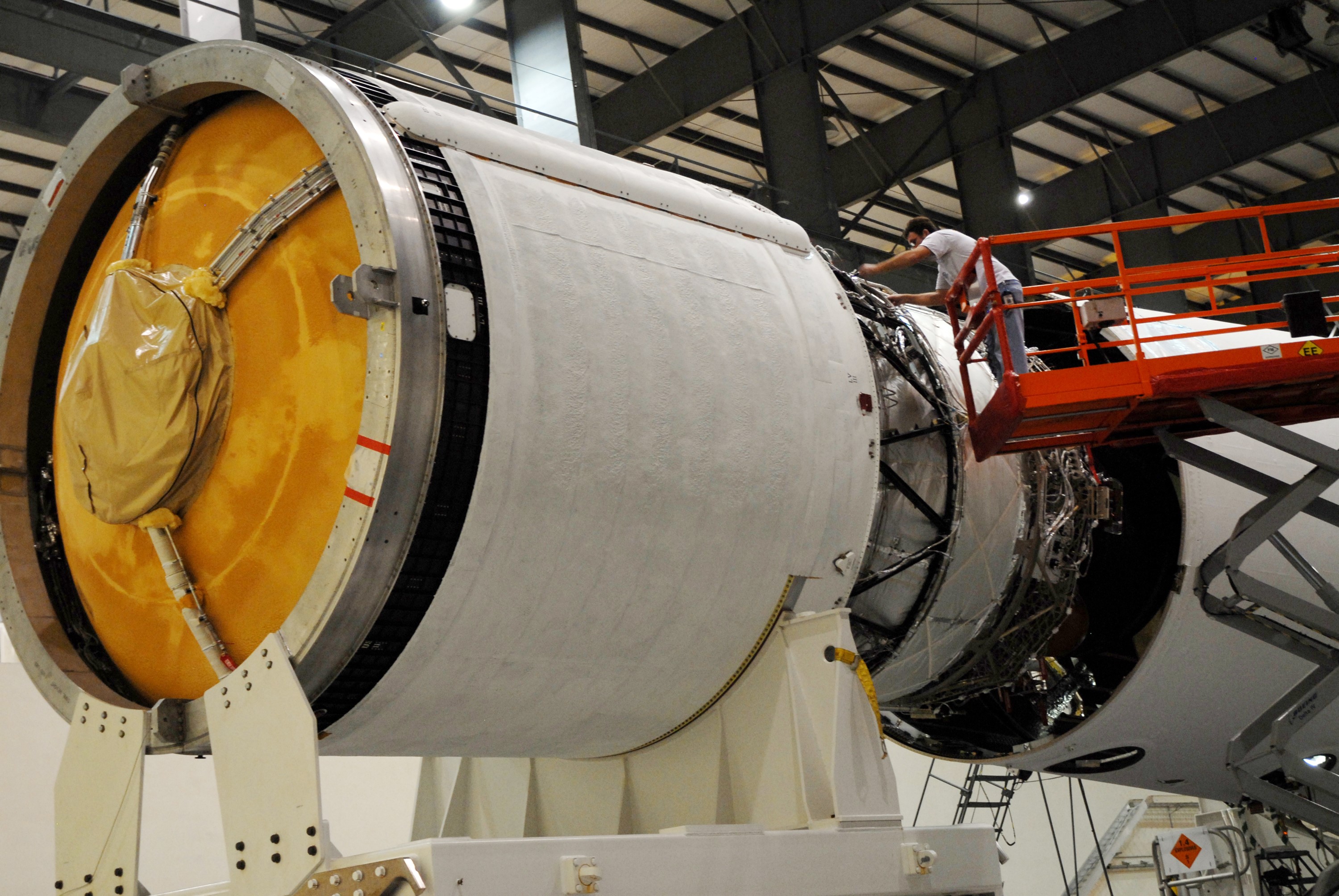
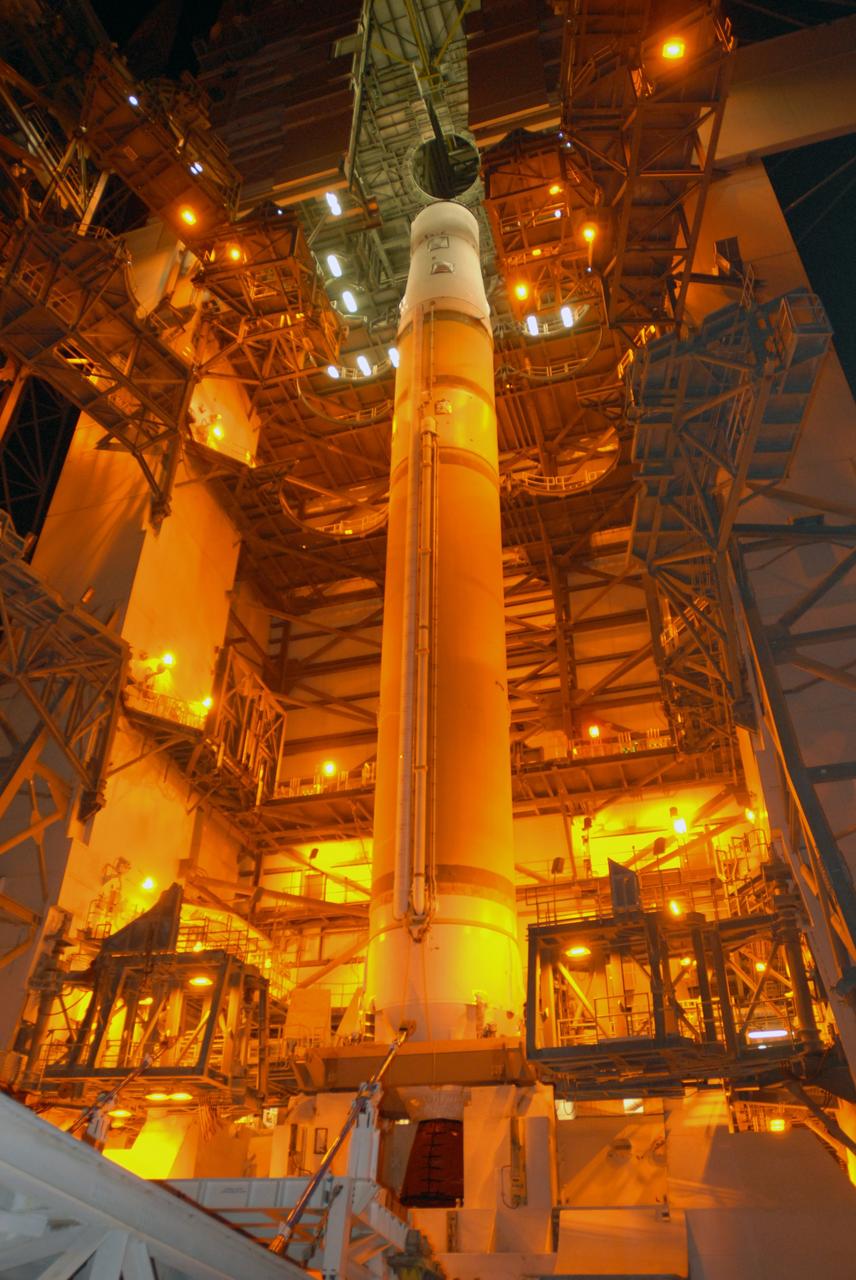
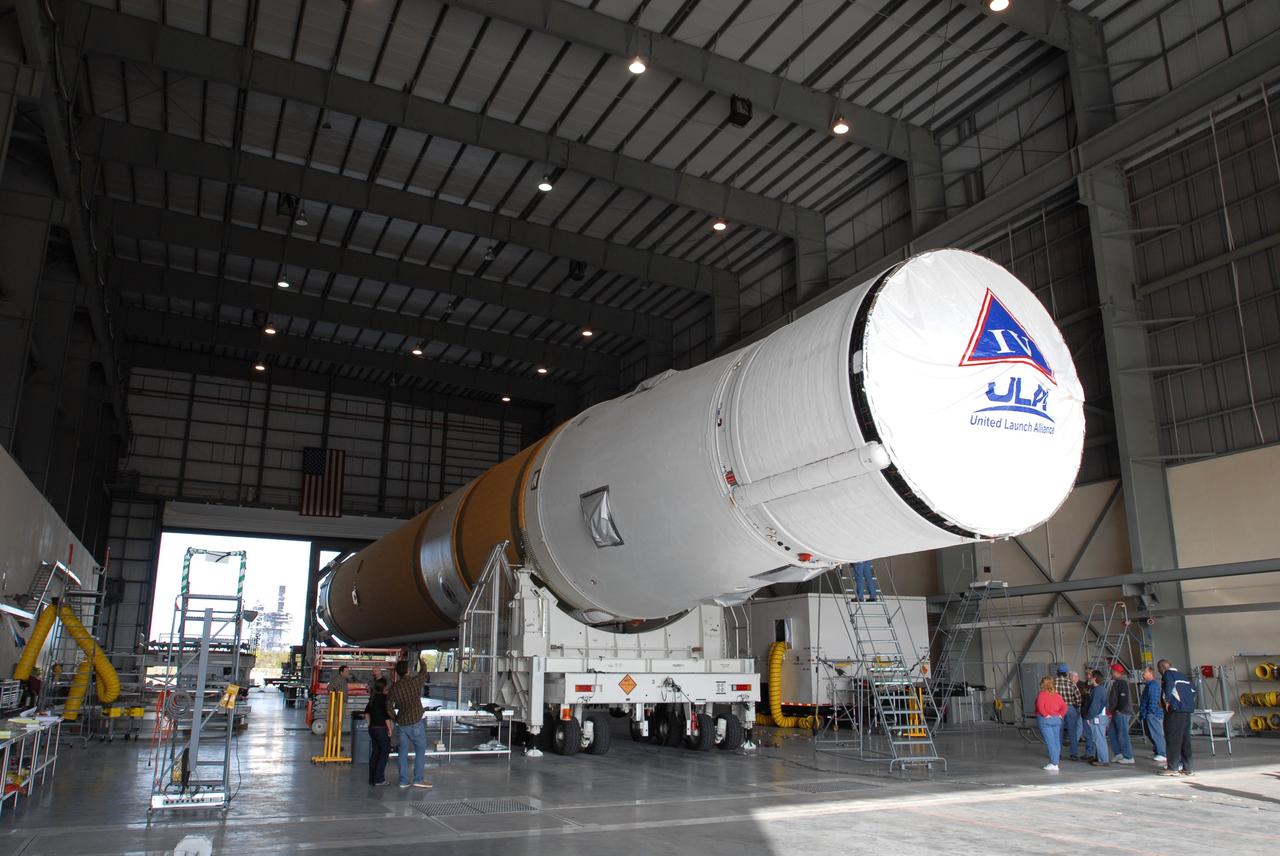
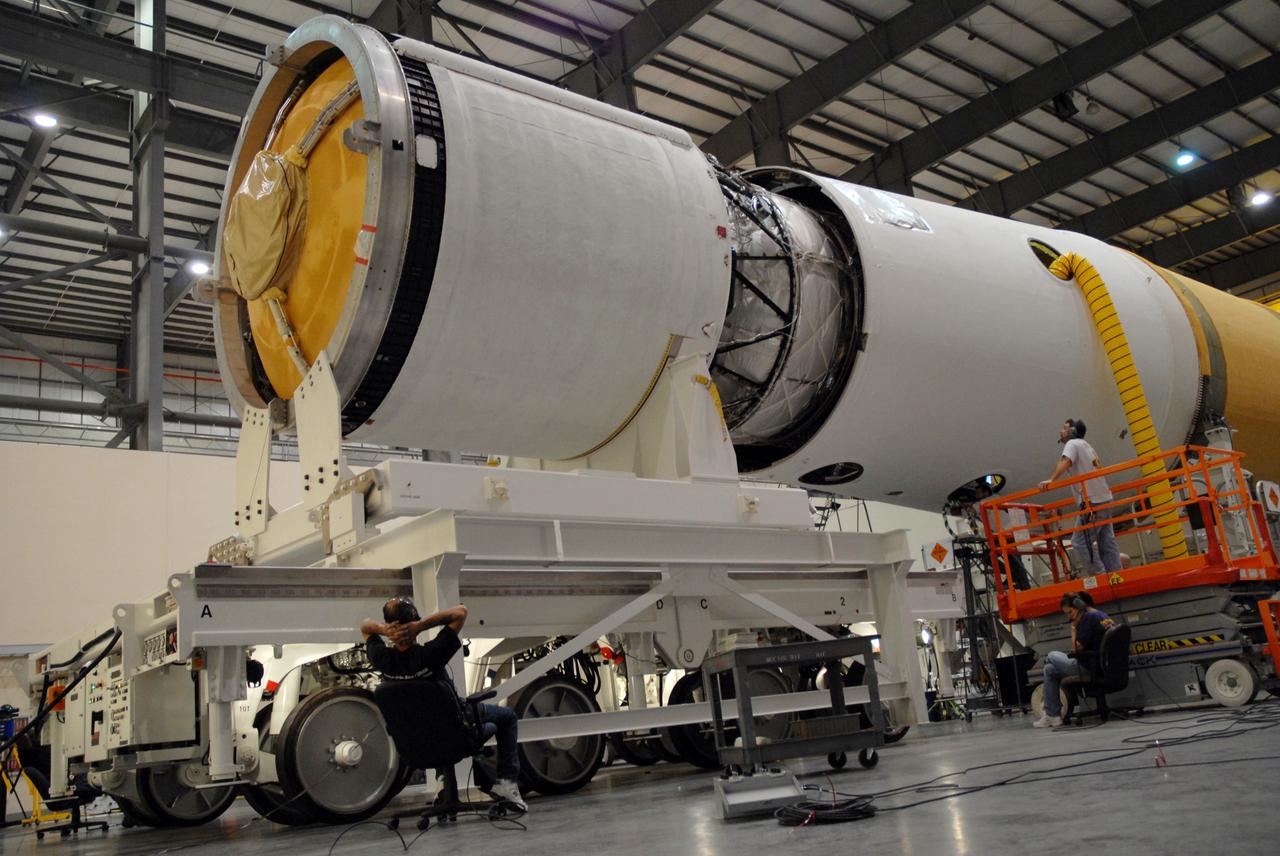
CAPE CANAVERAL, Fla. – The second stage of a Delta IV rocket awaits checkout in the hangar of the Delta Operations Center at Cape Canaveral Air Force Station in Florida. The United Launch Alliance Delta IV rocket is the vehicle slated to launch GOES-P, the latest Geostationary Operational Environmental Satellite developed by NASA for the National Oceanic and Atmospheric Administration, or NOAA. A meteorological satellite, GOES-P is designed to watch for storm development and observed current weather conditions on Earth. Launch of GOES-P is scheduled for no earlier than Feb. 25, 2010, from Launch Complex 37. For information on GOES-P, visit http://goespoes.gsfc.nasa.gov/goes/spacecraft/n_p_spacecraft.html. Photo credit: NASA/Troy Cryder
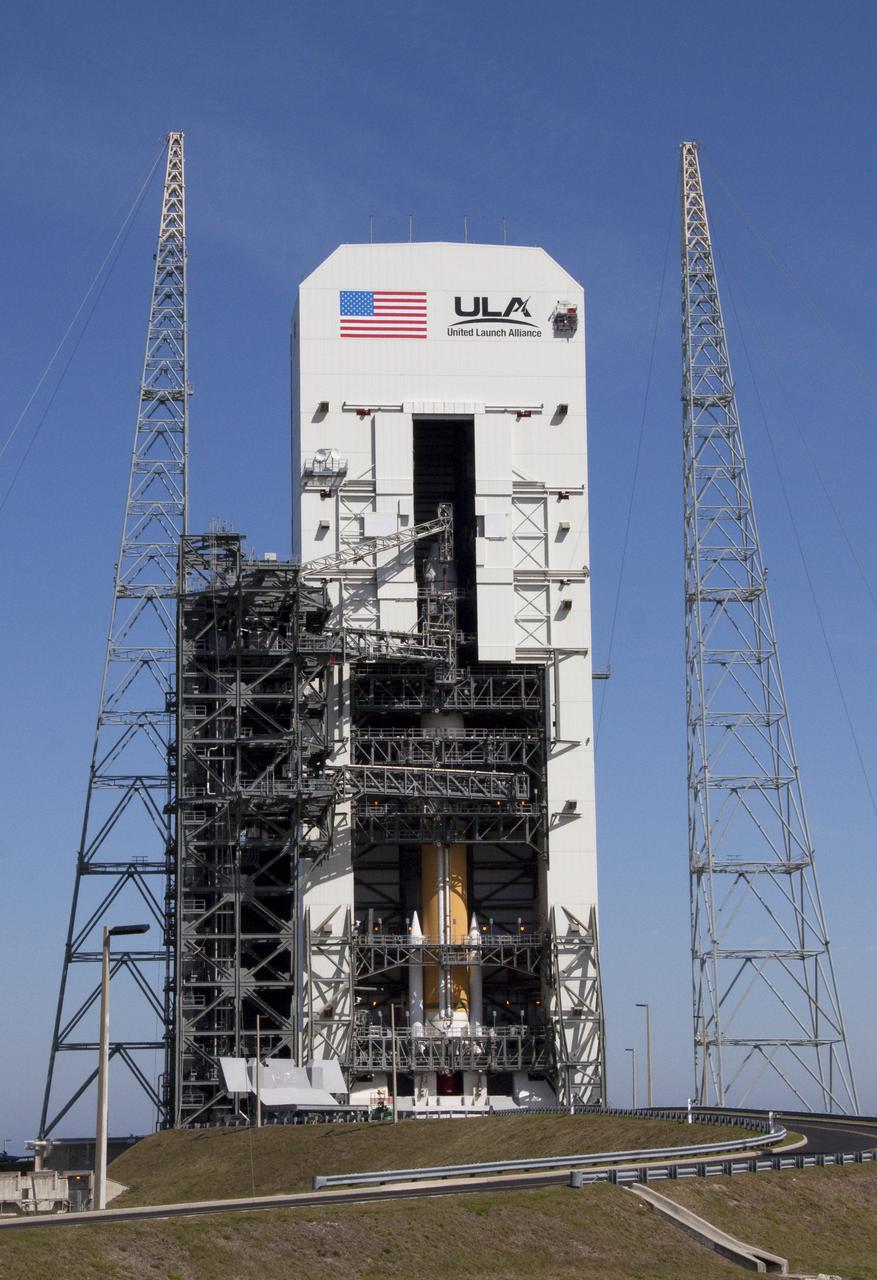
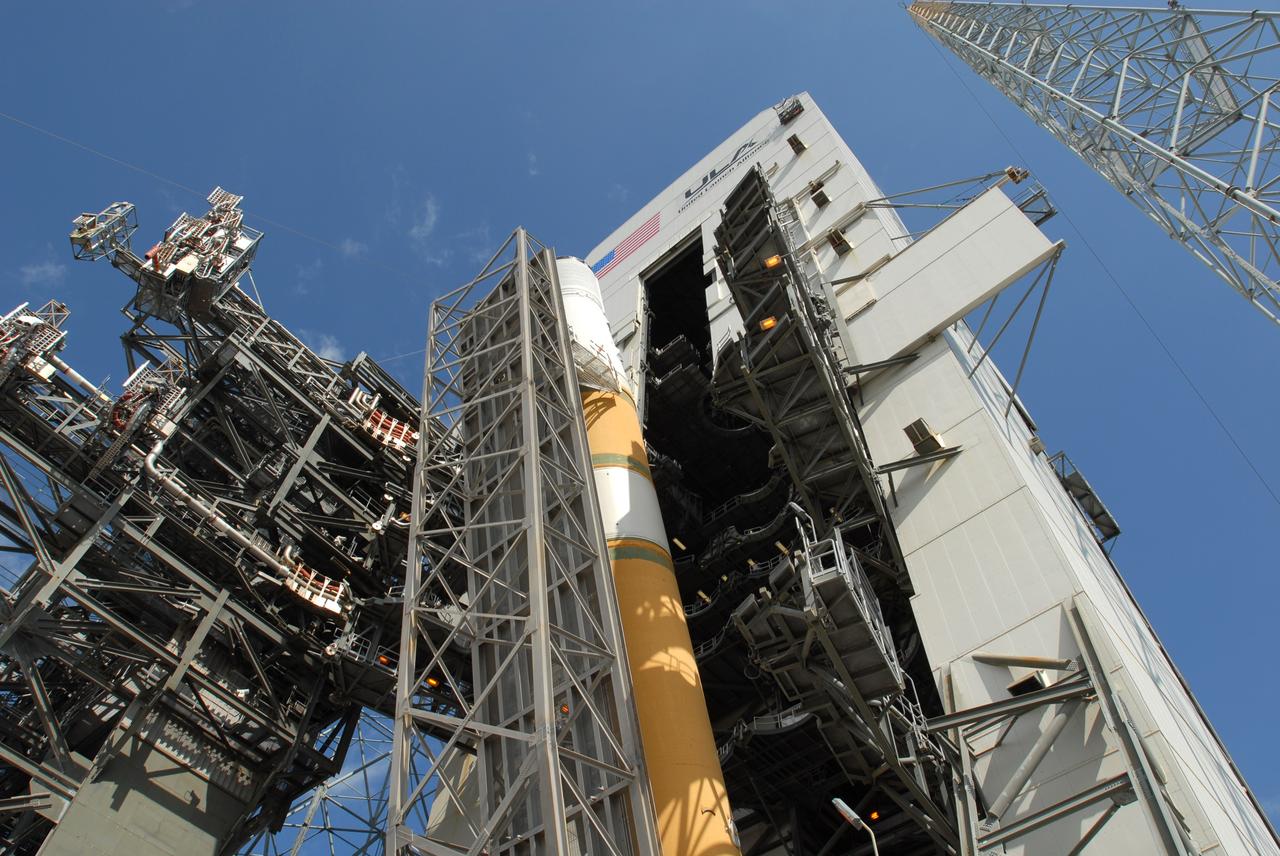
CAPE CANAVERAL, Fla. – NASA's GOES-P meteorological satellite has been installed onto the Delta IV rocket in the mobile service tower at Launch Complex 37 on Cape Canaveral Air Force Station. GOES-P, the latest Geostationary Operational Environmental Satellite, was developed by NASA for the National Oceanic and Atmospheric Administration, or NOAA. GOES-P is designed to watch for storm development and observed current weather conditions on Earth. Launch of GOES-P is targeted for early March aboard a United Launch Alliance Delta IV rocket. For information on GOES-P, visit http:__www.nasa.gov_mission_pages_GOES-P_main_index.html. Photo credit: NASA_Jack Pfaller
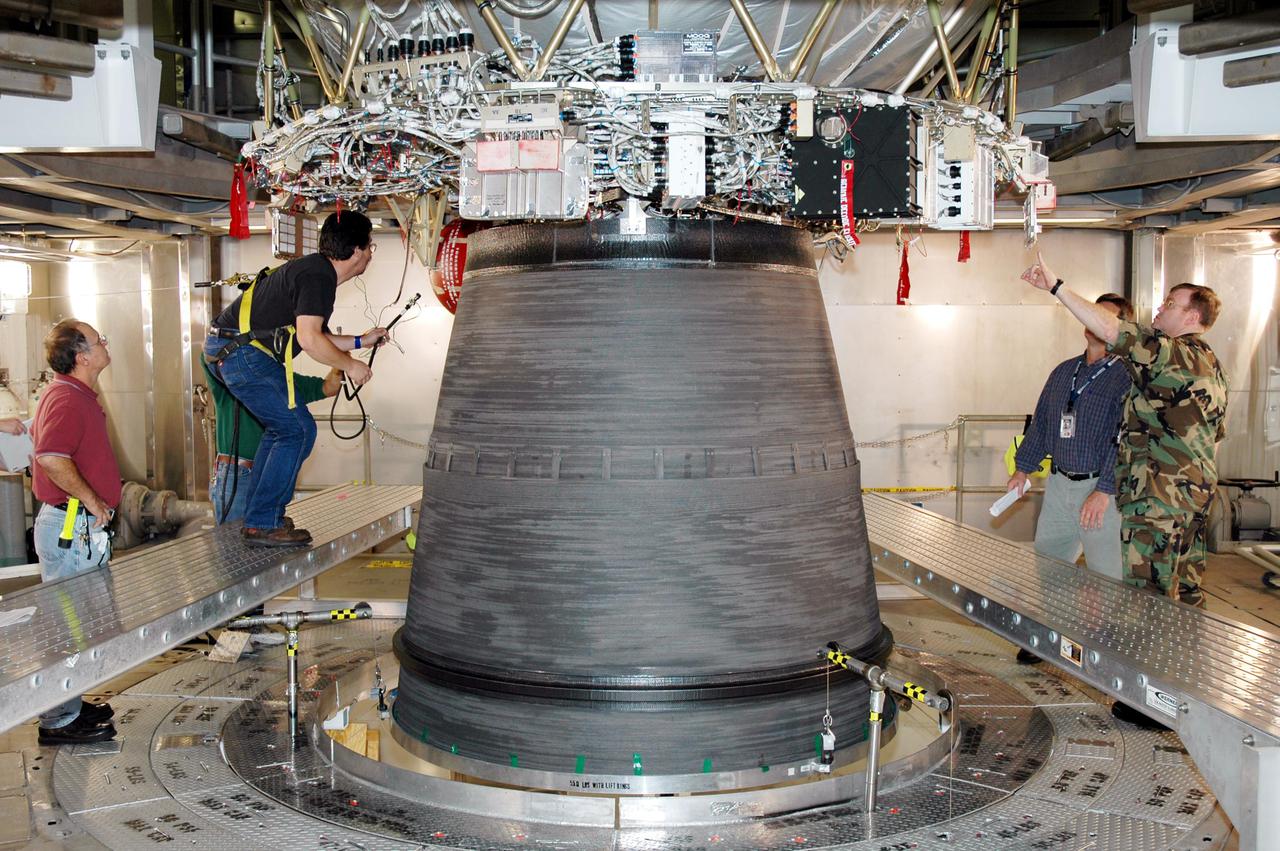
KENNEDY SPACE CENTER, FLA. - At the Delta Operations Center on Cape Canaveral Air Force Station, Fla., workers prepare for the Boeing Delta IV second stage nozzle extension test. The Delta IV is the launch vehicle for GOES-N satellite. Geostationary Operational Environmental Satellites (GOES) are sponsored by the National Aeronautics and Space Administration (NASA) and the National Oceanic and Atmospheric Administration (NOAA). GOES-N is the first in the next series of GOES satellites, N-P. The multi-mission GOES series N-P will be a vital contributor to weather, solar and space operations and science. The GOES N-P series will aid activities ranging from severe storm warnings to resource management and advances in science. GOES-N is scheduled to launch May 4 from Cape Canaveral Air Force Station, Fla.
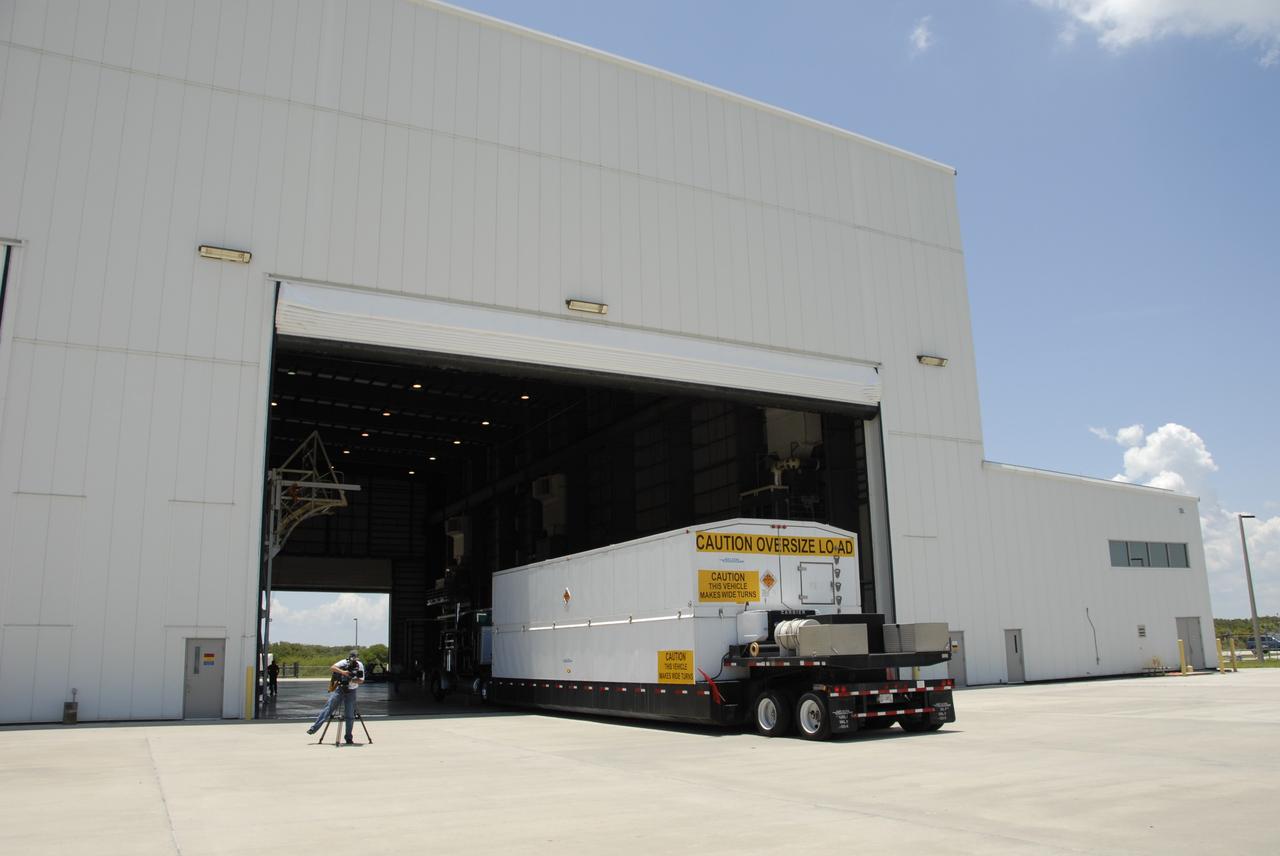
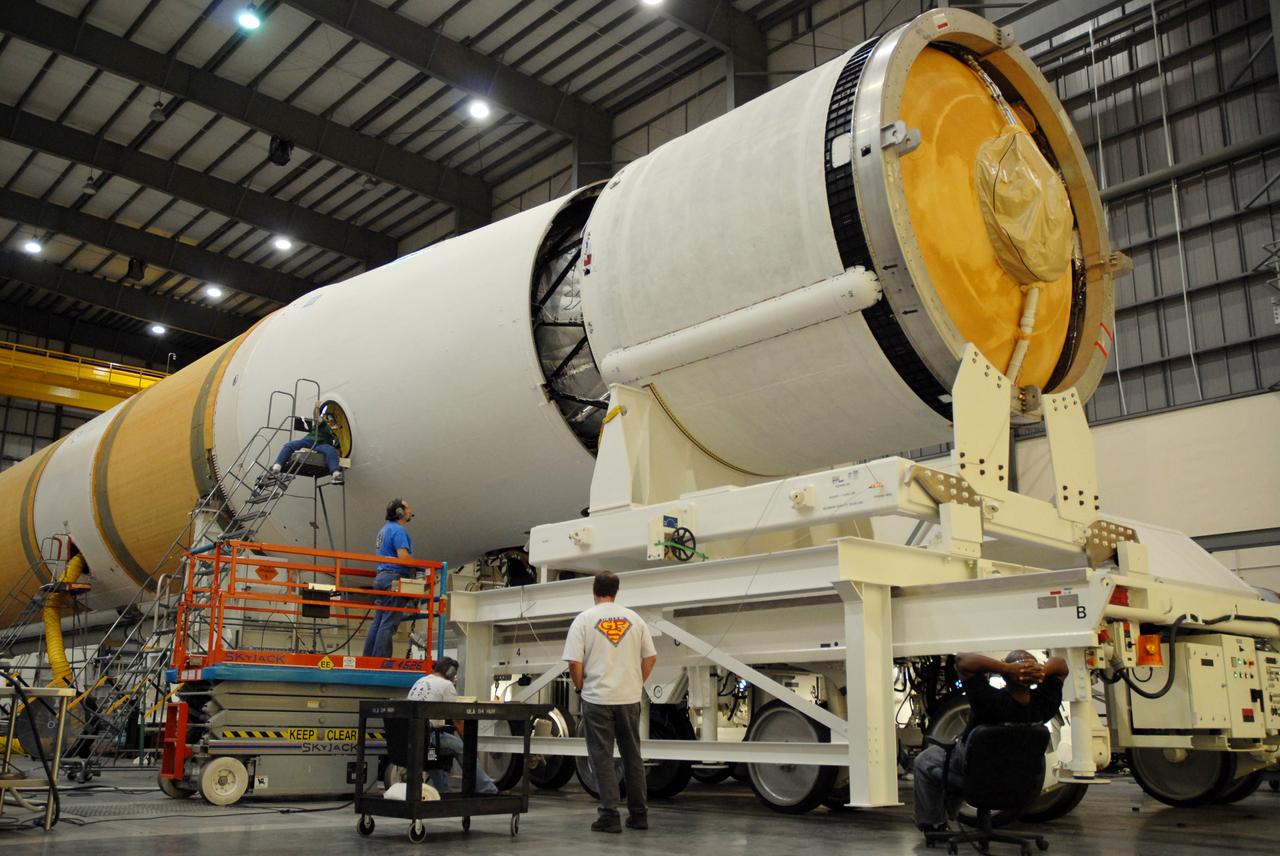
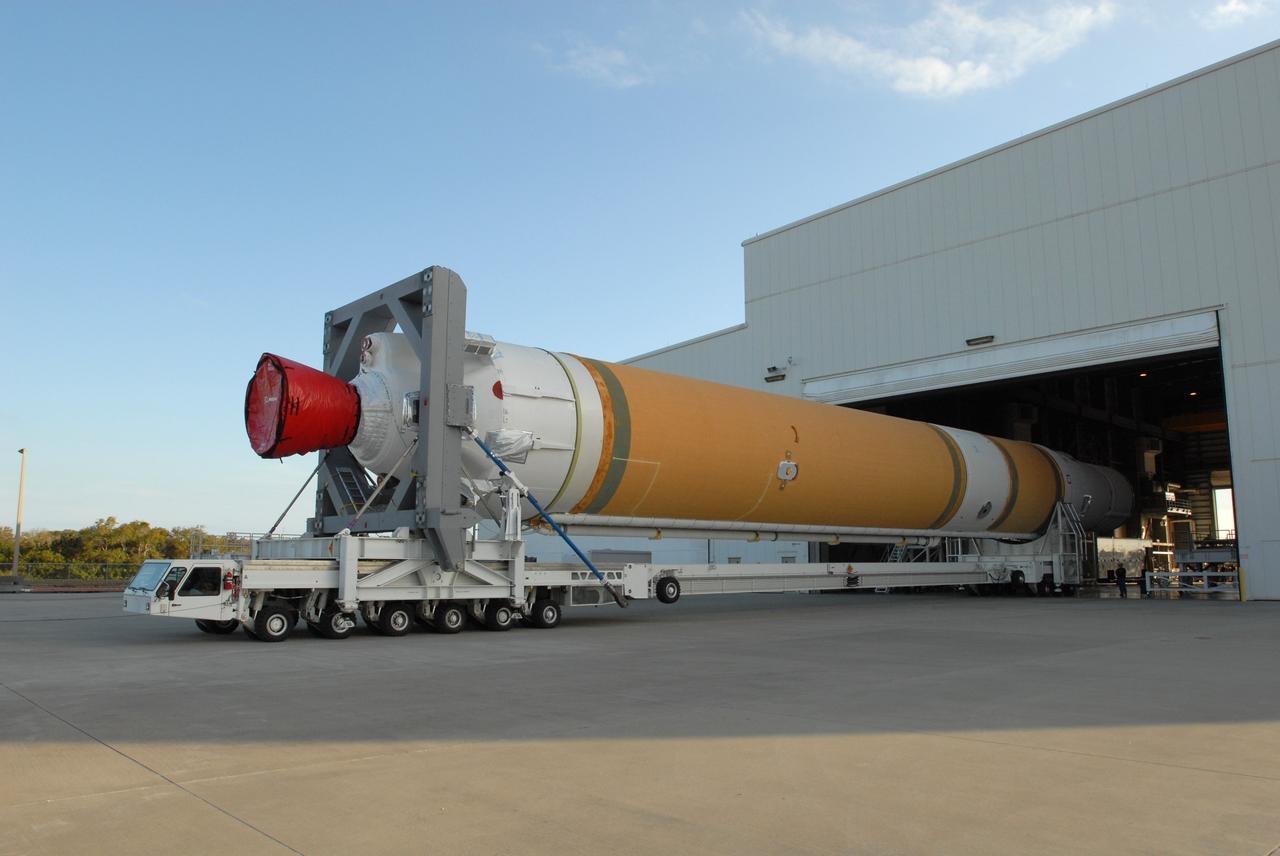
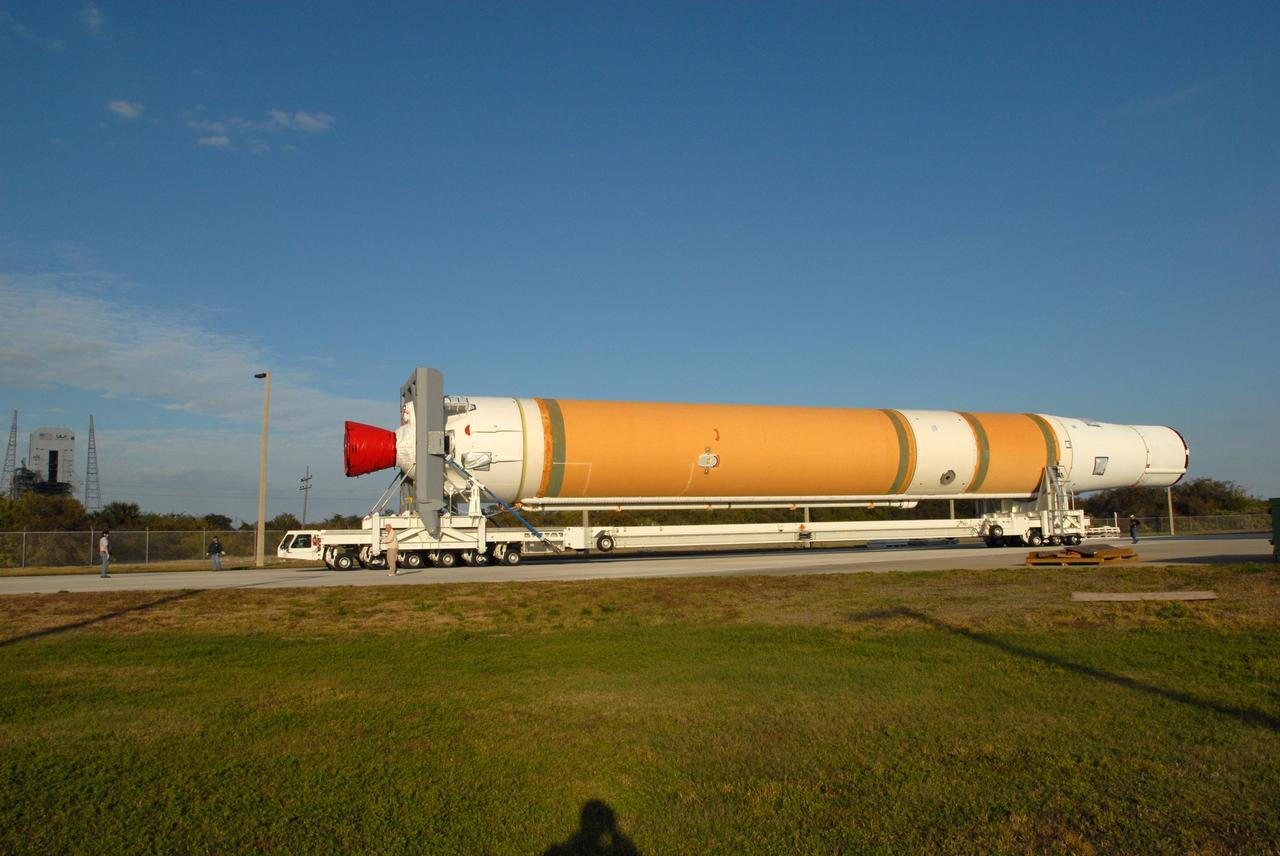
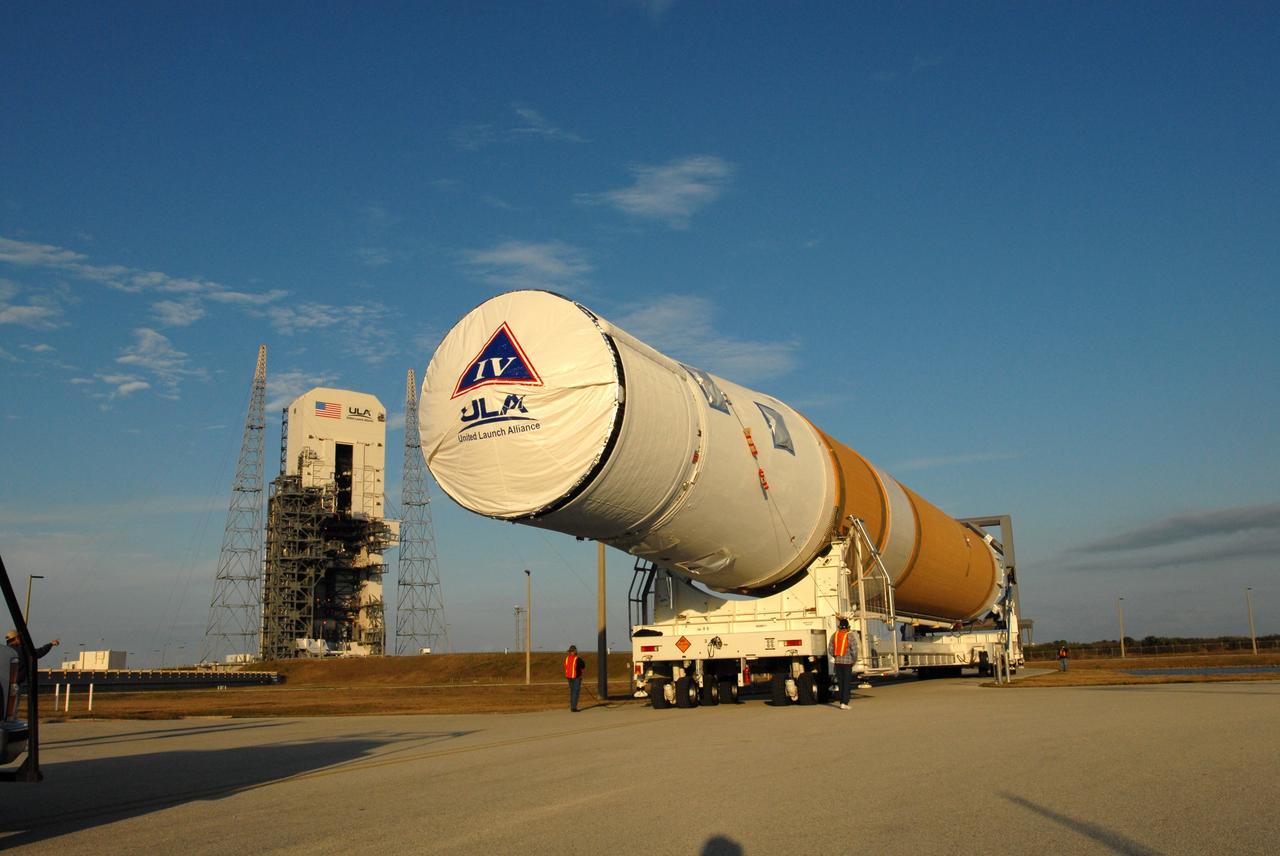
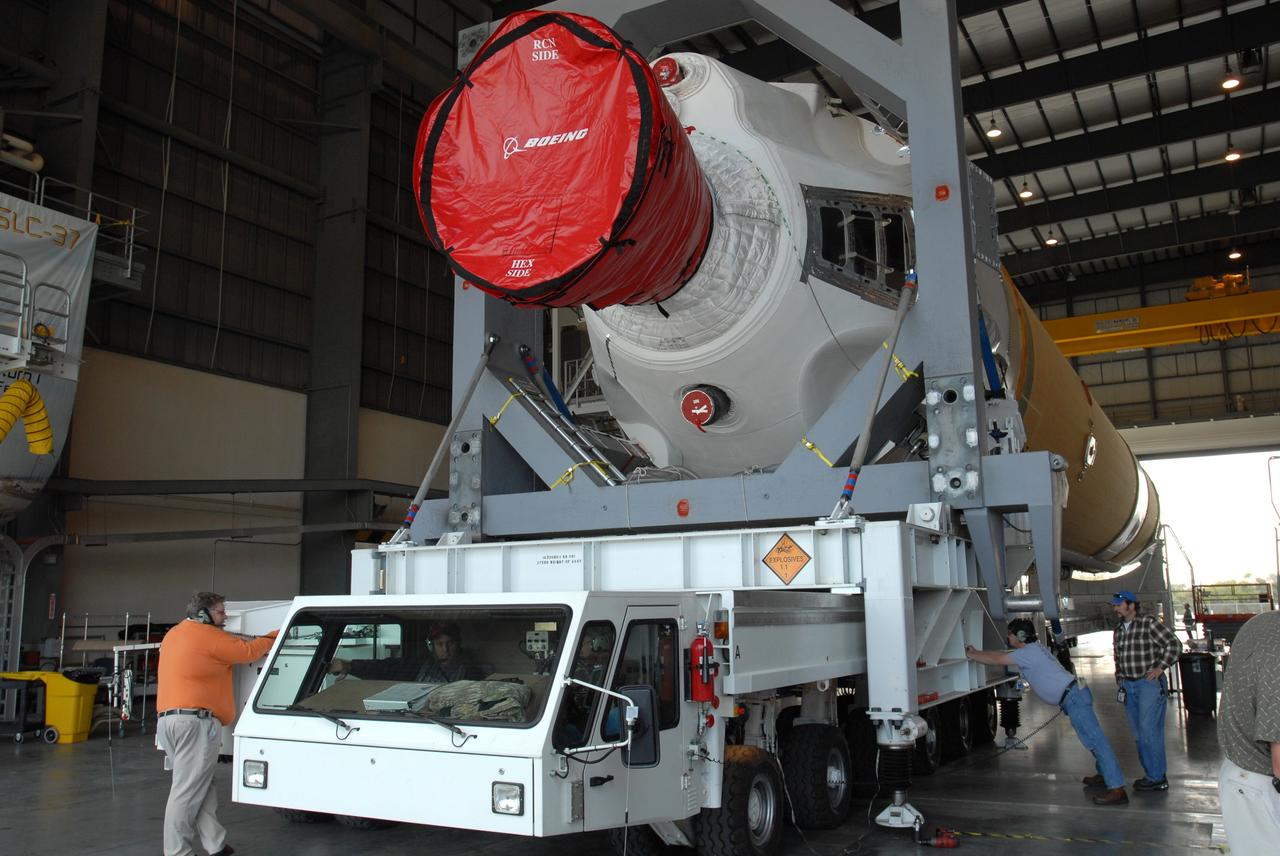
CAPE CANAVERAL, Fla. -- The truck carrying a second stage Delta IV arrives at the Horizontal Integration Facility on Cape Canaveral Air Force Station. The Delta IV will launch the GOES-O satellite from Launch Complex 37 late in 2008. GOES – O is one of a series of Geostationary Operational Environmental Satellites. The multimission GOES series N-P will be a vital contributor to weather, solar, and space operations and science. NASA and the National Oceanic and Atmospheric Administration, or NOAA, are actively engaged in a cooperative program to expand the existing GOES system with the launch of the GOES N-P satellites. Photo credit: NASA/Dimitri Gerondidakis
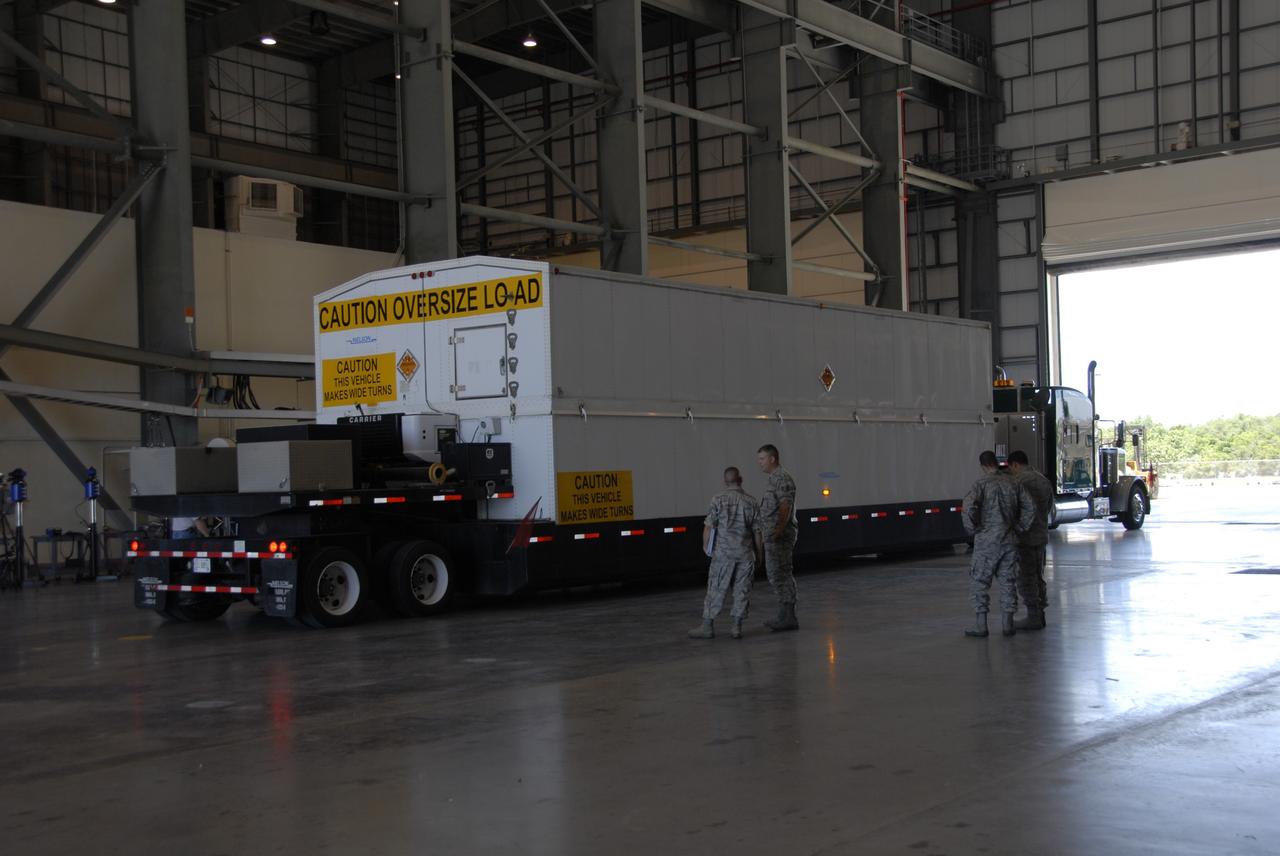
CAPE CANAVERAL, Fla. -- The truck carrying the second stage of a Delta IV rocket arrives inside the Horizontal Integration Facility on Cape Canaveral Air Force Station. The Delta IV will launch the GOES-O satellite from Launch Complex 37 late in 2008. GOES – O is one of a series of Geostationary Operational Environmental Satellites. The multimission GOES series N-P will be a vital contributor to weather, solar, and space operations and science. NASA and the National Oceanic and Atmospheric Administration, or NOAA, are actively engaged in a cooperative program to expand the existing GOES system with the launch of the GOES N-P satellites. Photo credit: NASA/Dimitri Gerondidakis
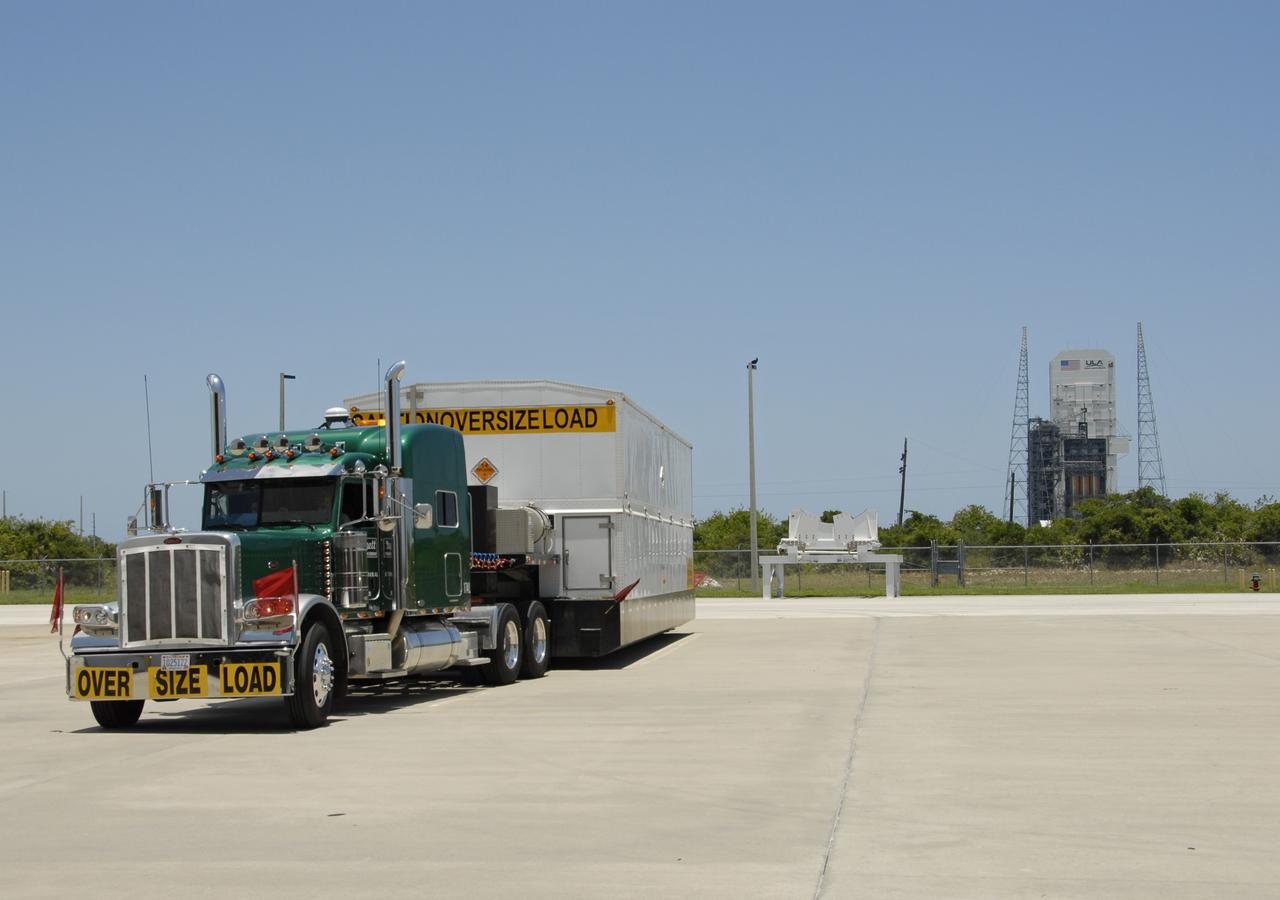
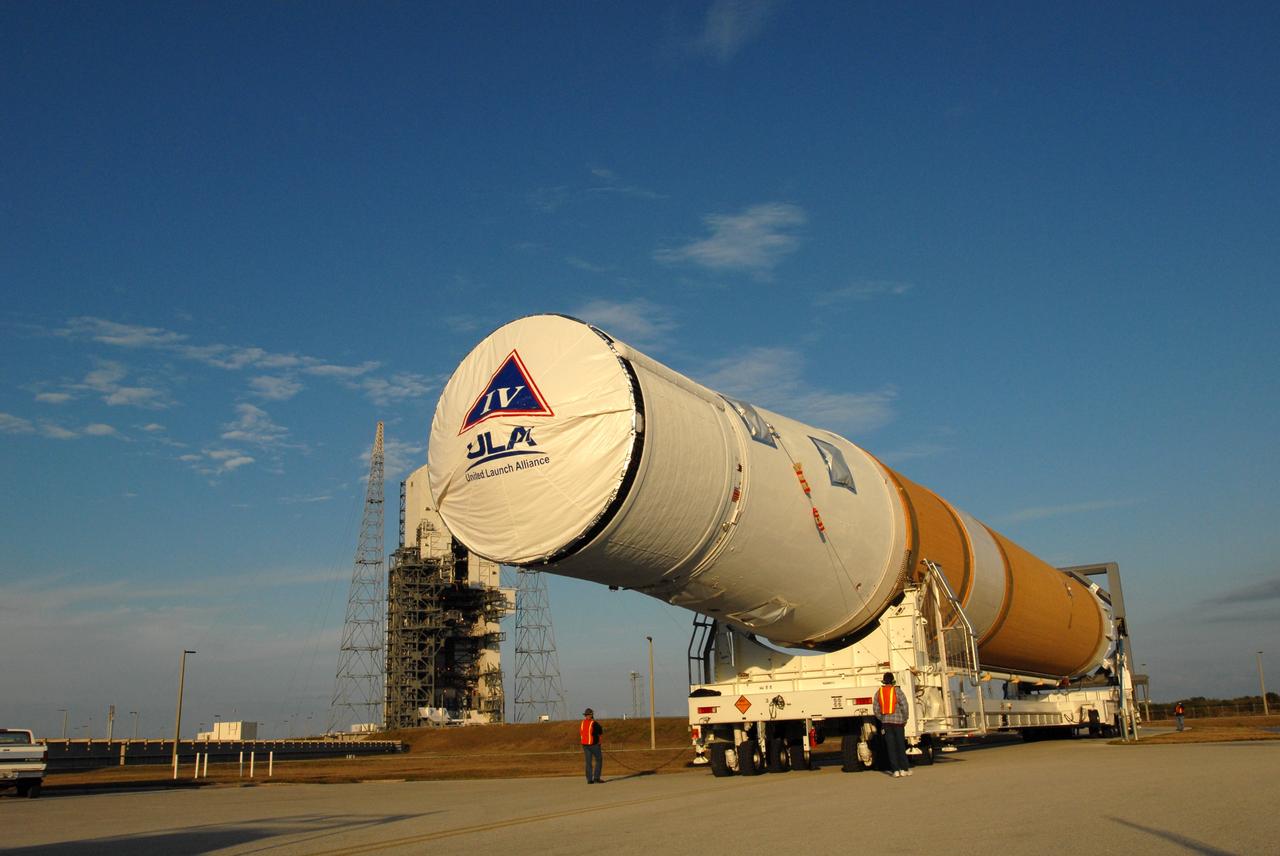
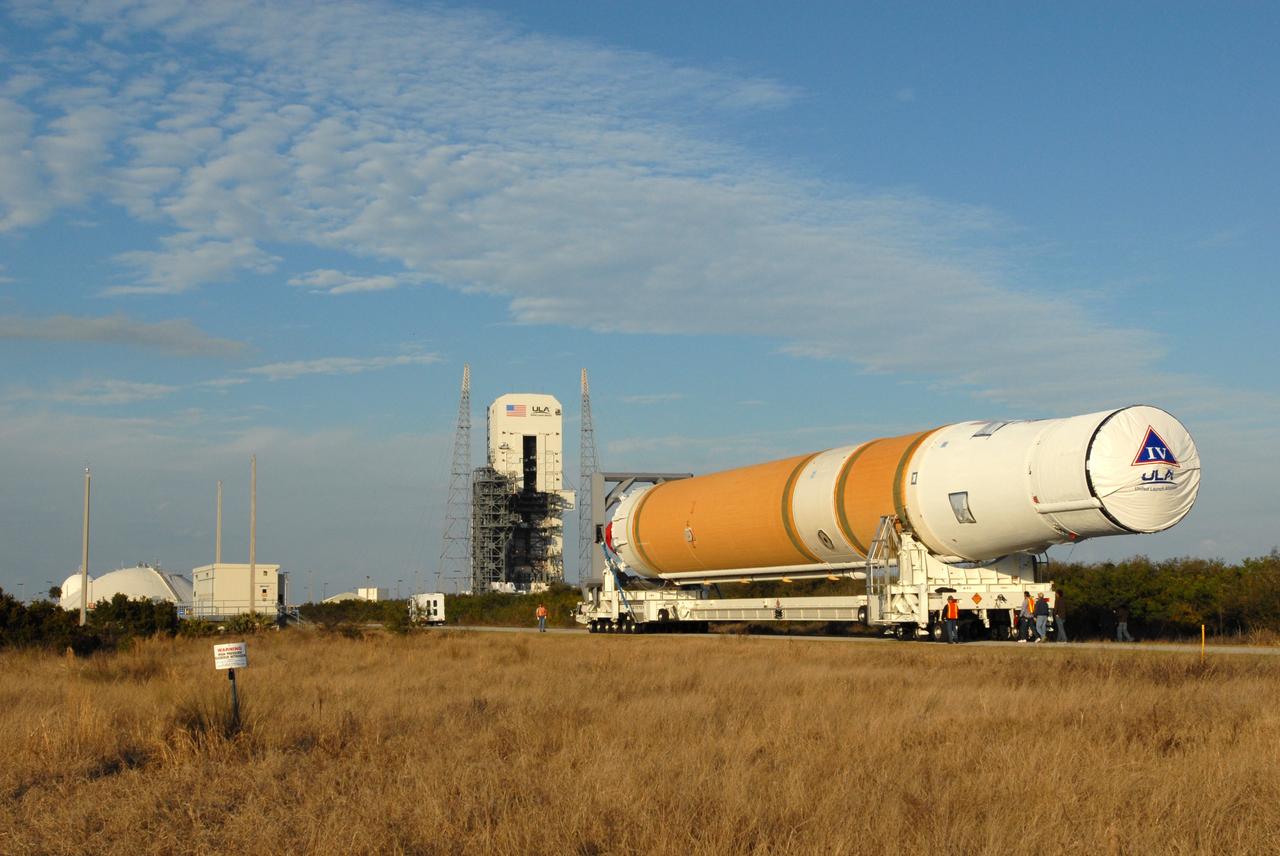
CAPE CANAVERAL, Fla. -- A truck arrives on Cape Canaveral Air Force Station to deliver its cargo, the second stage of a Delta IV rocket, to the Horizontal Integration Facility. In the background is Launch Complex 37, from where the rocket will launch. The Delta IV will launch the GOES-O satellite late in 2008. GOES – O is one of a series of Geostationary Operational Environmental Satellites. The multimission GOES series N-P will be a vital contributor to weather, solar, and space operations and science. NASA and the National Oceanic and Atmospheric Administration, or NOAA, are actively engaged in a cooperative program to expand the existing GOES system with the launch of the GOES N-P satellites. Photo credit: NASA/Dimitri Gerondidakis
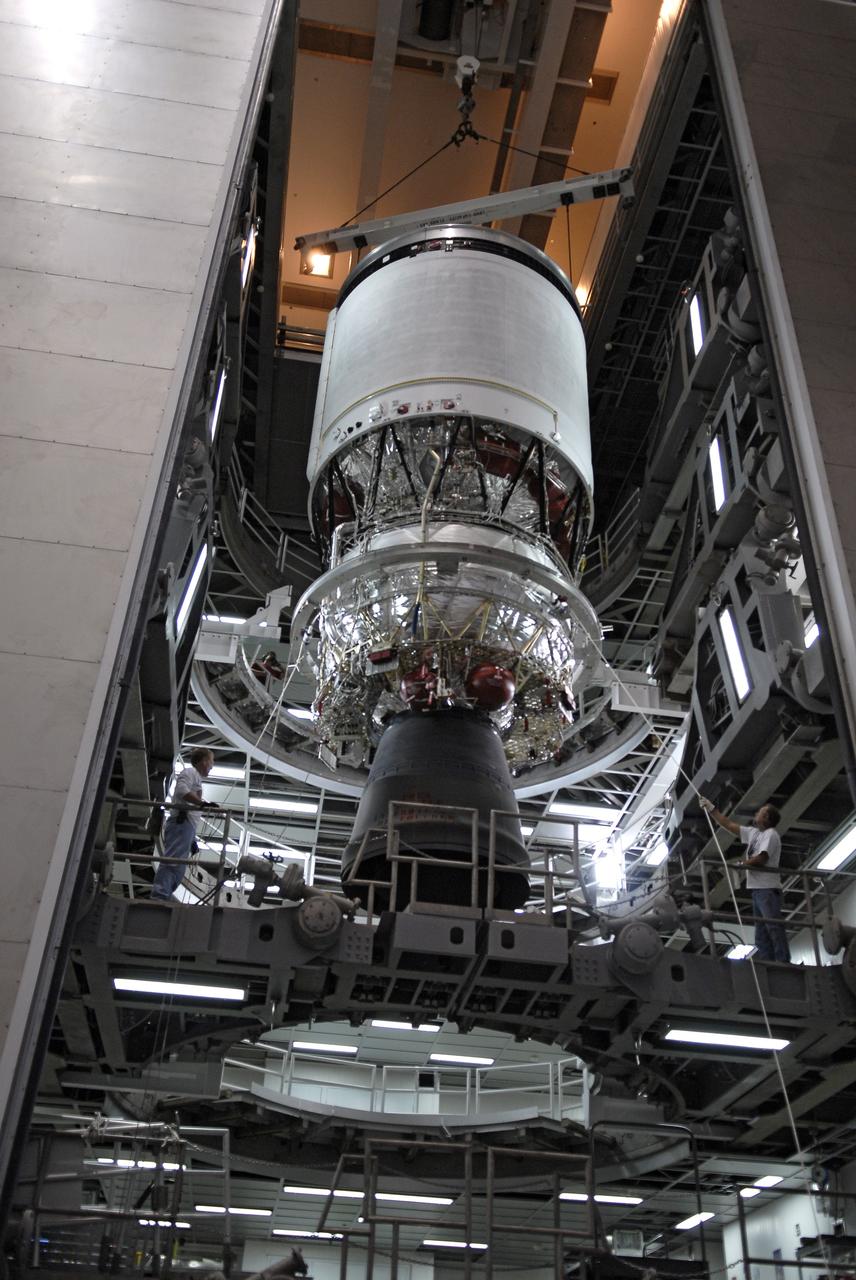
CAPE CANAVERAL, Fla. – Workers prepare to lower the second stage of a Delta IV rocket from a test cell in the hangar of the Delta Operations Center at Cape Canaveral Air Force Station in Florida into a turnover stand following the completion of nozzle extension deployment system testing. The United Launch Alliance Delta IV rocket is slated to launch GOES-P, the latest Geostationary Operational Environmental Satellite developed by NASA for the National Oceanic and Atmospheric Administration, or NOAA. Next, the second stage will be transported to the Horizontal Integration Facility where it will be inspected and prepared for mating with the Delta IV rocket's first stage. GOES-P, a meteorological satellite, is designed to watch for storm development and observed current weather conditions on Earth. Launch of GOES-P is scheduled for no earlier than Feb. 25, 2010, from Launch Complex 37. For information on GOES-P, visit http://goespoes.gsfc.nasa.gov/goes/spacecraft/n_p_spacecraft.html. Photo credit: NASA/Glenn Benson
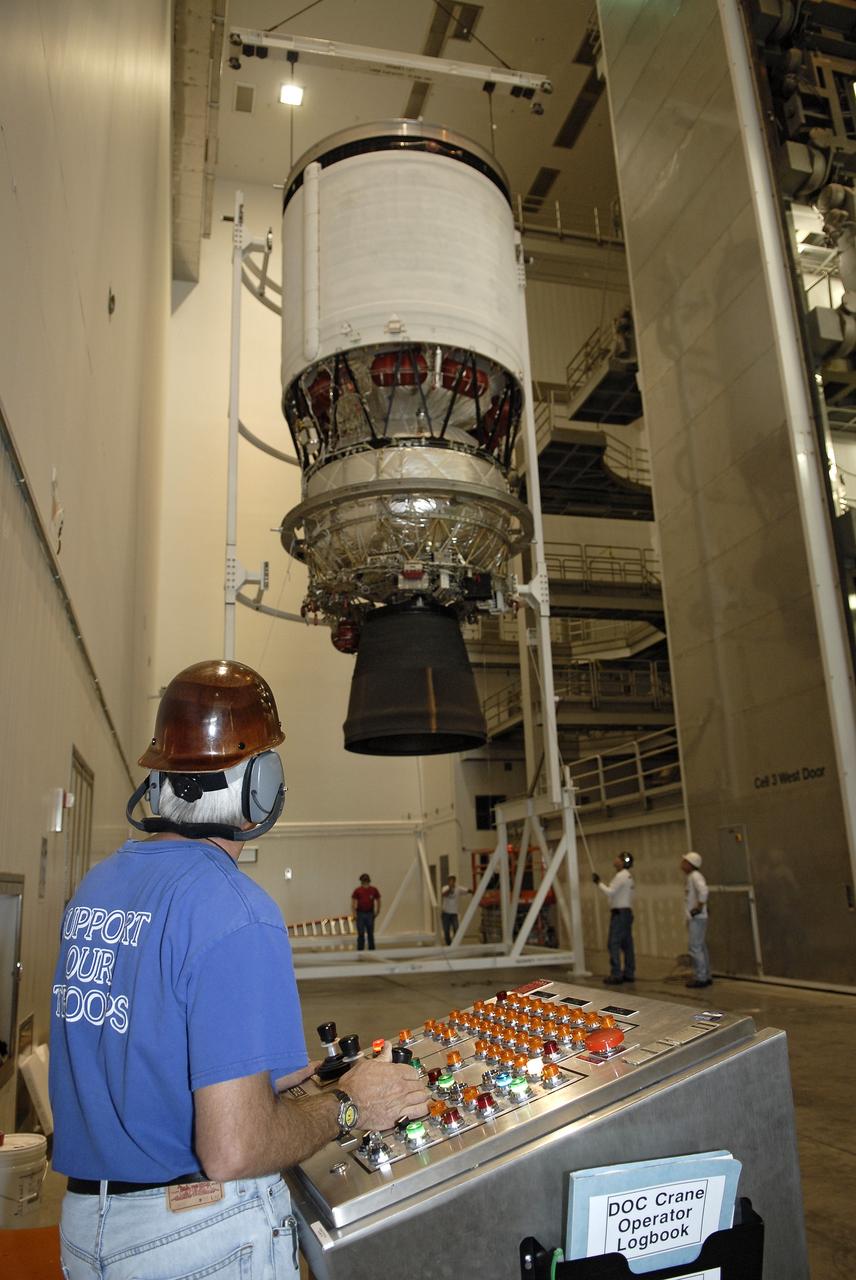
CAPE CANAVERAL, Fla. – Workers move the second stage of a Delta IV rocket from a test cell in the hangar of the Delta Operations Center at Cape Canaveral Air Force Station in Florida into a turnover stand following the completion of nozzle extension deployment system testing. The United Launch Alliance Delta IV rocket is slated to launch GOES-P, the latest Geostationary Operational Environmental Satellite developed by NASA for the National Oceanic and Atmospheric Administration, or NOAA. Next, the second stage will be transported to the Horizontal Integration Facility where it will be inspected and prepared for mating with the Delta IV rocket's first stage. GOES-P, a meteorological satellite, is designed to watch for storm development and observed current weather conditions on Earth. Launch of GOES-P is scheduled for no earlier than Feb. 25, 2010, from Launch Complex 37. For information on GOES-P, visit http://goespoes.gsfc.nasa.gov/goes/spacecraft/n_p_spacecraft.html. Photo credit: NASA/Glenn Benson
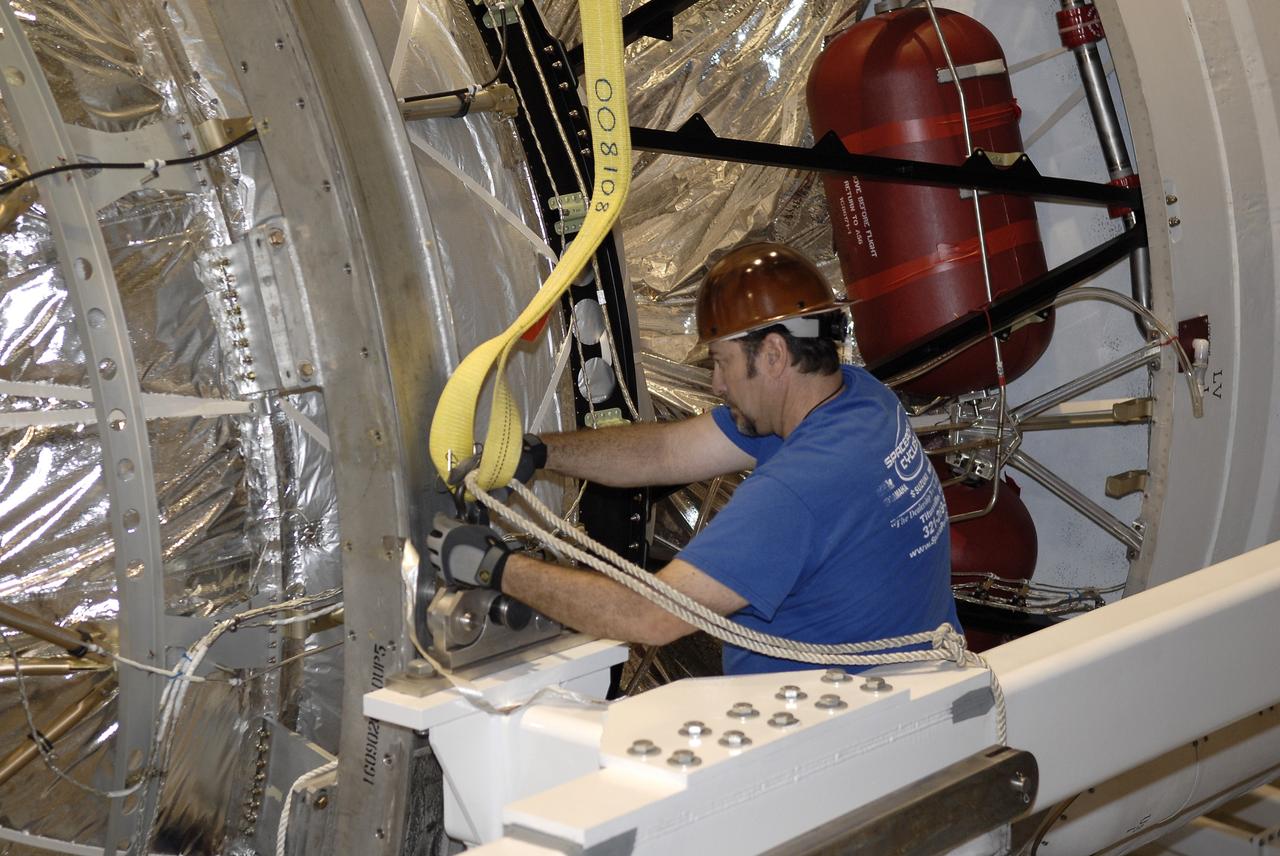
CAPE CANAVERAL, Fla. – In the hangar of the Delta Operations Center at Cape Canaveral Air Force Station in Florida, a worker secures the second stage of a Delta IV rocket to a device that will lift it from a turnover stand following the completion of nozzle extension deployment system testing in the hangar's test cell. The United Launch Alliance Delta IV rocket is slated to launch GOES-P, the latest Geostationary Operational Environmental Satellite developed by NASA for the National Oceanic and Atmospheric Administration, or NOAA. Next, the second stage will be transported to the Horizontal Integration Facility where it will be inspected and prepared for mating with the Delta IV rocket's first stage. GOES-P, a meteorological satellite, is designed to watch for storm development and observed current weather conditions on Earth. Launch of GOES-P is scheduled for no earlier than Feb. 25, 2010, from Launch Complex 37. For information on GOES-P, visit http://goespoes.gsfc.nasa.gov/goes/spacecraft/n_p_spacecraft.html. Photo credit: NASA/Glenn Benson
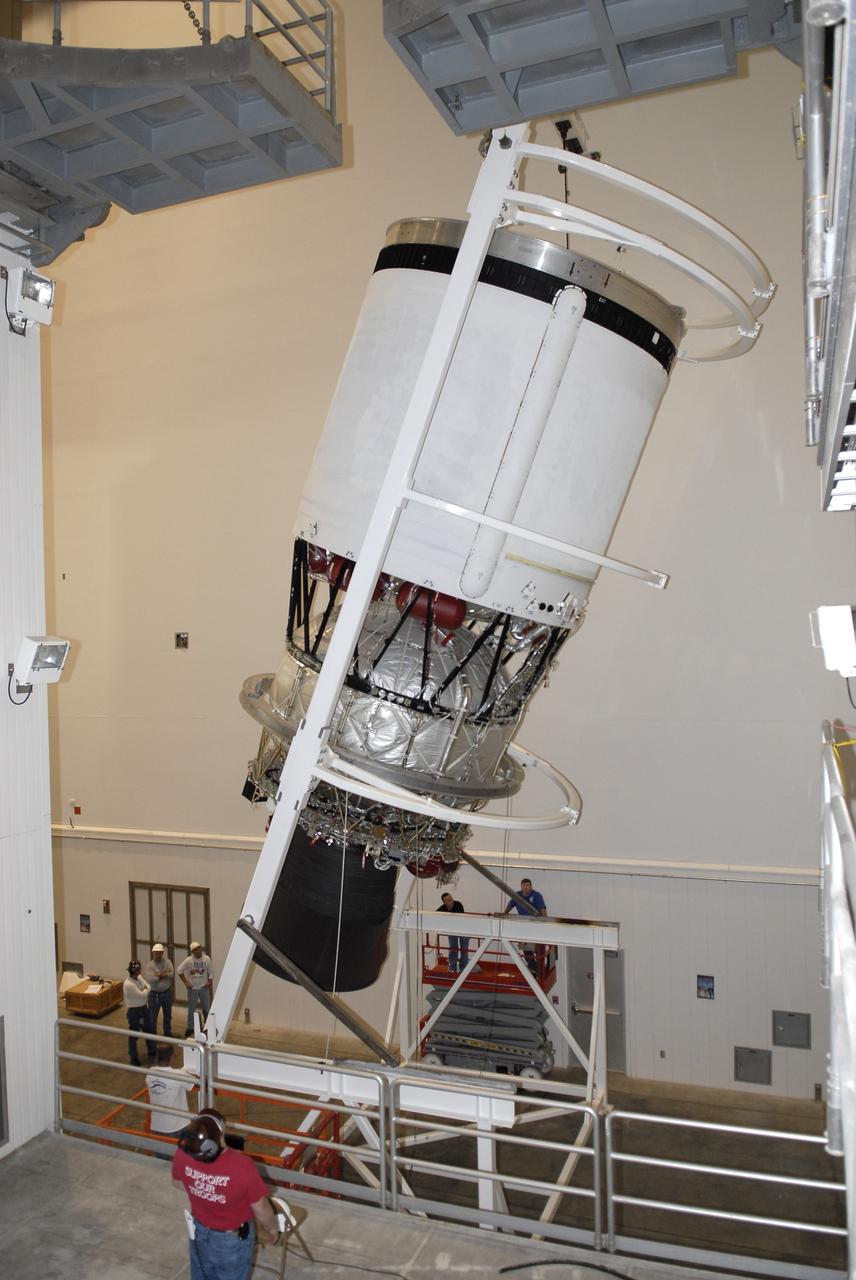
CAPE CANAVERAL, Fla. – In the hangar of the Delta Operations Center at Cape Canaveral Air Force Station in Florida, workers rotate the second stage of a Delta IV rocket into a horizontal position with the aid of a turnover stand following the completion of nozzle extension deployment system testing in the hangar's test cell. The United Launch Alliance Delta IV rocket is slated to launch GOES-P, the latest Geostationary Operational Environmental Satellite developed by NASA for the National Oceanic and Atmospheric Administration, or NOAA. Next, the second stage will be transported to the Horizontal Integration Facility where it will be inspected and prepared for mating with the Delta IV rocket's first stage. GOES-P, a meteorological satellite, is designed to watch for storm development and observed current weather conditions on Earth. Launch of GOES-P is scheduled for no earlier than Feb. 25, 2010, from Launch Complex 37. For information on GOES-P, visit http://goespoes.gsfc.nasa.gov/goes/spacecraft/n_p_spacecraft.html. Photo credit: NASA/Glenn Benson
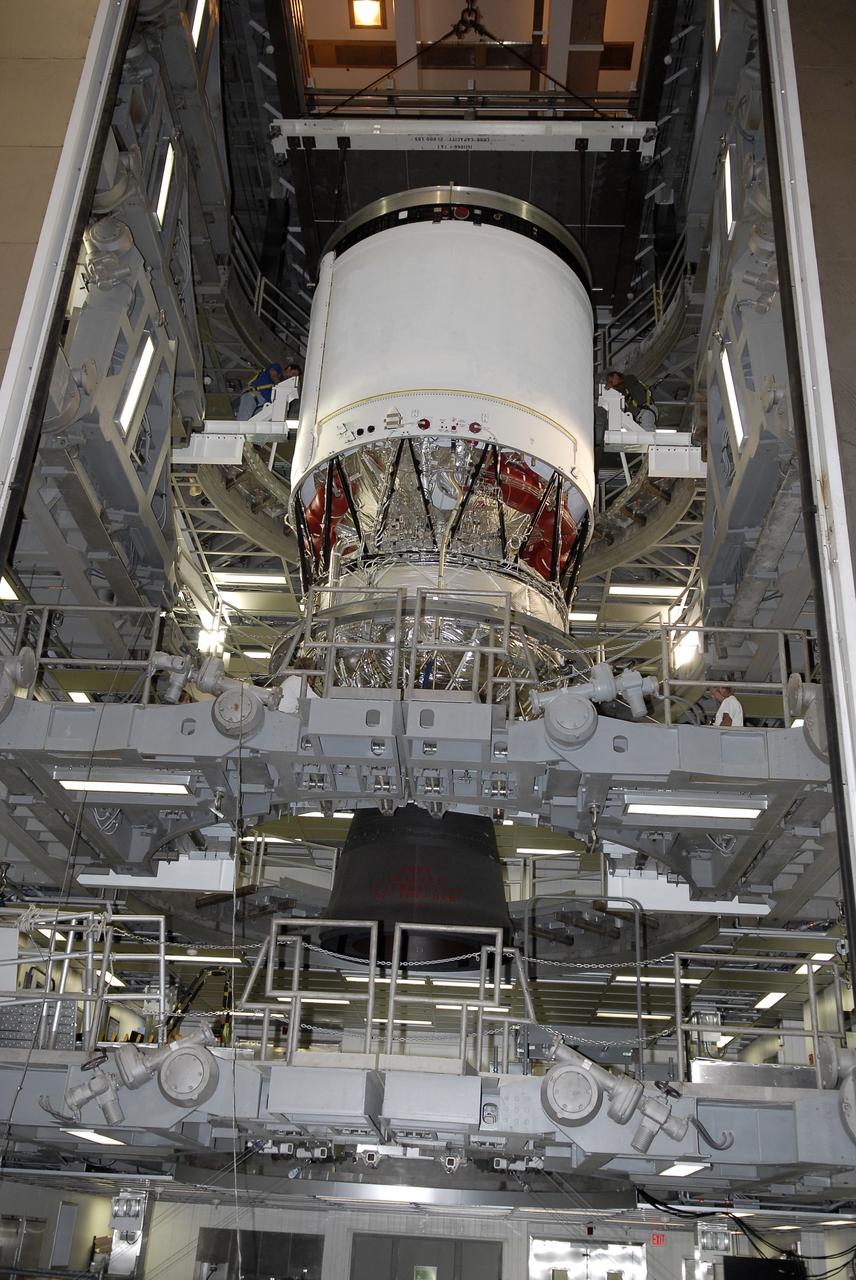
CAPE CANAVERAL, Fla. – Nozzle extension deployment system testing on the second stage of a Delta IV rocket has been completed in a test cell in the hangar of the Delta Operations Center at Cape Canaveral Air Force Station in Florida. The United Launch Alliance Delta IV rocket is slated to launch GOES-P, the latest Geostationary Operational Environmental Satellite developed by NASA for the National Oceanic and Atmospheric Administration, or NOAA. Next, the second stage will be transported to the Horizontal Integration Facility where it will be inspected and prepared for mating with the Delta IV rocket's first stage. GOES-P, a meteorological satellite, is designed to watch for storm development and observed current weather conditions on Earth. Launch of GOES-P is scheduled for no earlier than Feb. 25, 2010, from Launch Complex 37. For information on GOES-P, visit http://goespoes.gsfc.nasa.gov/goes/spacecraft/n_p_spacecraft.html. Photo credit: NASA/Glenn Benson
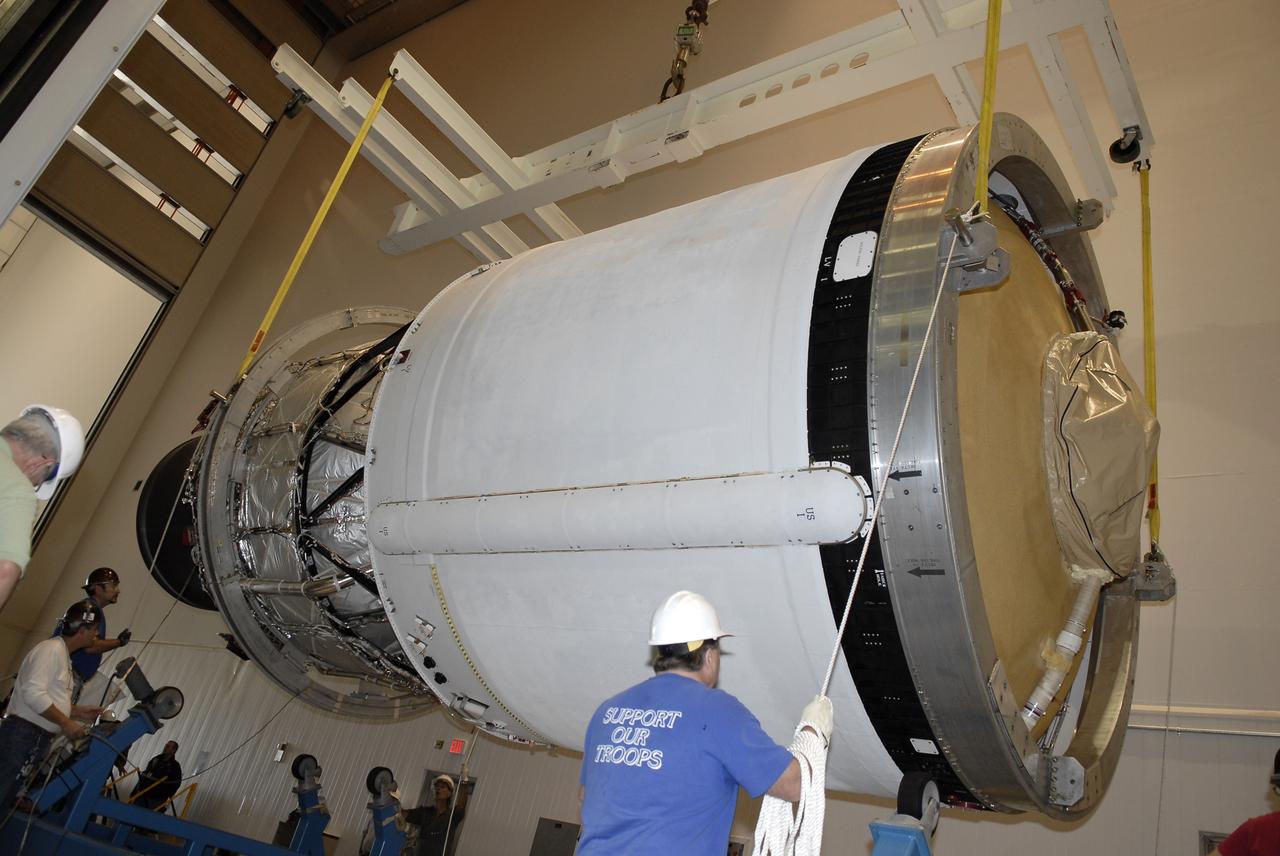
CAPE CANAVERAL, Fla. – In the hangar of the Delta Operations Center at Cape Canaveral Air Force Station in Florida, workers lower the second stage of a Delta IV rocket onto a transporter following the completion of nozzle extension deployment system testing in the hangar's test cell. The United Launch Alliance Delta IV rocket is slated to launch GOES-P, the latest Geostationary Operational Environmental Satellite developed by NASA for the National Oceanic and Atmospheric Administration, or NOAA. Next, the second stage will be transported to the Horizontal Integration Facility where it will be inspected and prepared for mating with the Delta IV rocket's first stage. GOES-P, a meteorological satellite, is designed to watch for storm development and observed current weather conditions on Earth. Launch of GOES-P is scheduled for no earlier than Feb. 25, 2010, from Launch Complex 37. For information on GOES-P, visit http://goespoes.gsfc.nasa.gov/goes/spacecraft/n_p_spacecraft.html. Photo credit: NASA/Glenn Benson
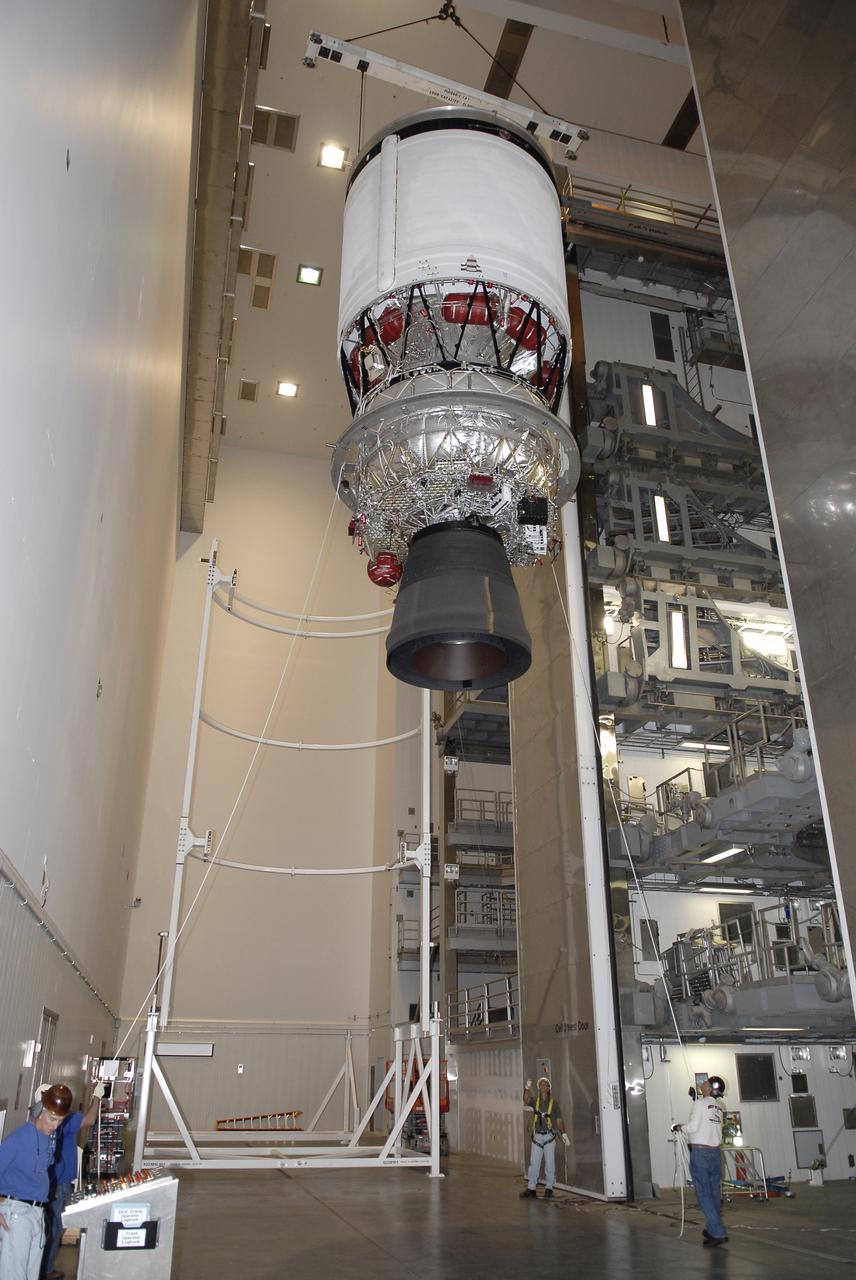
CAPE CANAVERAL, Fla. – Workers lower the second stage of a Delta IV rocket from a test cell in the hangar of the Delta Operations Center at Cape Canaveral Air Force Station in Florida toward a turnover stand following the completion of nozzle extension deployment system testing. The United Launch Alliance Delta IV rocket is slated to launch GOES-P, the latest Geostationary Operational Environmental Satellite developed by NASA for the National Oceanic and Atmospheric Administration, or NOAA. Next, the second stage will be transported to the Horizontal Integration Facility where it will be inspected and prepared for mating with the Delta IV rocket's first stage. GOES-P, a meteorological satellite, is designed to watch for storm development and observed current weather conditions on Earth. Launch of GOES-P is scheduled for no earlier than Feb. 25, 2010, from Launch Complex 37. For information on GOES-P, visit http:__goespoes.gsfc.nasa.gov_goes_spacecraft_n_p_spacecraft.html. Photo credit: NASA_Glenn Benson
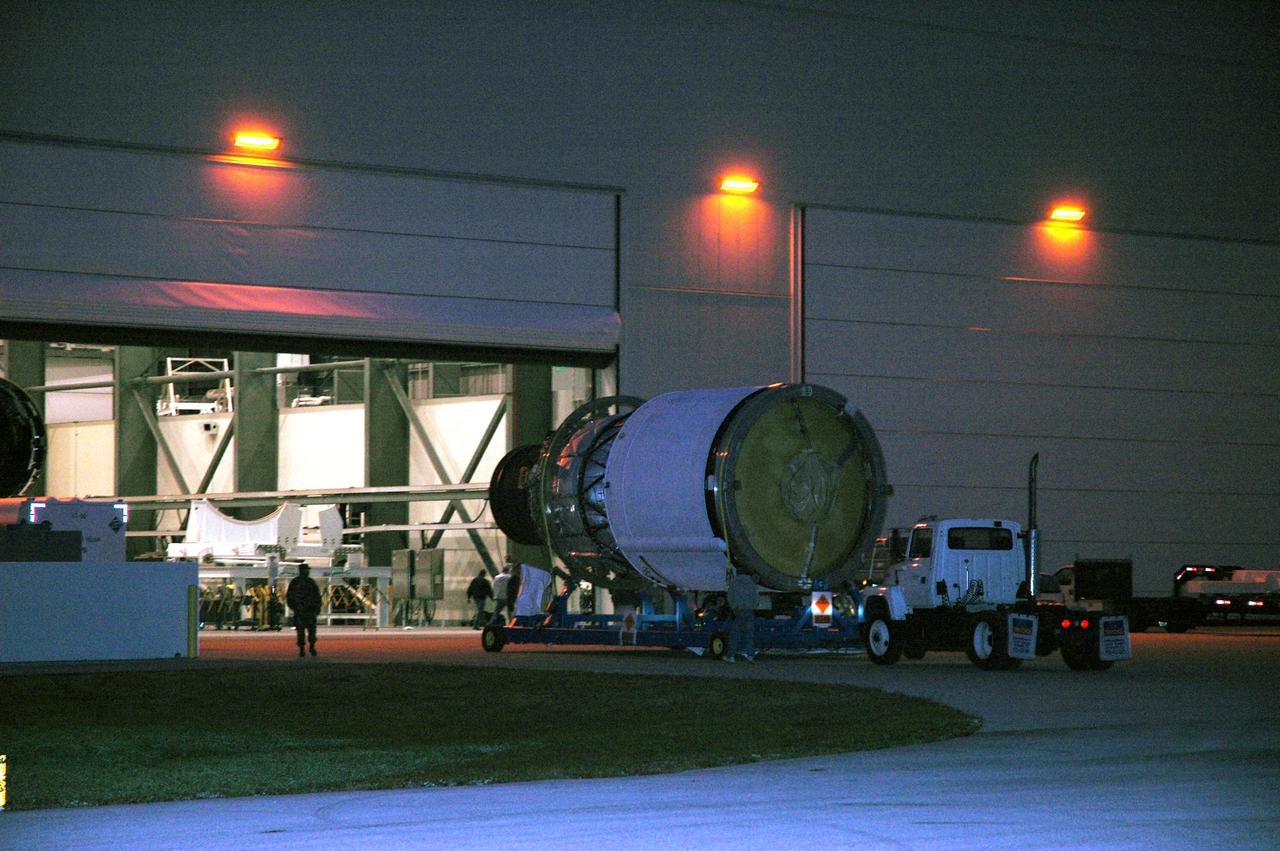
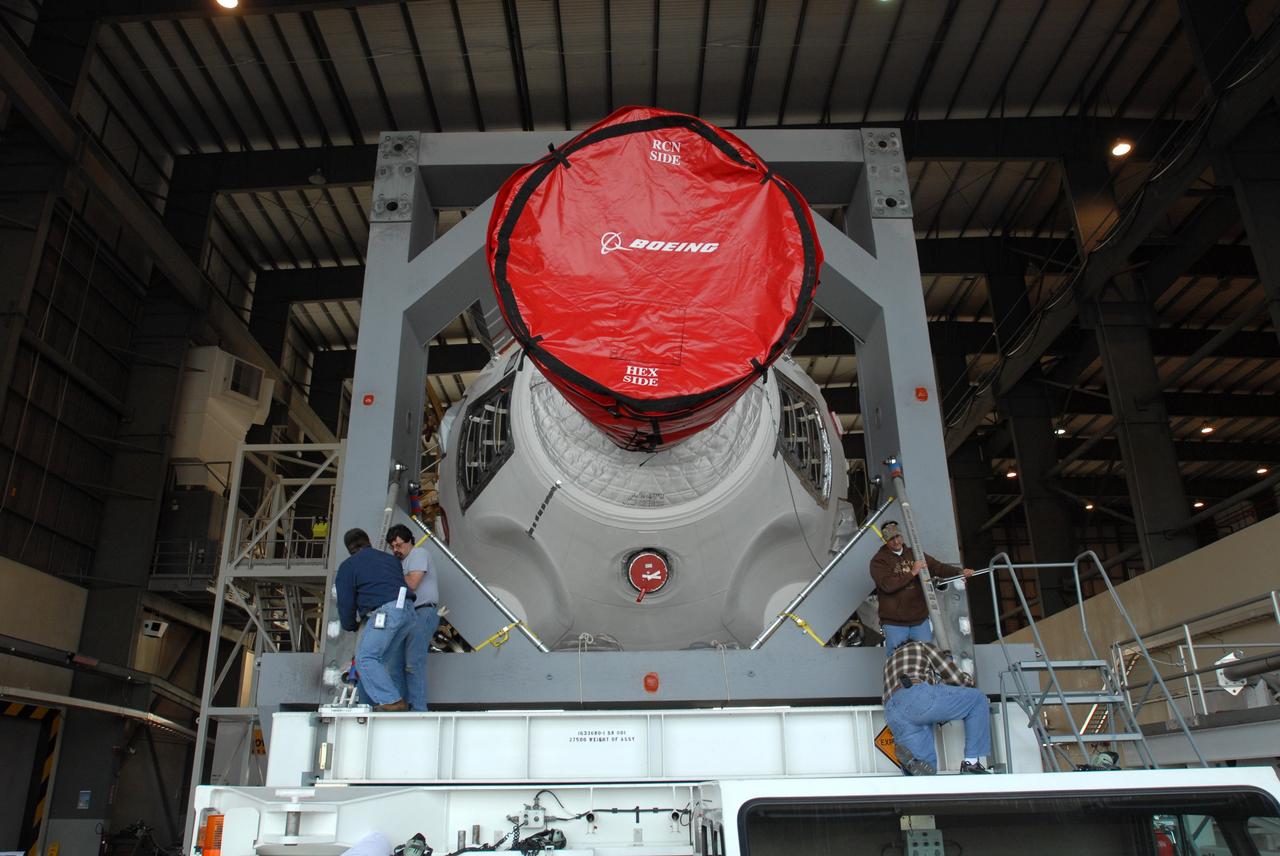
KENNEDY SPACE CENTER, FLA. - On its transporter, the Boeing Delta IV second stage is moved into the Horizontal Integration Facility (HIF) for further processing. It was transferred from the Delta Operations Center in Cape Canaveral, Fla. The Delta IV is the launch vehicle for the GOES-N satellite. Geostationary Operational Environmental Satellites (GOES) are sponsored by the National Aeronautics and Space Administration (NASA) and the National Oceanic and Atmospheric Administration (NOAA). GOES-N is the first in the next series of GOES satellites, N-P. The multi-mission GOES series N-P will be a vital contributor to weather, solar and space operations and science. The GOES N-P series will aid activities ranging from severe storm warnings to resource management and advances in science. GOES-N is scheduled to launch May 4 from Cape Canaveral Air Force Station, Fla.
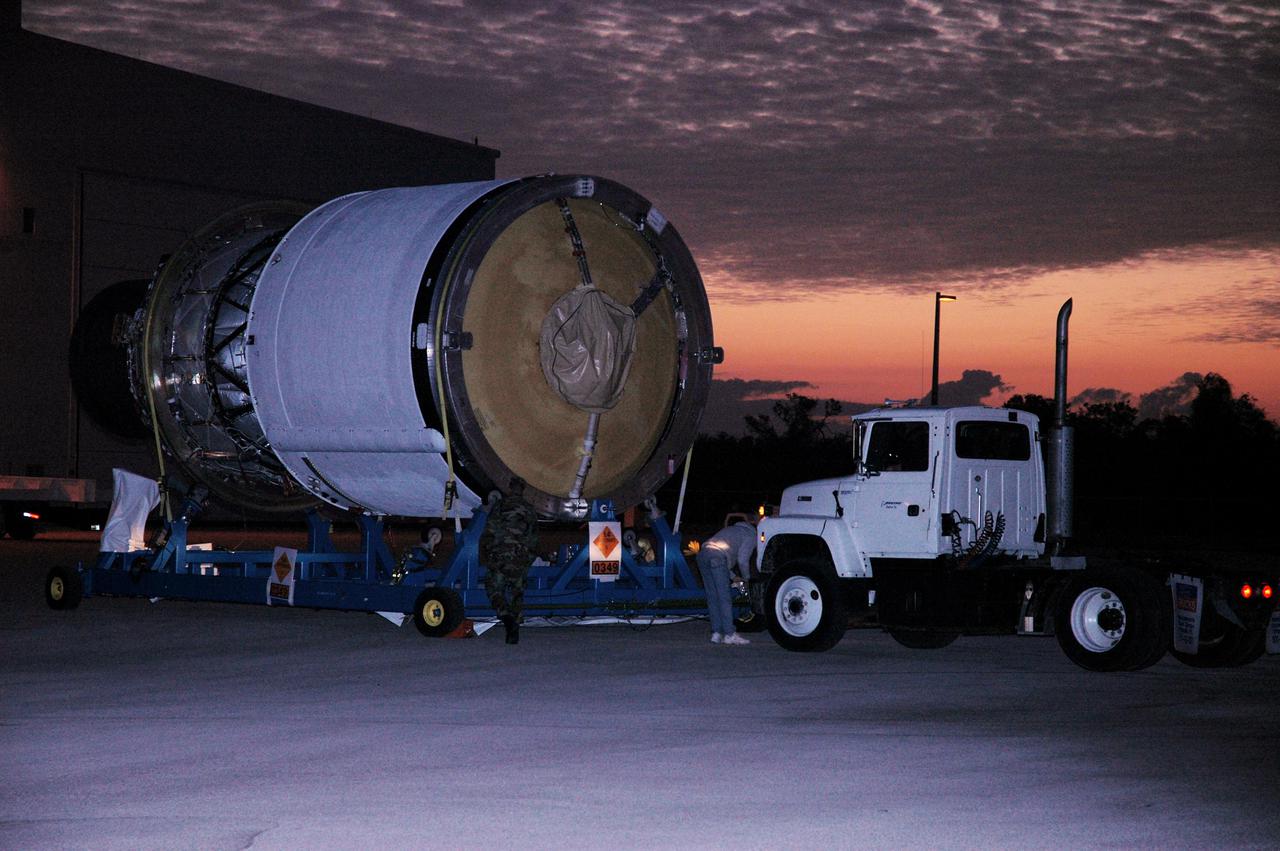
KENNEDY SPACE CENTER, FLA. - As dawn breaks, the Boeing Delta IV second stage arrives at the Horizontal Integration Facility (HIF) for further processing. It was moved from the Delta Operations Center in Cape Canaveral, Fla. The Delta IV is the launch vehicle for the GOES-N satellite. Geostationary Operational Environmental Satellites (GOES) are sponsored by the National Aeronautics and Space Administration (NASA) and the National Oceanic and Atmospheric Administration (NOAA). GOES-N is the first in the next series of GOES satellites, N-P. The multi-mission GOES series N-P will be a vital contributor to weather, solar and space operations and science. The GOES N-P series will aid activities ranging from severe storm warnings to resource management and advances in science. GOES-N is scheduled to launch May 4 from Cape Canaveral Air Force Station, Fla.
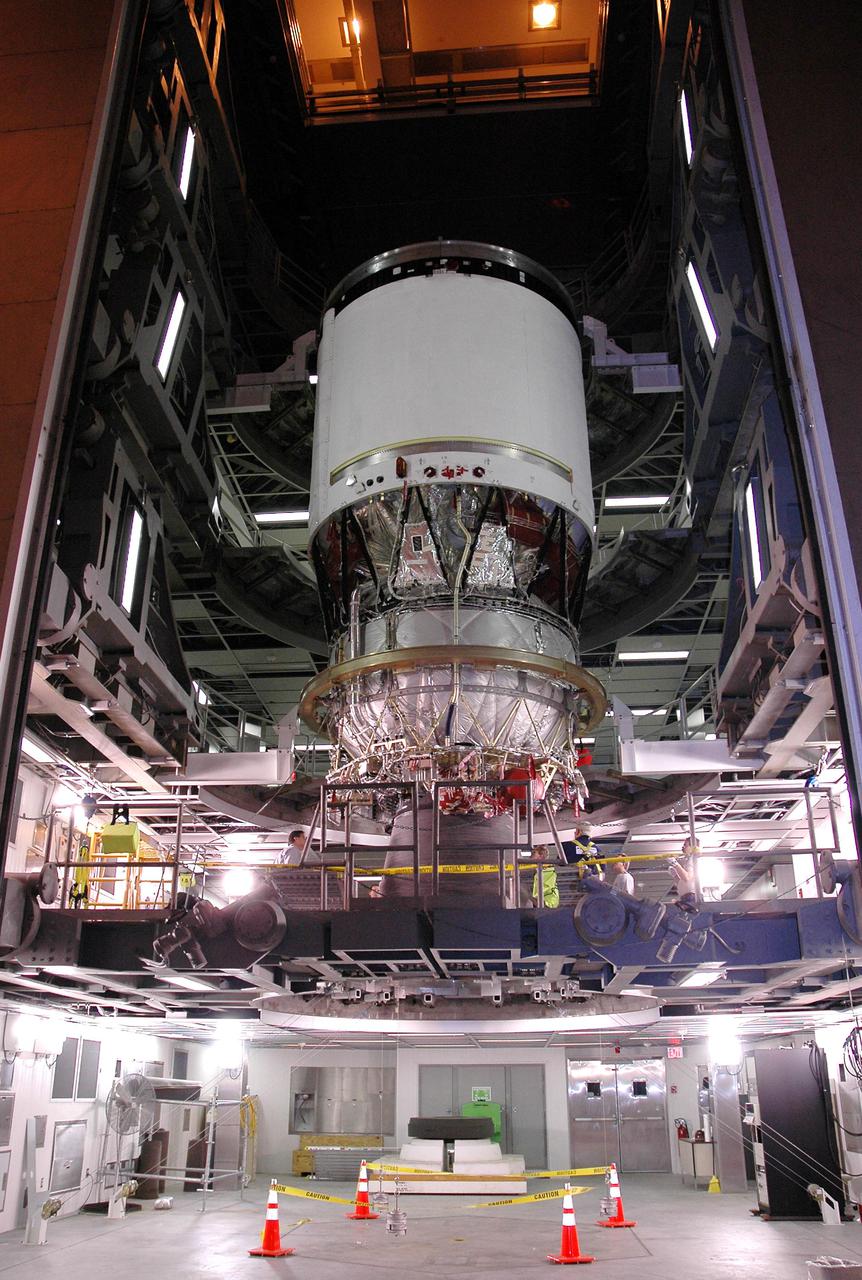
KENNEDY SPACE CENTER, FLA. - At the Delta Operations Center in Cape Canaveral, Fla., the Boeing Delta IV second stage is going to be prepared for a transfer to the Horizontal Integration Facility for further processing. The element is going to be transferred to the Horizontal Integration Facility for further processing. The Delta IV is the launch vehicle for the GOES-N satellite. Geostationary Operational Environmental Satellites (GOES) are sponsored by the National Aeronautics and Space Administration (NASA) and the National Oceanic and Atmospheric Administration (NOAA). GOES-N is the first in the next series of GOES satellites, N-P. The multi-mission GOES series N-P will be a vital contributor to weather, solar and space operations and science. The GOES N-P series will aid activities ranging from severe storm warnings to resource management and advances in science. GOES-N is scheduled to launch May 4 from Cape Canaveral Air Force Station, Fla.
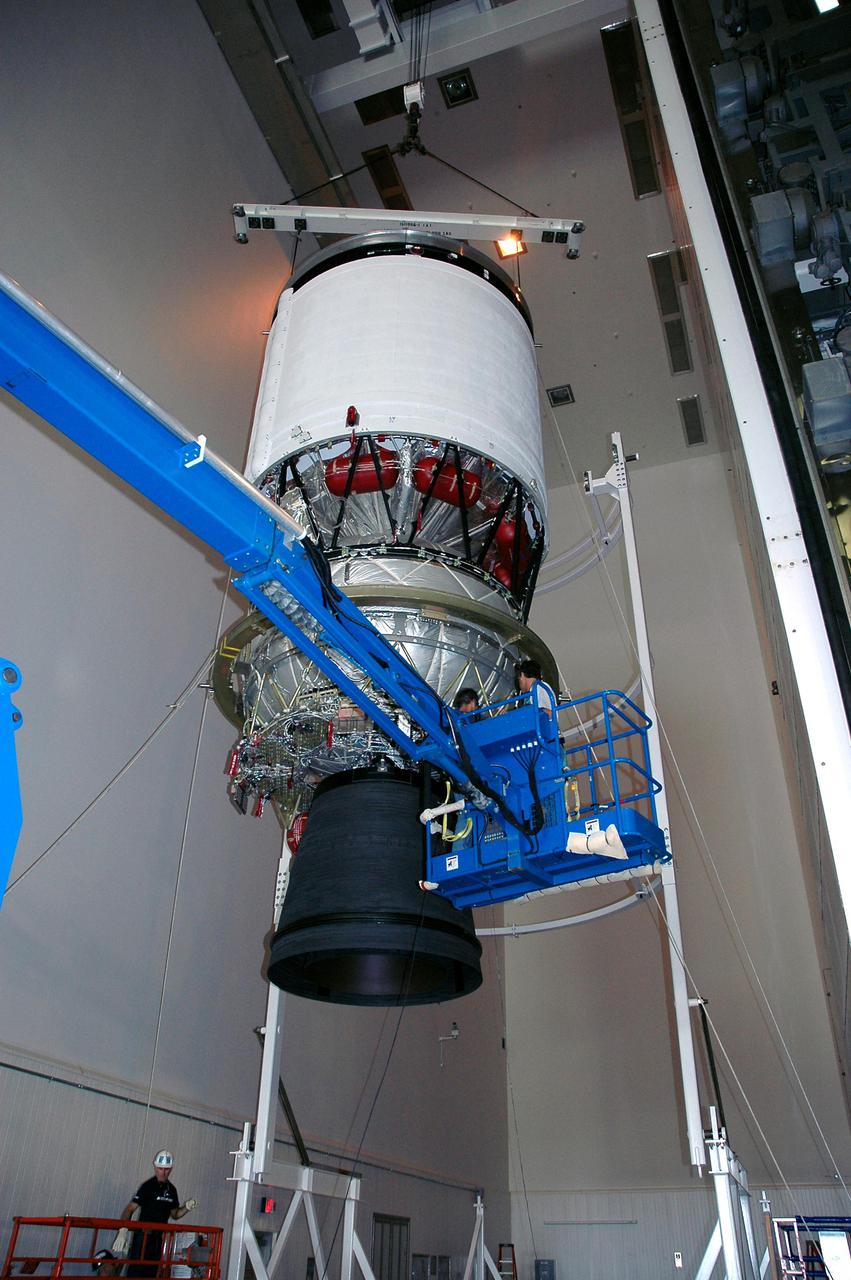
KENNEDY SPACE CENTER, FLA. - At the Delta Operations Center in Cape Canaveral, Fla., the Boeing Delta IV second stage is lifted by an overhead crane. The element is being moved to a transporter for transfer to the Horizontal Integration Facility for further processing. The Delta IV is the launch vehicle for the GOES-N satellite. Geostationary Operational Environmental Satellites (GOES) are sponsored by the National Aeronautics and Space Administration (NASA) and the National Oceanic and Atmospheric Administration (NOAA). GOES-N is the first in the next series of GOES satellites, N-P. The multi-mission GOES series N-P will be a vital contributor to weather, solar and space operations and science. The GOES N-P series will aid activities ranging from severe storm warnings to resource management and advances in science. GOES-N is scheduled to launch May 4 from Cape Canaveral Air Force Station, Fla.
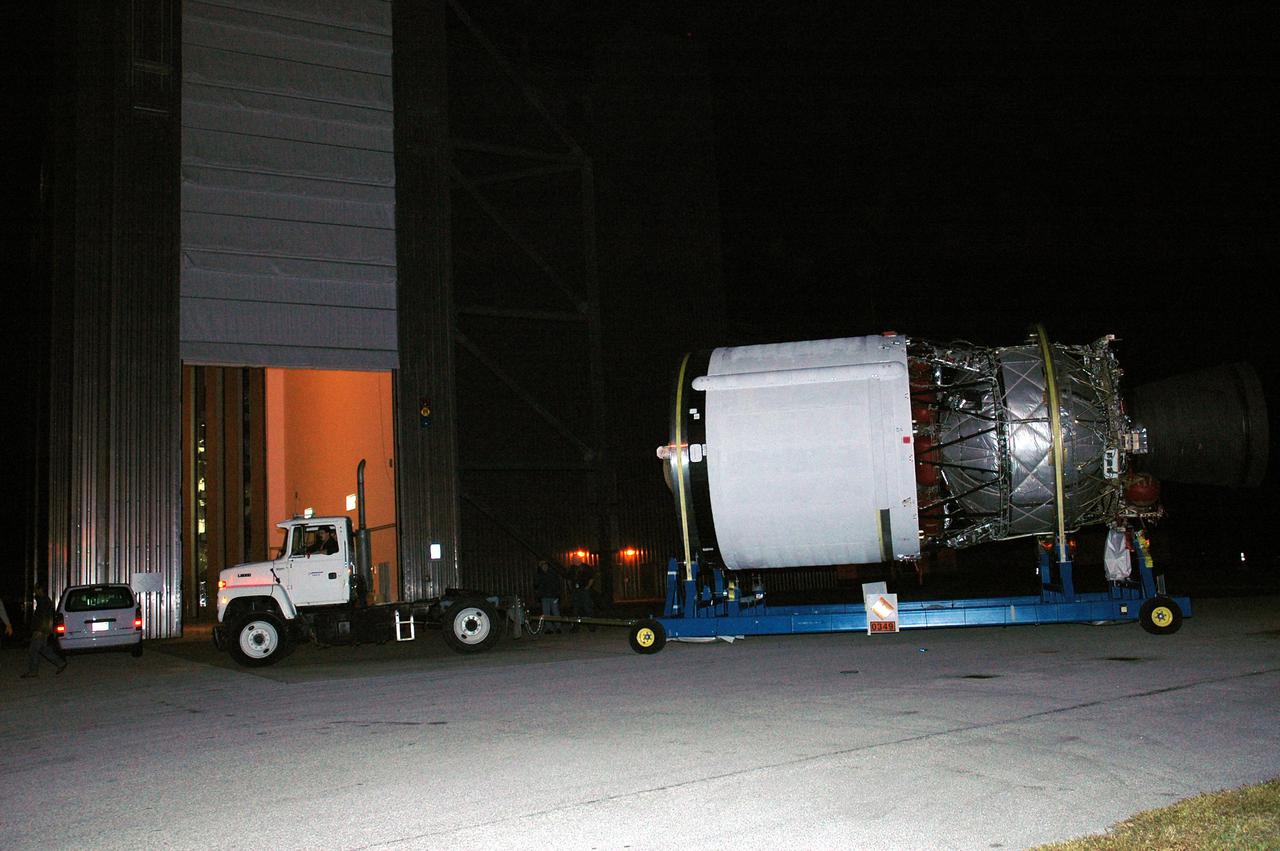
KENNEDY SPACE CENTER, FLA. - In the pre-dawn hours this morning, the Boeing Delta IV second stage leaves the Delta Operations Center in Cape Canaveral, Fla.. It is being moved to the Horizontal Integration Facility (HIF) for further processing. The Delta IV is the launch vehicle for the GOES-N satellite. Geostationary Operational Environmental Satellites (GOES) are sponsored by the National Aeronautics and Space Administration (NASA) and the National Oceanic and Atmospheric Administration (NOAA). GOES-N is the first in the next series of GOES satellites, N-P. The multi-mission GOES series N-P will be a vital contributor to weather, solar and space operations and science. The GOES N-P series will aid activities ranging from severe storm warnings to resource management and advances in science. GOES-N is scheduled to launch May 4 from Cape Canaveral Air Force Station, Fla.
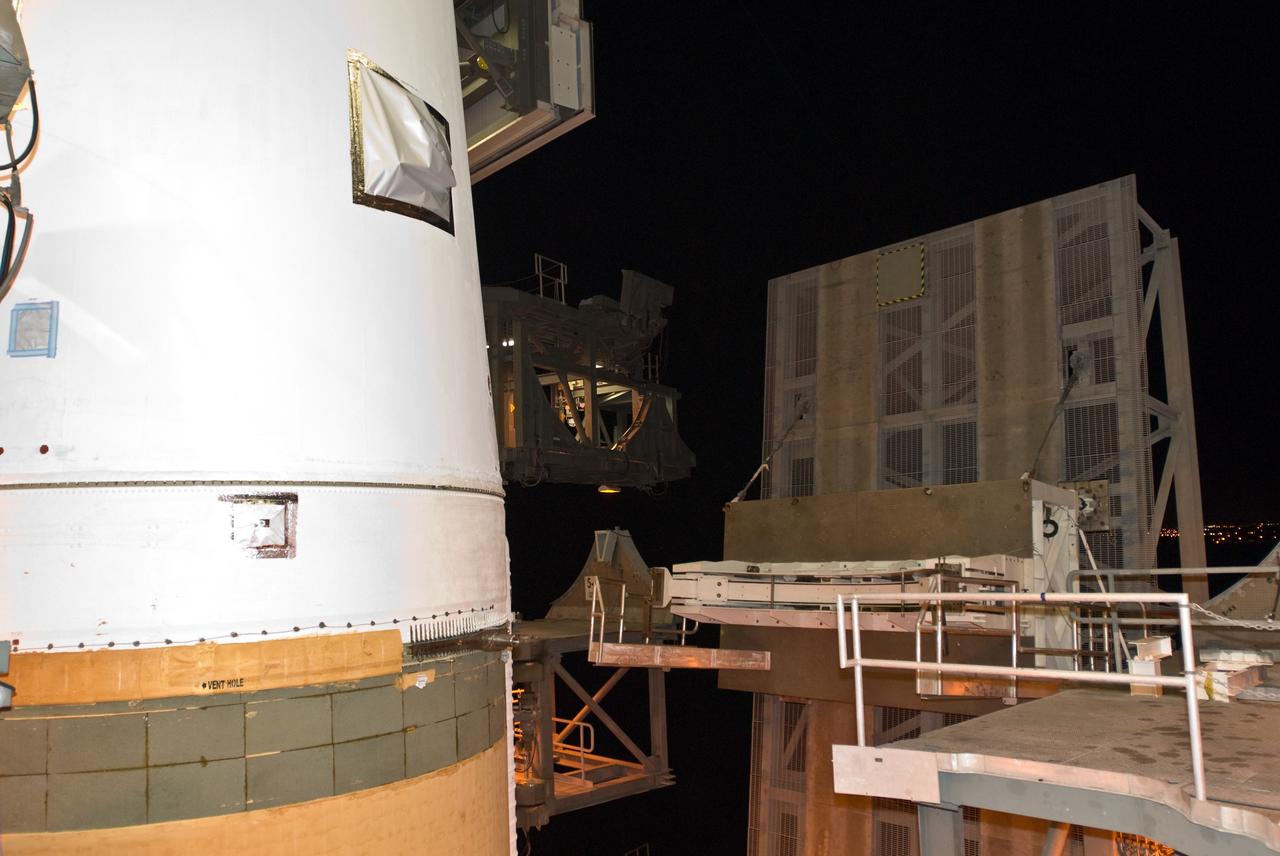
CAPE CANAVERAL, Fla. – On Launch Pad 37 at Cape Canaveral Air Force Station in Florida, the lifting mechanism that raised the GOES-O and Delta IV upper stage to vertical is being detached from the spacecraft-Delta stack. GOES–O is one of a series of Geostationary Operational Environmental Satellites. The multi-mission GOES series N-P will be a vital contributor to weather, solar and space operations and science. NASA and the National Oceanic and Atmospheric Administration, or NOAA, are actively engaged in a cooperative program to expand the existing GOES system with the launch of the GOES N-P satellites. Launch of the GOES-O is targeted for no earlier than April 2009. Photo credit: NASA/Jim Grossmann
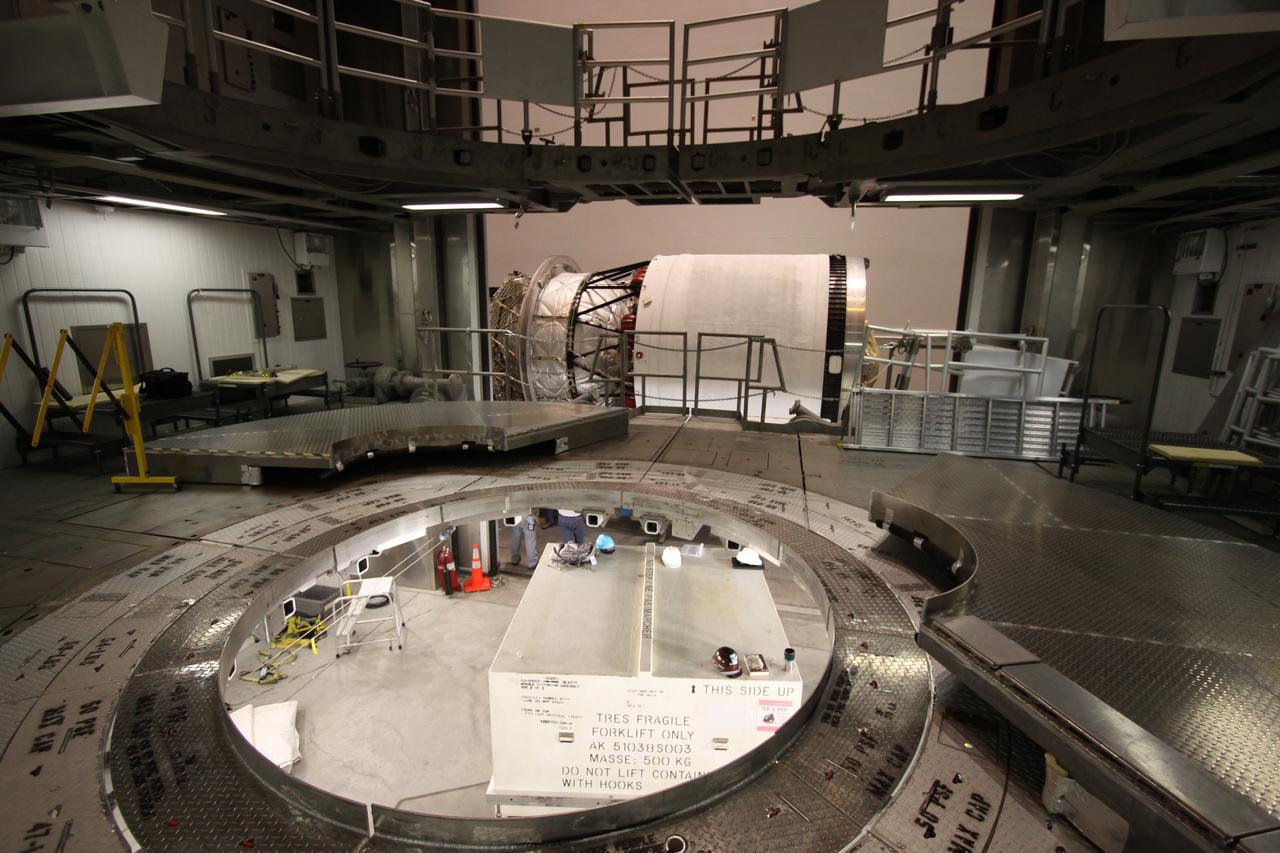
CAPE CANAVERAL, Fla. – The second stage of a Delta IV rocket is prepared for hoisting into a test cell to begin checkout in the hangar of the Delta Operations Center at Cape Canaveral Air Force Station in Florida. The United Launch Alliance Delta IV rocket is the vehicle slated to launch GOES-P, the latest Geostationary Operational Environmental Satellite developed by NASA for the National Oceanic and Atmospheric Administration, or NOAA. A meteorological satellite, GOES-P is designed to watch for storm development and observed current weather conditions on Earth. Launch of GOES-P is scheduled for no earlier than Feb. 25, 2010, from Launch Complex 37. For information on GOES-P, visit http://goespoes.gsfc.nasa.gov/goes/spacecraft/n_p_spacecraft.html. Photo credit: NASA/Troy Cryder
CAPE CANAVERAL, Fla. – Workers prepare to hoist the second stage of a Delta IV rocket into a test cell for checkout in the hangar of the Delta Operations Center at Cape Canaveral Air Force Station in Florida. The United Launch Alliance Delta IV rocket is the vehicle slated to launch GOES-P, the latest Geostationary Operational Environmental Satellite developed by NASA for the National Oceanic and Atmospheric Administration, or NOAA. A meteorological satellite, GOES-P is designed to watch for storm development and observed current weather conditions on Earth. Launch of GOES-P is scheduled for no earlier than Feb. 25, 2010, from Launch Complex 37. For information on GOES-P, visit http://goespoes.gsfc.nasa.gov/goes/spacecraft/n_p_spacecraft.html. Photo credit: NASA/Troy Cryder
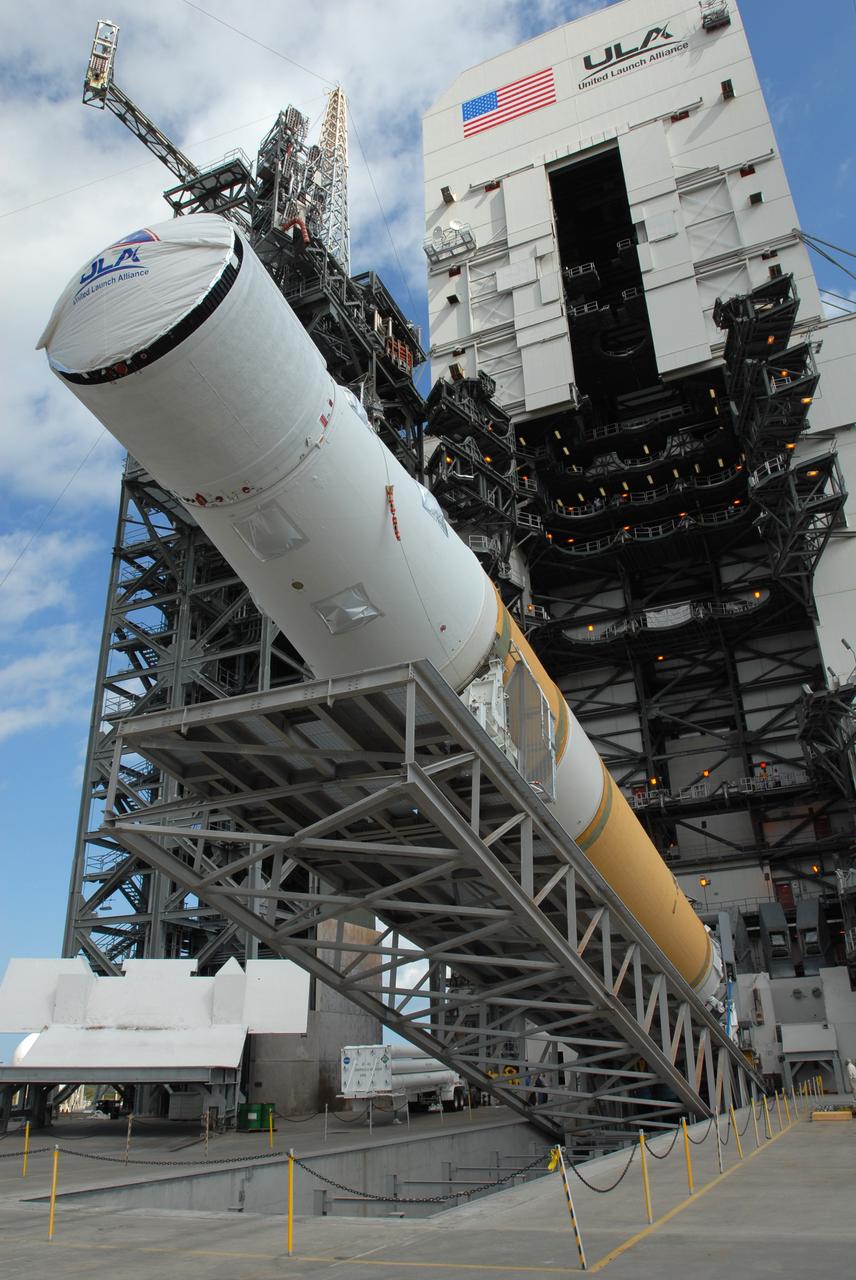
CAPE CANAVERAL, Fla. – On Launch Pad 37 at Cape Canaveral Air Force Station in Florida, the GOES-O and Delta IV upper stage are being raised to vertical. They will be moved into the mobile service tower for prelaunch preparations. GOES–O is one of a series of Geostationary Operational Environmental Satellites. The multi-mission GOES series N-P will be a vital contributor to weather, solar and space operations and science. NASA and the National Oceanic and Atmospheric Administration, or NOAA, are actively engaged in a cooperative program to expand the existing GOES system with the launch of the GOES N-P satellites. Launch of the GOES-O is targeted for no earlier than April 2009. Photo credit: NASA/Jim Grossmann
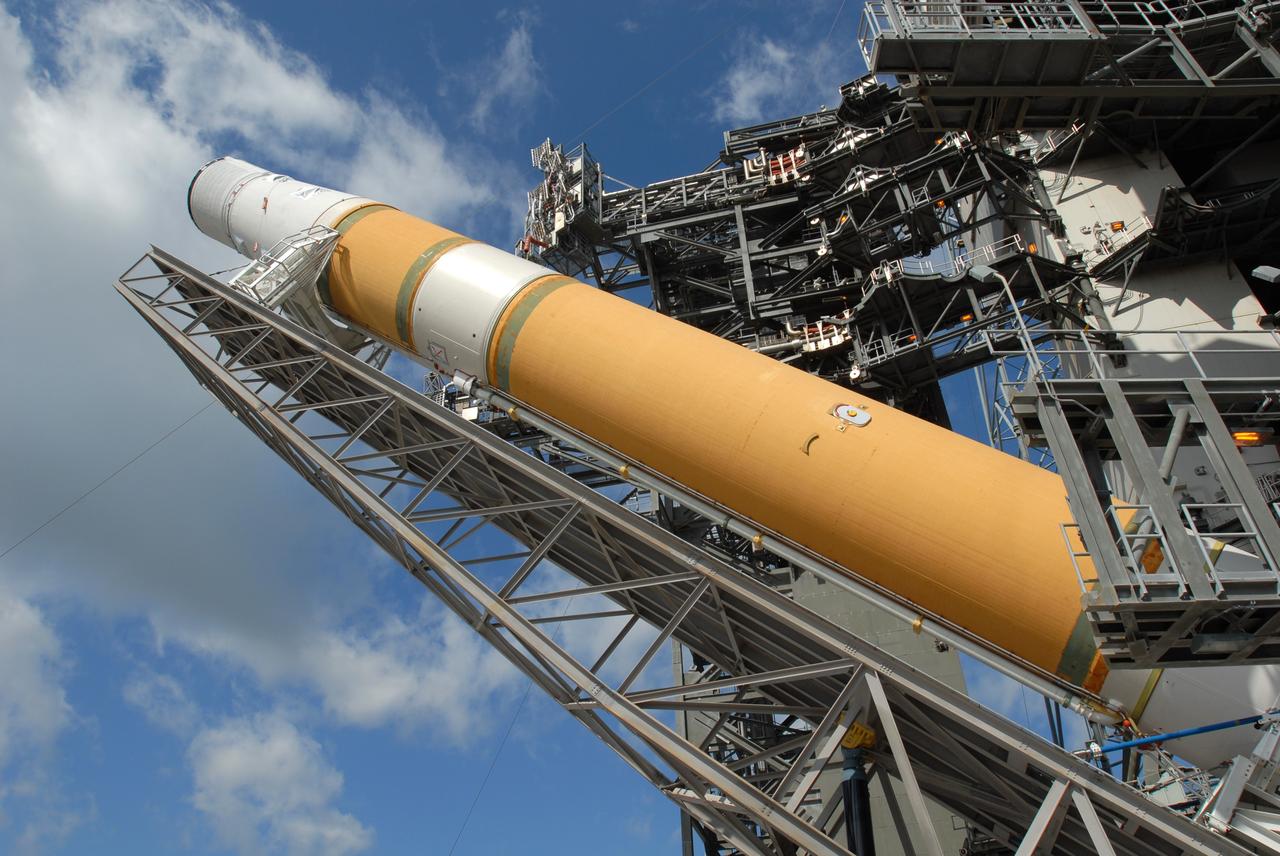
CAPE CANAVERAL, Fla. – On Launch Pad 37 at Cape Canaveral Air Force Station in Florida, the GOES-O and Delta IV upper stage are being raised to vertical. They will be moved into the mobile service tower for prelaunch preparations. GOES–O is one of a series of Geostationary Operational Environmental Satellites. The multi-mission GOES series N-P will be a vital contributor to weather, solar and space operations and science. NASA and the National Oceanic and Atmospheric Administration, or NOAA, are actively engaged in a cooperative program to expand the existing GOES system with the launch of the GOES N-P satellites. Launch of the GOES-O is targeted for no earlier than April 2009. Photo credit: NASA/Jim Grossmann
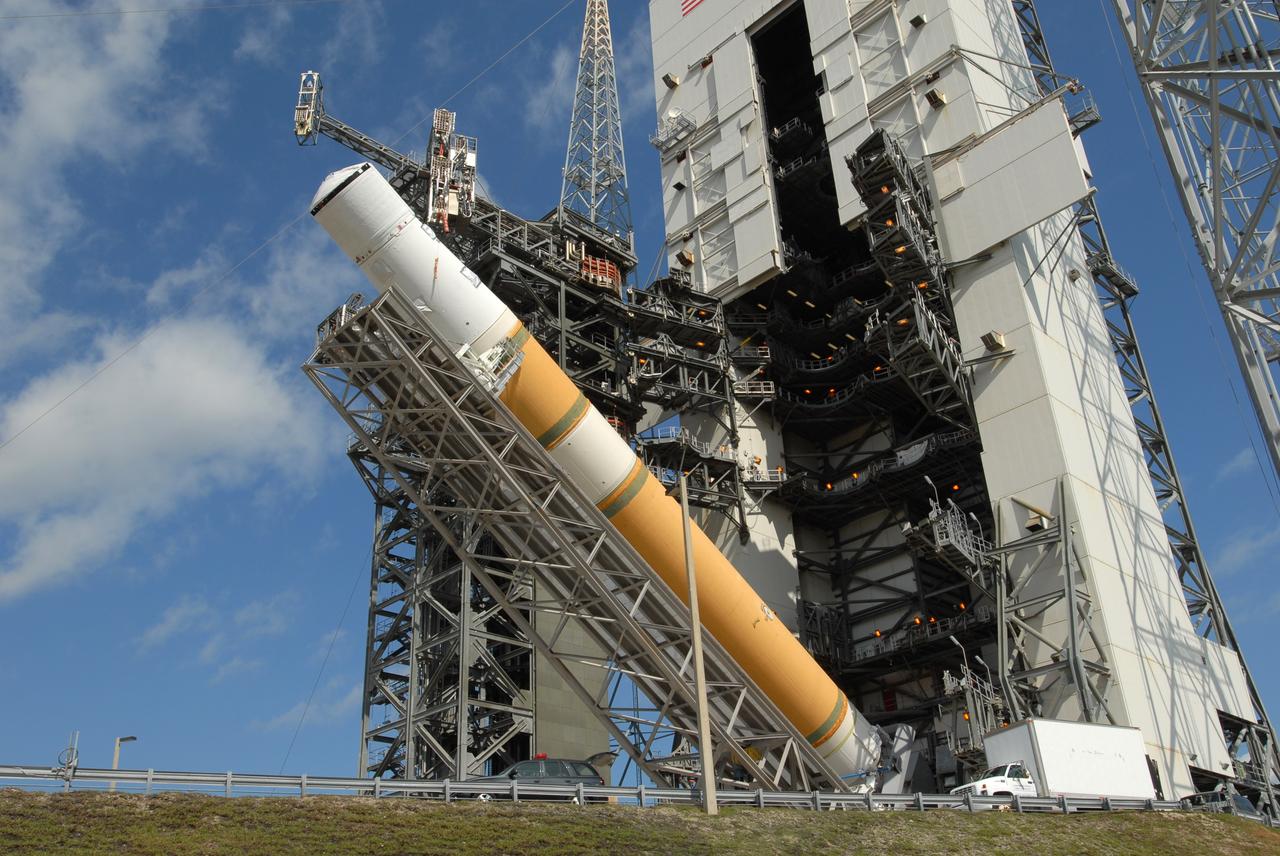
CAPE CANAVERAL, Fla. – On Launch Pad 37 at Cape Canaveral Air Force Station in Florida, the GOES-O and Delta IV upper stage are being raised to vertical. They will be moved into the mobile service tower for prelaunch preparations. GOES–O is one of a series of Geostationary Operational Environmental Satellites. The multi-mission GOES series N-P will be a vital contributor to weather, solar and space operations and science. NASA and the National Oceanic and Atmospheric Administration, or NOAA, are actively engaged in a cooperative program to expand the existing GOES system with the launch of the GOES N-P satellites. Launch of the GOES-O is targeted for no earlier than April 2009. Photo credit: NASA/Jim Grossmann
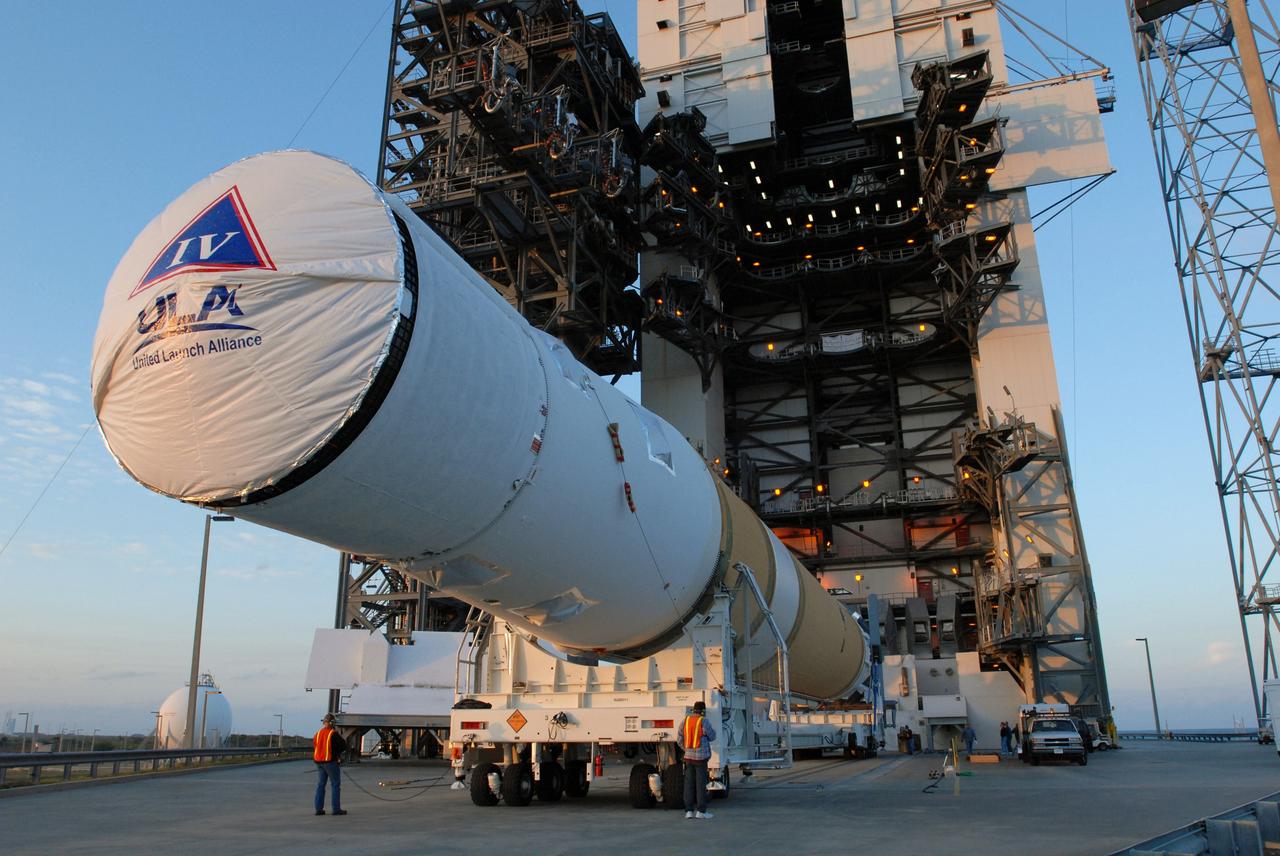
CAPE CANAVERAL, Fla. – At Cape Canaveral Air Force Station in Florida, the GOES-O and Delta IV second stage near the mobile service tower on Launch Pad 37. They will be raised to vertical and moved into the tower. GOES–O is one of a series of Geostationary Operational Environmental Satellites. The multi-mission GOES series N-P will be a vital contributor to weather, solar and space operations and science. NASA and the National Oceanic and Atmospheric Administration, or NOAA, are actively engaged in a cooperative program to expand the existing GOES system with the launch of the GOES N-P satellites. Launch of the GOES-O is targeted for no earlier than April 2009. Photo credit: NASA/Jim Grossmann
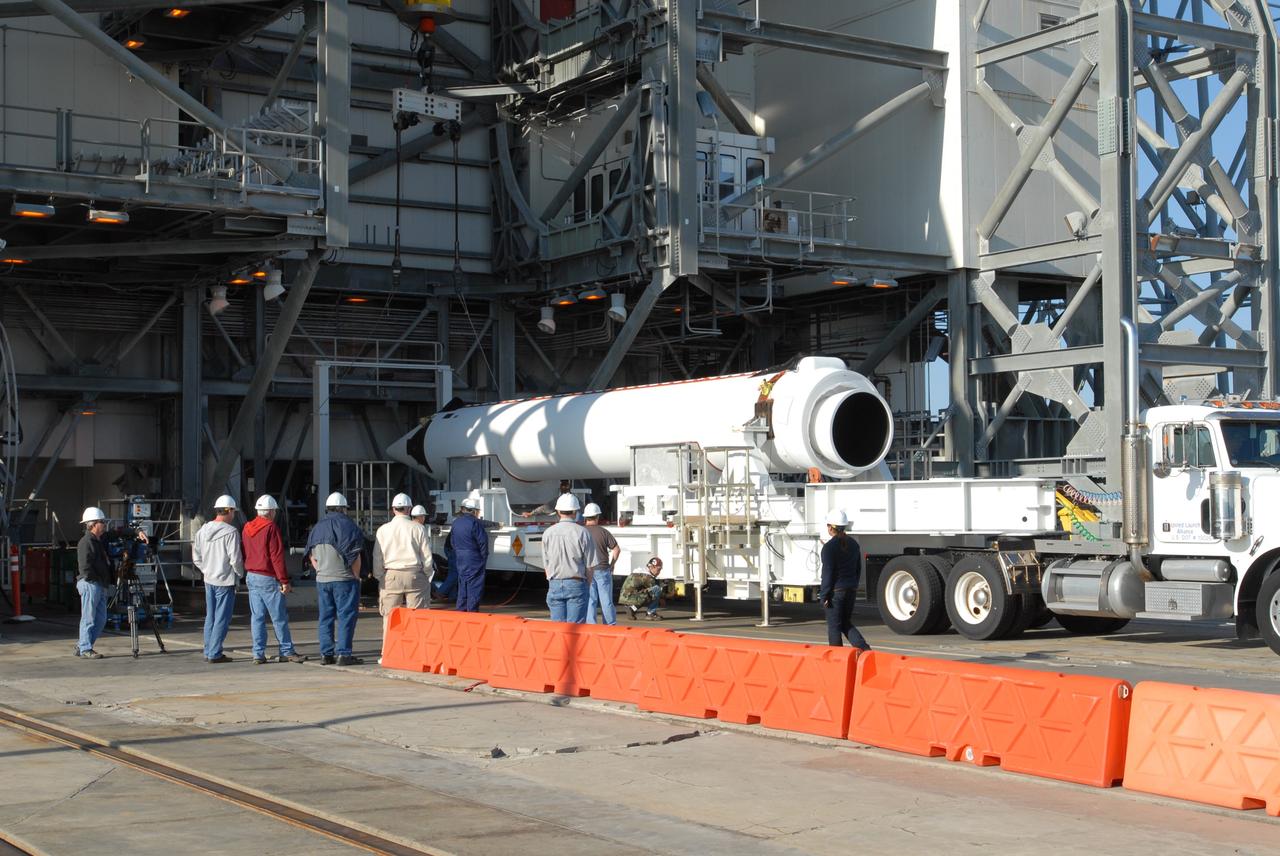
CAPE CANAVERAL, Fla. – On Launch Pad 37 at Cape Canaveral Air Force Station in Florida, lifting and mating of a solid rocket booster to the GOES-O Delta IV rocket is scrubbed due to high winds on the pad. GOES–O is one of a series of Geostationary Operational Environmental Satellites. The multi-mission GOES series N-P will be a vital contributor to weather, solar and space operations and science. NASA and the National Oceanic and Atmospheric Administration, or NOAA, are actively engaged in a cooperative program to expand the existing GOES system with the launch of the GOES N-P satellites. Launch of the GOES-O is targeted for no earlier than April 2009. Photo credit: NASA/Jim Grossmann
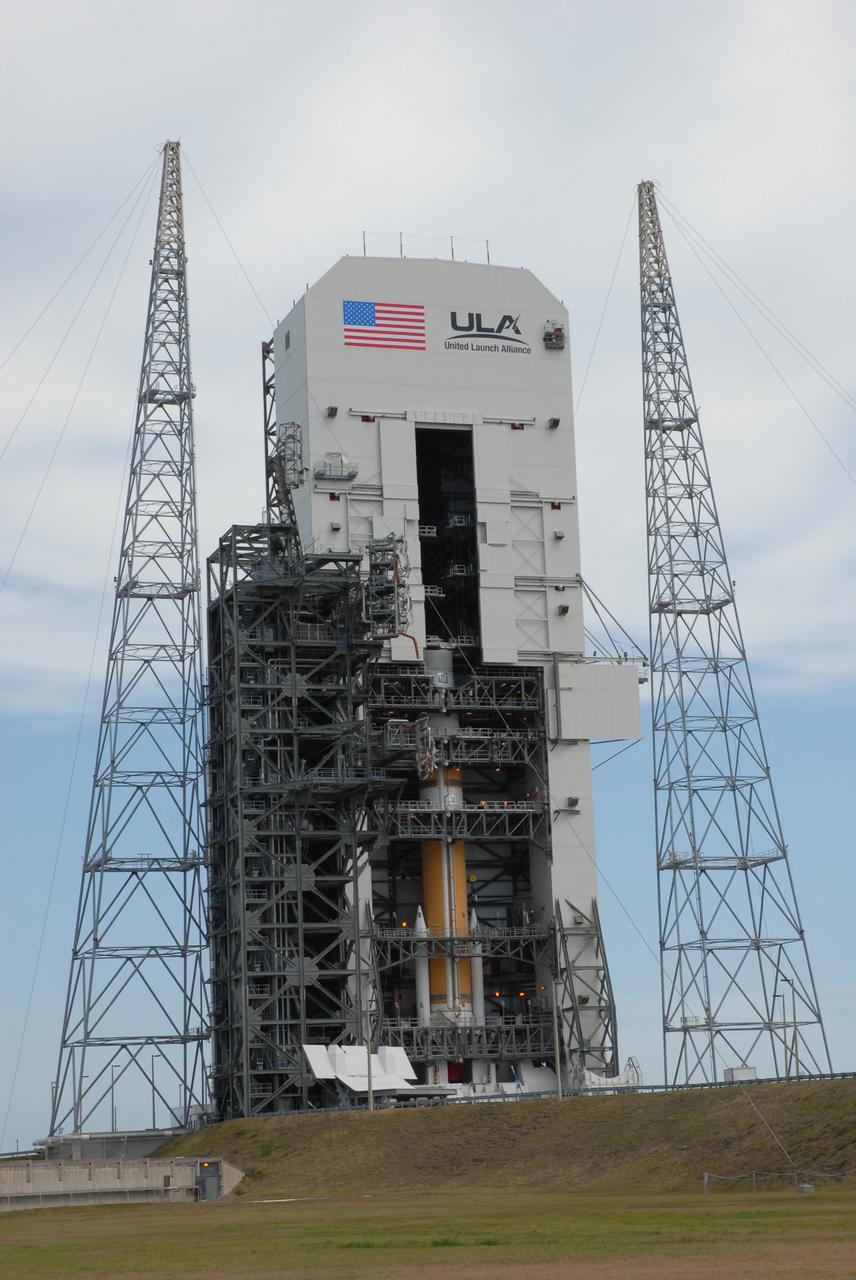
CAPE CANAVERAL, Fla. – On Launch Pad 37 at Cape Canaveral Air Force Station in Florida, the Delta IV launch vehicle for the GOES-O spacecraft stands in the mobile service tower flanked by its two solid rocket boosters. GOES–O is one of a series of Geostationary Operational Environmental Satellites. The multi-mission GOES series N-P will be a vital contributor to weather, solar and space operations and science. NASA and the National Oceanic and Atmospheric Administration, or NOAA, are actively engaged in a cooperative program to expand the existing GOES system with the launch of the GOES N-P satellites. Launch of the GOES-O is targeted for no earlier than April 2009. Photo credit: NASA/Jack Pfaller
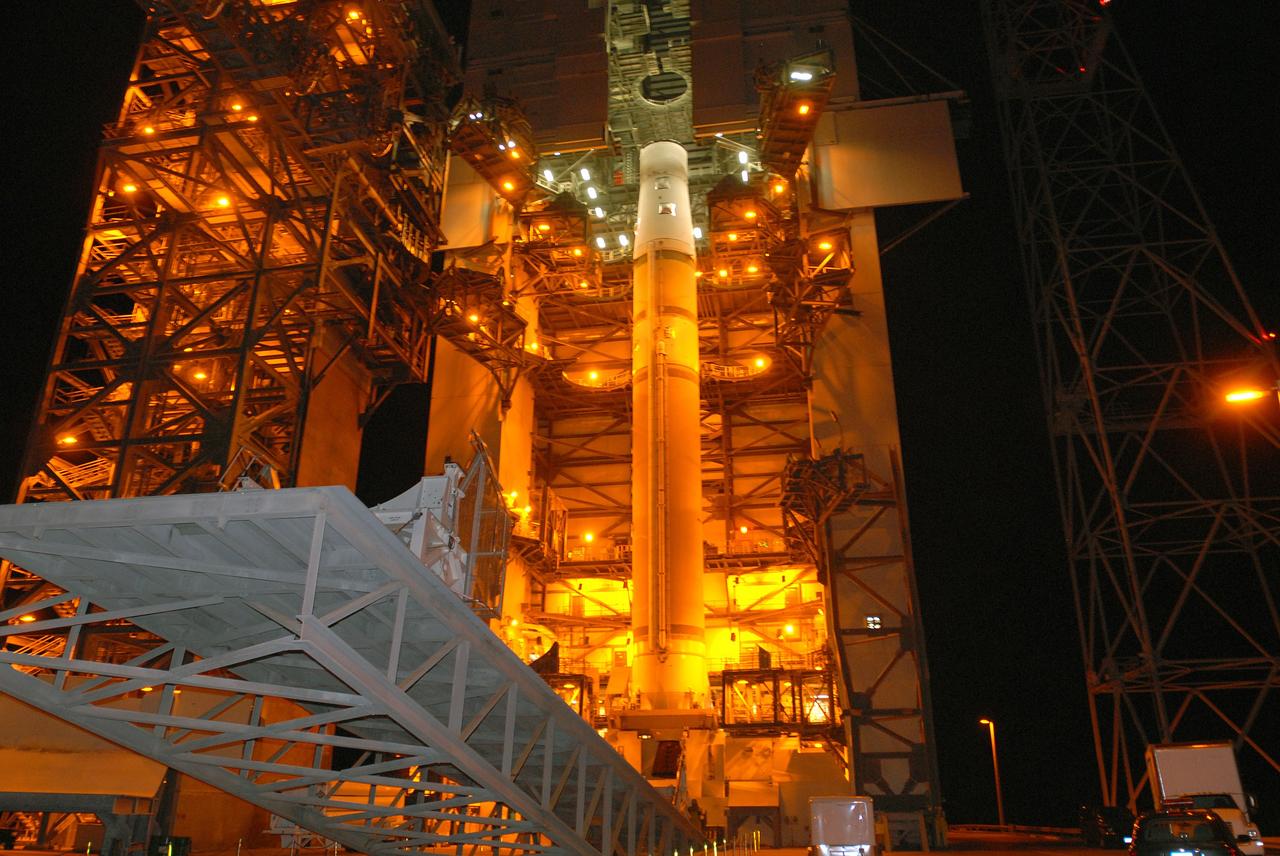
CAPE CANAVERAL, Fla. – On Launch Pad 37 at Cape Canaveral Air Force Station in Florida, the GOES-O and Delta IV upper stage stand erect in front of the mobile service tower after lowering of the lifting mechanism, at left. GOES–O is one of a series of Geostationary Operational Environmental Satellites. The multi-mission GOES series N-P will be a vital contributor to weather, solar and space operations and science. NASA and the National Oceanic and Atmospheric Administration, or NOAA, are actively engaged in a cooperative program to expand the existing GOES system with the launch of the GOES N-P satellites. Launch of the GOES-O is targeted for no earlier than April 2009. Photo credit: NASA/Jim Grossmann
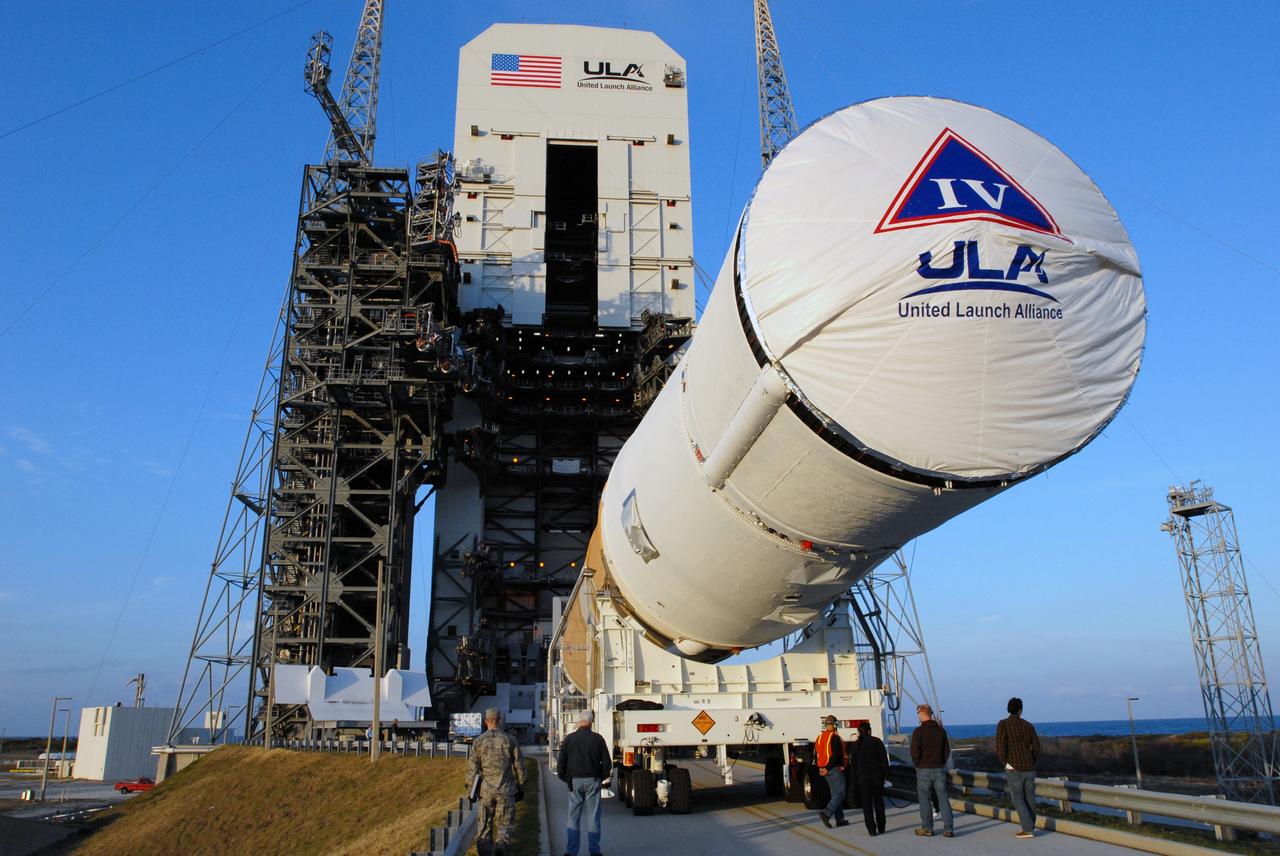
CAPE CANAVERAL, Fla. – At Cape Canaveral Air Force Station in Florida, the GOES-O and Delta IV second stage near the mobile service tower on Launch Pad 37. They will be raised to vertical and moved into the tower. GOES–O is one of a series of Geostationary Operational Environmental Satellites. The multi-mission GOES series N-P will be a vital contributor to weather, solar and space operations and science. NASA and the National Oceanic and Atmospheric Administration, or NOAA, are actively engaged in a cooperative program to expand the existing GOES system with the launch of the GOES N-P satellites. Launch of the GOES-O is targeted for no earlier than April 2009. Photo credit: NASA/Jim Grossmann
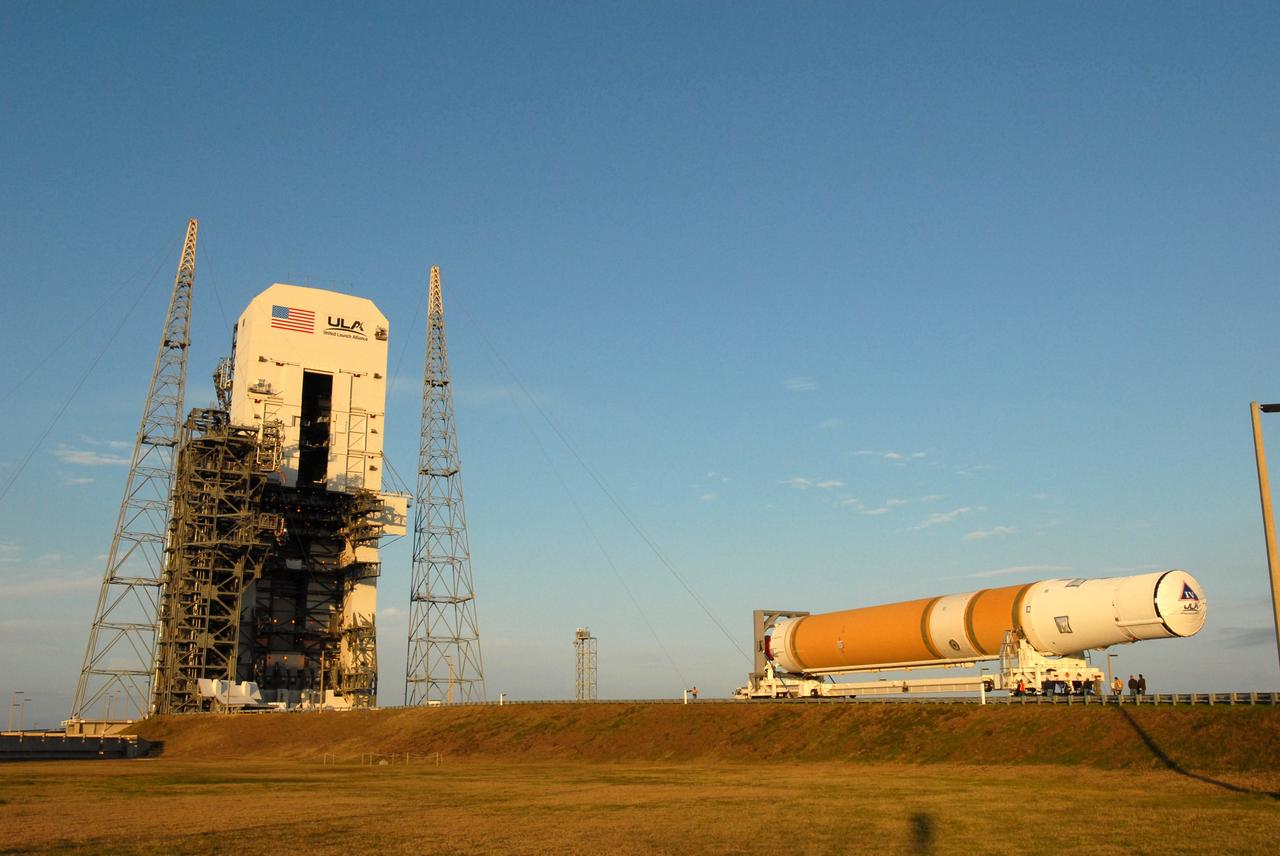
CAPE CANAVERAL, Fla. – At Cape Canaveral Air Force Station in Florida, the GOES-O and Delta IV second stage arrive on Launch Pad 37. They will be raised to vertical and moved into the mobile service tower. GOES–O is one of a series of Geostationary Operational Environmental Satellites. The multi-mission GOES series N-P will be a vital contributor to weather, solar and space operations and science. NASA and the National Oceanic and Atmospheric Administration, or NOAA, are actively engaged in a cooperative program to expand the existing GOES system with the launch of the GOES N-P satellites. Launch of the GOES-O is targeted for no earlier than April 2009. Photo credit: NASA/Jim Grossmann
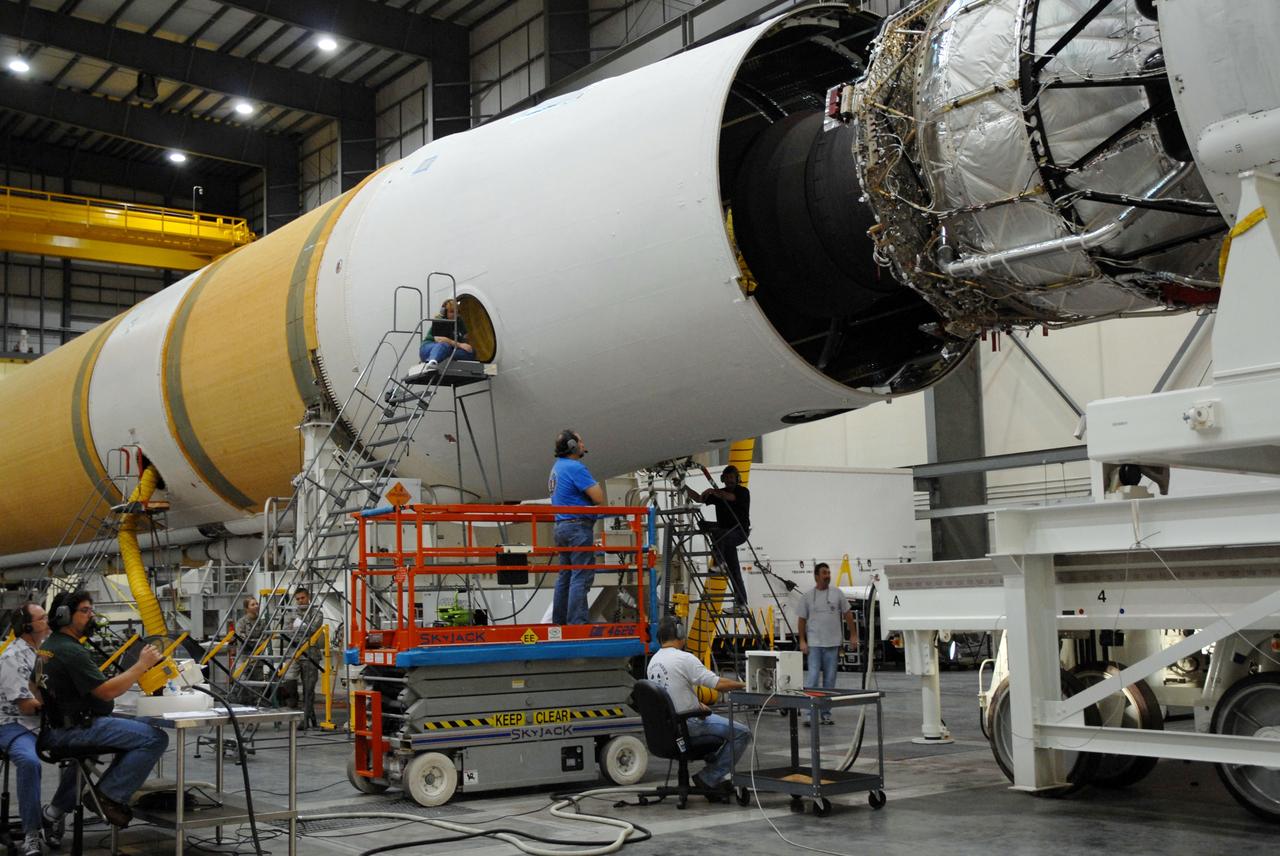
CAPE CANAVERAL, Fla. -- The GOES-O/Delta IV second stage is being mated to the first stage in the Horizontal Integration Facility on Complex 37 at Cape Canaveral Air Force Station in Florida. GOES–O is one of a series of Geostationary Operational Environmental Satellites. The multi-mission GOES series N-P will be a vital contributor to weather, solar and space operations and science. NASA and the National Oceanic and Atmospheric Administration, or NOAA, are actively engaged in a cooperative program to expand the existing GOES system with the launch of the GOES N-P satellites. Launch of the GOES-O is targeted for no earlier than April 2009. Photo credit: NASA/Jack Pfaller

CAPE CANAVERAL, Fla. – At Cape Canaveral Air Force Station in Florida, the GOES-O and Delta IV second stage roll toward Launch Pad 37. GOES–O is one of a series of Geostationary Operational Environmental Satellites. The multi-mission GOES series N-P will be a vital contributor to weather, solar and space operations and science. NASA and the National Oceanic and Atmospheric Administration, or NOAA, are actively engaged in a cooperative program to expand the existing GOES system with the launch of the GOES N-P satellites. Launch of the GOES-O is targeted for no earlier than April 2009. Photo credit: NASA/Jim Grossmann
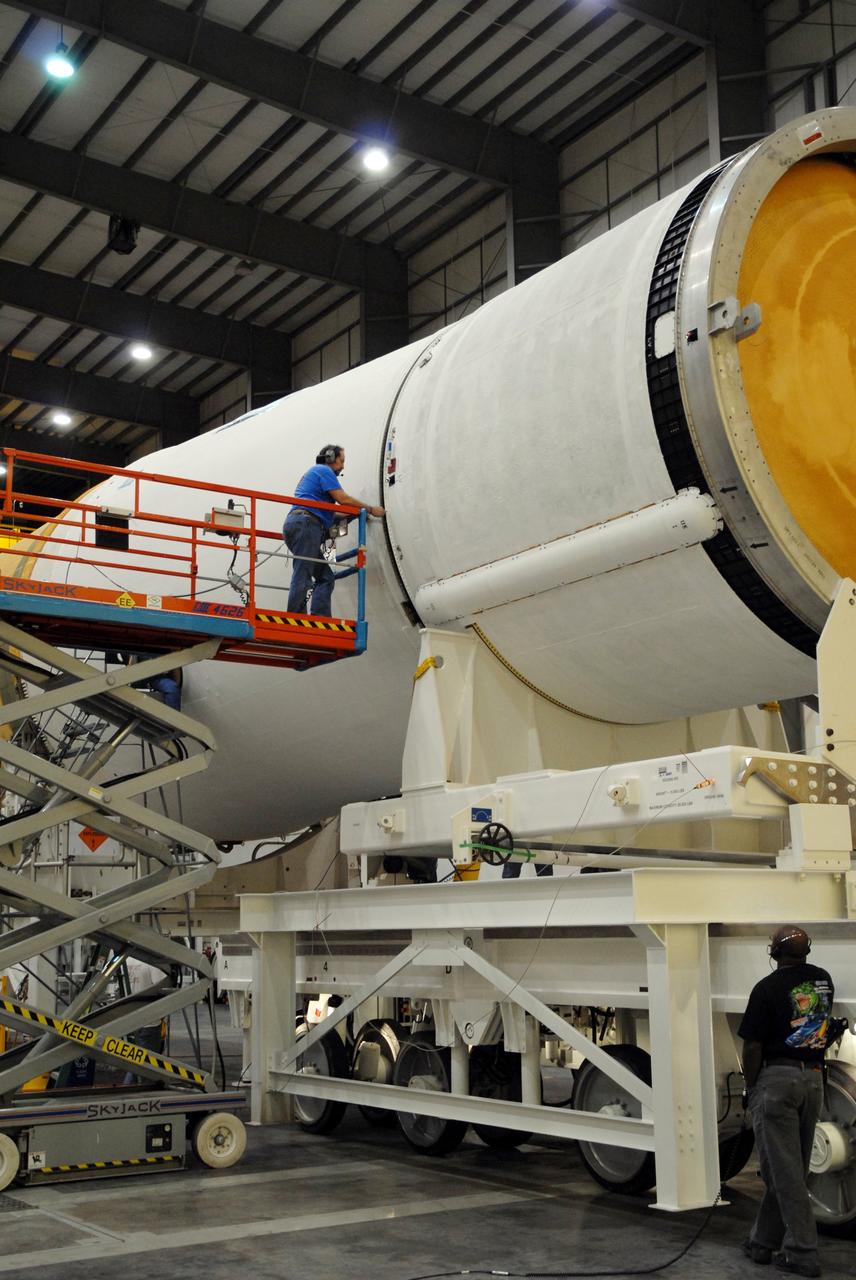
CAPE CANAVERAL, Fla. -- The GOES-O/Delta IV second stage is mated to the first stage in the Horizontal Integration Facility on Complex 37 at Cape Canaveral Air Force Station in Florida. GOES–O is one of a series of Geostationary Operational Environmental Satellites. The multi-mission GOES series N-P will be a vital contributor to weather, solar and space operations and science. NASA and the National Oceanic and Atmospheric Administration, or NOAA, are actively engaged in a cooperative program to expand the existing GOES system with the launch of the GOES N-P satellites. Launch of the GOES-O is targeted for no earlier than April 2009. Photo credit: NASA/Jack Pfaller
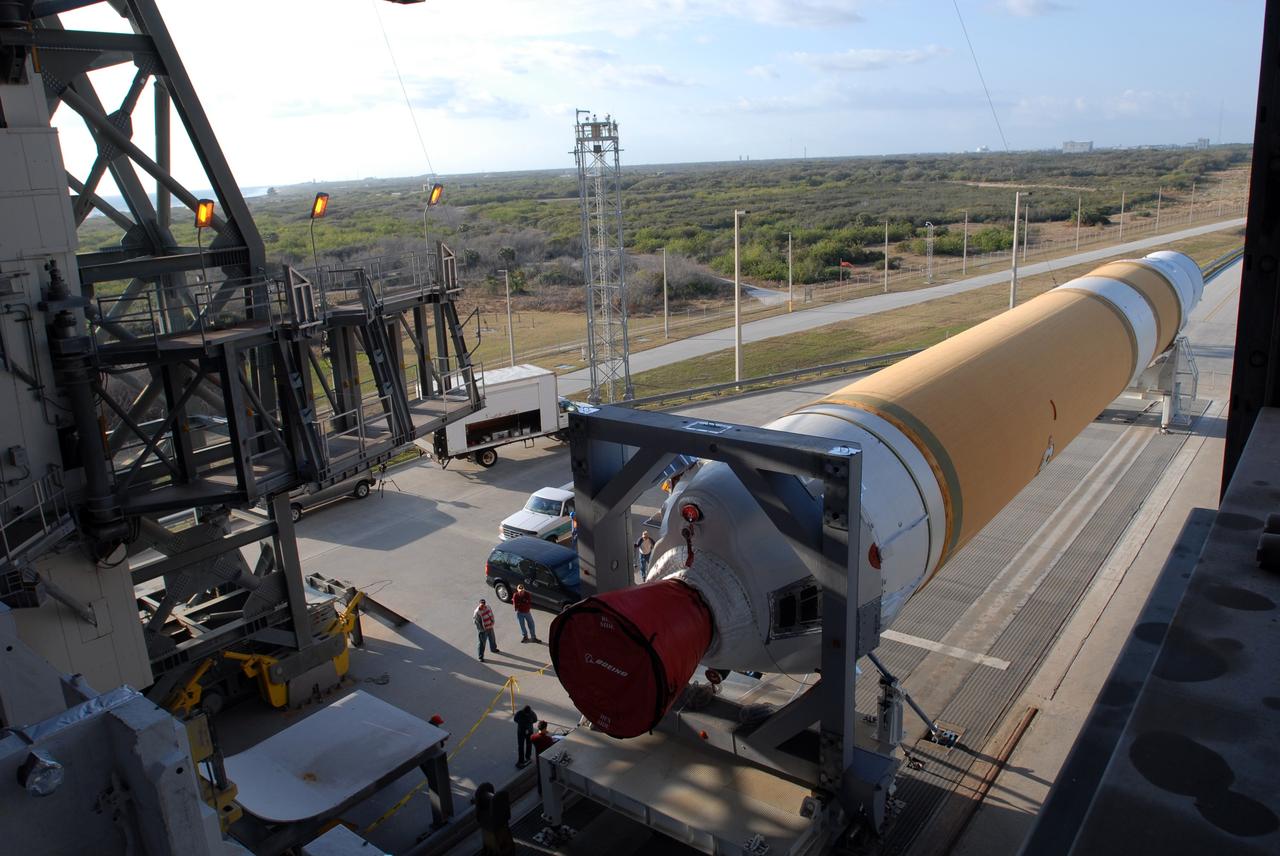
CAPE CANAVERAL, Fla. – On Launch Pad 37 at Cape Canaveral Air Force Station in Florida, the GOES-O and Delta IV upper stage are waiting to be raised to vertical. They will be moved into the mobile service tower for prelaunch preparations. GOES–O is one of a series of Geostationary Operational Environmental Satellites. The multi-mission GOES series N-P will be a vital contributor to weather, solar and space operations and science. NASA and the National Oceanic and Atmospheric Administration, or NOAA, are actively engaged in a cooperative program to expand the existing GOES system with the launch of the GOES N-P satellites. Launch of the GOES-O is targeted for no earlier than April 2009. Photo credit: NASA/Jim Grossmann
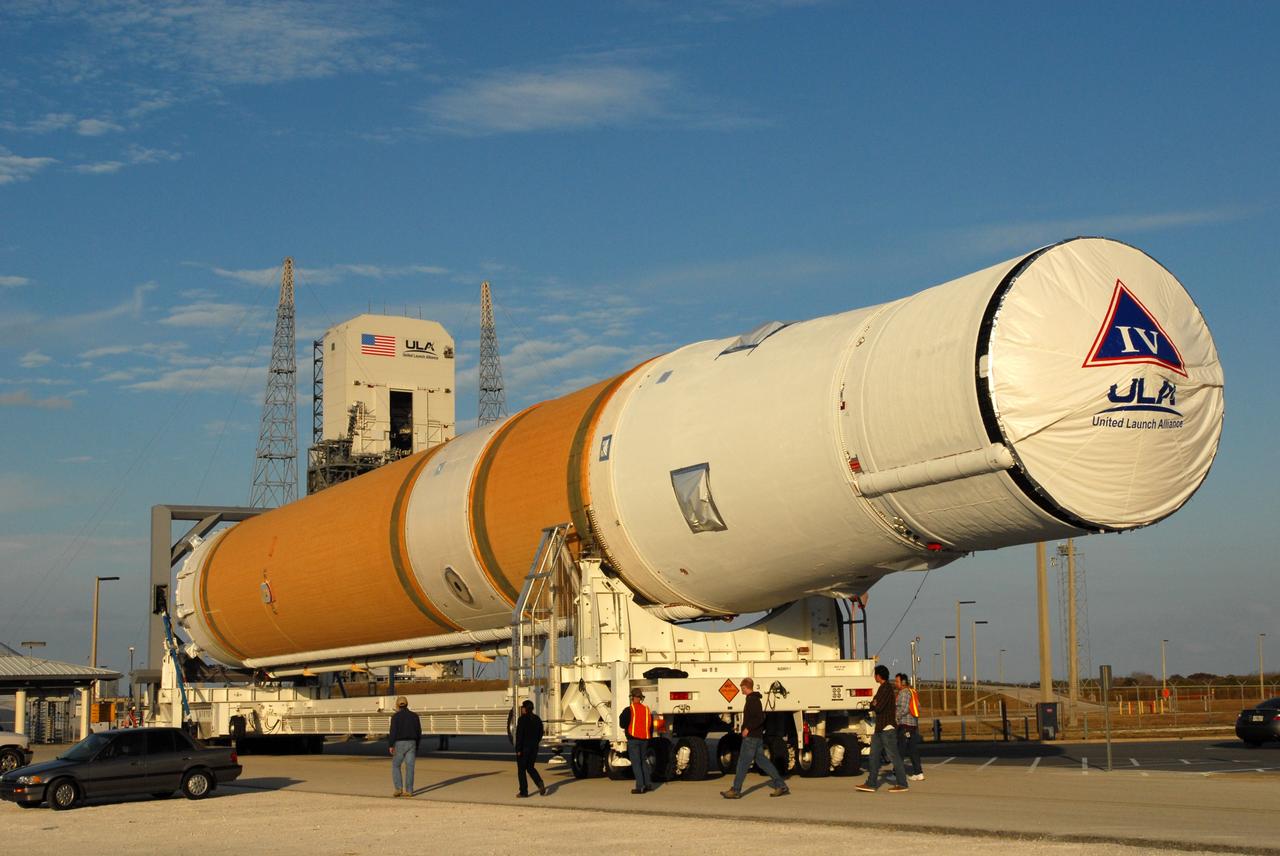
CAPE CANAVERAL, Fla. – At Cape Canaveral Air Force Station in Florida, the GOES-O and Delta IV second stage are transported to Launch Pad 37. GOES–O is one of a series of Geostationary Operational Environmental Satellites. The multi-mission GOES series N-P will be a vital contributor to weather, solar and space operations and science. NASA and the National Oceanic and Atmospheric Administration, or NOAA, are actively engaged in a cooperative program to expand the existing GOES system with the launch of the GOES N-P satellites. Launch of the GOES-O is targeted for no earlier than April 2009. Photo credit: NASA/Jim Grossmann
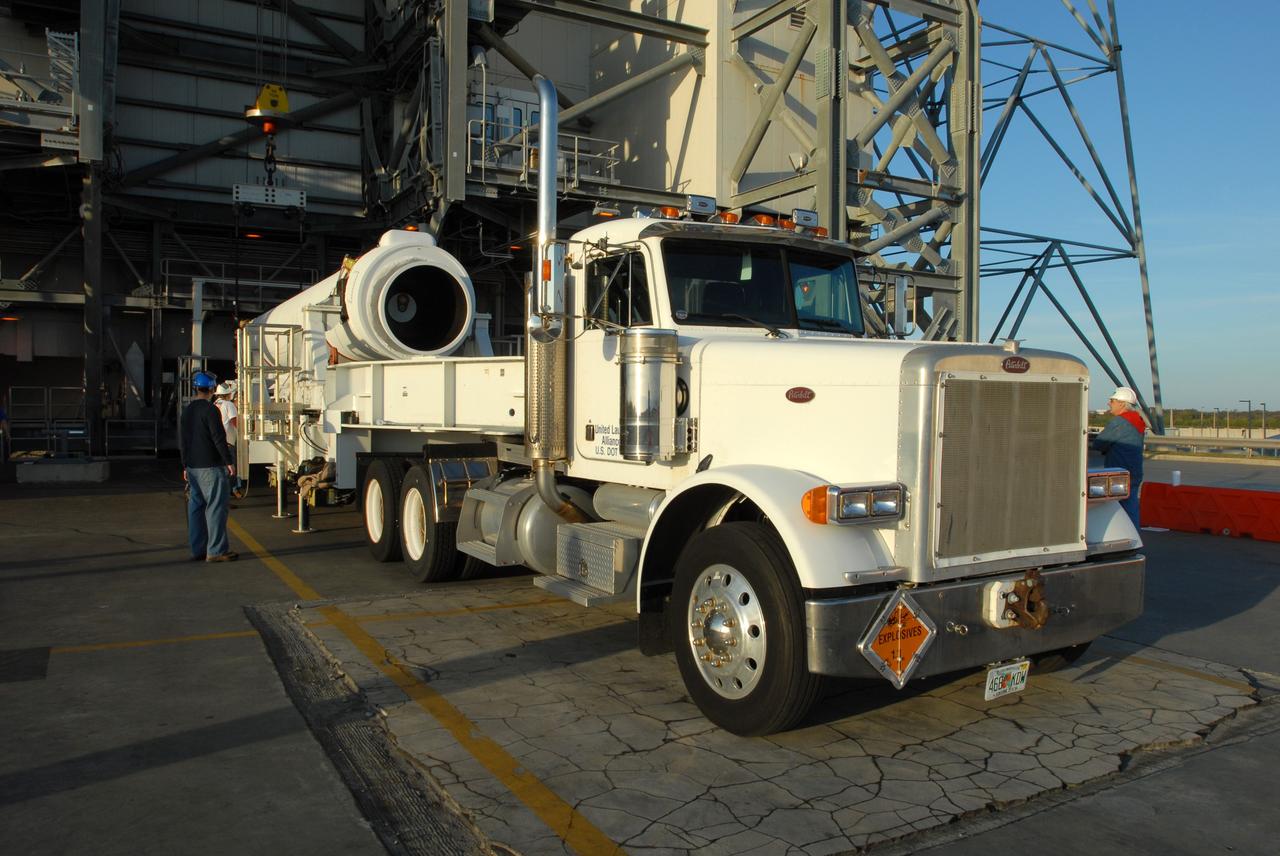
CAPE CANAVERAL, Fla. – One of two solid rocket boosters arrives on Launch Pad 37 at Cape Canaveral Air Force Station. it is the left rocket and it will be lifted into the mobile service tower and mated to the GOES-O Delta IV launch vehicle. GOES–O is one of a series of Geostationary Operational Environmental Satellites. The multi-mission GOES series N-P will be a vital contributor to weather, solar and space operations and science. NASA and the National Oceanic and Atmospheric Administration, or NOAA, are actively engaged in a cooperative program to expand the existing GOES system with the launch of the GOES N-P satellites. Launch of the GOES-O is targeted for no earlier than April 2009. Photo credit: NASA/Ben Smegelsky

CAPE CANAVERAL, Fla. – At Cape Canaveral Air Force Station in Florida, the GOES-O and Delta IV second stage are transported to Launch Pad 37. GOES–O is one of a series of Geostationary Operational Environmental Satellites. The multi-mission GOES series N-P will be a vital contributor to weather, solar and space operations and science. NASA and the National Oceanic and Atmospheric Administration, or NOAA, are actively engaged in a cooperative program to expand the existing GOES system with the launch of the GOES N-P satellites. Launch of the GOES-O is targeted for no earlier than April 2009. Photo credit: NASA/Jim Grossmann
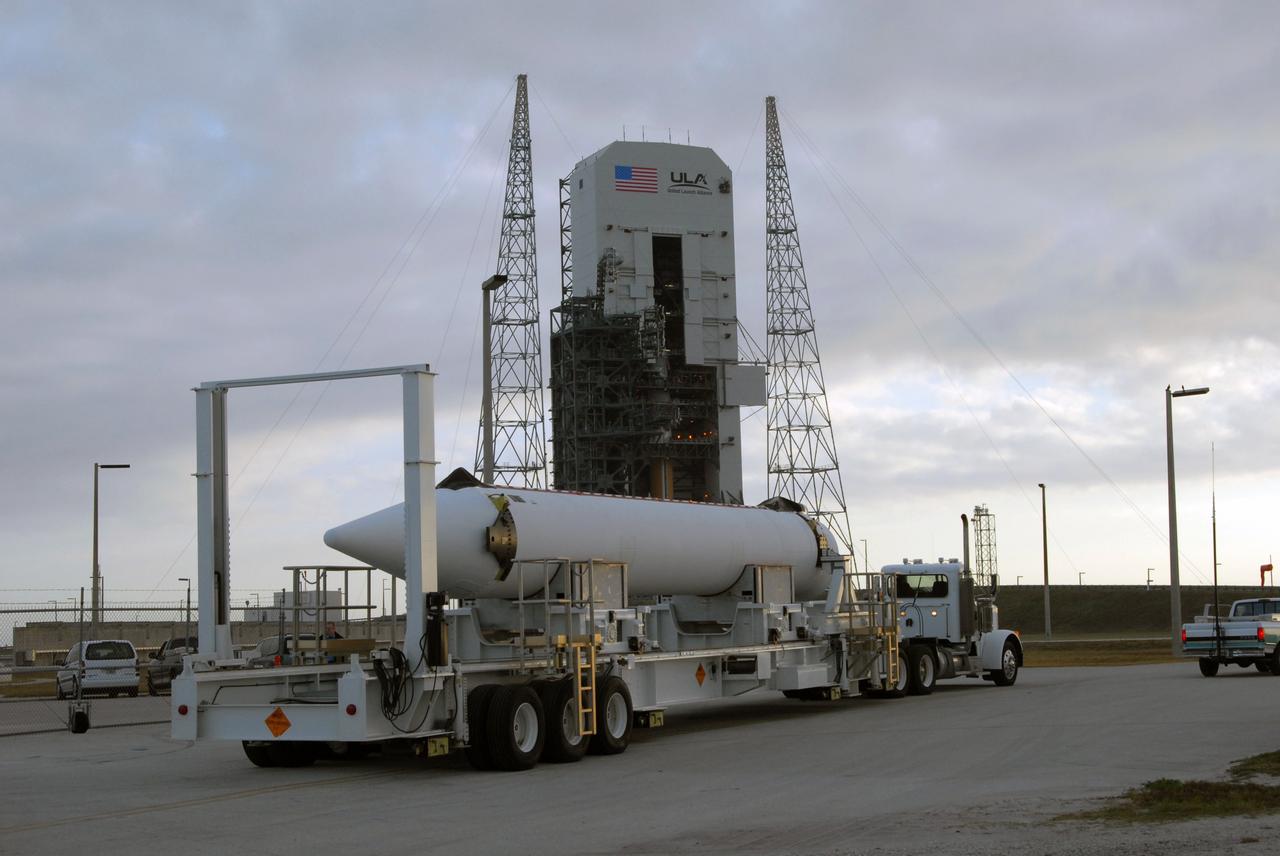
CAPE CANAVERAL, Fla. – The second of two solid rocket boosters arrives on Launch Pad 37 at Cape Canaveral Air Force Station in Florida. It is the rocket to be installed on the right side of the Delta IV launch vehicle for the GOES-O spacecraft. GOES–O is one of a series of Geostationary Operational Environmental Satellites. The multi-mission GOES series N-P will be a vital contributor to weather, solar and space operations and science. NASA and the National Oceanic and Atmospheric Administration, or NOAA, are actively engaged in a cooperative program to expand the existing GOES system with the launch of the GOES N-P satellites. Launch of the GOES-O is targeted for no earlier than April 2009. Photo credit: NASA/Jack Pfaller
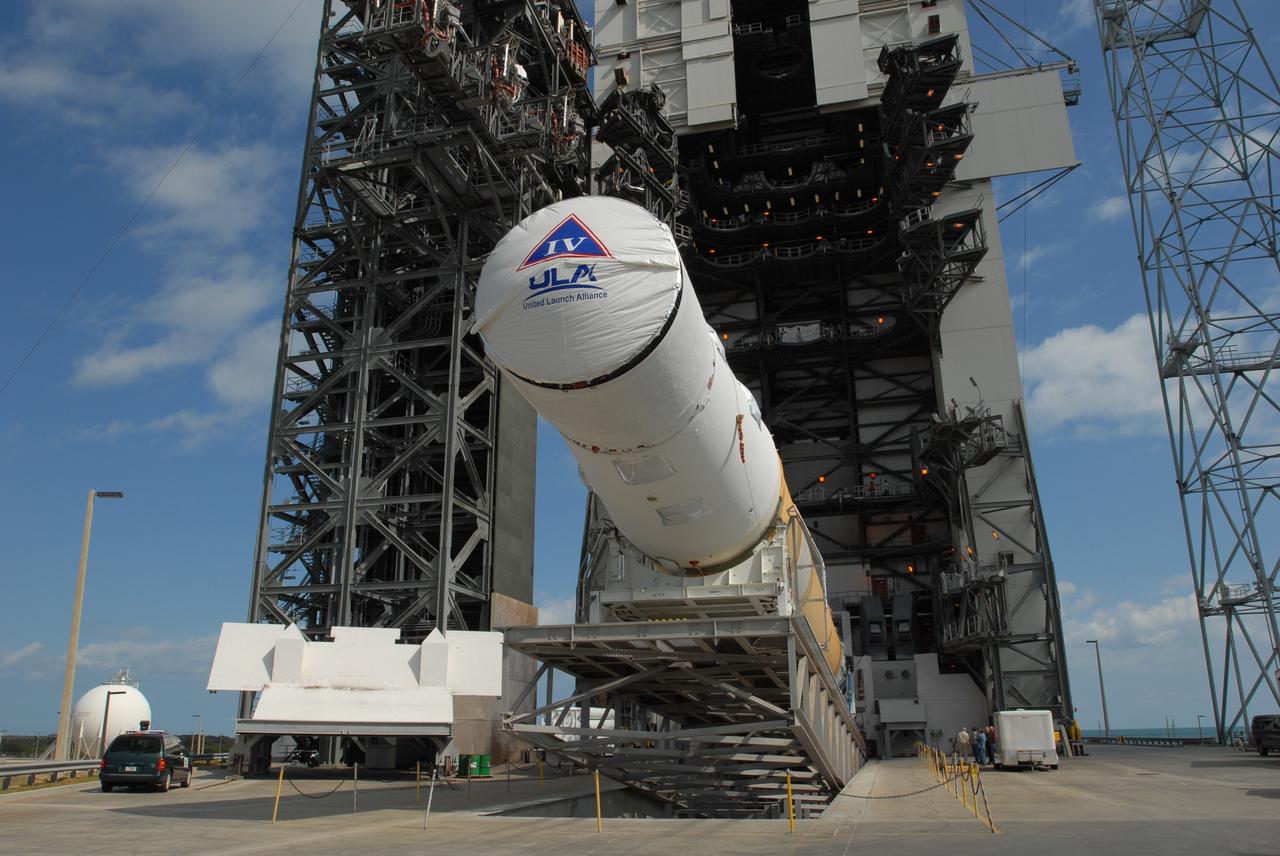
CAPE CANAVERAL, Fla. – On Launch Pad 37 at Cape Canaveral Air Force Station in Florida, the GOES-O and Delta IV upper stage are being raised to vertical. They will be moved into the mobile service tower for prelaunch preparations. GOES–O is one of a series of Geostationary Operational Environmental Satellites. The multi-mission GOES series N-P will be a vital contributor to weather, solar and space operations and science. NASA and the National Oceanic and Atmospheric Administration, or NOAA, are actively engaged in a cooperative program to expand the existing GOES system with the launch of the GOES N-P satellites. Launch of the GOES-O is targeted for no earlier than April 2009. Photo credit: NASA/Jim Grossmann
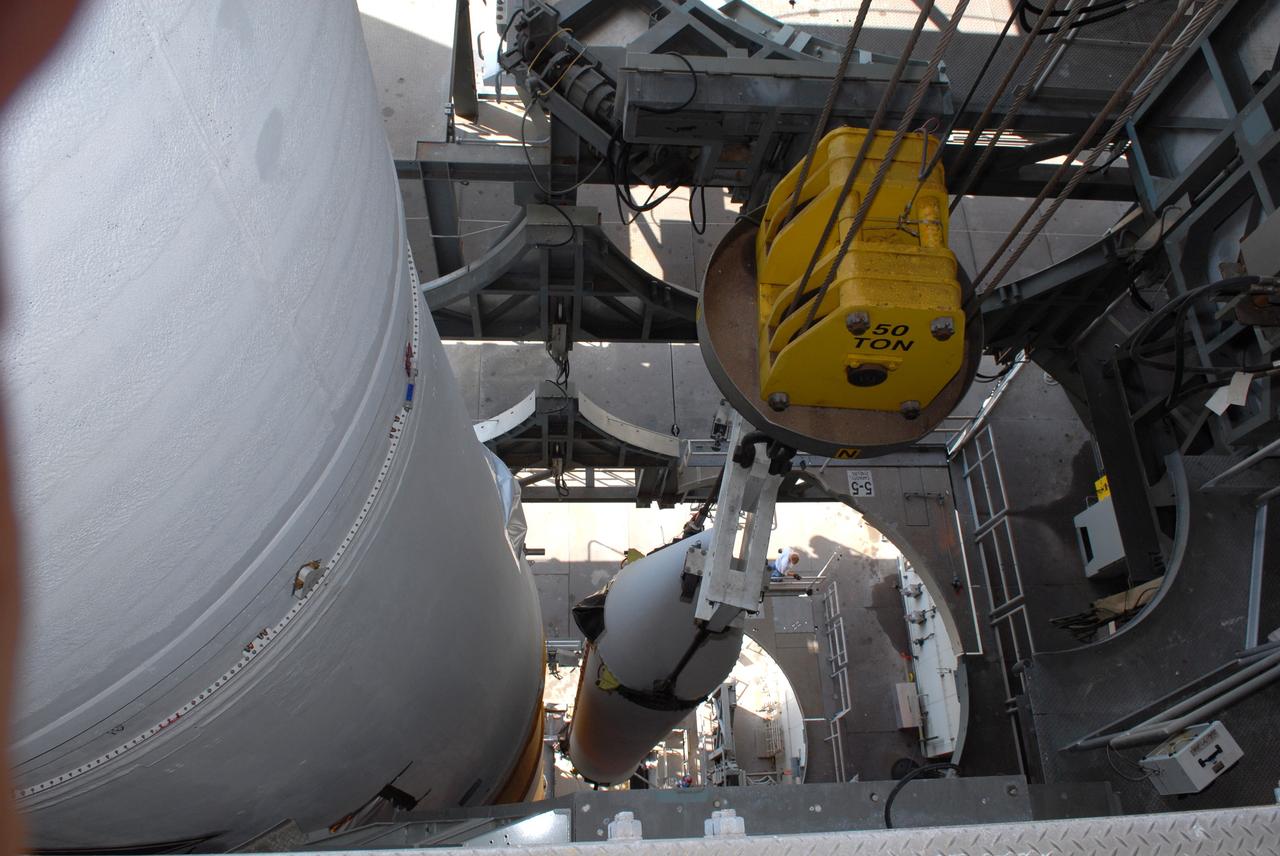
CAPE CANAVERAL, Fla. – One of two solid rocket boosters is mated to the GOES-O Delta IV launch vehicle on Launch Pad 37 at Cape Canaveral Air Force Station. It is the left rocket. GOES–O is one of a series of Geostationary Operational Environmental Satellites. The multi-mission GOES series N-P will be a vital contributor to weather, solar and space operations and science. NASA and the National Oceanic and Atmospheric Administration, or NOAA, are actively engaged in a cooperative program to expand the existing GOES system with the launch of the GOES N-P satellites. Launch of the GOES-O is targeted for no earlier than April 2009. Photo credit: NASA/Ben Smegelsky
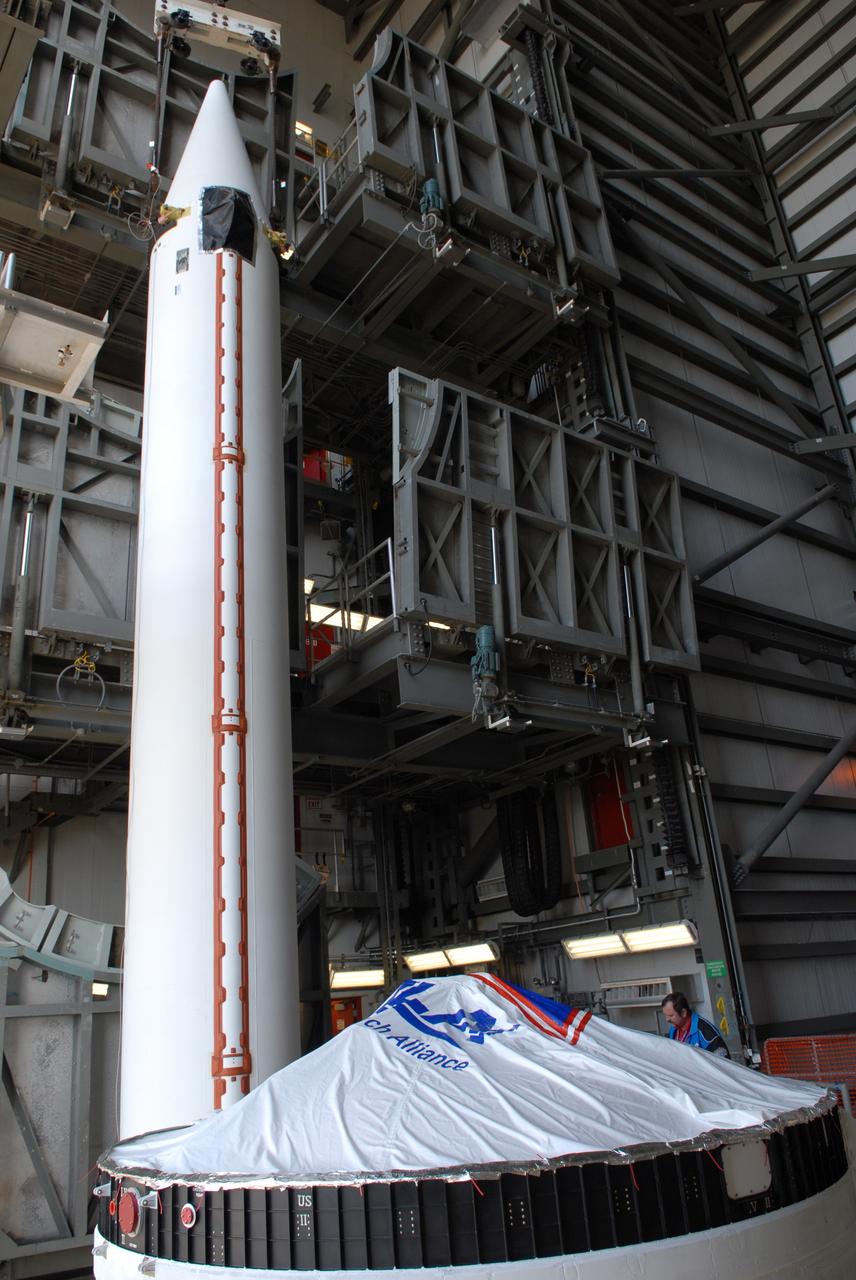
CAPE CANAVERAL, Fla. – One of two solid rocket boosters is lifted into the mobile service tower on Launch Pad 37 at Cape Canaveral Air Force Station. It is the left rocket and it will be mated to the GOES-O Delta IV launch vehicle. GOES–O is one of a series of Geostationary Operational Environmental Satellites. The multi-mission GOES series N-P will be a vital contributor to weather, solar and space operations and science. NASA and the National Oceanic and Atmospheric Administration, or NOAA, are actively engaged in a cooperative program to expand the existing GOES system with the launch of the GOES N-P satellites. Launch of the GOES-O is targeted for no earlier than April 2009. Photo credit: NASA/Ben Smegelsky
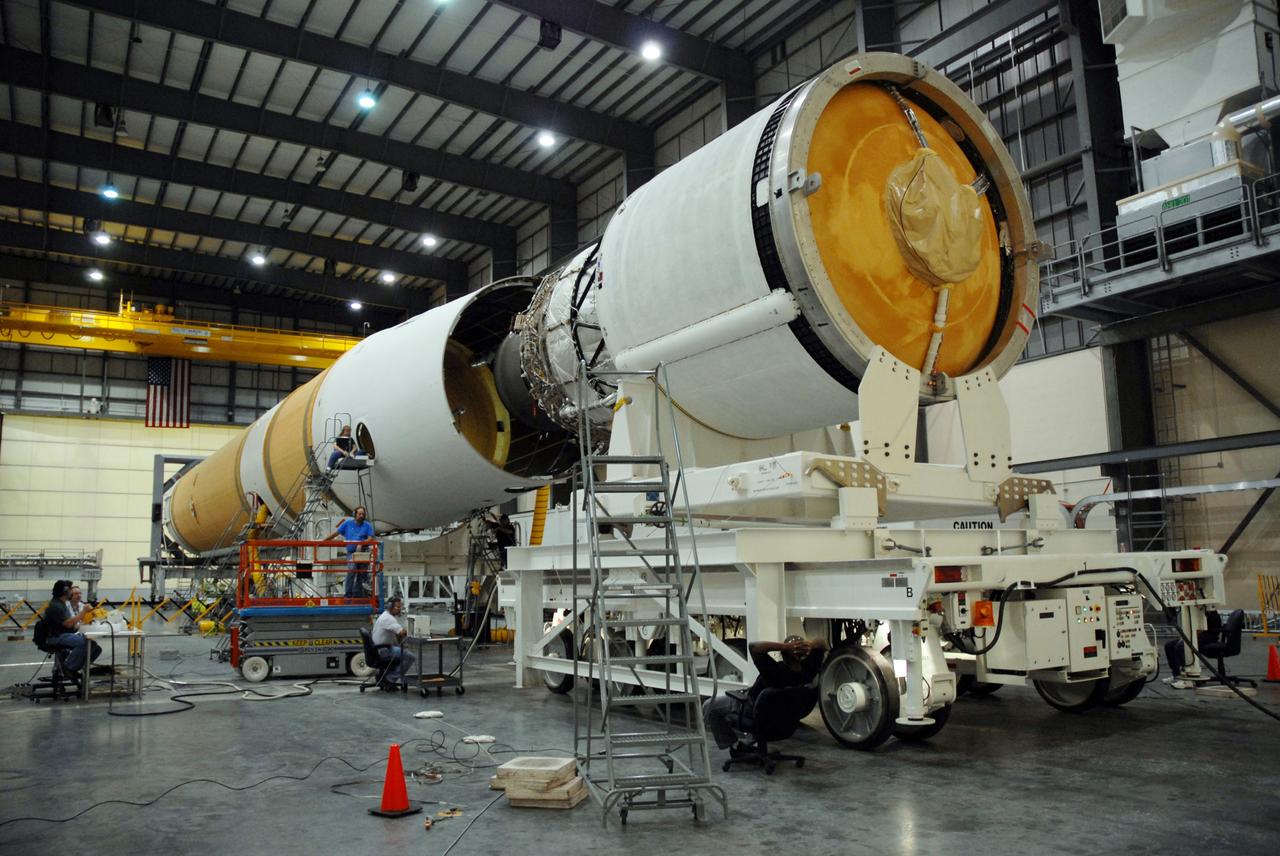
CAPE CANAVERAL, Fla. -- The GOES-O/Delta IV second stage is being mated to the first stage in the Horizontal Integration Facility on Complex 37 at Cape Canaveral Air Force Station in Florida. GOES–O is one of a series of Geostationary Operational Environmental Satellites. The multi-mission GOES series N-P will be a vital contributor to weather, solar and space operations and science. NASA and the National Oceanic and Atmospheric Administration, or NOAA, are actively engaged in a cooperative program to expand the existing GOES system with the launch of the GOES N-P satellites. Launch of the GOES-O is targeted for no earlier than April 2009. Photo credit: NASA/Jack Pfaller
CAPE CANAVERAL, Fla. – On Launch Pad 37 at Cape Canaveral Air Force Station in Florida, workers begin detaching the lifting mechanism that raised the GOES-O and Delta IV upper stage to vertical. GOES–O is one of a series of Geostationary Operational Environmental Satellites. The multi-mission GOES series N-P will be a vital contributor to weather, solar and space operations and science. NASA and the National Oceanic and Atmospheric Administration, or NOAA, are actively engaged in a cooperative program to expand the existing GOES system with the launch of the GOES N-P satellites. Launch of the GOES-O is targeted for no earlier than April 2009. Photo credit: NASA/Jim Grossmann
CAPE CANAVERAL, Fla. -- The GOES-O/Delta IV second stage is being mated to the first stage in the Horizontal Integration Facility on Complex 37 at Cape Canaveral Air Force Station in Florida. GOES–O is one of a series of Geostationary Operational Environmental Satellites. The multi-mission GOES series N-P will be a vital contributor to weather, solar and space operations and science. NASA and the National Oceanic and Atmospheric Administration, or NOAA, are actively engaged in a cooperative program to expand the existing GOES system with the launch of the GOES N-P satellites. Launch of the GOES-O is targeted for no earlier than April 2009. Photo credit: NASA/Jack Pfaller
CAPE CANAVERAL, Fla. -- The GOES-O/Delta IV second stage is being mated to the first stage in the Horizontal Integration Facility on Complex 37 at Cape Canaveral Air Force Station in Florida. GOES–O is one of a series of Geostationary Operational Environmental Satellites. The multi-mission GOES series N-P will be a vital contributor to weather, solar and space operations and science. NASA and the National Oceanic and Atmospheric Administration, or NOAA, are actively engaged in a cooperative program to expand the existing GOES system with the launch of the GOES N-P satellites. Launch of the GOES-O is targeted for no earlier than April 2009. Photo credit: NASA/Jack Pfaller
CAPE CANAVERAL, Fla. – On Complex 37 at Cape Canaveral Air Force Station in Florida, workers ensure the GOES-O and Delta IV second stage are ready to leave the Horizontal Integration Facility for the launch pad. GOES–O is one of a series of Geostationary Operational Environmental Satellites. The multi-mission GOES series N-P will be a vital contributor to weather, solar and space operations and science. NASA and the National Oceanic and Atmospheric Administration, or NOAA, are actively engaged in a cooperative program to expand the existing GOES system with the launch of the GOES N-P satellites. Launch of the GOES-O is targeted for no earlier than April 2009. Photo credit: NASA/Jim Grossmann
CAPE CANAVERAL, Fla. – On Launch Pad 37 at Cape Canaveral Air Force Station in Florida, the GOES-O and Delta IV upper stage stand erect after lowering of the lifting mechanism. GOES–O is one of a series of Geostationary Operational Environmental Satellites. The multi-mission GOES series N-P will be a vital contributor to weather, solar and space operations and science. NASA and the National Oceanic and Atmospheric Administration, or NOAA, are actively engaged in a cooperative program to expand the existing GOES system with the launch of the GOES N-P satellites. Launch of the GOES-O is targeted for no earlier than April 2009. Photo credit: NASA/Jim Grossmann
CAPE CANAVERAL, Fla. – At Cape Canaveral Air Force Station in Florida, the GOES-O and Delta IV second stage are transported to Launch Pad 37. GOES–O is one of a series of Geostationary Operational Environmental Satellites. The multi-mission GOES series N-P will be a vital contributor to weather, solar and space operations and science. NASA and the National Oceanic and Atmospheric Administration, or NOAA, are actively engaged in a cooperative program to expand the existing GOES system with the launch of the GOES N-P satellites. Launch of the GOES-O is targeted for no earlier than April 2009. Photo credit: NASA/Jim Grossmann
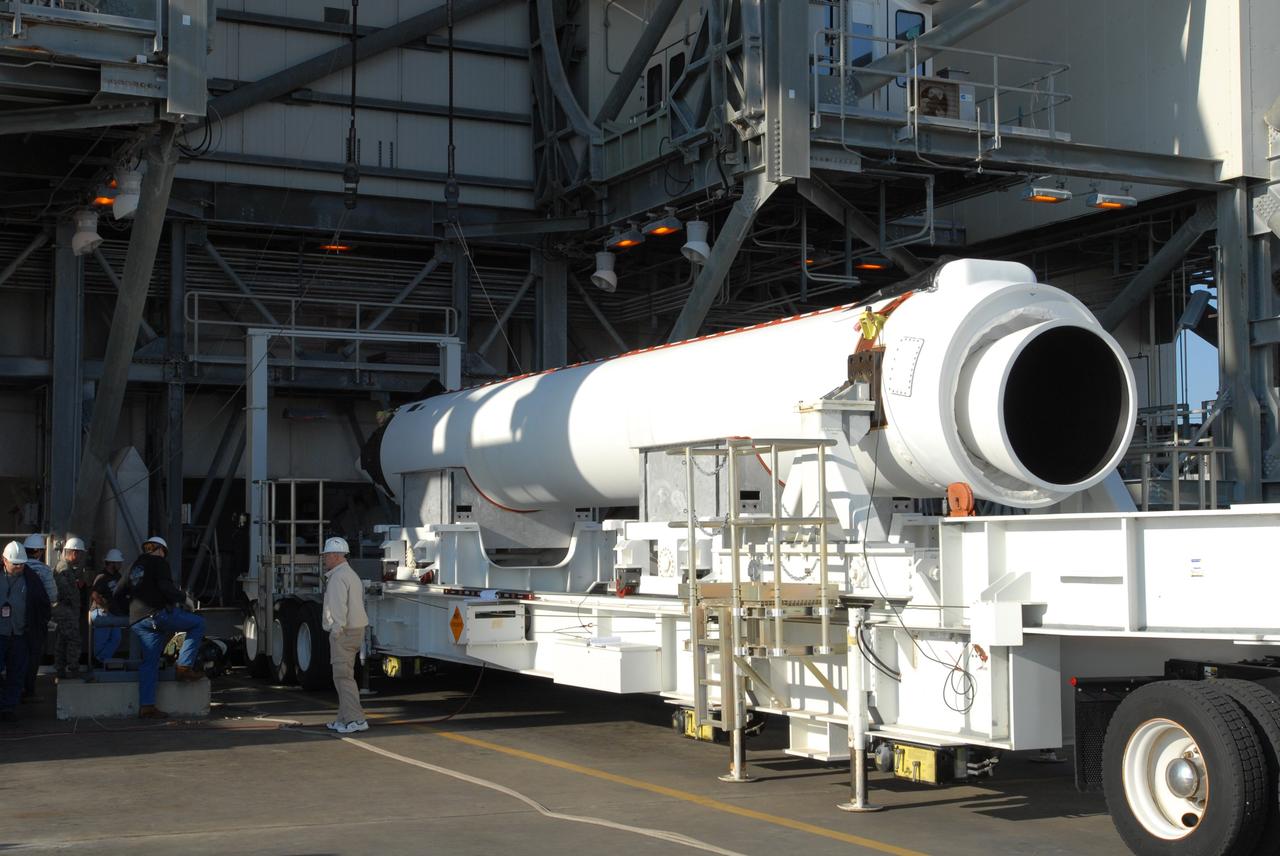
CAPE CANAVERAL, Fla. – On Complex 37 at Cape Canaveral Air Force Station in Florida, the GOES-O and Delta IV second stage begin rolling out of the Horizontal Integration Facility aboard a transporter. They will be moved to the launch pad. GOES–O is one of a series of Geostationary Operational Environmental Satellites. The multi-mission GOES series N-P will be a vital contributor to weather, solar and space operations and science. NASA and the National Oceanic and Atmospheric Administration, or NOAA, are actively engaged in a cooperative program to expand the existing GOES system with the launch of the GOES N-P satellites. Launch of the GOES-O is targeted for no earlier than April 2009. Photo credit: NASA/Jim Grossmann
CAPE CANAVERAL, Fla. – On Launch Pad 37 at Cape Canaveral Air Force Station in Florida, the GOES-O and Delta IV upper stage are nearly vertical for movement into the mobile service tower for prelaunch preparations. GOES–O is one of a series of Geostationary Operational Environmental Satellites. The multi-mission GOES series N-P will be a vital contributor to weather, solar and space operations and science. NASA and the National Oceanic and Atmospheric Administration, or NOAA, are actively engaged in a cooperative program to expand the existing GOES system with the launch of the GOES N-P satellites. Launch of the GOES-O is targeted for no earlier than April 2009. Photo credit: NASA/Jim Grossmann
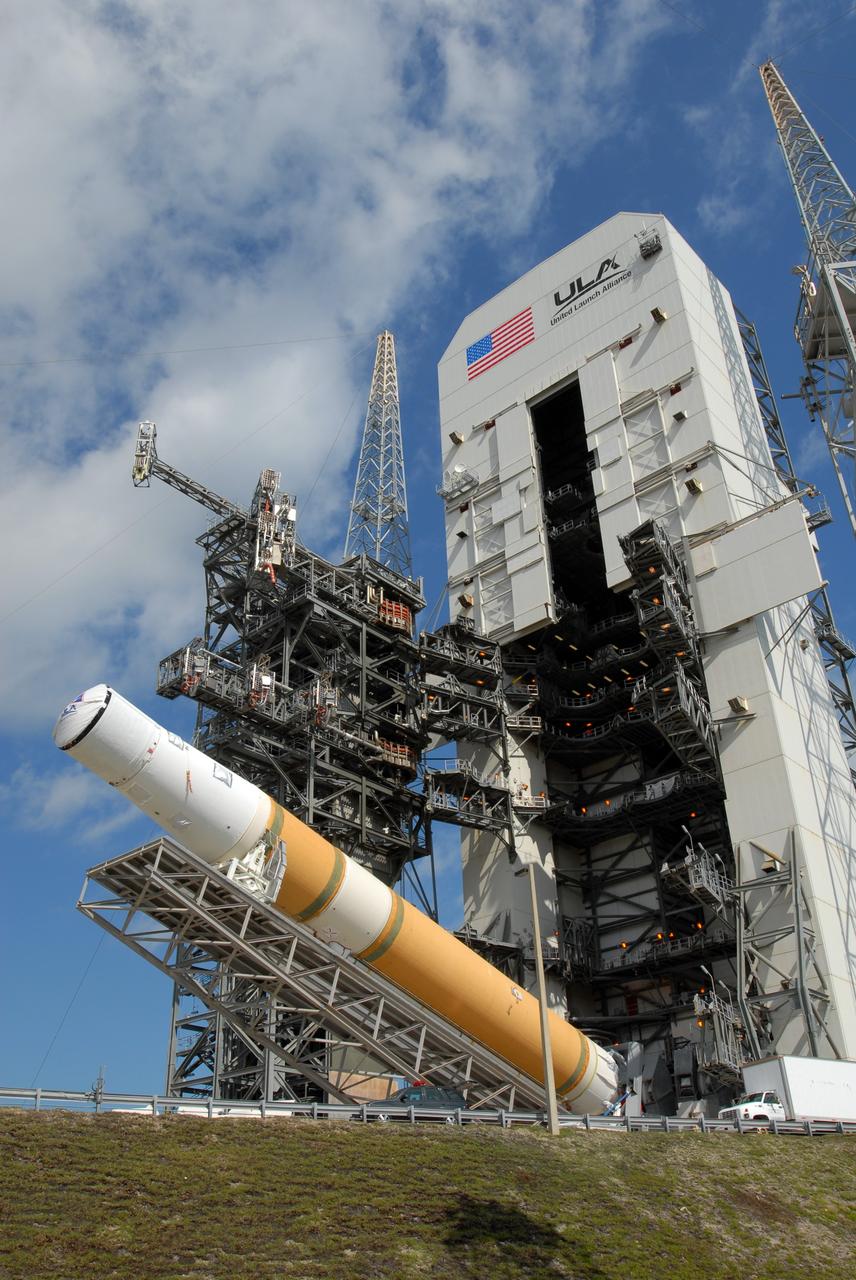
CAPE CANAVERAL, Fla. – On Launch Pad 37 at Cape Canaveral Air Force Station in Florida, the GOES-O and Delta IV upper stage are being raised to vertical. They will be moved into the mobile service tower for prelaunch preparations. GOES–O is one of a series of Geostationary Operational Environmental Satellites. The multi-mission GOES series N-P will be a vital contributor to weather, solar and space operations and science. NASA and the National Oceanic and Atmospheric Administration, or NOAA, are actively engaged in a cooperative program to expand the existing GOES system with the launch of the GOES N-P satellites. Launch of the GOES-O is targeted for no earlier than April 2009. Photo credit: NASA/Jim Grossmann
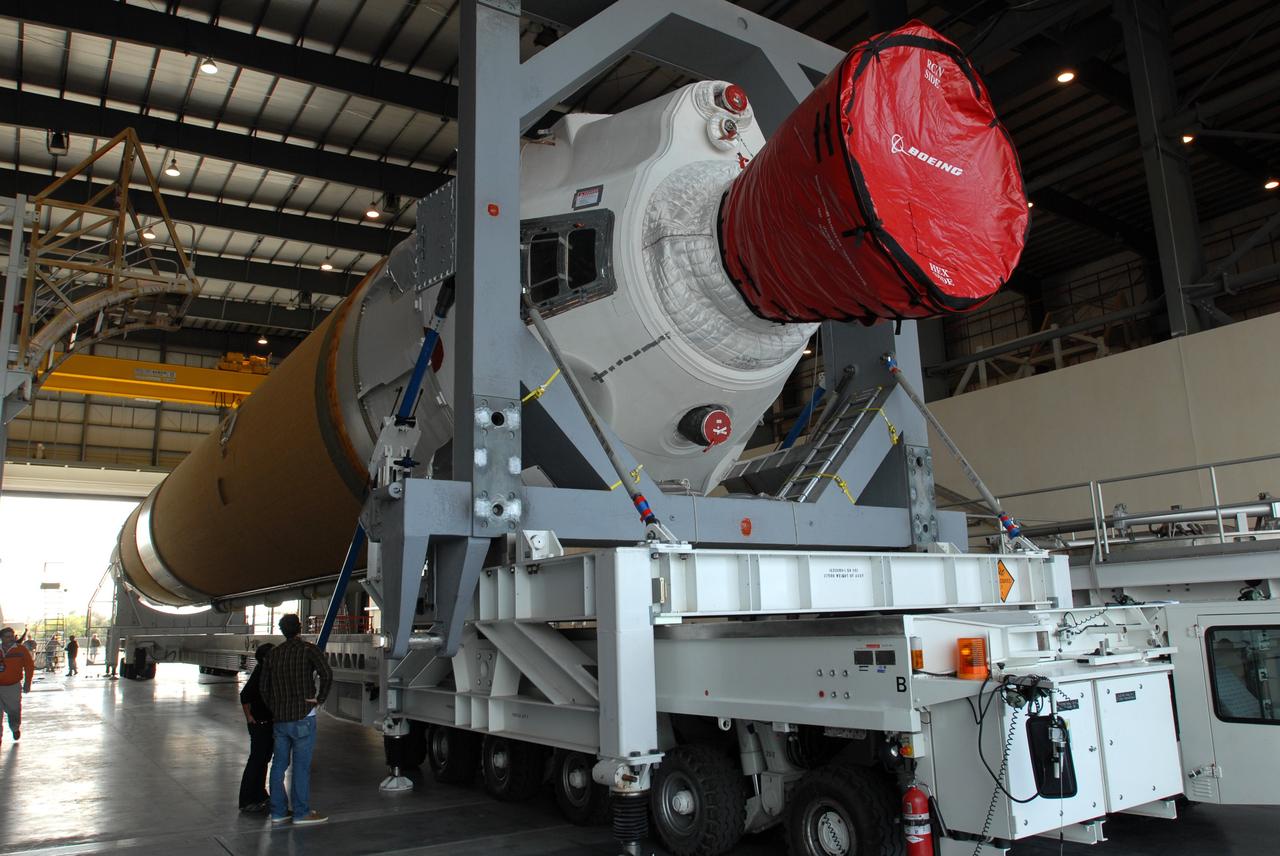
CAPE CANAVERAL, Fla. – On Complex 37 at Cape Canaveral Air Force Station in Florida, the GOES-O and Delta IV second stage are being prepared to leave the Horizontal Integration Facility. They will be moved to the launch pad. GOES–O is one of a series of Geostationary Operational Environmental Satellites. The multi-mission GOES series N-P will be a vital contributor to weather, solar and space operations and science. NASA and the National Oceanic and Atmospheric Administration, or NOAA, are actively engaged in a cooperative program to expand the existing GOES system with the launch of the GOES N-P satellites. Launch of the GOES-O is targeted for no earlier than April 2009. Photo credit: NASA/Jim Grossmann
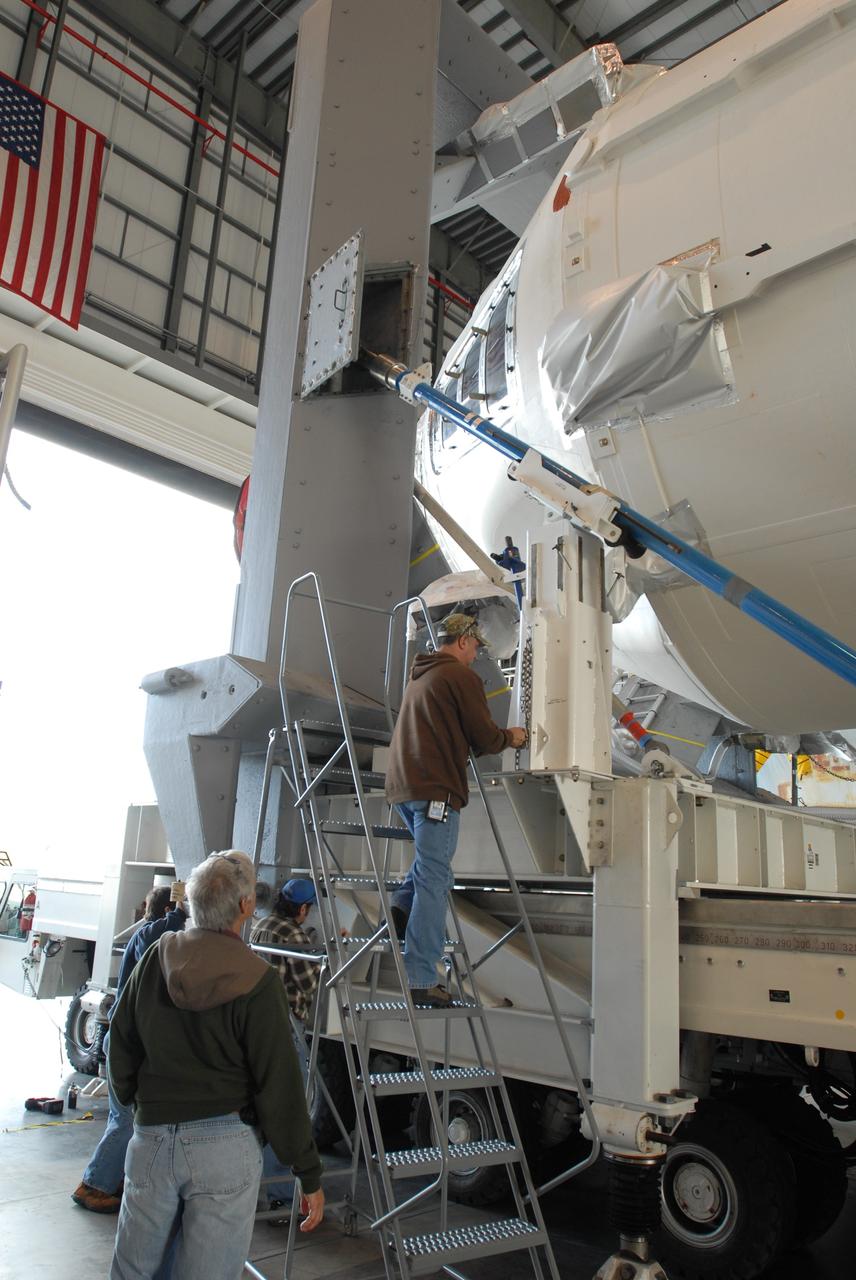
CAPE CANAVERAL, Fla. – On Complex 37 at Cape Canaveral Air Force Station in Florida, workers ensure the GOES-O and Delta IV second stage are ready to leave the Horizontal Integration Facility for the launch pad. GOES-O is one of a series of Geostationary Operational Environmental Satellites. The multi-mission GOES series N-P will be a vital contributor to weather, solar and space operations and science. NASA and the National Oceanic and Atmospheric Administration, or NOAA, are actively engaged in a cooperative program to expand the existing GOES system with the launch of the GOES N-P satellites. Launch of the GOES-O is targeted for no earlier than April 2009. Photo credit: NASA/Jim Grossmann
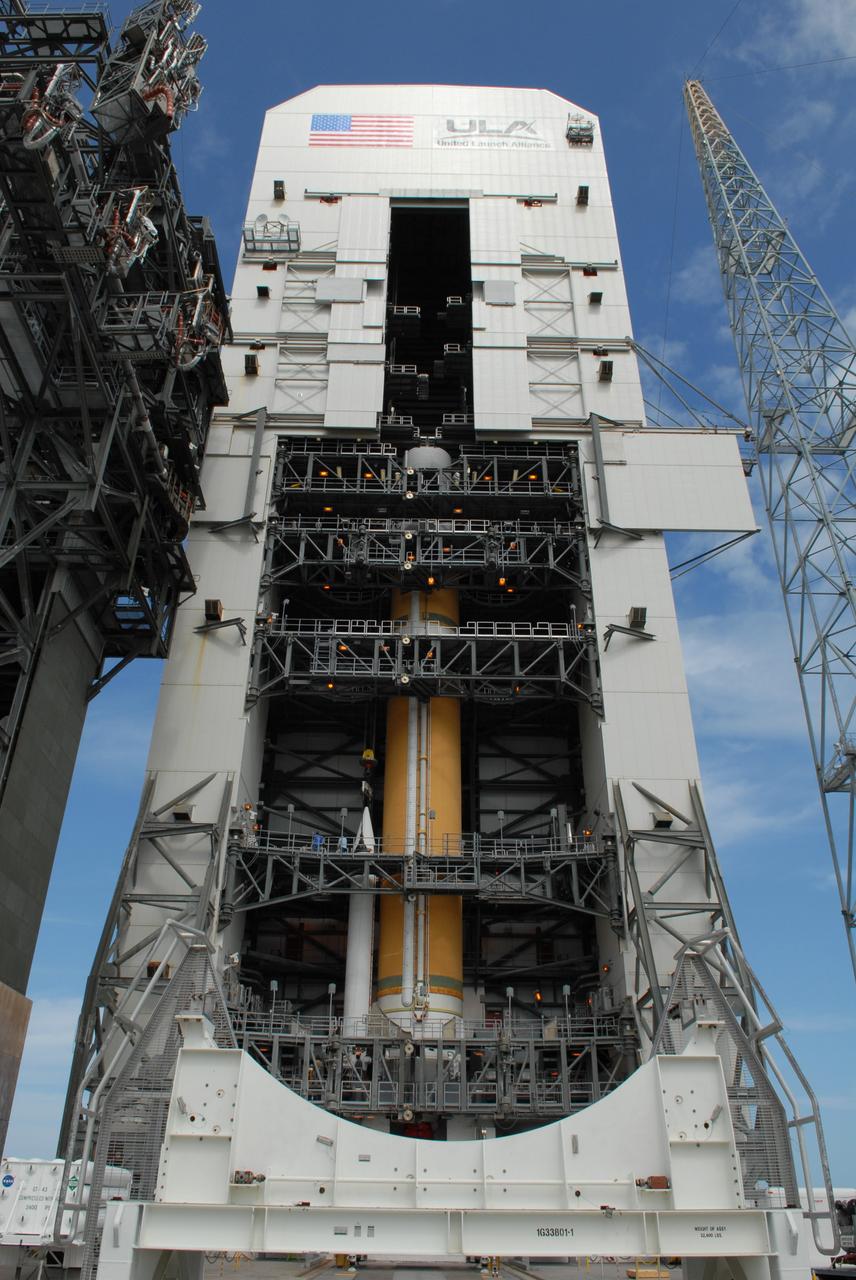
CAPE CANAVERAL, Fla. – One of two solid rocket boosters is mated to the GOES-O Delta IV launch vehicle on Launch Pad 37 at Cape Canaveral Air Force Station. It is the left rocket. GOES–O is one of a series of Geostationary Operational Environmental Satellites. The multi-mission GOES series N-P will be a vital contributor to weather, solar and space operations and science. NASA and the National Oceanic and Atmospheric Administration, or NOAA, are actively engaged in a cooperative program to expand the existing GOES system with the launch of the GOES N-P satellites. Launch of the GOES-O is targeted for no earlier than April 2009. Photo credit: NASA/Ben Smegelsky
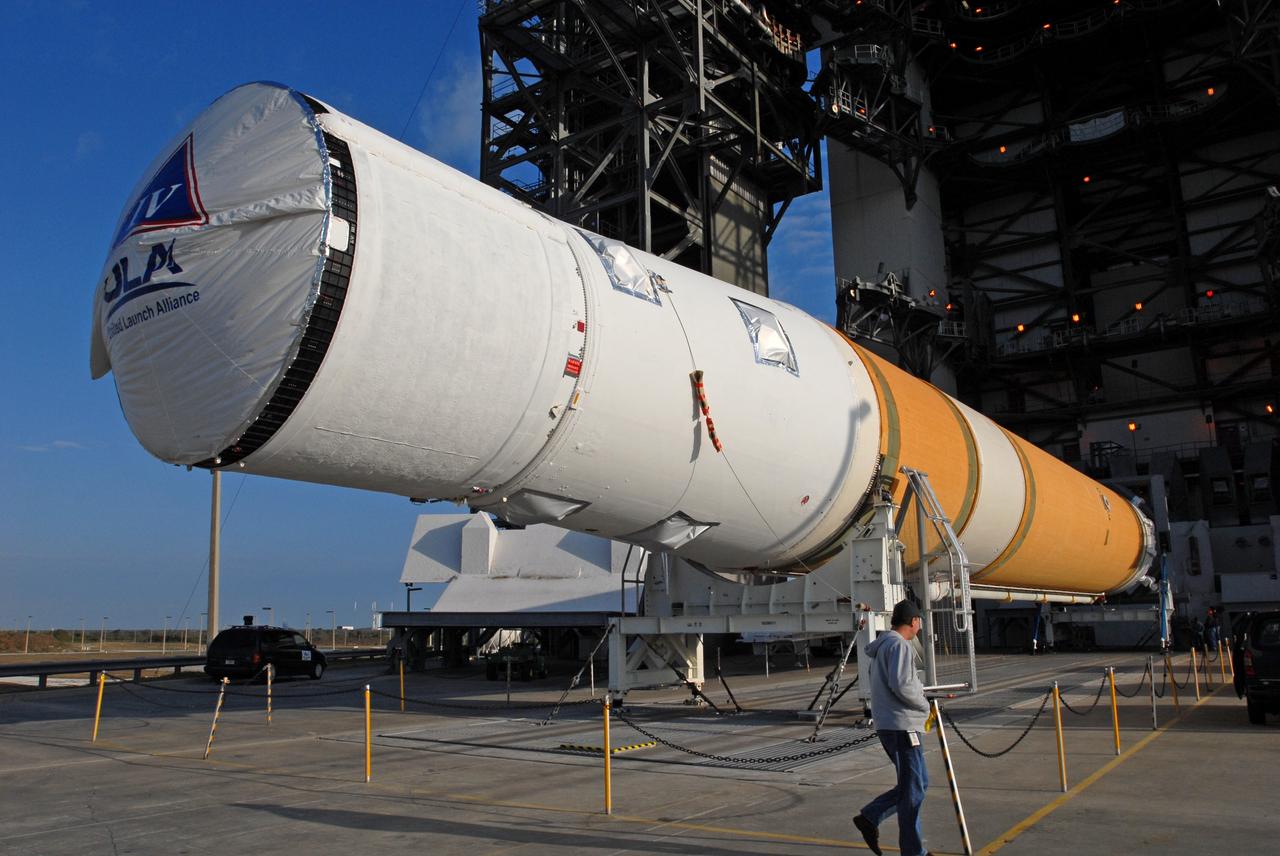
CAPE CANAVERAL, Fla. – On Launch Pad 37 at Cape Canaveral Air Force Station in Florida, the GOES-O and Delta IV upper stage are waiting to be raised to vertical. They will be moved into the mobile service tower for prelaunch preparations. GOES–O is one of a series of Geostationary Operational Environmental Satellites. The multi-mission GOES series N-P will be a vital contributor to weather, solar and space operations and science. NASA and the National Oceanic and Atmospheric Administration, or NOAA, are actively engaged in a cooperative program to expand the existing GOES system with the launch of the GOES N-P satellites. Launch of the GOES-O is targeted for no earlier than April 2009. Photo credit: NASA/Jim Grossmann
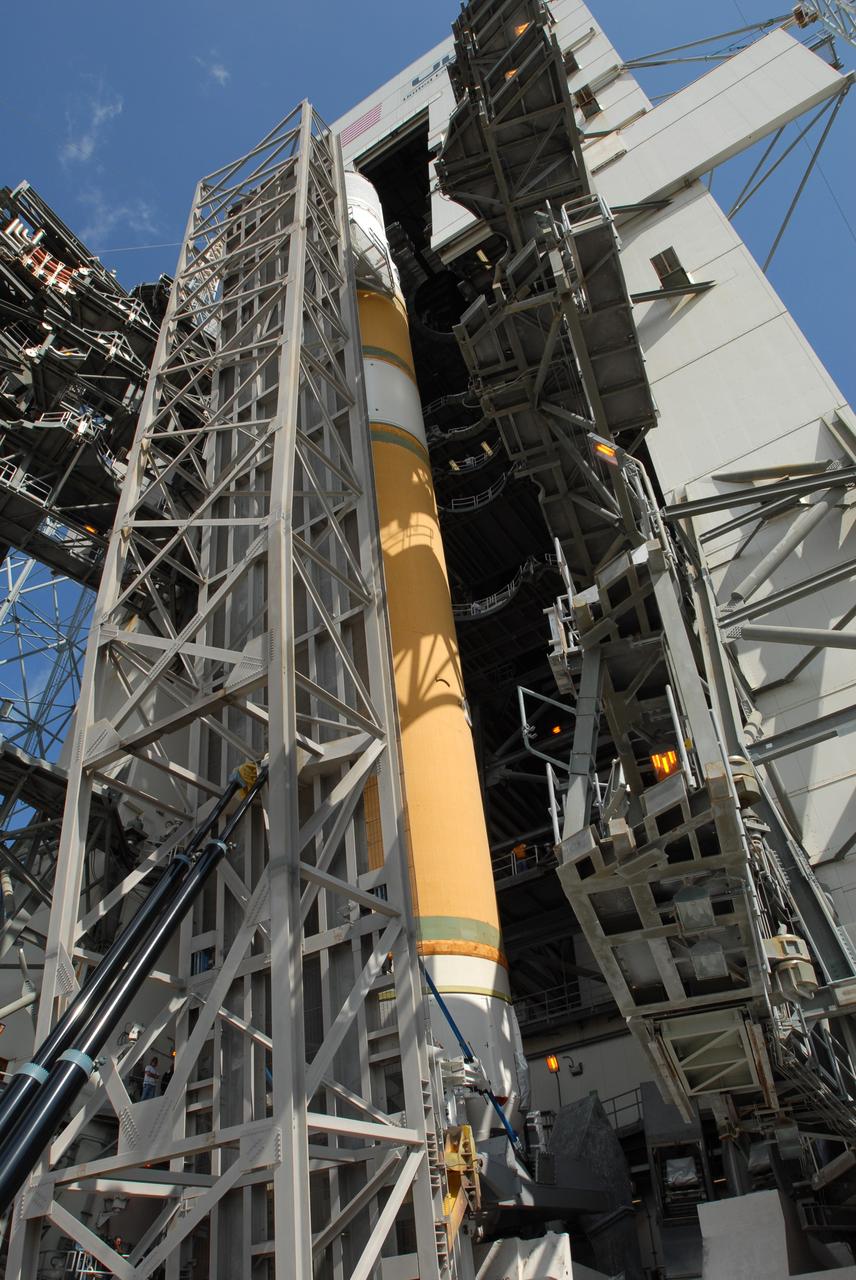
CAPE CANAVERAL, Fla. – On Launch Pad 37 at Cape Canaveral Air Force Station in Florida, the GOES-O and Delta IV upper stage have been raised to vertical. They will be moved into the mobile service tower for prelaunch preparations. GOES–O is one of a series of Geostationary Operational Environmental Satellites. The multi-mission GOES series N-P will be a vital contributor to weather, solar and space operations and science. NASA and the National Oceanic and Atmospheric Administration, or NOAA, are actively engaged in a cooperative program to expand the existing GOES system with the launch of the GOES N-P satellites. Launch of the GOES-O is targeted for no earlier than April 2009. Photo credit: NASA/Jim Grossmann
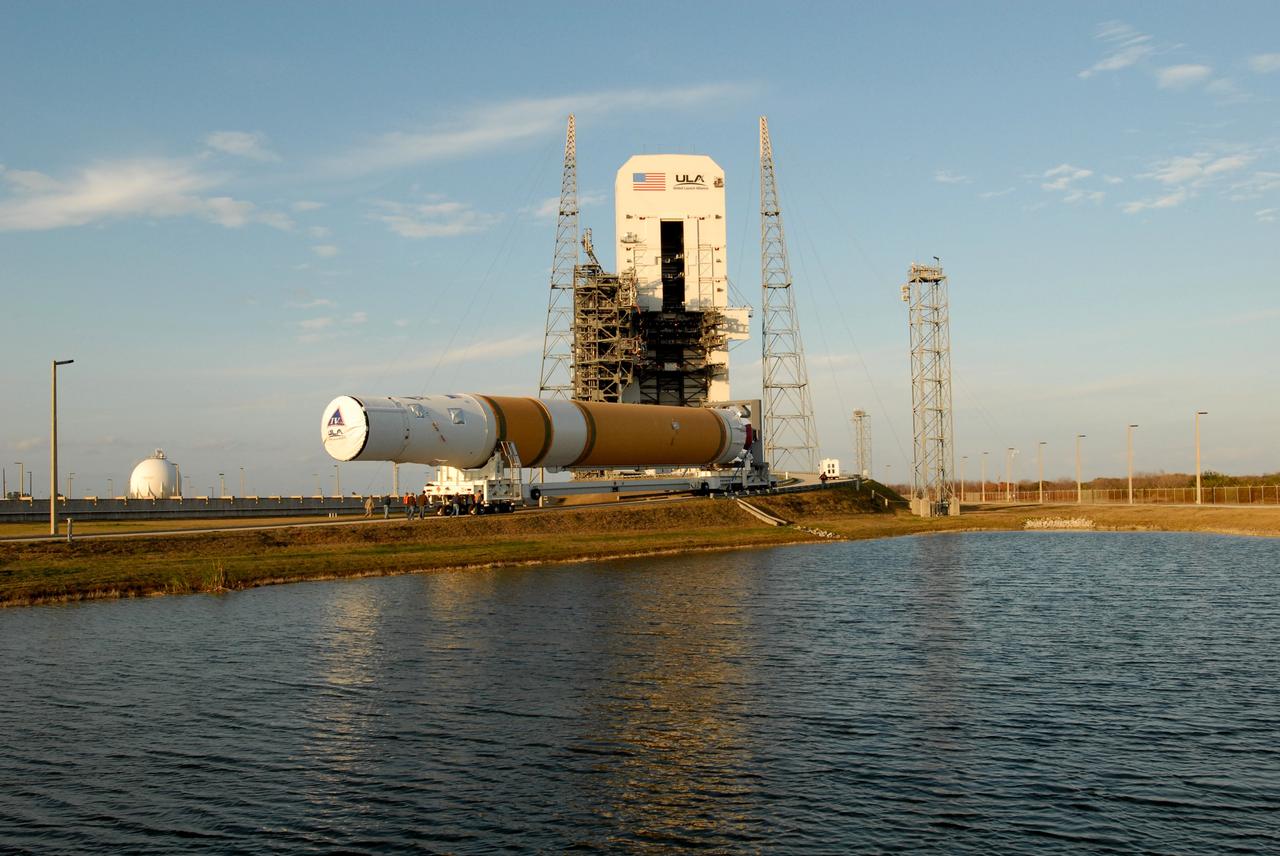
CAPE CANAVERAL, Fla. – At Cape Canaveral Air Force Station in Florida, the GOES-O and Delta IV second stage arrive on Launch Pad 37. They will be raised to vertical and moved into the mobile service tower. GOES–O is one of a series of Geostationary Operational Environmental Satellites. The multi-mission GOES series N-P will be a vital contributor to weather, solar and space operations and science. NASA and the National Oceanic and Atmospheric Administration, or NOAA, are actively engaged in a cooperative program to expand the existing GOES system with the launch of the GOES N-P satellites. Launch of the GOES-O is targeted for no earlier than April 2009. Photo credit: NASA/Jim Grossmann
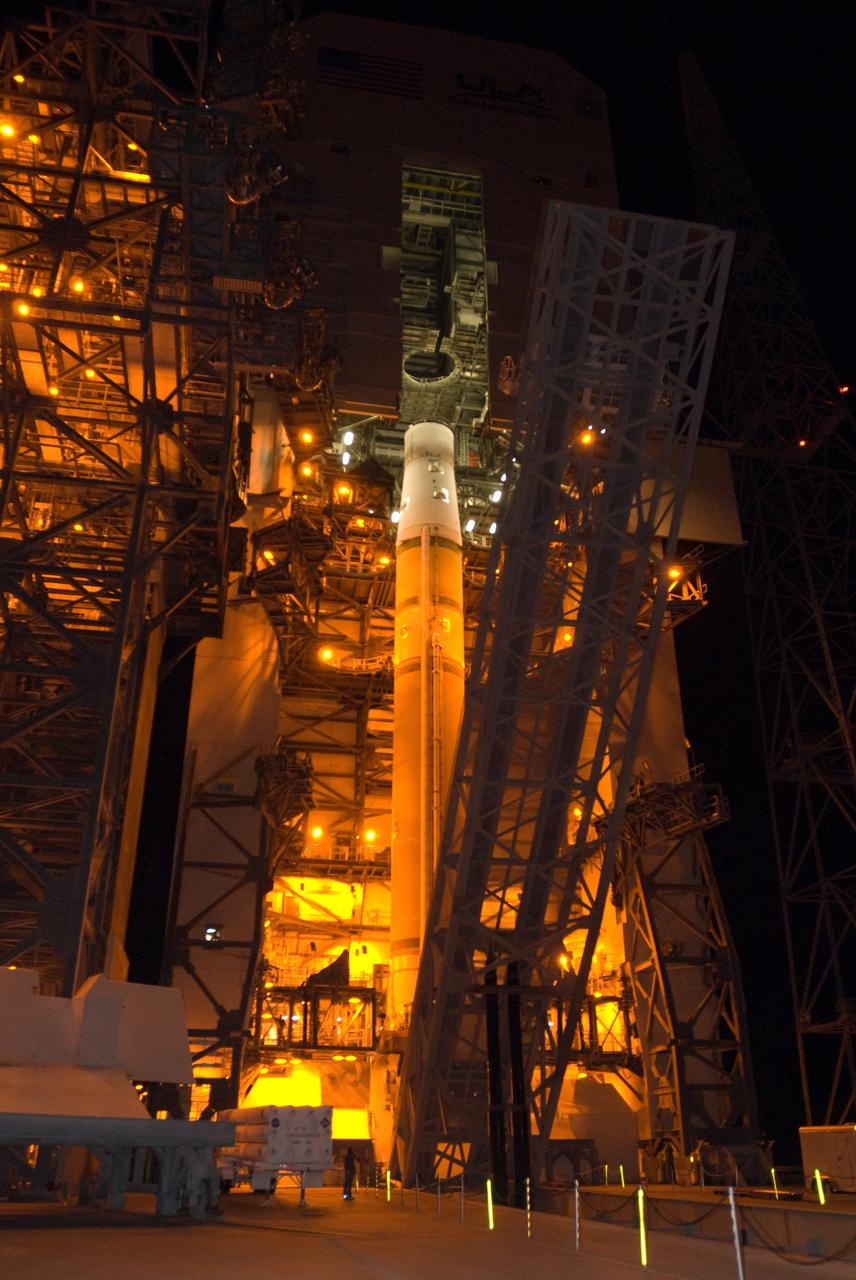
CAPE CANAVERAL, Fla. – On Launch Pad 37 at Cape Canaveral Air Force Station in Florida, the lifting mechanism that raised the GOES-O and Delta IV upper stage to vertical is lowered toward the ground. GOES–O is one of a series of Geostationary Operational Environmental Satellites. The multi-mission GOES series N-P will be a vital contributor to weather, solar and space operations and science. NASA and the National Oceanic and Atmospheric Administration, or NOAA, are actively engaged in a cooperative program to expand the existing GOES system with the launch of the GOES N-P satellites. Launch of the GOES-O is targeted for no earlier than April 2009. Photo credit: NASA/Jim Grossmann
CAPE CANAVERAL, Fla. – One of two solid rocket boosters arrives on Launch Pad 37 at Cape Canaveral Air Force Station. it is the left rocket and it will be lifted into the mobile service tower and mated to the GOES-O Delta IV launch vehicle. GOES–O is one of a series of Geostationary Operational Environmental Satellites. The multi-mission GOES series N-P will be a vital contributor to weather, solar and space operations and science. NASA and the National Oceanic and Atmospheric Administration, or NOAA, are actively engaged in a cooperative program to expand the existing GOES system with the launch of the GOES N-P satellites. Launch of the GOES-O is targeted for no earlier than April 2009. Photo credit: NASA/Ben Smegelsky
CAPE CANAVERAL, Fla. – On Complex 37 at Cape Canaveral Air Force Station in Florida, the GOES-O and Delta IV second stage roll out of the Horizontal Integration Facility aboard a transporter. They are being moved to the launch pad. GOES–O is one of a series of Geostationary Operational Environmental Satellites. The multi-mission GOES series N-P will be a vital contributor to weather, solar and space operations and science. NASA and the National Oceanic and Atmospheric Administration, or NOAA, are actively engaged in a cooperative program to expand the existing GOES system with the launch of the GOES N-P satellites. Launch of the GOES-O is targeted for no earlier than April 2009. Photo credit: NASA/Jim Grossmann

CAPE CANAVERAL, Fla. -- The GOES-O/Delta IV second stage is mated to the first stage in the Horizontal Integration Facility on Complex 37 at Cape Canaveral Air Force Station in Florida. GOES–O is one of a series of Geostationary Operational Environmental Satellites. The multi-mission GOES series N-P will be a vital contributor to weather, solar and space operations and science. NASA and the National Oceanic and Atmospheric Administration, or NOAA, are actively engaged in a cooperative program to expand the existing GOES system with the launch of the GOES N-P satellites. Launch of the GOES-O is targeted for no earlier than April 2009. Photo credit: NASA/Jack Pfaller
CAPE CANAVERAL, Fla. – On Complex 37 at Cape Canaveral Air Force Station in Florida, the GOES-O and Delta IV second stage are being prepared to leave the Horizontal Integration Facility. They will be moved to the launch pad. GOES–O is one of a series of Geostationary Operational Environmental Satellites. The multi-mission GOES series N-P will be a vital contributor to weather, solar and space operations and science. NASA and the National Oceanic and Atmospheric Administration, or NOAA, are actively engaged in a cooperative program to expand the existing GOES system with the launch of the GOES N-P satellites. Launch of the GOES-O is targeted for no earlier than April 2009. Photo credit: NASA/Jim Grossmann
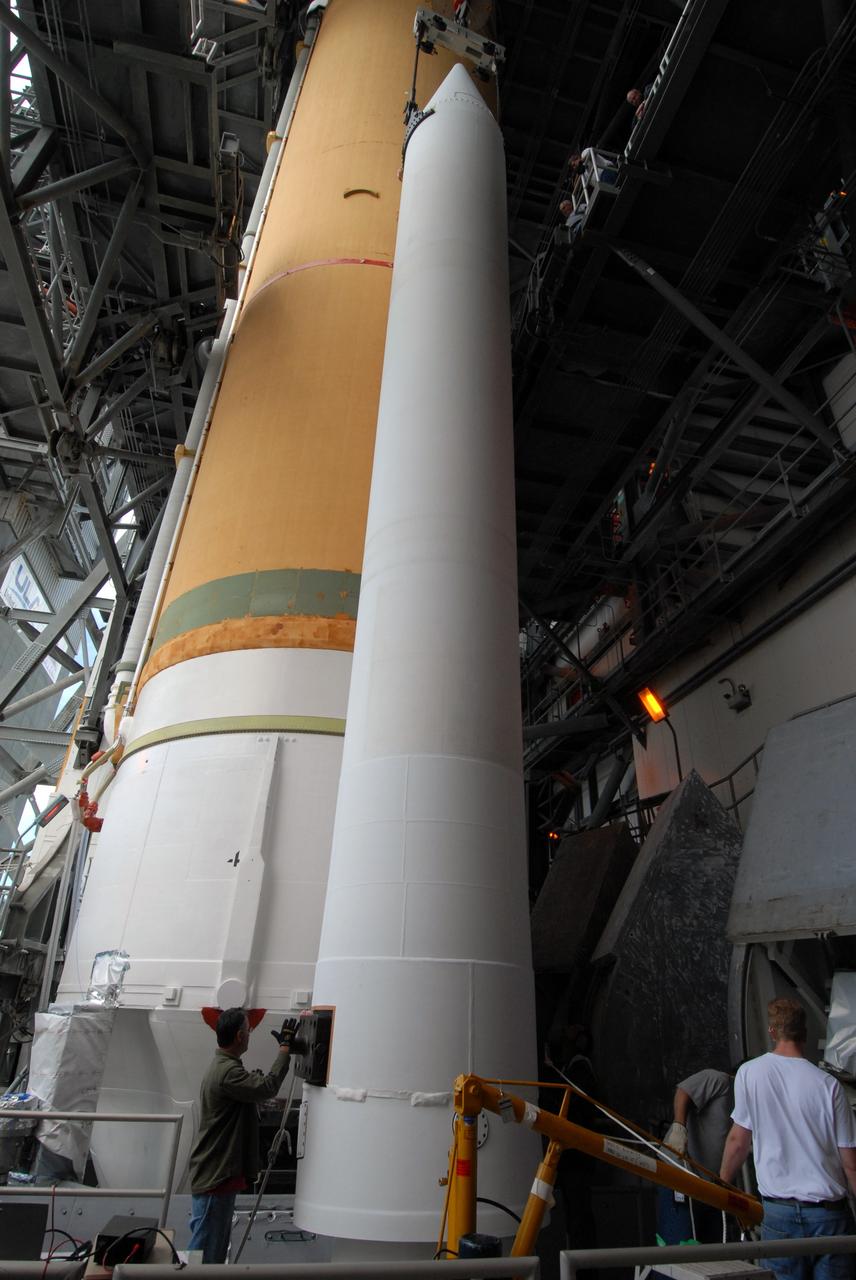
CAPE CANAVERAL, Fla. – On Launch Pad 37 at Cape Canaveral Air Force Station in Florida, the second of two solid rocket boosters is being installed on the right side of the Delta IV launch vehicle for the GOES-O spacecraft. GOES–O is one of a series of Geostationary Operational Environmental Satellites. The multi-mission GOES series N-P will be a vital contributor to weather, solar and space operations and science. NASA and the National Oceanic and Atmospheric Administration, or NOAA, are actively engaged in a cooperative program to expand the existing GOES system with the launch of the GOES N-P satellites. Launch of the GOES-O is targeted for no earlier than April 2009. Photo credit: NASA/Jack Pfaller
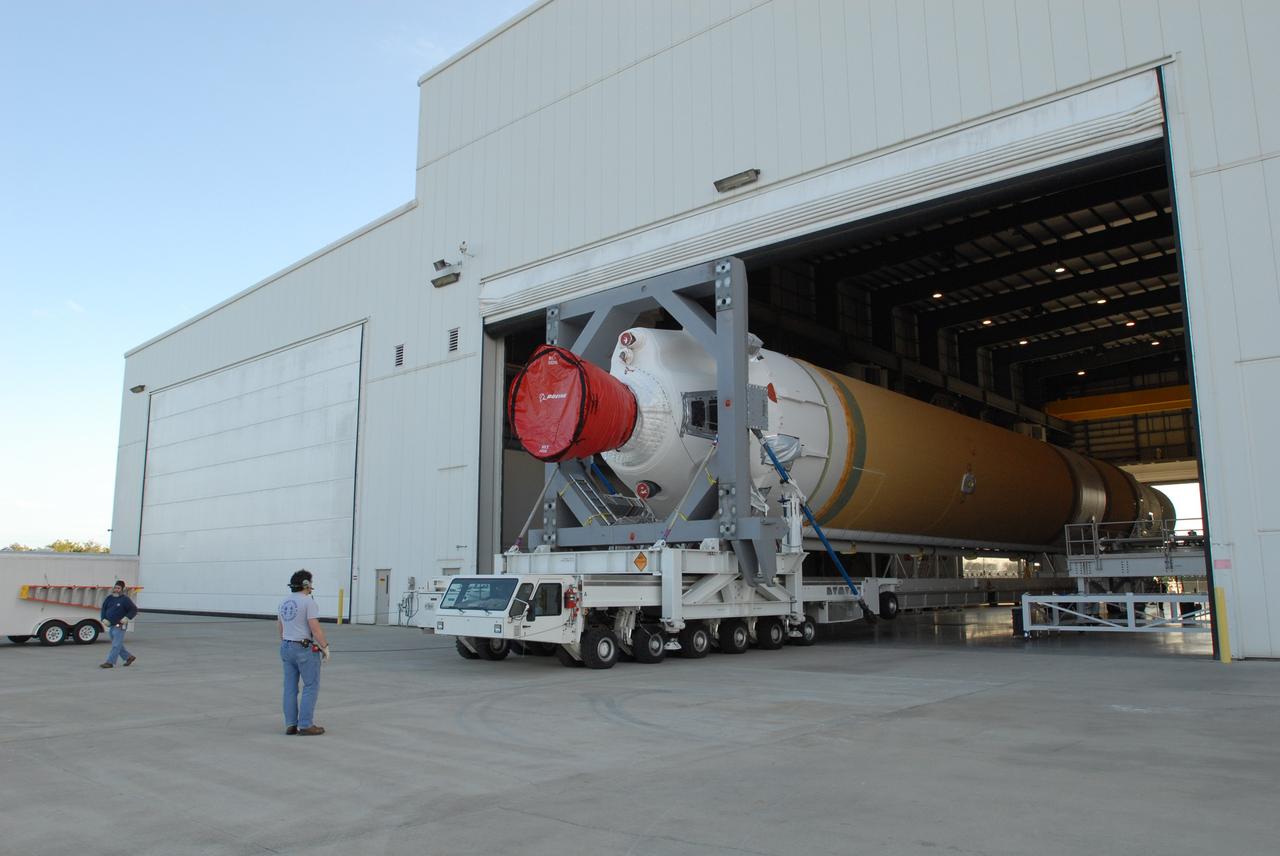
CAPE CANAVERAL, Fla. – On Complex 37 at Cape Canaveral Air Force Station in Florida, workers secure the framework around the GOES-O and Delta IV second stage before they leave the Horizontal Integration Facility for the launch pad. GOES–O is one of a series of Geostationary Operational Environmental Satellites. The multi-mission GOES series N-P will be a vital contributor to weather, solar and space operations and science. NASA and the National Oceanic and Atmospheric Administration, or NOAA, are actively engaged in a cooperative program to expand the existing GOES system with the launch of the GOES N-P satellites. Launch of the GOES-O is targeted for no earlier than April 2009. Photo credit: NASA/Jim Grossmann
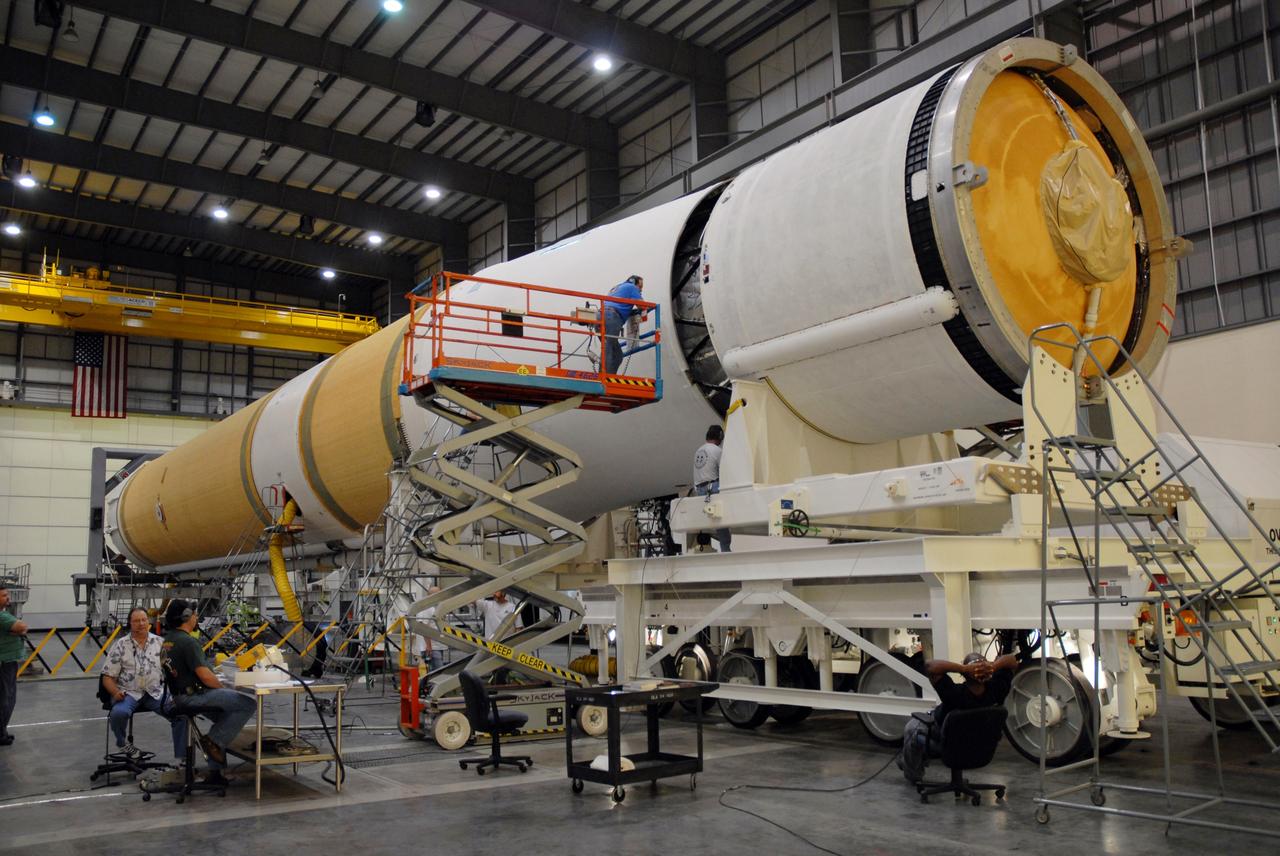
CAPE CANAVERAL, Fla. -- The GOES-O/Delta IV second stage is being mated to the first stage in the Horizontal Integration Facility on Complex 37 at Cape Canaveral Air Force Station in Florida. GOES–O is one of a series of Geostationary Operational Environmental Satellites. The multi-mission GOES series N-P will be a vital contributor to weather, solar and space operations and science. NASA and the National Oceanic and Atmospheric Administration, or NOAA, are actively engaged in a cooperative program to expand the existing GOES system with the launch of the GOES N-P satellites. Launch of the GOES-O is targeted for no earlier than April 2009. Photo credit: NASA/Jack Pfaller
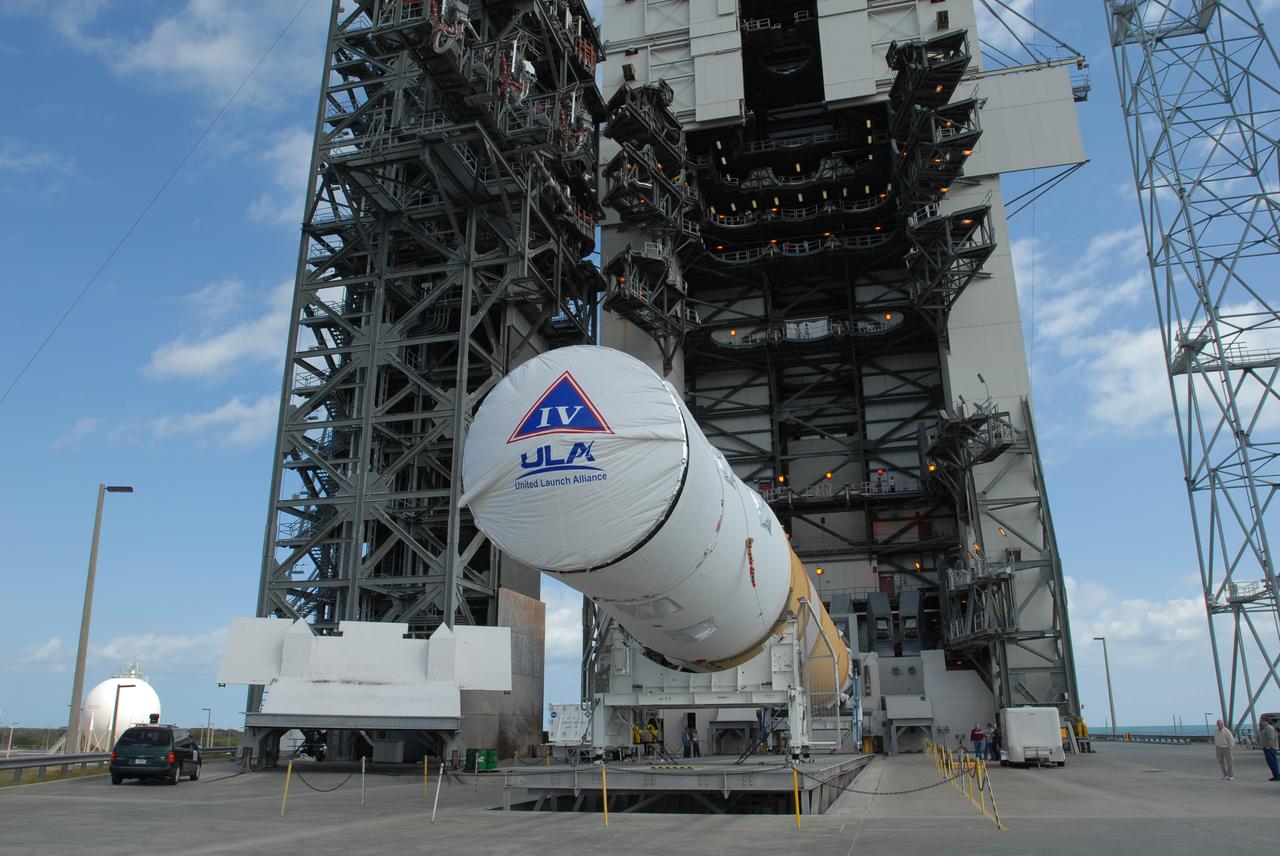
CAPE CANAVERAL, Fla. – On Launch Pad 37 at Cape Canaveral Air Force Station in Florida, the GOES-O and Delta IV upper stage are being raised to vertical. They will be moved into the mobile service tower for prelaunch preparations. GOES–O is one of a series of Geostationary Operational Environmental Satellites. The multi-mission GOES series N-P will be a vital contributor to weather, solar and space operations and science. NASA and the National Oceanic and Atmospheric Administration, or NOAA, are actively engaged in a cooperative program to expand the existing GOES system with the launch of the GOES N-P satellites. Launch of the GOES-O is targeted for no earlier than April 2009. Photo credit: NASA/Jim Grossmann
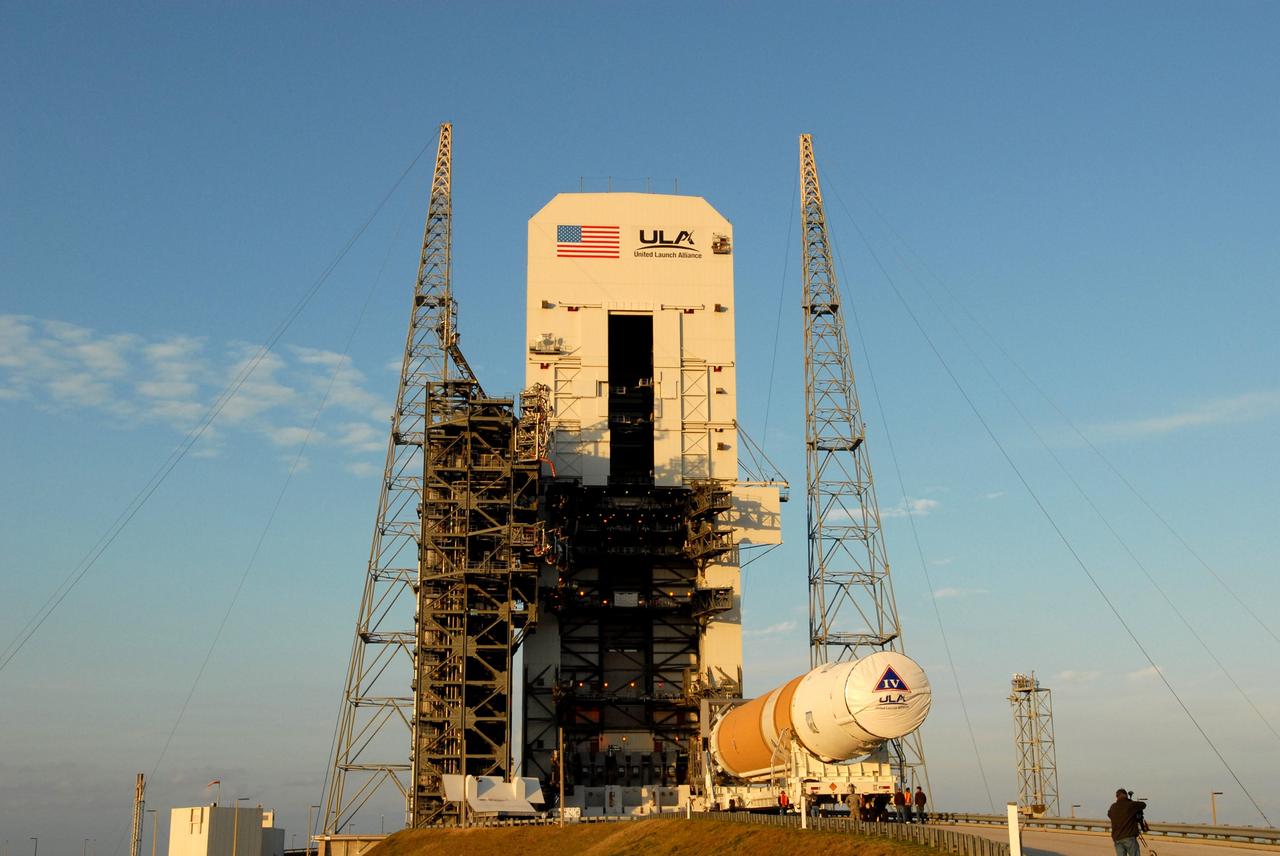
CAPE CANAVERAL, Fla. – At Cape Canaveral Air Force Station in Florida, the GOES-O and Delta IV second stage arrive on Launch Pad 37. They will be raised to vertical and moved into the mobile service tower. GOES–O is one of a series of Geostationary Operational Environmental Satellites. The multi-mission GOES series N-P will be a vital contributor to weather, solar and space operations and science. NASA and the National Oceanic and Atmospheric Administration, or NOAA, are actively engaged in a cooperative program to expand the existing GOES system with the launch of the GOES N-P satellites. Launch of the GOES-O is targeted for no earlier than April 2009. Photo credit: NASA/Jim Grossmann
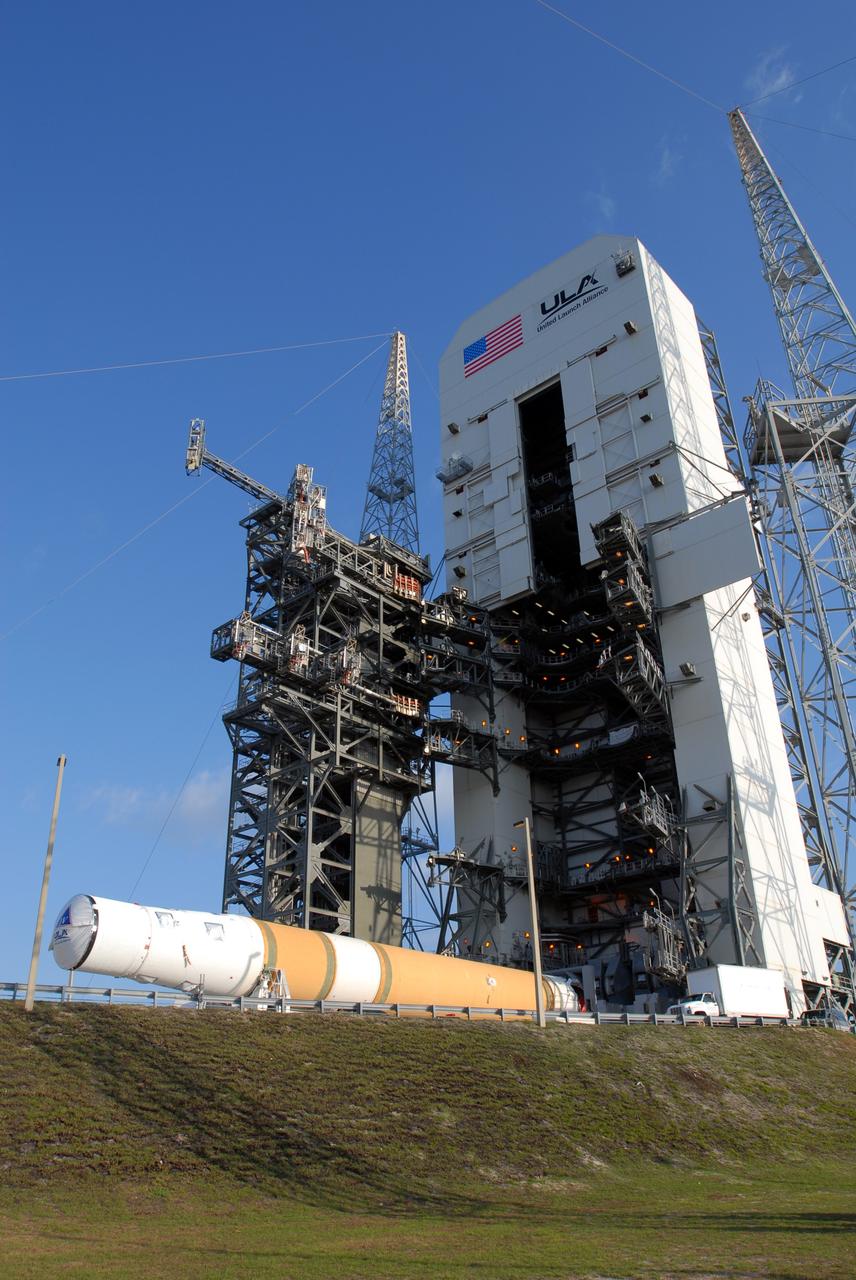
CAPE CANAVERAL, Fla. – At Cape Canaveral Air Force Station in Florida, the GOES-O and Delta IV second stage roll toward Launch Pad 37. GOES–O is one of a series of Geostationary Operational Environmental Satellites. The multi-mission GOES series N-P will be a vital contributor to weather, solar and space operations and science. NASA and the National Oceanic and Atmospheric Administration, or NOAA, are actively engaged in a cooperative program to expand the existing GOES system with the launch of the GOES N-P satellites. Launch of the GOES-O is targeted for no earlier than April 2009. Photo credit: NASA/Jim Grossmann
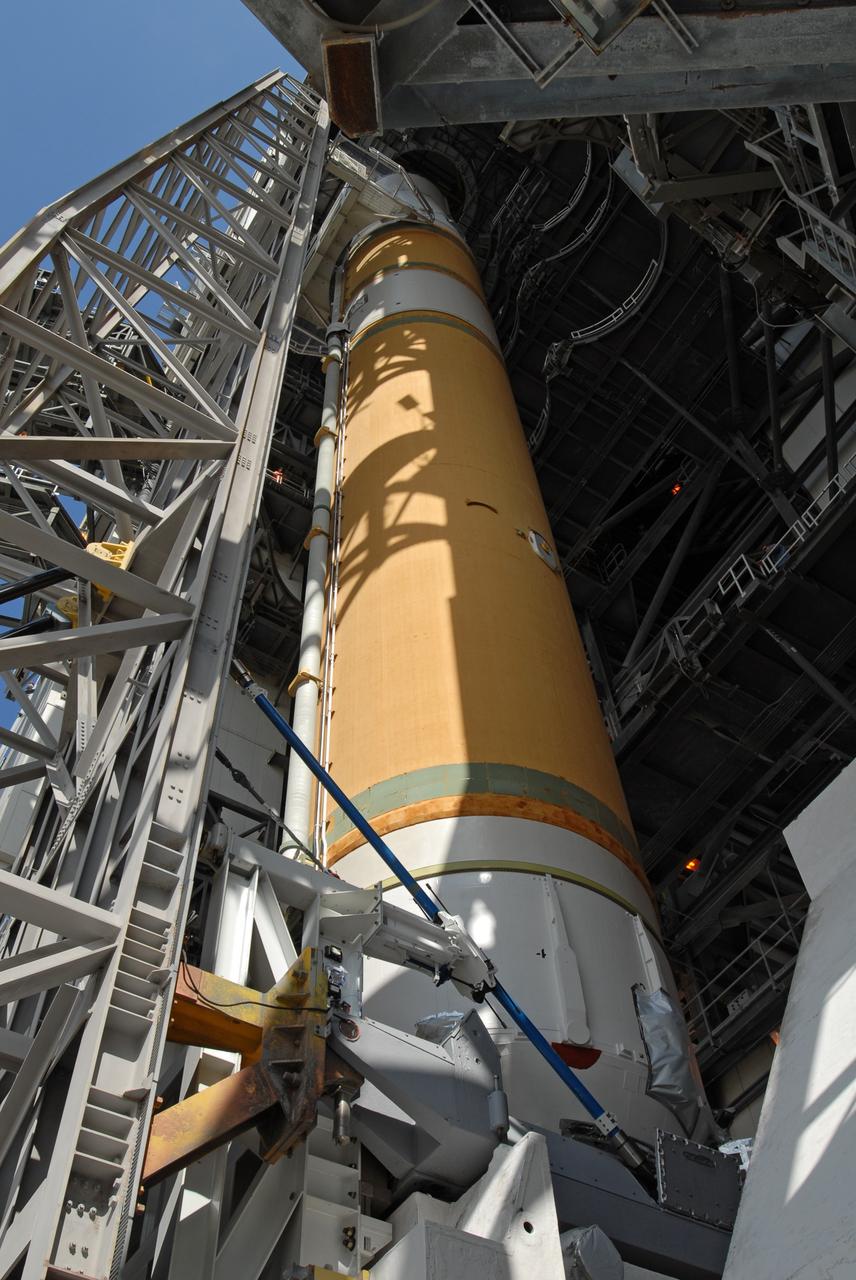
CAPE CANAVERAL, Fla. – On Launch Pad 37 at Cape Canaveral Air Force Station in Florida, the GOES-O and Delta IV upper stage are moved into the mobile service tower for prelaunch preparations. GOES–O is one of a series of Geostationary Operational Environmental Satellites. The multi-mission GOES series N-P will be a vital contributor to weather, solar and space operations and science. NASA and the National Oceanic and Atmospheric Administration, or NOAA, are actively engaged in a cooperative program to expand the existing GOES system with the launch of the GOES N-P satellites. Launch of the GOES-O is targeted for no earlier than April 2009. Photo credit: NASA/Jim Grossmann

CAPE CANAVERAL, Fla. – On Launch Pad 37 at Cape Canaveral Air Force Station in Florida, the lifting mechanism that raised the GOES-O and Delta IV upper stage to vertical is lowered toward the ground. GOES–O is one of a series of Geostationary Operational Environmental Satellites. The multi-mission GOES series N-P will be a vital contributor to weather, solar and space operations and science. NASA and the National Oceanic and Atmospheric Administration, or NOAA, are actively engaged in a cooperative program to expand the existing GOES system with the launch of the GOES N-P satellites. Launch of the GOES-O is targeted for no earlier than April 2009. Photo credit: NASA/Jim Grossmann
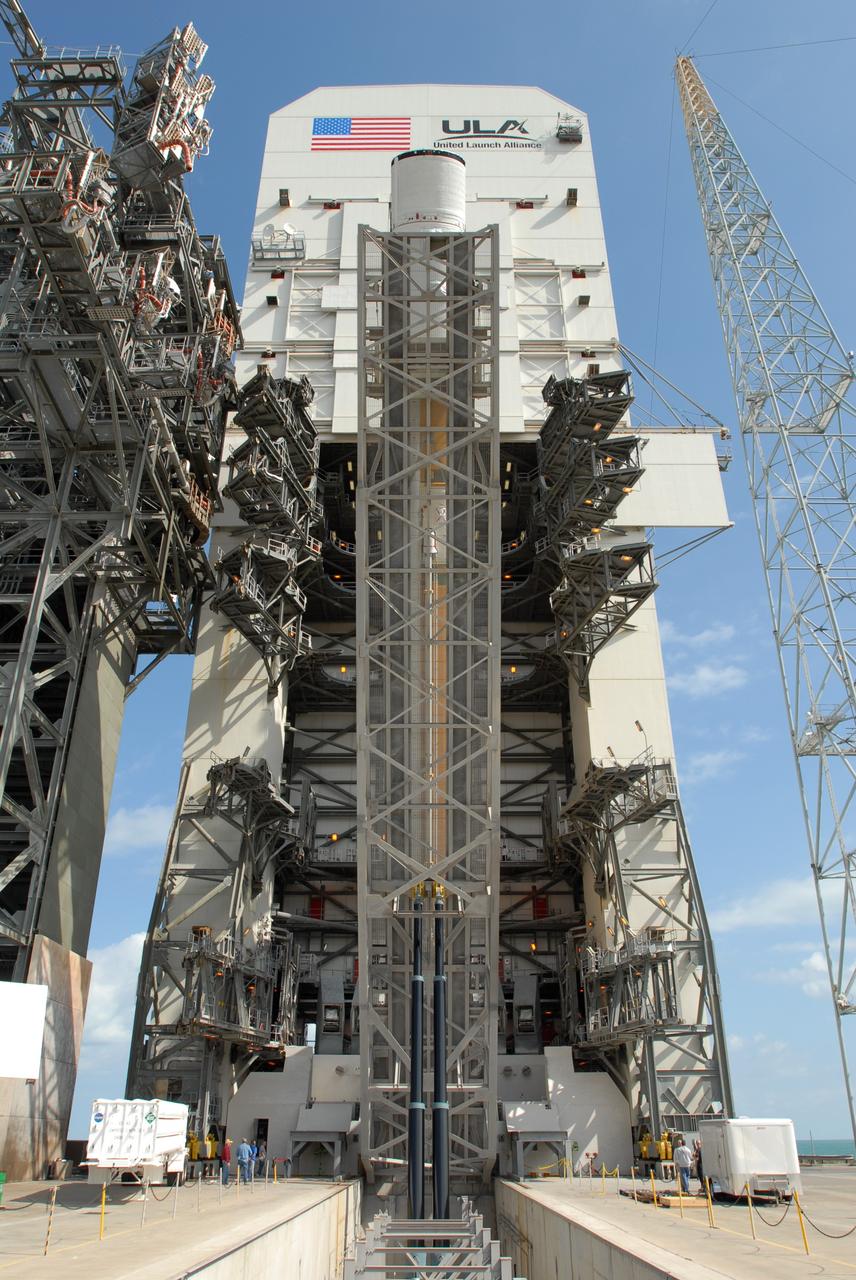
CAPE CANAVERAL, Fla. – – On Launch Pad 37 at Cape Canaveral Air Force Station in Florida, the GOES-O and Delta IV upper stage are being raised to vertical. They will be moved into the mobile service tower for prelaunch preparations. GOES–O is one of a series of Geostationary Operational Environmental Satellites. The multi-mission GOES series N-P will be a vital contributor to weather, solar and space operations and science. NASA and the National Oceanic and Atmospheric Administration, or NOAA, are actively engaged in a cooperative program to expand the existing GOES system with the launch of the GOES N-P satellites. Launch of the GOES-O is targeted for no earlier than April 2009. Photo credit: NASA/Jim Grossmann
CAPE CANAVERAL, Fla. – On Launch Pad 37 at Cape Canaveral Air Force Station in Florida, the GOES-O and Delta IV upper stage are waiting to be raised to vertical. They will be moved into the mobile service tower for prelaunch preparations. GOES–O is one of a series of Geostationary Operational Environmental Satellites. The multi-mission GOES series N-P will be a vital contributor to weather, solar and space operations and science. NASA and the National Oceanic and Atmospheric Administration, or NOAA, are actively engaged in a cooperative program to expand the existing GOES system with the launch of the GOES N-P satellites. Launch of the GOES-O is targeted for no earlier than April 2009. Photo credit: NASA/Jim Grossmann
CAPE CANAVERAL, Fla. -- The GOES-O/Delta IV second stage is being mated to the first stage in the Horizontal Integration Facility on Complex 37 at Cape Canaveral Air Force Station in Florida. GOES–O is one of a series of Geostationary Operational Environmental Satellites. The multi-mission GOES series N-P will be a vital contributor to weather, solar and space operations and science. NASA and the National Oceanic and Atmospheric Administration, or NOAA, are actively engaged in a cooperative program to expand the existing GOES system with the launch of the GOES N-P satellites. Launch of the GOES-O is targeted for no earlier than April 2009. Photo credit: NASA/Jack Pfaller
CAPE CANAVERAL, Fla. – At Cape Canaveral Air Force Station in Florida, the GOES-O and Delta IV second stage are transported to Launch Pad 37. GOES–O is one of a series of Geostationary Operational Environmental Satellites. The multi-mission GOES series N-P will be a vital contributor to weather, solar and space operations and science. NASA and the National Oceanic and Atmospheric Administration, or NOAA, are actively engaged in a cooperative program to expand the existing GOES system with the launch of the GOES N-P satellites. Launch of the GOES-O is targeted for no earlier than April 2009. Photo credit: NASA/Jim Grossmann
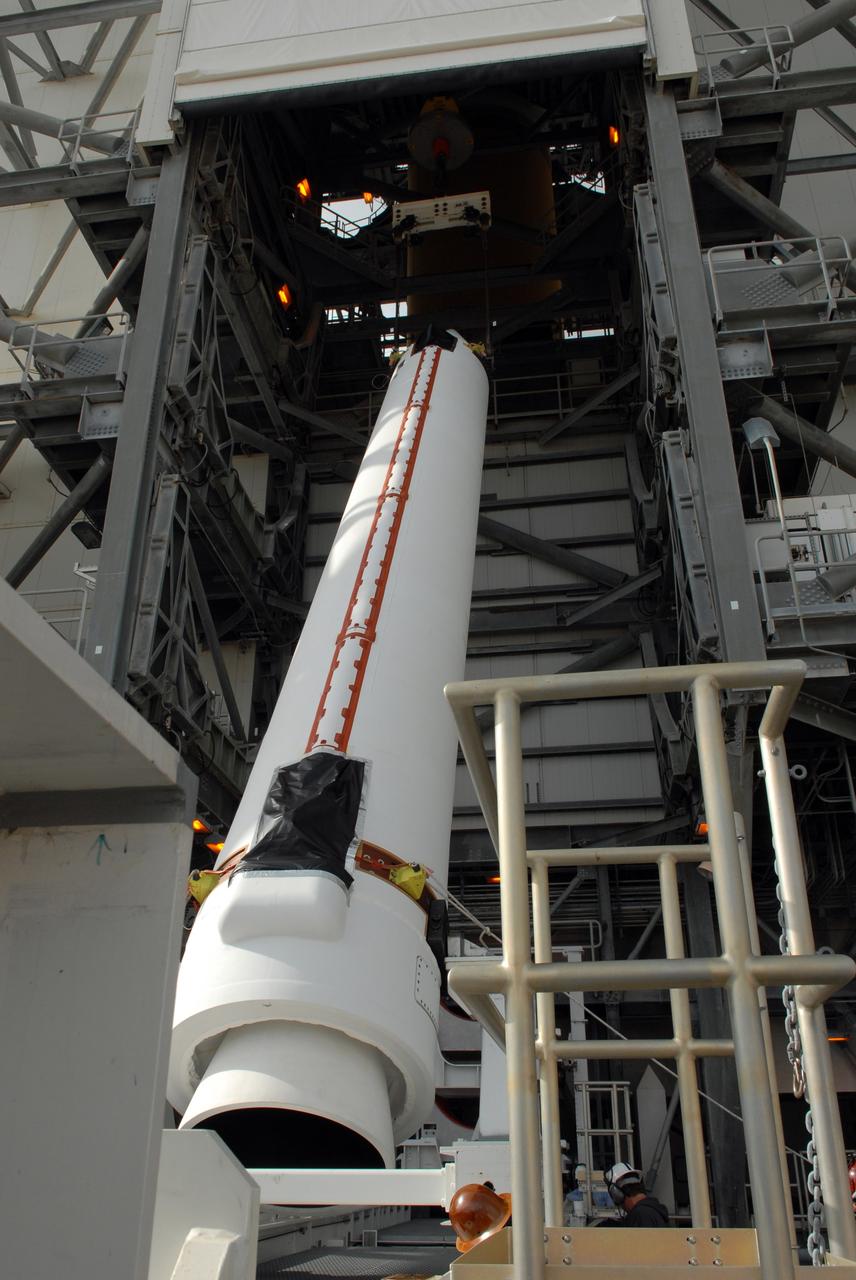
CAPE CANAVERAL, Fla. – One of two solid rocket boosters is lifted into the mobile service tower on Launch Pad 37 at Cape Canaveral Air Force Station. It is the left rocket and it will be mated to the GOES-O Delta IV launch vehicle. GOES–O is one of a series of Geostationary Operational Environmental Satellites. The multi-mission GOES series N-P will be a vital contributor to weather, solar and space operations and science. NASA and the National Oceanic and Atmospheric Administration, or NOAA, are actively engaged in a cooperative program to expand the existing GOES system with the launch of the GOES N-P satellites. Launch of the GOES-O is targeted for no earlier than April 2009. Photo credit: NASA/Ben Smegelsky
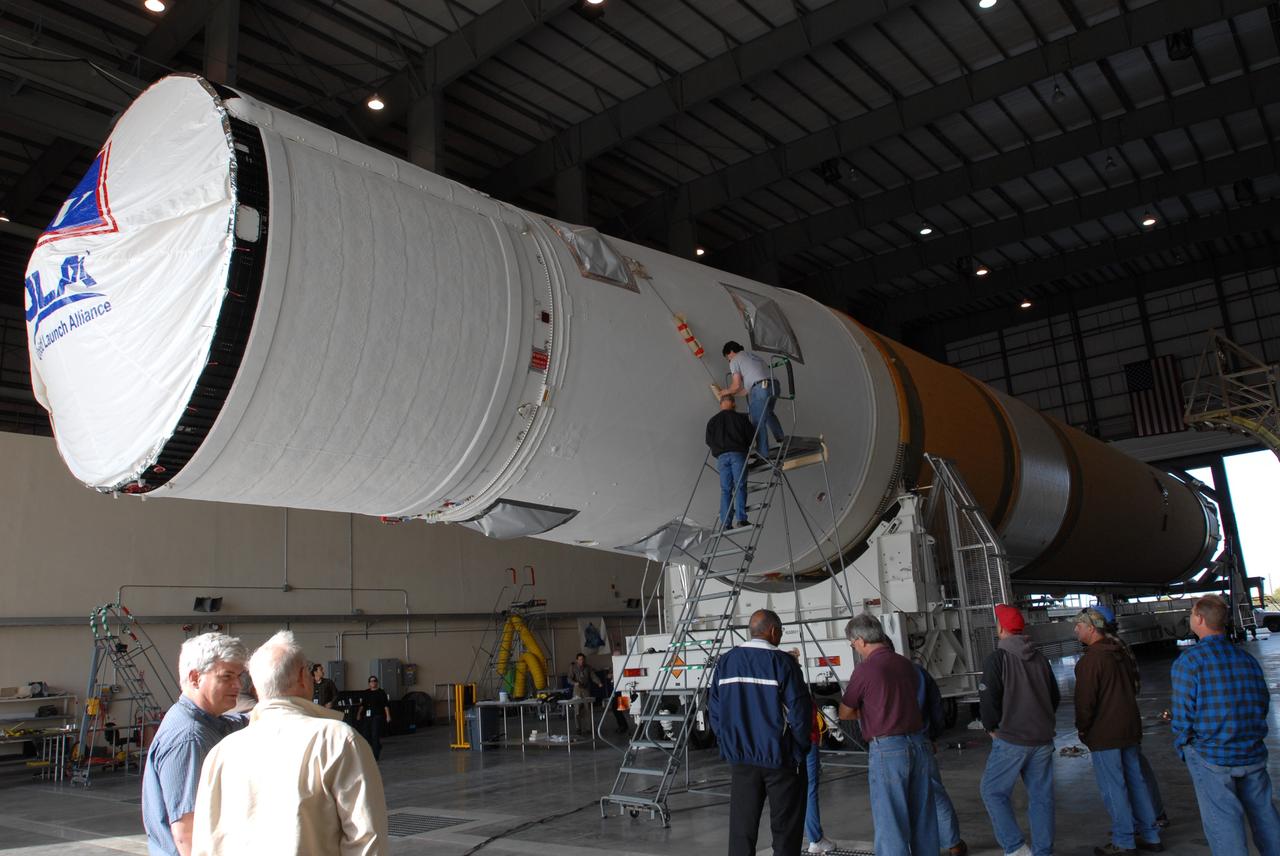
CAPE CANAVERAL, Fla. – On Complex 37 at Cape Canaveral Air Force Station in Florida, the GOES-O and Delta IV second stage are being prepared to leave the Horizontal Integration Facility. They will be moved to the launch pad. GOES–O is one of a series of Geostationary Operational Environmental Satellites. The multi-mission GOES series N-P will be a vital contributor to weather, solar and space operations and science. NASA and the National Oceanic and Atmospheric Administration, or NOAA, are actively engaged in a cooperative program to expand the existing GOES system with the launch of the GOES N-P satellites. Launch of the GOES-O is targeted for no earlier than April 2009. Photo credit: NASA/Jim Grossmann
CAPE CANAVERAL, Fla. – On Launch Pad 37 at Cape Canaveral Air Force Station in Florida, workers begin detaching the lifting mechanism that raised the GOES-O and Delta IV upper stage to vertical. GOES–O is one of a series of Geostationary Operational Environmental Satellites. The multi-mission GOES series N-P will be a vital contributor to weather, solar and space operations and science. NASA and the National Oceanic and Atmospheric Administration, or NOAA, are actively engaged in a cooperative program to expand the existing GOES system with the launch of the GOES N-P satellites. Launch of the GOES-O is targeted for no earlier than April 2009. Photo credit: NASA/Jim Grossmann
CAPE CANAVERAL, Fla. – On Complex 37 at Cape Canaveral Air Force Station in Florida, workers are ready to move the GOES-O and Delta IV second stage out of the Horizontal Integration Facility to go to the launch pad. GOES–O is one of a series of Geostationary Operational Environmental Satellites. The multi-mission GOES series N-P will be a vital contributor to weather, solar and space operations and science. NASA and the National Oceanic and Atmospheric Administration, or NOAA, are actively engaged in a cooperative program to expand the existing GOES system with the launch of the GOES N-P satellites. Launch of the GOES-O is targeted for no earlier than April 2009. Photo credit: NASA/Jim Grossmann
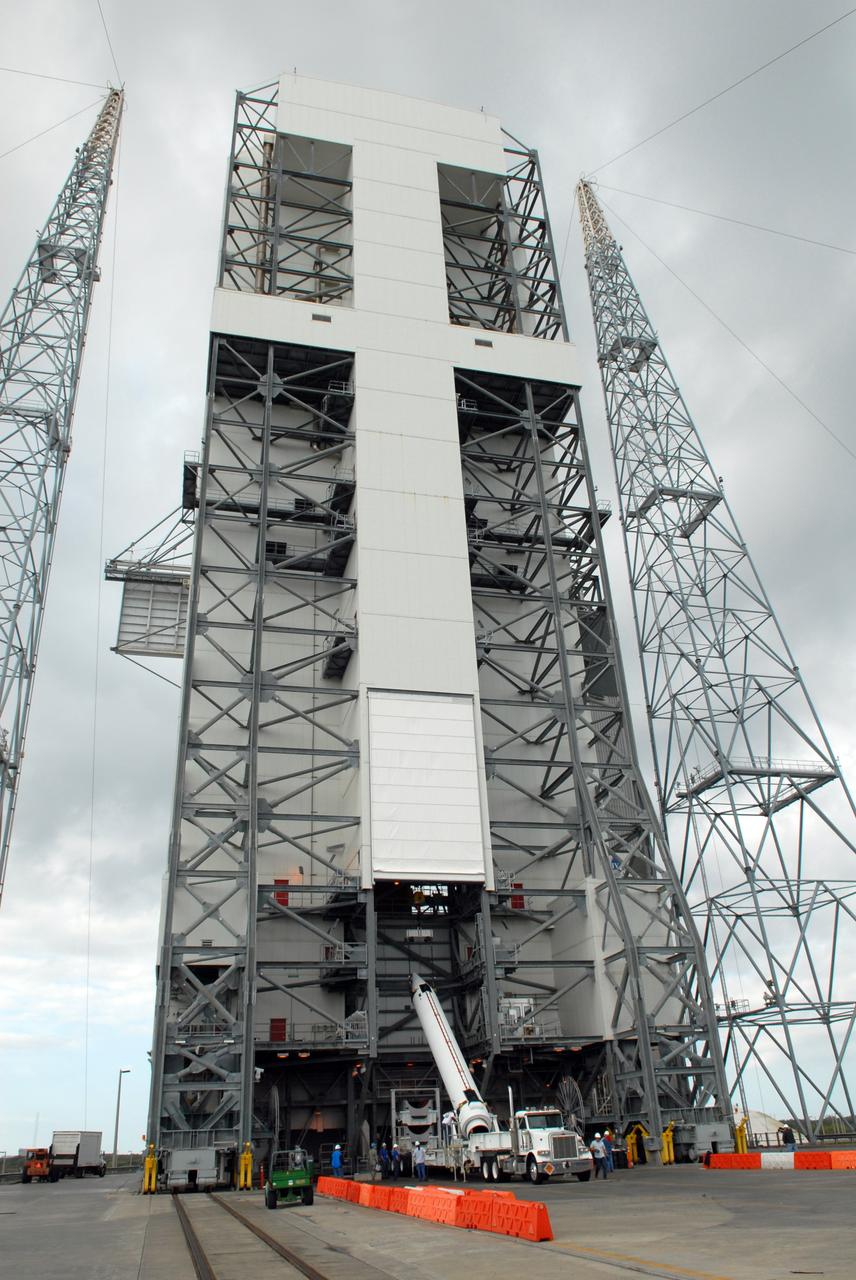
CAPE CANAVERAL, Fla. – On Launch Pad 37 at Cape Canaveral Air Force Station in Florida, one of the solid rocket boosters to be mated to the GOES-O Delta IV rocket arrives. GOES–O is one of a series of Geostationary Operational Environmental Satellites. The multi-mission GOES series N-P will be a vital contributor to weather, solar and space operations and science. NASA and the National Oceanic and Atmospheric Administration, or NOAA, are actively engaged in a cooperative program to expand the existing GOES system with the launch of the GOES N-P satellites. Launch of the GOES-O is targeted for no earlier than April 2009. Photo credit: NASA/Jim Grossmann
CAPE CANAVERAL, Fla. – One of two solid rocket boosters is lifted into the mobile service tower on Launch Pad 37 at Cape Canaveral Air Force Station. It is the left rocket and it will be mated to the GOES-O Delta IV launch vehicle. GOES–O is one of a series of Geostationary Operational Environmental Satellites. The multi-mission GOES series N-P will be a vital contributor to weather, solar and space operations and science. NASA and the National Oceanic and Atmospheric Administration, or NOAA, are actively engaged in a cooperative program to expand the existing GOES system with the launch of the GOES N-P satellites. Launch of the GOES-O is targeted for no earlier than April 2009. Photo credit: NASA/Ben Smegelsky

KENNEDY SPACE CENTER, FLA. - At the Delta Operations Center on Cape Canaveral Air Force Station, Fla., Tibor Nagy, a Pratt and Whitney representative, Wendell Perez (back to camera) and Ed Wagner (right) prepare the Delta second stage nozzle for the Boeing Delta IV launch vehicle for installation. The Delta IV is scheduled to launch the GOES-N satellite in May 2005. Geostationary Operational Environmental Satellites are sponsored by the National Aeronautics and Space Administration (NASA) and the National Oceanic and Atmospheric Administration (NOAA). GOES-N is the first in the next series of GOES satellites, N-P. The multimission GOES series N-P will be a vital contributor to weather, solar and space operations and science. The GOES N-P series will aid activities ranging from severe storm warnings to resource management and advances in science.

KENNEDY SPACE CENTER, FLA. - At the Delta Operations Center on Cape Canaveral Air Force Station, Fla., technicians Duane Miller (left) and Ed Wagner (right) help guide the Delta second stage nozzle for a Boeing Delta IV launch vehicle away from its shipping container. The nozzle is being moved to another site on the floor for inspection. The Delta IV is scheduled to launch the GOES-N satellite in May 2005. Geostationary Operational Environmental Satellites are sponsored by the National Aeronautics and Space Administration (NASA) and the National Oceanic and Atmospheric Administration (NOAA). GOES-N is the first in the next series of GOES satellites, N-P. The multimission GOES series N-P will be a vital contributor to weather, solar and space operations and science. The GOES N-P series will aid activities ranging from severe storm warnings to resource management and advances in science.

KENNEDY SPACE CENTER, FLA. - At the Delta Operations Center on Cape Canaveral Air Force Station, Fla., technicians Duane Miller (left) and Ed Wagner (right) release the crane from the Delta second stage nozzle for a Boeing Delta IV launch vehicle to prepare for installation. The Delta IV is scheduled to launch the GOES-N satellite in May 2005. Geostationary Operational Environmental Satellites are sponsored by the National Aeronautics and Space Administration (NASA) and the National Oceanic and Atmospheric Administration (NOAA). GOES-N is the first in the next series of GOES satellites, N-P. The multimission GOES series N-P will be a vital contributor to weather, solar and space operations and science. The GOES N-P series will aid activities ranging from severe storm warnings to resource management and advances in science.

KENNEDY SPACE CENTER, FLA. - At the Delta Operations Center on Cape Canaveral Air Force Station, Fla., technicians Ed Wagner and Wendell Perez uncrate the Delta second stage nozzle for a Boeing Delta IV launch vehicle. The Delta IV is scheduled to launch the GOES-N satellite in May 2005. Geostationary Operational Environmental Satellites are sponsored by the National Aeronautics and Space Administration (NASA) and the National Oceanic and Atmospheric Administration (NOAA). GOES-N is the first in the next series of GOES satellites, N-P. The multimission GOES series N-P will be a vital contributor to weather, solar and space operations and science. The GOES N-P series will aid activities ranging from severe storm warnings to resource management and advances in science.

KENNEDY SPACE CENTER, FLA. - At the Delta Operations Center on Cape Canaveral Air Force Station, Fla., technicians Duane Miller (left) and Ed Wagner (right) help guide the Delta second stage nozzle for a Boeing Delta IV launch vehicle away from its shipping container. The nozzle is being moved to another site on the floor for inspection. The Delta IV is scheduled to launch the GOES-N satellite in May 2005. Geostationary Operational Environmental Satellites are sponsored by the National Aeronautics and Space Administration (NASA) and the National Oceanic and Atmospheric Administration (NOAA). GOES-N is the first in the next series of GOES satellites, N-P. The multimission GOES series N-P will be a vital contributor to weather, solar and space operations and science. The GOES N-P series will aid activities ranging from severe storm warnings to resource management and advances in science.

KENNEDY SPACE CENTER, FLA. - At the Delta Operations Center on Cape Canaveral Air Force Station, Fla., technician Ed Wagner inspects the Delta second stage nozzle for a Boeing Delta IV launch vehicle after it was uncrated. The Delta IV is scheduled to launch the GOES-N satellite in May 2005. Geostationary Operational Environmental Satellites are sponsored by the National Aeronautics and Space Administration (NASA) and the National Oceanic and Atmospheric Administration (NOAA). GOES-N is the first in the next series of GOES satellites, N-P. The multimission GOES series N-P will be a vital contributor to weather, solar and space operations and science. The GOES N-P series will aid activities ranging from severe storm warnings to resource management and advances in science.

KENNEDY SPACE CENTER, FLA. - At the Delta Operations Center on Cape Canaveral Air Force Station, Fla., Bob McMillan (left), Wendell Perez (back to camera) and Ed Wagner (right) help prepare Delta second stage the nozzle for the Boeing Delta IV launch vehicle for installation. The Delta IV is scheduled to launch the GOES-N satellite in May 2005. Geostationary Operational Environmental Satellites are sponsored by the National Aeronautics and Space Administration (NASA) and the National Oceanic and Atmospheric Administration (NOAA). GOES-N is the first in the next series of GOES satellites, N-P. The multimission GOES series N-P will be a vital contributor to weather, solar and space operations and science. The GOES N-P series will aid activities ranging from severe storm warnings to resource management and advances in science.

KENNEDY SPACE CENTER, FLA. - At the Delta Operations Center on Cape Canaveral Air Force Station, Fla., Wendell Perez checks an overhead crane being attached to the Delta second stage nozzle for a Boeing Delta IV launch vehicle. The nozzle is being lifted from its shipping container and moved to another site on the floor for inspection. The Delta IV is scheduled to launch the GOES-N satellite in May 2005. Geostationary Operational Environmental Satellites are sponsored by the National Aeronautics and Space Administration (NASA) and the National Oceanic and Atmospheric Administration (NOAA). GOES-N is the first in the next series of GOES satellites, N-P. The multimission GOES series N-P will be a vital contributor to weather, solar and space operations and science. The GOES N-P series will aid activities ranging from severe storm warnings to resource management and advances in science.

KENNEDY SPACE CENTER, FLA. - At the Delta Operations Center on Cape Canaveral Air Force Station, Fla., Tibor Nagy and Bob McMillan, at left, make the initial nozzle inspection of the Delta second stage nozzle for a Boeing Delta IV launch vehicle. The Delta IV is scheduled to launch the GOES-N satellite in May 2005. Geostationary Operational Environmental Satellites are sponsored by the National Aeronautics and Space Administration (NASA) and the National Oceanic and Atmospheric Administration (NOAA). GOES-N is the first in the next series of GOES satellites, N-P. The multimission GOES series N-P will be a vital contributor to weather, solar and space operations and science. The GOES N-P series will aid activities ranging from severe storm warnings to resource management and advances in science.
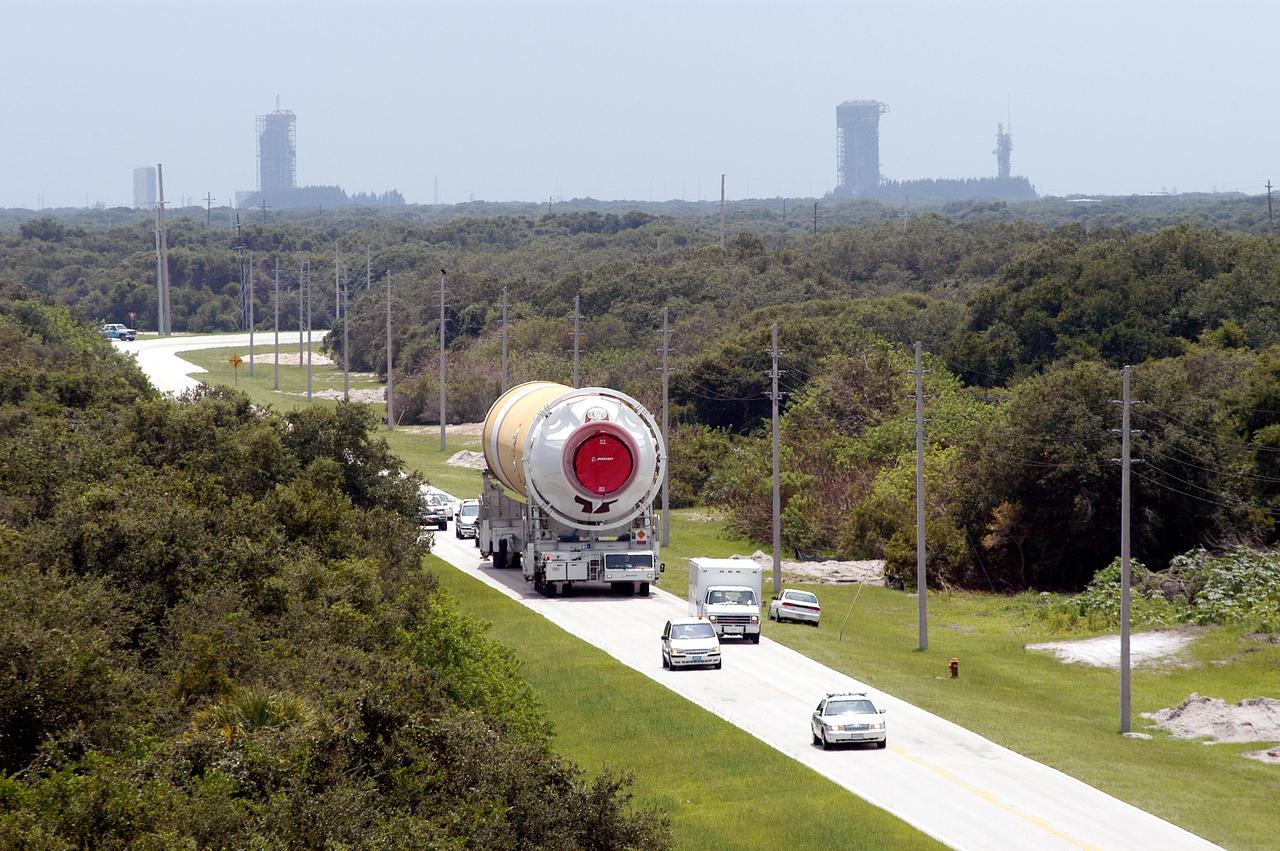
KENNEDY SPACE CENTER, FLA. - A Security escort leads the way as this Boeing Delta IV first stage heads to the Horizontal Integration Facility at Launch Complex 37, Cape Canaveral Air Force Station. Two of the launch pads on Cape Canaveral’s coast can be seen in the background. Two rockets were shipped by barge from Decatur, Ala., to Port Canaveral and offloaded onto Elevating Platform Transporters. A Boeing Delta IV will be used for the December launching of the GOES-N weather satellite for NASA and NOAA. The GOES-N is the first in a series of three advanced weather satellites including GOES-O and GOES-P. This satellite will provide continuous monitoring necessary for intensive data analysis. It will provide a constant vigil for the atmospheric “triggers” of severe weather conditions such as tornadoes, flash floods, hail storms and hurricanes. When these conditions develop, GOES-N will be able to monitor storm development and track their movements.

CAPE CANAVERAL, Fla. – On Launch Pad 37 at Cape Canaveral Air Force Station in Florida, the Delta IV launch vehicle is ready for the arrival and mating of the solid rocket boosters for launch. GOES–O is one of a series of Geostationary Operational Environmental Satellites. The multi-mission GOES series N-P will be a vital contributor to weather, solar and space operations and science. NASA and the National Oceanic and Atmospheric Administration, or NOAA, are actively engaged in a cooperative program to expand the existing GOES system with the launch of the GOES N-P satellites. Launch of the GOES-O is targeted for no earlier than April 2009. Photo credit: NASA/Jim Grossmann
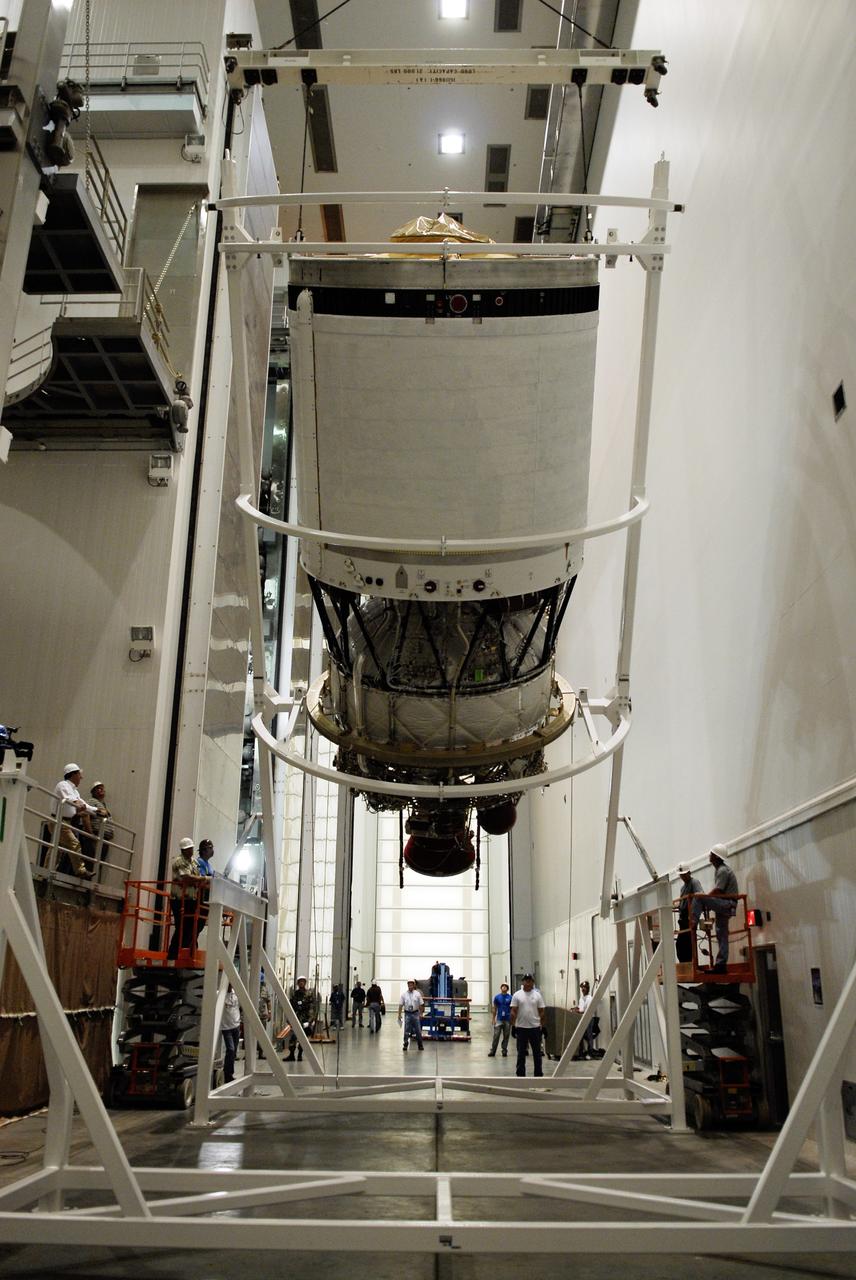
CAPE CANAVERAL, Fla. -- At Cape Canaveral Air Force Station, the second stage for the GOES-O Delta IV rocket is rotated vertically. Once upright, the second stage will be moved into a work cell for processing. GOES – O is one of a series of Geostationary Operational Environmental Satellites. The multimission GOES series N-P will be a vital contributor to weather, solar, and space operations and science. NASA and the National Oceanic and Atmospheric Administration, or NOAA, are actively engaged in a cooperative program to expand the existing GOES system with the launch of the GOES N-P satellites. Photo credit: NASA/Kim Shiflett
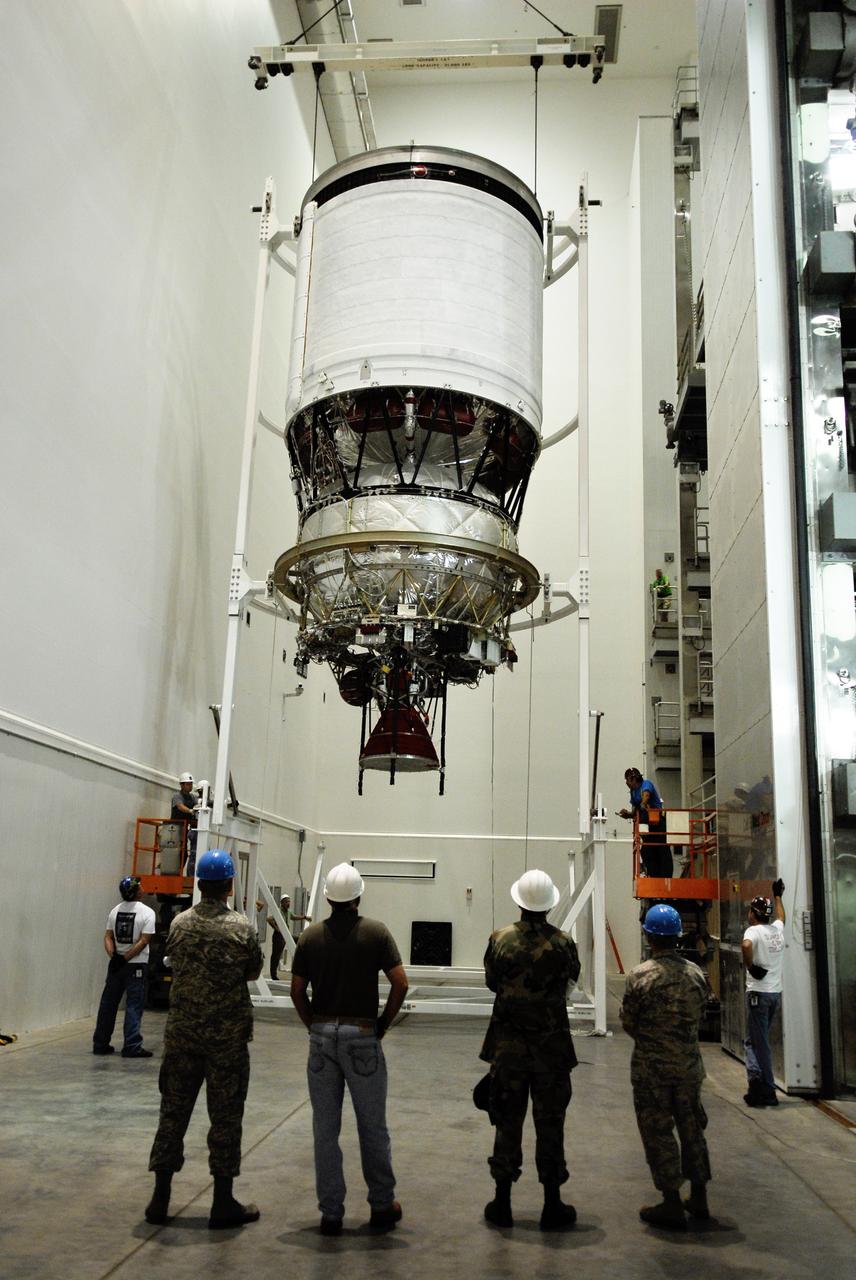
CAPE CANAVERAL, Fla. -- At Cape Canaveral Air Force Station, the second stage for the GOES-O Delta IV rocket is suspended vertically. It will be moved into a work cell for processing. GOES – O is one of a series of Geostationary Operational Environmental Satellites. The multimission GOES series N-P will be a vital contributor to weather, solar, and space operations and science. NASA and the National Oceanic and Atmospheric Administration, or NOAA, are actively engaged in a cooperative program to expand the existing GOES system with the launch of the GOES N-P satellites. Photo credit: NASA/Kim Shiflett
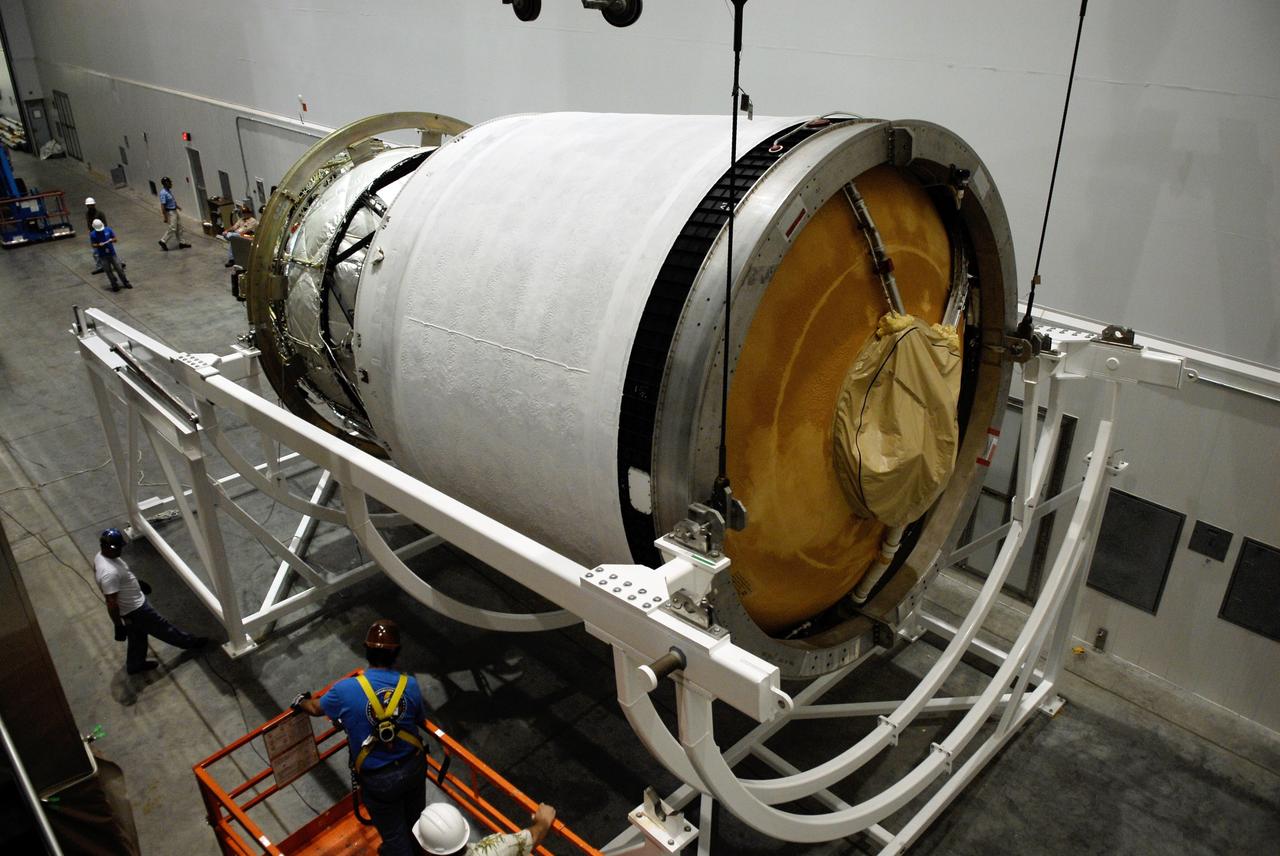
CAPE CANAVERAL, Fla. -- At Cape Canaveral Air Force Station, the second stage for the GOES-O Delta IV rocket rests in the rotation stand. The second stage will be rotated to vertical and moved into a work cell for processing. GOES – O is one of a series of Geostationary Operational Environmental Satellites. The multimission GOES series N-P will be a vital contributor to weather, solar, and space operations and science. NASA and the National Oceanic and Atmospheric Administration, or NOAA, are actively engaged in a cooperative program to expand the existing GOES system with the launch of the GOES N-P satellites. Photo credit: NASA/Kim Shiflett
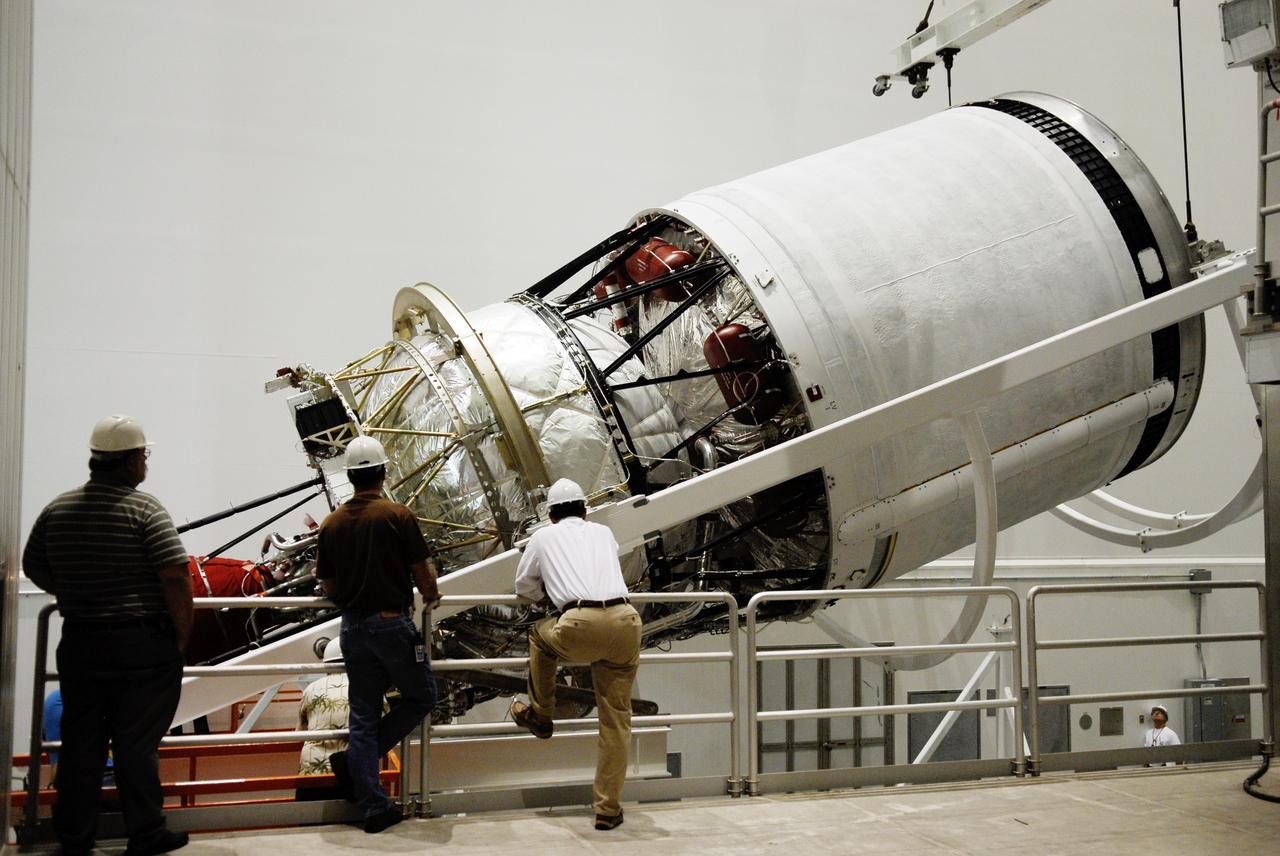
CAPE CANAVERAL, Fla. -- At Cape Canaveral Air Force Station, the second stage for the GOES-O Delta IV rocket is lifted from its horizontal position on the rotation stand. Once vertical, the second stage will be moved into a work cell for processing. GOES – O is one of a series of Geostationary Operational Environmental Satellites. The multimission GOES series N-P will be a vital contributor to weather, solar, and space operations and science. NASA and the National Oceanic and Atmospheric Administration, or NOAA, are actively engaged in a cooperative program to expand the existing GOES system with the launch of the GOES N-P satellites. Photo credit: NASA/Kim Shiflett
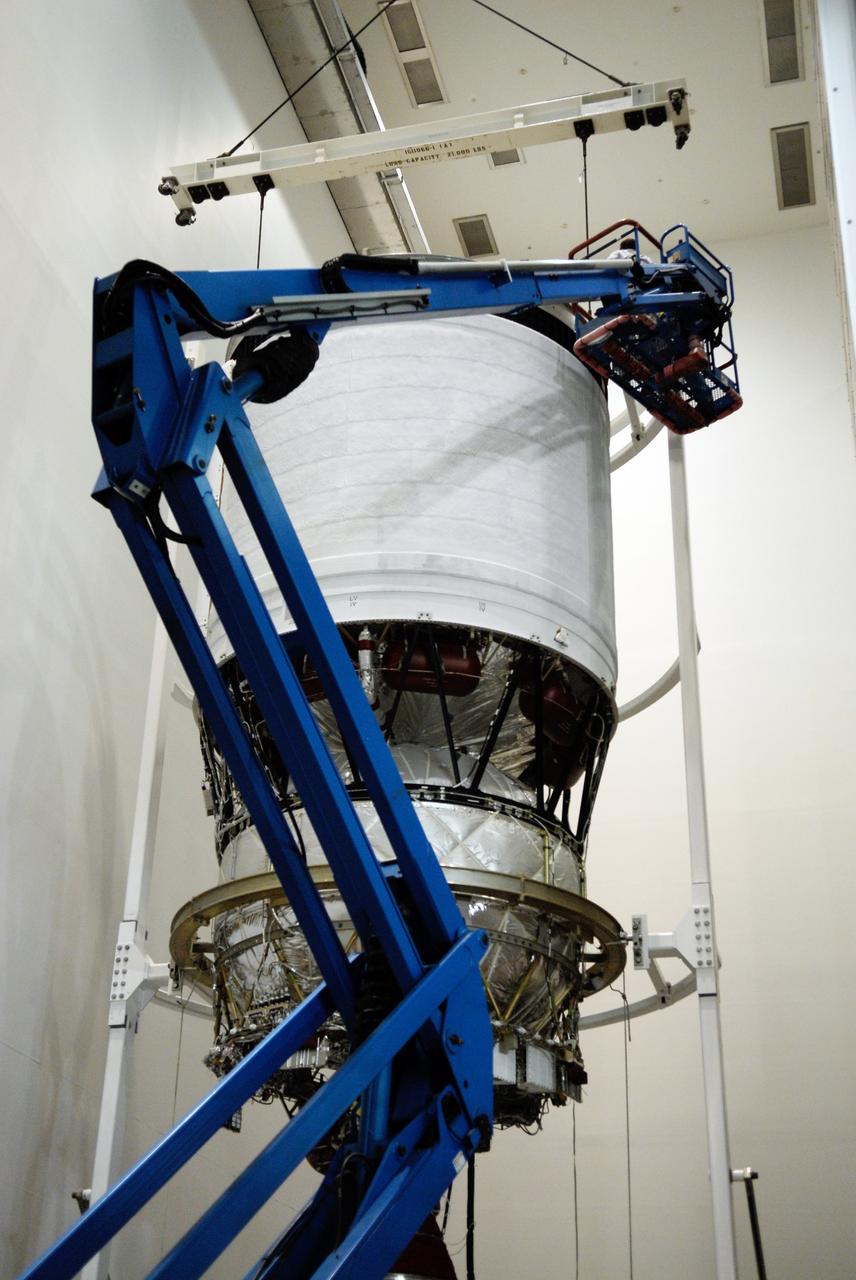
CAPE CANAVERAL, Fla. -- At Cape Canaveral Air Force Station, workers on a crane check the attachments of the sling suspending the second stage for the GOES-O Delta IV rocket. The second stage will be moved into a work cell for processing. GOES – O is one of a series of Geostationary Operational Environmental Satellites. The multimission GOES series N-P will be a vital contributor to weather, solar, and space operations and science. NASA and the National Oceanic and Atmospheric Administration, or NOAA, are actively engaged in a cooperative program to expand the existing GOES system with the launch of the GOES N-P satellites. Photo credit: NASA/Kim Shiflett