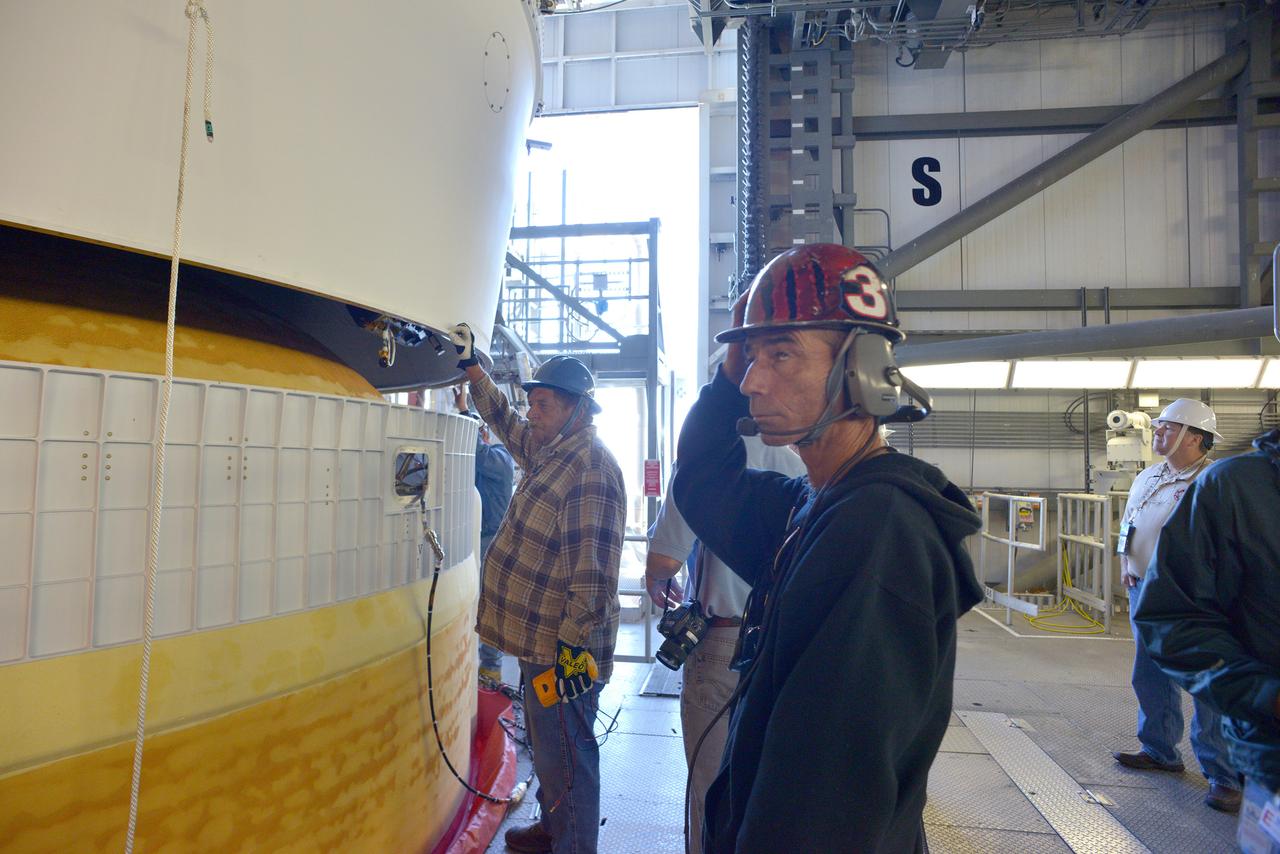
The Orion spacecraft was lifted on top of the Delta IV Heavy launch vehicle at ULA's Launch Complex 37 on Nov. 12, 2014. Over the next few days the Lockheed Martin/ULA team will work to complete the connections between Orion and the launch vehicle in preparation for Exploration Flight Test-1 (EFT-1). Part of Batch image transfer from Flickr.
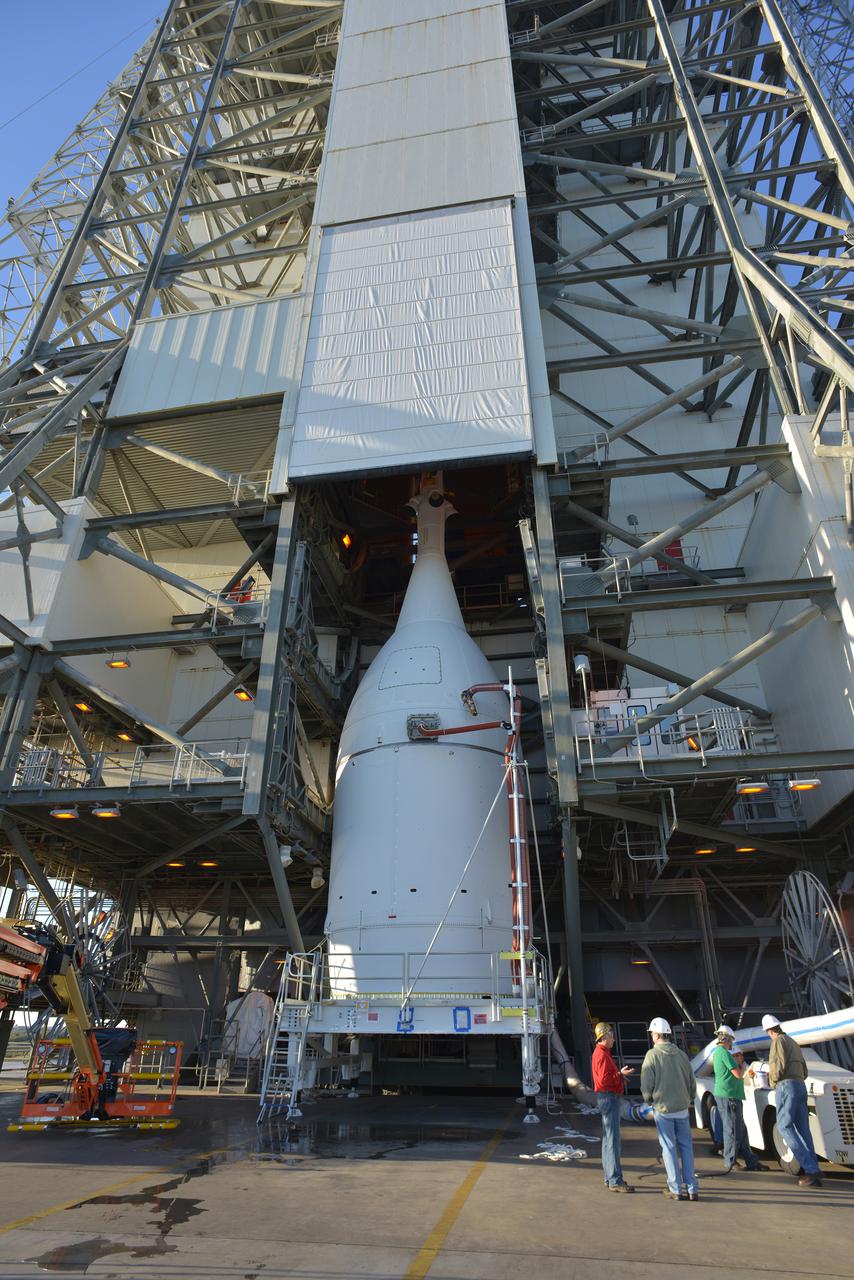
The Orion spacecraft was lifted on top of the Delta IV Heavy launch vehicle at ULA's Launch Complex 37 on Nov. 12, 2014. Over the next few days the Lockheed Martin/ULA team will work to complete the connections between Orion and the launch vehicle in preparation for Exploration Flight Test-1 (EFT-1). Part of Batch image transfer from Flickr.
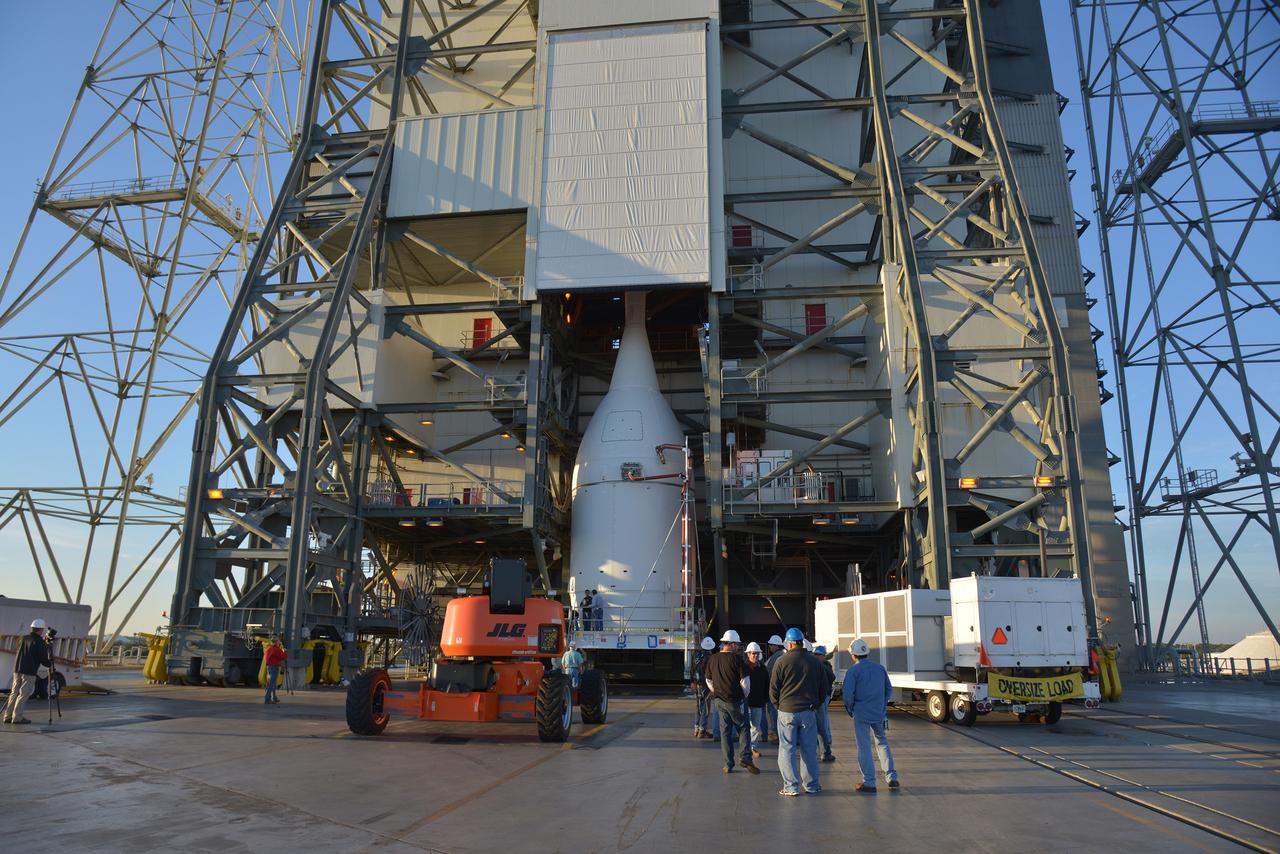
The Orion spacecraft was lifted on top of the Delta IV Heavy launch vehicle at ULA's Launch Complex 37 on Nov. 12, 2014. Over the next few days the Lockheed Martin/ULA team will work to complete the connections between Orion and the launch vehicle in preparation for Exploration Flight Test-1 (EFT-1). Part of Batch image transfer from Flickr.
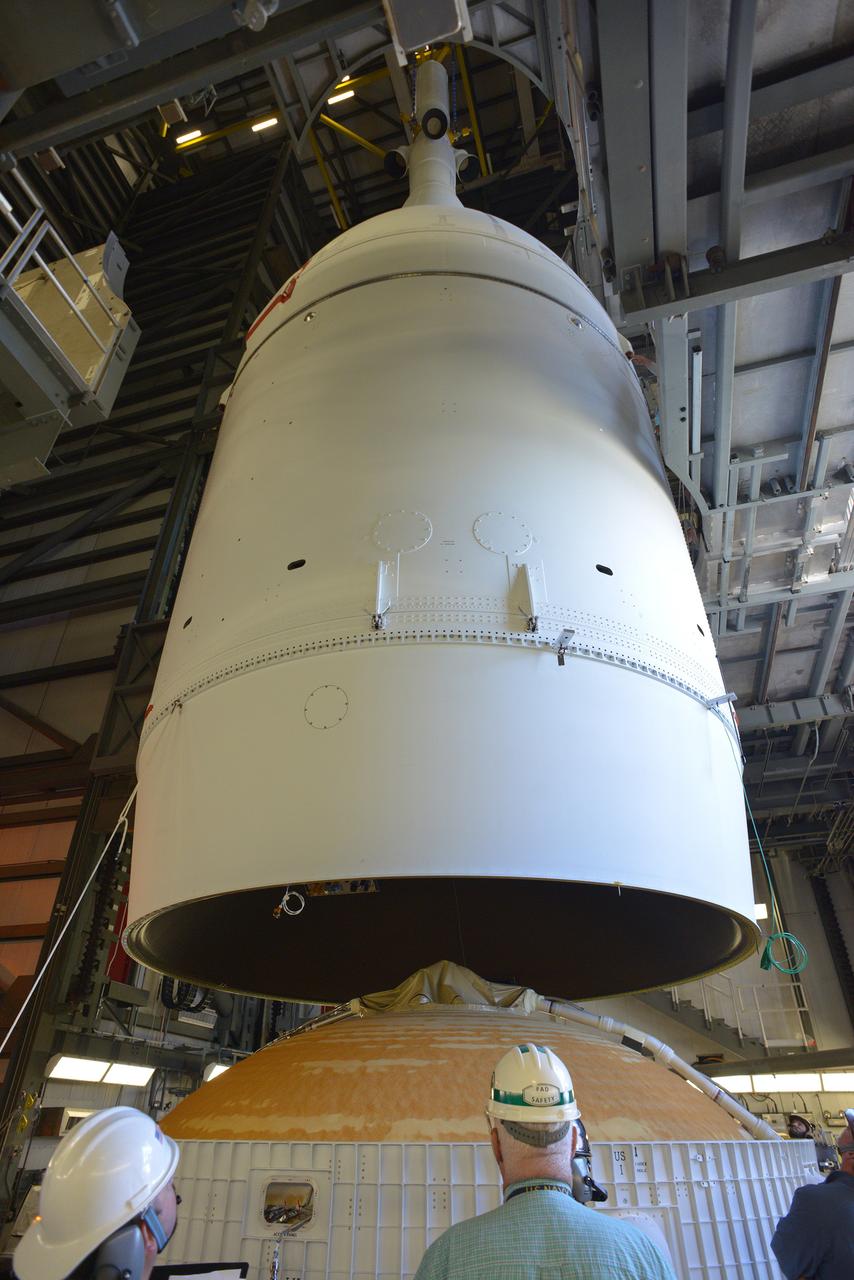
The Orion spacecraft was lifted on top of the Delta IV Heavy launch vehicle at ULA's Launch Complex 37 on Nov. 12, 2014. Over the next few days the Lockheed Martin/ULA team will work to complete the connections between Orion and the launch vehicle in preparation for Exploration Flight Test-1 (EFT-1). Part of Batch image transfer from Flickr.
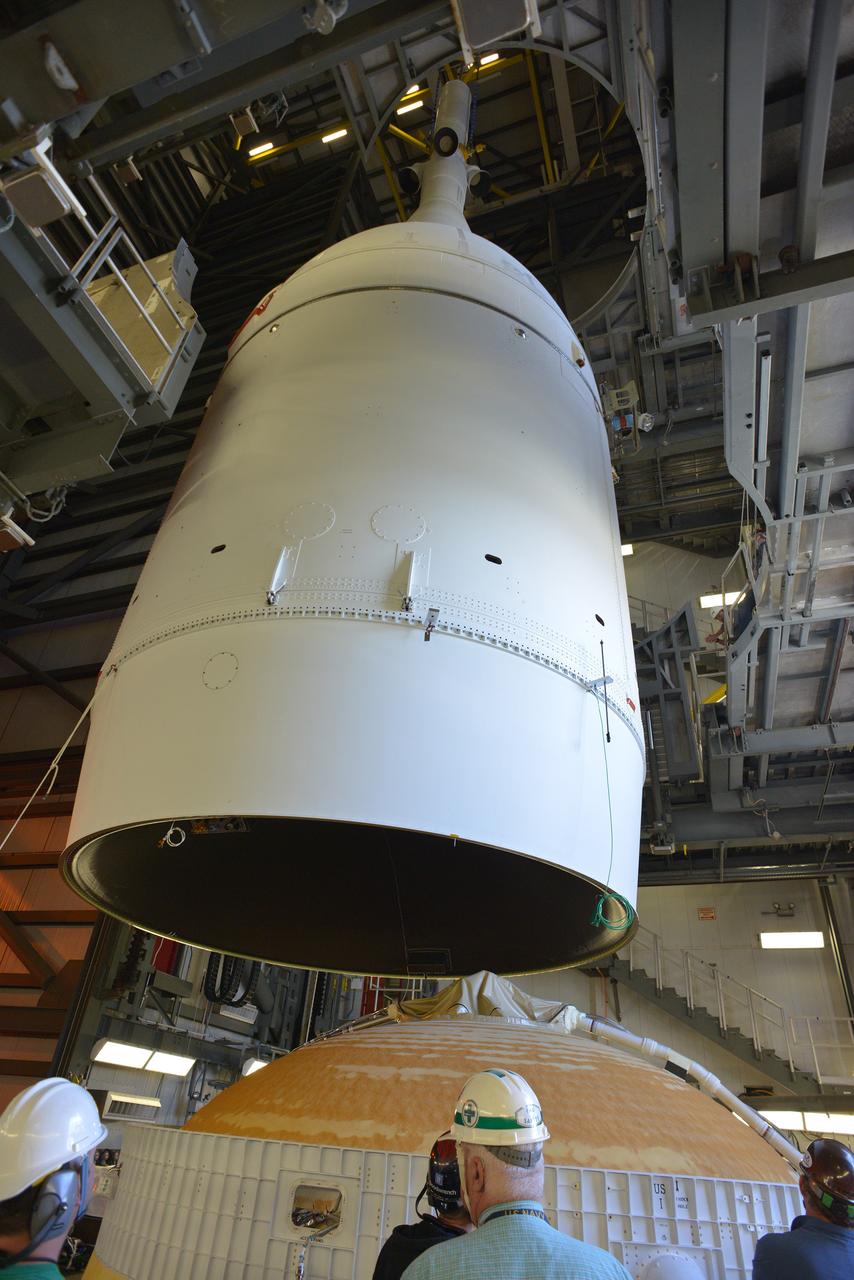
The Orion spacecraft was lifted on top of the Delta IV Heavy launch vehicle at ULA's Launch Complex 37 on Nov. 12, 2014. Over the next few days the Lockheed Martin/ULA team will work to complete the connections between Orion and the launch vehicle in preparation for Exploration Flight Test-1 (EFT-1). Part of Batch image transfer from Flickr.
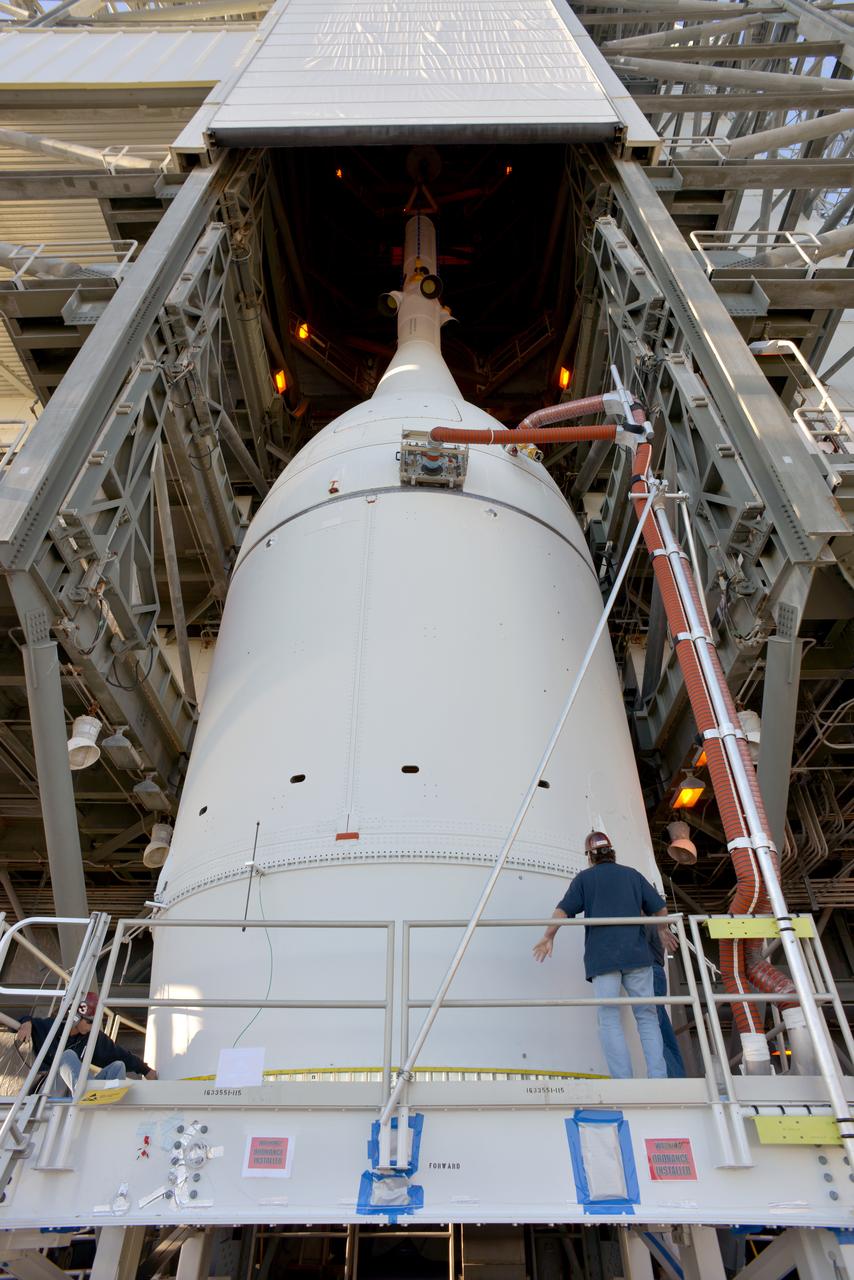
The Orion spacecraft was lifted on top of the Delta IV Heavy launch vehicle at ULA's Launch Complex 37 on Nov. 12, 2014. Over the next few days the Lockheed Martin/ULA team will work to complete the connections between Orion and the launch vehicle in preparation for Exploration Flight Test-1 (EFT-1). Part of Batch image transfer from Flickr.
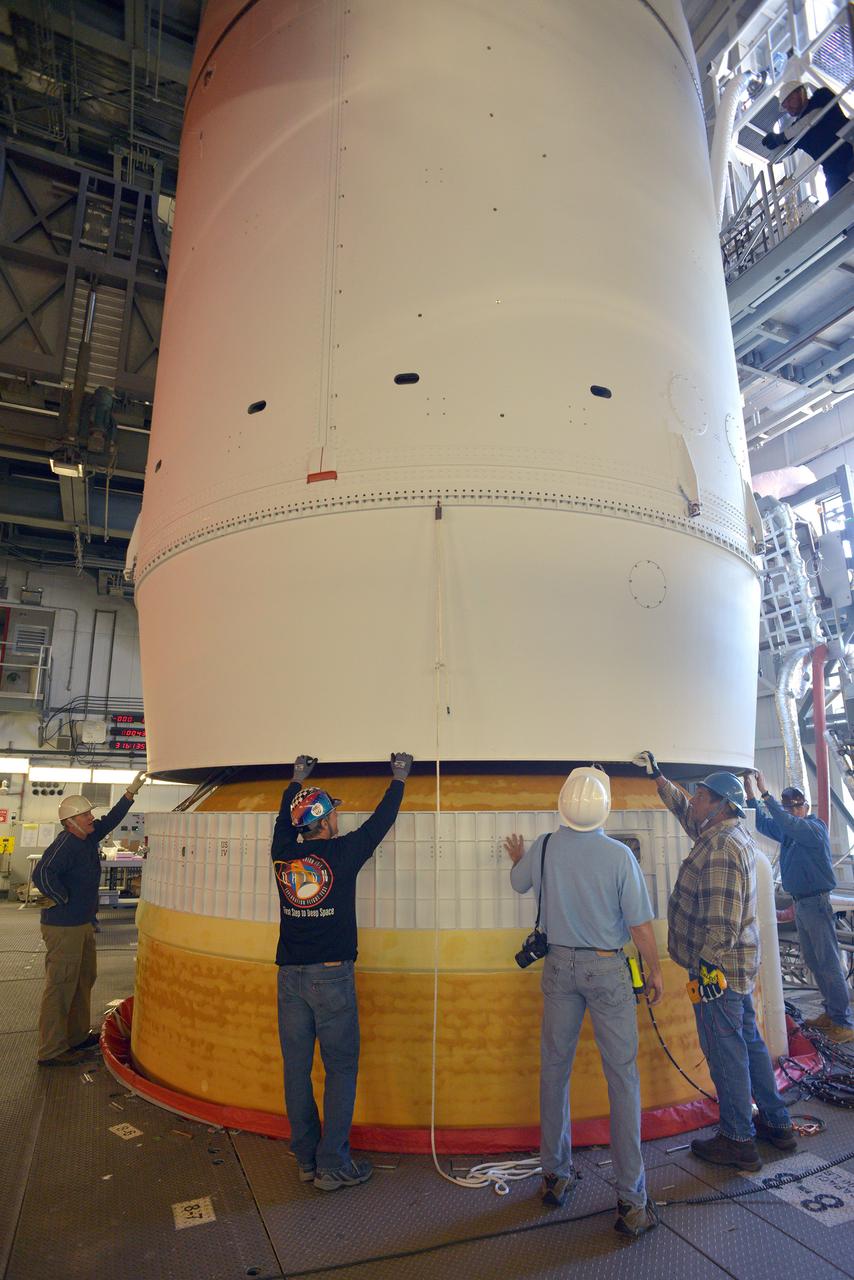
The Orion spacecraft was lifted on top of the Delta IV Heavy launch vehicle at ULA's Launch Complex 37 on Nov. 12, 2014. Over the next few days the Lockheed Martin/ULA team will work to complete the connections between Orion and the launch vehicle in preparation for Exploration Flight Test-1 (EFT-1). Part of Batch image transfer from Flickr.
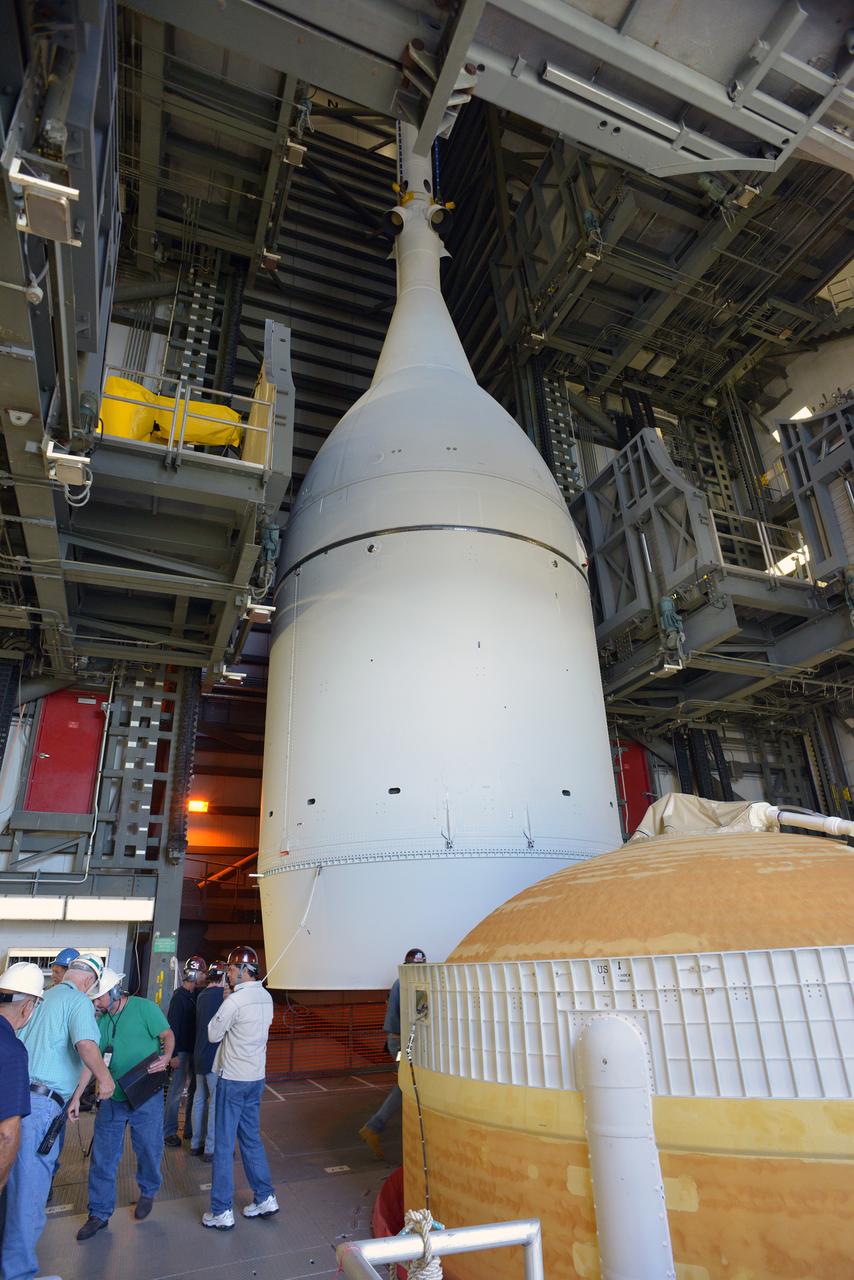
The Orion spacecraft was lifted on top of the Delta IV Heavy launch vehicle at ULA's Launch Complex 37 on Nov. 12, 2014. Over the next few days the Lockheed Martin/ULA team will work to complete the connections between Orion and the launch vehicle in preparation for Exploration Flight Test-1 (EFT-1). Part of Batch image transfer from Flickr.
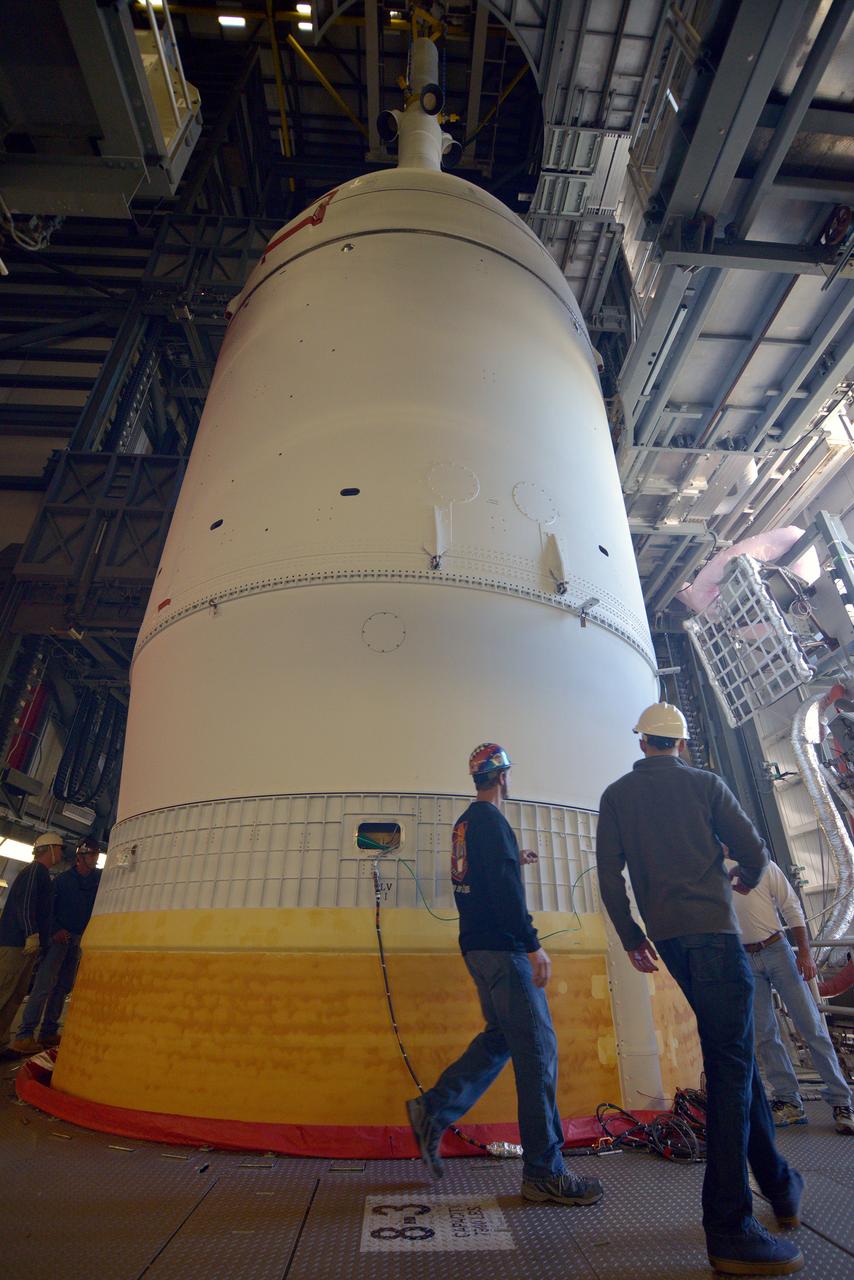
The Orion spacecraft was lifted on top of the Delta IV Heavy launch vehicle at ULA's Launch Complex 37 on Nov. 12, 2014. Over the next few days the Lockheed Martin/ULA team will work to complete the connections between Orion and the launch vehicle in preparation for Exploration Flight Test-1 (EFT-1). Part of Batch image transfer from Flickr.
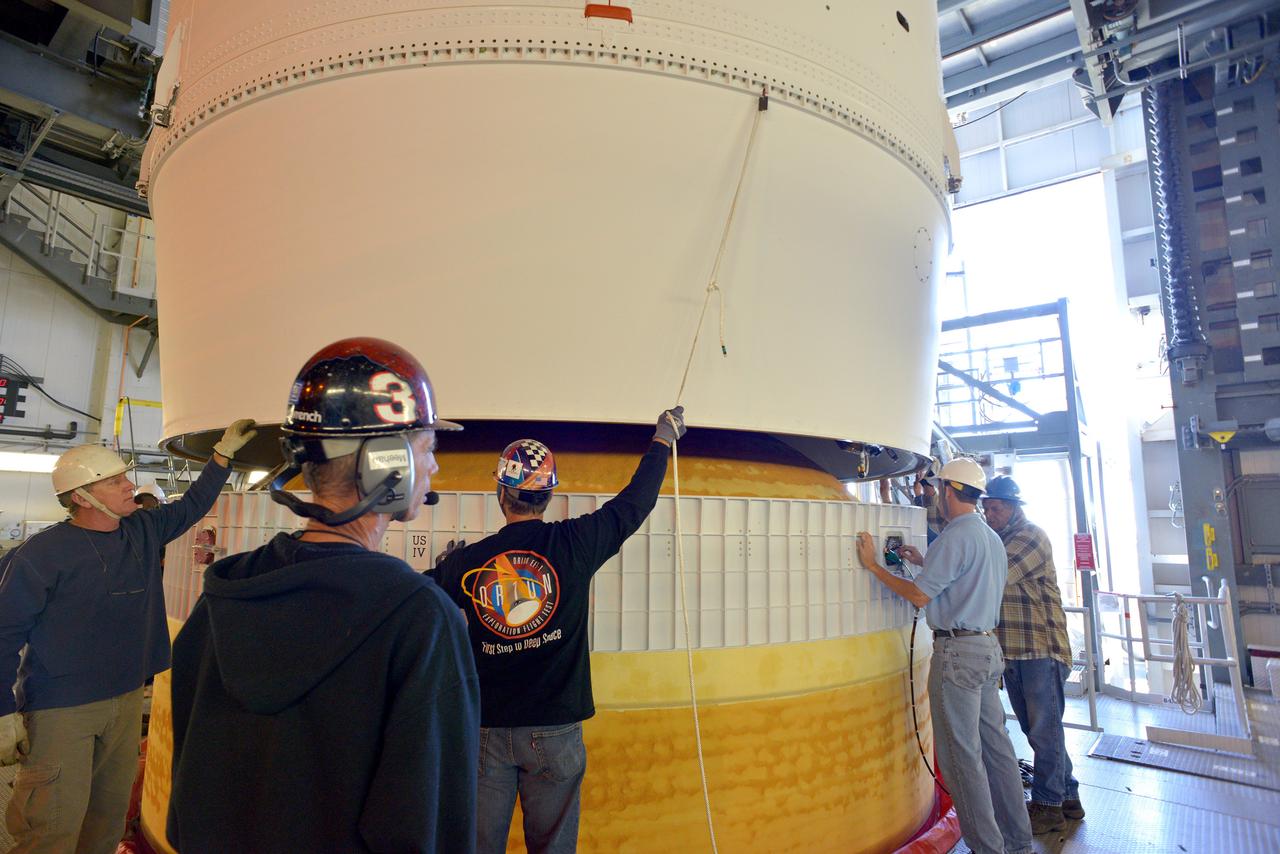
The Orion spacecraft was lifted on top of the Delta IV Heavy launch vehicle at ULA's Launch Complex 37 on Nov. 12, 2014. Over the next few days the Lockheed Martin/ULA team will work to complete the connections between Orion and the launch vehicle in preparation for Exploration Flight Test-1 (EFT-1). Part of Batch image transfer from Flickr.
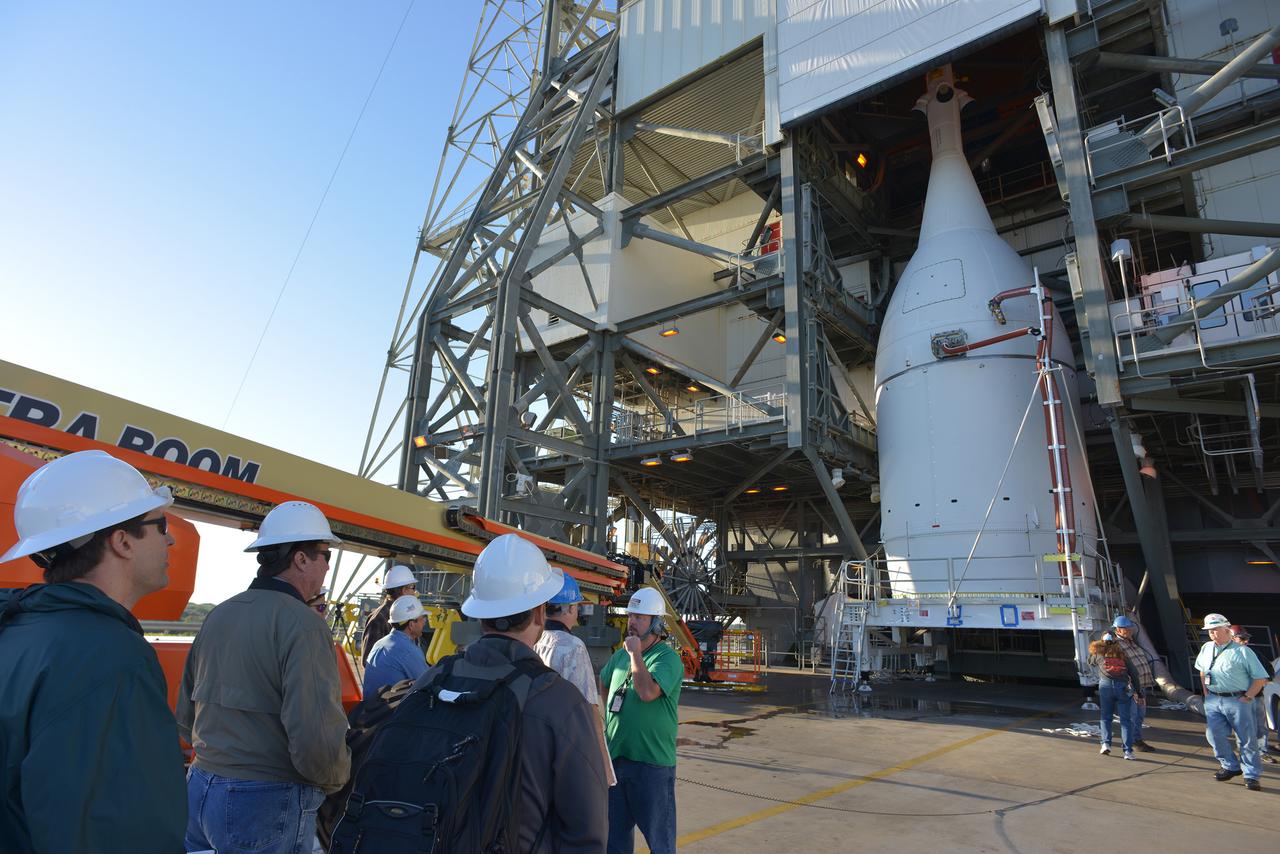
The Orion spacecraft was lifted on top of the Delta IV Heavy launch vehicle at ULA's Launch Complex 37 on Nov. 12, 2014. Over the next few days the Lockheed Martin/ULA team will work to complete the connections between Orion and the launch vehicle in preparation for Exploration Flight Test-1 (EFT-1). Part of Batch image transfer from Flickr.
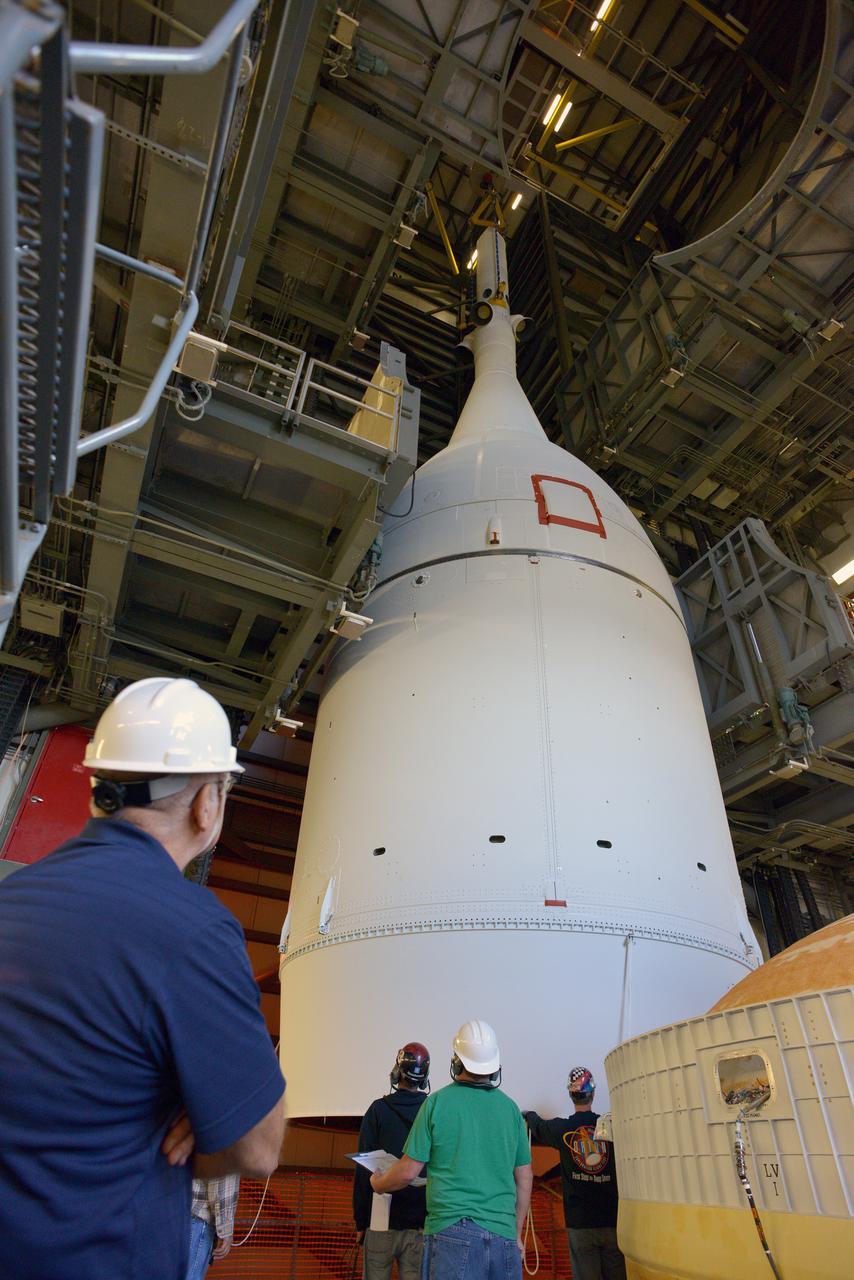
The Orion spacecraft was lifted on top of the Delta IV Heavy launch vehicle at ULA's Launch Complex 37 on Nov. 12, 2014. Over the next few days the Lockheed Martin/ULA team will work to complete the connections between Orion and the launch vehicle in preparation for Exploration Flight Test-1 (EFT-1). Part of Batch image transfer from Flickr.
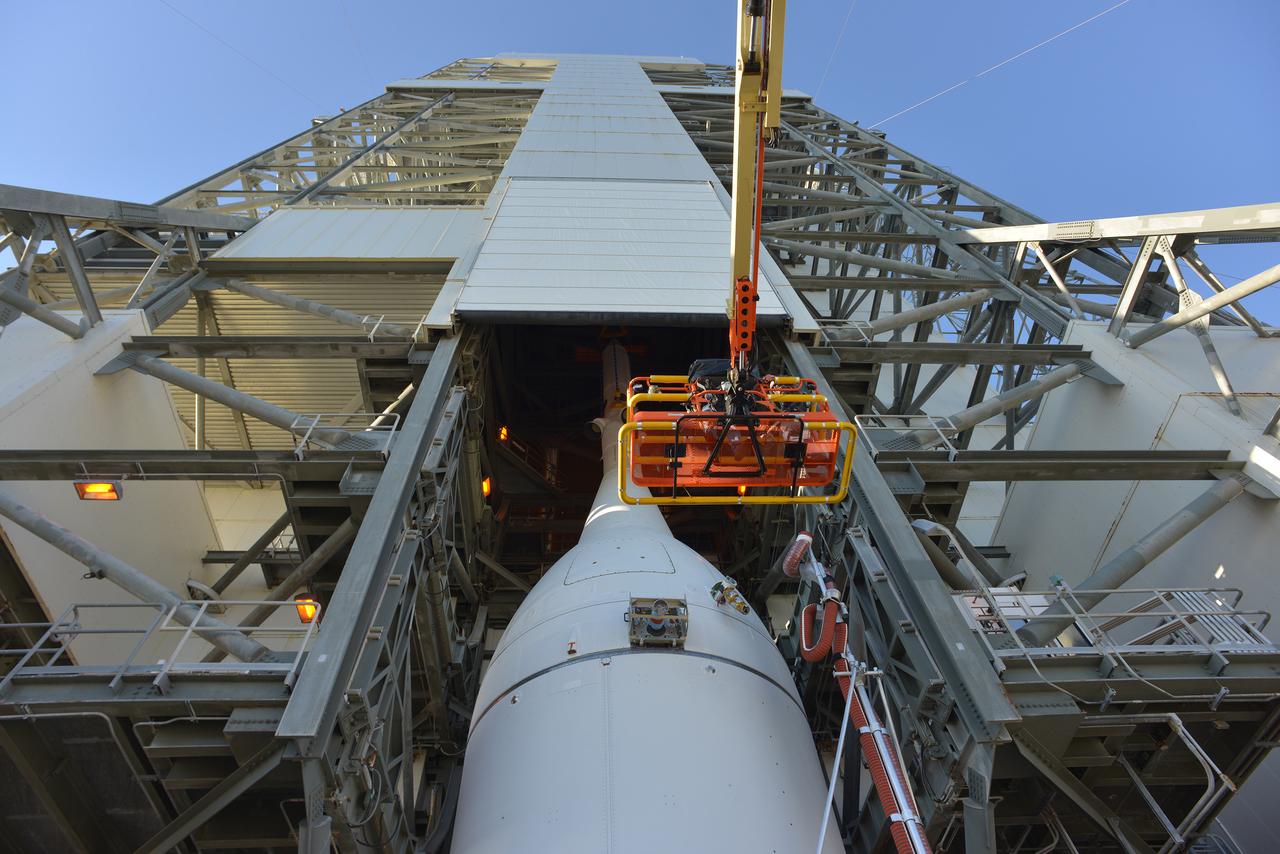
The Orion spacecraft was lifted on top of the Delta IV Heavy launch vehicle at ULA's Launch Complex 37 on Nov. 12, 2014. Over the next few days the Lockheed Martin/ULA team will work to complete the connections between Orion and the launch vehicle in preparation for Exploration Flight Test-1 (EFT-1). Part of Batch image transfer from Flickr.
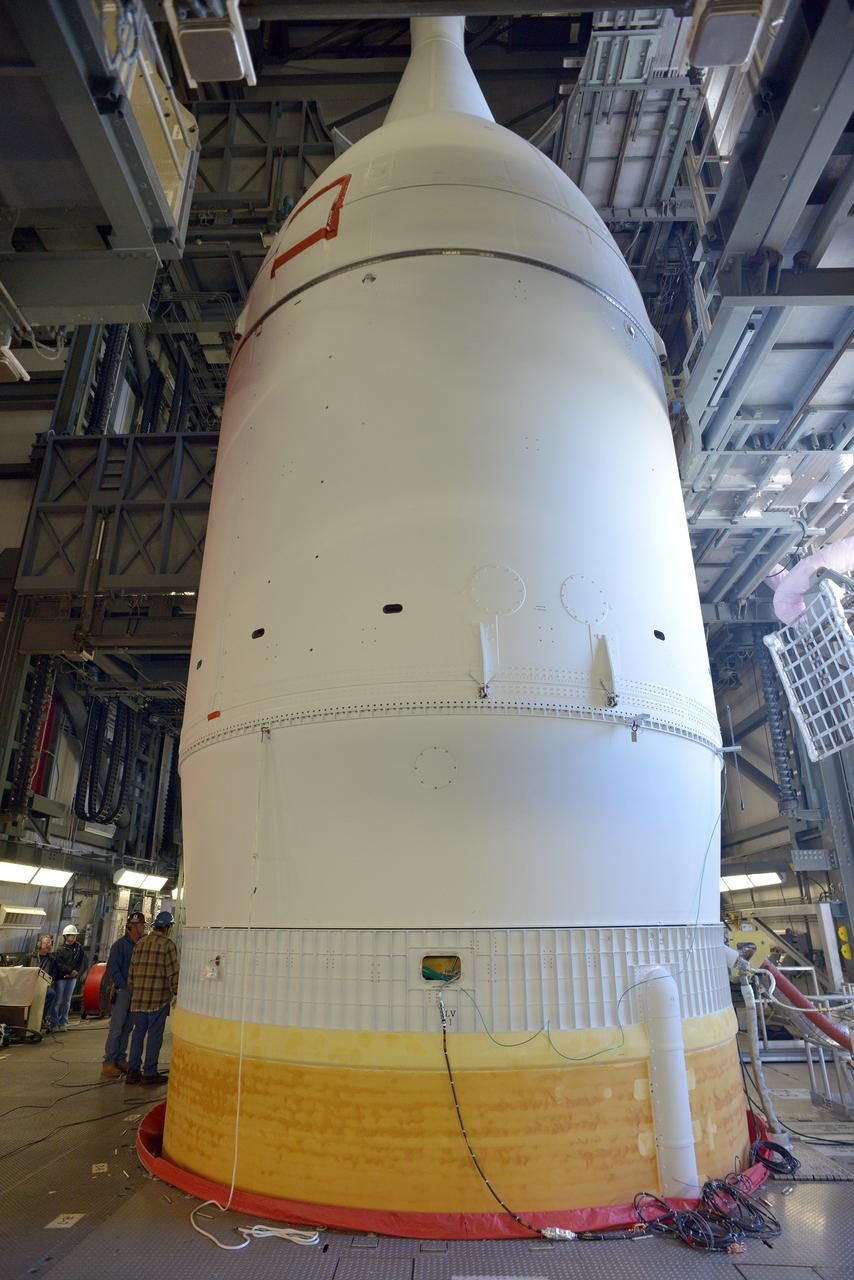
The Orion spacecraft was lifted on top of the Delta IV Heavy launch vehicle at ULA's Launch Complex 37 on Nov. 12, 2014. Over the next few days the Lockheed Martin/ULA team will work to complete the connections between Orion and the launch vehicle in preparation for Exploration Flight Test-1 (EFT-1). Part of Batch image transfer from Flickr.
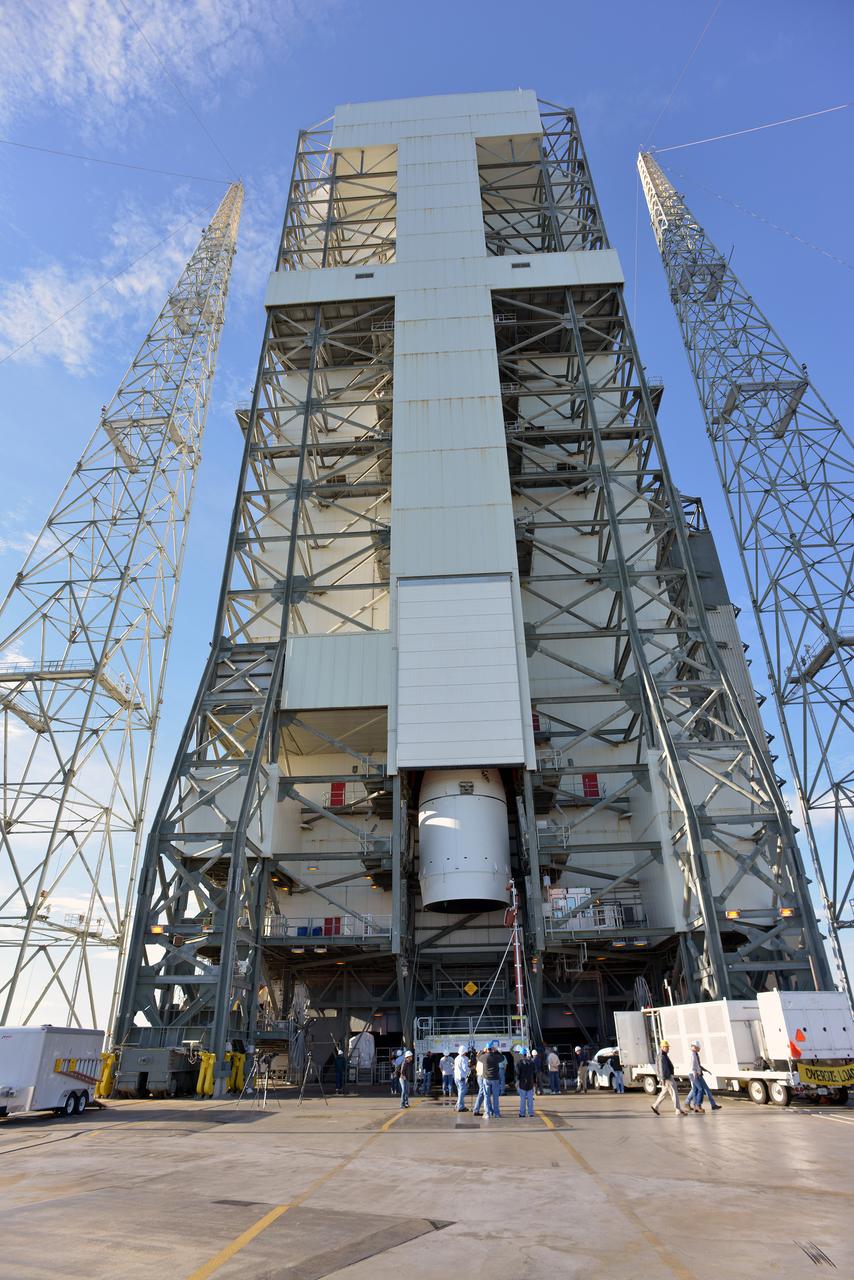
The Orion spacecraft was lifted on top of the Delta IV Heavy launch vehicle at ULA's Launch Complex 37 on Nov. 12, 2014. Over the next few days the Lockheed Martin/ULA team will work to complete the connections between Orion and the launch vehicle in preparation for Exploration Flight Test-1 (EFT-1). Part of Batch image transfer from Flickr.
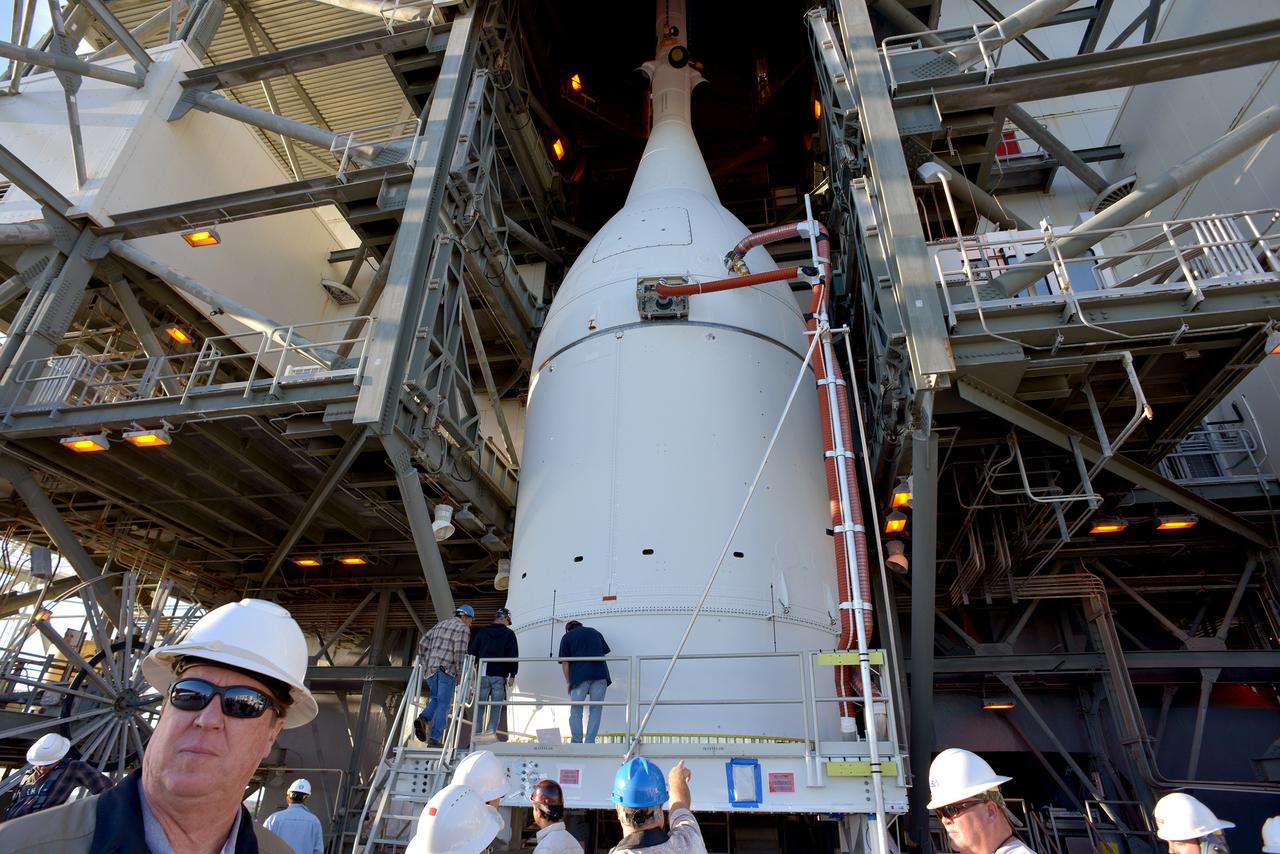
The Orion spacecraft was lifted on top of the Delta IV Heavy launch vehicle at ULA's Launch Complex 37 on Nov. 12, 2014. Over the next few days the Lockheed Martin/ULA team will work to complete the connections between Orion and the launch vehicle in preparation for Exploration Flight Test-1 (EFT-1). Part of Batch image transfer from Flickr.
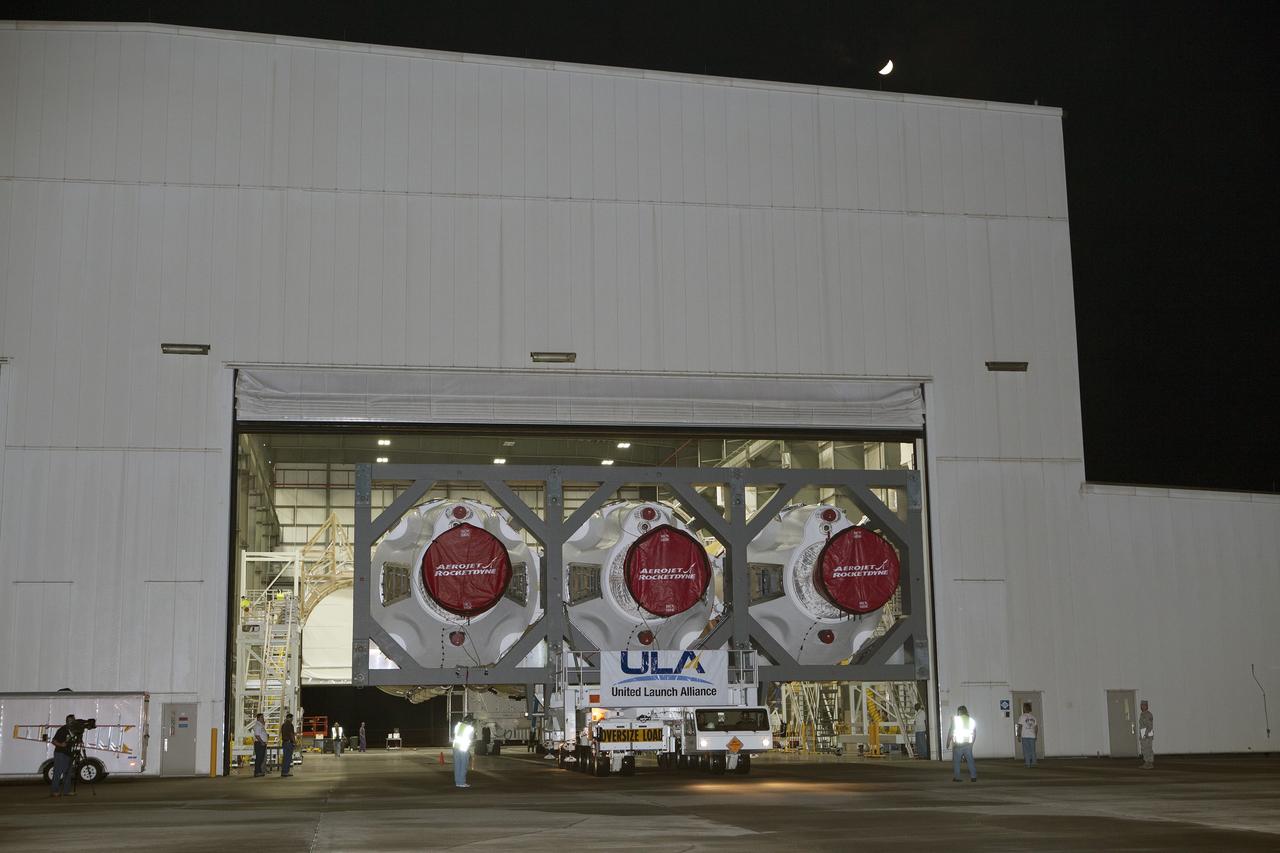
CAPE CANAVERAL, Fla. – The United Launch Alliance Delta IV Heavy rocket begins to rollout from the Horizontal Integration Facility at Space Launch Complex 37 at Cape Canaveral Air Force Station in Florida. The rocket is secured on the Elevated Platform Transporter for the trip to the pad. The Delta IV Heavy will launch Orion on Exploration Flight Test-1. During its first flight test, Orion will travel farther into space than any human spacecraft has gone in more than 40 years. The data gathered during the flight will influence design decisions, validate existing computer models and innovative new approaches to space systems development, as well as reduce overall mission risks and costs for later Orion flights. Liftoff of Orion on the first flight test is planned for December 2014. Photo credit: NASA/Dimitri Gerondidakis
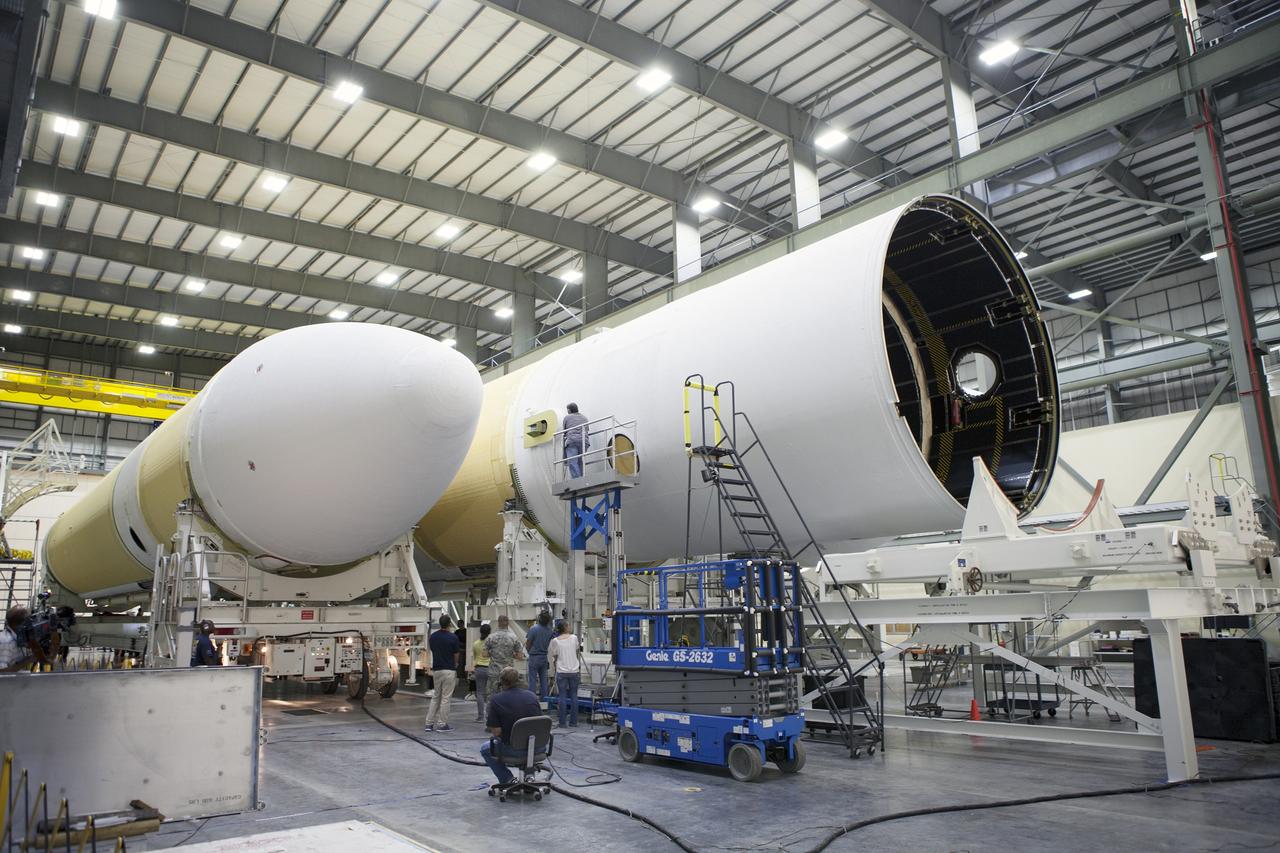
CAPE CANAVERAL, Fla. – United Launch Alliance, or ULA, technicians monitor the progress as the Delta IV port booster is mated to the core booster inside the Horizontal Integration Facility at Space Launch Complex 37 on Cape Canaveral Air Force Station in Florida. The ULA Delta IV Heavy rocket will launch an uncrewed Orion spacecraft on Exploration Flight Test-1. During the mission, Orion will travel farther into space than any human spacecraft has gone in more than 40 years. The data gathered during the flight will influence design decisions, validate existing computer models and innovative new approaches to space systems development, as well as reduce overall mission risks and costs for later Orion flights. Liftoff of Orion on the first flight test is planned for December 2014. Photo credit: NASA/Ben Smegelsky
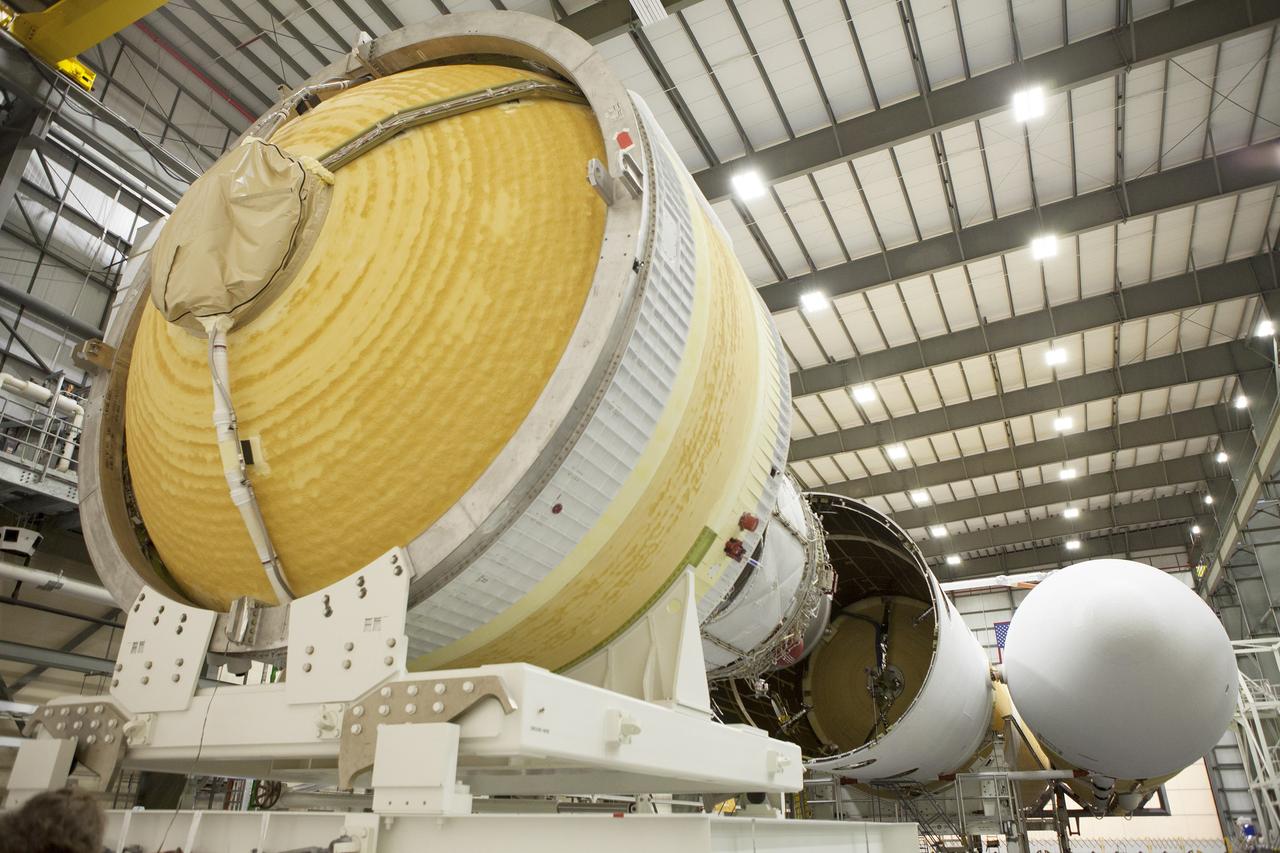
CAPE CANAVERAL, Fla. – Inside the Horizontal Integration Facility at Space Launch Complex 37 at Cape Canaveral Air Force Station in Florida, preparations are underway to mate the second stage of a Delta IV Heavy rocket to the central core booster of the three booster stages for the unpiloted Exploration Flight Test-1, or EFT-1. During the mission, Orion will travel farther into space than any human spacecraft has gone in more than 40 years. The data gathered during the flight will influence design decisions, validate existing computer models and innovative new approaches to space systems development, as well as reduce overall mission risks and costs for later Orion flights. Liftoff of Orion on the first flight test is planned for December 2014. Photo credit: NASA/Daniel Casper
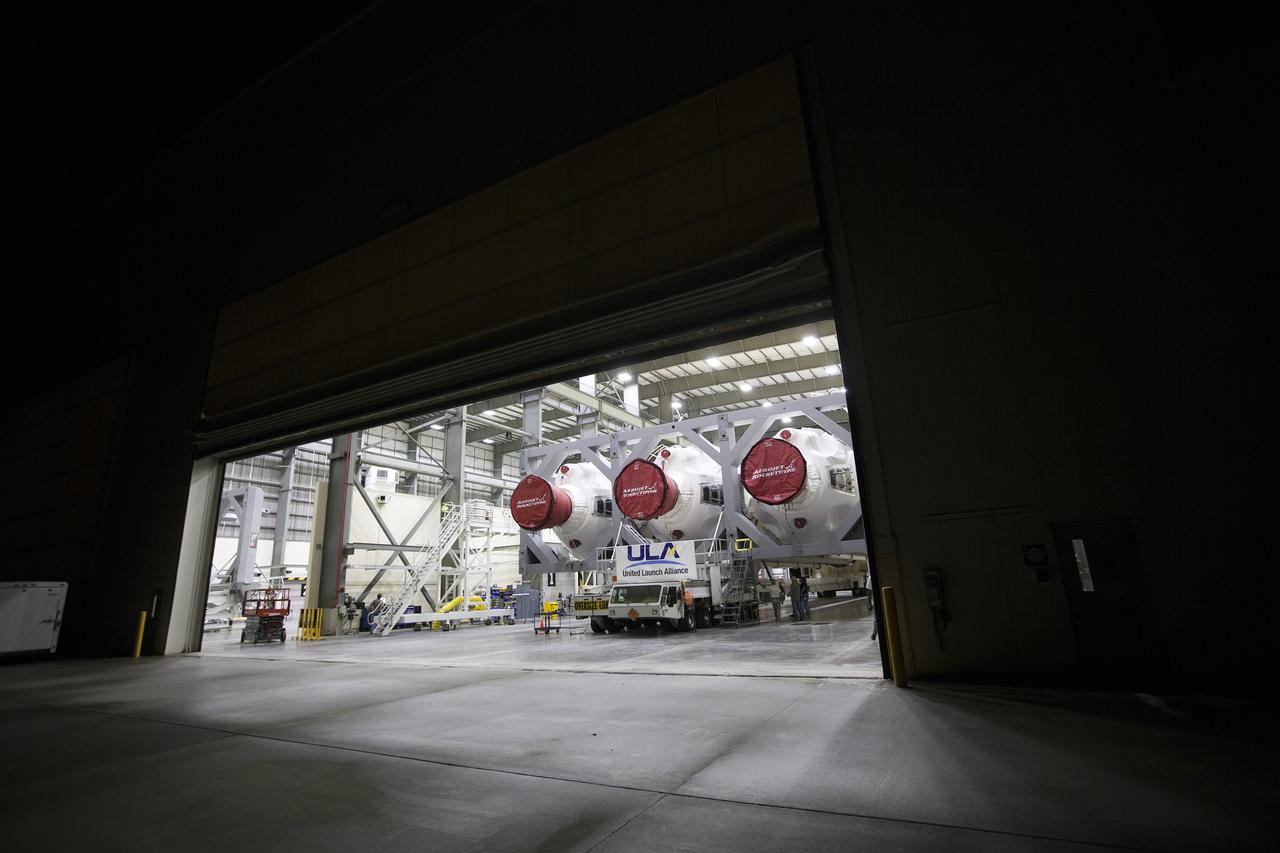
CAPE CANAVERAL, Fla. – Inside the Horizontal Integration Facility at Space Launch Complex 37 at Cape Canaveral Air Force Station in Florida, the Delta IV Heavy rocket is ready for rollout to the pad. The rocket is secured on the Elevated Platform Transporter for the trip to the pad. The Delta IV Heavy will launch Orion on Exploration Flight Test-1. During its first flight test, Orion will travel farther into space than any human spacecraft has gone in more than 40 years. The data gathered during the flight will influence design decisions, validate existing computer models and innovative new approaches to space systems development, as well as reduce overall mission risks and costs for later Orion flights. Liftoff of Orion on the first flight test is planned for December 2014. Photo credit: NASA/Dimitri Gerondidakis
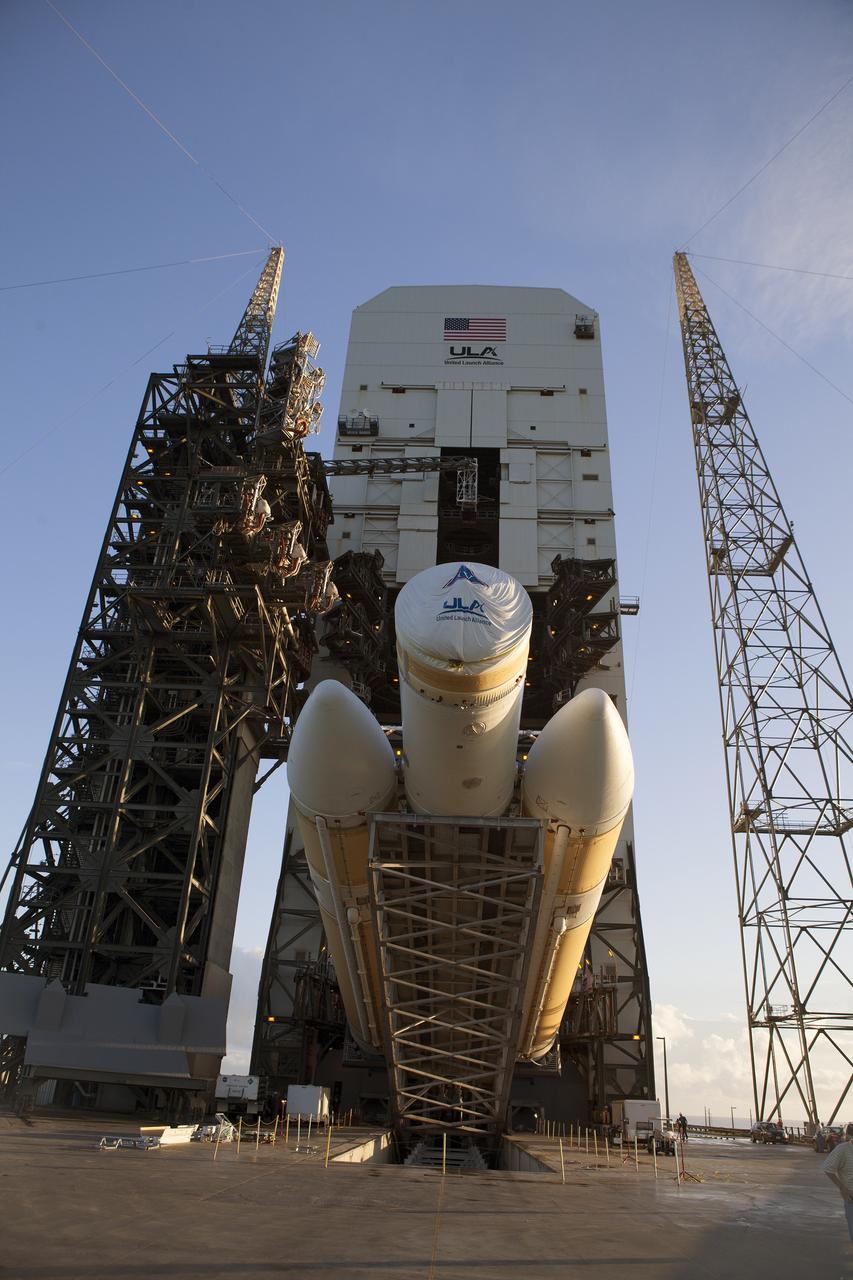
CAPE CANAVERAL, Fla. – The United Launch Alliance Delta IV Heavy rocket for Exploration Flight Test-1 is being lifted to the vertical position at the pad at Space Launch Complex 37 at Cape Canaveral Air Force Station in Florida. The Delta IV Heavy is being readied to launch Orion on its first flight test. During its first flight test, Orion will travel farther into space than any human spacecraft has gone in more than 40 years. The data gathered during the flight will influence design decisions, validate existing computer models and innovative new approaches to space systems development, as well as reduce overall mission risks and costs for later Orion flights. Liftoff of Orion on the first flight test is planned for December 2014. Photo credit: NASA/Daniel Casper
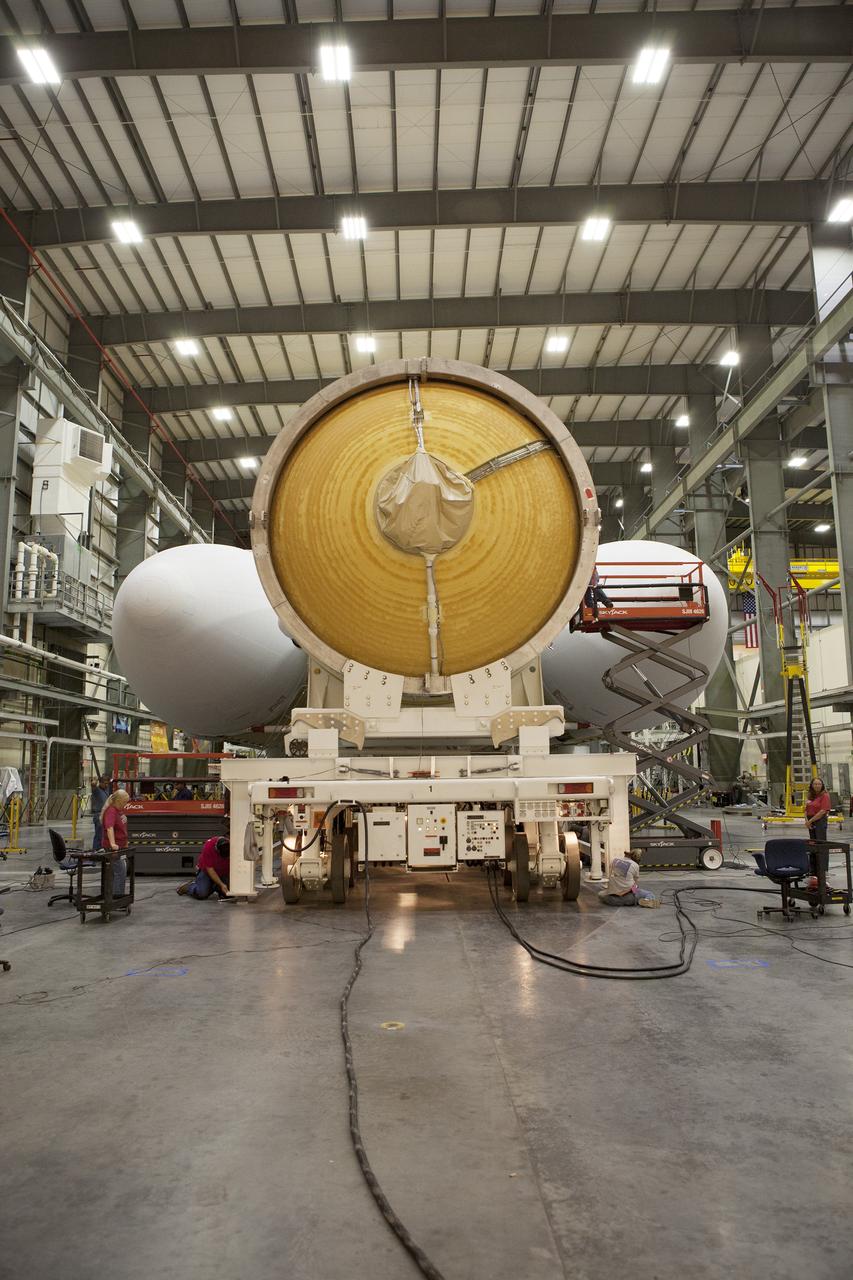
CAPE CANAVERAL, Fla. – Inside the Horizontal Integration Facility at Space Launch Complex 37 at Cape Canaveral Air Force Station in Florida, the second stage of the United Launch Alliance Delta IV Heavy rocket has been mated to the core booster of the three booster stages for the unpiloted Exploration Flight Test-1, or EFT-1. During the mission, Orion will travel farther into space than any human spacecraft has gone in more than 40 years. The data gathered during the flight will influence design decisions, validate existing computer models and innovative new approaches to space systems development, as well as reduce overall mission risks and costs for later Orion flights. Liftoff of Orion on the first flight test is planned for December 2014. Photo credit: NASA/Daniel Casper
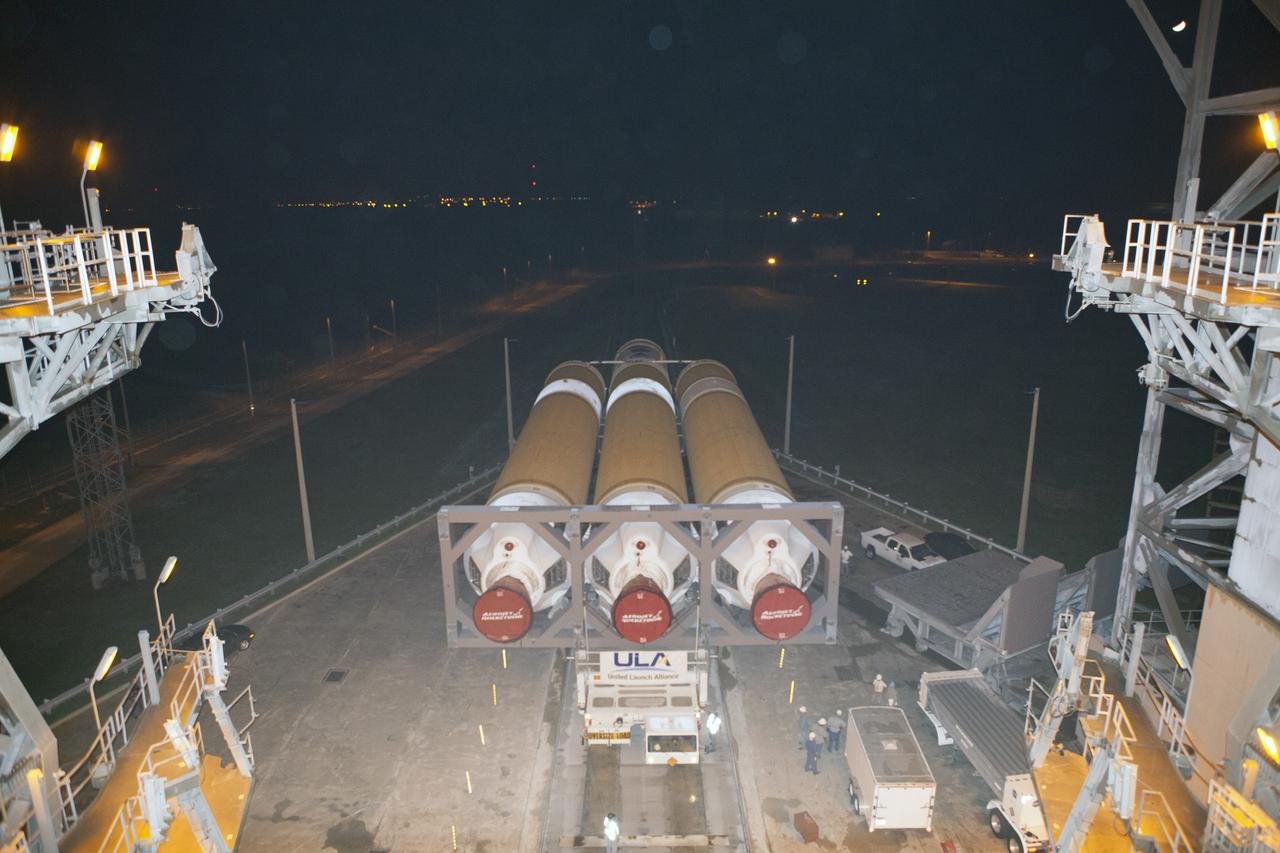
CAPE CANAVERAL, Fla. – The United Launch Alliance Delta IV Heavy rocket for Exploration Flight Test-1 arrives at the pad at Space Launch Complex 37 at Cape Canaveral Air Force Station in Florida. The rocket is secured on the Elevated Platform Transporter. The Delta IV Heavy will launch Orion on its first flight test. During its first flight test, Orion will travel farther into space than any human spacecraft has gone in more than 40 years. The data gathered during the flight will influence design decisions, validate existing computer models and innovative new approaches to space systems development, as well as reduce overall mission risks and costs for later Orion flights. Liftoff of Orion on the first flight test is planned for December 2014. Photo credit: NASA/Dimitri Gerondidakis
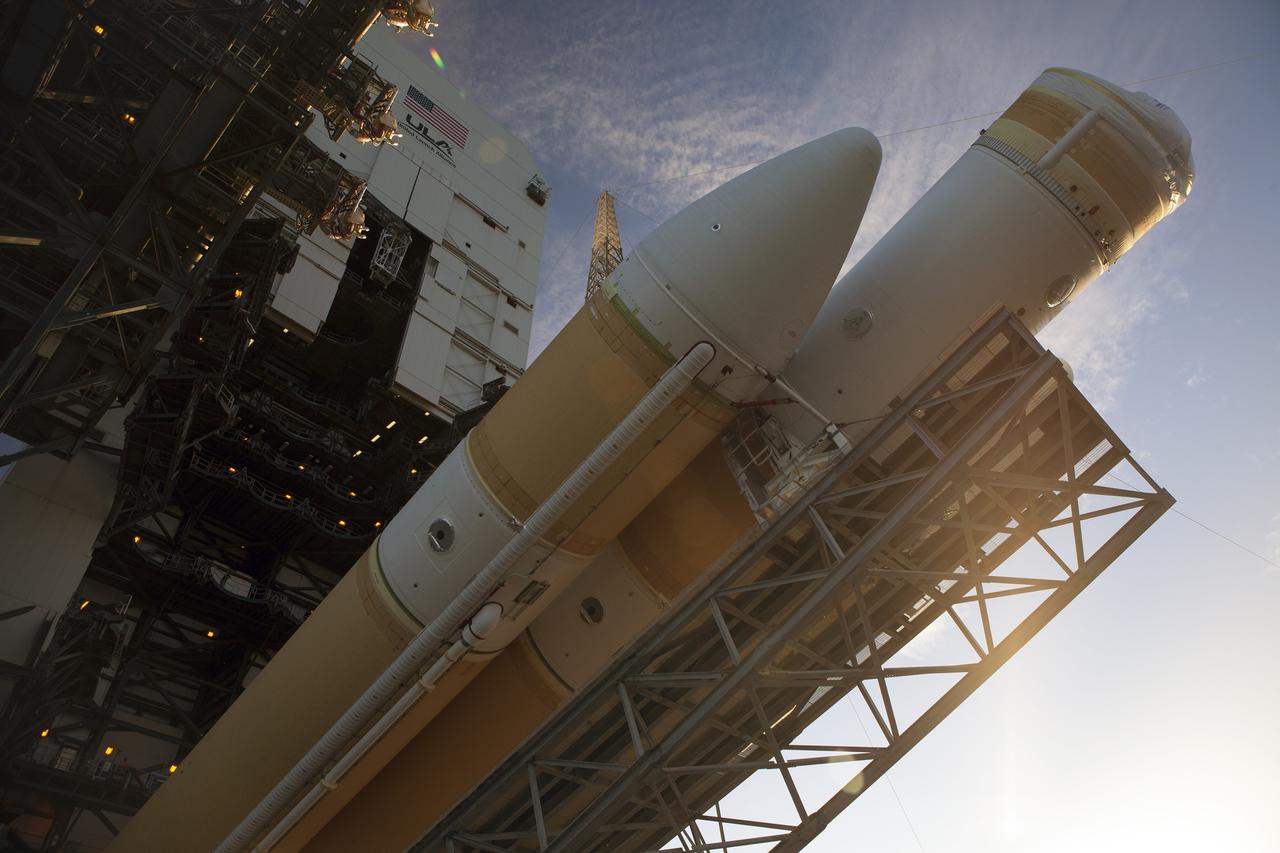
CAPE CANAVERAL, Fla. – This close-up view shows the United Launch Alliance Delta IV Heavy rocket for Exploration Flight Test-1 being raised into the vertical position at the pad at Space Launch Complex 37 at Cape Canaveral Air Force Station in Florida. The Delta IV Heavy is being readied to launch Orion on its first flight test. During its first flight test, Orion will travel farther into space than any human spacecraft has gone in more than 40 years. The data gathered during the flight will influence design decisions, validate existing computer models and innovative new approaches to space systems development, as well as reduce overall mission risks and costs for later Orion flights. Liftoff of Orion on the first flight test is planned for December 2014. Photo credit: NASA/Daniel Casper
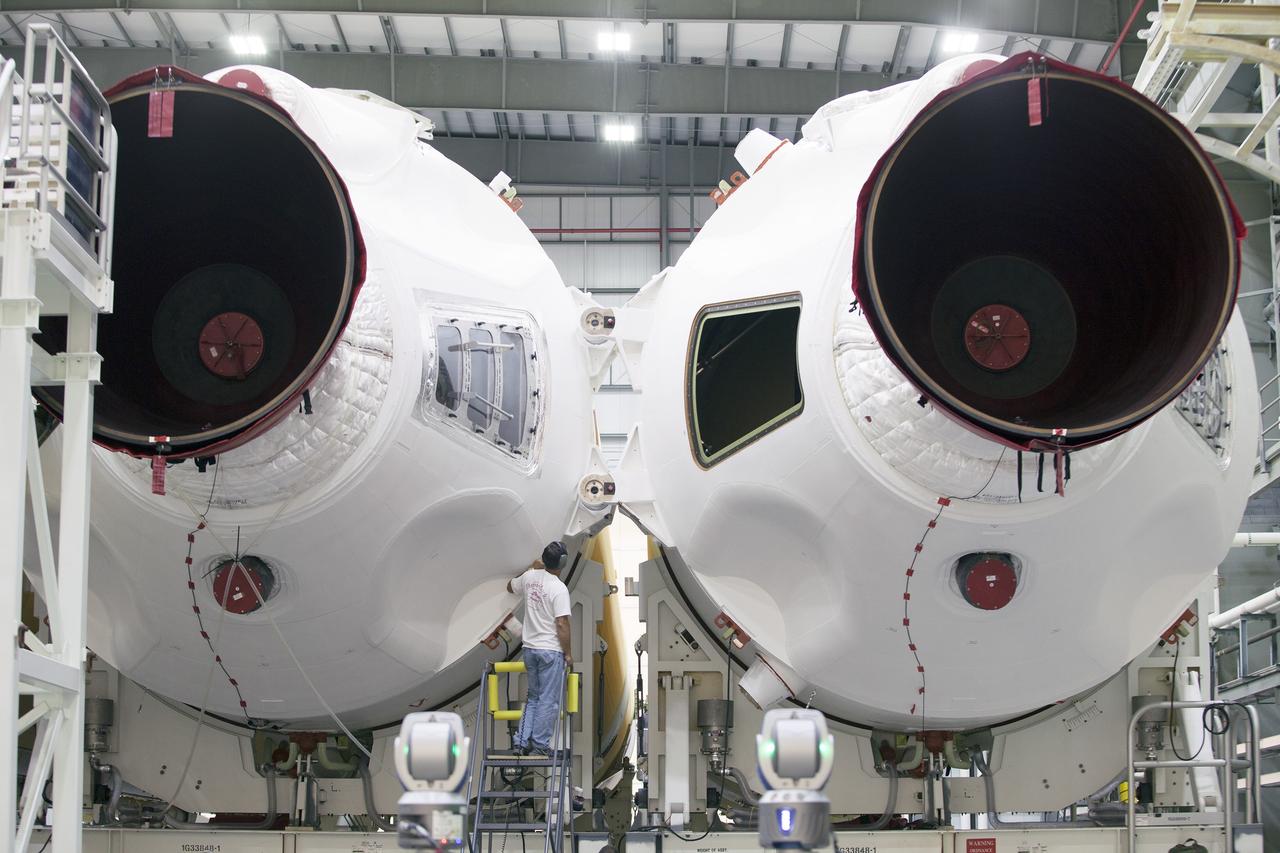
CAPE CANAVERAL, Fla. – A United Launch Alliance, or ULA, technician monitors the progress as the Delta IV port booster is mated to the core booster inside the Horizontal Integration Facility at Space Launch Complex 37 on Cape Canaveral Air Force Station in Florida. The ULA Delta IV Heavy rocket will launch an uncrewed Orion spacecraft on Exploration Flight Test-1. During the mission, Orion will travel farther into space than any human spacecraft has gone in more than 40 years. The data gathered during the flight will influence design decisions, validate existing computer models and innovative new approaches to space systems development, as well as reduce overall mission risks and costs for later Orion flights. Liftoff of Orion on the first flight test is planned for December 2014. Photo credit: NASA/Ben Smegelsky
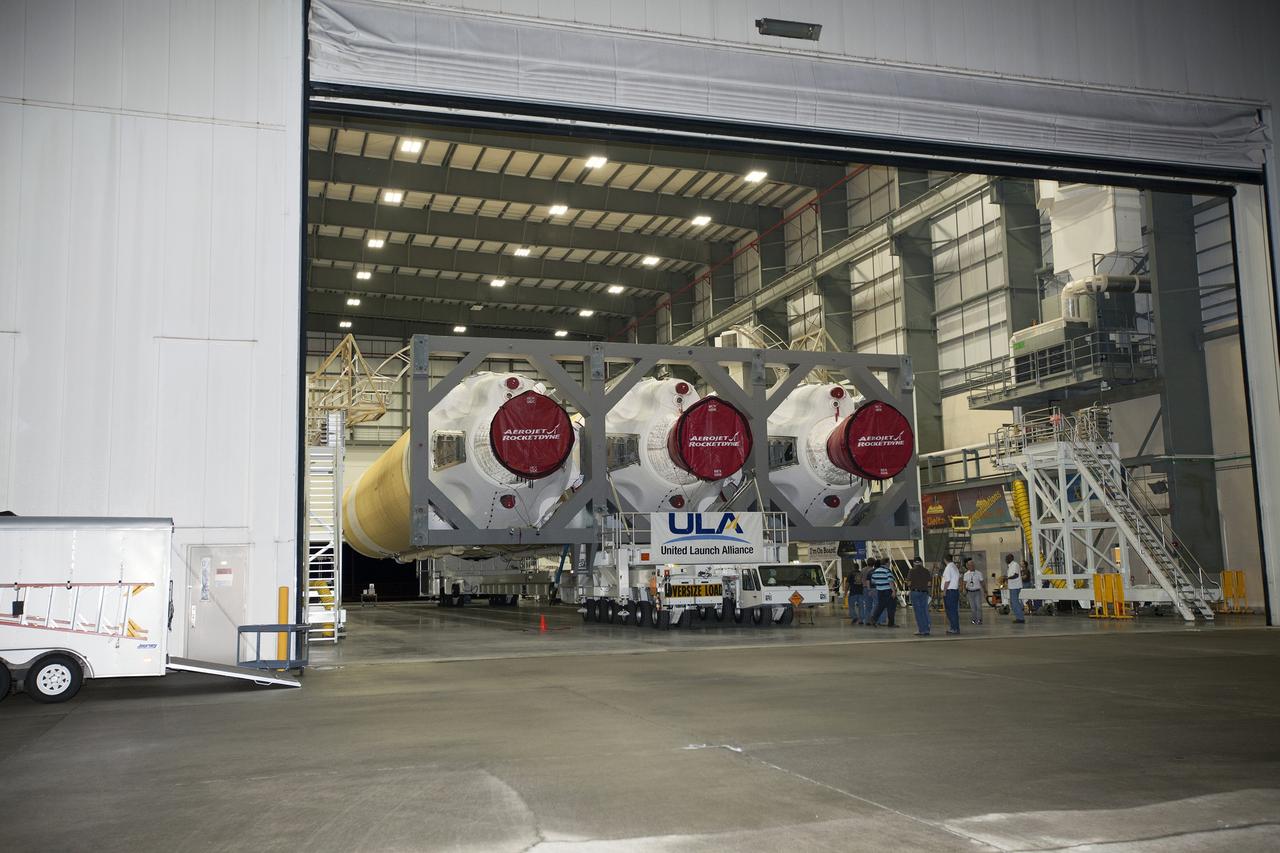
CAPE CANAVERAL, Fla. – Inside the Horizontal Integration Facility at Space Launch Complex 37 at Cape Canaveral Air Force Station in Florida, United Launch Alliance technicians and engineers prepare the Delta IV Heavy rocket for rollout to the pad. The rocket is secured on the Elevated Platform Transporter for the trip to the pad. The Delta IV Heavy will launch Orion on Exploration Flight Test-1. During its first flight test, Orion will travel farther into space than any human spacecraft has gone in more than 40 years. The data gathered during the flight will influence design decisions, validate existing computer models and innovative new approaches to space systems development, as well as reduce overall mission risks and costs for later Orion flights. Liftoff of Orion on the first flight test is planned for December 2014. Photo credit: NASA/Dimitri Gerondidakis

CAPE CANAVERAL, Fla. – Inside the Delta Operations Center at Cape Canaveral Air Force Station, United Launch Alliance technicians stand by with a transporter to move the second stage of a Delta IV Heavy rocket following testing in preparation for the unpiloted Exploration Flight Test-1, or EFT-1. The second stage will be transported to the Horizontal Integration Facility at Space Launch Complex 37 for mating with the Delta IV Heavy booster stages. During the mission, Orion will travel farther into space than any human spacecraft has gone in more than 40 years. The data gathered during the flight will influence design decisions, validate existing computer models and innovative new approaches to space systems development, as well as reduce overall mission risks and costs for later Orion flights. Liftoff of Orion on the first flight test is planned for December 2014. Photo credit: NASA/Kim Shiflett
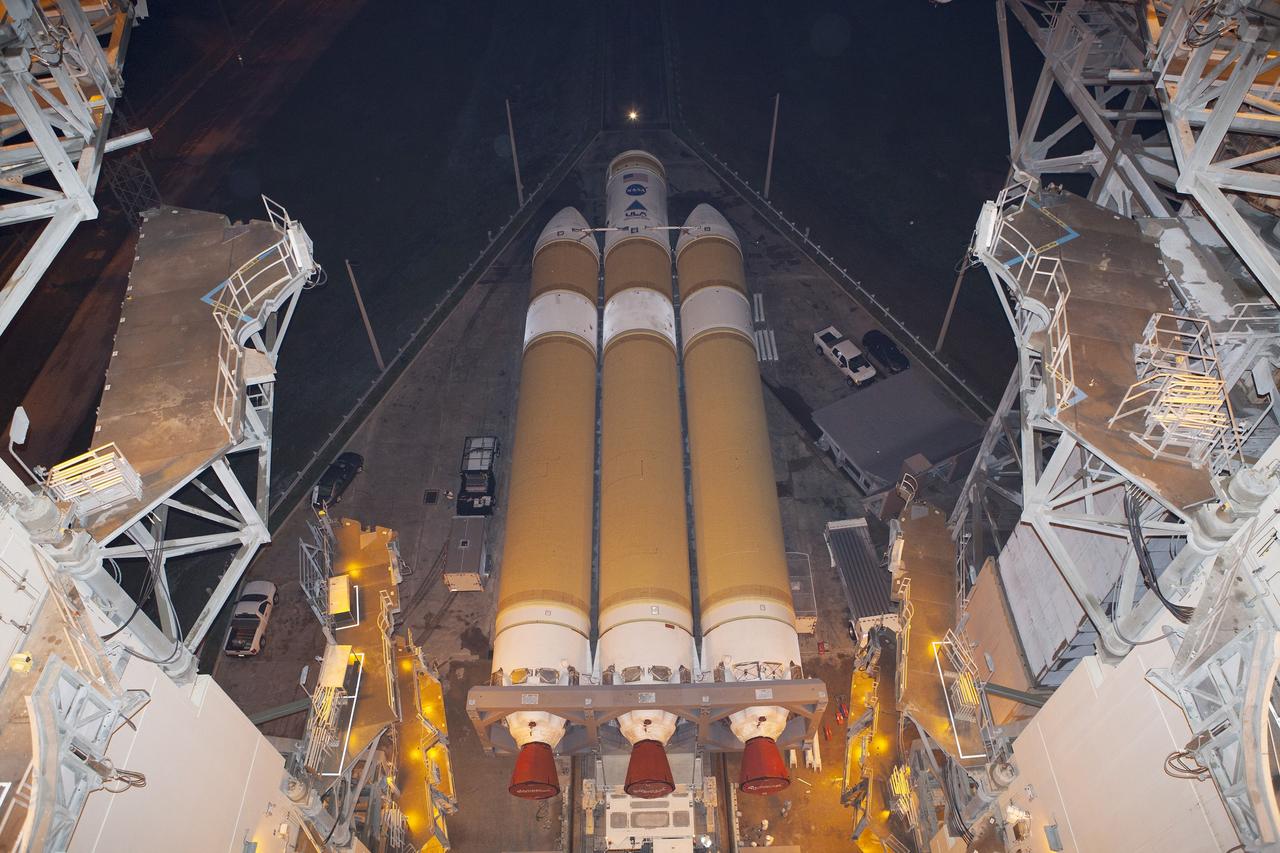
CAPE CANAVERAL, Fla. – The United Launch Alliance Delta IV Heavy rocket for Exploration Flight Test-1 has arrived at the pad at Space Launch Complex 37 at Cape Canaveral Air Force Station in Florida. The rocket is secured on the Elevated Platform Transporter. The Delta IV Heavy will launch Orion on its first flight test. During its first flight test, Orion will travel farther into space than any human spacecraft has gone in more than 40 years. The data gathered during the flight will influence design decisions, validate existing computer models and innovative new approaches to space systems development, as well as reduce overall mission risks and costs for later Orion flights. Liftoff of Orion on the first flight test is planned for December 2014. Photo credit: NASA/Dimitri Gerondidakis
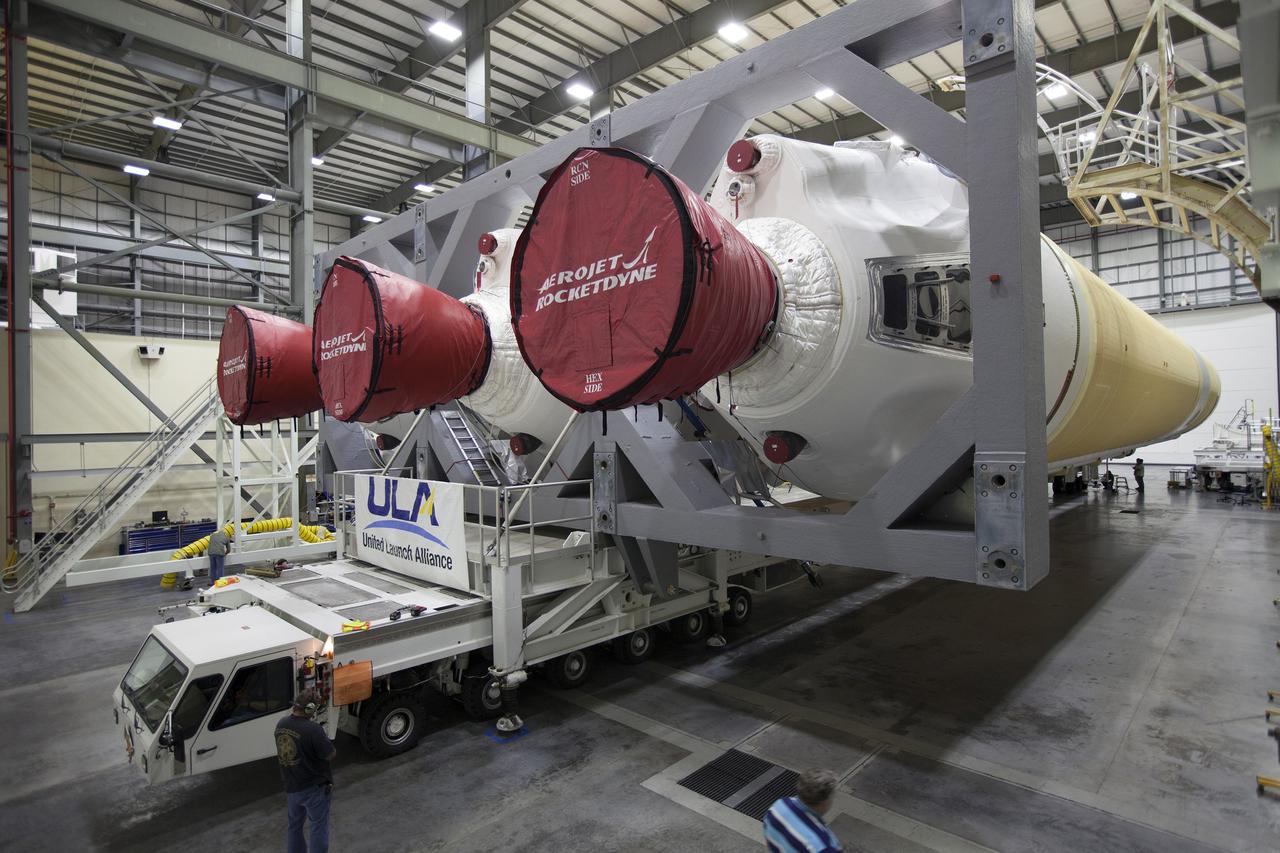
CAPE CANAVERAL, Fla. – Inside the Horizontal Integration Facility at Space Launch Complex 37 at Cape Canaveral Air Force Station in Florida, United Launch Alliance technicians prepare the Delta IV Heavy rocket for rollout to the pad. The rocket is secured on the Elevated Platform Transporter for the trip to the pad. The Delta IV Heavy will launch Orion on Exploration Flight Test-1. During its first flight test, Orion will travel farther into space than any human spacecraft has gone in more than 40 years. The data gathered during the flight will influence design decisions, validate existing computer models and innovative new approaches to space systems development, as well as reduce overall mission risks and costs for later Orion flights. Liftoff of Orion on the first flight test is planned for December 2014. Photo credit: NASA/Dimitri Gerondidakis
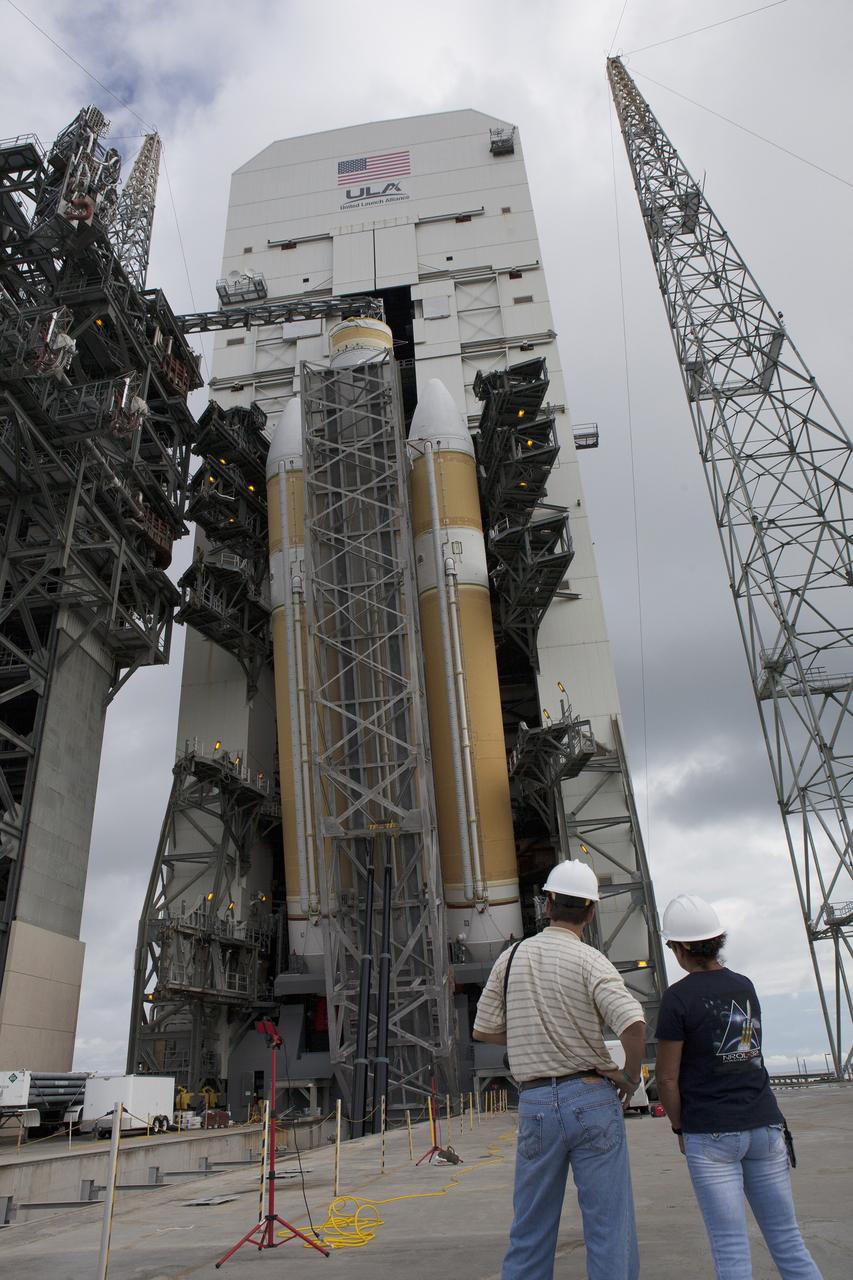
CAPE CANAVERAL, Fla. – United Launch Alliance, or ULA, workers monitor the progress as the ULA Delta IV Heavy rocket for Exploration Flight Test-1 is lifted to the vertical position in the mobile service tower on the pad at Space Launch Complex 37 at Cape Canaveral Air Force Station in Florida. The Delta IV Heavy is being readied to launch Orion on its first flight test. During its first flight test, Orion will travel farther into space than any human spacecraft has gone in more than 40 years. The data gathered during the flight will influence design decisions, validate existing computer models and innovative new approaches to space systems development, as well as reduce overall mission risks and costs for later Orion flights. Liftoff of Orion on the first flight test is planned for December 2014. Photo credit: NASA/Daniel Casper

CAPE CANAVERAL, Fla. – United Launch Alliance, or ULA, workers monitor the progress as the ULA Delta IV Heavy rocket for Exploration Flight Test-1 is lifted to the vertical position in the mobile service tower on the pad at Space Launch Complex 37 at Cape Canaveral Air Force Station in Florida. The Delta IV Heavy is being readied to launch Orion on its first flight test. During its first flight test, Orion will travel farther into space than any human spacecraft has gone in more than 40 years. The data gathered during the flight will influence design decisions, validate existing computer models and innovative new approaches to space systems development, as well as reduce overall mission risks and costs for later Orion flights. Liftoff of Orion on the first flight test is planned for December 2014. Photo credit: NASA/Daniel Casper
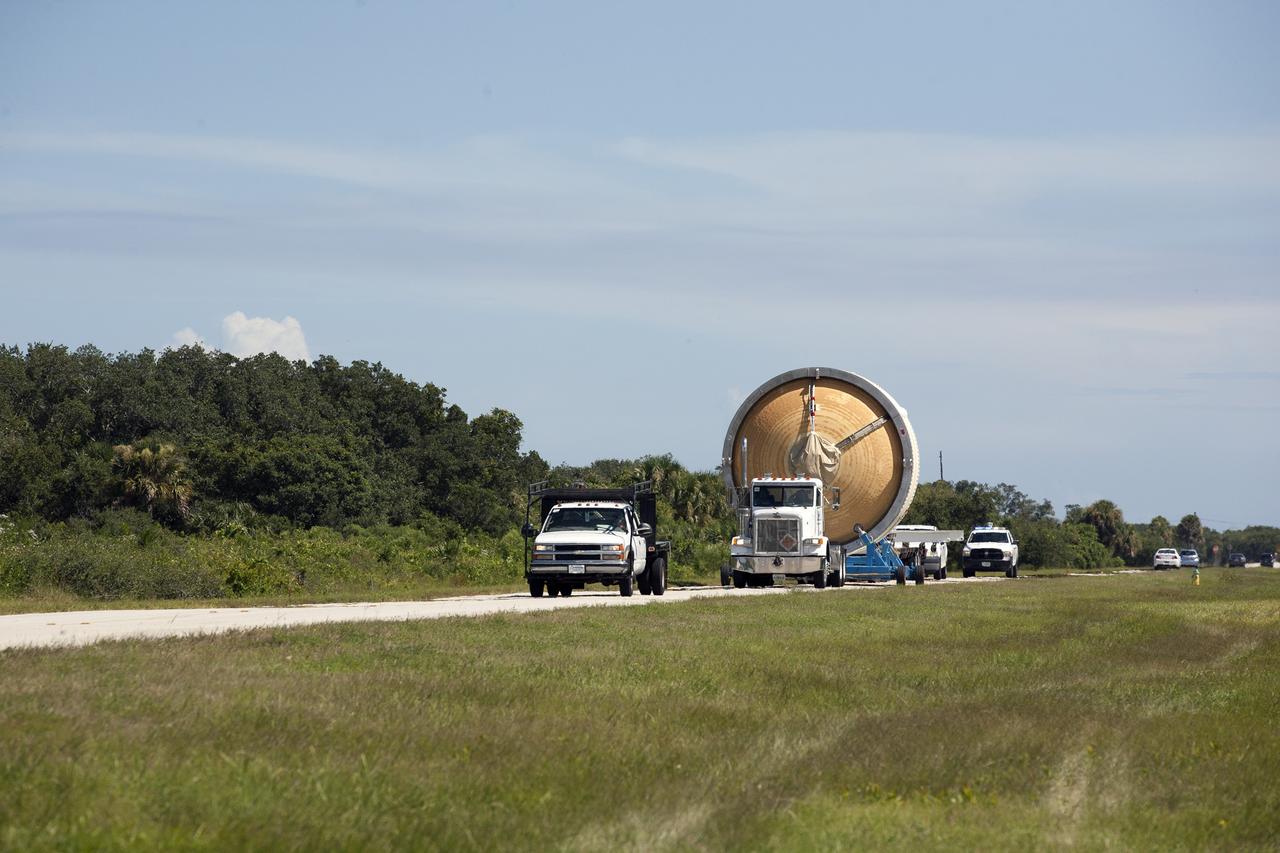
CAPE CANAVERAL, Fla. – At Cape Canaveral Air Force Station, United Launch Alliance technicians transport the second stage of a Delta IV Heavy rocket to the Horizontal Integration Facility at Space Launch Complex 37. The second stage then will be mated with the Delta IV Heavy booster stages in preparation for the unpiloted Exploration Flight Test-1, or EFT-1. During the mission, Orion will travel farther into space than any human spacecraft has gone in more than 40 years. The data gathered during the flight will influence design decisions, validate existing computer models and innovative new approaches to space systems development, as well as reduce overall mission risks and costs for later Orion flights. Liftoff of Orion on the first flight test is planned for December 2014. Photo credit: NASA/Kim Shiflett
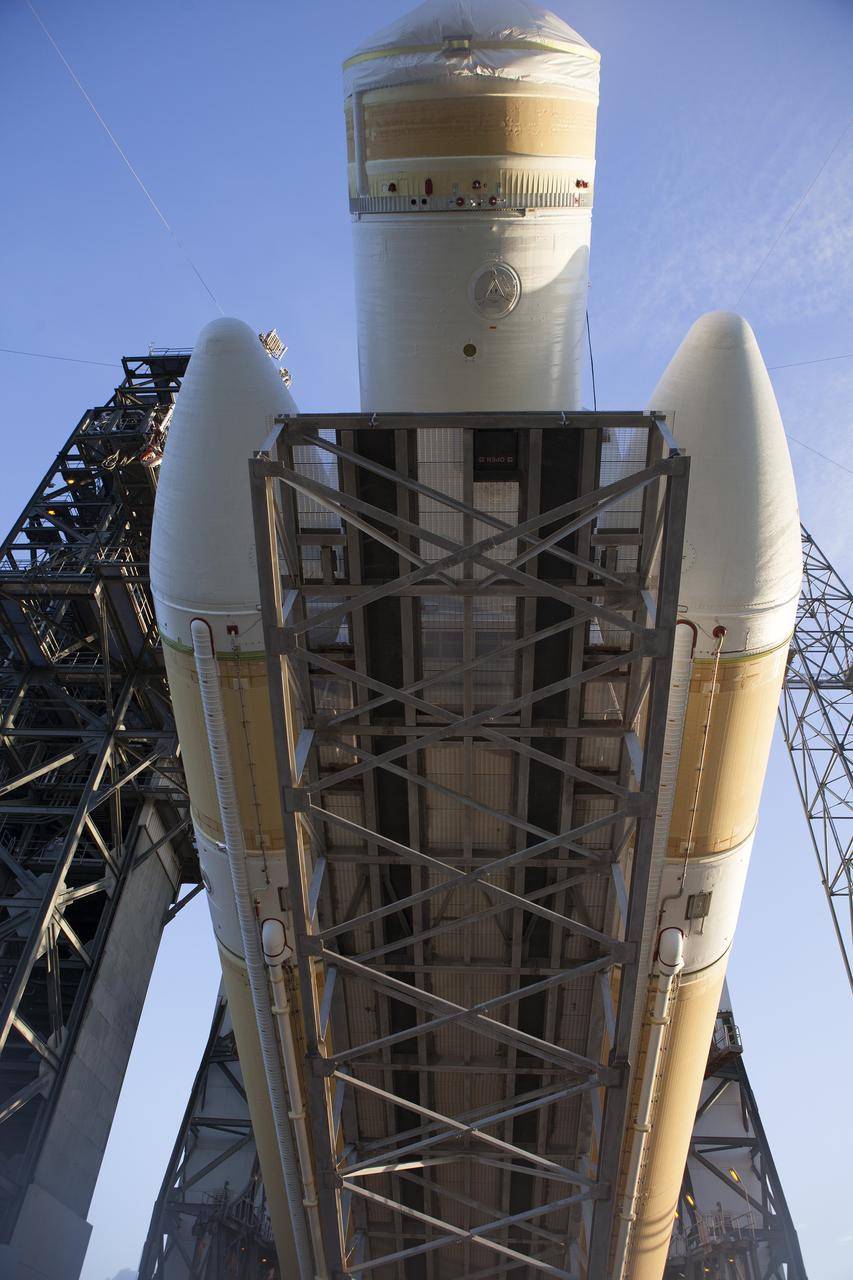
CAPE CANAVERAL, Fla. – This close-up view shows the United Launch Alliance Delta IV Heavy rocket for Exploration Flight Test-1 being raised into the vertical position at the pad at Space Launch Complex 37 at Cape Canaveral Air Force Station in Florida. The Delta IV Heavy is being readied to launch Orion on its first flight test. During its first flight test, Orion will travel farther into space than any human spacecraft has gone in more than 40 years. The data gathered during the flight will influence design decisions, validate existing computer models and innovative new approaches to space systems development, as well as reduce overall mission risks and costs for later Orion flights. Liftoff of Orion on the first flight test is planned for December 2014. Photo credit: NASA/Daniel Casper
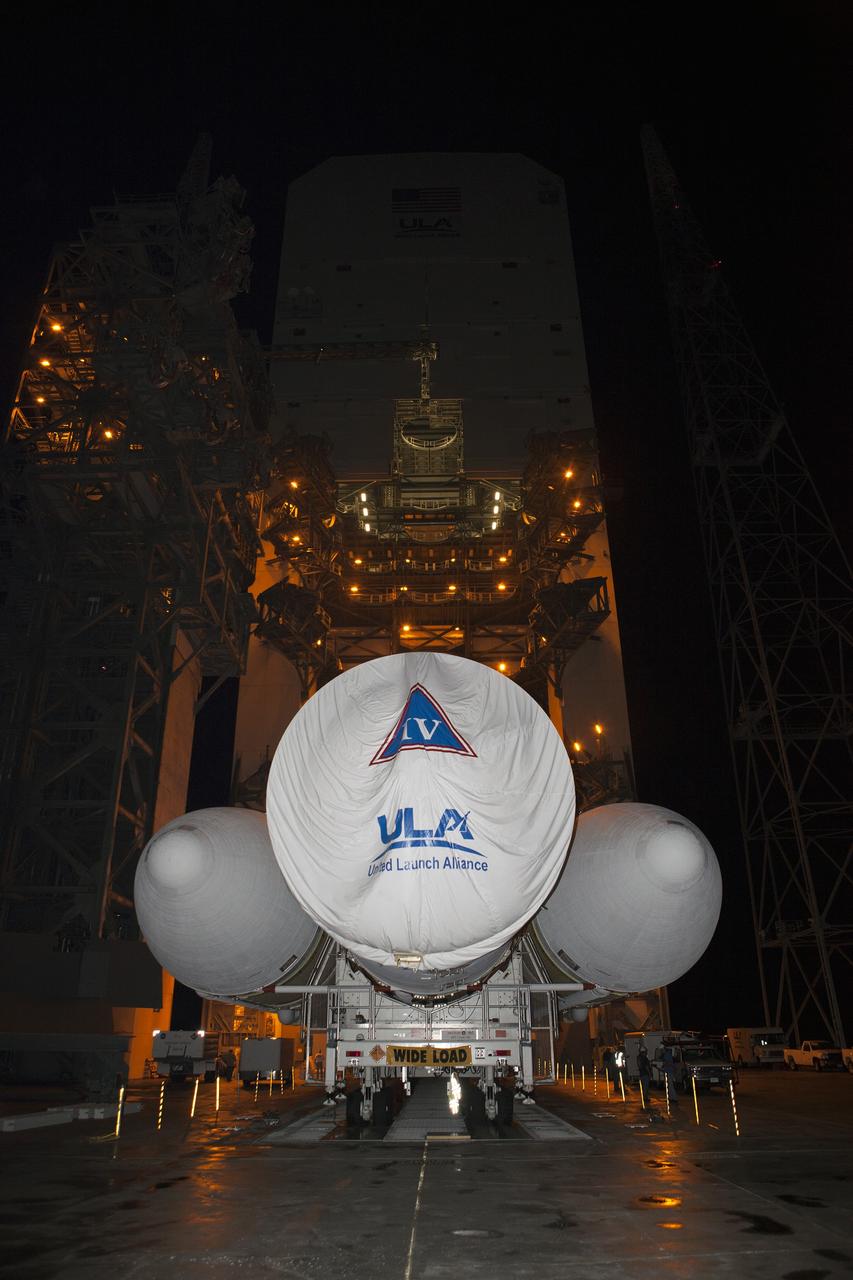
CAPE CANAVERAL, Fla. – Launch pad lights give off a golden glow at Space Launch Complex 37 at Cape Canaveral Air Force Station in Florida, as the United Launch Alliance Delta IV Heavy rocket for Exploration Flight Test-1 arrives. The rocket is secured on the Elevated Platform Transporter. The Delta IV Heavy will launch Orion on its first flight test. During its first flight test, Orion will travel farther into space than any human spacecraft has gone in more than 40 years. The data gathered during the flight will influence design decisions, validate existing computer models and innovative new approaches to space systems development, as well as reduce overall mission risks and costs for later Orion flights. Liftoff of Orion on the first flight test is planned for December 2014. Photo credit: NASA/Dimitri Gerondidakis
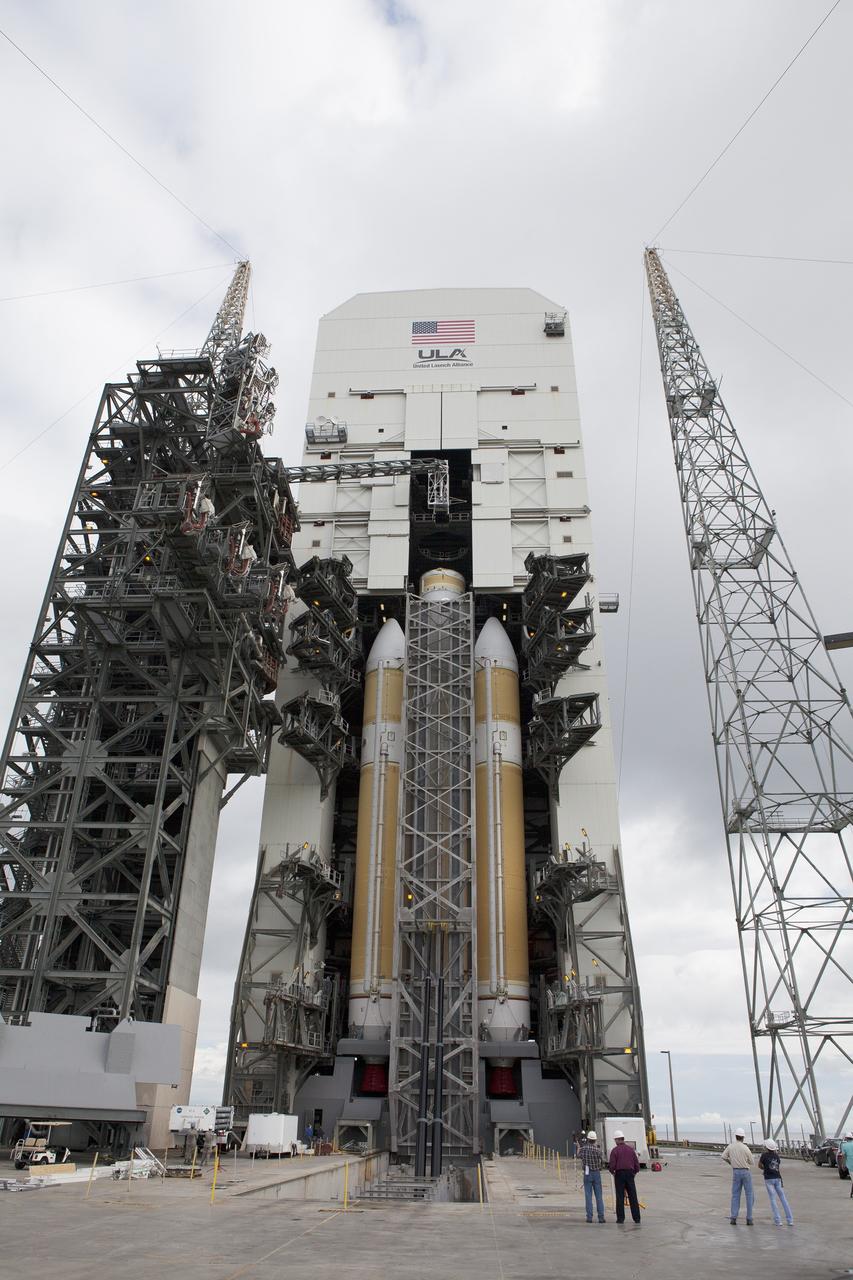
CAPE CANAVERAL, Fla. – The United Launch Alliance Delta IV Heavy rocket for Exploration Flight Test-1 is lifted to the vertical position in the mobile service tower on the pad at Space Launch Complex 37 at Cape Canaveral Air Force Station in Florida. The Delta IV Heavy is being readied to launch Orion on its first flight test. During its first flight test, Orion will travel farther into space than any human spacecraft has gone in more than 40 years. The data gathered during the flight will influence design decisions, validate existing computer models and innovative new approaches to space systems development, as well as reduce overall mission risks and costs for later Orion flights. Liftoff of Orion on the first flight test is planned for December 2014. Photo credit: NASA/Daniel Casper
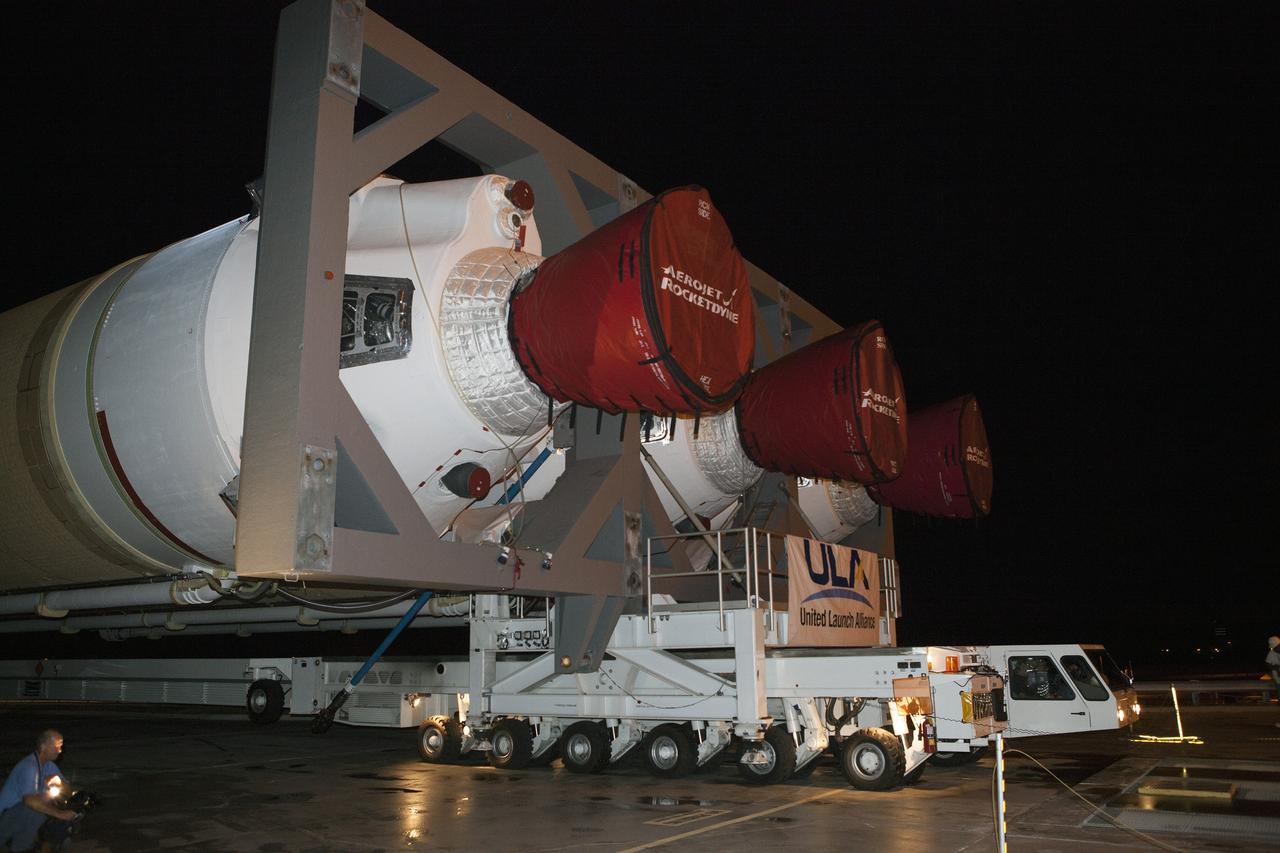
CAPE CANAVERAL, Fla. – A United Launch Alliance technicians drives the transporter that carries the Delta IV Heavy rocket to the pad at Space Launch Complex 37 at Cape Canaveral Air Force Station in Florida. The rocket is secured on the Elevated Platform Transporter. The Delta IV Heavy will launch Orion on Exploration Flight Test-1. During its first flight test, Orion will travel farther into space than any human spacecraft has gone in more than 40 years. The data gathered during the flight will influence design decisions, validate existing computer models and innovative new approaches to space systems development, as well as reduce overall mission risks and costs for later Orion flights. Liftoff of Orion on the first flight test is planned for December 2014. Photo credit: NASA/Dimitri Gerondidakis
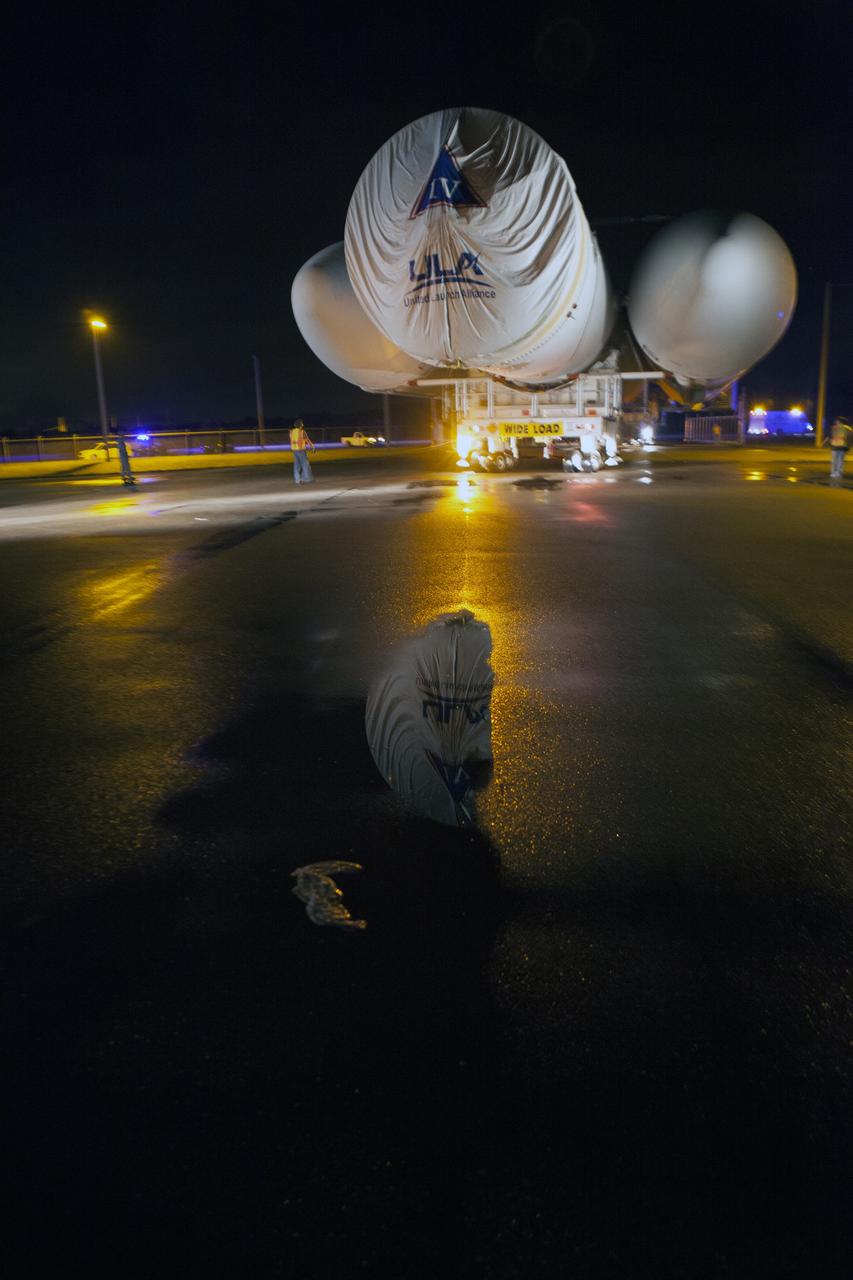
CAPE CANAVERAL, Fla. – The United Launch Alliance, or ULA, Delta IV Heavy rocket has exited the Horizontal Integration Facility at Space Launch Complex 37 at Cape Canaveral Air Force Station in Florida. ULA technicians help guide the rocket, secured on the Elevated Platform Transporter, for the trip to the pad. The Delta IV Heavy will launch Orion on Exploration Flight Test-1. During its first flight test, Orion will travel farther into space than any human spacecraft has gone in more than 40 years. The data gathered during the flight will influence design decisions, validate existing computer models and innovative new approaches to space systems development, as well as reduce overall mission risks and costs for later Orion flights. Liftoff of Orion on the first flight test is planned for December 2014. Photo credit: NASA/Dimitri Gerondidakis
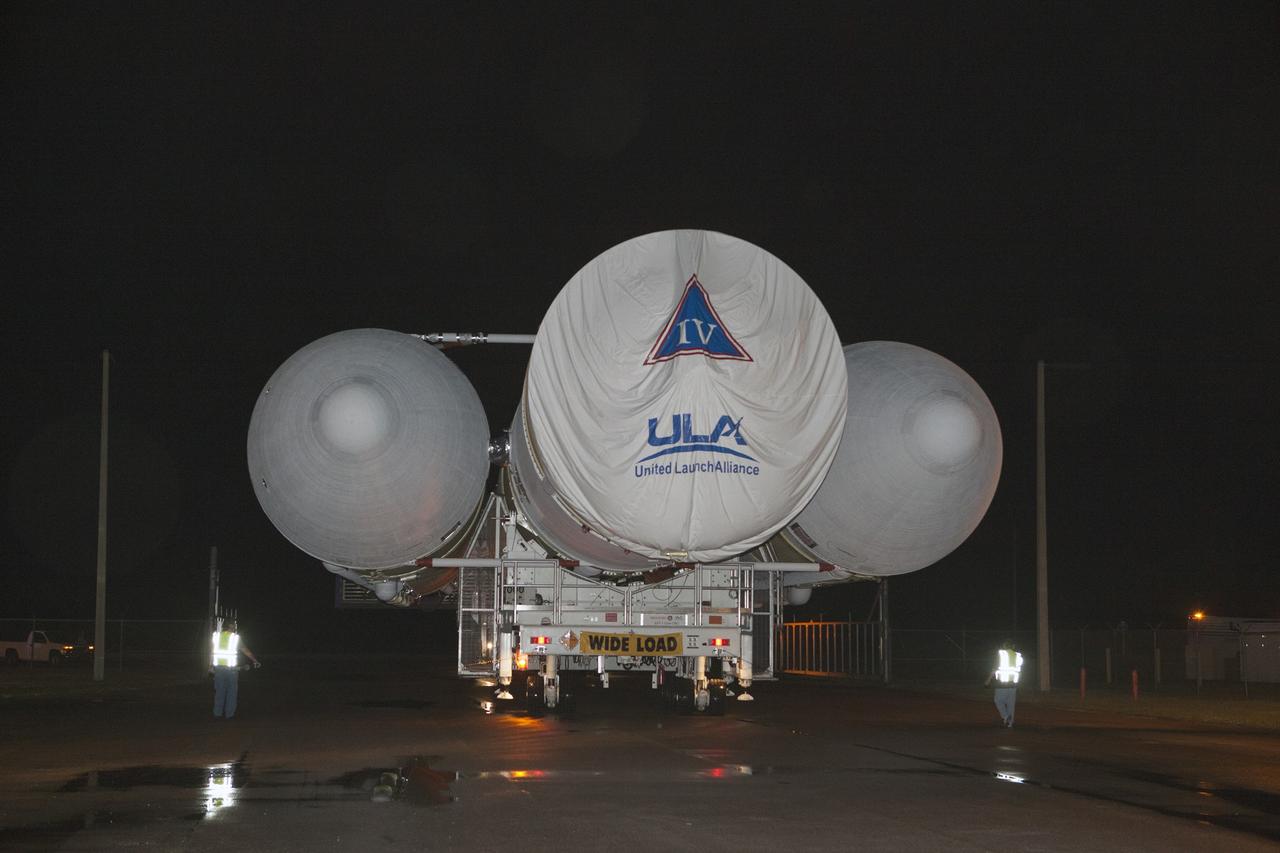
CAPE CANAVERAL, Fla. – The United Launch Alliance, or ULA, Delta IV Heavy rocket has exited the Horizontal Integration Facility at Space Launch Complex 37 at Cape Canaveral Air Force Station in Florida. ULA technicians help guide the rocket, secured on the Elevated Platform Transporter, for the trip to the pad. The Delta IV Heavy will launch Orion on Exploration Flight Test-1. During its first flight test, Orion will travel farther into space than any human spacecraft has gone in more than 40 years. The data gathered during the flight will influence design decisions, validate existing computer models and innovative new approaches to space systems development, as well as reduce overall mission risks and costs for later Orion flights. Liftoff of Orion on the first flight test is planned for December 2014. Photo credit: NASA/Dimitri Gerondidakis
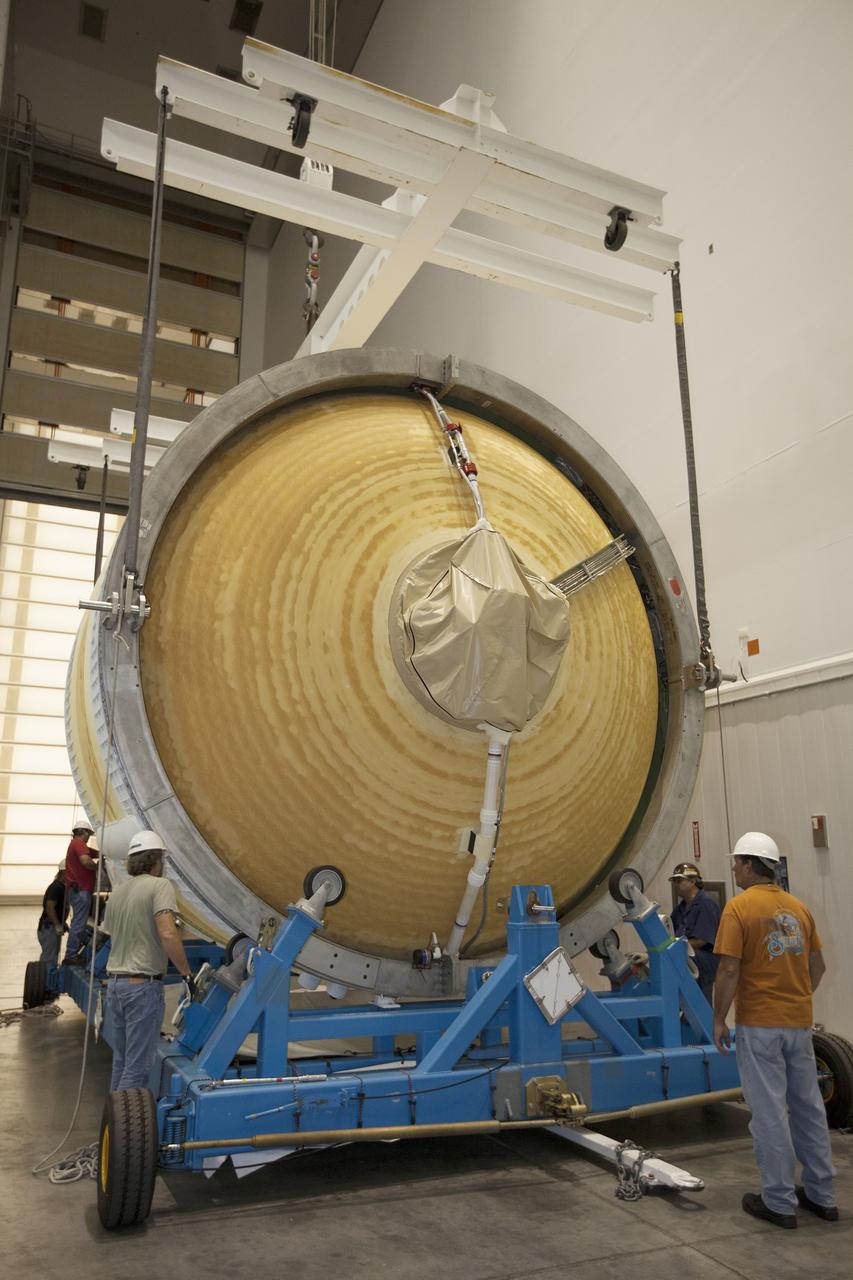
CAPE CANAVERAL, Fla. – Inside the Delta Operations Center at Cape Canaveral Air Force Station, United Launch Alliance technicians place the second stage of a Delta IV Heavy rocket on a transporter following testing in preparation for the unpiloted Exploration Flight Test-1, or EFT-1. The second stage will be moved to the Horizontal Integration Facility at Space Launch Complex 37 for mating with the Delta IV Heavy booster stages. During the mission, Orion will travel farther into space than any human spacecraft has gone in more than 40 years. The data gathered during the flight will influence design decisions, validate existing computer models and innovative new approaches to space systems development, as well as reduce overall mission risks and costs for later Orion flights. Liftoff of Orion on the first flight test is planned for December 2014. Photo credit: NASA/Kim Shiflett

CAPE CANAVERAL, Fla. – Inside the Delta Operations Center at Cape Canaveral Air Force Station, United Launch Alliance technicians lower the second stage of a Delta IV Heavy rocket following testing in preparation for the unpiloted Exploration Flight Test-1, or EFT-1. The second stage will be moved to the Horizontal Integration Facility at Space Launch Complex 37 for mating with the Delta IV Heavy booster stages. During the mission, Orion will travel farther into space than any human spacecraft has gone in more than 40 years. The data gathered during the flight will influence design decisions, validate existing computer models and innovative new approaches to space systems development, as well as reduce overall mission risks and costs for later Orion flights. Liftoff of Orion on the first flight test is planned for December 2014. Photo credit: NASA/Kim Shiflett
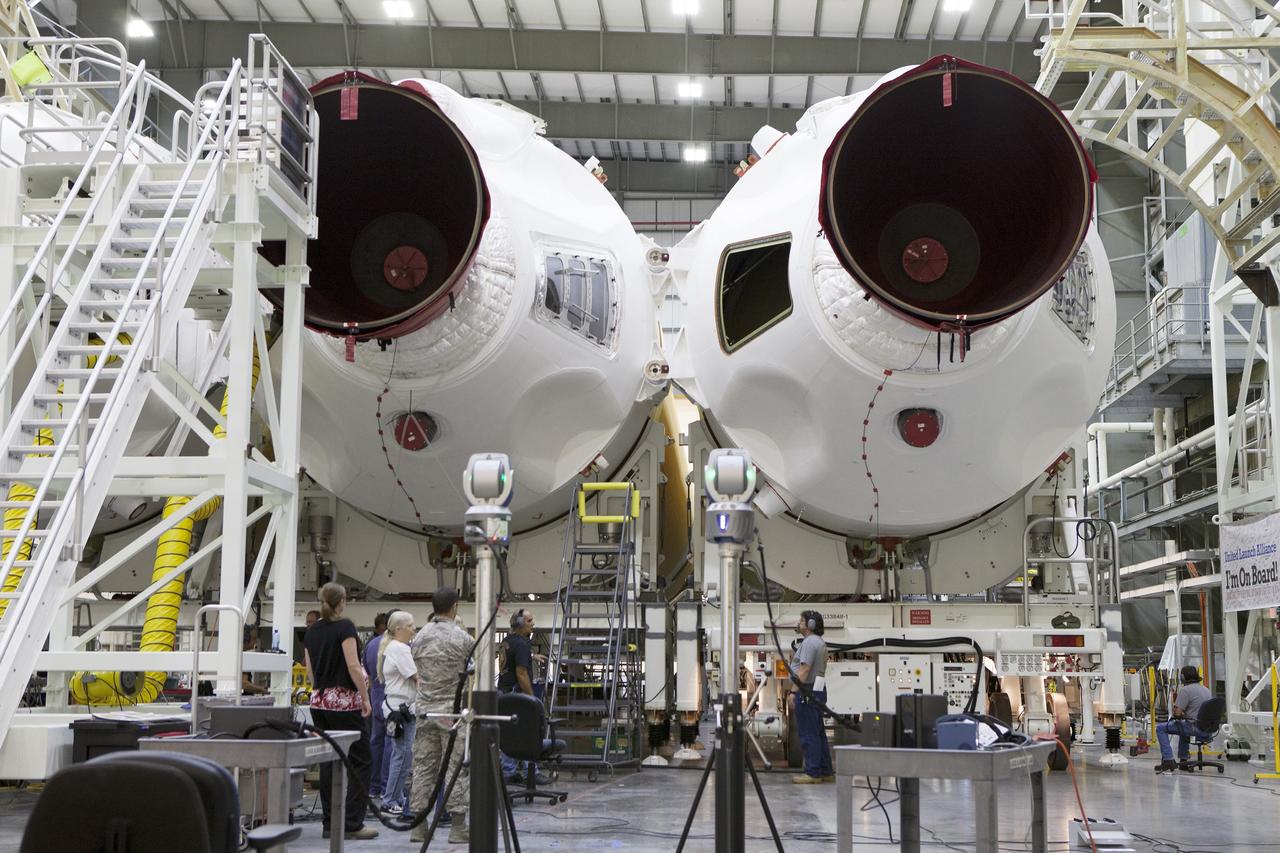
CAPE CANAVERAL, Fla. – United Launch Alliance, or ULA, technicians monitor the progress as the Delta IV port booster is mated to the core booster inside the Horizontal Integration Facility at Space Launch Complex 37 on Cape Canaveral Air Force Station in Florida. The ULA Delta IV Heavy rocket will launch an uncrewed Orion spacecraft on Exploration Flight Test-1. During the mission, Orion will travel farther into space than any human spacecraft has gone in more than 40 years. The data gathered during the flight will influence design decisions, validate existing computer models and innovative new approaches to space systems development, as well as reduce overall mission risks and costs for later Orion flights. Liftoff of Orion on the first flight test is planned for December 2014. Photo credit: NASA/Ben Smegelsky
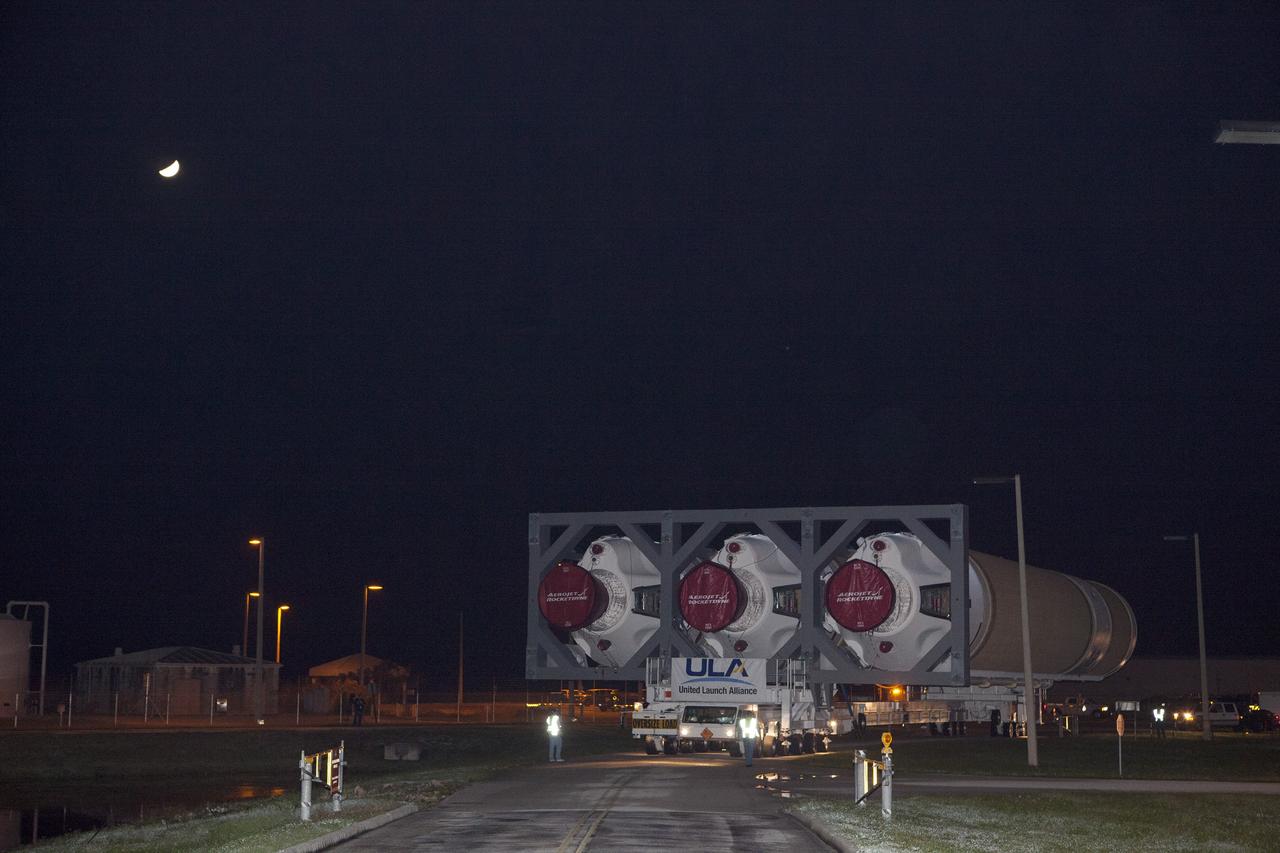
CAPE CANAVERAL, Fla. – A United Launch Alliance technicians drives the transporter that carries the Delta IV Heavy rocket to the pad at Space Launch Complex 37 at Cape Canaveral Air Force Station in Florida. The rocket is secured on the Elevated Platform Transporter. The Delta IV Heavy will launch Orion on Exploration Flight Test-1. During its first flight test, Orion will travel farther into space than any human spacecraft has gone in more than 40 years. The data gathered during the flight will influence design decisions, validate existing computer models and innovative new approaches to space systems development, as well as reduce overall mission risks and costs for later Orion flights. Liftoff of Orion on the first flight test is planned for December 2014. Photo credit: NASA/Dimitri Gerondidakis
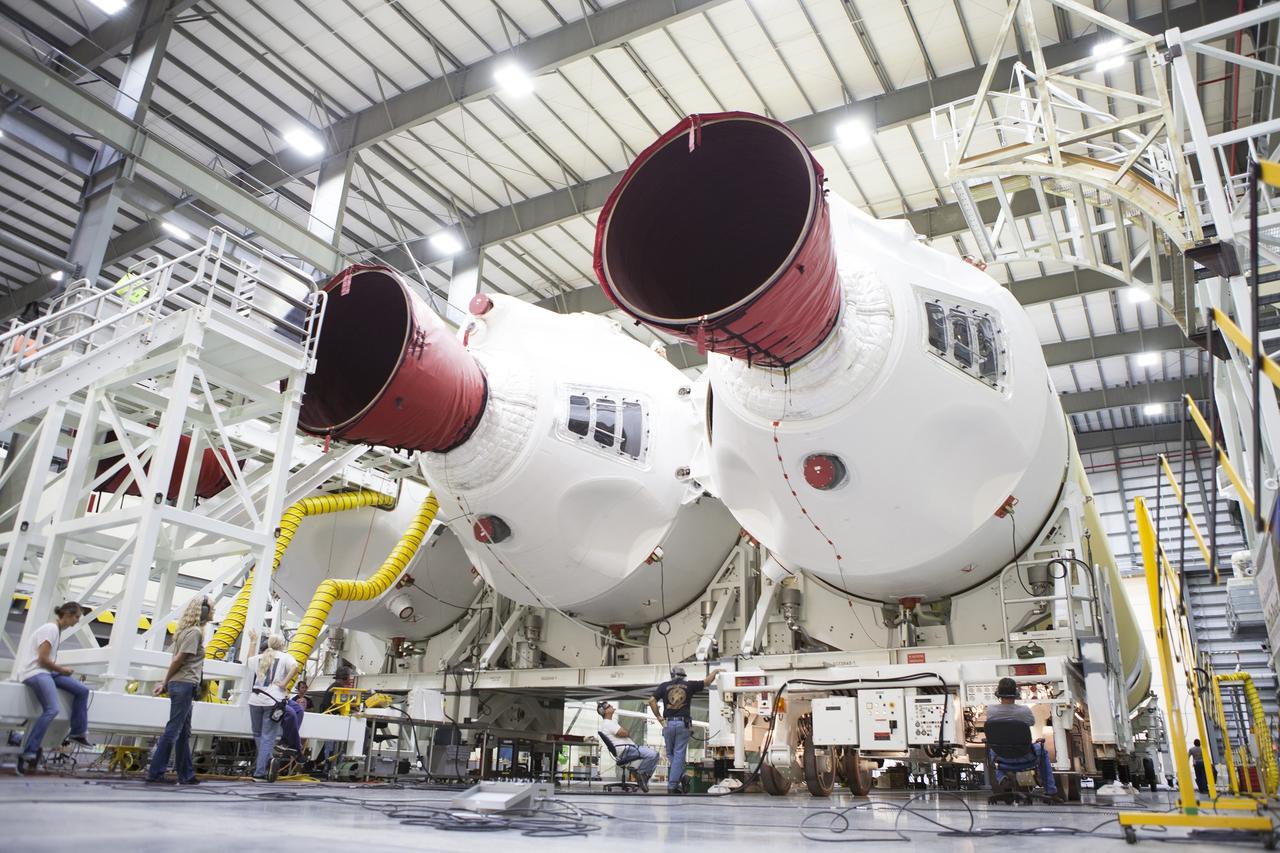
CAPE CANAVERAL, Fla. – All three of the United Launch Alliance, or ULA, Delta IV boosters for Exploration Flight Test-1 are in view inside the Horizontal Integration Facility at Space Launch Complex 37 on Cape Canaveral Air Force Station in Florida. The port booster is being mated to the core booster. The ULA Delta IV Heavy rocket will launch an uncrewed Orion spacecraft on Exploration Flight Test-1. During the mission, Orion will travel farther into space than any human spacecraft has gone in more than 40 years. The data gathered during the flight will influence design decisions, validate existing computer models and innovative new approaches to space systems development, as well as reduce overall mission risks and costs for later Orion flights. Liftoff of Orion on the first flight test is planned for December 2014. Photo credit: NASA/Ben Smegelsky
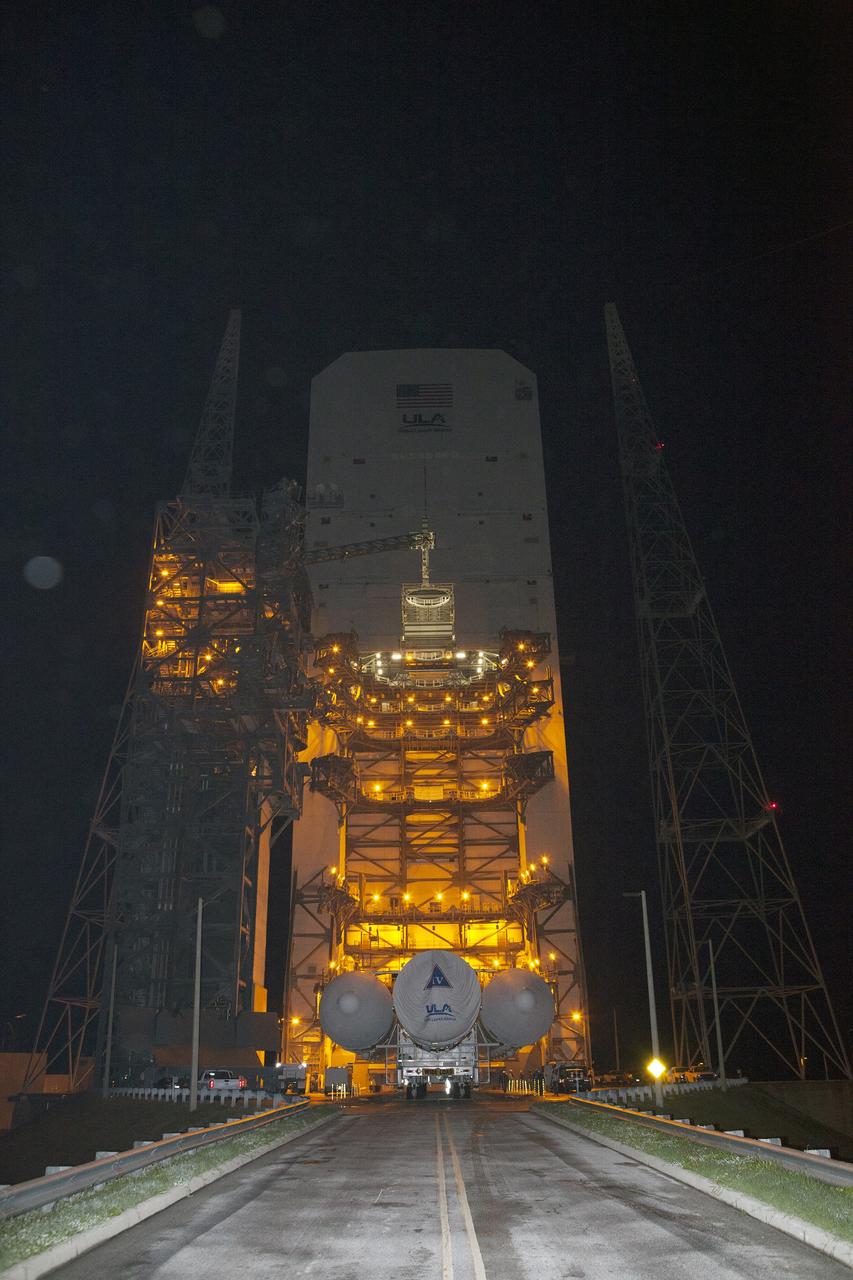
CAPE CANAVERAL, Fla. – Launch pad lights give off a golden glow at Space Launch Complex 37 at Cape Canaveral Air Force Station in Florida, as the United Launch Alliance Delta IV Heavy rocket for Exploration Flight Test-1 arrives. The rocket is secured on the Elevated Platform Transporter. The Delta IV Heavy will launch Orion on its first flight test. During its first flight test, Orion will travel farther into space than any human spacecraft has gone in more than 40 years. The data gathered during the flight will influence design decisions, validate existing computer models and innovative new approaches to space systems development, as well as reduce overall mission risks and costs for later Orion flights. Liftoff of Orion on the first flight test is planned for December 2014. Photo credit: NASA/Dimitri Gerondidakis
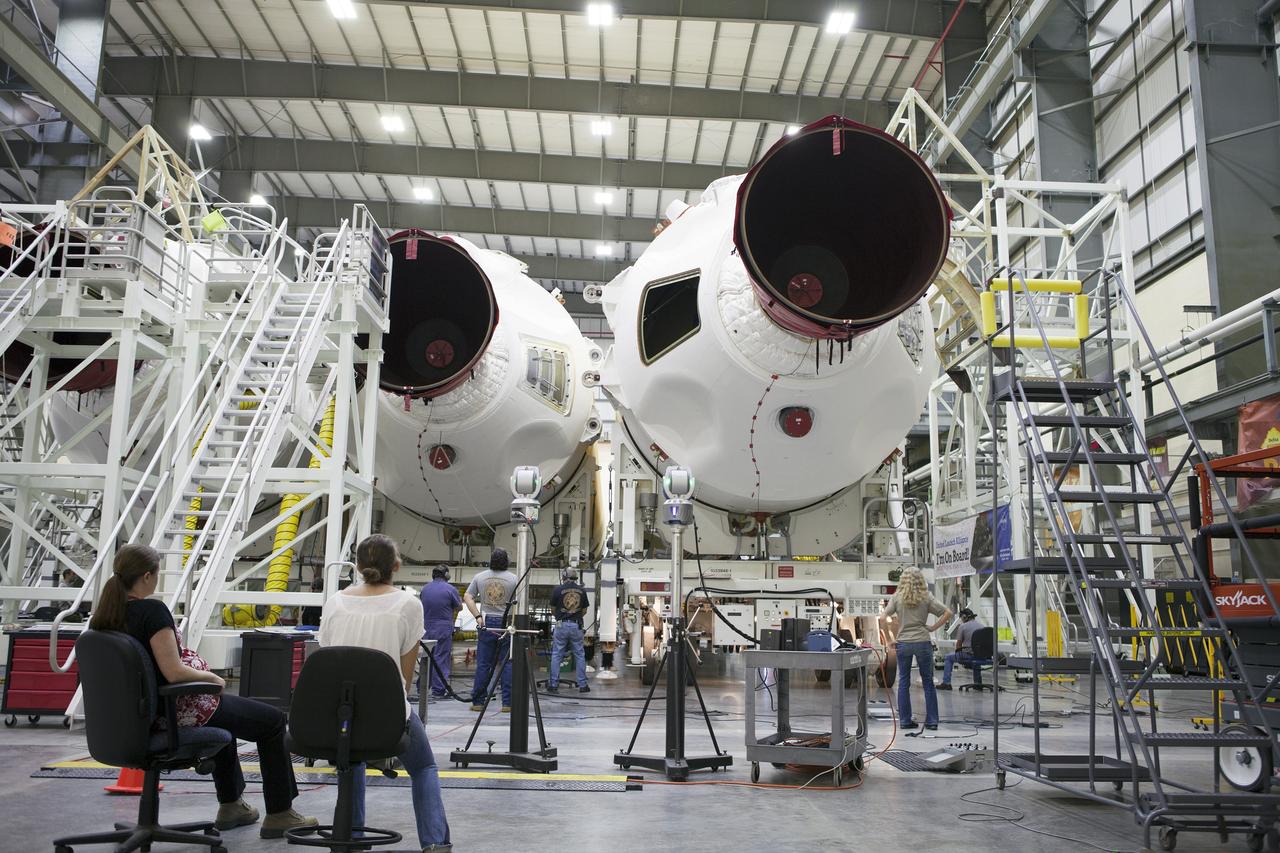
CAPE CANAVERAL, Fla. – United Launch Alliance, or ULA, technicians monitor the progress as the Delta IV port booster is mated to the core booster inside the Horizontal Integration Facility at Space Launch Complex 37 on Cape Canaveral Air Force Station in Florida. The ULA Delta IV Heavy rocket will launch an uncrewed Orion spacecraft on Exploration Flight Test-1. During the mission, Orion will travel farther into space than any human spacecraft has gone in more than 40 years. The data gathered during the flight will influence design decisions, validate existing computer models and innovative new approaches to space systems development, as well as reduce overall mission risks and costs for later Orion flights. Liftoff of Orion on the first flight test is planned for December 2014. Photo credit: NASA/Ben Smegelsky
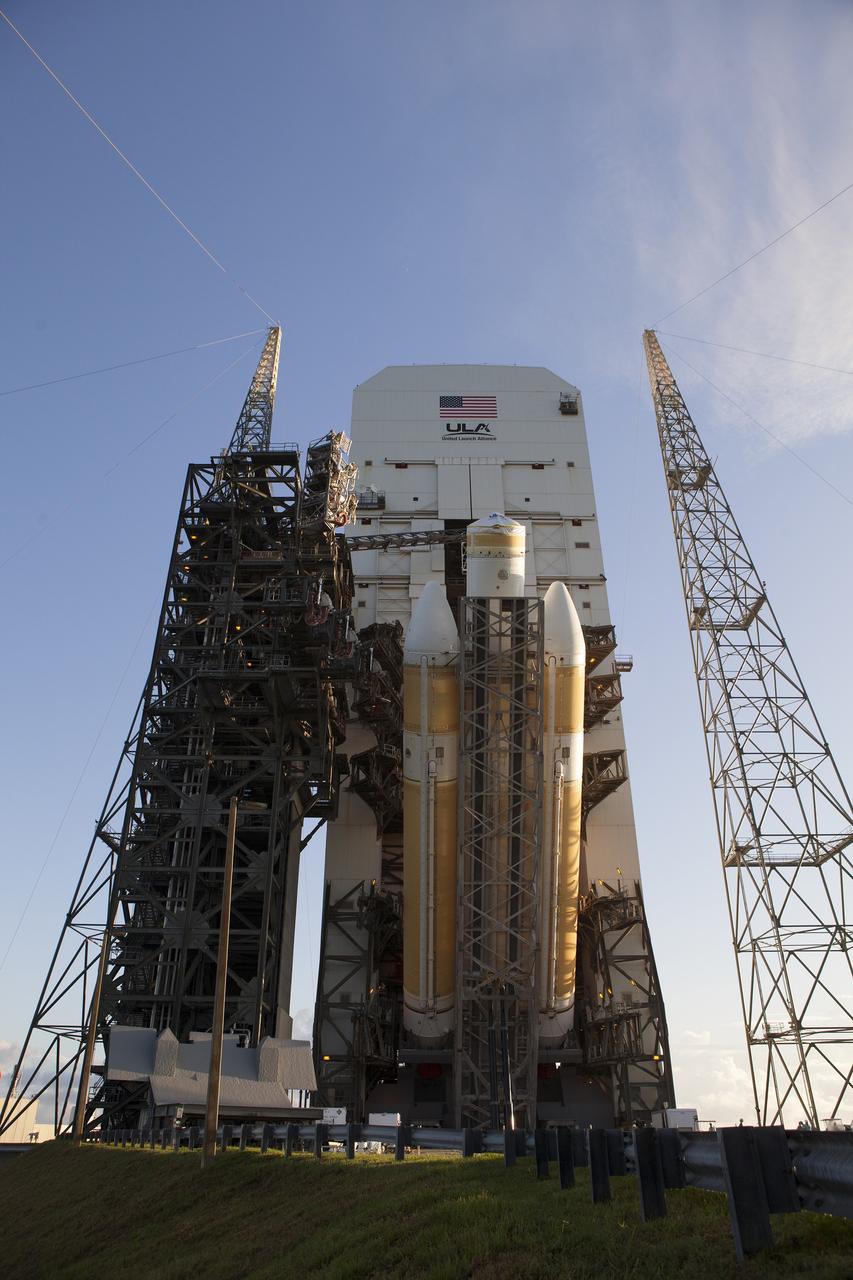
CAPE CANAVERAL, Fla. – The United Launch Alliance Delta IV Heavy rocket for Exploration Flight Test-1 is being lifted to the vertical position in the mobile service tower on the pad at the pad at Space Launch Complex 37 at Cape Canaveral Air Force Station in Florida. The Delta IV Heavy is being readied to launch Orion on its first flight test. During its first flight test, Orion will travel farther into space than any human spacecraft has gone in more than 40 years. The data gathered during the flight will influence design decisions, validate existing computer models and innovative new approaches to space systems development, as well as reduce overall mission risks and costs for later Orion flights. Liftoff of Orion on the first flight test is planned for December 2014. Photo credit: NASA/Daniel Casper
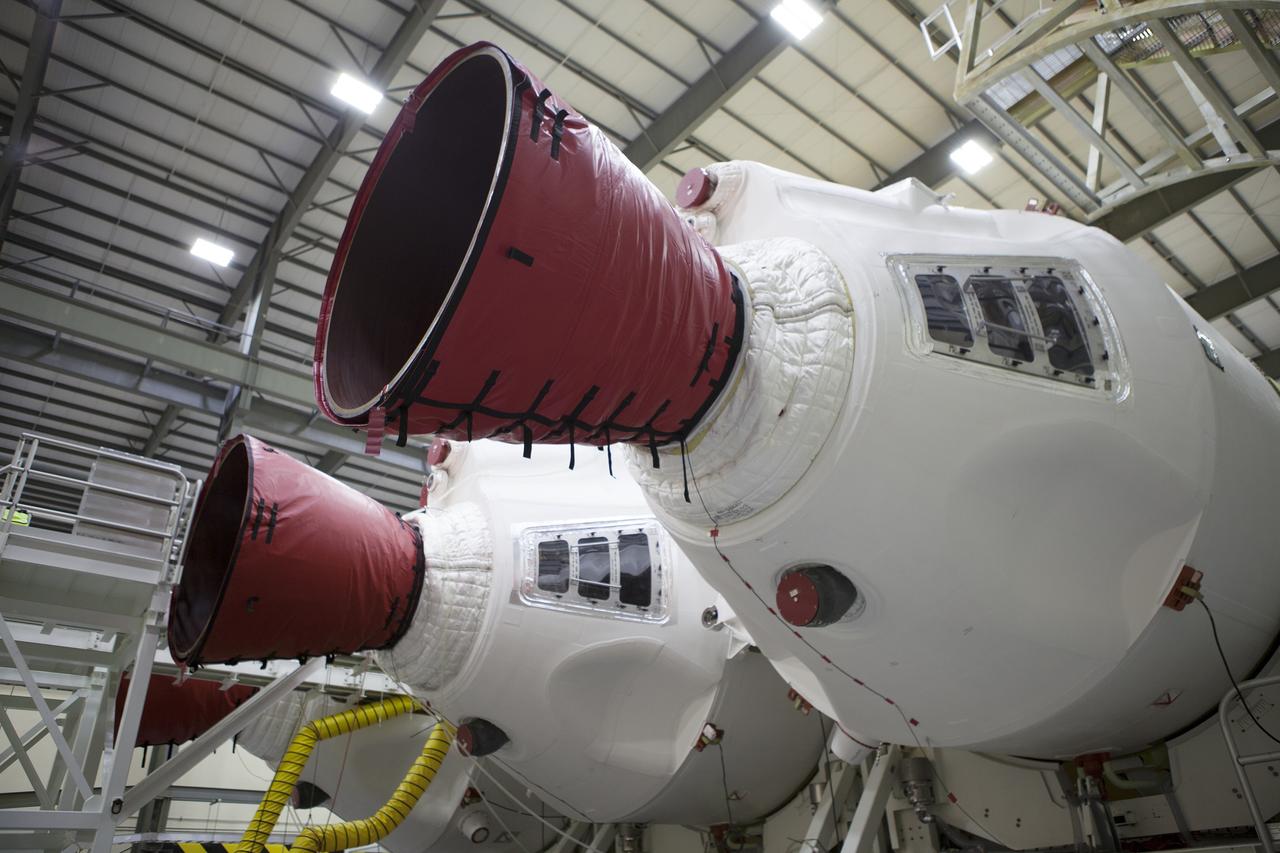
CAPE CANAVERAL, Fla. – All three of the United Launch Alliance, or ULA, Delta IV boosters for Exploration Flight Test-1 are in view inside the Horizontal Integration Facility at Space Launch Complex 37 on Cape Canaveral Air Force Station in Florida. The port booster is being mated to the core booster. The ULA Delta IV Heavy rocket will launch an uncrewed Orion spacecraft on Exploration Flight Test-1. During the mission, Orion will travel farther into space than any human spacecraft has gone in more than 40 years. The data gathered during the flight will influence design decisions, validate existing computer models and innovative new approaches to space systems development, as well as reduce overall mission risks and costs for later Orion flights. Liftoff of Orion on the first flight test is planned for December 2014. Photo credit: NASA/Ben Smegelsky
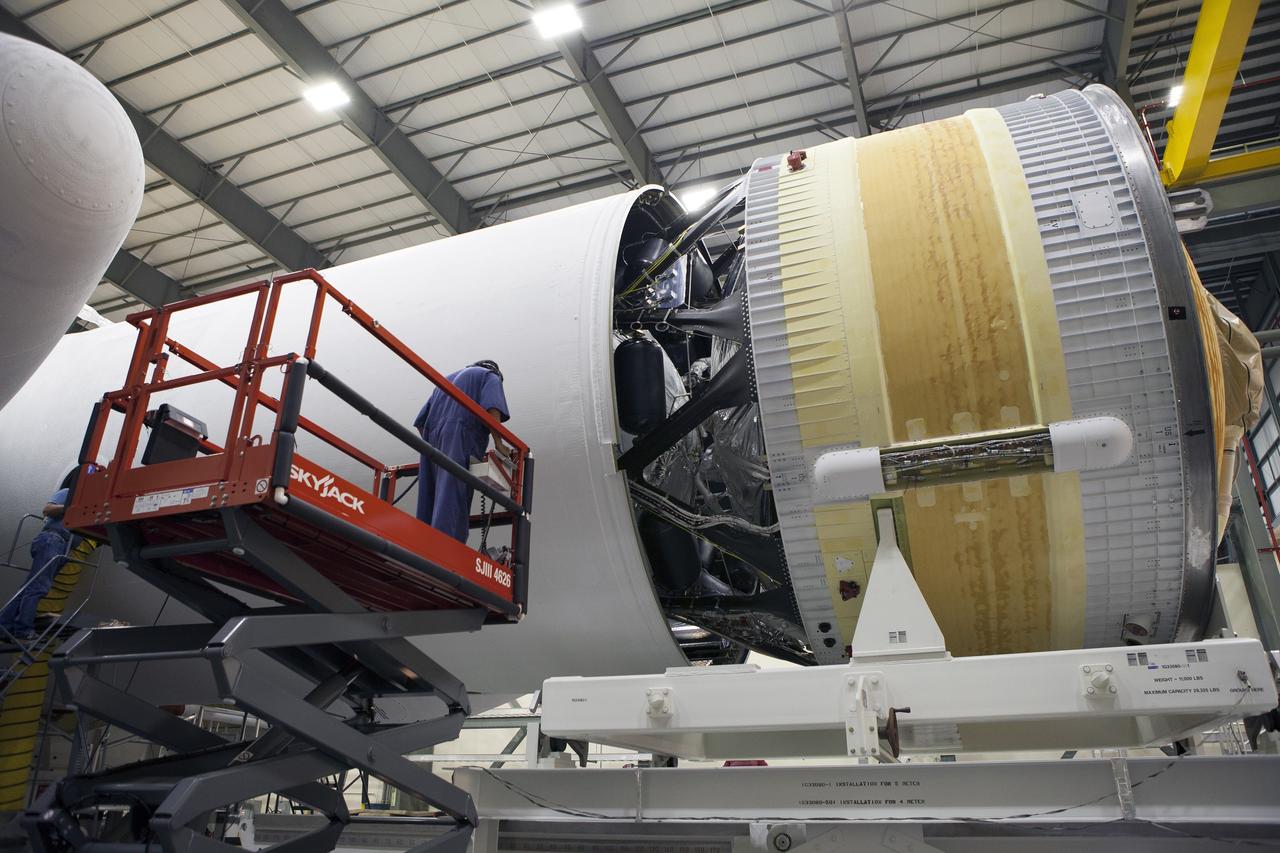
CAPE CANAVERAL, Fla. – Inside the Horizontal Integration Facility at Space Launch Complex 37 at Cape Canaveral Air Force Station in Florida, a United Launch Alliance technician on a scissor lift monitors the progress as the second stage of a Delta IV Heavy rocket is mated to the central core booster of the three booster stages for the unpiloted Exploration Flight Test-1, or EFT-1. During the mission, Orion will travel farther into space than any human spacecraft has gone in more than 40 years. The data gathered during the flight will influence design decisions, validate existing computer models and innovative new approaches to space systems development, as well as reduce overall mission risks and costs for later Orion flights. Liftoff of Orion on the first flight test is planned for December 2014. Photo credit: NASA/Daniel Casper
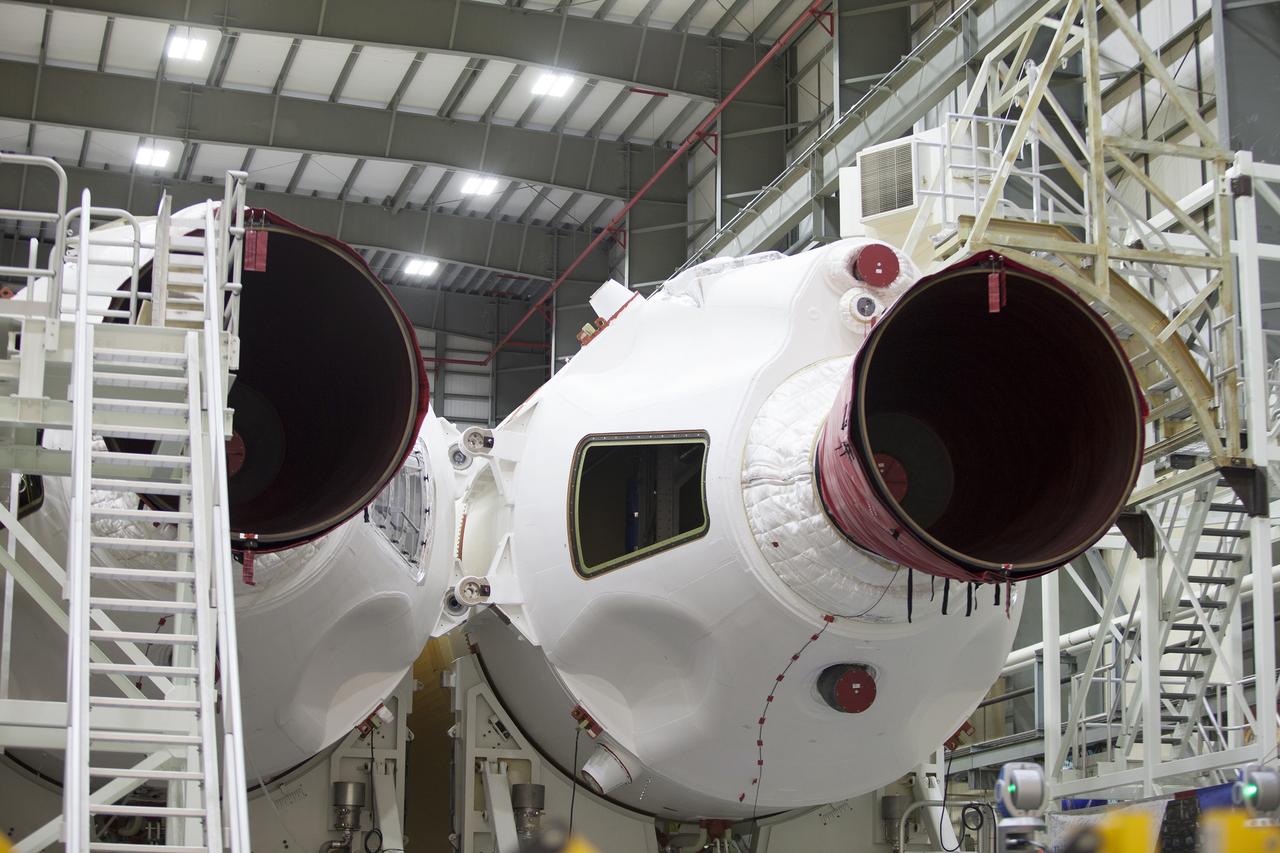
CAPE CANAVERAL, Fla. – The United Launch Alliance Delta IV port booster is being mated to the core booster inside the Horizontal Integration Facility at Space Launch Complex 37 on Cape Canaveral Air Force Station in Florida. The Delta IV Heavy rocket will launch an uncrewed Orion spacecraft on Exploration Flight Test-1. During the mission, Orion will travel farther into space than any human spacecraft has gone in more than 40 years. The data gathered during the flight will influence design decisions, validate existing computer models and innovative new approaches to space systems development, as well as reduce overall mission risks and costs for later Orion flights. Liftoff of Orion on the first flight test is planned for December 2014. Photo credit: NASA/Ben Smegelsky
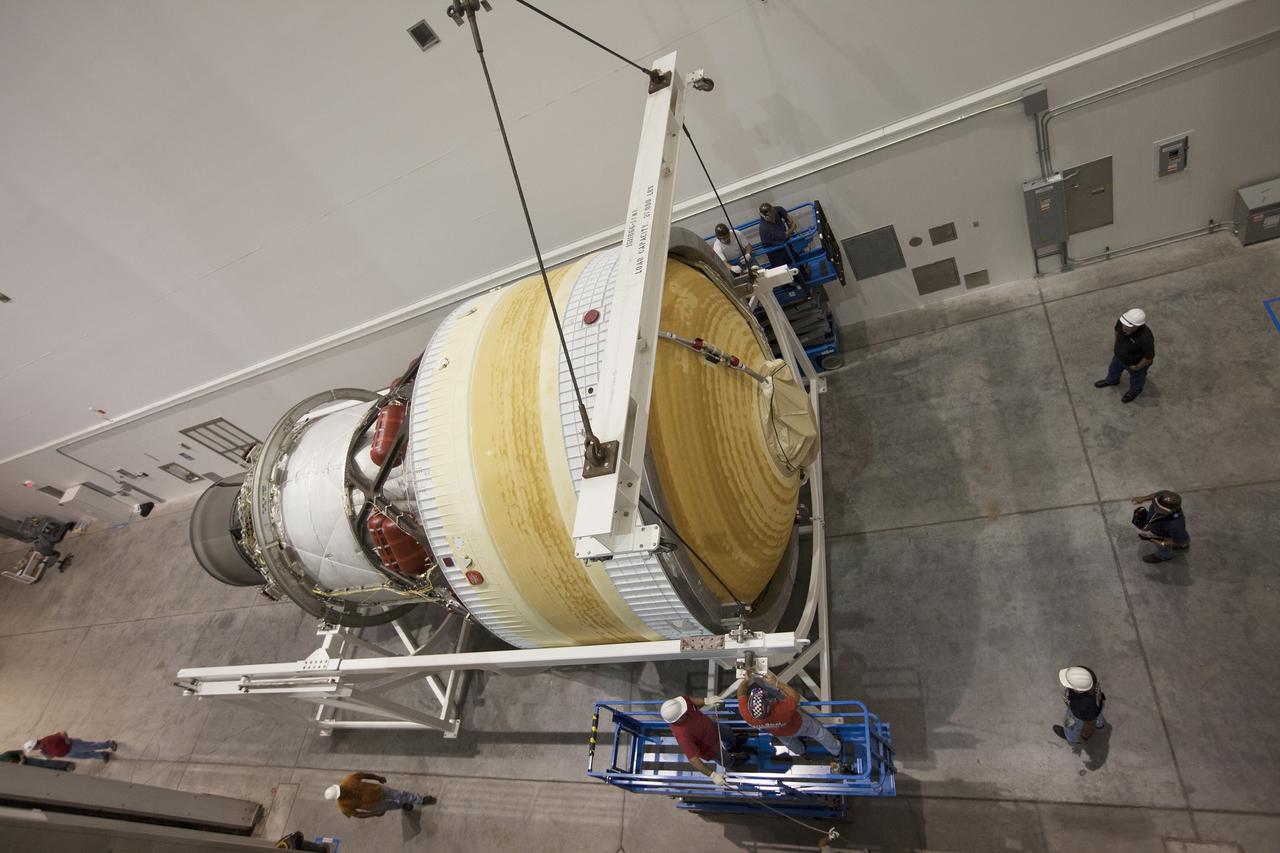
CAPE CANAVERAL, Fla. – Inside the Delta Operations Center at Cape Canaveral Air Force Station, United Launch Alliance technicians place the second stage of a Delta IV Heavy rocket on a support fixture following testing in preparation for the unpiloted Exploration Flight Test-1, or EFT-1. The second stage will be placed on a transporter for the move to the Horizontal Integration Facility at Space Launch Complex 37 for mating with the Delta IV Heavy booster stages. During the mission, Orion will travel farther into space than any human spacecraft has gone in more than 40 years. The data gathered during the flight will influence design decisions, validate existing computer models and innovative new approaches to space systems development, as well as reduce overall mission risks and costs for later Orion flights. Liftoff of Orion on the first flight test is planned for December 2014. Photo credit: NASA/Kim Shiflett

CAPE CANAVERAL, Fla. – The United Launch Alliance Delta IV Heavy rocket for Exploration Flight Test-1 is being lifted to the vertical position at the pad at Space Launch Complex 37 at Cape Canaveral Air Force Station in Florida. The Delta IV Heavy is being readied to launch Orion on its first flight test. During its first flight test, Orion will travel farther into space than any human spacecraft has gone in more than 40 years. The data gathered during the flight will influence design decisions, validate existing computer models and innovative new approaches to space systems development, as well as reduce overall mission risks and costs for later Orion flights. Liftoff of Orion on the first flight test is planned for December 2014. Photo credit: NASA/Daniel Casper
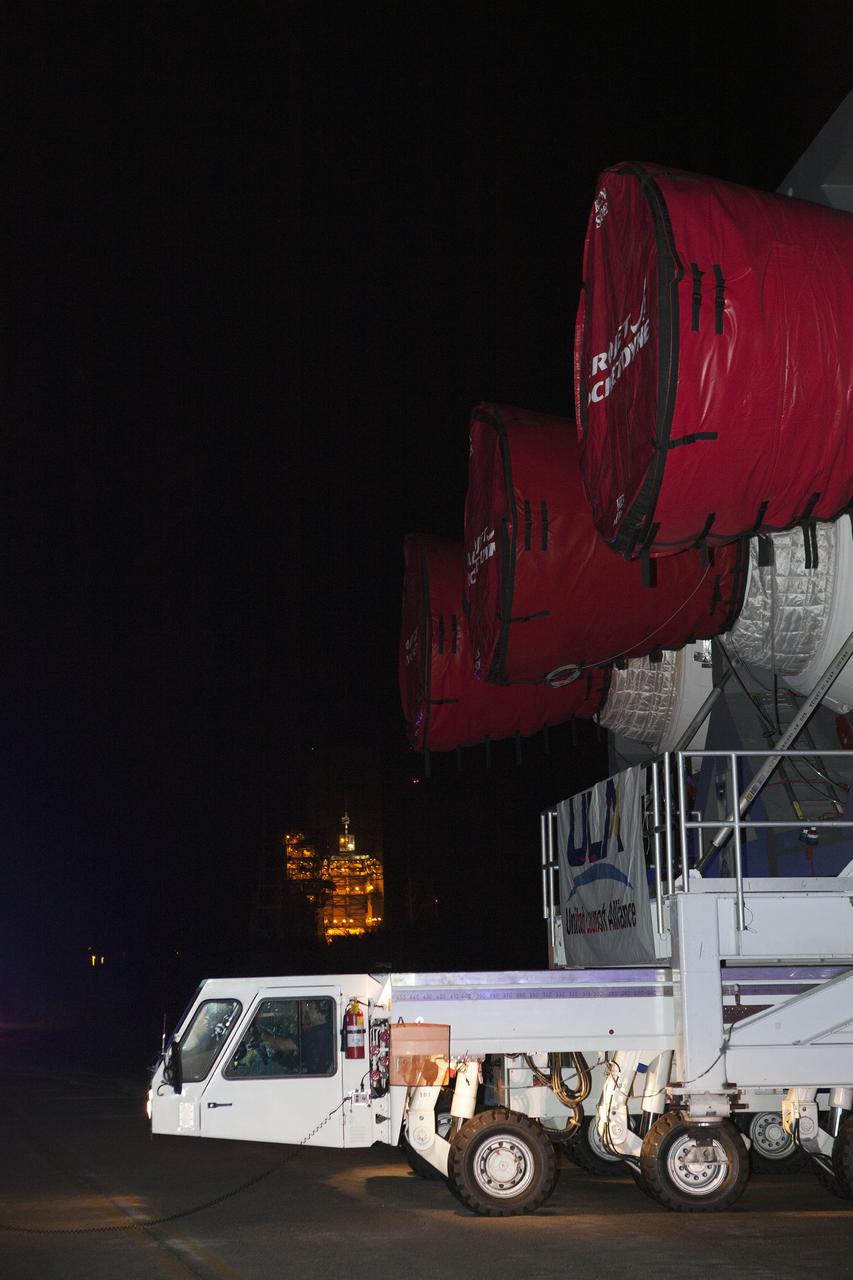
CAPE CANAVERAL, Fla. – A United Launch Alliance technicians drives the transporter that carries the Delta IV Heavy rocket to the pad at Space Launch Complex 37 at Cape Canaveral Air Force Station in Florida. The rocket is secured on the Elevated Platform Transporter. The Delta IV Heavy will launch Orion on Exploration Flight Test-1. During its first flight test, Orion will travel farther into space than any human spacecraft has gone in more than 40 years. The data gathered during the flight will influence design decisions, validate existing computer models and innovative new approaches to space systems development, as well as reduce overall mission risks and costs for later Orion flights. Liftoff of Orion on the first flight test is planned for December 2014. Photo credit: NASA/Dimitri Gerondidakis
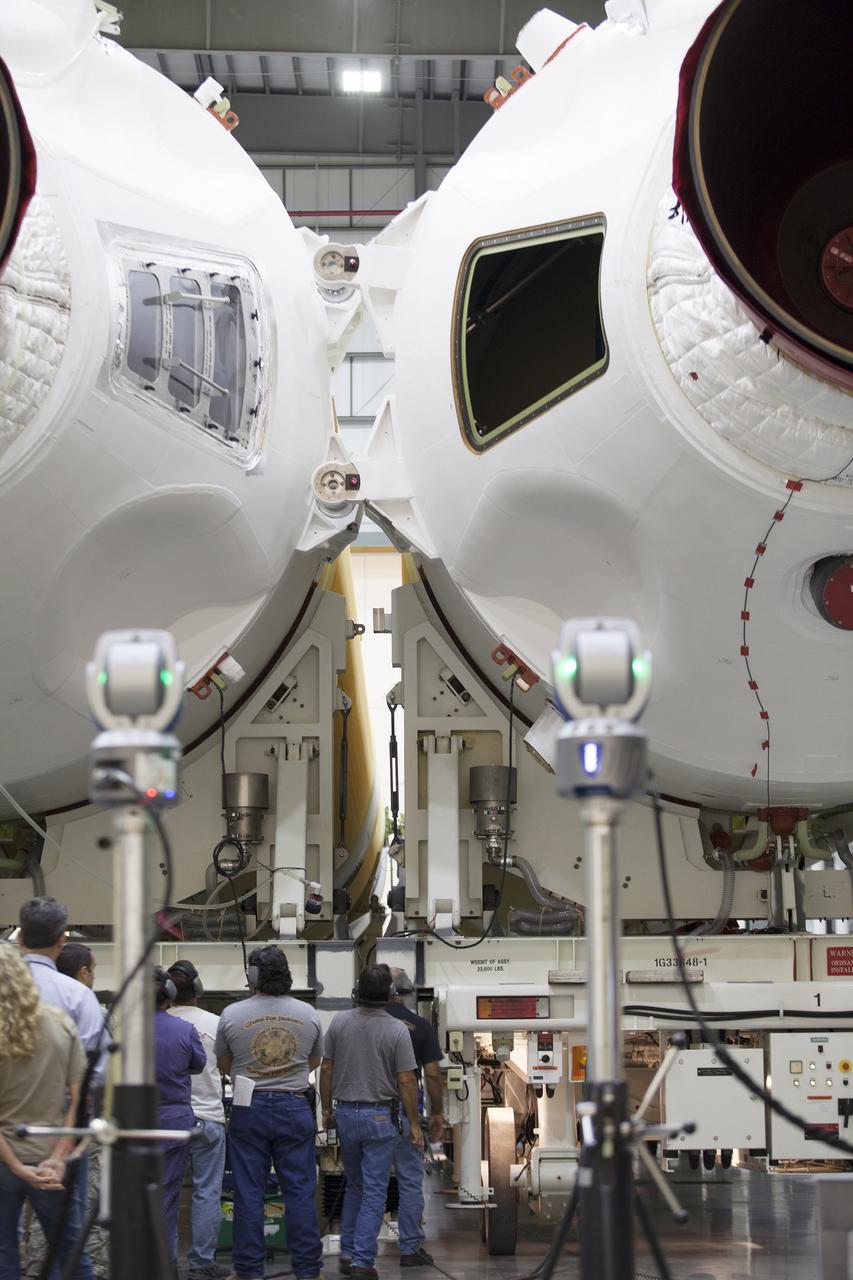
CAPE CANAVERAL, Fla. – United Launch Alliance, or ULA, technicians monitor the progress as the Delta IV port booster is mated to the core booster inside the Horizontal Integration Facility at Space Launch Complex 37 on Cape Canaveral Air Force Station in Florida. The ULA Delta IV Heavy rocket will launch an uncrewed Orion spacecraft on Exploration Flight Test-1. During the mission, Orion will travel farther into space than any human spacecraft has gone in more than 40 years. The data gathered during the flight will influence design decisions, validate existing computer models and innovative new approaches to space systems development, as well as reduce overall mission risks and costs for later Orion flights. Liftoff of Orion on the first flight test is planned for December 2014. Photo credit: NASA/Ben Smegelsky
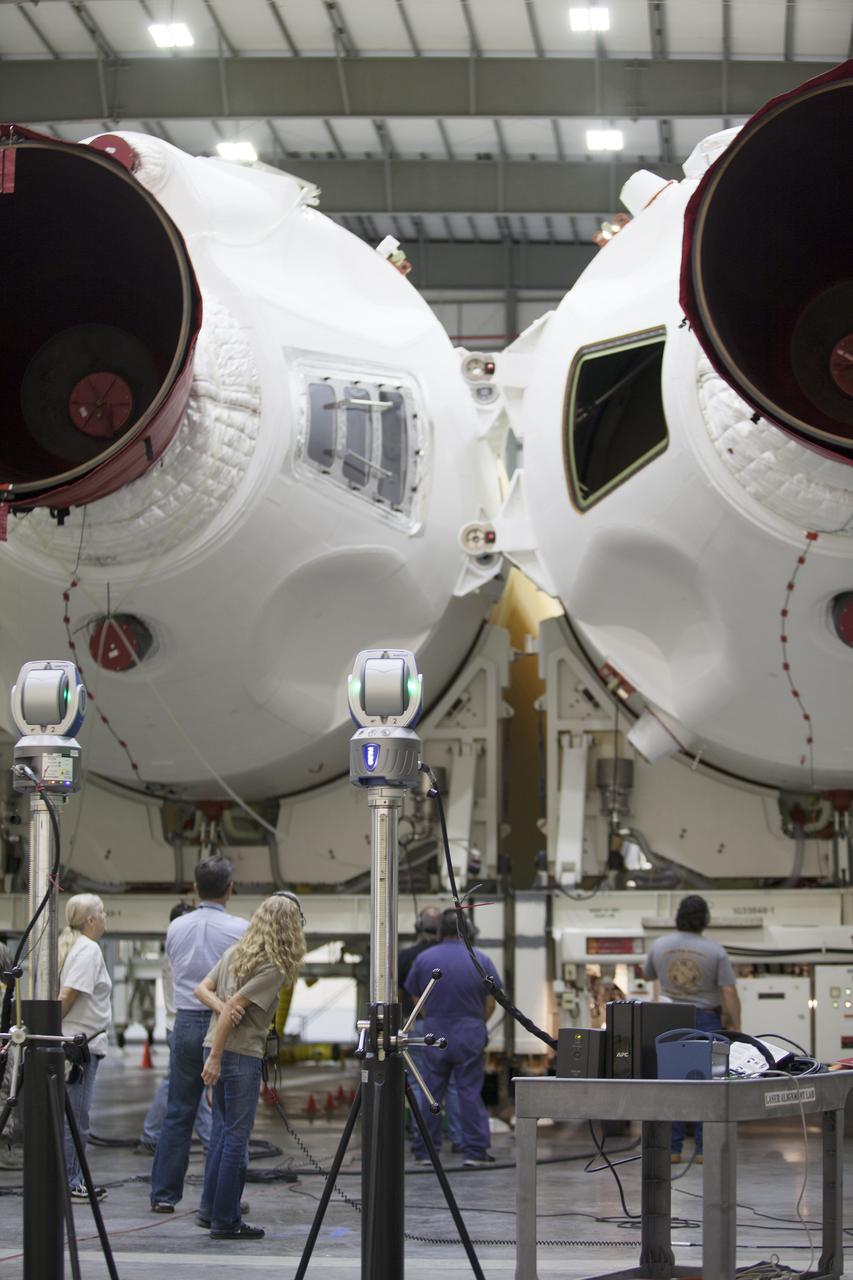
CAPE CANAVERAL, Fla. – United Launch Alliance, or ULA, technicians monitor the progress as the Delta IV port booster is mated to the core booster inside the Horizontal Integration Facility at Space Launch Complex 37 on Cape Canaveral Air Force Station in Florida. The ULA Delta IV Heavy rocket will launch an uncrewed Orion spacecraft on Exploration Flight Test-1. During the mission, Orion will travel farther into space than any human spacecraft has gone in more than 40 years. The data gathered during the flight will influence design decisions, validate existing computer models and innovative new approaches to space systems development, as well as reduce overall mission risks and costs for later Orion flights. Liftoff of Orion on the first flight test is planned for December 2014. Photo credit: NASA/Ben Smegelsky
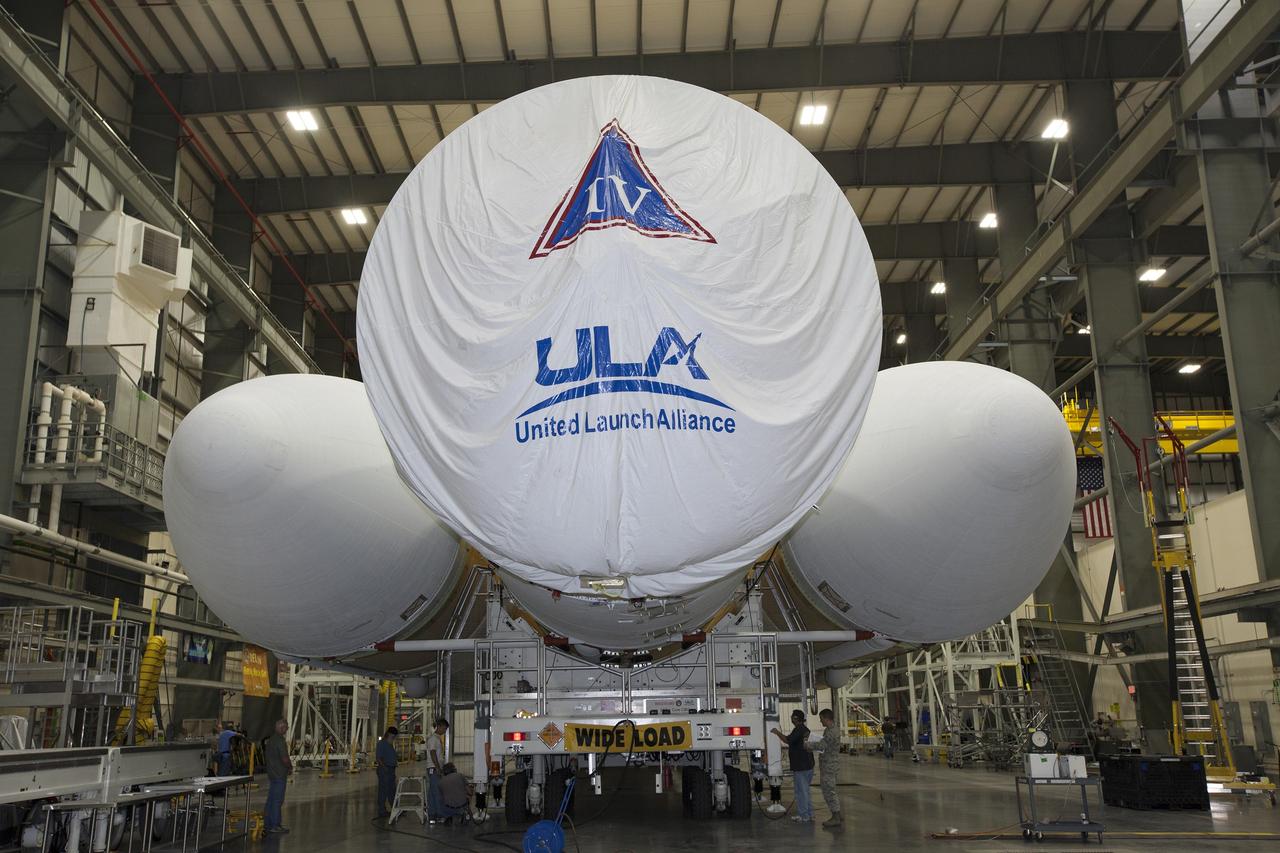
CAPE CANAVERAL, Fla. – Inside the Horizontal Integration Facility at Space Launch Complex 37 at Cape Canaveral Air Force Station in Florida, United Launch Alliance technicians prepare the Delta IV Heavy rocket for rollout to the pad. The rocket is secured on the Elevated Platform Transporter for the trip to the pad. The Delta IV Heavy will launch Orion on Exploration Flight Test-1. During its first flight test, Orion will travel farther into space than any human spacecraft has gone in more than 40 years. The data gathered during the flight will influence design decisions, validate existing computer models and innovative new approaches to space systems development, as well as reduce overall mission risks and costs for later Orion flights. Liftoff of Orion on the first flight test is planned for December 2014. Photo credit: NASA/Dimitri Gerondidakis
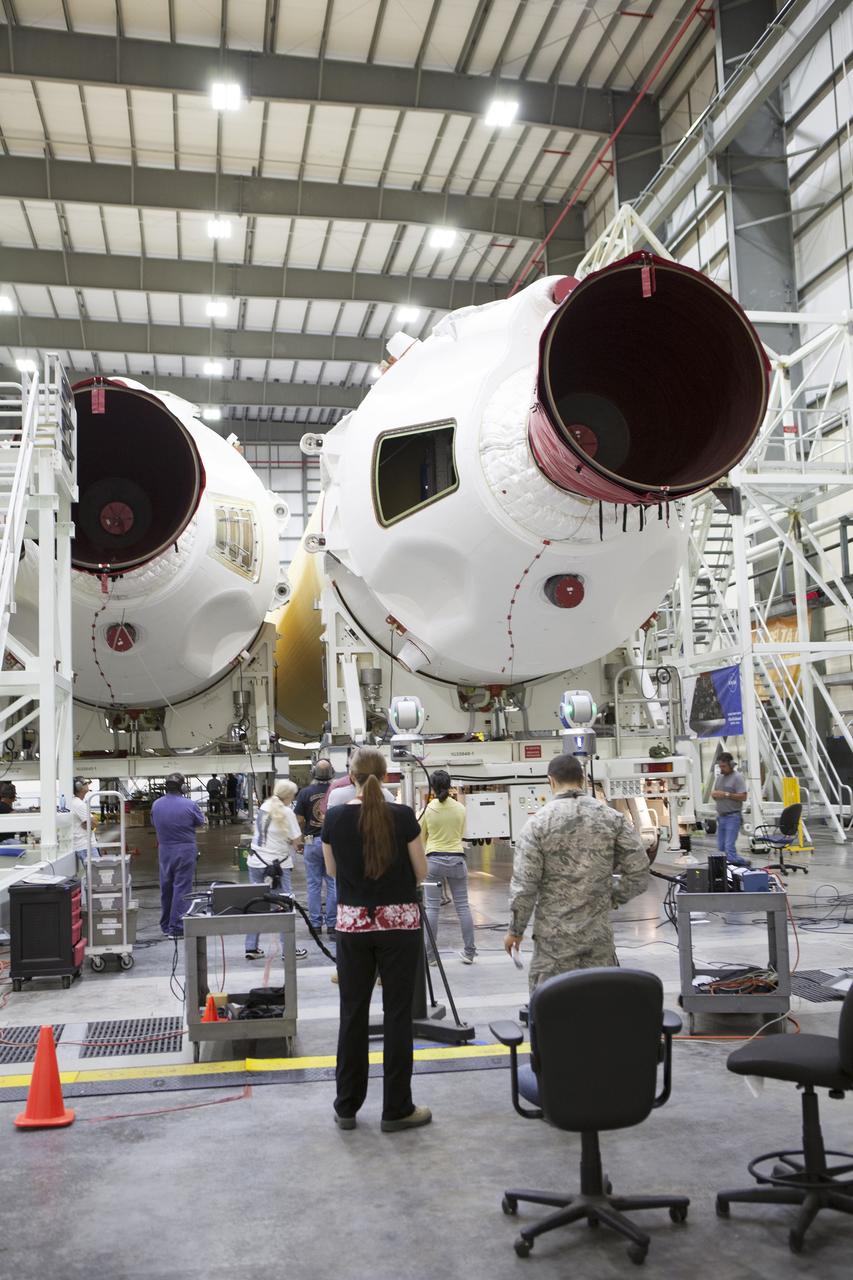
CAPE CANAVERAL, Fla. – United Launch Alliance, or ULA, technicians monitor the progress as the Delta IV port booster is mated to the core booster inside the Horizontal Integration Facility at Space Launch Complex 37 on Cape Canaveral Air Force Station in Florida. The ULA Delta IV Heavy rocket will launch an uncrewed Orion spacecraft on Exploration Flight Test-1. During the mission, Orion will travel farther into space than any human spacecraft has gone in more than 40 years. The data gathered during the flight will influence design decisions, validate existing computer models and innovative new approaches to space systems development, as well as reduce overall mission risks and costs for later Orion flights. Liftoff of Orion on the first flight test is planned for December 2014. Photo credit: NASA/Ben Smegelsky
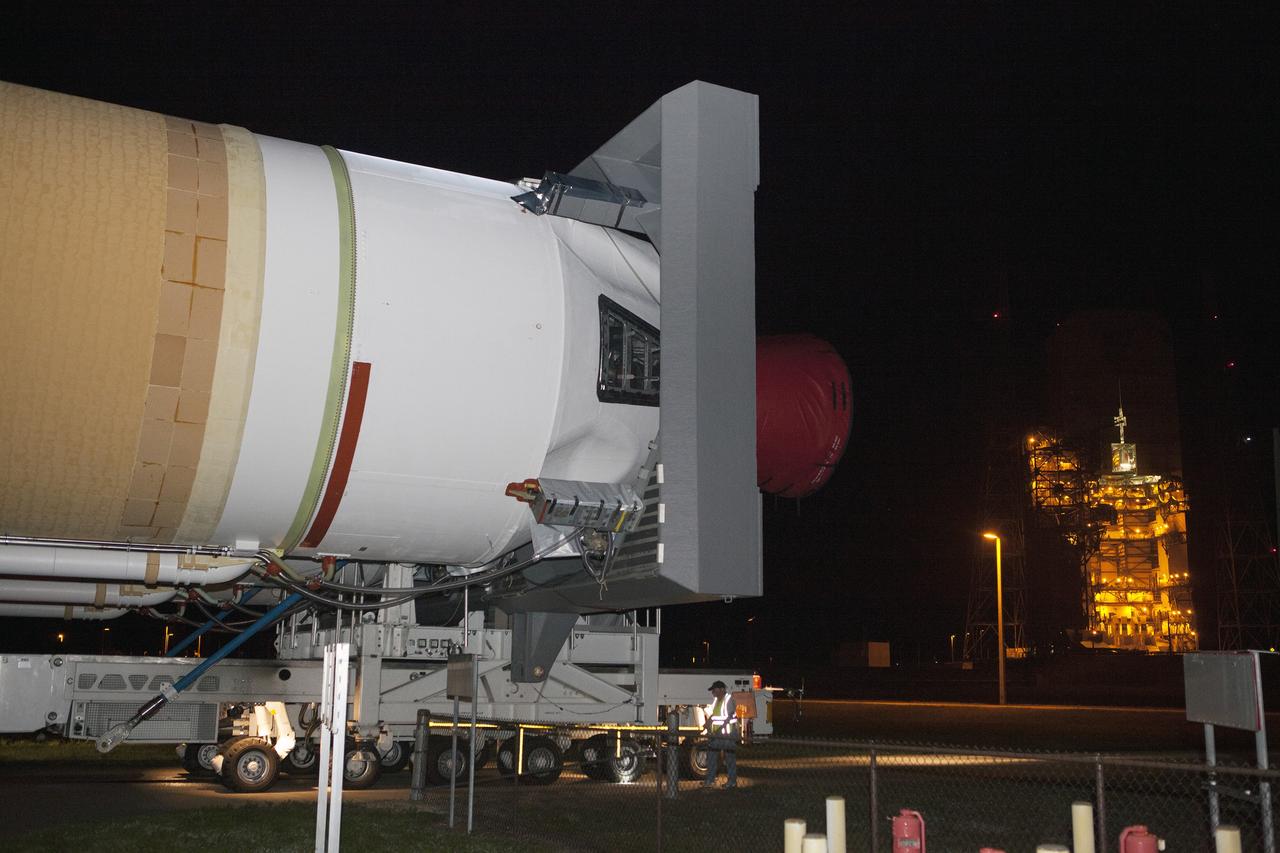
CAPE CANAVERAL, Fla. – The United Launch Alliance, or ULA, Delta IV Heavy rocket for Exploration Flight Test-1 continues its trek to the pad at Space Launch Complex 37 at Cape Canaveral Air Force Station in Florida. ULA technicians help guide the transporter to the pad. The rocket is secured on the Elevated Platform Transporter. The Delta IV Heavy will launch Orion on its first flight test. During its first flight test, Orion will travel farther into space than any human spacecraft has gone in more than 40 years. The data gathered during the flight will influence design decisions, validate existing computer models and innovative new approaches to space systems development, as well as reduce overall mission risks and costs for later Orion flights. Liftoff of Orion on the first flight test is planned for December 2014. Photo credit: NASA/Dimitri Gerondidakis
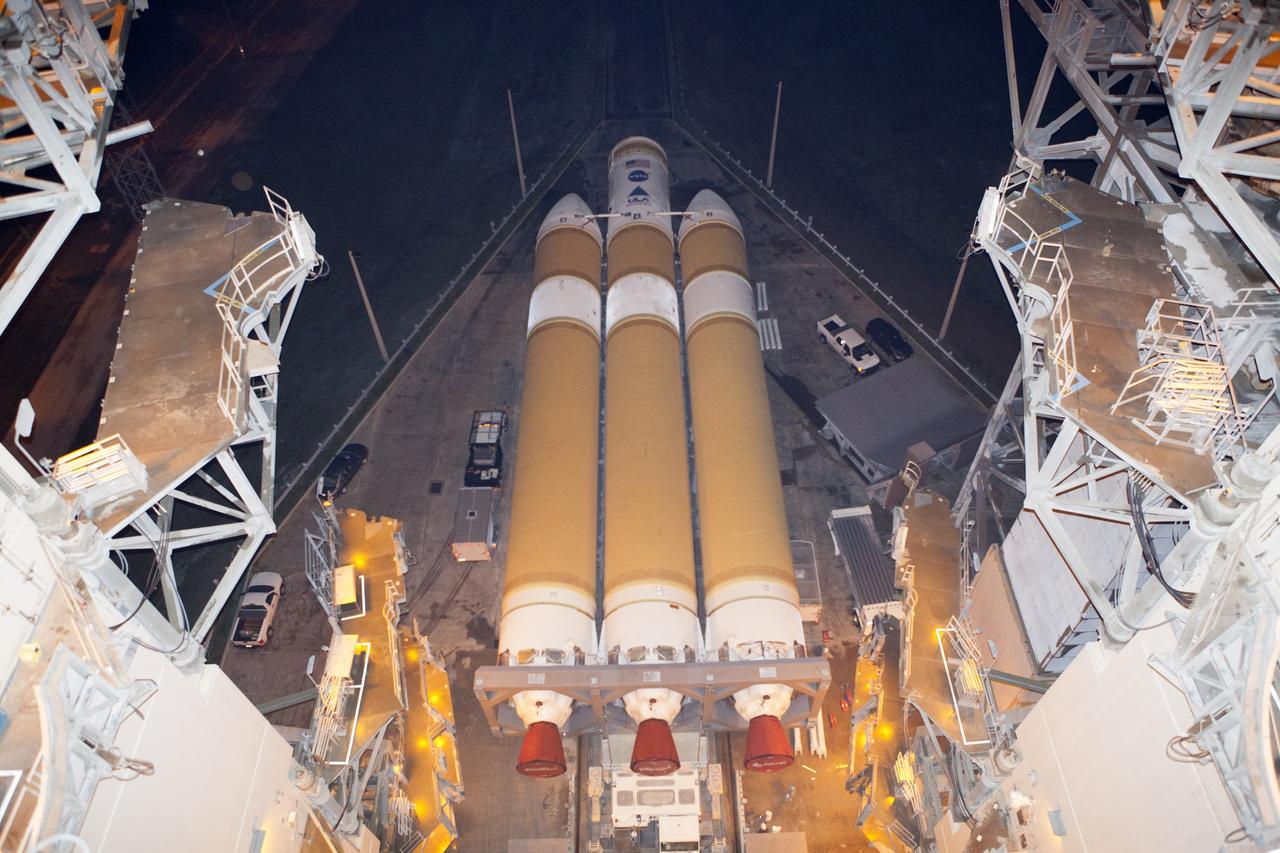
CAPE CANAVERAL, Fla. – The United Launch Alliance Delta IV Heavy rocket for Exploration Flight Test-1 arrives at the pad at Space Launch Complex 37 at Cape Canaveral Air Force Station in Florida. The rocket is secured on the Elevated Platform Transporter. The Delta IV Heavy will launch Orion on its first flight test. During its first flight test, Orion will travel farther into space than any human spacecraft has gone in more than 40 years. The data gathered during the flight will influence design decisions, validate existing computer models and innovative new approaches to space systems development, as well as reduce overall mission risks and costs for later Orion flights. Liftoff of Orion on the first flight test is planned for December 2014. Photo credit: NASA/Dimitri Gerondidakis
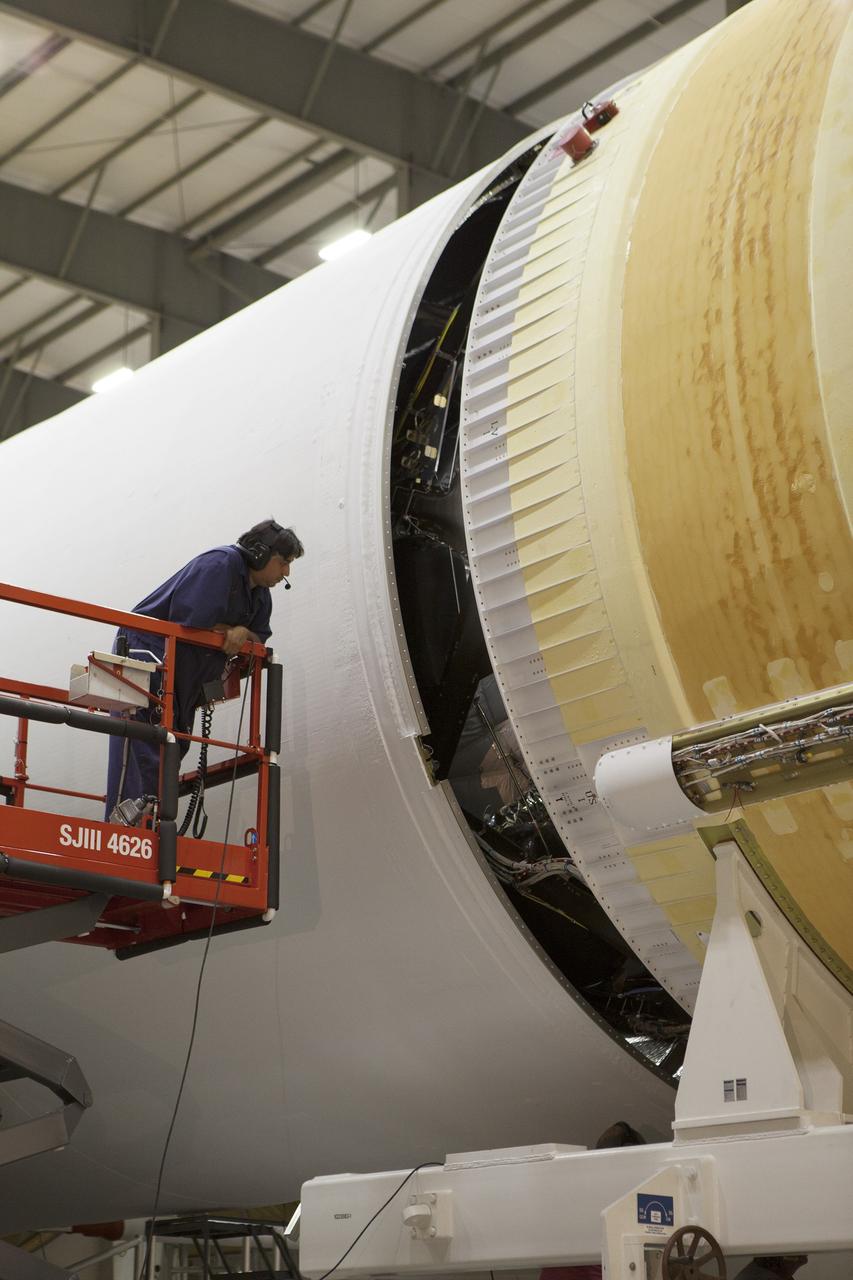
CAPE CANAVERAL, Fla. – Inside the Horizontal Integration Facility at Space Launch Complex 37 at Cape Canaveral Air Force Station in Florida, a United Launch Alliance technician on a scissor lift monitors the progress as the second stage of a Delta IV Heavy rocket is mated to the central core booster of the three booster stages for the unpiloted Exploration Flight Test-1, or EFT-1. During the mission, Orion will travel farther into space than any human spacecraft has gone in more than 40 years. The data gathered during the flight will influence design decisions, validate existing computer models and innovative new approaches to space systems development, as well as reduce overall mission risks and costs for later Orion flights. Liftoff of Orion on the first flight test is planned for December 2014. Photo credit: NASA/Daniel Casper
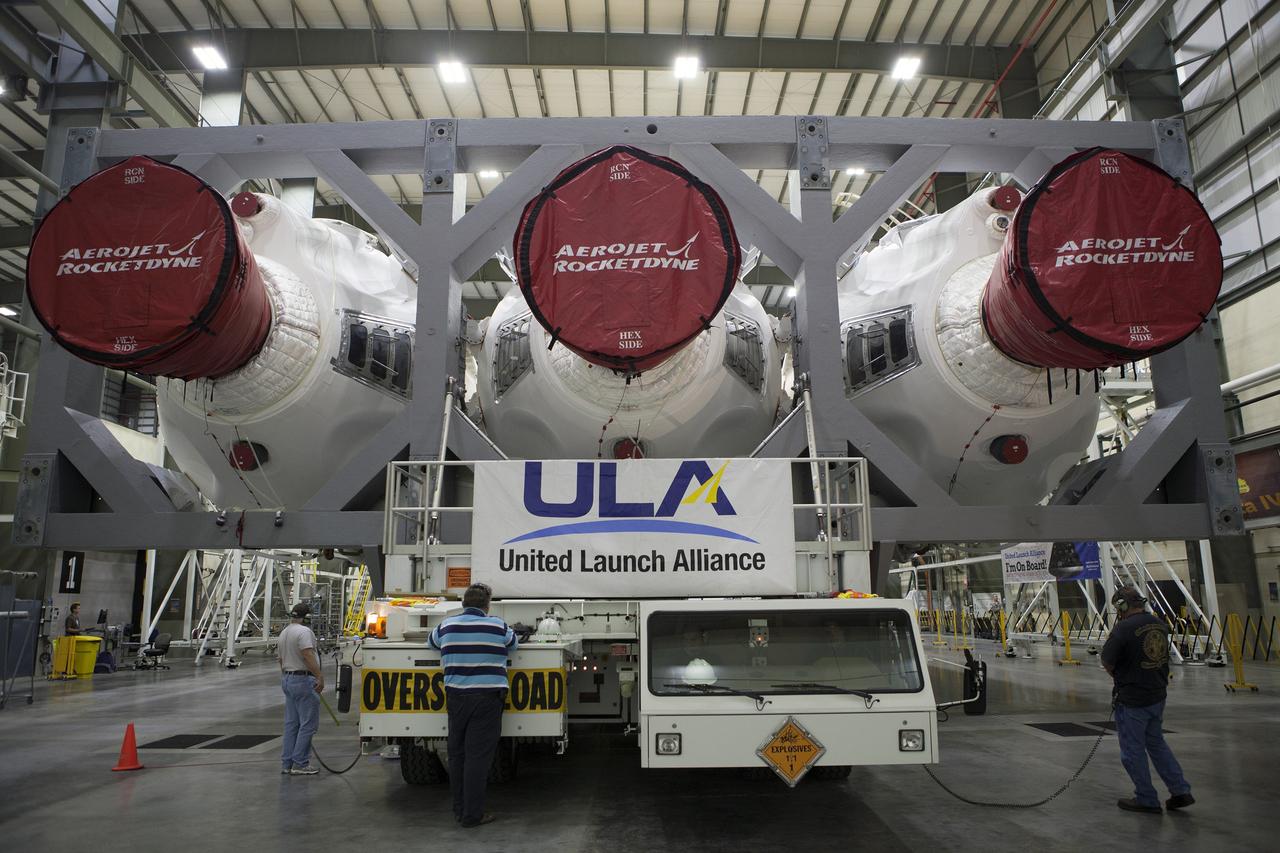
CAPE CANAVERAL, Fla. – Inside the Horizontal Integration Facility at Space Launch Complex 37 at Cape Canaveral Air Force Station in Florida, United Launch Alliance technicians prepare the Delta IV Heavy rocket for rollout to the pad. The rocket is secured on the Elevated Platform Transporter for the trip to the pad. The Delta IV Heavy will launch Orion on Exploration Flight Test-1. During its first flight test, Orion will travel farther into space than any human spacecraft has gone in more than 40 years. The data gathered during the flight will influence design decisions, validate existing computer models and innovative new approaches to space systems development, as well as reduce overall mission risks and costs for later Orion flights. Liftoff of Orion on the first flight test is planned for December 2014. Photo credit: NASA/Dimitri Gerondidakis

CAPE CANAVERAL, Fla. – The United Launch Alliance Delta IV Heavy rocket for Exploration Flight Test-1 is lifted to the vertical position in the mobile service tower on the pad at Space Launch Complex 37 at Cape Canaveral Air Force Station in Florida. The Delta IV Heavy is being readied to launch Orion on its first flight test. During its first flight test, Orion will travel farther into space than any human spacecraft has gone in more than 40 years. The data gathered during the flight will influence design decisions, validate existing computer models and innovative new approaches to space systems development, as well as reduce overall mission risks and costs for later Orion flights. Liftoff of Orion on the first flight test is planned for December 2014. Photo credit: NASA/Daniel Casper
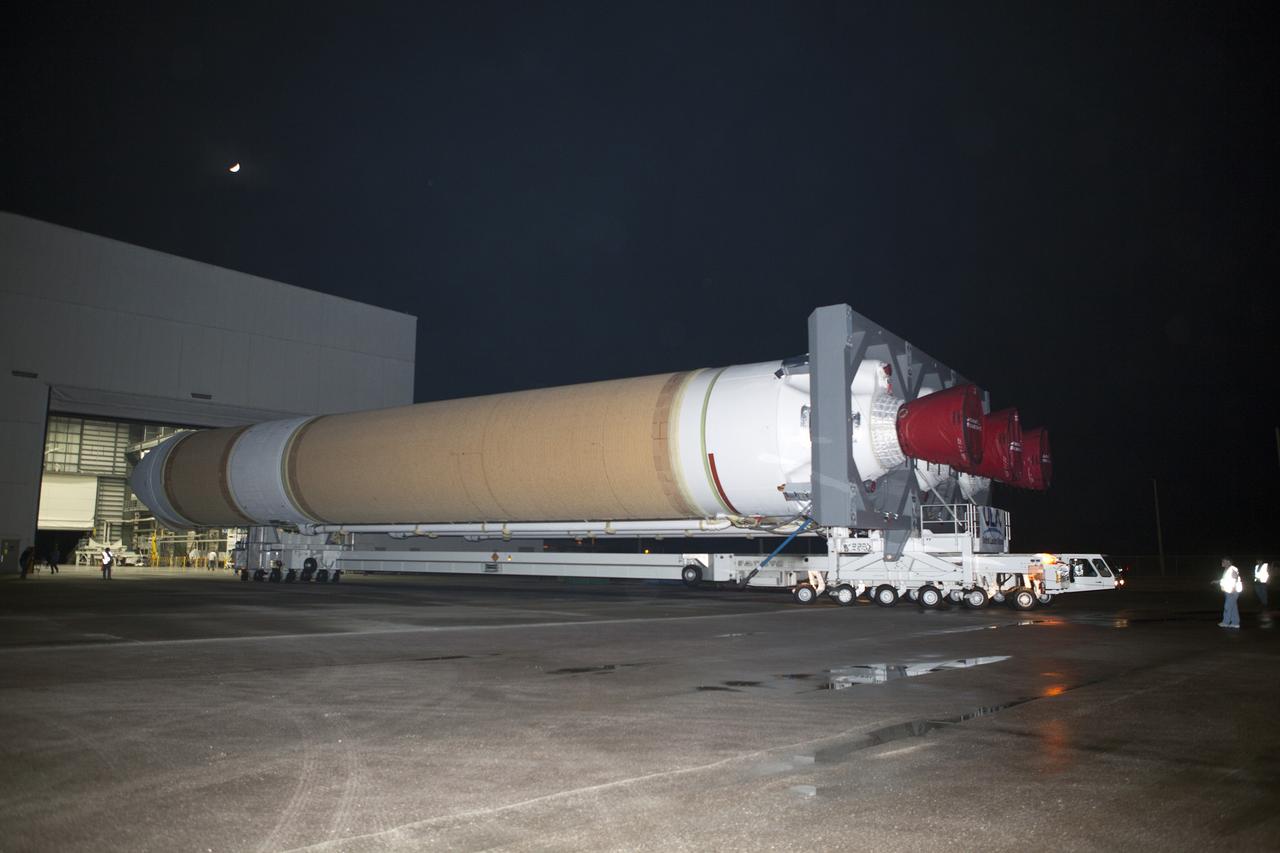
CAPE CANAVERAL, Fla. – The United Launch Alliance Delta IV Heavy rocket exits the Horizontal Integration Facility at Space Launch Complex 37 at Cape Canaveral Air Force Station in Florida. The rocket is secured on the Elevated Platform Transporter for the trip to the pad. The Delta IV Heavy will launch Orion on Exploration Flight Test-1. During its first flight test, Orion will travel farther into space than any human spacecraft has gone in more than 40 years. The data gathered during the flight will influence design decisions, validate existing computer models and innovative new approaches to space systems development, as well as reduce overall mission risks and costs for later Orion flights. Liftoff of Orion on the first flight test is planned for December 2014. Photo credit: NASA/Dimitri Gerondidakis

CAPE CANAVERAL, Fla. – Inside the Horizontal Integration Facility at Space Launch Complex 37 at Cape Canaveral Air Force Station in Florida, a United Launch Alliance technician on a scissor lift watches as mating of the second stage of a Delta IV Heavy rocket to the core booster of the three booster stages is nearly complete. The rocket will launch the unpiloted Exploration Flight Test-1, or EFT-1. During the mission, Orion will travel farther into space than any human spacecraft has gone in more than 40 years. The data gathered during the flight will influence design decisions, validate existing computer models and innovative new approaches to space systems development, as well as reduce overall mission risks and costs for later Orion flights. Liftoff of Orion on the first flight test is planned for December 2014. Photo credit: NASA/Daniel Casper
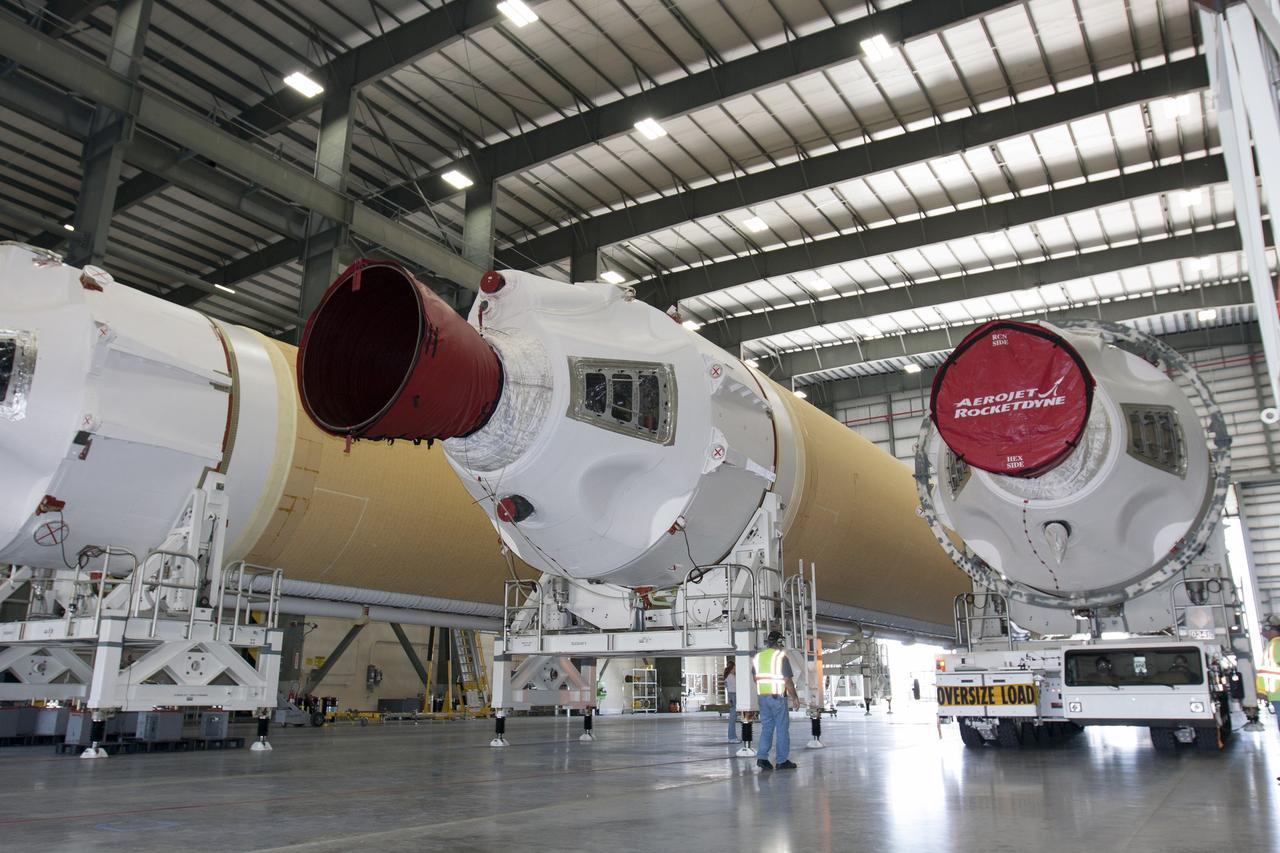
CAPE CANAVERAL, Fla. -- A transporter for oversize loads carries the port booster for the United Launch Alliance Delta IV Heavy for Exploration Flight Test-1, or EFT-1, into the Horizontal Integration Facility, or HIF, at Space Launch Complex 37 on Cape Canaveral Air Force Station in Florida. The port booster joins the other two boosters of the Delta IV Heavy already in the HIF. The upper stage and spacecraft adapter arrived with the booster on a barge at the U.S. Army Outpost wharf at Port Canaveral, and were transported to the HIF on May 6. At the HIF, all three booster stages will be processed and checked out before being moved to the nearby launch pad and hoisted into position. The spacecraft adapter will connect Orion to the ULA Delta IV, and also will connect Orion to NASA's new rocket, the Space Launch System, on its first mission in 2017. During the EFT-1 mission, Orion will travel farther into space than any human spacecraft has gone in more than 40 years. The data gathered during the flight will influence design decisions, validate existing computer models and innovative new approaches to space systems development, as well as reduce overall mission risks and costs for later Orion flights. Liftoff of Orion on EFT-1 is planned for fall 2014. Photo credit: NASA/Kim Shiflett
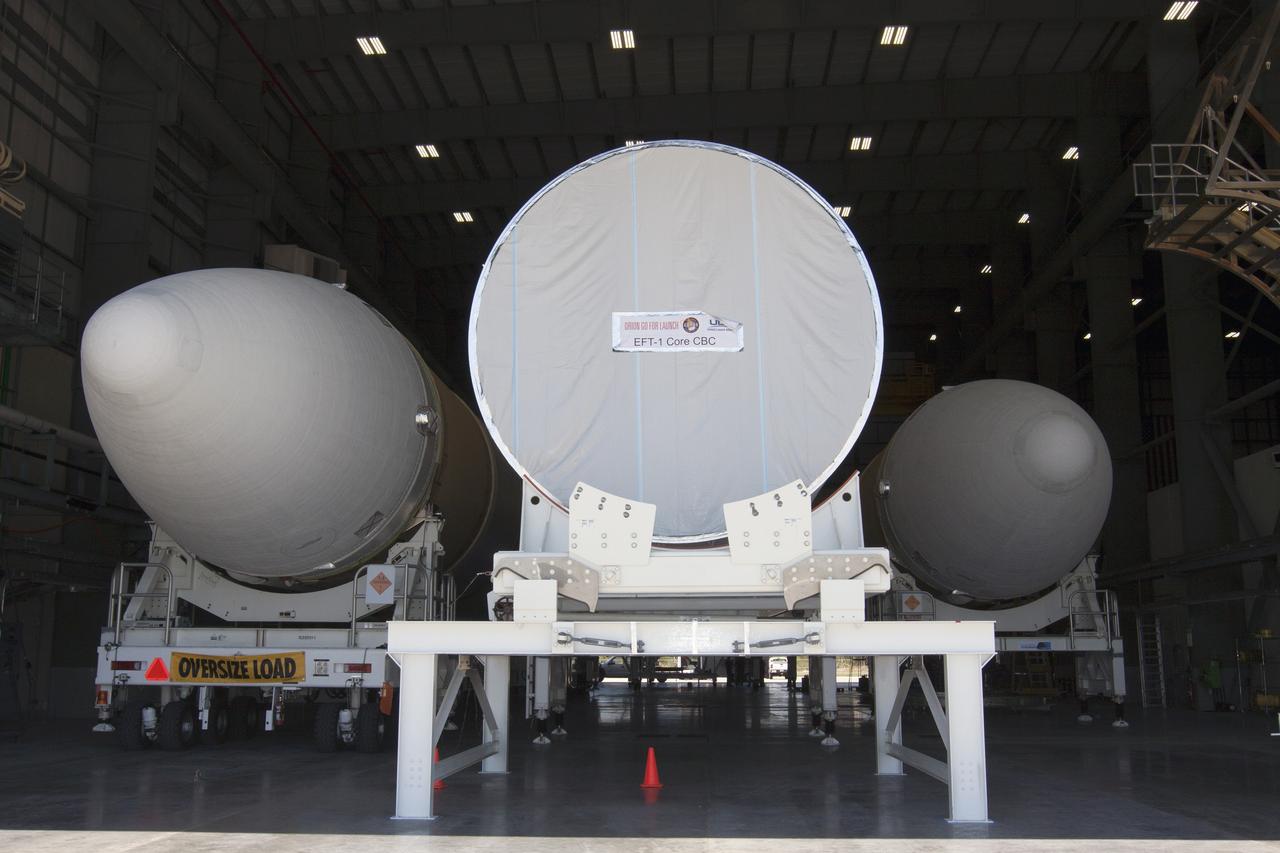
CAPE CANAVERAL, Fla. -- A transporter for oversize loads carries the port booster for the United Launch Alliance Delta IV Heavy for Exploration Flight Test-1, or EFT-1, into the Horizontal Integration Facility, or HIF, at Space Launch Complex 37 on Cape Canaveral Air Force Station in Florida. The port booster joins the other two boosters of the Delta IV Heavy already in the HIF. The upper stage and spacecraft adapter arrived with the booster on a barge at the U.S. Army Outpost wharf at Port Canaveral, and were transported to the HIF on May 6. At the HIF, all three booster stages will be processed and checked out before being moved to the nearby launch pad and hoisted into position. The spacecraft adapter will connect Orion to the ULA Delta IV, and also will connect Orion to NASA's new rocket, the Space Launch System, on its first mission in 2017. During the EFT-1 mission, Orion will travel farther into space than any human spacecraft has gone in more than 40 years. The data gathered during the flight will influence design decisions, validate existing computer models and innovative new approaches to space systems development, as well as reduce overall mission risks and costs for later Orion flights. Liftoff of Orion on EFT-1 is planned for fall 2014. Photo credit: NASA/Kim Shiflett
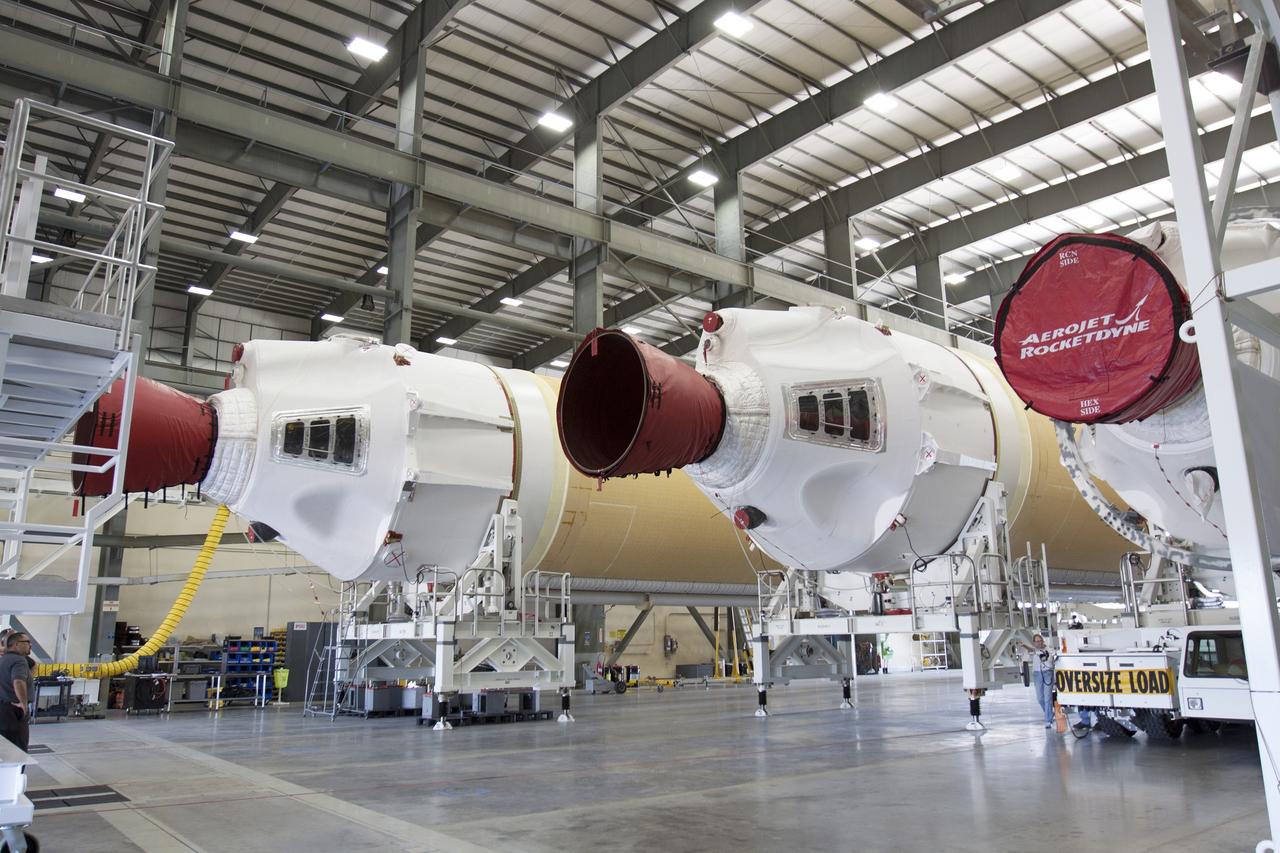
CAPE CANAVERAL, Fla. -- A transporter for oversize loads carries the port booster for the United Launch Alliance Delta IV Heavy for Exploration Flight Test-1, or EFT-1, into the Horizontal Integration Facility, or HIF, at Space Launch Complex 37 on Cape Canaveral Air Force Station in Florida. The port booster joins the other two boosters of the Delta IV Heavy already in the HIF. The upper stage and spacecraft adapter arrived with the booster on a barge at the U.S. Army Outpost wharf at Port Canaveral, and were transported to the HIF on May 6. At the HIF, all three booster stages will be processed and checked out before being moved to the nearby launch pad and hoisted into position. The spacecraft adapter will connect Orion to the ULA Delta IV, and also will connect Orion to NASA's new rocket, the Space Launch System, on its first mission in 2017. During the EFT-1 mission, Orion will travel farther into space than any human spacecraft has gone in more than 40 years. The data gathered during the flight will influence design decisions, validate existing computer models and innovative new approaches to space systems development, as well as reduce overall mission risks and costs for later Orion flights. Liftoff of Orion on EFT-1 is planned for fall 2014. Photo credit: NASA/Kim Shiflett
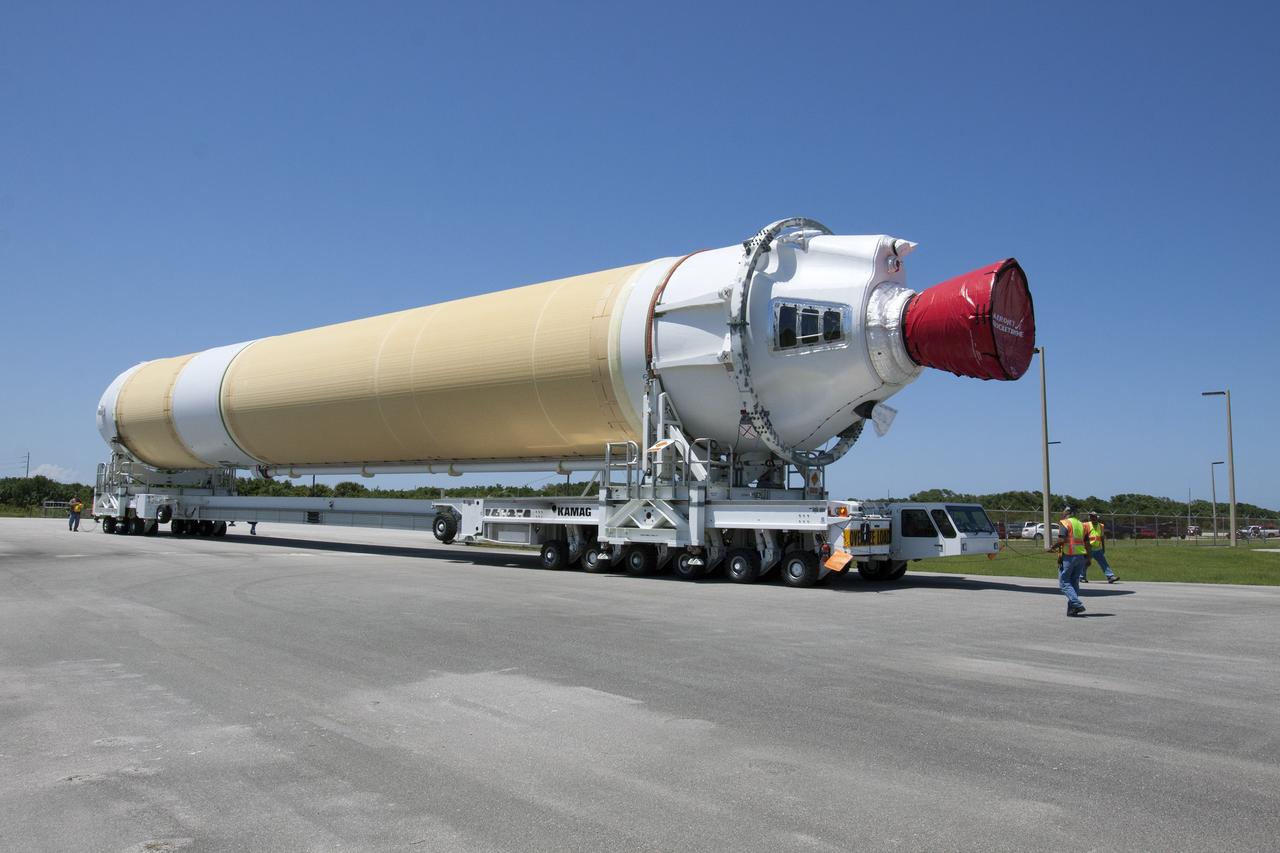
CAPE CANAVERAL, Fla. -- A transporter for oversize loads carries the port booster for the United Launch Alliance Delta IV Heavy for Exploration Flight Test-1, or EFT-1, to Space Launch Complex 37 on Cape Canaveral Air Force Station after it was offloaded from the barge at the U.S. Army Outpost wharf at Port Canaveral in Florida. The booster will be transported to the Horizontal Integration Facility, or HIF, at the launch complex. The upper stage and spacecraft adapter arrived with the booster and were transported to the HIF on May 6. At the HIF, all three booster stages will be processed and checked out before being moved to the nearby launch pad and hoisted into position. The spacecraft adapter will connect Orion to the ULA Delta IV, and also will connect Orion to NASA's new rocket, the Space Launch System, on its first mission in 2017. During the EFT-1 mission, Orion will travel farther into space than any human spacecraft has gone in more than 40 years. The data gathered during the flight will influence design decisions, validate existing computer models and innovative new approaches to space systems development, as well as reduce overall mission risks and costs for later Orion flights. Liftoff of Orion on EFT-1 is planned for fall 2014. Photo credit: NASA/Kim Shiflett
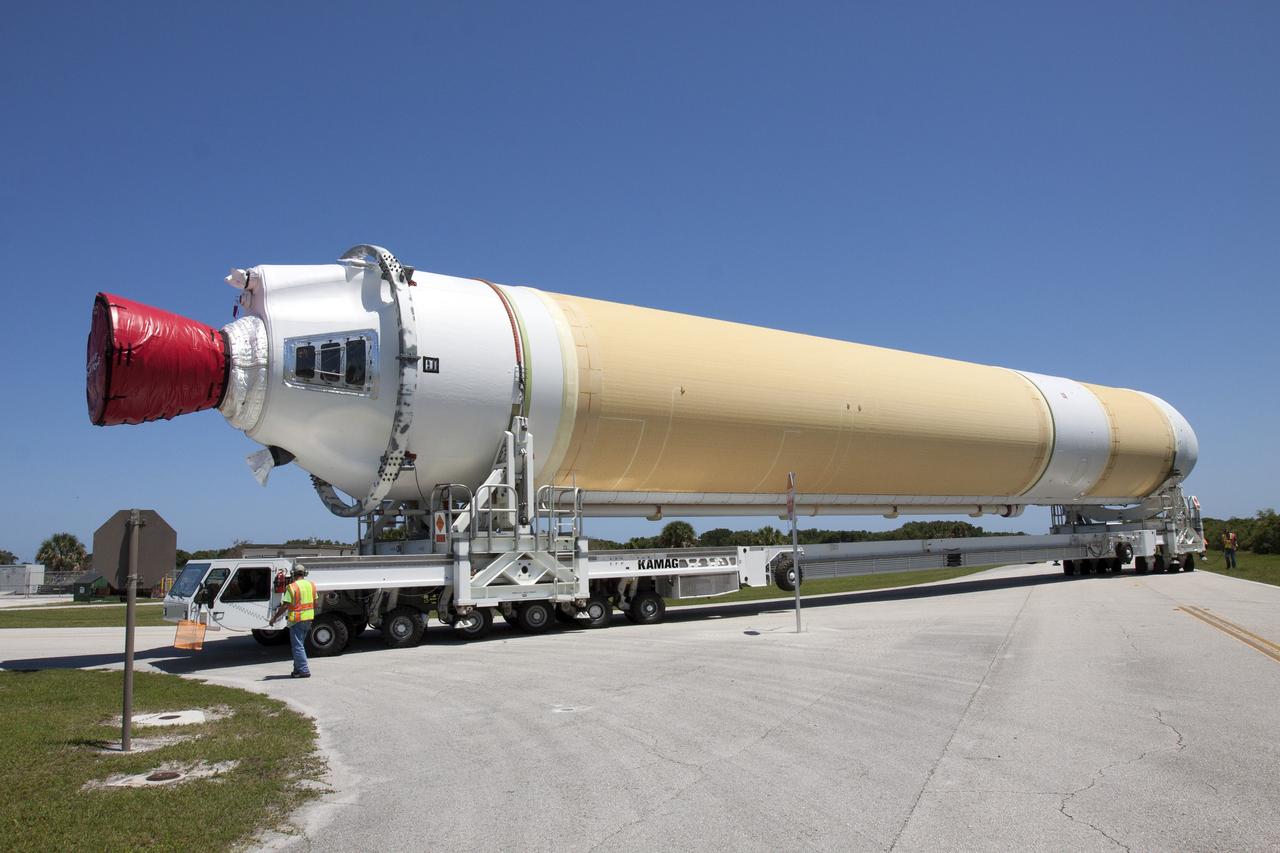
CAPE CANAVERAL, Fla. -- A transporter for oversize loads carries the port booster for the United Launch Alliance Delta IV Heavy for Exploration Flight Test-1, or EFT-1, to Space Launch Complex 37 on Cape Canaveral Air Force Station after it was offloaded from the barge at the U.S. Army Outpost wharf at Port Canaveral in Florida. The booster will be transported to the Horizontal Integration Facility, or HIF, at the launch complex. The upper stage and spacecraft adapter arrived with the booster and were transported to the HIF on May 6. At the HIF, all three booster stages will be processed and checked out before being moved to the nearby launch pad and hoisted into position. The spacecraft adapter will connect Orion to the ULA Delta IV, and also will connect Orion to NASA's new rocket, the Space Launch System, on its first mission in 2017. During the EFT-1 mission, Orion will travel farther into space than any human spacecraft has gone in more than 40 years. The data gathered during the flight will influence design decisions, validate existing computer models and innovative new approaches to space systems development, as well as reduce overall mission risks and costs for later Orion flights. Liftoff of Orion on EFT-1 is planned for fall 2014. Photo credit: NASA/Kim Shiflett
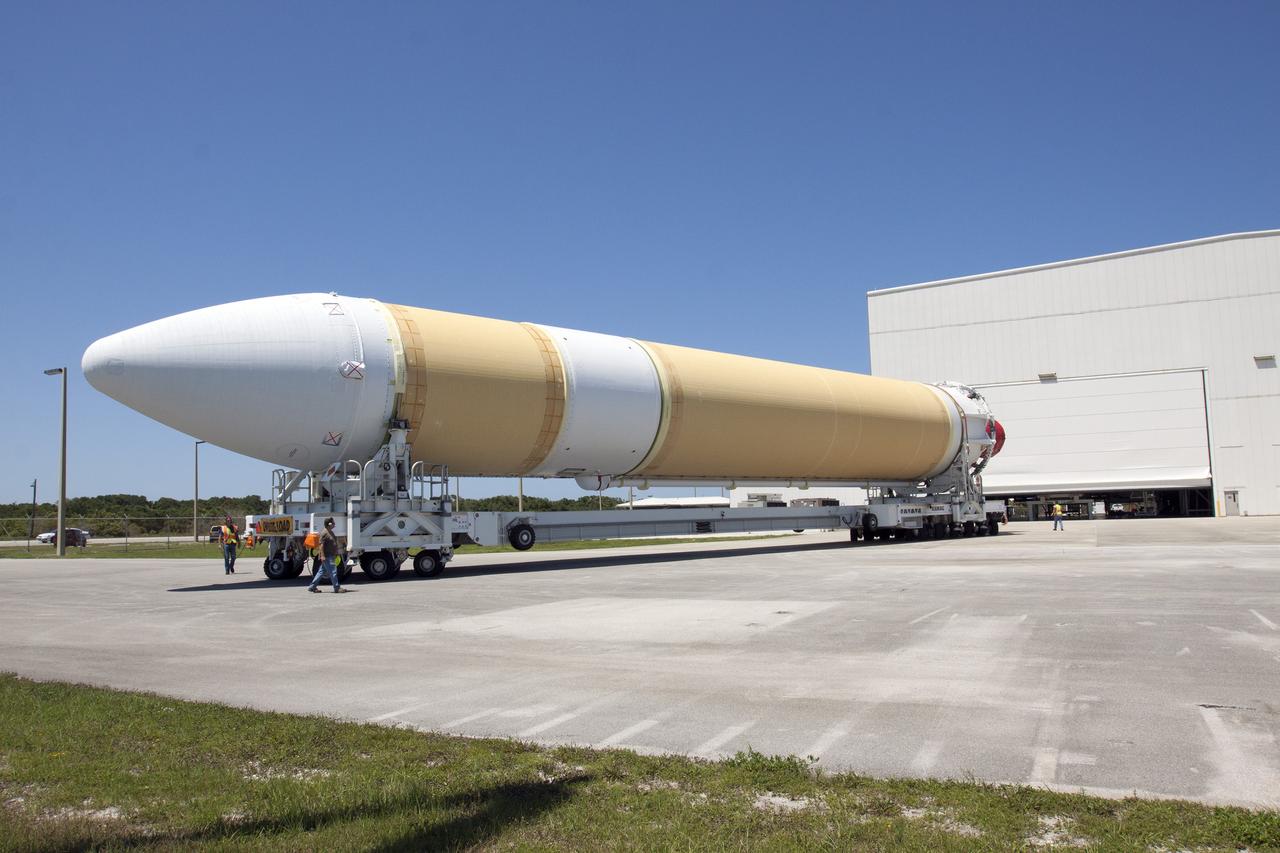
CAPE CANAVERAL, Fla. -- A transporter for oversize loads carries the port booster for the United Launch Alliance Delta IV Heavy for Exploration Flight Test-1, or EFT-1, to Space Launch Complex 37 on Cape Canaveral Air Force Station after it was offloaded from the barge at the U.S. Army Outpost wharf at Port Canaveral in Florida. The booster will be transported to the Horizontal Integration Facility, or HIF, at the launch complex. The upper stage and spacecraft adapter arrived with the booster and were transported to the HIF on May 6. At the HIF, all three booster stages will be processed and checked out before being moved to the nearby launch pad and hoisted into position. The spacecraft adapter will connect Orion to the ULA Delta IV, and also will connect Orion to NASA's new rocket, the Space Launch System, on its first mission in 2017. During the EFT-1 mission, Orion will travel farther into space than any human spacecraft has gone in more than 40 years. The data gathered during the flight will influence design decisions, validate existing computer models and innovative new approaches to space systems development, as well as reduce overall mission risks and costs for later Orion flights. Liftoff of Orion on EFT-1 is planned for fall 2014. Photo credit: NASA/Kim Shiflett
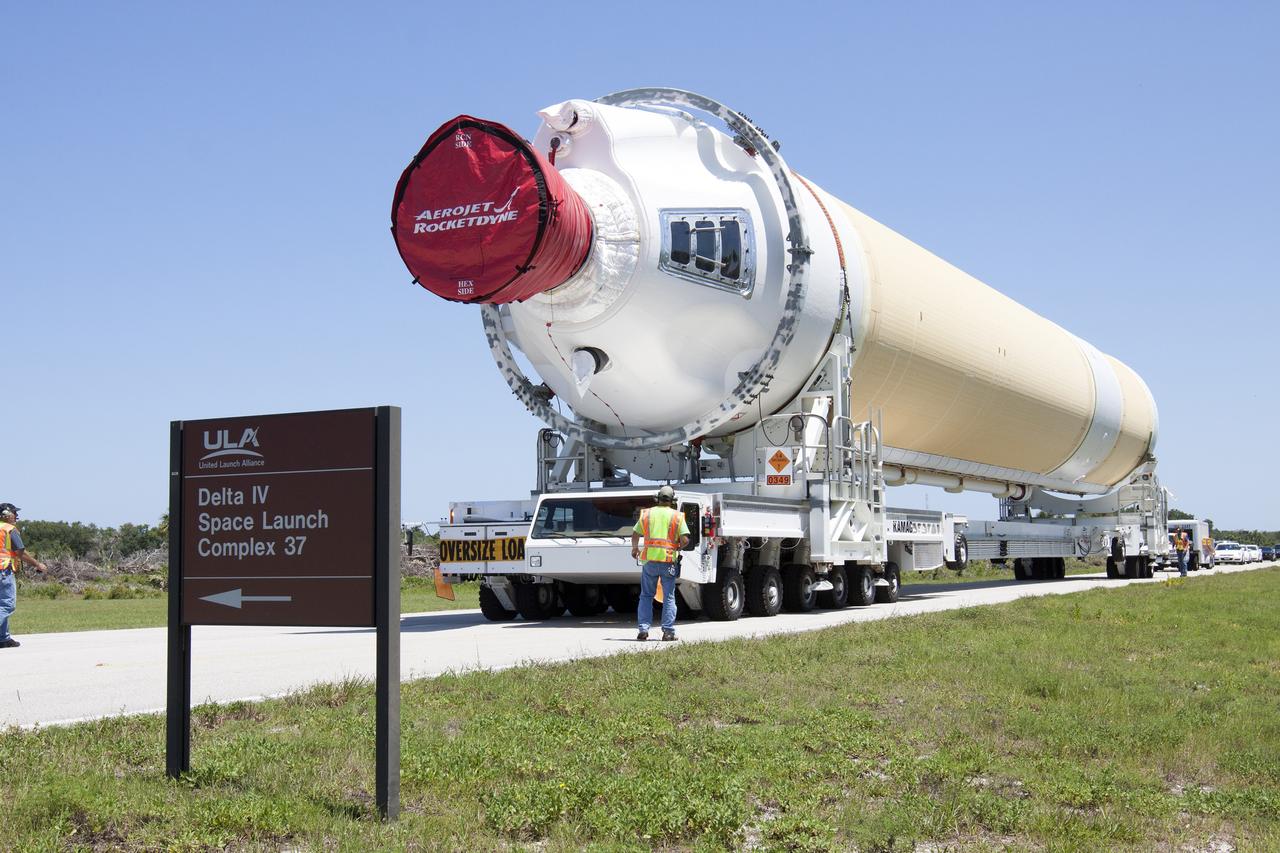
CAPE CANAVERAL, Fla. -- A transporter for oversize loads carries the port booster for the United Launch Alliance Delta IV Heavy for Exploration Flight Test-1, or EFT-1, to Space Launch Complex 37 on Cape Canaveral Air Force Station after it was offloaded from the barge at the U.S. Army Outpost wharf at Port Canaveral in Florida. The booster will be transported to the Horizontal Integration Facility, or HIF, at the launch complex. The upper stage and spacecraft adapter arrived with the booster and were transported to the HIF on May 6. At the HIF, all three booster stages will be processed and checked out before being moved to the nearby launch pad and hoisted into position. The spacecraft adapter will connect Orion to the ULA Delta IV, and also will connect Orion to NASA's new rocket, the Space Launch System, on its first mission in 2017. During the EFT-1 mission, Orion will travel farther into space than any human spacecraft has gone in more than 40 years. The data gathered during the flight will influence design decisions, validate existing computer models and innovative new approaches to space systems development, as well as reduce overall mission risks and costs for later Orion flights. Liftoff of Orion on EFT-1 is planned for fall 2014. Photo credit: NASA/Kim Shiflett
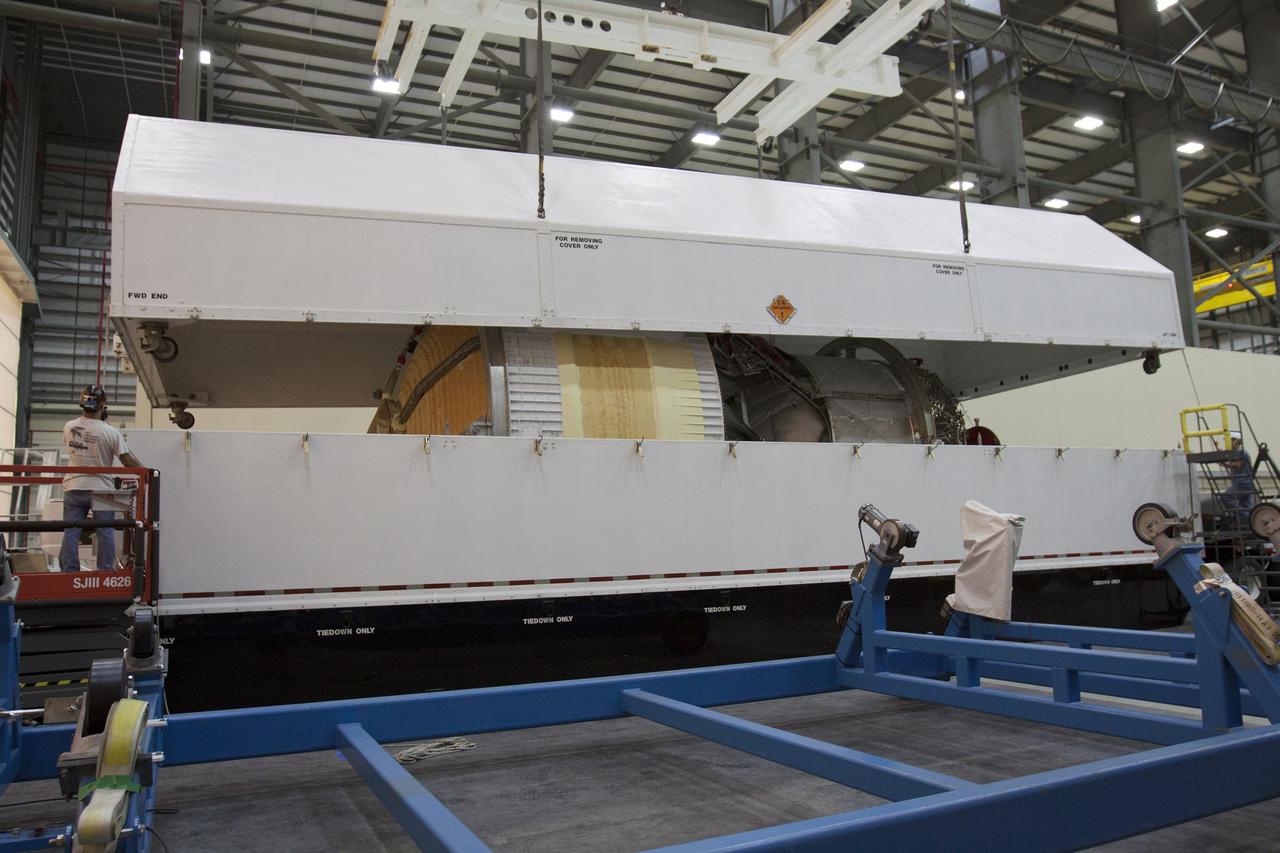
CAPE CANAVERAL, Fla. -- The second stage, port booster and spacecraft adapter, the remaining stages for the United Launch Alliance Delta IV Heavy boosters for NASA’s upcoming Exploration Flight Test-1, or EFT-1, mission with the Orion spacecraft, have been transported in their containers to the Horizontal Integration Facility, or HIF, at Space Launch Complex 37 on Cape Canaveral Air Force Station in Florida. Inside the facility, technicians uncrate the upper stage. The segments arrived by barge at the U.S. Army Outpost wharf at Port Canaveral. At the HIF, all three booster stages will be processed and checked out before being moved to the nearby launch pad and hoisted into position. The spacecraft adapter will connect Orion to the ULA Delta IV, and also will connect Orion to NASA's new rocket, the Space Launch System, on its first mission in 2017. During the EFT-1 mission, Orion will travel farther into space than any human spacecraft has gone in more than 40 years. The data gathered during the flight will influence design decisions, validate existing computer models and innovative new approaches to space systems development, as well as reduce overall mission risks and costs for later Orion flights. Liftoff of Orion on EFT-1 is planned for fall 2014. Photo credit: NASA/Kim Shiflett
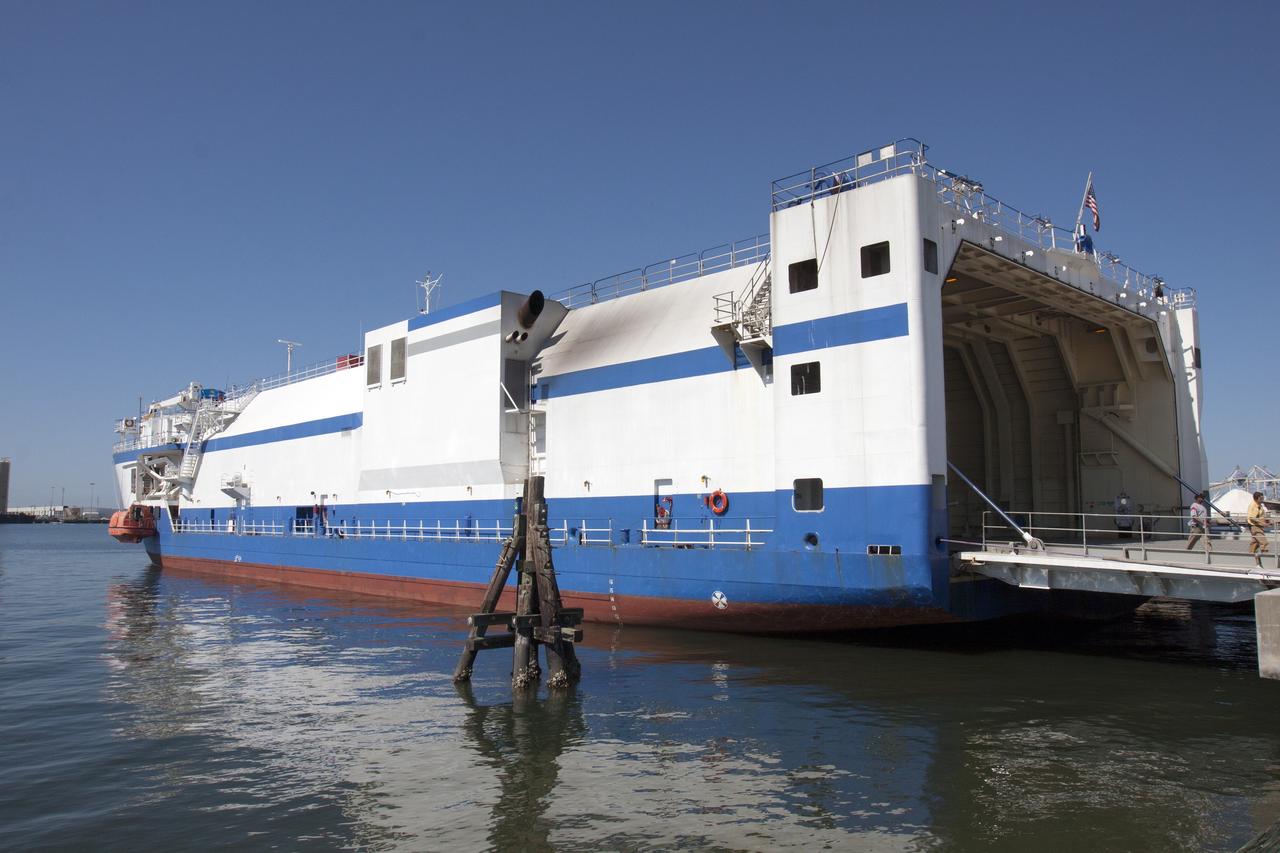
CAPE CANAVERAL, Fla. -- A barge arrives at the U.S. Army Outpost wharf at Port Canaveral in Florida, carrying the second stage, port booster and spacecraft adapter, the remaining stages for the United Launch Alliance Delta IV Heavy boosters for NASA’s upcoming Exploration Flight Test-1, or EFT-1, mission with the Orion spacecraft. They will be offloaded in their containers and transported to the Horizontal Integration Facility, or HIF, at Space Launch Complex 37 on Cape Canaveral Air Force Station. At the HIF, all three booster stages will be processed and checked out before being moved to the nearby launch pad and hoisted into position. The spacecraft adapter will connect Orion to the ULA Delta IV, and also will connect Orion to NASA's new rocket, the Space Launch System, on its first mission in 2017. During the EFT-1 mission, Orion will travel farther into space than any human spacecraft has gone in more than 40 years. The data gathered during the flight will influence design decisions, validate existing computer models and innovative new approaches to space systems development, as well as reduce overall mission risks and costs for later Orion flights. Liftoff of Orion on EFT-1 is planned for fall 2014. Photo credit: NASA/Kim Shiflett
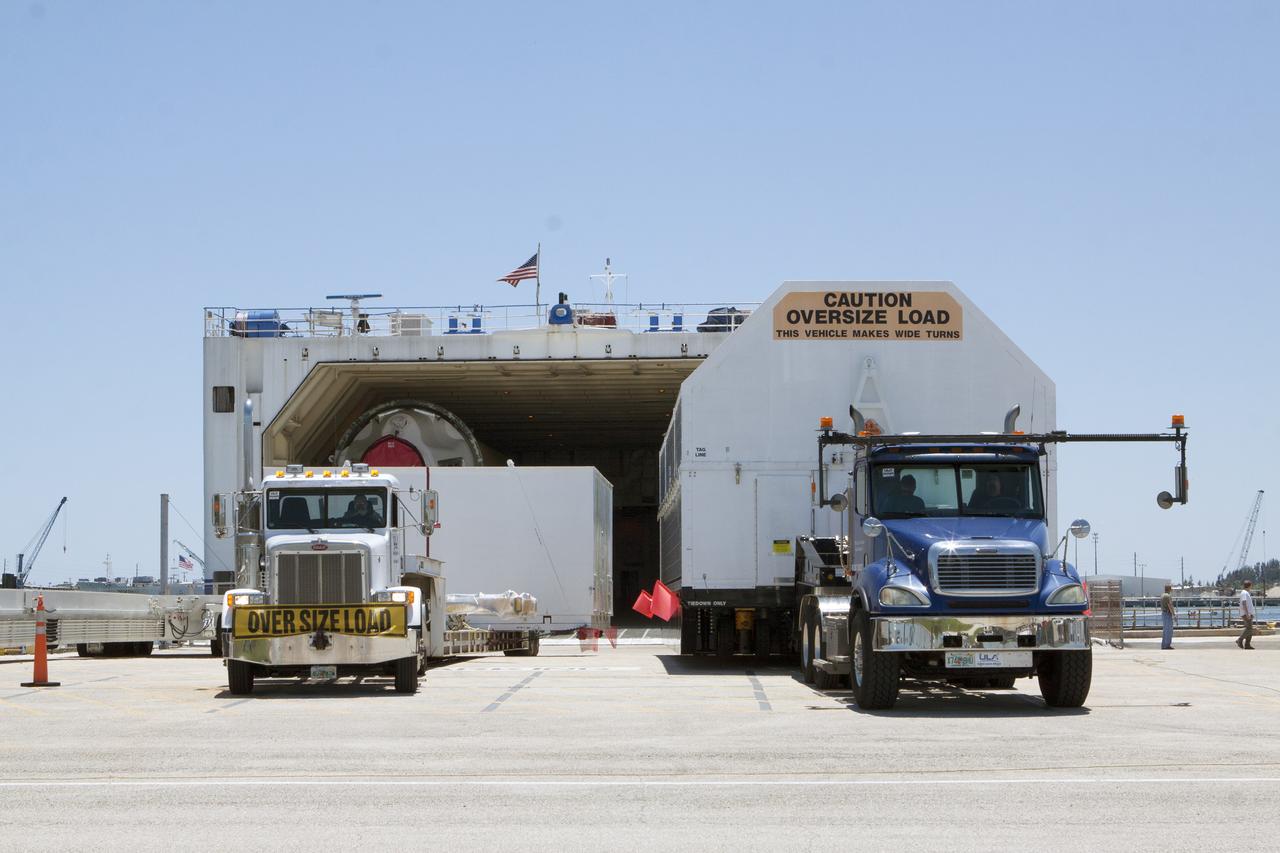
CAPE CANAVERAL, Fla. -- A barge has arrived at the U.S. Army Outpost wharf at Port Canaveral in Florida, carrying the second stage, port booster and spacecraft adapter, the remaining stages for the United Launch Alliance Delta IV Heavy boosters for NASA’s upcoming Exploration Flight Test-1, or EFT-1, mission with the Orion spacecraft. The segments are being offloaded in their containers for transport to the Horizontal Integration Facility, or HIF, at Space Launch Complex 37 on Cape Canaveral Air Force Station. At the HIF, all three booster stages will be processed and checked out before being moved to the nearby launch pad and hoisted into position. The spacecraft adapter will connect Orion to the ULA Delta IV, and also will connect Orion to NASA's new rocket, the Space Launch System, on its first mission in 2017. During the EFT-1 mission, Orion will travel farther into space than any human spacecraft has gone in more than 40 years. The data gathered during the flight will influence design decisions, validate existing computer models and innovative new approaches to space systems development, as well as reduce overall mission risks and costs for later Orion flights. Liftoff of Orion on EFT-1 is planned for fall 2014. Photo credit: NASA/Kim Shiflett
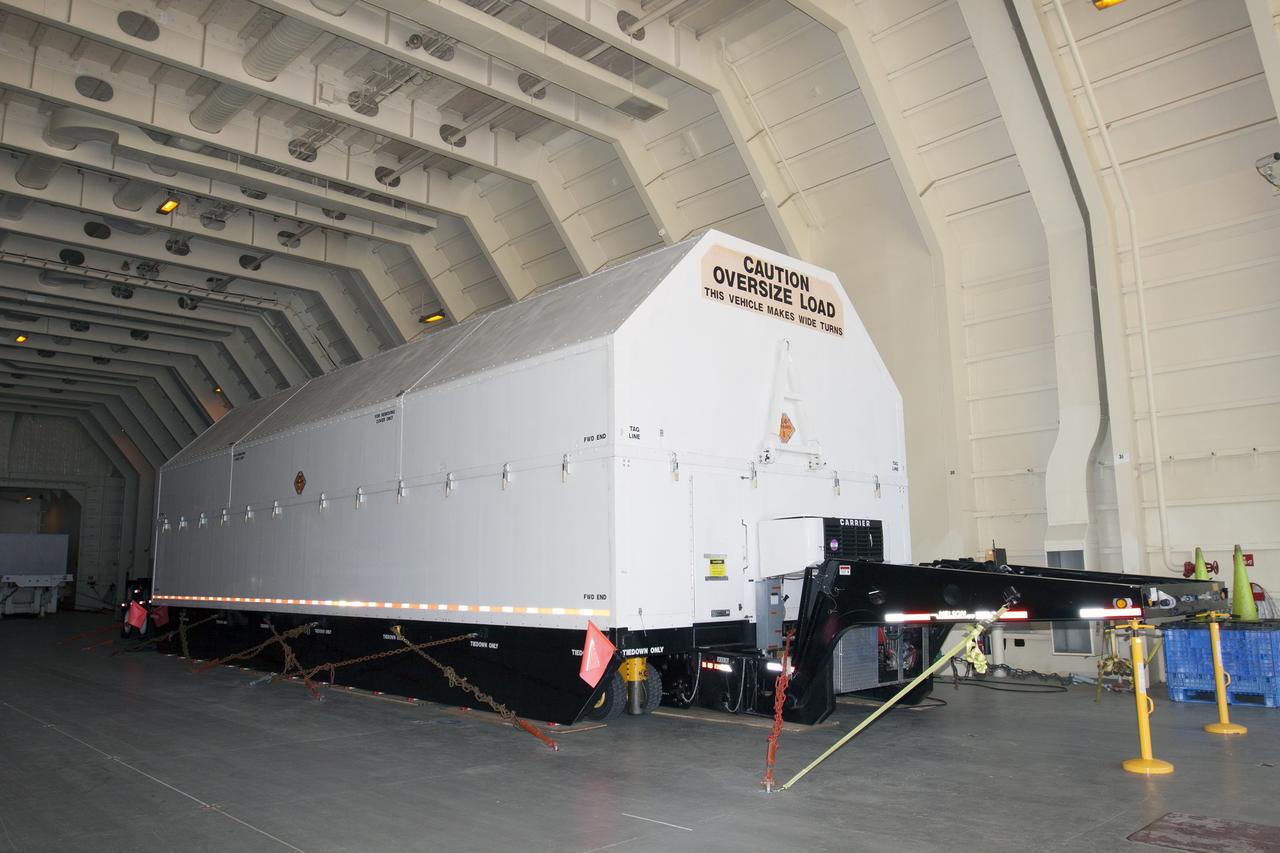
CAPE CANAVERAL, Fla. -- A barge has arrived at the U.S. Army Outpost wharf at Port Canaveral in Florida, carrying the second stage, port booster and spacecraft adapter, the remaining stages for the United Launch Alliance Delta IV Heavy boosters for NASA’s upcoming Exploration Flight Test-1, or EFT-1, mission with the Orion spacecraft. They are being offloaded in their containers for transport to the Horizontal Integration Facility, or HIF, at Space Launch Complex 37 on Cape Canaveral Air Force Station. At the HIF, all three booster stages will be processed and checked out before being moved to the nearby launch pad and hoisted into position. The spacecraft adapter will connect Orion to the ULA Delta IV, and also will connect Orion to NASA's new rocket, the Space Launch System, on its first mission in 2017. During the EFT-1 mission, Orion will travel farther into space than any human spacecraft has gone in more than 40 years. The data gathered during the flight will influence design decisions, validate existing computer models and innovative new approaches to space systems development, as well as reduce overall mission risks and costs for later Orion flights. Liftoff of Orion on EFT-1 is planned for fall 2014. Photo credit: NASA/Kim Shiflett
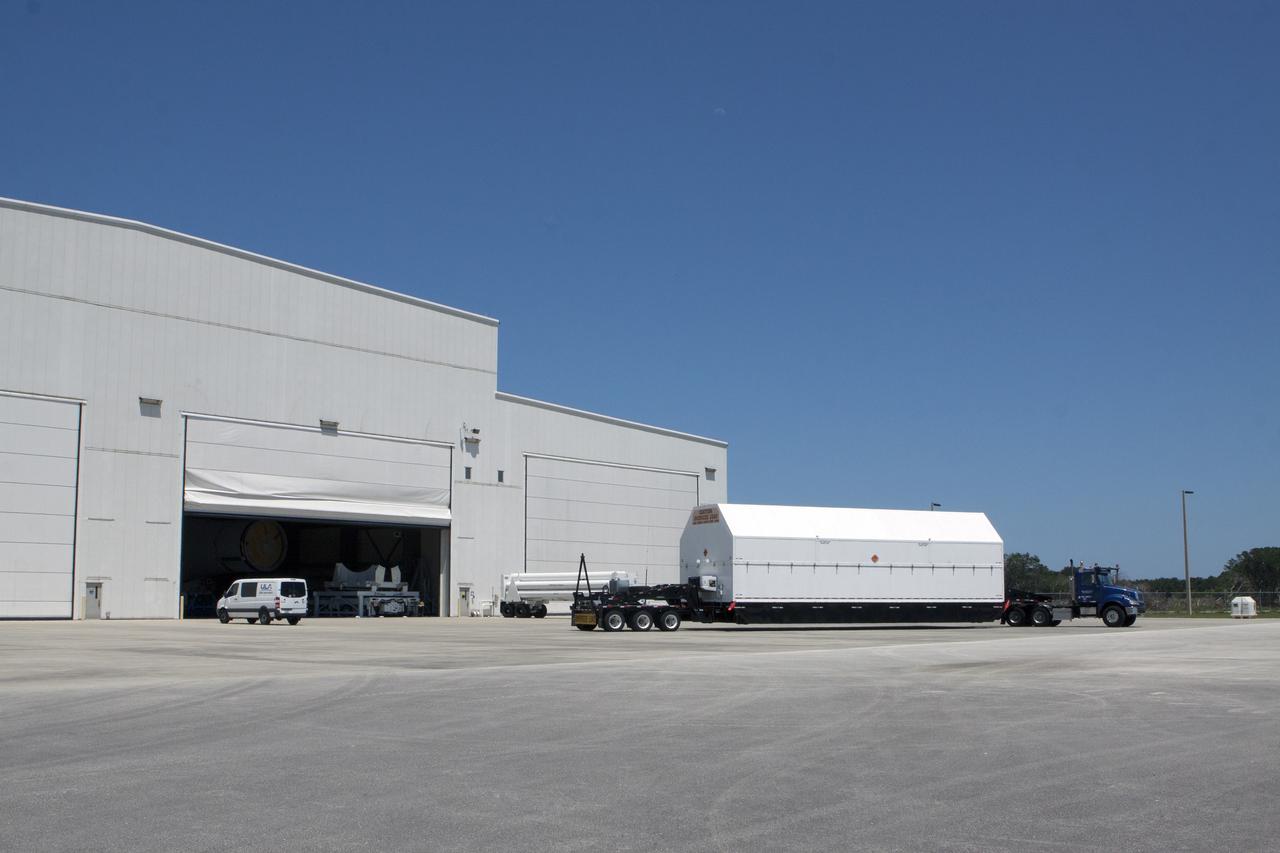
CAPE CANAVERAL, Fla. -- After arriving by barge at the U.S. Army Outpost wharf at Port Canaveral in Florida, the second stage, port booster and spacecraft adapter, the remaining stages for the United Launch Alliance Delta IV Heavy boosters for NASA’s upcoming Exploration Flight Test-1, or EFT-1, mission with the Orion spacecraft, were offloaded in their containers. They were transported to the Horizontal Integration Facility, or HIF, at Space Launch Complex 37 on Cape Canaveral Air Force Station. At the HIF, all three booster stages will be processed and checked out before being moved to the nearby launch pad and hoisted into position. The spacecraft adapter will connect Orion to the ULA Delta IV, and also will connect Orion to NASA's new rocket, the Space Launch System, on its first mission in 2017. During the EFT-1 mission, Orion will travel farther into space than any human spacecraft has gone in more than 40 years. The data gathered during the flight will influence design decisions, validate existing computer models and innovative new approaches to space systems development, as well as reduce overall mission risks and costs for later Orion flights. Liftoff of Orion on EFT-1 is planned for fall 2014. Photo credit: NASA/Kim Shiflett

CAPE CANAVERAL, Fla. -- The second stage, port booster and spacecraft adapter, the remaining stages for the United Launch Alliance Delta IV Heavy boosters for NASA’s upcoming Exploration Flight Test-1, or EFT-1, mission with the Orion spacecraft, have been transported in their containers to the Horizontal Integration Facility, or HIF, at Space Launch Complex 37 on Cape Canaveral Air Force Station in Florida. Inside the facility, technicians uncrate the port booster. The segments arrived by barge at the U.S. Army Outpost wharf at Port Canaveral. At the HIF, all three booster stages will be processed and checked out before being moved to the nearby launch pad and hoisted into position. The spacecraft adapter will connect Orion to the ULA Delta IV, and also will connect Orion to NASA's new rocket, the Space Launch System, on its first mission in 2017. During the EFT-1 mission, Orion will travel farther into space than any human spacecraft has gone in more than 40 years. The data gathered during the flight will influence design decisions, validate existing computer models and innovative new approaches to space systems development, as well as reduce overall mission risks and costs for later Orion flights. Liftoff of Orion on EFT-1 is planned for fall 2014. Photo credit: NASA/Kim Shiflett
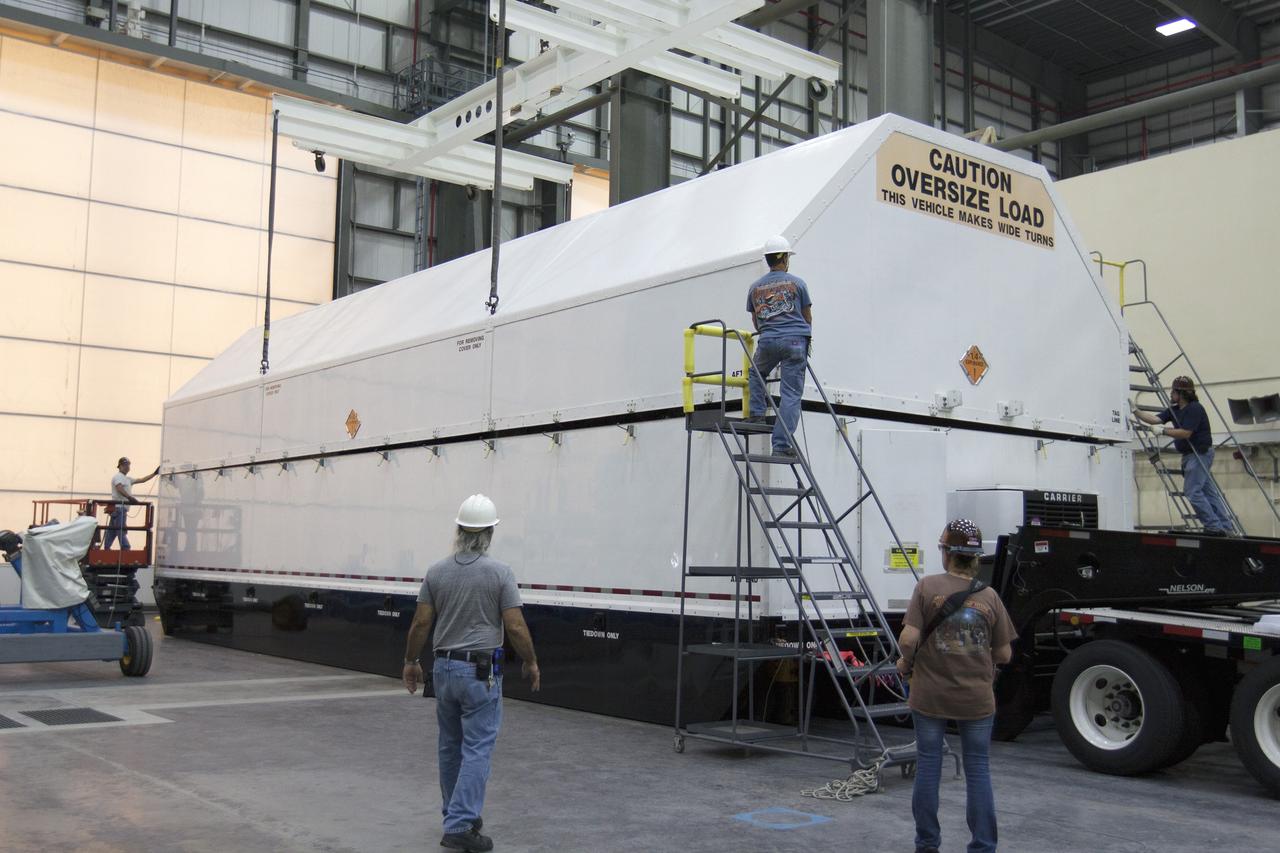
CAPE CANAVERAL, Fla. -- The second stage, port booster and spacecraft adapter, the remaining stages for the United Launch Alliance Delta IV Heavy boosters for NASA’s upcoming Exploration Flight Test-1, or EFT-1, mission with the Orion spacecraft, have been transported in their containers to the Horizontal Integration Facility, or HIF, at Space Launch Complex 37 on Cape Canaveral Air Force Station in Florida for uncrating. The segments arrived by barge at the U.S. Army Outpost wharf at Port Canaveral. At the HIF, all three booster stages will be processed and checked out before being moved to the nearby launch pad and hoisted into position. The spacecraft adapter will connect Orion to the ULA Delta IV, and also will connect Orion to NASA's new rocket, the Space Launch System, on its first mission in 2017. During the EFT-1 mission, Orion will travel farther into space than any human spacecraft has gone in more than 40 years. The data gathered during the flight will influence design decisions, validate existing computer models and innovative new approaches to space systems development, as well as reduce overall mission risks and costs for later Orion flights. Liftoff of Orion on EFT-1 is planned for fall 2014. Photo credit: NASA/Kim Shiflett
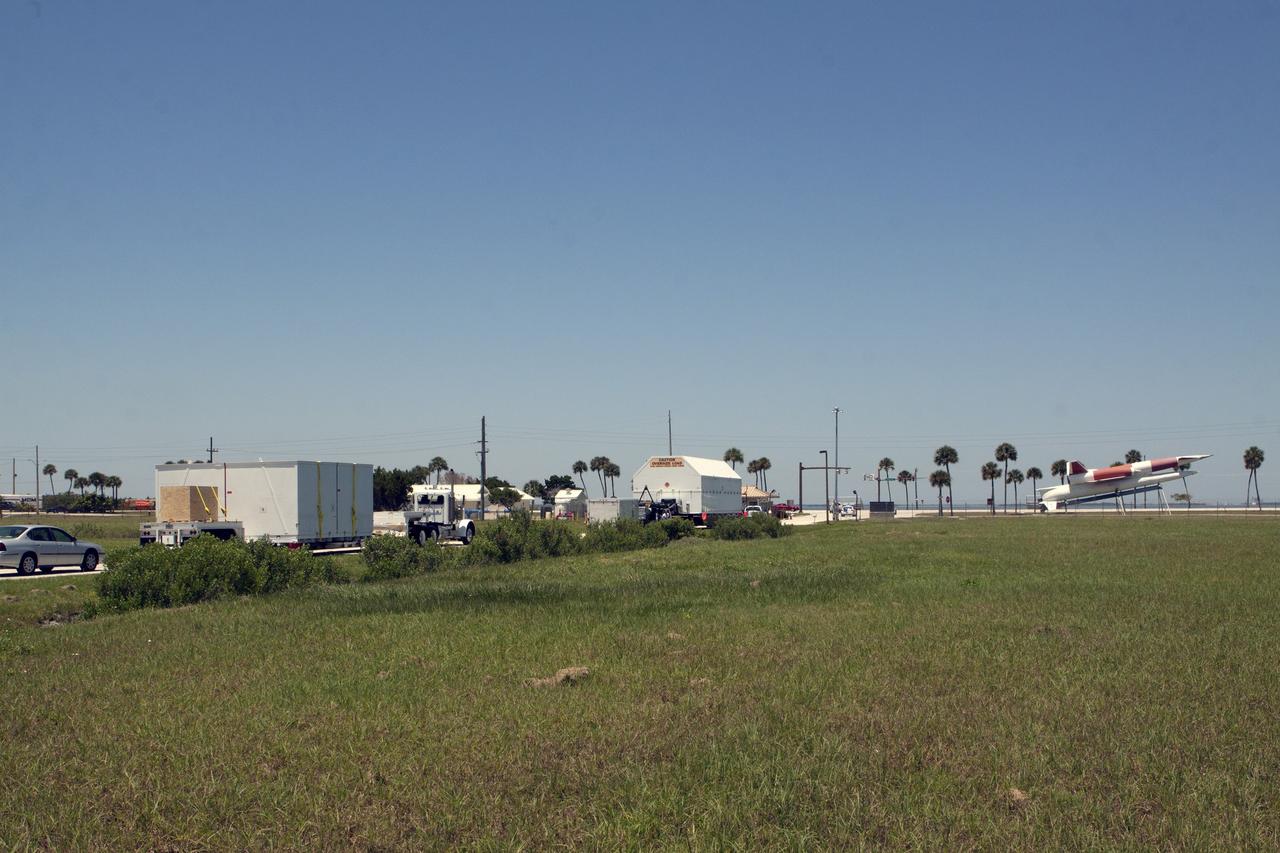
CAPE CANAVERAL, Fla. -- After arriving by barge at the U.S. Army Outpost wharf at Port Canaveral in Florida, the second stage, port booster and spacecraft adapter, the remaining stages for the United Launch Alliance Delta IV Heavy boosters for NASA’s upcoming Exploration Flight Test-1, or EFT-1, mission with the Orion spacecraft, were offloaded in their containers. They are being transported to the Horizontal Integration Facility, or HIF, at Space Launch Complex 37 on Cape Canaveral Air Force Station. At the HIF, all three booster stages will be processed and checked out before being moved to the nearby launch pad and hoisted into position. The spacecraft adapter will connect Orion to the ULA Delta IV, and also will connect Orion to NASA's new rocket, the Space Launch System, on its first mission in 2017. During the EFT-1 mission, Orion will travel farther into space than any human spacecraft has gone in more than 40 years. The data gathered during the flight will influence design decisions, validate existing computer models and innovative new approaches to space systems development, as well as reduce overall mission risks and costs for later Orion flights. Liftoff of Orion on EFT-1 is planned for fall 2014. Photo credit: NASA/Kim Shiflett

CAPE CANAVERAL, Fla. -- A barge has arrived at the U.S. Army Outpost wharf at Port Canaveral in Florida, carrying the second stage, port booster and spacecraft adapter, the remaining stages for the United Launch Alliance Delta IV Heavy boosters for NASA’s upcoming Exploration Flight Test-1, or EFT-1, mission with the Orion spacecraft. They are being offloaded in their containers for transport to the Horizontal Integration Facility, or HIF, at Space Launch Complex 37 on Cape Canaveral Air Force Station. At the HIF, all three booster stages will be processed and checked out before being moved to the nearby launch pad and hoisted into position. The spacecraft adapter will connect Orion to the ULA Delta IV, and also will connect Orion to NASA's new rocket, the Space Launch System, on its first mission in 2017. During the EFT-1 mission, Orion will travel farther into space than any human spacecraft has gone in more than 40 years. The data gathered during the flight will influence design decisions, validate existing computer models and innovative new approaches to space systems development, as well as reduce overall mission risks and costs for later Orion flights. Liftoff of Orion on EFT-1 is planned for fall 2014. Photo credit: NASA/Kim Shiflett
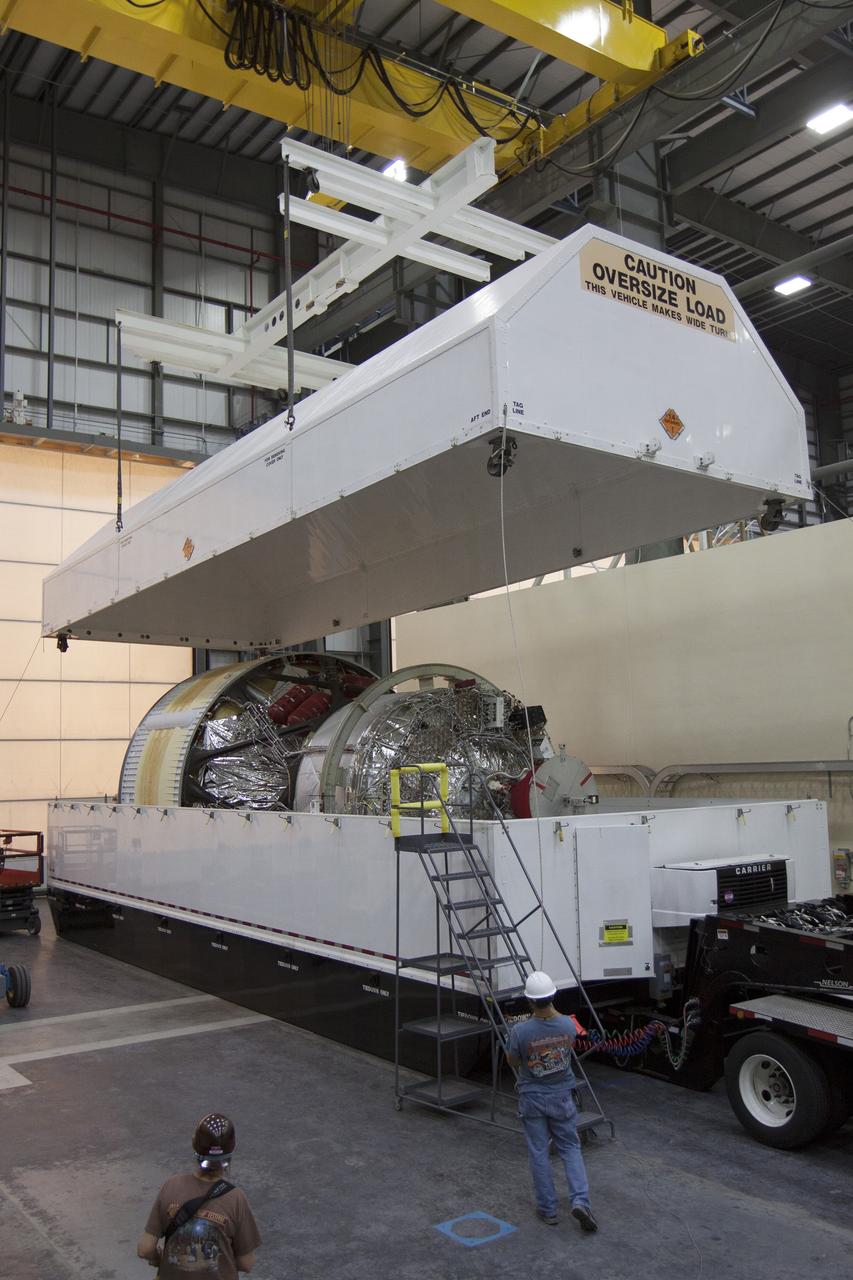
CAPE CANAVERAL, Fla. -- The second stage, port booster and spacecraft adapter, the remaining stages for the United Launch Alliance Delta IV Heavy boosters for NASA’s upcoming Exploration Flight Test-1, or EFT-1, mission with the Orion spacecraft, have been transported in their containers to the Horizontal Integration Facility, or HIF, at Space Launch Complex 37 on Cape Canaveral Air Force Station in Florida. Inside the facility, technicians uncrate the upper stage. The segments arrived by barge at the U.S. Army Outpost wharf at Port Canaveral. At the HIF, all three booster stages will be processed and checked out before being moved to the nearby launch pad and hoisted into position. The spacecraft adapter will connect Orion to the ULA Delta IV, and also will connect Orion to NASA's new rocket, the Space Launch System, on its first mission in 2017. During the EFT-1 mission, Orion will travel farther into space than any human spacecraft has gone in more than 40 years. The data gathered during the flight will influence design decisions, validate existing computer models and innovative new approaches to space systems development, as well as reduce overall mission risks and costs for later Orion flights. Liftoff of Orion on EFT-1 is planned for fall 2014. Photo credit: NASA/Kim Shiflett
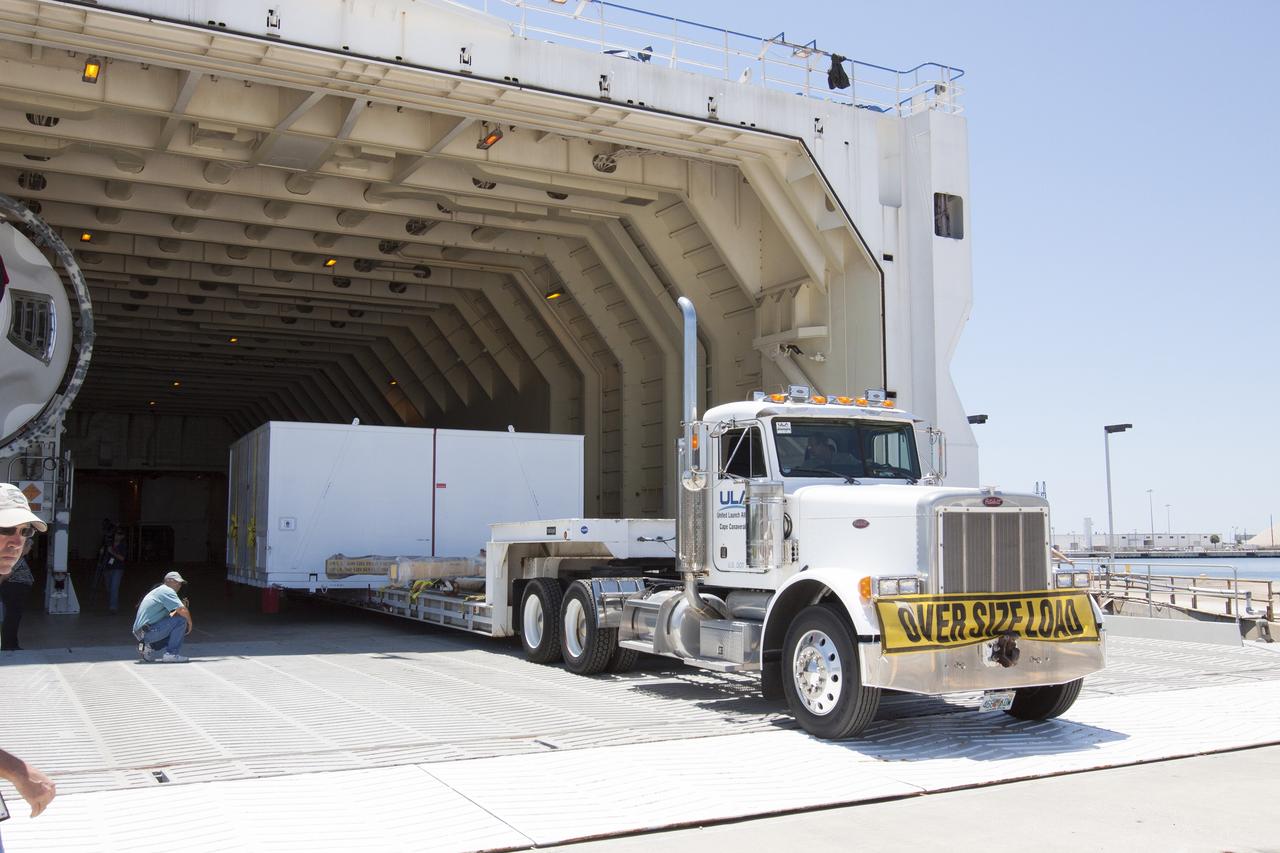
CAPE CANAVERAL, Fla. -- A barge has arrived at the U.S. Army Outpost wharf at Port Canaveral in Florida, carrying the second stage, port booster and spacecraft adapter, the remaining stages for the United Launch Alliance Delta IV Heavy boosters for NASA’s upcoming Exploration Flight Test-1, or EFT-1, mission with the Orion spacecraft. They are being offloaded in their containers for transport to the Horizontal Integration Facility, or HIF, at Space Launch Complex 37 on Cape Canaveral Air Force Station. At the HIF, all three booster stages will be processed and checked out before being moved to the nearby launch pad and hoisted into position. The spacecraft adapter will connect Orion to the ULA Delta IV, and also will connect Orion to NASA's new rocket, the Space Launch System, on its first mission in 2017. During the EFT-1 mission, Orion will travel farther into space than any human spacecraft has gone in more than 40 years. The data gathered during the flight will influence design decisions, validate existing computer models and innovative new approaches to space systems development, as well as reduce overall mission risks and costs for later Orion flights. Liftoff of Orion on EFT-1 is planned for fall 2014. Photo credit: NASA/Kim Shiflett
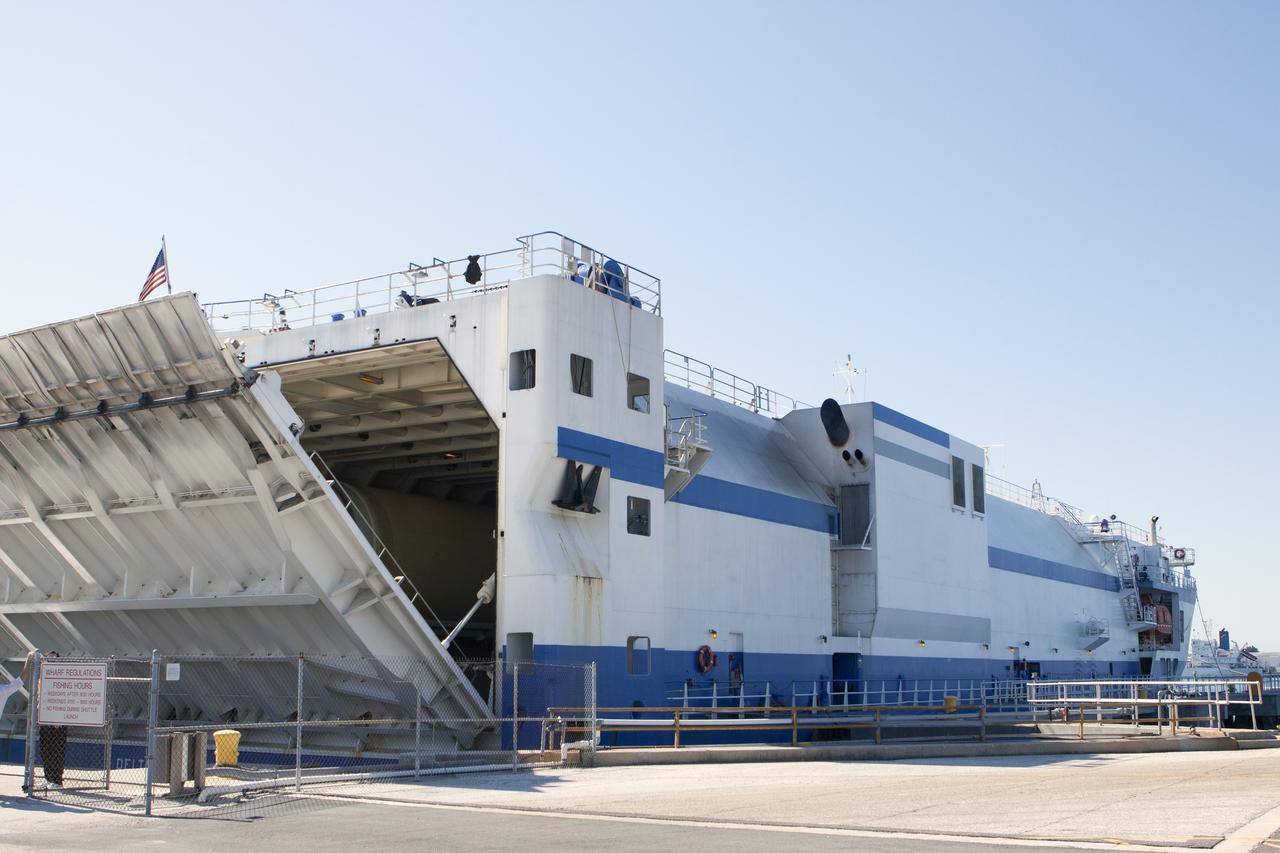
CAPE CANAVERAL, Fla. -- A barge arrives at the U.S. Army Outpost wharf at Port Canaveral in Florida, carrying the second stage, port booster and spacecraft adapter, the remaining stages for the United Launch Alliance Delta IV Heavy boosters for NASA’s upcoming Exploration Flight Test-1, or EFT-1, mission with the Orion spacecraft. They will be offloaded in their containers and transported to the Horizontal Integration Facility, or HIF, at Space Launch Complex 37 on Cape Canaveral Air Force Station. At the HIF, all three booster stages will be processed and checked out before being moved to the nearby launch pad and hoisted into position. The spacecraft adapter will connect Orion to the ULA Delta IV, and also will connect Orion to NASA's new rocket, the Space Launch System, on its first mission in 2017. During the EFT-1 mission, Orion will travel farther into space than any human spacecraft has gone in more than 40 years. The data gathered during the flight will influence design decisions, validate existing computer models and innovative new approaches to space systems development, as well as reduce overall mission risks and costs for later Orion flights. Liftoff of Orion on EFT-1 is planned for fall 2014. Photo credit: NASA/Kim Shiflett
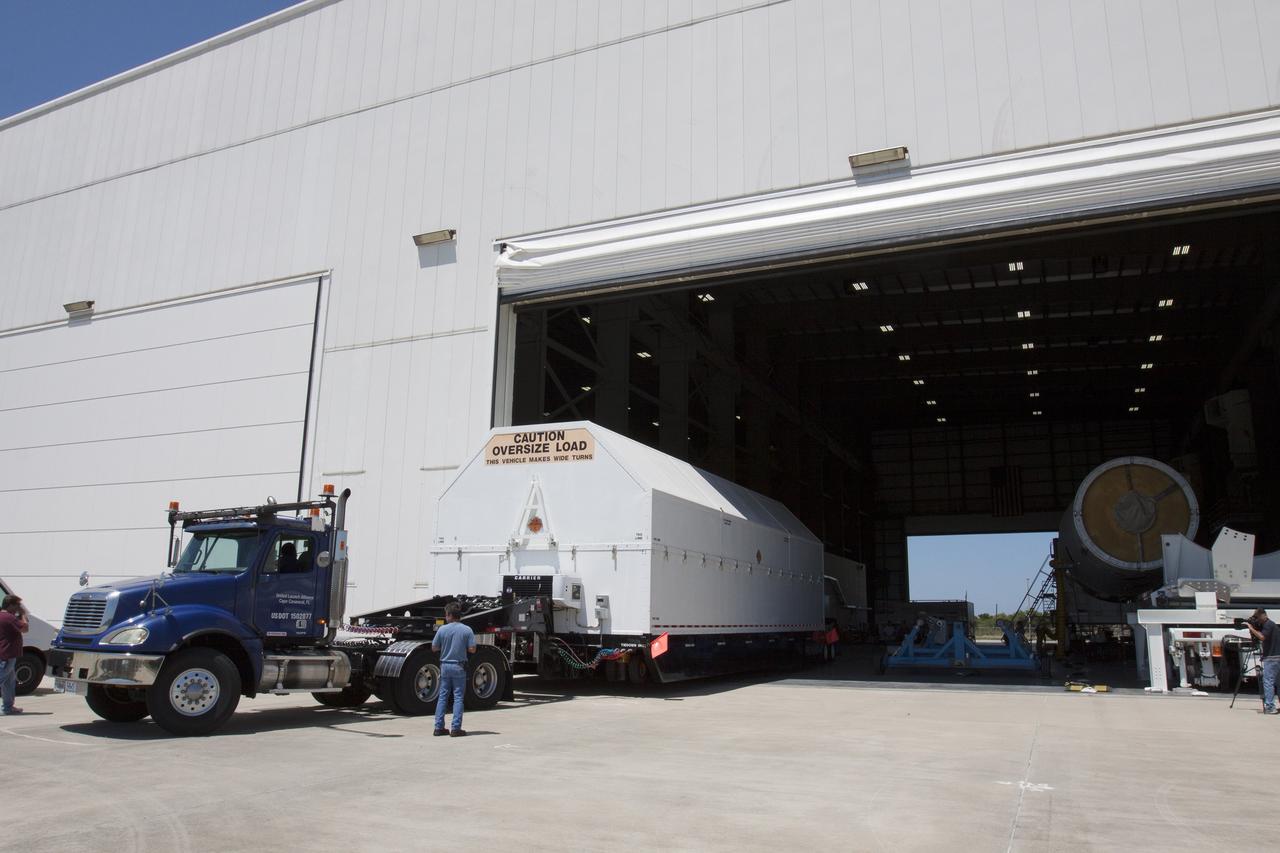
CAPE CANAVERAL, Fla. -- The second stage, port booster and spacecraft adapter, the remaining stages for the United Launch Alliance Delta IV Heavy boosters for NASA’s upcoming Exploration Flight Test-1, or EFT-1, mission with the Orion spacecraft, have been transported in their containers to the Horizontal Integration Facility, or HIF, at Space Launch Complex 37 on Cape Canaveral Air Force Station in Florida. The segments arrived by barge at the U.S. Army Outpost wharf at Port Canaveral. At the HIF, all three booster stages will be processed and checked out before being moved to the nearby launch pad and hoisted into position. The spacecraft adapter will connect Orion to the ULA Delta IV, and also will connect Orion to NASA's new rocket, the Space Launch System, on its first mission in 2017. During the EFT-1 mission, Orion will travel farther into space than any human spacecraft has gone in more than 40 years. The data gathered during the flight will influence design decisions, validate existing computer models and innovative new approaches to space systems development, as well as reduce overall mission risks and costs for later Orion flights. Liftoff of Orion on EFT-1 is planned for fall 2014. Photo credit: NASA/Kim Shiflett
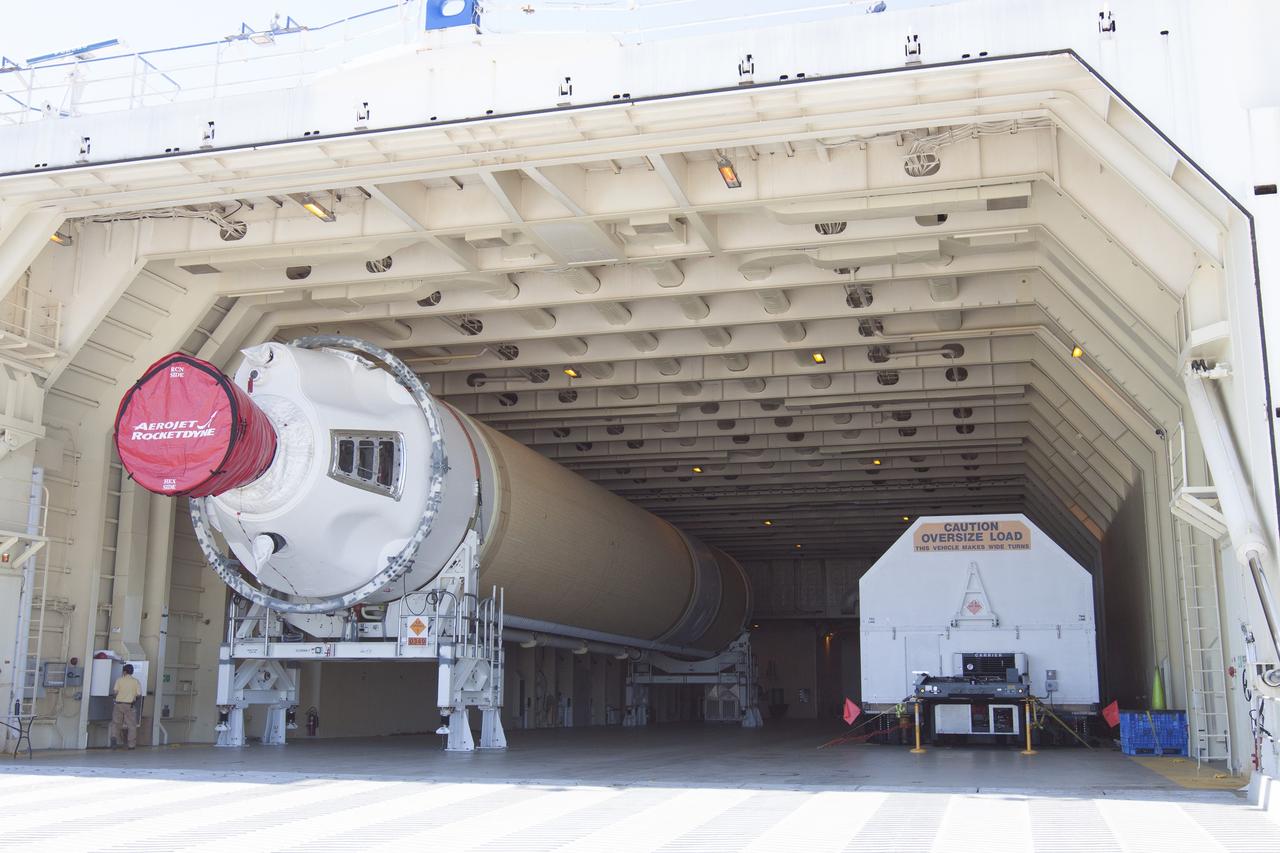
CAPE CANAVERAL, Fla. -- A barge arrives at the U.S. Army Outpost wharf at Port Canaveral in Florida, carrying the second stage, port booster and spacecraft adapter, the remaining stages for the United Launch Alliance Delta IV Heavy boosters for NASA’s upcoming Exploration Flight Test-1, or EFT-1, mission with the Orion spacecraft. They will be offloaded in their containers and transported to the Horizontal Integration Facility, or HIF, at Space Launch Complex 37 on Cape Canaveral Air Force Station. At the HIF, all three booster stages will be processed and checked out before being moved to the nearby launch pad and hoisted into position. The spacecraft adapter will connect Orion to the ULA Delta IV, and also will connect Orion to NASA's new rocket, the Space Launch System, on its first mission in 2017. During the EFT-1 mission, Orion will travel farther into space than any human spacecraft has gone in more than 40 years. The data gathered during the flight will influence design decisions, validate existing computer models and innovative new approaches to space systems development, as well as reduce overall mission risks and costs for later Orion flights. Liftoff of Orion on EFT-1 is planned for fall 2014. Photo credit: NASA/Kim Shiflett
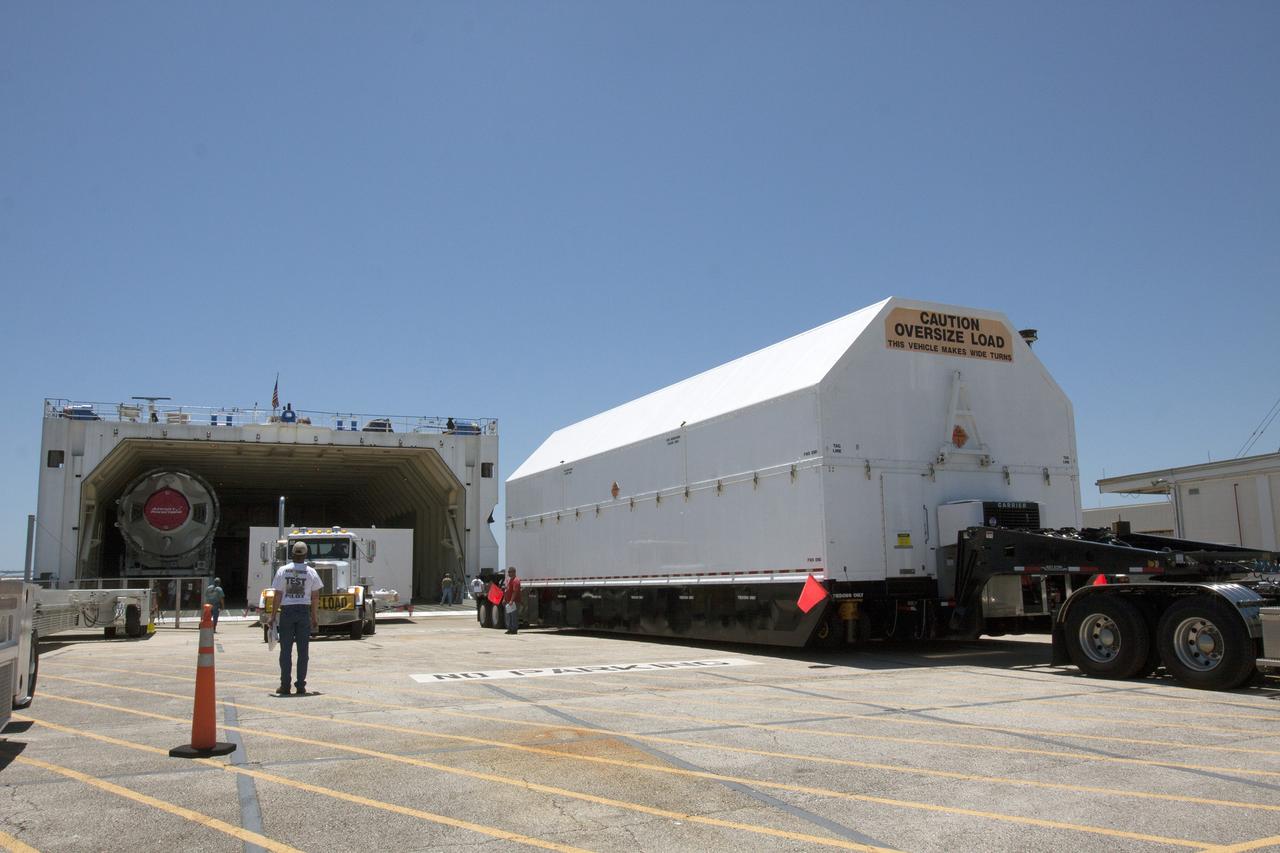
CAPE CANAVERAL, Fla. -- A barge has arrived at the U.S. Army Outpost wharf at Port Canaveral in Florida, carrying the second stage, port booster and spacecraft adapter, the remaining stages for the United Launch Alliance Delta IV Heavy boosters for NASA’s upcoming Exploration Flight Test-1, or EFT-1, mission with the Orion spacecraft. The segments are being offloaded in their containers for transport to the Horizontal Integration Facility, or HIF, at Space Launch Complex 37 on Cape Canaveral Air Force Station. At the HIF, all three booster stages will be processed and checked out before being moved to the nearby launch pad and hoisted into position. The spacecraft adapter will connect Orion to the ULA Delta IV, and also will connect Orion to NASA's new rocket, the Space Launch System, on its first mission in 2017. During the EFT-1 mission, Orion will travel farther into space than any human spacecraft has gone in more than 40 years. The data gathered during the flight will influence design decisions, validate existing computer models and innovative new approaches to space systems development, as well as reduce overall mission risks and costs for later Orion flights. Liftoff of Orion on EFT-1 is planned for fall 2014. Photo credit: NASA/Kim Shiflett
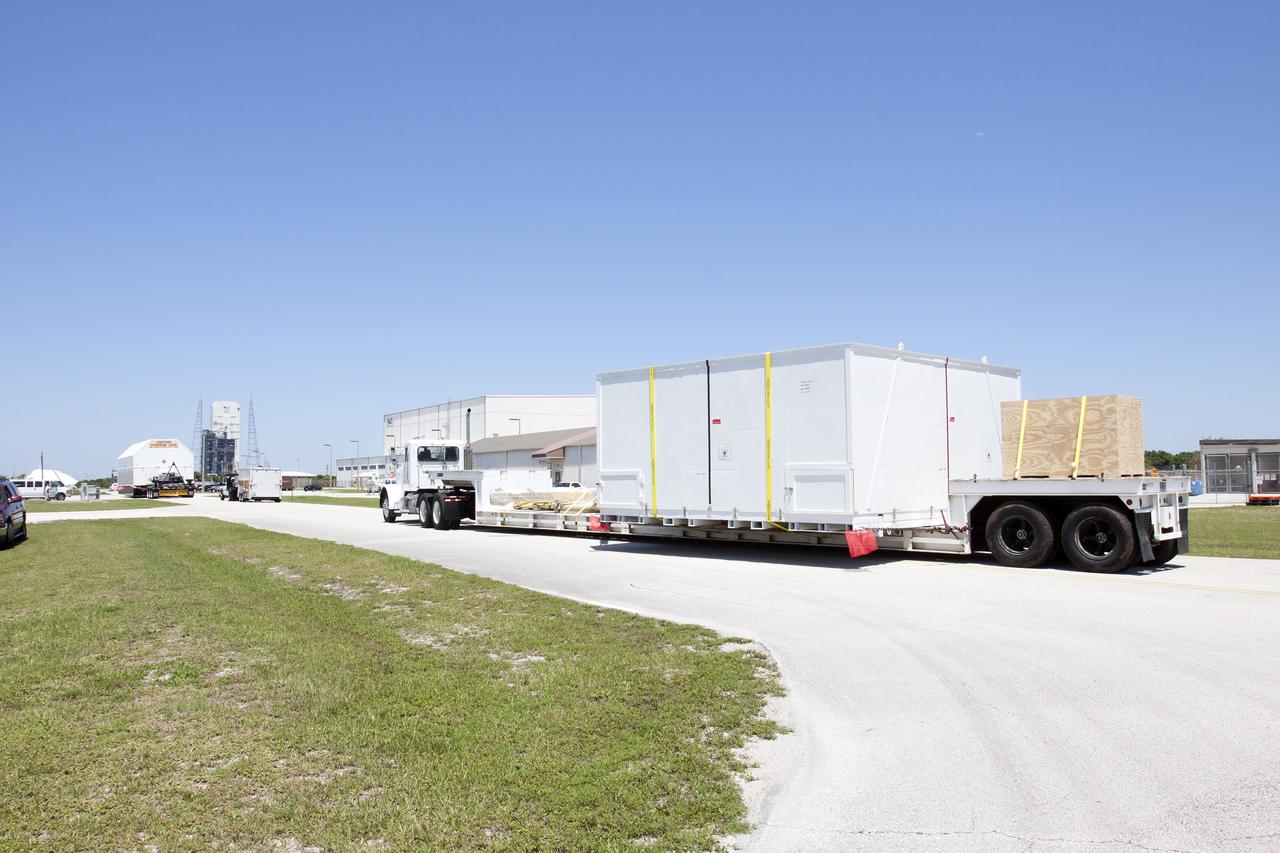
CAPE CANAVERAL, Fla. -- After arriving by barge at the U.S. Army Outpost wharf at Port Canaveral in Florida, the second stage, port booster and spacecraft adapter, the remaining stages for the United Launch Alliance Delta IV Heavy boosters for NASA’s upcoming Exploration Flight Test-1, or EFT-1, mission with the Orion spacecraft, were offloaded in their containers. They are being transported to the Horizontal Integration Facility, or HIF, at Space Launch Complex 37 on Cape Canaveral Air Force Station. At the HIF, all three booster stages will be processed and checked out before being moved to the nearby launch pad and hoisted into position. The spacecraft adapter will connect Orion to the ULA Delta IV, and also will connect Orion to NASA's new rocket, the Space Launch System, on its first mission in 2017. During the EFT-1 mission, Orion will travel farther into space than any human spacecraft has gone in more than 40 years. The data gathered during the flight will influence design decisions, validate existing computer models and innovative new approaches to space systems development, as well as reduce overall mission risks and costs for later Orion flights. Liftoff of Orion on EFT-1 is planned for fall 2014. Photo credit: NASA/Kim Shiflett
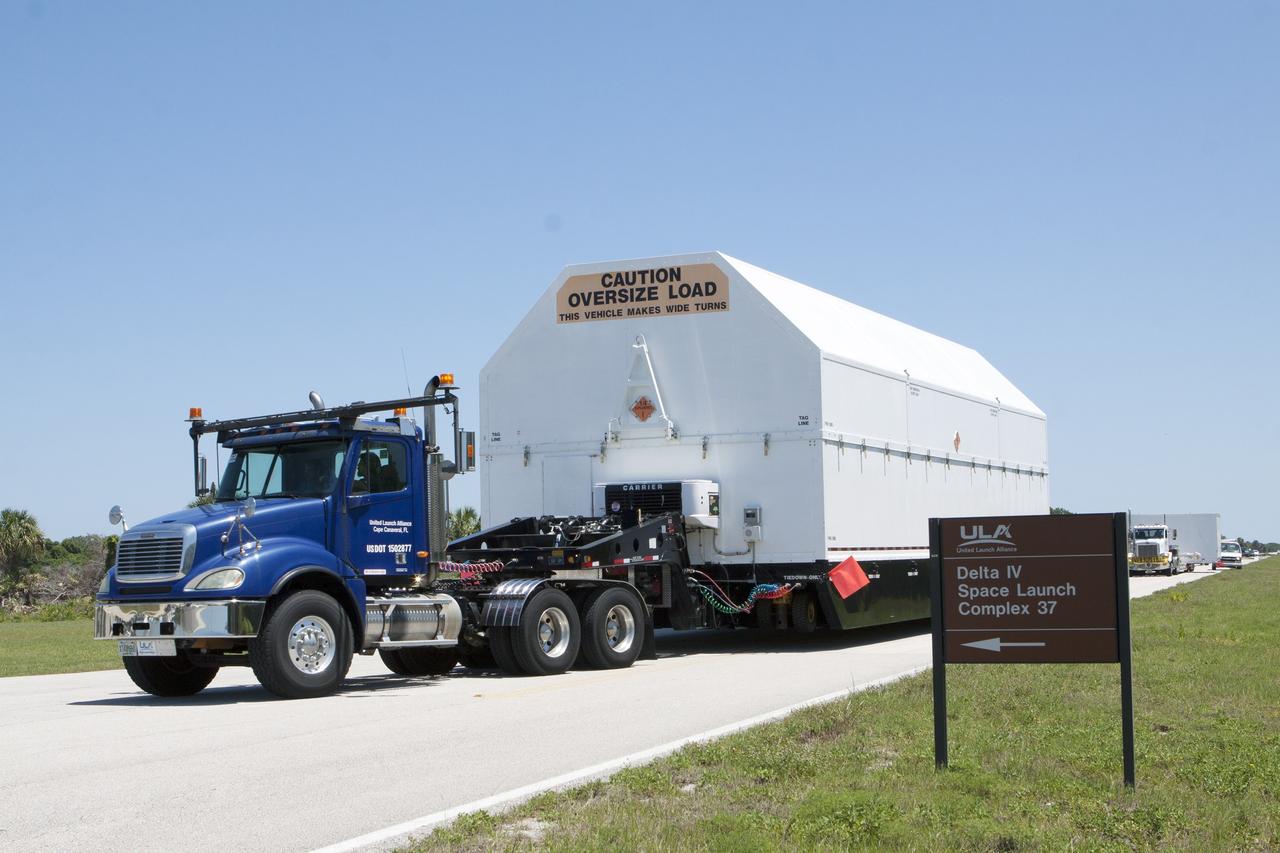
CAPE CANAVERAL, Fla. -- After arriving by barge at the U.S. Army Outpost wharf at Port Canaveral in Florida, the second stage, port booster and spacecraft adapter, the remaining stages for the United Launch Alliance Delta IV Heavy boosters for NASA’s upcoming Exploration Flight Test-1, or EFT-1, mission with the Orion spacecraft, were offloaded in their containers. They are being transported to the Horizontal Integration Facility, or HIF, at Space Launch Complex 37 on Cape Canaveral Air Force Station. At the HIF, all three booster stages will be processed and checked out before being moved to the nearby launch pad and hoisted into position. The spacecraft adapter will connect Orion to the ULA Delta IV, and also will connect Orion to NASA's new rocket, the Space Launch System, on its first mission in 2017. During the EFT-1 mission, Orion will travel farther into space than any human spacecraft has gone in more than 40 years. The data gathered during the flight will influence design decisions, validate existing computer models and innovative new approaches to space systems development, as well as reduce overall mission risks and costs for later Orion flights. Liftoff of Orion on EFT-1 is planned for fall 2014. Photo credit: NASA/Kim Shiflett
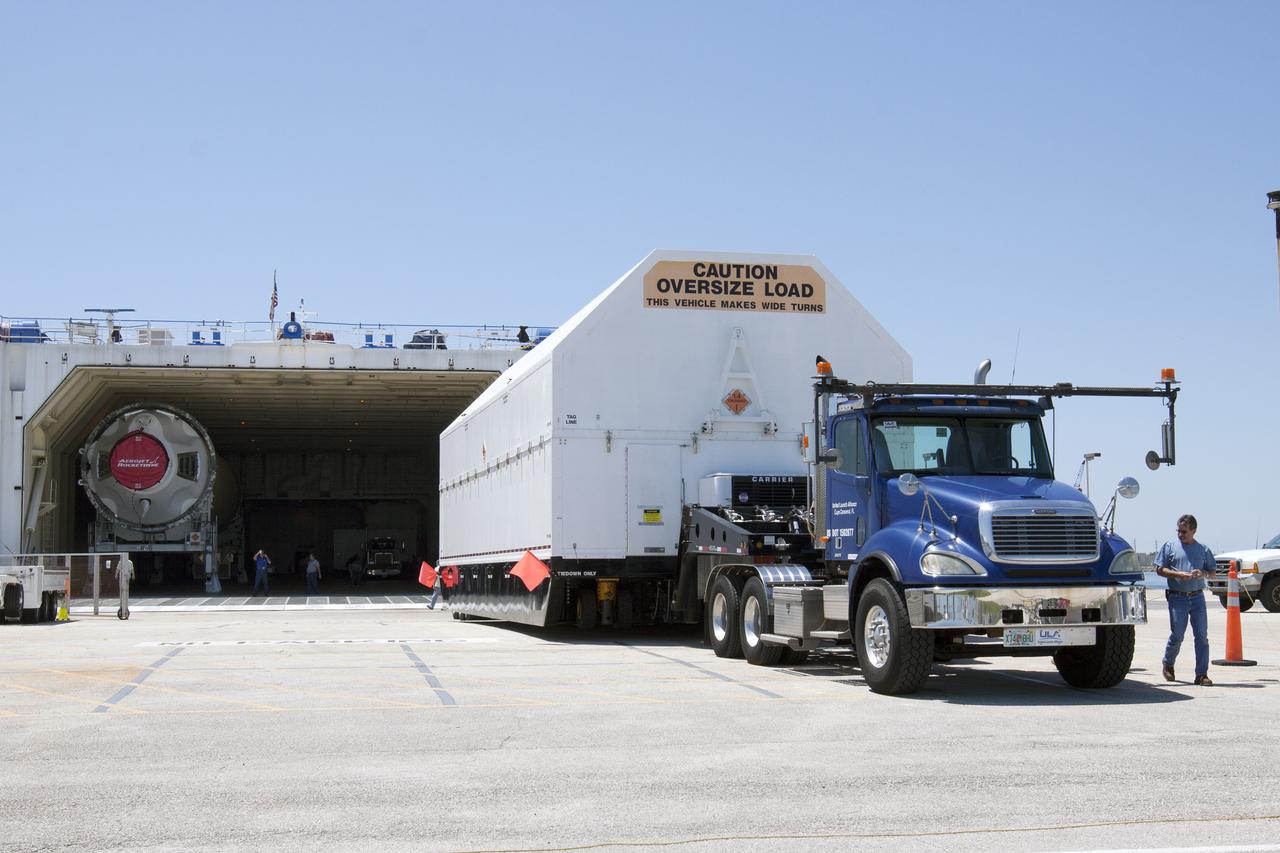
CAPE CANAVERAL, Fla. -- A barge has arrived at the U.S. Army Outpost wharf at Port Canaveral in Florida, carrying the second stage, port booster and spacecraft adapter, the remaining stages for the United Launch Alliance Delta IV Heavy boosters for NASA’s upcoming Exploration Flight Test-1, or EFT-1, mission with the Orion spacecraft. They are being offloaded in their containers for transport to the Horizontal Integration Facility, or HIF, at Space Launch Complex 37 on Cape Canaveral Air Force Station. At the HIF, all three booster stages will be processed and checked out before being moved to the nearby launch pad and hoisted into position. The spacecraft adapter will connect Orion to the ULA Delta IV, and also will connect Orion to NASA's new rocket, the Space Launch System, on its first mission in 2017. During the EFT-1 mission, Orion will travel farther into space than any human spacecraft has gone in more than 40 years. The data gathered during the flight will influence design decisions, validate existing computer models and innovative new approaches to space systems development, as well as reduce overall mission risks and costs for later Orion flights. Liftoff of Orion on EFT-1 is planned for fall 2014. Photo credit: NASA/Kim Shiflett
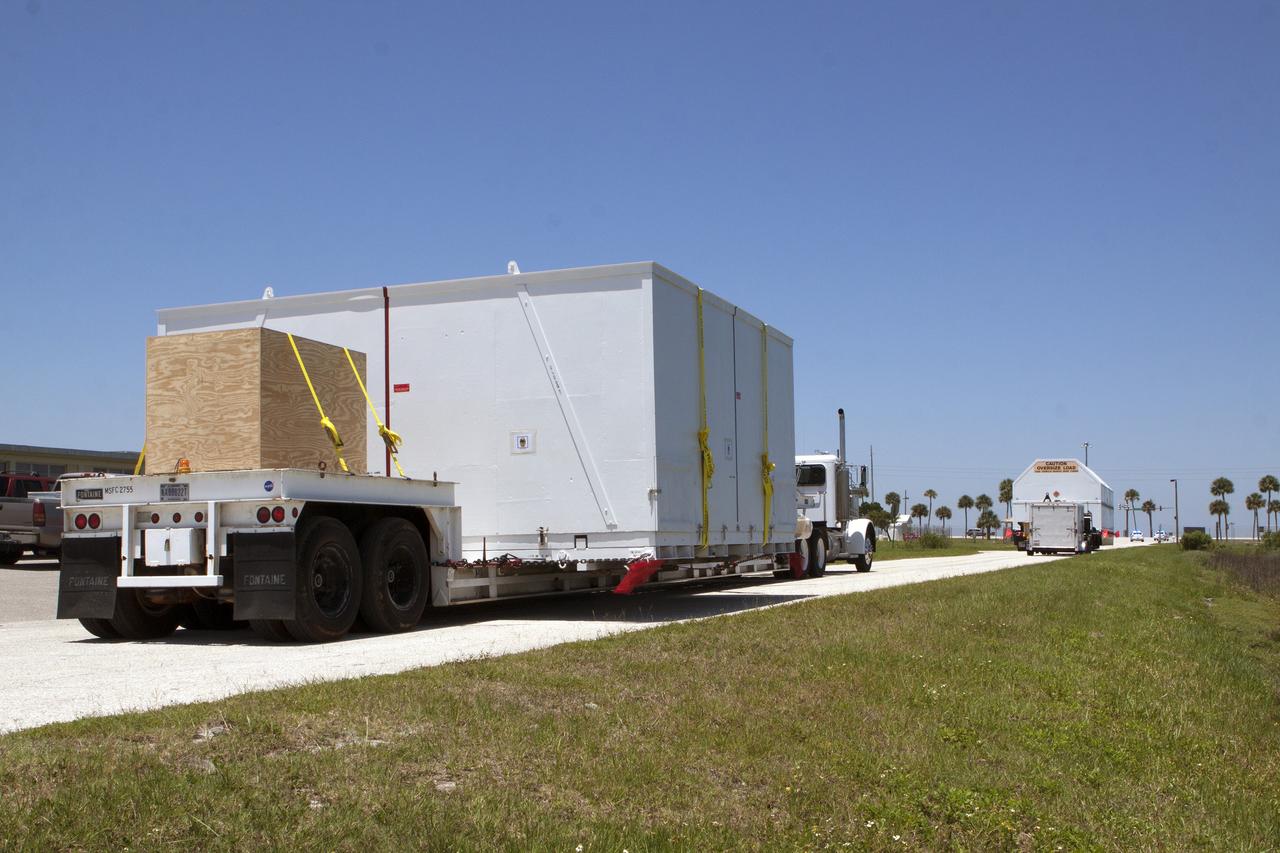
CAPE CANAVERAL, Fla. -- After arriving by barge at the U.S. Army Outpost wharf at Port Canaveral in Florida, the second stage, port booster and spacecraft adapter, the remaining stages for the United Launch Alliance Delta IV Heavy boosters for NASA’s upcoming Exploration Flight Test-1, or EFT-1, mission with the Orion spacecraft, were offloaded in their containers. They are being transported to the Horizontal Integration Facility, or HIF, at Space Launch Complex 37 on Cape Canaveral Air Force Station. At the HIF, all three booster stages will be processed and checked out before being moved to the nearby launch pad and hoisted into position. The spacecraft adapter will connect Orion to the ULA Delta IV, and also will connect Orion to NASA's new rocket, the Space Launch System, on its first mission in 2017. During the EFT-1 mission, Orion will travel farther into space than any human spacecraft has gone in more than 40 years. The data gathered during the flight will influence design decisions, validate existing computer models and innovative new approaches to space systems development, as well as reduce overall mission risks and costs for later Orion flights. Liftoff of Orion on EFT-1 is planned for fall 2014. Photo credit: NASA/Kim Shiflett
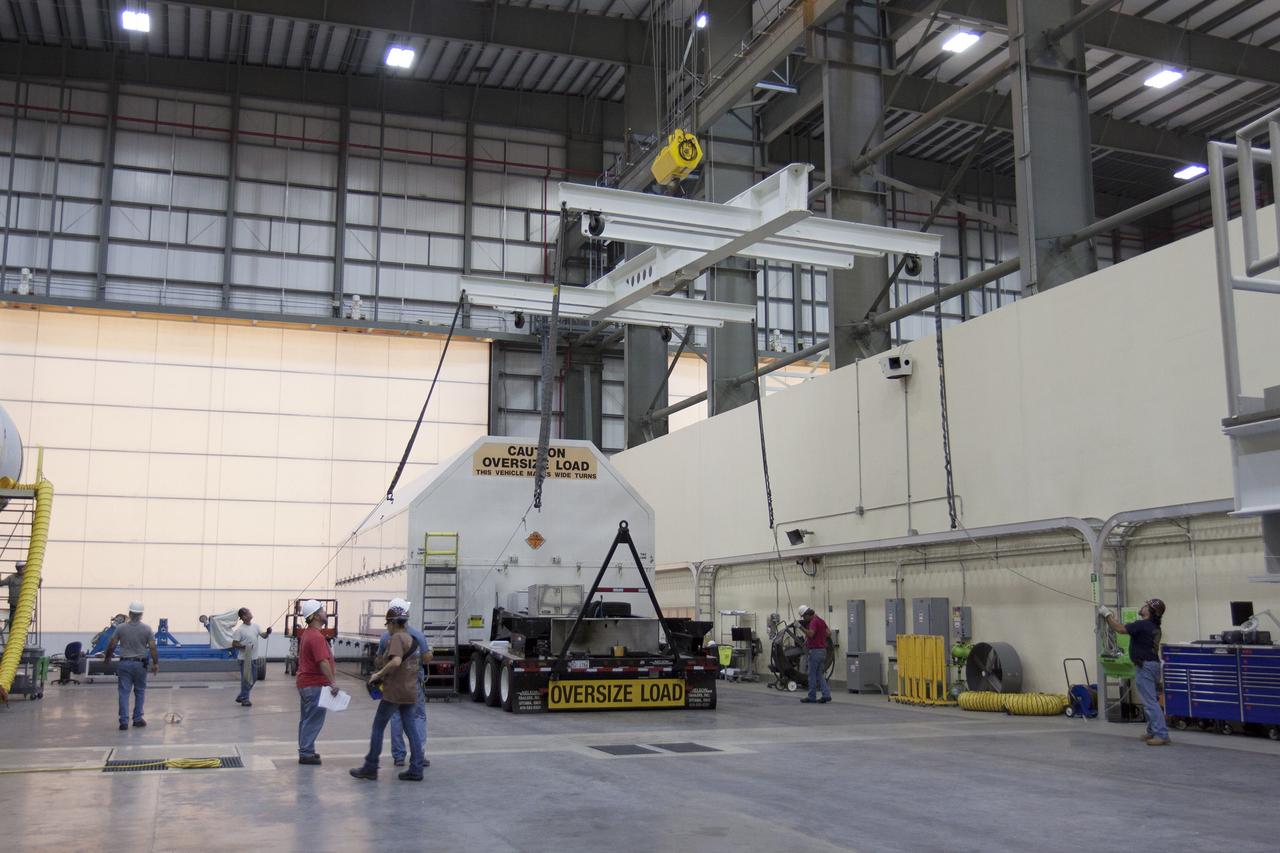
CAPE CANAVERAL, Fla. -- The second stage, port booster and spacecraft adapter, the remaining stages for the United Launch Alliance Delta IV Heavy boosters for NASA’s upcoming Exploration Flight Test-1, or EFT-1, mission with the Orion spacecraft, have been transported in their containers to the Horizontal Integration Facility, or HIF, at Space Launch Complex 37 on Cape Canaveral Air Force Station in Florida for uncrating. The segments arrived by barge at the U.S. Army Outpost wharf at Port Canaveral. At the HIF, all three booster stages will be processed and checked out before being moved to the nearby launch pad and hoisted into position. The spacecraft adapter will connect Orion to the ULA Delta IV, and also will connect Orion to NASA's new rocket, the Space Launch System, on its first mission in 2017. During the EFT-1 mission, Orion will travel farther into space than any human spacecraft has gone in more than 40 years. The data gathered during the flight will influence design decisions, validate existing computer models and innovative new approaches to space systems development, as well as reduce overall mission risks and costs for later Orion flights. Liftoff of Orion on EFT-1 is planned for fall 2014. Photo credit: NASA/Kim Shiflett
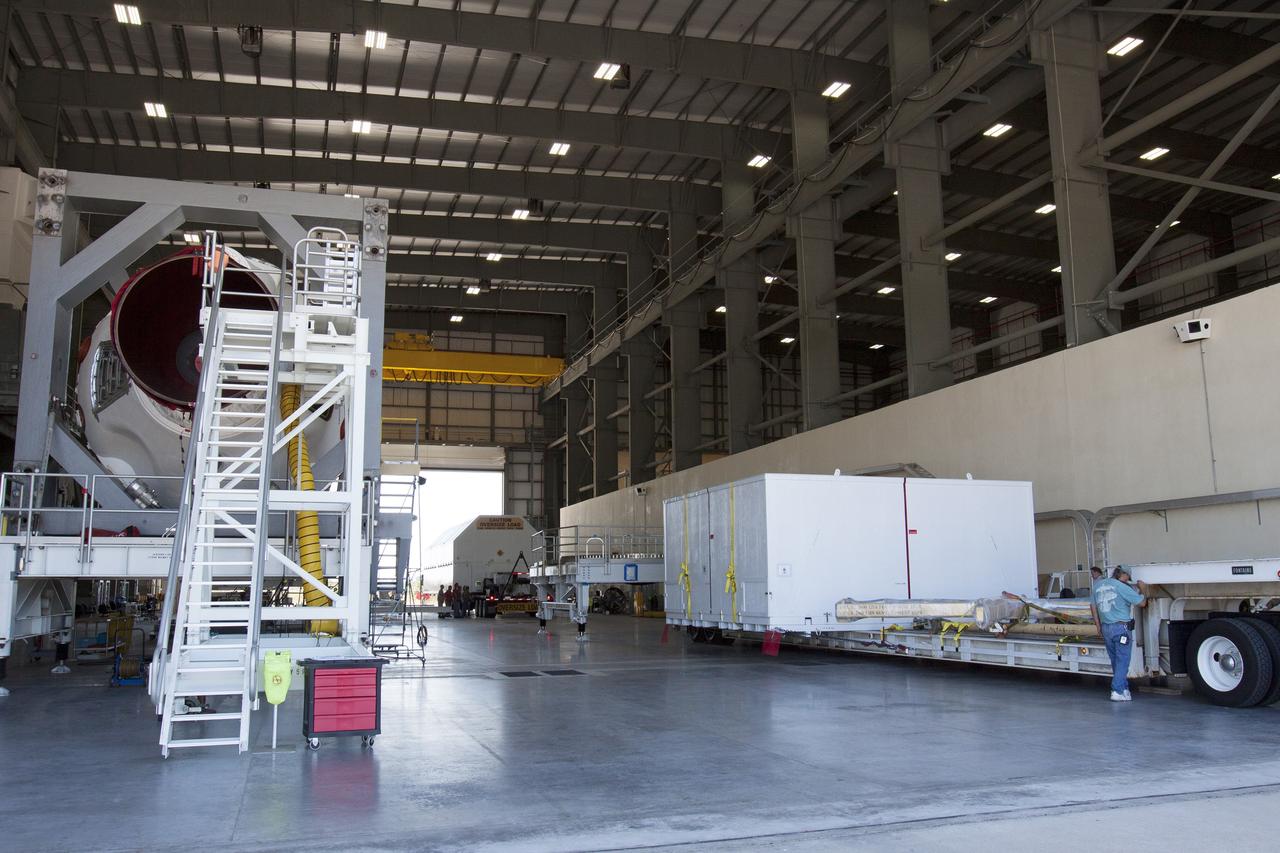
CAPE CANAVERAL, Fla. -- The second stage, port booster and spacecraft adapter, the remaining stages for the United Launch Alliance Delta IV Heavy boosters for NASA’s upcoming Exploration Flight Test-1, or EFT-1, mission with the Orion spacecraft, have been transported in their containers to the Horizontal Integration Facility, or HIF, at Space Launch Complex 37 on Cape Canaveral Air Force Station in Florida for uncrating. The segments arrived by barge at the U.S. Army Outpost wharf at Port Canaveral. At the HIF, all three booster stages will be processed and checked out before being moved to the nearby launch pad and hoisted into position. The spacecraft adapter will connect Orion to the ULA Delta IV, and also will connect Orion to NASA's new rocket, the Space Launch System, on its first mission in 2017. During the EFT-1 mission, Orion will travel farther into space than any human spacecraft has gone in more than 40 years. The data gathered during the flight will influence design decisions, validate existing computer models and innovative new approaches to space systems development, as well as reduce overall mission risks and costs for later Orion flights. Liftoff of Orion on EFT-1 is planned for fall 2014. Photo credit: NASA/Kim Shiflett
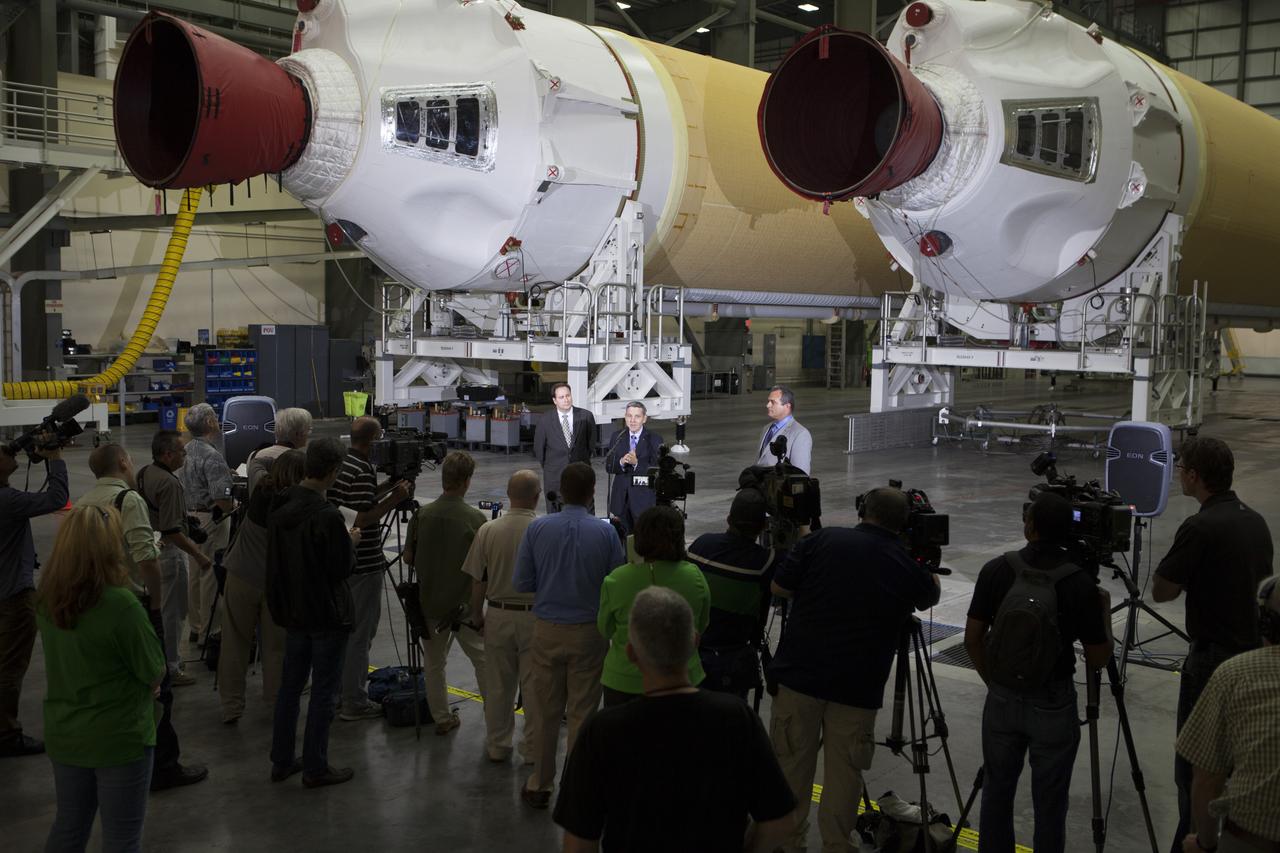
CAPE CANAVERAL, Fla. – During a media event inside the Horizontal Integration Facility at Launch Complex 37 at Cape Canaveral Air Force Station in Florida, Kennedy Space Center Director Bob Cabana speaks to members of the media. To his right is Tony Taliancich, director of East Coast Launch Operations with United Launch Alliance, or ULA. To his left is NASA Associate Administrator Robert Lightfoot. The event was held to showcase two of the ULA Delta IV boosters for the Orion Exploration Flight Test-1, or EFT-1, mission. Orion is the exploration spacecraft designed to carry astronauts to destinations not yet explored by humans, including an asteroid and Mars. It will have emergency abort capability, sustain the crew during space travel and provide safe re-entry from deep space return velocities. The first unpiloted test flight of Orion, EFT-1, is scheduled to launch in 2014 atop a Delta IV rocket and in 2017 on NASA’s Space Launch System rocket. For more information, visit http://www.nasa.gov/orion. Photo credit: NASA/Kim Shiflett

CAPE CANAVERAL, Fla. – During a media event inside the Horizontal Integration Facility at Launch Complex 37 at Cape Canaveral Air Force Station in Florida, Tony Taliancich, director of East Coast Launch Operations with United Launch Alliance, or ULA, speaks to members of the media. Also with him at the briefing were Kennedy Space Center Director Bob Cabana and NASA Associate Administrator Robert Lightfoot. The event was held to showcase two of the ULA Delta IV boosters for the Orion Exploration Flight Test-1, or EFT-1, mission. Orion is the exploration spacecraft designed to carry astronauts to destinations not yet explored by humans, including an asteroid and Mars. It will have emergency abort capability, sustain the crew during space travel and provide safe re-entry from deep space return velocities. The first unpiloted test flight of Orion, EFT-1, is scheduled to launch in 2014 atop a Delta IV rocket and in 2017 on NASA’s Space Launch System rocket. For more information, visit http://www.nasa.gov/orion. Photo credit: NASA/Kim Shiflett
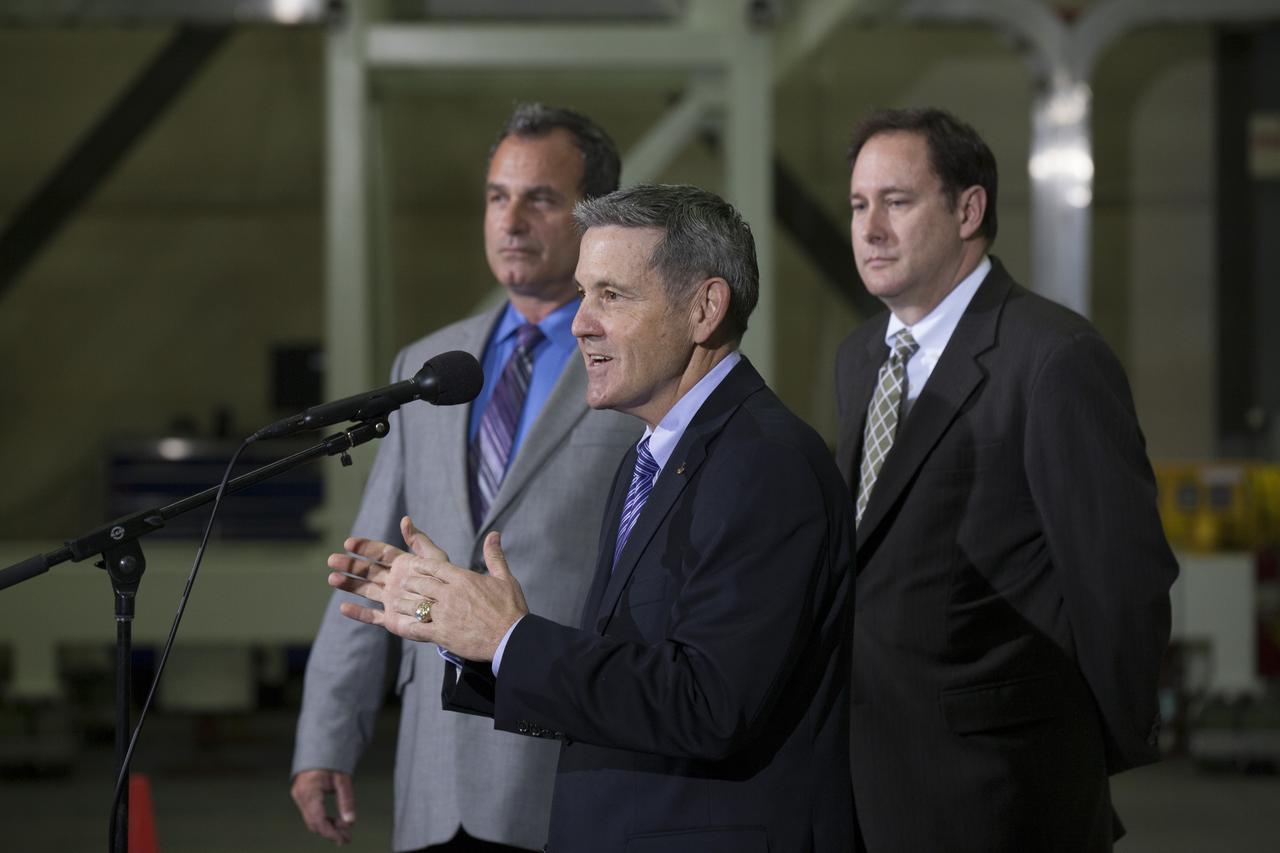
CAPE CANAVERAL, Fla. – During a media event inside the Horizontal Integration Facility at Launch Complex 37 at Cape Canaveral Air Force Station in Florida, Kennedy Space Center Director Bob Cabana speaks to members of the media. To his left is Tony Taliancich, director of East Coast Launch Operations with United Launch Alliance, or ULA. To the right is NASA Associate Administrator Robert Lightfoot. The event was held to showcase two of the ULA Delta IV boosters for the Orion Exploration Flight Test-1, or EFT-1, mission. Orion is the exploration spacecraft designed to carry astronauts to destinations not yet explored by humans, including an asteroid and Mars. It will have emergency abort capability, sustain the crew during space travel and provide safe re-entry from deep space return velocities. The first unpiloted test flight of Orion, EFT-1, is scheduled to launch in 2014 atop a Delta IV rocket and in 2017 on NASA’s Space Launch System rocket. For more information, visit http://www.nasa.gov/orion. Photo credit: NASA/Kim Shiflett
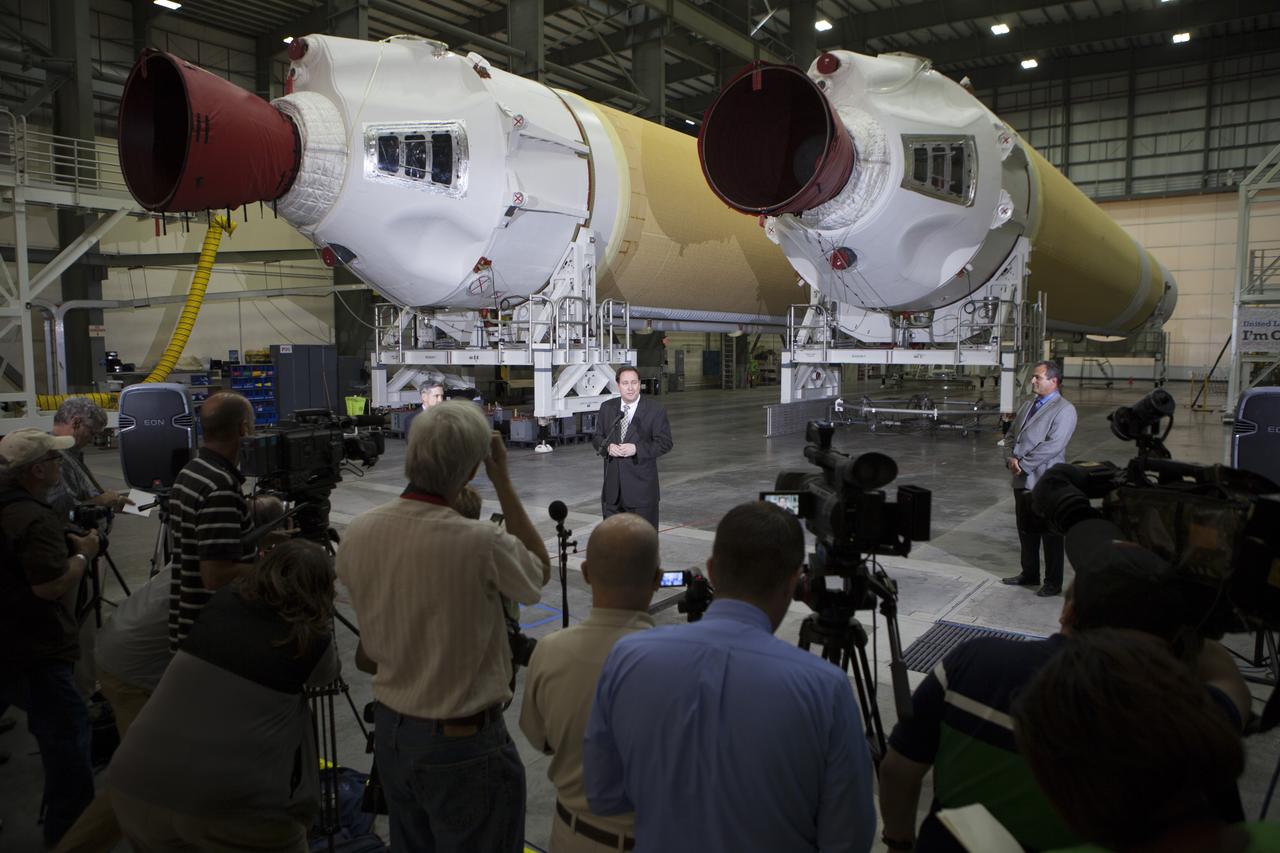
CAPE CANAVERAL, Fla. – During a media event inside the Horizontal Integration Facility at Launch Complex 37 at Cape Canaveral Air Force Station in Florida, NASA Associate Administrator Robert Lightfoot answers questions. To his right is Tony Taliancich, director of East Coast Launch Operations with United Launch Alliance, or ULA. Also participating in the event was Kennedy Space Center Director Bob Cabana. The event was held to showcase two of the ULA Delta IV boosters for the Orion Exploration Flight Test-1, or EFT-1, mission. Orion is the exploration spacecraft designed to carry astronauts to destinations not yet explored by humans, including an asteroid and Mars. It will have emergency abort capability, sustain the crew during space travel and provide safe re-entry from deep space return velocities. The first unpiloted test flight of Orion, EFT-1, is scheduled to launch in 2014 atop a Delta IV rocket and in 2017 on NASA’s Space Launch System rocket. For more information, visit http://www.nasa.gov/orion. Photo credit: NASA/Kim Shiflett
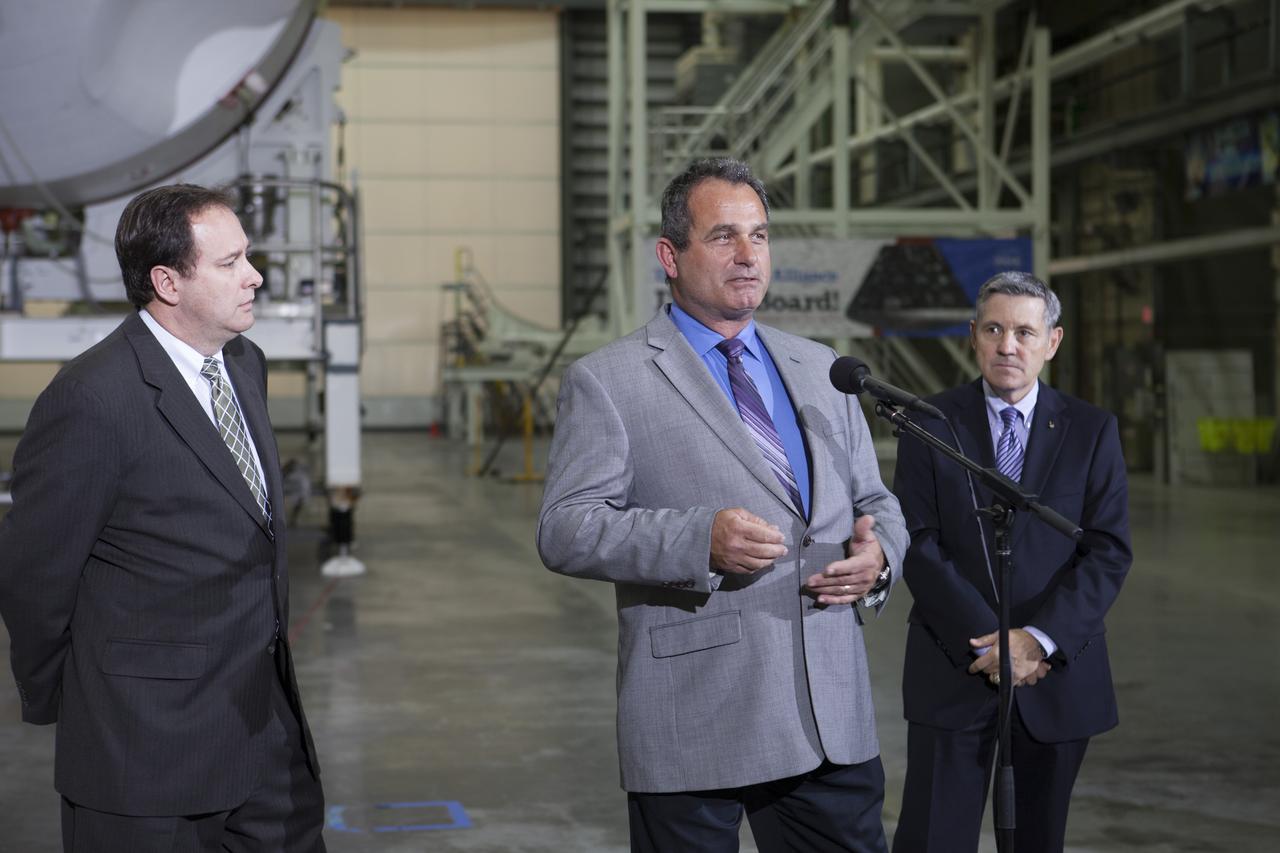
CAPE CANAVERAL, Fla. – During a media event inside the Horizontal Integration Facility at Launch Complex 37 at Cape Canaveral Air Force Station in Florida, Tony Taliancich, director of East Coast Launch Operations with United Launch Alliance, or ULA, speaks to members of the media. Also with Taliancich at the briefing were Kennedy Space Center Director Bob Cabana, at right, and NASA Associate Administrator Robert Lightfoot. The event was held to showcase two of the ULA Delta IV boosters for the Orion Exploration Flight Test-1, or EFT-1, mission. Orion is the exploration spacecraft designed to carry astronauts to destinations not yet explored by humans, including an asteroid and Mars. It will have emergency abort capability, sustain the crew during space travel and provide safe re-entry from deep space return velocities. The first unpiloted test flight of Orion, EFT-1, is scheduled to launch in 2014 atop a Delta IV rocket and in 2017 on NASA’s Space Launch System rocket. For more information, visit http://www.nasa.gov/orion. Photo credit: NASA/Kim Shiflett
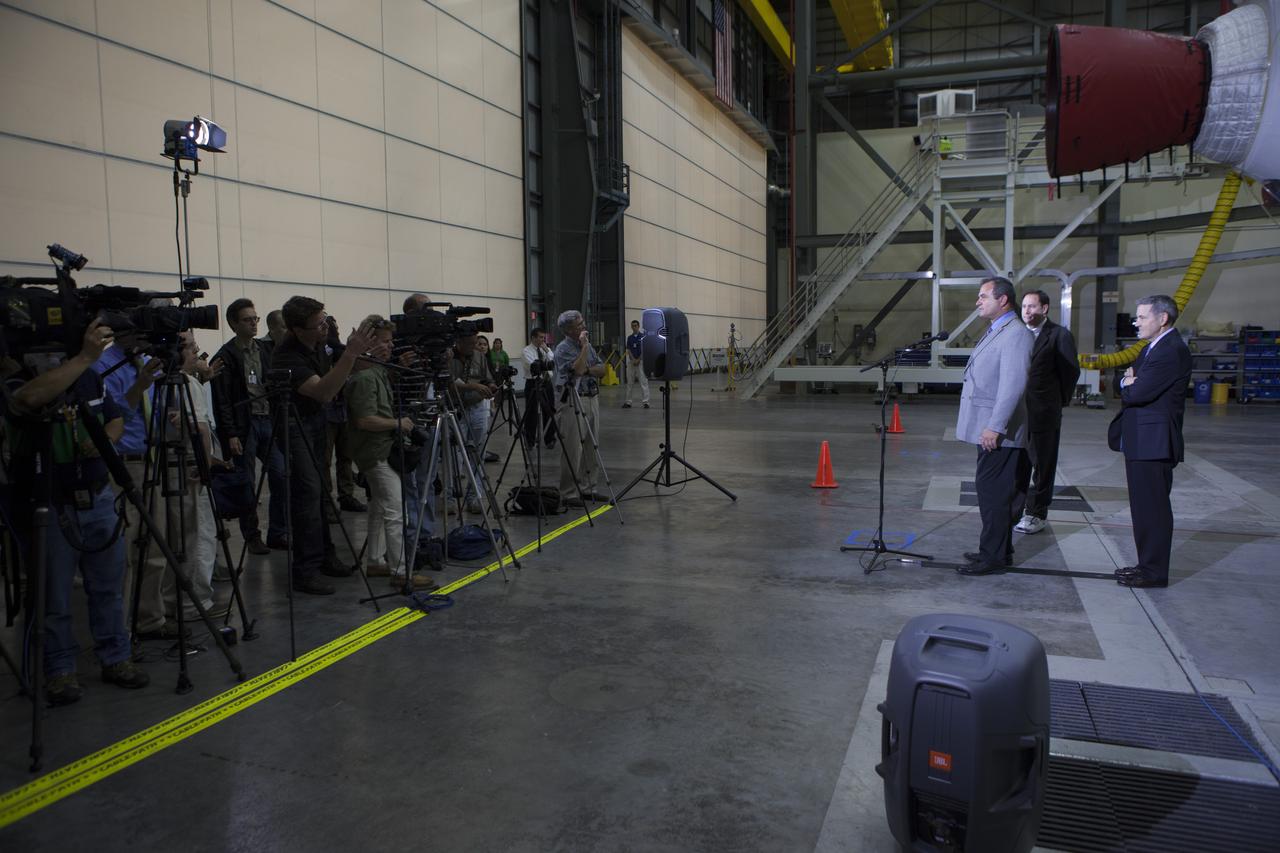
CAPE CANAVERAL, Fla. – During a media event inside the Horizontal Integration Facility at Launch Complex 37 at Cape Canaveral Air Force Station in Florida, Tony Taliancich, director of East Coast Launch Operations with United Launch Alliance, or ULA, speaks to members of the media. Also with Taliancich at the briefing were Kennedy Space Center Director Bob Cabana, at right, and NASA Associate Administrator Robert Lightfoot. The event was held to showcase two of the ULA Delta IV boosters for the Orion Exploration Flight Test-1, or EFT-1, mission. Orion is the exploration spacecraft designed to carry astronauts to destinations not yet explored by humans, including an asteroid and Mars. It will have emergency abort capability, sustain the crew during space travel and provide safe re-entry from deep space return velocities. The first unpiloted test flight of Orion, EFT-1, is scheduled to launch in 2014 atop a Delta IV rocket and in 2017 on NASA’s Space Launch System rocket. For more information, visit http://www.nasa.gov/orion. Photo credit: NASA/Kim Shiflett
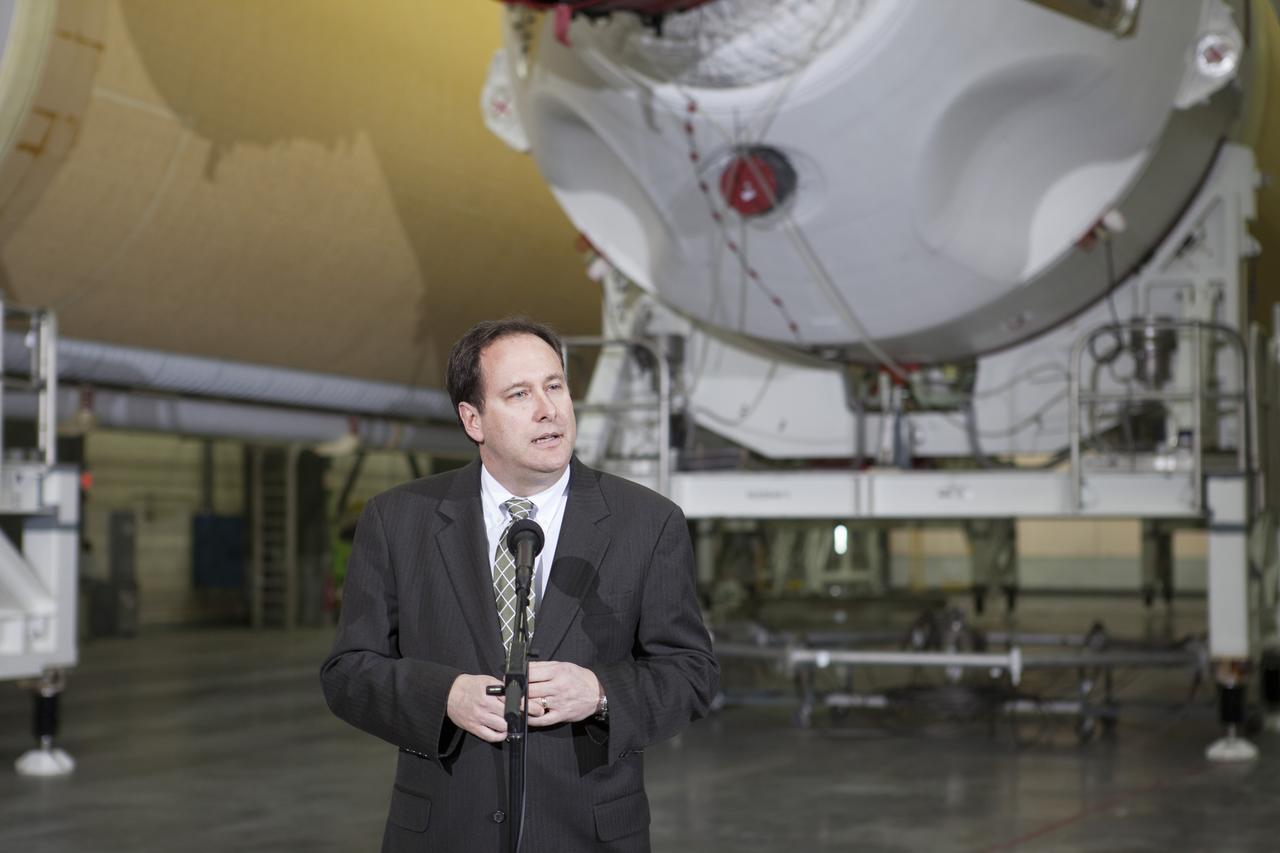
CAPE CANAVERAL, Fla. – During a media event inside the Horizontal Integration Facility at Launch Complex 37 at Cape Canaveral Air Force Station in Florida, NASA Associate Administrator Robert Lightfoot speaks to members of the media. Also attending the briefing were Kennedy Space Center Director Bob Cabana and Tony Taliancich, director of East Coast Launch Operations with United Launch Alliance, or ULA. The event was held to showcase two of the ULA Delta IV boosters for the Orion Exploration Flight Test-1, or EFT-1, mission. Orion is the exploration spacecraft designed to carry astronauts to destinations not yet explored by humans, including an asteroid and Mars. It will have emergency abort capability, sustain the crew during space travel and provide safe re-entry from deep space return velocities. The first unpiloted test flight of Orion, EFT-1, is scheduled to launch in 2014 atop a Delta IV rocket and in 2017 on NASA’s Space Launch System rocket. For more information, visit http://www.nasa.gov/orion. Photo credit: NASA/Kim Shiflett
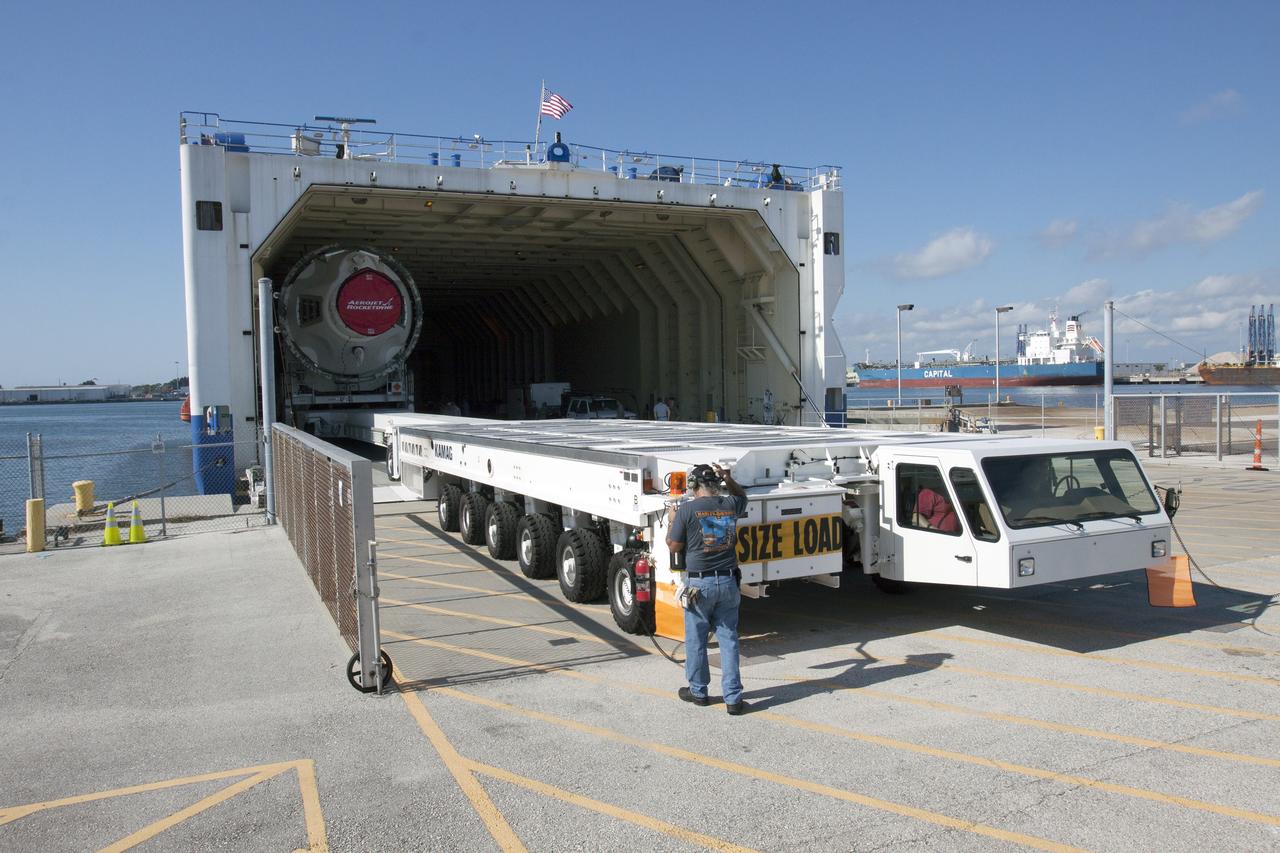
CAPE CANAVERAL, Fla. -- The port booster for the United Launch Alliance Delta IV Heavy for Exploration Flight Test-1, or EFT-1, is being offloaded from the barge at the U.S. Army Outpost wharf at Port Canaveral in Florida and will be transported to the Horizontal Integration Facility, or HIF, at Space Launch Complex 37 on Cape Canaveral Air Force Station. The upper stage and spacecraft adapter arrived with the booster and were transported to the HIF on May 6. At the HIF, all three booster stages will be processed and checked out before being moved to the nearby launch pad and hoisted into position. The spacecraft adapter will connect Orion to the ULA Delta IV, and also will connect Orion to NASA's new rocket, the Space Launch System, on its first mission in 2017. During the EFT-1 mission, Orion will travel farther into space than any human spacecraft has gone in more than 40 years. The data gathered during the flight will influence design decisions, validate existing computer models and innovative new approaches to space systems development, as well as reduce overall mission risks and costs for later Orion flights. Liftoff of Orion on EFT-1 is planned for fall 2014. Photo credit: NASA/Kim Shiflett
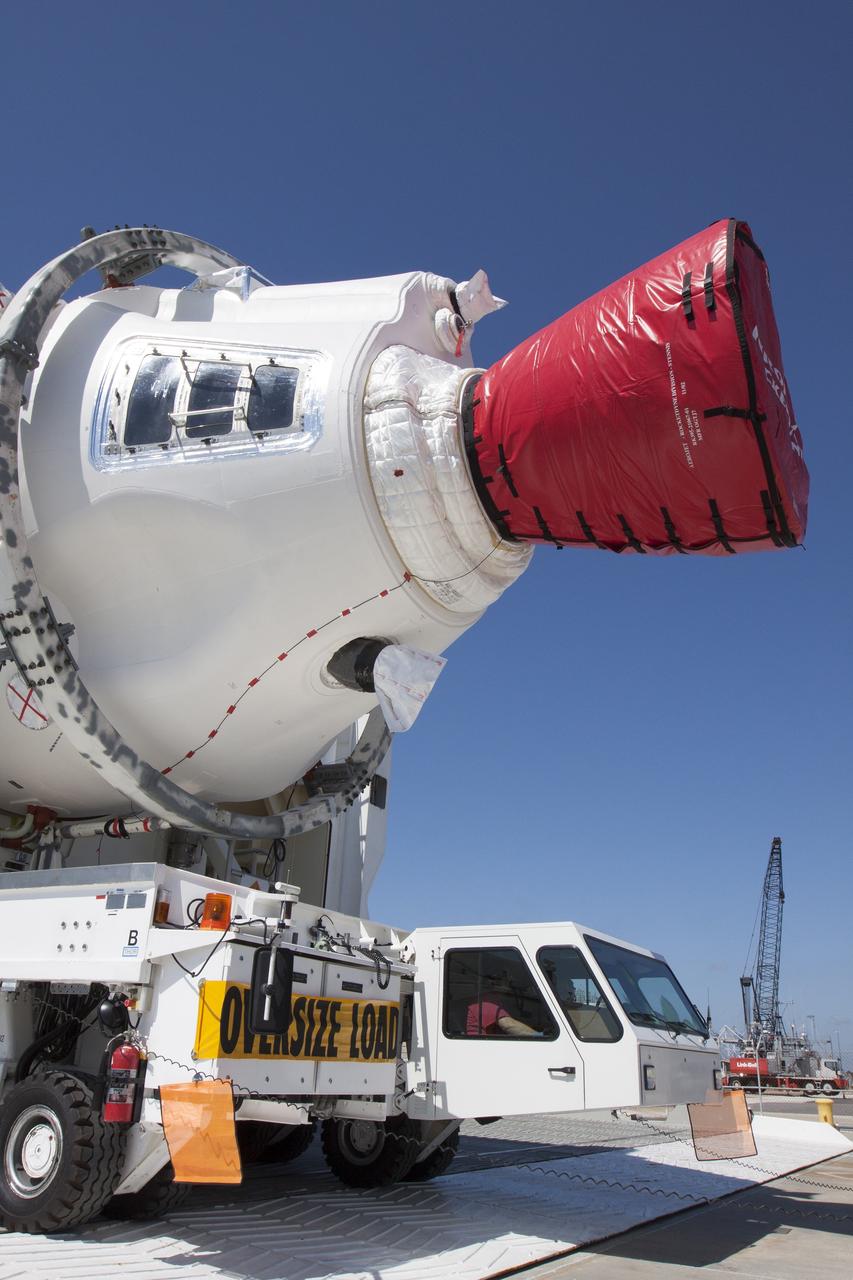
CAPE CANAVERAL, Fla. -- The port booster for the United Launch Alliance Delta IV Heavy for Exploration Flight Test-1, or EFT-1, has been offloaded from the barge at the U.S. Army Outpost wharf at Port Canaveral in Florida and will be transported to the Horizontal Integration Facility, or HIF, at Space Launch Complex 37 on Cape Canaveral Air Force Station. The upper stage and spacecraft adapter arrived with the booster and were transported to the HIF on May 6. At the HIF, all three booster stages will be processed and checked out before being moved to the nearby launch pad and hoisted into position. The spacecraft adapter will connect Orion to the ULA Delta IV, and also will connect Orion to NASA's new rocket, the Space Launch System, on its first mission in 2017. During the EFT-1 mission, Orion will travel farther into space than any human spacecraft has gone in more than 40 years. The data gathered during the flight will influence design decisions, validate existing computer models and innovative new approaches to space systems development, as well as reduce overall mission risks and costs for later Orion flights. Liftoff of Orion on EFT-1 is planned for fall 2014. Photo credit: NASA/Kim Shiflett