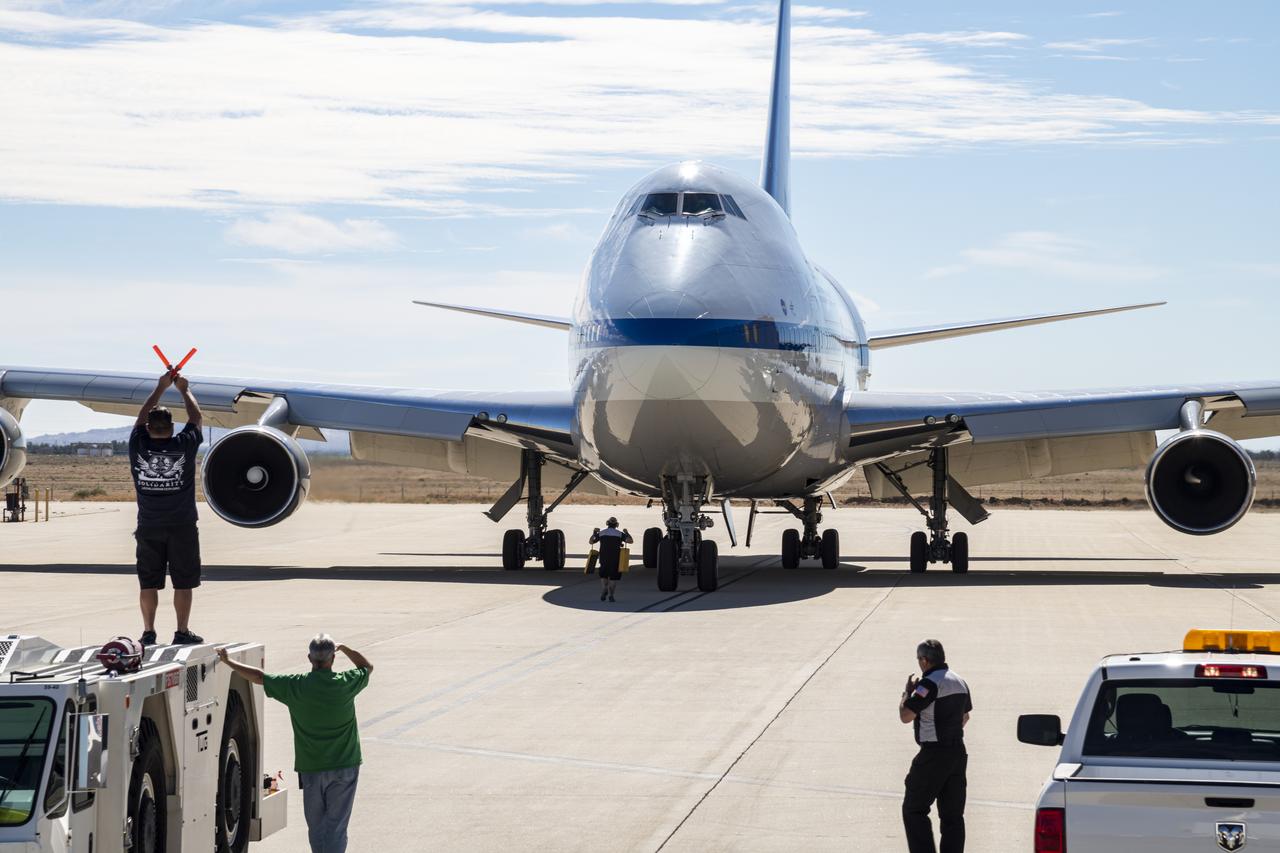
The Stratospheric Observatory for Infrared Astronomy (SOFIA) returns to NASA’s Armstrong Flight Research Center Building 703 on Aug. 11 after a productive month of science flights out of Christchurch International Airport in New Zealand.
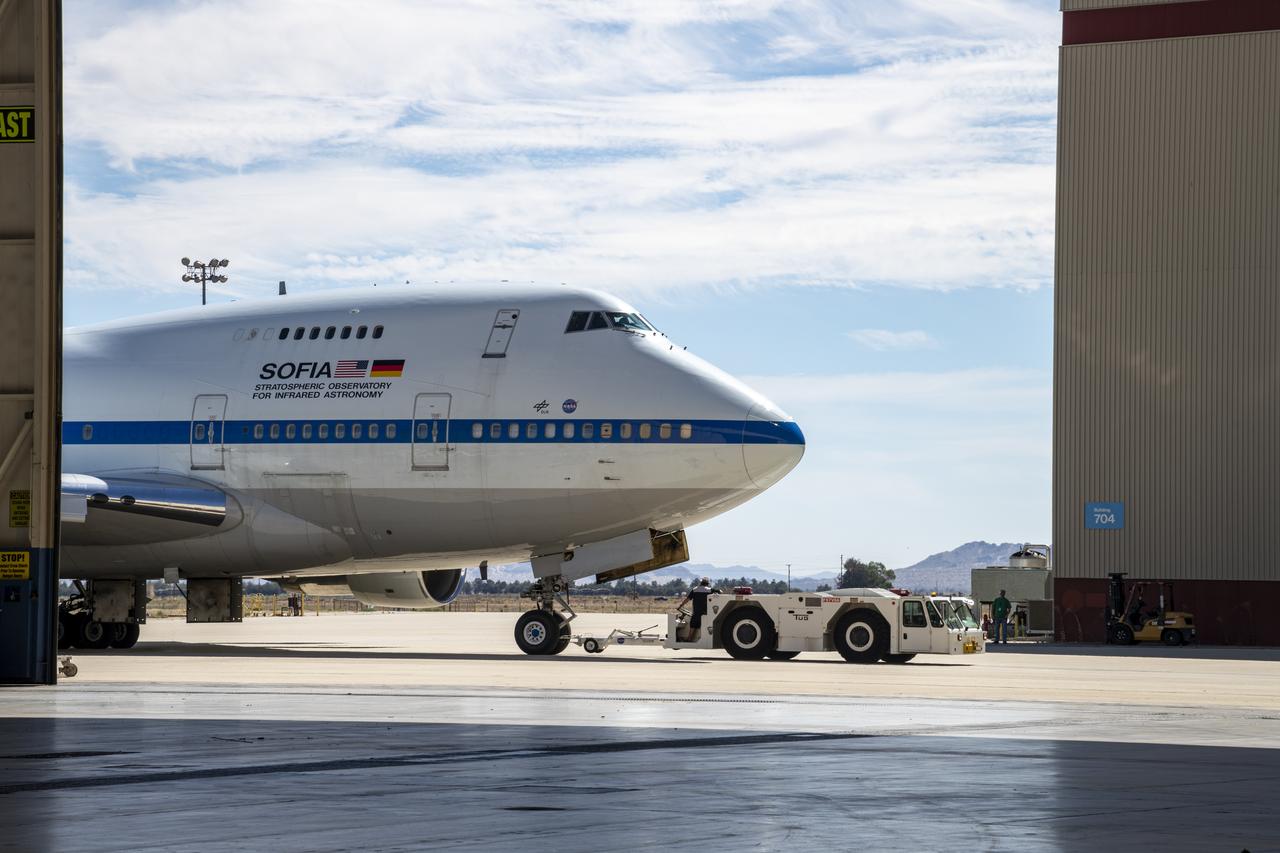
The Stratospheric Observatory for Infrared Astronomy (SOFIA) returns to NASA’s Armstrong Flight Research Center Building 703 on Aug. 11 after a productive month of science flights out of Christchurch International Airport in New Zealand.
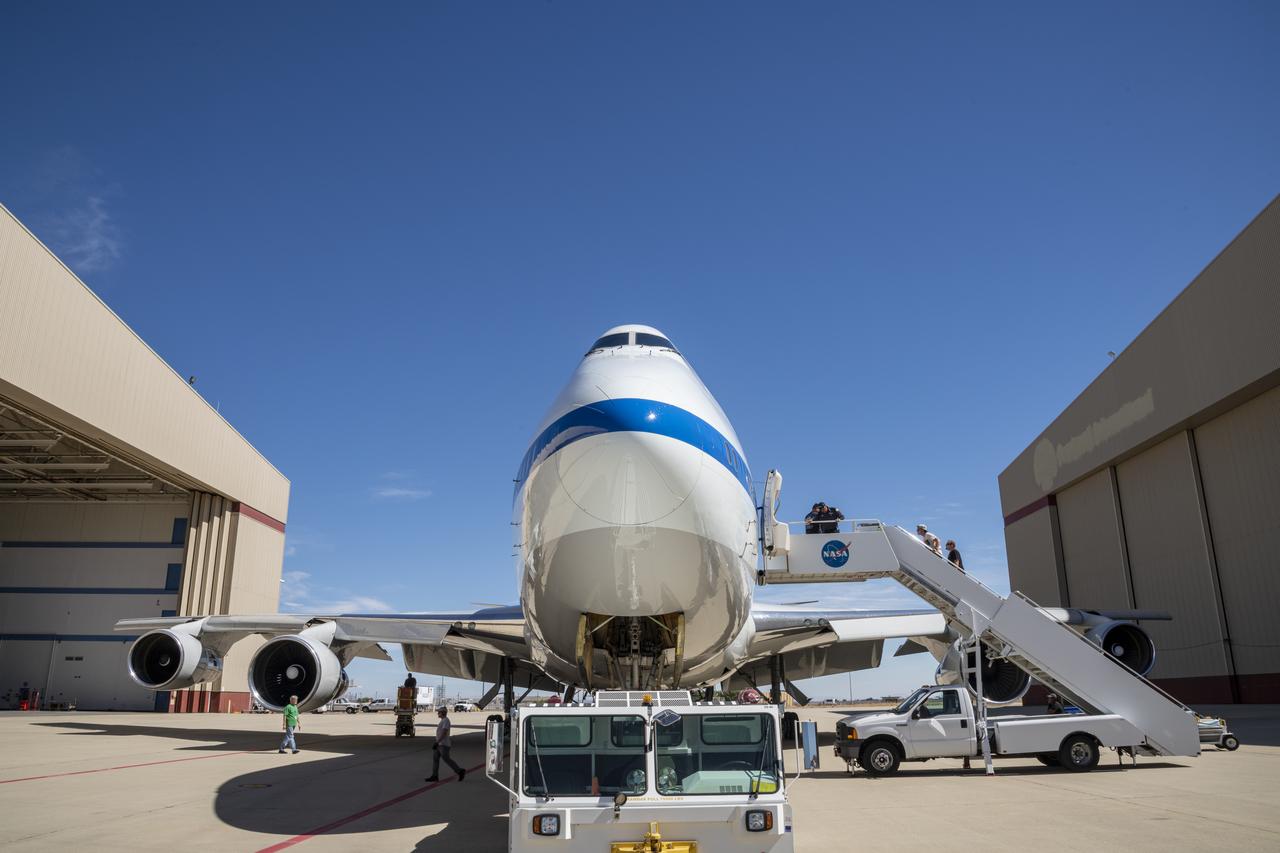
The Stratospheric Observatory for Infrared Astronomy (SOFIA) returns to NASA’s Armstrong Flight Research Center Building 703 on Aug. 11 after a productive month of science flights out of Christchurch International Airport in New Zealand.
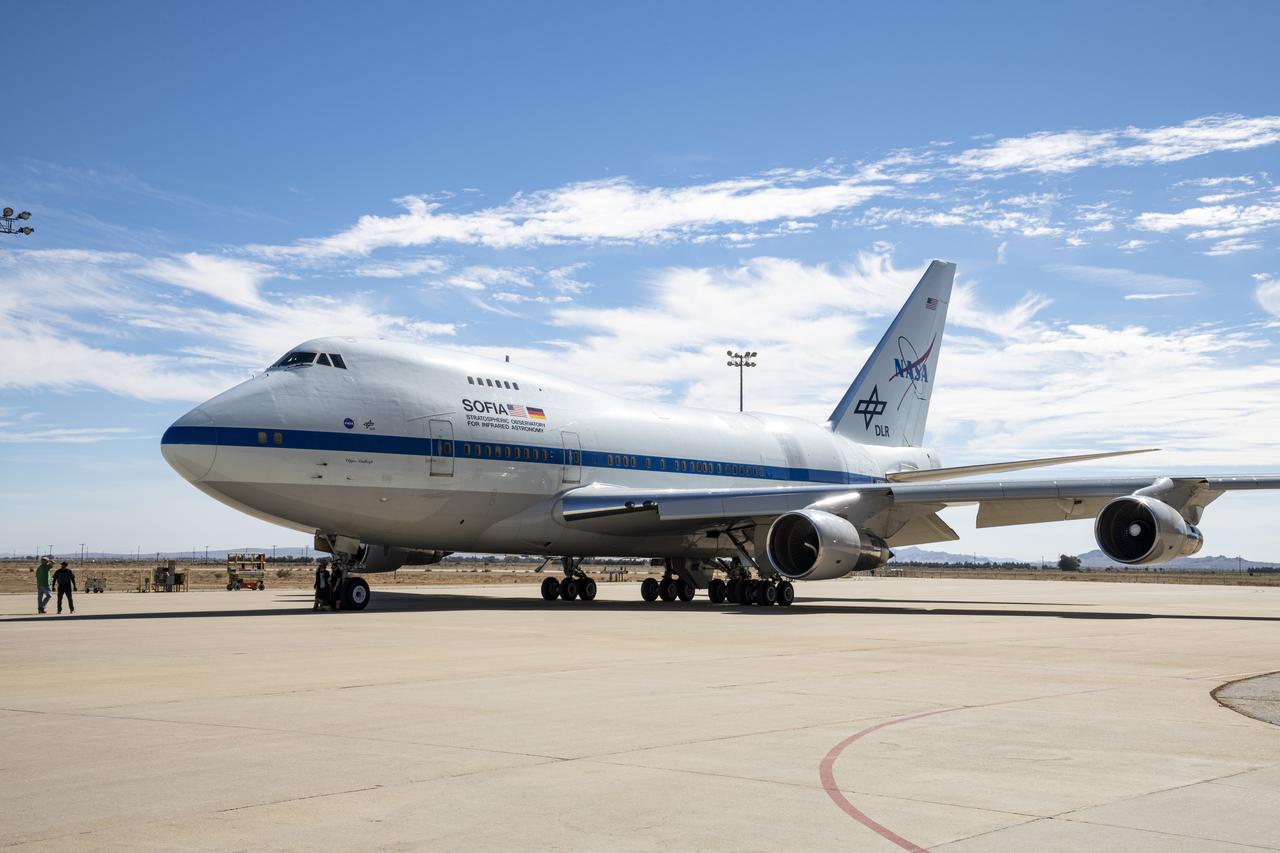
The Stratospheric Observatory for Infrared Astronomy (SOFIA) returns to NASA’s Armstrong Flight Research Center Building 703 on Aug. 11 after a productive month of science flights out of Christchurch International Airport in New Zealand.
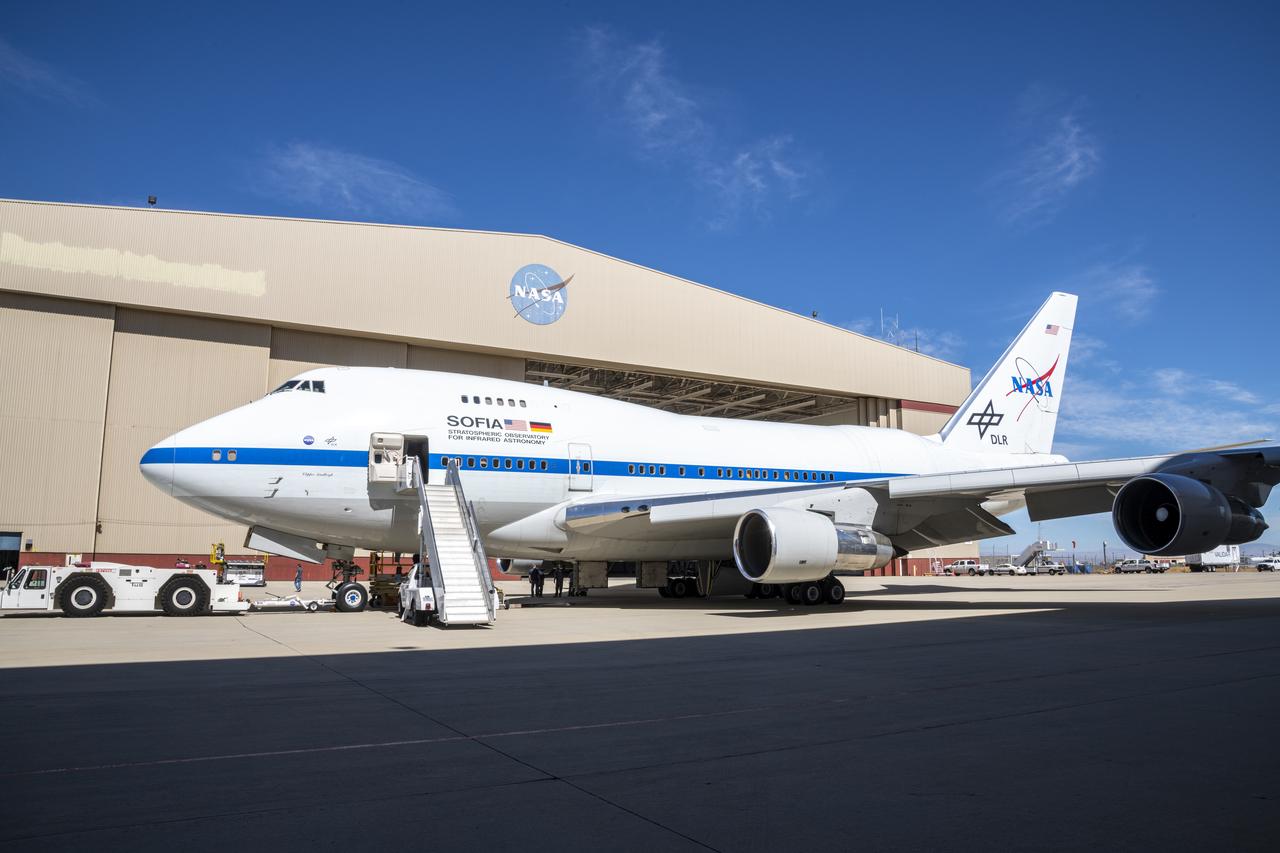
The Stratospheric Observatory for Infrared Astronomy (SOFIA) returns to NASA’s Armstrong Flight Research Center Building 703 on Aug. 11 after a productive month of science flights out of Christchurch International Airport in New Zealand.
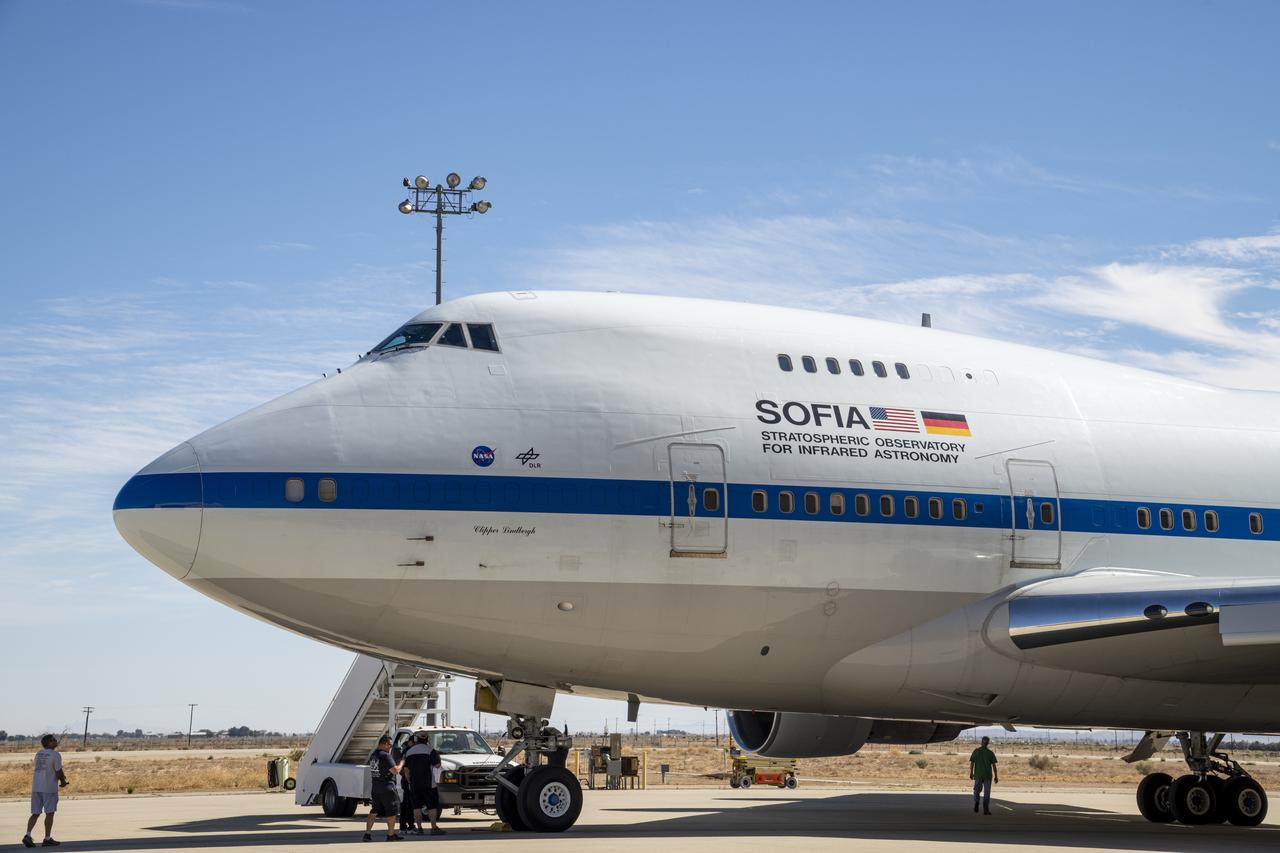
The Stratospheric Observatory for Infrared Astronomy (SOFIA) returns to NASA’s Armstrong Flight Research Center Building 703 on Aug. 11 after a productive month of science flights out of Christchurch International Airport in New Zealand.
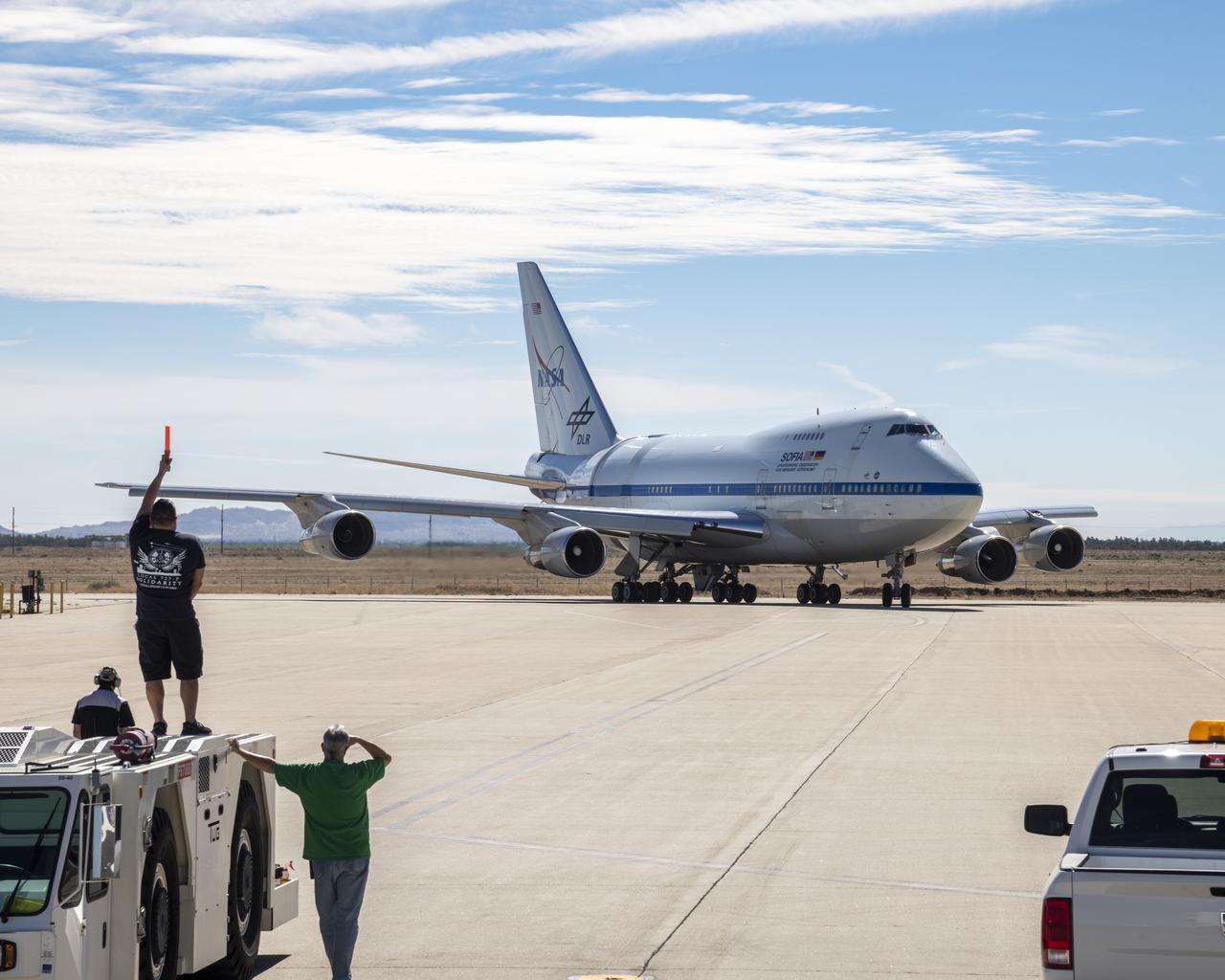
The Stratospheric Observatory for Infrared Astronomy (SOFIA) returns to NASA’s Armstrong Flight Research Center Building 703 on Aug. 11 after a productive month of science flights out of Christchurch International Airport in New Zealand.
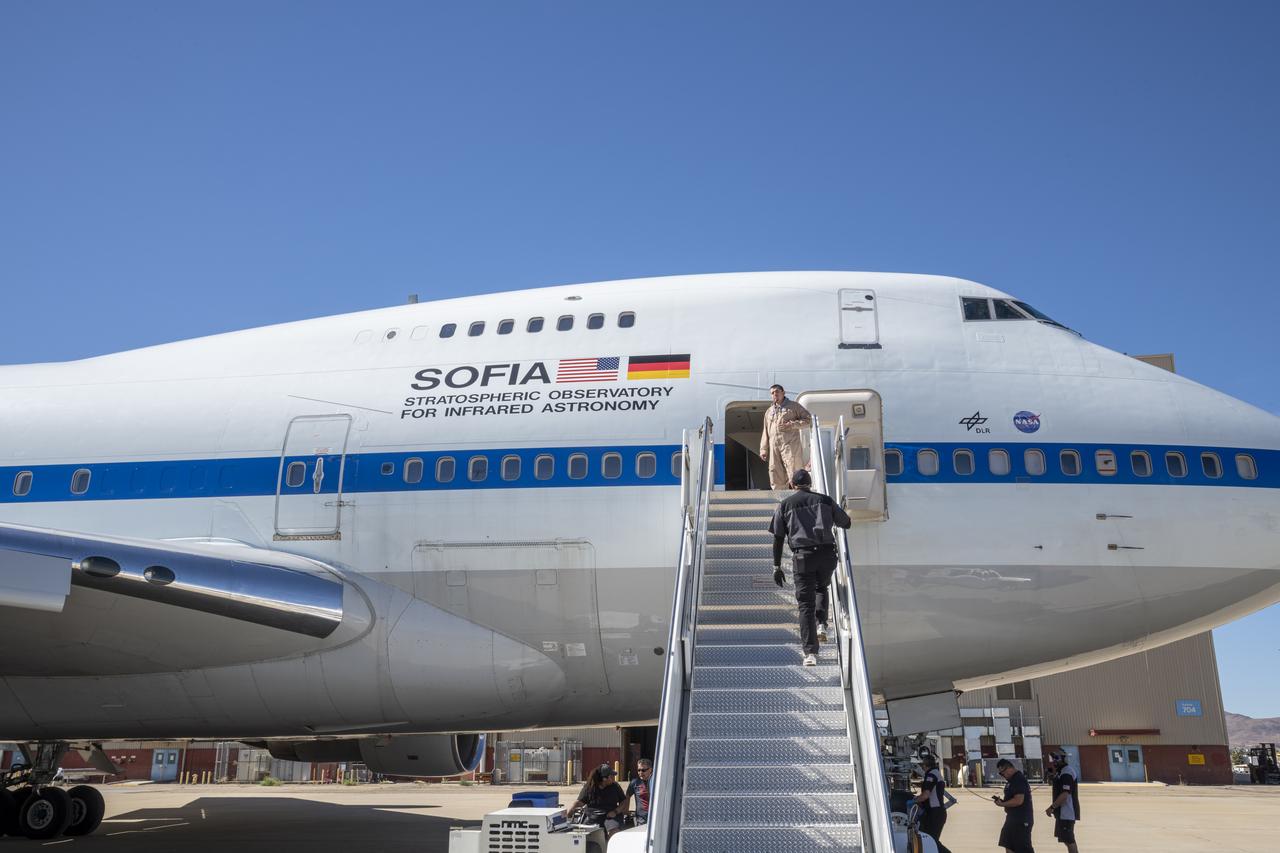
The Stratospheric Observatory for Infrared Astronomy (SOFIA) returns to NASA’s Armstrong Flight Research Center Building 703 on Aug. 11 after a productive month of science flights out of Christchurch International Airport in New Zealand.
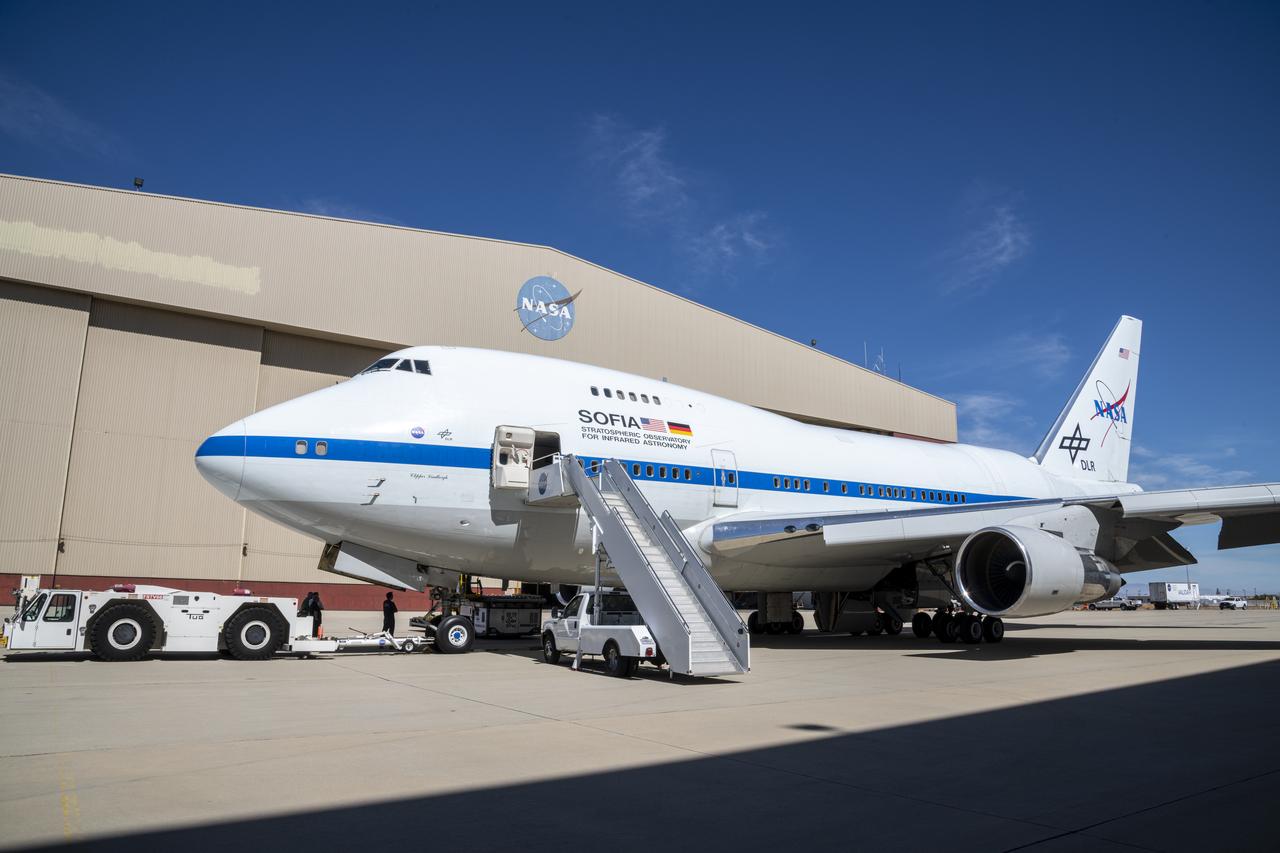
The Stratospheric Observatory for Infrared Astronomy (SOFIA) returns to NASA’s Armstrong Flight Research Center Building 703 on Aug. 11 after a productive month of science flights out of Christchurch International Airport in New Zealand.
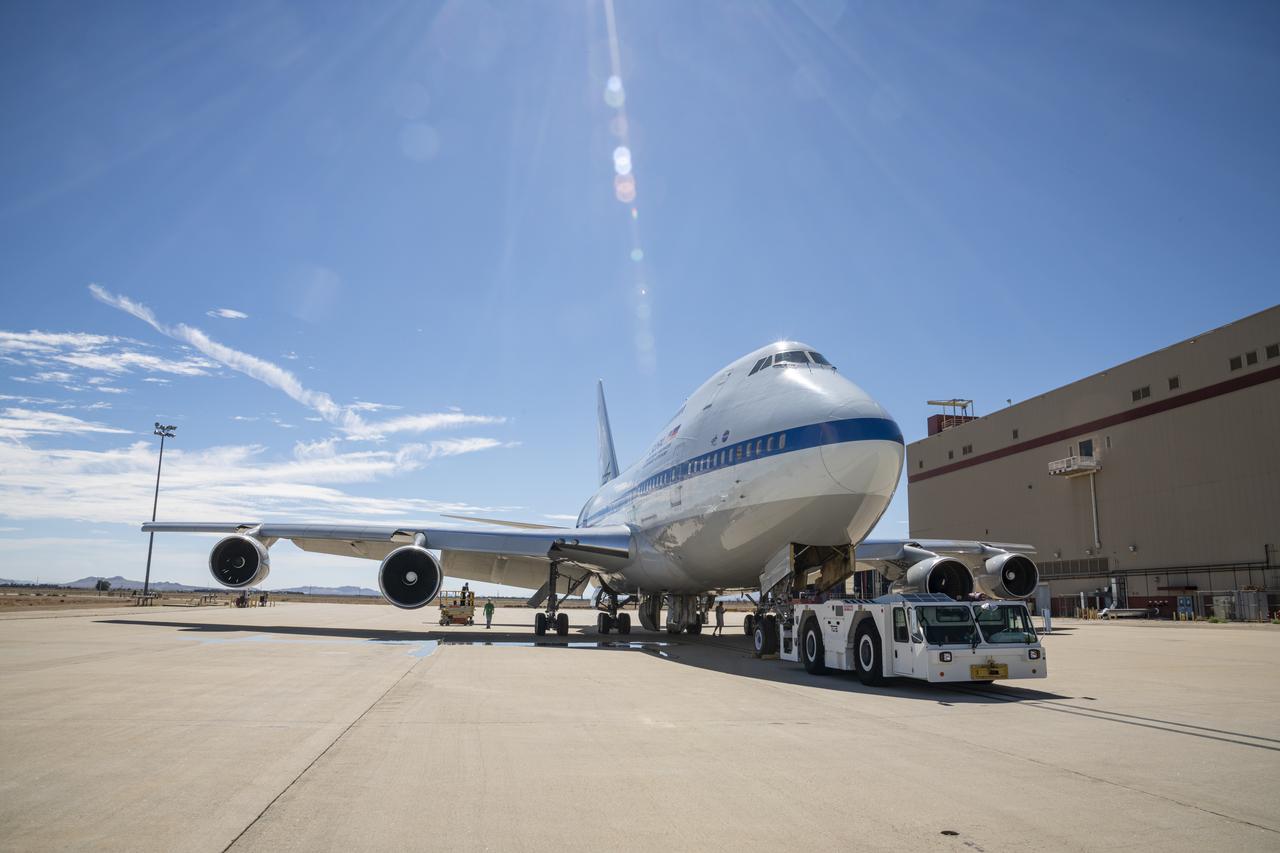
The Stratospheric Observatory for Infrared Astronomy (SOFIA) returns to NASA’s Armstrong Flight Research Center Building 703 on Aug. 11 after a productive month of science flights out of Christchurch International Airport in New Zealand.
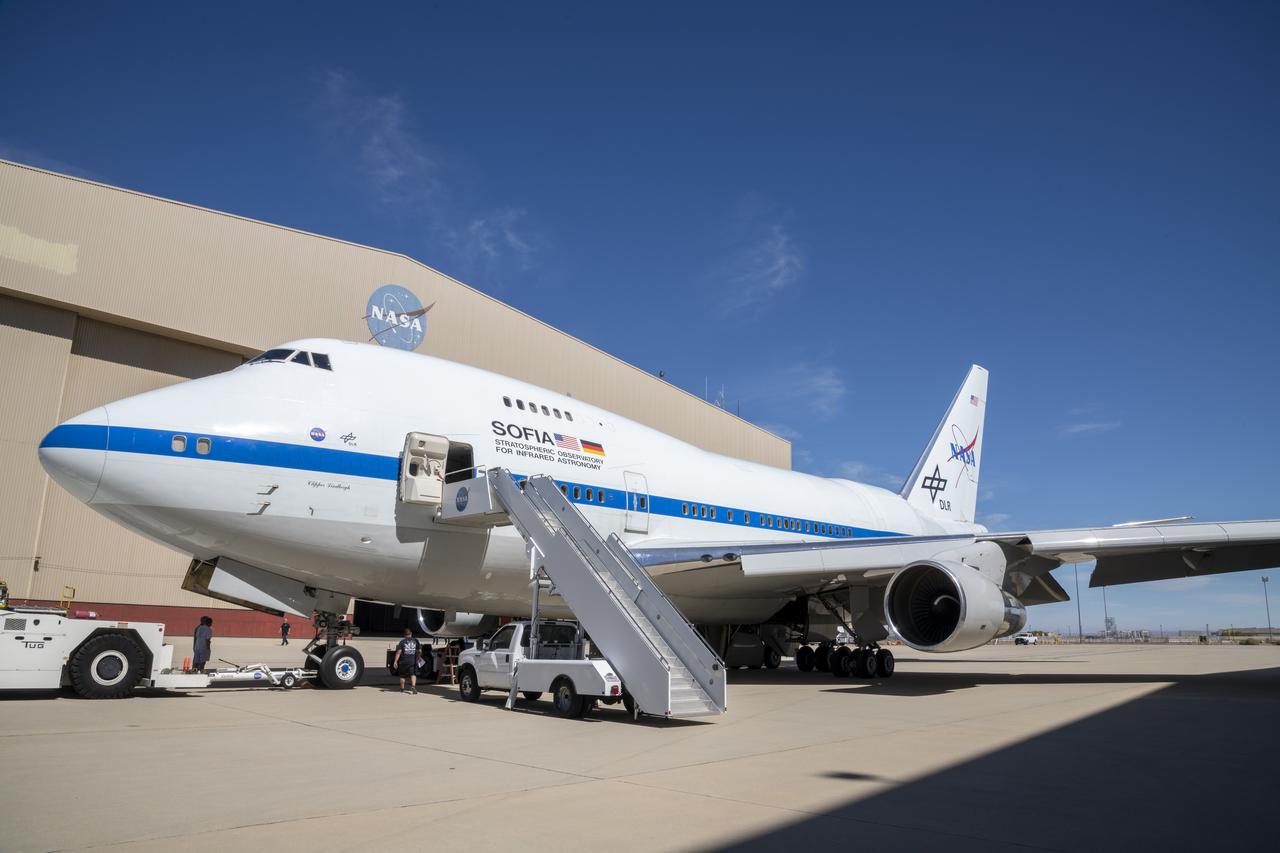
The Stratospheric Observatory for Infrared Astronomy (SOFIA) returns to NASA’s Armstrong Flight Research Center Building 703 on Aug. 11 after a productive month of science flights out of Christchurch International Airport in New Zealand.
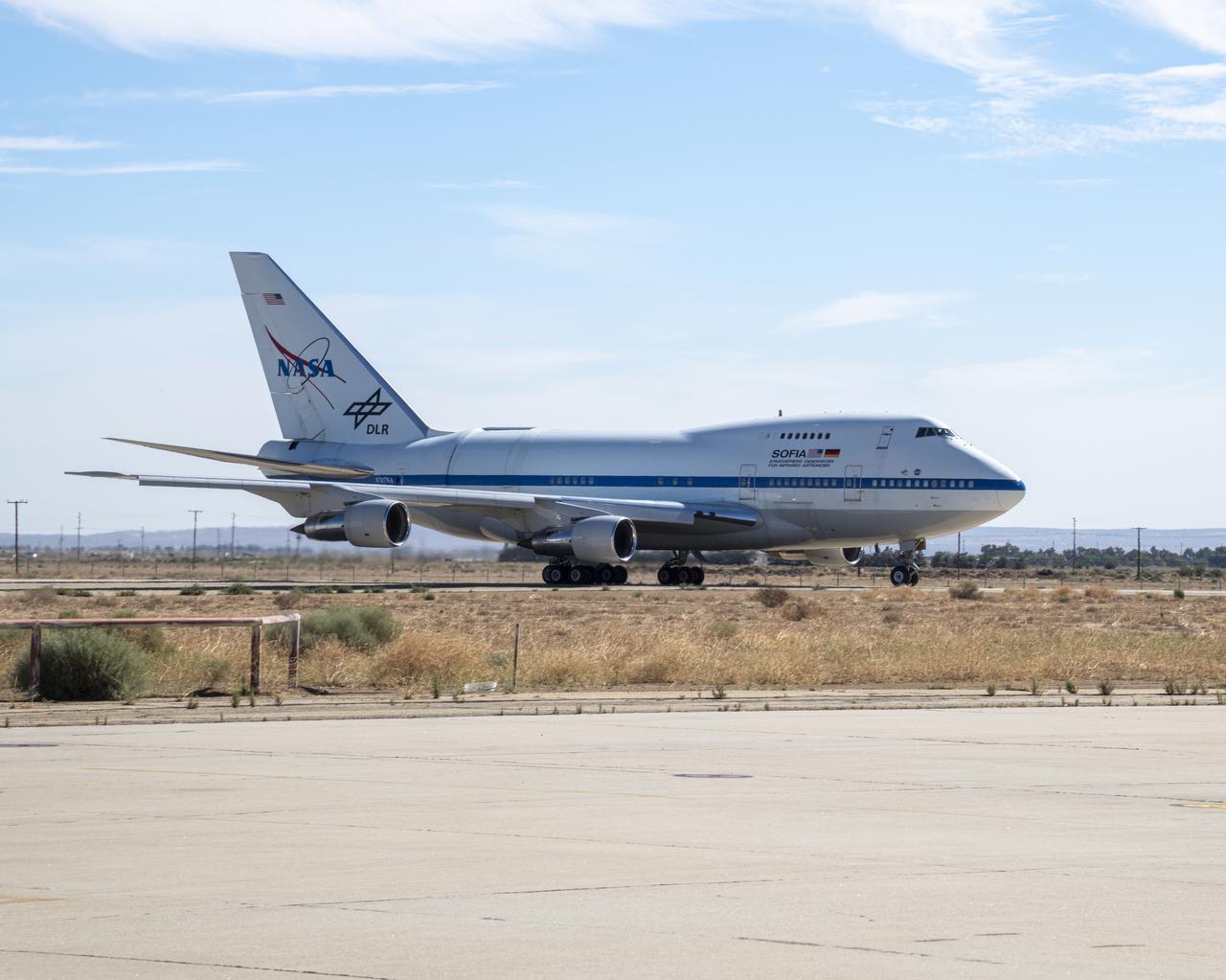
The Stratospheric Observatory for Infrared Astronomy (SOFIA) returns to NASA’s Armstrong Flight Research Center Building 703 on Aug. 11 after a productive month of science flights out of Christchurch International Airport in New Zealand.
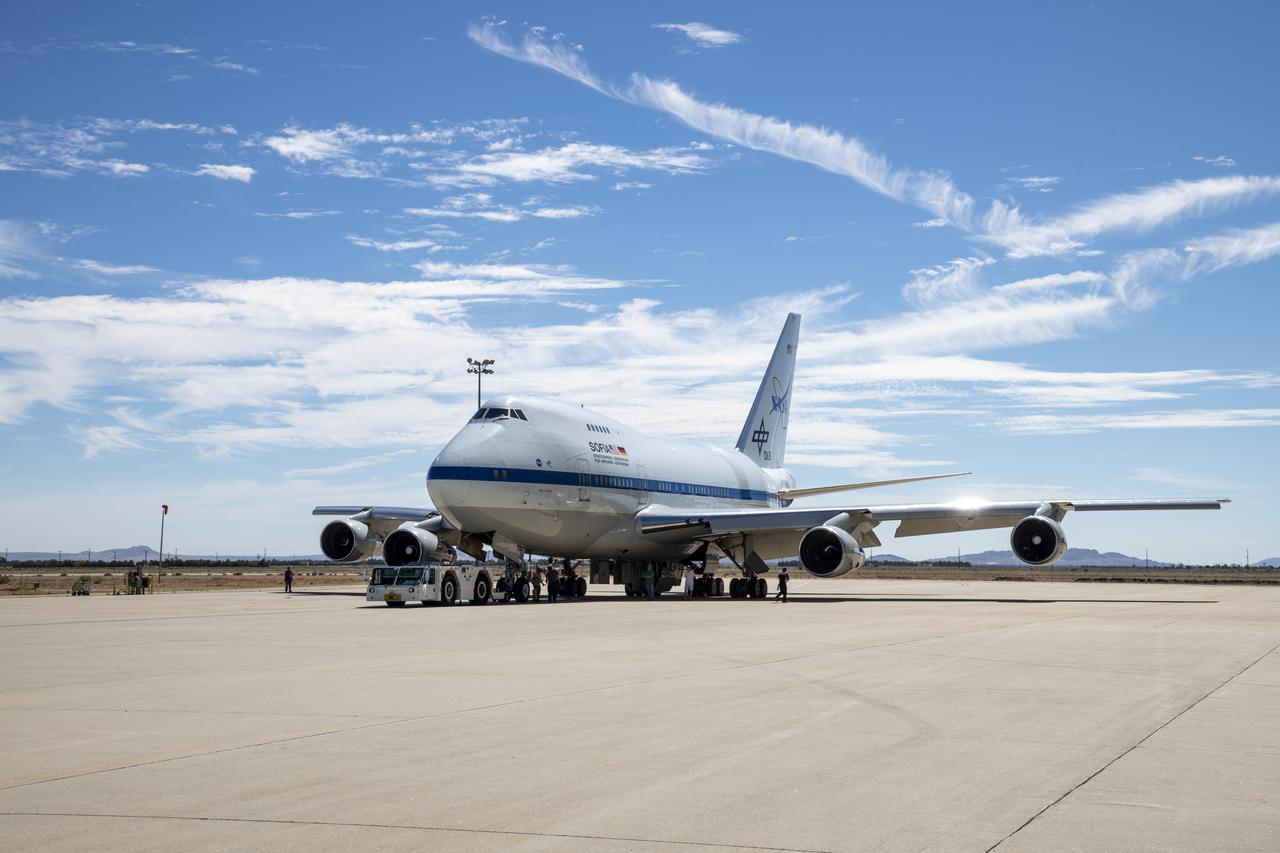
The Stratospheric Observatory for Infrared Astronomy (SOFIA) returns to NASA’s Armstrong Flight Research Center Building 703 on Aug. 11 after a productive month of science flights out of Christchurch International Airport in New Zealand.
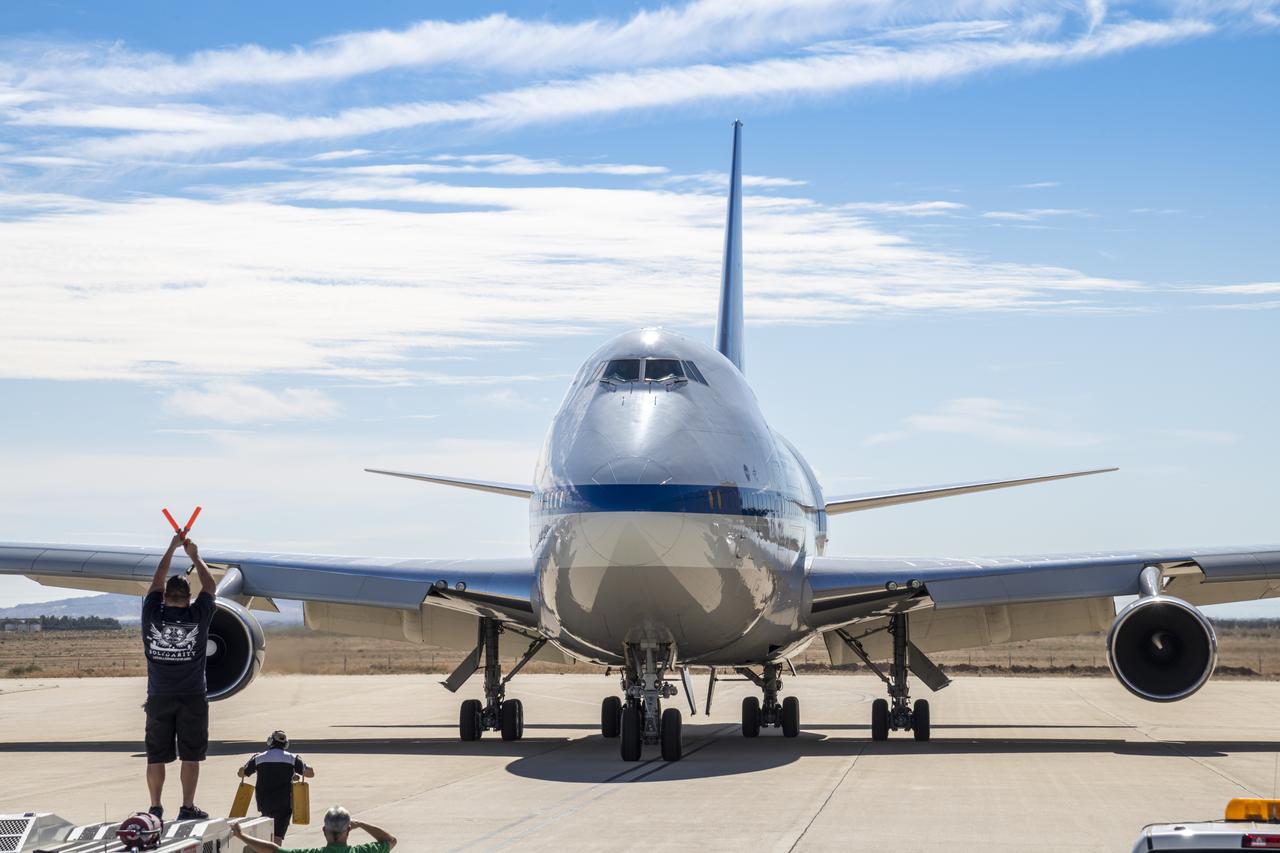
The Stratospheric Observatory for Infrared Astronomy (SOFIA) returns to NASA’s Armstrong Flight Research Center Building 703 on Aug. 11 after a productive month of science flights out of Christchurch International Airport in New Zealand.
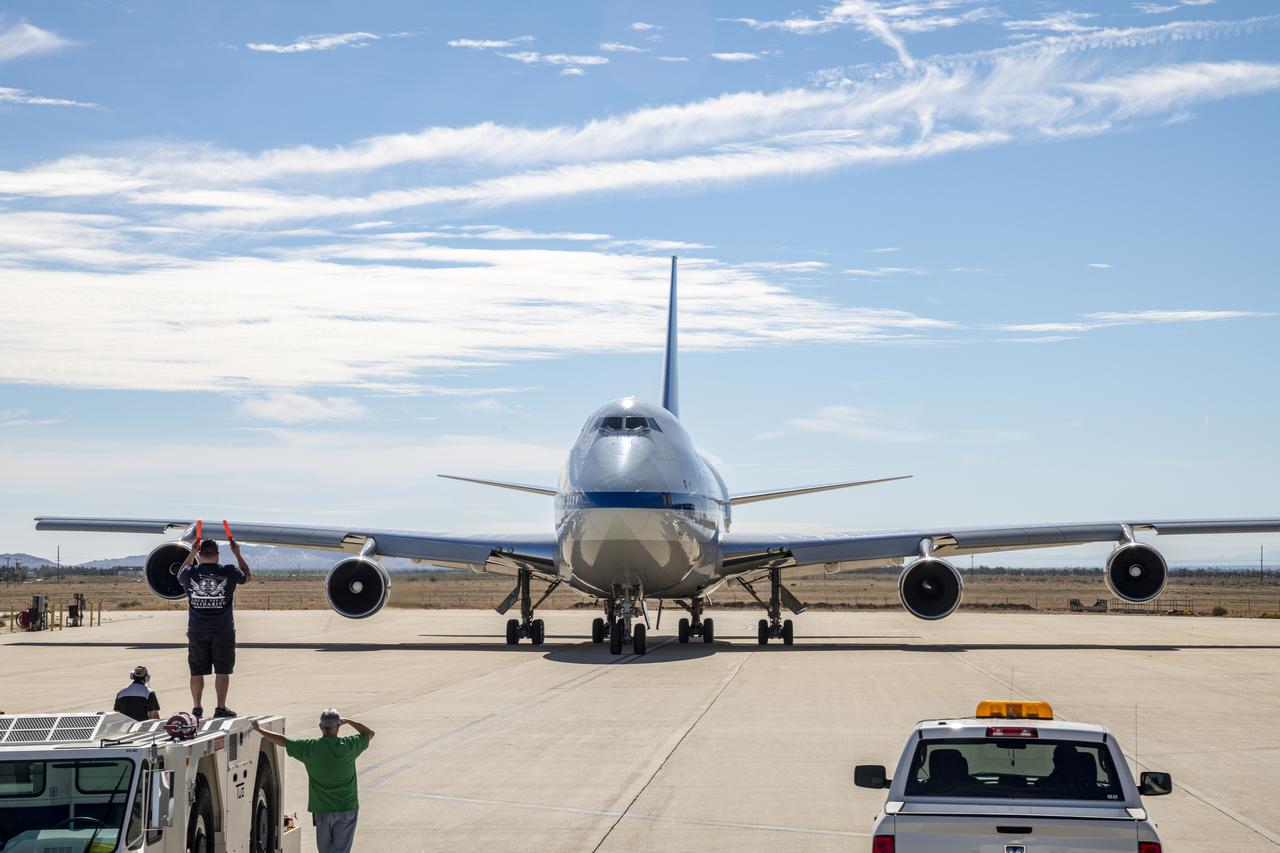
The Stratospheric Observatory for Infrared Astronomy (SOFIA) returns to NASA’s Armstrong Flight Research Center Building 703 on Aug. 11 after a productive month of science flights out of Christchurch International Airport in New Zealand.
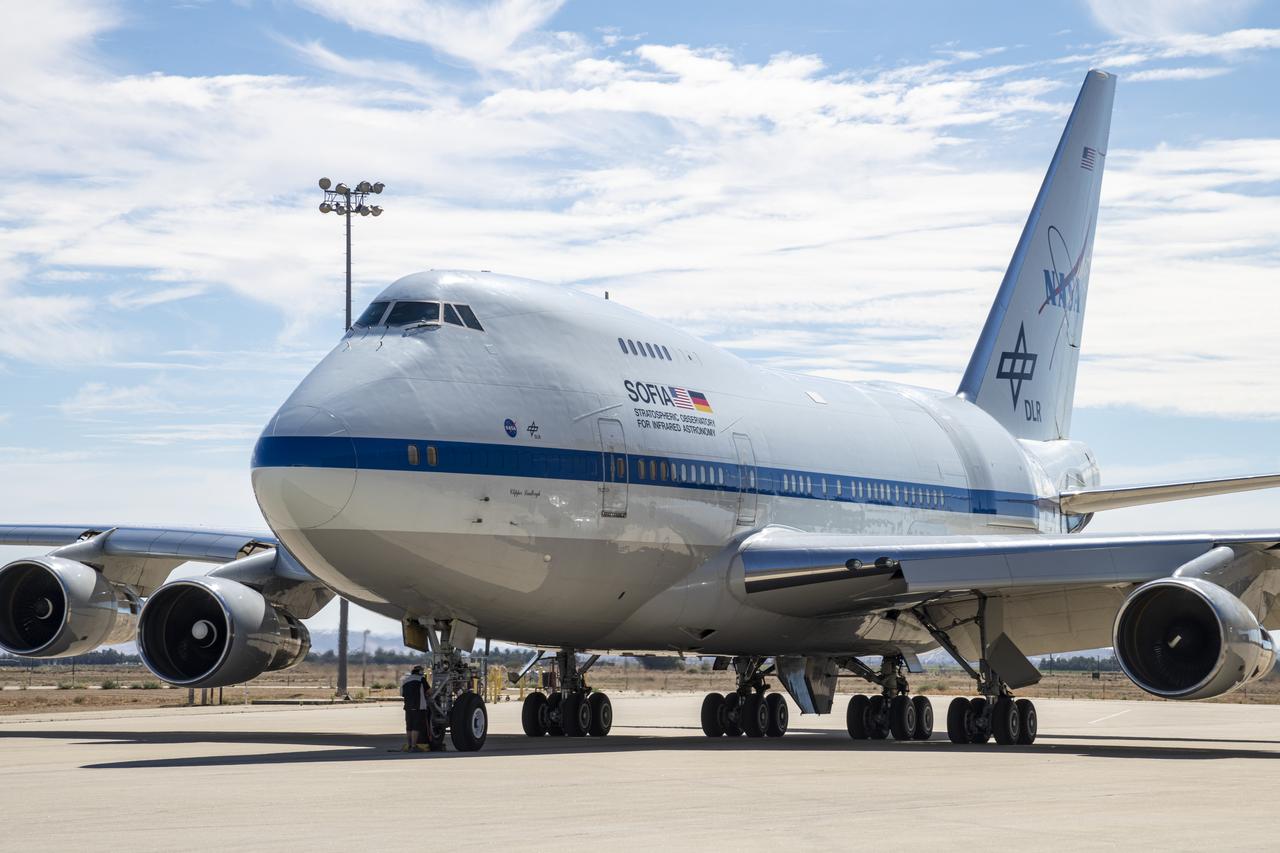
The Stratospheric Observatory for Infrared Astronomy (SOFIA) returns to NASA’s Armstrong Flight Research Center Building 703 on Aug. 11 after a productive month of science flights out of Christchurch International Airport in New Zealand.

The Stratospheric Observatory for Infrared Astronomy (SOFIA) returns to NASA’s Armstrong Flight Research Center Building 703 on Aug. 11 after a productive month of science flights out of Christchurch International Airport in New Zealand.
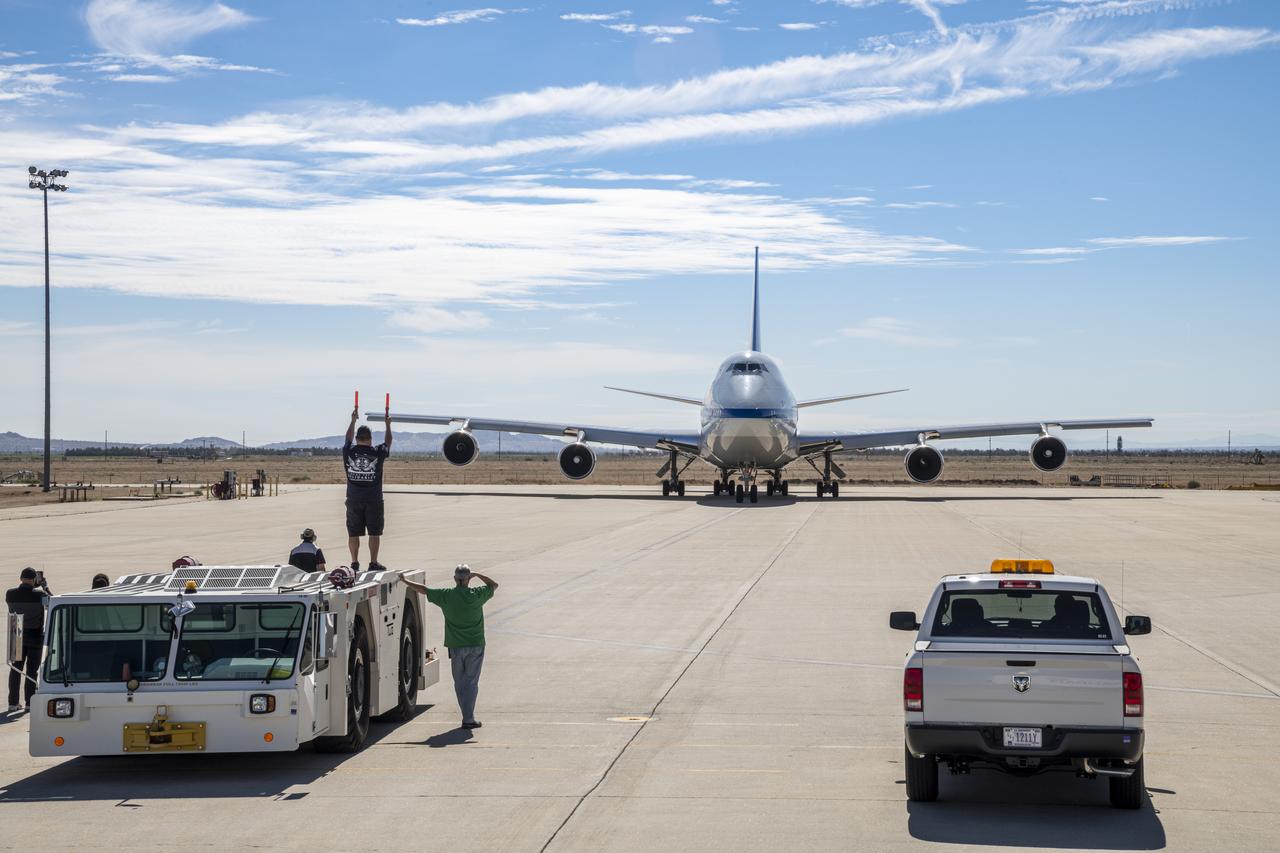
The Stratospheric Observatory for Infrared Astronomy (SOFIA) returns to NASA’s Armstrong Flight Research Center Building 703 on Aug. 11 after a productive month of science flights out of Christchurch International Airport in New Zealand.
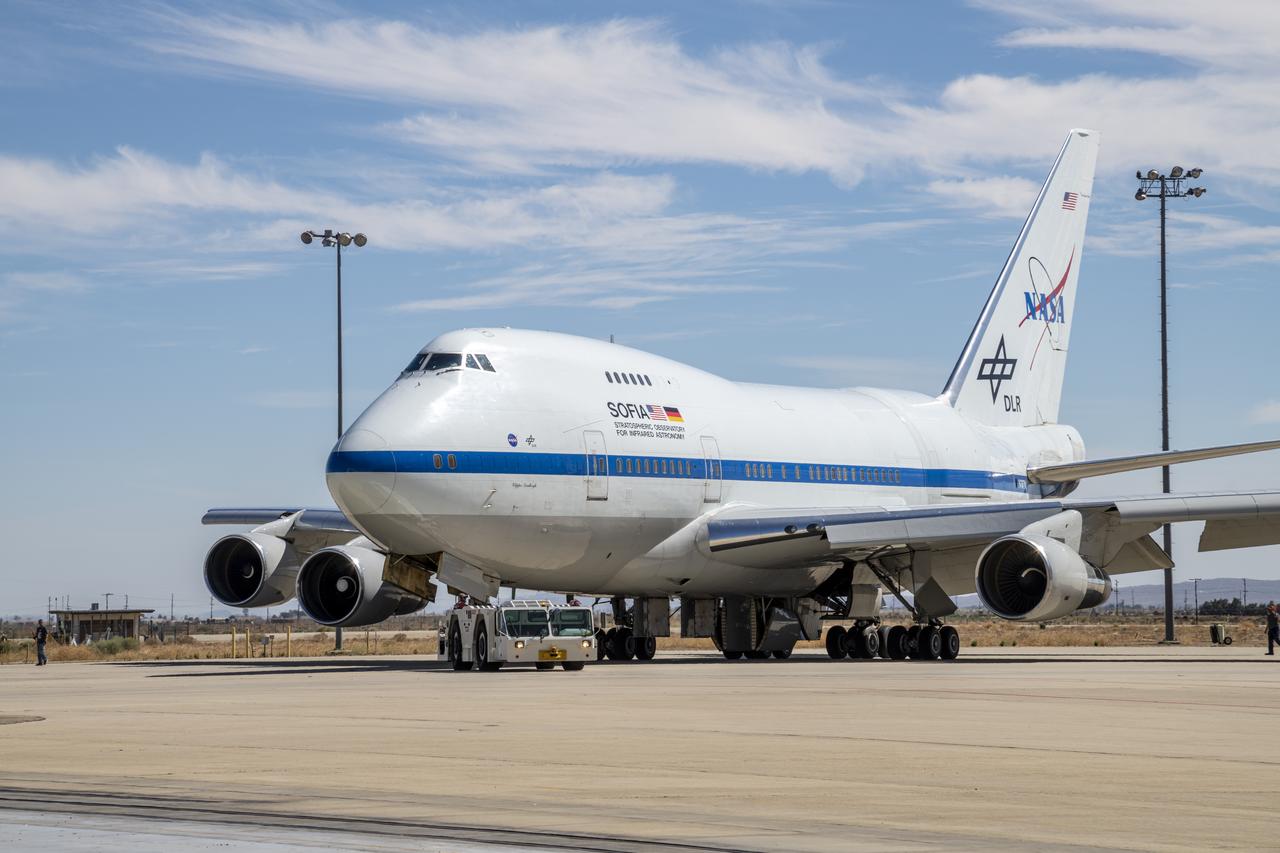
The Stratospheric Observatory for Infrared Astronomy (SOFIA) returns to NASA’s Armstrong Flight Research Center Building 703 on Aug. 11 after a productive month of science flights out of Christchurch International Airport in New Zealand.
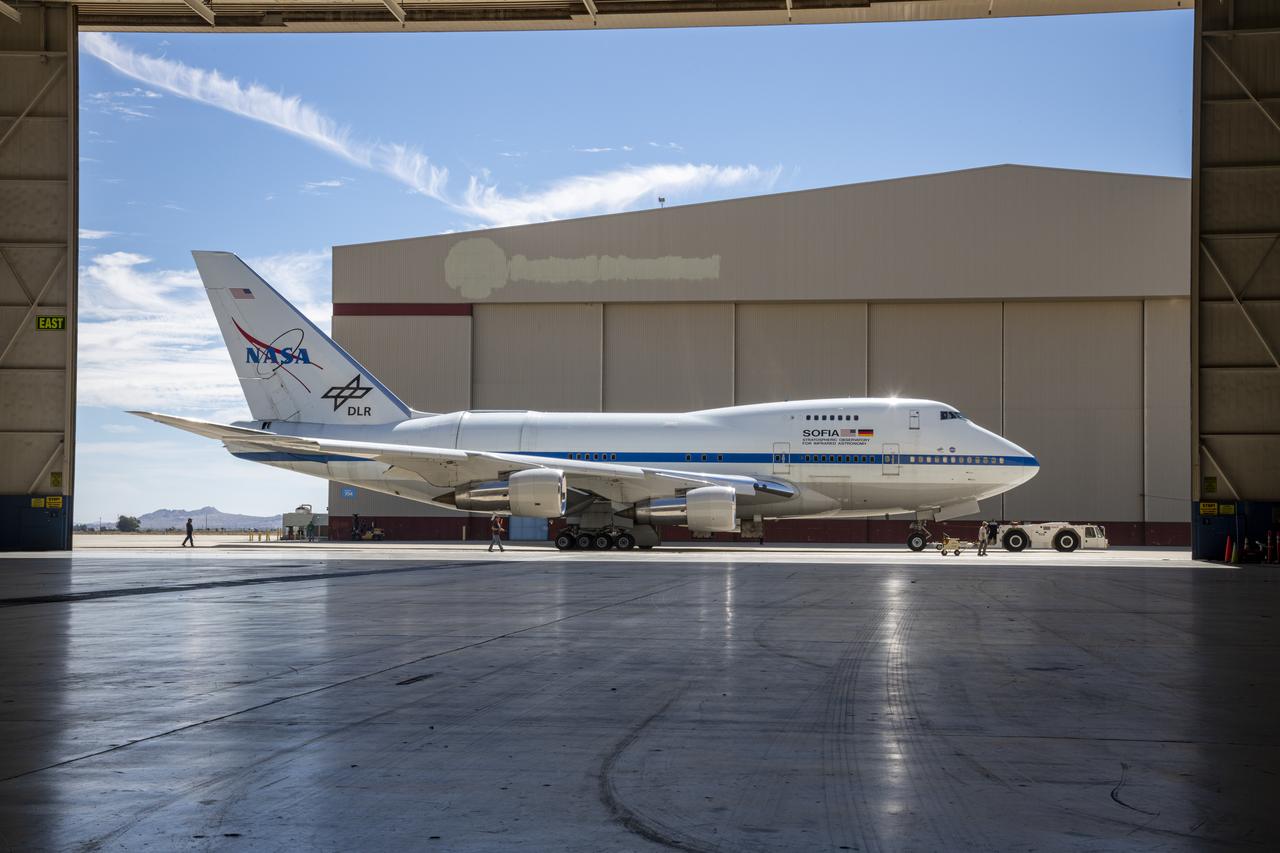
The Stratospheric Observatory for Infrared Astronomy (SOFIA) returns to NASA’s Armstrong Flight Research Center Building 703 on Aug. 11 after a productive month of science flights out of Christchurch International Airport in New Zealand.
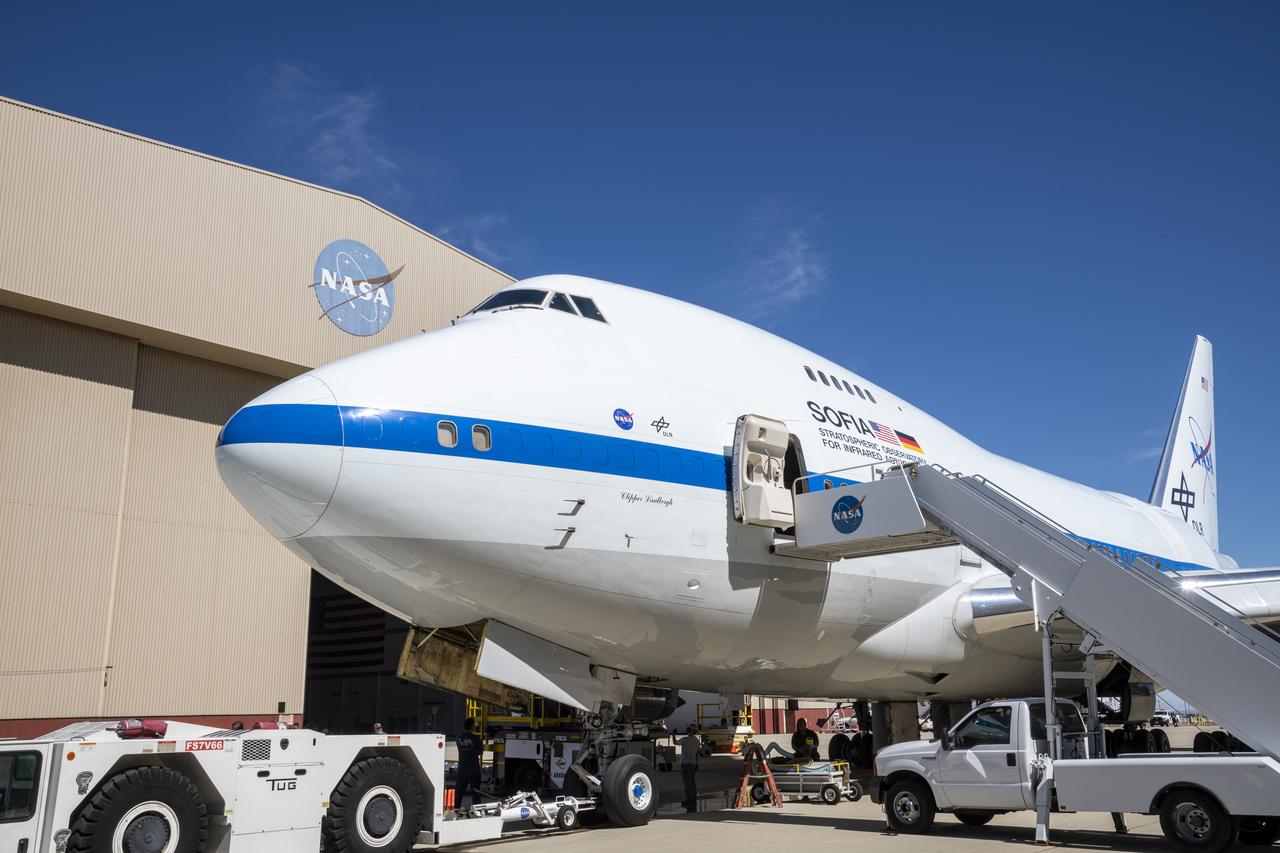
The Stratospheric Observatory for Infrared Astronomy (SOFIA) returns to NASA’s Armstrong Flight Research Center Building 703 on Aug. 11 after a productive month of science flights out of Christchurch International Airport in New Zealand.
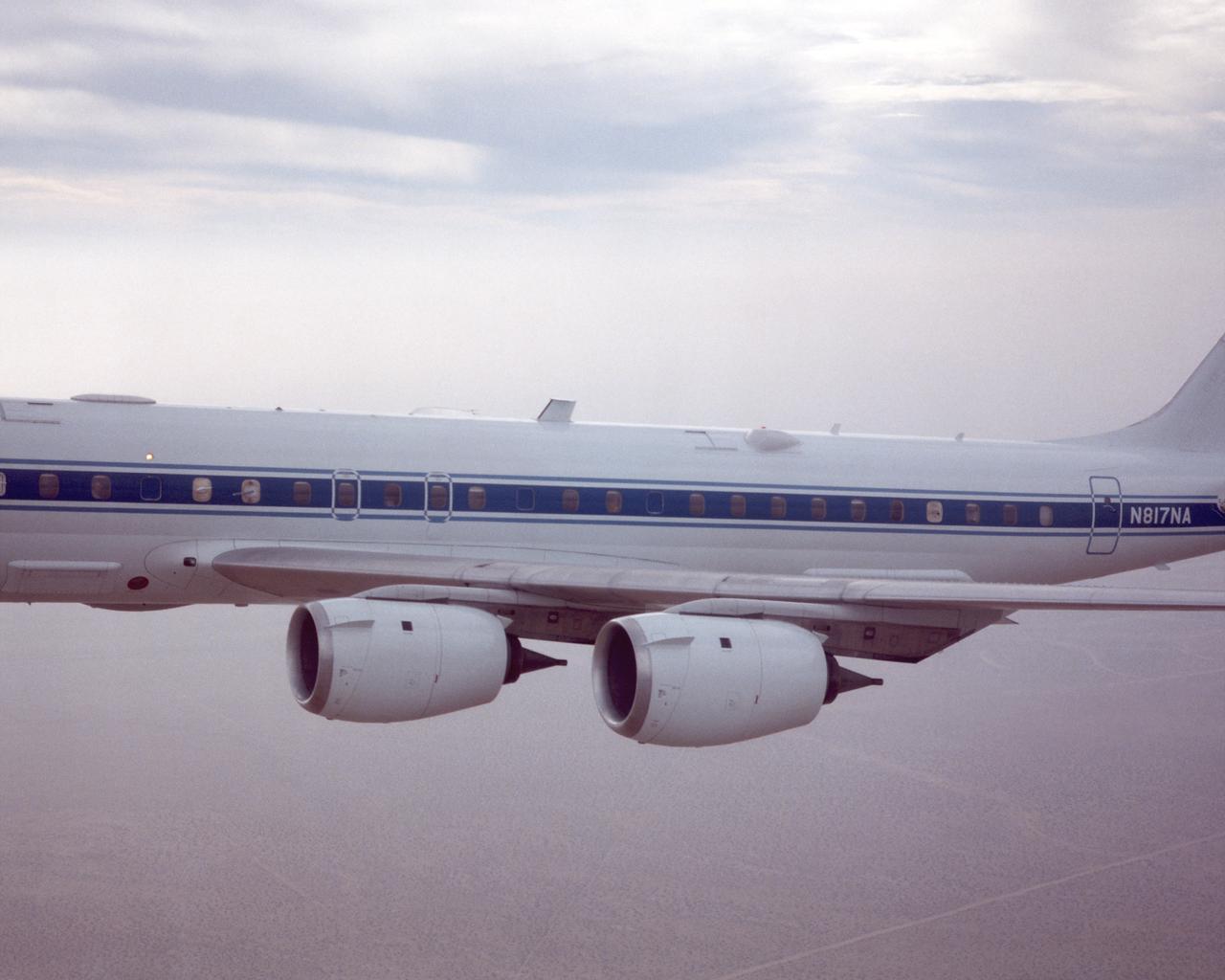
DC-8 returning from AFWEX deployment showing AeroSAPIENT Ku-band transmit antenna (aft 62 degree port)
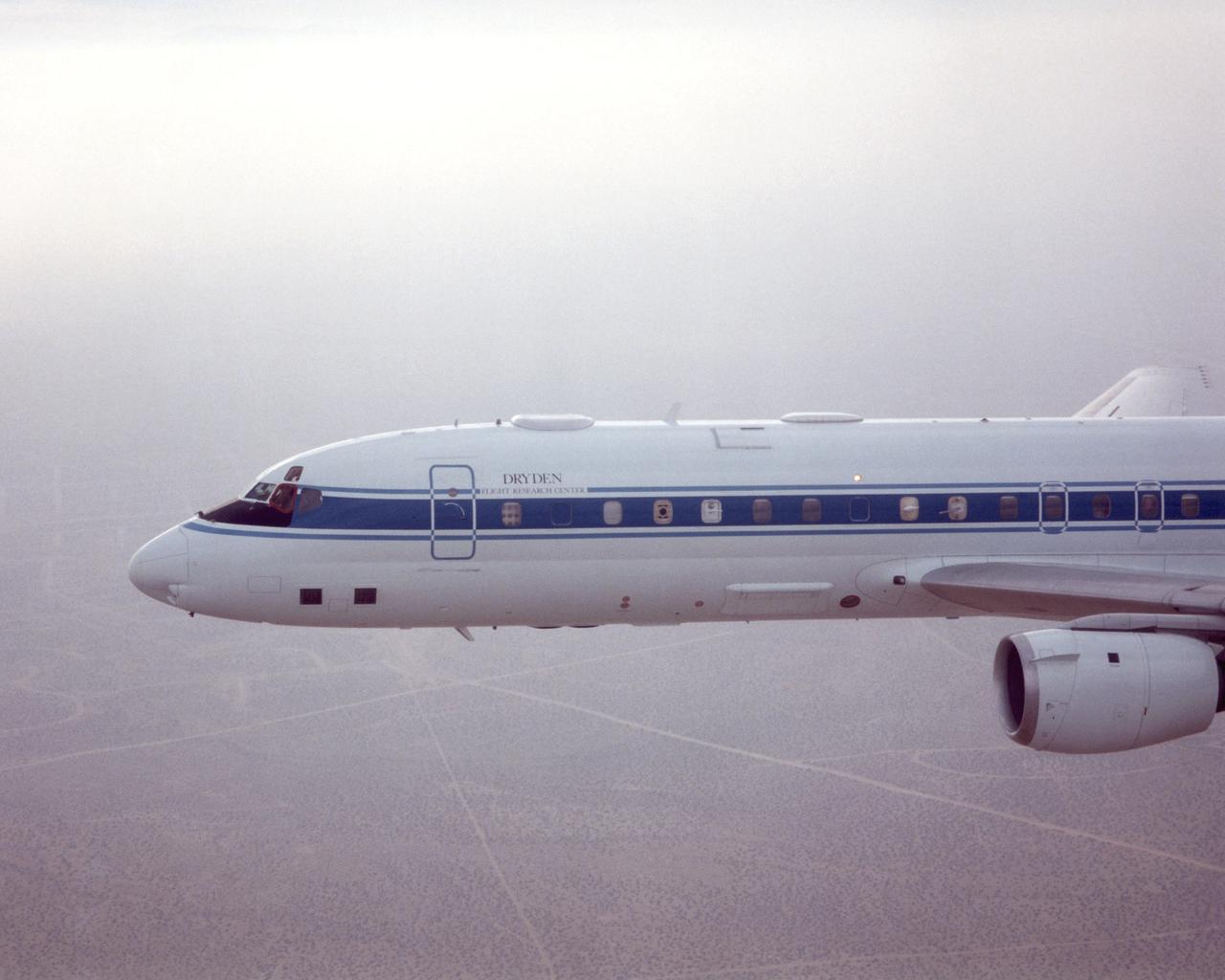
DC-8 returning from AFWEX deployment showing AeroSAPIENT Ku-band receive antenna (fwd zenith port)
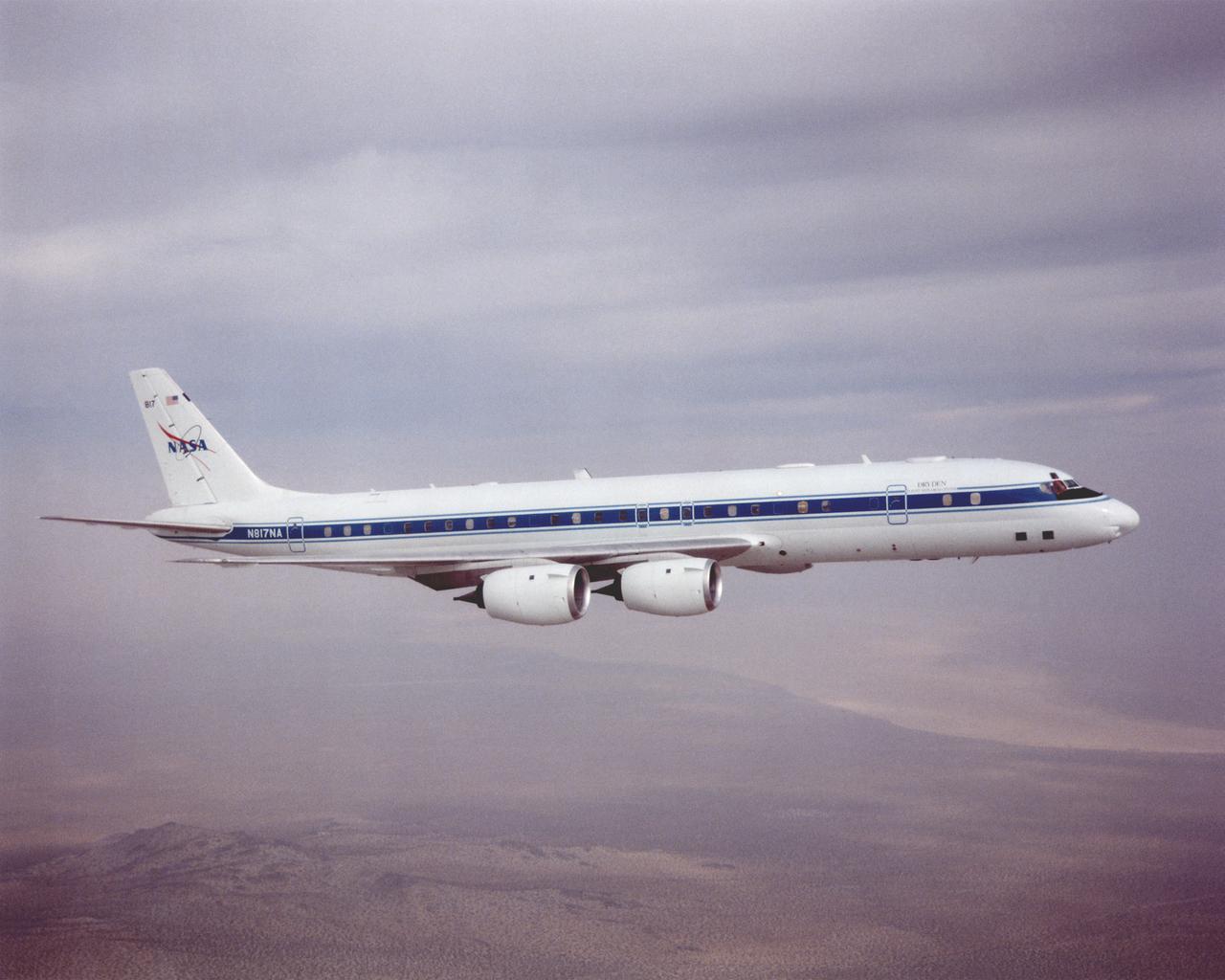
DC-8 returning from AFWEX deployment showing AeroSAPIENT Ku-band antennas
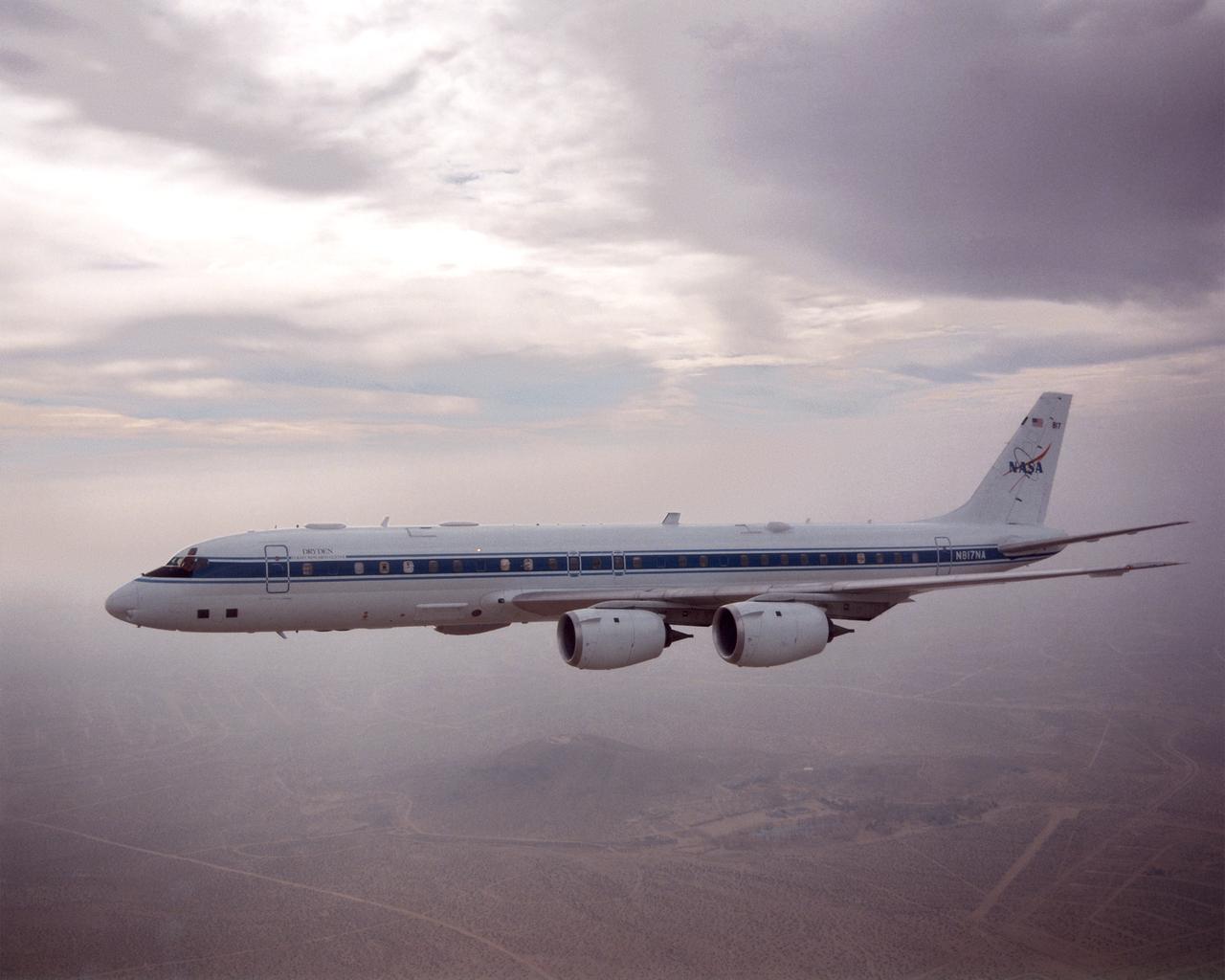
DC-8 returning from AFWEX deployment showing AeroSAPIENT Ku-band antennas
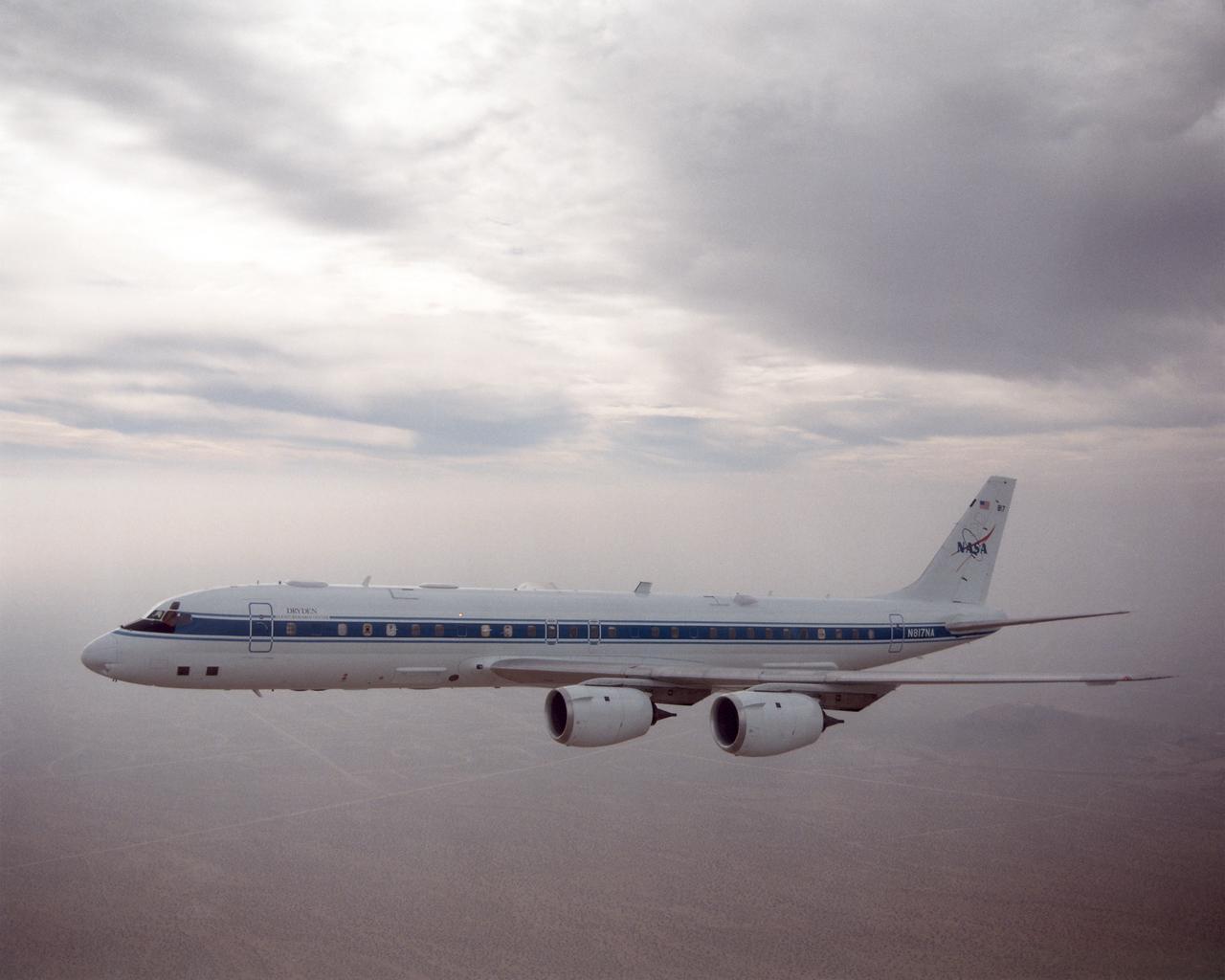
DC-8 returning from AFWEX deployment showing AeroSAPIENT Ku-band antennas
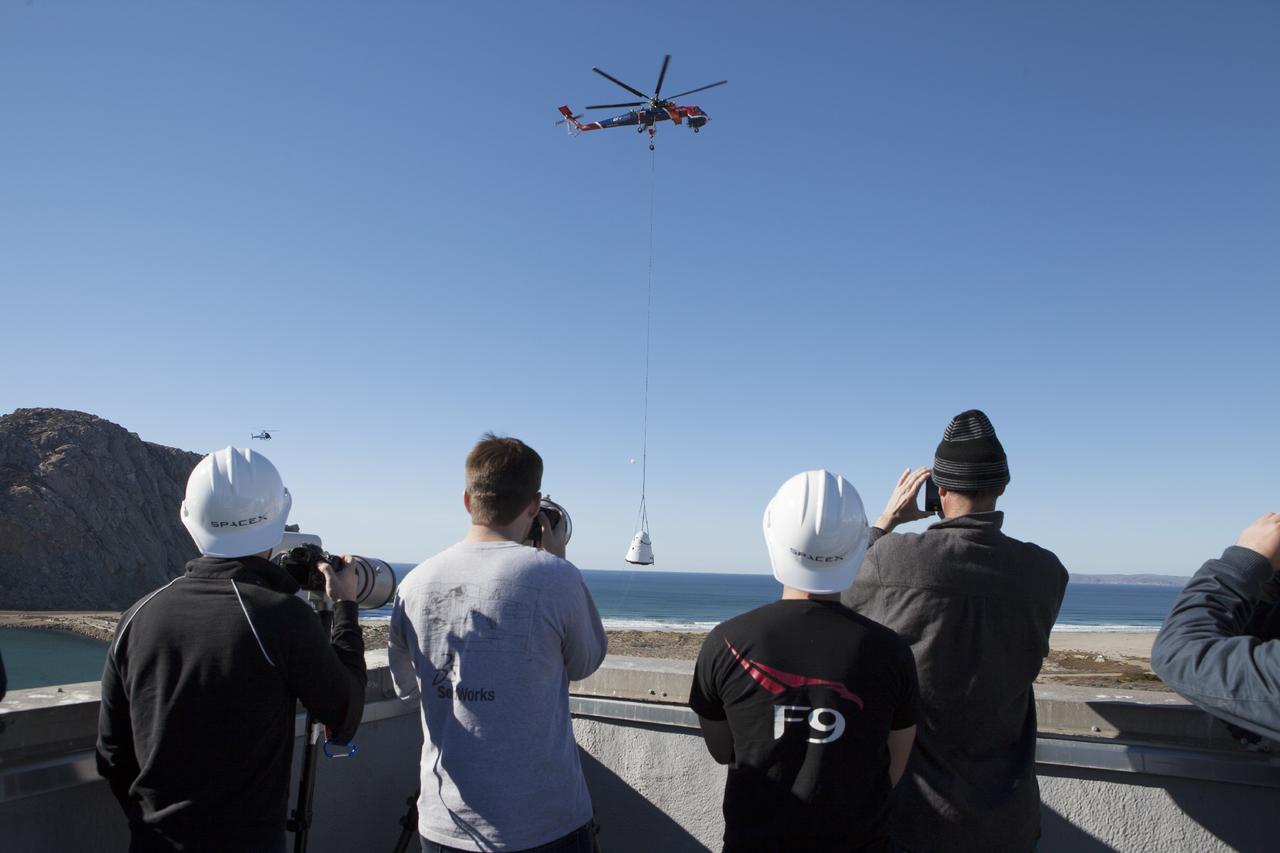
An Erickson Sky Crane helicopter returns the SpaceX Dragon test article to Morro Bay, Cailf., following a test to evaluate the spacecraft's parachute deployment system. The test was part of a milestone under its Commercial Crew Integrated Capability agreement with NASA's Commercial Crew Program. Photo credit: NASA/Kim Shiflett
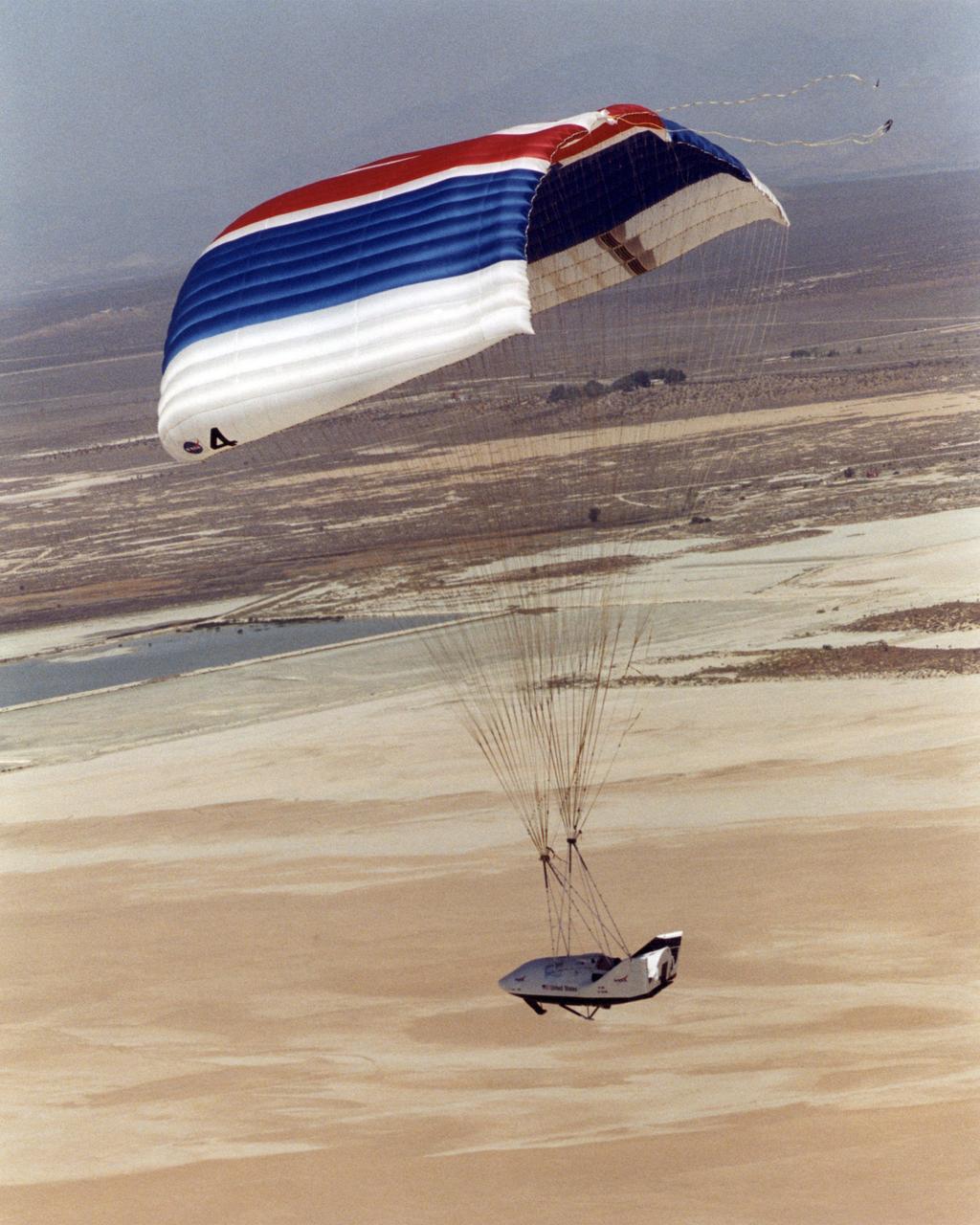
The seventh free flight of an X-38 prototype for an emergency space station crew return vehicle culminated in a graceful glide to landing under the world's largest parafoil. The mission began when the X-38 was released from NASA's B-52 mother ship over Edwards Air Force Base, California, where NASA Dryden Flight Research Center is located. The July 10, 2001 flight helped researchers evaluate software and deployment of the X-38's drogue parachute and subsequent parafoil. NASA intends to create a space-worthy Crew Return Vehicle (CRV) to be docked to the International Space Station as a "lifeboat" to enable a full seven-person station crew to evacuate in an emergency.
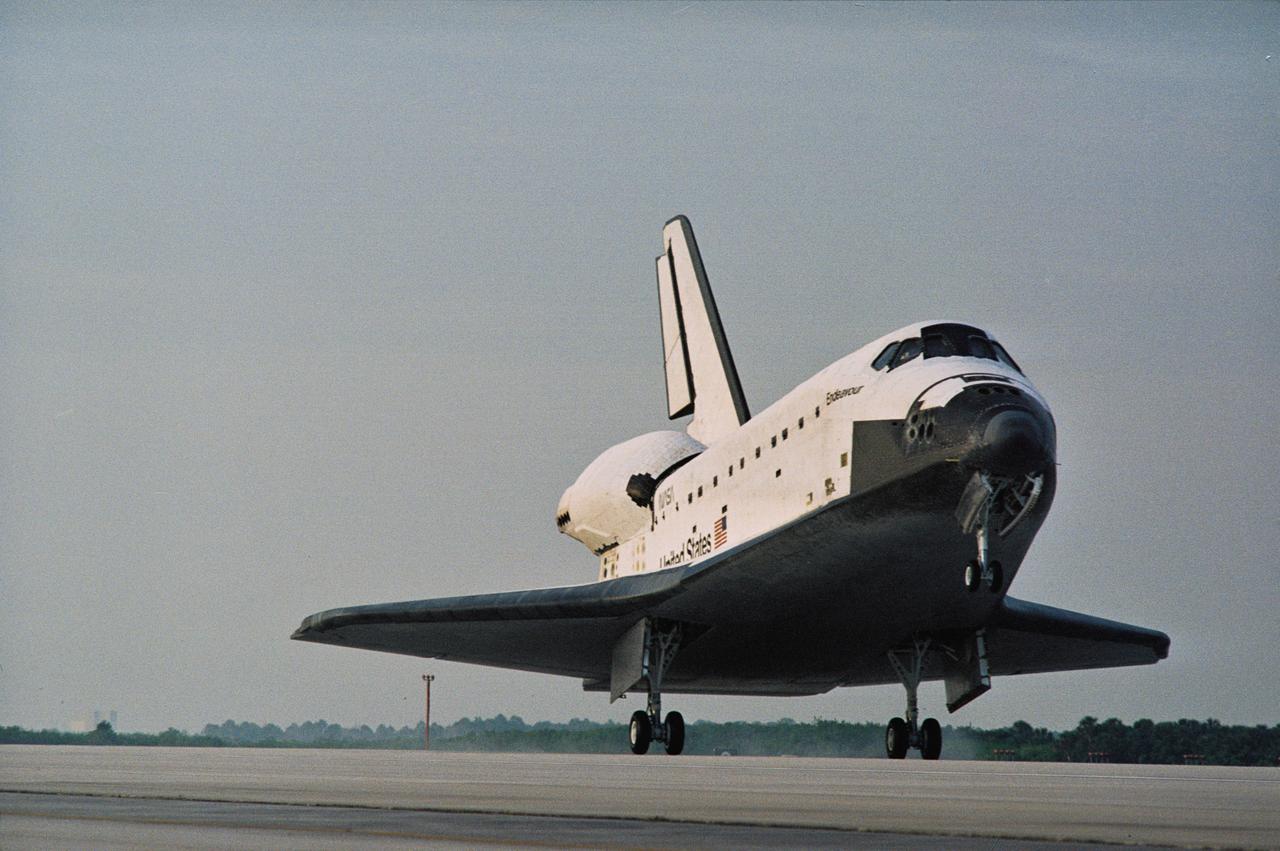
STS077-S-011 (29 May 1996) --- As its main landing gear touches down on Runway 33 at the Kennedy Space Center (KSC), the Space Shuttle Endeavour returns to Florida following a ten-day mission in space. Touchdown came at 7:09 a.m. (EDT), May 29, 1996. Leading the crew onboard was astronaut John H. Casper, mission commander. Other crew members were astronauts Curtis L. Brown, Jr., pilot; along with Daniel W. Bursch, Mario Runco, Jr., Andrew S. W. Thomas and Marc Garneau, all mission specialists. Garneau represents the Canadian Space Agency (CSA). During the approximately 10-day mission, the crew performed a variety of payload activities, including microgravity research aboard the Spacehab 4 Module, deployment and retrieval of the Spartan 207 and deployment and rendezvous with the Passive Aerodynamically-Stabilized Magnetically-Damped Satellite (PAMS).
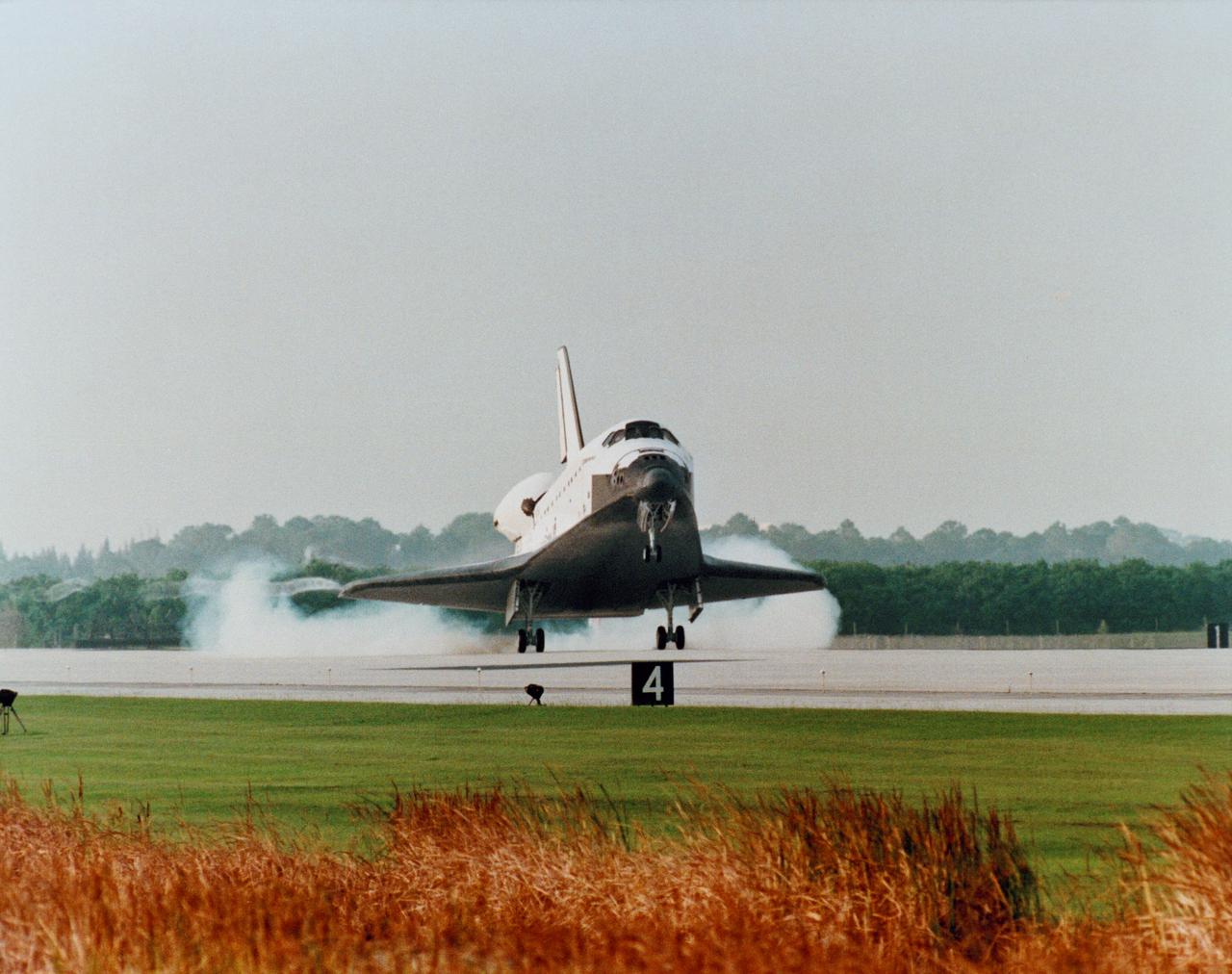
STS077-S-045 (29 May 1996) --- As its main landing gear touches down on Runway 33 at the Kennedy Space Center (KSC), the Space Shuttle Endeavour marks its return to Earth following a ten-day mission in space. Touchdown came at 7:09 a.m. (EDT), May 29, 1996. Leading the crew onboard was astronaut John H. Casper, mission commander. Other crew members were astronauts Curtis L. Brown, Jr., pilot; along with Daniel W. Bursch, Mario Runco, Jr., Andrew S. W. Thomas and Marc Garneau, all mission specialists. Garneau represents the Canadian Space Agency (CSA). During the approximately 10-day mission, the crew performed a variety of payload activities, including microgravity research aboard the Spacehab 4 Module, deployment and retrieval of the Spartan 207 and deployment and rendezvous with the Passive Aerodynamically-Stabilized Magnetically-Damped Satellite (PAMS).
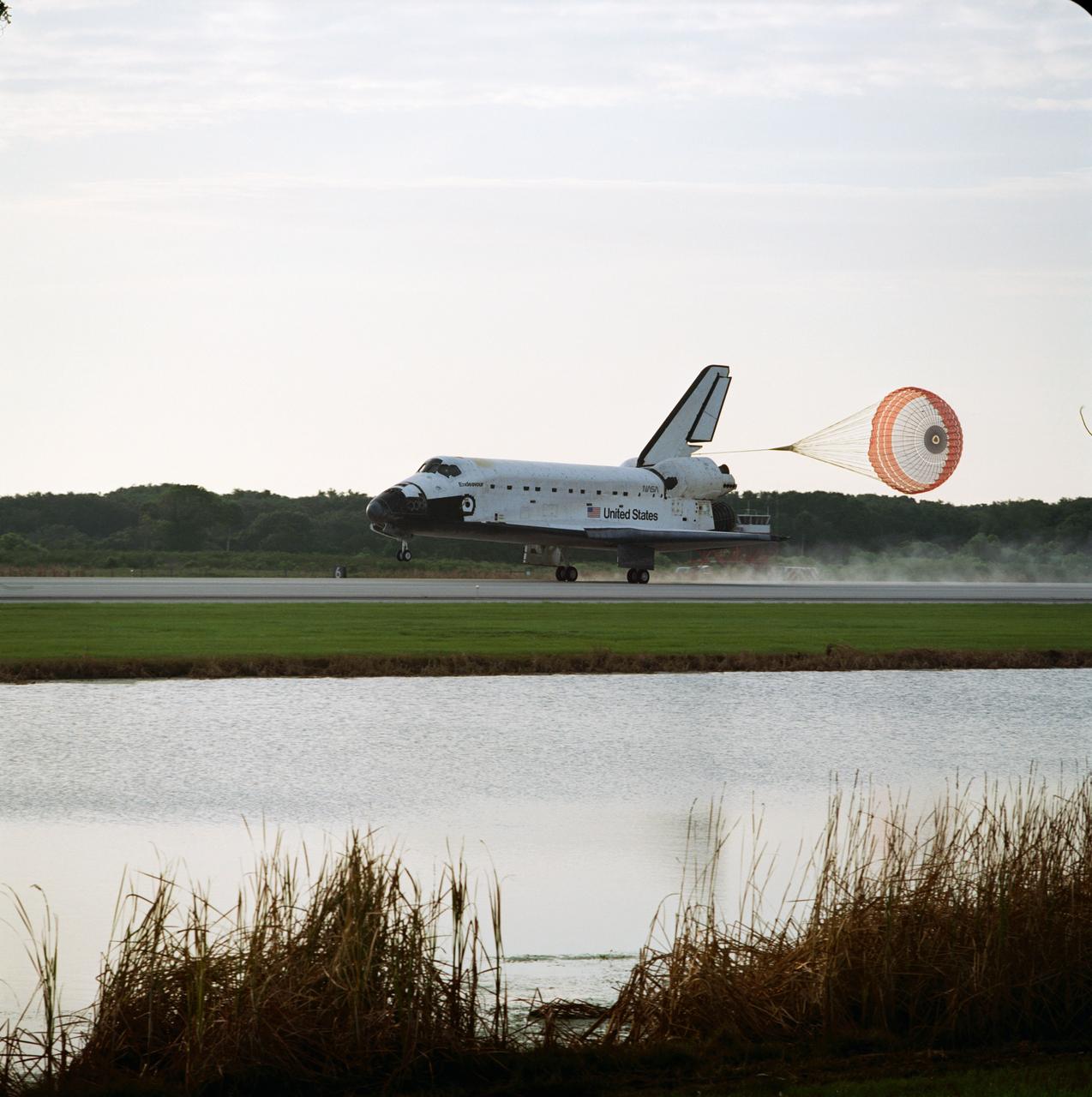
STS077-S-012 (29 May 1996) --- As its drag chute is released on Runway 33 at the Kennedy Space Center (KSC), the Space Shuttle Endeavour marks its return to Earth following a ten-day mission in space. Touchdown came at 7:09 a.m. (EDT), May 29, 1996. Leading the crew onboard was astronaut John H. Casper, mission commander. Other crew members were astronauts Curtis L. Brown, Jr., pilot; along with Daniel W. Bursch, Mario Runco, Jr., Andrew S. W. Thomas and Marc Garneau, all mission specialists. Garneau represents the Canadian Space Agency (CSA). During the approximately 10-day mission, the crew performed a variety of payload activities, including microgravity research aboard the Spacehab 4 Module, deployment and retrieval of the Spartan 207 and deployment and rendezvous with the Passive Aerodynamically-Stabilized Magnetically-Damped Satellite (PAMS).
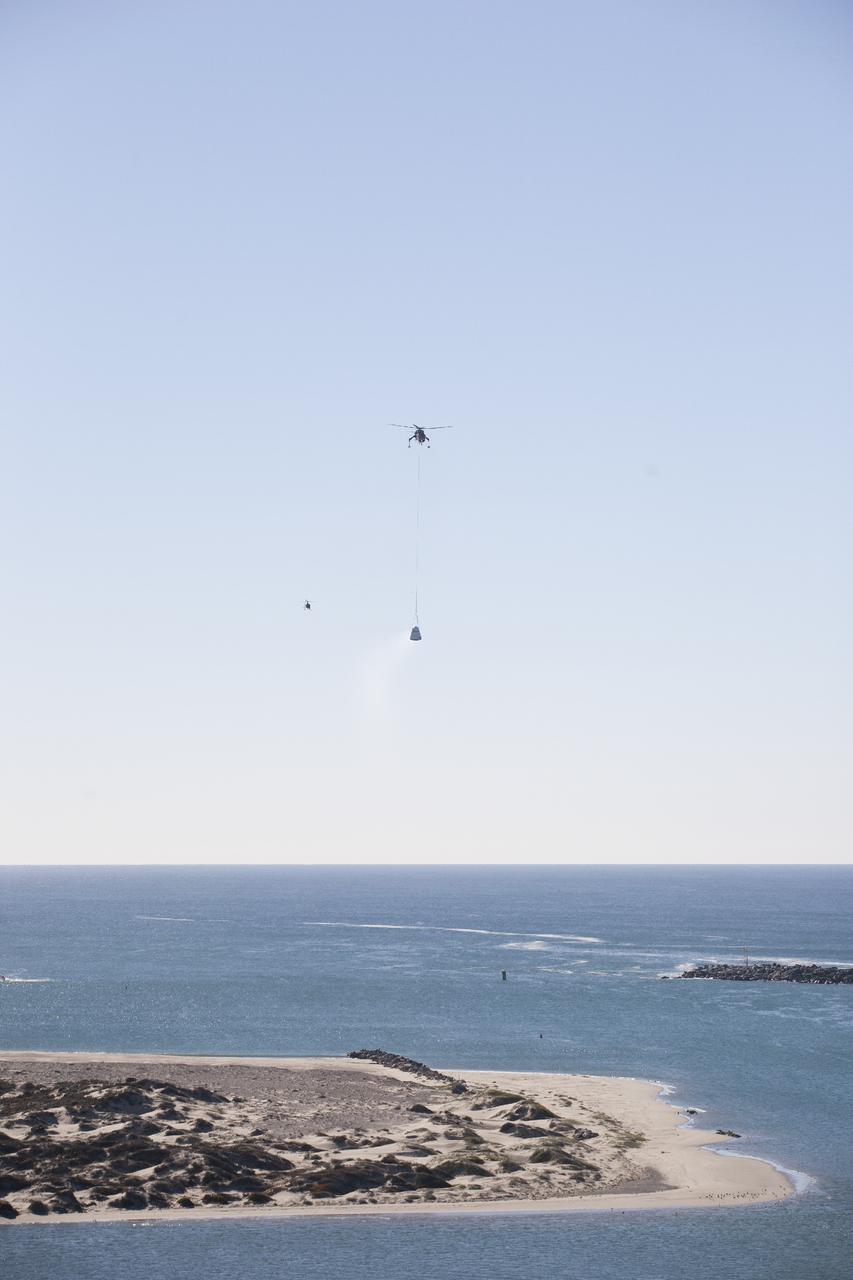
MORRO BAY, Calif. – An Erickson Sky Crane helicopter returns the SpaceX Dragon test article to Morro Bay, Cailf., following a test to evaluate the spacecraft's parachute deployment system. The test was part of a milestone under its Commercial Crew Integrated Capability agreement with NASA's Commercial Crew Program. Photo credit: NASA/Kim Shiflett
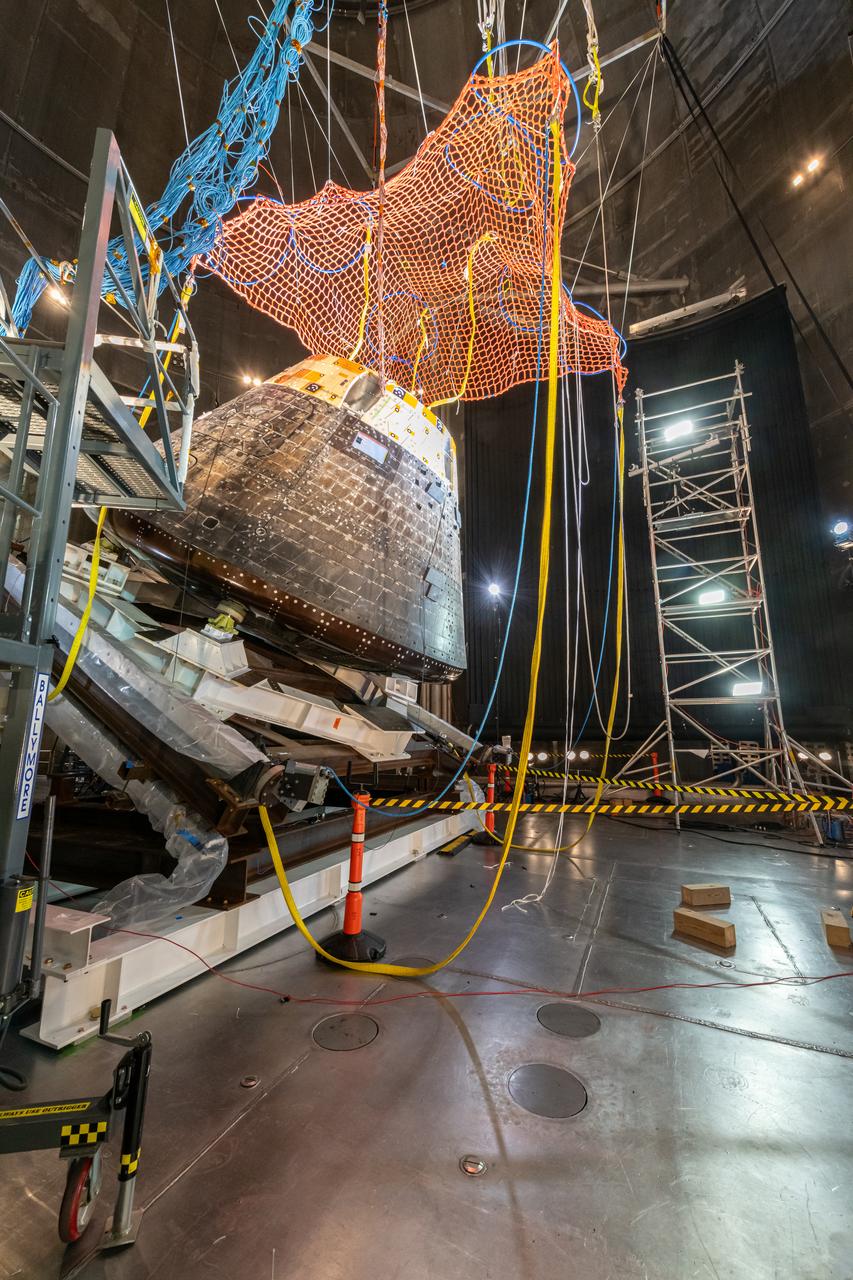
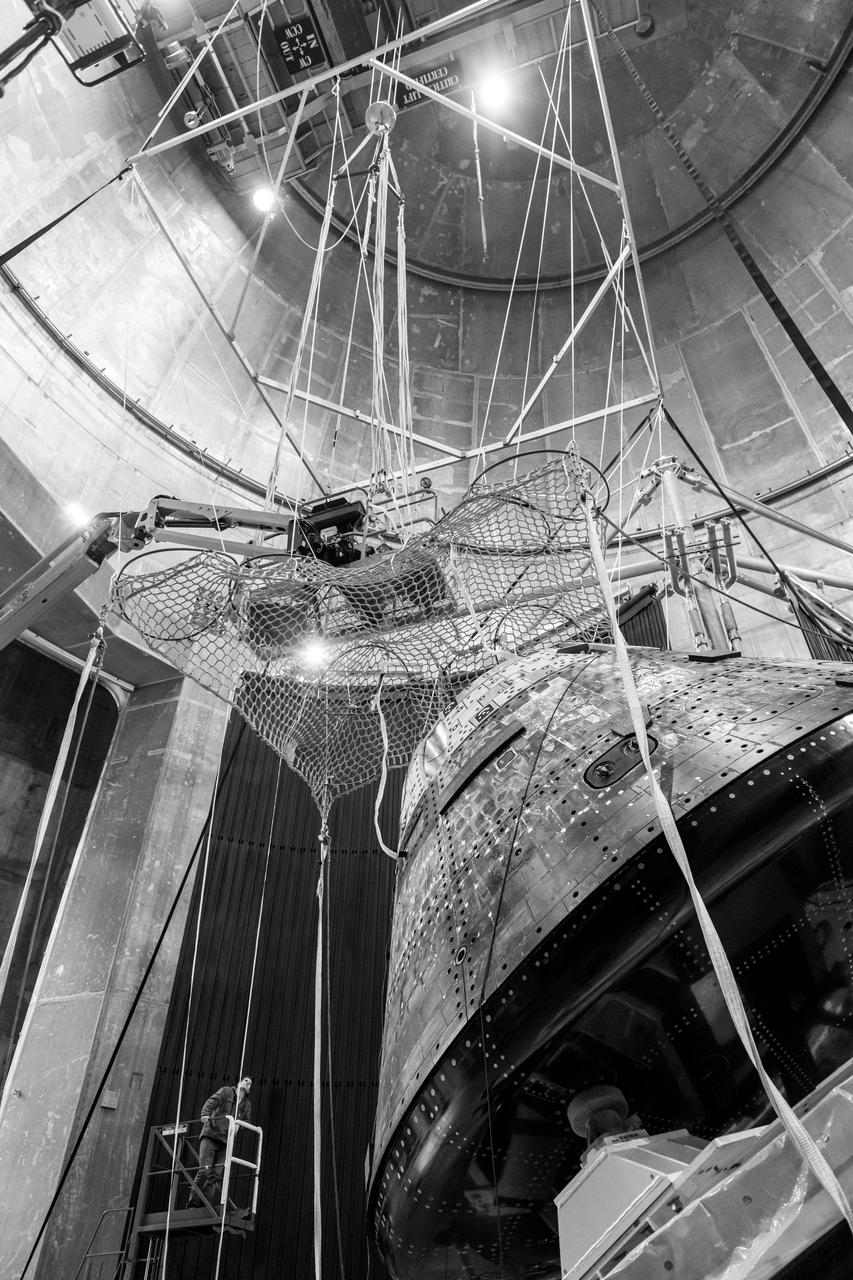
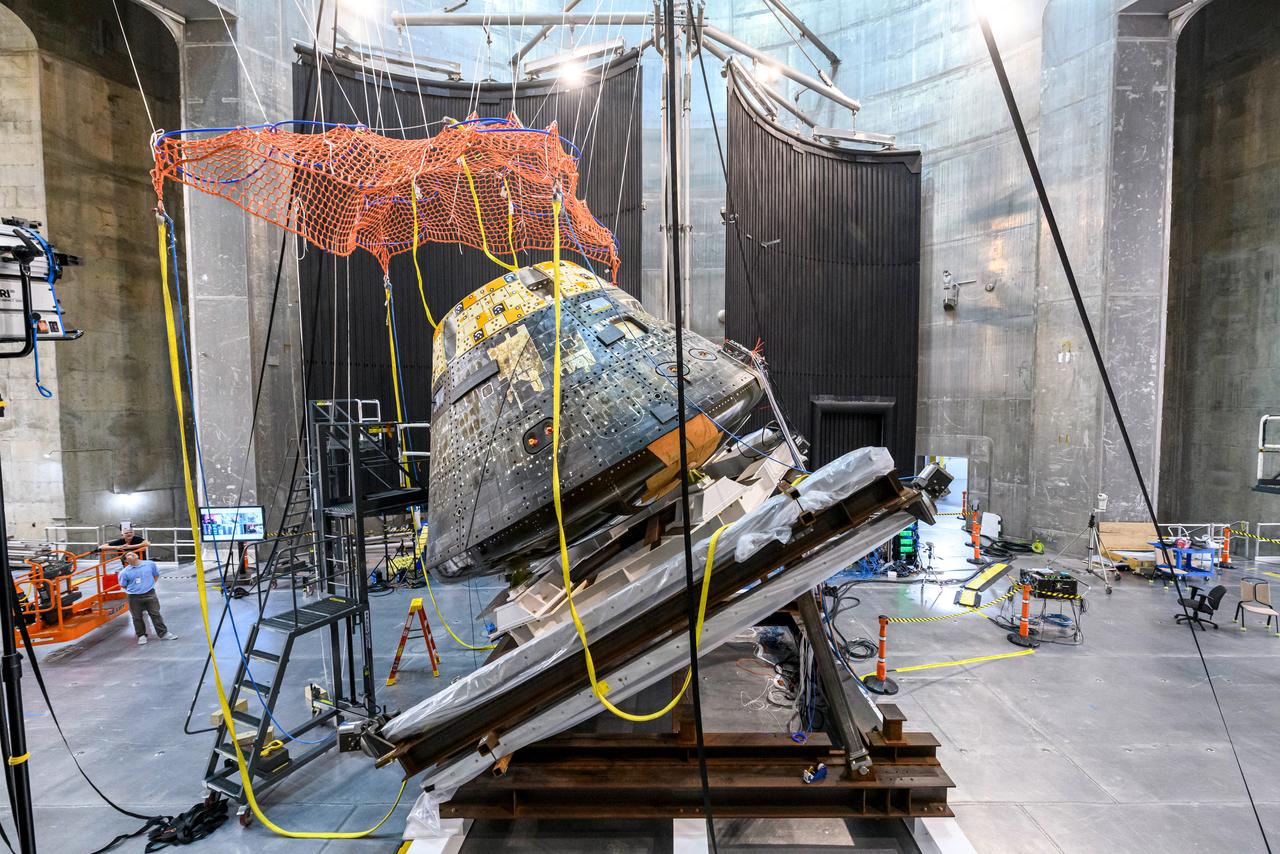
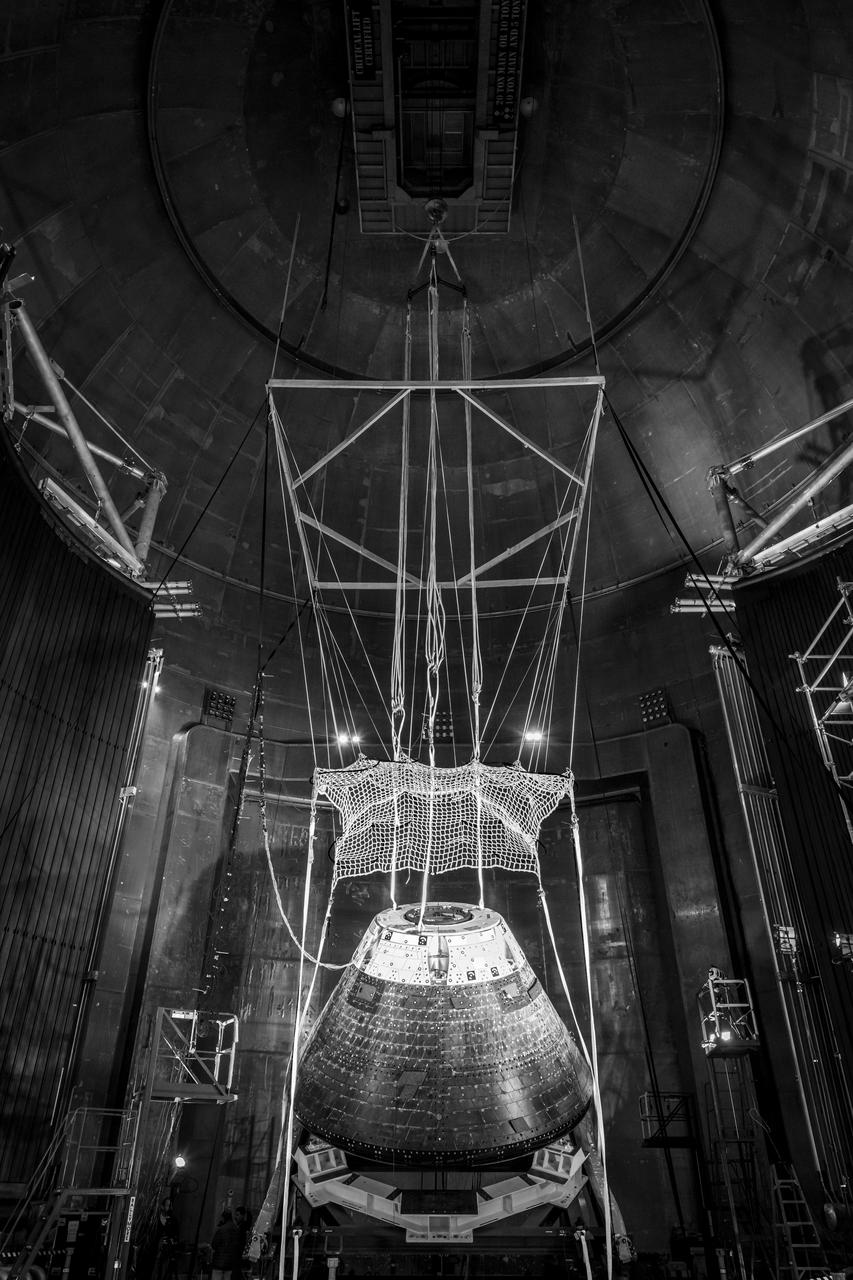
The Orion Crew Module, also known as the Orion Environmental Test Article (ETA), returned to NASA’s Neil Armstrong Test Facility in Sandusky, Ohio, in January 2024 and completed an 11-month test campaign necessary for the safety and success of Artemis II. In November 2024, experts completed the Forward Bay Cover jettison test, which is the last piece that must eject right before parachutes deploy. This image shows the setup right before the FBC deployment test. Photo Credit: (NASA/Jordan Salkin)

KENNEDY SPACE CENTER, FLA. -- Workers in the Orbiter Processing Facility watch as the overhead crane begins to lift the STS-95 payloads from the payload bay of the orbiter Discovery. The experiments will be returned to their respective hosts. At the right is the SPACEHAB single module with experiments on space flight and the aging process. The other payloads include the Spartan solar-observing deployable spacecraft, the Hubble Space Telescope Orbital Systems Test Platform, and the International Extreme Ultraviolet Hitchhiker
The Orion Crew Module, also known as the Orion Environmental Test Article (ETA), returned to NASA’s Neil Armstrong Test Facility in Sandusky, Ohio, in January 2024 and completed an 11-month test campaign necessary for the safety and success of Artemis II. In November 2024, experts completed the Forward Bay Cover jettison test, which is the last piece that must eject right before parachutes deploy. This image shows the setup right before the FBC deployment test. Photo Credit: (NASA/Jordan Salkin)
The Orion Crew Module, also known as the Orion Environmental Test Article (ETA), returned to NASA’s Neil Armstrong Test Facility in Sandusky, Ohio, in January 2024 and completed an 11-month test campaign necessary for the safety and success of Artemis II. In November 2024, experts completed the Forward Bay Cover jettison test, which is the last piece that must eject right before parachutes deploy. This image shows the setup right before the FBC deployment test. Photo Credit: (NASA/Jordan Salkin)
The Orion Crew Module, also known as the Orion Environmental Test Article (ETA), returned to NASA’s Neil Armstrong Test Facility in Sandusky, Ohio, in January 2024 and completed an 11-month test campaign necessary for the safety and success of Artemis II. In November 2024, experts completed the Forward Bay Cover jettison test, which is the last piece that must eject right before parachutes deploy. This image shows the setup right before the FBC deployment test. Photo Credit: (NASA/Jordan Salkin)
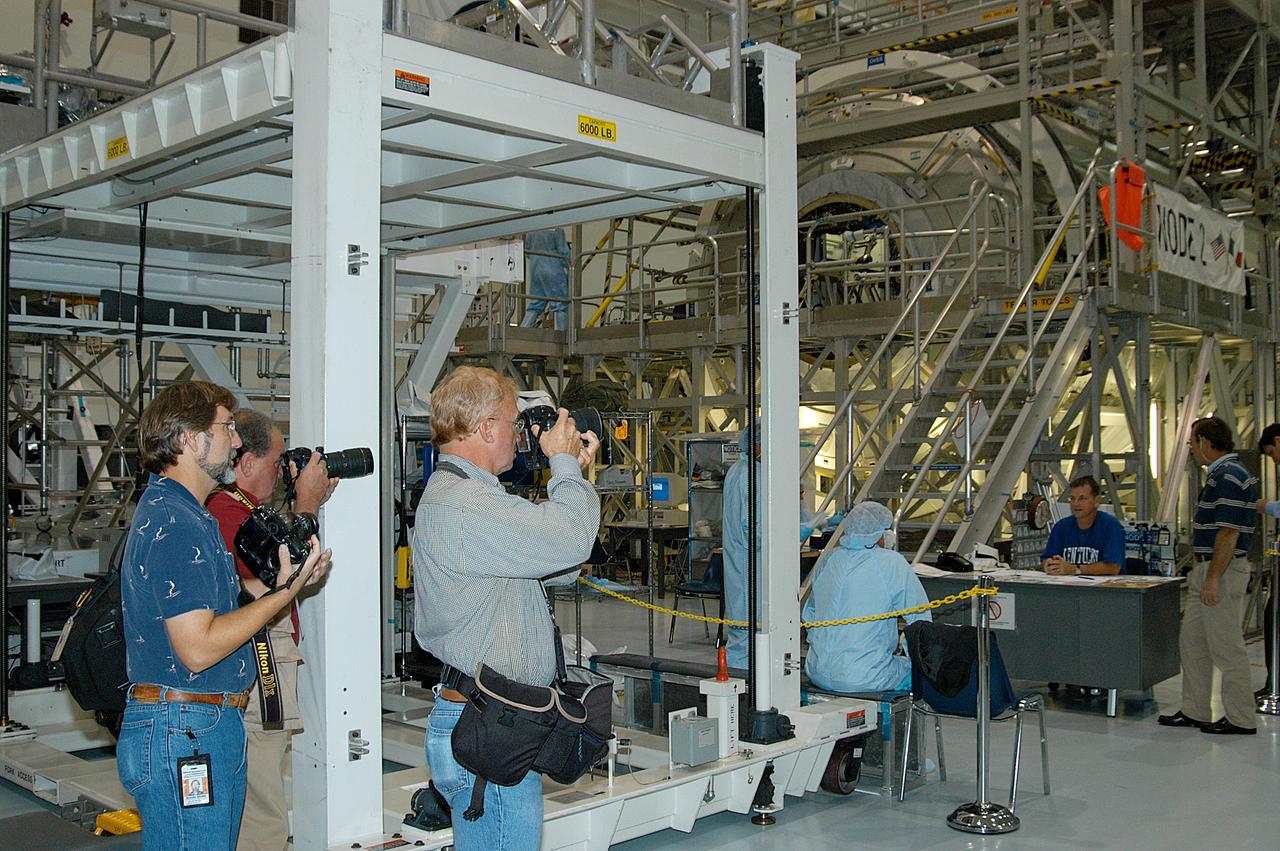
The Node 2 and other hardware undergoing processing for transport to the International Space Station are made available to photographers in the Space Station Processing Facility (SSPF). Members of the media were invited to commemorate the fifth anniversary of the launch of the first element of the International Space Station by touring the SSPF. Reporters had the opportunity to see Space Station hardware that is being processed for deployment once the Space Shuttles return to flight, as well as talk with NASA and Boeing mission managers about the various hardware elements currently being processed for flight.
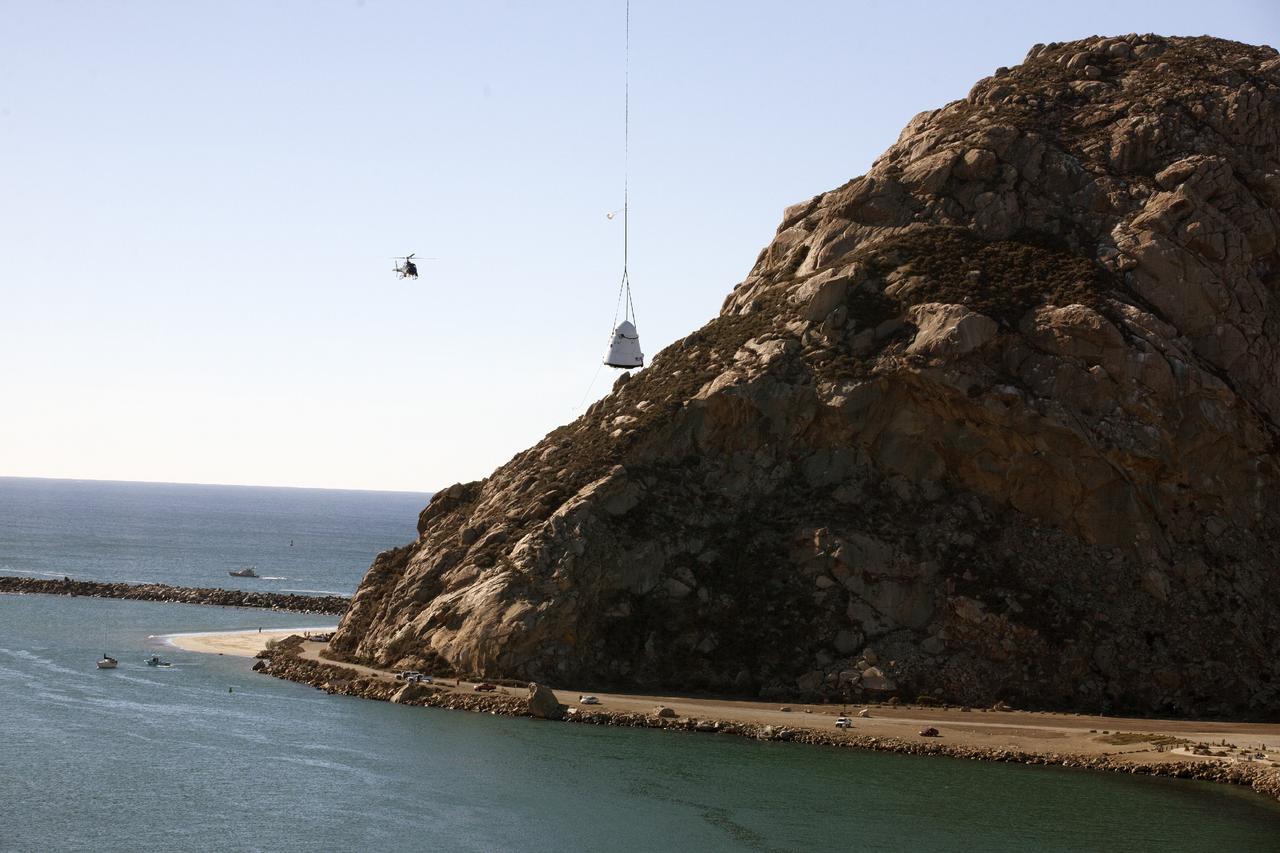
MORRO BAY, Calif. – An Erickson Sky Crane helicopter returns the SpaceX Dragon test article to Morro Bay, Cailf., following a test to evaluate the spacecraft's parachute deployment system. The test was part of a milestone under its Commercial Crew Integrated Capability agreement with NASA's Commercial Crew Program. Photo credit: NASA/Kim Shiflett
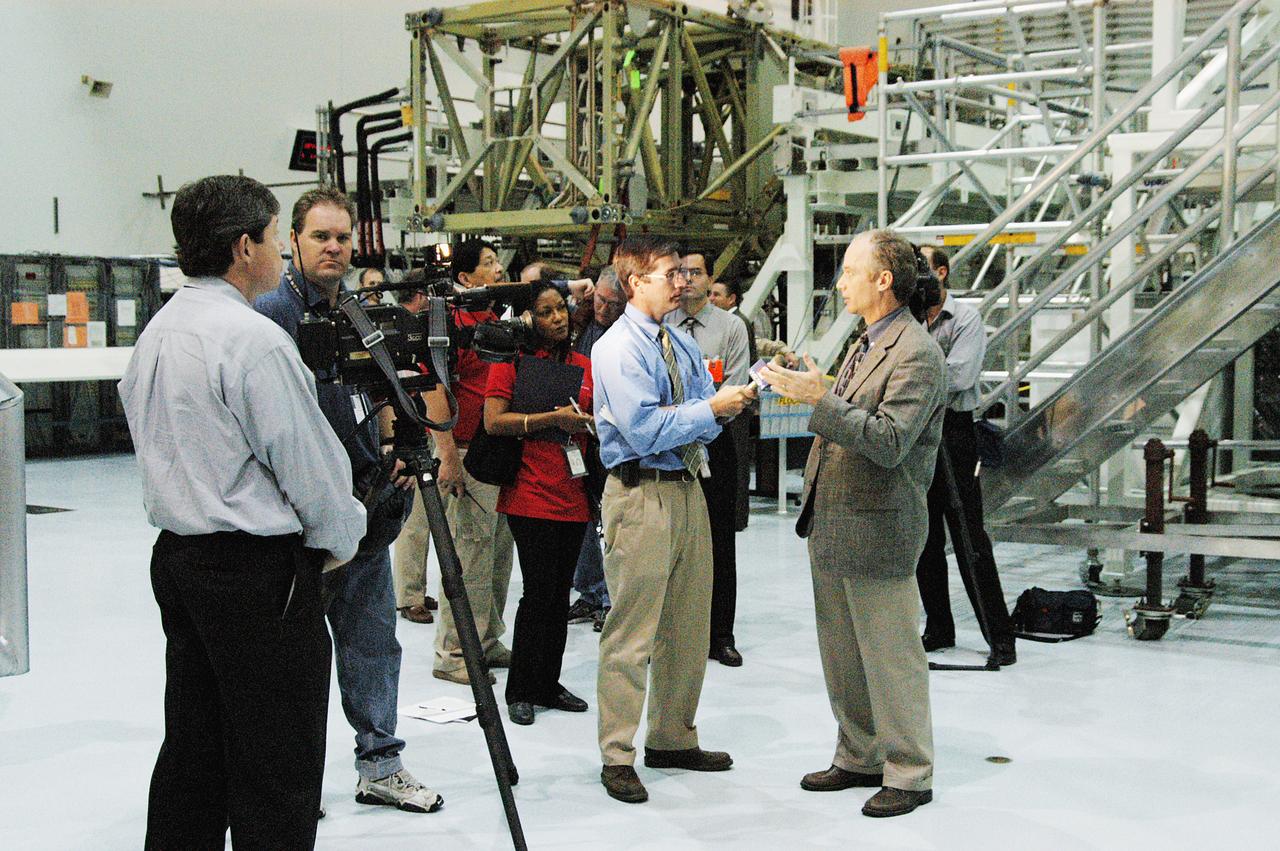
In the Space Station Processing Facility (SSPF), Charles J. Precourt, deputy manager of NASA's International Space Station Program, is interviewed by a reporter from a local television station. Representatives from the media were invited to commemorate the fifth anniversary of the launch of the first element of the Station with a tour of the facility and had the opportunity to see Space Station hardware that is being processed for deployment once the Space Shuttles return to flight. NASA and Boeing mission managers were on hand to talk about the various hardware elements currently being processed for flight.
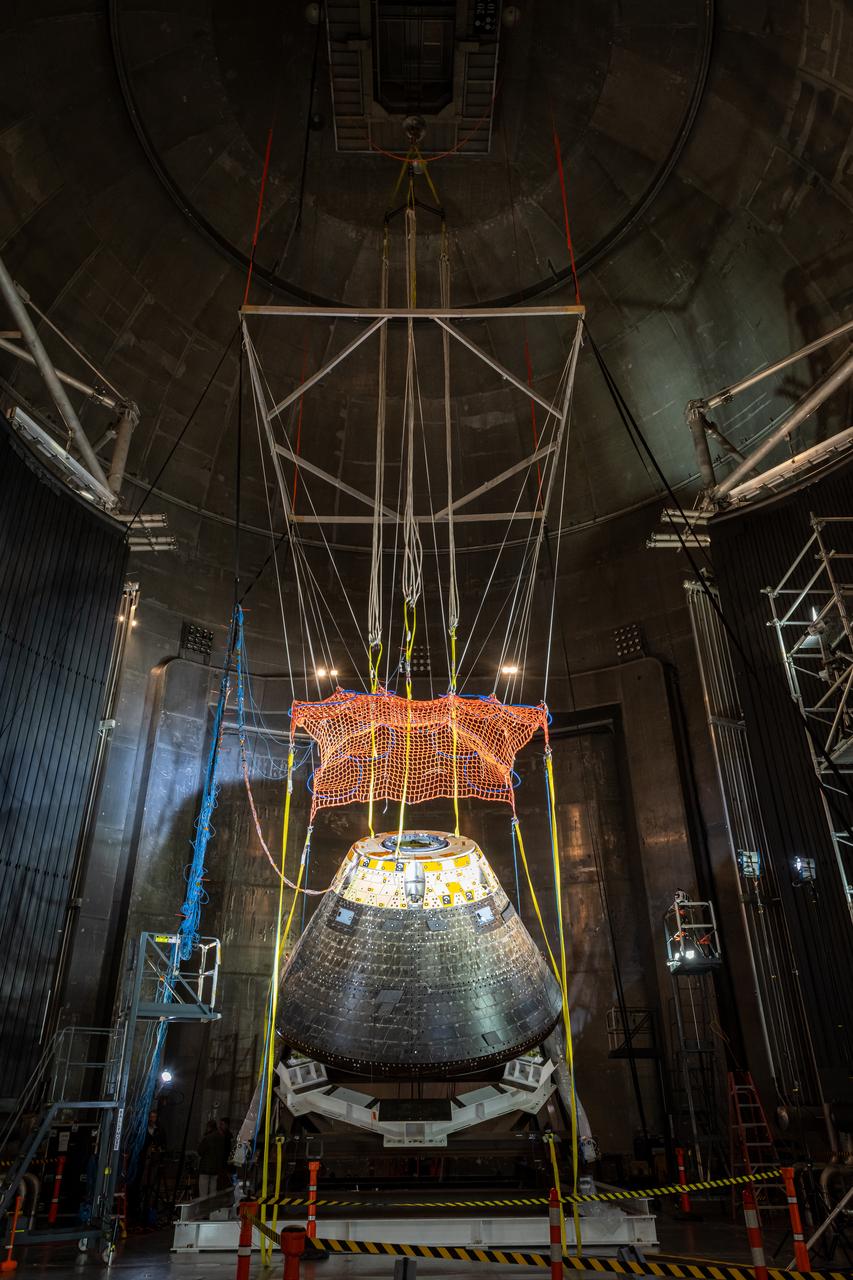
The Orion Crew Module, also known as the Orion Environmental Test Article (ETA), returned to NASA’s Neil Armstrong Test Facility in Sandusky, Ohio, in January 2024 and completed an 11-month test campaign necessary for the safety and success of Artemis II. In November 2024, experts completed the Forward Bay Cover jettison test, which is the last piece that must eject right before parachutes deploy. This image shows the setup right before the FBC deployment test. Photo Credit: (NASA/Jordan Salkin)
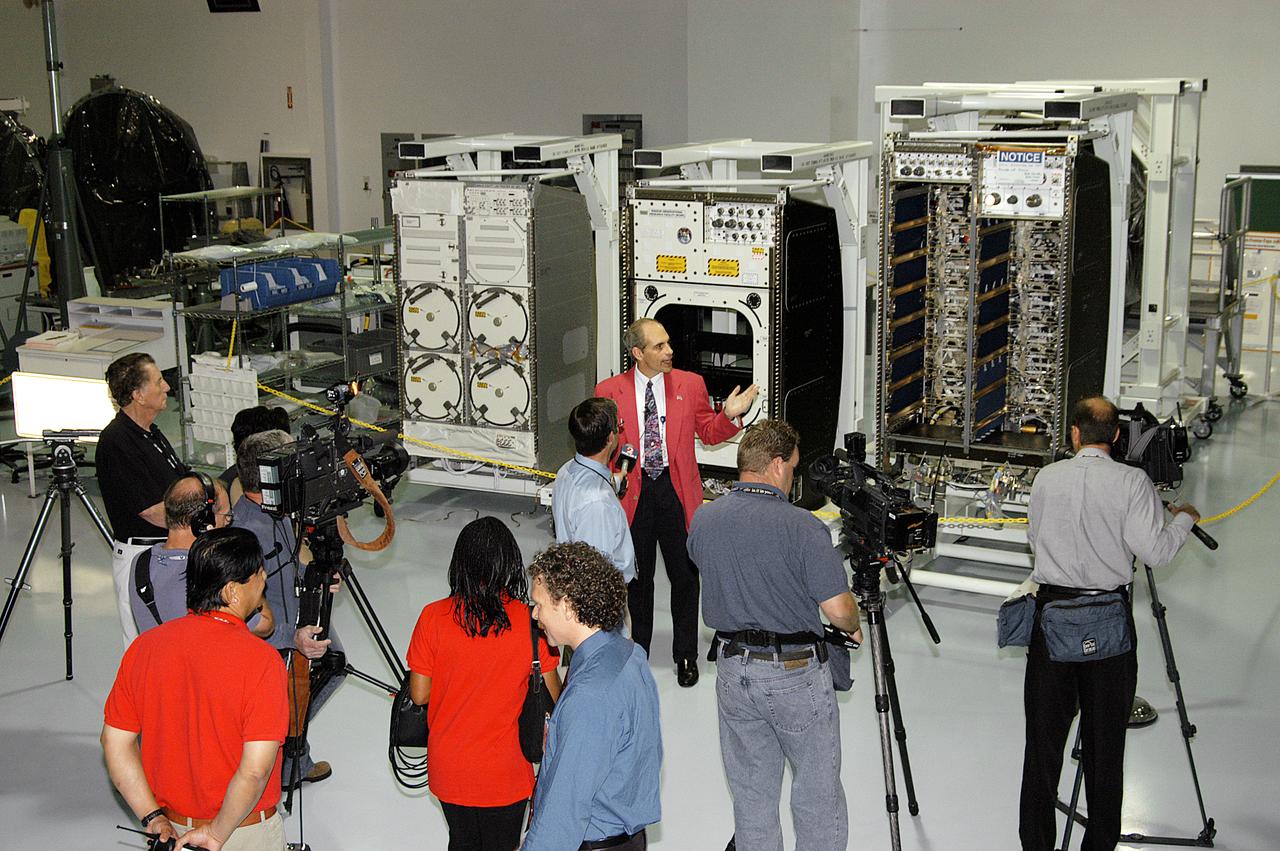
In the Space Station Processing Facility (SSPF), Mike Generale (background) talks to the media about the research racks behind him that will be used on missions to the International Space Station. To commemorate the fifth anniversary of the launch of the first element of the International Space Station, the media were invited to tour the SSPF at KSC. Reporters had the opportunity to see Space Station hardware that are being processed for deployment once the Space Shuttles return to flight as well as talk with NASA and Boeing mission managers about the various hardware elements currently being processed for flight.
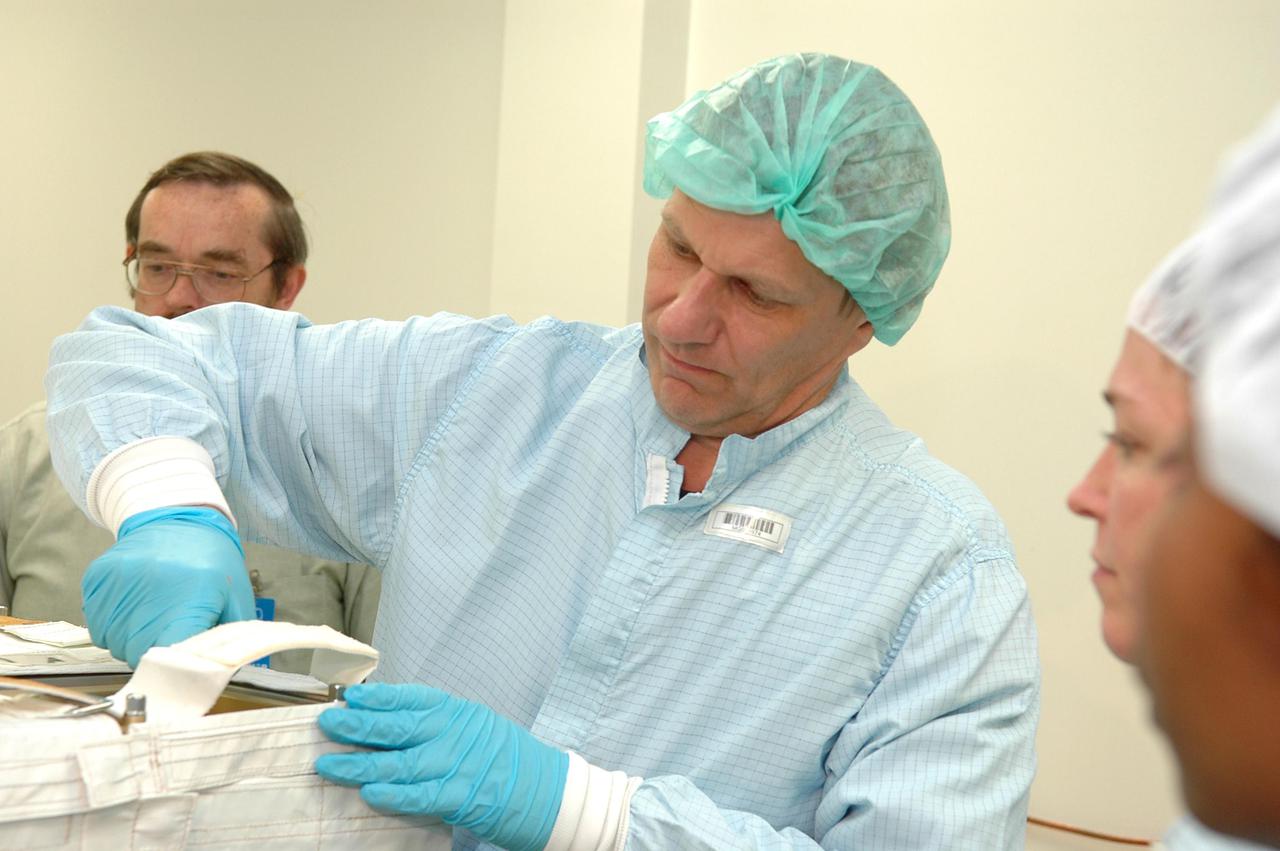
KENNEDY SPACE CENTER, FLA. - Mission Specialist Piers J. Sellers, Ph.D., got some recent hands-on experience with equipment he will soon take into space. He is working with the SPACEHAB Oceaneering Enhanced Deployable latch release. The astronauts of the second Return to Flight mission, STS-121, were at the SPACEHAB facility in Cape Canaveral to participate in the Crew Equipment Interface Test (CEIT). This test allows the astronauts to become familiar with equipment they will be using on their upcoming mission. STS-121 is scheduled to launch in July aboard Space Shuttle Atlantis.
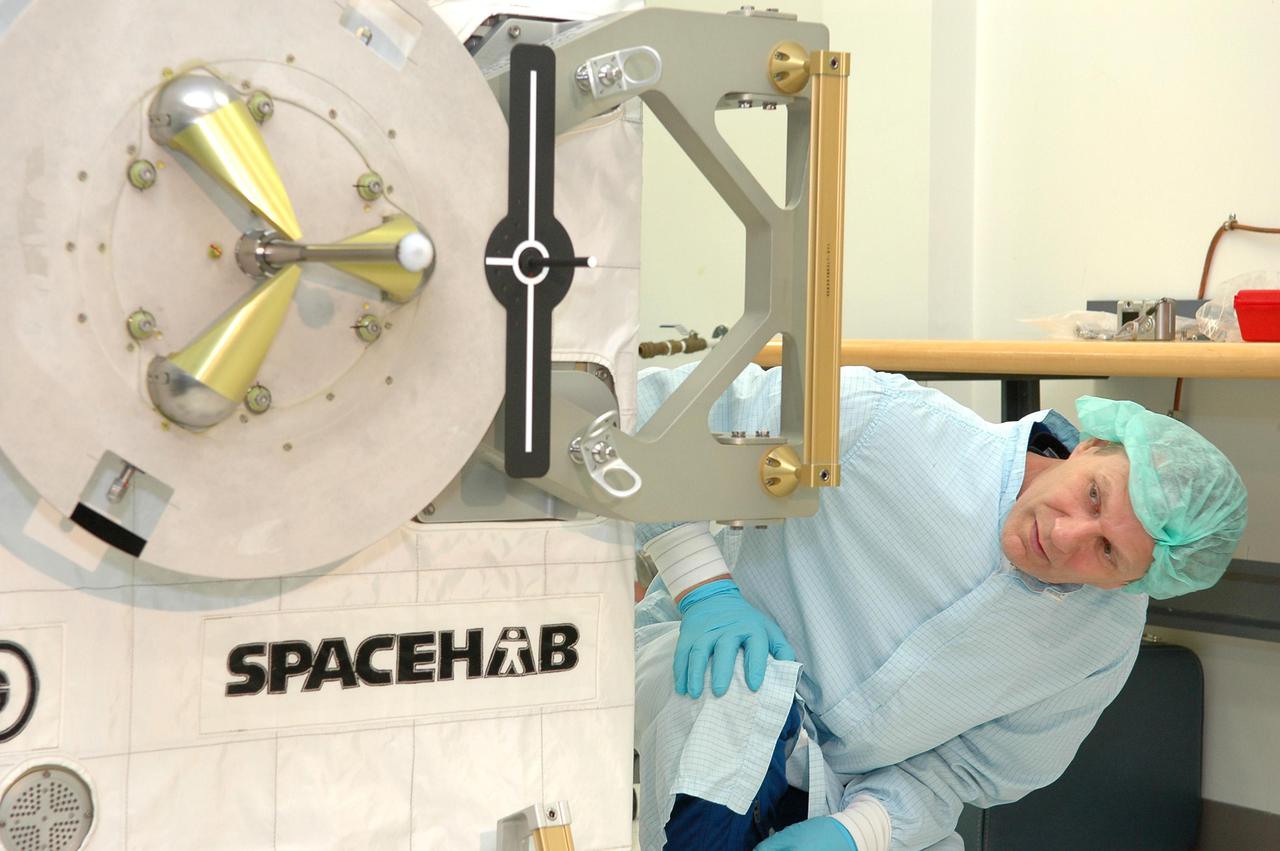
KENNEDY SPACE CENTER, FLA. - Mission Specialist Piers J. Sellers, Ph.D., looks at the adjustable grapple bar on the SPACEHAB Oceaneering Enhanced Deployable box. The astronauts of the second Return to Flight mission, STS-121, were at the SPACEHAB facility in Cape Canaveral to participate in the Crew Equipment Interface Test (CEIT). This test allows the astronauts to become familiar with equipment they will be using on their upcoming mission. STS-121 is scheduled to launch in July aboard Space Shuttle Atlantis.
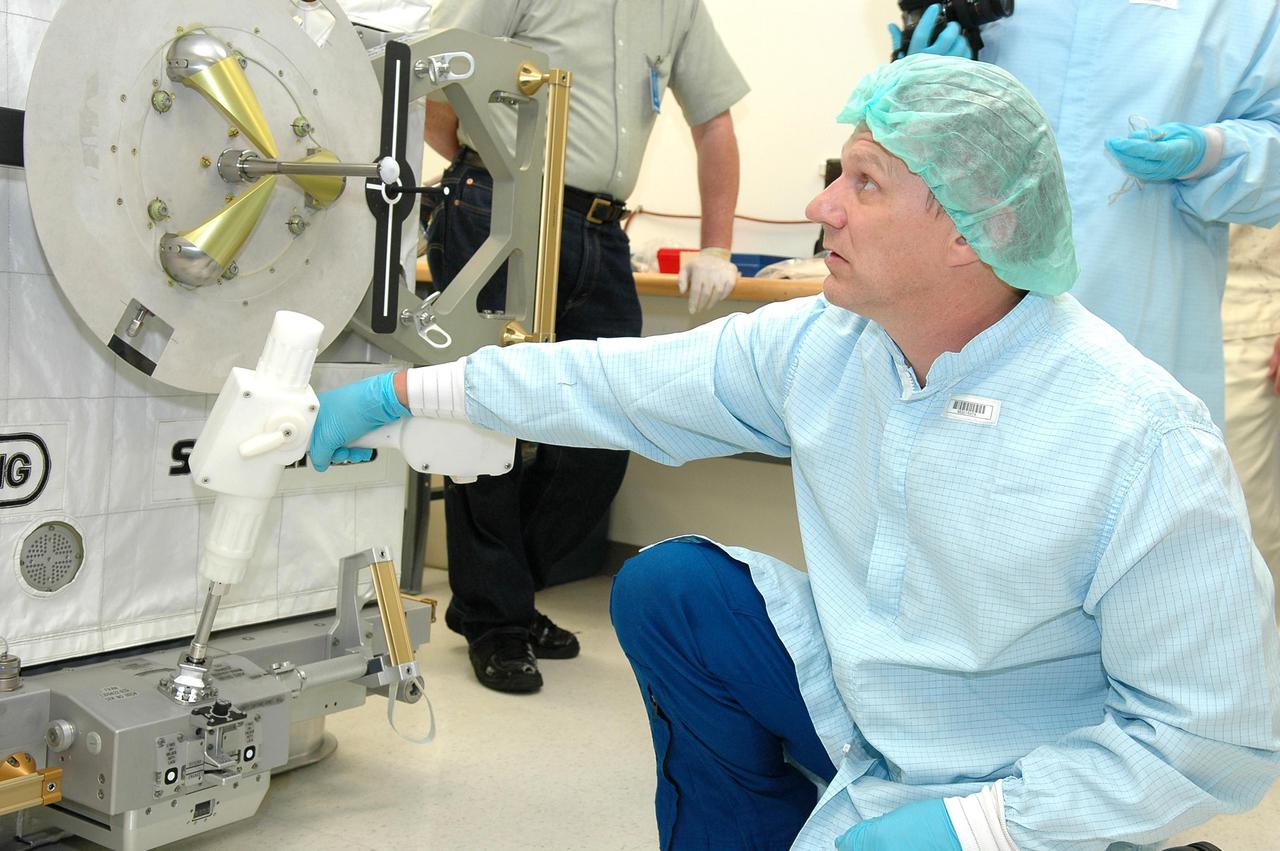
KENNEDY SPACE CENTER, FLA. - Mission Specialist Piers J. Sellers, Ph.D., checks out the release mechanism on the SPACEHAB Oceneering Enhanced Deployable FRAM. The astronauts of the second Return to Flight mission, STS-121, were at the SPACEHAB facility in Cape Canaveral to participate in the Crew Equipment Interface Test (CEIT). This test allows the astronauts to become familiar with equipment they will be using on their upcoming mission. STS-121 is scheduled to launch in July aboard Space Shuttle Atlantis.

Photographers gather around the Japanese Experiment Module in the Space Station Processing Facility (SSPF) during a tour. Members of the media were invited to commemorate the fifth anniversary of the launch of the first element of the International Space Station by touring the SSPF. Reporters had the opportunity to see Space Station hardware that is being processed for deployment once the Space Shuttles return to flight as well as talk with NASA and Boeing mission managers about the various hardware elements currently being processed for flight.
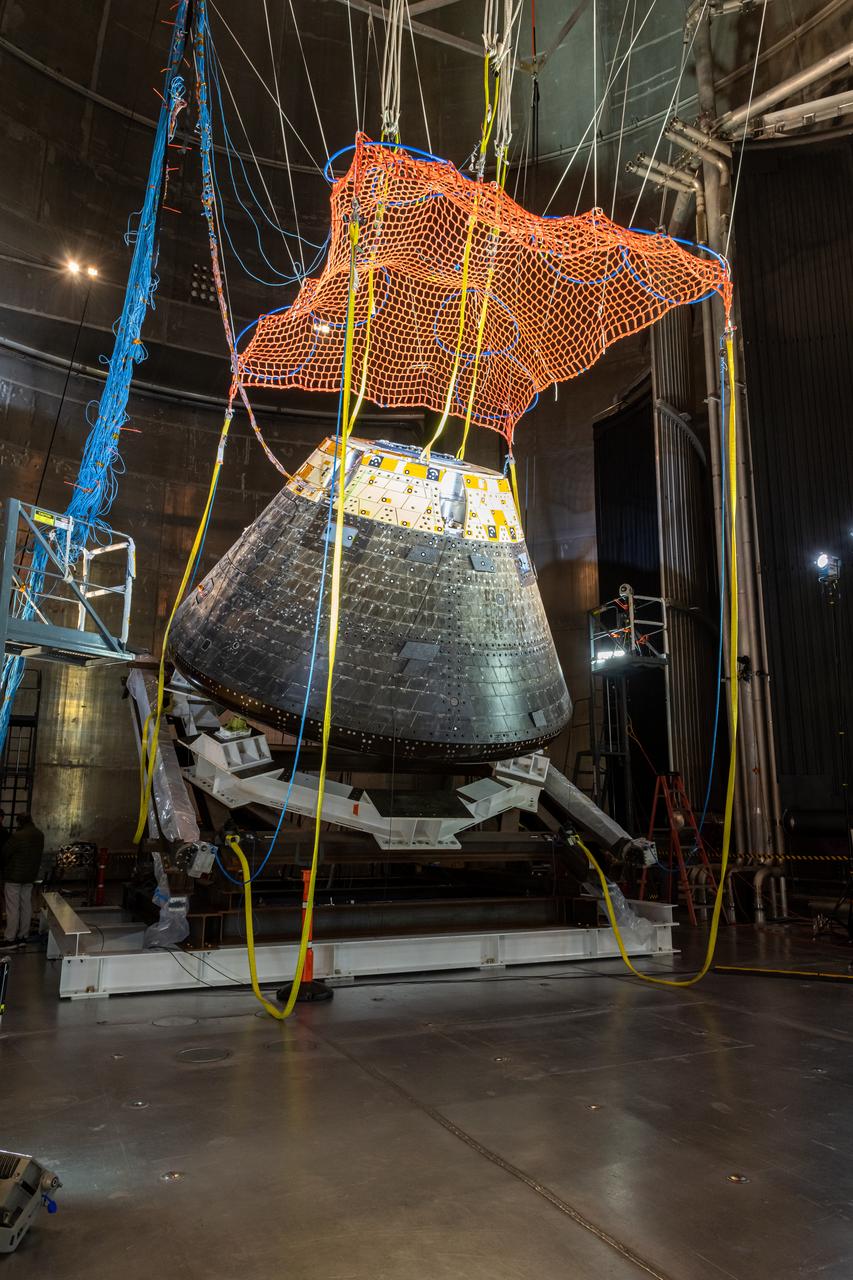
The Orion Crew Module, also known as the Orion Environmental Test Article (ETA), returned to NASA’s Neil Armstrong Test Facility in Sandusky, Ohio, in January 2024 and completed an 11-month test campaign necessary for the safety and success of Artemis II. In November 2024, experts completed the Forward Bay Cover jettison test, which is the last piece that must eject right before parachutes deploy. This image shows the setup right before the FBC deployment test. Photo Credit: (NASA/Jordan Salkin)
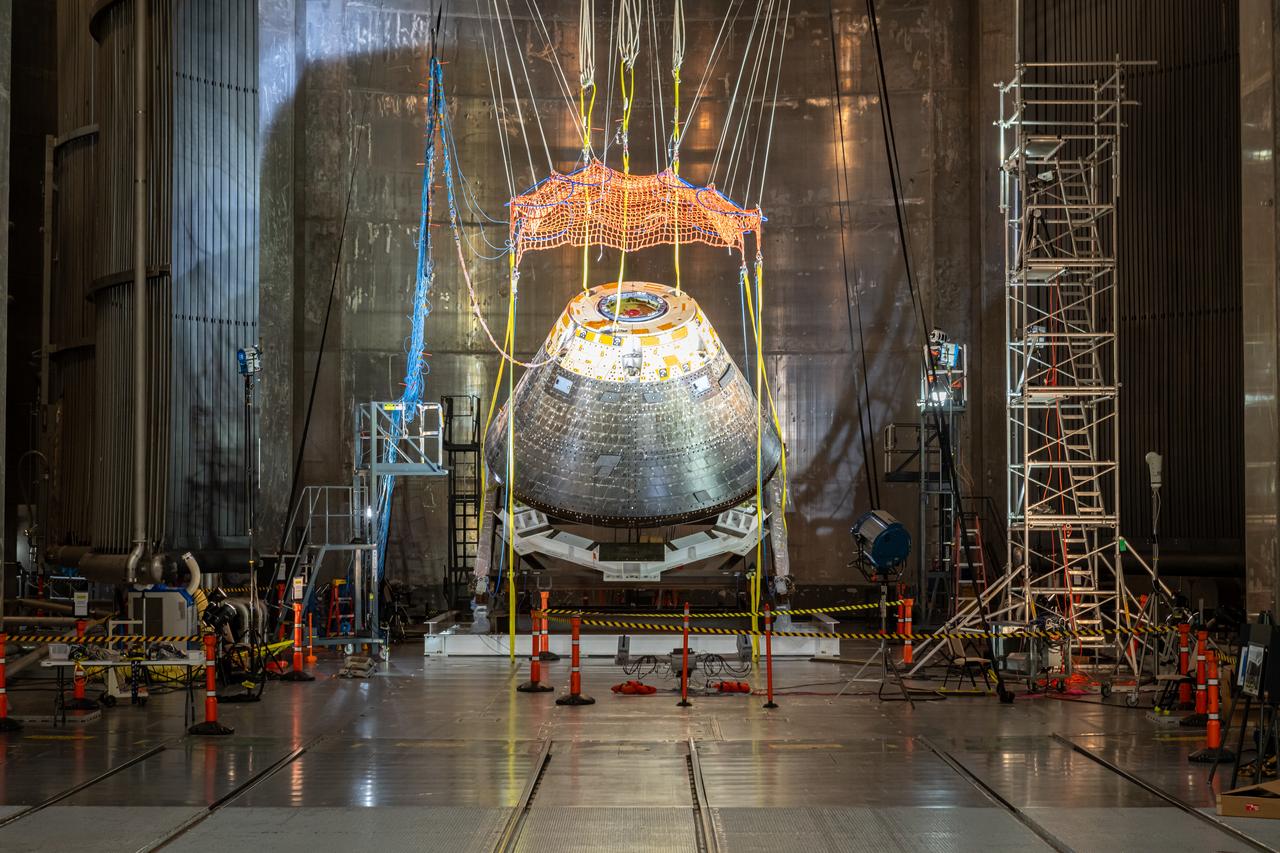
The Orion Crew Module, also known as the Orion Environmental Test Article (ETA), returned to NASA’s Neil Armstrong Test Facility in Sandusky, Ohio, in January 2024 and completed an 11-month test campaign necessary for the safety and success of Artemis II. In November 2024, experts completed the Forward Bay Cover jettison test, which is the last piece that must eject right before parachutes deploy. This image shows the setup right before the FBC deployment test. Photo Credit: (NASA/Jordan Salkin)
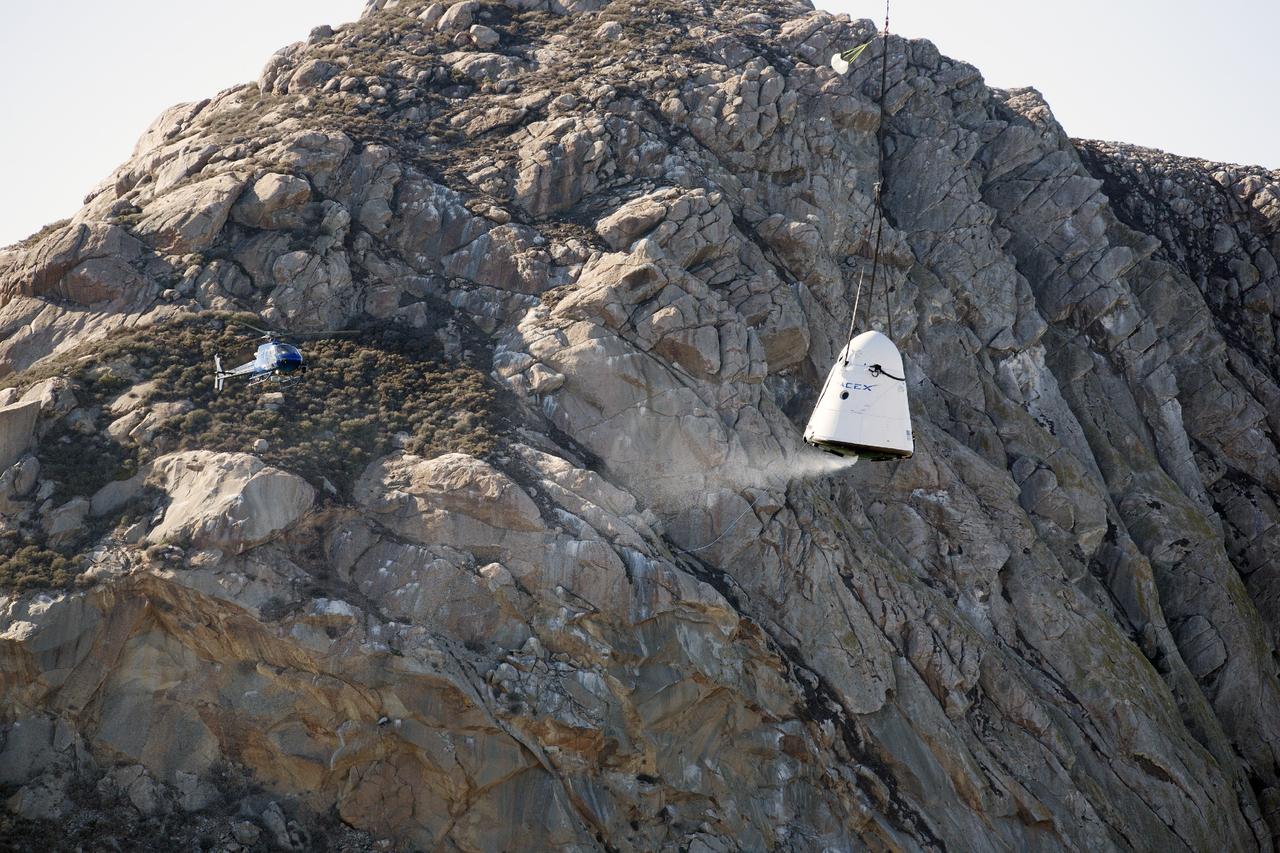
MORRO BAY, Calif. – An Erickson Sky Crane helicopter returns the SpaceX Dragon test article to Morro Bay, Cailf., following a test to evaluate the spacecraft's parachute deployment system. The test was part of a milestone under its Commercial Crew Integrated Capability agreement with NASA's Commercial Crew Program. Photo credit: NASA/Kim Shiflett
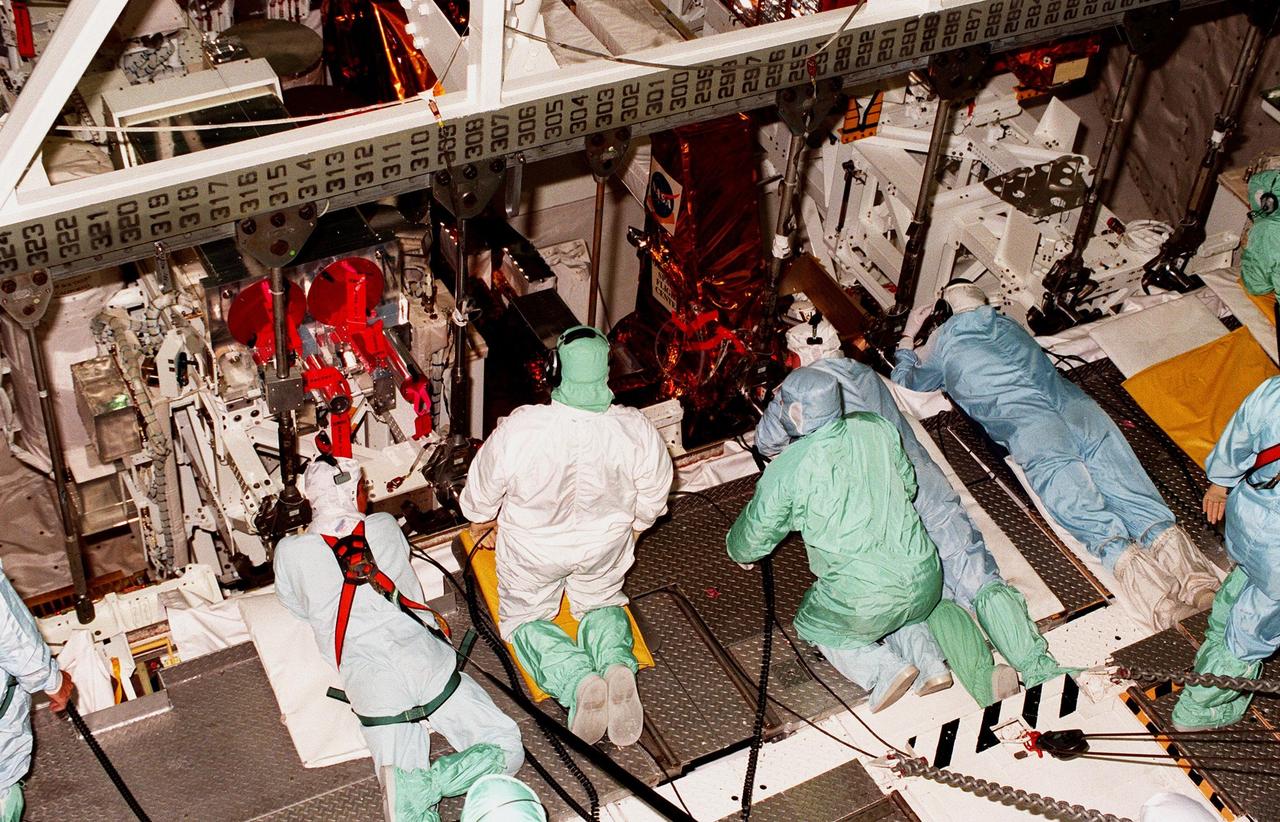
Workers in the Orbiter Processing Facility prepare to unload the STS-95 payloads in front of them from the payload bay of the orbiter Discovery. The experiments will be returned to their respective hosts. The mission included the Spartan solar-observing deployable spacecraft, the Hubble Space Telescope Orbital Systems Test Platform, the International Extreme Ultraviolet Hitchhiker, as well as the SPACEHAB single module with experiments on space flight and the aging process
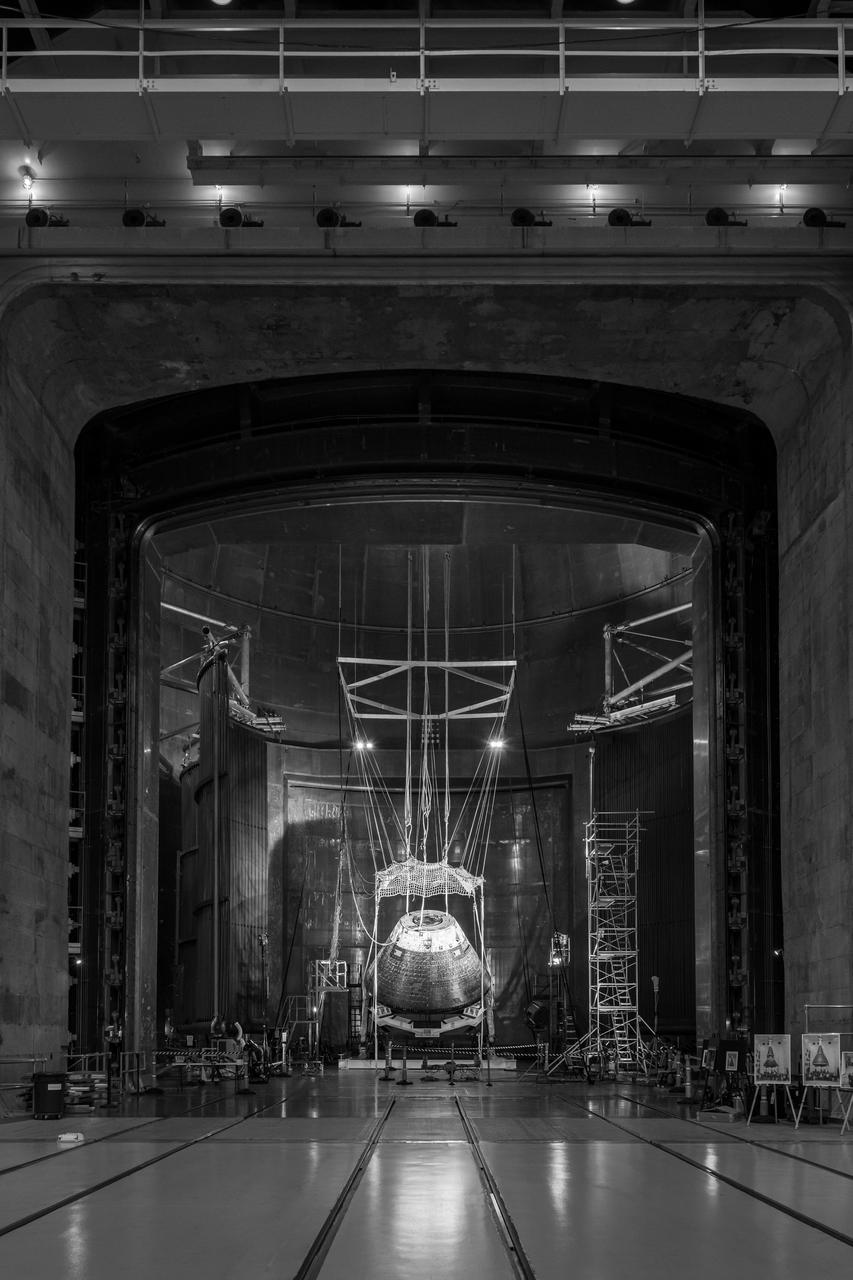
The Orion Crew Module, also known as the Orion Environmental Test Article (ETA), returned to NASA’s Neil Armstrong Test Facility in Sandusky, Ohio, in January 2024 and completed an 11-month test campaign necessary for the safety and success of Artemis II. In November 2024, experts completed the Forward Bay Cover jettison test, which is the last piece that must eject right before parachutes deploy. This image shows the setup right before the FBC deployment test. Photo Credit: (NASA/Jordan Salkin)
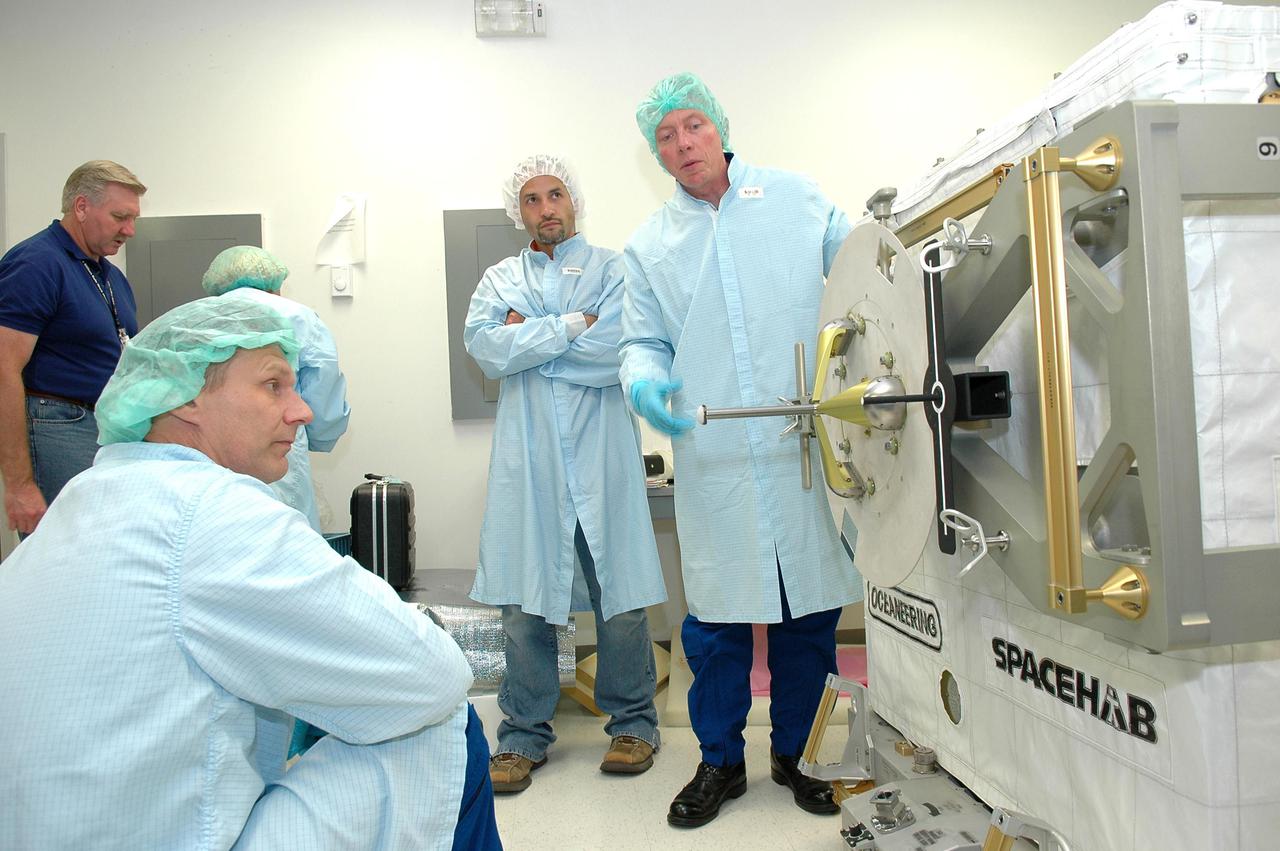
KENNEDY SPACE CENTER, FLA. - Mission Specialist Piers J. Sellers, Ph.D., (kneeling, left) and Michael E. Fossum (right) look at the adjustable grapple bar on the SPACEHAB Oceaneering Enhanced Deployable box. The astronauts of the second Return to Flight mission, STS-121, were at the SPACEHAB facility in Cape Canaveral to participate in the Crew Equipment Interface Test (CEIT). This test allows the astronauts to become familiar with equipment they will be using on their upcoming mission. STS-121 is scheduled to launch in July aboard Space Shuttle Atlantis.
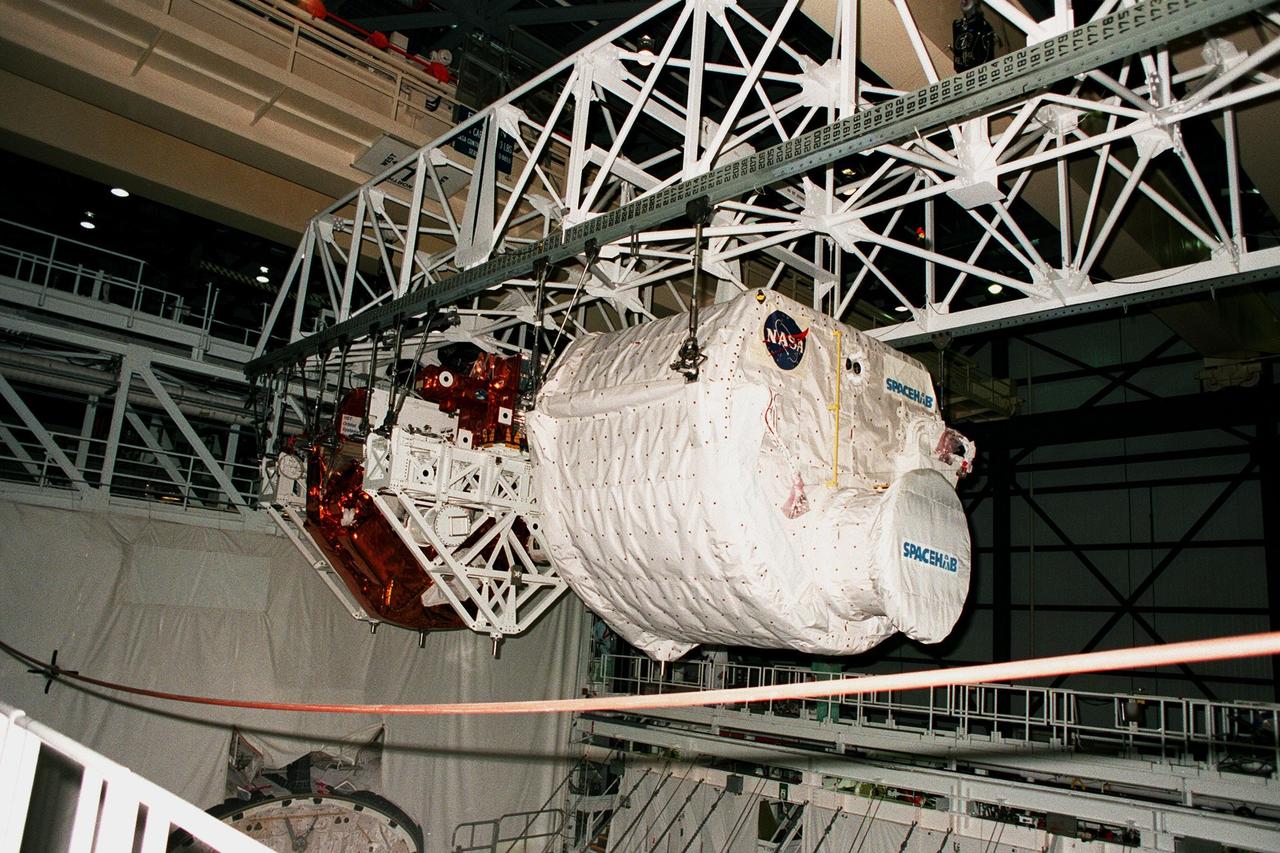
KENNEDY SPACE CENTER, FLA. -- The STS-95 payloads hang suspended above the payload bay of the orbiter Discovery in the Orbiter Processing Facility. The experiments will be returned to their respective hosts. At the right is the SPACEHAB single module with experiments on space flight and the aging process. The other payloads include the Spartan solar-observing deployable spacecraft, the Hubble Space Telescope Orbital Systems Test Platform, and the International Extreme Ultraviolet Hitchhiker
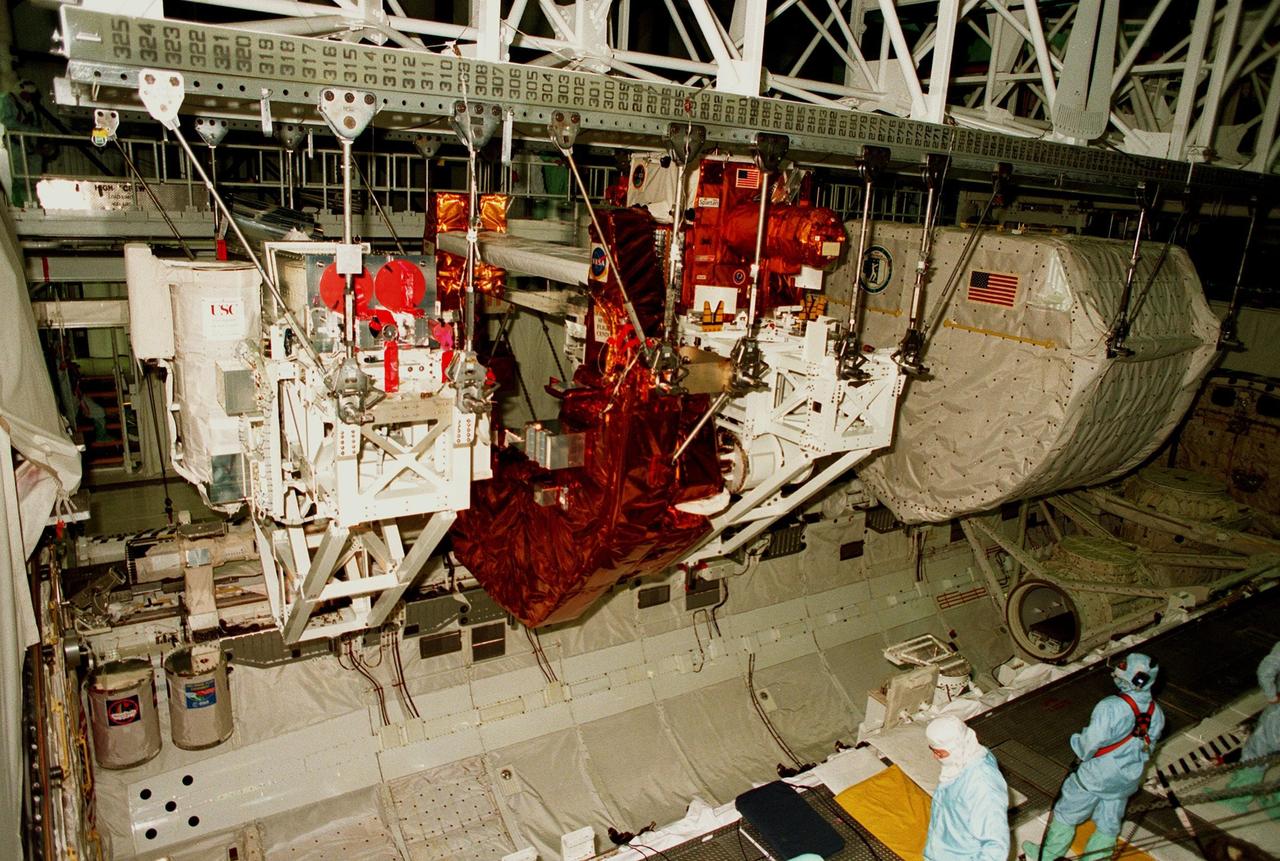
KENNEDY SPACE CENTER, FLA. -- Workers in the Orbiter Processing Facility watch as the STS-95 payloads are lifted from the cargo bay of the orbiter Discovery by the overhead crane. The experiments will be returned to their respective hosts. At the right is the SPACEHAB single module with experiments on space flight and the aging process. The other payloads include the Spartan solar-observing deployable spacecraft, the Hubble Space Telescope Orbital Systems Test Platform, and the International Extreme Ultraviolet Hitchhiker

The Orion Crew Module, also known as the Orion Environmental Test Article (ETA), returned to NASA’s Neil Armstrong Test Facility in Sandusky, Ohio, in January 2024 and completed an 11-month test campaign necessary for the safety and success of Artemis II. In November 2024, experts completed the Forward Bay Cover jettison test, which is the last piece that must eject right before parachutes deploy. This image shows the setup right before the FBC deployment test. Photo Credit: (NASA/Jordan Salkin)
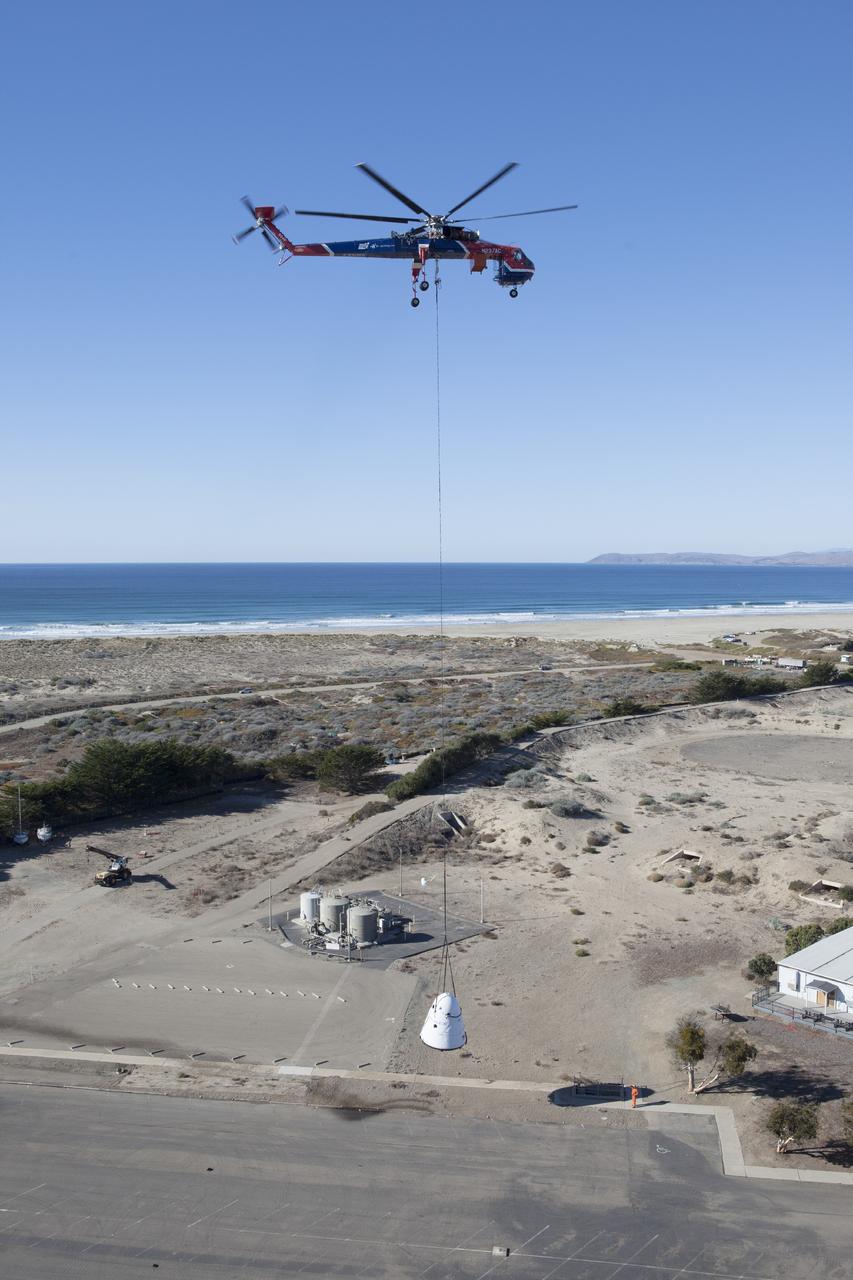
MORRO BAY, Calif. - An Erickson Sky Crane helicopter returns the SpaceX Dragon test article to Morro Bay, Cailf., following a test to evaluate the spacecraft's parachute deployment system. The test was part of a milestone under its Commercial Crew Integrated Capability agreement with NASA's Commercial Crew Program. Photo credit: NASA/Kim Shiflett
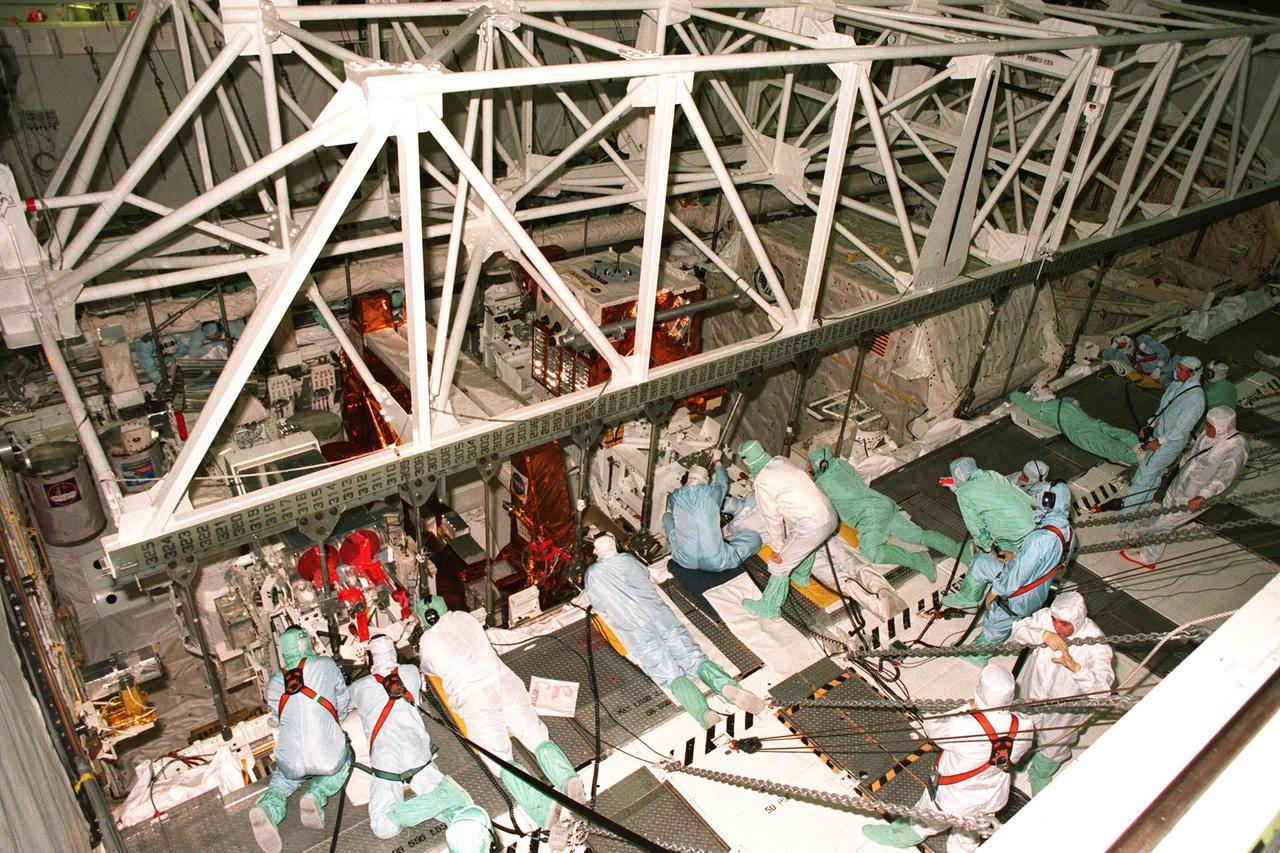
Workers in the Orbiter Processing Facility prepare to unload the STS-95 payloads from the payload bay of the orbiter Discovery. The experiments will be returned to their respective hosts. The mission included the Spartan solar-observing deployable spacecraft, the Hubble Space Telescope Orbital Systems Test Platform, the International Extreme Ultraviolet Hitchhiker, as well as the SPACEHAB single module with experiments on space flight and the aging process
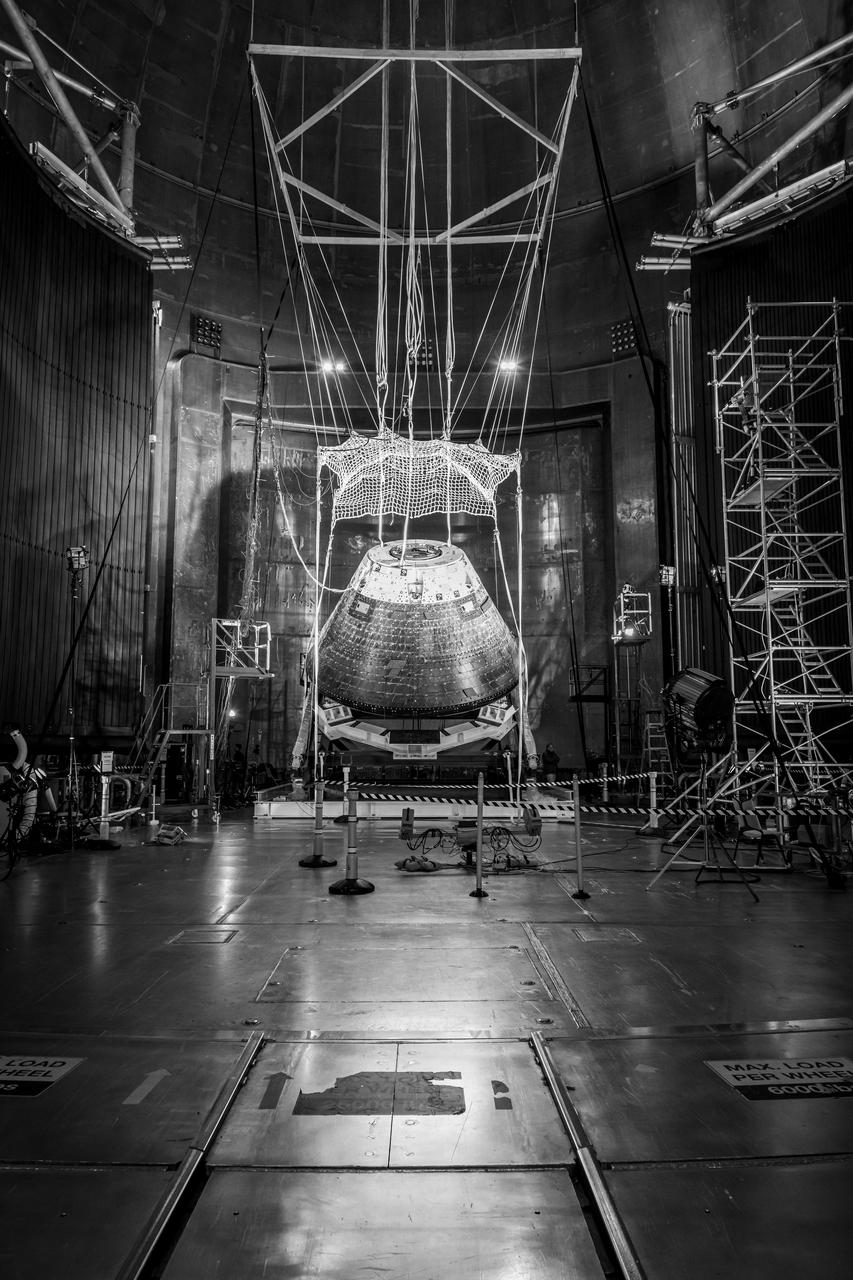
The Orion Crew Module, also known as the Orion Environmental Test Article (ETA), returned to NASA’s Neil Armstrong Test Facility in Sandusky, Ohio, in January 2024 and completed an 11-month test campaign necessary for the safety and success of Artemis II. In November 2024, experts completed the Forward Bay Cover jettison test, which is the last piece that must eject right before parachutes deploy. This image shows the setup right before the FBC deployment test. Photo Credit: (NASA/Jordan Salkin)
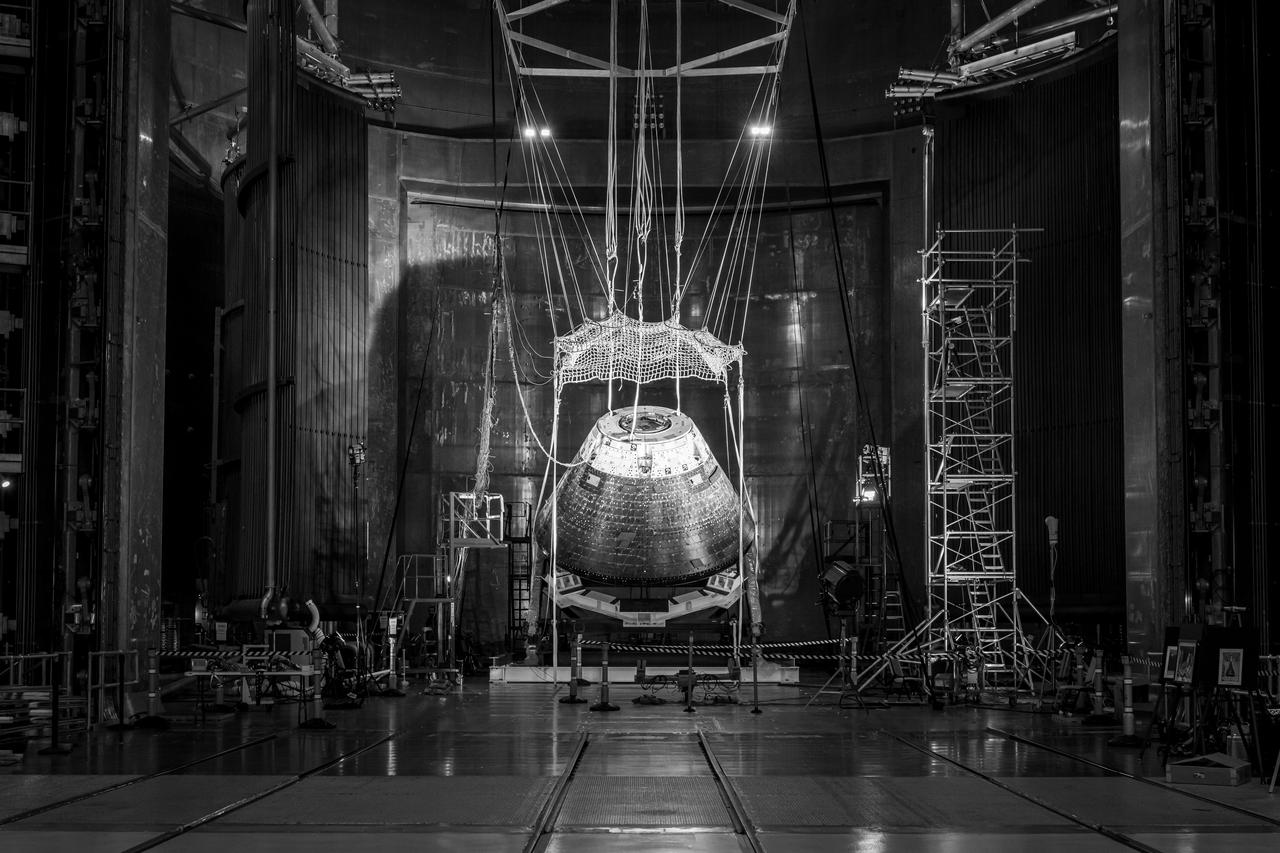
The Orion Crew Module, also known as the Orion Environmental Test Article (ETA), returned to NASA’s Neil Armstrong Test Facility in Sandusky, Ohio, in January 2024 and completed an 11-month test campaign necessary for the safety and success of Artemis II. In November 2024, experts completed the Forward Bay Cover jettison test, which is the last piece that must eject right before parachutes deploy. This image shows the setup right before the FBC deployment test. Photo Credit: (NASA/Jordan Salkin)
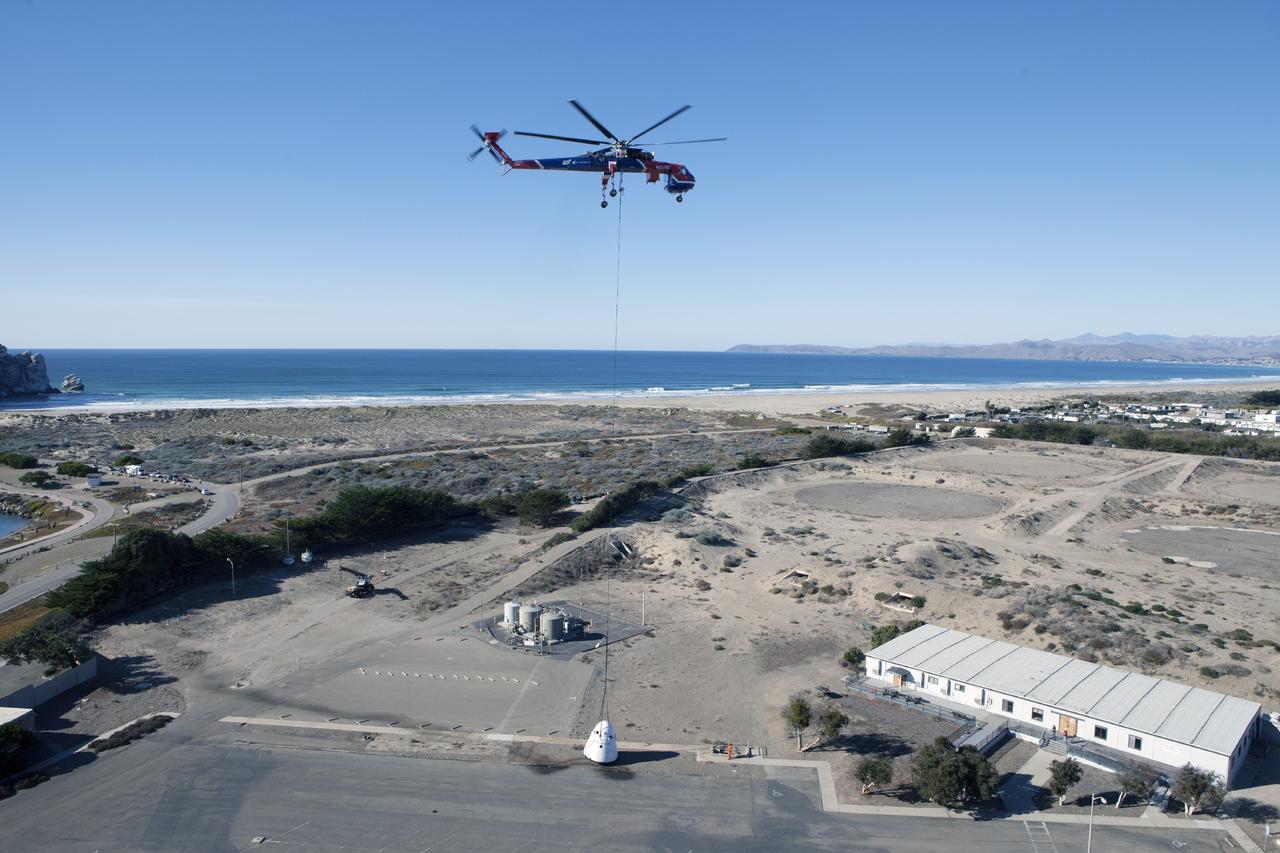
MORRO BAY, Calif. - An Erickson Sky Crane helicopter returns the SpaceX Dragon test article to Morro Bay, Cailf., following a test to evaluate the spacecraft's parachute deployment system. The test was part of a milestone under its Commercial Crew Integrated Capability agreement with NASA's Commercial Crew Program. Photo credit: NASA/Kim Shiflett
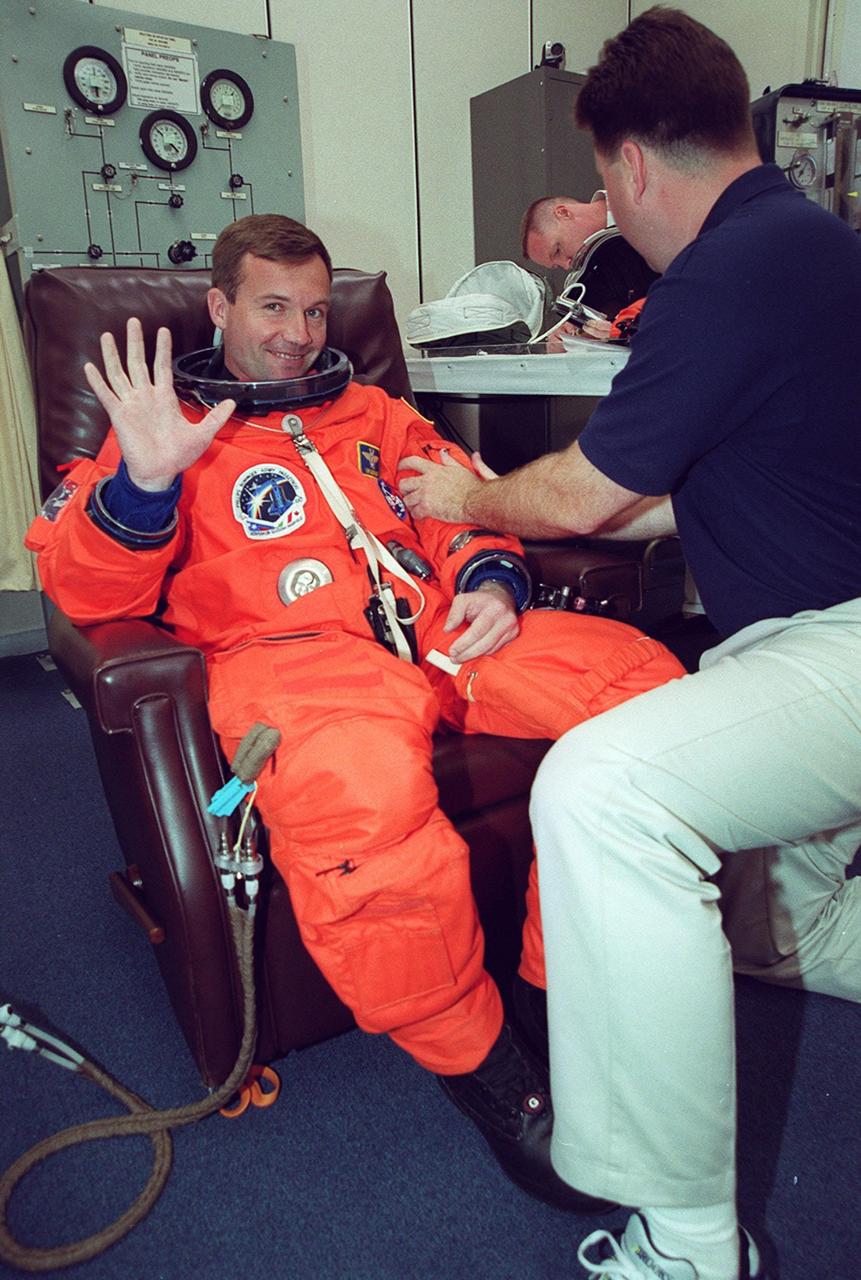
Smiling, STS-100 Mission Specialist Yuri V. Lonchakov waves as he suits up for launch in the Operations and Checkout Building. Lonchakov is with the Russian Aviation and Space Agency. The 11-day mission to the International Space Station will deliver and integrate the Spacelab Logistics Pallet/Launch Deployment Assembly, which includes the Space Station Remote Manipulator system and the UHF Antenna, and the Multi-Purpose Logistics Module Raffaello. The mission includes two planned spacewalks for installation of the SSRMS. The mission is also the inaugural flight of Raffaello, carrying resupply stowage racks and resupply/return stowage platforms. Liftoff on mission STS-100 is scheduled at 2:41 p.m. EDT April 19

KENNEDY SPACE CENTER, FLA. -- Space Shuttle Endeavour leaps from Launch Pad 39A amid billows of smoke and steam as it races into space on mission STS-100. Liftoff of Endeavour on the ninth flight to the International Space Station occurred at 2:40:42 p.m. EDT. The 11-day mission will deliver and integrate the Spacelab Logistics Pallet/Launch Deployment Assembly, which includes the Space Station Remote Manipulator System and the UHF Antenna. The mission includes two planned spacewalks for installation of the SSRMS on the Station. Also onboard is the Multi-Purpose Logistics Module Raffaello, carrying resupply stowage racks and resupply/return stowage platforms
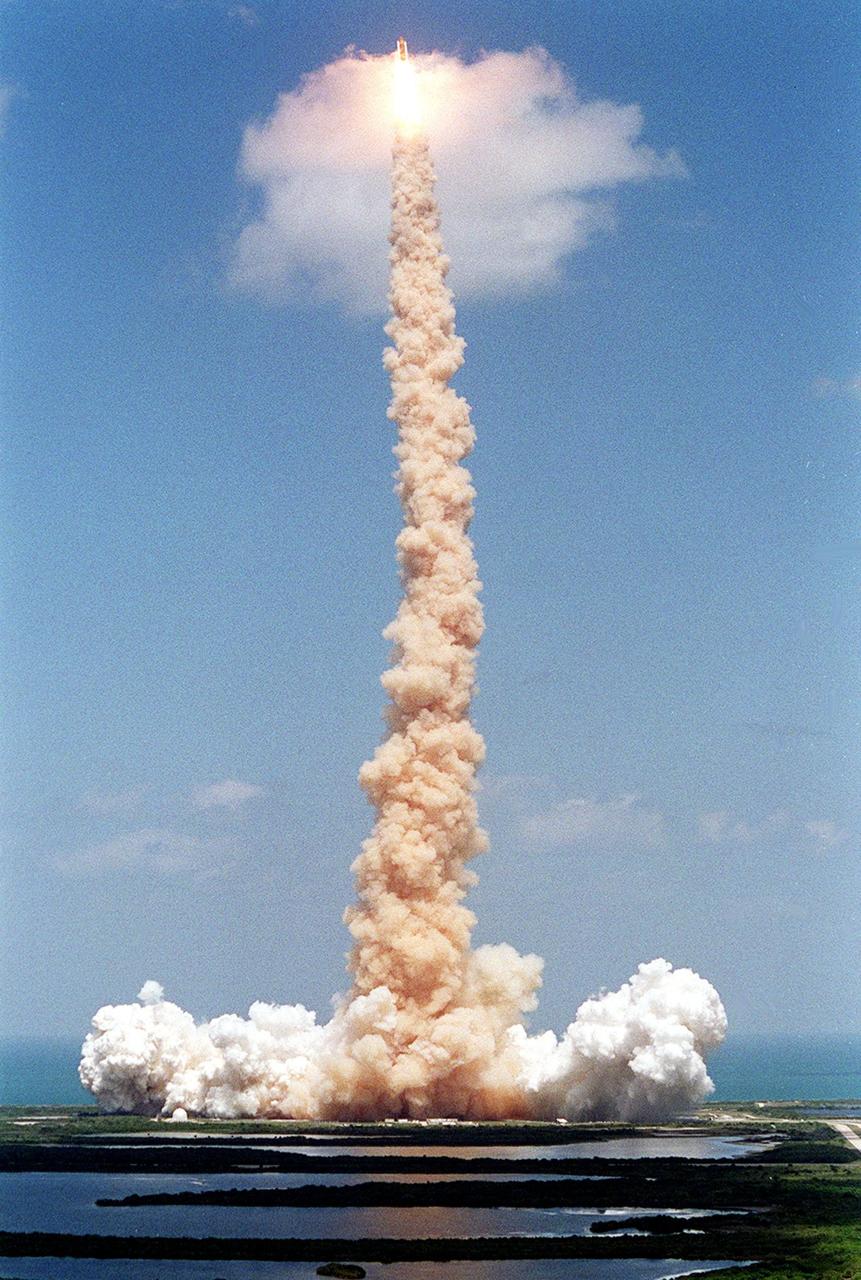
KENNEDY SPACE CENTER, FLA. -- Trailing a plume of smoke, Space Shuttle Endeavour pierces a small cloud, briefly lighting it from within, during launch on mission STS-100. Liftoff of the ninth flight to the International Space Station occurred at 2:40:42 p.m. EDT. The 11-day mission will deliver and integrate the Spacelab Logistics Pallet/Launch Deployment Assembly, which includes the Space Station Remote Manipulator System and the UHF Antenna. The mission includes two planned spacewalks for installation of the SSRMS on the Station. Also onboard is the Multi-Purpose Logistics Module Raffaello, carrying resupply stowage racks and resupply/return stowage platforms
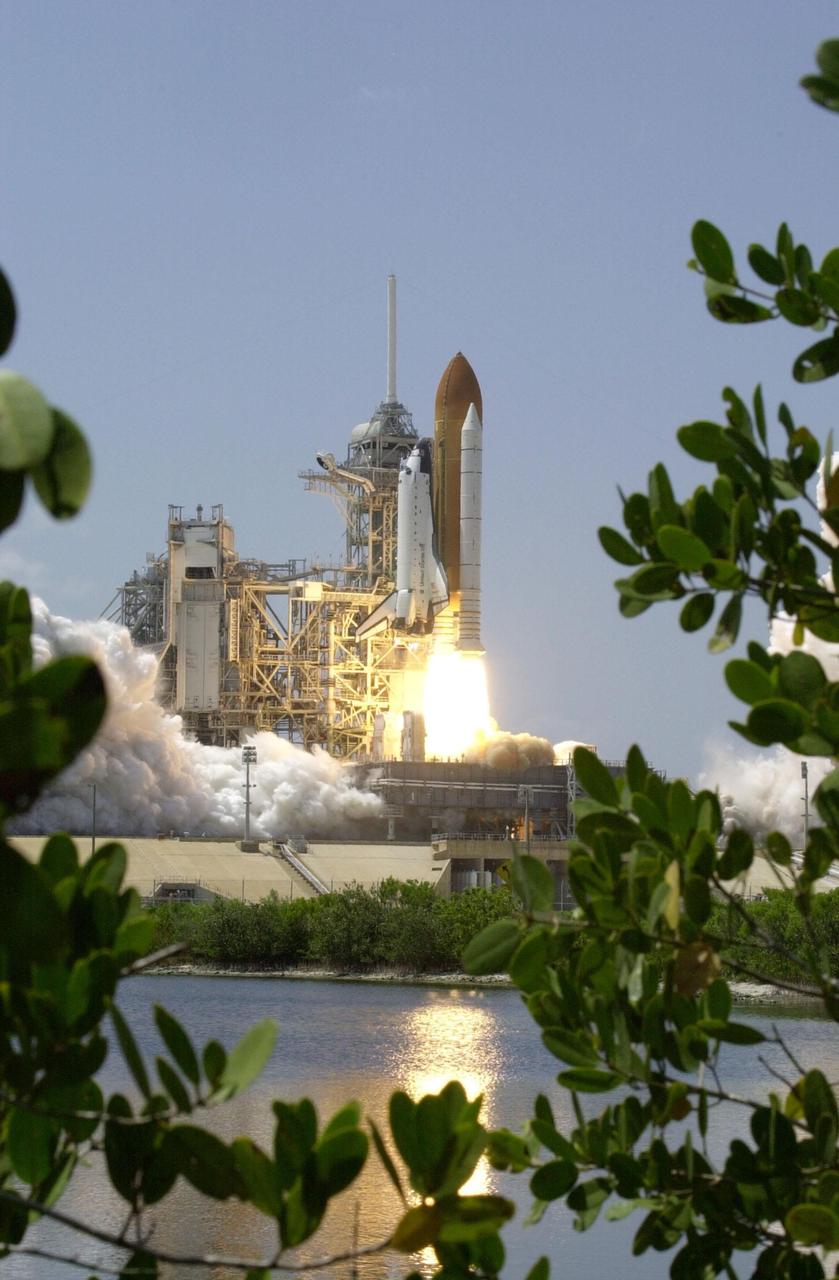
KENNEDY SPACE CENTER, FLA. -- Spring leaves frame the launch of Space Shuttle Endeavour on mission STS-100, the ninth flight to the International Space Station. Liftoff occurred at 2:40:42 p.m. EDT. The 11-day mission will deliver and integrate the Spacelab Logistics Pallet/Launch Deployment Assembly, which includes the Space Station Remote Manipulator System and the UHF Antenna. The mission includes two planned spacewalks for installation of the SSRMS on the Station. Also onboard is the Multi-Purpose Logistics Module Raffaello, carrying resupply stowage racks and resupply/return stowage platform
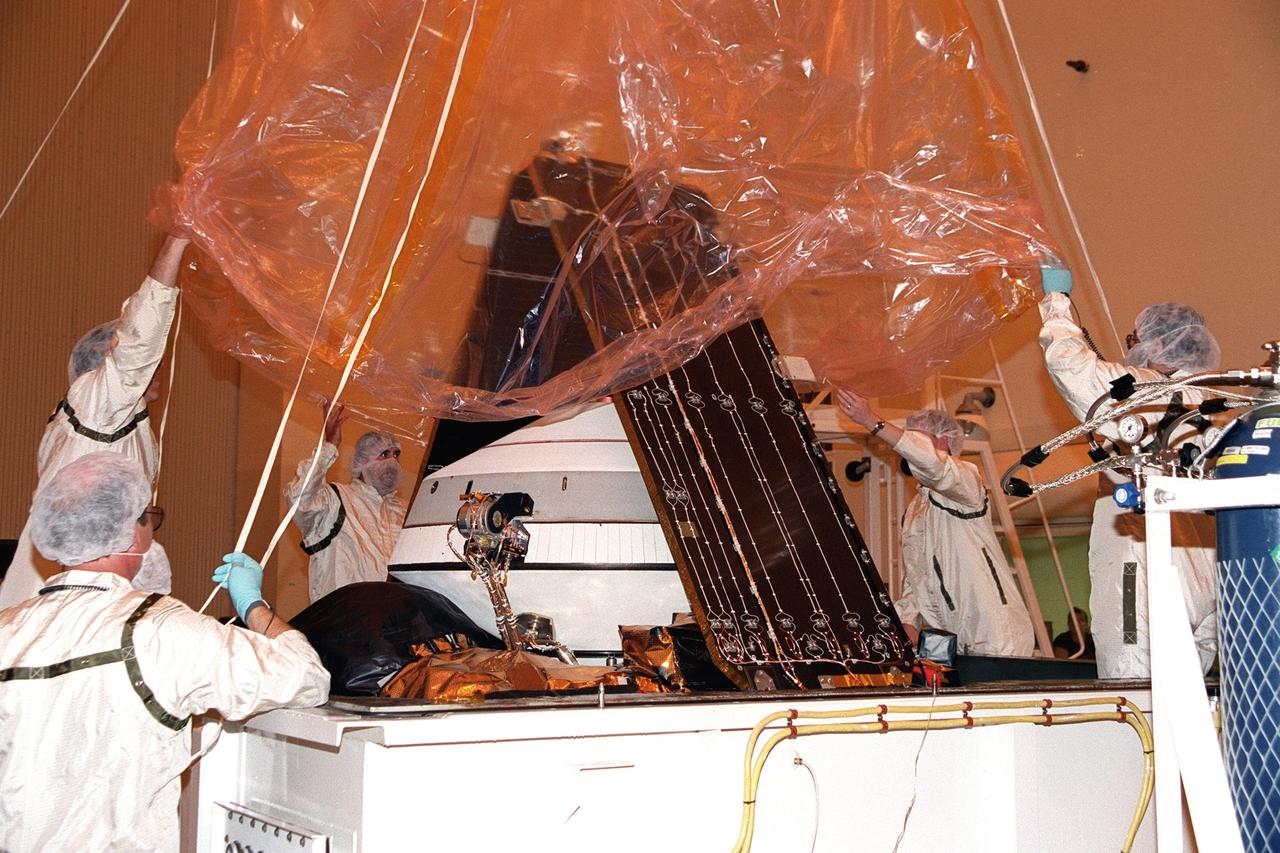
KENNEDY SPACE CENTER, Fla. -- In the Payload Hazardous Servicing Facility, workers lift the protective wrapping from Genesis - a spacecraft designed to collect samples of solar wind particles and return them to Earth so that scientists can study the exact composition of the Sun and probe the solar system’s origin. Genesis will be moved to a workstand for processing, which includes a functional test, electrical systems test and deployment of the solar arrays. Genesis is scheduled to be launched on a Delta II Lite launch vehicle from Complex 17-A, Cape Canaveral Air Force Station, July 30, at 12:36 p.m. EDT
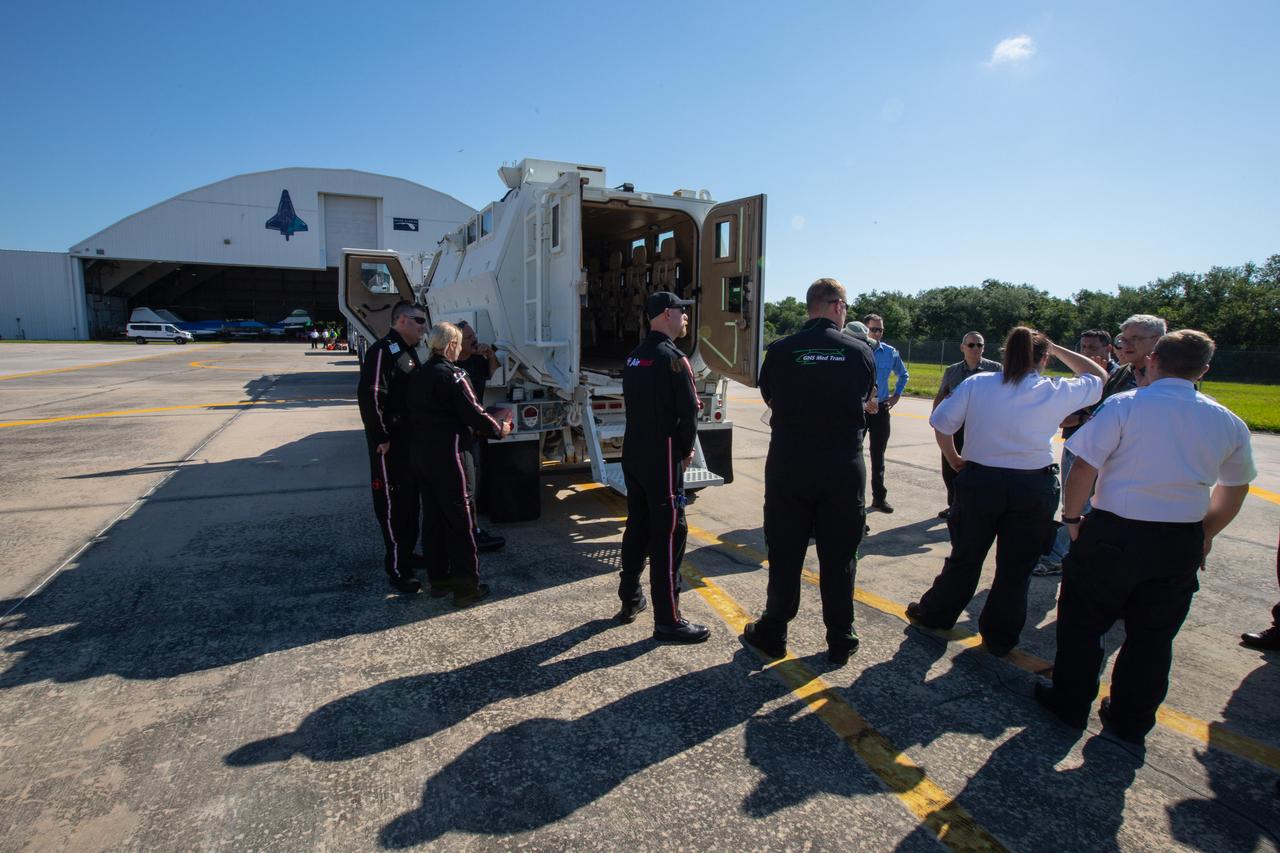
A Kennedy Space Center Mine Resistant Ambush Protected (MRAP) tactical vehicle stands at the ready during a medical support training course at the Florida spaceport’s Shuttle Landing Facility on May 17, 2019. Kennedy personnel and American Medical Response (AMR) contractor paramedics participated in the course, which was designed to familiarize the AMR paramedics with the center’s Triage Forces deployment, including medical team members, fire/rescue personnel, environmental health specialists and flight operations crew members, as well as a helicopter, MRAP, fire pumper truck and triage vehicles. The AMR paramedics will assist the agency in contingency planning for the return of human spaceflight from Kennedy.
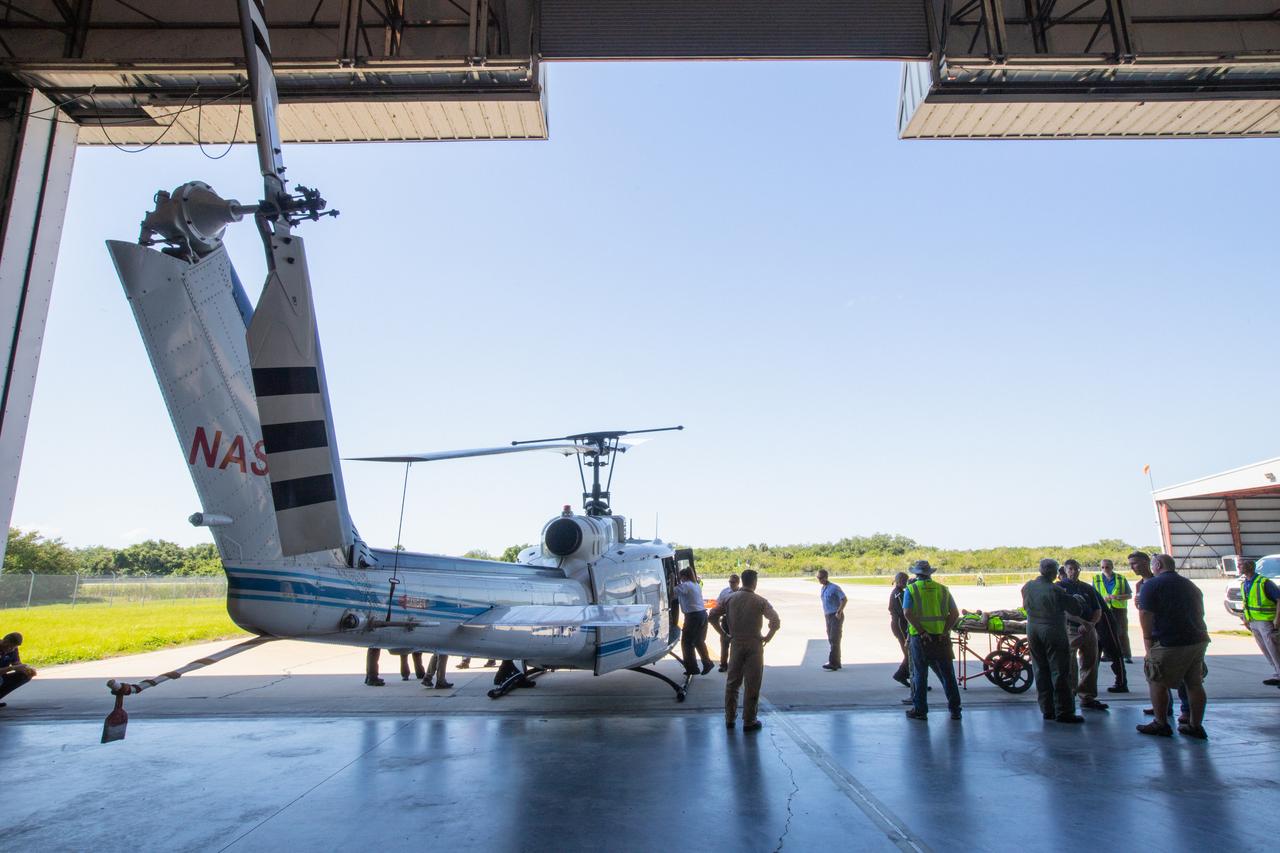
Kennedy Space Center personnel and American Medical Response (AMR) contractor paramedics gather near a NASA helicopter in the Space Florida hangar at the spaceport’s Shuttle Landing Facility on May 17, 2019, for a medical support training course. The course was designed to familiarize the AMR paramedics with the center’s Triage Forces deployment, which included medical team members, fire/rescue personnel, environmental health specialists and flight operations crew members, as well as the helicopter, Mine Resistant Ambush Protected (MRAP) tactical vehicle, fire pumper truck and triage vehicles. The AMR paramedics will assist the agency in contingency planning for the return of human spaceflight from Kennedy.
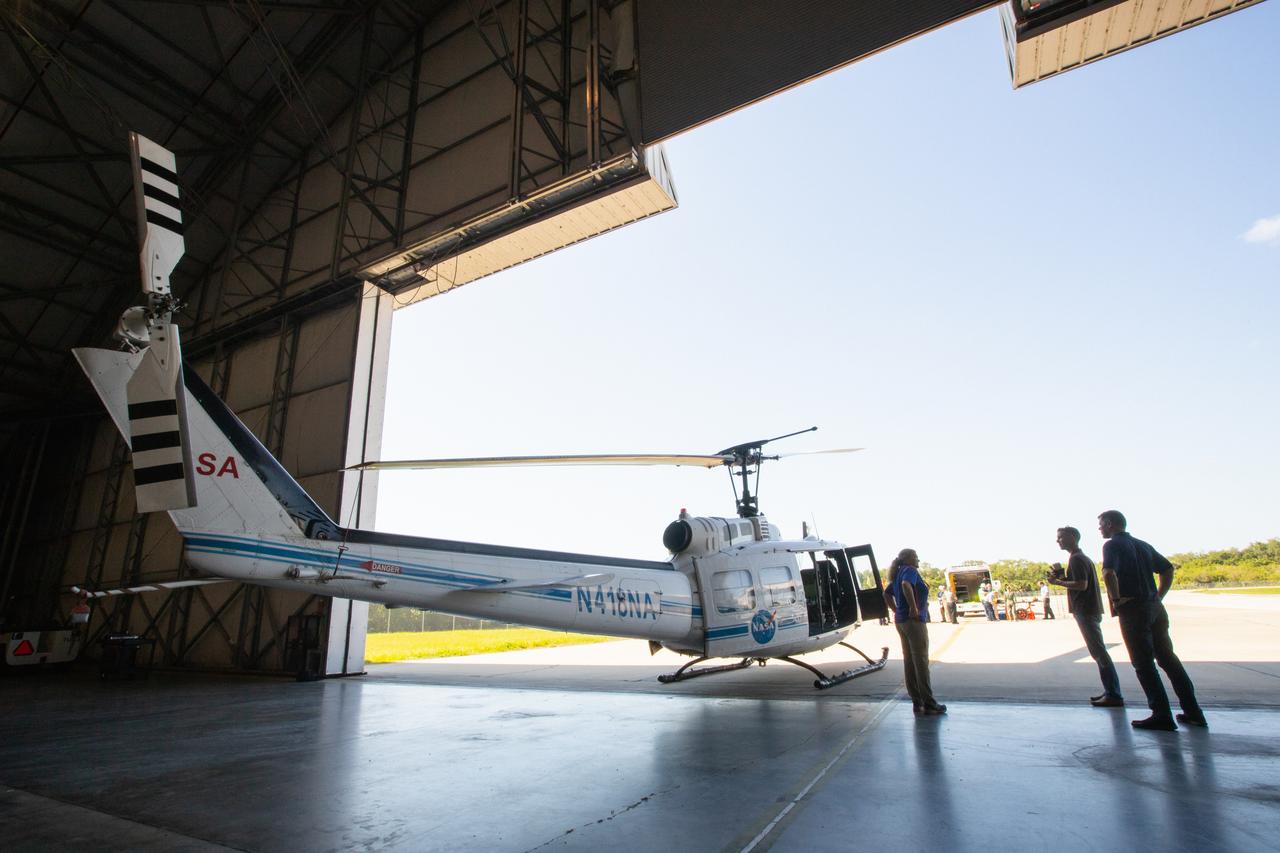
Kennedy Space Center personnel and American Medical Response (AMR) contractor paramedics gather near a NASA helicopter during a medical support training course in the Space Florida hangar at the spaceport’s Shuttle Landing Facility on May 17, 2019. The course was designed to familiarize the AMR paramedics with the center’s Triage Forces deployment, which included medical team members, fire/rescue personnel, environmental health specialists and flight operations crew members, as well as a helicopter, Mine Resistant Ambush Protected (MRAP) tactical vehicle, fire pumper truck and triage vehicles. The AMR paramedics will assist the agency in contingency planning for the return of human spaceflight from Kennedy.
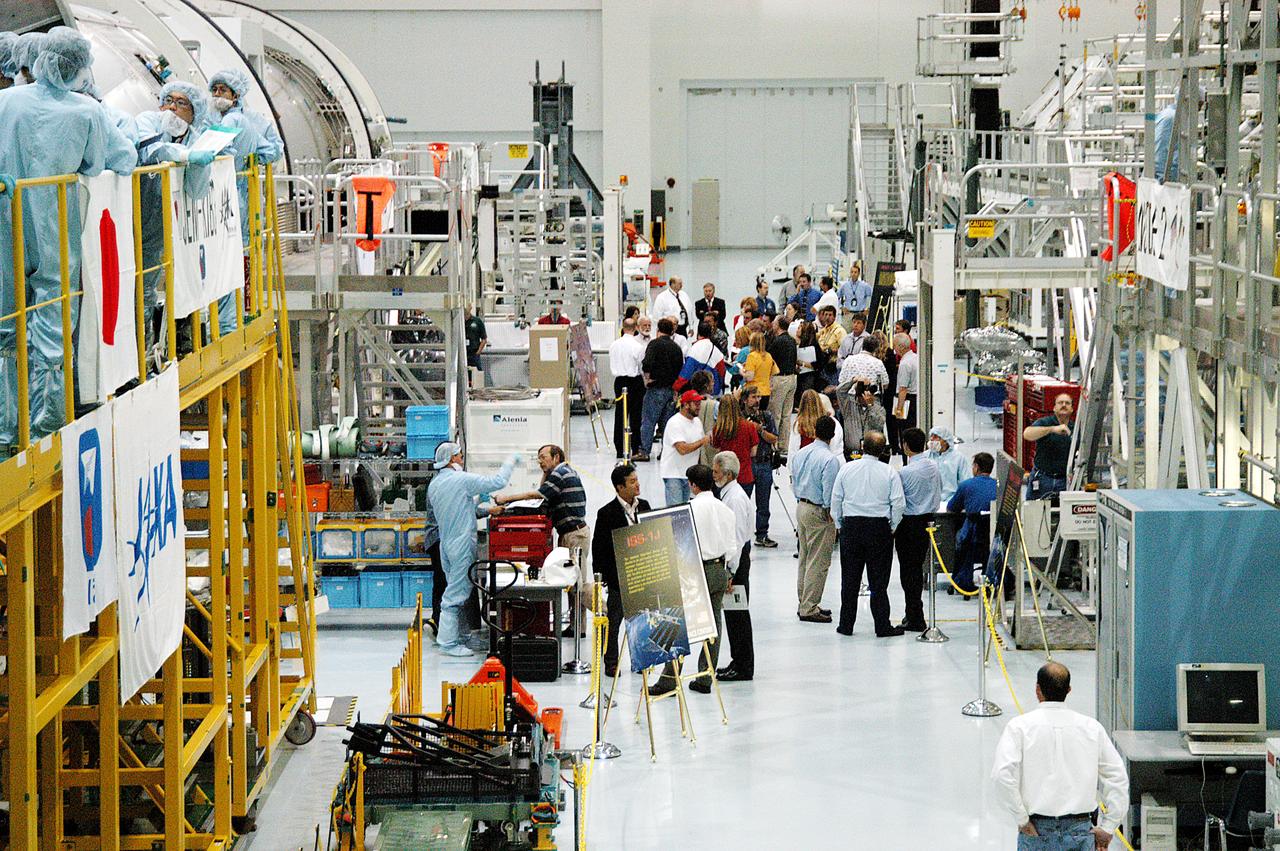
The Japanese Experiment Module or JEM (first element in left row), the Node 2 (first element in right row), and other hardware undergoing processing for transport to the International Space Station, are made available for viewing by the media, assembling in the aisle of the Space Station Processing Facility (SSPF). Members of the media were invited to commemorate the fifth anniversary of the launch of the first element of the International Space Station by touring the SSPF. Reporters had the opportunity to see Space Station hardware that is being processed for deployment once the Space Shuttles return to flight, as well as talk with NASA and Boeing mission managers about the various hardware elements currently being processed for flight.
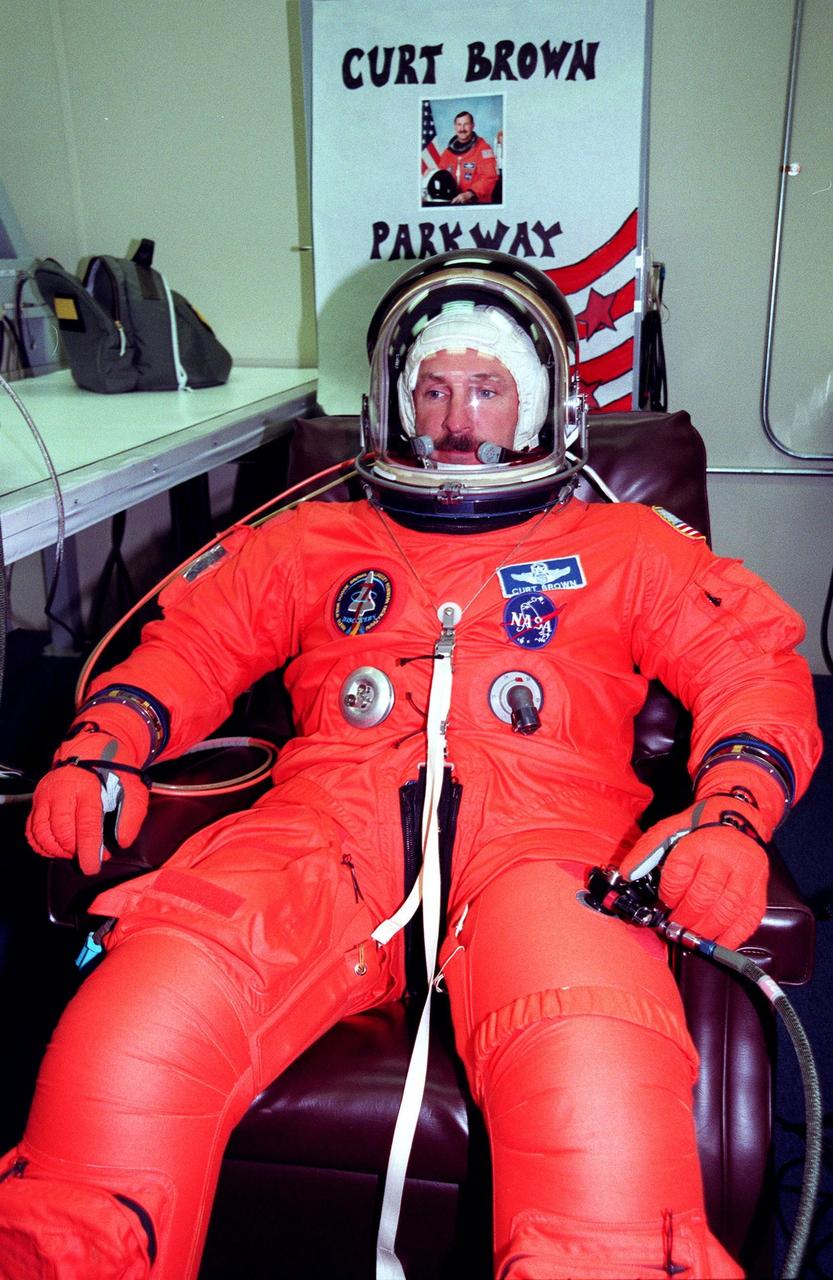
STS-95 Mission Commander Curtis L. Brown Jr. tests his flight suit in the Operations and Checkout Building. The final fitting takes place prior to the crew walkout and transport to Launch Pad 39B. Targeted for launch at 2 p.m. EST on Oct. 29, the mission is expected to last 8 days, 21 hours and 49 minutes, and return to KSC at 11:49 a.m. EST on Nov. 7. The STS-95 mission includes research payloads such as the Spartan solar-observing deployable spacecraft, the Hubble Space Telescope Orbital Systems Test Platform, the International Extreme Ultraviolet Hitchhiker, as well as the SPACEHAB single module with experiments on space flight and the aging process
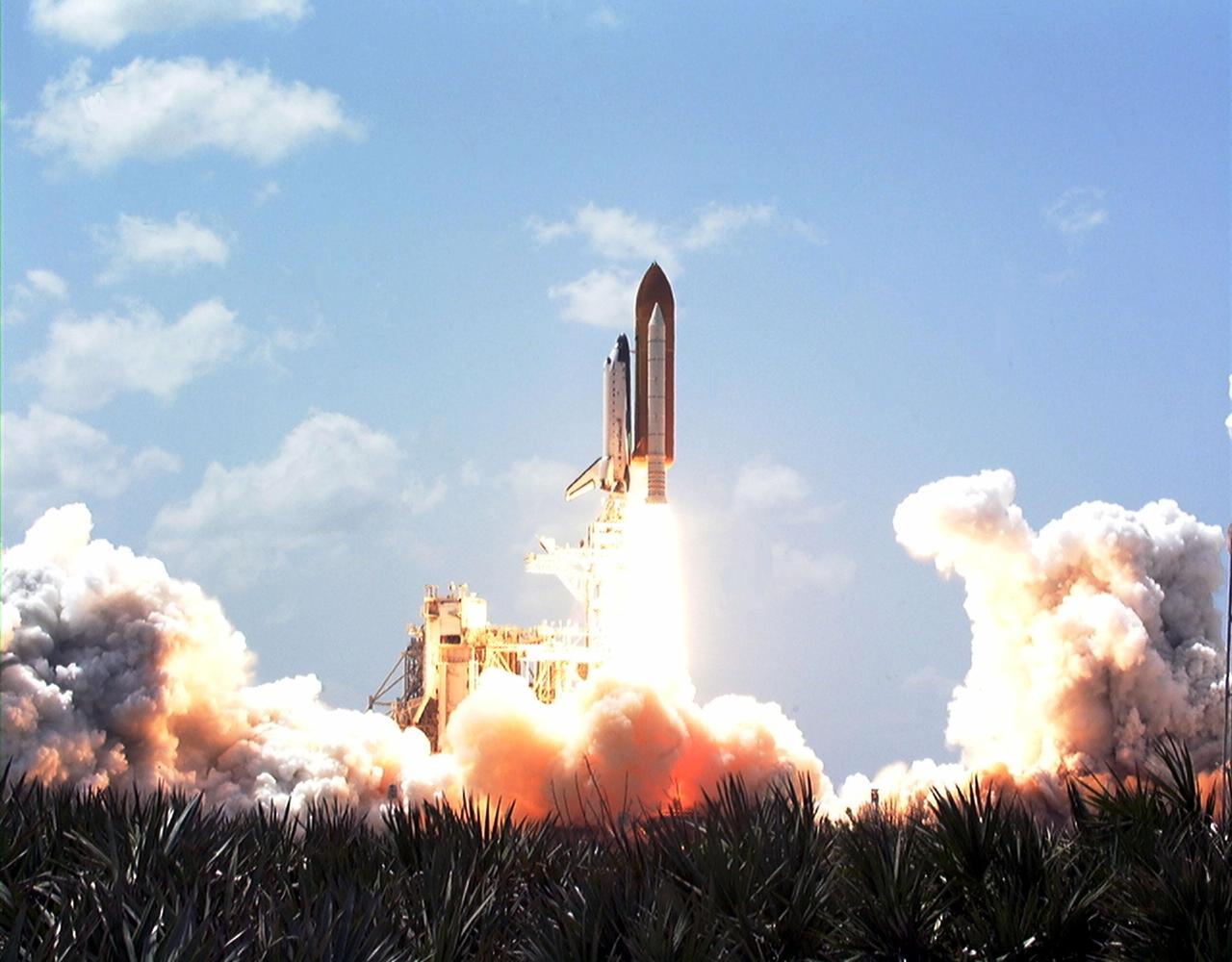
KENNEDY SPACE CENTER, FLA. -- Space Shuttle Endeavour roars into space, leaving orange-hued clouds of smoke and steam behind. Liftoff of the ninth flight to the International Space Station occurred at 2:40:42 p.m. EDT. The 11-day mission will deliver and integrate the Spacelab Logistics Pallet/Launch Deployment Assembly, which includes the Space Station Remote Manipulator System and the UHF Antenna. The mission includes two planned spacewalks for installation of the SSRMS on the Station. Also onboard is the Multi-Purpose Logistics Module Raffaello, carrying resupply stowage racks and resupply/return stowage platforms
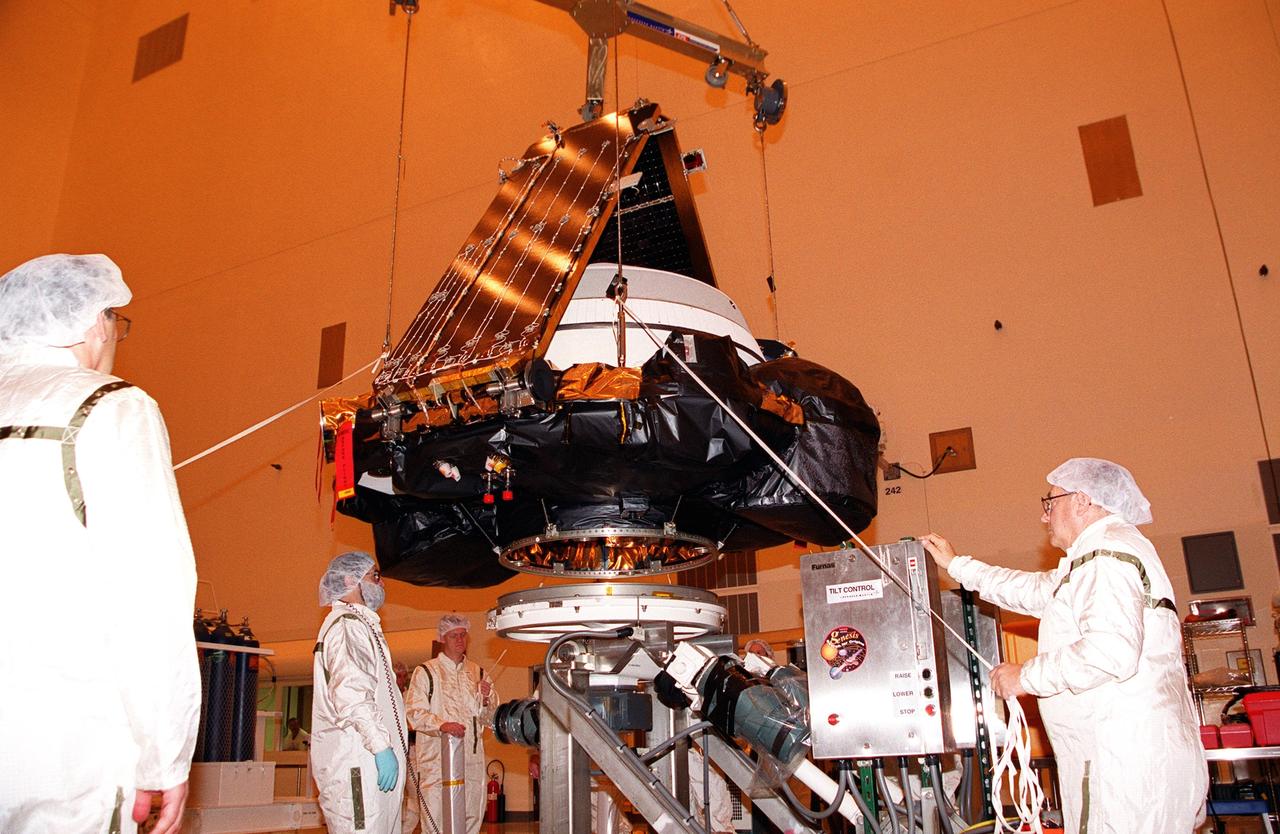
KENNEDY SPACE CENTER, Fla. -- In the Payload Hazardous Servicing Facility, the Genesis spacecraft is moved to a workstand. Genesis is designed to collect samples of solar wind particles and return them to Earth so that scientists can study the exact composition of the Sun and probe the solar system’s origin. On the workstand, the spacecraft will undergo processing, which includes a functional test, electrical systems test and deployment of the solar arrays. Genesis is scheduled to be launched on a Delta II Lite launch vehicle from Complex 17-A, Cape Canaveral Air Force Station, July 30, at 12:36 p.m. EDT
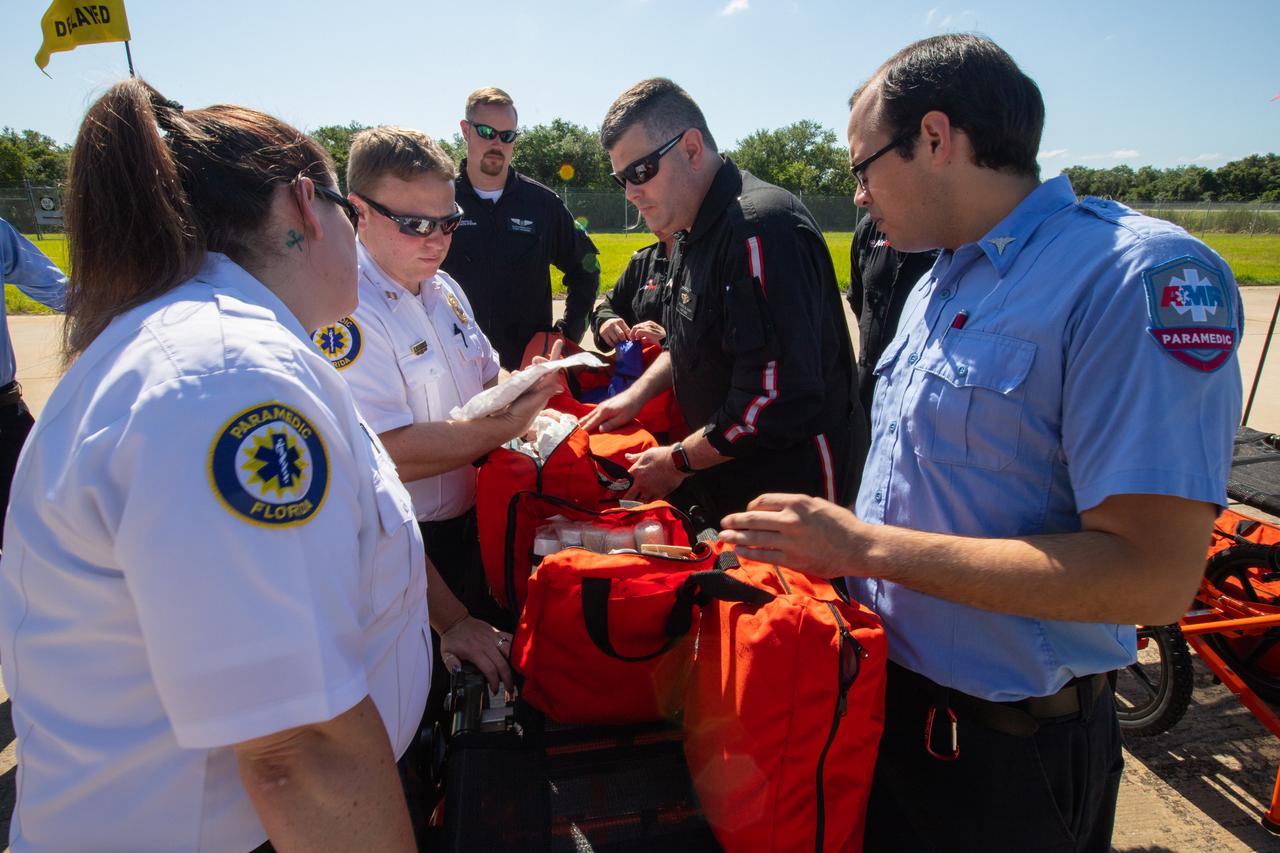
Kennedy Space Center personnel and American Medical Response (AMR) contractor paramedics participate in a medical support training course at the Florida spaceport’s Shuttle Landing Facility on May 17, 2019. The course was designed to familiarize the AMR paramedics with the center’s Triage Forces deployment, which included medical team members, fire/rescue personnel, environmental health specialists and flight operations crew members, as well as a helicopter, Mine Resistant Ambush Protected (MRAP) tactical vehicle, fire pumper truck and triage vehicles. The AMR paramedics will assist the agency in contingency planning for the return of human spaceflight from Kennedy.
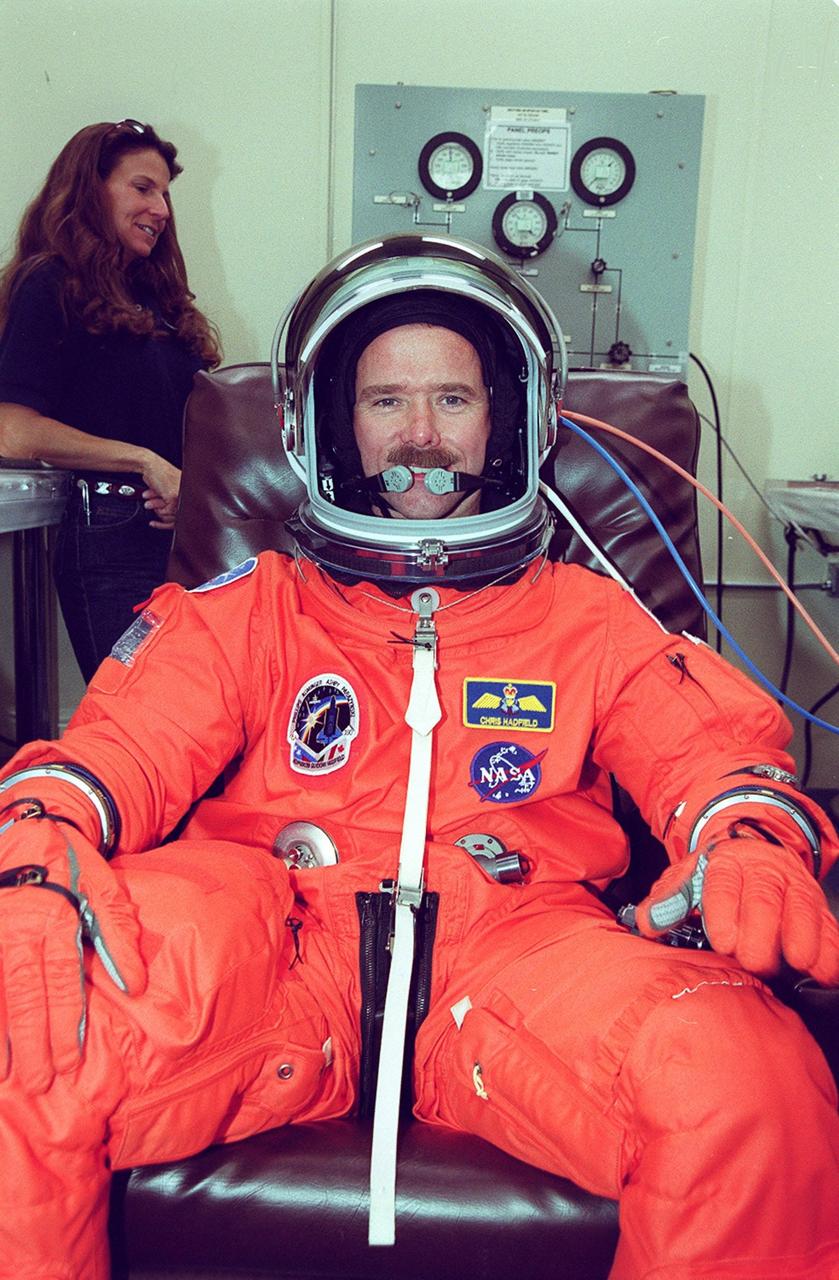
STS-100 Mission Specialist Chris A. Hadfield is ready for launch after suiting up in the Operations and Checkout Building. Hadfield is with the Canadian Space Agency. The 11-day mission to the International Space Station will deliver and integrate the Spacelab Logistics Pallet/Launch Deployment Assembly, which includes the Space Station Remote Manipulator system and the UHF Antenna, and the Multi-Purpose Logistics Module Raffaello. The mission includes two planned spacewalks for installation of the SSRMS. The mission is also the inaugural flight of Raffaello, carrying resupply stowage racks and resupply/return stowage platforms. Liftoff on mission STS-100 is scheduled at 2:41 p.m. EDT April 19
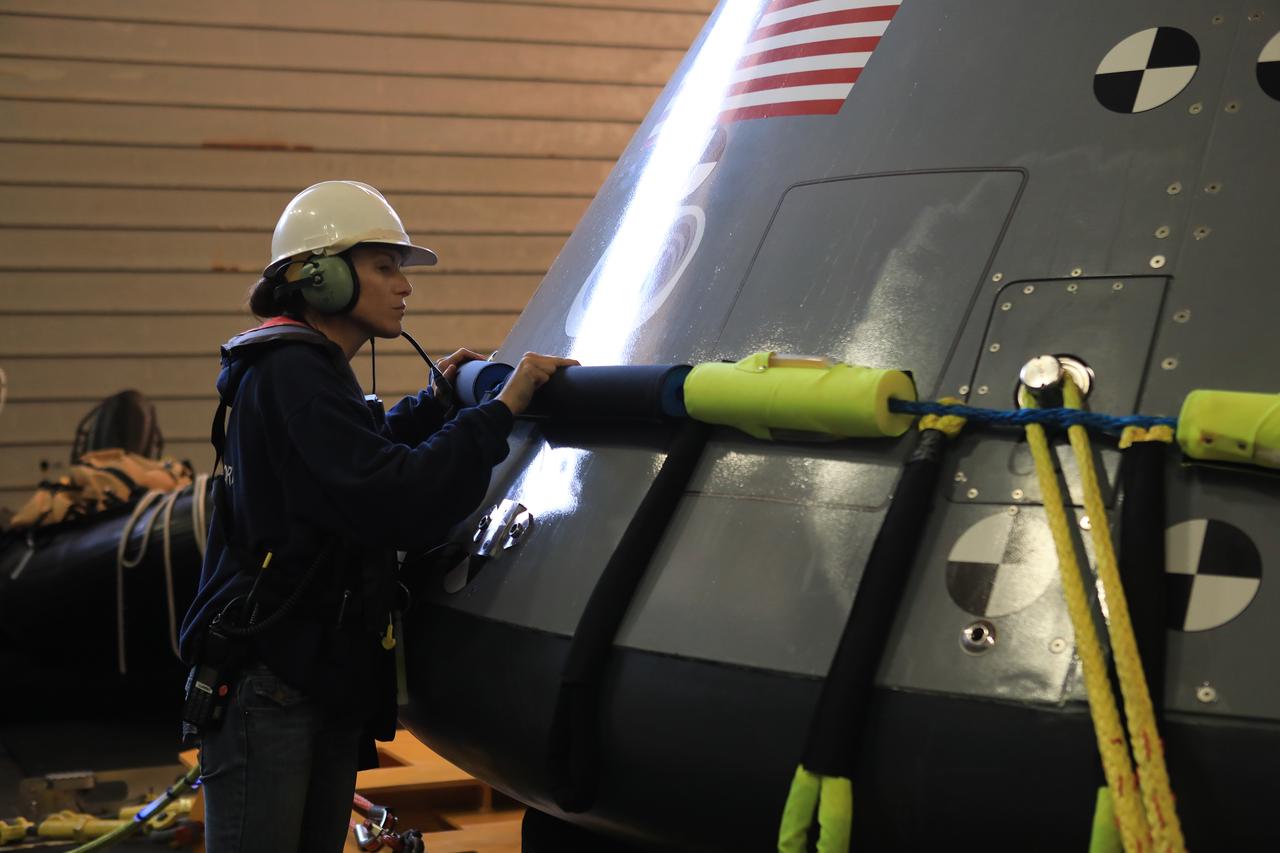
Lead NASA Operations Engineer Courtney Stern, with the Exploration Ground Systems (EGS) Recovery Team, inspects the pony collar on a test version of the Orion capsule in the well deck of the USS John P. Murtha before a night deployment on Nov. 3, 2018, during Underway Recovery Test-7 (URT-7). URT-7 is one in a series conducted by the EGS Recovery Team to verify and validate procedures and hardware that will be used to recover the Orion spacecraft after it splashes down in the Pacific Ocean following deep space exploration missions. Orion will have emergency abort capability, sustain the crew during space travel and provide safe re-entry from deep space return velocities.
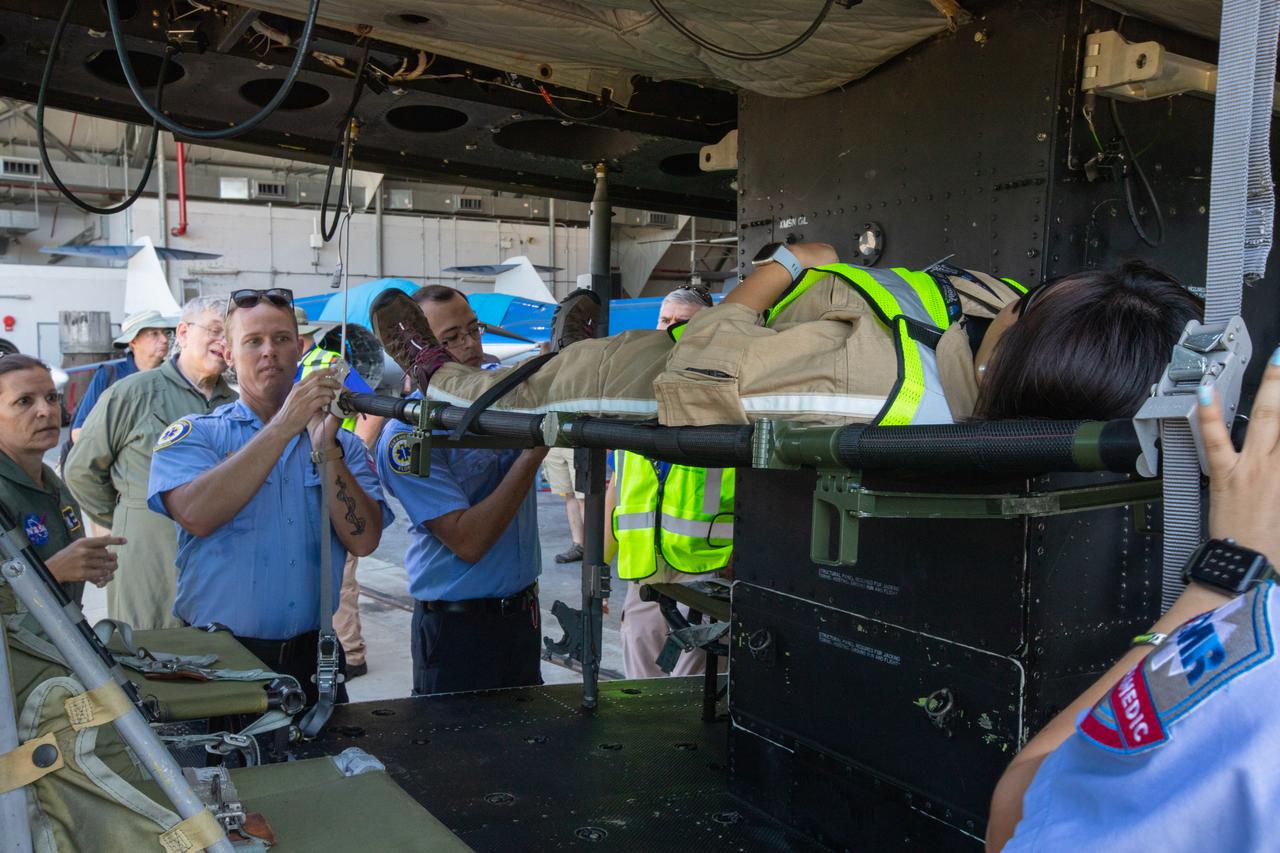
Kennedy Space Center personnel and American Medical Response (AMR) contractor paramedics load a “patient,” a KEMCON Fitness Center staff member, into a NASA helicopter during a medical support training course in the Space Florida hangar at the spaceport’s Shuttle Landing Facility on May 17, 2019. The course was designed to familiarize the AMR paramedics with the center’s Triage Forces deployment, which included medical team members, fire/rescue personnel, environmental health specialists and flight operations crew members, as well as a helicopter, Mine Resistant Ambush Protected (MRAP) tactical vehicle, fire pumper truck and triage vehicles. The AMR paramedics will assist the agency in contingency planning for the return of human spaceflight from Kennedy.
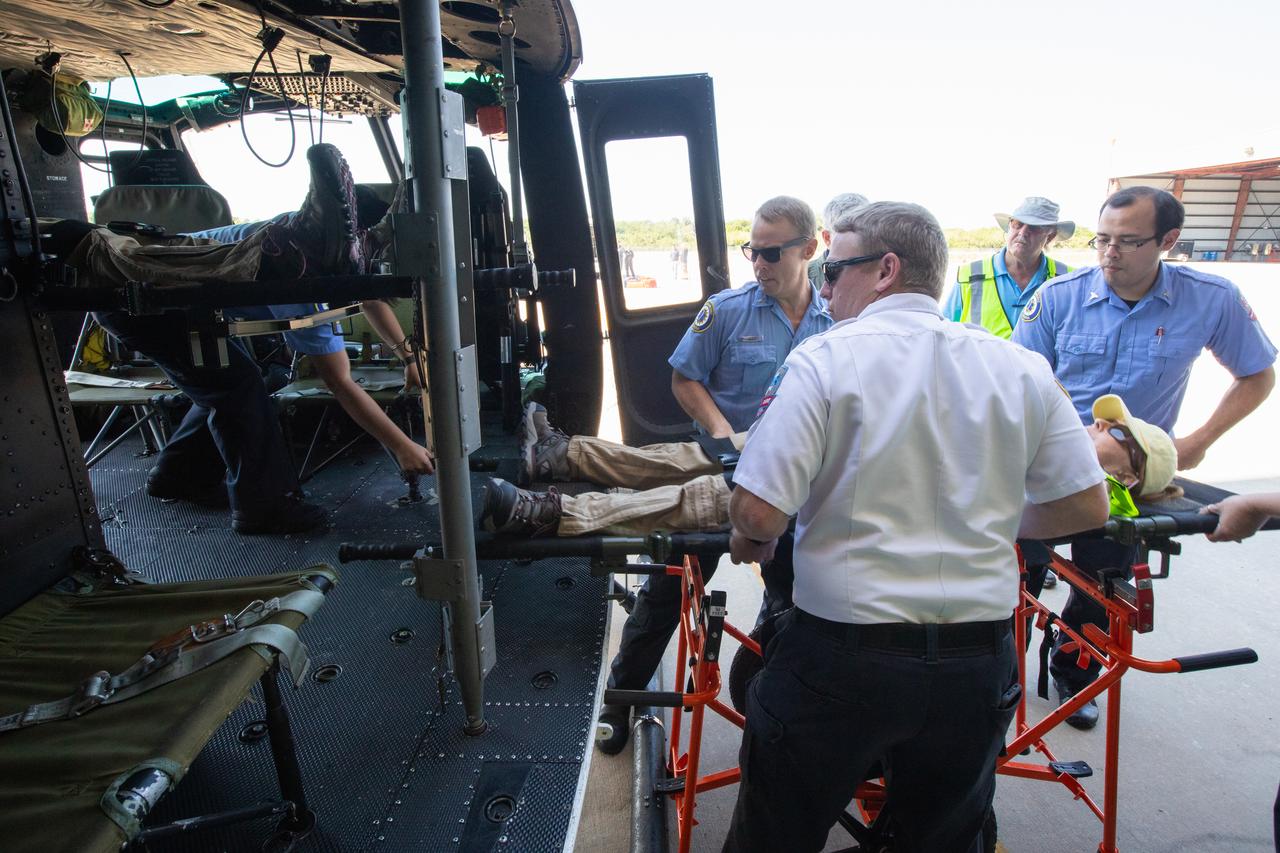
Kennedy Space Center personnel and American Medical Response (AMR) contractor paramedics load a “patient,” a KEMCON Fitness Center staff member, into a NASA helicopter during a medical support training course in the Space Florida hangar at the spaceport’s Shuttle Landing Facility on May 17, 2019. The course was designed to familiarize the AMR paramedics with the center’s Triage Forces deployment, which included medical team members, fire/rescue personnel, environmental health specialists and flight operations crew members, as well as a helicopter, Mine Resistant Ambush Protected (MRAP) tactical vehicle, fire pumper truck and triage vehicles. The AMR paramedics will assist the agency in contingency planning for the return of human spaceflight from Kennedy.
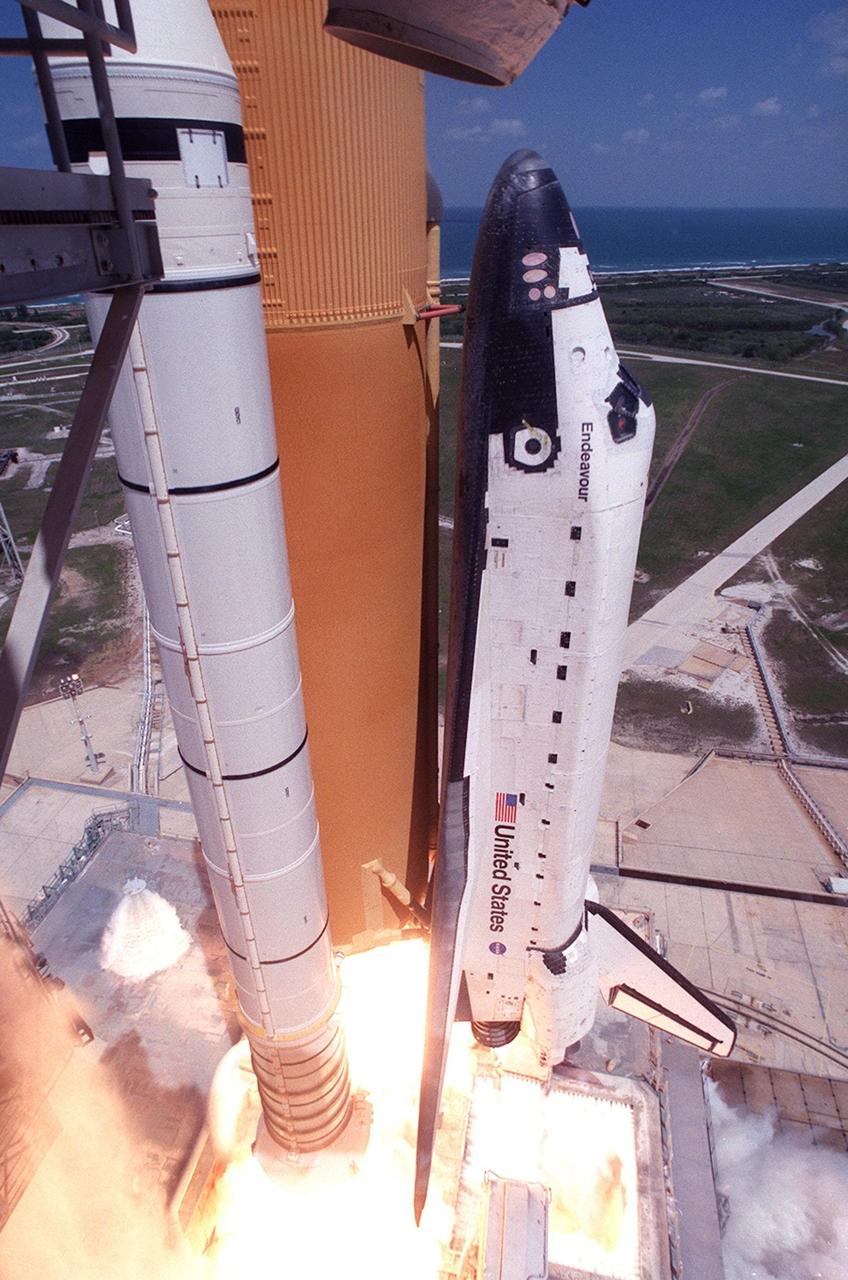
KENNEDY SPACE CENTER, FLA. -- Space Shuttle Endeavour lifts off amid streaming jets of water and steam on mission STS-100. In the background is the Atlantic Ocean. Liftoff of Endeavour on the ninth flight to the International Space Station occurred at 2:40:42 p.m. EDT. The 11-day mission will deliver and integrate the Spacelab Logistics Pallet/Launch Deployment Assembly, which includes the Space Station Remote Manipulator System and the UHF Antenna. The mission includes two planned spacewalks for installation of the SSRMS on the Station. Also onboard is the Multi-Purpose Logistics Module Raffaello, carrying resupply stowage racks and resupply/return stowage platforms
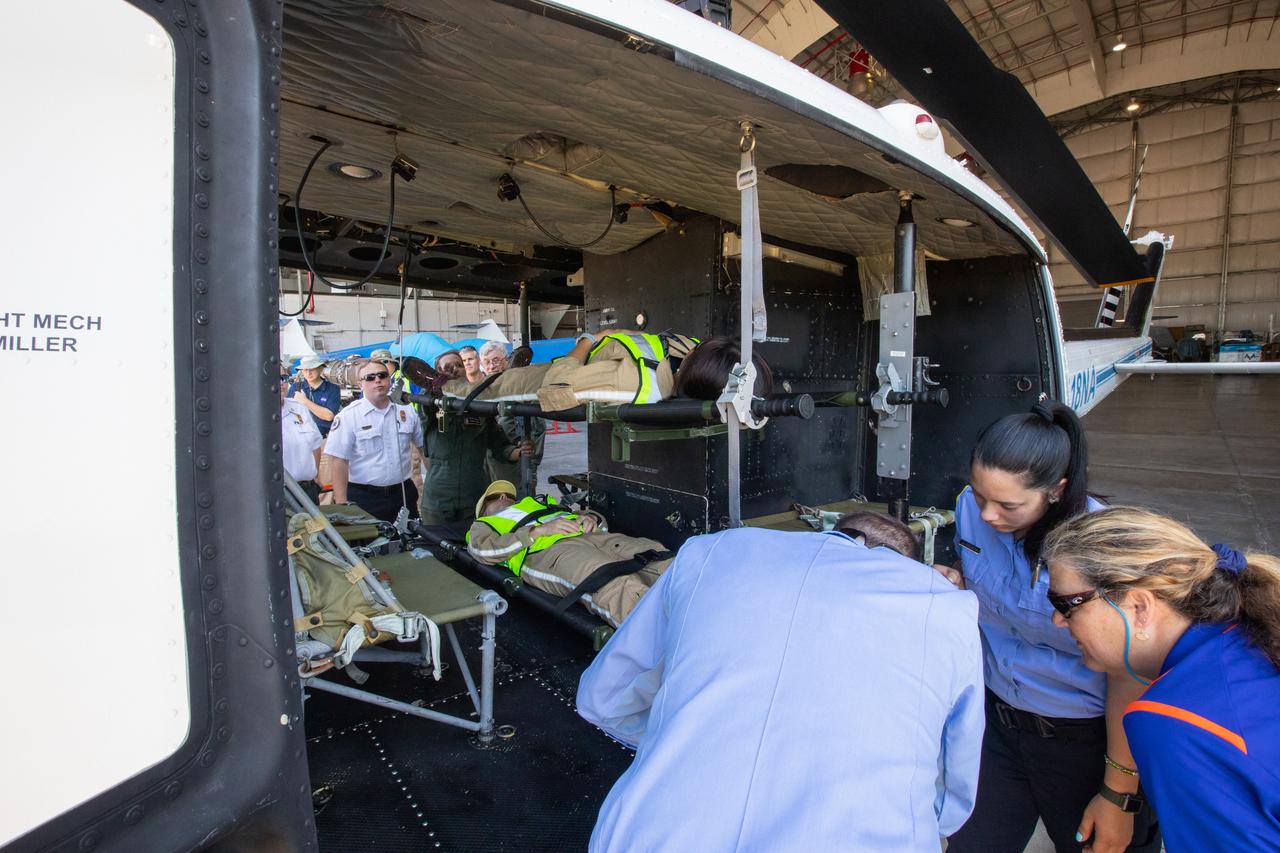
Kennedy Space Center personnel and American Medical Response (AMR) contractor paramedics gather around a “patient,” a KEMCON Fitness Center staff member, during a medical support training course in the Space Florida hangar at the spaceport’s Shuttle Landing Facility on May 17, 2019. The course was designed to familiarize the AMR paramedics with the center’s Triage Forces deployment, which included medical team members, fire/rescue personnel, environmental health specialists and flight operations crew members, as well as a helicopter, Mine Resistant Ambush Protected (MRAP) tactical vehicle, fire pumper truck and triage vehicles. The AMR paramedics will assist the agency in contingency planning for the return of human spaceflight from Kennedy.
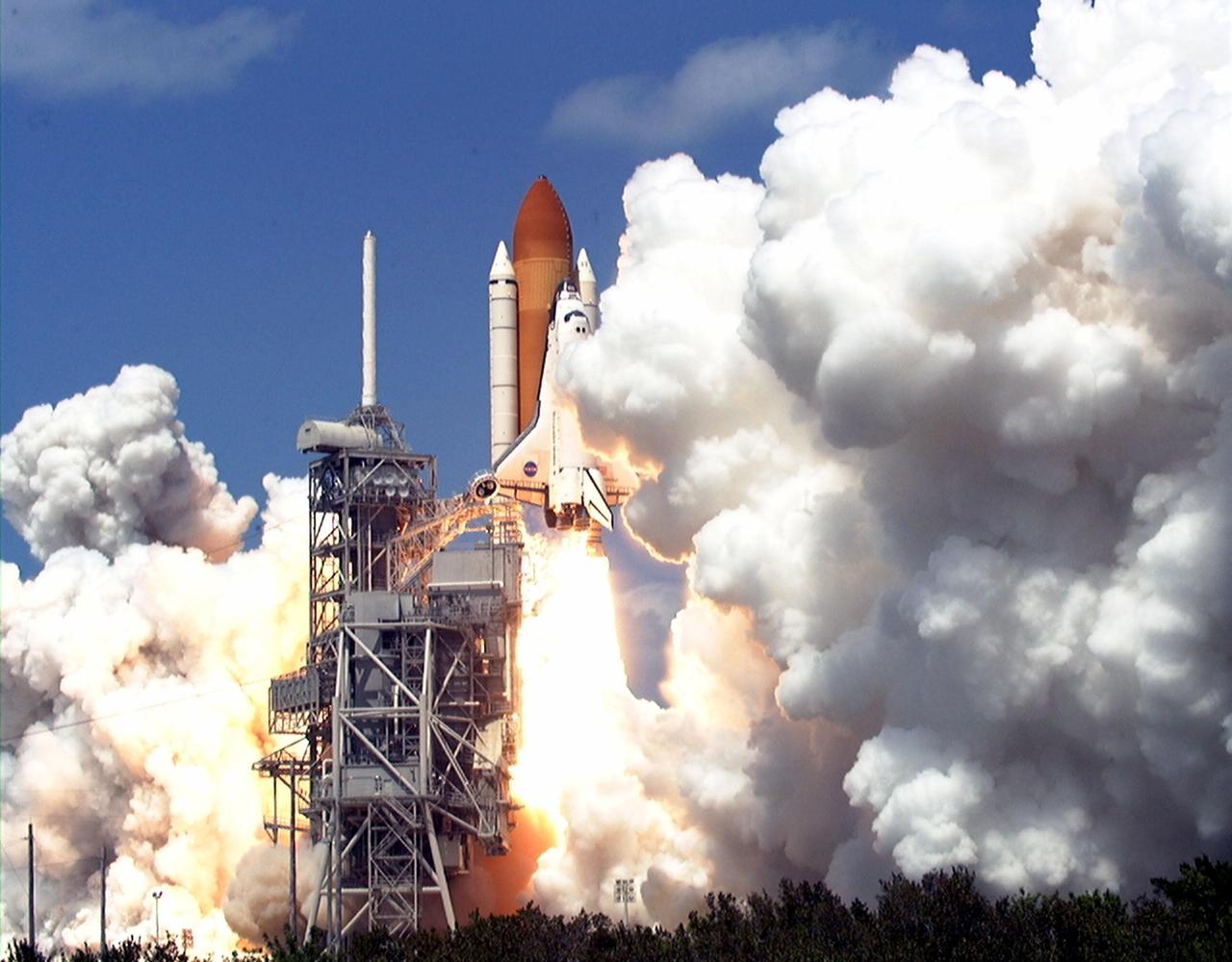
KENNEDY SPACE CENTER, FLA. -- Billows of steam almost obscure Space Shuttle Endeavour as it roars off Launch Pad 39A on mission STS-100. Liftoff of the ninth flight to the International Space Station occurred at 2:40:42 p.m. EDT. The 11-day mission will deliver and integrate the Spacelab Logistics Pallet/Launch Deployment Assembly, which includes the Space Station Remote Manipulator System and the UHF Antenna. The mission includes two planned spacewalks for installation of the SSRMS on the Station. Also onboard is the Multi-Purpose Logistics Module Raffaello, carrying resupply stowage racks and resupply/return stowage platforms

KENNEDY SPACE CENTER, FLA. -- Flames from Space Shuttle Endeavour light up the clouds as the Shuttle races into space on mission STS-100. Liftoff of Endeavour on the ninth flight to the International Space Station occurred at 2:40:42 p.m. EDT. The 11-day mission will deliver and integrate the Spacelab Logistics Pallet/Launch Deployment Assembly, which includes the Space Station Remote Manipulator System and the UHF Antenna. The mission includes two planned spacewalks for installation of the SSRMS on the Station. Also onboard is the Multi-Purpose Logistics Module Raffaello, carrying resupply stowage racks and resupply/return stowage platforms
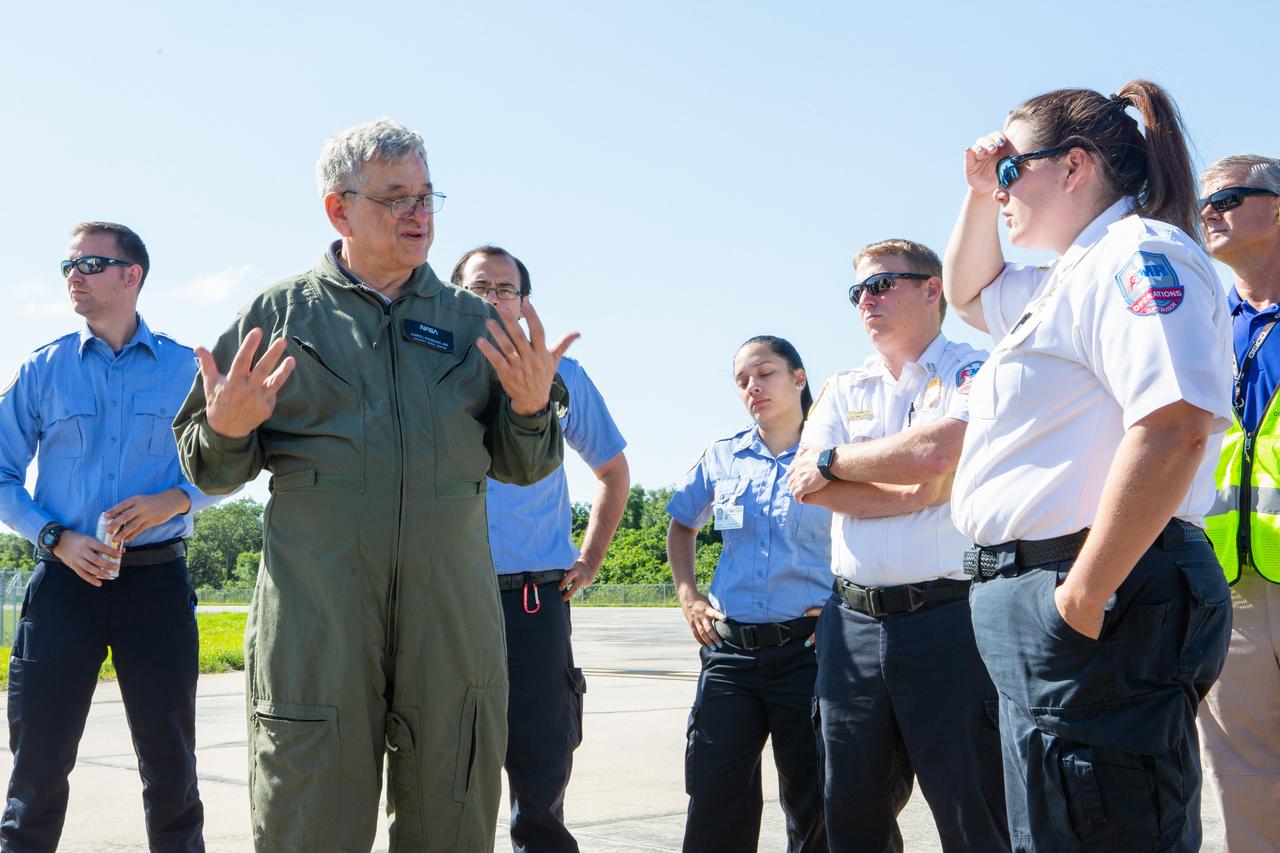
KEMCON physician Dr. Dan Woodard speaks to Kennedy Space Center personnel and American Medical Response (AMR) contractor paramedics gathered at the Florida spaceport’s Shuttle Landing Facility on May 17, 2019, for a medical support training course. The course was designed to familiarize the AMR paramedics with the center’s Triage Forces deployment, which included medical team members, fire/rescue personnel, environmental health specialists and flight operations crew members, as well as a helicopter, Mine Resistant Ambush Protected (MRAP) tactical vehicle, fire pumper truck and triage vehicles. The AMR paramedics will assist the agency in contingency planning for the return of human spaceflight from Kennedy.
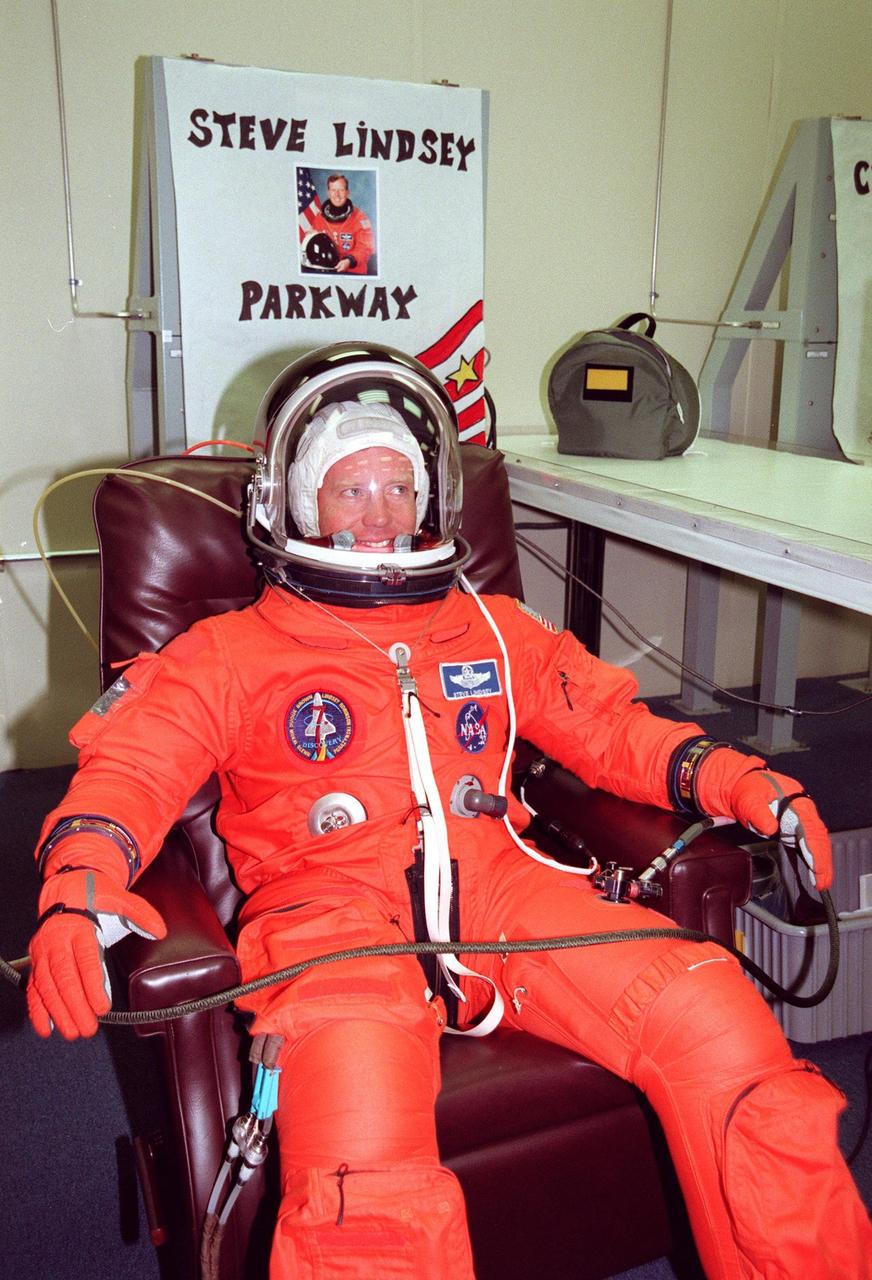
STS-95 Pilot Steven W. Lindsey tests his flight suit in the Operations and Checkout Building. The final fitting takes place prior to the crew walkout and transport to Launch Pad 39B. Targeted for launch at 2 p.m. EST on Oct. 29, the mission is expected to last 8 days, 21 hours and 49 minutes, and return to KSC at 11:49 a.m. EST on Nov. 7. The STS-95 mission includes research payloads such as the Spartan solar-observing deployable spacecraft, the Hubble Space Telescope Orbital Systems Test Platform, the International Extreme Ultraviolet Hitchhiker, as well as the SPACEHAB single module with experiments on space flight and the aging process
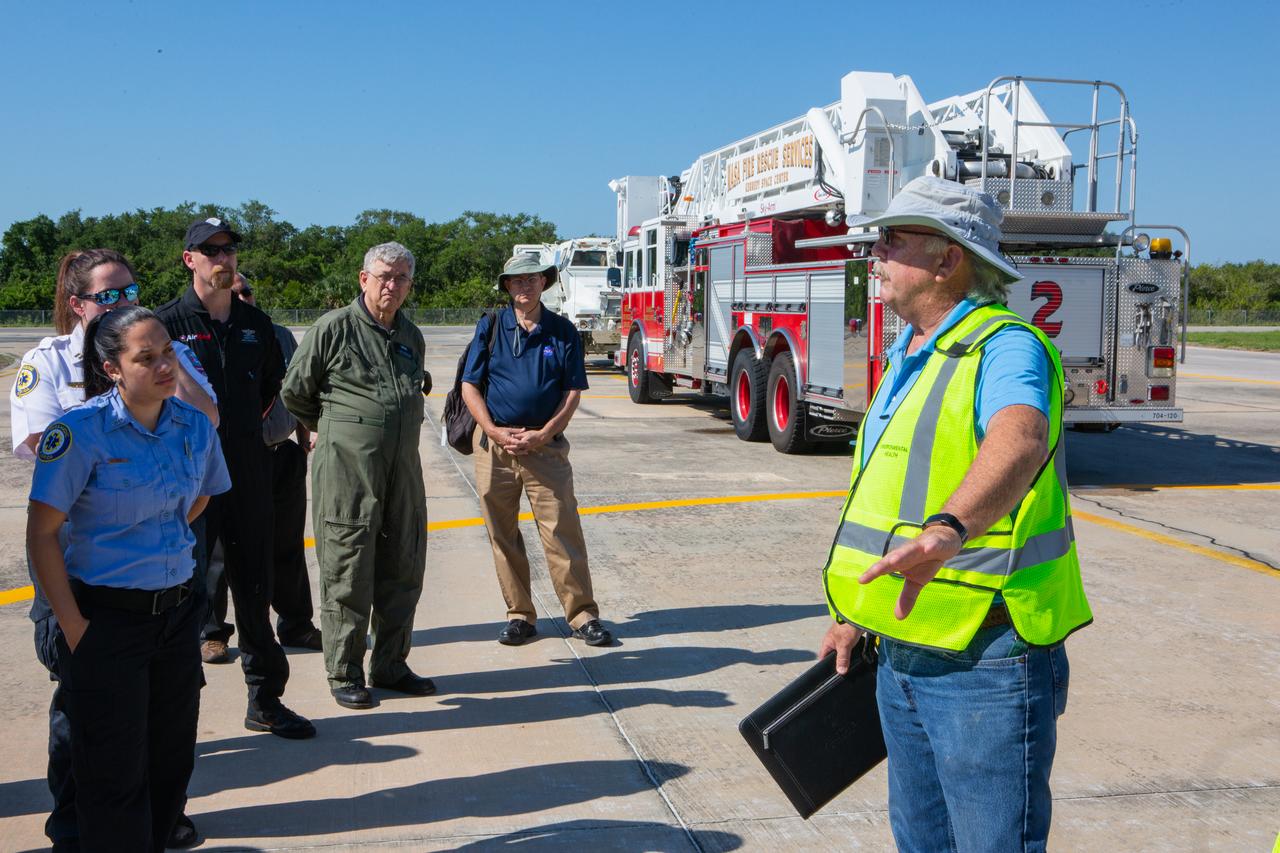
Kennedy Space Center personnel and American Medical Response (AMR) contractor paramedics gather at the Florida spaceport’s Shuttle Landing Facility on May 17, 2019, for a medical support training course. The course was designed to familiarize the AMR paramedics with the center’s Triage Forces deployment, which included medical team members, fire/rescue personnel, environmental health specialists and flight operations crew members, as well as a helicopter, Mine Resistant Ambush Protected (MRAP) tactical vehicle, fire pumper truck and triage vehicles. The AMR paramedics will assist the agency in contingency planning for the return of human spaceflight from Kennedy.
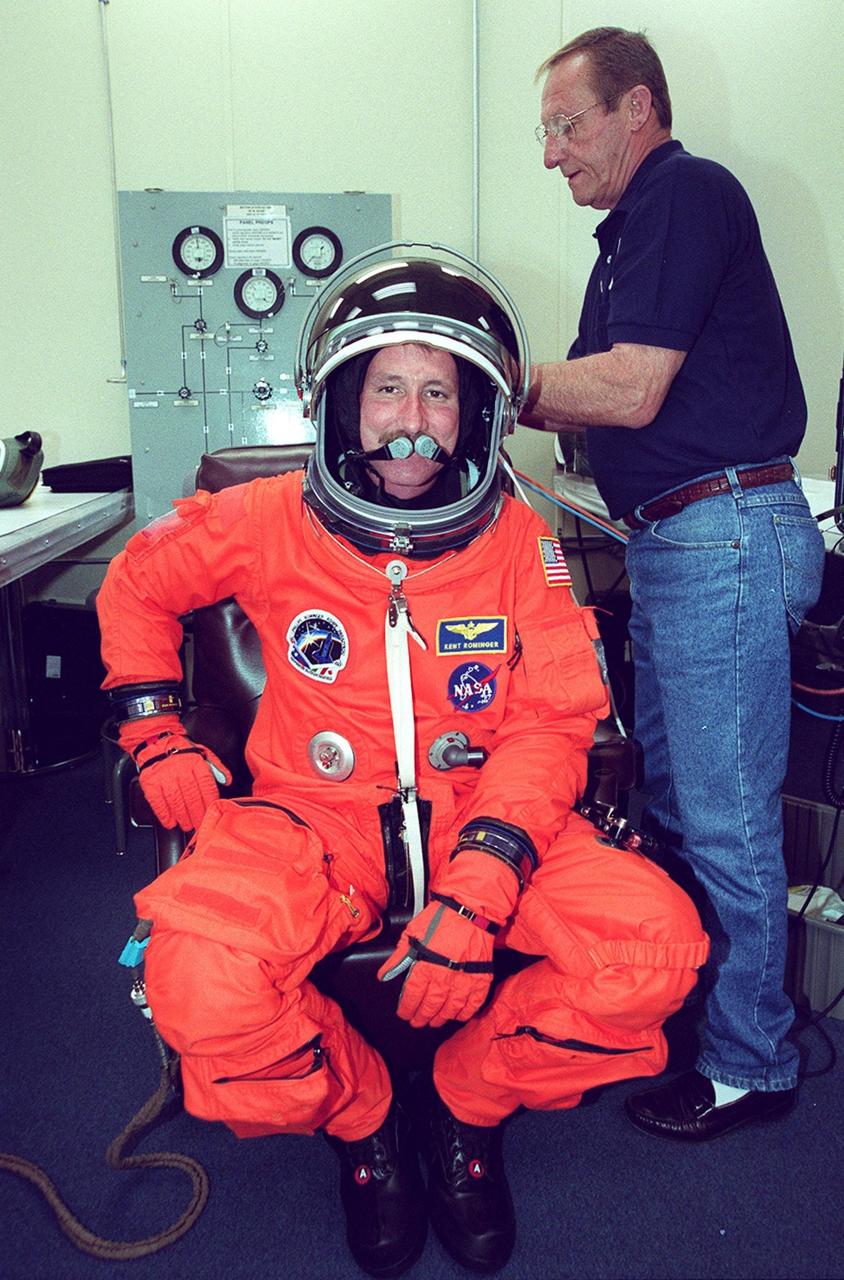
A suit technician helps STS-100 Commander Kent V. Rominger adjust his helmet during suitup for launch in the Operations and Checkout Building. The 11-day mission to the International Space Station will deliver and integrate the Spacelab Logistics Pallet/Launch Deployment Assembly, which includes the Space Station Remote Manipulator system and the UHF Antenna, and the Multi-Purpose Logistics Module Raffaello. The mission includes two planned spacewalks for installation of the SSRMS. The mission is also the inaugural flight of Raffaello, carrying resupply stowage racks and resupply/return stowage platforms. Liftoff on mission STS-100 is scheduled at 2:41 p.m. EDT April 19
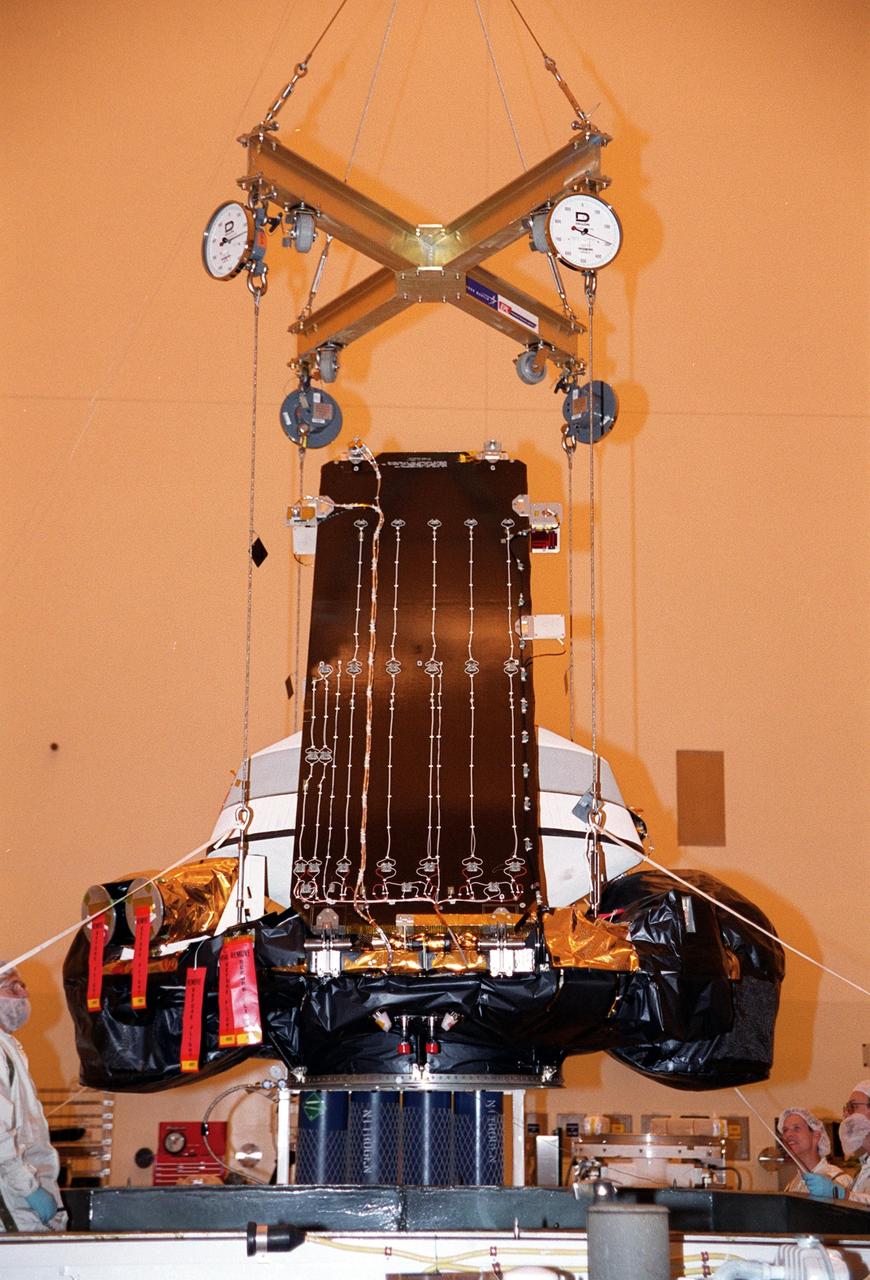
KENNEDY SPACE CENTER, Fla. -- In the Payload Hazardous Servicing Facility, the Genesis spacecraft is lifted out of its container before being moved to a workstand. Genesis is designed to collect samples of solar wind particles and return them to Earth so that scientists can study the exact composition of the Sun and probe the solar system’s origin. On the workstand, the spacecraft will undergo processing, which includes a functional test, electrical systems test and deployment of the solar arrays. Genesis is scheduled to be launched on a Delta II Lite launch vehicle from Complex 17-A, Cape Canaveral Air Force Station, July 30, at 12:36 p.m. EDT
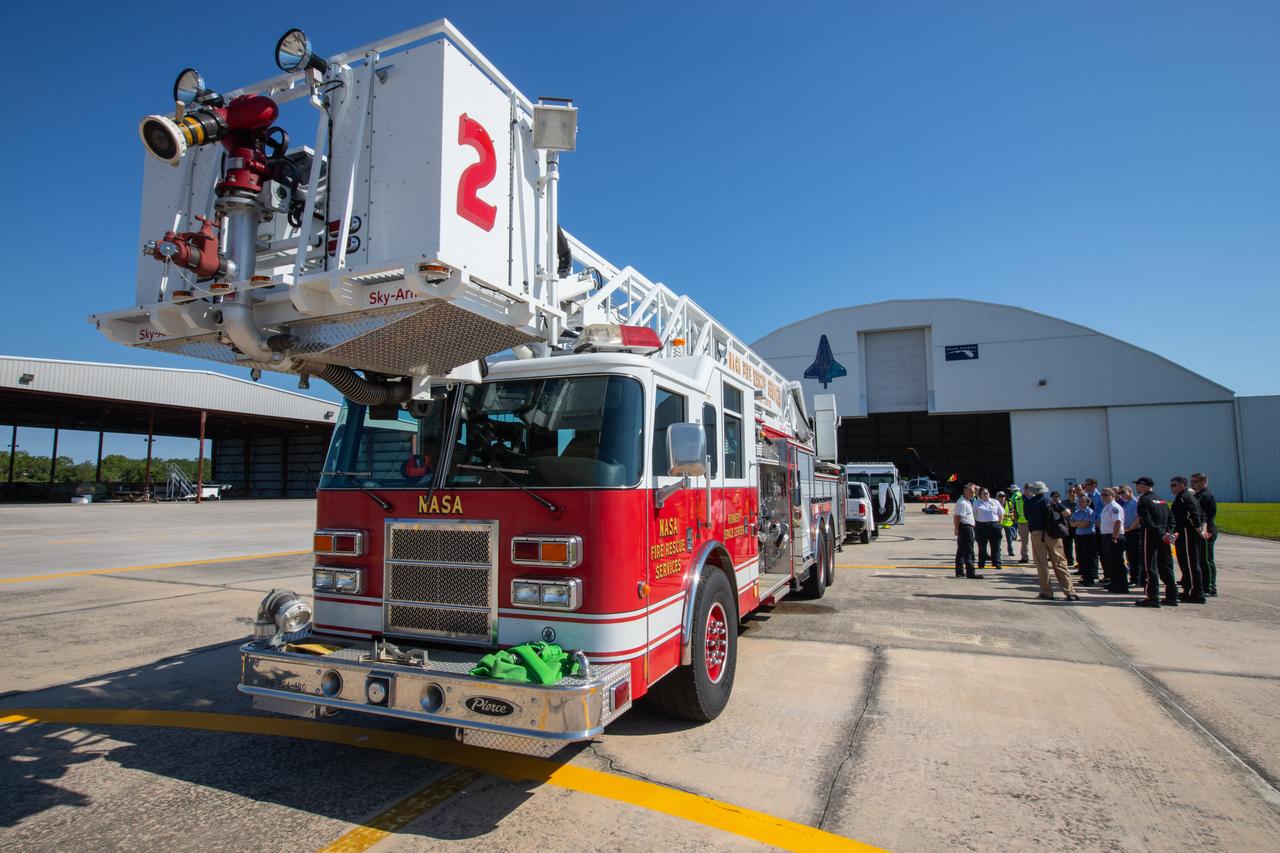
A Kennedy Space Center fire pumper truck stands at the ready during a medical support training course at the Florida spaceport’s Shuttle Landing Facility on May 17, 2019. Kennedy personnel and American Medical Response (AMR) contractor paramedics participated in the course, which was designed to familiarize the AMR paramedics with the center’s Triage Forces deployment, including medical team members, fire/rescue personnel, environmental health specialists and flight operations crew members, as well as a helicopter, Mine Resistant Ambush Protected (MRAP) tactical vehicle, fire pumper truck and triage vehicles. The AMR paramedics will assist the agency in contingency planning for the return of human spaceflight from Kennedy.
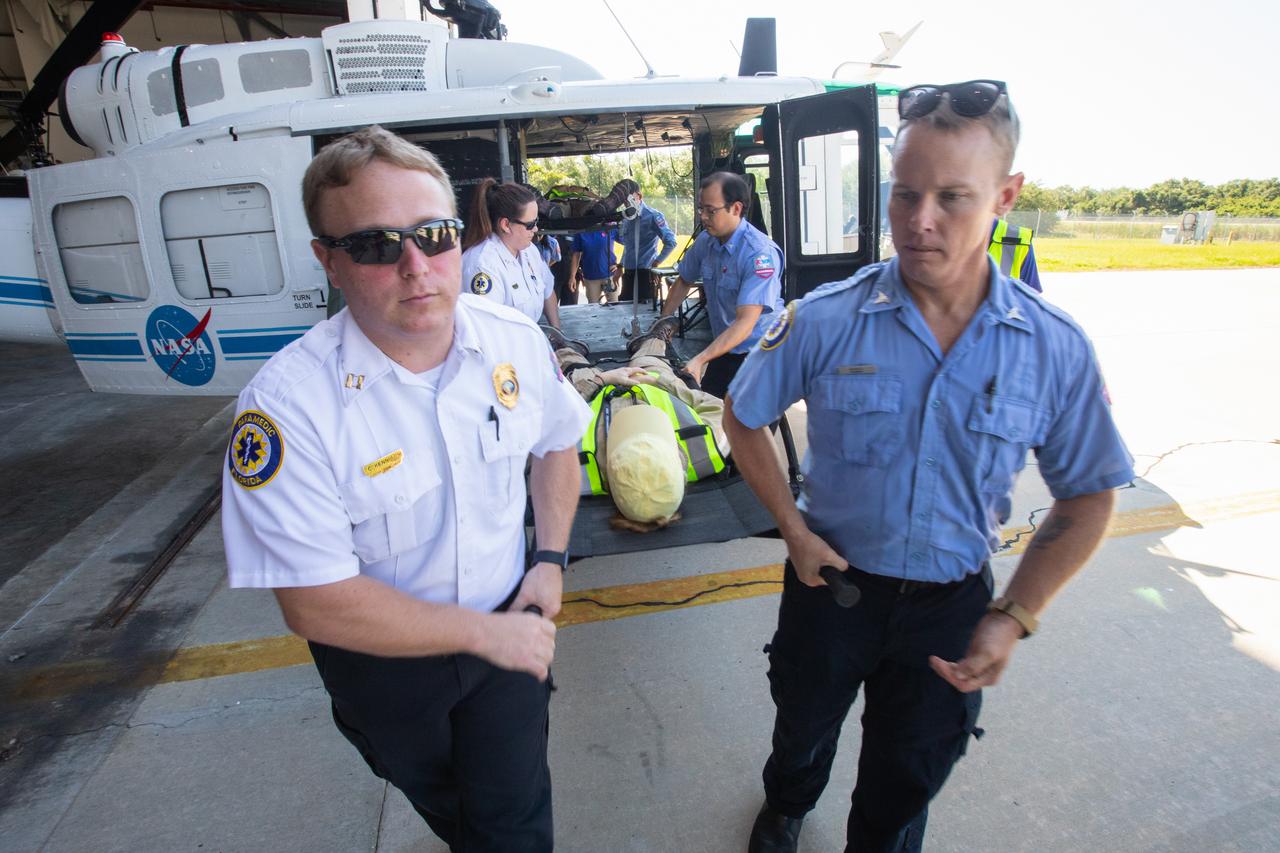
Kennedy Space Center personnel and American Medical Response (AMR) contractor paramedics gather around a “patient,” a KEMCON Fitness Center staff member, during a medical support training course in the Space Florida hangar at the spaceport’s Shuttle Landing Facility on May 17, 2019. The course was designed to familiarize the AMR paramedics with the center’s Triage Forces deployment, which included medical team members, fire/rescue personnel, environmental health specialists and flight operations crew members, as well as a helicopter, Mine Resistant Ambush Protected (MRAP) tactical vehicle, fire pumper truck and triage vehicles. The AMR paramedics will assist the agency in contingency planning for the return of human spaceflight from Kennedy.
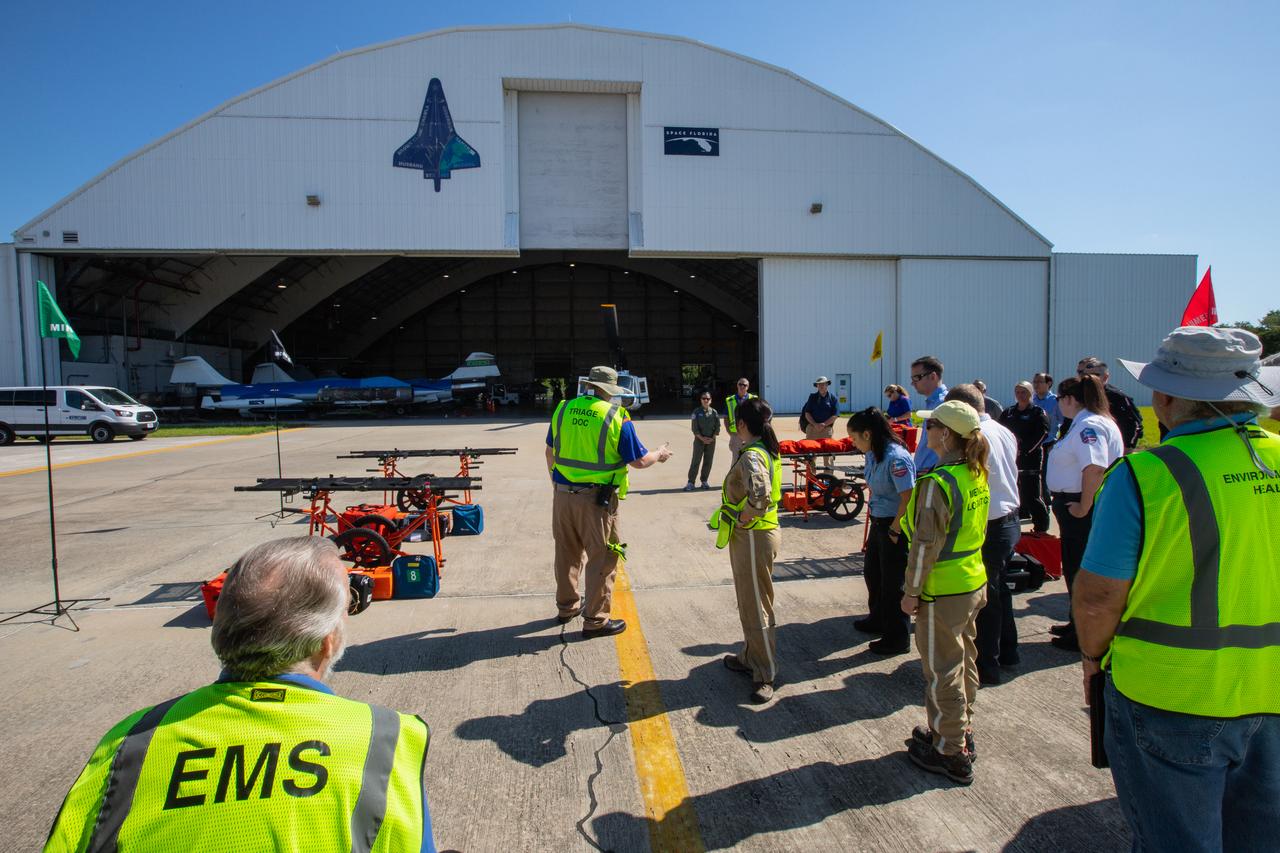
Kennedy Space Center personnel and American Medical Response (AMR) contractor paramedics gather near the Space Florida hangar at the spaceport’s Shuttle Landing Facility on May 17, 2019, for a medical support training course. The course was designed to familiarize the AMR paramedics with the center’s Triage Forces deployment, which included medical team members, fire/rescue personnel, environmental health specialists and flight operations crew members, as well as a helicopter, Mine Resistant Ambush Protected (MRAP) tactical vehicle, fire pumper truck and triage vehicles. The AMR paramedics will assist the agency in contingency planning for the return of human spaceflight from Kennedy.
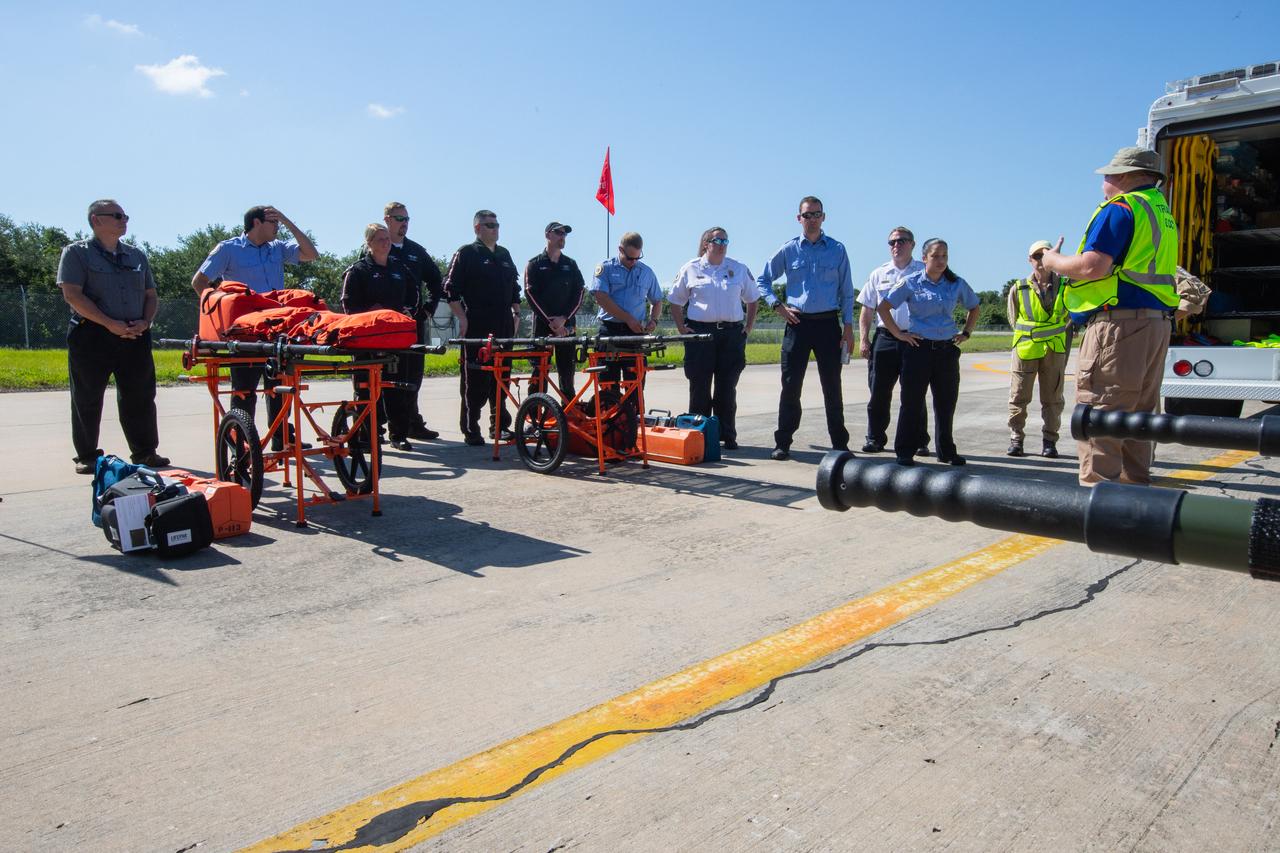
Kennedy Space Center personnel and American Medical Response (AMR) contractor paramedics gather at the Florida spaceport’s Shuttle Landing Facility on May 17, 2019, for a medical support training course. The course was designed to familiarize the AMR paramedics with the center’s Triage Forces deployment, which included medical team members, fire/rescue personnel, environmental health specialists and flight operations crew members, as well as a helicopter, Mine Resistant Ambush Protected (MRAP) tactical vehicle, fire pumper truck and triage vehicles. The AMR paramedics will assist the agency in contingency planning for the return of human spaceflight from Kennedy.
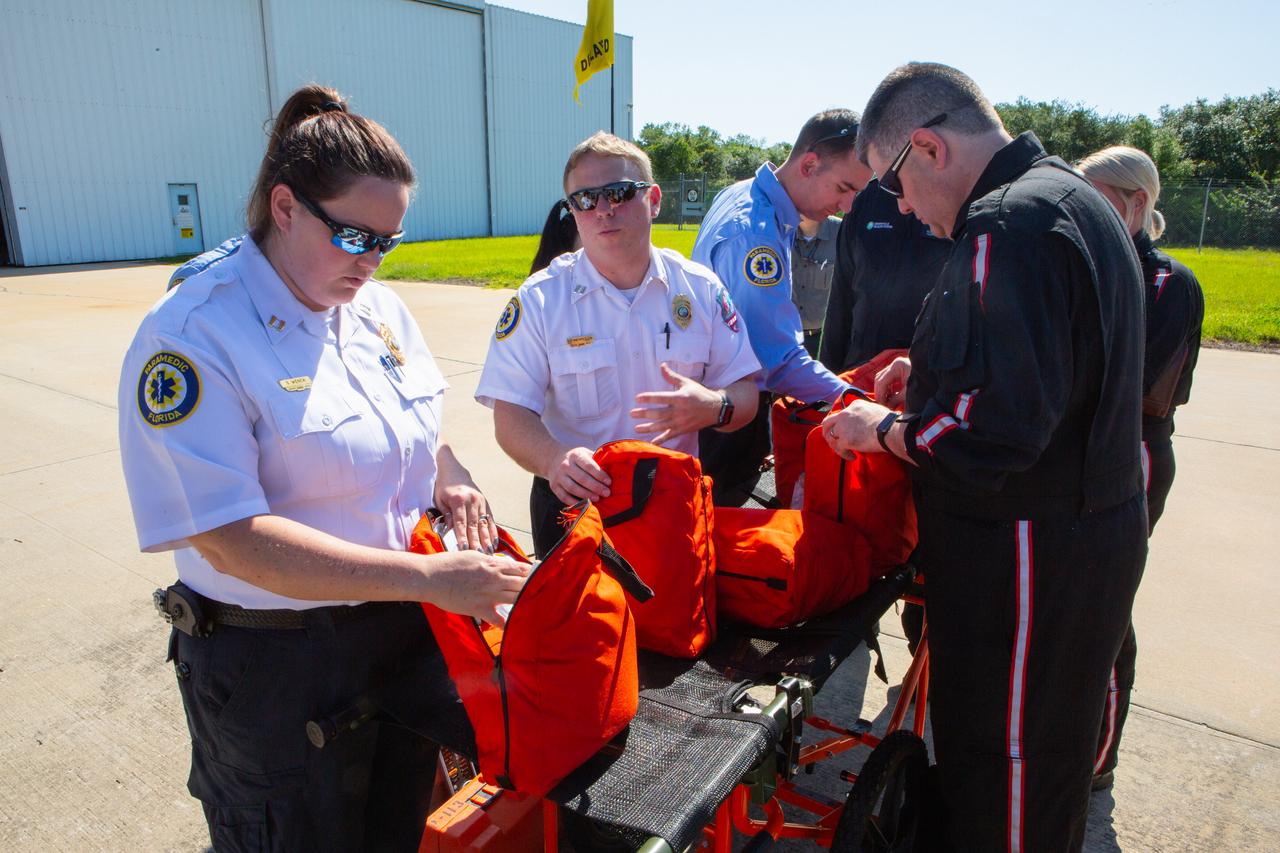
Kennedy Space Center personnel and American Medical Response (AMR) contractor paramedics gather at the Florida spaceport’s Shuttle Landing Facility on May 17, 2019, for a medical support training course. The course was designed to familiarize the AMR paramedics with the center’s Triage Forces deployment, which included medical team members, fire/rescue personnel, environmental health specialists and flight operations crew members, as well as a helicopter, Mine Resistant Ambush Protected (MRAP) tactical vehicle, fire pumper truck and triage vehicles. The AMR paramedics will assist the agency in contingency planning for the return of human spaceflight from Kennedy.
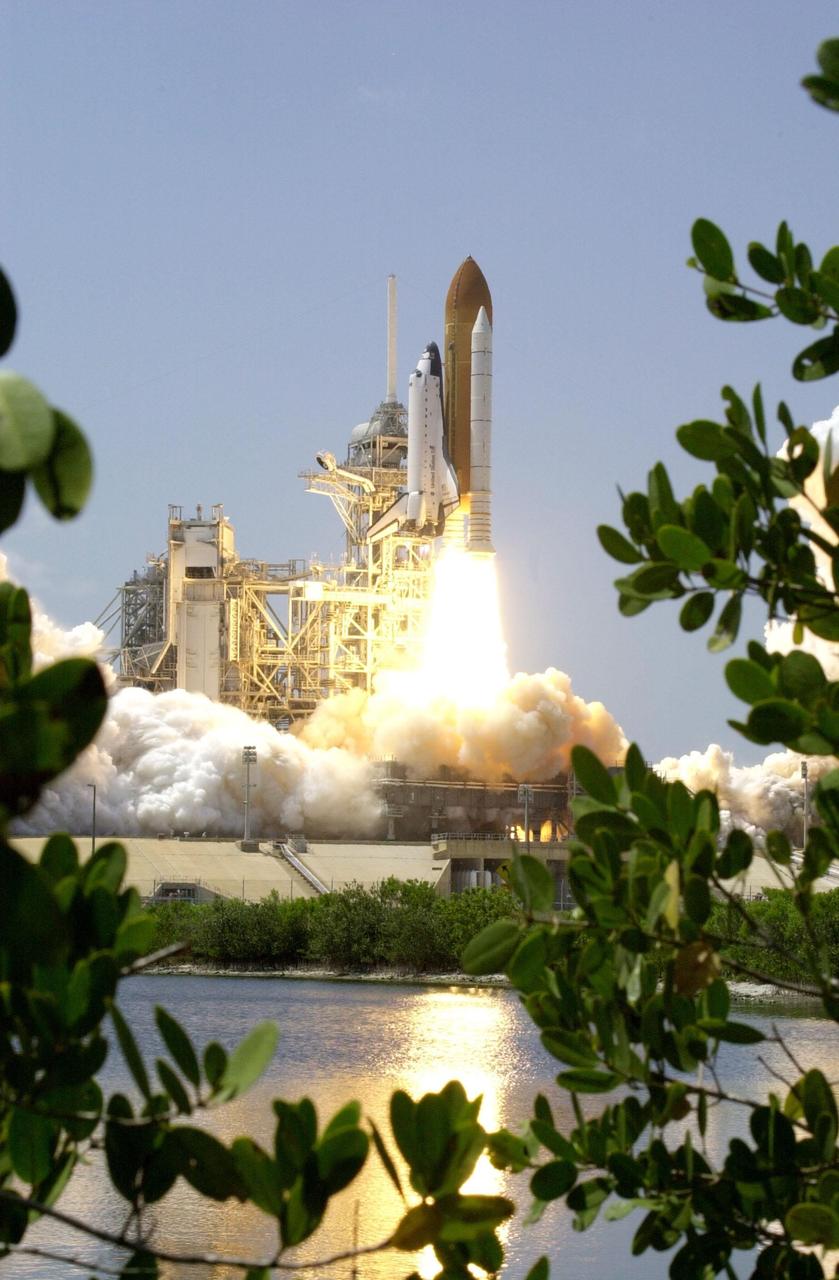
KENNEDY SPACE CENTER, FLA. -- Spring leaves frame the launch of Space Shuttle Endeavour, trailing flames and billows of smoke and steam, as it roars into the blue sky. Liftoff of the ninth flight to the International Space Station occurred at 2:40:42 p.m. EDT. The 11-day mission will deliver and integrate the Spacelab Logistics Pallet/Launch Deployment Assembly, which includes the Space Station Remote Manipulator System and the UHF Antenna. The mission includes two planned spacewalks for installation of the SSRMS on the Station. Also onboard is the Multi-Purpose Logistics Module Raffaello, carrying resupply stowage racks and resupply/return stowage platforms
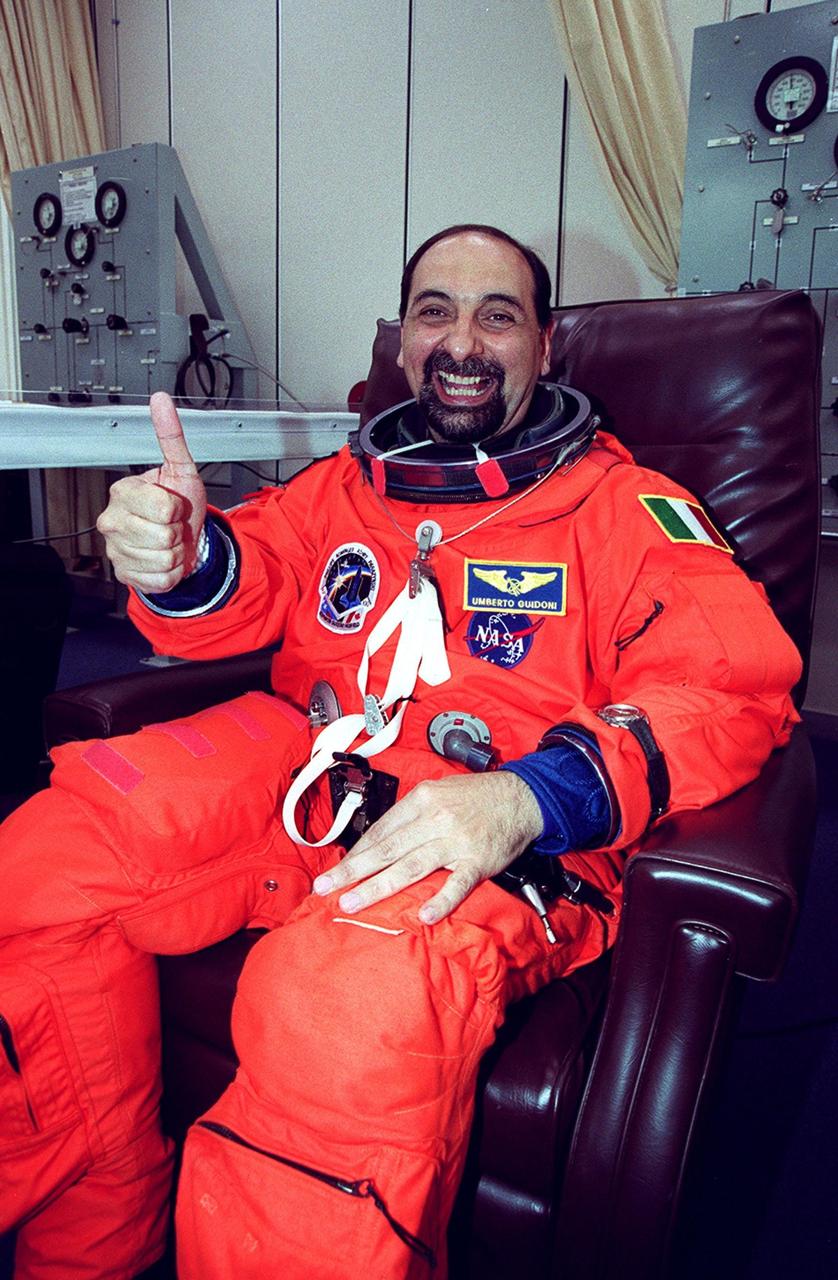
Happy to be suiting up for launch, STS-100 Mission Specialist Umberto Guidoni gives thumbs up. Guidoni is with the European Space Agency. The 11-day mission to the International Space Station will deliver and integrate the Spacelab Logistics Pallet/Launch Deployment Assembly, which includes the Space Station Remote Manipulator system and the UHF Antenna, and the Multi-Purpose Logistics Module Raffaello. The mission includes two planned spacewalks for installation of the SSRMS. The mission is also the inaugural flight of Raffaello, carrying resupply stowage racks and resupply/return stowage platforms. Liftoff on mission STS-100 is scheduled at 2:41 p.m. EDT April 19
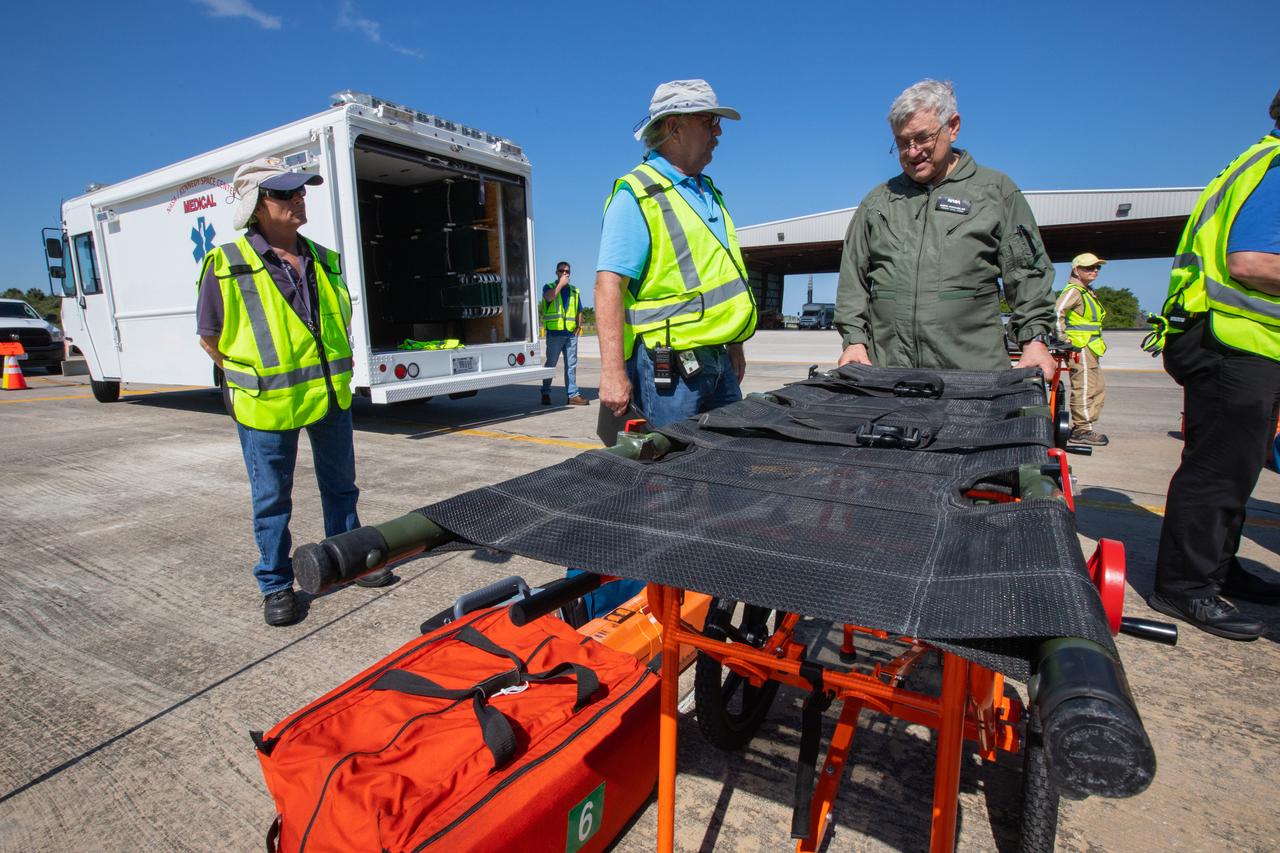
Kennedy Space Center personnel and American Medical Response (AMR) contractor paramedics participate in a medical support training course at the Florida spaceport’s Shuttle Landing Facility on May 17, 2019. The course was designed to familiarize the AMR paramedics with the center’s Triage Forces deployment, which included medical team members, fire/rescue personnel, environmental health specialists and flight operations crew members, as well as a helicopter, Mine Resistant Ambush Protected (MRAP) tactical vehicle, fire pumper truck and triage vehicles. The AMR paramedics will assist the agency in contingency planning for the return of human spaceflight from Kennedy.
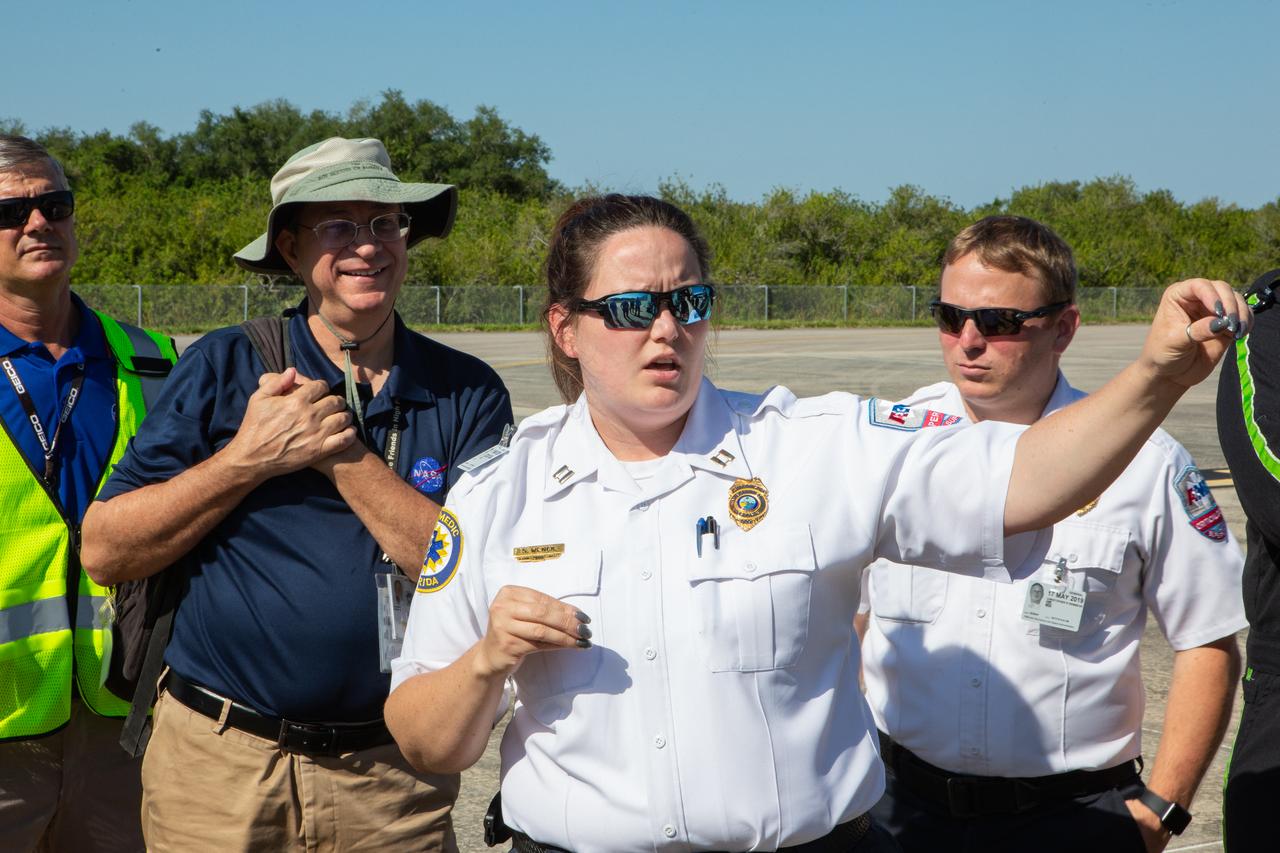
An American Medical Response (AMR) contractor paramedic speaks to Kennedy Space Center and AMR personnel gathered at the Florida spaceport’s Shuttle Landing Facility on May 17, 2019, for a medical support training course. The course was designed to familiarize the AMR paramedics with the center’s Triage Forces deployment, which included medical team members, fire/rescue personnel, environmental health specialists and flight operations crew members, as well as a helicopter, Mine Resistant Ambush Protected (MRAP) tactical vehicle, fire pumper truck and triage vehicles. The AMR paramedics will assist the agency in contingency planning for the return of human spaceflight from Kennedy.
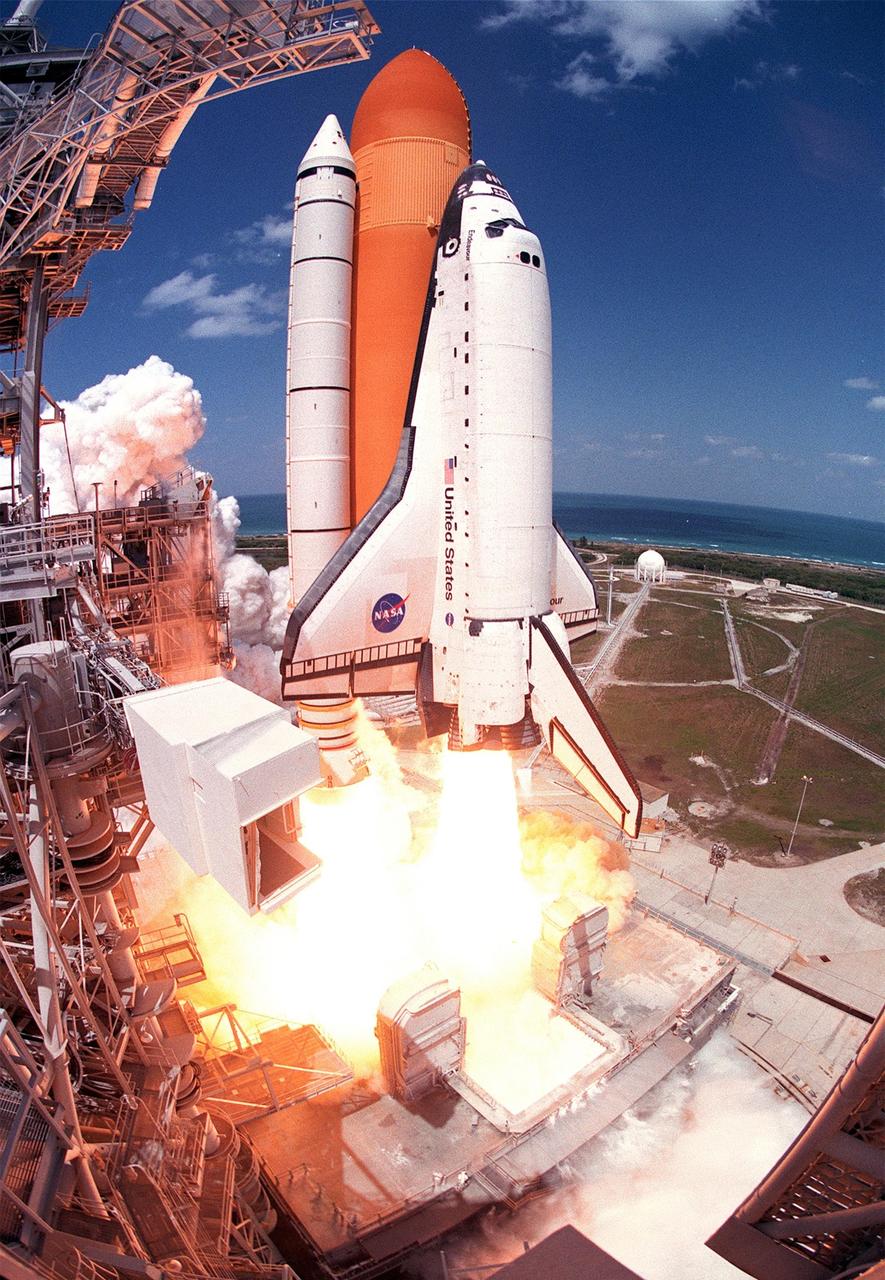
KENNEDY SPACE STATION, FLA. -- Space Shuttle Endeavour hurtles into a clear blue sky from Launch Pad 39A on mission STS-100. On the horizon is the Atlantic Ocean. Liftoff of the ninth flight to the International Space Station occurred at 2:40:42 p.m. EDT. The 11-day mission will deliver and integrate the Spacelab Logistics Pallet/Launch Deployment Assembly, which includes the Space Station Remote Manipulator System and the UHF Antenna. The mission includes two planned spacewalks for installation of the SSRMS on the Station. Also onboard is the Multi-Purpose Logistics Module Raffaello, carrying resupply stowage racks and resupply/return stowage platforms. <i>(Photo by Red Huber, Orlando Sentinel)</i
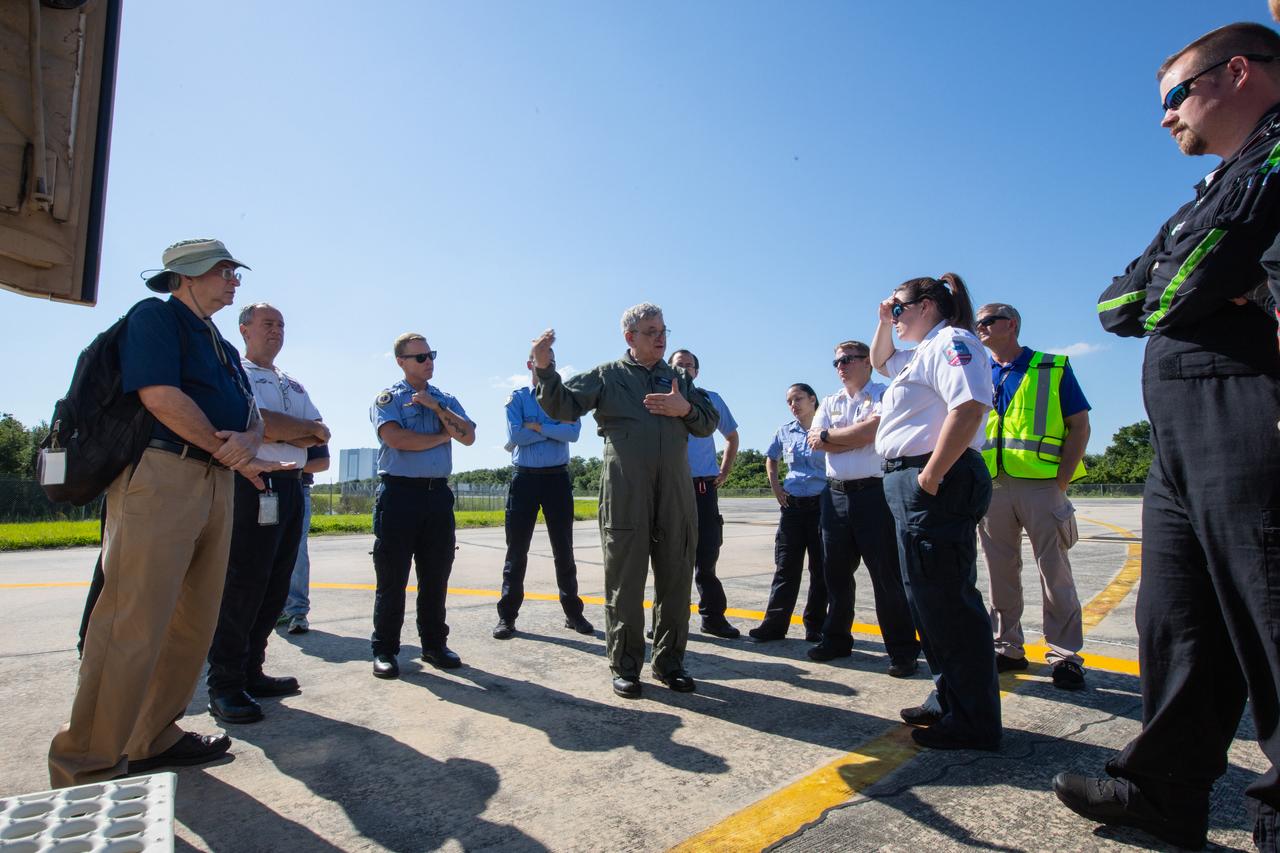
KEMCON physician Dr. Dan Woodard speaks to Kennedy Space Center personnel and American Medical Response (AMR) contractor paramedics gathered at the Florida spaceport’s Shuttle Landing Facility on May 17, 2019, for a medical support training course. The course was designed to familiarize the AMR paramedics with the center’s Triage Forces deployment, which included medical team members, fire/rescue personnel, environmental health specialists and flight operations crew members, as well as a helicopter, Mine Resistant Ambush Protected (MRAP) tactical vehicle, fire pumper truck and triage vehicles. The AMR paramedics will assist the agency in contingency planning for the return of human spaceflight from Kennedy.
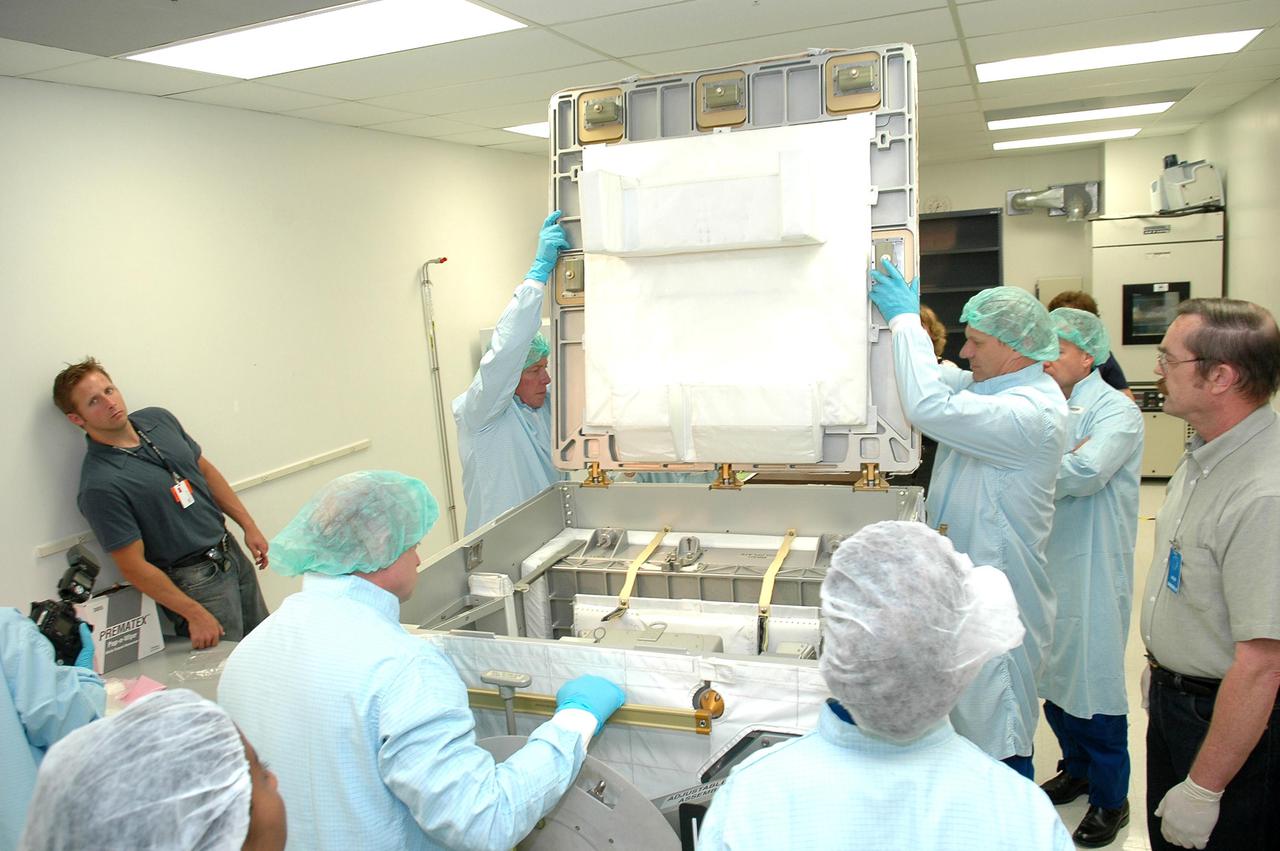
KENNEDY SPACE CENTER, FLA. - Mission Specialists Michael E. Fossum (left) and Piers J. Sellers, Ph.D., (right) open the SPACEHAB Oceaneering Enhanced Deployable box. Looking on are Mission Specialist Stephanie D. Wilson, Pilot Mark E. Kelly, Mission Specialist Lisa M. Nowak and Commander Steven W. Lindsey. The astronauts of the second Return to Flight mission, STS-121, were at the SPACEHAB facility in Cape Canaveral to participate in the Crew Equipment Interface Test (CEIT). This test allows the astronauts to become familiar with equipment they will be using on their upcoming mission. STS-121 is scheduled to launch in July aboard Space Shuttle Atlantis.
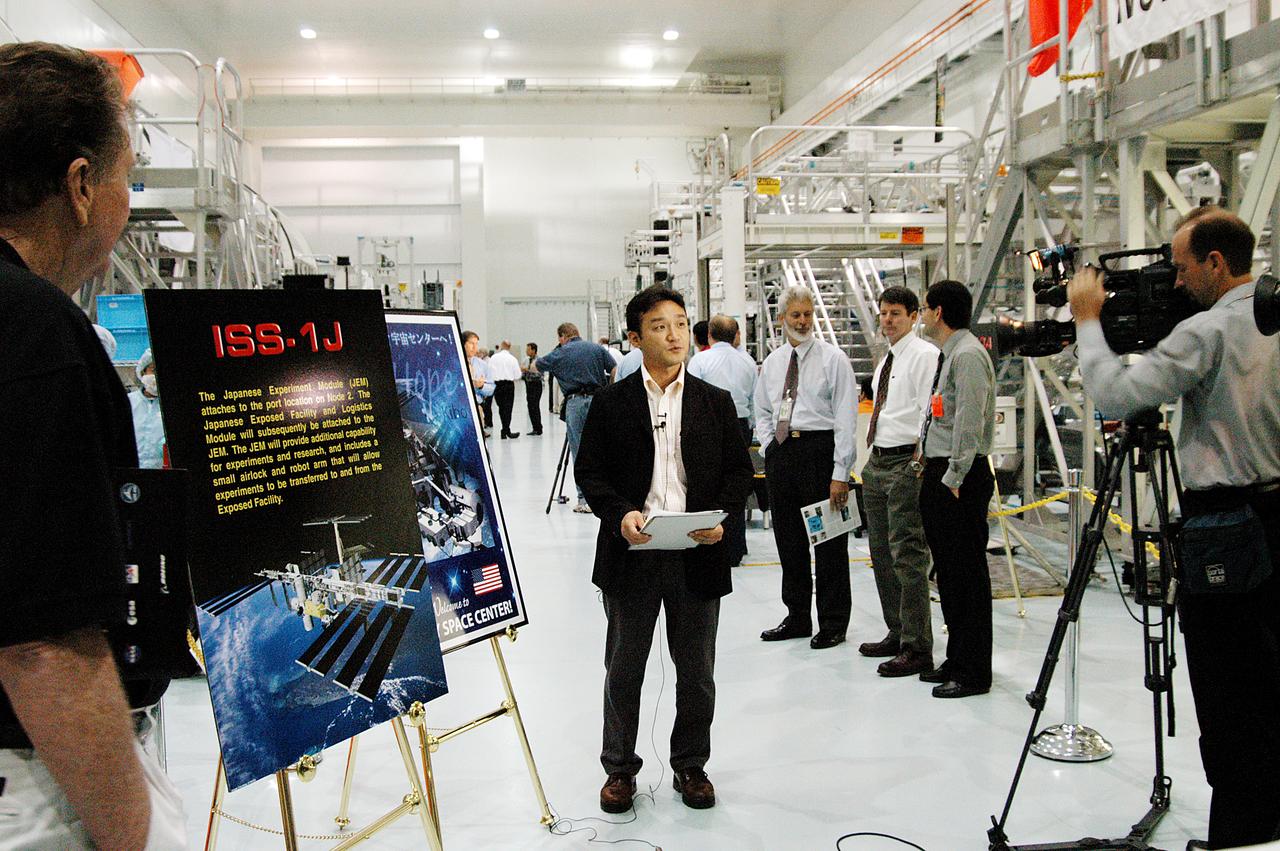
Members of the media were invited to commemorate the fifth anniversary of the launch of the first element of the International Space Station by touring the Space Station Processing Facility (SSPF) at KSC. Here, Shimpei Takahashi (center), representative of the Japanese Air and Space Agency (JAXA), talks about the Japanese Experiment Module (JEM) on camera. Reporters had the opportunity to see Space Station hardware that is being processed for deployment once the Space Shuttles return to flight, as well as talk with NASA and Boeing mission managers about the various hardware elements currently being processed for flight.
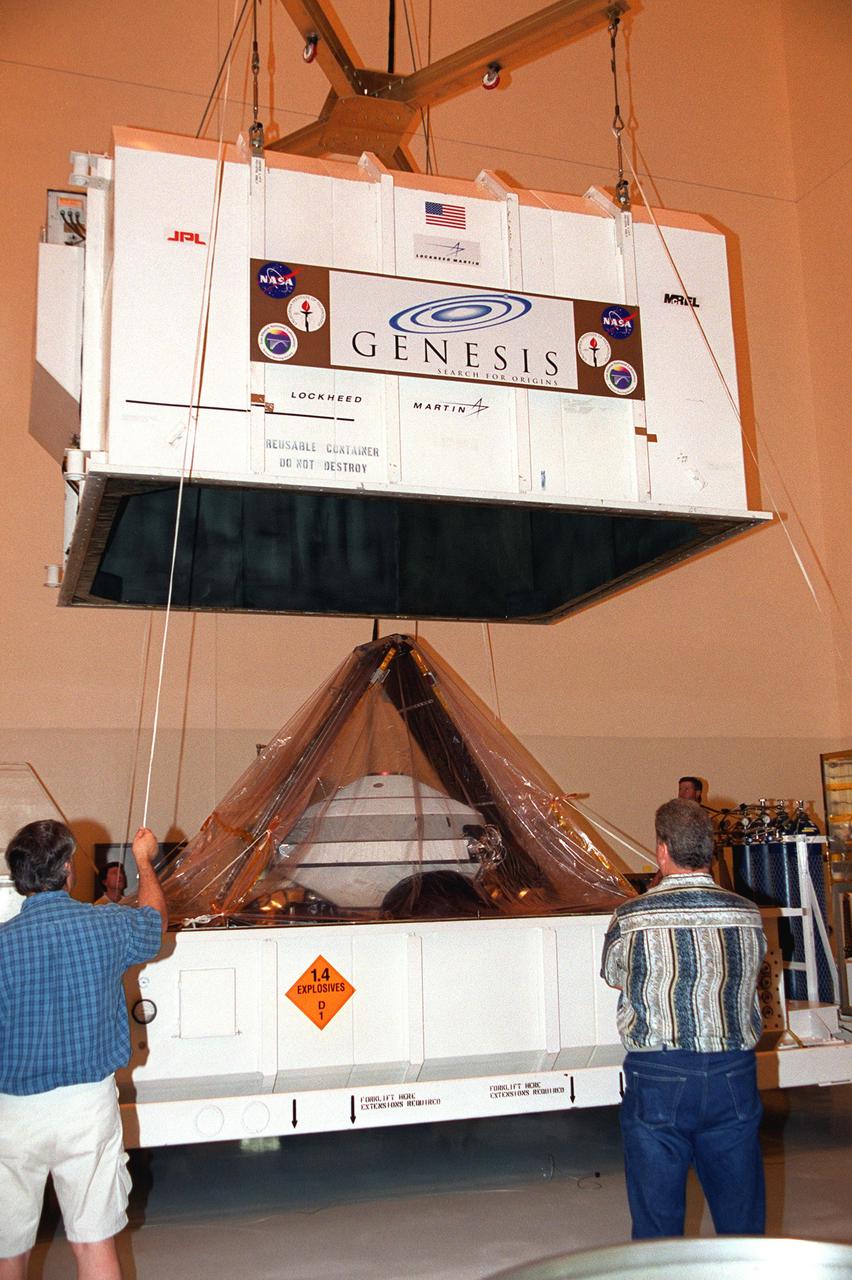
KENNEDY SPACE CENTER, Fla. -- In the Payload Hazardous Servicing Facility, workers lift the cover from the crate holding Genesis - a spacecraft designed to collect samples of solar wind particles and return them to Earth so that scientists can study the exact composition of the Sun and probe the solar system’s origin. Processing Genesis for launch includes a functional test, electrical systems test and deployment of the solar arrays. Genesis is scheduled to be launched on a Delta II Lite launch vehicle from Complex 17-A, Cape Canaveral Air Force Station, July 30, at 12:36 p.m. EDT