
From left to right, Principal Deputy Assistant Secretary for Nuclear Energy at the Department of Energy, Dr. Kathryn Huff, Director of the National Museum of Nuclear Science and History, Jim Walther, and Director of the NASA Science Mission Directorate’s Planetary Science Division, Dr. Lori Glaze, pose for a photo after Dr. Huff and Dr. Glaze accepted the Lifetime Achievement Award on behalf of their agencies during the Nuclear Science Week event, Tuesday, Oct. 19, 2021, at The Observatory at America’s Square in Washington. Photo Credit: (NASA/Aubrey Gemignani)
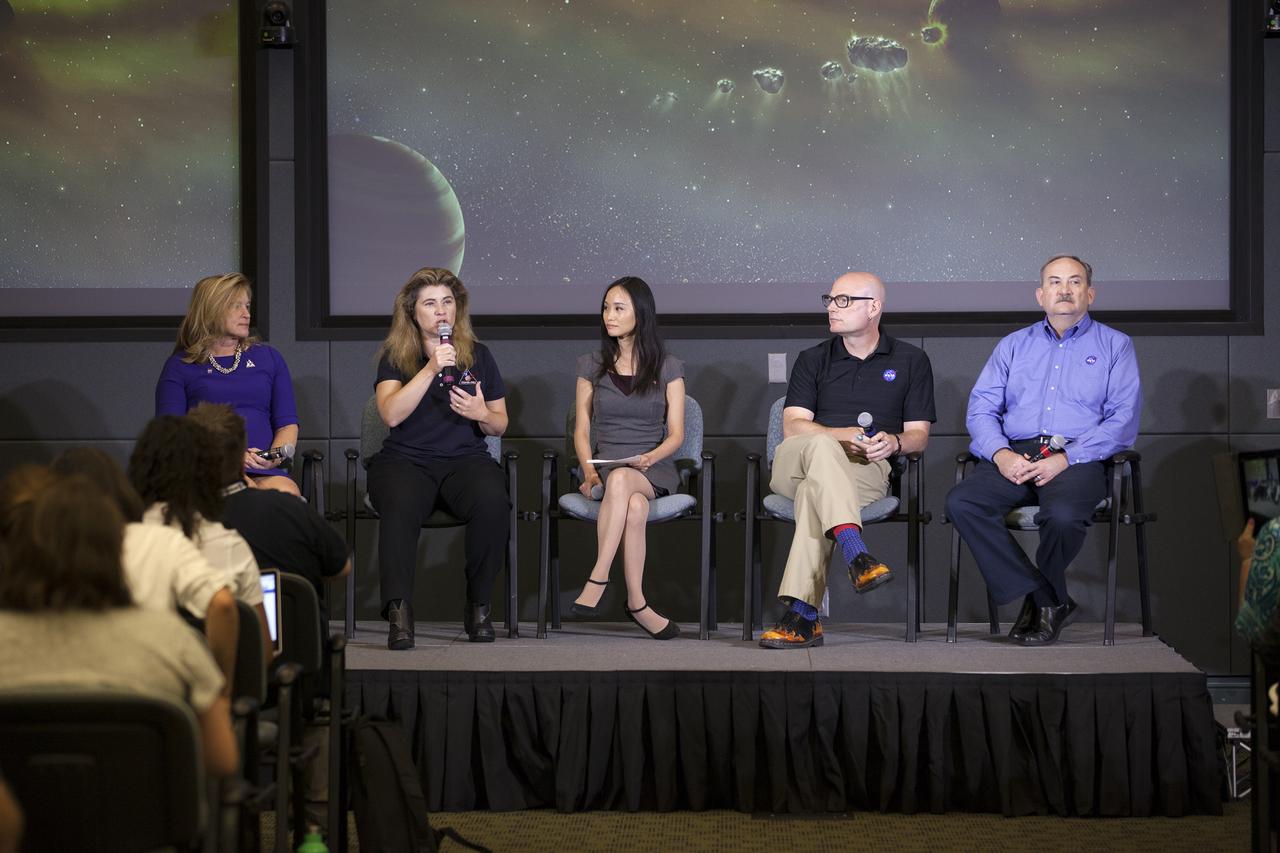
In a panel discussion in the Kennedy Space Center’s Operations Support Building II, social media followers were briefed by NASA scientists on asteroids, how they relate to the origins of our solar system and the search for life beyond Earth. The discussion took place before launch of the agency’s Origins, Spectral Interpretation, Resource Identification, Security-Regolith Explorer, or OSIRIS-REx spacecraft. Panelists for this conversation are, from the left, Ellen Stofan, NASA chief scientist; Michelle Thaller, deputy director of science communications for NASA’s Science Mission Directorate; Felicia Chou, NASA Communications; Alex Young, associate director for science in the Heliophysics Science Division at NASA’s Goddard Space Flight Center in Greenbelt, Maryland; and Lindley Johnson, director of the Planetary Defense Coordination Office in NASA’s Science Mission Directorate.
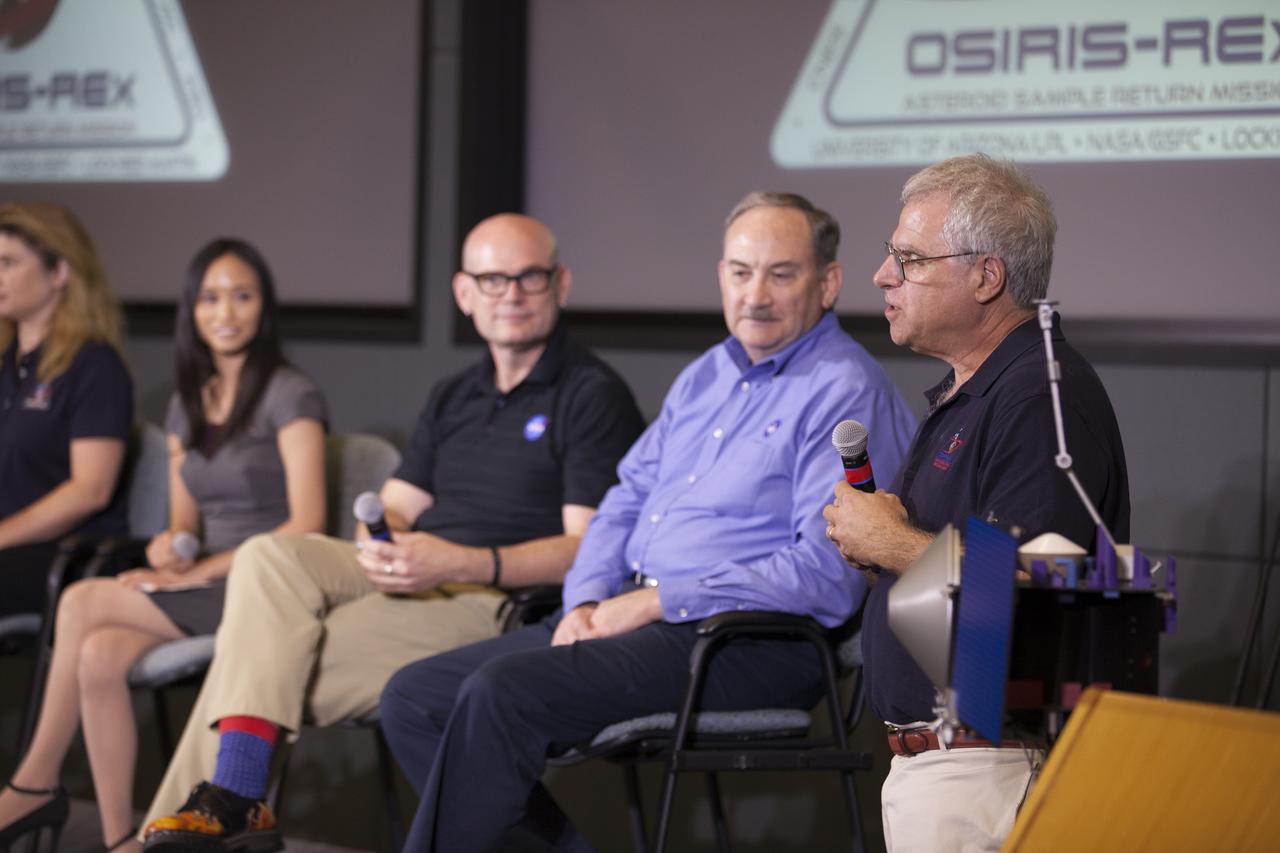
In a panel discussion in the Kennedy Space Center’s Operations Support Building II, social media followers were briefed by NASA scientists on asteroids, how they relate to the origins of our solar system and the search for life beyond Earth. The discussion took place before launch of the agency’s Origins, Spectral Interpretation, Resource Identification, Security-Regolith Explorer, or OSIRIS-REx spacecraft. Panelists in view are, from the left, Felicia Chou, NASA Communications; Alex Young, associate director for science in the Heliophysics Science Division at NASA’s Goddard Space Flight Center in Greenbelt, Maryland; and Lindley Johnson, director of the Planetary Defense Coordination Office in NASA’s Science Mission Directorate. Also participating in the panel discussion are Ellen Stofan, NASA chief scientist and Michelle Thaller, deputy director of science communications for NASA’s Science Mission Directorate.
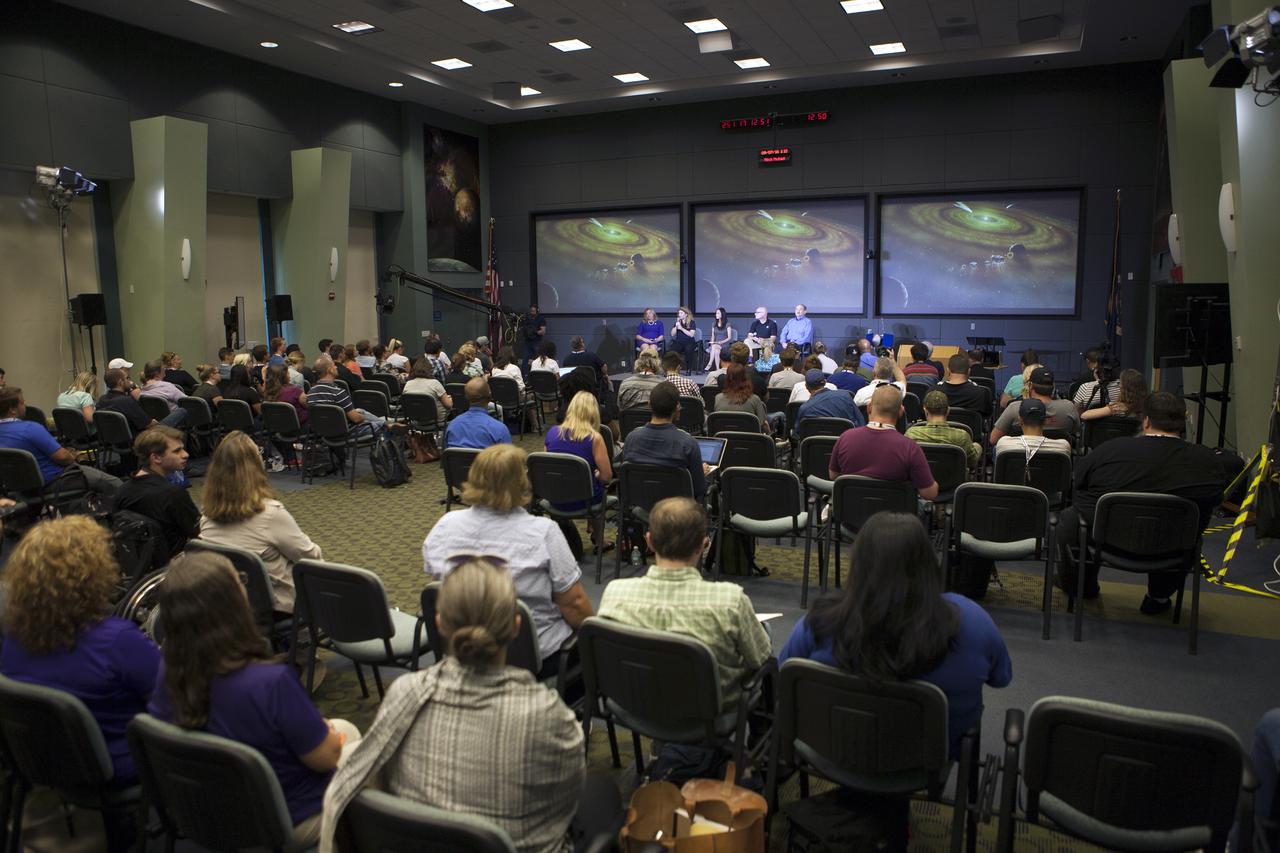
In a panel discussion in the Kennedy Space Center’s Operations Support Building II, social media followers were briefed by NASA scientists on asteroids, how they relate to the origins of our solar system and the search for life beyond Earth. The discussion took place before launch of the agency’s Origins, Spectral Interpretation, Resource Identification, Security-Regolith Explorer, or OSIRIS-REx spacecraft. Panelists for this conversation are, from the left, Ellen Stofan, NASA chief scientist; Michelle Thaller, deputy director of science communications for NASA’s Science Mission Directorate; Felicia Chou, NASA Communications; Alex Young, associate director for science in the Heliophysics Science Division at NASA’s Goddard Space Flight Center in Greenbelt, Maryland; and Lindley Johnson, director of the Planetary Defense Coordination Office in NASA’s Science Mission Directorate.

Eric Ianson, deputy director of the Planetary Science Division and director of the Mars Exploration Program and Radioisotope Power Systems Program at NASA speaks at an event marking NASA’s donation of the aerial prototype of the Ingenuity Mars Helicopter, Friday, Dec. 15, 2023, at the Smithsonian National Air and Space Museum’s Steve F. Udvar-Hazy Center in Chantilly, Va. The aerial prototype of the Ingenuity Mars Helicopter, which was the first to demonstrate it was possible to fly in a simulated Mars environment at NASA’s Jet Propulsion Laboratory (JPL), was donated to the museum on Friday. Photo Credit: (NASA/Joel Kowsky)

NASA Headquarters acting director of the Planetary Science Division Lori Glaze, left, talks with Sue Smrekar, InSight deputy principal investigator, NASA JPL, as they and other Mars InSight team members monitor the status of the lander prior to it touching down on Mars, Monday, Nov. 26, 2018 inside the Mission Support Area at NASA's Jet Propulsion Laboratory in Pasadena, California. InSight, short for Interior Exploration using Seismic Investigations, Geodesy and Heat Transport, is a Mars lander designed to study the "inner space" of Mars: its crust, mantle, and core. Photo Credit: (NASA/Bill Ingalls)

Jim Adams, NASA Deputy Director, Planetary Science Division, Science Mission Directorate, speaks during an unveiling ceremony of two USPS stamps that commemorate and celebrate 50 years of US Spaceflight and the MESSENGER program during an event, Wednesday, May 4, 2011 at the NASA Kennedy Space Center in Cape Canaveral, Fla. One stamp commemorates NASA’s Project Mercury, America’s first manned spaceflight program, and NASA astronaut Alan Shepard’s historic flight on May 5, 1961, aboard spacecraft Freedom 7. The other stamp draws attention to NASA’s unmanned MESSENGER mission, a scientific investigation of the planet Mercury. On March 17, 2011, MESSENGER became the first spacecraft to enter into orbit around Mercury. Photo Credit: (NASA/Bill Ingalls)
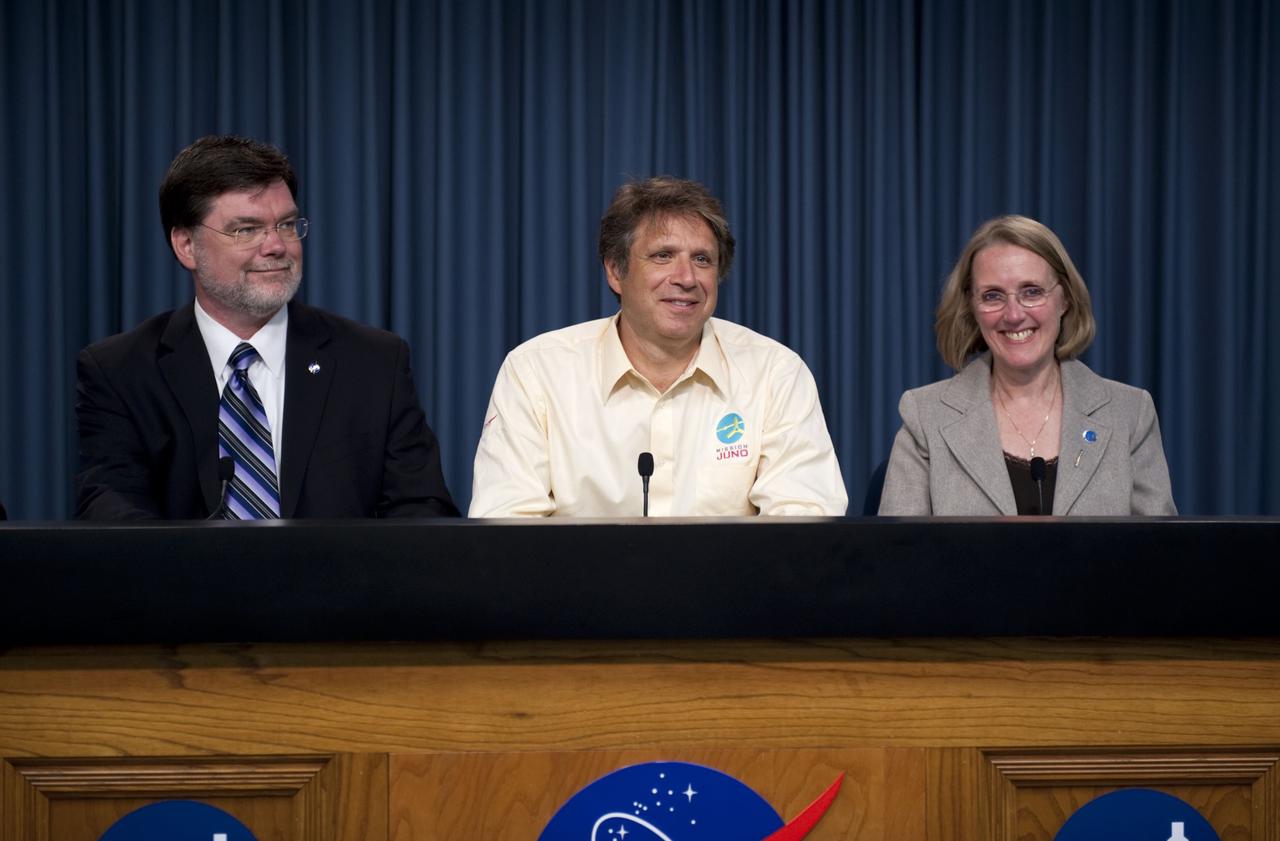
CAPE CANAVERAL, Fla. -- From left, Jim Adams, the deputy director of NASA's Planetary Science Division; Scott Bolton, Juno's principal investigator at the Southwest Research Institute (SWRI); and Jan Chodas, Juno's project manager at the Jet Propulsion Laboratory (JPL), participate in a post-launch news conference following the successful liftoff of the Juno spacecraft atop a United Launch Alliance Atlas V rocket. Launch was at 12:25 p.m. EDT Aug. 5. The solar-powered spacecraft now is on a five-year journey to Jupiter, where it will orbit the planet's poles 33 times to find out more about the gas giant's origins, structure, atmosphere and magnetosphere and investigate the existence of a solid planetary core. For more information, visit www.nasa.gov/juno. Photo credit: Kim Shiflett
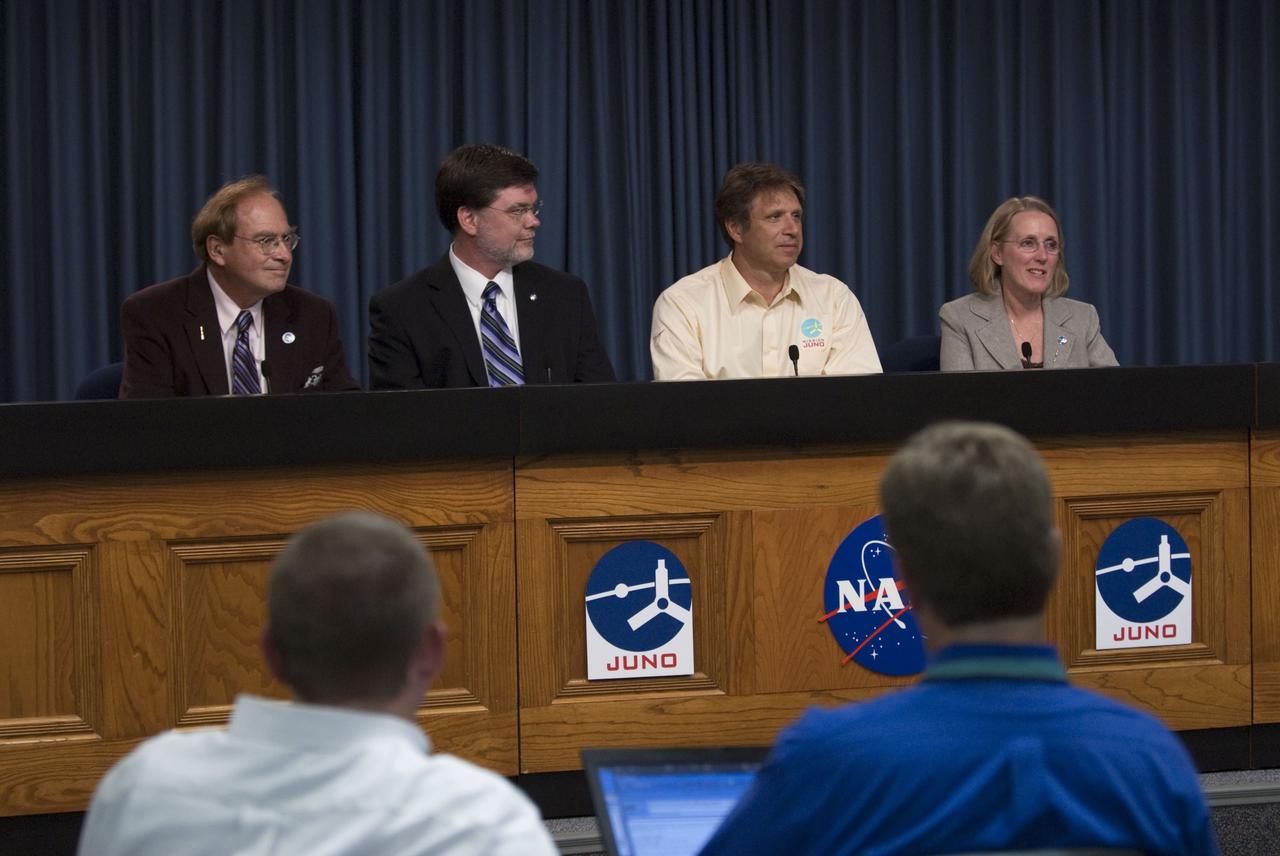
CAPE CANAVERAL, Fla. -- From left, NASA Public Affairs Officer George Diller; Jim Adams, the deputy director of NASA's Planetary Science Division; Scott Bolton, Juno's principal investigator at the Southwest Research Institute (SWRI); and Jan Chodas, Juno's project manager at the Jet Propulsion Laboratory (JPL), participate in a post-launch news conference following the successful liftoff of the Juno spacecraft atop a United Launch Alliance Atlas V rocket. Launch was at 12:25 p.m. EDT Aug. 5. The solar-powered spacecraft now is on a five-year journey to Jupiter, where it will orbit the planet's poles 33 times to find out more about the gas giant's origins, structure, atmosphere and magnetosphere and investigate the existence of a solid planetary core. For more information, visit www.nasa.gov/juno. Photo credit: Kim Shiflett
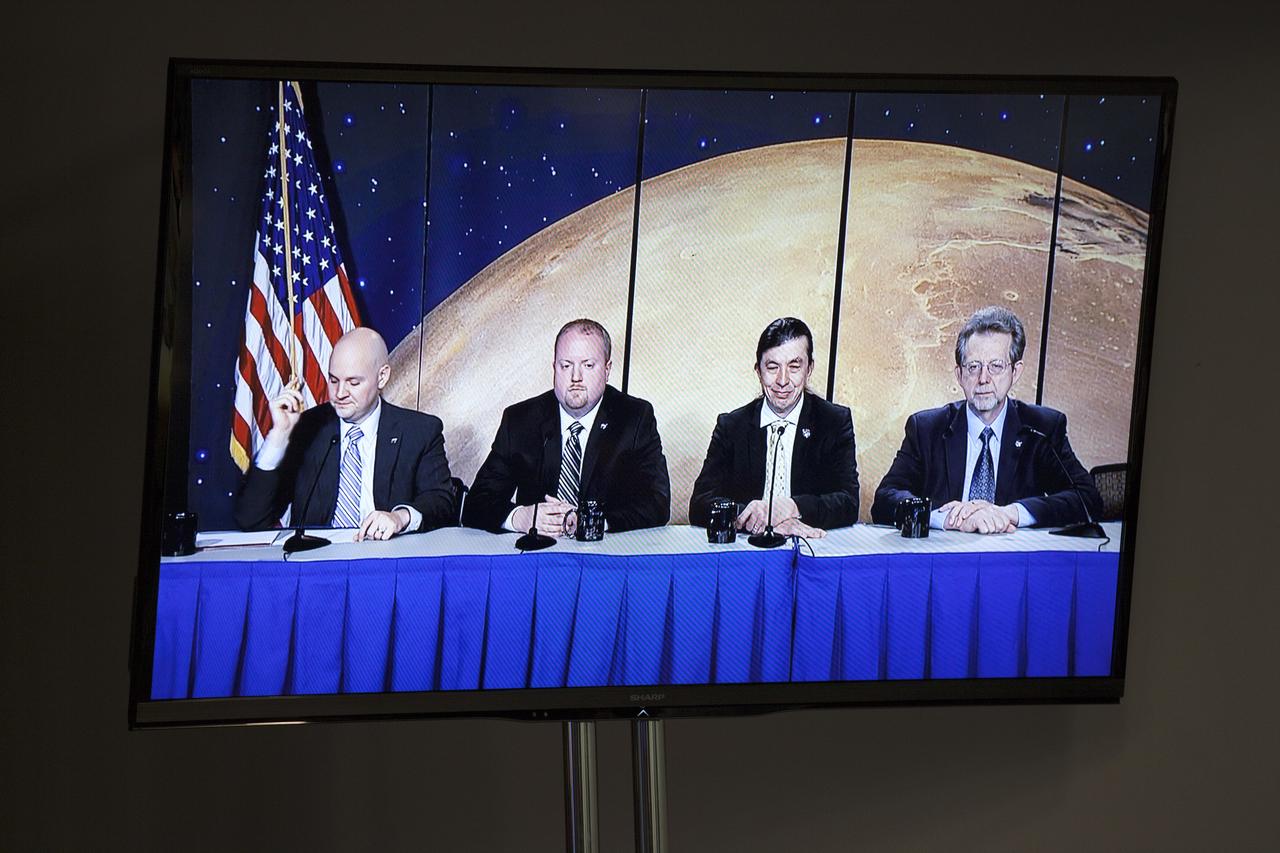
CAPE CANAVERAL, Fla. – At NASA Headquarters in Washington and the Kennedy Space Center in Florida, NASA leaders spoke to members of the new media about how the first flight of the new Orion spacecraft is a first step in the agency's plans to send humans to Mars. Seen on a video monitor at Kennedy, Headquarter participants, from the left are: Trent Perrotto of NASA Public Affairs, Jason Crusan, director of Advanced Exploration Systems Division of Human Exploration and Operations Mission Directorate, Jim Reuther, deputy associate administrator for Programs, Space Technology Mission Directorate, and Jim Green, director of Planetary Division of the Science Mission Directorate. Orion is the exploration spacecraft designed to carry astronauts to destinations not yet explored by humans, including an asteroid and Mars. It will have emergency abort capability, sustain the crew during space travel and provide safe re-entry from deep space return velocities. The first unpiloted flight test of Orion is scheduled to launch Dec. 4, 2014 atop a United Launch Alliance Delta IV Heavy rocket, and in 2018 on NASA’s Space Launch System rocket. For more information, visit www.nasa.gov/orion Photo credit: NASA/Kim Shiflett
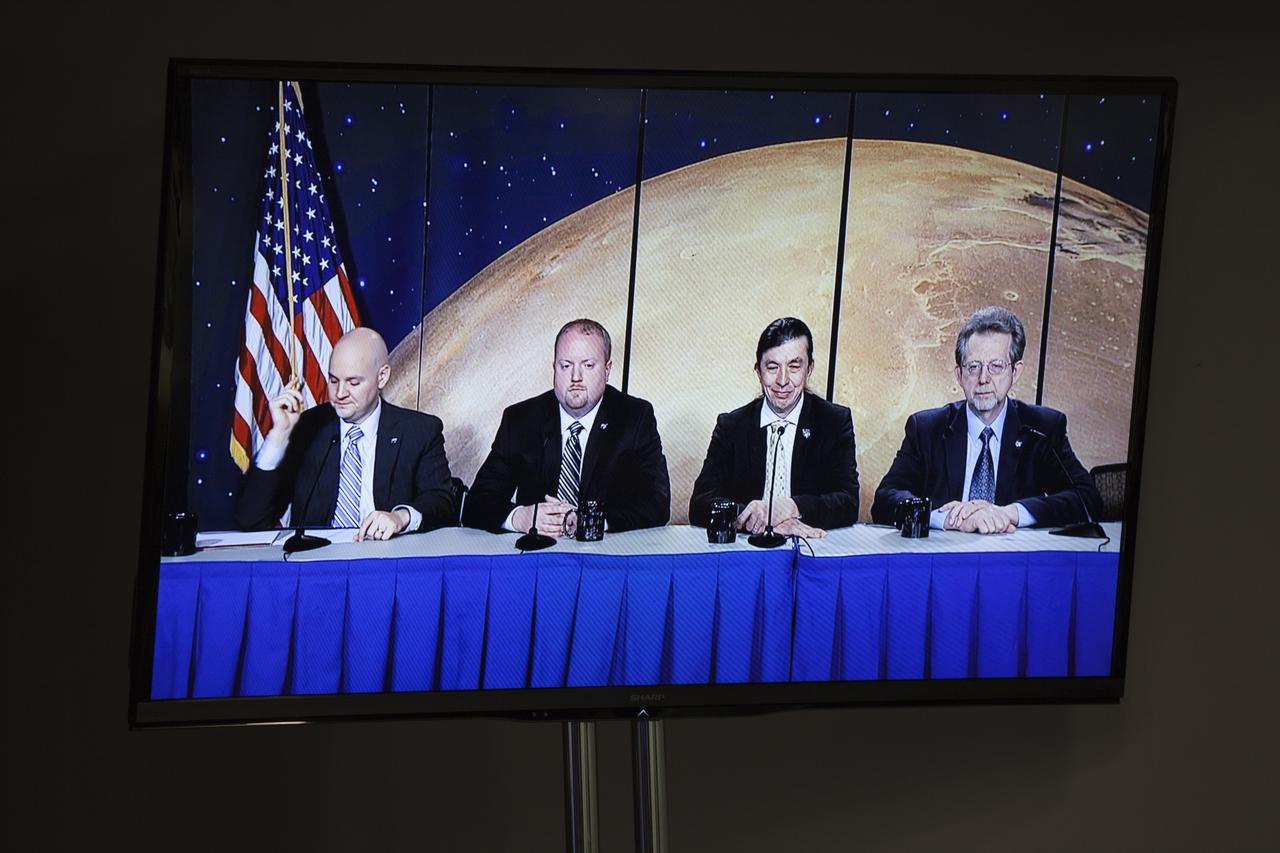
At NASA Headquarters in Washington and the Kennedy Space Center in Florida, NASA leaders spoke to members of the new media about how the first flight of the new Orion spacecraft is a first step in the agency's plans to send humans to Mars. Seen on a video monitor at Kennedy, Headquarter participants, from the left are: Trent Perrotto of NASA Public Affairs, Jason Crusan, director of Advanced Exploration Systems Division of Human Exploration and Operations Mission Directorate, Jim Reuther, deputy associate administrator for Programs, Space Technology Mission Directorate, and Jim Green, director of Planetary Division of the Science Mission Directorate. Orion is the exploration spacecraft designed to carry astronauts to destinations not yet explored by humans, including an asteroid and Mars. It will have emergency abort capability, sustain the crew during space travel and provide safe re-entry from deep space return velocities. The first unpiloted flight test of Orion is scheduled to launch Dec. 4, 2014 atop a United Launch Alliance Delta IV Heavy rocket, and in 2018 on NASA’s Space Launch System rocket.
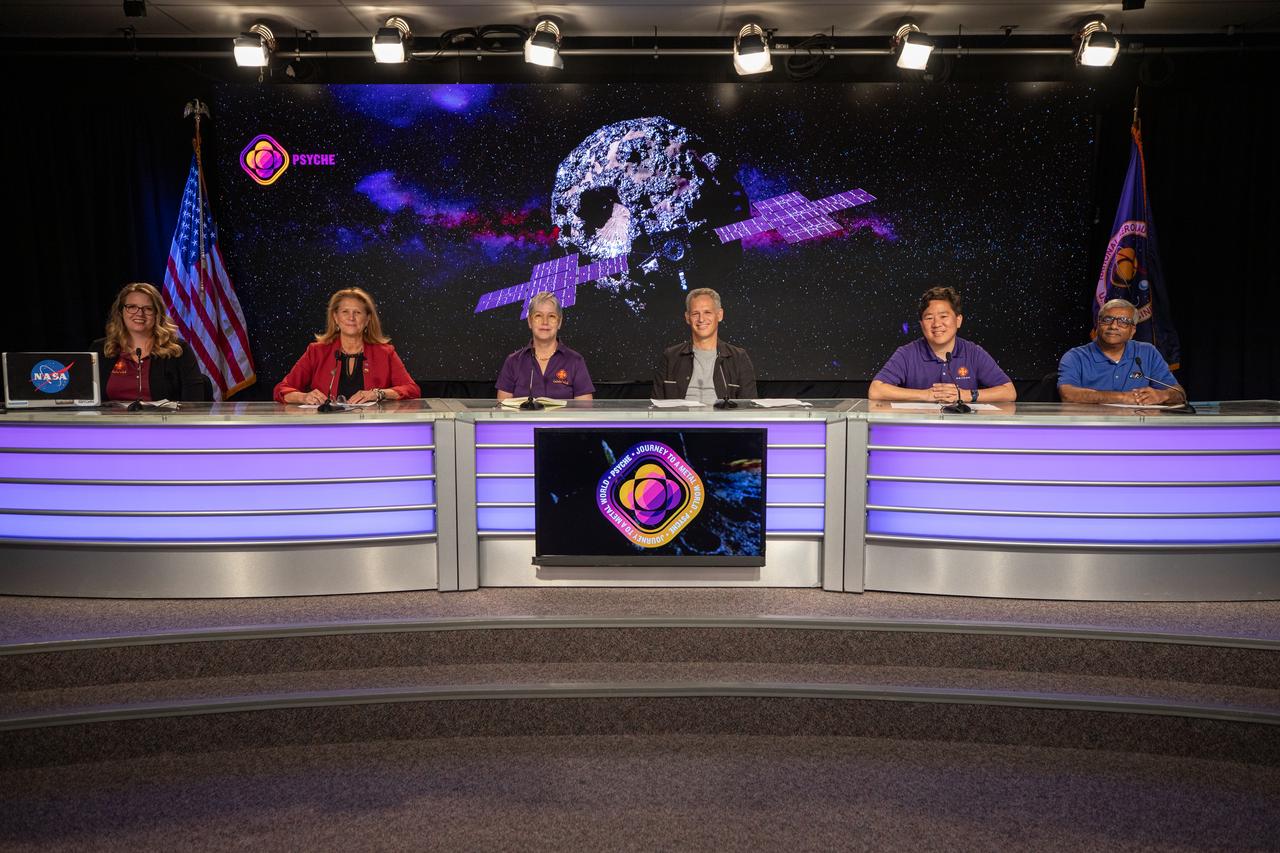
A Psyche mission and science briefing takes place at NASA’s Kennedy Space Center in Florida on Tuesday, Oct. 10, 2023. Participants, from left, are: Alana Johnson, NASA Communications; Lori Glaze, Planetary Science division director, NASA Headquarters; Lindy Elkins-Tanton, Psyche principal investigator, Arizona State University; Ben Weiss, Psyche deputy principal investigator and magnetometer lead, Massachusetts Institute of Technology; David Oh, Psyche chief engineer for operations, NASA’s Jet Propulsion Laboratory (JPL); and Abi Biswas, Deep Space Optical Communications project technologist, JPL. Psyche is the first mission to explore an asteroid with a surface that likely contains substantial amounts of metal rather than rock or ice. Liftoff of NASA’s Psyche spacecraft, atop a SpaceX Falcon Heavy rocket, is targeted for 10:16 a.m. EDT Thursday, Oct. 12, from Kennedy’s Launch Complex 39A.
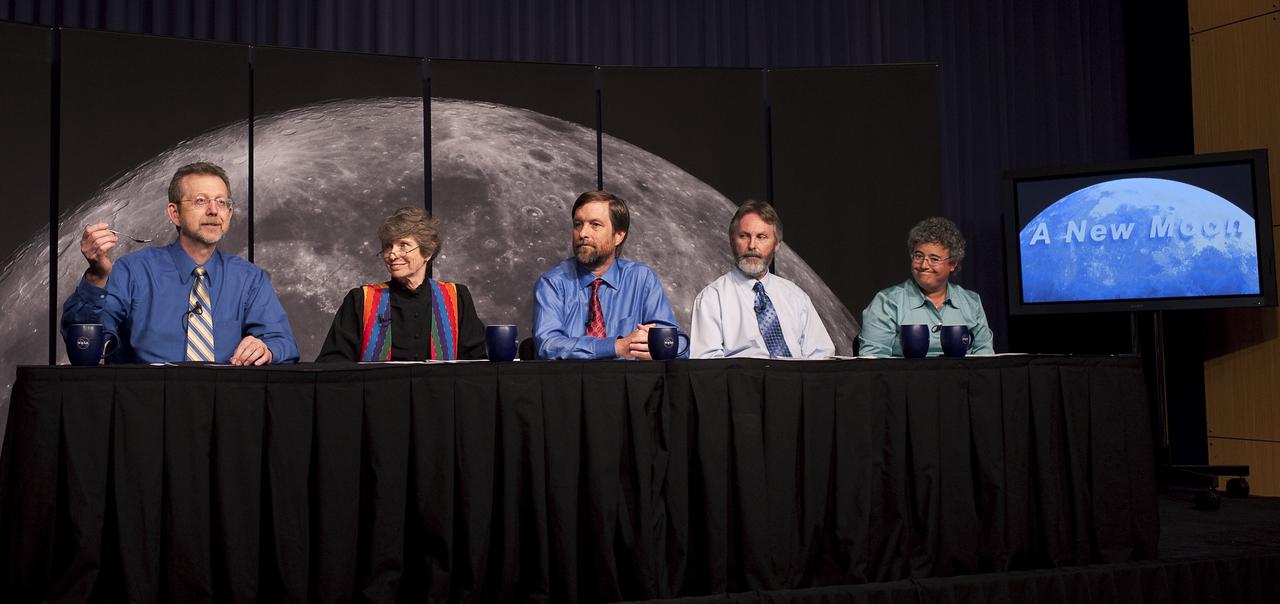
Jim Green (far left), director, Planetary Science Division, Science MissionDirectorate at NASA Headquarters in Washington; Carle Pieters, principal investigator, Moon Mineralogy Mapper, Brown University; Rob Green, project instrument scientist, Moon Mineralogy Mapper, at NASA's Jet Propulsion Laboratory; Roger Clark, team member, Cassini spacecraft Visual and Infrared Mapping Spectrometer and co-investigator, Moon Mineralogy Mapper, U.S. Geological Survey in Denver and Jessica Sunshine (far right), deputy principal investigator for NASA's Deep Impactextended mission and co-investigator for Moon Mineralogy Mapper,Department of Astronomy, University of Maryland discuss their findings of water molecules in the polar regions of the moon at a press conference at NASA Headquarters, September 24, 2009, in Washington. Photo Credit: (NASA/Carla Cioffi)
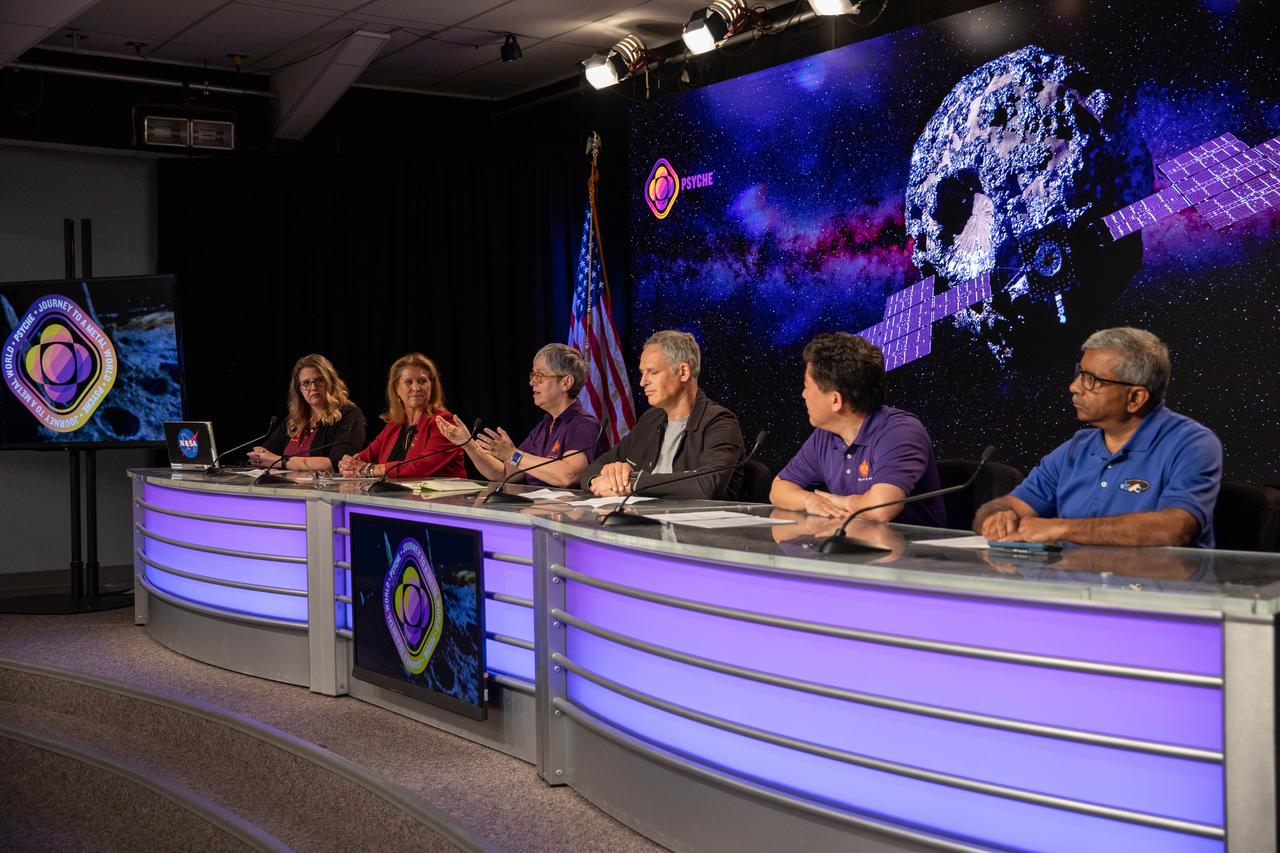
A Psyche mission and science briefing takes place at NASA’s Kennedy Space Center in Florida on Tuesday, Oct. 10, 2023. Participants, from left, are: Alana Johnson, NASA Communications; Lori Glaze, Planetary Science division director, NASA Headquarters; Lindy Elkins-Tanton, Psyche principal investigator, Arizona State University; Ben Weiss, Psyche deputy principal investigator and magnetometer lead, Massachusetts Institute of Technology; David Oh, Psyche chief engineer for operations, NASA’s Jet Propulsion Laboratory (JPL); and Abi Biswas, Deep Space Optical Communications project technologist, JPL. Psyche is the first mission to explore an asteroid with a surface that likely contains substantial amounts of metal rather than rock or ice. Liftoff of NASA’s Psyche spacecraft, atop a SpaceX Falcon Heavy rocket, is targeted for 10:16 a.m. EDT Thursday, Oct. 12, from Kennedy’s Launch Complex 39A.
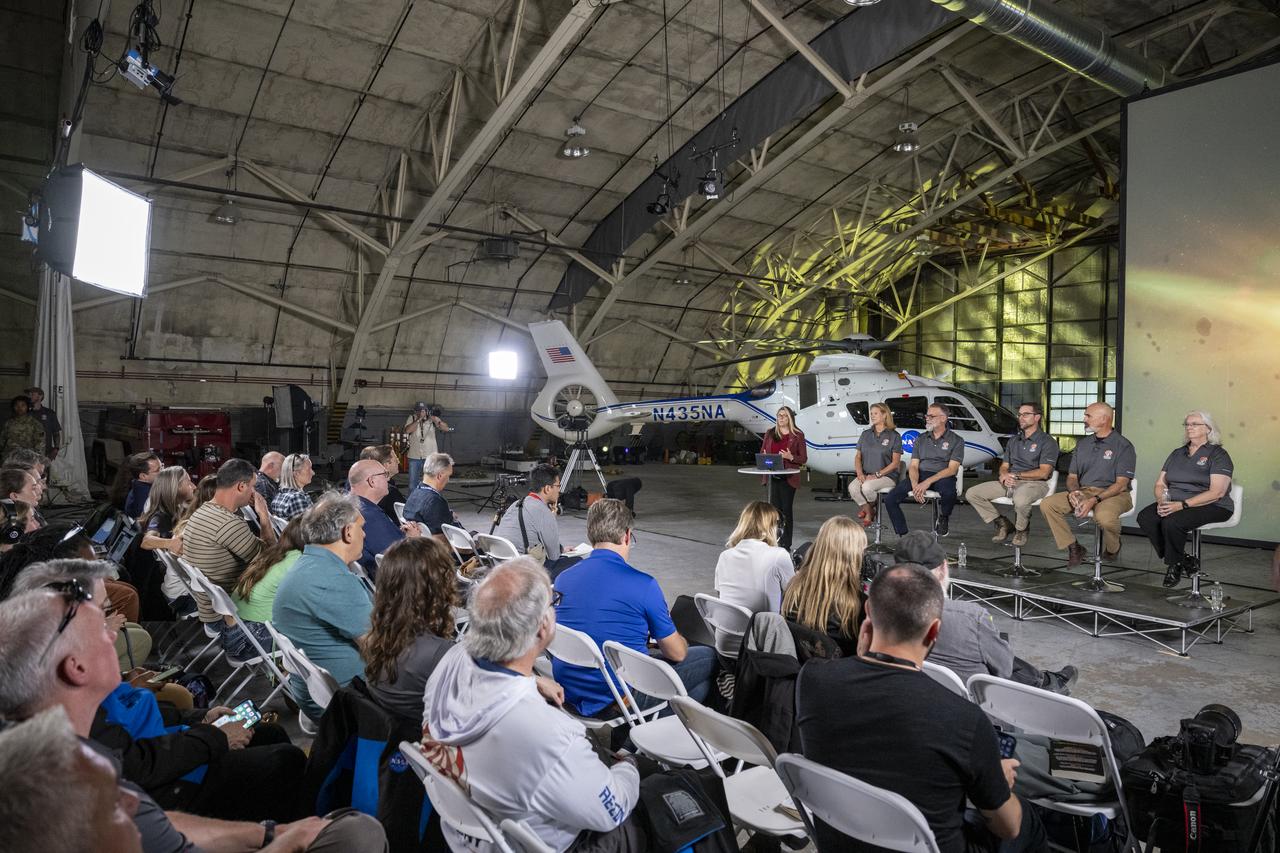
NASA Office of Communications Senior Science Communications Officer Karen Fox introduces, from left to right, NASA Planetary Science Division Director Lori Glaze, University of Arizona OSIRIS-REx Principal Investigator Dante Lauretta, NASA OSIRIS-REx Deputy Project Manager Mike Moreau, Lockheed Martin Deep Space Exploration Chief Engineer Tim Priser, and NASA Chief Scientist Eileen Stansbery during an OSIRIS-REx sample return press conference, Sunday, Sept. 24, 2023, shortly after the capsule landed at the Department of Defense's Utah Test and Training Range. The sample was collected from the asteroid Bennu in October 2020 by NASA’s OSIRIS-REx spacecraft. Photo Credit: (NASA/Keegan Barber)
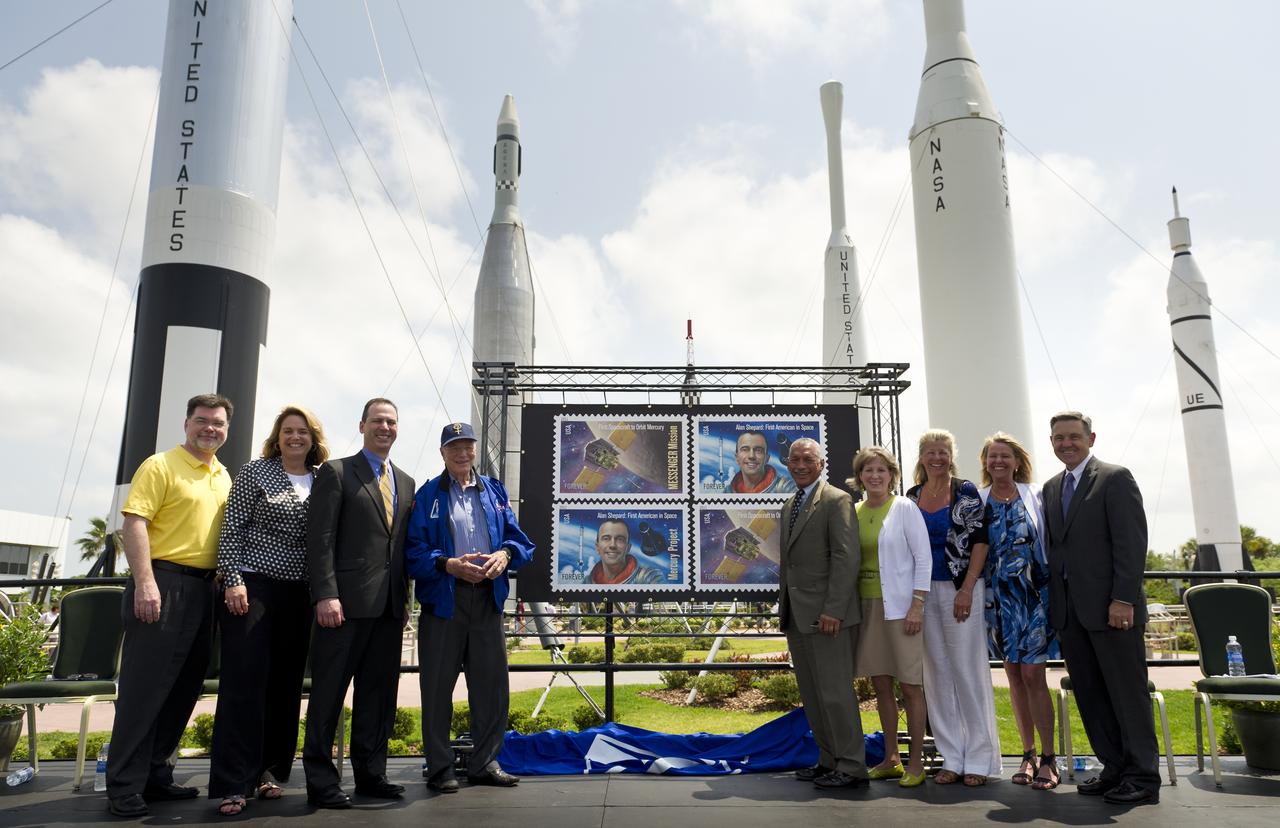
From left, NASA Deputy Director, Planetary Science Division, Science Mission Directorate, Jim Adams, NASA Kennedy Space Center Director of Education and External Relations Cheryl Hurst, United States Postal Service Vice President of Finance Steve Masse, NASA Mercury Astronaut Scott Carpenter, NASA Administrator Charles Boldin, Daughters of NASA astronaut Alan Shepard, Alice Wackermann, Laura Shepard Churchley, and Julie Jenkins, and NASA Kennedy Space Center Director Robert Cabana pose for a photograph during an unveiling ceremony of two USPS stamps that commemorate and celebrate 50 years of US Spaceflight and the MESSENGER program during an event, Wednesday, May 4, 2011 at the NASA Kennedy Space Center in Cape Canaveral, Fla. One stamp commemorates NASA’s Project Mercury, America’s first manned spaceflight program, and NASA astronaut Alan Shepard’s historic flight on May 5, 1961, aboard spacecraft Freedom 7. The other stamp draws attention to NASA’s unmanned MESSENGER mission, a scientific investigation of the planet Mercury. On March 17, 2011, MESSENGER became the first spacecraft to enter into orbit around Mercury. Photo Credit: (NASA/Bill Ingalls)
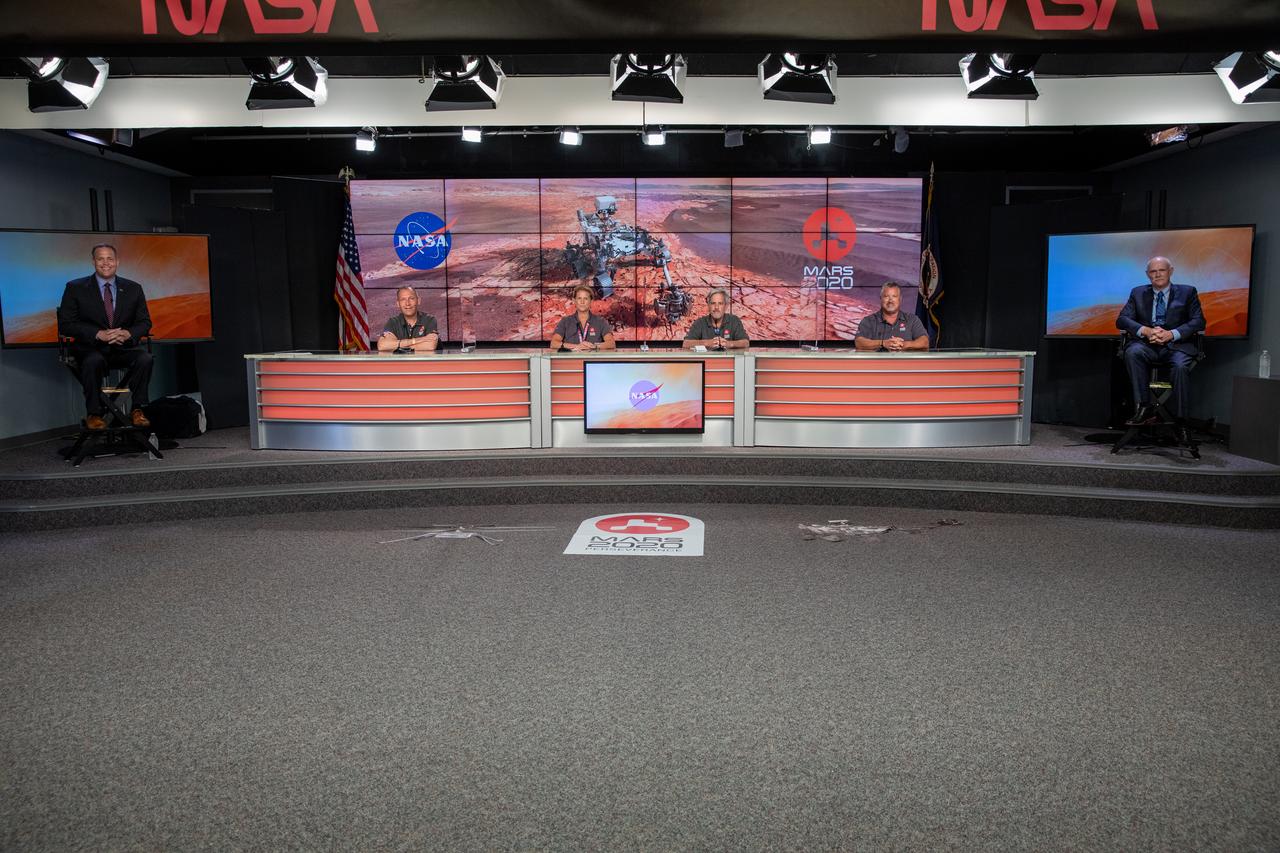
A Mars 2020 post-launch news conference is held at NASA’s Kennedy Space Center in Florida on July 30, 2020. Participants, from left, are NASA Administrator Jim Bridenstine; Thomas Zurbuchen, NASA associate administrator, Science Mission Directorate; Lori Glaze, Planetary Science Division director, NASA Headquarters; Matt Wallace, deputy project manager, NASA’s Jet Propulsion Laboratory; Omar Baez, launch director, NASA’s Launch Services Program; and Tory Bruno, president and CEO of United Launch Alliance. The United Launch Alliance Atlas V 541 rocket lifted off from Space Launch Complex 41 at Cape Canaveral Air Force Station at 7:50 a.m. EDT, carrying the agency’s Mars Perseverance rover and Ingenuity helicopter. The rover is part of NASA’s Mars Exploration Program, a long-term effort of robotic exploration of the Red Planet. The rover will search for habitable conditions in the ancient past and signs of past microbial life on Mars. The Launch Services Program at Kennedy is responsible for launch management.
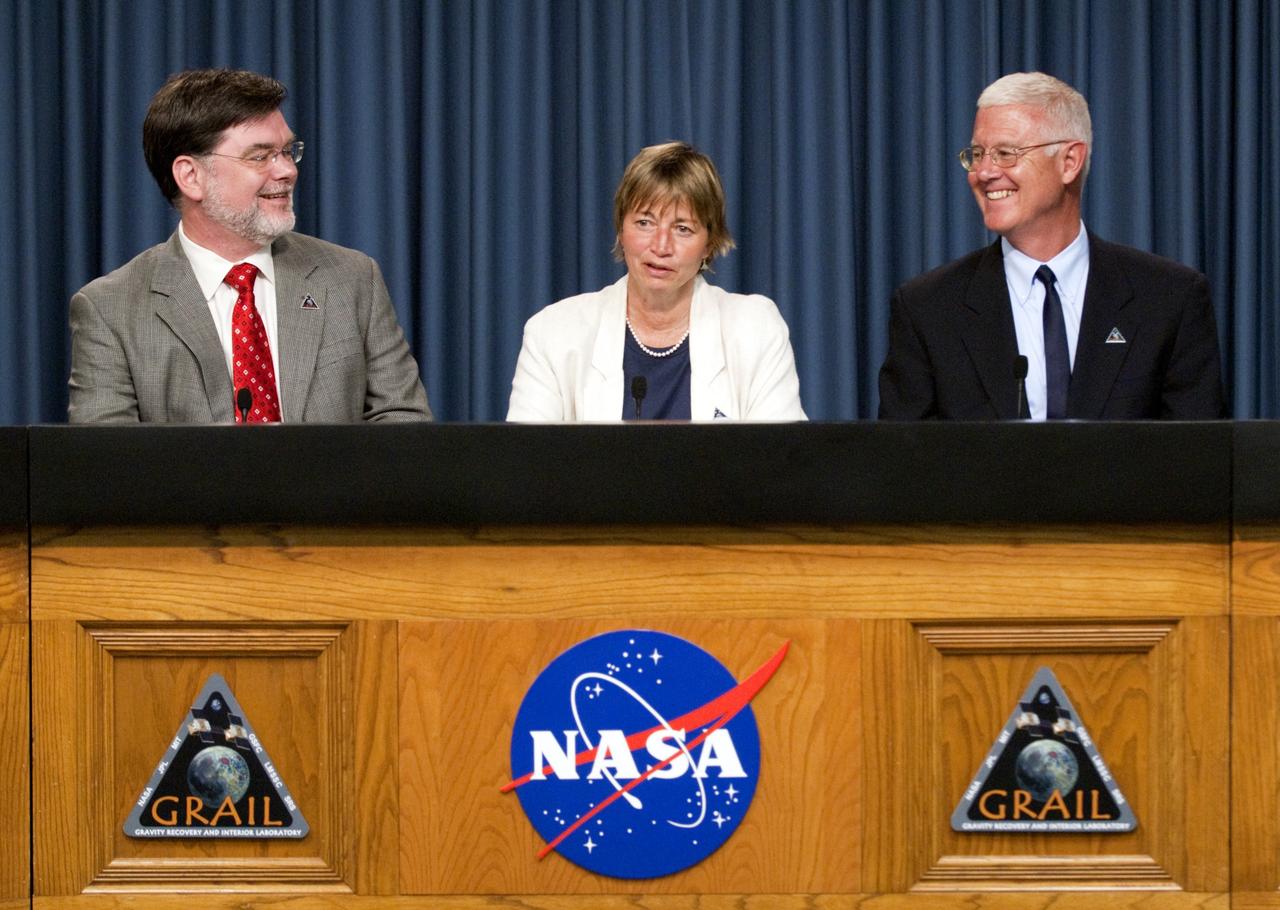
CAPE CANAVERAL, Fla. – Managers of NASA’s Gravity Recovery and Interior Laboratory (GRAIL) mission participate in a post-launch news conference in the Press Site television auditorium at NASA's Kennedy Space Center in Florida. From left are Jim Adams, deputy director, Planetary Science Division, NASA's Science Mission Directorate; Maria Zuber, GRAIL principal investigator, Massachusetts Institute of Technology; and David Lehman, GRAIL project manager, Jet Propulsion Laboratory. Liftoff of the twin GRAIL spacecraft aboard a United Launch Alliance Delta II Heavy rocket was at 9:08:52 EDT Sept. 10 from Space Launch Complex 17B on Cape Canaveral Air Force Station in Florida. The spacecraft are embarking on a three-month journey to reach the moon. GRAIL will fly twin spacecraft in tandem around the moon to precisely measure and map variations in the moon's gravitational field. The mission will provide the most accurate global gravity field to date for any planet, including Earth. For more information, visit http://www.nasa.gov/grail. Photo credit: NASA/Kim Shiflett
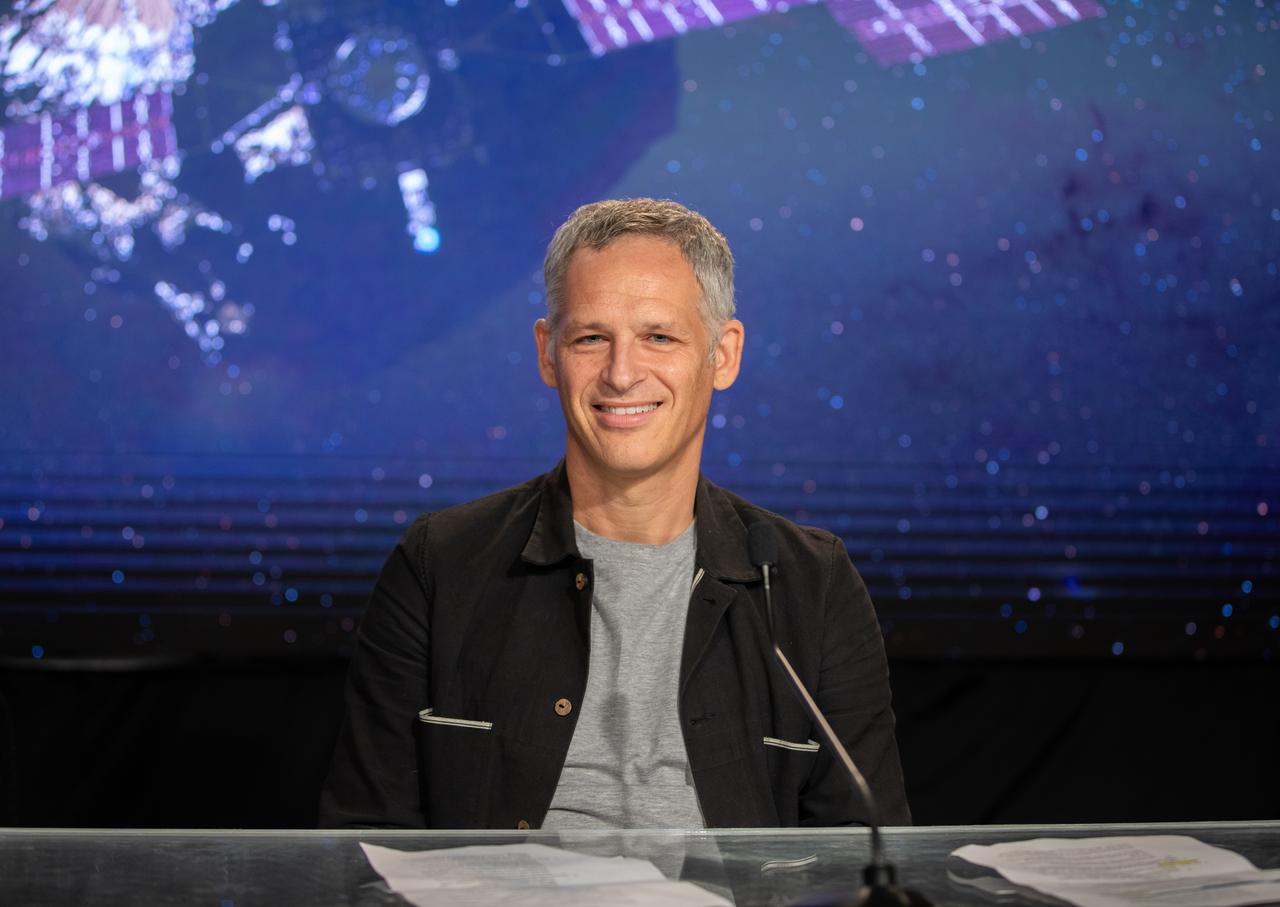
The science briefing ahead of launch for NASA’s Psyche spacecraft, a mission to a unique metal-rich asteroid. Psyche will travel nearly six years and about 2.2 billion miles (3.6 billion kilometers) – to an asteroid of the same name, which is orbiting the Sun between Mars and Jupiter. Scientists believe Psyche could be part of the core of a planetesimal, likely made of iron-nickel metal. The ore will not be mined but studied from orbit in hopes of giving researchers a better idea of what may make up Earth’s core. The Psyche spacecraft also will host a pioneering technology demonstration: NASA’s DSOC (Deep Space Optical Communications) experiment. This laser communications system will operate for the first two years of Psyche’s journey. Launch is targeted for 10:16 a.m. EDT, Thursday, Oct. 12, from Kennedy’s Launch Complex 39A. The participants include Lori Glaze, director, Planetary Sciences Division, NASA Headquarters in Washington; Lindy Elkins-Tanton, principal investigator of Psyche, Arizona State University; Ben Weiss, deputy principal investigator and magnetometer lead, Massachusetts Institute of Technology; David Oh, chief engineer for operations, NASA’s Jet Propulsion Laboratory; and Abi Biswas, project technologist for DSOC, NASA’s Jet Propulsion Laboratory.
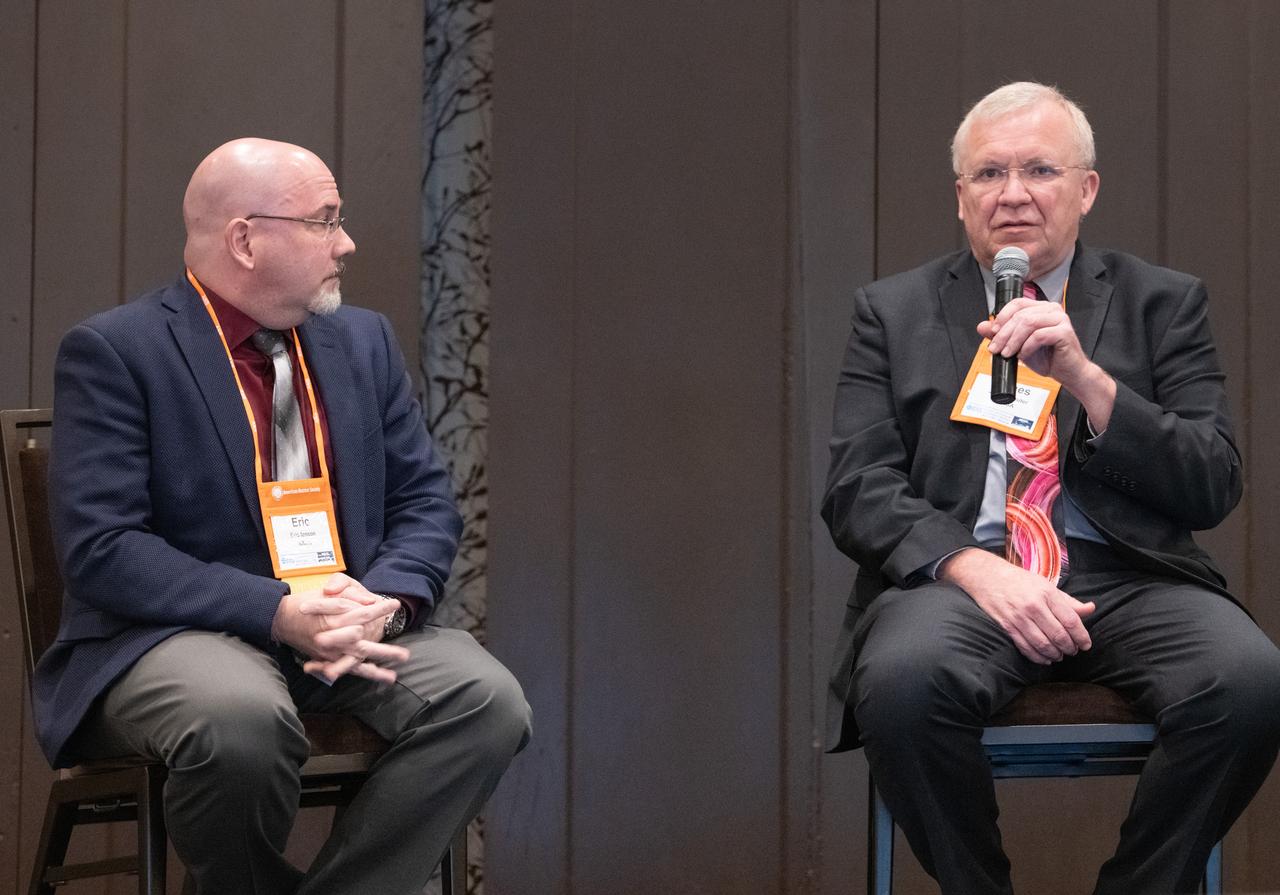
Nuclear Emerging Technologies for Space, NETS 2022 Conference

Nuclear Emerging Technologies for Space, NETS 2022 Conference

Nuclear Emerging Technologies for Space, NETS 2022 Conference
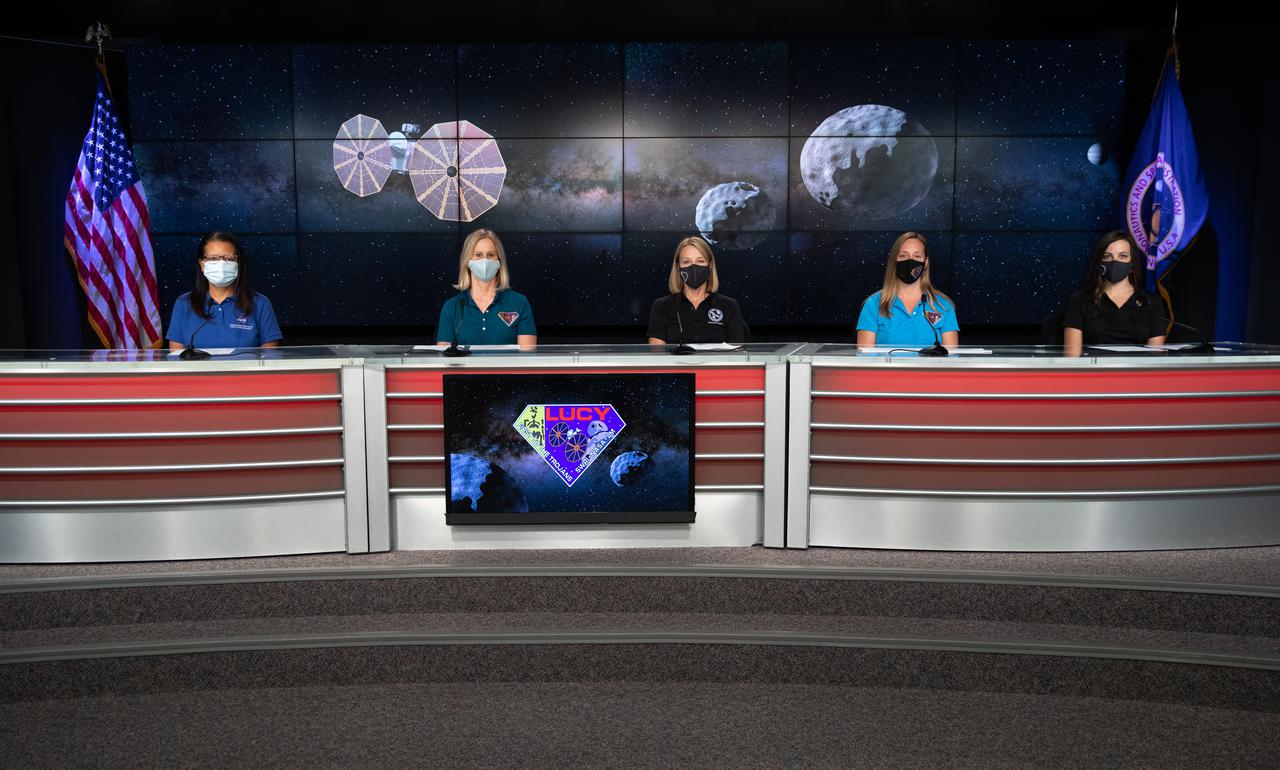
An engineering briefing for the Lucy mission is held inside the TV Auditorium at NASA’s Kennedy Space Center in Florida on Oct. 14, 2021. Participants included, from left to right, Nancy Jones, NASA Communications; Joan Salute, Planetary Science Division Associate Director, Flight Programs, NASA HQ; Katie Oakman, Lucy Structures and Mechanisms Lead, Lockheed Martin Space; Jessica Lounsbury, Lucy Project Systems Engineer at NASA’s Goddard Space Flight Center; and Coralie Adam, Deputy Navigation Team Chief, KinetX Aerospace. Lucy is scheduled to launch at 5:34 a.m. EDT Saturday, Oct. 16, on a United Launch Alliance Atlas V 401 rocket from Space Launch Complex 41 at Cape Canaveral Space Force Station. NASA’s Launch Services Program, based at Kennedy, is managing the launch. Lucy is the first space mission to study the Trojan asteroids, which hold vital clues to the formation of our solar system.
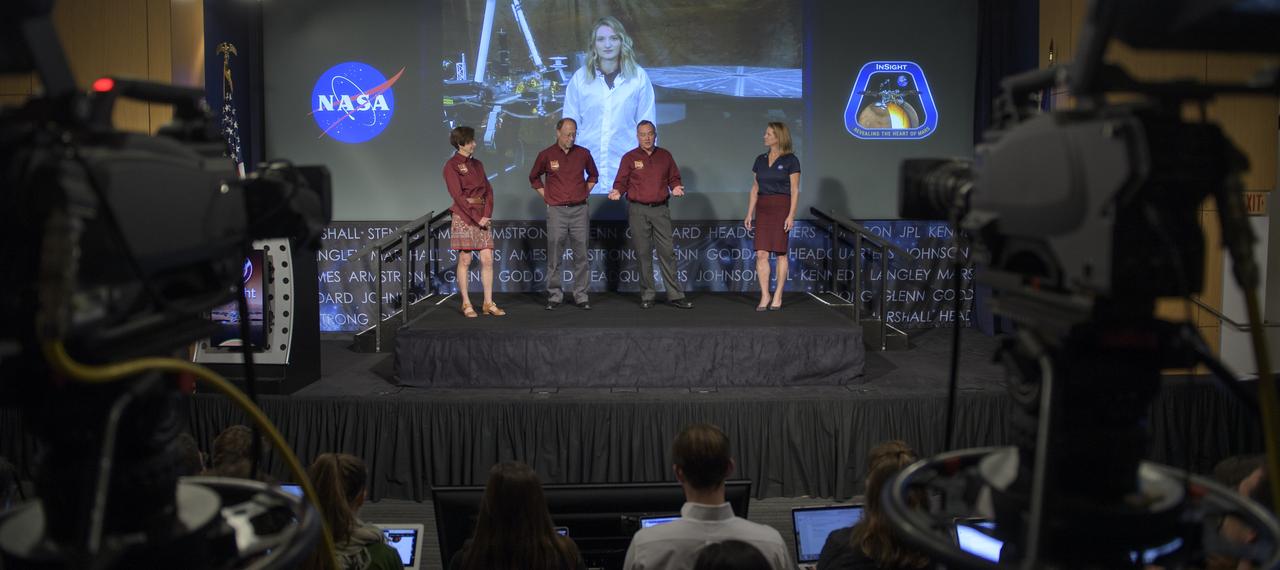
NASA's Jet Propulsion Laboratory InSight instrument deployment lead Jaime Singer, on screen, NASA's Jet Propulsion Laboratory InSight deputy principal investigator Sue Smrekar, left, NASA's Jet Propulsion Laboratory InSight principal investigator Bruce Banerdt, NASA's Jet Propulsion Laboratory InSight project manager Tom Hoffman, and NASA Headquarters acting director of the Planetary Science Division Lori Glaze, right, discuss the NASA InSight Mars Lander (Interior Exploration using Seismic Investigations, Geodesy and Heat Transport) during media briefing, Wednesday, Oct. 31, 2018 at NASA Headquarters in Washington. InSIght will land on the Red Planet at approximately 3 p.m. EST (noon PST) Monday, Nov. 26. InSight will study the deep interior of Mars to learn how all celestial bodies with rocky surfaces, including Earth and the Moon, formed. The lander’s instruments include a seismometer to detect marsquakes and a probe to monitor the flow of heat in the planet's subsurface. Photo Credit: (NASA/Bill Ingalls)

Nuclear Emerging Technologies for Space, NETS 2022 Conference

Nuclear Emerging Technologies for Space, NETS 2022 Conference

Nuclear Emerging Technologies for Space, NETS 2022 Conference

Nuclear Emerging Technologies for Space, NETS 2022 Conference