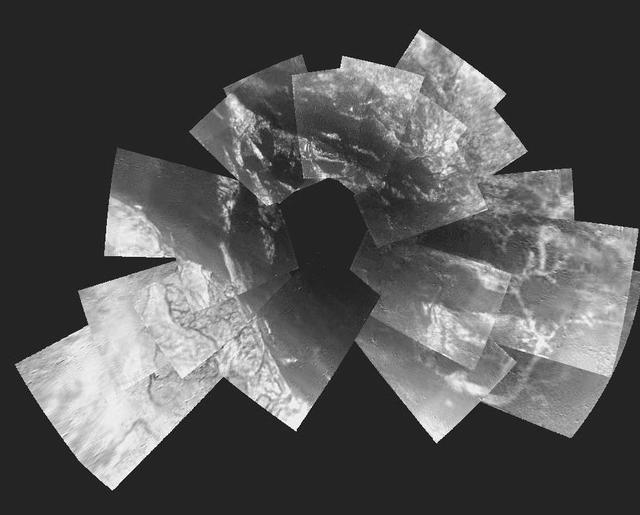
Titan Descent
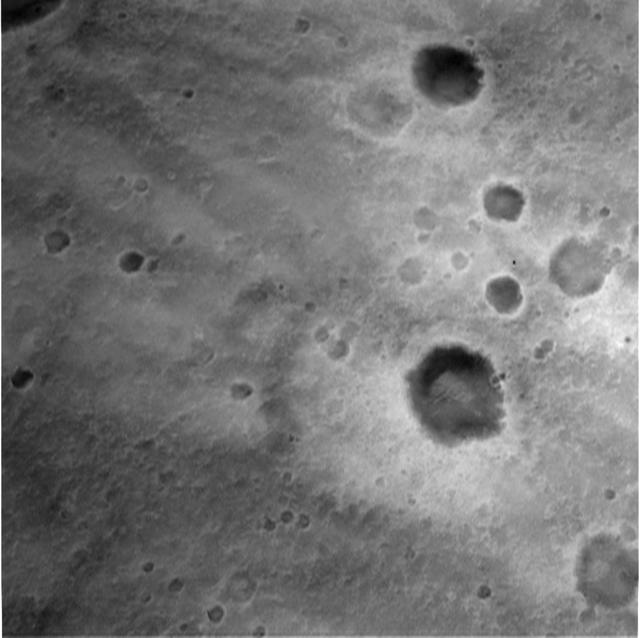
Spirit Descent to Mars-1433
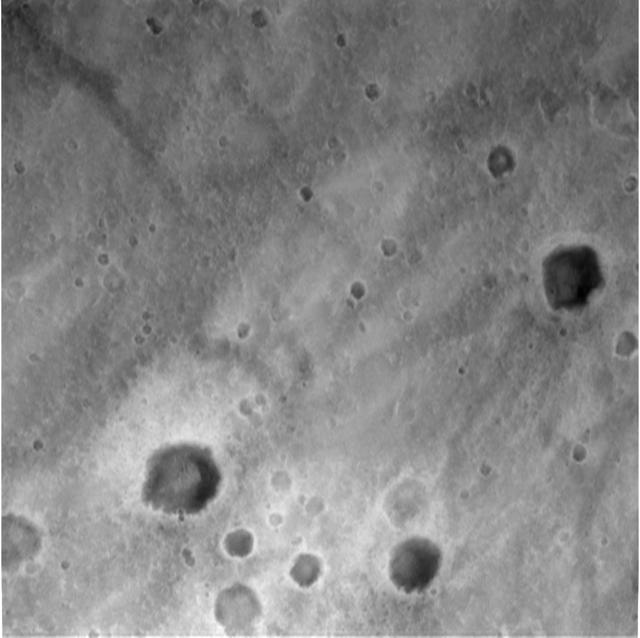
Spirit Descent to Mars-1983
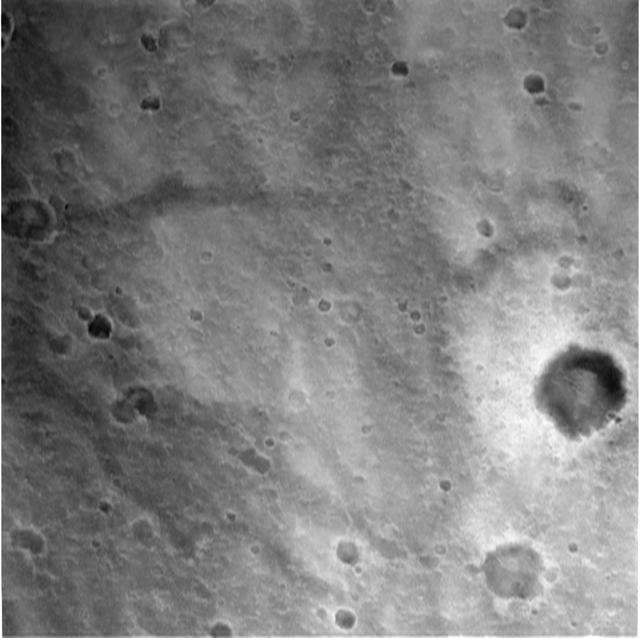
Spirit Descent to Mars-1706
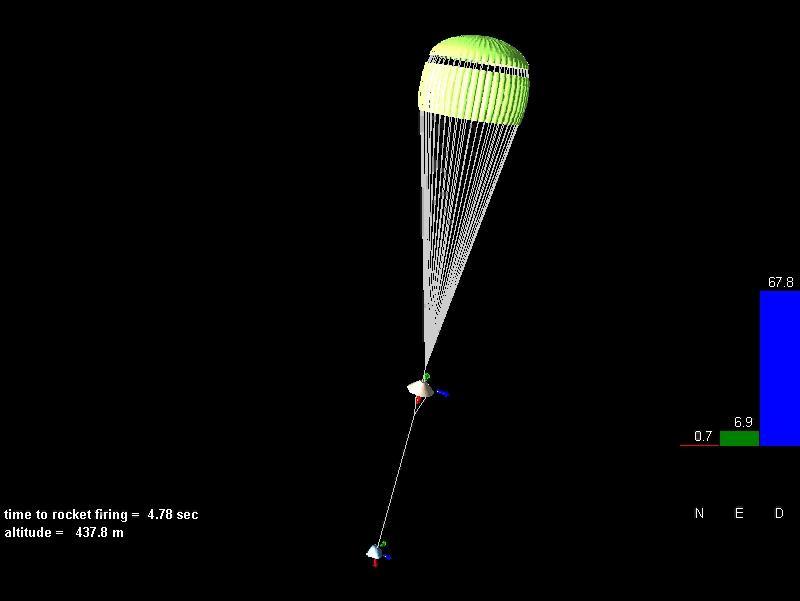
A Flyby Tour of Spirit Descent

Descent from the Summit of Husband Hill
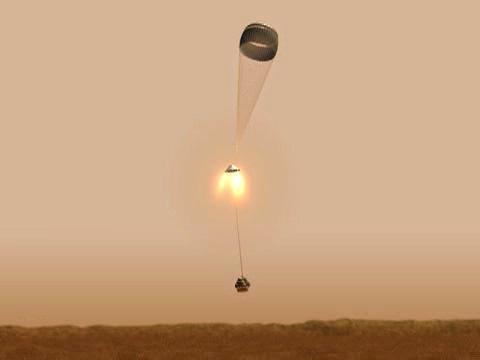
A Flyby Tour of Spirit Descent-2
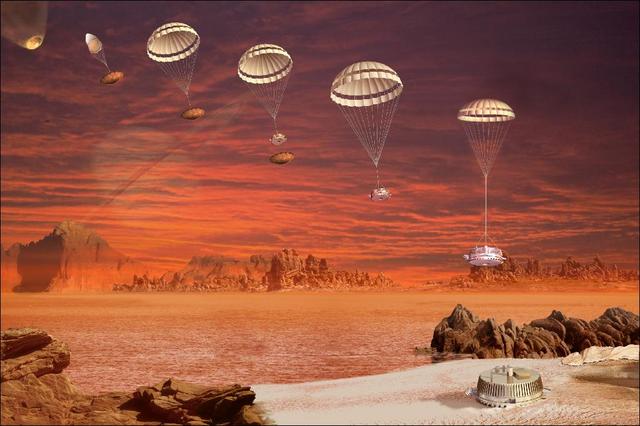
Huygens Descent Sequence Artist Concept
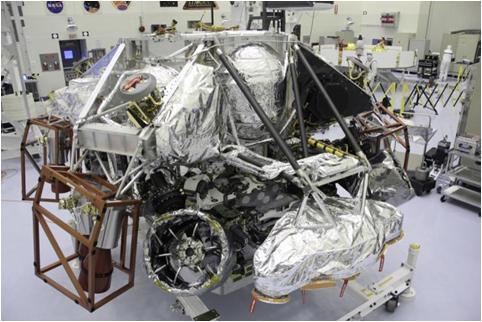
The Mars Science Laboratory mission powered descent vehicle is the integrated combination of the spacecraft descent stage and the rover Curiosity.
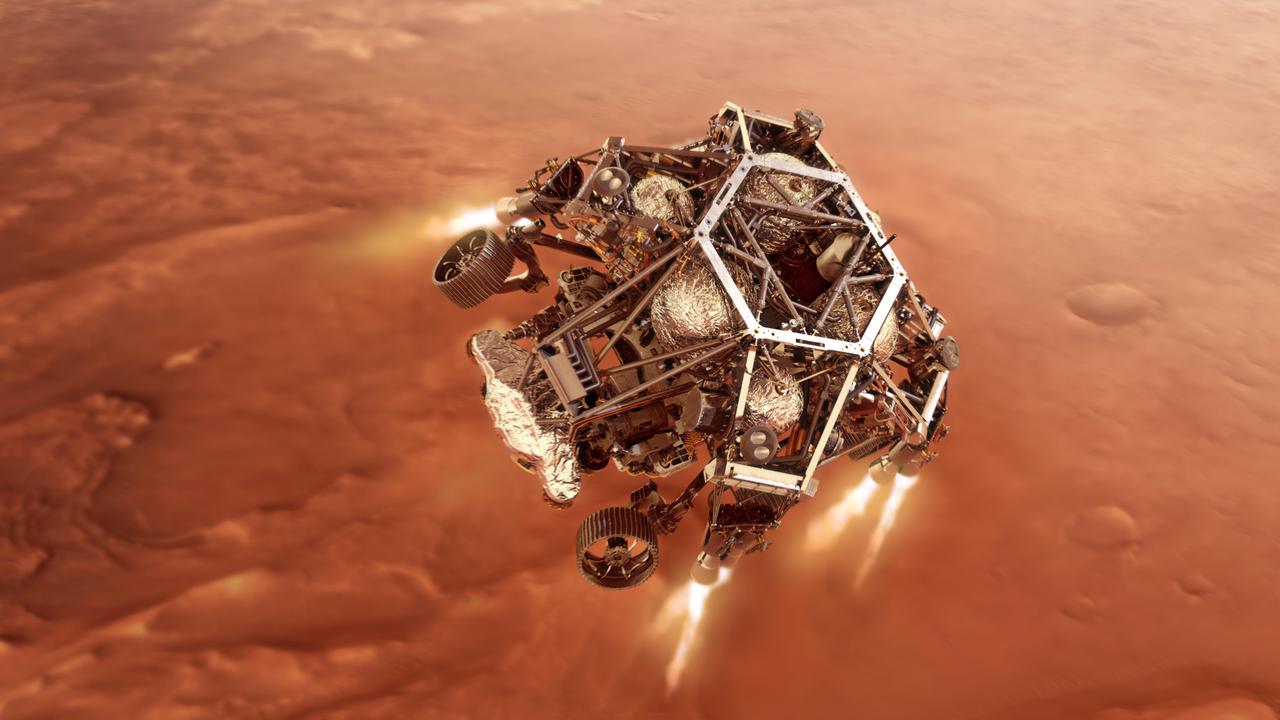
NASA's Perseverance rover fires up its descent stage engines as it nears the Martian surface in this illustration. This phase of its entry, descent and landing sequence, or EDL, is known as "powered descent." Hundreds of critical events must execute perfectly and exactly on time for the rover to land safely on Feb. 18, 2021. The cruise stage separates about 10 minutes before entering into the atmosphere, leaving the aeroshell, which encloses the rover and descent stage, to make the trip to the surface. At about 6,900 feet (2,100 meters) above the surface, the rover separates from the parachute and backshell. At this point, the rover is joined to the descent stage, which functions as a sort of jetpack for the rover. The descent stage fires up its engines, flies to a reachable self-selected safe landing target, levels out, and slows to its final descent speed of about 1.7 mph (2.7 kph). It then initiates the "skycrane" maneuver: about 12 seconds before touchdown, roughly 66 feet (20 meters) above the surface, the descent stage lowers the rover on a set of cables about 21 feet (6.4 meters) long. The rover unstows its mobility system, locking its legs and wheels into landing position. EDL ends about seven minutes after atmospheric entry, with Perseverance stationary on the Martian surface. https://photojournal.jpl.nasa.gov/catalog/PIA24318
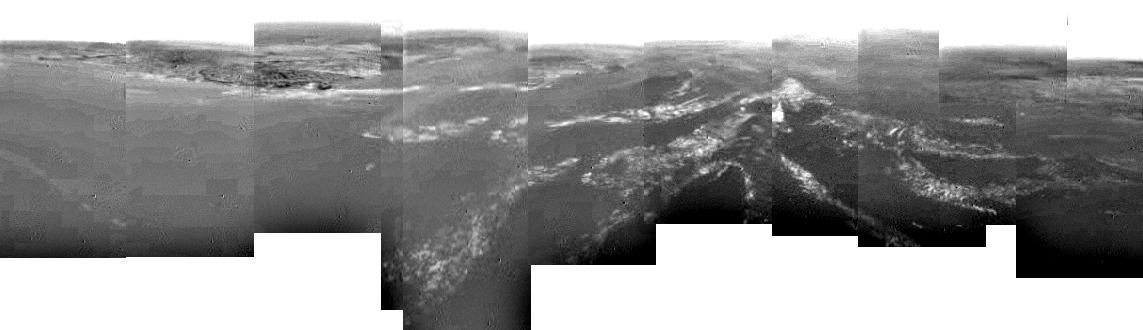
Composite of Titan Surface Seen During Descent

Descent from the Summit of Husband Hill False Color
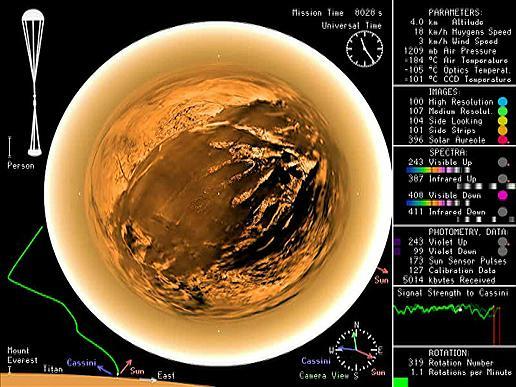
Titan Descent Data Movie with Bells and Whistles
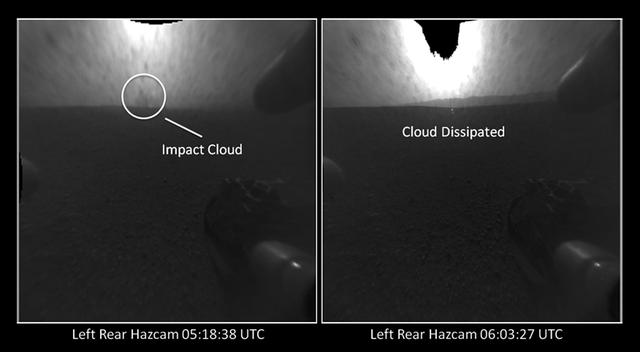
The distant blob seen in the view on left, taken by a Hazard-Avoidance camera on NASA Curiosity rover, may be a cloud created during the crash of the rover descent stage.
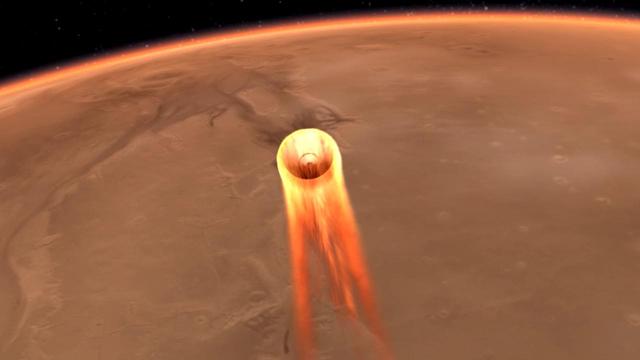
An artist's impression of InSight's Entry, Descent and Landing (EDL). InSight is short for Interior Exploration using Seismic Investigations, Geodesy and Heat Transport. The mission is the first outer space explorer to study the "inner space" of Mars. The lander probes deep beneath the surface of Mars to study the fingerprints of the processes that first formed the rocky planets of our solar system. Entry, descent, and landing (EDL) begins when the spacecraft reaches the Martian atmosphere, about 80 miles (about 128 kilometers) above the surface, and ends with the lander safe and sound on the surface of Mars six minutes later. https://photojournal.jpl.nasa.gov/catalog/PIA22100
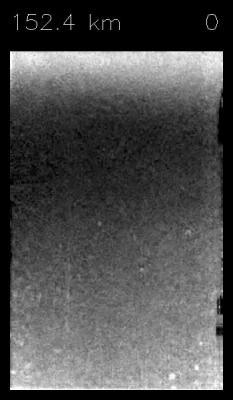
This frame from an animation is made up from a sequence of images taken by the Descent Imager/Spectral Radiometer (DISR) instrument on board ESA's Huygens probe, during its successful descent to Titan on Jan. 14, 2005. The animation is available at http://photojournal.jpl.nasa.gov/catalog/PIA07234 It shows what a passenger riding on Huygens would have seen. The sequence starts from an altitude of 152 kilometers (about 95 miles) and initially only shows a hazy view looking into thick cloud. As the probe descends, ground features can be discerned and Huygens emerges from the clouds at around 30 kilometers (about 19 miles) altitude. The ground features seem to rotate as Huygens spins slowly underits parachute. The DISR consists of a downward-looking High Resolution Imager (HRI), a Medium Resolution Imager (MRI), which looks out at an angle, and a Side Looking Imager (SLI). For this animation, most images used were captured by the HRI and MRI. Once on the ground, the final landing scene was captured by the SLI. The Descent Imager/Spectral Radiometer is one of two NASA instruments on the probe.
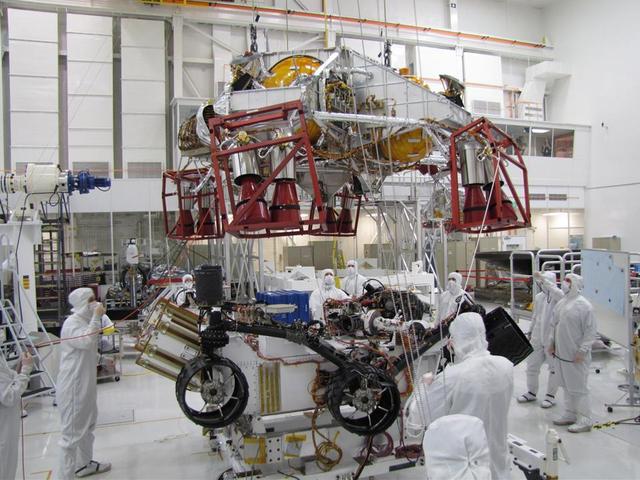
Spacecraft specialists test the descent stage and rover of the Mars Science Laboratory in this scene from the Spacecraft Assembly Facility at NASA Jet Propulsion Laboratory, Pasadena, Calif.
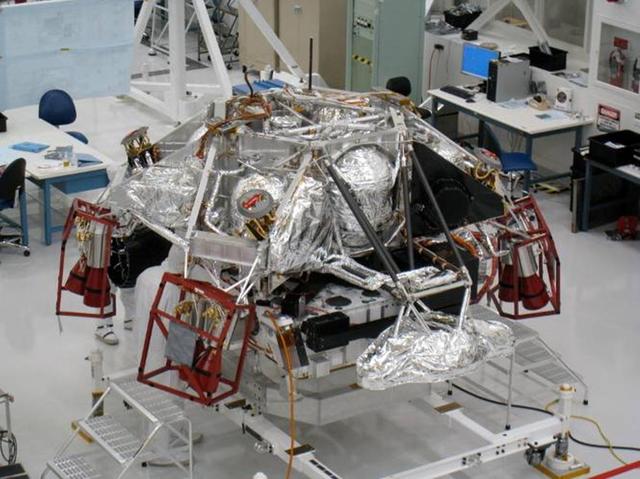
This portion of NASA Mars Science Laboratory, called the descent stage, does its main work during the final few minutes before touchdown on Mars.
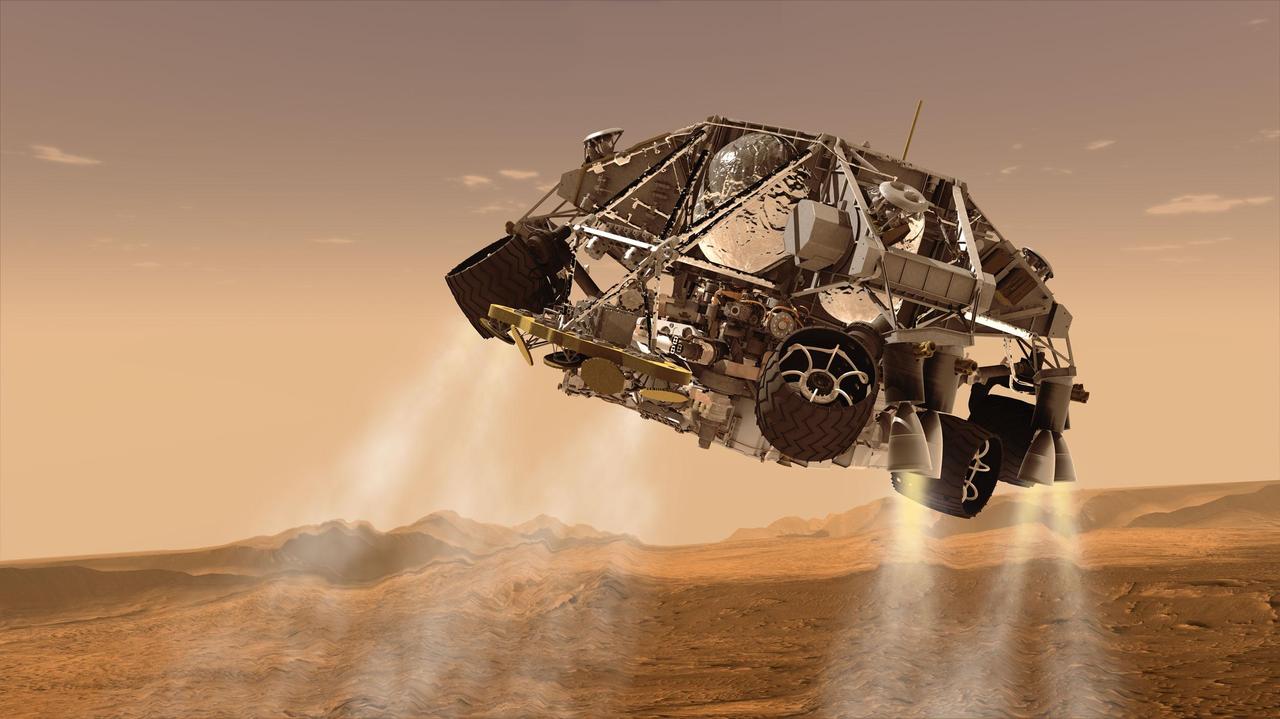
This is an artist concept of the rover and descent stage for NASA Mars Science Laboratory spacecraft during the final minute before the rover, Curiosity, touches down on the surface of Mars.
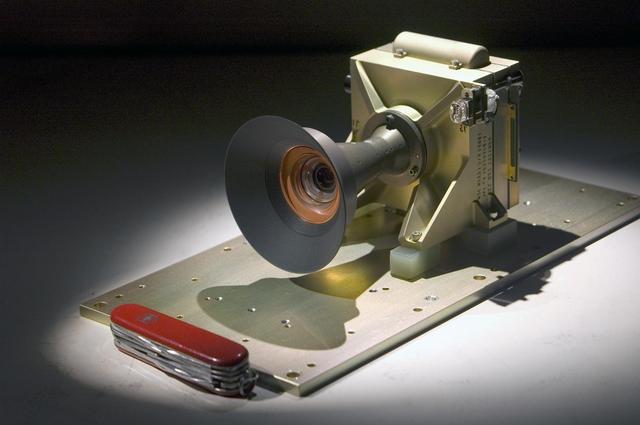
A pocketknife provides scale for this image of the Mars Descent Imager camera; the camera will fly on the Curiosity rover of NASA Mars Science Laboratory mission. Malin Space Science Systems, San Diego, Calif., supplied the camera for the mission.
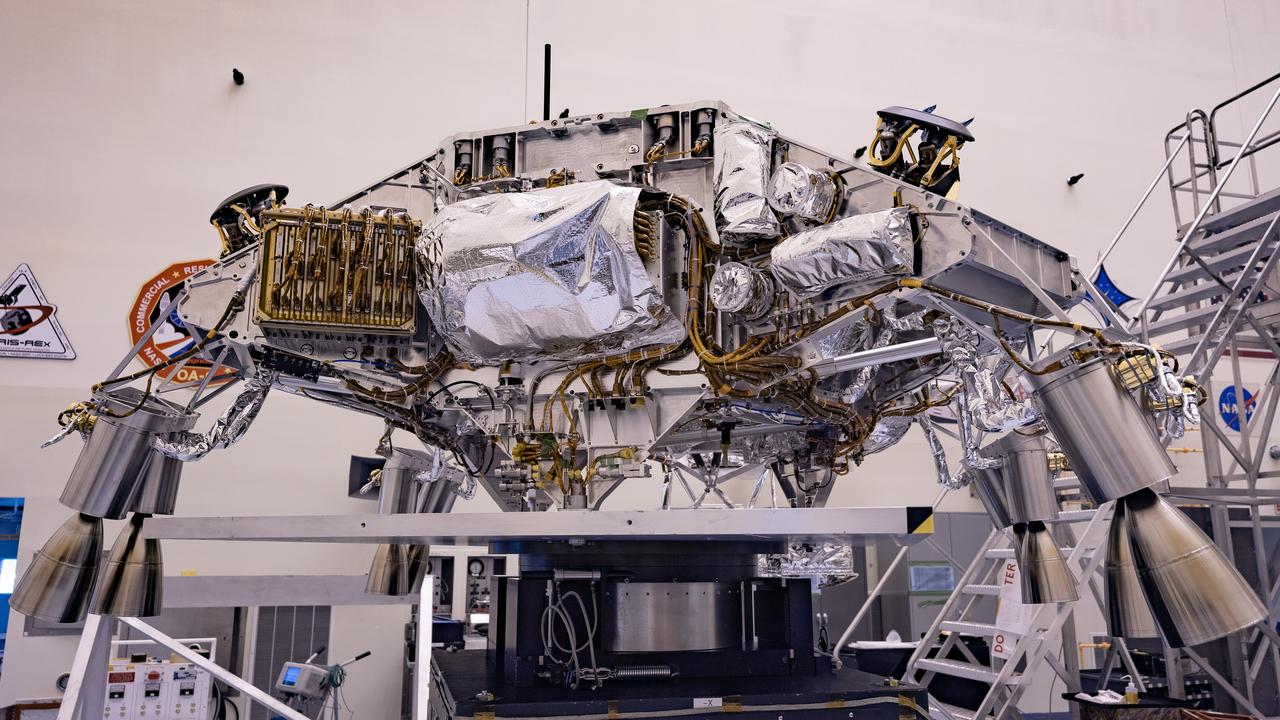
Engineers perform mass properties testing on the rocket-powered descent stage of NASA’s Mars Perseverance rover at Kennedy Space Center on April 12, 2020. The testing to determine the center of gravity, or the point at which weight is evenly dispersed on all sides, was performed inside the Florida spaceport’s Payload Hazardous Servicing Facility. The descent stage will lower the rover through the thin Martian atmosphere and onto the surface on Feb. 18, 2021. Liftoff, aboard a United Launch Alliance Atlas V 541 rocket, is targeted between July 17 and Aug. 5 from Cape Canaveral Air Force Station. NASA’s Launch Services Program based at Kennedy is managing the launch. The rover will seek signs of ancient life and collect rock and soil samples for possible return to Earth.
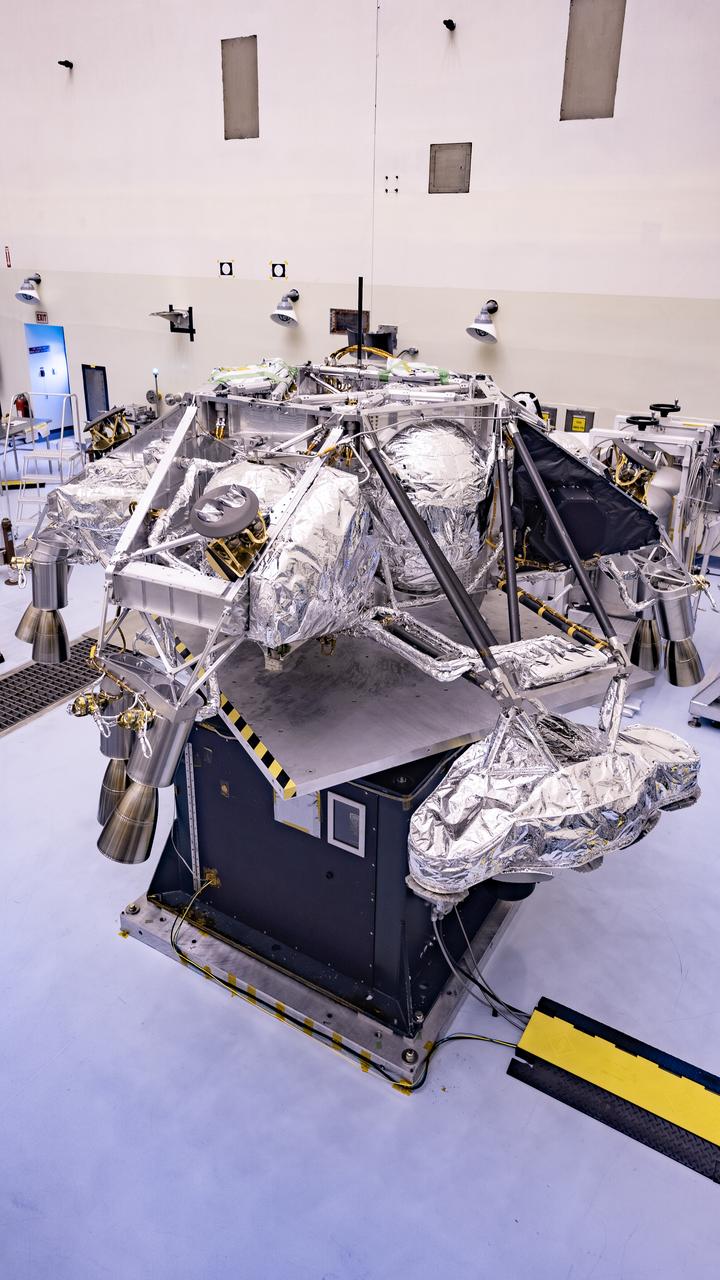
Engineers perform mass properties testing on the rocket-powered descent stage of NASA’s Mars Perseverance rover at Kennedy Space Center on April 12, 2020. The testing to determine the center of gravity, or the point at which weight is evenly dispersed on all sides, was performed inside the Florida spaceport’s Payload Hazardous Servicing Facility. The descent stage will lower the rover through the thin Martian atmosphere and onto the surface on Feb. 18, 2021. Liftoff, aboard a United Launch Alliance Atlas V 541 rocket, is targeted between July 17 and Aug. 5 from Cape Canaveral Air Force Station. NASA’s Launch Services Program based at Kennedy is managing the launch. The rover will seek signs of ancient life and collect rock and soil samples for possible return to Earth.
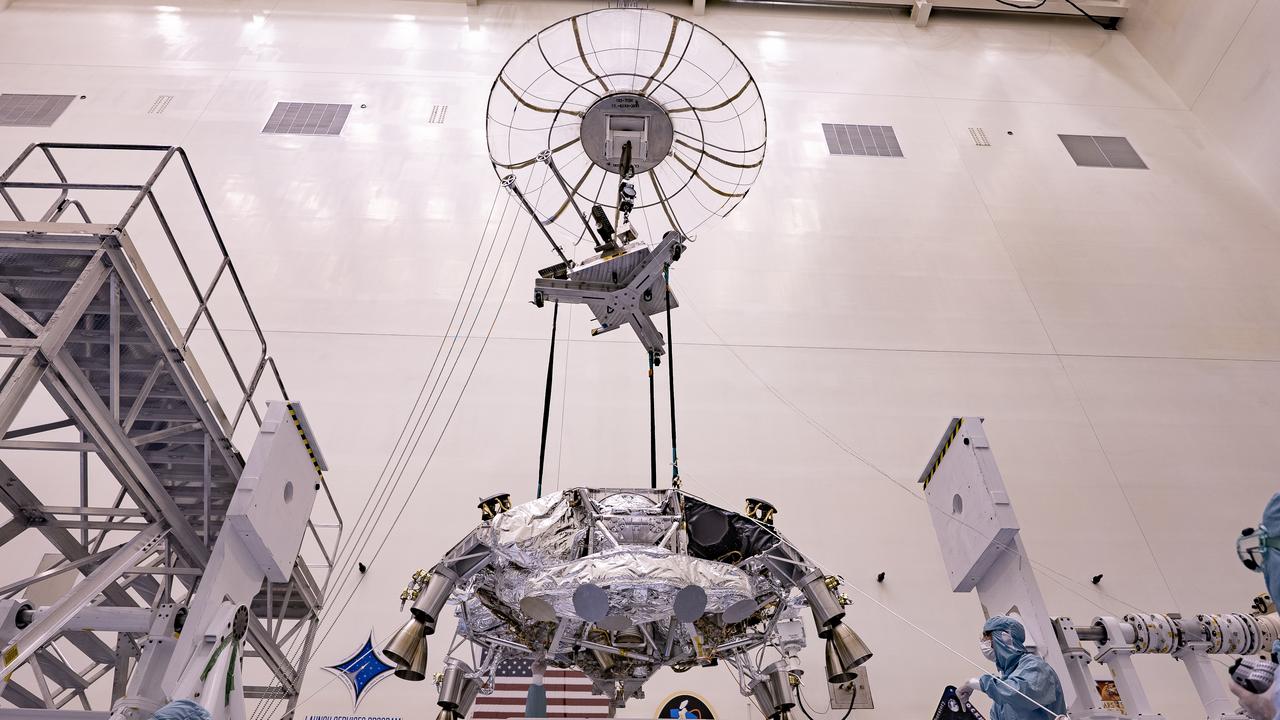
Engineers perform mass properties testing on the rocket-powered descent stage of NASA’s Mars Perseverance rover at Kennedy Space Center on April 9, 2020. The testing to determine the center of gravity, or the point at which weight is evenly dispersed on all sides, was performed inside the Florida spaceport’s Payload Hazardous Servicing Facility. The descent stage will lower the rover through the thin Martian atmosphere and onto the surface on Feb. 18, 2021. Liftoff, aboard a United Launch Alliance Atlas V 541 rocket, is targeted between July 17 and Aug. 5 from Cape Canaveral Air Force Station. NASA’s Launch Services Program based at Kennedy is managing the launch. The rover will seek signs of ancient life and collect rock and soil samples for possible return to Earth.
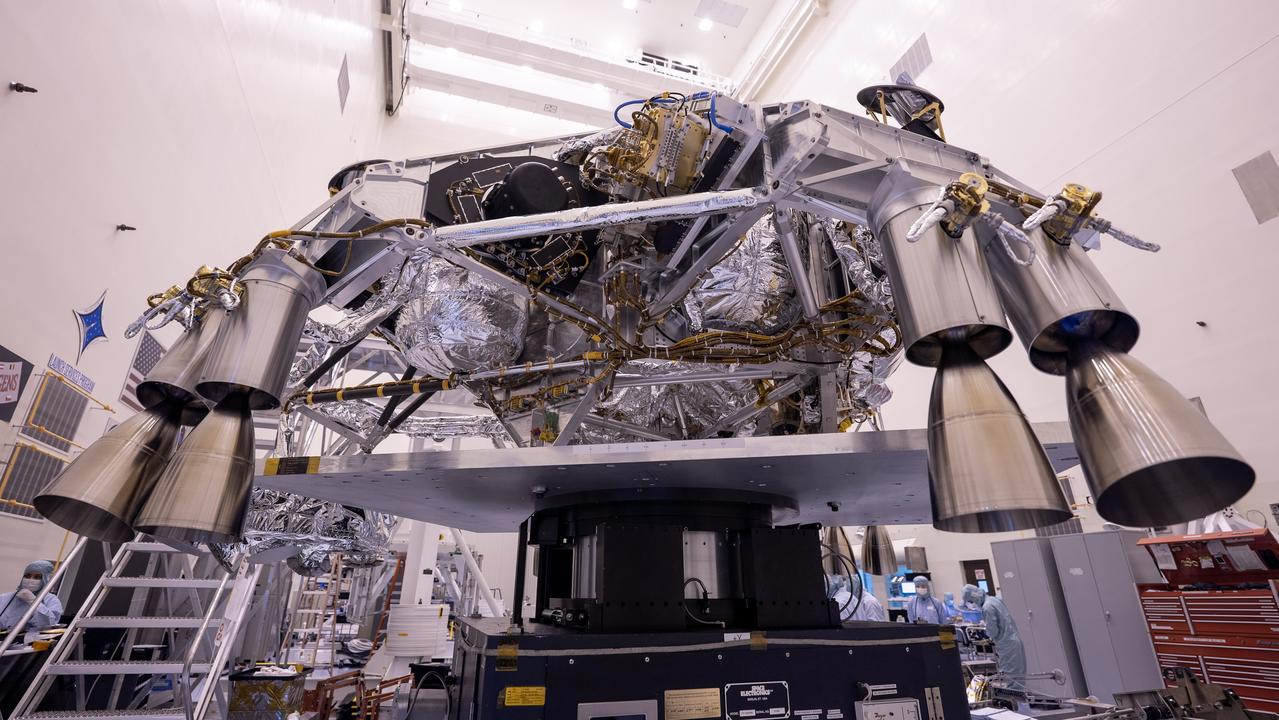
Engineers perform mass properties testing on the rocket-powered descent stage of NASA’s Mars Perseverance rover at Kennedy Space Center on April 12, 2020. The testing to determine the center of gravity, or the point at which weight is evenly dispersed on all sides, was performed inside the Florida spaceport’s Payload Hazardous Servicing Facility. The descent stage will lower the rover through the thin Martian atmosphere and onto the surface on Feb. 18, 2021. Liftoff, aboard a United Launch Alliance Atlas V 541 rocket, is targeted between July 17 and Aug. 5 from Cape Canaveral Air Force Station. NASA’s Launch Services Program based at Kennedy is managing the launch. The rover will seek signs of ancient life and collect rock and soil samples for possible return to Earth.
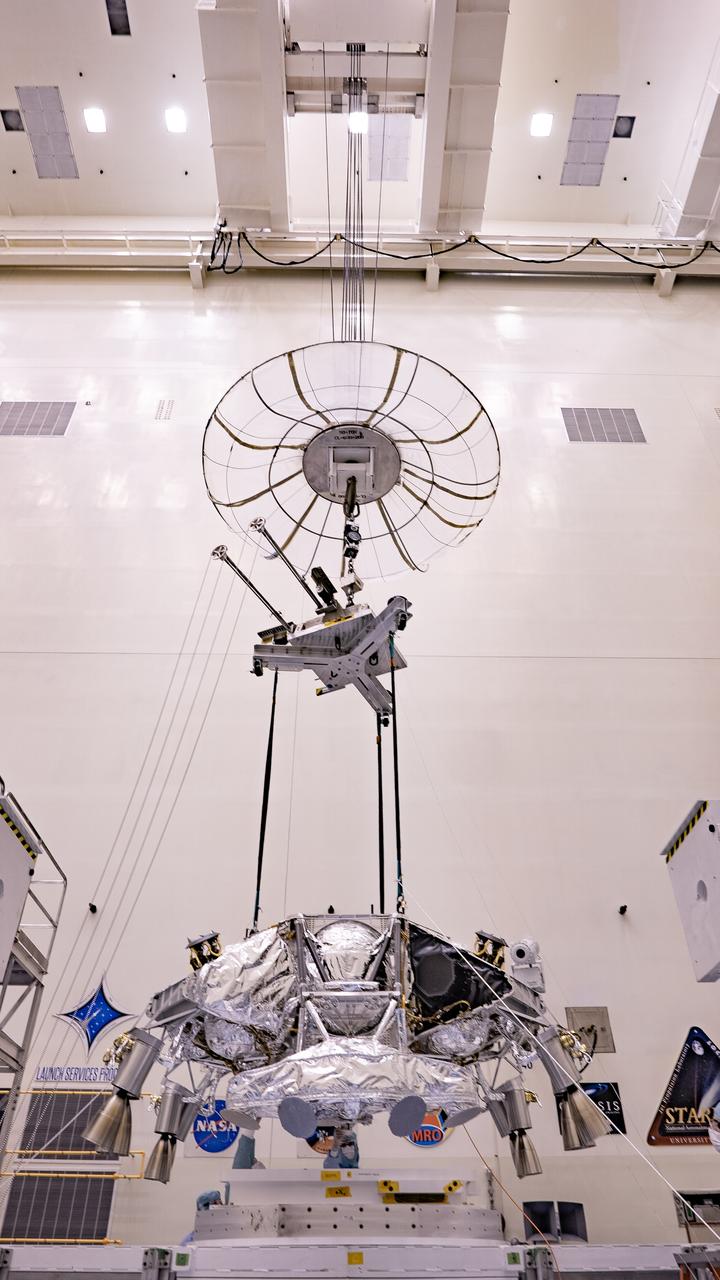
Engineers perform mass properties testing on the rocket-powered descent stage of NASA’s Mars Perseverance rover at Kennedy Space Center on April 9, 2020. The testing to determine the center of gravity, or the point at which weight is evenly dispersed on all sides, was performed inside the Florida spaceport’s Payload Hazardous Servicing Facility. The descent stage will lower the rover through the thin Martian atmosphere and onto the surface on Feb. 18, 2021. Liftoff, aboard a United Launch Alliance Atlas V 541 rocket, is targeted between July 17 and Aug. 5 from Cape Canaveral Air Force Station. NASA’s Launch Services Program based at Kennedy is managing the launch. The rover will seek signs of ancient life and collect rock and soil samples for possible return to Earth.
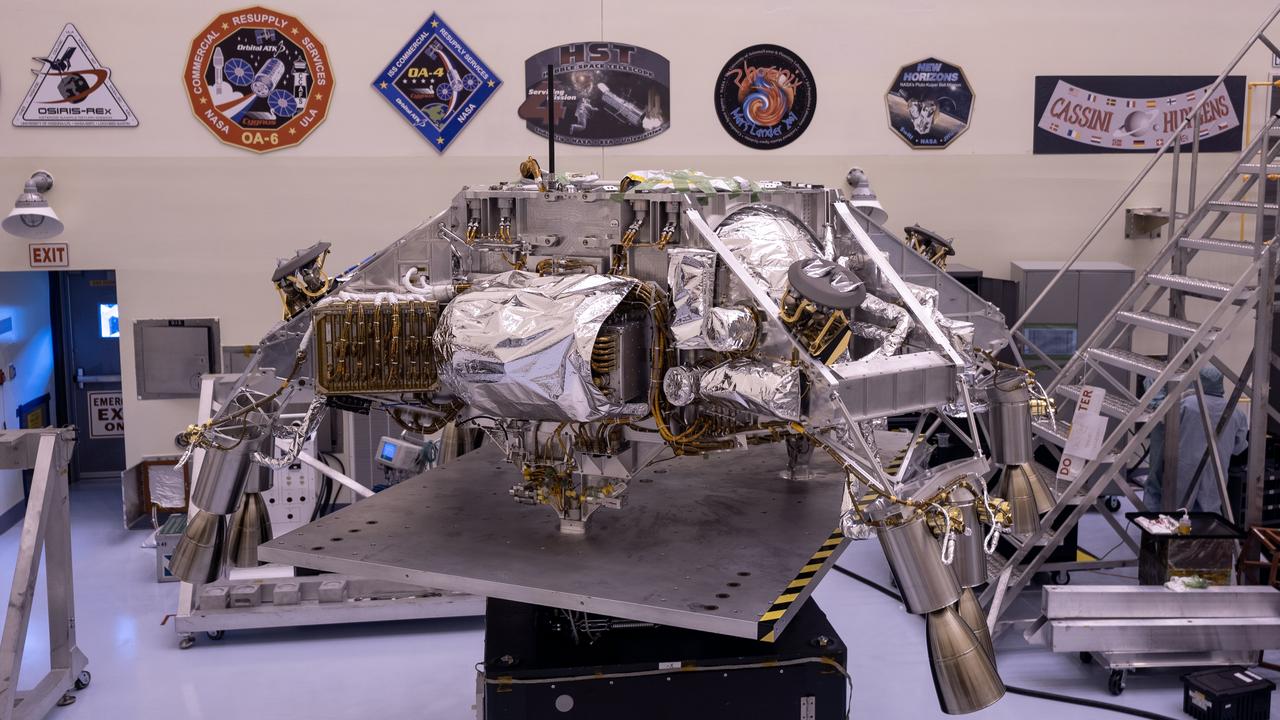
Engineers perform mass properties testing on the rocket-powered descent stage of NASA’s Mars Perseverance rover at Kennedy Space Center on April 12, 2020. The testing to determine the center of gravity, or the point at which weight is evenly dispersed on all sides, was performed inside the Florida spaceport’s Payload Hazardous Servicing Facility. The descent stage will lower the rover through the thin Martian atmosphere and onto the surface on Feb. 18, 2021. Liftoff, aboard a United Launch Alliance Atlas V 541 rocket, is targeted between July 17 and Aug. 5 from Cape Canaveral Air Force Station. NASA’s Launch Services Program based at Kennedy is managing the launch. The rover will seek signs of ancient life and collect rock and soil samples for possible return to Earth.
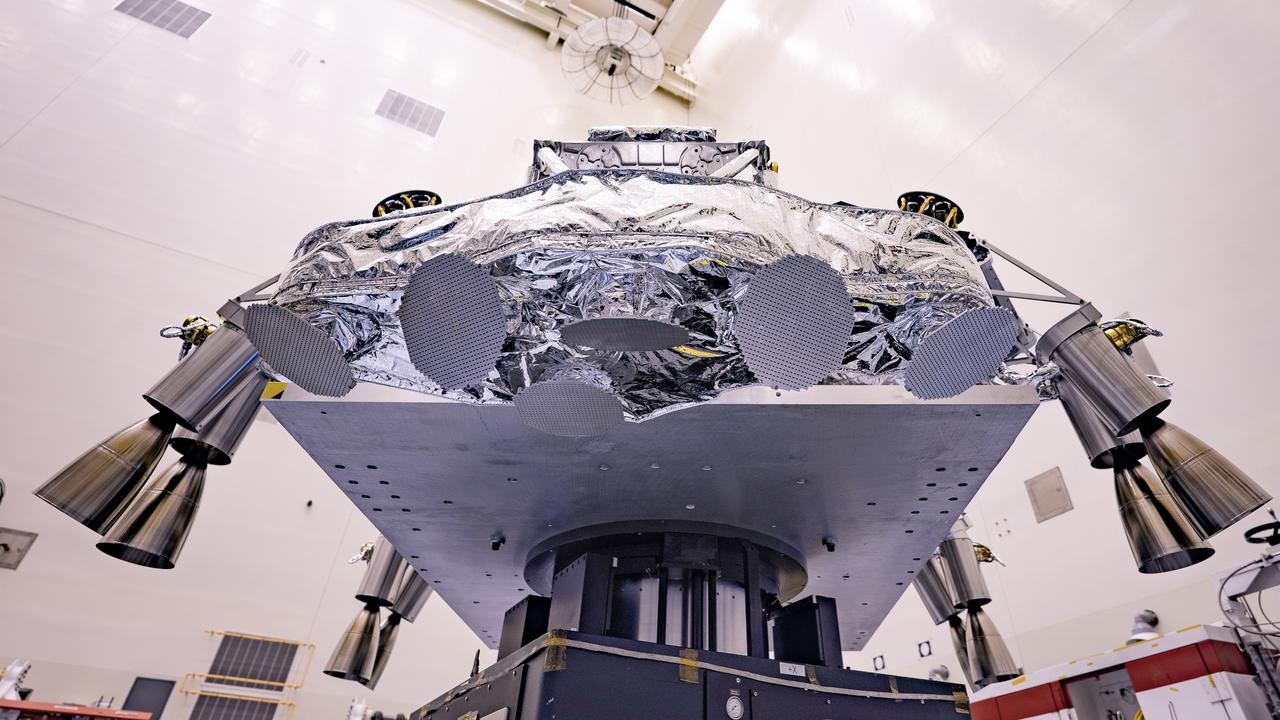
Engineers perform mass properties testing on the rocket-powered descent stage of NASA’s Mars Perseverance rover at Kennedy Space Center on April 12, 2020. The testing to determine the center of gravity, or the point at which weight is evenly dispersed on all sides, was performed inside the Florida spaceport’s Payload Hazardous Servicing Facility. The descent stage will lower the rover through the thin Martian atmosphere and onto the surface on Feb. 18, 2021. Liftoff, aboard a United Launch Alliance Atlas V 541 rocket, is targeted between July 17 and Aug. 5 from Cape Canaveral Air Force Station. NASA’s Launch Services Program based at Kennedy is managing the launch. The rover will seek signs of ancient life and collect rock and soil samples for possible return to Earth.
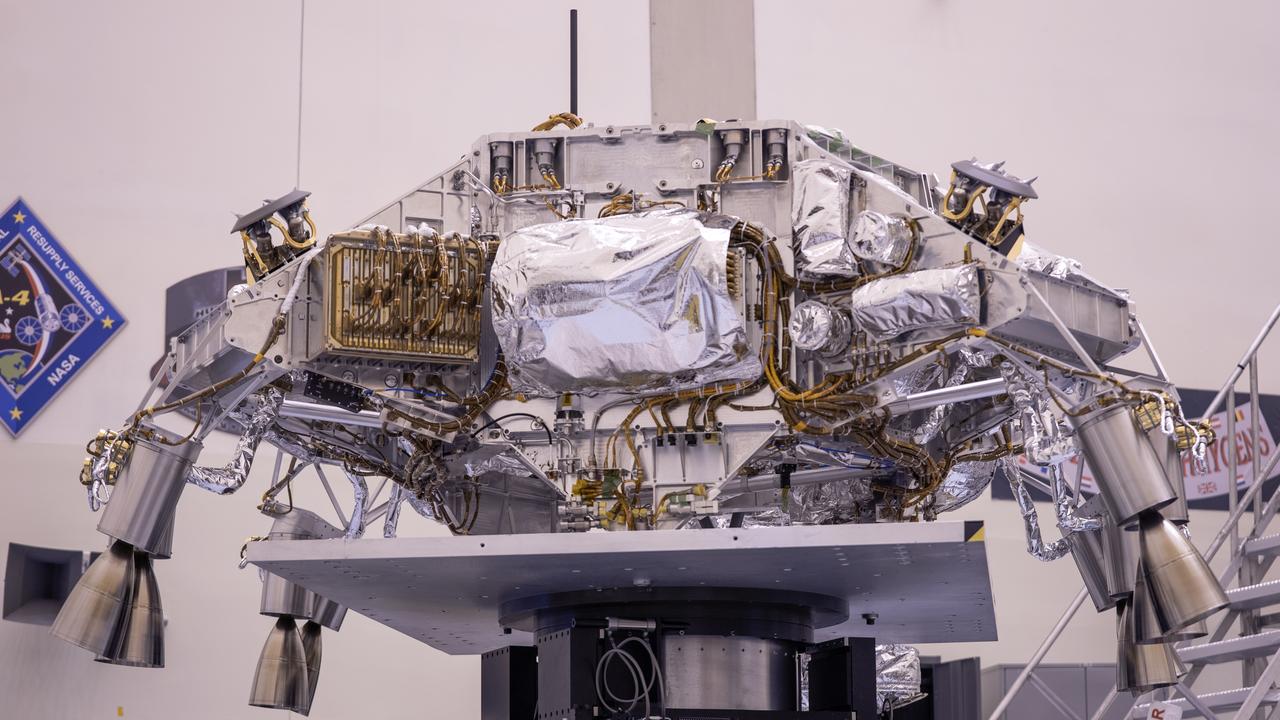
Engineers perform mass properties testing on the rocket-powered descent stage of NASA’s Mars Perseverance rover at Kennedy Space Center on April 12, 2020. The testing to determine the center of gravity, or the point at which weight is evenly dispersed on all sides, was performed inside the Florida spaceport’s Payload Hazardous Servicing Facility. The descent stage will lower the rover through the thin Martian atmosphere and onto the surface on Feb. 18, 2021. Liftoff, aboard a United Launch Alliance Atlas V 541 rocket, is targeted between July 17 and Aug. 5 from Cape Canaveral Air Force Station. NASA’s Launch Services Program based at Kennedy is managing the launch. The rover will seek signs of ancient life and collect rock and soil samples for possible return to Earth.
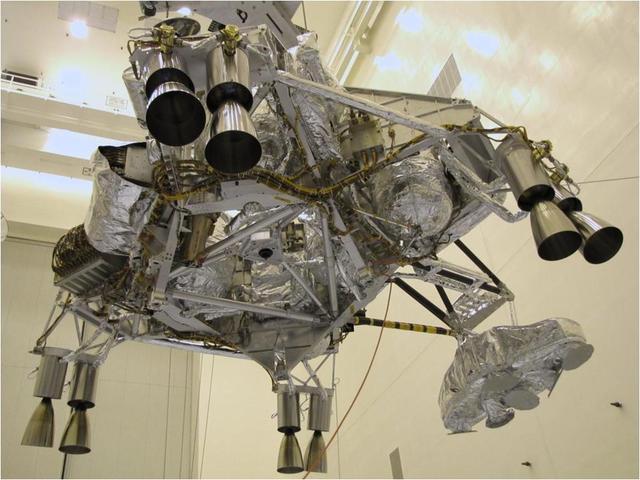
The descent stage of NASA Mars Science Laboratory spacecraft is being lifted during assembly of the spacecraft in this photograph taken inside the Payload Hazardous Servicing Facility at NASA Kennedy Space Center, Fla.
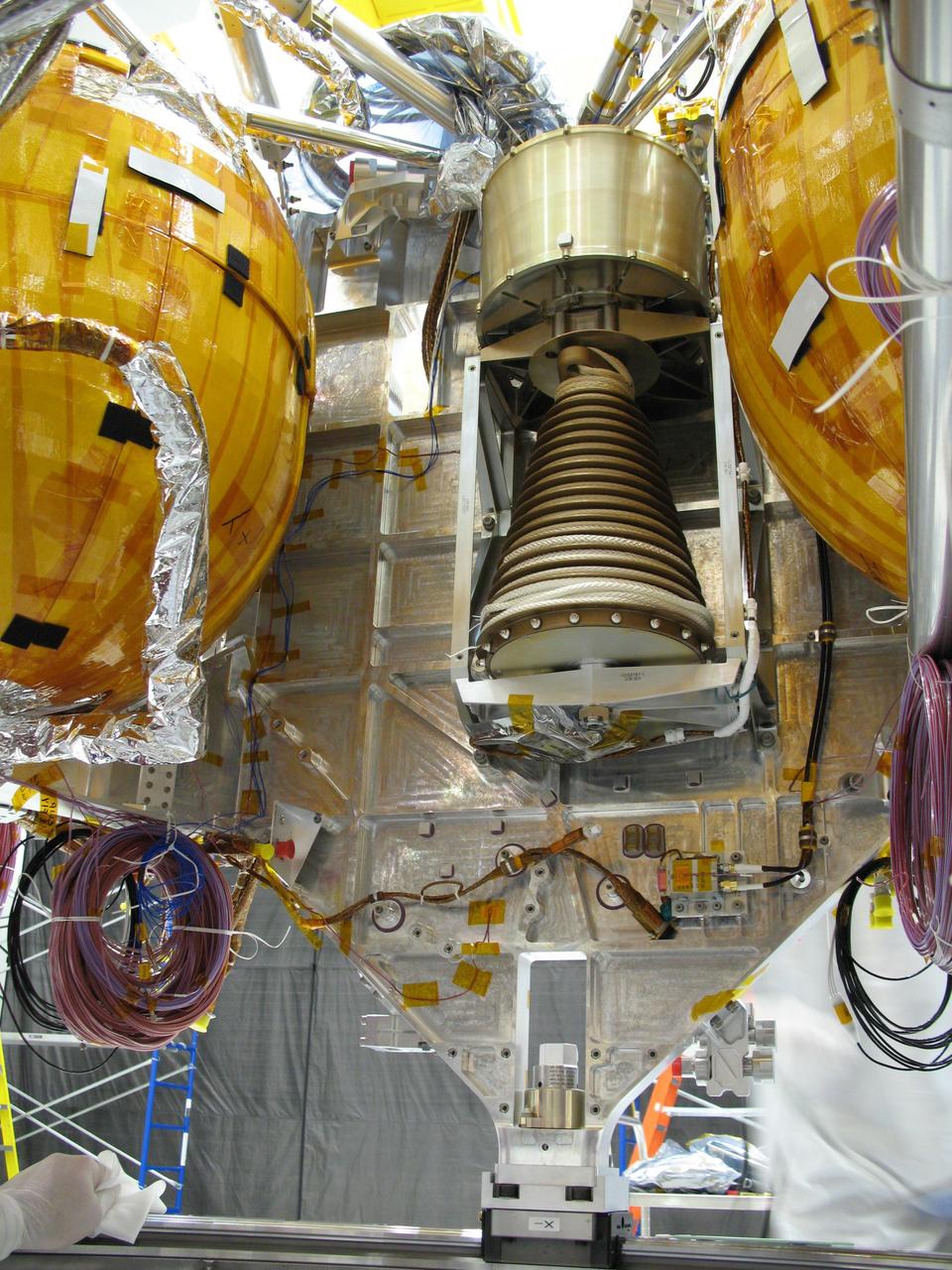
This view of a portion of the descent stage of NASA Mars Science Laboratory shows two of the stage three spherical fuel tanks flanking the bridle device assembly.
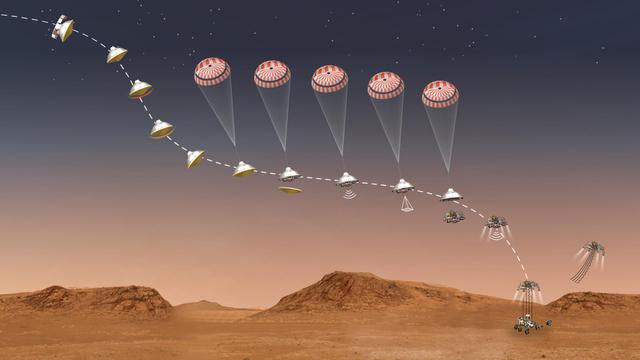
This illustration depicts the some of the major milestones NASA's Perseverance rover will go through during its 7-minute descent to the Martian surface on Feb. 18, 2021. Hundreds of critical events must execute perfectly and exactly on time for the rover to land safely. Entry, Descent, and Landing, or EDL, begins when the spacecraft reaches the top of the Martian atmosphere, traveling nearly 12,500 mph (20,000 kph). It ends about seven minutes later, with Perseverance stationary on the Martian surface. Perseverance handles everything on its own during this process. It takes more than 11 minutes to get a radio signal back from Mars, so by the time the mission team hears that the spacecraft has entered the atmosphere, in reality, the rover is already on the ground. A key objective for Perseverance's mission on Mars is astrobiology, including the search for signs of ancient microbial life. The rover will characterize the planet's geology and past climate, pave the way for human exploration of the Red Planet, and be the first mission to collect and cache Martian rock and regolith. Subsequent missions, currently under consideration by NASA in cooperation with ESA (European Space Agency), would send spacecraft to Mars to collect these cached samples from the surface and return them to Earth for in-depth analysis. https://photojournal.jpl.nasa.gov/catalog/PIA24265
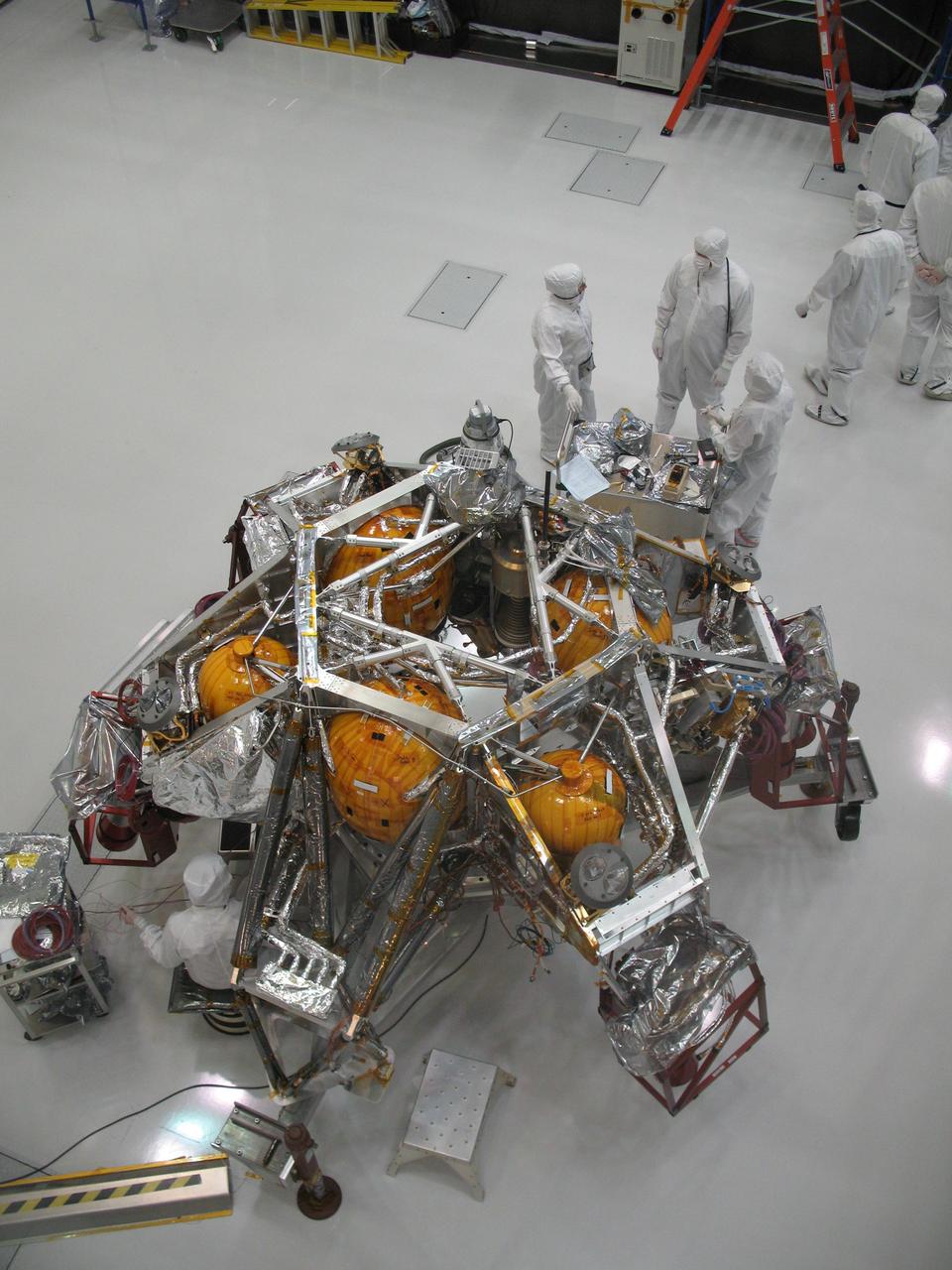
This image from early October 2008 shows personnel working on the descent stage of NASA Mars Science Laboratory inside the Spacecraft Assembly Facility at NASA Jet Propulsion Laboratory, Pasadena, Calif.
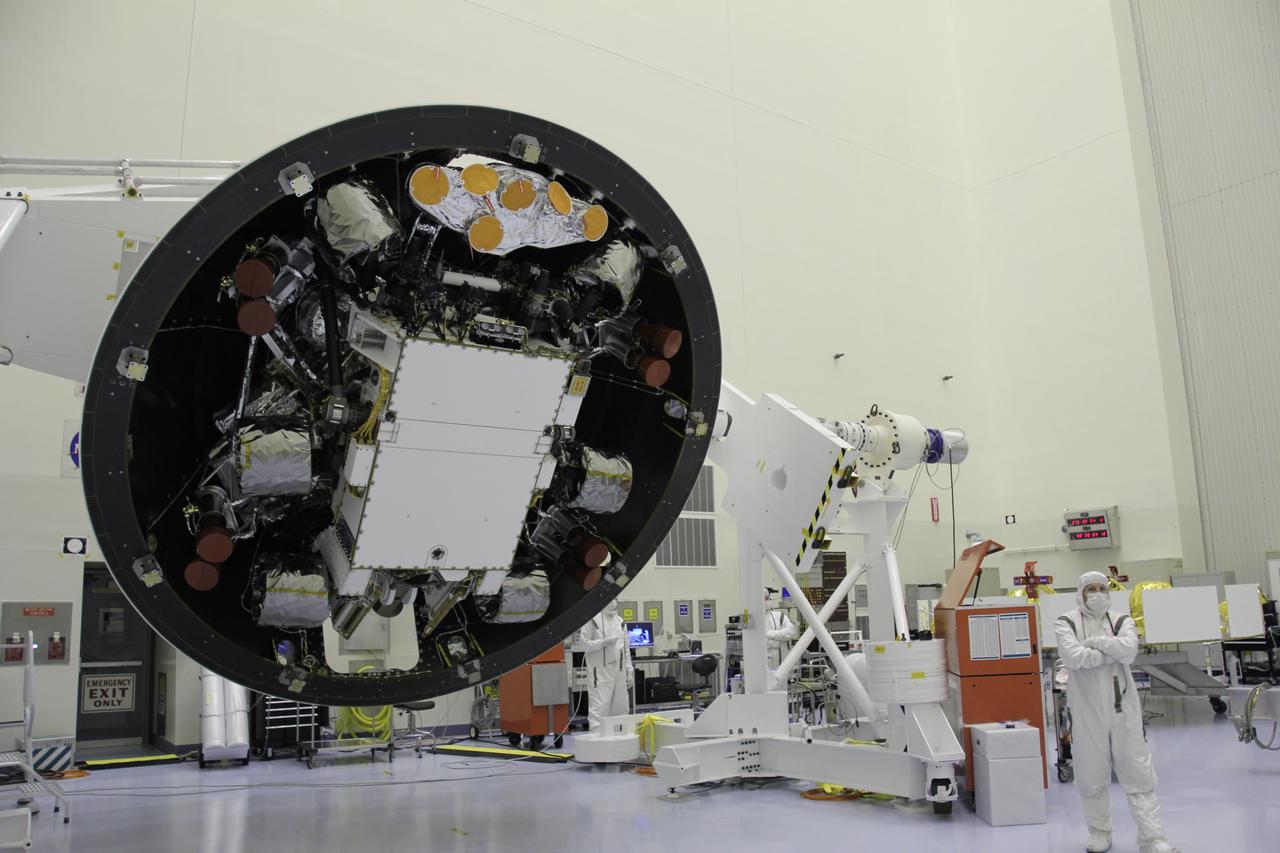
At the Payload Hazardous Servicing Facility at NASA Kennedy Space Center in Florida, the back shell powered descent vehicle configuration of NASA Mars Science Laboratory is being rotated for final closeout actions.
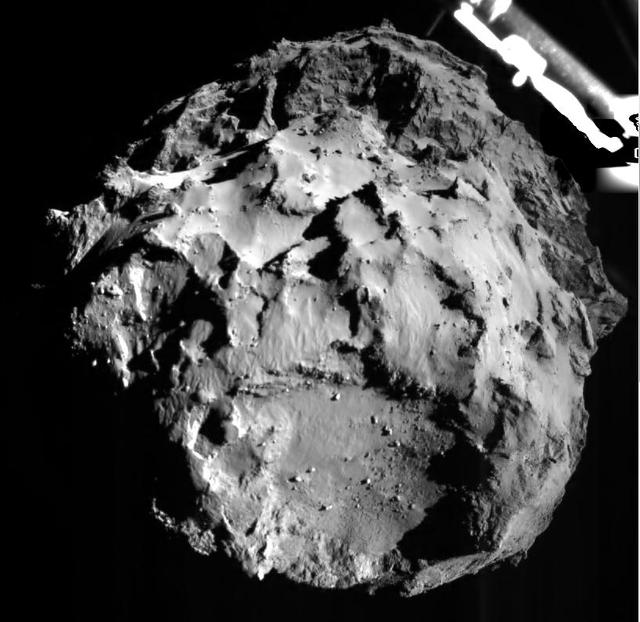
This image of comet 67P/Churyumov-Gerasimenko was taken by the Philae lander of the European Space Agency Rosetta mission during Philae descent toward the comet on Nov. 12, 2014 from a distance of approximate two miles three kilometers.
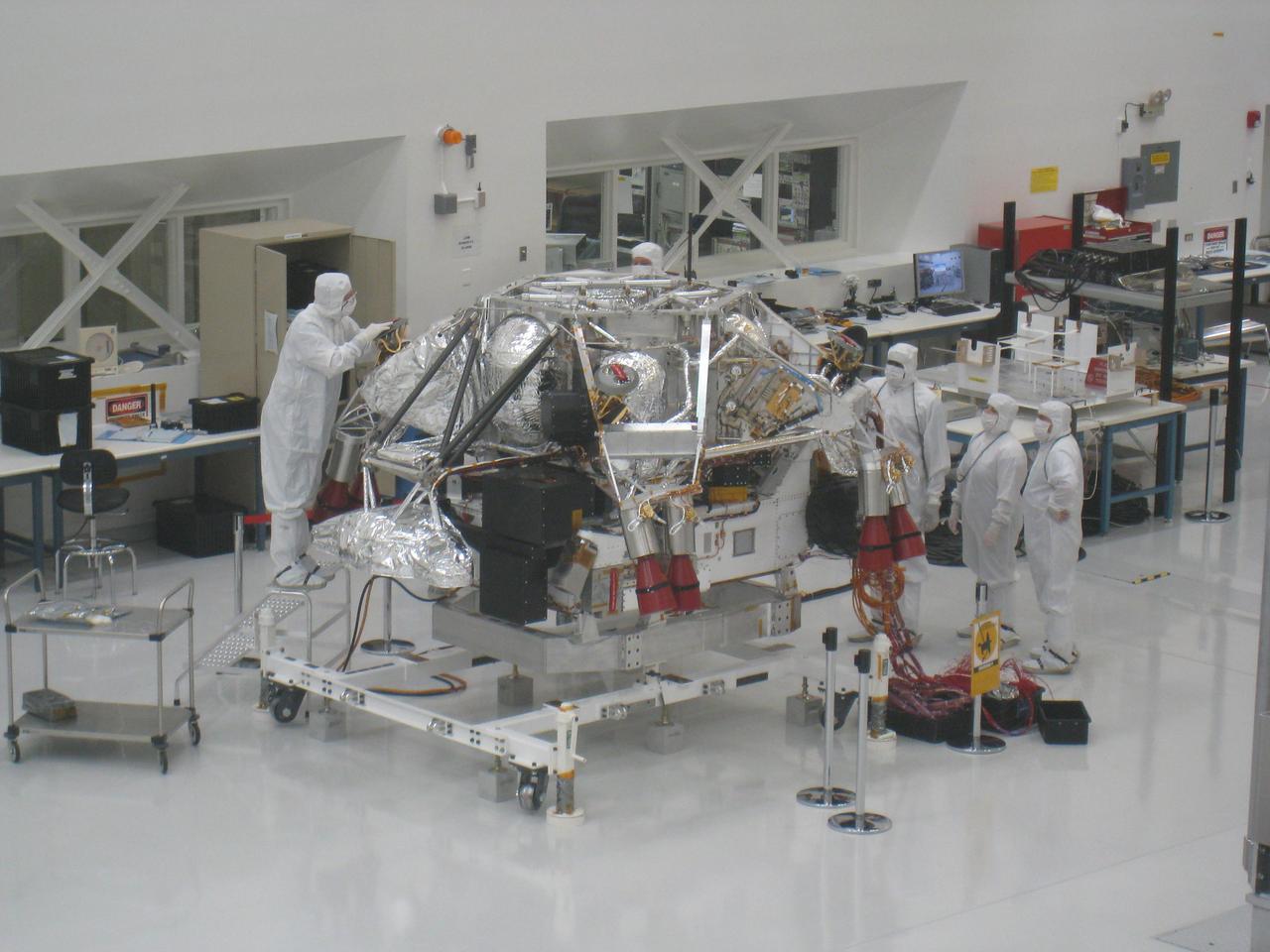
In this February 17, 2009, image, NASA Mars Science Laboratory rover is attached to the spacecraft descent stage. The image was taken inside the Spacecraft Assembly Facility at NASA JPL, Pasadena, Calif.
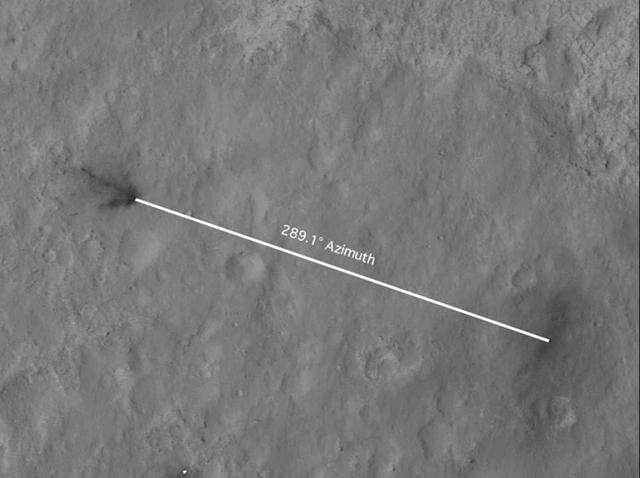
This portion of an image from NASA Mars Reconnaissance Orbiter has been annotated to show the relative positions between NASA Curiosity rover right and the impact site of its sky crane, or descent stage.
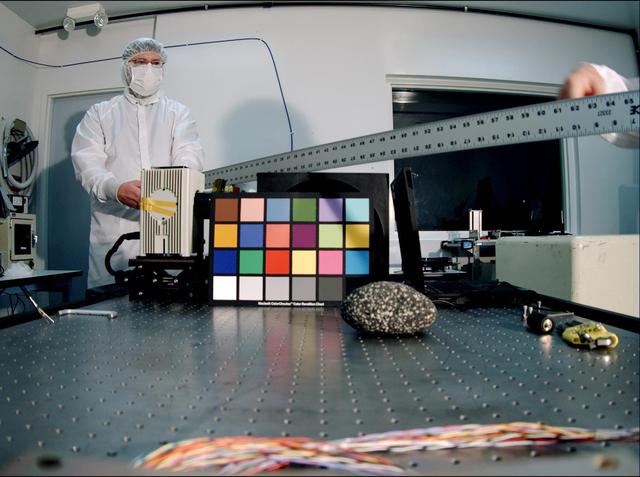
Ken Edgett, deputy principal investigator for NASA Mars Descent Imager, holds a ruler used as a depth-of-field test target. The instrument took this image inside the Malin Space Science Systems clean room in San Diego, CA, during calibration testing.
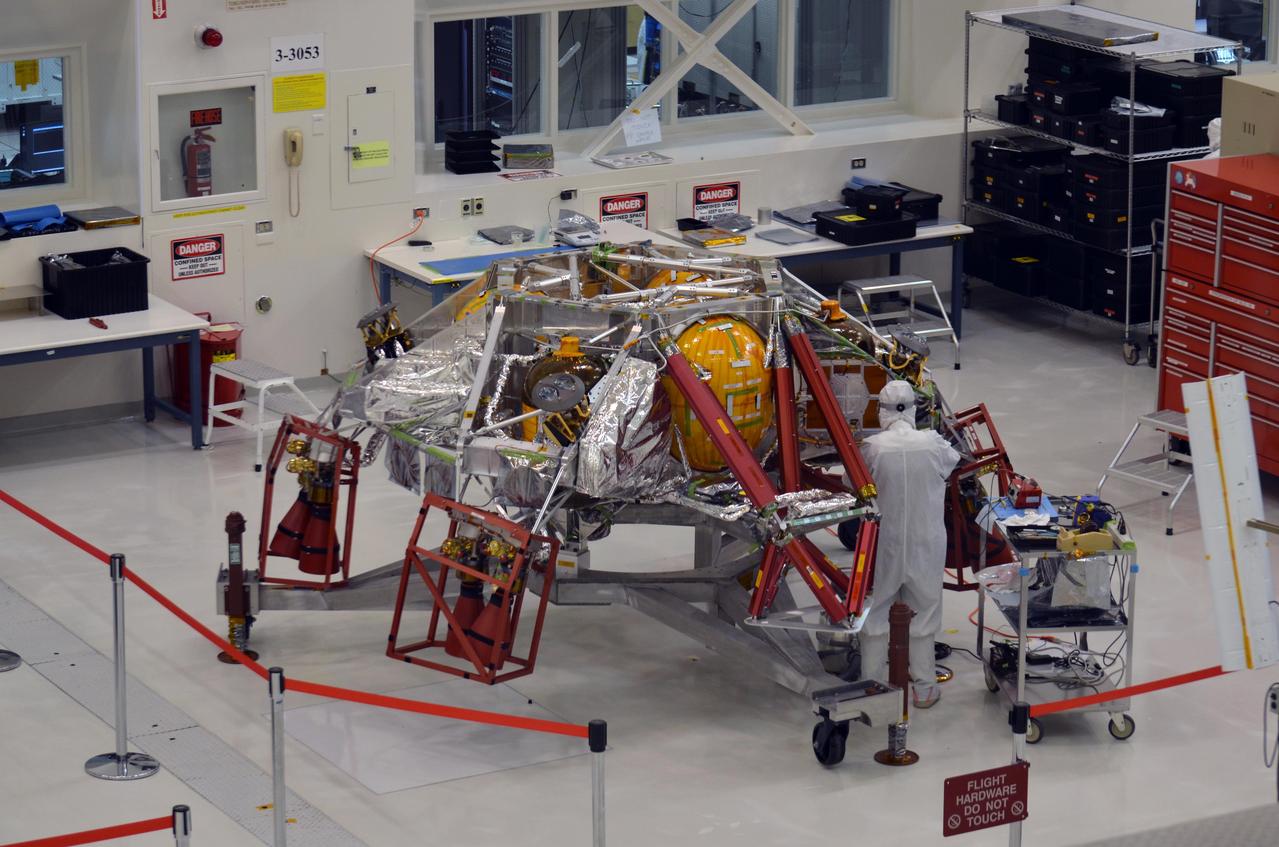
A technician works on the descent stage for NASA's Mars 2020 mission inside JPL's Spacecraft Assembly Facility. Mars 2020 is slated to carry NASA's next Mars rover to the Red Planet in July of 2020. https://photojournal.jpl.nasa.gov/catalog/PIA22342

Mars Global Surveyor View of Gusev Crater During Spirit Entry, Descent, and Landing
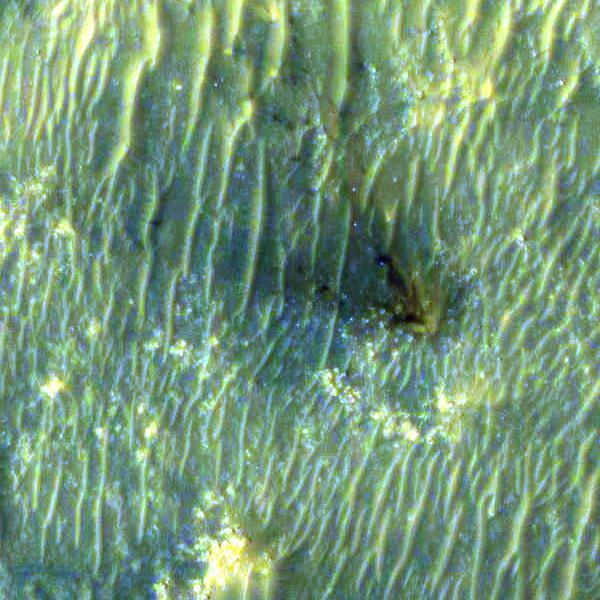
The High Resolution Imaging Experiment (HiRISE) camera aboard NASA's Mars Reconnaissance Orbiter (MRO) was able to capture this image of the final location of the descent stage that helped fly NASA's Perseverance rover down to the surface of Mars. The image was taken on Feb. 19, 2021. It is a close-up version of a larger image showing several parts of the Mars 2020 mission landing system that got the rover safely on the ground. These close-ups of Mars 2020 hardware were processed to make them easier to see. The insets showing the descent stage and parachute have had color added and include data from the infrared band of light. A key objective for Perseverance's mission on Mars is astrobiology, including the search for signs of ancient microbial life. The rover will characterize the planet's geology and past climate, pave the way for human exploration of the Red Planet, and be the first mission to collect and cache Martian rock and regolith (broken rock and dust). Subsequent NASA missions, in cooperation with ESA (European Space Agency), would send spacecraft to Mars to collect these sealed samples from the surface and return them to Earth for in-depth analysis. The Mars 2020 Perseverance mission is part of NASA's Moon to Mars exploration approach, which includes Artemis missions to the Moon that will help prepare for human exploration of the Red Planet. https://photojournal.jpl.nasa.gov/catalog/PIA24335
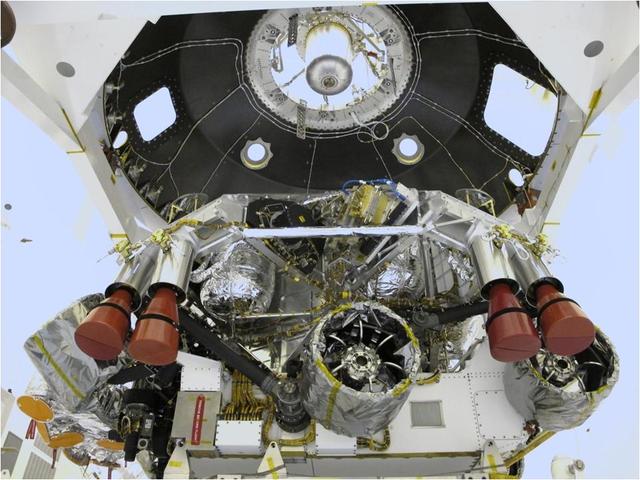
The powered descent vehicle of NASA Mars Science Laboratory spacecraft is being prepared for final integration into the spacecraft back shell in this photograph from inside the Payload Hazardous Servicing Facility at NASA Kennedy Space Center, Fla.
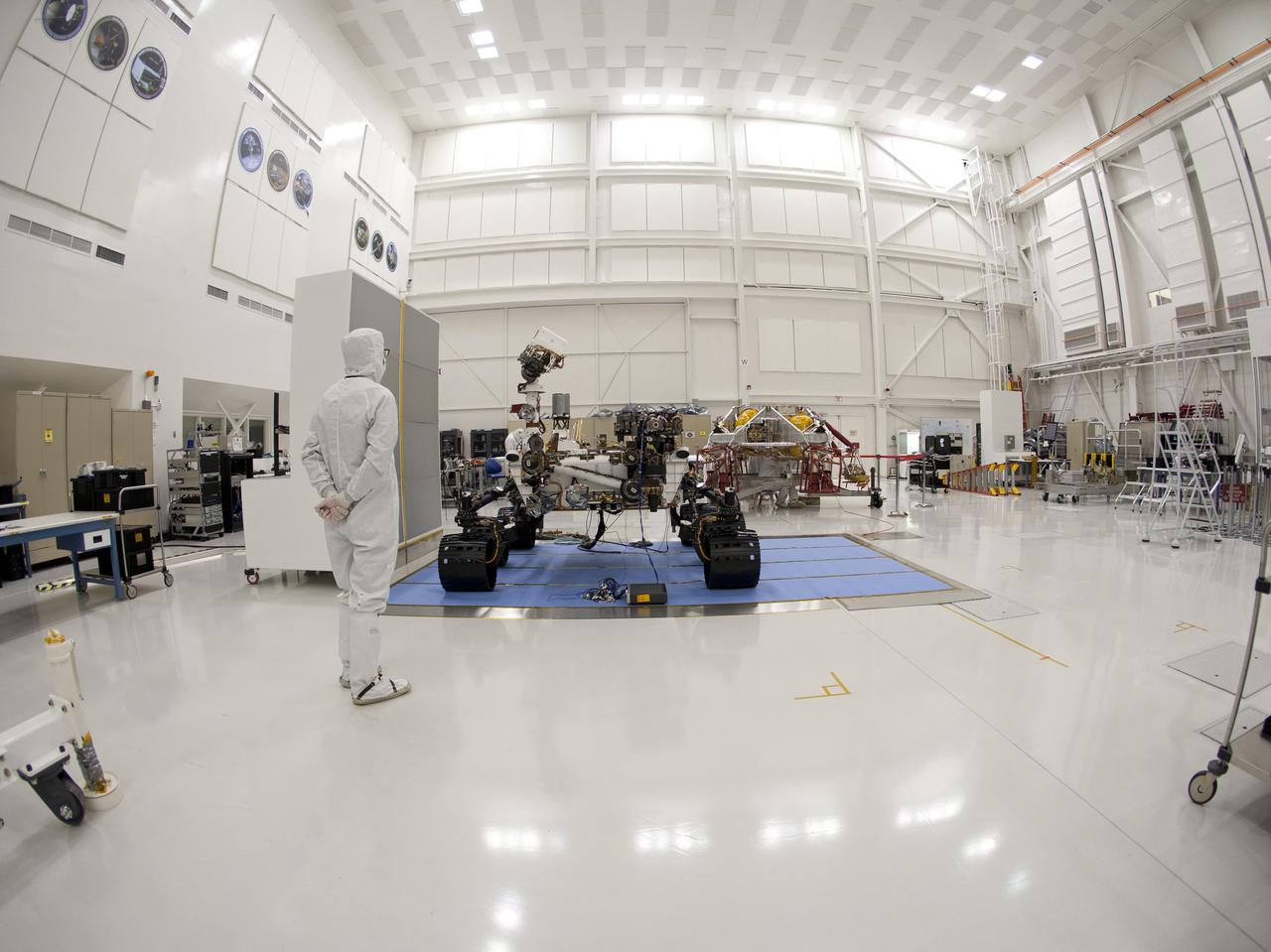
An engineer says goodbye to the Curiosity rover and its powered descent vehicle in the Jet Propulsion Laboratory Spacecraft Assembly Facility shortly before the spacecraft was readied for shipment to Kennedy Space Center for launch.
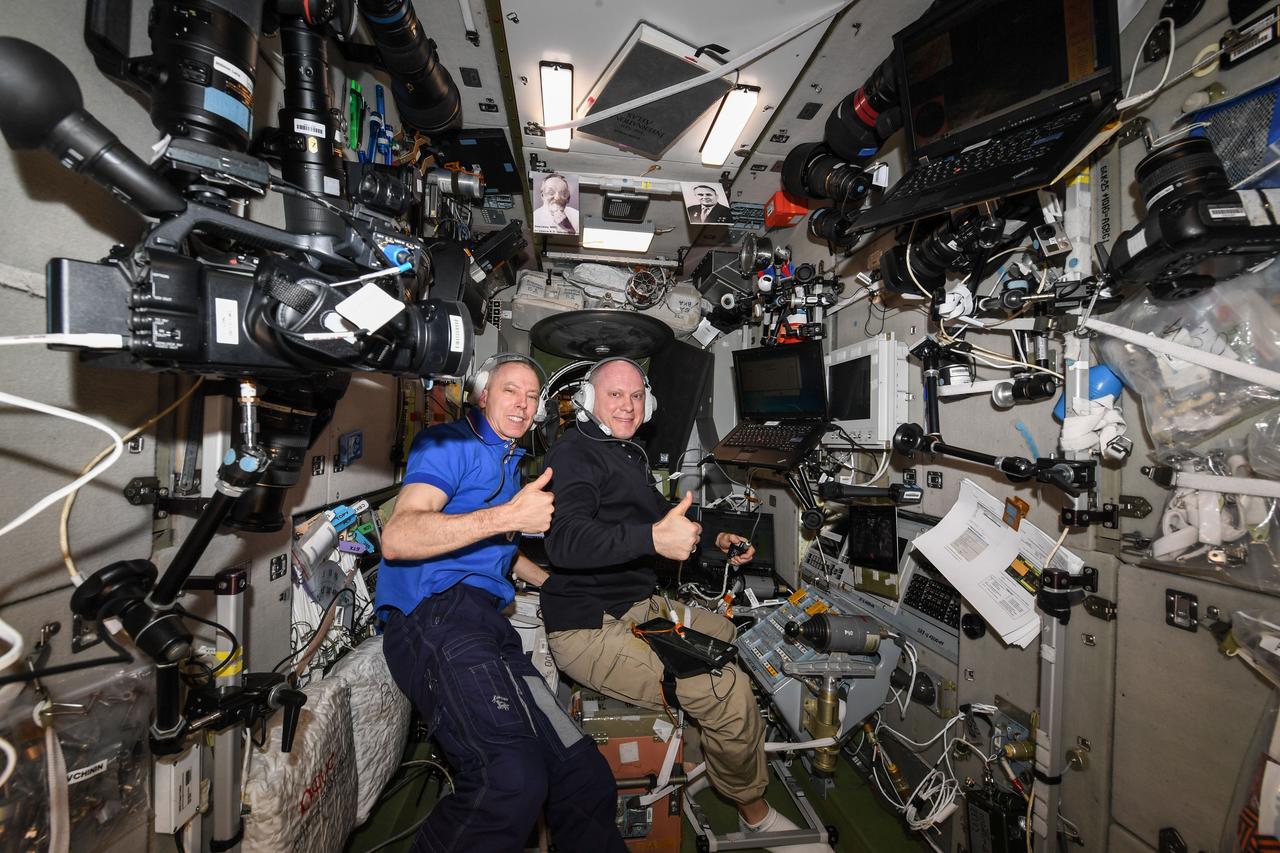
iss056e186451 (Sept. 24, 2018) --- (From left) Expedition 56 Commander Drew Feustel of NASA and Soyuz MS-08 Commander Oleg Artemyev of Roscosmos practice on a computer the Soyuz descent procedures they will use when they return to Earth on Oct. 4. NASA astronaut Ricky Arnold (out of frame) will join the duo for the ride home inside the Soyuz MS-08 spacecraft ending the Expedition 56 mission.
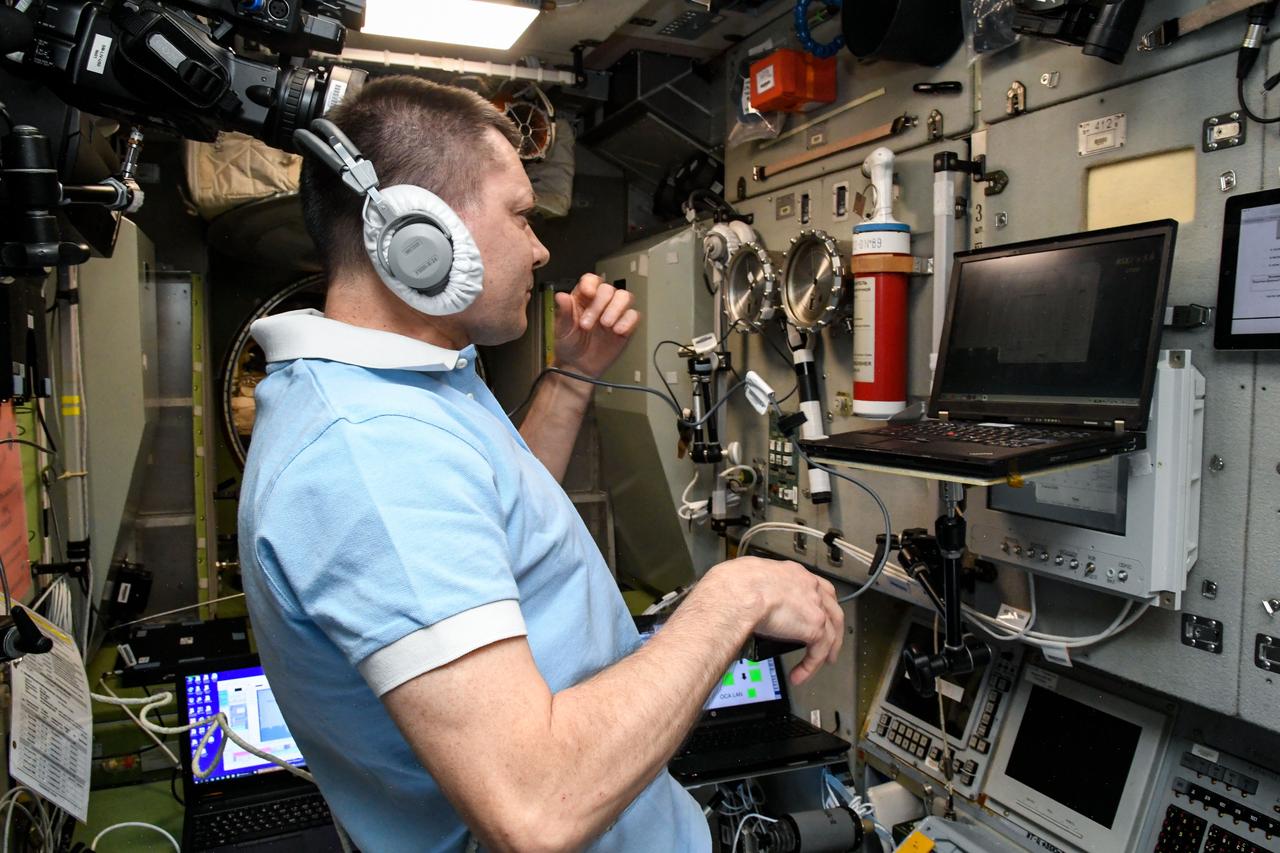
iss059e111655 (June 17, 2019) --- Expedition 59 Commander Oleg Kononenko of Roscosmos practices descent maneuvers on a computer that he will use to return to Earth aboard the Soyuz MS-11 spacecraft on June 24. He will lead Flight Engineers Anne McClain and David Saint-Jacques to a parachute-assisted landing in Kazakhstan after a 204-day mission in space.
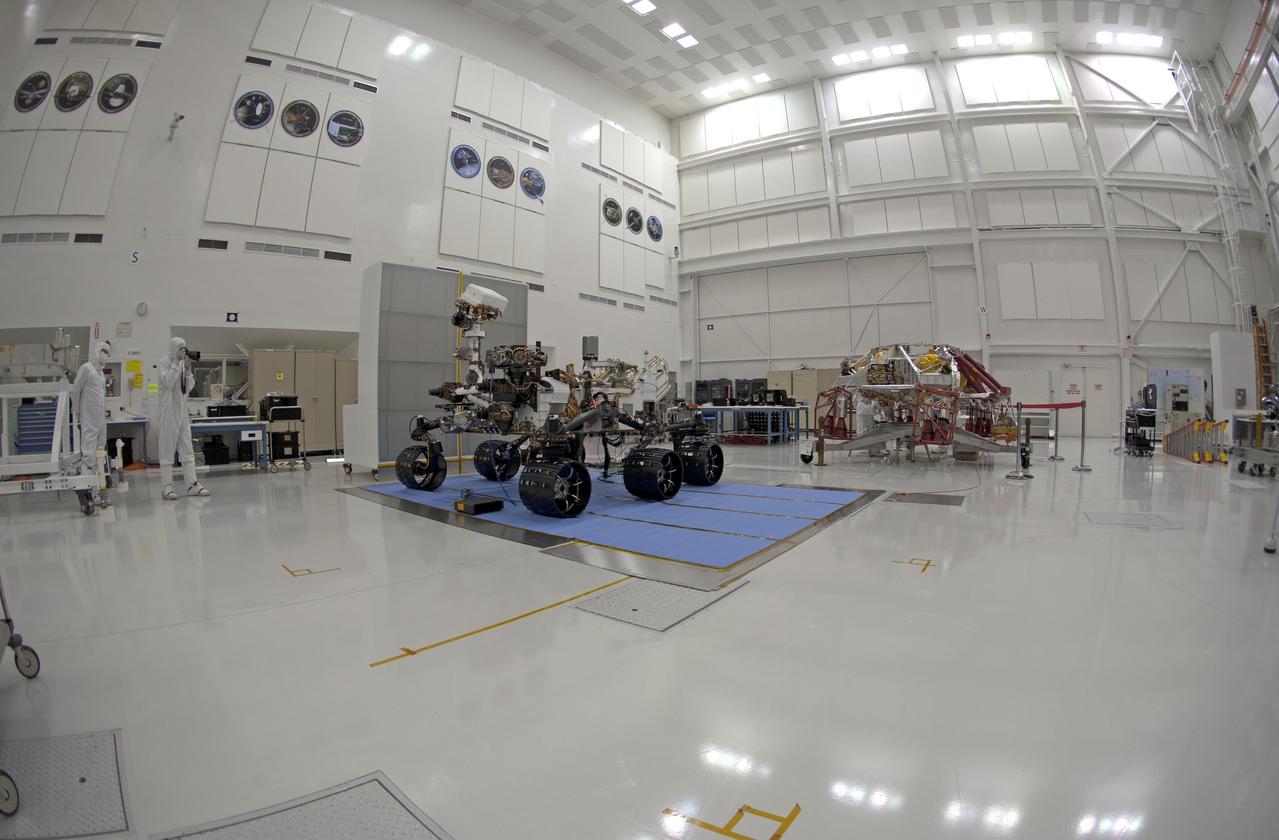
Left-eye view of NASA Curiosity rover and its powered descent vehicle pose for photographs prior to being integrated for launch at JPL Spacecraft Assembly Facility.
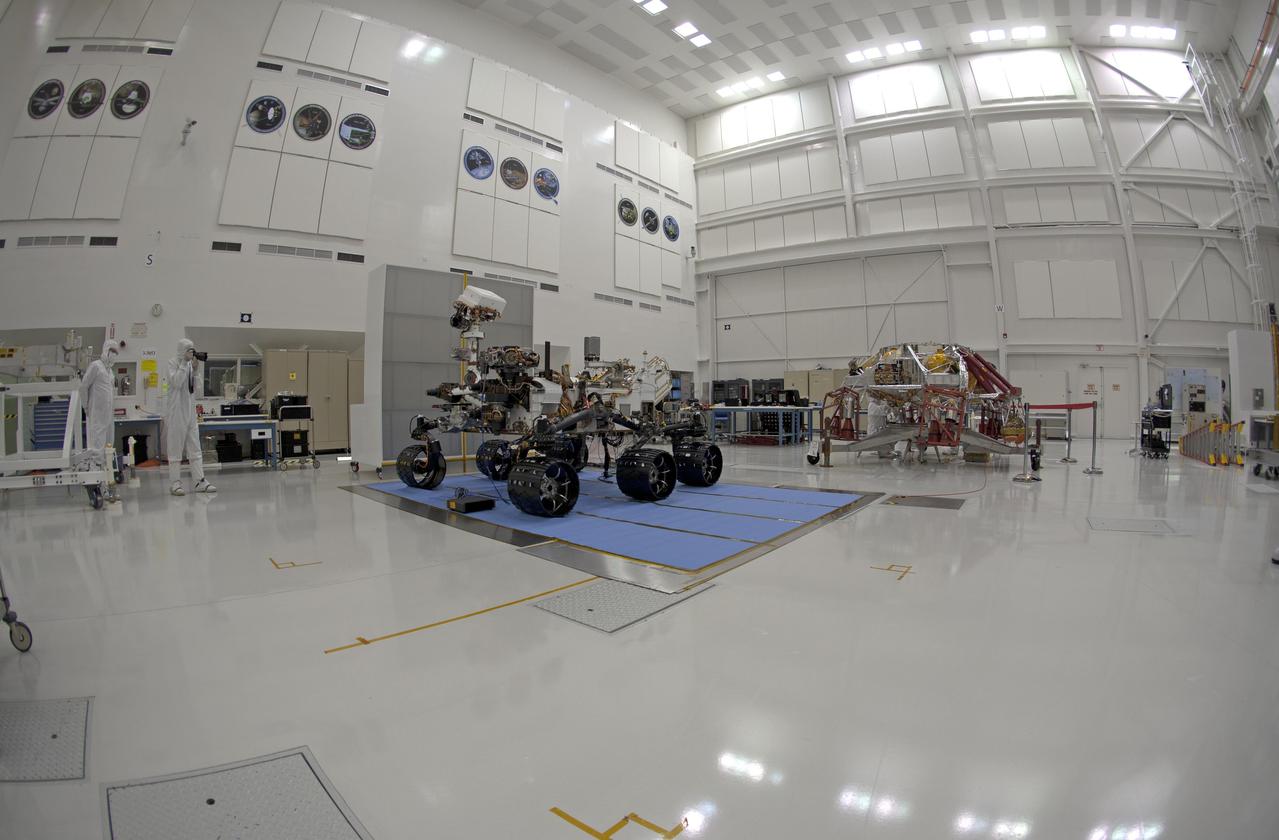
Right-eye view of NASA Curiosity rover and its powered descent vehicle pose for photographs prior to being integrated for launch at JPL Spacecraft Assembly Facility.
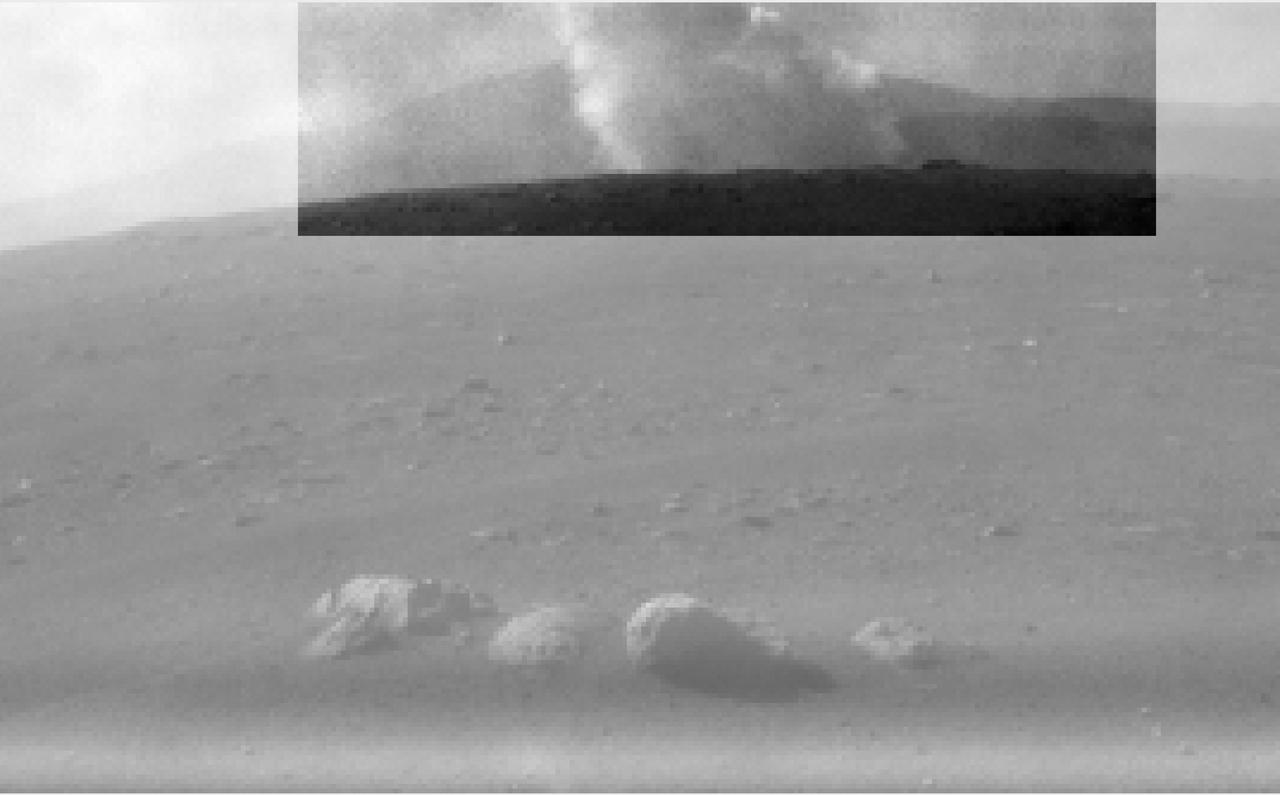
This image from one of the rear Hazard Cameras, or Hazcams, aboard NASA's Perseverance Mars rover, shows a smoke plume from the crashed descent stage that lowered the rover to the Martian surface. This image was taken within a minute or two after the rover landed on February 18, 2021. https://photojournal.jpl.nasa.gov/catalog/PIA24425
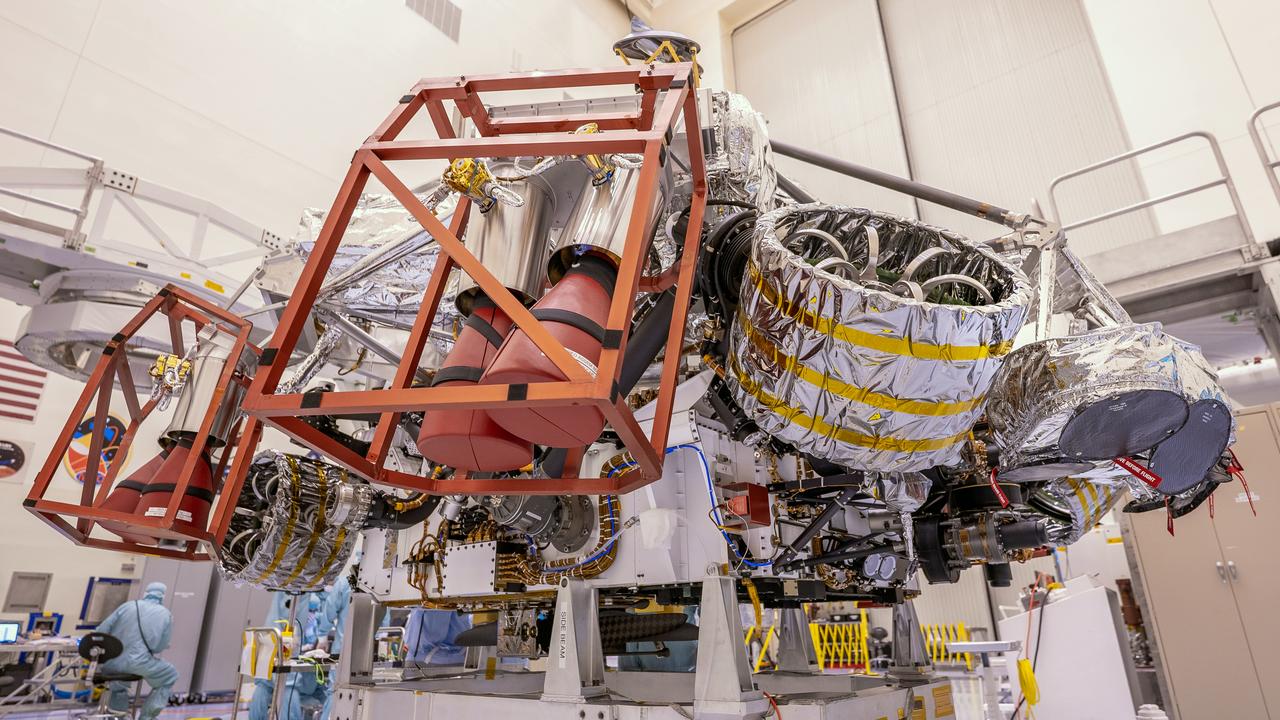
The Mars Perseverance rover is attached to its rocket-powered descent stage inside the Payload Hazardous Servicing Facility at NASA’s Kennedy Space Center in Florida on April 23, 2020. The rover and descent stage are the first spacecraft components to come together for launch — and they will be the last to separate when the spacecraft reaches Mars. At about 65 feet over the Martian surface, separation bolts will fire and the descent stage will lower Perseverance onto the Red Planet. Launch, aboard a United Launch Alliance Atlas V 541 rocket, is targeted between July 17 and Aug. 5 from Cape Canaveral Air Force Station. NASA’s Launch Services Program based at Kennedy is managing the launch.
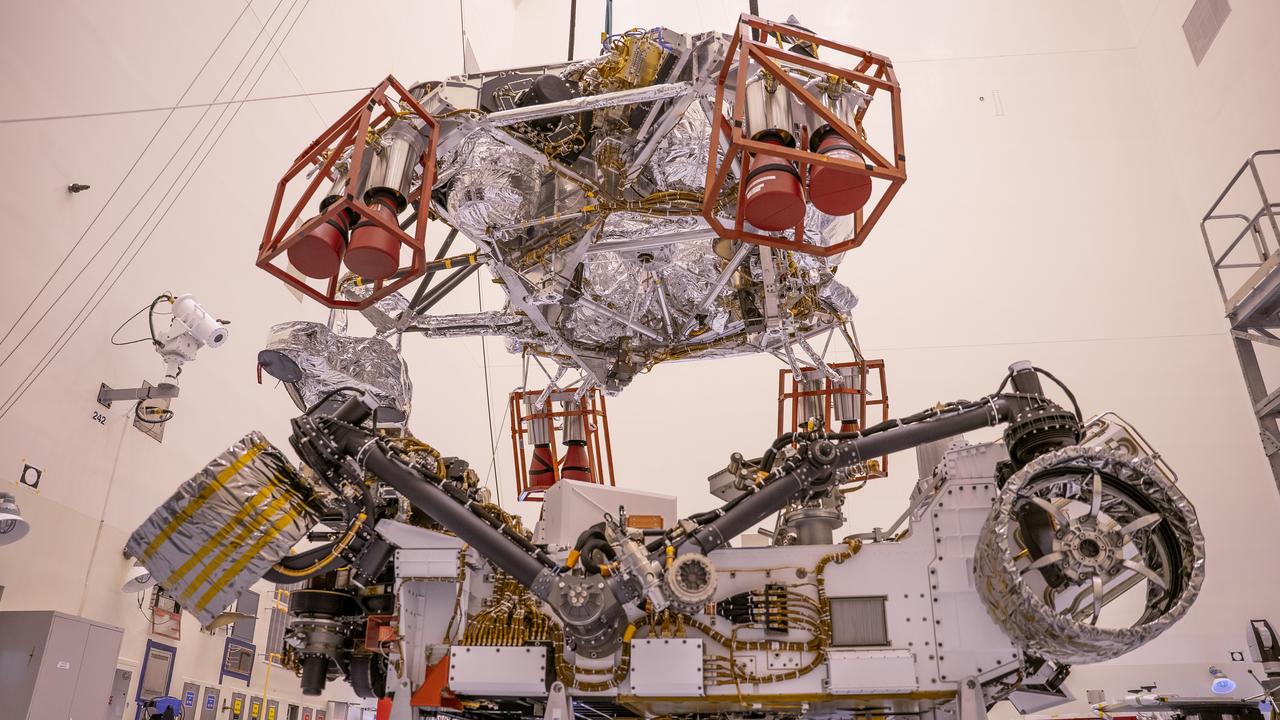
The Mars Perseverance rover is attached to its rocket-powered descent stage inside the Payload Hazardous Servicing Facility at NASA’s Kennedy Space Center in Florida on April 23, 2020. The rover and descent stage are the first spacecraft components to come together for launch — and they will be the last to separate when the spacecraft reaches Mars. At about 65 feet over the Martian surface, separation bolts will fire and the descent stage will lower Perseverance onto the Red Planet. Launch, aboard a United Launch Alliance Atlas V 541 rocket, is targeted between July 17 and Aug. 5 from Cape Canaveral Air Force Station. NASA’s Launch Services Program based at Kennedy is managing the launch.
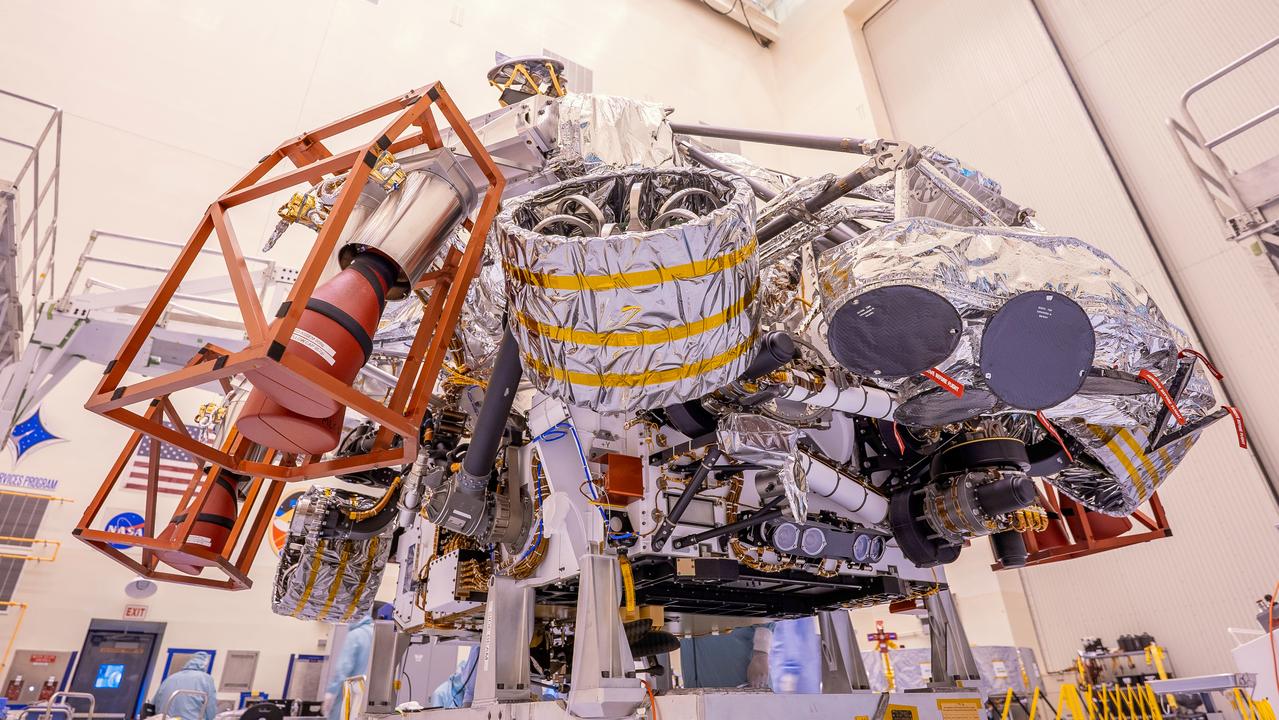
The Mars Perseverance rover is attached to its rocket-powered descent stage inside the Payload Hazardous Servicing Facility at NASA’s Kennedy Space Center in Florida on April 23, 2020. The rover and descent stage are the first spacecraft components to come together for launch — and they will be the last to separate when the spacecraft reaches Mars. At about 65 feet over the Martian surface, separation bolts will fire and the descent stage will lower Perseverance onto the Red Planet. Launch, aboard a United Launch Alliance Atlas V 541 rocket, is targeted between July 17 and Aug. 5 from Cape Canaveral Air Force Station. NASA’s Launch Services Program based at Kennedy is managing the launch.
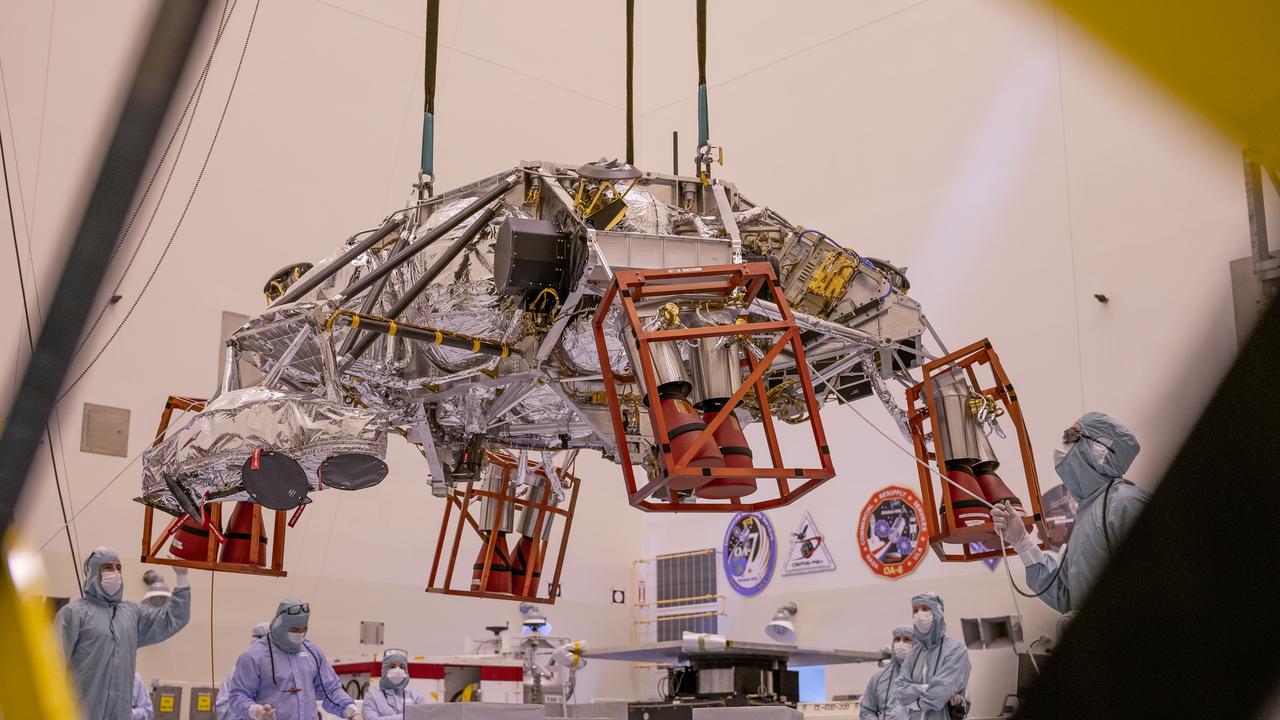
The Mars Perseverance rover is attached to its rocket-powered descent stage inside the Payload Hazardous Servicing Facility at NASA’s Kennedy Space Center in Florida on April 23, 2020. The rover and descent stage are the first spacecraft components to come together for launch — and they will be the last to separate when the spacecraft reaches Mars. At about 65 feet over the Martian surface, separation bolts will fire and the descent stage will lower Perseverance onto the Red Planet. Launch, aboard a United Launch Alliance Atlas V 541 rocket, is targeted between July 17 and Aug. 5 from Cape Canaveral Air Force Station. NASA’s Launch Services Program based at Kennedy is managing the launch.
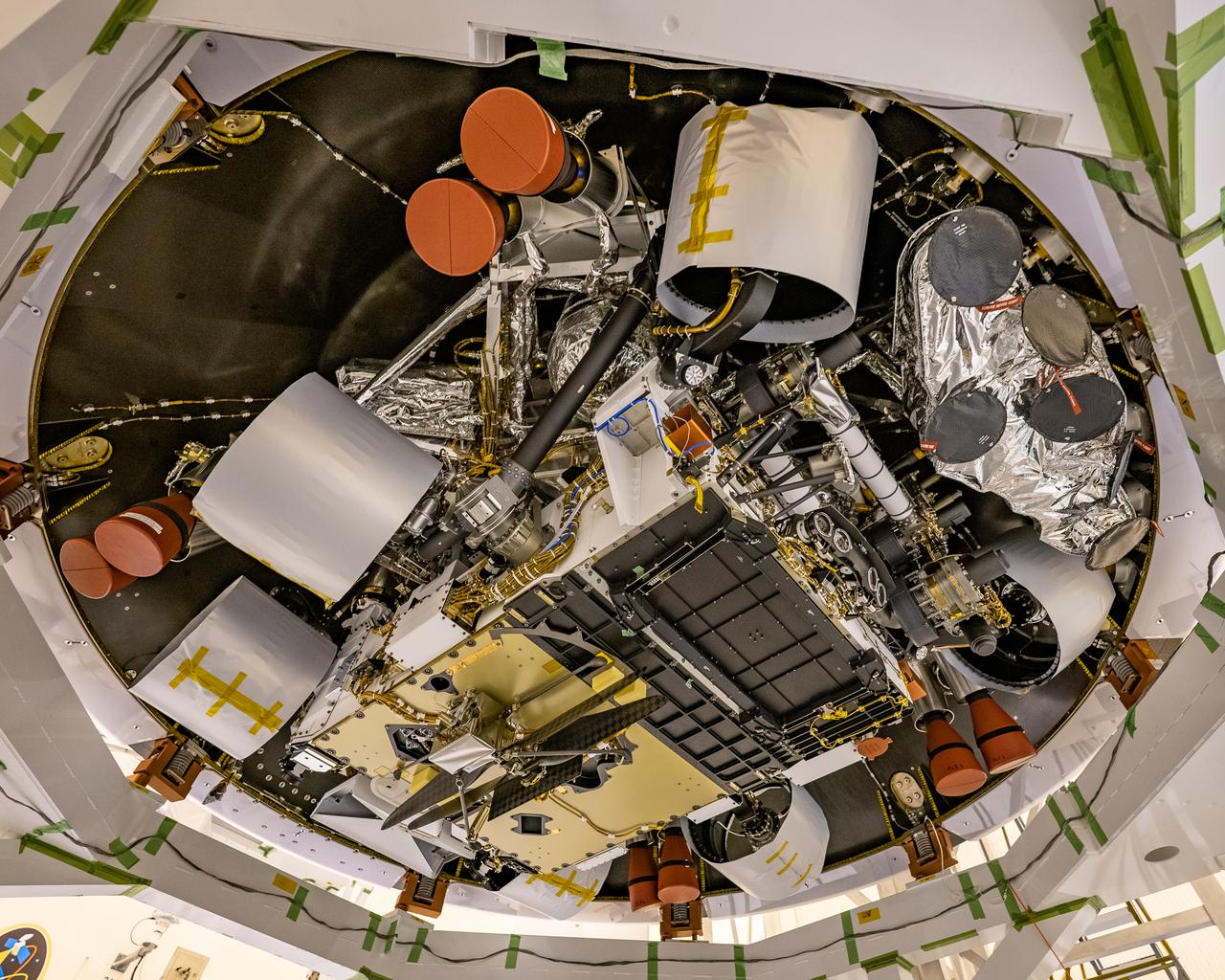
The aeroshell backshell for the Mars Perseverance rover is attached to the rocket-powered descent stage inside the Payload Hazardous Servicing Facility at NASA’s Kennedy Space Center in Florida on April 29, 2020. The aeroshell will encapsulate and protect Perseverance and its descent stage during their deep space journey to Mars and during descent through the Martian atmosphere. It will reach the Red Planet on Feb. 18, 2021. Launch, aboard a United Launch Alliance Atlas V 541 rocket, is targeted for summer 2020 from Cape Canaveral Air Force Station. NASA’s Launch Services Program based at Kennedy is managing the launch.
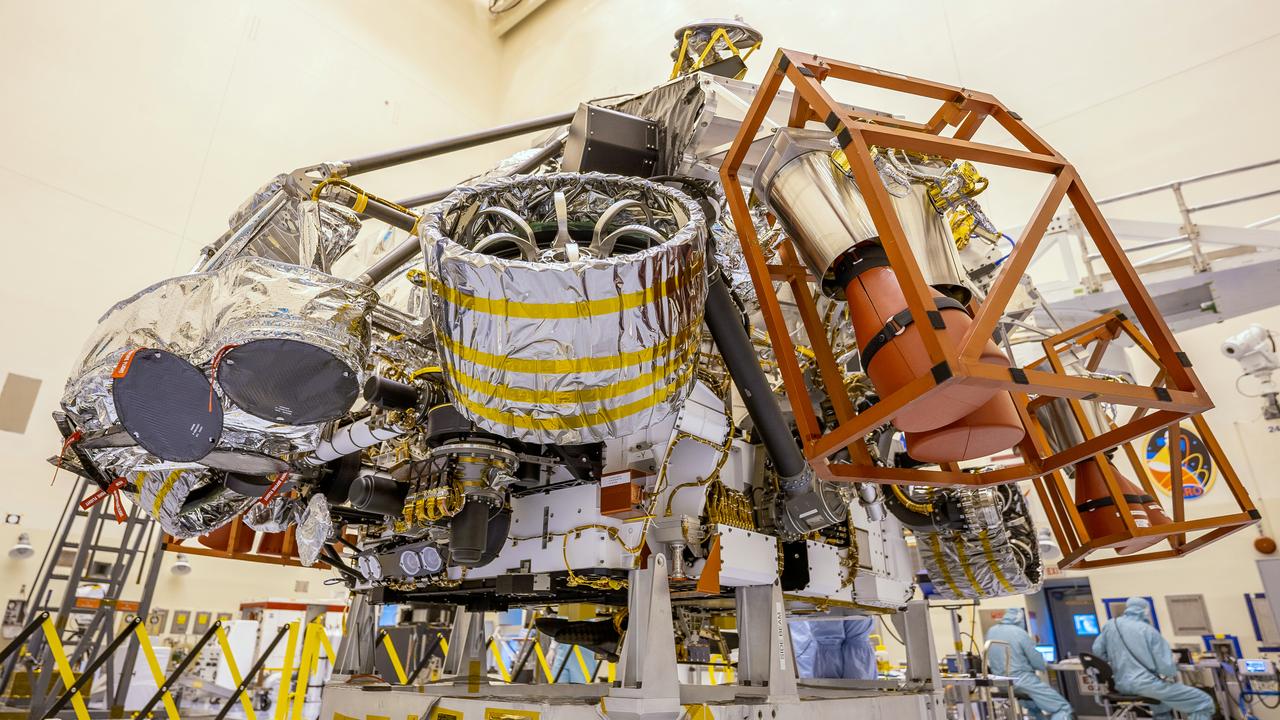
The Mars Perseverance rover is attached to its rocket-powered descent stage inside the Payload Hazardous Servicing Facility at NASA’s Kennedy Space Center in Florida on April 23, 2020. The rover and descent stage are the first spacecraft components to come together for launch — and they will be the last to separate when the spacecraft reaches Mars. At about 65 feet over the Martian surface, separation bolts will fire and the descent stage will lower Perseverance onto the Red Planet. Launch, aboard a United Launch Alliance Atlas V 541 rocket, is targeted between July 17 and Aug. 5 from Cape Canaveral Air Force Station. NASA’s Launch Services Program based at Kennedy is managing the launch.
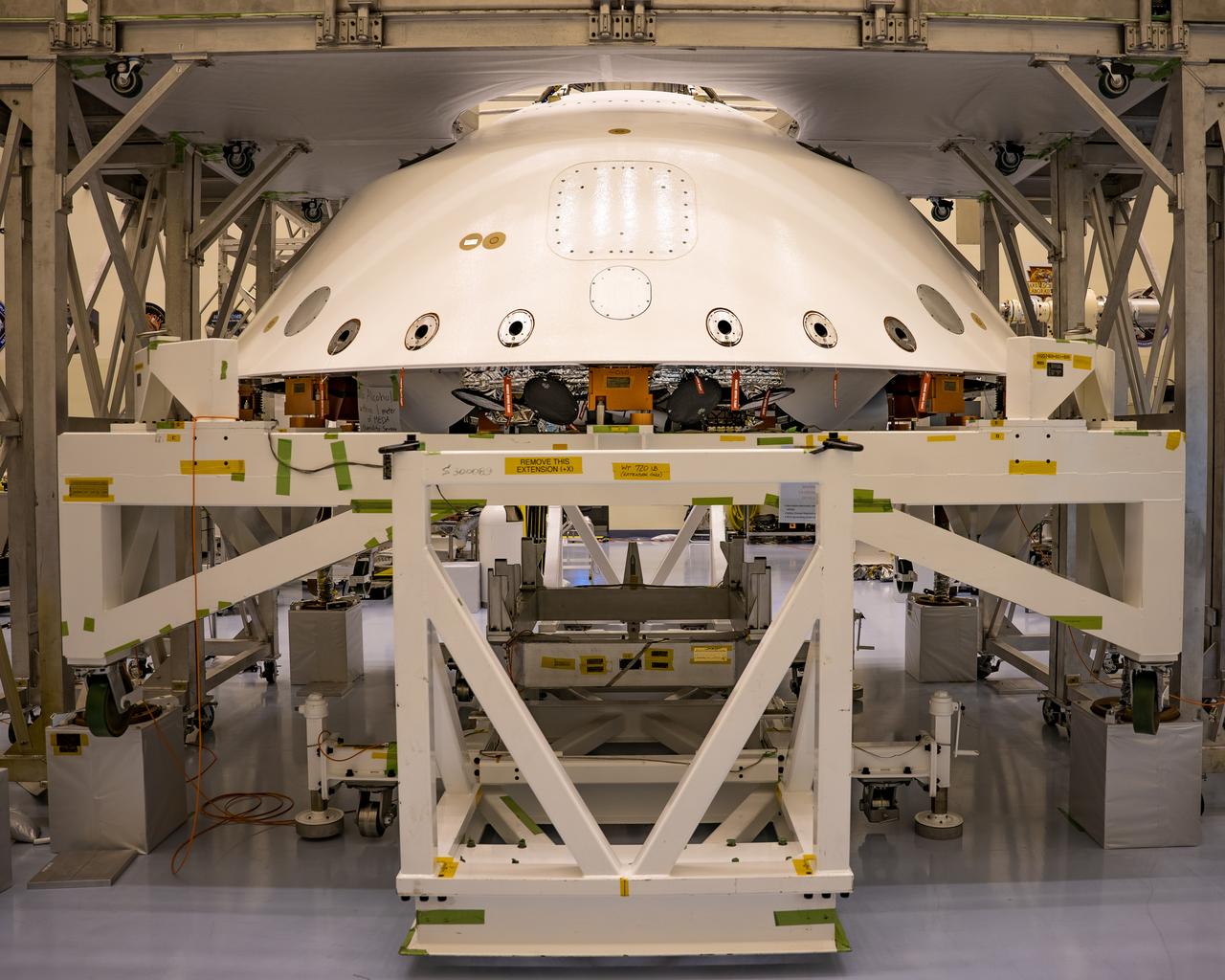
The aeroshell backshell for the Mars Perseverance rover is attached to the rocket-powered descent stage inside the Payload Hazardous Servicing Facility at NASA’s Kennedy Space Center in Florida on April 29, 2020. The aeroshell will encapsulate and protect Perseverance and its descent stage during their deep space journey to Mars and during descent through the Martian atmosphere. It will reach the Red Planet on Feb. 18, 2021. Launch, aboard a United Launch Alliance Atlas V 541 rocket, is targeted for summer 2020 from Cape Canaveral Air Force Station. NASA’s Launch Services Program based at Kennedy is managing the launch.
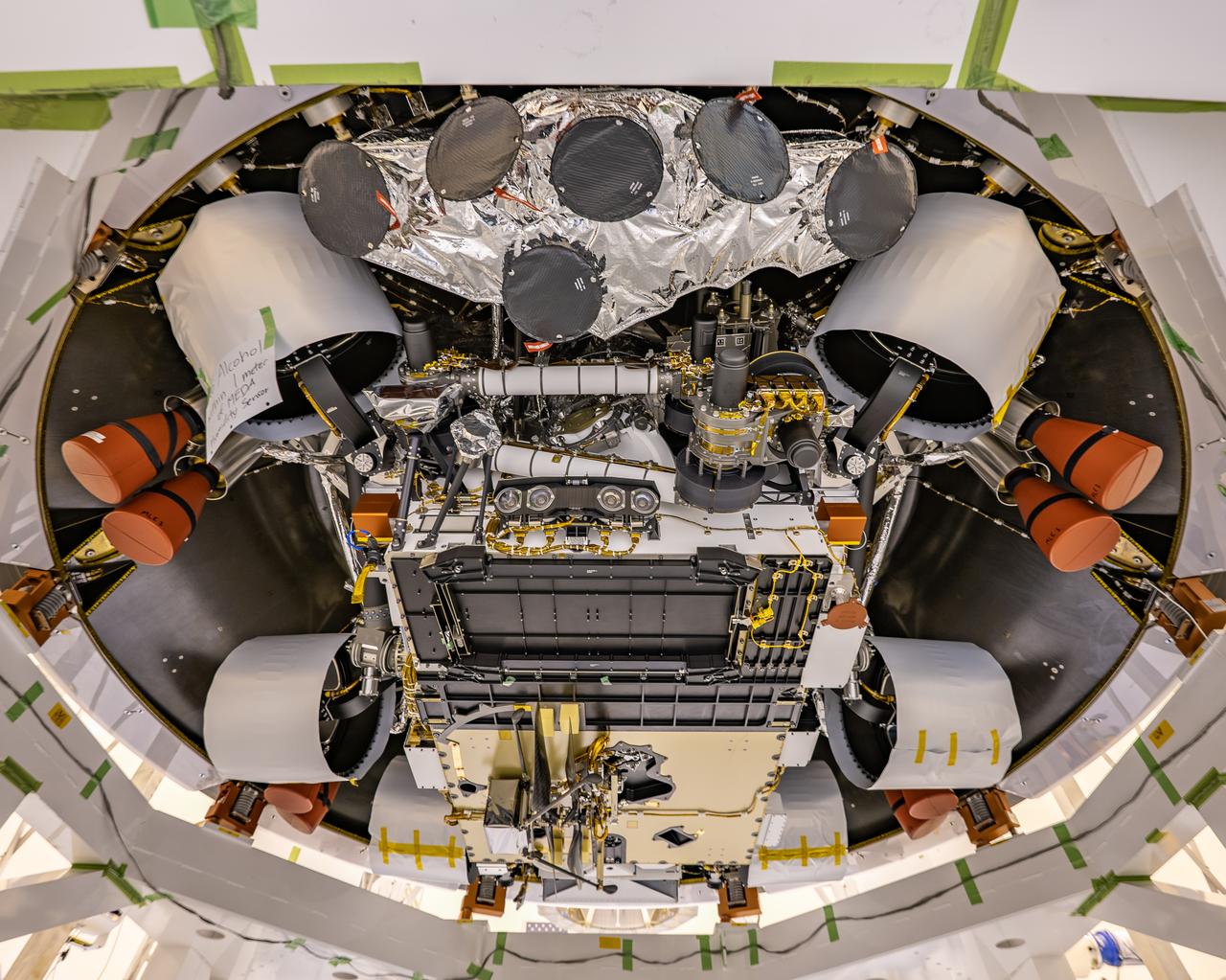
The aeroshell backshell for the Mars Perseverance rover is attached to the rocket-powered descent stage inside the Payload Hazardous Servicing Facility at NASA’s Kennedy Space Center in Florida on April 29, 2020. The aeroshell will encapsulate and protect Perseverance and its descent stage during their deep space journey to Mars and during descent through the Martian atmosphere. It will reach the Red Planet on Feb. 18, 2021. Launch, aboard a United Launch Alliance Atlas V 541 rocket, is targeted for summer 2020 from Cape Canaveral Air Force Station. NASA’s Launch Services Program based at Kennedy is managing the launch.
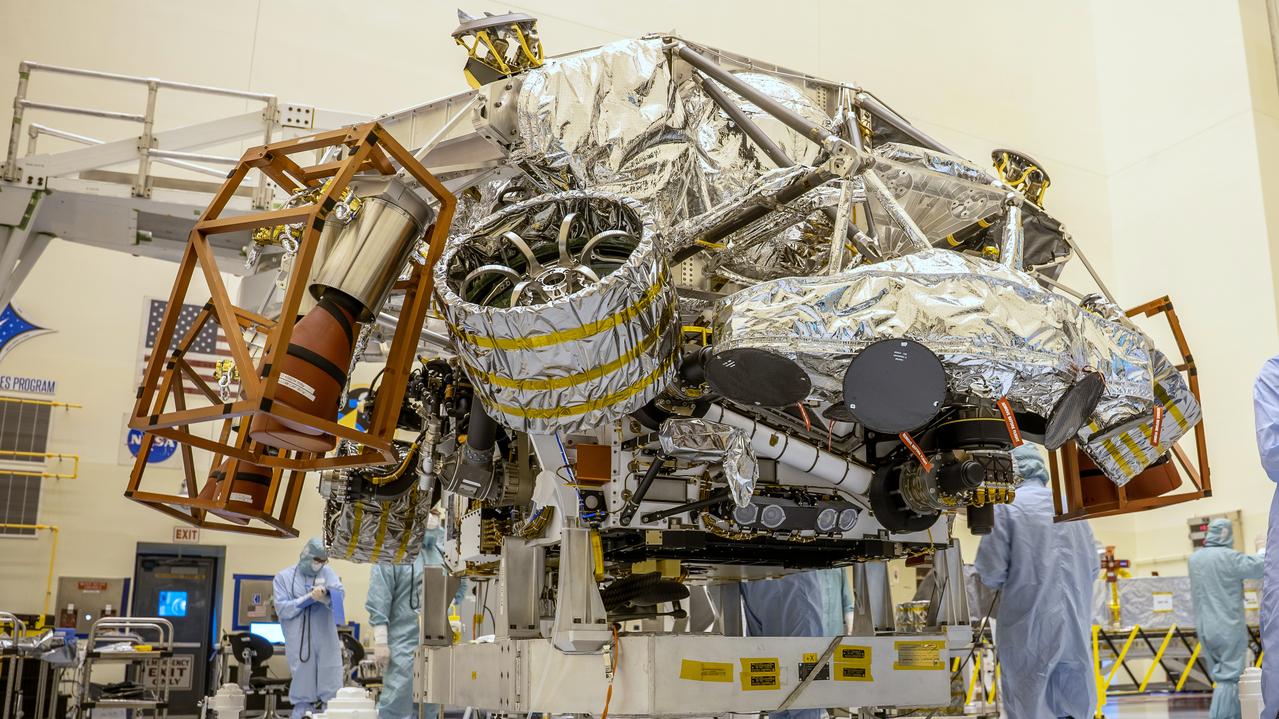
The Mars Perseverance rover is attached to its rocket-powered descent stage inside the Payload Hazardous Servicing Facility at NASA’s Kennedy Space Center in Florida on April 23, 2020. The rover and descent stage are the first spacecraft components to come together for launch — and they will be the last to separate when the spacecraft reaches Mars. At about 65 feet over the Martian surface, separation bolts will fire and the descent stage will lower Perseverance onto the Red Planet. Launch, aboard a United Launch Alliance Atlas V 541 rocket, is targeted between July 17 and Aug. 5 from Cape Canaveral Air Force Station. NASA’s Launch Services Program based at Kennedy is managing the launch.
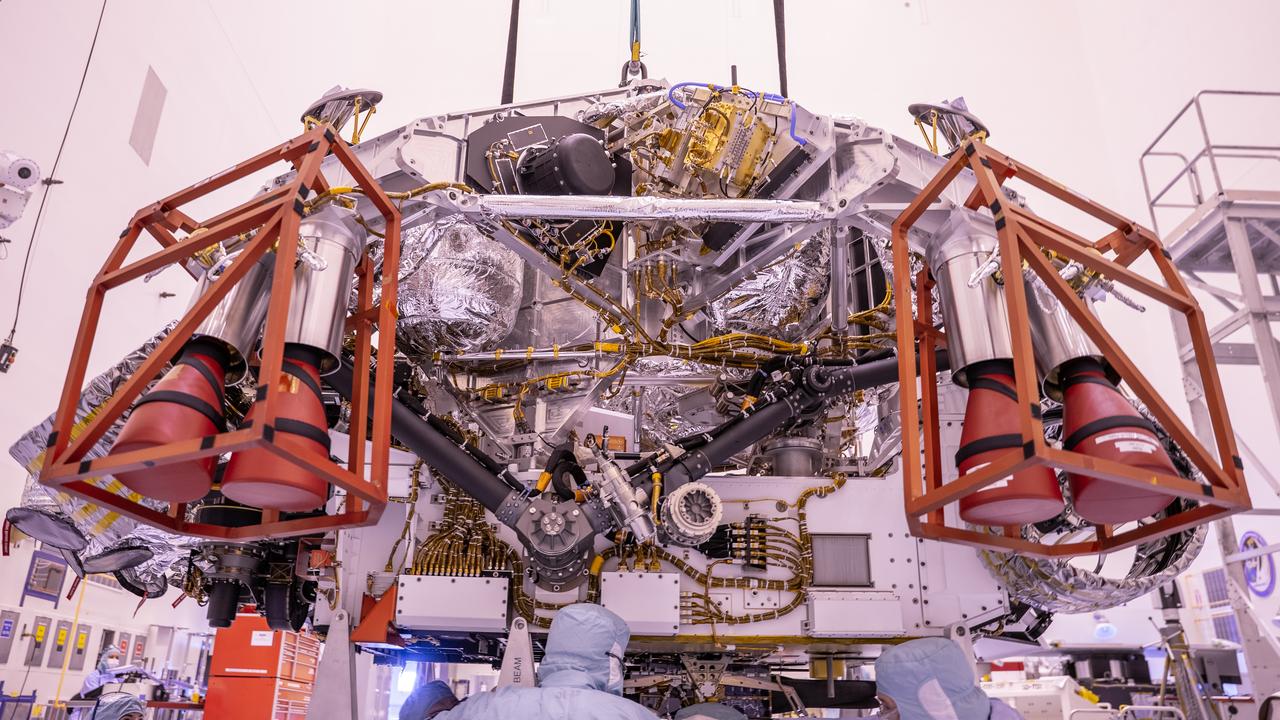
The Mars Perseverance rover is attached to its rocket-powered descent stage inside the Payload Hazardous Servicing Facility at NASA’s Kennedy Space Center in Florida on April 23, 2020. The rover and descent stage are the first spacecraft components to come together for launch — and they will be the last to separate when the spacecraft reaches Mars. At about 65 feet over the Martian surface, separation bolts will fire and the descent stage will lower Perseverance onto the Red Planet. Launch, aboard a United Launch Alliance Atlas V 541 rocket, is targeted between July 17 and Aug. 5 from Cape Canaveral Air Force Station. NASA’s Launch Services Program based at Kennedy is managing the launch.
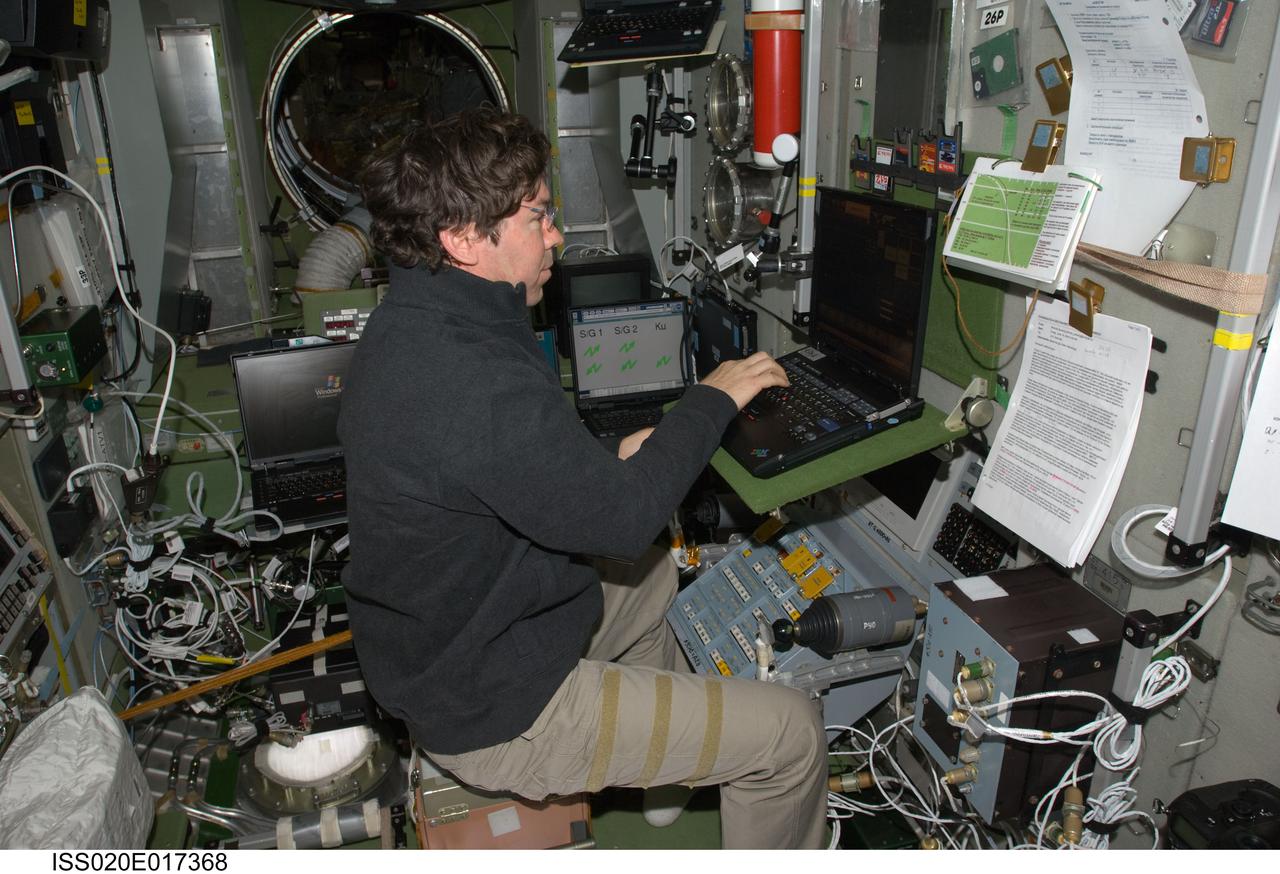
ISS020-E-017368 (6 July 2009) --- NASA astronaut Michael Barratt, Expedition 20 flight engineer, uses a computer at the TORU teleoperated control system in the Zvezda Service Module of the International Space Station while conducting Soyuz descent training to maintain proficiency on systems used for entry and landing in the Soyuz vehicle.
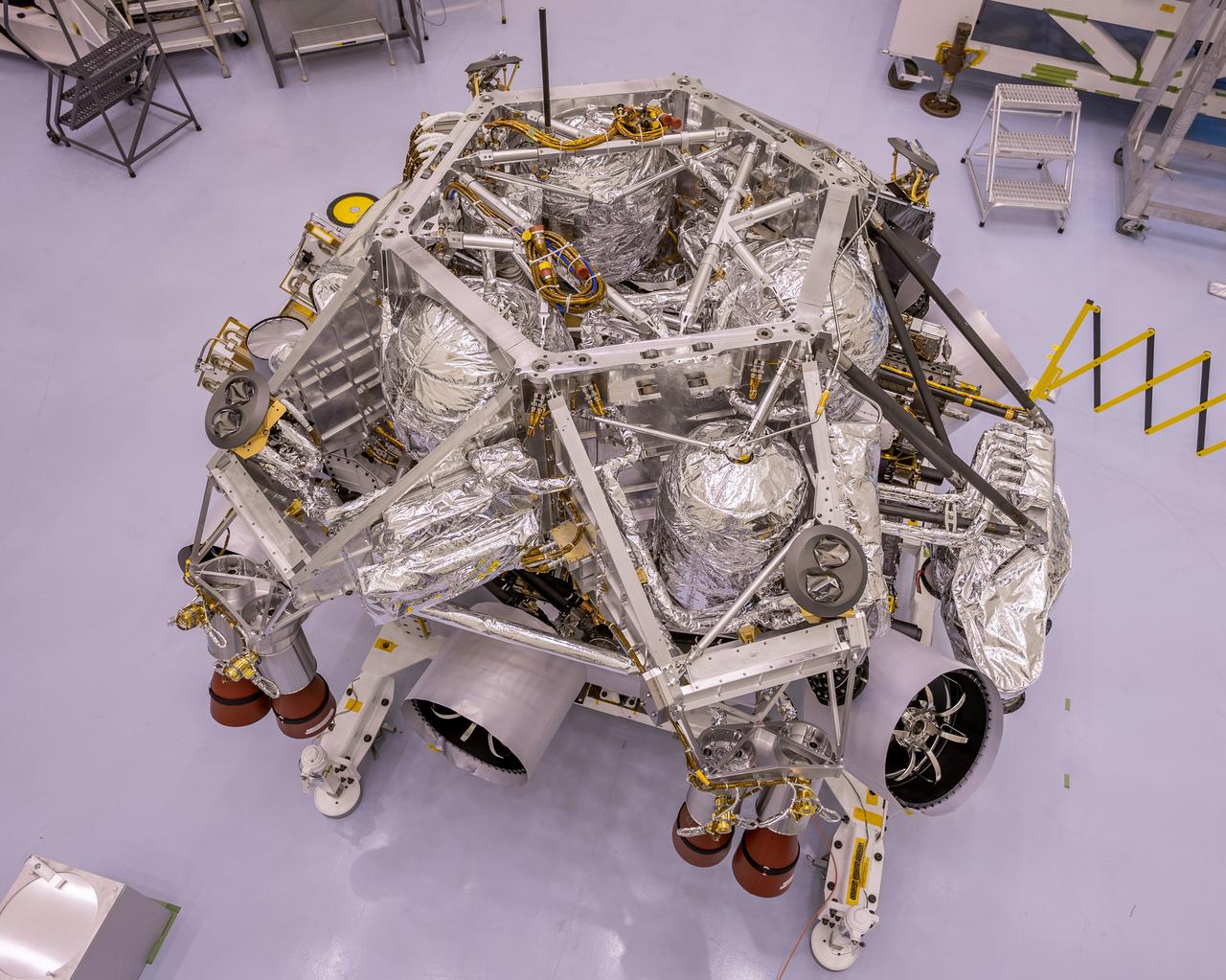
The powered descent vehicle for the Mars Perseverance rover is stacked inside the Payload Hazardous Servicing Facility at NASA’s Kennedy Space Center in Florida on April 28, 2020. The rover and descent stage were the first spacecraft components to come together for launch — and they will be the last to separate when the spacecraft reaches Mars on Feb. 18, 2021. Launch, aboard a United Launch Alliance Atlas V 541 rocket, is targeted for summer 2020 from Cape Canaveral Air Force Station. NASA’s Launch Services Program based at Kennedy is managing the launch.
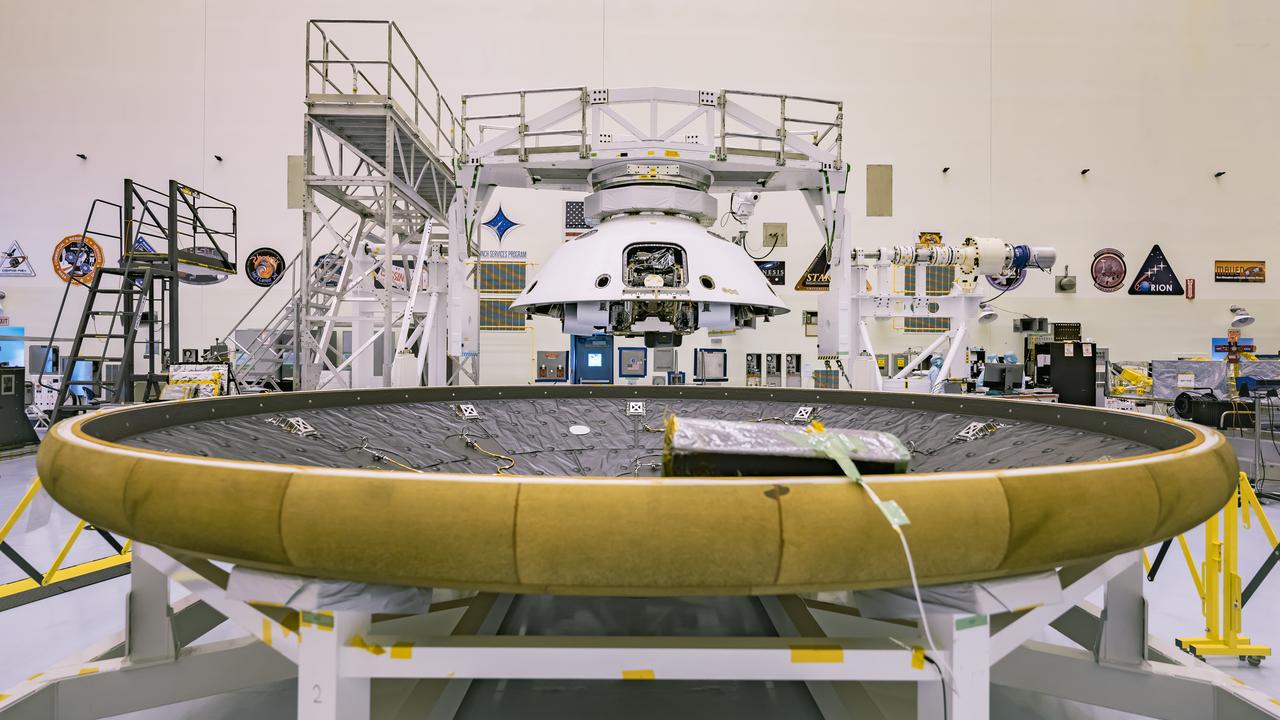
Inside the Payload Hazardous Servicing Facility at NASA’s Kennedy Space Center in Florida, the Backshell-Powered Descent Vehicle and Entry Vehicle assemblies are being prepared to be attached to the Mars Perseverance rover on May 5, 2020. The cone-shaped backshell contains the parachute, and along with the mission’s heat shield, provides protection for the rover and descent stage during Martian atmospheric entry. The Mars Perseverance rover is scheduled to launch in mid-July atop a United Launch Alliance Atlas V 541 rocket from Pad 41 at nearby Cape Canaveral Air Force Station. The rover is part of NASA’s Mars Exploration Program, a long-term effort of robotic exploration of the Red Planet. The rover will search for habitable conditions in the ancient past and signs of past microbial life on Mars. The Launch Services Program at Kennedy is responsible for launch management.
Inside the Payload Hazardous Servicing Facility at NASA’s Kennedy Space Center in Florida, the Backshell-Powered Descent Vehicle and Entry Vehicle assemblies are being prepared to be attached to the Mars Perseverance rover on May 4, 2020. The cone-shaped backshell contains the parachute, and along with the mission’s heat shield, provides protection for the rover and descent stage during Martian atmospheric entry. The Mars Perseverance rover is scheduled to launch in mid-July atop a United Launch Alliance Atlas V 541 rocket from Pad 41 at nearby Cape Canaveral Air Force Station. The rover is part of NASA’s Mars Exploration Program, a long-term effort of robotic exploration of the Red Planet. The rover will search for habitable conditions in the ancient past and signs of past microbial life on Mars. The Launch Services Program at Kennedy is responsible for launch management.
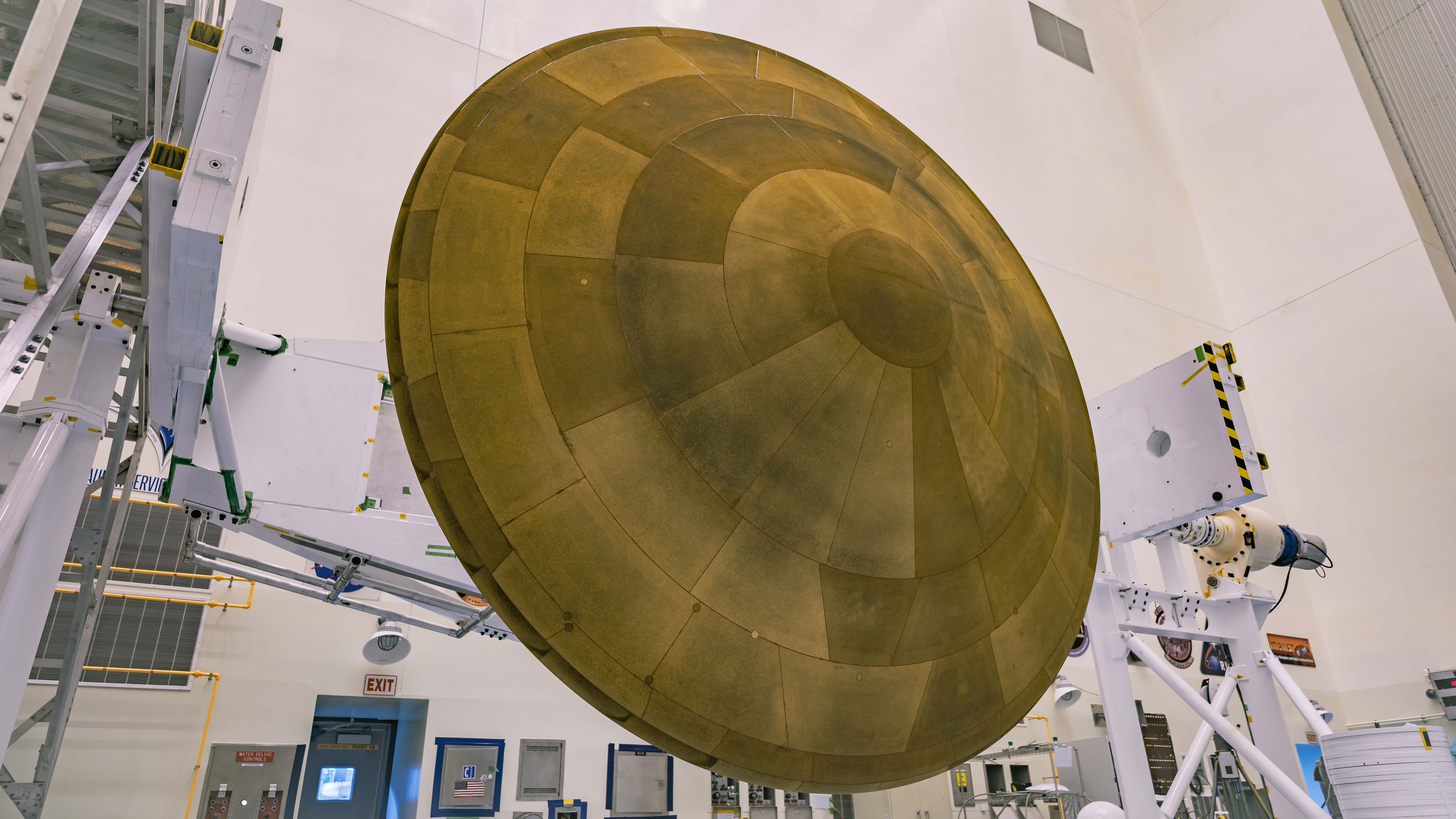
Inside the Payload Hazardous Servicing Facility at NASA’s Kennedy Space Center in Florida, the Backshell-Powered Descent Vehicle and Entry Vehicle assemblies are attached to the Mars Perseverance rover on May 6, 2020. The cone-shaped backshell contains the parachute, and along with the mission’s heat shield, provides protection for the rover and descent stage during Martian atmospheric entry. The Mars Perseverance rover is scheduled to launch in mid-July atop a United Launch Alliance Atlas V 541 rocket from Pad 41 at nearby Cape Canaveral Air Force Station. The rover is part of NASA’s Mars Exploration Program, a long-term effort of robotic exploration of the Red Planet. The rover will search for habitable conditions in the ancient past and signs of past microbial life on Mars. The Launch Services Program at Kennedy is responsible for launch management.
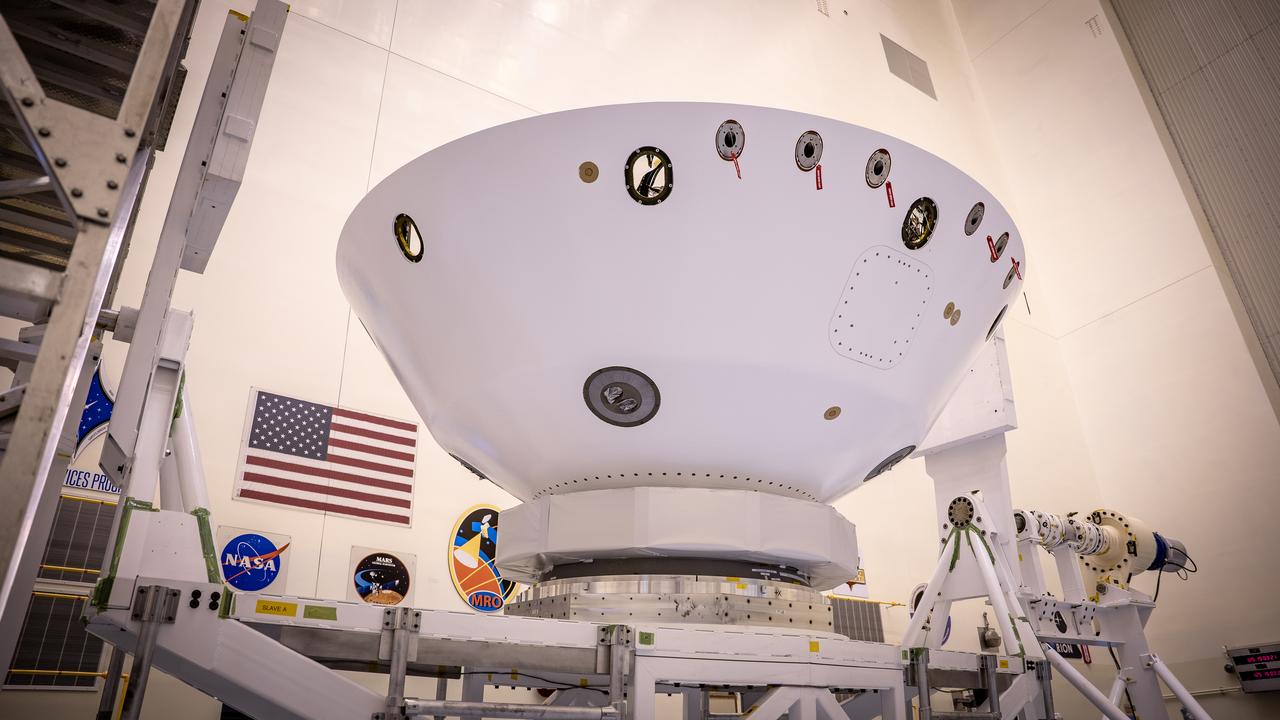
Inside the Payload Hazardous Servicing Facility at NASA’s Kennedy Space Center in Florida, the Mars Perseverance rover is rotated to prepare for the Backshell-Powered Descent Vehicle and Entry Vehicle assemblies to be attached on May 4, 2020. The cone-shaped backshell contains the parachute, and along with the mission’s heat shield, provides protection for the rover and descent stage during Martian atmospheric entry. The Mars Perseverance rover is scheduled to launch in mid-July atop a United Launch Alliance Atlas V 541 rocket from Pad 41 at nearby Cape Canaveral Air Force Station. The rover is part of NASA’s Mars Exploration Program, a long-term effort of robotic exploration of the Red Planet. The rover will search for habitable conditions in the ancient past and signs of past microbial life on Mars. The Launch Services Program at Kennedy is responsible for launch management.
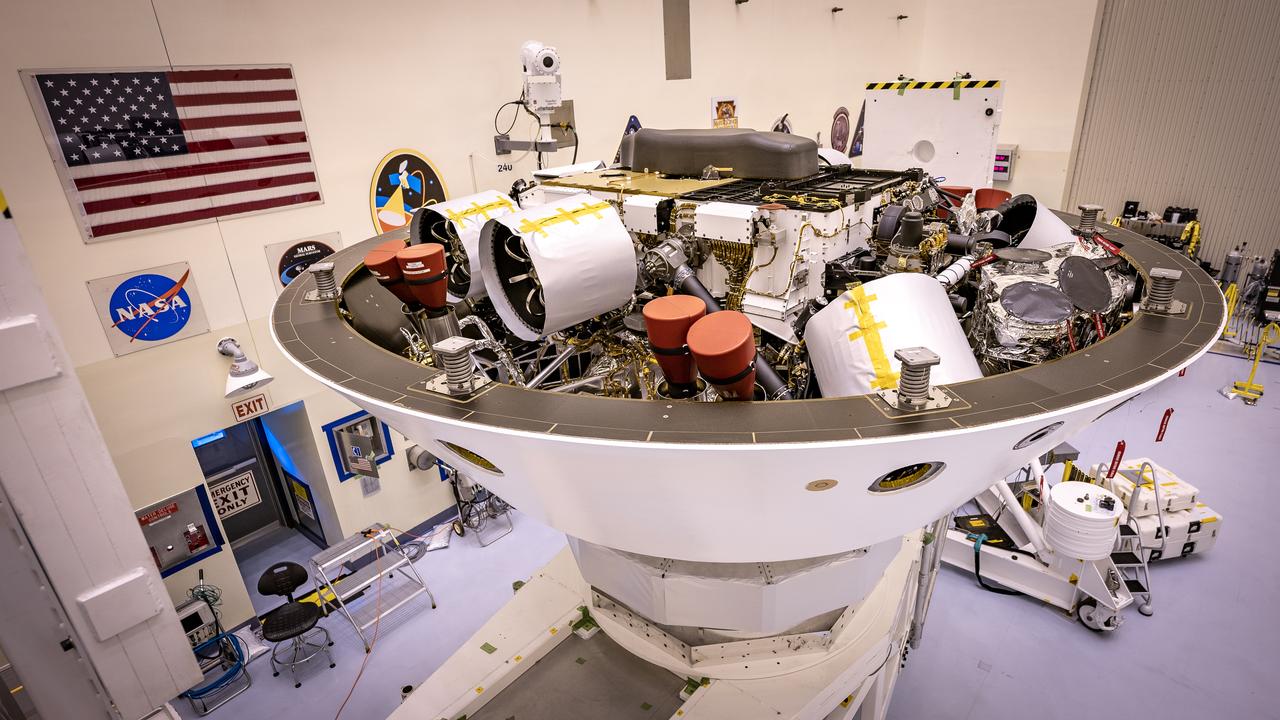
Inside the Payload Hazardous Servicing Facility at NASA’s Kennedy Space Center in Florida, the Mars Perseverance rover is rotated to prepare for the Backshell-Powered Descent Vehicle and Entry Vehicle assemblies to be attached on May 4, 2020. The cone-shaped backshell contains the parachute, and along with the mission’s heat shield, provides protection for the rover and descent stage during Martian atmospheric entry. The Mars Perseverance rover is scheduled to launch in mid-July atop a United Launch Alliance Atlas V 541 rocket from Pad 41 at nearby Cape Canaveral Air Force Station. The rover is part of NASA’s Mars Exploration Program, a long-term effort of robotic exploration of the Red Planet. The rover will search for habitable conditions in the ancient past and signs of past microbial life on Mars. The Launch Services Program at Kennedy is responsible for launch management.
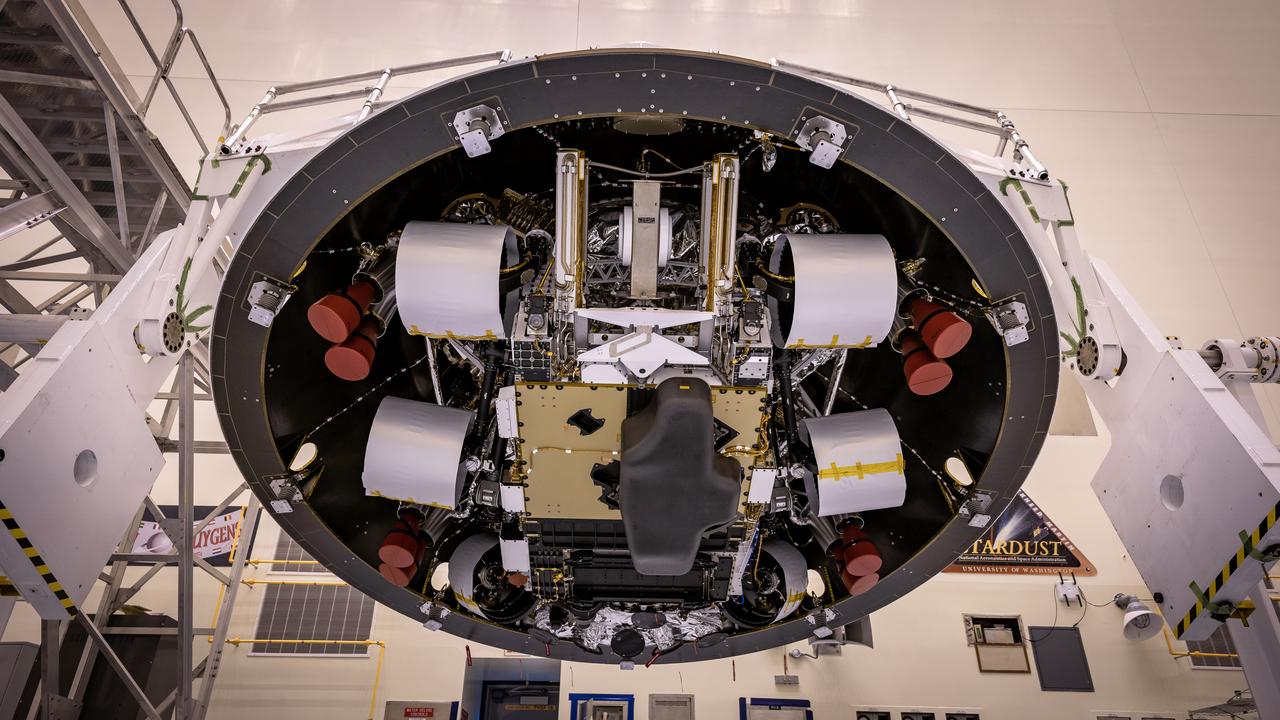
Inside the Payload Hazardous Servicing Facility at NASA’s Kennedy Space Center in Florida, the Backshell-Powered Descent Vehicle and Entry Vehicle assemblies are being prepared to be attached to the Mars Perseverance rover on May 4, 2020. The cone-shaped backshell contains the parachute, and along with the mission’s heat shield, provides protection for the rover and descent stage during Martian atmospheric entry. The Mars Perseverance rover is scheduled to launch in mid-July atop a United Launch Alliance Atlas V 541 rocket from Pad 41 at nearby Cape Canaveral Air Force Station. The rover is part of NASA’s Mars Exploration Program, a long-term effort of robotic exploration of the Red Planet. The rover will search for habitable conditions in the ancient past and signs of past microbial life on Mars. The Launch Services Program at Kennedy is responsible for launch management.
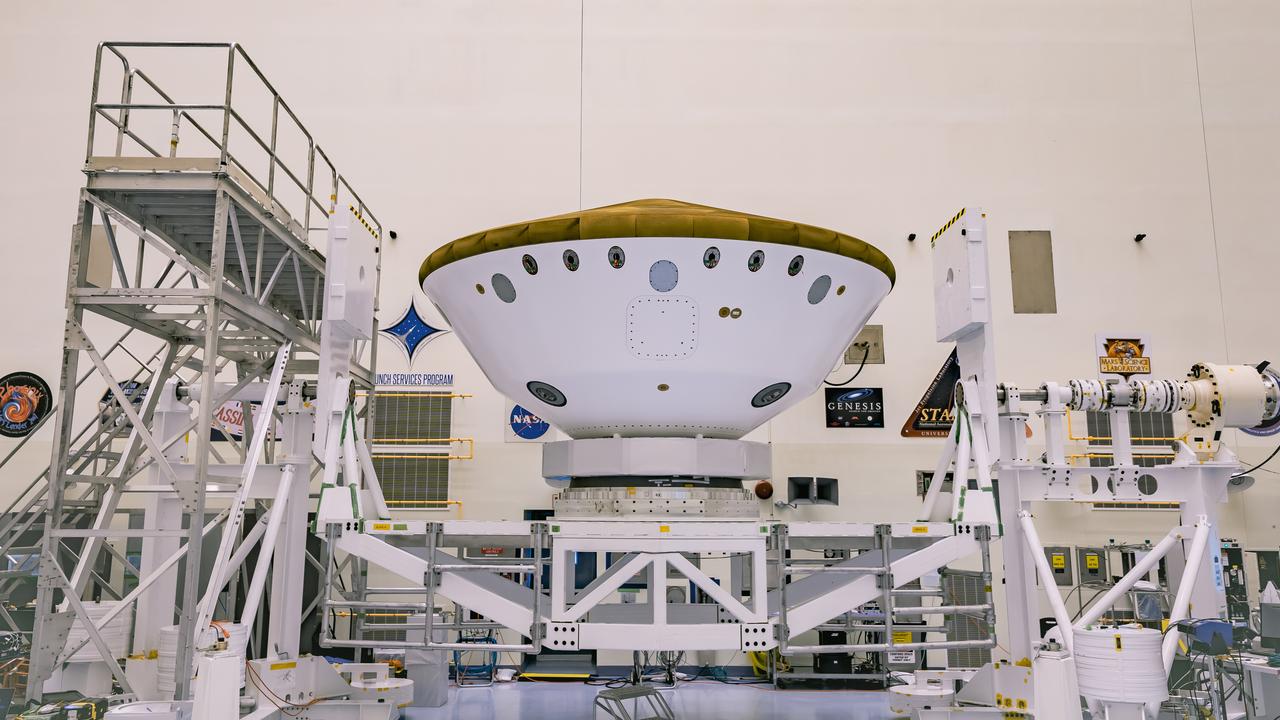
Inside the Payload Hazardous Servicing Facility at NASA’s Kennedy Space Center in Florida, the Backshell-Powered Descent Vehicle and Entry Vehicle assemblies are attached to the Mars Perseverance rover on May 6, 2020. The cone-shaped backshell contains the parachute, and along with the mission’s heat shield, provides protection for the rover and descent stage during Martian atmospheric entry. The Mars Perseverance rover is scheduled to launch in mid-July atop a United Launch Alliance Atlas V 541 rocket from Pad 41 at nearby Cape Canaveral Air Force Station. The rover is part of NASA’s Mars Exploration Program, a long-term effort of robotic exploration of the Red Planet. The rover will search for habitable conditions in the ancient past and signs of past microbial life on Mars. The Launch Services Program at Kennedy is responsible for launch management.
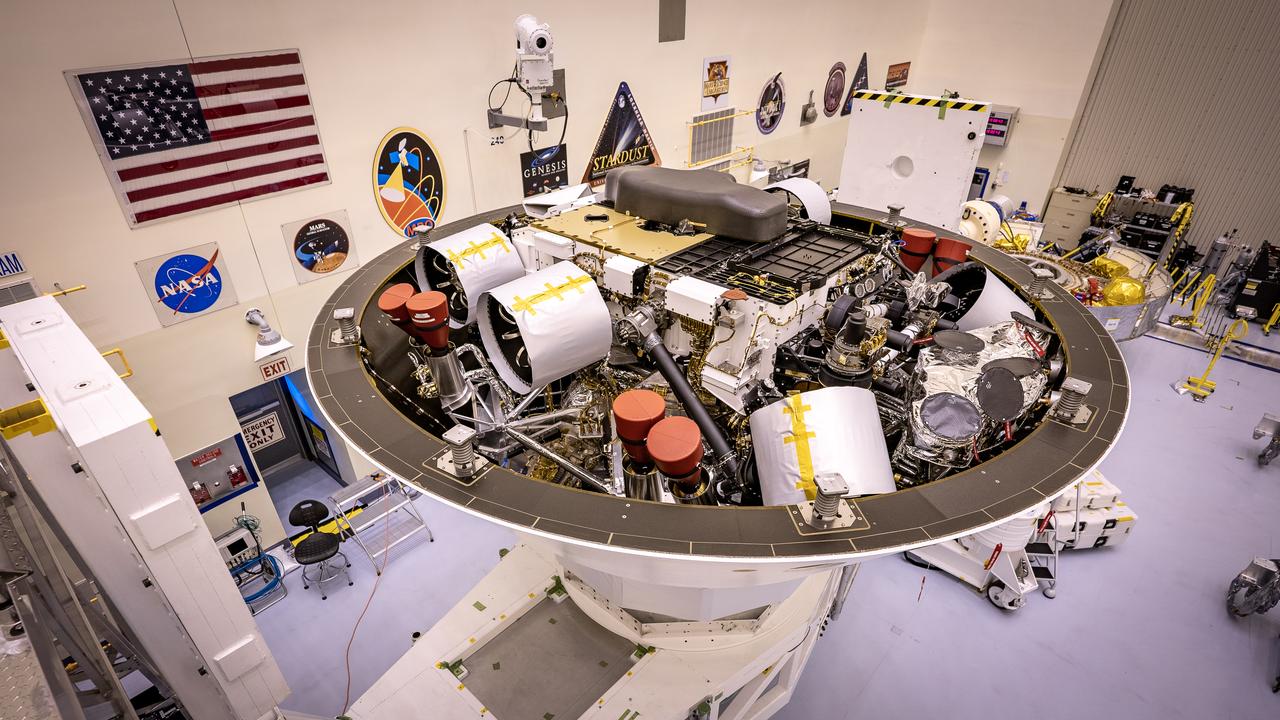
Inside the Payload Hazardous Servicing Facility at NASA’s Kennedy Space Center in Florida, the Mars Perseverance rover is rotated to prepare for the Backshell-Powered Descent Vehicle and Entry Vehicle assemblies to be attached on May 4, 2020. The cone-shaped backshell contains the parachute, and along with the mission’s heat shield, provides protection for the rover and descent stage during Martian atmospheric entry. The Mars Perseverance rover is scheduled to launch in mid-July atop a United Launch Alliance Atlas V 541 rocket from Pad 41 at nearby Cape Canaveral Air Force Station. The rover is part of NASA’s Mars Exploration Program, a long-term effort of robotic exploration of the Red Planet. The rover will search for habitable conditions in the ancient past and signs of past microbial life on Mars. The Launch Services Program at Kennedy is responsible for launch management.
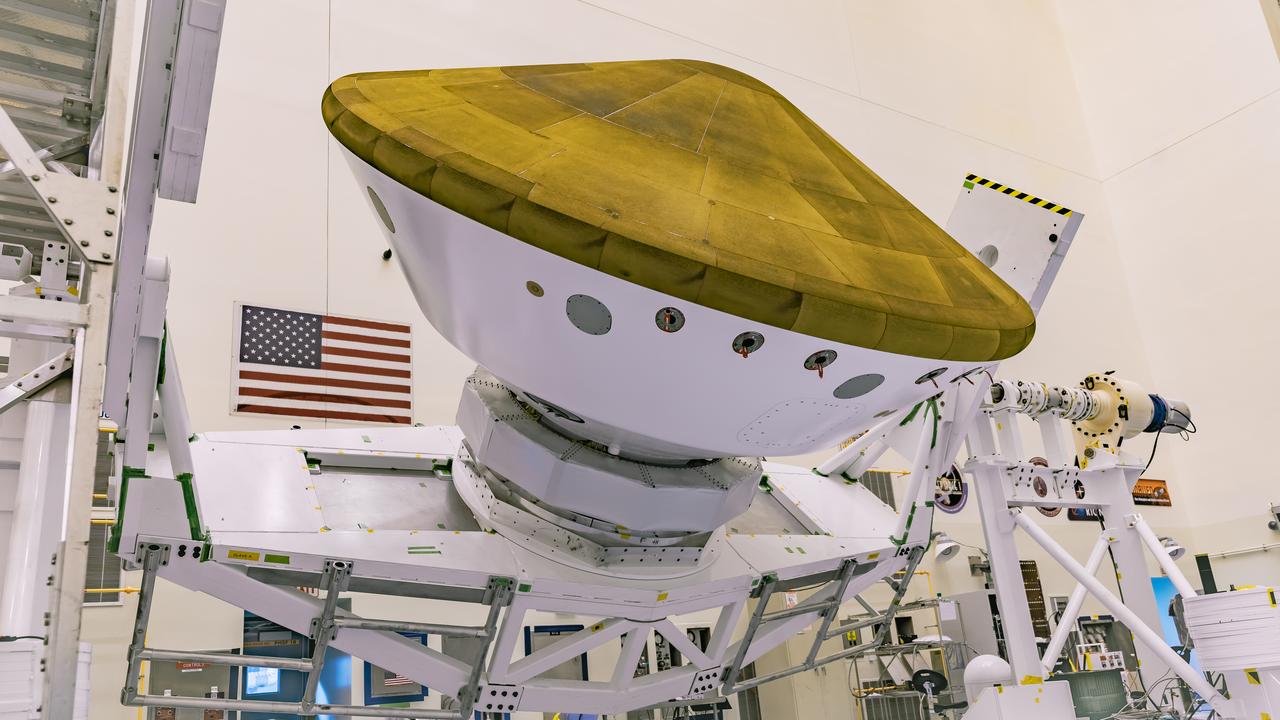
Inside the Payload Hazardous Servicing Facility at NASA’s Kennedy Space Center in Florida, the Backshell-Powered Descent Vehicle and Entry Vehicle assemblies are attached to the Mars Perseverance rover on May 6, 2020. The cone-shaped backshell contains the parachute, and along with the mission’s heat shield, provides protection for the rover and descent stage during Martian atmospheric entry. The Mars Perseverance rover is scheduled to launch in mid-July atop a United Launch Alliance Atlas V 541 rocket from Pad 41 at nearby Cape Canaveral Air Force Station. The rover is part of NASA’s Mars Exploration Program, a long-term effort of robotic exploration of the Red Planet. The rover will search for habitable conditions in the ancient past and signs of past microbial life on Mars. The Launch Services Program at Kennedy is responsible for launch management.
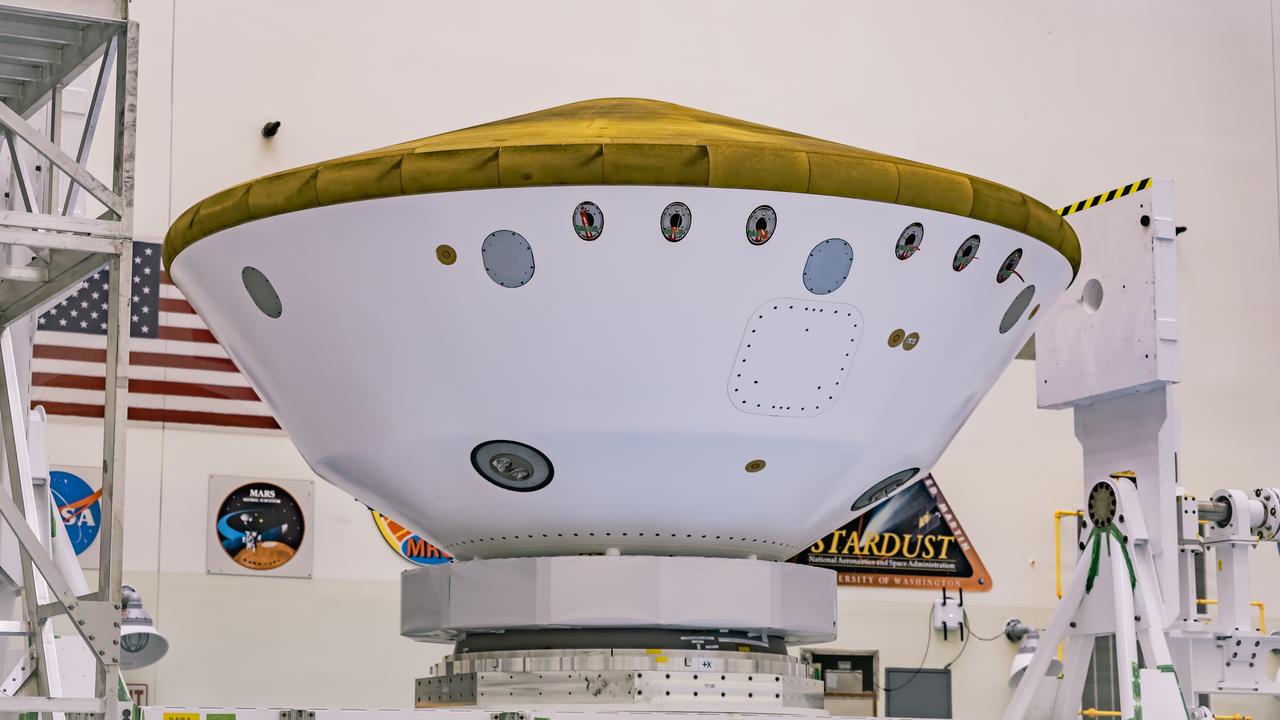
Inside the Payload Hazardous Servicing Facility at NASA’s Kennedy Space Center in Florida, the Backshell-Powered Descent Vehicle and Entry Vehicle assemblies are attached to the Mars Perseverance rover on May 6, 2020. The cone-shaped backshell contains the parachute, and along with the mission’s heat shield, provides protection for the rover and descent stage during Martian atmospheric entry. The Mars Perseverance rover is scheduled to launch in mid-July atop a United Launch Alliance Atlas V 541 rocket from Pad 41 at nearby Cape Canaveral Air Force Station. The rover is part of NASA’s Mars Exploration Program, a long-term effort of robotic exploration of the Red Planet. The rover will search for habitable conditions in the ancient past and signs of past microbial life on Mars. The Launch Services Program at Kennedy is responsible for launch management.
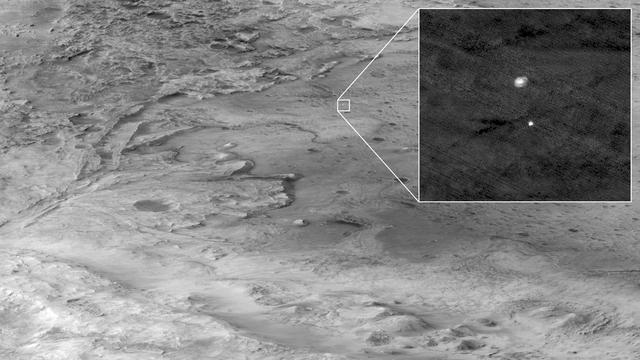
The descent stage holding NASA's Perseverance rover can be seen falling through the Martian atmosphere, its parachute trailing behind, in this image taken on Feb. 18, 2021, by the High Resolution Imaging Experiment (HiRISE) camera aboard the Mars Reconnaissance Orbiter. The ancient river delta, which is the target of the Perseverance mission, can be seen entering Jezero Crater from the left. HiRISE was approximately 435 miles (700 kilometers) from Perseverance and traveling at about 6750 mile per hour (3 kilometers per second) at the time the image was taken. The extreme distance and high speeds of the two spacecraft were challenging conditions that required precise timing and for Mars Reconnaissance Orbiter to both pitch upward and roll hard to the left so that Perseverance was viewable by HiRISE at just the right moment. https://photojournal.jpl.nasa.gov/catalog/PIA24270
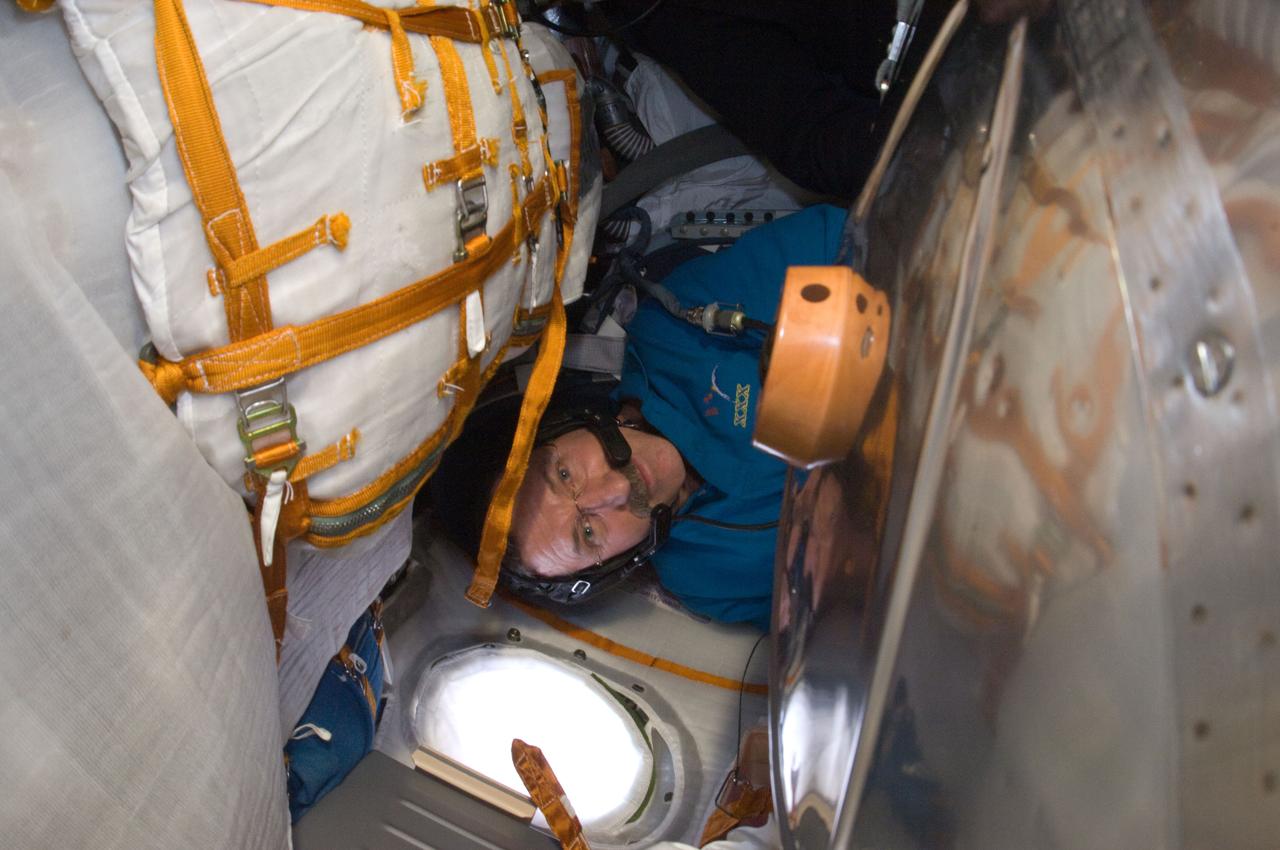
ISS030-E-247135 (23 April 2012) --- NASA astronaut Dan Burbank, Expedition 30 commander, participates in a standard onboard training exercise in the Soyuz TMA-22 descent module currently docked with the International Space Station. Burbank, along with Russian cosmonauts Anton Shkaplerov and Anatoly Ivanishin are scheduled to undock from the station and return to Earth on April 27, 2012.
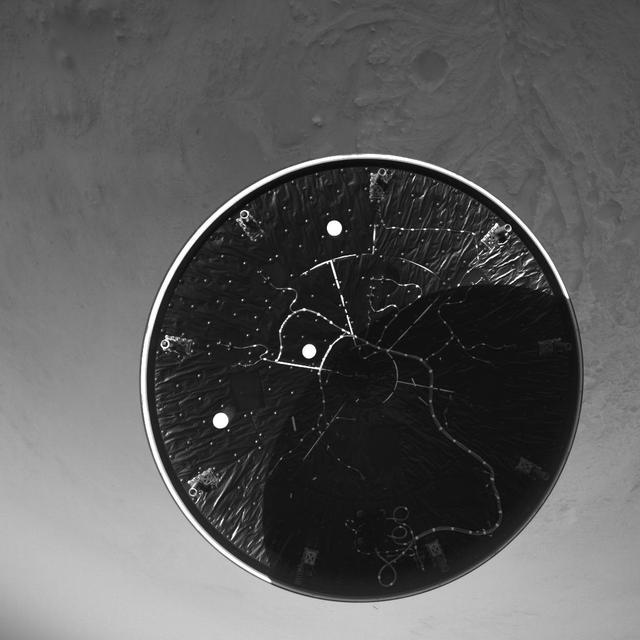
The heat shield drops away toward Mars after being released from the Mars 2020 back shell during the spacecraft's descent through the Martian atmosphere on Feb. 18, 2021. The heat shield and back shell encapsulated NASA's Perseverance rover on its journey to the Red Planet. This image was taken by the rover's Lander Vision System Camera (LCAM), serving as part of the Terrain-Relative Navigation system. This was the first use at Mars of the system, which compared images from below the spacecraft to an onboard map, helping to guide the spacecraft to a safe landing spot in Jezero Crater. Past missions had deemed Jezero Crater too hazardous to be a landing site because of its cliffs, dunes, and boulders. The LCAM generates 1024x1024 pixel grayscale images across a 90x90-degree field of view. The exposure time for each image is just under 150 microseconds, which enables crisp images during descent. LCAM was provided by Malin Space Science Systems in San Diego; the Perseverance rover was built and is operated by NASA's Jet Propulsion Laboratory in Southern California. JPL is a division of Caltech in Pasadena. https://photojournal.jpl.nasa.gov/catalog/PIA24446
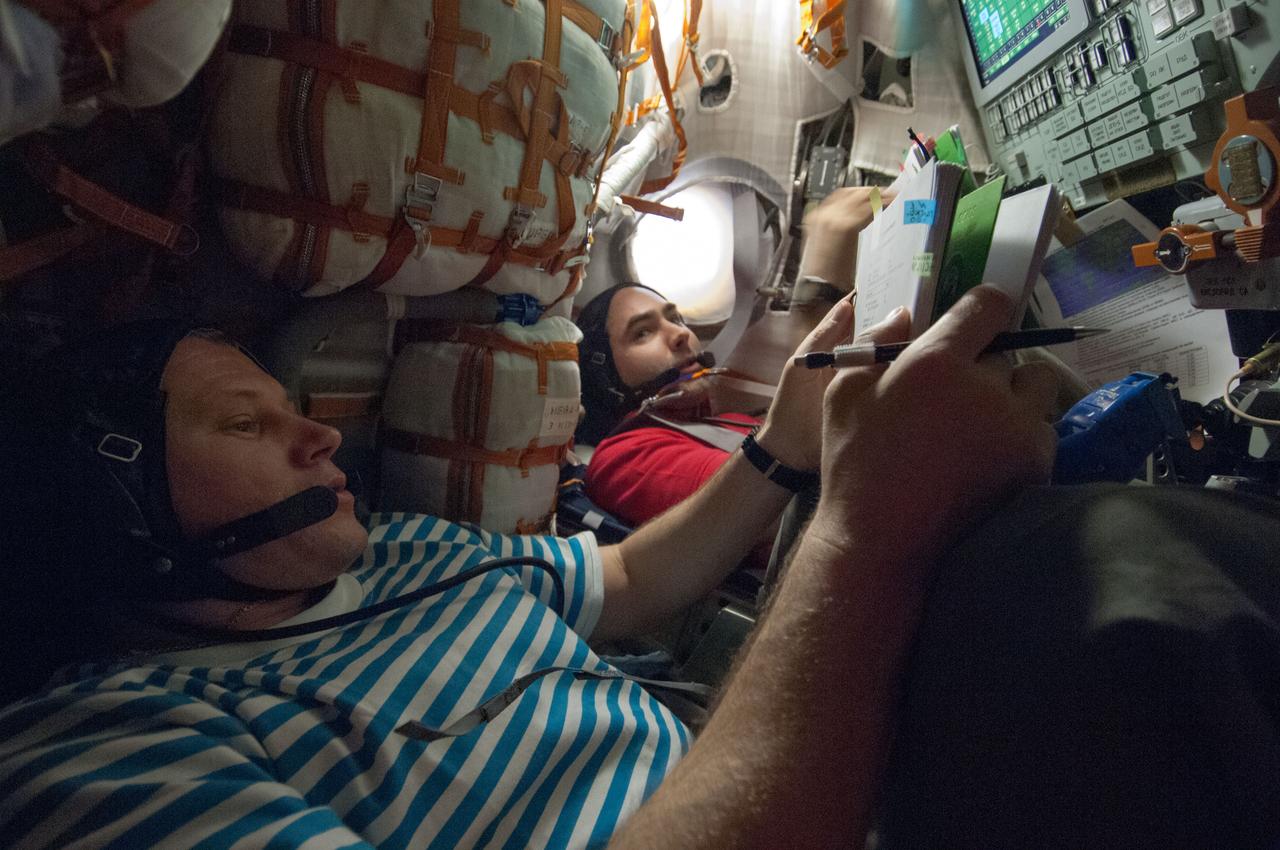
ISS034-E-066640 (11 March 2013) --- Russian cosmonauts Oleg Novitskiy (foreground), and Evgeny Tarelkin, both Expedition 34 flight engineers, participate in descent training in the Soyuz TMA-06M spacecraft, which is docked to the International Space Station. Undocking and landing are scheduled for March 16, Kazakh time.
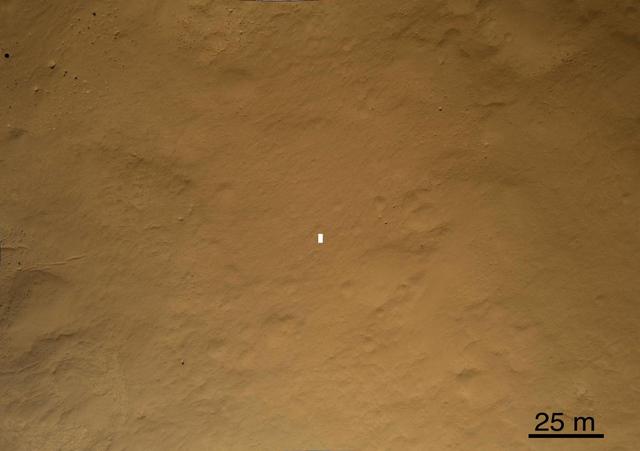
NASA Mars Reconnaissance Orbiter obtained this color image with the Mars Descent Imager aboard NASA Curiosity rover during its descent to the surface. Curiosity landed on Aug. 5 PDT Aug. 6 EDT.
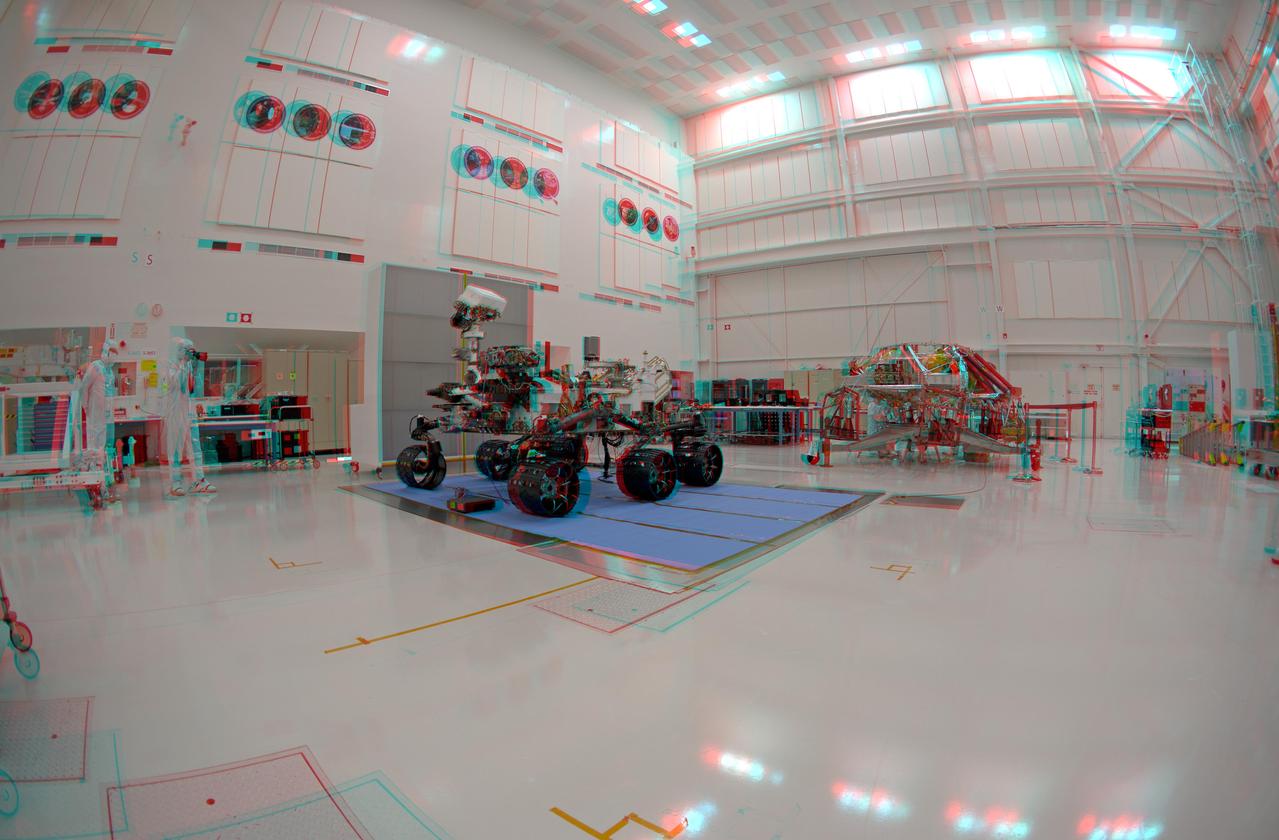
NASA Curiosity rover and its rocket-powered descent vehicle pose for a portrait at JPL Spacecraft Assembly Facility prior to its launch on November 26, 2011 from the Space Launch Complex 41 on Cape Canaveral Air Force Station in Florida.
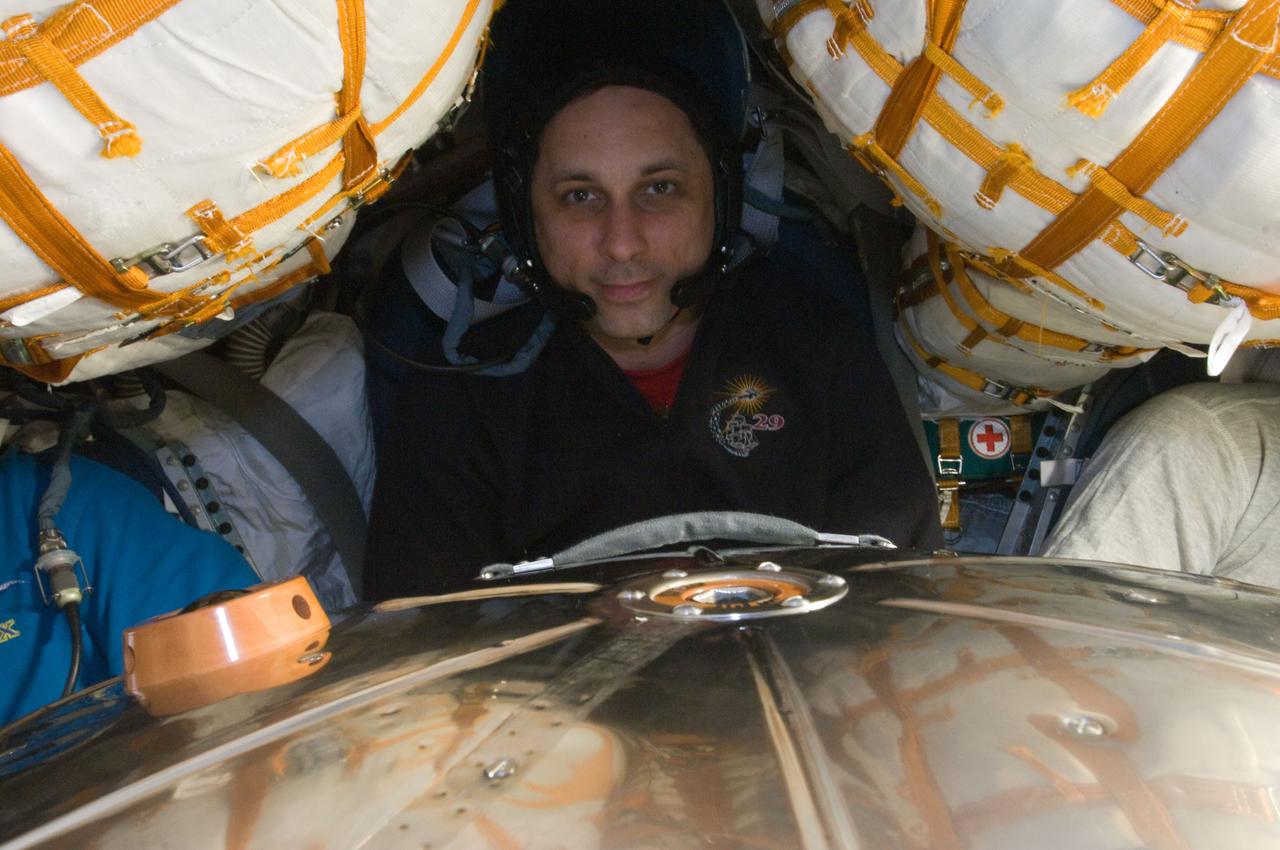
ISS030-E-247150 (23 April 2012) --- Russian cosmonaut Anton Shkaplerov, Expedition 30 flight engineer and Soyuz commander; along with NASA astronaut Dan Burbank (mostly out of frame at left), Expedition 30 commander; and Russian cosmonaut Anatoly Ivanishin (mostly out of frame at right), flight engineer, participate in a standard onboard training exercise in the Soyuz TMA-22 descent module currently docked with the International Space Station. Shkaplerov, Burbank and Ivanishin are scheduled to undock from the station and return to Earth on April 27, 2012.
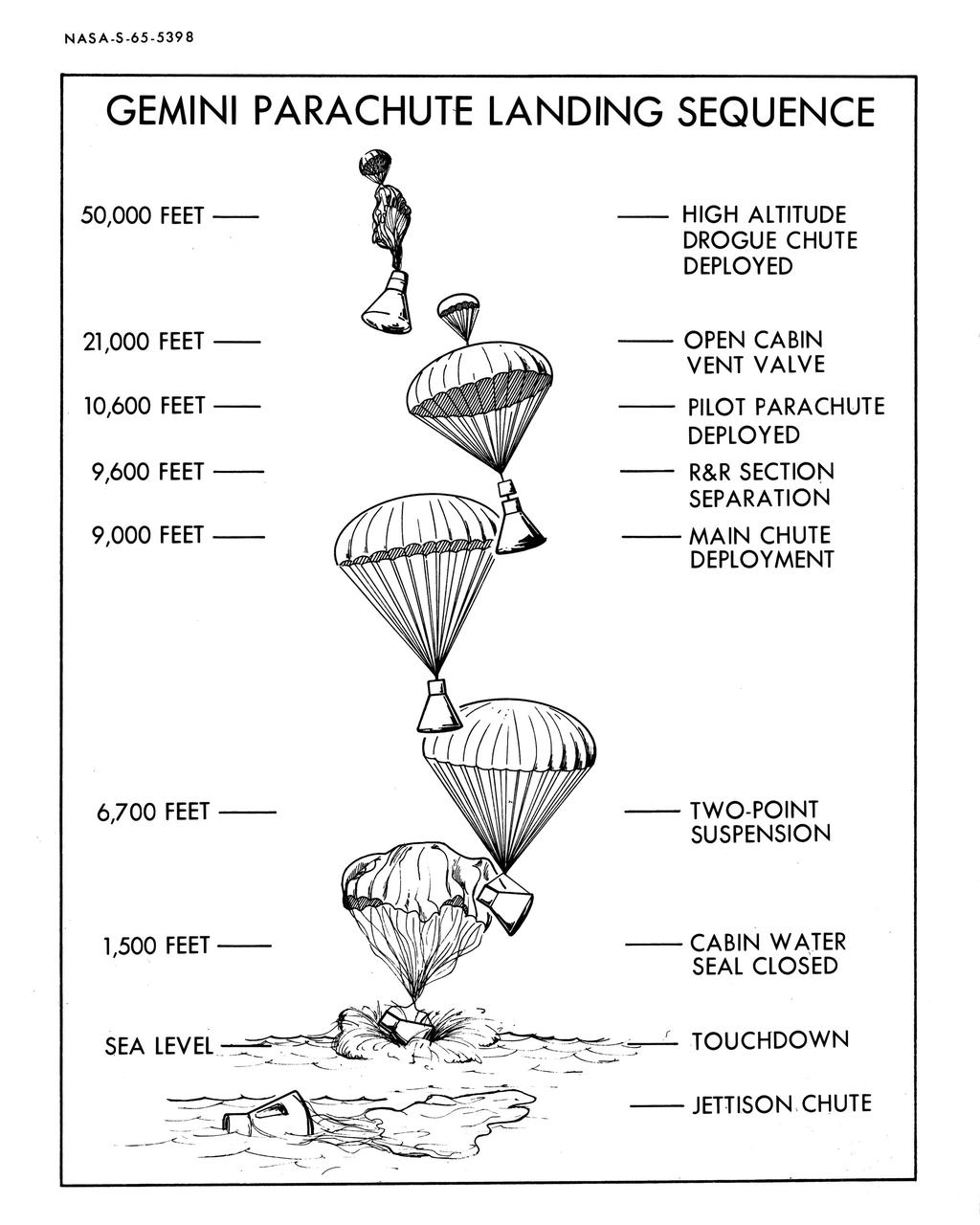
S65-05398 (1965) --- Artist concept of Gemini parachute landing sequence from high altitude drogue chute deployed to jettison of chute.
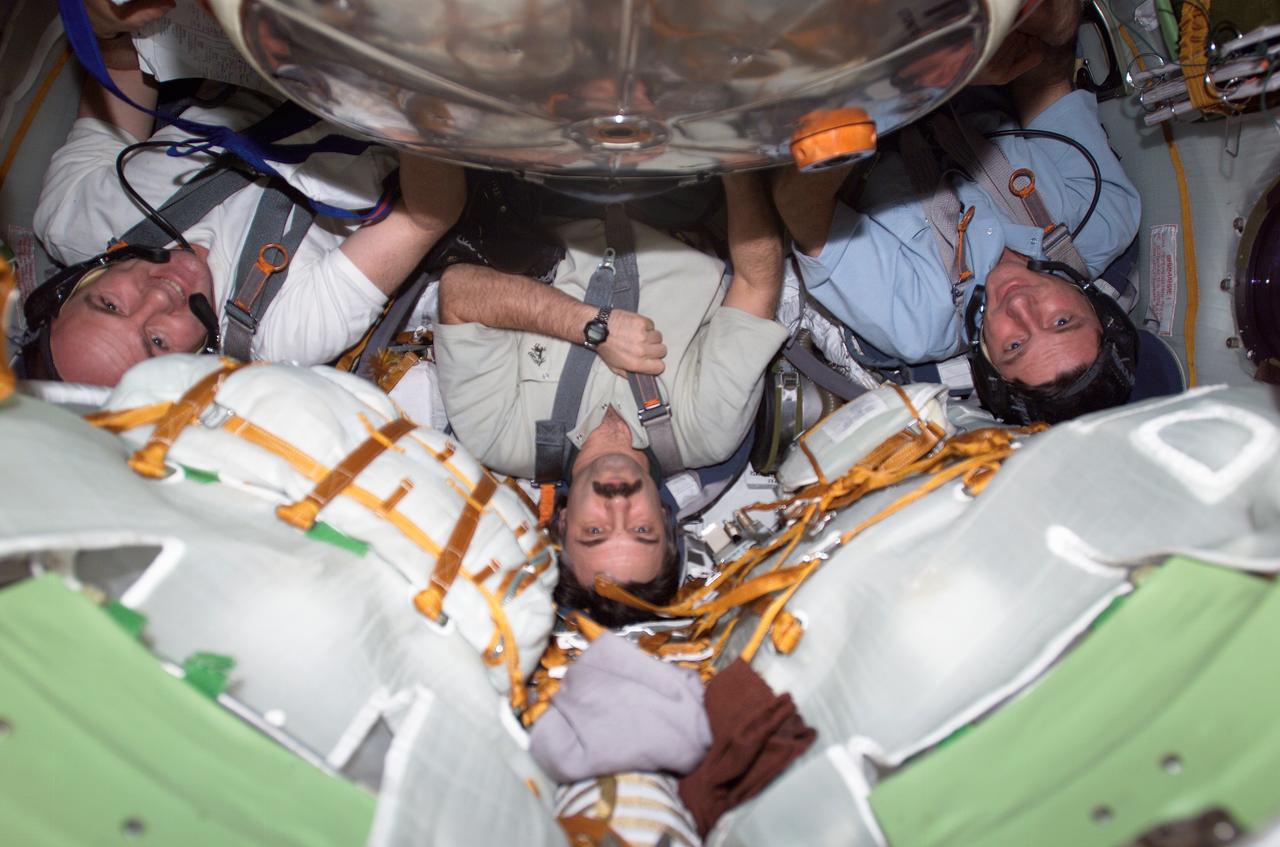
ISS008-E-22361 (27 April 2004) --- Astronaut C. Michael Foale (left), Expedition 8 commander and NASA ISS science officer; cosmonaut Alexander Y. Kaleri, flight engineer (FE) representing Russia’s Federal Space Agency; and European Space Agency (ESA) astronaut Andre Kuipers of the Netherlands participate in the Soyuz descent training exercise, which is standard procedure for each crew returning on a Soyuz. During the descent, Kaleri, as Soyuz commander, will occupy the middle couch, with FE-1 Kuipers in the left seat and FE-2 Foale in the Descent Module’s right “Kazbek” couch. The ISS Soyuz 7 is scheduled to undock from the Station at 3:52 p.m. (CDT) Thursday, April 29.
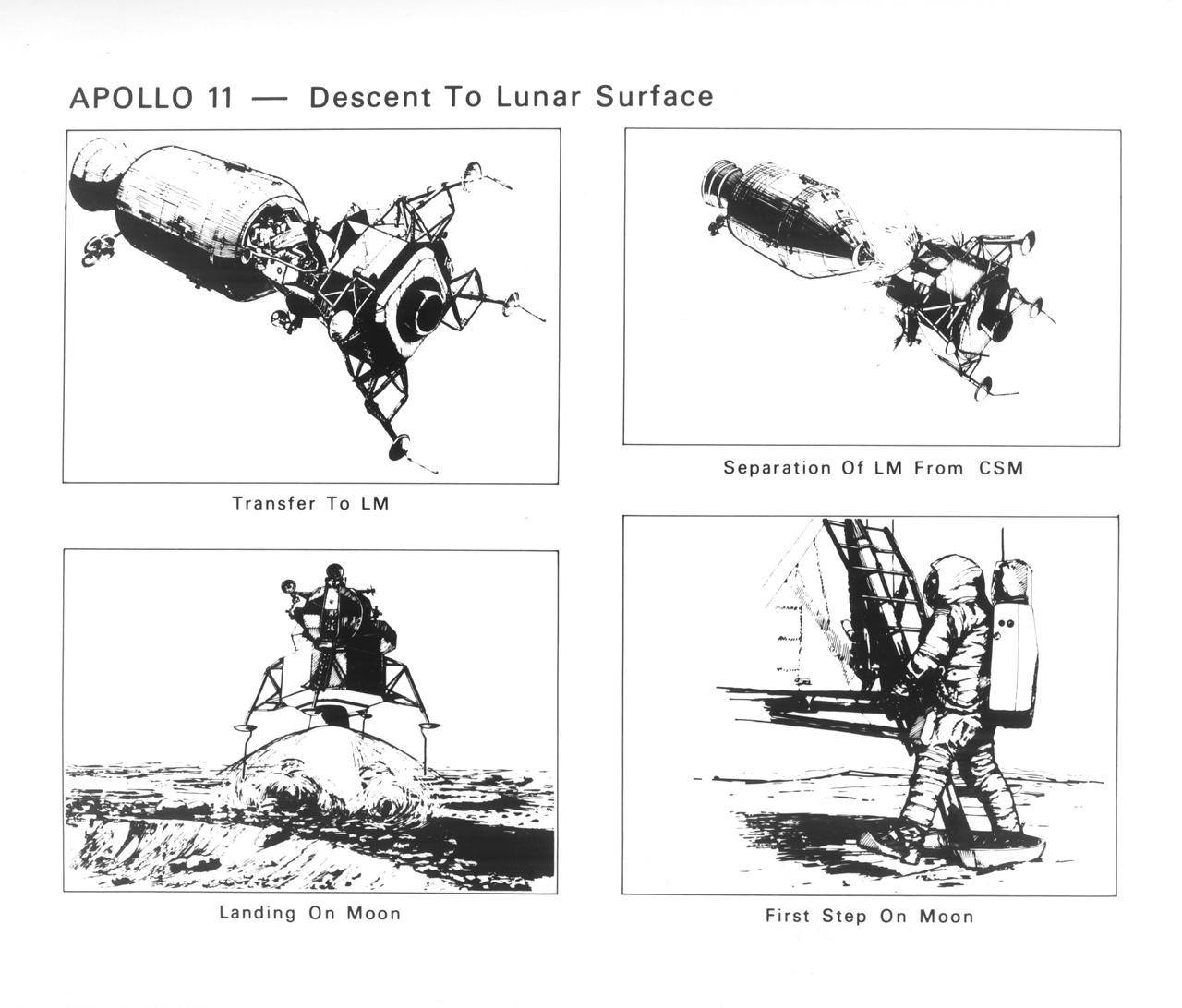
The Apollo 11 mission launched from the Kennedy Space Center (KSC) in Florida via the Marshall Space Flight Center (MSFC) developed Saturn V launch vehicle on July 16, 1969 and safely returned to Earth on July 24, 1969. Aboard the space craft were astronauts Neil A. Armstrong, commander; Michael Collins, Command Module (CM) pilot; and Edwin E. (Buzz) Aldrin Jr., Lunar Module (LM) pilot. With the success of Apollo 11, the national objective to land men on the Moon and return them safely to Earth had been accomplished. These sketches illustrate the steps taken in going from lunar orbit onto the Moon’s surface. Apollo 11 commander, Neil Armstrong and LM pilot Edwin Aldrin transferred from the CM to the LM and the LM separated. Firing the descent stage engine in retrothrust slowed the LM and put it on the let down trajectory. Near the Lunar surface, the engine was used to lower the craft slowly to the surface. After a checkout of systems and depressurization of the LM cabin, the hatch was opened for Armstrong’s climb down the ladder to the Moon’s soil.

ISS034-E-066644 (11 March 2013) --- NASA astronaut Kevin Ford (left), Expedition 34 commander, and Russian cosmonaut Oleg Novitskiy, Expedition 34 flight engineer (partially visible at right foreground), participate in descent training in the Soyuz TMA-06M spacecraft, which is docked to the International Space Station. Undocking and landing are scheduled for March 16, Kazakh time.
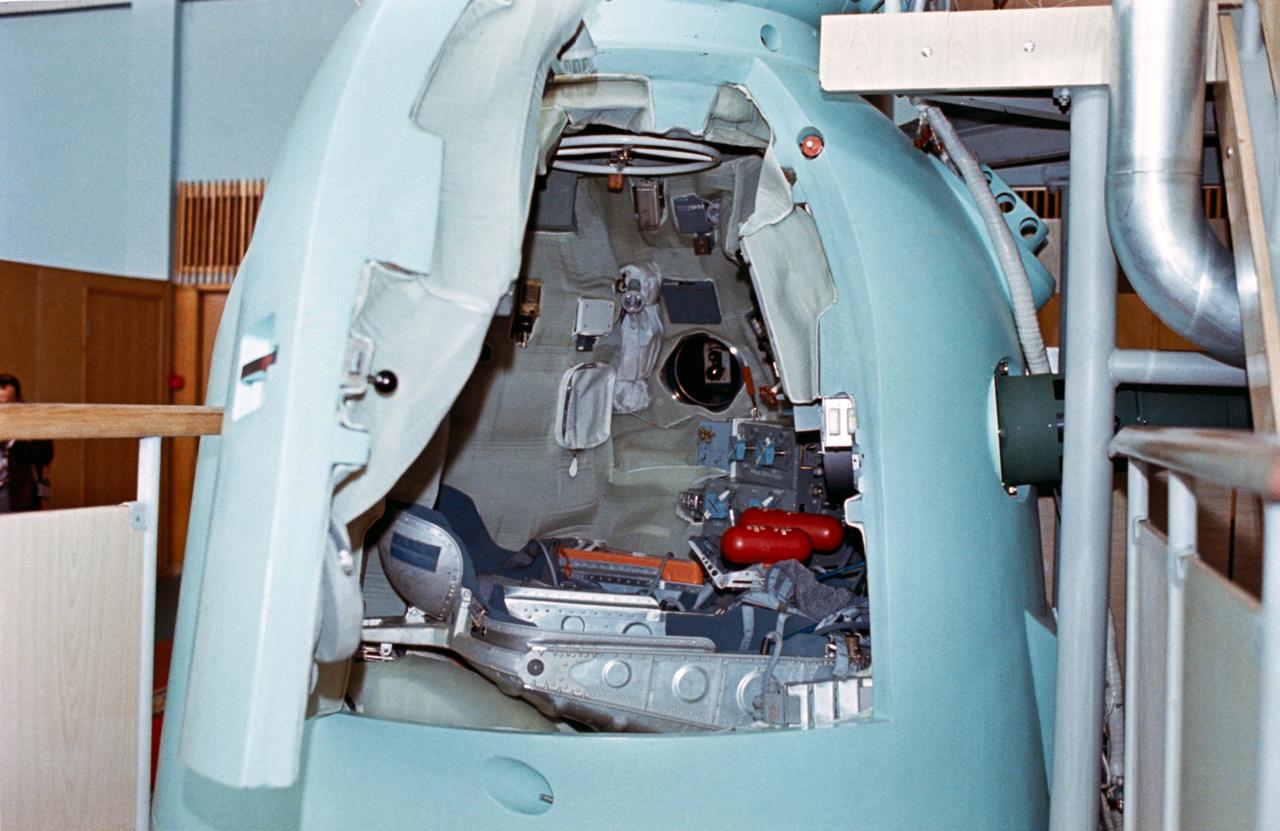
S74-24677 (June 1974) --- A close-up view of the descent vehicle of the Soyuz spacecraft training mock-up on display at the Cosmonuat Training Center (Star City) near Moscow. The open hatch reveals the interior arrangement of the middle section of the Soviet spacecraft. The first (fore) section of the Soyuz is called the orbital module; and the third (aft) section is the instrument-assembly module. The joint U.S.-USSR Apollo-Soyuz docking mission in Earth orbit is scheduled for the summer of 1975.

This illustration shows the events that occur in the final minutes of the nearly seven-month journey that NASA's Perseverance rover takes to Mars. Hundreds of critical events must execute perfectly and exactly on time for the rover to land on Mars safely on Feb. 18, 2021. A metric version of this illustration is also available (Figure 1). Entry, Descent, and Landing, or "EDL," begins when the spacecraft reaches the top of the Martian atmosphere, traveling nearly 12,500 mph (20,000 kph). It ends about seven minutes later, with Perseverance stationary on the Martian surface. Perseverance handles everything on its own during this process. It takes more than 11 minutes to get a radio signal back from Mars, so by the time the mission team hears that the spacecraft has entered the atmosphere, in reality, the rover is already on the ground. https://photojournal.jpl.nasa.gov/catalog/PIA24285
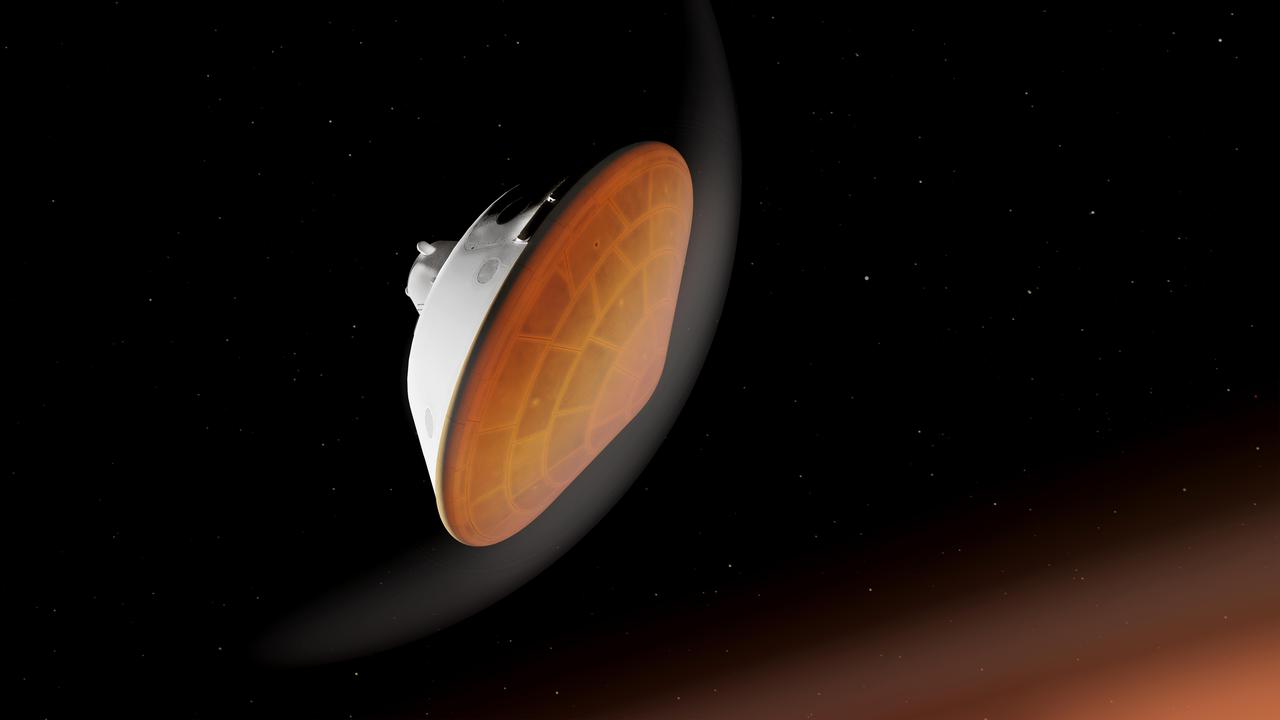
With its heat shield facing the planet, NASA's Perseverance rover begins its descent through the Martian atmosphere in this illustration. Hundreds of critical events must execute perfectly and exactly on time for the rover to land on Mars safely on Feb. 18, 2021. Entry, Descent, and Landing, or "EDL," begins when the spacecraft reaches the top of the Martian atmosphere, traveling nearly 12,500 mph (20,000 kph). The aeroshell, which encloses the rover and descent stage, makes the trip to the surface on its own. The vehicle fires small thrusters on the backshell to reorient itself and make sure the heat shield is facing forward as it plunges into the atmosphere. https://photojournal.jpl.nasa.gov/catalog/PIA24313
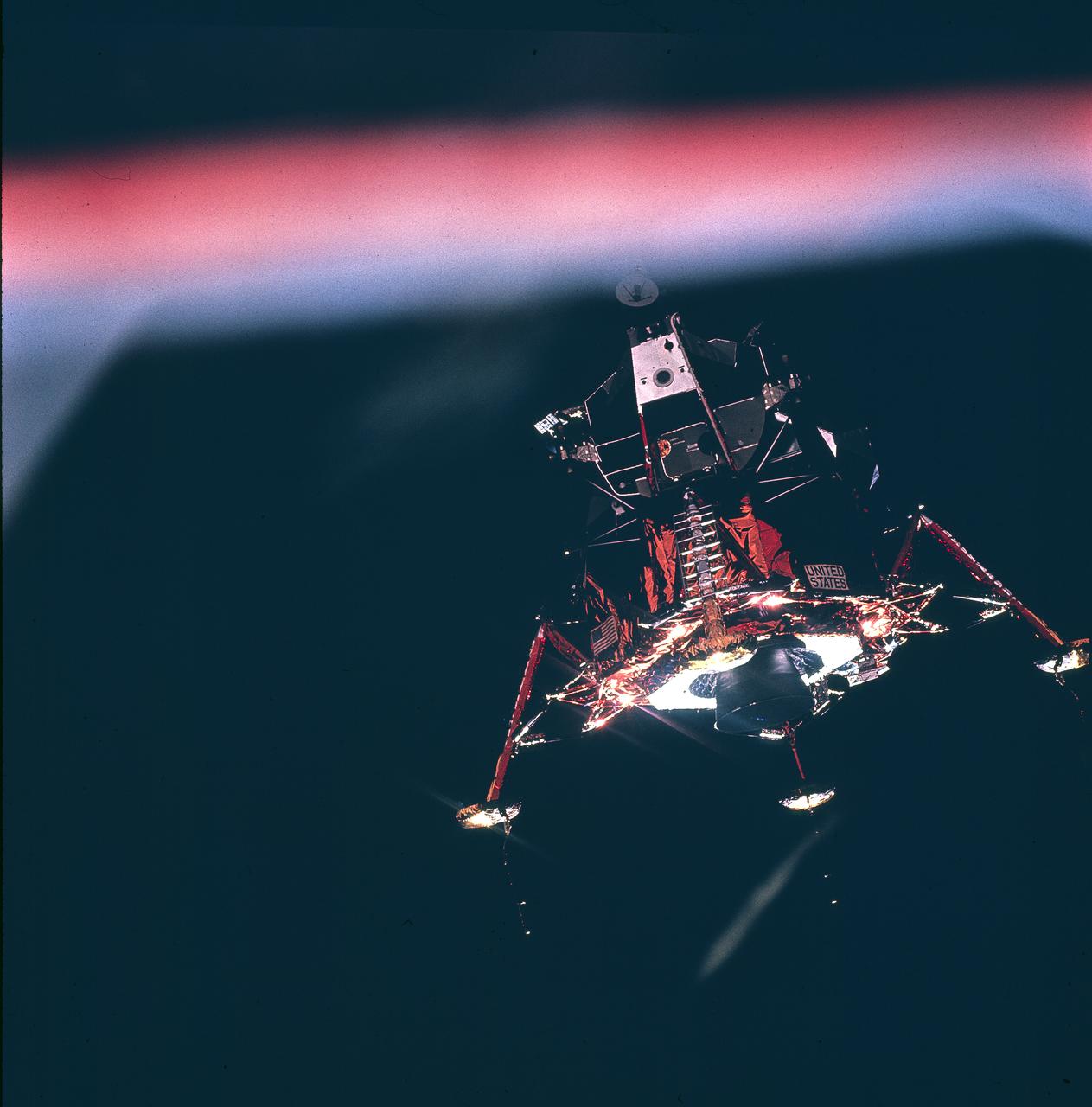
Carrying astronauts Neil A. Armstrong and Edwin E. Aldrin, Jr., the Lunar Module (LM) “Eagle” was the first crewed vehicle to land on the Moon. The LM landed on the moon’s surface on July 20, 1969 in the region known as Mare Tranquilitatis (the Sea of Tranquility). The LM is shown here making its descent to the lunar surface, while Astronaut Collins piloted the Command Module in a parking orbit around the Moon. The Apollo 11 mission launched from The Kennedy Space Center, Florida aboard a Saturn V launch vehicle on July 16, 1969 and safely returned to Earth on July 24, 1969. The 3-man crew aboard the flight consisted of Neil A. Armstrong, commander; Michael Collins, Command Module pilot; and Edwin E. Aldrin Jr., Lunar Module pilot. Armstrong was the first human to ever stand on the lunar surface. As he stepped off the LM, Armstrong proclaimed, “That’s one small step for man, one giant leap for mankind”. He was followed by Edwin (Buzz) Aldrin, describing the lunar surface as Magnificent desolation. The crew collected 47 pounds of lunar surface material which was returned to Earth for analysis. The surface exploration was concluded in 2½ hours. With the success of Apollo 11, the national objective to land men on the Moon and return them safely to Earth had been accomplished. The Saturn V vehicle was developed by the Marshall Space Flight Center (MSFC) under the direction of Dr. von Braun.
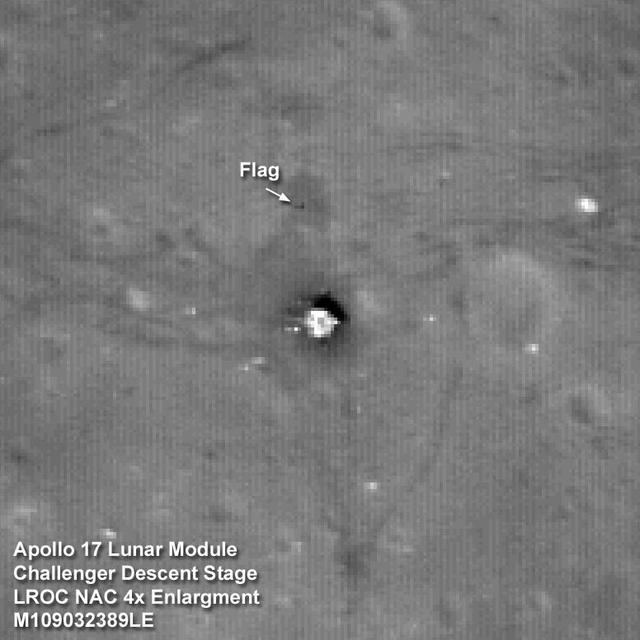
The Apollo 17 Lunar Module Challenger descent stage comes into focus in this image taken by NASA Lunar Reconnaissance Orbiter.
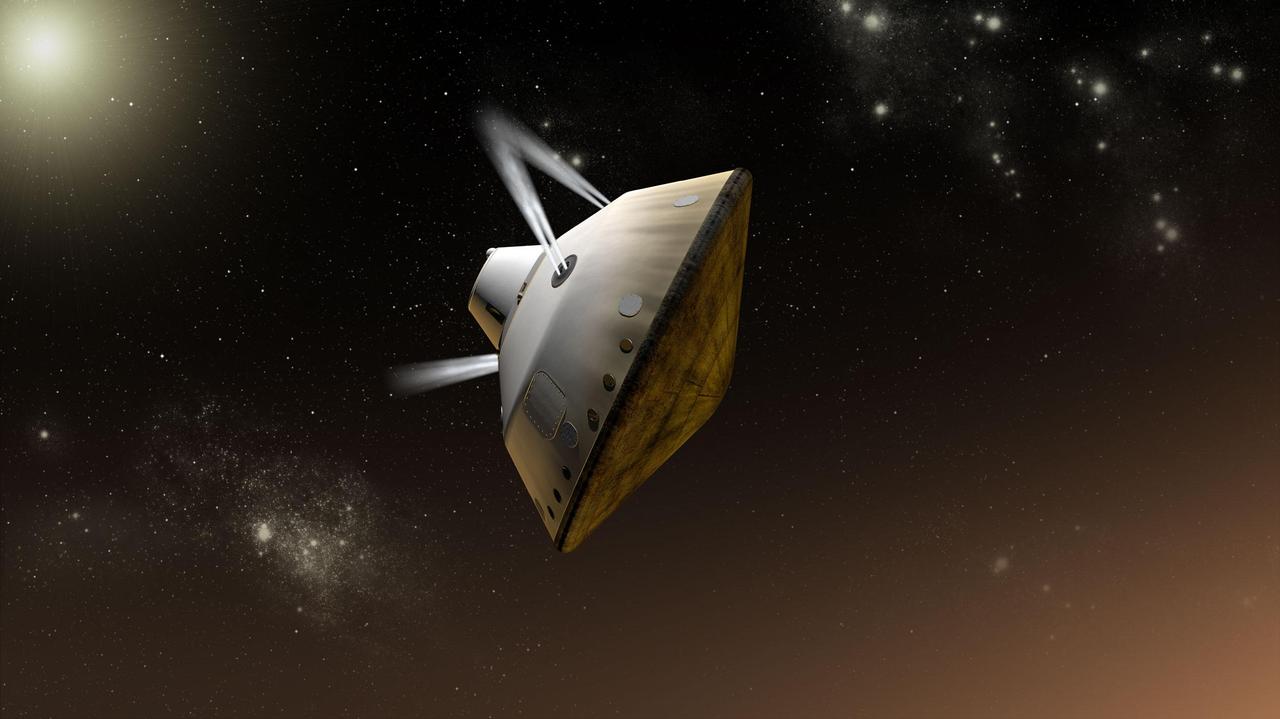
This artist concept shows thrusters firing during the entry, descent and landing phase for NASA Mars Science Laboratory mission to Mars.
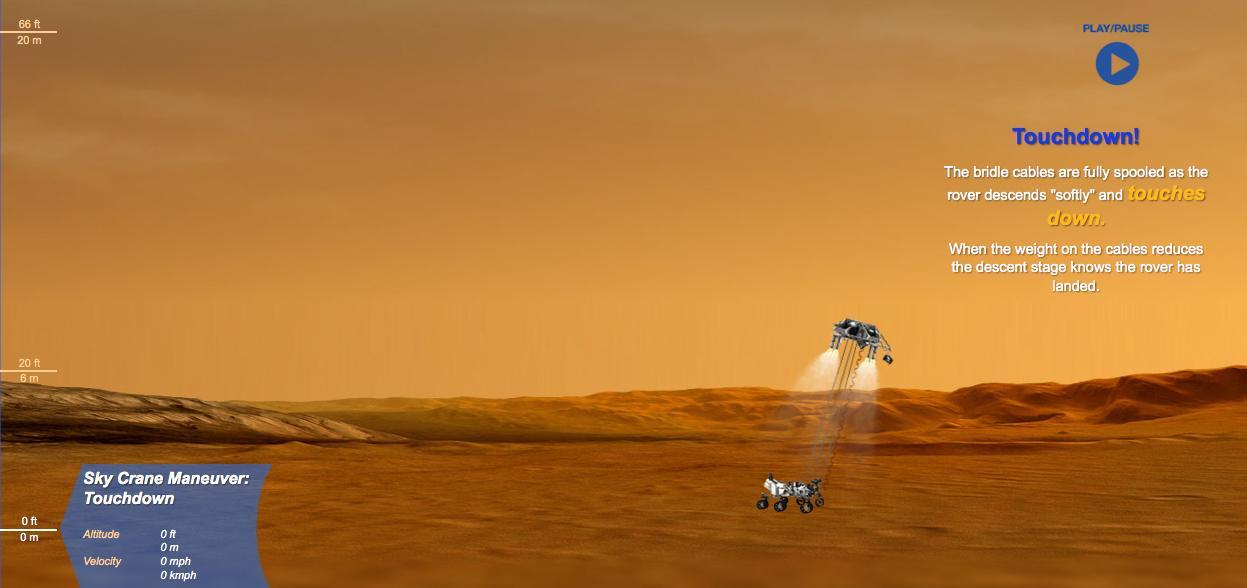
This is a still from an interactive web feature that guides you through the entry, descent and landing of NASA Curiosity rover.
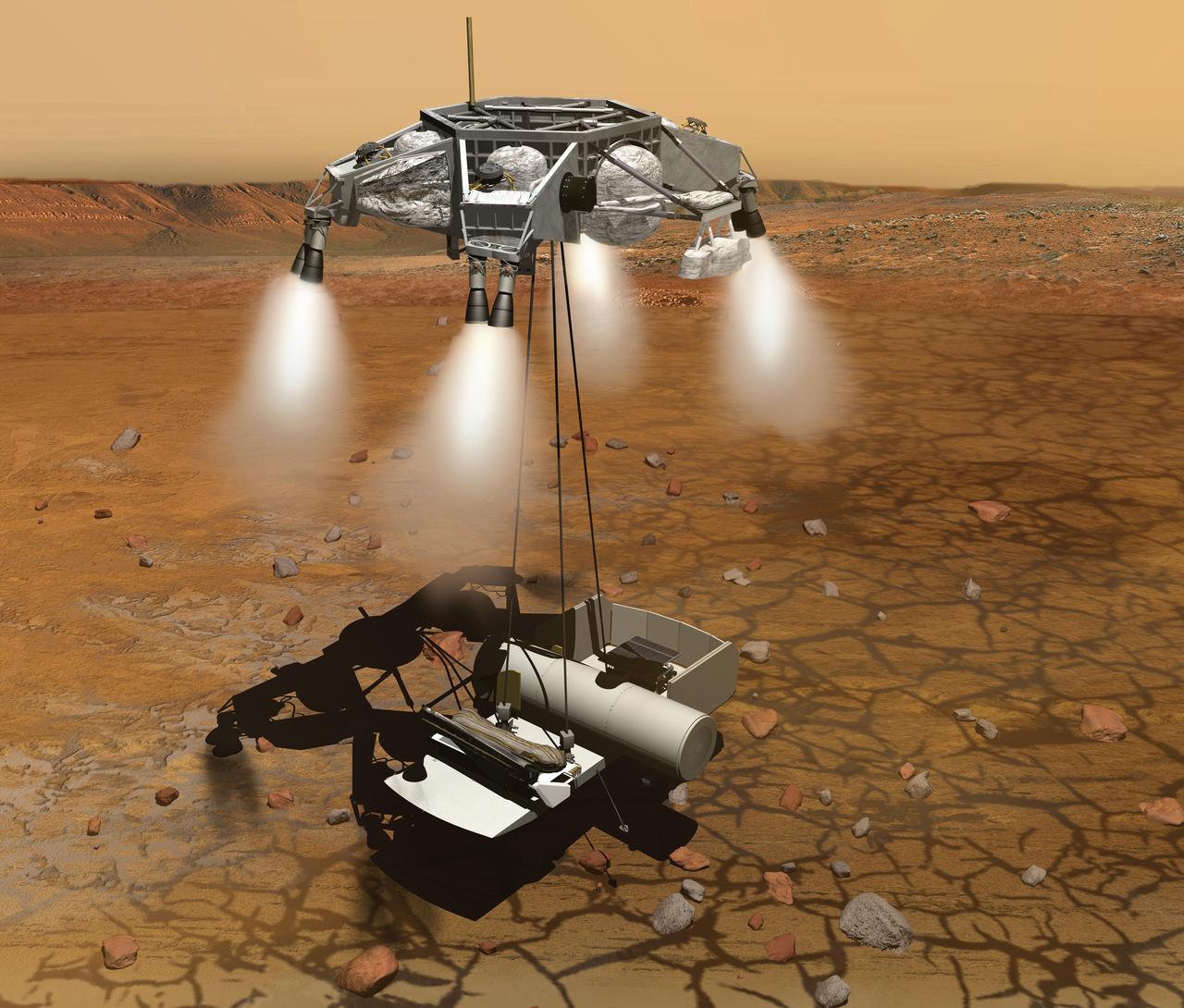
This artist concept of a proposed Mars sample return mission portrays a rocket-powered descent stage lowering a sample-retrieving rover and an ascent vehicle to the surface.
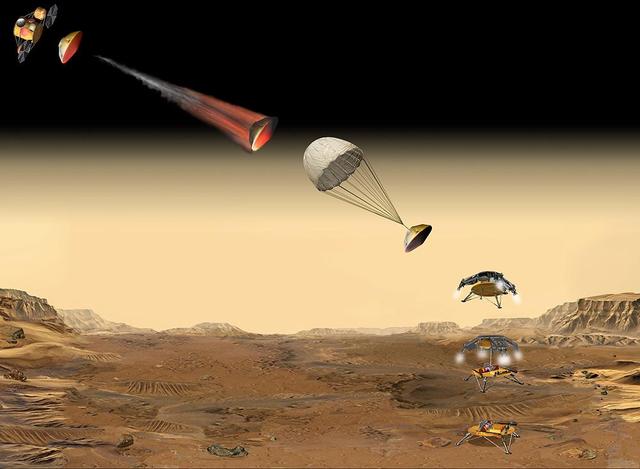
This artist concept of the proposed NASA Mars Sample Return mission shows the entry, descent and landing sequence the lander would undergo on its way to Mars.
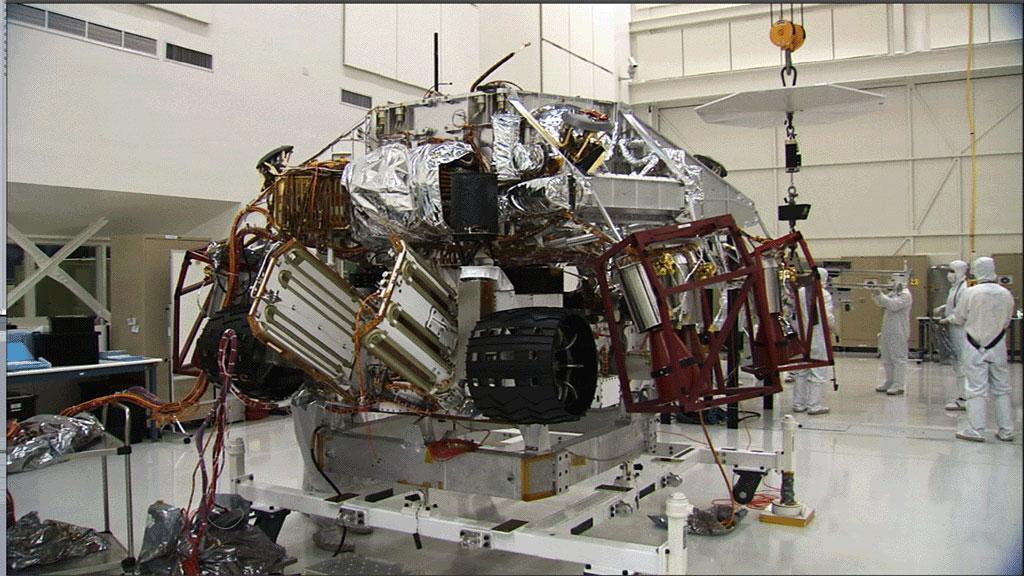
These three images show the progression of tacking NASA Mars Science Laboratory rover and its descent stage in one of NASA Jet Propulsion Laboratory’s clean room.
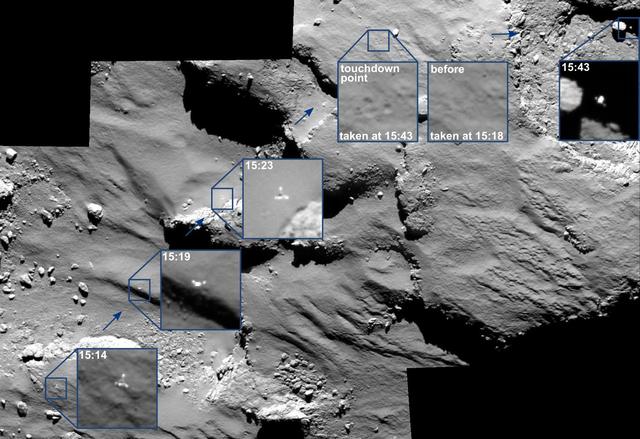
The descent of its comet lander Philae was captured by ESA Rosetta spacecraft main camera as the lander approached -- and then rebounded off -- the comet surface.
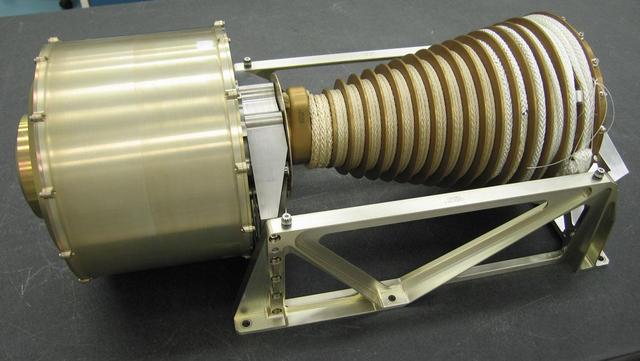
This is hardware for controlling the final lowering of NASA Mars Science Laboratory rover to the surface of Mars from the spacecraft hovering, rocket-powered descent stage.
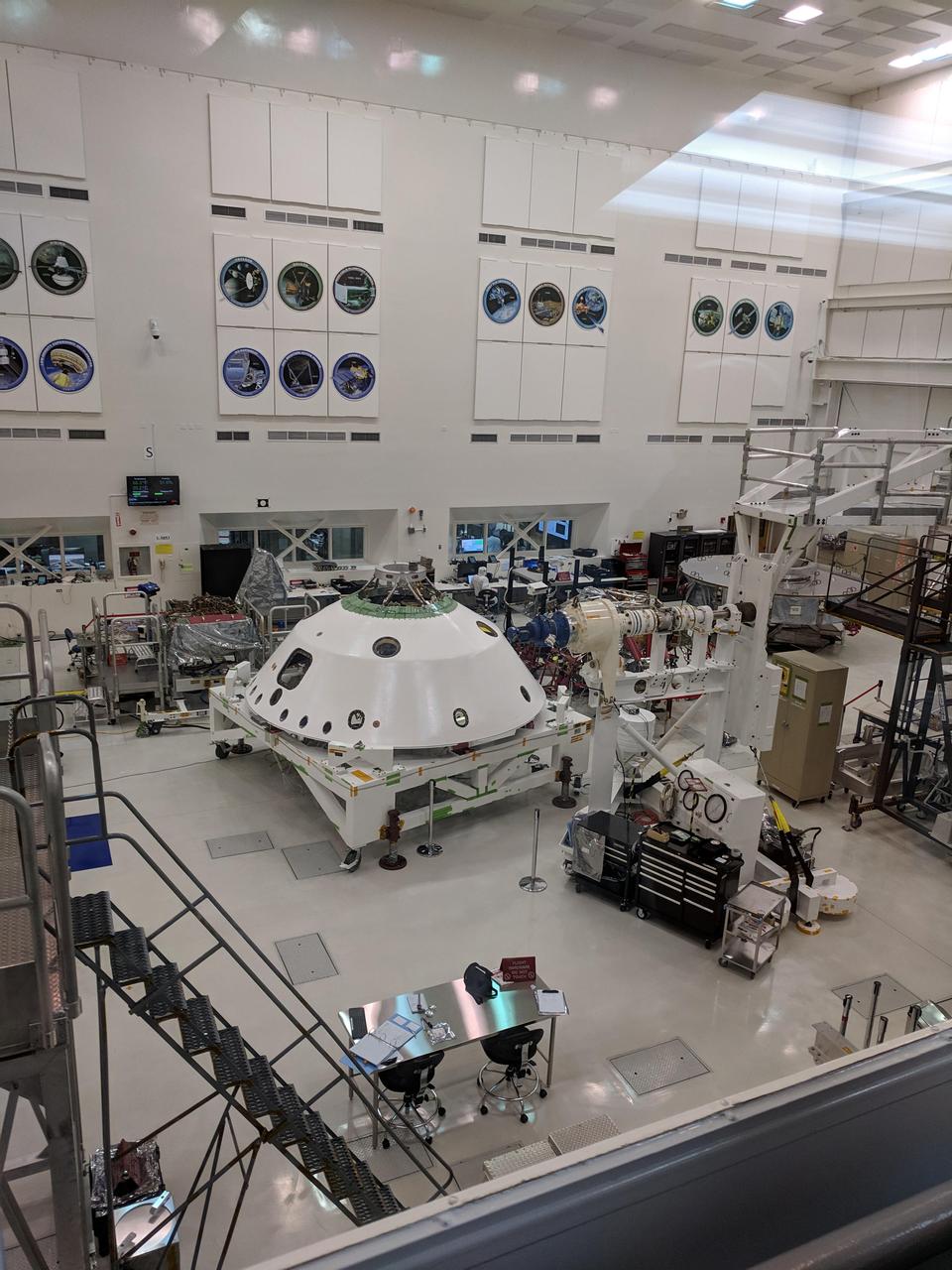
With the backshell that will help protect the Mars 2020 rover during its descent into the Martian atmosphere visible in the foreground, a technician on the project monitors the progress of Systems Test 1. Over two weeks in January 2019, 72 engineers and technicians assigned to the 2020 mission took over the High Bay 1 cleanroom in JPL's Spacecraft Assembly Facility to put the software and electrical systems aboard the mission's cruise, entry capsule, descent stage and rover through their paces. https://photojournal.jpl.nasa.gov/catalog/PIA22966
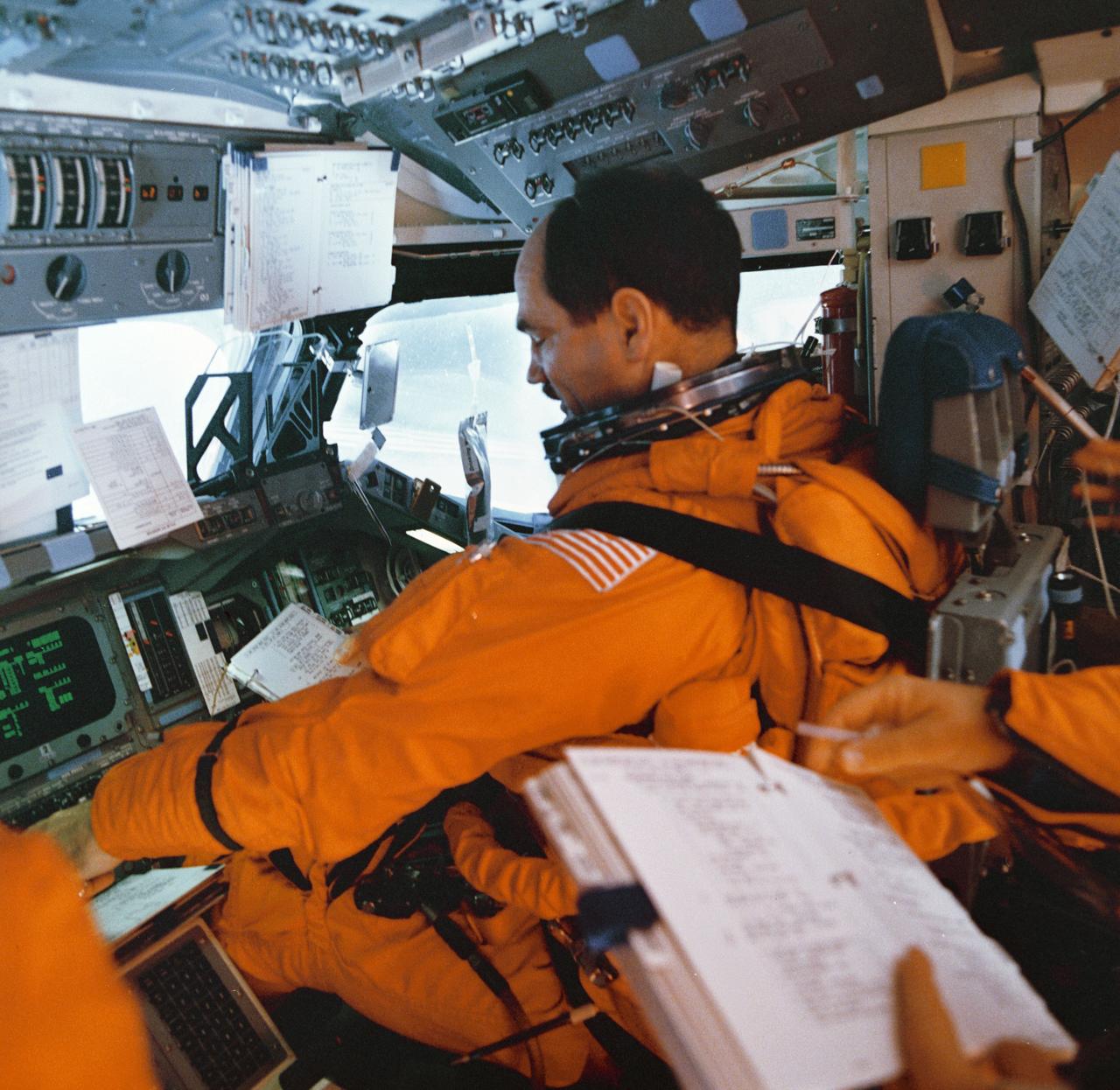
STS035-515-003 (2-10 Dec 1990) --- STS-35 Pilot Guy S. Gardner, wearing his launch and entry suit (LES), reviews descent checklist while at the pilots station on the forward flight deck of Columbia, Orbiter Vehicle (OV) 102. Crewmembers are conducting procedures related to the final stages of the mission and the landing sequence. Silhouetted in forward windows W4 and W5 are the head up display (HUD), flight mirror assembly, and a drinking water bag with straw.
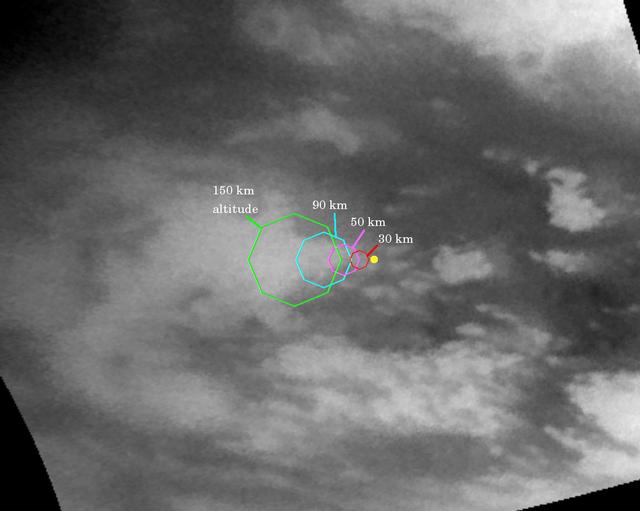
This map illustrates the planned imaging coverage for the Descent Imager/Spectral Radiometer, onboard the European Space Agency's Huygens probe during the probe's descent toward Titan's surface on Jan. 14, 2005. The Descent Imager/Spectral Radiometer is one of two NASA instruments on the probe. The colored lines delineate regions that will be imaged at different resolutions as the probe descends. On each map, the site where Huygens is predicted to land is marked with a yellow dot. This area is in a boundary between dark and bright regions. This map was made from the images taken by the Cassini spacecraft cameras on Oct. 26, 2004, at image scales of 4 to 6 kilometers (2.5 to 3.7 miles) per pixel. The images were obtained using a narrow band filter centered at 938 nanometers -- a near-infrared wavelength (invisible to the human eye) at which light can penetrate Titan's atmosphere to reach the surface and return through the atmosphere to be detected by the camera. The images have been processed to enhance surface details. Only brightness variations on Titan's surface are seen; the illumination is such that there is no shading due to topographic variations. For about two hours, the probe will fall by parachute from an altitude of 160 kilometers (99 miles) to Titan's surface. During the descent the camera on the probe and five other science instruments will send data about the moon's atmosphere and surface back to the Cassini spacecraft for relay to Earth. The Descent Imager/Spectral Radiometer will take pictures as the probe slowly spins, and some these will be made into panoramic views of Titan's surface. This map shows the planned coverage by the medium- and high-resolution. PIA06173 shows expected coverage by the Descent Imager/Spectral Radiometer side-looking imager and two downward-looking imagers - one providing medium-resolution and the other high-resolution coverage. http://photojournal.jpl.nasa.gov/catalog/PIA06173

This graphic shows the location of four cameras and a microphone on the spacecraft for NASA's Mars 2020 Perseverance mission. These cameras will capture the entry, descent, and landing phase of the mission. https://photojournal.jpl.nasa.gov/catalog/PIA24378
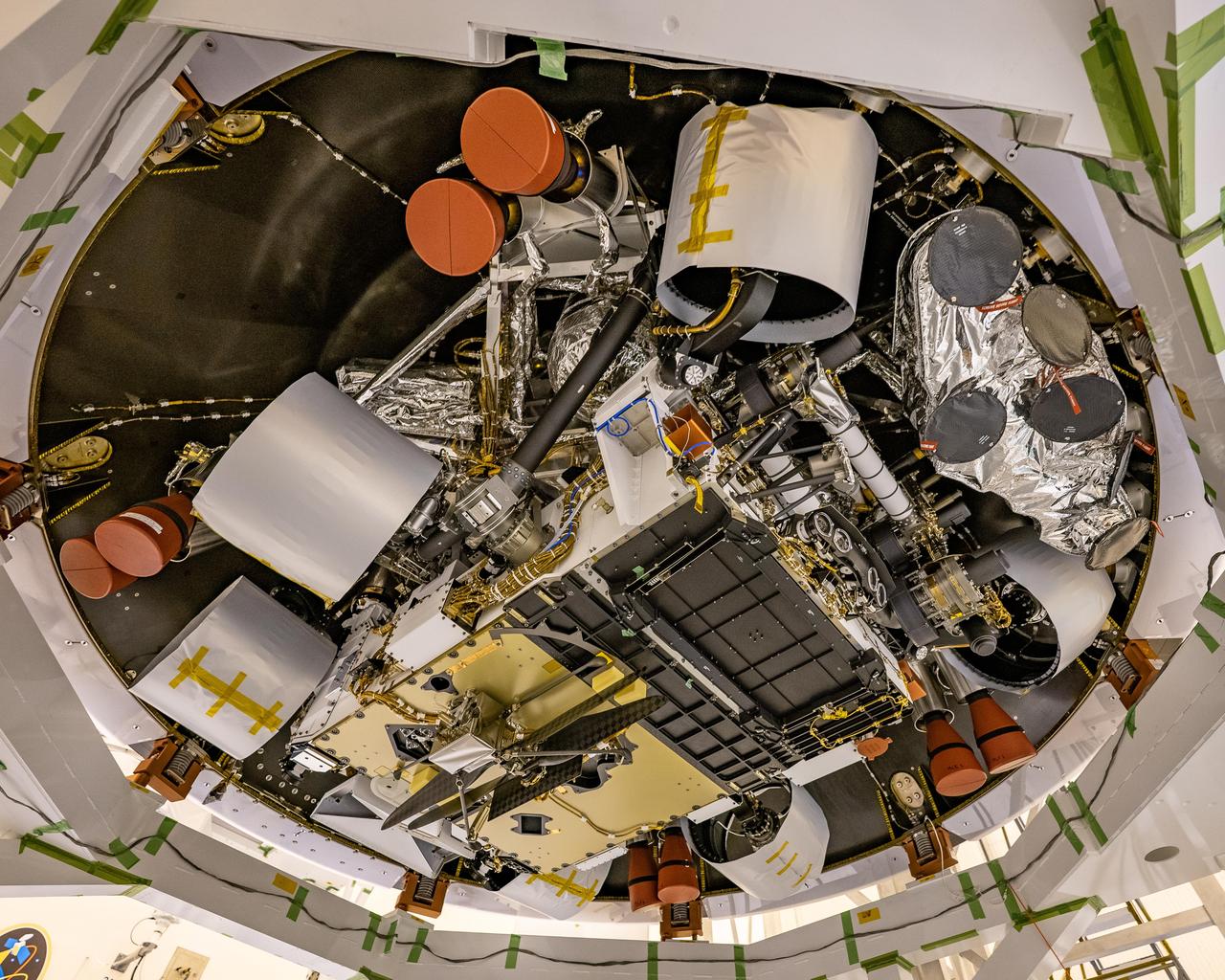
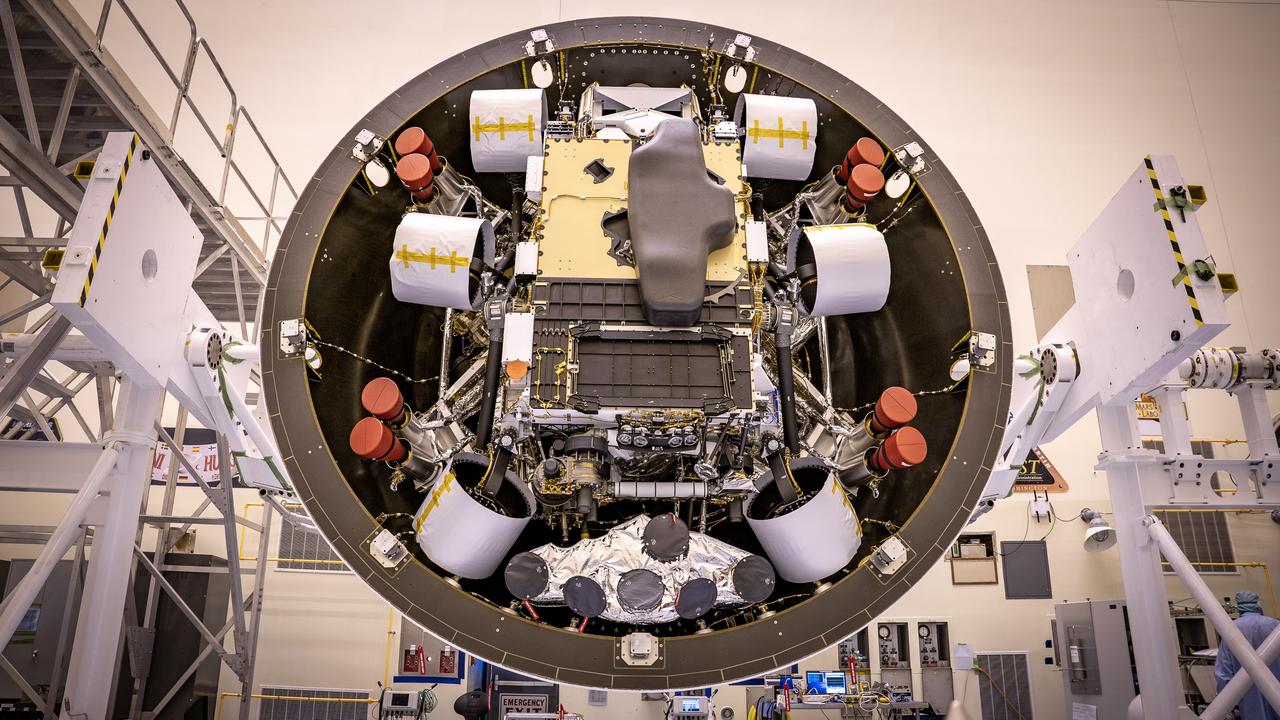
NASA's Mars Perseverance rover's descent stage was recently stacked atop the rover at Kennedy Space Center, and the two were placed in the back shell that will help protect them on their journey to Mars. In this image, taken on April 29, 2020, the underside of the rover is visible, along with the Ingenuity helicopter attached (lower center of the image). The outer ring is the base of the back shell, while the bell-shaped objects covered in red material are covers for engine nozzles on the descent stage. The wheels are covered in a protective material that will be removed before launch. https://photojournal.jpl.nasa.gov/catalog/PIA23884
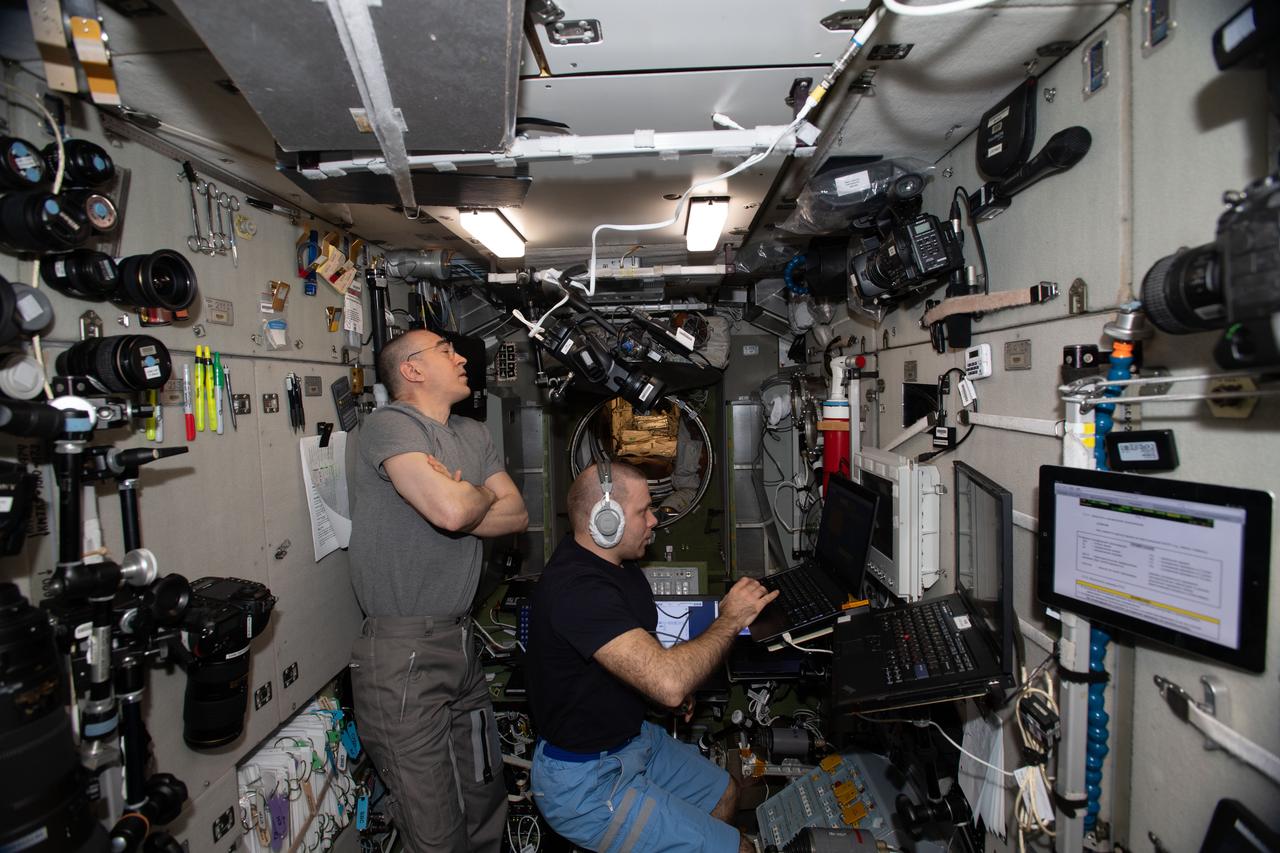
iss063e041665 (July 9, 2020) --- Roscosmos Flight Engineers (from left) Anatoly Ivanishin and Ivan Vagner practice a simulated emergency evacuation of the International Space Station on a computer inside the Zvezda service module. The duo with Expedition 63 Commander Chris Cassidy (out of frame) spent the afternoon reviewing procedures for quickly entering their Soyuz MS-16 crew ship for a rapid undocking and Earth re-entry.

This color thumbnail image was obtained by NASA Curiosity rover illustrating the first appearance of the left front wheel of the Curiosity rover after deployment of the suspension system as the vehicle was about to touch down on Mars.
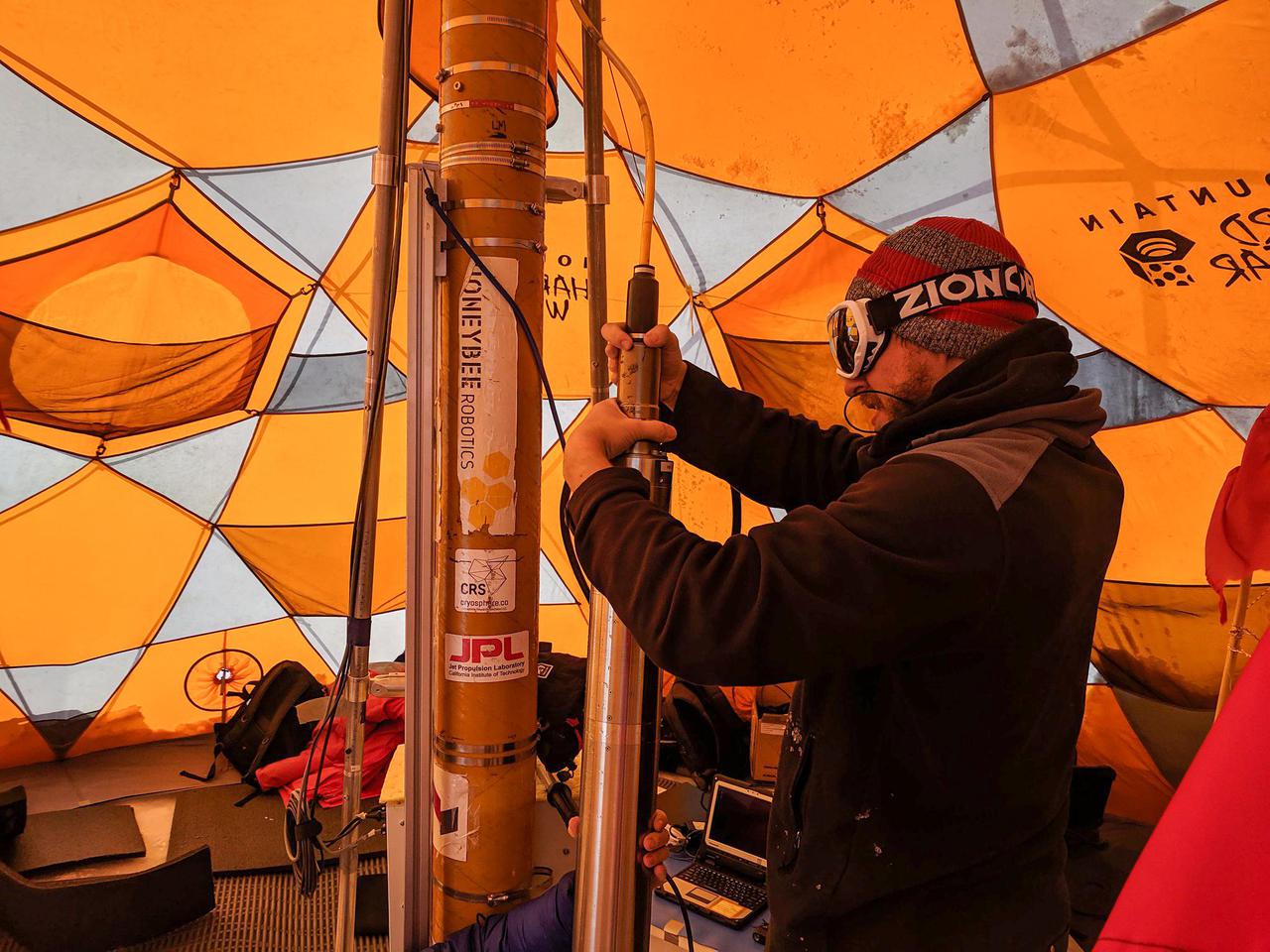
During 2019 field tests near Greenland's Summit Station, a high-elevation remote observing station, the WATSON (Wireline Analysis Tool for the Subsurface Observation of Northern ice sheets) instrument is put through its paces to seek out signs of life, or biosignatures, 360 feet (110 meters) down a borehole. In this photograph, a WATSON team member secures the tether to the top of the tube-like instrument and drill before lowering it into the ice. The tether also acts as the power cable and data feed. Care must be taken to ensure a tight connection between the tether and instrument, else the instrument could be lost in the ice. WATSON could one day be launched aboard a robotic mission to seek out biosignatures on the ocean moons of Enceladus, Europa, or even Titan. The WATSON team hopes to test the instrument in a variety of cold locations on Earth to see how the distribution and variety of biosignatures change depending on where they are. By testing WATSON in different Earth analogs — areas on Earth that can stand in for those on other worlds — scientists would be able to better understand the chemical fingerprints of any biosignatures detected on other worlds. https://photojournal.jpl.nasa.gov/catalog/PIA24170