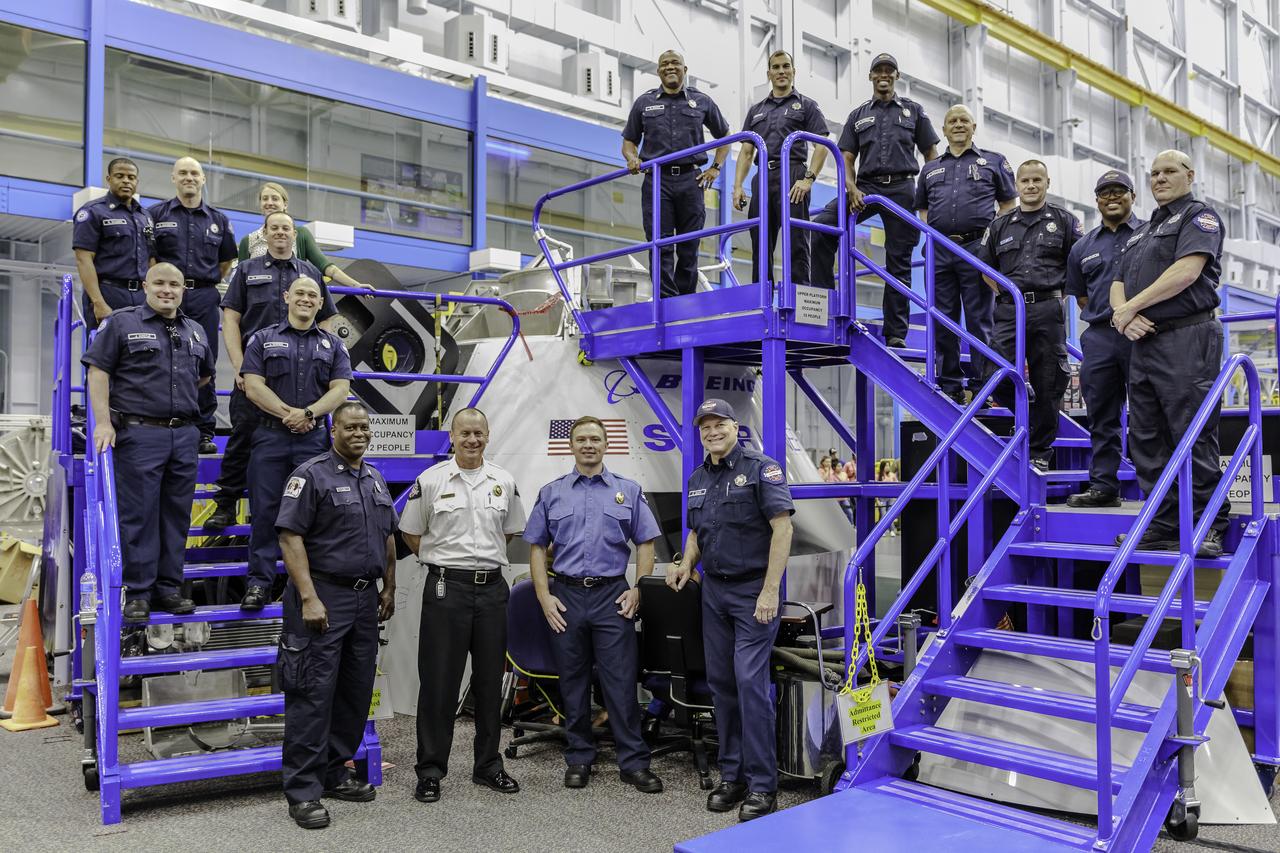
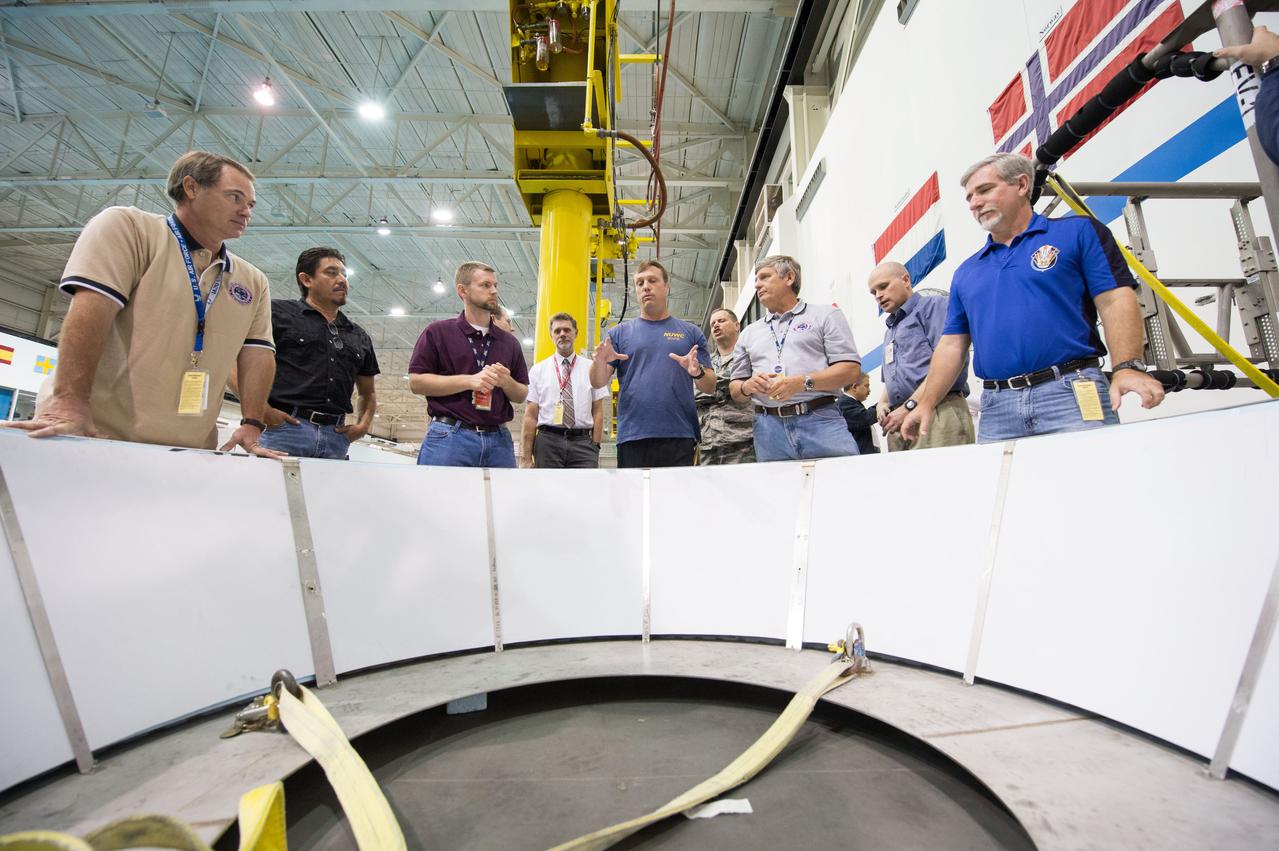
The Boeing extrication team train on the Boeing Mock-up Trainer from May 25 through May 28, 2018, at NASA's Johnson Space Center in Houston. The extrication team is comprised of firefighters from various U.S. Boeing sites. Each member of the team brings an expertise in Aerospace Confined Space Rescue, are Emergency Medical Technicians and have years of rescue experience. The team is highly motivated to getting the crew out quickly, safely and efficiently. The training at Johnson included suit training, side hatch egress, and Intravehicular Activity (IVA) rigging and egress. The week included a run for record on IVA egress for a testing requirement. Participants also included NASA Medical, the 45th Operations Group's Detachment 3, based at Patrick Air Force Base, and U.S. Air Force pararescue representation.
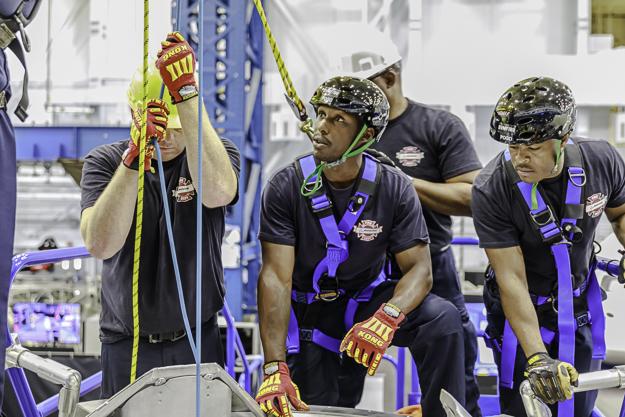
The Boeing extrication team train on the Boeing Mock-up Trainer from May 25 through May 28, 2018, at NASA's Johnson Space Center in Houston. The extrication team is comprised of firefighters from various U.S. Boeing sites. Each member of the team brings an expertise in Aerospace Confined Space Rescue, are Emergency Medical Technicians and have years of rescue experience. The team is highly motivated to getting the crew out quickly, safely and efficiently. The training at Johnson included suit training, side hatch egress, and Intravehicular Activity (IVA) rigging and egress. The week included a run for record on IVA egress for a testing requirement. Participants also included NASA Medical, the 45th Operations Group's Detachment 3, based at Patrick Air Force Base, and U.S. Air Force pararescue representation.
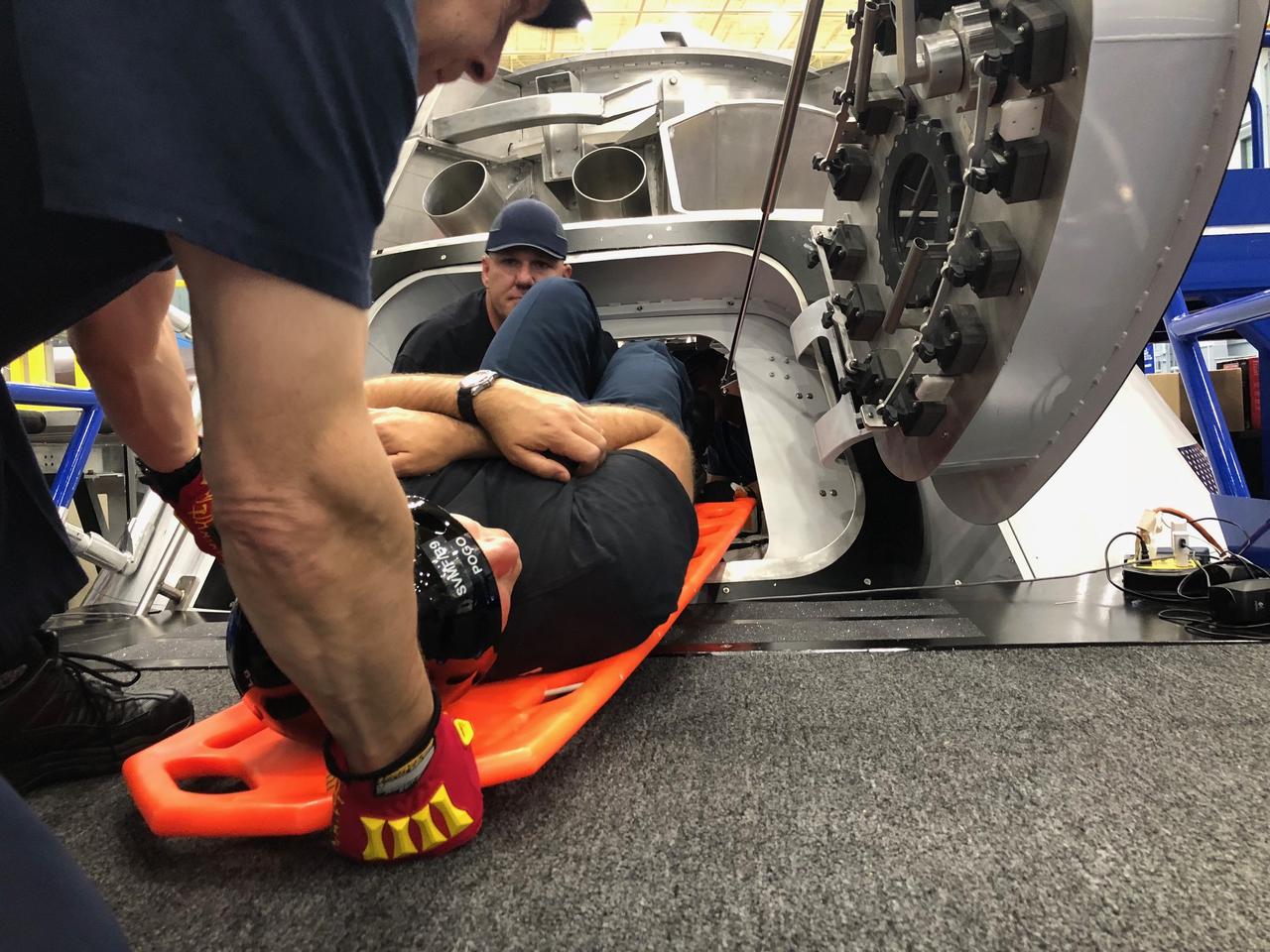
The Boeing extrication team train on the Boeing Mock-up Trainer from May 25 through May 28, 2018, at NASA's Johnson Space Center in Houston. The extrication team is comprised of firefighters from various U.S. Boeing sites. Each member of the team brings an expertise in Aerospace Confined Space Rescue, are Emergency Medical Technicians and have years of rescue experience. The team is highly motivated to getting the crew out quickly, safely and efficiently. The training at Johnson included suit training, side hatch egress, and Intravehicular Activity (IVA) rigging and egress. The week included a run for record on IVA egress for a testing requirement. Participants also included NASA Medical, the 45th Operations Group's Detachment 3, based at Patrick Air Force Base, and U.S. Air Force pararescue representation.
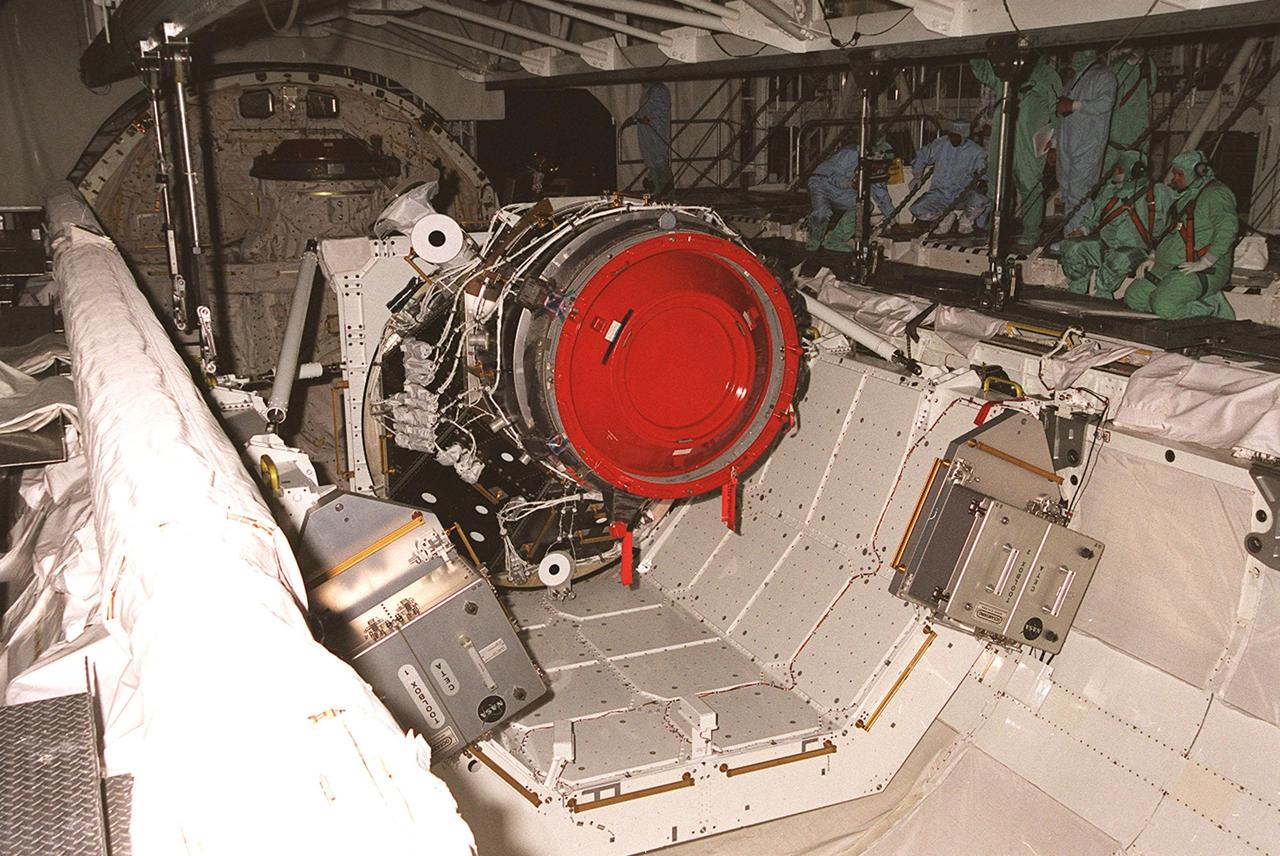
KENNEDY SPACE CENTER, FLA. -- In the Orbiter Processing Facility bay 1, workers detach the overhead crane from the Pressurized Mating Adapter -3 (PMA-3), which sits in the payload bay of the orbiter Discovery. A component of the International Space Station, the PMA-3 will fly on Shuttle mission STS-92, scheduled to launch Oct. 5. The mission will be the fifth flight to the Space Station, and the 100th Shuttle flight overall. PMA-3 provides shuttle docking port for solar array installation on flight 4A (mission STS-97 scheduled for Nov. 30), and Lab installation on flight 5A (mission STS-98, scheduled for Jan. 18, 2001)
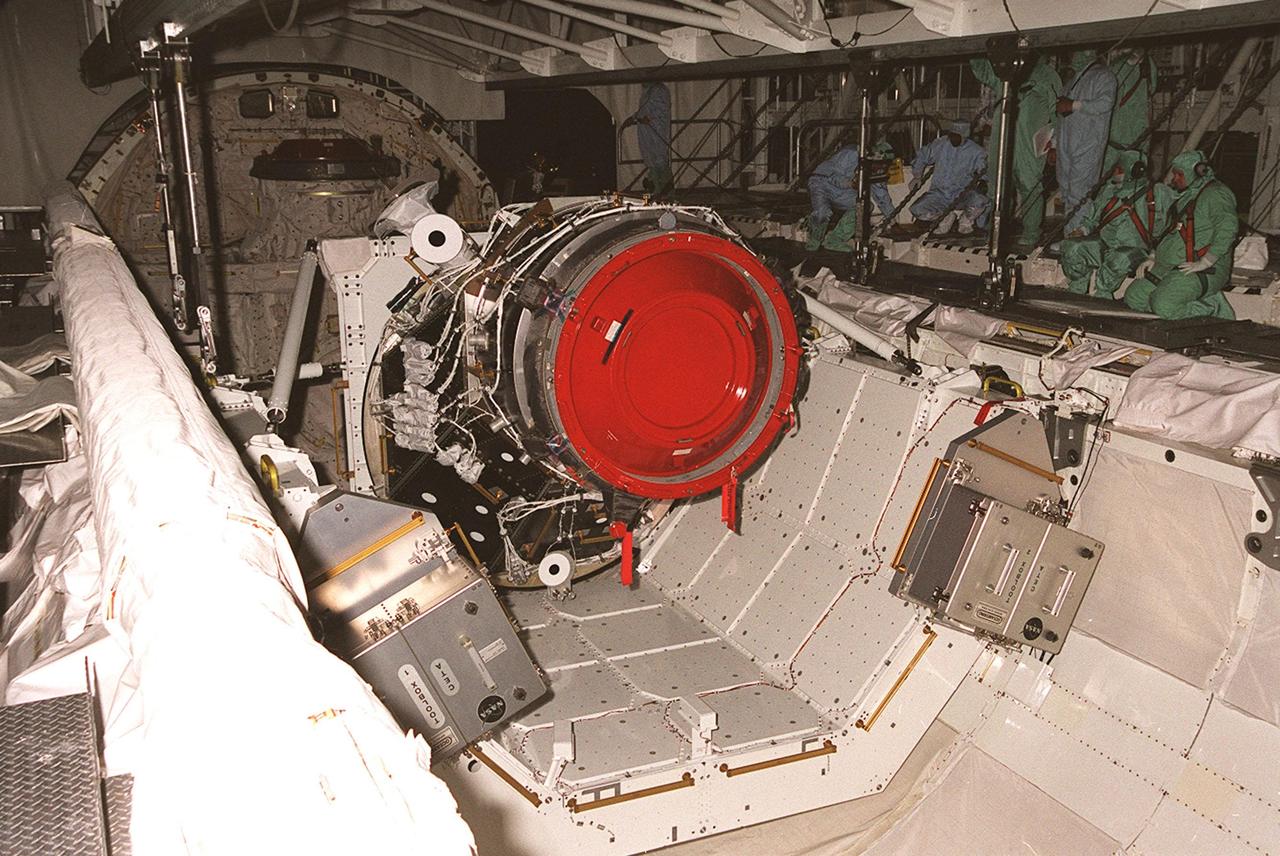
KENNEDY SPACE CENTER, FLA. -- In the Orbiter Processing Facility bay 1, workers detach the overhead crane from the Pressurized Mating Adapter -3 (PMA-3), which sits in the payload bay of the orbiter Discovery. A component of the International Space Station, the PMA-3 will fly on Shuttle mission STS-92, scheduled to launch Oct. 5. The mission will be the fifth flight to the Space Station, and the 100th Shuttle flight overall. PMA-3 provides shuttle docking port for solar array installation on flight 4A (mission STS-97 scheduled for Nov. 30), and Lab installation on flight 5A (mission STS-98, scheduled for Jan. 18, 2001)
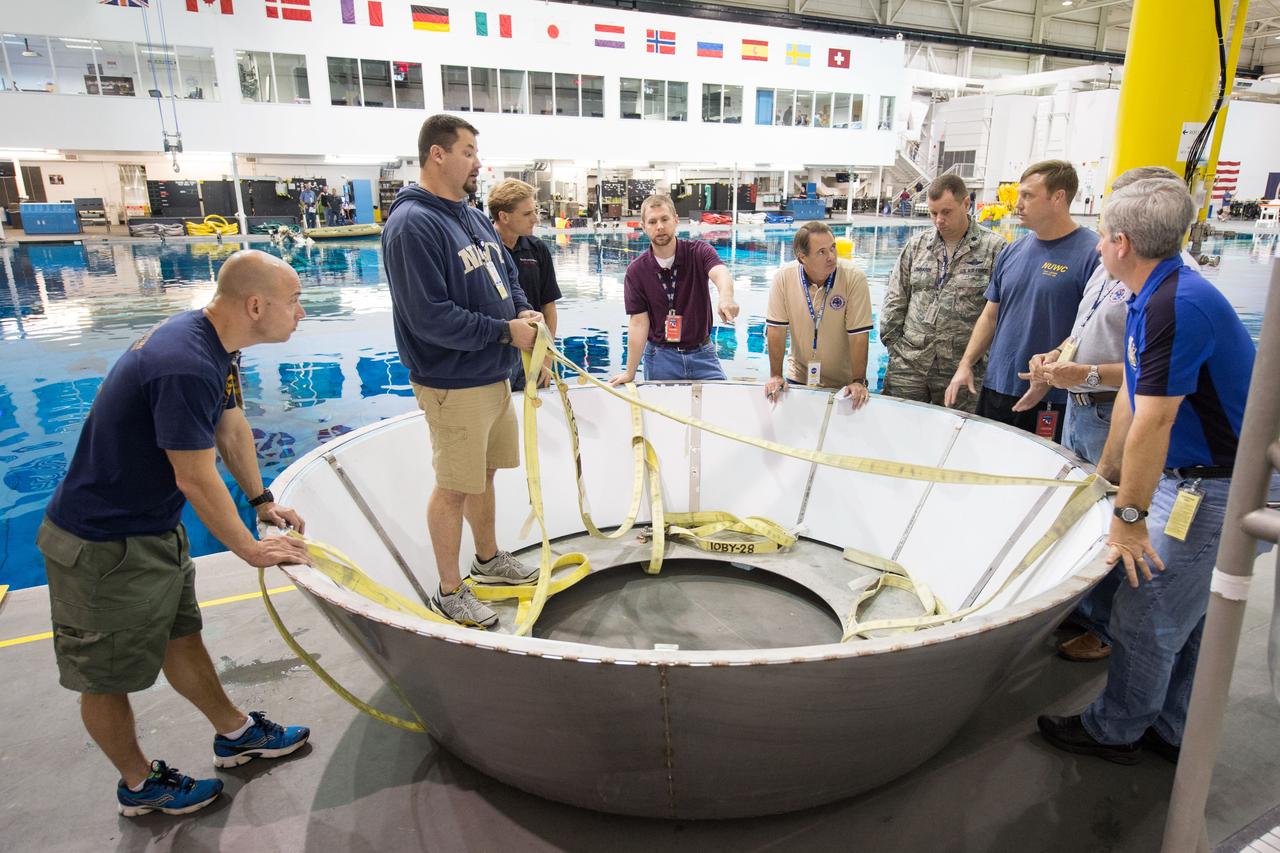
NASA, Department of Defense personnel from Detachment 3 out of Patrick Air Force Base, and the Mobile Diving Salvage Unit based in San Diego conduct a testing session at the Neutral Buoyancy Lab in Houston on Dec. 5, 2012 to evaluate procedures, mockups, and prototype hardware used to train personnel in recovery of the Orion crew module and the forward bay cover for Exploration Flight Test-1 (EFT-1). Part of Batch image transfer from Flickr.

iss059e087862 (June 3, 2019) --- NASA astronaut Anne McClain signs the inside of the vestibule between the SpaceX Dragon cargo craft and the Harmony module. The hatch to Dragon was later closed and the resupply ship detached from Harmony before it was released from the grips of the Canadarm2 robotic arm. Dragon spent nearly a month attached to the International Space Station.
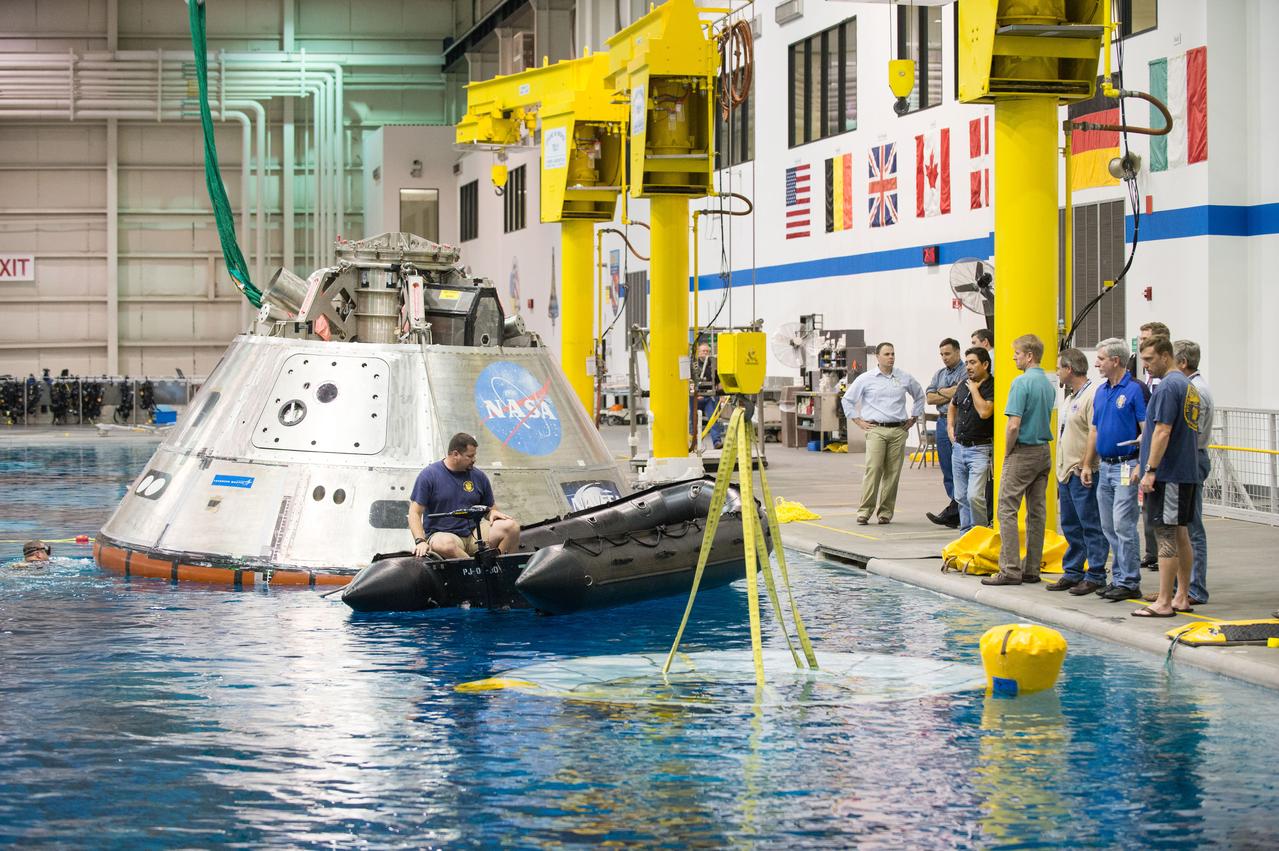
NASA, Department of Defense personnel from Detachment 3 out of Patrick Air Force Base, and the Mobile Diving Salvage Unit based in San Diego conduct a testing session at the Neutral Buoyancy Lab in Houston on Dec. 5, 2012 to evaluate procedures, mockups, and prototype hardware used to train personnel in recovery of the Orion crew module and the forward bay cover for Exploration Flight Test-1 (EFT-1). Part of Batch image transfer from Flickr.
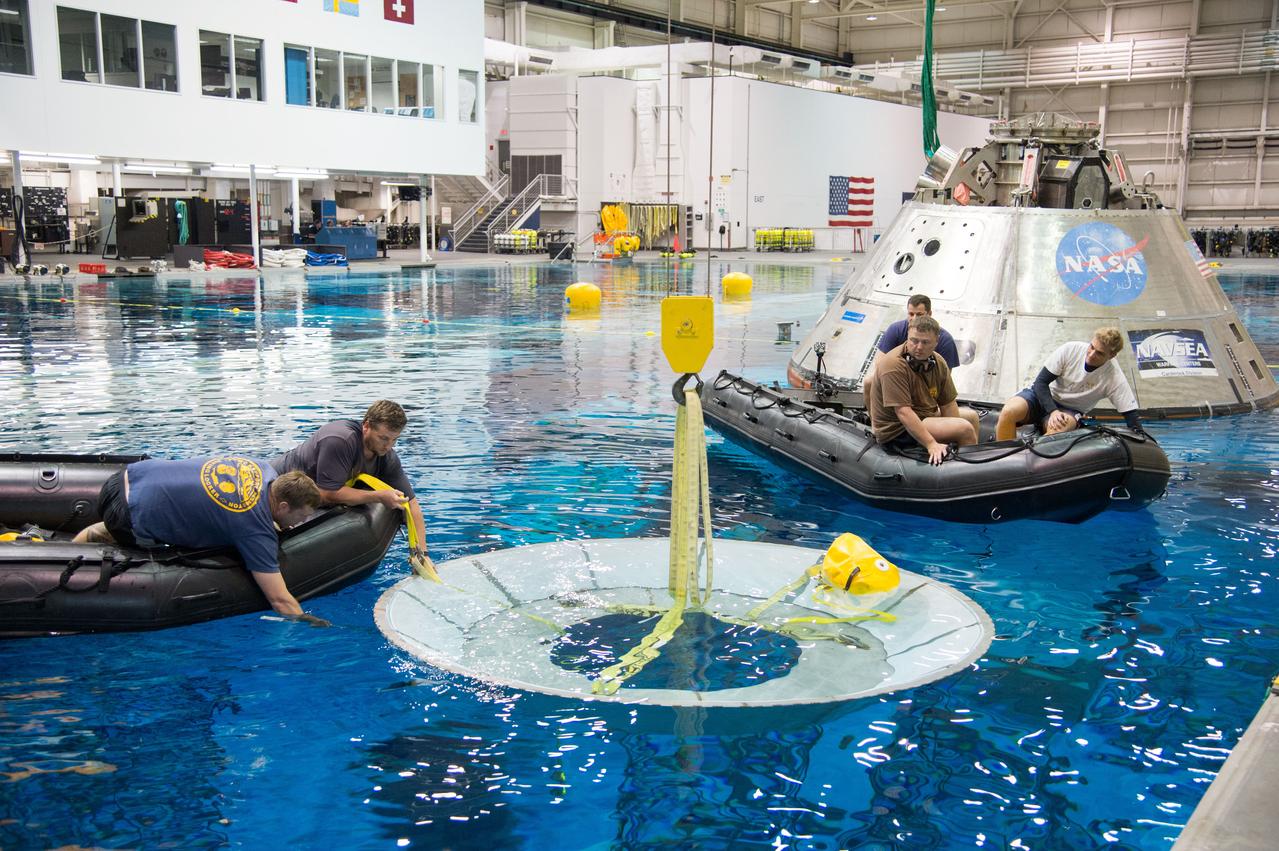
NASA, Department of Defense personnel from Detachment 3 out of Patrick Air Force Base, and the Mobile Diving Salvage Unit based in San Diego conduct a testing session at the Neutral Buoyancy Lab in Houston on Dec. 5, 2012 to evaluate procedures, mockups, and prototype hardware used to train personnel in recovery of the Orion crew module and the forward bay cover for Exploration Flight Test-1 (EFT-1). Part of Batch image transfer from Flickr.
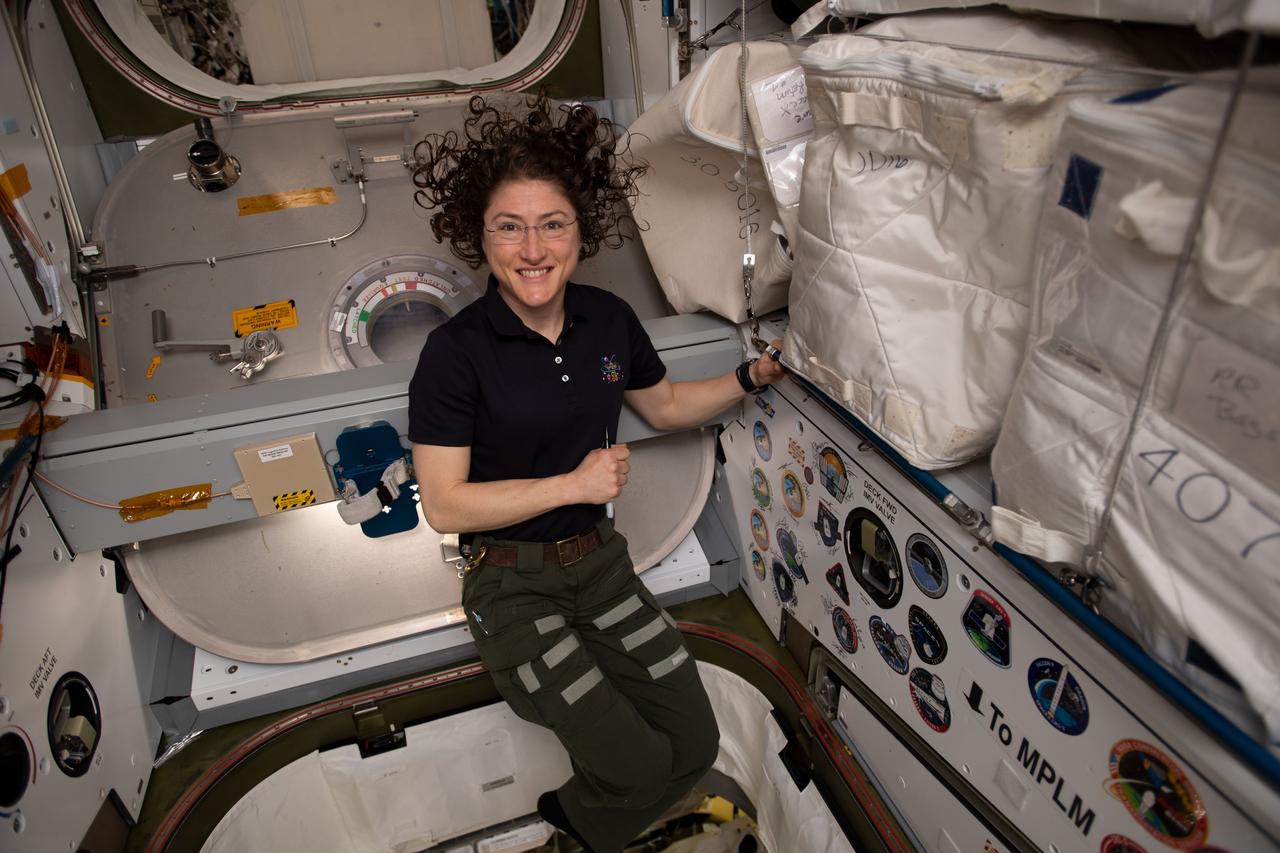
iss059e087869 (June 3, 2019) --- NASA astronaut Christina Koch poses for a portrait inside of the vestibule between the SpaceX Dragon cargo craft and the Harmony module. The hatch to Dragon was later closed and the resupply ship detached from Harmony before it was released from the grips of the Canadarm2 robotic arm. Dragon spent nearly a month attached to the International Space Station.
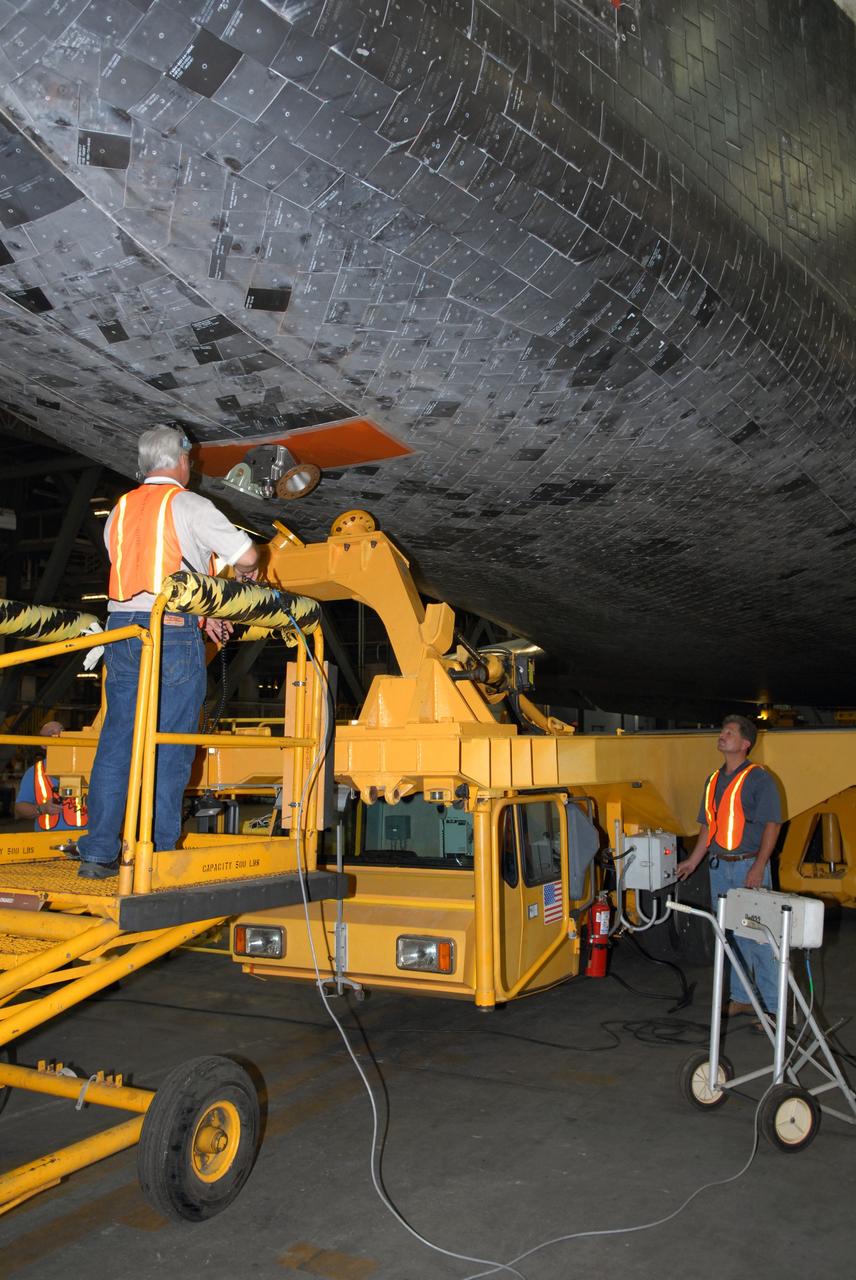
CAPE CANAVERAL, Fla. – In the Vehicle Assembly Building transfer aisle at NASA's Kennedy Space Center, workers have detached space shuttle Atlantis from its transporter. An overhead crane will lift Atlantis to vertical for transfer to high bay 3 to be stacked with its external fuel tank and twin solid rocket boosters. After additional preparations are made, the shuttle will be rolled out to Launch Pad 39A to prepare for launch on the STS-125 mission targeted for Oct. 8. Photo credit: NASA/Jack Pfaller
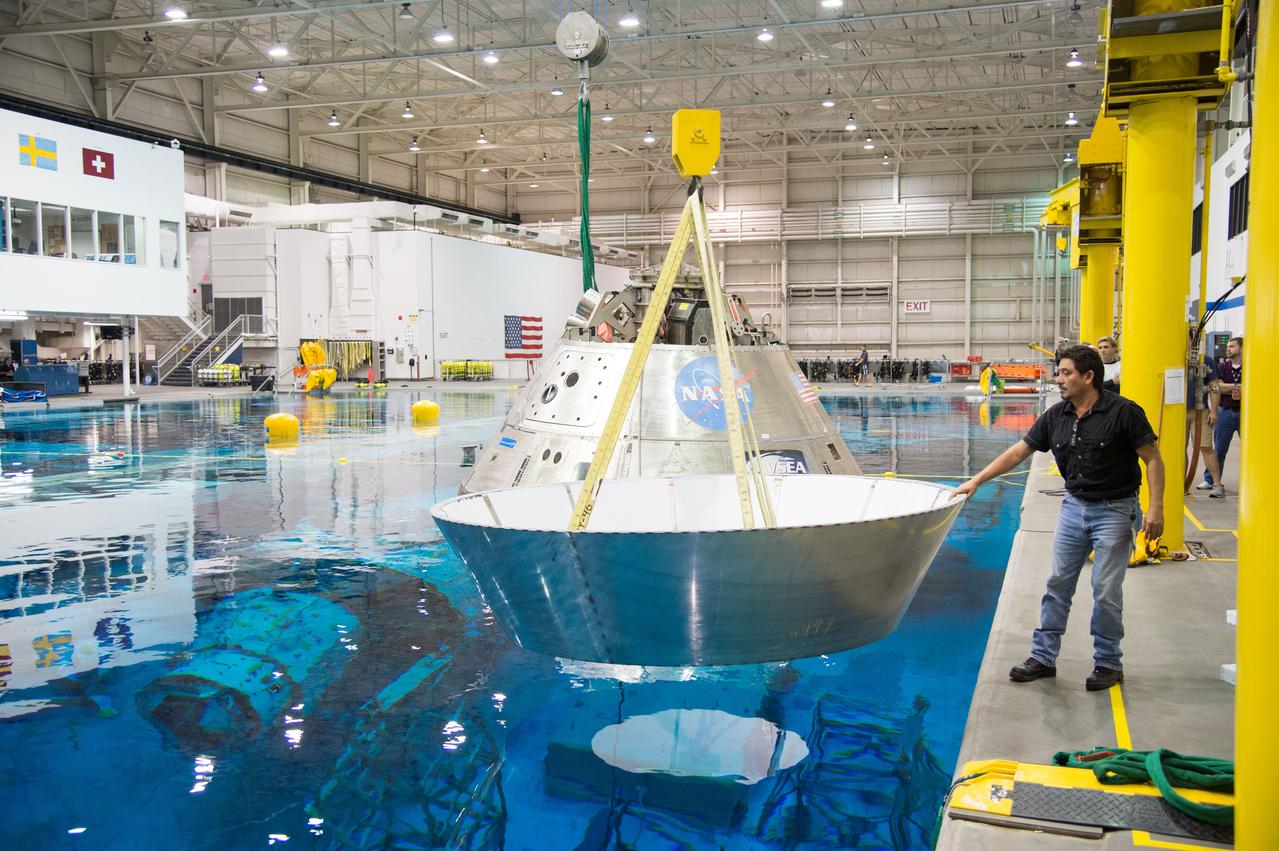
NASA, Department of Defense personnel from Detachment 3 out of Patrick Air Force Base, and the Mobile Diving Salvage Unit based in San Diego conduct a testing session at the Neutral Buoyancy Lab in Houston on Dec. 5, 2012 to evaluate procedures, mockups, and prototype hardware used to train personnel in recovery of the Orion crew module and the forward bay cover for Exploration Flight Test-1 (EFT-1). Part of Batch image transfer from Flickr.
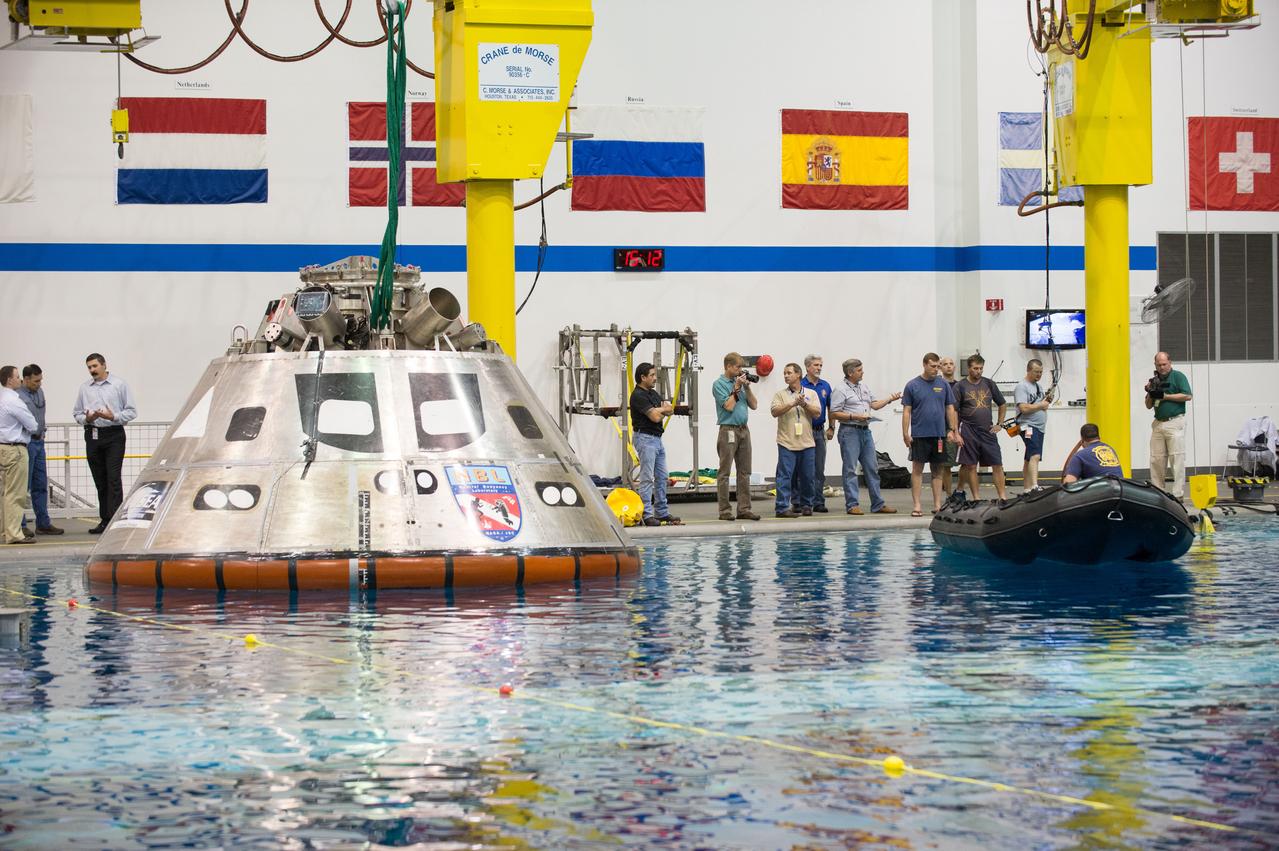
NASA, Department of Defense personnel from Detachment 3 out of Patrick Air Force Base, and the Mobile Diving Salvage Unit based in San Diego conduct a testing session at the Neutral Buoyancy Lab in Houston on Dec. 5, 2012 to evaluate procedures, mockups, and prototype hardware used to train personnel in recovery of the Orion crew module and the forward bay cover for Exploration Flight Test-1 (EFT-1). Part of Batch image transfer from Flickr.
NASA, Department of Defense personnel from Detachment 3 out of Patrick Air Force Base, and the Mobile Diving Salvage Unit based in San Diego conduct a testing session at the Neutral Buoyancy Lab in Houston on Dec. 5, 2012 to evaluate procedures, mockups, and prototype hardware used to train personnel in recovery of the Orion crew module and the forward bay cover for Exploration Flight Test-1 (EFT-1). Part of Batch image transfer from Flickr.
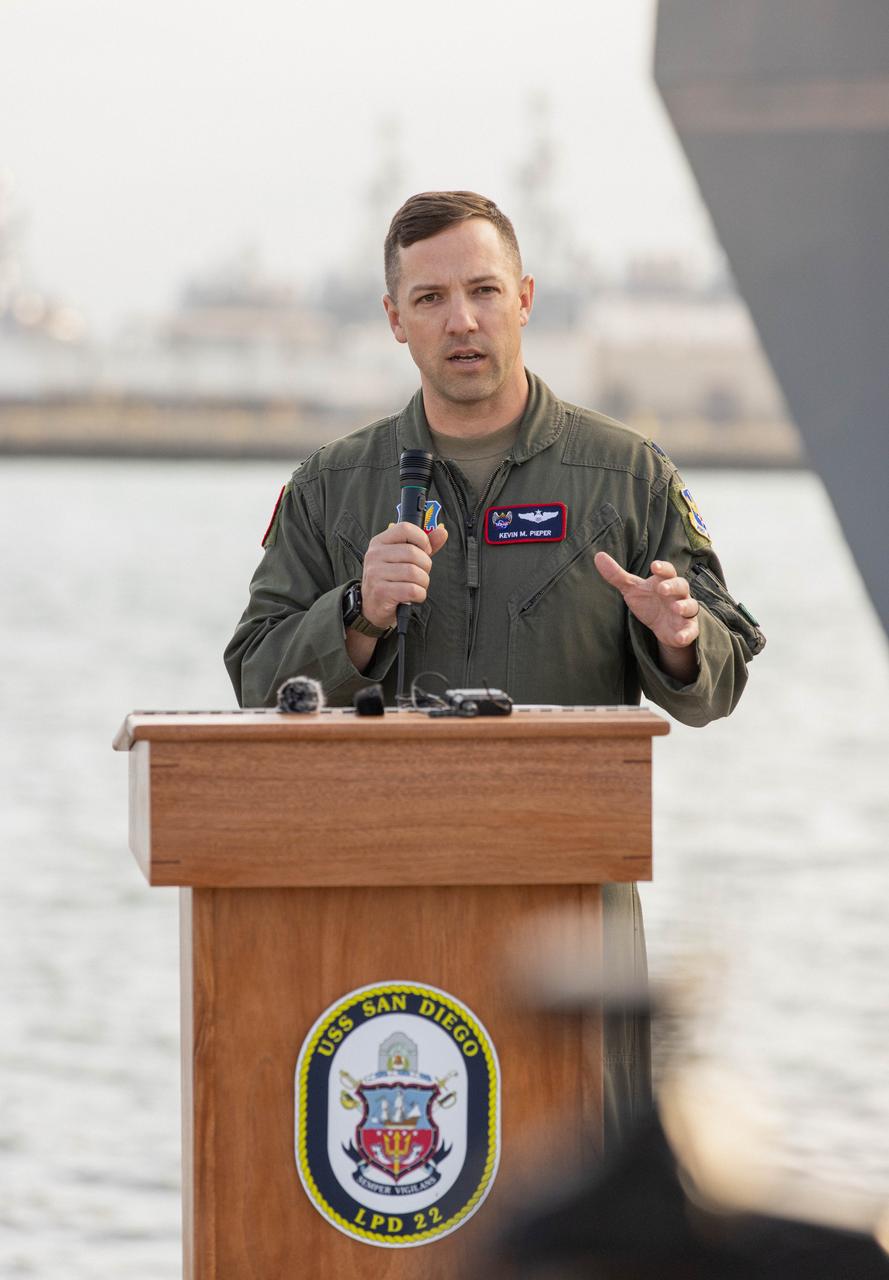
Lt. Col. Kevin Pieper, First Air Force, Detachment 3 Artemis program director discusses the Underway Recovery Test (URT-11) during a news conference held in San Diego, California on Wednesday, Feb. 28, 2024. URT-11 performed by NASA’s Exploration Ground System’s Landing and Recovery team, partners from the Department of Defense, and U.S. Navy personnel aboard the USS San Diego is the eleventh in a series of Artemis recovery tests, and the first the Artemis II recovery procedures involved the astronauts.
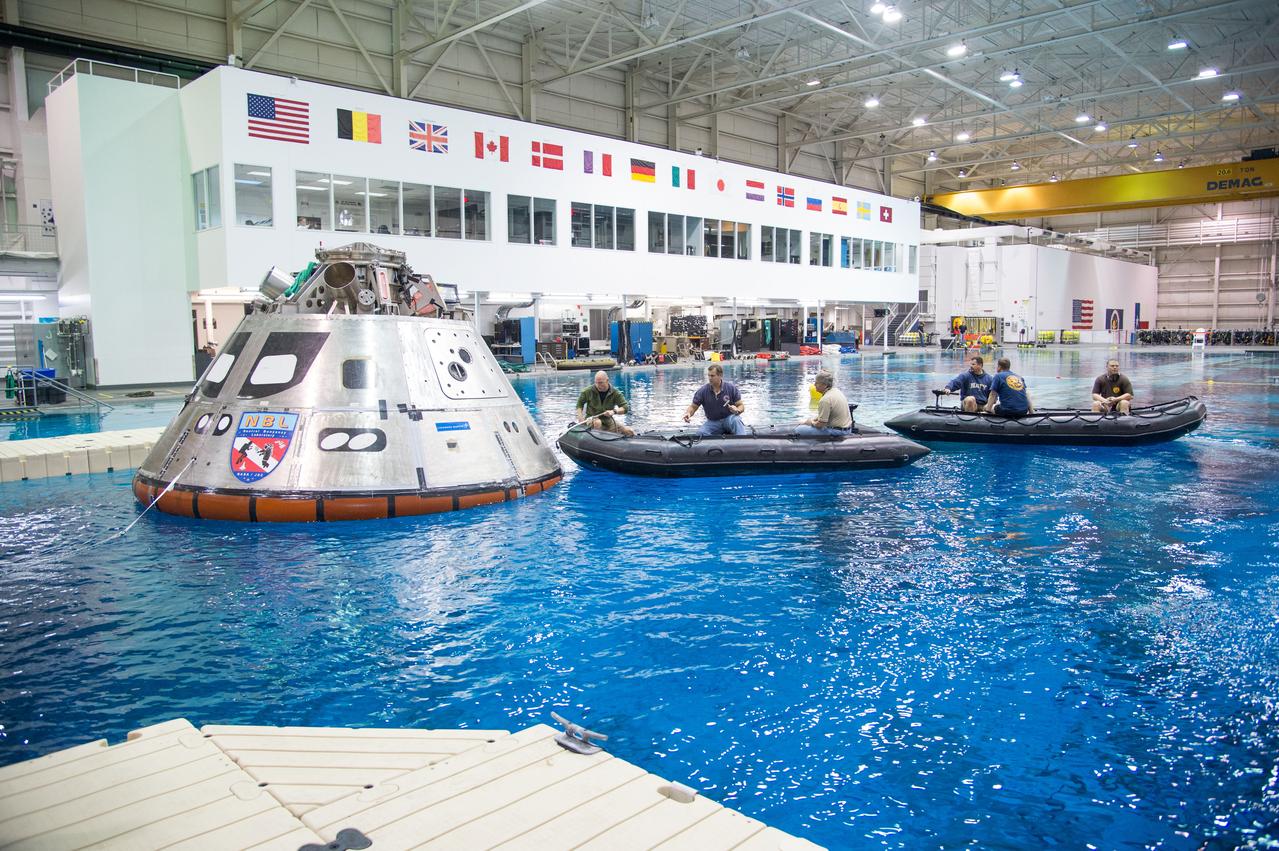
NASA, Department of Defense personnel from Detachment 3 out of Patrick Air Force Base, and the Mobile Diving Salvage Unit based in San Diego conduct a testing session at the Neutral Buoyancy Lab in Houston on Dec. 5, 2012 to evaluate procedures, mockups, and prototype hardware used to train personnel in recovery of the Orion crew module and the forward bay cover for Exploration Flight Test-1 (EFT-1). Part of Batch image transfer from Flickr.
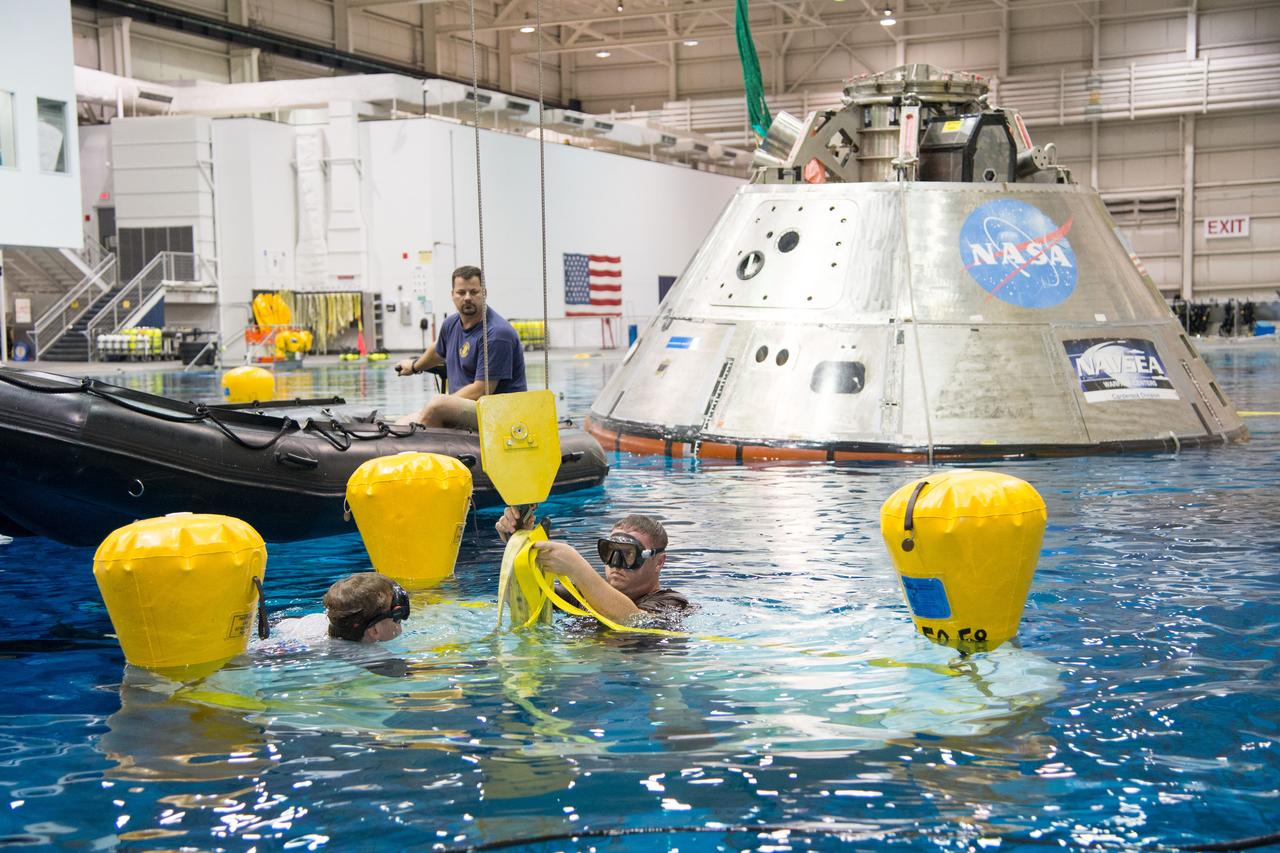
NASA, Department of Defense personnel from Detachment 3 out of Patrick Air Force Base, and the Mobile Diving Salvage Unit based in San Diego conduct a testing session at the Neutral Buoyancy Lab in Houston on Dec. 5, 2012 to evaluate procedures, mockups, and prototype hardware used to train personnel in recovery of the Orion crew module and the forward bay cover for Exploration Flight Test-1 (EFT-1). Part of Batch image transfer from Flickr.
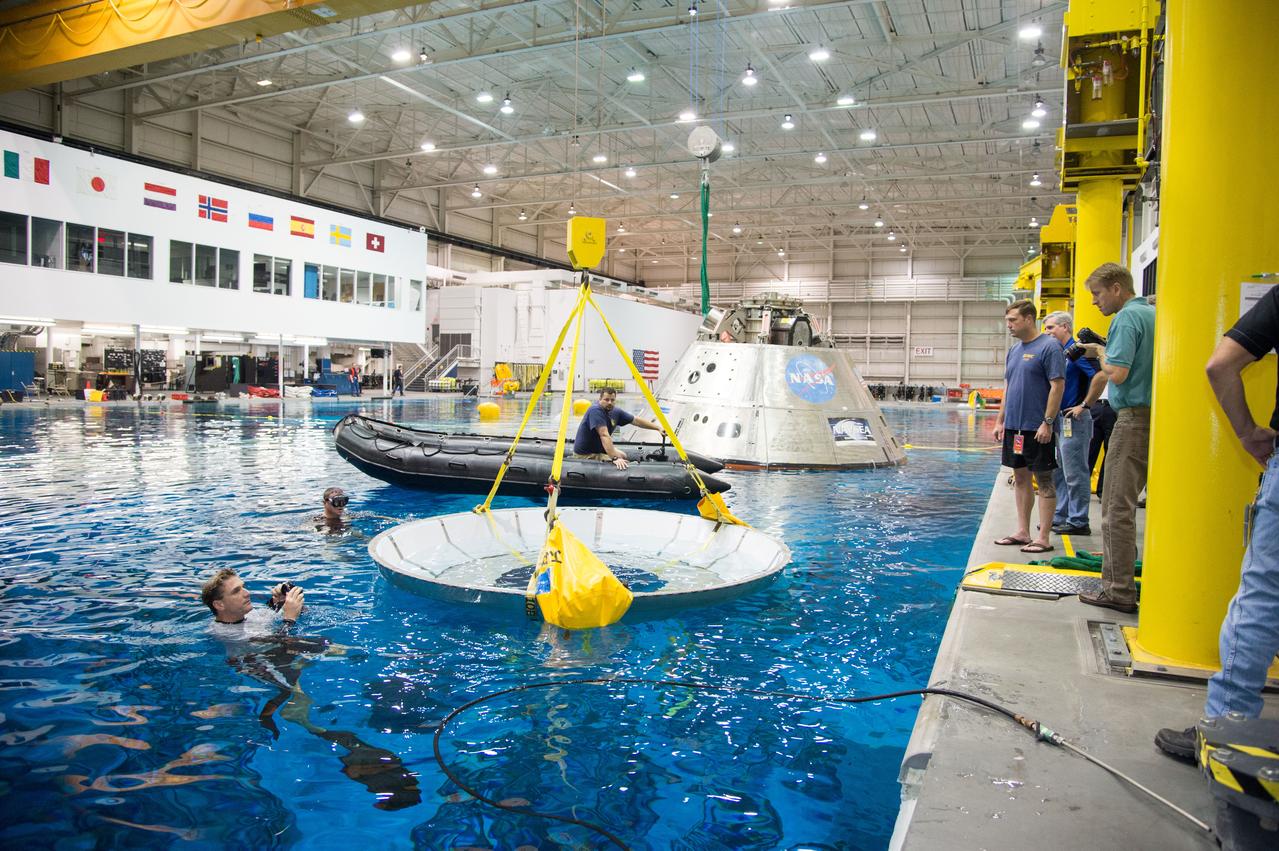
NASA, Department of Defense personnel from Detachment 3 out of Patrick Air Force Base, and the Mobile Diving Salvage Unit based in San Diego conduct a testing session at the Neutral Buoyancy Lab in Houston on Dec. 5, 2012 to evaluate procedures, mockups, and prototype hardware used to train personnel in recovery of the Orion crew module and the forward bay cover for Exploration Flight Test-1 (EFT-1). Part of Batch image transfer from Flickr.
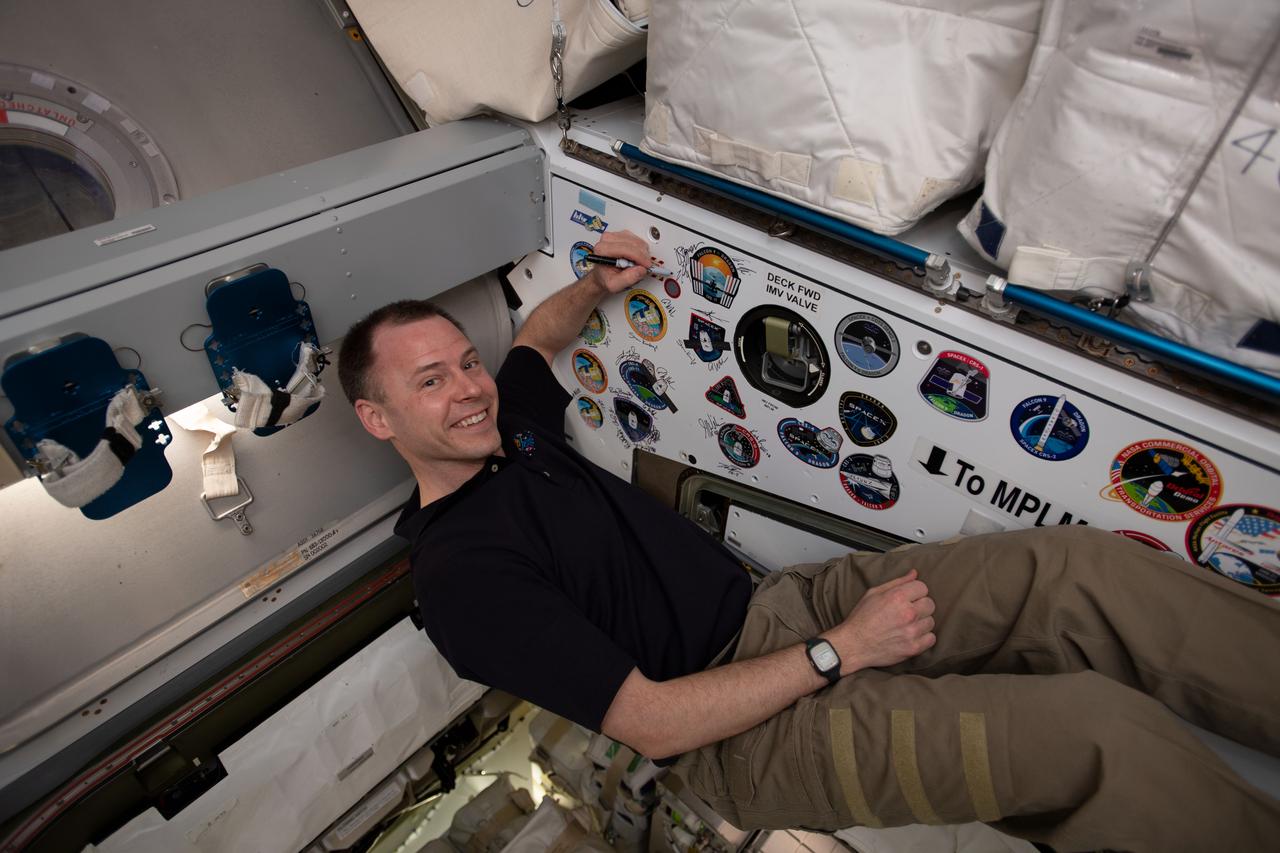
iss059e087866 (June 3, 2019) --- NASA astronaut Nick Hague signs the inside of the vestibule between the SpaceX Dragon cargo craft and the Harmony module. The hatch to Dragon was later closed and the resupply ship detached from Harmony before it was released from the grips of the Canadarm2 robotic arm. Dragon spent nearly a month attached to the International Space Station.
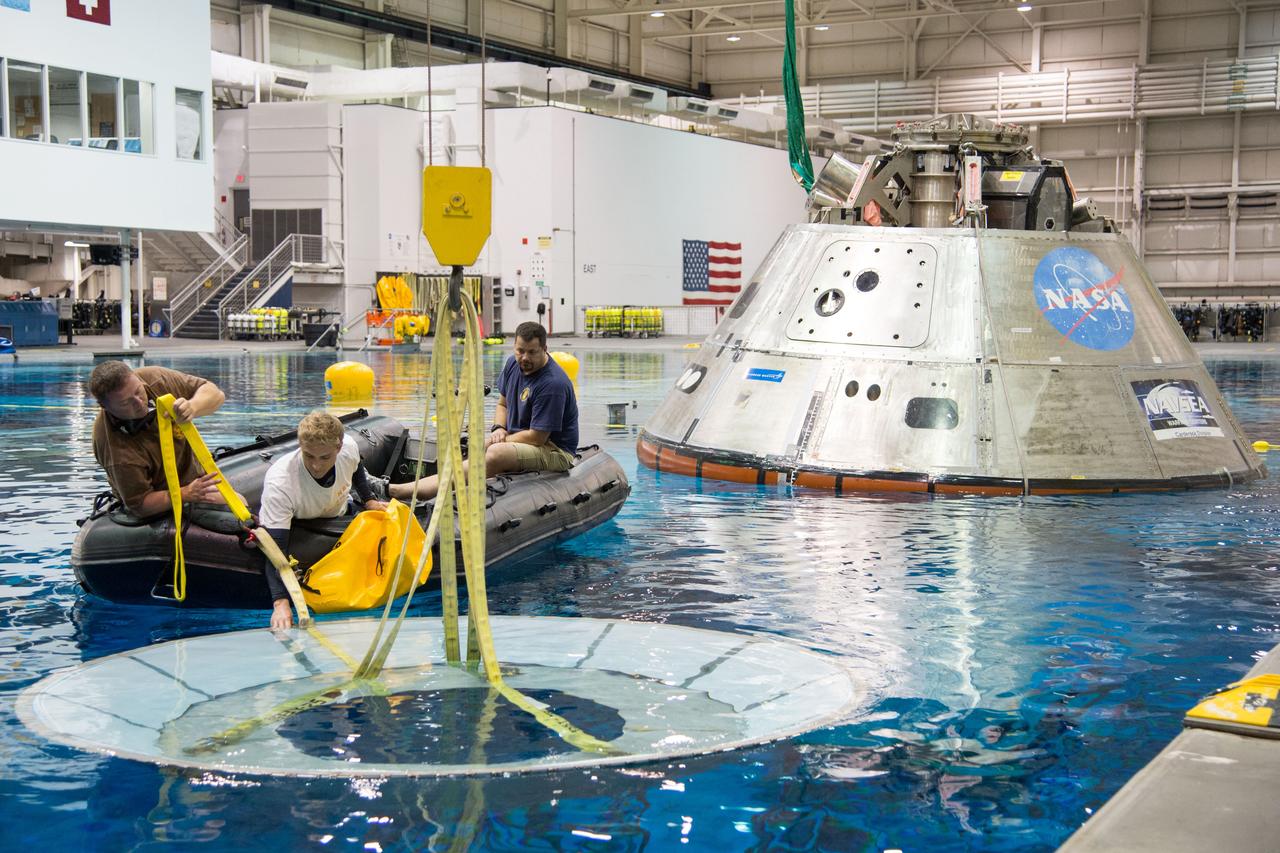
NASA, Department of Defense personnel from Detachment 3 out of Patrick Air Force Base, and the Mobile Diving Salvage Unit based in San Diego conduct a testing session at the Neutral Buoyancy Lab in Houston on Dec. 5, 2012 to evaluate procedures, mockups, and prototype hardware used to train personnel in recovery of the Orion crew module and the forward bay cover for Exploration Flight Test-1 (EFT-1). Part of Batch image transfer from Flickr.
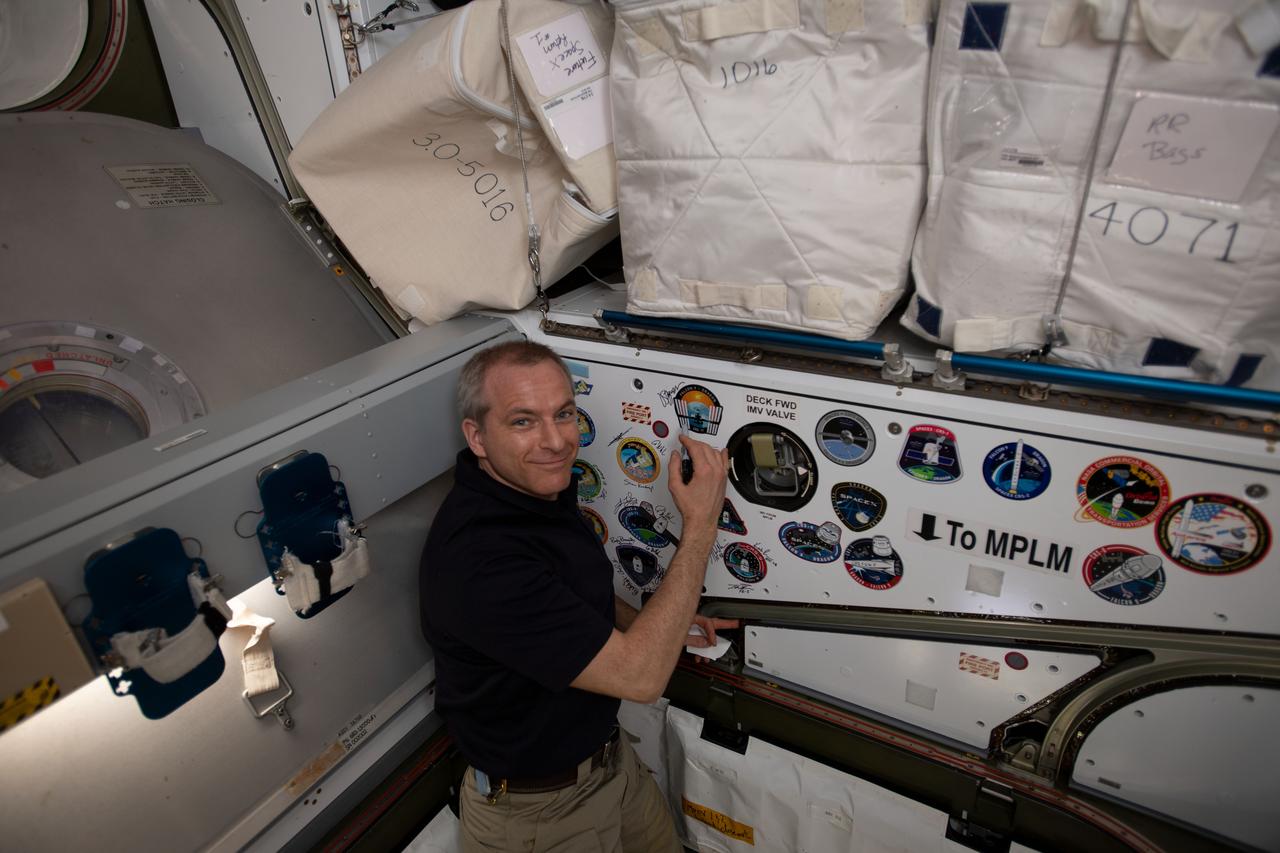
iss059e087858 (June 3, 2019) --- Canadian Space Agency astronaut David Saint-Jacques signs the inside of the vestibule between the SpaceX Dragon cargo craft and the Harmony module. The hatch to Dragon was later closed and the resupply ship detached from Harmony before it was released from the grips of the Canadarm2 robotic arm. Dragon spent nearly a month attached to the International Space Station.
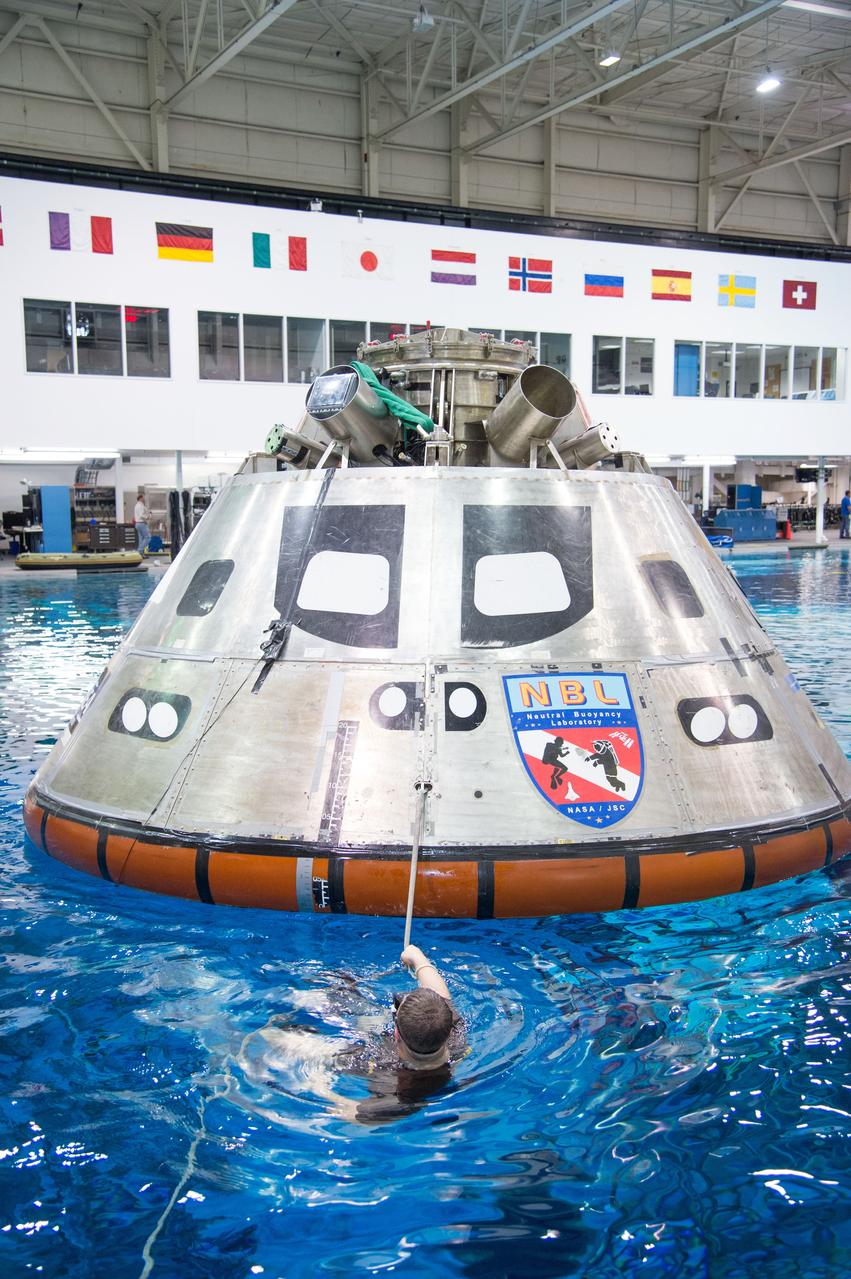
NASA, Department of Defense personnel from Detachment 3 out of Patrick Air Force Base, and the Mobile Diving Salvage Unit based in San Diego conduct a testing session at the Neutral Buoyancy Lab in Houston on Dec. 5, 2012 to evaluate procedures, mockups, and prototype hardware used to train personnel in recovery of the Orion crew module and the forward bay cover for Exploration Flight Test-1 (EFT-1). Part of Batch image transfer from Flickr.
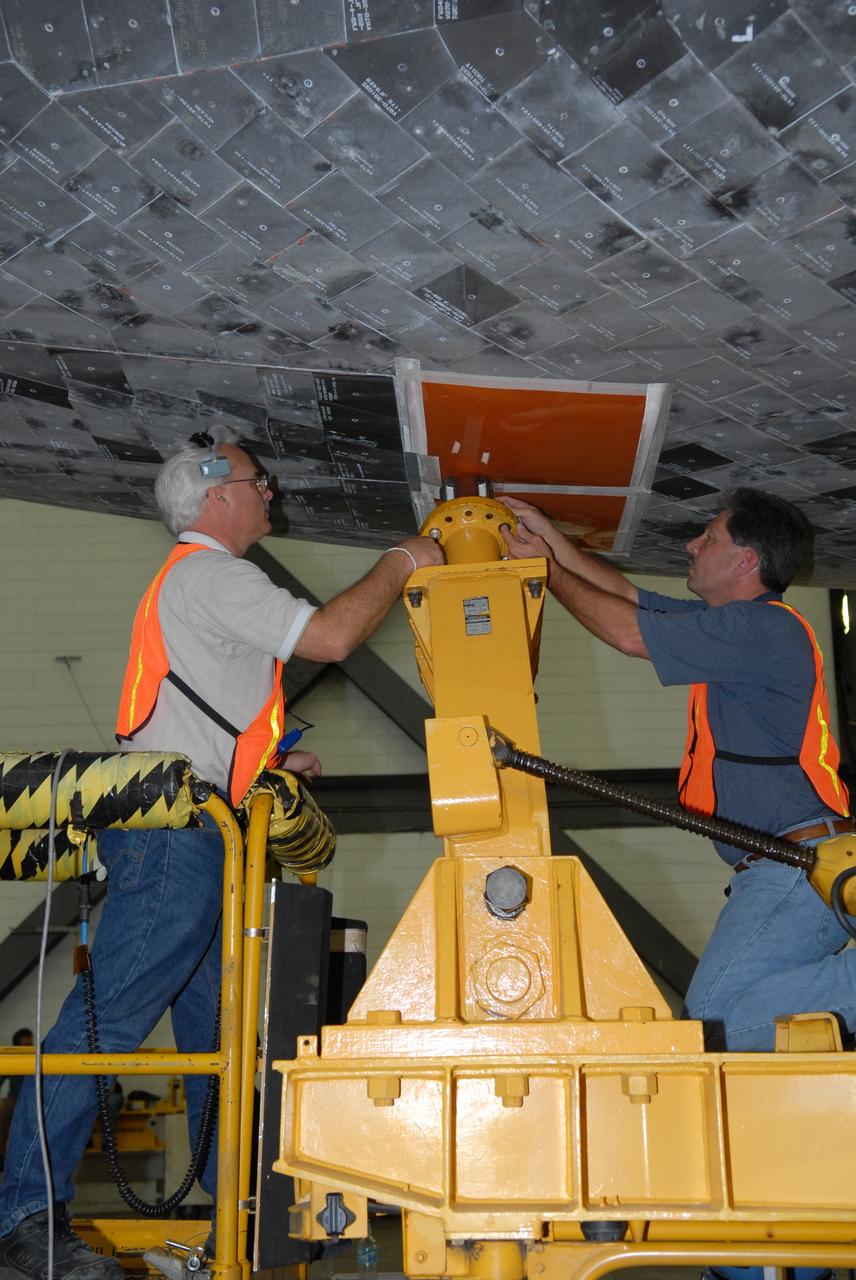
CAPE CANAVERAL, Fla. – In the Vehicle Assembly Building transfer aisle at NASA's Kennedy Space Center, workers detach space shuttle Atlantis from its transporter. An overhead crane will lift Atlantis to vertical for transfer to high bay 3 to be stacked with its external fuel tank and twin solid rocket boosters. After additional preparations are made, the shuttle will be rolled out to Launch Pad 39A to prepare for launch on the STS-125 mission targeted for Oct. 8. Photo credit: NASA/Jack Pfaller
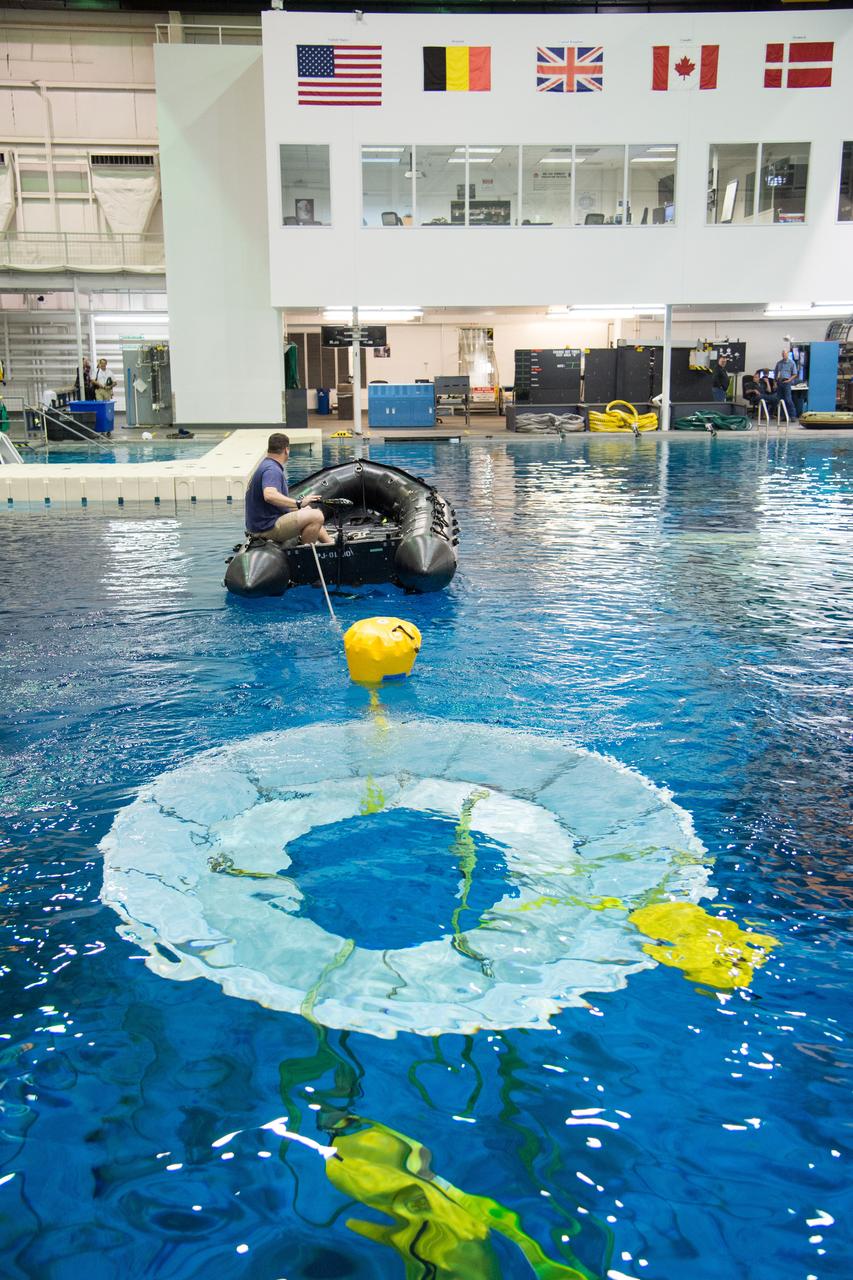
NASA, Department of Defense personnel from Detachment 3 out of Patrick Air Force Base, and the Mobile Diving Salvage Unit based in San Diego conduct a testing session at the Neutral Buoyancy Lab in Houston on Dec. 5, 2012 to evaluate procedures, mockups, and prototype hardware used to train personnel in recovery of the Orion crew module and the forward bay cover for Exploration Flight Test-1 (EFT-1). Part of Batch image transfer from Flickr.
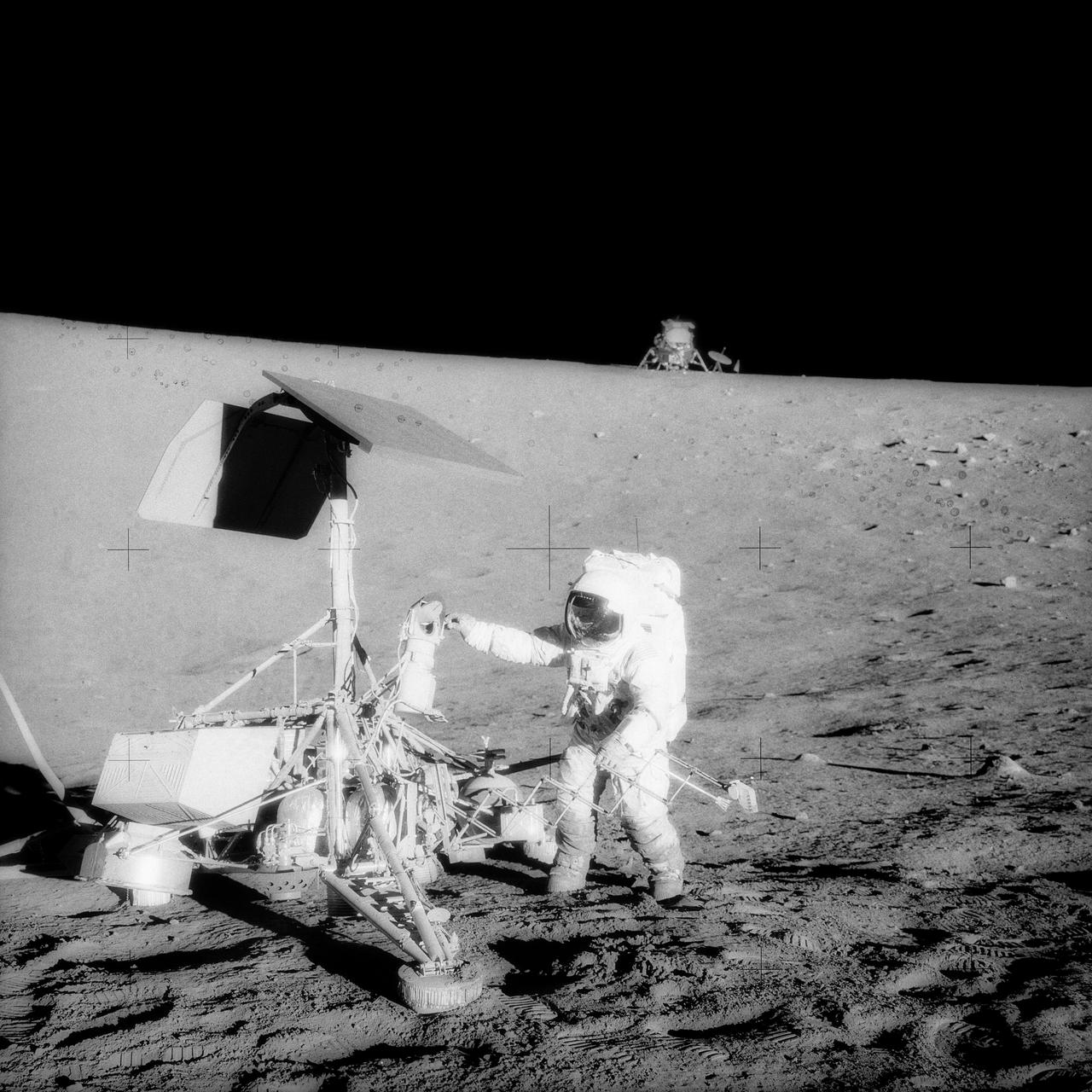
AS12-48-7134 (20 Nov. 1969) --- This unusual photograph, taken during the second Apollo 12 extravehicular activity (EVA), shows two U.S. spacecraft on the surface of the moon. The Apollo 12 Lunar Module (LM) is in the background. The unmanned Surveyor 3 spacecraft is in the foreground. The Apollo 12 LM, with astronauts Charles Conrad Jr. and Alan L. Bean aboard, landed about 600 feet from Surveyor 3 in the Ocean of Storms. The television camera and several other pieces were taken from Surveyor 3 and brought back to Earth for scientific examination. Here, Conrad examines the Surveyor's TV camera prior to detaching it. Astronaut Richard F. Gordon Jr. remained with the Apollo 12 Command and Service Modules (CSM) in lunar orbit while Conrad and Bean descended in the LM to explore the moon. Surveyor 3 soft-landed on the moon on April 19, 1967.
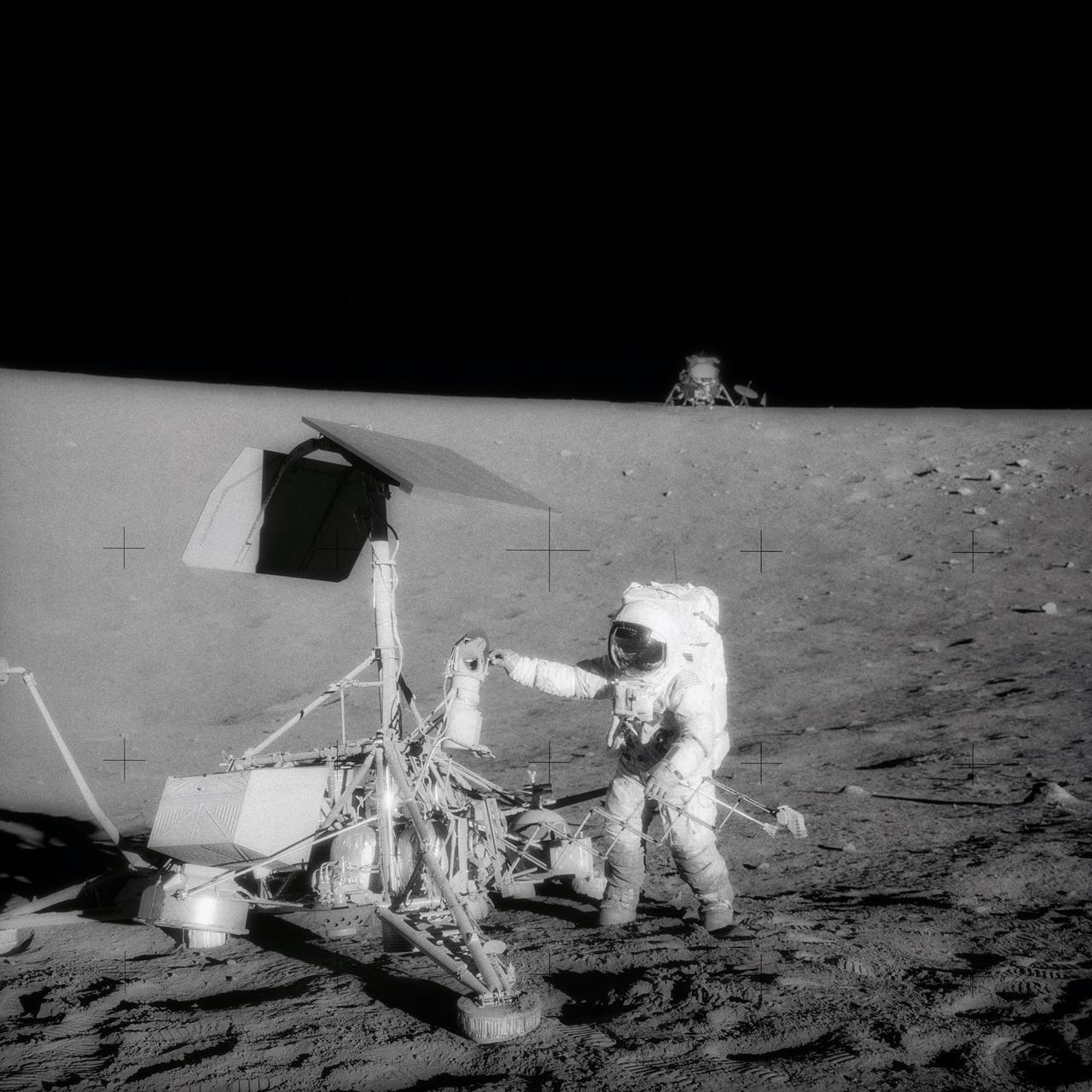
AS12-48-7133 (20 Nov. 1969) --- This unusual photograph, taken during the second Apollo 12 extravehicular activity (EVA), shows two U.S. spacecraft on the surface of the moon. The Apollo 12 Lunar Module (LM) is in the background. The unmanned Surveyor 3 spacecraft is in the foreground. The Apollo 12 LM, with astronauts Charles Conrad Jr. and Alan L. Bean aboard, landed about 600 feet from Surveyor 3 in the Ocean of Storms. The television camera and several other pieces were taken from Surveyor 3 and brought back to Earth for scientific examination. Here, Conrad examines the Surveyor's TV camera prior to detaching it. Astronaut Richard F. Gordon Jr. remained with the Apollo 12 Command and Service Modules (CSM) in lunar orbit while Conrad and Bean descended in the LM to explore the moon. Surveyor 3 soft-landed on the moon on April 19, 1967.
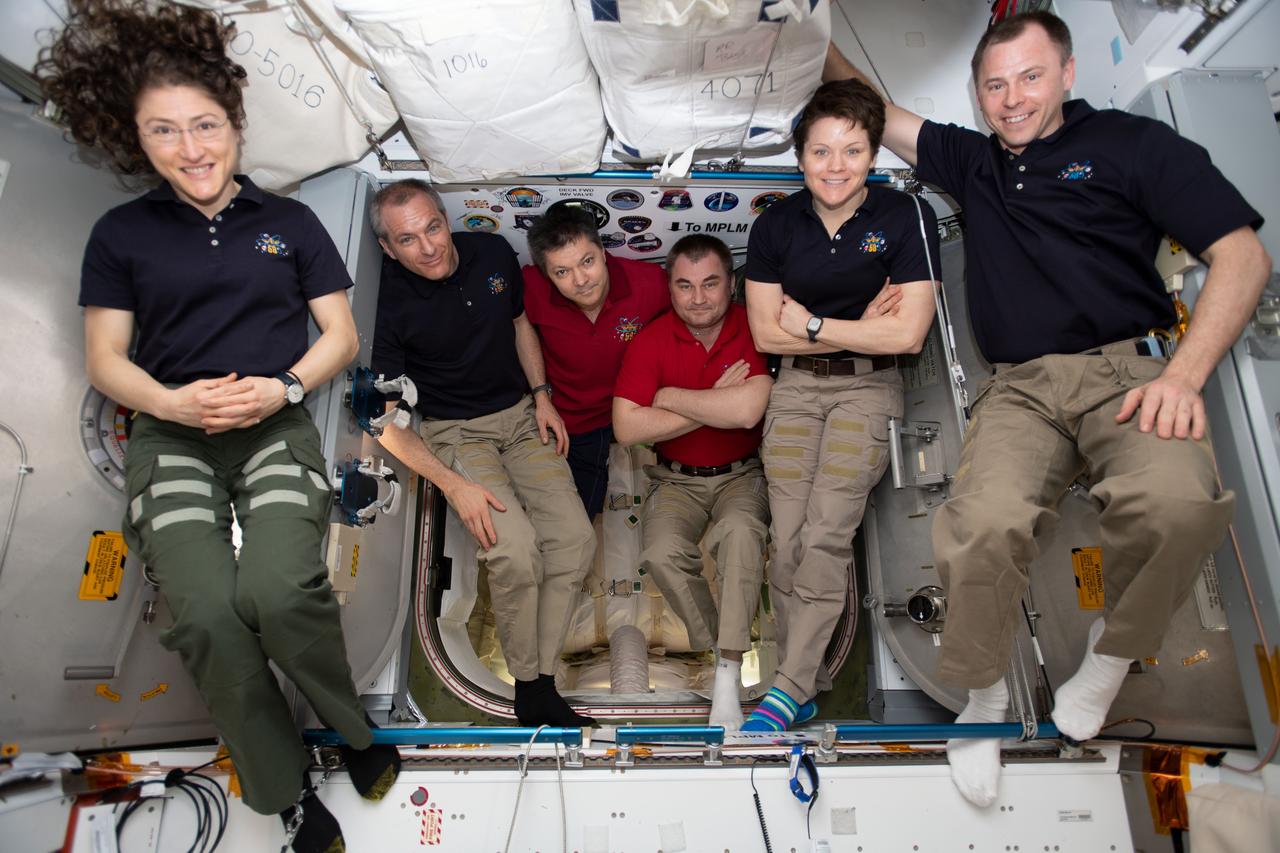
iss059e087883 (June 3, 2019) --- The six-member Expedition 59 crew gathers for a portrait inside of the vestibule between the SpaceX Dragon cargo craft and the Harmony module. The hatch to Dragon was later closed and the resupply ship detached from Harmony before it was released from the grips of the Canadarm2 robotic arm. Dragon spent nearly a month attached to the International Space Station. From left are, astronauts Christina Koch of NASA and David Saint-Jacques of the Canadian Space Agency; Commander Oleg Kononenko and Flight Engineer Alexey Ovchinin of Roscosmos; and NASA astronauts Anne McClain and Nick Hague.
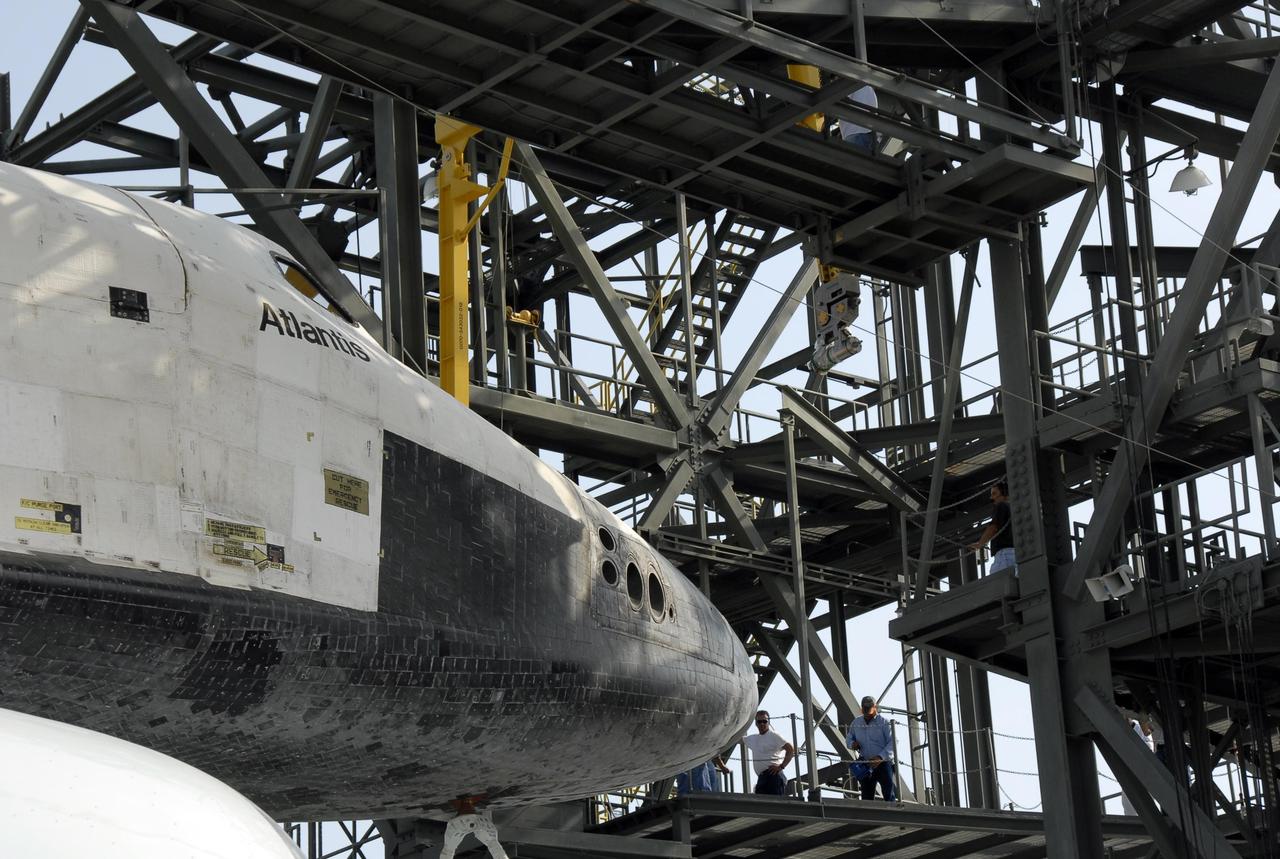
KENNEDY SPACE CENTER, FLA. -- On the KSC Shuttle Landing Facility, the shuttle carrier aircraft, or SCA, with the orbiter Atlantis on its back is towed under the mate/demate device. The orbiter will be detached from the SCA and lowered onto a transporter. Then Atlantis will be towed to the Orbiter Processing Facility to begin processing for its next launch, mission STS-122 in December. Atlantis landed at Edwards Air Force Base in California on June 22 to end mission STS-117. It returned to Kennedy atop the SCA on July 3 after a three-day, cross-country flight due to fuel stops and weather delays. Touchdown was at 8:27 a.m. EDT. Photo credit: NASA/Kim Shiflett
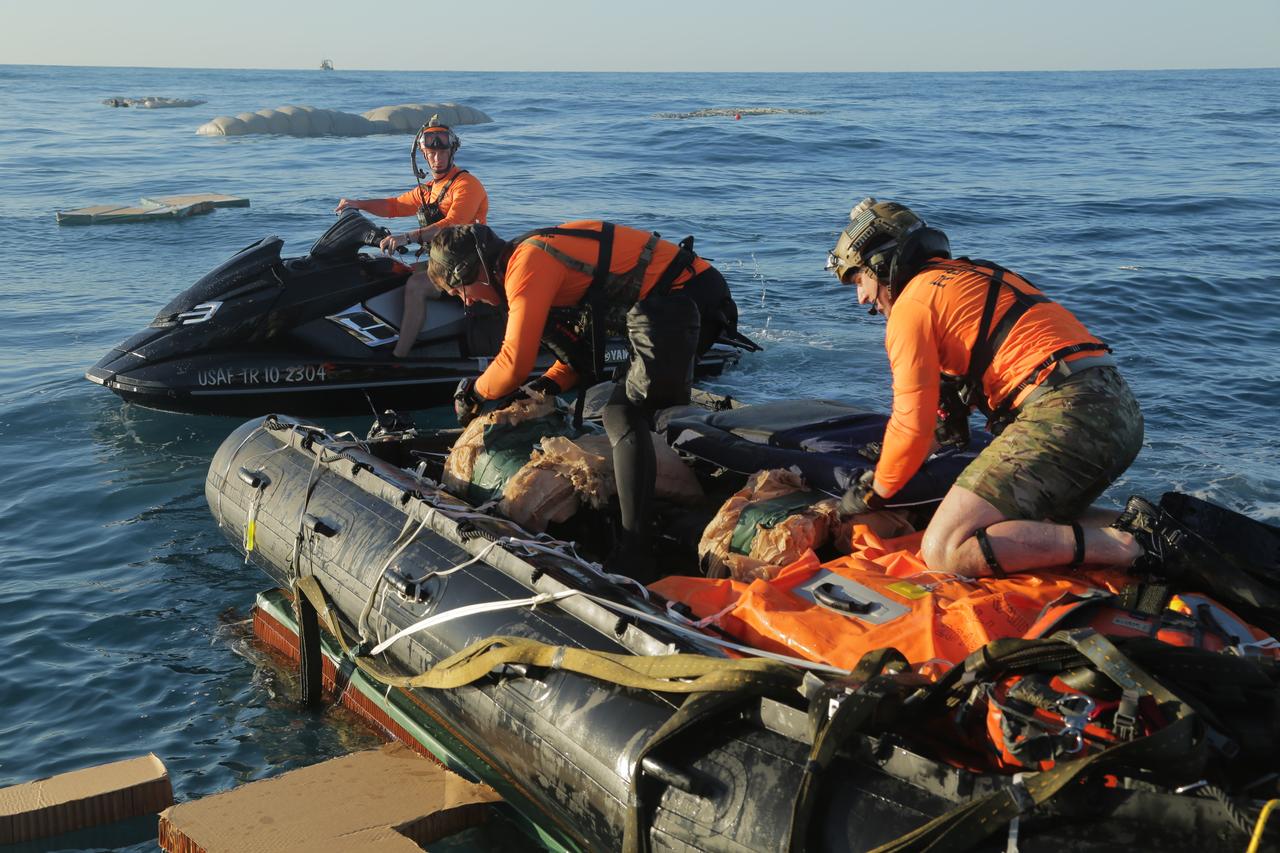
Pararescue specialists from the 304th Rescue Squadron, located in Portland, Oregon and supporting the 45th Operations Group’s Detachment 3, based out of Patrick Air Force Base, prepare equipment during an April astronaut rescue exercise with NASA’s Commercial Crew Program and SpaceX off of Florida’s eastern coast. The pararescue specialists, also known as “Guardian Angels,” jumped from military aircraft and simulated a rescue operation to demonstrate their ability to safely remove crew from the SpaceX Crew Dragon in the unlikely event of an emergency landing. The pararescue specialists are fully qualified paramedics able to perform field surgery, if necessary.
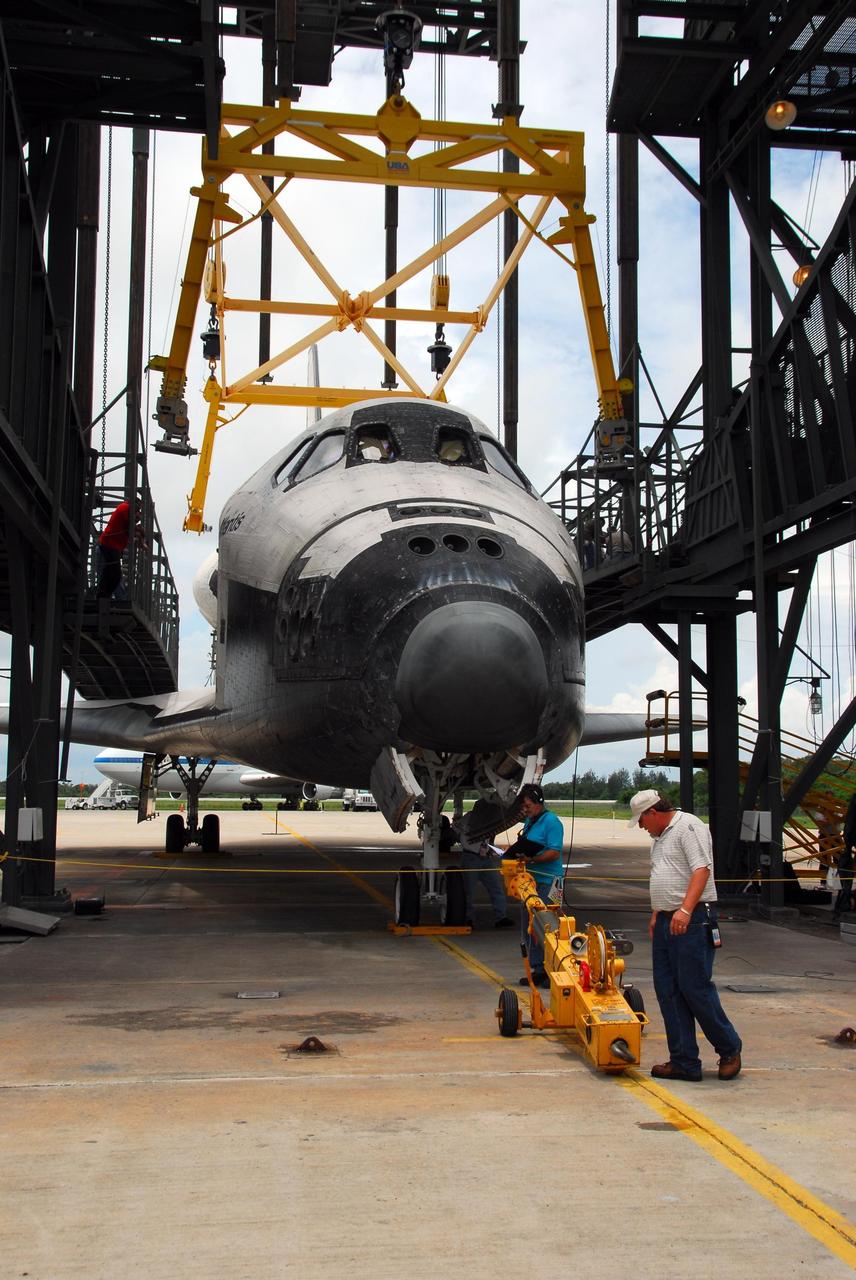
KENNEDY SPACE CENTER, FLA. -- At the mate/demate device at Kennedy Space Center's Shuttle Landing Facility, Atlantis is detached from the lifting crane. Workers prepare the orbiter for towing to the Orbiter Processing Facility where processing will begin for its next launch, mission STS-122 in December. Atlantis arrived at Kennedy Space Center atop the shuttle carrier aircraft, or SCA, on July 3 after a three-day, cross-country flight due to fuel stops and weather delays. Touchdown was at 8:27 a.m. EDT. Atlantis landed at Edwards Air Force Base in California on June 22 to end mission STS-117. Photo credit: NASA/George Shelton.
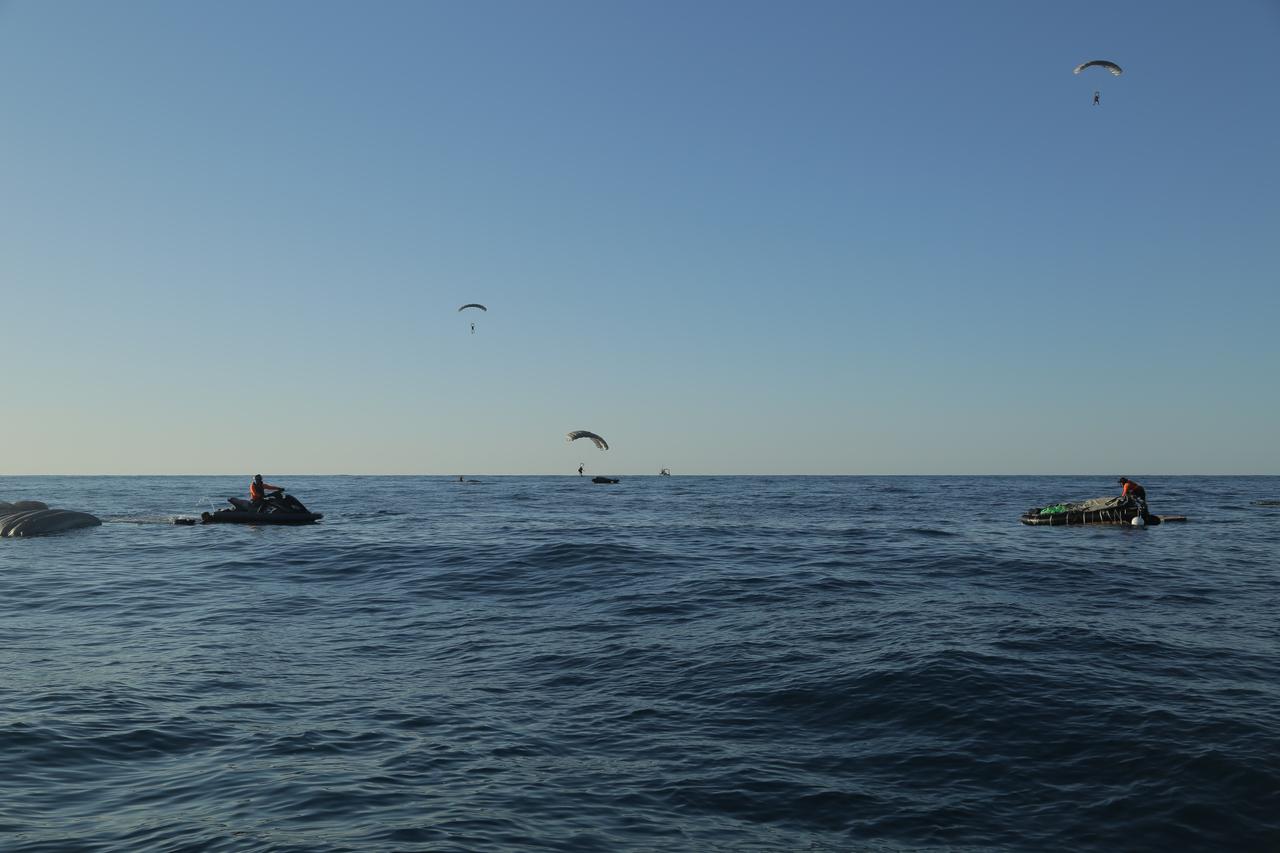
Pararescue specialists from the 304th Rescue Squadron, located in Portland, Oregon and supporting the 45th Operations Group’s Detachment 3, based out of Patrick Air Force Base, deploy their parachutes and prepare to touch down on the Atlantic Ocean surface during an April astronaut rescue exercise with NASA’s Commercial Crew Program and SpaceX off of Florida’s eastern coast. The pararescue specialists, also known as “Guardian Angels,” jumped from military aircraft and simulated a rescue operation to demonstrate their ability to safely remove crew from the SpaceX Crew Dragon in the unlikely event of an emergency landing.
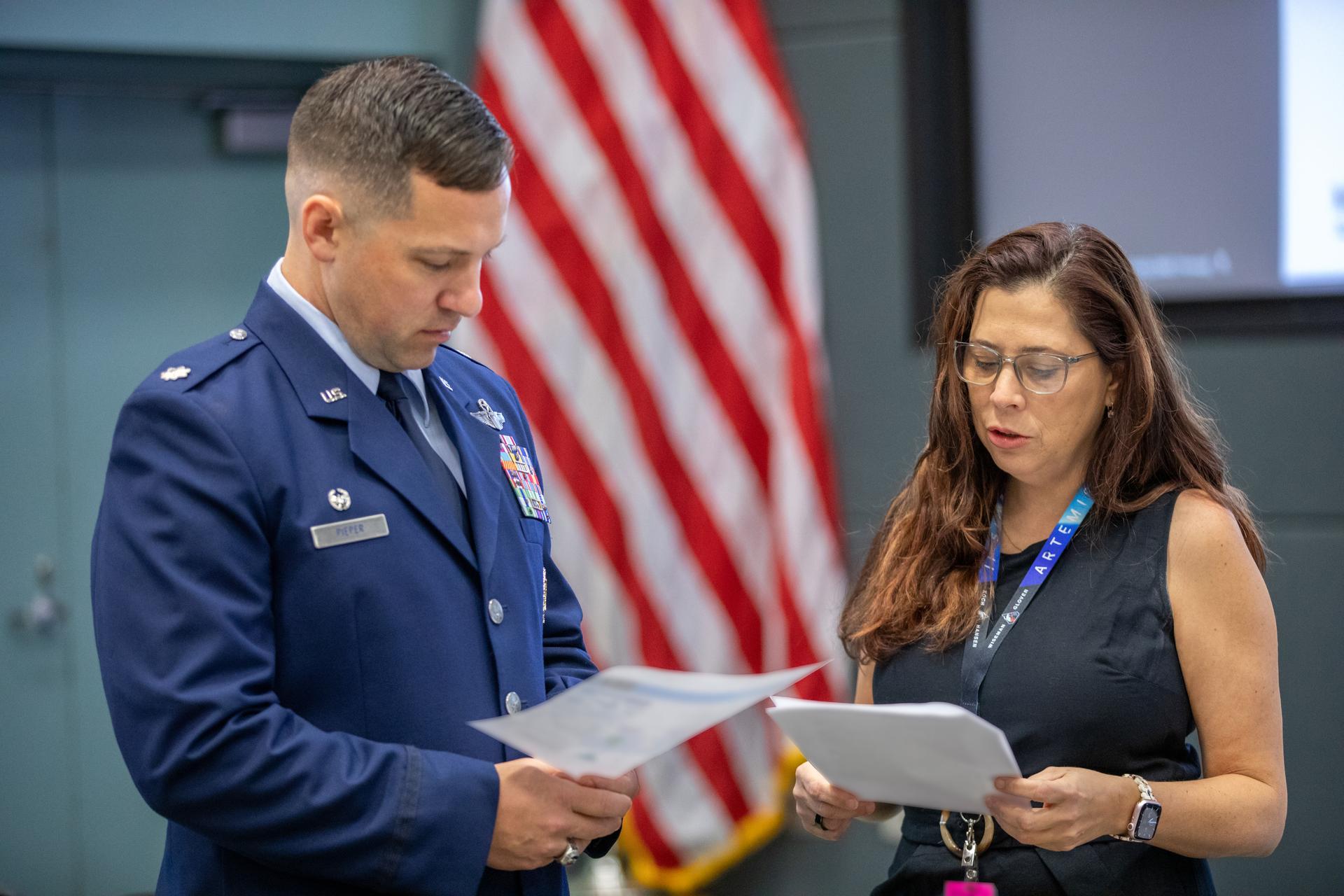
From left, Lieutenant Colonel Kevin M. Pieper, 1st Air Force, Detachment 3 at Patrick Space Force Base in Florida and Lili Villarreal, Artemis II landing and recovery director in Exploration Ground Systems Program at NASA’s Kennedy Space Center in Florida, participate in the Artemis II Flight Readiness Review with NASA leadership on Wednesday, March 11, 2026, at NASA Kennedy. The review is an assessment of the readiness of NASA’s SLS (Space Launch System) rocket and Orion spacecraft to support the Artemis II test flight as four astronauts journey around the Moon and return to Earth.
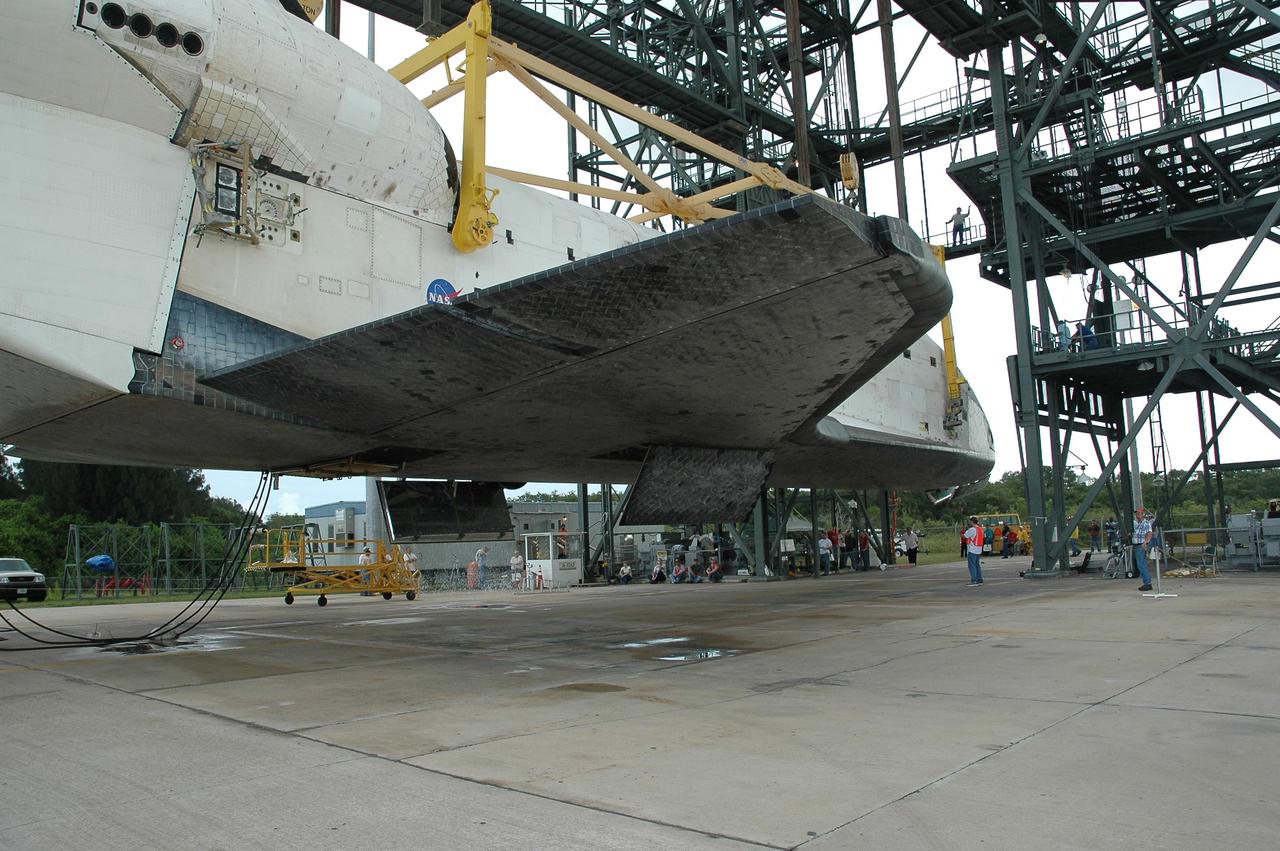
KENNEDY SPACE CENTER, FLA. -- Atlantis is slowly lowered to the ground at the mate/demate device at Kennedy Space Center's Shuttle Landing Facility. The orbiter will be detached from the lifting crane and then towed to the Orbiter Processing Facility to begin processing for its next launch, mission STS-122 in December. Atlantis arrived at Kennedy Space Center atop the SCA on July 3 after a three-day, cross-country flight due to fuel stops and weather delays. Touchdown was at 8:27 a.m. EDT. Atlantis landed at Edwards Air Force Base in California on June 22 to end mission STS-117. Photo credit: NASA/Jack Pfaller.
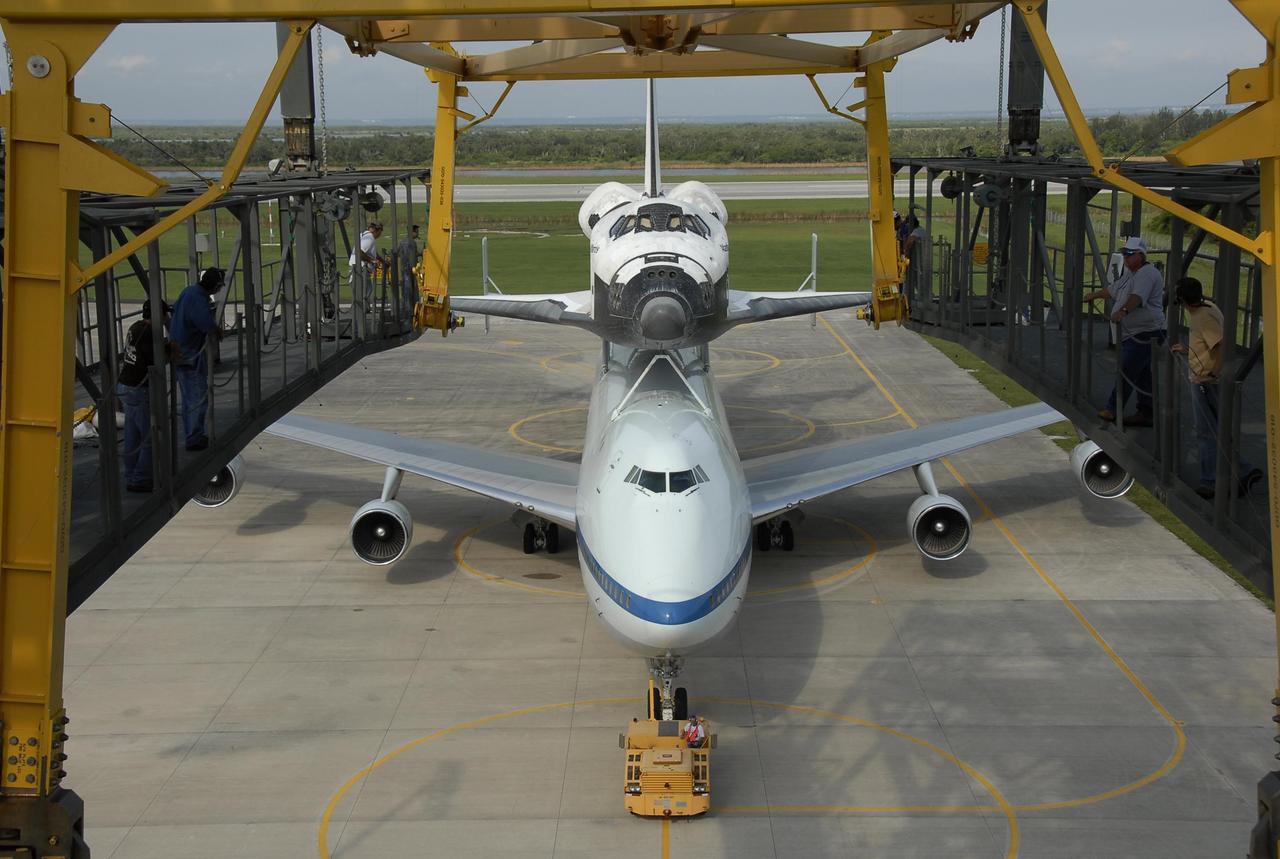
KENNEDY SPACE CENTER, FLA. -- On the KSC Shuttle Landing Facility, the shuttle carrier aircraft, or SCA, with the orbiter Atlantis on its back is towed under the mate/demate device. The orbiter will be detached from the SCA and lowered onto a transporter. Then Atlantis will be towed to the Orbiter Processing Facility to begin processing for its next launch, mission STS-122 in December. Atlantis landed at Edwards Air Force Base in California on June 22 to end mission STS-117. It returned to Kennedy atop the SCA on July 3 after a three-day, cross-country flight due to fuel stops and weather delays. Touchdown was at 8:27 a.m. EDT. Photo credit: NASA/Kim Shiflett
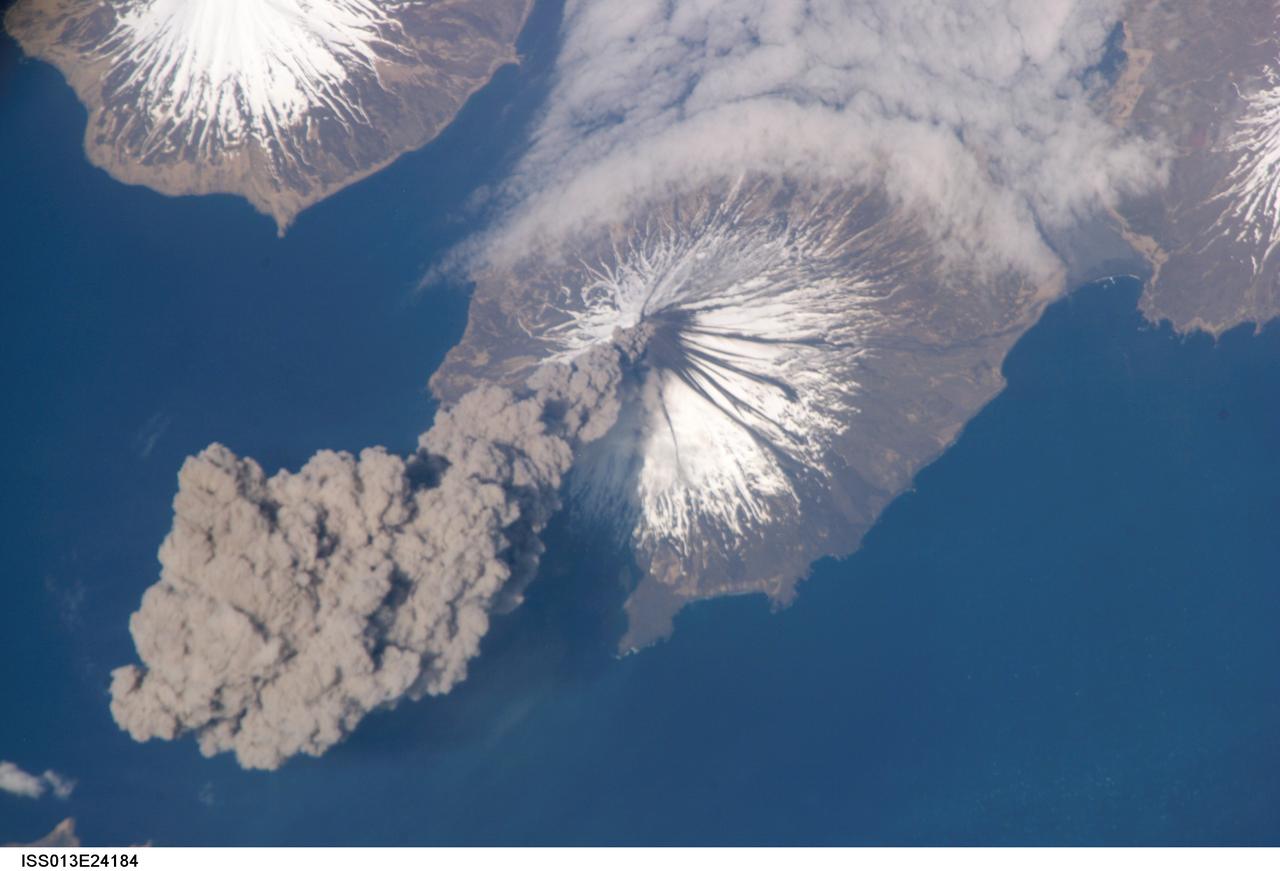
ISS013-E-24184 (23 May 2006) --- Eruption of Cleveland Volcano, Aleutian Islands, Alaska is featured in this image photographed by an Expedition 13 crewmember on the International Space Station. This most recent eruption was first reported to the Alaska Volcano Observatory by astronaut Jeffrey N. Williams, NASA space station science officer and flight engineer, at 3:00 p.m. Alaska Daylight Time (23:00 GMT). This image, acquired shortly after the beginning of the eruption, captures the ash plume moving west-southwest from the summit vent. The eruption was short-lived; the plume had completely detached from the volcano summit two hours later.
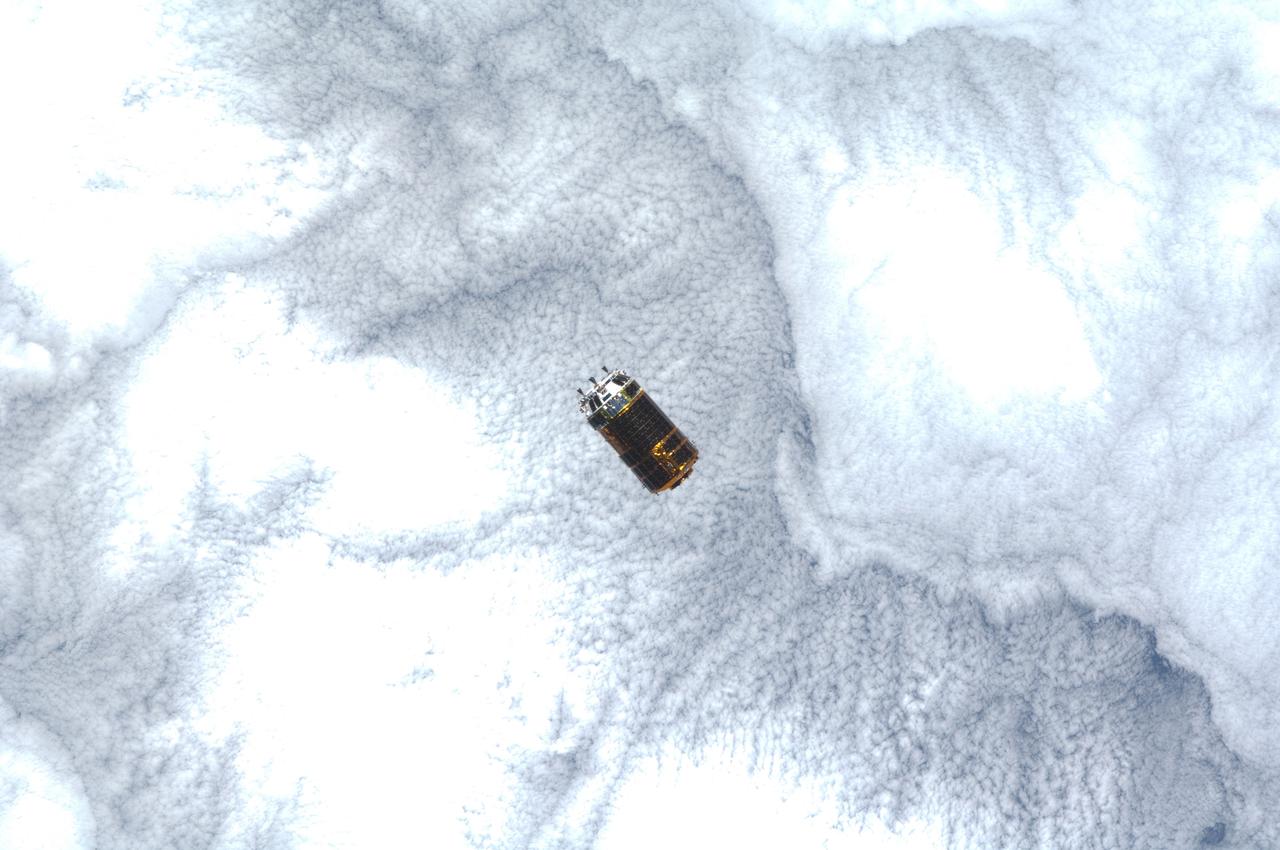
ISS032-E-010399 (27 July 2012) --- The unpiloted Japan Aerospace Exploration Agency (JAXA) H-II Transfer Vehicle (HTV-3) approaches the International Space Station. The Japan Aerospace Exploration Agency launched HTV-3 aboard an H-IIB launch vehicle from the Tanegashima Space Center in southern Japan at 10:06 p.m. EDT July 20 (11:06 a.m. July 21, Japan time). The HTV is bringing 7,000 pounds of cargo including food and clothing for the crew members, an aquatic habitat experiment, a remote-controlled Earth-observation camera for environmental studies, a catalytic reactor for the station’s water regeneration system and a Japanese cooling water recirculation pump. The vehicle will remain at the space station until Sept. 6 when, like its predecessors, it will be detached from the Harmony node by Canadarm2 and released for a fiery re-entry over the Pacific Ocean.
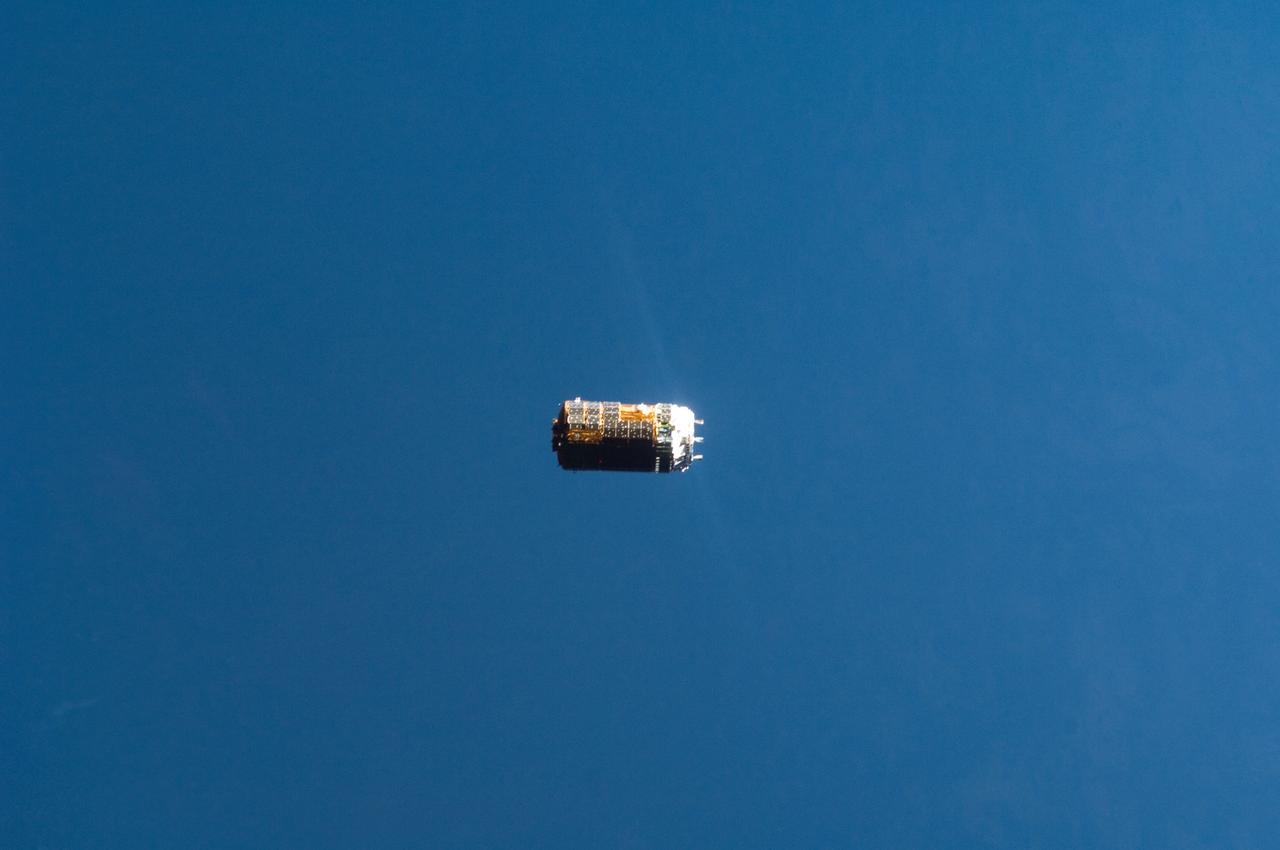
ISS032-E-009997 (27 July 2012) --- The unpiloted Japan Aerospace Exploration Agency (JAXA) H-II Transfer Vehicle (HTV-3) approaches the International Space Station. The Japan Aerospace Exploration Agency launched HTV-3 aboard an H-IIB launch vehicle from the Tanegashima Space Center in southern Japan at 10:06 p.m. EDT July 20 (11:06 a.m. July 21, Japan time). The HTV is bringing 7,000 pounds of cargo including food and clothing for the crew members, an aquatic habitat experiment, a remote-controlled Earth-observation camera for environmental studies, a catalytic reactor for the station?s water regeneration system and a Japanese cooling water recirculation pump. The vehicle will remain at the space station until Sept. 6 when, like its predecessors, it will be detached from the Harmony node by Canadarm2 and released for a fiery re-entry over the Pacific Ocean.
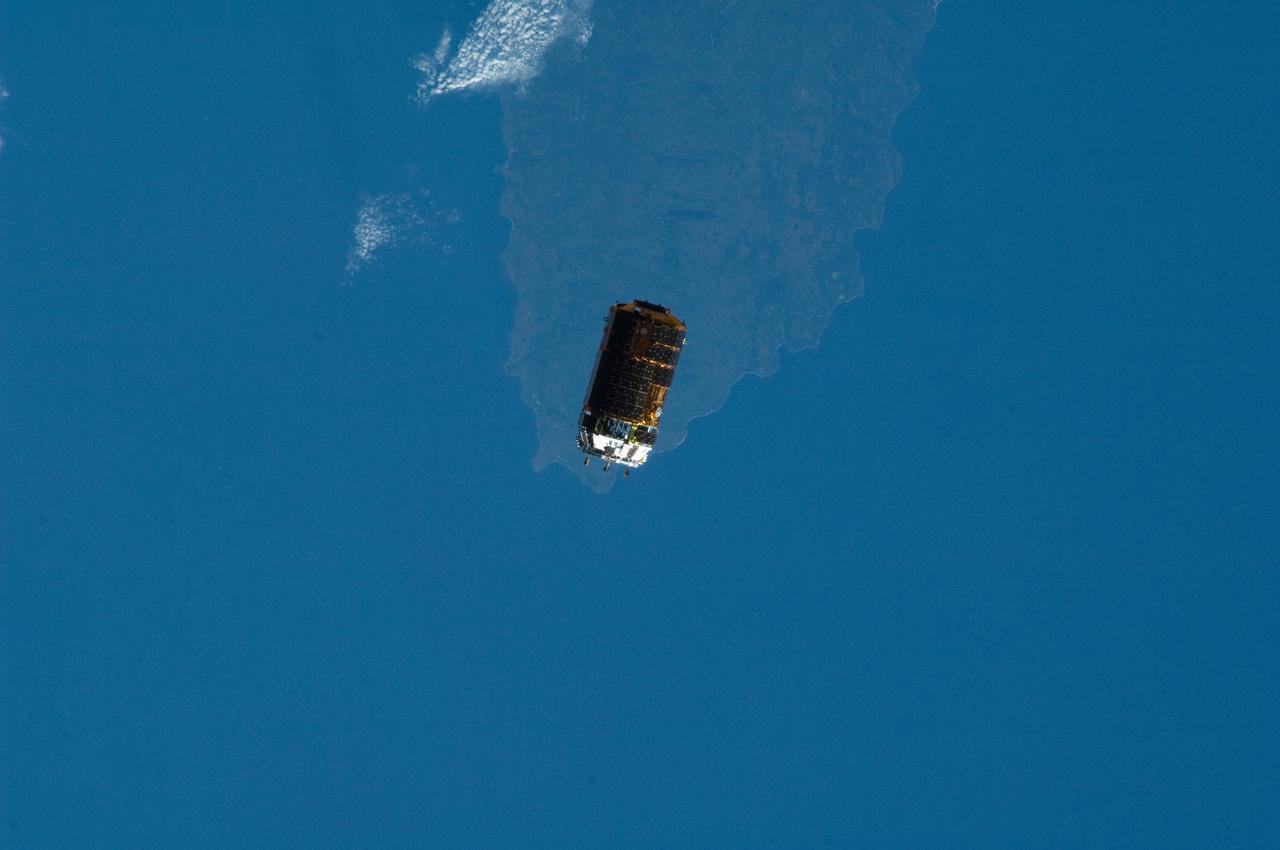
ISS032-E-010005 (27 July 2012) --- The unpiloted Japan Aerospace Exploration Agency (JAXA) H-II Transfer Vehicle (HTV-3) approaches the International Space Station. The Japan Aerospace Exploration Agency launched HTV-3 aboard an H-IIB launch vehicle from the Tanegashima Space Center in southern Japan at 10:06 p.m. EDT July 20 (11:06 a.m. July 21, Japan time). The HTV is bringing 7,000 pounds of cargo including food and clothing for the crew members, an aquatic habitat experiment, a remote-controlled Earth-observation camera for environmental studies, a catalytic reactor for the station?s water regeneration system and a Japanese cooling water recirculation pump. The vehicle will remain at the space station until Sept. 6 when, like its predecessors, it will be detached from the Harmony node by Canadarm2 and released for a fiery re-entry over the Pacific Ocean.
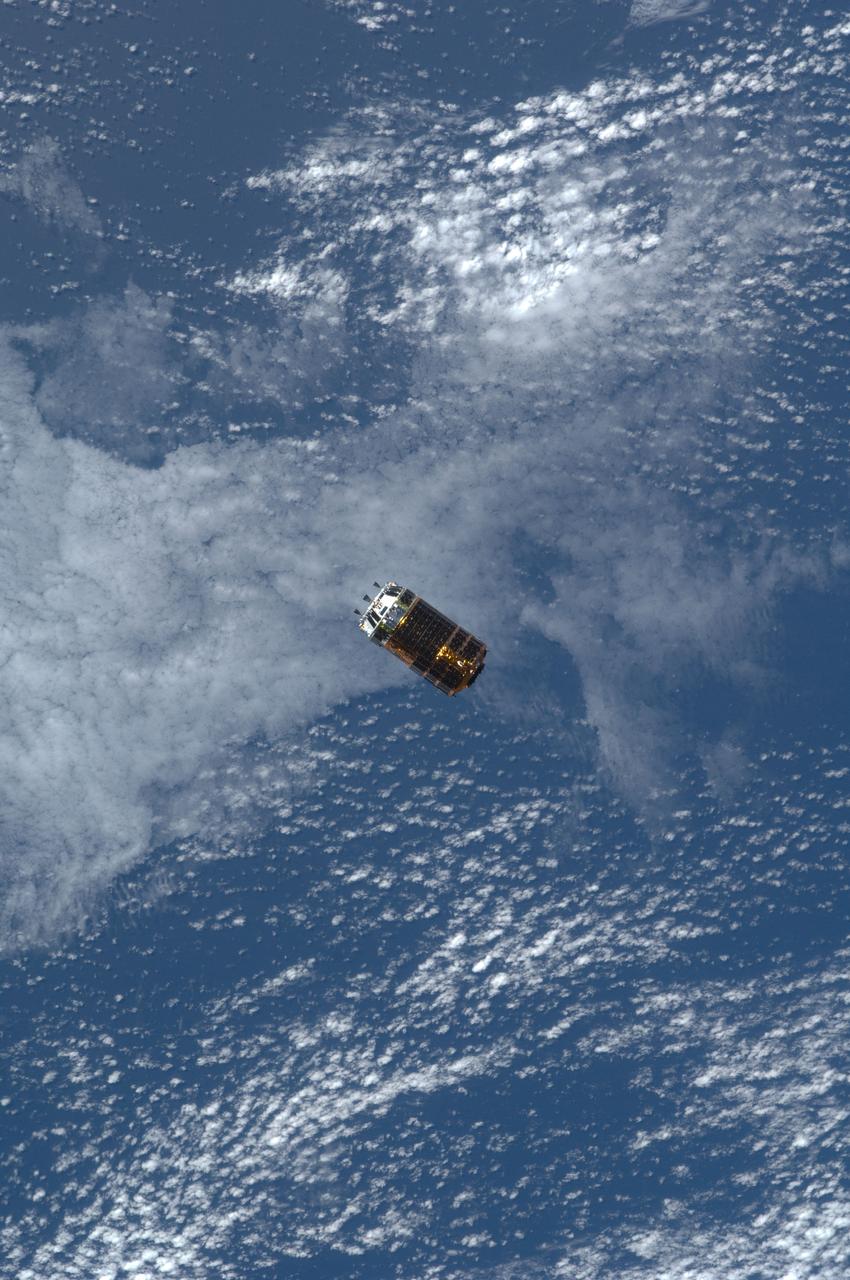
ISS032-E-010392 (27 July 2012) --- The unpiloted Japan Aerospace Exploration Agency (JAXA) H-II Transfer Vehicle (HTV-3) approaches the International Space Station. The Japan Aerospace Exploration Agency launched HTV-3 aboard an H-IIB launch vehicle from the Tanegashima Space Center in southern Japan at 10:06 p.m. EDT July 20 (11:06 a.m. July 21, Japan time). The HTV is bringing 7,000 pounds of cargo including food and clothing for the crew members, an aquatic habitat experiment, a remote-controlled Earth-observation camera for environmental studies, a catalytic reactor for the station’s water regeneration system and a Japanese cooling water recirculation pump. The vehicle will remain at the space station until Sept. 6 when, like its predecessors, it will be detached from the Harmony node by Canadarm2 and released for a fiery re-entry over the Pacific Ocean.
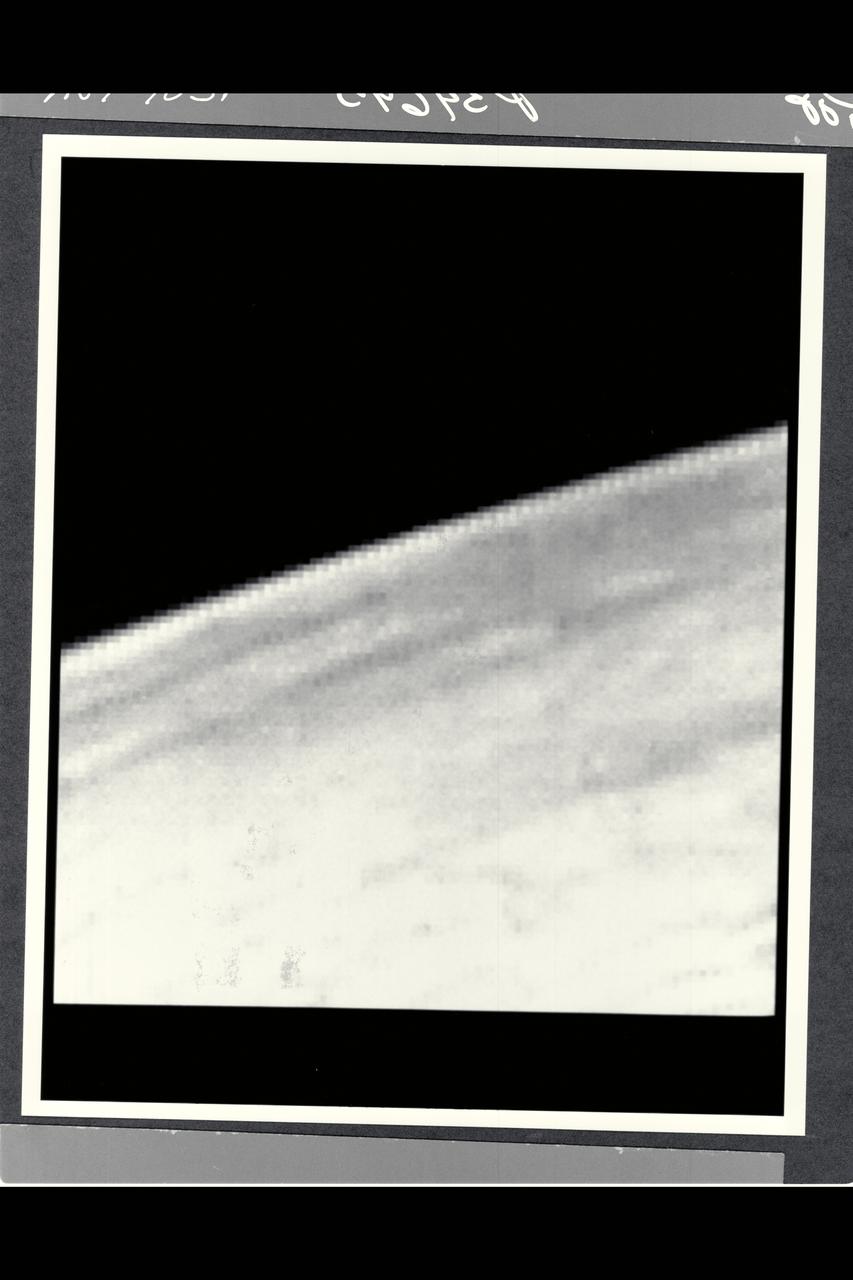
Range : 168,694 km (105,000 mi.) Voyager 2 discovered detached limb hazes in the atmosphere of Triton in Pictures that arrived at Earth between 3:30 am and 5:30 am. The principal layer seen here begins about three km (2 miles) above the surface, and is about 3 km thick. Fainter upward extension of the haze has been seen to an altitude of at least 14 km (9 mi.). The haze must be comoposed of tiny particles in order to be supported in Trition's thin atmosphere. Composition of the haze is currently unknown, but may be either condensed atmospheric gases or complex orgainc molecules produced by irradiation of the methane in Triton's atmosphere. The vaguely linear mottling on the surface may be shadows of other haze striations. Other features of the haze layer should be appaarent in images of Triton taken at higher phase angles (including crescent phase). The image shows features as small as 2 km (1.2 mi) wide.
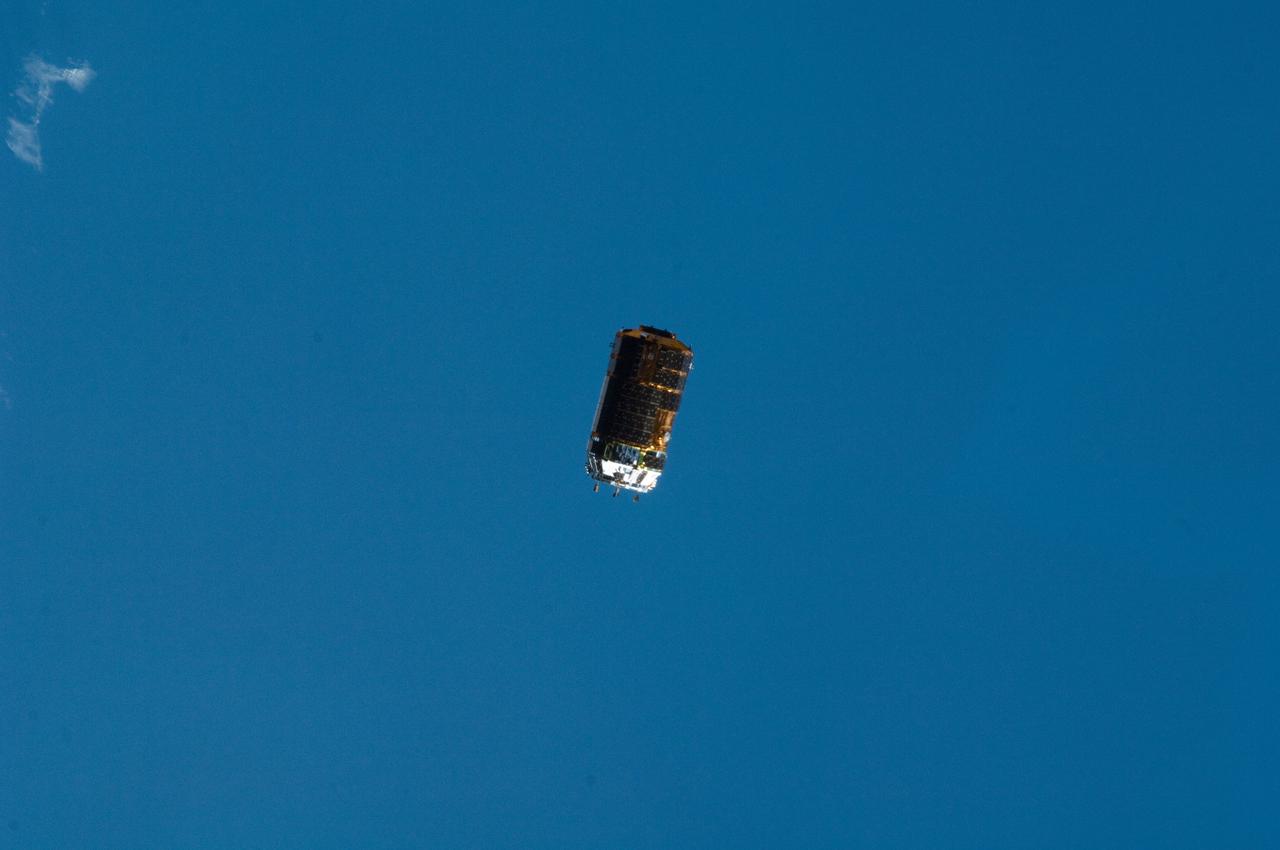
ISS032-E-010006 (27 July 2012) --- The unpiloted Japan Aerospace Exploration Agency (JAXA) H-II Transfer Vehicle (HTV-3) approaches the International Space Station. The Japan Aerospace Exploration Agency launched HTV-3 aboard an H-IIB launch vehicle from the Tanegashima Space Center in southern Japan at 10:06 p.m. EDT July 20 (11:06 a.m. July 21, Japan time). The HTV is bringing 7,000 pounds of cargo including food and clothing for the crew members, an aquatic habitat experiment, a remote-controlled Earth-observation camera for environmental studies, a catalytic reactor for the station?s water regeneration system and a Japanese cooling water recirculation pump. The vehicle will remain at the space station until Sept. 6 when, like its predecessors, it will be detached from the Harmony node by Canadarm2 and released for a fiery re-entry over the Pacific Ocean.
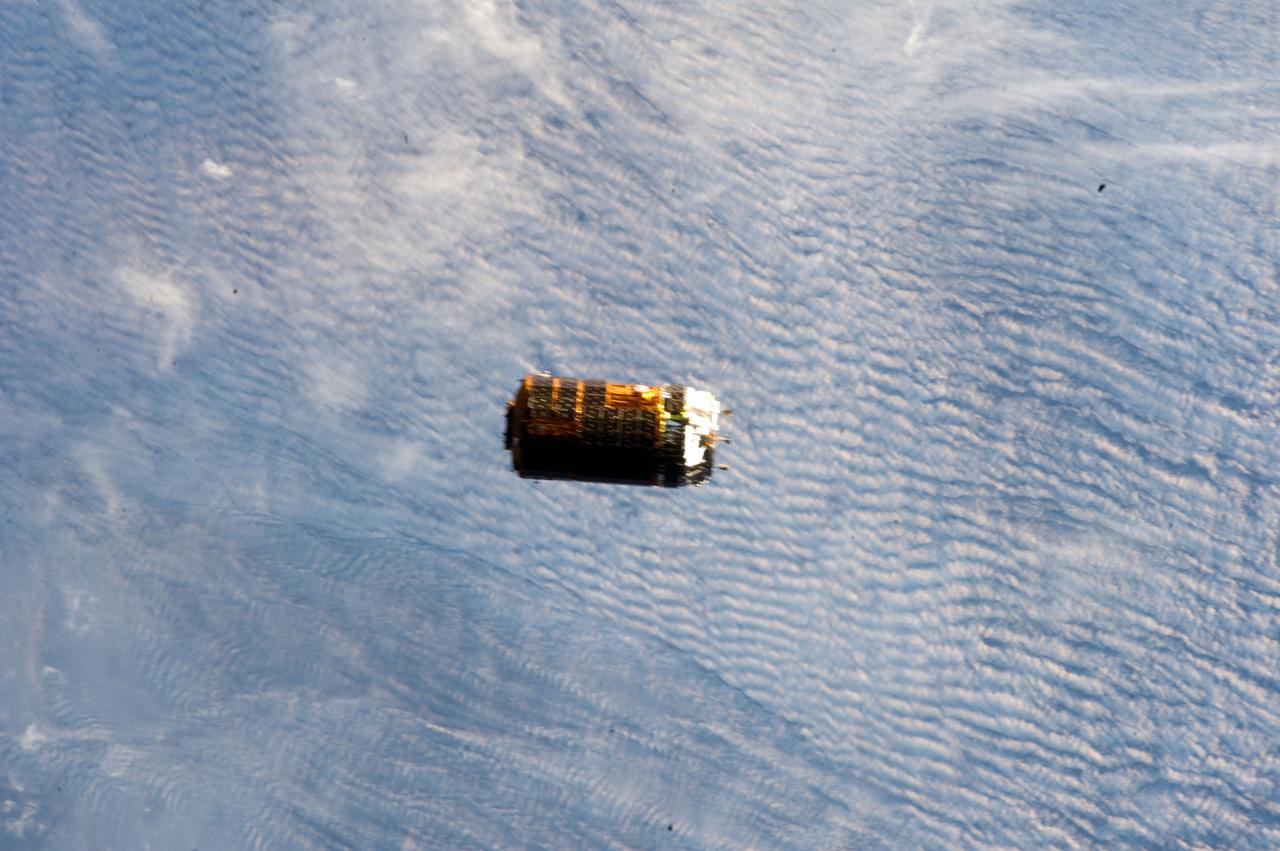
ISS032-E-010758 (27 July 2012) --- The unpiloted Japan Aerospace Exploration Agency (JAXA) H-II Transfer Vehicle (HTV-3) approaches the International Space Station. The Japan Aerospace Exploration Agency launched HTV-3 aboard an H-IIB launch vehicle from the Tanegashima Space Center in southern Japan at 10:06 p.m. EDT July 20 (11:06 a.m. July 21, Japan time). The HTV is bringing 7,000 pounds of cargo including food and clothing for the crew members, an aquatic habitat experiment, a remote-controlled Earth-observation camera for environmental studies, a catalytic reactor for the station’s water regeneration system and a Japanese cooling water recirculation pump. The vehicle will remain at the space station until Sept. 6 when, like its predecessors, it will be detached from the Harmony node by Canadarm2 and released for a fiery re-entry over the Pacific Ocean.
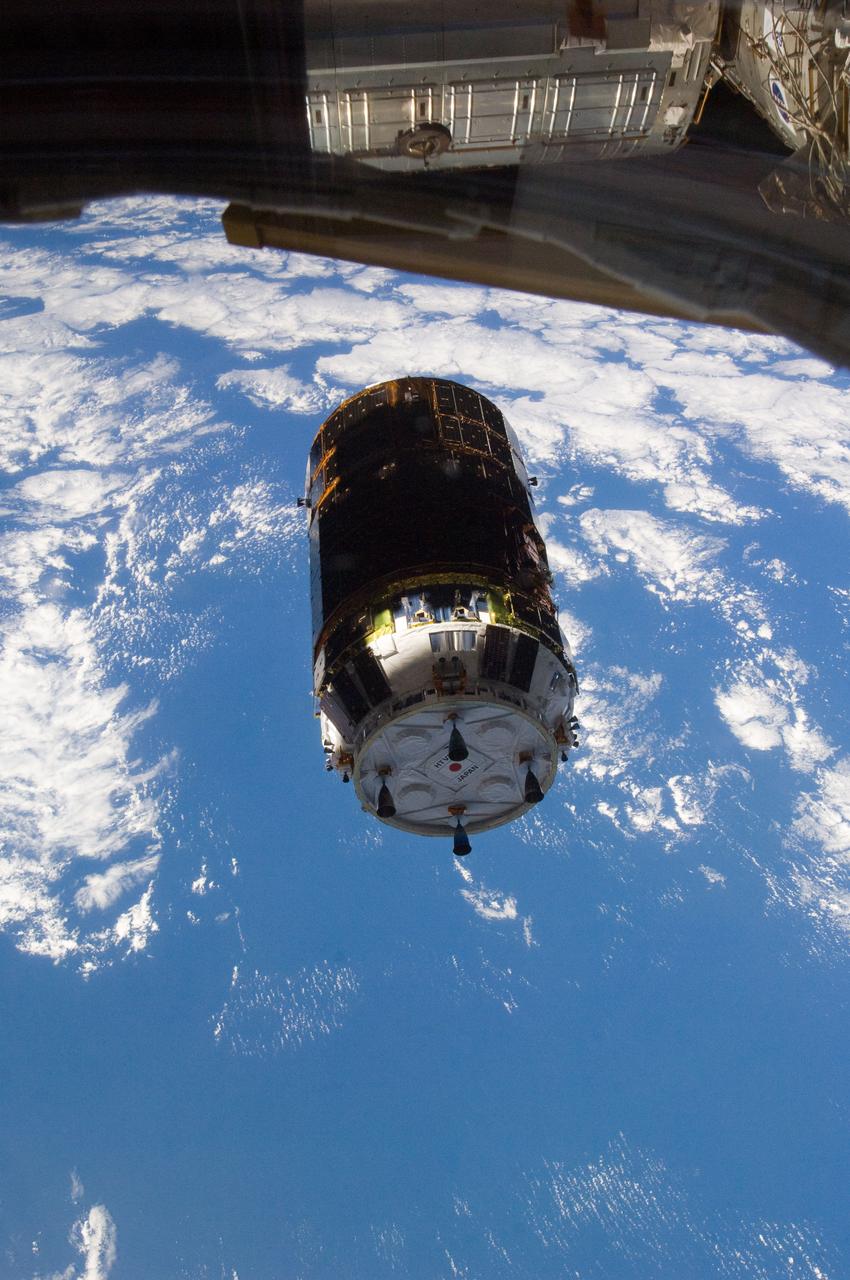
ISS032-E-010428 (27 July 2012) --- The unpiloted Japan Aerospace Exploration Agency (JAXA) H-II Transfer Vehicle (HTV-3) approaches the International Space Station. The Japan Aerospace Exploration Agency launched HTV-3 aboard an H-IIB launch vehicle from the Tanegashima Space Center in southern Japan at 10:06 p.m. EDT July 20 (11:06 a.m. July 21, Japan time). The HTV is bringing 7,000 pounds of cargo including food and clothing for the crew members, an aquatic habitat experiment, a remote-controlled Earth-observation camera for environmental studies, a catalytic reactor for the station’s water regeneration system and a Japanese cooling water recirculation pump. The vehicle will remain at the space station until Sept. 6 when, like its predecessors, it will be detached from the Harmony node by Canadarm2 and released for a fiery re-entry over the Pacific Ocean.
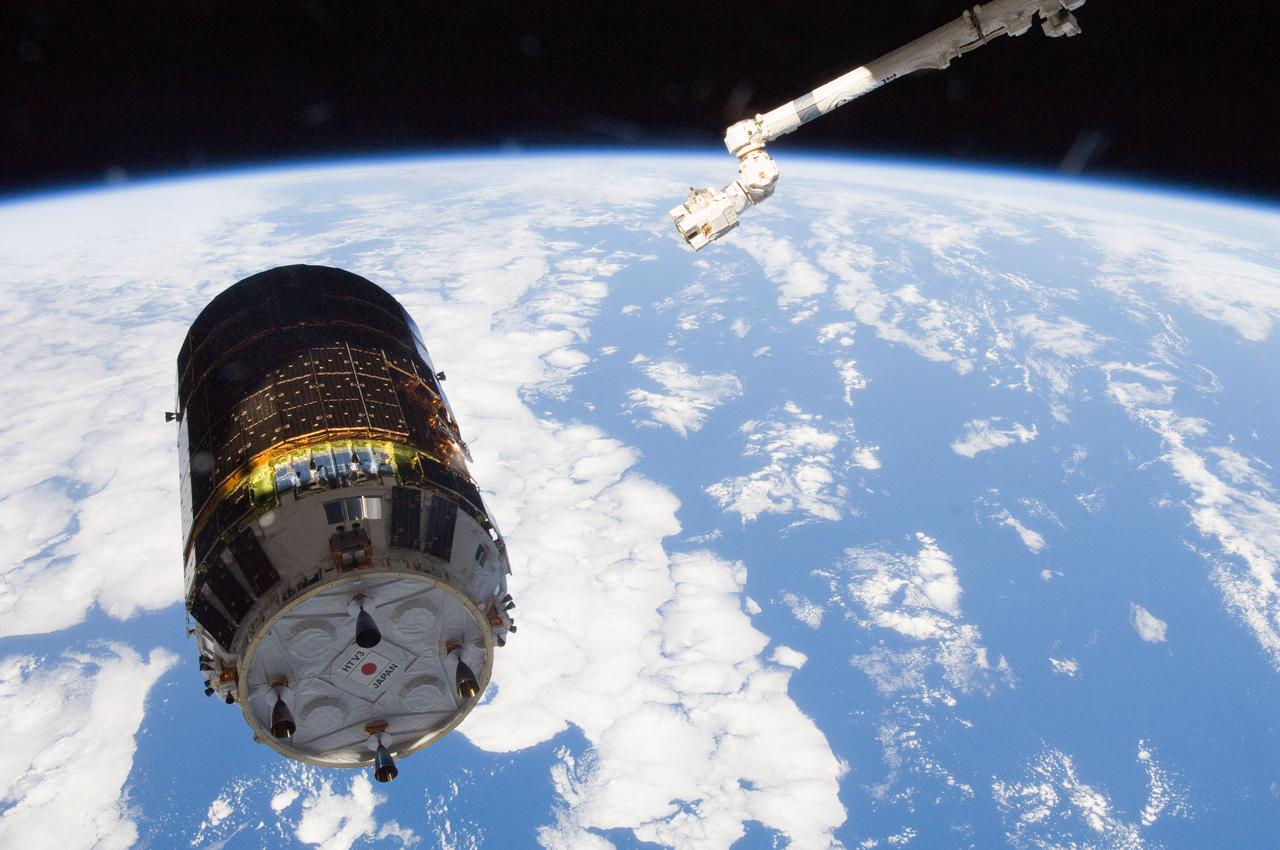
ISS032-E-010430 (27 July 2012) --- The Canadarm2 moves toward the unpiloted Japan Aerospace Exploration Agency (JAXA) H-II Transfer Vehicle (HTV-3) as it approaches the International Space Station. The Japan Aerospace Exploration Agency launched HTV-3 aboard an H-IIB launch vehicle from the Tanegashima Space Center in southern Japan at 10:06 p.m. EDT July 20 (11:06 a.m. July 21, Japan time). The HTV is bringing 7,000 pounds of cargo including food and clothing for the crew members, an aquatic habitat experiment, a remote-controlled Earth-observation camera for environmental studies, a catalytic reactor for the station’s water regeneration system and a Japanese cooling water recirculation pump. The vehicle will remain at the space station until Sept. 6 when, like its predecessors, it will be detached from the Harmony node by Canadarm2 and released for a fiery re-entry over the Pacific Ocean.
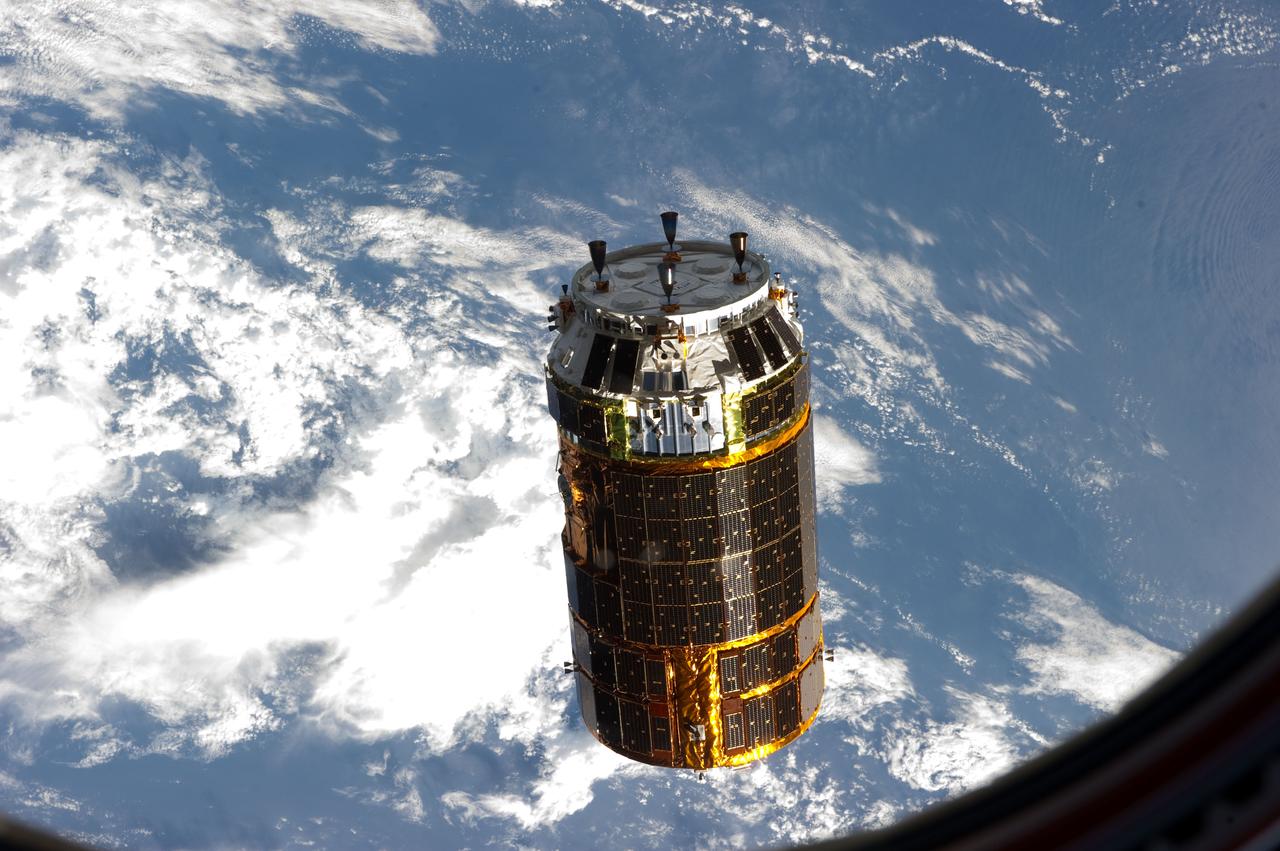
ISS032-E-010819 (27 July 2012) --- The unpiloted Japan Aerospace Exploration Agency (JAXA) H-II Transfer Vehicle (HTV-3) approaches the International Space Station. The Japan Aerospace Exploration Agency launched HTV-3 aboard an H-IIB launch vehicle from the Tanegashima Space Center in southern Japan at 10:06 p.m. EDT July 20 (11:06 a.m. July 21, Japan time). The HTV is bringing 7,000 pounds of cargo including food and clothing for the crew members, an aquatic habitat experiment, a remote-controlled Earth-observation camera for environmental studies, a catalytic reactor for the station’s water regeneration system and a Japanese cooling water recirculation pump. The vehicle will remain at the space station until Sept. 6 when, like its predecessors, it will be detached from the Harmony node by Canadarm2 and released for a fiery re-entry over the Pacific Ocean.
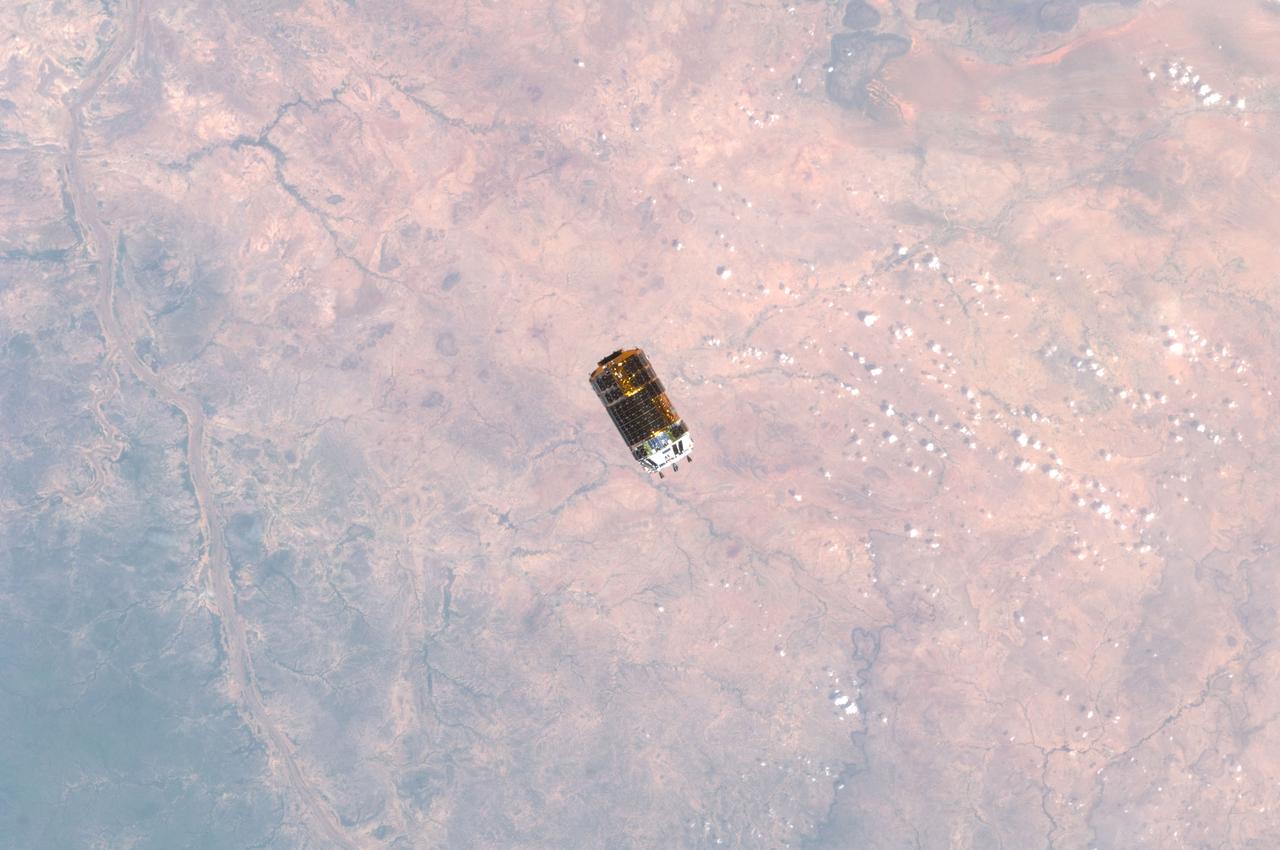
ISS032-E-010386 (27 July 2012) --- The unpiloted Japan Aerospace Exploration Agency (JAXA) H-II Transfer Vehicle (HTV-3) approaches the International Space Station. The Japan Aerospace Exploration Agency launched HTV-3 aboard an H-IIB launch vehicle from the Tanegashima Space Center in southern Japan at 10:06 p.m. EDT July 20 (11:06 a.m. July 21, Japan time). The HTV is bringing 7,000 pounds of cargo including food and clothing for the crew members, an aquatic habitat experiment, a remote-controlled Earth-observation camera for environmental studies, a catalytic reactor for the station’s water regeneration system and a Japanese cooling water recirculation pump. The vehicle will remain at the space station until Sept. 6 when, like its predecessors, it will be detached from the Harmony node by Canadarm2 and released for a fiery re-entry over the Pacific Ocean.
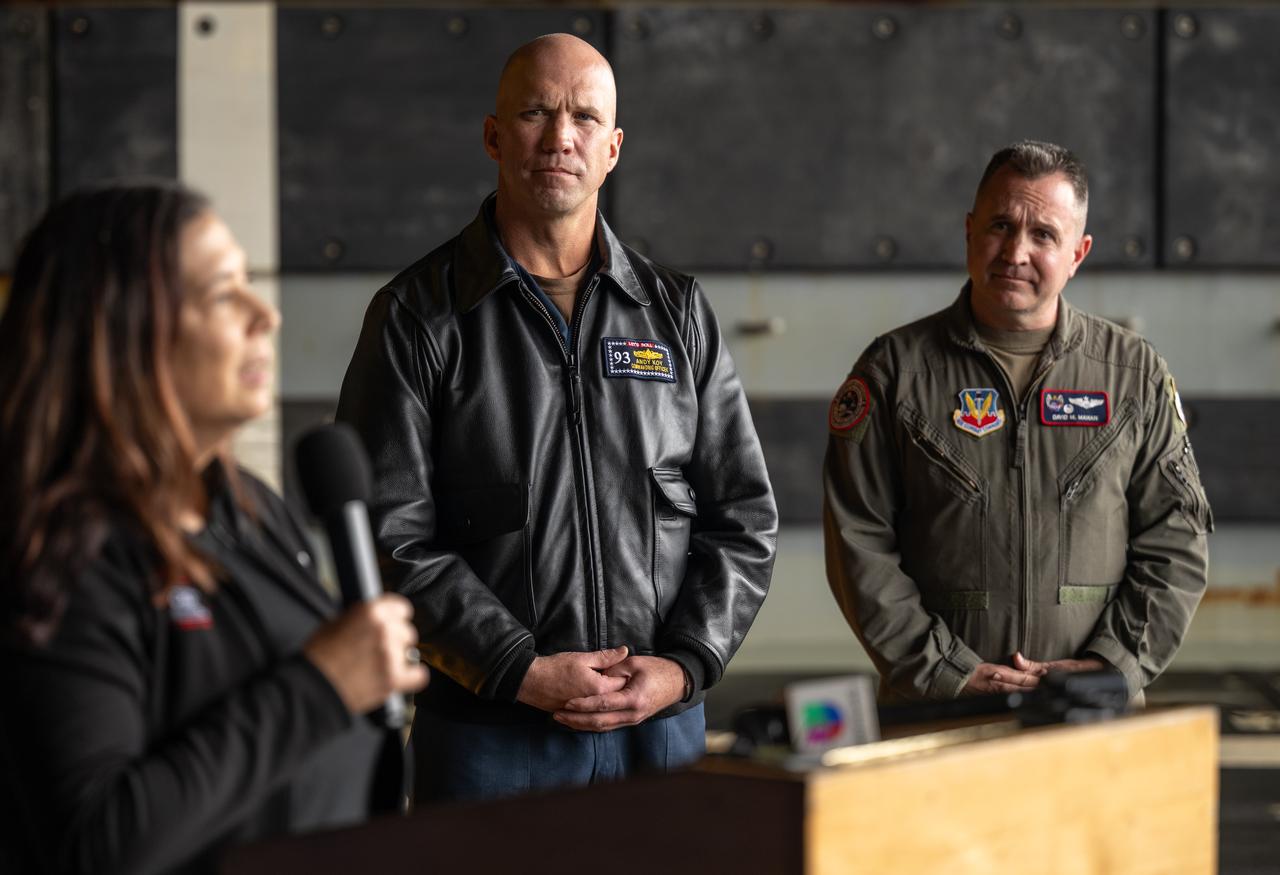
Liliana Villarreal, NASA’s Artemis II landing and recovery director, Exploration Ground Systems Program, gives remarks, as Capt. Andrew “Andy” Koy, commanding officer of USS Somerset (LPD 25), U.S. Navy, left, and Lt. Col. David Mahan, commander, U.S. Air Force’s 1st Air Force, Detachment 3, Patrick Space Force Base, Florida, look on, during a media event where NASA and the Department of Defense discussed the recovery operations that will bring the Artemis II astronauts and the agency’s Orion spacecraft home at the conclusion of next year’s mission around the Moon, Monday, March 31, 2025, onboard USS Somerset at Naval Base San Diego, in California. The teams spent the week practicing the procedures they will use to recover the astronauts after their more than 600,000 mile journey from Earth to the Moon and back on the first crewed mission under the Artemis campaign. Photo Credit: (NASA/Bill Ingalls)
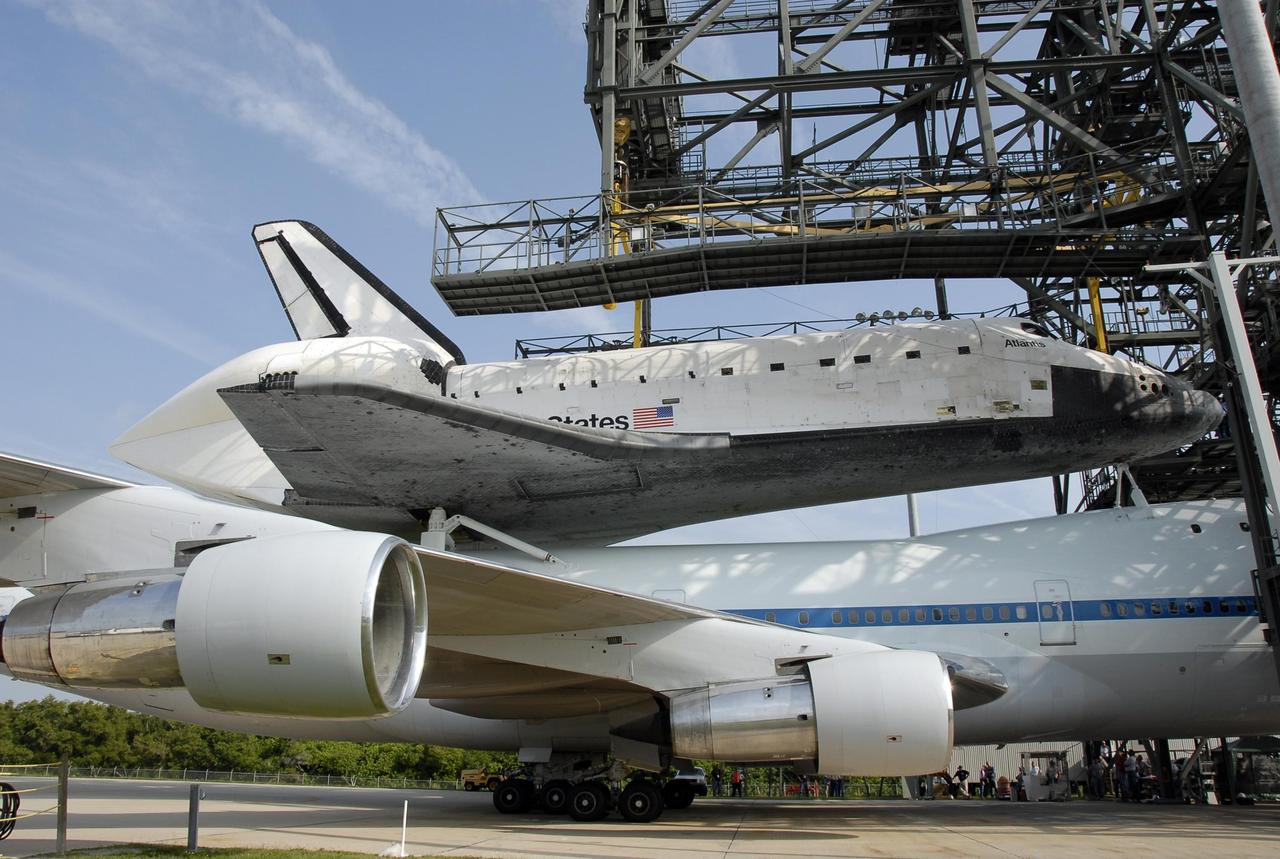
KENNEDY SPACE CENTER, FLA. -- On the KSC Shuttle Landing Facility, the shuttle carrier aircraft, or SCA, with the orbiter Atlantis on its back is towed under the mate/demate device. Visible on Atlantis is the tail cone that covers and protects the main engines during the ferry flight. The orbiter will be detached from the SCA and lowered onto a transporter. Then Atlantis will be towed to the Orbiter Processing Facility to begin processing for its next launch, mission STS-122 in December. Atlantis landed at Edwards Air Force Base in California on June 22 to end mission STS-117. It returned to Kennedy atop the SCA on July 3 after a three-day, cross-country flight due to fuel stops and weather delays. Touchdown was at 8:27 a.m. EDT. Photo credit: NASA/Kim Shiflett

A C-17 Globemaster aircraft from the Alaska Air National Guard’s 249th Airlift Squadron flies overhead as pararescue specialists from the 304th Rescue Squadron, located in Portland, Oregon complete an astronaut rescue training exercise inside a covered life raft on the Atlantic Ocean. The pararescue specialists, supporting the 45th Operations Group’s Detachment 3, based out of Patrick Air Force Base, conducted the exercise in April with NASA’s Commercial Crew Program and SpaceX off of Florida’s eastern coast. The specially designed 20-person life raft is equipped with enough food, water and medical supplies to sustain both rescuers and crew for up to three days, if necessary. In this situation, the Department of Defense (DOD) would complete the rescue by enlisting help from the US Coast Guard, a DOD ship, or a nearby commercial ship of opportunity to transport the crew to safety.
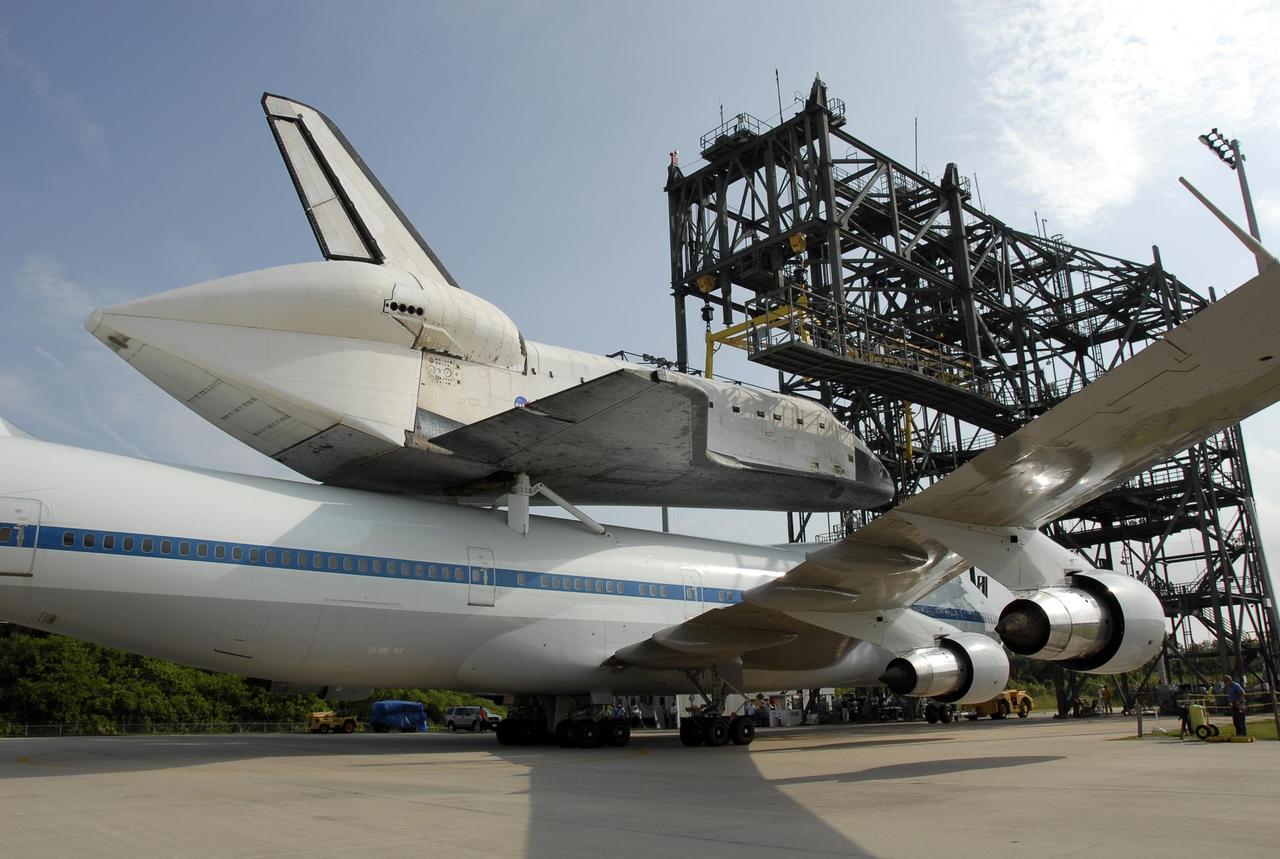
KENNEDY SPACE CENTER, FLA. -- On the KSC Shuttle Landing Facility, the shuttle carrier aircraft, or SCA, with the orbiter Atlantis on its back is towed toward the mate/demate device (background). Visible on Atlantis is the tail cone that covers and protects the main engines during the ferry flight. Under the device, the orbiter will be detached from the SCA and lowered onto a transporter. Then Atlantis will be towed to the Orbiter Processing Facility to begin processing for its next launch, mission STS-122 in December. Atlantis landed at Edwards Air Force Base in California on June 22 to end mission STS-117. It returned to Kennedy atop the SCA on July 3 after a three-day, cross-country flight due to fuel stops and weather delays. Touchdown was at 8:27 a.m. EDT. Photo credit: NASA/Kim Shiflett
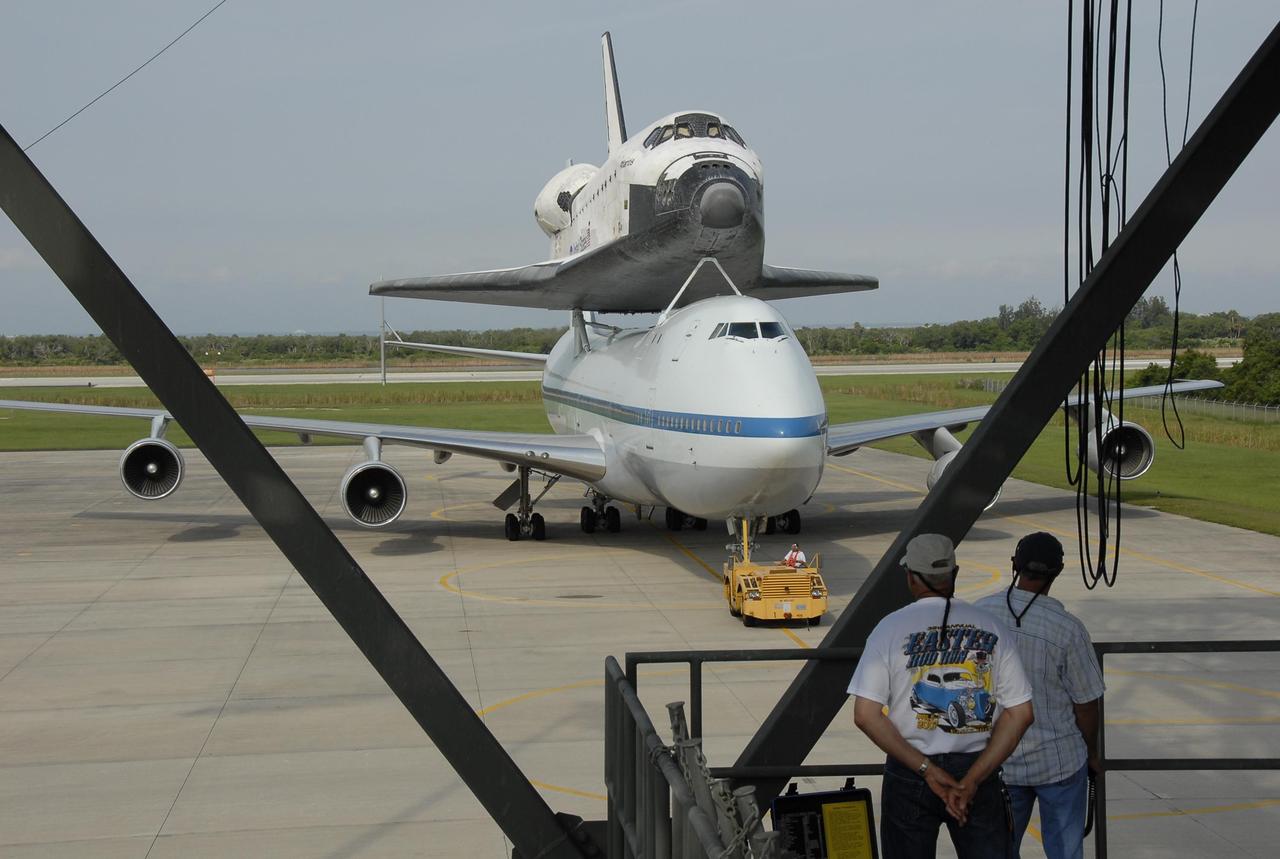
KENNEDY SPACE CENTER, FLA. -- On the KSC Shuttle Landing Facility, the shuttle carrier aircraft, or SCA, with the orbiter Atlantis on its back is towed toward the mate/demate device. Under the device, the orbiter will be detached from the SCA and lowered onto a transporter. Then Atlantis will be towed to the Orbiter Processing Facility to begin processing for its next launch, mission STS-122 in December. Atlantis landed at Edwards Air Force Base in California on June 22 to end mission STS-117. It returned to Kennedy atop the SCA on July 3 after a three-day, cross-country flight due to fuel stops and weather delays. Touchdown was at 8:27 a.m. EDT. Photo credit: NASA/Kim Shiflett
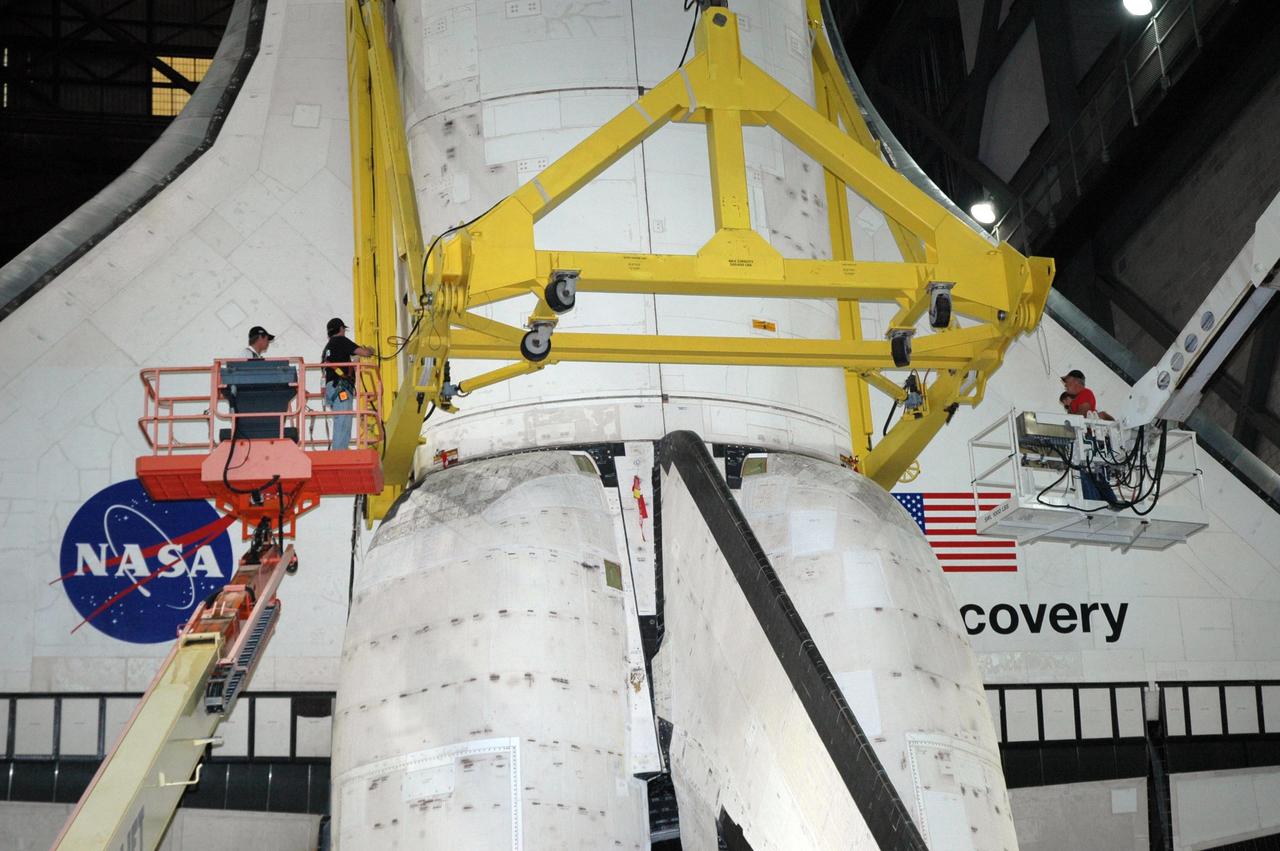
KENNEDY SPACE CENTER, FLA. -- Workers in the Vehicle Assembly Building detach part of the crane used to raise Discovery from its transporter. Still attached to the sling, Discovery will be lifted up into high bay 3 and lowered onto the mobile launcher platform where the external tank and solid rocket boosters are already stacked. Space Shuttle Discovery is scheduled to roll out to Launch Pad 39B no earlier than Nov. 7 for mission STS-116. The mission is No. 20 to the International Space Station and construction flight 12A.1. The mission payload is the SPACEHAB module, the P5 integrated truss structure and other key components. The launch window for mission STS-116 opens Dec. 7. Photo credit: NASA/Jack Pfaller
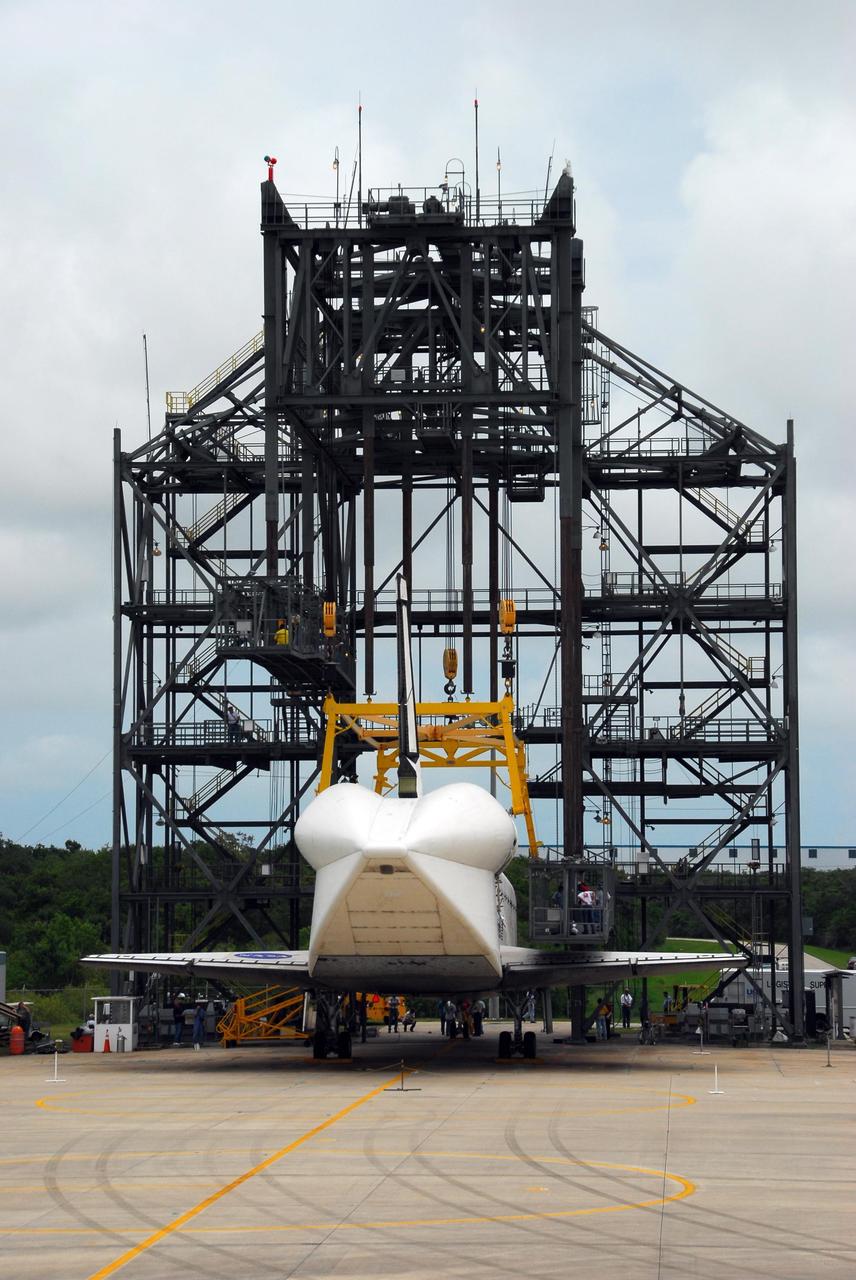
KENNEDY SPACE CENTER, FLA. -- At the mate/demate device at Kennedy Space Center's Shuttle Landing Facility, Atlantis is detached from the lifting crane and workers prepare the orbiter for towing to the Orbiter Processing Facility where processing will begin for its next launch, mission STS-122 in December. Visible on Atlantis is the tail cone that covers and protects the main engines during the ferry flight. Atlantis arrived at Kennedy Space Center atop the shuttle carrier aircraft, or SCA, on July 3 after a three-day, cross-country flight due to fuel stops and weather delays. Touchdown was at 8:27 a.m. EDT. Atlantis landed at Edwards Air Force Base in California on June 22 to end mission STS-117. Photo credit: NASA/George Shelton.
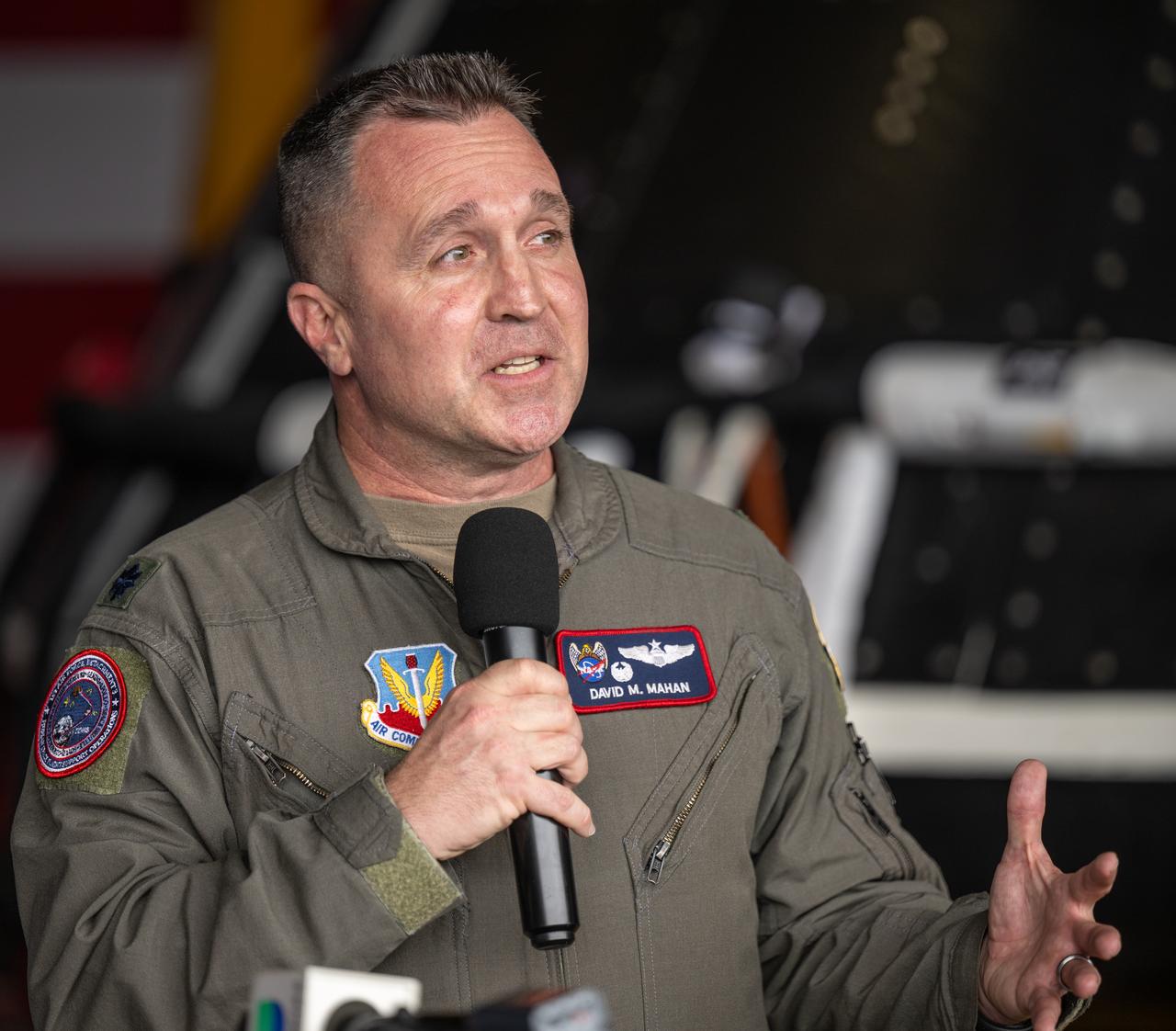
Lt. Col. David Mahan, commander, U.S. Air Force’s 1st Air Force, Detachment 3, Patrick Space Force Base, Florida, gives remarks during a media event where NASA and the Department of Defense discussed the recovery operations that will bring the Artemis II astronauts and the agency’s Orion spacecraft home at the conclusion of next year’s mission around the Moon, Monday, March 31, 2025, onboard USS Somerset at Naval Base San Diego, in California. The teams spent the week practicing the procedures they will use to recover the astronauts after their more than 600,000 mile journey from Earth to the Moon and back on the first crewed mission under the Artemis campaign. Photo Credit: (NASA/Bill Ingalls)

Pararescue specialists from the 304th Rescue Squadron, located in Portland, Oregon and supporting the 45th Operations Group’s Detachment 3, based out of Patrick Air Force Base, secure a covered life raft as the sun sets during an astronaut rescue training exercise with NASA’s Commercial Crew Program and SpaceX off of Florida’s eastern coast in April. The specially designed 20-person life raft is equipped with enough food, water and medical supplies to sustain both rescuers and crew for up to three days, if necessary. In this situation, the Department of Defense (DOD) would complete the rescue by enlisting help from the US Coast Guard, a DOD ship, or a nearby commercial ship of opportunity to transport the crew to safety.
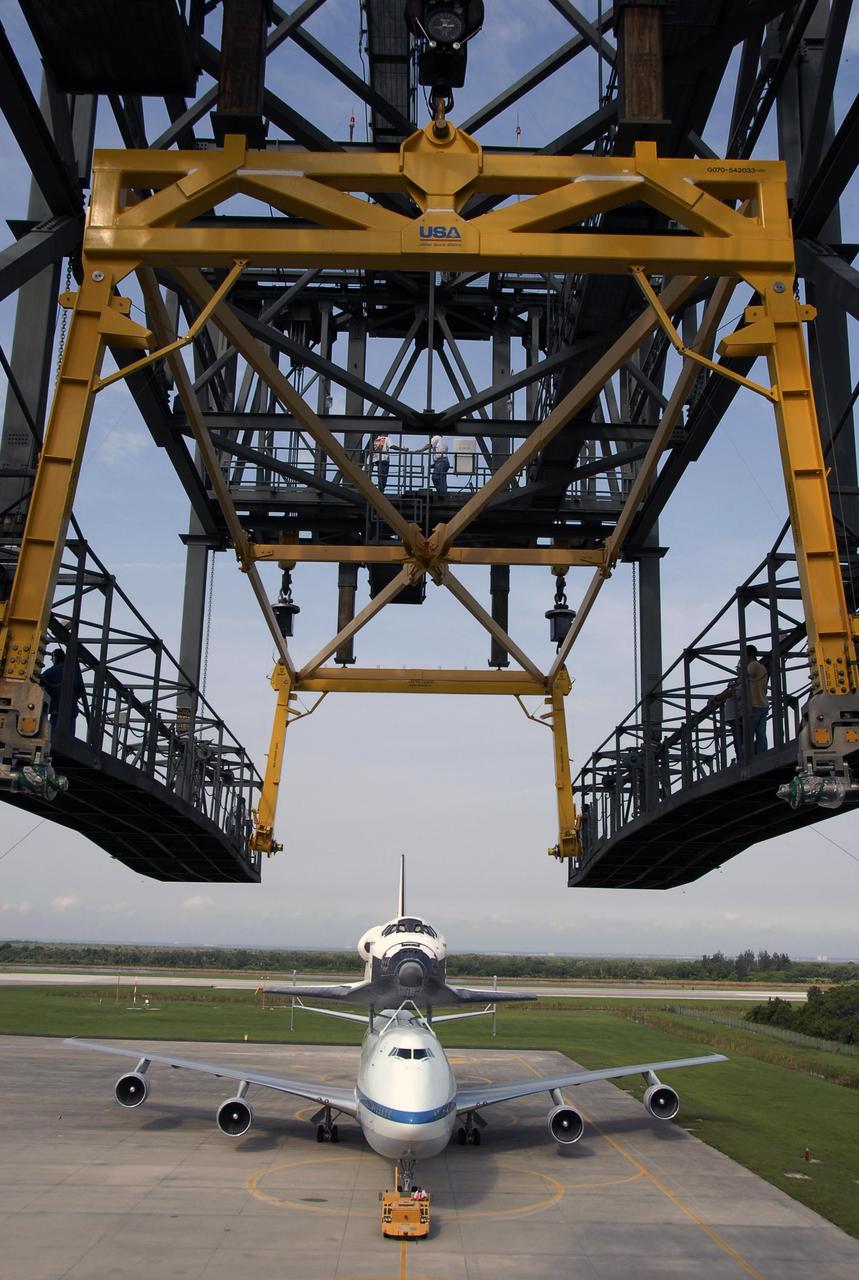
KENNEDY SPACE CENTER, FLA. -- On the KSC Shuttle Landing Facility, the shuttle carrier aircraft, or SCA, with the orbiter Atlantis on its back is towed toward the mate/demate device (upper foreground). Under the device, the orbiter will be detached from the SCA and lowered onto a transporter. Then Atlantis will be towed to the Orbiter Processing Facility to begin processing for its next launch, mission STS-122 in December. Atlantis landed at Edwards Air Force Base in California on June 22 to end mission STS-117. It returned to Kennedy atop the SCA on July 3 after a three-day, cross-country flight due to fuel stops and weather delays. Touchdown was at 8:27 a.m. EDT. Photo credit: NASA/Kim Shiflett
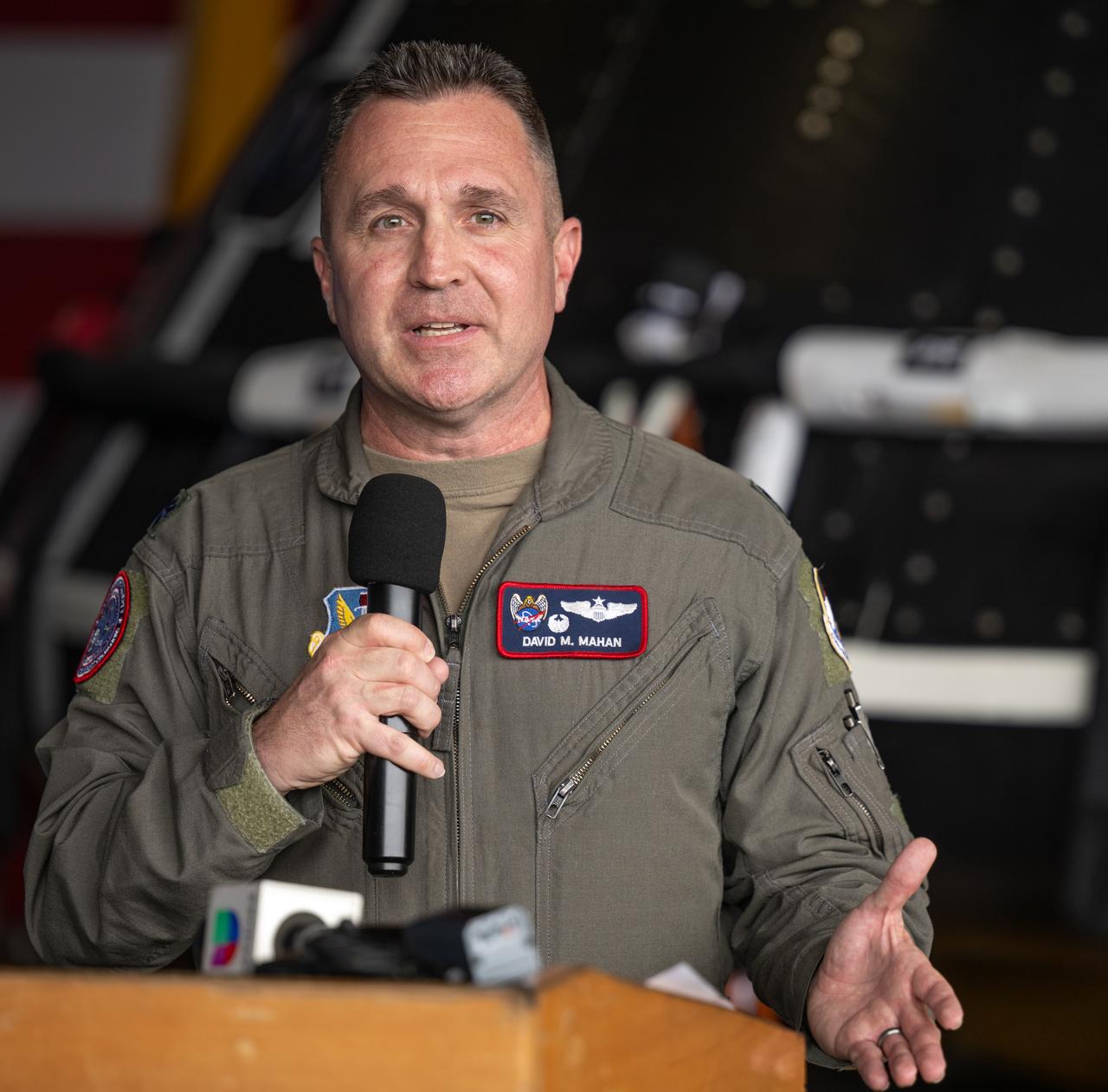
Lt. Col. David Mahan, commander, U.S. Air Force’s 1st Air Force, Detachment 3, Patrick Space Force Base, Florida, gives remarks during a media event where NASA and the Department of Defense discussed the recovery operations that will bring the Artemis II astronauts and the agency’s Orion spacecraft home at the conclusion of next year’s mission around the Moon, Monday, March 31, 2025, onboard USS Somerset at Naval Base San Diego, in California. The teams spent the week practicing the procedures they will use to recover the astronauts after their more than 600,000 mile journey from Earth to the Moon and back on the first crewed mission under the Artemis campaign. Photo Credit: (NASA/Bill Ingalls)
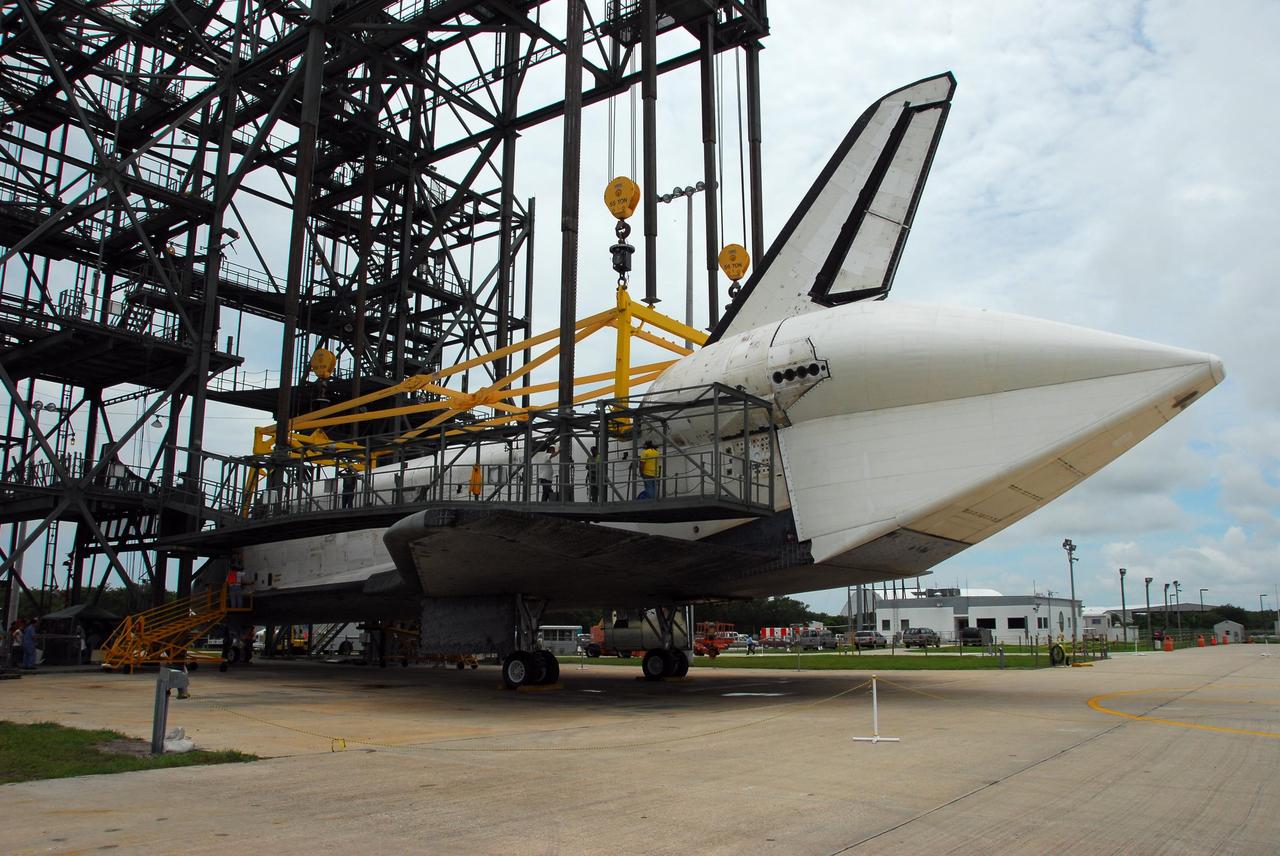
KENNEDY SPACE CENTER, FLA. -- At the mate/demate device at Kennedy Space Center's Shuttle Landing Facility, technicians begin the process of detaching the lifting crane from Atlantis. Visible on Atlantis is the tail cone that covers and protects the main engines during the ferry flight. The orbiter will be towed to the Orbiter Processing Facility to begin processing for its next launch, mission STS-122 in December. Atlantis arrived at Kennedy Space Center atop the shuttle carrier aircraft, or SCA, on July 3 after a three-day, cross-country flight due to fuel stops and weather delays. Touchdown was at 8:27 a.m. EDT. Atlantis landed at Edwards Air Force Base in California on June 22 to end mission STS-117. Photo credit: NASA/George Shelton.
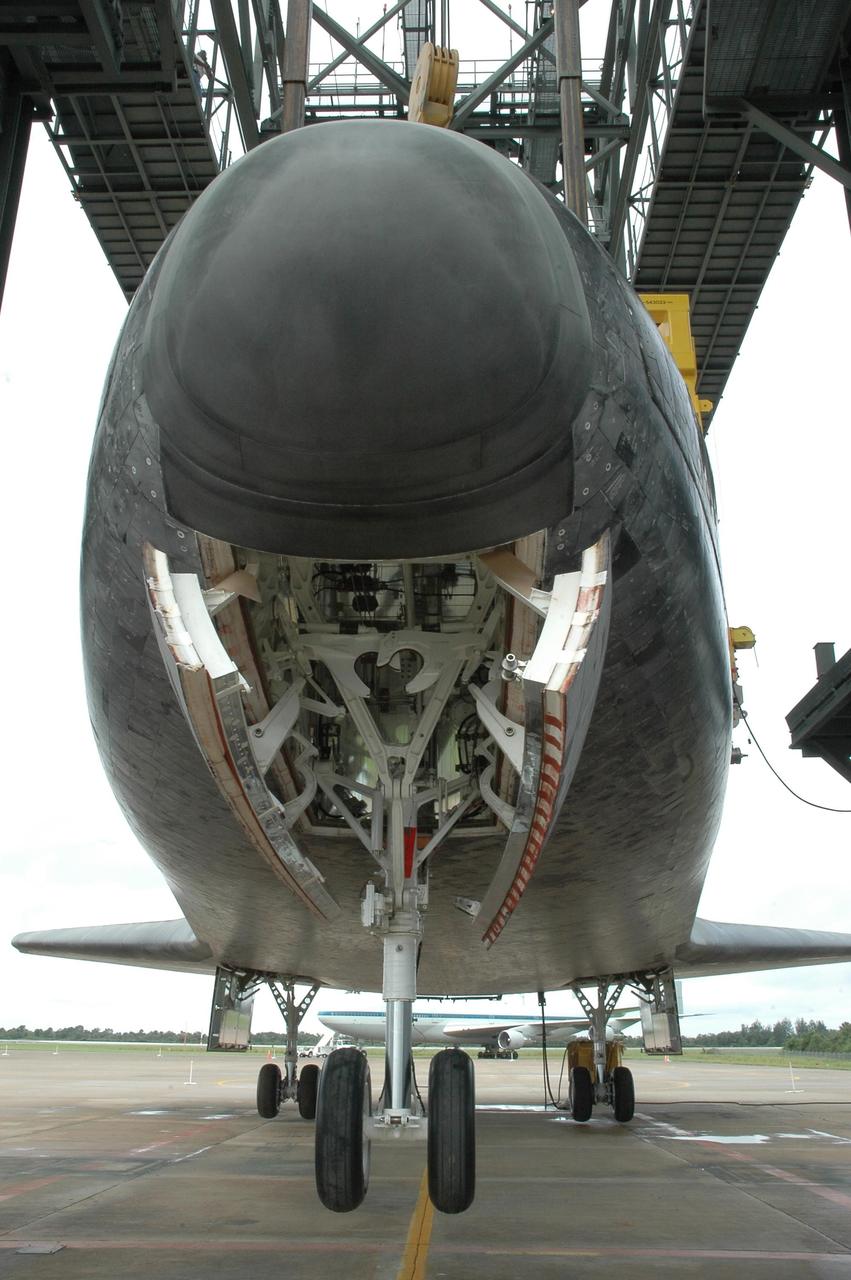
KENNEDY SPACE CENTER, FLA. -- Atlantis is lowered to the ground at the mate/demate device at Kennedy Space Center's Shuttle Landing Facility. In the background the shuttle carrier aircraft, or SCA, can be seen. The orbiter will be detached from the lifting crane and then towed to the Orbiter Processing Facility to begin processing for its next launch, mission STS-122 in December. Atlantis arrived at Kennedy Space Center atop the SCA on July 3 after a three-day, cross-country flight due to fuel stops and weather delays. Touchdown was at 8:27 a.m. EDT. Atlantis landed at Edwards Air Force Base in California on June 22 to end mission STS-117. Photo credit: NASA/Jack Pfaller.
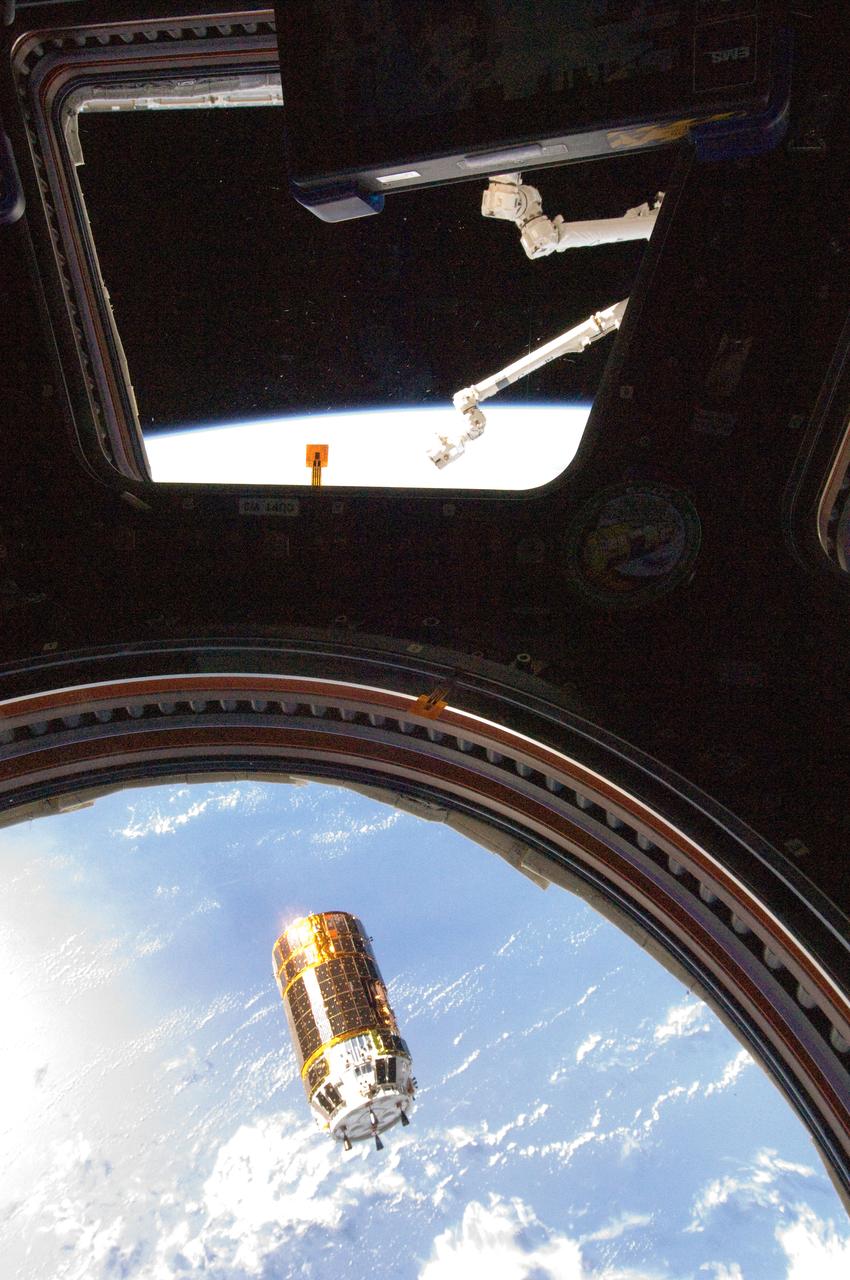
ISS032-E-010425 (27 July 2012) --- The unpiloted Japan Aerospace Exploration Agency (JAXA) H-II Transfer Vehicle (HTV-3) is photographed from a window in the Cupola by an Expedition 32 crew member as it approaches the International Space Station. The Japan Aerospace Exploration Agency launched HTV-3 aboard an H-IIB launch vehicle from the Tanegashima Space Center in southern Japan at 10:06 p.m. EDT July 20 (11:06 a.m. July 21, Japan time). The HTV is bringing 7,000 pounds of cargo including food and clothing for the crew members, an aquatic habitat experiment, a remote-controlled Earth-observation camera for environmental studies, a catalytic reactor for the station’s water regeneration system and a Japanese cooling water recirculation pump. The vehicle will remain at the space station until Sept. 6 when, like its predecessors, it will be detached from the Harmony node by Canadarm2 and released for a fiery re-entry over the Pacific Ocean.
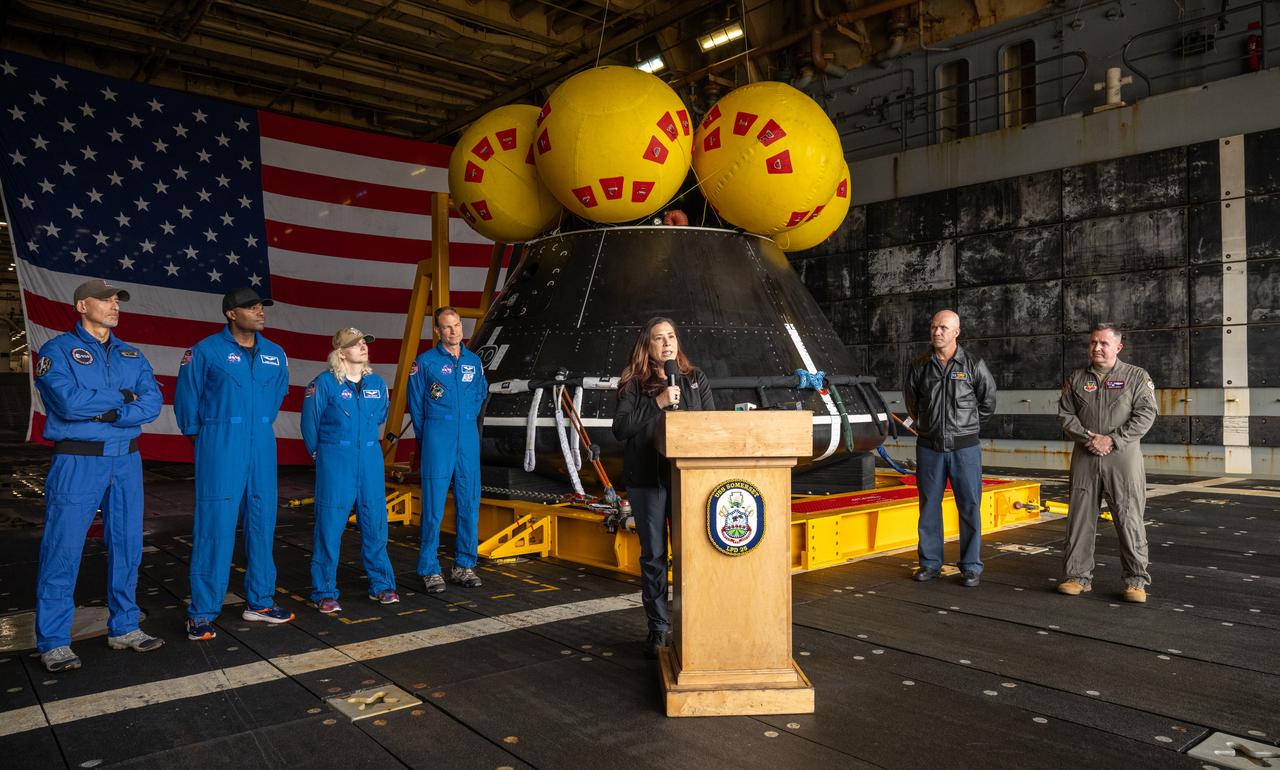
Liliana Villarreal, NASA’s Artemis II landing and recovery director, Exploration Ground Systems Program, center, gives remarks as ESA (European Space Agency) astronaut Luca Parmitano, left, NASA astronauts Andre Douglas, Deniz Burnham, Stan Love, Capt. Andrew “Andy” Koy, commanding officer of USS Somerset (LPD 25), U.S. Navy, and Lt. Col. David Mahan, commander, U.S. Air Force’s 1st Air Force, Detachment 3, Patrick Space Force Base, Florida, right, look on during a media event where NASA and the Department of Defense discussed the recovery operations that will bring the Artemis II astronauts and the agency’s Orion spacecraft home at the conclusion of next year’s mission around the Moon, Monday, March 31, 2025, onboard USS Somerset at Naval Base San Diego, in California. The teams spent the week practicing the procedures they will use to recover the astronauts after their more than 600,000 mile journey from Earth to the Moon and back on the first crewed mission under the Artemis campaign. Photo Credit: (NASA/Bill Ingalls)
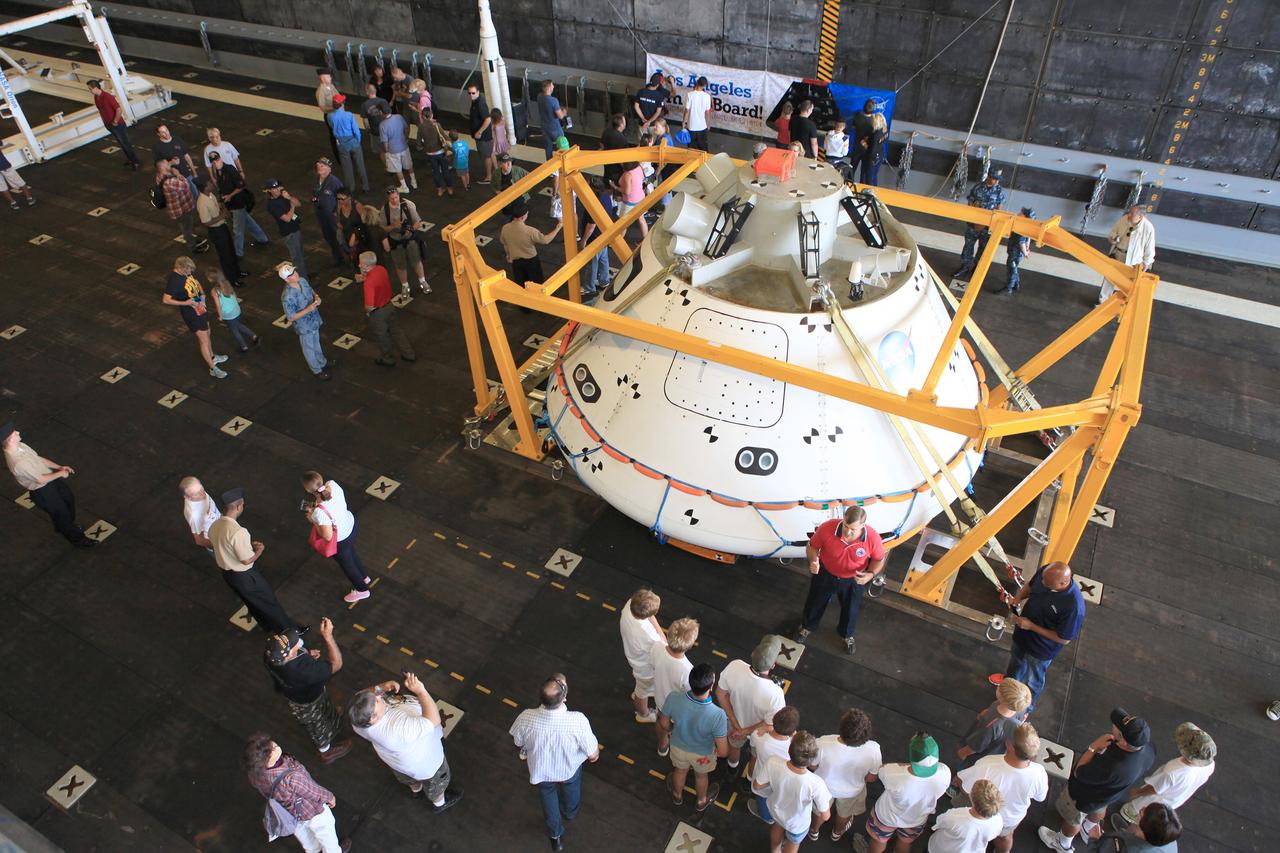
LOS ANGELES, Calif. – Andy Quiett, Detachment 3 deputy operations lead for the Orion program and DoD liaison for NASA, answers questions about the Orion boilerplate test vehicle from visitors touring the well deck of the USS Anchorage during the Science, Technology, Engineering and Mathematics, or STEM, Expo for L.A. Navy Days at the Port of Los Angeles in California. A combined team from NASA’s Ground Systems Development and Operations Program and the U.S. Navy were in San Diego to practice recovering Orion from the ocean, as they will do in December following the spacecraft's first trip to space during Exploration Flight Test-1. Orion is the exploration spacecraft designed to carry astronauts to destinations not yet explored by humans, including an asteroid and Mars. It will have emergency abort capability, sustain the crew during space travel and provide safe re-entry from deep-space return velocities. The first unpiloted test flight of the Orion is scheduled to launch in 2014 atop a Delta IV rocket and in 2017 on NASA’s Space Launch System rocket. For more information, visit http://www.nasa.gov/orion. Photo credit: NASA/Kim Shiflett

LOS ANGELES, Calif. – Andy Quiett, Detachment 3 deputy operations lead for the Orion program and DoD liaison for NASA, answers questions about the Orion boilerplate test vehicle from visitors touring the well deck of the USS Anchorage during the Science, Technology, Engineering and Mathematics, or STEM, Expo for L.A. Navy Days at the Port of Los Angeles in California. A combined team from NASA’s Ground Systems Development and Operations Program and the U.S. Navy were in San Diego to practice recovering Orion from the ocean, as they will do in December following the spacecraft's first trip to space during Exploration Flight Test-1. Orion is the exploration spacecraft designed to carry astronauts to destinations not yet explored by humans, including an asteroid and Mars. It will have emergency abort capability, sustain the crew during space travel and provide safe re-entry from deep-space return velocities. The first unpiloted test flight of the Orion is scheduled to launch in 2014 atop a Delta IV rocket and in 2017 on NASA’s Space Launch System rocket. For more information, visit http://www.nasa.gov/orion. Photo credit: NASA/Kim Shiflett
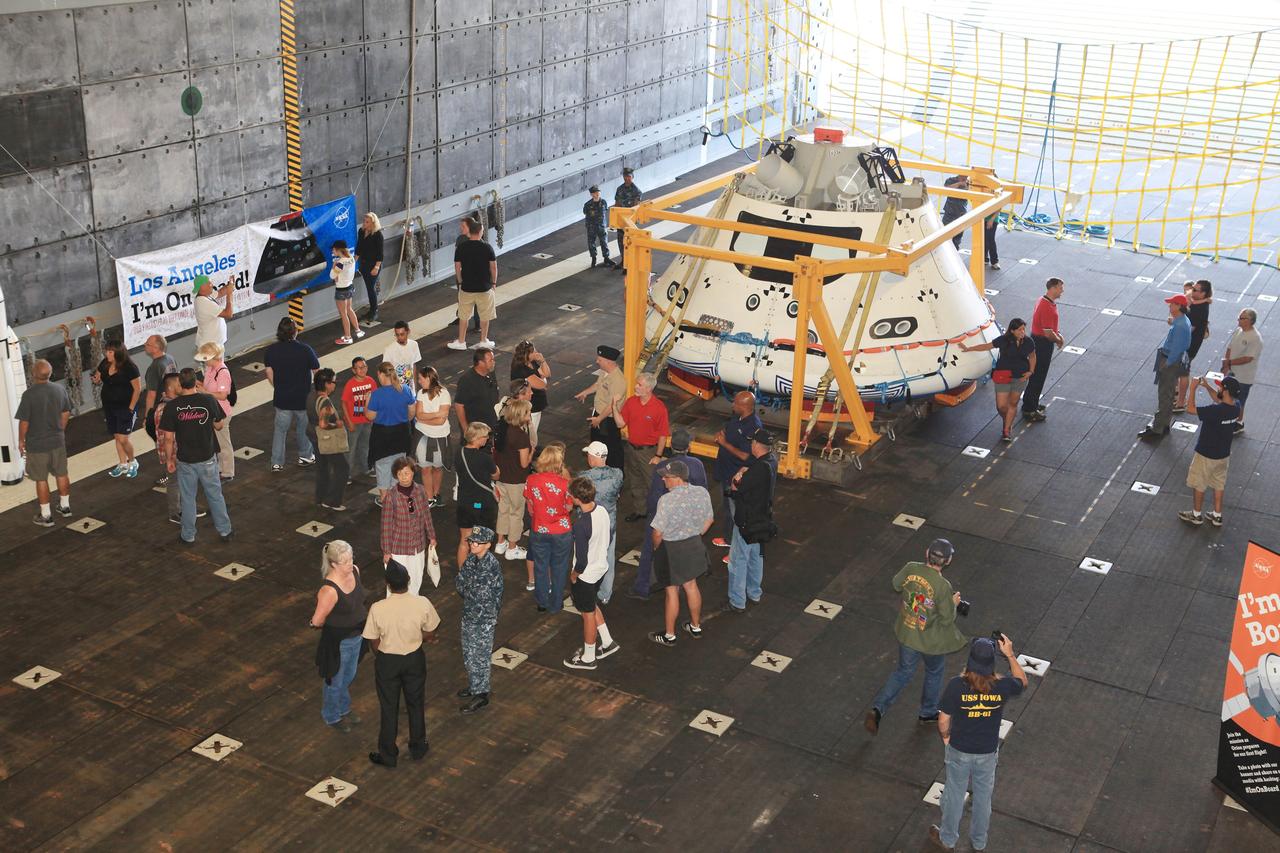
LOS ANGELES, Calif. – Andy Quiett, Detachment 3 deputy operations lead for the Orion program and DoD liaison for NASA, answers questions about the Orion boilerplate test vehicle from visitors touring the well deck of the USS Anchorage during the Science, Technology, Engineering and Mathematics, or STEM, Expo for L.A. Navy Days at the Port of Los Angeles in California. A combined team from NASA’s Ground Systems Development and Operations Program and the U.S. Navy were in San Diego to practice recovering Orion from the ocean, as they will do in December following the spacecraft's first trip to space during Exploration Flight Test-1. Orion is the exploration spacecraft designed to carry astronauts to destinations not yet explored by humans, including an asteroid and Mars. It will have emergency abort capability, sustain the crew during space travel and provide safe re-entry from deep-space return velocities. The first unpiloted test flight of the Orion is scheduled to launch in 2014 atop a Delta IV rocket and in 2017 on NASA’s Space Launch System rocket. For more information, visit http://www.nasa.gov/orion. Photo credit: NASA/Kim Shiflett
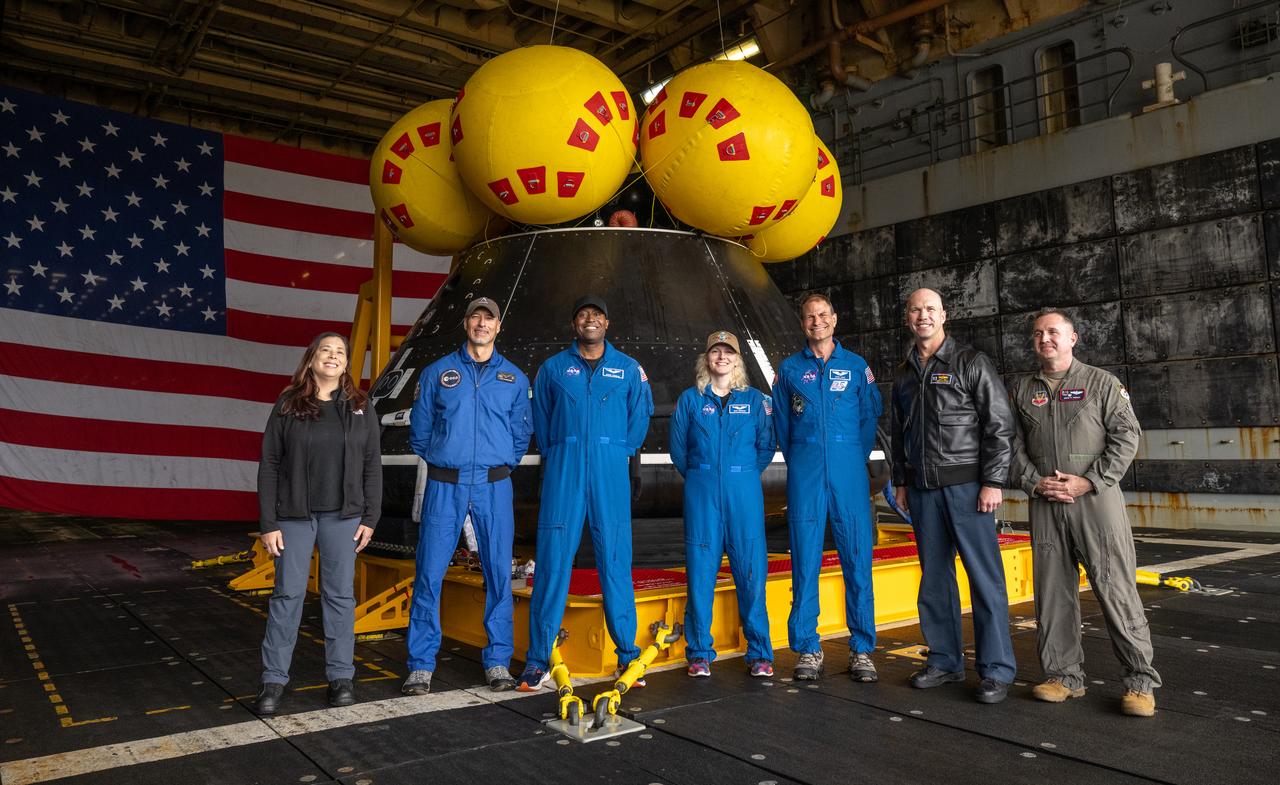
Liliana Villarreal, NASA’s Artemis II landing and recovery director, Exploration Ground Systems Program, left, ESA (European Space Agency) astronaut Luca Parmitano, NASA astronauts Andre Douglas, Deniz Burnham, Stan Love, Capt. Andrew “Andy” Koy, commanding officer of USS Somerset (LPD 25), U.S. Navy, and Lt. Col. David Mahan, commander, U.S. Air Force’s 1st Air Force, Detachment 3, Patrick Space Force Base, Florida, right, pose for a group photo in front of the Crew Module Test Article (CMTA) at the conclusion of a media event where NASA and the Department of Defense discussed the recovery operations that will bring the Artemis II astronauts and the agency’s Orion spacecraft home at the conclusion of next year’s mission around the Moon, Monday, March 31, 2025, onboard USS Somerset at Naval Base San Diego, in California. The teams spent the week practicing the procedures they will use to recover the astronauts after their more than 600,000 mile journey from Earth to the Moon and back on the first crewed mission under the Artemis campaign. Photo Credit: (NASA/Bill Ingalls)
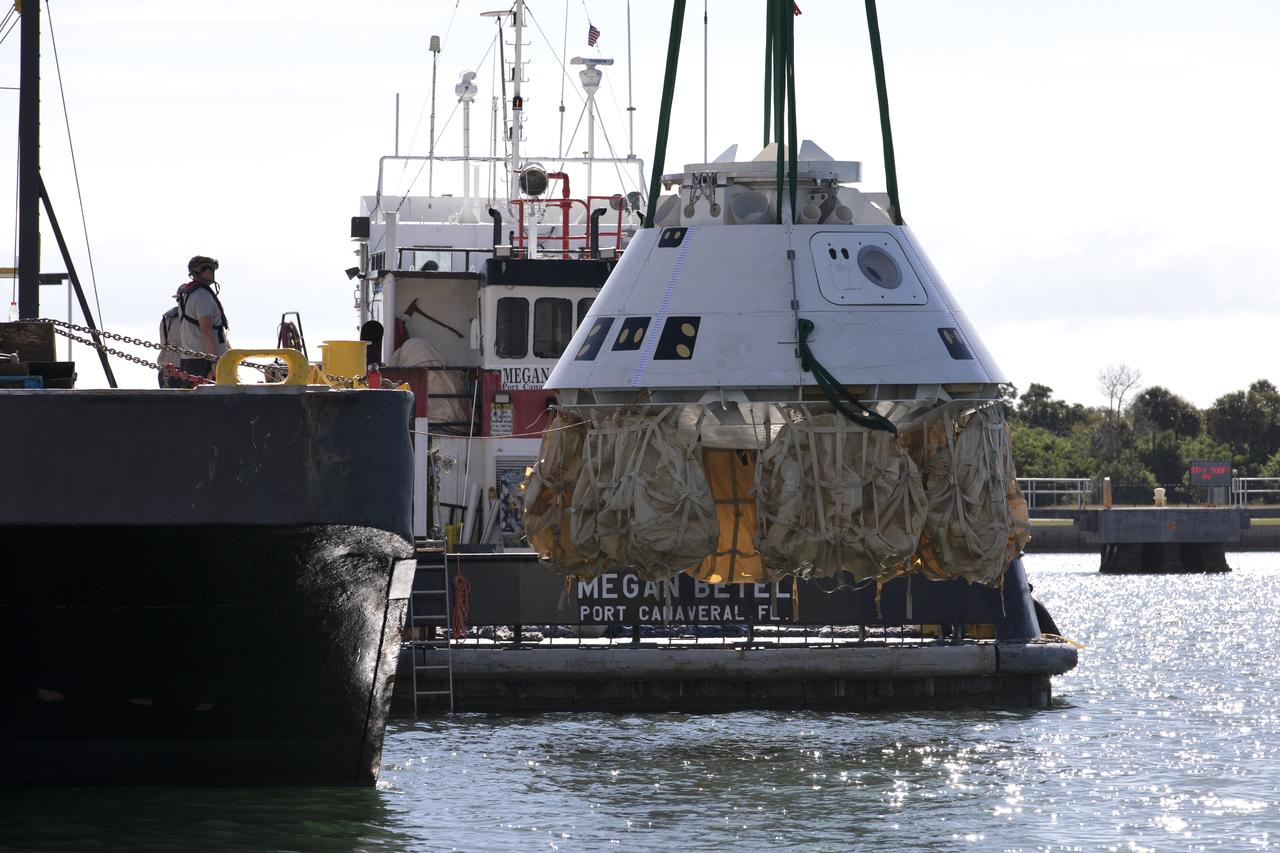
Rescue team members lower the Boeing CST-100 Starliner training capsule, known as Boiler Plate 3, into the water at the Army Wharf at Cape Canaveral Air Force Station in Florida on April 16, 2019. The team is practicing crew rescue procedures in the unlikely event of an emergency resulting in a splashdown. NASA and the Department of Defense Human Space Flight Support Office Rescue Division conducted a search and rescue training exercise at the Army Wharf at Cape Canaveral Air Force Station in Florida on April 17, 2019. The teams practiced manually inflating uprighting airbags to lift the spacecraft to its upright position. This is the first at-sea exercise with the Starliner training capsule ahead of Boeing’s Crew Flight Test with astronauts targeted for later this year. During normal return scenarios, Boeing's Starliner will land on land in a safe zone of about 15 square miles in the Western United States. Throughout the commercial crew development phases with NASA, Boeing has performed dozens of qualification tests on its parachute and airbag systems simulating conditions on land and in the water.
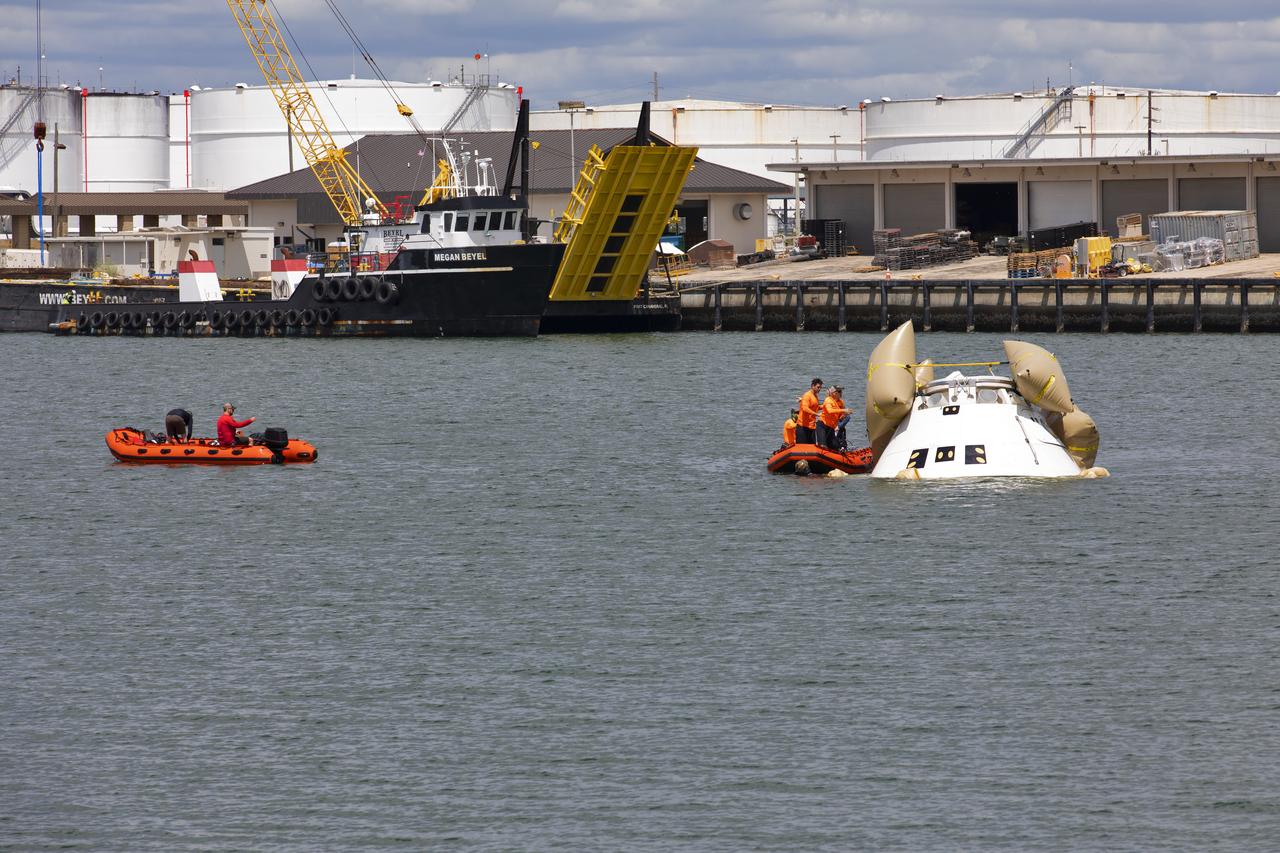
Rescue team members are using a Boeing CST-100 Starliner training capsule, known as Boiler Plate 3, to practice uprighting procedures in the unlikely event of an emergency resulting in a splashdown. NASA and the Department of Defense Human Space Flight Support Office Rescue Division conducted a search and rescue training exercise at the Army Wharf at Cape Canaveral Air Force Station in Florida on April 17, 2019. The manual uprighting airbags could be used to lift the spacecraft to its upright position. This is the first at-sea exercise with the Starliner training capsule ahead of Boeing’s Crew Flight Test with astronauts targeted for later this year. During normal return scenarios, Boeing's Starliner will land on land in a safe zone of about 15 square miles in the Western United States. Throughout the commercial crew development phases with NASA, Boeing has performed dozens of qualification tests on its parachute and airbag systems simulating conditions on land and in the water.
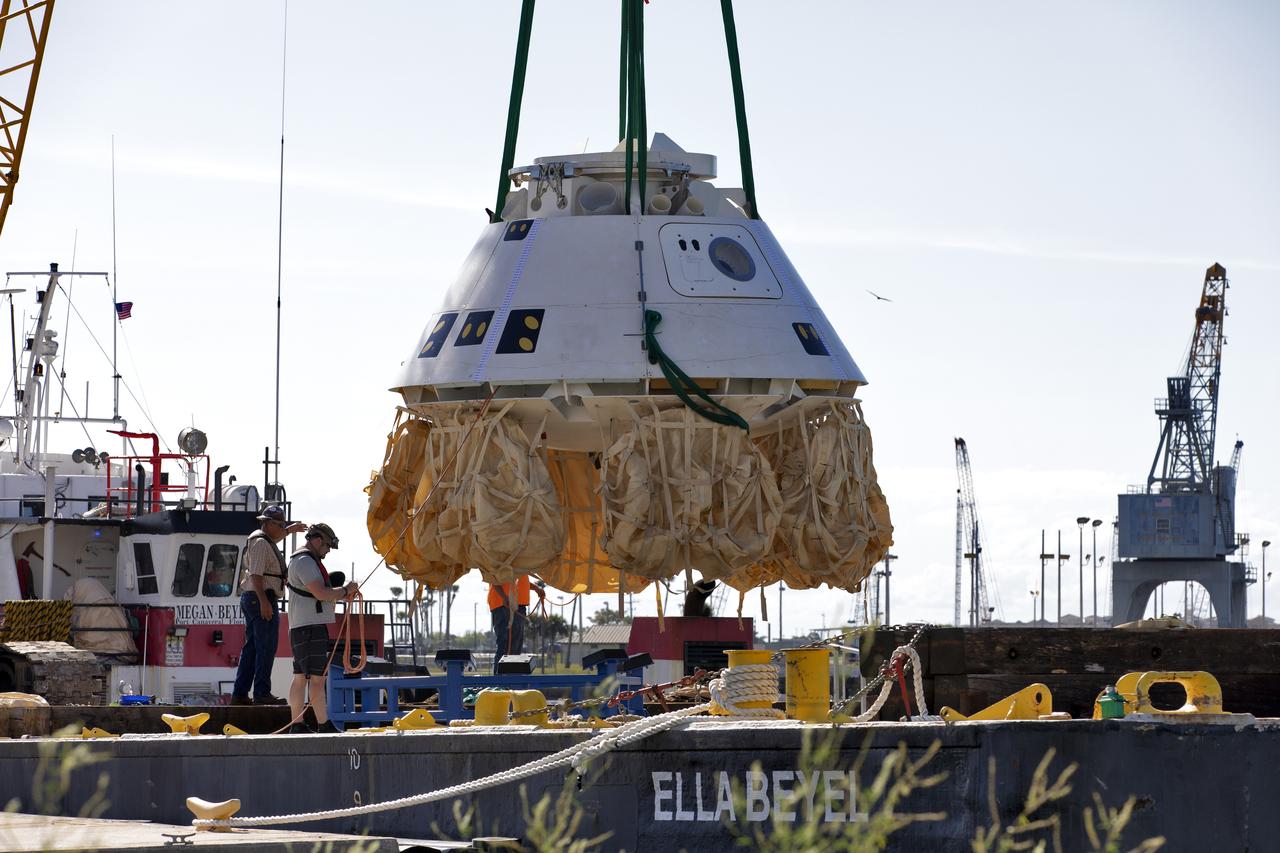
Rescue team members are using a Boeing CST-100 Starliner training capsule, known as Boiler Plate 3, to practice crew rescue procedures in the unlikely event of an emergency resulting in a splashdown. NASA and the Department of Defense Human Space Flight Support Office Rescue Division conducted a search and rescue training exercise at the Army Wharf at Cape Canaveral Air Force Station in Florida on April 17, 2019. The teams practiced manually inflating uprighting airbags to lift the spacecraft to its upright position. This is the first at-sea exercise with the Starliner training capsule ahead of Boeing’s Crew Flight Test with astronauts targeted for later this year. During normal return scenarios, Boeing's Starliner will land on land in a safe zone of about 15 square miles in the Western United States. Throughout the commercial crew development phases with NASA, Boeing has performed dozens of qualification tests on its parachute and airbag systems simulating conditions on land and in the water.
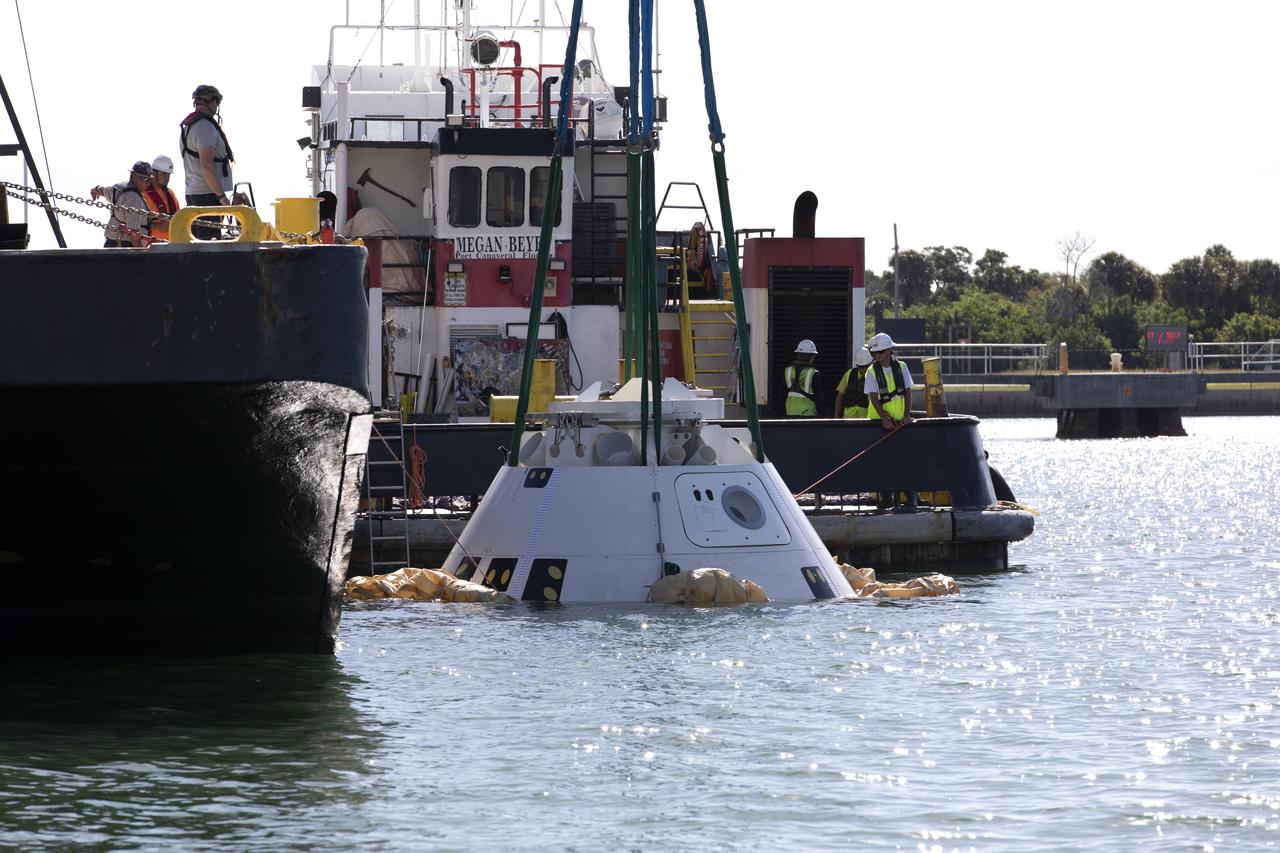
Rescue team members are using a Boeing CST-100 Starliner training capsule, known as Boiler Plate 3, to practice uprighting procedures in the unlikely event of an emergency resulting in a splashdown. NASA and the Department of Defense Human Space Flight Support Office Rescue Division conducted a search and rescue training exercise at the Army Wharf at Cape Canaveral Air Force Station in Florida on April 17, 2019. The manual uprighting airbags could be used to lift the spacecraft to its upright position. This is the first at-sea exercise with the Starliner training capsule ahead of Boeing’s Crew Flight Test with astronauts targeted for later this year. During normal return scenarios, Boeing's Starliner will land on land in a safe zone of about 15 square miles in the Western United States. Throughout the commercial crew development phases with NASA, Boeing has performed dozens of qualification tests on its parachute and airbag systems simulating conditions on land and in the water.
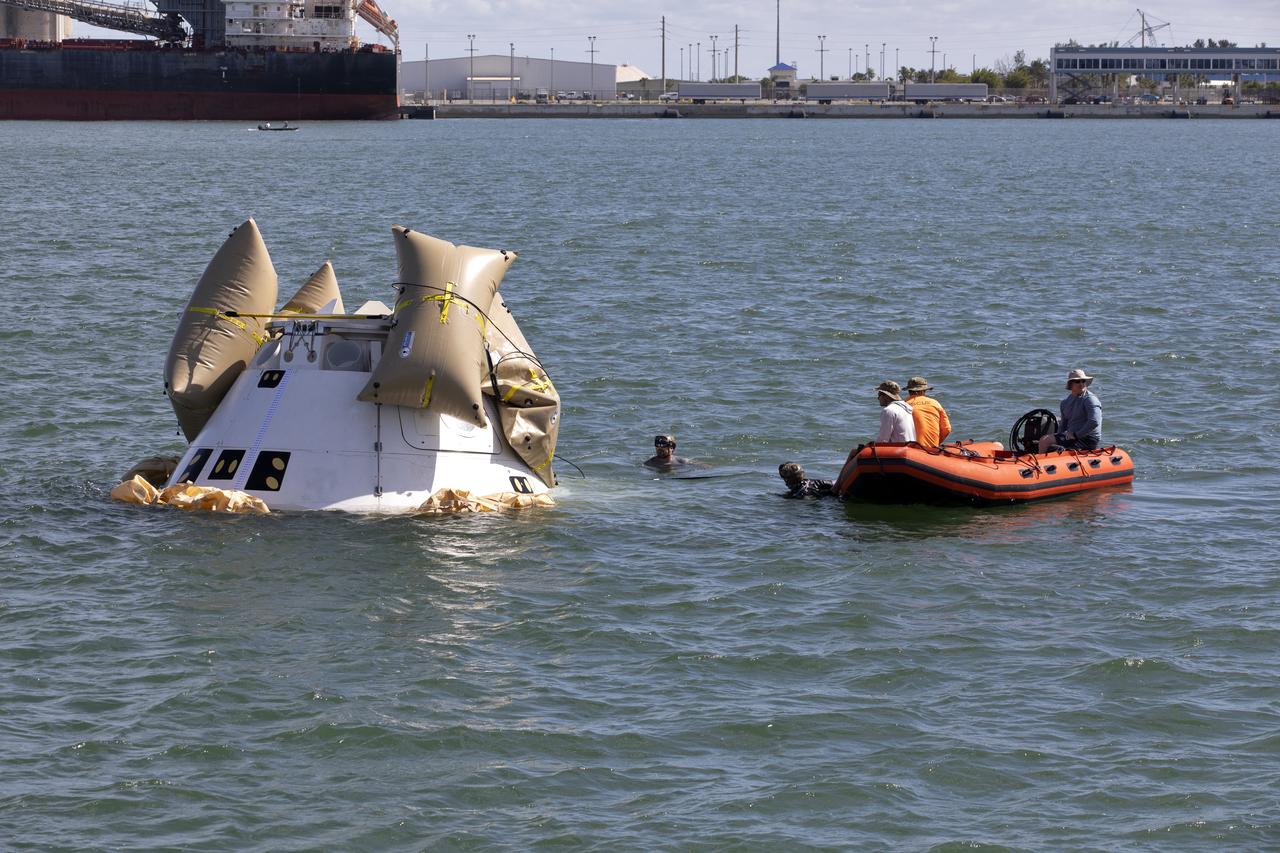
Rescue team members are using a Boeing CST-100 Starliner training capsule, known as Boiler Plate 3, to practice uprighting procedures in the unlikely event of an emergency resulting in a splashdown. NASA and the Department of Defense Human Space Flight Support Office Rescue Division conducted a search and rescue training exercise at the Army Wharf at Cape Canaveral Air Force Station in Florida on April 17, 2019. The manual uprighting airbags could be used to lift the spacecraft to its upright position. This is the first at-sea exercise with the Starliner training capsule ahead of Boeing’s Crew Flight Test with astronauts targeted for later this year. During normal return scenarios, Boeing's Starliner will land on land in a safe zone of about 15 square miles in the Western United States. Throughout the commercial crew development phases with NASA, Boeing has performed dozens of qualification tests on its parachute and airbag systems simulating conditions on land and in the water.
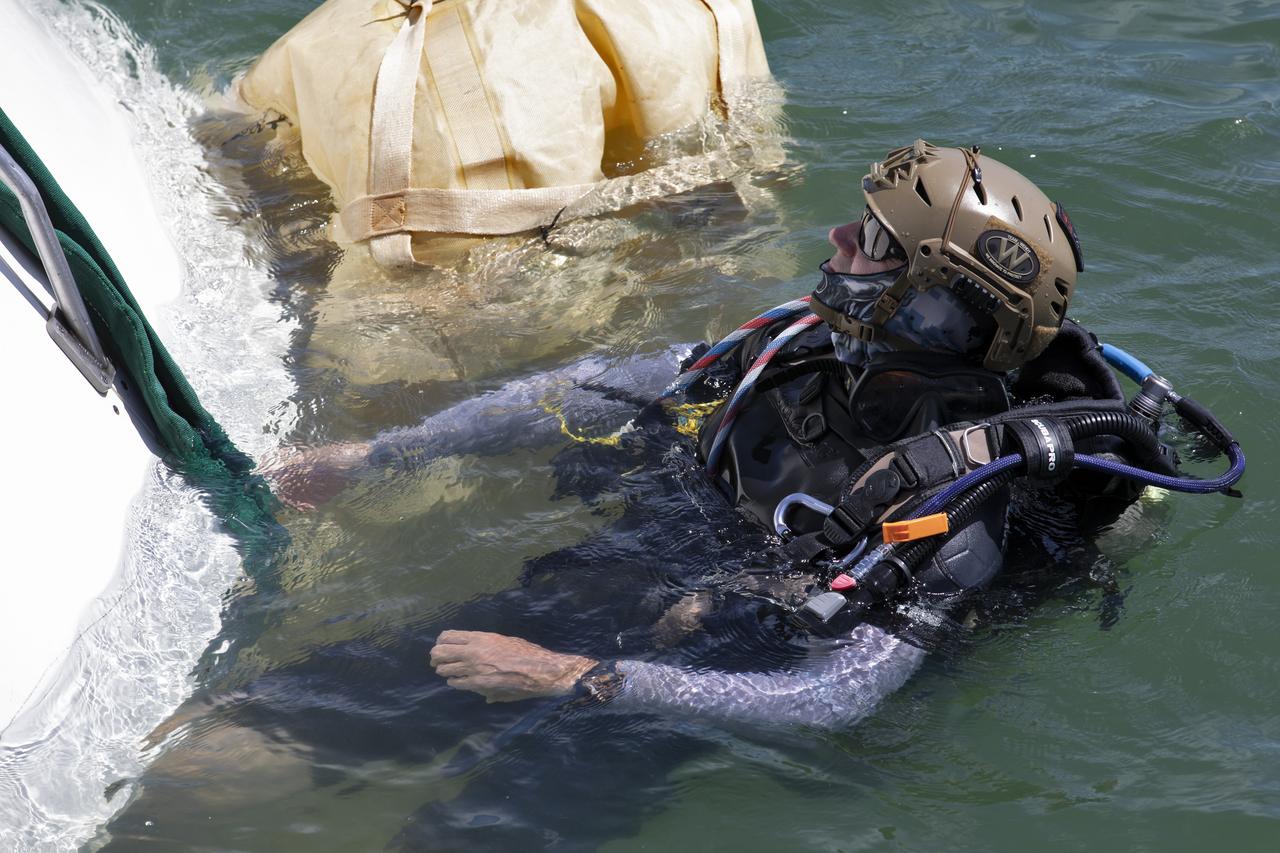
Rescue team members are using a Boeing CST-100 Starliner training capsule, known as Boiler Plate 3, to practice uprighting procedures in the unlikely event of an emergency resulting in a splashdown. NASA and the Department of Defense Human Space Flight Support Office Rescue Division conducted a search and rescue training exercise at the Army Wharf at Cape Canaveral Air Force Station in Florida on April 17, 2019. The manual uprighting airbags could be used to lift the spacecraft to its upright position. This is the first at-sea exercise with the Starliner training capsule ahead of Boeing’s Crew Flight Test with astronauts targeted for later this year. During normal return scenarios, Boeing's Starliner will land on land in a safe zone of about 15 square miles in the Western United States. Throughout the commercial crew development phases with NASA, Boeing has performed dozens of qualification tests on its parachute and airbag systems simulating conditions on land and in the water.
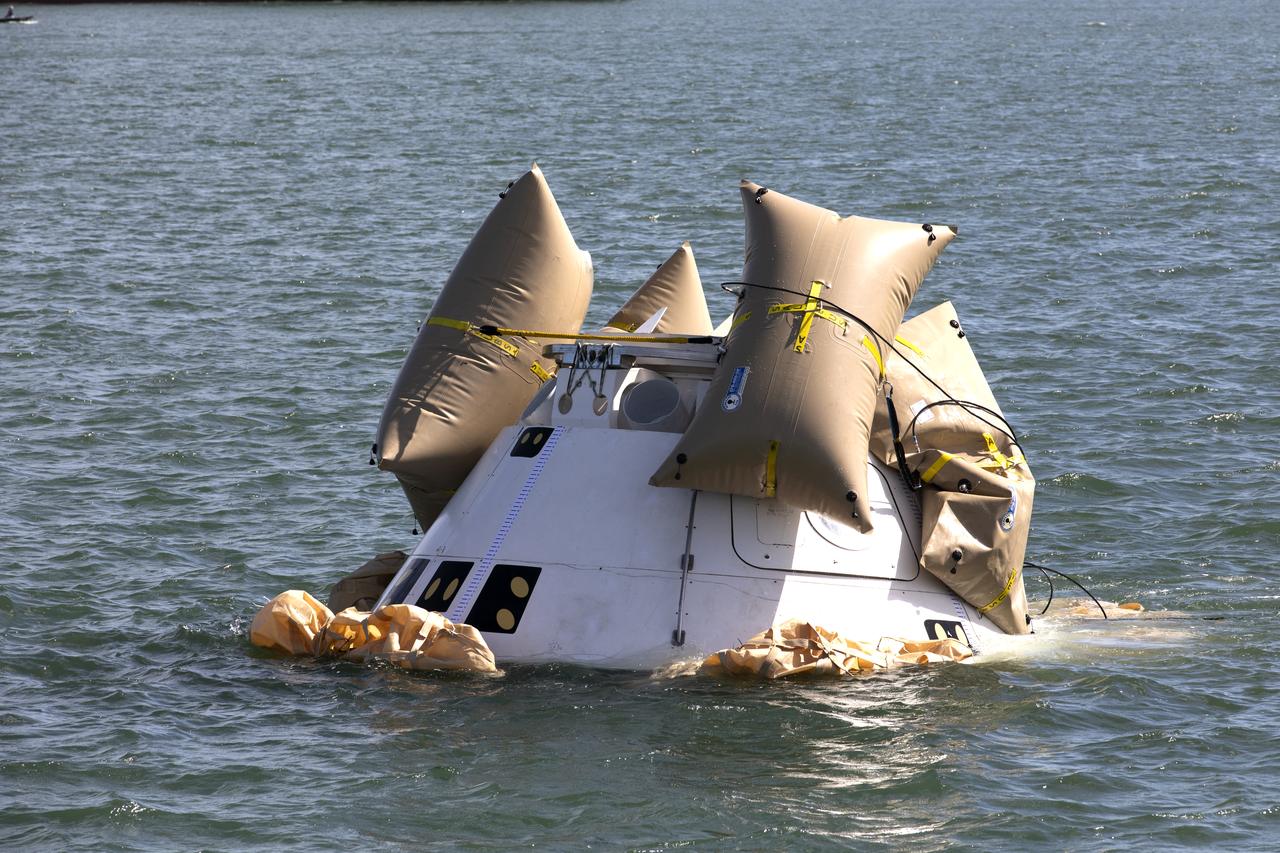
Rescue team members are using a Boeing CST-100 Starliner training capsule, known as Boiler Plate 3, to practice uprighting procedures in the unlikely event of an emergency resulting in a splashdown. NASA and the Department of Defense Human Space Flight Support Office Rescue Division conducted a search and rescue training exercise at the Army Wharf at Cape Canaveral Air Force Station in Florida on April 17, 2019. The manual uprighting airbags could be used to lift the spacecraft to its upright position. This is the first at-sea exercise with the Starliner training capsule ahead of Boeing’s Crew Flight Test with astronauts targeted for later this year. During normal return scenarios, Boeing's Starliner will land on land in a safe zone of about 15 square miles in the Western United States. Throughout the commercial crew development phases with NASA, Boeing has performed dozens of qualification tests on its parachute and airbag systems simulating conditions on land and in the water.