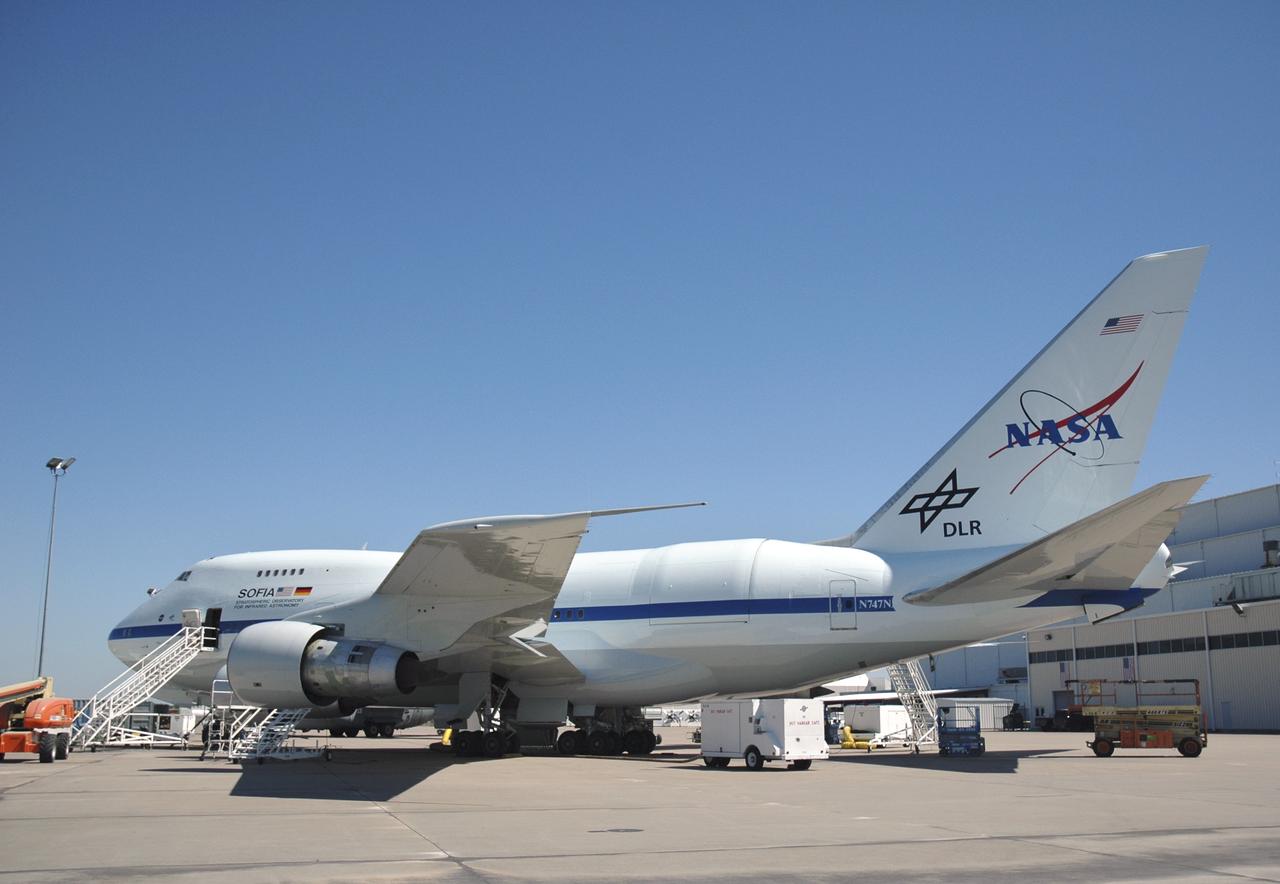
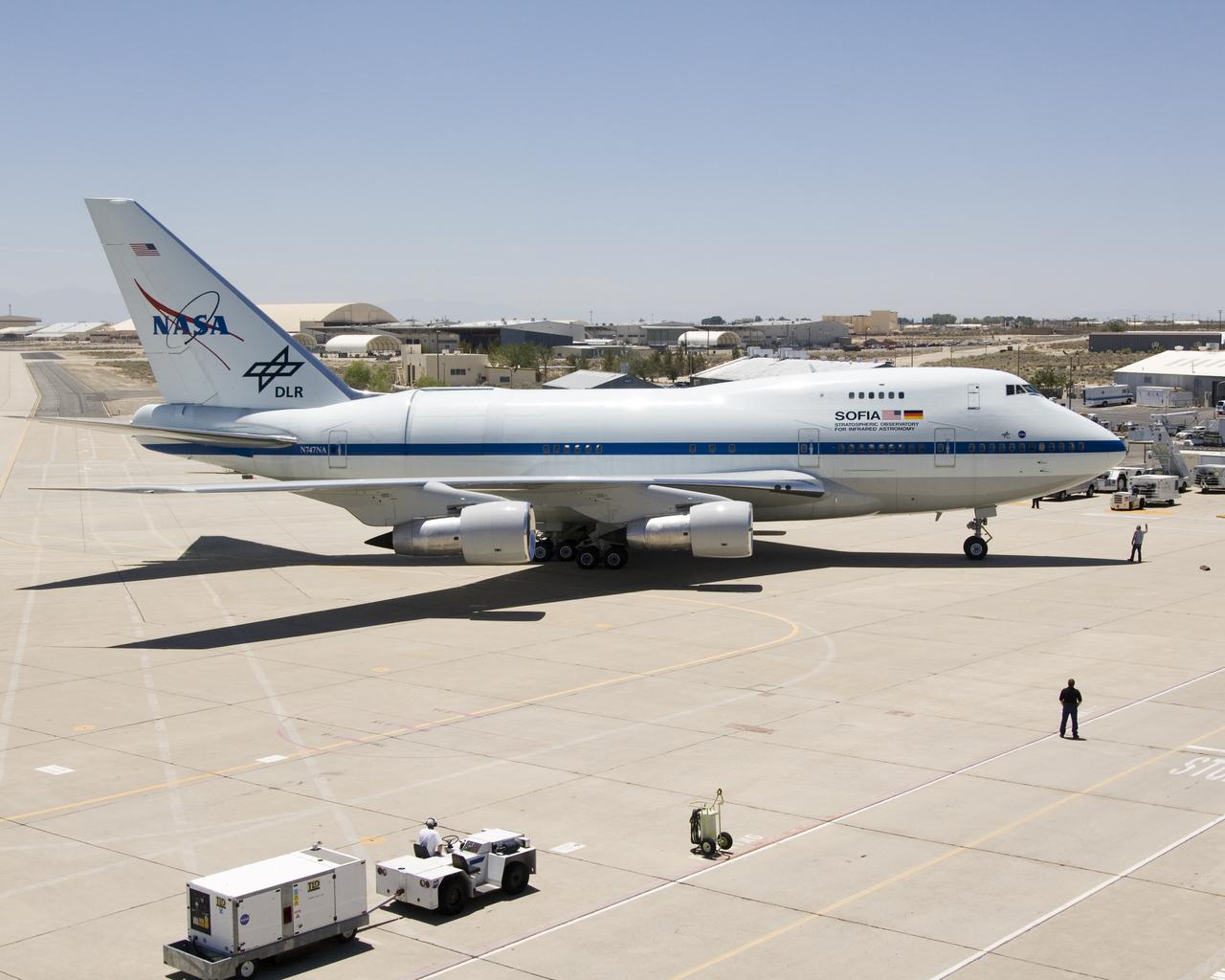
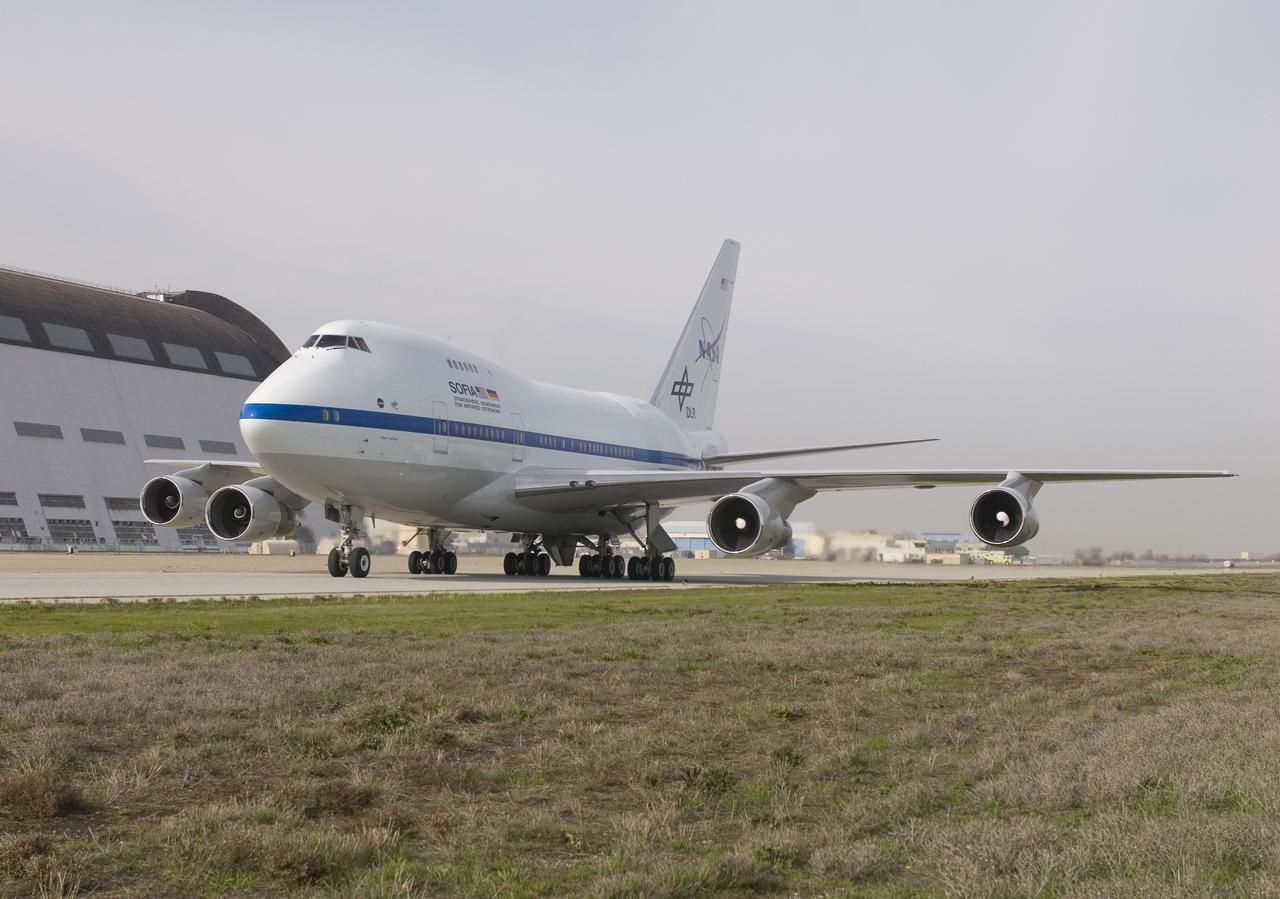
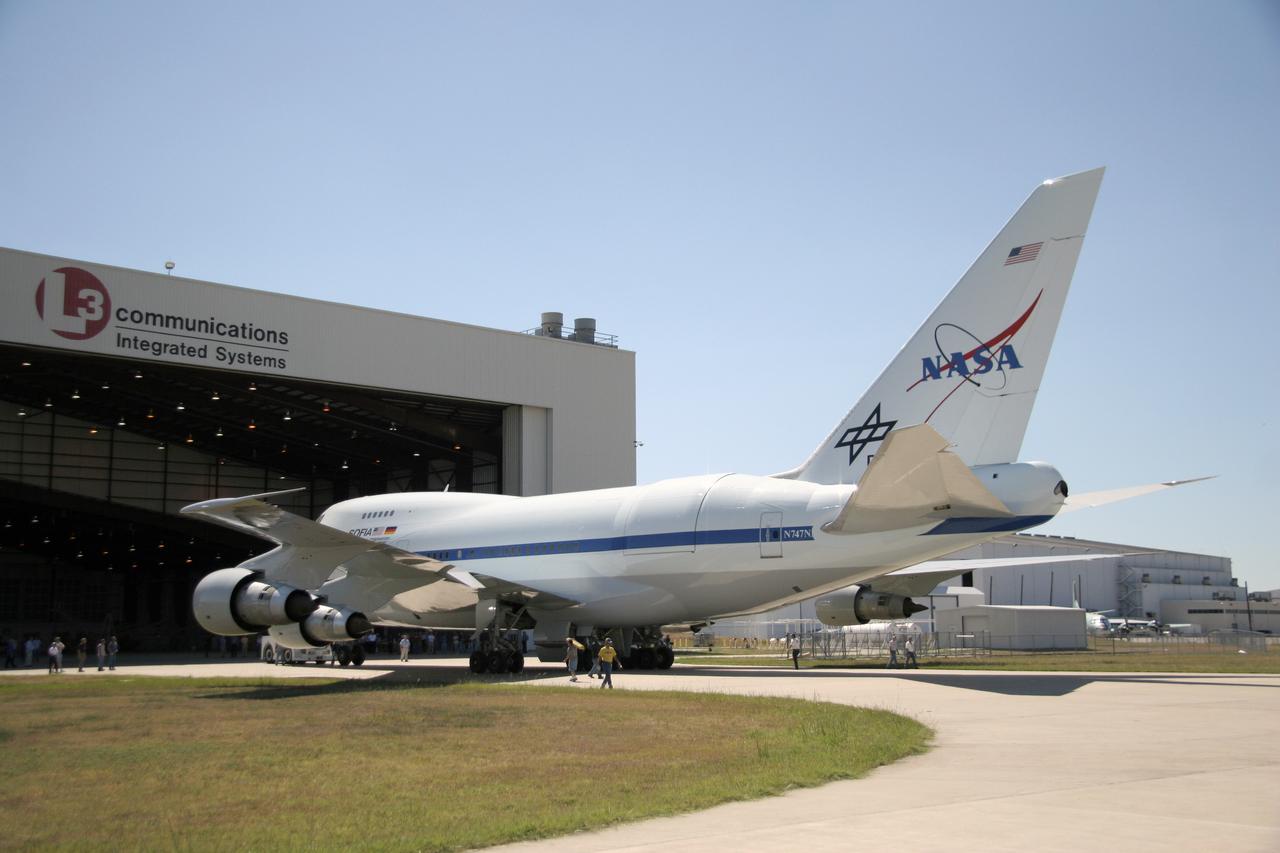
NASA's freshly painted Stratospheric Observatory for Infrared Astronomy (SOFIA) 747SP aircraft sits outside a hangar at L-3 Communications Integrated Systems' facility in Waco, Texas. The observatory, which features a German-built 100-inch (2.5 meter) diameter infrared telescope weighing 20 tons, is approaching the flight test phase as part of a joint program by NASA and DLR Deutsches Zentrum fuer Luft- und Raumfahrt (German Aerospace Center). SOFIA's science and mission operations are being planned jointly by Universities Space Research Association (USRA) and the Deutsches SOFIA Institut (DSI). Once operational, SOFIA will be the world's primary infrared observatory during a mission lasting up to 20 years, as well as an outstanding laboratory for developing and testing instrumentation and detector technology.
NASA's newly painted Stratospheric Observatory for Infrared Astronomy 747SP is pushed back from L-3 Communications' Integrated Systems hangar in Waco, Texas
NASA's freshly painted Stratospheric Observatory for Infrared Astronomy (SOFIA) 747SP is shown at L-3 Communications Integrated Systems' facility in Waco, Texas, where major modifications and installation was performed. The observatory, which features a German-built 100-inch (2.5 meter) diameter infrared telescope weighing 20 tons, is approaching the flight test phase as part of a joint program by NASA and DLR Deutsches Zentrum fuer Luft- und Raumfahrt (German Aerospace Center). SOFIA's science and mission operations are being planned jointly by Universities Space Research Association (USRA) and the Deutsches SOFIA Institut (DSI). Once operational, SOFIA will be the world's primary infrared observatory during a mission lasting up to 20 years, as well as an outstanding laboratory for developing and testing instrumentation and detector technology.
NASA's Stratospheric Observatory for Infrared Astronomy 747SP shows off its new blue-and-white livery at L-3 Communications' Integrated Systems in Waco, Texas
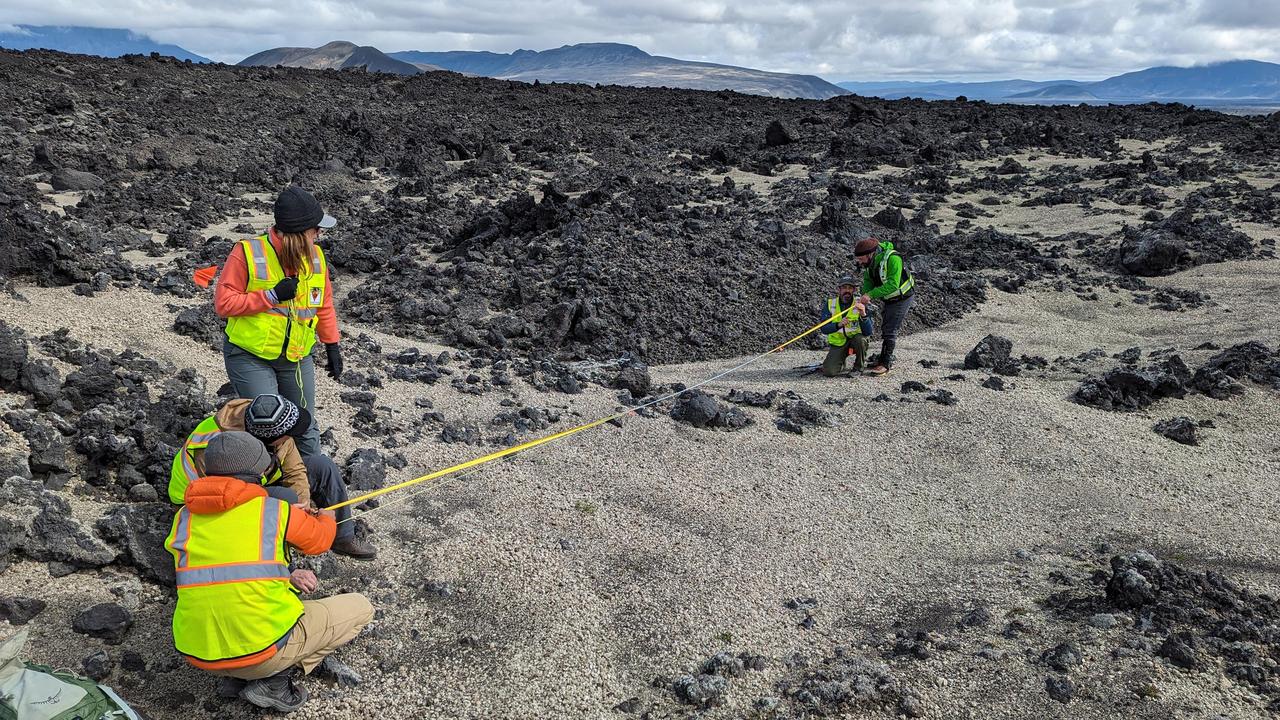
During their August 2023 Iceland field campaign, international science team members of NASA's VERITAS (Venus Emissivity, Radio science, InSAR, Topography, And Spectroscopy) mission prepare for lidar (Light Detection and Ranging) imaging of rocks at a study area. Lidar measurements of rocky terrain can provide information about the material, such as surface roughness.  While the science team led by NASA's Jet Propulsion Laboratory gathered lidar data on the ground, their partners from the German Aerospace Center (Deutsches Zentrum für Luft- und Raumfahrt, or DLR) carried out overflights to gather radar observations of the same study areas. By doing this, the team was able to ground-truth the radar data that will be used to help inform the science that VERITAS will do at Venus.  VERITAS will peer through the planet's thick atmosphere with a suite of powerful science instruments to create global maps of Venus' surface – including topography, radar images, rock type, and gravity measurements – as well as detect surface changes. VERITAS is designed to understand what processes are currently active, search for evidence of past and current interior water, and understand the geologic evolution of the planet, illuminating how rocky planets throughout the galaxy evolve.  https://photojournal.jpl.nasa.gov/catalog/PIA25839
VERITAS Scientists Study Rocky Terrain in Iceland
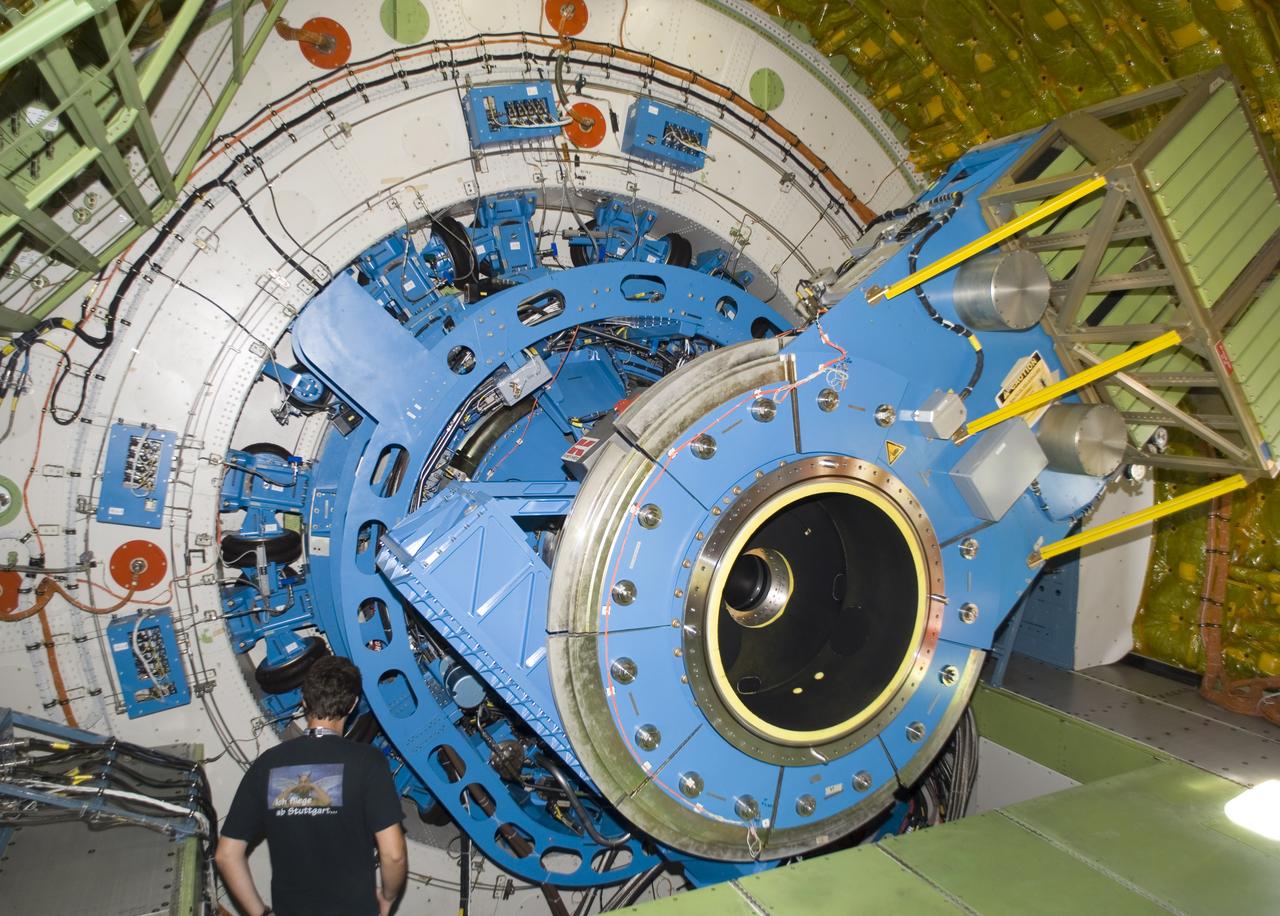
The German-built 100-inch telescope that is the heart of NASA's Stratospheric Observatory for Infrared Astronomy is nestled in the SOFIA 747's rear fuselage.
The German-built 100-inch telescope that is the heart of NASA's Stratospheric Observatory for Infrared Astronomy is nestled in the SOFIA 747's rear fuselage
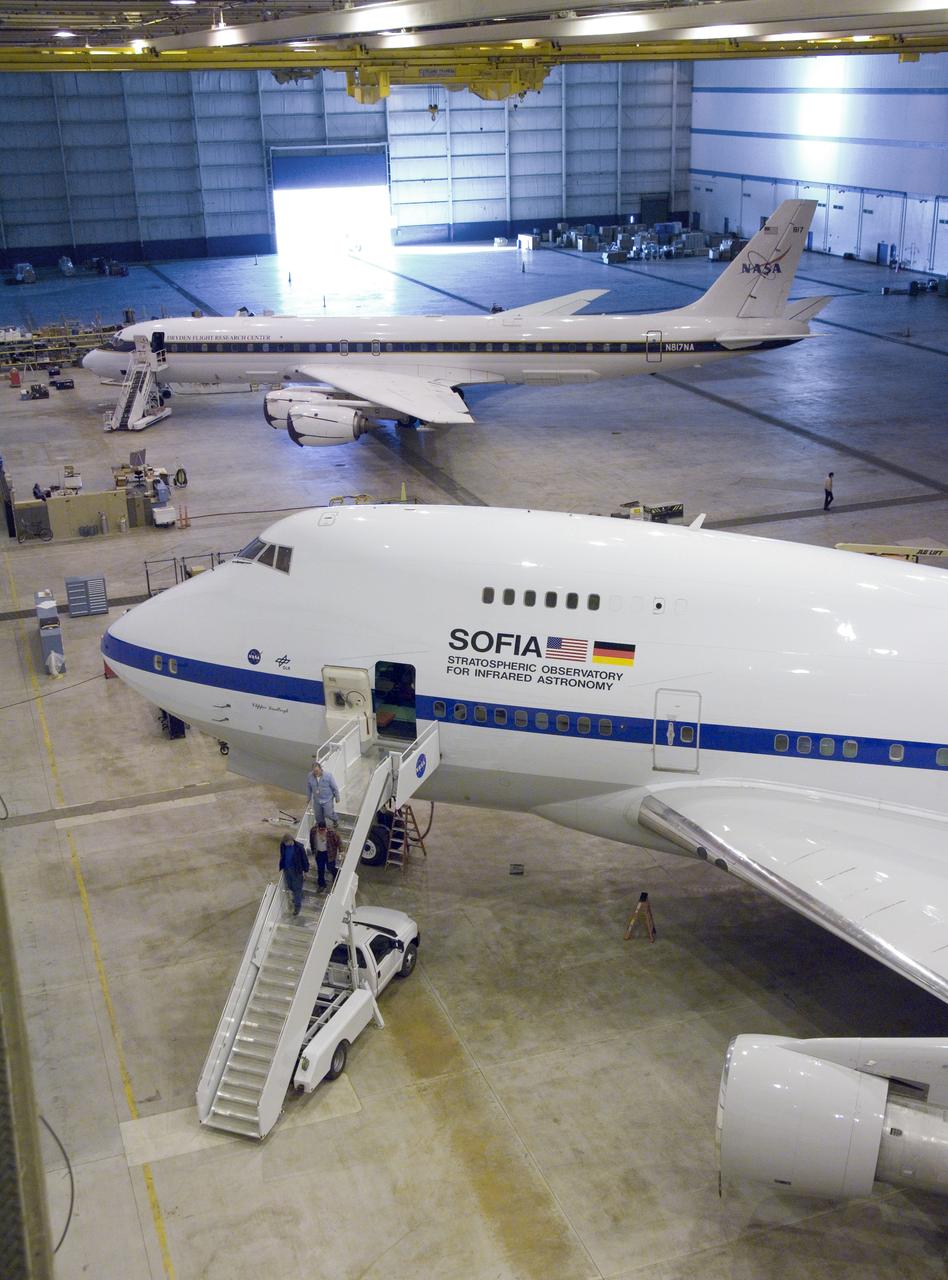
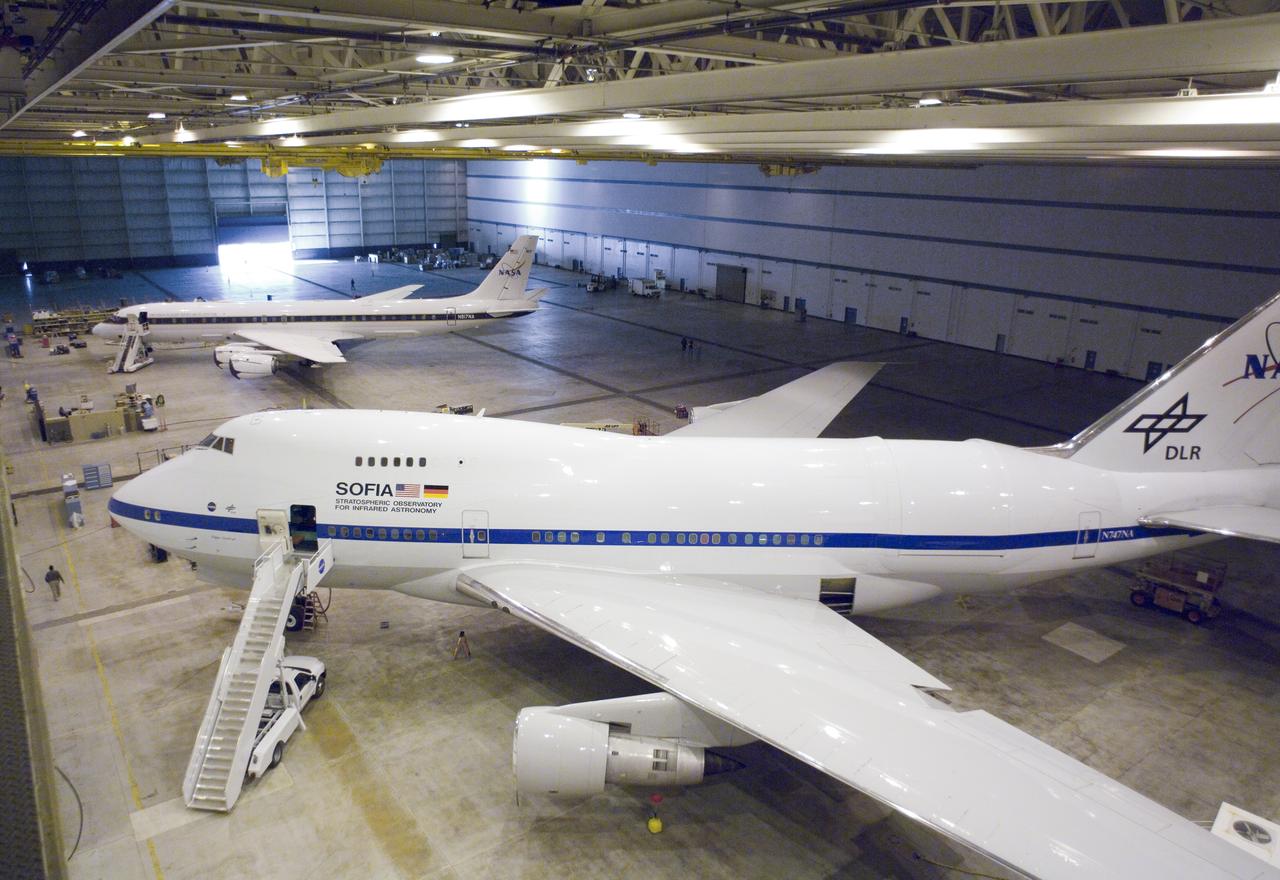
Two large science aircraft, a DC-8 flying laboratory and the SOFIA 747SP, are based at NASA's Dryden Aircraft Operations Facility in Palmdale, Calif.
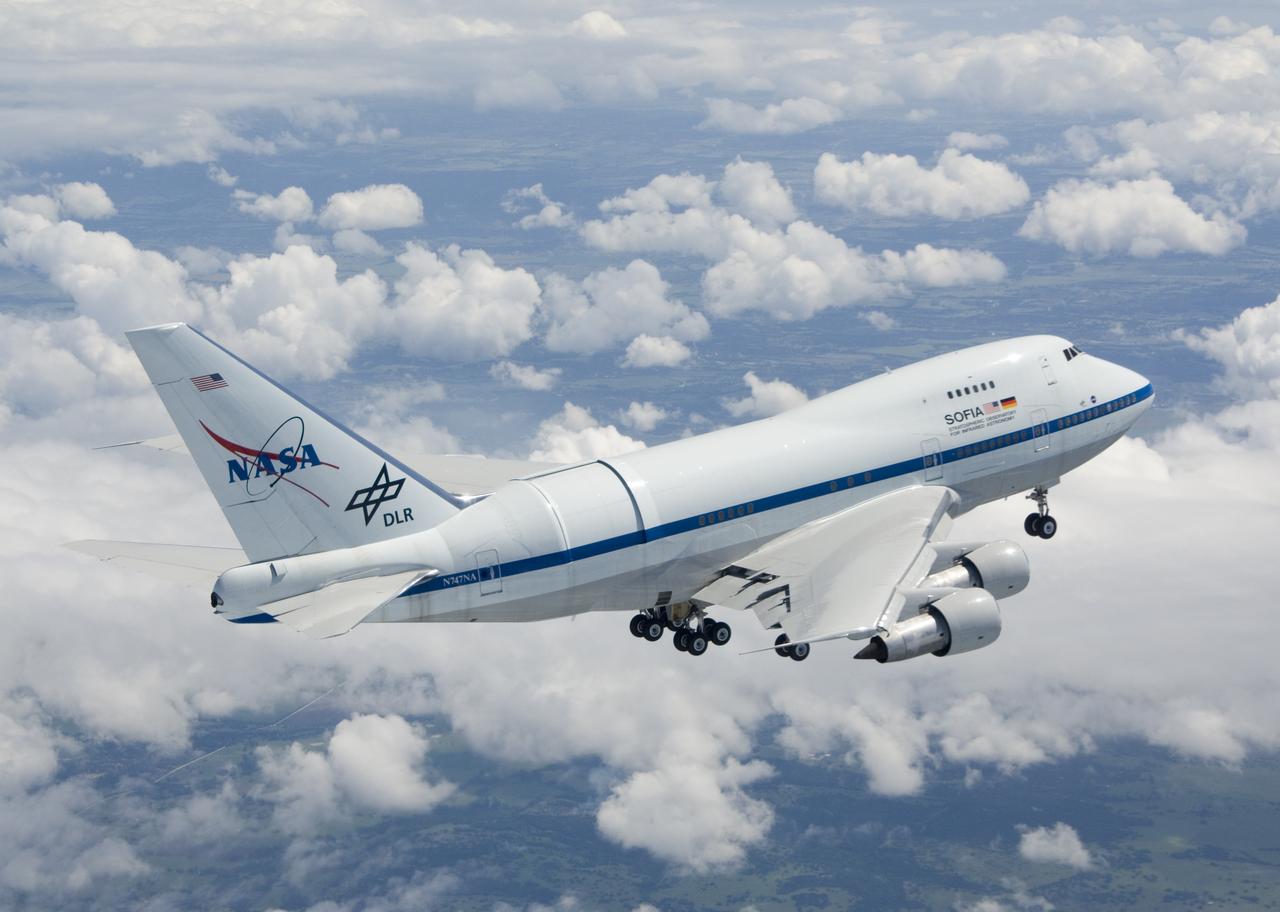
NASA's Boeing 747SP SOFIA airborne observatory soars over a bed of puffy clouds during its second checkout flight over the Texas countryside on May 10, 2007.
NASA's Boeing 747SP SOFIA airborne observatory soars over a bed of puffy clouds during its second checkout flight over the Texas countryside on May 10, 2007
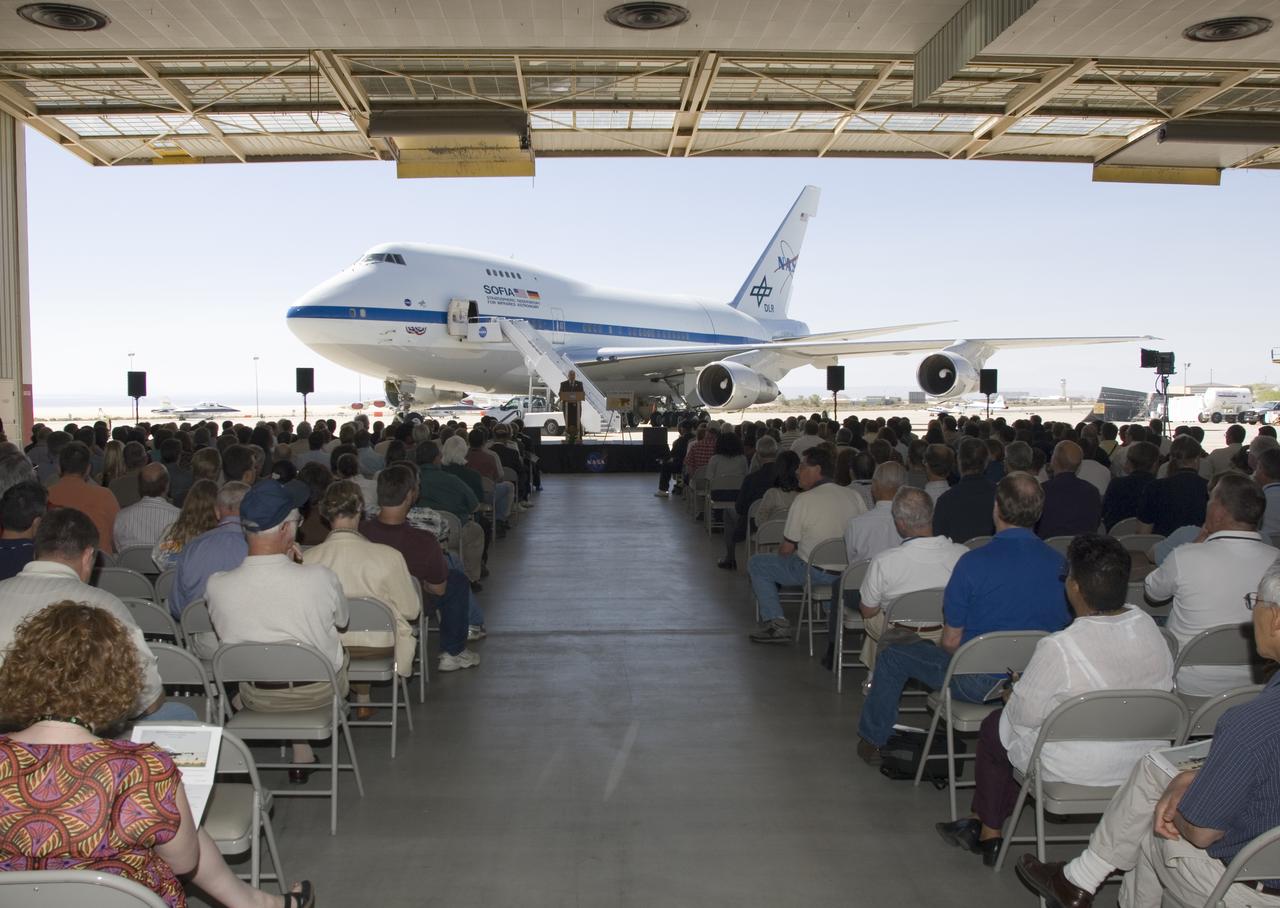
More than 250 VIPs, news media and guests joined NASA, DLR, USRA and other SOFIA staff for the debut of the airborne observatory at NASA DFRC on June 27, 2007.
More than 250 VIPs, news media and guests joined NASA, DLR, USRA and other SOFIA staff for the debut of the airborne observatory at NASA DFRC on June 27, 2007
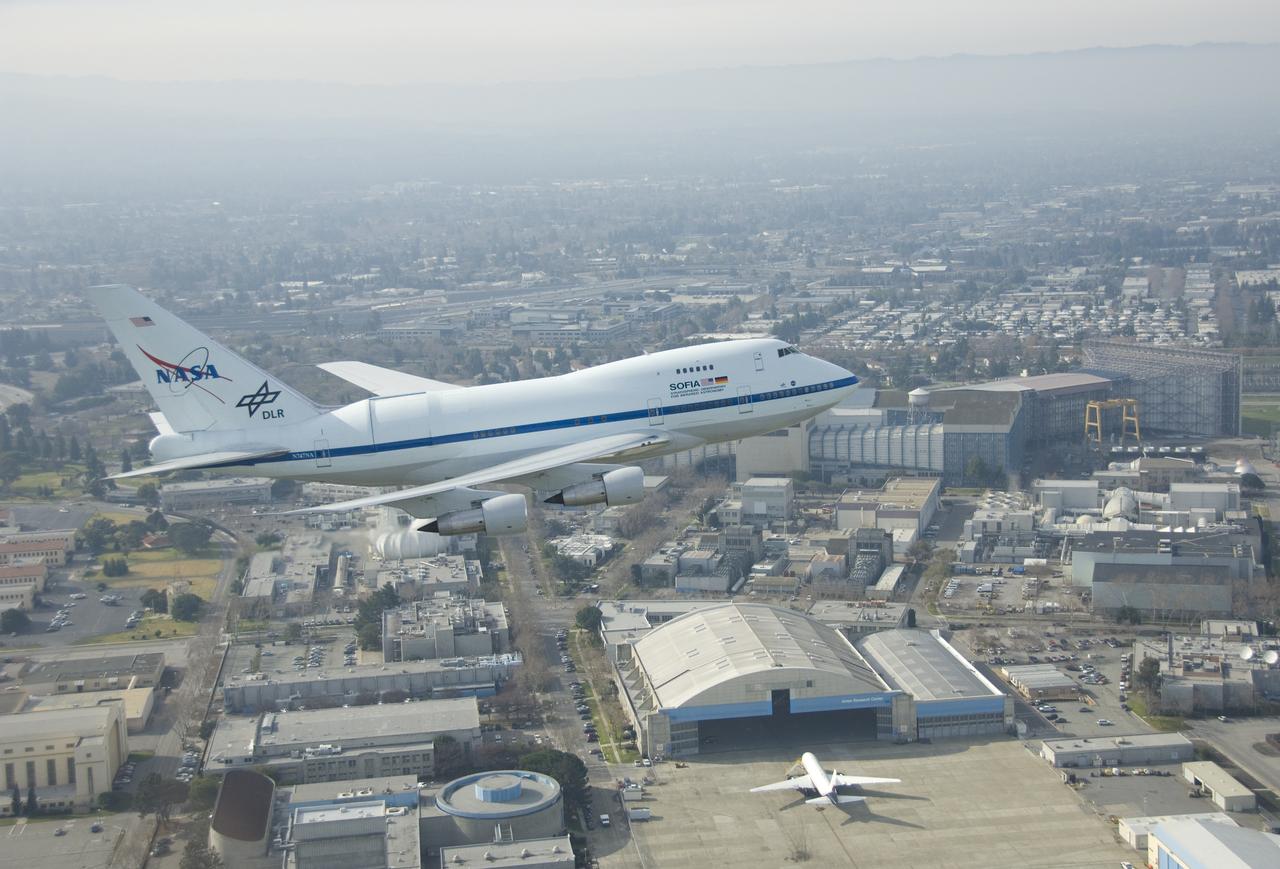
NASA's Stratospheric Observatory for Infrared Astronomy (SOFIA) Boeing 747SP flies over NASA's Dryden Flight Research Center after a ferry flight from Waco, Texas. NASA's Stratospheric Observatory for Infrared Astronomy, or SOFIA, arrived at NASA's Dryden Flight Research Center at Edwards Air Force Base, Calif. on May 31, 2007. The heavily modified Boeing 747SP was ferried to Dryden from Waco, Texas, where L-3 Communications Integrated Systems installed a German-built 2.5-meter infrared telescope and made other major modifications over the past several years. SOFIA is scheduled to undergo installation and integration of mission systems and a multi-phase flight test program at Dryden over the next three years that is expected to lead to a full operational capability to conduct astronomy missions in about 2010. During its expected 20-year lifetime, SOFIA will be capable of "Great Observatory" class astronomical science, providing astronomers with access to the visible, infrared and sub-millimeter spectrum with optimized performance in the mid-infrared to sub-millimeter range.
NASA's Stratospheric Observatory for Infrared Astronomy (SOFIA) Boeing 747SP flies over NASA DFRC after a ferry flight from Waco, Texas
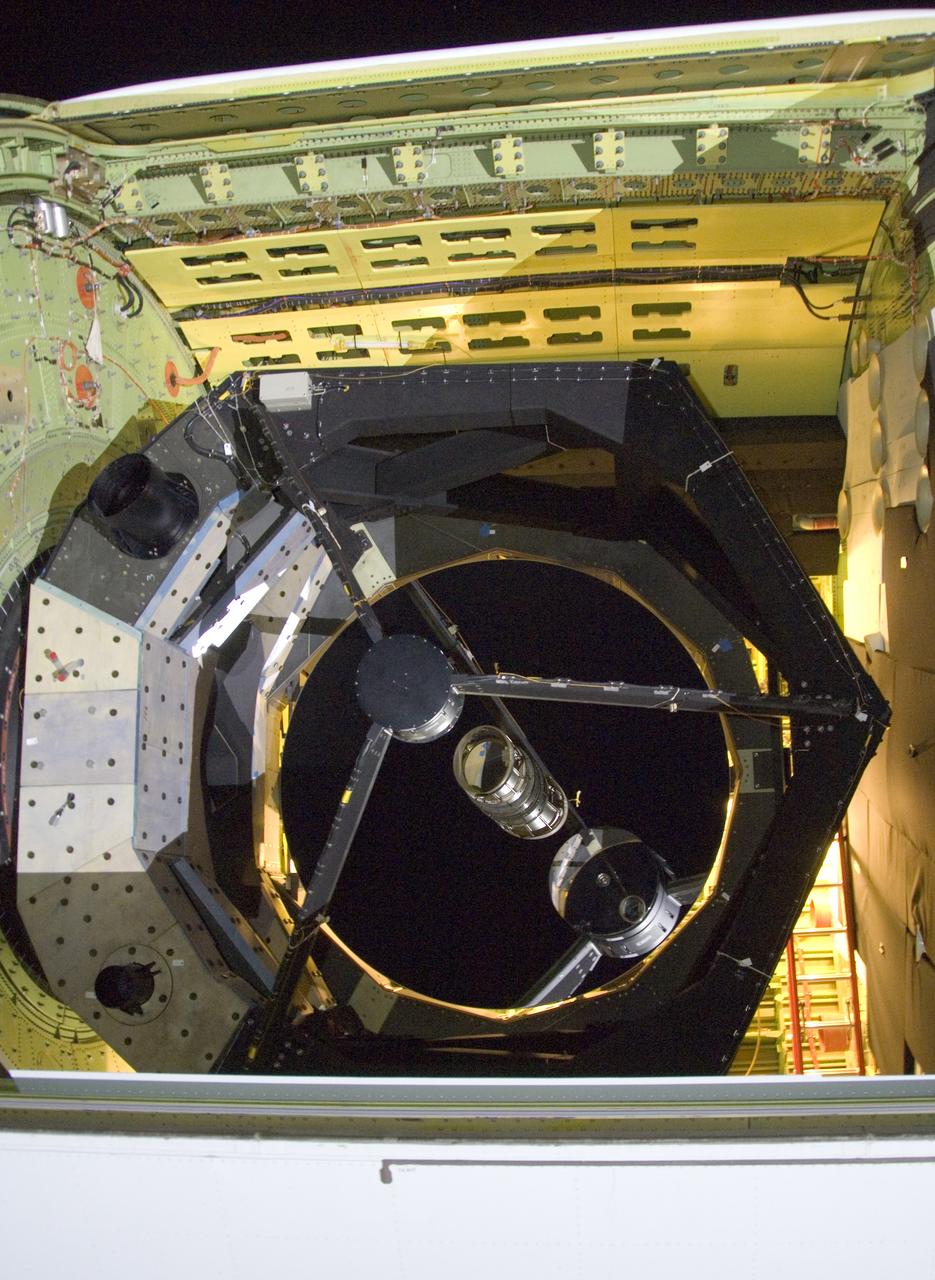
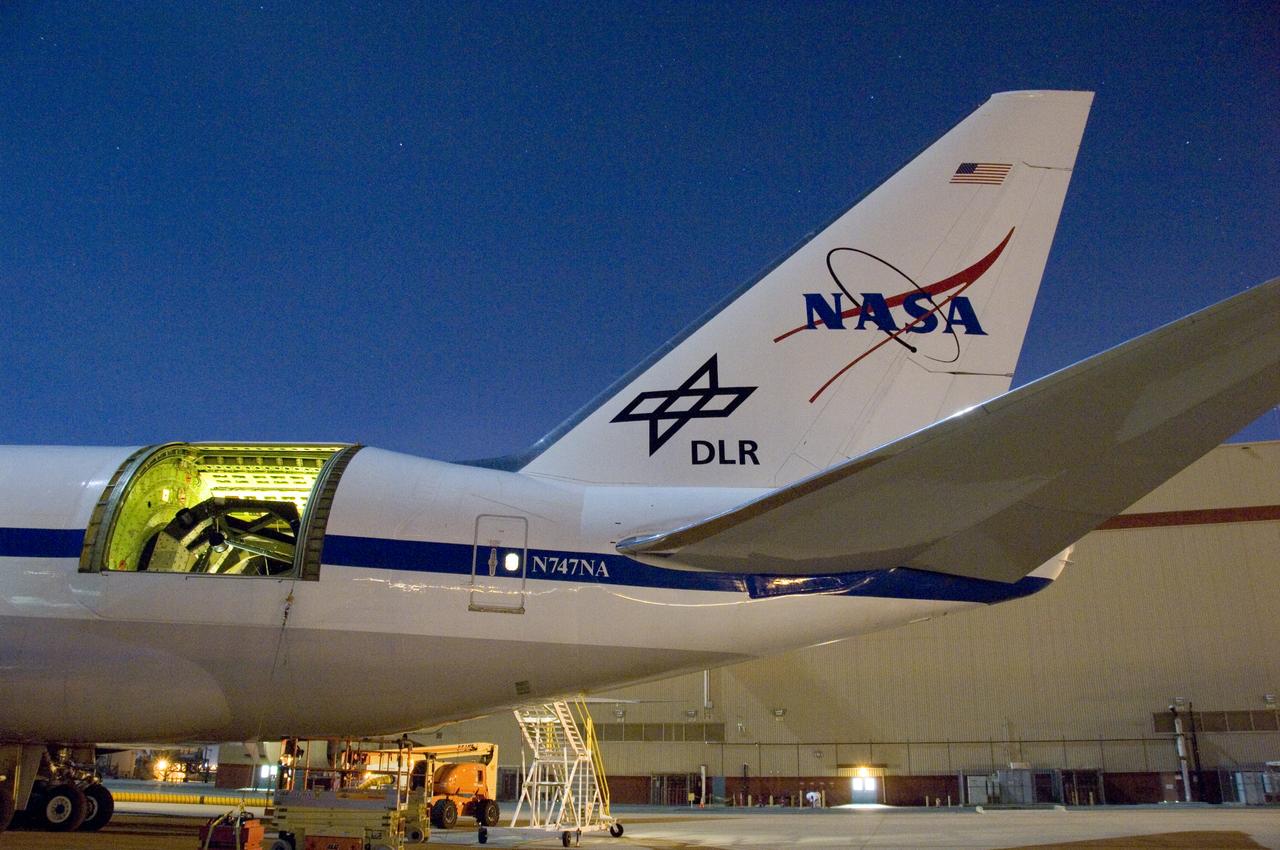
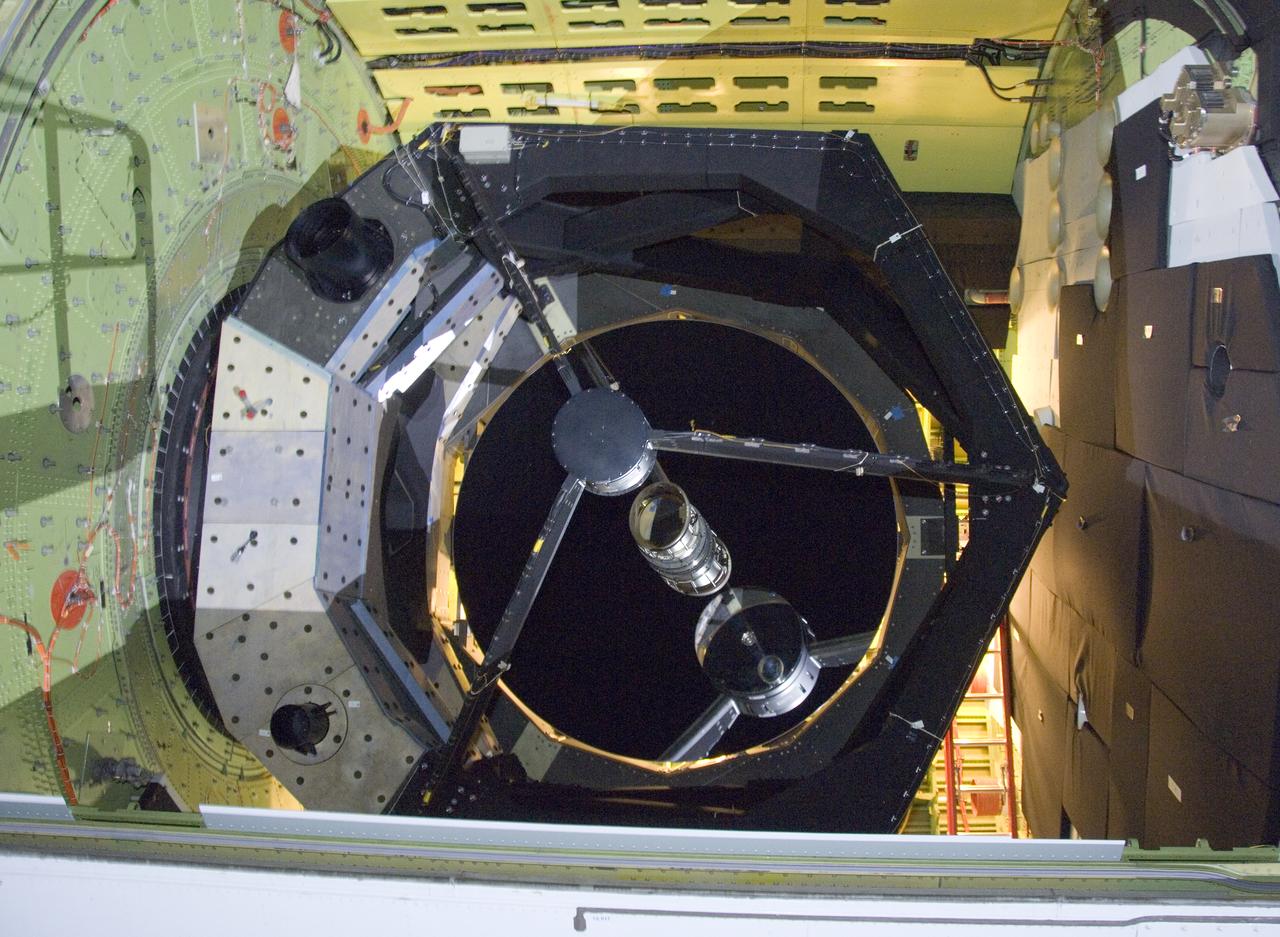
he SOFIA airborne observatory's 2.5-meter infrared telescope peers out from its cavity in the SOFIA rear fuselage during nighttime line operations testing.
he SOFIA airborne observatory's 2.5-meter infrared telescope peers out from its cavity in the SOFIA rear fuselage during nighttime line operations testing
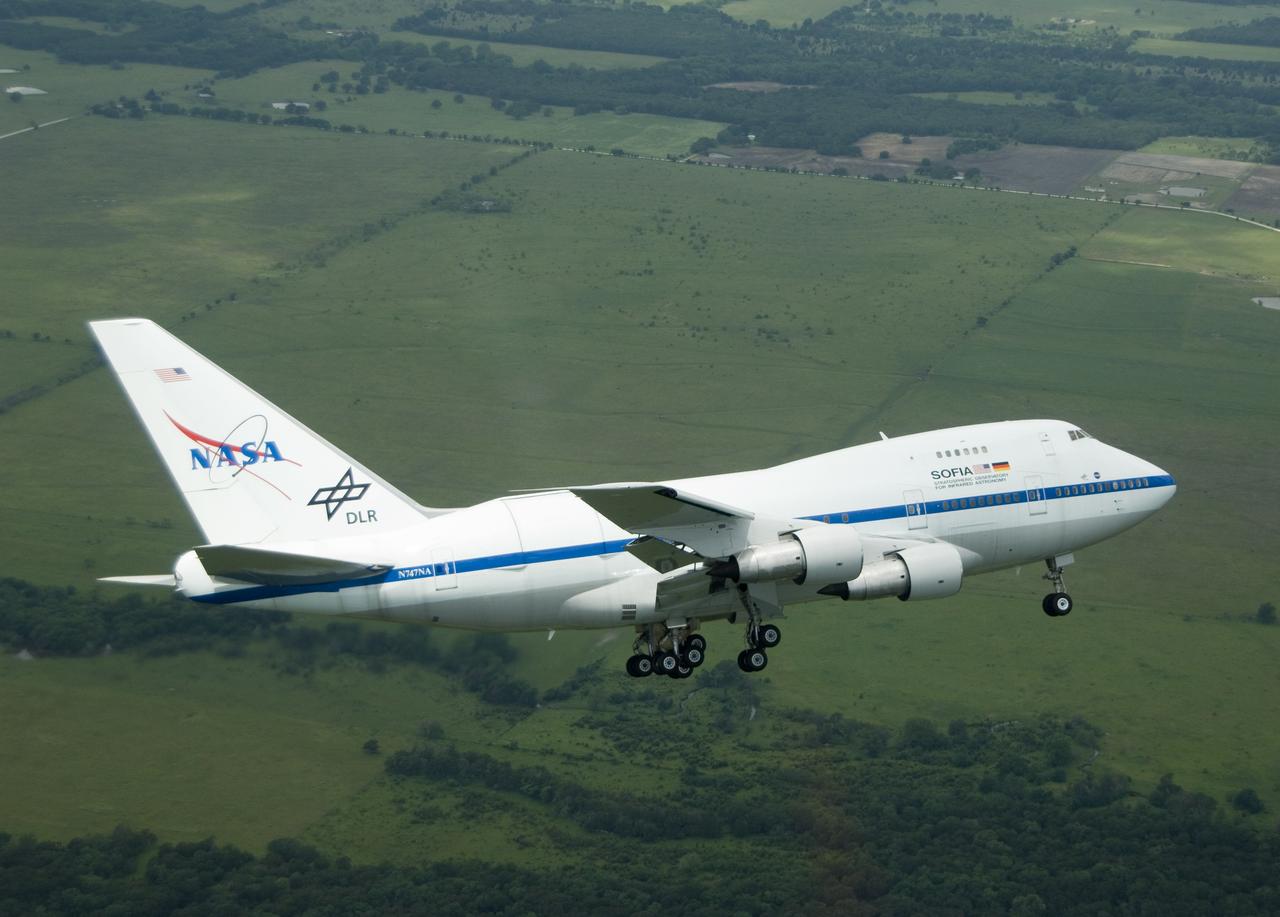
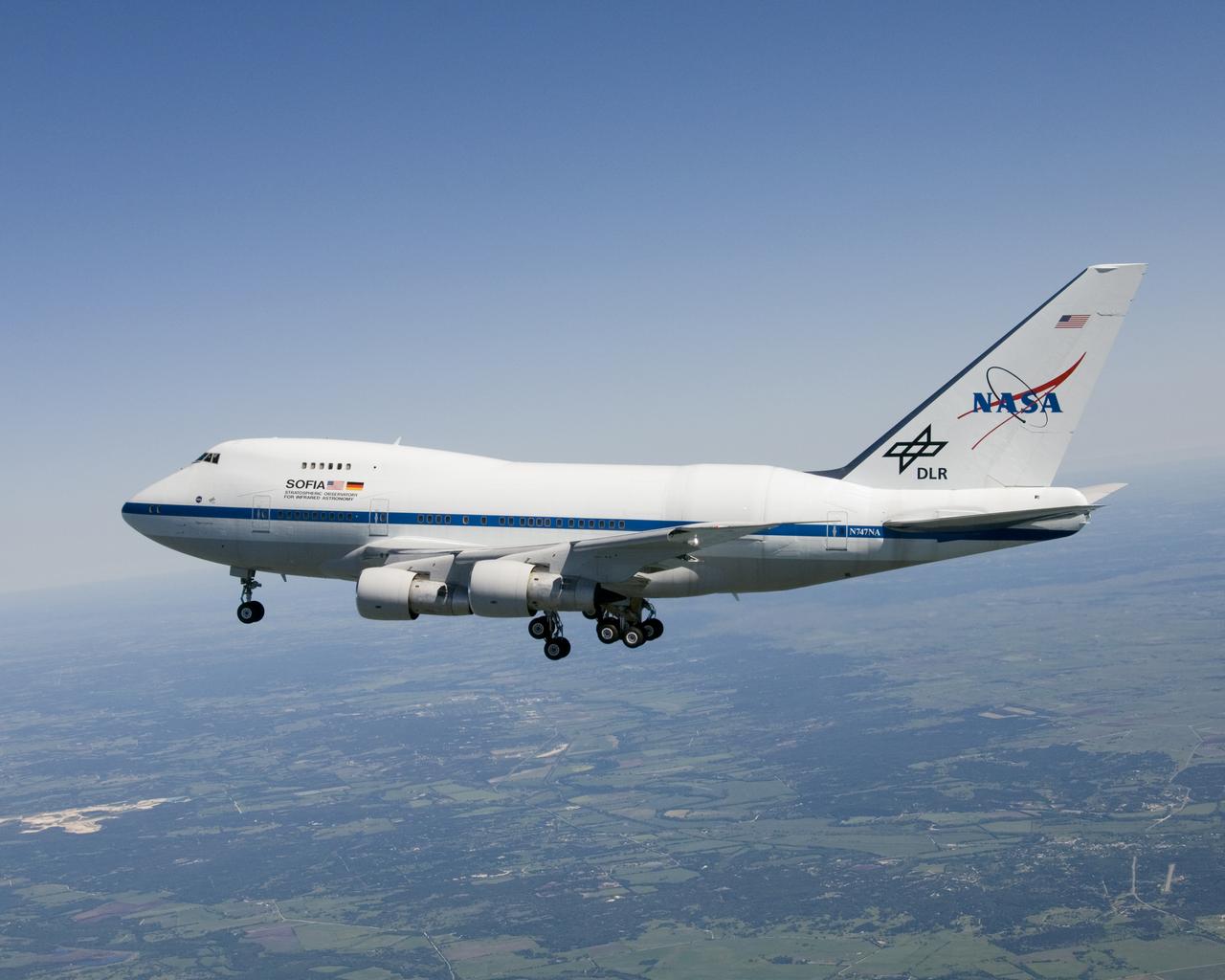
NASA's highly modified Boeing 747SP SOFIA observatory banks low over the Texas countryside as it heads for landing at Waco to conclude its second check flight.
NASA's highly modified Boeing 747SP SOFIA observatory banks low over the Texas countryside as it heads for landing at Waco to conclude its second check flight
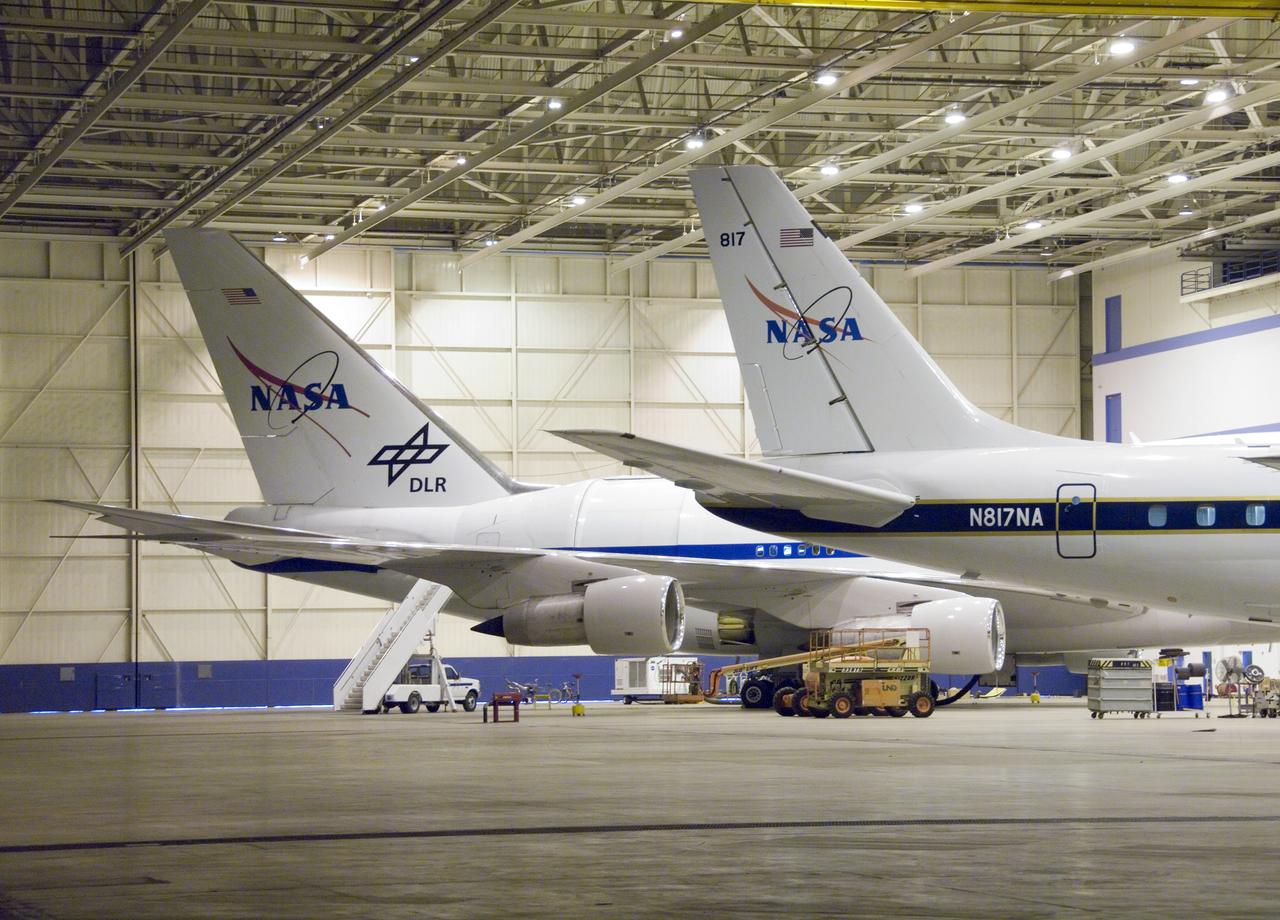
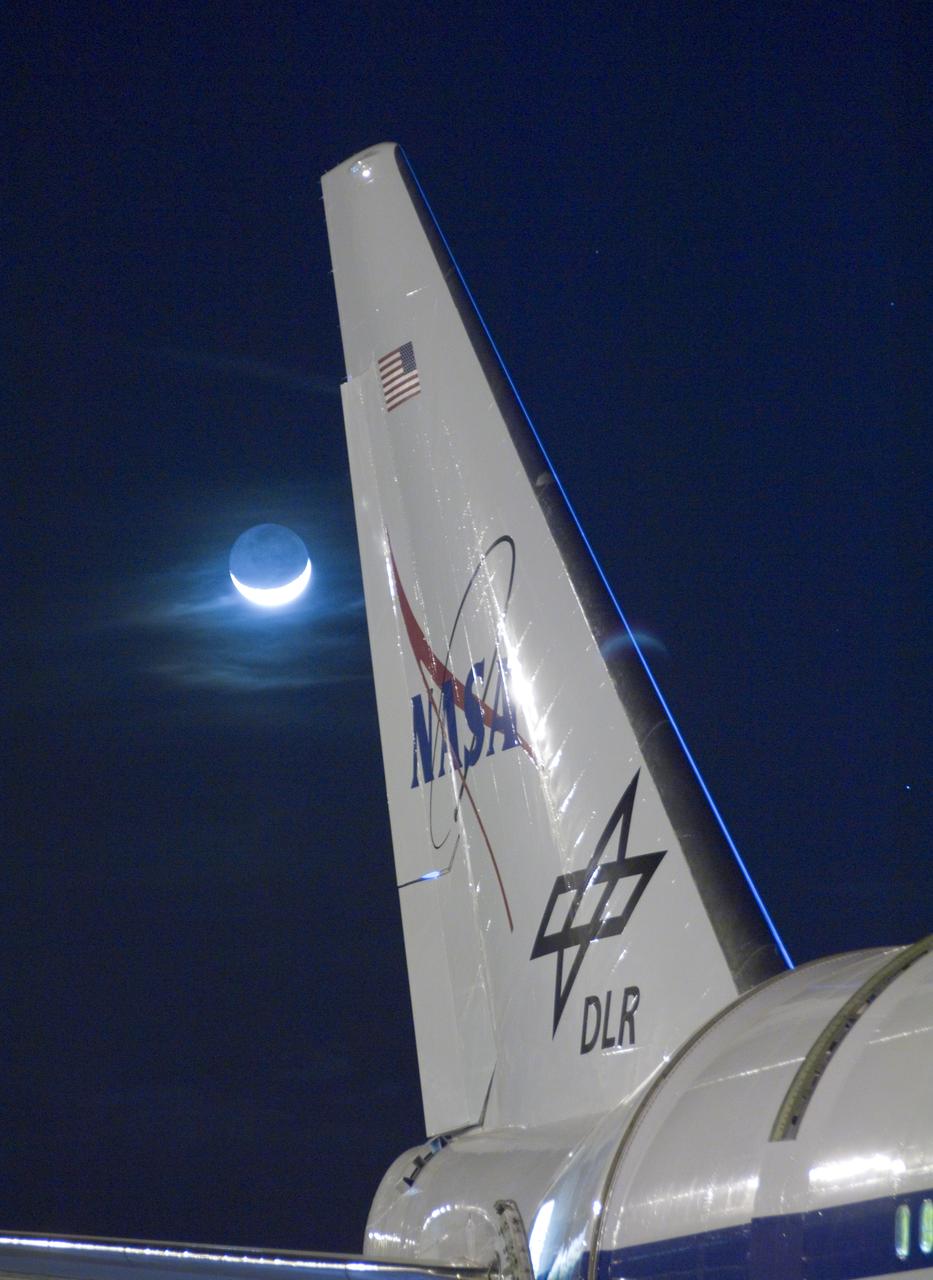
Logos of NASA and the German Aerospace Center (DLR) are displayed prominently on the tail of the Stratospheric Observatory for Infrared Astronomy (SOFIA) 747SP.
Logos of NASA and the German Aerospace Center (DLR) are displayed prominently on the tail of the Stratospheric Observatory for Infrared Astronomy (SOFIA) 747SP
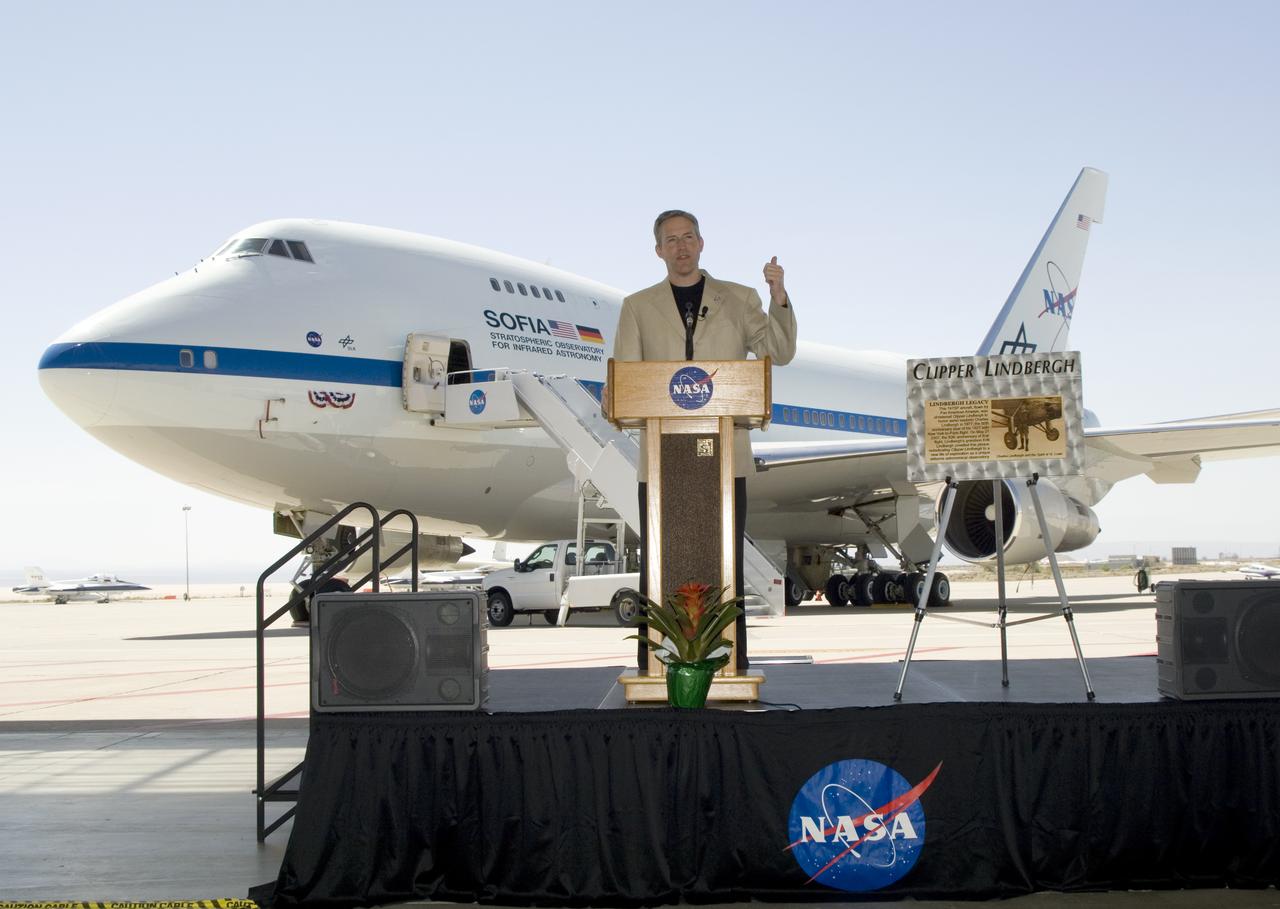
Erik Lindbergh, grandson of famed aviator Charles Lindbergh, rededicated the SOFIA Boeing 747SP as the Clipper Lindbergh at NASA Dryden on June 27, 2007.
Erik Lindbergh, grandson of famed aviator Charles Lindbergh, rededicated the SOFIA Boeing 747SP as the Clipper Lindbergh at NASA Dryden on June 27, 2007
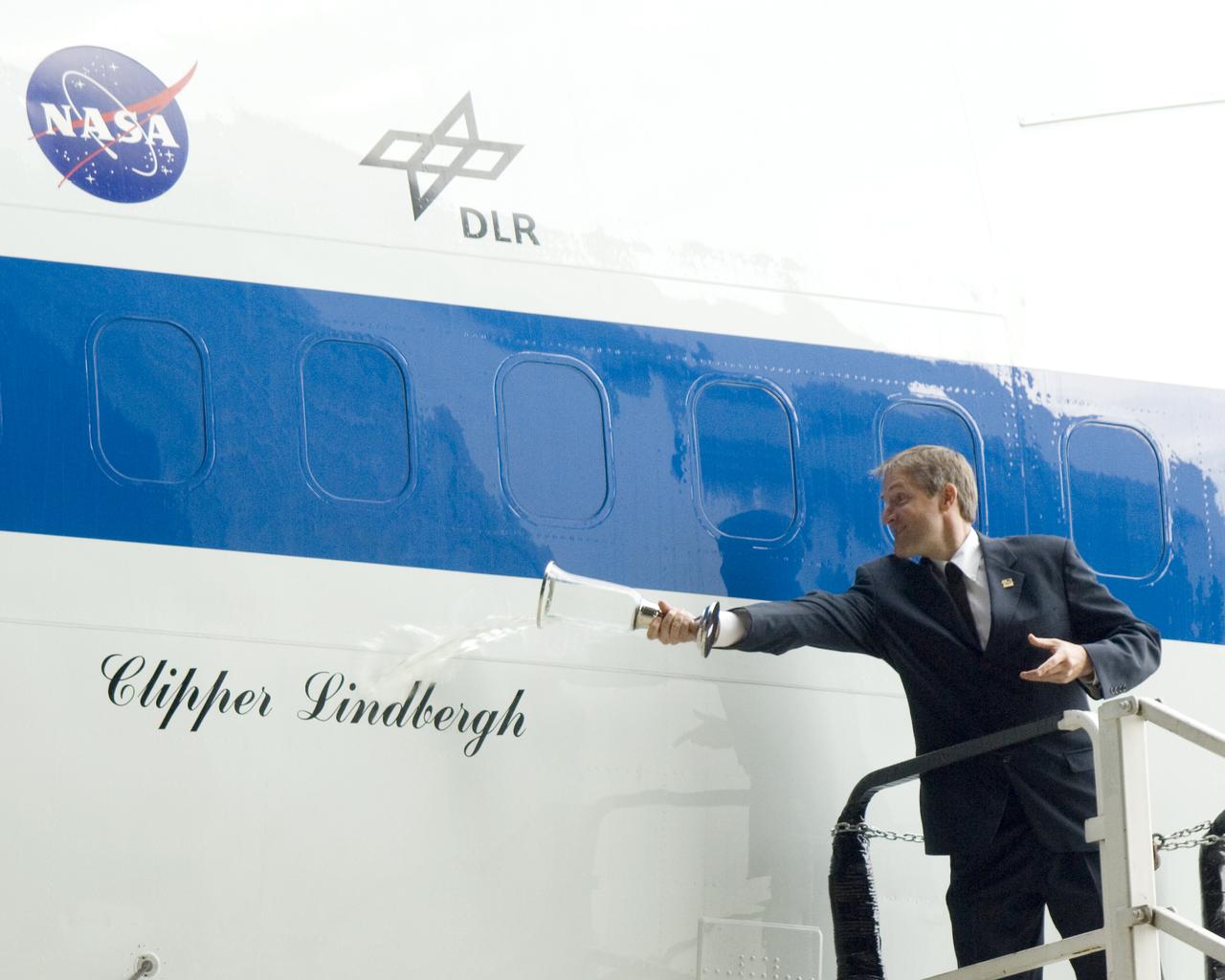
Erik Lindbergh christens NASA's 747 Clipper Lindbergh, the Stratospheric Observatory for Infrared Astronomy, with a special commemorative concoction representing local, NASA, and industry partners. The liquid consisted of a small amount of California wine representing NASA Dryden where the aircraft will be stationed, a small amount of Dr. Pepper (a Waco, TX invention), a quantity of French bottled water (to symbolize Charles Lindbergh's flight to Paris on this date), and a dash of German beer to represent the SOFIA German industry partners.
Erik Lindbergh christens NASA's 747 Clipper Lindbergh with a special commemorative concoction representing local, NASA, and industry partners
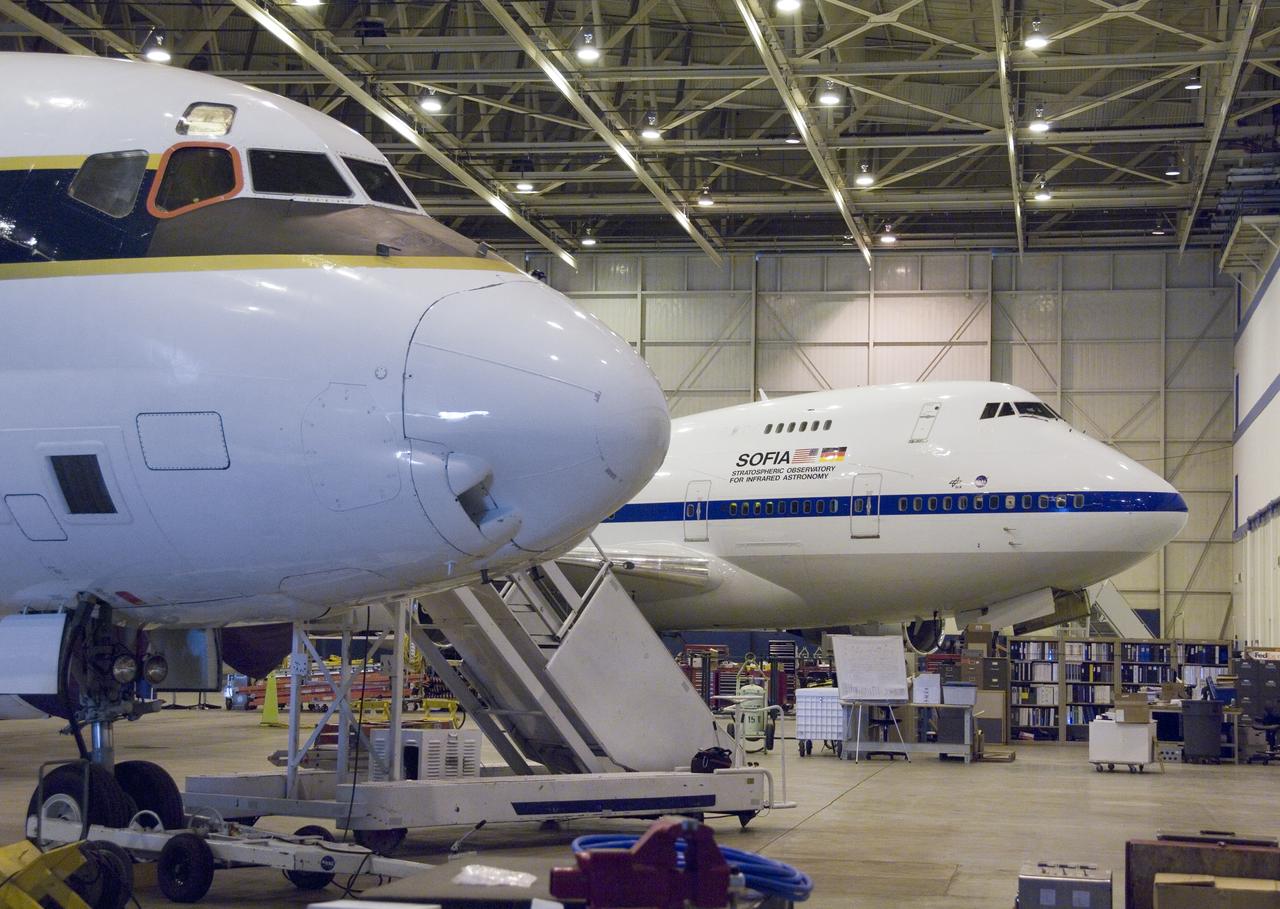
NASA'S SOFIA infrared observatory 747SP (front) and DC-8 flying laboratory (rear) are now housed at the Dryden Aircraft Operations Facility in Palmdale, Calif.
NASA's Stratospheric Observatory for Infrared Astronomy, or SOFIA, arrived at NASA's Dryden Flight Research Center at Edwards Air Force Base, Calif. on May 31, 2007. The heavily modified Boeing 747SP was ferried to Dryden from Waco, Texas, where L-3 Communications Integrated Systems installed a German-built 2.5-meter infrared telescope and made other major modifications over the past several years. SOFIA is scheduled to undergo installation and integration of mission systems and a multi-phase flight test program at Dryden over the next three years that is expected to lead to a full operational capability to conduct astronomy missions in about 2010. During its expected 20-year lifetime, SOFIA will be capable of "Great Observatory" class astronomical science, providing astronomers with access to the visible, infrared and sub-millimeter spectrum with optimized performance in the mid-infrared to sub-millimeter range.
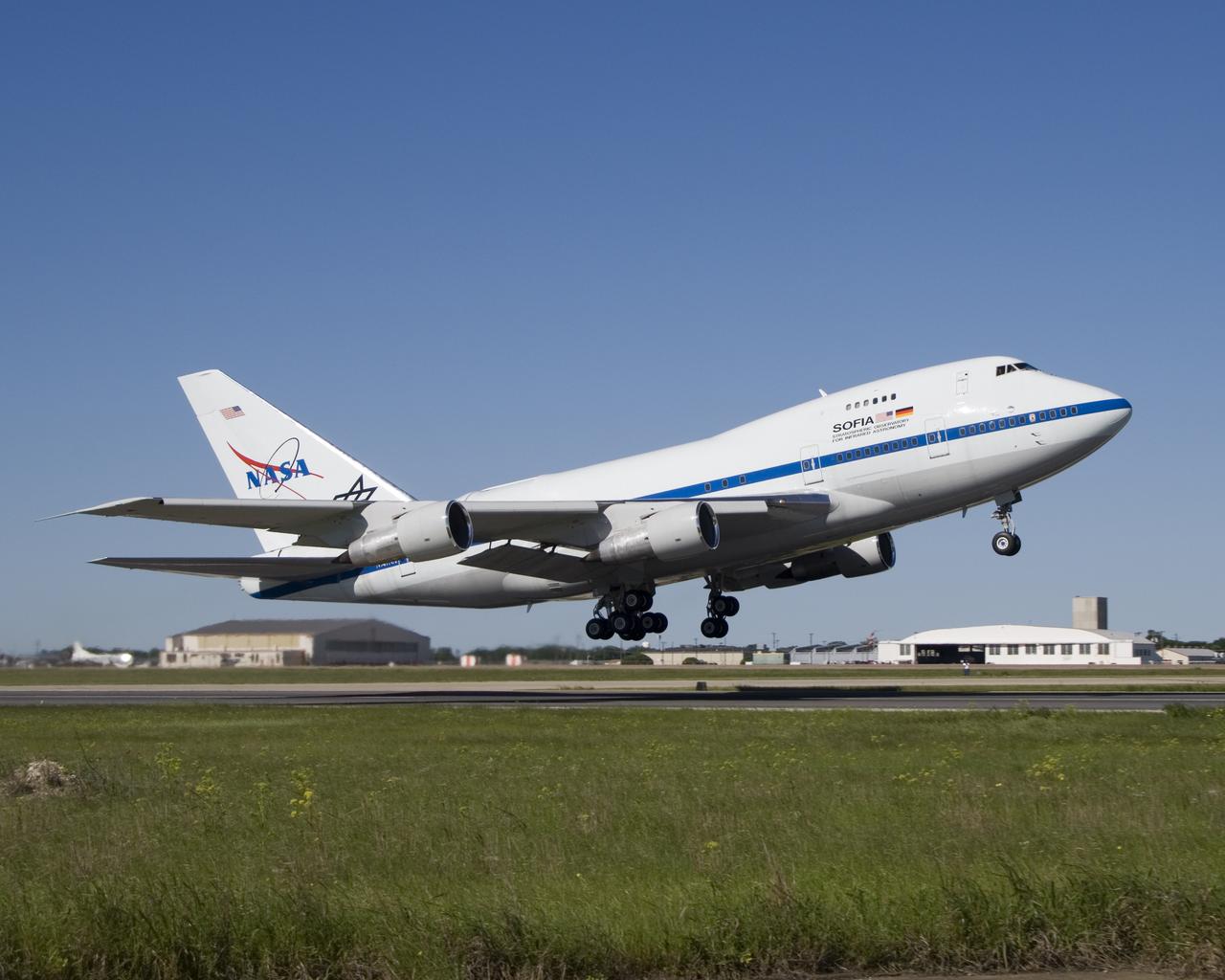
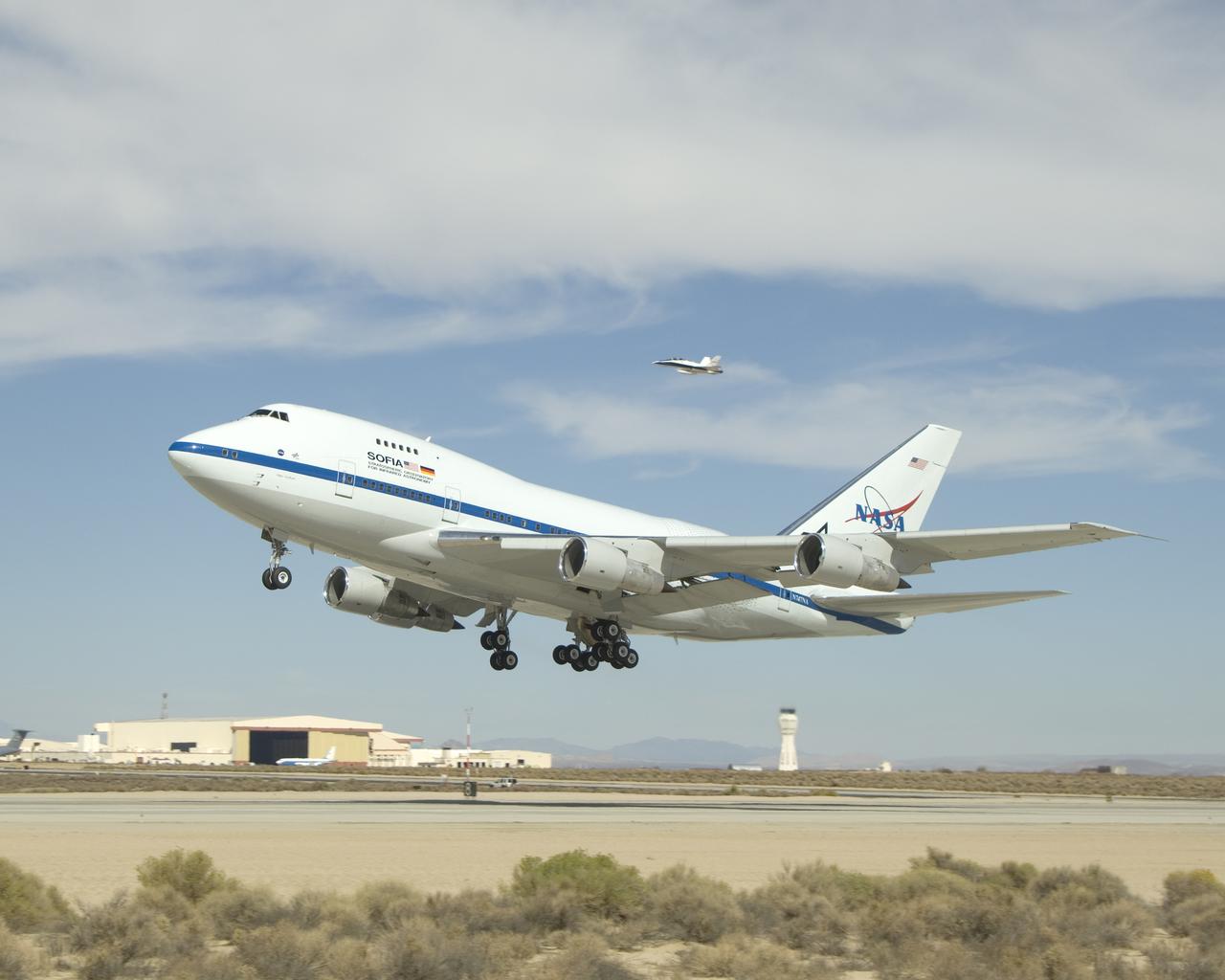
NASA's SOFIA infrared observatory in flight for the first of a series of test flights to verify the flight performance of the highly modified Boeing 747SP
NASA's SOFIA flying observatory makes a low pass over NASA Ames Research Center prior to landing at Moffett Field for a brief visit on Jan. 14, 2008.
NASA's SOFIA flying observatory makes a low pass over NASA Ames Research Center prior to landing at Moffett Field for a brief visit on Jan. 14, 2008
Technicians check out the mounting structure of the 20-metric-ton infrared telescope installed in NASA's Stratospheric Observatory for Infrared Astronomy (SOFIA).
Technicians check out the mounting structure of the infrared telescope installed in NASA's Stratospheric Observatory for Infrared Astronomy (SOFIA)
NASA's SOFIA airborne observatory lands at Edwards AFB after being flown from Waco, Texas to NASA Dryden for systems installation, integration and flight test. NASA's Stratospheric Observatory for Infrared Astronomy, or SOFIA, arrived at NASA's Dryden Flight Research Center at Edwards Air Force Base, Calif. on May 31, 2007. The heavily modified Boeing 747SP was ferried to Dryden from Waco, Texas, where L-3 Communications Integrated Systems installed a German-built 2.5-meter infrared telescope and made other major modifications over the past several years. SOFIA is scheduled to undergo installation and integration of mission systems and a multi-phase flight test program at Dryden over the next three years that is expected to lead to a full operational capability to conduct astronomy missions in about 2010. During its expected 20-year lifetime, SOFIA will be capable of "Great Observatory" class astronomical science, providing astronomers with access to the visible, infrared and sub-millimeter spectrum with optimized performance in the mid-infrared to sub-millimeter range.
NASA's SOFIA airborne observatory lands at Edwards AFB after being flown from Waco, Texas to NASA Dryden for systems installation, integration and flight test
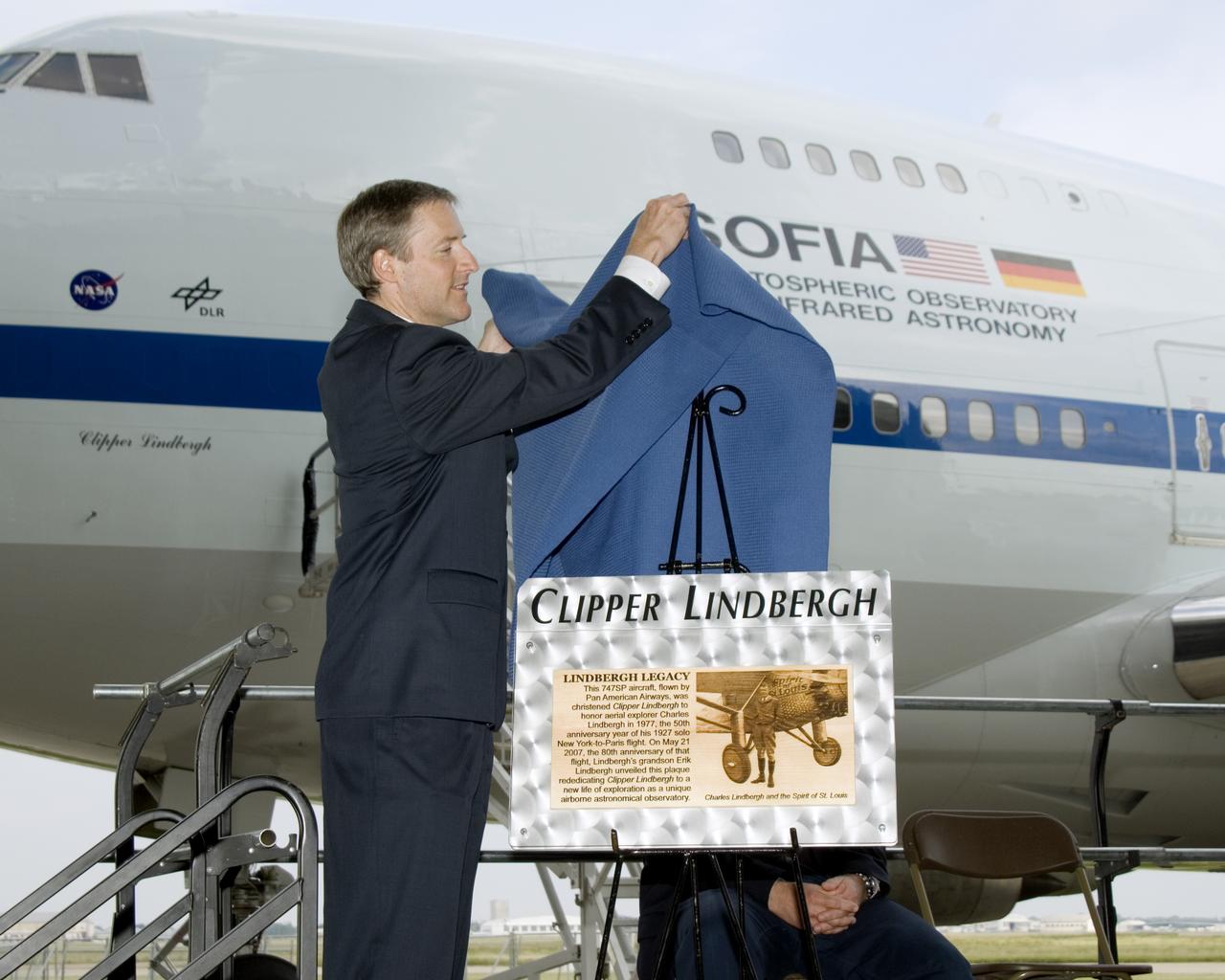
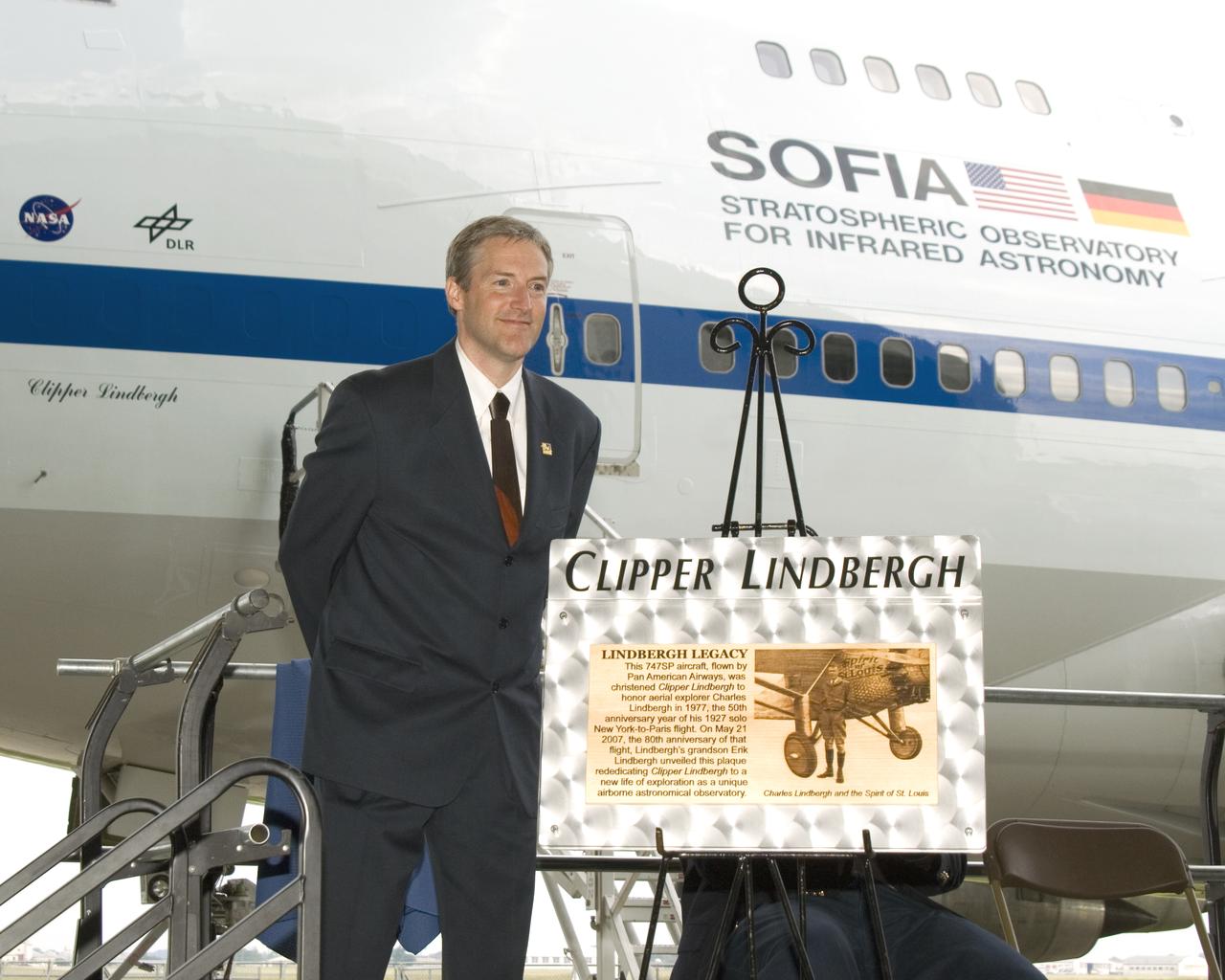
Erik Lindbergh, grandson of aviator Charles Lindbergh, unveiled a plaque commemorating his grandfather on the 80th anniversary of Charles Lindbergh's transatlantic flight. The event was a dedication of the 747 Clipper Lindbergh, a NASA airborne infrared observatory that is beginning test flights in preparation for conducting world-class airborne astronomy. The project is known as the Stratospheric Observatory for Infrared Astronomy, or SOFIA.
Erik Lindbergh unveils a plaque commemorating his grandfather to dedicate the 747 Clipper Lindbergh, a NASA airborne infrared observatory known as SOFIA
Erik Lindbergh, grandson of famed aviator Charles Lindbergh, yanks the bunting to reveal the Clipper Lindbergh name on NASA's SOFIA Boeing 747SP on June 27, 2007. More than 250 VIPs, news media and guests joined NASA, DLR, USRA and other SOFIA staff for the debut of the airborne observatory at NASA Dryden.
Erik Lindbergh, grandson of famed aviator Charles Lindbergh, yanks the bunting to reveal the Clipper Lindbergh name on NASA's SOFIA 747SP on June 27, 2007
The 2.5-meter infrared telescope peers out from its cavity in the SOFIA airborne observatory during nighttime line operations testing at Palmdale, Calif.
The cavernous expanse of the Dryden Aircraft Operations Facility in Palmdale, Calif., now houses NASA's DC-8 science laboratory and SOFIA infrared observatory.
The cavernous expanse of the Dryden Aircraft Operations Facility in Palmdale, Calif., now houses NASA's DC-8 science laboratory and SOFIA infrared observatory
The SOFIA airborne observatory's 2.5-meter infrared telescope peers out from its cavity in the SOFIA rear fuselage during nighttime line operations testing.
The SOFIA airborne observatory's 2.5-meter infrared telescope peers out from its cavity in the SOFIA rear fuselage during nighttime line operations testing
Erik Lindbergh, grandson of aviator Charles Lindbergh, unveiled a plaque commemorating his grandfather on the 80th anniversary of Charles Lindbergh's transatlantic flight. The event was a dedication of the 747 Clipper Lindbergh, a NASA airborne infrared observatory that is beginning test flights in preparation for conducting world-class airborne astronomy. The project is known as the Stratospheric Observatory for Infrared Astronomy, or SOFIA.
Erik Lindbergh unveils a plaque commemorating his grandfather to dedicate the 747 Clipper Lindbergh, a NASA airborne infrared observatory known as SOFIA
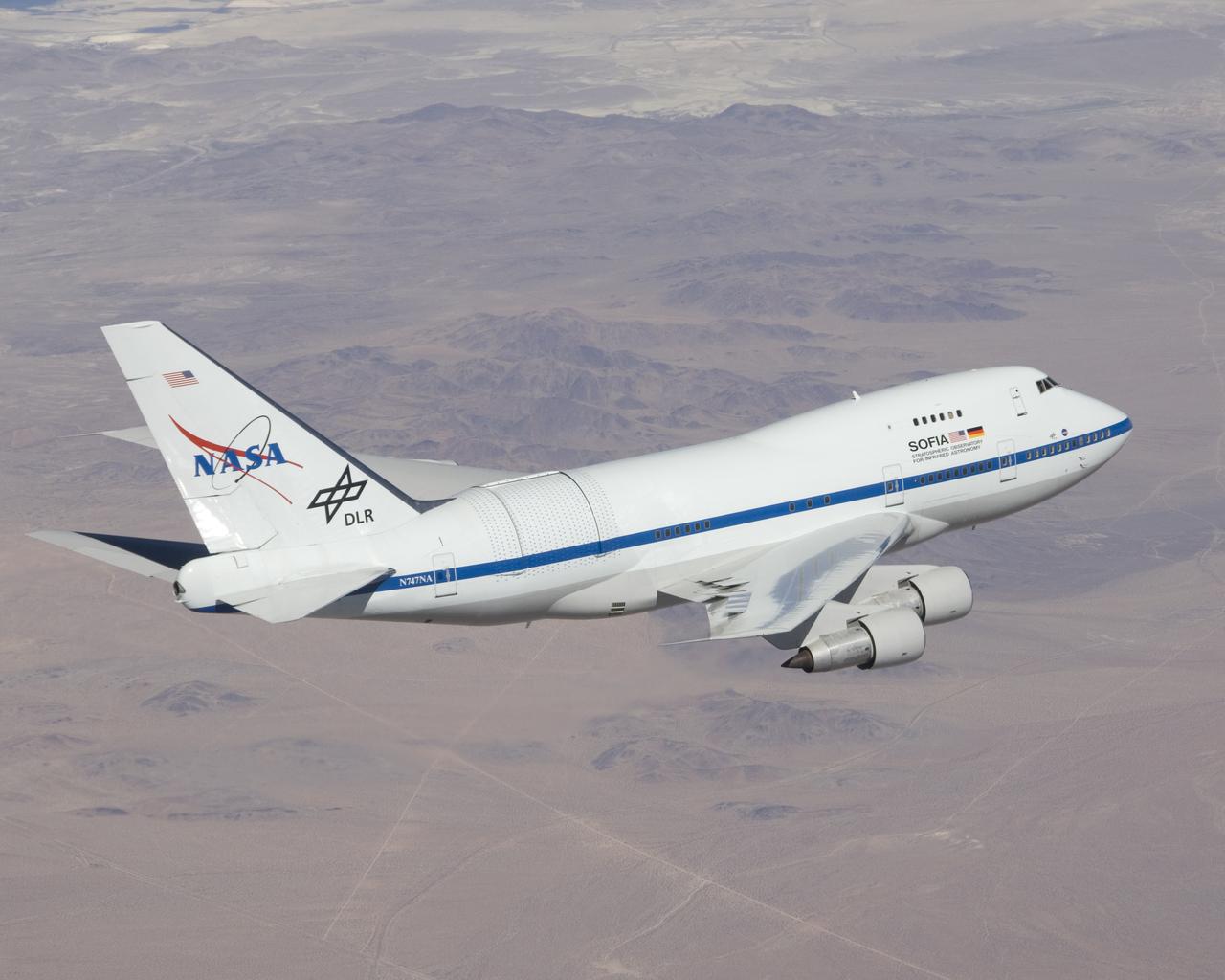
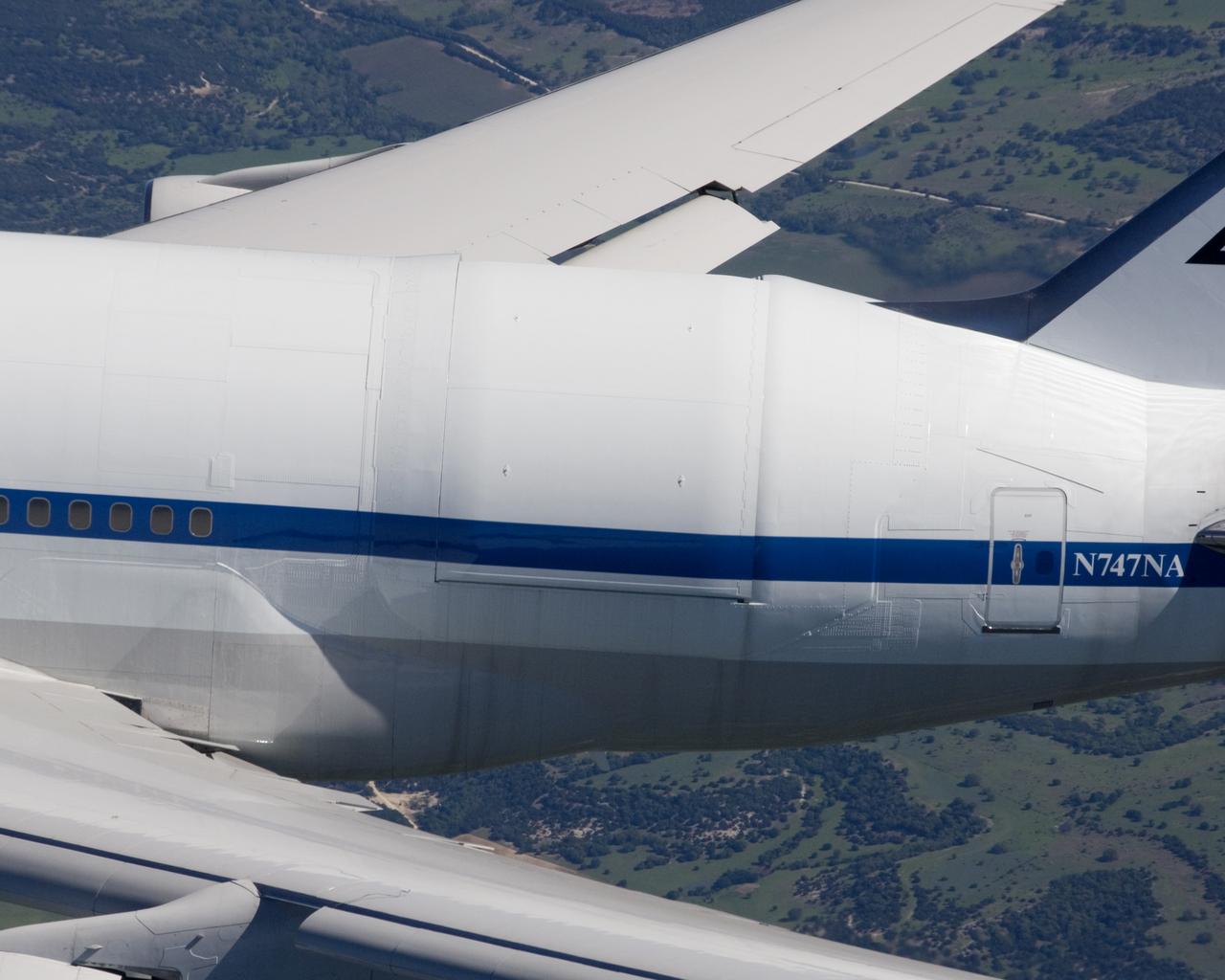
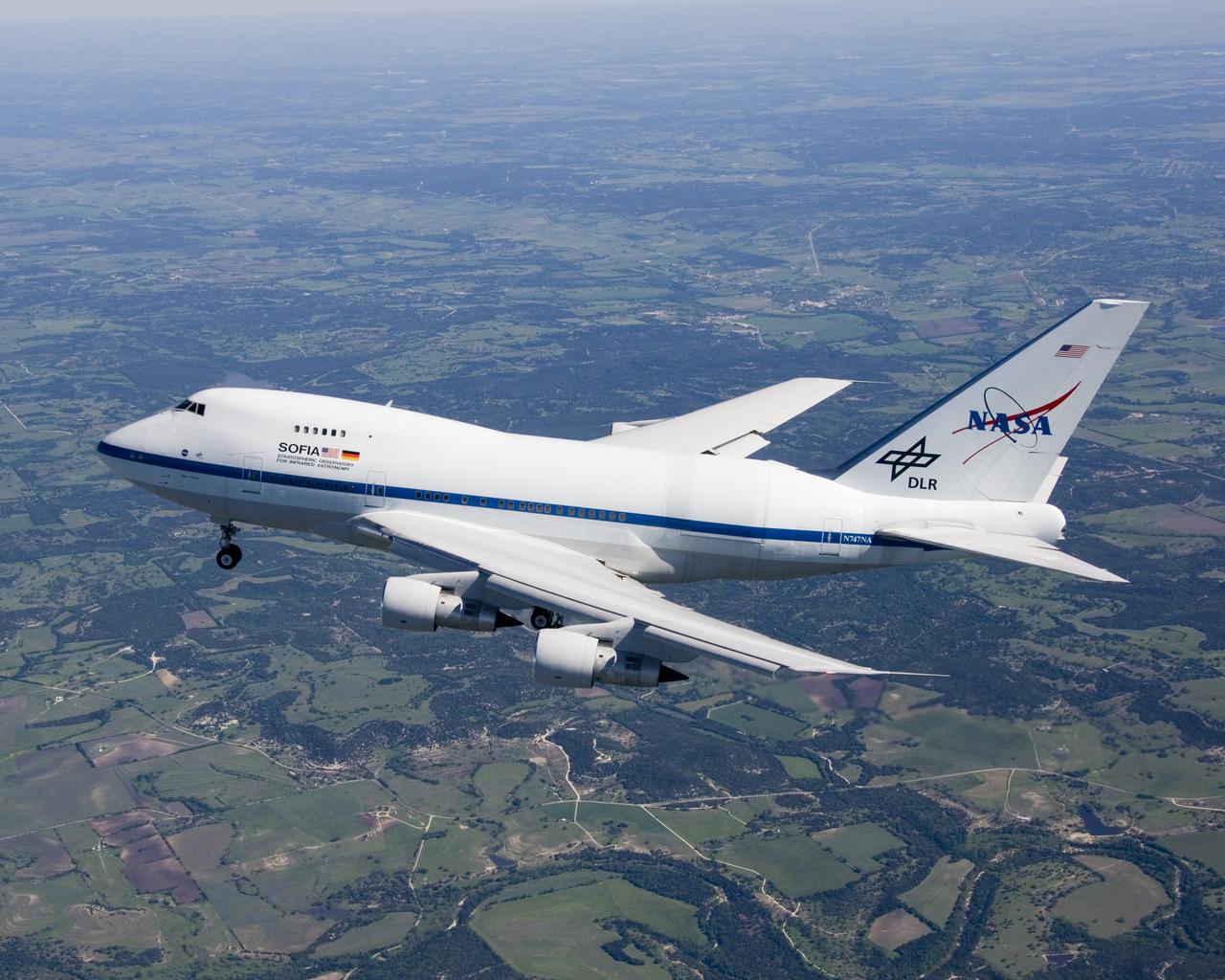
Christened "Clipper Lindbergh" when it flew for Pan American Airways in the 1970s, the SOFIA 747SP shows evidence of modification to its aft fuselage contours to accommodate a 16-foot-tall opening for a 45,000-pound infrared telescope. This inflight photo was taken on SOFIA's first flight since its modification to become an airborne observatory.
This inflight photo was taken during the first flight of the NASA and German Aerospace Center SOFIA airborne infrared observatory 747SP on April 26, 2007
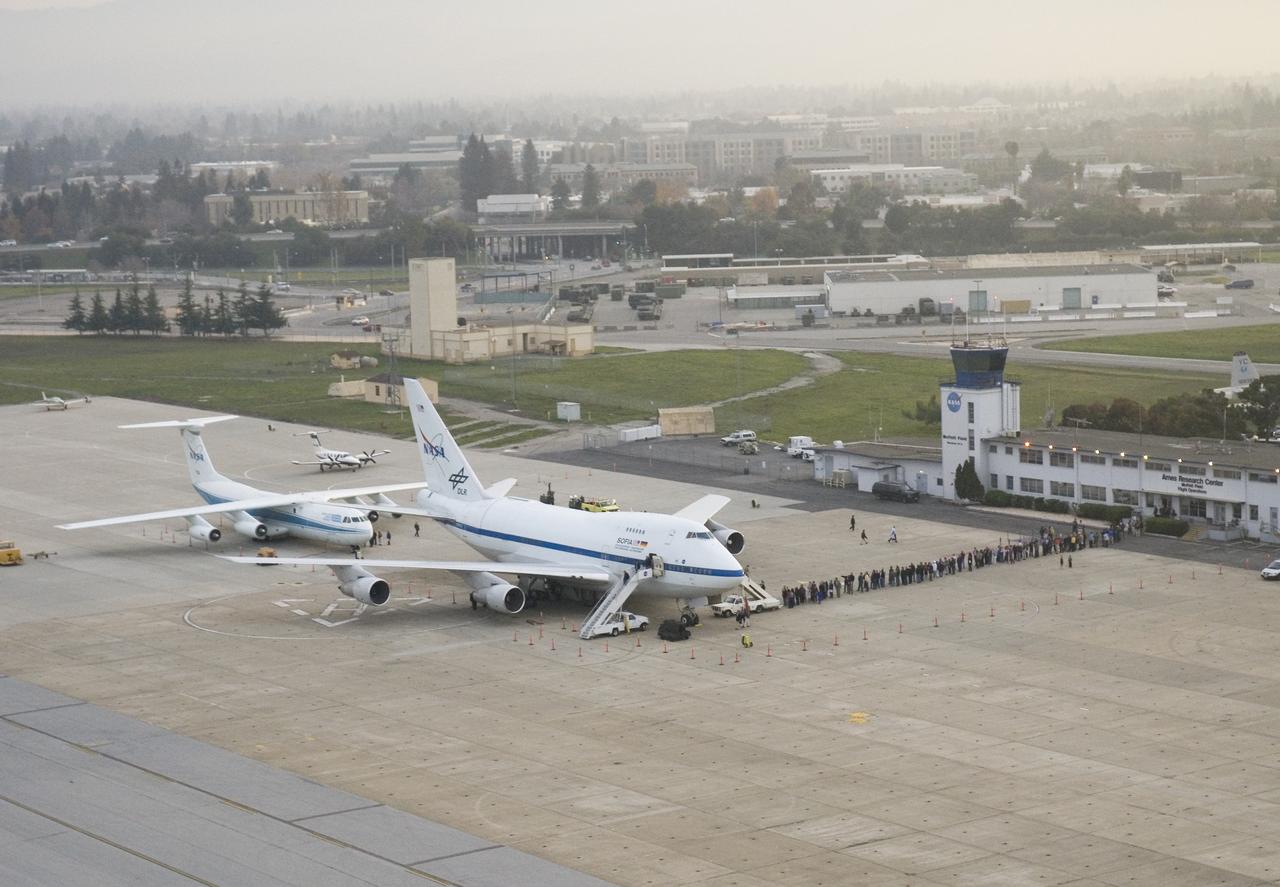
Thousands of NASA Ames employees and their families toured NASA's SOFIA flying observatory during its first visit to NASA Ames Research Center, Jan. 14, 2008.
Thousands of NASA Ames employees and their families toured NASA's SOFIA flying observatory during its first visit to NASA Ames Research Center, Jan. 14, 2008
NASA's SOFIA airborne observatory taxis past Hangar 1, the 1930s-era dirigible hangar at Moffett Field, during its first visit to NASA Ames Research Center.
NASA's SOFIA airborne observatory taxis past Hangar 1, the 1930s-era dirigible hangar at Moffett Field, during its first visit to NASA Ames Research Center
A technician examines the instrument mounting structure and bulkhead of the German-built infrared telescope installed in NASA's SOFIA airborne observatory.
A technician examines the instrument mounting structure and bulkhead of the German-built infrared telescope installed in NASA's SOFIA airborne observatory
NASA's Stratospheric Observatory for Infrared Astronomy (SOFIA) was airborne for almost two hours during its first check flight at Waco, Texas on April 26, 2007.
NASA's Stratospheric Observatory for Infrared Astronomy (SOFIA) was airborne for almost two hours during its first check flight at Waco, Texas on April 26, 2007
NASA's Stratospheric Observatory for Infrared Astronomy, or SOFIA, arrived at NASA's Dryden Flight Research Center at Edwards Air Force Base, Calif. on May 31, 2007. The heavily modified Boeing 747SP was ferried to Dryden from Waco, Texas, where L-3 Communications Integrated Systems installed a German-built 2.5-meter infrared telescope and made other major modifications over the past several years. SOFIA is scheduled to undergo installation and integration of mission systems and a multi-phase flight test program at Dryden over the next three years that is expected to lead to a full operational capability to conduct astronomy missions in about 2010. During its expected 20-year lifetime, SOFIA will be capable of "Great Observatory" class astronomical science, providing astronomers with access to the visible, infrared and sub-millimeter spectrum with optimized performance in the mid-infrared to sub-millimeter range.
NASA's SOFIA infrared observatory lifts off on the first of a series of test flights to verify the flight performance of the highly modified Boeing 747SP
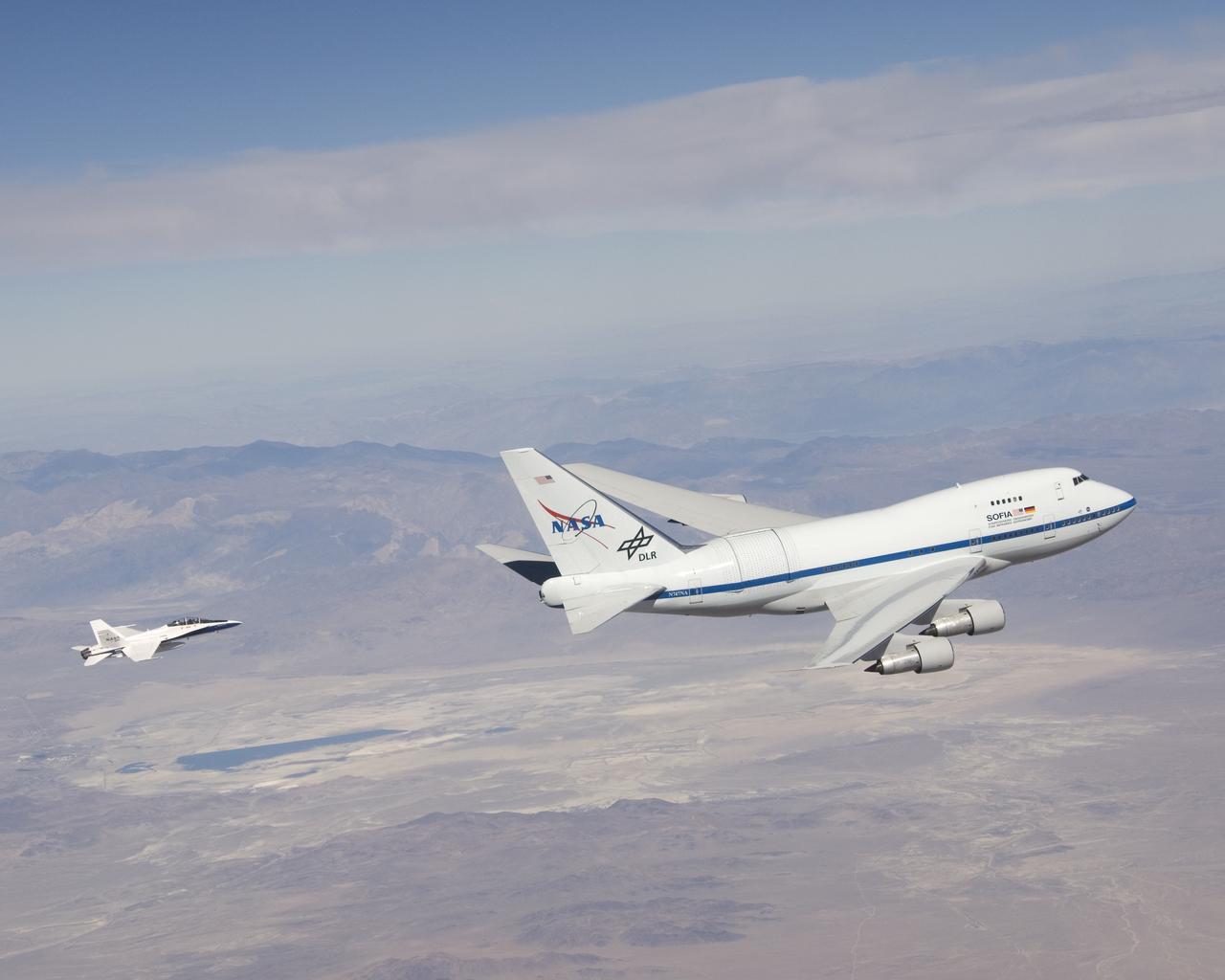
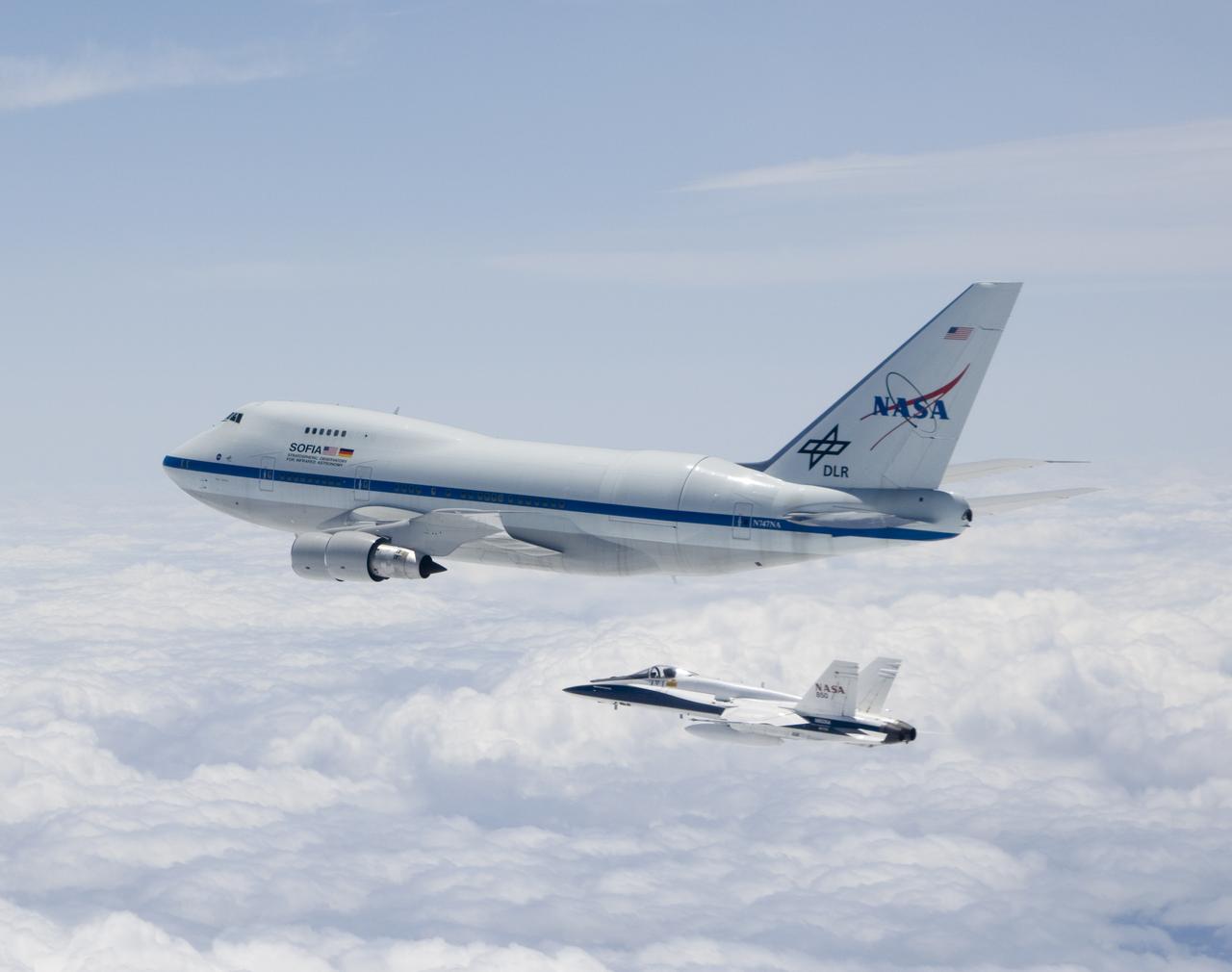
NASA's SOFIA airborne observatory is shadowed by a NASA F/A-18 safety chase aircraft during its second checkout flight near Waco, Texas on May 10, 2007.
NASA's SOFIA airborne observatory is shadowed by a NASA F/A-18 safety chase aircraft during its second checkout flight near Waco, Texas on May 10, 2007
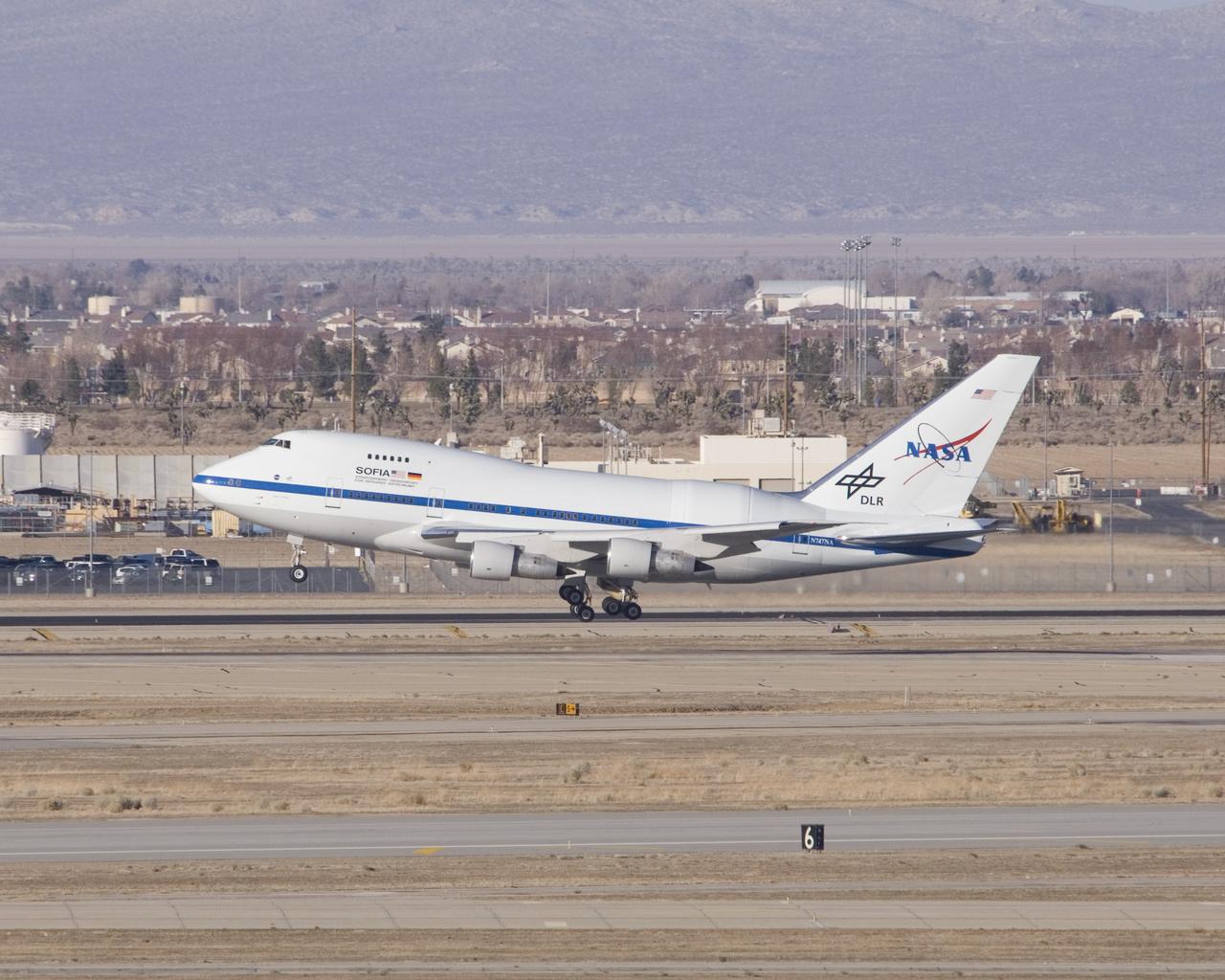
NASA's Stratospheric Observatory for Infrared Astronomy (SOFIA) Boeing 747SP flares for landing at Edwards AFB after a ferry flight from Waco, Texas. NASA's Stratospheric Observatory for Infrared Astronomy, or SOFIA, arrived at NASA's Dryden Flight Research Center at Edwards Air Force Base, Calif. on May 31, 2007. The heavily modified Boeing 747SP was ferried to Dryden from Waco, Texas, where L-3 Communications Integrated Systems installed a German-built 2.5-meter infrared telescope and made other major modifications over the past several years. SOFIA is scheduled to undergo installation and integration of mission systems and a multi-phase flight test program at Dryden over the next three years that is expected to lead to a full operational capability to conduct astronomy missions in about 2010. During its expected 20-year lifetime, SOFIA will be capable of "Great Observatory" class astronomical science, providing astronomers with access to the visible, infrared and sub-millimeter spectrum with optimized performance in the mid-infrared to sub-millimeter range.
NASA's Stratospheric Observatory for Infrared Astronomy (SOFIA) Boeing 747SP flares for landing at Edwards AFB after a ferry flight from Waco, Texas
Christened "Clipper Lindbergh" when it flew for Pan American Airways in the 1970s, the SOFIA 747SP shows evidence of modification to its aft fuselage contours to accommodate a 16-foot-tall opening for a 45,000-pound infrared telescope. This inflight photo was taken on SOFIA's first flight since its modification to become an airborne observatory.
This inflight photo was taken during the first flight of the NASA and German Aerospace Center SOFIA airborne infrared observatory 747SP on April 26, 2007
NASA's SOFIA 747SP shows evidence of modification to its aft fuselage contours to accommodate a 16-foot-tall cavity door for its 45,000-pound infrared telescope.
NASA's SOFIA 747SP shows evidence of modification to its aft fuselage contours to accommodate a 16-foot-tall cavity door for its 45,000-pound infrared telescope
The Dryden Aircraft Operations Facility in Palmdale, Calif., is now home to two large science aircraft, NASA's SOFIA observatory and a DC-8 science laboratory.
The Dryden Aircraft Operations Facility in Palmdale, Calif., is now home to two large science aircraft, NASA's SOFIA observatory and a DC-8 science laboratory
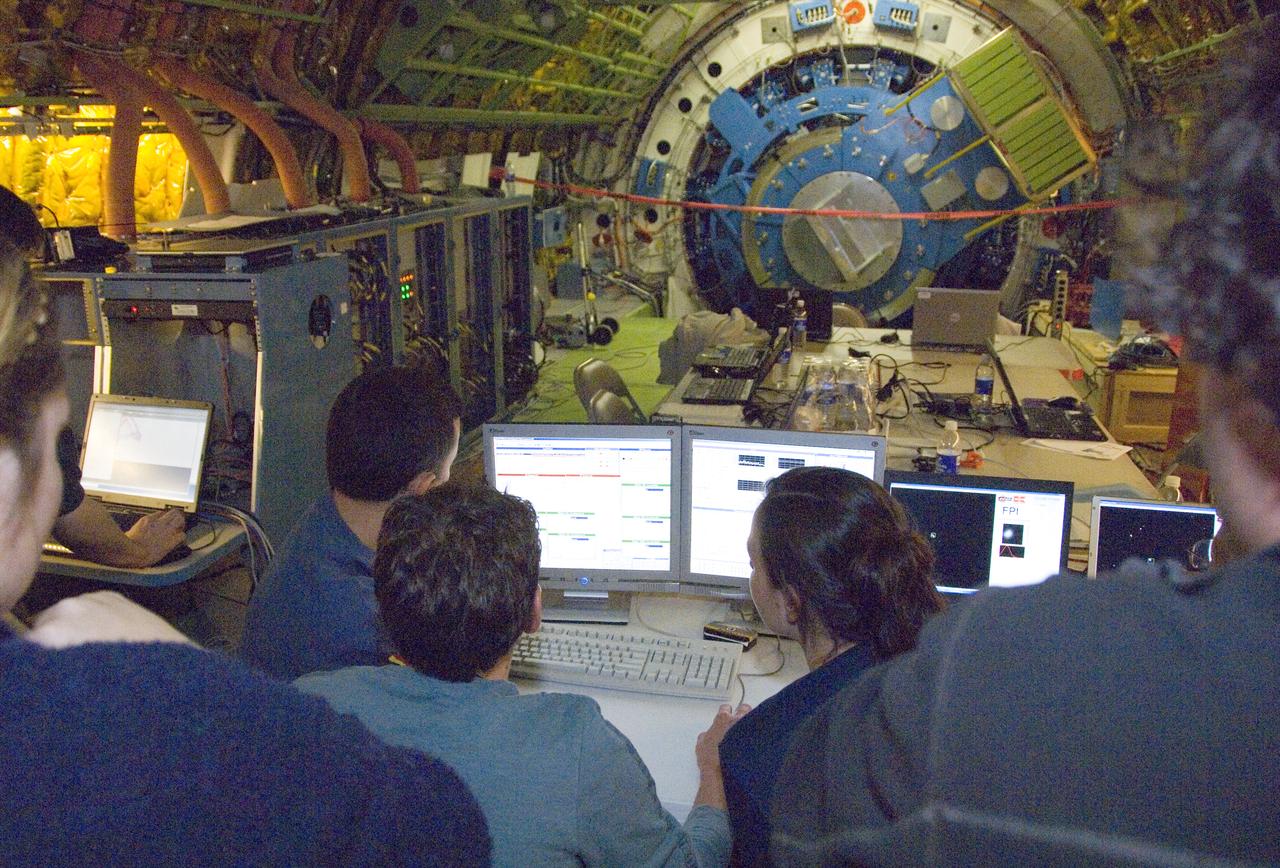
Scientists carefully examine data being received during nighttime line operations testing of the SOFIA airborne observatory's 2.5-meter infrared telescope.
Scientists carefully examine data being received during nighttime line operations testing of the SOFIA airborne observatory's 2.5-meter infrared telescope
NASA's Stratospheric Observatory for Infrared Astronomy is silhouetted against the sky as it soars on its second check flight near Waco, Texas on May 10, 2007.
NASA's Stratospheric Observatory for Infrared Astronomy is silhouetted against the sky as it soars on its second check flight near Waco, Texas on May 10, 2007
With landing gear extended, the NASA/DLR Stratospheric Observatory for Infared Astronomy (SOFIA) 747SP cruises over central Texas on its first checkout flight.
With landing gear extended, the NASA/DLR Stratospheric Observatory for Infared Astronomy (SOFIA) 747SP cruises over central Texas on its first checkout flight
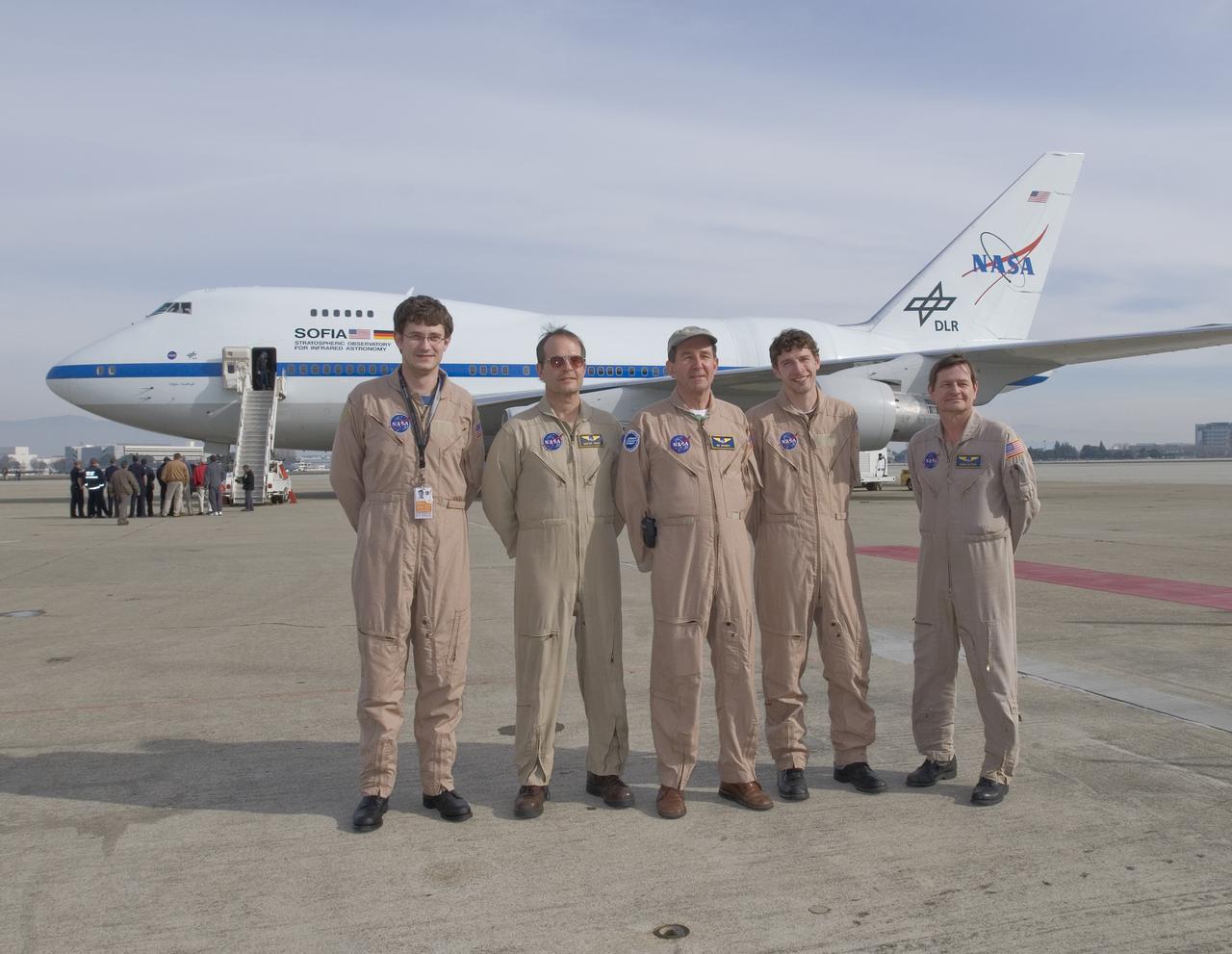
The flight crew of NASA's SOFIA airborne observatory and DLR telescope engineers who operated the system during its visit to NASA Ames Research Center on Jan. 14, 2008 included (from left), DLR telescope engineer Ulli Lampater, flight engineer Marty Trout, pilot Bill Brockett, telescope engineer Andres Reinacher and pilot Frank Batteas.
The flight crew of NASA's SOFIA airborne observatory includes (from left), Ulli Lampater Marty Trout, Bill Brockett Andres Reinacher and Frank Batteas.
NASA's SOFIA 747SP bearing a German-built 2.5-meter infrared telescope in its rear fuselage taxis up to NASA Dryden's ramp after a ferry flight from Waco, Texas. NASA's Stratospheric Observatory for Infrared Astronomy, or SOFIA, arrived at NASA's Dryden Flight Research Center at Edwards Air Force Base, Calif. on May 31, 2007. The heavily modified Boeing 747SP was ferried to Dryden from Waco, Texas, where L-3 Communications Integrated Systems installed a German-built 2.5-meter infrared telescope and made other major modifications over the past several years. SOFIA is scheduled to undergo installation and integration of mission systems and a multi-phase flight test program at Dryden over the next three years that is expected to lead to a full operational capability to conduct astronomy missions in about 2010. During its expected 20-year lifetime, SOFIA will be capable of "Great Observatory" class astronomical science, providing astronomers with access to the visible, infrared and sub-millimeter spectrum with optimized performance in the mid-infrared to sub-millimeter range.
NASA's SOFIA 747SP bearing a German-built 2.5-meter infrared telescope in its rear fuselage taxis up to NASA Dryden's ramp after a ferry flight from Waco, TX
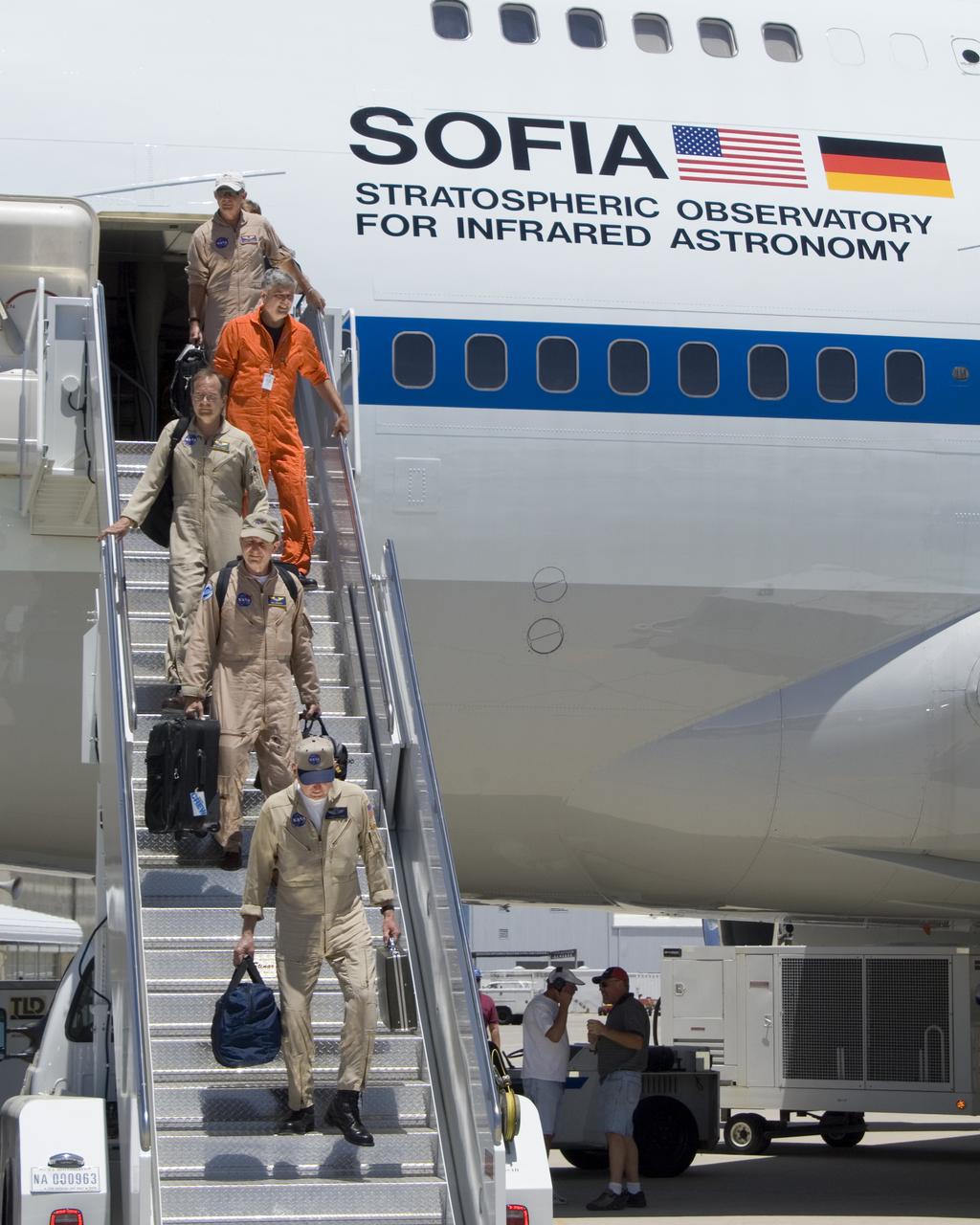
The SOFIA flight crew, consisting of Co-pilot Gordon Fullerton; DFRC, Pilot Bill Brocket; DFRC, Test Conductor Marty Trout; DFRC, Test Engineer Don Stonebrook; L-3, and Flight Engineer Larry Larose; JSC, descend the stairs after ferrying the 747SP airborne observatory from Waco, Texas, to its new home at NASA's Dryden Flight Research Center in California. NASA's Stratospheric Observatory for Infrared Astronomy, or SOFIA, arrived at NASA's Dryden Flight Research Center at Edwards Air Force Base, Calif. on May 31, 2007. The heavily modified Boeing 747SP was ferried to Dryden from Waco, Texas, where L-3 Communications Integrated Systems installed a German-built 2.5-meter infrared telescope and made other major modifications over the past several years. SOFIA is scheduled to undergo installation and integration of mission systems and a multi-phase flight test program at Dryden over the next three years that is expected to lead to a full operational capability to conduct astronomy missions in about 2010. During its expected 20-year lifetime, SOFIA will be capable of "Great Observatory" class astronomical science, providing astronomers with access to the visible, infrared and sub-millimeter spectrum with optimized performance in the mid-infrared to sub-millimeter range.
The SOFIA flight crew descends the stairs after ferrying the 747SP airborne observatory from Waco, TX, to NASA's Dryden Flight Research Center in California
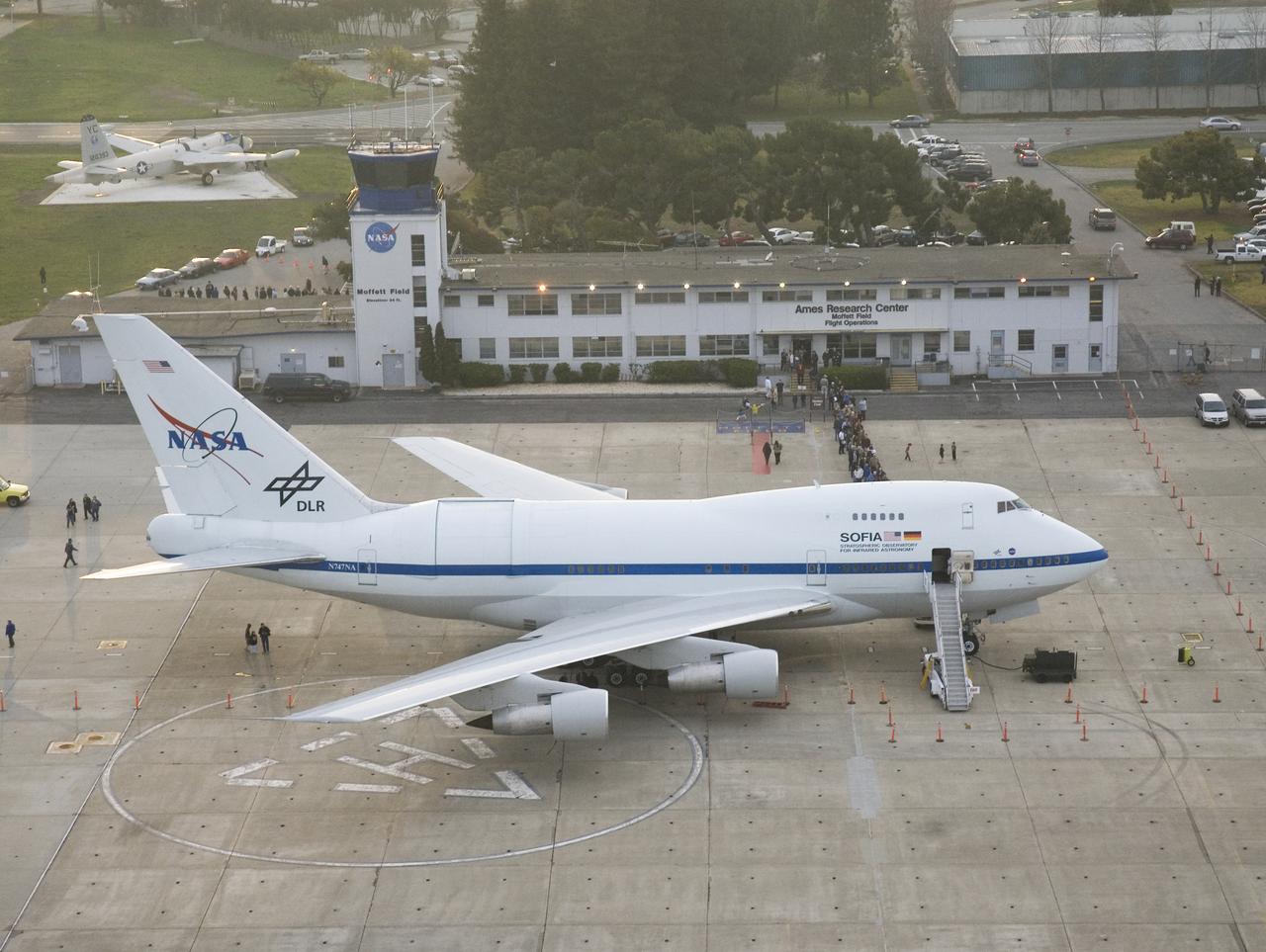
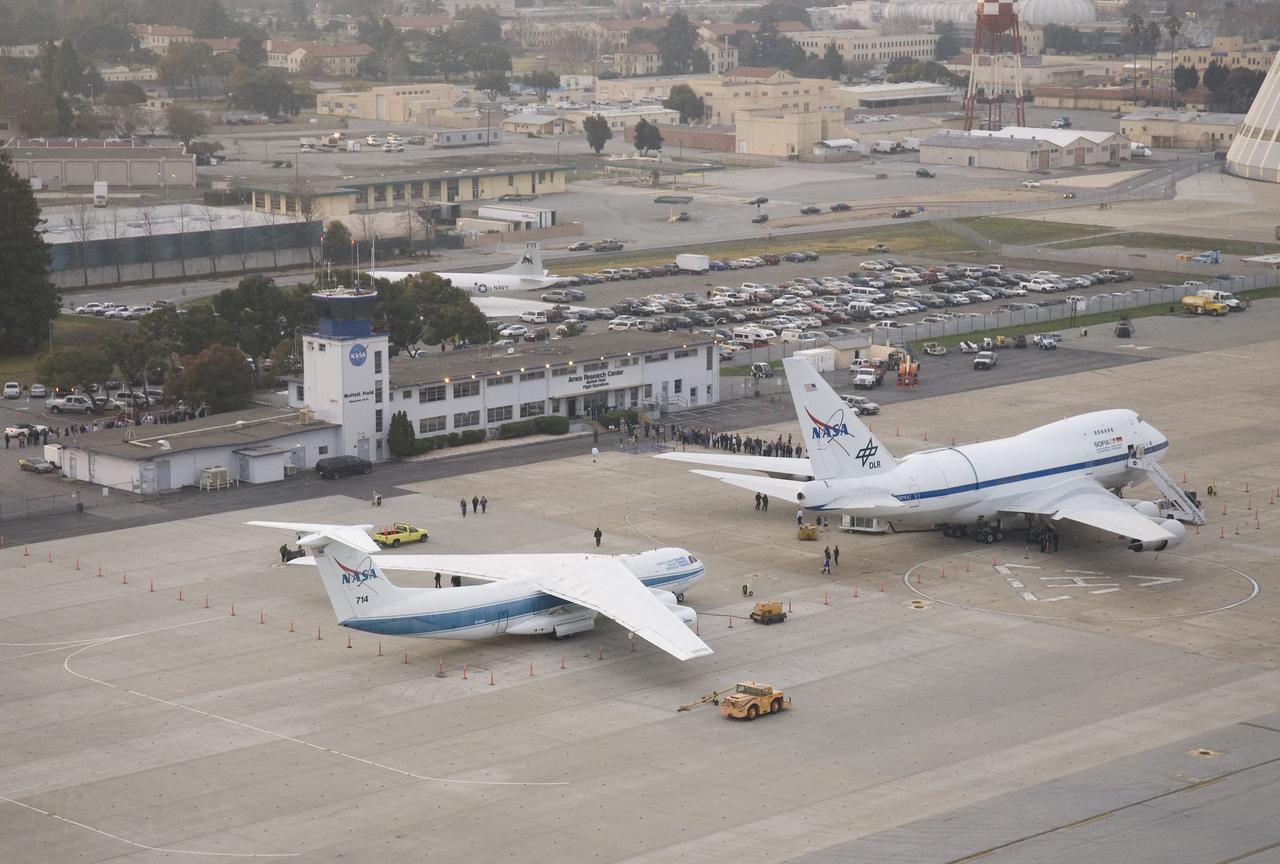
NASA's new SOFIA observatory shared the ramp with its predecessor, the now-retired Kuiper Airborne Observatory, during open house at NASA Ames Research Center.
NASA's new SOFIA observatory shared the ramp with its predecessor, the now-retired Kuiper Airborne Observatory, during open house at NASA Ames Research Center
NASA's Stratospheric Observatory for Infrared Astronomy, or SOFIA, arrived at NASA's Dryden Flight Research Center at Edwards Air Force Base, Calif. on May 31, 2007. The heavily modified Boeing 747SP was ferried to Dryden from Waco, Texas, where L-3 Communications Integrated Systems installed a German-built 2.5-meter infrared telescope and made other major modifications over the past several years. SOFIA is scheduled to undergo installation and integration of mission systems and a multi-phase flight test program at Dryden over the next three years that is expected to lead to a full operational capability to conduct astronomy missions in about 2010. During its expected 20-year lifetime, SOFIA will be capable of "Great Observatory" class astronomical science, providing astronomers with access to the visible, infrared and sub-millimeter spectrum with optimized performance in the mid-infrared to sub-millimeter range.
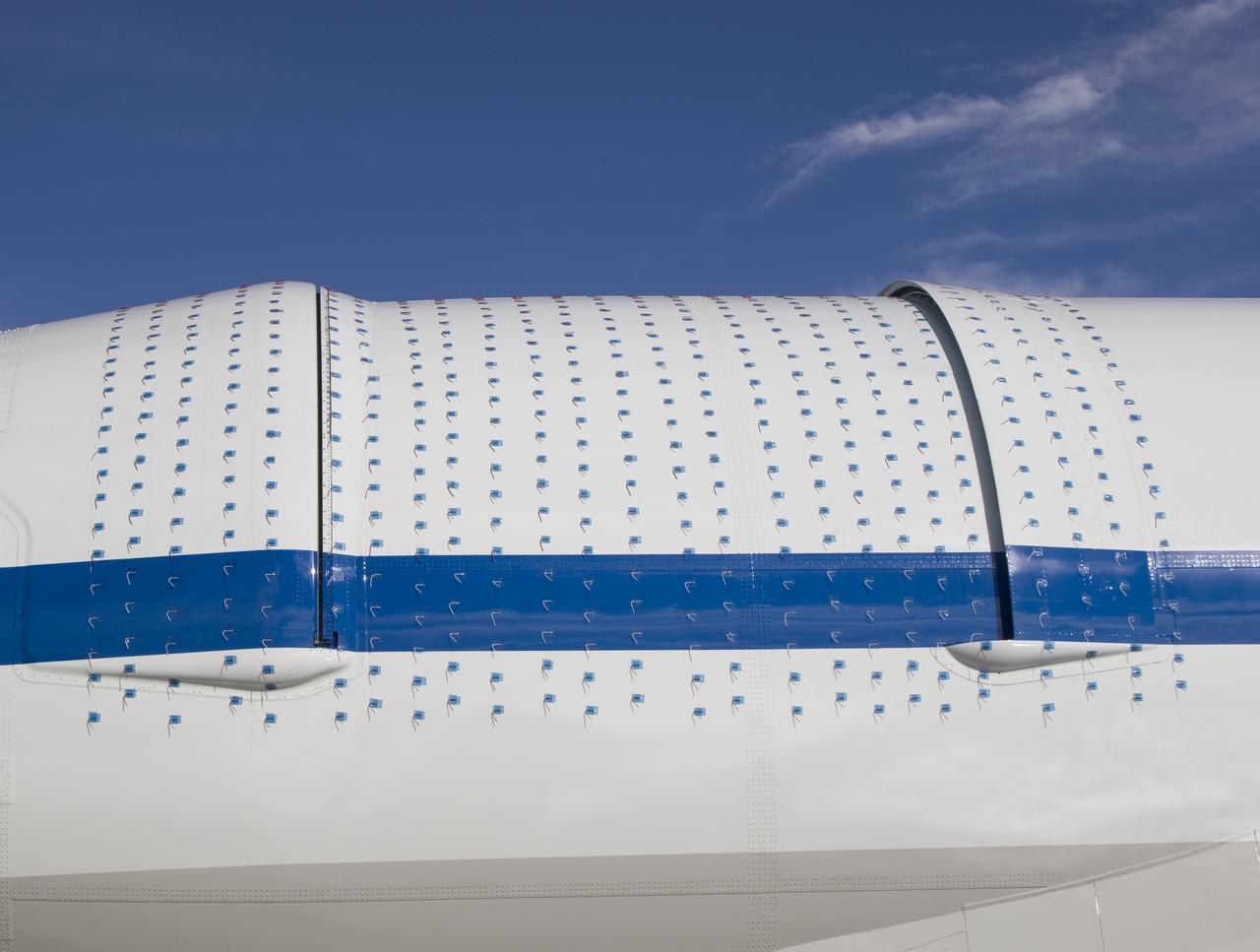
Tiny two-inch string tufts blanket the telescope cavity door and related fairings to aid visual monitoring of airflow patterns during SOFIA 747SP flight tests
NASA's now-retired Kuiper Airborne Observatory shared the limelight with its successor, the SOFIA observatory, during an open house at Ames Research Center.
NASA's now-retired Kuiper Airborne Observatory shared the limelight with its successor, the SOFIA observatory, during an open house at Ames Research Center
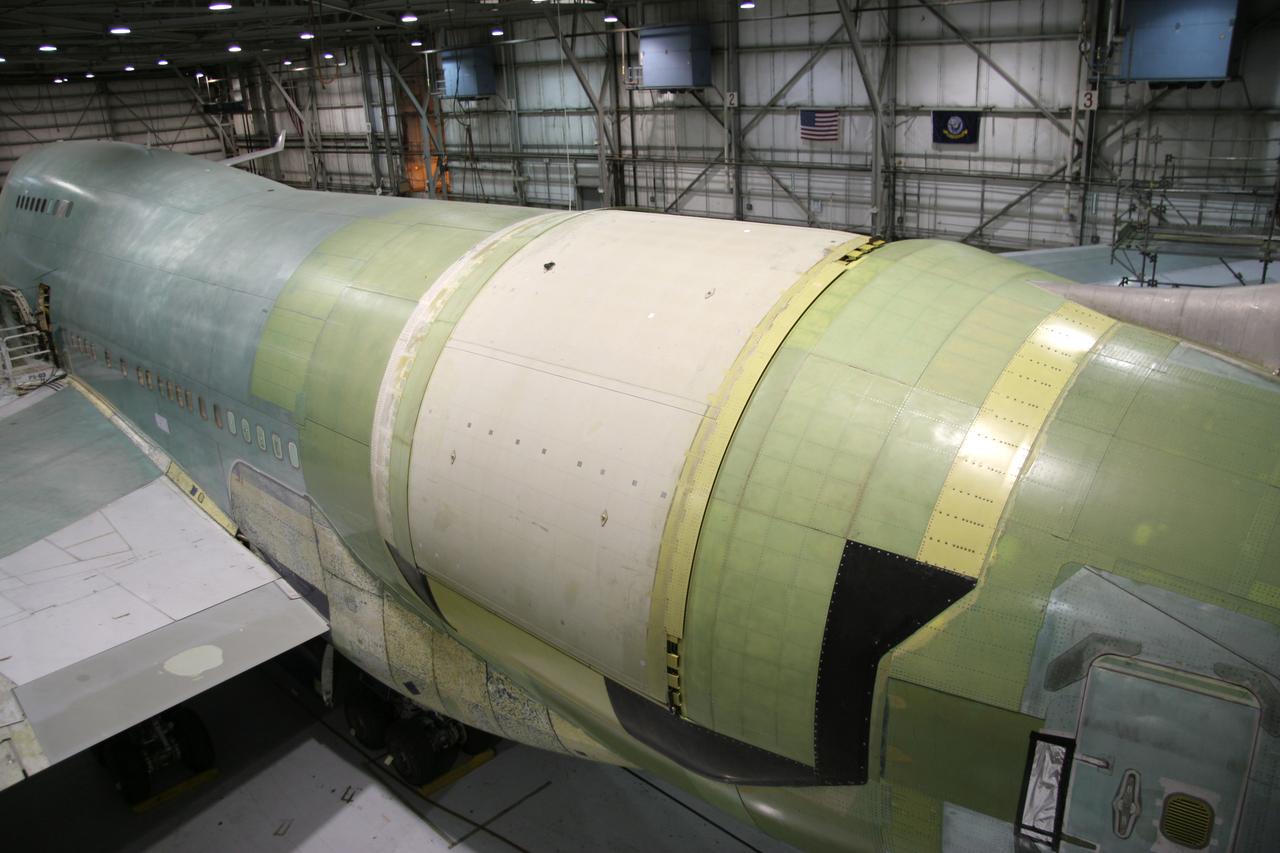
A rotating external door (white) was installed over the telescope cavity in the rear fuselage of NASA's SOFIA Boeing 747SP during modifications in Waco, Texas.
A rotating external door (white) was installed over the telescope cavity in the rear fuselage of NASA's SOFIA Boeing 747SP during modifications in Waco, Texas
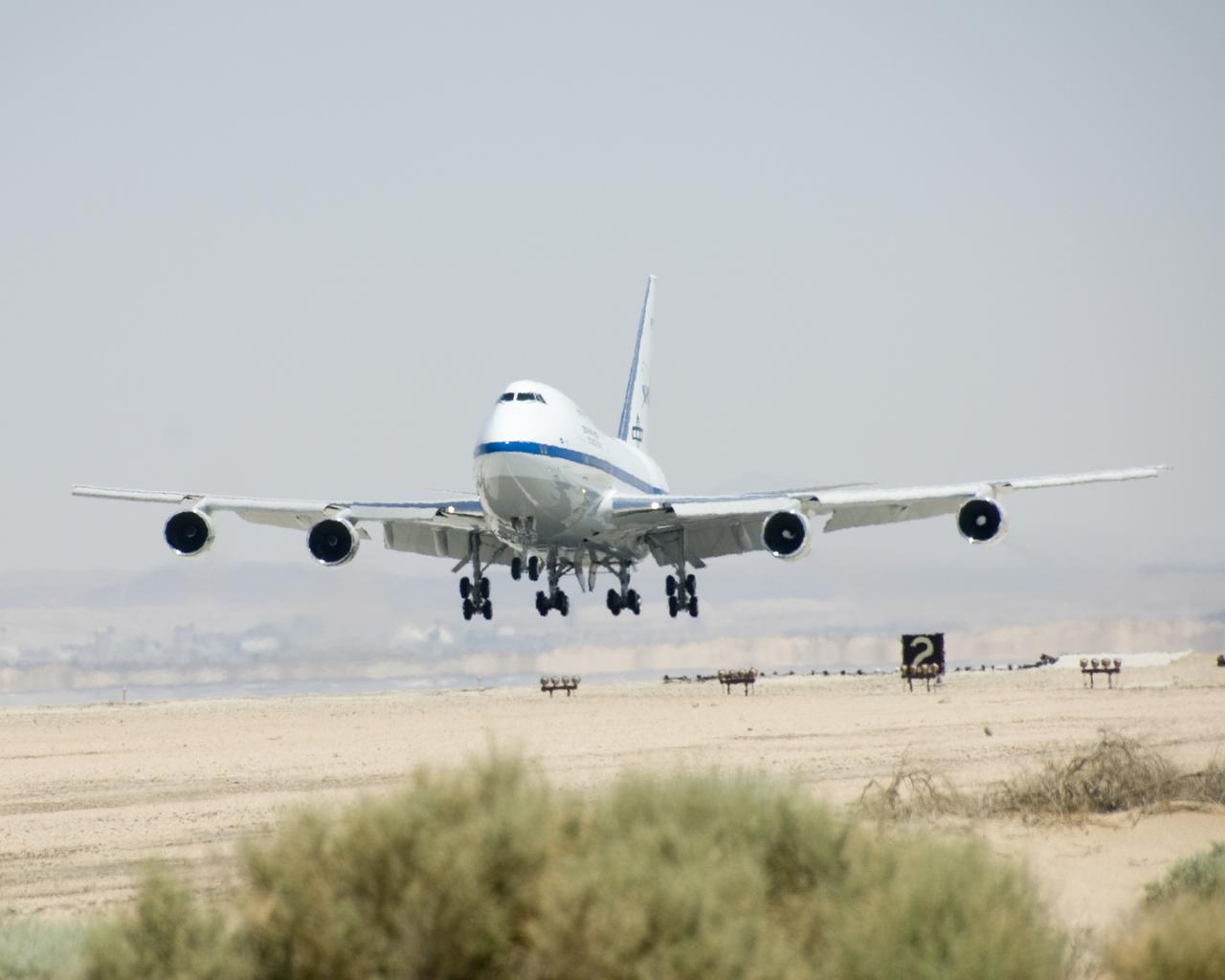
NASA's Stratospheric Observatory for Infrared Astronomy touches down at Moffett Field, Calif., for its first visit to NASA Ames Research Center, Jan. 14, 2008.
NASA's Stratospheric Observatory for Infrared Astronomy touches down at Moffett Field, Calif., for its first visit to NASA Ames Research Center, Jan. 14, 2008
The NASA and German Aerospace Center SOFIA airborne infrared observatory took flight for the first time April 26, 2007, from its modification center in Waco, Texas.
The NASA and German Aerospace Center SOFIA airborne infrared observatory took flight for the first time April 26, 2007, from its modification center in Waco, TX
NASA's SOFIA infrared observatory 747SP is shadowed by a NASA F/A-18 during a flyby at its new home, the Dryden Aircraft Operations Facility in Palmdale, Calif.
NASA's SOFIA infrared observatory 747SP is shadowed by a NASA F-18 during a flyby at its new home, the Dryden Aircraft Operations Facility in Palmdale, Calif
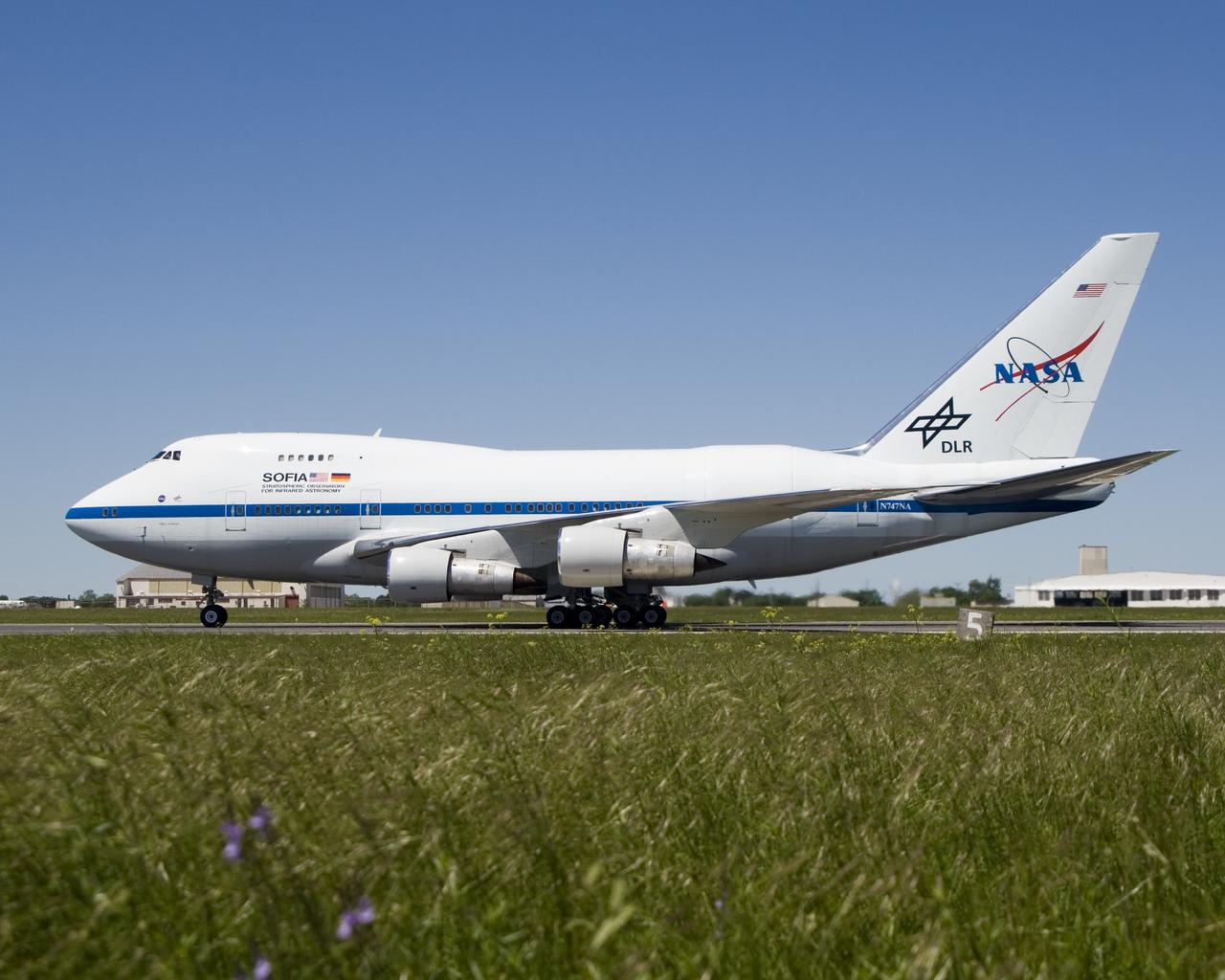
NASA's modified Boeing 747SP SOFIA airborne observatory taxis along the runway at Waco, Texas after completing its first checkout flight on April 26, 2007.
NASA's modified Boeing 747SP SOFIA airborne observatory taxis along the runway at Waco, Texas after completing its first checkout flight on April 26, 2007
NASA's Stratospheric Observatory for Infrared Astronomy, or SOFIA, arrived at NASA's Dryden Flight Research Center at Edwards Air Force Base, Calif. on May 31, 2007. The heavily modified Boeing 747SP was ferried to Dryden from Waco, Texas, where L-3 Communications Integrated Systems installed a German-built 2.5-meter infrared telescope and made other major modifications over the past several years. SOFIA is scheduled to undergo installation and integration of mission systems and a multi-phase flight test program at Dryden over the next three years that is expected to lead to a full operational capability to conduct astronomy missions in about 2010. During its expected 20-year lifetime, SOFIA will be capable of "Great Observatory" class astronomical science, providing astronomers with access to the visible, infrared and sub-millimeter spectrum with optimized performance in the mid-infrared to sub-millimeter range.
NASA's SOFIA infrared observatory and F/A-18 safety chase during the first series of test flights to verify the flight performance of the modified Boeing 747SP
NASA's SOFIA infrared observatory touches down at Air Force Plant 42 in Palmdale, Calif., as it arrives at its new home, the Dryden Aircraft Operations Facility.
NASA's SOFIA infrared observatory touches down at Air Force Plant 42 in Palmdale, CA, as it arrives at its new home, the Dryden Aircraft Operations Facility
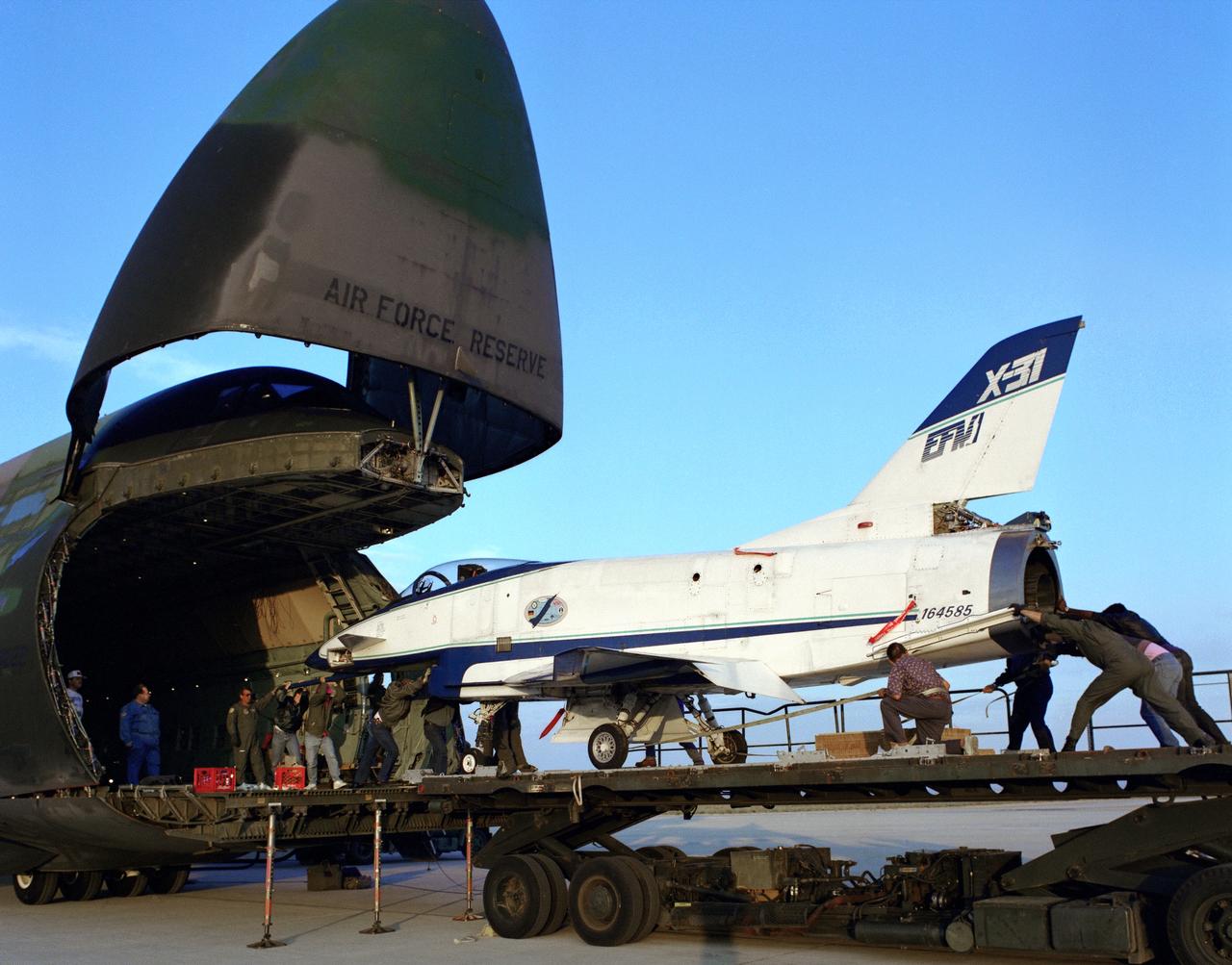
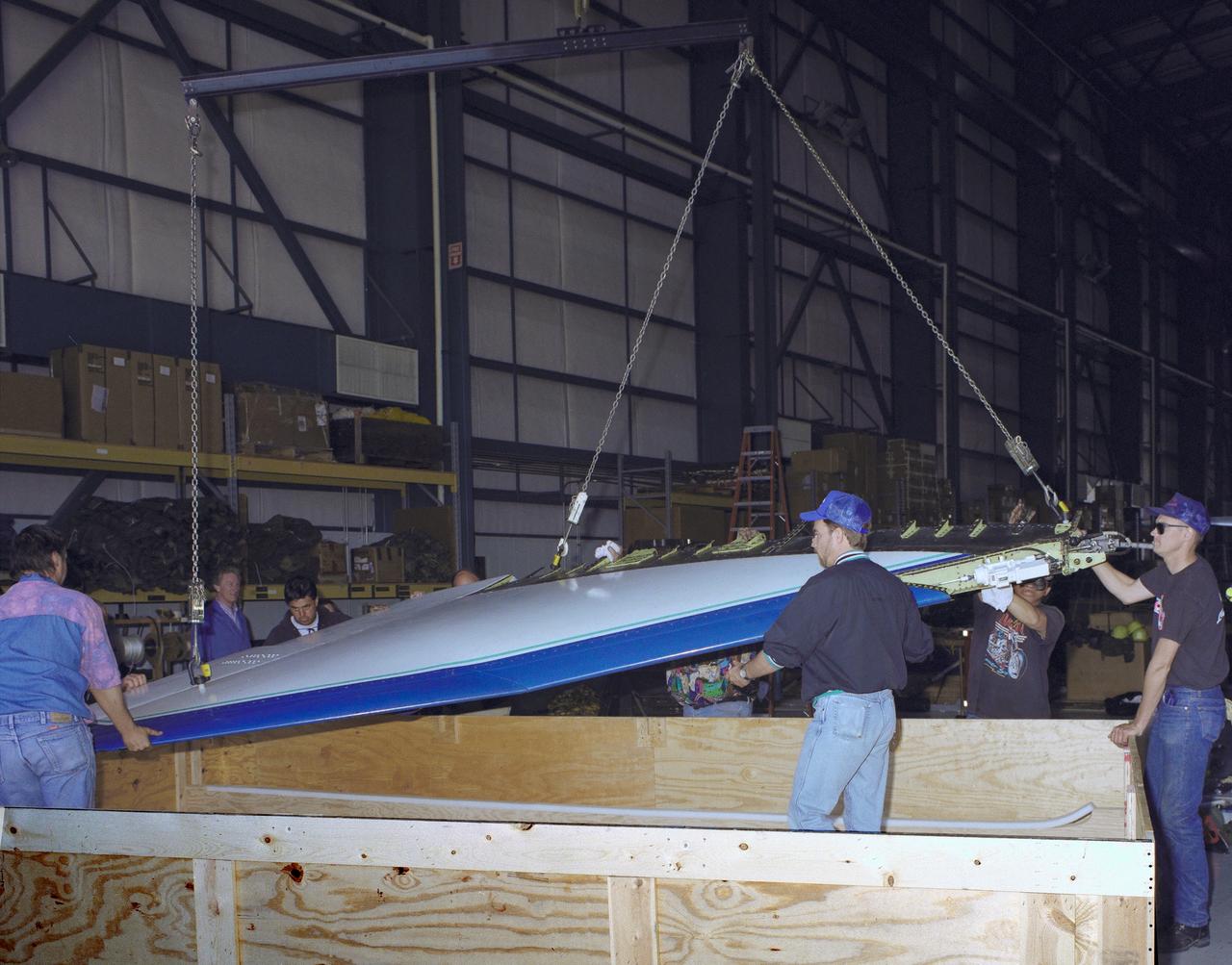
The right wing of the X-31 Enhanced Fighter Maneuverability Technology Demonstrator Aircraft is seen here being put into a shipping container May 18, 1995, at NASA's Dryden Flight Research Center, Edwards, California, by U.S. and German members of the program. To fit inside an Air Force Reserve C-5 transport, which was used to ferry the X-31 to Europe on May 22, 1995, the right wing had to be removed. Manching, Germany, was used as a staging base to prepare the aircraft for participation in the Paris Air Show. At the air show on June 11 through the 18th, the X-31 demonstrated the value of using thrust vectoring (directing engine exhaust flow) coupled with advanced flight control systems to provide controlled flight at very high angles of attack. The aircraft arrived back at Edwards in an Air Force Reserve C-5 on June 25, 1995, and off loaded at Dryden the 27th.  The X-31 aircraft was developed jointly by Rockwell International's North American Aircraft Division (now part of Boeing) and Daimler-Benz Aerospace (formerly Messerschmitt-Bolkow-Blohm), under sponsorship by the U.S. Department of Defense and the German Federal Ministry of Defense.
X-31 Wing Storage for Shipping
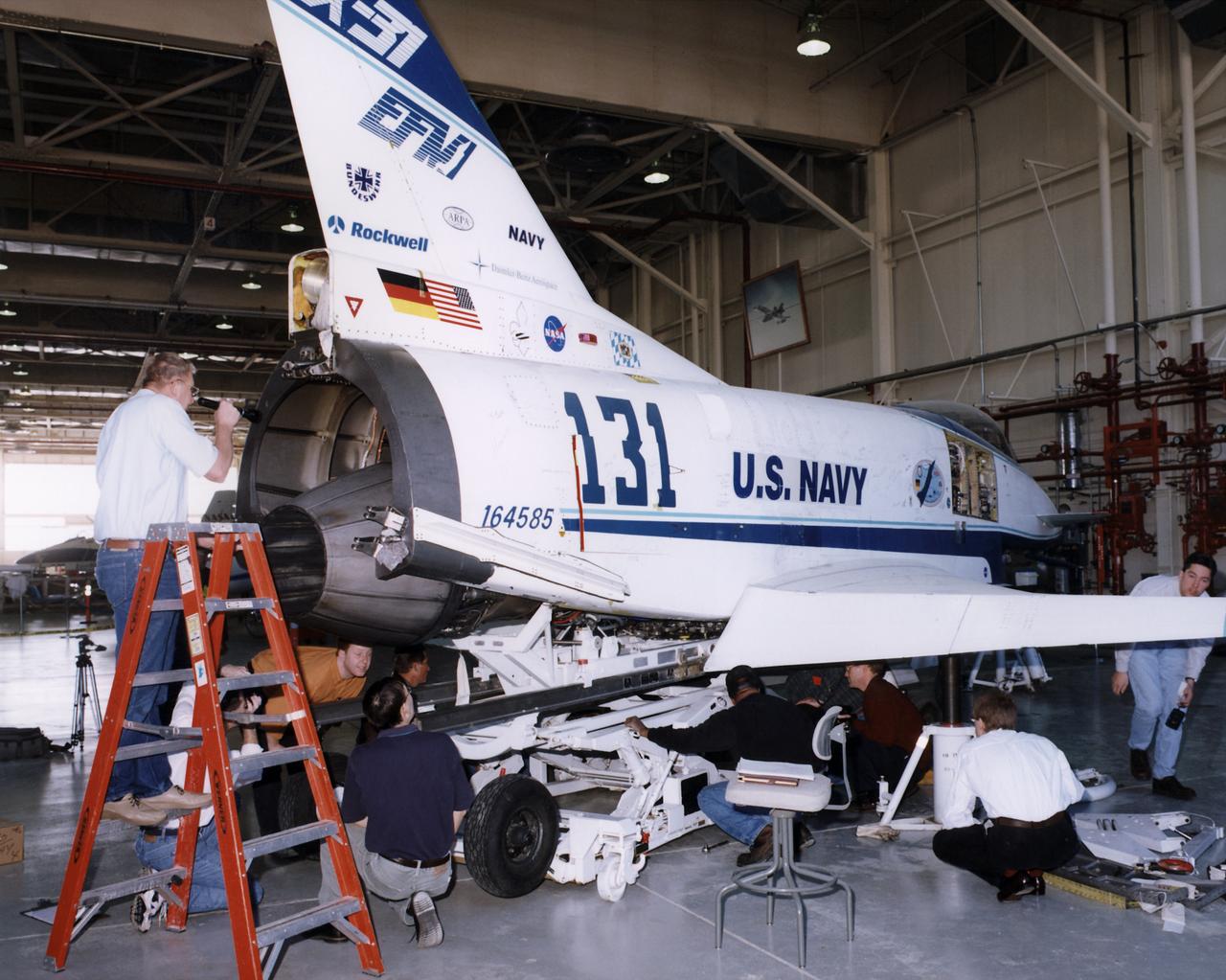
X-31 team members perform an engine fit check on the X-31 Enhanced Fighter Maneuverability demonstrator aircraft in a hangar at the Dryden Flight Research Center, Edwards, California.
X-31 Engine Fit Check
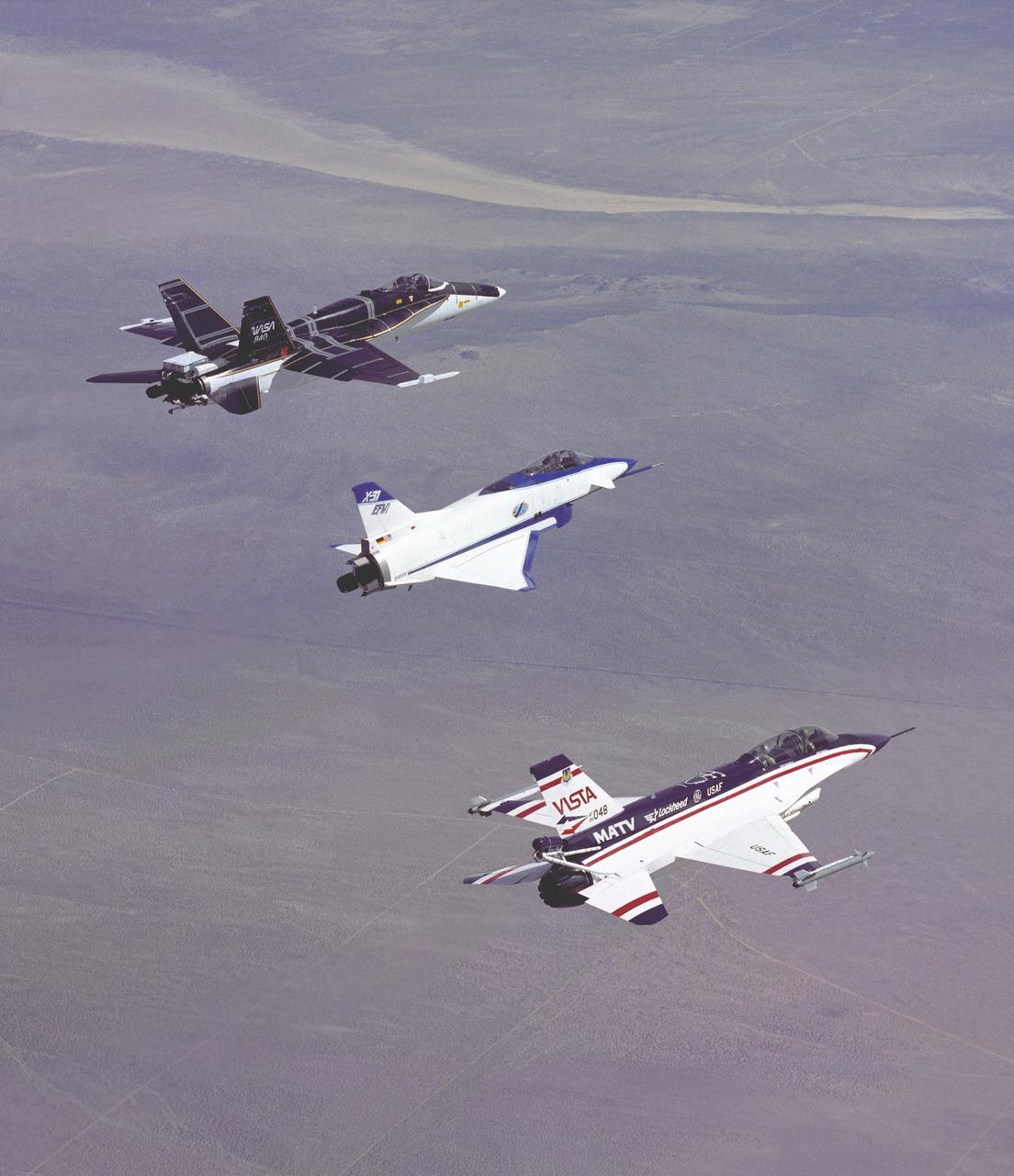
The three thrust-vectoring aircraft at Edwards, California, each capable of flying at extreme angles of attack, cruise over the California desert in formation during flight in March 1994. They are, from left, NASA's F-18 High Alpha Research Vehicle (HARV), flown by the NASA Dryden Flight Research Center; the X-31, flown by the X-31 International Test Organization (ITO) at Dryden; and the Air Force F-16 Multi-Axis Thrust Vectoring (MATV) aircraft.
EC94-42513-3
The three thrust-vectoring aircraft at Edwards, California, each capable of flying at extreme angles of attack, cruise over the California desert in formation during flight in March 1994. They are, from left, NASA's F-18 High Alpha Research Vehicle (HARV), flown by the NASA Dryden Flight Research Center; the X-31, flown by the X-31 International Test Organization (ITO) at Dryden; and the Air Force F-16 Multi-Axis Thrust Vectoring (MATV) aircraft.
EC94-42513-3
The X-31 Enhanced Fighter Maneuverability Technology Demonstrator Aircraft, based at the NASA Dryden Flight Research Center, Edwards, California, begins rolling aboard an Air Force Reserve C-5 transport which ferried it on May 22, 1995 to Europe where it was flown in the Paris Air Show in June 1995. To fit in the C-5 the right wing of the X-31 had to be removed. At the air show, the X-31 demonstrated the value of using thrust vectoring (directing engine exhaust flow) coupled with advanced flight control systems to provide controlled flight at very high angles of attack.
X-31 Being Loaded into C-5 Cargo Plane
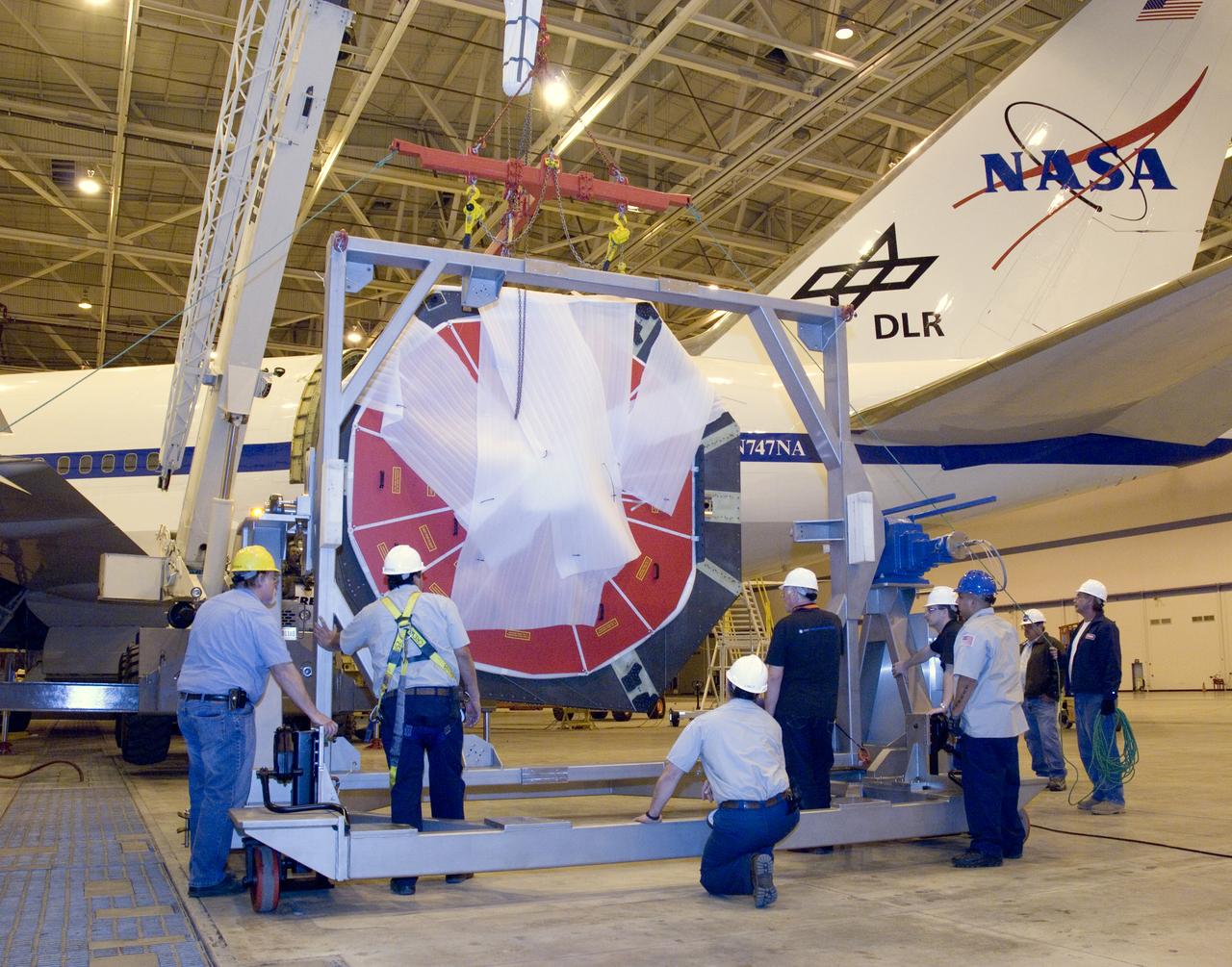
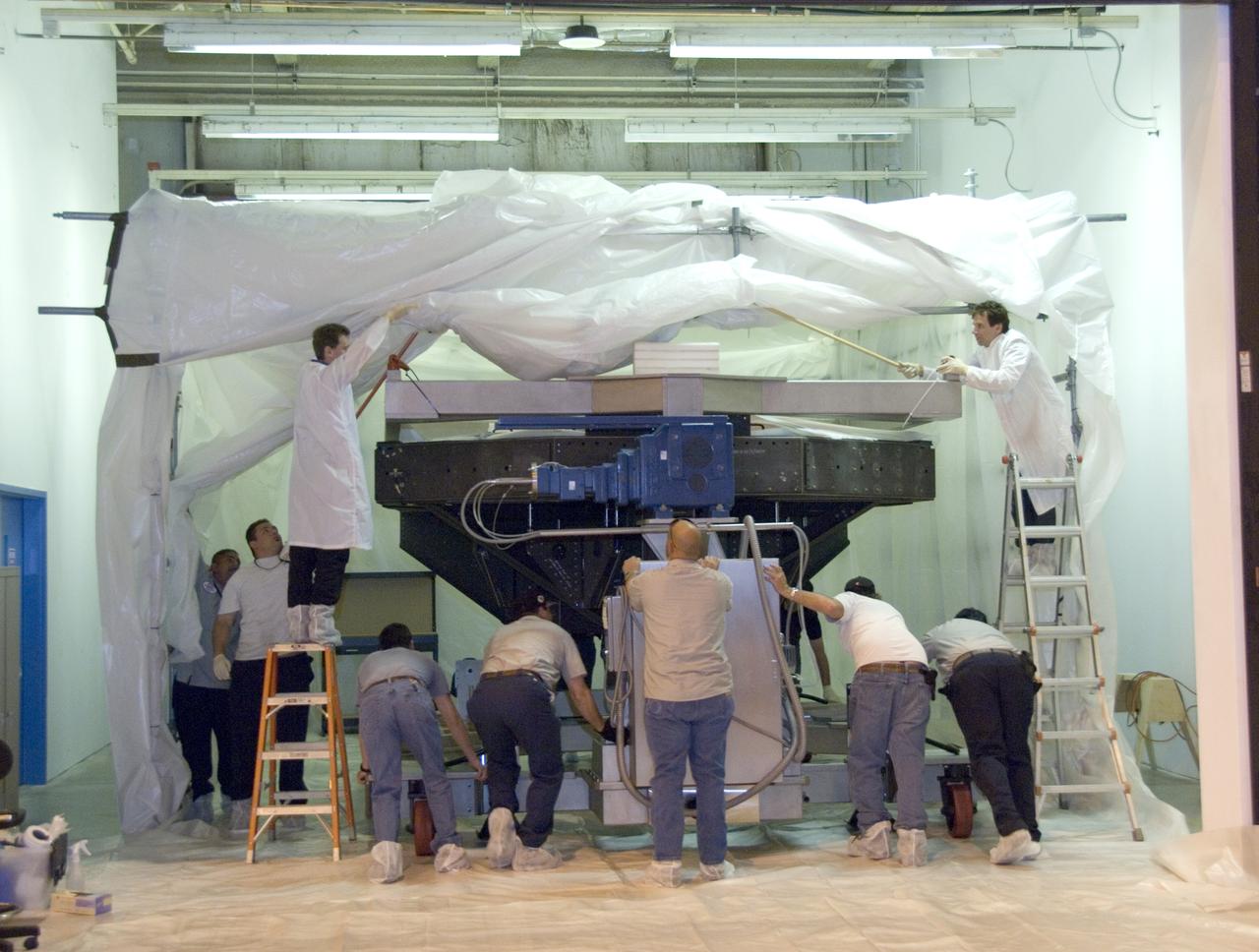
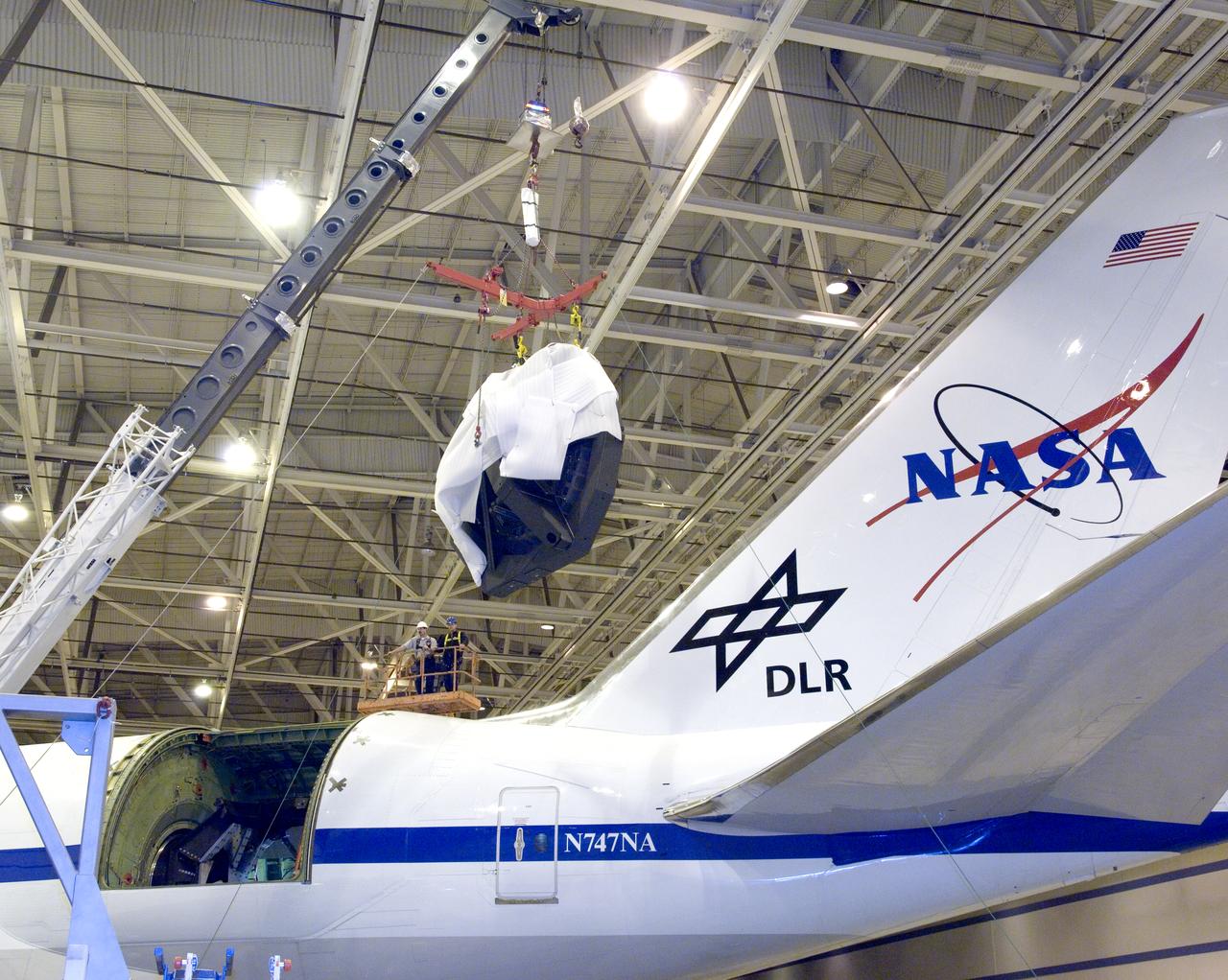
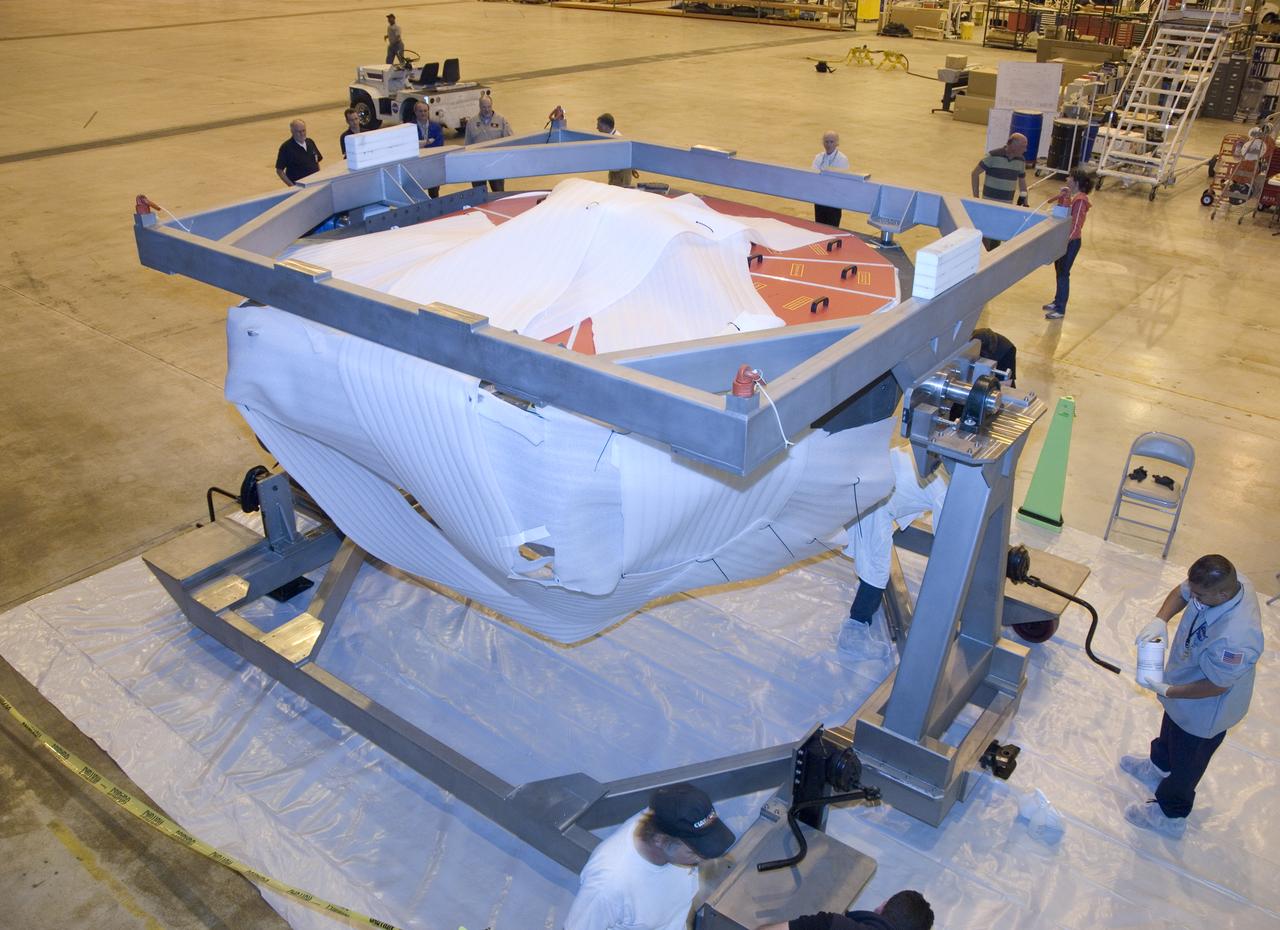
Technicians at the NASA Dryden Aircraft Operations Facility in Palmdale, Calif., removed the German-built primary mirror assembly from the Stratospheric Observatory for Infrared Astronomy, or SOFIA, April 18, 2008 in preparation for the final finish coating of the mirror. A precision crane lifted the more than two-ton mirror assembly from its cavity in the rear fuselage of the highly modified Boeing 747SP. The assembly was then secured in its transport dolly and moved to a clean room where it was prepared for shipment to NASA Ames Research Center at Moffett Field near Mountain View, Calif. where it would receive its aluminized finish coating before being re-installed in the SOFIA aircraft.
Technicians with ropes carefully guide the primary mirror assembly as a crane slowly moves it toward its transport cradle after removal from the SOFIA aircraft
The SOFIA telescope team collected baseline operational measurements during several nights of characterization testing in March 2008 while the SOFIA 747SP aircraft that houses the German-built infrared telescope was parked on an unlit ramp next to its hangar at the NASA Dryden Flight Operations Facility in Palmdale, Calif. The primary celestial target was Polaris, the North Star. The activity provided the team with a working knowledge of how telescope operating systems interact and the experience of tracking celestial targets from the ground.
NASA's SOFIA flying observatory was captured in striking relief during nighttime telescope characterization tests in Palmdale, Calif., in March 2008
The SOFIA telescope team collected baseline operational measurements during several nights of characterization testing in March 2008 while the SOFIA 747SP aircraft that houses the German-built infrared telescope was parked on an unlit ramp next to its hangar at the NASA Dryden Flight Operations Facility in Palmdale, Calif. The primary celestial target was Polaris, the North Star. The activity provided the team with a working knowledge of how telescope operating systems interact and the experience of tracking celestial targets from the ground.
Scientists and telescope operators focus on data readouts set up inside NASA's SOFIA airborne observatory during telescope characterization tracking tests
The SOFIA telescope team collected baseline operational measurements during several nights of characterization testing in March 2008 while the SOFIA 747SP aircraft that houses the German-built infrared telescope was parked on an unlit ramp next to its hangar at the NASA Dryden Flight Operations Facility in Palmdale, Calif. The primary celestial target was Polaris, the North Star. The activity provided the team with a working knowledge of how telescope operating systems interact and the experience of tracking celestial targets from the ground.
The 2.5-meter infrared telescope in the rear fuselage of NASA's SOFIA flying observatory tracked the star Polaris during characterization tests in March 2008
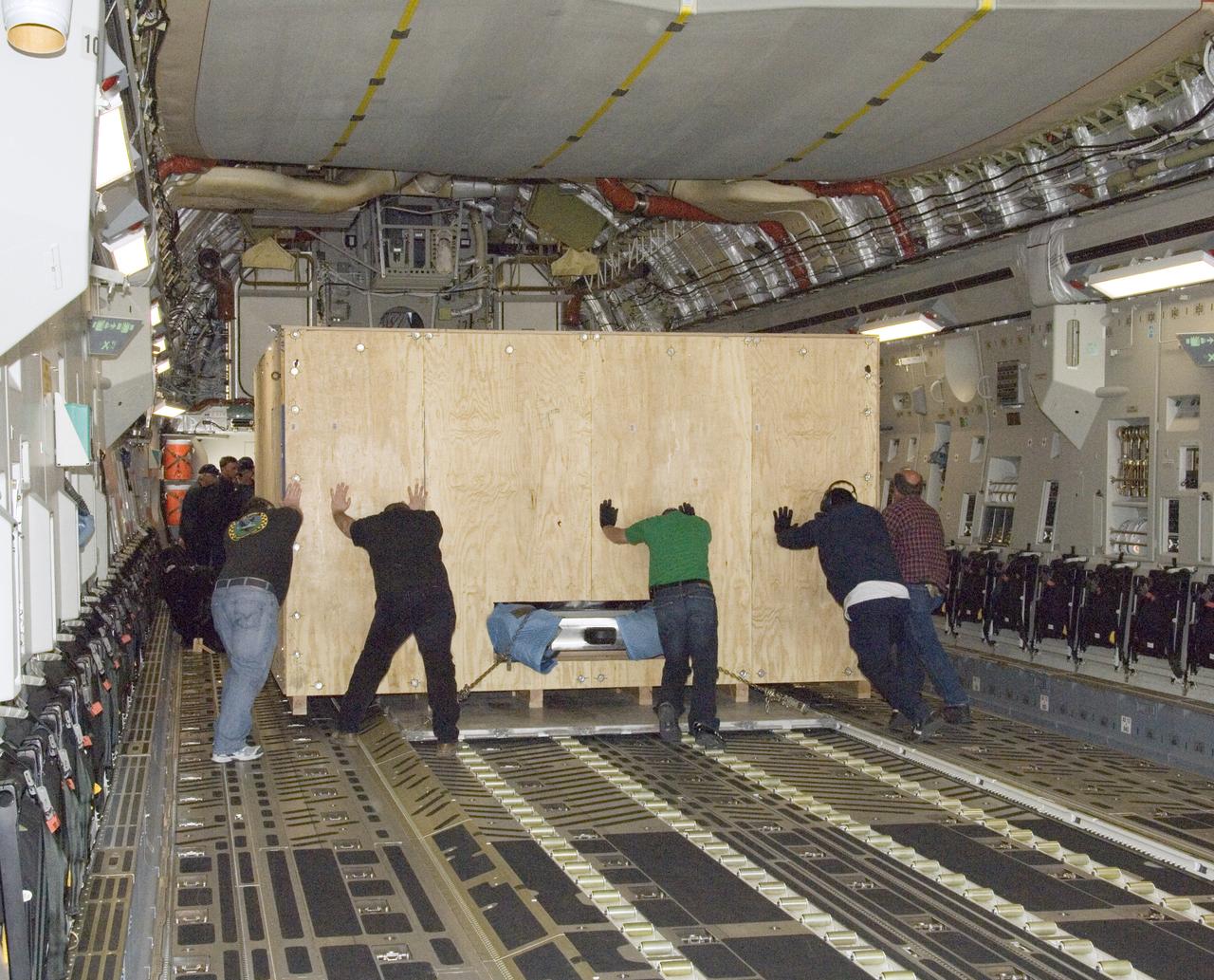
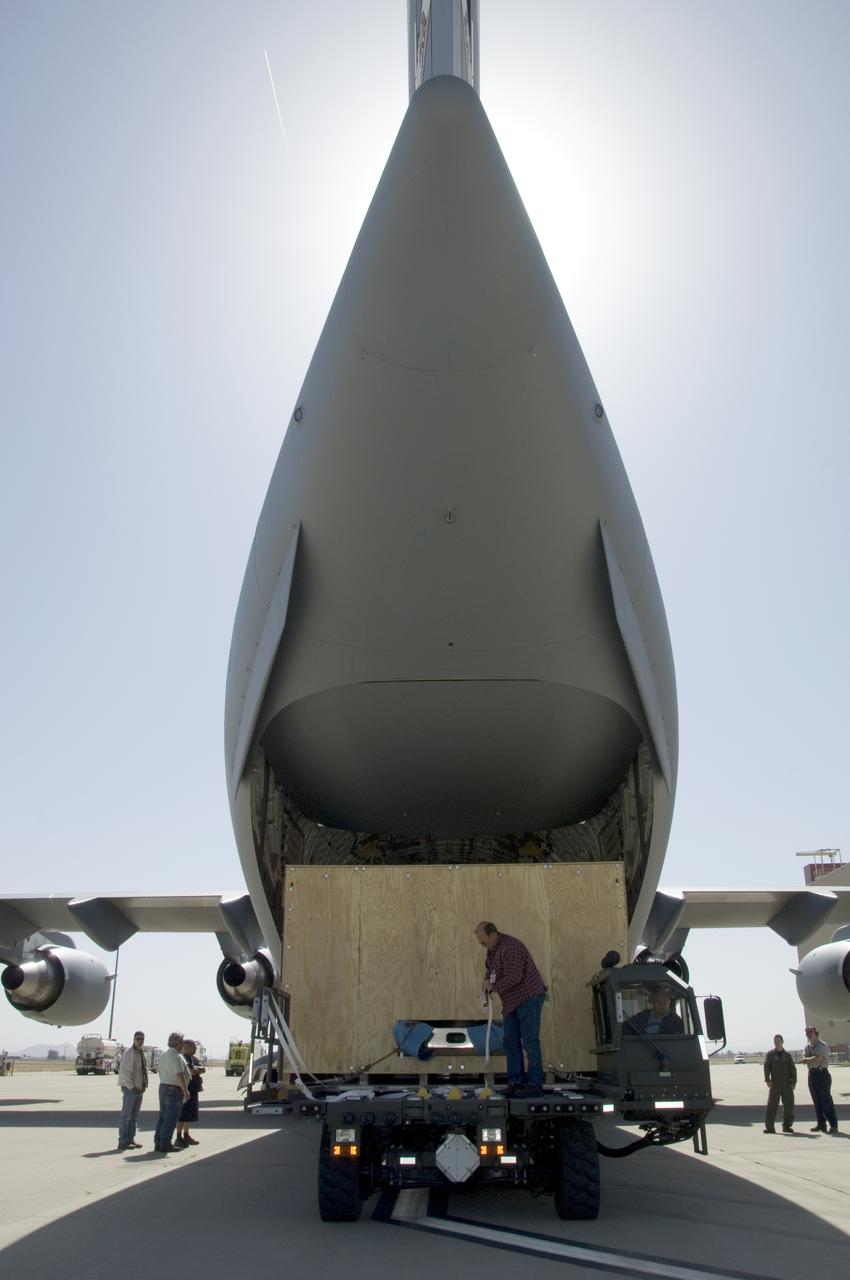
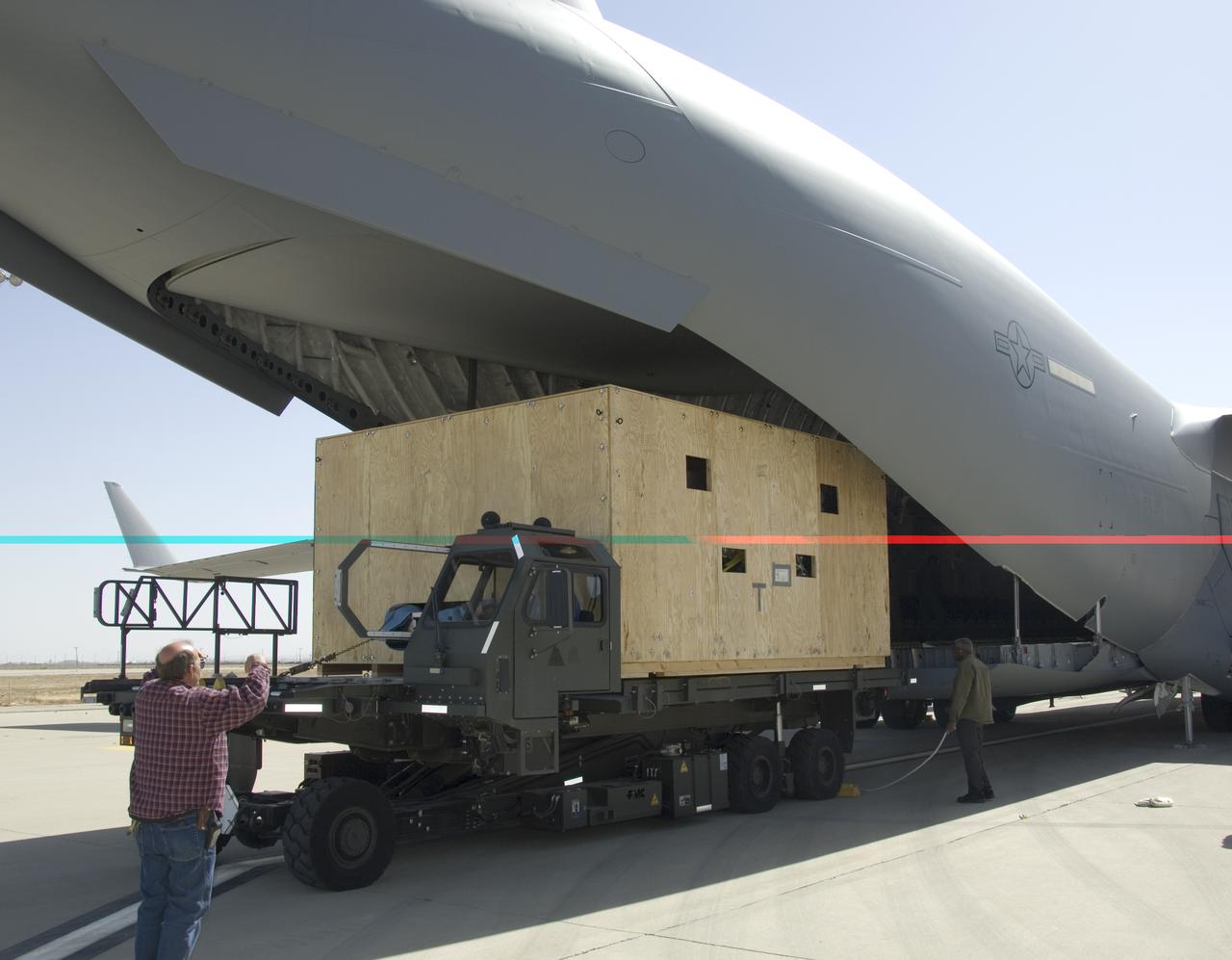
Technicians at NASA's Dryden Aircraft Operations Facility in Palmdale, Calif., loaded the German-built primary mirror assembly of the Stratospheric Observatory for Infrared Astronomy, or SOFIA, onto an Air Force C-17 for shipment to NASA's Ames Research Center on May 1, 2008. In preparation for the final finish coating of the mirror, the more than two-ton mirror assembly had been removed from its cavity in the rear fuselage of the highly modified SOFIA Boeing 747SP two weeks earlier. After arrival at NASA Ames at Moffett Field near Mountain View, Calif., the mirror would receive its aluminized finish coating before being re-installed in the SOFIA aircraft.
Ground crewmen prepare to load the crated SOFIA primary mirror assembly into an Air Force C-17 for shipment to NASA Ames Research Center for finish coating
The SOFIA telescope team collected baseline operational measurements during several nights of characterization testing in March 2008 while the SOFIA 747SP aircraft that houses the German-built infrared telescope was parked on an unlit ramp next to its hangar at the NASA Dryden Flight Operations Facility in Palmdale, Calif. The primary celestial target was Polaris, the North Star. The activity provided the team with a working knowledge of how telescope operating systems interact and the experience of tracking celestial targets from the ground.
Wispy clouds are illuminated by a bright quarter moon behind the tail of NASA's SOFIA flying observatory during telescope characterization testing in 2008
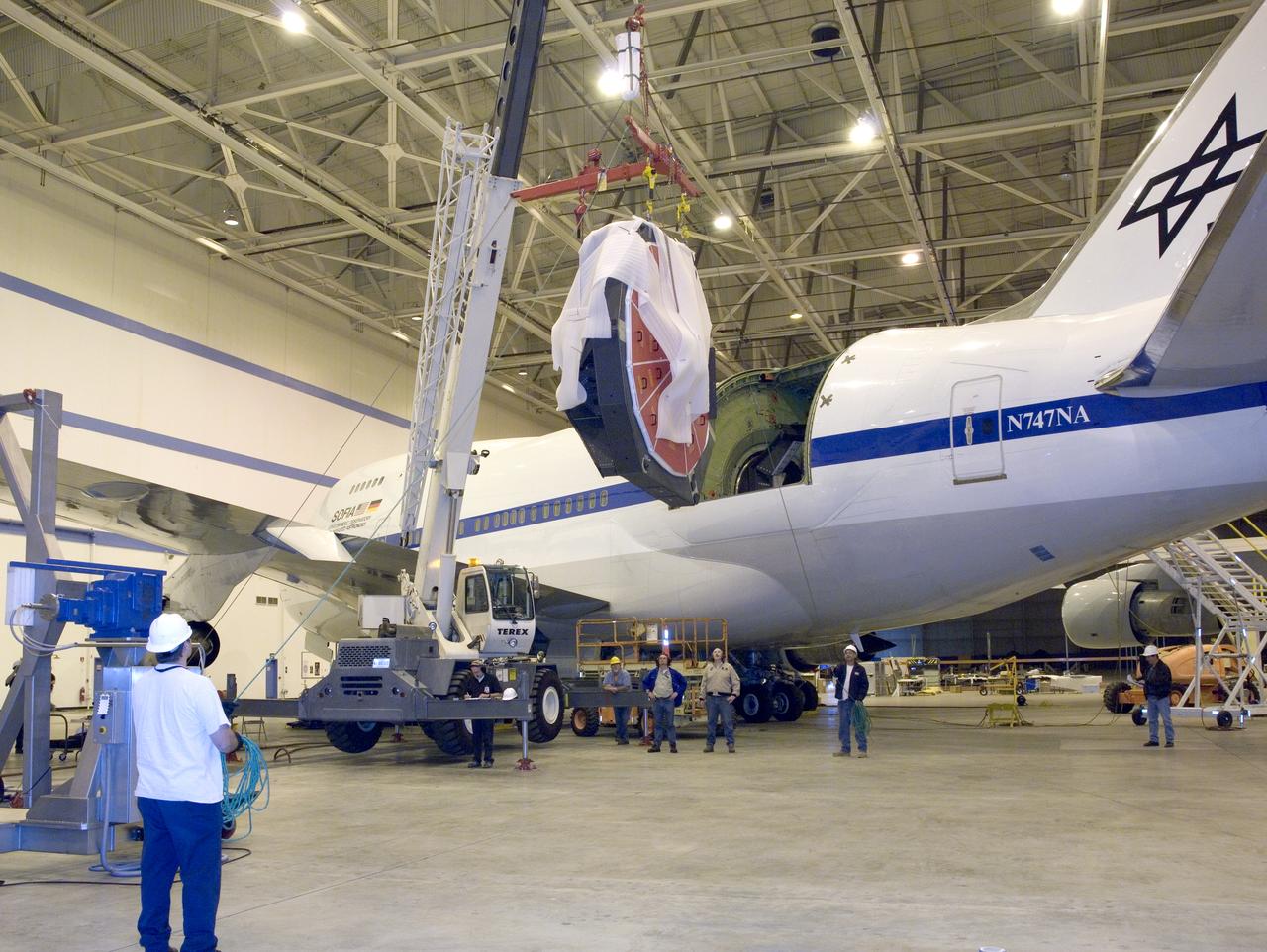
Technicians carefully maneuver a spreader bar into place before removing the telescope aperture assembly from NASA's SOFIA infrared observatory Boeing 747SP.
Technicians carefully maneuver a spreader bar into place before removing the telescope aperture assembly from NASA's SOFIA infrared observatory Boeing 747SP
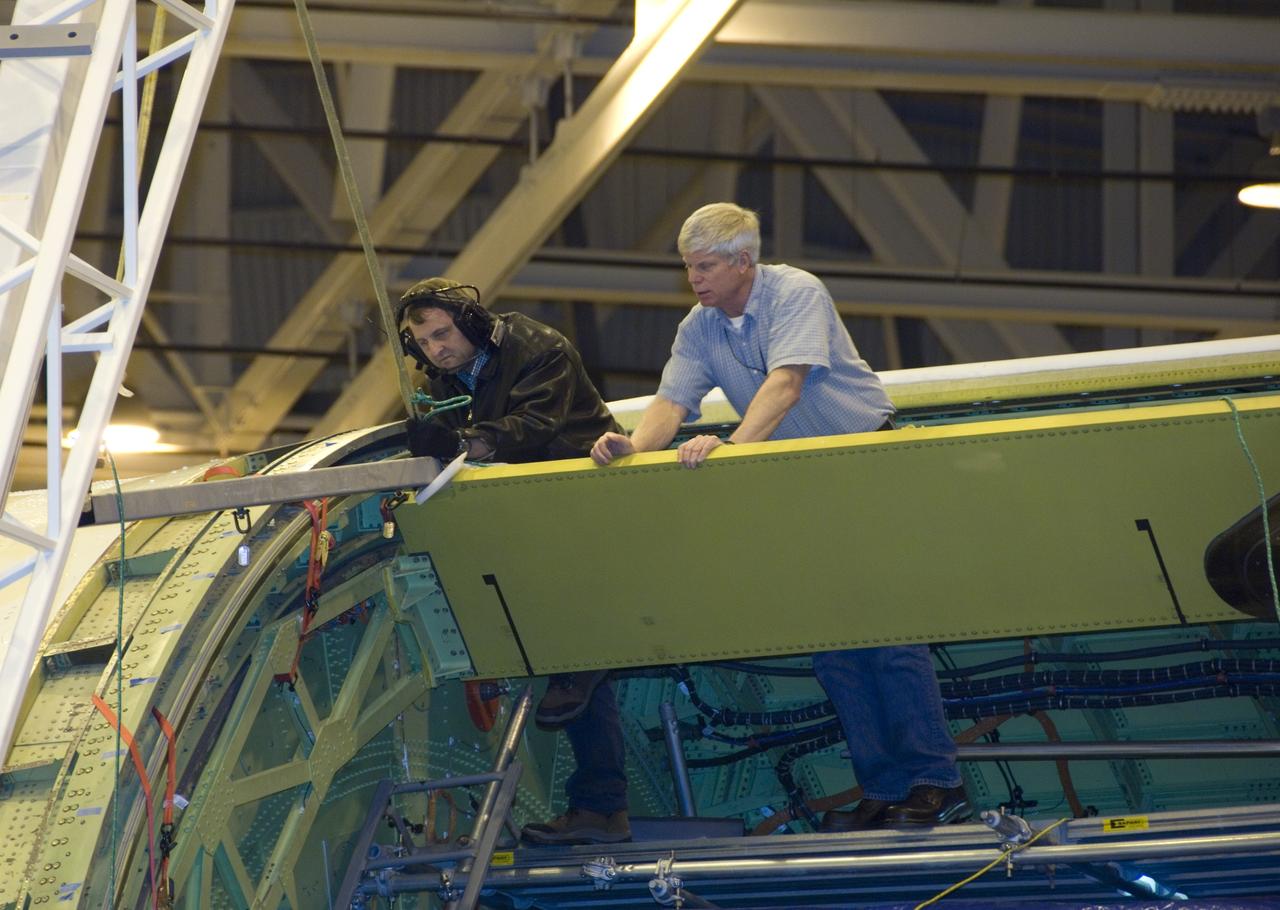
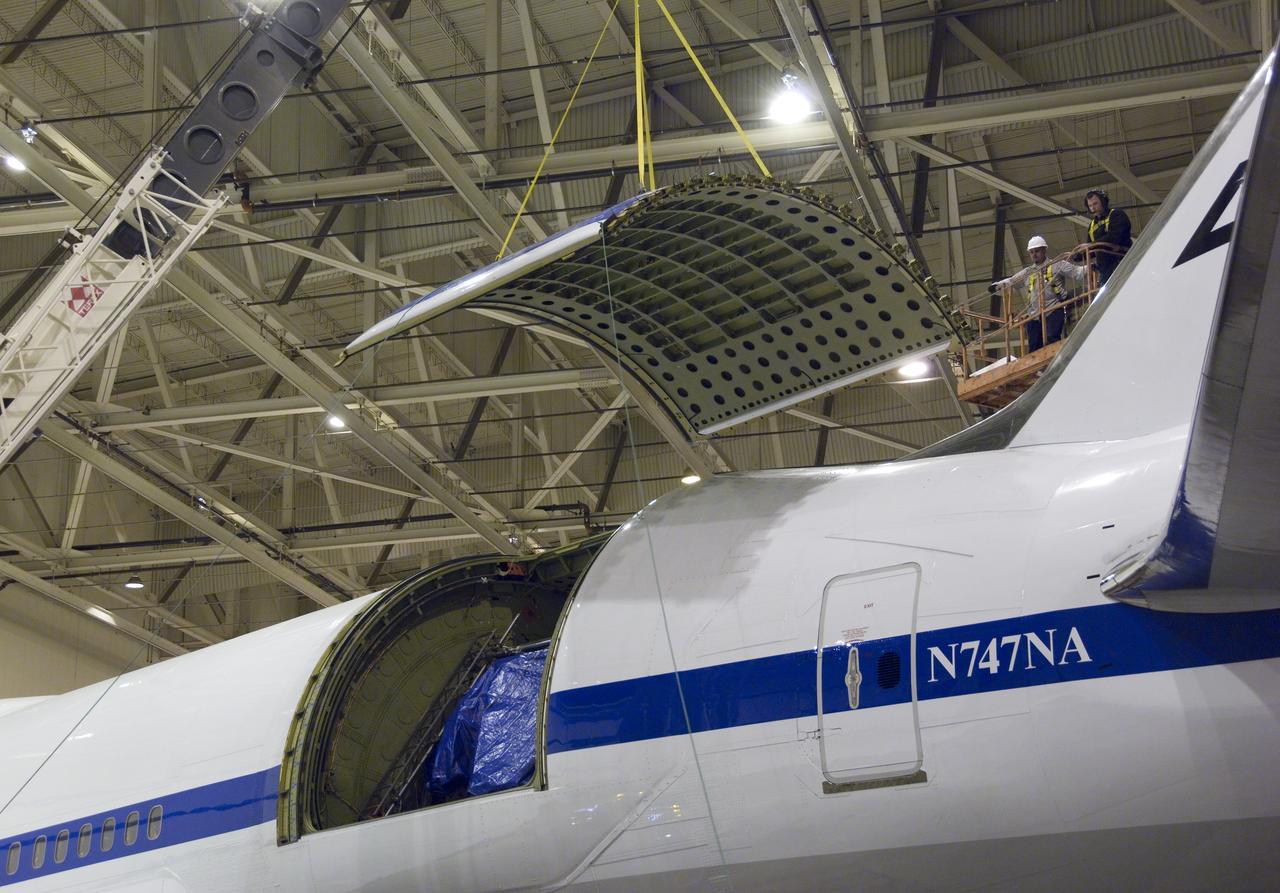
Technicians guide removal of the upper rigid door assembly that covers the telescope cavity on NASA's SOFIA 747SP in preparation for primary mirror removal.
Technicians guide removal of the upper rigid door assembly that covers the telescope cavity on NASA's SOFIA 747SP in preparation for primary mirror removal
The SOFIA telescope team collected baseline operational measurements during several nights of characterization testing in March 2008 while the SOFIA 747SP aircraft that houses the German-built infrared telescope was parked on an unlit ramp next to its hangar at the NASA Dryden Flight Operations Facility in Palmdale, Calif. The primary celestial target was Polaris, the North Star. The activity provided the team with a working knowledge of how telescope operating systems interact and the experience of tracking celestial targets from the ground.
This backlit photo of SOFIA's infrared telescope during characterization testing shows the cell-like construction of the telescope's 2.5-meter primary mirror
Technicians at the NASA Dryden Aircraft Operations Facility in Palmdale, Calif., removed the German-built primary mirror assembly from the Stratospheric Observatory for Infrared Astronomy, or SOFIA, April 18, 2008 in preparation for the final finish coating of the mirror. A precision crane lifted the more than two-ton mirror assembly from its cavity in the rear fuselage of the highly modified Boeing 747SP. The assembly was then secured in its transport dolly and moved to a clean room where it was prepared for shipment to NASA Ames Research Center at Moffett Field near Mountain View, Calif. where it would receive its aluminized finish coating before being re-installed in the SOFIA aircraft.
Technicians carefully guide SOFIA's primary mirror assembly on its transport cradle into a clean room where it is being prepared for shipment to NASA Ames
Technicians at NASA's Dryden Aircraft Operations Facility in Palmdale, Calif., loaded the German-built primary mirror assembly of the Stratospheric Observatory for Infrared Astronomy, or SOFIA, onto an Air Force C-17 for shipment to NASA's Ames Research Center on May 1, 2008. In preparation for the final finish coating of the mirror, the more than two-ton mirror assembly had been removed from its cavity in the rear fuselage of the highly modified SOFIA Boeing 747SP two weeks earlier. After arrival at NASA Ames at Moffett Field near Mountain View, Calif., the mirror would receive its aluminized finish coating before being re-installed in the SOFIA aircraft.
A NASA Technician directs loading of the crated SOFIA primary mirror assembly into a C-17 for shipment to NASA Ames Research Center for finish coating
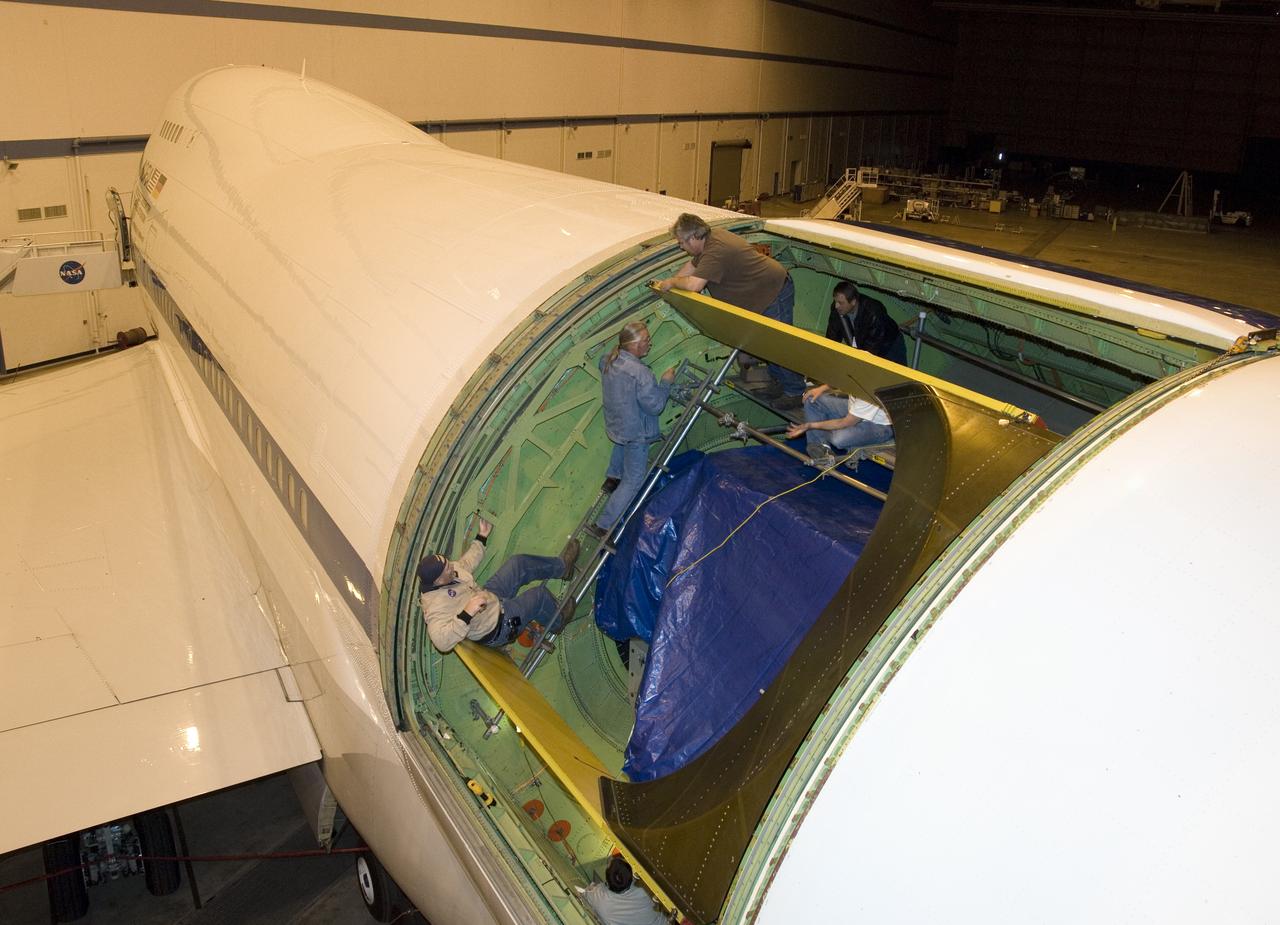
Technicians carefully disassemble portions of the aperture mounting assembly from NASA's SOFIA aircraft in preparation for removal of the telescope.
Technicians carefully disassemble portions of the aperture mounting assembly from NASA's SOFIA aircraft in preparation for removal of the telescope
Technicians at the NASA Dryden Aircraft Operations Facility in Palmdale, Calif., removed the German-built primary mirror assembly from the Stratospheric Observatory for Infrared Astronomy, or SOFIA, April 18, 2008 in preparation for the final finish coating of the mirror. A precision crane lifted the more than two-ton mirror assembly from its cavity in the rear fuselage of the highly modified Boeing 747SP. The assembly was then secured in its transport dolly and moved to a clean room where it was prepared for shipment to NASA Ames Research Center at Moffett Field near Mountain View, Calif. where it would receive its aluminized finish coating before being re-installed in the SOFIA aircraft.
Technicians position the transport cradle as a crane lowers SOFIA's primary mirror assembly into place prior to finish coating of the mirror at NASA Ames
The SOFIA telescope team collected baseline operational measurements during several nights of characterization testing in March 2008 while the SOFIA 747SP aircraft that houses the German-built infrared telescope was parked on an unlit ramp next to its hangar at the NASA Dryden Flight Operations Facility in Palmdale, Calif. The primary celestial target was Polaris, the North Star. The activity provided the team with a working knowledge of how telescope operating systems interact and the experience of tracking celestial targets from the ground.
As SOFIA's large telescope assembly slowly rotates, scientists and telescope operators review data readouts and imagery on their monitors during tracking tests
Technicians at NASA's Dryden Aircraft Operations Facility in Palmdale, Calif., loaded the German-built primary mirror assembly of the Stratospheric Observatory for Infrared Astronomy, or SOFIA, onto an Air Force C-17 for shipment to NASA's Ames Research Center on May 1, 2008. In preparation for the final finish coating of the mirror, the more than two-ton mirror assembly had been removed from its cavity in the rear fuselage of the highly modified SOFIA Boeing 747SP two weeks earlier. After arrival at NASA Ames at Moffett Field near Mountain View, Calif., the mirror would receive its aluminized finish coating before being re-installed in the SOFIA aircraft.
Ground crewmen shove the more than two-ton SOFIA primary mirror assembly in its transport crate into a C-17's cavernous cargo bay for shipment to NASA Ames
Technicians at the NASA Dryden Aircraft Operations Facility in Palmdale, Calif., removed the German-built primary mirror assembly from the Stratospheric Observatory for Infrared Astronomy, or SOFIA, April 18, 2008 in preparation for the final finish coating of the mirror. A precision crane lifted the more than two-ton mirror assembly from its cavity in the rear fuselage of the highly modified Boeing 747SP. The assembly was then secured in its transport dolly and moved to a clean room where it was prepared for shipment to NASA Ames Research Center at Moffett Field near Mountain View, Calif. where it would receive its aluminized finish coating before being re-installed in the SOFIA aircraft.
The SOFIA primary mirror assembly is cautiously lifted from its cavity in the modified 747 by a crane in preparation for finish coating operations at NASA Ames
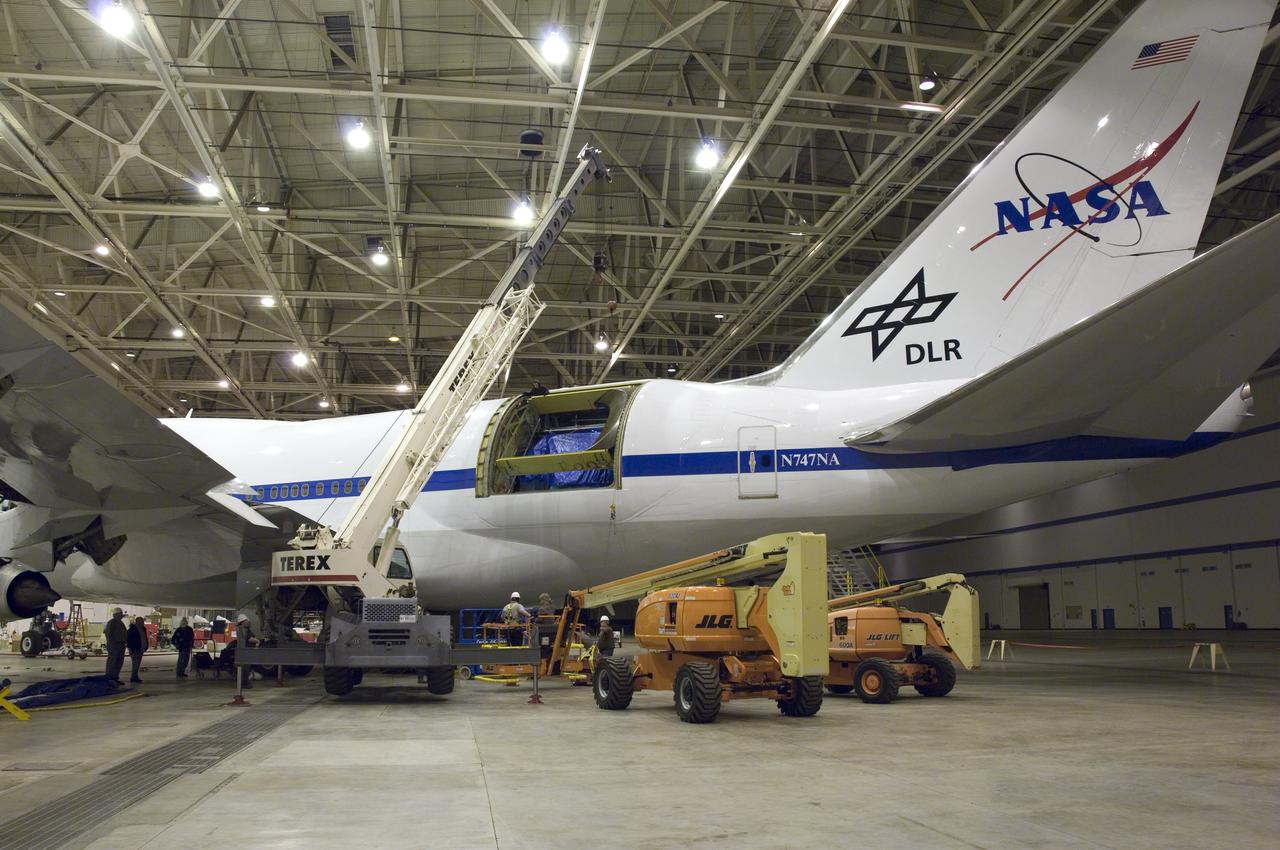
A large mobile crane and hi-lift are maneuvered into place for removal of the aperture assembly and cavity doors from NASA's SOFIA observatory aircraft.
A large mobile crane and hi-lift are maneuvered into place for removal of the aperture assembly and cavity doors from NASA's SOFIA observatory aircraft
Technicians at the NASA Dryden Aircraft Operations Facility in Palmdale, Calif., removed the German-built primary mirror assembly from the Stratospheric Observatory for Infrared Astronomy, or SOFIA, April 18, 2008 in preparation for the final finish coating of the mirror. A precision crane lifted the more than two-ton mirror assembly from its cavity in the rear fuselage of the highly modified Boeing 747SP. The assembly was then secured in its transport dolly and moved to a clean room where it was prepared for shipment to NASA Ames Research Center at Moffett Field near Mountain View, Calif. where it would receive its aluminized finish coating before being re-installed in the SOFIA aircraft.
SOFIA's primary mirror assembly is cradled on its dolly as technicians prepare to move it into a "clean room" at NASA Dryden's Aircraft Operations Facility
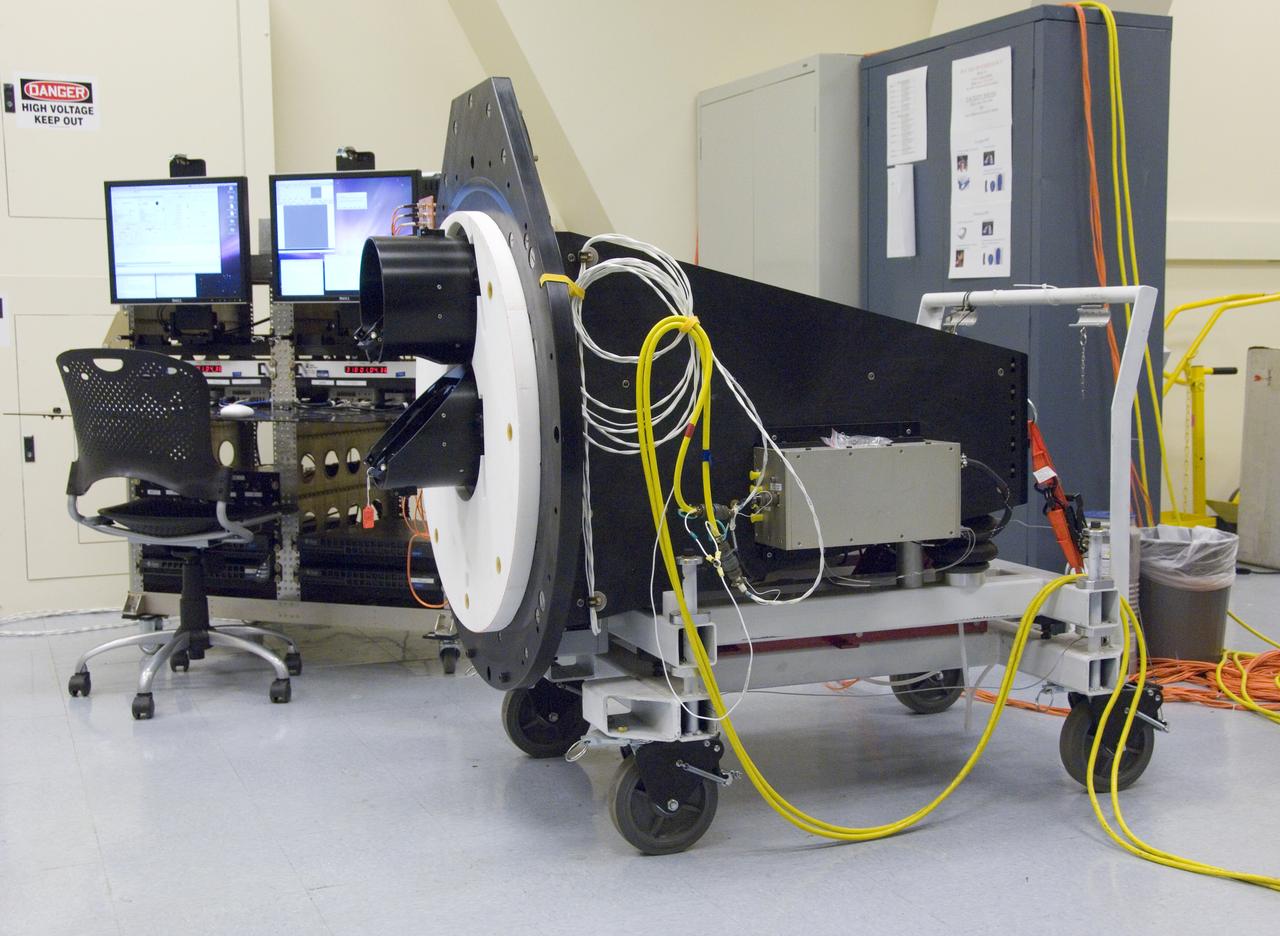
The Lowell Observatory's High-speed Imaging Photometer for Occultation rests on its dolly in the lab prior to installation on the SOFIA airborne observatory.
The Lowell Observatory's High-speed Imaging Photometer for Occultation rests on its dolly in the lab prior to installation on the SOFIA airborne observatory
NASA image release March 11, 2011  Caption: The lunar farside as never seen before! LROC WAC orthographic projection centered at 180° longitude, 0° latitude.   Credit: NASA/Goddard/Arizona State University.  Because the moon is tidally locked (meaning the same side always faces Earth), it was not until 1959 that the farside was first imaged by the Soviet Luna 3 spacecraft (hence the Russian names for prominent farside features, such as Mare Moscoviense). And what a surprise -  unlike the widespread maria on the nearside, basaltic volcanism was restricted to a relatively few, smaller regions on the farside, and the battered highlands crust dominated. A different world from what we saw from Earth.  Of course, the cause of the farside/nearside asymmetry is an interesting scientific question. Past studies have shown that the crust on the farside is thicker, likely making it more difficult for magmas to erupt on the surface, limiting the amount of farside mare basalts. Why is the farside crust thicker? That is still up for debate, and in fact several presentations at this week's Lunar and Planetary Science Conference attempt to answer this question.  The Clementine mission obtained beautiful mosaics with the sun high in the sky (low phase angles), but did not have the opportunity to observe the farside at sun angles favorable for seeing surface topography. This WAC mosaic provides the most complete look at the morphology of the farside to date, and will provide a valuable resource for the scientific community. And it's simply a spectacular sight!  The Lunar Reconnaissance Orbiter Camera (LROC) Wide Angle Camera (WAC) is a push-frame camera that captures seven color bands (321, 360, 415, 566, 604, 643, and 689 nm) with a 57-km swath (105-km swath in monochrome mode) from a 50 km orbit. One of the primary objectives of LROC is to provide a global 100 m/pixel monochrome (643 nm) base map with incidence angles between 55°-70° at the equator, lighting that is favorable for morphological interpretations. Each month, the WAC provides nearly complete coverage of the Moon under unique lighting. As an added bonus, the orbit-to-orbit image overlap provides stereo coverage. Reducing all these stereo images into a global topographic map is a big job, and is being led by LROC Team Members from the German Aerospace Center (Deutsches Zentrum für Luft- und Raumfahrt; DLR). Several preliminary WAC topographic products have appeared in LROC featured images over the past year (Orientale basin, Sinus Iridum). For a sneak preview of the WAC global DEM with the WAC global mosaic, view a rotating composite moon (70 MB video from ASU's LROC website). The WAC topographic dataset will be completed and released later this year.  The global mosaic released today is comprised of over 15,000 WAC images acquired between November 2009 and February 2011. The non-polar images were map projected onto the GLD100 shape model (WAC derived 100 m/pixel DTM), while polar images were map projected on the LOLA shape model. In addition, the LOLA derived crossover corrected ephemeris, and an improved camera pointing, provide accurate positioning (better than 100 m) of each WAC image.  As part of the March 2011 PDS release, the LROC team posted the global map in ten regional tiles. Eight of the tiles are equirectangular projections that encompass 60° latitude by 90° longitude. In addition, two polar stereographic projections are available for each pole from ±60° to the pole. These reduced data records (RDR) products will be available for download on March 15, 2011. As the mission progresses, and our knowledge of the lunar photometric function increases, improved and new mosaics will be released! Work your way around the moon with these six orthographic projections constructed from WAC mosaics. The nearside view linked below is different from that released on 21 February.  To read more con't here: <a href="http://www.nasa.gov/mission_pages/LRO/news/lro-farside.html" rel="nofollow">www.nasa.gov/mission_pages/LRO/news/lro-farside.html</a>  <b><a href="http://www.nasa.gov/centers/goddard/home/index.html" rel="nofollow">NASA Goddard Space Flight Center</a></b> enables NASA’s mission through four scientific endeavors: Earth Science, Heliophysics, Solar System Exploration, and Astrophysics. Goddard plays a leading role in NASA’s accomplishments by contributing compelling scientific knowledge to advance the Agency’s mission.  <b>Follow us on <a href="http://twitter.com/NASA_GoddardPix" rel="nofollow">Twitter</a></b>  <b>Join us on <a href="http://www.facebook.com/pages/Greenbelt-MD/NASA-Goddard/395013845897?ref=tsd" rel="nofollow">Facebook</a></b>
The Far Side of the Moon -- And All the Way Around