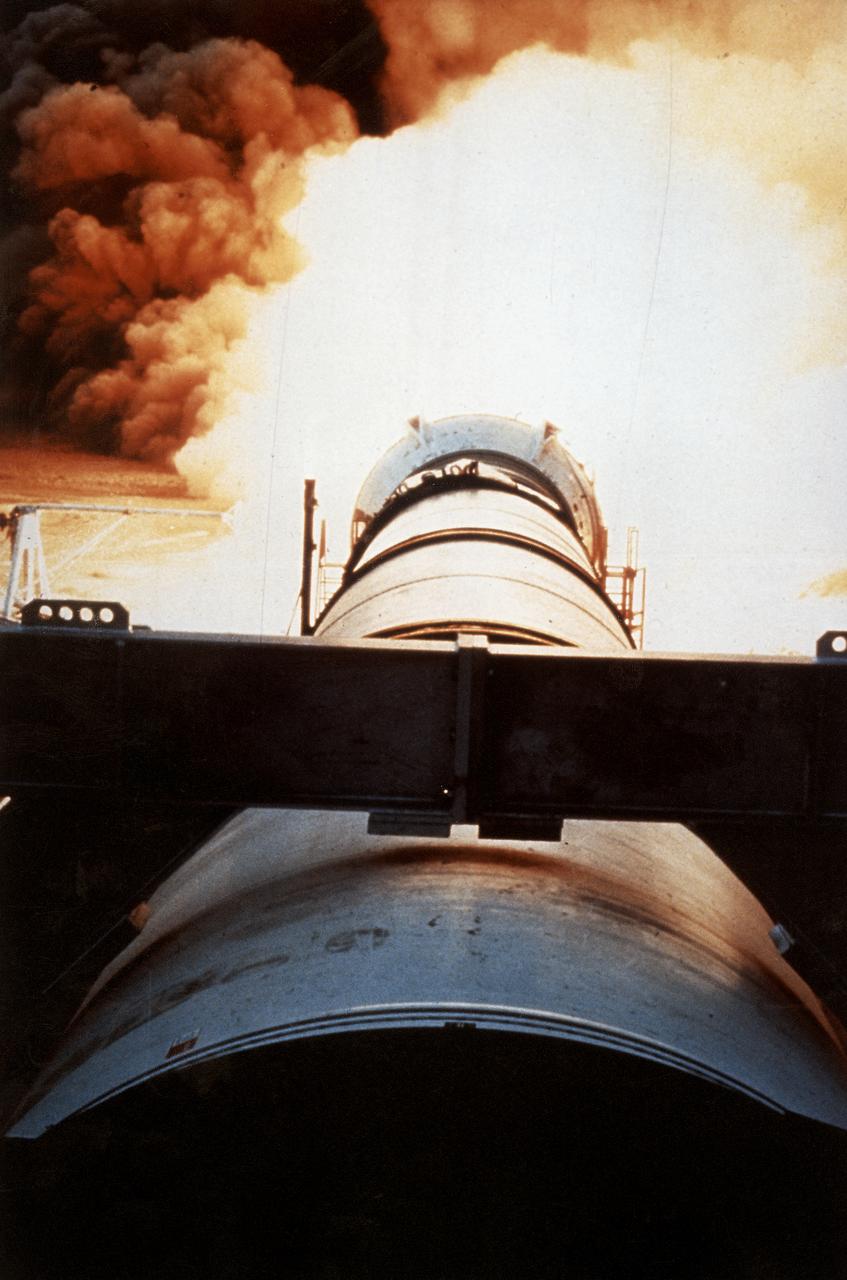
One of the key tests in the effort to return the Space Shuttle to flight following the Challenger accident was testing the development Motor-8 (DM-8). The 126-foot long, 1.2-million-pound motor, designated DM-8, underwent a full-duration horizontal test firing for two minutes at the Thiokol test facility in Utah. It was fitted with more than 500 instruments to measure such things as acceleration, pressure, deflection thrust, strain, temperature, and electrical properties.
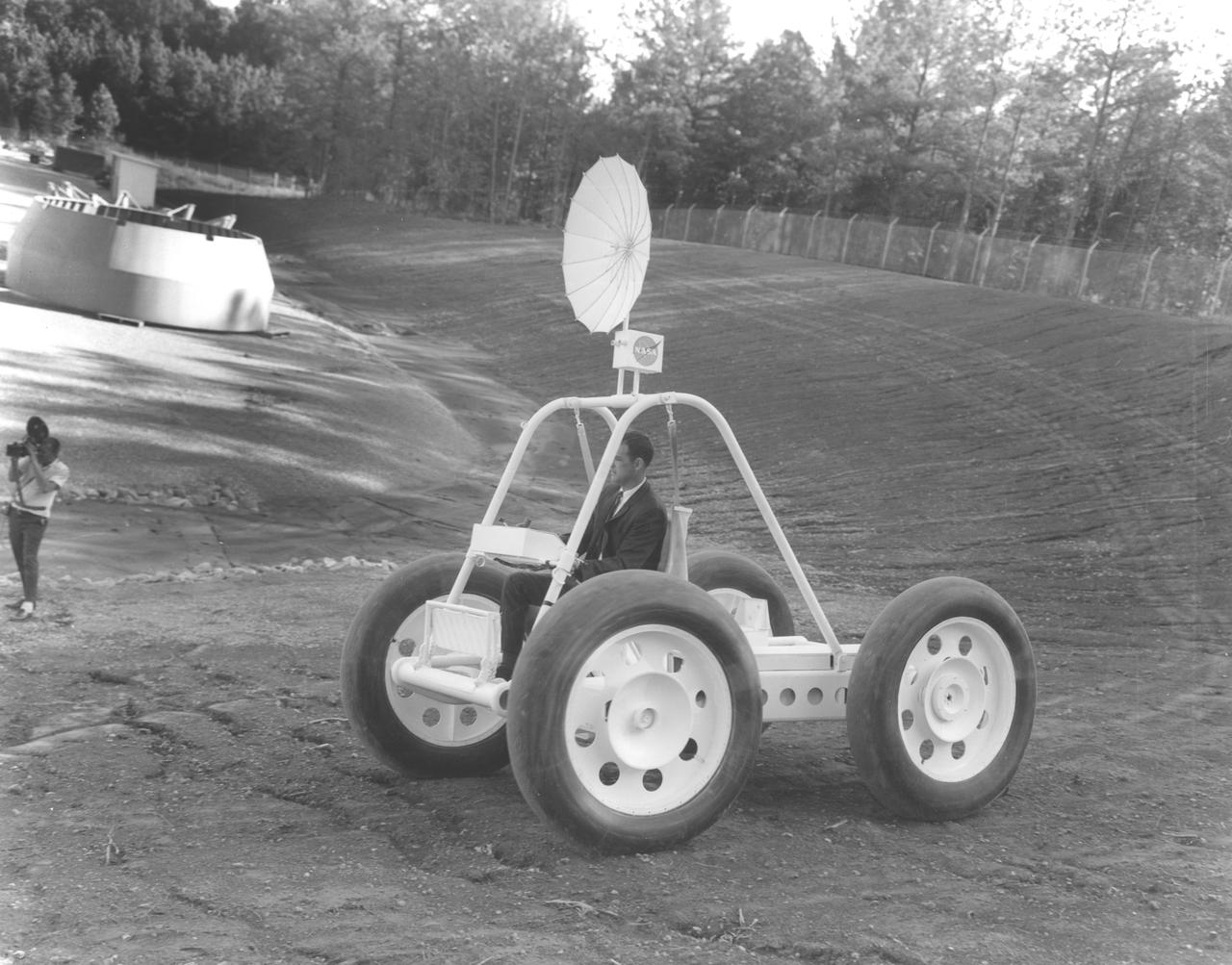
Built by Brown Engineering company of Huntsville, Alabama, a motorized mockup of a small Lunar Roving Vehicle (LRV) is being demonstrated at the Marshall Space Flight Center (MSFC). This particular vehicle weighed about 1200 pounds and is almost 10 feet long, 7-feet and 2-inches wide, and 7-feet and 8-inches high. The LRV was developed under the direction of MSFC to provide astronauts with greater mobility on the lunar surface.
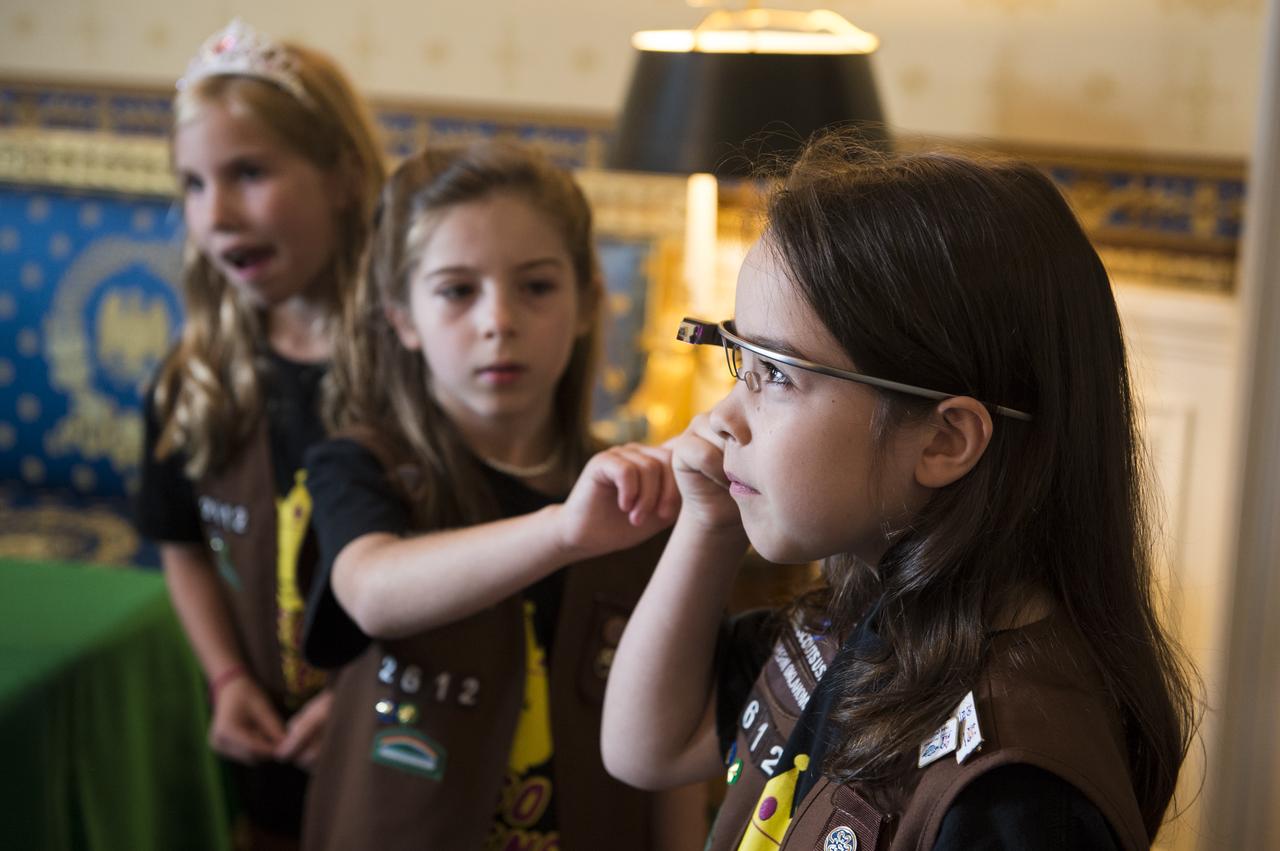
Girl Scout troop 2612 members from Tulsa, OK take photos of one another with Google Glass at the White House Science Fair Tuesday, May 27, 2014. Avery Dodson, 6; Natalie Hurley, 8; Miriam Schaffer, 8; Claire Winton, 8; and Lucy Claire Sharp, 8 participated in the Junior FIRST Lego League's Disaster Blaster Challenge, which invites elementary-school-aged students from across the country to explore how simple machines, engineering, and math can help solve problems posed by natural disasters. The girls invented the "Flood Proof Bridge" and built a model mechanizing the bridge using motors and developing a computer program to automatically retract the bridge when flood conditions are detected. The fourth White House Science Fair was held at the White House and included 100 students from more than 30 different states who competed in science, technology, engineering, and math (STEM) competitions. (Photo Credit: NASA/Aubrey Gemignani)

The 8- by 6-Foot Supersonic Wind Tunnel at the National Advisory Committee for Aeronautics (NACA) Lewis Flight Propulsion Laboratory was the nation’s largest supersonic facility when it began operation in April 1949. The emergence of new propulsion technologies such as turbojets, ramjets, and rockets during World War II forced the NACA and the aircraft industry to develop new research tools. In late 1945 the NACA began design work for new large supersonic wind tunnels at its three laboratories. The result was the 4- by 4-Foot Supersonic Wind Tunnel at Langley Memorial Aeronautical Laboratory, 6- by 6-foot supersonic wind tunnel at Ames Aeronautical Laboratory, and the largest facility, the 8- by 6-Foot Supersonic Wind Tunnel in Cleveland. The two former tunnels were to study aerodynamics, while the 8- by 6 facility was designed for supersonic propulsion. The 8- by 6-Foot Supersonic Wind Tunnel was used to study propulsion systems, including inlets and exit nozzles, combustion fuel injectors, flame holders, exit nozzles, and controls on ramjet and turbojet engines. Flexible sidewalls alter the tunnel’s nozzle shape to vary the Mach number during operation. A seven-stage axial compressor, driven by three electric motors that yield a total of 87,000 horsepower, generates air speeds from Mach 0.36 to 2.0. A section of the tunnel is seen being erected in this photograph.
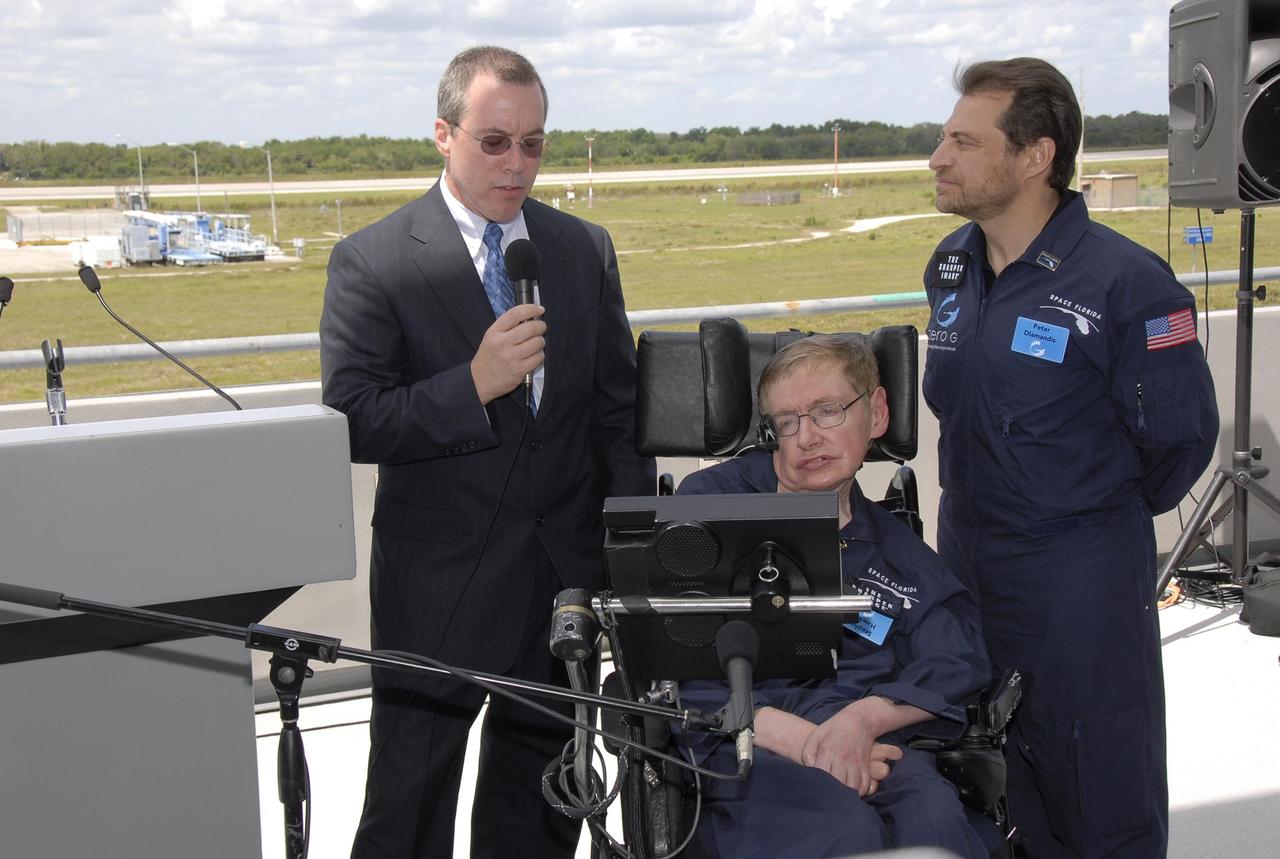
KENNEDY SPACE CENTER, FLA. -- At the Kennedy Space Center Shuttle Landing Facility, Space Florida president Steve Kohler (left) talks to the media about physicist Stephen Hawking's (in the wheelchair) first zero-gravity flight. The flight will be aboard a modified Boeing 727 aircraft owned by Zero Gravity Corp., a commercial company licensed to provide the public with weightless flight experiences. At right is Peter Diamandis, founder of the Zero Gravity Corp. Hawking developed amyotrophic lateral sclerosis disease in the 1960s, a type of motor neuron disease which would cost him the loss of almost all neuromuscular control. At the celebration of his 65th birthday on January 8 this year, Hawking announced his plans for a zero-gravity flight to prepare for a sub-orbital space flight in 2009 on Virgin Galactic's space service. Photo credit: NASA/Kim Shiflett
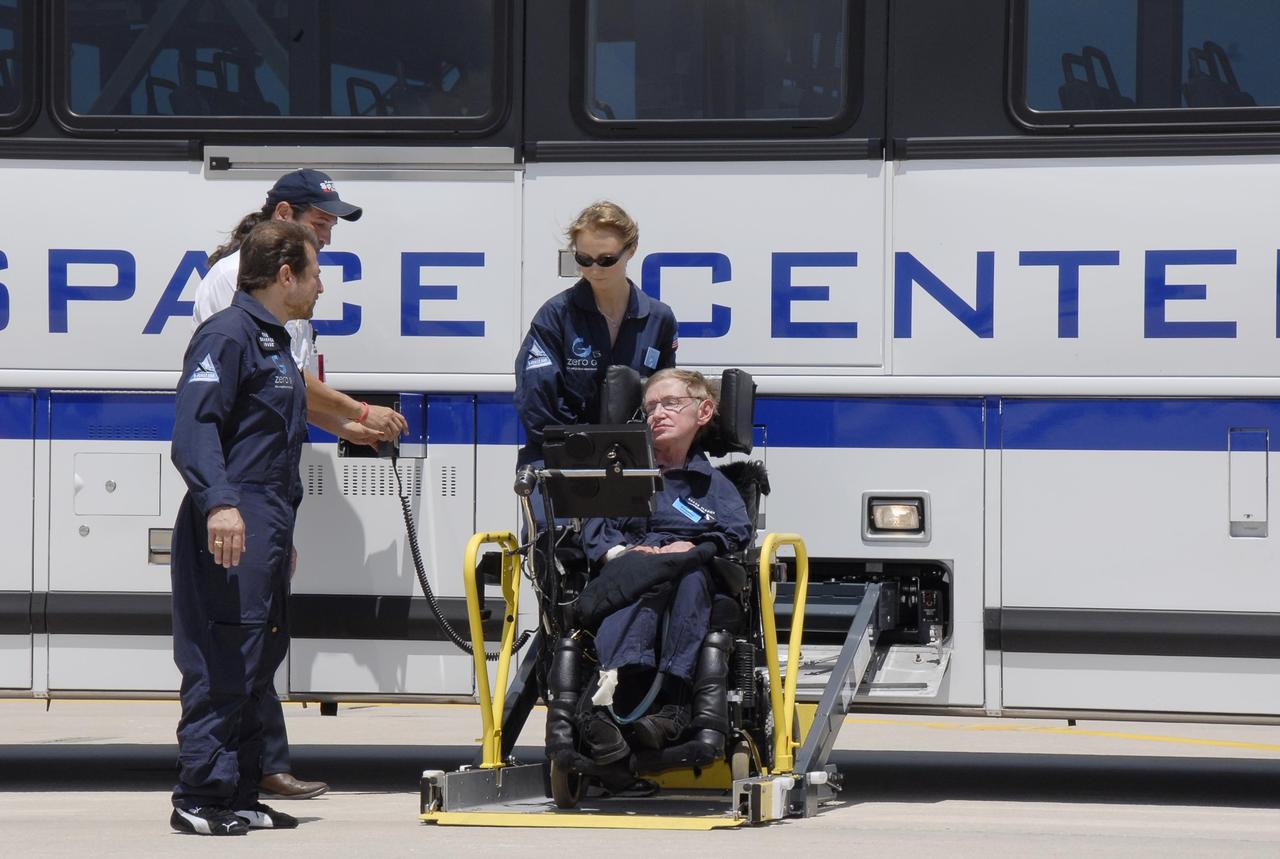
KENNEDY SPACE CENTER, FLA. -- At the Kennedy Space Center Shuttle Landing Facility, noted physicist Stephen Hawking, in the wheelchair, arrives at the runway for his first zero-gravity flight. The flight will be aboard a modified Boeing 727 aircraft owned by Zero Gravity Corp., a commercial company licensed to provide the public with weightless flight experiences. At left is Peter Diamandis, founder of the Zero Gravity Corp. Behind Hawking is Nicola O'Brien, a nurse practitioner who is Hawking's aide. Hawking developed amyotrophic lateral sclerosis disease in the 1960s, a type of motor neuron disease which would cost him the loss of almost all neuromuscular control. At the celebration of his 65th birthday on January 8 this year, Hawking announced his plans for a zero-gravity flight to prepare for a sub-orbital space flight in 2009 on Virgin Galactic's space service. Photo credit: NASA/Kim Shiflett
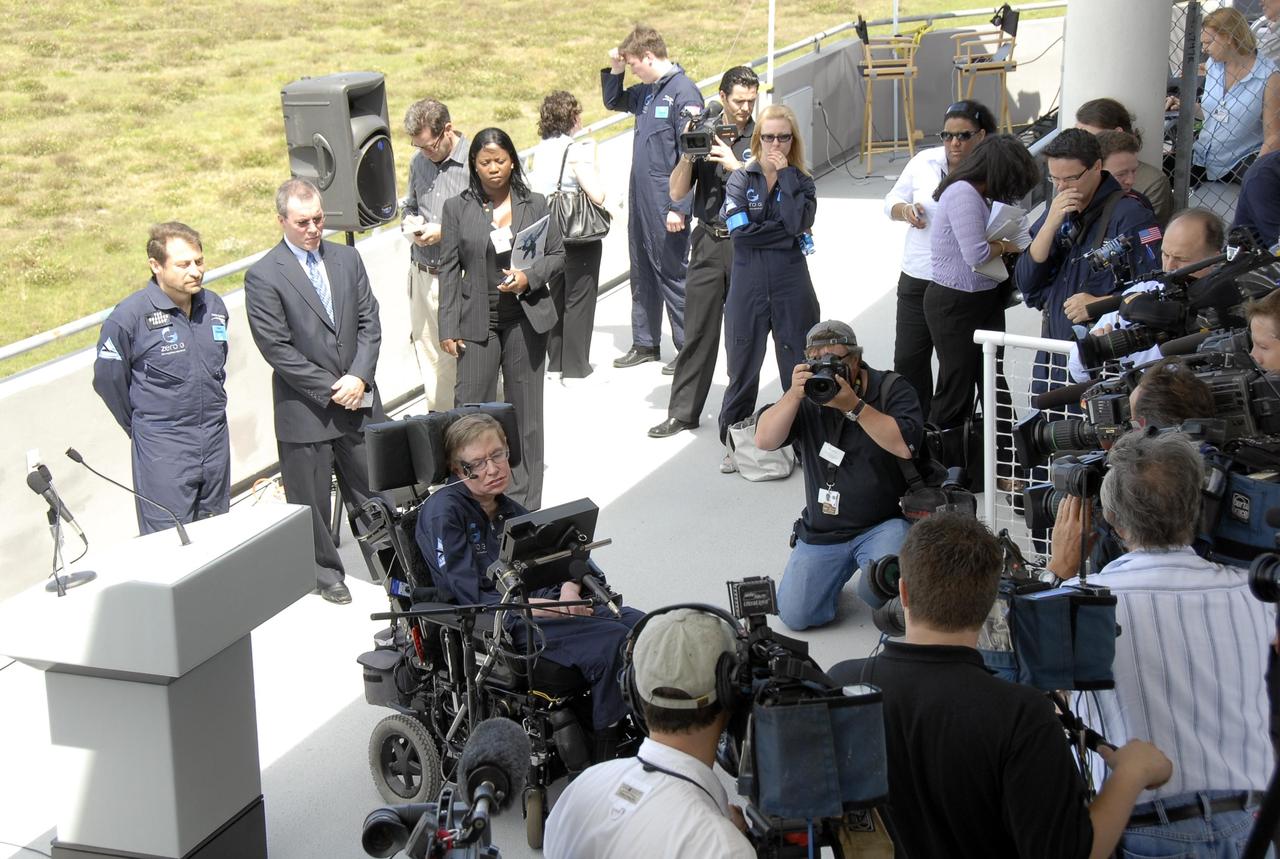
KENNEDY SPACE CENTER, FLA. -- The media surround noted wheelchair-bound physicist Stephen Hawking after his arrival at the Kennedy Space Center Shuttle Landing Facility for his first zero-gravity flight. Behind Hawking, at left, are Zero Gravity Corporation founder Peter Diamandis and Space Florida president Steve Kohler. The flight will be aboard a modified Boeing 727 aircraft owned by Zero G, a commercial company licensed to provide the public with weightless flight experiences. Hawking developed amyotrophic lateral sclerosis disease in the 1960s, a type of motor neuron disease which would cost him the loss of almost all neuromuscular control. At the celebration of his 65th birthday on January 8 this year, Hawking announced his plans for a zero-gravity flight to prepare for a sub-orbital space flight in 2009 on Virgin Galactic's space service. Photo credit: NASA/Kim Shiflett

KENNEDY SPACE CENTER, FLA. — Noted physicist Stephen Hawking greets the media after his arrival at the Kennedy Space Center Shuttle Landing Facility for his first zero-gravity flight. The flight will be aboard a modified Boeing 727 aircraft owned by Zero Gravity Corp., a commercial company licensed to provide the public with weightless flight experiences. Hawking developed amyotrophic lateral sclerosis disease in the 1960s, a type of motor neuron disease which would cost him the loss of almost all neuromuscular control. At the celebration of his 65th birthday on January 8 this year, Hawking announced his plans for a zero-gravity flight to prepare for a sub-orbital space flight in 2009 on Virgin Galactic's space service. Photo credit: NASA/Kim Shiflett
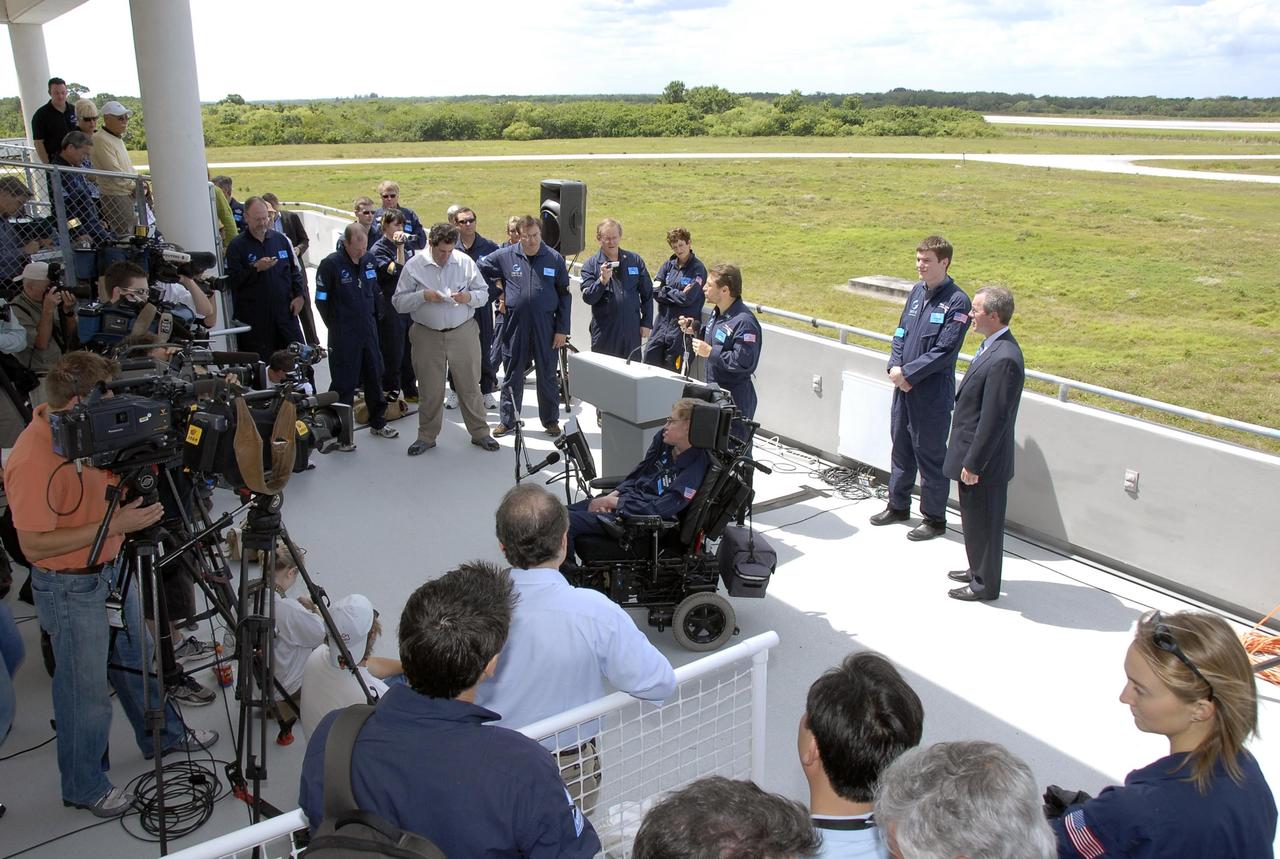
KENNEDY SPACE CENTER, FLA. -- At the Kennedy Space Center Shuttle Landing Facility, Peter Diamandis, founder of the Zero Gravity Corp., talks to the media about physicist Stephen Hawking's (in the wheelchair) first zero-gravity flight. The flight will be aboard a modified Boeing 727 aircraft owned by Zero Gravity Corp., a commercial company licensed to provide the public with weightless flight experiences. Hawking developed amyotrophic lateral sclerosis disease in the 1960s, a type of motor neuron disease which would cost him the loss of almost all neuromuscular control. At the celebration of his 65th birthday on January 8 this year, Hawking announced his plans for a zero-gravity flight to prepare for a sub-orbital space flight in 2009 on Virgin Galactic's space service. Photo credit: NASA/Kim Shiflett
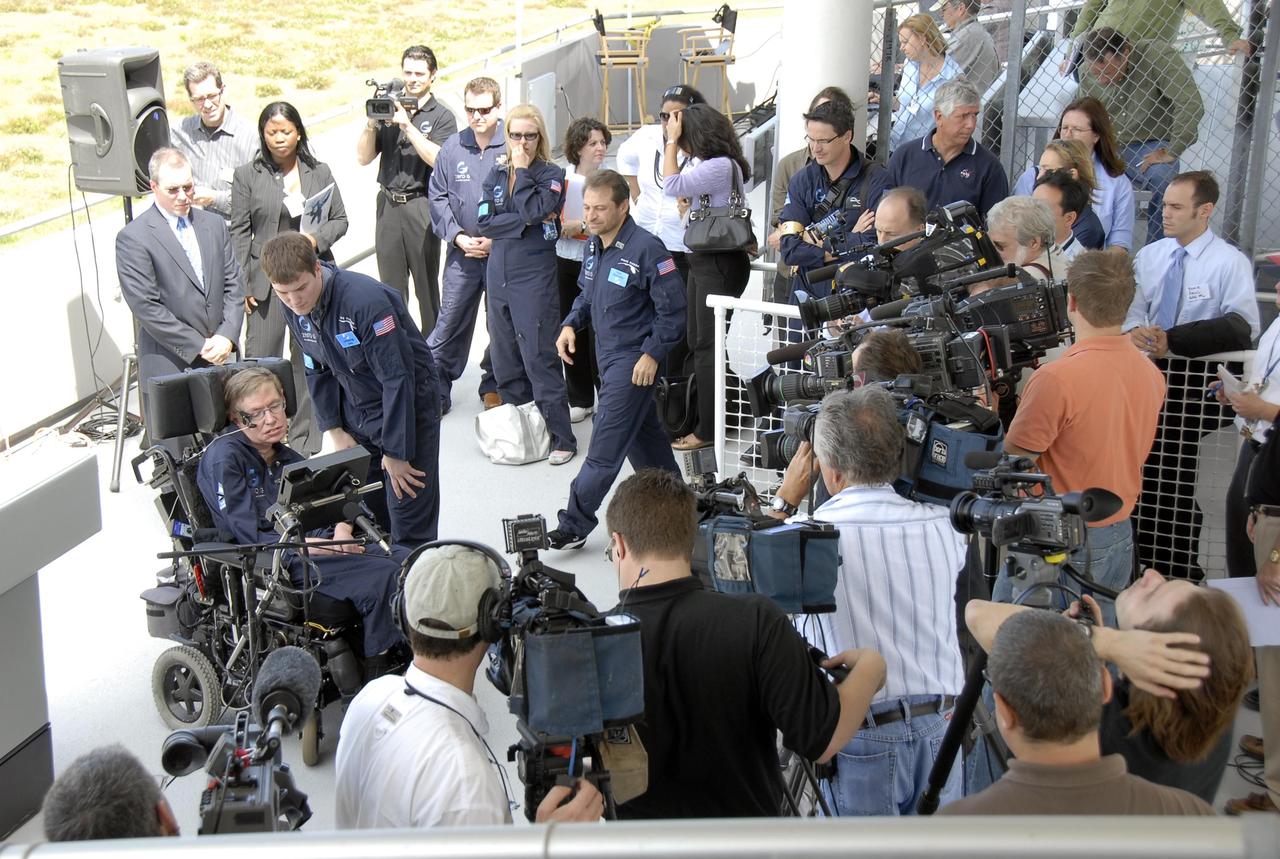
KENNEDY SPACE CENTER, FLA. -- The media surround noted wheelchair-bound physicist Stephen Hawking after his arrival at the Kennedy Space Center Shuttle Landing Facility for his first zero-gravity flight. Behind Hawking, at left, is Space Florida president Steve Kohler. In the center, striding toward Hawking, is Zero Gravity Corp. founder Peter Diamandis. The flight will be aboard a modified Boeing 727 aircraft owned by Zero Gravity, a commercial company licensed to provide the public with weightless flight experiences. Hawking developed amyotrophic lateral sclerosis disease in the 1960s, a type of motor neuron disease which would cost him the loss of almost all neuromuscular control. At the celebration of his 65th birthday on January 8 this year, Hawking announced his plans for a zero-gravity flight to prepare for a sub-orbital space flight in 2009 on Virgin Galactic's space service. Photo credit: NASA/Kim Shiflett
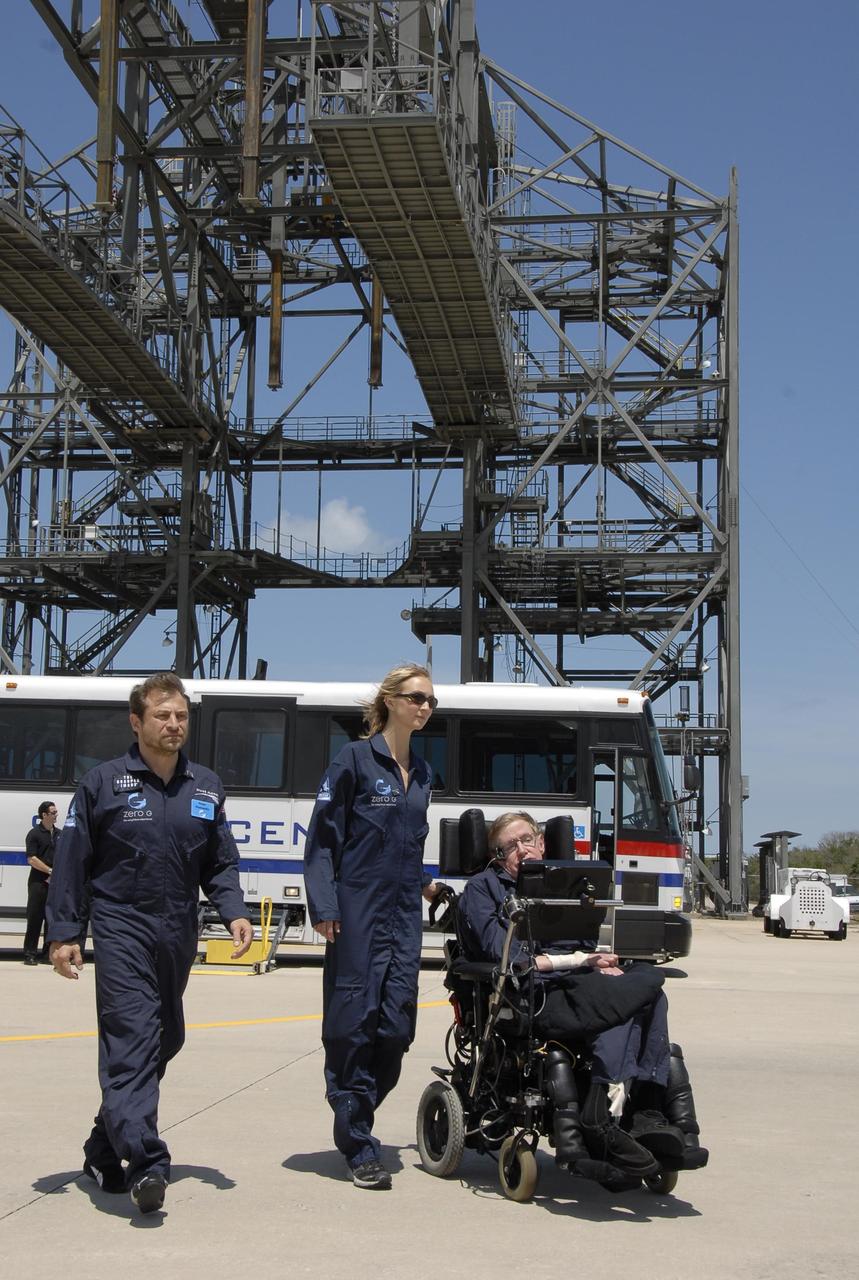
KENNEDY SPACE CENTER, FLA. -- At the Kennedy Space Center Shuttle Landing Facility, noted physicist Stephen Hawking, in the wheelchair, arrives at the runway for his first zero-gravity flight. The flight will be aboard a modified Boeing 727 aircraft owned by Zero Gravity Corp., a commercial company licensed to provide the public with weightless flight experiences. At left is Peter Diamandis, founder of the Zero Gravity Corp. At center is Nicola O'Brien, a nurse practitioner who is Hawking's aide. Hawking developed amyotrophic lateral sclerosis disease in the 1960s, a type of motor neuron disease which would cost him the loss of almost all neuromuscular control. At the celebration of his 65th birthday on January 8 this year, Hawking announced his plans for a zero-gravity flight to prepare for a sub-orbital space flight in 2009 on Virgin Galactic's space service. Photo credit: NASA/Kim Shiflett
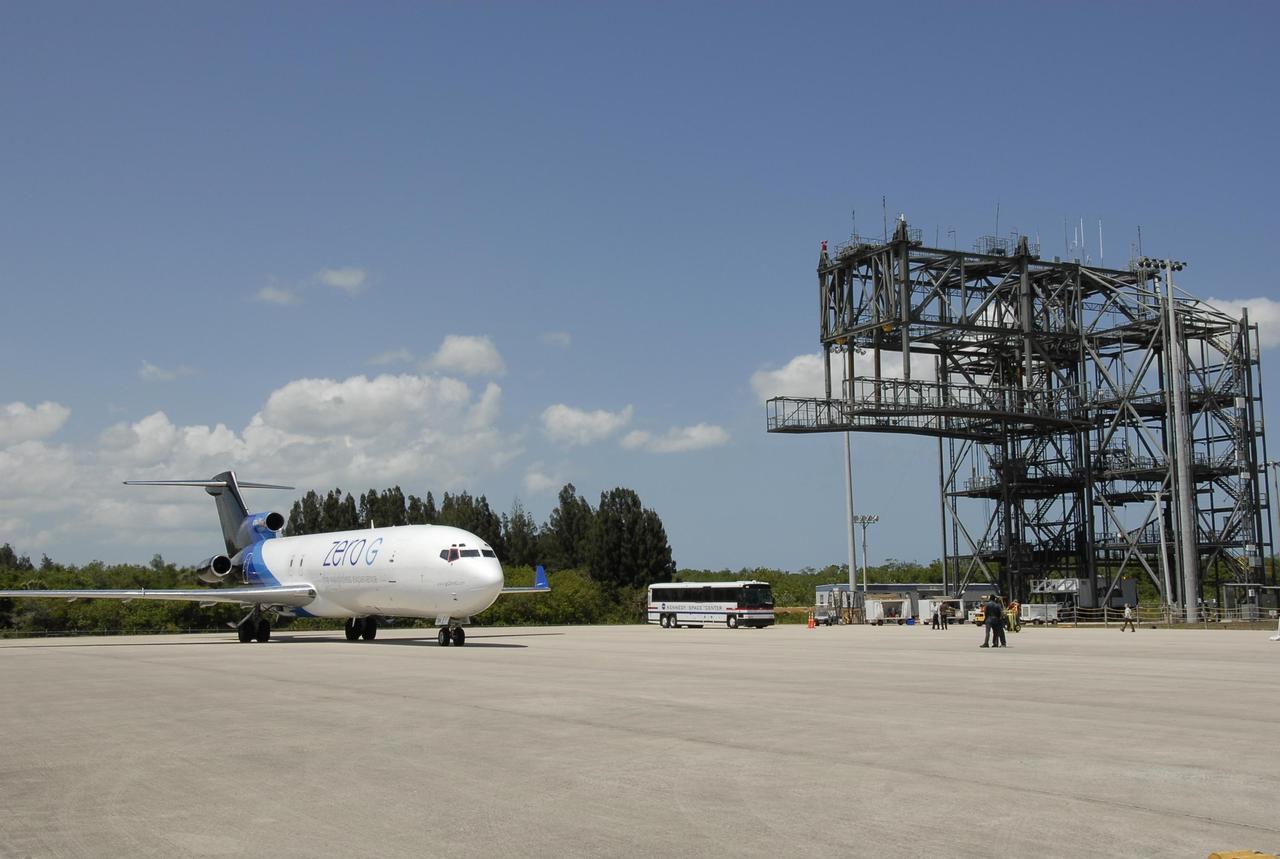
KENNEDY SPACE CENTER, FLA. -- At the Kennedy Space Center Shuttle Landing Facility, a modified Boeing 727 aircraft owned by Zero Gravity Corp. is ready to take off with its well-known passenger, physicist Stephen Hawking. Zero Gravity Corp. is a commercial company licensed to provide the public with weightless flight experiences. Hawking will be making his first zero-gravity flight. Hawking developed amyotrophic lateral sclerosis disease in the 1960s, a type of motor neuron disease which would cost him the loss of almost all neuromuscular control. At the celebration of his 65th birthday on January 8 this year, Hawking announced his plans for a zero-gravity flight to prepare for a sub-orbital space flight in 2009 on Virgin Galactic's space service. Photo credit: NASA/Kim Shiflett
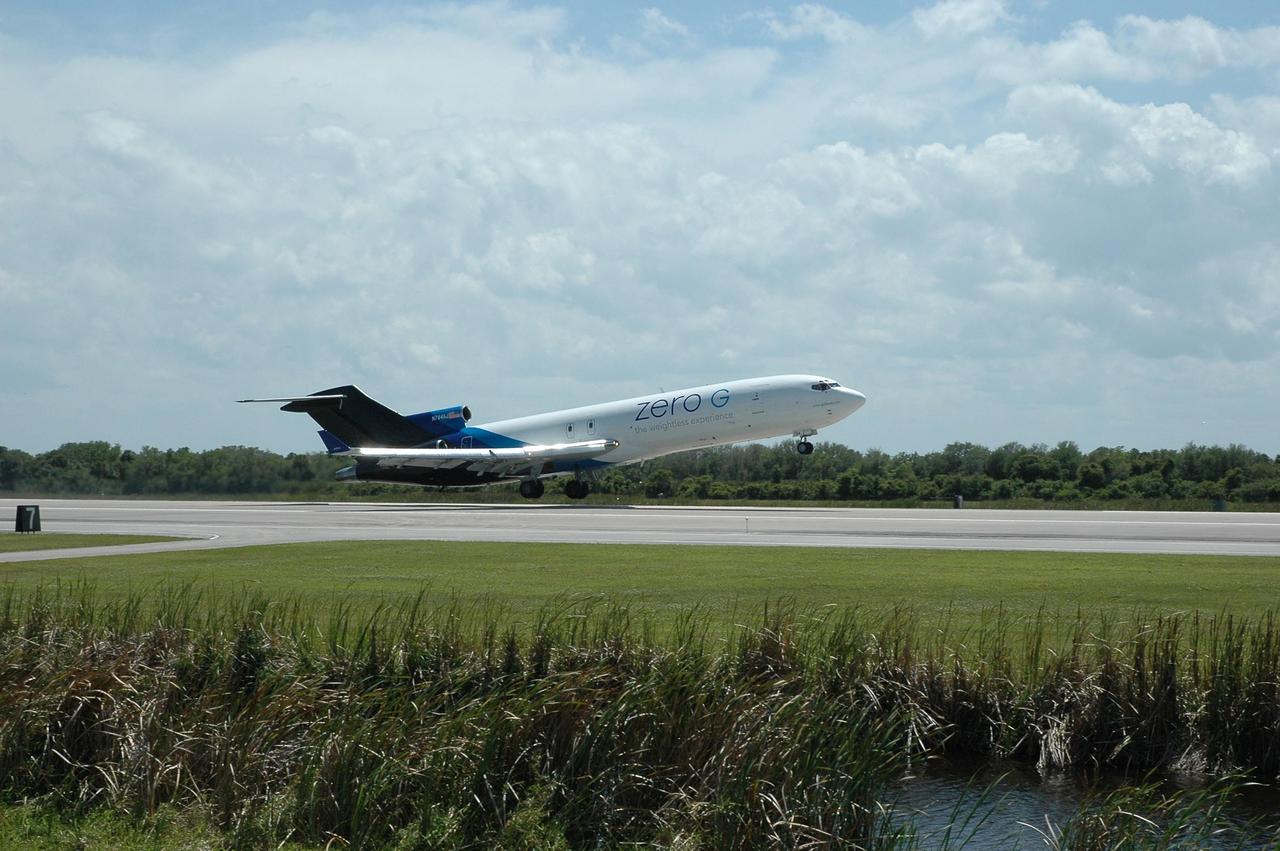
KENNEDY SPACE CENTER, FLA. -- At the Kennedy Space Center Shuttle Landing Facility, a modified Boeing 727 aircraft owned by Zero Gravity Corp. takes off with its well-known passenger, physicist Stephen Hawking. Zero Gravity Corp. is a commercial company licensed to provide the public with weightless flight experiences. Hawking will be making his first zero-gravity flight. Hawking developed amyotrophic lateral sclerosis disease in the 1960s, a type of motor neuron disease which would cost him the loss of almost all neuromuscular control. At the celebration of his 65th birthday on January 8 this year, Hawking announced his plans for a zero-gravity flight to prepare for a sub-orbital space flight in 2009 on Virgin Galactic's space service. Photo credit: NASA/Jack Pfaller
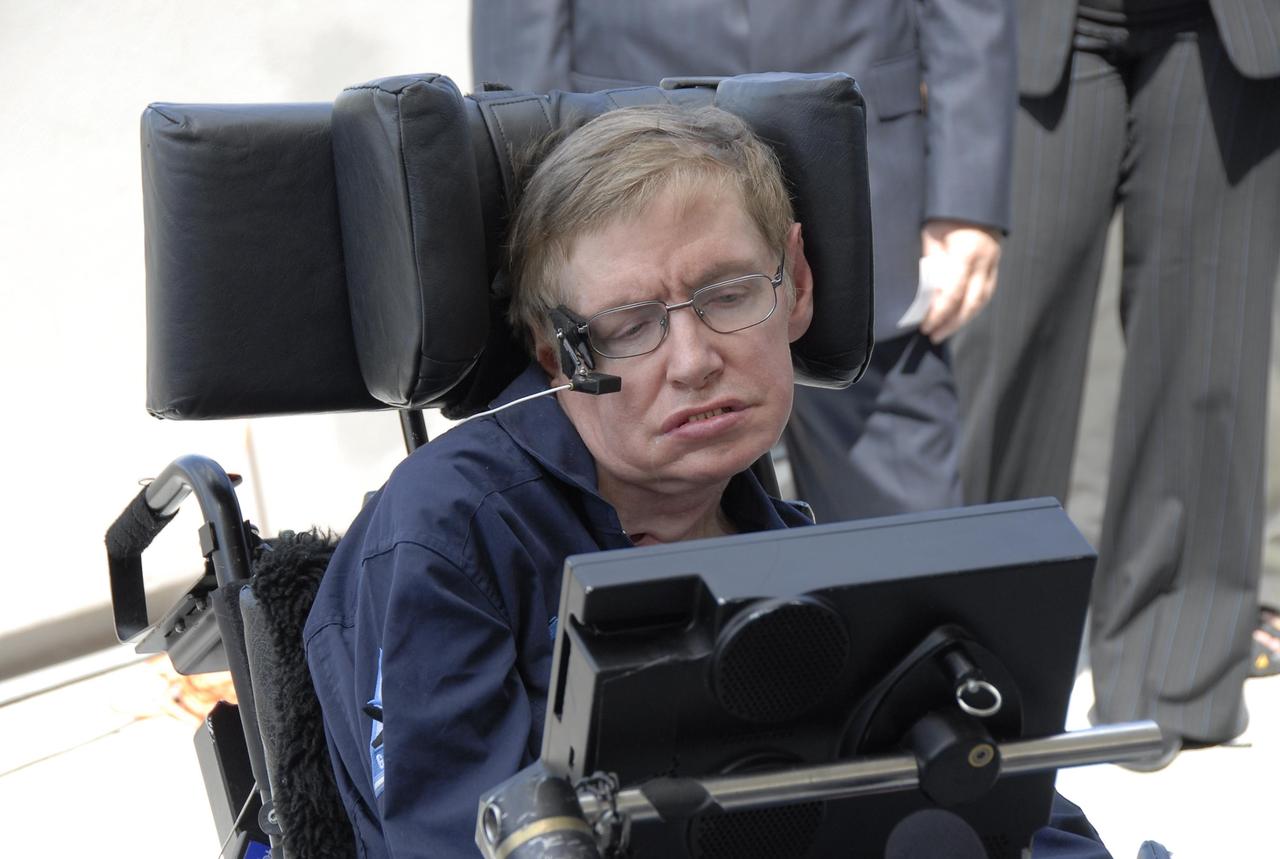
KENNEDY SPACE CENTER, FLA. -- Noted physicist Stephen Hawking arrives at the Kennedy Space Center Shuttle Landing Facility for his first zero-gravity flight. The flight will be aboard a modified Boeing 727 aircraft owned by Zero Gravity Corp., a commercial company licensed to provide the public with weightless flight experiences. Hawking developed amyotrophic lateral sclerosis disease in the 1960s, a type of motor neuron disease which would cost him the loss of almost all neuromuscular control. At the celebration of his 65th birthday on January 8 this year, Hawking announced his plans for a zero-gravity flight to prepare for a sub-orbital space flight in 2009 on Virgin Galactic's space service. Photo credit: NASA/Kim Shiflett
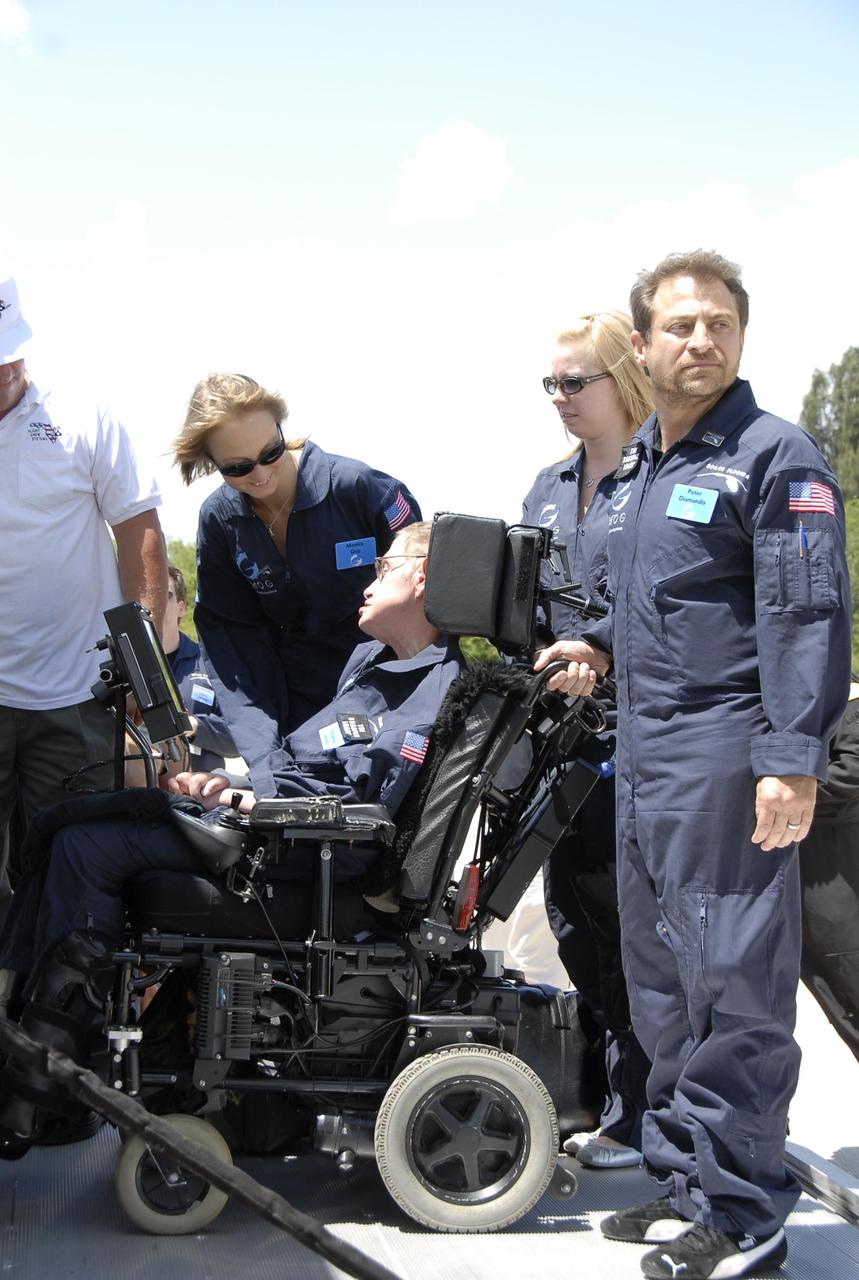
KENNEDY SPACE CENTER, FLA. -- At the Kennedy Space Center Shuttle Landing Facility, noted physicist Stephen Hawking, in the wheelchair, is ready to get onboard a modified Boeing 727 aircraft owned by Zero Gravity Corp. for his first zero-gravity flight. Zero Gravity Corp. is a commercial company licensed to provide the public with weightless flight experiences. At right is Peter Diamandis, founder of the Zero Gravity Corp. Behind Hawking is Nicola O'Brien, a nurse practitioner who is Hawking's aide. Hawking developed amyotrophic lateral sclerosis disease in the 1960s, a type of motor neuron disease which would cost him the loss of almost all neuromuscular control. At the celebration of his 65th birthday on January 8 this year, Hawking announced his plans for a zero-gravity flight to prepare for a sub-orbital space flight in 2009 on Virgin Galactic's space service. Photo credit: NASA/Kim Shiflett
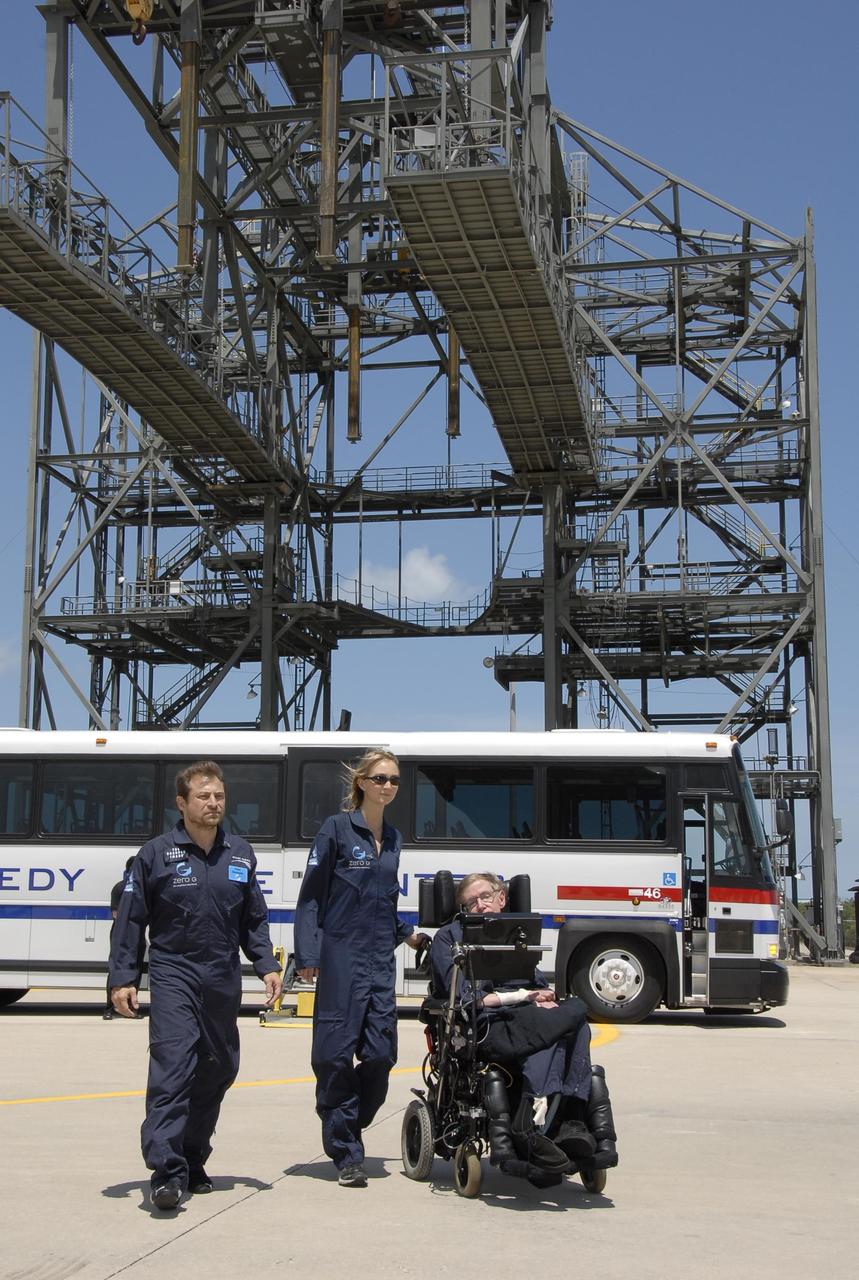
KENNEDY SPACE CENTER, FLA. -- At the Kennedy Space Center Shuttle Landing Facility, noted physicist Stephen Hawking, in the wheelchair, arrives at the runway for his first zero-gravity flight. The flight will be aboard a modified Boeing 727 aircraft owned by Zero Gravity Corp., a commercial company licensed to provide the public with weightless flight experiences. At left is Peter Diamandis, founder of the Zero Gravity Corp. At center is Nicola O'Brien, a nurse practitioner who is Hawking's aide. Hawking developed amyotrophic lateral sclerosis disease in the 1960s, a type of motor neuron disease which would cost him the loss of almost all neuromuscular control. At the celebration of his 65th birthday on January 8 this year, Hawking announced his plans for a zero-gravity flight to prepare for a sub-orbital space flight in 2009 on Virgin Galactic's space service. Photo credit: NASA/Kim Shiflett
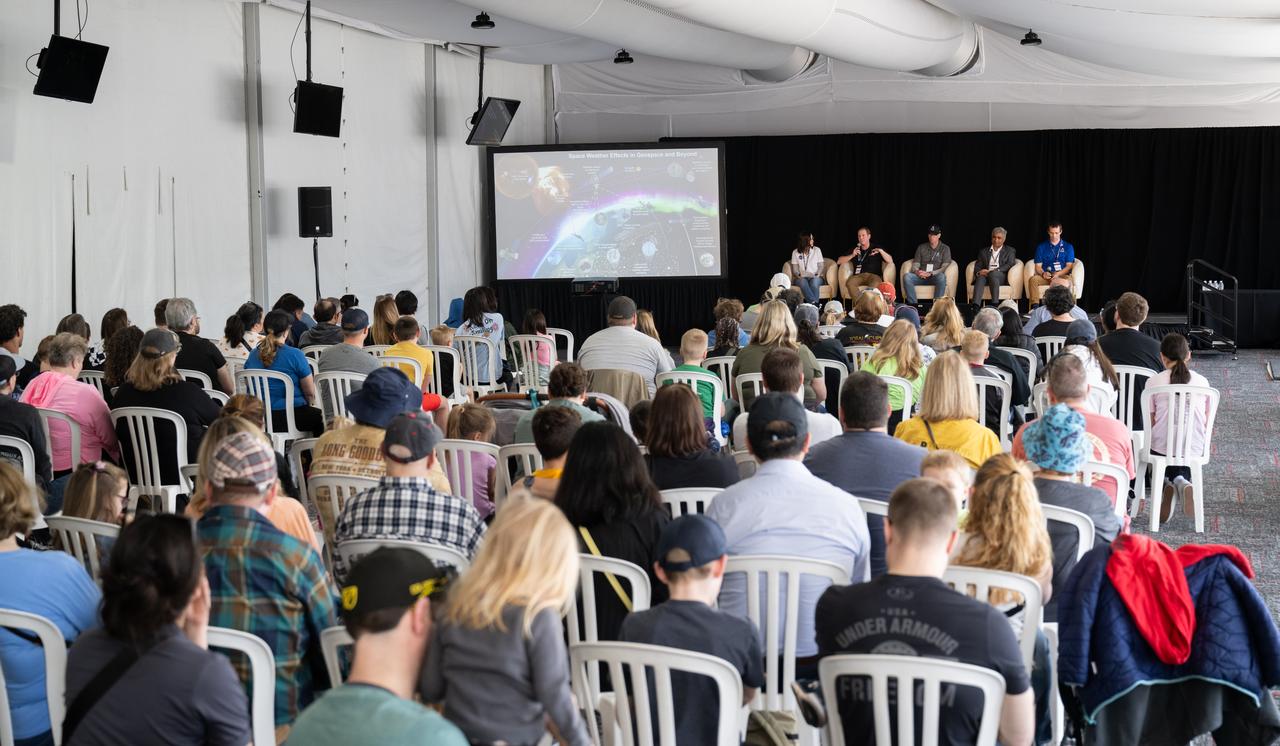
Patricia Moore, communications strategist for the Moon to Mars Program Office in NASA's Exploration Systems Development Mission Directorate, Bradley Williams, program executive in the Heliophysics Division of NASA's Science Mission Directorate, Matthew Roper, Crew Health and Medical Team Lead in NASA's Flight Operations Directorate, Arvind Raman, dean of the College of Engineering at Purdue University, and Logan Kennedy, surface lead for Human Landing System Programs in NASA's Exploration Systems Development Mission Directorate, are seen as they speaks to attendees at the Indianapolis Motor Speedway during a panel discussion about following your dreams to a career in STEM ahead of the total solar eclipse, Monday, April 8, 2024, in Indianapolis, Ind. A total solar eclipse swept across a narrow portion of the North American continent from Mexico’s Pacific coast to the Atlantic coast of Newfoundland, Canada. A partial solar eclipse was visible across the entire North American continent along with parts of Central America and Europe. Photo Credit: (NASA/Joel Kowsky)
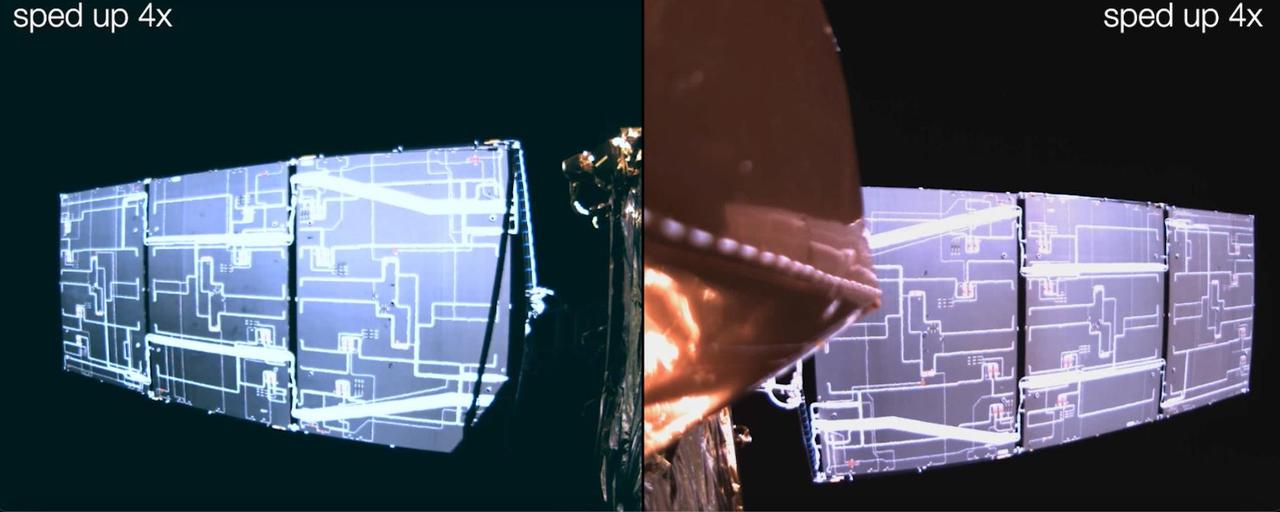
This video is a series of images showing the deployment of the solar arrays that power the international Surface Water and Ocean Topography satellite (SWOT). The mission captured the roughly 10-minute process with two of the four commercial cameras aboard the satellite (the same type used to capture NASA's Perseverance rover landing on Mars). The satellite launched Dec. 16, 2022, at 3:46 a.m. PST from Vandenberg Space Force Base in California, and the arrays started their deployment at 5:01 a.m. PST. SWOT's two solar arrays measure 48.8 feet (14.9 meters) from end to end, with a total surface area of 335 square feet (31 square meters). Extending from opposite sides of the spacecraft bus, the arrays remain pointed at the Sun via small motors. They provide 8 kilowatts of power to the satellite, which has a 1.5-kilowatt total power demand. SWOT will survey the height of water in Earth's lakes, rivers, reservoirs, and the ocean. The satellite will cover the planet's surface at least once every 21 days and has a prime mission of three years. It was jointly developed by NASA and France's Centre National d'Études Spatiales (CNES), with contributions from the Canadian Space Agency (CSA) and the UK Space Agency. Movie available at https://photojournal.jpl.nasa.gov/catalog/PIA25563