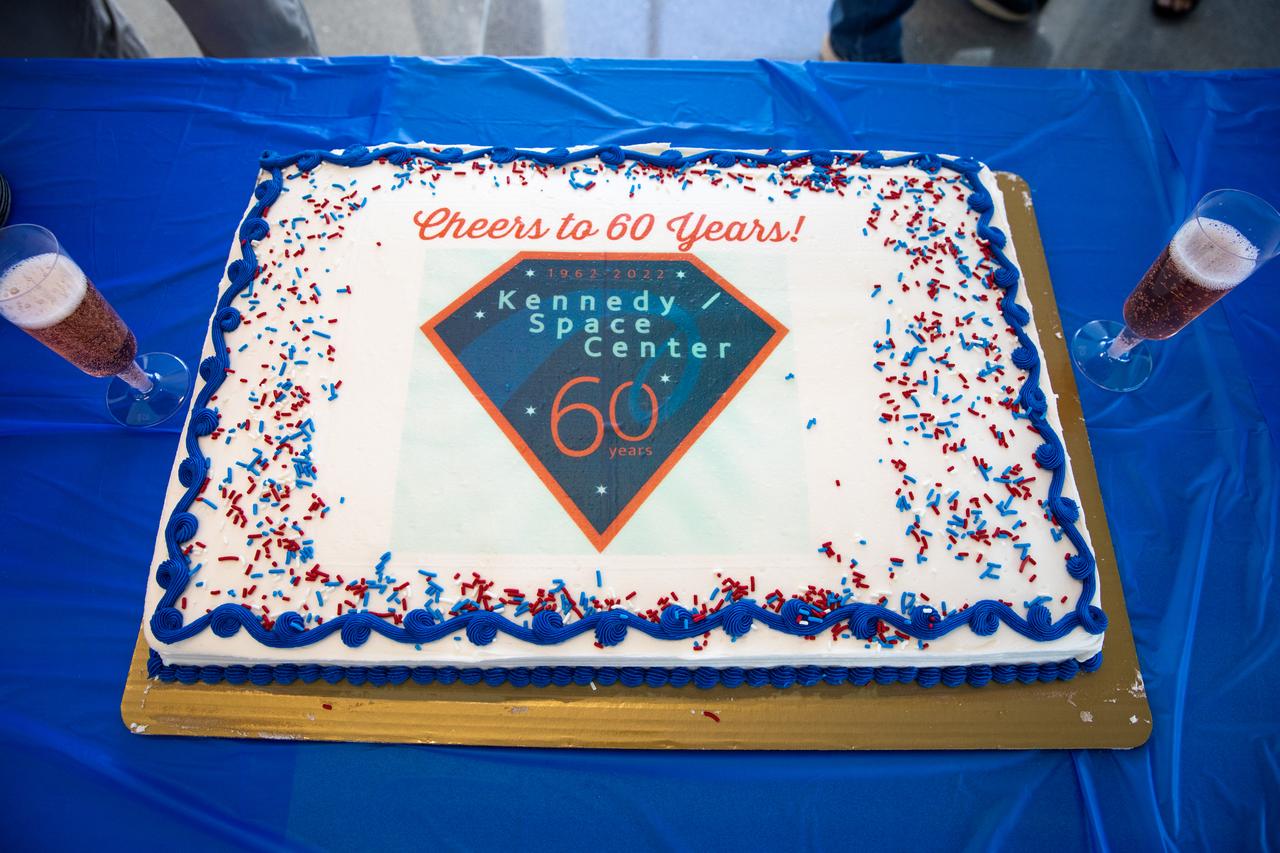
The NASA Kennedy Space Center senior leaders and employees celebrated the center’s 60th anniversary with a “Cheers to 60 Years” cake and non-alcoholic toast in the Central Campus Headquarters on June 28, 2022. In July 1962, the Launch Operations Center in Florida was established. By December 1963, it was renamed the John F. Kennedy Space Center.
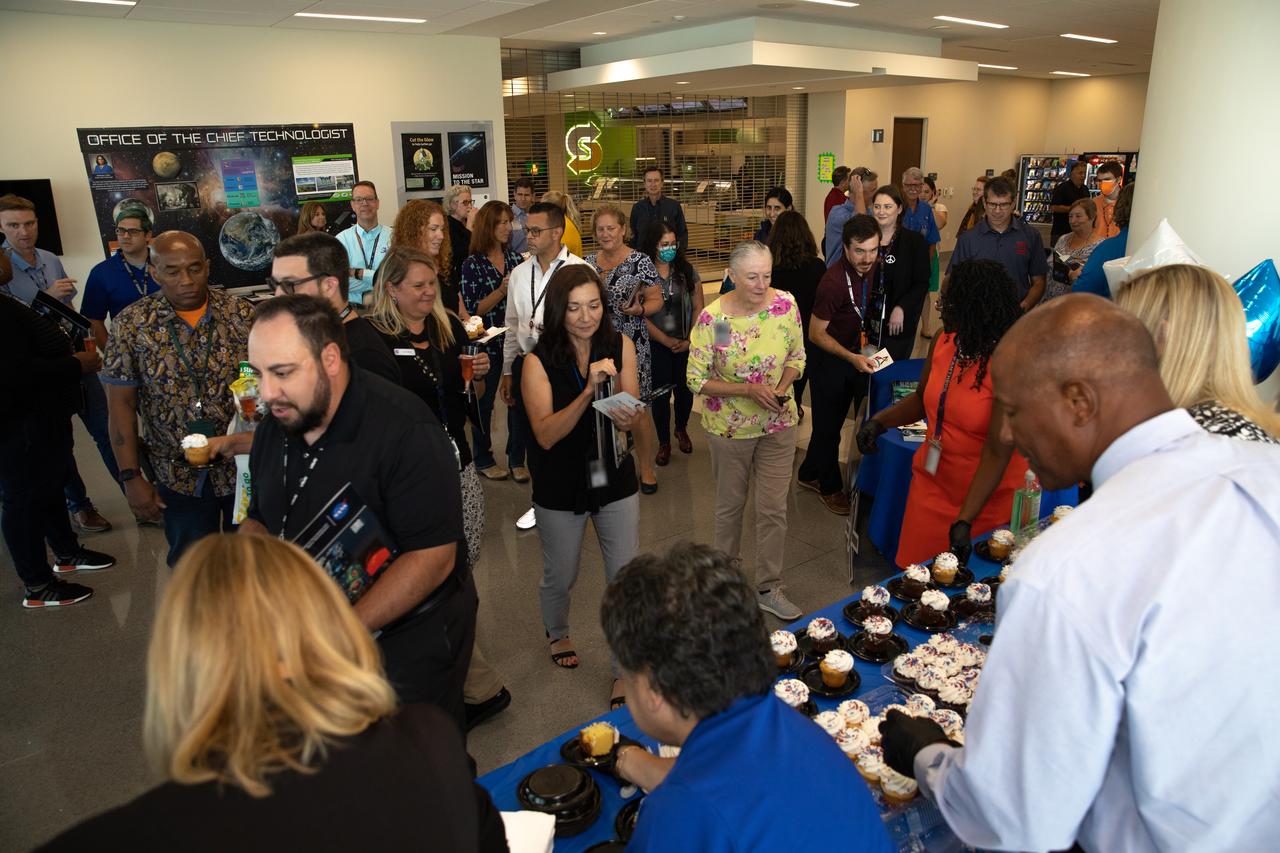
The NASA Kennedy Space Center senior leaders and employees celebrated the center’s 60th anniversary with a “Cheers to 60 Years” cake and non-alcoholic toast in the Central Campus Headquarters on June 28, 2022. From left, serving cake at the table, are Center Director Janet Petro; Janet Sellars, director of Human Resources; Kelvin Manning, deputy center director; and Nancy Bray, partially hidden, director of Spaceport Integration and Services. In July 1962, the Launch Operations Center in Florida was established. By December 1963, it was renamed the John F. Kennedy Space Center.
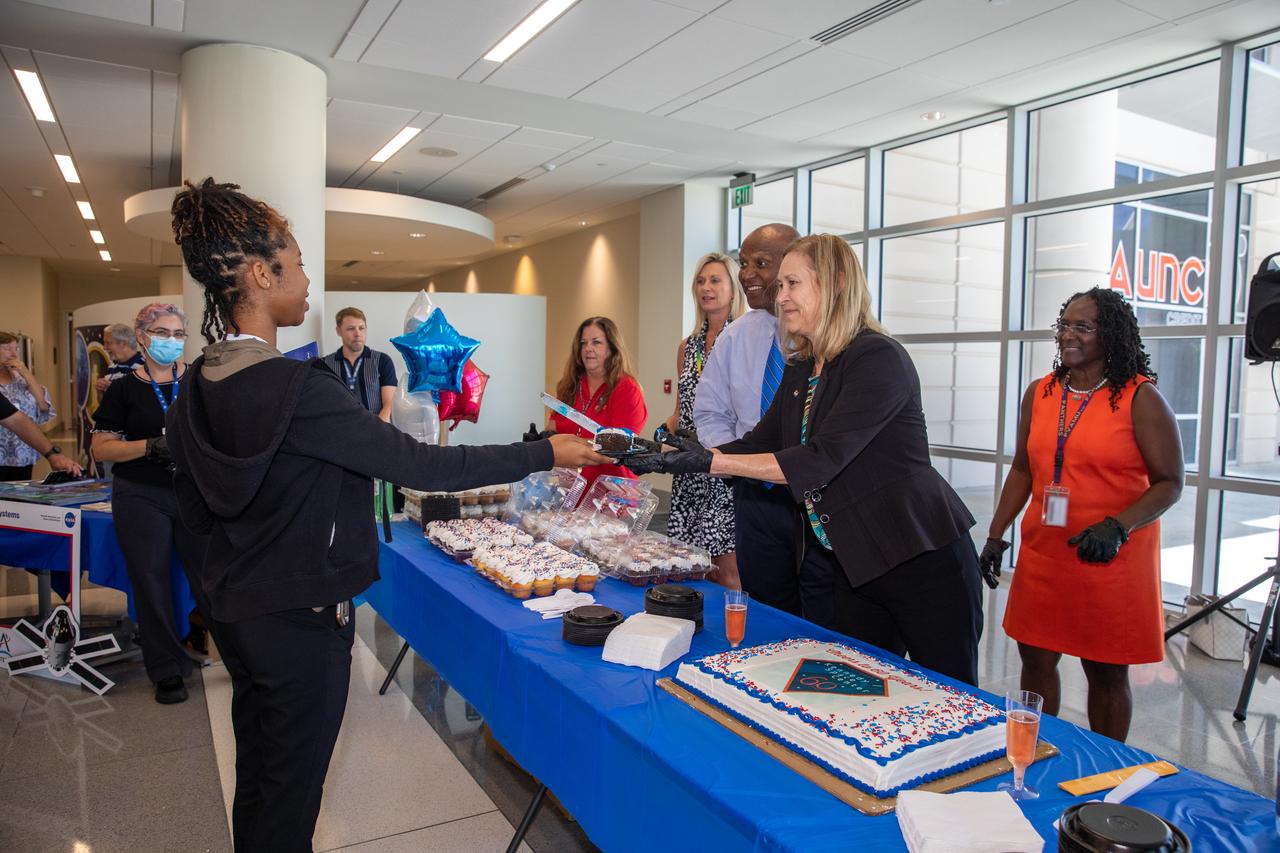
NASA Kennedy Space Center senior leaders helped celebrate the center’s 60th anniversary with a “Cheers to 60 Years” cake and non-alcoholic toast in the Central Campus Headquarters on June 28, 2022. Center Director Janet Petro hands a slice of cake to an employee. Also, from left are Nancy Bray, director of Spaceport Integration and Services; Kelvin Manning, deputy center director; and Hortense Blackwell, director of Communication and Public Engagement. In July 1962, the Launch Operations Center in Florida was established. By December 1963, it was renamed the John F. Kennedy Space Center.
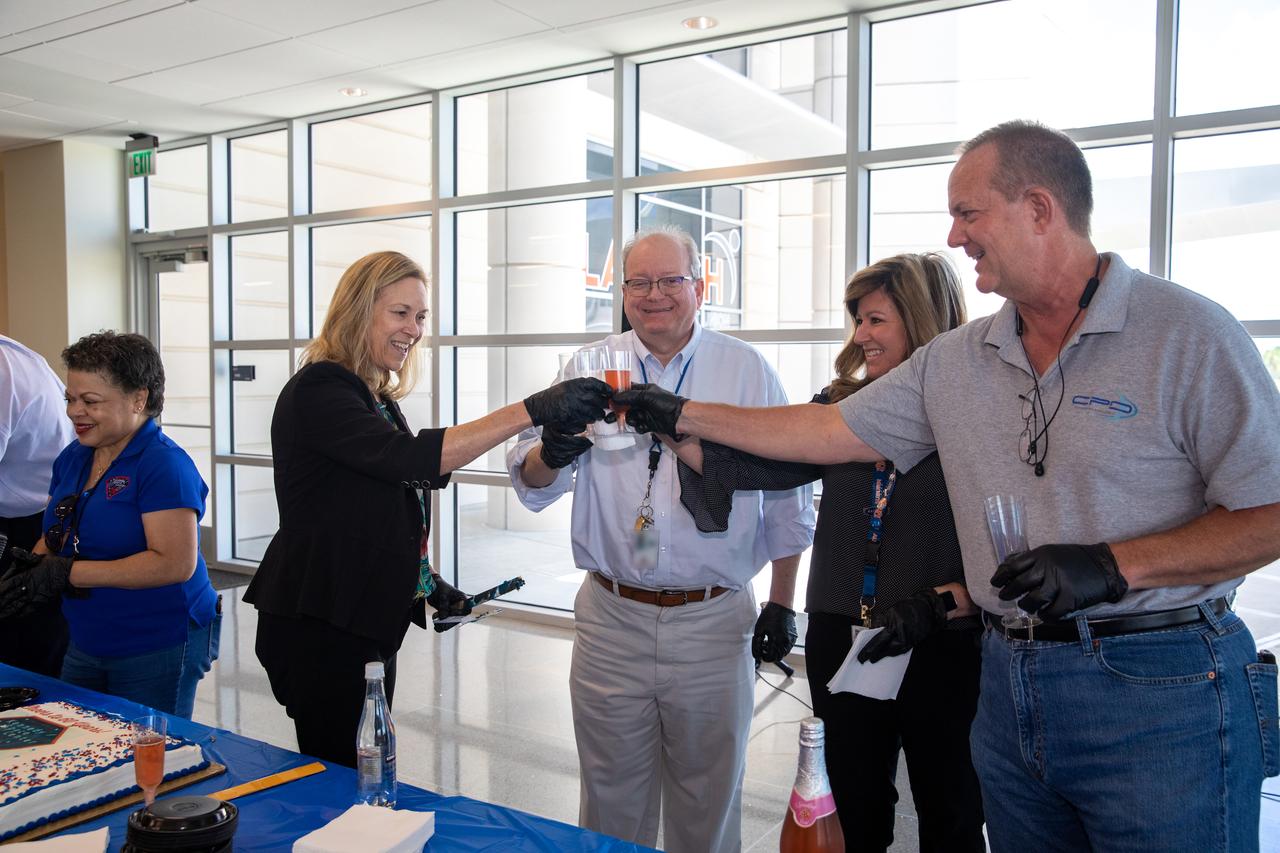
The NASA Kennedy Space Center senior leaders and employees celebrated the center’s 60th anniversary with a “Cheers to 60 Years” cake and non-alcoholic toast in the Central Campus Headquarters on June 28, 2022. From left are Janet Sellars, director of Human Resources; Janet Petro, center director; Burt Summerfield, associate center director, management; Jennifer Kunz, associate center director, technical; and Tom Engler, director of Center Planning and Development. In July 1962, the Launch Operations Center in Florida was established. By December 1963, it was renamed the John F. Kennedy Space Center.
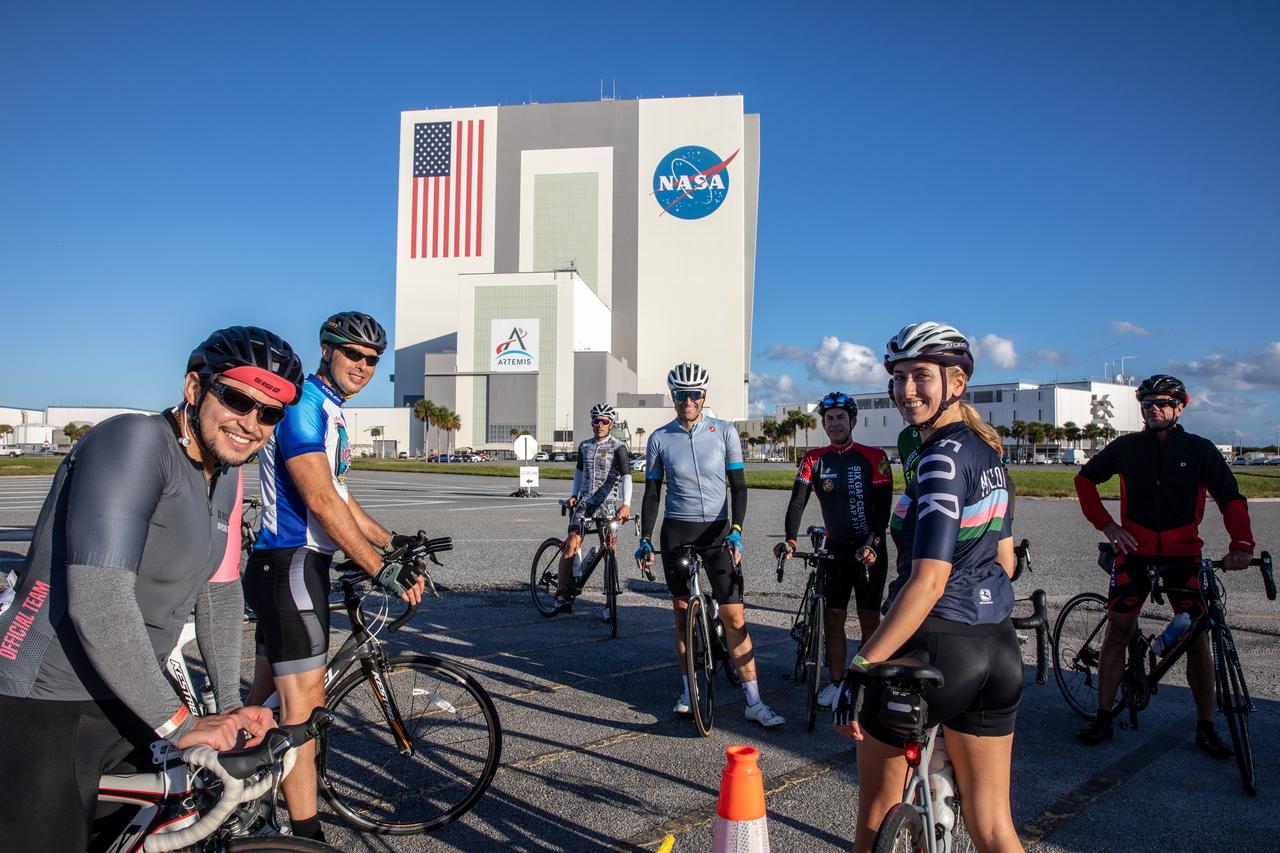
Kennedy Space Center employees and their guests participate in the Diamond Tour de KSC at NASA’s Kennedy Space Center in Florida on Oct. 22, 2022. This unique event, held for the first time since 2019, was part of the Safety organization’s Fall Into Safety and Health event, and named “diamond” to honor the center’s 60th anniversary. Cyclists covered three different routes and rode by historic landmarks, completing a total of about 37 miles.
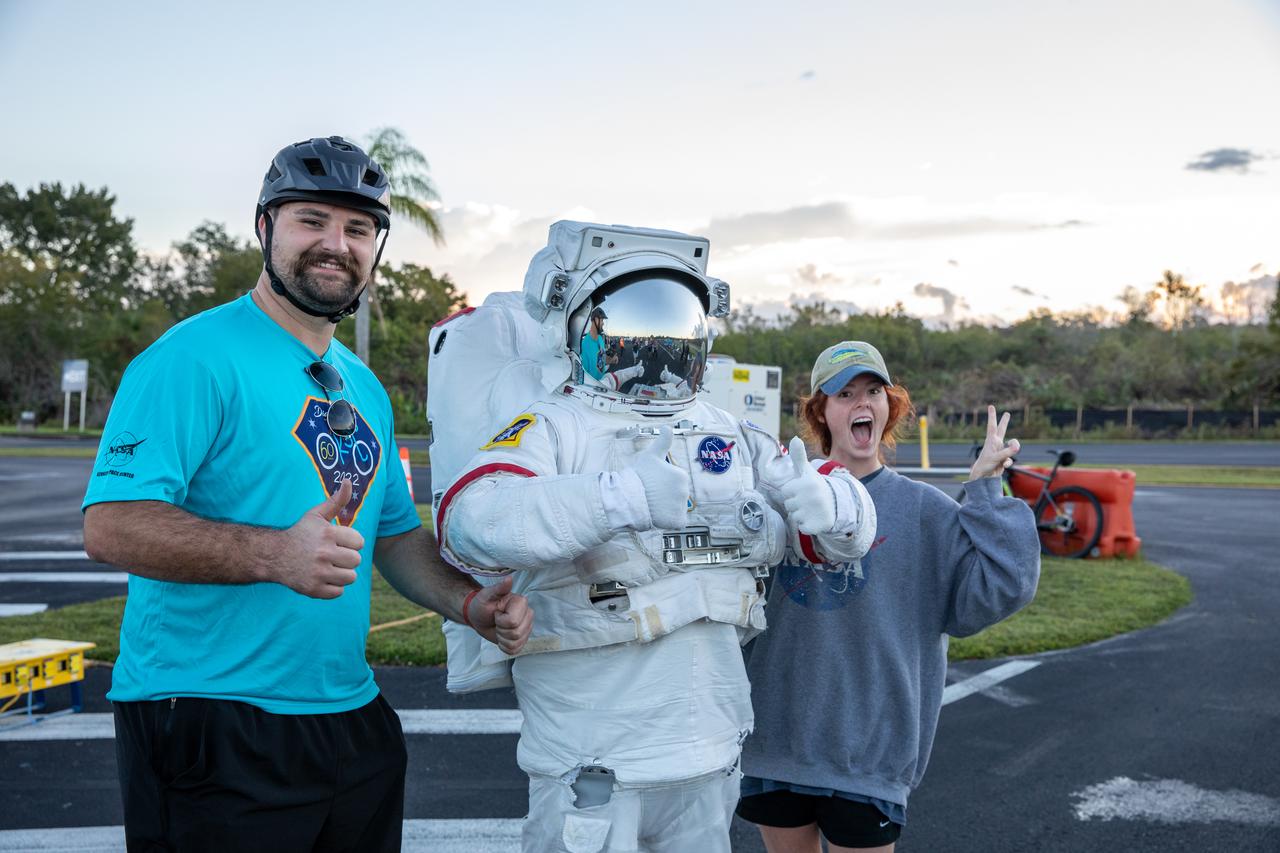
Participants in the Diamond Tour de KSC pause for a photo with the Spaceperson at NASA’s Kennedy Space Center Visitor Complex before beginning their bicycle routes at Kennedy Space Center in Florida on Oct. 22, 2022. This unique event, held for the first time since 2019, was part of the Safety organization’s Fall Into Safety and Health event, and named “diamond” to honor the center’s 60th anniversary. Cyclists covered three different routes and rode by historic landmarks, completing a total of about 37 miles.
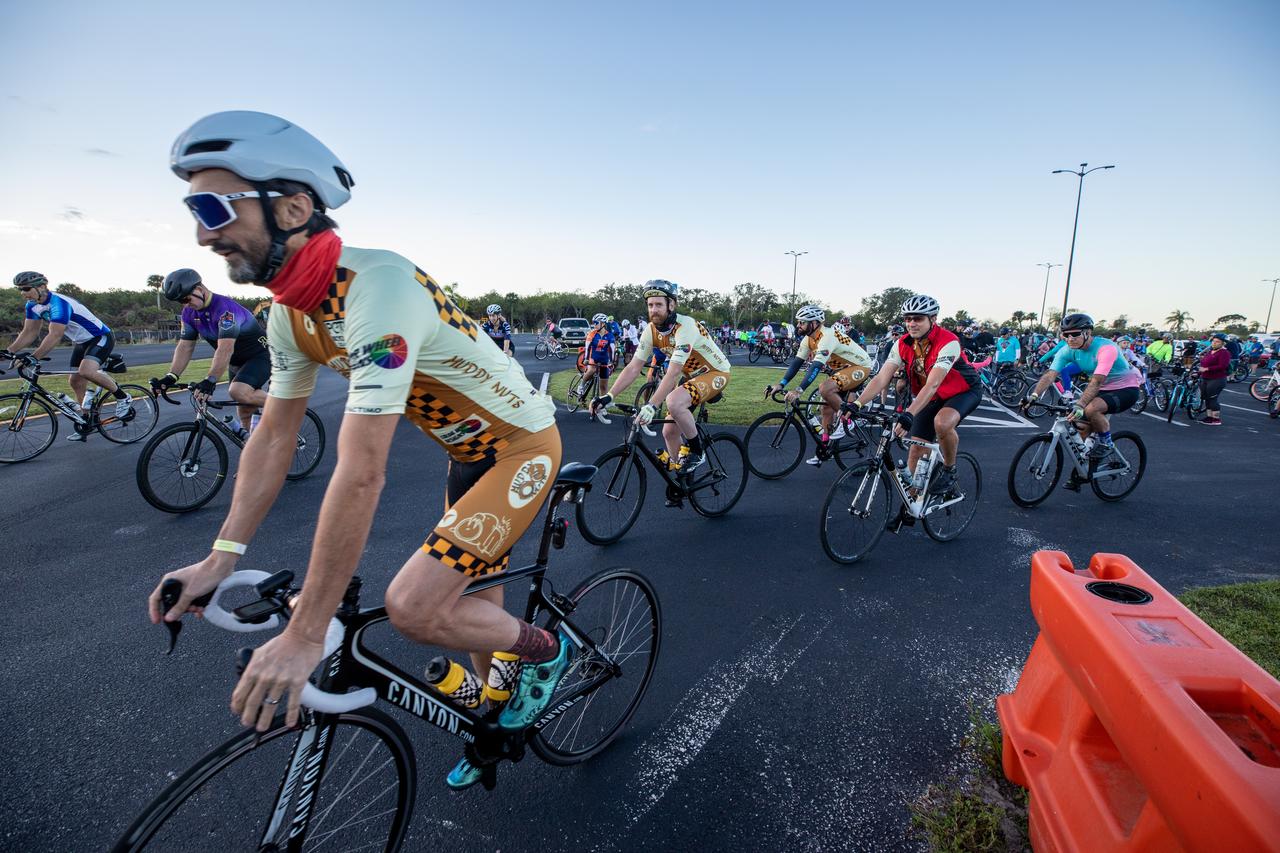
Kennedy Space Center employees and their guests participate in the Diamond Tour de KSC at NASA’s Kennedy Space Center in Florida on Oct. 22, 2022. This unique event, held for the first time since 2019, was part of the Safety organization’s Fall Into Safety and Health event, and named “diamond” to honor the center’s 60th anniversary. Cyclists covered three different routes and rode by historic landmarks, completing a total of about 37 miles.
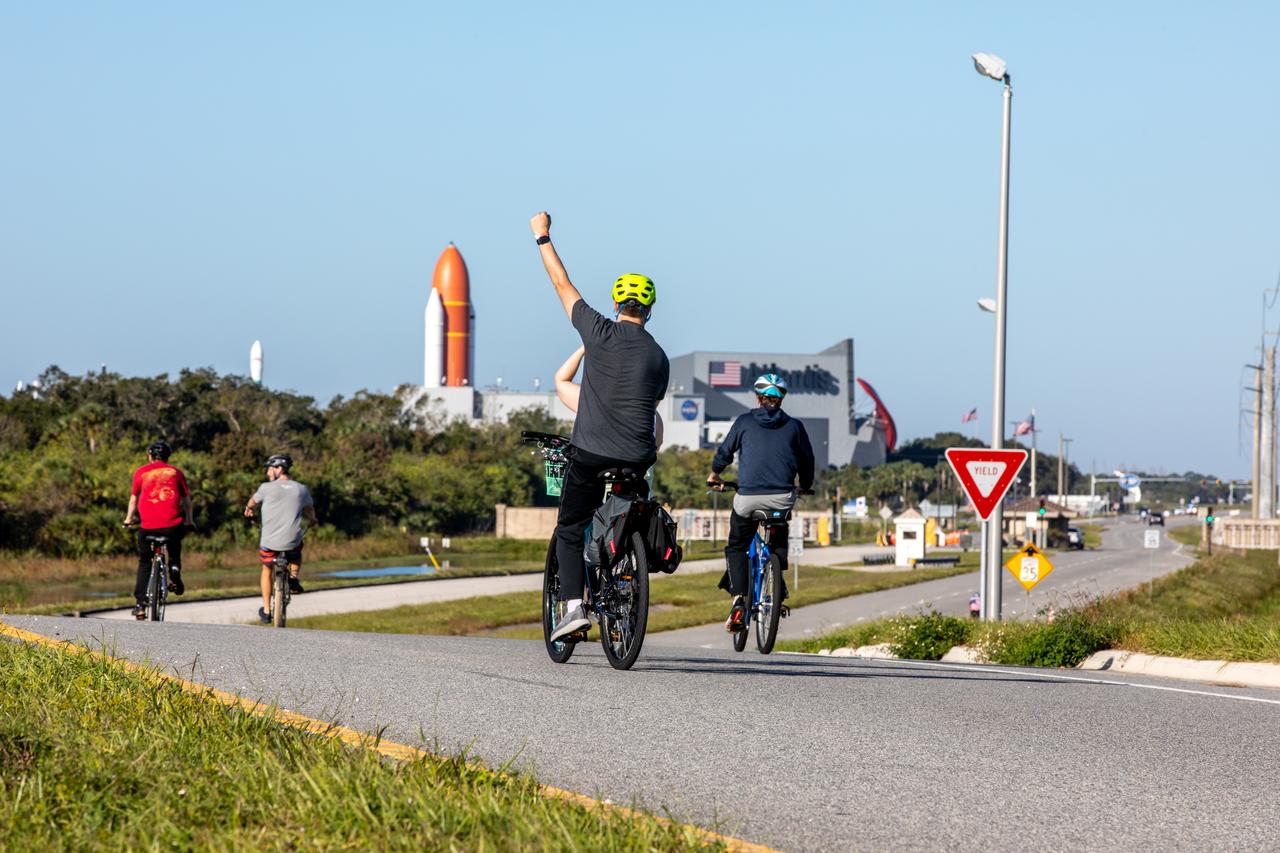
Kennedy Space Center employees and their guests return to the Kennedy Space Center Visitor Complex after completing the Diamond Tour de KSC at the NASA spaceport in Florida on Oct. 22, 2022. This unique event, held for the first time since 2019, was part of the Safety organization’s Fall Into Safety and Health event, and named “diamond” to honor the center’s 60th anniversary. Cyclists covered three different routes and rode by historic landmarks, completing a total of about 37 miles.

Participants in the Diamond Tour de KSC pause for a selfie at NASA’s Kennedy Space Center Visitor Complex before beginning their bicycle routes at Kennedy Space Center in Florida on Oct. 22, 2022. This unique event, held for the first time since 2019, was part of the Safety organization’s Fall Into Safety and Health event, and named “diamond” to honor the center’s 60th anniversary. Cyclists covered three different routes and rode by historic landmarks, completing a total of about 37 miles.
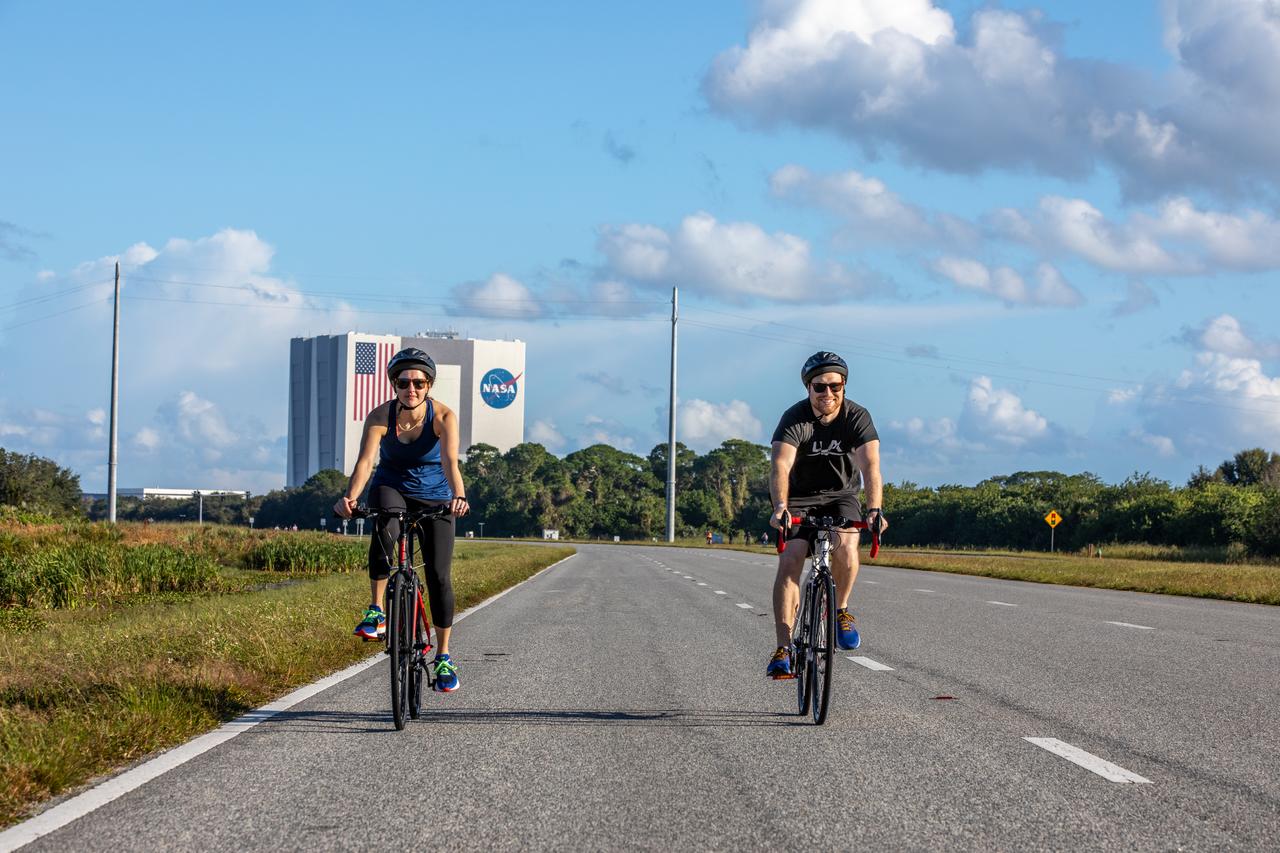
Two cyclists participate in the Diamond Tour de KSC at NASA’s Kennedy Space Center in Florida on Oct. 22, 2022. In the background is the iconic Vehicle Assembly Building. This unique event, held for the first time since 2019, was part of the Safety organization’s Fall Into Safety and Health event, and named “diamond” to honor the center’s 60th anniversary. Cyclists covered three different routes and rode by historic landmarks, completing a total of about 37 miles.
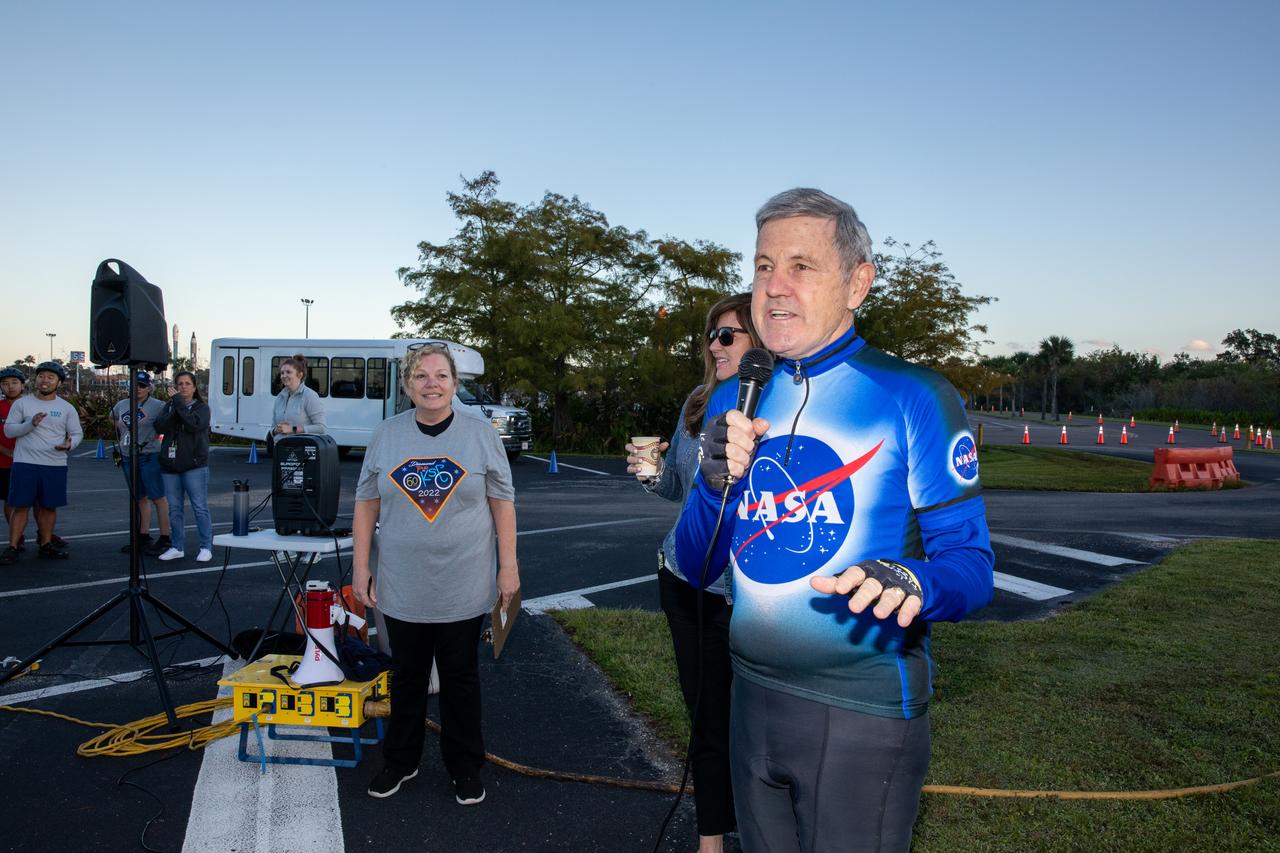
NASA Associate Administrator and retired astronaut Bob Cabana speaks to participants in the Diamond Tour de KSC at Kennedy Space Center Visitor Complex before beginning their bicycle routes at Kennedy Space Center in Florida on Oct. 22, 2022. This unique event, held for the first time since 2019, was part of the Safety organization’s Fall Into Safety and Health event, and named “diamond” to honor the center’s 60th anniversary. Cyclists covered three different routes and rode by historic landmarks, completing a total of about 37 miles.
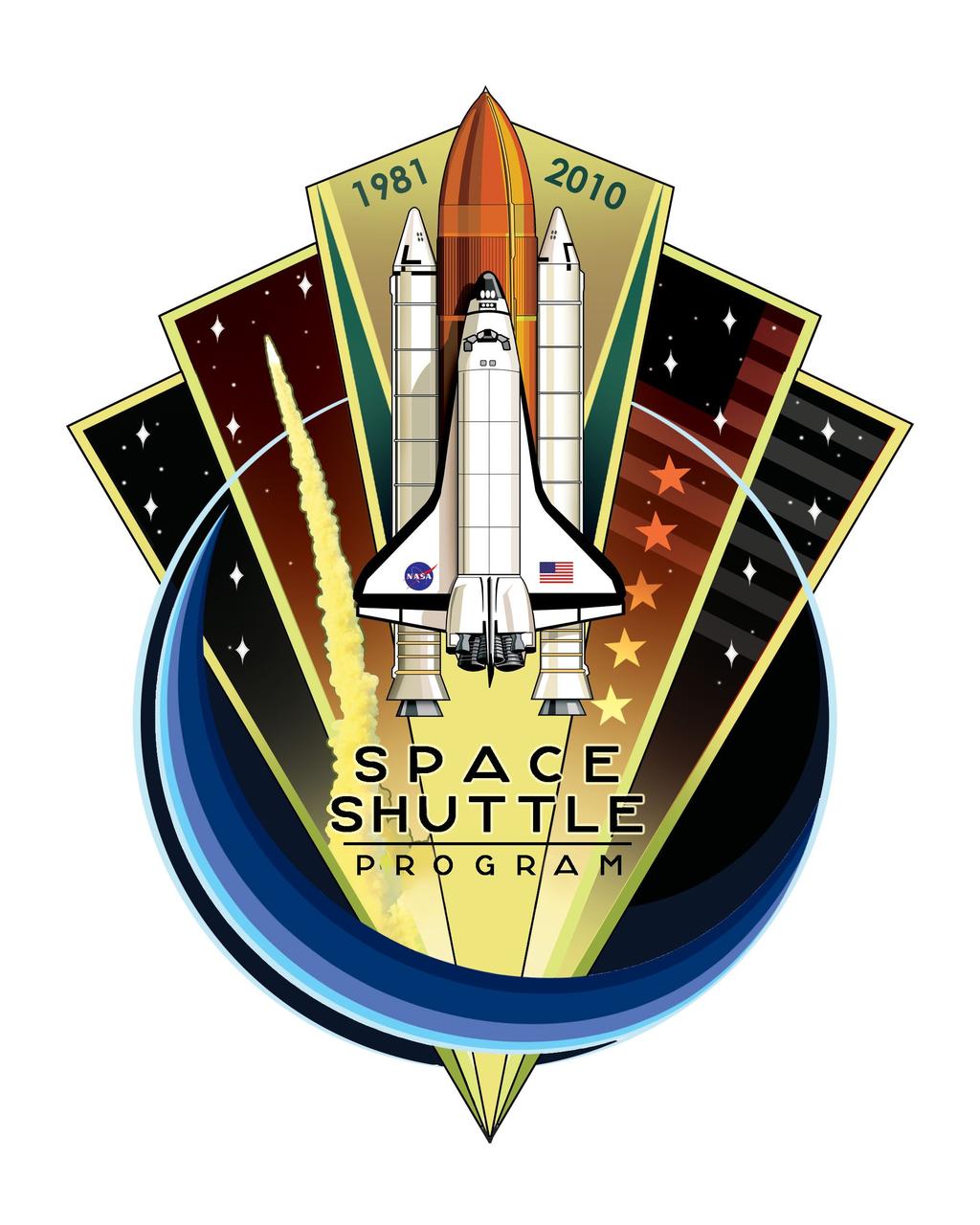
JOHNSON SPACE CENTER, Houston - JSC2010-E-079335 -- To celebrate the upcoming 30th anniversary and retirement of the Space Shuttle Program, the design of this patch aims to capture the visual essence and spirit of the program in an iconic and triumphant manner. As the Space Shuttle Program has been an innovative, iconic gem in the history of American spaceflight, the overall shape of the patch and its faceted panels are reminiscent of a diamond or other fine jewel. The shape of the patch fans out from a fine point at the bottom to a wide array across the top, to evoke the vastness of space and our aim to explore it, as the shuttle has done successfully for decades. The outlined blue circle represents the shuttle's exploration within low Earth orbit, but also creates a dynamic fluidity from the bottom right around to the top left to allude to the smoothness of the shuttle orbiting Earth. The diagonal lines cascading down into the top-right corner of the design form the American Flag as the shuttle has been one of the most recognizable icons in American history throughout the last three decades. In the top left and right panels of the design, there are seven prominent stars on each side, which represent the 14 crew members who were lost on shuttles Challenger and Columbia. Inside of the middle panel to the right of the shuttle, there are five larger, more prominent stars that signify the five space shuttle vehicles NASA has had in its fleet throughout the program. Most importantly though, this patch is as an overall celebration of the much-beloved program and vehicle that so many people have dedicated themselves to in so many capacities throughout the years with a sense of vibrancy and mysticism that the Space Shuttle Program will always be remembered by. This patch was designed by Aerospace Engineer Blake Dumesnil, who has supported the Space Shuttle Program with his work in the Avionics and Energy Systems Divisions of the NASA Johnson Space Center Engineering Directorate. It is the winning entry in a commemorative patch design contest sponsored by the Space Shuttle Program. Image credit: NASA/Blake Dumesnil
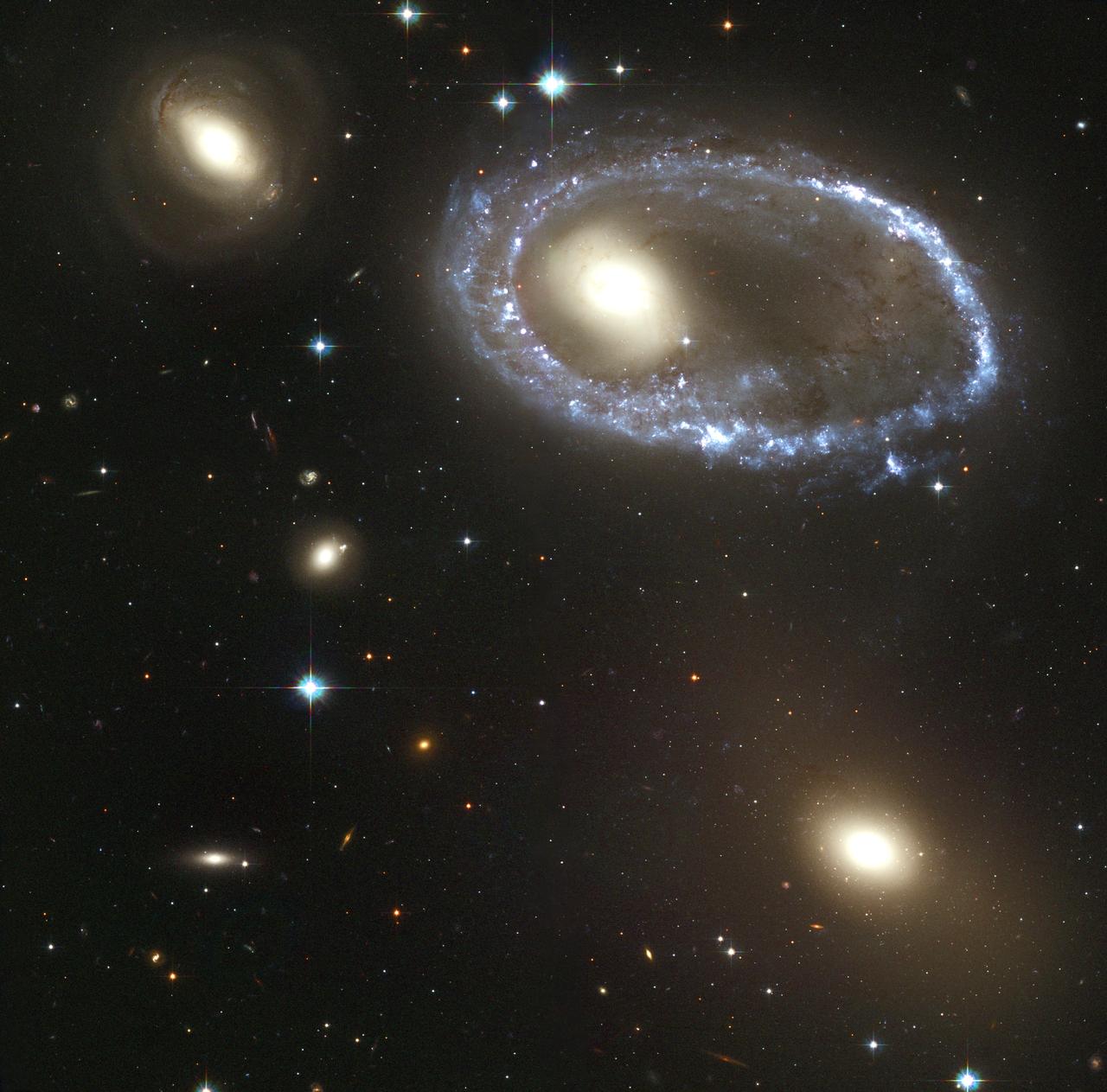
Released to commemorate the 14th anniversary of NASA’s Hubble Space Telescope (HST) is the image of a galaxy cataloged as AM 0644-741. Resembling a diamond encrusted bracelet, the ring of brilliant blue star clusters wraps around a yellowish nucleus of what was once a normal spiral galaxy. Located 300 million light years away in the direction of the southern constellation Dorado, the sparkling blue ring is 150,000 light years in diameter, making it larger than our entire home galaxy, the Milky Way. Ring galaxies are a striking example of how collisions between galaxies can dramatically change their structure, while triggering the formation of new stars. Typically one galaxy plunges directly into the disk of another one. The ring that pierced through this galaxy’s ring is out of the image but is visible in larger-field images. The soft galaxy visible to the left of the ring galaxy is a coincidental background galaxy which is not interacting with the ring. Rampant star formation explains why the ring is so blue. It is continuously forming massive, young, hot stars. Another sign of robust star formation is the pink regions along the ring. These are rare clouds of glowing hydrogen gas, fluorescing because of the strong ultraviolet light from the newly formed stars. The Hubble Heritage Team used the Hubble Advanced Camera for Surveys to take this image using a combination of four separate filters that isolate blue, green, red, and near-infrared light to create the color image.