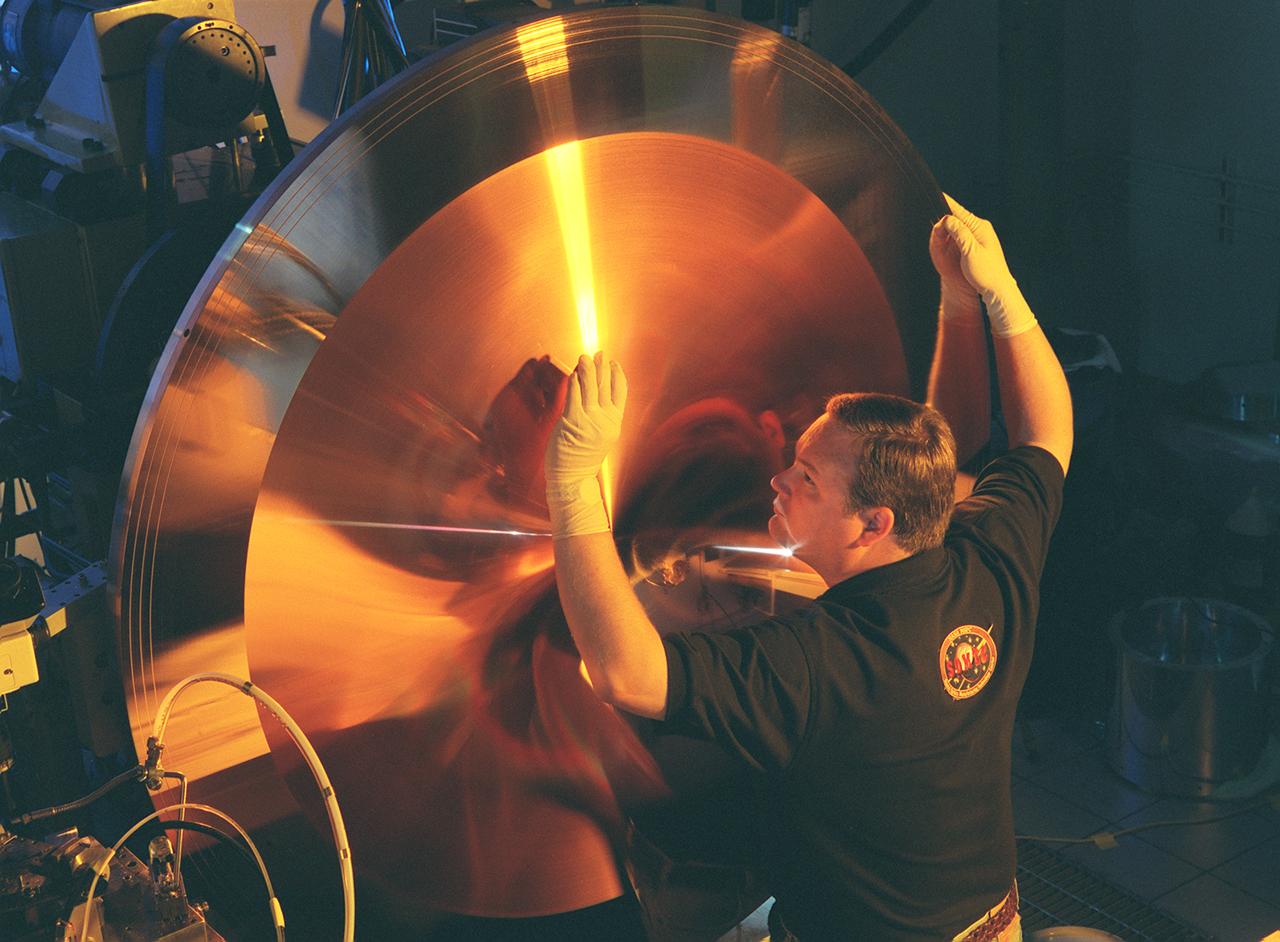
This photograph shows Wes Brown, Marshall Space Flight Center's (MSFC's) lead diamond tuner, an expert in the science of using diamond-tipped tools to cut metal, inspecting the mold's physical characteristics to ensure the uniformity of its more than 6,000 grooves. This king-size copper disk, manufactured at the Space Optics Manufacturing and Technology Center (SOMTC) at MSFC, is a special mold for making high resolution monitor screens. This master mold will be used to make several other molds, each capable of forming hundreds of screens that have a type of lens called a fresnel lens. Weighing much less than conventional optics, fresnel lenses have multiple concentric grooves, each formed to a precise angle, that together create the curvature needed to focus and project images. The MSFC leads NASA's space optics manufacturing technology development as a technology leader for diamond turning. The machine used to manufacture this mold is among many one-of-a-kind pieces of equipment of MSFC's SOMTC.
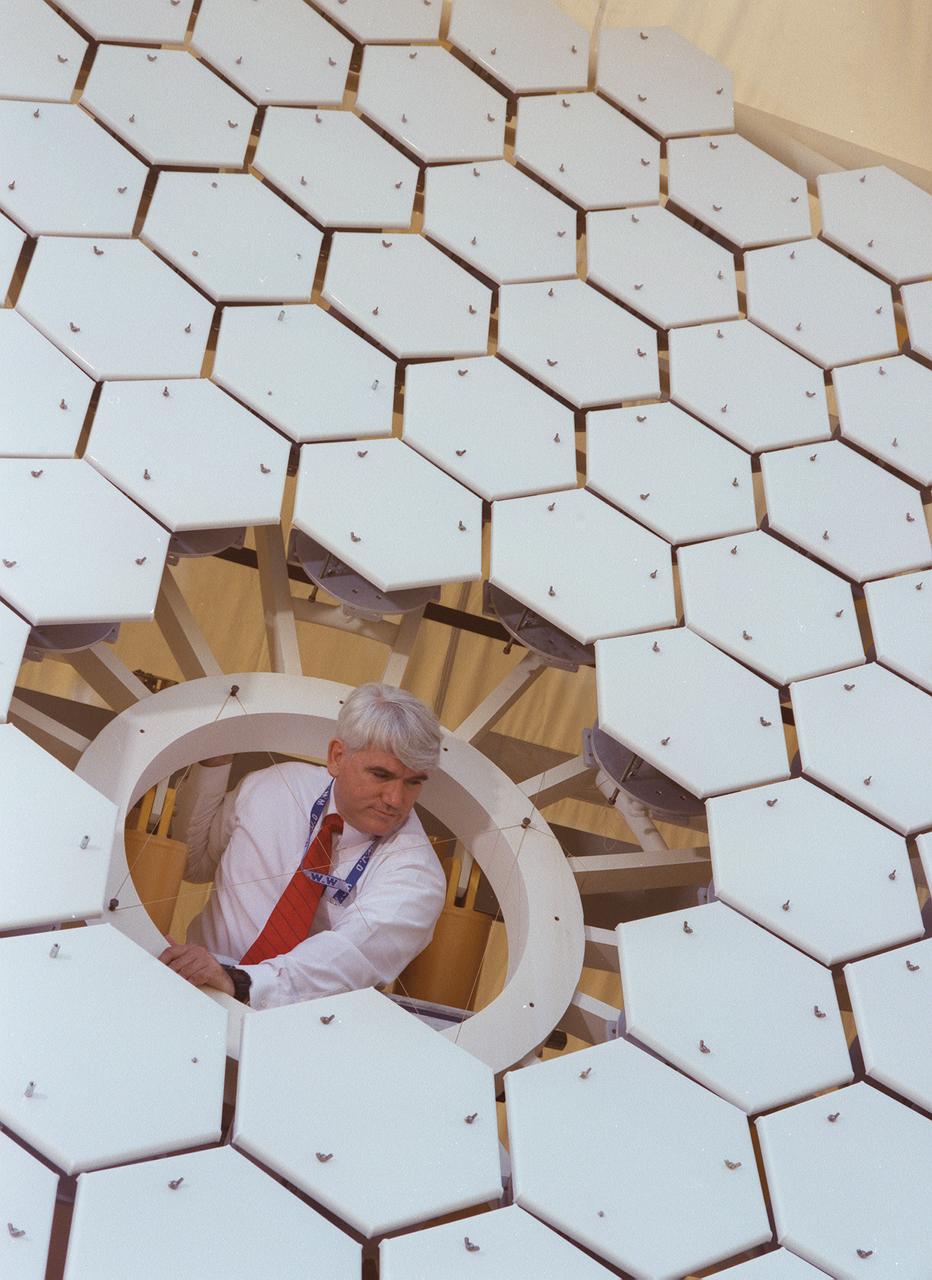
A team of engineers at Marshall Space Flight Center (MSFC) has designed, fabricated, and tested the first solar thermal engine, a non-chemical rocket that produces lower thrust but has better thrust efficiency than the chemical combustion engines. This segmented array of mirrors is the solar concentrator test stand at MSFC for firing the thermal propulsion engines. The 144 mirrors are combined to form an 18-foot diameter array concentrator. The mirror segments are aluminum hexagons that have the reflective surface cut into it by a diamond turning machine, which is developed by MSFC Space Optics Manufacturing Technology Center.
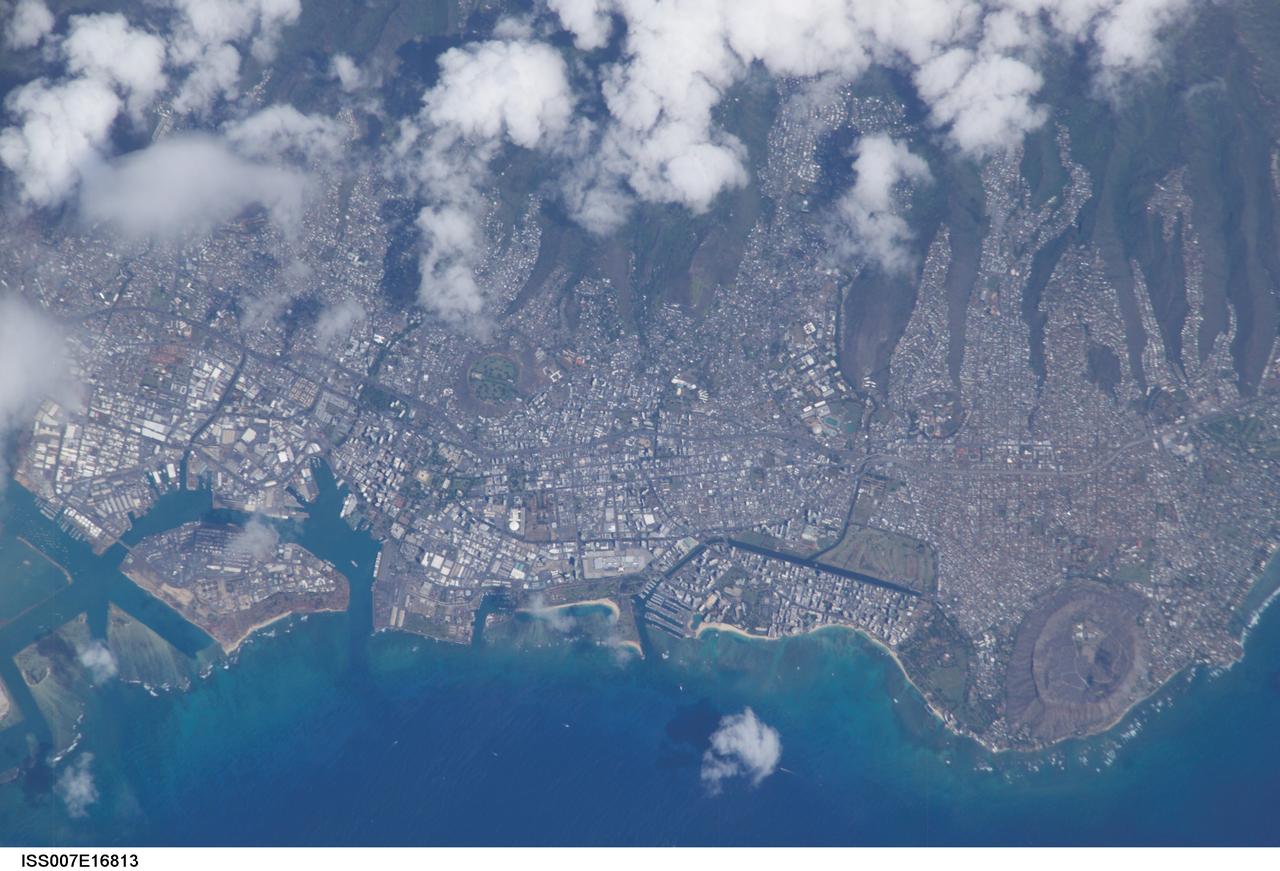
ISS007-E-16813 (8 October 2003) --- This view featuring Honolulu, Hawaii was photographed by an Expedition 7 crewmember onboard the International Space Station (ISS). The city is striking for the way it is bound by surrounding geography. Built-up fingers of the city extend northeast onto the steep volcanic slopes and surround the volcanic craters of Punchbowl crater and Diamond Head, leaving undeveloped only parklands and the steepest ridges. They are both tuff cones that formed as magma from the erupting volcano came in contact with ground water at a time when sea levels were higher than they are now. As the water turned to steam, according to NASA scientists, it caused an explosion that formed a hill of ash with a broad crater in the center.
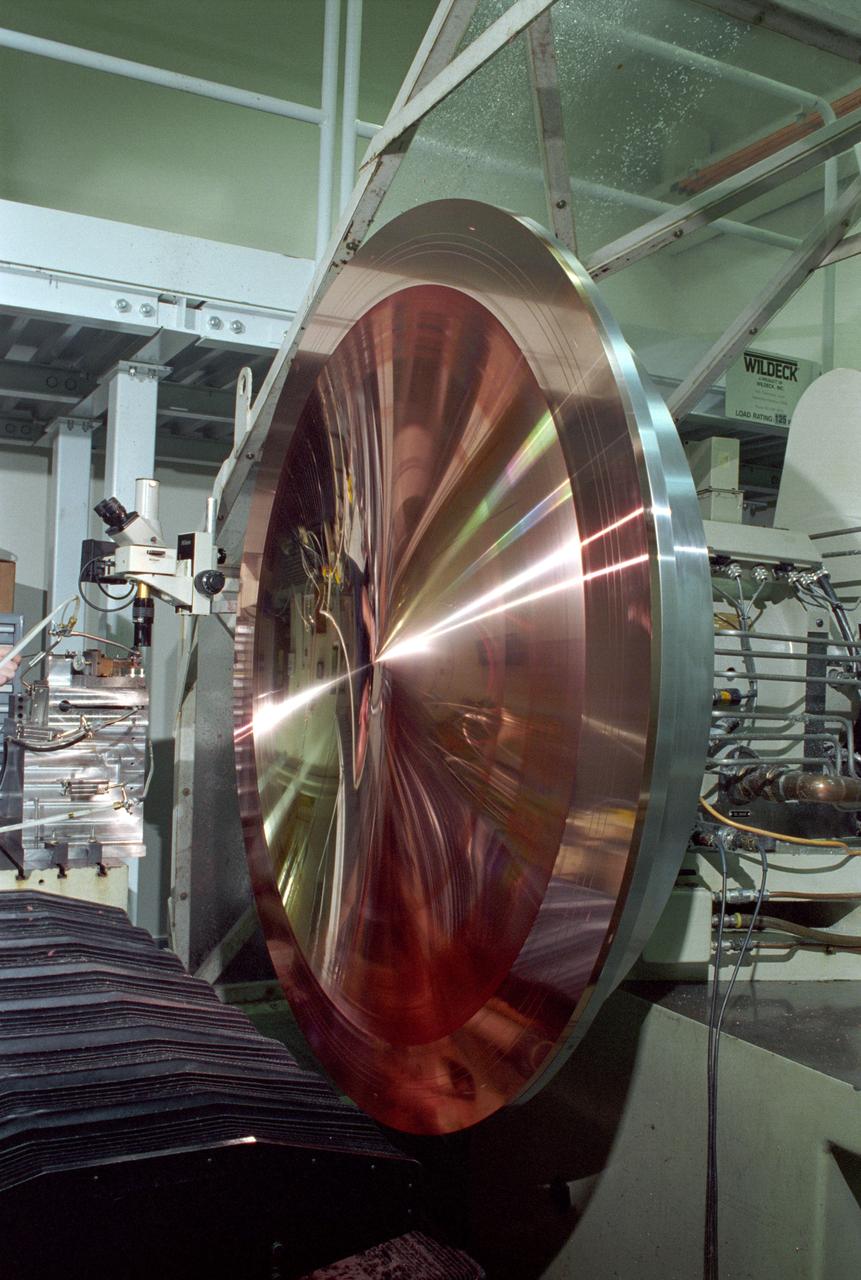
This king-size copper disk, manufactured at the Space Optics Manufacturing and Technology Center (SOMTC) at the Marshall Space Flight Center (MSFC), is a special mold for making high resolution monitor screens. This master mold will be used to make several other molds, each capable of forming hundreds of screens that have a type of lens called a Fresnel lens. Weighing much less than conventional optics, Fresnel lenses have multiple concentric grooves, each formed to a precise angle, that together create the curvature needed to focus and project images. MSFC leads NASA's space optics manufacturing technology development as a technology leader for diamond turning. The machine used to manufacture this mold is among many one-of-a-kind pieces of equipment of MSFC's SOMTC.
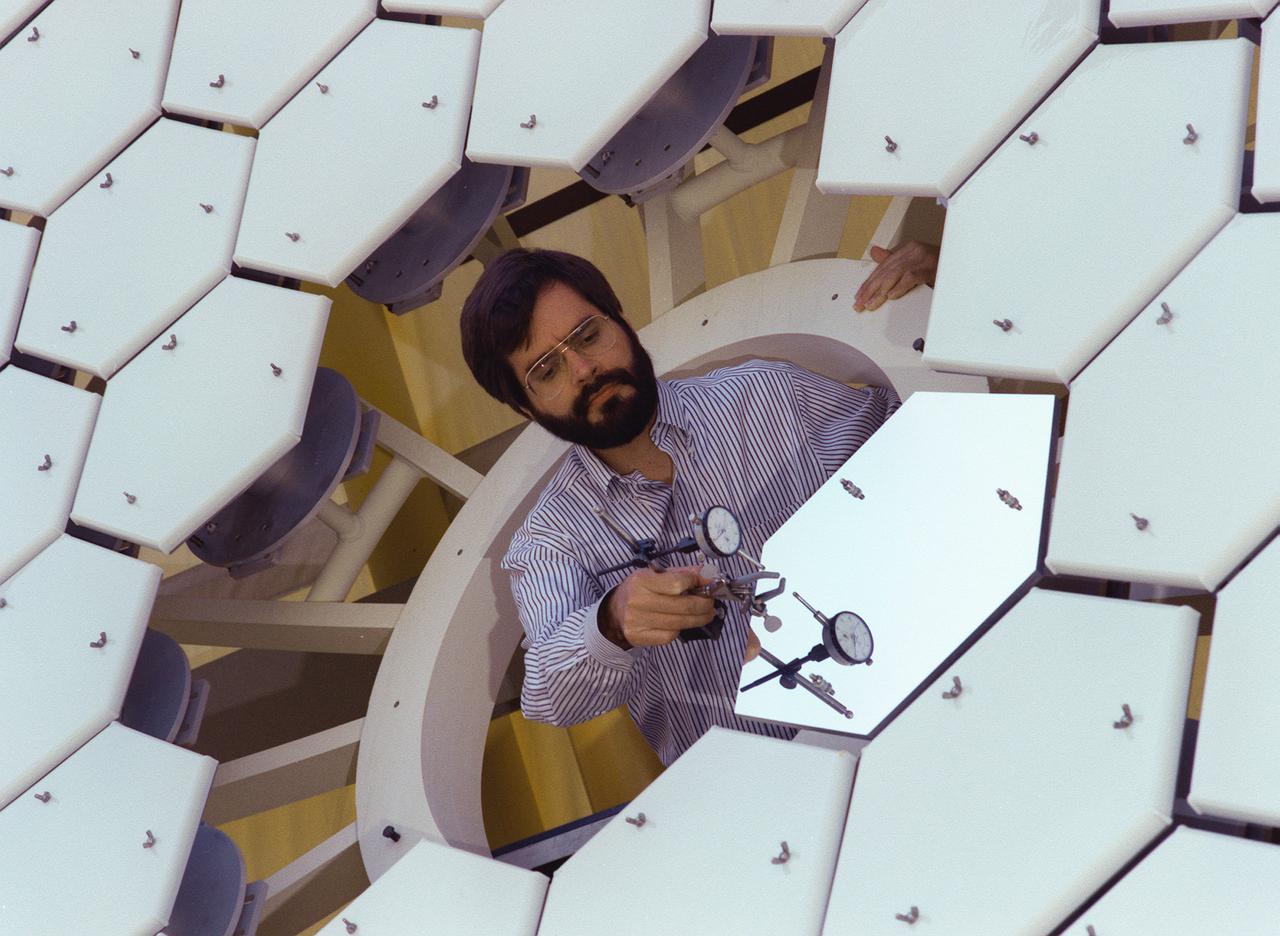
NASA's Space Optics Manufacturing Technology Center has been working to expand our view of the universe via sophisticated new telescopes. The Optics Center's goal is to develop low-cost, advanced space optics technologies for the NASA program in the 21st century, including the long-term goal of imaging Earth-like planets in distant solar systems. A segmented array of mirrors was designed by the Space Optics Manufacturing Technology Center for the solar concentrator test stand at the Marshall Space Flight Center (MSFC) for powering solar thermal propulsion engines. Each hexagon mirror has a spherical surface to approximate a parabolic concentrator when combined into the entire 18-foot diameter array. The aluminum mirrors were polished with a diamond turning machine that creates a glass-like reflective finish on metal. The precision fabrication machinery at the Space Optics Manufacturing Technology Center at MSFC can polish specialized optical elements to a world class quality of smoothness. This image shows optics physicist, Vince Huegele, examining one of the 144-segment hexagonal mirrors of the 18-foot diameter array at the MSFC solar concentrator test stand.
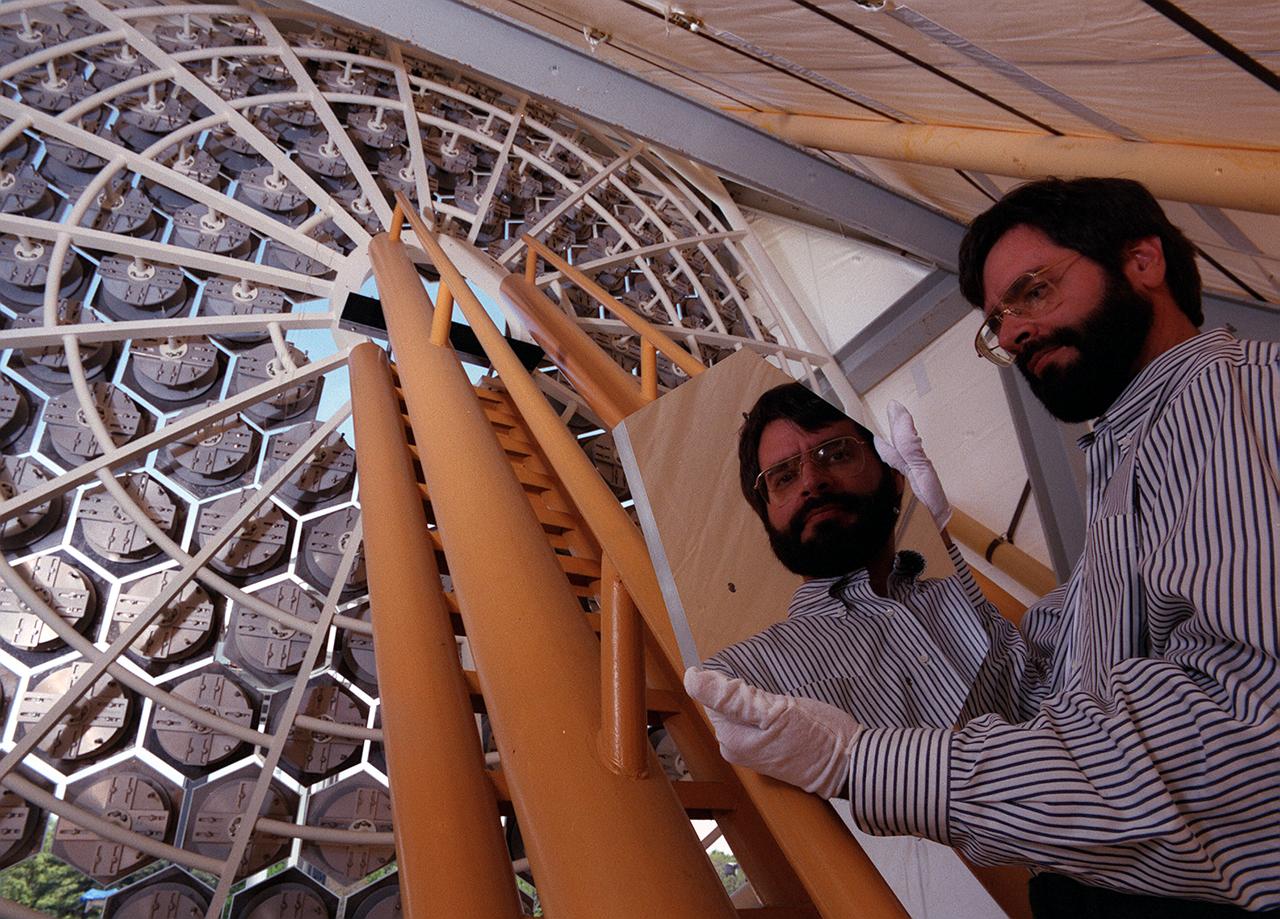
NASA's Space Optics Manufacturing Technology Center has been working to expand our view of the universe via sophisticated new telescopes. The Optics Center's goal is to develop low-cost, advanced space optics technologies for the NASA program in the 21st century, including the long-term goal of imaging Earth-like planets in distant solar systems. A segmented array of mirrors was designed by the Space Optics Manufacturing Technology Center for solar the concentrator test stand at the Marshall Space Flight Center (MSFC) for powering solar thermal propulsion engines. Each hexagon mirror has a spherical surface to approximate a parabolic concentrator when combined into the entire 18-foot diameter array. The aluminum mirrors were polished with a diamond turning machine, that creates a glass-like reflective finish on metal. The precision fabrication machinery at the Space Optics Manufacturing Technology Center at MSFC can polish specialized optical elements to a world class quality of smoothness. This image shows optics physicist, Vince Huegele, examining one of the 144-segment hexagonal mirrors of the 18-foot diameter array at the MSFC solar concentrator test stand.