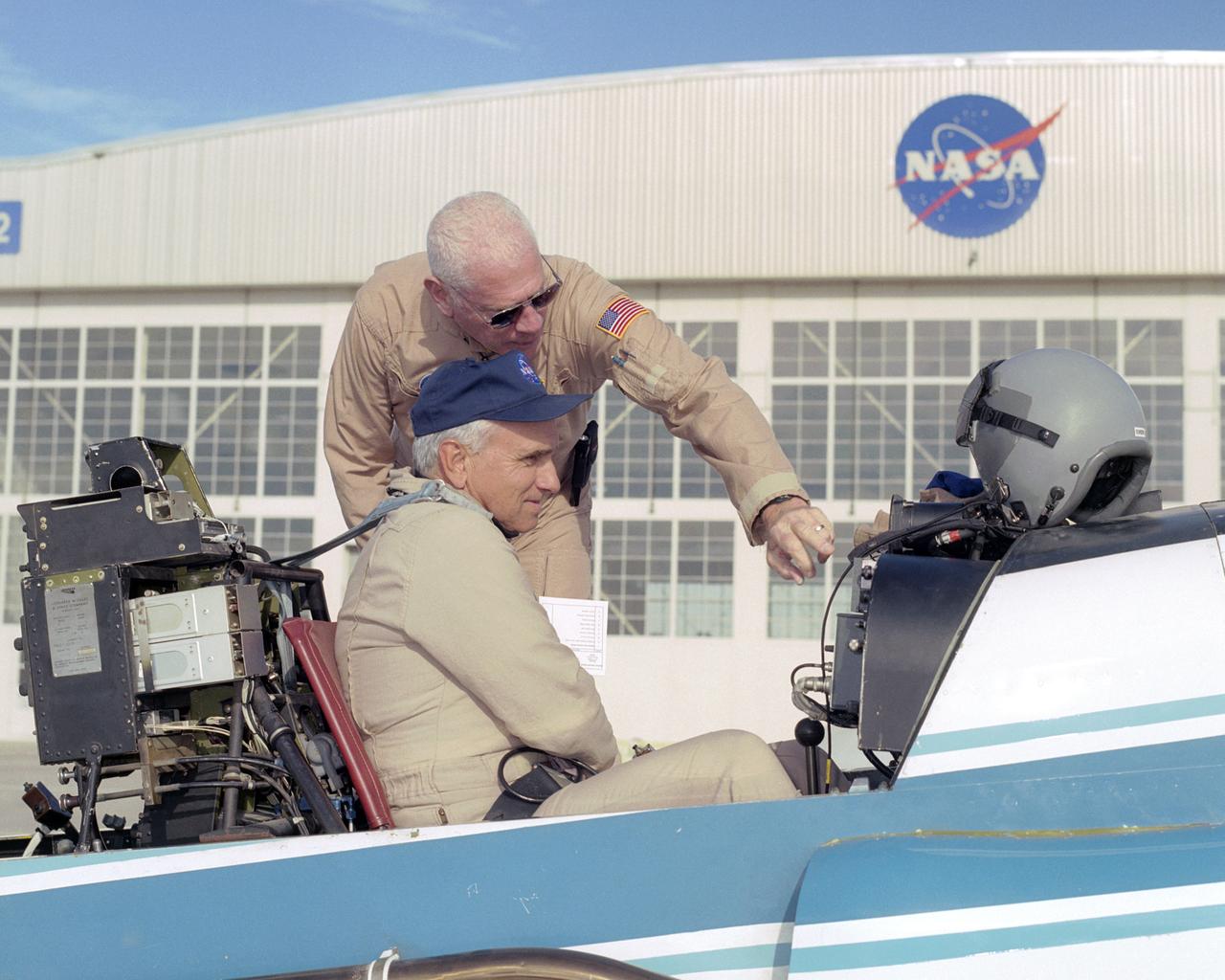
NASA pilot Ed Lewis (rear) briefs NASA test pilot Dick Ewers on the flight instruments of NASA's YO-3A acoustics research aircraft prior to a checkout flight.
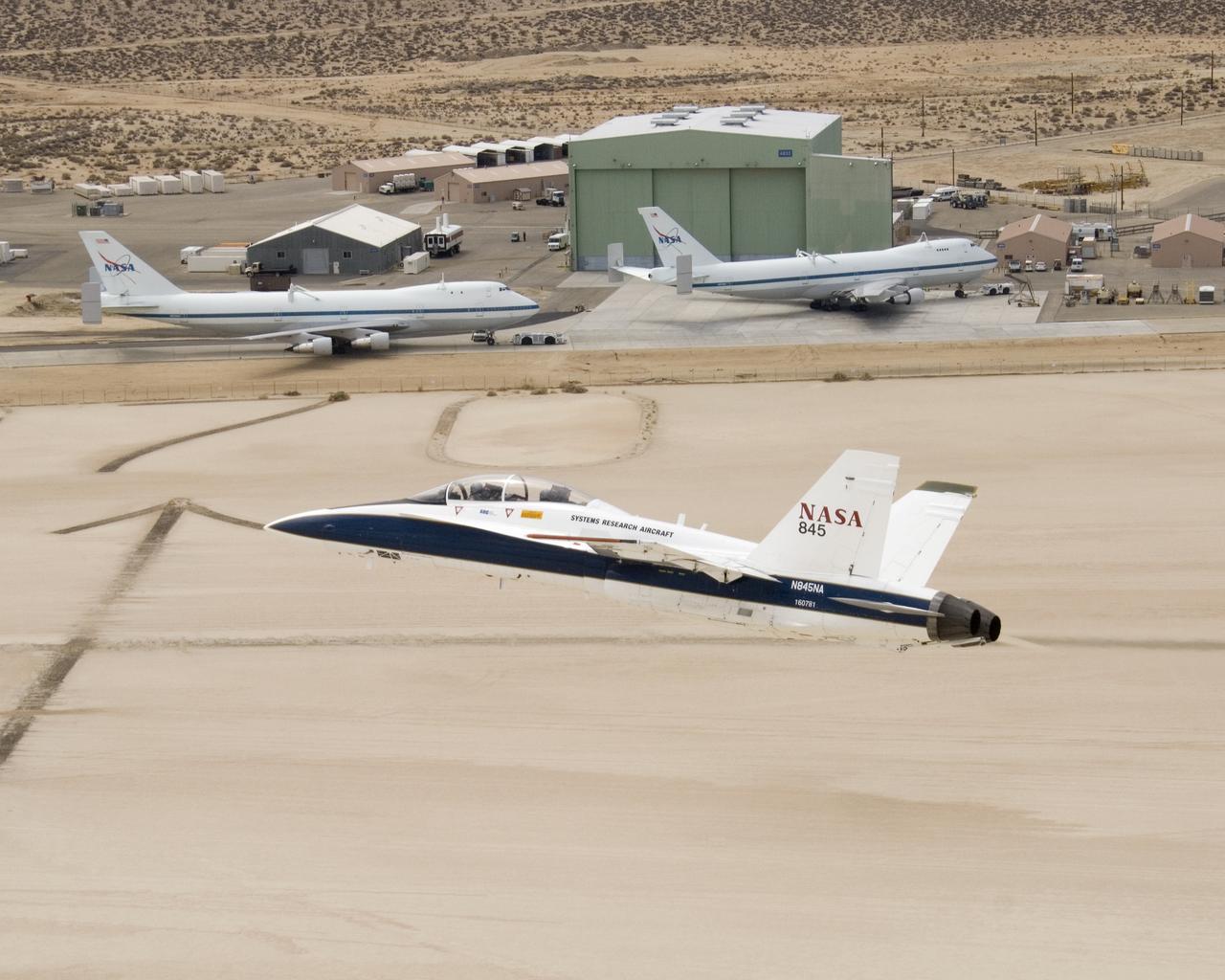
NASA's two Boeing 747 Shuttle Carrier Aircraft form the backdrop as pilot Dick Ewers banks NASA F/A-18 #845 low over Rogers Dry Lake to end a research flight.
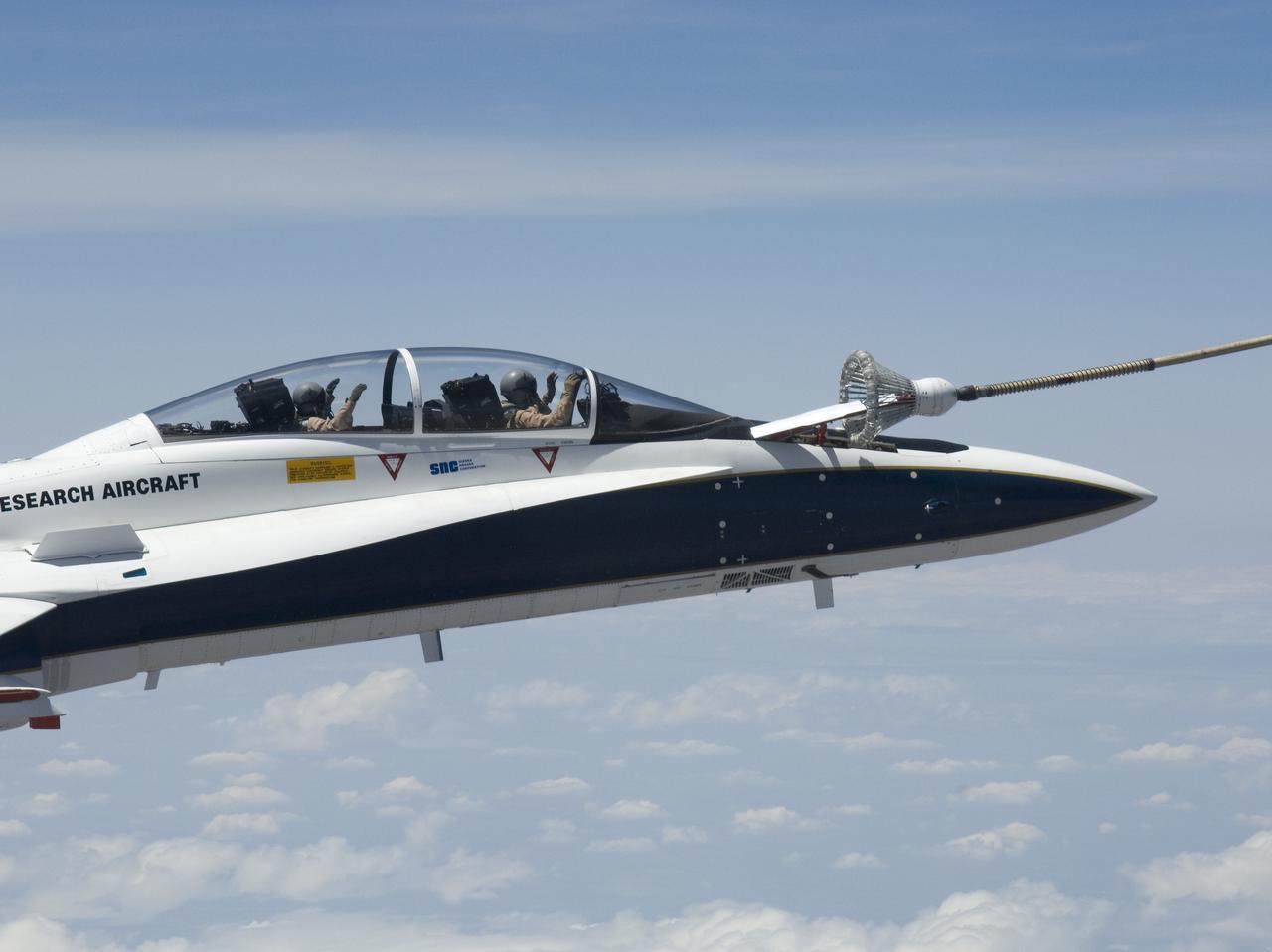
Pilot Dick Ewers and flight test engineer Leslie Molzahn were hands-off as NASA F/A-18 #845 flew itself into the drogue on an autonomous refueling demonstration.
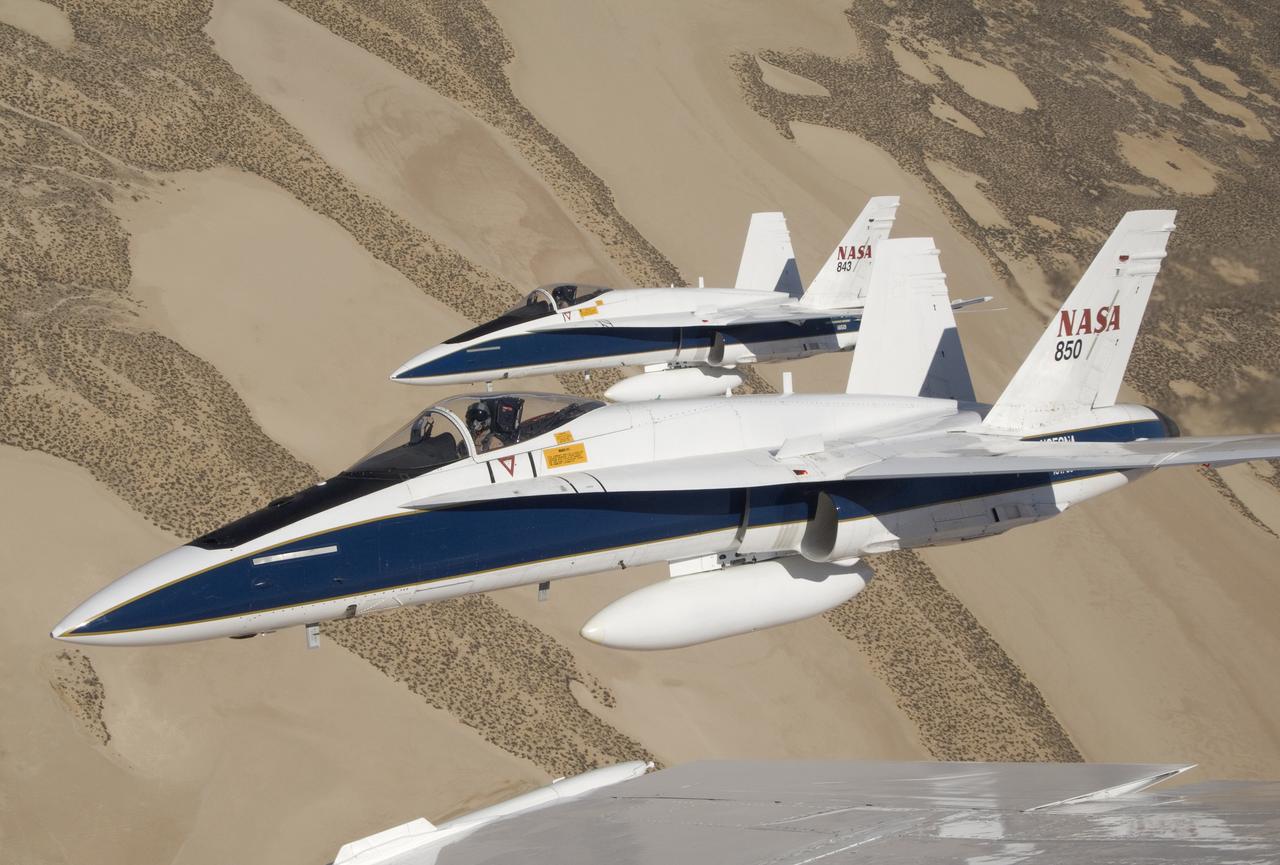
Two NASA Dryden F/A-18s flown by research pilots Frank Batteas and Nils Larson were captured by photographer Lori Losey from a third F/A-18 flown by Dick Ewers as they flew in tight formation over the desert at Edwards Air Force Base.
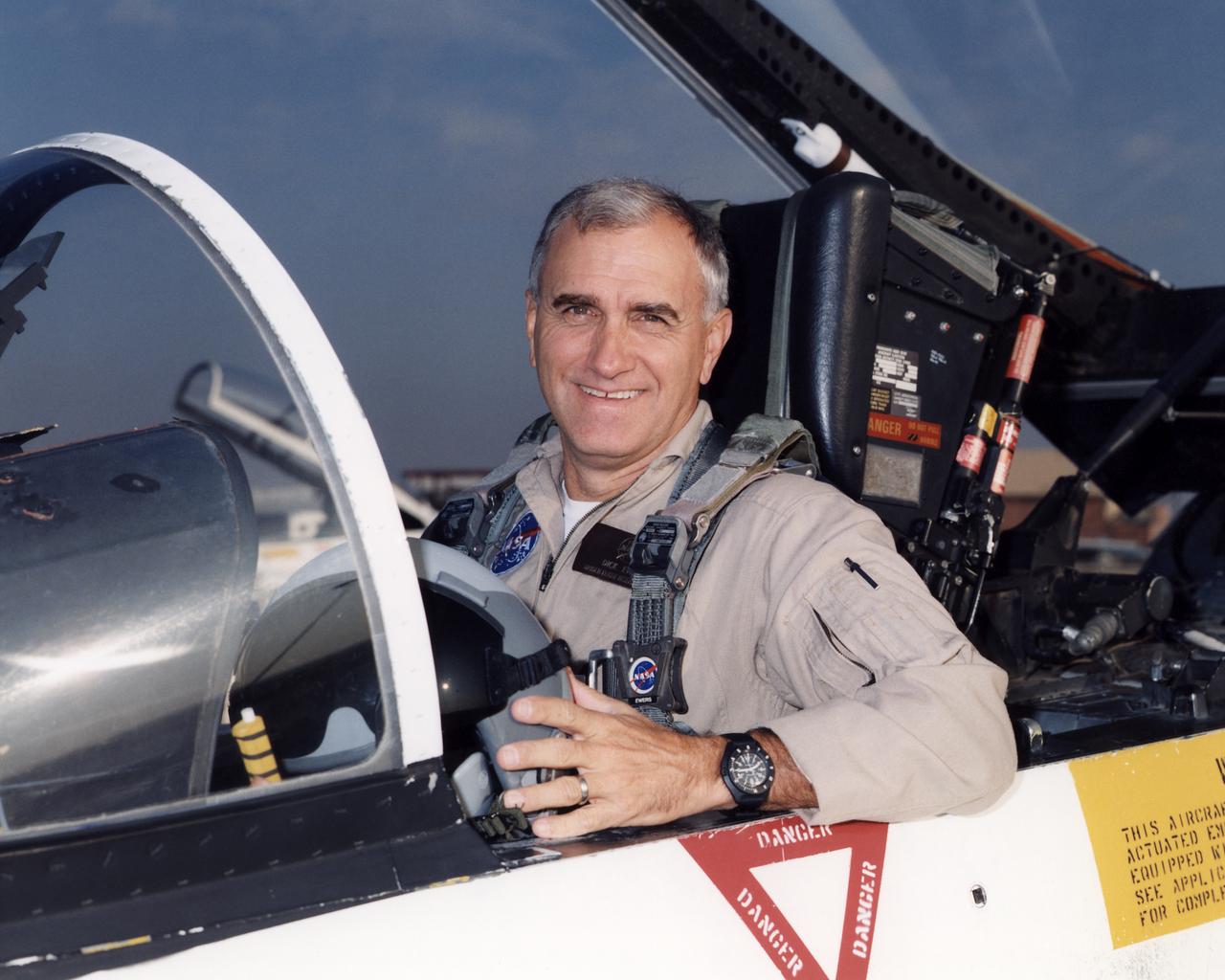
Richard G. (Dick) Ewers became a pilot in the Flight Crew Branch of NASA's Dryden Flight Research Center, Edwards, California, in May 1998. His flying duties focus on operation of the Airborne Science DC-8 and Systems Research F/A-18 aircraft, but he also maintains qualifications in the King Air and T-34C. He has more than 32 years and nearly 9,000 hours of military and civilian flight experience in all types of aircraft from jet fighters to blimps. Ewers came to NASA Dryden from a position as an engineering test pilot with Northrop Grumman's Electronic Sensors and Systems Division (formerly Westinghouse's Electronic Systems Group). He spent eight and a half years with Westinghouse flight testing radar and forward looking infrared systems under development for military and civilian use. Before going to work for Westinghouse, Ewers served for more than 21 years as a U.S. Marine Corps fighter and test pilot, flying F-4, A-4, and F/A-18 aircraft. He underwent flight training at Naval Air Station Pensacola, Fla., in 1969-70. He was subsequently assigned to both fighter/attack and reconnaissance squadrons before ultimately commanding an F-4S squadron for two years. Additionally, his flying included combat service in Vietnam and operational exchange tours with both U.S. Navy and U.S. Air Force squadrons flying F-4s around the world, including off aircraft carriers. Ewers graduated from the U.S. Naval Test Pilot School in 1981 and subsequently served two tours as a test pilot at the Naval Air Test Center, Patuxent River, Md. Most of his flight test experience was with the F/A-18 Hornet. He retired from the Marine Corps in 1989 with the rank of lieutenant colonel. Ewers graduated from the U.S. Air Force Academy in 1968 with a bachelor of science degree in engineering mechanics. He earned a master of science degree in aeronautical systems from the University of West Florida in 1970.
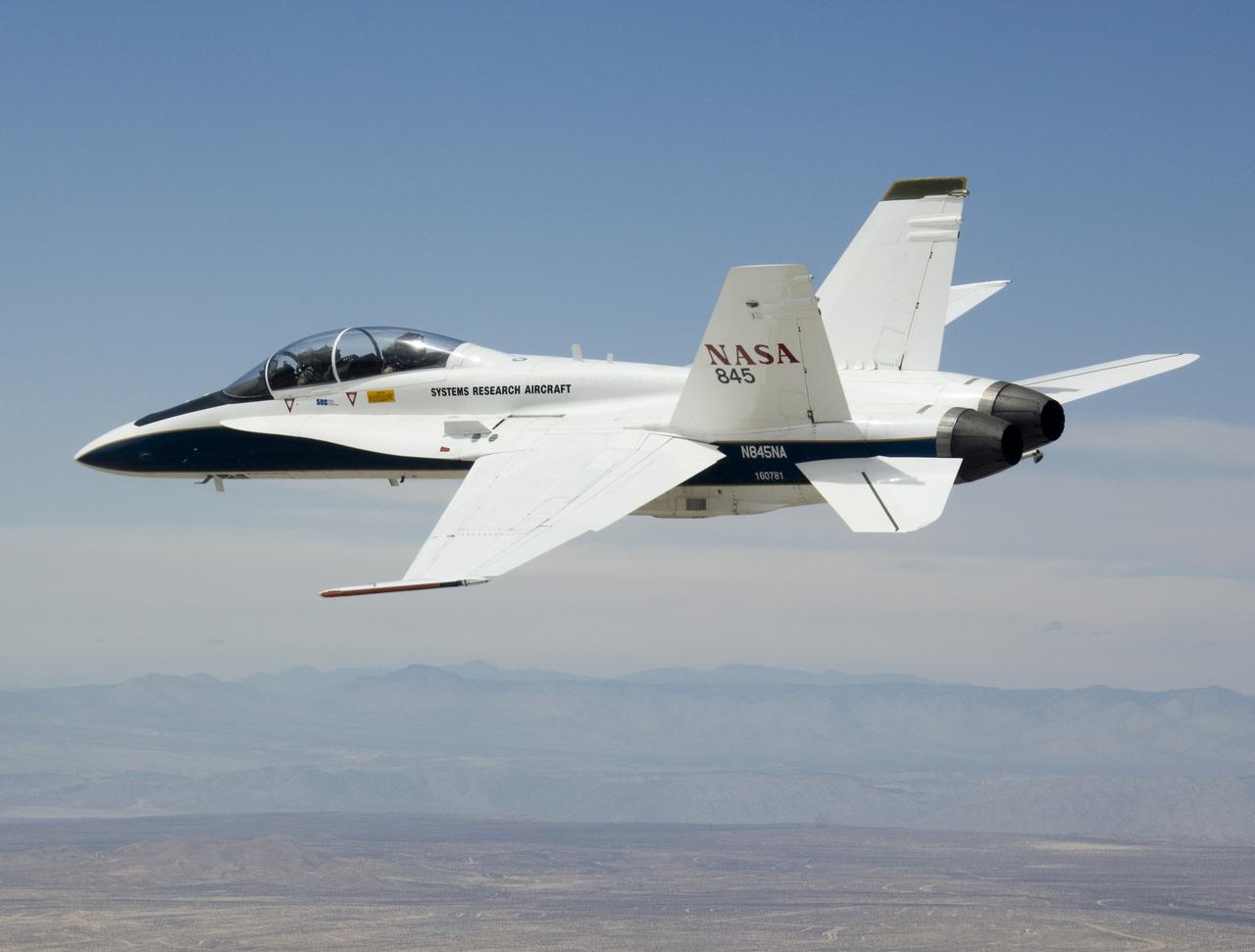
NASA's F/A-18B #845 was captured by the photographer as it returned from its final flight in the Autonomous Airborne Refueling Demonstration research project.
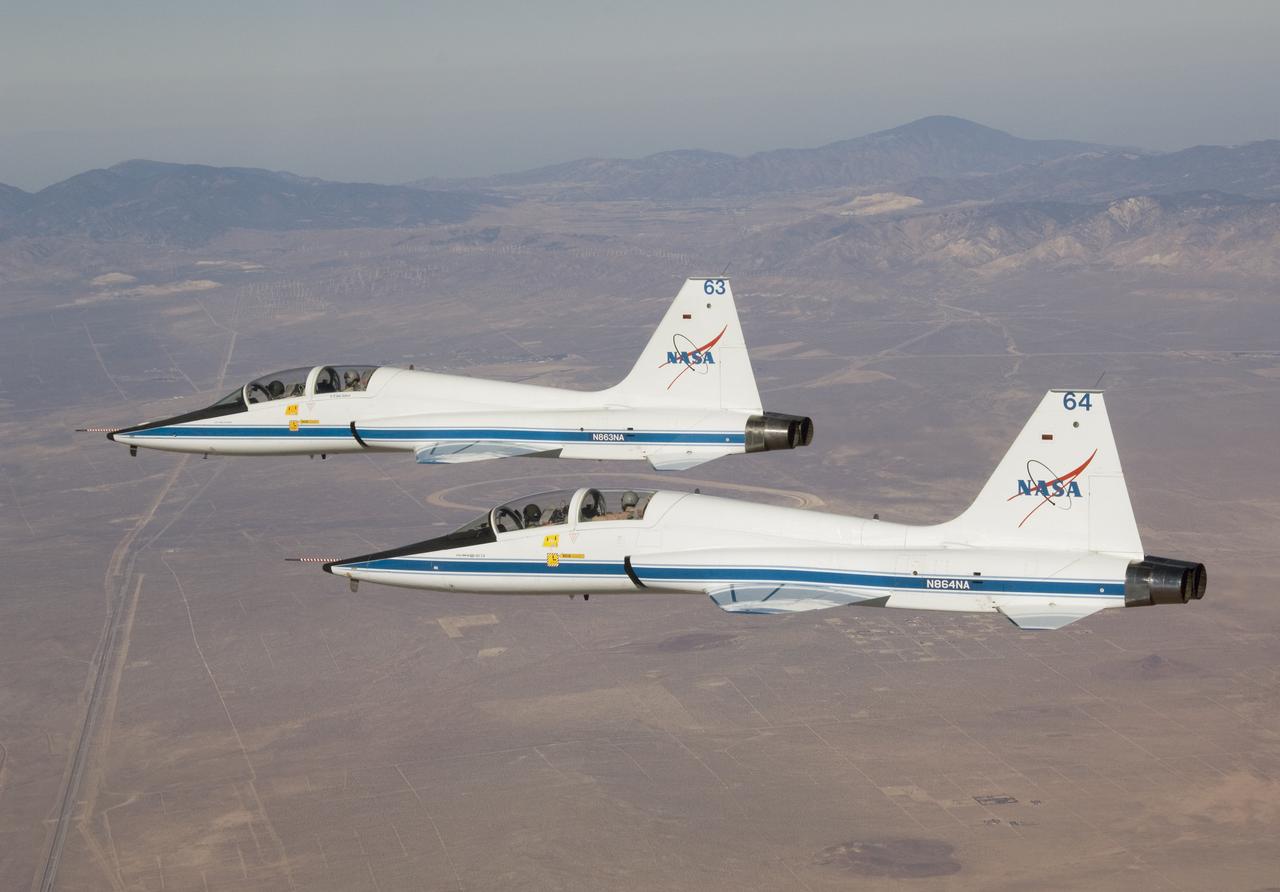
NASA Dryden Flight Research Center's two T-38A Talon mission support aircraft flew together for the first time on Sept. 26, 2007 while conducting pitot-static airspeed calibration checks during routine pilot proficiency flights. The two aircraft, flown by NASA research pilots Kelly Latimer and Frank Batteas, joined up with a NASA Dryden F/A-18 flown by NASA research pilot Dick Ewers to fly the airspeed calibrations at several speeds and altitudes that would be flown by the Stratospheric Observatory for Infrared Astronomy (SOFIA) Boeing 747SP during its initial flight test phase. The T-38s, along with F/A-18s, serve in a safety chase role during those test missions, providing critical instrument and visual monitoring for the flight test series.
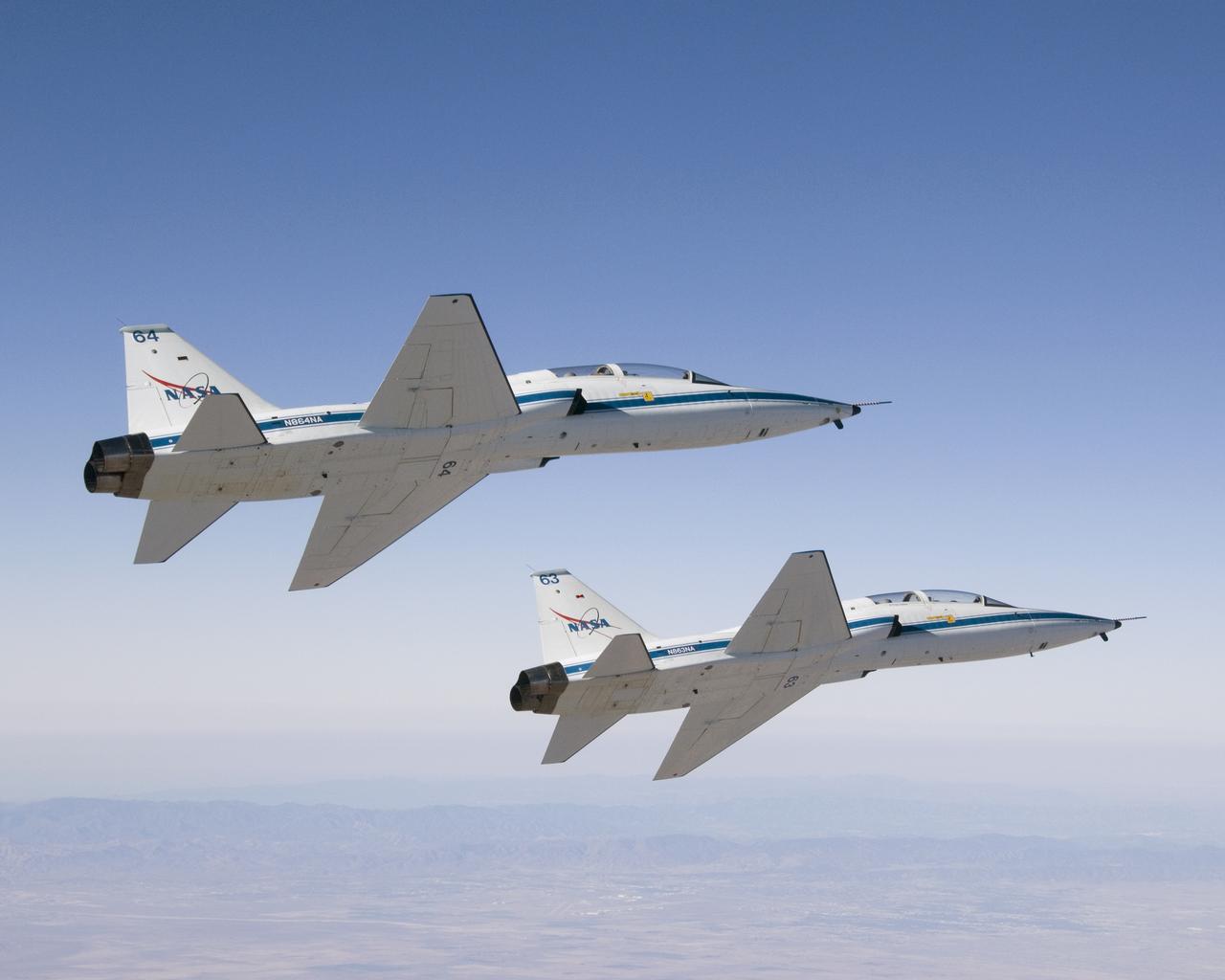
NASA Dryden Flight Research Center's two T-38A Talon mission support aircraft flew together for the first time on Sept. 26, 2007 while conducting pitot-static airspeed calibration checks during routine pilot proficiency flights. The two aircraft, flown by NASA research pilots Kelly Latimer and Frank Batteas, joined up with a NASA Dryden F/A-18 flown by NASA research pilot Dick Ewers to fly the airspeed calibrations at several speeds and altitudes that would be flown by the Stratospheric Observatory for Infrared Astronomy (SOFIA) Boeing 747SP during its initial flight test phase. The T-38s, along with F/A-18s, serve in a safety chase role during those test missions, providing critical instrument and visual monitoring for the flight test series.
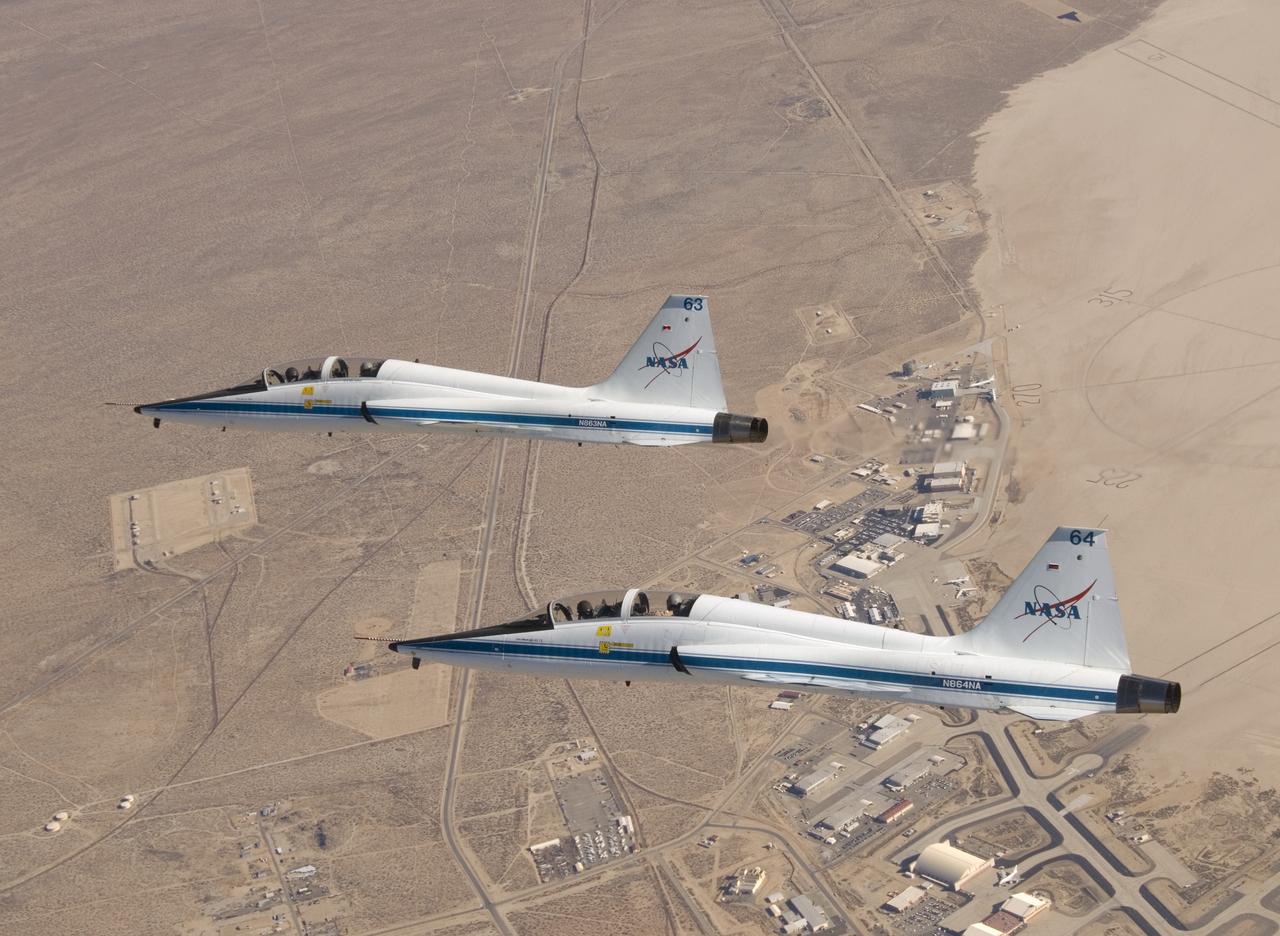
NASA Dryden Flight Research Center's two T-38A Talon mission support aircraft flew together for the first time on Sept. 26, 2007 while conducting pitot-static airspeed calibration checks during routine pilot proficiency flights. The two aircraft, flown by NASA research pilots Kelly Latimer and Frank Batteas, joined up with a NASA Dryden F/A-18 flown by NASA research pilot Dick Ewers to fly the airspeed calibrations at several speeds and altitudes that would be flown by the Stratospheric Observatory for Infrared Astronomy (SOFIA) Boeing 747SP during its initial flight test phase. The T-38s, along with F/A-18s, serve in a safety chase role during those test missions, providing critical instrument and visual monitoring for the flight test series.
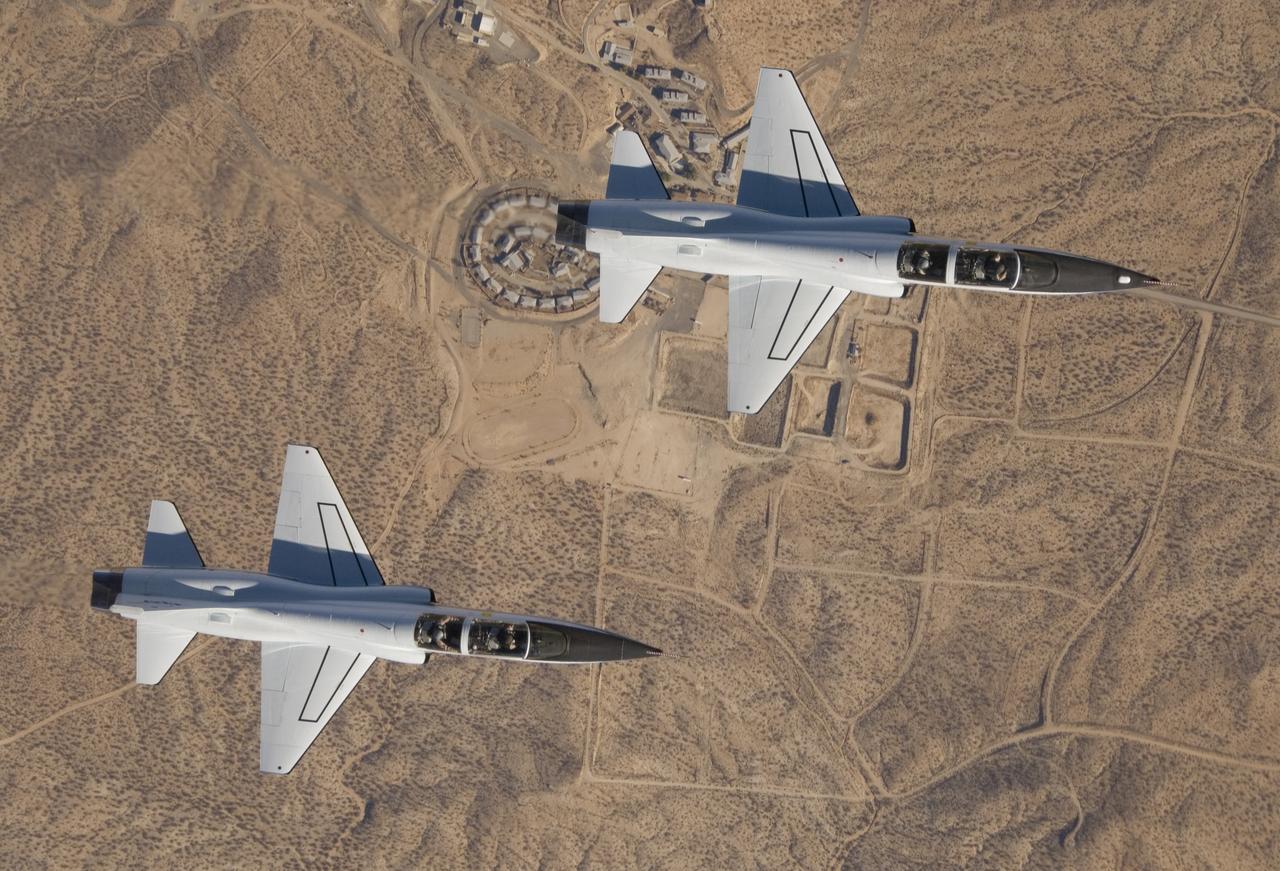
NASA Dryden Flight Research Center's two T-38A Talon mission support aircraft flew together for the first time on Sept. 26, 2007 while conducting pitot-static airspeed calibration checks during routine pilot proficiency flights. The two aircraft, flown by NASA research pilots Kelly Latimer and Frank Batteas, joined up with a NASA Dryden F/A-18 flown by NASA research pilot Dick Ewers to fly the airspeed calibrations at several speeds and altitudes that would be flown by the Stratospheric Observatory for Infrared Astronomy (SOFIA) Boeing 747SP during its initial flight test phase. The T-38s, along with F/A-18s, serve in a safety chase role during those test missions, providing critical instrument and visual monitoring for the flight test series.
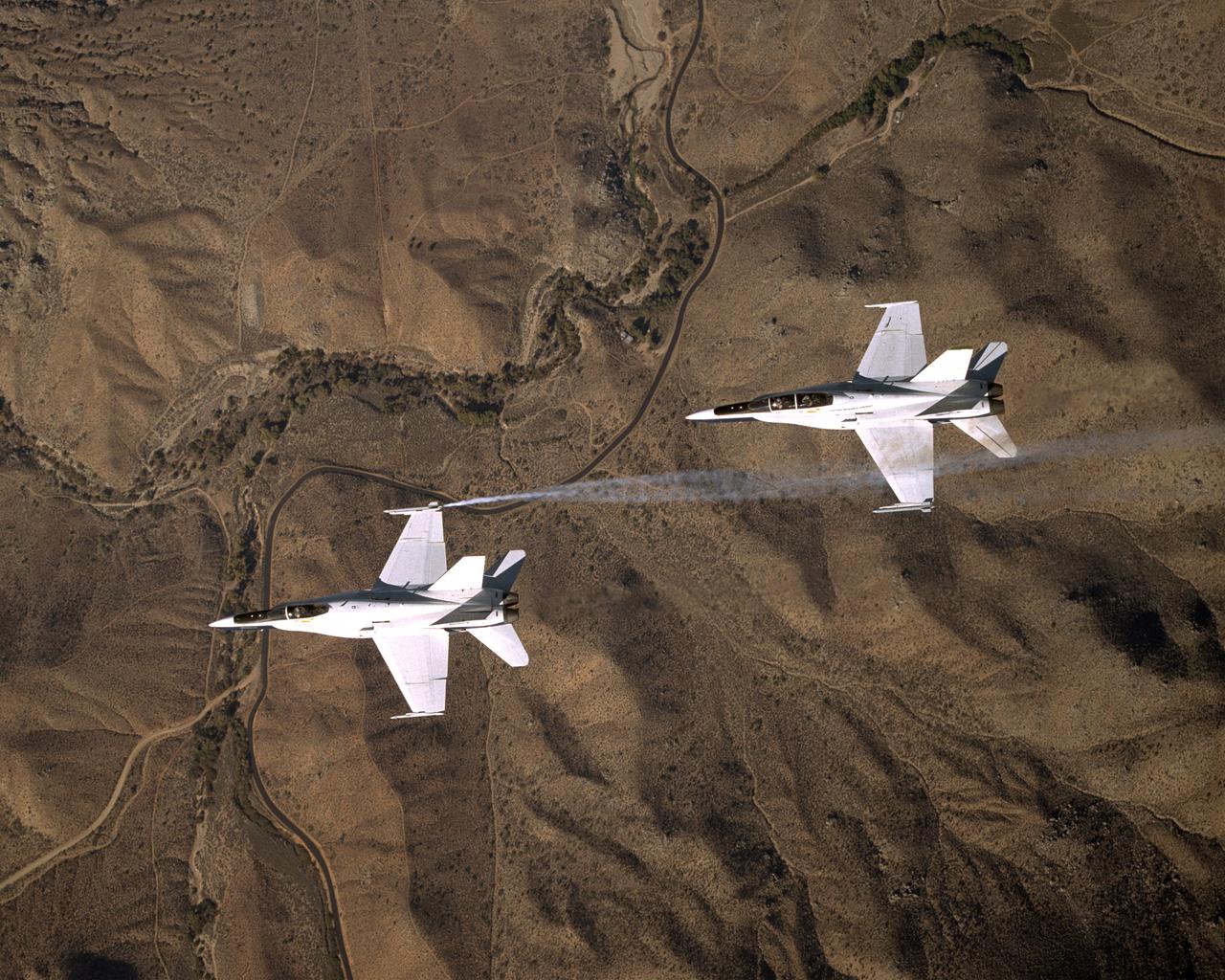
Smoke generators show the twisting paths of wingtip vortices behind two NASA Dryden F/A-18's used in the Autonomous Formation Flight (AFF) program during flight #743.
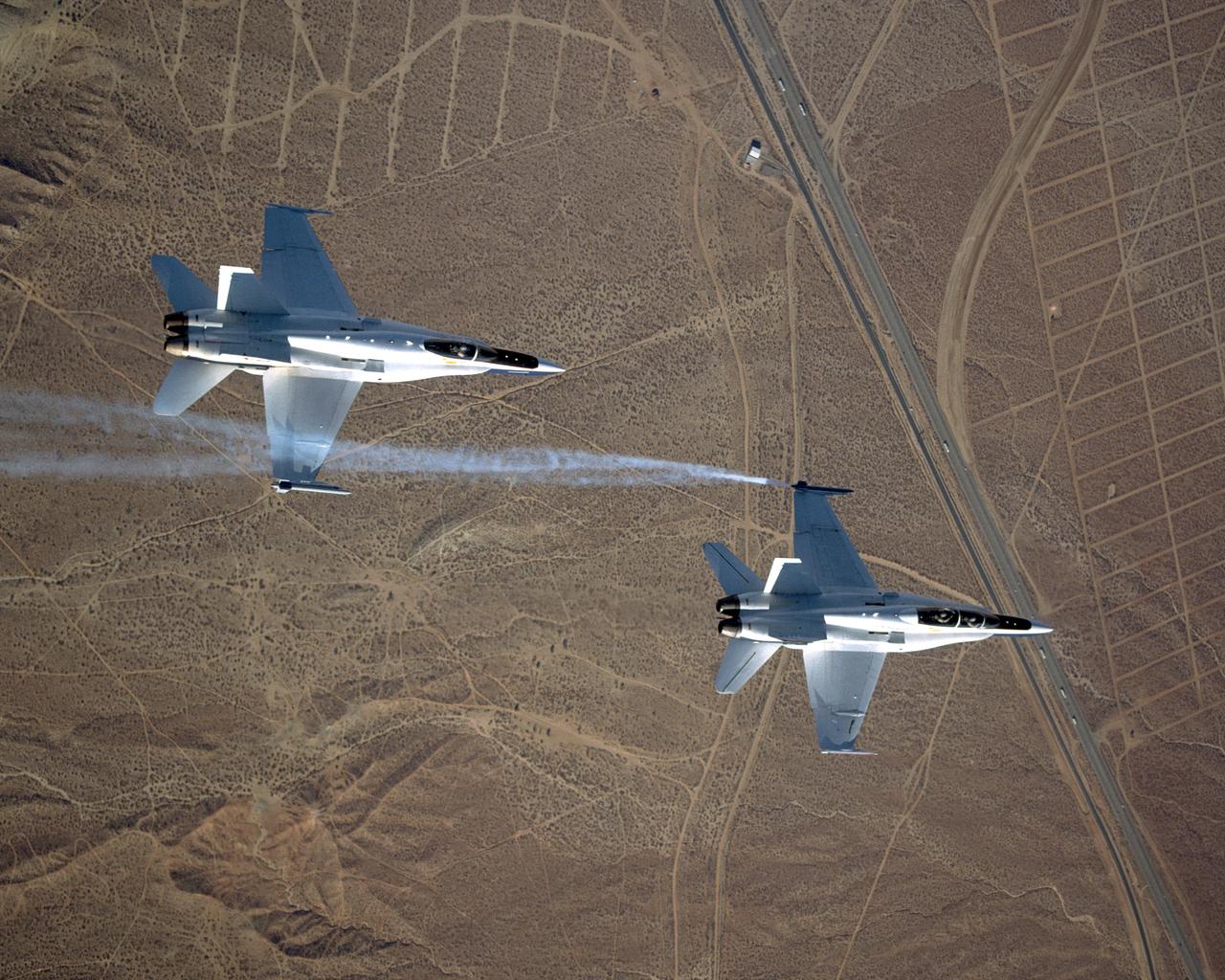
Smoke generators show the twisting paths of wingtip vortices behind two NASA Dryden F/A-18's used in the Autonomous Formation Flight (AFF) program during flight #743.

This unique view, looking directly up at two NASA Dryden F/A-18's used in the Autonomous Formation Flight (AFF) program, was captured by Carla Thomas from another F-18 flying safety/chase.
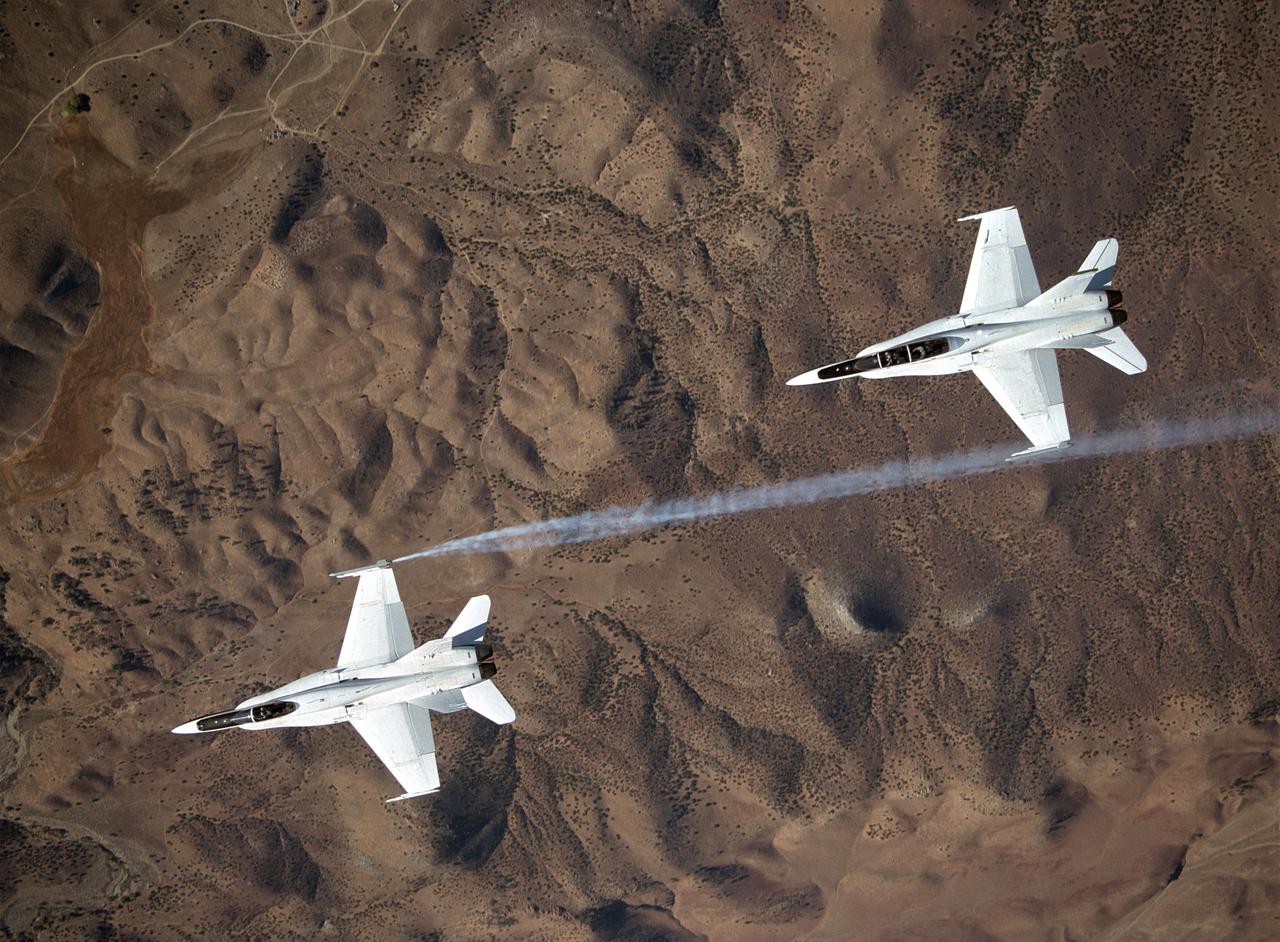
Smoke generators show the twisting paths of wingtip vortices behind two NASA Dryden F/A-18's used in the Autonomous Formation Flight (AFF) program during flight #743.