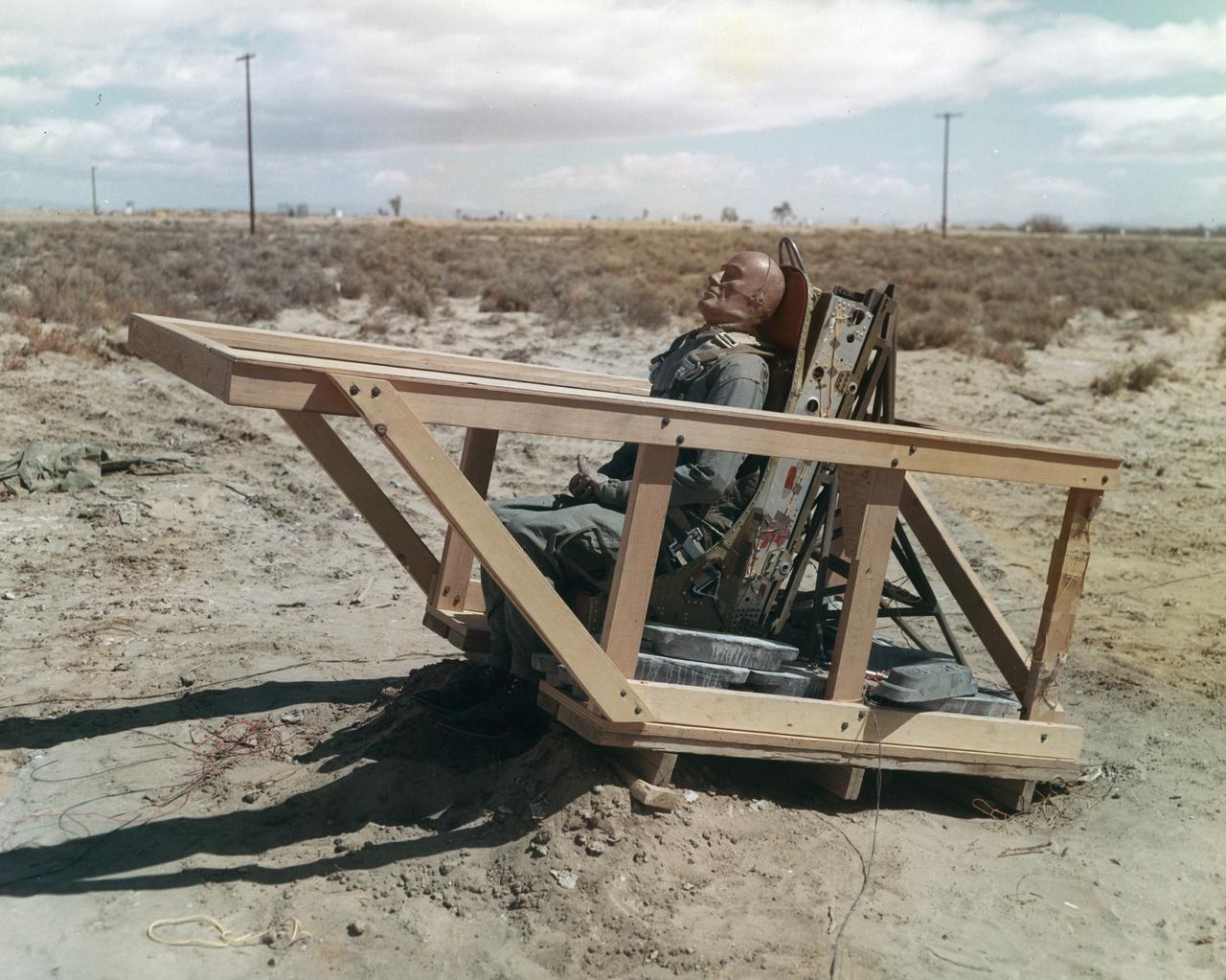
The M2-F1 was fitted with an ejection seat before the airtow flights began. The project selected the seat used in the T-37 as modified by the Weber Company to use a rocket rather than a ballistic charge for ejection. To test the ejection seat, the Flight Research Center's Dick Klein constructed a plywood mockup of the M2-F1's top deck and canopy. On the first firings, the test was unsuccessful, but on the final test the dummy in the seat landed safely. The M2-F1 ejection seat was later used in the two Lunar Landing Research Vehicles and the three Lunar Landing Training Vehicles. Three of them crashed, but in each case the pilot ejected from the vehicle successfully.
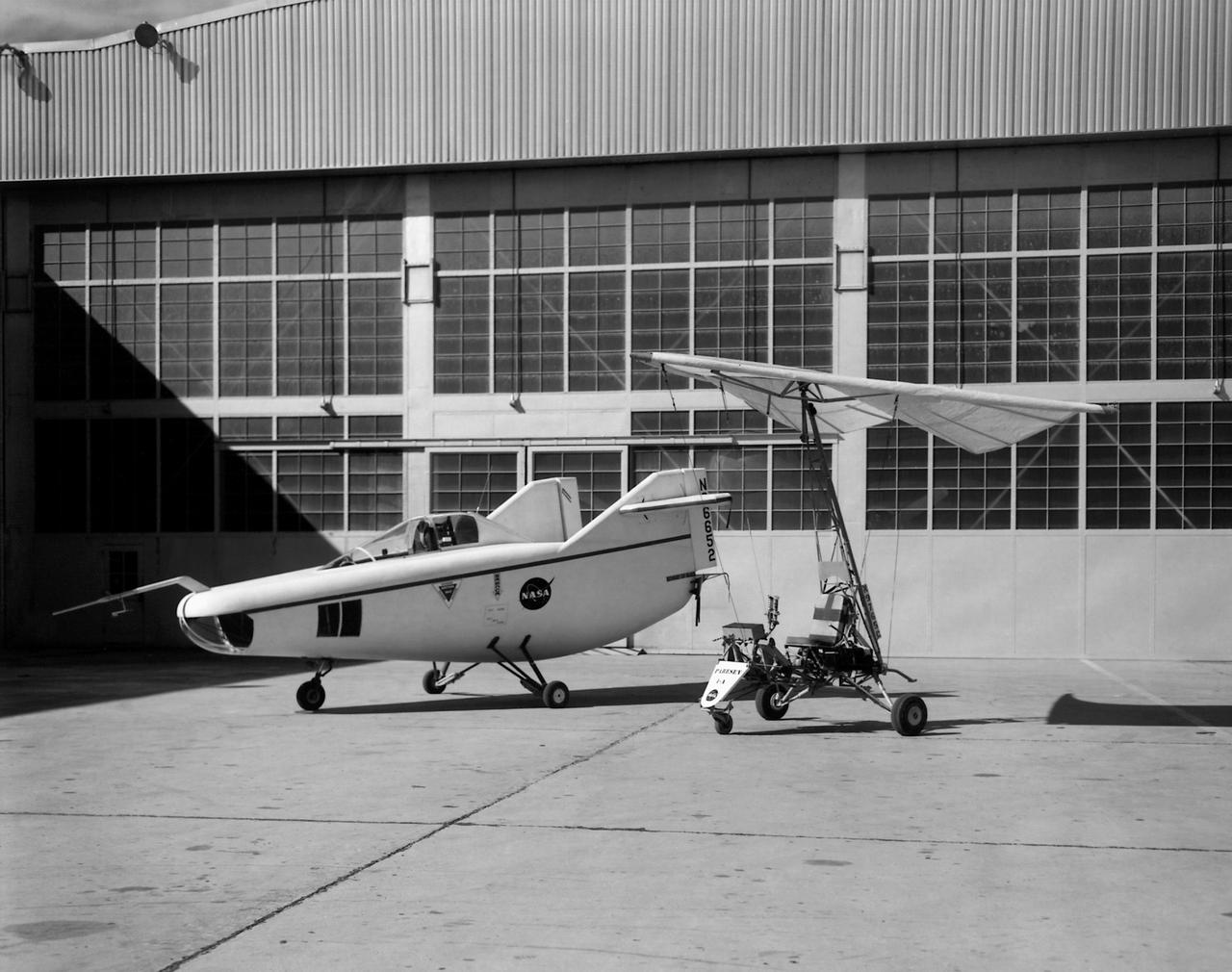
In this photo of the M2-F1 lifting body and the Paresev 1B on the ramp, the viewer sees two vehicles representing different approaches to building a research craft to simulate a spacecraft able to land on the ground instead of splashing down in the ocean as the Mercury capsules did. The M2-F1 was a lifting body, a shape able to re-enter from orbit and land. The Paresev (Paraglider Research Vehicle) used a Rogallo wing that could be (but never was) used to replace a conventional parachute for landing a capsule-type spacecraft, allowing it to make a controlled landing on the ground.