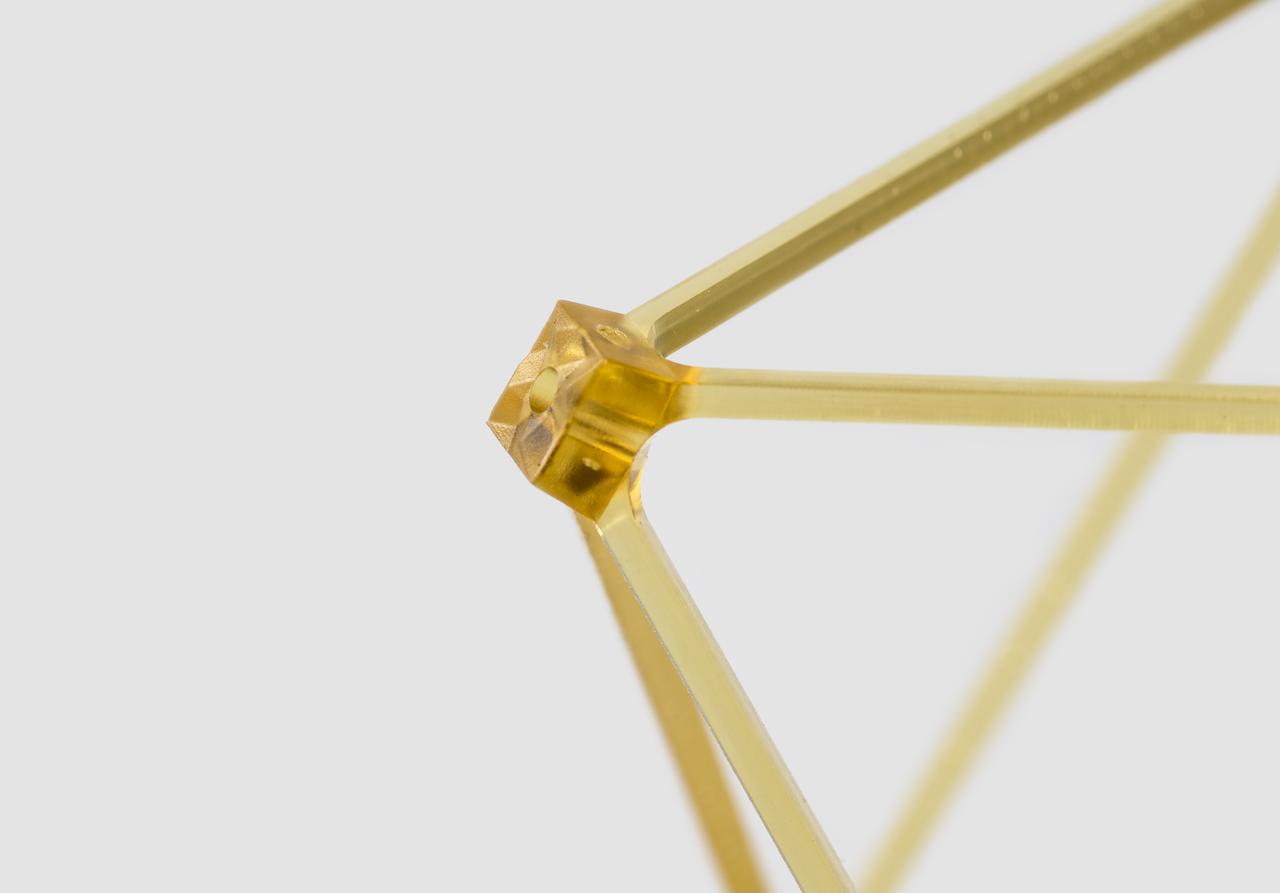
Mission Adaptive Digital Composite Aerostructure Technologies (MADCAT) model in the 14x22 test section. Interior of Structure. For more information go to NASA.gov article. April 3, 2019 "What is MADCAT?" Flexing Wings for Efficient Flight

Mission Adaptive Digital Composite Aerostructure Technologies (MADCAT) model in the 14x22 test section, building 1212C For more information go to NASA.gov article. April 3, 2019 "What is MADCAT?" Flexing Wings for Efficient Flight.
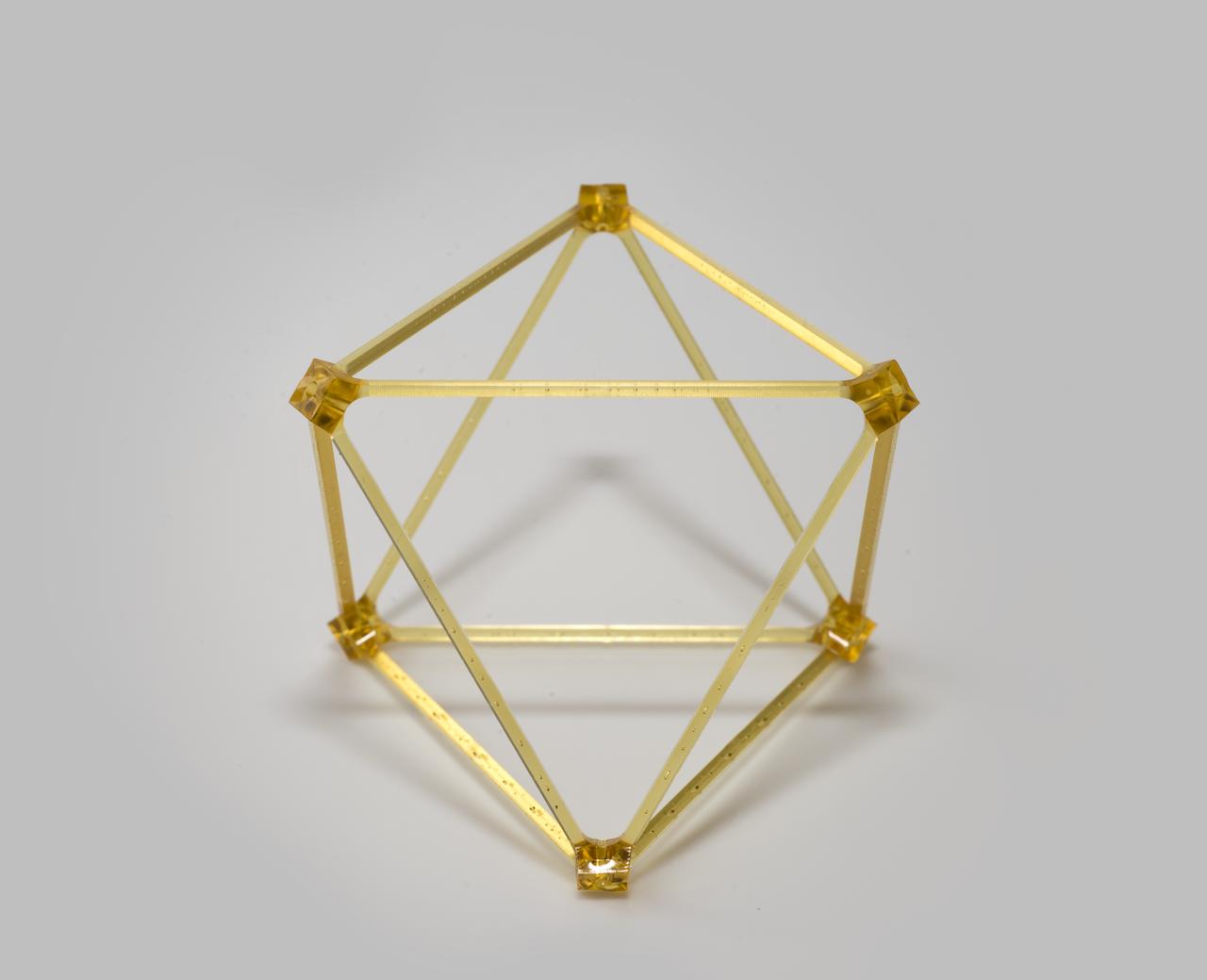
Mission Adaptive Digital Composite Aerostructure Technologies (MADCAT) model in the 14x22 test section. Interior of structure. For more information go to NASA.gov article. April 3, 2019 "What is MADCAT?" Flexing Wings for Efficient Flight
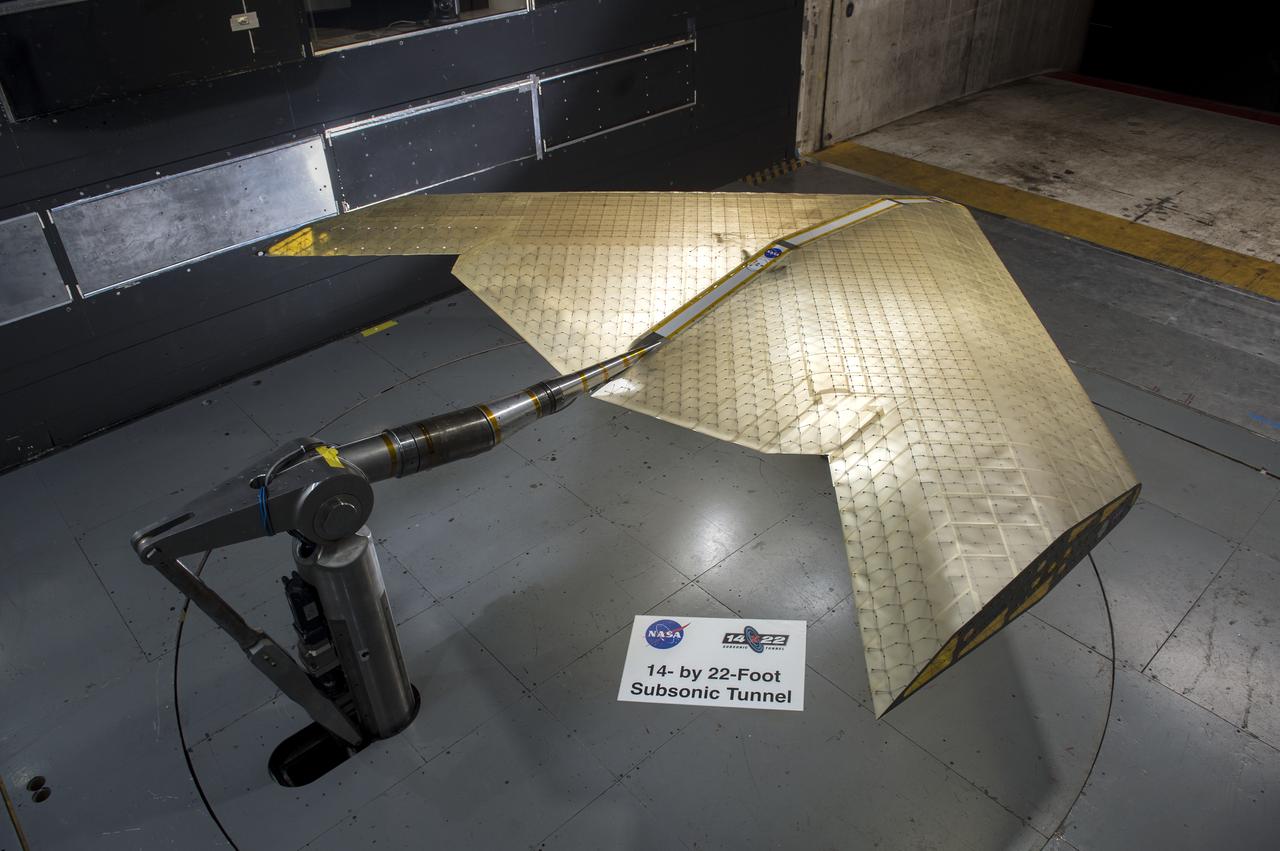
Mission Adaptive Digital Composite Aerostructure Technologies (MADCAT) model in the 14x22 test section, building 1212C For more information go to NASA.gov article. April 3, 2019 "What is MADCAT?" Flexing Wings for Efficient Flight
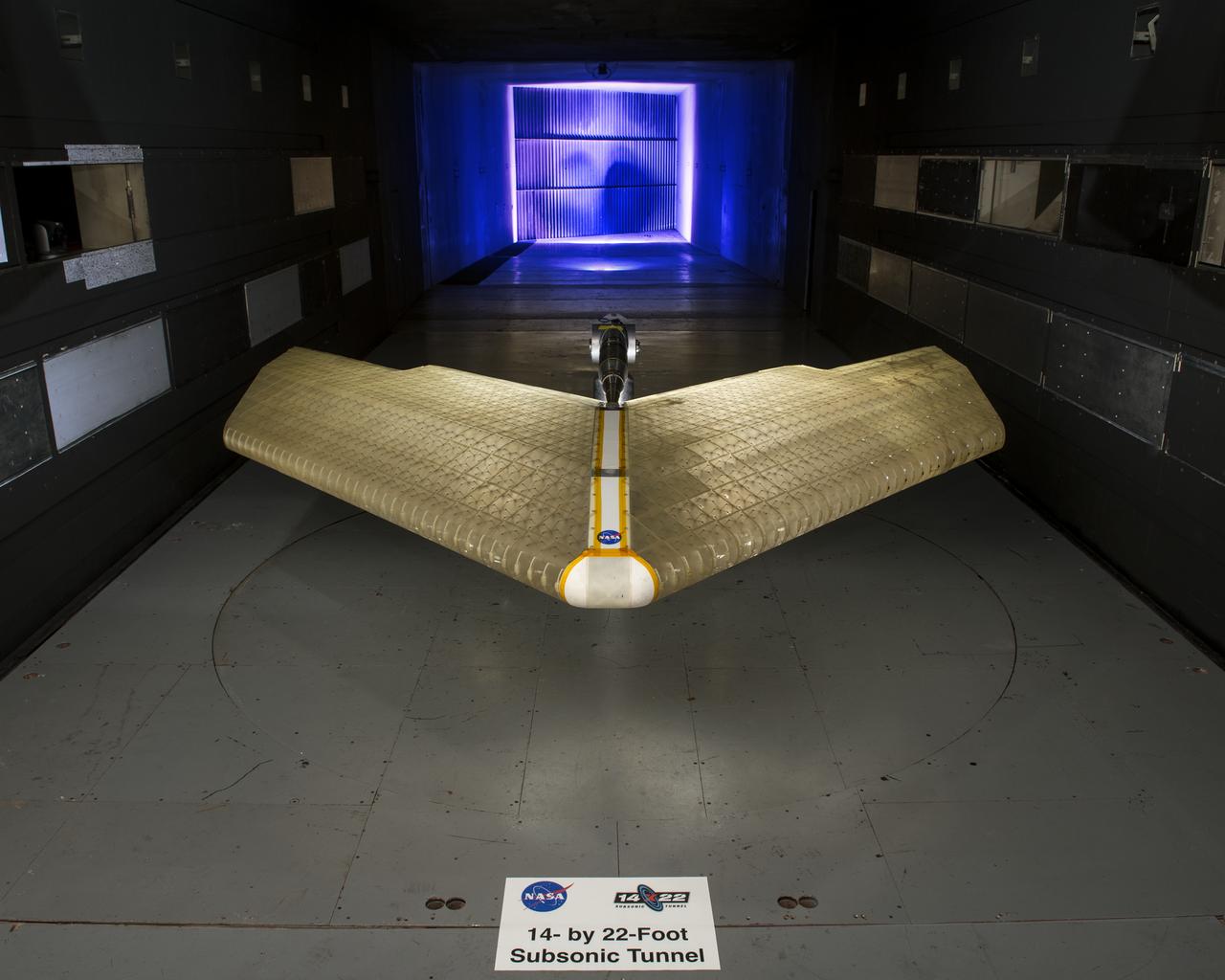
Mission Adaptive Digital Composite Aerostructure Technologies (MADCAT) model in the 14x22 test section, building 1212C. For more information go to NASA.gov article. April 3, 2019 " What is MADCAT? " Flexing Wings for Efficient Flight.
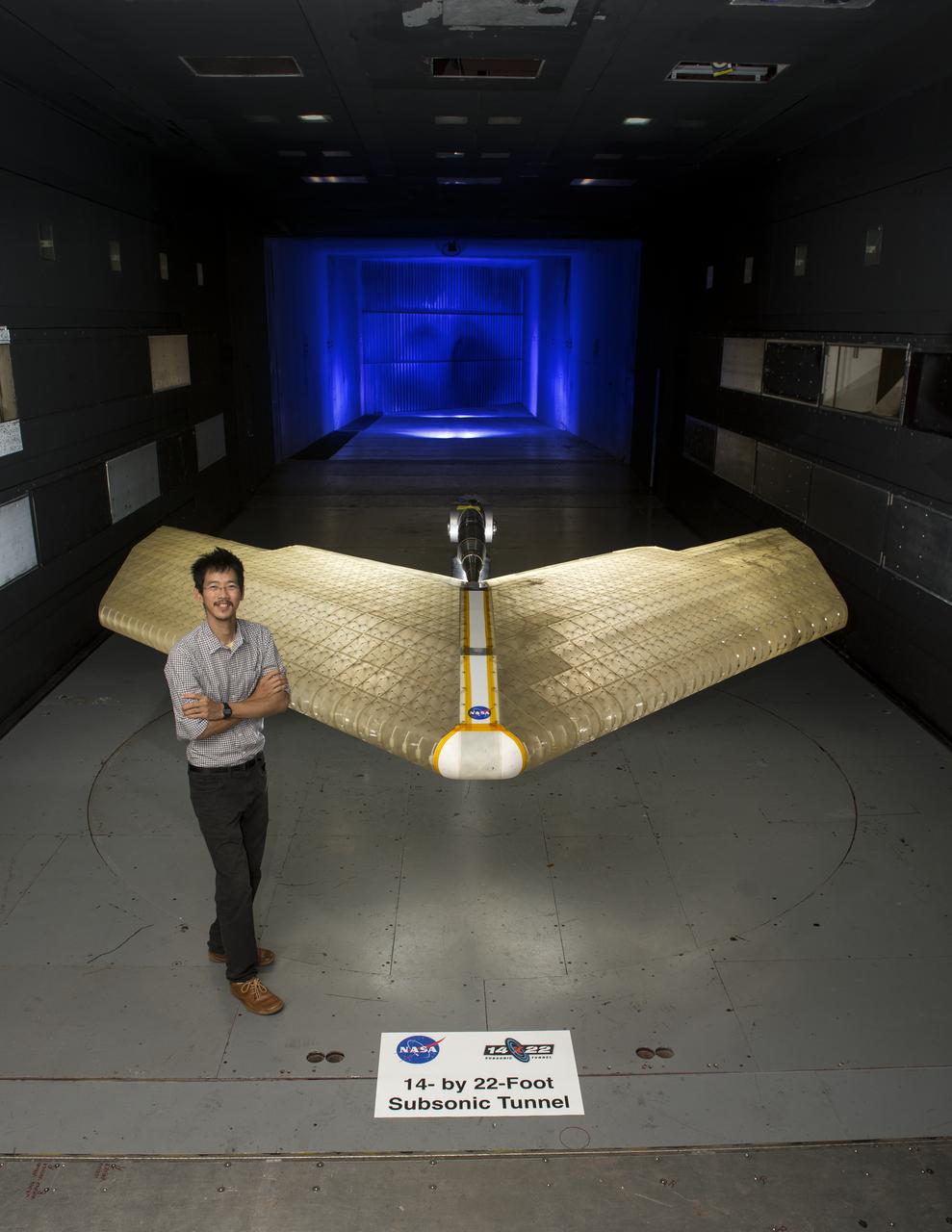
Mission Adaptive Digital Composite Aerostructure Technologies (MADCAT) model in the 14x22 test section, building 1212C, Kenny Cheung from Ames Research Center in photograph. For more information go to NASA.gov article. April 3, 2019 "What is MADCAT?" Flexing Wings for Efficient Flight
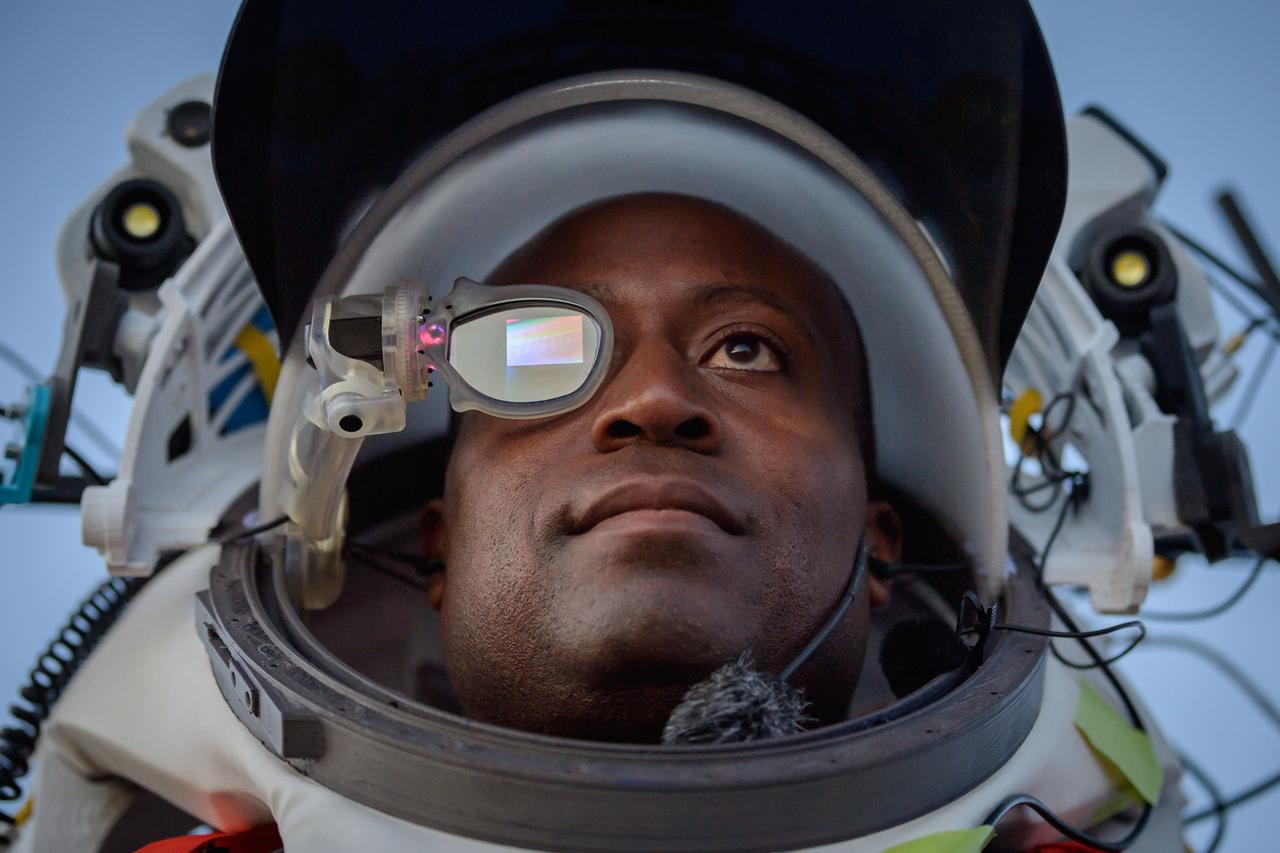
NASA astronaut Andre Douglas wears AR (Augmented Reality) display technology during an advanced technology run in the San Francisco Volcanic Field in Northern Arizona on May 21, 2024. The monocular lens consists of a pico-projector and waveguide optical element to focus an image for crew to see their real world overlaid with digital information. These unique near-eye form factors may be used to improve the usability and minimally impact the complex biomechanics of working in a pressurized suit environment. Credit: NASA/Josh Valcarcel
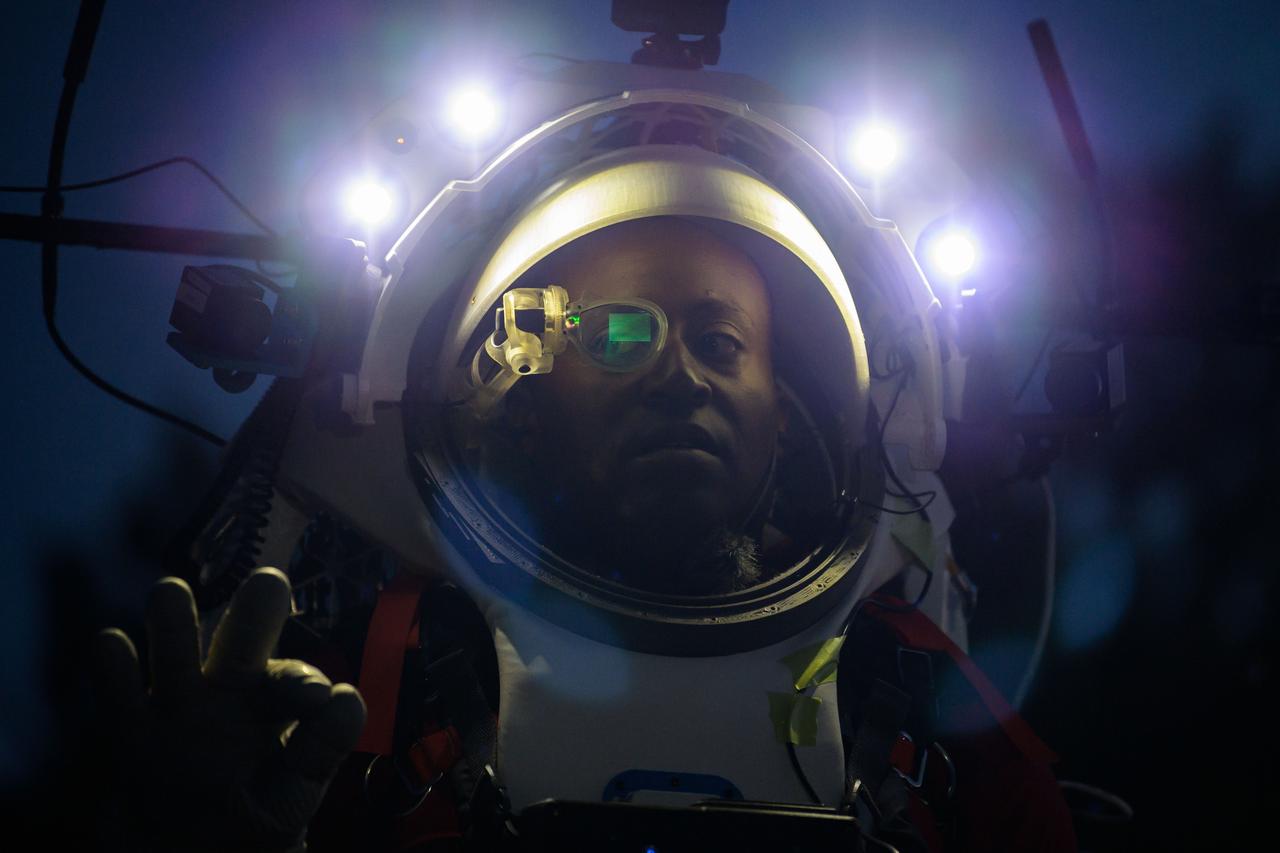
NASA astronaut Andre Douglas wears AR (Augmented Reality) display technology during a nighttime advanced technology run in the San Francisco Volcanic Field in Northern Arizona on May 21, 2024. The monocular lens consists of a pico-projector and waveguide optical element to focus an image for crew to see their real world overlaid with digital information. These unique near-eye form factors may be used to improve the usability and minimally impact the complex biomechanics of working in a pressurized suit environment. Credit: NASA/Josh Valcarcel
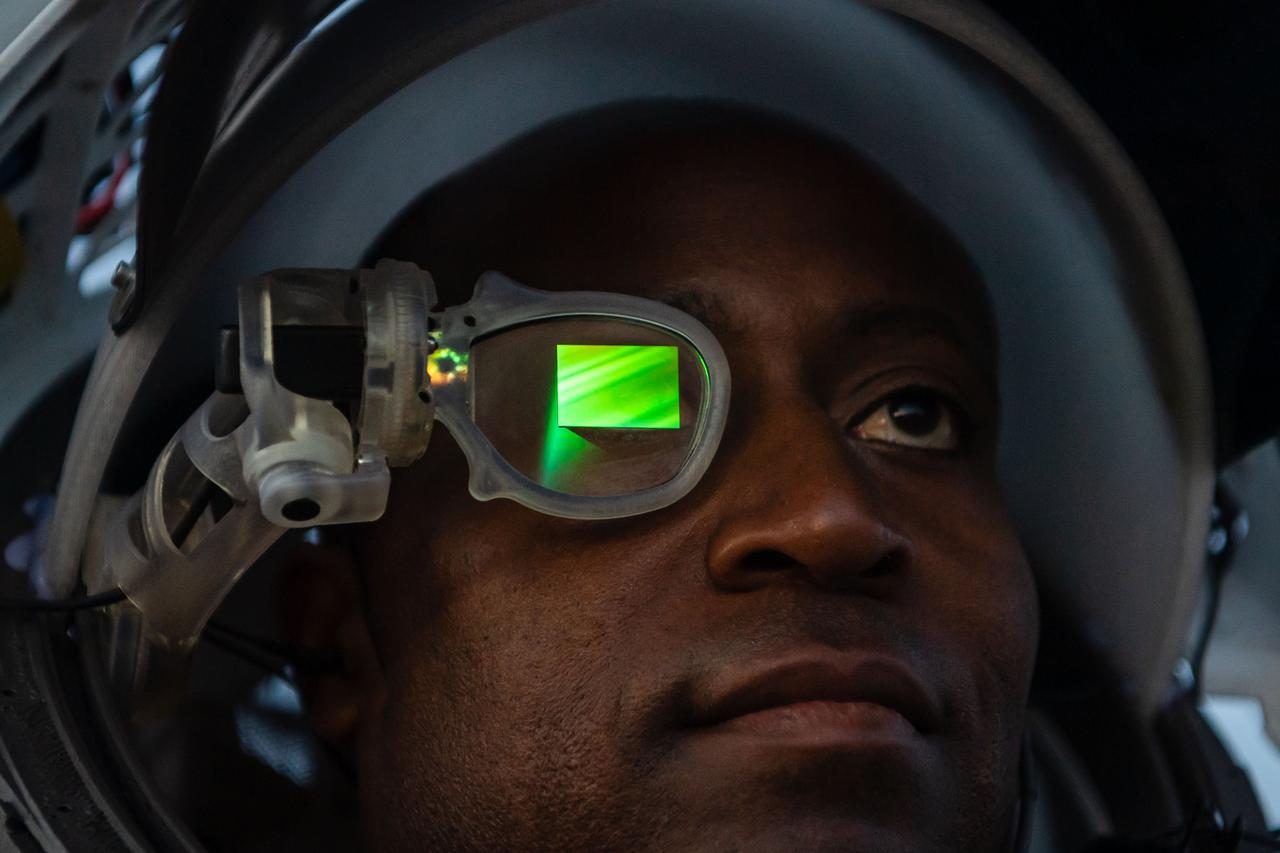
NASA astronaut Andre Douglas wears AR (Augmented Reality) display technology during an advanced technology run in the San Francisco Volcanic Field in Northern Arizona on May 21, 2024. The monocular lens consists of a pico-projector and waveguide optical element to focus an image for crew to see their real world overlaid with digital information. These unique near-eye form factors may be used to improve the usability and minimally impact the complex biomechanics of working in a pressurized suit environment. Credit: NASA/Josh Valcarcel
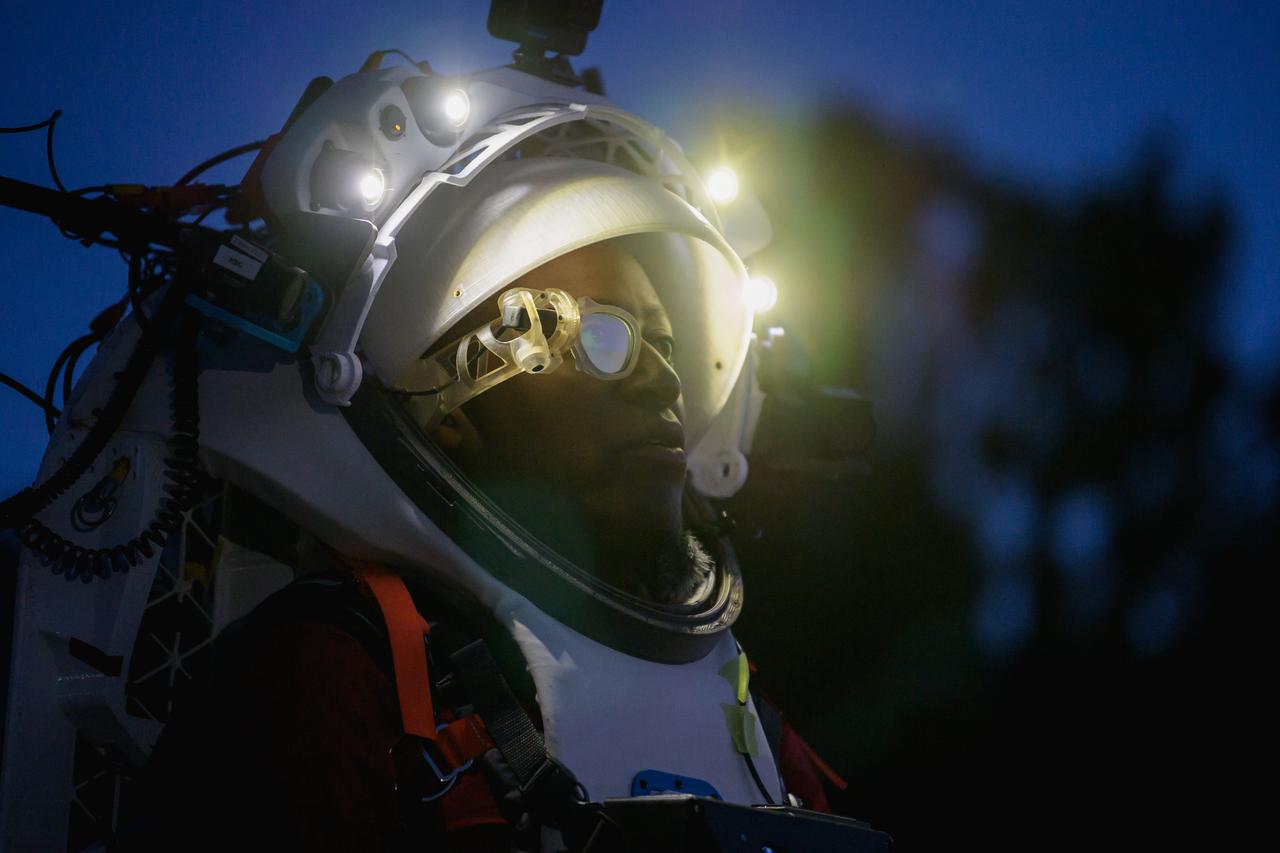
NASA astronaut Andre Douglas wears AR (Augmented Reality) display technology during a nighttime advanced technology run in the San Francisco Volcanic Field in Northern Arizona on May 21, 2024. The monocular lens consists of a pico-projector and waveguide optical element to focus an image for crew to see their real world overlaid with digital information. These unique near-eye form factors may be used to improve the usability and minimally impact the complex biomechanics of working in a pressurized suit environment. Credit: NASA/Josh Valcarcel
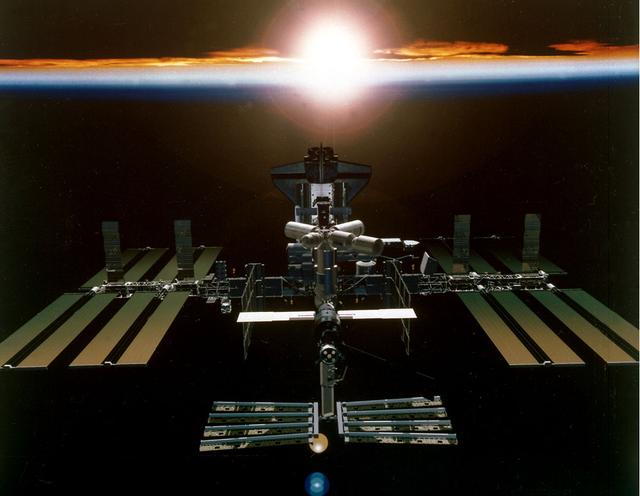
Artist's digital concept of the International Space Station (ISS), a gateway to permanent human presence in space, after all assembly is completed in Year 2003. The Station will be powered by almost an acre of solar panels and have a mass of almost one million pounds. Station modules are being provided by the United States, Russia, Japan, and Europe. Canada is providing a mechanical arm and Canada Hand. Sixteen countries are cooperating to provide a multidisciplinary laboratory, technology test bed, and observatory that will provide an unprecedented undertaking in scientific, technological, and international experimentation.

This artist's digital concept depicts the completely assembled International Space Station (ISS) passing over Florida. As a gateway to permanent human presence in space, the Space Station Program is to expand knowledge benefiting all people and nations. The ISS is a multidisciplinary laboratory, technology test bed, and observatory that will provide unprecedented undertakings in scientific, technological, and international experimentation. Experiments to be conducted in the ISS include: microgravity research, Earth science, space science, life sciences, space product development, and engineering research and technology. The sixteen countries participating the ISS are: United States, Russian Federation, Canada, Japan, United Kingdom, Germany, Italy, France, Norway, Netherlands, Belgium, Spain, Denmark, Sweden, Switzerland, and Brazil.
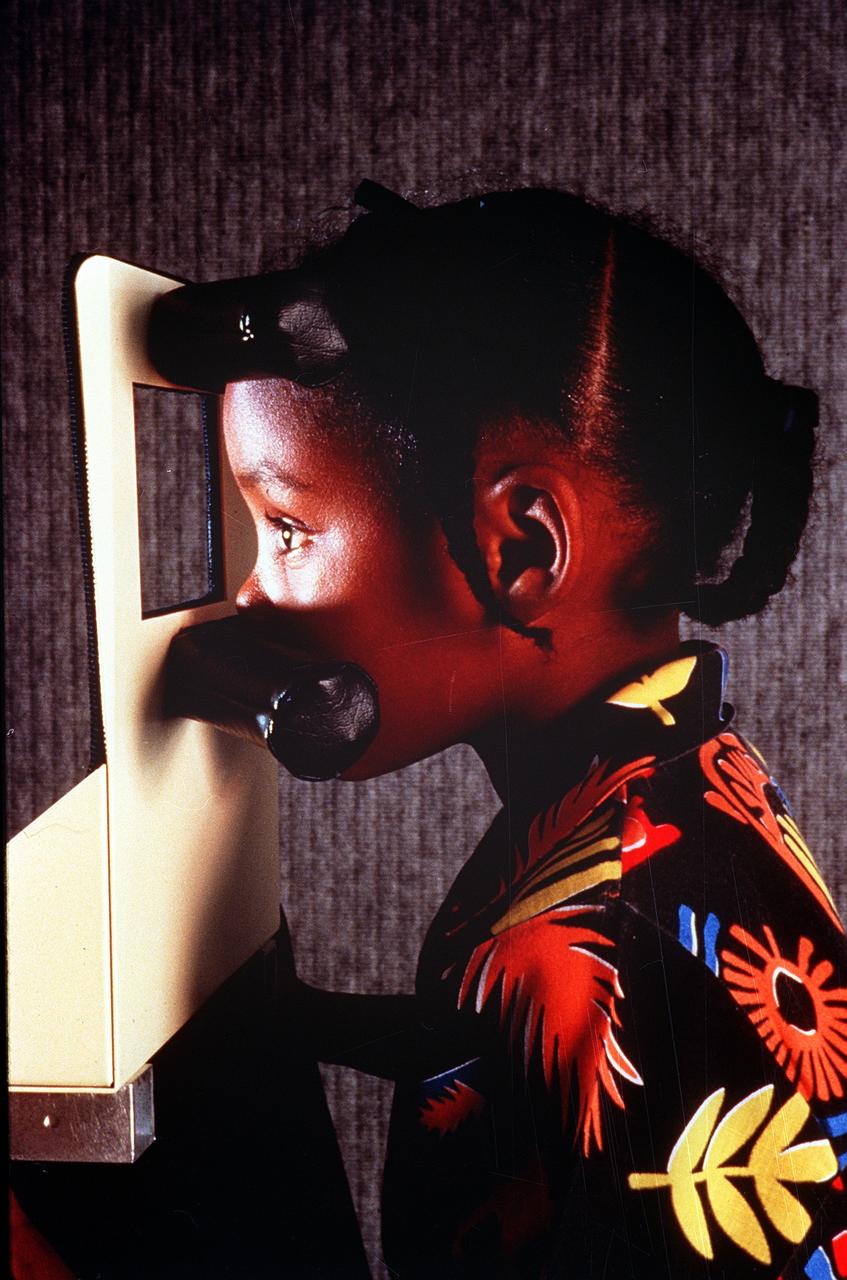
The NASA imaging processing technology, an advanced computer technique to enhance images sent to Earth in digital form by distant spacecraft, helped develop a new vision screening process. The Ocular Vision Screening system, an important step in preventing vision impairment, is a portable device designed especially to detect eye problems in children through the analysis of retinal reflexes.
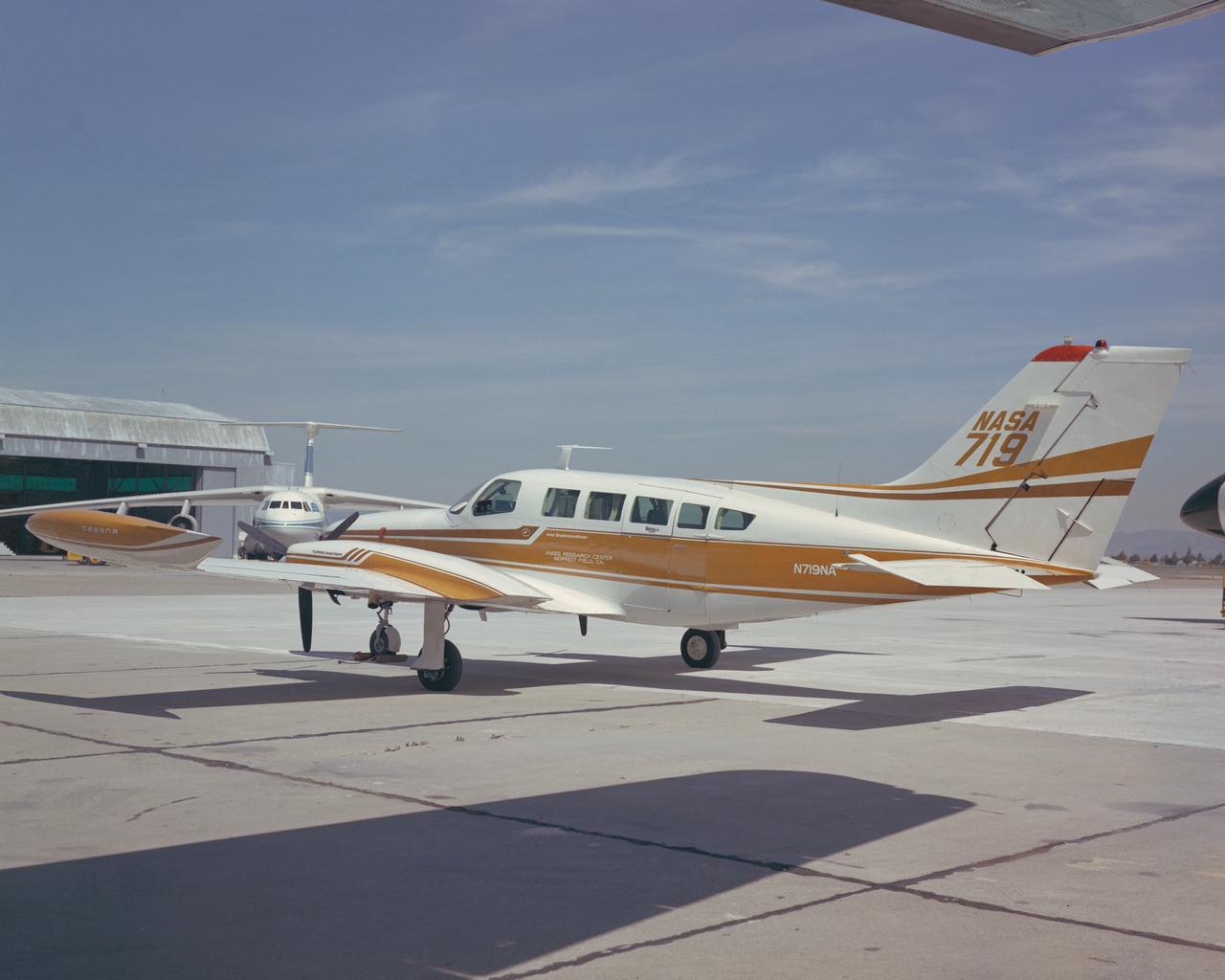
Cessna 402B (NASA-719) on the Ramp. An integrated digital flight management, guidance and navigation system was developed by an industry team from Honeywell and King Radio under the direction of George Callas and Dallas Denery and demonstrated on a Cessna 402B for general aviation applications. Note: Used in publication in Flight Research at Ames; 57 Years of Development and Validation of Aeronautical Technology NASA SP-1998-3300 fig. 86 - ref. 90
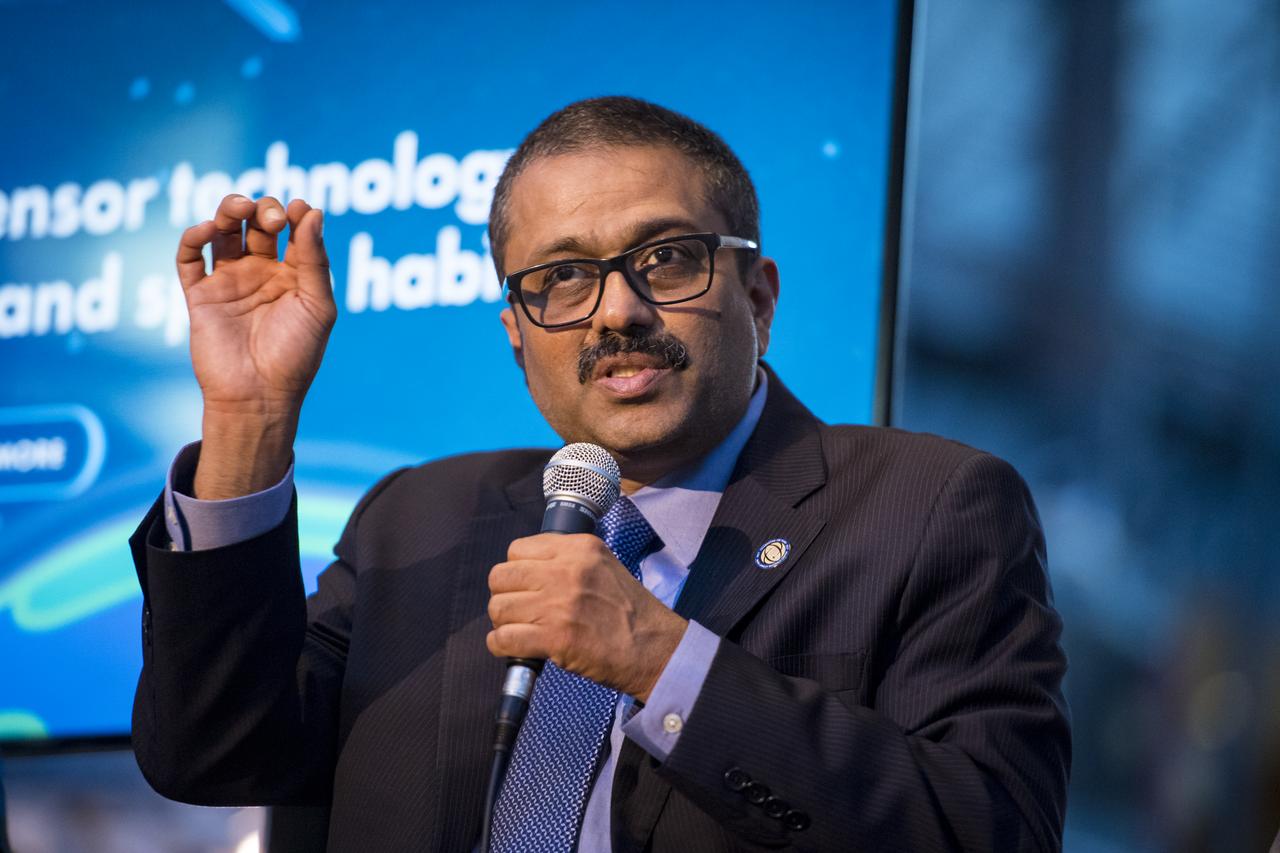
Jitendra Joshi, chief technology advisor, Advanced Exploration Systems, NASA, speaks on a panel on improving air quality for health in space and on Earth, at a pop-up makerspace hosted by Future Engineers with support from NASA and The American Society of Mechanical Engineers (ASME), at the Steven F. Udvar-Hazy Center, Thursday, September 21, 2017 in Chantilly, Virginia. Participants were able to create digital 3D models using Autodesk Tinkercad and watch objects being printed with Makerbot 3D printers. Photo Credit: (NASA/Aubrey Gemignani)
The arnual conference for the Educator Resource Center Network (ERCN) Coordinators was held at Glenn Research Center at Lewis Field in Cleveland, Ohio. The conference included participants from NASA's Educator Resource Centers located throughout the country. The Microgravity Science Division at Glenn sponsored a Microgravity Day for all the conference participants. Twila Schneider of Infinity Technology, a NASA contractor, explains the basics of building a glovebox mockup from a copier paper box. This image is from a digital still camera; higher resolution is not available.
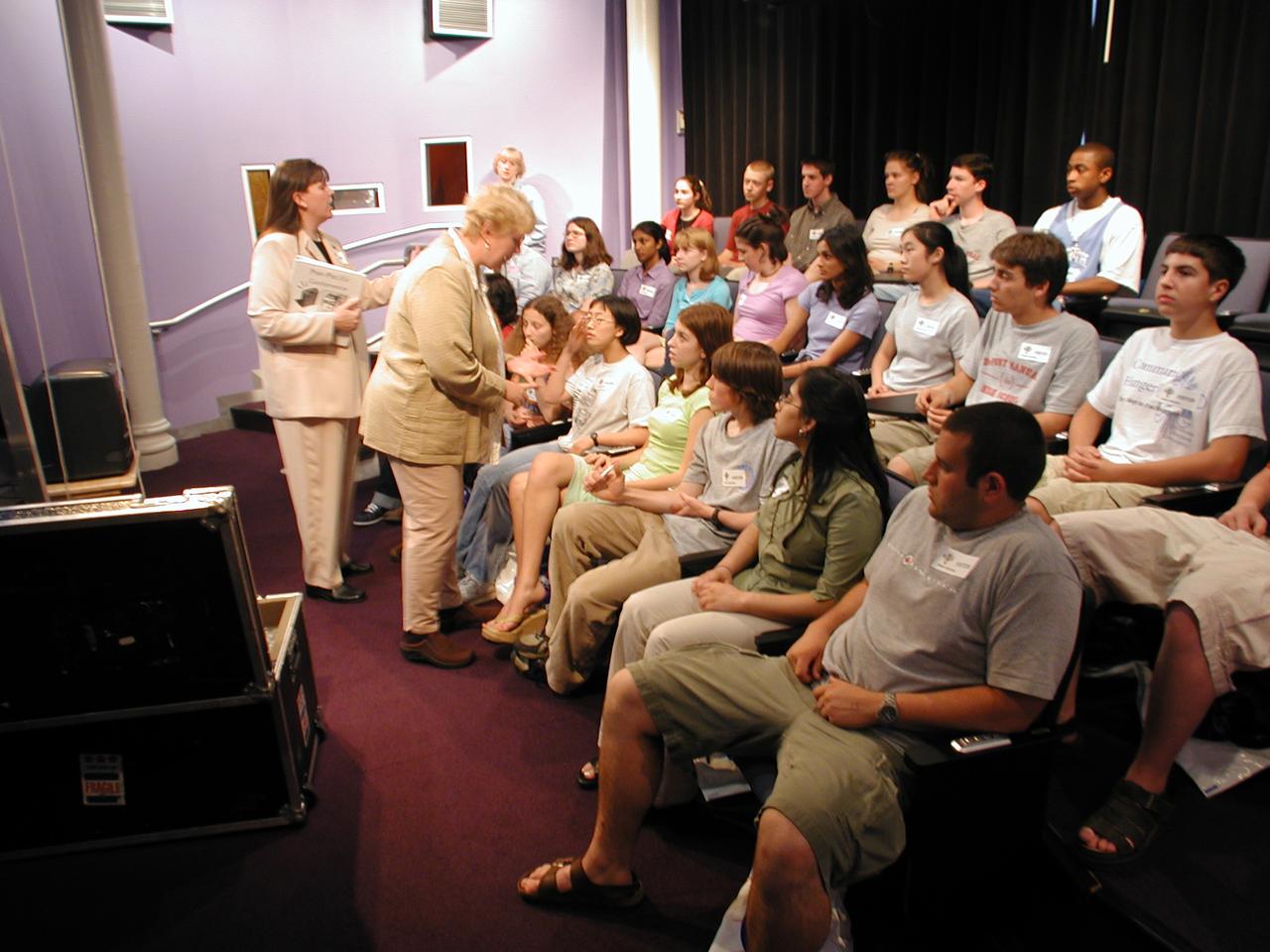
Students from DuPont Manual High School in Louisville, Kentucky participated in a video-teleconference during the Pan-Pacific Basin Workshop on Microgravity Sciences held in Pasadena, California. The event originated at the California Science Center in Los Angeles. The DuPont Manual students patched in to the event through the distance learning lab at the Louisville Science Center. Education coordinator Twila Schneider (left) of Infinity Technology and NASA materials engineer Chris Cochrane prepare students for the on-line workshop. This image is from a digital still camera; higher resolution is not available.
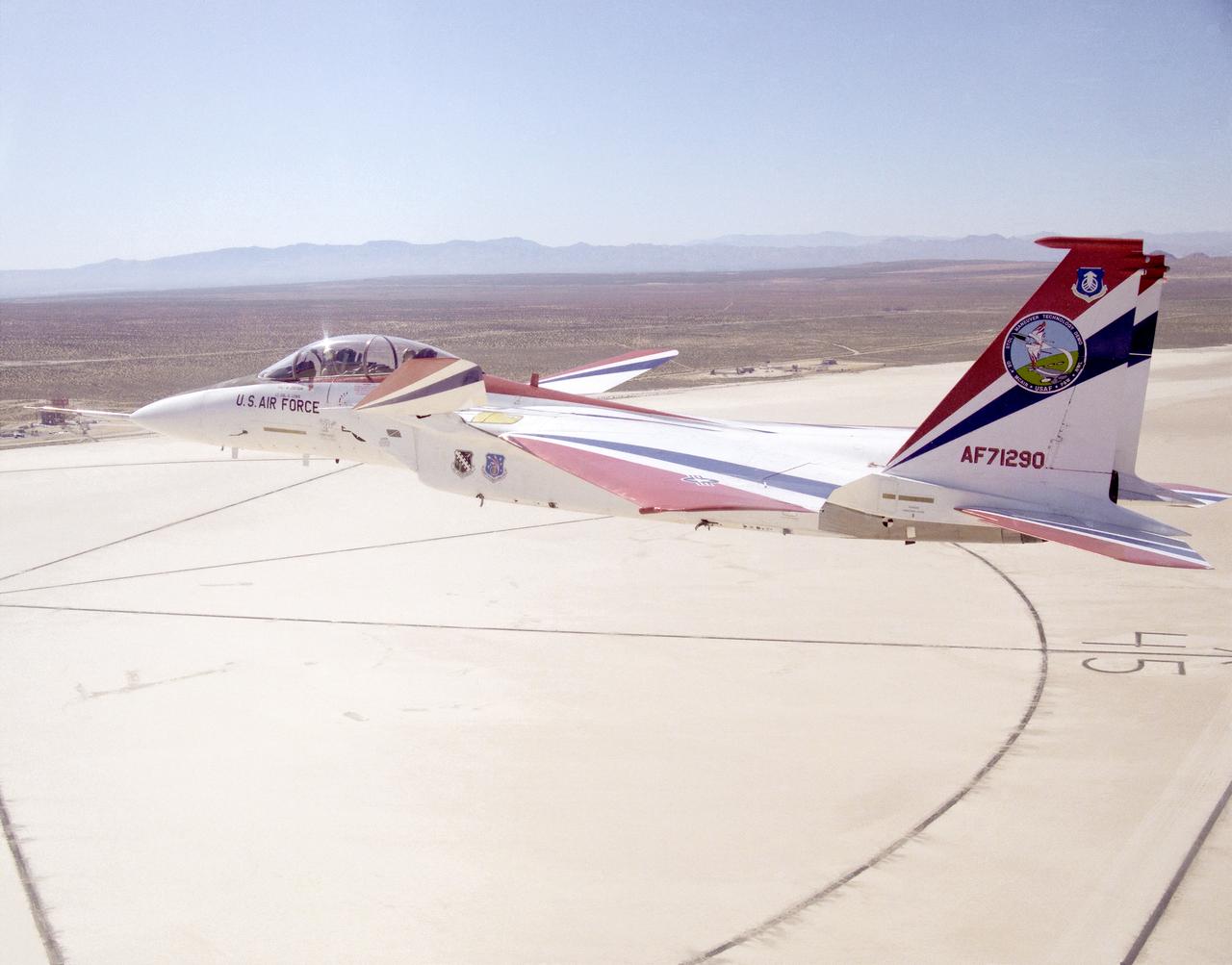
F-15B ACTIVE in flight over lakebed
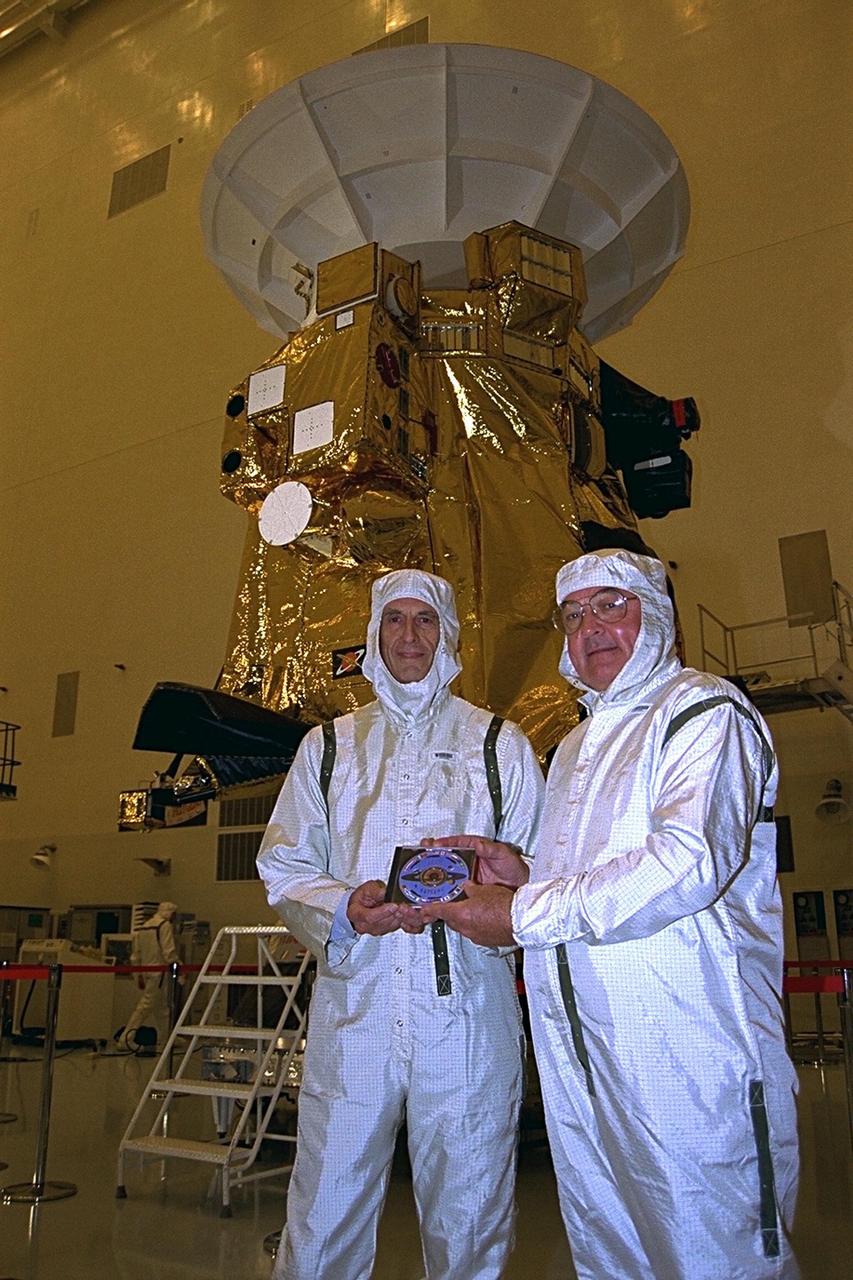
In the Payload Hazardous Servicing Facility (PHSF), Charley Kohlhase, Cassini's science and mission design manager, and Richard Spehalski, program manager of the Cassini mission at NASA's Jet Propulsion Laboratory in Pasadena, Calif., hold the Digital Video Disk (DVD) bearing 616,400 digitized signatures from people around the world which will soon be attached to the Cassini spacecraft in the background. Kohlhase oversaw the signature disk development. The two-story-tall spacecraft is scheduled for launch on an Air Force Titan IV/Centaur launch vehicle on Oct. 6, 1997, and destined to arrive at Saturn in July 2004, where it will orbit and study Saturn, its rings, moons, and magnetic environment in detail over a four-year period. The Cassini mission is managed for NASA by the Jet Propulsion Laboratory, a division of the California Institute of Technology
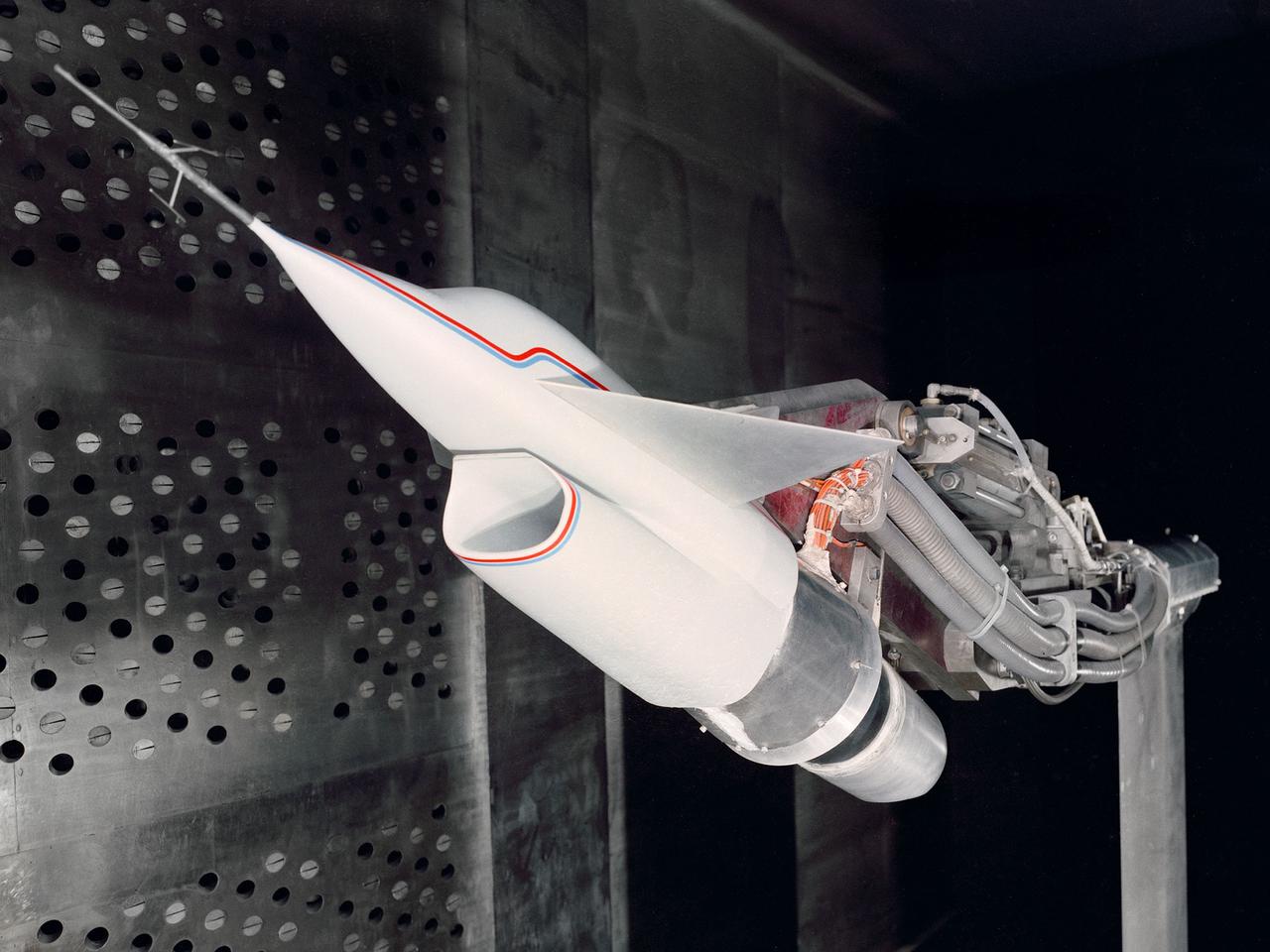
A Highly Maneuverable Aircraft Technology (HiMAT) inlet model installed in the test section of the 8- by 6-Foot Supersonic Wind Tunnel at the National Aeronautics and Space Administration (NASA) Lewis Research Center. Engineers at the Ames Research Center, Dryden Flight Research Center, and Rockwell International designed two pilotless subscale HiMAT vehicles in the mid-1970s to study new design concepts for fighter aircraft in the transonic realm without risking the lives of test pilots. The aircraft used sophisticated technologies such as advanced aerodynamics, composite materials, digital integrated propulsion control, and digital fly-by-wire control systems. In late 1977 NASA Lewis studied the HiMAT’s General Electric J85-21 jet engine in the Propulsion Systems Laboratory. The researchers charted the inlet quality with various combinations anti-distortion screens. HiMAT employed a relatively short and curved inlet compared to actual fighter jets. In the spring of 1979, Larry Smith led an in-depth analysis of the HiMAT inlet in the 8- by 6 tunnel. The researchers installed vortex generators to battle flow separation in the diffuser. The two HiMAT aircraft performed 11 hours of flying over the course of 26 missions from mid-1979 to January 1983 at Dryden and Ames. Although the HiMAT vehicles were considered to be overly complex and expensive, the program yielded a wealth of data that would validate computer-based design tools.
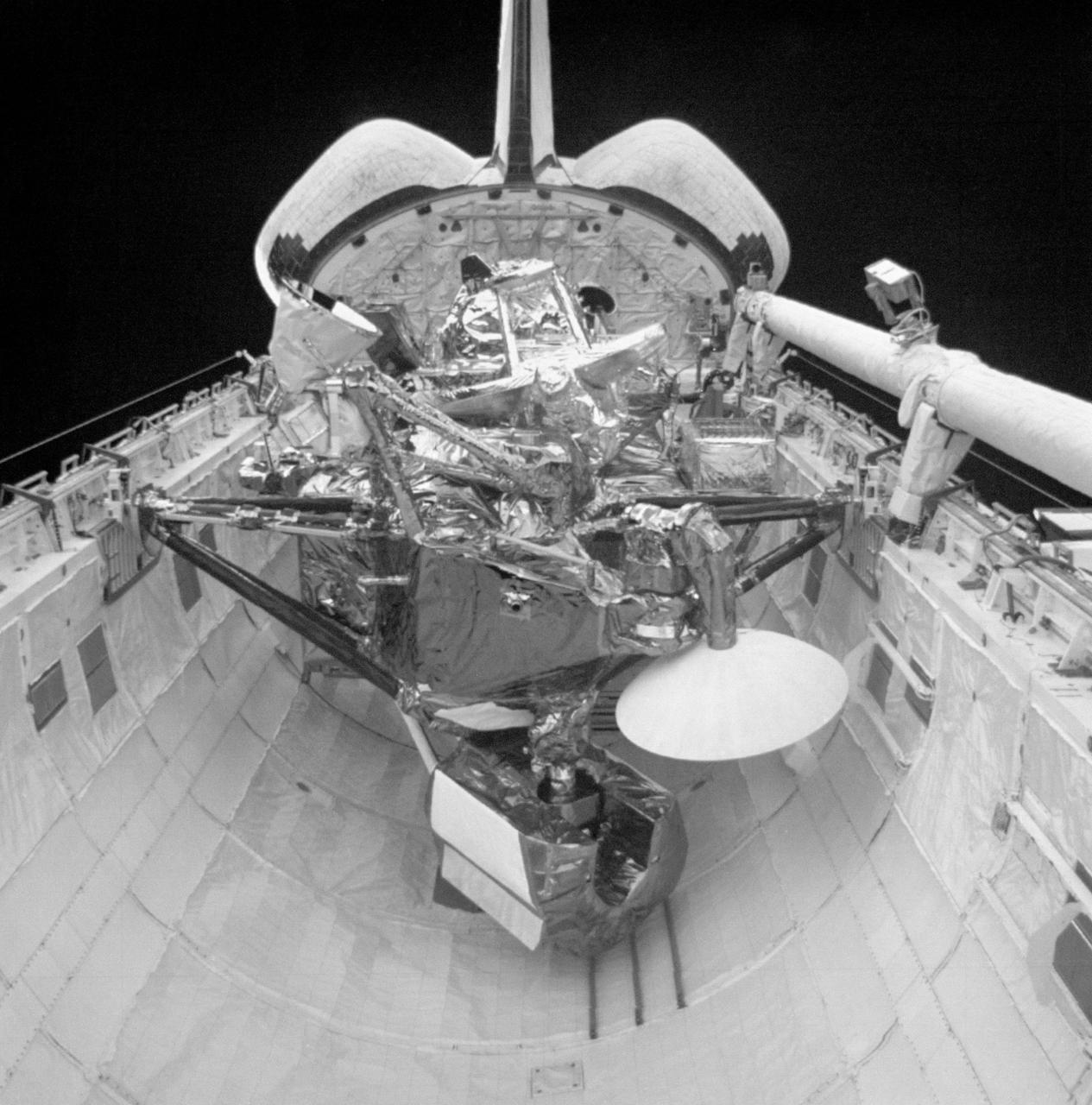
S48-E-013 (15 Sept 1991) --- The Upper Atmosphere Research Satellite (UARS) in the payload bay of the earth- orbiting Discovery. UARS is scheduled for deploy on flight day three of the STS-48 mission. Data from UARS will enable scientists to study ozone depletion in the stratosphere, or upper atmosphere. This image was transmitted by the Electronic Still Camera (ESC), Development Test Objective (DTO) 648. The ESC is making its initial appearance on a Space Shuttle flight. Electronic still photography is a new technology that enables a camera to electronically capture and digitize an image with resolution approaching film quality. The digital image is stored on removable hard disks or small optical disks, and can be converted to a format suitable for downlink transmission or enhanced using image processing software. The Electronic Still Camera (ESC) was developed by the Man- Systems Division at the Johnson Space Center and is the first model in a planned evolutionary development leading to a family of high-resolution digital imaging devices. H. Don Yeates, JSC's Man-Systems Division, is program manager for the ESC. THIS IS A SECOND GENERATION PRINT MADE FROM AN ELECTRONICALLY PRODUCED NEGATIVE.
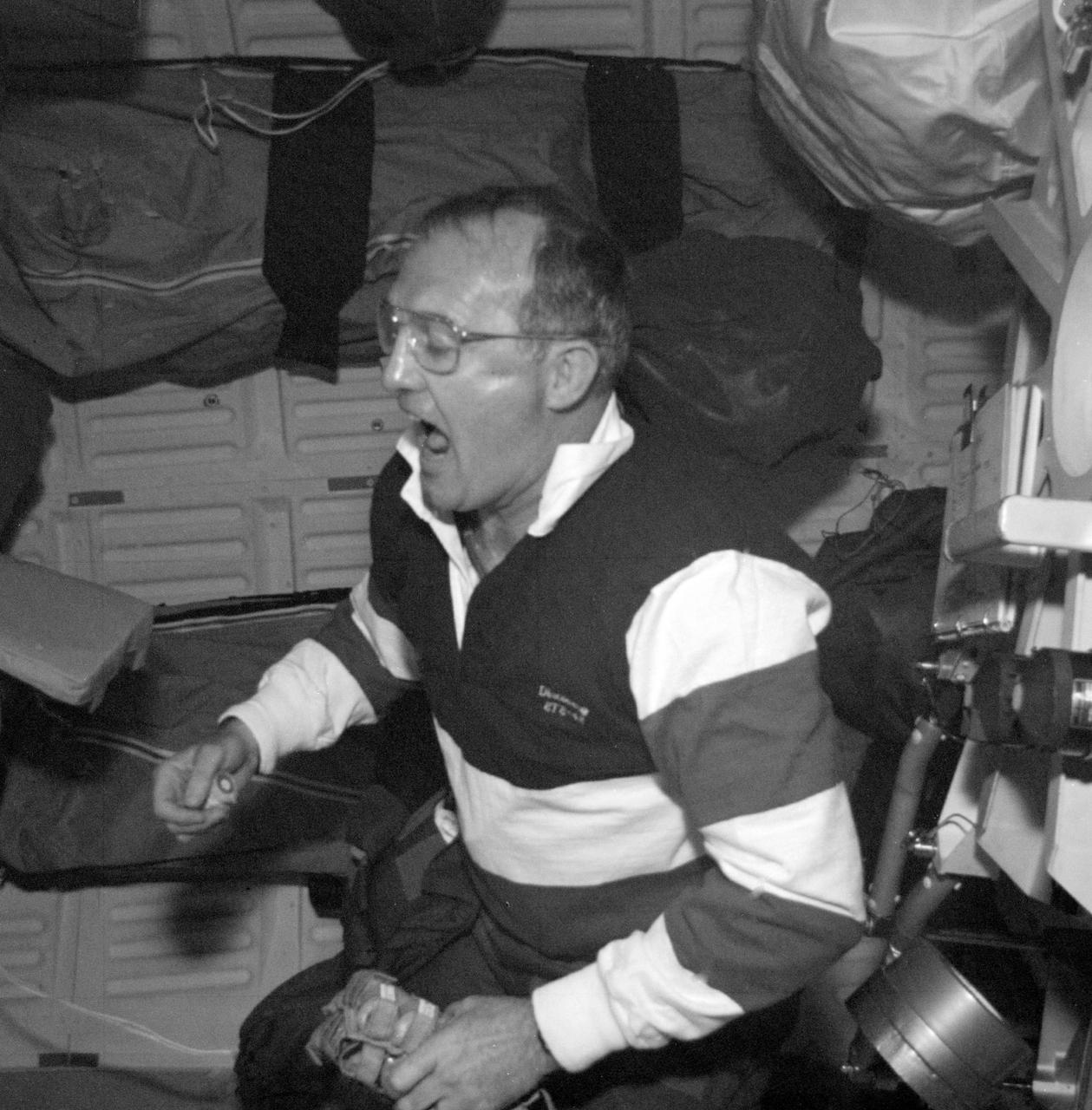
S48-E-007 (12 Sept 1991) --- Astronaut James F. Buchli, mission specialist, catches snack crackers as they float in the weightless environment of the earth-orbiting Discovery. This image was transmitted by the Electronic Still Camera, Development Test Objective (DTO) 648. The ESC is making its initial appearance on a Space Shuttle flight. Electronic still photography is a new technology that enables a camera to electronically capture and digitize an image with resolution approaching film quality. The digital image is stored on removable hard disks or small optical disks, and can be converted to a format suitable for downlink transmission or enhanced using image processing software. The Electronic Still Camera (ESC) was developed by the Man- Systems Division at the Johnson Space Center and is the first model in a planned evolutionary development leading to a family of high-resolution digital imaging devices. H. Don Yeates, JSC's Man-Systems Division, is program manager for the ESC. THIS IS A SECOND GENERATION PRINT MADE FROM AN ELECTRONICALLY PRODUCED NEGATIVE
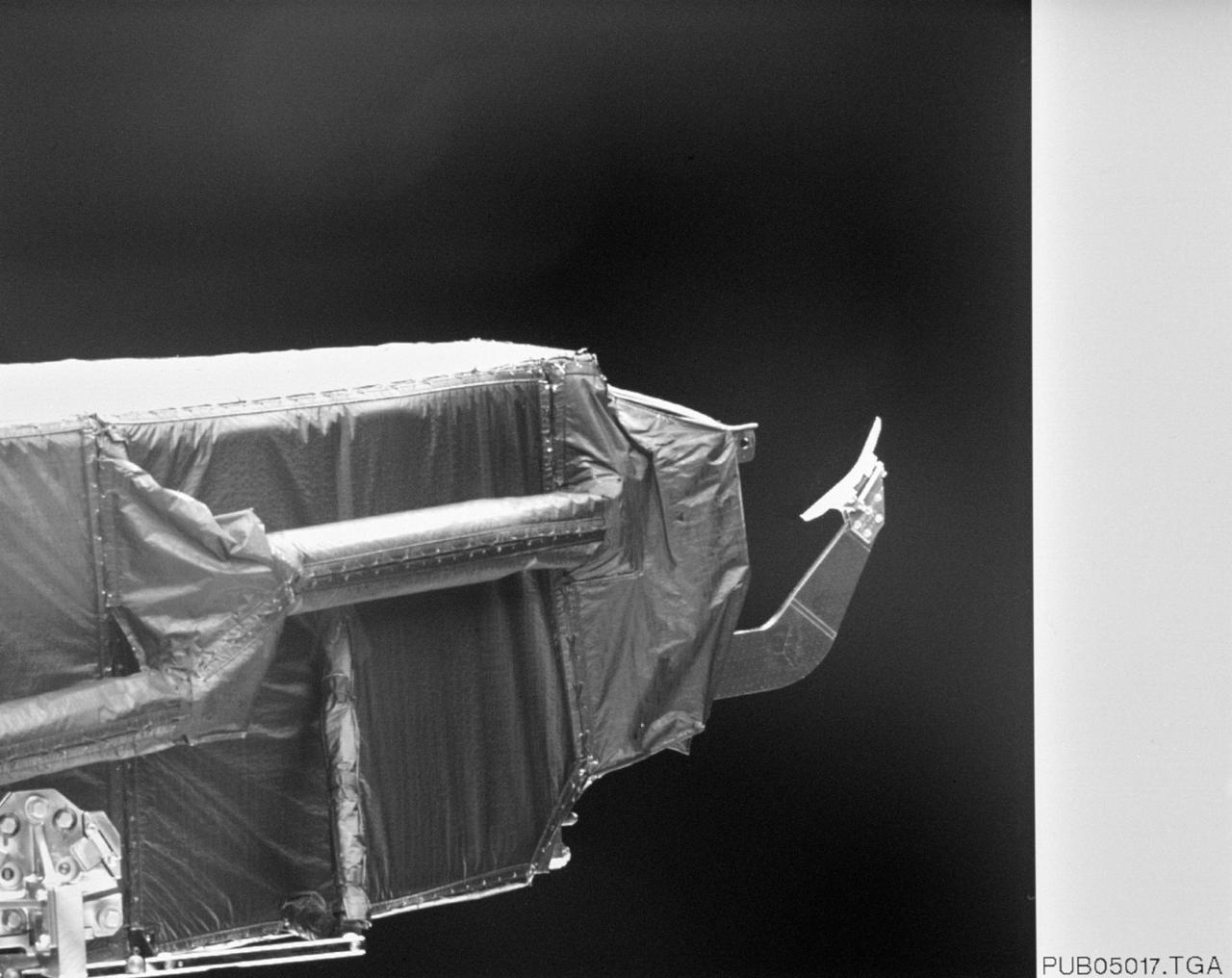
S61-E-015 (6 Dec 1993) --- A close-up view of the aft part of the new Wide Field/Planetary Camera (WFPC-II) installed on the Hubble Space Telescope (HST). WFPC-II was photographed with the Electronic Still Camera (ESC) from inside Endeavour's cabin as astronauts F. Story Musgrave and Jeffrey A. Hoffman moved it from its stowage position onto the giant telescope. Electronic still photography is a relatively new technology which provides the means for a handheld camera to electronically capture and digitize an image with resolution approaching film quality. The electronic still camera has flown as an experiment on several other shuttle missions.
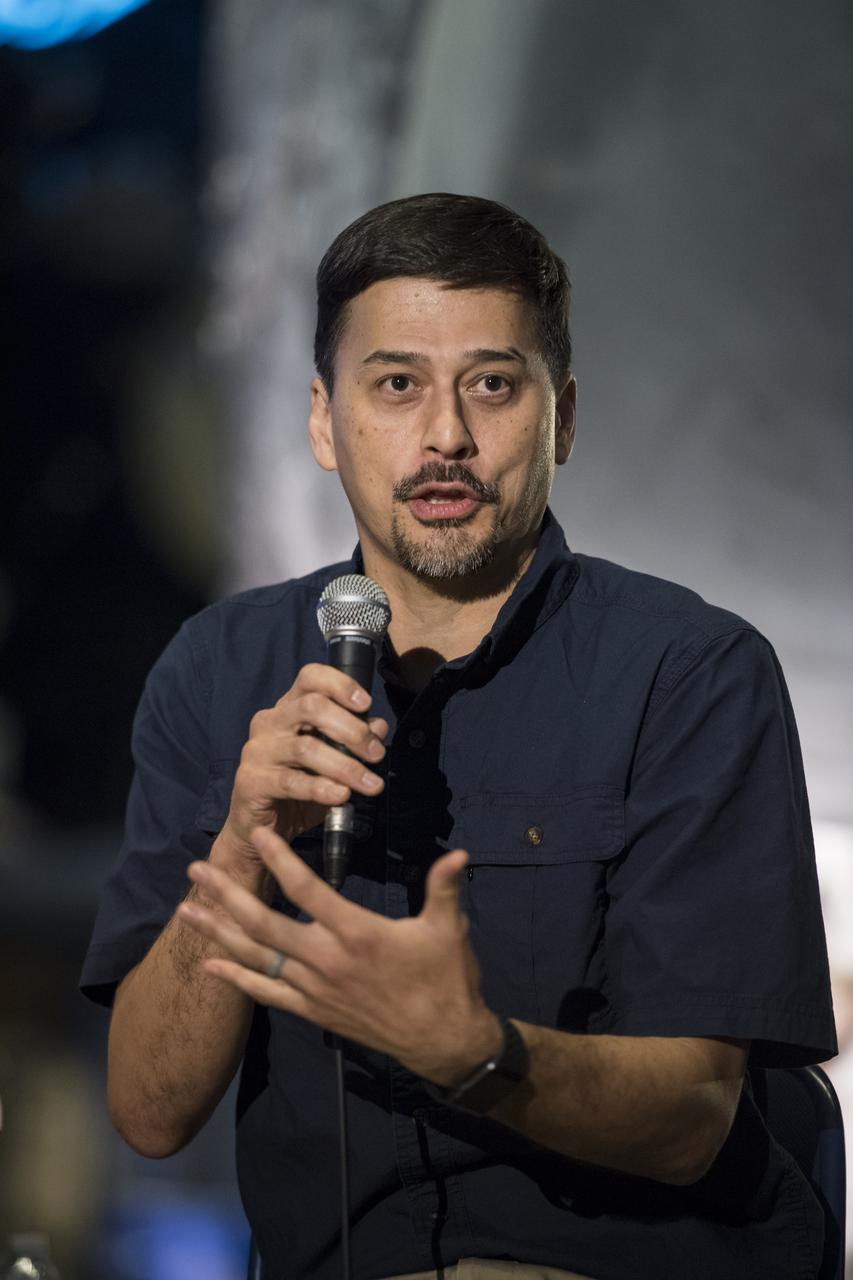
Josh Ajima, instructional facilitator for technology, Loudoun County Public Schools and DesignMakeTeach.com blog, speaks on a panel on "igniting NOVA K-12 engineering and maker education", at a pop-up makerspace hosted by Future Engineers with support from NASA and The American Society of Mechanical Engineers (ASME), at the Steven F. Udvar-Hazy Center, Thursday, September 21, 2017 in Chantilly, Virginia. Participants were able to create digital 3D models using Autodesk Tinkercad and watch objects being printed with Makerbot 3D printers. Photo Credit: (NASA/Aubrey Gemignani)
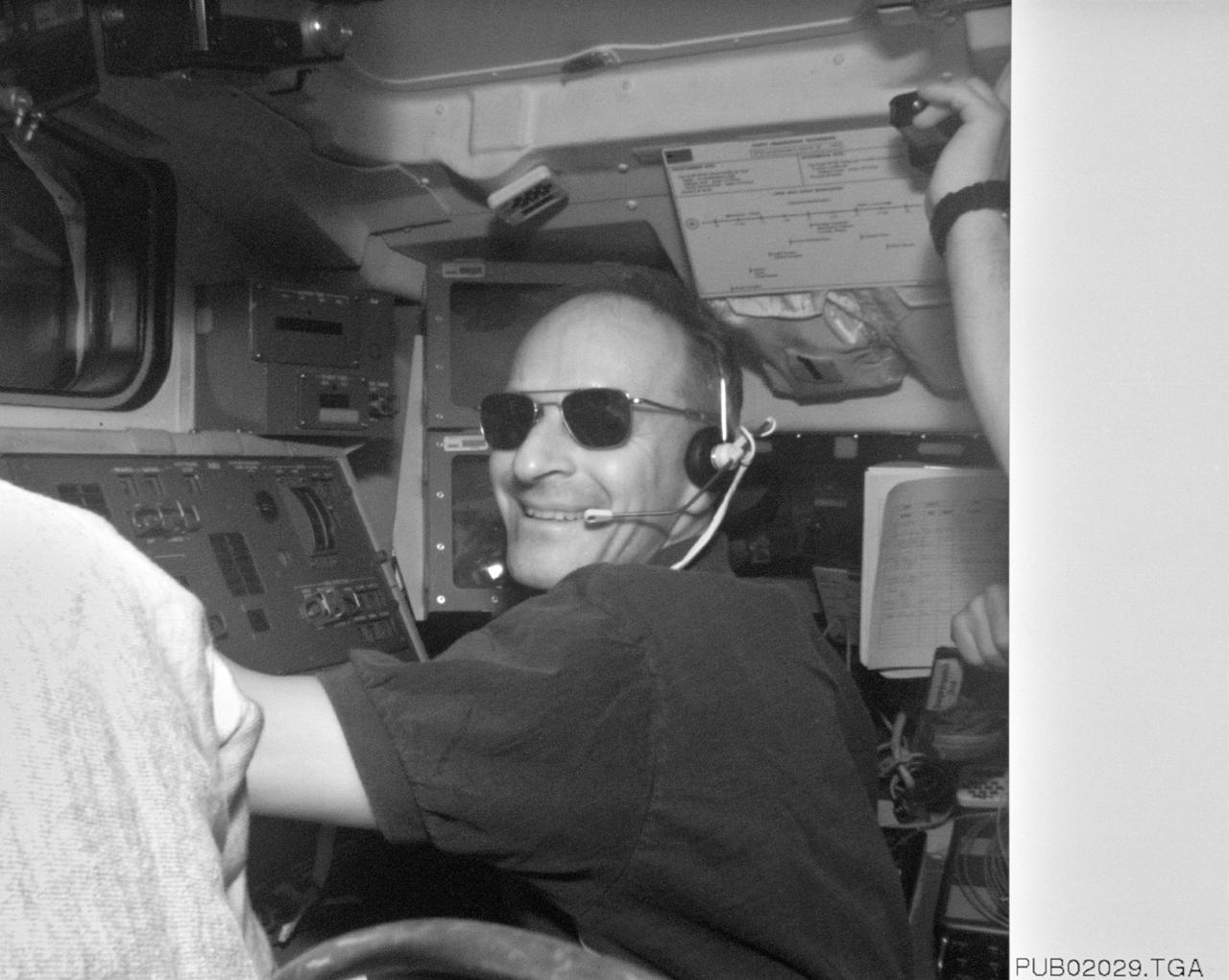
S61-E-006 (5 Dec 1993) --- The robot arm controlling work of Swiss scientist Claude Nicollier was photographed with an Electronic Still Camera (ESC), and down linked to ground controllers soon afterward. With the mission specialist's assistance, Endeavour's crew captured the Hubble Space Telescope (HST) on December 4, 1993. Four of the seven crew members will work in alternating pairs outside Endeavour's shirt sleeve environment to service the giant telescope. Electronic still photography is a relatively new technology which provides the means for a handheld camera to electronically capture and digitize an image with resolution approaching film quality. The electronic still camera has flown as an experiment on several other shuttle missions.

An engineer at NASA's Jet Propulsion Laboratory is shown here with the fast steering mirror, a component of the Coronagraph Instrument on NASA's Nancy Grace Roman Space Telescope. The mirror can make small movements that correct for slight wobbling of the observatory. The incoming image needs to be perfectly sharp in order for the instrument to suppress light from a star while allowing the light from planets orbiting it to pass through. Although the technologies differ, it's analogous to image stabilization in digital cameras, in which the camera lens moves to counteract the shake of your hands and keep the image sharp. https://photojournal.jpl.nasa.gov/catalog/PIA25437
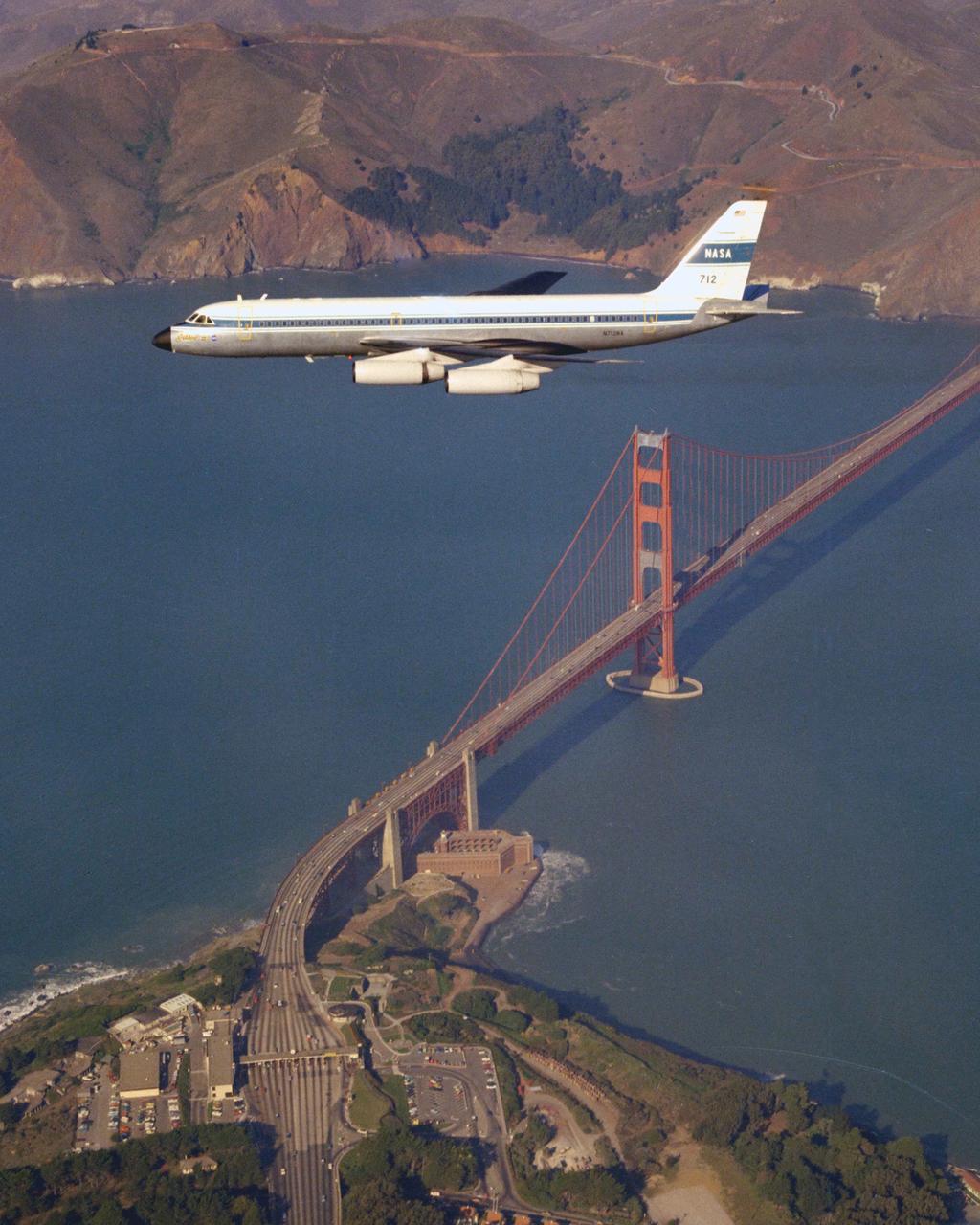
CV-990 (NASA-712) Galileo II aircraft in flight over the San Francisco's Golden Gate Bridge. A digital navigation, guidance and autopilot system tested on Galileo 1 and Galileo II in 1975 looked at the feasibility of energy-management approach concepts for an unpowered vehicle. Flight tests carried out by pilot Fred Drinkwater with technical direction by Fred Edwards and John D Foster along with significant input from Gordon Hardy on the pilot's system interface. Note: Used in publication in Flight Research at Ames; 57 Years of Development and Validation of Aeronautical Technology NASA SP-1998-3300 fig 95 ref 99
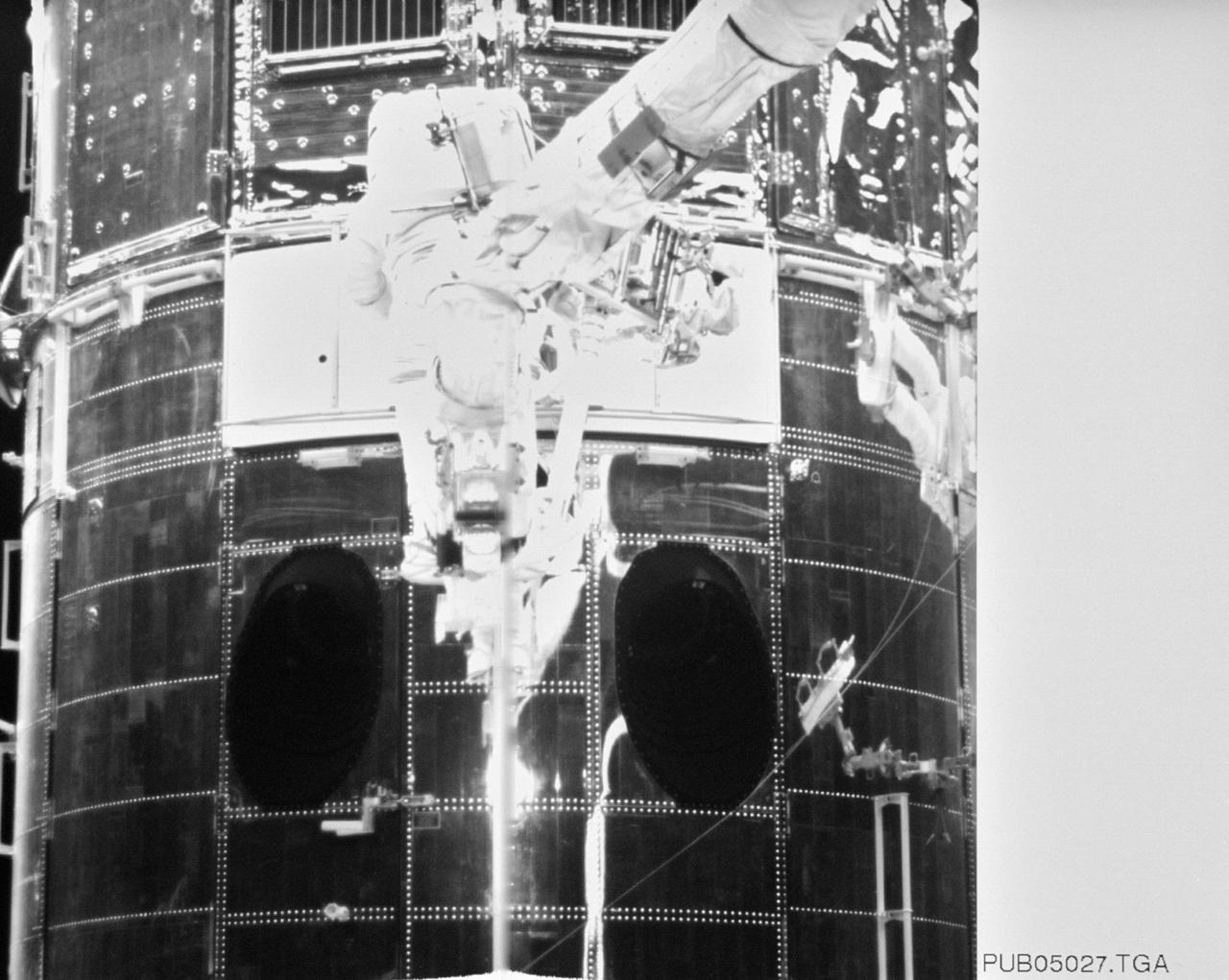
S61-E-018 (6 Dec 1993) --- Astronaut Jeffrey A. Hoffman, anchored to a foot restraint on the end of the Remote Manipulator System (RMS) arm, inserts the new Wide Field/Planetary Camera (WFPC-II) into its place on the Hubble Space Telescope (HST). Astronaut F. Story Musgrave, who shared the duties of replacing the camera, is partially visible at right edge of frame. Electronic still photography is a relatively new technology which provides the means for a handheld camera to electronically capture and digitize an image with resolution approaching film quality. The electronic still camera has flown as an experiment on several other shuttle missions.
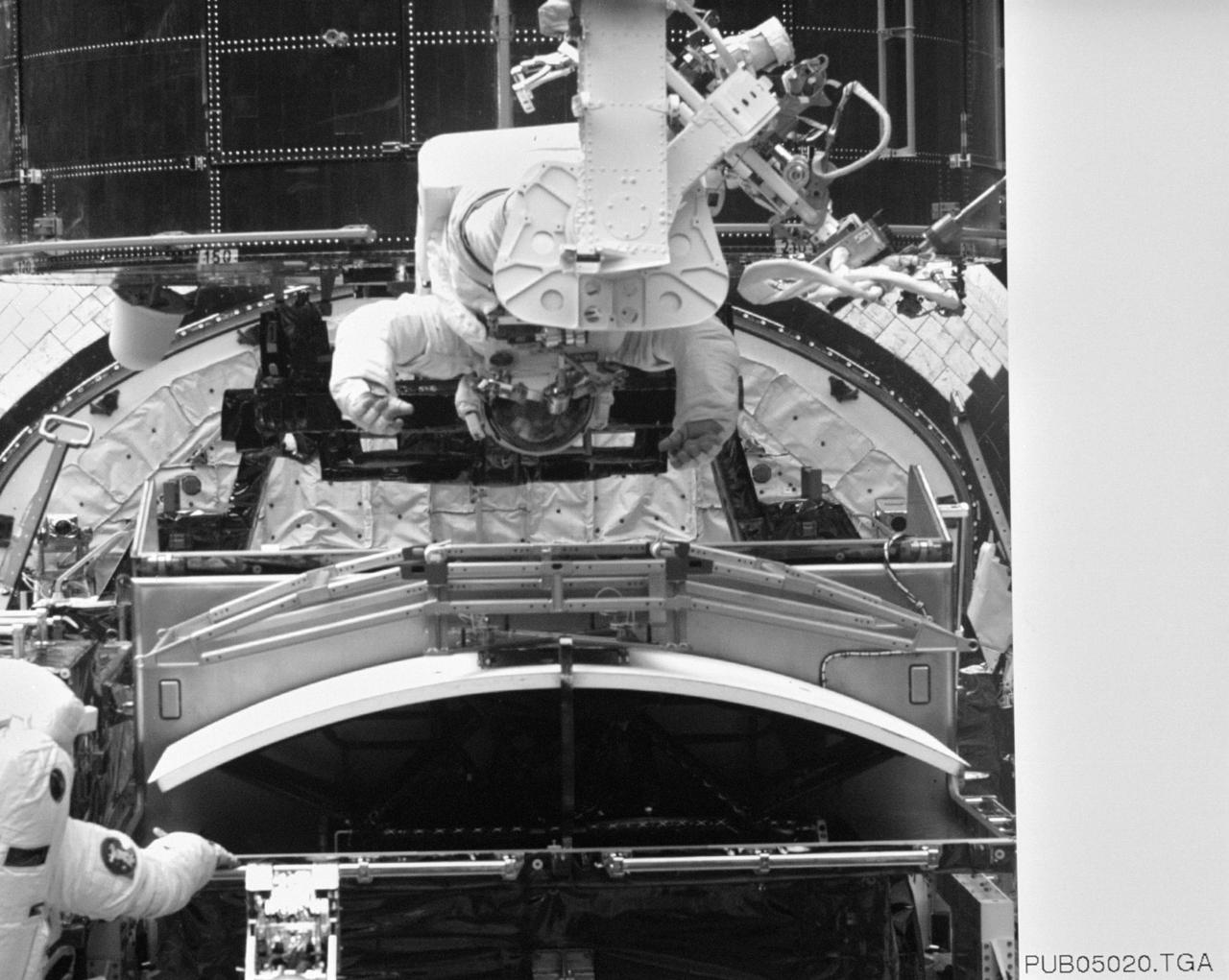
S61-E-016 (6 Dec 1993) --- Astronaut Jeffrey A. Hoffman (frame center) remains secured by his feet on the end of Endeavour's robot arm as he prepares to participate in the replacement of Hubble Space Telescope's Wide Field/Planetary Camera (WF/PC). Astronaut F. Story Musgrave (just in frame at lower left corner) assists Hoffman in removing the new camera (WFPC-II) from the Scientific Instrument Protective Enclosure (SIPE). Electronic still photography is a relatively new technology which provides the means for a handheld camera to electronically capture and digitize an image with resolution approaching film quality. The electronic still camera has flown as an experiment on several other shuttle missions.
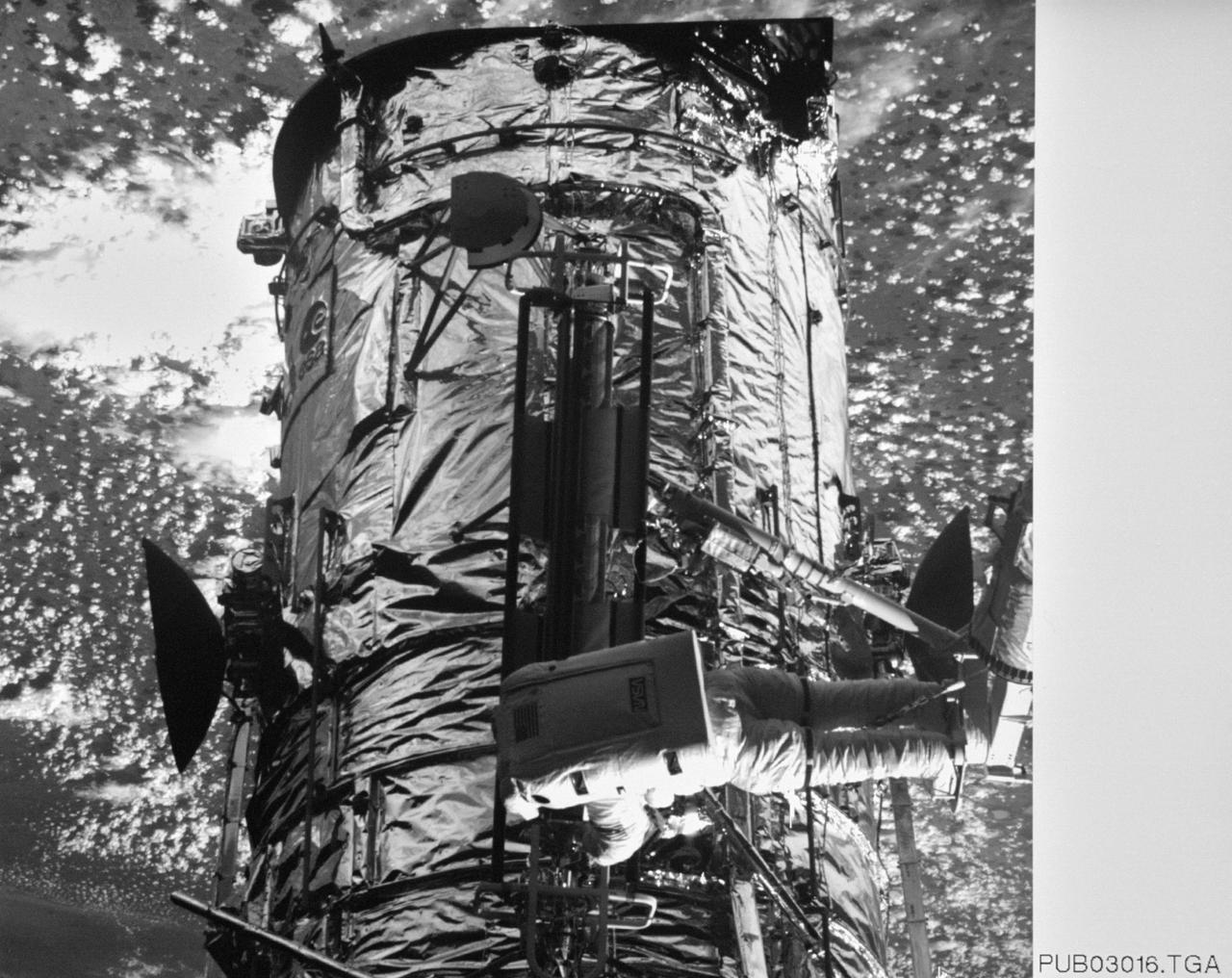
S61-E-011 (5 Dec 1993) --- This view of astronaut Kathryn C. Thornton working on the Hubble Space Telescope (HST) was photographed with an Electronic Still Camera (ESC), and down linked to ground controllers soon afterward. Thornton, anchored to the end of the Remote Manipulator System (RMS) arm, is installing the +V2 Solar Array Panel as a replacement for the original one removed earlier. Electronic still photography is a relatively new technology which provides the means for a handheld camera to electronically capture and digitize an image with resolution approaching film quality. The electronic still camera has flown as an experiment on several other shuttle missions.
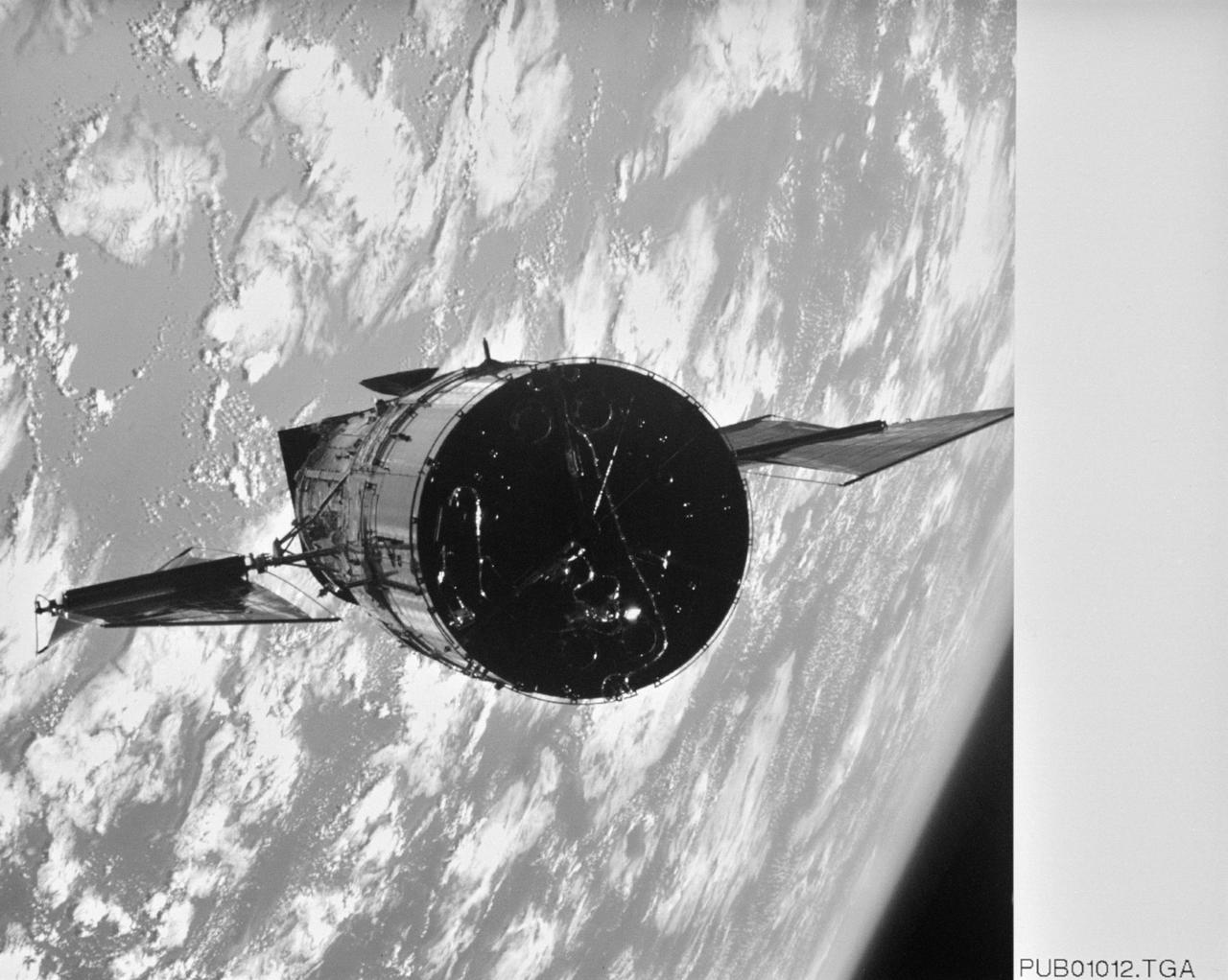
S61-E-008 (4 Dec 1993) --- This view of the Earth-orbiting Hubble Space Telescope (HST) was photographed with an Electronic Still Camera (ESC), and down linked to ground controllers soon afterward. This view was taken during rendezvous operations. Endeavour's crew captured the HST on December 4, 1993 in order to service the telescope. Over a period of five days, four of the crew members will work in alternating pairs outside Endeavour's shirt sleeve environment. Electronic still photography is a relatively new technology which provides the means for a handheld camera to electronically capture and digitize an image with resolution approaching film quality. The electronic still camera has flown as an experiment on several other shuttle missions.
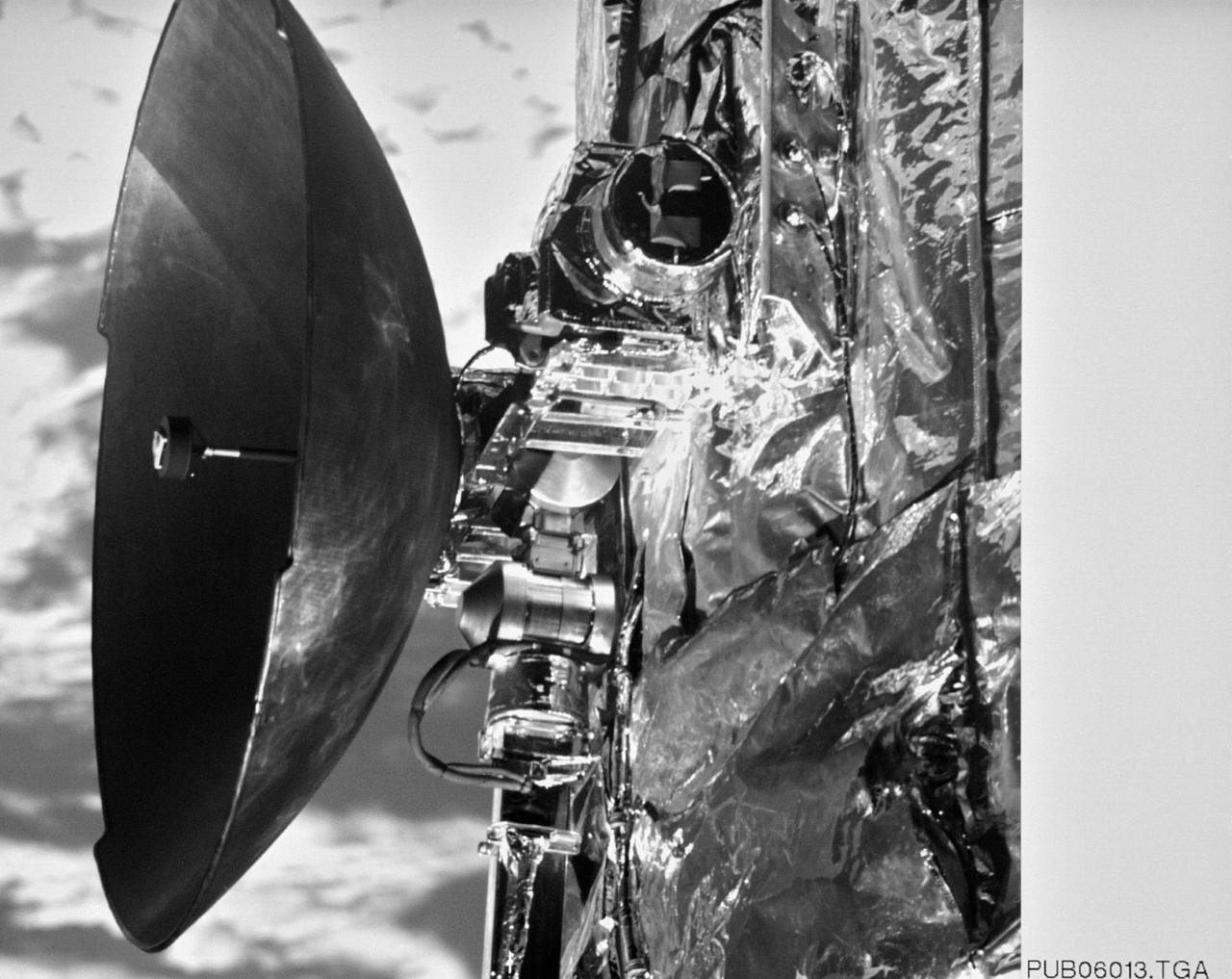
S61-E-021 (7 Dec 1993) --- This close-up view of one of two High Gain Antennae (HGA) on the Hubble Space Telescope (HST) was photographed with an Electronic Still Camera (ESC), and down linked to ground controllers soon afterward. Endeavour's crew captured the HST on December 4, 1993 in order to service the telescope over a period of five days. Four of the crew members have been working in alternating pairs outside Endeavour's shirt sleeve environment to service the giant telescope. Electronic still photography is a relatively new technology which provides the means for a handheld camera to electronically capture and digitize an image with resolution approaching film quality. The electronic still camera has flown as an experiment on several other shuttle missions.
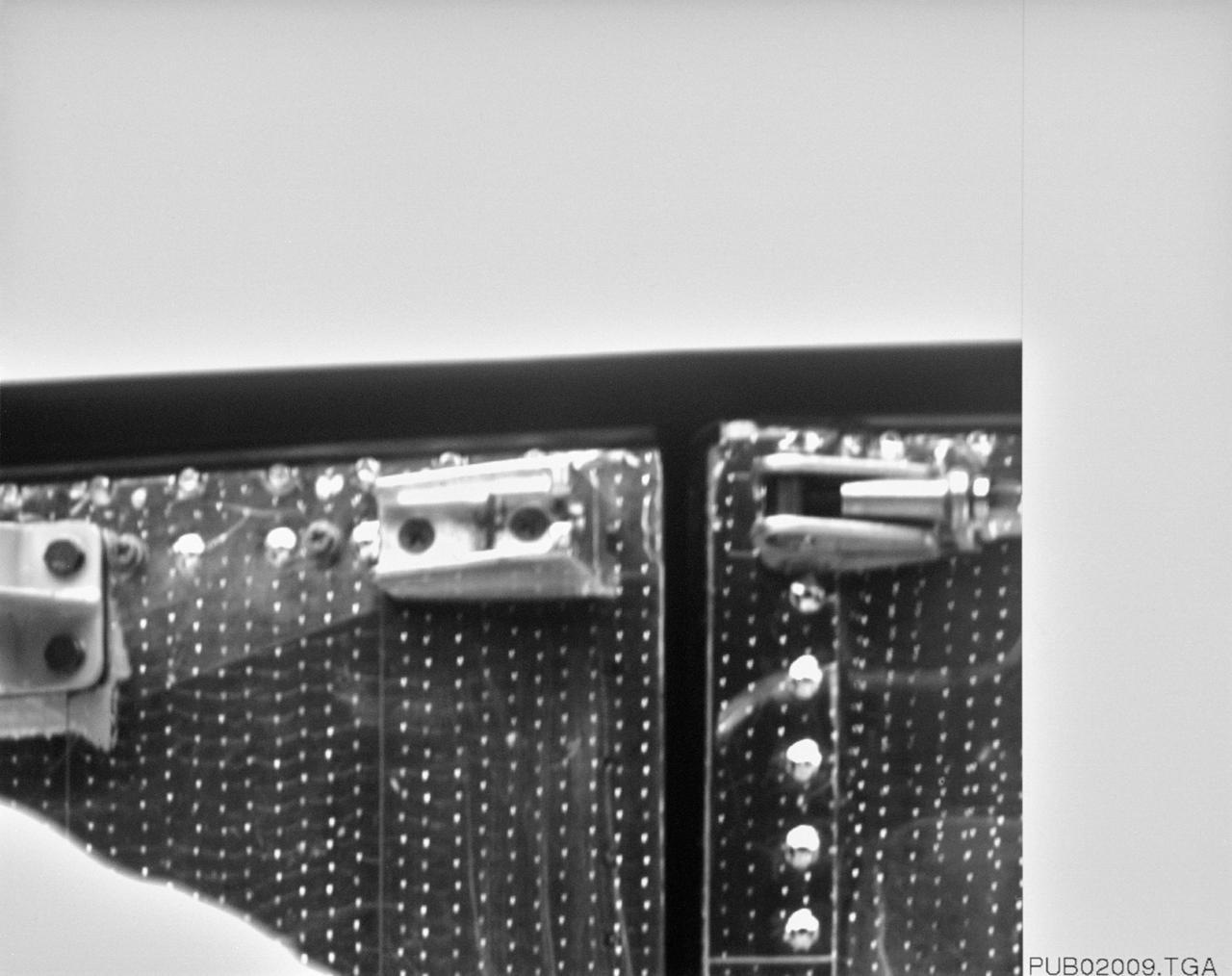
S61-E-004 (4 Dec 1993) --- This close-up view of a latch on the minus V3 aft shroud door of the Hubble Space Telescope (HST) was photographed with an Electronic Still Camera (ESC), and down linked to ground controllers soon afterward. Endeavour's crew captured the HST on December 4, 1993 in order to service the telescope. Over a period of five days, four of the seven crew members will work in alternating pairs outside Endeavour's shirt sleeve environment to service the giant telescope. Electronic still photography is a relatively new technology which provides the means for a handheld camera to electronically capture and digitize an image with resolution approaching film quality. The electronic still camera has flown as an experiment on several other shuttle missions.

The high-tech art of digital signal processing (DSP) was pioneered at NASA's Jet Propulsion Laboratory (JPL) in the mid-1960s for use in the Apollo Lunar Landing Program. Designed to computer enhance pictures of the Moon, this technology became the basis for the Landsat Earth resources satellites and subsequently has been incorporated into a broad range of Earthbound medical and diagnostic tools. DSP is employed in advanced body imaging techniques including Computer-Aided Tomography, also known as CT and CATScan, and Magnetic Resonance Imaging (MRI). CT images are collected by irradiating a thin slice of the body with a fan-shaped x-ray beam from a number of directions around the body's perimeter. A tomographic (slice-like) picture is reconstructed from these multiple views by a computer. MRI employs a magnetic field and radio waves, rather than x-rays, to create images.
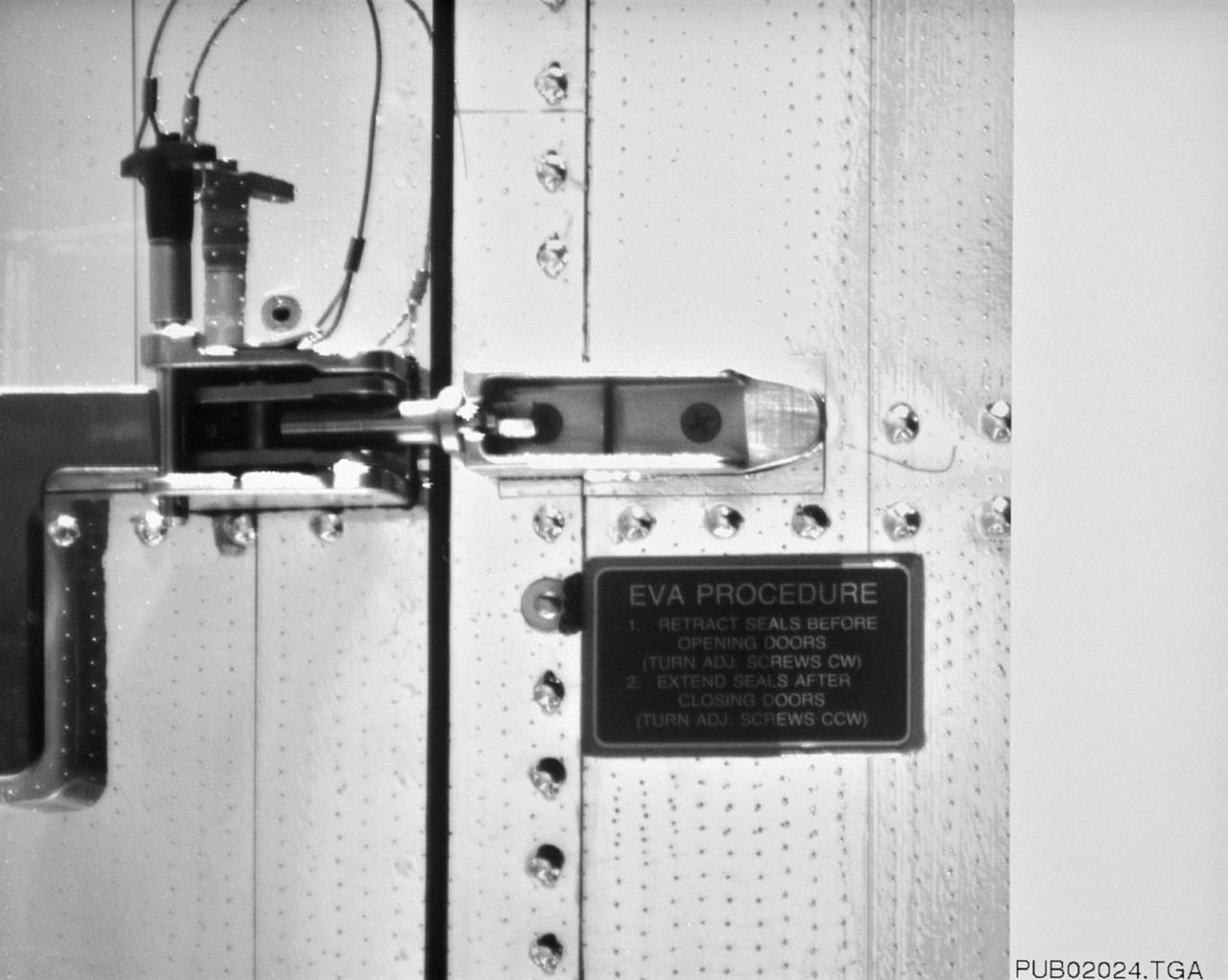
S61-E-010 (4 Dec 1993) --- This close-up view of a latch on the minus V3 aft shroud door of the Hubble Space Telescope (HST) was photographed with an Electronic Still Camera (ESC), and down linked to ground controllers soon afterward. Endeavour's crew captured the HST on December 4, 1993 in order to service the telescope over a period of five days. Four of the crew members will work in alternating pairs outside Endeavour's shirt sleeve environment to service the giant telescope. Electronic still photography is a relatively new technology which provides the means for a handheld camera to electronically capture and digitize an image with resolution approaching film quality. The electronic still camera has flown as an experiment on several other shuttle missions.
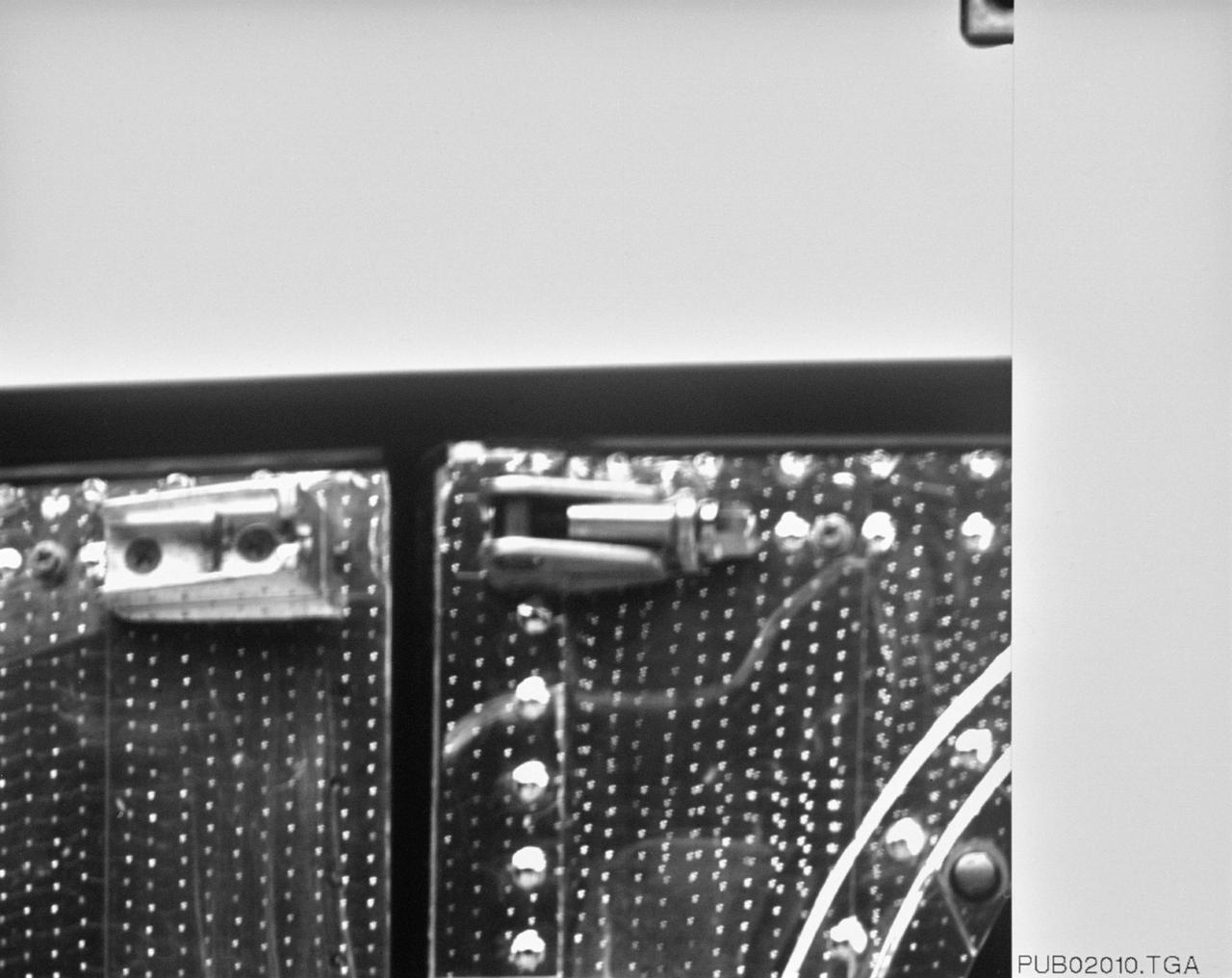
S61-E-005 (4 Dec 1993) --- This close-up view of a latch on the minus V3 aft shroud door of the Hubble Space Telescope (HST) was photographed with an Electronic Still Camera (ESC), and down linked to ground controllers soon afterward. Endeavour's crew captured the HST on December 4, 1993 in order to service the telescope. Over a period of five days, four of the seven crew members will work in alternating pairs outside Endeavour's shirt sleeve environment to service the giant telescope. Electronic still photography is a relatively new technology which provides the means for a handheld camera to electronically capture and digitize an image with resolution approaching film quality. The electronic still camera has flown as an experiment on several other shuttle missions.

S61-E-012 (5 Dec 1993) --- This view of astronauts Kathryn C. Thornton (top) and Thomas D. Akers working on the Hubble Space Telescope (HST) was photographed with an Electronic Still Camera (ESC), and down linked to ground controllers soon afterward. Thornton, anchored to the end of the Remote Manipulator System (RMS) arm, is teaming with Akers to install the +V2 Solar Array Panel as a replacement for the original one removed earlier. Akers uses tethers and a foot restraint to remain in position for the task. Electronic still photography is a relatively new technology which provides the means for a handheld camera to electronically capture and digitize an image with resolution approaching film quality. The electronic still camera has flown as an experiment on several other shuttle missions.

The high-tech art of digital signal processing (DSP) was pioneered at NASA's Jet Propulsion Laboratory (JPL) in the mid-1960s for use in the Apollo Lunar Landing Program. Designed to computer enhance pictures of the Moon, this technology became the basis for the Landsat Earth resources satellites and subsequently has been incorporated into a broad range of Earthbound medical and diagnostic tools. DSP is employed in advanced body imaging techniques including Computer-Aided Tomography, also known as CT and CATScan, and Magnetic Resonance Imaging (MRI). CT images are collected by irradiating a thin slice of the body with a fan-shaped x-ray beam from a number of directions around the body's perimeter. A tomographic (slice-like) picture is reconstructed from these multiple views by a computer. MRI employs a magnetic field and radio waves, rather than x-rays, to create images. In this photograph, a patient undergoes an open MRI.

The high-tech art of digital signal processing (DSP) was pioneered at NASA's Jet Propulsion Laboratory (JPL) in the mid-1960s for use in the Apollo Lunar Landing Program. Designed to computer enhance pictures of the Moon, this technology became the basis for the Landsat Earth resources satellites and subsequently has been incorporated into a broad range of Earthbound medical and diagnostic tools. DSP is employed in advanced body imaging techniques including Computer-Aided Tomography, also known as CT and CATScan, and Magnetic Resonance Imaging (MRI). CT images are collected by irradiating a thin slice of the body with a fan-shaped x-ray beam from a number of directions around the body's perimeter. A tomographic (slice-like) picture is reconstructed from these multiple views by a computer. MRI employs a magnetic field and radio waves, rather than x-rays, to create images.
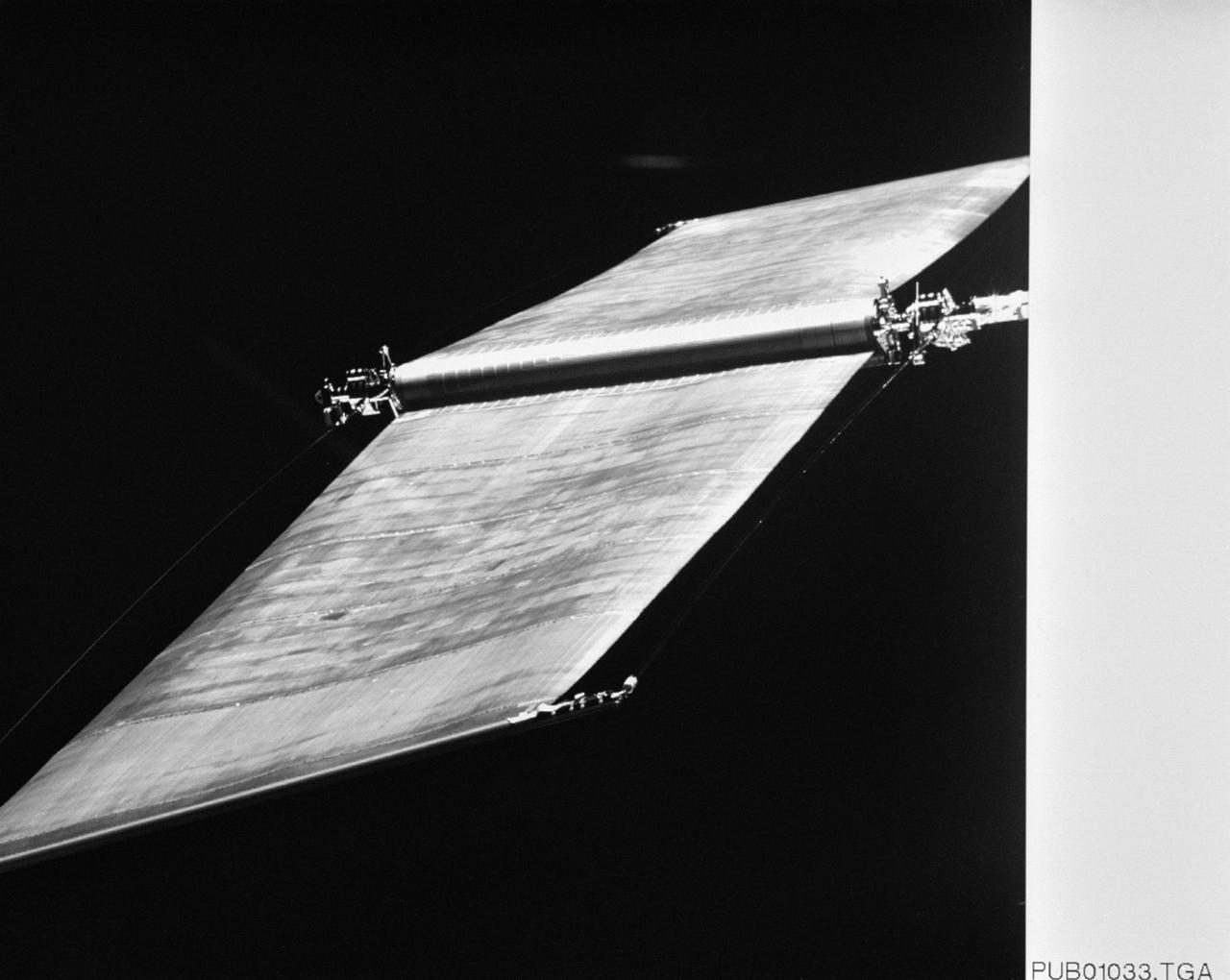
S61-E-002 (4 Dec 1993) --- This view, backdropped against the blackness of space shows one of two original Solar Arrays (SA) on the Hubble Space Telescope (HST). The scene was photographed from inside Endeavour's cabin with an Electronic Still Camera (ESC), and down linked to ground controllers soon afterward. This view features the minus V-2 panel. Endeavour's crew captured the HST on December 4, 1993 in order to service the telescope over a period of five days. Four of the crew members will work in alternating pairs outside Endeavour's shirt sleeve environment to service the giant telescope. Electronic still photography is a relatively new technology which provides the means for a handheld camera to electronically capture and digitize an image with resolution approaching film quality. The electronic still camera has flown as an experiment on several other shuttle missions.

S61-E-014 (5 Dec 1993) --- This view of astronauts Kathryn C. Thornton (bottom) and Thomas D. Akers working on the Hubble Space Telescope (HST) was photographed with an Electronic Still Camera (ESC), and down linked to ground controllers soon afterward. Thornton, anchored to the end of the Remote Manipulator System (RMS) arm, is teaming with Akers to install the +V2 Solar Array Panel as a replacement for the original one removed earlier. Akers uses tethers and a foot restraint to remain in position for the task. Electronic still photography is a relatively new technology which provides the means for a handheld camera to electronically capture and digitize an image with resolution approaching film quality. The electronic still camera has flown as an experiment on several other shuttle missions.
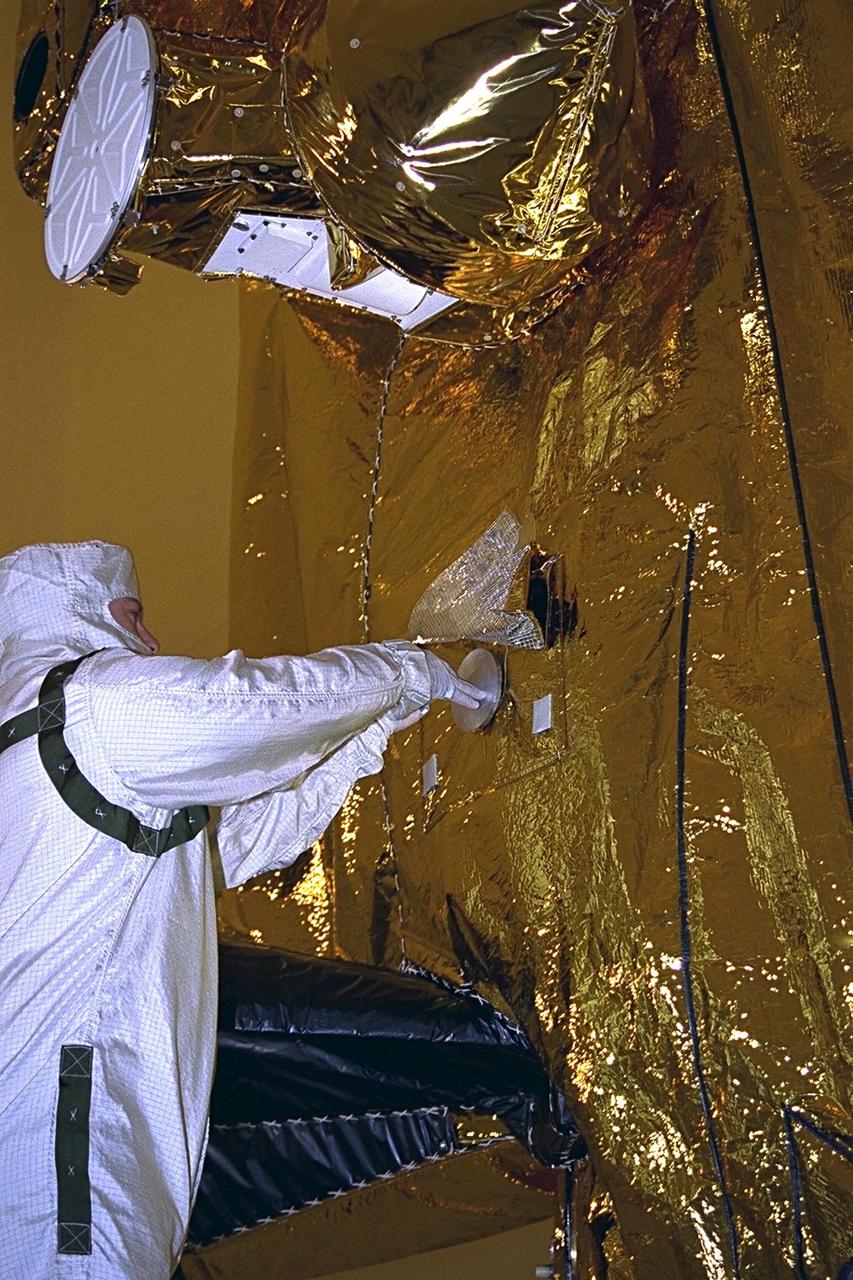
In the Payload Hazardous Servicing Facility (PHSF), Dan Maynard, a Jet Propulsion Laboratory technician, inserts the Digital Video Disk (DVD) into a shallow cavity between two pieces of aluminum that will protect it from micrometeoroid impacts. The package will be mounted to the side of the two-story-tall spacecraft beneath a pallet carrying cameras and other space instruments that will be used to study the Saturnian system. A specially designed, multicolored patch of thermal blanket material will be installed over the disk package. Along with the spacecraft, the disk will reside in Saturn's orbit centuries after the primary mission is completed in July 2008. The Cassini mission is managed for NASA's Office of Space Science, Washington, D.C., by the Jet Propulsion Laboratory, a division of the California Institute of Technology
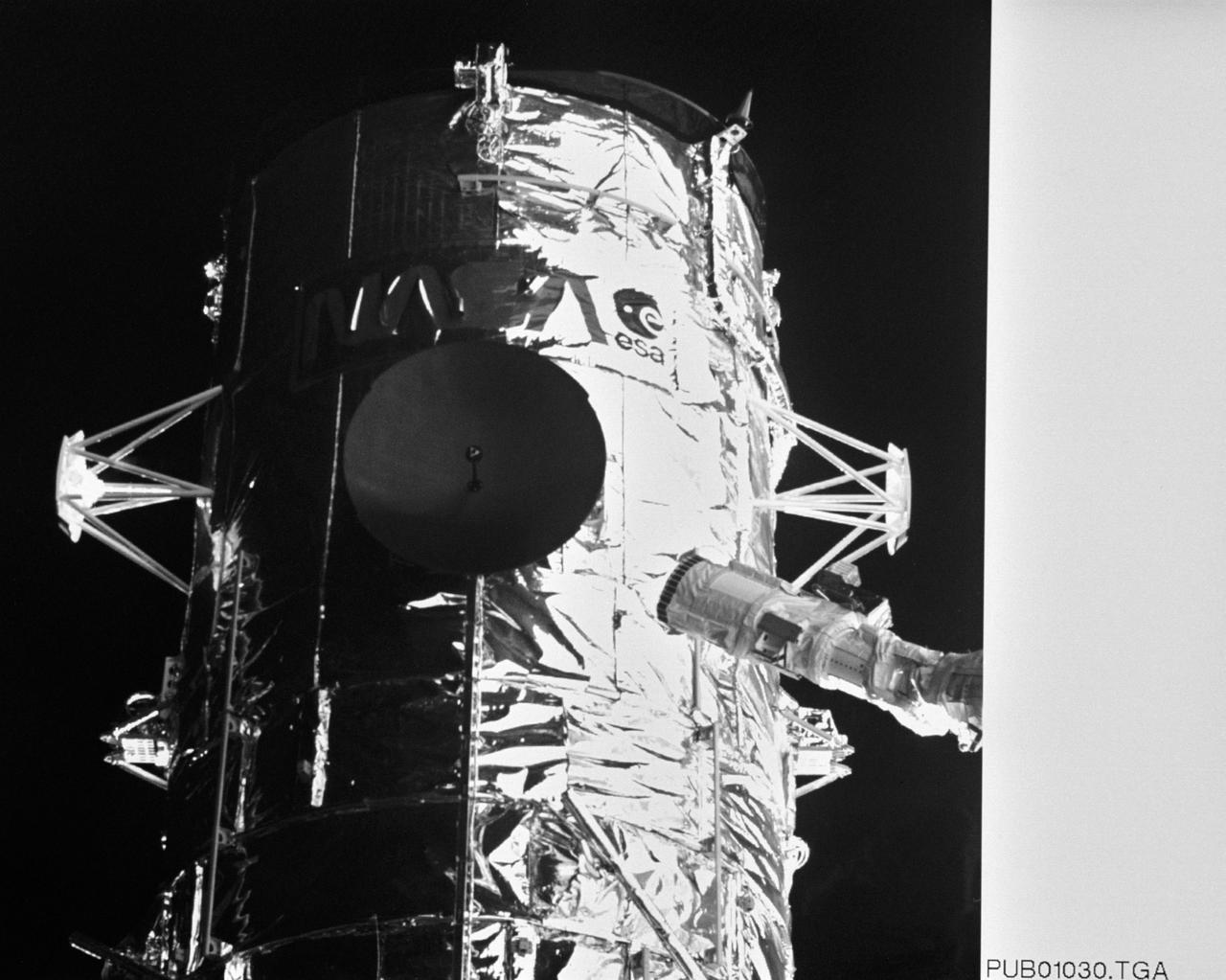
S61-E-001 (4 Dec 1993) --- This medium close-up view of the top portion of the Hubble Space Telescope (HST) was photographed with an Electronic Still Camera (ESC), and down linked to ground controllers soon afterward. Endeavour's crew captured the HST on December 4, 1993 in order to service the telescope over a period of five days. Four of the crew members will work in alternating pairs outside Endeavour's shirt sleeve environment to service the giant telescope. Electronic still photography is a relatively new technology which provides the means for a handheld camera to electronically capture and digitize an image with resolution approaching film quality. The electronic still camera has flown as an experiment on several other shuttle missions.
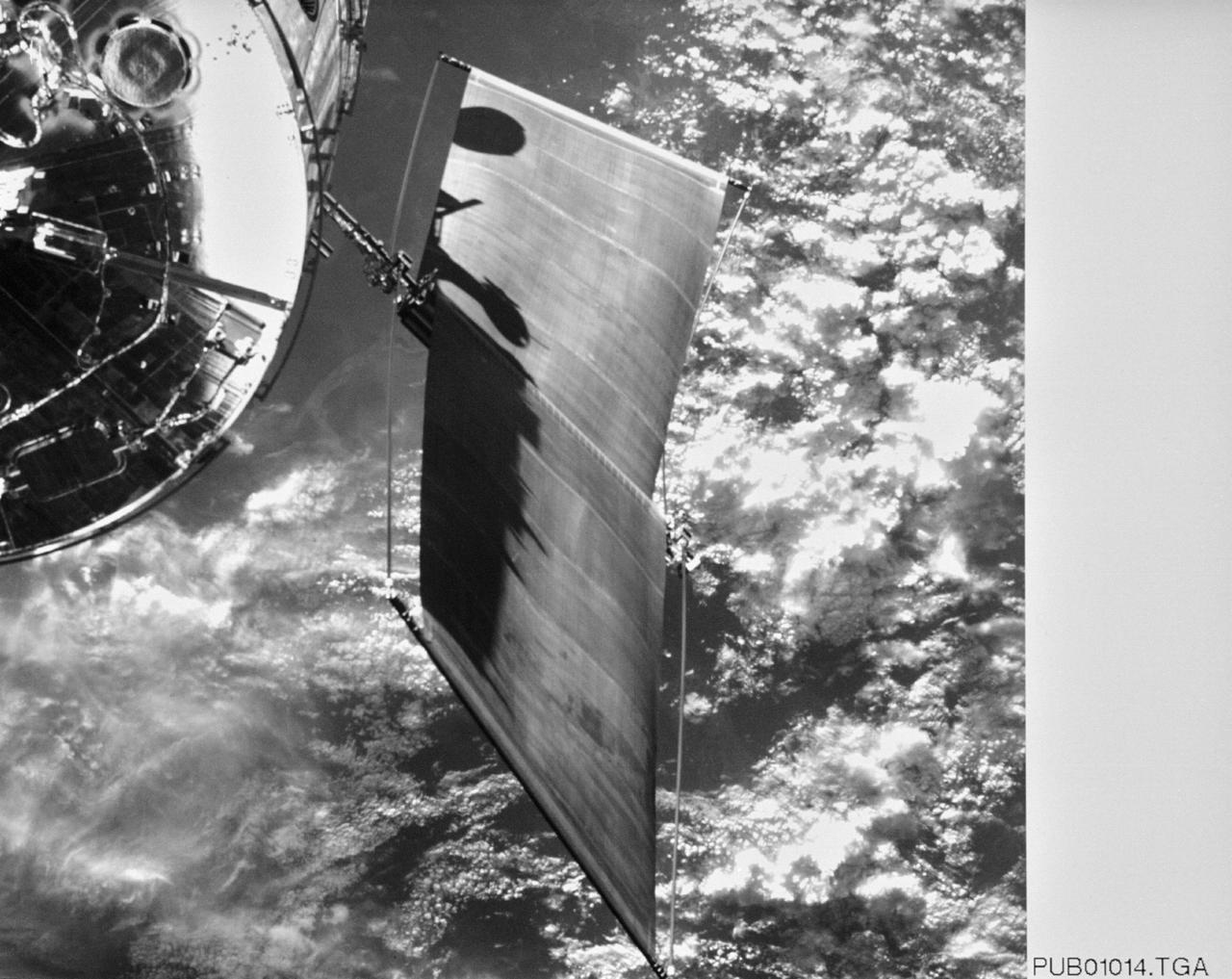
S61-E-009 (4 Dec 1993) --- This view of one of two High Gain Antennae (HGA) on the Hubble Space Telescope (HST) was photographed with an Electronic Still Camera (ESC). The scene was down linked to ground controllers soon after the Space Shuttle Endeavour caught up to the orbiting telescope 320 miles above Earth. Shown here before grapple, the HST was captured on December 4, 1993 in order to service the telescope. Over a period of five days, four of the seven STS-61 crew members will work in alternating pairs outside Endeavour's shirt sleeve environment. Electronic still photography is a relatively new technology which provides the means for a handheld camera to electronically capture and digitize an image with resolution approaching film quality. The electronic still camera has flown as an experiment on several other shuttle missions.

S61-E-003 (4 Dec 1993) --- This medium close-up view of one of two original Solar Arrays (SA) on the Hubble Space Telescope (HST) was photographed with an Electronic Still Camera (ESC), and down linked to ground controllers soon afterward. This view shows the cell side of the minus V-2 panel. Endeavour's crew captured the HST on December 4, 1993 in order to service the telescope over a period of five days. Four of the crew members will work in alternating pairs outside Endeavour's shirt sleeve environment to service the giant telescope. Electronic still photography is a relatively new technology which provides the means for a handheld camera to electronically capture and digitize an image with resolution approaching film quality. The electronic still camera has flown as an experiment on several other shuttle missions.
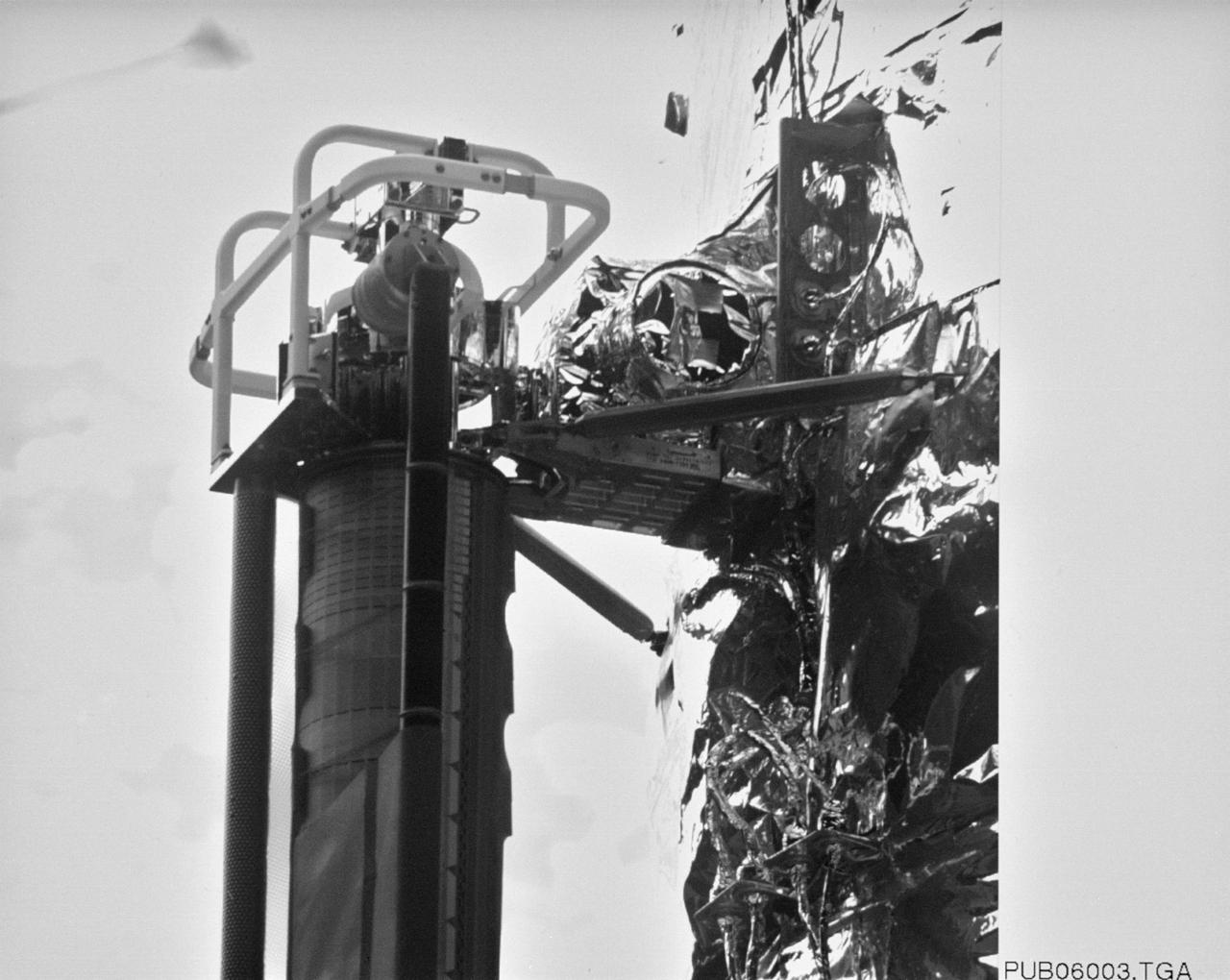
S61-E-020 (7 Dec 1993) --- This close-up view of one of two Solar Arrays (SA) on the Hubble Space Telescope (HST) was photographed with an Electronic Still Camera (ESC), and down linked to ground controllers soon afterward. Endeavour's crew captured the HST on December 4, 1993, in order to service the telescope over a period of five days. Four of the crew members will work in alternating pairs outside Endeavour's shirt sleeve environment to service the giant telescope. Electronic still photography is a relatively new technology which provides the means for a handheld camera to electronically capture and digitize an image with resolution approaching film quality. The electronic still camera has flown as an experiment on several other shuttle missions.

S61-E-017 (6 Dec 1993) --- Astronaut F. Story Musgrave uses one of the handrails on the Hubble Space Telescope (HST) during the second of his three sessions of STS-61 extravehicular activity (EVA-3). Astronauts Musgrave and Jeffrey A. Hoffman used this particular EVA to change out the Wide Field/Planetary Camera (WF/PC) and two magnetometers (also known as magnetic sensing systems). The photo was recorded with the Electronic Still Camera (ESC) inside Endeavour's cabin. Electronic still photography is a relatively new technology which provides the means for a handheld camera to electronically capture and digitize an image with resolution approaching film quality. The electronic still camera has flown as an experiment on several other shuttle missions.

The high-tech art of digital signal processing (DSP) was pioneered at NASA's Jet Propulsion Laboratory (JPL) in the mid-1960s for use in the Apollo Lunar Landing Program. Designed to computer enhance pictures of the Moon, this technology became the basis for the Landsat Earth resources satellites and subsequently has been incorporated into a broad range of Earthbound medical and diagnostic tools. DSP is employed in advanced body imaging techniques including Computer-Aided Tomography, also known as CT and CATScan, and Magnetic Resonance Imaging (MRI). CT images are collected by irradiating a thin slice of the body with a fan-shaped x-ray beam from a number of directions around the body's perimeter. A tomographic (slice-like) picture is reconstructed from these multiple views by a computer. MRI employs a magnetic field and radio waves, rather than x-rays, to create images.
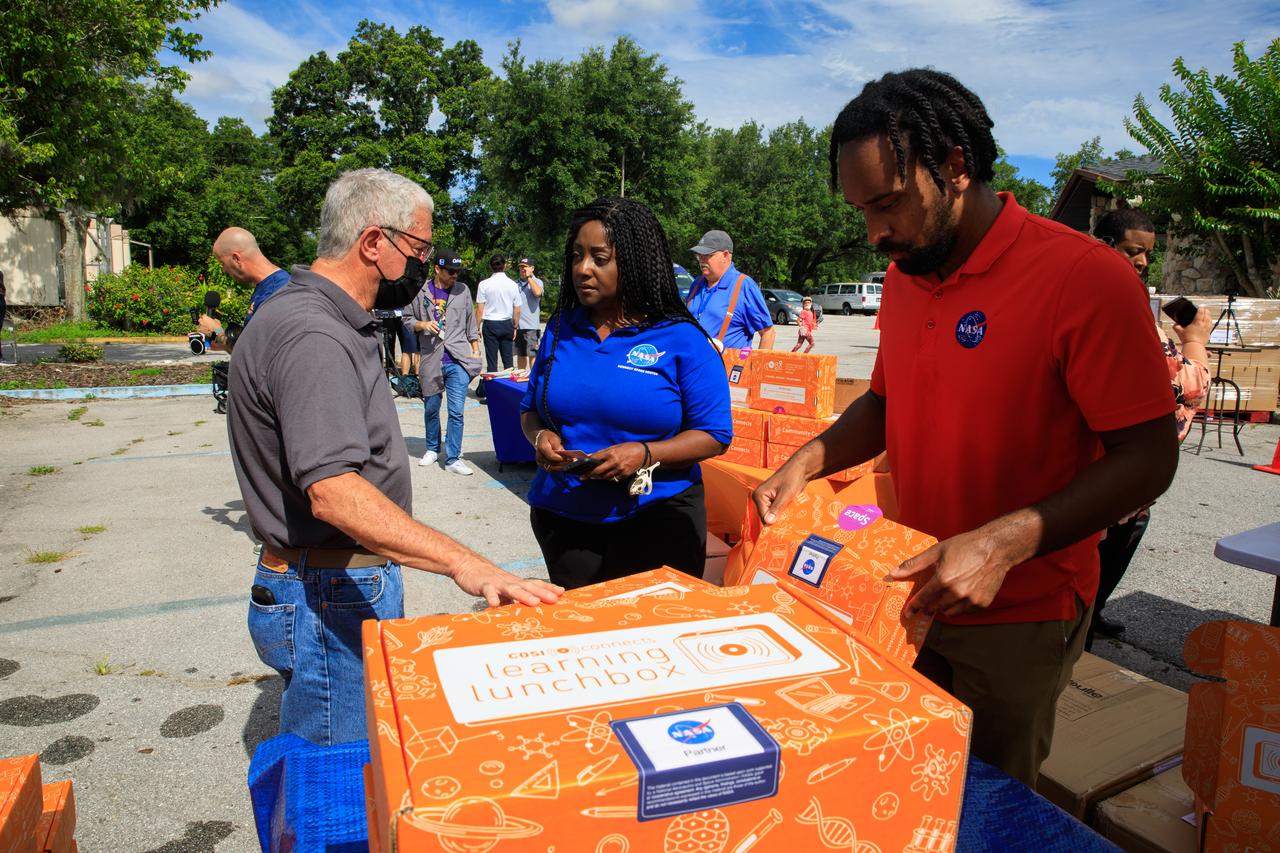
Barbara Brown (center), director of the Exploration Research and Technology Program at Kennedy Space Center in Florida, helped kick off a new initiative to deliver food and hands-on science, technology, engineering, and math kits, called Learning Lunchboxes, at New Beginnings Church – The Gathering Place in Orlando, Florida on Friday, June 3. The lunchboxes are aimed at inspiring and educating youth and families about NASA’s upcoming Artemis missions, which includes landing the first woman and person of color on the Moon and helping prepare for human exploration of Mars. Partners on the initiative with NASA include the Center of Science and Industry, the Second Harvest Food Bank, and the Orlando Science Center. The NASA Artemis Learning Lunchbox is made possible through NASA’s Teams Engaging Affiliated Museums and Informal Institutions (TEAM II) program. NASA Learning Lunchboxes provide five space-focused learning activities that showcase the diversity of STEM at NASA. COSI will distribute 30,000 NASA Learning Lunchboxes at local food banks across the country to help feed hungry lives and feed hungry minds. This innovative, community-based model will bring together other science centers and museums, afterschool providers, and community leaders to highlight the importance of STEM. This project also includes digital extension resources.
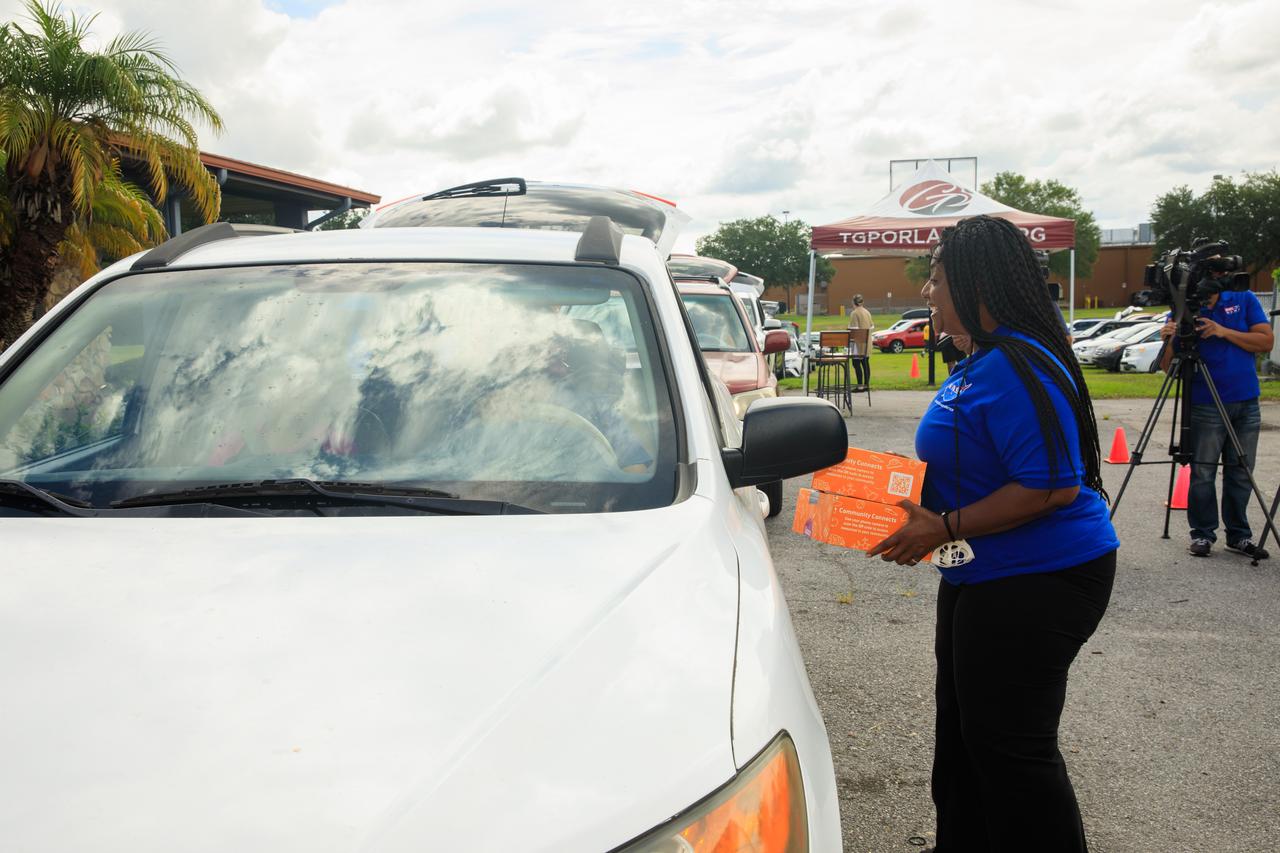
Barbara Brown, director of the Exploration Research and Technology Program at Kennedy Space Center in Florida, helped kick off a new initiative to deliver food and hands-on science, technology, engineering, and math kits, called Learning Lunchboxes, at New Beginnings Church – The Gathering Place in Orlando, Florida on Friday, June 3. The lunchboxes are aimed at inspiring and educating youth and families about NASA’s upcoming Artemis missions, which includes landing the first woman and person of color on the Moon and helping prepare for human exploration of Mars. Partners on the initiative with NASA include the Center of Science and Industry, the Second Harvest Food Bank, and the Orlando Science Center. The NASA Artemis Learning Lunchbox is made possible through NASA’s Teams Engaging Affiliated Museums and Informal Institutions (TEAM II) program. NASA Learning Lunchboxes provide five space-focused learning activities that showcase the diversity of STEM at NASA. COSI will distribute 30,000 NASA Learning Lunchboxes at local food banks across the country to help feed hungry lives and feed hungry minds. This innovative, community-based model will bring together other science centers and museums, afterschool providers, and community leaders to highlight the importance of STEM. This project also includes digital extension resources.
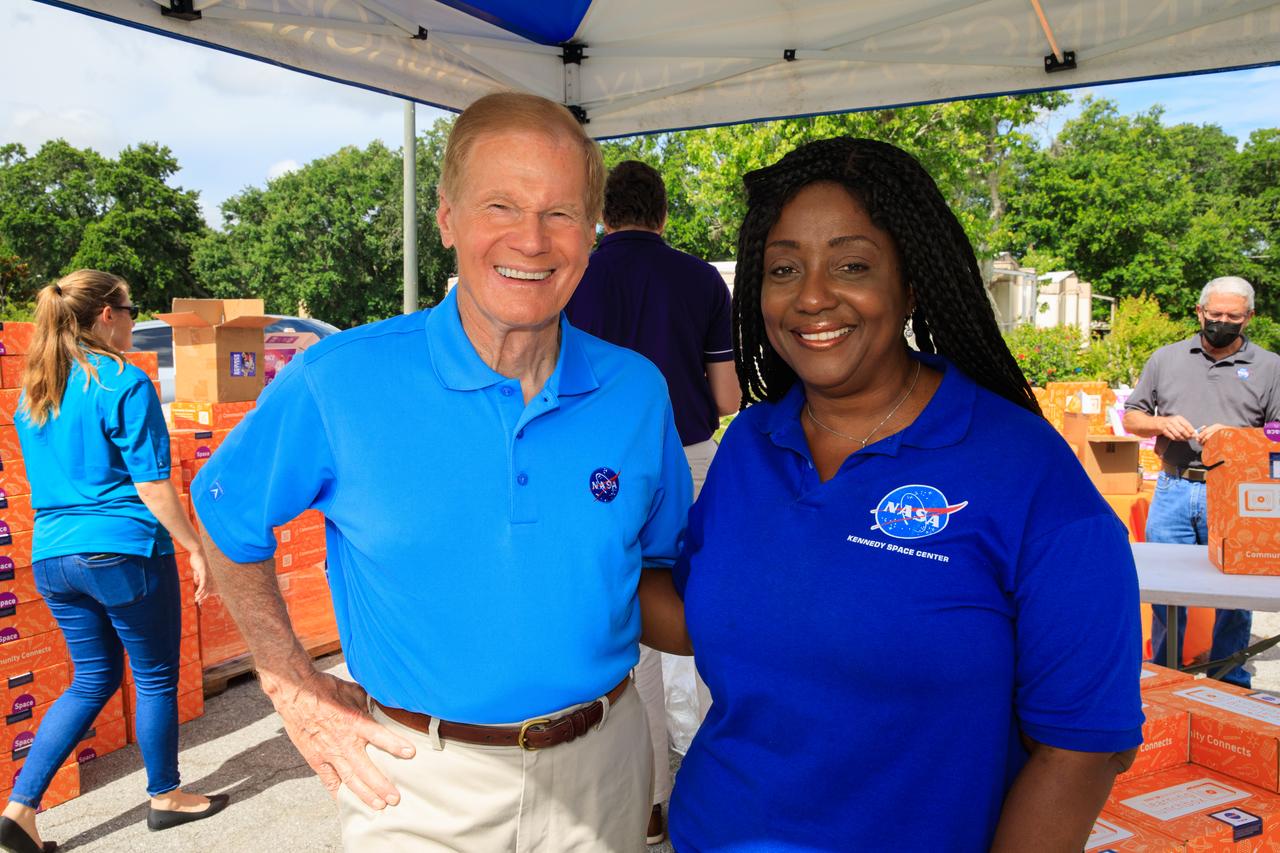
NASA Administrator Bill Nelson (left) and Barbara Brown (right), director of the Exploration Research and Technology Program at Kennedy Space Center in Florida, helped kick off a new initiative to deliver food and hands-on science, technology, engineering, and math kits, called Learning Lunchboxes, at New Beginnings Church – The Gathering Place in Orlando, Florida on Friday, June 3. The lunchboxes are aimed at inspiring and educating youth and families about NASA’s upcoming Artemis missions, which includes landing the first woman and person of color on the Moon and helping prepare for human exploration of Mars. Partners on the initiative with NASA include the Center of Science and Industry, the Second Harvest Food Bank, and the Orlando Science Center. The NASA Artemis Learning Lunchbox is made possible through NASA’s Teams Engaging Affiliated Museums and Informal Institutions (TEAM II) program. NASA Learning Lunchboxes provide five space-focused learning activities that showcase the diversity of STEM at NASA. COSI will distribute 30,000 NASA Learning Lunchboxes at local food banks across the country to help feed hungry lives and feed hungry minds. This innovative, community-based model will bring together other science centers and museums, afterschool providers, and community leaders to highlight the importance of STEM. This project also includes digital extension resources.
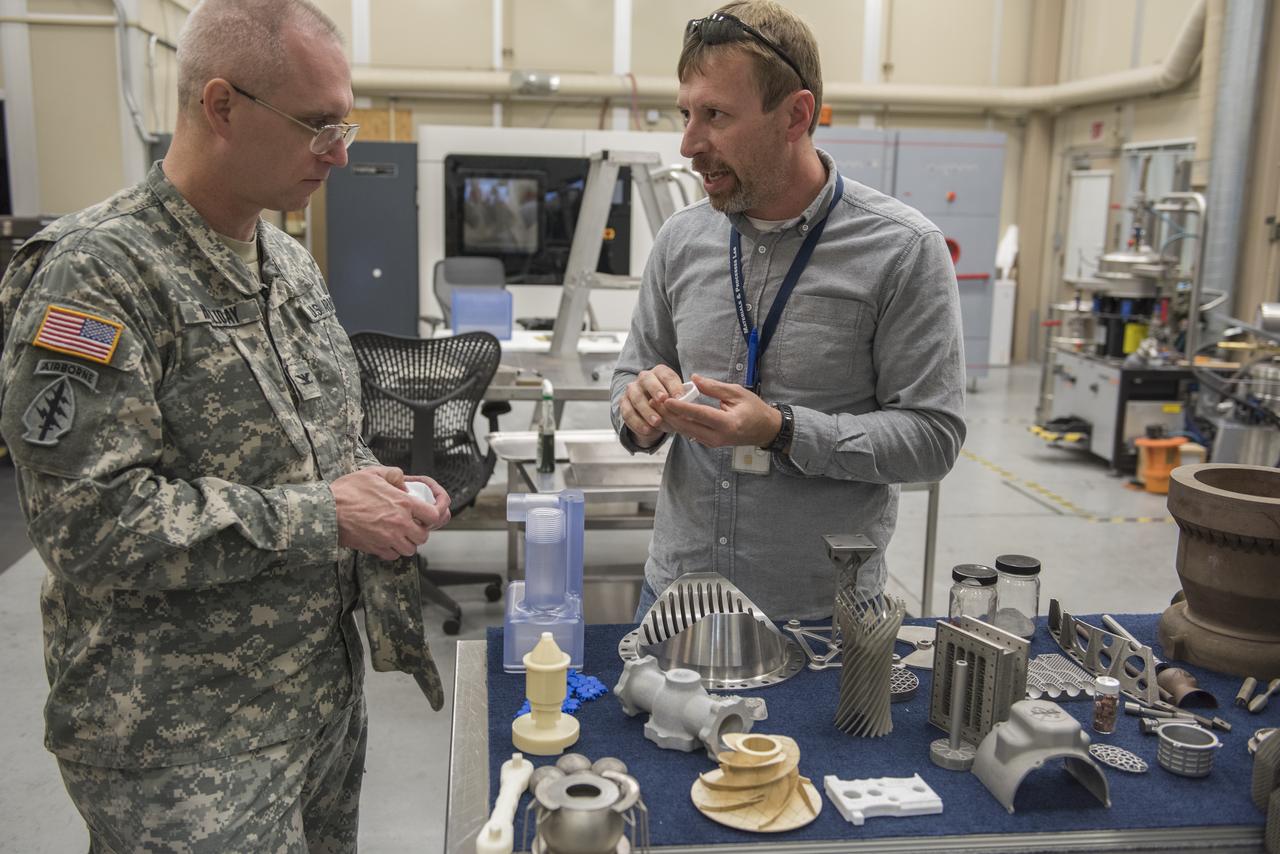
REDSTONE ARSENAL GARRISON COMMANDER COL. THOMAS "DOC" HOLLIDAY, LEFT, DISCUSSES THE PROCESSES AND HARDWARE USED IN NASA IN-SPACE MANUFACTURING TECHNIQUES WITH KEN COOPER, A STRUCTURAL MATERIALS ENGINEER AT NASA'S MARSHALL SPACE FLIGHT CENTER. COOPER, PART OF THE MARSHALL ENGINEERING DIRECTORATE'S ADVANCED MANUFACTURING AND DIGITAL SOLUTIONS TEAM, WAS AMONG NUMEROUS SUBJECT-MATTER EXPERTS WHO SHARED KEY MARSHALL CAPABILITIES DURING HOLLIDAY'S MARCH 3 MARSHALL TOUR. HOLLIDAY, A DECORATED OFFICER WHOSE MILITARY CAREER BEGAN IN 1992, GAINED FIRSTHAND INSIGHT INTO MARSHALL'S ADVANCED MANUFACTURING AND 3-D PRINTING TECHNIQUES; ROUND-THE-CLOCK INTERNATIONAL SPACE STATION SCIENCE AND COMMUNICATIONS SUPPORT BY THE PAYLOAD OPERATIONS INTEGRATION CENTER TEAM; AND THE LATEST UPGRADES TO MARSHALL TEST STANDS IN SUPPORT OF NEXT-GENERATION LAUNCH VEHICLE AND FLIGHT HARDWARE DEVELOPMENT. MARSHALL, A REDSTONE ARSENAL TENANT, ROUTINELY SHARES CUTTING-EDGE RESEARCH AND MANUFACTURING ADVANCES WITH ITS MILITARY AND FEDERAL AGENCY COUNTERPARTS, WORKING IN PARTNERSHIP TO ADVANCE NASA'S MISSION AND MAINTAIN THE NATION'S TECHNOLOGICAL LEADERSHIP.

From left to right, Dr. Frederic Bertley, president and CEO, Center of Science and Industry (COSI); NASA Administrator Bill Nelson; JoAnn Newman, president and CEO, Orlando Science Center; and Stephen White, chief strategy officer, COSI helped kick off a new initiative to deliver food and hands-on science, technology, engineering, and math kits, called Learning Lunchboxes, at New Beginnings Church – The Gathering Place in Orlando, Florida on Friday, June 3. The lunchboxes are aimed at inspiring and educating youth and families about NASA’s upcoming Artemis missions, which includes landing the first woman and person of color on the Moon and helping prepare for human exploration of Mars. Partners on the initiative with NASA include COSI, the Second Harvest Food Bank, and the Orlando Science Center. The NASA Artemis Learning Lunchbox is made possible through NASA’s Teams Engaging Affiliated Museums and Informal Institutions (TEAM II) program. NASA Learning Lunchboxes provide five space-focused learning activities that showcase the diversity of STEM at NASA. COSI will distribute 30,000 NASA Learning Lunchboxes at local food banks across the country to help feed hungry lives and feed hungry minds. This innovative, community-based model will bring together other science centers and museums, afterschool providers, and community leaders to highlight the importance of STEM. This project also includes digital extension resources.
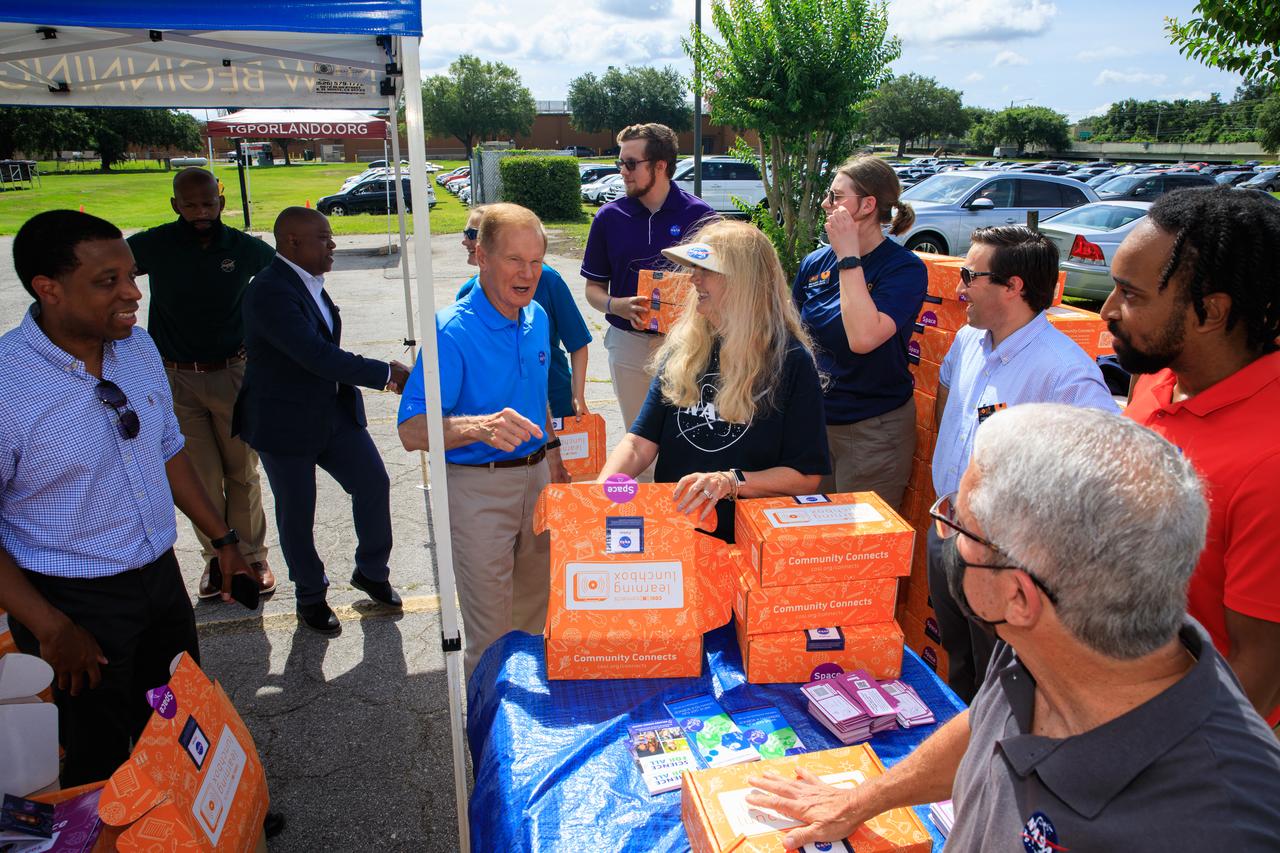
NASA Administrator Bill Nelson helped kick off a new initiative to deliver food and hands-on science, technology, engineering, and math kits, called Learning Lunchboxes, at New Beginnings Church – The Gathering Place in Orlando, Florida on Friday, June 3. The lunchboxes are aimed at inspiring and educating youth and families about NASA’s upcoming Artemis missions, which includes landing the first woman and person of color on the Moon and helping prepare for human exploration of Mars. Partners on the initiative with NASA include the Center of Science and Industry, the Second Harvest Food Bank, and the Orlando Science Center. The NASA Artemis Learning Lunchbox is made possible through NASA’s Teams Engaging Affiliated Museums and Informal Institutions (TEAM II) program. NASA Learning Lunchboxes provide five space-focused learning activities that showcase the diversity of STEM at NASA. COSI will distribute 30,000 NASA Learning Lunchboxes at local food banks across the country to help feed hungry lives and feed hungry minds. This innovative, community-based model will bring together other science centers and museums, afterschool providers, and community leaders to highlight the importance of STEM. This project also includes digital extension resources.
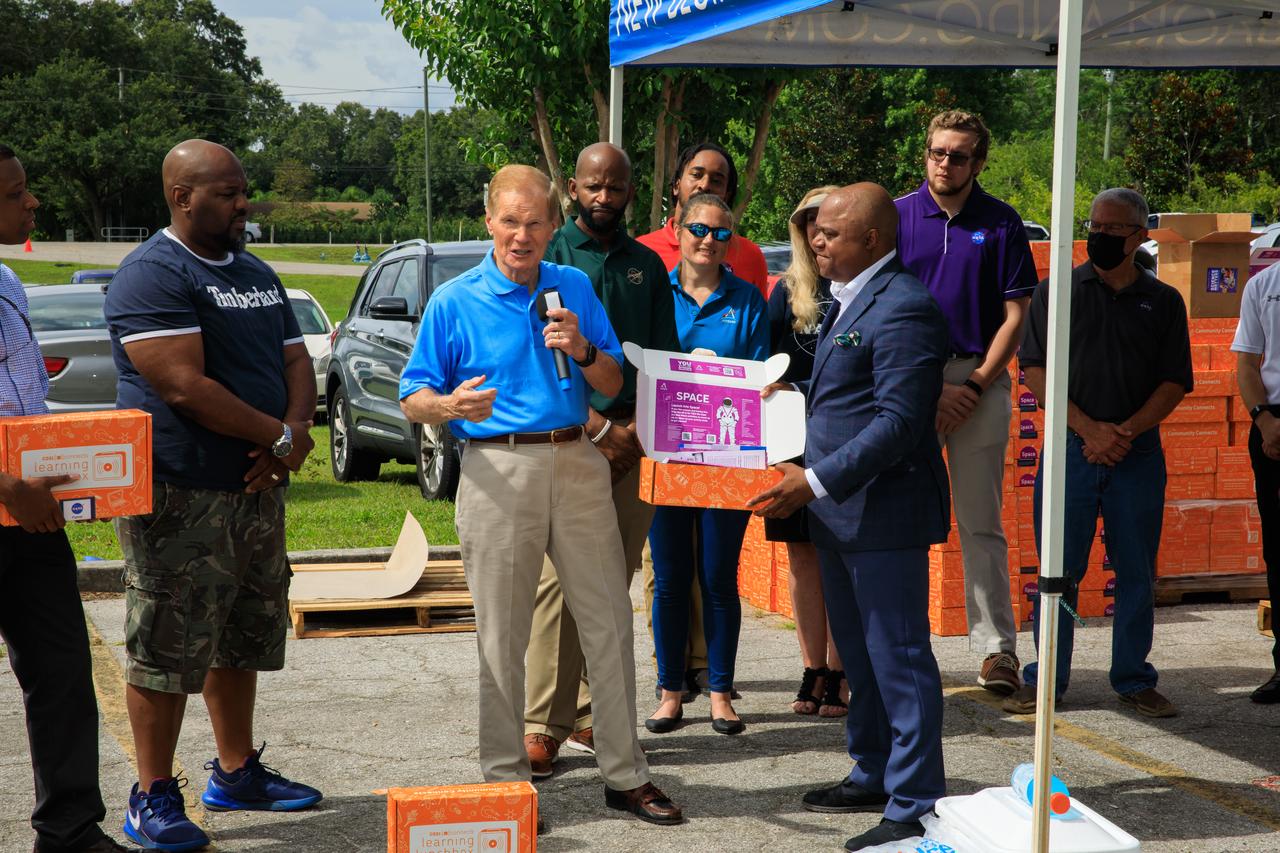
NASA Administrator Bill Nelson helped kick off a new initiative to deliver food and hands-on science, technology, engineering, and math kits, called Learning Lunchboxes, at New Beginnings Church – The Gathering Place in Orlando, Florida on Friday, June 3. The lunchboxes are aimed at inspiring and educating youth and families about NASA’s upcoming Artemis missions, which includes landing the first woman and person of color on the Moon and helping prepare for human exploration of Mars. Partners on the initiative with NASA include the Center of Science and Industry, the Second Harvest Food Bank, and the Orlando Science Center. The NASA Artemis Learning Lunchbox is made possible through NASA’s Teams Engaging Affiliated Museums and Informal Institutions (TEAM II) program. NASA Learning Lunchboxes provide five space-focused learning activities that showcase the diversity of STEM at NASA. COSI will distribute 30,000 NASA Learning Lunchboxes at local food banks across the country to help feed hungry lives and feed hungry minds. This innovative, community-based model will bring together other science centers and museums, afterschool providers, and community leaders to highlight the importance of STEM. This project also includes digital extension resources.

NASA Administrator Bill Nelson helped kick off a new initiative to deliver food and hands-on science, technology, engineering, and math kits, called Learning Lunchboxes, at New Beginnings Church – The Gathering Place in Orlando, Florida on Friday, June 3. The lunchboxes are aimed at inspiring and educating youth and families about NASA’s upcoming Artemis missions, which includes landing the first woman and person of color on the Moon and helping prepare for human exploration of Mars. Partners on the initiative with NASA include the Center of Science and Industry, the Second Harvest Food Bank, and the Orlando Science Center. The NASA Artemis Learning Lunchbox is made possible through NASA’s Teams Engaging Affiliated Museums and Informal Institutions (TEAM II) program. NASA Learning Lunchboxes provide five space-focused learning activities that showcase the diversity of STEM at NASA. COSI will distribute 30,000 NASA Learning Lunchboxes at local food banks across the country to help feed hungry lives and feed hungry minds. This innovative, community-based model will bring together other science centers and museums, afterschool providers, and community leaders to highlight the importance of STEM. This project also includes digital extension resources.
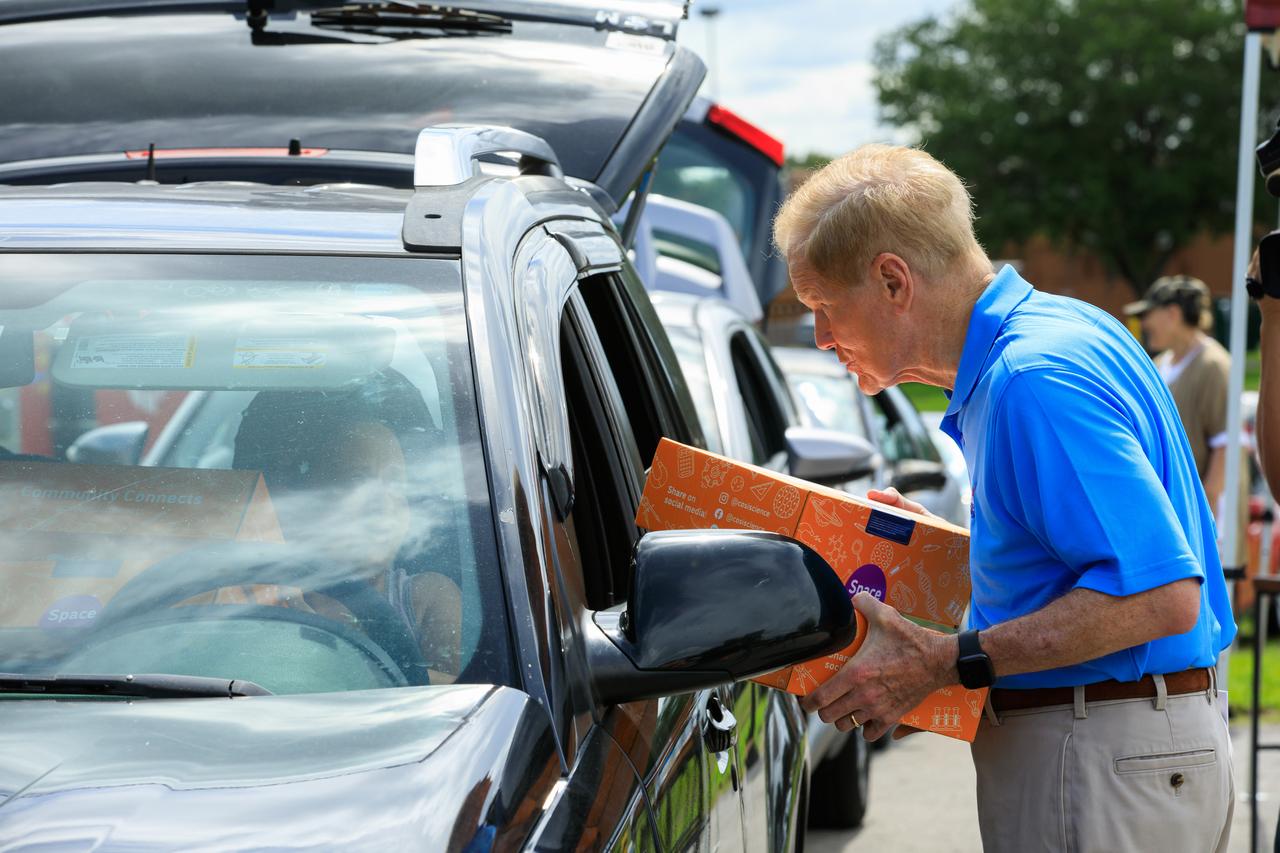
NASA Administrator Bill Nelson helped kick off a new initiative to deliver food and hands-on science, technology, engineering, and math kits, called Learning Lunchboxes, at New Beginnings Church – The Gathering Place in Orlando, Florida on Friday, June 3. The lunchboxes are aimed at inspiring and educating youth and families about NASA’s upcoming Artemis missions, which includes landing the first woman and person of color on the Moon and helping prepare for human exploration of Mars. Partners on the initiative with NASA include the Center of Science and Industry, the Second Harvest Food Bank, and the Orlando Science Center. The NASA Artemis Learning Lunchbox is made possible through NASA’s Teams Engaging Affiliated Museums and Informal Institutions (TEAM II) program. NASA Learning Lunchboxes provide five space-focused learning activities that showcase the diversity of STEM at NASA. COSI will distribute 30,000 NASA Learning Lunchboxes at local food banks across the country to help feed hungry lives and feed hungry minds. This innovative, community-based model will bring together other science centers and museums, afterschool providers, and community leaders to highlight the importance of STEM. This project also includes digital extension resources.
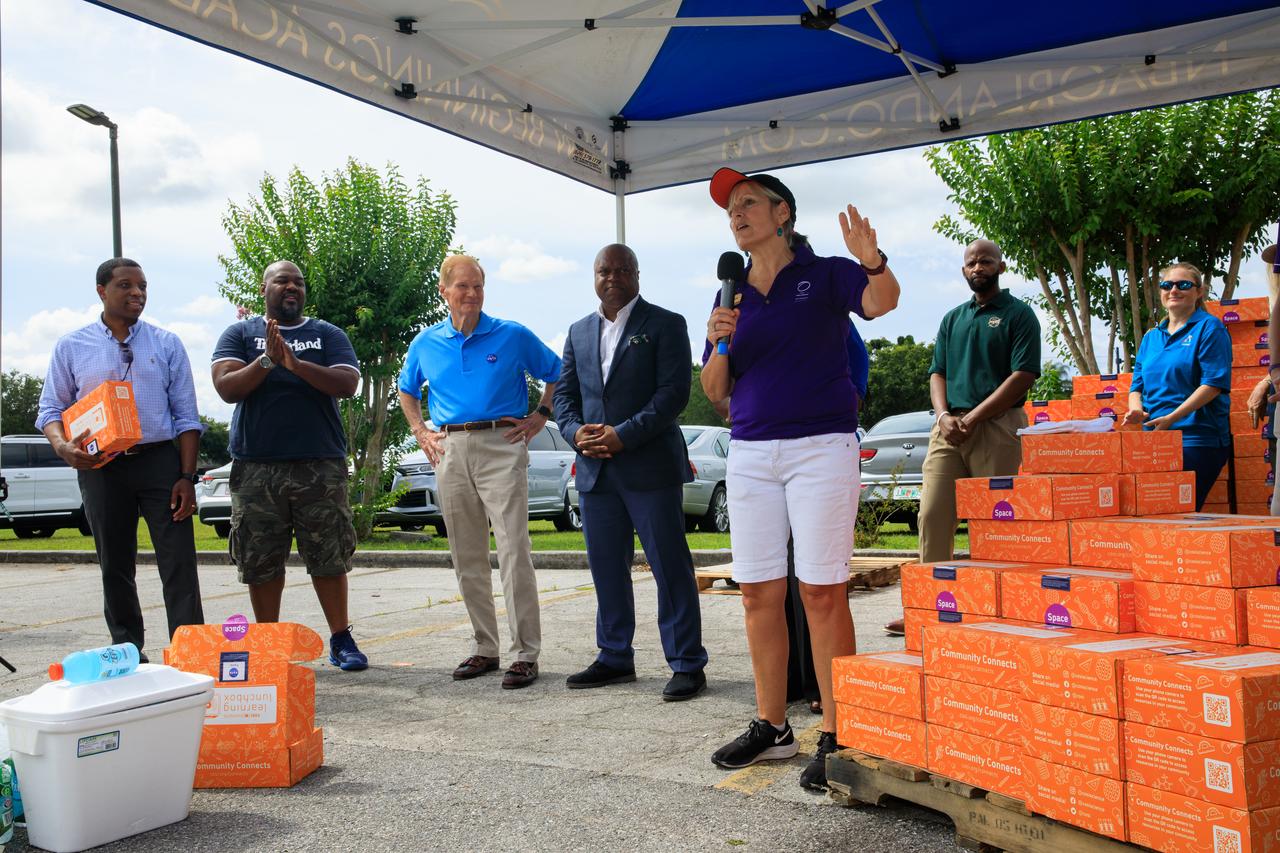
Dr. Frederic Bertley (center), president and CEO, Center of Science and Industry (COSI), speaks at New Beginnings Church – The Gathering Place in Orlando, Florida on Friday, June 3, as part of the launch of a new initiative to deliver food and hands-on science, technology, engineering, and math kits, called Learning Lunchboxes. NASA Administrator Bill Nelson and other agency representatives were on hand to hand out the lunchboxes, which are aimed at inspiring and educating youth and families about NASA’s upcoming Artemis missions, including landing the first woman and person of color on the Moon and helping prepare for human exploration of Mars. Along with COSI, NASA’s partners on the initiative include the Second Harvest Food Bank and the Orlando Science Center. The NASA Artemis Learning Lunchbox is made possible through NASA’s Teams Engaging Affiliated Museums and Informal Institutions (TEAM II) program. NASA Learning Lunchboxes provide five space-focused learning activities that showcase the diversity of STEM at NASA. COSI will distribute 30,000 NASA Learning Lunchboxes at local food banks across the country to help feed hungry lives and feed hungry minds. This innovative, community-based model will bring together other science centers and museums, afterschool providers, and community leaders to highlight the importance of STEM. This project also includes digital extension resources.
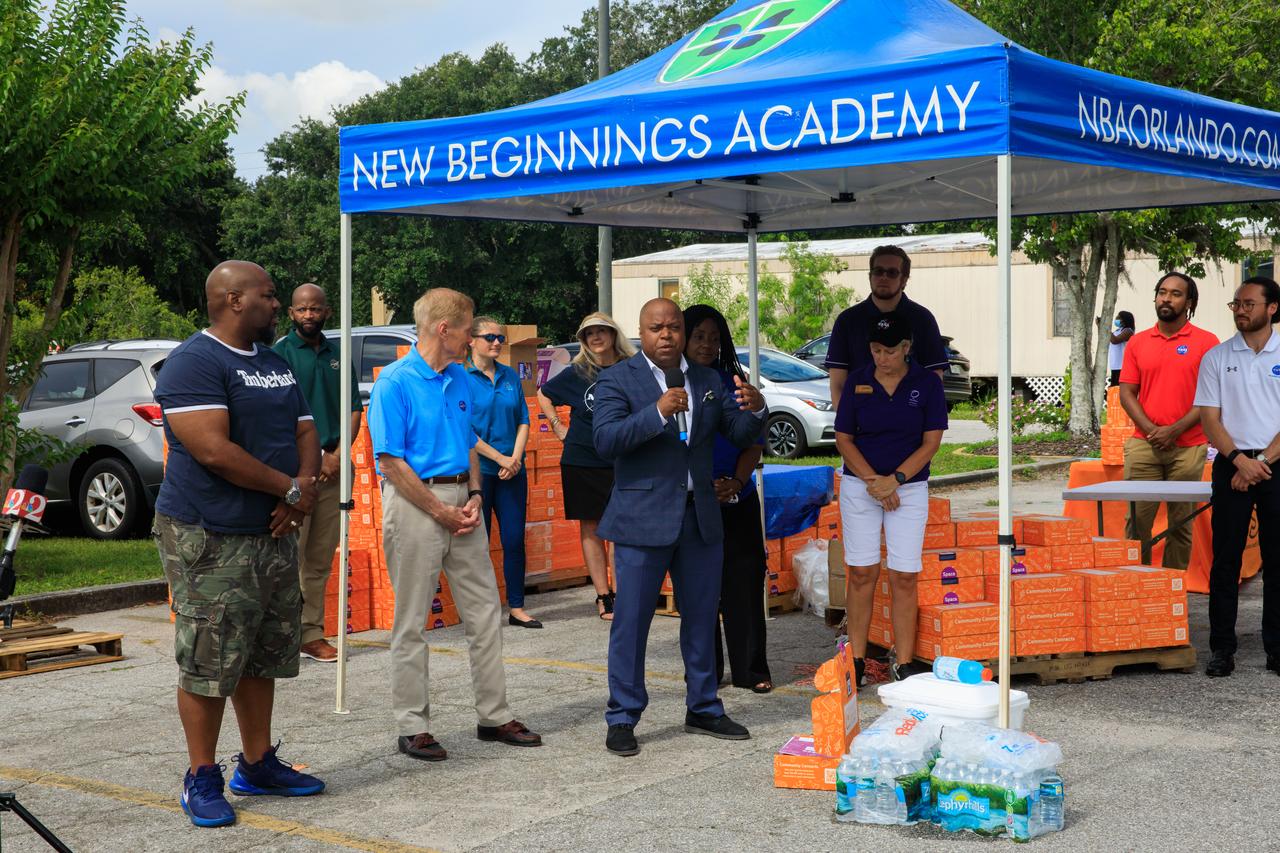
Dr. Frederic Bertley (center), president and CEO, Center of Science and Industry (COSI), speaks at New Beginnings Church – The Gathering Place in Orlando, Florida on Friday, June 3, as part of the launch of a new initiative to deliver food and hands-on science, technology, engineering, and math kits, called Learning Lunchboxes. NASA Administrator Bill Nelson and other agency representatives were on hand to hand out the lunchboxes, which are aimed at inspiring and educating youth and families about NASA’s upcoming Artemis missions, including landing the first woman and person of color on the Moon and helping prepare for human exploration of Mars. Along with COSI, NASA’s partners on the initiative include the Second Harvest Food Bank and the Orlando Science Center. The NASA Artemis Learning Lunchbox is made possible through NASA’s Teams Engaging Affiliated Museums and Informal Institutions (TEAM II) program. NASA Learning Lunchboxes provide five space-focused learning activities that showcase the diversity of STEM at NASA. COSI will distribute 30,000 NASA Learning Lunchboxes at local food banks across the country to help feed hungry lives and feed hungry minds. This innovative, community-based model will bring together other science centers and museums, afterschool providers, and community leaders to highlight the importance of STEM. This project also includes digital extension resources.
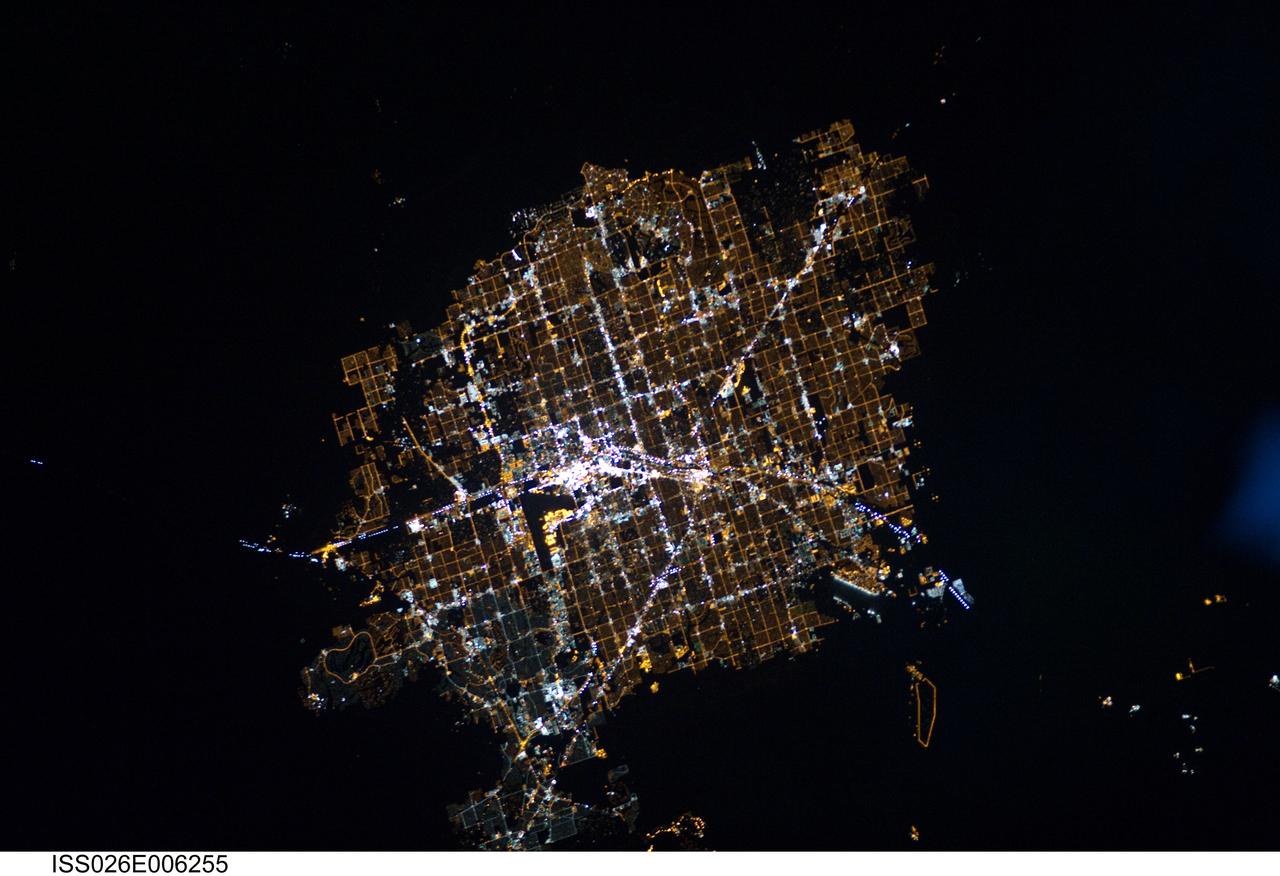
ISS026-E-006255 (30 Nov. 2010) --- This night time image, photographed by an Expedition 26 crew member on the International Space Station, features the Las Vegas, Nevada metropolitan area, located near the southern tip of the state within the Mohave Desert of the southwestern USA. While the city of Las Vegas proper is famous for its casinos and resort hotels – the city bills itself as “the entertainment capital of the world” – the metropolitan area includes several other incorporated cities and unincorporated (not part of a state-recognized municipality) areas. Crew members onboard the ISS observe and photograph numerous metropolitan sites when the areas are illuminated by sunlight, but the extent and pattern of these areas are perhaps best revealed by the city lights at night. The surrounding dark desert presents a stark contrast to the brightly lit, regular street grid of the developed metropolitan area. The Vegas Strip (center) is reputed to be the brightest spot on Earth due to the concentration of lights associated with its hotels and casinos. The tarmac of McCarran International Airport to the south is a dark feature by comparison. The airstrips of Nellis Air Force Base on the northeastern fringe of the metropolitan area are likewise dark compared to the well-lit adjacent streets and neighborhoods. The dark mass of Frenchman Mountain borders the metropolitan area to the east. Acquisition of focused night time images such as this one requires space station crew members to track the target with the handheld camera while the ISS is moving at a speed of more than seven kilometers per second (15,659 miles per hour) relative to Earth’s surface. This was achieved during ISS Expedition Six using a homemade tracking device, but subsequent crews have needed to develop manual tracking skills. These skills, together with advances in digital camera technology, have enabled recent ISS crews to acquire striking night time images of Earth.
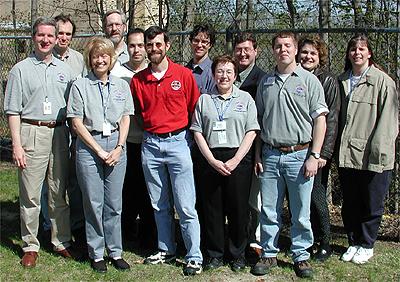
The first NASA Dropping In a Microgravity Environment (DIME) student competition pilot project came to a conclusion at the Glenn Research Center in April 2001. The competition involved high-school student teams who developed the concept for a microgravity experiment and prepared an experiment proposal. The two student teams - COSI Academy, sponsored by the Columbus Center of Science and Industry, and another team from Cincinnati, Ohio's Sycamore High School, designed a microgravity experiment, fabricated the experimental apparatus, and visited NASA Glenn to operate their experiment in the 2.2 Second Drop Tower. NASA and contractor personnel who conducted the DIME activity with the students. Shown (L-R) are: Eric Baumann (NASA, 2.2-second Drop Tower Facility manager), Daniel Dietrich (NASA) mentor for Sycamore High School team), Carol Hodanbosi (National Center for Microgravity Research; DIME staff), Richard DeLombard (NASA; DIME staff), Jose Carrion (GRC Akima, drop tower technician), Dennis Stocker (NASA; DIME staff), Peter Sunderland (NCMR, mentor for COSI Academy student team), Sandi Thompson (NSMR sabbatical teacher; DIME staff), Dan Woodard (MASA Microgravity Outreach Program Manager), Adam Malcolm (NASA co-op student; DIME staff), Carla Rosenberg (NCMR; DIME staff), and Twila Schneider (Infinity Technology; NASA Microgravity Research program contractor). This image is from a digital still camera; higher resolution is not available.

Physically, not too much has changed on Denali, North America’s highest peak. What did change in 2015 is how people describe and measure Alaska’s majestic mountain. On August 30, 2015, U.S. Secretary of the Interior Sally Jewell announced that the mountain’s official name would be Denali, not Mount McKinley. Restoration of the traditional Koyukon Athabascan name of Denali, which means “the tall one,” resolved a request by former Alaska Gov. Jay Hammond that dates back to 1975. But the mountain’s name was not the only change. On September 2, its elevation was also revised. The U.S. Geological Survey announced that Denali’s summit had a new, official elevation of 20,310 feet (6,190 meters)—10 feet shorter than surveyors had determined in the 1950s. The mountain has not shrunk. Instead, technology has improved. The images on this page offer two views of Denali as observed on June 15, 2015, by the Operational Land Imager (OLI) on Landsat 8. The natural-color Landsat 8 images were draped over an ASTER-derived Global Digital Elevation Model, which helps show the topography of the area. Read more: <a href="http://1.usa.gov/1QbmOFP" rel="nofollow">1.usa.gov/1QbmOFP</a> <b><a href="http://www.nasa.gov/audience/formedia/features/MP_Photo_Guidelines.html" rel="nofollow">NASA image use policy.</a></b> <b><a href="http://www.nasa.gov/centers/goddard/home/index.html" rel="nofollow">NASA Goddard Space Flight Center</a></b> enables NASA’s mission through four scientific endeavors: Earth Science, Heliophysics, Solar System Exploration, and Astrophysics. Goddard plays a leading role in NASA’s accomplishments by contributing compelling scientific knowledge to advance the Agency’s mission. <b>Follow us on <a href="http://twitter.com/NASAGoddardPix" rel="nofollow">Twitter</a></b> <b>Like us on <a href="http://www.facebook.com/pages/Greenbelt-MD/NASA-Goddard/395013845897?ref=tsd" rel="nofollow">Facebook</a></b> <b>Find us on <a href="http://instagrid.me/nasagoddard/?vm=grid" rel="nofollow">Instagram</a></b>
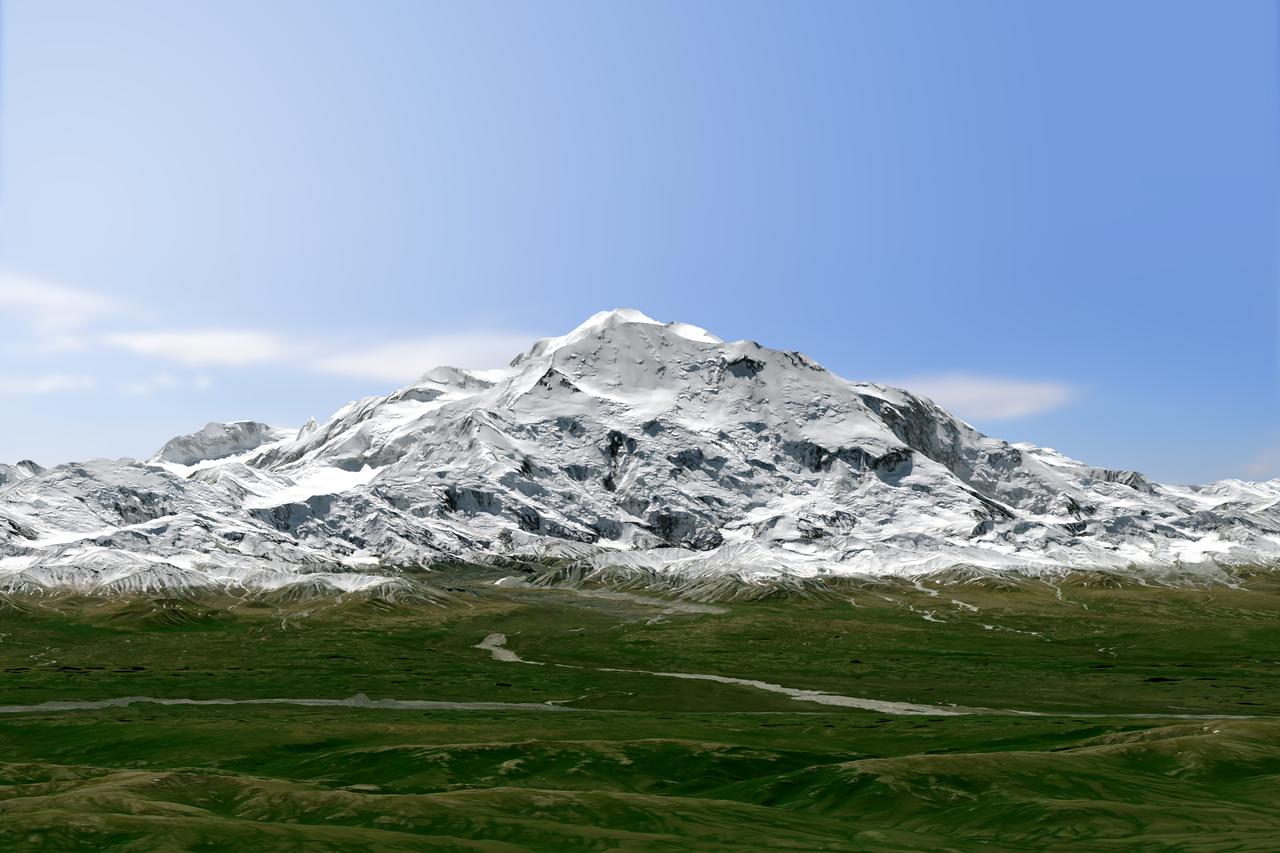
Physically, not too much has changed on Denali, North America’s highest peak. What did change in 2015 is how people describe and measure Alaska’s majestic mountain. On August 30, 2015, U.S. Secretary of the Interior Sally Jewell announced that the mountain’s official name would be Denali, not Mount McKinley. Restoration of the traditional Koyukon Athabascan name of Denali, which means “the tall one,” resolved a request by former Alaska Gov. Jay Hammond that dates back to 1975. But the mountain’s name was not the only change. On September 2, its elevation was also revised. The U.S. Geological Survey announced that Denali’s summit had a new, official elevation of 20,310 feet (6,190 meters)—10 feet shorter than surveyors had determined in the 1950s. The mountain has not shrunk. Instead, technology has improved. The images on this page offer two views of Denali as observed on June 15, 2015, by the Operational Land Imager (OLI) on Landsat 8. The natural-color Landsat 8 images were draped over an ASTER-derived Global Digital Elevation Model, which helps show the topography of the area. Read more: <a href="http://1.usa.gov/1QbmOFP" rel="nofollow">1.usa.gov/1QbmOFP</a> <b><a href="http://www.nasa.gov/audience/formedia/features/MP_Photo_Guidelines.html" rel="nofollow">NASA image use policy.</a></b> <b><a href="http://www.nasa.gov/centers/goddard/home/index.html" rel="nofollow">NASA Goddard Space Flight Center</a></b> enables NASA’s mission through four scientific endeavors: Earth Science, Heliophysics, Solar System Exploration, and Astrophysics. Goddard plays a leading role in NASA’s accomplishments by contributing compelling scientific knowledge to advance the Agency’s mission. <b>Follow us on <a href="http://twitter.com/NASAGoddardPix" rel="nofollow">Twitter</a></b> <b>Like us on <a href="http://www.facebook.com/pages/Greenbelt-MD/NASA-Goddard/395013845897?ref=tsd" rel="nofollow">Facebook</a></b> <b>Find us on <a href="http://instagrid.me/nasagoddard/?vm=grid" rel="nofollow">Instagram</a></b>
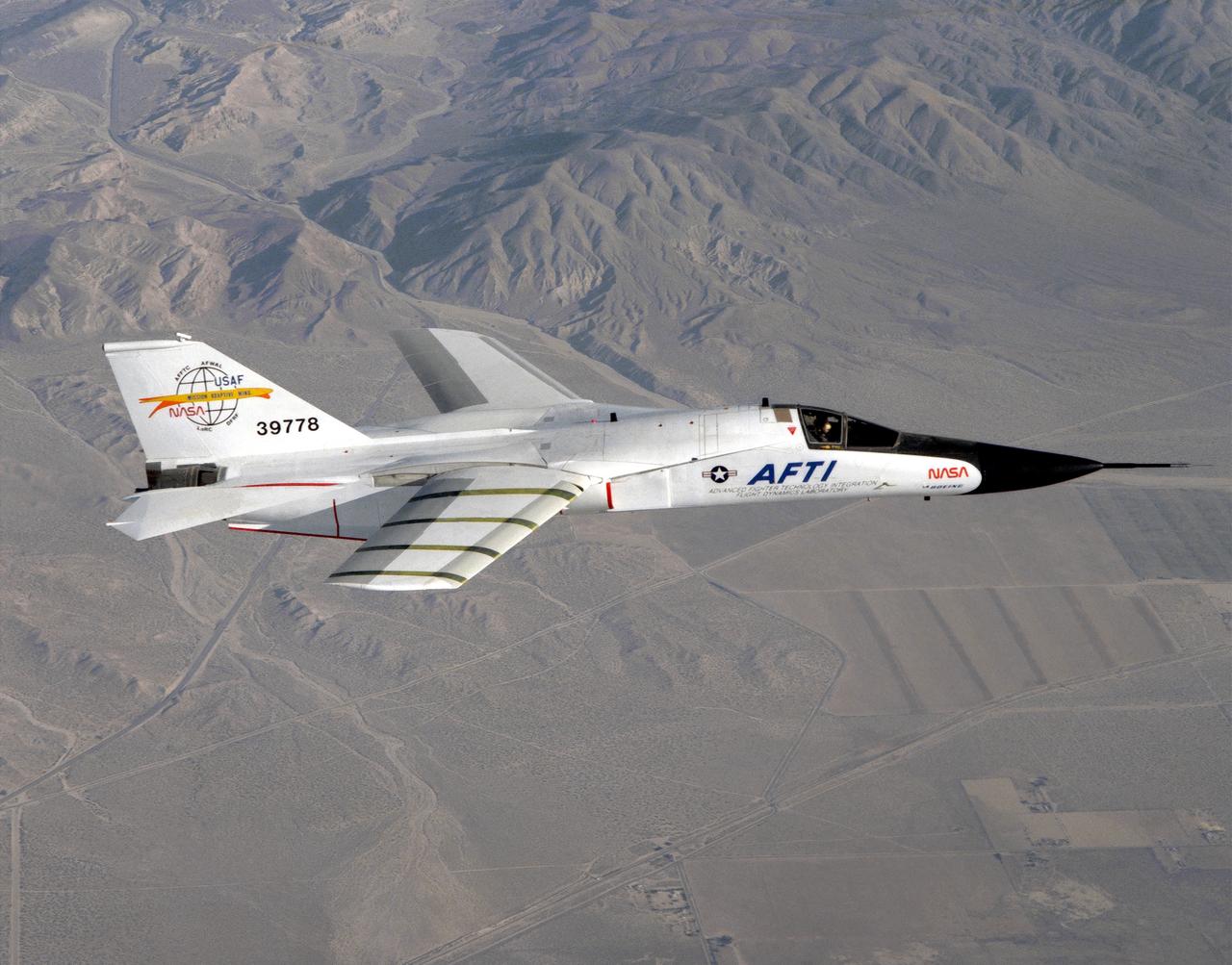
This photograph shows a modified General Dynamics AFTI/F-111A Aardvark with supercritical mission adaptive wings (MAW) installed. The four dark bands on the right wing are the locations of pressure orifices used to measure surface pressures and shock locations on the MAW. The El Paso Mountains and Red Rock Canyon State Park Califonia, about 30 miles northwest of Edwards Air Force Base, are seen directly in the background. With the phasing out of the TACT program came a renewed effort by the Air Force Flight Dynamics Laboratory to extend supercritical wing technology to a higher level of performance. In the early 1980s the supercritical wing on the F-111A aircraft was replaced with a wing built by Boeing Aircraft Company System called a “mission adaptive wing” (MAW), and a joint NASA and Air Force program called Advanced Fighter Technology Integration (AFTI) was born.
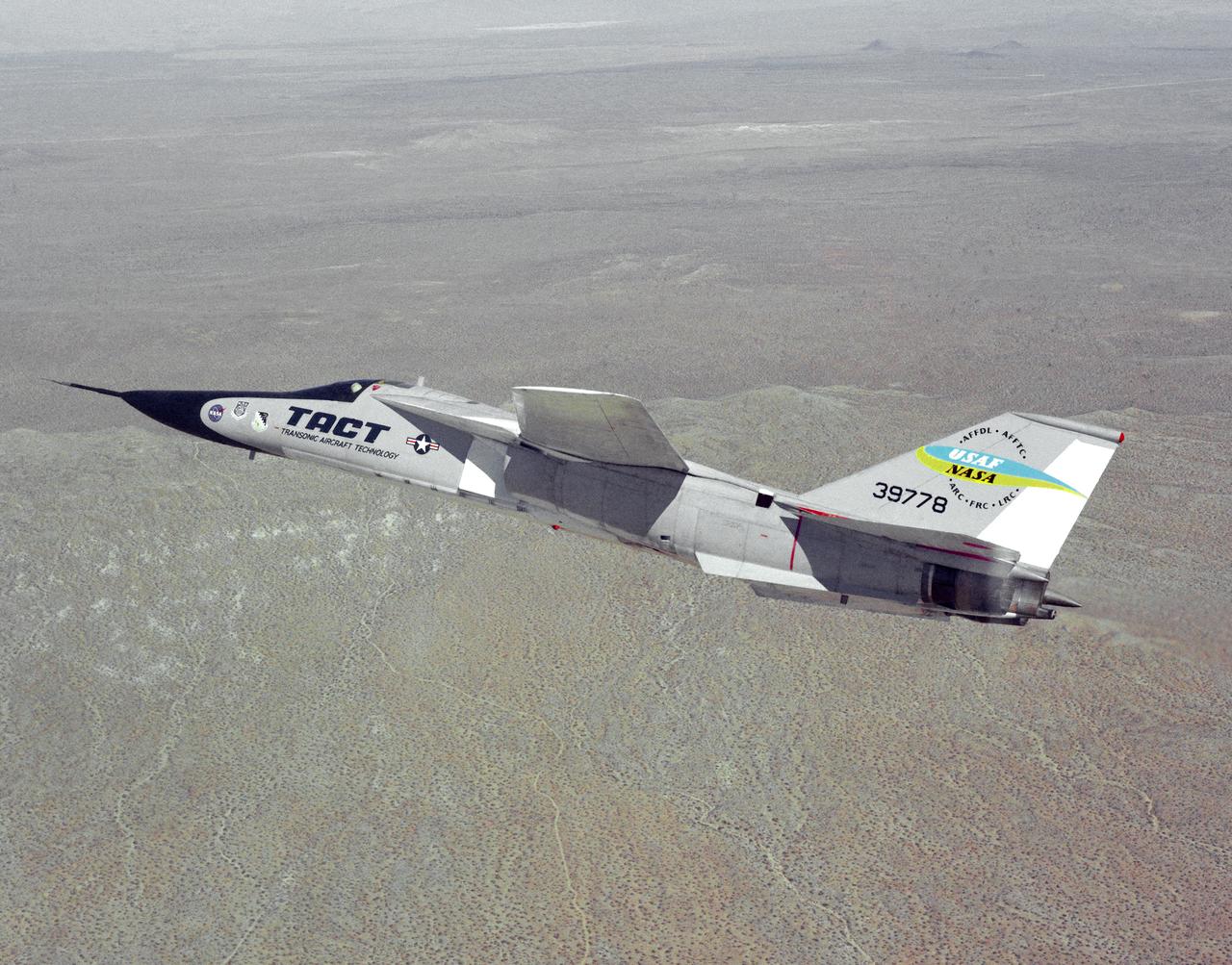
The General Dynamics TACT/F-111A Aardvark is seen In a banking-turn over the California Mojave desert. This photograph affords a good view of the supercritical wing airfoil shape. Starting in 1971 the NASA Flight Research Center and the Air Force undertook a major research and flight testing program, using F-111A (#63-9778), which would span almost 20 years before completion. Intense interest over the results coming from the NASA F-8 supercritical wing program spurred NASA and the Air Force to modify the General Dynamics F-111A to explore the application of supercritical wing technology to maneuverable military aircraft. This flight program was called Transonic Aircraft Technology (TACT).
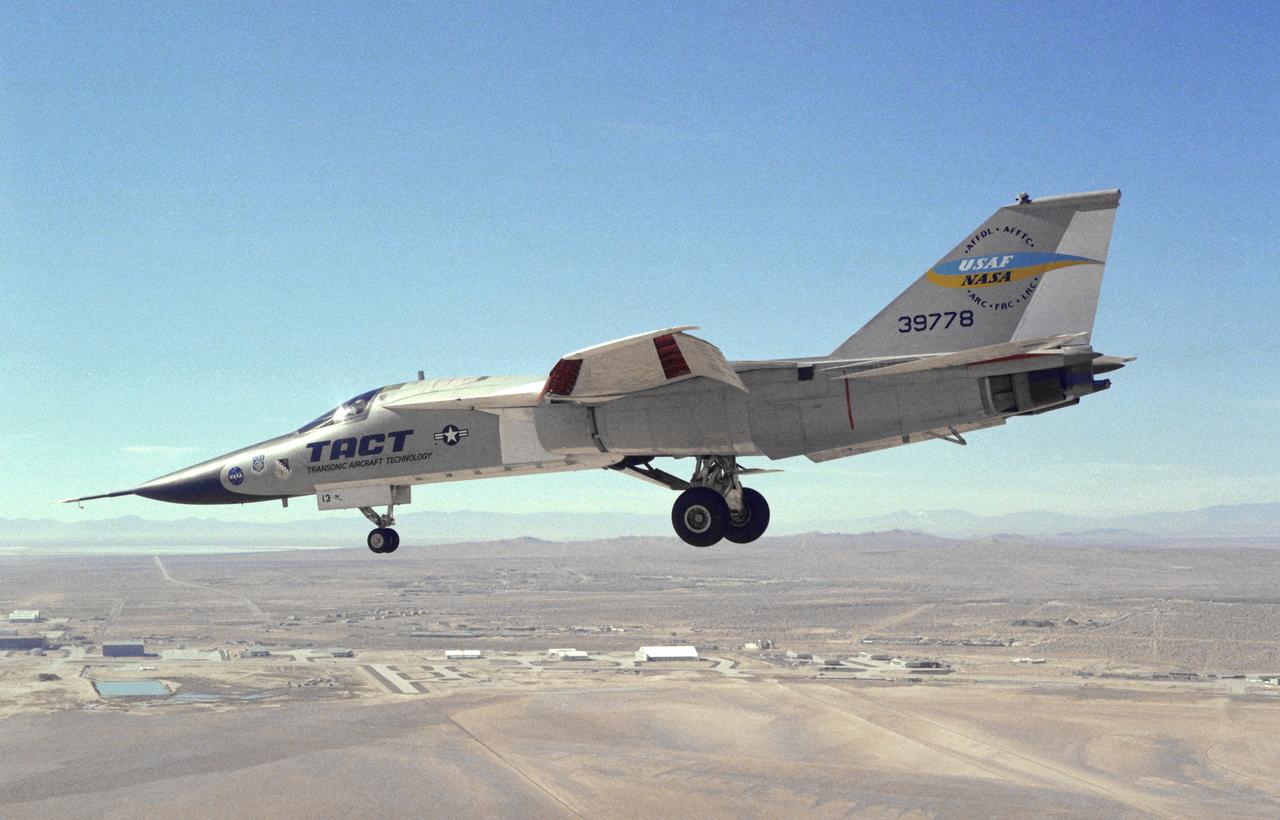
This photograph shows a modified General Dynamics TACT/F-111A Aardvaark with supercritical wings installed. The aircraft, with flaps and landing gear down, is in a decending turn over Rogers Dry Lakebed at Edwards Air Force Base. Starting in 1971 the NASA Flight Research Center and the Air Force undertook a major research and flight testing program, using F-111A (#63-9778), which would span almost 20 years before completion. Intense interest over the results coming from the NASA F-8 supercritical wing program spurred NASA and the Air Force to modify the General Dynamics-Convair F-111A to explore the application of supercritical wing technology to maneuverable military aircraft. This flight program was called Transonic Aircraft Technology (TACT).
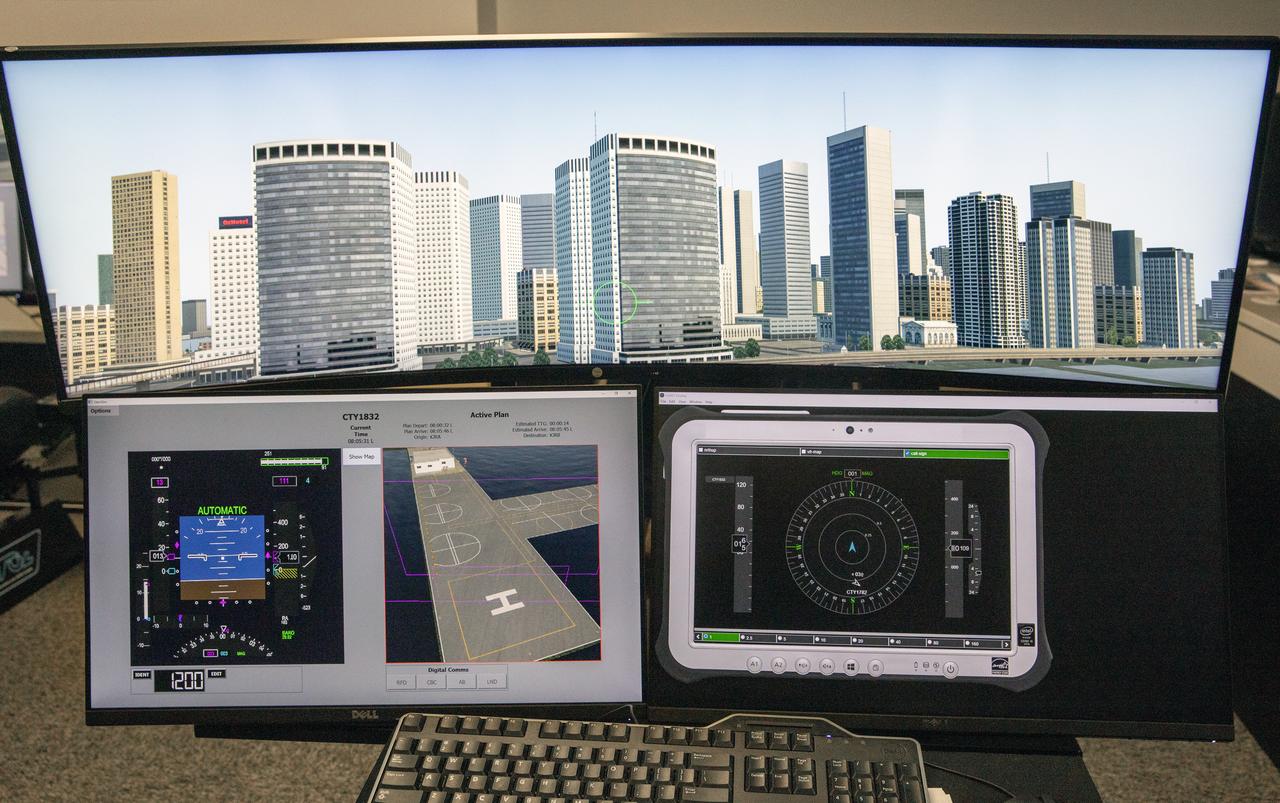
Focus on active photos –Class B Simulation Evaluation in the ATOL Lab at Langley (Also at FAA Tech Center) where team is working with one another in the lab, reviewing data on the monitors. Working the software, adjusting the software systems. Going over the shoulder to show the displays and screens as the software is running. A pilot’s point of view from the controls of the air taxi simulator. An out-the-window simulation appears on the top screen, the primary flight display on the lower left, the virtual moving map in the middle, and the detect and avoid display on the lower right at NASA’s Langley Research Center in Hampton, Virginia on Sept. 25, 2024.
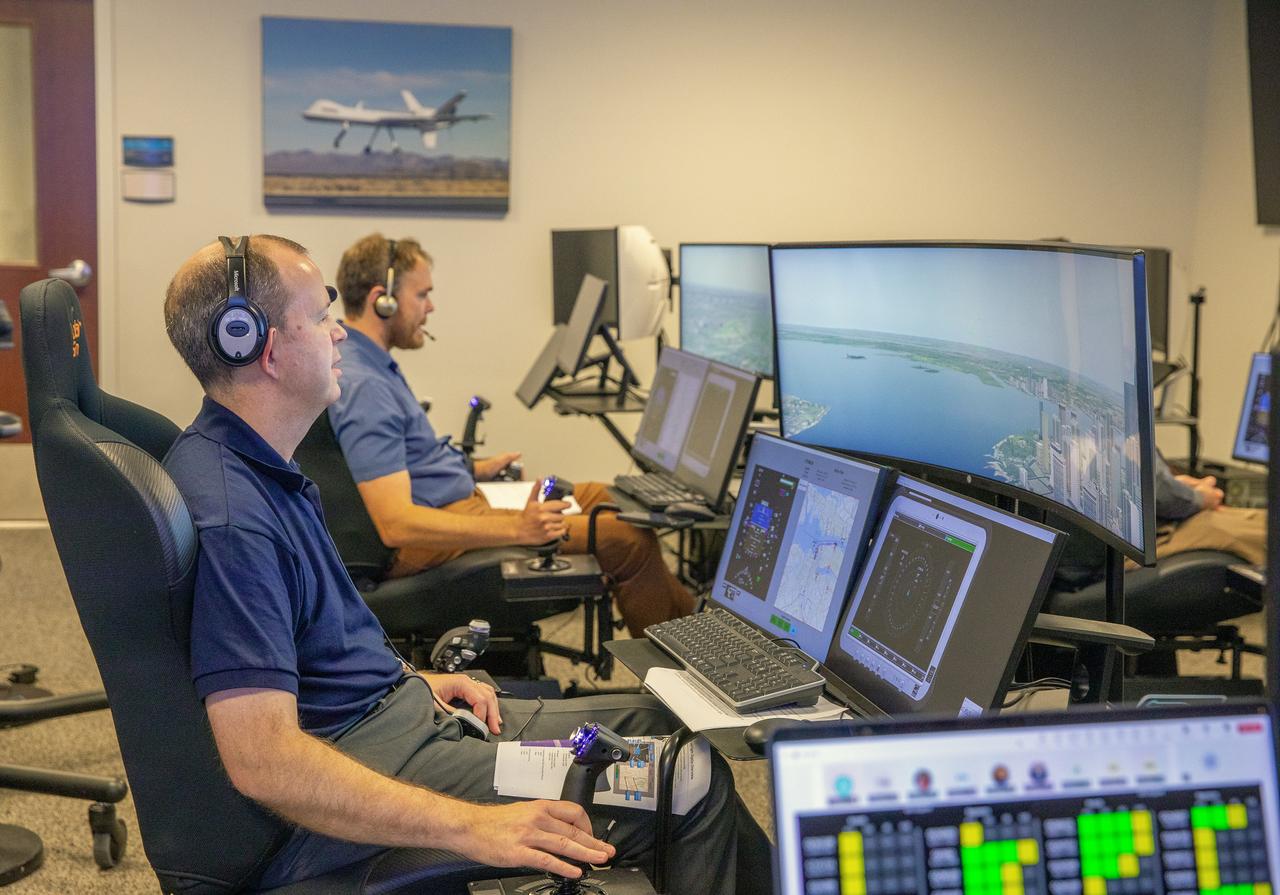
Focus on active photos –Class B Simulation Evaluation in the ATOL Lab at Langley (Also at FAA Tech Center) where team is working with one another in the lab, reviewing data on the monitors. Working the software, adjusting the software systems. Going over the shoulder to show the displays and screens as the software is running. Andy Burroughs (left) and Paul Friz in the roles of air taxi pilots running through air taxi integration simulations focusing on urban air space at NASA’s Langley Research in Hampton, Virginia on Sept. 25, 2024.
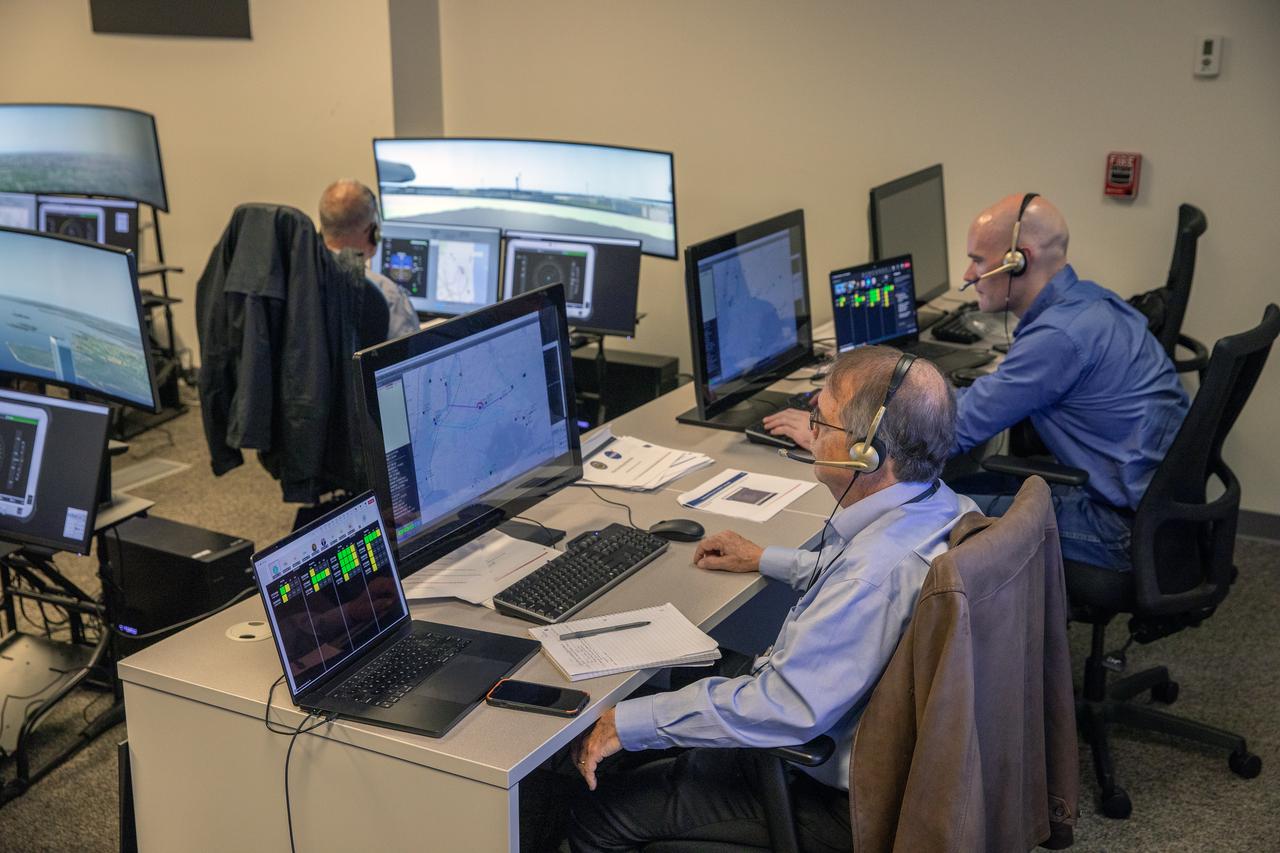
Focus on active photos –Class B Simulation Evaluation in the ATOL Lab at Langley (Also at FAA Tech Center) where team is working with one another in the lab, reviewing data on the monitors. Working the software, adjusting the software systems. Going over the shoulder to show the displays and screens as the software is running. John Foster (left) in the role of an air taxi pilot in the simulator chair with Jim Chamberlain and Terence McClain at the flight manager stations running virtual air taxi integration simulations focusing on urban air space at NASA’s Langley Research Center in Hampton, Virginia on Sept. 25, 2024.
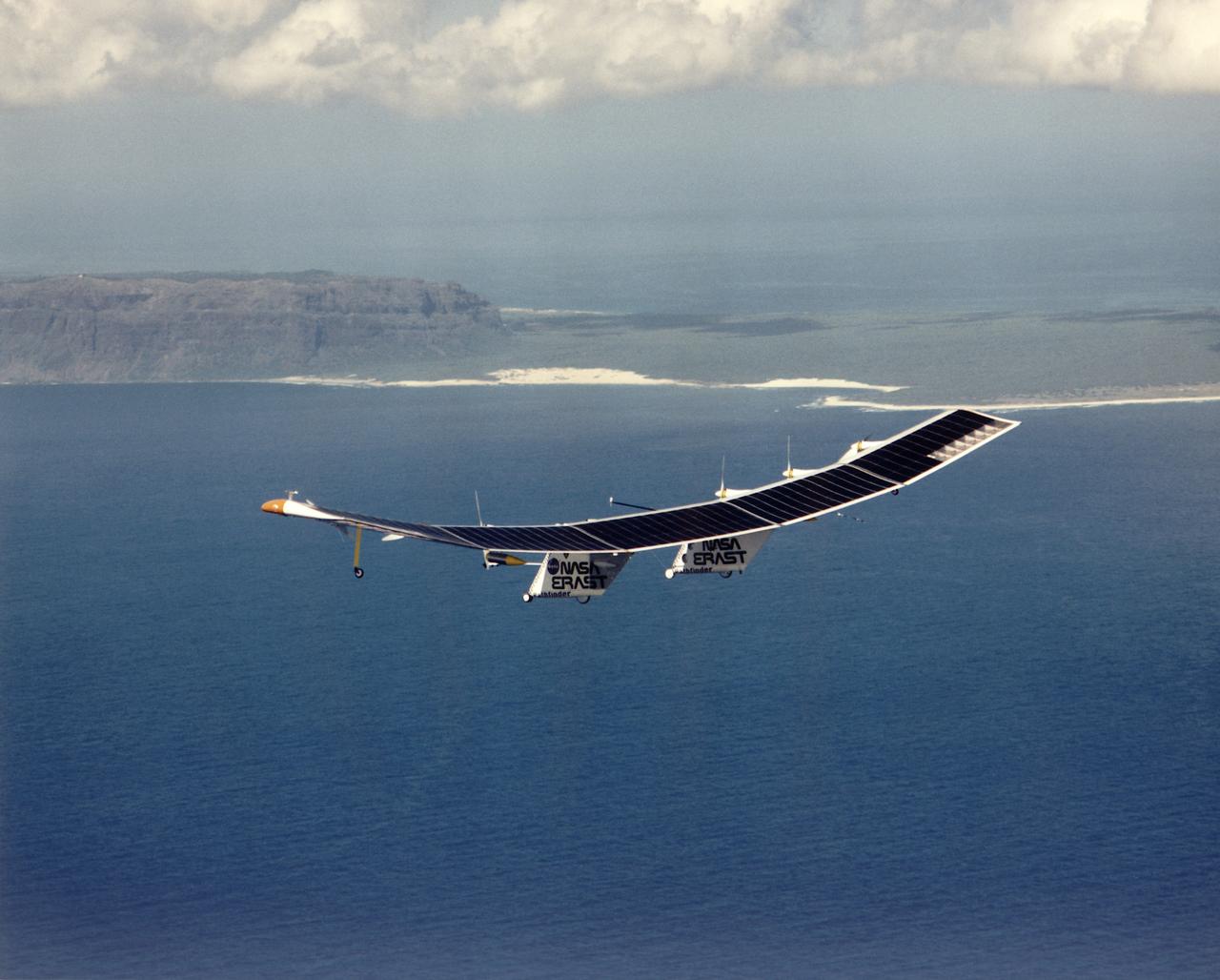
Pathfinder, NASA's solar-powered, remotely-piloted aircraft is shown while it was conducting a series of science flights to highlight the aircraft's science capabilities while collecting imagery of forest and coastal zone ecosystems on Kauai, Hawaii. The flights also tested two new scientific instruments, a high spectral resolution Digital Array Scanned Interferometer (DASI) and a high spatial resolution Airborne Real-Time Imaging System (ARTIS). The remote sensor payloads were designed by NASA's Ames Research Center, Moffett Field, California, to support NASA's Mission to Planet Earth science programs.
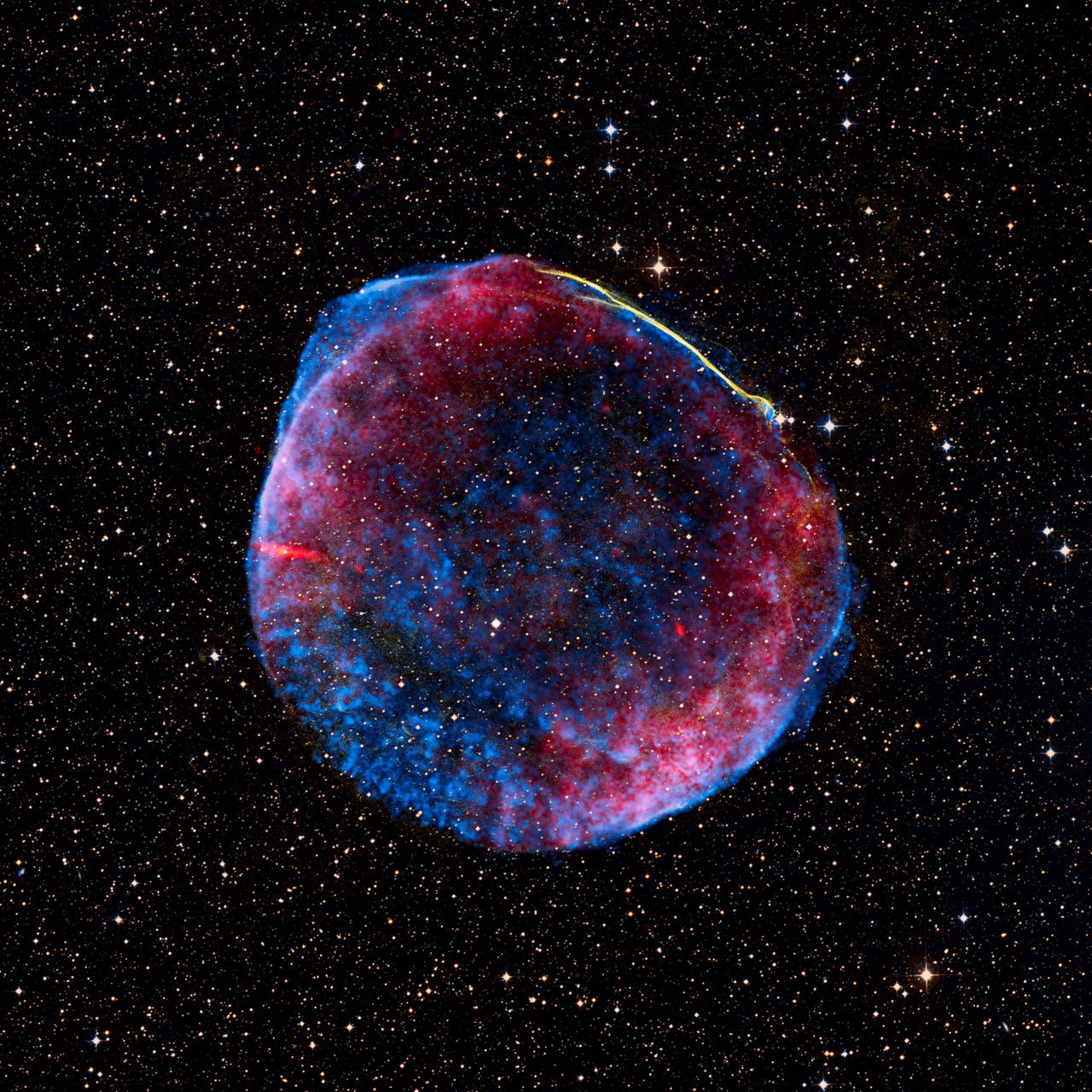
Release date: July 1, 2008 This image is a composite of visible (or optical), radio, and X-ray data of the full shell of the supernova remnant from SN 1006. The radio data show much of the extent that the X-ray image shows. In contrast, only a small linear filament in the northwest corner of the shell is visible in the optical data. The object has an angular size of roughly 30 arcminutes (0.5 degree, or about the size of the full moon), and a physical size of 60 light-years (18 parsecs) based on its distance of nearly 7,000 light-years. The small green box along the bright filament at the top of the image corresponds to the dimensions of the Hubble release image. The optical data was obtained at the University of Michigan's 0.9-meter Curtis Schmidt telescope at the National Science Foundation's Cerro Tololo Inter-American Observatory (CTIO) near La Serena, Chile. H-alpha, continuum-subtracted data were provided by F. Winkler (Middlebury COllege) et al. The X-ray data were acquired from the Chandra X-ray Observatory's AXAF CCD Imaging Spectrometer (ACIS) at 0.5-3keV, and were provided by J. Hughes (Rutgers University) et al. The radio data, supplied by K. Dyer (NRAO, Socorro) et al., were a composite from the National Radio Astronomy Observatory's Very Large Array (NRAO/VLA) in Socorro, New Mexico, along with the Green Bank Telescope (GBT) in Green Bank, West Virginia. Data of the supernova remnant were blended on a visible-light stellar background created using the Digitized Sky Survey's Anglo-Australian Observatory (AAO2) blue and red plates. Photo Credit: NASA, ESA, and Z. Levay (STScI) Science Credit: Radio: NRAO/AUI/NSF GBT+VLA 1.4 GHz mosaic (Dyer, Maddalena and Cornwell, NRAO); X-ray: NASA/CXC/Rutgers/G. Cassam-Chenai and J. Hughes et al.; Optical: F.Winkler/Middlebury College and NOAO/AURA/NSF; and DSS To learn more about the Hubble Space Telescope go here: <a href="http://www.nasa.gov/mission_pages/hubble/main/index.html" rel="nofollow">www.nasa.gov/mission_pages/hubble/main/index.html</a> <b><a href="http://www.nasa.gov/centers/goddard/home/index.html" rel="nofollow">NASA Goddard Space Flight Center</a></b> is home to the nation's largest organization of combined scientists, engineers and technologists that build spacecraft, instruments and new technology to study the Earth, the sun, our solar system, and the universe. <b>Follow us on <a href="http://twitter.com/NASAGoddardPix" rel="nofollow">Twitter</a></b> <b>Join us on <a href="http://www.facebook.com/pages/Greenbelt-MD/NASA-Goddard/395013845897?ref=tsd" rel="nofollow">Facebook</a><b> </b></b>
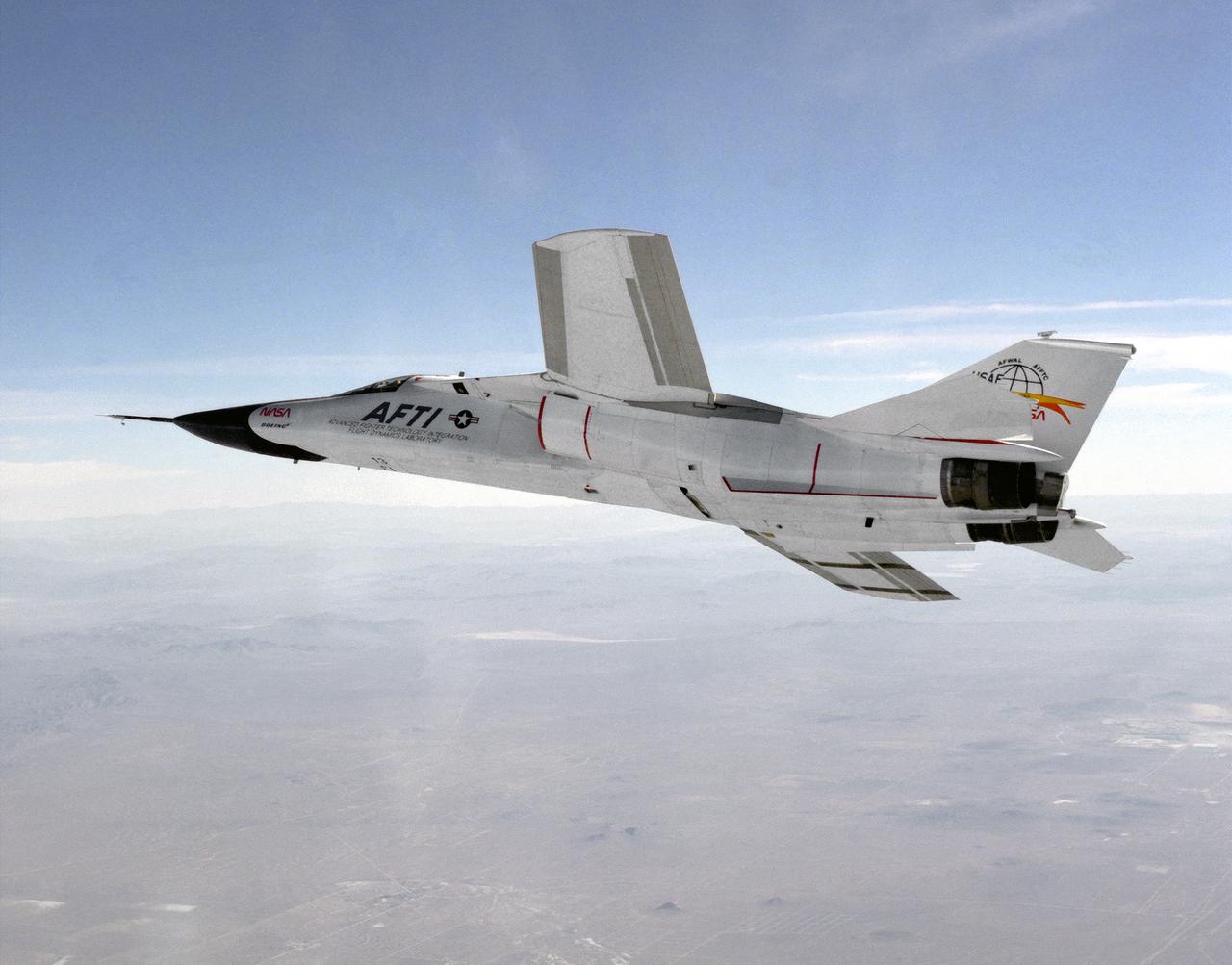
This photograph shows a modified General Dynamics AFTI/F-111A Aardvark with supercritical mission adaptive wings (MAW) installed. The AFTI/F111A is seen banking towards Rodgers Dry Lake and Edwards Air Force Base. With the phasing out of the TACT program came a renewed effort by the Air Force Flight Dynamics Laboratory to extend supercritical wing technology to a higher level of performance. In the early 1980s the supercritical wing on the F-111A aircraft was replaced with a wing built by Boeing Aircraft Company System called a “mission adaptive wing” (MAW), and a joint NASA and Air Force program called Advanced Fighter Technology Integration (AFTI) was born.
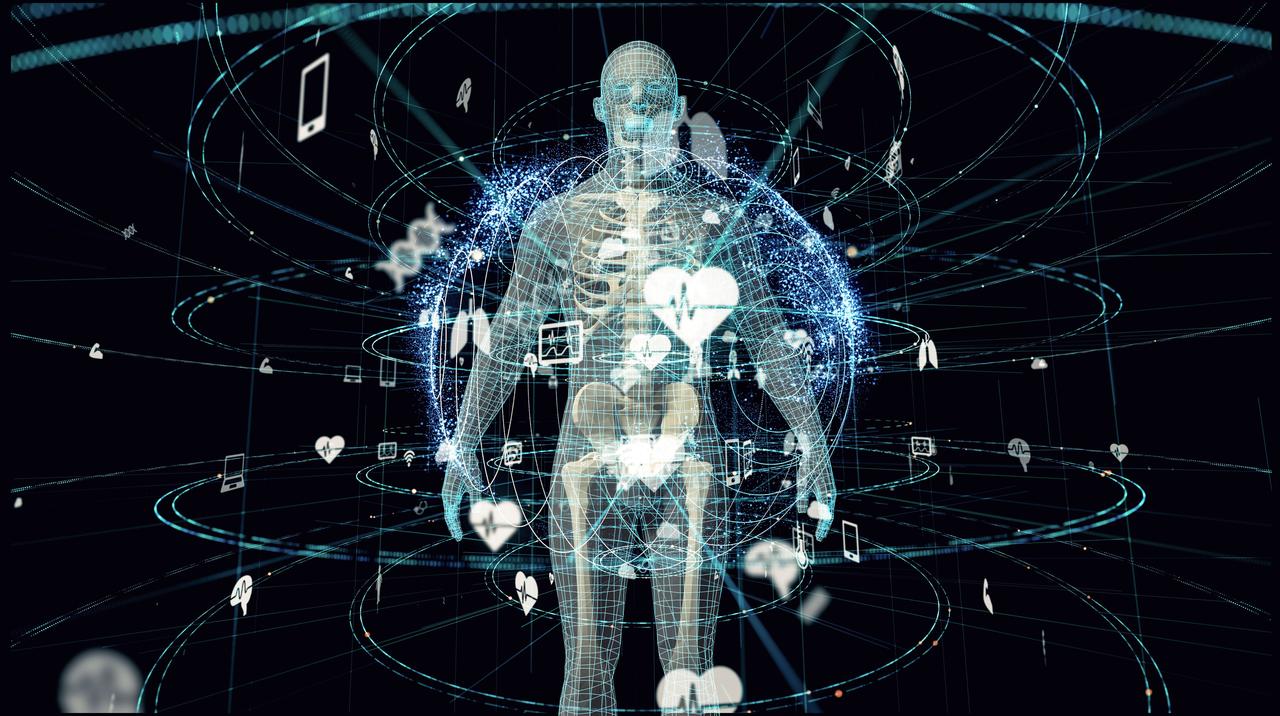
jsc2022e062020 (6/30/2022) --- Space Health will create a digital twin of the astronaut from the data collected by the Bio-Monitor and demonstrate how this could be used for autonomous health monitoring on future space missions. (Image courtesy of CSA)

This image depicts a vast canyon of dust and gas in the Orion Nebula from a 3-D computer model based on observations by NASA's Hubble Space Telescope and created by science visualization specialists at the Space Telescope Science Institute (STScI) in Baltimore, Md. A 3-D visualization of this model takes viewers on an amazing four-minute voyage through the 15-light-year-wide canyon. Credit: NASA, G. Bacon, L. Frattare, Z. Levay, and F. Summers (STScI/AURA) Go here to learn more about Hubble 3D: <a href="http://www.nasa.gov/topics/universe/features/hubble_imax_premiere.html" rel="nofollow">www.nasa.gov/topics/universe/features/hubble_imax_premier...</a> or <a href="http://www.imax.com/hubble/" rel="nofollow">www.imax.com/hubble/</a> Take an exhilarating ride through the Orion Nebula, a vast star-making factory 1,500 light-years away. Swoop through Orion's giant canyon of gas and dust. Fly past behemoth stars whose brilliant light illuminates and energizes the entire cloudy region. Zoom by dusty tadpole-shaped objects that are fledgling solar systems. This virtual space journey isn't the latest video game but one of several groundbreaking astronomy visualizations created by specialists at the Space Telescope Science Institute (STScI) in Baltimore, the science operations center for NASA's Hubble Space Telescope. The cinematic space odysseys are part of the new Imax film "Hubble 3D," which opens today at select Imax theaters worldwide. The 43-minute movie chronicles the 20-year life of Hubble and includes highlights from the May 2009 servicing mission to the Earth-orbiting observatory, with footage taken by the astronauts. The giant-screen film showcases some of Hubble's breathtaking iconic pictures, such as the Eagle Nebula's "Pillars of Creation," as well as stunning views taken by the newly installed Wide Field Camera 3. While Hubble pictures of celestial objects are awe-inspiring, they are flat 2-D photographs. For this film, those 2-D images have been converted into 3-D environments, giving the audience the impression they are space travelers taking a tour of Hubble's most popular targets. "A large-format movie is a truly immersive experience," says Frank Summers, an STScI astronomer and science visualization specialist who led the team that developed the movie visualizations. The team labored for nine months, working on four visualization sequences that comprise about 12 minutes of the movie. "Seeing these Hubble images in 3-D, you feel like you are flying through space and not just looking at picture postcards," Summers continued. "The spacescapes are all based on Hubble images and data, though some artistic license is necessary to produce the full depth of field needed for 3-D." The most ambitious sequence is a four-minute voyage through the Orion Nebula's gas-and-dust canyon, about 15 light-years across. During the ride, viewers will see bright and dark, gaseous clouds; thousands of stars, including a grouping of bright, hefty stars called the Trapezium; and embryonic planetary systems. The tour ends with a detailed look at a young circumstellar disk, which is much like the structure from which our solar system formed 4.5 billion years ago. Based on a Hubble image of Orion released in 2006, the visualization was a collaborative effort between science visualization specialists at STScI, including Greg Bacon, who sculpted the Orion Nebula digital model, with input from STScI astronomer Massimo Roberto; the National Center for Supercomputing Applications at the University of Illinois at Urbana-Champaign; and the Spitzer Science Center at the California Institute of Technology in Pasadena. For some of the sequences, STScI imaging specialists developed new techniques for transforming the 2-D Hubble images into 3-D. STScI image processing specialists Lisa Frattare and Zolt Levay, for example, created methods of splitting a giant gaseous pillar in the Carina Nebula into multiple layers to produce a 3-D effect, giving the structure depth. The Carina Nebula is a nursery for baby stars. Frattare painstakingly removed the thousands of stars in the image so that Levay could separate the gaseous layers on the isolated Carina pillar. Frattare then replaced the stars into both foreground and background layers to complete the 3-D model. For added effect, the same separation was done for both visible and infrared Hubble images, allowing the film to cross-fade between wavelength views in 3-D. In another sequence viewers fly into a field of 170,000 stars in the giant star cluster Omega Centauri. STScI astronomer Jay Anderson used his stellar database to create a synthetic star field in 3-D that matches recent razor-sharp Hubble photos. The film's final four-minute sequence takes viewers on a voyage from our Milky Way Galaxy past many of Hubble's best galaxy shots and deep into space. Some 15,000 galaxies from Hubble's deepest surveys stretch billions of light-years across the universe in a 3-D sequence created by STScI astronomers and visualizers. The view dissolves into a cobweb that traces the universe's large-scale structure, the backbone from which galaxies were born. In addition to creating visualizations, STScI's education group also provided guidance on the "Hubble 3D" Educator Guide, which includes standards-based lesson plans and activities about Hubble and its mission. Students will use the guide before or after seeing the movie. "The guide will enhance the movie experience for students and extend the movie into classrooms," says Bonnie Eisenhamer, STScI's Hubble Formal Education manager. The Hubble Space Telescope is a project of international cooperation between NASA and the European Space Agency (ESA) and is managed by NASA’s Goddard Space Flight Center (GSFC) in Greenbelt, Md. The Space Telescope Science Institute (STScI) conducts Hubble science operations. The institute is operated for NASA by the Association of Universities for Research in Astronomy, Inc., Washington, D.C.