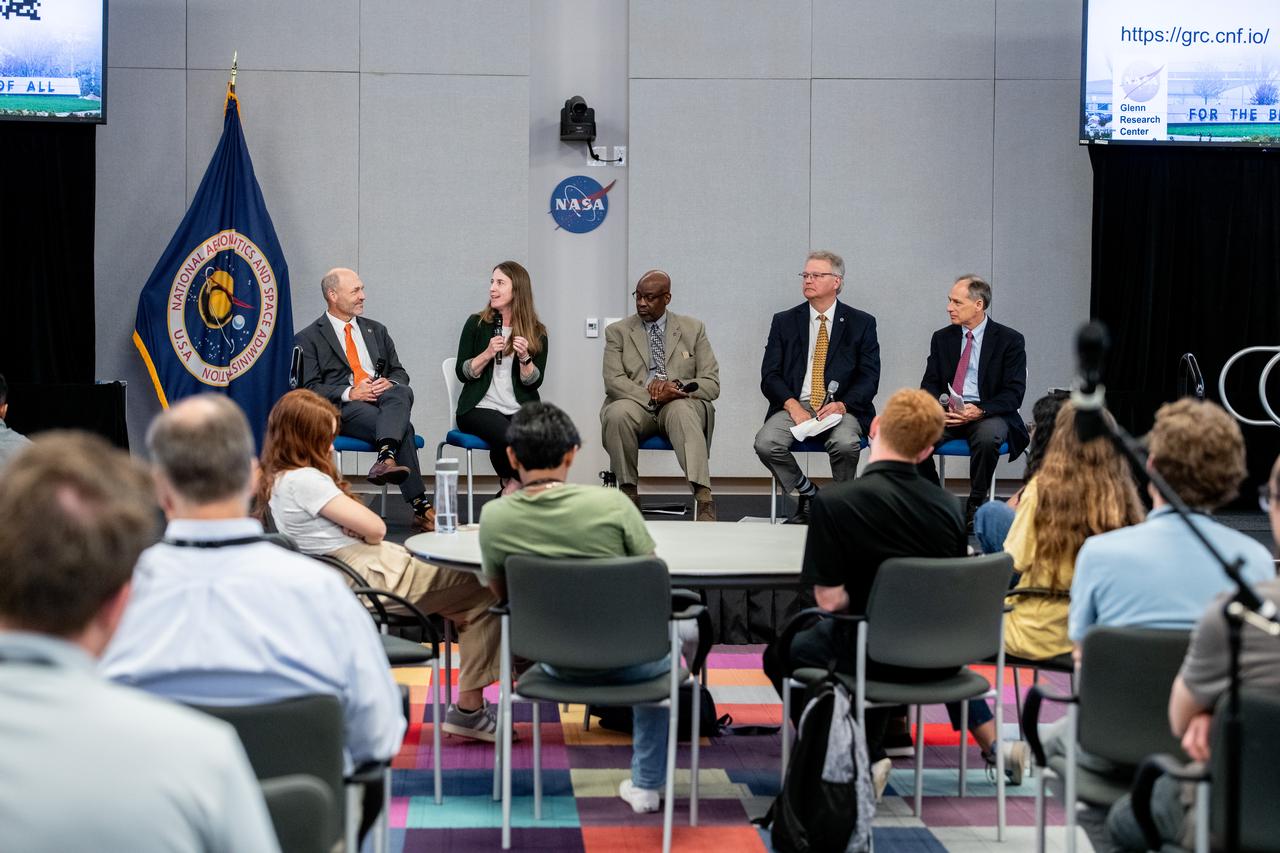
During the meeting, Dr. Calvin and center leaders will explore how technologies being developed at NASA Glenn could help reduce the effects of climate change. The panelists who will be leading the discussion include: Dr. Calvin; Larry Sivic, Associate Director; Dr. Rickey Shyne, Director of Research and Engineering; Bryan Smith, Director of Facilities, Test, & Manufacturing; and W. Allen Kilgore, Acting Director of Aeronautics. Director of Space Flight Systems Dr. Mike Barrett will serve as the moderator.
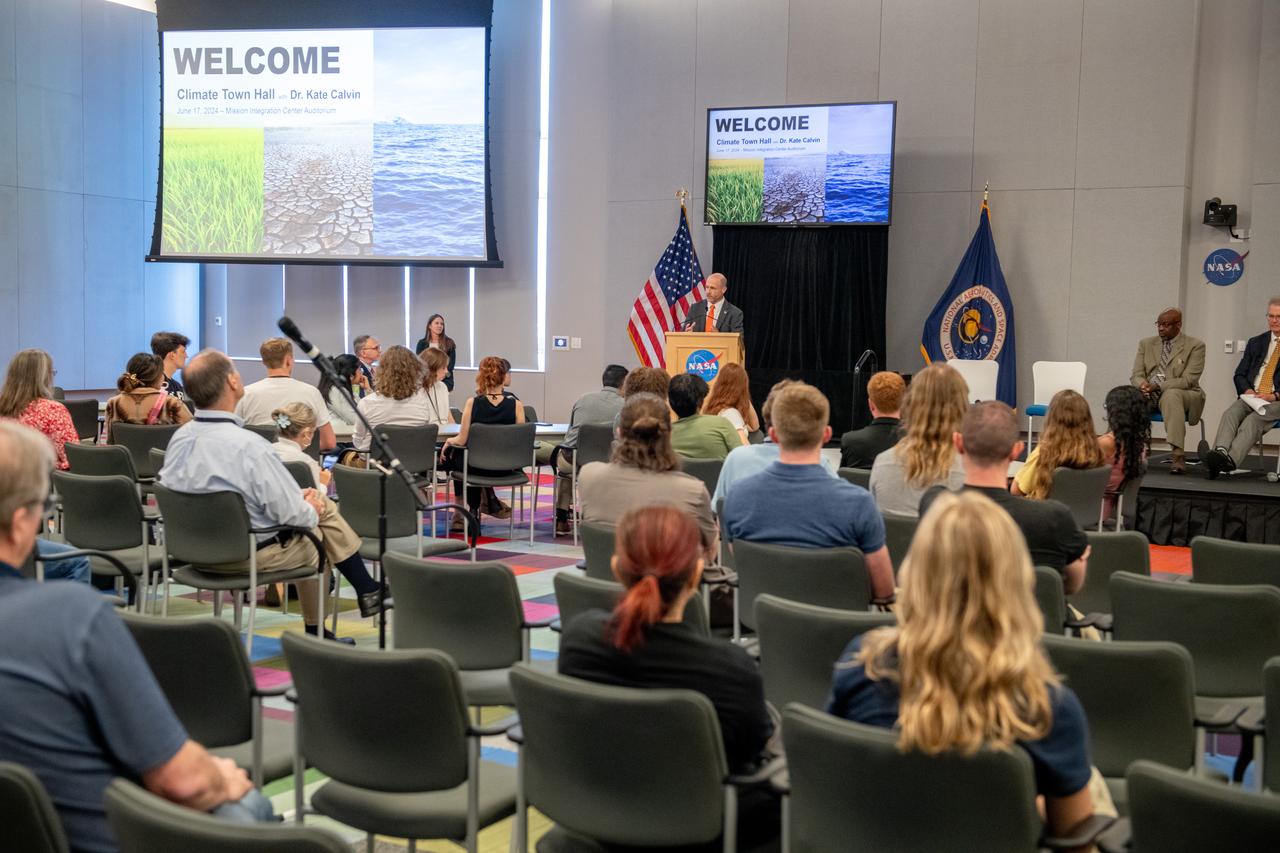
During the meeting, Dr. Calvin and center leaders will explore how technologies being developed at NASA Glenn could help reduce the effects of climate change. The panelists who will be leading the discussion include: Dr. Calvin; Larry Sivic, Associate Director; Dr. Rickey Shyne, Director of Research and Engineering; Bryan Smith, Director of Facilities, Test, & Manufacturing; and W. Allen Kilgore, Acting Director of Aeronautics. Director of Space Flight Systems Dr. Mike Barrett will serve as the moderator.
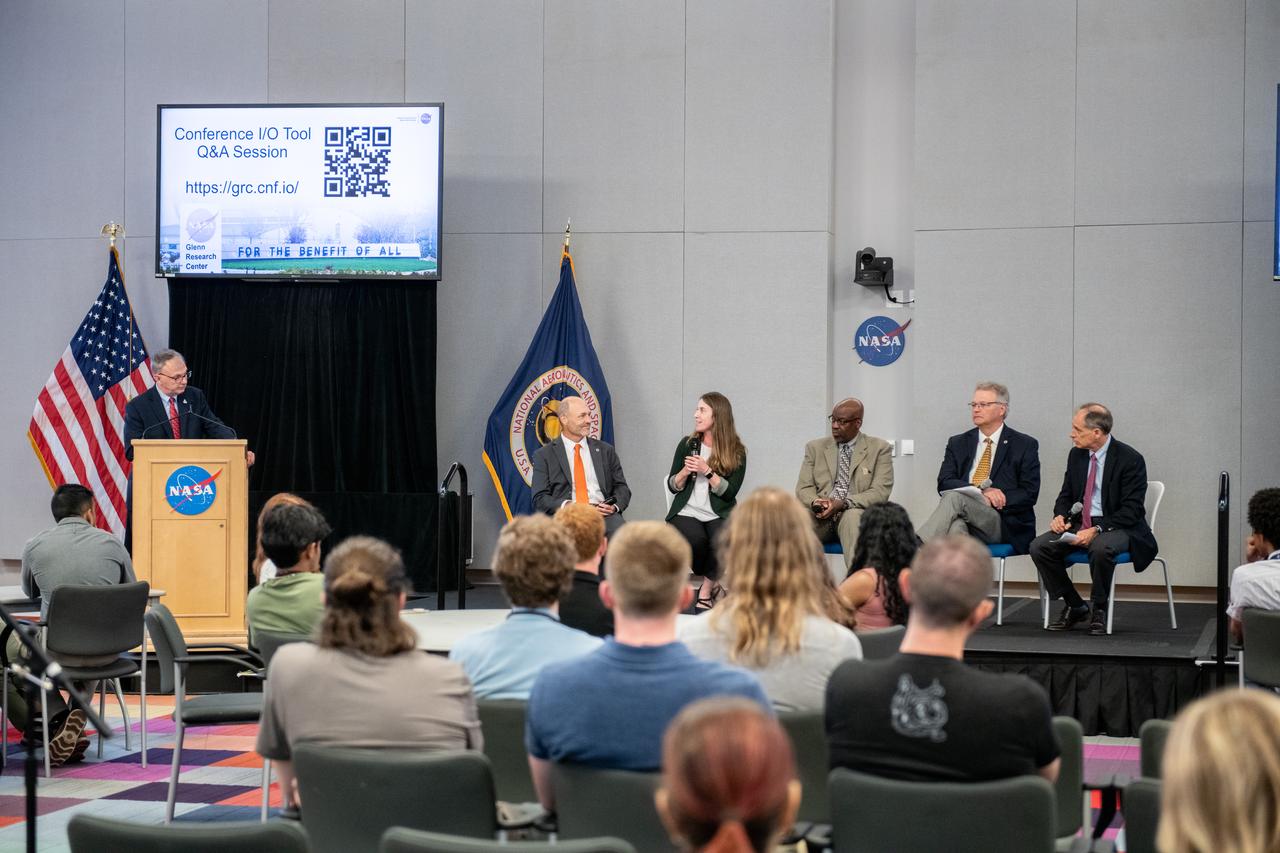
During the climate town hall meeting on June 17th 2024, Dr. Calvin and center leaders explored how technologies being developed at NASA Glenn Research Center could help reduce the effects of climate change. The panelists who lead the discussion include: Dr. Calvin; Dr. Rickey Shyne, Director of Research and Engineering; Bryan Smith, Director of Facilities, Test, & Manufacturing; and W. Allen Kilgore, Acting Director of Aeronautics. Director of Space Flight Systems Dr. Mike Barrett served as the moderator.
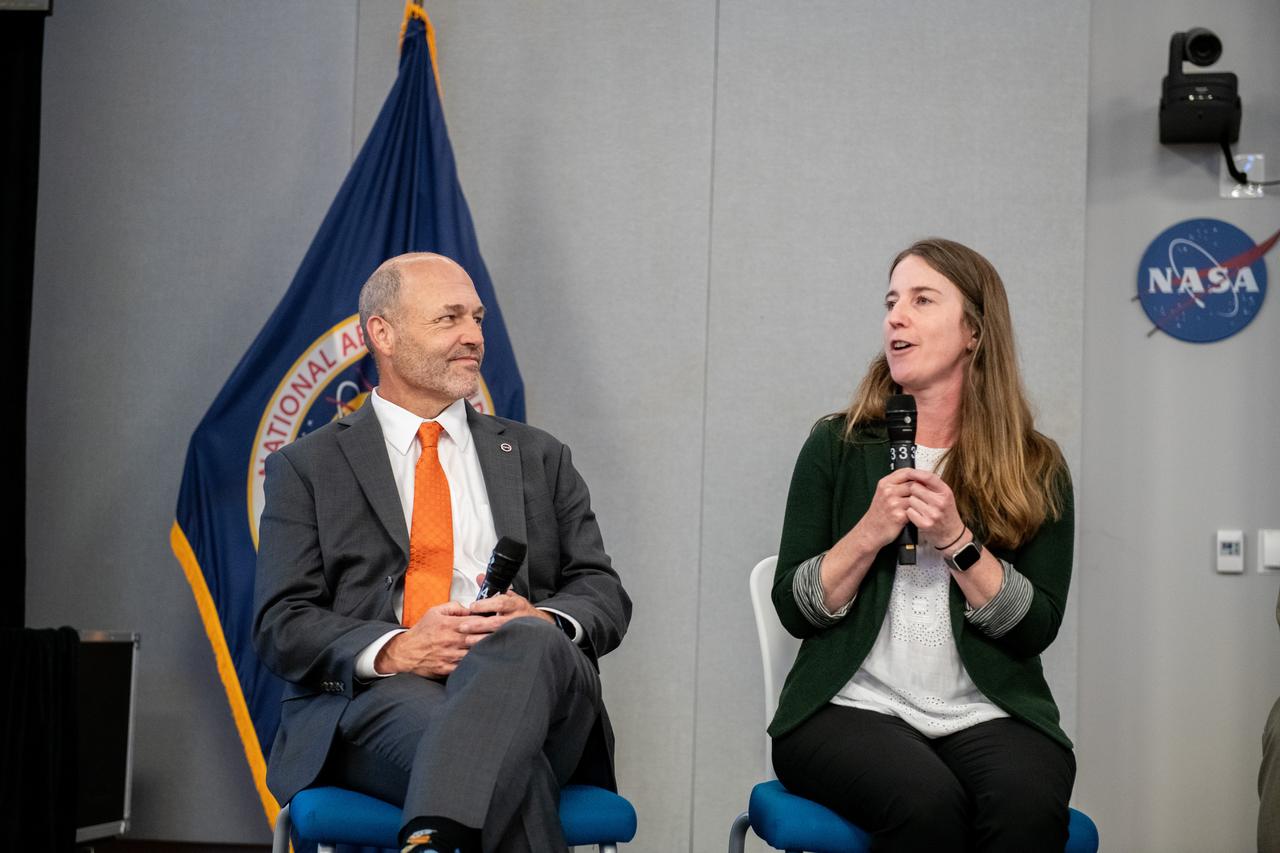
During the climate town hall meeting on June 17th 2024, Dr. Calvin and center leaders explored how technologies being developed at NASA Glenn Research Center could help reduce the effects of climate change. The panelists who lead the discussion include: Dr. Calvin; Dr. Rickey Shyne, Director of Research and Engineering; Bryan Smith, Director of Facilities, Test, & Manufacturing; and W. Allen Kilgore, Acting Director of Aeronautics. Director of Space Flight Systems Dr. Mike Barrett served as the moderator.
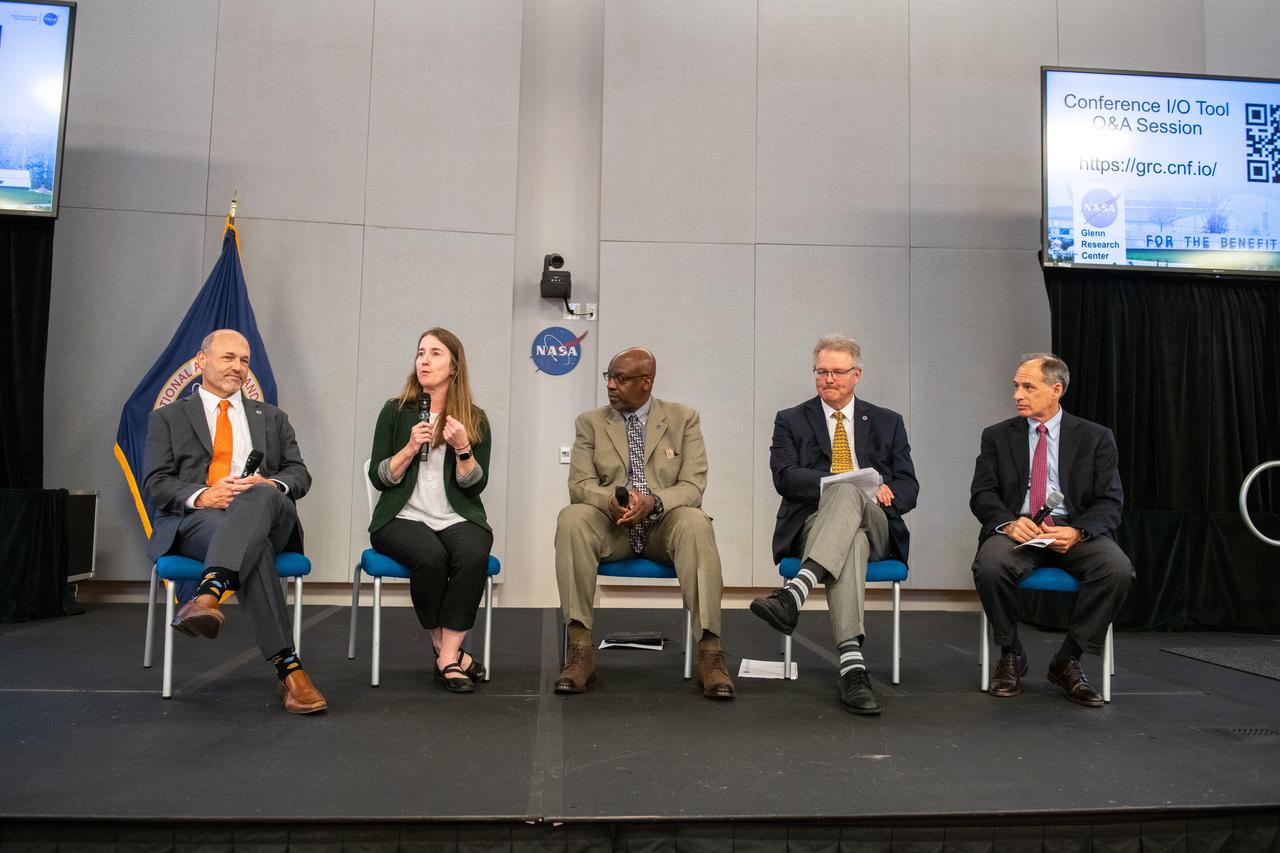
During the climate town hall meeting on June 17th 2024, Dr. Calvin and center leaders explored how technologies being developed at NASA Glenn Research Center could help reduce the effects of climate change. The panelists who lead the discussion include: Dr. Calvin; Dr. Rickey Shyne, Director of Research and Engineering; Bryan Smith, Director of Facilities, Test, & Manufacturing; and W. Allen Kilgore, Acting Director of Aeronautics. Director of Space Flight Systems Dr. Mike Barrett served as the moderator.
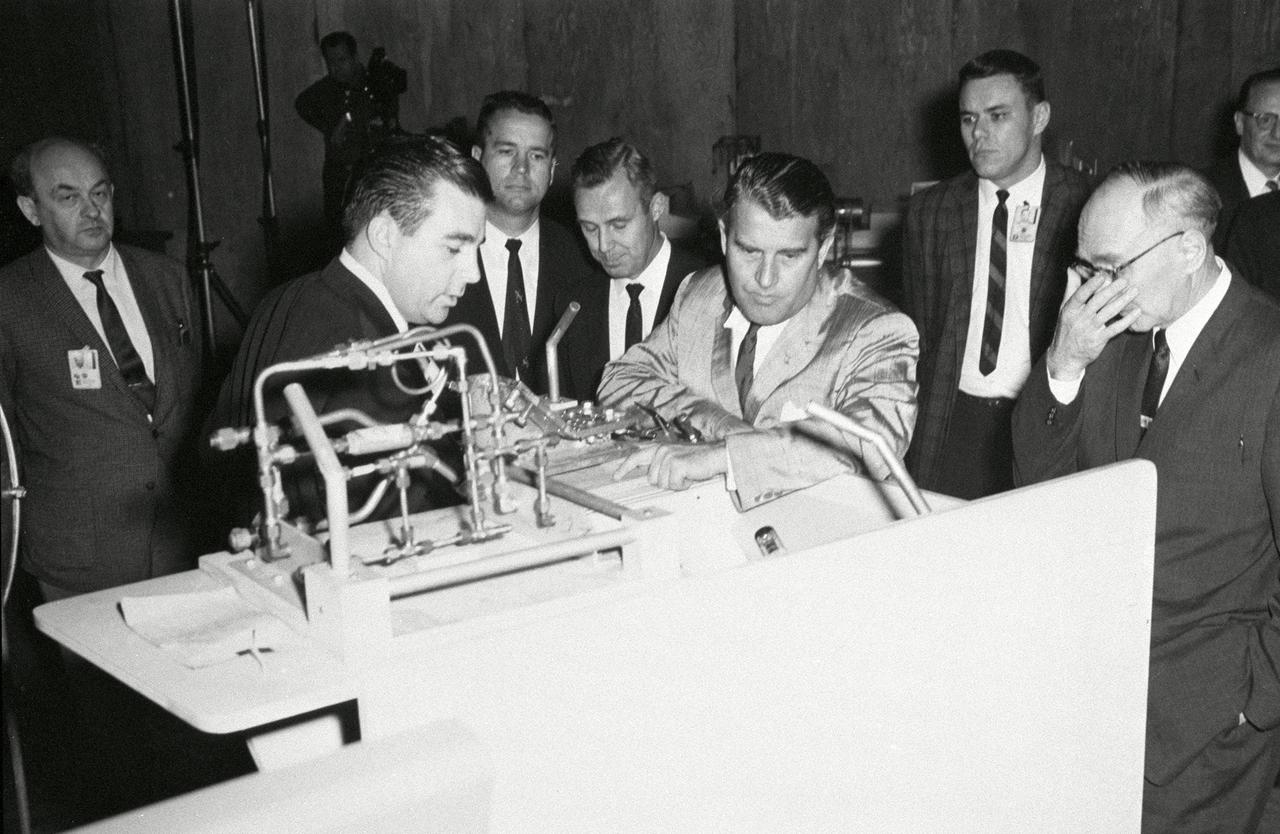
During his tenure as Director of the Marshall Space Flight Center (MSFC), Dr. von Braun enjoyed personally touring the Center's many space-related laboratories and facilities. This photo taken about 1961 shows him examining a test set up in the Center's Manufacturing Engineering Laboratory.
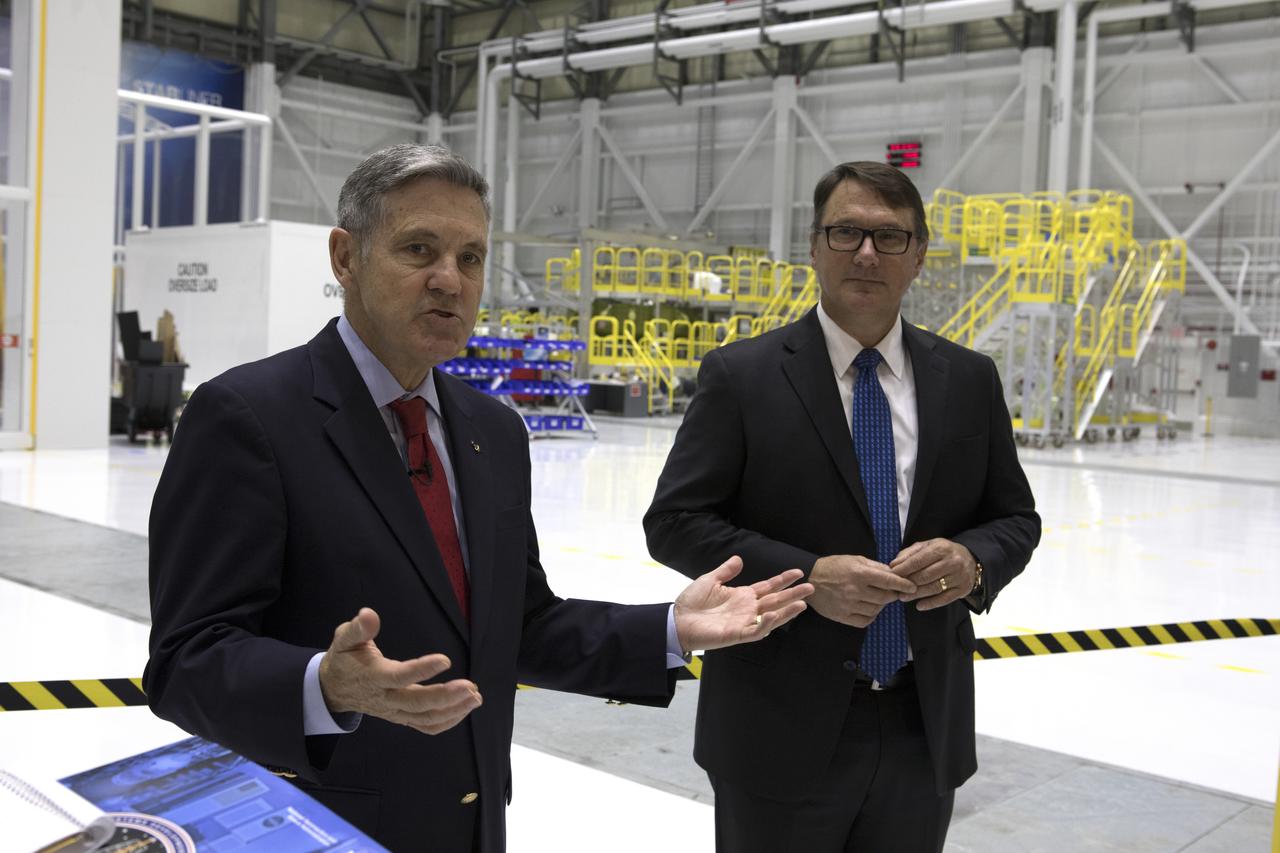
Kennedy Space Center Director Bob Cabana, left, and John Mulholland, Boeing vice president and program manager for Commercial Programs, speak to members of the news media inside the Boeing’s Commercial Crew and Cargo Processing Facility at the Florida spaceport. The facility will be used in manufacturing Boeing's CST-100 Starliner spacecraft for flight tests and crew rotation missions to the International Space Station as part of the agency's Commercial Crew Program.
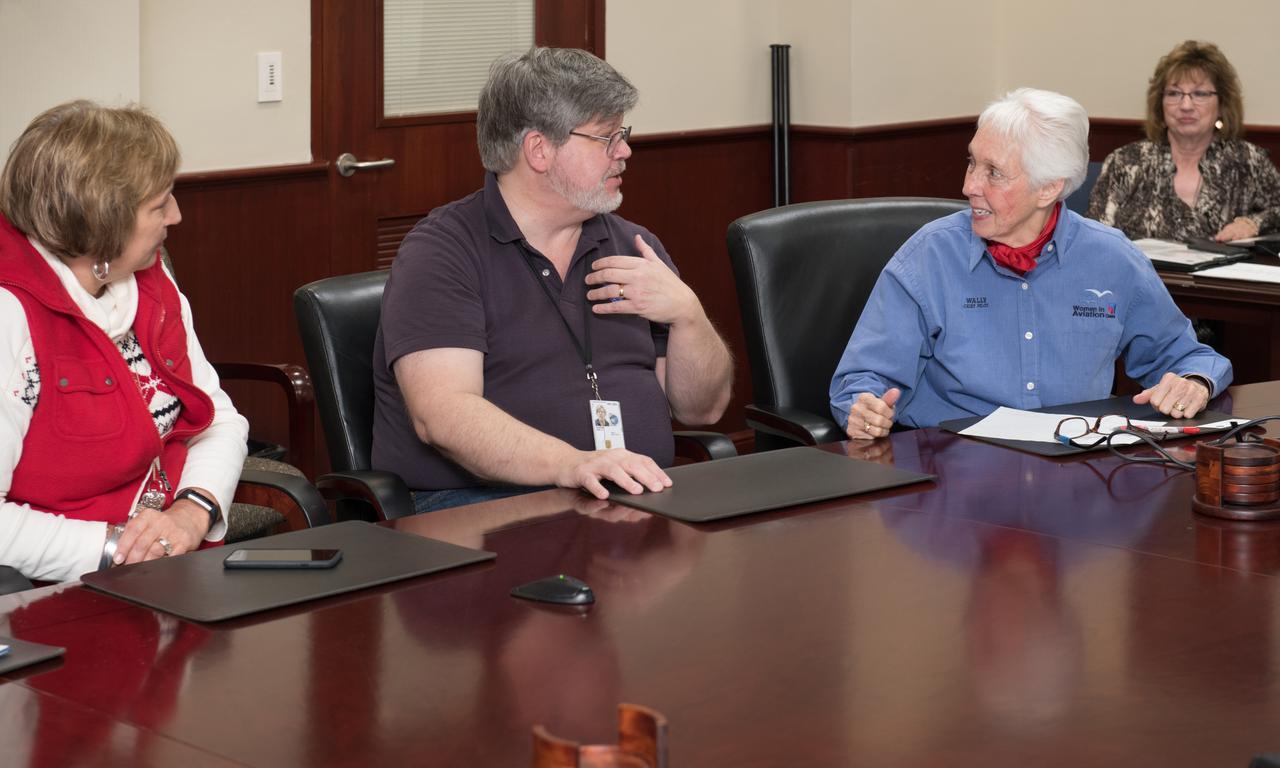
Visit to Glenn Research Center at Lewis Field by Mercury 13 Astronaut Trainee, Wally Funk
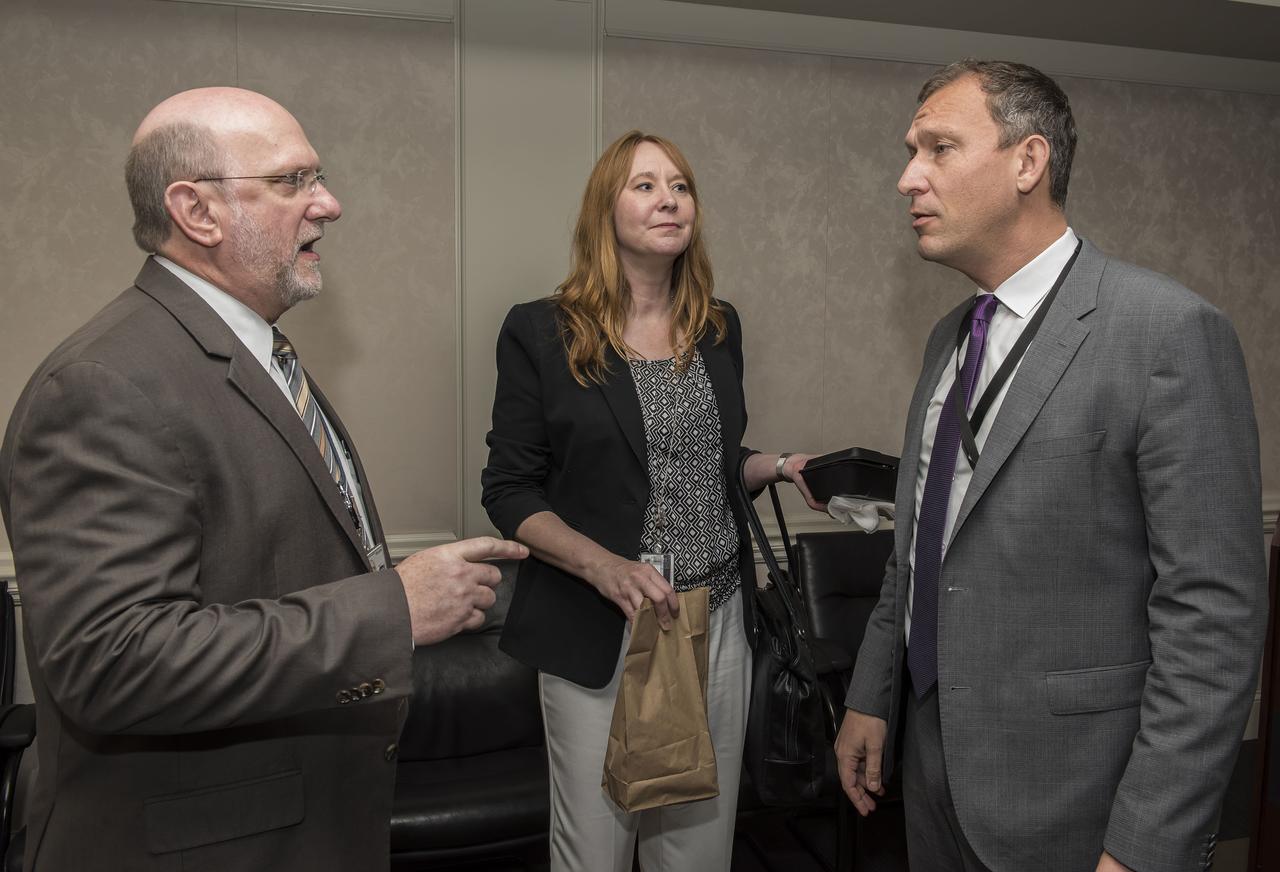
THOMAS ZURBUCHEN, RIGHT, NASA ASSOCIATE ADMINISTRATOR FOR THE SCIENCE MISSION DIRECTORATE, SPEAKS WITH DENNON CLARDY, LEFT, DEPUTY MANAGER OF THE SCIENCE & TECHNOLOGY OFFICE AT NASA’S MARSHALL SPACE FLIGHT CENTER IN HUNTSVILLE, ALABAMA, AND SHAWN MCINERY, AFTER HIS KEYNOTE ADDRESS AT THE MARCH 21 LUNCHEON MEETING OF THE MARSHALL ASSOCIATION. ZURBUCHEN, WHO ASSUMED HIS NEW ROLE IN OCTOBER 2016, ALSO TOURED KEY MARSHALL MANUFACTURING AND TEST FACILITIES. THE MARSHALL ASSOCIATION IS THE CENTER’S PROFESSIONAL, EMPLOYEE SERVICE ORGANIZATION.
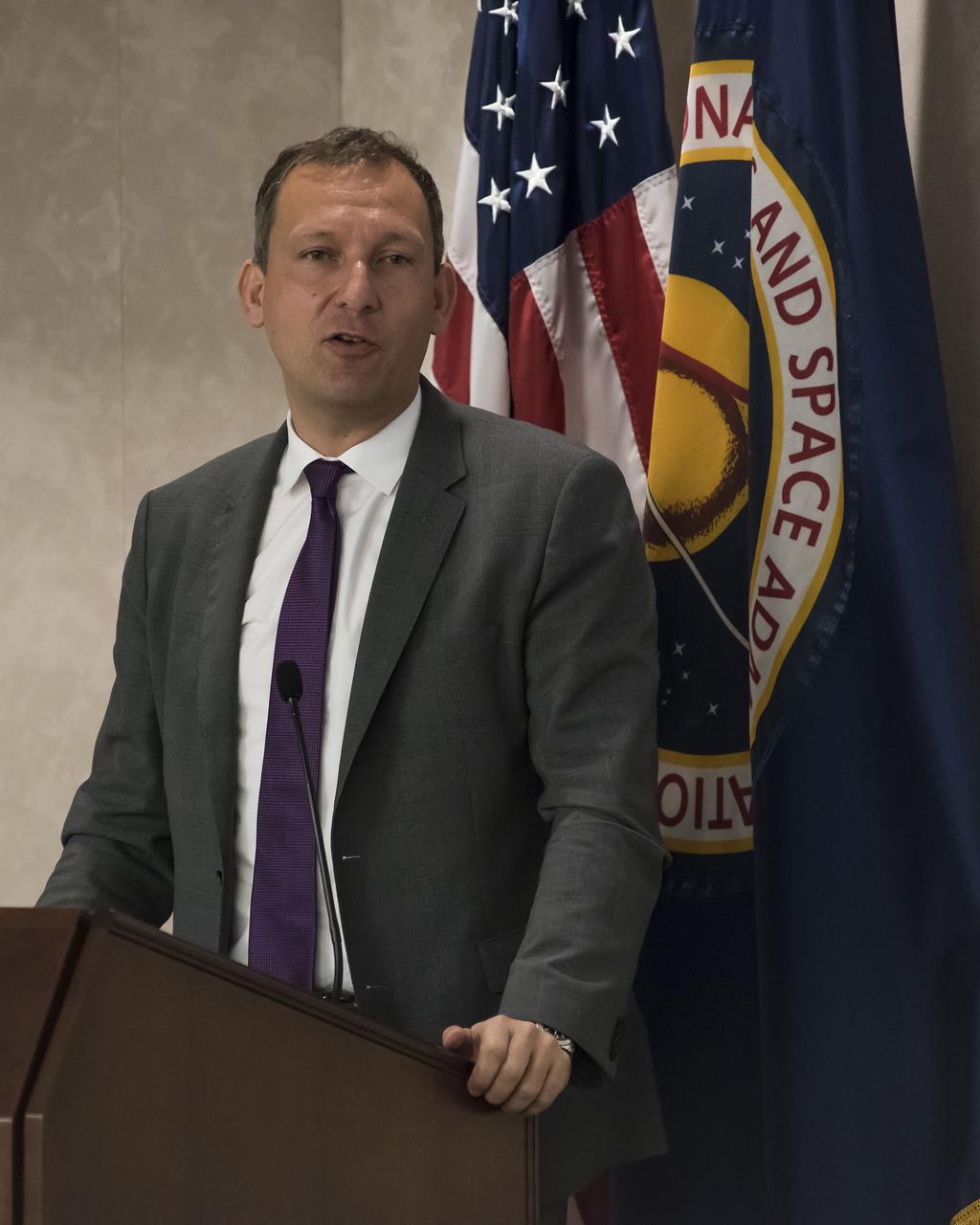
THOMAS ZURBUCHEN, NASA ASSOCIATE ADMINISTRATOR FOR THE SCIENCE MISSION DIRECTORATE, ADDRESSES THE MARCH 21 LUNCHEON MEETING OF THE MARSHALL ASSOCIATION IN BUILDING 4200, ROOM P110. ZURBUCHEN, WHO TOOK ON HIS NEW ROLE IN OCTOBER 2016, PROVIDED THE KEYNOTE ADDRESS FOR THE LUNCHEON BEFORE TOURING KEY MARSHALL SPACE FLIGHT CENTER MANUFACTURING AND TEST FACILITIES. THE MARSHALL ASSOCIATION IS THE CENTER’S PROFESSIONAL, EMPLOYEE SERVICE ORGANIZATION.

Nuclear Emerging Technologies for Space, NETS 2022 Conference
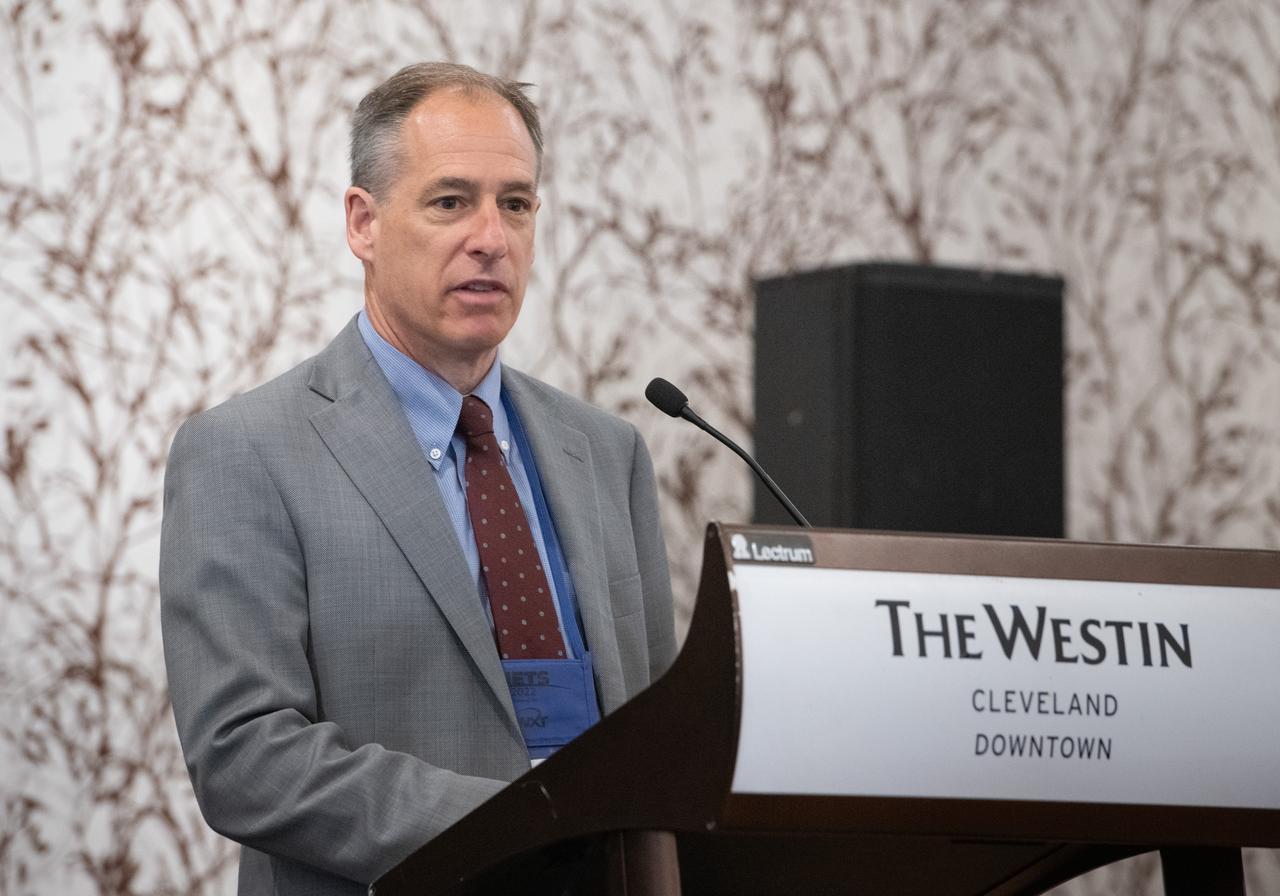
Nuclear Emerging Technologies for Space, NETS 2022 Conference
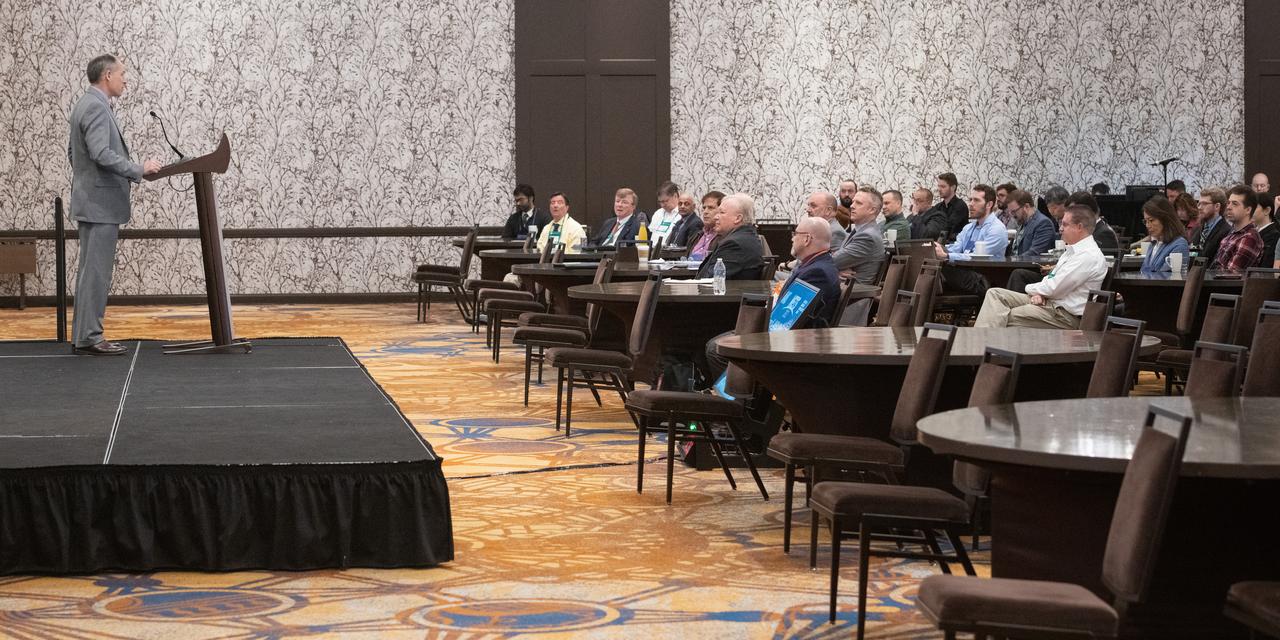
Nuclear Emerging Technologies for Space, NETS 2022 Conference
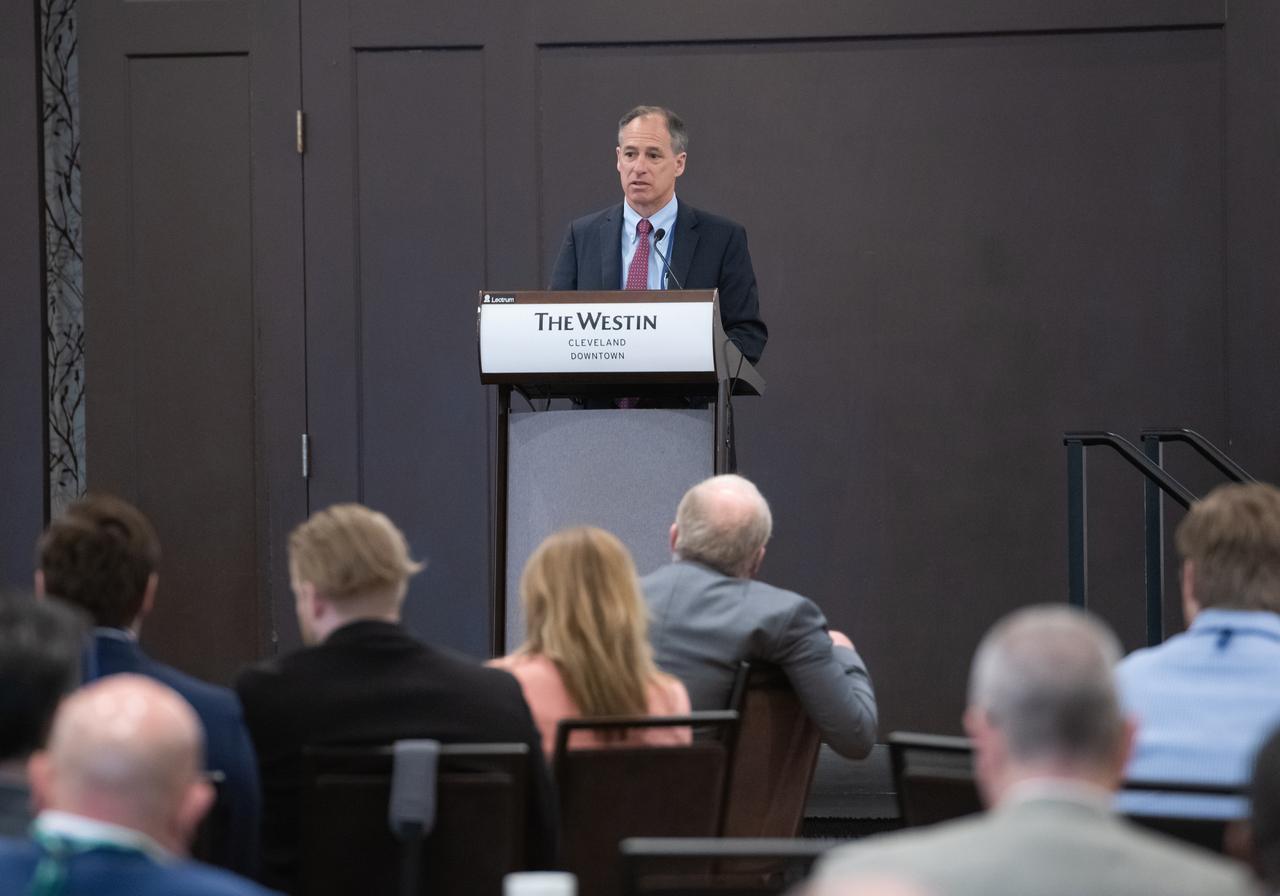
Nuclear Emerging Technologies for Space, NETS 2022 Conference
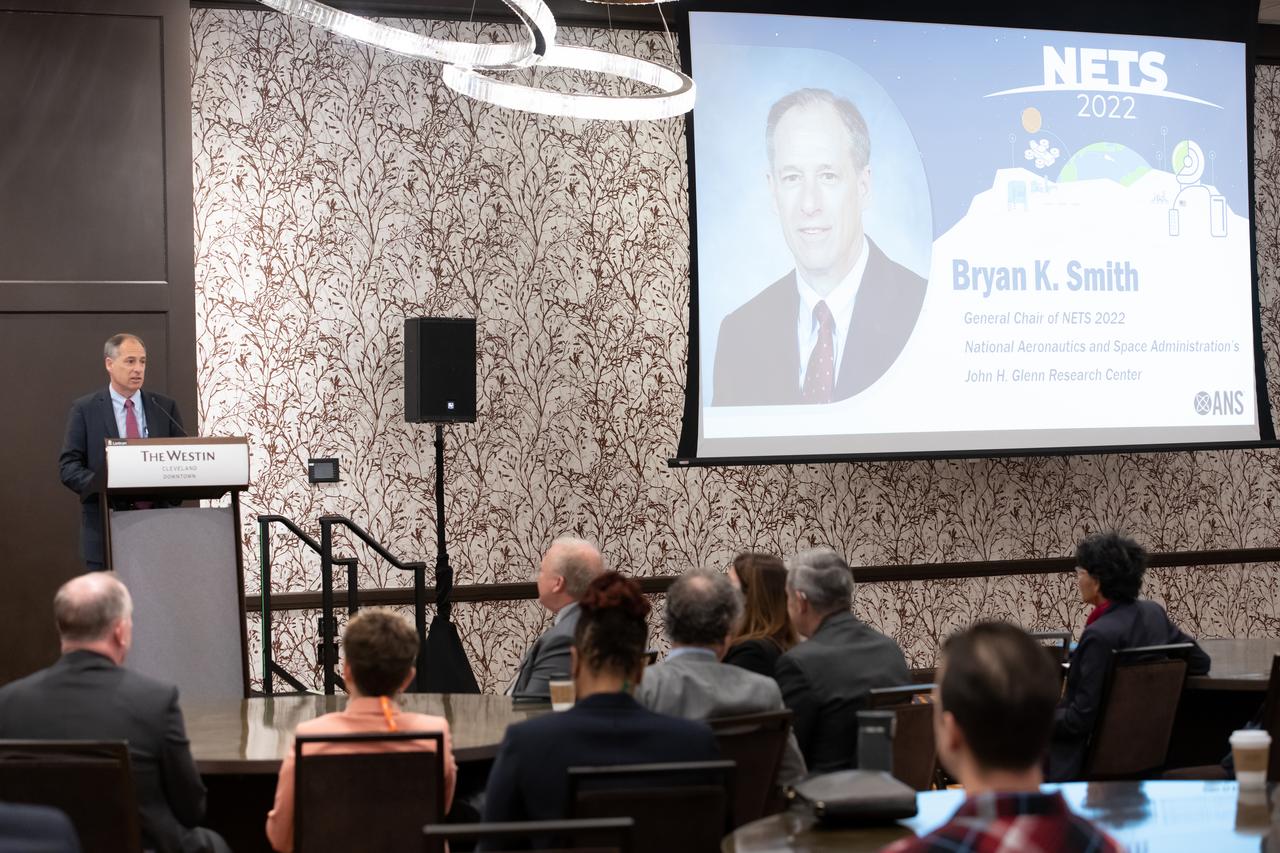
Nuclear Emerging Technologies for Space, NETS 2022 Conference
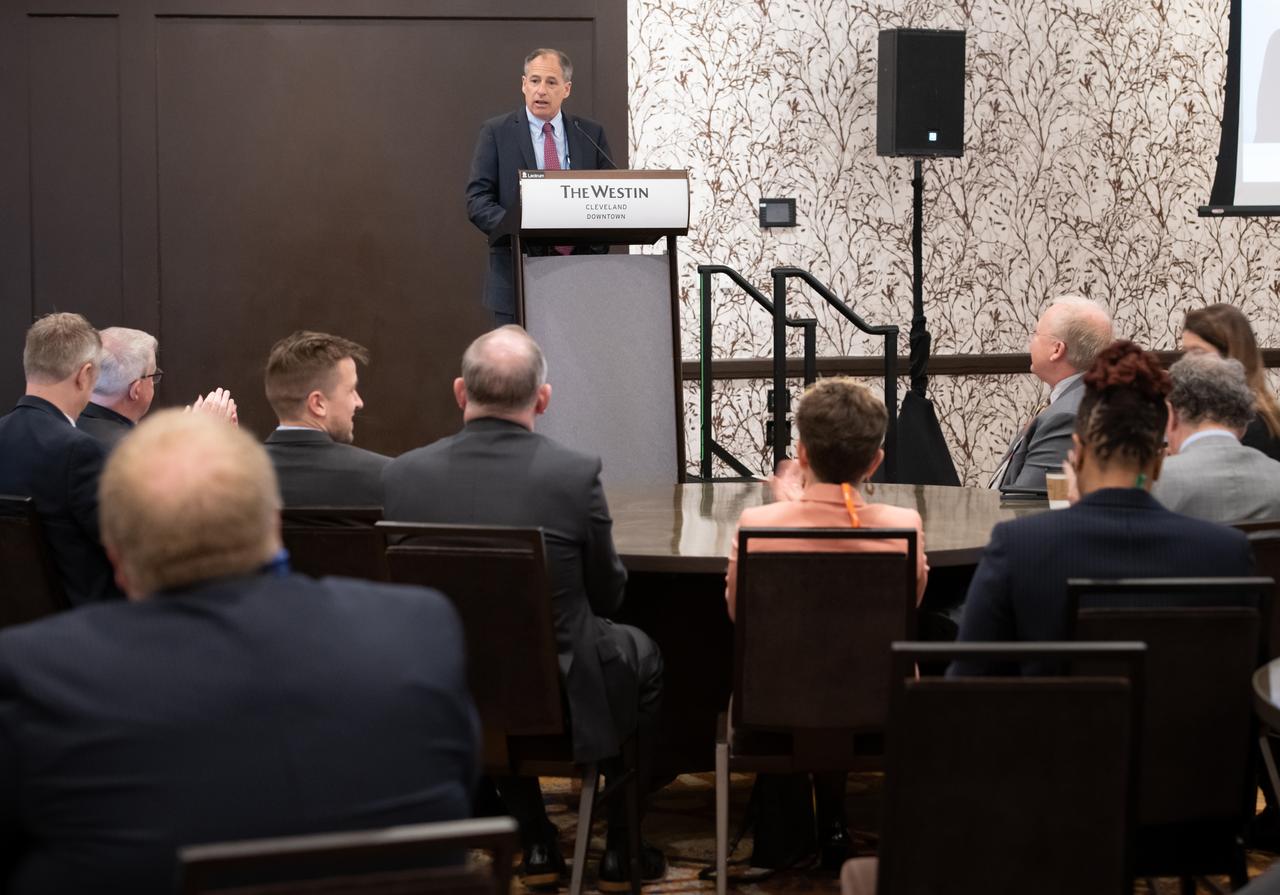
Nuclear Emerging Technologies for Space, NETS 2022 Conference
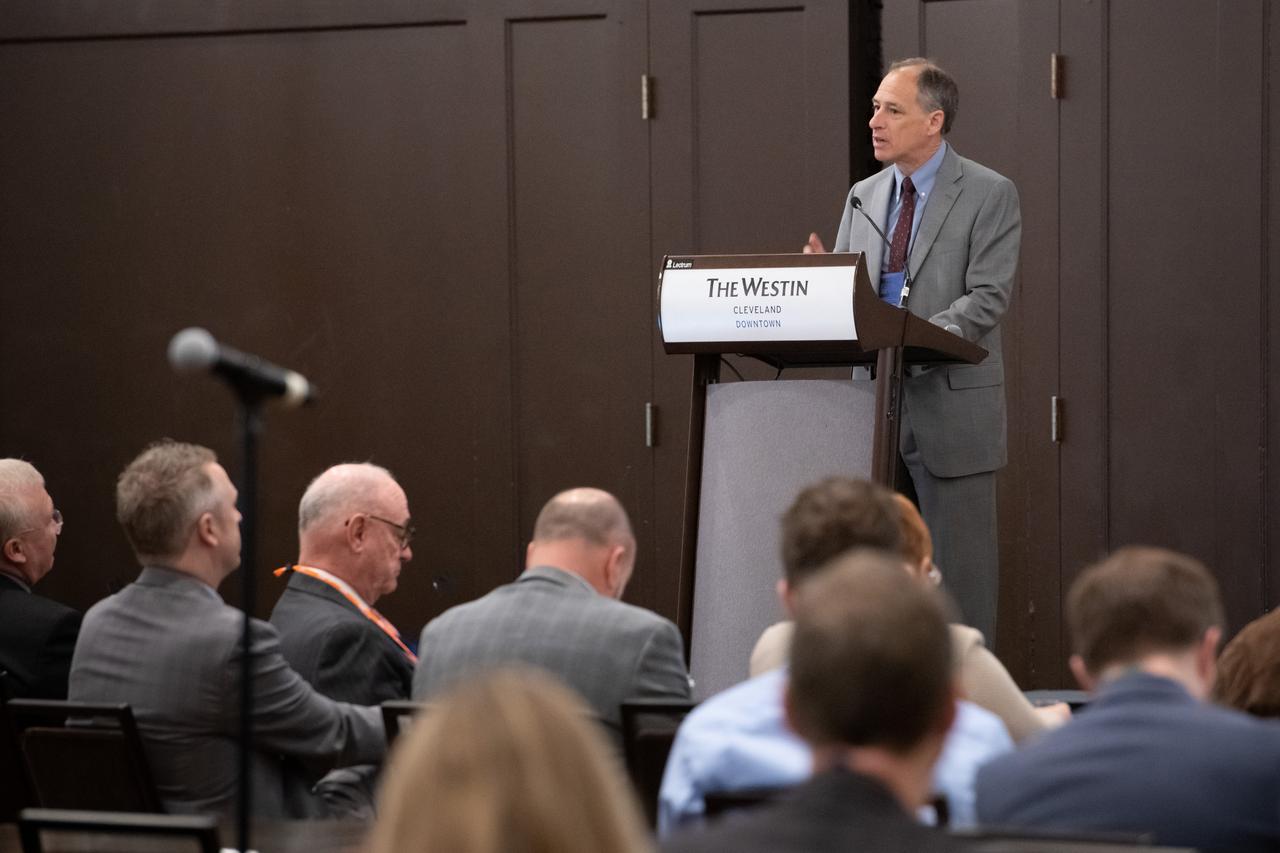
Nuclear Emerging Technologies for Space, NETS 2022 Conference
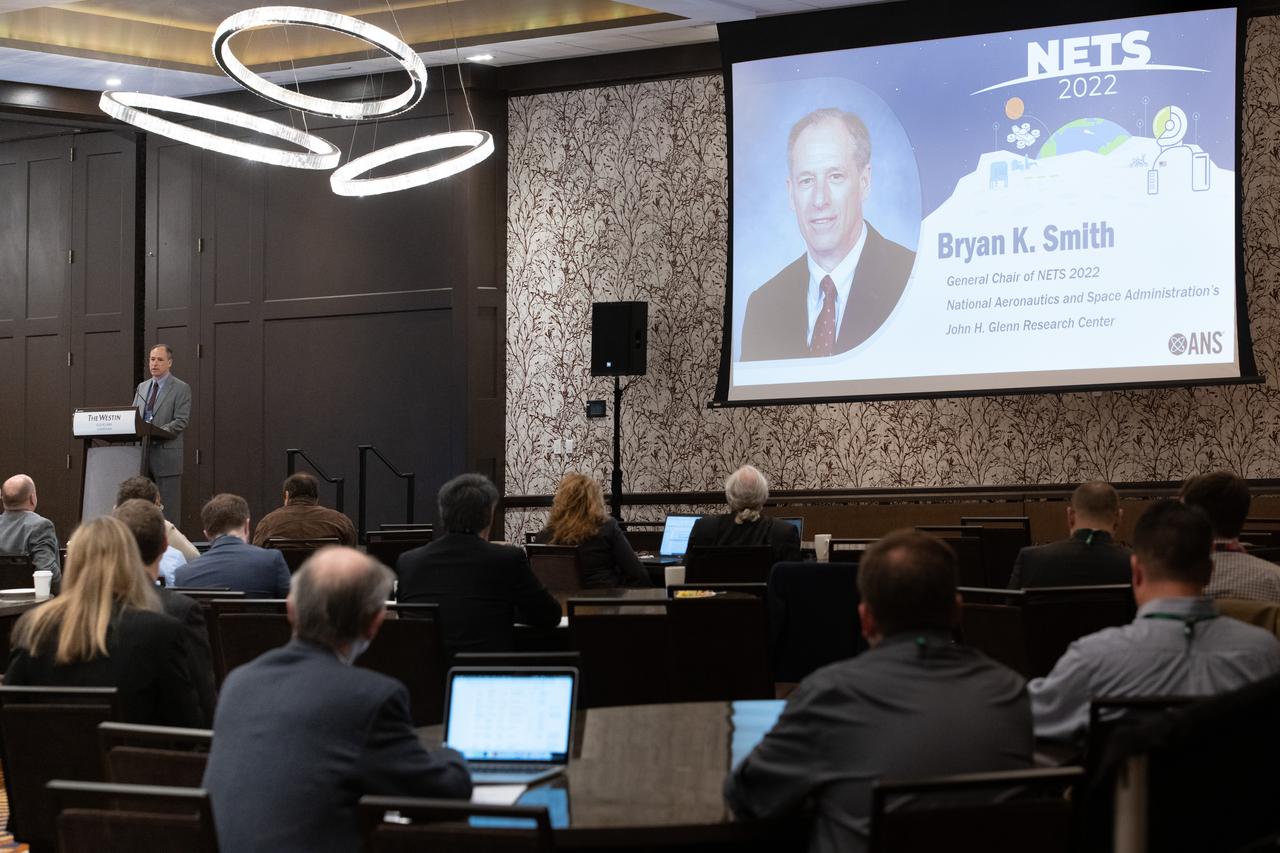
Nuclear Emerging Technologies for Space, NETS 2022 Conference
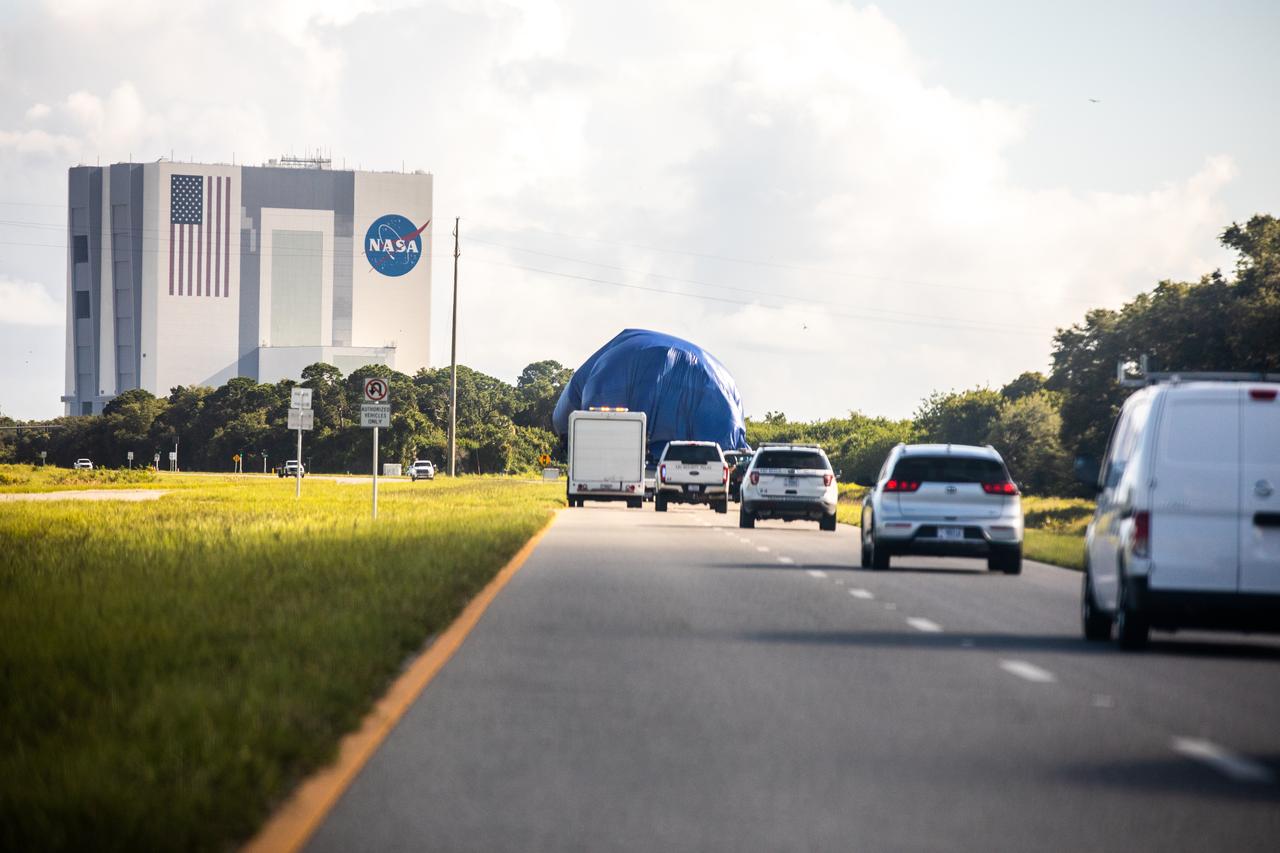
A flatbed truck, carrying the node structural test article (STA), is on its way to the Launch and Landing Facility from the Space Station Processing Facility (SSPF) at NASA’s Kennedy Space Center in Florida on July 20, 2020. In view is the iconic Vehicle Assembly Building. The Node STA was used to prove the manufacturing processes and procedures were robust for extended human spaceflight. Those same processes and procedures were then used to build Node 1, which Kennedy Center Director Bob Cabana flew to the space station on STS 88. NASA has stored the node STA in the SSPF, and it is moving to a new location to allow for more space in the facility’s high bay to support the agency’s space exploration and commercialization efforts in low-Earth orbit.
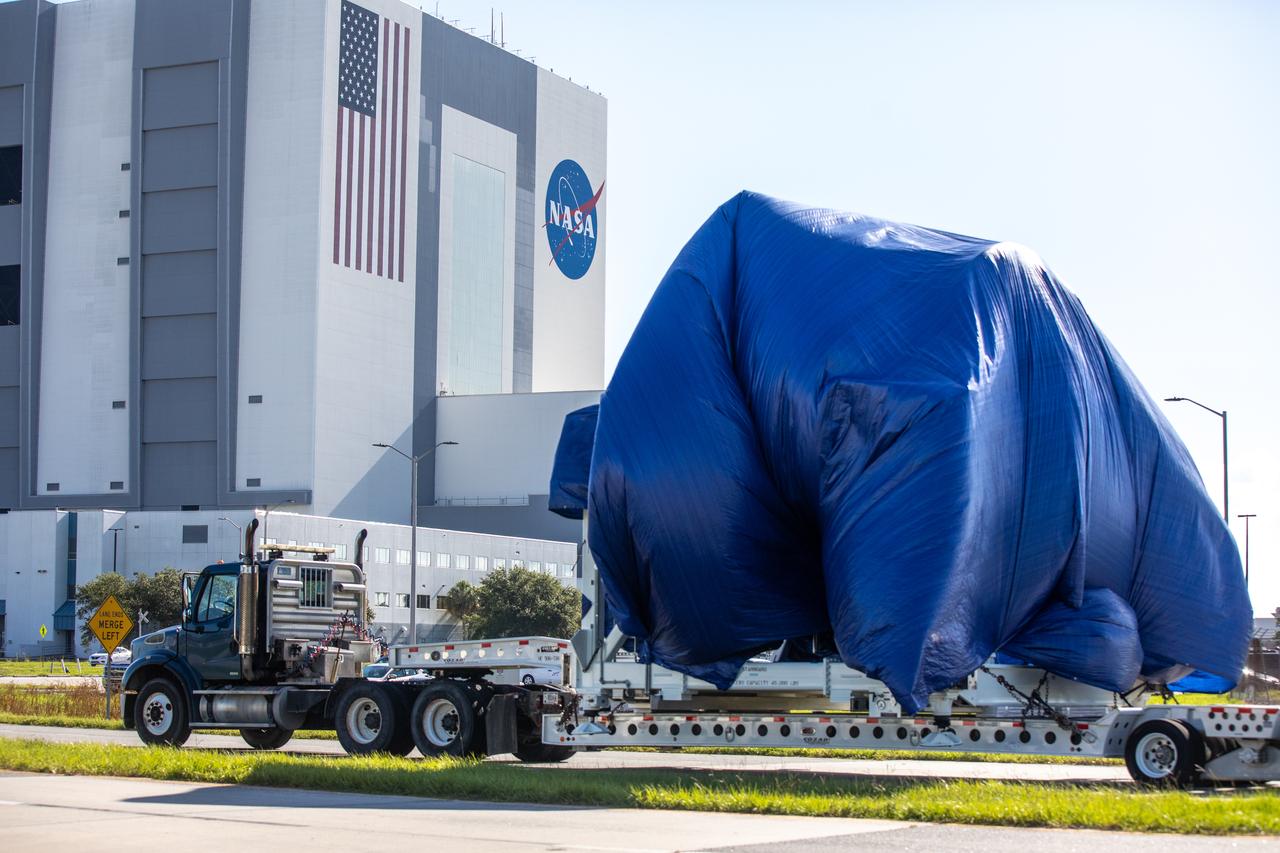
A flatbed truck, carrying the node structural test article (STA), is on its way to the Launch and Landing Facility from the Space Station Processing Facility (SSPF) at NASA’s Kennedy Space Center in Florida on July 20, 2020. In view is the iconic Vehicle Assembly Building. The Node STA was used to prove the manufacturing processes and procedures were robust for extended human spaceflight. Those same processes and procedures were then used to build Node 1, which Kennedy Center Director Bob Cabana flew to the space station on STS 88. NASA has stored the node STA in the SSPF, and it is moving to a new location to allow for more space in the facility’s high bay to support the agency’s space exploration and commercialization efforts in low-Earth orbit.
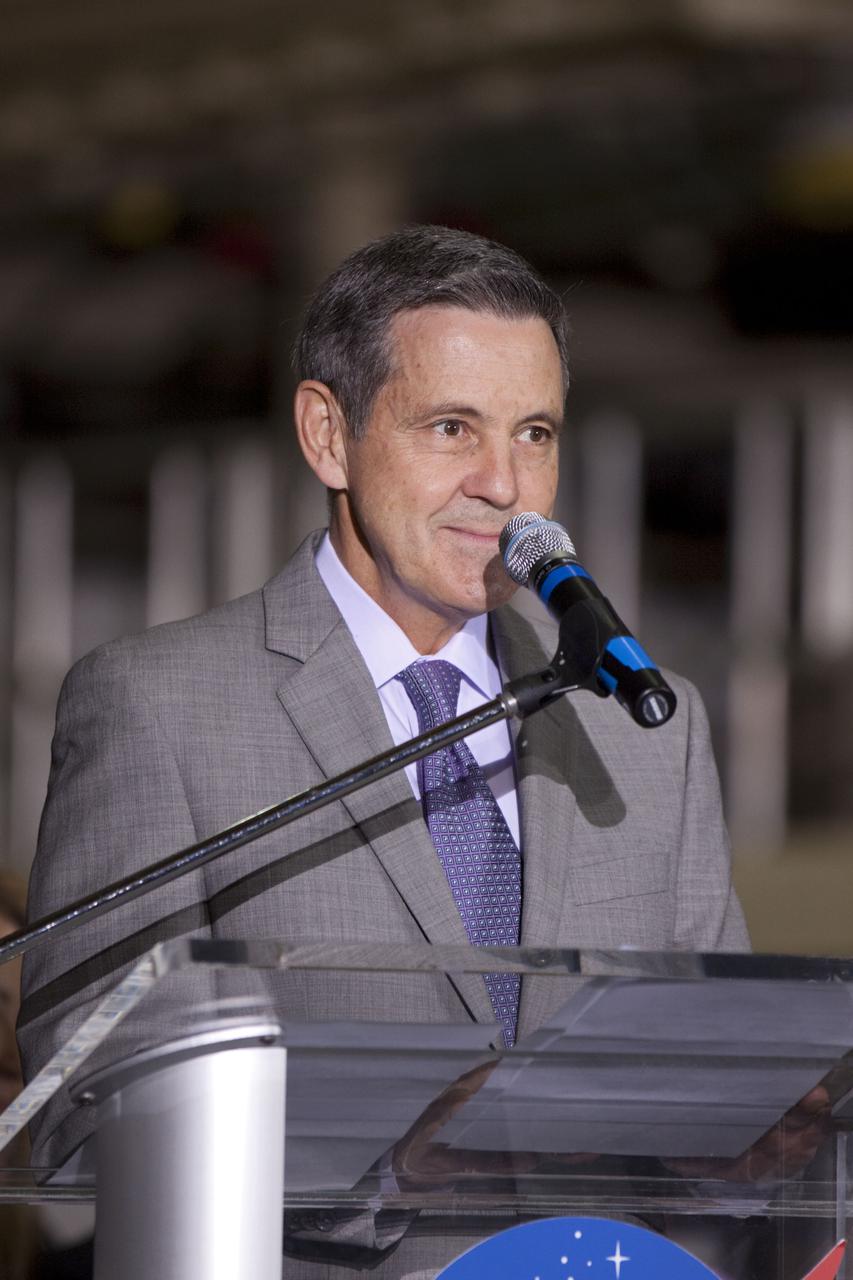
CAPE CANAVERAL, Fla. – In the Orbiter Processing Facility-3 (OPF-3) at NASA’s Kennedy Space Center in Florida, Robert Cabana, Kennedy Space Center director, speaks to the audience during the ceremony announcing the signing of an innovative agreement between NASA and Space Florida. NASA announced a partnership with Space Florida to occupy, use and modify Kennedy Space Center's Orbiter Processing Facility-3 (OPF-3), the Space Shuttle Main Engine Processing Facility and Processing Control Center. Space Florida has an agreement for use of the OPF-3 with the Boeing Company to manufacture and test the company's Crew Space Transportation (CST-100) spacecraft. The 15-year use permit deal is the latest step Kennedy is making as the center transitions from a historically government-only launch complex to a multi-user spaceport. For more information, visit http:__www.nasa.gov_exploration_commercial_index.html. Photo credit: NASA_Kim Shiflett
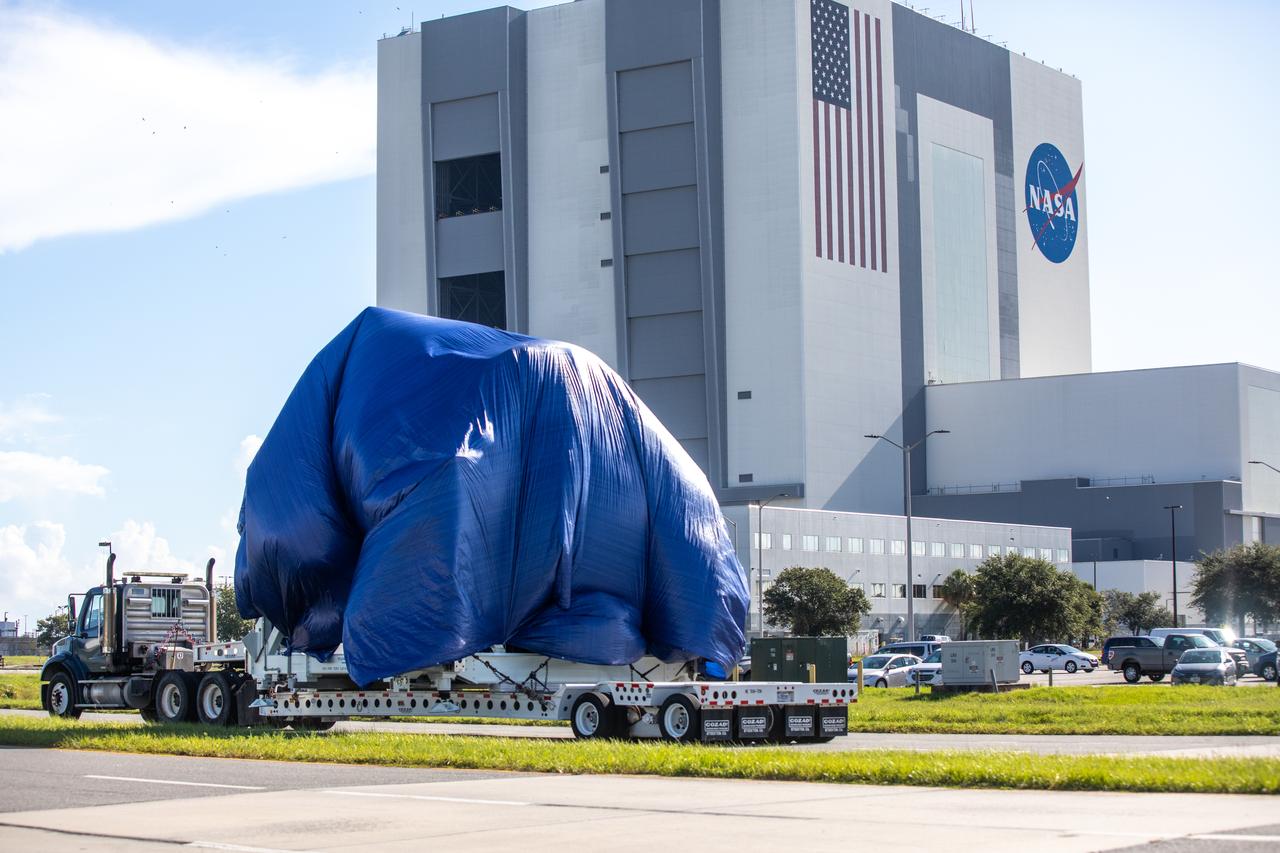
A flatbed truck, carrying the node structural test article (STA), is on its way to the Launch and Landing Facility from the Space Station Processing Facility (SSPF) at NASA’s Kennedy Space Center in Florida on July 20, 2020. In view is the iconic Vehicle Assembly Building. The Node STA was used to prove the manufacturing processes and procedures were robust for extended human spaceflight. Those same processes and procedures were then used to build Node 1, which Kennedy Center Director Bob Cabana flew to the space station on STS 88. NASA has stored the node STA in the SSPF, and it is moving to a new location to allow for more space in the facility’s high bay to support the agency’s space exploration and commercialization efforts in low-Earth orbit.
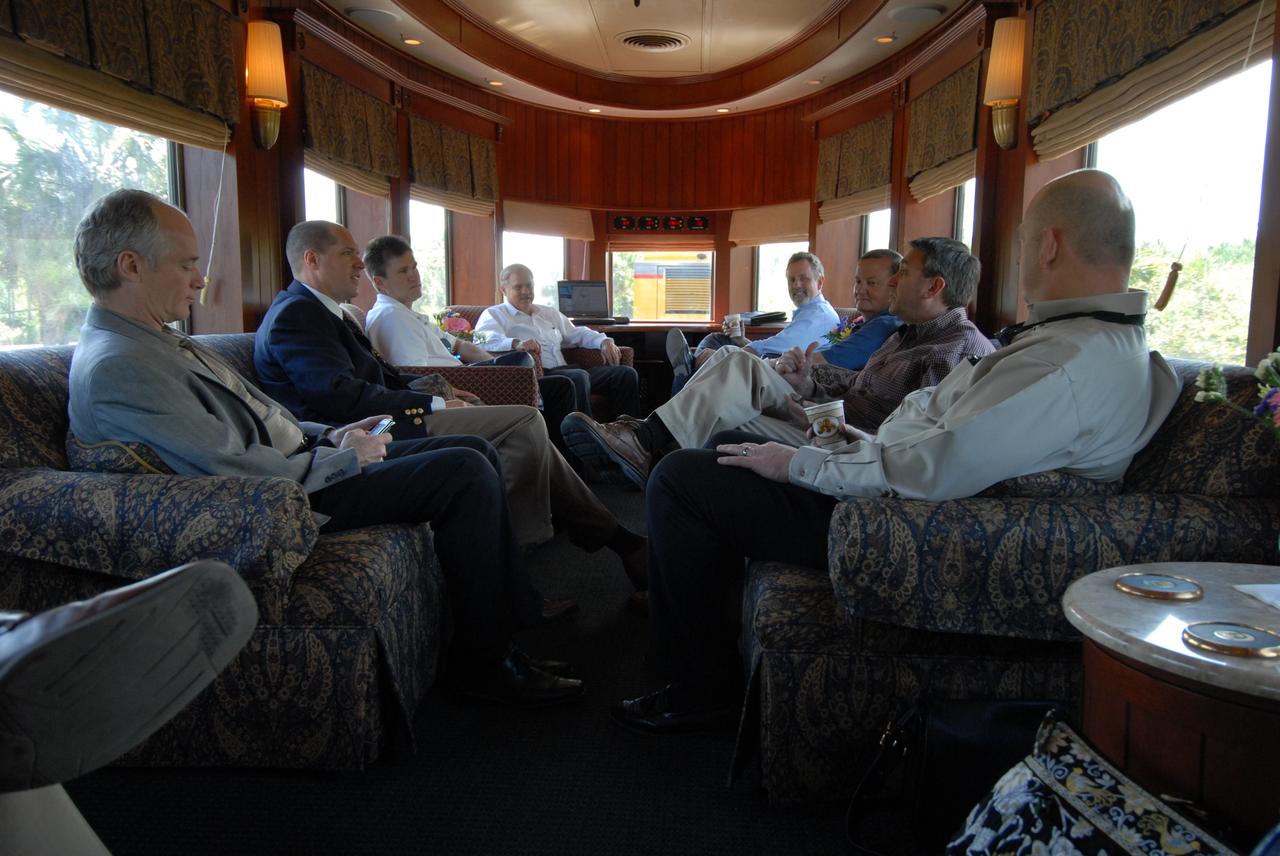
CAPE CANAVERAL, Fla. – ATK and NASA officials accompanied the Florida East Coast Railroad train carrying the booster segments for the Ares I-X test rocket on its route to NASA's Kennedy Space Center in Florida from Jacksonville, Fla. Seen here in the passenger car are, from left, ATK Vice President Space Launch Systems Charlie Precourt, a Florida East Coast Railroad representative, ATK Deputy Site Director in Florida Ted Shaffner, ATK Vice President Of Space Launch Propulsion Cary Ralston, NASA KSC Shuttle Launch Director Mike Leinbach, a Florida East Coast Railroad representative and ATK Ares I First Stage program Director Fred Brasfield. The four reusable motor segments and the nozzle exit cone, manufactured by the Ares I first-stage prime contractor Alliant Techsystems Inc., or ATK, departed Utah March 12 on the seven-day, cross-country trip to Florida. The segments will be delivered to the Rotation, Processing and Surge Facility for final processing and integration. The booster used for the Ares I-X launch is being modified by adding new forward structures and a fifth segment simulator. The motor is the final hardware needed for the rocket's upcoming test flight this summer. The stacking operations are scheduled to begin in the Vehicle Assembly Building in April. Photo credit: NASA/Kim Shiflett
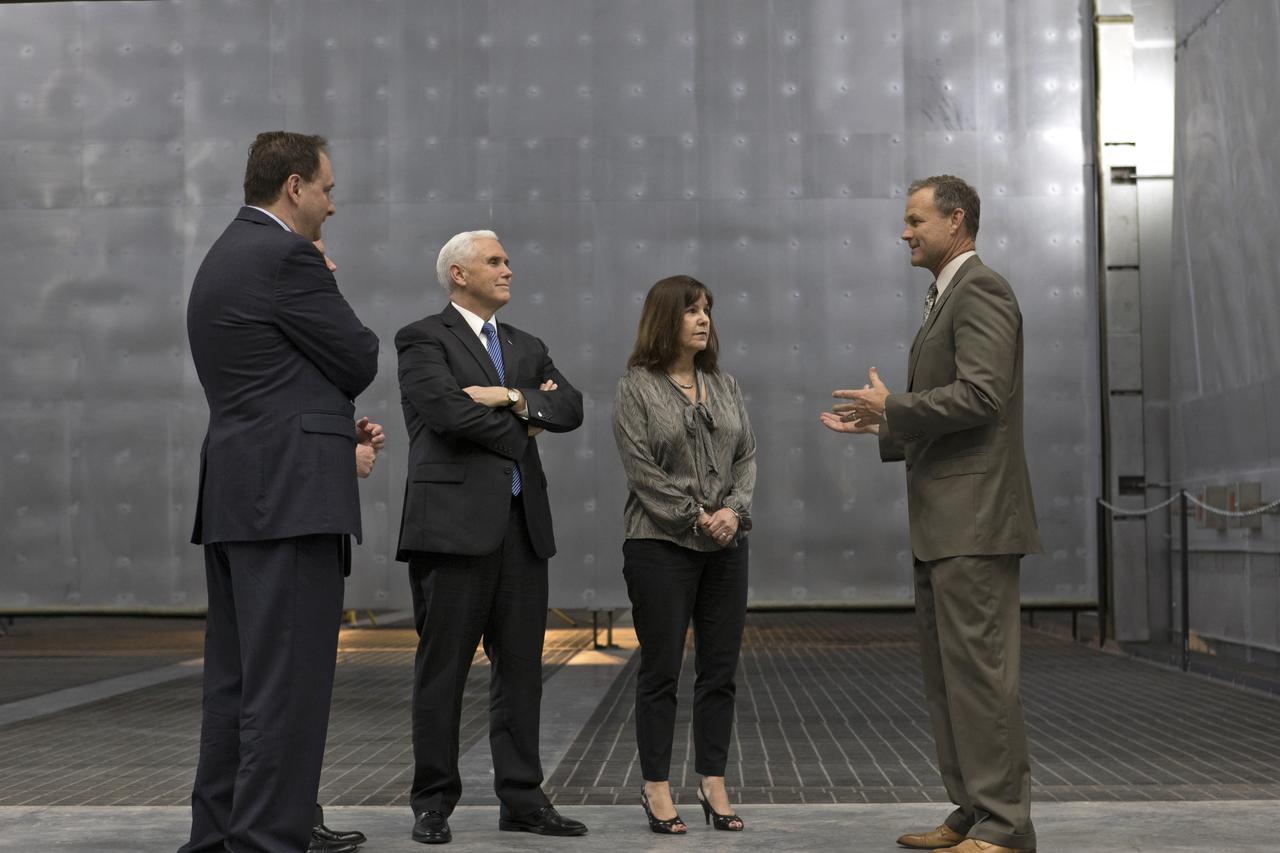
Vice President Mike Pence, second from left, tours the Blue Origin Manufacturing Facility near NASA's Kennedy Space Center in Florida, on Feb. 20, 2018. To his left is acting NASA Administrator Robert Lightfoot. At right is the vice president's wife, Karen Pence. At far right is Scott Henderson, Blue Origin director of Test and Flight Operations. Vice President Pence viewed the flown New Shepard Booster and Crew Capsule. The booster was the first launch vehicle with a successful vertical takeoff and vertical landing to demonstrate reusability. During his visit, Pence will chair a meeting of the National Space Council on Feb. 21, 2018 in the high bay of NASA Kennedy Space Center's Space Station Processing Facility. The council's role is to advise the president regarding national space policy and strategy, and review the nation's long-range goals for space activities.
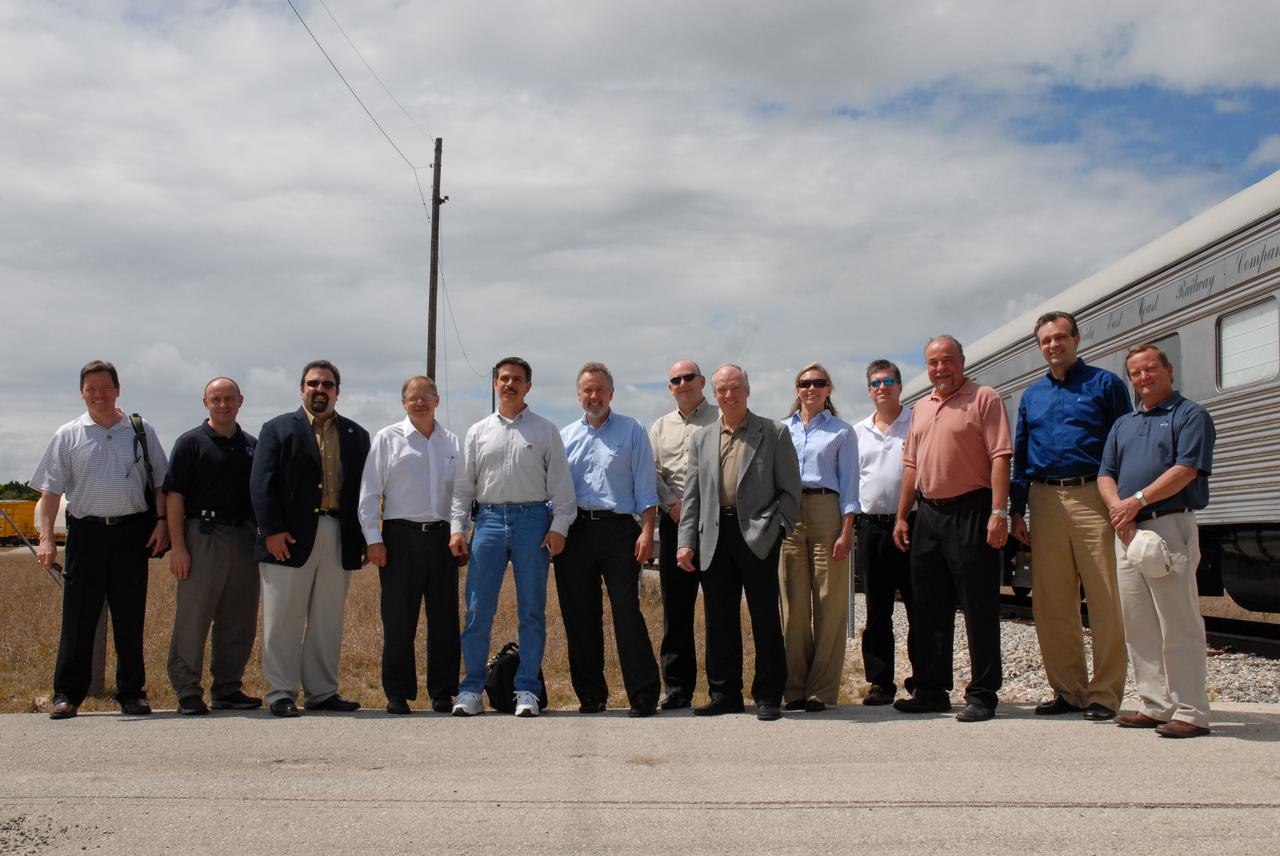
CAPE CANAVERAL, Fla. – The booster segments for the Ares I-X test rocket were delivered to NASA's Kennedy Space Center in Florida by the Florida East Coast Railroad and the NASA Railroad. Accompanying the train on its route from Jacksonville, Fla., were NASA and ATK officials. Standing here, from left, are ATK Ares I Flight Tests Program Director Joe Oliva, ATK Ares I-X Florida Program Manager Russ Page, NASA Ares Program Manager Steve Cook, ATK Deputy Site Director in Florida Ted Shaffner, NASA KSC Ares I-X Deputy Mission Manager Jon Cowart, ATK Vice President of Space Launch Propulson Cary Ralston, ATK Ares I First Stage program Director Fred Brasfield, ATK Vice President Space Launch Systems Charlie Precourt, ATK Ares I Flight Tests Deputy Program Director Kathy Philpot, NASA Marshall Space Flight Center Reusable Solid Rocket Booster Integration Lead Roy Worthy, ATK Florida Site Director Bob Herman, NASA Res First Stage Project Manager Alex Priskos and NASA KSC Shuttle Launch Director Mike Leinbach. The four reusable motor segments and the nozzle exit cone, manufactured by the Ares I first-stage prime contractor Alliant Techsystems Inc., or ATK, departed Utah March 12 on the seven-day, cross-country trip to Florida. The segments will be delivered to the Rotation, Processing and Surge Facility for final processing and integration. The booster used for the Ares I-X launch is being modified by adding new forward structures and a fifth segment simulator. The motor is the final hardware needed for the rocket's upcoming test flight this summer. The stacking operations are scheduled to begin in the Vehicle Assembly Building in April. Photo credit: NASA/Kim Shiflett
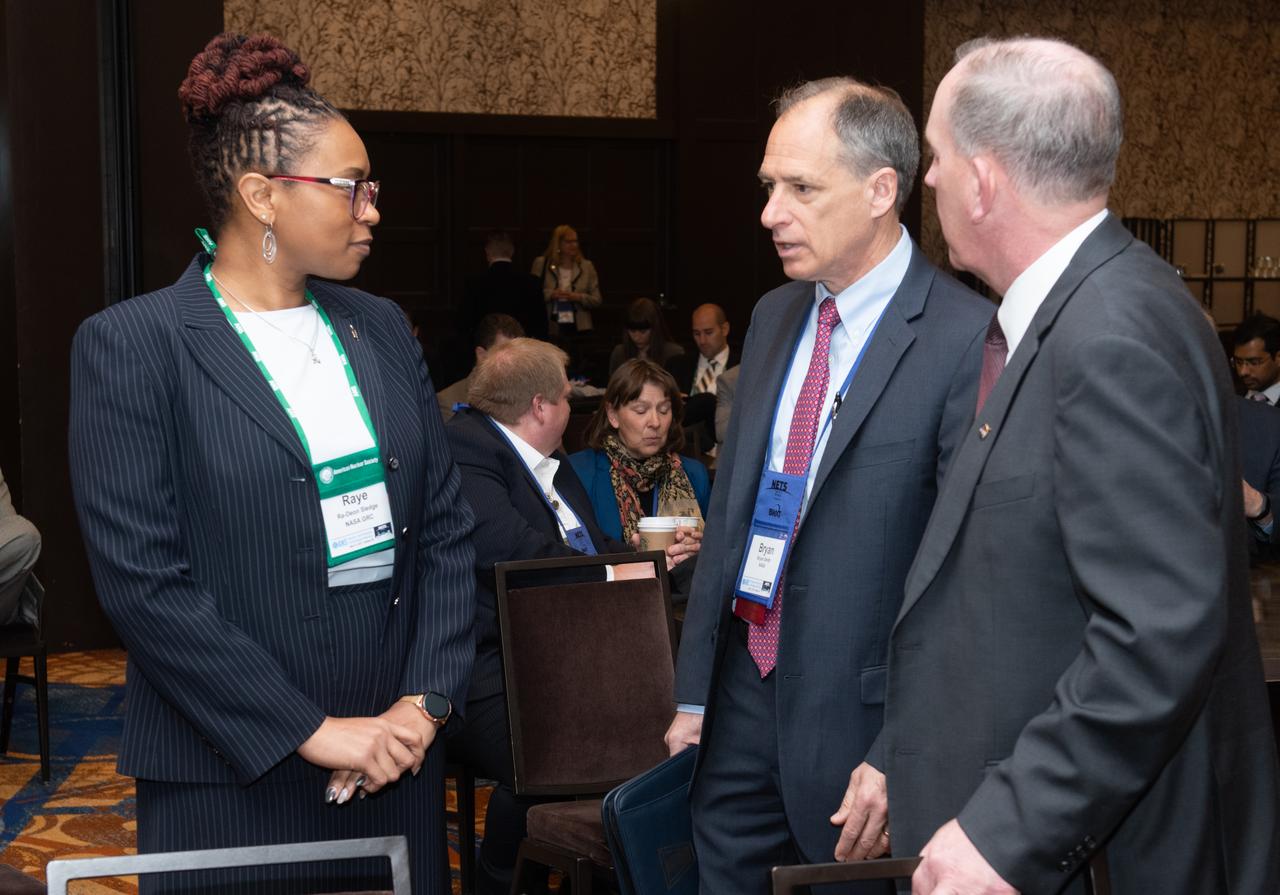
Nuclear Emerging Technologies for Space, NETS 2022 Conference
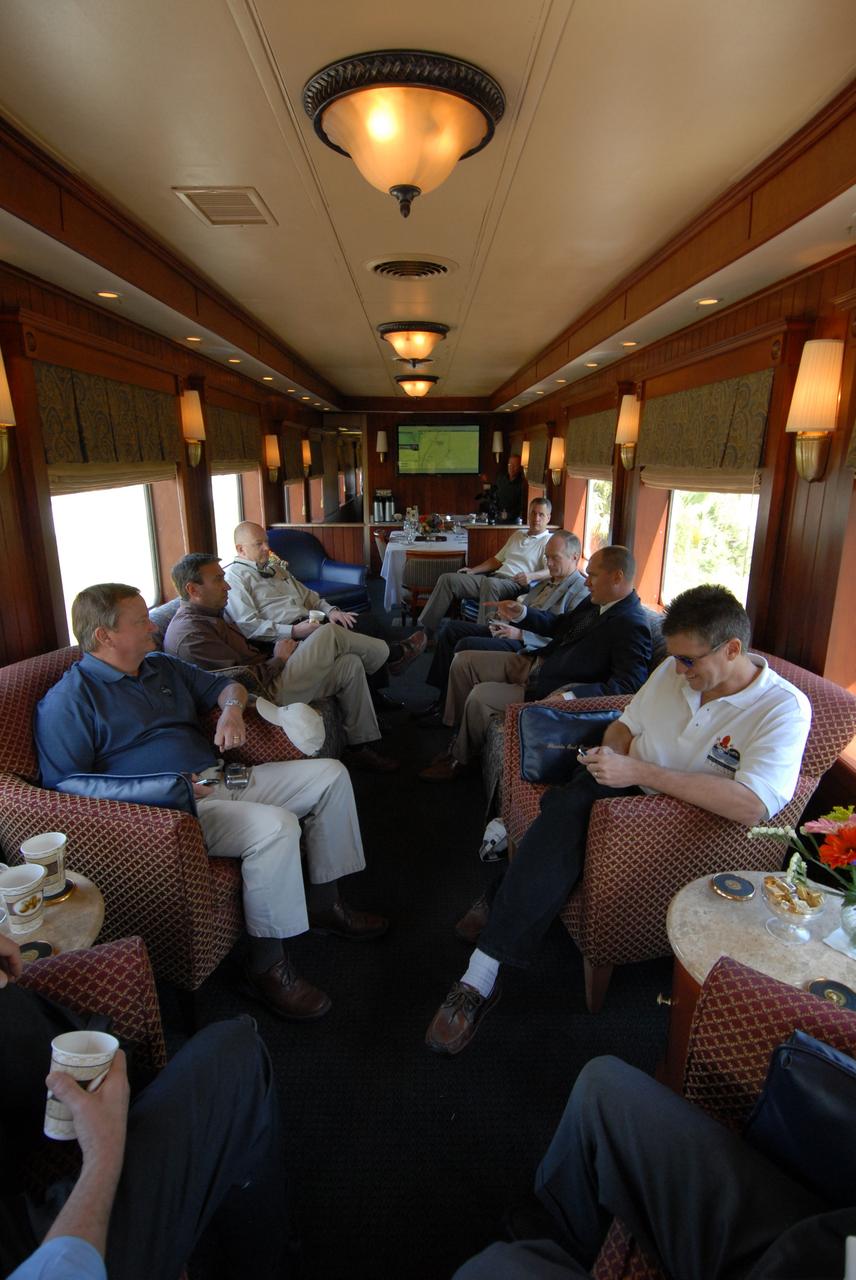
CAPE CANAVERAL, Fla. – ATK and NASA officials accompanied the Florida East Coast Railroad train carrying the booster segments for the Ares I-X test rocket on its route to NASA's Kennedy Space Center in Florida from Jacksonville, Fla. Seen here in the passenger car are, from left NASA KSC Shuttle Launch Director Mike Leinbach, a Florida East Coast Railroad representative, ATK Ares I First Stage program Director Fred Brasfield, a Florida East Coast Railroad representative, ATK Vice President Space Launch Systems Charlie Precourt, a Florida East Coast Railroad representative, and NASA Marshall Space Flight Center Reusable Solid Rocket Booster Integration Lead Roy Worthy. The four reusable motor segments and the nozzle exit cone, manufactured by the Ares I first-stage prime contractor Alliant Techsystems Inc., or ATK, departed Utah March 12 on the seven-day, cross-country trip to Florida. The segments will be delivered to the Rotation, Processing and Surge Facility for final processing and integration. The booster used for the Ares I-X launch is being modified by adding new forward structures and a fifth segment simulator. The motor is the final hardware needed for the rocket's upcoming test flight this summer. The stacking operations are scheduled to begin in the Vehicle Assembly Building in April. Photo credit: NASA/Kim Shiflett
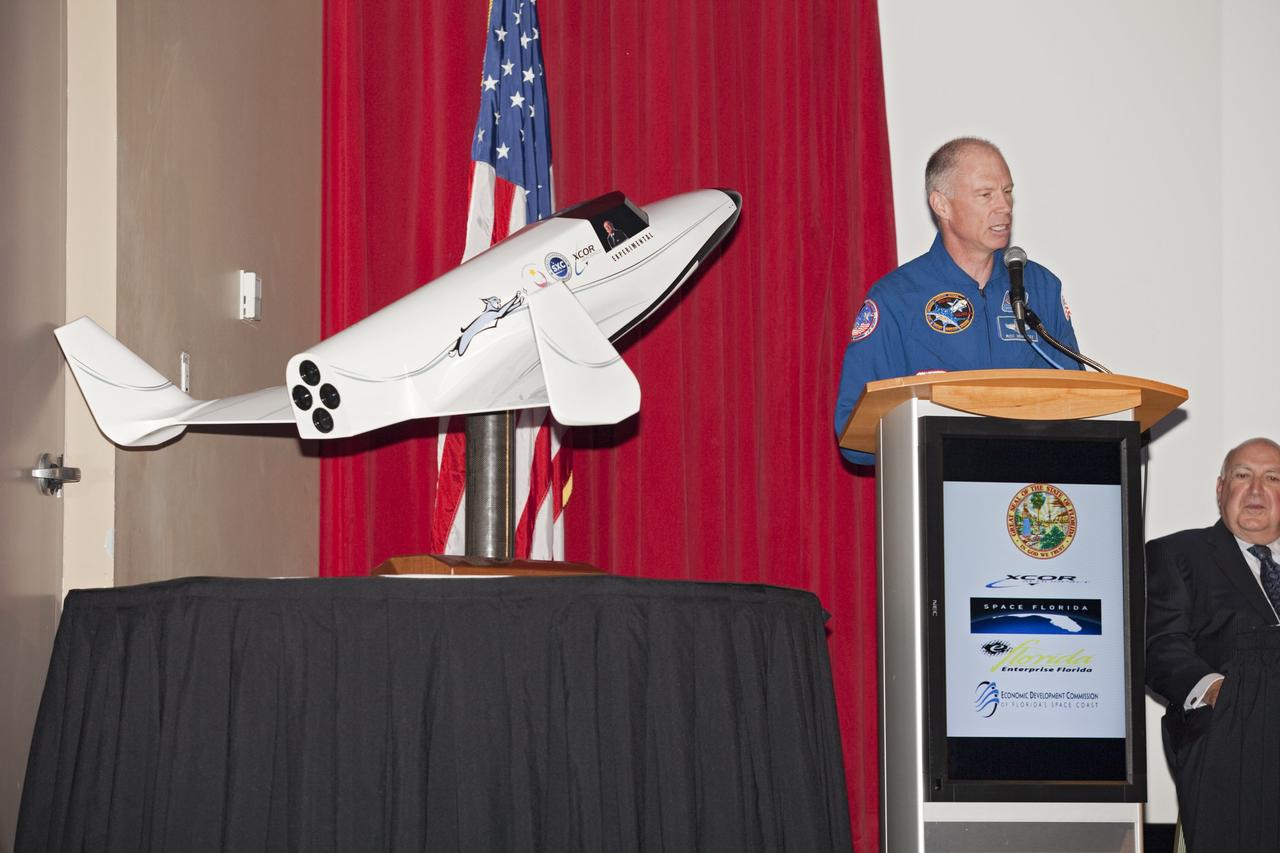
CAPE CANAVERAL, Fla. - At NASA's Kennedy Space Center in Florida, XCOR Director of Flight Test Operations Rick Searfoss, a former NASA astronaut, addresses guests at a presentation during which XCOR Aerospace announced plans to open a manufacturing operation in Brevard County. Space Florida President Frank DiBello is seated to the right. The company's suborbital Lynx Mark II spacecraft possibly will take off and land at Kennedy's shuttle landing facility. XCOR Aerospace is a small, privately held California corporation with focus on the research, development, project management and production of reusable launch vehicles, rocket engines and rocket propulsion systems. XCOR will focus on space tourism, experimental flights and launching satellites. Photo credit: NASA/ Frankie Martin
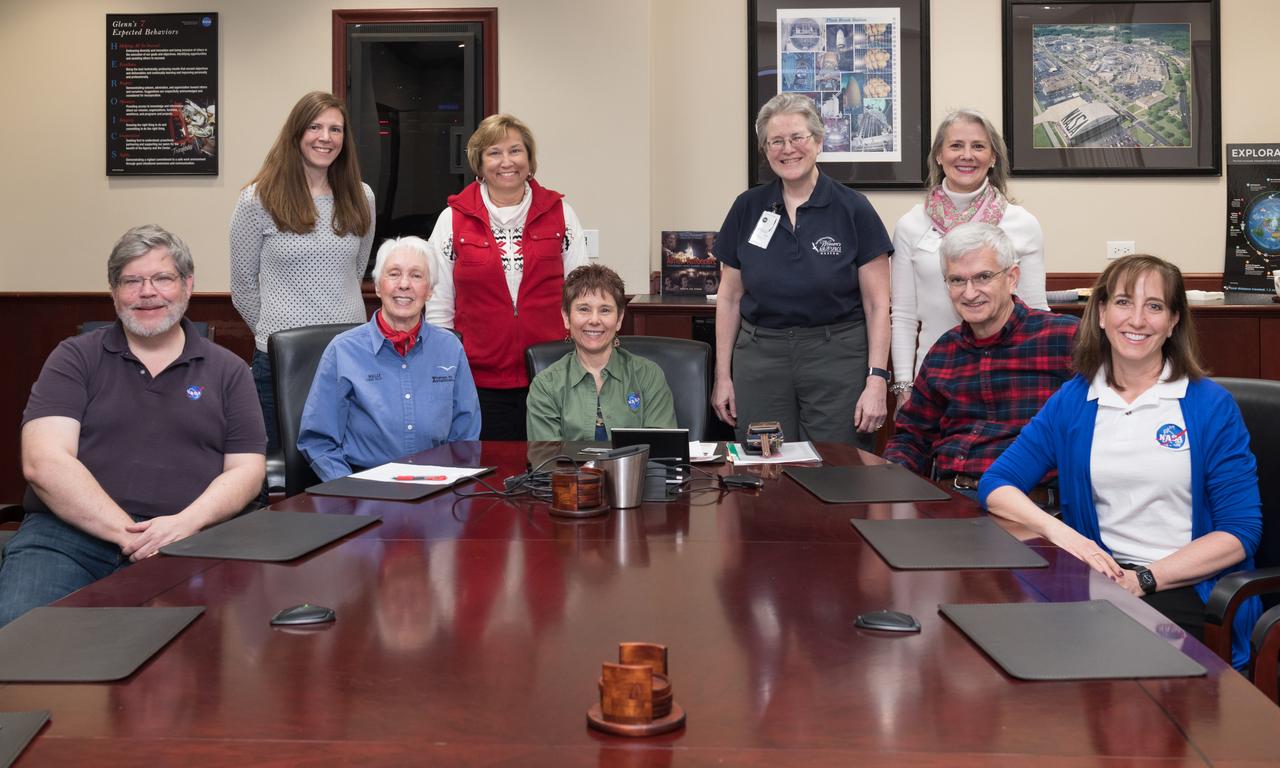
Visit to Glenn Research Center at Lewis Field by Mercury 13 Astronaut Trainee, Wally Funk
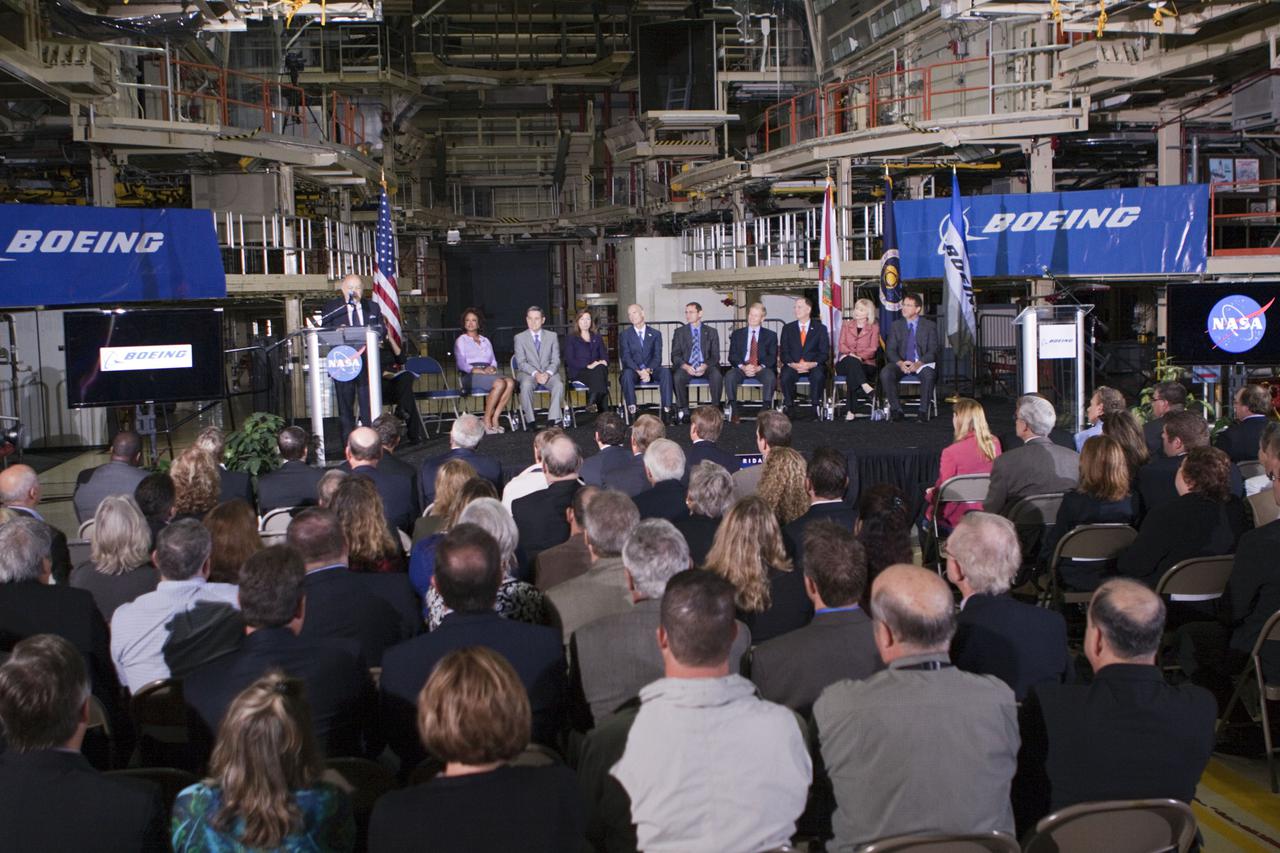
CAPE CANAVERAL, Fla. – In the Orbiter Processing Facility-3 (OPF-3) at NASA’s Kennedy Space Center in Florida, Frank DiBello, president of Space Florida, speaks to the audience after announcing the signing of an innovative agreement between NASA and Space Florida. From his left are, Florida Lt. Gov. Jennifer Carroll, chairwoman of Space Florida, Robert Cabana, Kennedy Space Center director, Lori Garver, NASA’s deputy administrator, Florida Gov. Rick Scott, John Elbon, vice president and general manager of Boeing's Space Exploration, Sen. Bill Nelson of Florida, Florida Congressman Bill Posey, Florida Representative Sandy Adams, and John Mulholland, vice president and program manager of Boeing's Commercial Crew Programs. NASA announced a partnership with Space Florida to occupy, use and modify Kennedy Space Center's Orbiter Processing Facility-3 (OPF-3), the Space Shuttle Main Engine Processing Facility and Processing Control Center. Space Florida has an agreement for use of the OPF-3 with the Boeing Company to manufacture and test the company's Crew Space Transportation (CST-100) spacecraft. The 15-year use permit deal is the latest step Kennedy is making as the center transitions from a historically government-only launch complex to a multi-user spaceport. For more information, visit http:__www.nasa.gov_exploration_commercial_index.html. Photo credit: NASA_Kim Shiflett
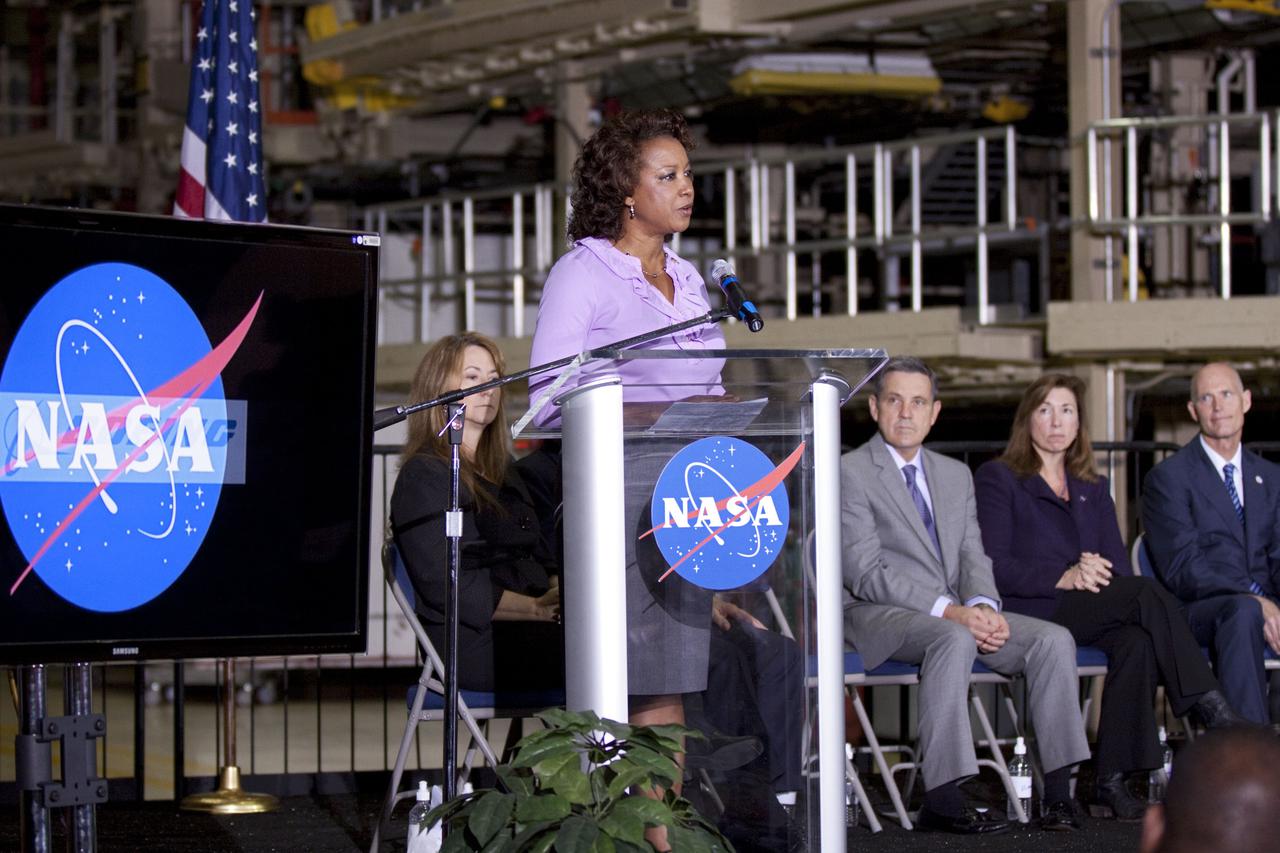
CAPE CANAVERAL, Fla. – In the Orbiter Processing Facility-3 (OPF-3) at NASA’s Kennedy Space Center in Florida, Florida Lt. Gov. Jennifer Carroll, chairwoman of Space Florida, speaks to the audience during the ceremony announcing the signing of an innovative agreement between NASA and Space Florida. Seated from left are Joyce Riquelme, manager of Kennedy's Center Planning and Development Office, Robert Cabana, Kennedy Space Center director, Lori Garver, NASA’s deputy administrator, and Florida Gov. Rick Scott. NASA announced a partnership with Space Florida to occupy, use and modify Kennedy Space Center's Orbiter Processing Facility-3 (OPF-3), the Space Shuttle Main Engine Processing Facility and Processing Control Center. Space Florida has an agreement for use of the OPF-3 with the Boeing Company to manufacture and test the company's Crew Space Transportation (CST-100) spacecraft. The 15-year use permit deal is the latest step Kennedy is making as the center transitions from a historically government-only launch complex to a multi-user spaceport. For more information, visit http:__www.nasa.gov_exploration_commercial_index.html. Photo credit: NASA_Kim Shiflett
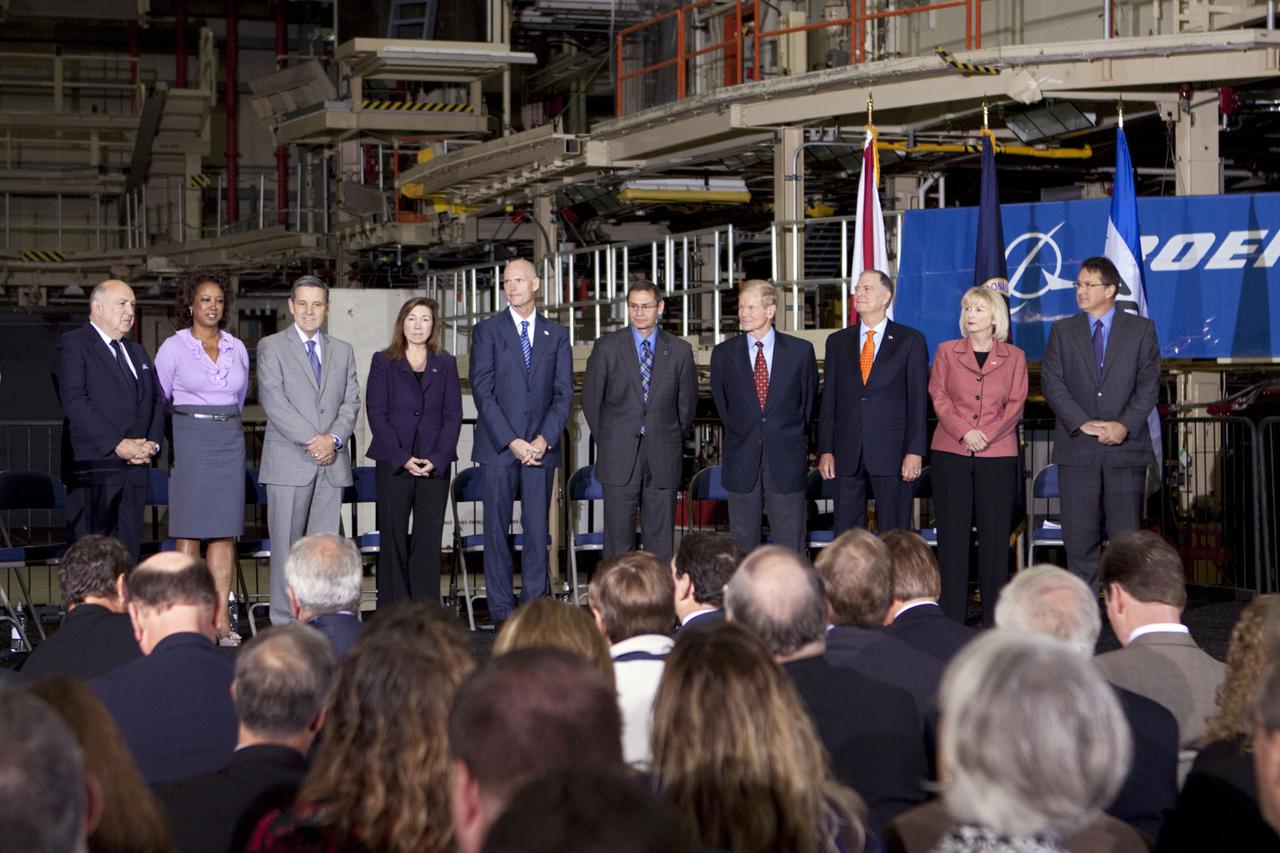
CAPE CANAVERAL, Fla. – In the Orbiter Processing Facility-3 (OPF-3) at NASA’s Kennedy Space Center in Florida, officials pose for a portrait proceeding the announcement of the signing of an innovative agreement between NASA and Space Florida. From left are, Frank DiBello, president of Space Florida, Florida Lt. Gov. Jennifer Carroll, chairwoman of Space Florida, Robert Cabana, Kennedy Space Center director, Lori Garver, NASA’s deputy administrator, Florida Gov. Rick Scott, John Elbon, vice president and general manager of Boeing's Space Exploration, Sen. Bill Nelson of Florida, Florida Congressman Bill Posey, Florida Representative Sandy Adams, and John Mulholland, vice president and program manager of Boeing's Commercial Crew Programs. NASA announced a partnership with Space Florida to occupy, use and modify Kennedy Space Center's Orbiter Processing Facility-3 (OPF-3), the Space Shuttle Main Engine Processing Facility and Processing Control Center. Space Florida has an agreement for use of the OPF-3 with the Boeing Company to manufacture and test the company's Crew Space Transportation (CST-100) spacecraft. The 15-year use permit deal is the latest step Kennedy is making as the center transitions from a historically government-only launch complex to a multi-user spaceport. For more information, visit http:__www.nasa.gov_exploration_commercial_index.html. Photo credit: NASA_Kim Shiflett
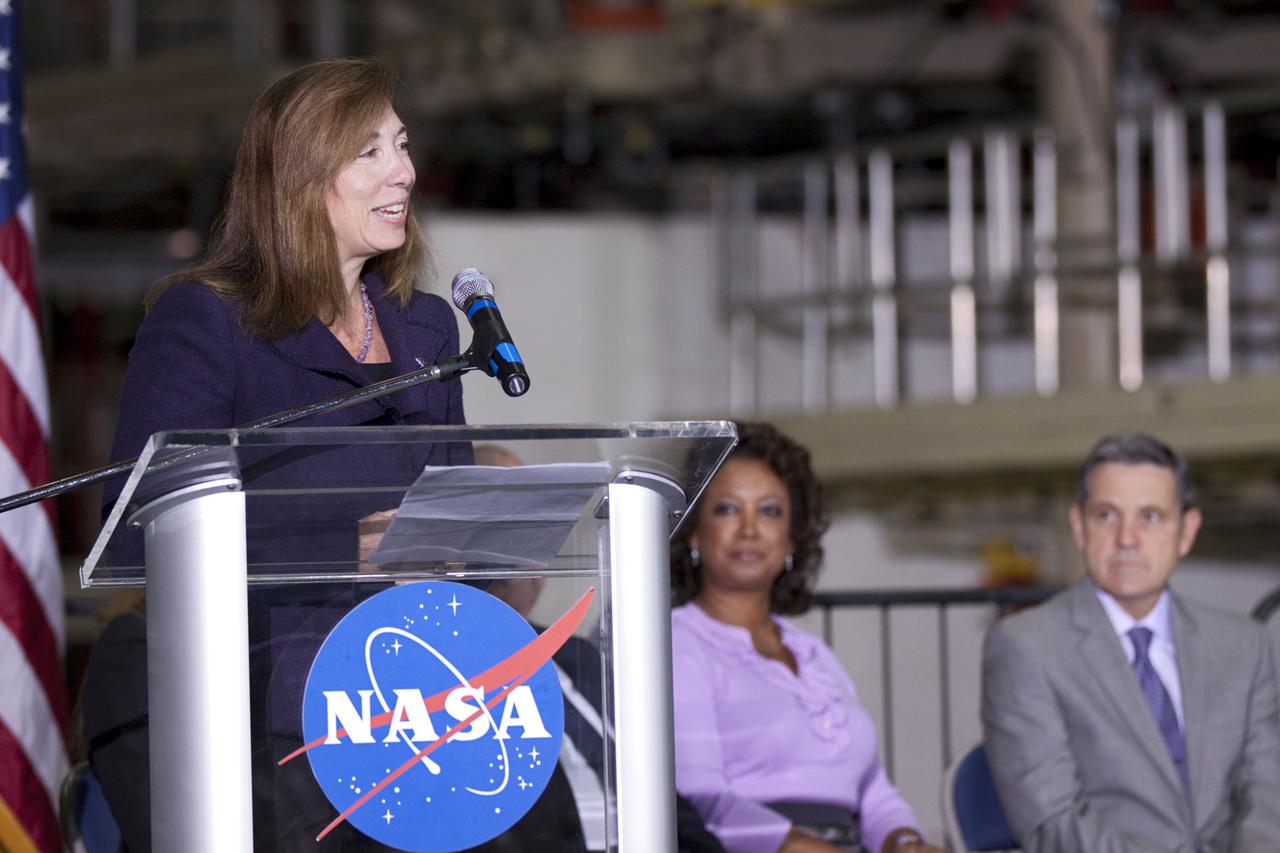
CAPE CANAVERAL, Fla. – In the Orbiter Processing Facility-3 (OPF-3) at NASA’s Kennedy Space Center in Florida, Lori Garver, NASA’s deputy administrator, speaks to the audience during the ceremony announcing the signing of an innovative agreement between NASA and Space Florida. Seated to her left are, Florida Lt. Gov. Jennifer Carroll, chairwoman of Space Florida and Robert Cabana, Kennedy Space Center director. NASA announced a partnership with Space Florida to occupy, use and modify Kennedy Space Center's Orbiter Processing Facility-3 (OPF-3), the Space Shuttle Main Engine Processing Facility and Processing Control Center. Space Florida has an agreement for use of the OPF-3 with the Boeing Company to manufacture and test the company's Crew Space Transportation (CST-100) spacecraft. The 15-year use permit deal is the latest step Kennedy is making as the center transitions from a historically government-only launch complex to a multi-user spaceport. For more information, visit http:__www.nasa.gov_exploration_commercial_index.html. Photo credit: NASA_Kim Shiflett

Nuclear Emerging Technologies for Space, NETS 2022 Conference
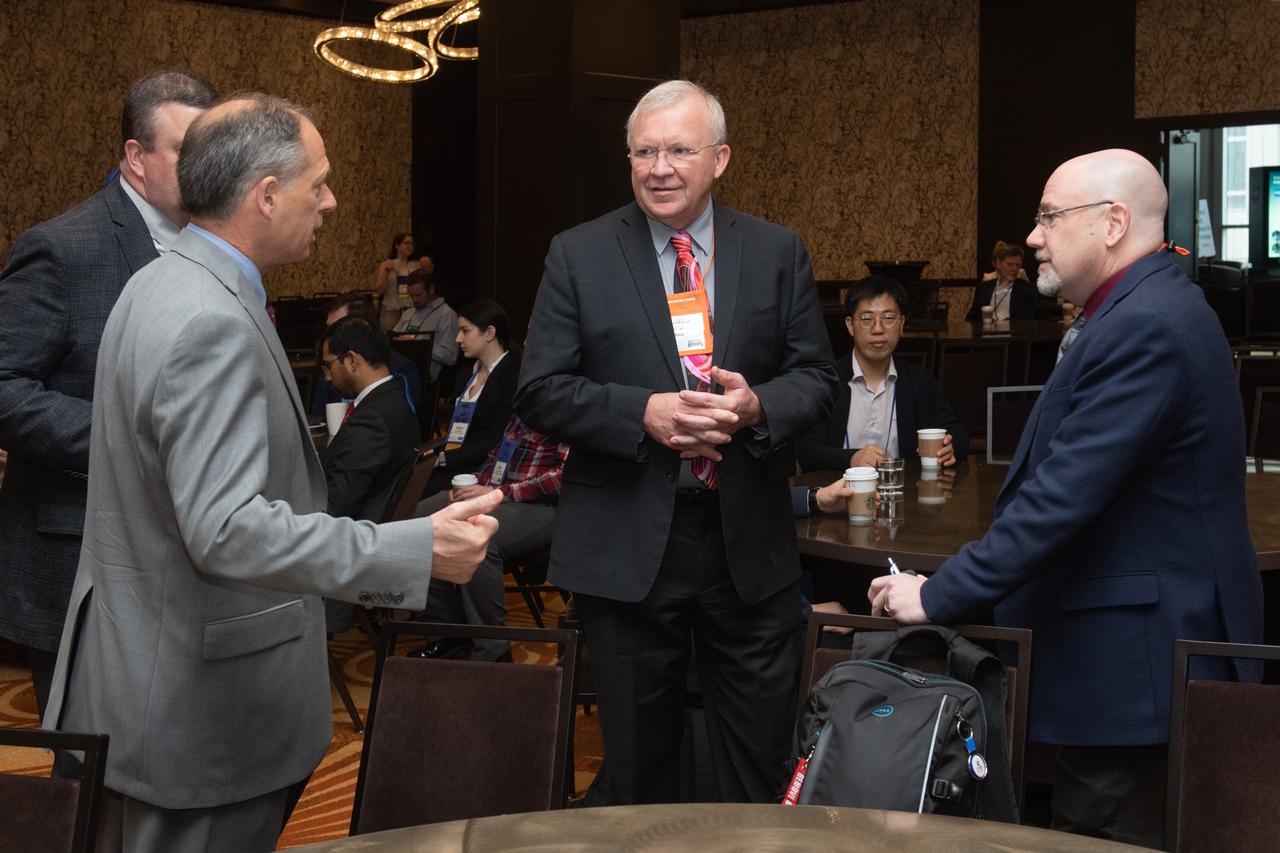
Nuclear Emerging Technologies for Space, NETS 2022 Conference
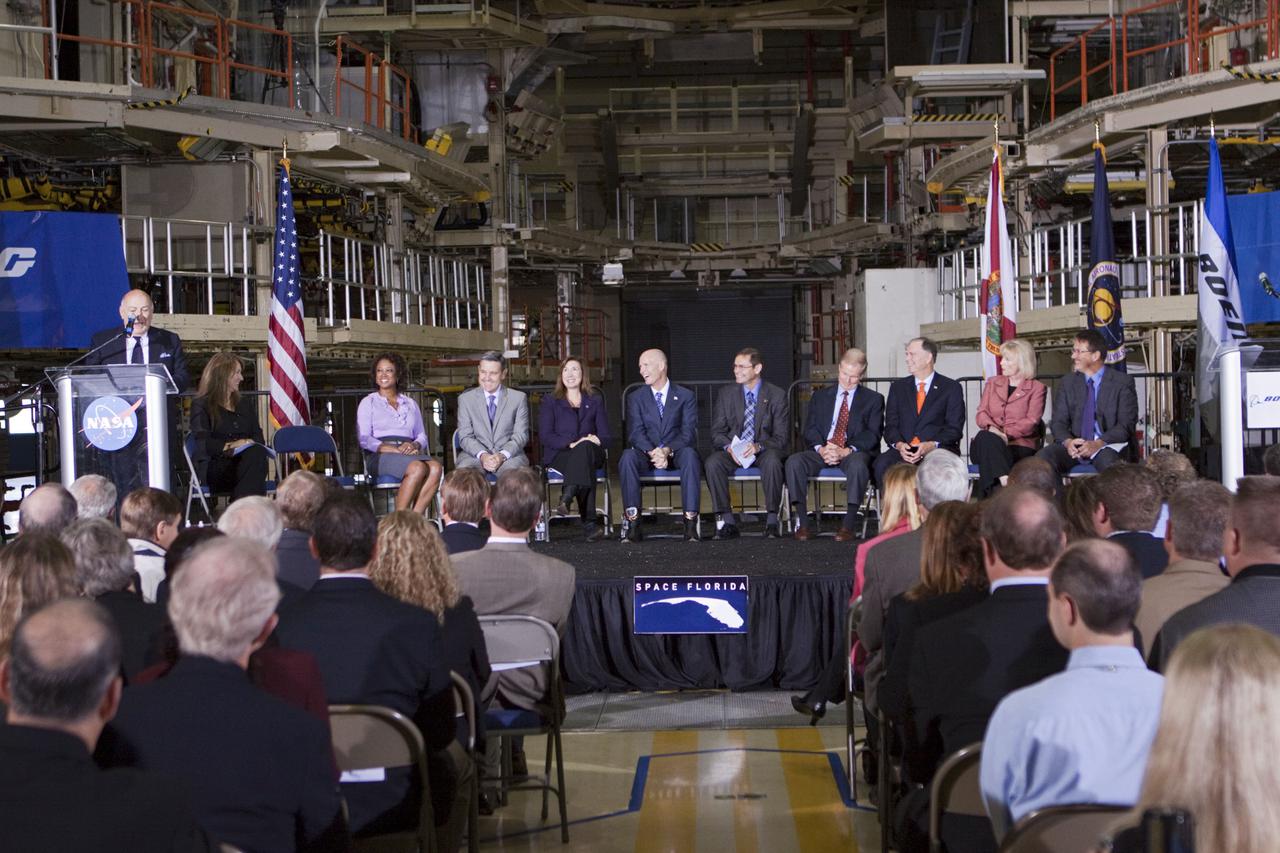
CAPE CANAVERAL, Fla. – In the Orbiter Processing Facility-3 (OPF-3) at NASA’s Kennedy Space Center in Florida, Frank DiBello, president of Space Florida, speaks to the audience after announcing the signing of an innovative agreement between NASA and Space Florida. From his left are, Joyce Riquelme, manager of Kennedy's Center Planning and Development Office, Florida Lt. Gov. Jennifer Carroll, chairwoman of Space Florida, Robert Cabana, Kennedy Space Center director, Lori Garver, NASA’s deputy administrator, Florida Gov. Rick Scott, John Elbon, vice president and general manager of Boeing's Space Exploration, Sen. Bill Nelson of Florida, Florida Congressman Bill Posey, Florida Representative Sandy Adams, and John Mulholland, vice president and program manager of Boeing's Commercial Crew Programs. NASA announced a partnership with Space Florida to occupy, use and modify Kennedy Space Center's Orbiter Processing Facility-3 (OPF-3), the Space Shuttle Main Engine Processing Facility and Processing Control Center. Space Florida has an agreement for use of the OPF-3 with the Boeing Company to manufacture and test the company's Crew Space Transportation (CST-100) spacecraft. The 15-year use permit deal is the latest step Kennedy is making as the center transitions from a historically government-only launch complex to a multi-user spaceport. For more information, visit http:__www.nasa.gov_exploration_commercial_index.html. Photo credit: NASA_Kim Shiflett