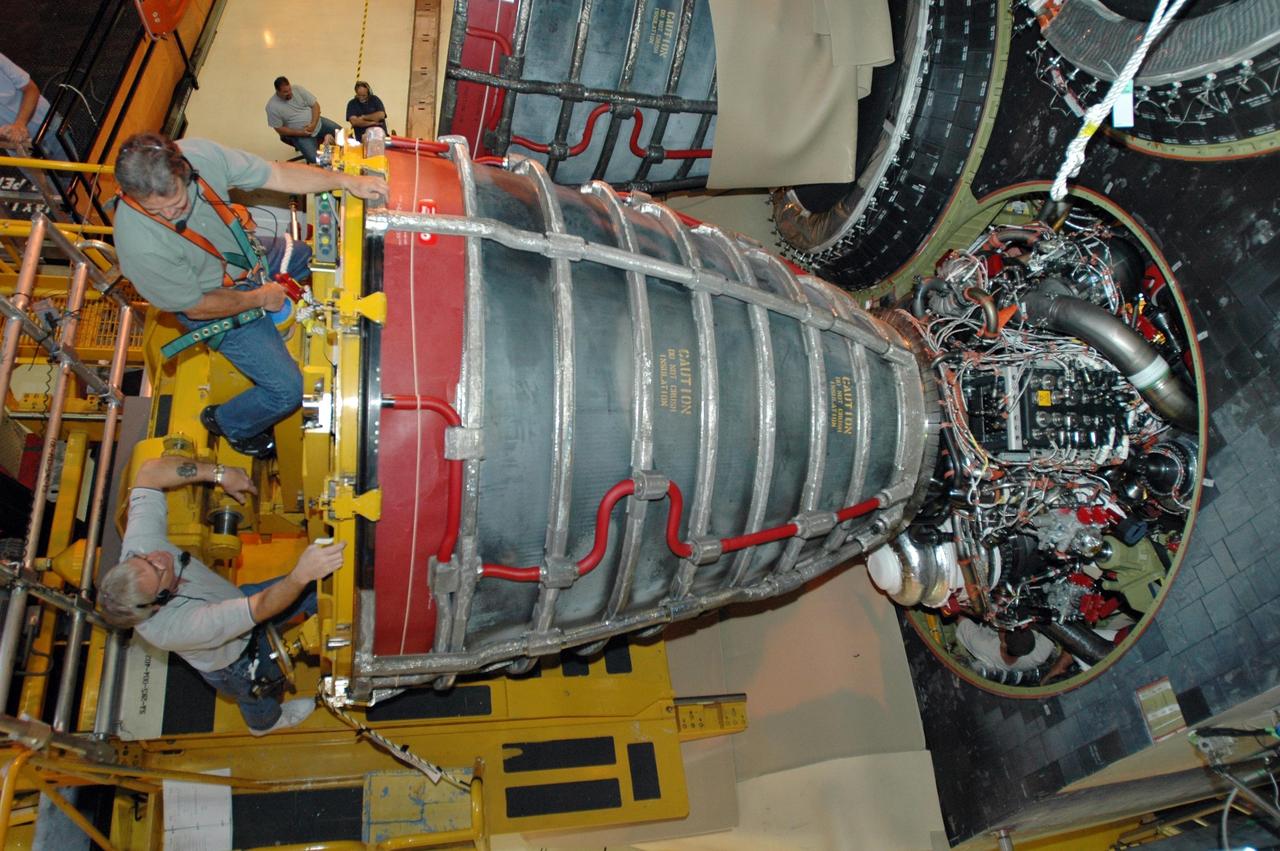
KENNEDY SPACE CENTER, FLA. -- In this overhead view inside Orbiter Processing Facility 3 at Kennedy Space Center, technicians guide engine No. 3 toward the aft fuselage of Discovery for installation during processing for mission STS-120. Mission STS-120 will be the 23rd flight to the International Space Station. Space Shuttle Discovery will carry the U.S. Node 2. Launch is targeted for Oct. 20. NASA/Dimitri Gerondidakis
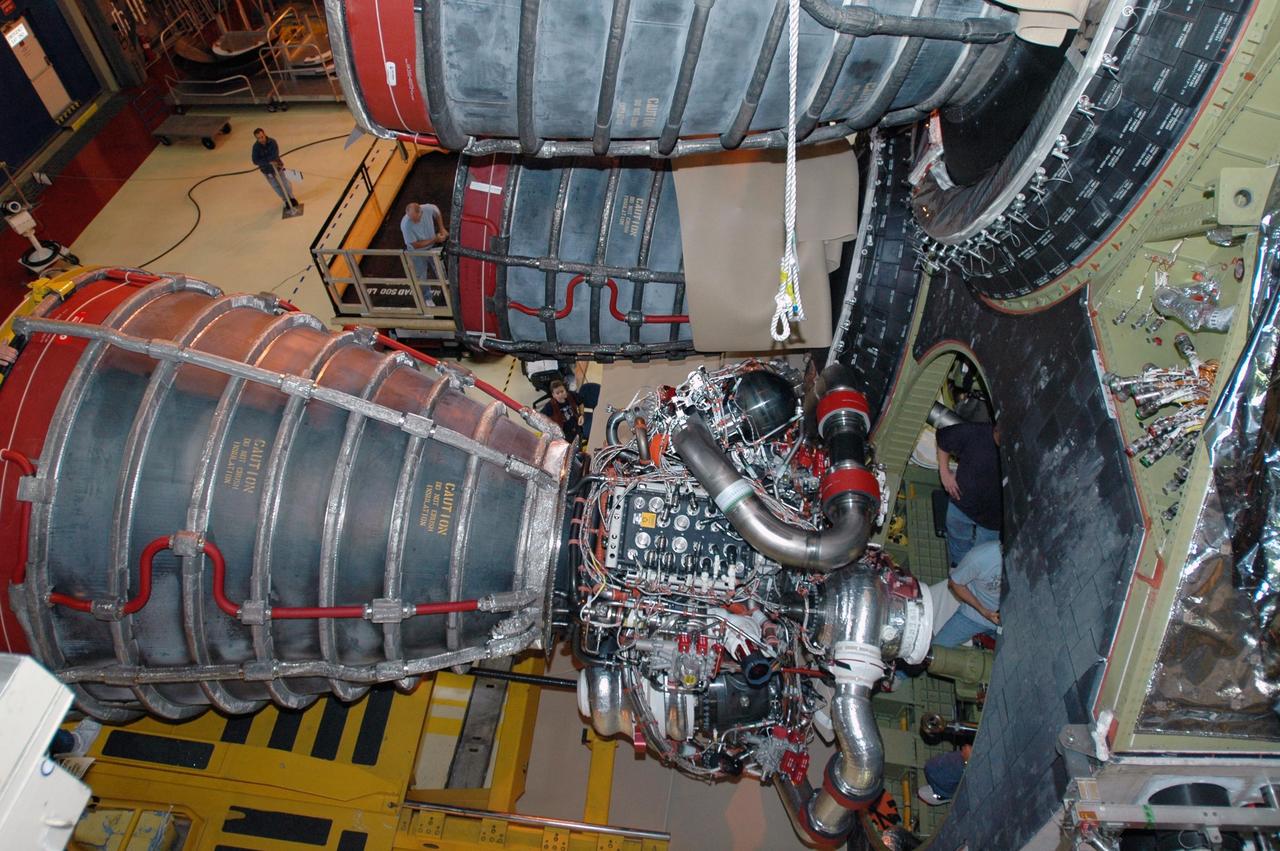
KENNEDY SPACE CENTER, FLA. -- Inside Orbiter Processing Facility 3 at Kennedy Space Center, technicians prepare to install engine No. 3 as it nears the aft fuselage of the vehicle during processing for mission STS-120. Mission STS-120 will be the 23rd flight to the International Space Station. Space Shuttle Discovery will carry the U.S. Node 2. Launch is targeted for Oct. 20. NASA/Dimitri Gerondidakis
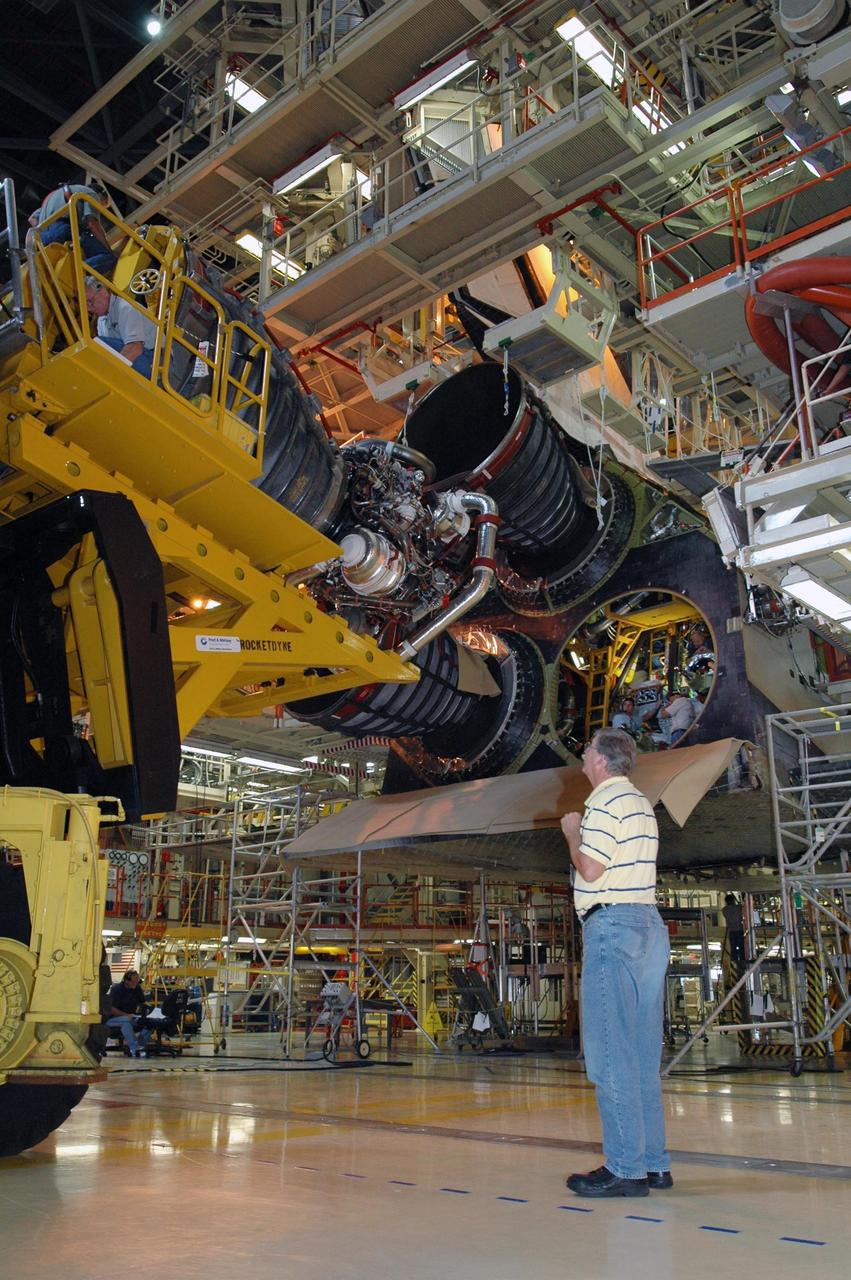
KENNEDY SPACE CENTER, FLA. -- Inside Orbiter Processing Facility 3 at Kennedy Space Center, technicians prepare to install engine No. 3 to Discovery during processing for mission STS-120. Mission STS-120 will be the 23rd flight to the International Space Station. Space Shuttle Discovery will carry the U.S. Node 2. Launch is targeted for Oct. 20. NASA/Dimitri Gerondidakis
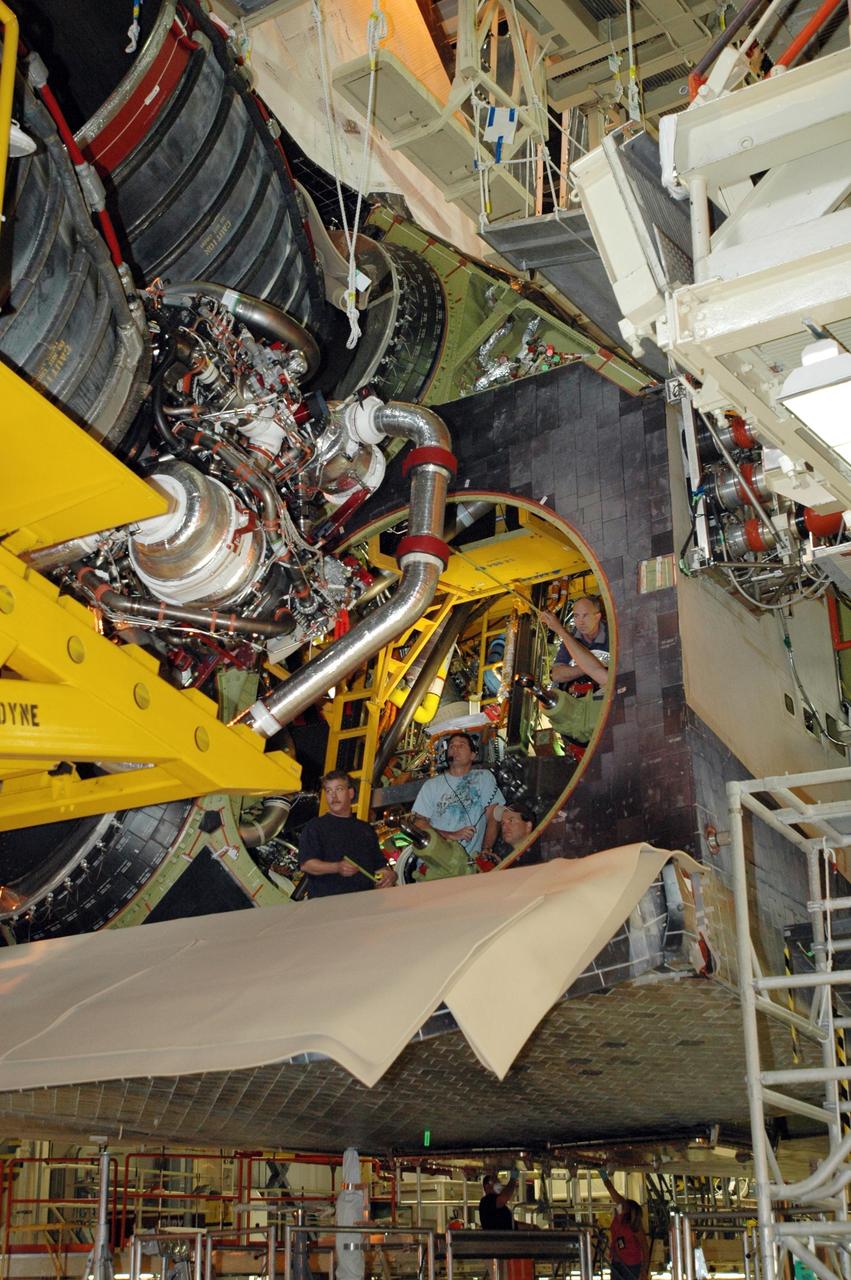
KENNEDY SPACE CENTER, FLA. -- Inside Orbiter Processing Facility 3 at Kennedy Space Center, technicians prepare to install engine No. 3 to Discovery during processing for mission STS-120. Mission STS-120 will be the 23rd flight to the International Space Station. Space Shuttle Discovery will carry the U.S. Node 2. Launch is targeted for Oct. 20. NASA/Dimitri Gerondidakis
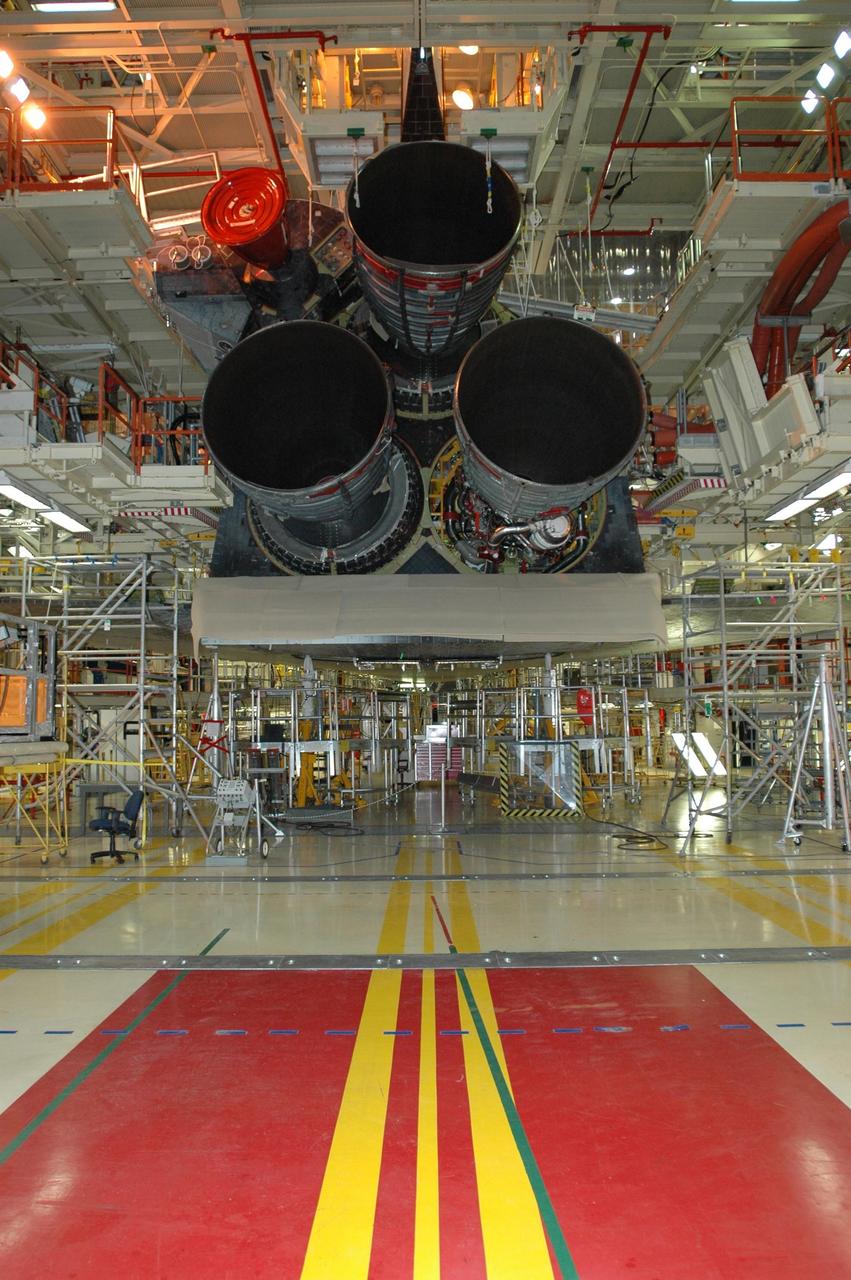
KENNEDY SPACE CENTER, FLA. -- Inside Orbiter Processing Facility 3 at Kennedy Space Center, the massive space shuttle main engines can be seen installed on orbiter Discovery during processing for mission STS-120. Mission STS-120 will be the 23rd flight to the International Space Station. Space Shuttle Discovery will carry the U.S. Node 2. Launch is targeted for Oct. 20. NASA/Dimitri Gerondidakis
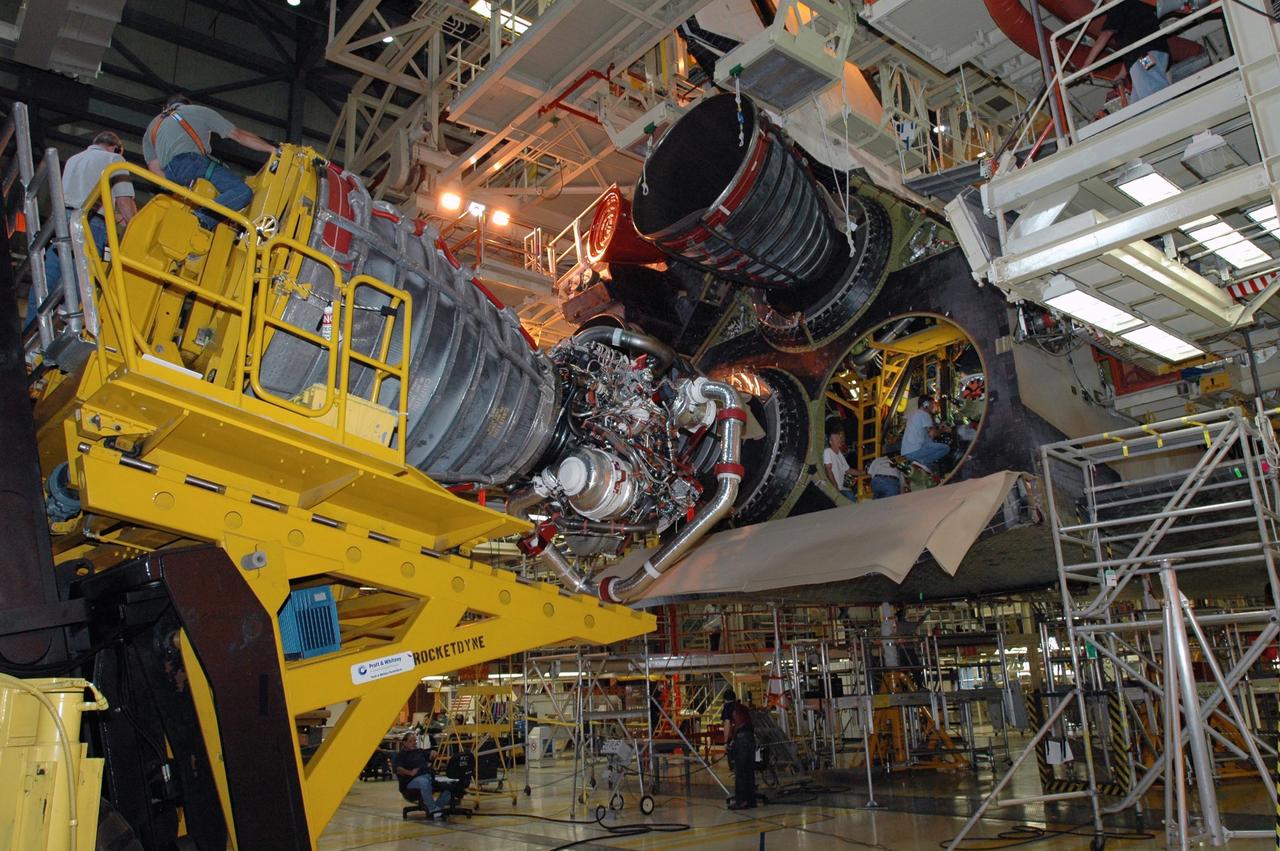
KENNEDY SPACE CENTER, FLA. -- Inside Orbiter Processing Facility 3 at Kennedy Space Center, technicians prepare to install engine No. 3 to Discovery during processing for mission STS-120. Mission STS-120 will be the 23rd flight to the International Space Station. Space Shuttle Discovery will carry the U.S. Node 2. Launch is targeted for Oct. 20. NASA/Dimitri Gerondidakis
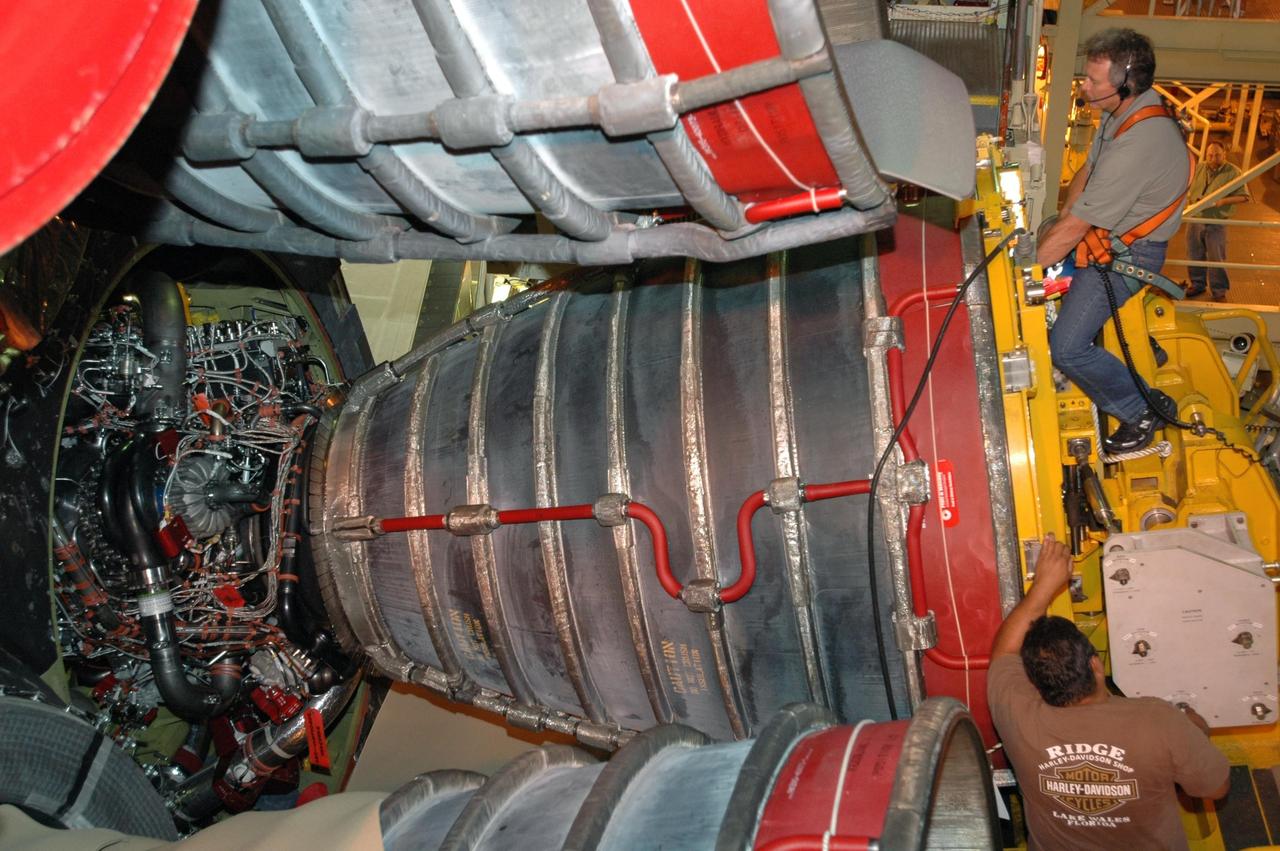
KENNEDY SPACE CENTER, FLA. -- Inside Orbiter Processing Facility 3 at Kennedy Space Center, technicians guide engine No. 3 toward the aft fuselage of Discovery for installation during processing for mission STS-120. Mission STS-120 will be the 23rd flight to the International Space Station. Space Shuttle Discovery will carry the U.S. Node 2. Launch is targeted for Oct. 20. NASA/Dimitri Gerondidakis
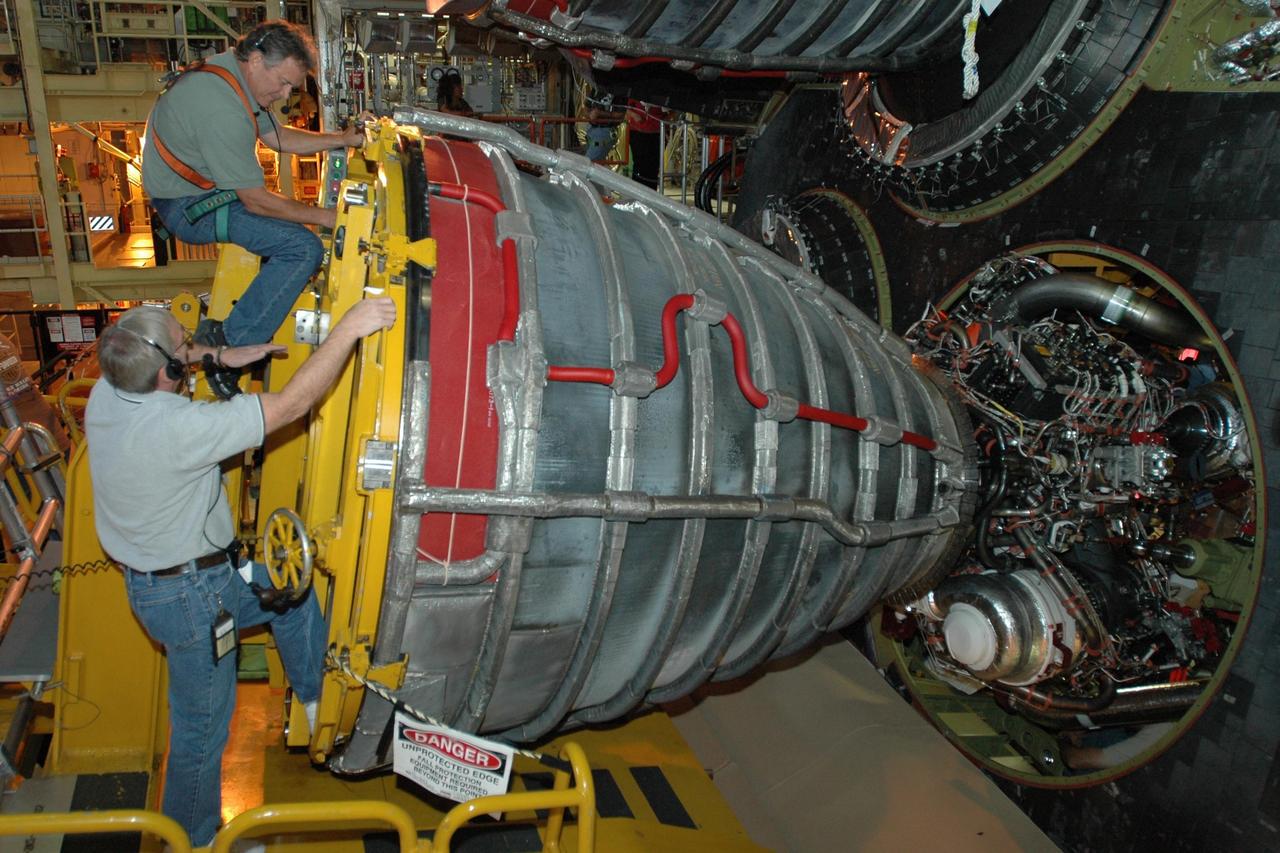
KENNEDY SPACE CENTER, FLA. -- Inside Orbiter Processing Facility 3 at Kennedy Space Center, technicians move engine No. 3 toward the aft fuselage of Discovery for installation during processing for mission STS-120. Mission STS-120 will be the 23rd flight to the International Space Station. Space Shuttle Discovery will carry the U.S. Node 2. Launch is targeted for Oct. 20. NASA/Dimitri Gerondidakis
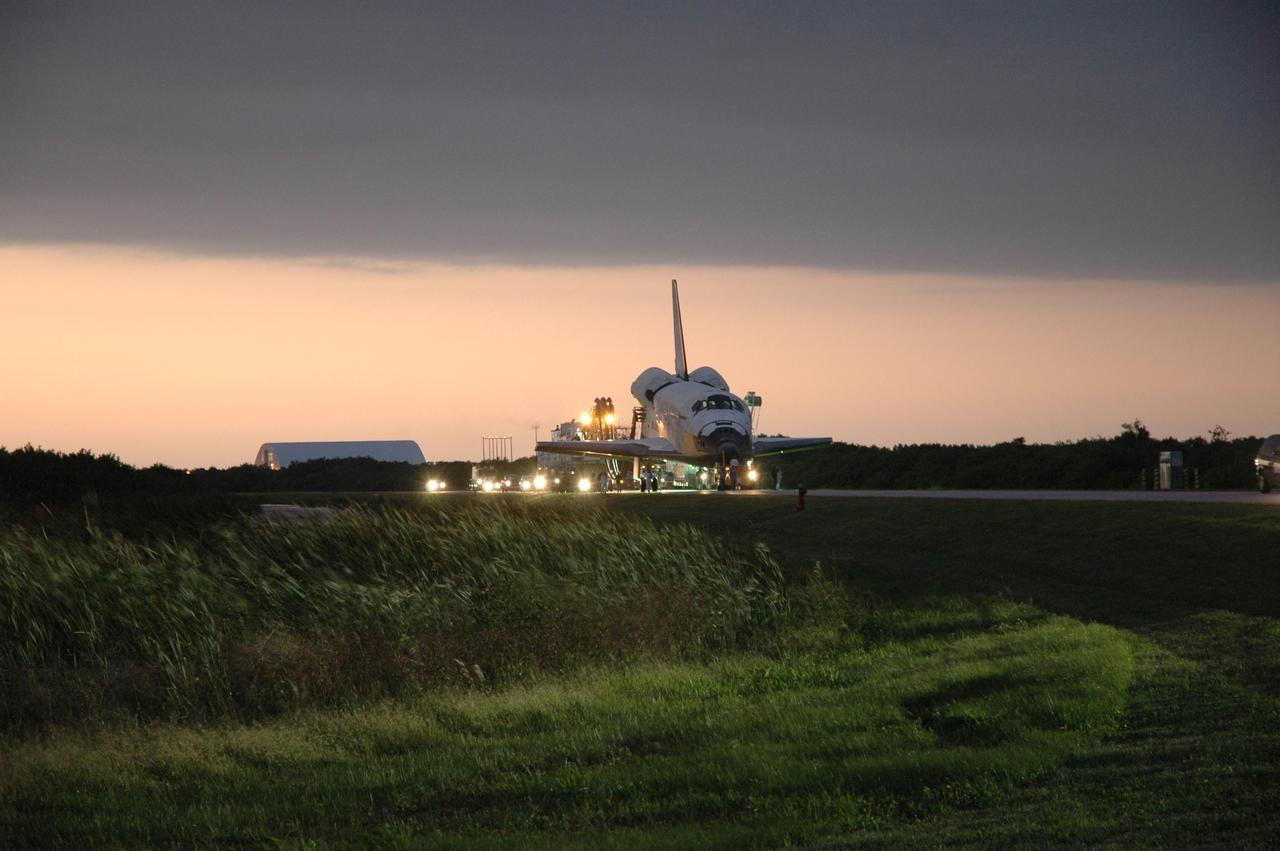
KENNEDY SPACE CENTER, FLA. -- In the waning light, space shuttle Discovery is towed along a two-mile tow-way to the Orbital Processing Facility, or OPF, where processing Discovery for another flight begins. Towing normally begins within four hours after landing and is completed within six hours unless removal of time-sensitive experiments is required on the runway. In the OPF, turnaround processing procedures on Discovery will include various post-flight deservicing and maintenance functions, which are carried out in parallel with payload removal and the installation of equipment needed for the next mission. Before post-flight deservicing can continue beyond initial safing operations, certain vehicle systems must be mechanically secured and access platforms installed. Discovery completed mission STS-120 with an on-time landing at 1:01 p.m. EST. Photo credit: NASA/Jim Grossmann
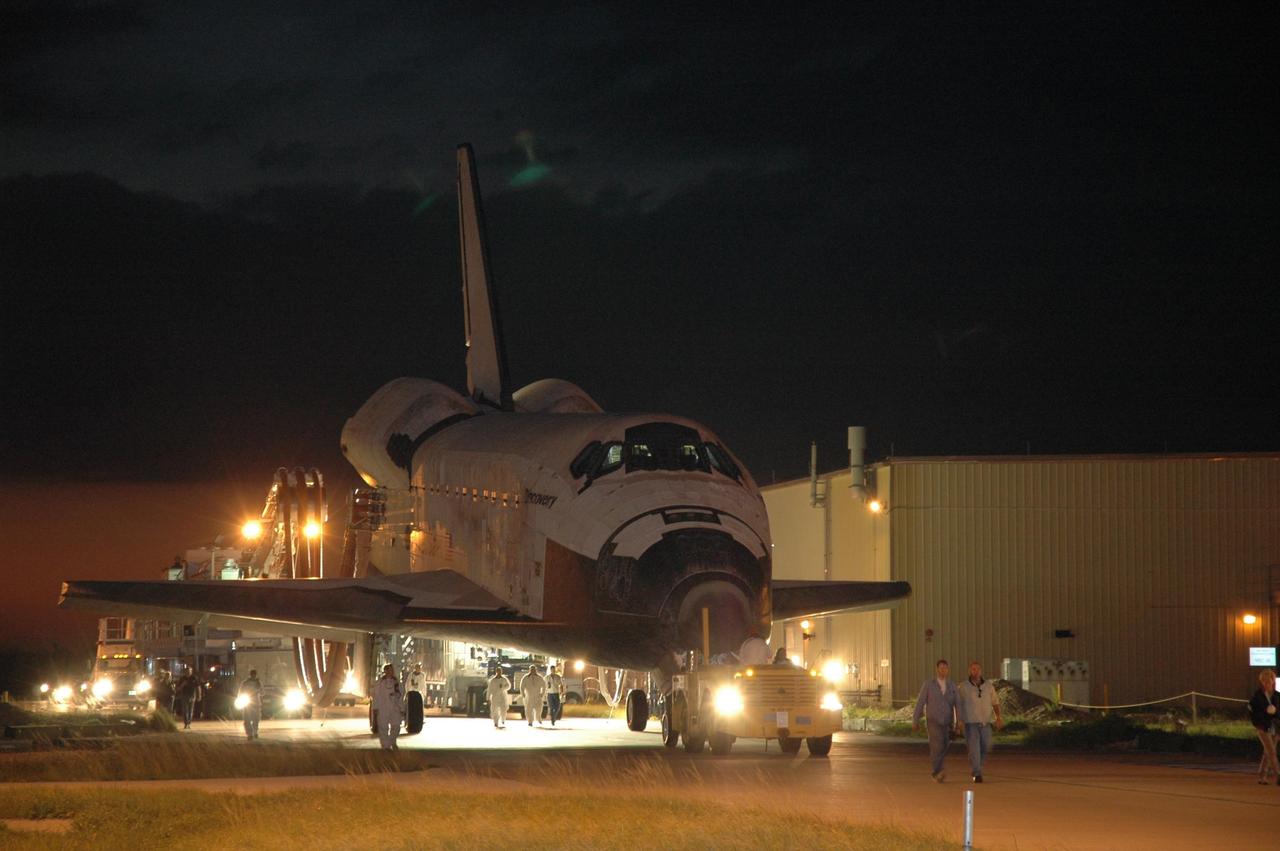
KENNEDY SPACE CENTER, FLA. -- The space shuttle Discovery nears the Orbital Processing Facility, or OPF, where processing Discovery for another flight begins. Towing normally begins within four hours after landing and is completed within six hours unless removal of time-sensitive experiments is required on the runway. In the OPF, turnaround processing procedures on Discovery will include various post-flight deservicing and maintenance functions, which are carried out in parallel with payload removal and the installation of equipment needed for the next mission. Before post-flight deservicing can continue beyond initial safing operations, certain vehicle systems must be mechanically secured and access platforms installed. Discovery completed mission STS-120 with an on-time landing at 1:01 p.m. EST. Photo credit: NASA/Jim Grossmann
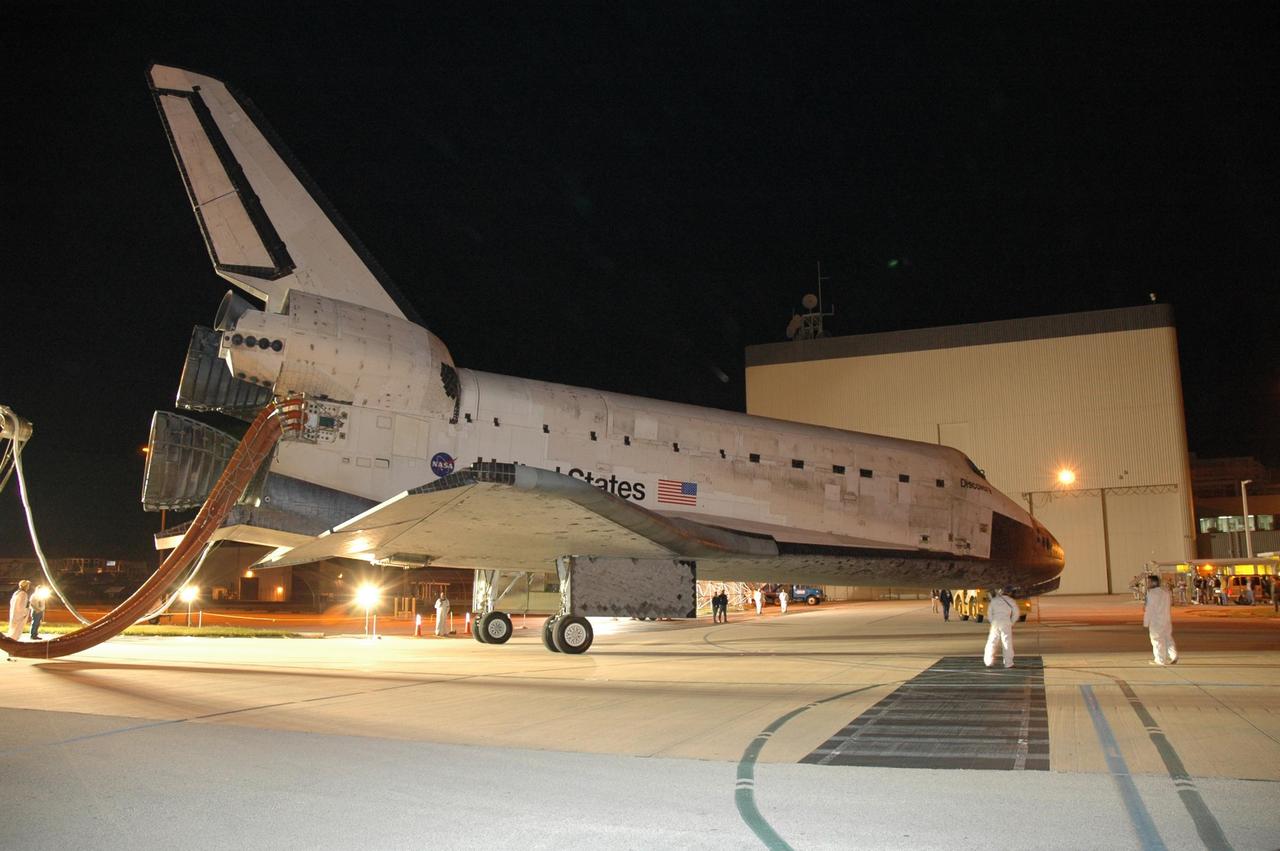
KENNEDY SPACE CENTER, FLA. -- The space shuttle Discovery nears the Orbital Processing Facility, or OPF, where processing Discovery for another flight begins. Towing normally begins within four hours after landing and is completed within six hours unless removal of time-sensitive experiments is required on the runway. Umbilicals are attached to purge the vehicle of any possible residual explosive or toxic fumes. In the OPF, turnaround processing procedures on Discovery will include various post-flight deservicing and maintenance functions, which are carried out in parallel with payload removal and the installation of equipment needed for the next mission. Before post-flight deservicing can continue beyond initial safing operations, certain vehicle systems must be mechanically secured and access platforms installed. Discovery completed mission STS-120 with an on-time landing at 1:01 p.m. EST. Photo credit: NASA/Jim Grossmann
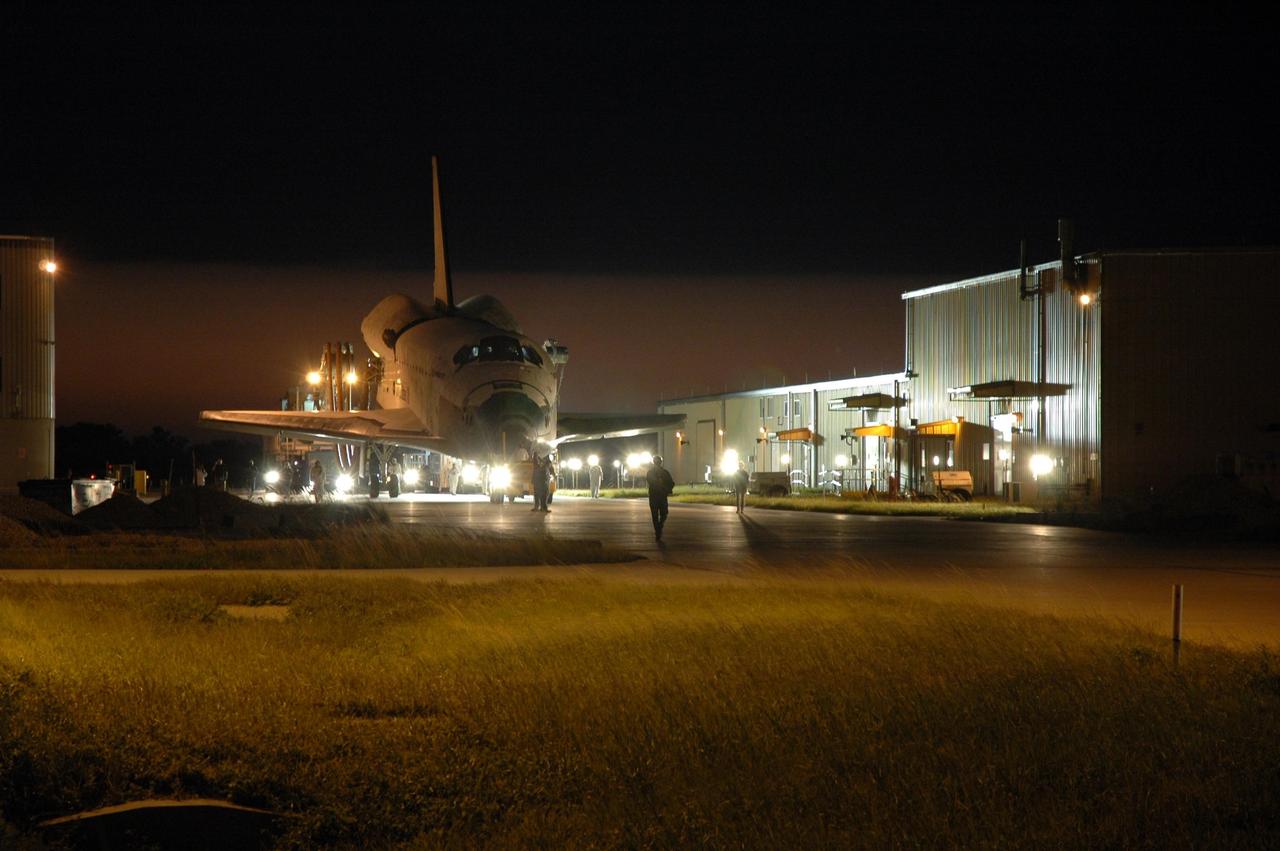
KENNEDY SPACE CENTER, FLA. -- The space shuttle Discovery is towed toward the Orbital Processing Facility, or OPF, where processing Discovery for another flight begins. Towing normally begins within four hours after landing and is completed within six hours unless removal of time-sensitive experiments is required on the runway. In the OPF, turnaround processing procedures on Discovery will include various post-flight deservicing and maintenance functions, which are carried out in parallel with payload removal and the installation of equipment needed for the next mission. Before post-flight deservicing can continue beyond initial safing operations, certain vehicle systems must be mechanically secured and access platforms installed. Discovery completed mission STS-120 with an on-time landing at 1:01 p.m. EST. Photo credit: NASA/Jim Grossmann
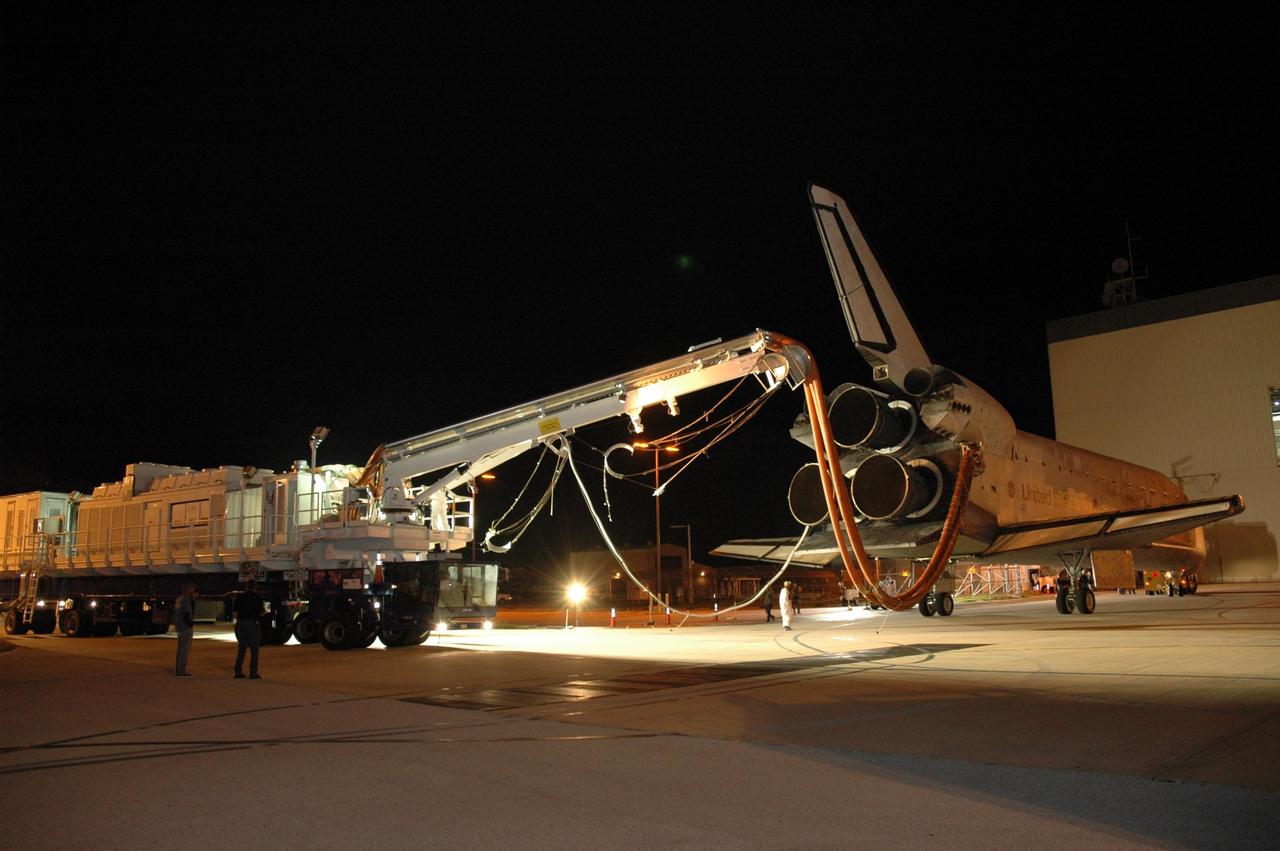
KENNEDY SPACE CENTER, FLA. -- The space shuttle Discovery nears the Orbital Processing Facility, or OPF, where processing Discovery for another flight begins. Towing normally begins within four hours after landing and is completed within six hours unless removal of time-sensitive experiments is required on the runway. Umbilicals are attached to purge the vehicle of any possible residual explosive or toxic fumes. In the OPF, turnaround processing procedures on Discovery will include various post-flight deservicing and maintenance functions, which are carried out in parallel with payload removal and the installation of equipment needed for the next mission. Before post-flight deservicing can continue beyond initial safing operations, certain vehicle systems must be mechanically secured and access platforms installed. Discovery completed mission STS-120 with an on-time landing at 1:01 p.m. EST. Photo credit: NASA/Jim Grossmann
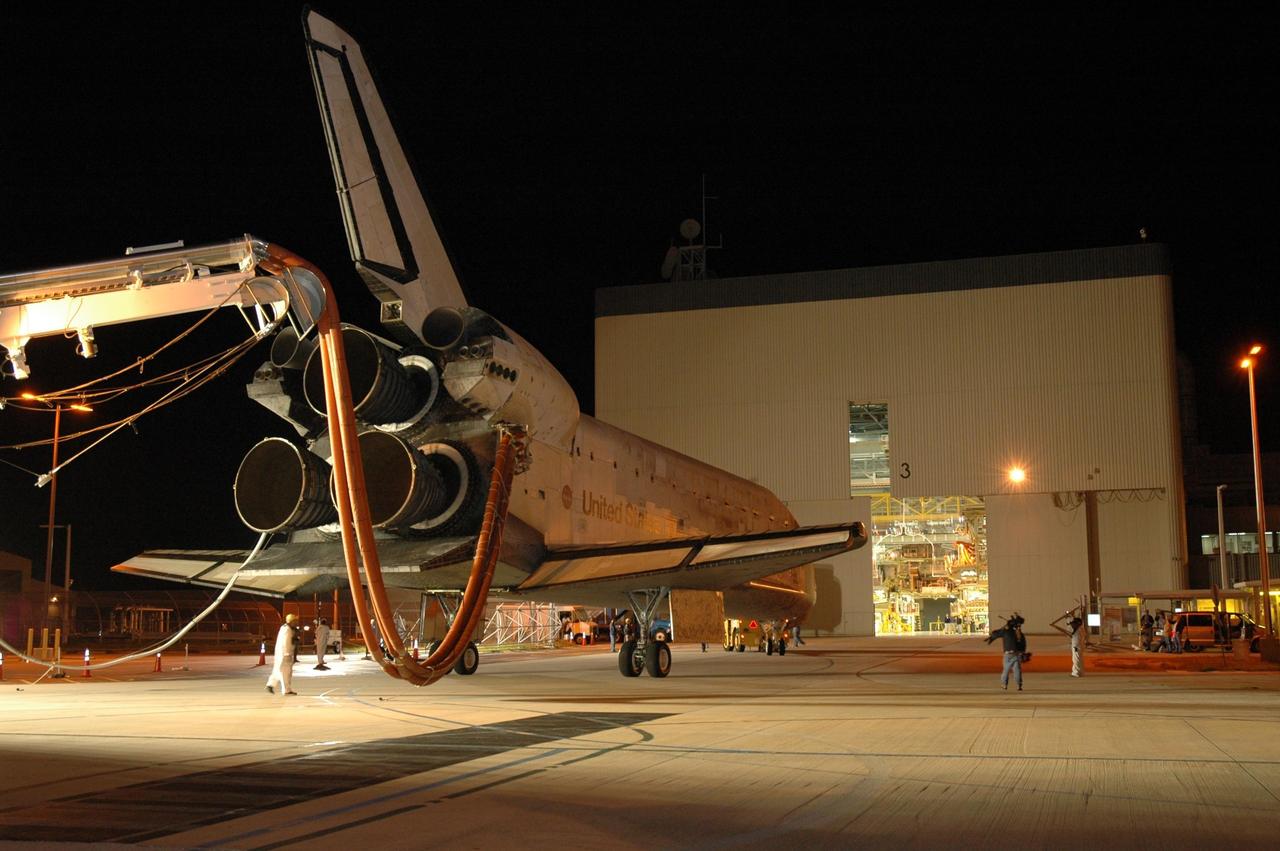
KENNEDY SPACE CENTER, FLA. -- The space shuttle Discovery nears the Orbital Processing Facility, or OPF, where processing Discovery for another flight begins. Towing normally begins within four hours after landing and is completed within six hours unless removal of time-sensitive experiments is required on the runway. Umbilicals are attached to purge the vehicle of any possible residual explosive or toxic fumes. In the OPF, turnaround processing procedures on Discovery will include various post-flight deservicing and maintenance functions, which are carried out in parallel with payload removal and the installation of equipment needed for the next mission. Before post-flight deservicing can continue beyond initial safing operations, certain vehicle systems must be mechanically secured and access platforms installed. Discovery completed mission STS-120 with an on-time landing at 1:01 p.m. EST. Photo credit: NASA/Jim Grossmann
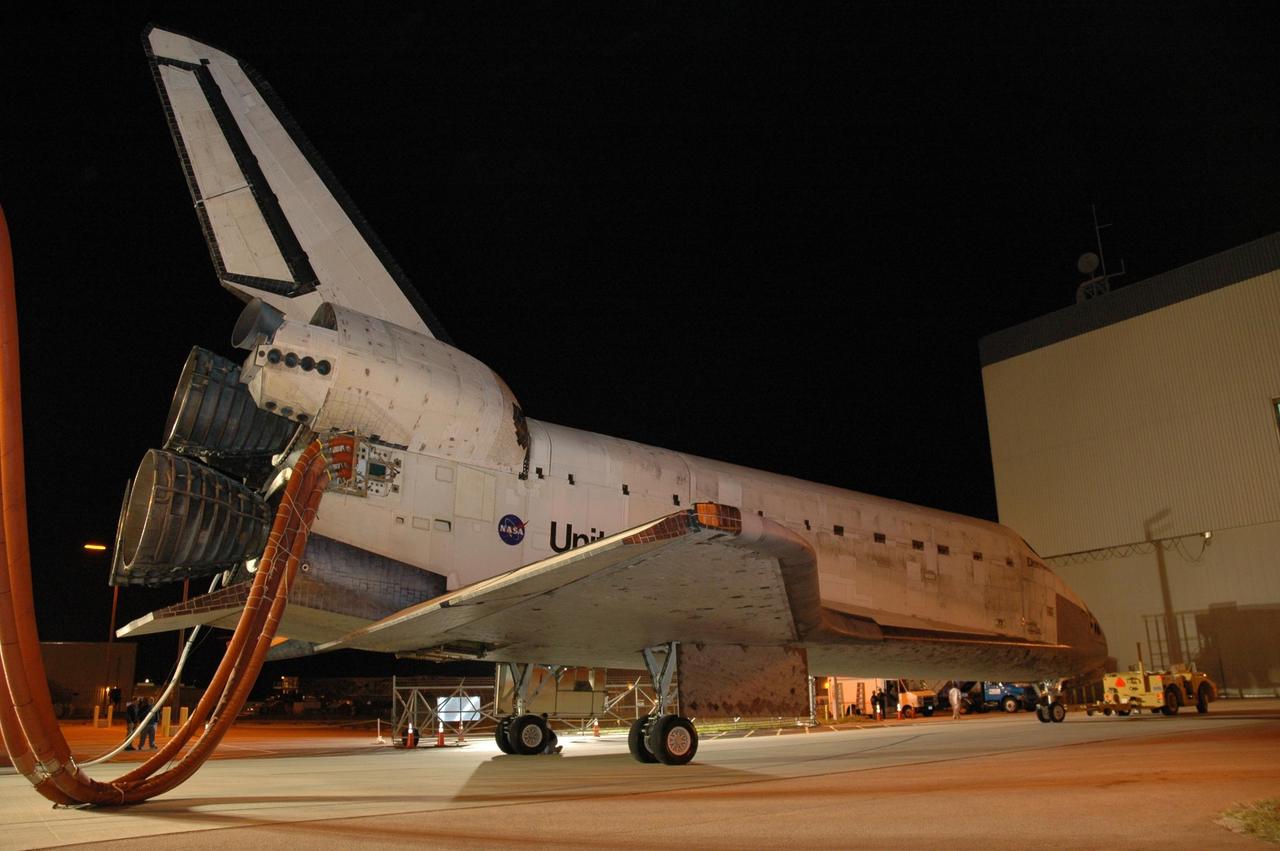
KENNEDY SPACE CENTER, FLA. -- The space shuttle Discovery nears the Orbital Processing Facility, or OPF, where processing Discovery for another flight begins. Towing normally begins within four hours after landing and is completed within six hours unless removal of time-sensitive experiments is required on the runway. Umbilicals are attached to purge the vehicle of any possible residual explosive or toxic fumes. In the OPF, turnaround processing procedures on Discovery will include various post-flight deservicing and maintenance functions, which are carried out in parallel with payload removal and the installation of equipment needed for the next mission. Before post-flight deservicing can continue beyond initial safing operations, certain vehicle systems must be mechanically secured and access platforms installed. Discovery completed mission STS-120 with an on-time landing at 1:01 p.m. EST. Photo credit: NASA/Jim Grossmann
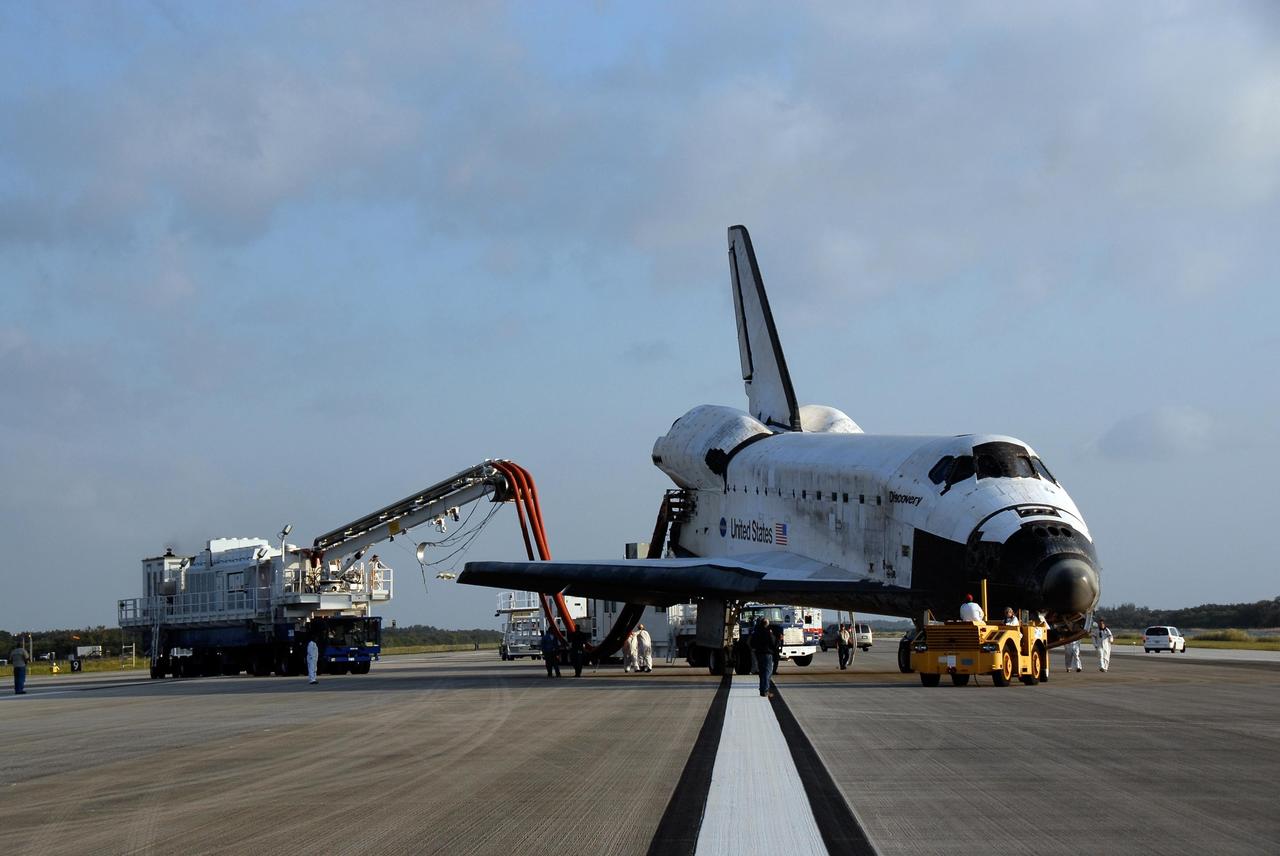
KENNEDY SPACE CENTER, FLA. -- On the Shuttle Landing Facility at NASA's Kennedy Space Center, space shuttle Discovery is ready for towing to the Orbiter Processing Facility, or OPF. Towing normally begins approximately within four hours after landing and is completed within six hours unless removal of time-sensitive experiments require an additional period on the runway. Umbilicals are attached to purge the vehicle of any possible residual explosive or toxic fumes. The tractor tow vehicle will pull Discovery along a two-mile tow-way to the OPF, where processing Discovery for another flight begins. The tow vehicle is very much like the typical towing units used for large aircraft, but it is equipped with a special towing bar designed specifically for the orbiter. In the OPF, turnaround processing procedures on Discovery will include various post-flight deservicing and maintenance functions, which are carried out in parallel with payload removal and the installation of equipment needed for the next mission. Before post-flight deservicing can continue beyond initial safing operations, certain vehicle systems must be mechanically secured and access platforms installed. Discovery completed mission STS-120 with an on-time landing at 1:01 p.m. EST. Photo credit: NASA/Kim Shiflett
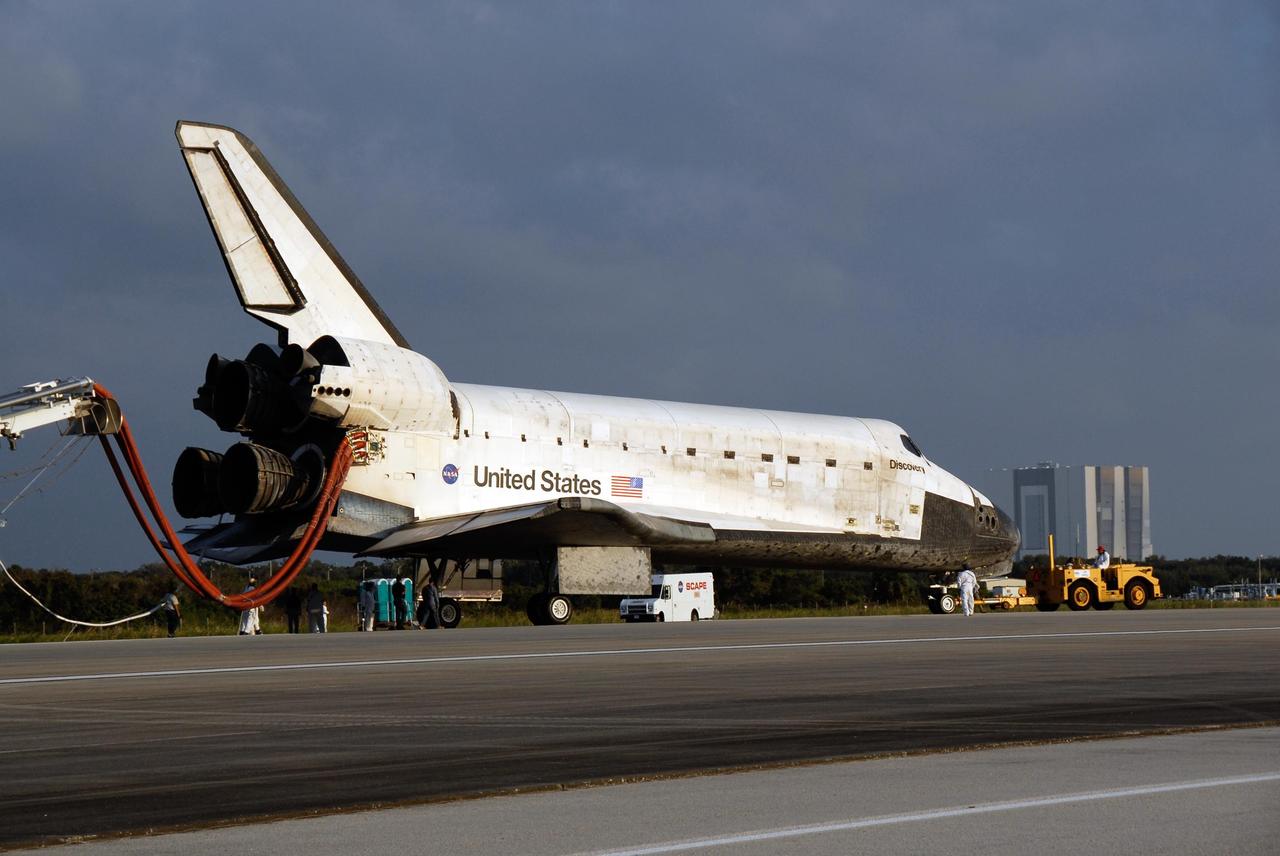
KENNEDY SPACE CENTER, FLA. -- On the Shuttle Landing Facility at NASA's Kennedy Space Center, space shuttle Discovery is towed to the Orbiter Processing Facility, or OPF. Towing normally begins approximately within four hours after landing and is completed within six hours unless removal of time-sensitive experiments requires an additional period on the runway. Umbilicals are attached to purge the vehicle of any possible residual explosive or toxic fumes. The tractor tow vehicle will pull Discovery along a two-mile tow-way to the OPF, where processing Discovery for another flight begins. The tow vehicle is very much like the typical towing units used for large aircraft, but it is equipped with a special towing bar designed specifically for the orbiter. In the OPF, turnaround processing procedures on Discovery will include various post-flight deservicing and maintenance functions, which are carried out in parallel with payload removal and the installation of equipment needed for the next mission. Before post-flight deservicing can continue beyond initial safing operations, certain vehicle systems must be mechanically secured and access platforms installed. Discovery completed mission STS-120 with an on-time landing at 1:01 p.m. EST. Photo credit: NASA/Kim Shiflett
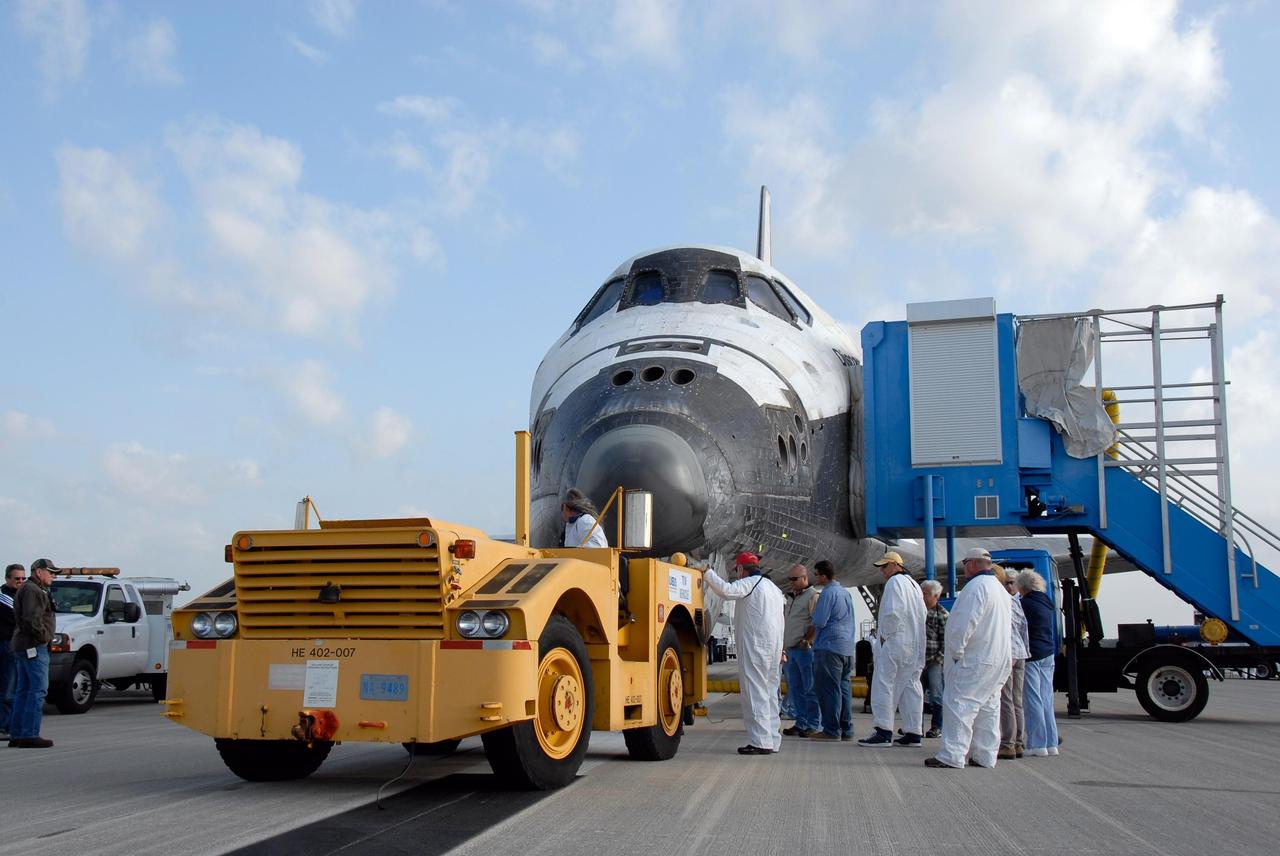
KENNEDY SPACE CENTER, FLA. -- On the Shuttle Landing Facility at NASA's Kennedy Space Center, a tractor tow vehicle is backed up to space shuttle Discovery. Towing normally begins approximately within four hours after landing and is completed within six hours unless removal of time-sensitive experiments require an additional period on the runway. Umbilicals are attached to purge the vehicle of any possible residual explosive or toxic fumes. The tractor tow vehicle will pull Discovery along a two-mile tow-way to the Orbiter Processing Facility, or OPF, where processing Discovery for another flight begins. The tow vehicle is very much like the typical towing units used for large aircraft, but it is equipped with a special towing bar designed specifically for the orbiter. In the OPF, turnaround processing procedures on Discovery will include various post-flight deservicing and maintenance functions, which are carried out in parallel with payload removal and the installation of equipment needed for the next mission. Before post-flight deservicing can continue beyond initial safing operations, certain vehicle systems must be mechanically secured and access platforms installed. Discovery completed mission STS-120 with an on-time landing at 1:01 p.m. EST. Photo credit: NASA/Kim Shiflett

KENNEDY SPACE CENTER, FLA. -- On the Shuttle Landing Facility at NASA's Kennedy Space Center, a tractor tow vehicle is backed up to space shuttle Discovery. Towing normally begins approximately within four hours after landing and is completed within six hours unless removal of time-sensitive experiments require an additional period on the runway. Umbilicals are attached to purge the vehicle of any possible residual explosive or toxic fumes. The tractor tow vehicle will pull Discovery along a two-mile tow-way to the Orbiter Processing Facility, or OPF, where processing Discovery for another flight begins. The tow vehicle is very much like the typical towing units used for large aircraft, but it is equipped with a special towing bar designed specifically for the orbiter. In the OPF, turnaround processing procedures on Discovery will include various post-flight deservicing and maintenance functions, which are carried out in parallel with payload removal and the installation of equipment needed for the next mission. Before post-flight deservicing can continue beyond initial safing operations, certain vehicle systems must be mechanically secured and access platforms installed. Discovery completed mission STS-120 with an on-time landing at 1:01 p.m. EST. Photo credit: NASA/Kim Shiflett
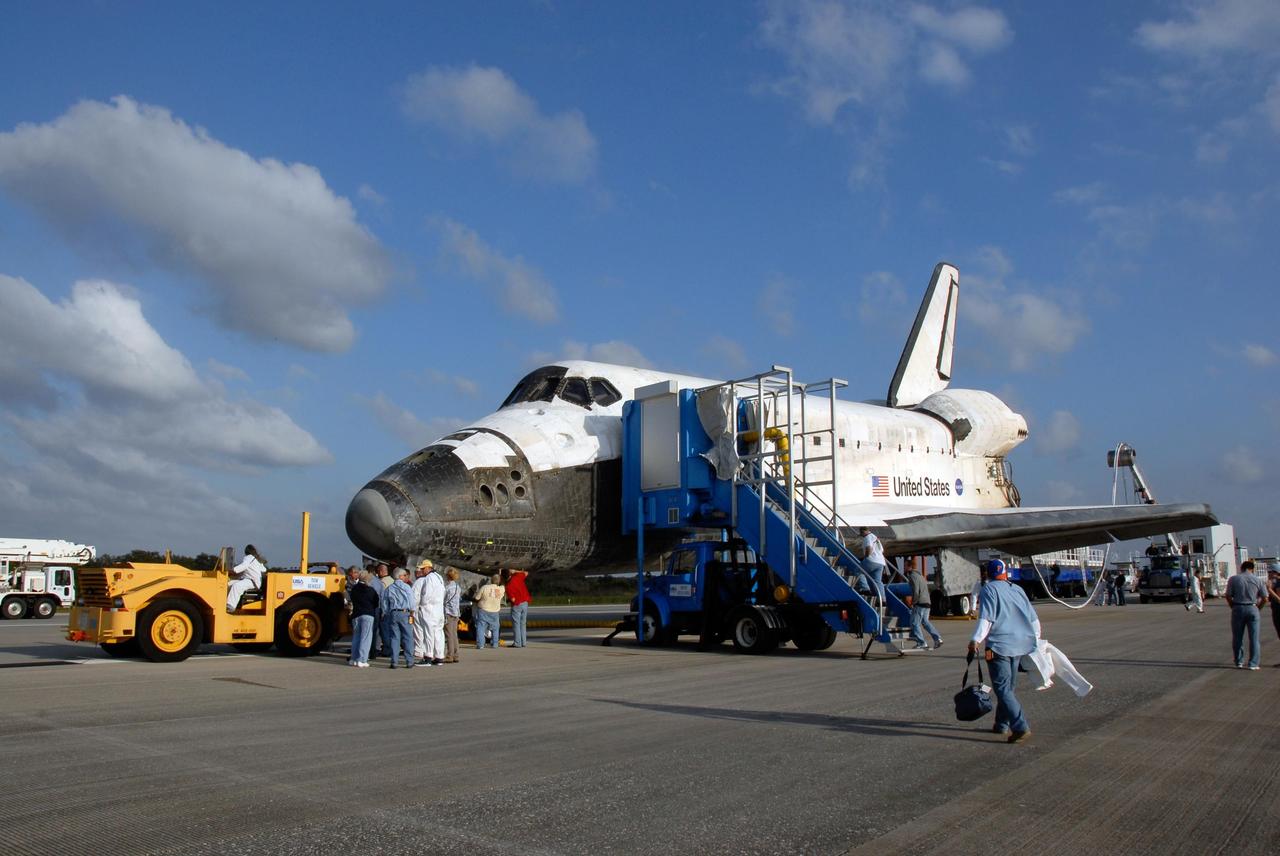
KENNEDY SPACE CENTER, FLA. -- On the Shuttle Landing Facility at NASA's Kennedy Space Center, a tractor tow vehicle is backed up to space shuttle Discovery. Towing normally begins approximately within four hours after landing and is completed within six hours unless removal of time-sensitive experiments require an additional period on the runway. Umbilicals are attached to purge the vehicle of any possible residual explosive or toxic fumes. The tractor tow vehicle will pull Discovery along a two-mile tow-way to the Orbiter Processing Facility, or OPF, where processing Discovery for another flight begins. The tow vehicle is very much like the typical towing units used for large aircraft, but it is equipped with a special towing bar designed specifically for the orbiter. In the OPF, turnaround processing procedures on Discovery will include various post-flight deservicing and maintenance functions, which are carried out in parallel with payload removal and the installation of equipment needed for the next mission. Before post-flight deservicing can continue beyond initial safing operations, certain vehicle systems must be mechanically secured and access platforms installed. Discovery completed mission STS-120 with an on-time landing at 1:01 p.m. EST. Photo credit: NASA/Kim Shiflett