
Artist concept of the Psyche spacecraft, which will conduct a direct exploration of an asteroid thought to be a stripped planetary core. http://photojournal.jpl.nasa.gov/catalog/PIA21275
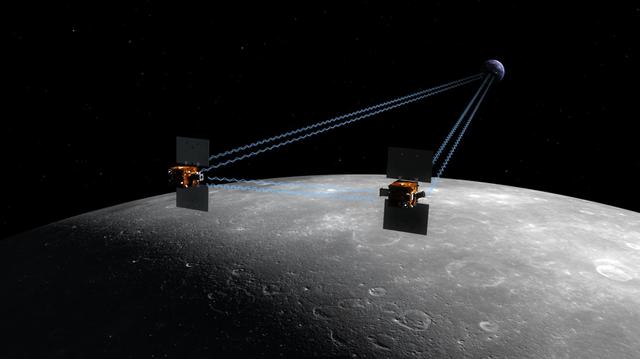
The Gravity Recovery and Interior Laboratory, or GRAIL, mission will fly twin spacecraft in tandem orbits around the moon to measure its gravity field in unprecedented detail. GRAIL is a part of NASA Discovery Program.
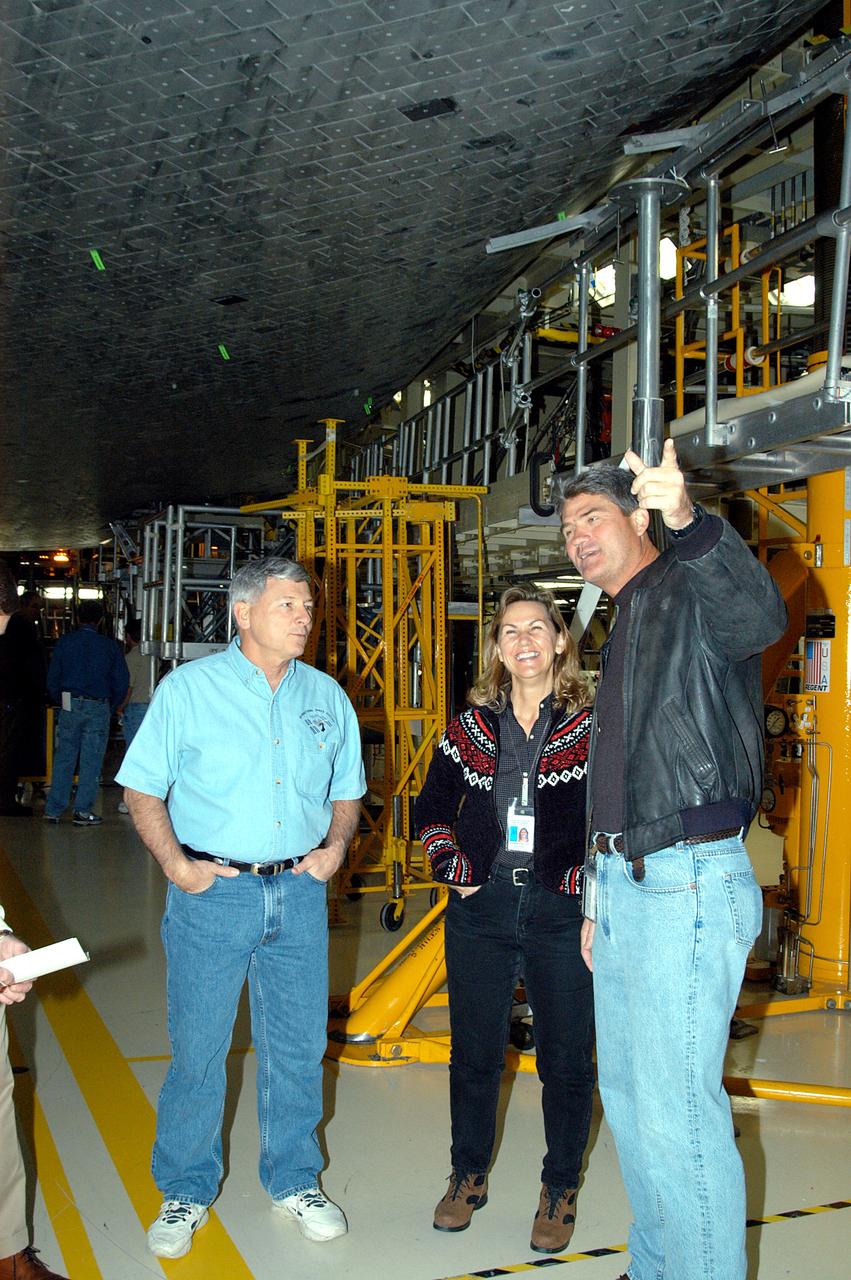
KENNEDY SPACE CENTER, FLA. -- From left, NASA Deputy Associate Administrator for Space Station and Shuttle Programs Michael Kostelnik, United Space Alliance (USA) Director of Orbiter Operations Patty Stratton, and NASA Space Shuttle Program Manager William Parsons view the underside of Shuttle Discovery in Orbiter Processing Facility Bay 3. NASA and USA Space Shuttle program management are participating in a leadership workday. The day is intended to provide management with an in-depth, hands-on look at Shuttle processing activities at KSC.
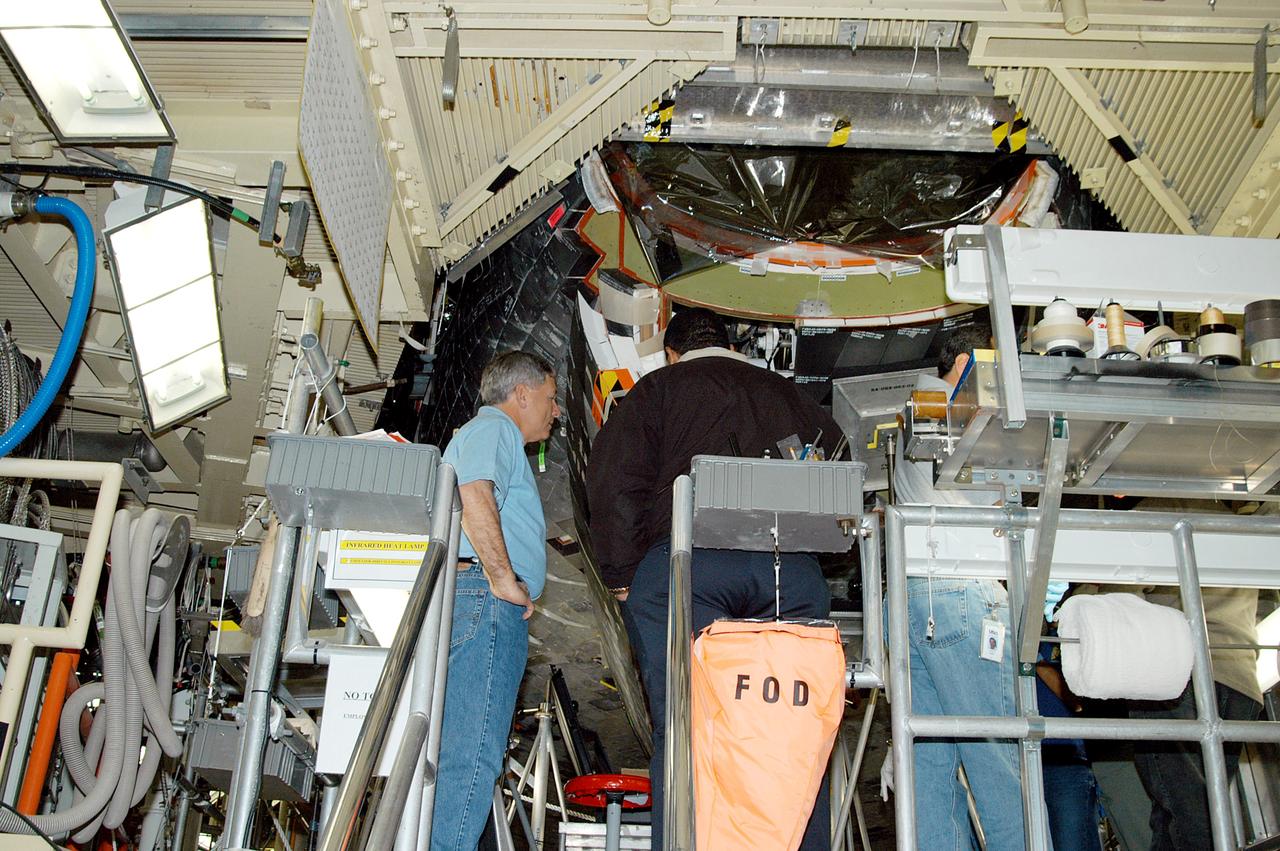
KENNEDY SPACE CENTER, FLA. -- NASA Deputy Associate Administrator for Space Station and Shuttle Programs Michael Kostelnik (left) discusses some of the working parts inside the nose of Shuttle Discovery in Orbiter Processing Facility Bay 3 with a United Space Alliance (USA) technician (back to camera). NASA and USA Space Shuttle program management are participating in a leadership workday. The day is intended to provide management with an in-depth, hands-on look at Shuttle processing activities at KSC.
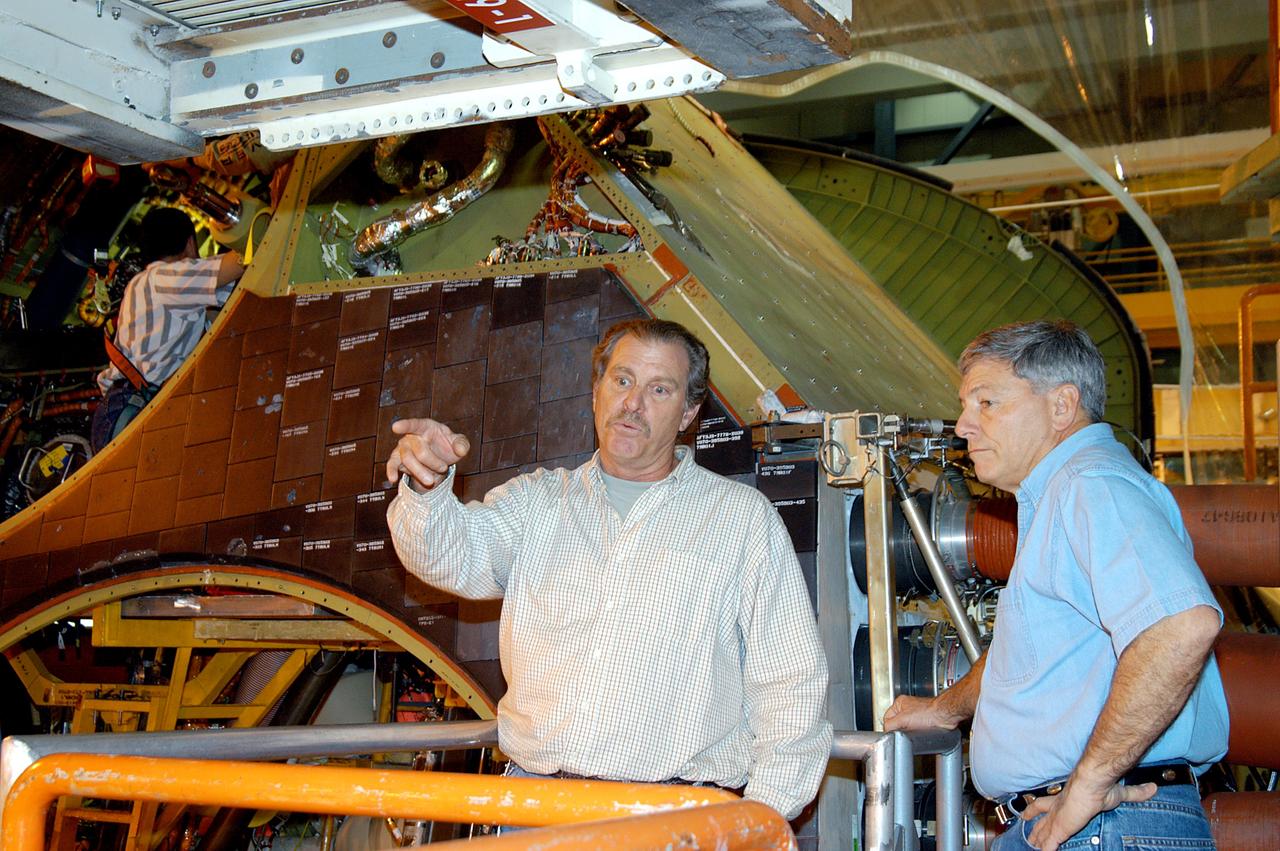
KENNEDY SPACE CENTER, FLA. -- NASA Deputy Associate Administrator for Space Station and Shuttle Programs Michael Kostelnik (right) discusses a speed brake on Shuttle Discovery in Orbiter Processing Facility Bay 3 with a United Space Alliance (USA) technician (left). NASA and USA Space Shuttle program management are participating in a leadership workday. The day is intended to provide management with an in-depth, hands-on look at Shuttle processing activities at KSC.
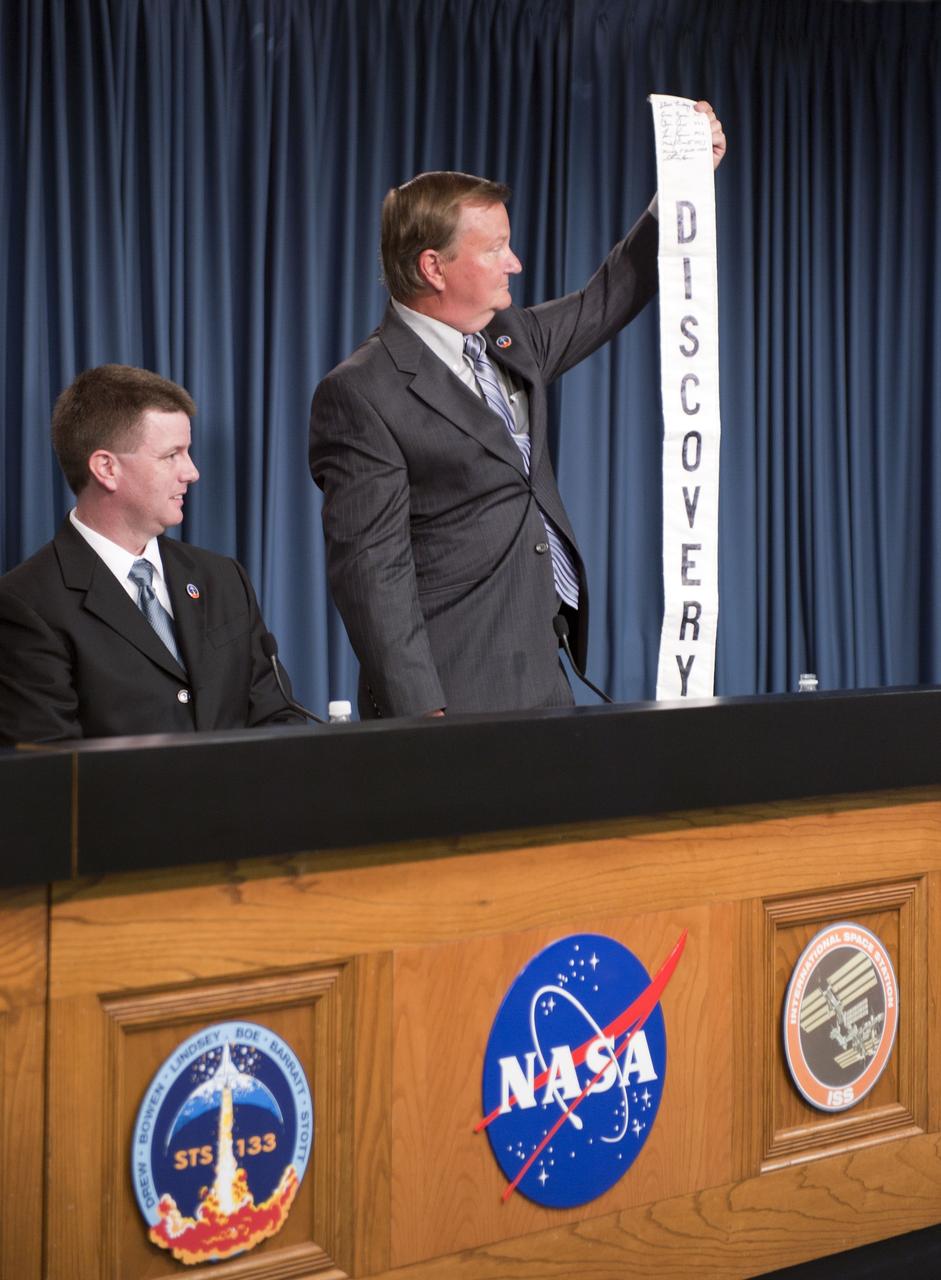
CAPE CANAVERAL, Fla. -- Space Shuttle Program Launch Integration Manager Mike Moses looks on proudly as Shuttle Launch Director Mike Leinbach holds up a Discovery banner signed by the STS-133 astronauts, at a news conference held in the Press Site auditorium at NASA's Kennedy Space Center in Florida following today's successful launch of space shuttle Discovery. Shuttle Discovery lifted off at 4:53 p.m. EST. The six-member crew will deliver the Permanent Multipurpose Module, packed with supplies and critical spare parts, as well as Robonaut 2, the dexterous humanoid astronaut helper, to the orbiting outpost. Discovery is flying on its 39th and final mission and is scheduled to be retired following STS-133. This is the 133rd Space Shuttle Program mission and the 35th shuttle voyage to the space station. For more information on the STS-133 mission, visit www.nasa.gov/mission_pages/shuttle/shuttlemissions/sts133/. Photo credit: NASA/Kim Shiflett
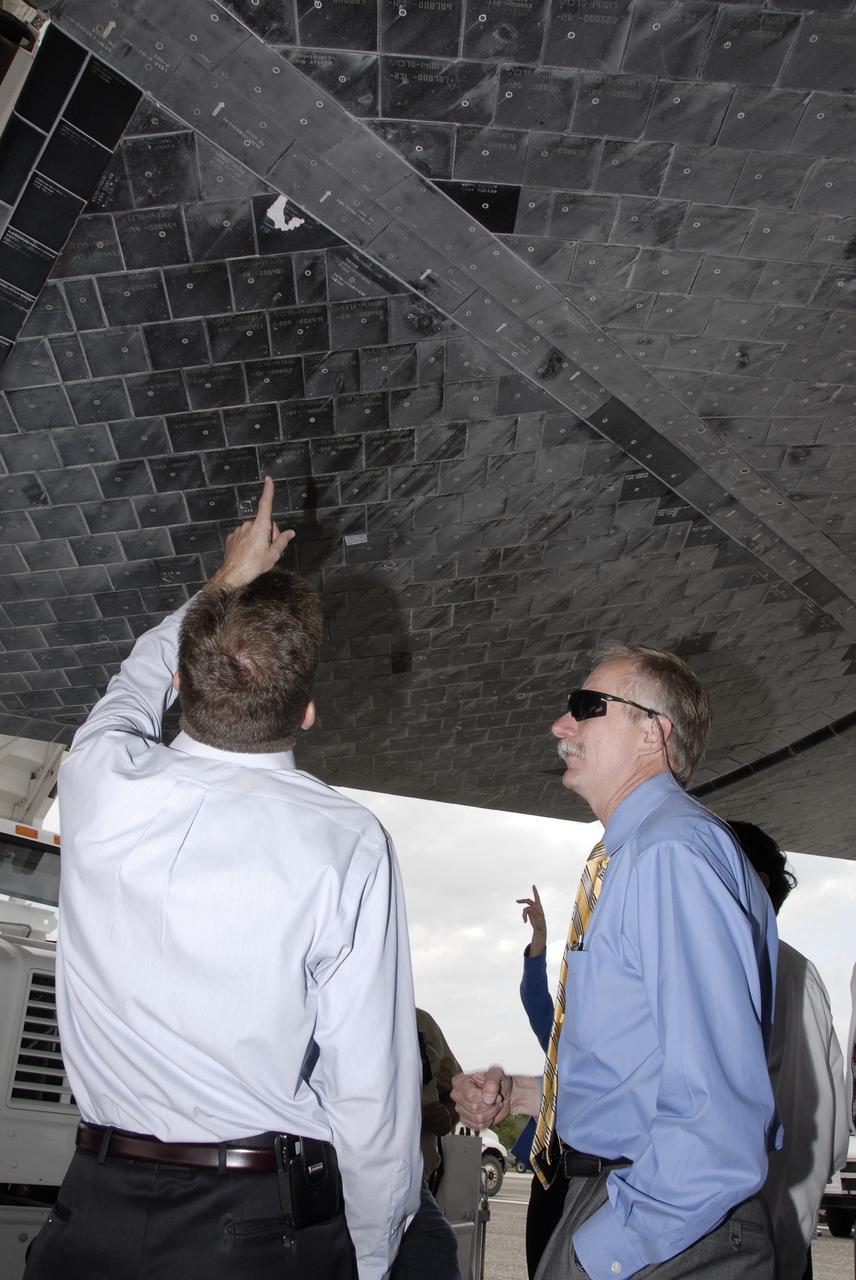
CAPE CANAVERAL, Fla. – NASA Deputy Manager of Space Shuttle Program LeRoy Cain and NASA Associate Administrator for Space Operations Bill Gerstenmaier inspect the thermal protection system tile beneath space shuttle Discovery following touchdown on Runway 15 at NASA's Kennedy Space Center in Florida. Discovery’s landing completed the 13-day, 5.3-million mile journey on the STS-119 mission to the International Space Station. Main gear touchdown was at 3:13:17 p.m. EDT. Nose gear touchdown was at 3:13:40 p.m. and wheels stop was at 3:14:45 p.m. Discovery delivered the final pair of large power-generating solar array wings and the S6 truss segment. The mission was the 28th flight to the station, the 36th flight of Discovery and the 125th in the Space Shuttle Program, as well as the 70th landing at Kennedy. Photo credit: NASA/Kim Shiflett
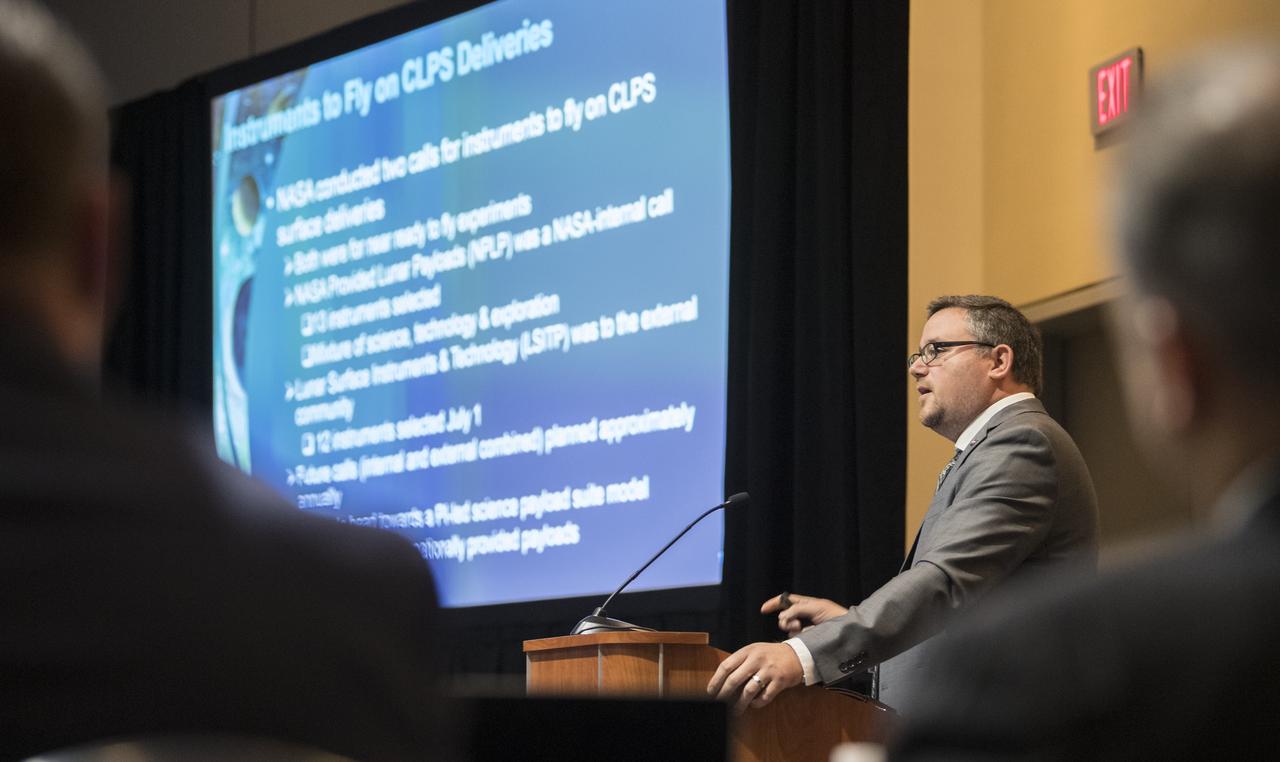
Brad Bailey, program scientist with NASA's Lunar Discovery and Exploration Program is seen during a keynote titled “An Overview of NASA’s Lunar Science Exploration Plans for Artemis” at the 70th International Astronautical Congress, Tuesday, Oct. 22, 2019 at the Walter E. Washington Convention Center in Washington. Photo Credit: (NASA/Joel Kowsky)
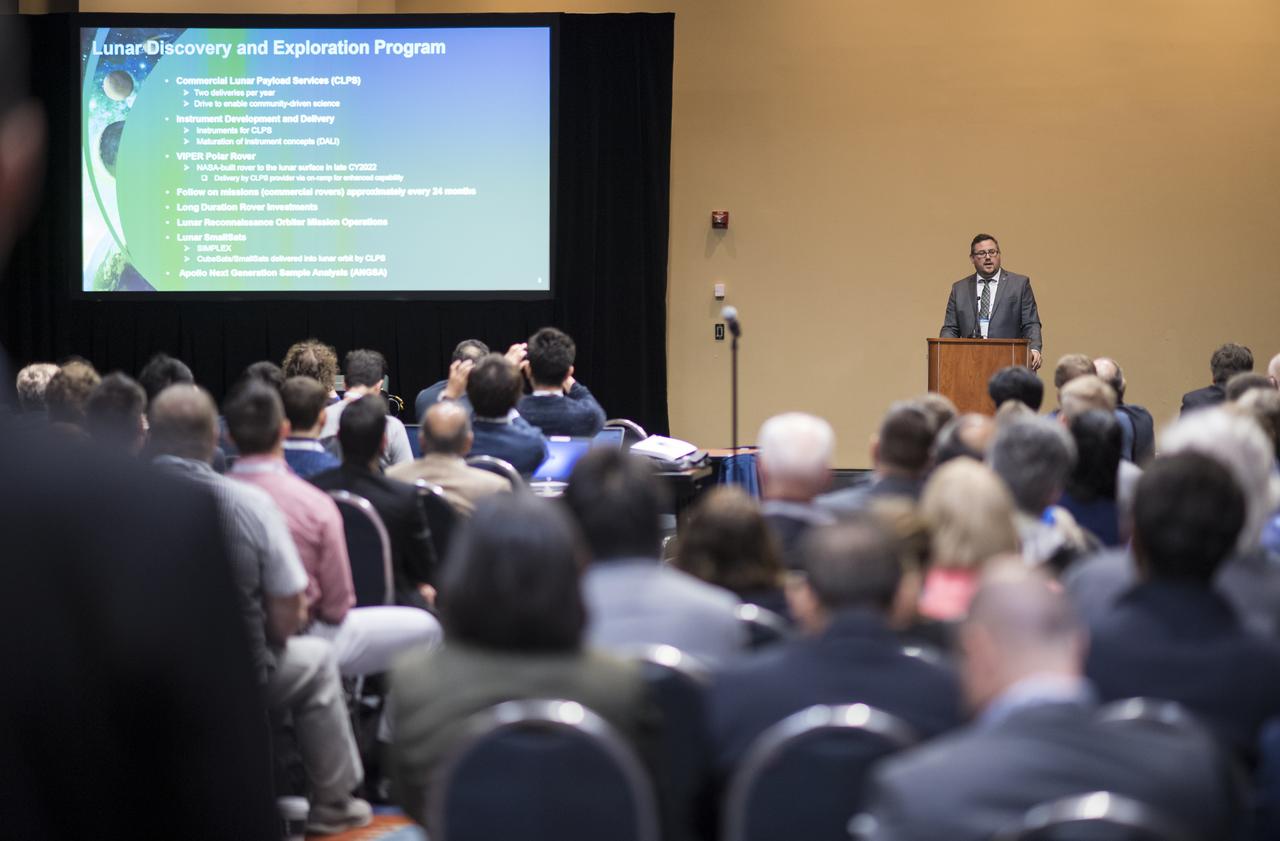
Brad Bailey, program scientist with NASA's Lunar Discovery and Exploration Program is seen during a keynote titled “An Overview of NASA’s Lunar Science Exploration Plans for Artemis” at the 70th International Astronautical Congress, Tuesday, Oct. 22, 2019 at the Walter E. Washington Convention Center in Washington. Photo Credit: (NASA/Joel Kowsky)
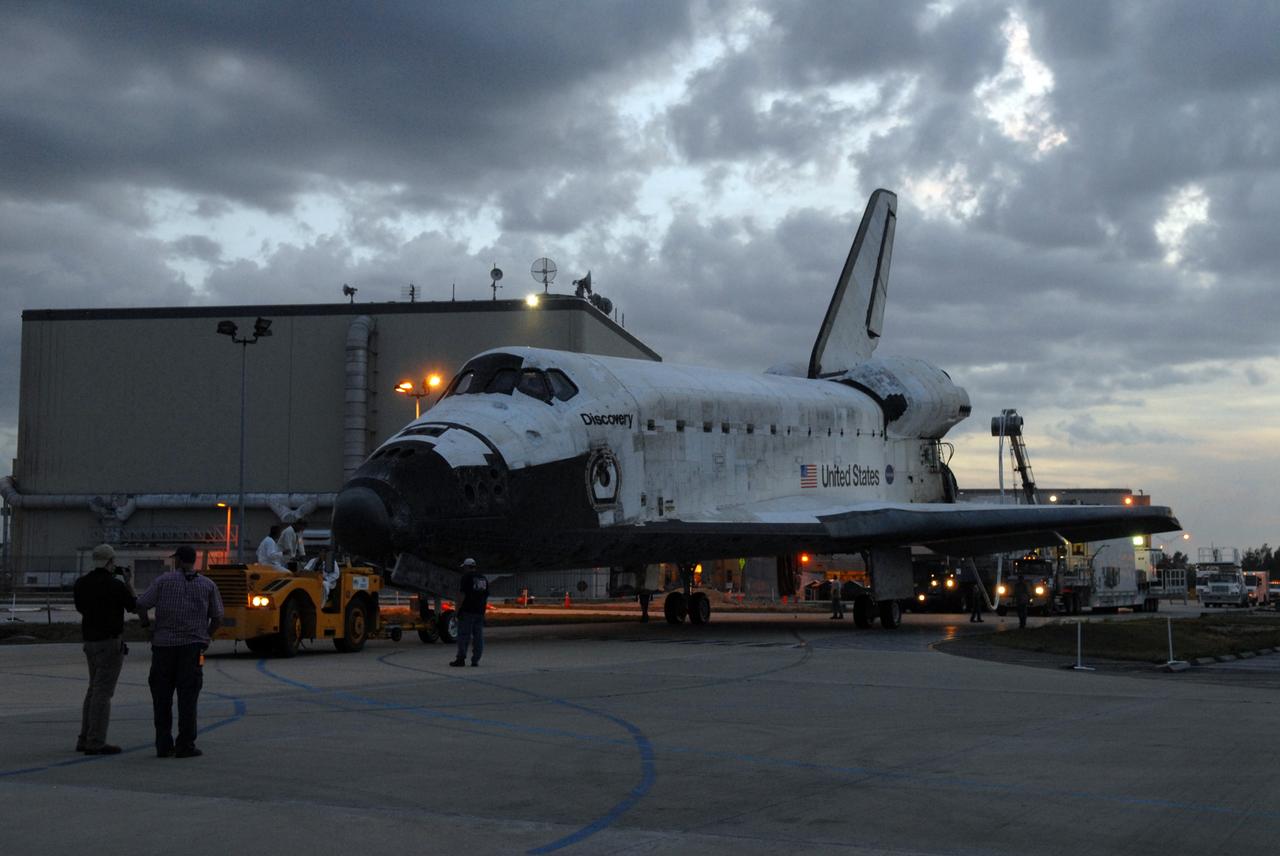
CAPE CANAVERAL, Fla. – Surrounding lights cast a glow as space shuttle Discovery is towed to Orbiter Processing Facility 3 at NASA's Kennedy Space Center in Florida. Discovery landed at 3:13:17 p.m. EDT after completing a 13-day journey of more than 5.3 million miles on the STS-119 mission. The mission was the 28th flight to the station, the 36th flight of Discovery and the 125th in the Space Shuttle Program, as well as the 70th landing at Kennedy. Photo credit: NASA/Jack Pfaller
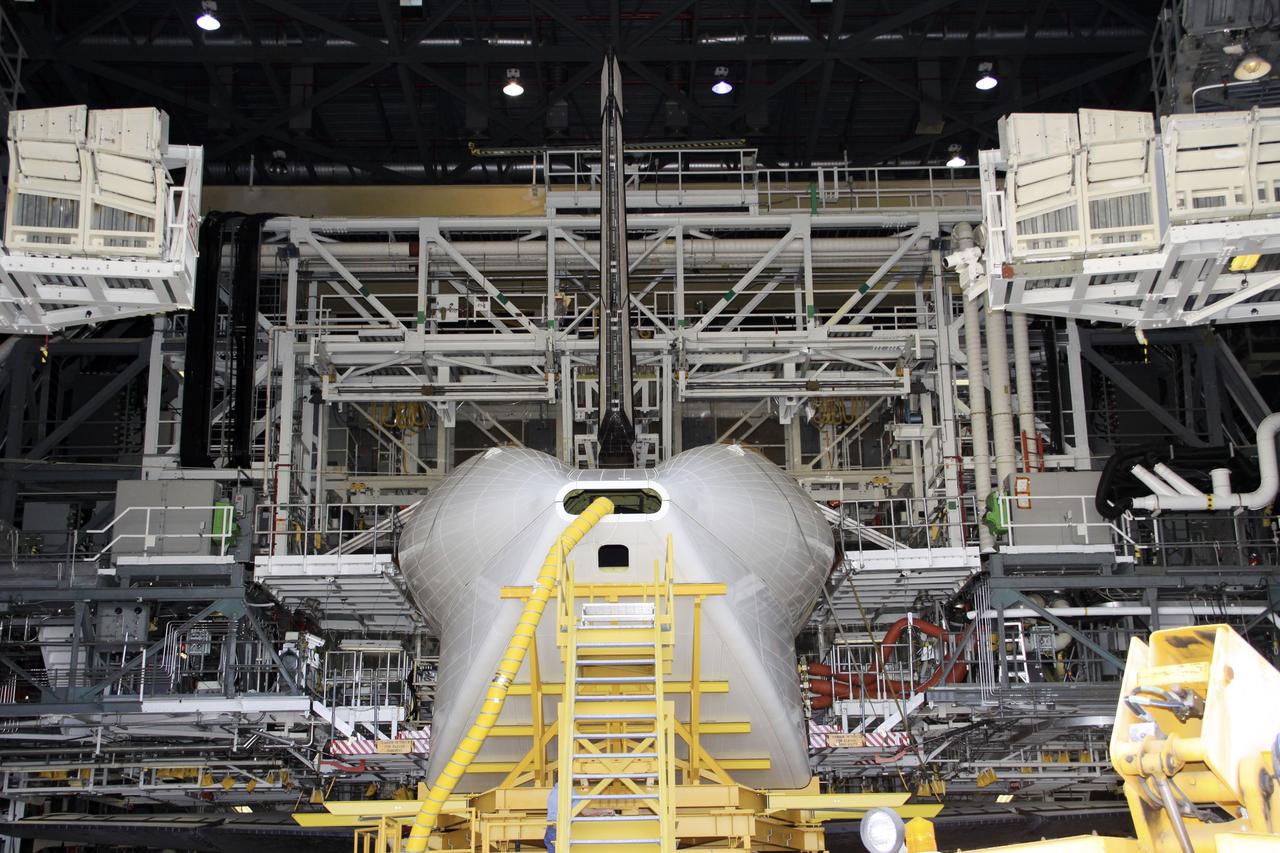
CAPE CANAVERAL, Fla. -- Inside Orbiter Processing Facility-1 at NASA’s Kennedy Space Center in Florida, the tail cone is installed around space shuttle Discovery’s three replica shuttle main engines for protection. The work is part of the Space Shuttle Program’s transition and retirement processing of shuttle Discovery. Discovery is being prepared for display at the Smithsonian’s National Air and Space Museum, Steven F. Udvar-Hazy Center in Chantilly, Va. For more information, visit http://www.nasa.gov/shuttle. Photo credit: NASA/Jim Grossmann
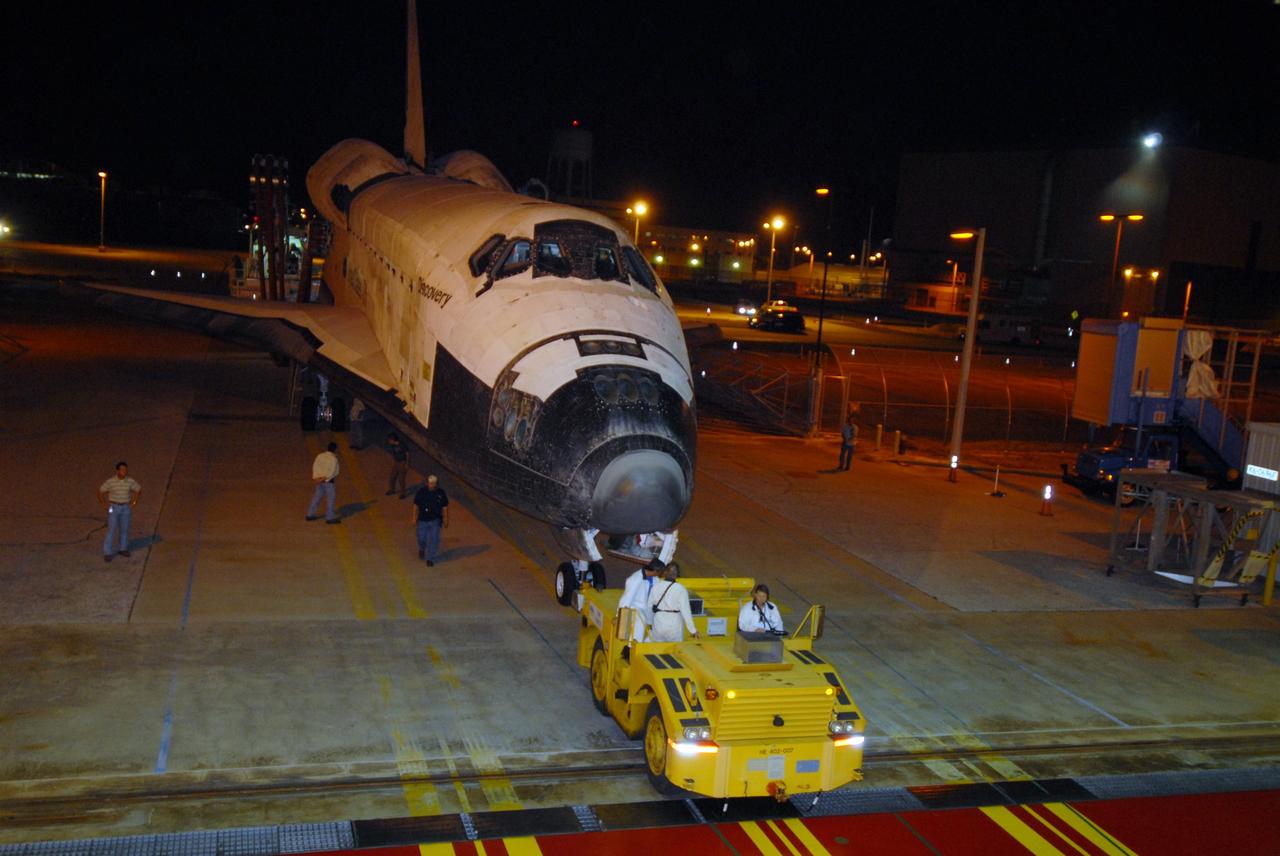
CAPE CANAVERAL, Fla. – Space shuttle Discovery is towed into Orbiter Processing Facility 3 at NASA's Kennedy Space Center in Florida. Discovery landed at 3:13:17 p.m. EDT after completing a 13-day journey of more than 5.3 million miles on the STS-119 mission. The mission was the 28th flight to the station, the 36th flight of Discovery and the 125th in the Space Shuttle Program, as well as the 70th landing at Kennedy. Photo credit: NASA/Jack Pfaller
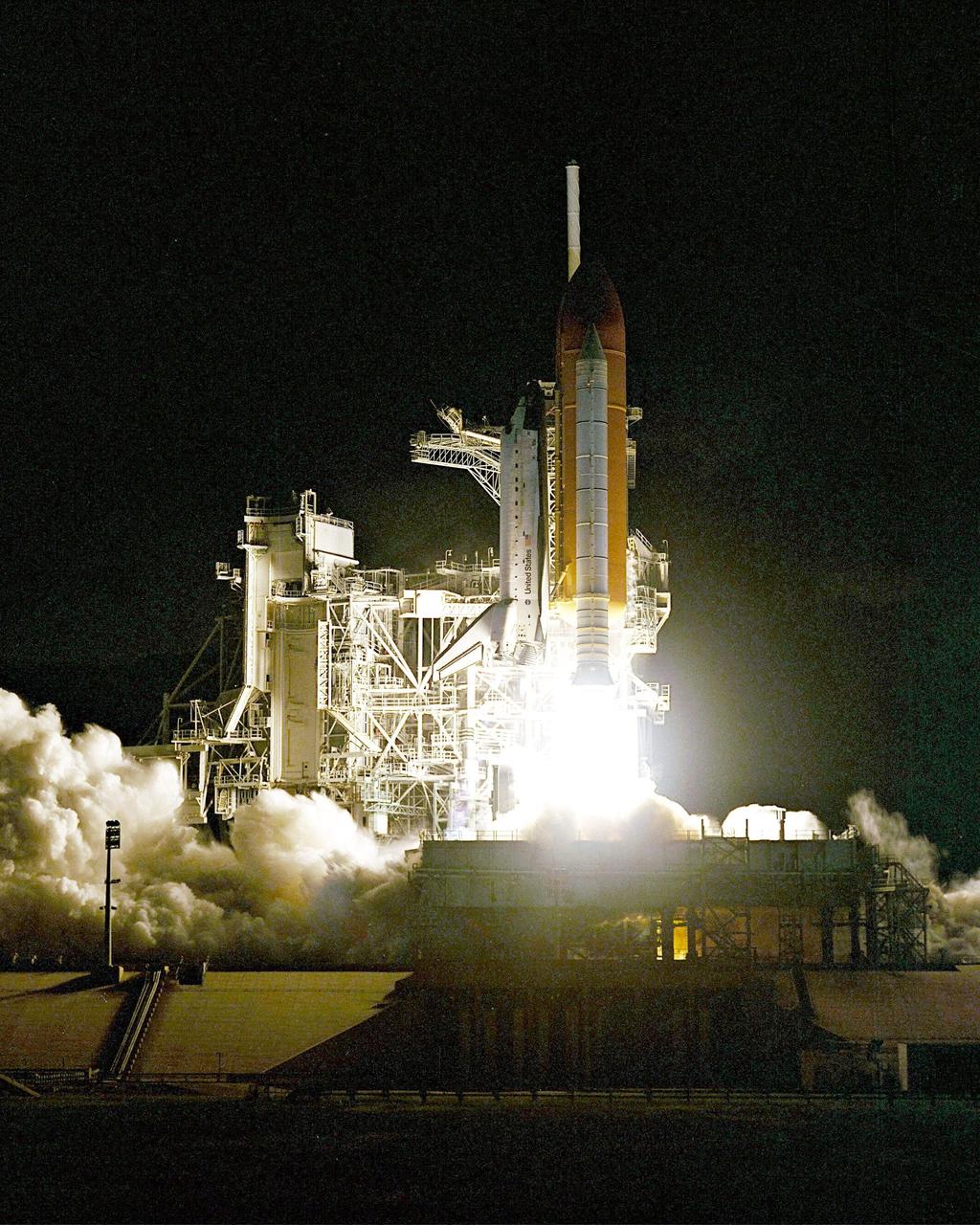
KENNEDY SPACE CENTER, Fla. -- A perfect on-time launch for Space Shuttle Discovery at 7:17 p.m. EDT. This marks the 100th launch in the history of the Shuttle program. Discovery carries a payload that includes the Integrated Truss Structure Z-1, first of 10 trusses that will form the backbone of the Space Station, and the third Pressurized Mating Adapter that will provide a Shuttle docking port for solar array installation on the sixth Station flight and Lab installation on the seventh Station flight. Discovery’s landing is expected Oct. 22 at 2:10 p.m. EDT

KENNEDY SPACE CENTER, FLA. -- In the transfer aisle of the Vehicle Assembly Building, an overhead crane begins to turn the orbiter Discovery slightly before its transfer to high bay 3. There Discovery will be mated to an external tank and solid rocket boosters. Discovery is scheduled to launch Oct. 5 at 9:30 p.m. EDT on mission STS-92, delivering two elements of the International Space Station: the Z-1 truss and Pressurized Mating Adapter-3. The launch will be the 100th flight in the Shuttle program
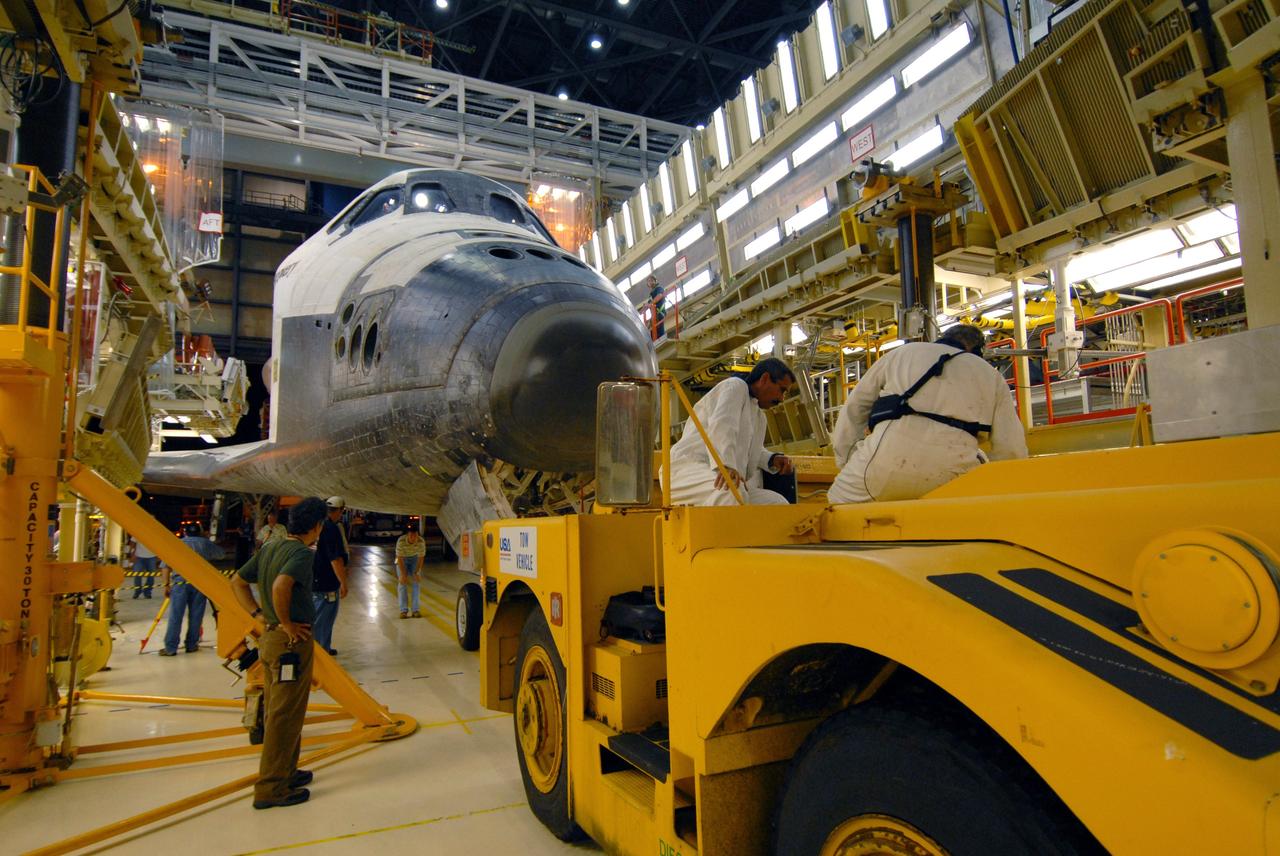
CAPE CANAVERAL, Fla. –Space shuttle Discovery arrives inside Orbiter Processing Facility 3 at NASA's Kennedy Space Center in Florida. Discovery landed at 3:13:17 p.m. EDT after completing a 13-day journey of more than 5.3 million miles on the STS-119 mission. The mission was the 28th flight to the station, the 36th flight of Discovery and the 125th in the Space Shuttle Program, as well as the 70th landing at Kennedy. Photo credit: NASA/Jack Pfaller
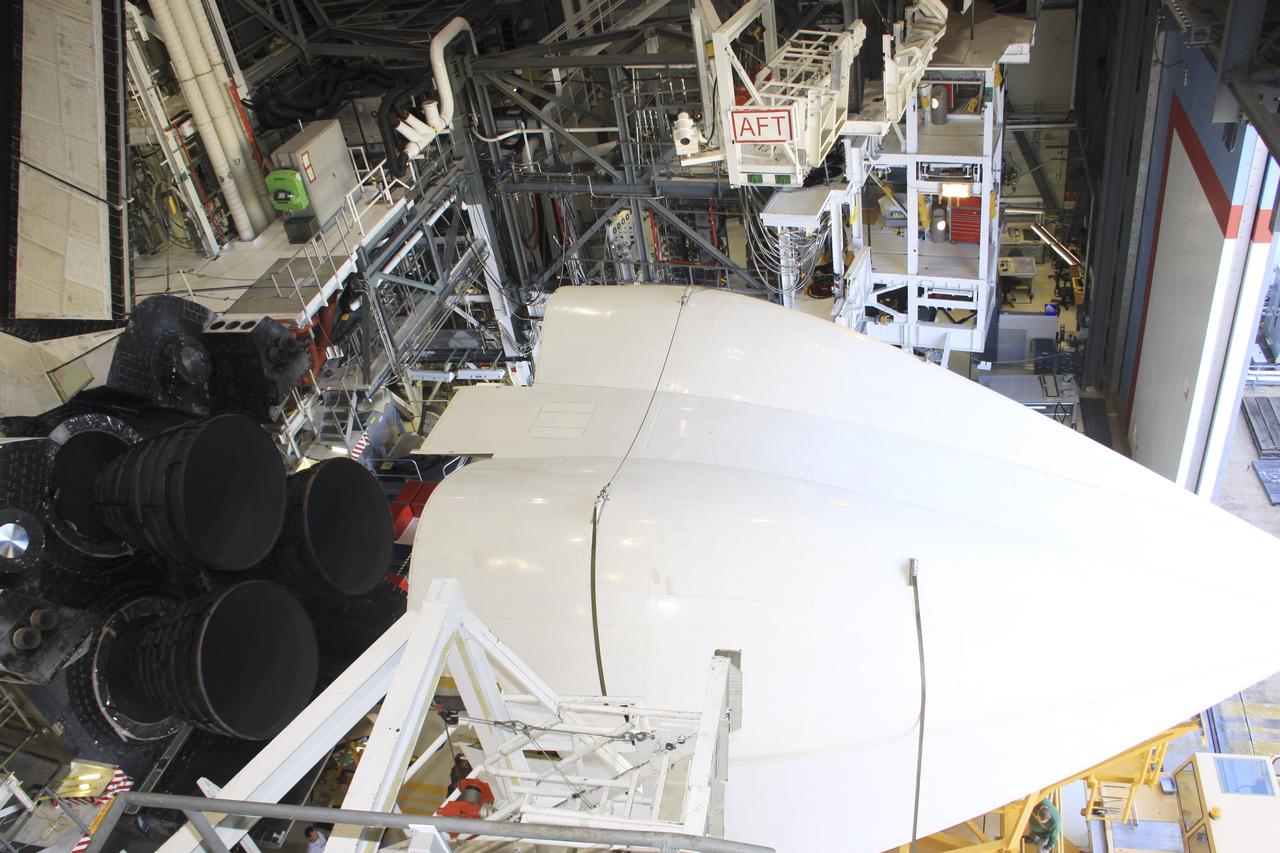
CAPE CANAVERAL, Fla. -- Inside Orbiter Processing Facility-1 at NASA’s Kennedy Space Center in Florida, the tail cone is being installed around Discovery’s three replica shuttle main engines for protection. The work is part of the Space Shuttle Program’s transition and retirement processing of shuttle Discovery. Discovery is being prepared for display at the Smithsonian’s National Air and Space Museum, Steven F. Udvar-Hazy Center in Chantilly, Va. For more information, visit http://www.nasa.gov/shuttle. Photo credit: NASA/Jim Grossmann
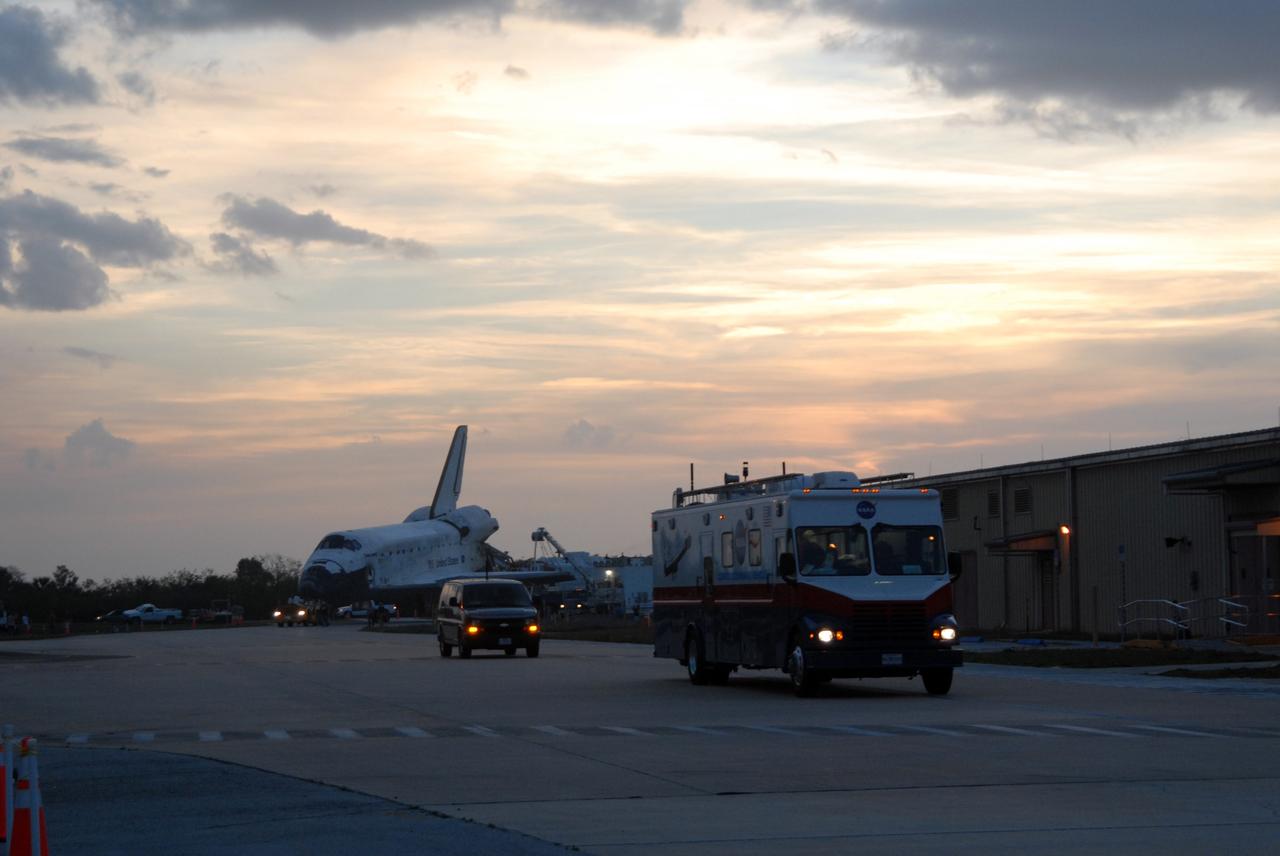
CAPE CANAVERAL, Fla. – After sunset, space shuttle Discovery is towed from the Shuttle Landing Facility at NASA's Kennedy Space Center in Florida to Orbiter Processing Facility 3. Discovery landed at 3:13:17 p.m. EDT after completing a 13-day journey of more than 5.3 million miles on the STS-119 mission. The mission was the 28th flight to the station, the 36th flight of Discovery and the 125th in the Space Shuttle Program, as well as the 70th landing at Kennedy. Photo credit: NASA/Jack Pfaller
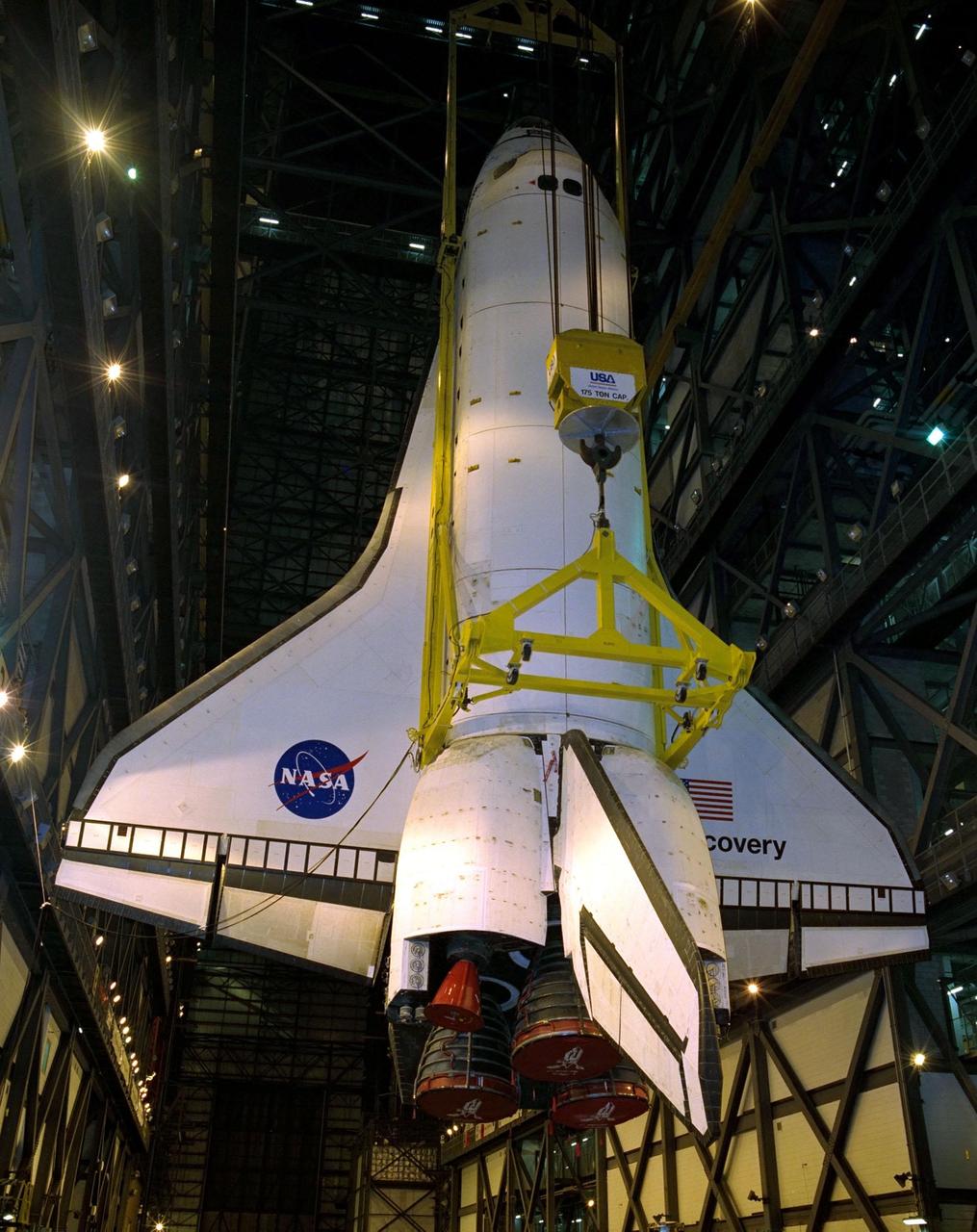
KENNEDY SPACE CENTER, FLA. -- In the transfer aisle of the Vehicle Assembly Building, an overhead crane begins to turn the orbiter Discovery slightly before its transfer to high bay 3. There Discovery will be mated to an external tank and solid rocket boosters. Discovery is scheduled to launch Oct. 5 at 9:30 p.m. EDT on mission STS-92, delivering two elements of the International Space Station: the Z-1 truss and Pressurized Mating Adapter-3. The launch will be the 100th flight in the Shuttle program
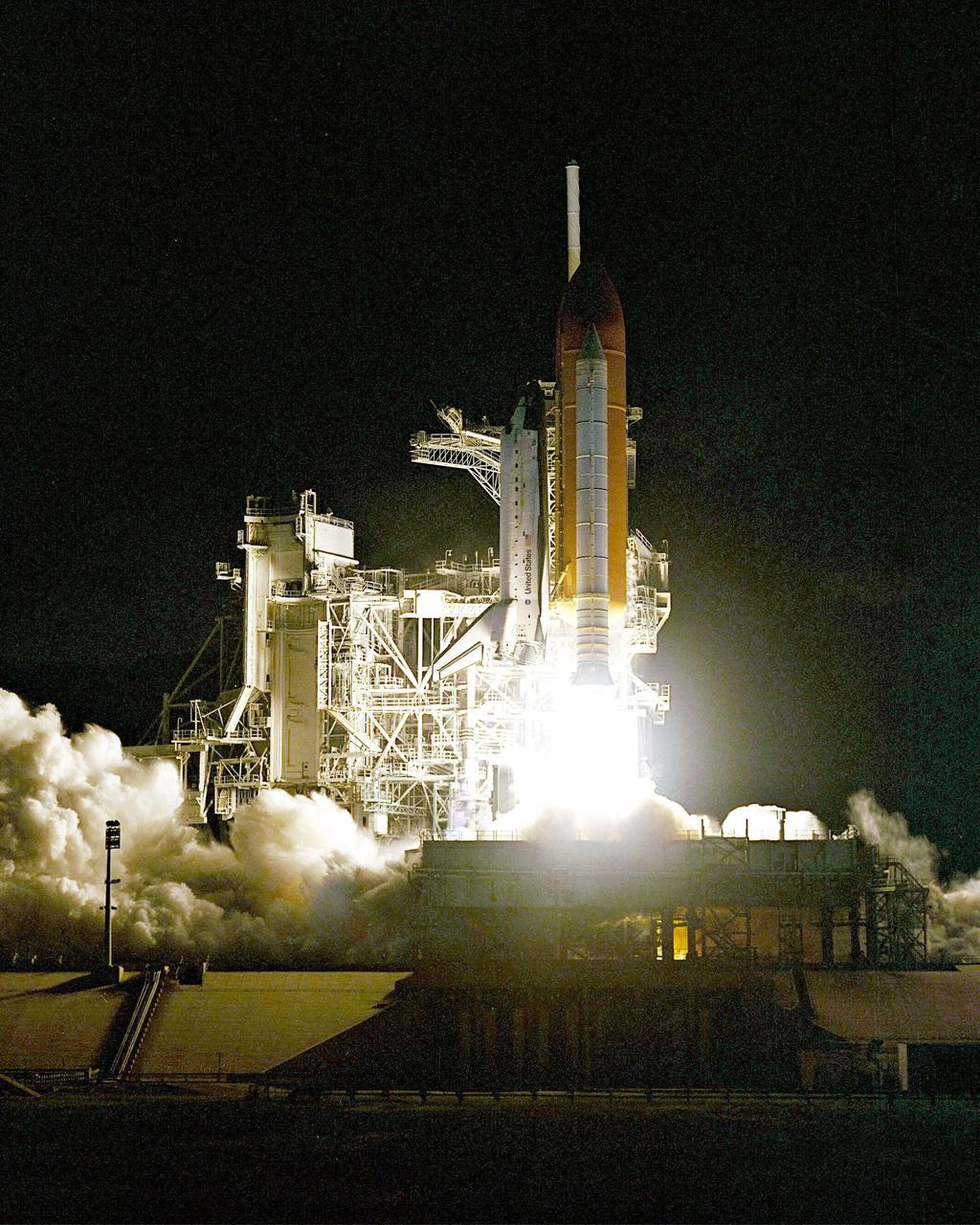
KENNEDY SPACE CENTER, Fla. -- A perfect on-time launch for Space Shuttle Discovery at 7:17 p.m. EDT. This marks the 100th launch in the history of the Shuttle program. Discovery carries a payload that includes the Integrated Truss Structure Z-1, first of 10 trusses that will form the backbone of the Space Station, and the third Pressurized Mating Adapter that will provide a Shuttle docking port for solar array installation on the sixth Station flight and Lab installation on the seventh Station flight. Discovery’s landing is expected Oct. 22 at 2:10 p.m. EDT
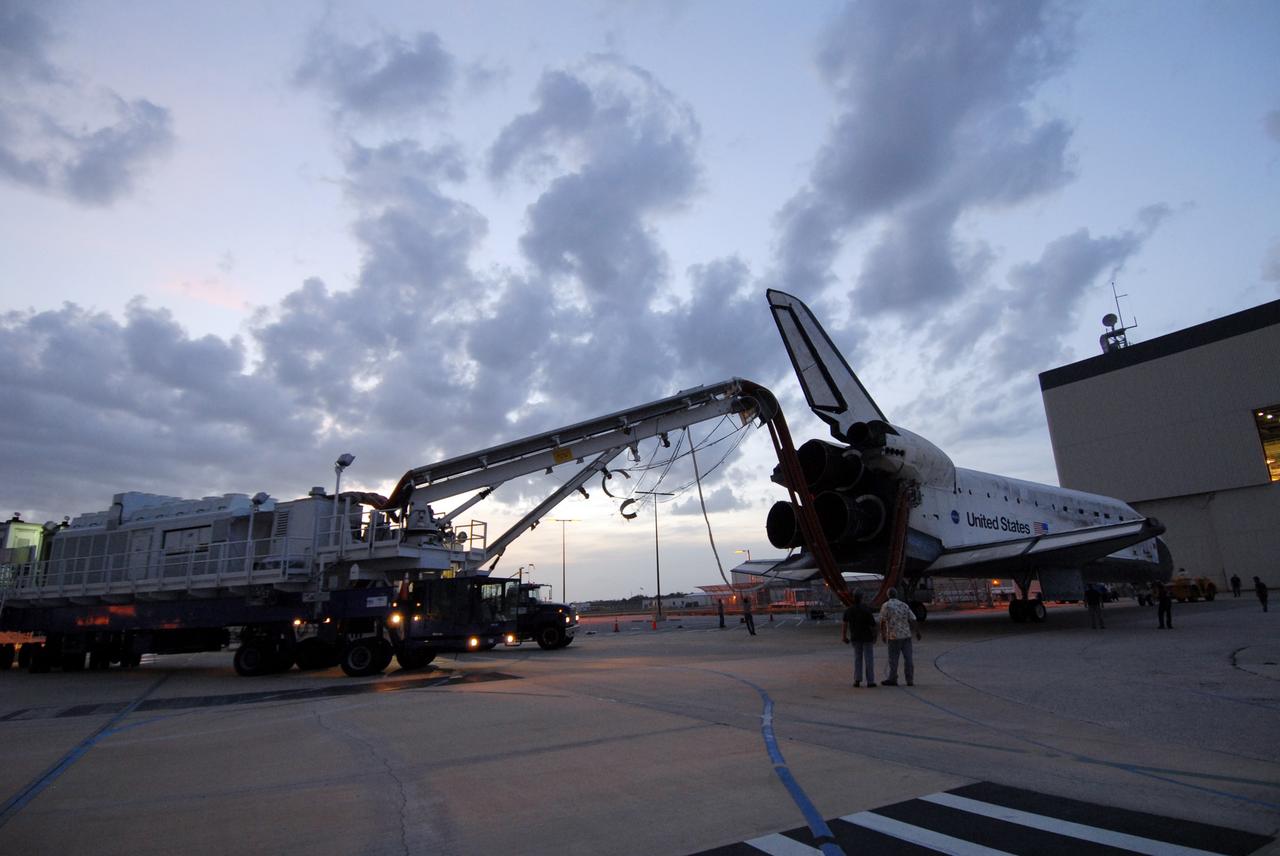
CAPE CANAVERAL, Fla. – Space shuttle Discovery rolls toward Orbiter Processing Facility 3 at NASA's Kennedy Space Center in Florida. Discovery landed at 3:13:17 p.m. EDT after completing a 13-day journey of more than 5.3 million miles on the STS-119 mission. The mission was the 28th flight to the station, the 36th flight of Discovery and the 125th in the Space Shuttle Program, as well as the 70th landing at Kennedy. Photo credit: NASA/Jack Pfaller
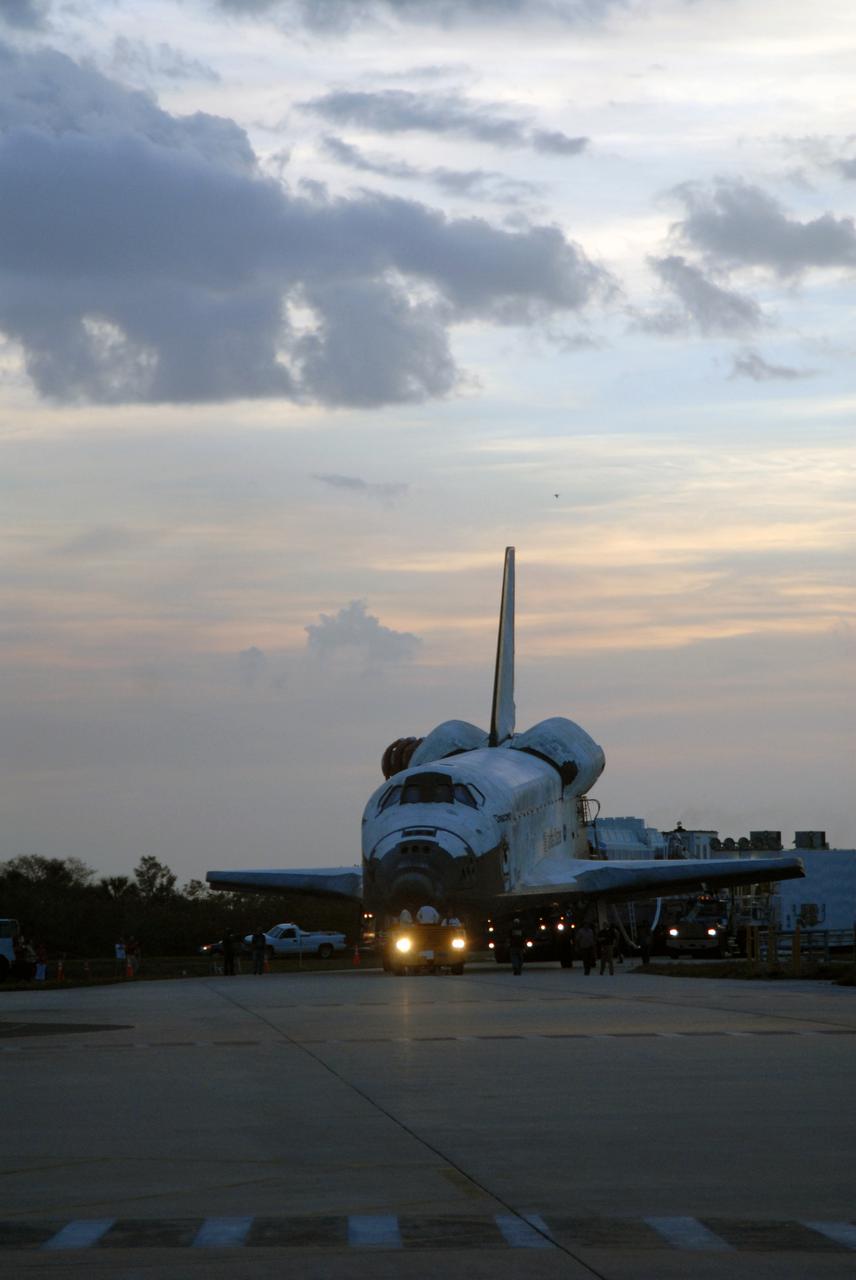
CAPE CANAVERAL, Fla. – Space shuttle Discovery is silhouetted against a fading sunset sky at NASA's Kennedy Space Center in Florida as it is towed to Orbiter Processing Facility 3. Discovery landed at 3:13:17 p.m. EDT after completing a 13-day journey of more than 5.3 million miles on the STS-119 mission. The mission was the 28th flight to the station, the 36th flight of Discovery and the 125th in the Space Shuttle Program, as well as the 70th landing at Kennedy. Photo credit: NASA_Jack Pfaller

Dr. Marcello Coradini, a European Space Agency (ESA) Program Coordinator, left, makes a point as Doug McCuiston, Director, Mars Exploration Program, looks ons during a Mars Program Update where prominent scientists discussed evidence of water on Mars, current Program status, including the 7th Anniversary of the Mars rovers and the upcoming Mars Science Laboratory mission and previewing exciting discoveries to come, Thursday, Jan. 13, 2011, at the Smithsonian National Air and Space Museum in Washington. Photo Credit: (NASA/Paul E. Alers)
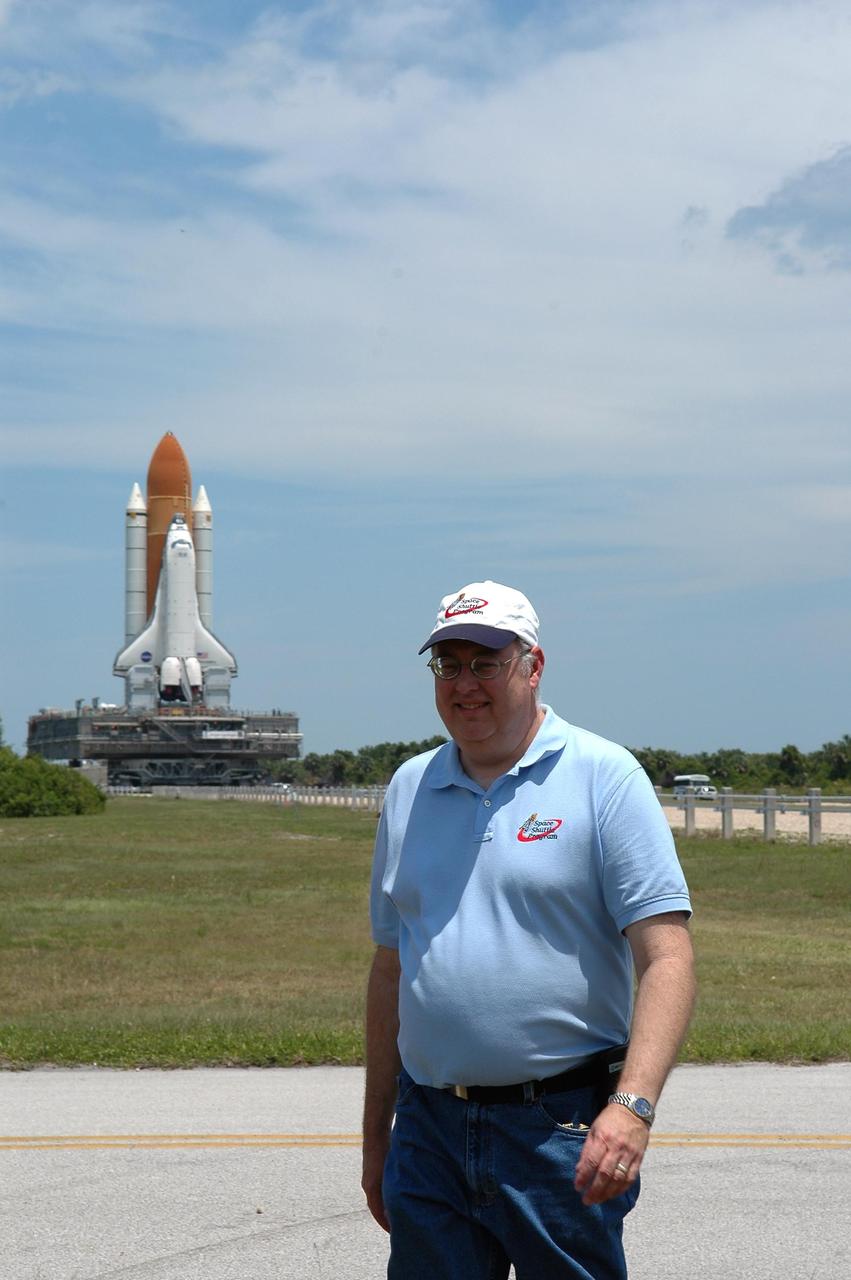
KENNEDY SPACE CENTER, FLA. -- Space Shuttle Program Director Wayne Hale is on hand to watch the historic moment of Space Shuttle Discovery's rollout to Launch Pad 39B. First motion of the shuttle (seen in the background) from NASA's Vehicle Assembly Building was at 12:45 p.m. EDT. The rollout is an important step before launch of Discovery on mission STS-121 to the International Space Station. Discovery's launch is targeted for July 1 in a launch window that extends to July 19. During the 12-day mission, Discovery's crew will test new hardware and techniques to improve shuttle safety, as well as deliver supplies and make repairs to the station. Photo credit: NASA/Kim Shiflett

CAPE CANAVERAL, Fla. -- The tail cone for space shuttle Discovery’s three replica shuttle main engines (RSMEs) arrives at Orbiter Processing Facility-1 at NASA’s Kennedy Space Center in Florida. The tail cone will be installed around Discovery’s RSMEs for protection. The work is part of the Space Shuttle Program’s transition and retirement processing of shuttle Discovery. Discovery is being prepared for display at the Smithsonian’s National Air and Space Museum, Steven F. Udvar-Hazy Center in Chantilly, Va. For more information, visit http://www.nasa.gov/shuttle. Photo credit: NASA/Jim Grossmann
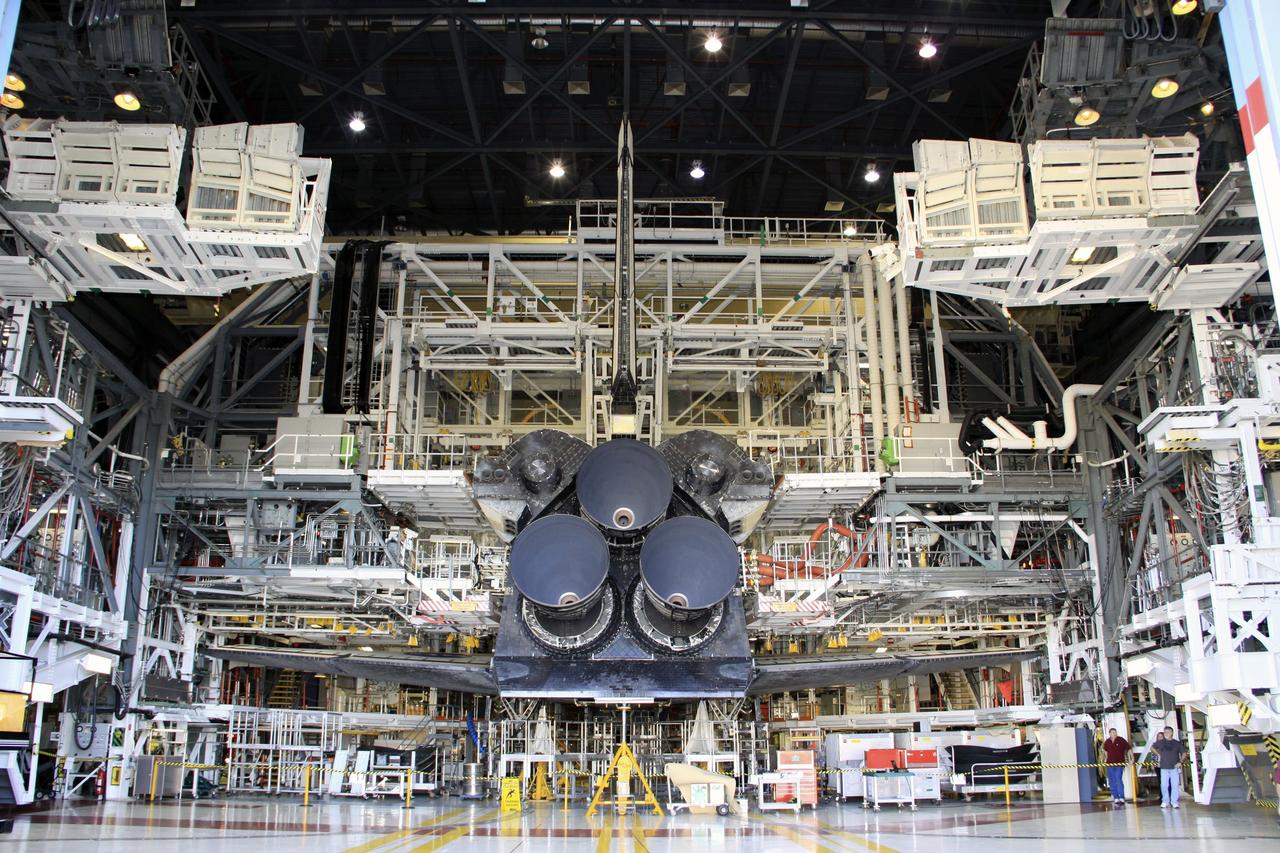
CAPE CANAVERAL, Fla. -- Inside Orbiter Processing Facility-1 at NASA’s Kennedy Space Center in Florida, space shuttle Discovery’s three replica shuttle main engines (RSMEs) are in view as technicians await the arrival of the tail cone. The tail cone will be installed around Discovery’s RSMEs for protection. The work is part of the Space Shuttle Program’s transition and retirement processing of shuttle Discovery. Discovery is being prepared for display at the Smithsonian’s National Air and Space Museum, Steven F. Udvar-Hazy Center in Chantilly, Va. For more information, visit http://www.nasa.gov/shuttle. Photo credit: NASA/Jim Grossmann
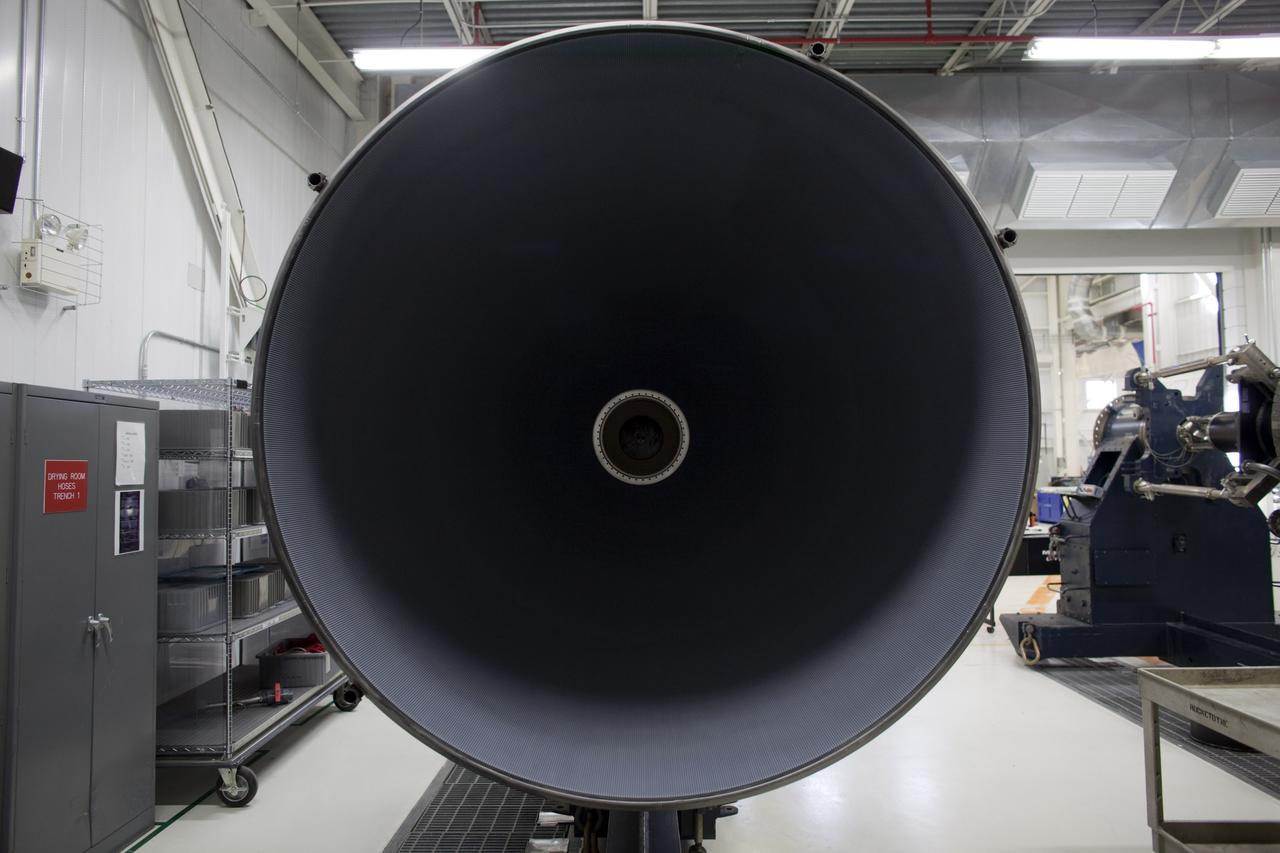
CAPE CANAVERAL, Fla. -- Inside the Pratt & Whitney Rocketdyne engine shop at NASA’s Kennedy Space Center in Florida, the interior of the engine bell of one of the replica shuttle main engines (RSMEs) can be seen. The RSMEs were created for space shuttle Discovery. The replica engines will be transported from the engine shop to the processing facility for installation on Discovery in January 2012. The work is part of the Space Shuttle Program’s transition and retirement processing of shuttle Discovery. Discovery is being prepared for display at the Smithsonian’s National Air and Space Museum, Steven F. Udvar-Hazy Center in Chantilly, Va. For more information, visit http://www.nasa.gov/shuttle. Photo credit: NASA/Dimitri Gerondidakis

CAPE CANAVERAL, Fla. -- Inside Orbiter Processing Facility-1 at NASA’s Kennedy Space Center in Florida, technicians monitor the progress as the tail cone for space shuttle Discovery’s three replica shuttle main engines (RSMEs) arrives. The tail cone will be installed around Discovery’s RSMEs for protection. The work is part of the Space Shuttle Program’s transition and retirement processing of shuttle Discovery. Discovery is being prepared for display at the Smithsonian’s National Air and Space Museum, Steven F. Udvar-Hazy Center in Chantilly, Va. For more information, visit http://www.nasa.gov/shuttle. Photo credit: NASA/Jim Grossmann
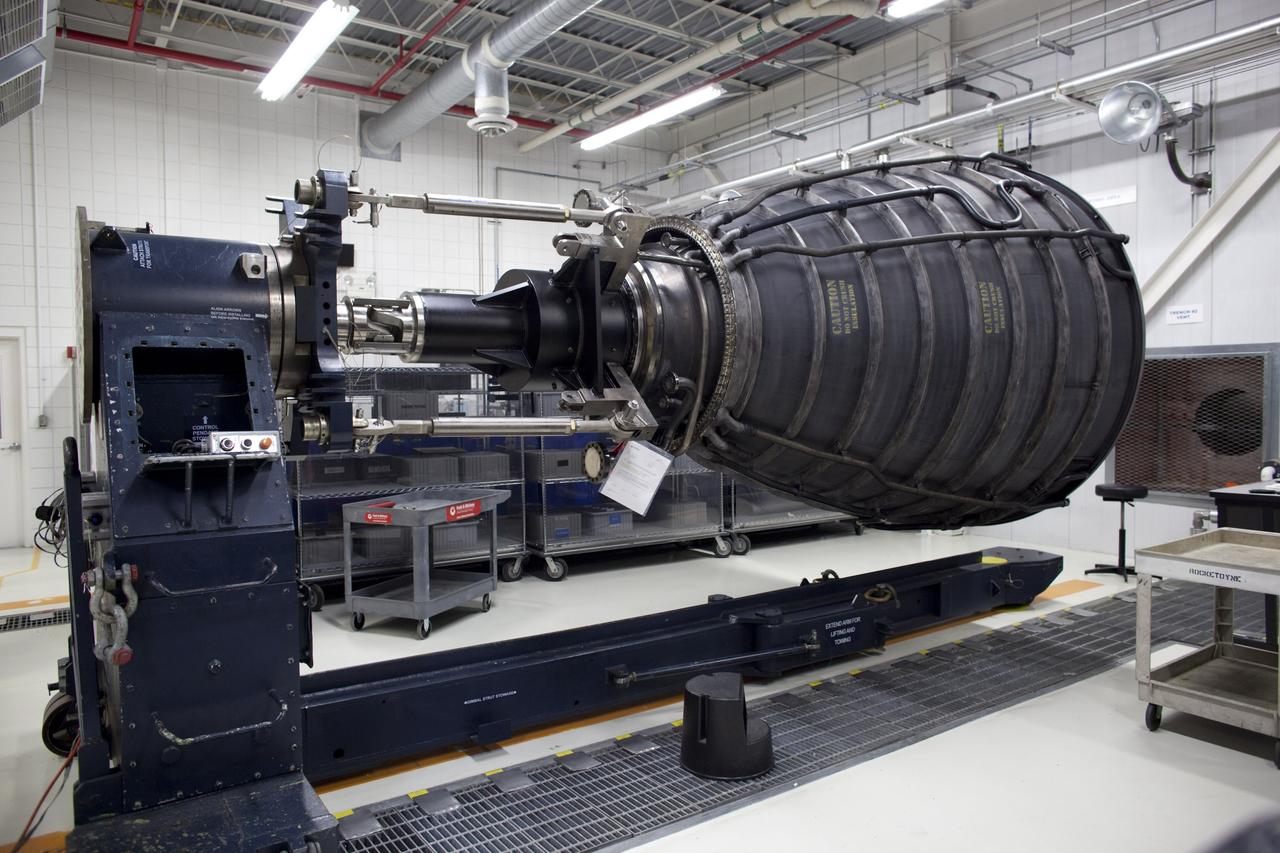
CAPE CANAVERAL, Fla. -- Inside the Pratt & Whitney Rocketdyne engine shop at NASA’s Kennedy Space Center in Florida, one of the three replica shuttle main engines (RSMEs) created for space shuttle Discovery is attached to the space shuttle main engine horizontal installer. The replica engines will be transported from the engine shop to the processing facility for installation on Discovery in January 2012. The work is part of the Space Shuttle Program’s transition and retirement processing of shuttle Discovery. Discovery is being prepared for display at the Smithsonian’s National Air and Space Museum, Steven F. Udvar-Hazy Center in Chantilly, Va. For more information, visit http://www.nasa.gov/shuttle. Photo credit: NASA/Dimitri Gerondidakis
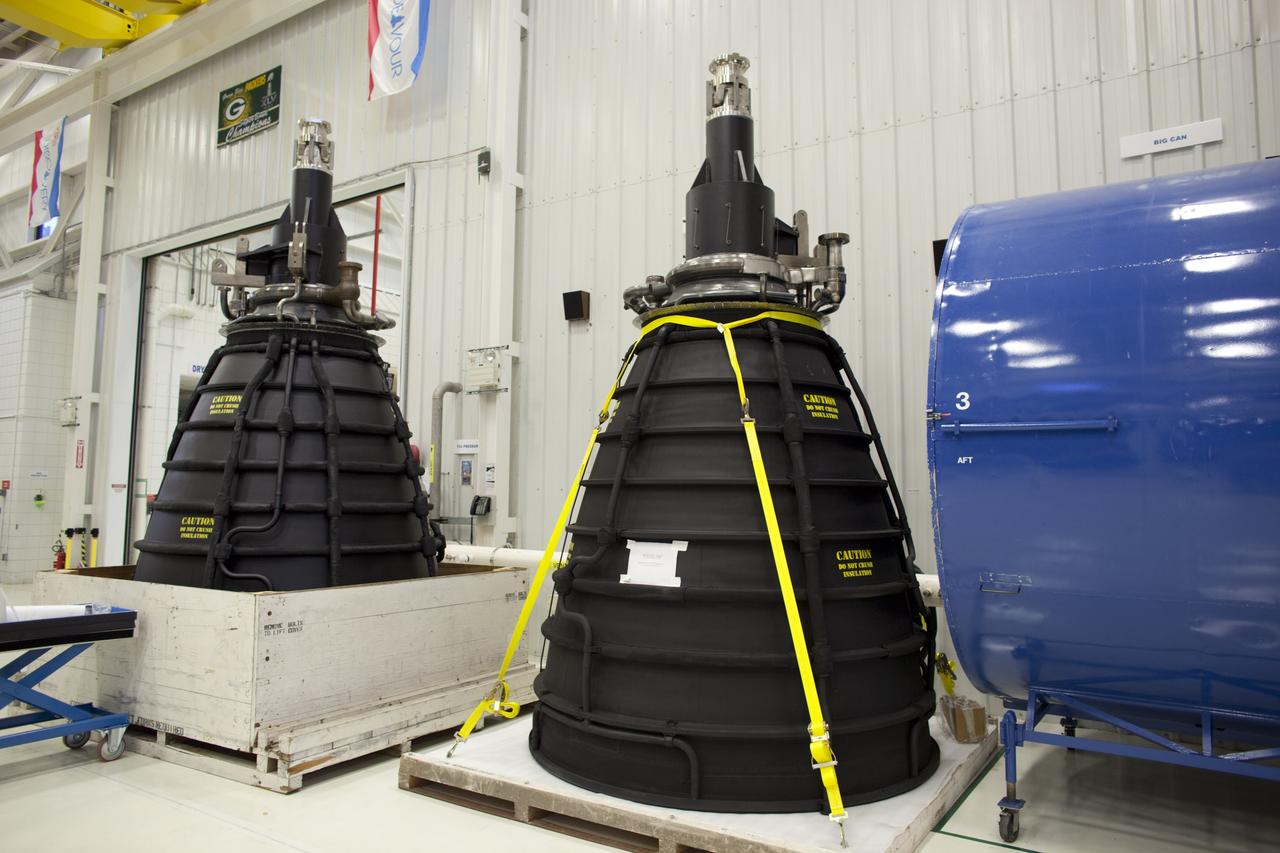
CAPE CANAVERAL, Fla. -- Inside the Pratt & Whitney Rocketdyne engine shop at NASA’s Kennedy Space Center in Florida, two of three completed replica shuttle main engines (RSMEs) sit on stands. The RSMEs were created for space shuttle Discovery. The replica engines will be transported from the engine shop to the processing facility for installation on Discovery in January 2012. The work is part of the Space Shuttle Program’s transition and retirement processing of shuttle Discovery. Discovery is being prepared for display at the Smithsonian’s National Air and Space Museum, Steven F. Udvar-Hazy Center in Chantilly, Va. For more information, visit http://www.nasa.gov/shuttle. Photo credit: NASA/Dimitri Gerondidakis
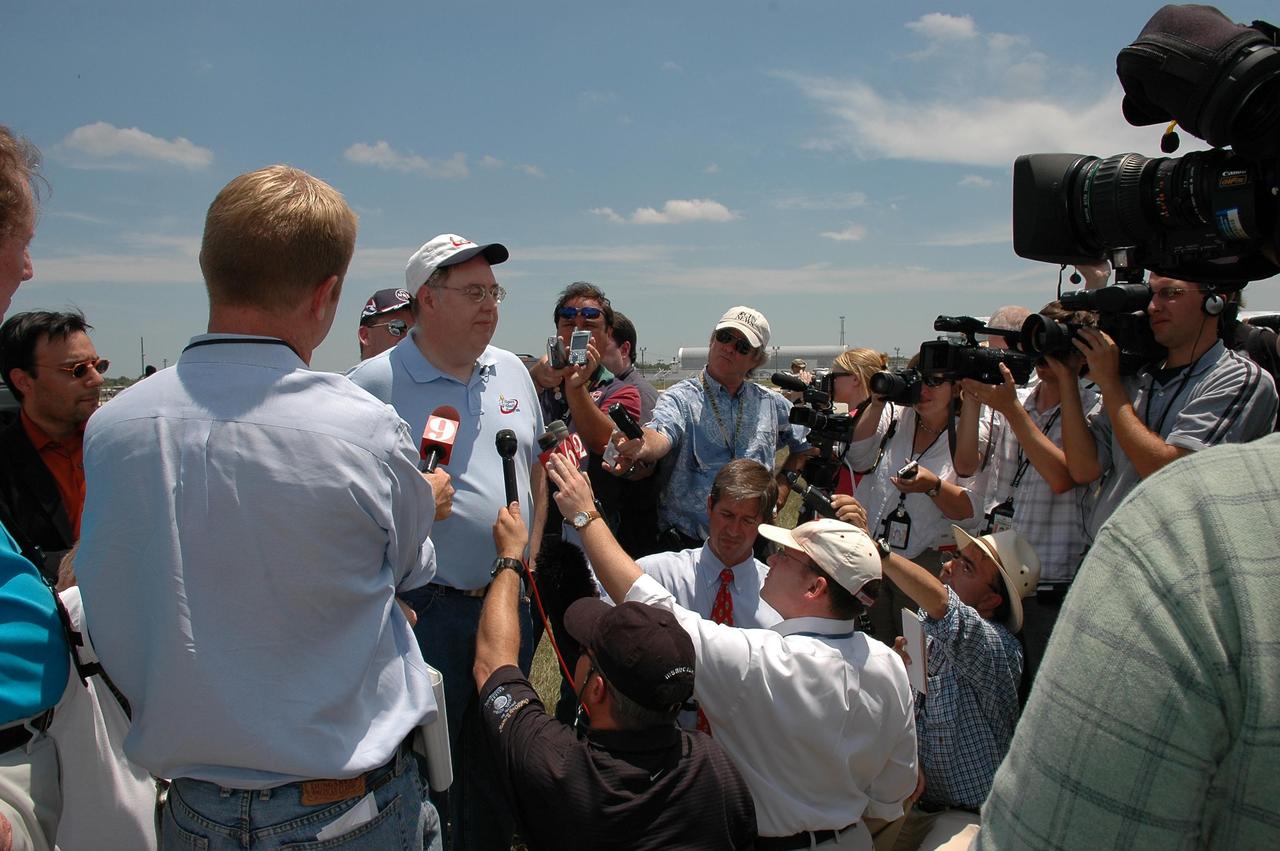
KENNEDY SPACE CENTER, FLA. -- Space Shuttle Program Director Wayne Hale talks to reporters about the rollout of Space Shuttle Discovery to Launch Pad 39B. First motion from NASA's Vehicle Assembly Building was at 12:45 p.m. EDT. The rollout is an important step before launch of Discovery on mission STS-121 to the International Space Station. Discovery's launch is targeted for July 1 in a launch window that extends to July 19. During the 12-day mission, Discovery's crew will test new hardware and techniques to improve shuttle safety, as well as deliver supplies and make repairs to the station. Photo credit: NASA/Kim Shiflett
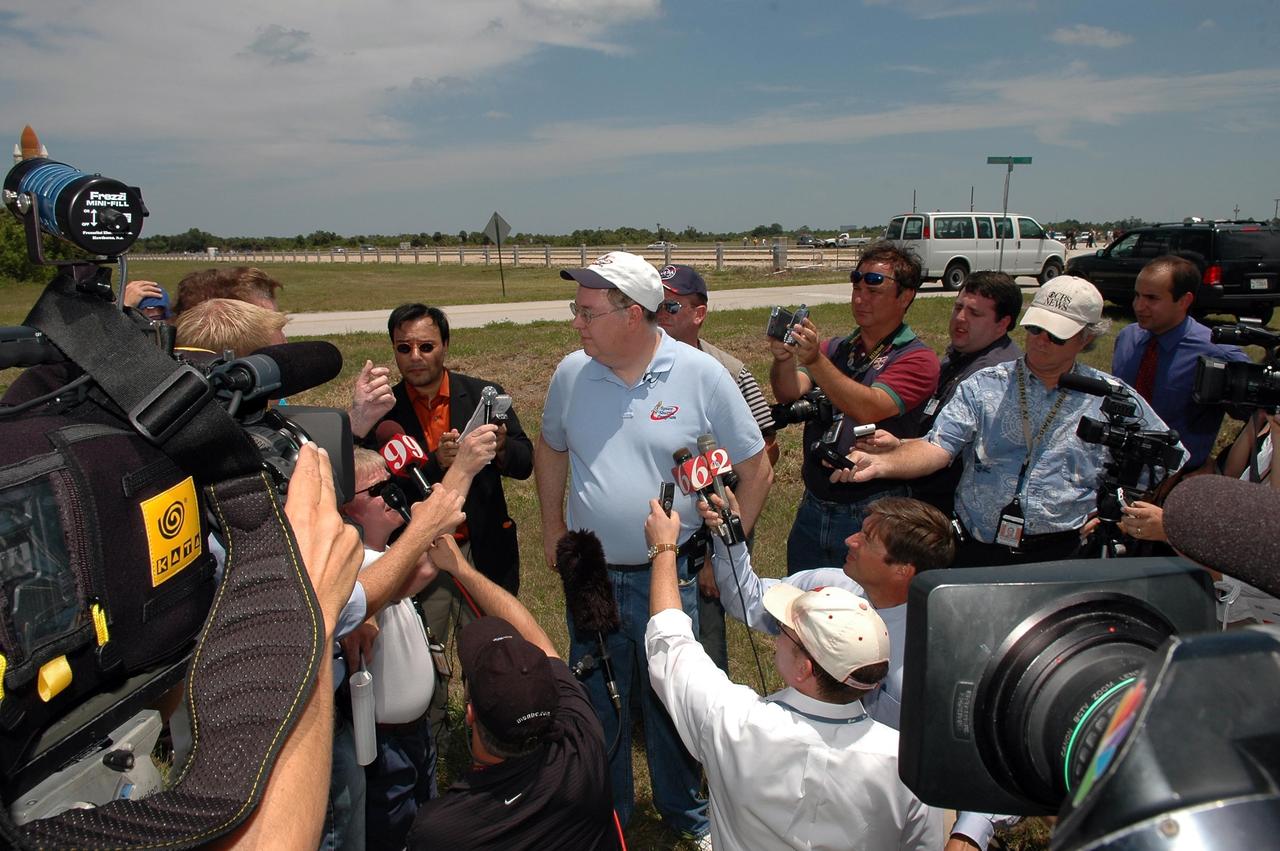
KENNEDY SPACE CENTER, FLA. -- Space Shuttle Program Director Wayne Hale talks to reporters about the rollout of Space Shuttle Discovery to Launch Pad 39B. First motion from NASA's Vehicle Assembly Building was at 12:45 p.m. EDT. The rollout is an important step before launch of Discovery on mission STS-121 to the International Space Station. Discovery's launch is targeted for July 1 in a launch window that extends to July 19. During the 12-day mission, Discovery's crew will test new hardware and techniques to improve shuttle safety, as well as deliver supplies and make repairs to the station. Photo credit: NASA/Kim Shiflett
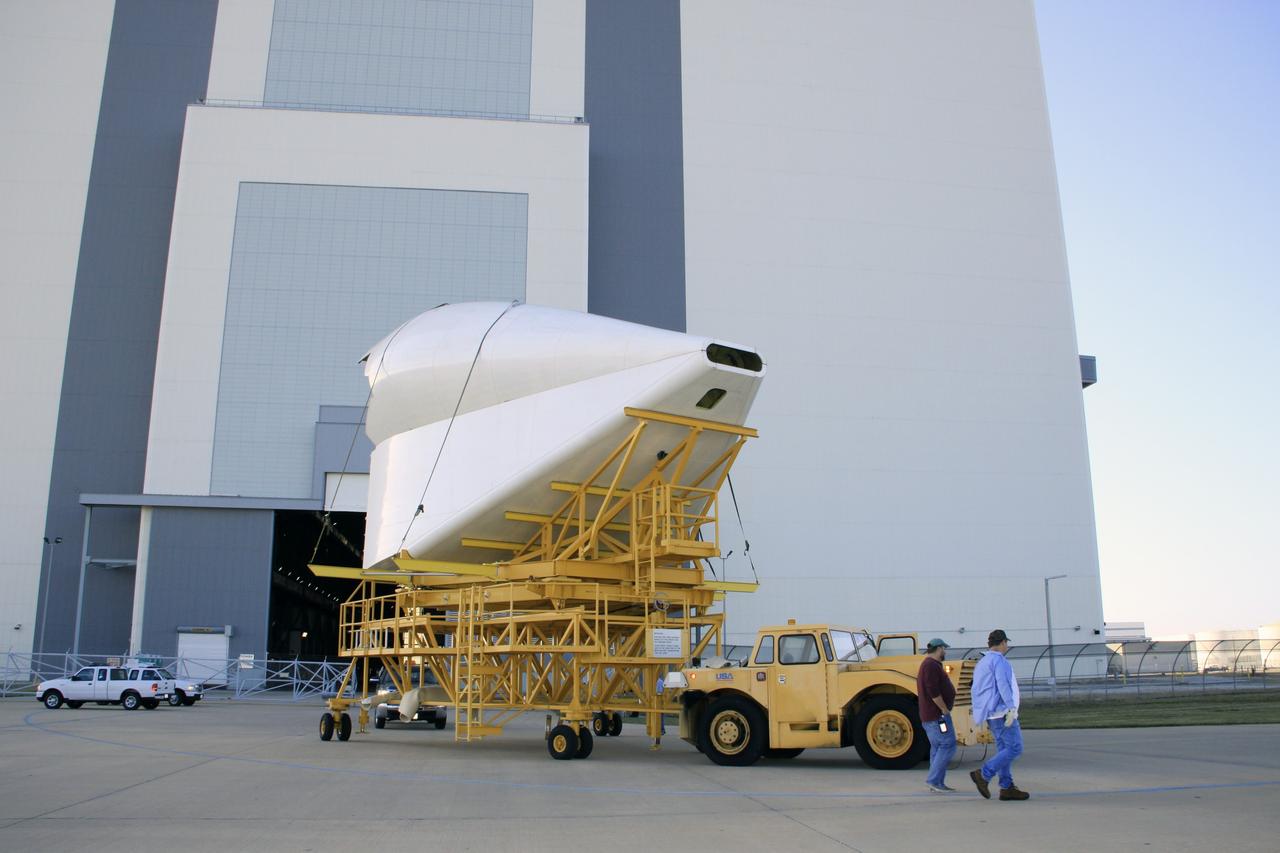
CAPE CANAVERAL, Fla. -- The tail cone for space shuttle Discovery’s three replica shuttle main engines (RSMEs) is being transported from the Vehicle Assembly Building to Orbiter Processing Facility-1 at NASA’s Kennedy Space Center in Florida. The tail cone will be installed around Discovery’s RSMEs for protection. The work is part of the Space Shuttle Program’s transition and retirement processing of shuttle Discovery. Discovery is being prepared for display at the Smithsonian’s National Air and Space Museum, Steven F. Udvar-Hazy Center in Chantilly, Va. For more information, visit http://www.nasa.gov/shuttle. Photo credit: NASA/Jim Grossmann
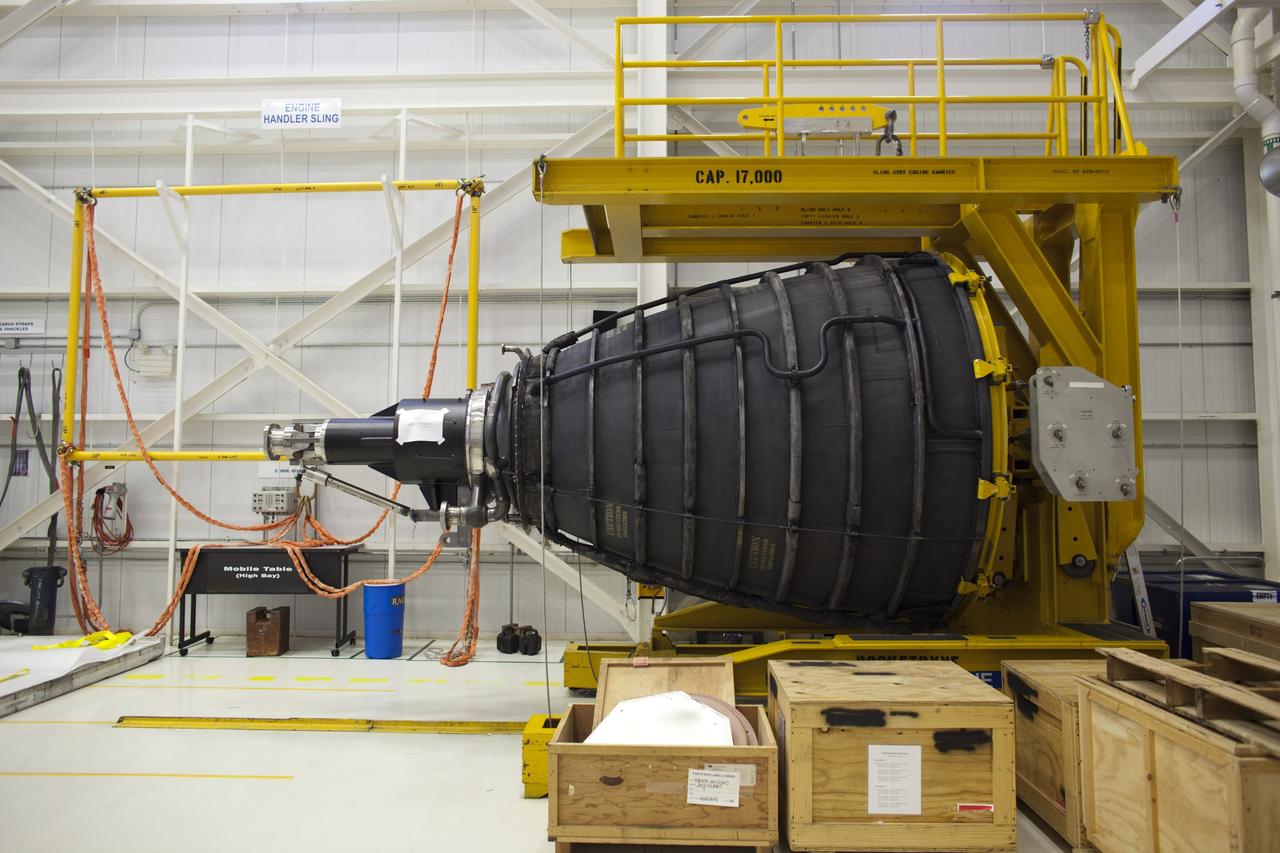
CAPE CANAVERAL, Fla. -- Inside the Pratt & Whitney Rocketdyne engine shop at NASA’s Kennedy Space Center in Florida, one of the three replica shuttle main engines (RSMEs) created for space shuttle Discovery is attached to the space shuttle main engine horizontal installer. The replica engines will be transported from the engine shop to the processing facility for installation on Discovery in January 2012. The work is part of the Space Shuttle Program’s transition and retirement processing of shuttle Discovery. Discovery is being prepared for display at the Smithsonian’s National Air and Space Museum, Steven F. Udvar-Hazy Center in Chantilly, Va. For more information, visit http://www.nasa.gov/shuttle. Photo credit: NASA/Dimitri Gerondidakis
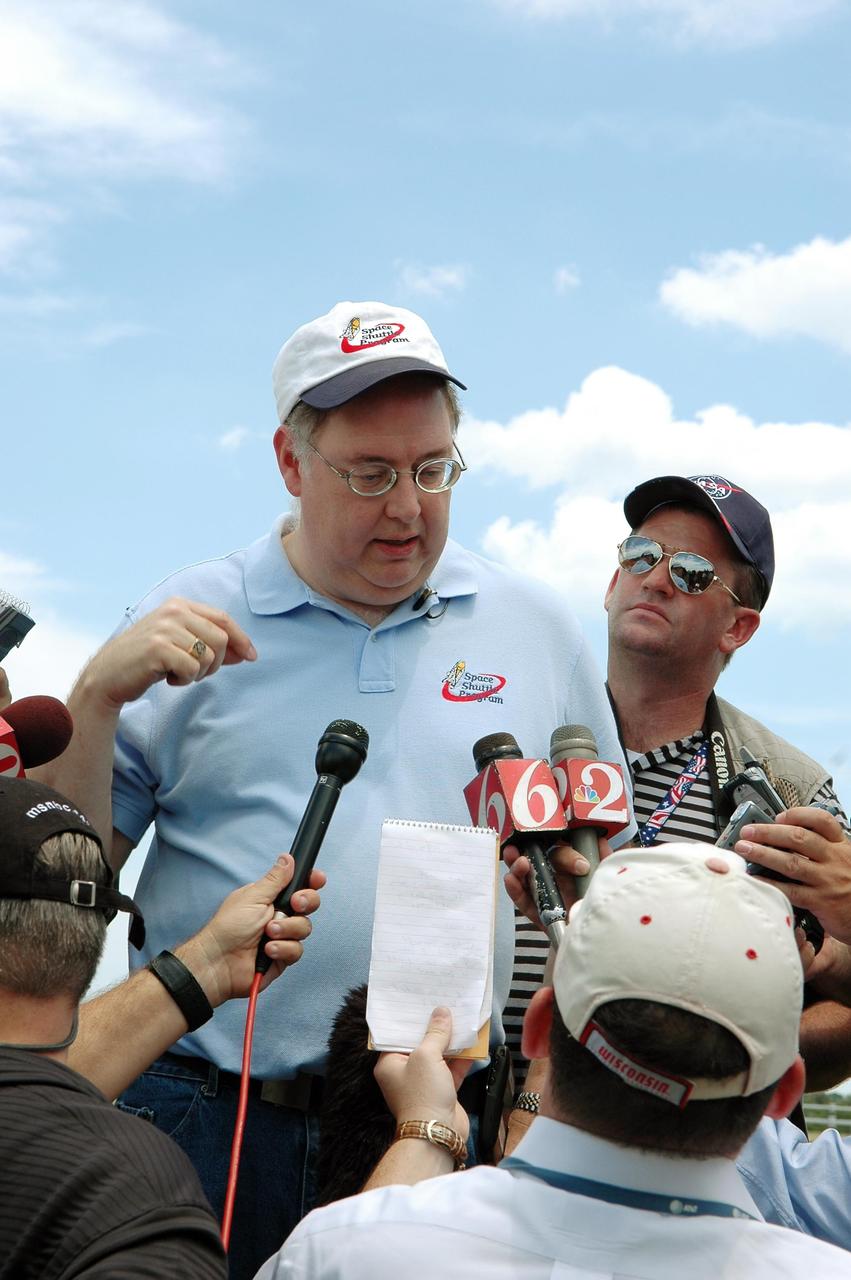
KENNEDY SPACE CENTER, FLA. -- Space Shuttle Program Director Wayne Hale talks to reporters about the rollout of Space Shuttle Discovery to Launch Pad 39B. First motion from NASA's Vehicle Assembly Building was at 12:45 p.m. EDT. The rollout is an important step before launch of Discovery on mission STS-121 to the International Space Station. Discovery's launch is targeted for July 1 in a launch window that extends to July 19. During the 12-day mission, Discovery's crew will test new hardware and techniques to improve shuttle safety, as well as deliver supplies and make repairs to the station. Photo credit: NASA/Kim Shiflett
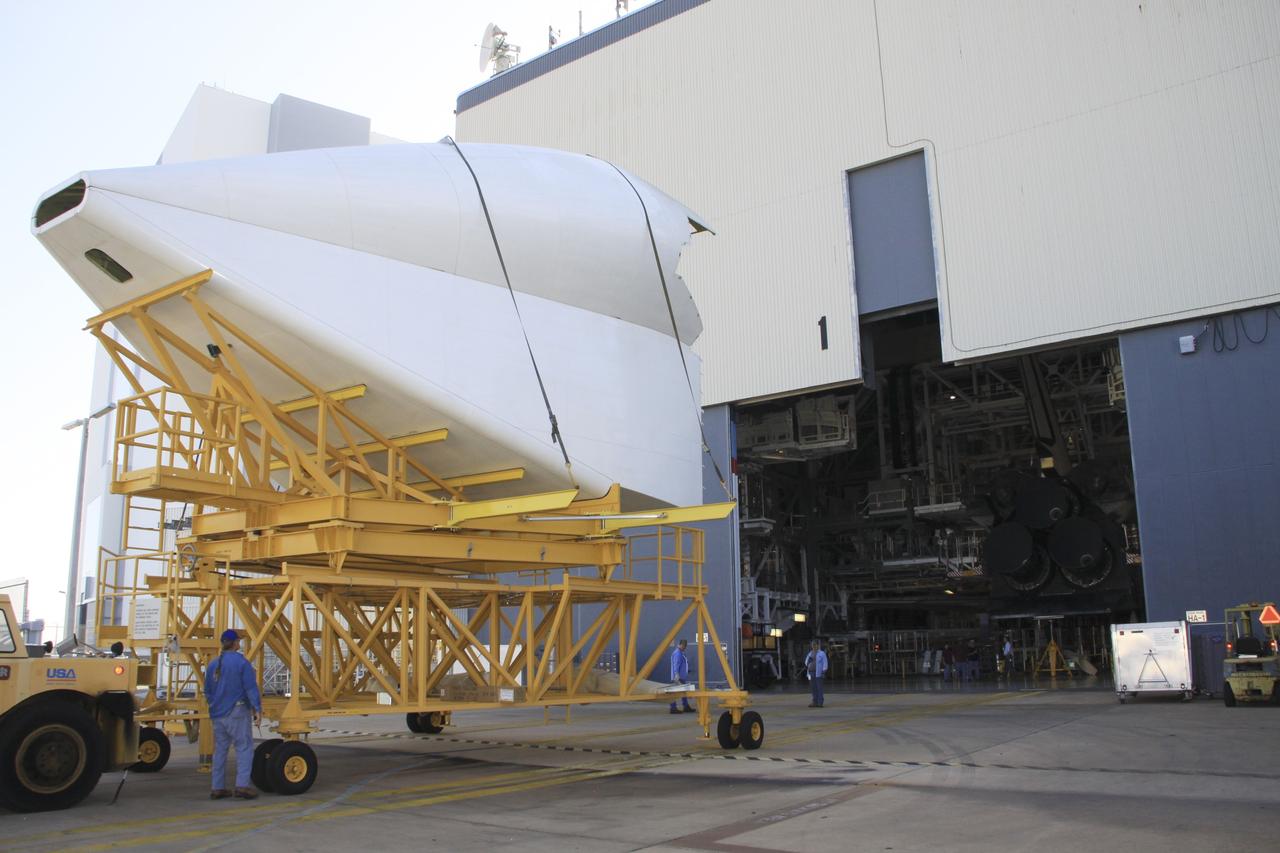
CAPE CANAVERAL, Fla. -- The tail cone for space shuttle Discovery’s three replica shuttle main engines (RSMEs) arrives at Orbiter Processing Facility-1 at NASA’s Kennedy Space Center in Florida. The tail cone will be installed around Discovery’s RSMEs for protection. The work is part of the Space Shuttle Program’s transition and retirement processing of shuttle Discovery. Discovery is being prepared for display at the Smithsonian’s National Air and Space Museum, Steven F. Udvar-Hazy Center in Chantilly, Va. For more information, visit http://www.nasa.gov/shuttle. Photo credit: NASA/Jim Grossmann
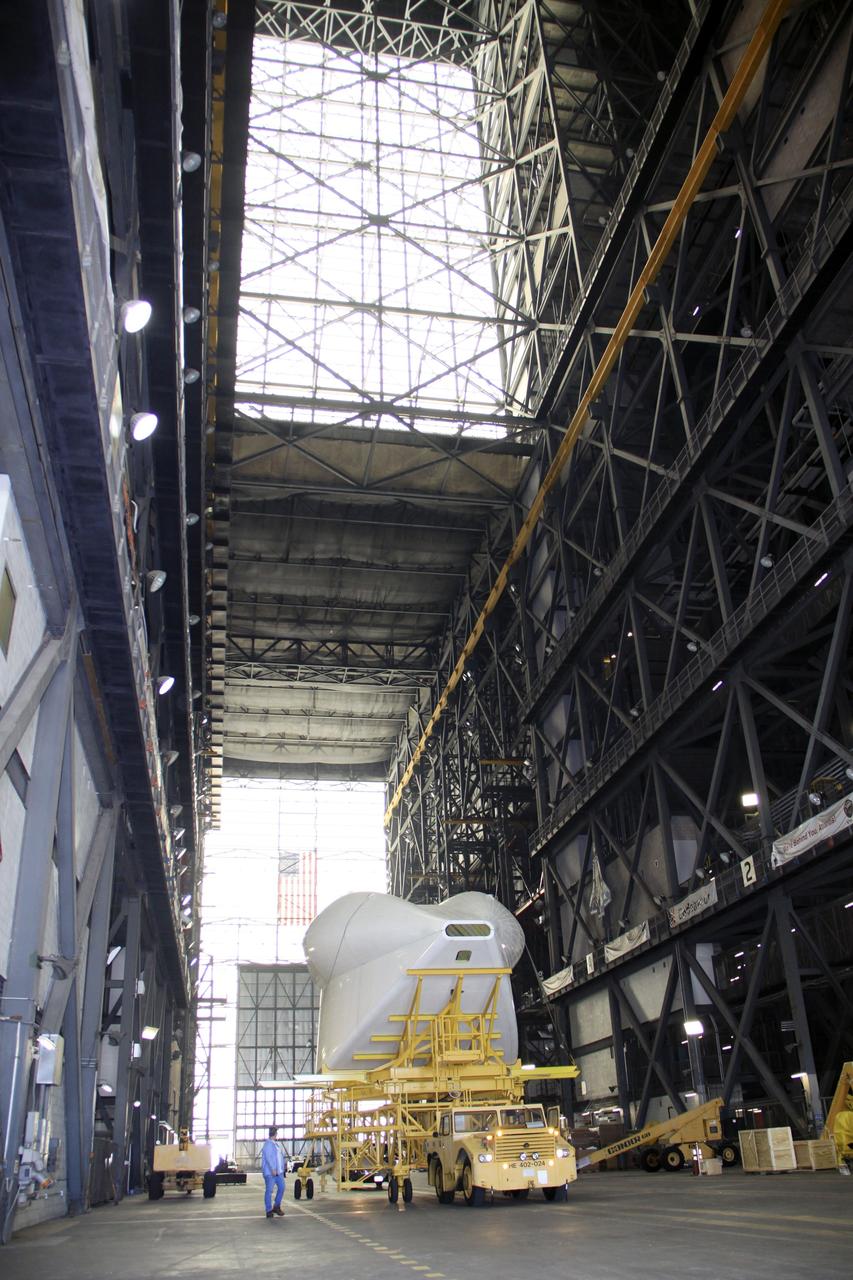
CAPE CANAVERAL, Fla. -- In the transfer aisle of the Vehicle Assembly Building at NASA’s Kennedy Space Center in Florida, the tail cone for space shuttle Discovery’s three replica shuttle main engines (RSMEs) is being transported to Orbiter Processing Facility-1. The tail cone will be installed around Discovery’s RSMEs for protection. The work is part of the Space Shuttle Program’s transition and retirement processing of shuttle Discovery. Discovery is being prepared for display at the Smithsonian’s National Air and Space Museum, Steven F. Udvar-Hazy Center in Chantilly, Va. For more information, visit http://www.nasa.gov/shuttle. Photo credit: NASA/Jim Grossmann
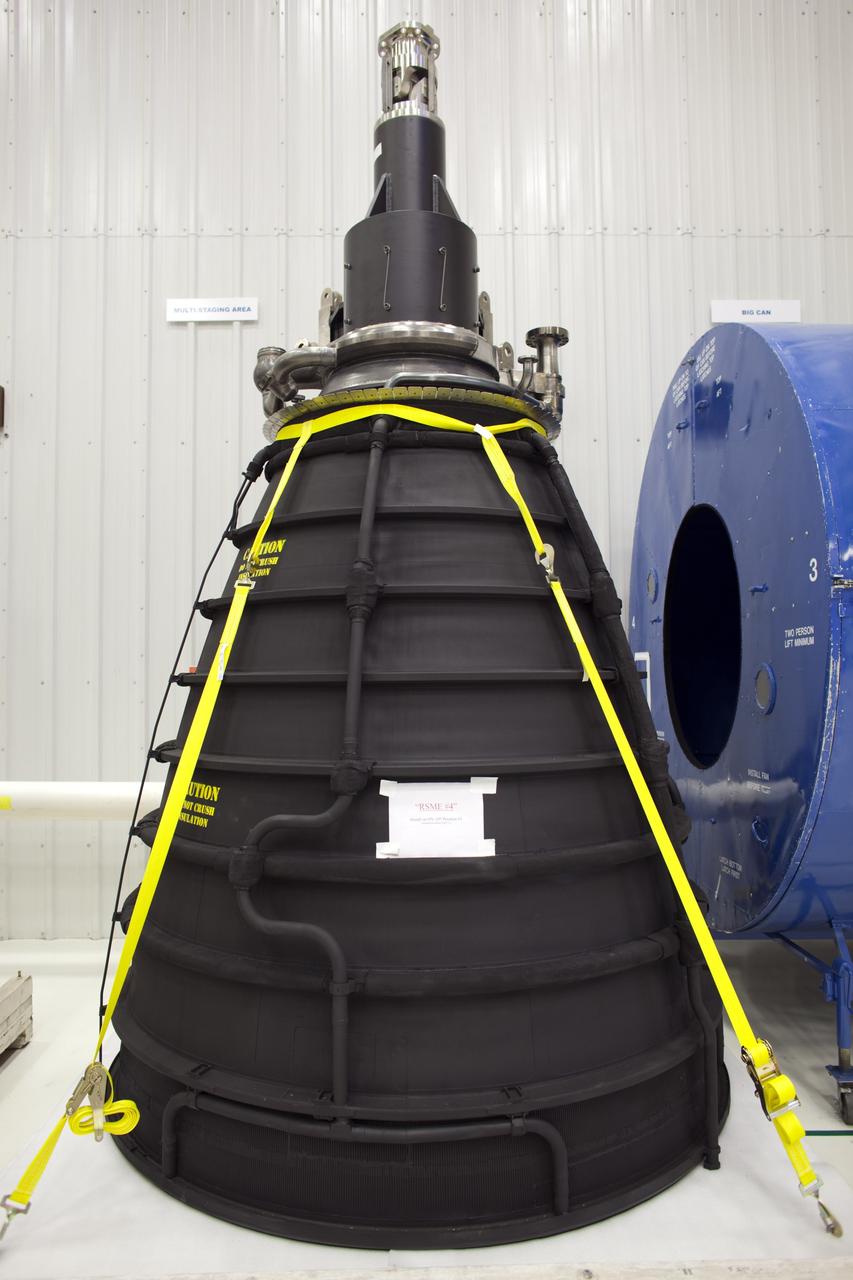
CAPE CANAVERAL, Fla. -- Inside the Pratt & Whitney Rocketdyne engine shop at NASA’s Kennedy Space Center in Florida, a completed replica shuttle main engine (RSME) sits on a stand. The RSME is one of three created for space shuttle Discovery. The replica engines will be transported from the engine shop to the processing facility for installation on Discovery in January 2012. The work is part of the Space Shuttle Program’s transition and retirement processing of shuttle Discovery. Discovery is being prepared for display at the Smithsonian’s National Air and Space Museum, Steven F. Udvar-Hazy Center in Chantilly, Va. For more information, visit http://www.nasa.gov/shuttle. Photo credit: NASA/Dimitri Gerondidakis
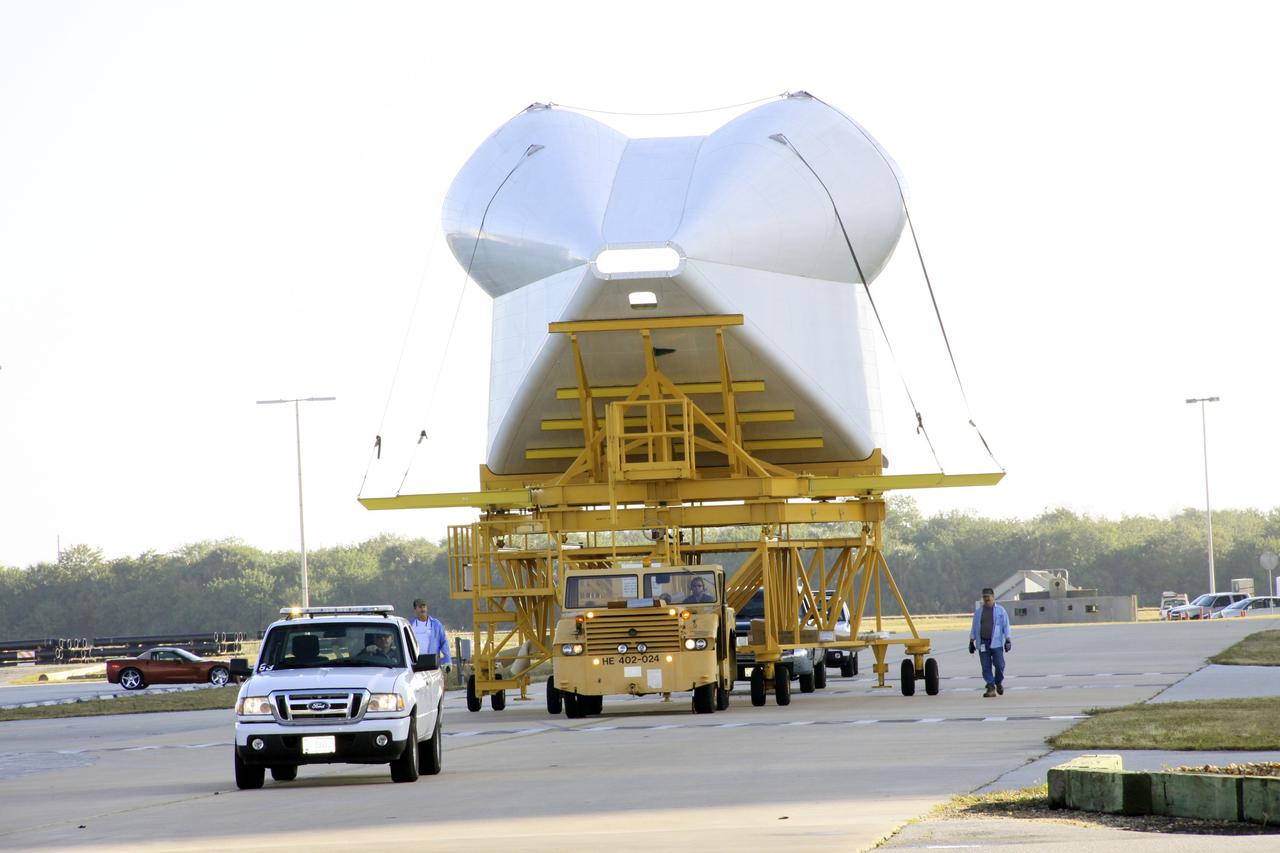
CAPE CANAVERAL, Fla. -- The tail cone for space shuttle Discovery’s three replica shuttle main engines (RSMEs) is being transported to Orbiter processing Facility-1 at NASA’s Kennedy Space Center in Florida. The tail cone will be installed around Discovery’s RSMEs for protection. The work is part of the Space Shuttle Program’s transition and retirement processing of shuttle Discovery. Discovery is being prepared for display at the Smithsonian’s National Air and Space Museum, Steven F. Udvar-Hazy Center in Chantilly, Va. For more information, visit http://www.nasa.gov/shuttle. Photo credit: NASA/Jim Grossmann
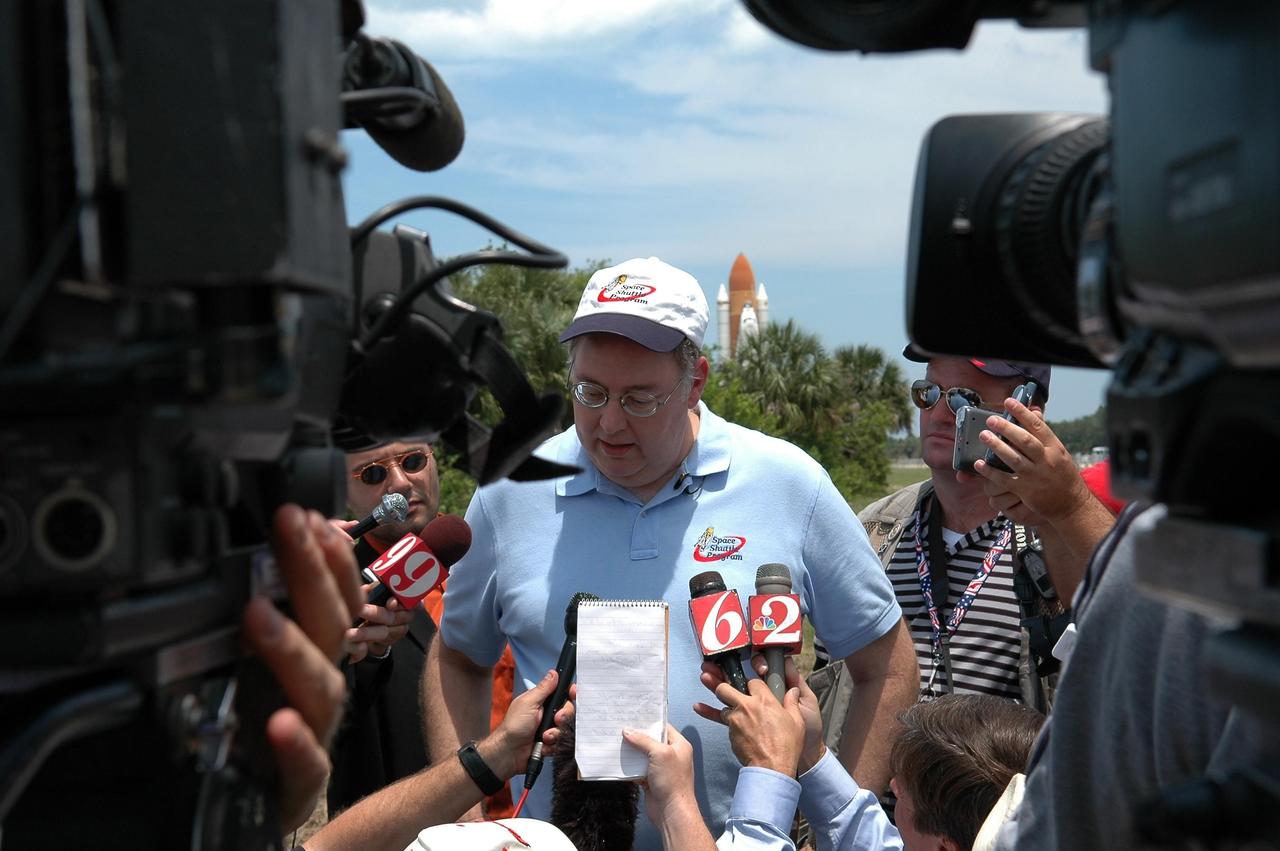
KENNEDY SPACE CENTER, FLA. -- Space Shuttle Program Director Wayne Hale talks to reporters about the rollout of Space Shuttle Discovery to Launch Pad 39B. First motion from NASA's Vehicle Assembly Building was at 12:45 p.m. EDT. The rollout is an important step before launch of Discovery on mission STS-121 to the International Space Station. Discovery's launch is targeted for July 1 in a launch window that extends to July 19. During the 12-day mission, Discovery's crew will test new hardware and techniques to improve shuttle safety, as well as deliver supplies and make repairs to the station. Photo credit: NASA/Kim Shiflett
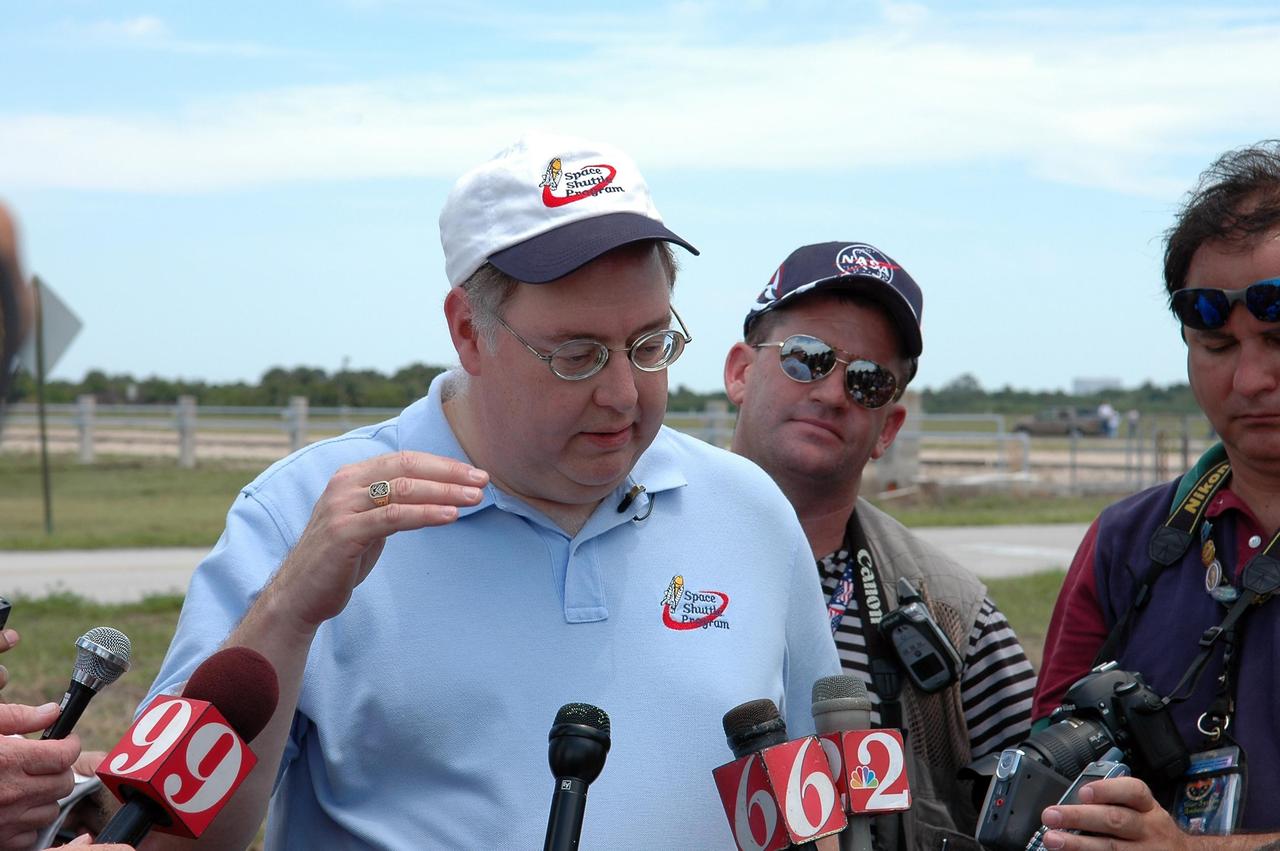
KENNEDY SPACE CENTER, FLA. -- Space Shuttle Program Director Wayne Hale talks to reporters about the rollout of Space Shuttle Discovery to Launch Pad 39B. First motion from NASA's Vehicle Assembly Building was at 12:45 p.m. EDT. The rollout is an important step before launch of Discovery on mission STS-121 to the International Space Station. Discovery's launch is targeted for July 1 in a launch window that extends to July 19. During the 12-day mission, Discovery's crew will test new hardware and techniques to improve shuttle safety, as well as deliver supplies and make repairs to the station. Photo credit: NASA/Kim Shiflett
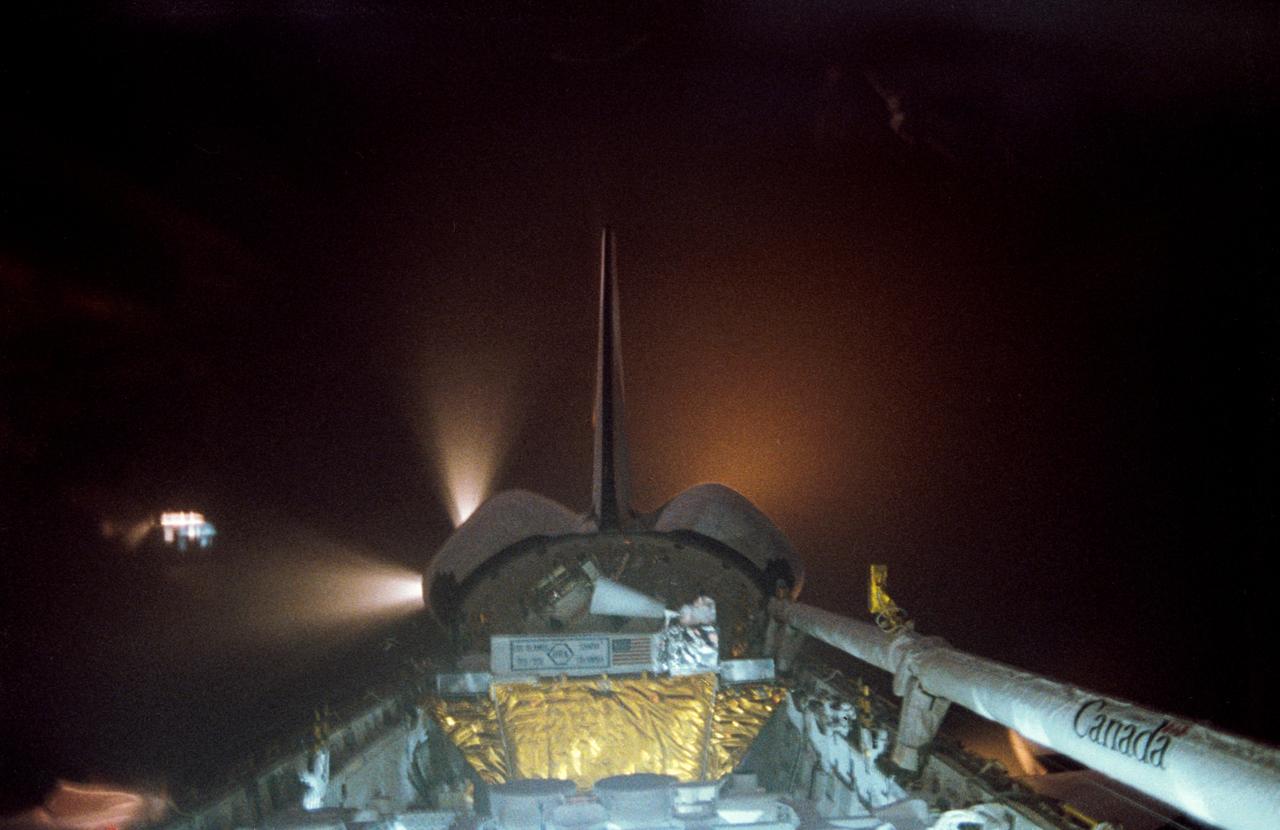
STS039-27-016 (28 April-6 May 1991) --- The Space Shuttle Discovery fires reaction control subsystem (RCS) thrusters in this 35mm frame, taken from inside the crew cabin. Seen in Discovery's payload bay are the tops of cannisters on the STP-1 payload, configured on the STS 39 Hitchhiker carrier; and the Air Force Program (AFP) 675 package. AFP-675 consists of the Cryogenic Infrared Radiance Instrumentation for Shuttle (CIRRIS)-1A; Far Ultraviolet Camera (FAR-UV) Experiment; Horizon Ultraviolet Program (HUP); Quadruple Ion Neutral Mass Spectrometer (QINMS); and the Uniformly Redundant Array (URA).
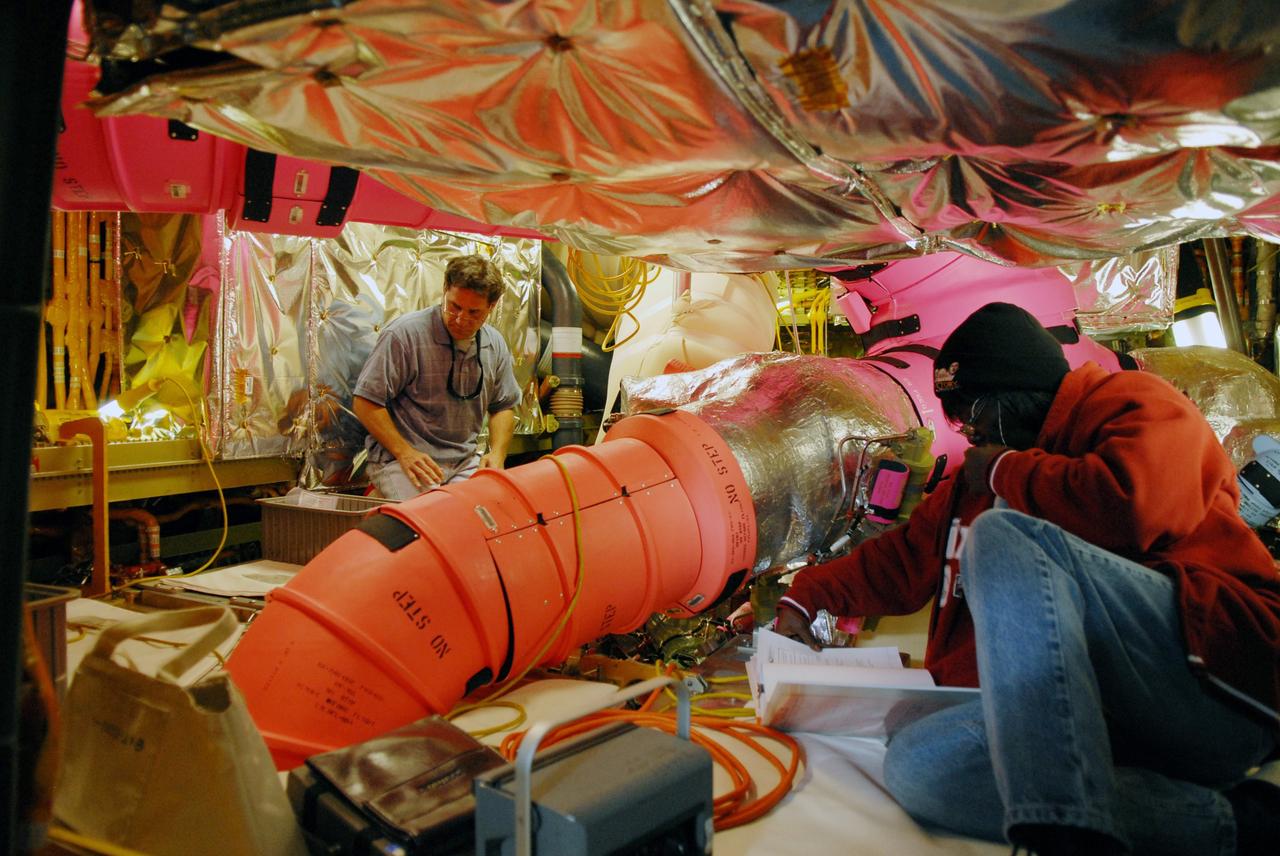
CAPE CANAVERAL, Fla. – On Launch Pad 39A at NASA's Kennedy Space Center in Florida, technicians install three gaseous hydrogen flow control valves on space shuttle Discovery. The valves were retested after installation. Part of the main propulsion system, the valves channel gaseous hydrogen from the main engines to the external tank. NASA and contractor teams have worked to identify what caused damage to a flow control valve on shuttle Endeavour during its November 2008 flight. Space Shuttle Program managers decided to replace Discovery's valves with others that have undergone a detailed eddy current inspection. Program managers will review the testing and determine whether to meet on March 6 for the Flight Readiness Review for the STS-119 mission. Launch of Discovery tentatively is targeted for March 12. Photo credit: NASA/Chris Rhodes
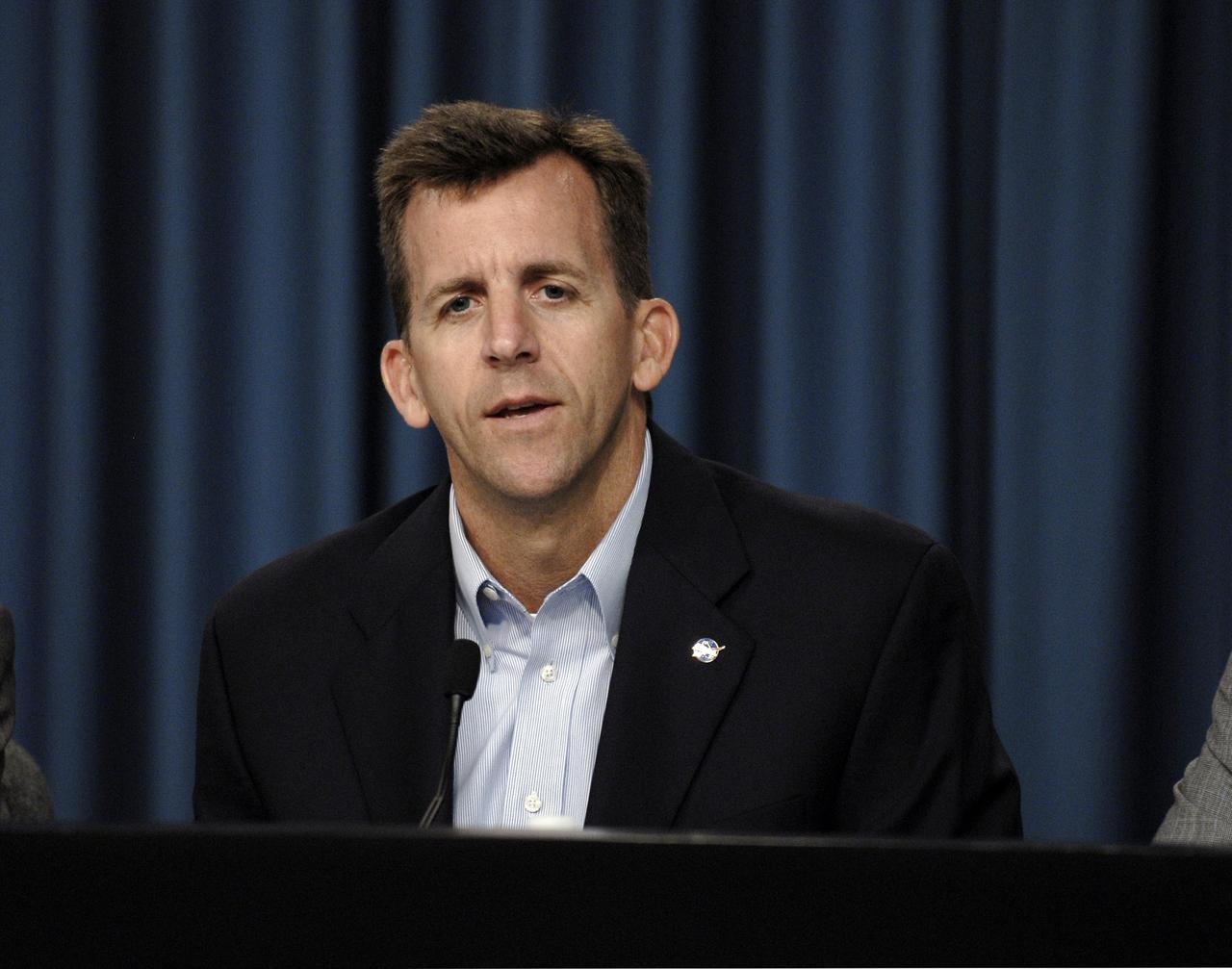
CAPE CANAVERAL, Fla. – At NASA's Kennedy Space Center in Florida, NASA Deputy Manager of Space Shuttle Program LeRoy Cain takes questions from the media during a news conference following landing of the space shuttle Discovery STS-119 mission to the International Space Station. Main gear touchdown was at 3:13:17 p.m. EDT. Nose gear touchdown was at 3:13:40 p.m. and wheels stop was at 3:14:45 p.m. Discovery delivered the final pair of large power-generating solar array wings and the S6 truss segment. The mission was the 28th flight to the station, the 36th flight of Discovery and the 125th in the Space Shuttle Program, as well as the 70th landing at Kennedy. Photo credit: NASA/Kim Shiflett
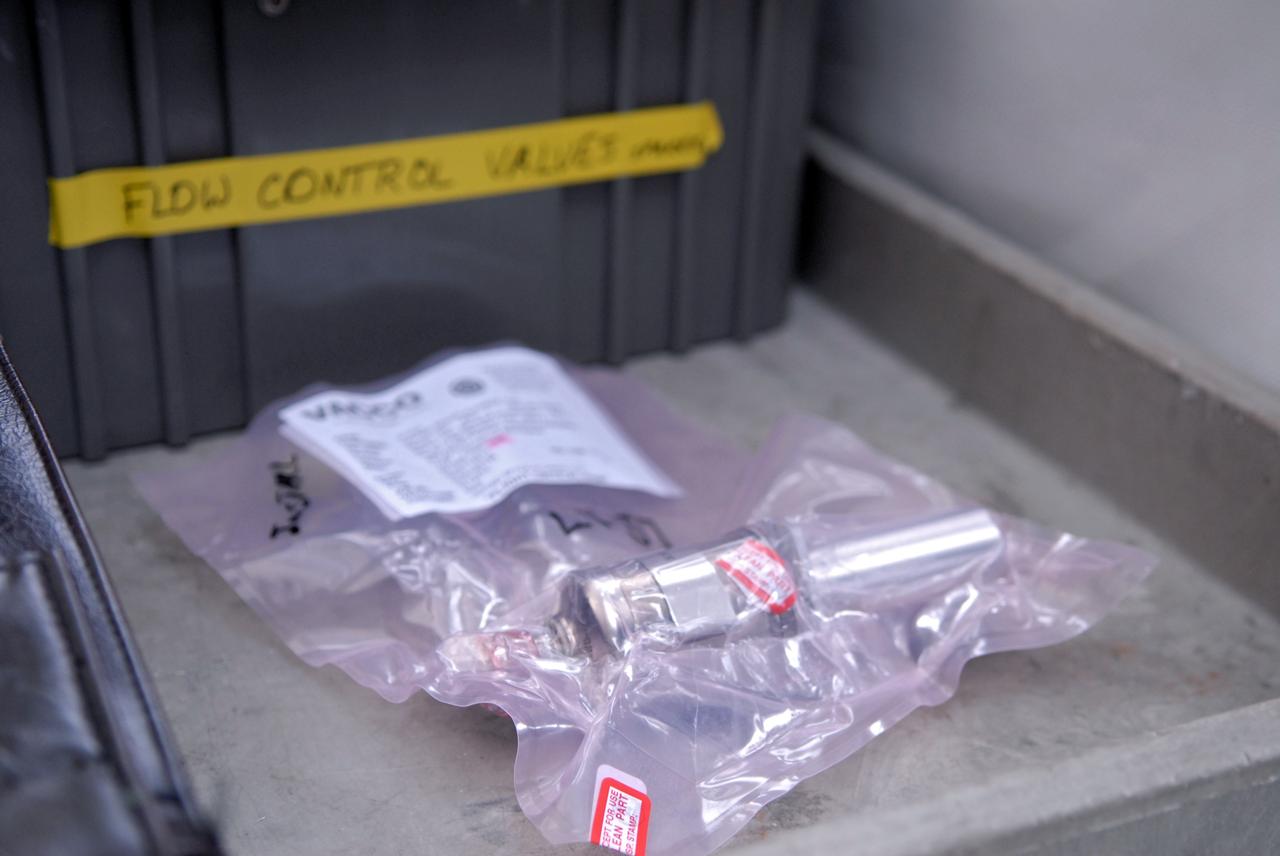
CAPE CANAVERAL, Fla. – One of the three thoroughly inspected gaseous hydrogen flow control valves is shown after its arrival at NASA's Kennedy Space Center in Florida. Technicians installed and retested them in space shuttle Discovery. Part of the main propulsion system, the valves channel gaseous hydrogen from the main engines to the external tank. NASA and contractor teams have worked to identify what caused damage to a flow control valve on shuttle Endeavour during its November 2008 flight. Space Shuttle Program managers decided to replace Discovery's valves with others that have undergone a detailed eddy current inspection. Program managers will review the testing and determine whether to meet on March 6 for the Flight Readiness Review for the STS-119 mission. Launch of Discovery tentatively is targeted for March 12. Photo credit: NASA/Chris Rhodes
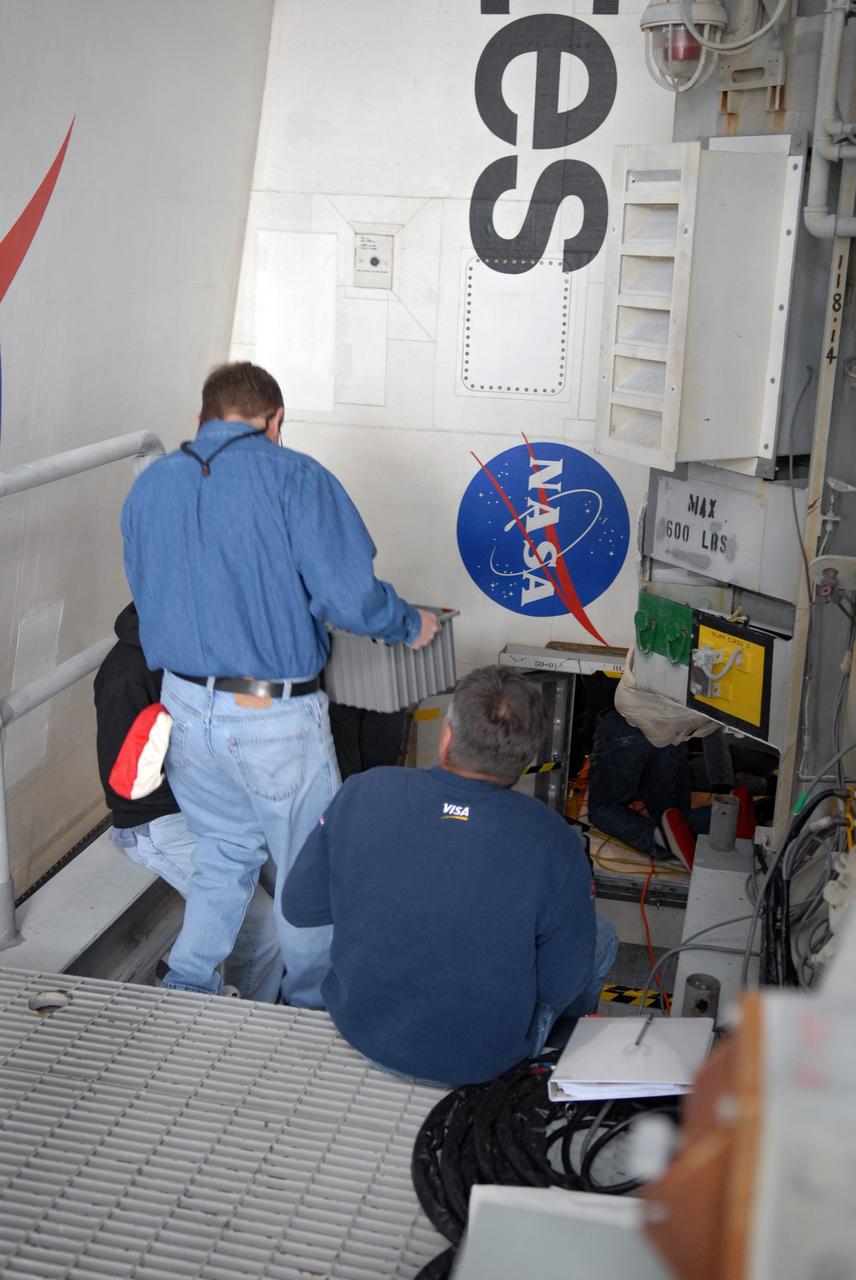
CAPE CANAVERAL, Fla. – On Launch Pad 39A at NASA's Kennedy Space Center in Florida, technicians prepare to install three gaseous hydrogen flow control valves on space shuttle Discovery. The valves were retested after installation. Part of the main propulsion system, the valves channel gaseous hydrogen from the main engines to the external tank. NASA and contractor teams have worked to identify what caused damage to a flow control valve on shuttle Endeavour during its November 2008 flight. Space Shuttle Program managers decided to replace Discovery's valves with others that have undergone a detailed eddy current inspection. Program managers will review the testing and determine whether to meet on March 6 for the Flight Readiness Review for the STS-119 mission. Launch of Discovery tentatively is targeted for March 12. Photo credit: NASA/Chris Rhodes
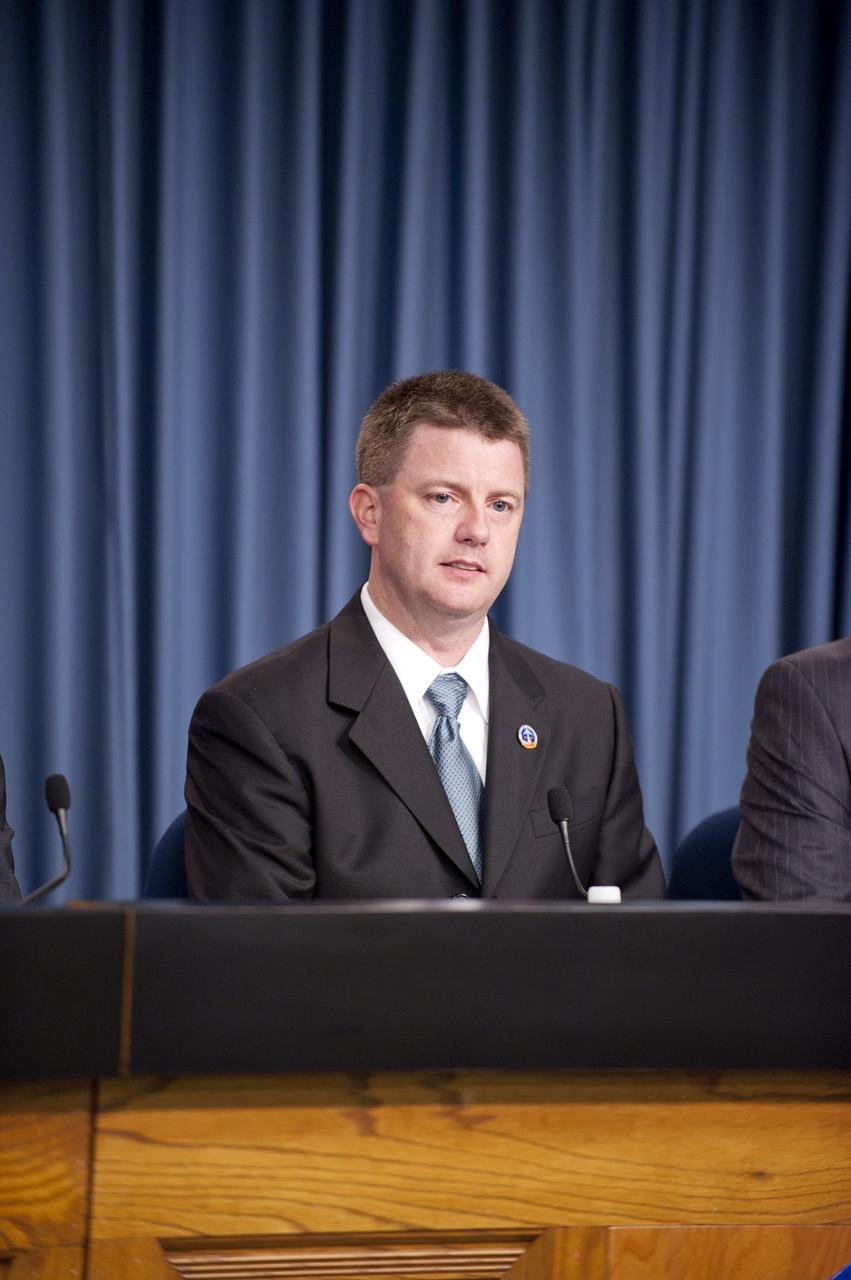
CAPE CANAVERAL, Fla. -- Space Shuttle Program Launch Integration Manager Mike Moses addresses media at a news conference held in the Press Site auditorium at NASA's Kennedy Space Center in Florida following today's successful launch of space shuttle Discovery. Shuttle Discovery lifted off at 4:53 p.m. EST. The six-member crew will deliver the Permanent Multipurpose Module, packed with supplies and critical spare parts, as well as Robonaut 2, the dexterous humanoid astronaut helper, to the orbiting outpost. Discovery is flying on its 39th and final mission and is scheduled to be retired following STS-133. This is the 133rd Space Shuttle Program mission and the 35th shuttle voyage to the space station. For more information on the STS-133 mission, visit www.nasa.gov/mission_pages/shuttle/shuttlemissions/sts133/. Photo credit: NASA/Kim Shiflett
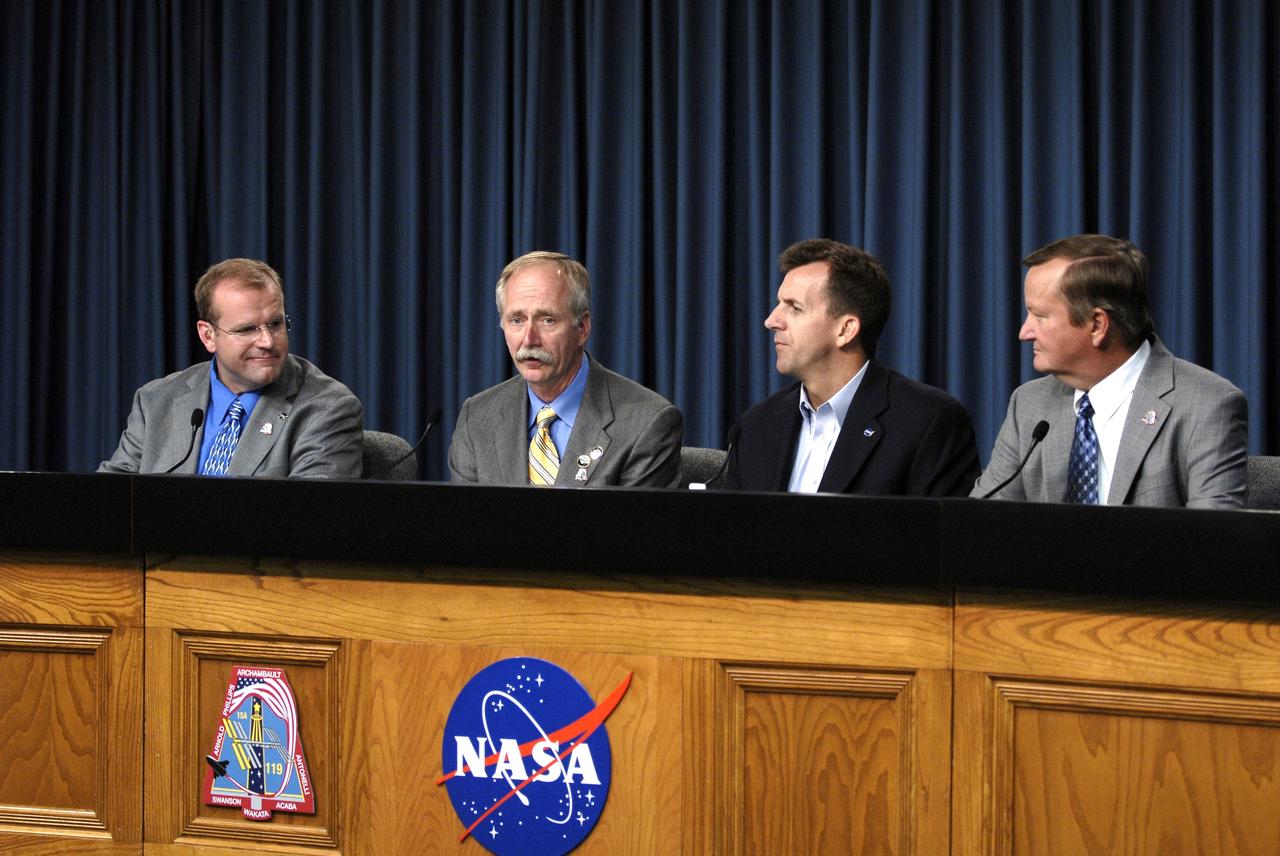
CAPE CANAVERAL, Fla. – At NASA's Kennedy Space Center in Florida, NASA managers participate in a news conference following landing of the space shuttle Discovery STS-119 mission to the International Space Station. From left are NASA Kennedy Space Center News Chief Allard Beutel, NASA Associate Administrator for Space Operations Bill Gerstenmaier, NASA Deputy Manager of Space Shuttle Program LeRoy Cain and NASA Shuttle Launch Director Mike Leinbach. Main gear touchdown was at 3:13:17 p.m. EDT. Nose gear touchdown was at 3:13:40 p.m. and wheels stop was at 3:14:45 p.m. Discovery delivered the final pair of large power-generating solar array wings and the S6 truss segment. The mission was the 28th flight to the station, the 36th flight of Discovery and the 125th in the Space Shuttle Program, as well as the 70th landing at Kennedy. Photo credit: NASA/Kim Shiflett
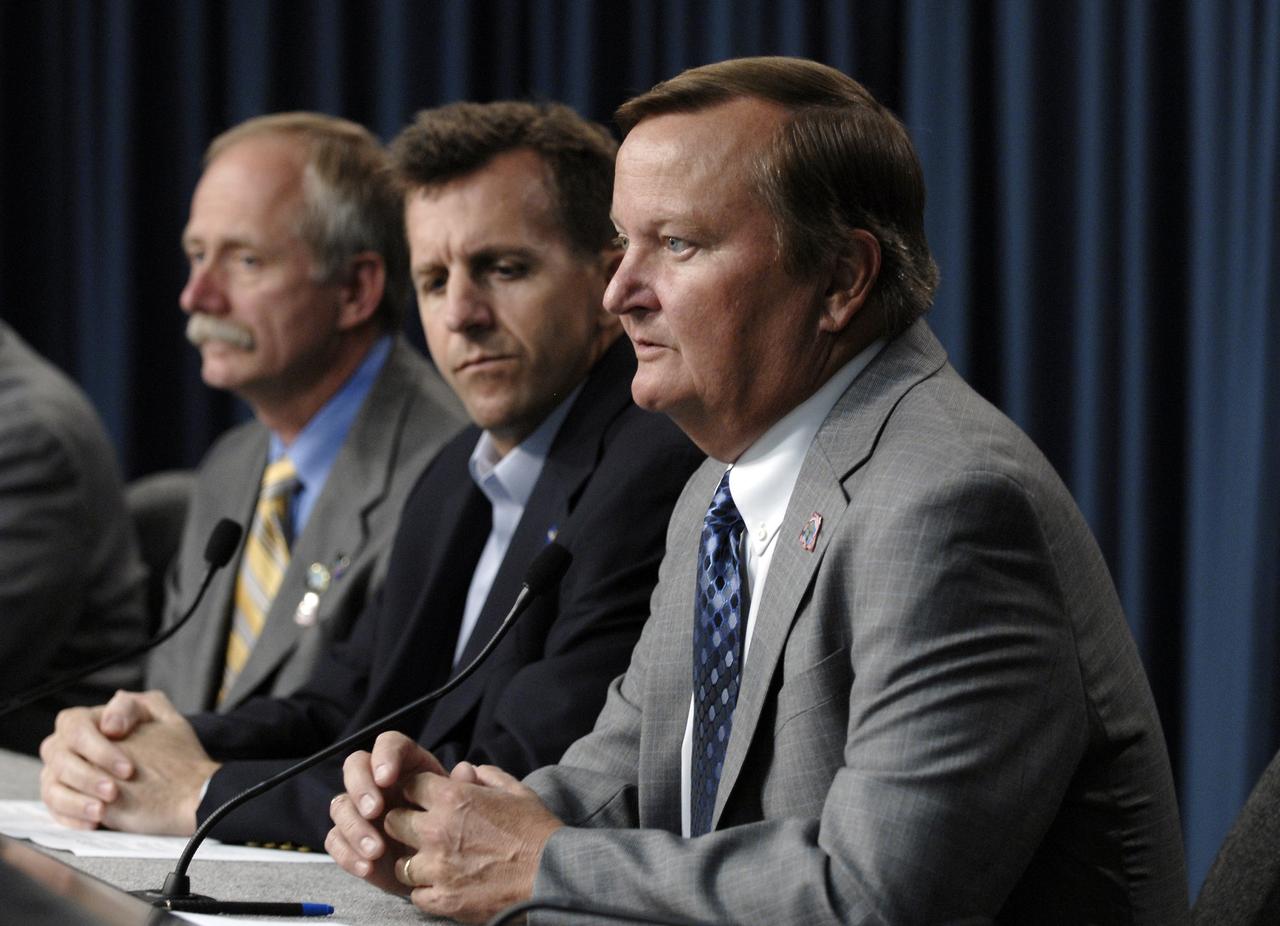
CAPE CANAVERAL, Fla. – At NASA's Kennedy Space Center in Florida, NASA Deputy Manager of Space Shuttle Program LeRoy Cain takes questions from the media during a news conference following landing of the space shuttle Discovery STS-119 mission to the International Space Station. Main gear touchdown was at 3:13:17 p.m. EDT. Nose gear touchdown was at 3:13:40 p.m. and wheels stop was at 3:14:45 p.m. Discovery delivered the final pair of large power-generating solar array wings and the S6 truss segment. The mission was the 28th flight to the station, the 36th flight of Discovery and the 125th in the Space Shuttle Program, as well as the 70th landing at Kennedy. Photo credit: NASA/Kim Shiflett
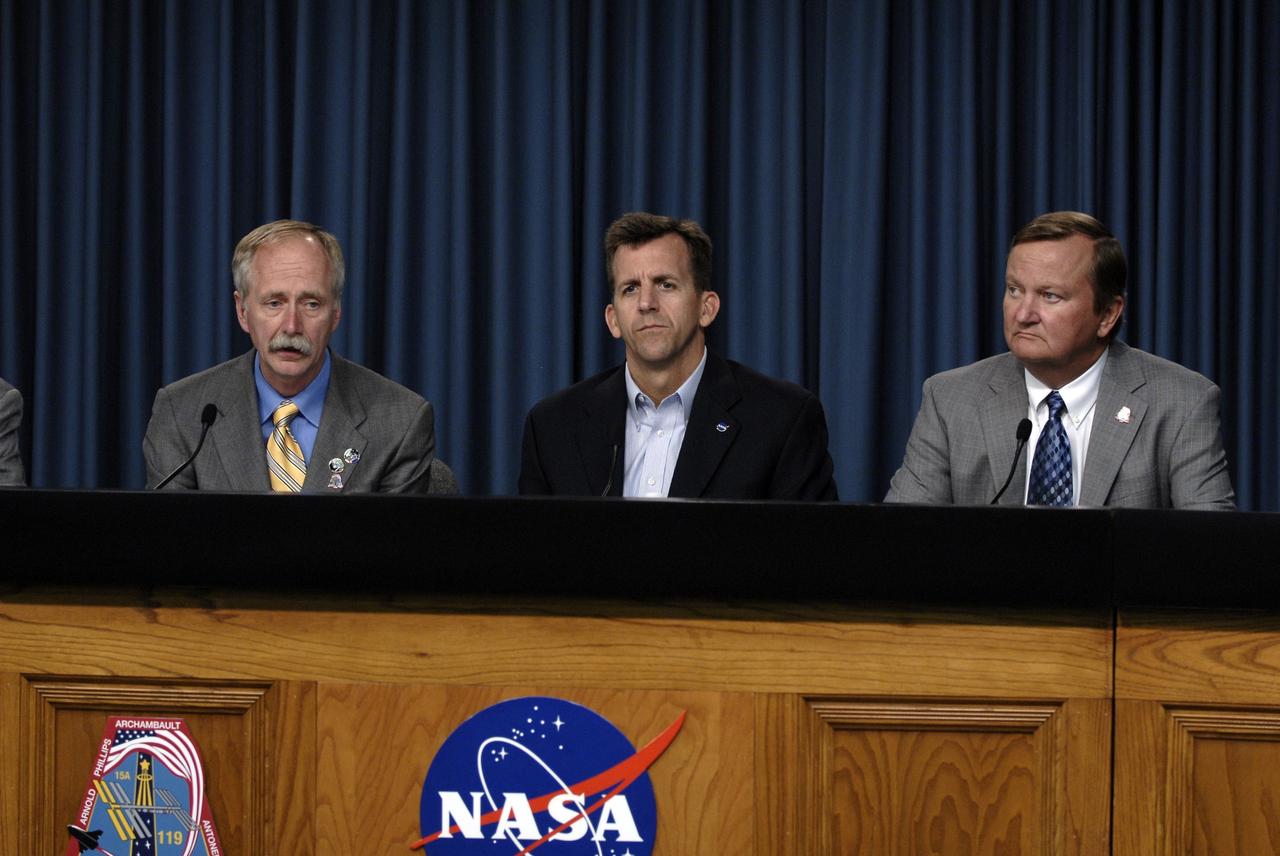
CAPE CANAVERAL, Fla. – At NASA's Kennedy Space Center in Florida, NASA managers address the media during a news conference following landing of the space shuttle Discovery STS-119 mission to the International Space Station. From left are NASA Associate Administrator for Space Operations Bill Gerstenmaier, NASA Deputy Manager of Space Shuttle Program LeRoy Cain and NASA Shuttle Launch Director Mike Leinbach. Main gear touchdown was at 3:13:17 p.m. EDT. Nose gear touchdown was at 3:13:40 p.m. and wheels stop was at 3:14:45 p.m. Discovery delivered the final pair of large power-generating solar array wings and the S6 truss segment. The mission was the 28th flight to the station, the 36th flight of Discovery and the 125th in the Space Shuttle Program, as well as the 70th landing at Kennedy. Photo credit: NASA/Kim Shiflett
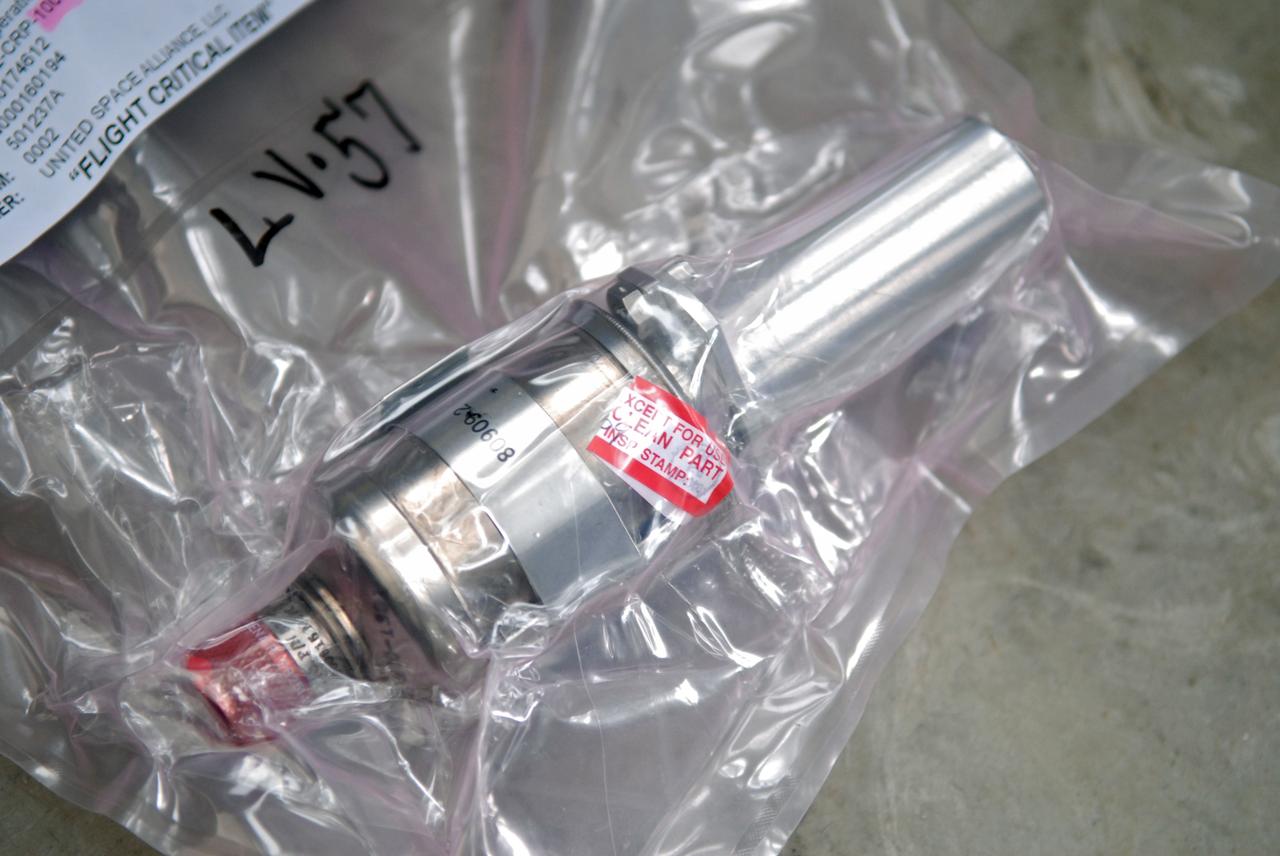
CAPE CANAVERAL, Fla. – One of the three thoroughly inspected gaseous hydrogen flow control valves is shown after its arrival at NASA's Kennedy Space Center in Florida. Technicians installed and retested them in space shuttle Discovery. Part of the main propulsion system, the valves channel gaseous hydrogen from the main engines to the external tank. NASA and contractor teams have worked to identify what caused damage to a flow control valve on shuttle Endeavour during its November 2008 flight. Space Shuttle Program managers decided to replace Discovery's valves with others that have undergone a detailed eddy current inspection. Program managers will review the testing and determine whether to meet on March 6 for the Flight Readiness Review for the STS-119 mission. Launch of Discovery tentatively is targeted for March 12. Photo credit: NASA/Chris Rhodes
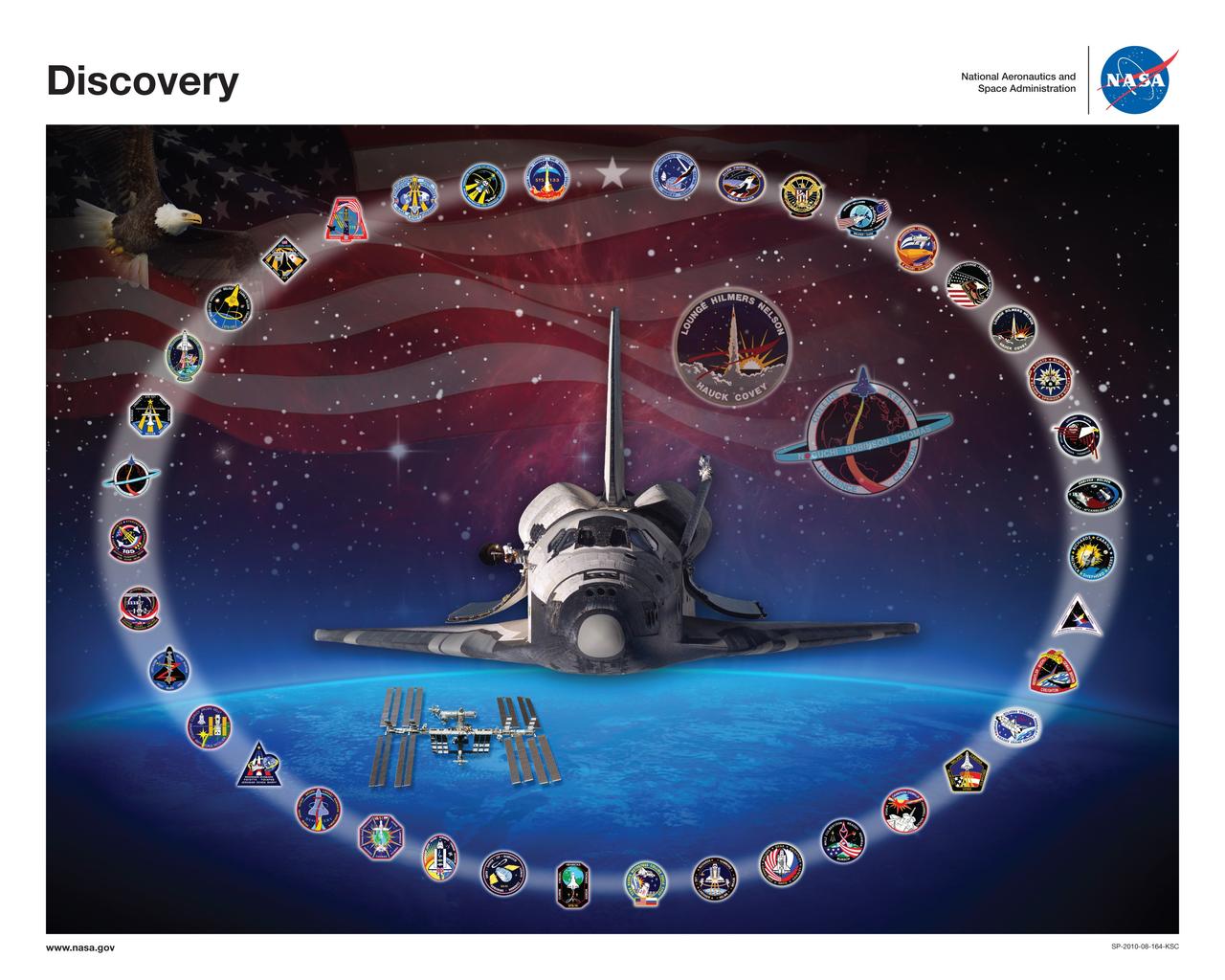
CAPE CANAVERAL, Fla. -- This is a version of space shuttle Discovery's orbiter tribute, or OV-103, which hangs in Firing Room 4 of the Launch Control Center at NASA's Kennedy Space Center in Florida. Discovery’s accomplishments include the first female shuttle pilot, Eileen Collins, on STS-63, John Glenn’s legendary return to space on STS-95, and the celebration of the 100th shuttle mission with STS-92. In addition, Discovery supported a number of Department of Defense programs, satellite deploy and repair missions and 13 International Space Station construction and operation flights. The tribute features Discovery demonstrating the rendezvous pitch maneuver on approach to the International Space Station during STS-114. Having accumulated the most space shuttle flights, Discovery’s 39 mission patches are shown circling the spacecraft. The background image was taken from the Hubble Space Telescope, which launched aboard Discovery on STS-31 and serviced by Discovery on STS-82 and STS-103. The American Flag and Bald Eagle represent Discovery’s two Return-to-Flight missions -- STS-26 and STS-114 -- and symbolize Discovery’s role in returning American astronauts to space. Five orbiter tributes are on display in the firing room, representing Atlantis, Challenger, Columbia, Endeavour and Discovery. Graphic design credit: NASA/Amy Lombardo. NASA publication number: SP-2010-08-164-KSC
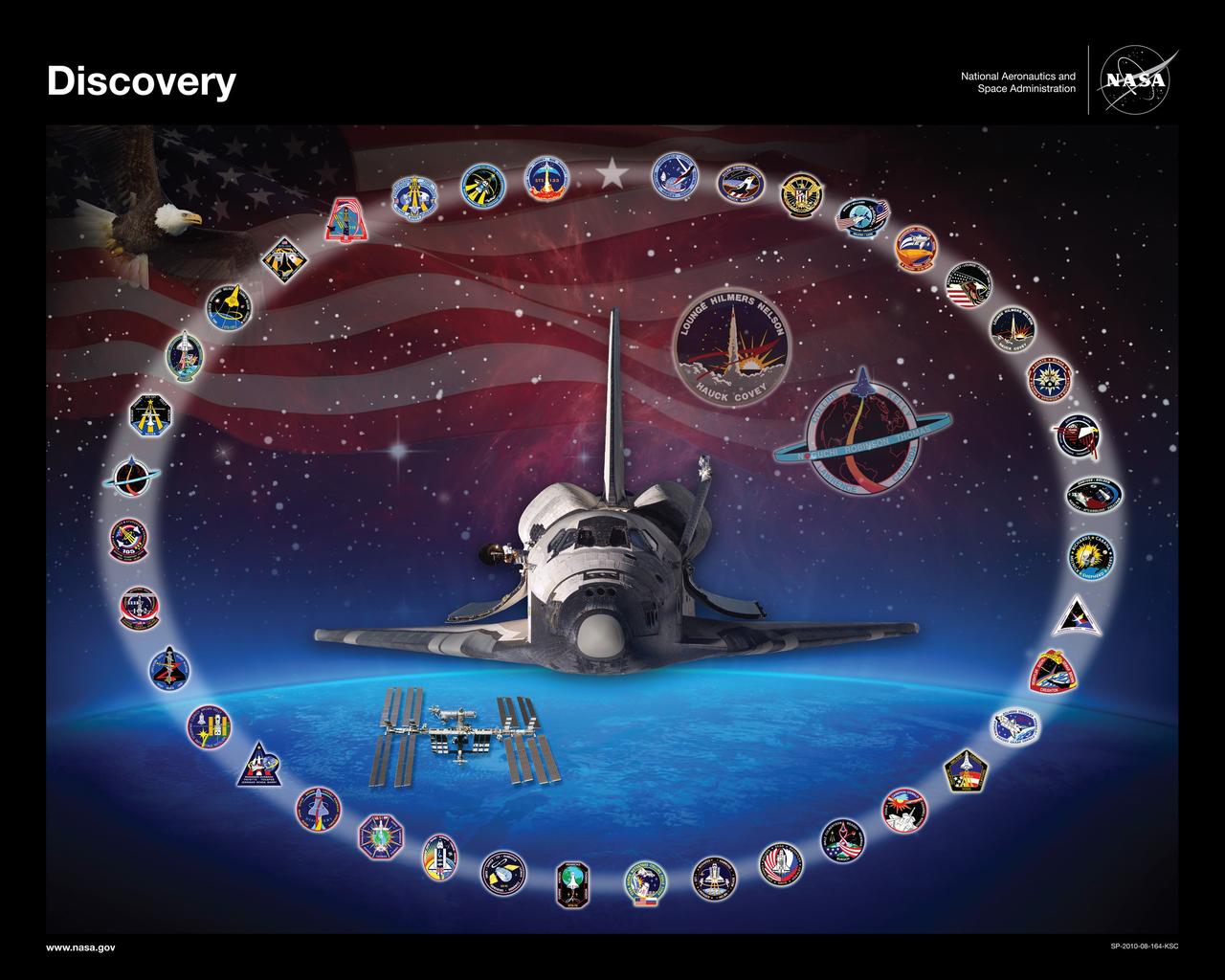
CAPE CANAVERAL, Fla. -- This is a printable version of space shuttle Discovery's orbiter tribute, or OV-103, which hangs in Firing Room 4 of the Launch Control Center at NASA's Kennedy Space Center in Florida. Discovery’s accomplishments include the first female shuttle pilot, Eileen Collins, on STS-63, John Glenn’s legendary return to space on STS-95, and the celebration of the 100th shuttle mission with STS-92. In addition, Discovery supported a number of Department of Defense programs, satellite deploy and repair missions and 13 International Space Station construction and operation flights. The tribute features Discovery demonstrating the rendezvous pitch maneuver on approach to the International Space Station during STS-114. Having accumulated the most space shuttle flights, Discovery’s 39 mission patches are shown circling the spacecraft. The background image was taken from the Hubble Space Telescope, which launched aboard Discovery on STS-31 and serviced by Discovery on STS-82 and STS-103. The American Flag and Bald Eagle represent Discovery’s two Return-to-Flight missions -- STS-26 and STS-114 -- and symbolize Discovery’s role in returning American astronauts to space. Five orbiter tributes are on display in the firing room, representing Atlantis, Challenger, Columbia, Endeavour and Discovery. Graphic design credit: NASA/Amy Lombardo. NASA publication number: SP-2010-08-164-KSC
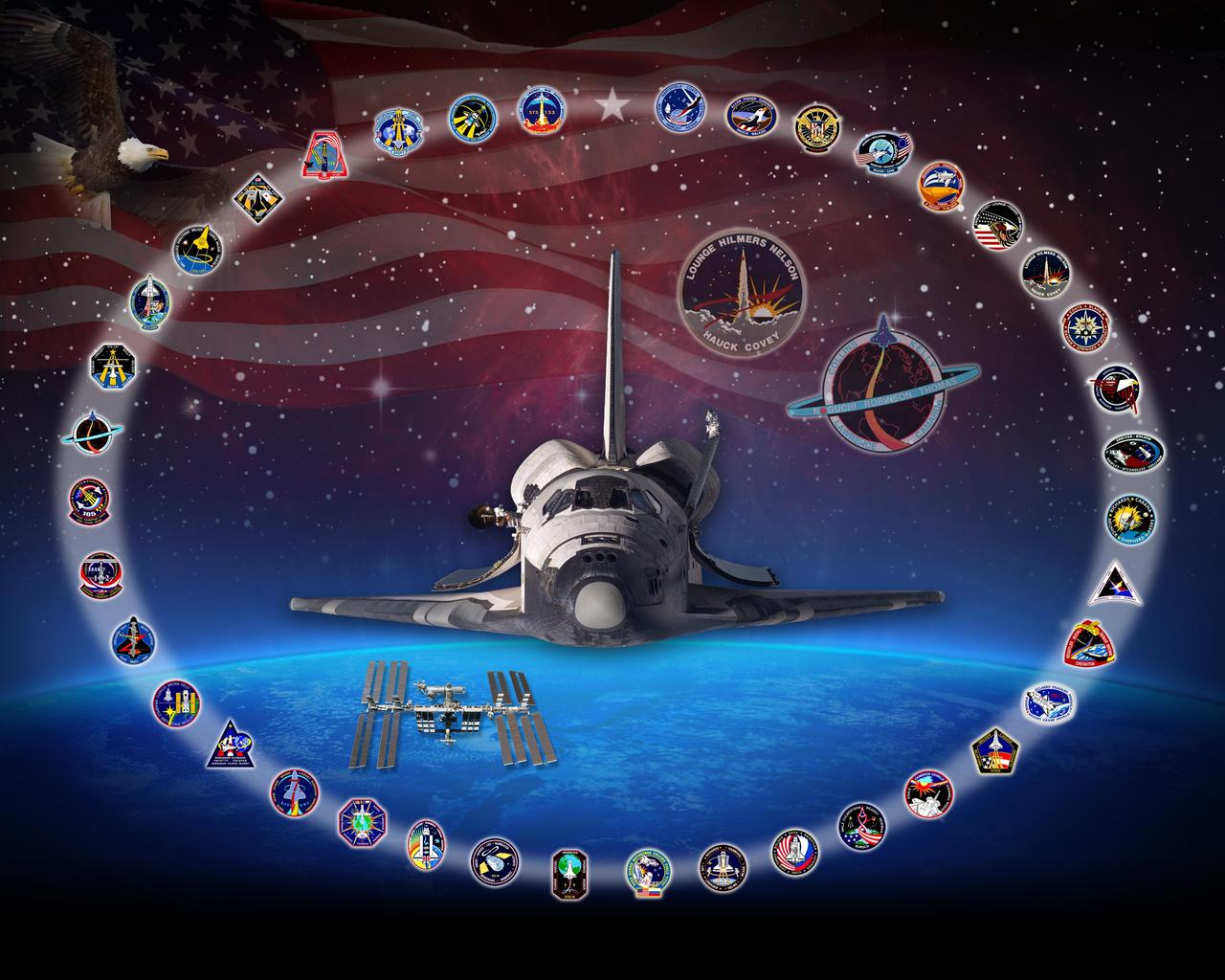
CAPE CANAVERAL, Fla. -- This orbiter tribute of space shuttle Discovery, or OV-103, hangs in Firing Room 4 of the Launch Control Center at NASA's Kennedy Space Center in Florida. Discovery’s accomplishments include the first female shuttle pilot, Eileen Collins, on STS-63, John Glenn’s legendary return to space on STS-95, and the celebration of the 100th shuttle mission with STS-92. In addition, Discovery supported a number of Department of Defense programs, satellite deploy and repair missions and 13 International Space Station construction and operation flights. The tribute features Discovery demonstrating the rendezvous pitch maneuver on approach to the International Space Station during STS-114. Having accumulated the most space shuttle flights, Discovery’s 39 mission patches are shown circling the spacecraft. The background image was taken from the Hubble Space Telescope, which launched aboard Discovery on STS-31 and serviced by Discovery on STS-82 and STS-103. The American Flag and Bald Eagle represent Discovery’s two Return-to-Flight missions -- STS-26 and STS-114 -- and symbolize Discovery’s role in returning American astronauts to space. Five orbiter tributes are on display in the firing room, representing Atlantis, Challenger, Columbia, Endeavour and Discovery. Graphic design credit: NASA/Amy Lombardo
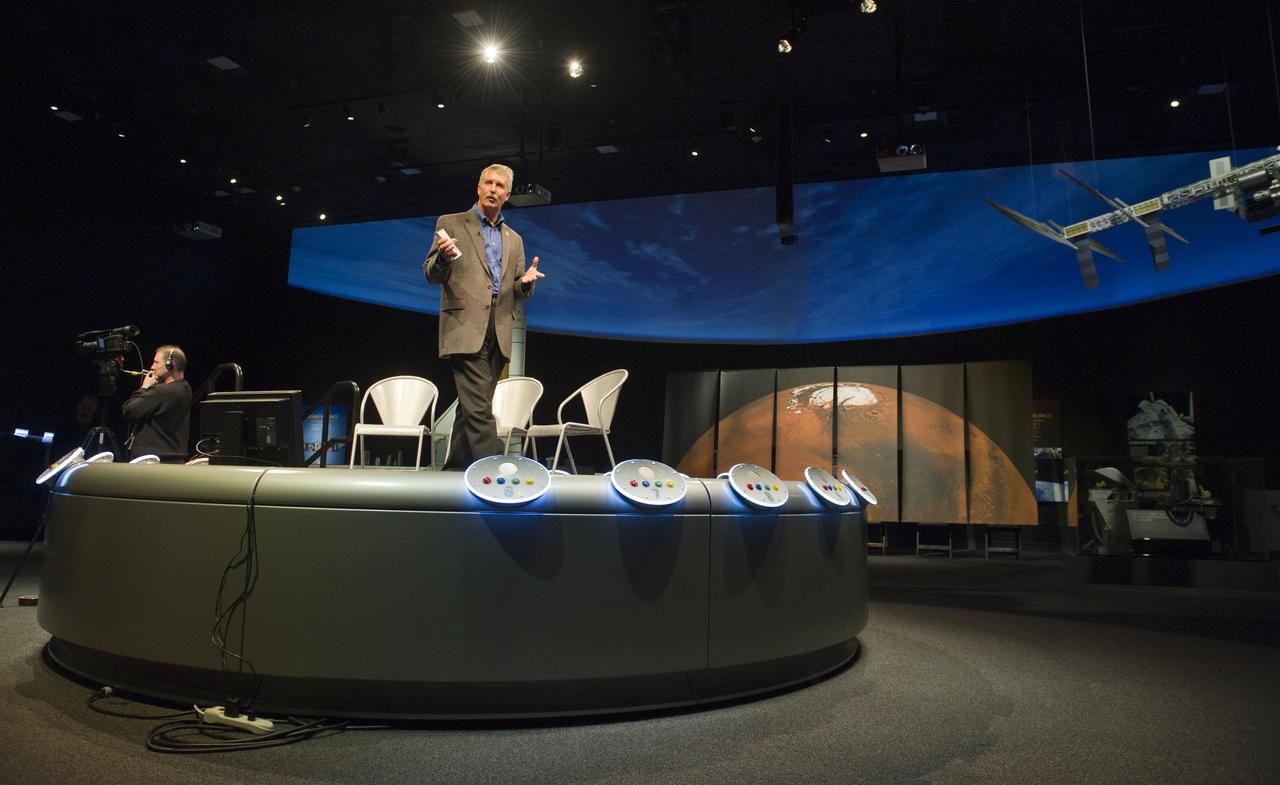
Doug McCuiston, Director, Mars Exploration Program, talks during a Mars Program Update where prominent scientists discussed evidence of water on Mars, current Program status, including the 7th Anniversary of the Mars rovers and the upcoming Mars Science Laboratory mission and previewing exciting discoveries to come, Thursday, Jan. 13, 2011, at the Smithsonian National Air and Space Museum in Washington. Photo Credit: (NASA/Paul E. Alers)
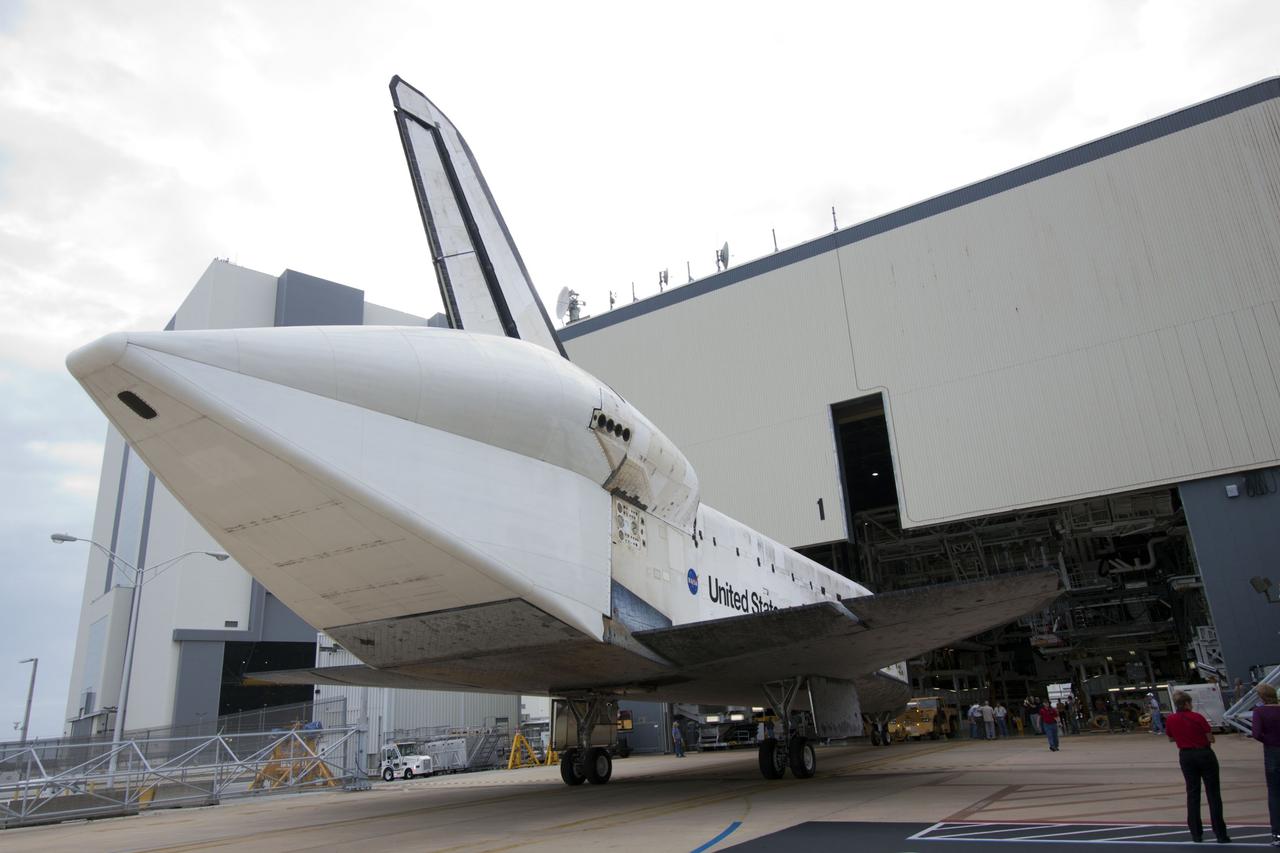
CAPE CANAVERAL, Fla. – At NASA’s Kennedy Space Center in Florida, space shuttle Discovery is backed out of Orbiter Processing Facility-1 for its move to the Vehicle Assembly Building VAB. The aft view of Discovery reveals the tail cone that covers the three replica shuttle main engines. The work is part of the Space Shuttle Program’s transition and retirement processing of shuttle Discovery, which is being prepared for display at Smithsonian’s National Air and Space Museum, Steven F. Udvar-Hazy Center in Chantilly, Va. Discovery will remain in high bay 4 of the VAB until its scheduled transport atop a NASA Shuttle Carrier Aircraft modified 747 jet to Dulles International Airport in Virginia on April 17. Discovery will then be transported to the Smithsonian on April 19. For more information, visit http://www.nasa.gov/shuttle. Photo credit: NASA/Jim Grossmann

CAPE CANAVERAL, Fla. – Workers walk alongside space shuttle Discovery as it is towed to the Vehicle Assembly Building VAB from Orbiter Processing Facility-1 at NASA’s Kennedy Space Center in Florida. The aft view of Discovery reveals the tail cone that covers the three replica shuttle main engines. The work is part of the Space Shuttle Program’s transition and retirement processing of shuttle Discovery, which is being prepared for display at Smithsonian’s National Air and Space Museum, Steven F. Udvar-Hazy Center in Chantilly, Va. Discovery will remain in high bay 4 of the VAB until its scheduled transport atop a NASA Shuttle Carrier Aircraft modified 747 jet to Dulles International Airport in Virginia on April 17. Discovery will then be transported to the Smithsonian on April 19. For more information, visit http://www.nasa.gov/shuttle. Photo credit: NASA/Jim Grossmann
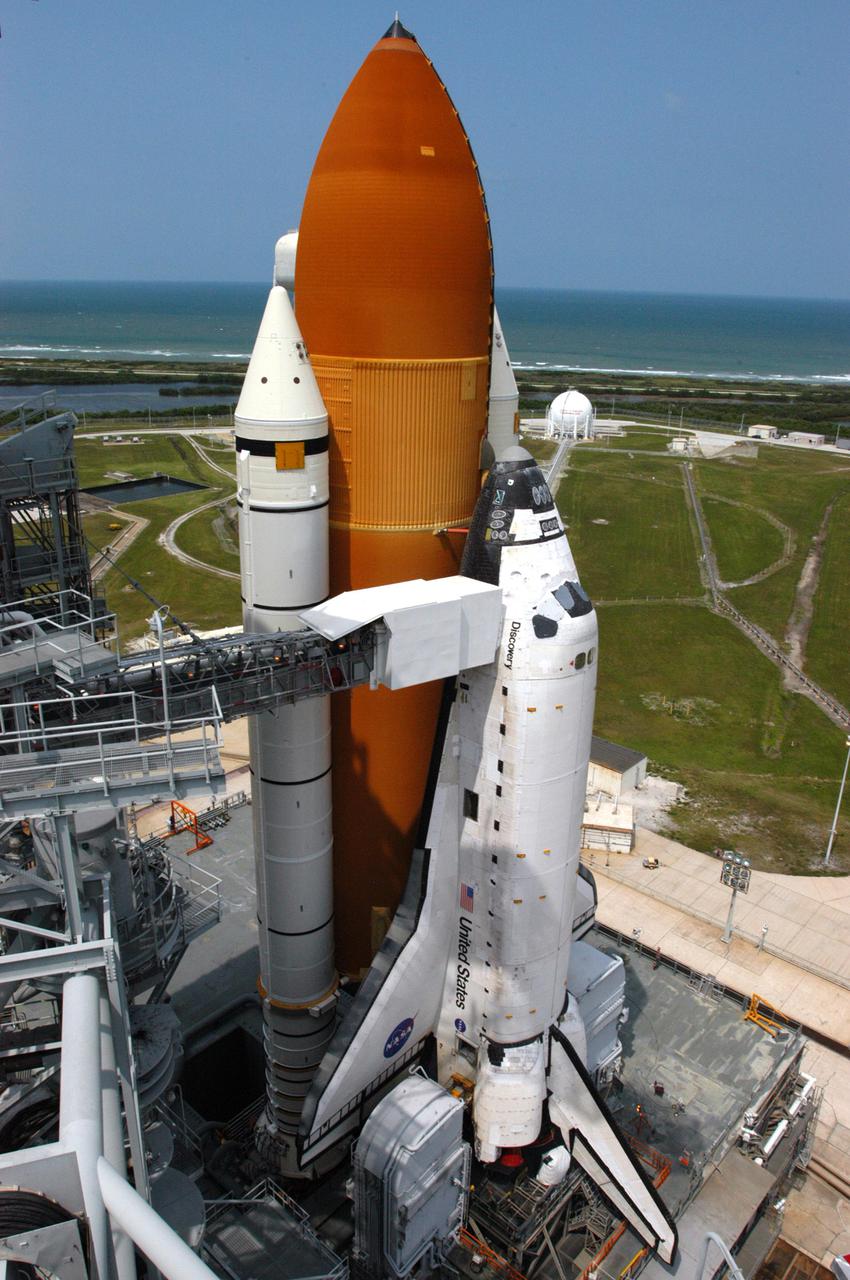
KENNEDY SPACE CENTER, FLA. - On Launch Pad 39B, Space Shuttle Discovery is revealed after rollback of the Rotating Service Structure. The Orbiter Access Arm can be seen extended to the cockpit. Discovery will be rolled back to the Vehicle Assembly Building. Once inside the VAB, Discovery will be demated from its External Tank and lifted into the transfer aisle. On or about June 7, Discovery will be lifted and attached to its new tank and Solid Rocket Boosters, which are already in the VAB. Only the 15th rollback in Space Shuttle Program history, the 4.2-mile journey allows additional modifications to be made to the External Tank prior to a safe Return to Flight. Discovery is expected to be rolled back to the launch pad in mid-June for Return to Flight mission STS-114. The launch window extends from July 13 to July 31.
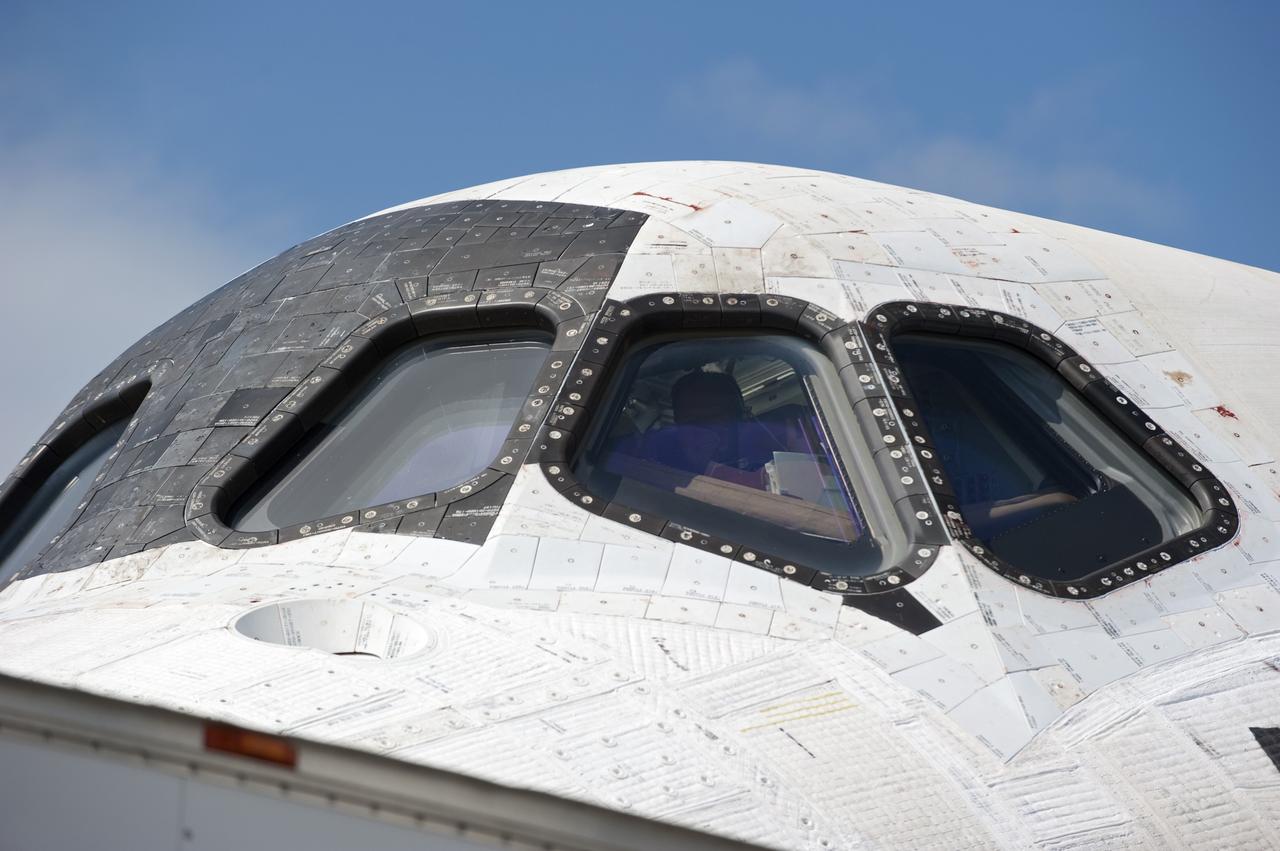
CAPE CANAVERAL, Fla. -- Inside space shuttle Discovery, the STS-133 crew members are preparing to exit the spacecraft that brought them home safely to NASA's Kennedy Space Center in Florida. Commander Steve Lindsey, Pilot Eric Boe, and Mission Specialists Alvin Drew, Steve Bowen, Michael Barratt and Nicole Stott will undergo brief medical checks in the crew transport vehicle before they walk around Discovery on the Shuttle Landing Facility's Runway 15. Discovery's final return from space completed a 13-day, 5.3-million-mile mission. Discovery and its six-member crew delivered the Permanent Multipurpose Module, packed with supplies and critical spare parts, as well as Robonaut 2, the dexterous humanoid astronaut helper, to the orbiting outpost. STS-133 was Discovery's 39th and final mission. This was the 133rd Space Shuttle Program mission and the 35th shuttle voyage to the space station. Photo credit: NASA/Kim Shiflett
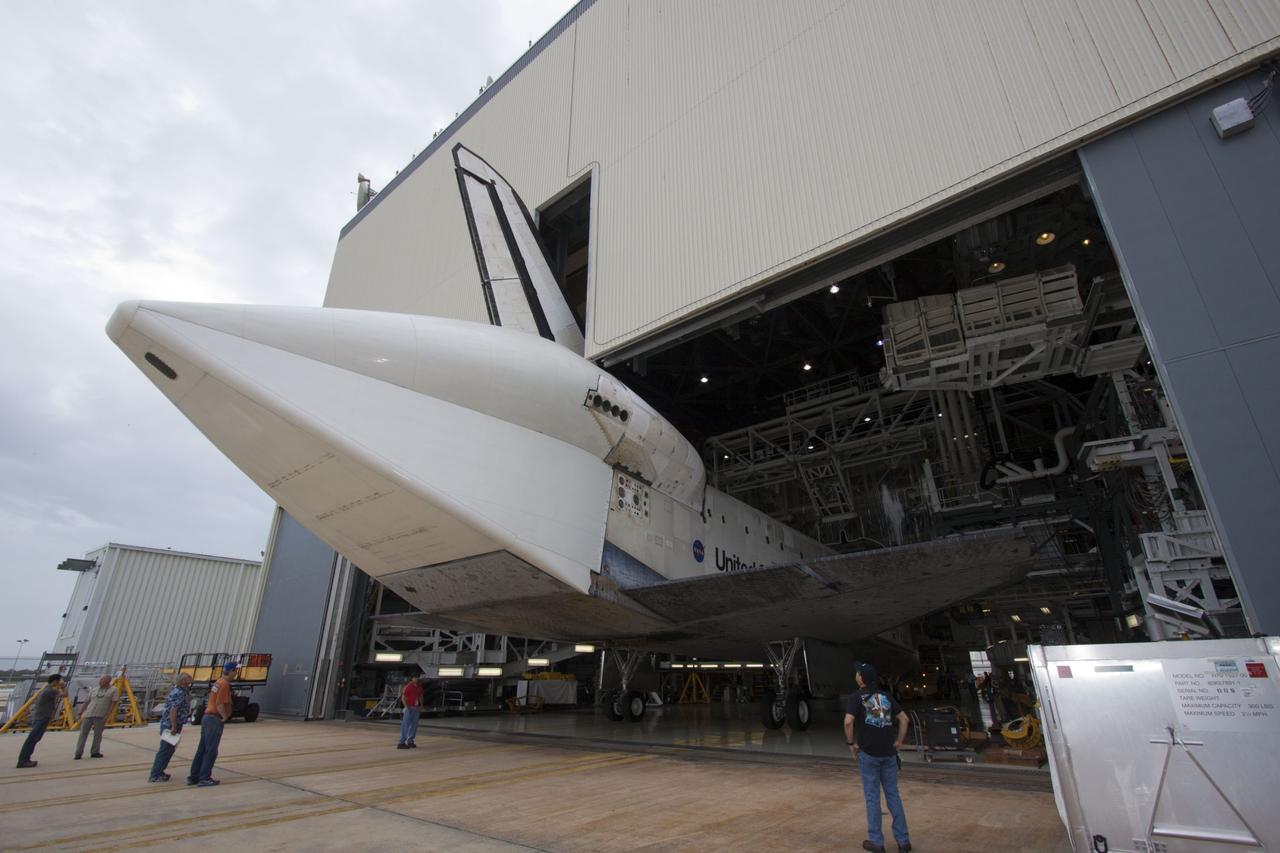
CAPE CANAVERAL, Fla. – At NASA’s Kennedy Space Center in Florida, space shuttle Discovery is backed out of Orbiter Processing Facility-1 for its move to the Vehicle Assembly Building VAB. The aft view of Discovery reveals the tail cone that covers the three replica shuttle main engines. The work is part of the Space Shuttle Program’s transition and retirement processing of shuttle Discovery, which is being prepared for display at Smithsonian’s National Air and Space Museum, Steven F. Udvar-Hazy Center in Chantilly, Va. Discovery will remain in high bay 4 of the VAB until its scheduled transport atop a NASA Shuttle Carrier Aircraft modified 747 jet to Dulles International Airport in Virginia on April 17. Discovery will then be transported to the Smithsonian on April 19. For more information, visit http://www.nasa.gov/shuttle. Photo credit: NASA/Jim Grossmann
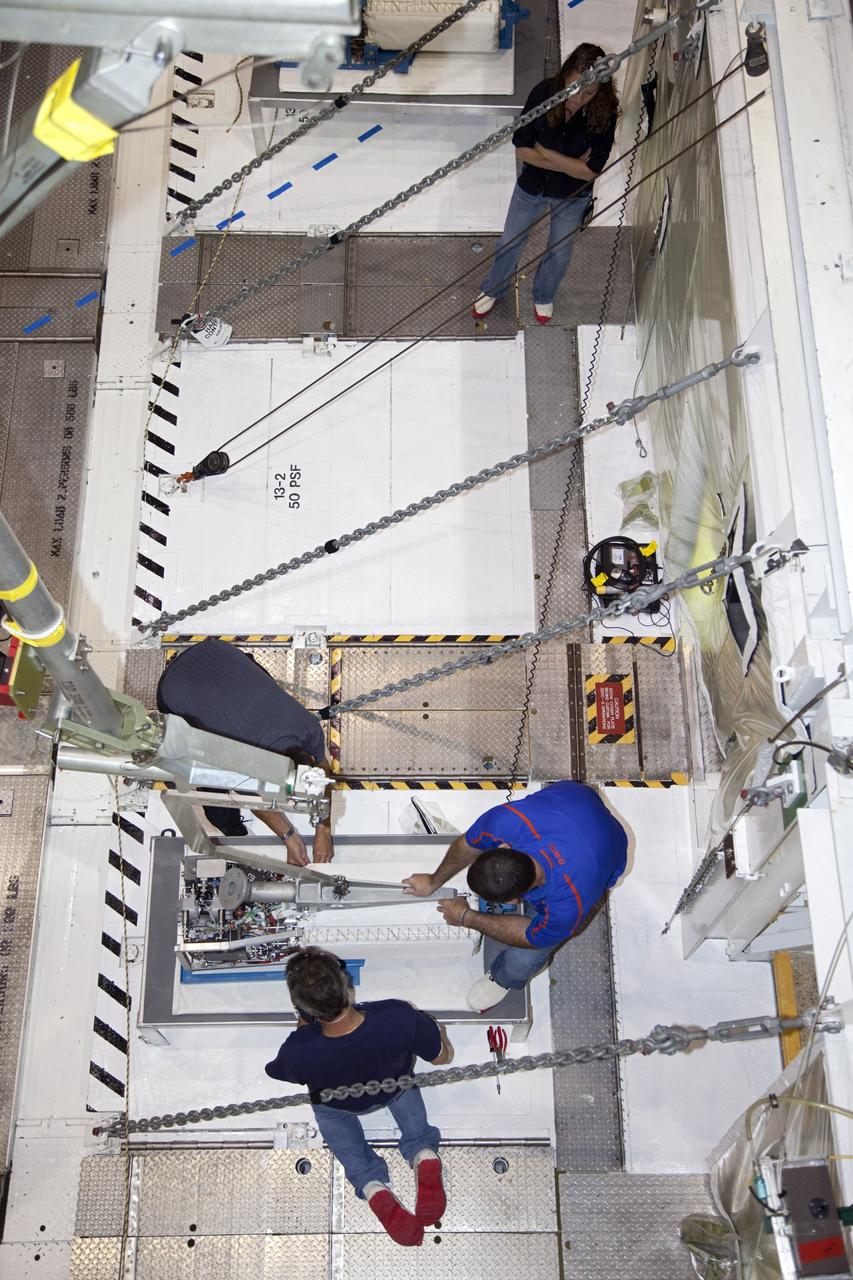
CAPE CANAVERAL, Fla. -- Inside Orbiter Processing Facility-1 at NASA’s Kennedy Space Center in Florida, technicians monitor the progress as space shuttle Discovery’s fuel cells are drained of all fluids. After all of the coolant is removed, the fuel cells will be returned to their previous location within Discovery’s mid-body. The hydrogen and oxygen dewars which feed reactants to the fuel cells remain in Discovery’s mid-body and have been purged with inert gases and vented down. The work is part of the Space Shuttle Program’s transition and retirement processing of shuttle Discovery. Discovery is being prepared for display at the Smithsonian’s National Air and Space Museum, Steven F. Udvar-Hazy Center in Chantilly, Va. For more information, visit http://www.nasa.gov/shuttle. Photo credit: NASA/Frankie Martin

CAPE CANAVERAL, Fla. – Inside Orbiter Processing Facility-1 at NASA’s Kennedy Space Center in Florida, space shuttle Discovery is being readied for its move to the Vehicle Assembly Building VAB. The aft view of Discovery reveals the tail cone that covers the three replica shuttle main engines. The work is part of the Space Shuttle Program’s transition and retirement processing of shuttle Discovery, which is being prepared for display at Smithsonian’s National Air and Space Museum, Steven F. Udvar-Hazy Center in Chantilly, Va. Discovery will remain in high bay 4 of the VAB until its scheduled transport atop a NASA Shuttle Carrier Aircraft modified 747 jet to Dulles International Airport in Virginia on April 17. Discovery will then be transported to the Smithsonian on April 19. For more information, visit http://www.nasa.gov/shuttle. Photo credit: NASA/Jim Grossmann
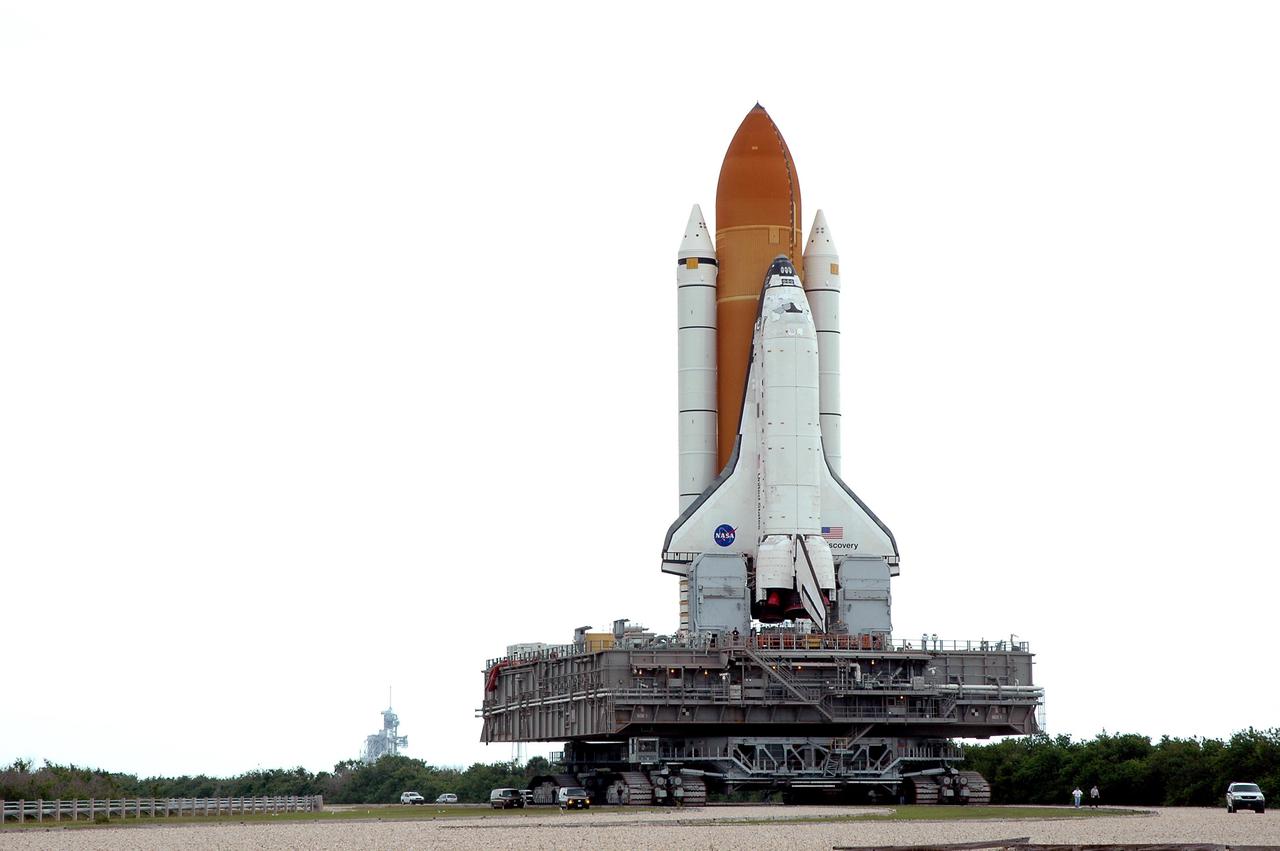
KENNEDY SPACE CENTER, FLA. - Dwarfing the accompanying vehicles, Space Shuttle Discovery, resting on the Mobile Launcher Platform atop the Crawler_Transporter, heads along the crawlerway to the Vehicle Assembly Building (VAB). Discovery is rolling back from Launch Pad 39B (in the background). Once inside the VAB, Discovery will be demated from its External Tank and lifted into the transfer aisle. On or about June 7, Discovery will be lifted and attached to its new tank and Solid Rocket Boosters, which are already in the VAB. Only the 15th rollback in Space Shuttle Program history, the 4.2-mile journey allows additional modifications to be made to the External Tank prior to a safe Return to Flight. Discovery is expected to be rolled back to the launch pad in mid-June for Return to Flight mission STS-114. The launch window extends from July 13 to July 31.
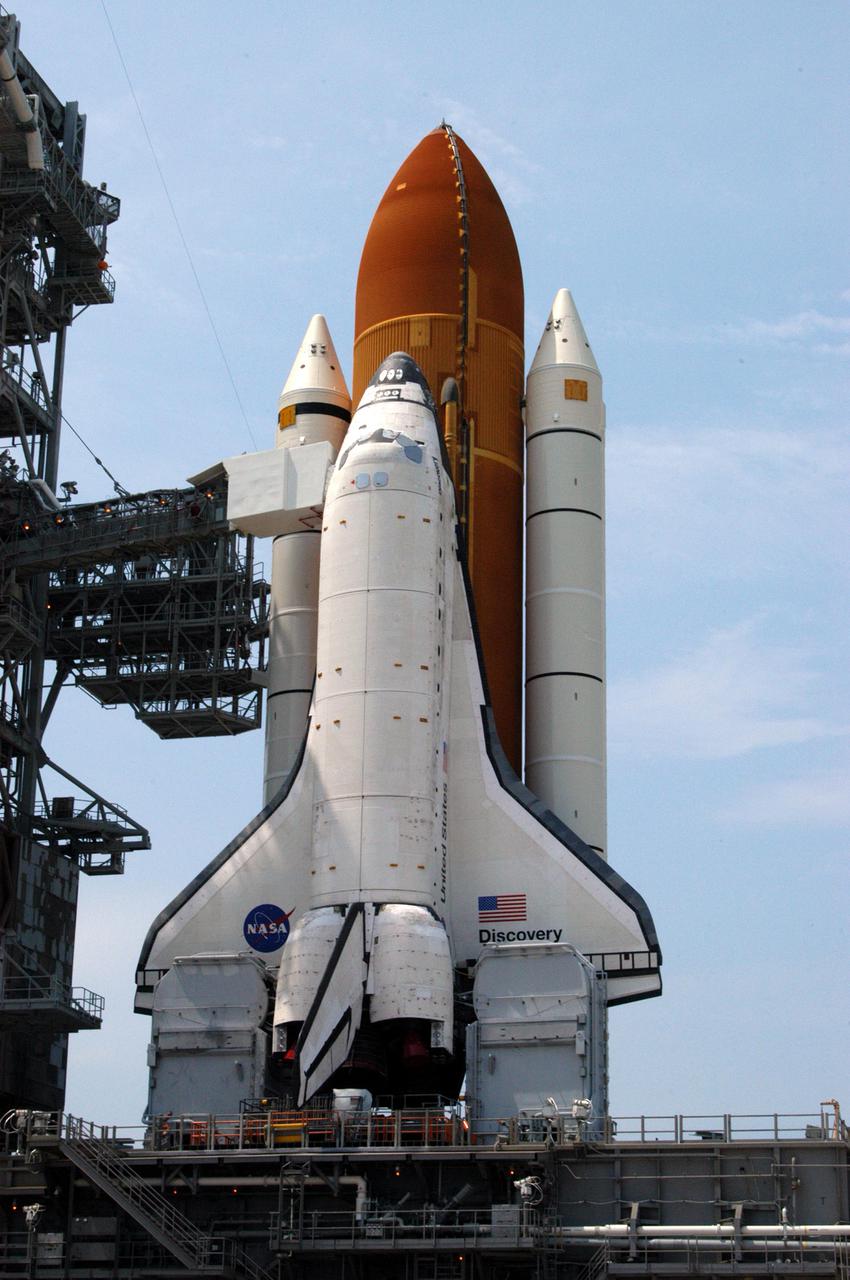
KENNEDY SPACE CENTER, FLA. - On Launch Pad 39B, Space Shuttle Discovery is revealed after rollback of the Rotating Service Structure. Discovery will be rolled back to the Vehicle Assembly Building. Once inside the VAB, Discovery will be demated from its External Tank and lifted into the transfer aisle. On or about June 7, Discovery will be lifted and attached to its new tank and Solid Rocket Boosters, which are already in the VAB. Only the 15th rollback in Space Shuttle Program history, the 4.2-mile journey allows additional modifications to be made to the External Tank prior to a safe Return to Flight. Discovery is expected to be rolled back to the launch pad in mid-June for Return to Flight mission STS-114. The launch window extends from July 13 to July 31.
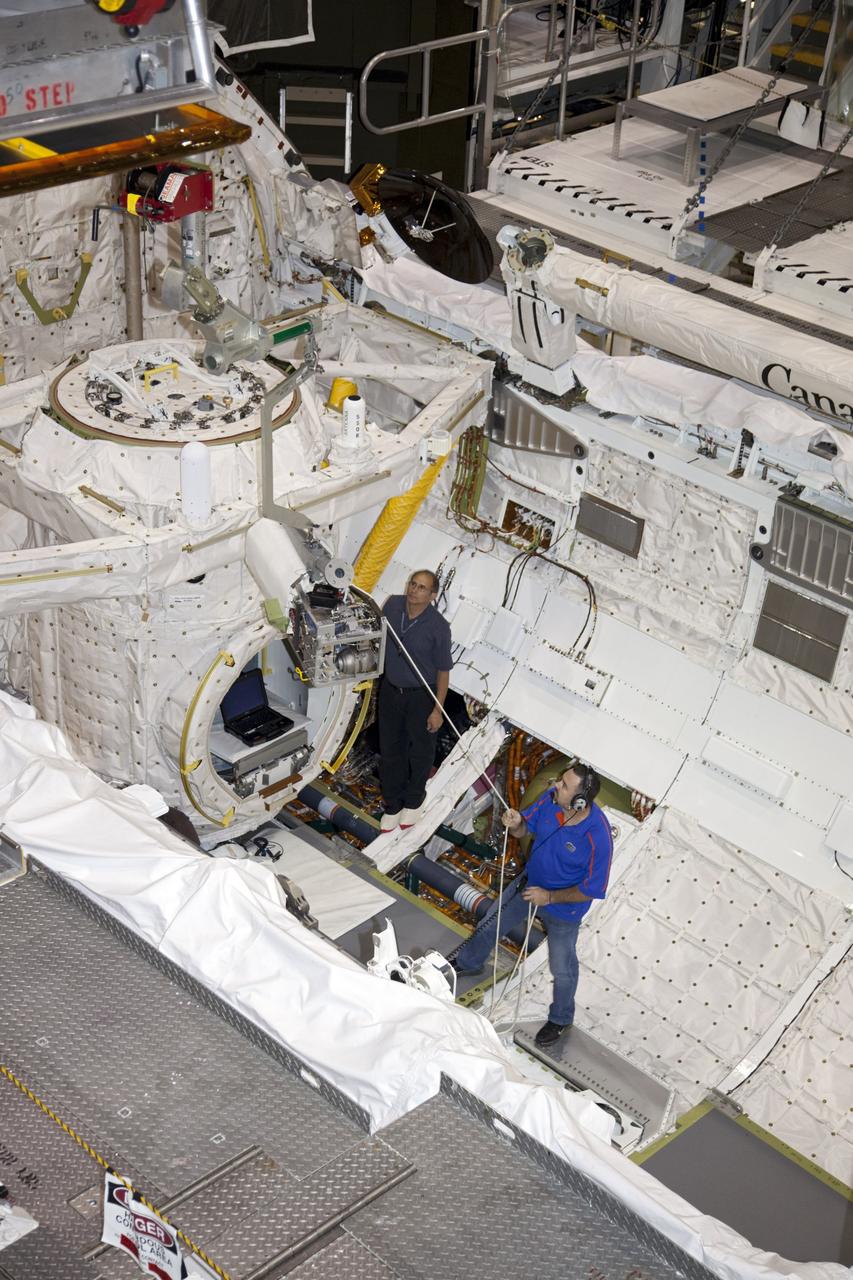
CAPE CANAVERAL, Fla. -- Inside Orbiter Processing Facility-1 at NASA’s Kennedy Space Center in Florida, technicians prepare space shuttle Discovery’s three fuel cells to be drained of all fluids. After all of the coolant is removed, the fuel cells will be returned to their previous location within Discovery’s mid-body. The hydrogen and oxygen dewars which feed reactants to the fuel cells remain in Discovery’s mid-body and have been purged with inert gases and vented down. The work is part of the Space Shuttle Program’s transition and retirement processing of shuttle Discovery. Discovery is being prepared for display at the Smithsonian’s National Air and Space Museum, Steven F. Udvar-Hazy Center in Chantilly, Va. For more information, visit http://www.nasa.gov/shuttle. Photo credit: NASA/Frankie Martin
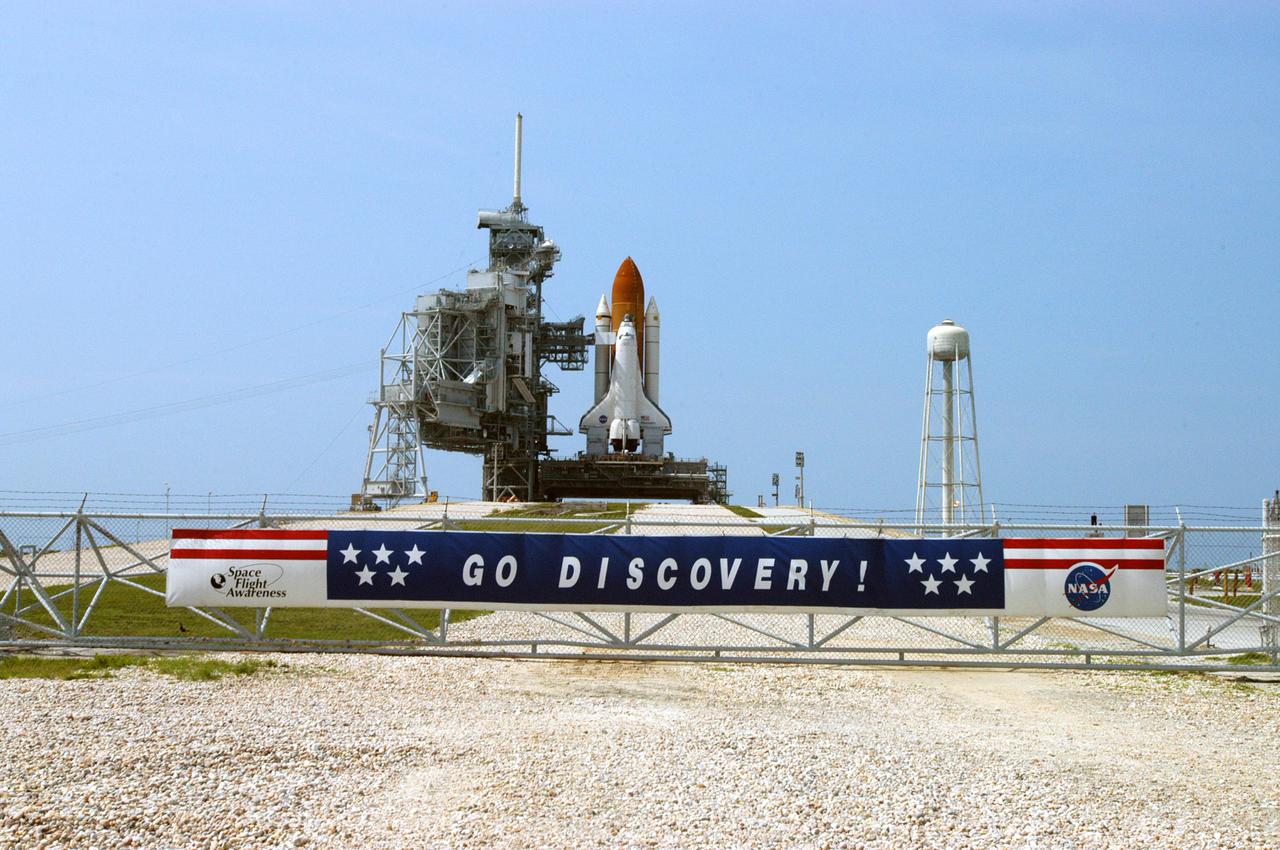
KENNEDY SPACE CENTER, FLA. - On Launch Pad 39B, Space Shuttle Discovery is revealed after rollback of the Rotating Service Structure. At right of the pad is the 290-foot-tall water tower that holds 300,000 gallons of water, part of the sound suppression system during a launch. Discovery will be rolled back to the Vehicle Assembly Building. Once inside the VAB, Discovery will be demated from its External Tank and lifted into the transfer aisle. On or about June 7, Discovery will be lifted and attached to its new tank and Solid Rocket Boosters, which are already in the VAB. Only the 15th rollback in Space Shuttle Program history, the 4.2-mile journey allows additional modifications to be made to the External Tank prior to a safe Return to Flight. Discovery is expected to be rolled back to the launch pad in mid-June for Return to Flight mission STS-114. The launch window extends from July 13 to July 31.
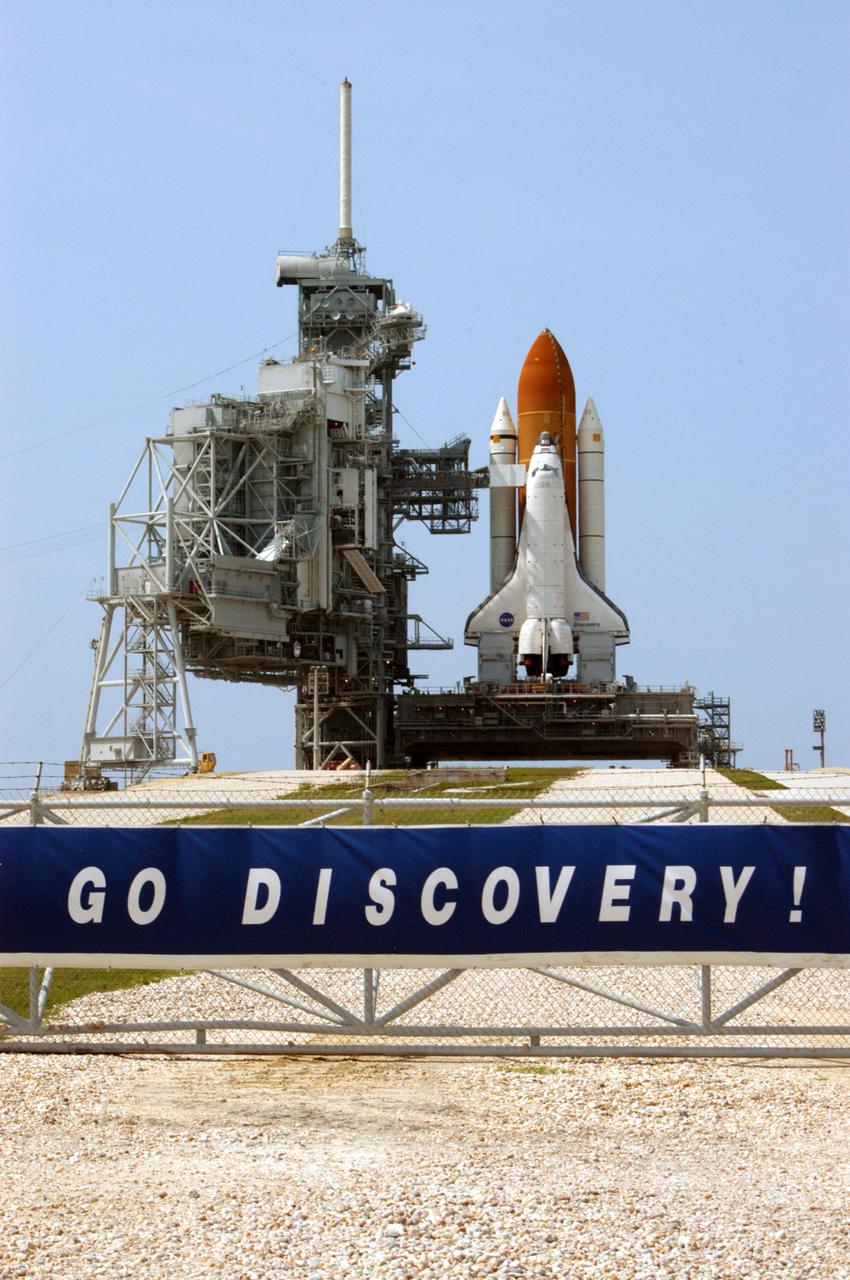
KENNEDY SPACE CENTER, FLA. - On Launch Pad 39B, Space Shuttle Discovery is revealed after rollback of the Rotating Service Structure. Discovery will be rolled back to the Vehicle Assembly Building. Once inside the VAB, Discovery will be demated from its External Tank and lifted into the transfer aisle. On or about June 7, Discovery will be lifted and attached to its new tank and Solid Rocket Boosters, which are already in the VAB. Only the 15th rollback in Space Shuttle Program history, the 4.2-mile journey allows additional modifications to be made to the External Tank prior to a safe Return to Flight. Discovery is expected to be rolled back to the launch pad in mid-June for Return to Flight mission STS-114. The launch window extends from July 13 to July 31.
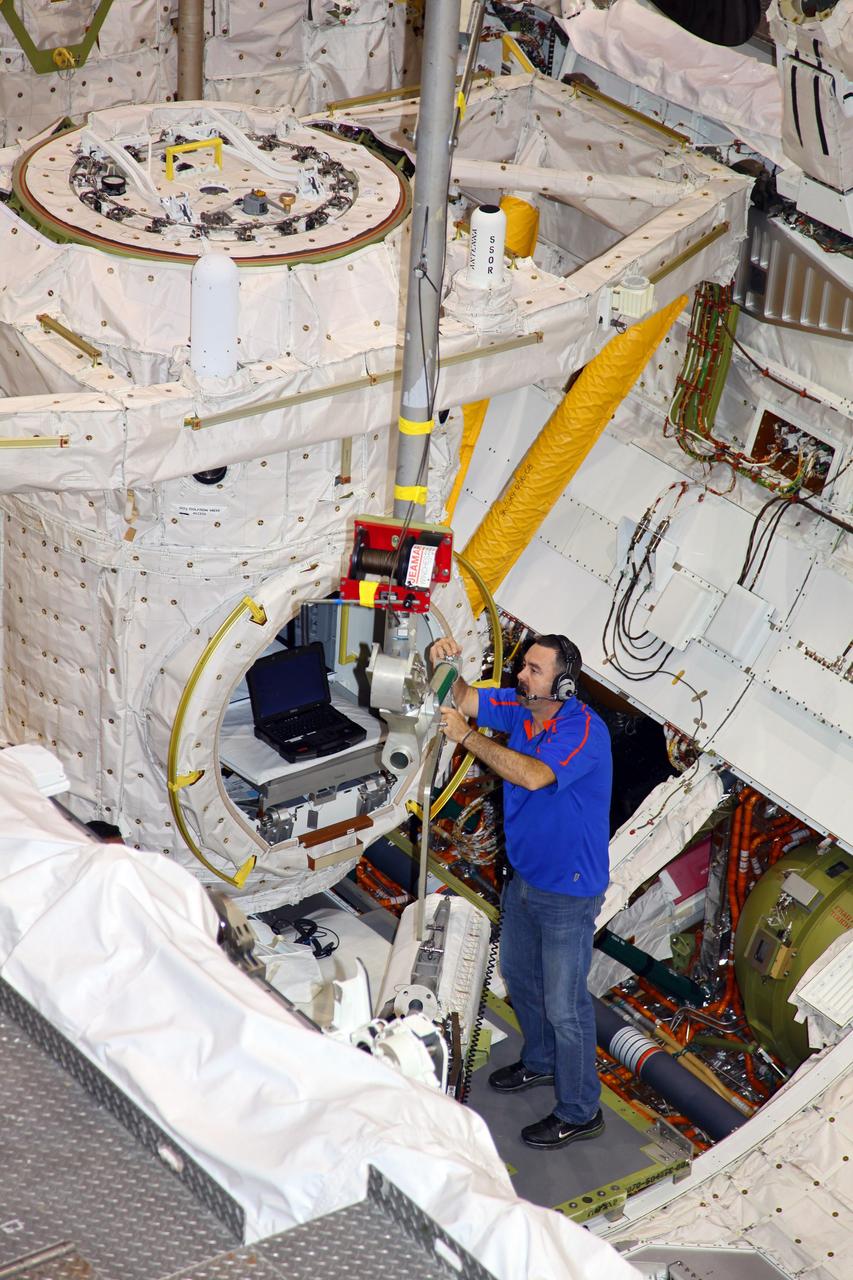
CAPE CANAVERAL, Fla. -- Inside Orbiter Processing Facility-1 at NASA’s Kennedy Space Center in Florida, technicians prepare space shuttle Discovery’s three fuel cells to be drained of all fluids. After all of the coolant is removed, the fuel cells will be returned to their previous location within Discovery’s mid-body. The hydrogen and oxygen dewars which feed reactants to the fuel cells remain in Discovery’s mid-body and have been purged with inert gases and vented down. The work is part of the Space Shuttle Program’s transition and retirement processing of shuttle Discovery. Discovery is being prepared for display at the Smithsonian’s National Air and Space Museum, Steven F. Udvar-Hazy Center in Chantilly, Va. For more information, visit http://www.nasa.gov/shuttle. Photo credit: NASA/Frankie Martin
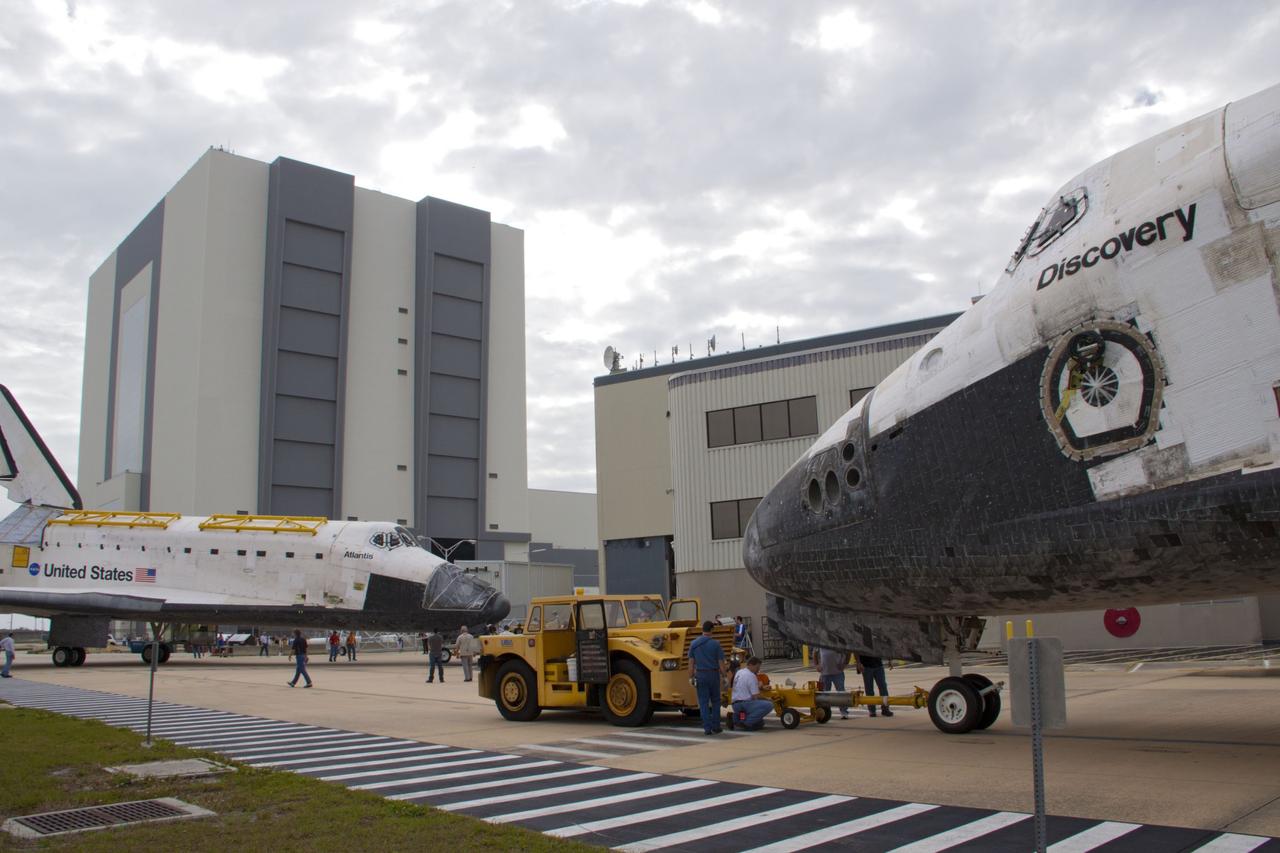
CAPE CANAVERAL, Fla. – At NASA’s Kennedy Space Center in Florida, space shuttle Discovery in the foreground and space shuttle Atlantis almost meet nose to nose. Discovery was towed out of Orbiter Processing Facility-1 for its move to the Vehicle Assembly Building VAB, while Atlantis was towed out of the VAB for its move to OPF-1. The work is part of the Space Shuttle Program’s transition and retirement processing of shuttle Discovery, which is being prepared for display at Smithsonian’s National Air and Space Museum, Steven F. Udvar-Hazy Center in Chantilly, Va. Discovery will remain in high bay 4 of the VAB until its scheduled transport atop a NASA Shuttle Carrier Aircraft modified 747 jet to Dulles International Airport in Virginia on April 17. Discovery will then be transported to the Smithsonian on April 19. For more information, visit http://www.nasa.gov/shuttle. Photo credit: NASA/Jim Grossmann
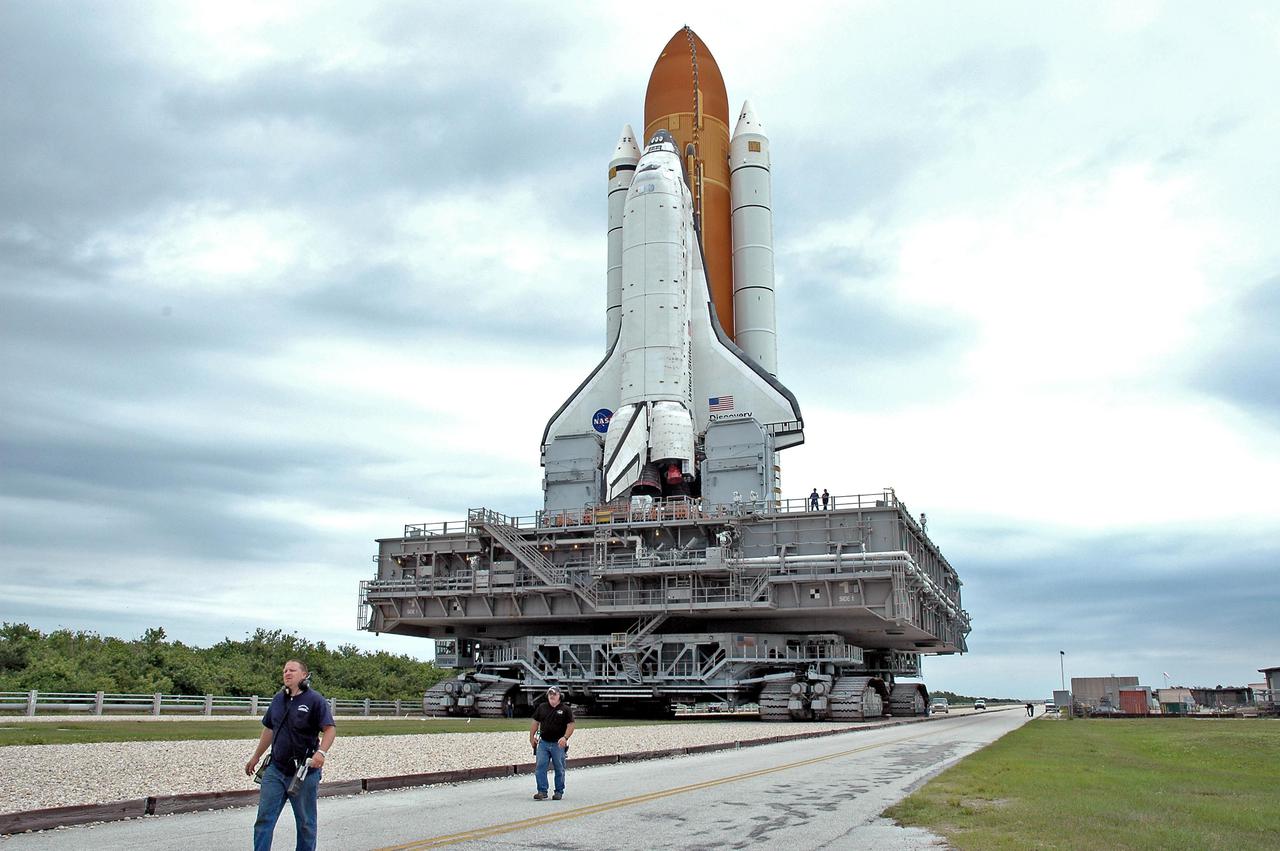
KENNEDY SPACE CENTER, FLA. - Space Shuttle Discovery, resting on the Mobile Launcher Platform atop the Crawler_Transporter, heads along the crawlerway to the Vehicle Assembly Building (VAB). Discovery is rolling back from Launch Pad 39B. Once inside the VAB, Discovery will be demated from its External Tank and lifted into the transfer aisle. On or about June 7, Discovery will be lifted and attached to its new tank and Solid Rocket Boosters, which are already in the VAB. Only the 15th rollback in Space Shuttle Program history, the 4.2-mile journey allows additional modifications to be made to the External Tank prior to a safe Return to Flight. Discovery is expected to be rolled back to the launch pad in mid-June for Return to Flight mission STS-114. The launch window extends from July 13 to July 31.
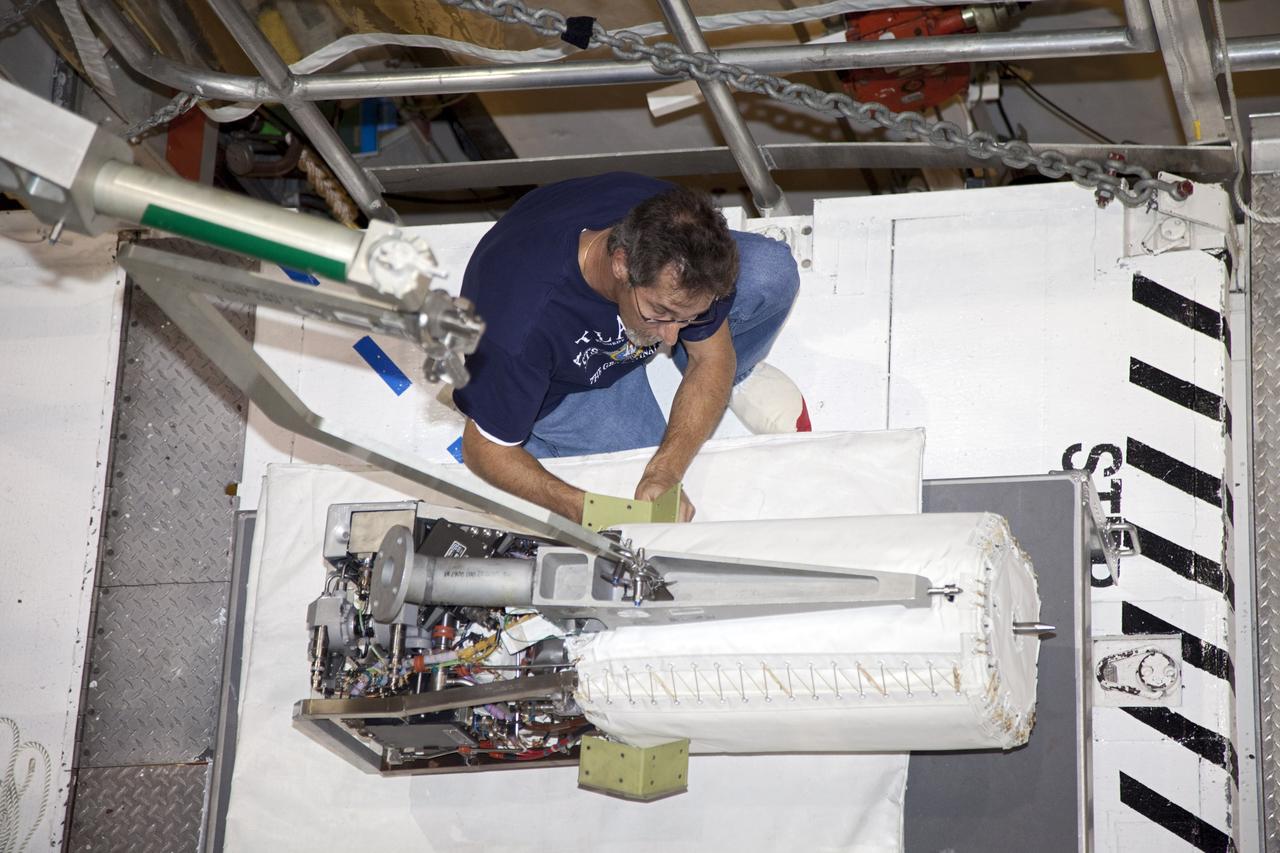
CAPE CANAVERAL, Fla. -- Inside Orbiter Processing Facility-1 at NASA’s Kennedy Space Center in Florida, a technician prepares one of space shuttle Discovery’s three fuel cells to be drained of all fluids. After all of the coolant is removed, the fuel cells will be returned to their previous location within Discovery’s mid-body. The hydrogen and oxygen dewars which feed reactants to the fuel cells remain in Discovery’s mid-body and have been purged with inert gases and vented down. The work is part of the Space Shuttle Program’s transition and retirement processing of shuttle Discovery. Discovery is being prepared for display at the Smithsonian’s National Air and Space Museum, Steven F. Udvar-Hazy Center in Chantilly, Va. For more information, visit http://www.nasa.gov/shuttle. Photo credit: NASA/Frankie Martin
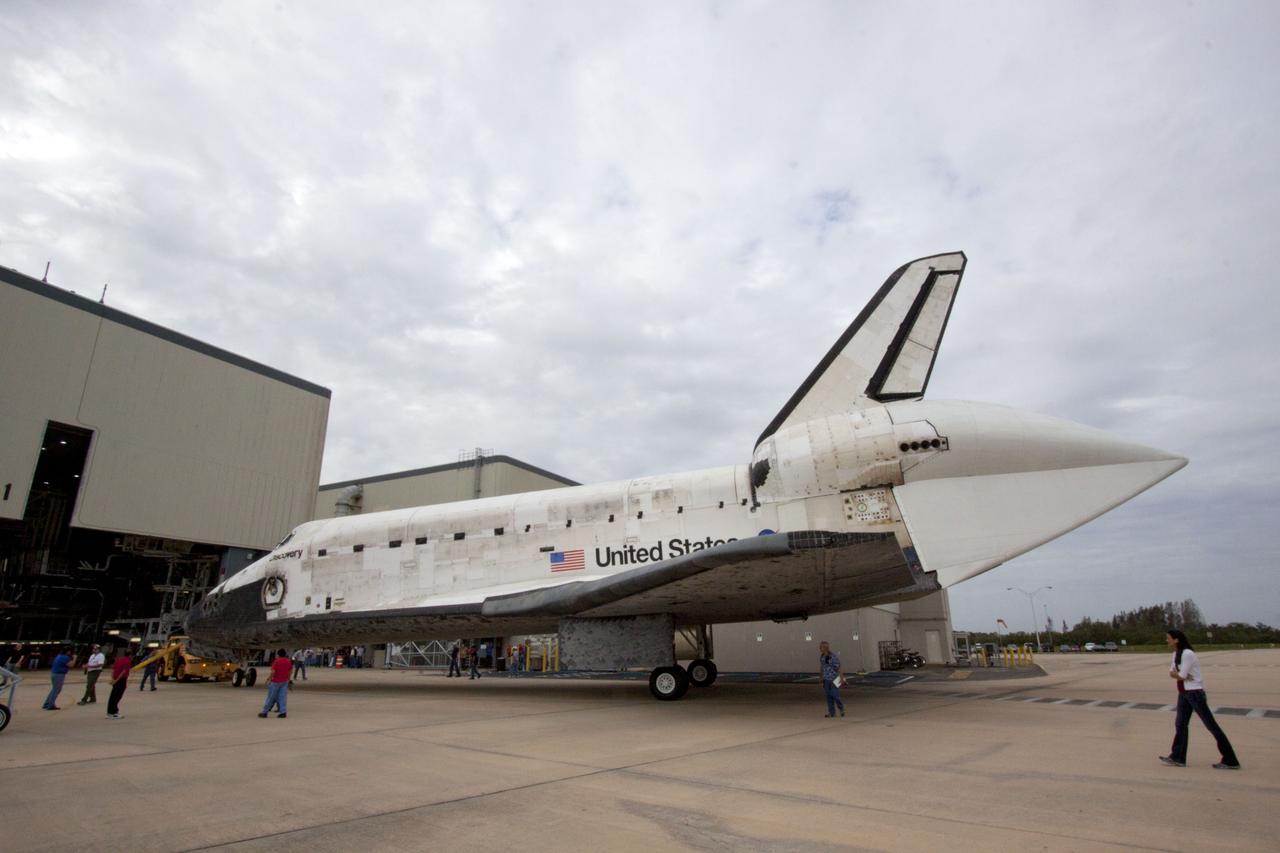
CAPE CANAVERAL, Fla. – At NASA’s Kennedy Space Center in Florida, space shuttle Discovery has been completely backed out of Orbiter Processing Facility-1 in preparation for its move to the Vehicle Assembly Building VAB. The aft view of Discovery reveals the tail cone that covers the three replica shuttle main engines. The work is part of the Space Shuttle Program’s transition and retirement processing of shuttle Discovery, which is being prepared for display at Smithsonian’s National Air and Space Museum, Steven F. Udvar-Hazy Center in Chantilly, Va. Discovery will remain in high bay 4 of the VAB until its scheduled transport atop a NASA Shuttle Carrier Aircraft modified 747 jet to Dulles International Airport in Virginia on April 17. Discovery will then be transported to the Smithsonian on April 19. For more information, visit http://www.nasa.gov/shuttle. Photo credit: NASA/Jim Grossmann
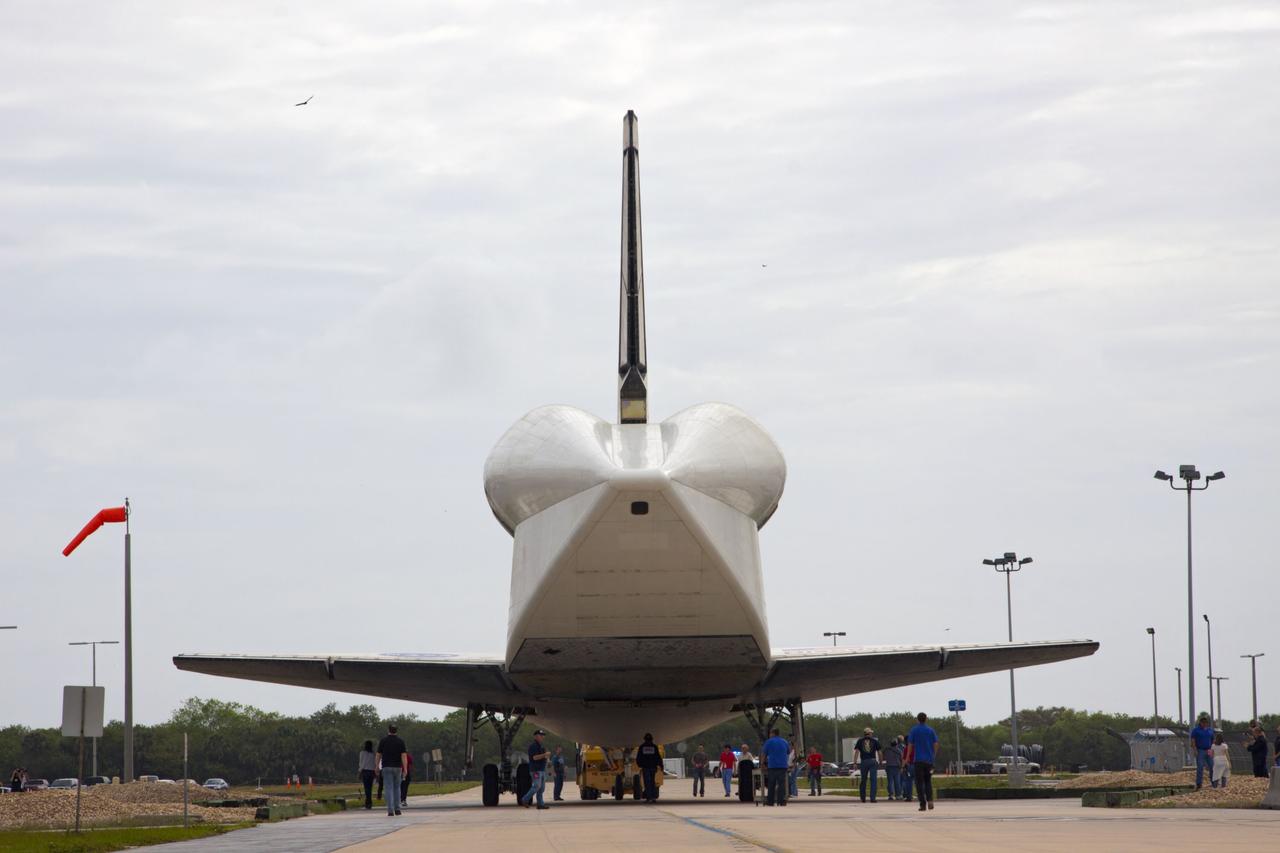
CAPE CANAVERAL, Fla. – At NASA’s Kennedy Space Center in Florida, space shuttle Discovery is towed to the Vehicle Assembly Building VAB after being towed out of Orbiter Processing Facility-1. The aft view of Discovery reveals the tail cone that covers the three replica shuttle main engines. The work is part of the Space Shuttle Program’s transition and retirement processing of shuttle Discovery, which is being prepared for display at Smithsonian’s National Air and Space Museum, Steven F. Udvar-Hazy Center in Chantilly, Va. Discovery will remain in high bay 4 of the VAB until its scheduled transport atop a NASA Shuttle Carrier Aircraft modified 747 jet to Dulles International Airport in Virginia on April 17. Discovery will then be transported to the Smithsonian on April 19. For more information, visit http://www.nasa.gov/shuttle. Photo credit: NASA/Jim Grossmann
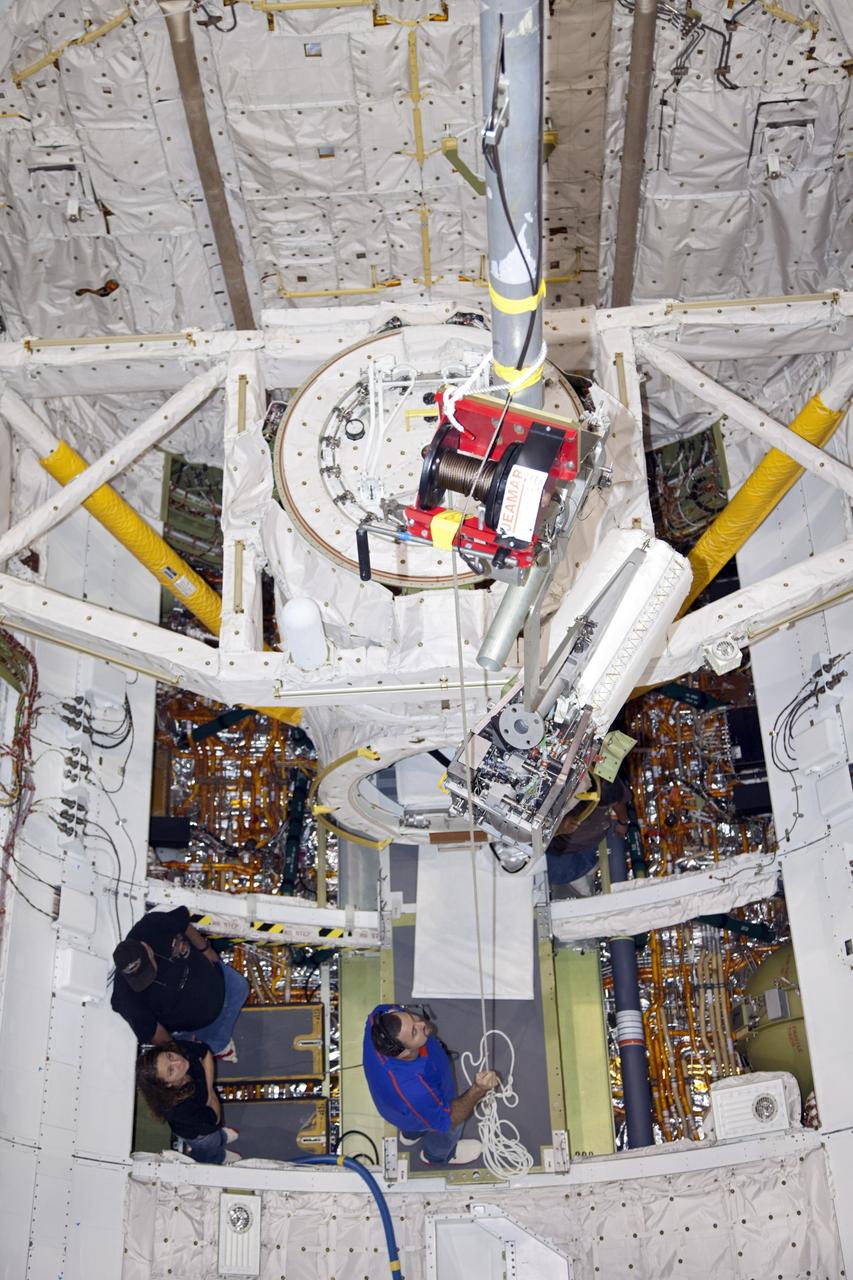
CAPE CANAVERAL, Fla. -- Inside Orbiter Processing Facility-1 at NASA’s Kennedy Space Center in Florida, technicians monitor the progress as space shuttle Discovery’s fuel cells are drained of all fluids. After all of the coolant is removed, the fuel cells will be returned to their previous location within Discovery’s mid-body. The hydrogen and oxygen dewars which feed reactants to the fuel cells remain in Discovery’s mid-body and have been purged with inert gases and vented down. The work is part of the Space Shuttle Program’s transition and retirement processing of shuttle Discovery. Discovery is being prepared for display at the Smithsonian’s National Air and Space Museum, Steven F. Udvar-Hazy Center in Chantilly, Va. For more information, visit http://www.nasa.gov/shuttle. Photo credit: NASA/Frankie Martin
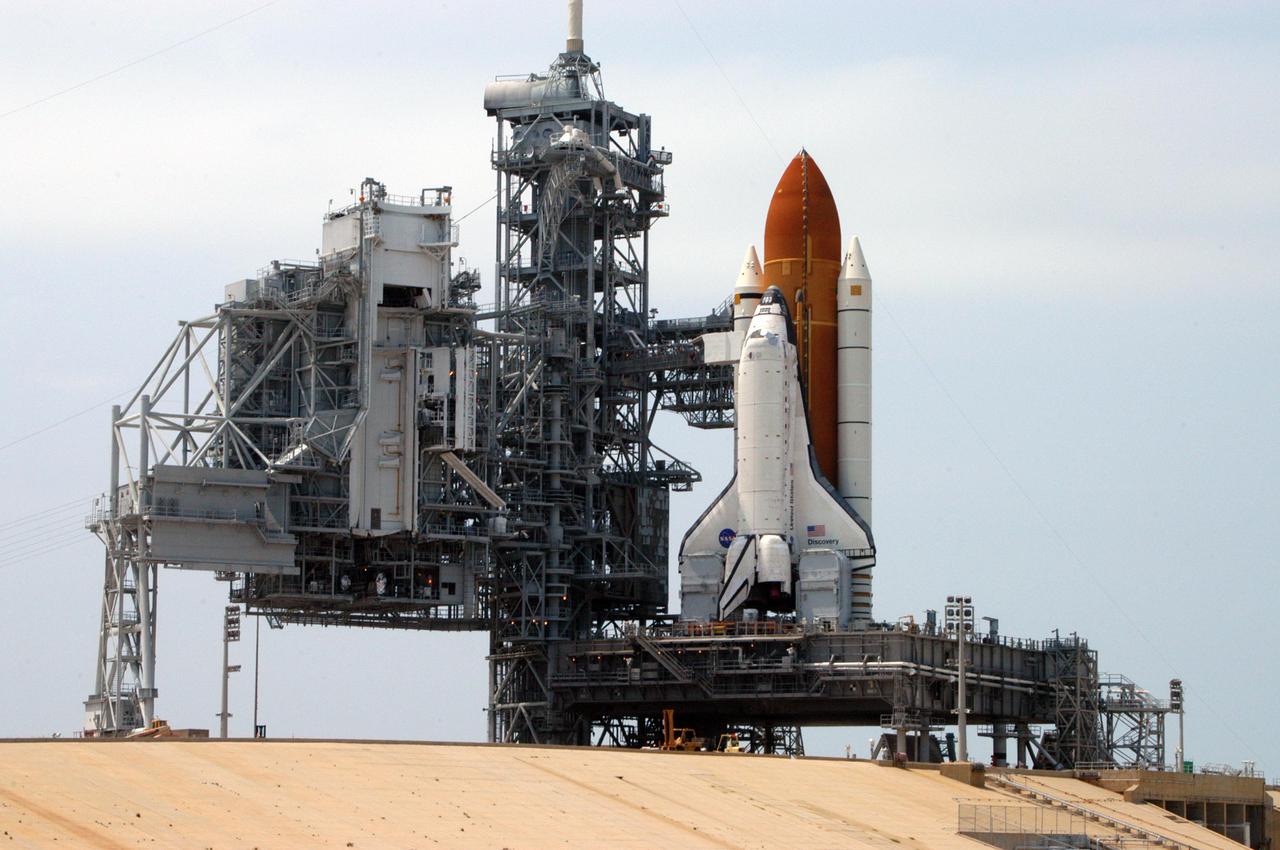
KENNEDY SPACE CENTER, FLA. - On Launch Pad 39B, the Rotating Service Structure is rotated back from Space Shuttle Discovery to prepare for Discovery’s rollback to the Vehicle Assembly Building. Once inside the VAB, Discovery will be demated from its External Tank and lifted into the transfer aisle. On or about June 7, Discovery will be lifted and attached to its new tank and Solid Rocket Boosters, which are already in the VAB. Only the 15th rollback in Space Shuttle Program history, the 4.2-mile journey allows additional modifications to be made to the External Tank prior to a safe Return to Flight. Discovery is expected to be rolled back to the launch pad in mid-June for Return to Flight mission STS-114. The launch window extends from July 13 to July 31.
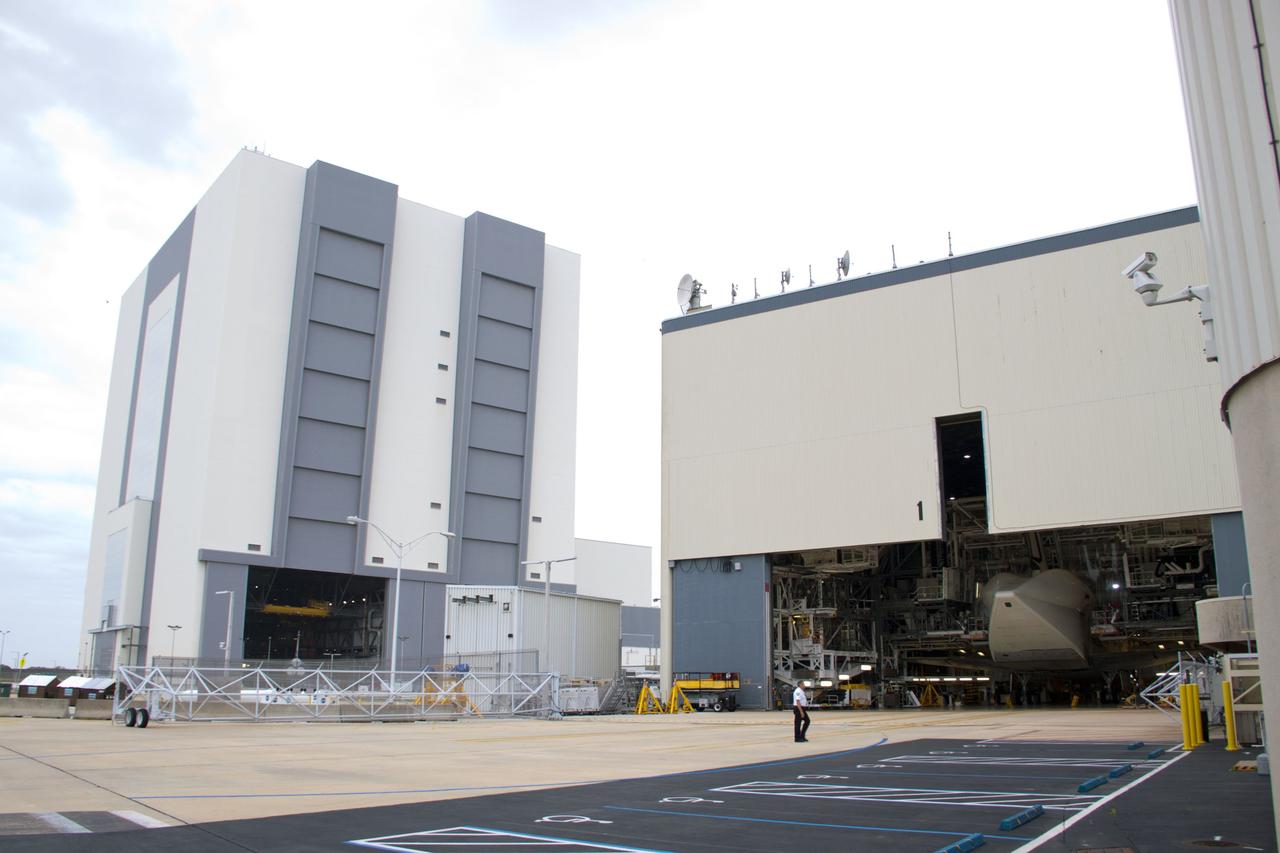
CAPE CANAVERAL, Fla. – Inside Orbiter Processing Facility-1 at NASA’s Kennedy Space Center in Florida, space shuttle Discovery is being readied for its move to the Vehicle Assembly Building VAB. The aft view of Discovery reveals the tail cone that covers the three replica shuttle main engines. The work is part of the Space Shuttle Program’s transition and retirement processing of shuttle Discovery, which is being prepared for display at Smithsonian’s National Air and Space Museum, Steven F. Udvar-Hazy Center in Chantilly, Va. Discovery will remain in high bay 4 of the VAB until its scheduled transport atop a NASA Shuttle Carrier Aircraft modified 747 jet to Dulles International Airport in Virginia on April 17. Discovery will then be transported to the Smithsonian on April 19. For more information, visit http://www.nasa.gov/shuttle. Photo credit: NASA/Jim Grossmann
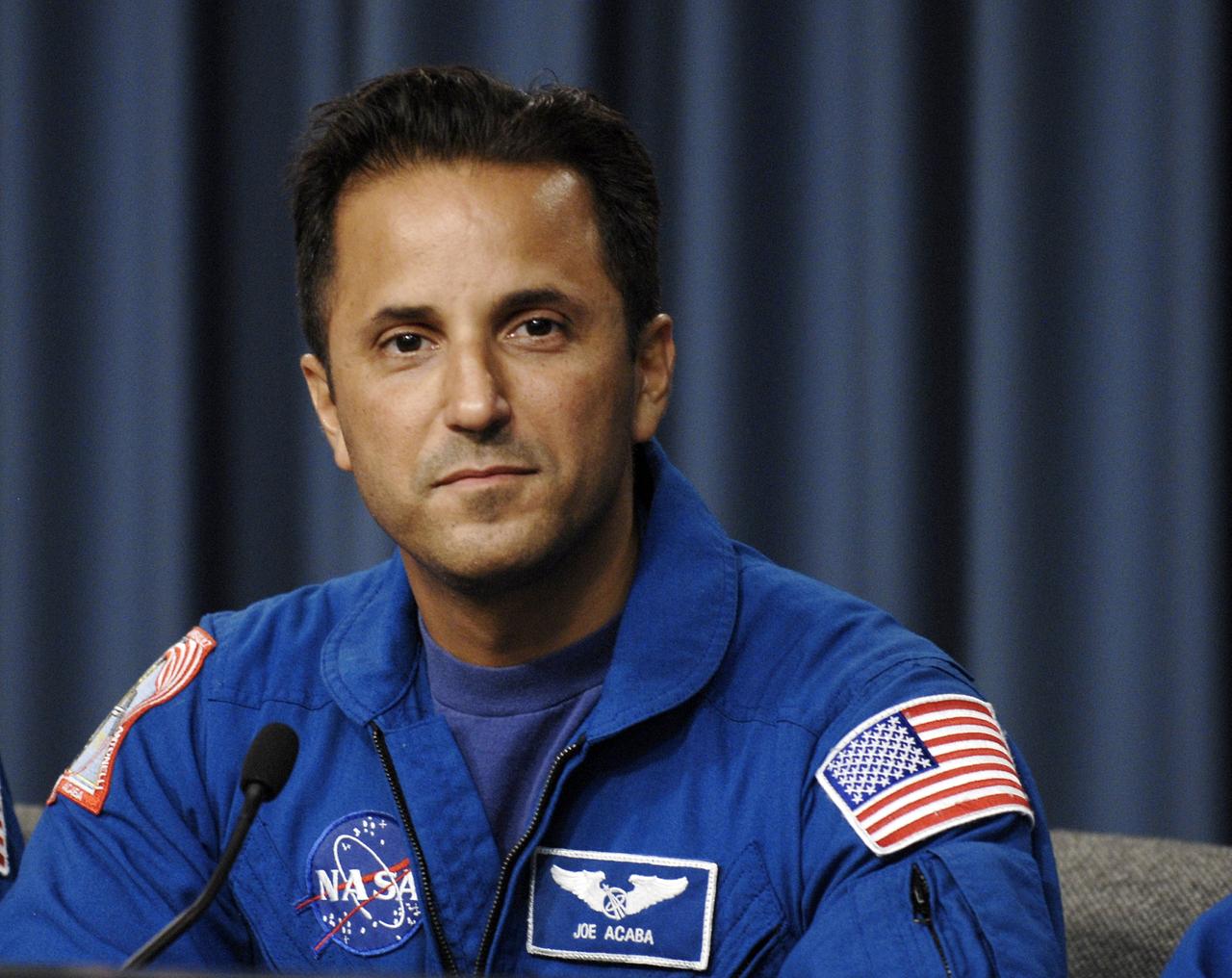
CAPE CANAVERAL, Fla. – At NASA's Kennedy Space Center in Florida, STS-119 Mission Specialist Joseph Acaba participates in a news conference following landing of the space shuttle Discovery STS-119 mission to the International Space Station. Main gear touchdown was at 3:13:17 p.m. EDT. Nose gear touchdown was at 3:13:40 p.m. and wheels stop was at 3:14:45 p.m. Discovery delivered the final pair of large power-generating solar array wings and the S6 truss segment. The mission was the 28th flight to the station, the 36th flight of Discovery and the 125th in the Space Shuttle Program, as well as the 70th landing at Kennedy. Photo credit: NASA/Kim Shiflett
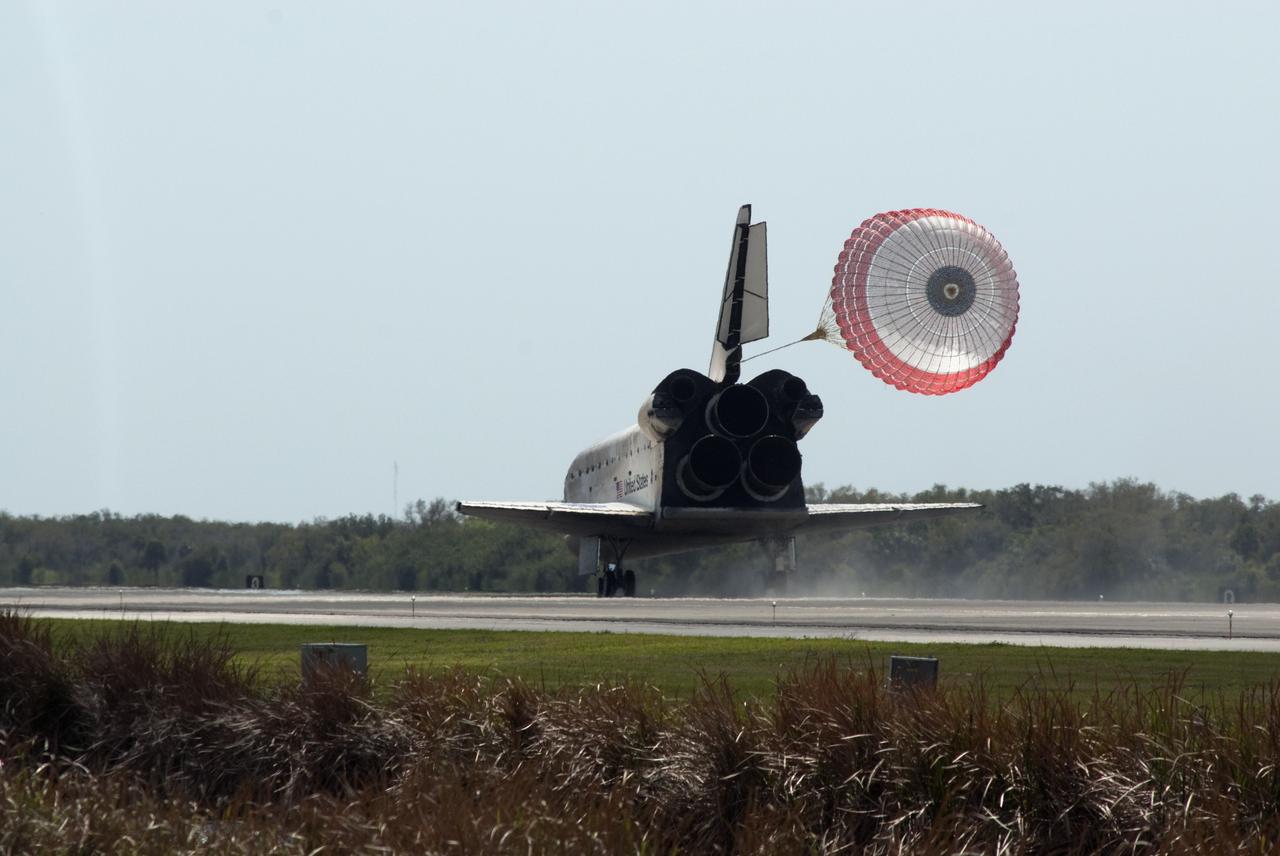
CAPE CANAVERAL, Fla. - With its drag chute unfurled, space shuttle Discovery rolls down Runway 15 at the Shuttle Landing Facility at NASA's Kennedy Space Center in Florida. Landing was at 11:57 a.m. EST, completing a 13-day STS-133 mission to the International Space Station. Discovery and its six-member crew delivered the Permanent Multipurpose Module, packed with supplies and critical spare parts, as well as Robonaut 2, the dexterous humanoid astronaut helper, to the orbiting outpost. STS-133 was Discovery's 39th and final mission. This was the 133rd Space Shuttle Program mission and the 35th shuttle voyage to the space station. Photo credit: NASA/Kim Shiflett
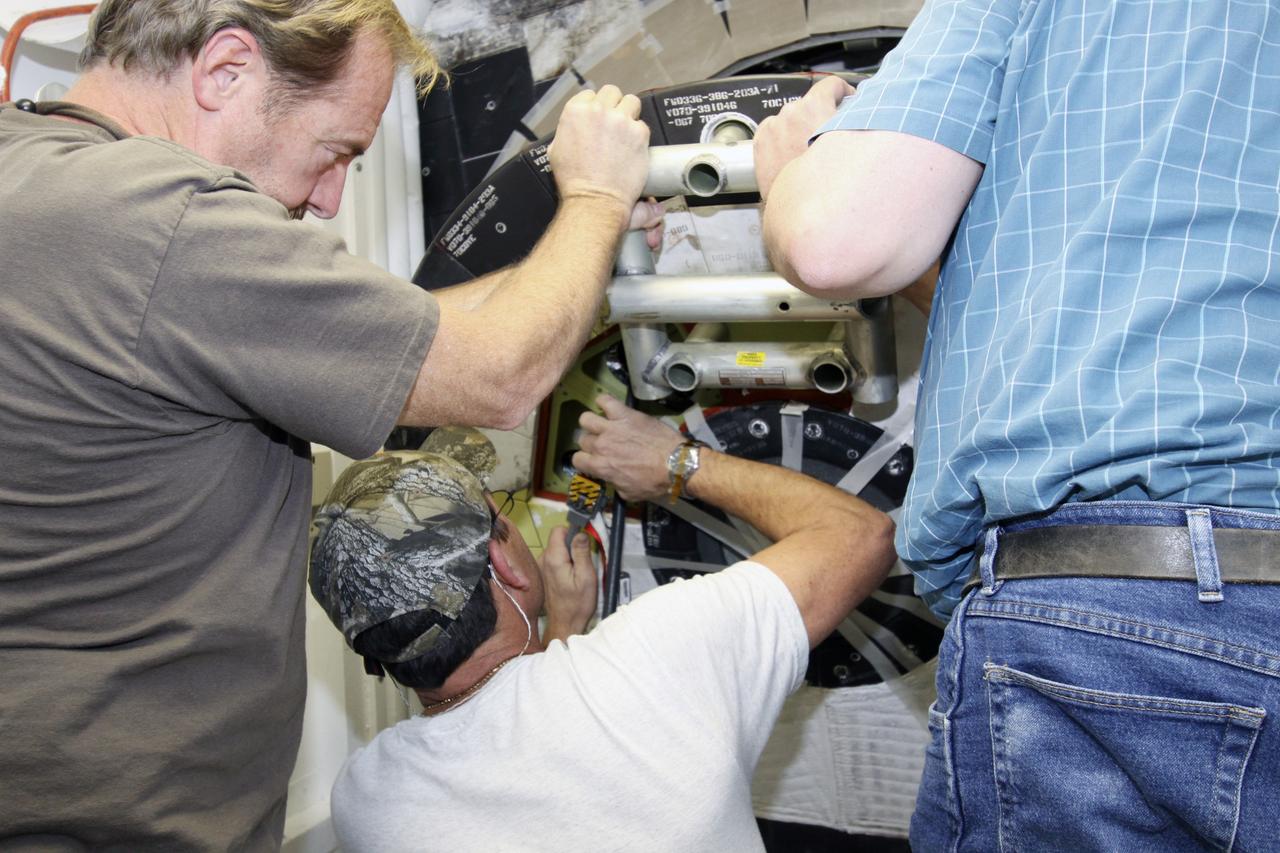
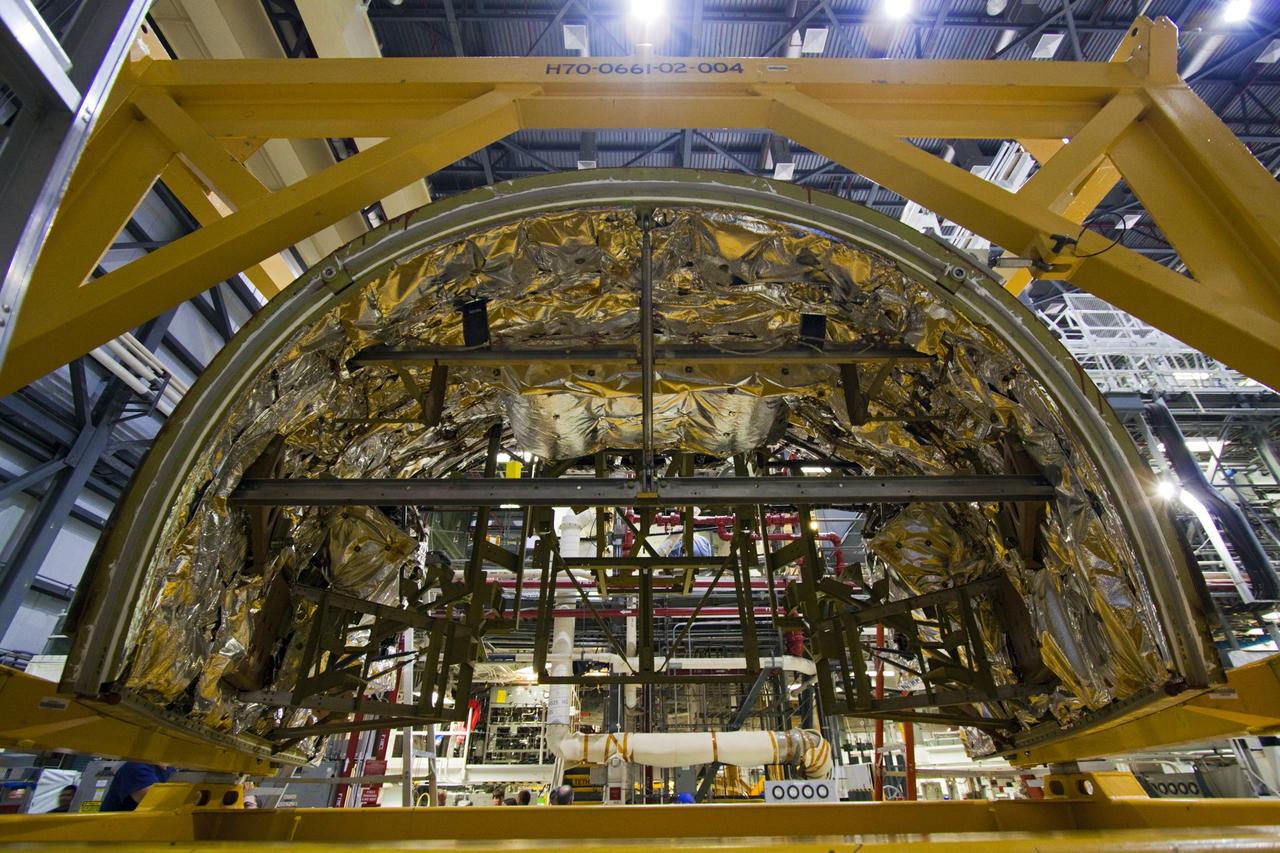
CAPE CANAVERAL, Fla. -- Inside Orbiter Processing Facility-1 at NASA’s Kennedy Space Center in Florida, technicians position space shuttle Discovery’s access hatch for final close out. The work is part of the Space Shuttle Program’s transition and retirement processing of shuttle Discovery, which is being prepared for display at Smithsonian’s National Air and Space Museum, Steven F. Udvar-Hazy Center in Chantilly, Va. Discovery is scheduled to be transported atop a NASA Shuttle Carrier Aircraft modified 747 jet to Dulles International Airport in Virginia on April 17 and then be transported to the Smithsonian on April 19. For more information, visit http://www.nasa.gov/shuttle. Photo credit: NASA/Jim Grossmann
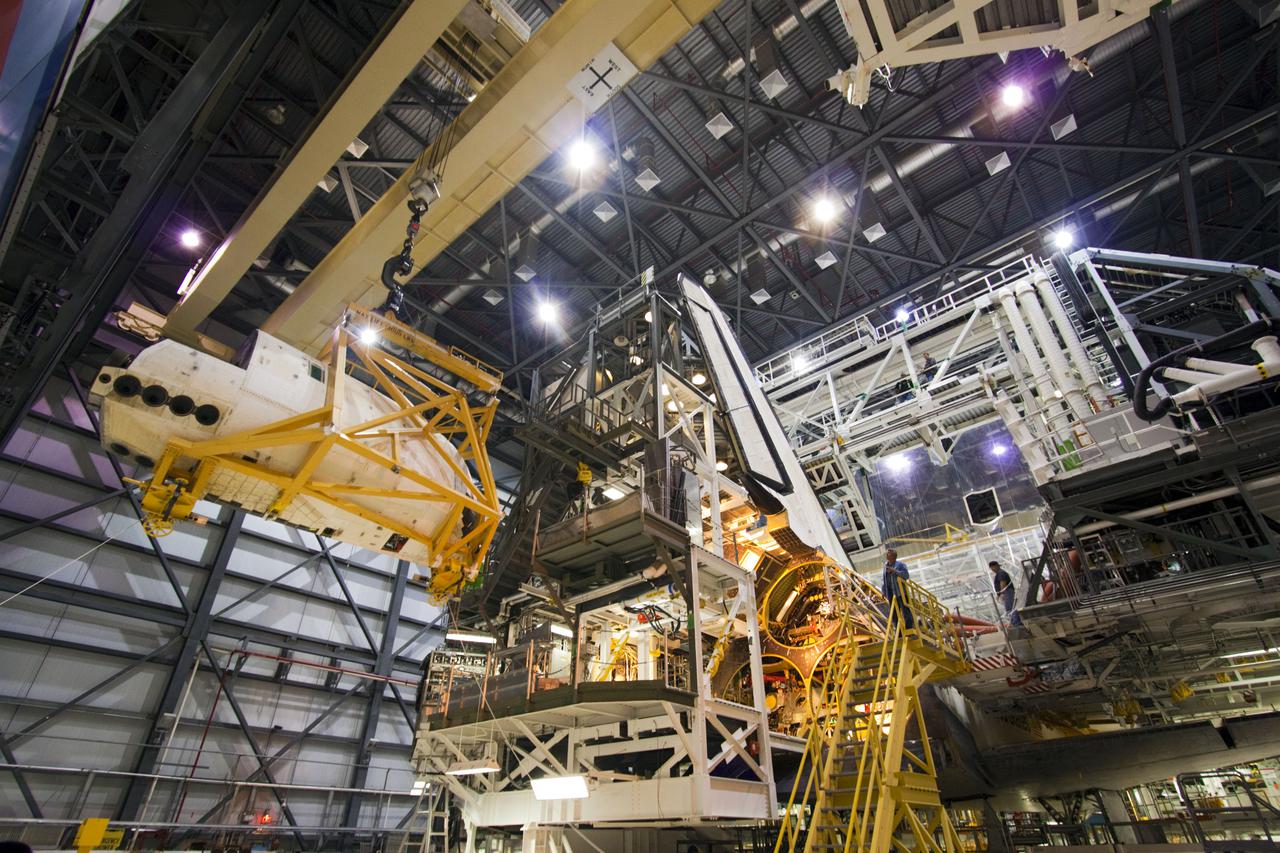
CAPE CANAVERAL, Fla. – Inside Orbiter Processing Facility-1 at NASA’s Kennedy Space Center in Florida, a crane is used to lift a sling holding one of two orbital maneuvering system (OMS) pods that will be re-installed on space shuttle Discovery. The OMS pods were returned from White Sands Space Harbor in New Mexico where they underwent a complete deservicing and cleaning. The work is part of the Space Shuttle Program’s transition and retirement processing of shuttle Discovery. Discovery is being prepared for display at Smithsonian’s National Air and Space Museum, Steven F. Udvar-Hazy Center in Chantilly, Va. For more information, visit http:__www.nasa.gov_shuttle. Photo credit: NASA_Jim Grossmann
CAPE CANAVERAL, Fla. -- Inside Orbiter Processing Facility-1 at NASA’s Kennedy Space Center in Florida, the forward reaction control system (FRCS) is being moved by crane for installation on space shuttle Discovery. The FRCS was returned from White Sands Space Harbor in New Mexico where it underwent a complete deservicing and cleaning. The work is part of the Space Shuttle Program’s transition and retirement processing of shuttle Discovery. Discovery is being prepared for display at Smithsonian’s National Air and Space Museum, Steven F. Udvar-Hazy Center in Chantilly, Va. For more information, visit http://www.nasa.gov/shuttle. Photo credit: NASA/Jim Grossmann

CAPE CANAVERAL, Fla. – Inside Orbiter Processing Facility-1 at NASA’s Kennedy Space Center in Florida, technicians install the eyelid and heat shield on one of space shuttle Discovery’s replica shuttle main engines. The heat shields are composed of two, semi-circle-shaped sections of thermal protection system tiles that surround the engines. The work is part of the Space Shuttle Program’s transition and retirement processing of shuttle Discovery. Discovery is being prepared for display at the Smithsonian’s National Air and Space Museum, Steven F. Udvar-Hazy Center in Chantilly, Va. For more information, visit http://www.nasa.gov/shuttle. Photo credit: NASA/Dimitri Gerondidakis
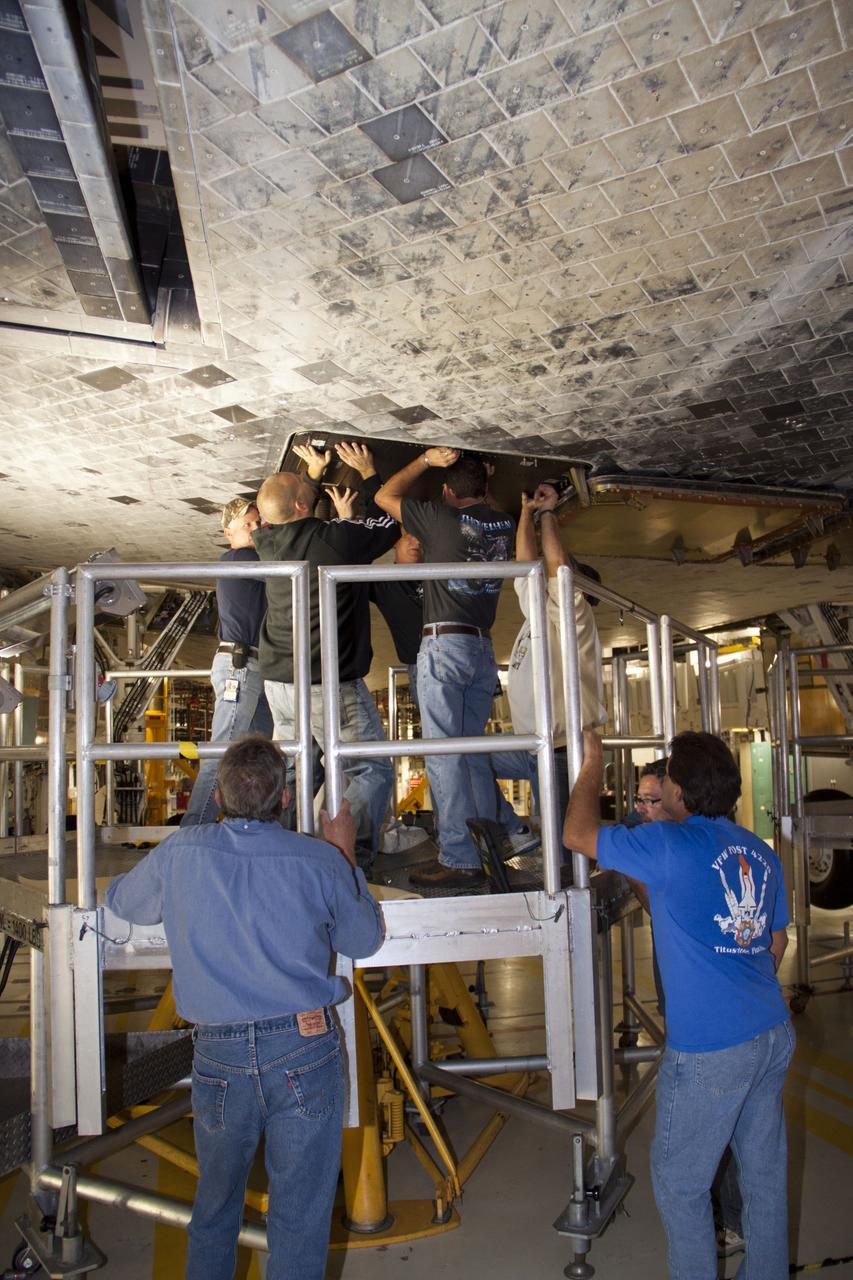
CAPE CANAVERAL, Fla. – Inside Orbiter Processing Facility-1 at NASA’s Kennedy Space Center in Florida, technicians install a ferry flight door on space shuttle Discovery. The work is part of the Space Shuttle Program’s transition and retirement processing of shuttle Discovery, which is being prepared for display at Smithsonian’s National Air and Space Museum, Steven F. Udvar-Hazy Center in Chantilly, Va. Discovery is scheduled to be transported atop a NASA Shuttle Carrier Aircraft modified 747 jet to Dulles International Airport in Virginia on April 17 and then moved to the Smithsonian for permanent public display on April 19. For more information, visit http://www.nasa.gov/shuttle. Photo credit: NASA/Jim Grossmann
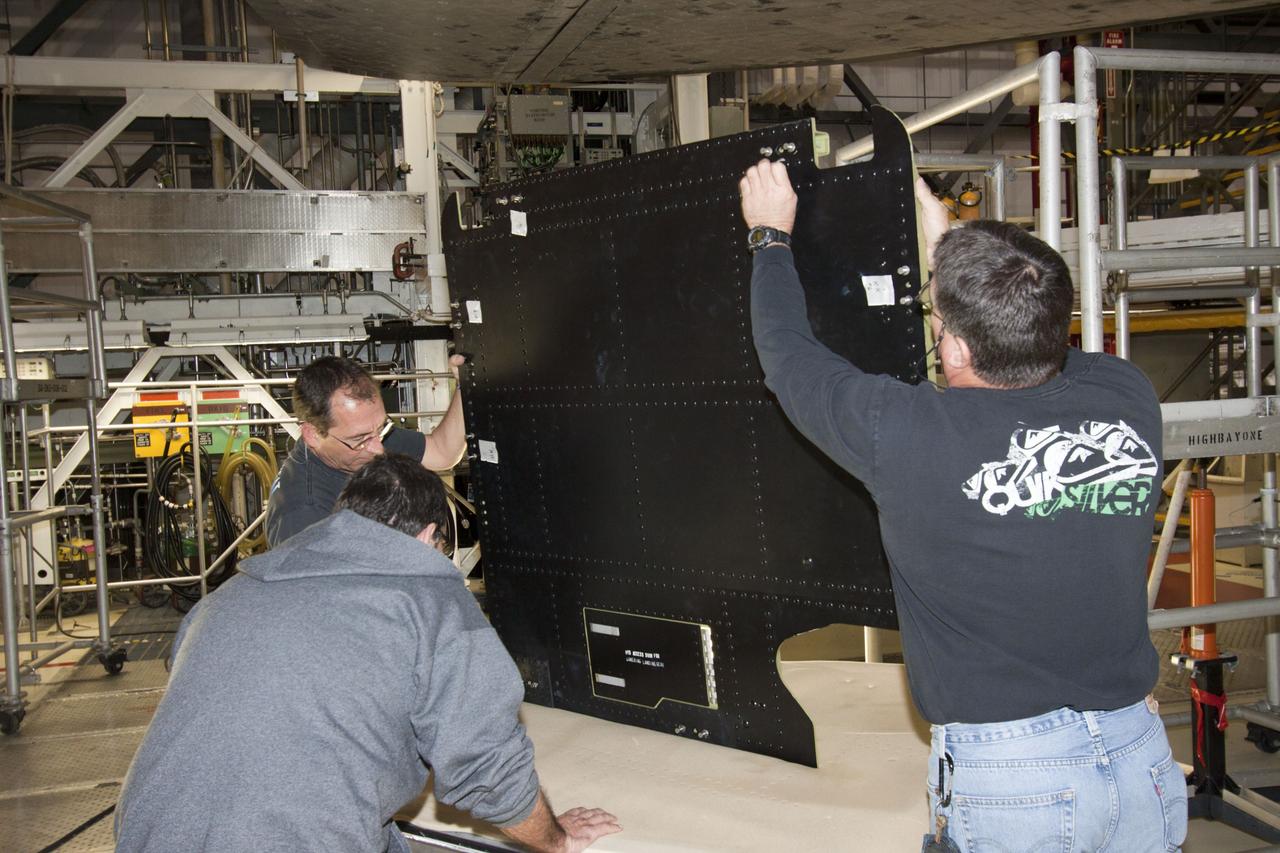
CAPE CANAVERAL, Fla. – Inside Orbiter Processing Facility-1 at NASA’s Kennedy Space Center in Florida, technicians prepare a ferry flight door for installation on space shuttle Discovery. The work is part of the Space Shuttle Program’s transition and retirement processing of shuttle Discovery, which is being prepared for display at Smithsonian’s National Air and Space Museum, Steven F. Udvar-Hazy Center in Chantilly, Va. Discovery is scheduled to be transported atop a NASA Shuttle Carrier Aircraft modified 747 jet to Dulles International Airport in Virginia on April 17 and then moved to the Smithsonian for permanent public display on April 19. For more information, visit http://www.nasa.gov/shuttle. Photo credit: NASA/Jim Grossmann
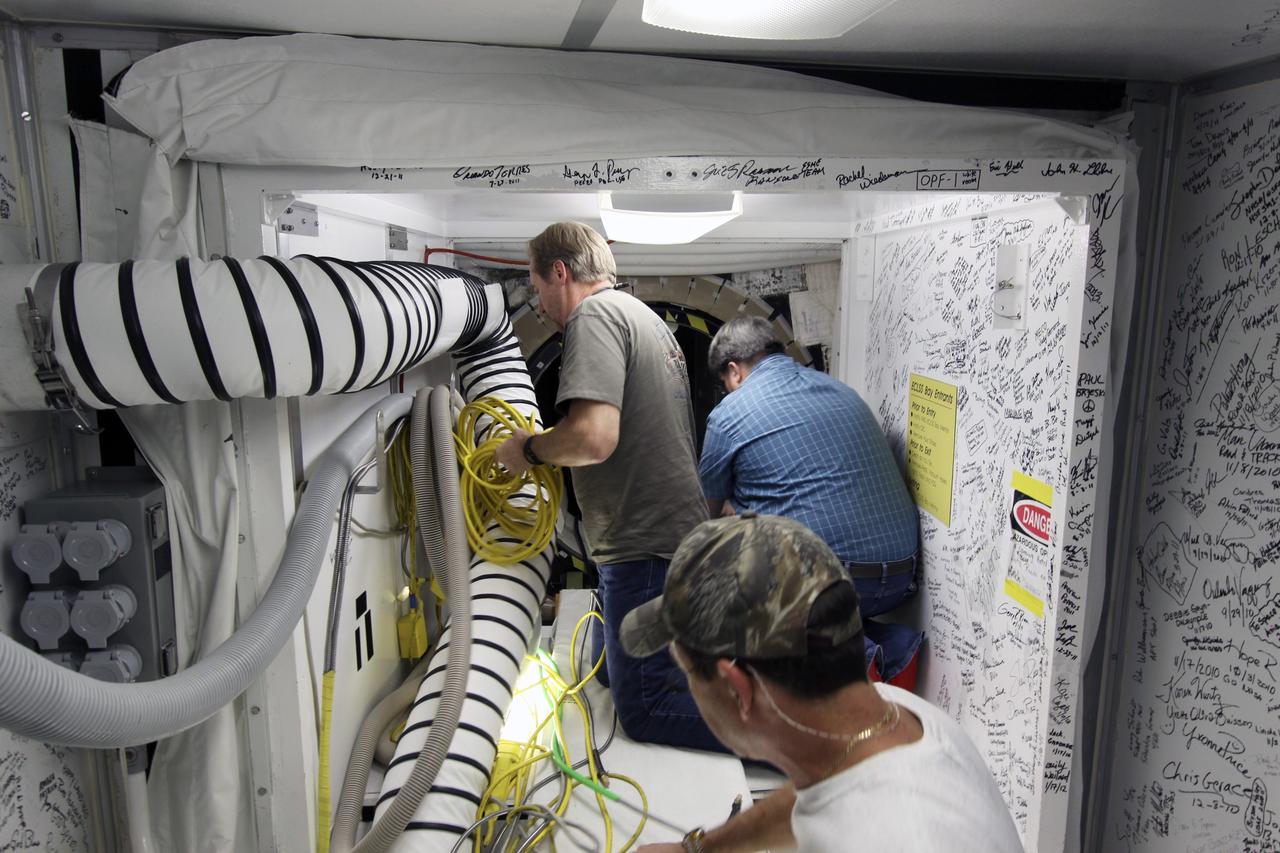
CAPE CANAVERAL, Fla. -- Inside Orbiter Processing Facility-1 at NASA’s Kennedy Space Center in Florida, technicians prepare space shuttle Discovery’s access hatch for final close out. The work is part of the Space Shuttle Program’s transition and retirement processing of shuttle Discovery, which is being prepared for display at Smithsonian’s National Air and Space Museum, Steven F. Udvar-Hazy Center in Chantilly, Va. Discovery is scheduled to be transported atop a NASA Shuttle Carrier Aircraft modified 747 jet to Dulles International Airport in Virginia on April 17 and then be transported to the Smithsonian on April 19. For more information, visit http://www.nasa.gov/shuttle. Photo credit: NASA/Jim Grossmann
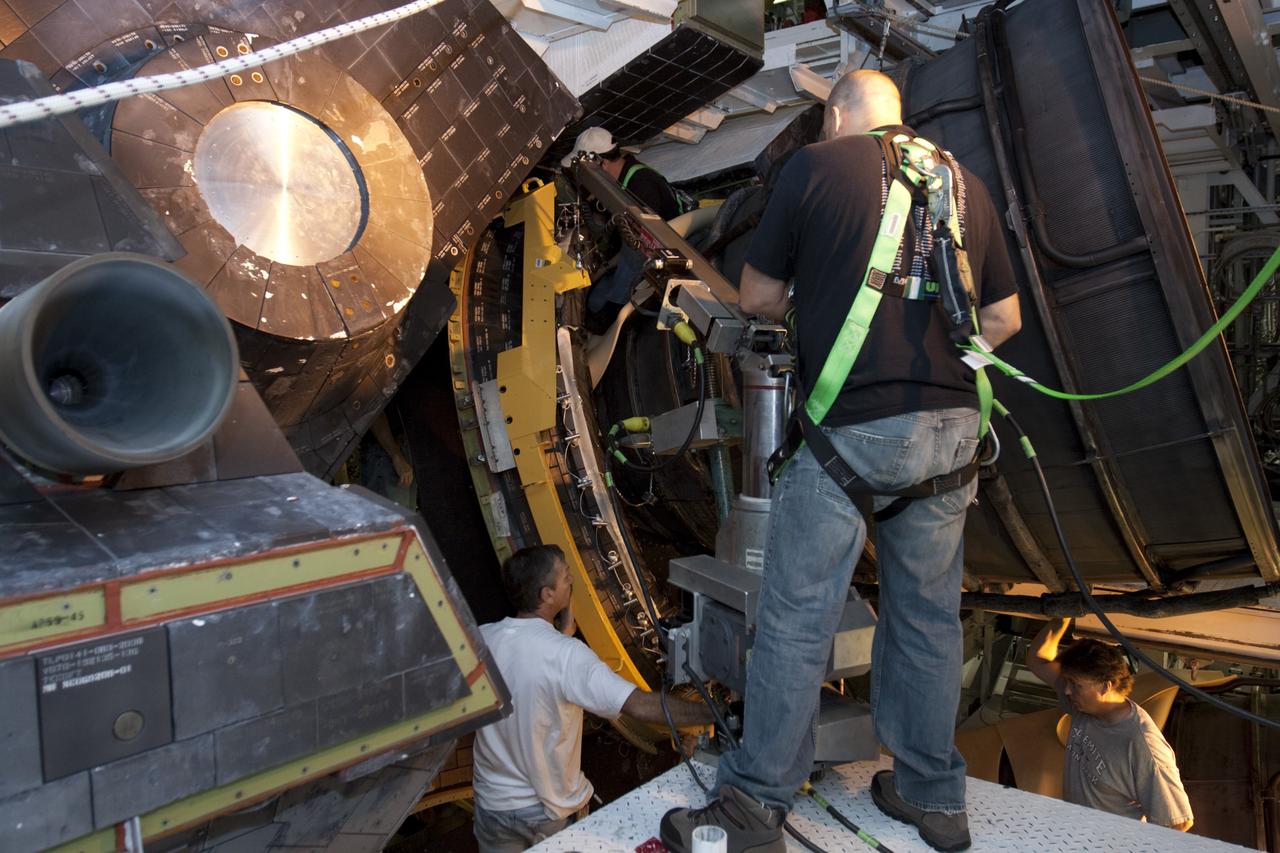
CAPE CANAVERAL, Fla. – Inside Orbiter Processing Facility-1 at NASA’s Kennedy Space Center in Florida, technicians install a dome heat shield around one of space shuttle Discovery’s three replica shuttle main engines. The dome heat shields are composed of two, semi-circle-shaped sections of thermal protection system tiles that surround the engines. The work is part of the Space Shuttle Program’s transition and retirement processing of shuttle Discovery. Discovery is being prepared for display at the Smithsonian’s National Air and Space Museum, Steven F. Udvar-Hazy Center in Chantilly, Va. For more information, visit http://www.nasa.gov/shuttle. Photo credit: NASA/Kim Shiflett
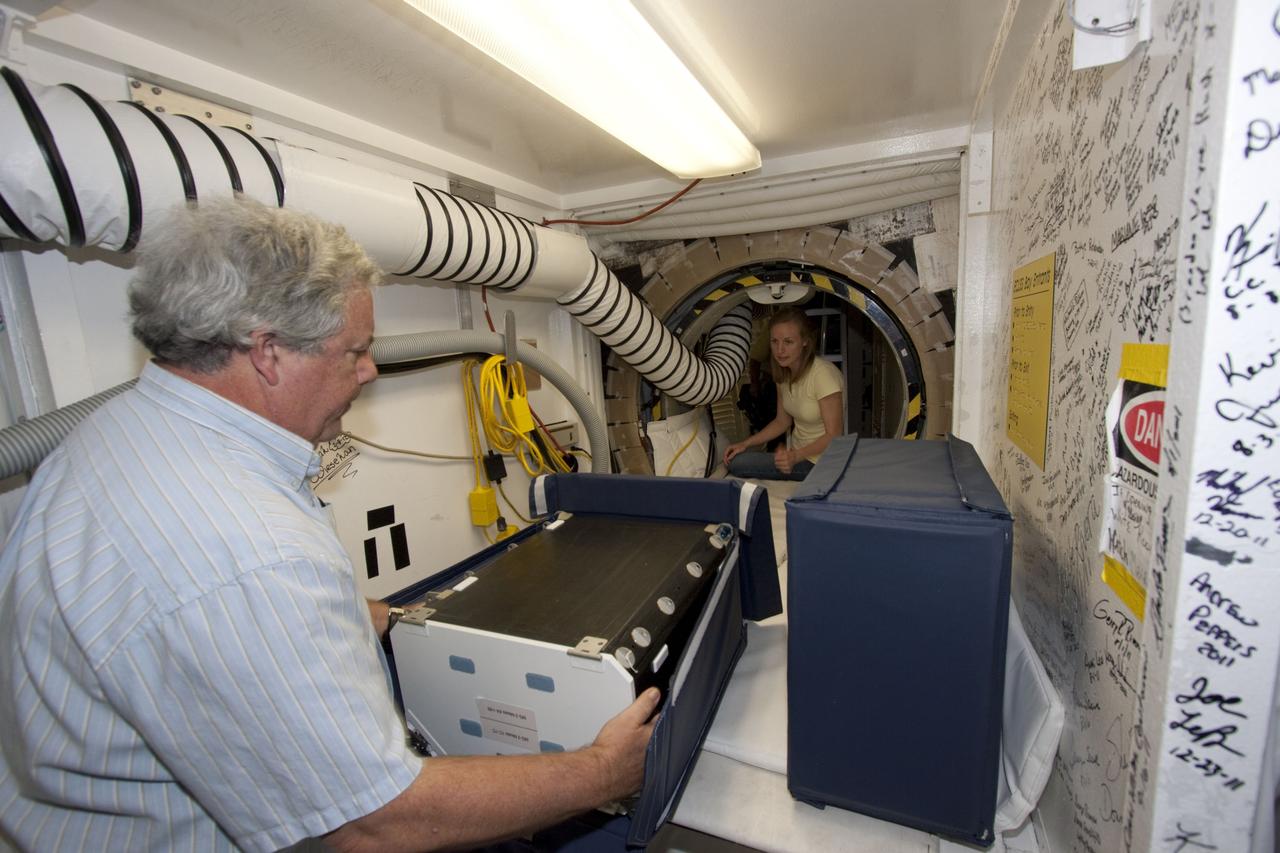
CAPE CANAVERAL, Fla. -- Inside Orbiter Processing Facility-1 at NASA’s Kennedy Space Center in Florida, technicians prepare to reinstall the lockers in the middeck of space shuttle Discovery. The work is part of the Space Shuttle Program’s transition and retirement processing of shuttle Discovery, which is being prepared for display at Smithsonian’s National Air and Space Museum, Steven F. Udvar-Hazy Center in Chantilly, Va. Discovery is scheduled to be transported atop a NASA Shuttle Carrier Aircraft modified 747 jet to Dulles International Airport in Virginia on April 17 and then be transported to the Smithsonian on April 19. For more information, visit http://www.nasa.gov/shuttle. Photo credit: NASA/Jim Grossmann
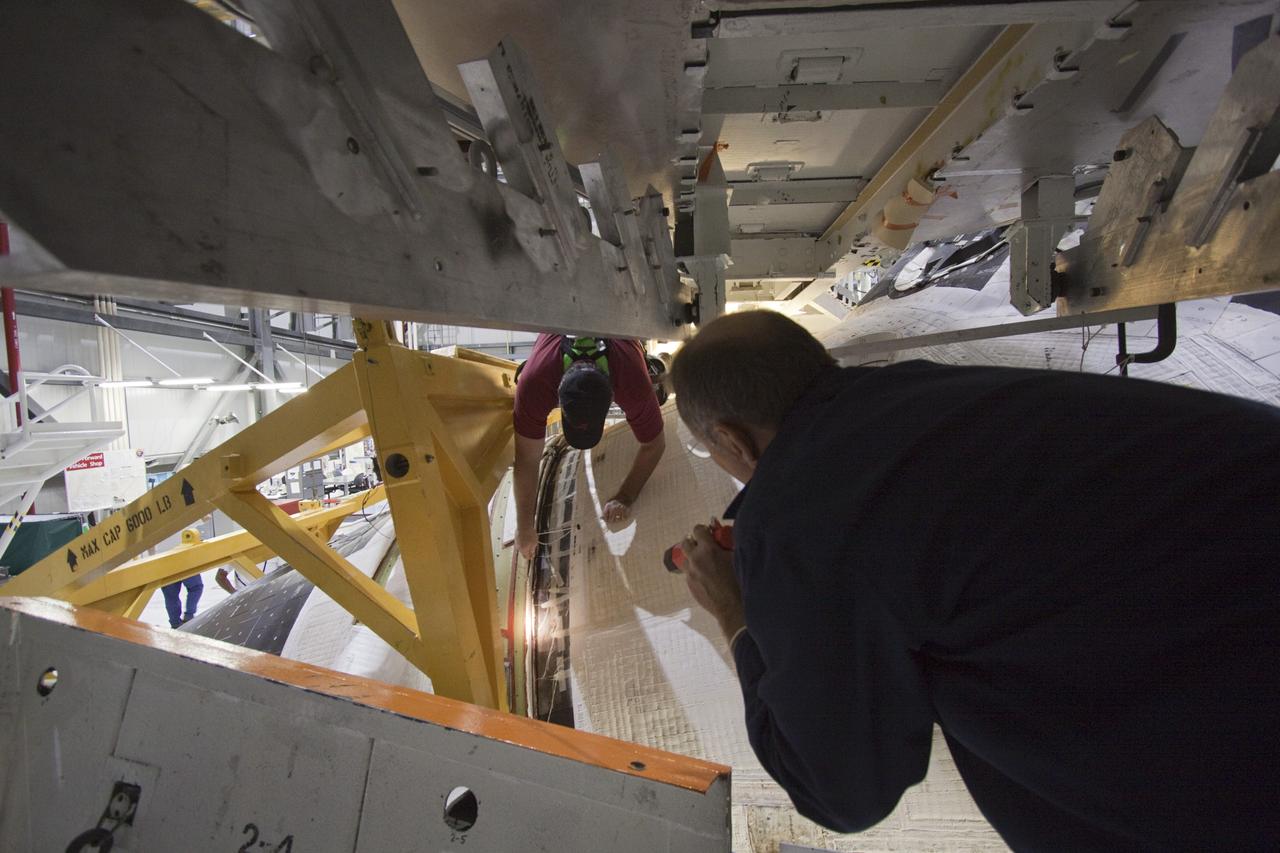
CAPE CANAVERAL, Fla. -- Inside Orbiter Processing Facility-1 at NASA’s Kennedy Space Center in Florida, technicians assist with the installation of the forward reaction control system (FRCS) on space shuttle Discovery. The FRCS was returned from White Sands Space Harbor in New Mexico where it underwent a complete deservicing and cleaning. The work is part of the Space Shuttle Program’s transition and retirement processing of shuttle Discovery. Discovery is being prepared for display at Smithsonian’s National Air and Space Museum, Steven F. Udvar-Hazy Center in Chantilly, Va. For more information, visit http://www.nasa.gov/shuttle. Photo credit: NASA/Jim Grossmann
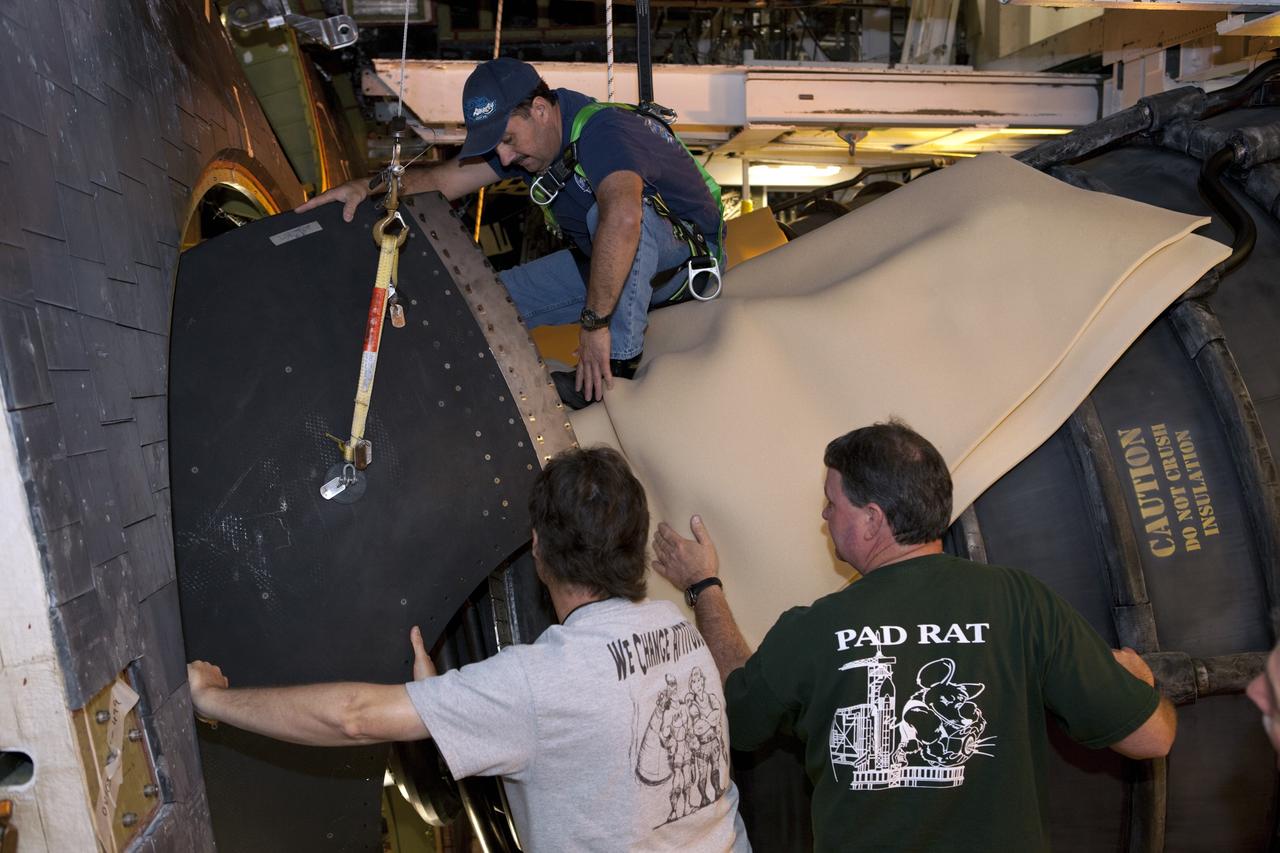
CAPE CANAVERAL, Fla. – Inside Orbiter Processing Facility-1 at NASA’s Kennedy Space Center in Florida, technicians help guide one of space shuttle Discovery’s replica shuttle main engines (RSME) into place after the eyelid and heat shield were installed. The heat shields are composed of two, semi-circle-shaped sections of thermal protection system tiles that surround the engines. The work is part of the Space Shuttle Program’s transition and retirement processing of shuttle Discovery. Discovery is being prepared for display at the Smithsonian’s National Air and Space Museum, Steven F. Udvar-Hazy Center in Chantilly, Va. For more information, visit http://www.nasa.gov/shuttle. Photo credit: NASA/Dimitri Gerondidakis
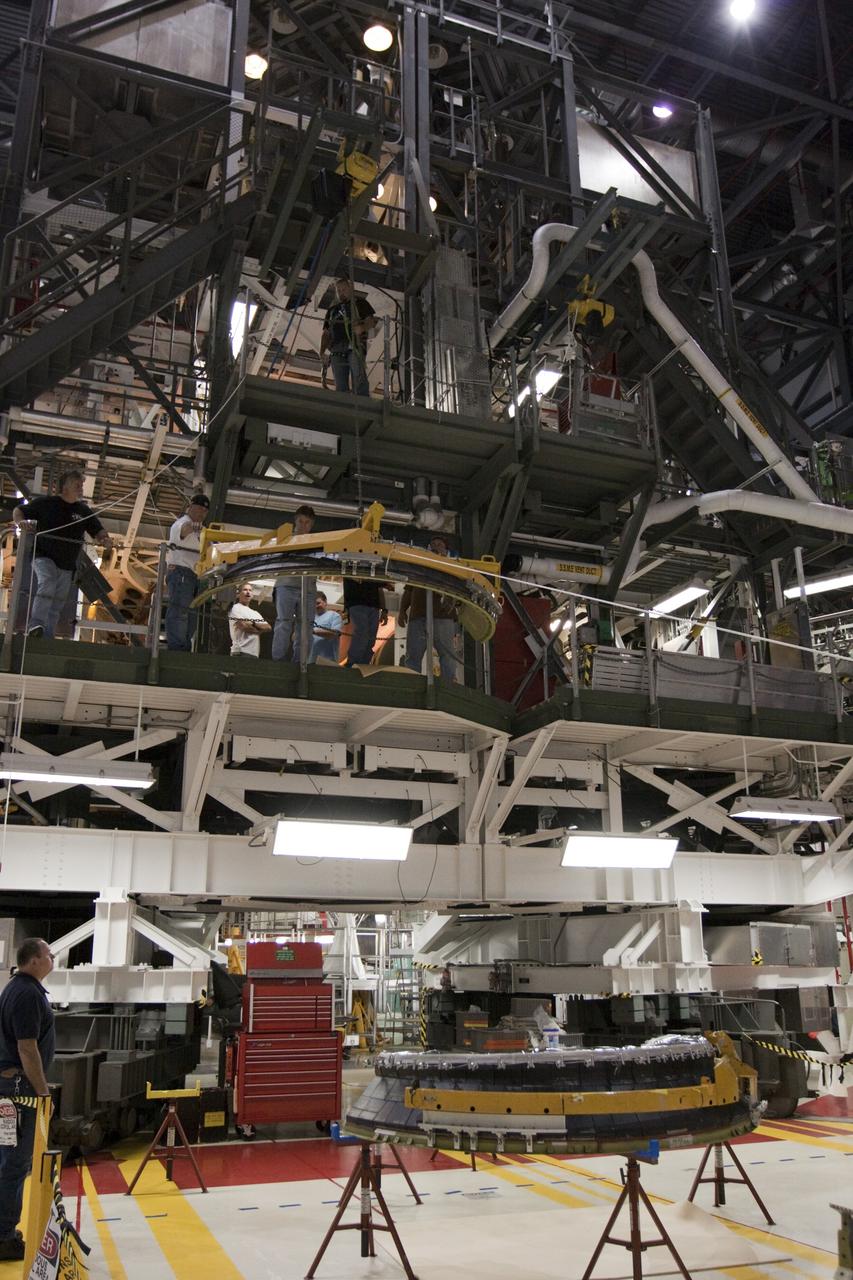
CAPE CANAVERAL, Fla. – Inside Orbiter Processing Facility-1 at NASA’s Kennedy Space Center in Florida, a large crane lifts a dome heat shield that will be installed around one of space shuttle Discovery’s three replica shuttle main engines. The dome heat shields are composed of two, semi-circle-shaped sections of thermal protection system tiles that surround the engines. The work is part of the Space Shuttle Program’s transition and retirement processing of shuttle Discovery. Discovery is being prepared for display at the Smithsonian’s National Air and Space Museum, Steven F. Udvar-Hazy Center in Chantilly, Va. For more information, visit http://www.nasa.gov/shuttle. Photo credit: NASA/Kim Shiflett
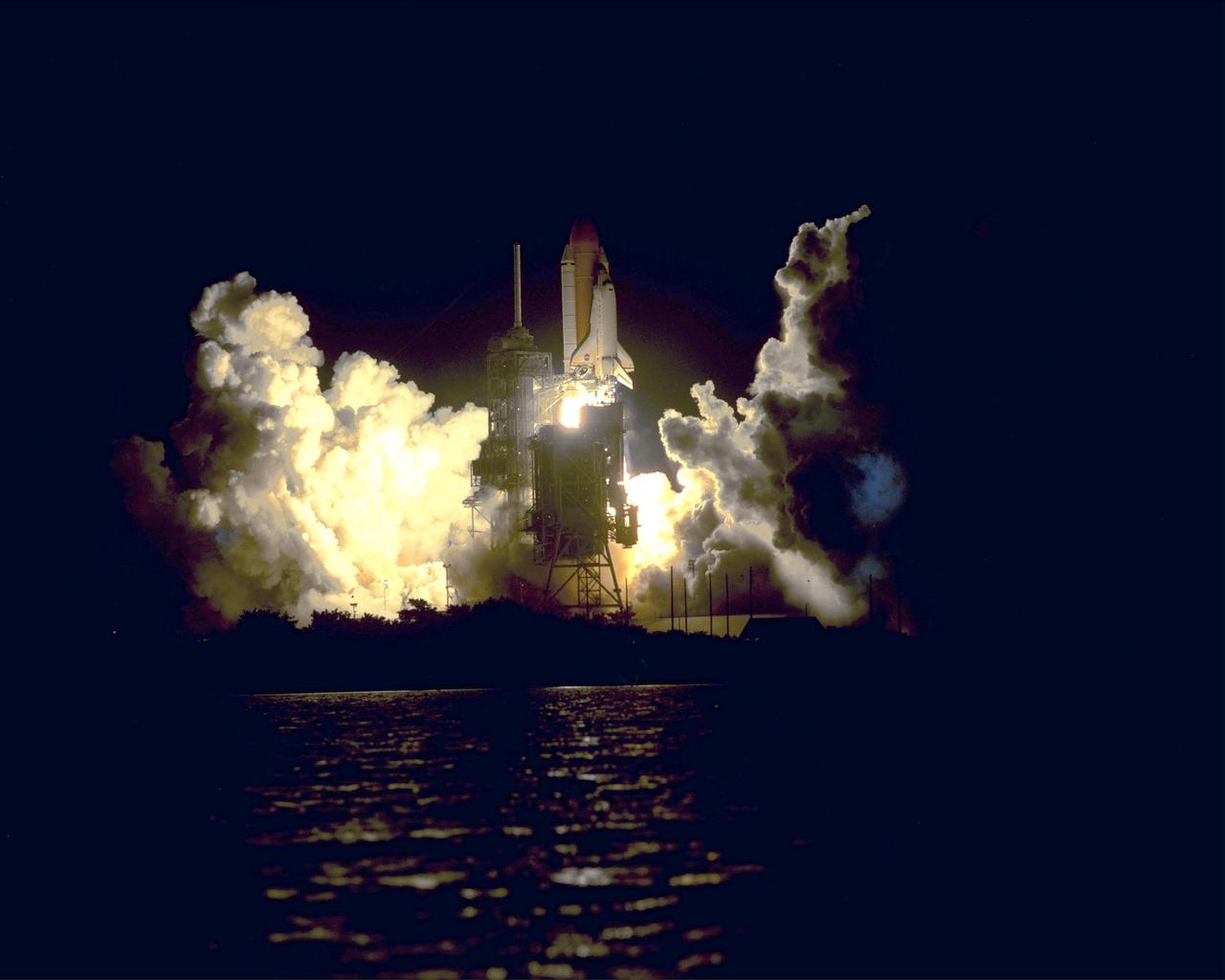
KENNEDY SPACE CENTER, Fla. -- Billows of smoke and steam surround Space Shuttle Discovery as it lifts off from Launch Pad 39A on mission STS-92 to the International Space Station. The perfect on-time liftoff occurred at 7:17 p.m. EDT, sending a crew of seven on the 100th launch in the history of the Shuttle program. Discovery carries a payload that includes the Integrated Truss Structure Z-1, first of 10 trusses that will form the backbone of the Space Station, and the third Pressurized Mating Adapter that will provide a Shuttle docking port for solar array installation on the sixth Station flight and Lab installation on the seventh Station flight. Discovery’s landing is expected Oct. 22 at 2:10 p.m. EDT
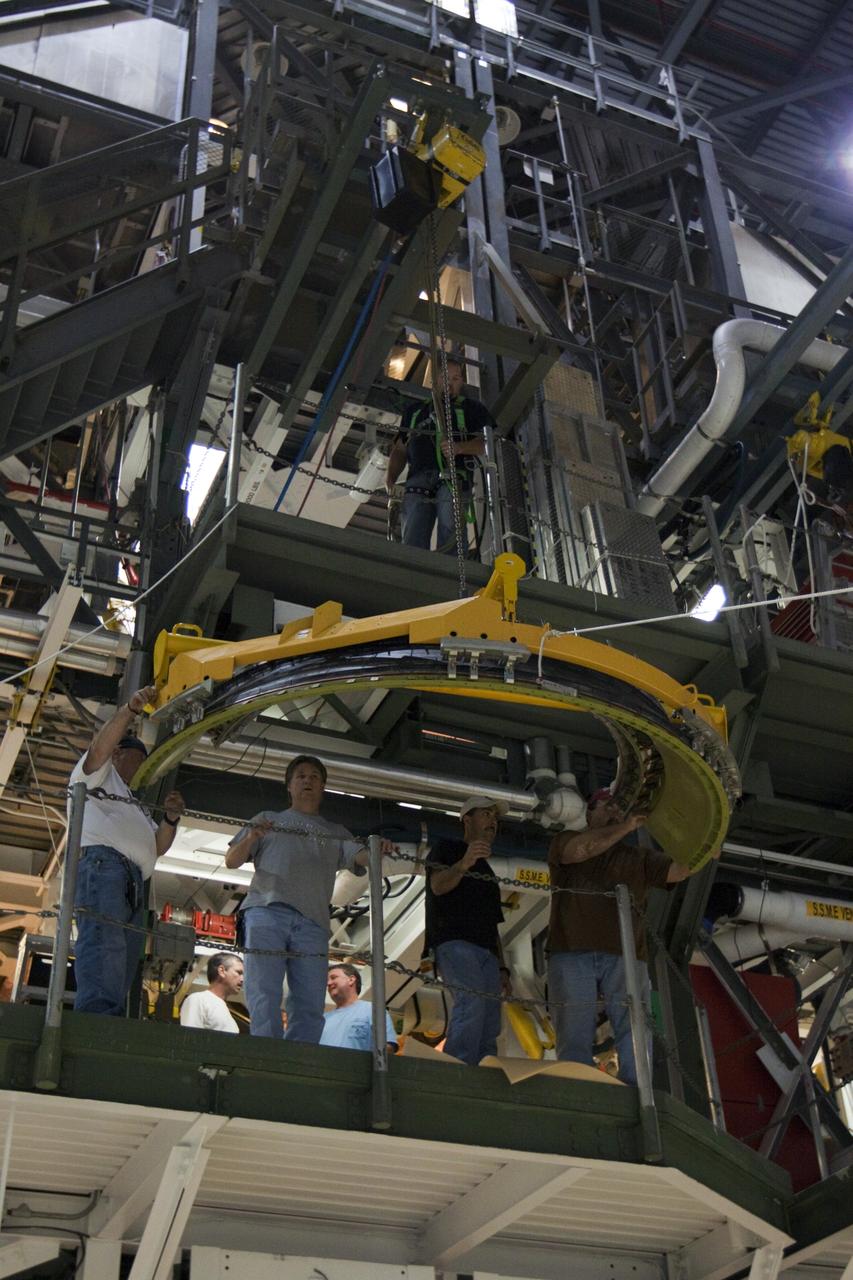
CAPE CANAVERAL, Fla. – Inside Orbiter Processing Facility-1 at NASA’s Kennedy Space Center in Florida, technicians help guide a dome heat shield for installation around one of space shuttle Discovery’s three replica shuttle main engines. The dome heat shields are composed of two, semi-circle-shaped sections of thermal protection system tiles that surround the engines. The work is part of the Space Shuttle Program’s transition and retirement processing of shuttle Discovery. Discovery is being prepared for display at the Smithsonian’s National Air and Space Museum, Steven F. Udvar-Hazy Center in Chantilly, Va. For more information, visit http://www.nasa.gov/shuttle. Photo credit: NASA/Kim Shiflett
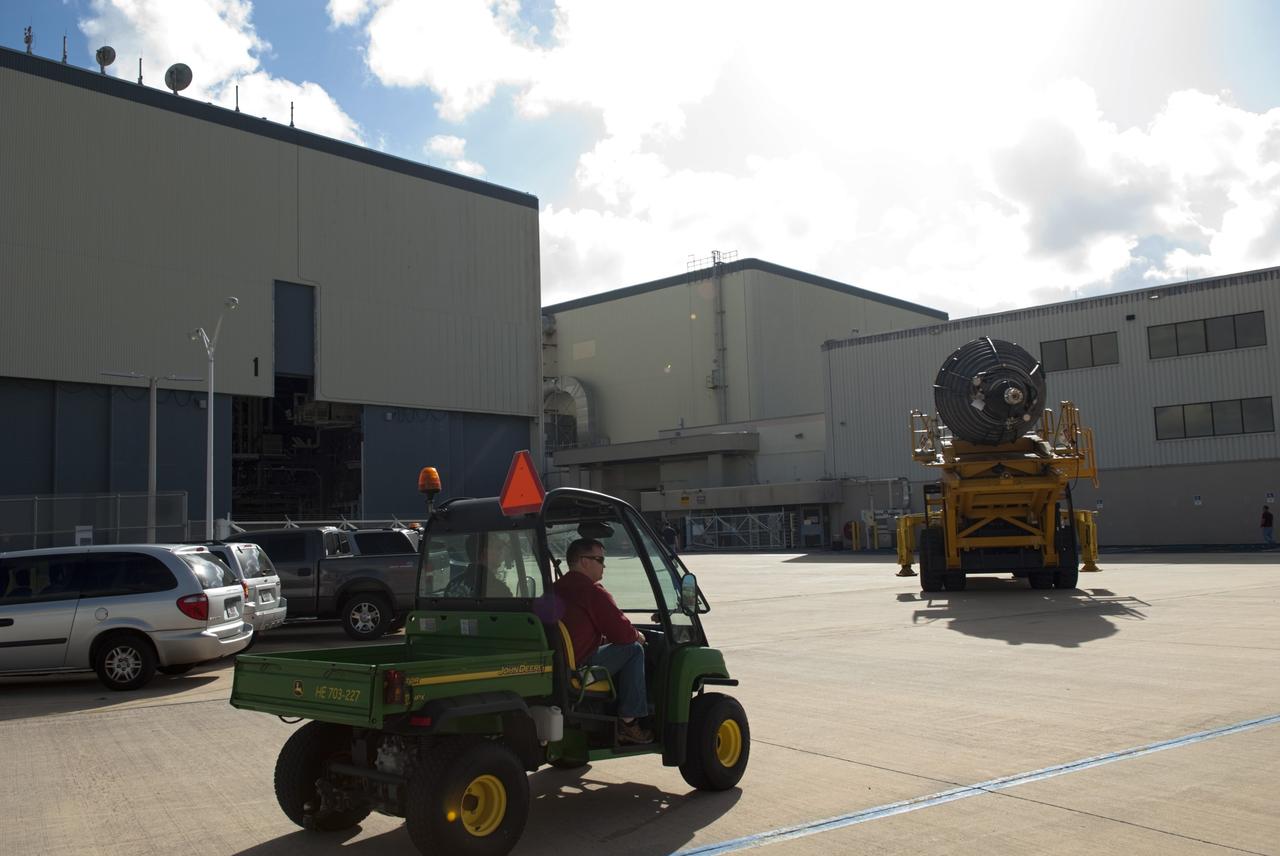
CAPE CANAVERAL, Fla. – A replica shuttle main engine (RSME) arrives at Orbiter Processing Facility-1 at NASA’s Kennedy Space Center in Florida where it will be installed on space shuttle Discovery. The RSME was built in the Pratt & Whitney Rocketdyne engine shop at Kennedy. The RSME is one of three that will be installed on Discovery during Space Shuttle Program transition and retirement activities. Discovery is being prepared for display at the Smithsonian’s National Air and Space Museum Steven F. Udvar-Hazy Center in Chantilly, Va. For more information, visit http://www.nasa.gov/shuttle. Photo credit: NASA/Jim Grossmann
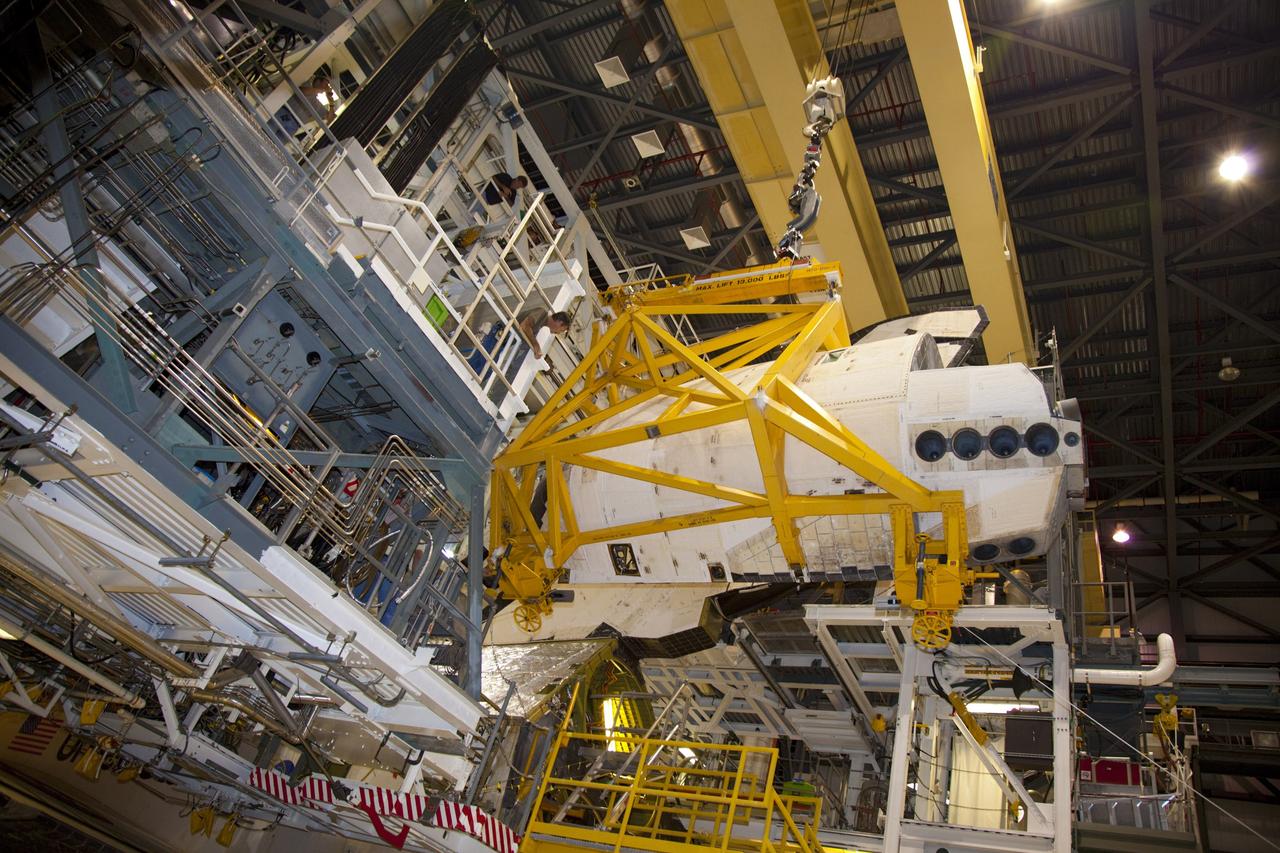
CAPE CANAVERAL, Fla. – In Orbiter Processing Facility-1 at NASA’s Kennedy Space Center in Florida, a crane carries an orbital maneuvering system (OMS) pod closer to space shuttle Discovery. The OMS pod will be installed on Discovery. The OMS pod was returned from White Sands Space Harbor in New Mexico where it underwent a complete deservicing and cleaning. The work is part of the Space Shuttle Program’s transition and retirement processing of space shuttle Discovery. The shuttle will go to the Smithsonian’s National Air and Space Museum, Steven F. Udvar-Hazy Center in Chantilly, Va., in April 2012. For more information, visit http://www.nasa.gov/shuttle. Photo credit: NASA/Frankie Martin
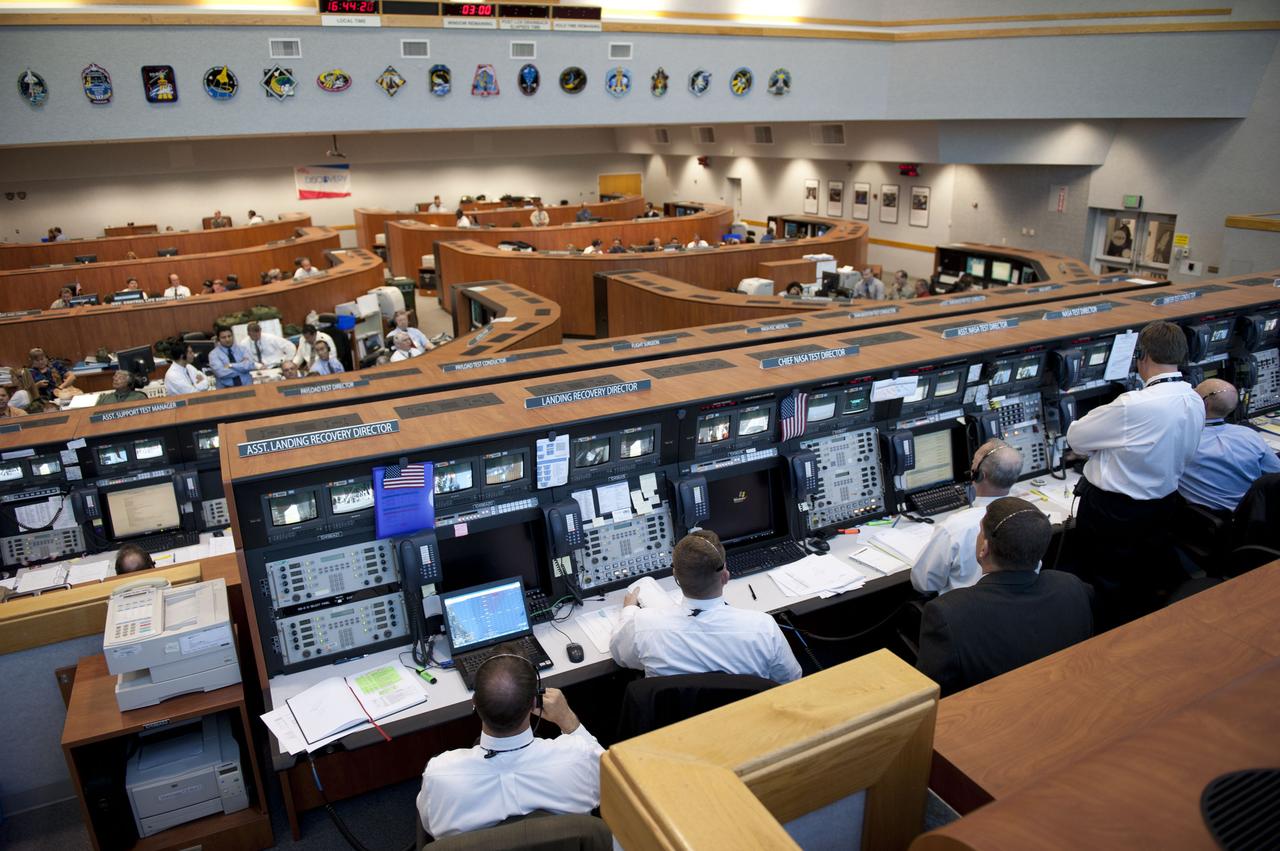
STS133-S-064 (24 Feb. 2011) --- In Firing Room 4 of the Launch Control Center at NASA's Kennedy Space Center in Florida, launch controllers monitor the countdown to launch of space shuttle Discovery on its STS-133 mission to the International Space Station. Discovery and its six-member crew are on a mission to deliver the Permanent Multipurpose Module, packed with supplies and critical spare parts, as well as Robonaut 2, the dexterous humanoid astronaut helper, to the orbiting outpost. Discovery is making its 39th mission and is scheduled to be retired following STS-133. This is the 133rd Space Shuttle Program mission and the 35th shuttle voyage to the space station. Photo credit: NASA or National Aeronautics and Space Administration
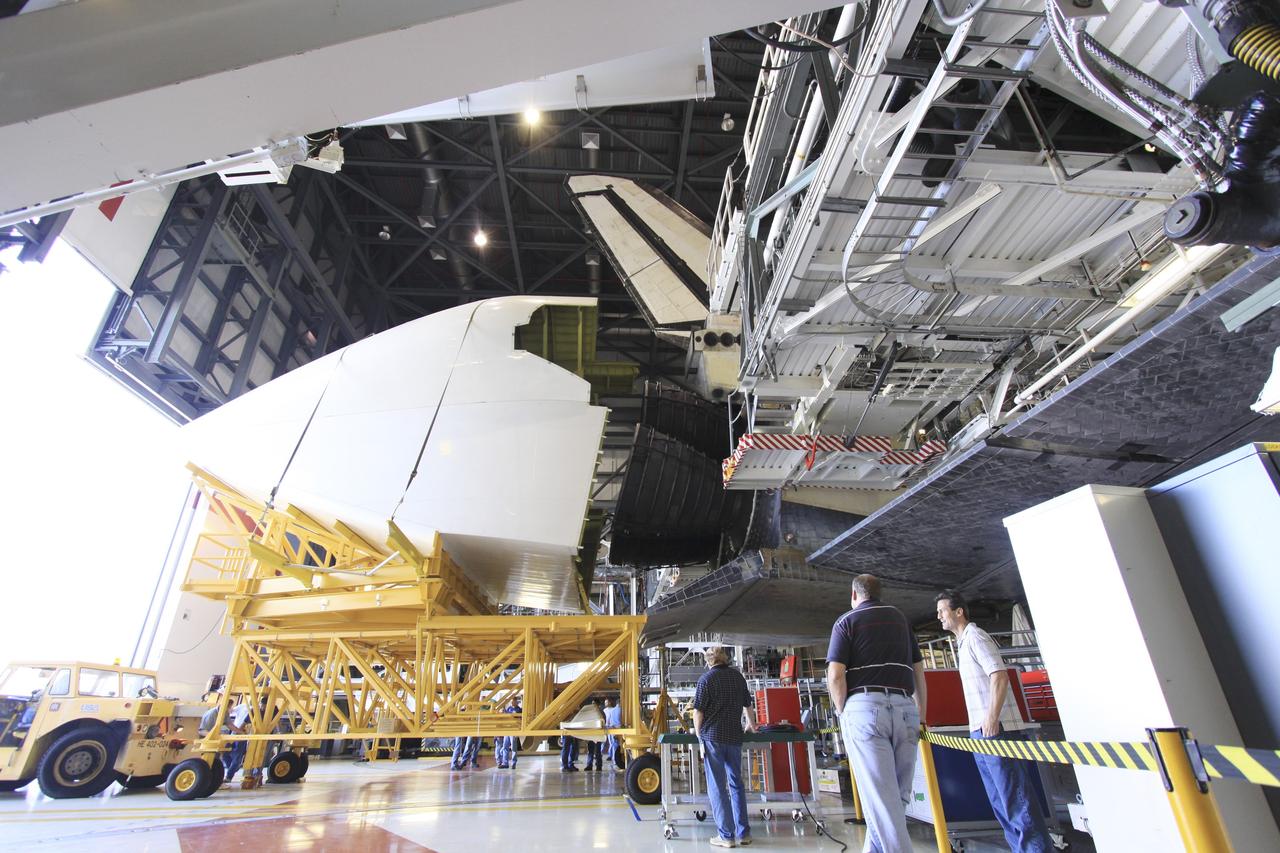
CAPE CANAVERAL, Fla. -- Inside Orbiter Processing Facility-1 at NASA’s Kennedy Space Center in Florida, technicians monitor the progress as the tail cone is installed around space shuttle Discovery’s three replica shuttle main engines for protection. The work is part of the Space Shuttle Program’s transition and retirement processing of shuttle Discovery. Discovery is being prepared for display at the Smithsonian’s National Air and Space Museum, Steven F. Udvar-Hazy Center in Chantilly, Va. For more information, visit http://www.nasa.gov/shuttle. Photo credit: NASA/Jim Grossmann
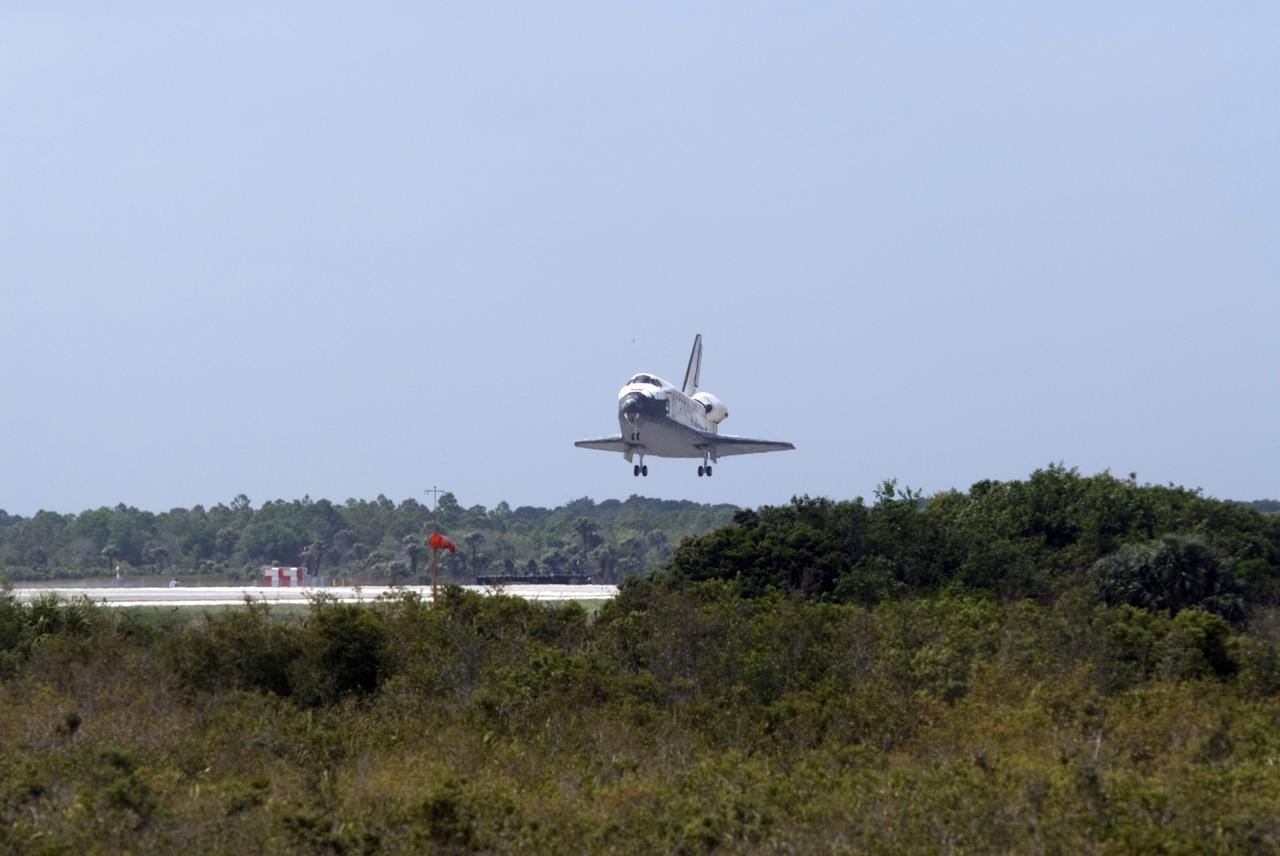
CAPE CANAVERAL, Fla. – Space shuttle Discovery approaches Runway 15 at NASA's Kennedy Space Center in Florida to complete the 13-day, 5.3-million mile journey on the STS-119 mission to the International Space Station. Main gear touchdown was at 3:13:17 p.m. EDT. Nose gear touchdown was at 3:13:40 p.m. and wheels stop was at 3:14:45 p.m. Discovery delivered the final pair of large power-generating solar array wings and the S6 truss segment. The mission was the 28th flight to the station, the 36th flight of Discovery and the 125th in the Space Shuttle Program, as well as the 70th landing at Kennedy. Photo credit: NASA/Rick Wetherington
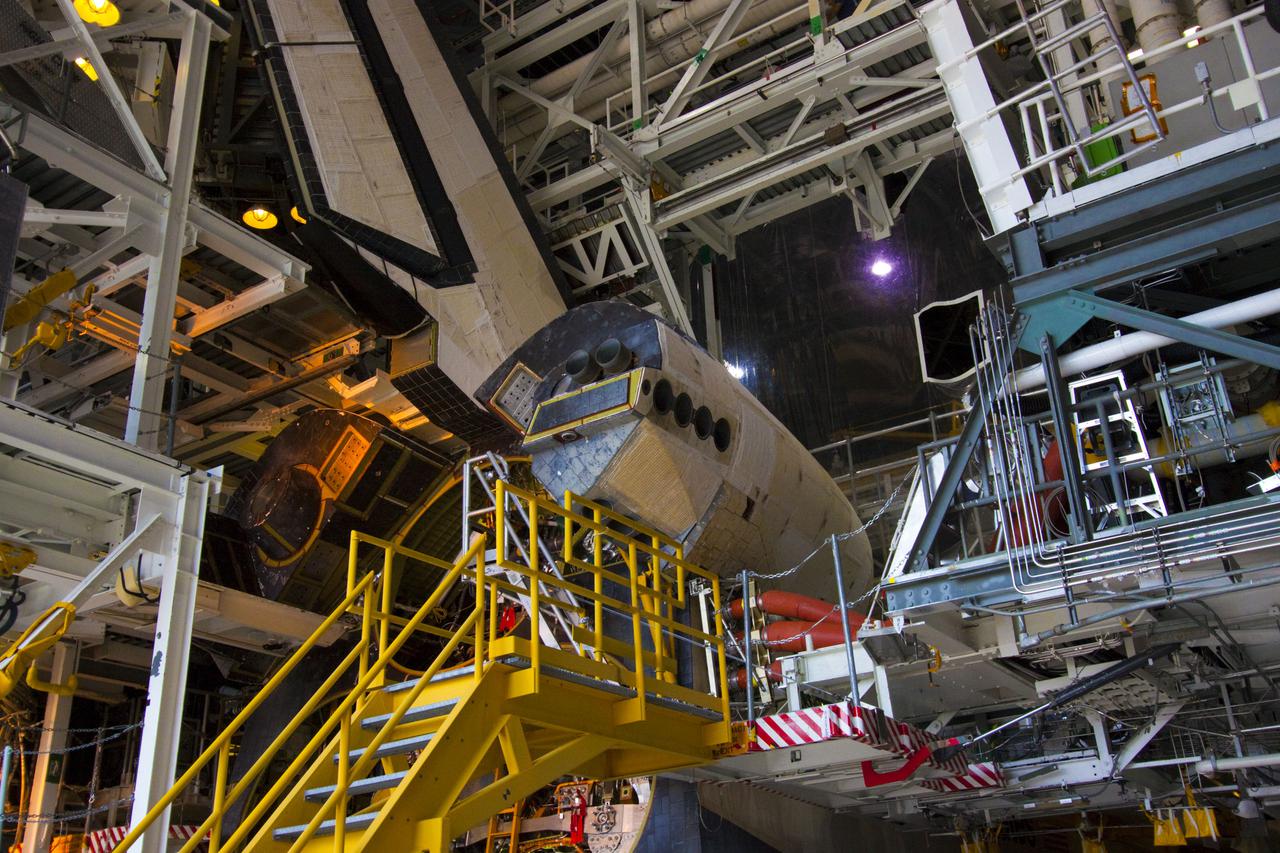
CAPE CANAVERAL, Fla. – Inside Orbiter Processing Facility-1 at NASA’s Kennedy Space Center in Florida, the right orbital maneuvering system (OMS) pod is installed on space shuttle Discovery. The OMS pods were returned from White Sands Space Harbor in New Mexico where they underwent a complete deservicing and cleaning. The work is part of the Space Shuttle Program’s transition and retirement processing of shuttle Discovery. Discovery is being prepared for display at Smithsonian’s National Air and Space Museum, Steven F. Udvar-Hazy Center in Chantilly, Va. For more information, visit http:__www.nasa.gov_shuttle. Photo credit: NASA_Jim Grossmann
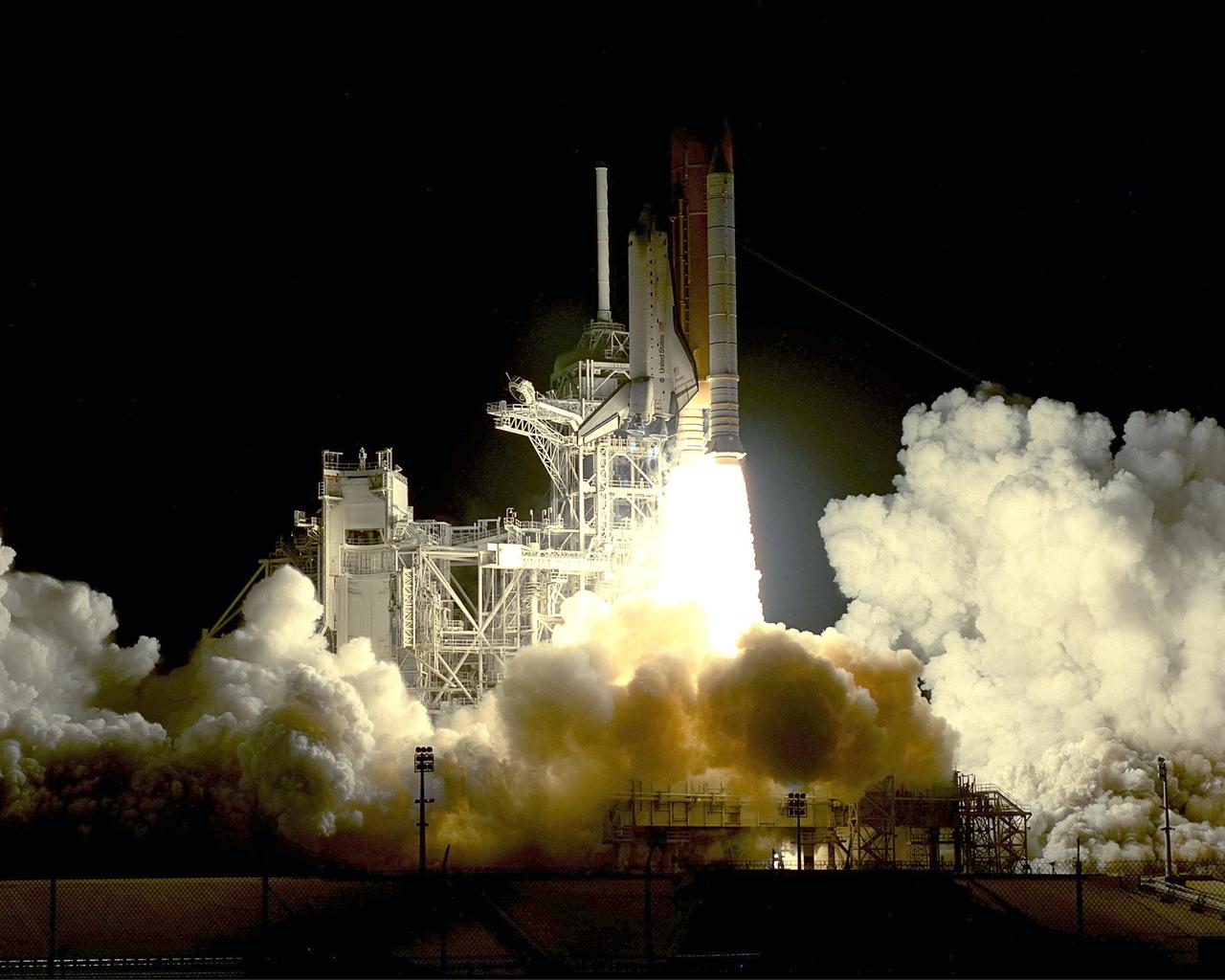
KENNEDY SPACE CENTER, Fla. -- Billows of smoke and steam spread across Launch Pad 39A as Space Shuttle Discovery lifts off on mission STS-92 to the International Space Station. The perfect on-time liftoff occurred at 7:17 p.m. EDT, sending a crew of seven on the 100th launch in the history of the Shuttle program. Discovery carries a payload that includes the Integrated Truss Structure Z-1, first of 10 trusses that will form the backbone of the Space Station, and the third Pressurized Mating Adapter that will provide a Shuttle docking port for solar array installation on the sixth Station flight and Lab installation on the seventh Station flight. Discovery’s landing is expected Oct. 22 at 2:10 p.m. EDT
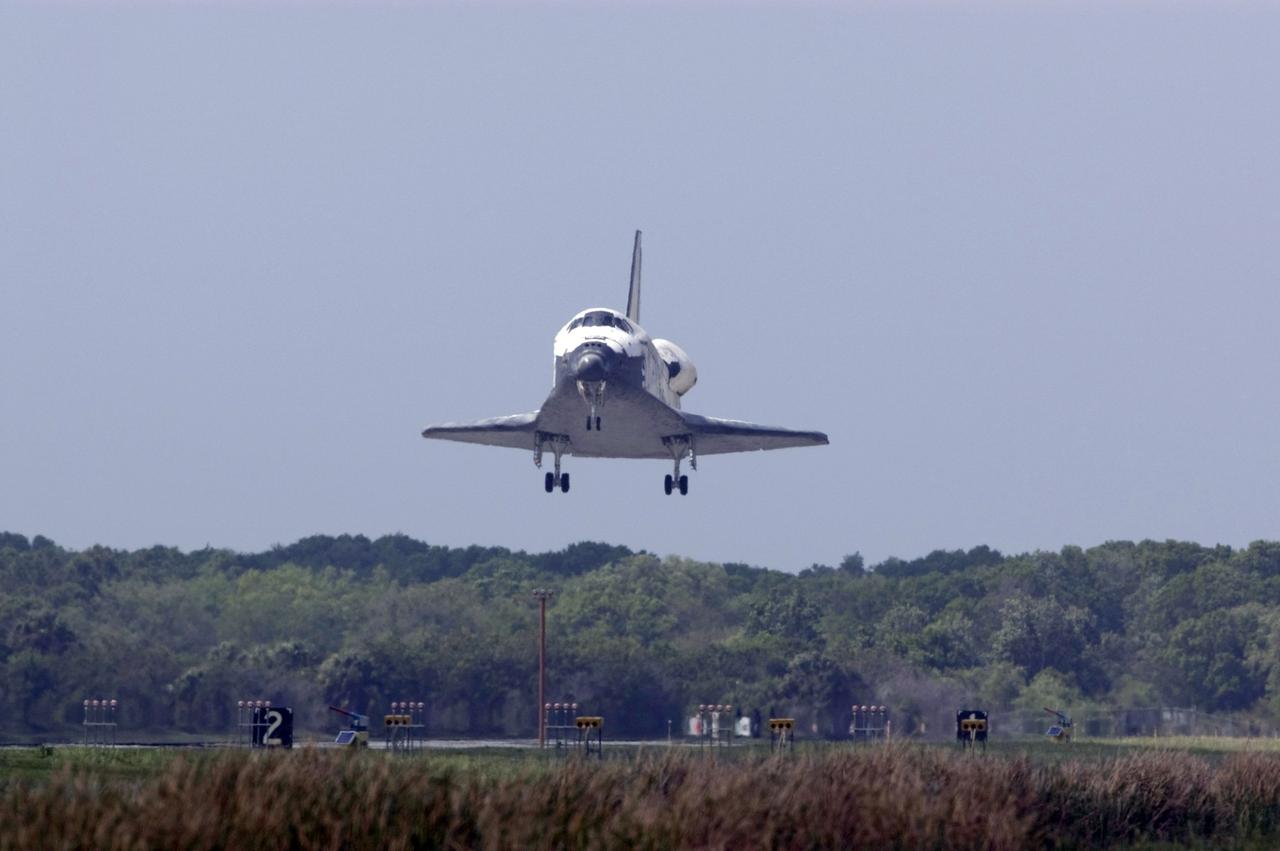
CAPE CANAVERAL, Fla. – Space shuttle Discovery approaches Runway 15 at NASA's Kennedy Space Center in Florida to complete the 13-day, 5.3-million mile journey on the STS-119 mission to the International Space Station. Main gear touchdown was at 3:13:17 p.m. EDT. Nose gear touchdown was at 3:13:40 p.m. and wheels stop was at 3:14:45 p.m. Discovery delivered the final pair of large power-generating solar array wings and the S6 truss segment. The mission was the 28th flight to the station, the 36th flight of Discovery and the 125th in the Space Shuttle Program, as well as the 70th landing at Kennedy. Photo credit: NASA/Kevin O'Connell
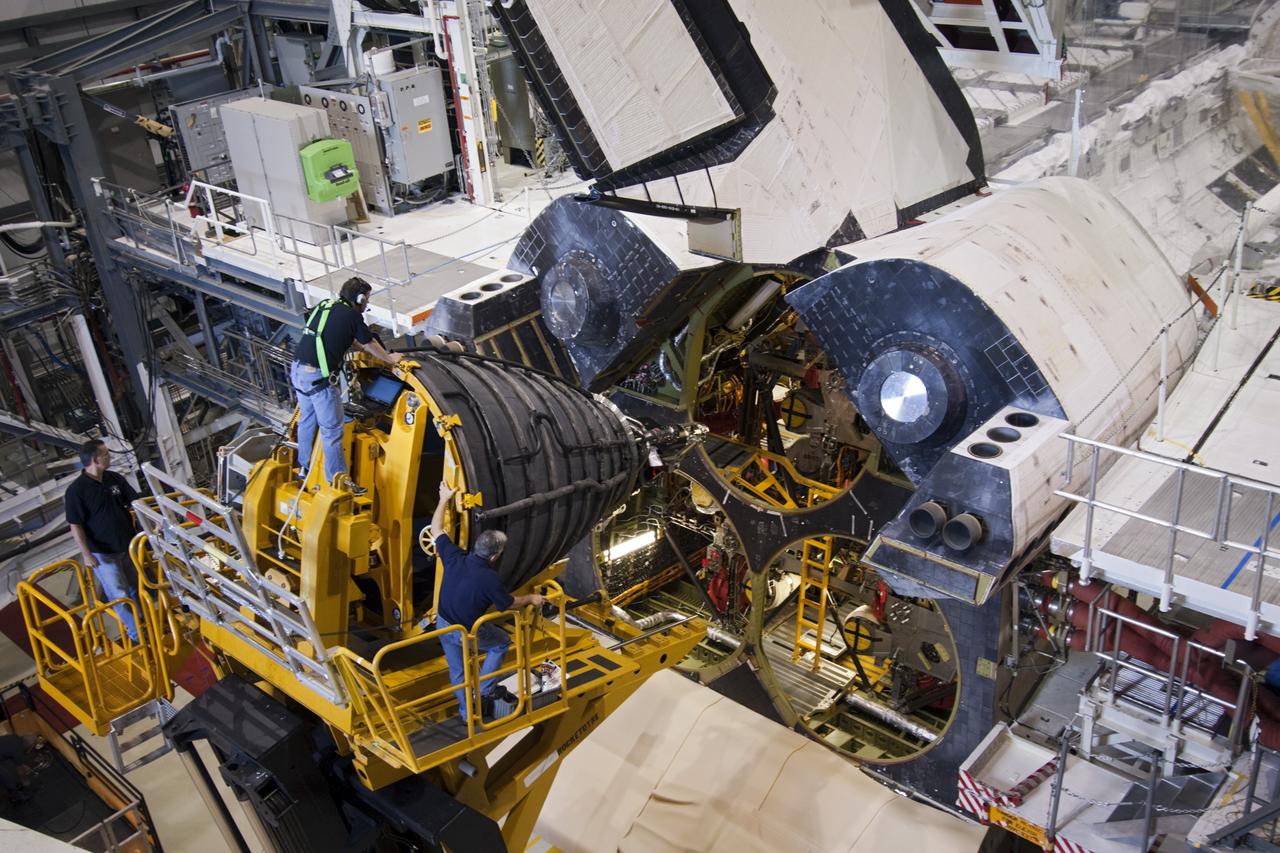
CAPE CANAVERAL, Fla. – Inside Orbiter Processing Facility-1 at NASA's Kennedy Space Center in Florida, an employee guides a replica shuttle main engine (RSME) toward installation on space shuttle Discovery. This is the first of three replica engines to be installed. The work is part of the Space Shuttle Program’s transition and retirement processing of Discovery. Discovery is being prepared for display at the Smithsonian’s National Air and Space Museum, Steven F. Udvar-Hazy Center in Chantilly, Va. For more information, visit http://www.nasa.gov/shuttle. Photo credit: NASA/Jim Grossmann