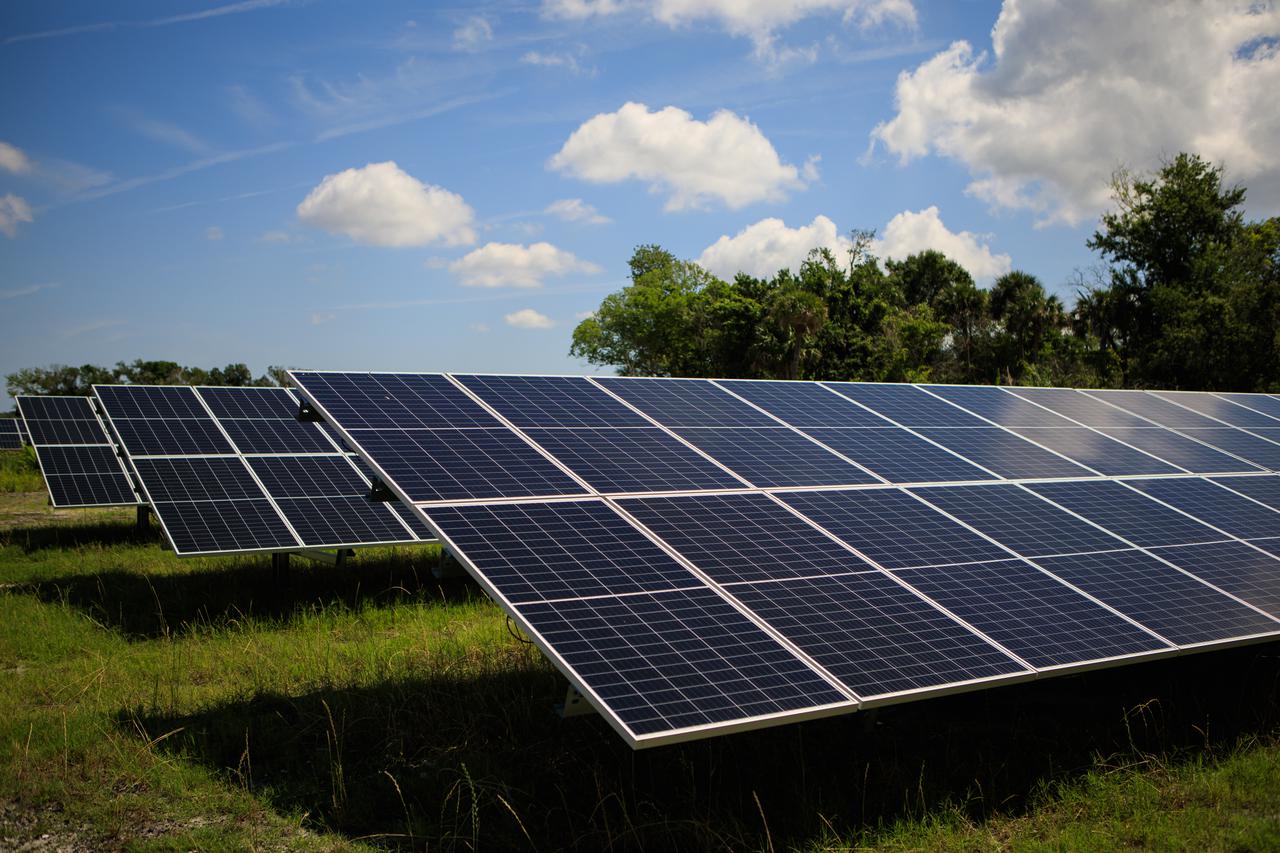
In this view are solar panels that are part of Florida Power and Light’s (FPL) new Discovery Solar Energy Center – a 74.5-megawatt solar site, spanning 491 acres at NASA’s Kennedy Space Center in Florida. The site contains about 250,000 solar panels in total, producing enough energy to power approximately 15,000 homes. Harnessing energy from the Sun, the panels do not directly power anything at Kennedy, but rather, send energy directly to FPL's electricity grid for distribution to existing customers. Construction began in spring 2020, and the energy center became fully operational on May 30, 2021.
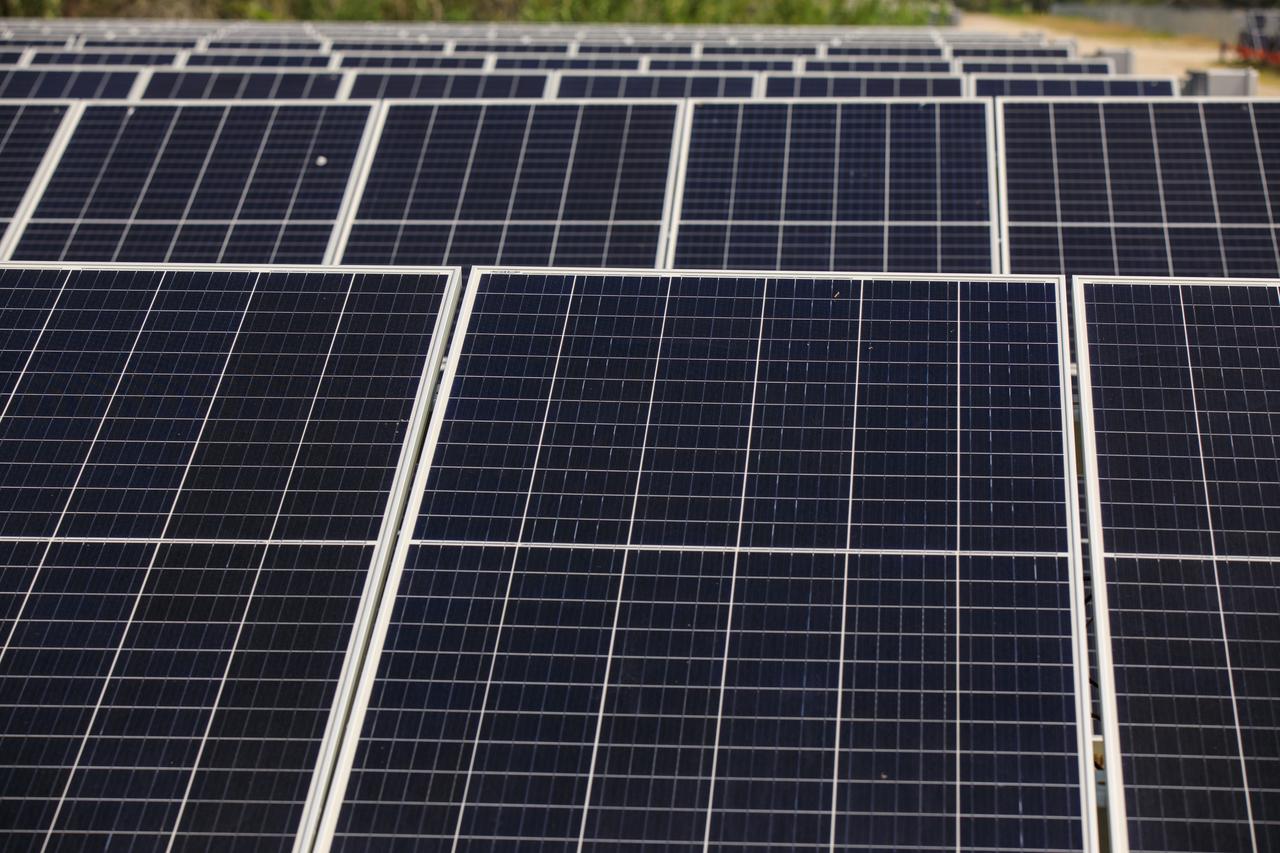
Seen here is an up-close view of solar panels that are part of Florida Power and Light’s (FPL) new Discovery Solar Energy Center – a 74.5-megawatt solar site, spanning 491 acres at NASA’s Kennedy Space Center in Florida. The site contains about 250,000 solar panels in total, producing enough energy to power approximately 15,000 homes. Harnessing energy from the Sun, the panels do not directly power anything at Kennedy, but rather, send energy directly to FPL's electricity grid for distribution to existing customers. Construction began in spring 2020, and the energy center became fully operational on May 30, 2021.
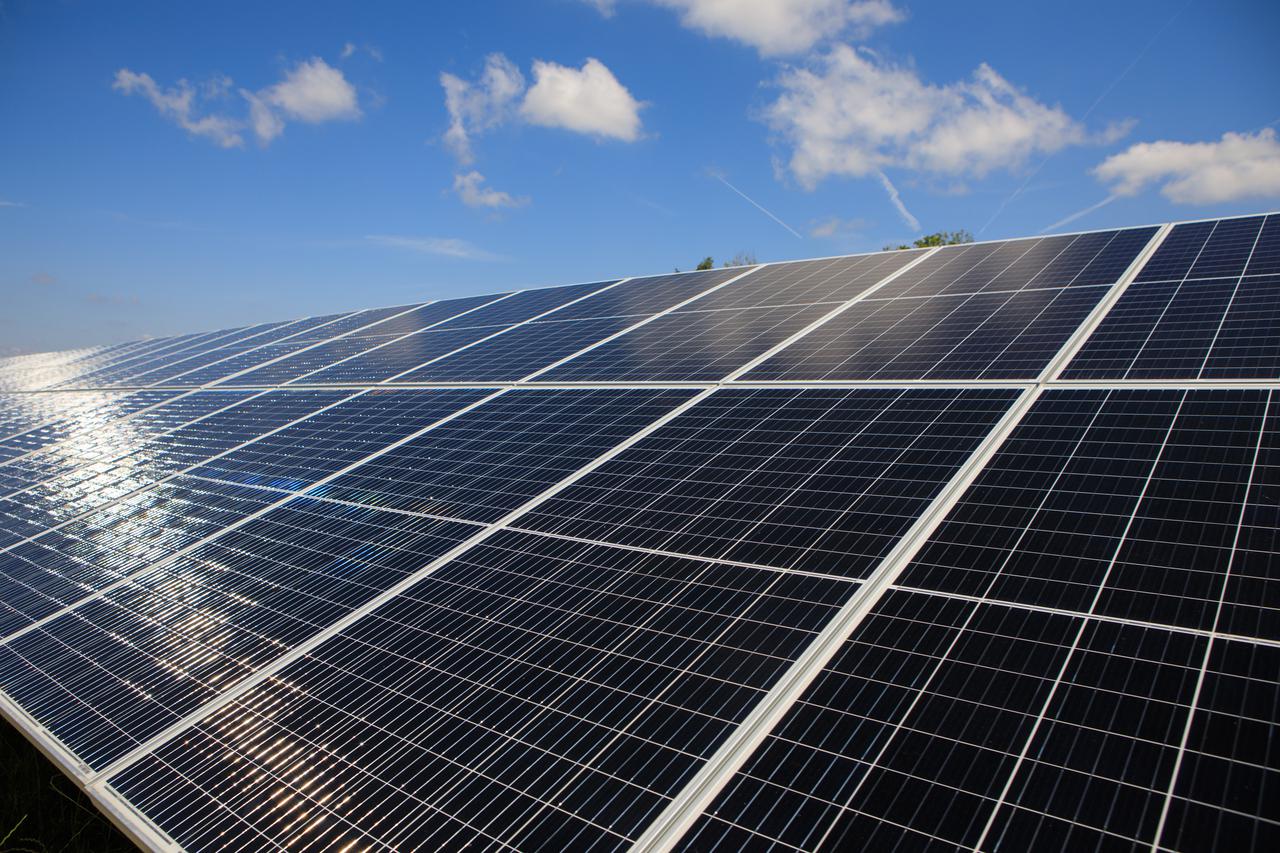
Seen here is an up-close view of solar panels that are part of Florida Power and Light’s (FPL) new Discovery Solar Energy Center – a 74.5-megawatt solar site, spanning 491 acres at NASA’s Kennedy Space Center in Florida. The site contains about 250,000 solar panels in total, producing enough energy to power approximately 15,000 homes. Harnessing energy from the Sun, the panels do not directly power anything at Kennedy, but rather, send energy directly to FPL's electricity grid for distribution to existing customers. Construction began in spring 2020, and the energy center became fully operational on May 30, 2021.
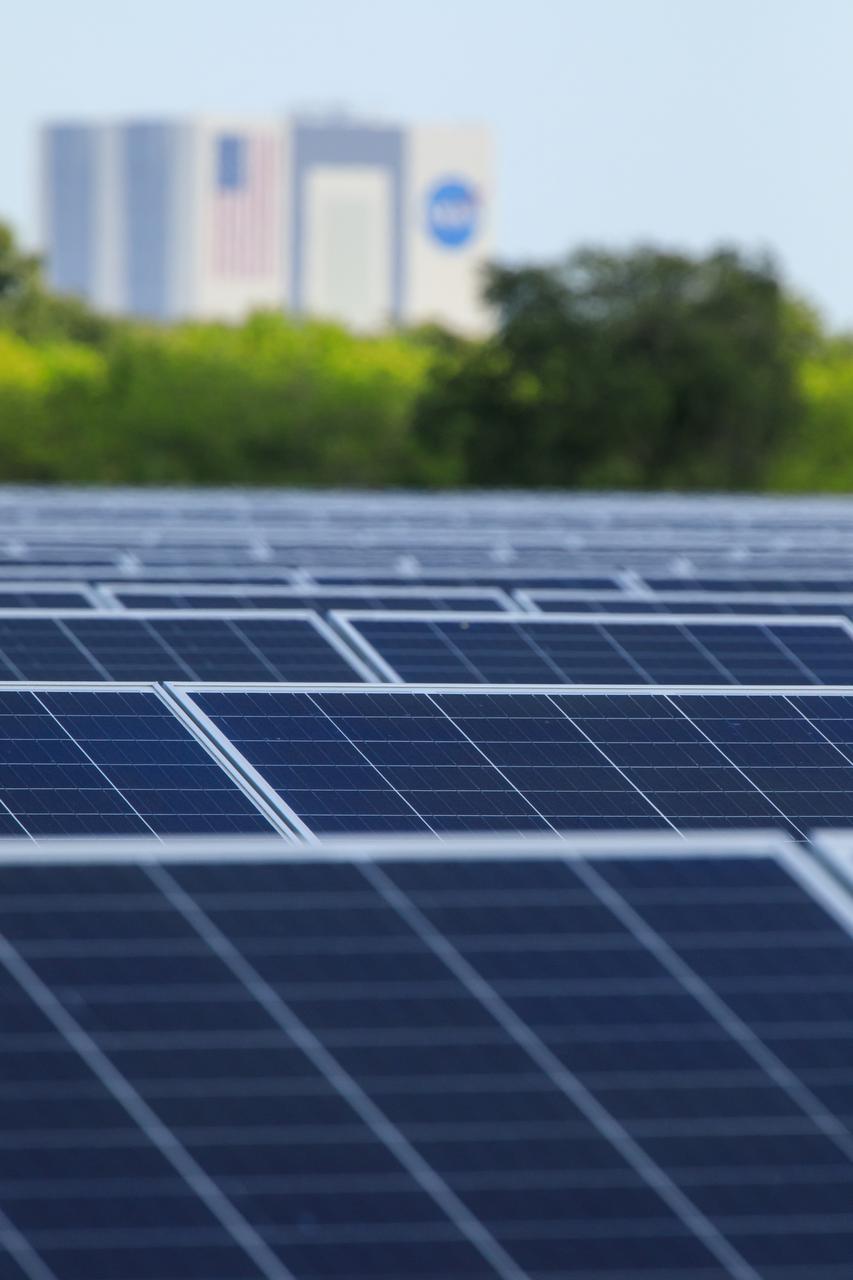
Seen here, with the iconic Vehicle Assembly Building in the background, is an up-close view of solar panels that are part of Florida Power and Light’s (FPL) new Discovery Solar Energy Center at NASA’s Kennedy Space Center in Florida. The 74.5-megawatt solar site spans 491 acres at Kennedy and contains about 250,000 solar panels. Harnessing energy from the Sun, the panels produce enough energy to power approximately 15,000 homes. The panels do not directly power anything at Kennedy, and instead, send energy directly to FPL’s electricity grid for distribution to existing customers. Construction began in spring 2020, and the energy center became fully operational on May 30, 2021.
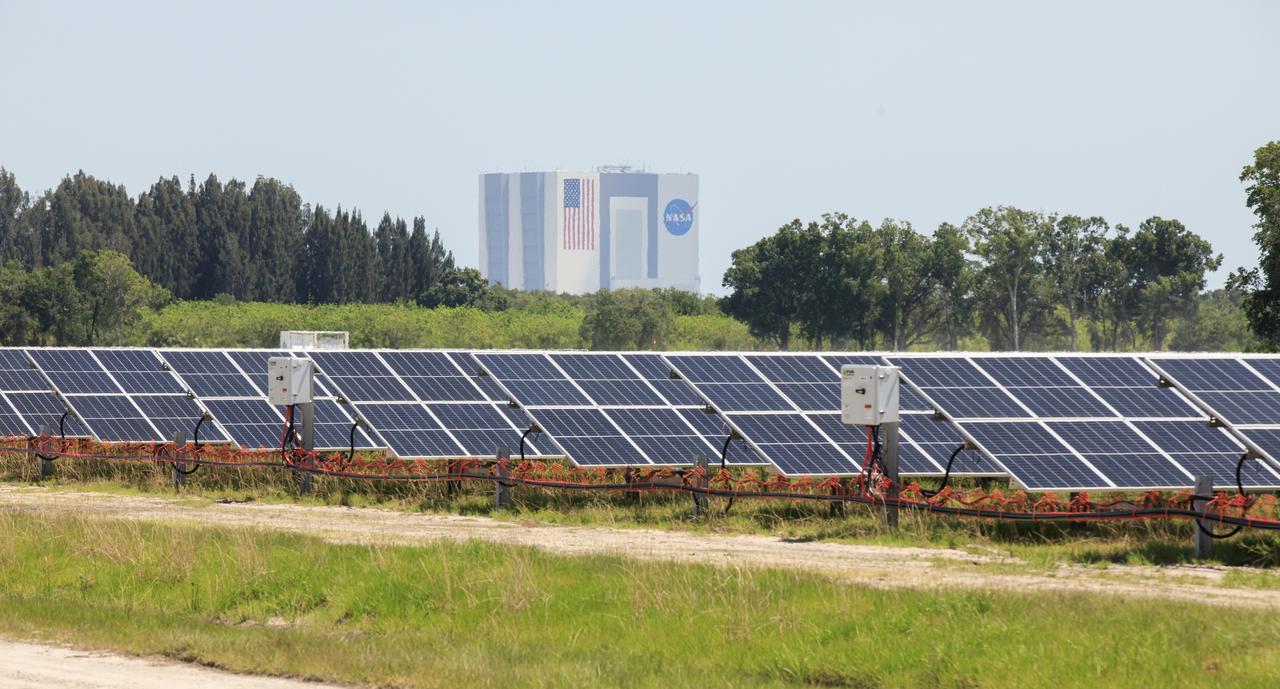
With the iconic Vehicle Assembly Building serving as the backdrop, a portion of the solar panels that make up Florida Power and Light’s (FPL) new Discovery Solar Energy Center is seen at NASA’s Kennedy Space Center in Florida. The 74.5-megawatt solar site spans 491 acres at Kennedy and contains about 250,000 solar panels. Harnessing energy from the Sun, the panels produce enough energy to power approximately 15,000 homes. The panels do not directly power anything at Kennedy, and instead, send energy directly to FPL’s electricity grid for distribution to existing customers. Construction began in spring 2020, and the energy center became fully operational on May 30, 2021.

Seen here is an up-close view of solar panels that are part of Florida Power and Light’s (FPL) new Discovery Solar Energy Center – a 74.5-megawatt solar site, spanning 491 acres at NASA’s Kennedy Space Center in Florida. The site contains about 250,000 solar panels in total, producing enough energy to power approximately 15,000 homes. Harnessing energy from the Sun, the panels do not directly power anything at Kennedy, but rather, send energy directly to FPL's electricity grid for distribution to existing customers. Construction began in spring 2020, and the energy center became fully operational on May 30, 2021.
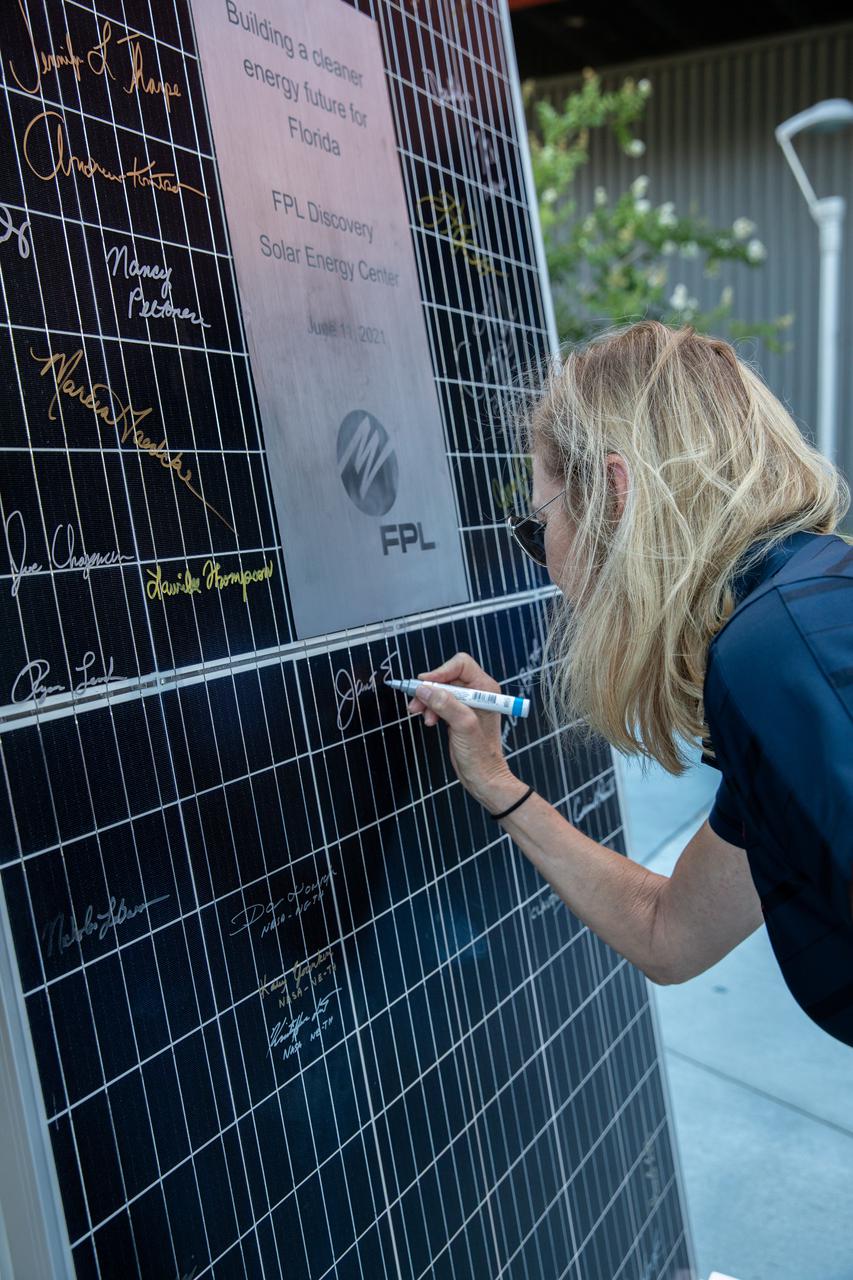
As part of a ribbon-cutting ceremony held on June 11, 2021, Janet Petro, acting director of NASA’s Kennedy Space Center in Florida, signs a solar panel which will be put on display at the Visitor Complex to commemorate the Florida Power and Light’s (FPL) Discovery Solar Energy Center becoming operational at the center. Discovery Solar Energy Center is a 74.5-megawatt solar site, spanning 491 acres at the spaceport. The site contains about 250,000 solar panels in total, producing enough energy to power approximately 15,000 homes. Harnessing energy from the Sun, the panels do not directly power anything at Kennedy, but rather, send energy directly to FPL's electricity grid for distribution to existing customers. Construction began in spring 2020, and the energy center became fully operational on May 30, 2021.
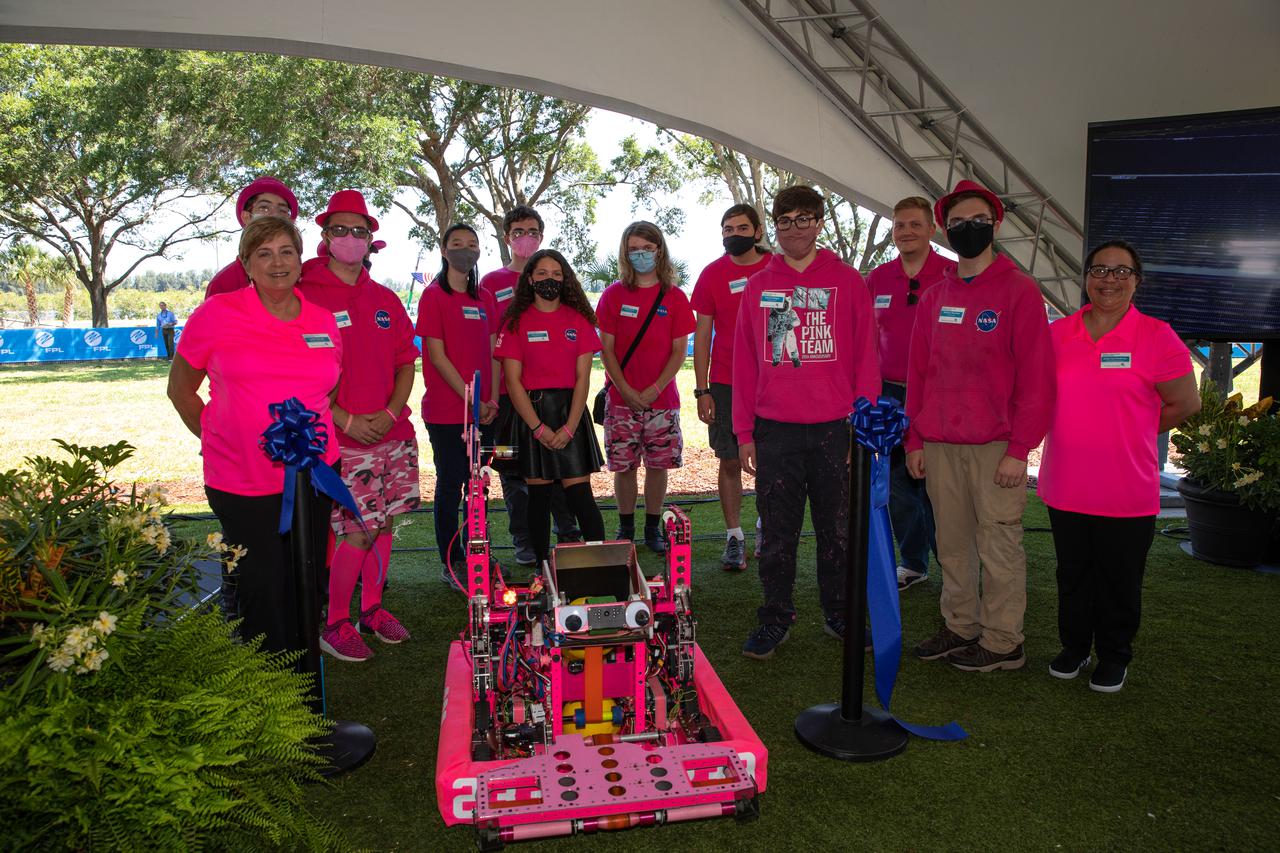
Students and faculty from Rockledge High School’s Pink Team, a robotics team mentored by NASA engineers, pose for a photo at NASA’s Kennedy Space Center Visitor Complex in Florida on June 11, 2021. Using the school’s 2021 competition robot – affectionately named “Pinky” – the Pink Team re-engineered their robot to carry a large pair of scissors to cut the ceremonial ribbon for the Florida Power and Light’s (FPL) Discovery Solar Energy Center becoming operational at the center. Discovery Solar Energy Center is a 74.5-megawatt solar site, spanning 491 acres at the spaceport. The site contains about 250,000 solar panels in total, producing enough energy to power approximately 15,000 homes. Harnessing energy from the Sun, the panels do not directly power anything at Kennedy, but rather, send energy directly to FPL's electricity grid for distribution to existing customers. Construction began in spring 2020, and the energy center became fully operational on May 30, 2021.
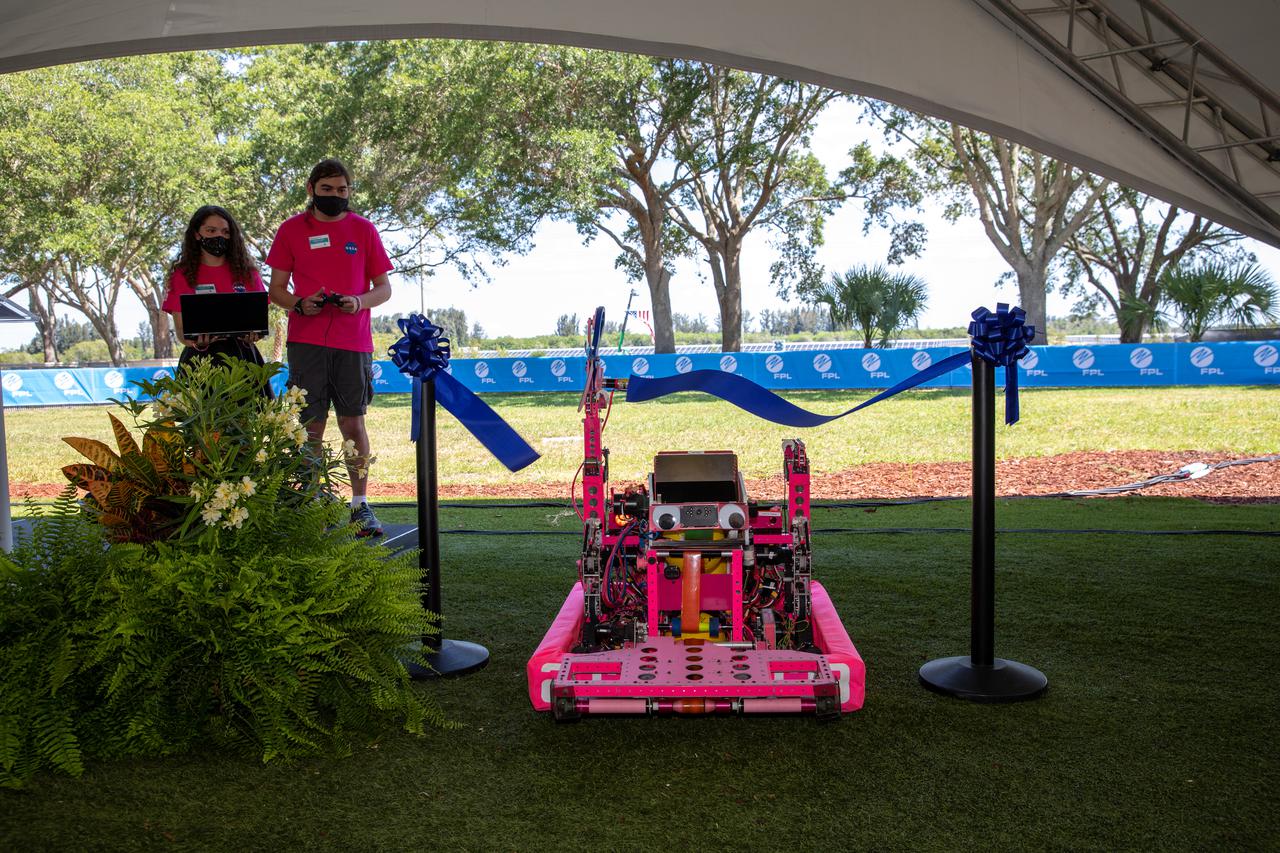
Students from Rockledge High School’s Pink Team, a robotics team mentored by NASA engineers, control the school’s 2021 competition robot – affectionately named “Pinky” – as it cuts the ceremonial ribbon to commemorate the Florida Power and Light’s (FPL) Discovery Solar Energy Center becoming operational at NASA’s Kennedy Space Center in Florida on June 11, 2021. The Pink Team re-engineered their robot to carry a large pair of scissors specifically for the ceremony, which took place at the center’s Visitor Complex. Discovery Solar Energy Center is a 74.5-megawatt solar site, spanning 491 acres at the spaceport. The site contains about 250,000 solar panels in total, producing enough energy to power approximately 15,000 homes. Harnessing energy from the Sun, the panels do not directly power anything at Kennedy, but rather, send energy directly to FPL's electricity grid for distribution to existing customers. Construction began in spring 2020, and the energy center became fully operational on May 30, 2021.
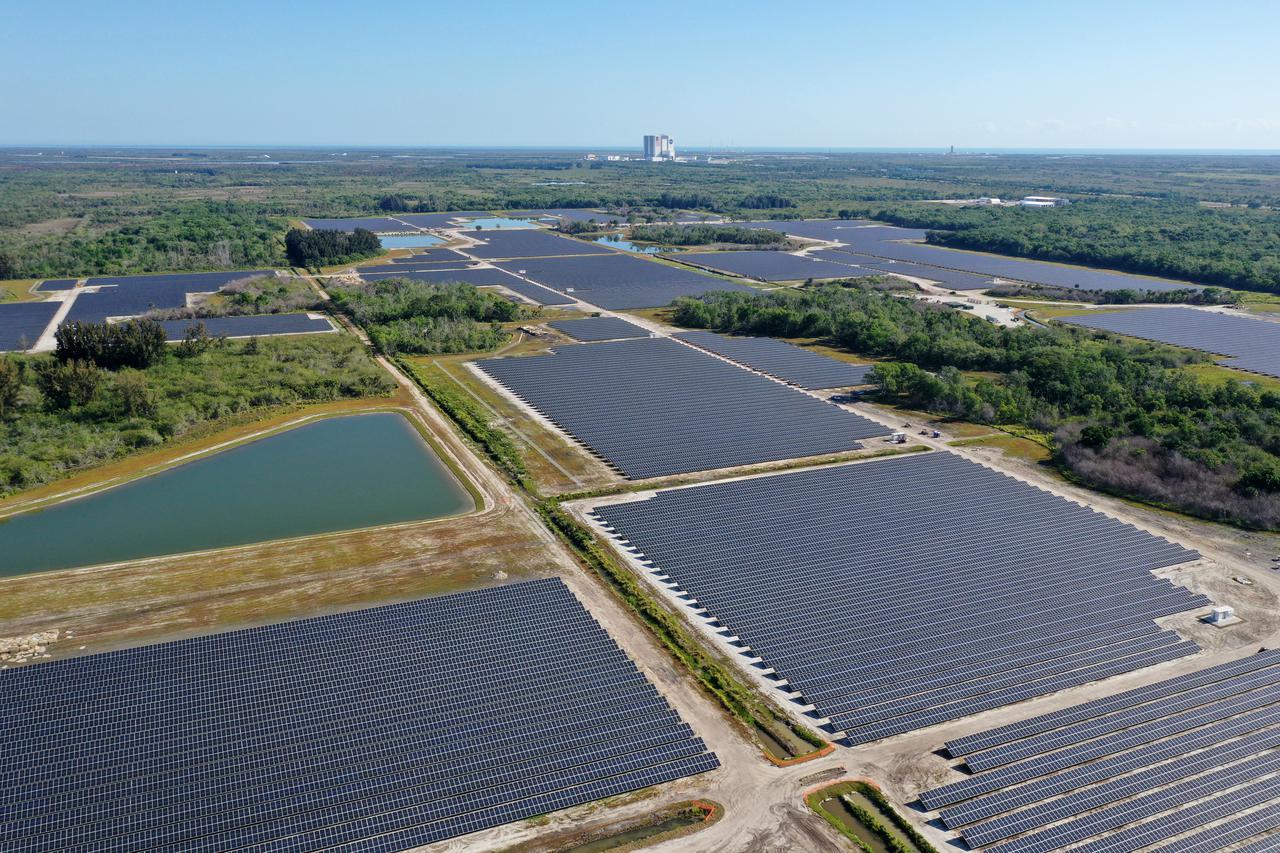
Florida Power and Light’s (FPL) new Discovery Solar Energy Center is a 74.5 megawatt solar site, spanning 491 acres at NASA’s Kennedy Space Center in Florida. The site contains about 250,000 solar panels, and once it’s operational, will produce enough energy to power approximately 15,000 homes. Construction began in spring 2020, and teams expect to have the solar site finished by May 2021. Harnessing energy from the Sun, the panels will not directly power anything at Kennedy, but rather, will send energy directly to FPL’s electricity grid for distribution to existing customers.
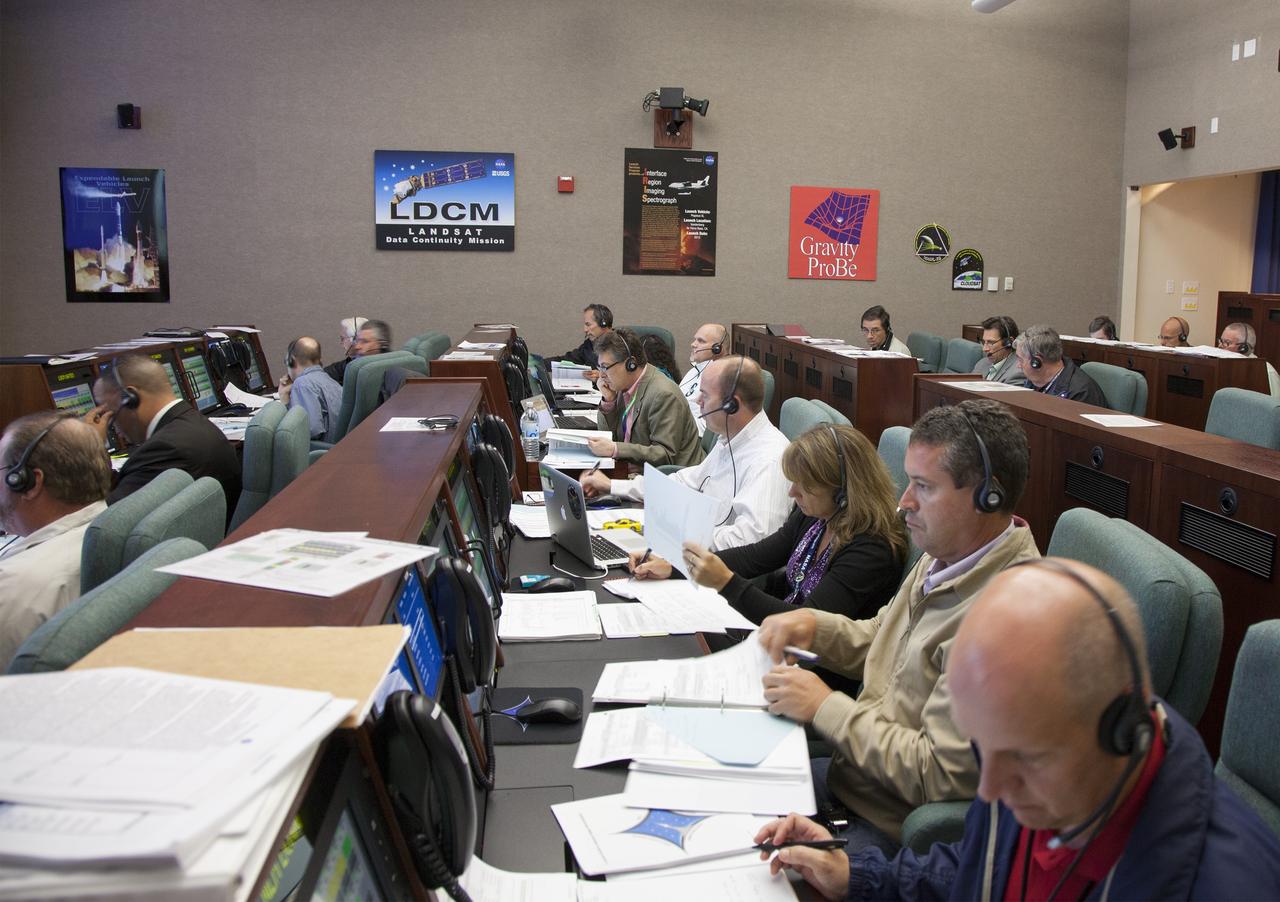
VANDENBERG AIR FORCE BASE, Calif. – At Vandenberg Air Force Base in California, mission managers participate in a pre-launch dress rehearsal in the Launch Vehicle Data Center for NASA’s Interface Region Imaging Spectrograph, or IRIS, solar observatory. Scheduled for launch from Vandenberg on June 26 aboard an Orbital Sciences Pegasus XL rocket, IRIS will open a new window of discovery by tracing the flow of energy and plasma through the chromospheres and transition region in to the sun’s corona using spectrometry and imaging. The IRIS mission will observe how solar material moves, gathers energy and heats up as it travels through a largely unexplored region of the solar atmosphere. The interface region, located between the sun’s visible surface and upper atmosphere, is where most of the sun’s ultraviolet emission is generated. These emissions impact the near-Earth space environment and Earth’s climate. For more information, visit http://www.nasa.gov/iris. Photo credit: NASA/Daniel Casper
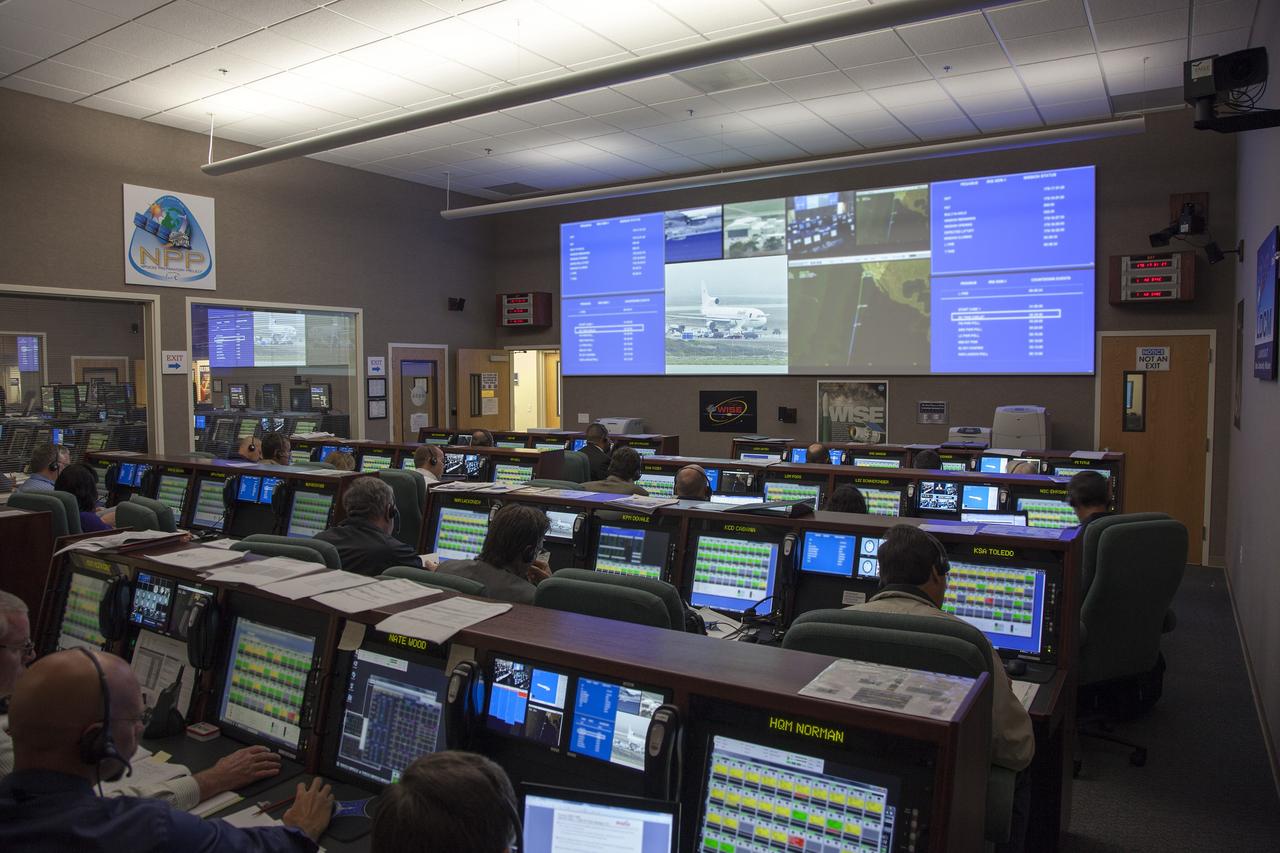
VANDENBERG AIR FORCE BASE, Calif. – At Vandenberg Air Force Base in California, mission managers participate in a pre-launch dress rehearsal in the Launch Vehicle Data Center for NASA’s Interface Region Imaging Spectrograph, or IRIS, solar observatory. Scheduled for launch from Vandenberg on June 26 aboard an Orbital Sciences Pegasus XL rocket, IRIS will open a new window of discovery by tracing the flow of energy and plasma through the chromospheres and transition region in to the sun’s corona using spectrometry and imaging. The IRIS mission will observe how solar material moves, gathers energy and heats up as it travels through a largely unexplored region of the solar atmosphere. The interface region, located between the sun’s visible surface and upper atmosphere, is where most of the sun’s ultraviolet emission is generated. These emissions impact the near-Earth space environment and Earth’s climate. For more information, visit http://www.nasa.gov/iris. Photo credit: NASA/Daniel Casper
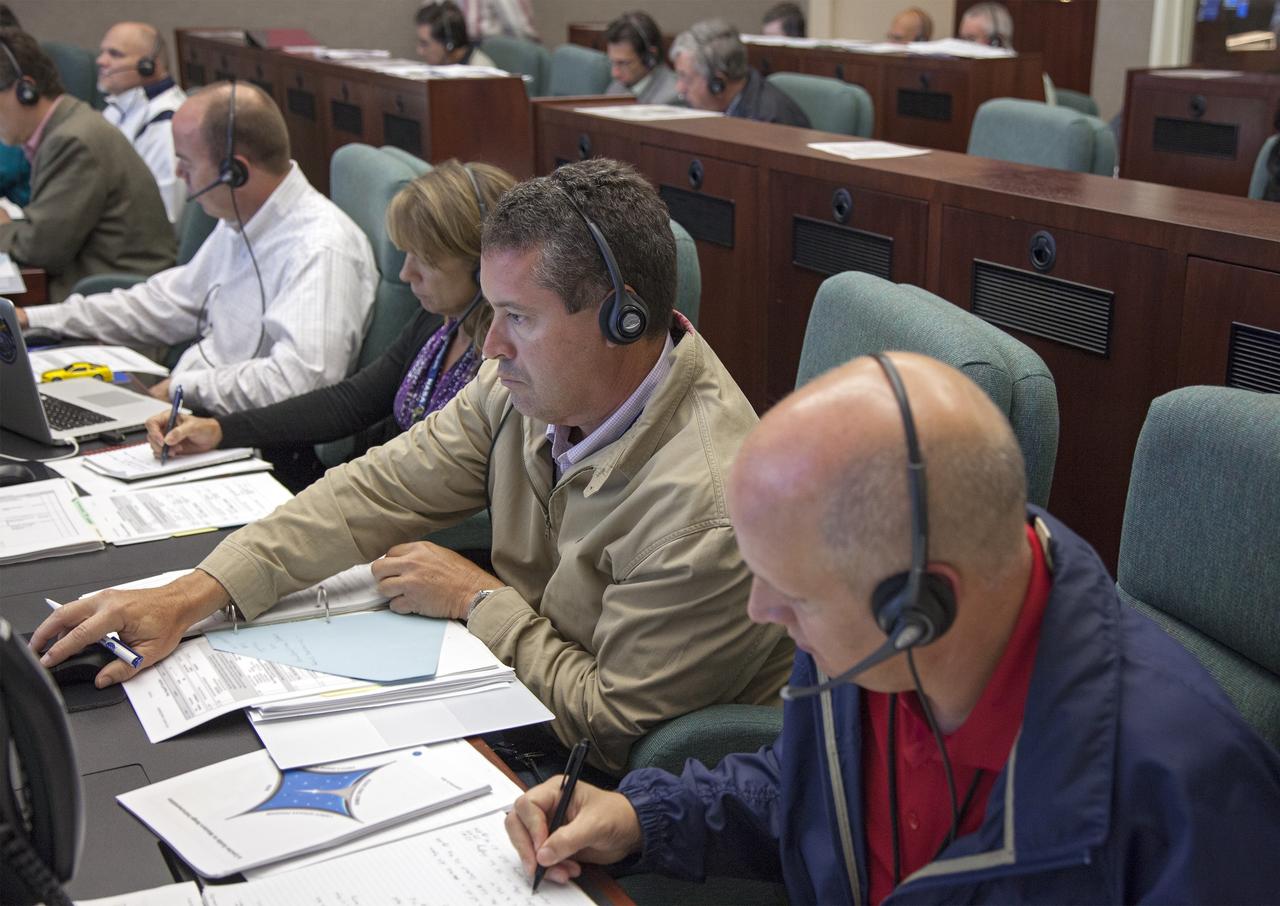
VANDENBERG AIR FORCE BASE, Calif. – At Vandenberg Air Force Base in California, mission managers participate in a pre-launch dress rehearsal in the Launch Vehicle Data Center for NASA’s Interface Region Imaging Spectrograph, or IRIS, solar observatory. Scheduled for launch from Vandenberg on June 26 aboard an Orbital Sciences Pegasus XL rocket, IRIS will open a new window of discovery by tracing the flow of energy and plasma through the chromospheres and transition region in to the sun’s corona using spectrometry and imaging. The IRIS mission will observe how solar material moves, gathers energy and heats up as it travels through a largely unexplored region of the solar atmosphere. The interface region, located between the sun’s visible surface and upper atmosphere, is where most of the sun’s ultraviolet emission is generated. These emissions impact the near-Earth space environment and Earth’s climate. For more information, visit http://www.nasa.gov/iris. Photo credit: NASA/Daniel Casper
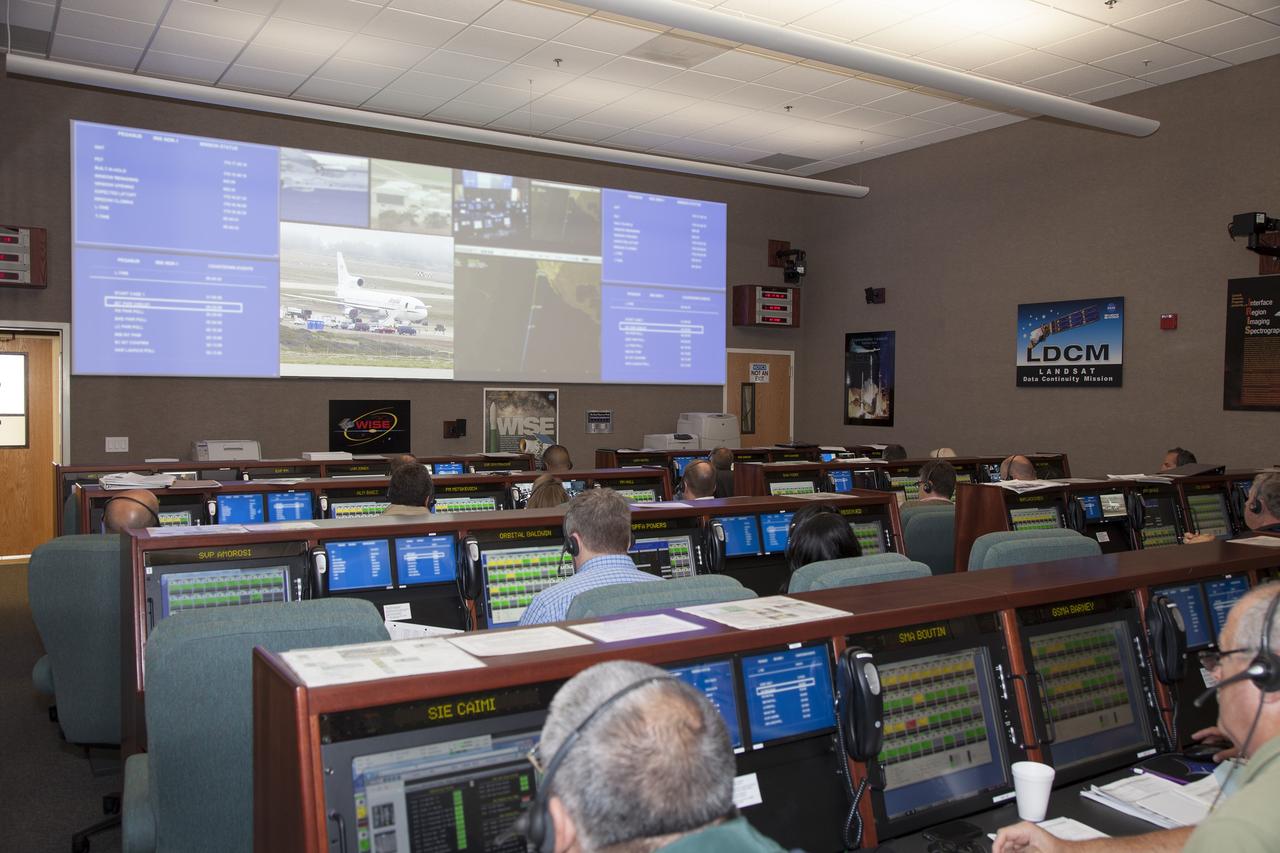
VANDENBERG AIR FORCE BASE, Calif. – At Vandenberg Air Force Base in California, mission managers participate in a pre-launch dress rehearsal in the Launch Vehicle Data Center for NASA’s Interface Region Imaging Spectrograph, or IRIS, solar observatory. Scheduled for launch from Vandenberg on June 26 aboard an Orbital Sciences Pegasus XL rocket, IRIS will open a new window of discovery by tracing the flow of energy and plasma through the chromospheres and transition region in to the sun’s corona using spectrometry and imaging. The IRIS mission will observe how solar material moves, gathers energy and heats up as it travels through a largely unexplored region of the solar atmosphere. The interface region, located between the sun’s visible surface and upper atmosphere, is where most of the sun’s ultraviolet emission is generated. These emissions impact the near-Earth space environment and Earth’s climate. For more information, visit http://www.nasa.gov/iris. Photo credit: NASA/Daniel Casper
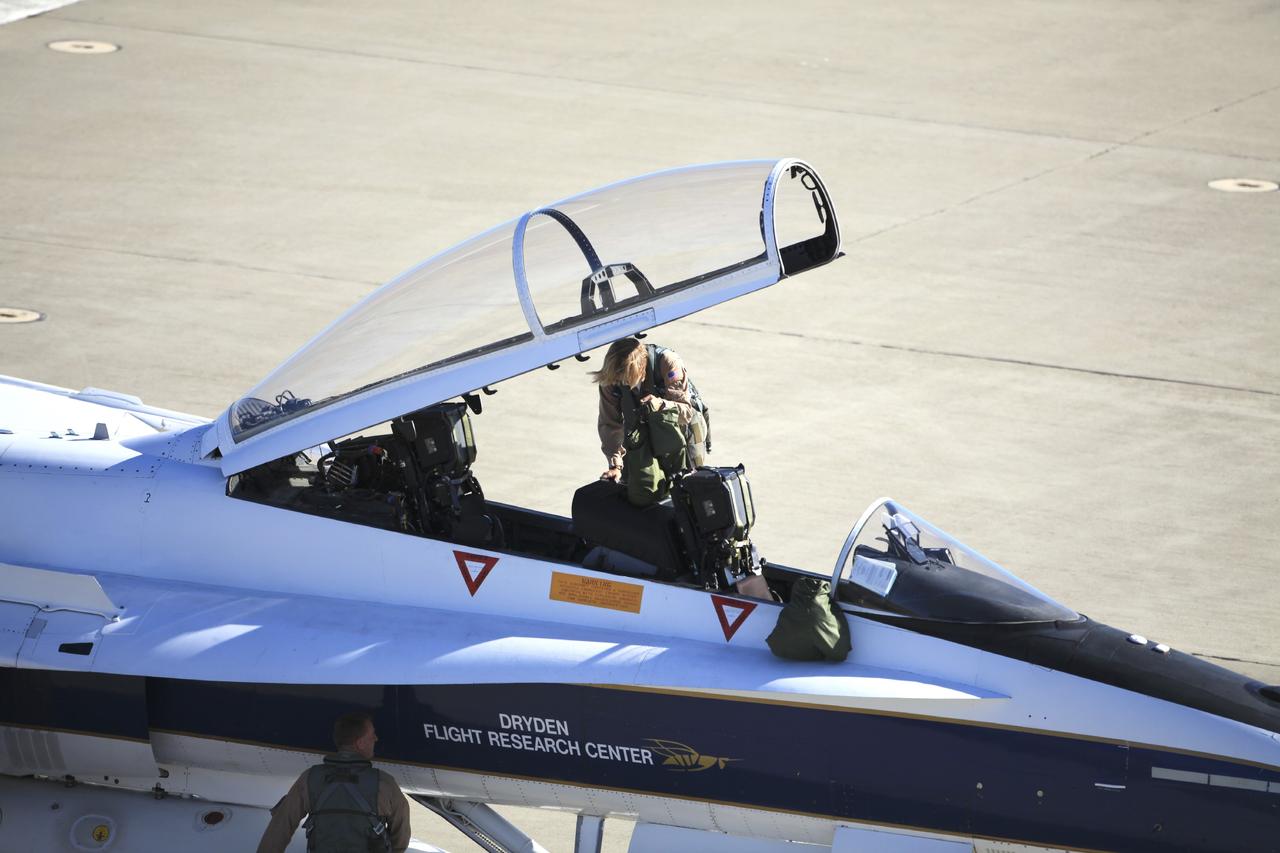
VANDENBERG AIR FORCE BASE, Calif. – Videographer Lori Losey boards an F-18 aircraft at Vandenberg Air Force Base in California. The F-18 "chase plane" will accompany the Orbital Sciences L-1011 aircraft as it transports the Pegasus XL rocket carrying NASA's Interface Region Imaging Spectrograph, or IRIS, solar observatory over the Pacific Ocean. Release of the rocket from under the wing of the L-1011 is scheduled for 10:27 p.m. EDT. IRIS will open a new window of discovery using spectrometry and imaging to trace the flow of energy and plasma through the chromospheres and transition region into the sun’s corona. The spacecraft will observe how solar material moves, gathers energy and heats up as it travels through a largely unexplored region of the solar atmosphere. This interface region, located between the sun's visible surface and its upper atmosphere, is where most of its ultraviolet emission is generated. These emissions impact the near-Earth space environment and Earth's climate. NASA's Launch Services Program at the agency's Kennedy Space Center in Florida is managing the countdown and launch. For more information, visit http://www.nasa.gov/iris. Photo credit: NASA/Daniel Casper

VANDENBERG AIR FORCE BASE, Calif. – An Orbital Sciences L-1011 aircraft departs from Vandenberg Air Force Base in California at 9:30 p.m. EDT, headed over the Pacific Ocean to release the Pegasus XL rocket carrying NASA's Interface Region Imaging Spectrograph, or IRIS, solar observatory. Release of the rocket from under the wing of the aircraft is scheduled for 10:27 p.m. EDT. IRIS will open a new window of discovery using spectrometry and imaging to trace the flow of energy and plasma through the chromospheres and transition region into the sun’s corona. The spacecraft will observe how solar material moves, gathers energy and heats up as it travels through a largely unexplored region of the solar atmosphere. This interface region, located between the sun's visible surface and its upper atmosphere, is where most of its ultraviolet emission is generated. These emissions impact the near-Earth space environment and Earth's climate. NASA's Launch Services Program at the agency's Kennedy Space Center in Florida is managing the countdown and launch. For more information, visit http://www.nasa.gov/iris. Photo credit: NASA/Daniel Casper
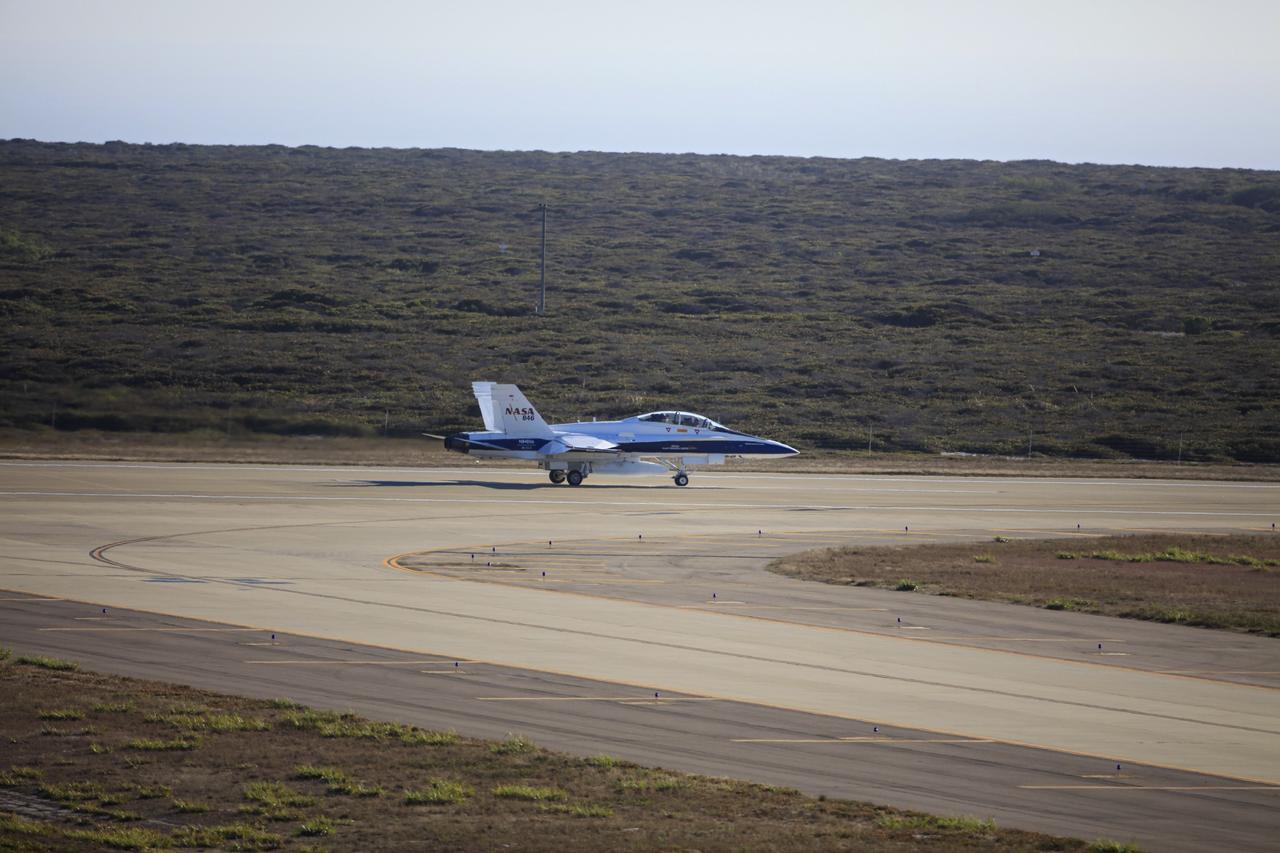
VANDENBERG AIR FORCE BASE, Calif. – An F-18 aircraft departs from Vandenberg Air Force Base in California. The plane will serve as the "chase plane" accompanying the Orbital Sciences L-1011 aircraft as it transports the Pegasus XL rocket carrying NASA's Interface Region Imaging Spectrograph, or IRIS, solar observatory over the Pacific Ocean. Release of the rocket from under the wing of the L-1011 is scheduled for 10:27 p.m. EDT. IRIS will open a new window of discovery using spectrometry and imaging to trace the flow of energy and plasma through the chromospheres and transition region into the sun’s corona. The spacecraft will observe how solar material moves, gathers energy and heats up as it travels through a largely unexplored region of the solar atmosphere. This interface region, located between the sun's visible surface and its upper atmosphere, is where most of its ultraviolet emission is generated. These emissions impact the near-Earth space environment and Earth's climate. NASA's Launch Services Program at the agency's Kennedy Space Center in Florida is managing the countdown and launch. For more information, visit http://www.nasa.gov/iris. Photo credit: NASA/Daniel Casper
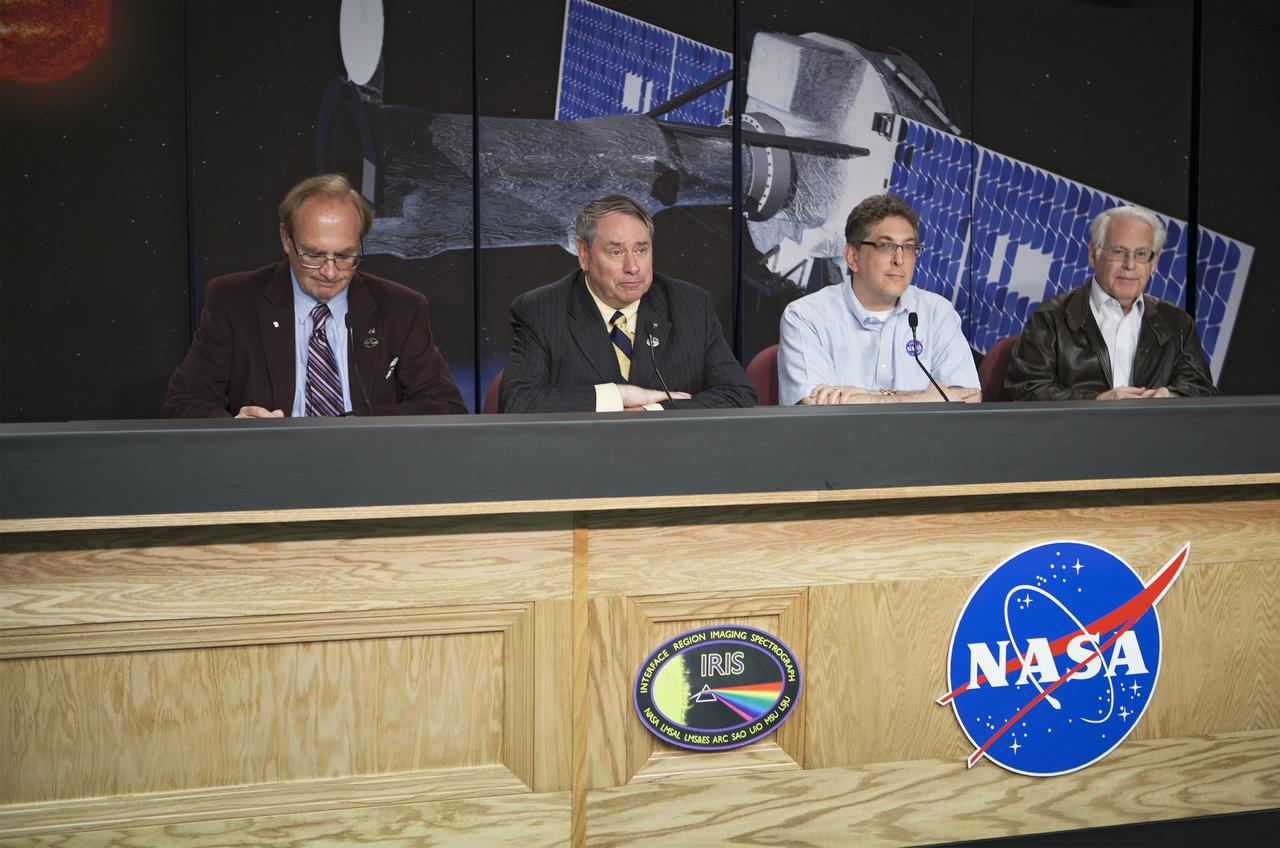
VANDENBERG AIR FORCE BASE, Calif. – At Vandenberg Air Force Base in California, NASA hosted a prelaunch mission briefing on the Interface Region Imaging Spectrograph, or IRIS, solar observatory scheduled to launch on a Pegasus XL rocket. Participating in the news conference are George Diller, NASA Public Affairs, Dr. S. Pete Worden, director of NASA's Ames Research Center in Calif., Jeffrey Newmark, IRIS Program scientist at NASA Headquarters in Washington D.C., and Alan Title, IRIS principal investigator with Lockheed Martin. Scheduled for launch from Vandenberg on June 26, 2013, IRIS will open a new window of discovery by tracing the flow of energy and plasma through the chromospheres and transition region into the sun’s corona using spectrometry and imaging. The IRIS mission will observe how solar material moves, gathers energy and heats up as it travels through a largely unexplored region of the solar atmosphere. The interface region, located between the sun's visible surface and upper atmosphere, is where most of the sun's ultraviolet emission is generated. These emissions impact the near-Earth space environment and Earth's climate. For more information, visit http://www.nasa.gov/iris Photo credit: NASA/ Daniel Casper
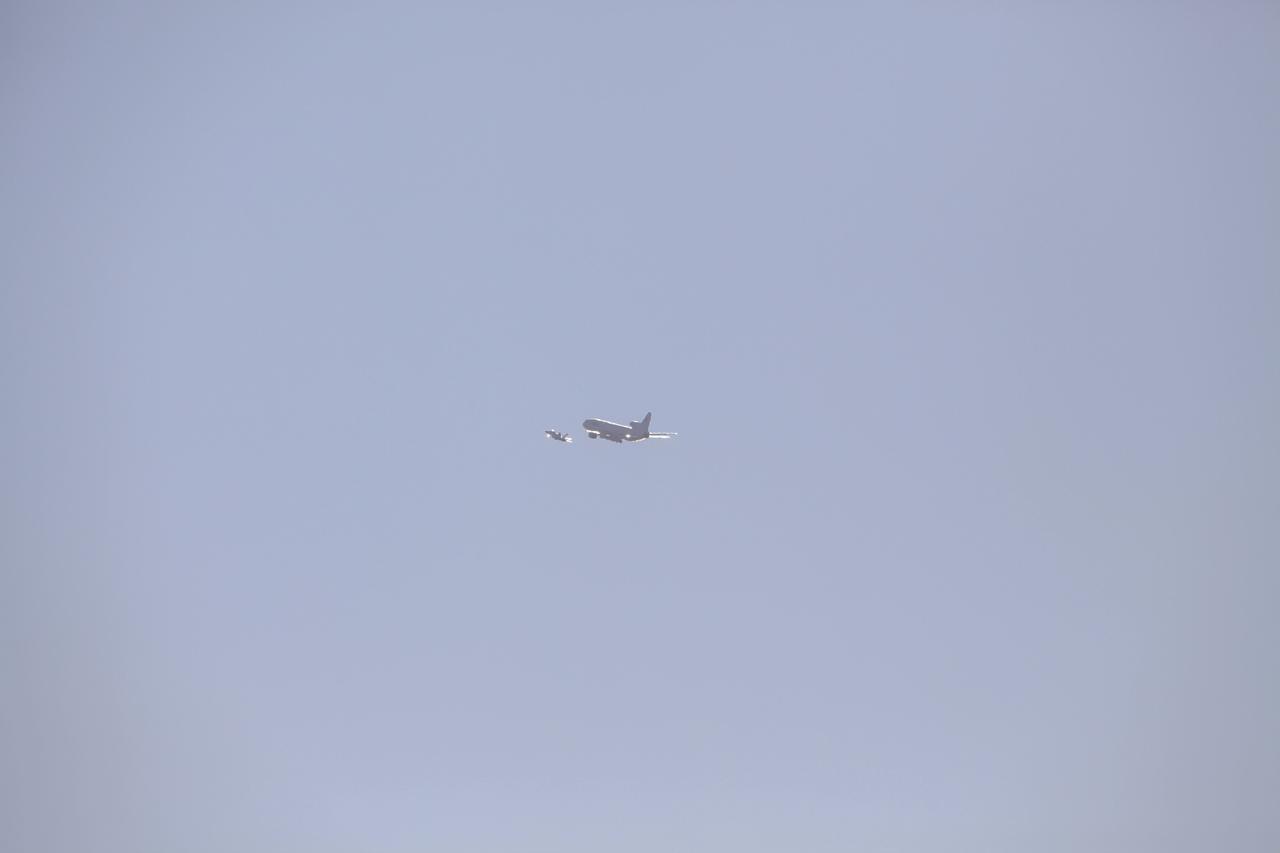
VANDENBERG AIR FORCE BASE, Calif. – An Orbital Sciences L-1011 aircraft departs from Vandenberg Air Force Base in California at 9:30 p.m. EDT, headed over the Pacific Ocean to release the Pegasus XL rocket carrying NASA's Interface Region Imaging Spectrograph, or IRIS, solar observatory. Release of the rocket from under the wing of the aircraft is scheduled for 10:27 p.m. EDT. IRIS will open a new window of discovery using spectrometry and imaging to trace the flow of energy and plasma through the chromospheres and transition region into the sun’s corona. The spacecraft will observe how solar material moves, gathers energy and heats up as it travels through a largely unexplored region of the solar atmosphere. This interface region, located between the sun's visible surface and its upper atmosphere, is where most of its ultraviolet emission is generated. These emissions impact the near-Earth space environment and Earth's climate. NASA's Launch Services Program at the agency's Kennedy Space Center in Florida is managing the countdown and launch. For more information, visit http://www.nasa.gov/iris. Photo credit: NASA/Daniel Casper
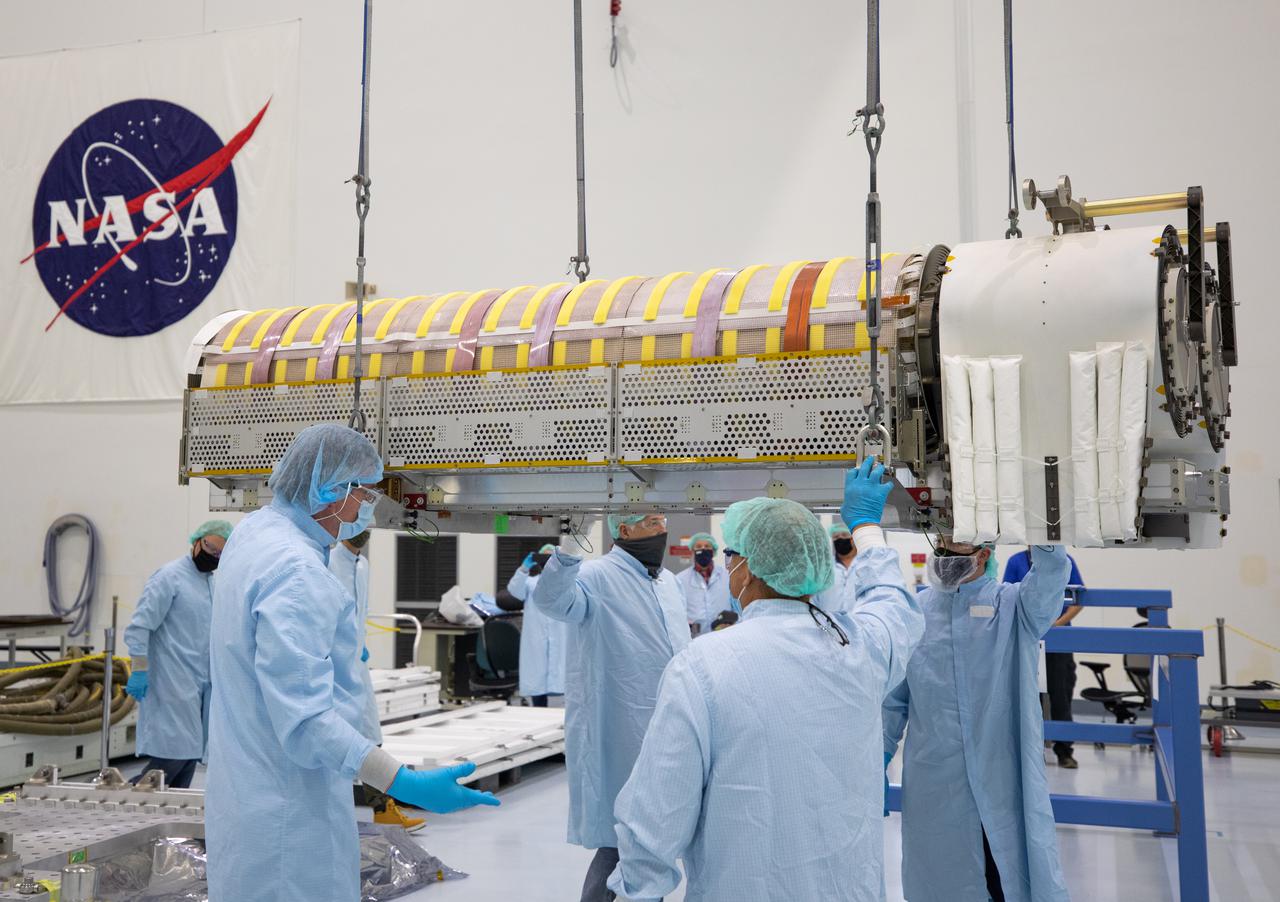
NASA and Boeing workers lift solar arrays into flight support equipment on April 2, 2021, in the Space Station Processing Facility at NASA’s Kennedy Space Center in Florida. The 63- by- 20-foot solar arrays will launch to the International Space Station later this year. They are the first two of six new solar arrays that in total will produce more than 120 kilowatts of electricity from the Sun’s energy, enough to power more than 40 average U.S. homes. Combined with the eight original, larger arrays, this advanced hardware will provide 215 kilowatts of energy, a 20 to 30 percent increase in power, helping maximize the space station’s capabilities for years to come. The arrays will produce electricity to sustain the station’s systems and equipment, plus augment the electricity available to continue a wide variety of public and private experiments and research in the microgravity environment of low-Earth orbit. Most of the station systems, including its batteries, scientific equipment racks, and communications equipment have been upgraded since humans began a continuous presence on the orbiting laboratory in November 2000. For more than two decades, astronauts have lived and worked on this unique orbiting lab, supporting scientific research that has led to numerous discoveries that benefit people on Earth and prepare for future Artemis missions to the Moon and beyond.

VANDENBERG AIR FORCE BASE, Calif. – The Orbital Sciences L-1011 aircraft takes off from Vandenberg Air Force Base in California at 9:30 p.m. EDT, headed over the Pacific Ocean to release the Pegasus XL rocket carrying NASA's Interface Region Imaging Spectrograph, or IRIS, solar observatory. Release of the rocket from under the wing of the aircraft is scheduled for 10:27 p.m. EDT. IRIS will open a new window of discovery using spectrometry and imaging to trace the flow of energy and plasma through the chromospheres and transition region into the sun’s corona. The spacecraft will observe how solar material moves, gathers energy and heats up as it travels through a largely unexplored region of the solar atmosphere. This interface region, located between the sun's visible surface and its upper atmosphere, is where most of its ultraviolet emission is generated. These emissions impact the near-Earth space environment and Earth's climate. NASA's Launch Services Program at the agency's Kennedy Space Center in Florida is managing the countdown and launch. For more information, visit http://www.nasa.gov/iris. Photo credit: NASA/Daniel Casper
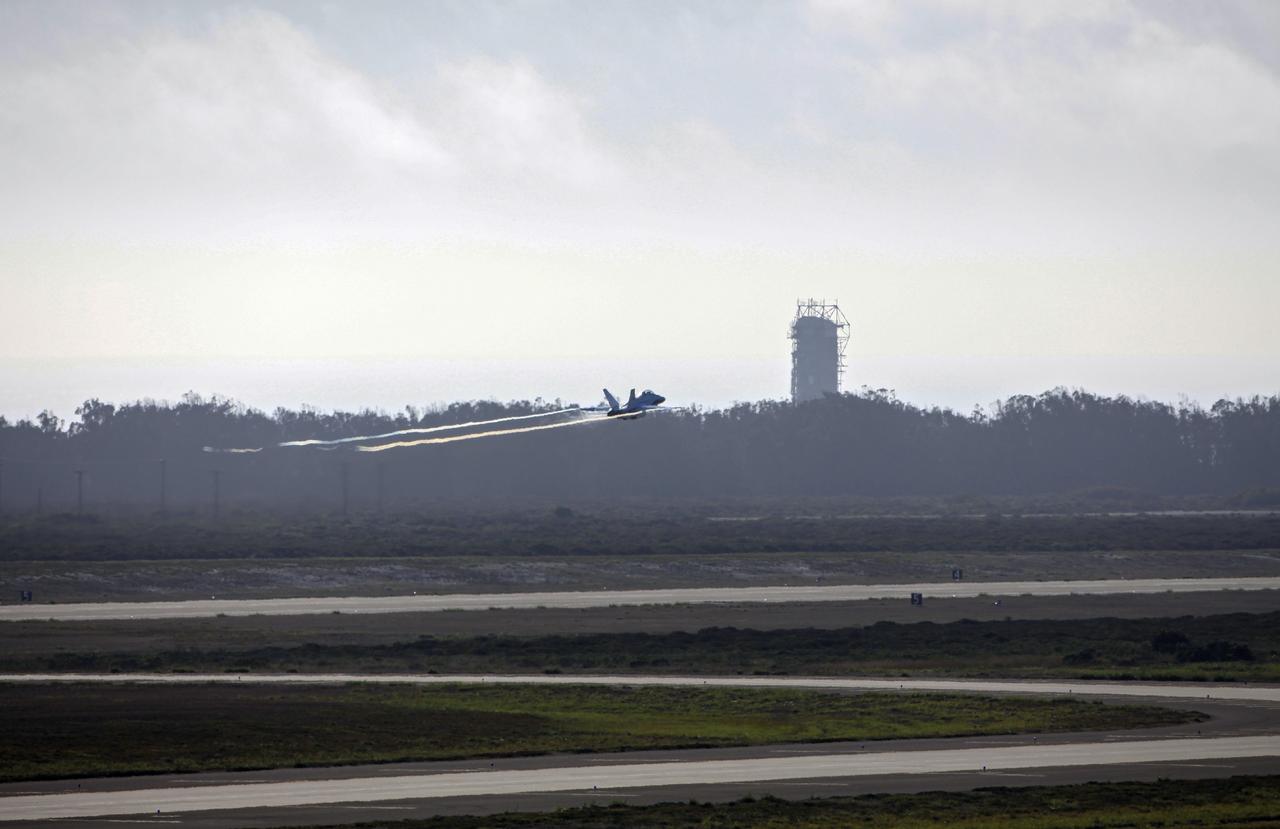
VANDENBERG AIR FORCE BASE, Calif. – An F-18 aircraft flies by a launch pad as it departs from Vandenberg Air Force Base in California. The plane will serve as the "chase plane" accompanying the Orbital Sciences L-1011 aircraft as it transports the Pegasus XL rocket carrying NASA's Interface Region Imaging Spectrograph, or IRIS, solar observatory over the Pacific Ocean. Release of the rocket from under the wing of the L-1011 is scheduled for 10:27 p.m. EDT. IRIS will open a new window of discovery using spectrometry and imaging to trace the flow of energy and plasma through the chromospheres and transition region into the sun’s corona. The spacecraft will observe how solar material moves, gathers energy and heats up as it travels through a largely unexplored region of the solar atmosphere. This interface region, located between the sun's visible surface and its upper atmosphere, is where most of its ultraviolet emission is generated. These emissions impact the near-Earth space environment and Earth's climate. NASA's Launch Services Program at the agency's Kennedy Space Center in Florida is managing the countdown and launch. For more information, visit http://www.nasa.gov/iris. Photo credit: NASA/Daniel Casper
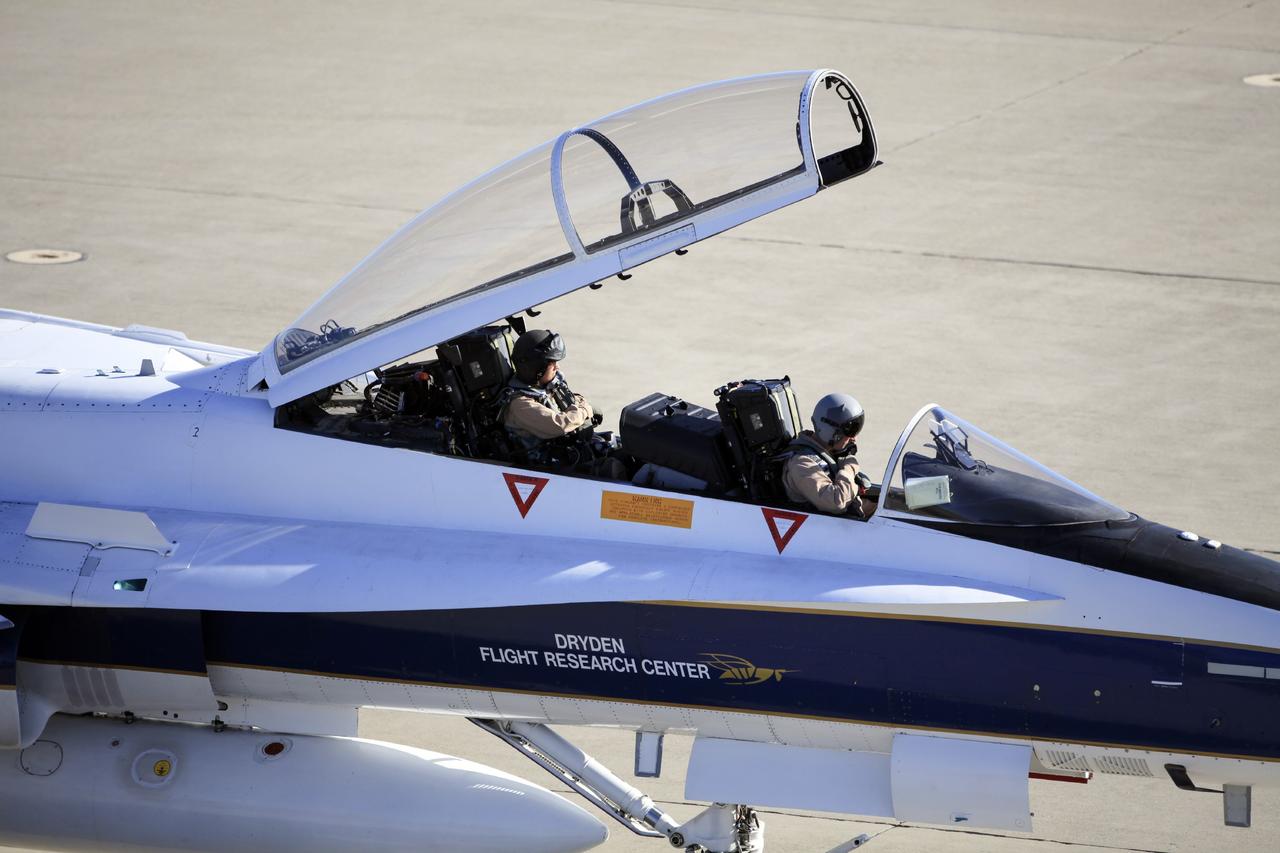
VANDENBERG AIR FORCE BASE, Calif. – Videographer Lori Losey, back seat, and pilot Jim Less board an F-18 aircraft at Vandenberg Air Force Base in California. The F-18 will be the "chase plane" for the Orbital Sciences L-1011 aircraft transporting the Pegasus XL rocket that will launch NASA's Interface Region Imaging Spectrograph, or IRIS, solar observatory to orbit. Release of the rocket from under the wing of the L-1011 is scheduled for 10:27 p.m. EDT. IRIS will open a new window of discovery using spectrometry and imaging to trace the flow of energy and plasma through the chromospheres and transition region into the sun’s corona. The spacecraft will observe how solar material moves, gathers energy and heats up as it travels through a largely unexplored region of the solar atmosphere. This interface region, located between the sun's visible surface and its upper atmosphere, is where most of its ultraviolet emission is generated. These emissions impact the near-Earth space environment and Earth's climate. NASA's Launch Services Program at the agency's Kennedy Space Center in Florida is managing the countdown and launch. For more information, visit http://www.nasa.gov/iris. Photo credit: NASA/Daniel Casper
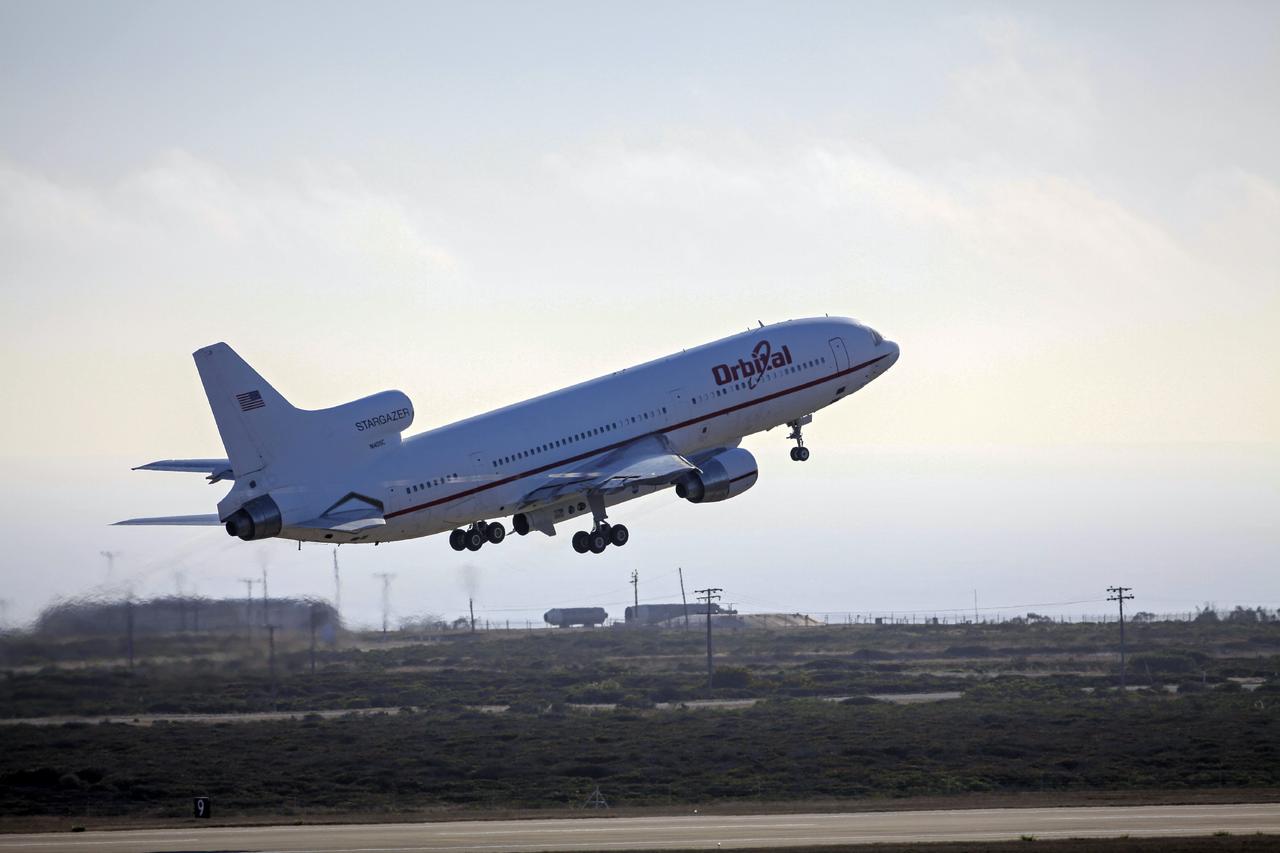
VANDENBERG AIR FORCE BASE, Calif. – An Orbital Sciences L-1011 aircraft takes off from Vandenberg Air Force Base in California at 9:30 p.m. EDT, headed over the Pacific Ocean to release the Pegasus XL rocket carrying NASA's Interface Region Imaging Spectrograph, or IRIS, solar observatory. Release of the rocket from under the wing of the aircraft is scheduled for 10:27 p.m. EDT. IRIS will open a new window of discovery using spectrometry and imaging to trace the flow of energy and plasma through the chromospheres and transition region into the sun’s corona. The spacecraft will observe how solar material moves, gathers energy and heats up as it travels through a largely unexplored region of the solar atmosphere. This interface region, located between the sun's visible surface and its upper atmosphere, is where most of its ultraviolet emission is generated. These emissions impact the near-Earth space environment and Earth's climate. NASA's Launch Services Program at the agency's Kennedy Space Center in Florida is managing the countdown and launch. For more information, visit http://www.nasa.gov/iris. Photo credit: NASA/Daniel Casper
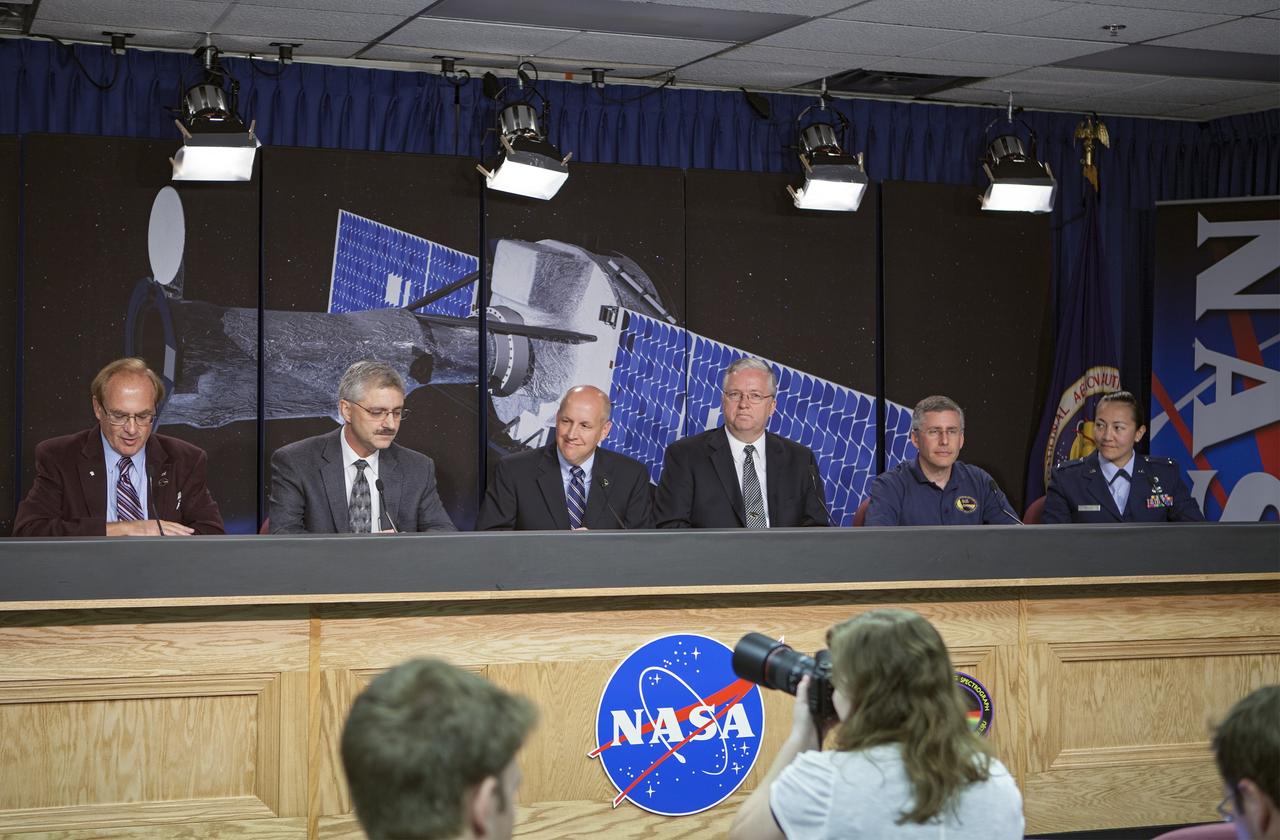
VANDENBERG AIR FORCE BASE, Calif. – At Vandenberg Air Force Base in California, NASA hosted a prelaunch news conference on the Interface Region Imaging Spectrograph, or IRIS, solar observatory scheduled to launch on a Pegasus XL rocket. Participating in the news conference are George Diller, NASA Public Affairs, Geoffrey Yoder, deputy associate administrator for the Programs, Science Mission Directorate at NASA Headquarters in Washington, D.C., Tim Dunn, NASA launch director/NASA Launch Manager at the Kennedy Space Center in Florida, Bryan Baldwin, Pegasus launch vehicle program director for Orbital Sciences Corp. of Dulles, Va., Gary Kushner, IRIS project manager for Lockheed Martin's Solar and Astrophysics Laboratory in Palo Alto, Calif., and First Lt. Jennifer Kelley, launch weather officer for the U.S. Air Force 30th Operations Support Squadron at Vandenberg. Scheduled for launch from Vandenberg on June 26, 2013, IRIS will open a new window of discovery by tracing the flow of energy and plasma through the chromospheres and transition region into the sun’s corona using spectrometry and imaging. The IRIS mission will observe how solar material moves, gathers energy and heats up as it travels through a largely unexplored region of the solar atmosphere. The interface region, located between the sun's visible surface and upper atmosphere, is where most of the sun's ultraviolet emission is generated. These emissions impact the near-Earth space environment and Earth's climate. For more information, visit http://www.nasa.gov/iris Photo credit: NASA/ Daniel Casper
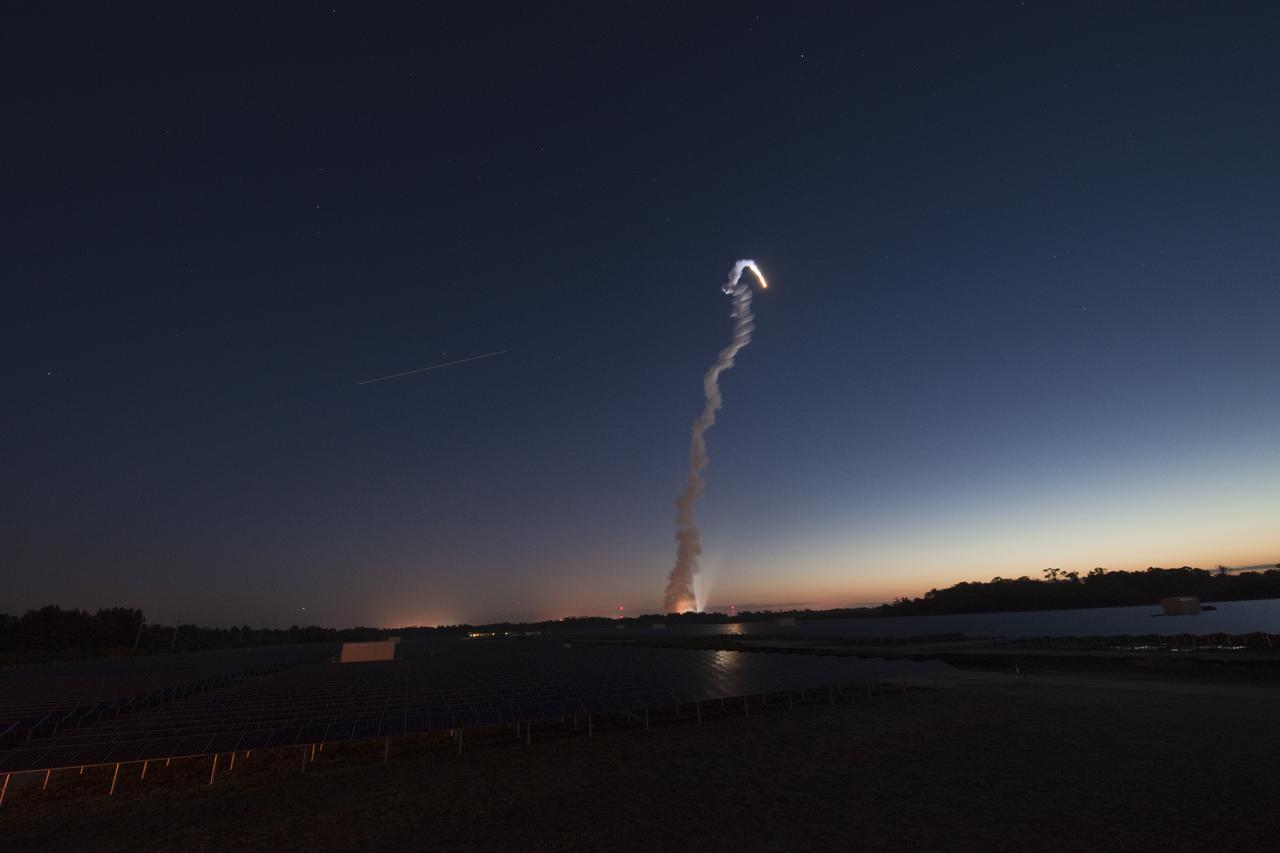
CAPE CANAVERAL, Fla. - The launch of space shuttle Discovery on the STS-131 mission was captured from a field of Florida Power and Light solar panels (foreground) off of S.R. 3 at NASA's Kennedy Space Center in Florida. NASA and FPL are members of a public-private partnership that promotes a clean-energy future and this site will produce an estimated 10 megawatts of emissions-free power for FPandL customers. Shuttle Discovery lifted off at 6:21 a.m. EDT on April 5, 2010. The seven-member STS-131 crew will deliver the multi-purpose logistics module Leonardo, filled with supplies, a new crew sleeping quarters and science racks that will be transferred to the International Space Station's laboratories. The crew also will switch out a gyroscope on the station’s truss, install a spare ammonia storage tank and retrieve a Japanese experiment from the station’s exterior. STS-131 is the 33rd shuttle mission to the station and the 131st shuttle mission overall. For information on the STS-131 mission and crew, visit http:__www.nasa.gov_mission_pages_shuttle_shuttlemissions_sts131_index.html. Photo credit: Courtesy of Adam Nehr
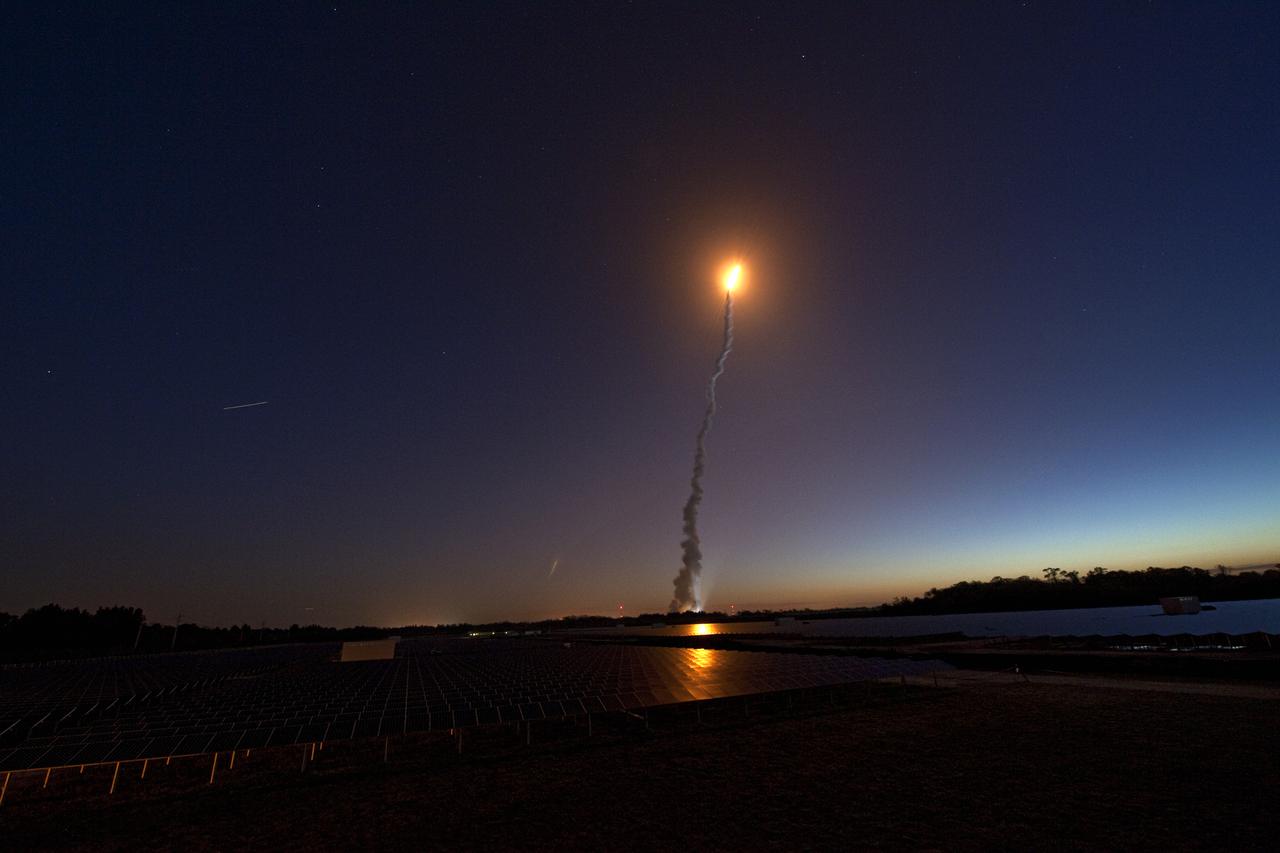
CAPE CANAVERAL, Fla. - The launch of space shuttle Discovery on the STS-131 mission was captured from a field of Florida Power and Light solar panels (foreground) off of S.R. 3 at NASA's Kennedy Space Center in Florida. NASA and FPL are members of a public-private partnership that promotes a clean-energy future and this site will produce an estimated 10 megawatts of emissions-free power for FPandL customers. Shuttle Discovery lifted off at 6:21 a.m. EDT on April 5, 2010. The seven-member STS-131 crew will deliver the multi-purpose logistics module Leonardo, filled with supplies, a new crew sleeping quarters and science racks that will be transferred to the International Space Station's laboratories. The crew also will switch out a gyroscope on the station’s truss, install a spare ammonia storage tank and retrieve a Japanese experiment from the station’s exterior. STS-131 is the 33rd shuttle mission to the station and the 131st shuttle mission overall. For information on the STS-131 mission and crew, visit http:__www.nasa.gov_mission_pages_shuttle_shuttlemissions_sts131_index.html. Photo credit: Courtesy of Adam Nehr
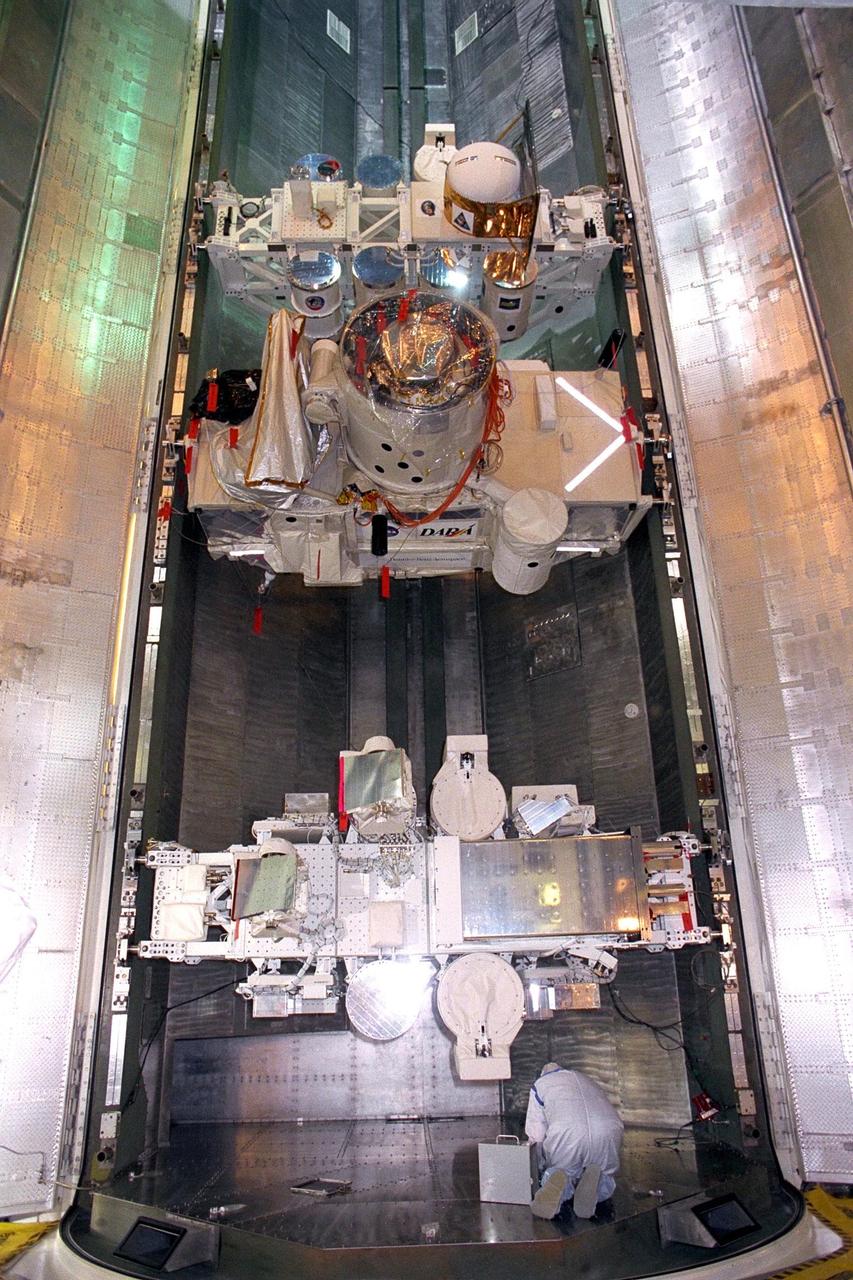
A payload canister in the Payload Changeout Room (PCR) at Launch Pad 39A holds the Cryogenic Infrared Spectrometers and Telescopes for the Atmosphere-Shuttle Pallet Satellite-2 (CRISTA-SPAS-2) payload for the STS-85 mission (center), as well as the Technology Applications and Science-1 (TAS-1) (top) and International Extreme Ultraviolet Hitchhiker-2 (IEH-2) (bottom) payloads. All three will be transferred from the PCR into the payload bay of the Space Shuttle Orbiter Discovery after the space vehicle arrives at the pad. The CRISTA is a system of three telescopes and four spectrometers to measure infrared radiation emitted by the Earth’s middle atmosphere. During the 11-day mission, the CRISTA-SPAS-2 free-flying satellite will be deployed from Discovery and retrieved later in the flight. Also onboard the satellite will be the Middle Atmosphere High Resolution Spectrograph Investigation (MAHRSI) to measure ultraviolet radiation emitted and scattered by the Earth’s atmosphere. The TAS-1 holds seven separate experiments that will provide data on the Earth’s topography and atmosphere, study the sun’s energy, and test new thermal control devices, as well as several student-developed experiments. The IEH-2 experiments will study ultraviolet radiation from stars, the sun and in the solar system
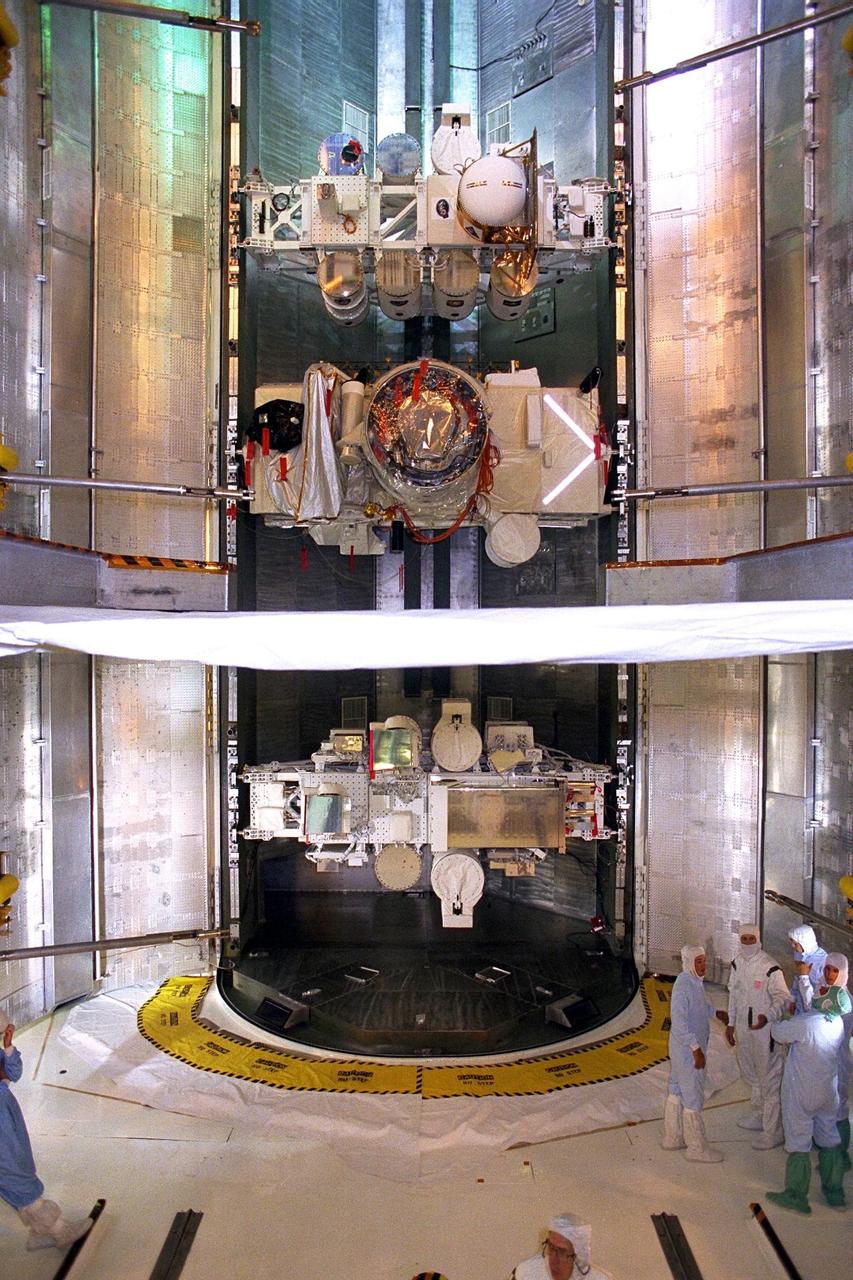
A payload canister in the Payload Changeout Room (PCR) at Launch Pad 39A holds the Cryogenic Infrared Spectrometers and Telescopes for the Atmosphere-Shuttle Pallet Satellite-2 (CRISTA-SPAS-2) payload for the STS-85 mission (center), as well as the Technology Applications and Science-1 (TAS-1) (top) and International Extreme Ultraviolet Hitchhiker-2 (IEH-2) (bottom) payloads. All three will be transferred from the PCR into the payload bay of the Space Shuttle Orbiter Discovery after the space vehicle arrives at the pad. The CRISTA is a system of three telescopes and four spectrometers to measure infrared radiation emitted by the Earth’s middle atmosphere. During the 11-day mission, the CRISTA-SPAS-2 free-flying satellite will be deployed from Discovery and retrieved later in the flight. Also onboard the satellite will be the Middle Atmosphere High Resolution Spectrograph Investigation (MAHRSI) to measure ultraviolet radiation emitted and scattered by the Earth’s atmosphere. The TAS-1 holds seven separate experiments that will provide data on the Earth’s topography and atmosphere, study the sun’s energy, and test new thermal control devices, as well as several student-developed experiments. The IEH-2 experiments will study ultraviolet radiation from stars, the sun and in the solar system
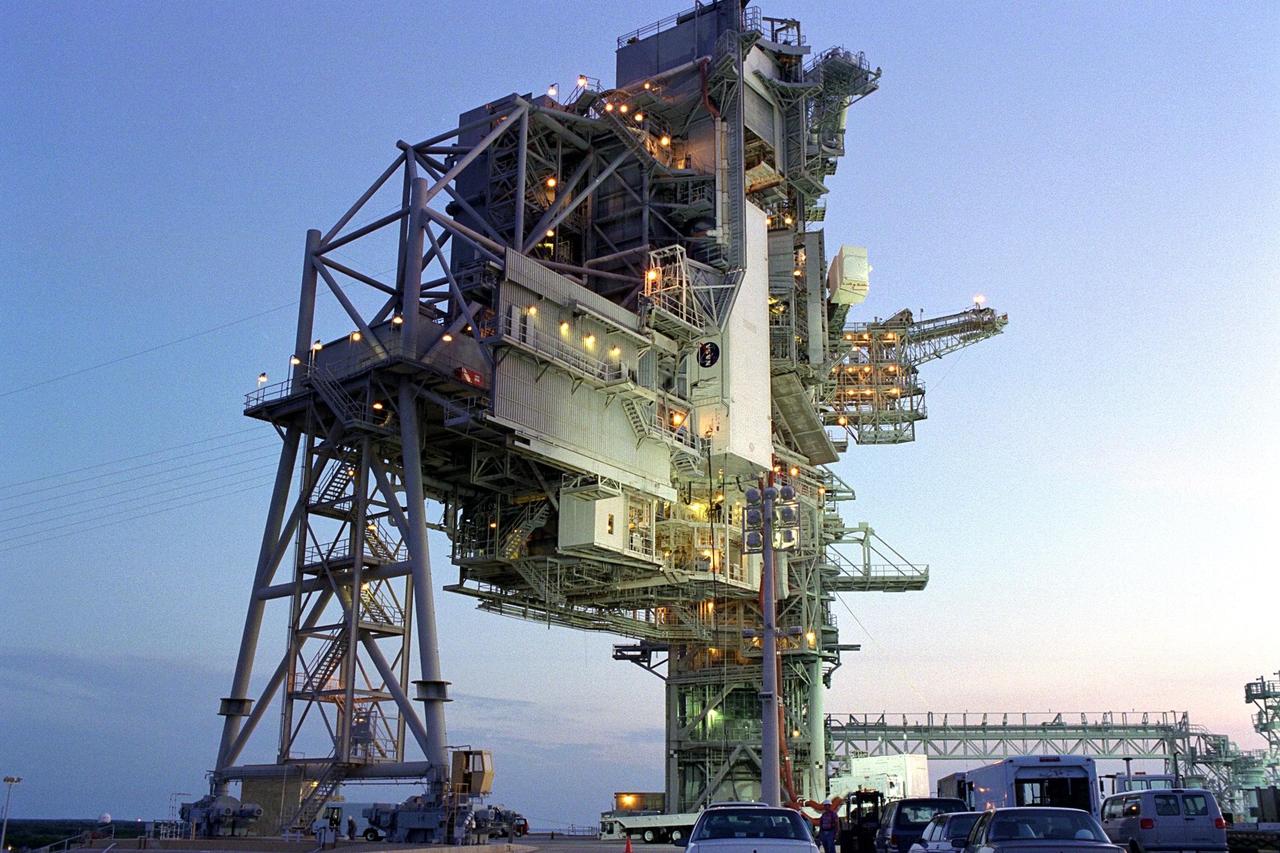
KENNEDY SPACE CENTER, Fla. -- The payload canister containing the Cryogenic Infrared Spectrometers and Telescopes for the Atmosphere-Shuttle Pallet Satellite-2 (CRISTA-SPAS-2) payload for the STS-85 mission is hoisted to the Payload Changeout Room (PCR) at Launch Pad 39A. Also in the canister are the Technology Applications and Science-1 (TAS-1) and International Extreme Ultraviolet Hitchhiker-2 (IEH-2) payloads. All three will be transferred from the PCR into the payload bay of the Space Shuttle Orbiter Discovery after the space vehicle arrives at the pad. The CRISTA is a system of three telescopes and four spectrometers to measure infrared radiation emitted by the Earth’s middle atmosphere. During the 11-day mission, the CRISTA-SPAS-2 free-flying satellite will be deployed from Discovery and retrieved later in the flight. Also onboard the satellite will be the Middle Atmosphere High Resolution Spectrograph Investigation (MAHRSI) to measure ultraviolet radiation emitted and scattered by the Earth’s atmosphere. The TAS-1 holds seven separate experiments that will provide data on the Earth’s topography and atmosphere, study the sun’s energy, and test new thermal control devices, as well as several student-developed experiments. The IEH-2 experiments will study ultraviolet radiation from stars, the sun and in the solar system
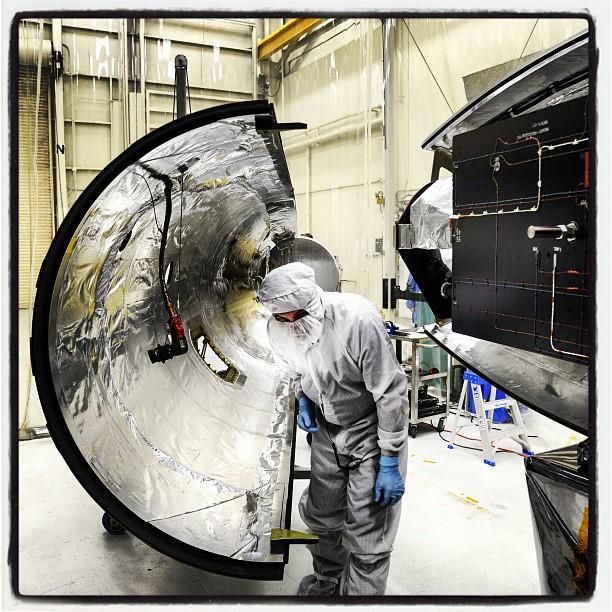
Orbital Sciences team members move the second half of the payload fairing before it is placed over NASA's IRIS (Interface Region Imaging Spectrograph) spacecraft. The fairing connects to the nose of the Orbital Sciences Pegasus XL rocket that will lift the solar observatory into orbit. The work is taking place in a hangar at Vandenberg Air Force Base, where IRIS is being prepared for launch on a Pegasus XL rocket. Scheduled for launch from Vandenberg on June 26, 2013, IRIS will open a new window of discovery by tracing the flow of energy and plasma through the chromospheres and transition region into the sun's corona using spectrometry and imaging. IRIS fills a crucial gap in our ability to advance studies of the sun-to-Earth connection by tracing the flow of energy and plasma through the foundation of the corona and the region around the sun known as the heliosphere. High res file available here: <a href="http://1.usa.gov/11yal3w" rel="nofollow">1.usa.gov/11yal3w</a> Photo Credit: NASA/Tony Vauclin <b><a href="http://www.nasa.gov/audience/formedia/features/MP_Photo_Guidelines.html" rel="nofollow">NASA image use policy.</a></b> <b><a href="http://www.nasa.gov/centers/goddard/home/index.html" rel="nofollow">NASA Goddard Space Flight Center</a></b> enables NASA’s mission through four scientific endeavors: Earth Science, Heliophysics, Solar System Exploration, and Astrophysics. Goddard plays a leading role in NASA’s accomplishments by contributing compelling scientific knowledge to advance the Agency’s mission. <b>Follow us on <a href="http://twitter.com/NASA_GoddardPix" rel="nofollow">Twitter</a></b> <b>Like us on <a href="http://www.facebook.com/pages/Greenbelt-MD/NASA-Goddard/395013845897?ref=tsd" rel="nofollow">Facebook</a></b> <b>Find us on <a href="http://instagram.com/nasagoddard?vm=grid" rel="nofollow">Instagram</a></b>
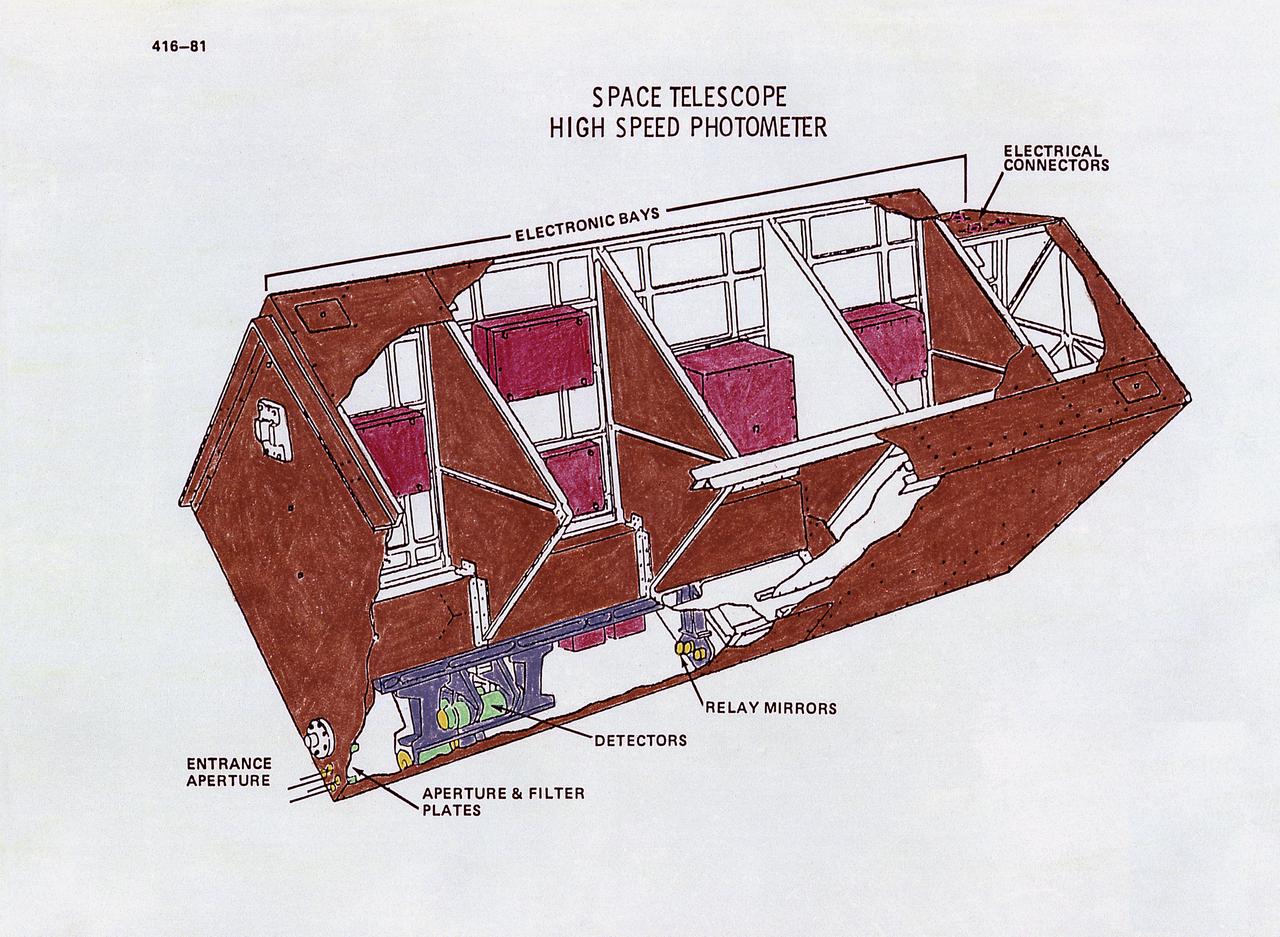
This drawing illustrates the Hubble Space Telescope's (HST's) High Speed Photometer (HSP). The HSP measures the intensity of starlight (brightness), which will help determine astronomical distances. Its principal use will be to measure extremely-rapid variations or pulses in light from celestial objects, such as pulsating stars. The HSP produces brightness readings. Light passes into one of four special signal-multiplying tubes that record the data. The HSP can measure energy fluctuations from objects that pulsate as rapidly as once every 10 microseconds. From HSP data, astronomers expect to learn much about such mysterious objects as pulsars, black holes, and quasars. The purpose of the HST, the most complex and sensitive optical telescope ever made, is to study the cosmos from a low-Earth orbit. By placing the telescope in space, astronomers are able to collect data that is free of the Earth's atmosphere. The HST views galaxies, stars, planets, comets, possibly other solar systems, and even unusual phenomena such as quasars, with 10 times the clarity of ground-based telescopes. The HST was deployed from the Space Shuttle Discovery (STS-31 mission) into Earth orbit in April 1990. The Marshall Space Flight Center had responsibility for design, development, and construction of the HST. The Perkin-Elmer Corporation, in Danbury, Cornecticut, developed the optical system and guidance sensors.

This illustration depicts the design features of the Hubble Space Telescope's (HST's) Support Systems Module (SSM). The SSM is one of the three major elements of the HST and encloses the other two elements, the Optical Telescope Assembly (OTA) and the Scientific Instruments (SI's). The purpose of the HST, the most complex and sensitive optical telescope ever made, is to study the cosmos from a low-Earth orbit. By placing the telescope in space, astronomers are able to collect data that is free of the Earth's atmosphere. The HST detects objects 25 times fainter than the dimmest objects seen from Earth and provides astronomers with an observable universe 250 times larger than visible from ground-based telescopes, perhaps as far away as 14 billion light-years. The HST views galaxies, stars, planets, comets, possibly other solar systems, and even unusual phenomena such as quasars, with 10 times the clarity of ground-based telescopes. The spacecraft is 42.5-feet (13-meters) long and weighs 25,000 pounds (11,600 kilograms). Two communication anternas, two solar array panels that collect energy for the HST, and storage bays for electronic gear are on the outside. The HST was deployed from the Space Shuttle Discovery (STS-31 mission) into Earth orbit in April 1990. The Marshall Space Flight Center had responsibility for design, development, and construction of the HST. The Perkin-Elmer Corporation, in Danbury, Connecticut, developed the optical system and guidance sensors. The Lockheed Missile and Space Company of Sunnyvale, California produced the protective outer shroud and spacecraft systems, and assembled and tested the finished telescope.
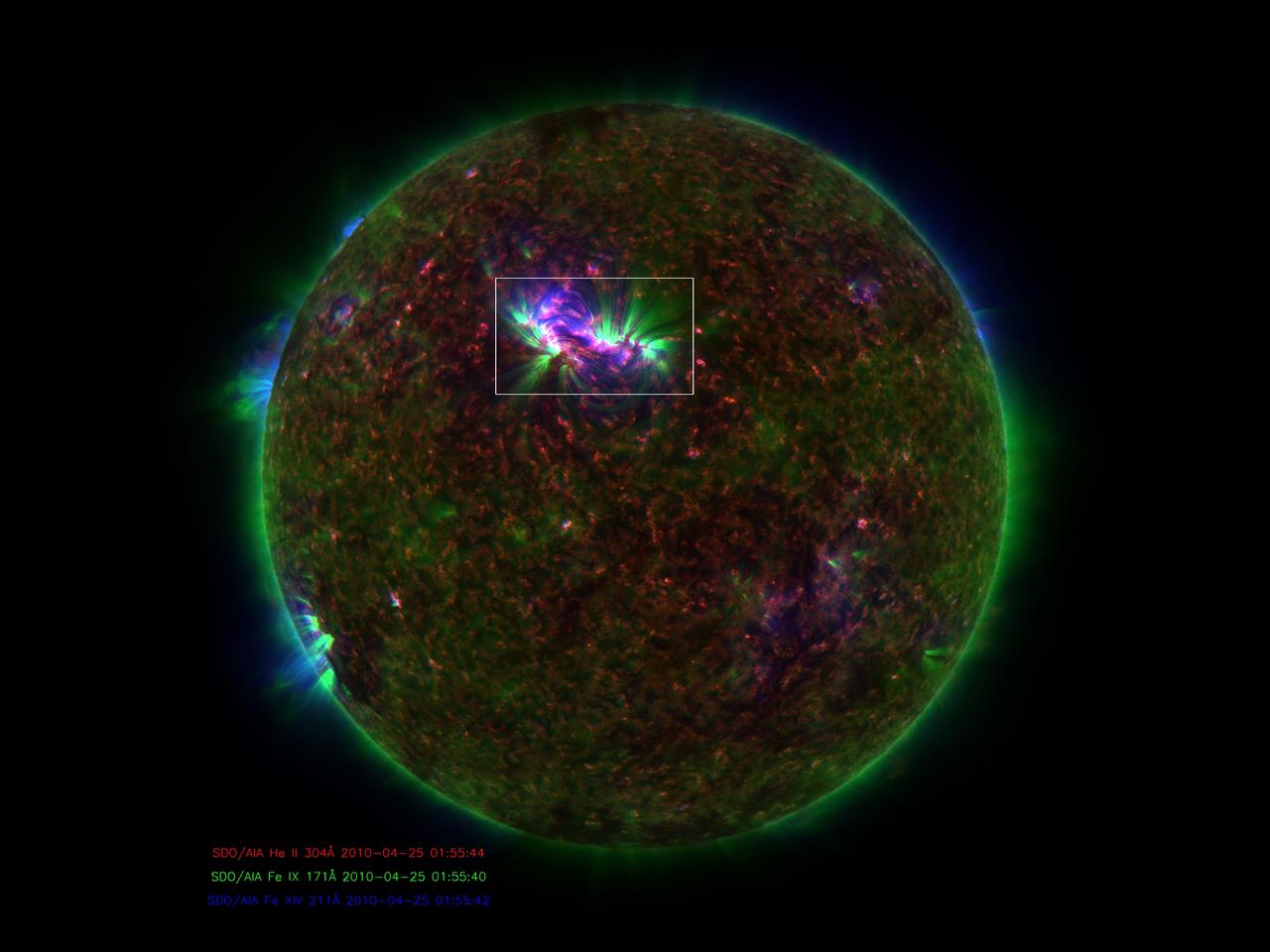
NASA image release January 6, 2010 Caption: Spicules on the sun, as observed by the Solar Dynamics Observatory. These bursts of gas jet off the surface of the sun at 150,000 miles per hour and contain gas that reaches temperatures over a million degrees. GREENBELT, Md. -- Observations from NASA's Solar Dynamics Observatory (SDO) and the Japanese satellite Hinode show that some gas in the giant, fountain-like jets in the sun's atmosphere known as spicules can reach temperatures of millions of degrees. The finding offers a possible new framework for how the sun's high atmosphere gets so much hotter than the surface of the sun. What makes the high atmosphere, or corona, so hot – over a million degrees, compared to the sun surface's 10,000 degrees Fahrenheit -- remains a poorly understood aspect of the sun's complicated space weather system. That weather system can reach Earth, causing auroral lights and, if strong enough, disrupting Earth's communications and power systems. Understanding such phenomena, therefore, is an important step towards better protecting our satellites and power grids. "The traditional view is that all the heating happens higher up in the corona," says Dean Pesnell, who is SDO's project scientist at NASA's Goddard Space Flight Center in Greenbelt, Md. "The suggestion in this paper is that cool gas is being ejected from the sun's surface in spicules and getting heated on its way to the corona." Spicules were first named in the 1940s, but were hard to study in detail until recently, says Bart De Pontieu of Lockheed Martin's Solar and Astrophysics Laboratory, Palo Alto, Calif. who is the lead author on a paper on this subject in the January 7, 2011 issue of Science magazine. In visible light, spicules can be seen to send large masses of so-called plasma – the electromagnetic gas that surrounds the sun – up through the lower solar atmosphere or photosphere. The amount of material sent up is stunning, some 100 times as much as streams away from the sun in the solar wind towards the edges of the solar system. But nobody knew if they contained hot gas. "Heating of spicules to the necessary hot temperatures has never been observed, so their role in coronal heating had been dismissed as unlikely," says De Pontieu. Now, De Pontieu's team -- which included researchers at Lockheed Martin, the High Altitude Observatory of the National Center for Atmospheric Research (NCAR) in Colorado and the University of Oslo, Norway -- was able to combine images from SDO and Hinode to produce a more complete picture of the gas inside these gigantic fountains. The scientists found that a large fraction of the gas is heated to a hundred thousand degrees, while a small fraction is heated to millions of degrees. Time-lapsed images show that this material spews up into the corona, with most falling back down towards the surface of the sun. However, the small fraction of the gas that is heated to millions of degrees does not immediately return to the surface. Given the large number of spicules on the Sun, and the amount of material in the spicules, the scientists believe that if even some of that super hot plasma stays aloft it would make a contribution to coronal heating. Astrophysicist Jonathan Cirtain, who is the U.S. project scientist for Hinode at NASA's Marshall Space Flight Center, Huntsville, Ala., says that incorporating such new information helps address an important question that reaches far beyond the sun. "This breakthrough in our understanding of the mechanisms which transfer energy from the solar photosphere to the corona addresses one of the most compelling questions in stellar astrophysics: How is the atmosphere of a star heated?" he says. "This is a fantastic discovery, and demonstrates the muscle of the NASA Heliophysics System Observatory, comprised of numerous instruments on multiple observatories." Hinode is the second mission in NASA's Solar Terrestrial Probes program, the goal of which is to improve understanding of fundamental solar and space physics processes. The mission is led by the Japan Aerospace Exploration Agency (JAXA) and the National Astronomical Observatory of Japan (NAOJ). The collaborative mission includes the U.S., the United Kingdom, Norway and Europe. NASA Marshall manages Hinode U.S. science operations and oversaw development of the scientific instrumentation provided for the mission by NASA, academia and industry. The Lockheed Martin Advanced Technology Center is the lead U.S. investigator for the Solar Optical Telescope on Hinode. SDO is the first mission in a NASA science program called Living With a Star, the goal of which is to develop the scientific understanding necessary to address those aspects of the sun-Earth system that directly affect our lives and society. NASA Goddard built, operates, and manages the SDO spacecraft for NASA's Science Mission Directorate in Washington. To learn more go to: <a href="http://www.nasa.gov/mission_pages/sdo/news/news20110106-spicules.html" rel="nofollow">www.nasa.gov/mission_pages/sdo/news/news20110106-spicules...</a> Credit: NASA Goddard/SDO/AIA <b><a href="http://www.nasa.gov/centers/goddard/home/index.html" rel="nofollow">NASA Goddard Space Flight Center</a></b> enables NASA’s mission through four scientific endeavors: Earth Science, Heliophysics, Solar System Exploration, and Astrophysics. Goddard plays a leading role in NASA’s accomplishments by contributing compelling scientific knowledge to advance the Agency’s mission. <b>Follow us on <a href="http://twitter.com/NASA_GoddardPix" rel="nofollow">Twitter</a></b> <b>Join us on <a href="http://www.facebook.com/pages/Greenbelt-MD/NASA-Goddard/395013845897?ref=tsd" rel="nofollow">Facebook</a></b>
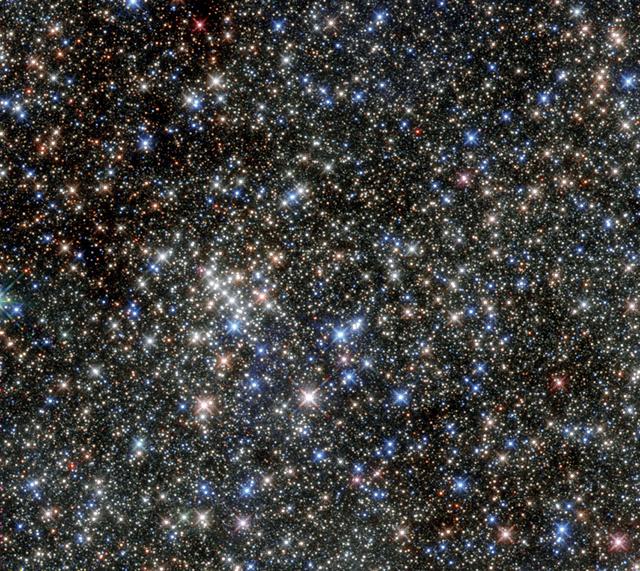
Although this cluster of stars gained its name due to its five brightest stars, it is home to hundreds more. The huge number of massive young stars in the cluster is clearly captured in this NASA/ESA Hubble Space Telescope image. The cluster is located close to the Arches Cluster and is just 100 light-years from the center of our galaxy. The cluster’s proximity to the dust at the center of the galaxy means that much of its visible light is blocked, which helped to keep the cluster unknown until its discovery in 1990, when it was revealed by infrared observations. Infrared images of the cluster, like the one shown here, allow us to see through the obscuring dust to the hot stars in the cluster. The Quintuplet Cluster hosts two extremely rare luminous blue variable stars: the Pistol Star and the lesser known V4650 Sgr. If you were to draw a line horizontally through the center of this image from left to right, you could see the Pistol Star hovering just above the line about one third of the way along it. The Pistol Star is one of the most luminous known stars in the Milky Way and takes its name from the shape of the Pistol Nebula that it illuminates, but which is not visible in this infrared image. The exact age and future of the Pistol Star are uncertain, but it is expected to end in a supernova or even a hypernova in one to three million years. The cluster also contains a number of red supergiants. These stars are among the largest in the galaxy and are burning their fuel at an incredible speed, meaning they will have a very short lifetime. Their presence suggests an average cluster age of nearly four million years. At the moment these stars are on the verge of exploding as supernovae. During their spectacular deaths they will release vast amounts of energy which, in turn, will heat the material — dust and gas — between the other stars. This observation shows the Quintuplet Cluster in the infrared and demonstrates the leap in Hubble’s performance since its 1999 image of same object. Credit: ESA/NASA <b><a href="http://www.nasa.gov/audience/formedia/features/MP_Photo_Guidelines.html" rel="nofollow">NASA image use policy.</a></b> <b><a href="http://www.nasa.gov/centers/goddard/home/index.html" rel="nofollow">NASA Goddard Space Flight Center</a></b> enables NASA’s mission through four scientific endeavors: Earth Science, Heliophysics, Solar System Exploration, and Astrophysics. Goddard plays a leading role in NASA’s accomplishments by contributing compelling scientific knowledge to advance the Agency’s mission. <b>Follow us on <a href="http://twitter.com/NASAGoddardPix" rel="nofollow">Twitter</a></b> <b>Like us on <a href="http://www.facebook.com/pages/Greenbelt-MD/NASA-Goddard/395013845897?ref=tsd" rel="nofollow">Facebook</a></b> <b>Find us on <a href="http://instagrid.me/nasagoddard/?vm=grid" rel="nofollow">Instagram</a></b>

Of all the varieties of exploding stars, the ones called Type Ia are perhaps the most intriguing. Their predictable brightness lets astronomers measure the expansion of the universe, which led to the discovery of dark energy. Yet the cause of these supernovae remains a mystery. Do they happen when two white dwarf stars collide? Or does a single white dwarf gorge on gases stolen from a companion star until bursting? If the second theory is true, the normal star should survive. Astronomers used NASA's Hubble Space Telescope to search the gauzy remains of a Type Ia supernova in a neighboring galaxy called the Large Magellanic Cloud. They found a sun-like star that showed signs of being associated with the supernova. Further investigations will be needed to learn if this star is truly the culprit behind a white dwarf's fiery demise. This image, taken with NASA's Hubble Space Telescope, shows the supernova remnant SNR 0509-68.7, also known as N103B. It is located 160,000 light-years from Earth in a neighboring galaxy called the Large Magellanic Cloud. N103B resulted from a Type Ia supernova, whose cause remains a mystery. One possibility would leave behind a stellar survivor, and astronomers have identified a possible candidate. The actual supernova remnant is the irregular shaped dust cloud, at the upper center of the image. The gas in the lower half of the image and the dense concentration of stars in the lower left are the outskirts of the star cluster NGC 1850. The Hubble image combines visible and near-infrared light taken by the Wide Field Camera 3 in June 2014. Credit: NASA, ESA and H.-Y. Chu (Academia Sinica, Taipei) <b><a href="http://www.nasa.gov/audience/formedia/features/MP_Photo_Guidelines.html" rel="nofollow">NASA image use policy.</a></b> <b><a href="http://www.nasa.gov/centers/goddard/home/index.html" rel="nofollow">NASA Goddard Space Flight Center</a></b> enables NASA’s mission through four scientific endeavors: Earth Science, Heliophysics, Solar System Exploration, and Astrophysics. Goddard plays a leading role in NASA’s accomplishments by contributing compelling scientific knowledge to advance the Agency’s mission. <b>Follow us on <a href="http://twitter.com/NASAGoddardPix" rel="nofollow">Twitter</a></b> <b>Like us on <a href="http://www.facebook.com/pages/Greenbelt-MD/NASA-Goddard/395013845897?ref=tsd" rel="nofollow">Facebook</a></b> <b>Find us on <a href="http://instagrid.me/nasagoddard/?vm=grid" rel="nofollow">Instagram</a></b>

This is a Hubble Space Telescope composite image of a supernova explosion designated SN 2014J in the galaxy M82. At a distance of approximately 11.5 million light-years from Earth it is the closest supernova of its type discovered in the past few decades. The explosion is categorized as a Type Ia supernova, which is theorized to be triggered in binary systems consisting of a white dwarf and another star — which could be a second white dwarf, a star like our sun, or a giant star. Astronomers using a ground-based telescope discovered the explosion on January 21, 2014. This Hubble photograph was taken on January 31, as the supernova approached its peak brightness. The Hubble data are expected to help astronomers refine distance measurements to Type Ia supernovae. In addition, the observations could yield insights into what kind of stars were involved in the explosion. Hubble’s ultraviolet-light sensitivity will allow astronomers to probe the environment around the site of the supernova explosion and in the interstellar medium of the host galaxy. Because of their consistent peak brightness, Type Ia supernovae are among the best tools to measure distances in the universe. They were fundamental to the 1998 discovery of the mysterious acceleration of the expanding universe. A hypothesized repulsive force, called dark energy, is thought to cause the acceleration. Among the other major NASA space-based observatories used in the M82 viewing campaign are Spitzer Space Telescope, Chandra X-ray Observatory, Nuclear Spectroscopic Telescope Array (NuSTAR), Fermi Gamma-ray Space Telescope, Swift Gamma Ray Burst Explorer, and the Stratospheric Observatory for Infrared Astronomy (SOFIA). Image Credit: NASA, ESA, A. Goobar (Stockholm University), and the Hubble Heritage Team (STScI/AURA) <b><a href="http://www.nasa.gov/audience/formedia/features/MP_Photo_Guidelines.html" rel="nofollow">NASA image use policy.</a></b> <b><a href="http://www.nasa.gov/centers/goddard/home/index.html" rel="nofollow">NASA Goddard Space Flight Center</a></b> enables NASA’s mission through four scientific endeavors: Earth Science, Heliophysics, Solar System Exploration, and Astrophysics. Goddard plays a leading role in NASA’s accomplishments by contributing compelling scientific knowledge to advance the Agency’s mission. <b>Follow us on <a href="http://twitter.com/NASAGoddardPix" rel="nofollow">Twitter</a></b> <b>Like us on <a href="http://www.facebook.com/pages/Greenbelt-MD/NASA-Goddard/395013845897?ref=tsd" rel="nofollow">Facebook</a></b> <b>Find us on <a href="http://instagram.com/nasagoddard?vm=grid" rel="nofollow">Instagram</a></b>