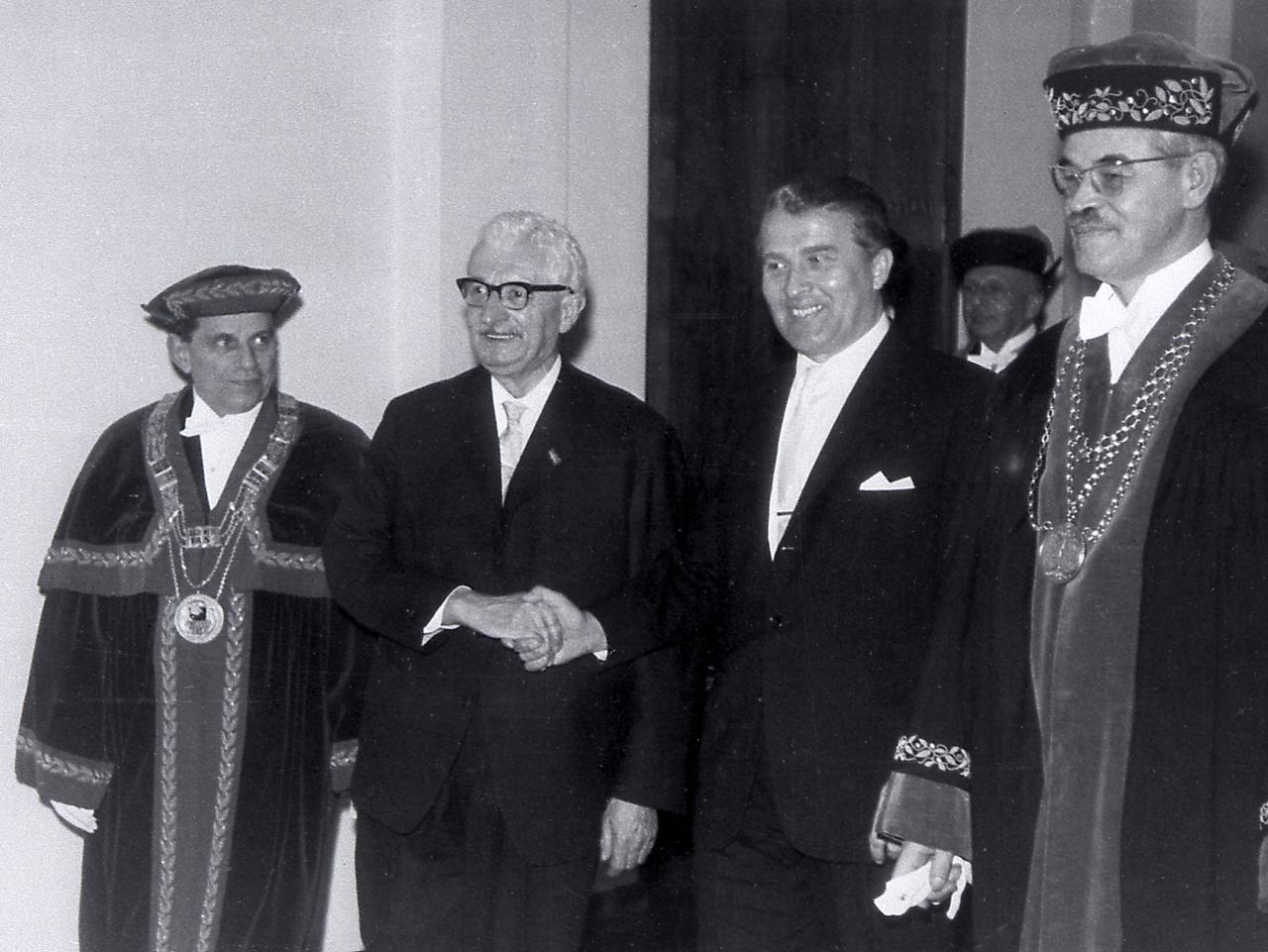
Dr. von Braun and Professor Hermann Oberth are honored by the Berlin Technical University. Both received honorary doctorates on January 8, 1963.
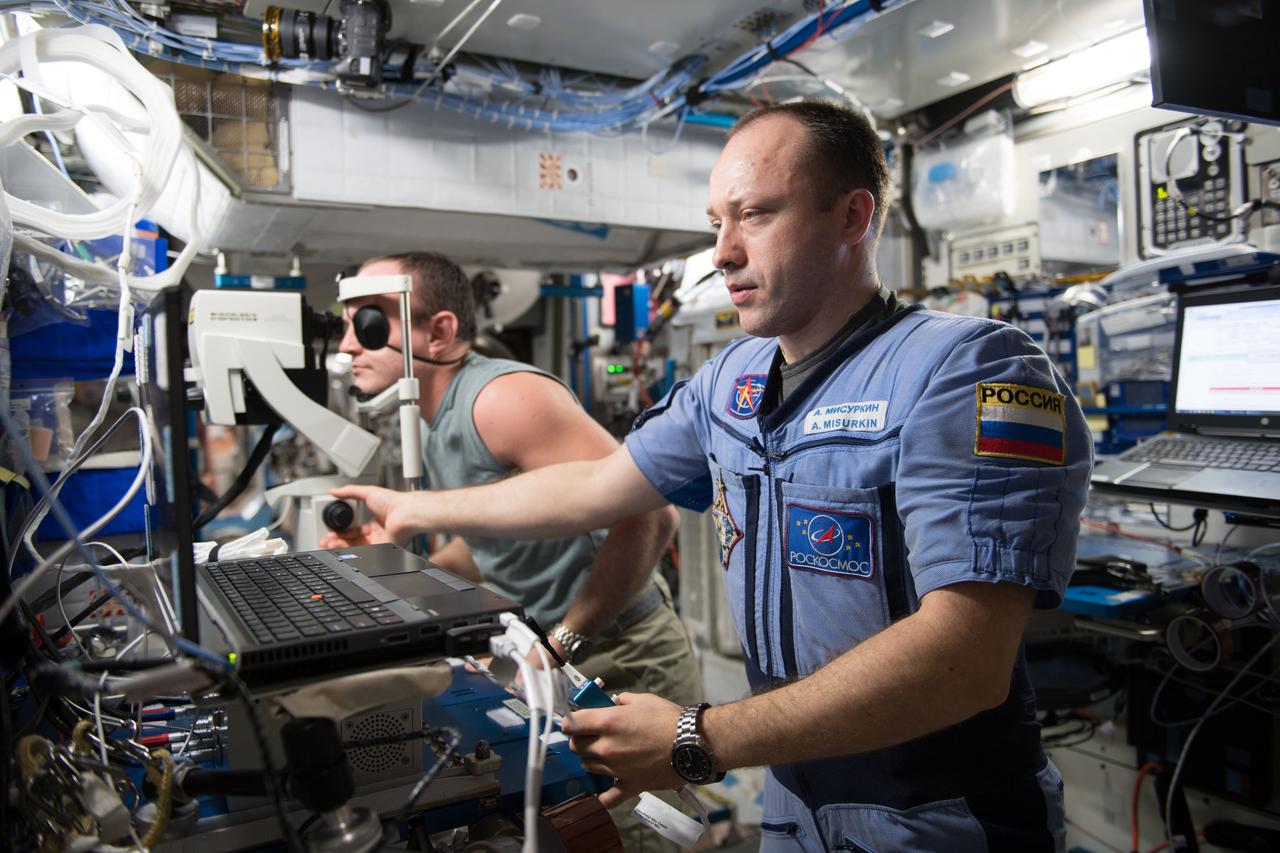
iss053e238919 (Nov. 21, 2017) --- Cosmonauts Alexander Misurkin (foreground) and Sergey Ryazanskiy participate in a remotely guided eye exam with assistance from doctors on Earth using Optical Coherence Tomography gear. Misurkin was the Crew Medical Officer and Ryazanskiy was the subject helping doctors understand how living in microgravity impacts vision.
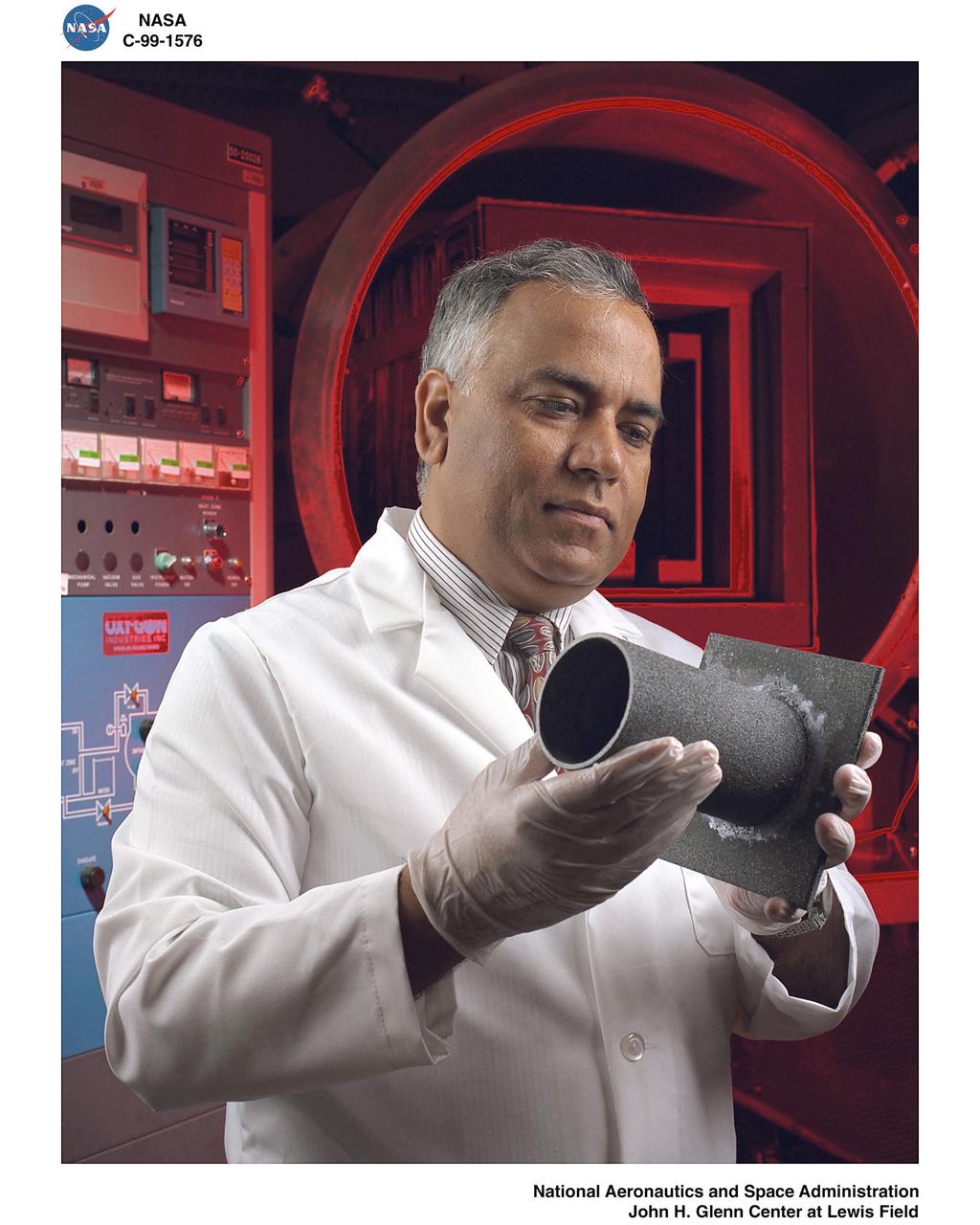
AFFORDABLY ROBUST CERAMIC JOINT TECHNOLOGY R & D 100 AWARD WITH DOCTOR MRITYUNJAY SINGH
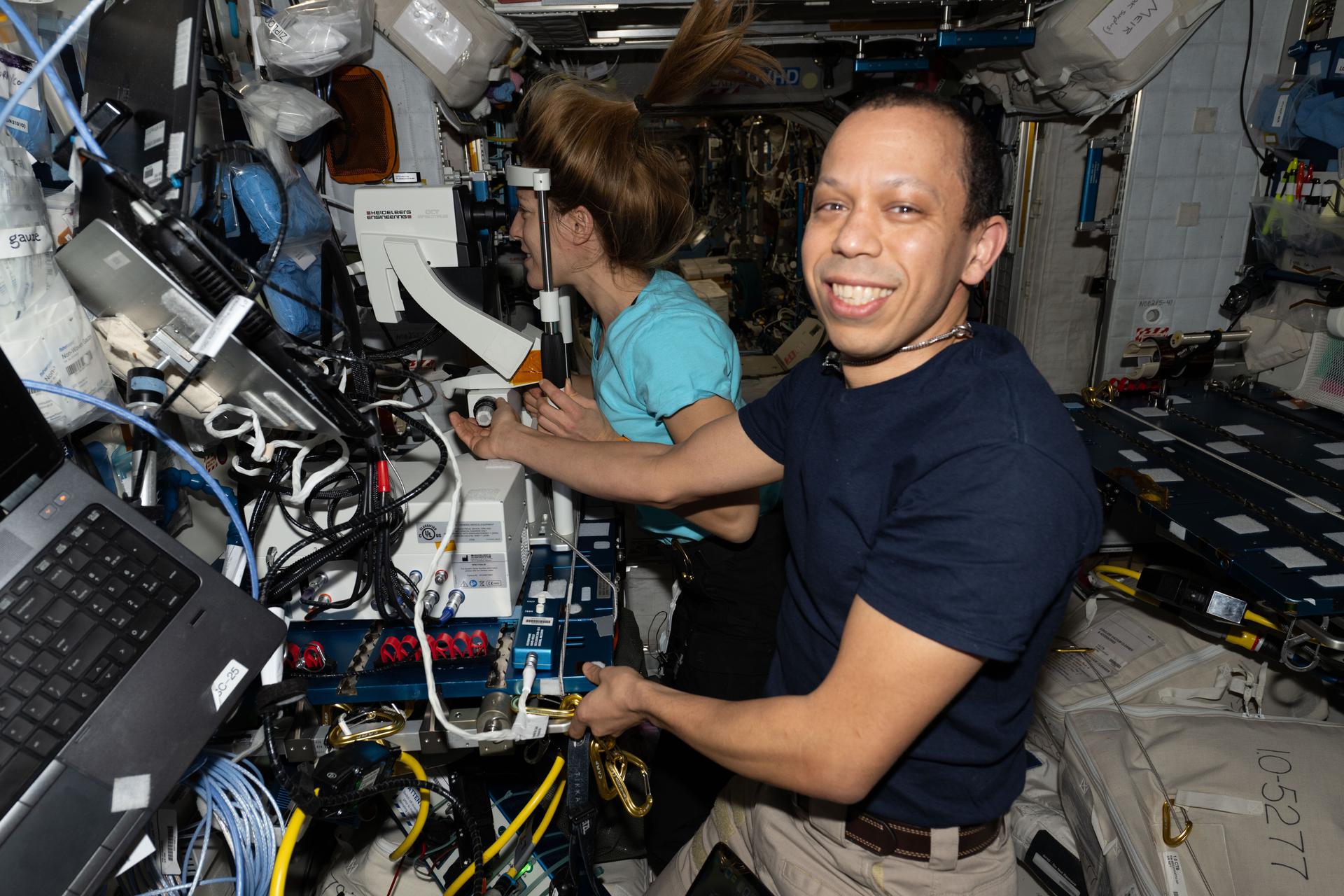
iss074e0433182 (April 3, 2026) --- NASA astronaut Chris Williams smiles for a portrait while guiding ESA (European Space Agency) astronaut Sophie Adenot as she peers into an Optical Coherence Tomography machine, a medical imaging device used for eye exams. Doctors on the ground monitored in real-time viewing her retina, lens, and cornea. Vision is critical to a mission’s success and doctors regularly check the astronauts’ eyes to counteract the potential effects of living in space. Credit: ESA/Sophie Adenot
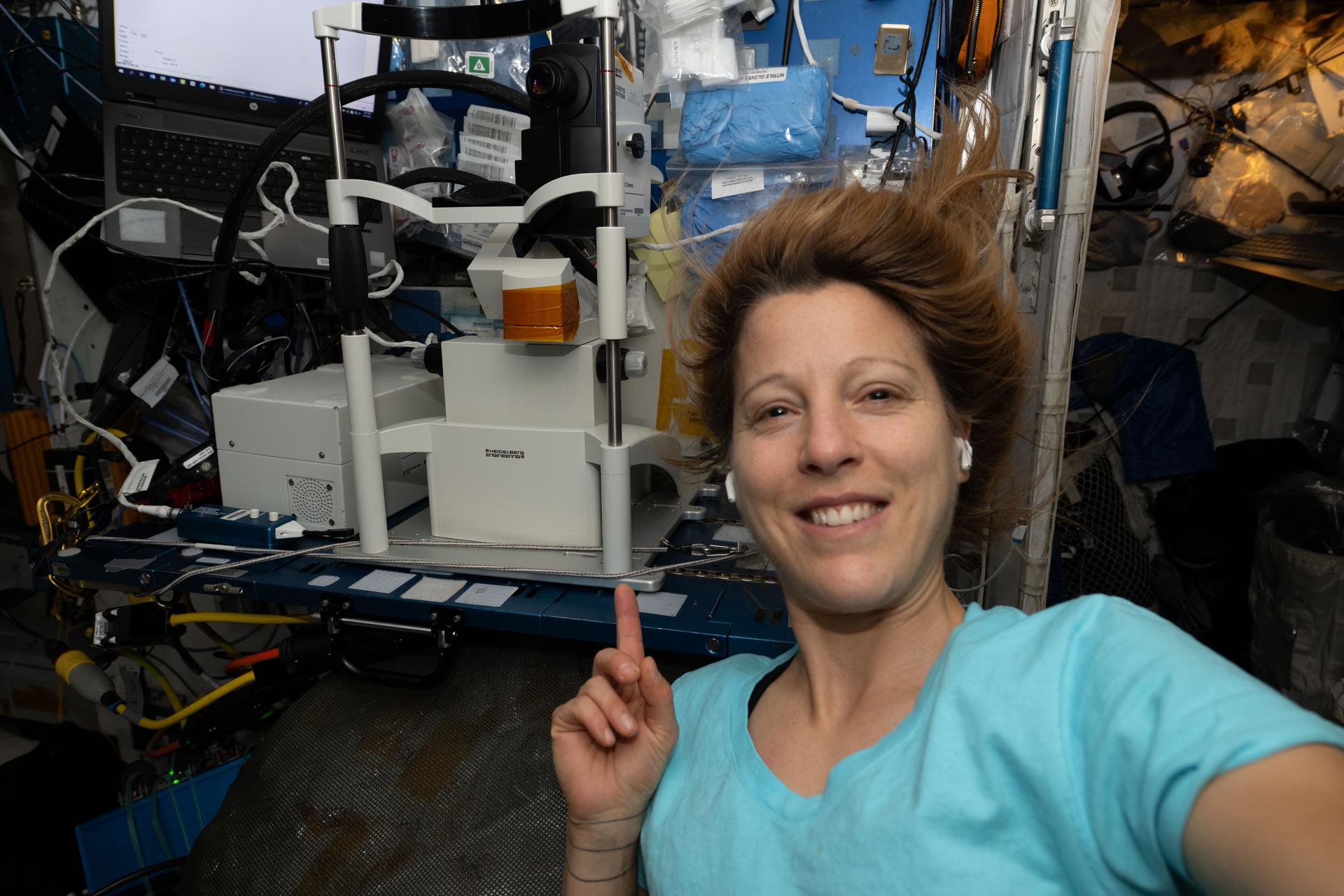
iss074e0433179 (April 3, 2026) --- ESA (European Space Agency) astronaut and Expedition 74 flight engineer Sophie Adenot smiles for a portrait while showing off an Optical Coherence Tomography machine, a medical imaging device used for eye exams. Doctors on the ground monitor the eye exam in real-time viewing an astronaut's retina, lens, and cornea. Vision is critical to a mission’s success and doctors regularly check the astronauts’ eyes to counteract the potential effects of living in space. Credit: ESA/Sophie Adenot
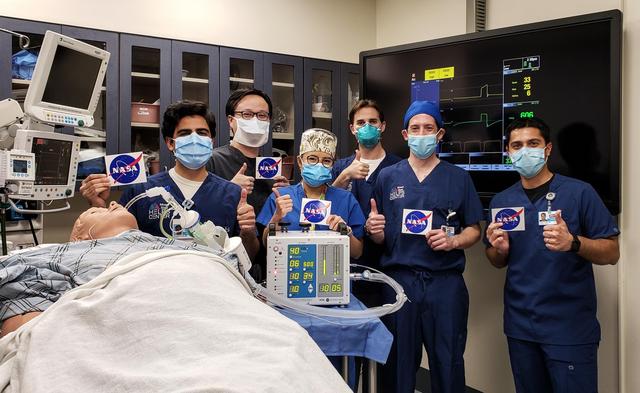
After testing a ventilator prototype developed by NASA's Jet Propulsion Laboratory, doctors in the Department of Anesthesiology and the Human Simulation Lab at the Icahn School of Medicine at Mount Sinai in New York City give a thumbs up. Developed in response to the coronavirus outbreak, the device, called VITAL (Ventilator Intervention Technology Accessible Locally), requires far fewer parts than traditional ventilators, making it cheaper to build and ideal for rapid manufacture. Lying on the bed is a human patient simulator used to test the device. https://photojournal.jpl.nasa.gov/catalog/PIA23772
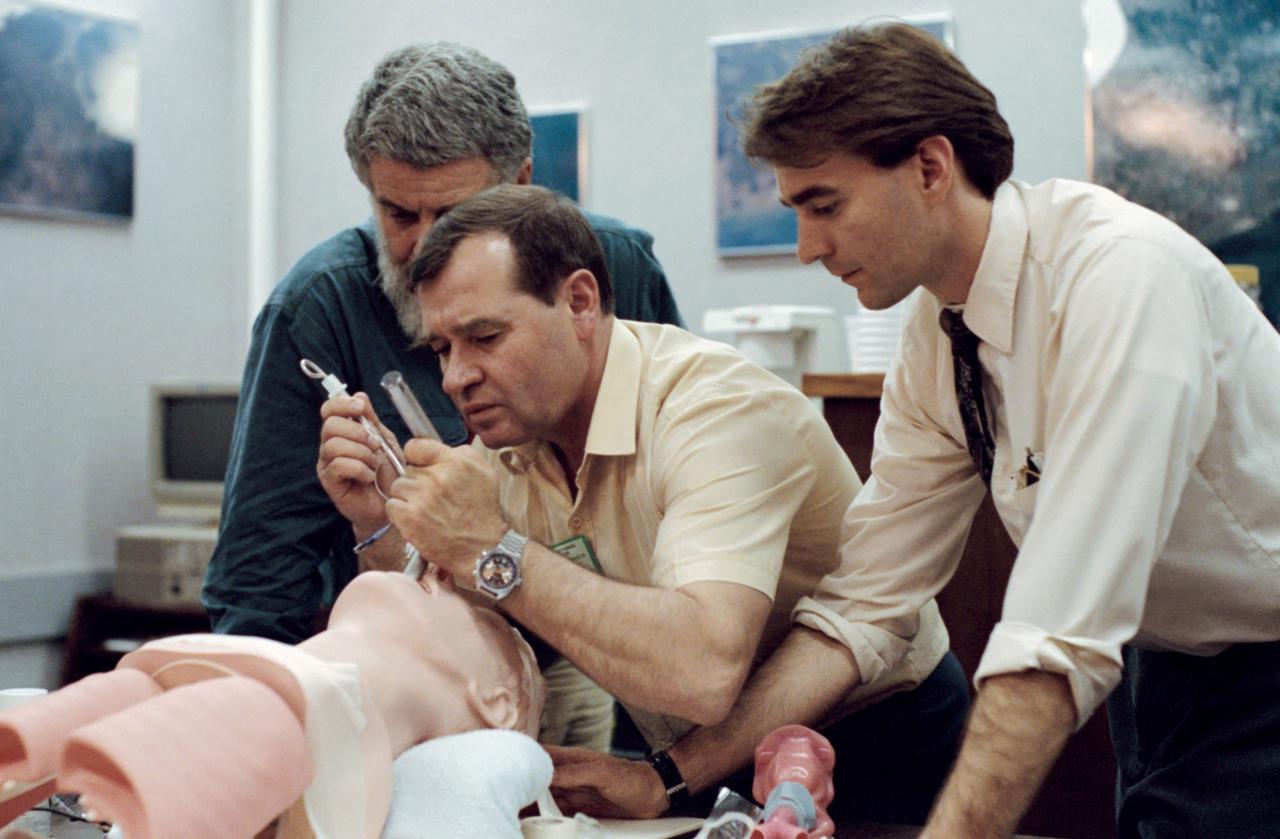
Mir 18 crewmember Gennadiy M. Strekalov, center, practicies an emergency medical procedure to maintain a patient airway during training at JSC. Looking on are Dave E. Ward (right), a JSC medical doctor, and an unidentified interpreter.
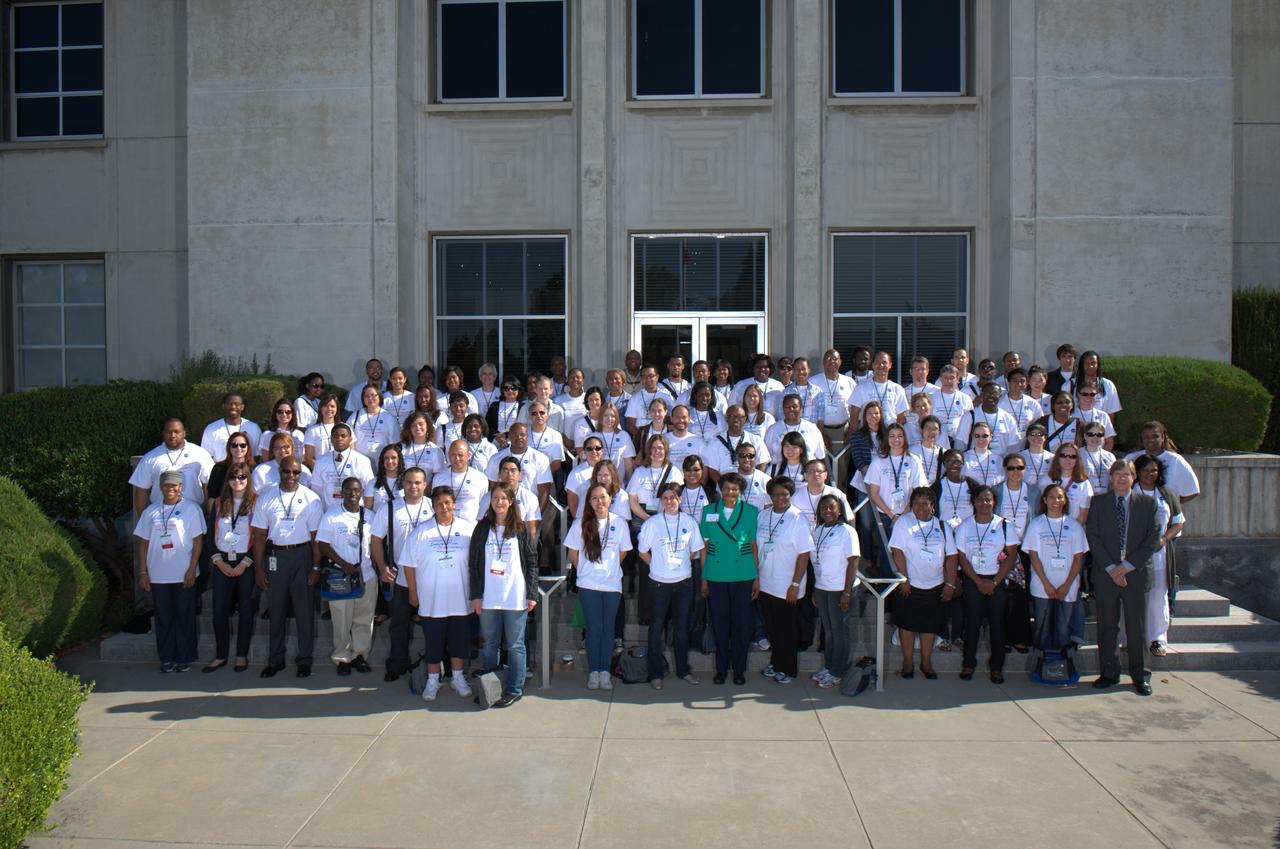
United Negro College Fund Special Programs (UNCFSP) Science Technology Engineering and Math (STEM) symposium - NASA Harriet G. Jenkins Pre-Doctoral Fellowship Project
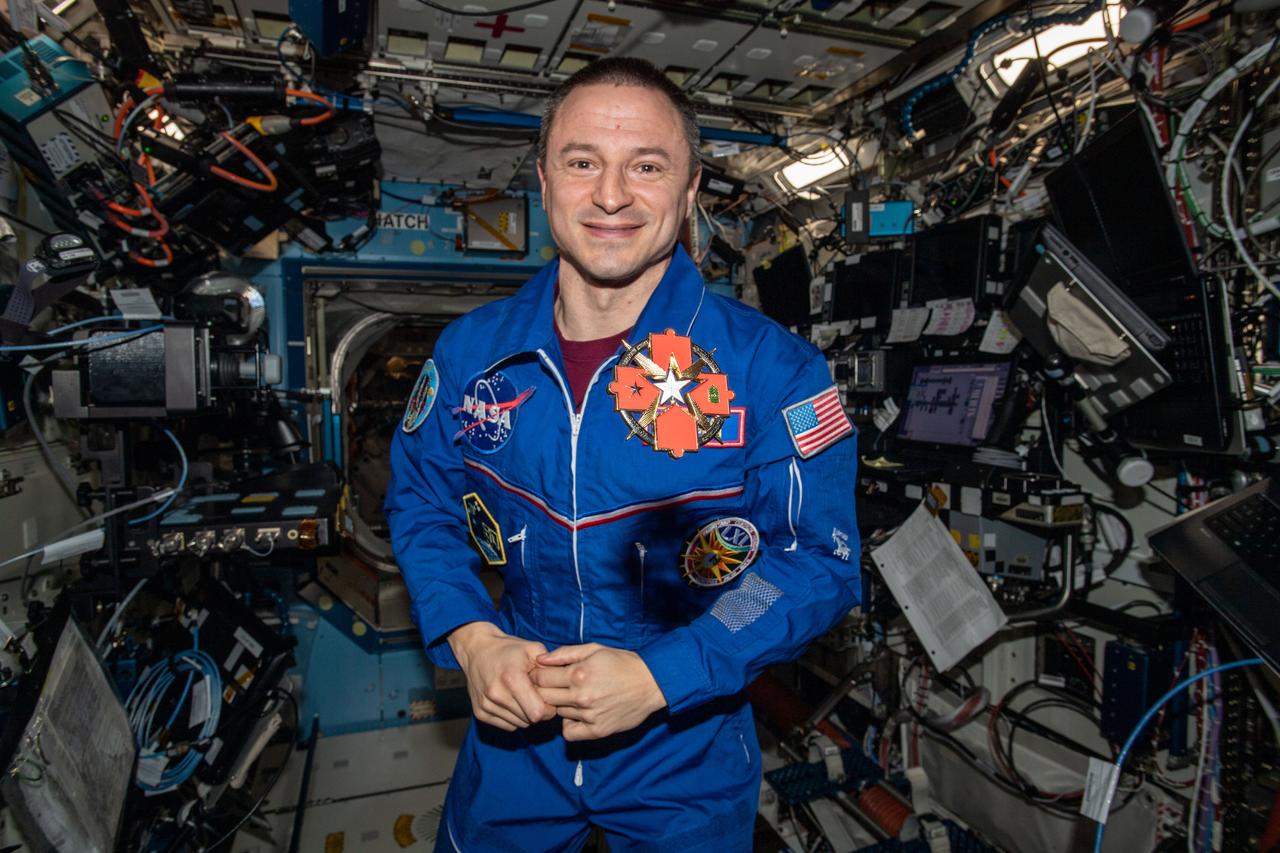
iss061e061515 (Nov. 27, 2019) --- NASA astronaut Andrew Morgan, who is also a medical doctor in the U.S. Army, displays his Brooke Army Medical Center Commander’s Coin aboard the International Space Station.
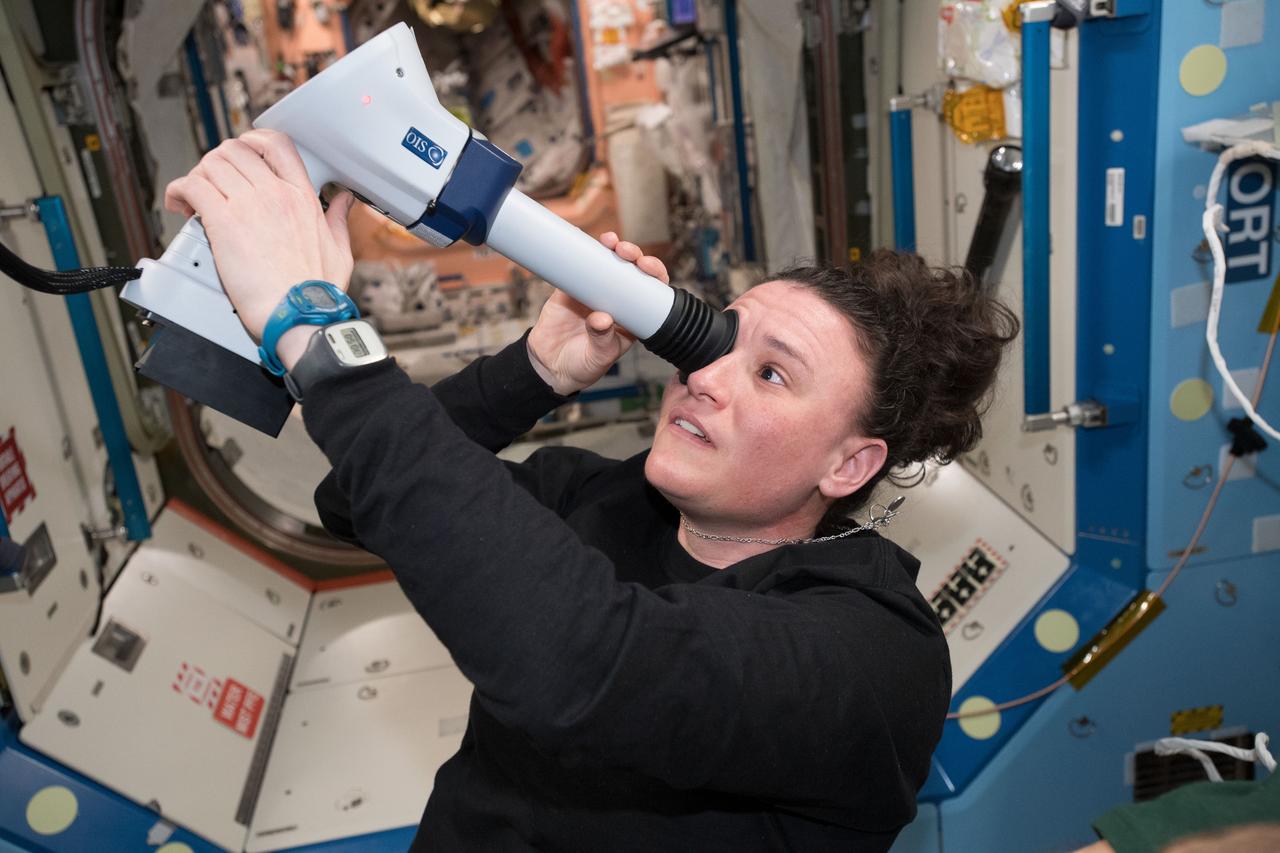
iss056e096896 (July 13, 2018) --- Astronaut Serena Auñón-Chancellor examines her eye with a Fundoscope aboard the International Space Station with remote support from doctors on the ground.
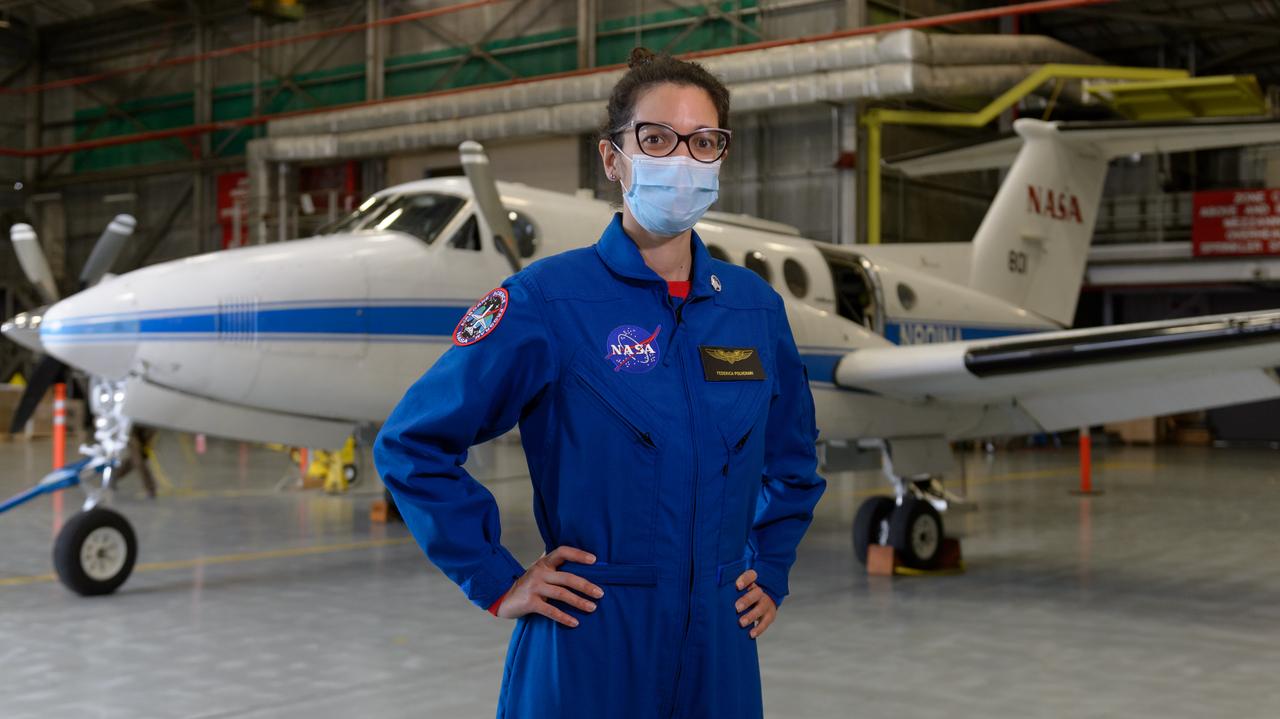
Federica Polverari, post doctorate researcher at the Jet Propulsion Laboratory, in front of NASA's Beechcraft B-200 Super King Air, N801NA, in N248 in support of NASA’s Sub-Mesoscale Ocean Dynamics Experiment, or S-MODE, mission.
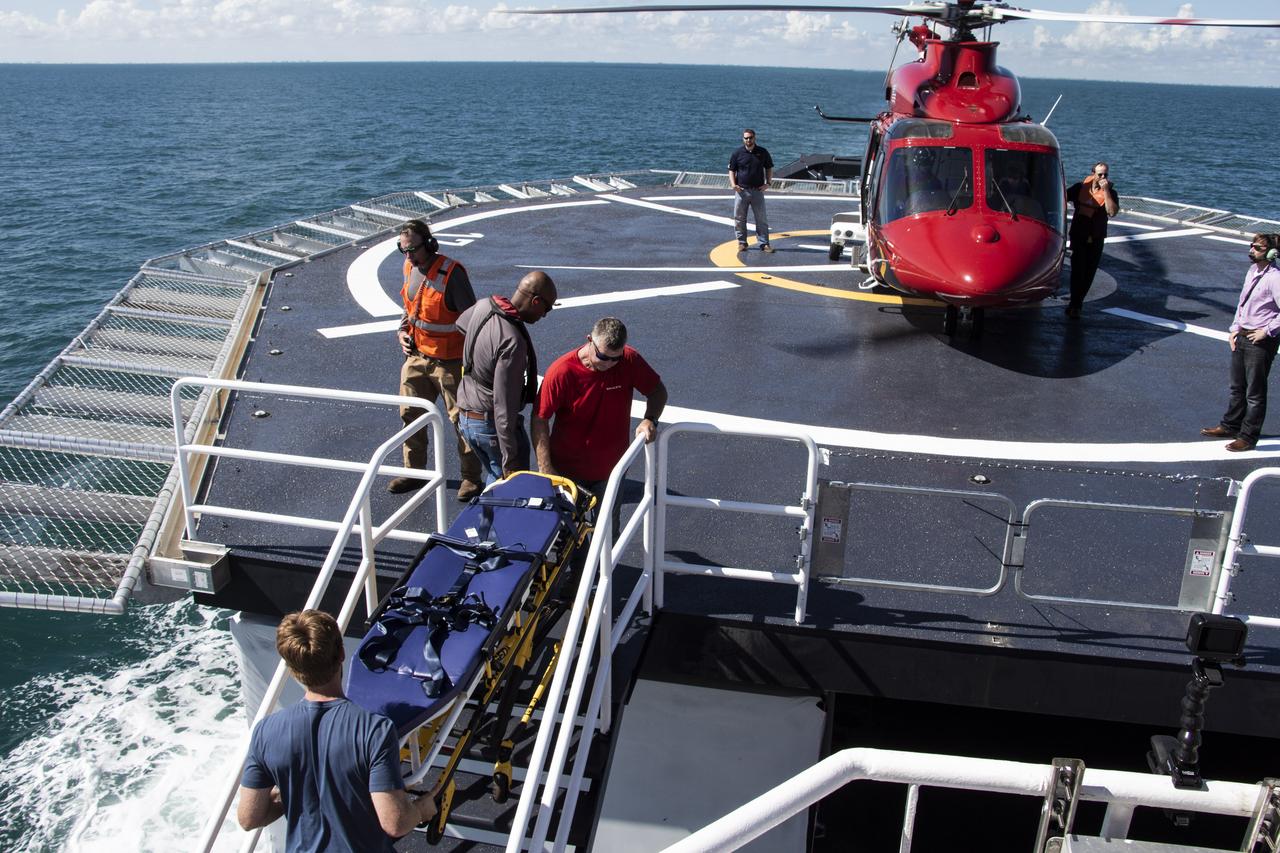
SpaceX rehearses helicopter landing and patient loading on its recovery ship, GO Searcher, practicing how the aircraft will pick up astronauts and fly them to a nearby hospital in the unlikely event of a medical emergency. The company outfitted the ship with a medical treatment facility and a helipad in the center of the vessel. When astronauts splash down into the ocean after their journey to the International Space Station on SpaceX’s Crew Dragon spacecraft, NASA and SpaceX doctors will work together to evaluate the crew onboard the vessel. Should astronauts need to be airlifted to a hospital, the helicopter also will pick up paramedics and doctors from the ship who will care for the astronauts in-flight.
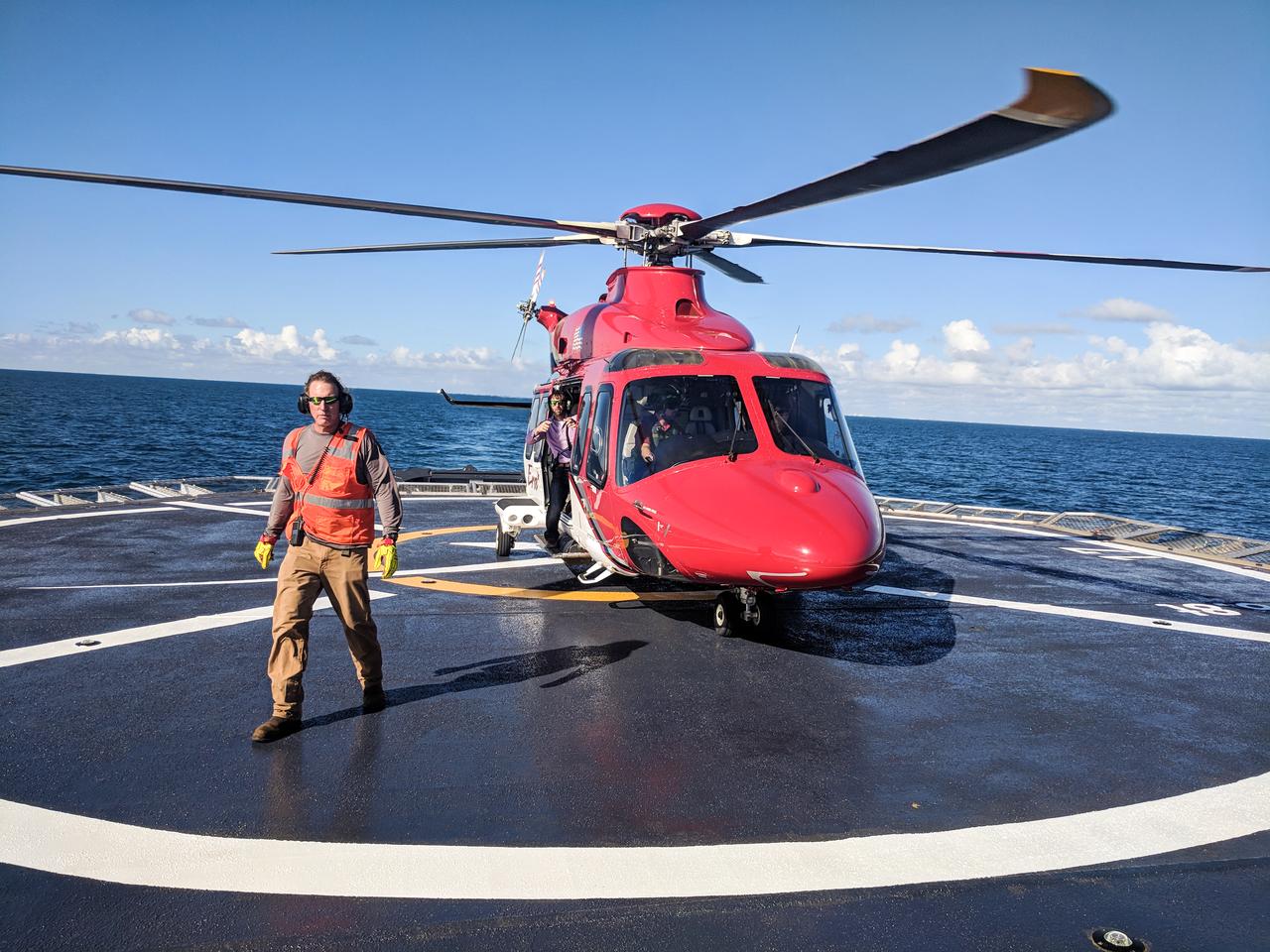
SpaceX rehearses helicopter landing and patient loading on its recovery ship, GO Searcher, practicing how the aircraft will pick up astronauts and fly them to a nearby hospital in the unlikely event of a medical emergency. The company outfitted the ship with a medical treatment facility and a helipad in the center of the vessel. When astronauts splash down into the ocean after their journey to the International Space Station on SpaceX’s Crew Dragon spacecraft, NASA and SpaceX doctors will work together to evaluate the crew onboard the vessel. Should astronauts need to be airlifted to a hospital, the helicopter also will pick up paramedics and doctors from the ship who will care for the astronauts in-flight.
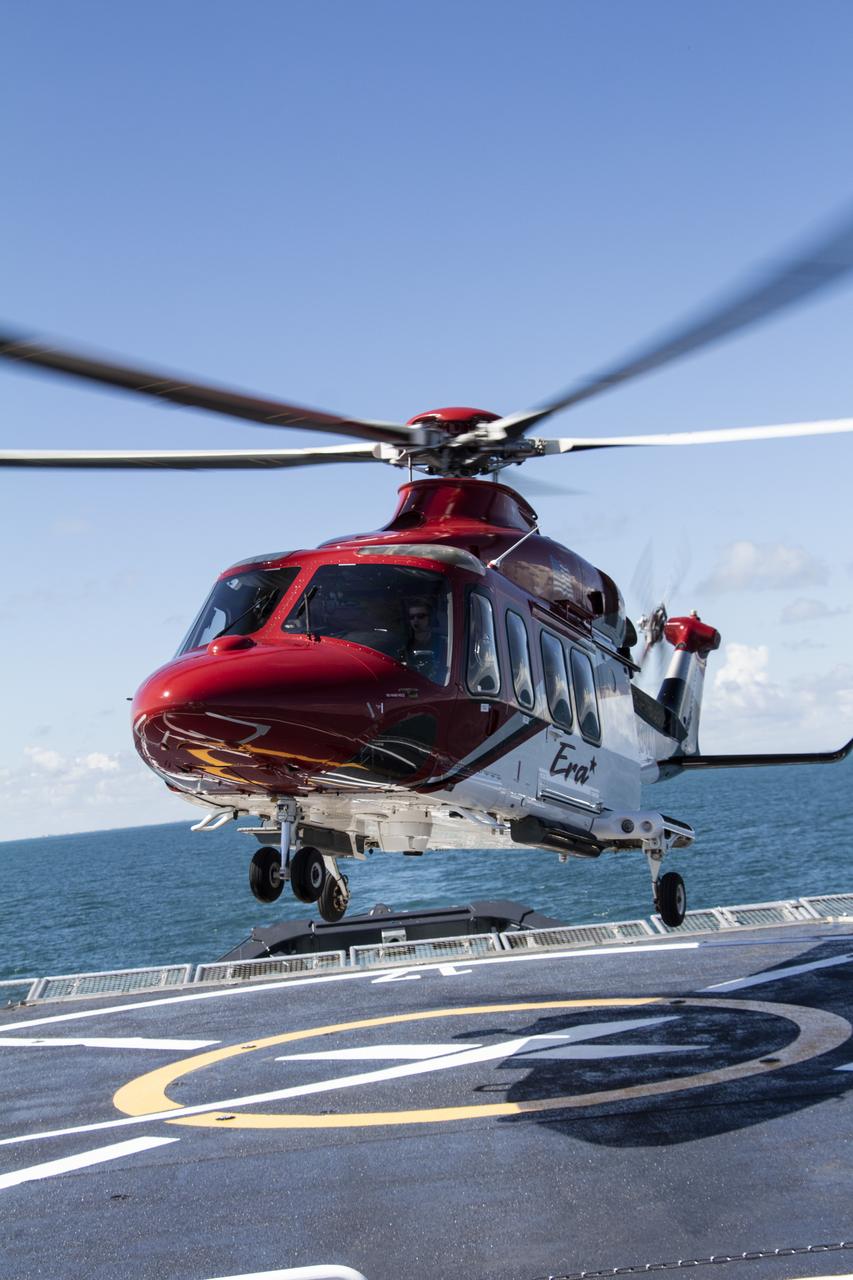
SpaceX rehearses helicopter landing and patient loading on its recovery ship, GO Searcher, practicing how the aircraft will pick up astronauts and fly them to a nearby hospital in the unlikely event of a medical emergency. The company outfitted the ship with a medical treatment facility and a helipad in the center of the vessel. When astronauts splash down into the ocean after their journey to the International Space Station on SpaceX’s Crew Dragon spacecraft, NASA and SpaceX doctors will work together to evaluate the crew onboard the vessel. Should astronauts need to be airlifted to a hospital, the helicopter also will pick up paramedics and doctors from the ship who will care for the astronauts in-flight.
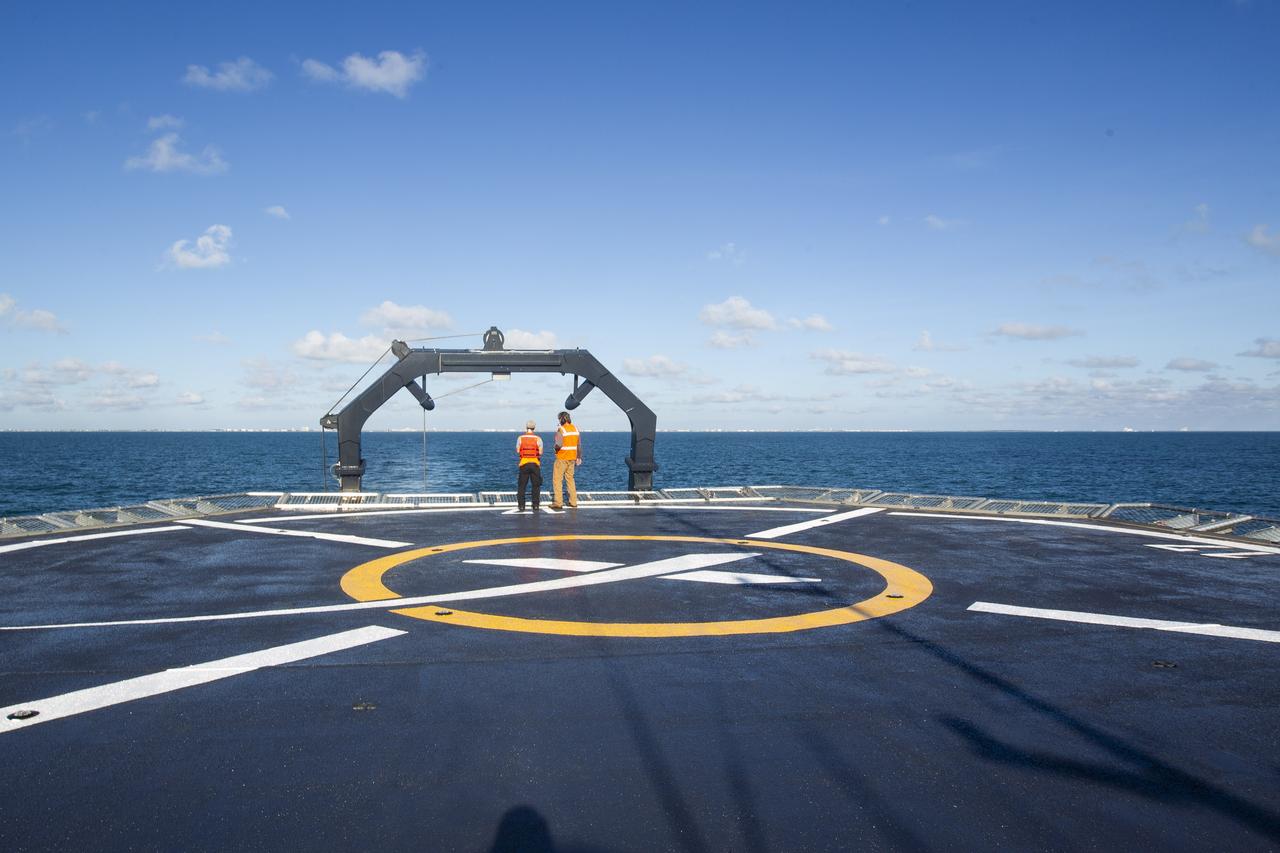
SpaceX rehearses helicopter landing and patient loading on its recovery ship, GO Searcher, practicing how the aircraft will pick up astronauts and fly them to a nearby hospital in the unlikely event of a medical emergency. The company outfitted the ship with a medical treatment facility and a helipad in the center of the vessel. When astronauts splash down into the ocean after their journey to the International Space Station on SpaceX’s Crew Dragon spacecraft, NASA and SpaceX doctors will work together to evaluate the crew onboard the vessel. Should astronauts need to be airlifted to a hospital, the helicopter also will pick up paramedics and doctors from the ship who will care for the astronauts in-flight.
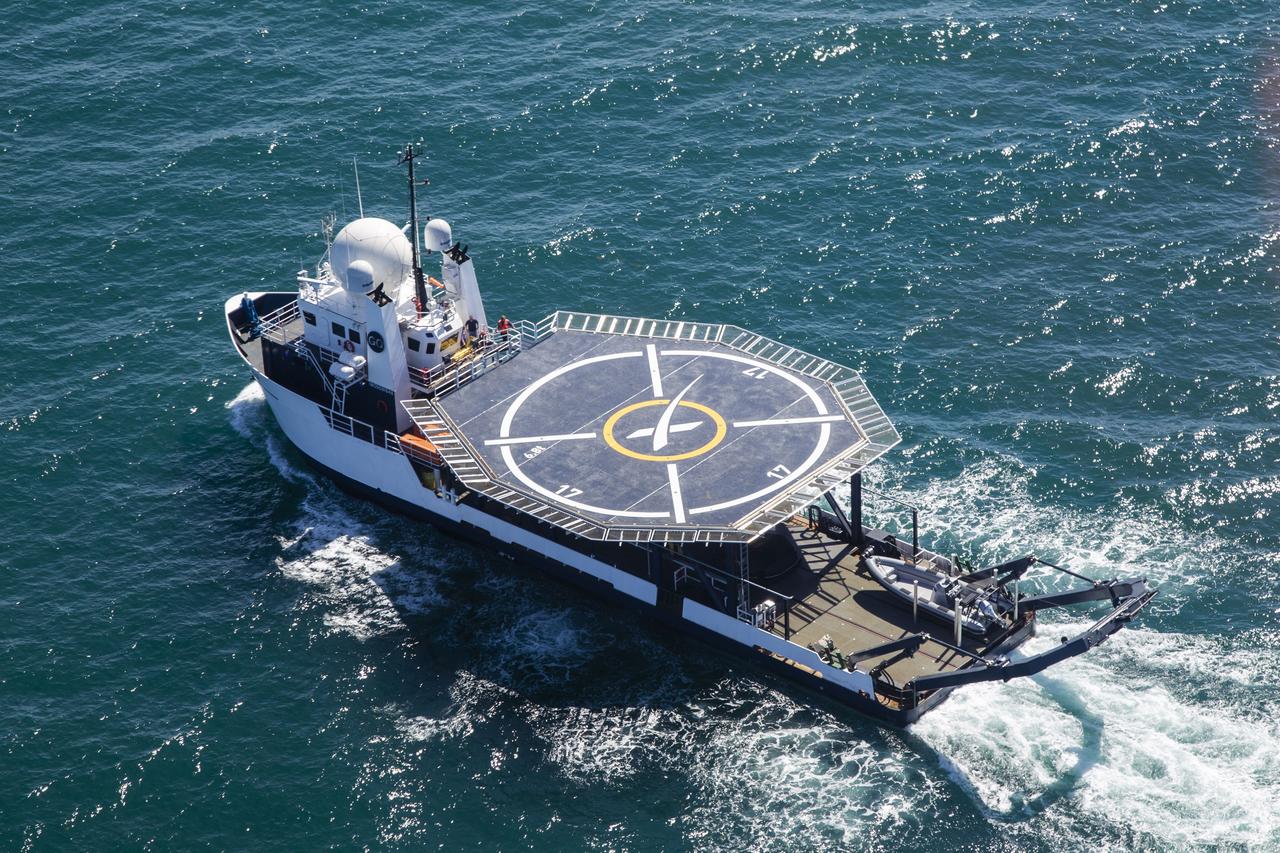
SpaceX rehearses helicopter landing and patient loading on its recovery ship, GO Searcher, practicing how the aircraft will pick up astronauts and fly them to a nearby hospital in the unlikely event of a medical emergency. The company outfitted the ship with a medical treatment facility and a helipad in the center of the vessel. When astronauts splash down into the ocean after their journey to the International Space Station on SpaceX’s Crew Dragon spacecraft, NASA and SpaceX doctors will work together to evaluate the crew onboard the vessel. Should astronauts need to be airlifted to a hospital, the helicopter also will pick up paramedics and doctors from the ship who will care for the astronauts in-flight.
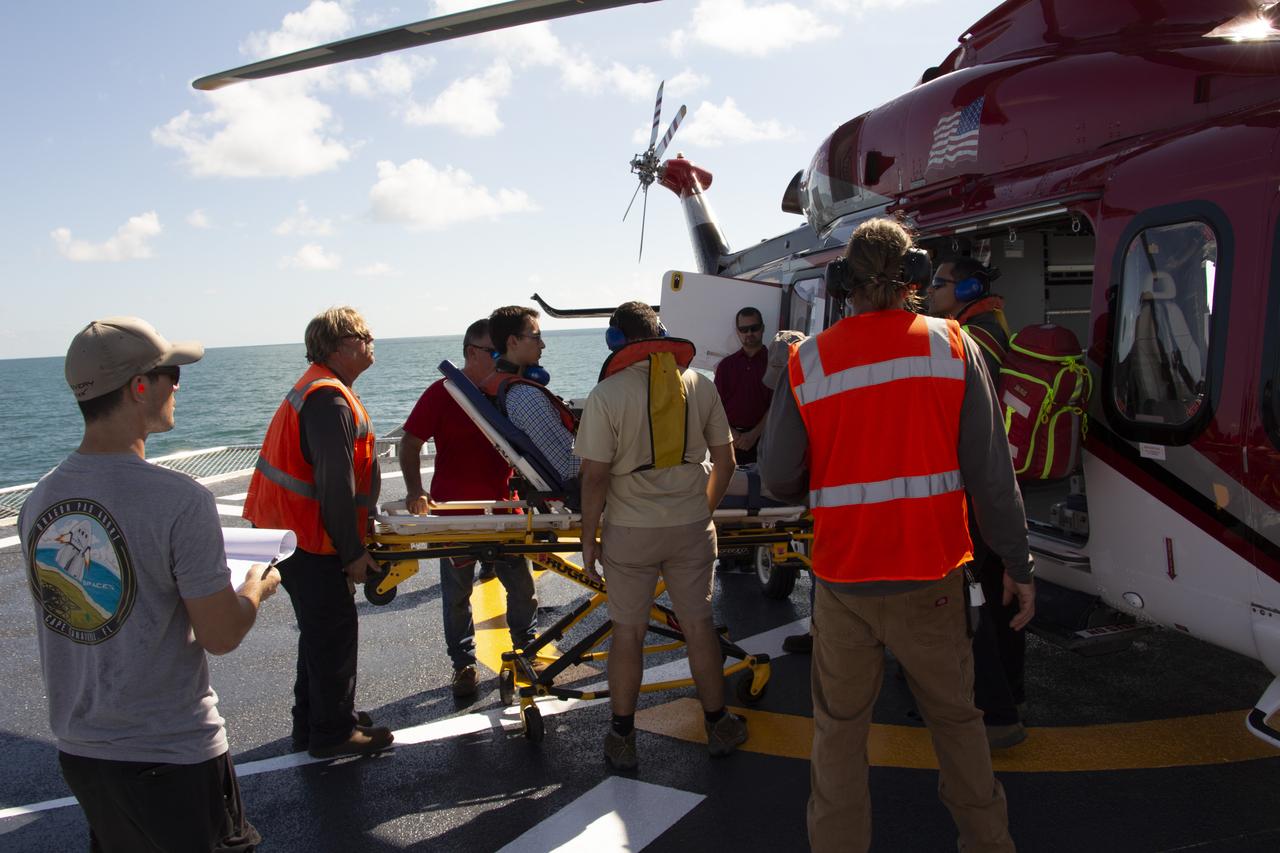
SpaceX rehearses helicopter landing and patient loading on its recovery ship, GO Searcher, practicing how the aircraft will pick up astronauts and fly them to a nearby hospital in the unlikely event of a medical emergency. The company outfitted the ship with a medical treatment facility and a helipad in the center of the vessel. When astronauts splash down into the ocean after their journey to the International Space Station on SpaceX’s Crew Dragon spacecraft, NASA and SpaceX doctors will work together to evaluate the crew onboard the vessel. Should astronauts need to be airlifted to a hospital, the helicopter also will pick up paramedics and doctors from the ship who will care for the astronauts in-flight.
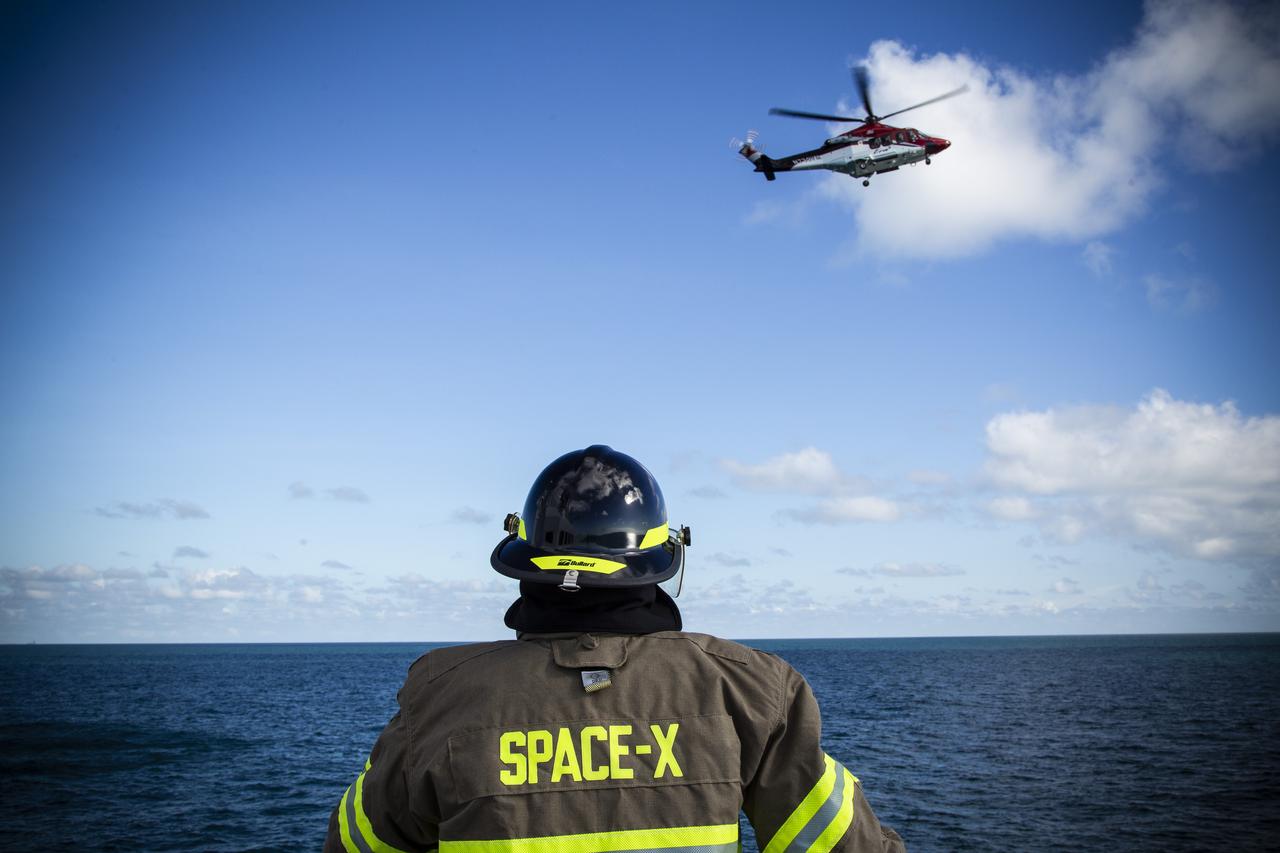
SpaceX rehearses helicopter landing and patient loading on its recovery ship, GO Searcher, practicing how the aircraft will pick up astronauts and fly them to a nearby hospital in the unlikely event of a medical emergency. The company outfitted the ship with a medical treatment facility and a helipad in the center of the vessel. When astronauts splash down into the ocean after their journey to the International Space Station on SpaceX’s Crew Dragon spacecraft, NASA and SpaceX doctors will work together to evaluate the crew onboard the vessel. Should astronauts need to be airlifted to a hospital, the helicopter also will pick up paramedics and doctors from the ship who will care for the astronauts in-flight.
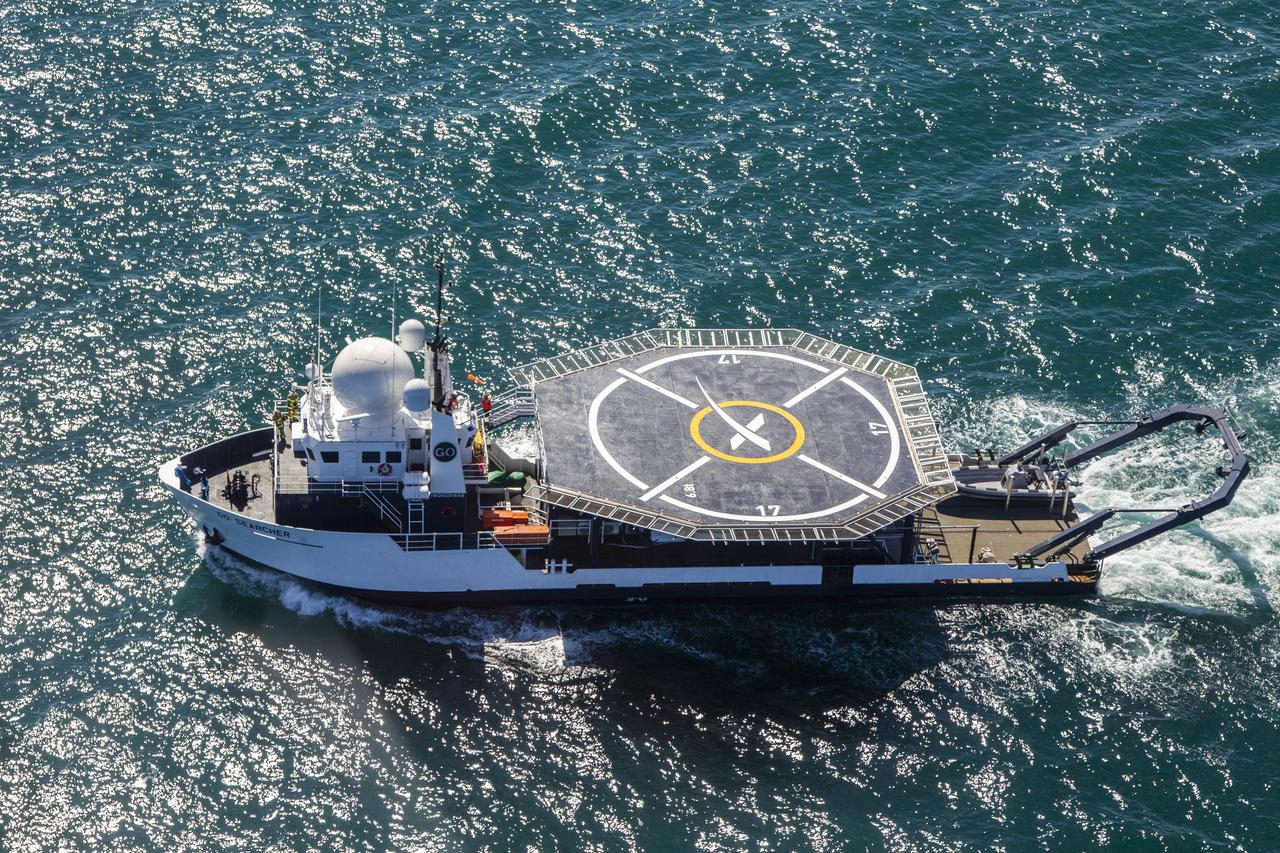
SpaceX rehearses helicopter landing and patient loading on its recovery ship, GO Searcher, practicing how the aircraft will pick up astronauts and fly them to a nearby hospital in the unlikely event of a medical emergency. The company outfitted the ship with a medical treatment facility and a helipad in the center of the vessel. When astronauts splash down into the ocean after their journey to the International Space Station on SpaceX’s Crew Dragon spacecraft, NASA and SpaceX doctors will work together to evaluate the crew onboard the vessel. Should astronauts need to be airlifted to a hospital, the helicopter also will pick up paramedics and doctors from the ship who will care for the astronauts in-flight.
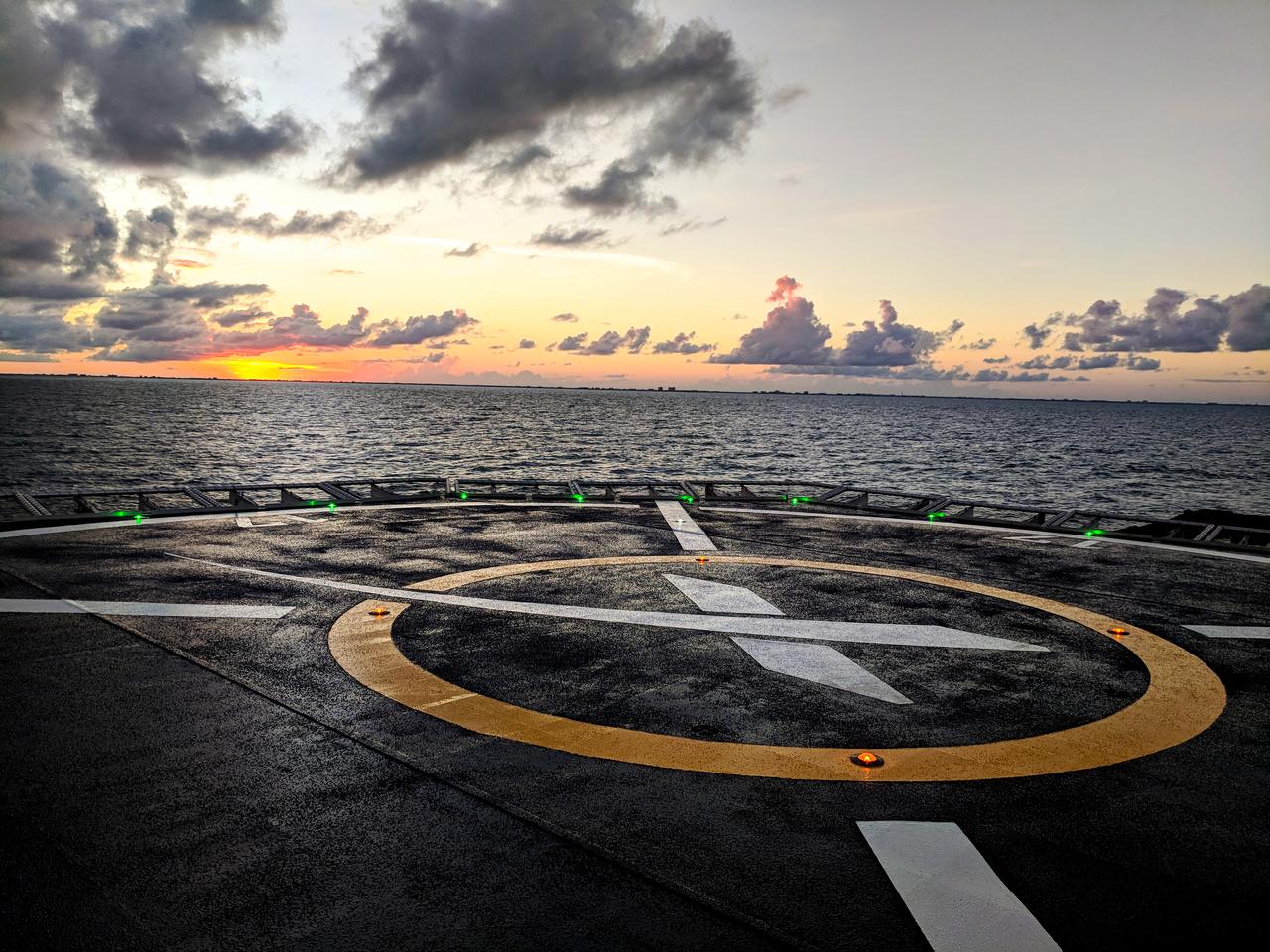
SpaceX rehearses helicopter landing and patient loading on its recovery ship, GO Searcher, practicing how the aircraft will pick up astronauts and fly them to a nearby hospital in the unlikely event of a medical emergency. The company outfitted the ship with a medical treatment facility and a helipad in the center of the vessel. When astronauts splash down into the ocean after their journey to the International Space Station on SpaceX’s Crew Dragon spacecraft, NASA and SpaceX doctors will work together to evaluate the crew onboard the vessel. Should astronauts need to be airlifted to a hospital, the helicopter also will pick up paramedics and doctors from the ship who will care for the astronauts in-flight.
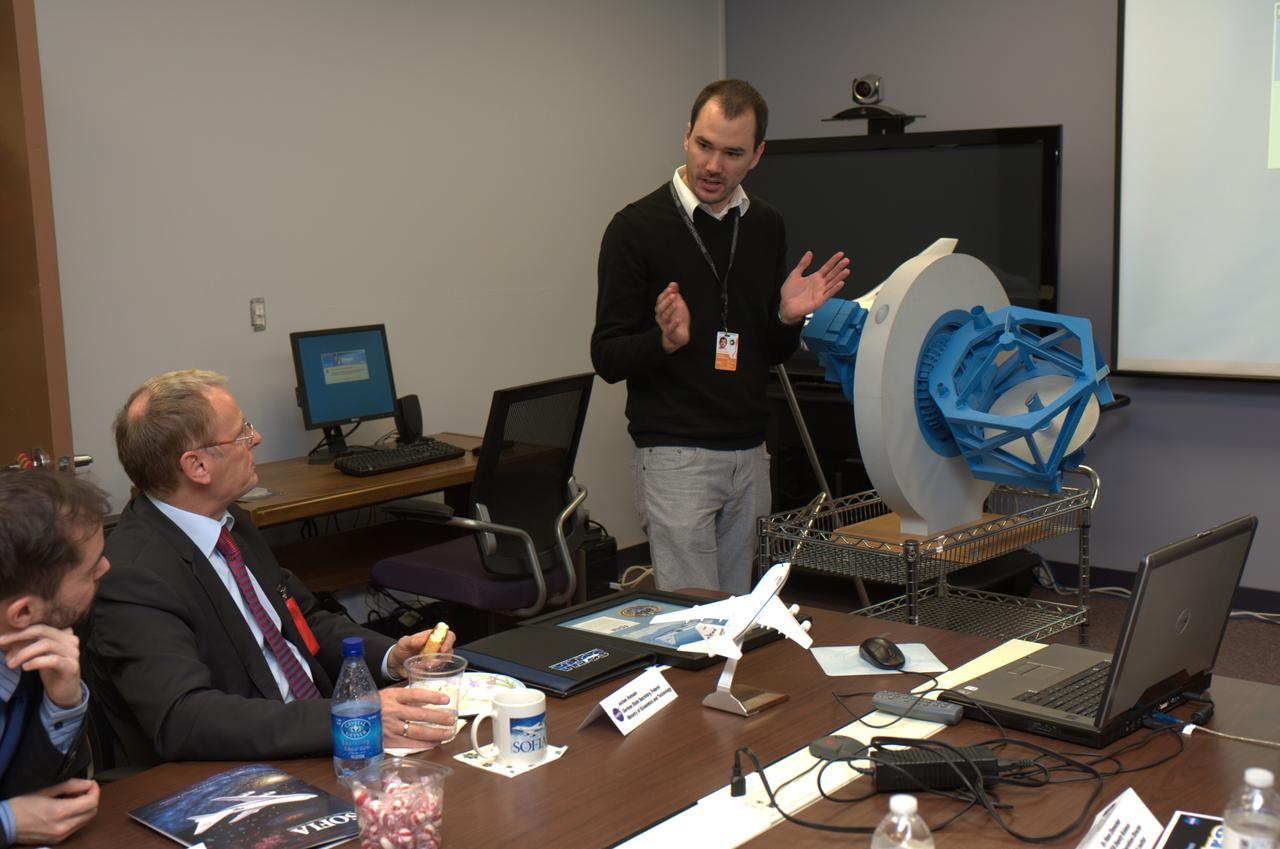
German Deligation visits Ames SOFIA Science Office for briefing. Left to right Jochen Homann, German State Secretary Federal Ministry of Economics and Technology, and Manuel Wiedemann, post-doctorate student from the Deutsches SOFIA Institute, University of Stuttgart.
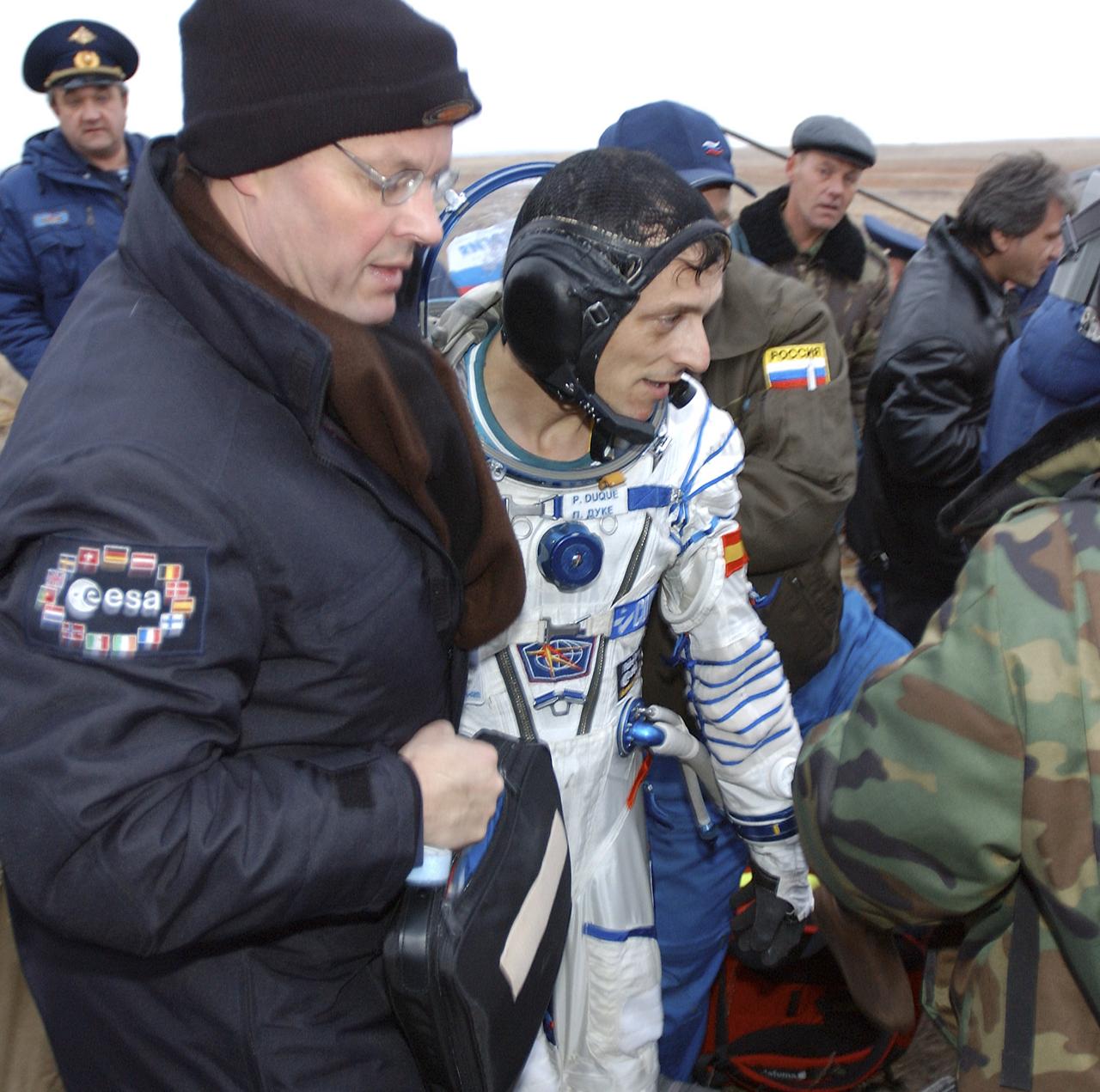
European Space Agency (ESA) astronaut Pedro Deque is assisted by an ESA doctor after landing in the Soyuz TMA-2 spacecraft in Kazakhstan on Monday, October 27, 2003, at 9:41 p.m. EST. Photo Credit: (NASA/Bill Ingalls)
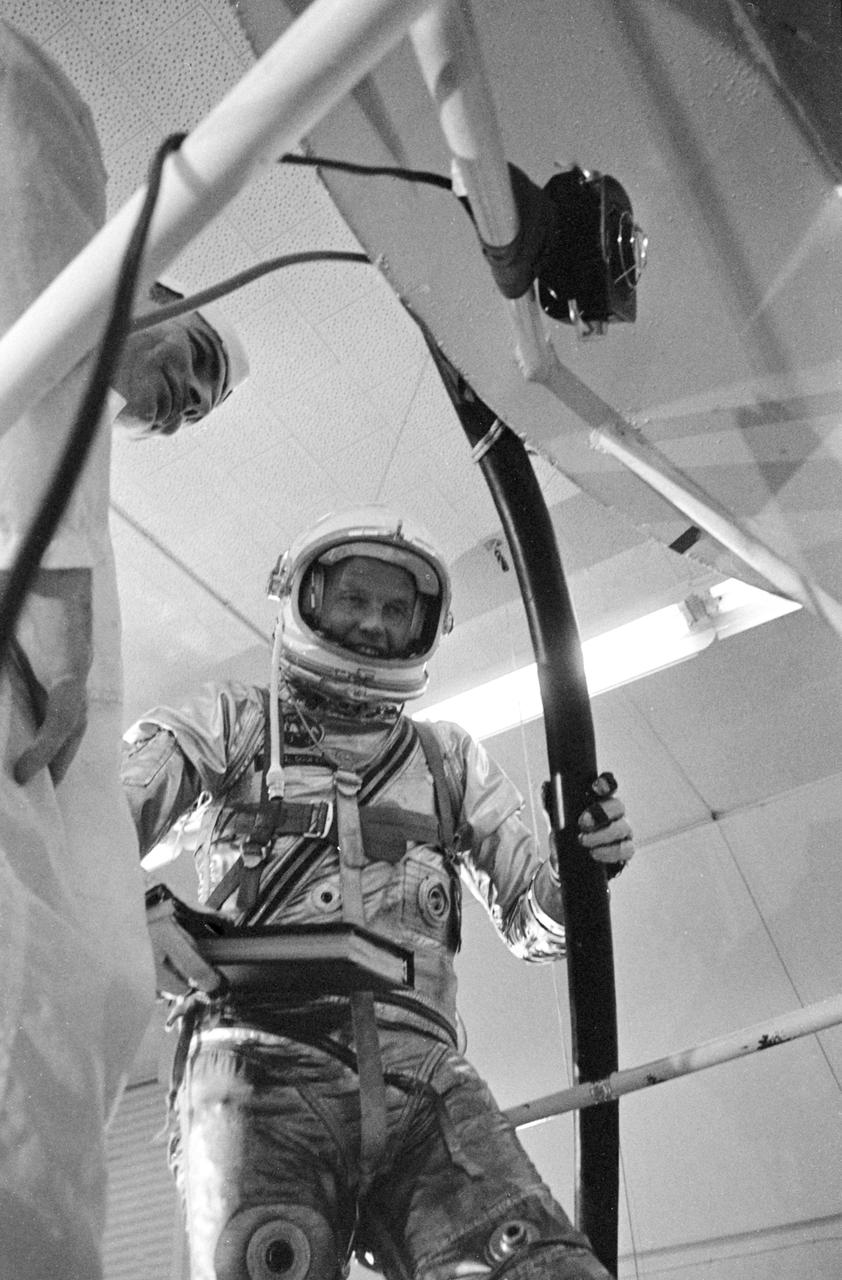
S63-03975 (1963) --- Astronaut L. Gordon Cooper Jr., prime pilot for the Mercury-Atlas 9 (MA-9) mission, is pictured prior to entering the Mercury spacecraft for a series of simulated flight tests. During these tests NASA doctors, engineers and technicians monitor Cooper's performance. Photo credit: NASA
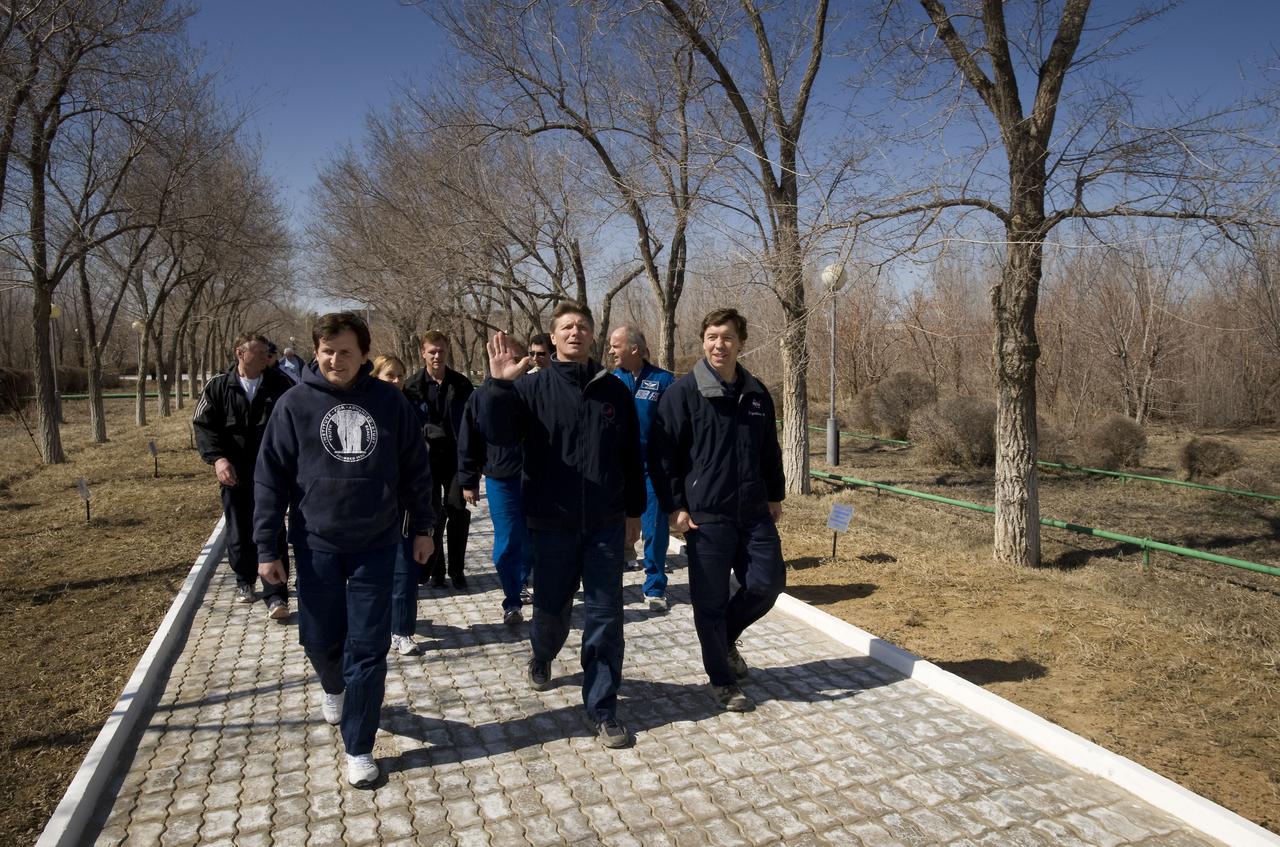
Spaceflight Participant Charles Simonyi, left, Expedition 19 Commander Gennady I. Padalka, center, and Flight Engineer Michael R. Barratt along with the backup crew and flight doctors walk the grounds of the Cosmonaut Hotel, Saturday, March 21, 2009 in Baikonur, Kazakhstan. (Photo Credit: NASA/Bill Ingalls)
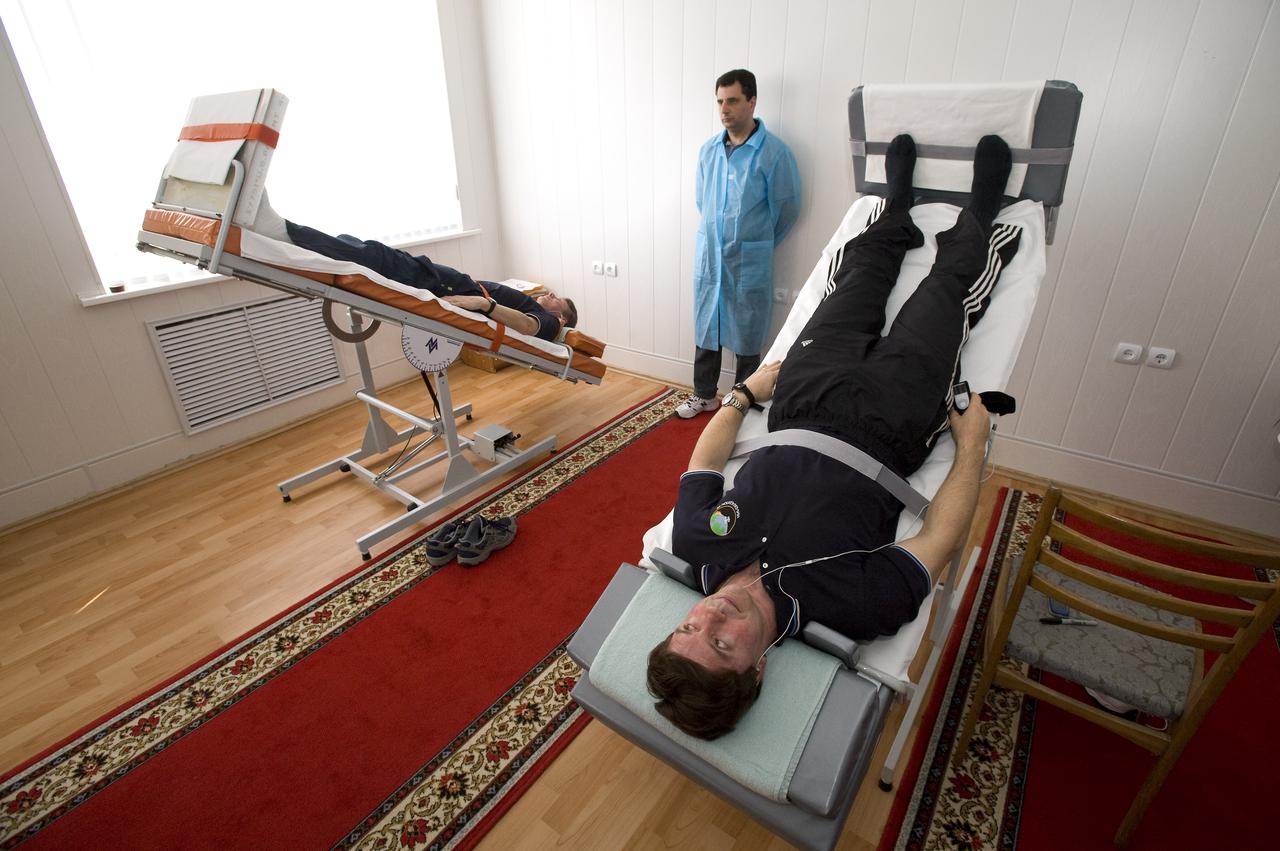
Expedition 19 Commander Gennady I. Padalka, left, and Flight Engineer Michael R. Barratt listen to their mp3 players as a medical doctor looks on during the tilt table training at the Cosmonaut Hotel, Saturday, March 21, 2009 in Baikonur, Kazakhstan.(Photo Credit: NASA/Bill Ingalls)
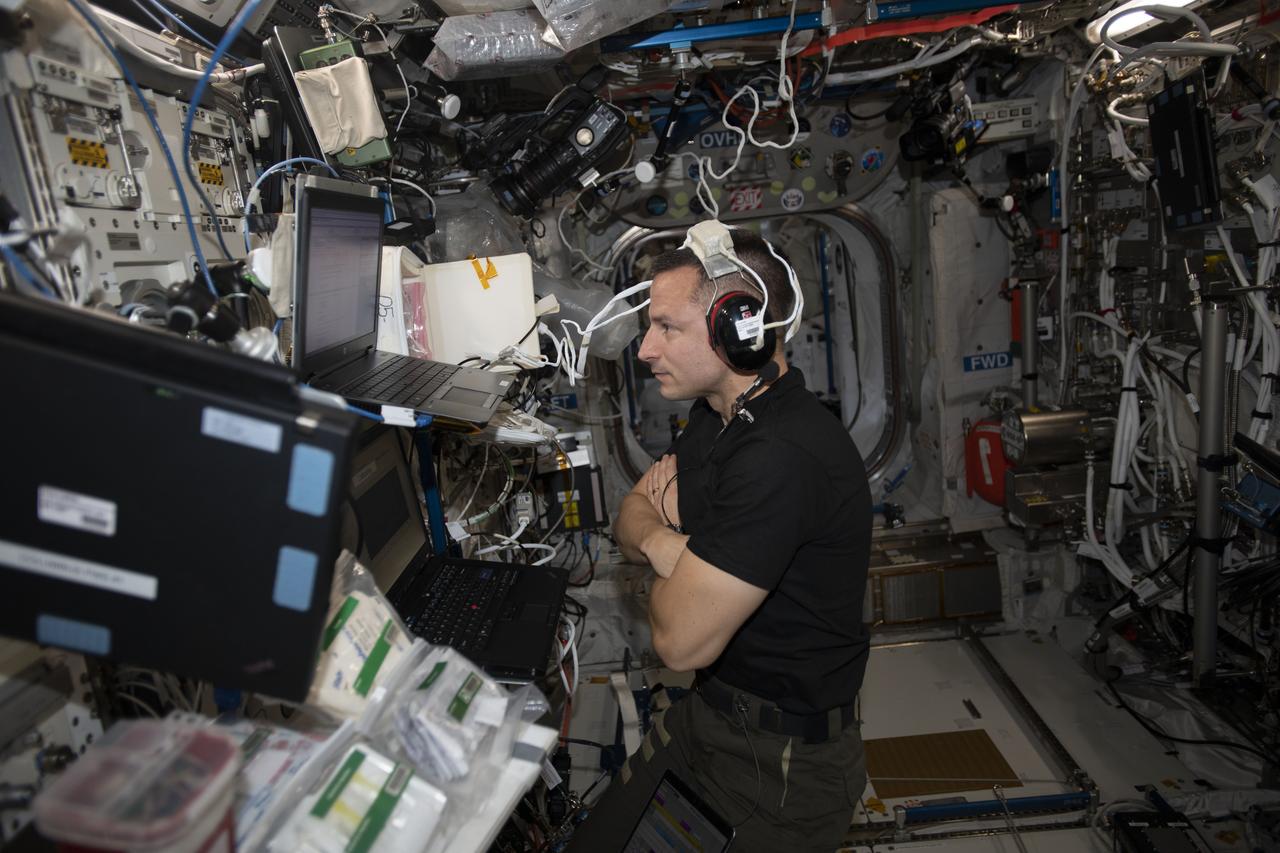
iss060e033664 (Aug. 12, 2019) --- Expedition 60 Flight Engineer Andrew Morgan participates in a hearing test to help doctors understand how the microgravity environment and the acoustic levels of the station affect a crewmember’s hearing before, during and after a mission.
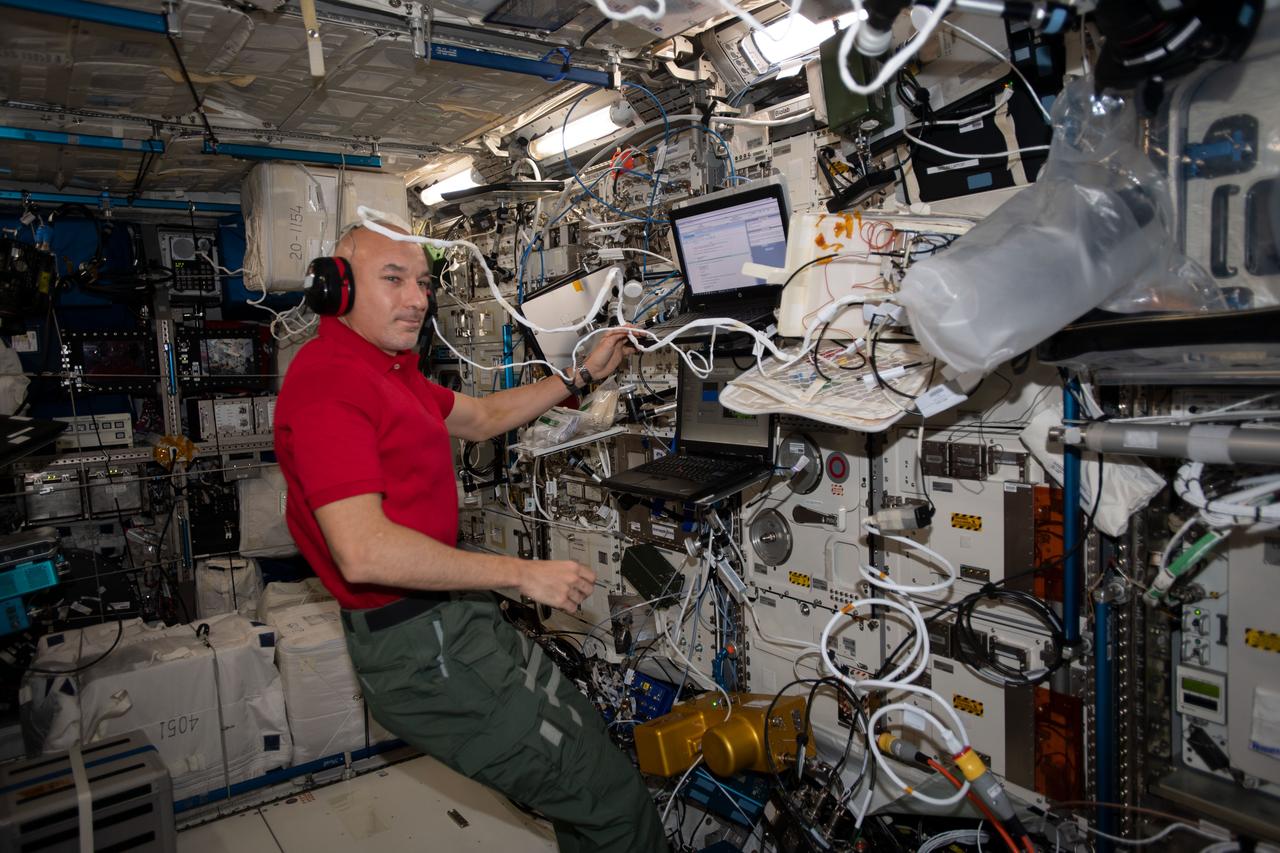
iss060e033656 (Aug. 12, 2019) --- Astronaut Luca Parmitano of ESA (European Space Agency) participates in a hearing test to help doctors understand how the microgravity environment and the acoustic levels of the station affect a crewmember’s hearing before, during and after a mission.
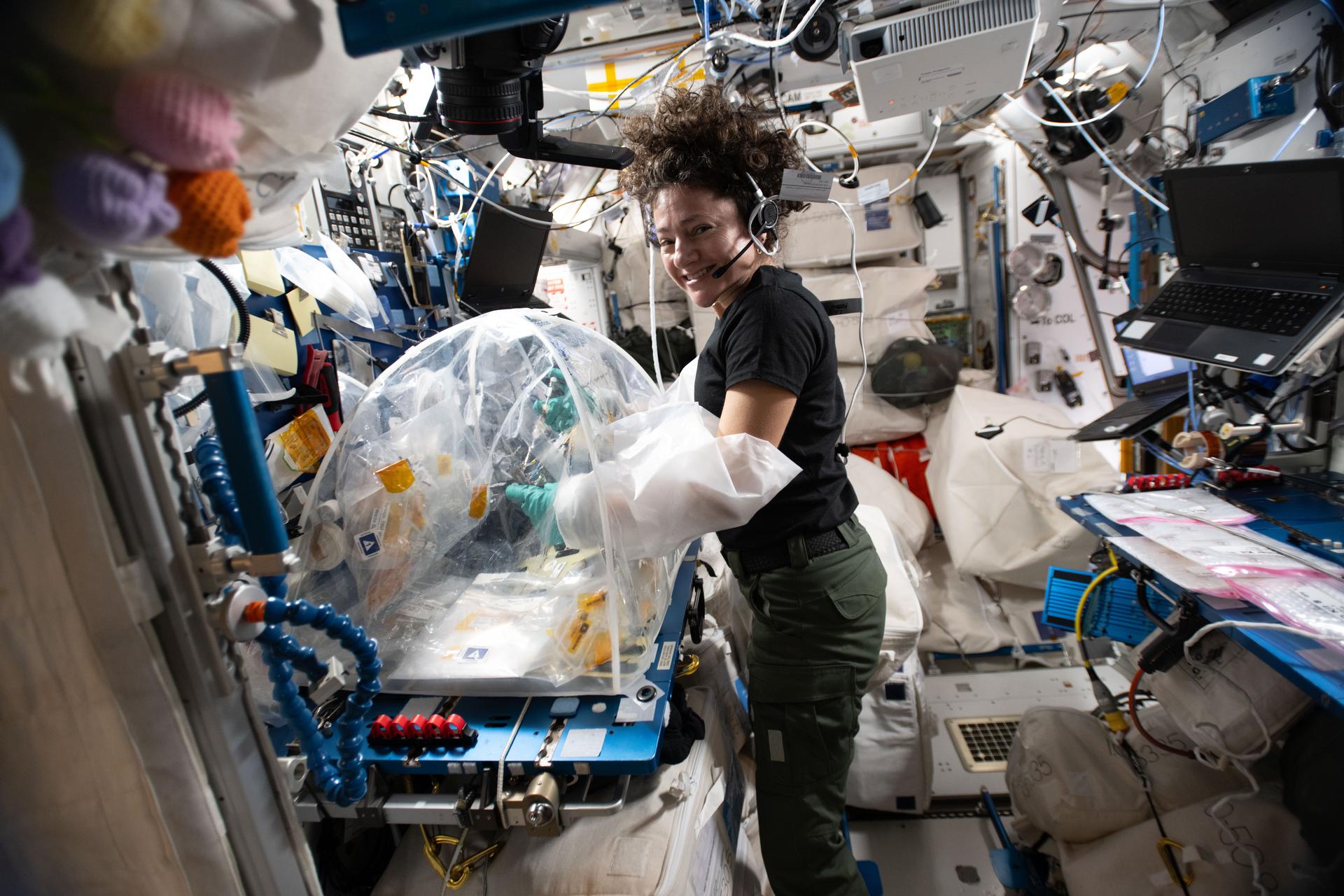
iss074e0518253 (April 23, 2026) --- NASA astronaut and Expedition 74 flight engineer Jessica Meir processes samples of heart stem cells and bacteria that cause pneumonia using a portable glovebag inside the International Space Station's Harmony module. Observations in microgravity may give doctors a clearer understanding of how cellular and molecular mechanisms of infectious diseases damage heart tissue, potentially leading to advanced treatments for heart conditions on and off the Earth. Credit: NASA/Chris Williams
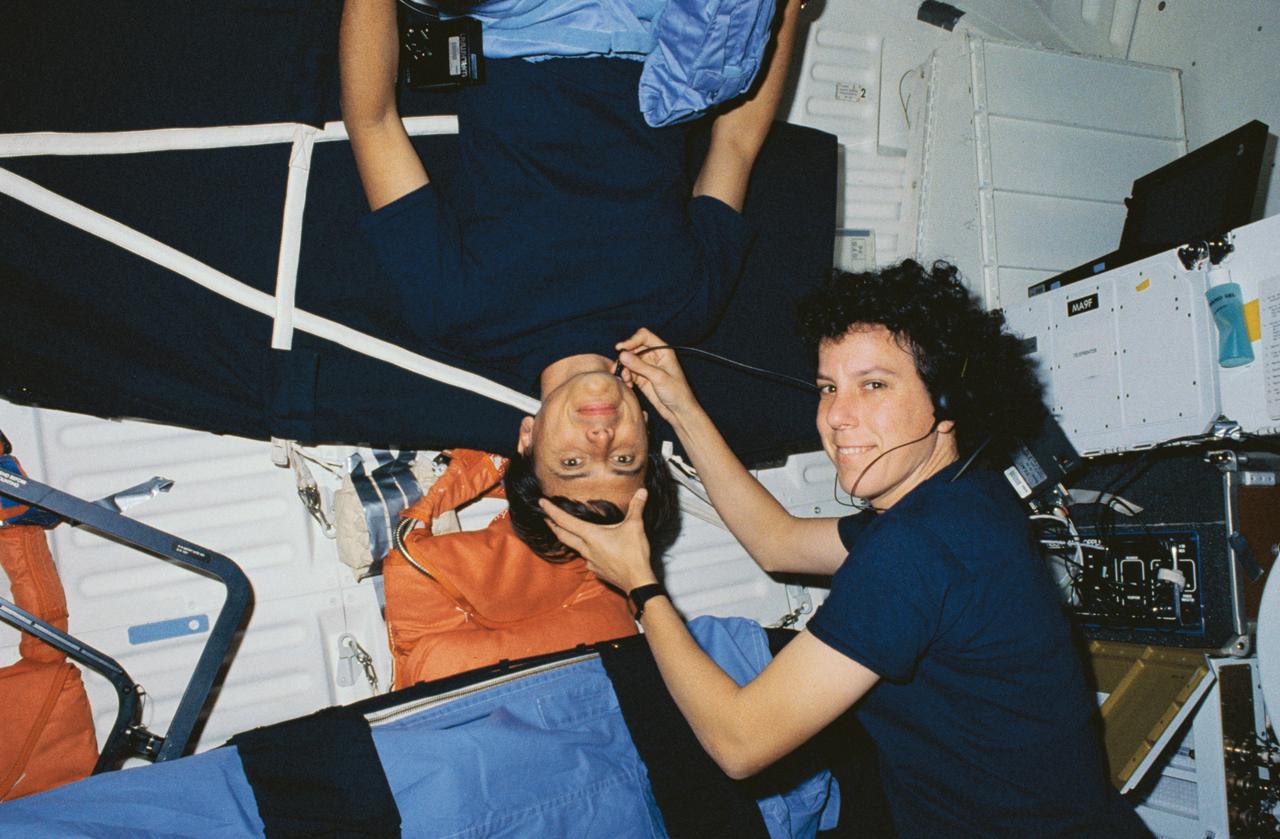
STS034-08-007 (18-23 Oct. 1989) --- Astronaut Ellen S. Baker, an STS-34 mission specialist and medical doctor, conducts a medical examination on astronaut Franklin R. Chang-Diaz, mission specialist, on the middeck of the Earth-orbiting space shuttle Atlantis. Dr. Baker was monitoring Chang-Diaz's blood flow. The scene was recorded on film with a 35mm camera.Photo credit: NASA or National Aeronautics and Space Administration
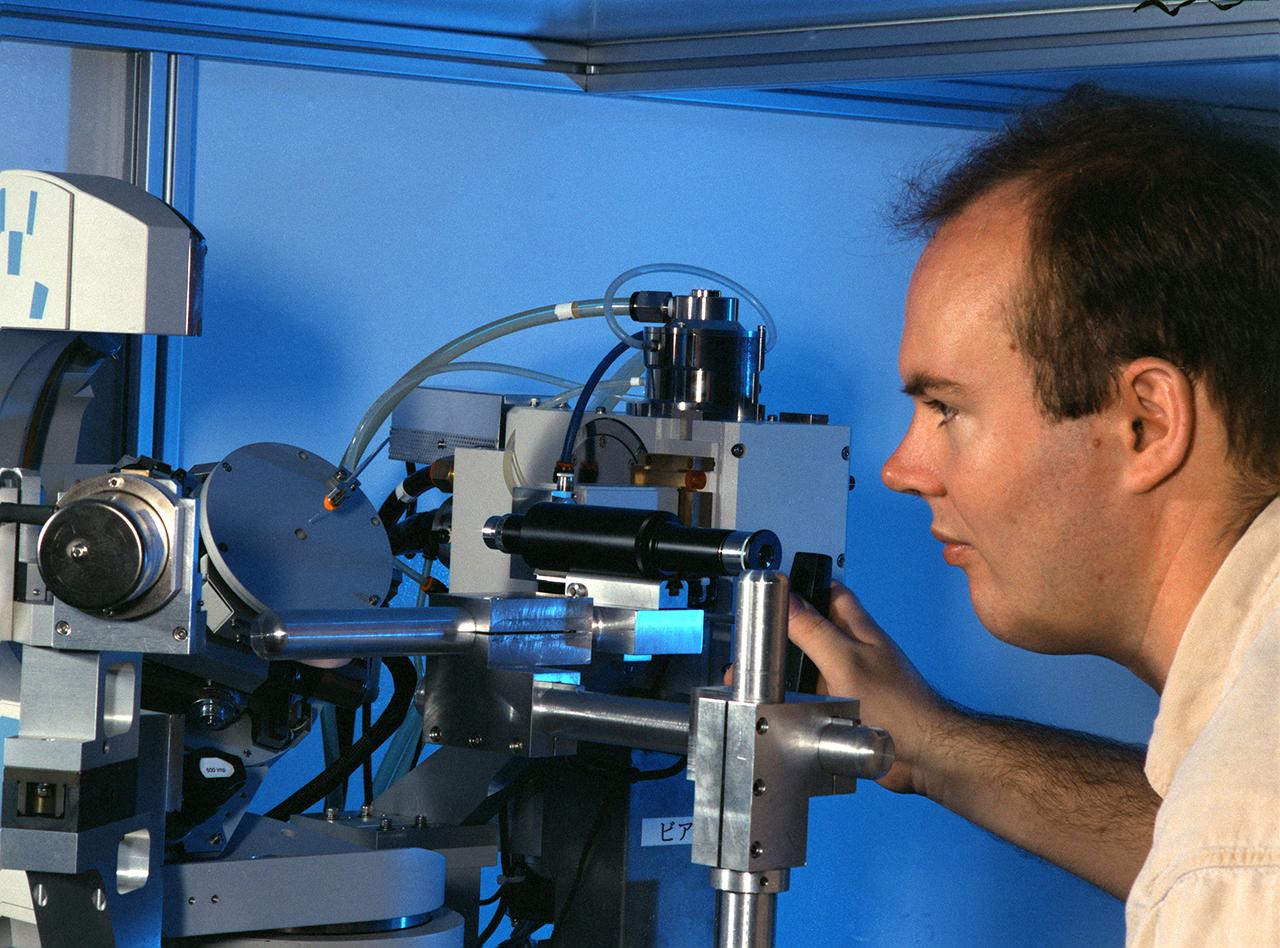
Eddie Snell, Post-Doctoral Fellow the National Research Council (NRC) uses a reciprocal space mapping diffractometer for macromolecular crystal quality studies. The diffractometer is used in mapping the structure of macromolecules such as proteins to determine their structure and thus understand how they function with other proteins in the body. This is one of several analytical tools used on proteins crystallized on Earth and in space experiments. Photo credit: NASA/Marshall Space Flight Center (MSFC)
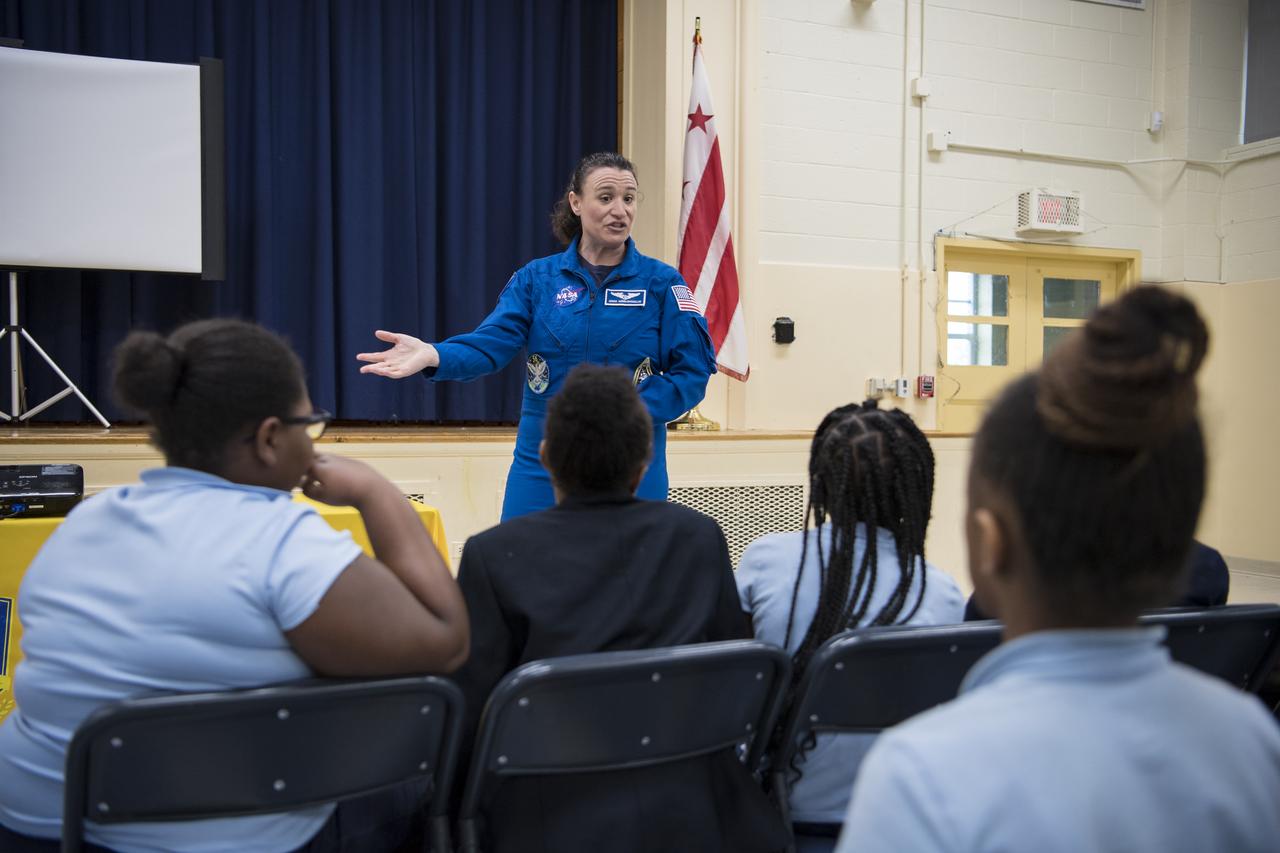
NASA astronaut Dr. Serena Auñón-Chancellor speaks about her experience on Expeditions 56 and 57 onboard the International Space Station (ISS) at Excel Academy Public Charter School, Monday, June 10, 2019 in Washington, DC. Auñón-Chancellor spent 197 days living and working onboard the ISS and contributed to hundreds of experiments in biology, biotechnology, physical science, and Earth science while there. She is also a doctor and started her career with NASA as a flight surgeon in 2006. Photo Credit: (NASA/Aubrey Gemignani)
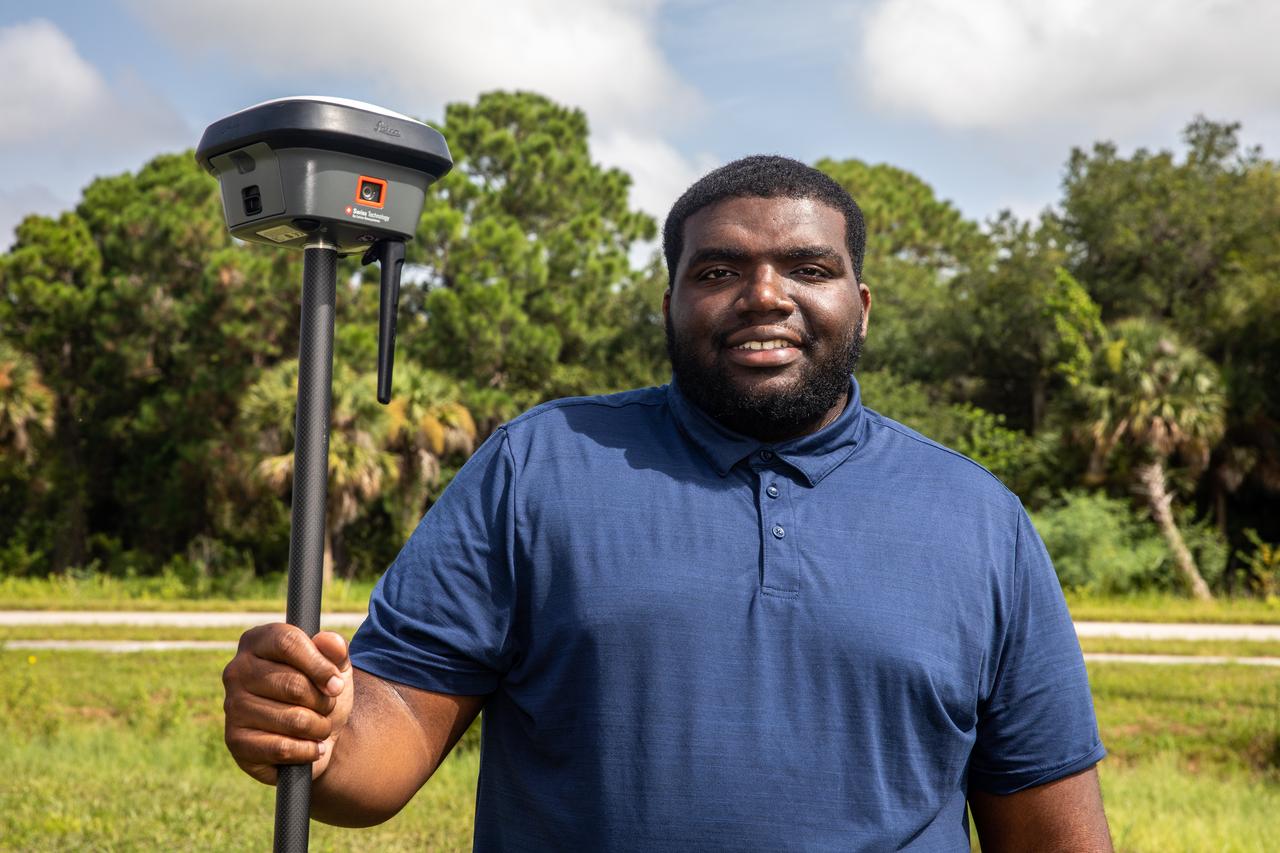
Rayshaun Wheeler said he created “forever-lasting memories” during his 10-week work experience at NASA’s Kennedy Space Center in Florida. A Farmville, Virginia, native, Wheeler is about halfway through his doctoral course work at the University of Virginia. At Kennedy, he worked under mentor Jason Schuler at Kennedy’s Granular Mechanics and Regolith Operations Lab in the center’s Swamp Works facility.
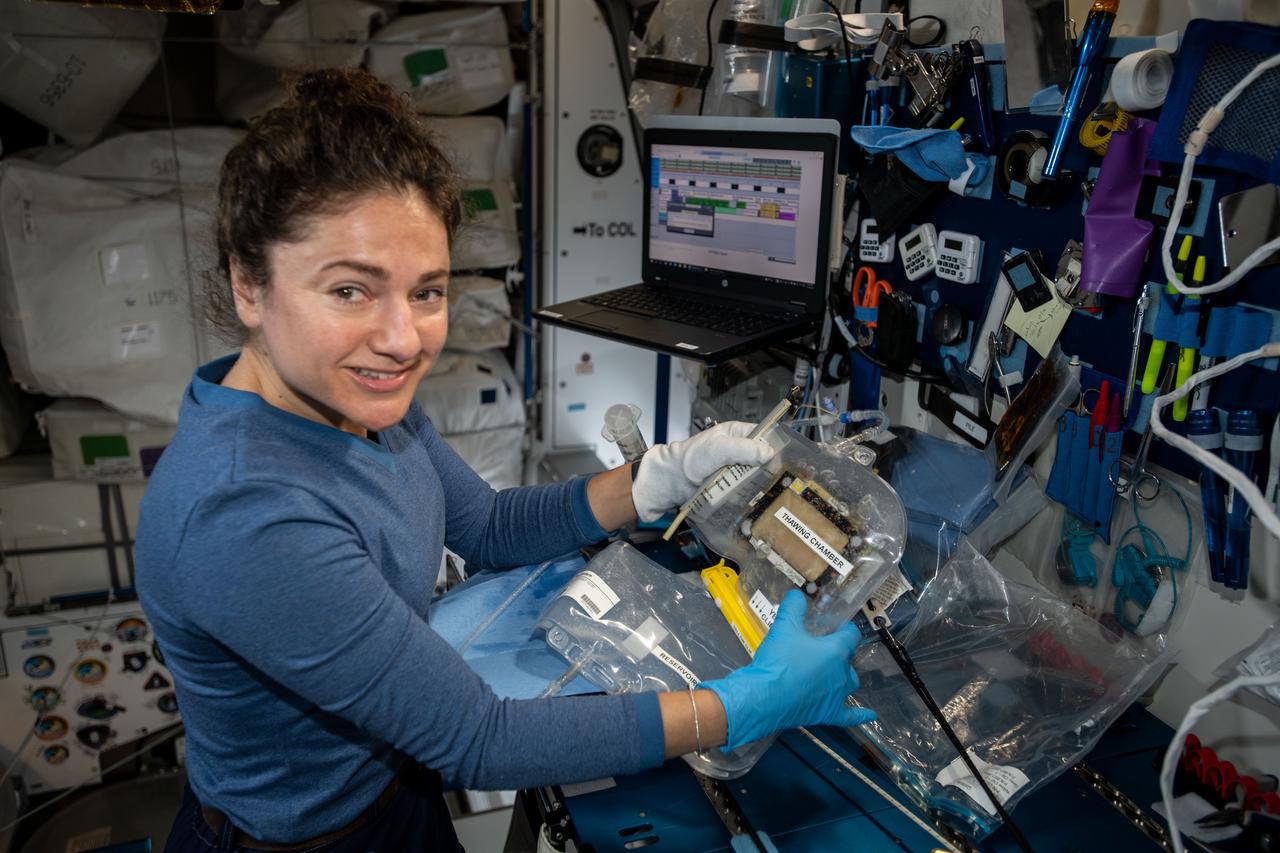
iss062e039026 (Feb. 21, 2020) --- NASA astronaut and Expedition 62 Flight Engineer Jessica Meir works with research hardware to support the OsteoOmics-02 bone investigation. The experiment is helping doctors to compare bone cells in space with samples on Earth that are levitated magnetically. Observations from the study could provide deeper insights into bone ailments on Earth, including osteoporosis.
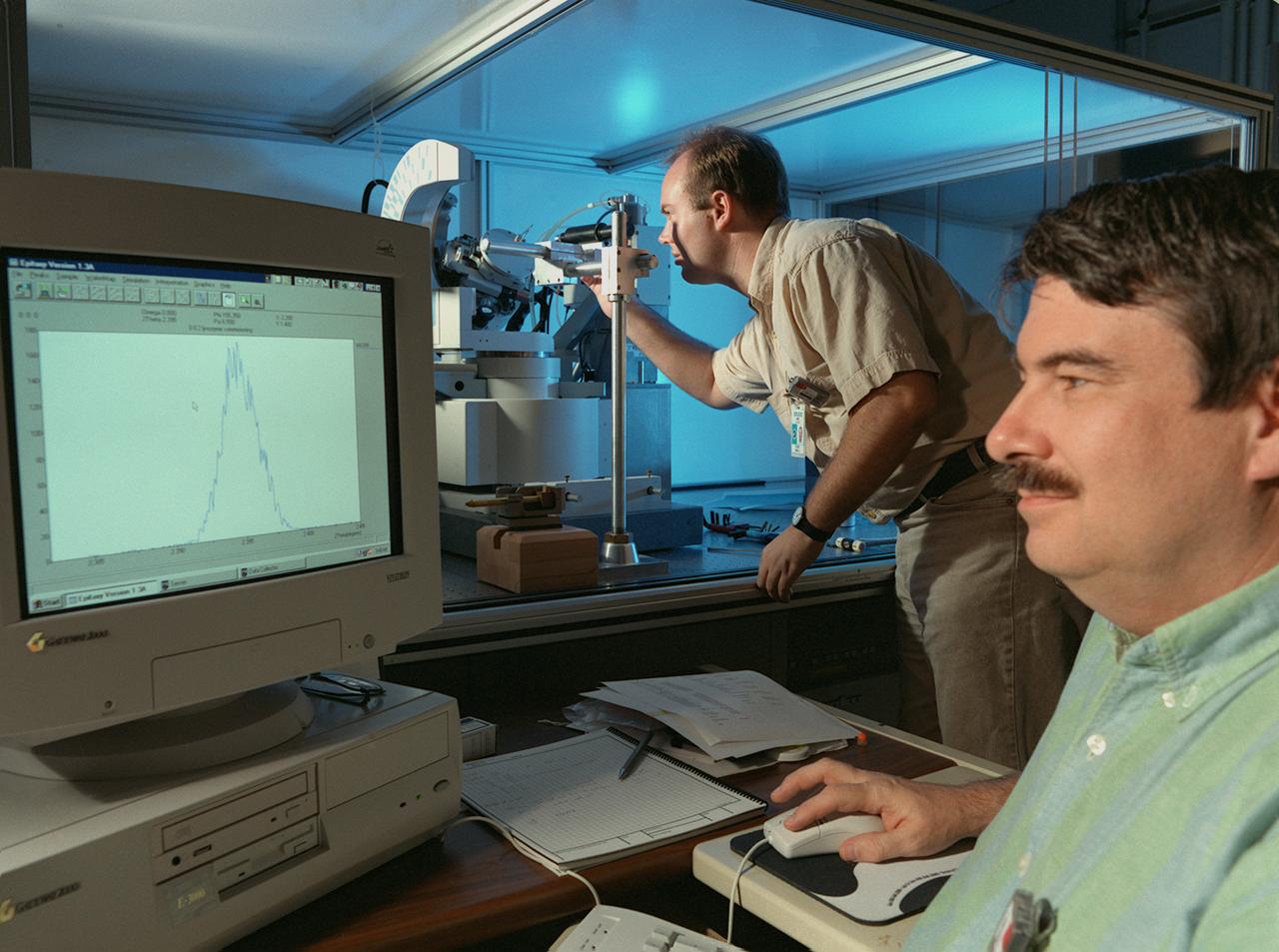
Eddie Snell (standing), Post-Doctoral Fellow the National Research Council (NRC),and Marc Pusey of Marshall Space Flight Center (MSFC) use a reciprocal space mapping diffractometer for marcromolecular crystal quality studies. The diffractometer is used in mapping the structure of marcromolecules such as proteins to determine their structure and thus understand how they function with other proteins in the body. This is one of several analytical tools used on proteins crystalized on Earth and in space experiments. Photo credit: NASA/Marshall Space Flight Center (MSFC)
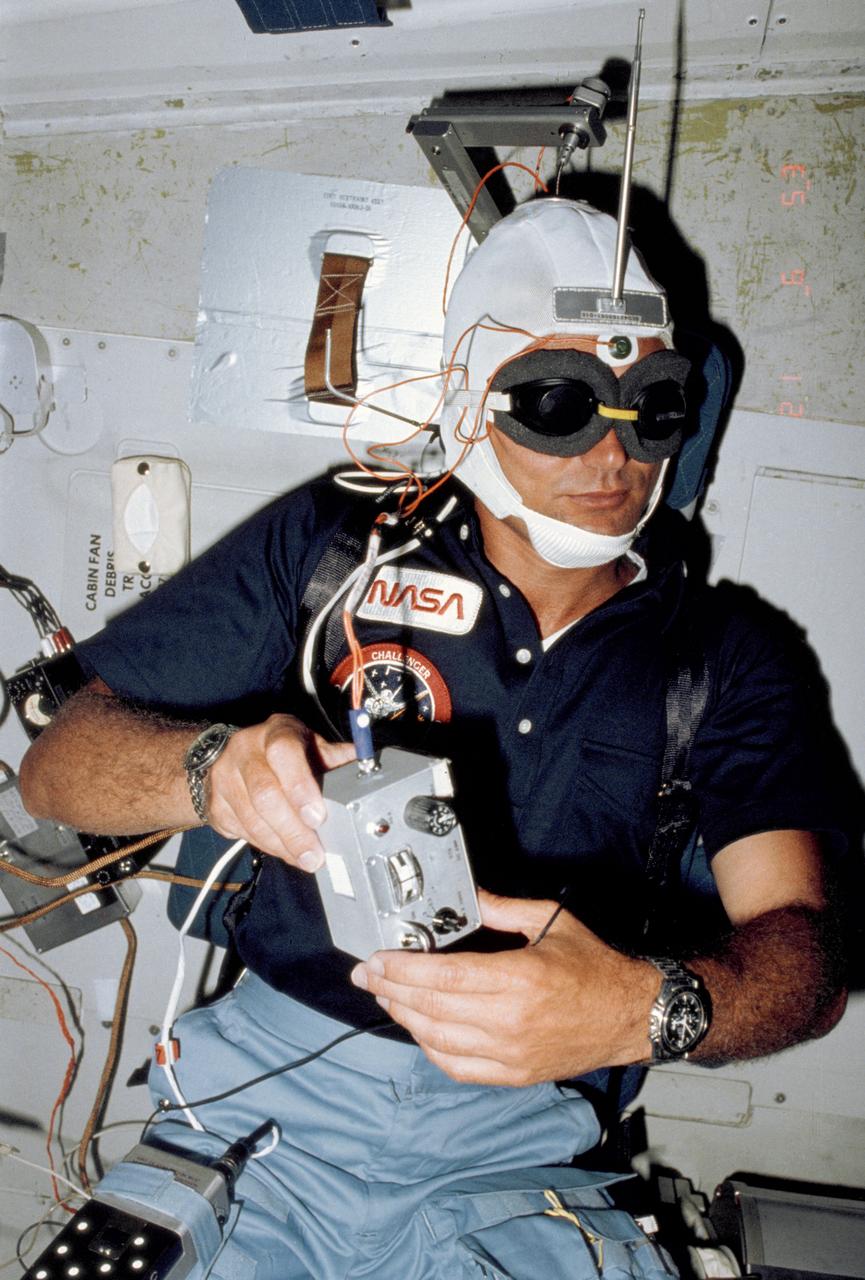
S83-35770 (18?24 June 1983)--- Astronaut Norman E. Thagard, STS-7 mission specialist, is actually performing a medical experiment though his appearance resembles popular depictions of an invading alien. Thagard, a medical doctor, has been assigned a busy project of evaluating physiological reactions of astronauts in space travel. He is on the middeck of the Earth-orbiting space shuttle Challenger. Photo credit: NASA
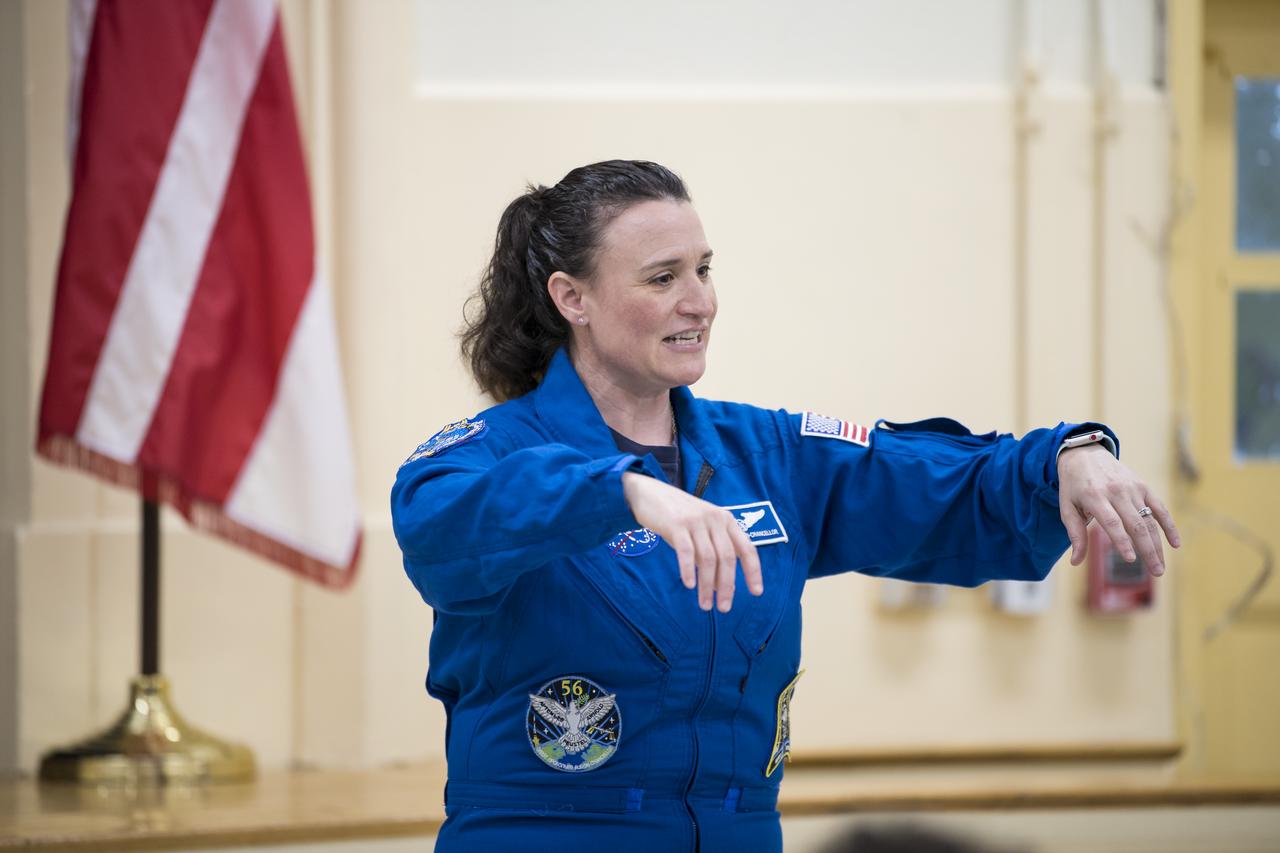
NASA astronaut Dr. Serena Auñón-Chancellor speaks about her experience on Expeditions 56 and 57 onboard the International Space Station (ISS) at Excel Academy Public Charter School, Monday, June 10, 2019 in Washington, DC. Auñón-Chancellor spent 197 days living and working onboard the ISS and contributed to hundreds of experiments in biology, biotechnology, physical science, and Earth science while there. She is also a doctor and started her career with NASA as a flight surgeon in 2006. Photo Credit: (NASA/Aubrey Gemignani)
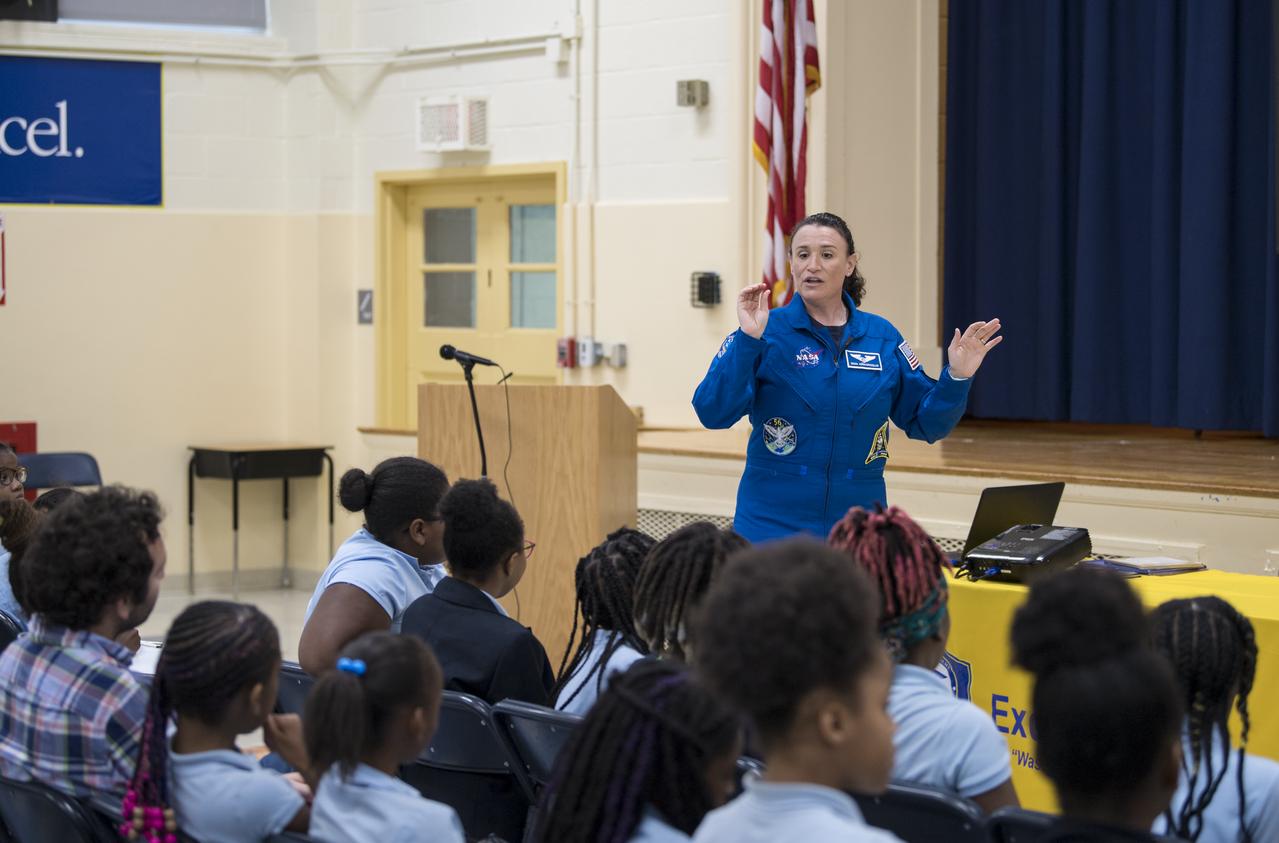
NASA astronaut Dr. Serena Auñón-Chancellor speaks about her experience on Expeditions 56 and 57 onboard the International Space Station (ISS) at Excel Academy Public Charter School, Monday, June 10, 2019 in Washington, DC. Auñón-Chancellor spent 197 days living and working onboard the ISS and contributed to hundreds of experiments in biology, biotechnology, physical science, and Earth science while there. She is also a doctor and started her career with NASA as a flight surgeon in 2006. Photo Credit: (NASA/Aubrey Gemignani)
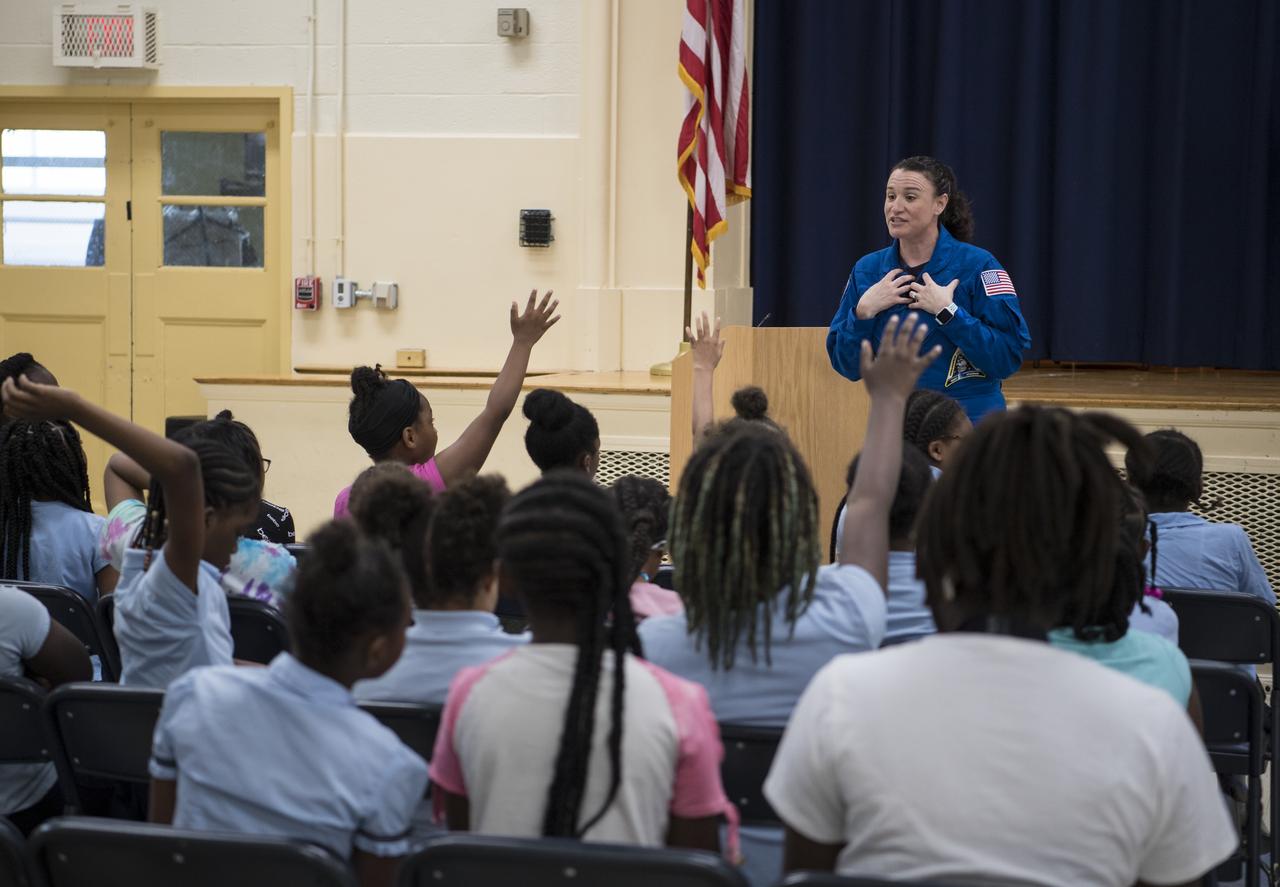
NASA astronaut Dr. Serena Auñón-Chancellor speaks about her experience on Expeditions 56 and 57 onboard the International Space Station (ISS) at Excel Academy Public Charter School, Monday, June 10, 2019 in Washington, DC. Auñón-Chancellor spent 197 days living and working onboard the ISS and contributed to hundreds of experiments in biology, biotechnology, physical science, and Earth science while there. She is also a doctor and started her career with NASA as a flight surgeon in 2006. Photo Credit: (NASA/Aubrey Gemignani)
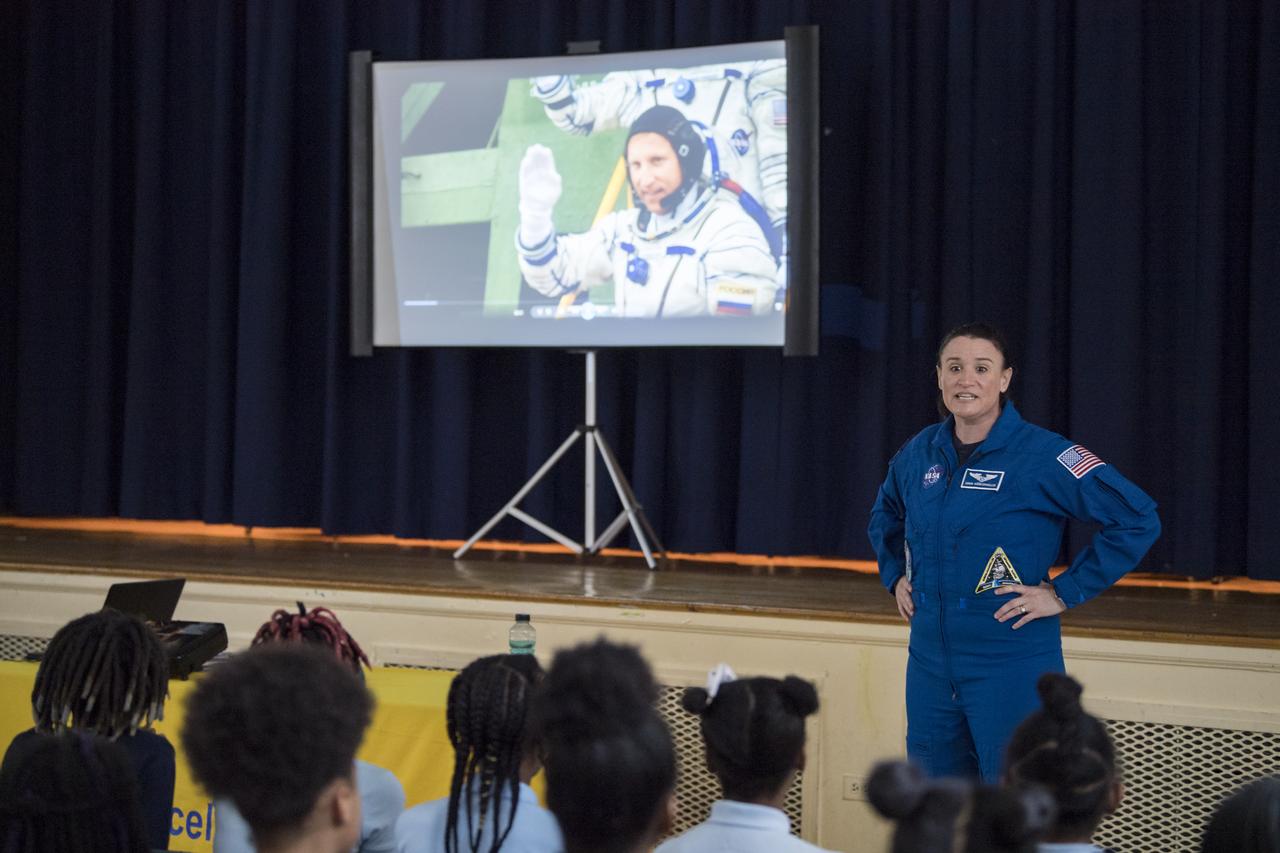
NASA astronaut Dr. Serena Auñón-Chancellor speaks about her experience on Expeditions 56 and 57 onboard the International Space Station (ISS) at Excel Academy Public Charter School, Monday, June 10, 2019 in Washington, DC. Auñón-Chancellor spent 197 days living and working onboard the ISS and contributed to hundreds of experiments in biology, biotechnology, physical science, and Earth science while there. She is also a doctor and started her career with NASA as a flight surgeon in 2006. Photo Credit: (NASA/Aubrey Gemignani)
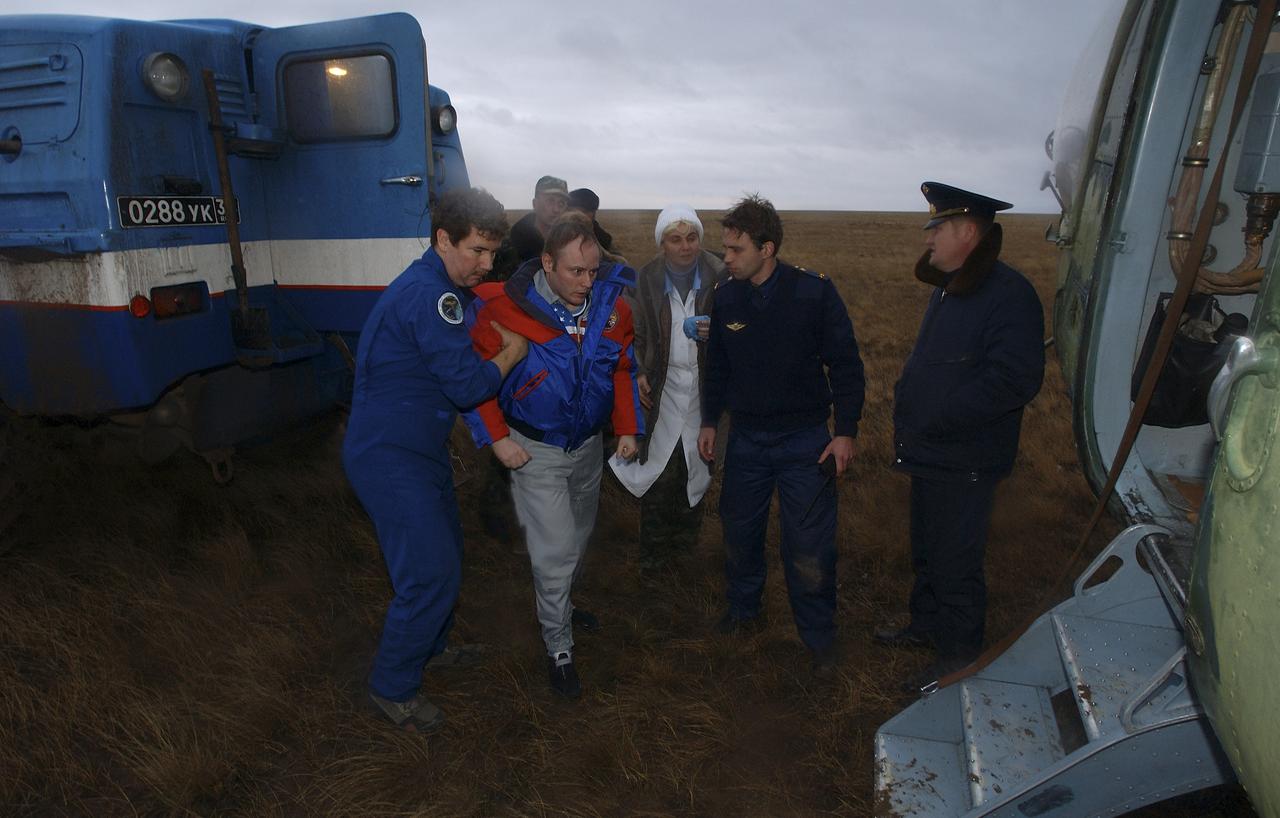
Expedition 9 Flight Engineer Michael Fincke is assisted by NASA Flight Doctor Steve Heart as he walks to the helicopter near the Soyuz landing site for the flight back to Kustanay, Kazakhstan. The Soyuz capsule landed with Expedition 9 Flight Engineer Mike Fincke, Expedition 9 Commander Gennady Padalka and Russian Space Forces cosmonaut Yuri Shargin approximately 85 kilometers northeast of Arkalyk in northern Kazakhstan, Sunday, October 24, 2004. Photo Credit: (NASA/Bill Ingalls)
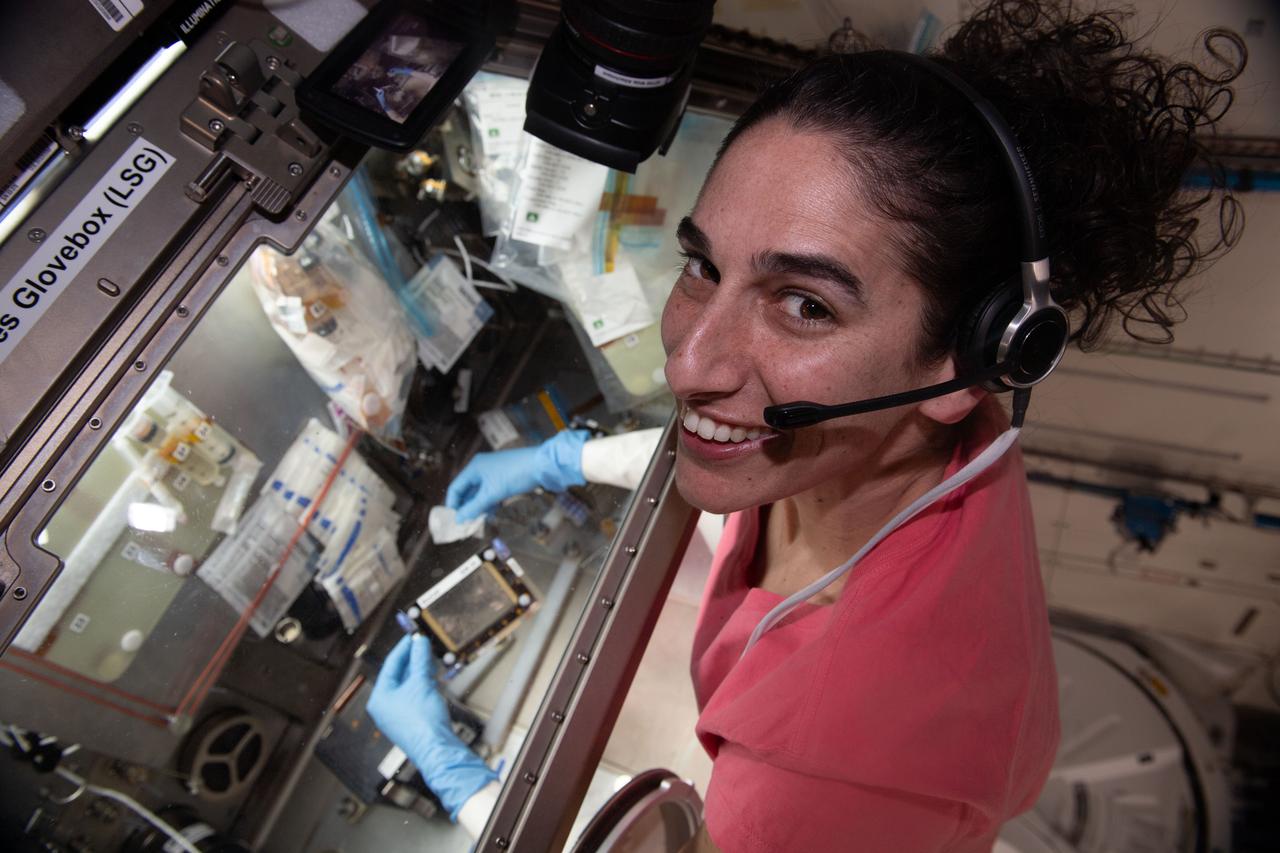
iss070e086287 (Feb. 3, 2024) --- NASA astronaut and Expedition 70 Flght Engineer Jasmin Moghbeli works inside the Life Science Glovebox for the Microgravity Associated Bone Loss-A investigation. She was processing bone cell samples obtained from human donors on Earth and exploring space-caused bone loss. Results may help doctors learn how to protect and treat astronauts on long-term missions and inform treatments for bone conditions on Earth.
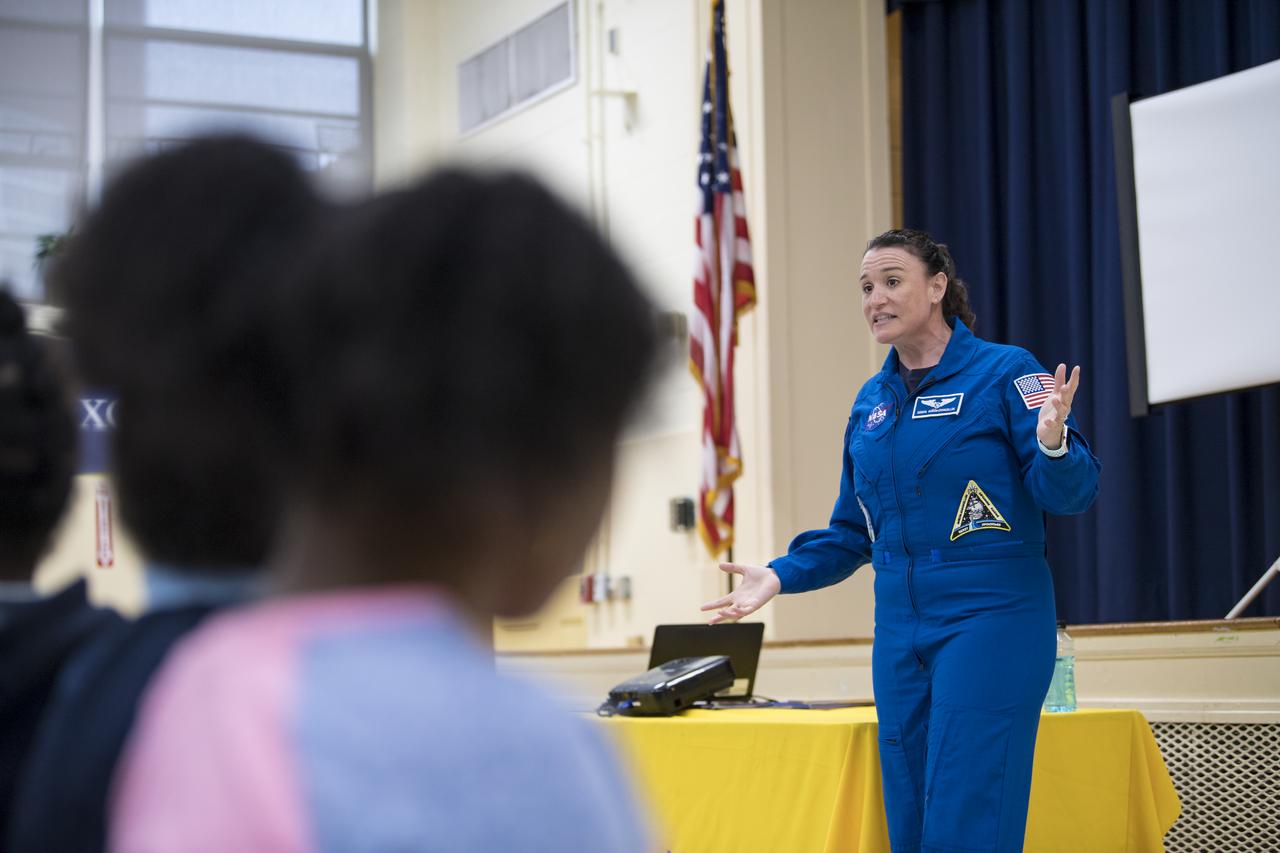
NASA astronaut Dr. Serena Auñón-Chancellor speaks about her experience on Expeditions 56 and 57 onboard the International Space Station (ISS) at Excel Academy Public Charter School, Monday, June 10, 2019 in Washington, DC. Auñón-Chancellor spent 197 days living and working onboard the ISS and contributed to hundreds of experiments in biology, biotechnology, physical science, and Earth science while there. She is also a doctor and started her career with NASA as a flight surgeon in 2006. Photo Credit: (NASA/Aubrey Gemignani)
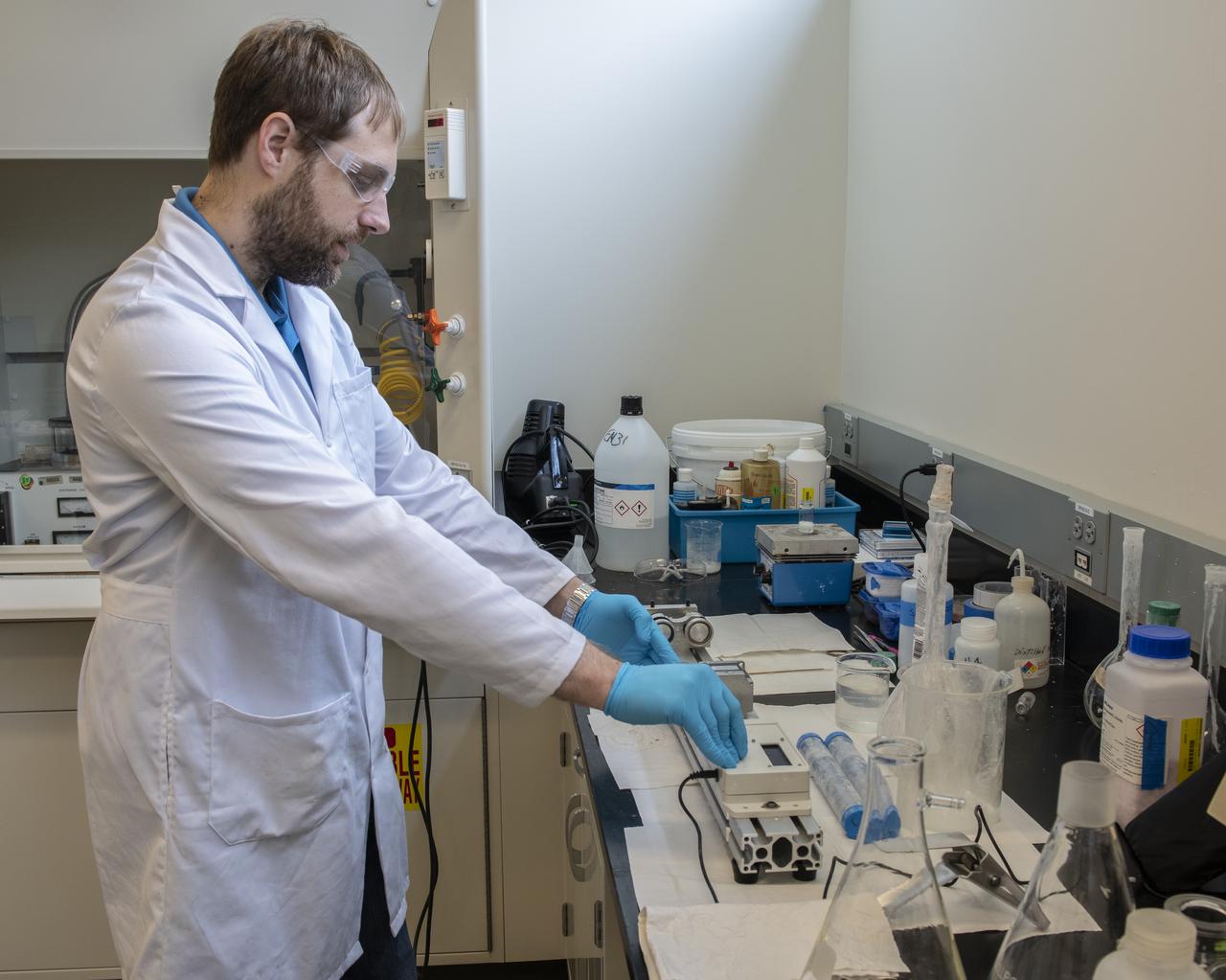
Alexander Blanchard, a chemistry doctoral student at Florida State University and graduate student at Marshall this summer, conducts analysis in a Marshall laboratory on the Chemical Gardens experiment, which is growing delicate crystalline structures in solution in the microgravity environment on the space station. Researchers hope the study could yield practical benefits for bioremediation and other "green" commercial applications.
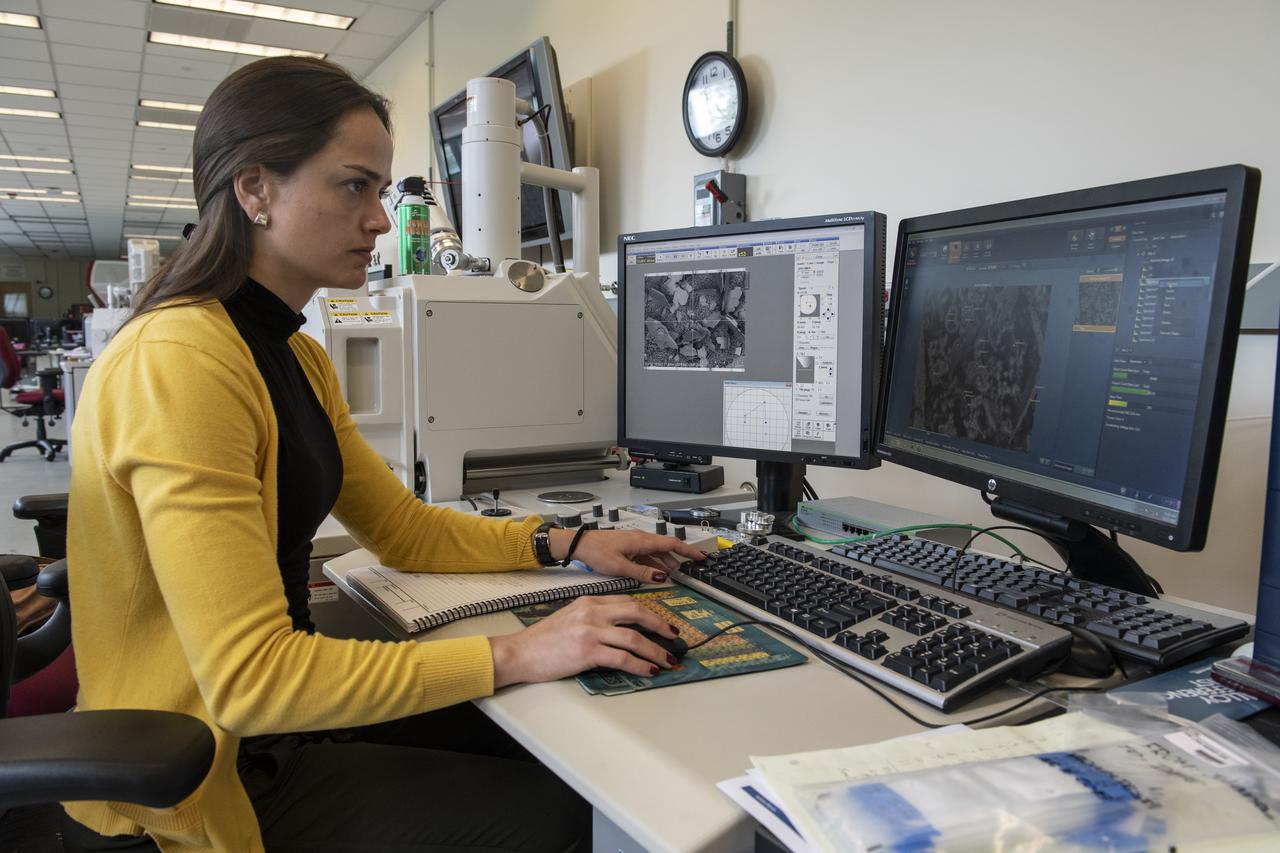
Marshall graduate student researcher Juliana Neves, who is pursuing her doctorate in civil engineering at Pennsylvania State University, monitors cement paste samples returned from space as part of the Microgravity Investigation of Cement Solidification. Neves, investigators at Penn State and Marshall researchers led by NASA materials scientist Richard Grugel mirrored each sample experiment conducted on the International Space Station -- 120 tests on the ground, 120 in orbit -- and will continue to assess their findings in months to come.

NASA astronaut Dr. Serena Auñón-Chancellor speaks about her experience on Expeditions 56 and 57 onboard the International Space Station (ISS) at Excel Academy Public Charter School, Monday, June 10, 2019 in Washington, DC. Auñón-Chancellor spent 197 days living and working onboard the ISS and contributed to hundreds of experiments in biology, biotechnology, physical science, and Earth science while there. She is also a doctor and started her career with NASA as a flight surgeon in 2006. Photo Credit: (NASA/Aubrey Gemignani)
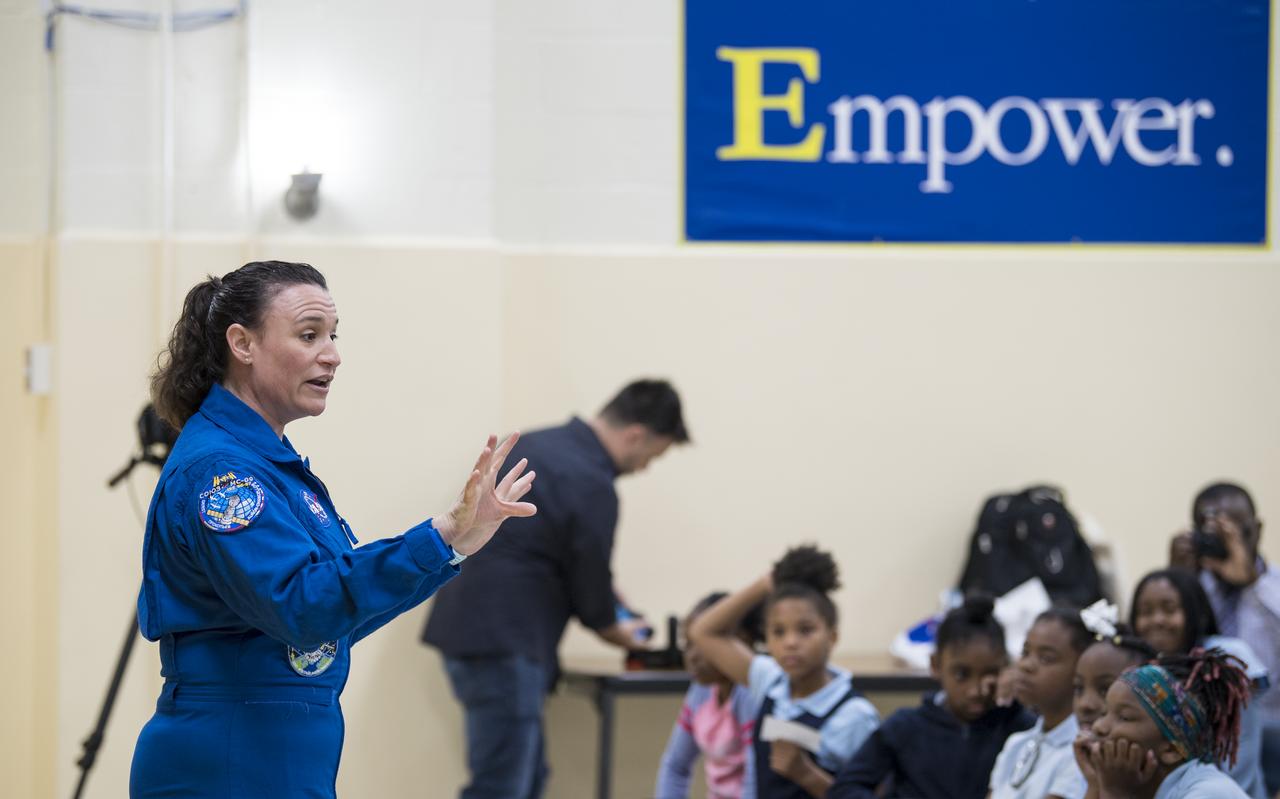
NASA astronaut Dr. Serena Auñón-Chancellor speaks about her experience on Expeditions 56 and 57 onboard the International Space Station (ISS) at Excel Academy Public Charter School, Monday, June 10, 2019 in Washington, DC. Auñón-Chancellor spent 197 days living and working onboard the ISS and contributed to hundreds of experiments in biology, biotechnology, physical science, and Earth science while there. She is also a doctor and started her career with NASA as a flight surgeon in 2006. Photo Credit: (NASA/Aubrey Gemignani)
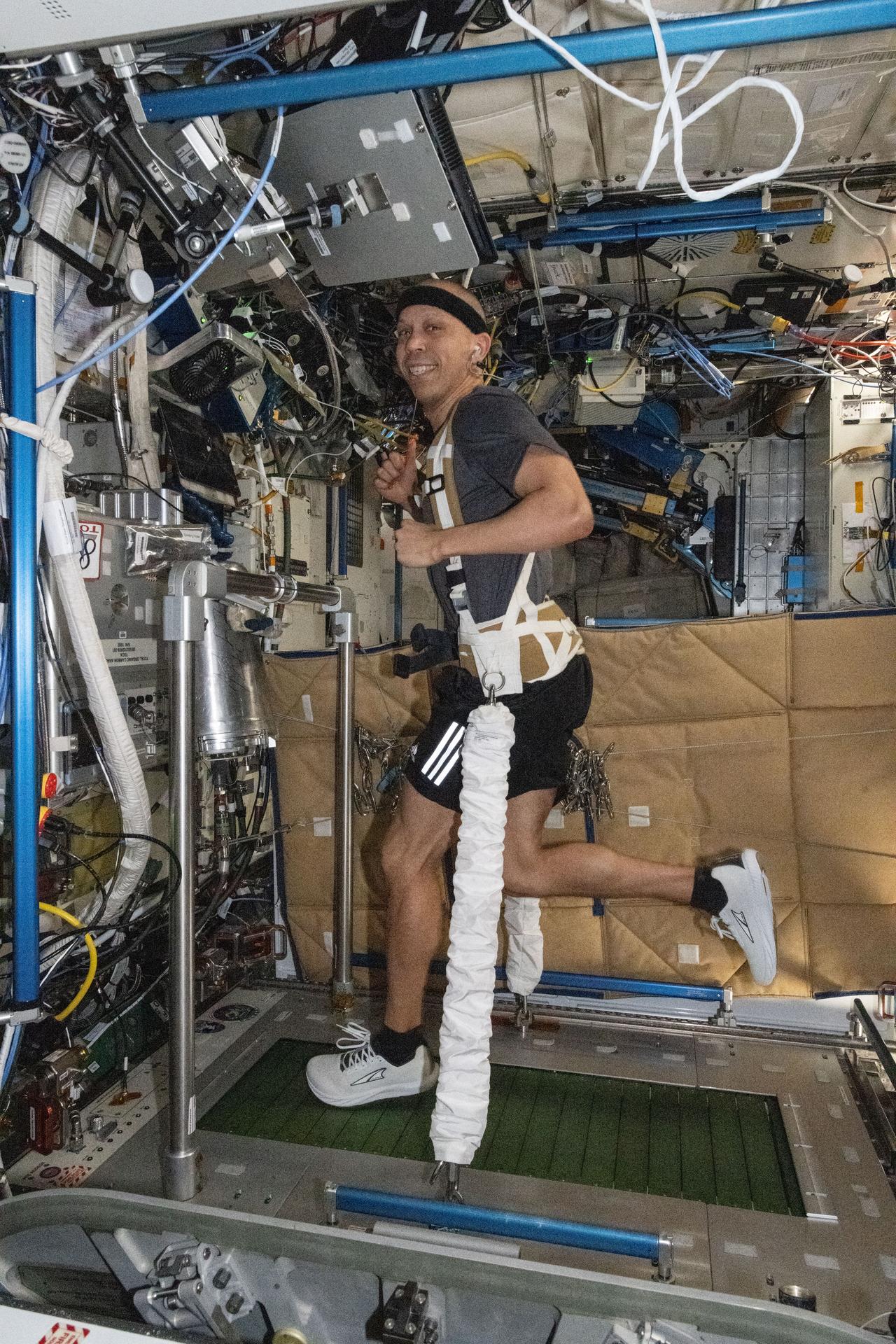
iss074e0792349 (June 7 ,2026) --- NASA astronaut and Expedition 74 flight engineer Chris Williams jogs while strapped to the treadmill inside the International Space Station's Tranquility module. The treadmill, formally known as COLBERT (Combined Operational Load-Bearing External Resistance Treadmill), is specifically designed to enable jogging and maintain cardiovascular health in microgravity. Williams is wearing a heart-rate monitor that uses Bluetooth to transmit his cardiac data to a computer tablet for analysis by doctors on Earth. Credit: NASA
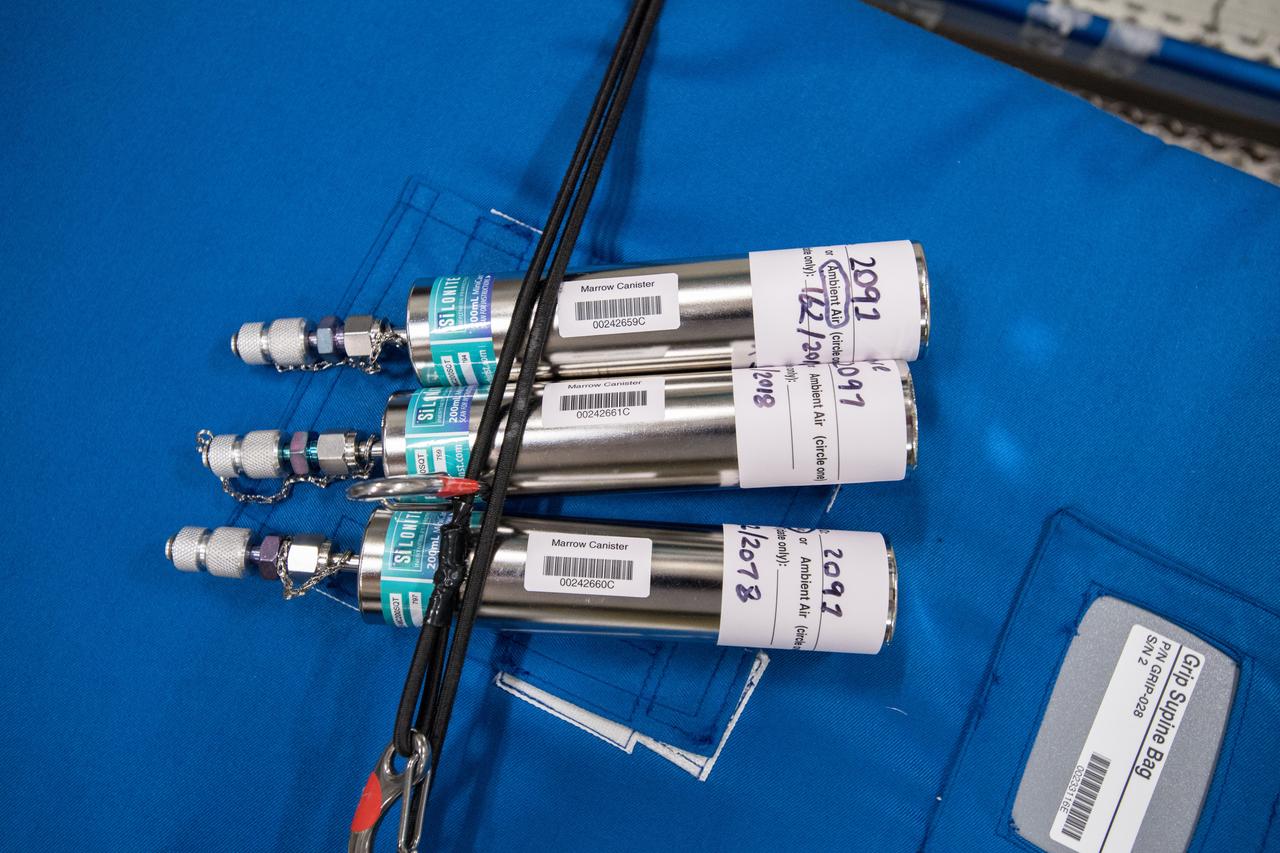
iss056e005940 (6/10/2018) --- Air sample collection hardware for The MARROW Study (Bone Marrow Adipose Reaction: Red or White?). The Marrow investigation looks at the effects of microgravity on bone marrow and analyzes breath samples to measure red blood cell function to help doctors understand how blood cell production is altered in microgravity. Results may improve the health of astronauts on long-term missions and help patients on Earth with mobility and age-related issues.
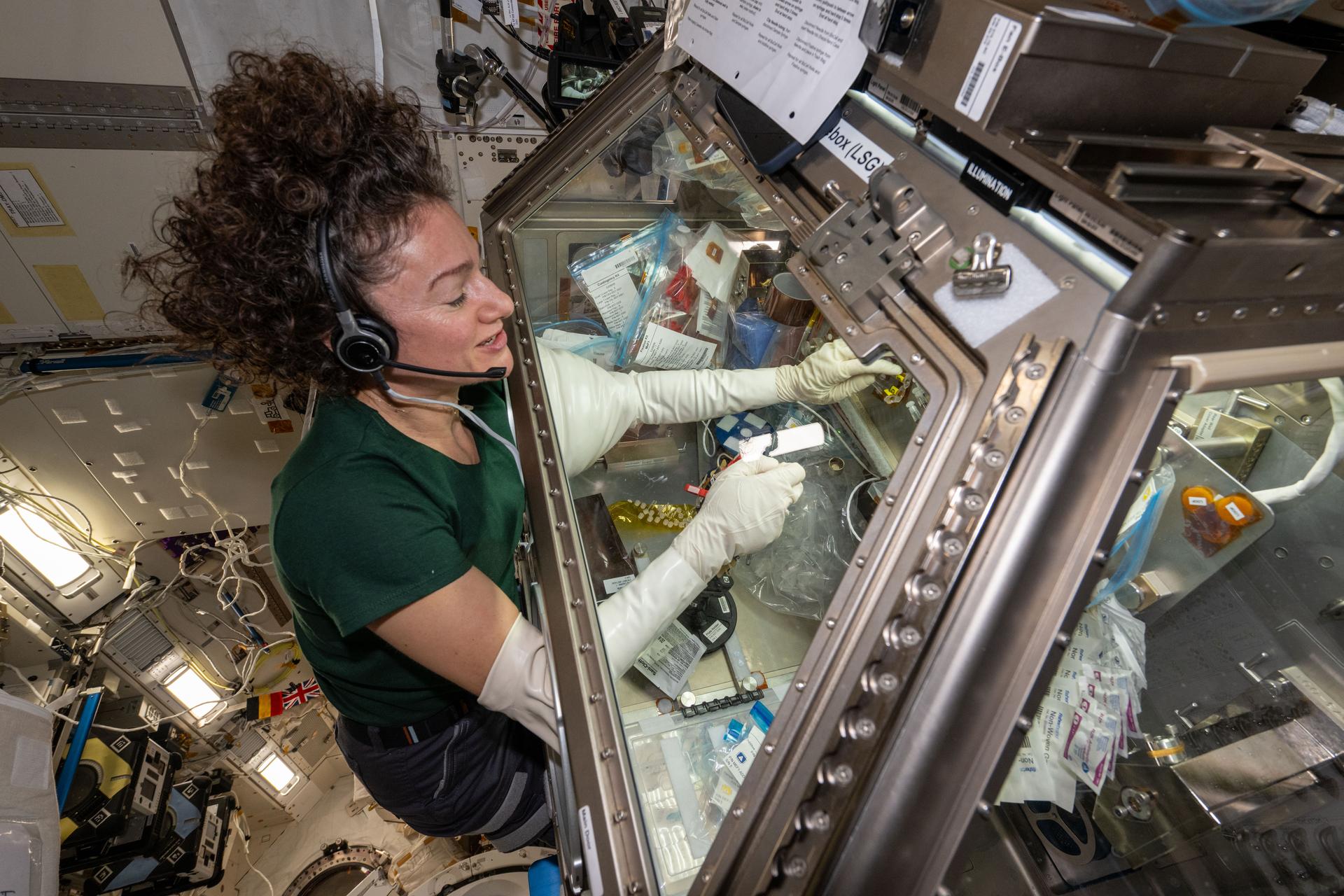
iss074e0621519 (May 29, 2026) --- NASA astronaut and Expedition 74 flight engineer Jessica Meir processes blood platelet samples inside the Kibo laboratory module’s Life Science Glovebox aboard the International Space Station. Doctors are studying how microgravity alters blood platelets, cell fragments that form clots and prevent bleeding, to protect human health on and off the Earth. Credit: NASA/Jack Hathaway

NASA astronaut Dr. Serena Auñón-Chancellor speaks about her experience on Expeditions 56 and 57 onboard the International Space Station (ISS) at Excel Academy Public Charter School, Monday, June 10, 2019 in Washington, DC. Auñón-Chancellor spent 197 days living and working onboard the ISS and contributed to hundreds of experiments in biology, biotechnology, physical science, and Earth science while there. She is also a doctor and started her career with NASA as a flight surgeon in 2006. Photo Credit: (NASA/Aubrey Gemignani)
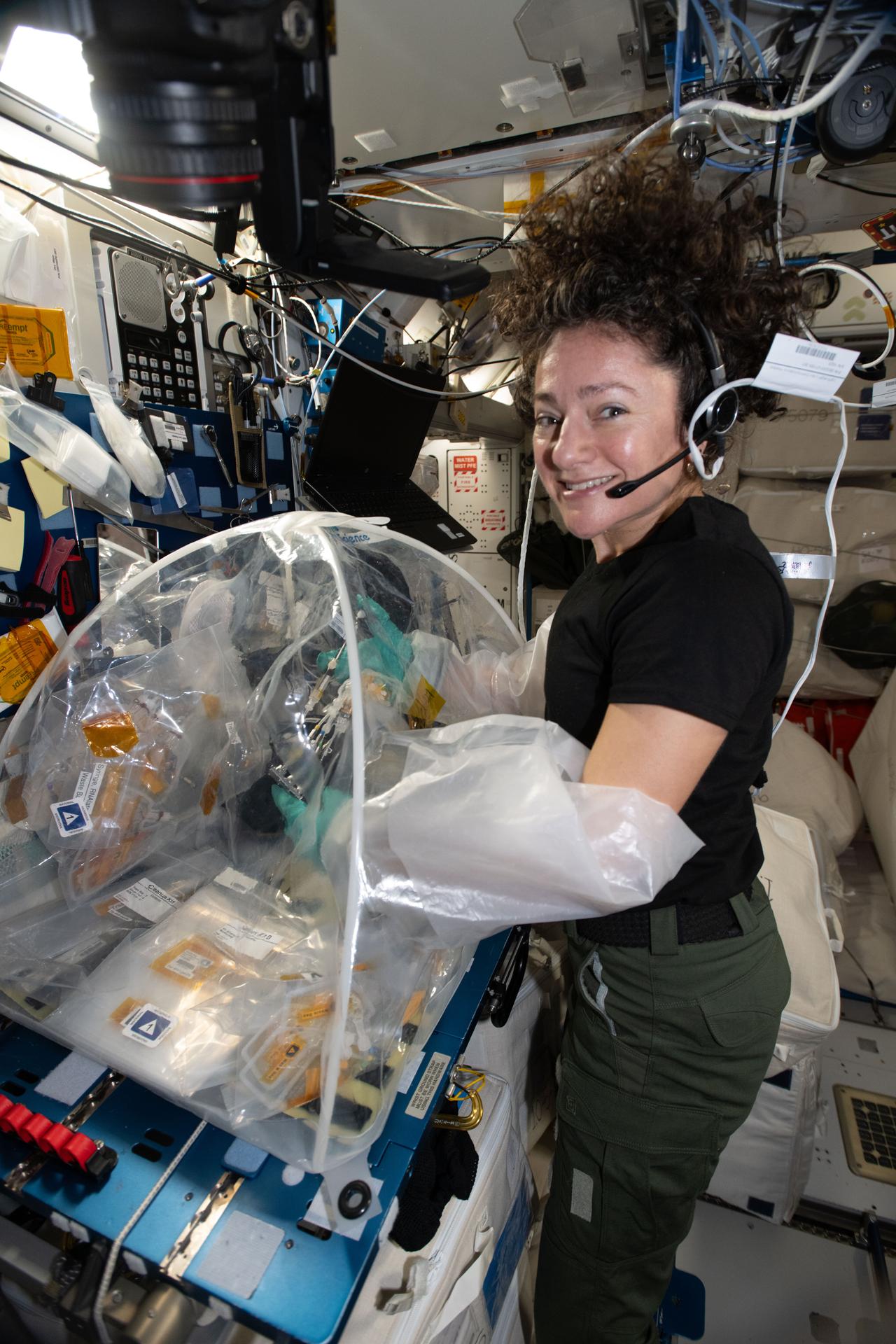
iss074e0518242 (April 23, 2026) --- NASA astronaut and Expedition 74 flight engineer Jessica Meir processes samples of heart stem cells and bacteria that cause pneumonia using a portable glovebag inside the International Space Station's Harmony module. Research in microgravity may give doctors a clearer understanding of how infectious disease processes damage heart tissue at the cellular and molecular level. These insights could lead to advanced treatments for heart conditions both on Earth and in space. Credit: NASA/Chris Williams
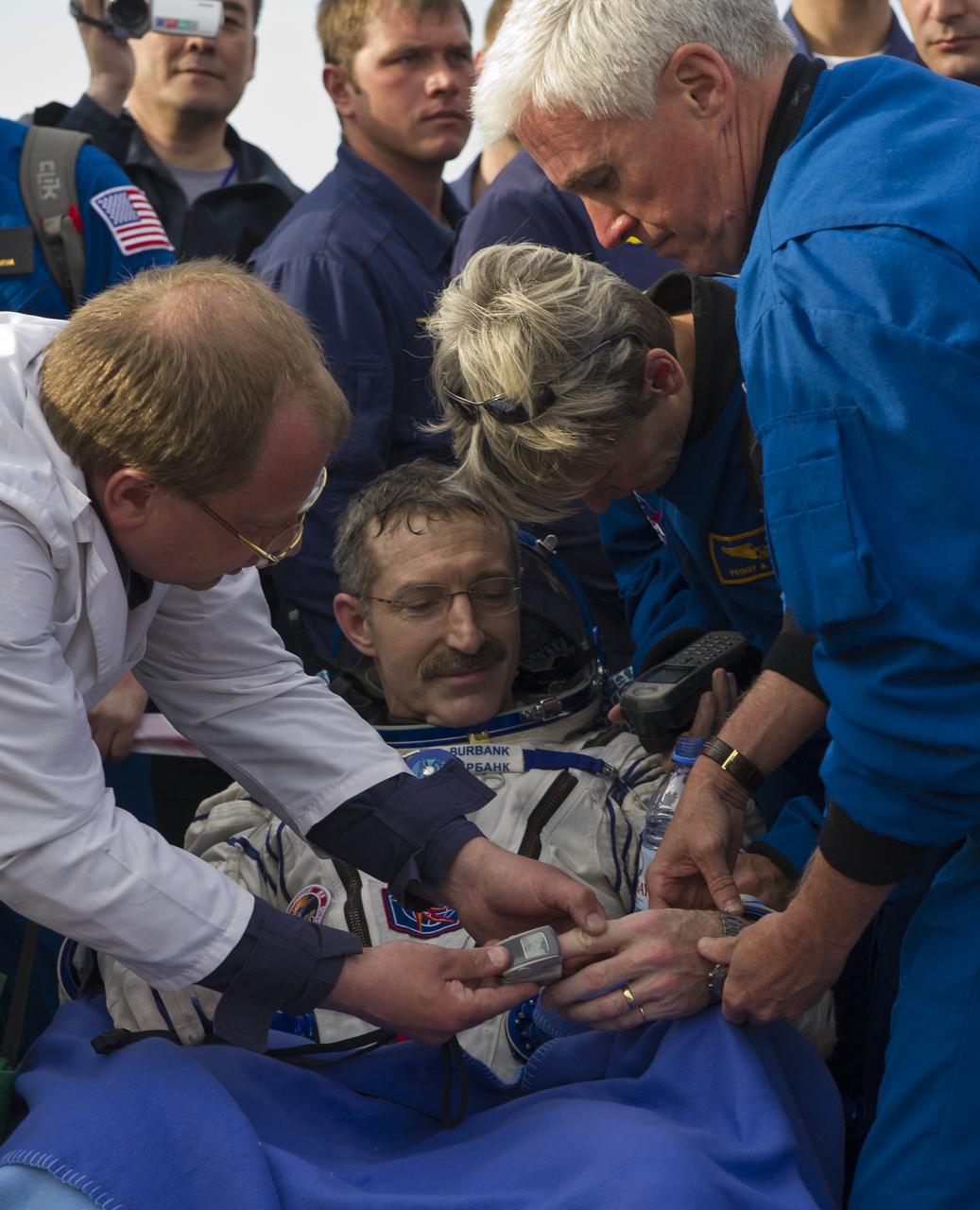
Expedition 30 Commander Dan Burbank, center, is attended to by his doctor and crew support personnel following his landing in the Soyuz-22 spacecraft, Friday, April 27, 2012. NASA Astronaut Burbank, Russian Cosmonauts Shkaplerov and Ivanishin are returning from more than five months onboard the International Space Station where they served as members of the Expedition 29 and 30 crews. Photo Credit: (NASA/Carla Cioffi)
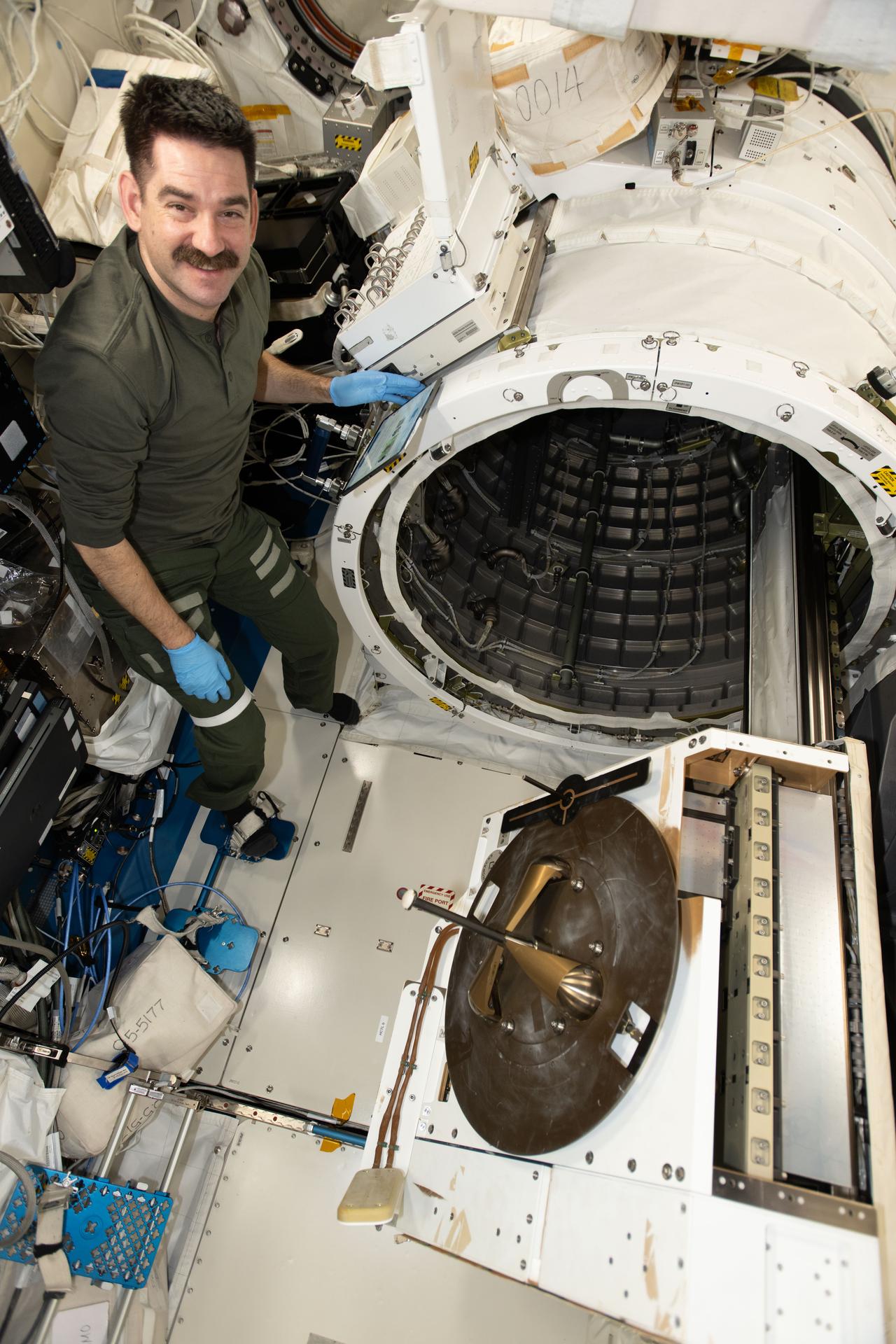
iss074e0491605 (April 20, 2026) --- NASA astronaut and Expedition 74 flight engineer Jack Hathaway installs the NanoRacks External Platform—carrying three scientific payloads—inside the Kibo laboratory module’s airlock for placement outside in the vacuum of space. The payloads will test ultra‑high‑resolution hyperspectral imagery, measure radio signals passing through Earth’s ionosphere, and help doctors identify space‑sensitive proteins while evaluating mobility and neuromuscular health therapies. Credit: NASA/Chris Williams
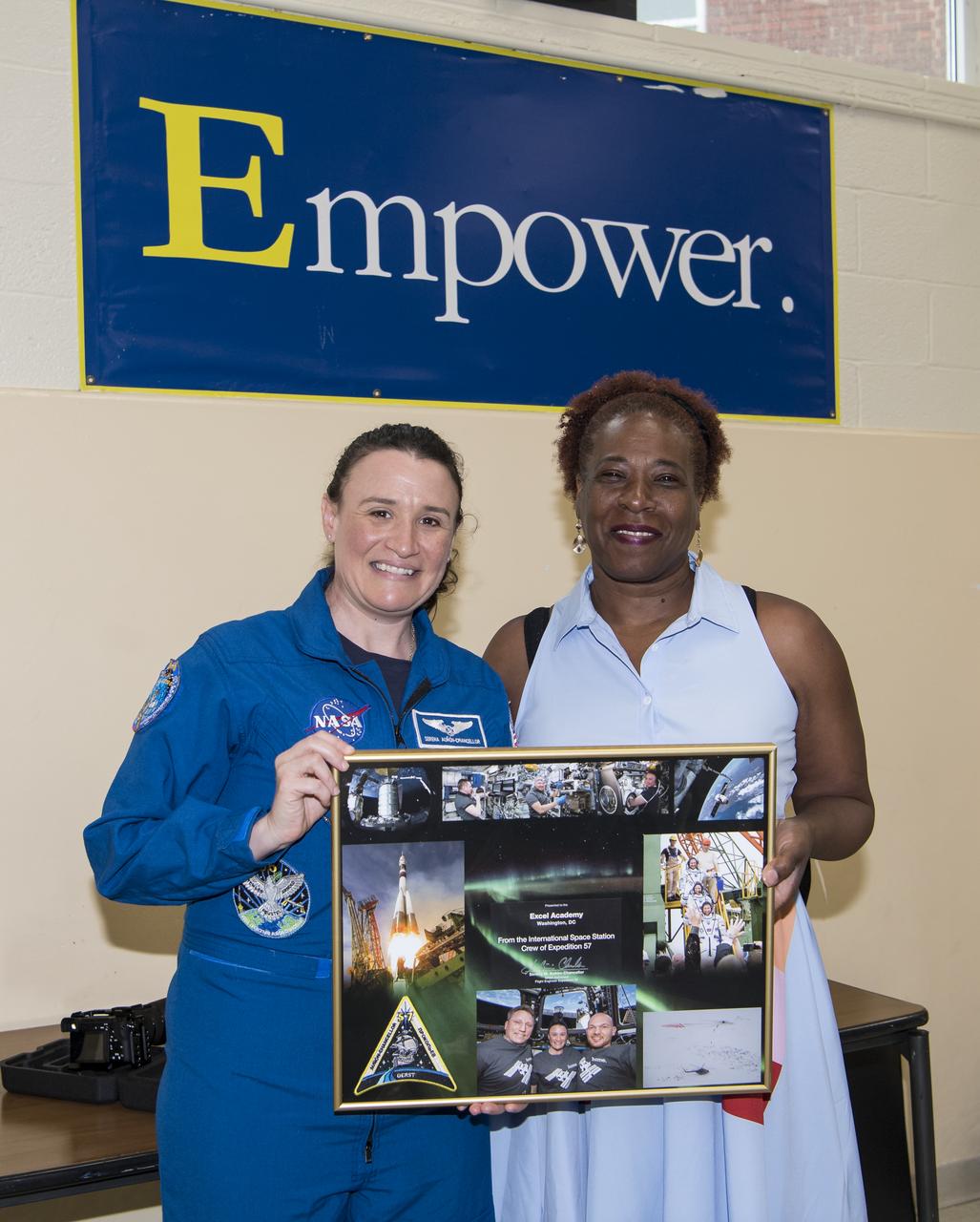
NASA astronaut Dr. Serena Auñón-Chancellor presents a montage from Expeditions 56 and 57 to Excel Academy Public Charter School, Monday, June 10, 2019 in Washington, DC. Auñón-Chancellor spent 197 days living and working onboard the ISS and contributed to hundreds of experiments in biology, biotechnology, physical science, and Earth science while there. She is also a doctor and started her career with NASA as a flight surgeon in 2006. Photo Credit: (NASA/Aubrey Gemignani)
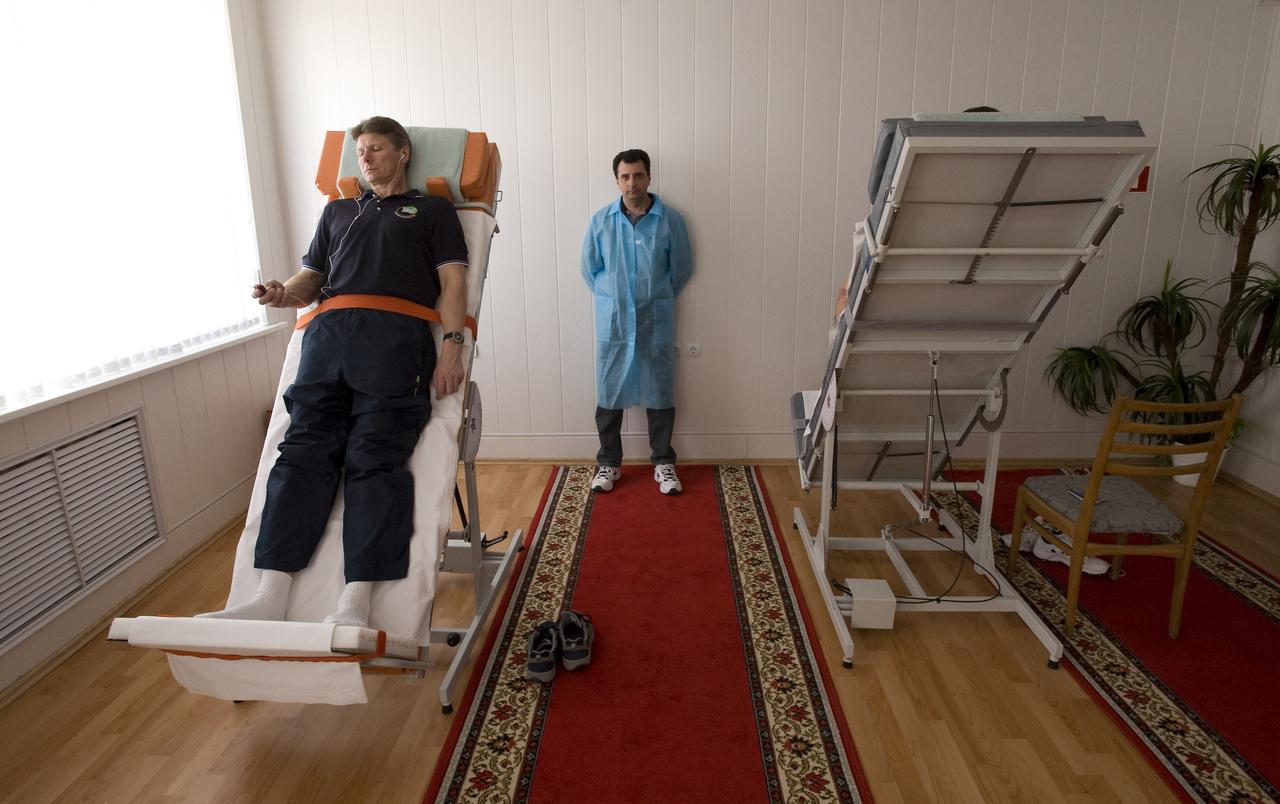
Expedition 19 Commander Gennady I. Padalka, left, listens to his mp3 player as a medical doctor looks on during the he participates tilt table training at the Cosmonaut Hotel, Saturday, March 21, 2009 in Baikonur, Kazakhstan. Expedition 19 Flight Engineer Michael R. Barratt in on the tilt table on the right. (Photo Credit: NASA/Bill Ingalls)
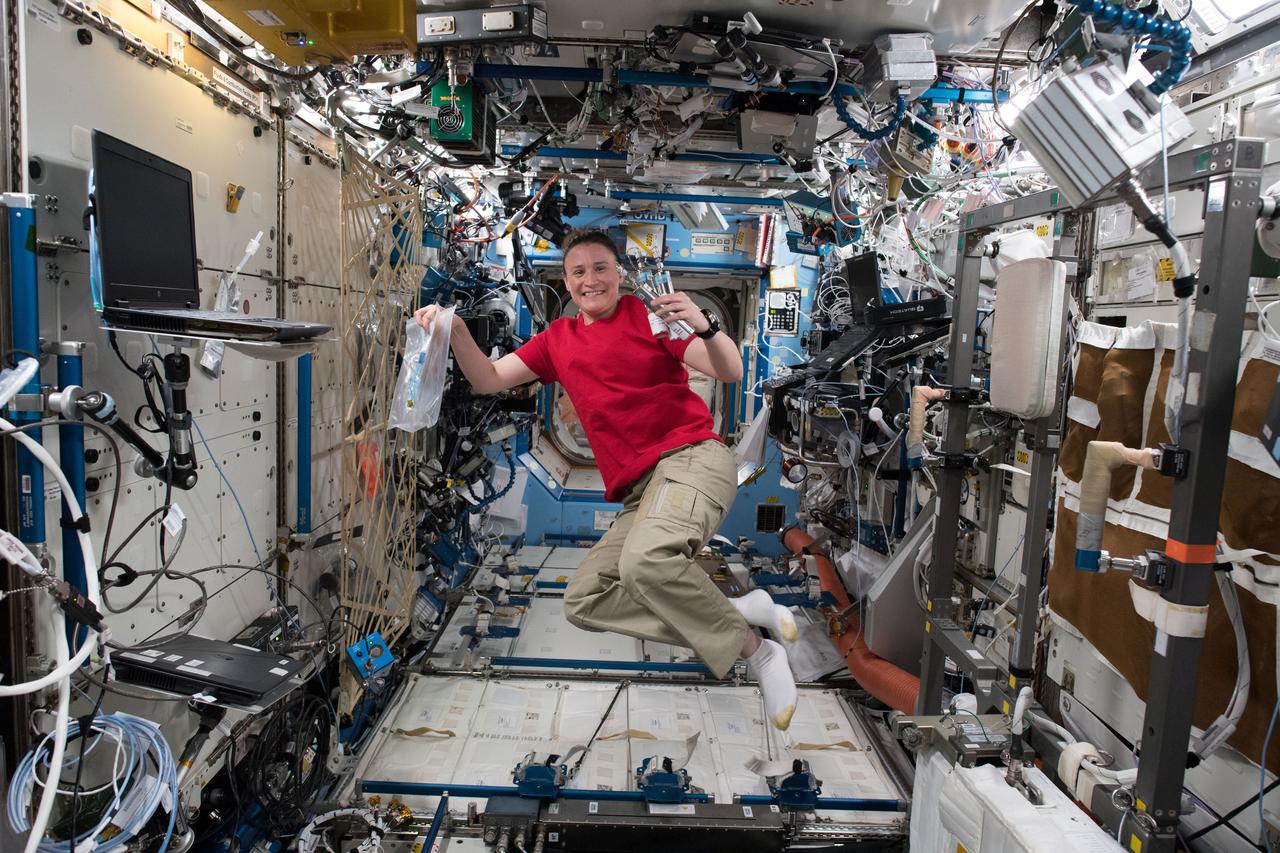
iss056e009809 (June 11, 2018) --- Expedition 56 Flight Engineer Serena Auñón-Chancellor of NASA is pictured in the Destiny laboratory module with gear from the Marrow investigation. She was collecting breath samples to analyze and measure red blood cell function to help doctors understand how blood cell production is altered in microgravity. Results may improve the health of astronauts on long-term missions and help patients on Earth with mobility and aging issues.
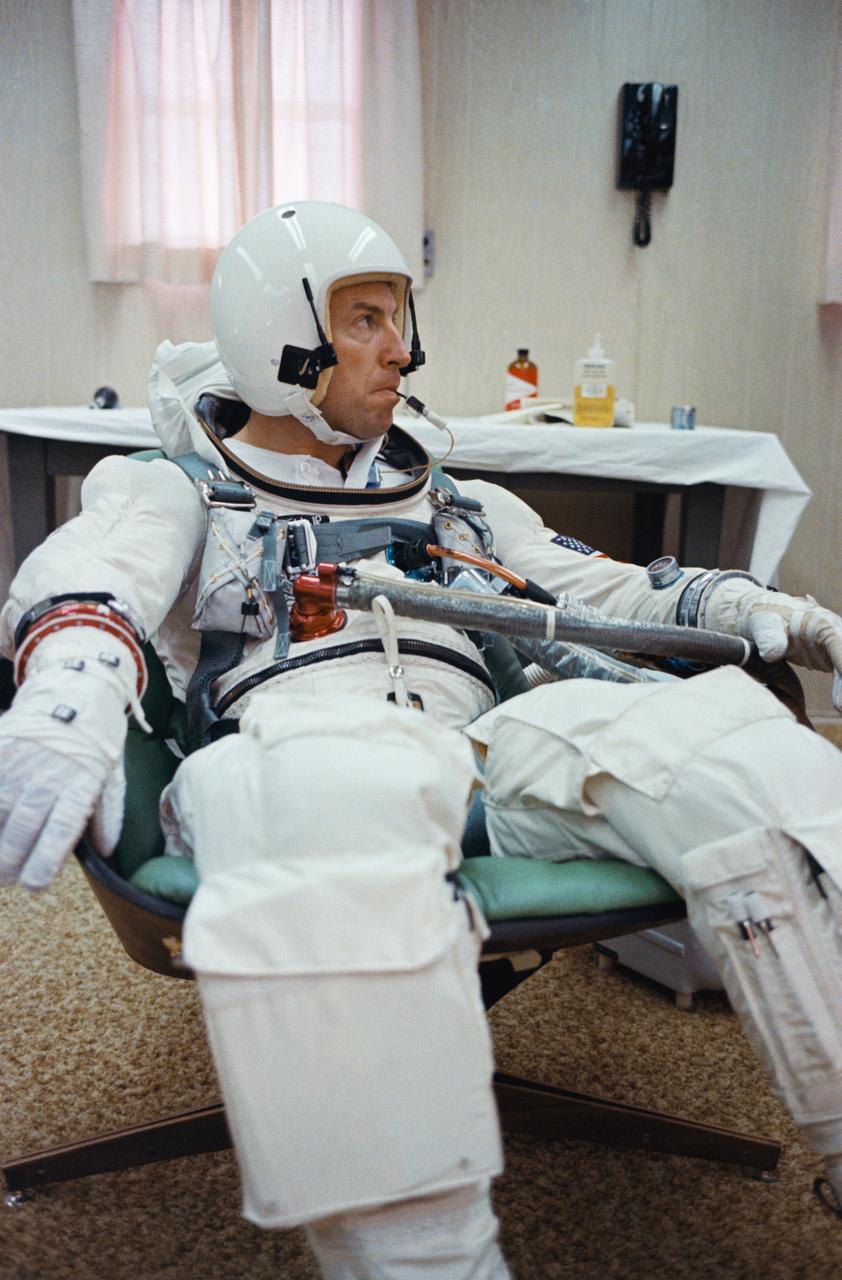
S65-59934 (4 Dec. 1965) --- Gemini-7 pilot James A. Lovell Jr. has a temperature check with an oral temperature probe attached to his spacesuit during a final preflight preparations for the Gemini-7 space mission. The National Aeronautics and Space Administration has planned a 14-day mission for the Gemini-7. The temperature probe allows doctors to monitor astronauts' body temperature at any time during the mission. Photo credit: NASA
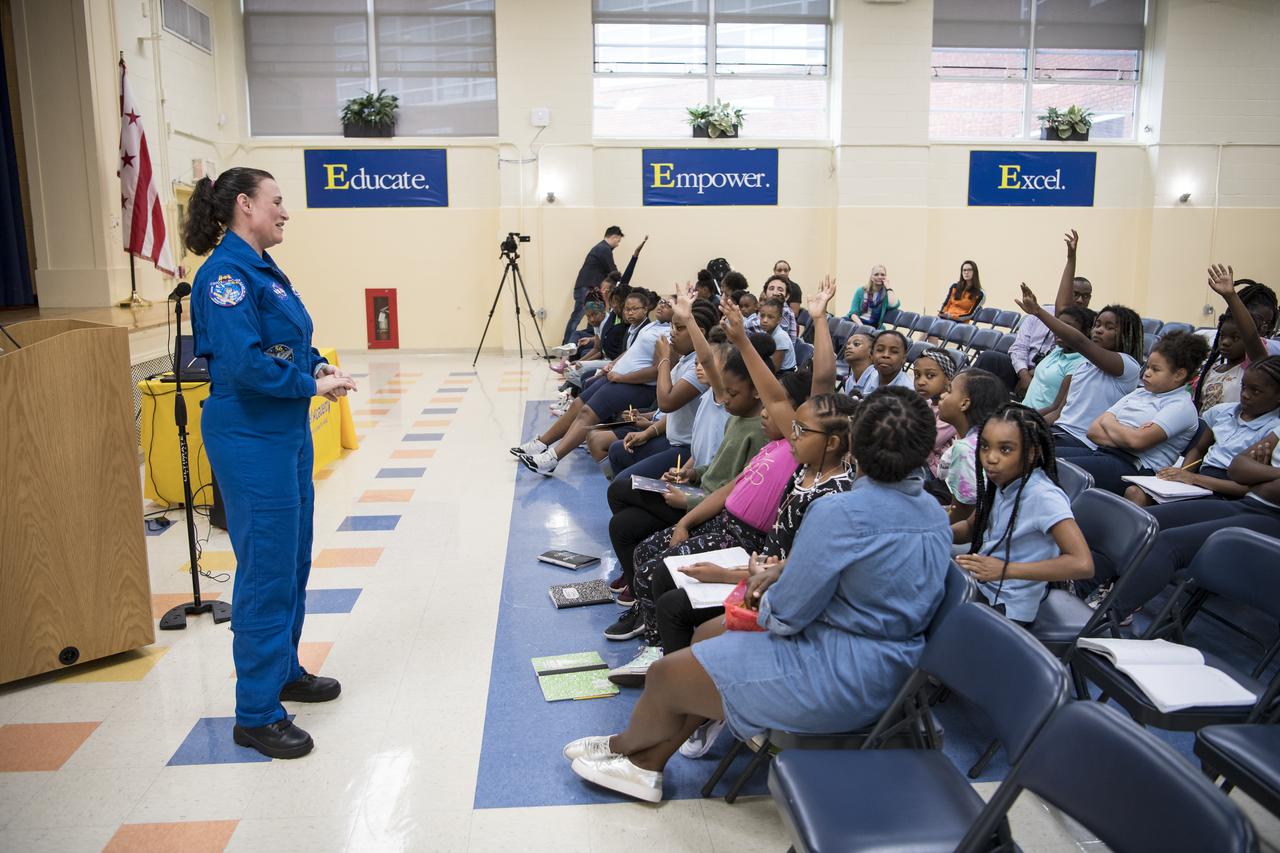
NASA astronaut Dr. Serena Auñón-Chancellor speaks about her experience on Expeditions 56 and 57 onboard the International Space Station (ISS) at Excel Academy Public Charter School, Monday, June 10, 2019 in Washington, DC. Auñón-Chancellor spent 197 days living and working onboard the ISS and contributed to hundreds of experiments in biology, biotechnology, physical science, and Earth science while there. She is also a doctor and started her career with NASA as a flight surgeon in 2006. Photo Credit: (NASA/Aubrey Gemignani)
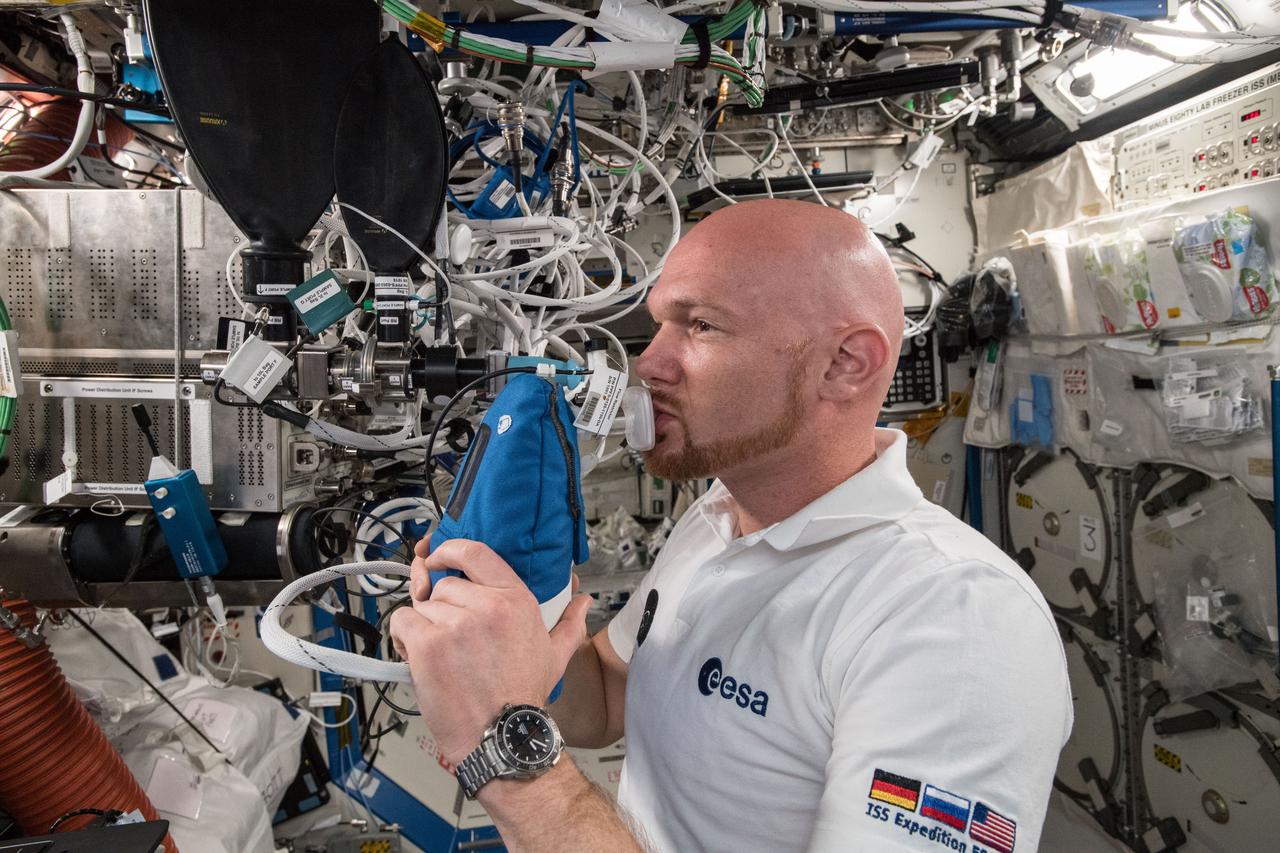
iss056e055604 (June 29, 2018) --- Astronaut Alexander Gerst of ESA (European Space Agency) exhales into an ultra-sensitive gas analyzer for the Airway Monitoring experiment. The experiment studies the occurrence and indicators of airway inflammation in crew members to help flight surgeons plan safer, long-term missions to the Moon, Mars and beyond. Results may also help doctors treat patients on Earth with asthma or other airway inflammatory diseases.
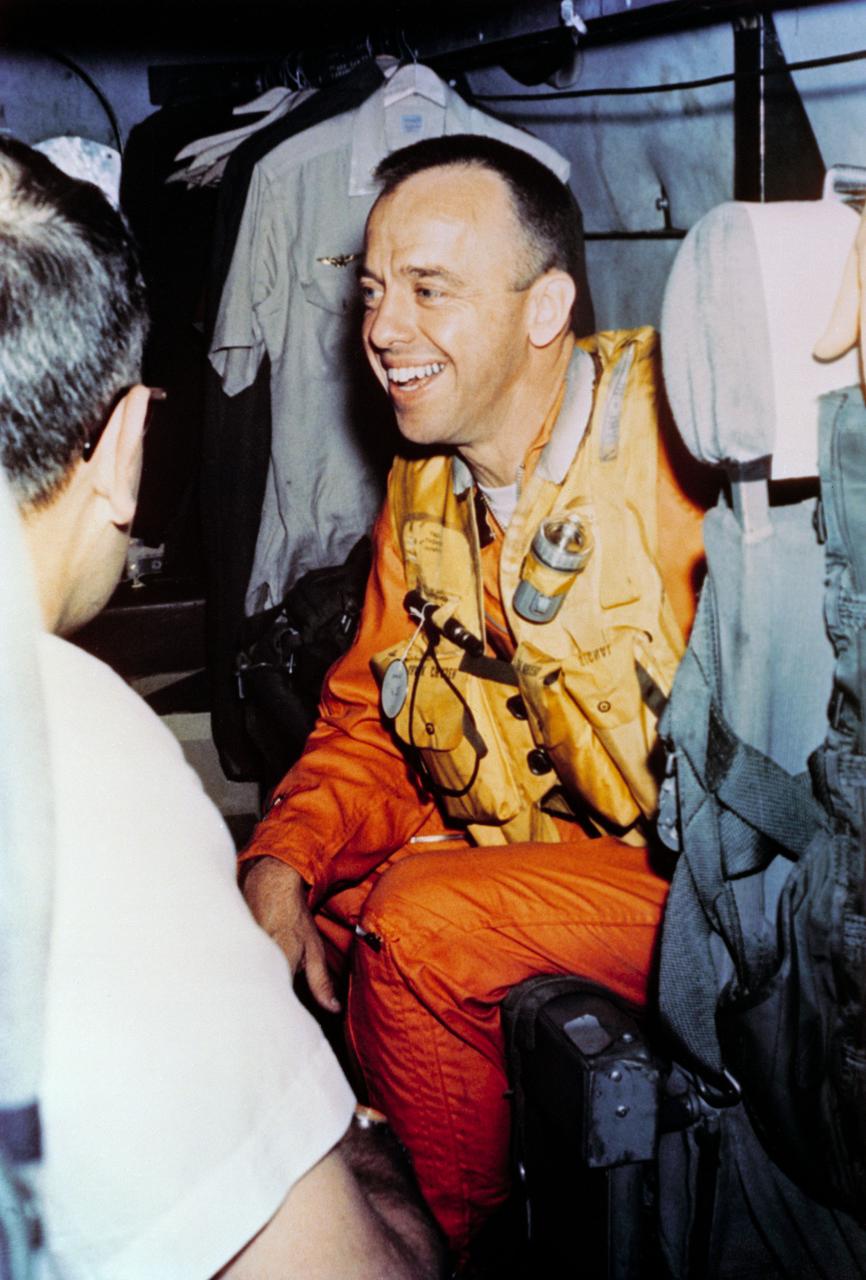
S88-31383 (5 May 1961) --- Astronaut Alan B. Shepard Jr., Mercury-Redstone 3 (MR-3) pilot, jokes with doctors while in-flight between the U.S. Navy Carrier Champlain and the Grand Bahama Islands. Shepard is the first American in space with the successful completion of the 15-minute suborbital mission. Photo credit: NASA or National Aeronautics and Space Administration
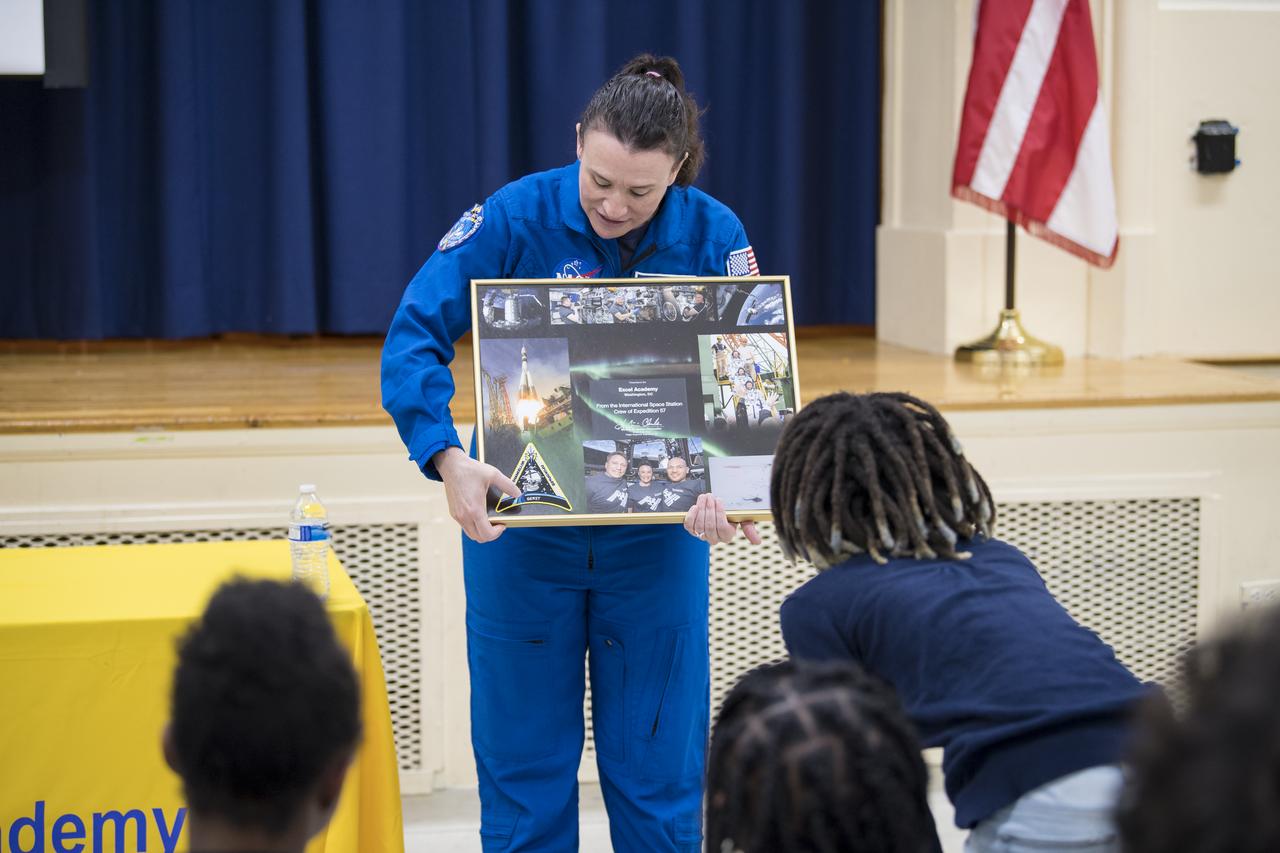
NASA astronaut Dr. Serena Auñón-Chancellor presents a montage from Expeditions 56 and 57 to the students of Excel Academy Public Charter School, Monday, June 10, 2019 in Washington, DC. Auñón-Chancellor spent 197 days living and working onboard the ISS and contributed to hundreds of experiments in biology, biotechnology, physical science, and Earth science while there. She is also a doctor and started her career with NASA as a flight surgeon in 2006. Photo Credit: (NASA/Aubrey Gemignani)
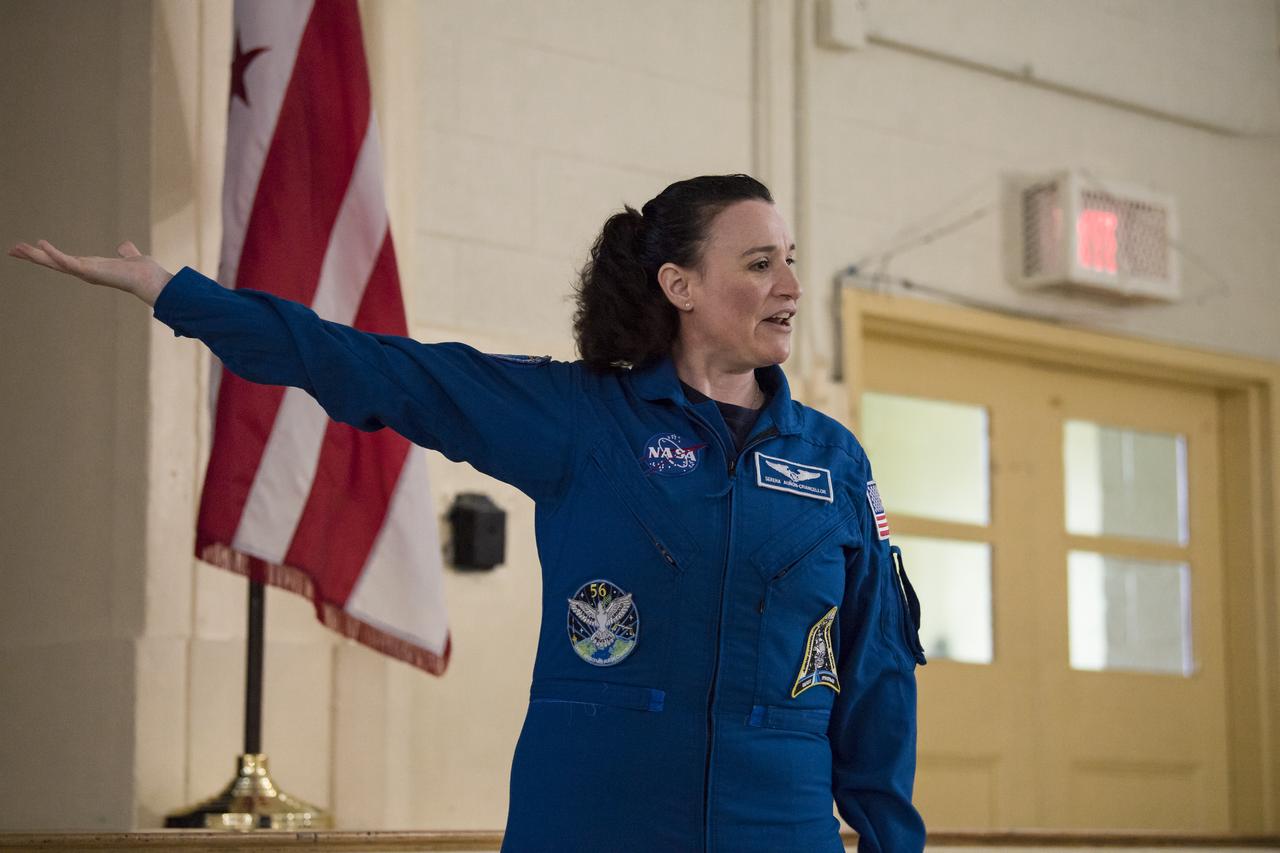
NASA astronaut Dr. Serena Auñón-Chancellor speaks about her experience on Expeditions 56 and 57 onboard the International Space Station (ISS) at Excel Academy Public Charter School, Monday, June 10, 2019 in Washington, DC. Auñón-Chancellor spent 197 days living and working onboard the ISS and contributed to hundreds of experiments in biology, biotechnology, physical science, and Earth science while there. She is also a doctor and started her career with NASA as a flight surgeon in 2006. Photo Credit: (NASA/Aubrey Gemignani)
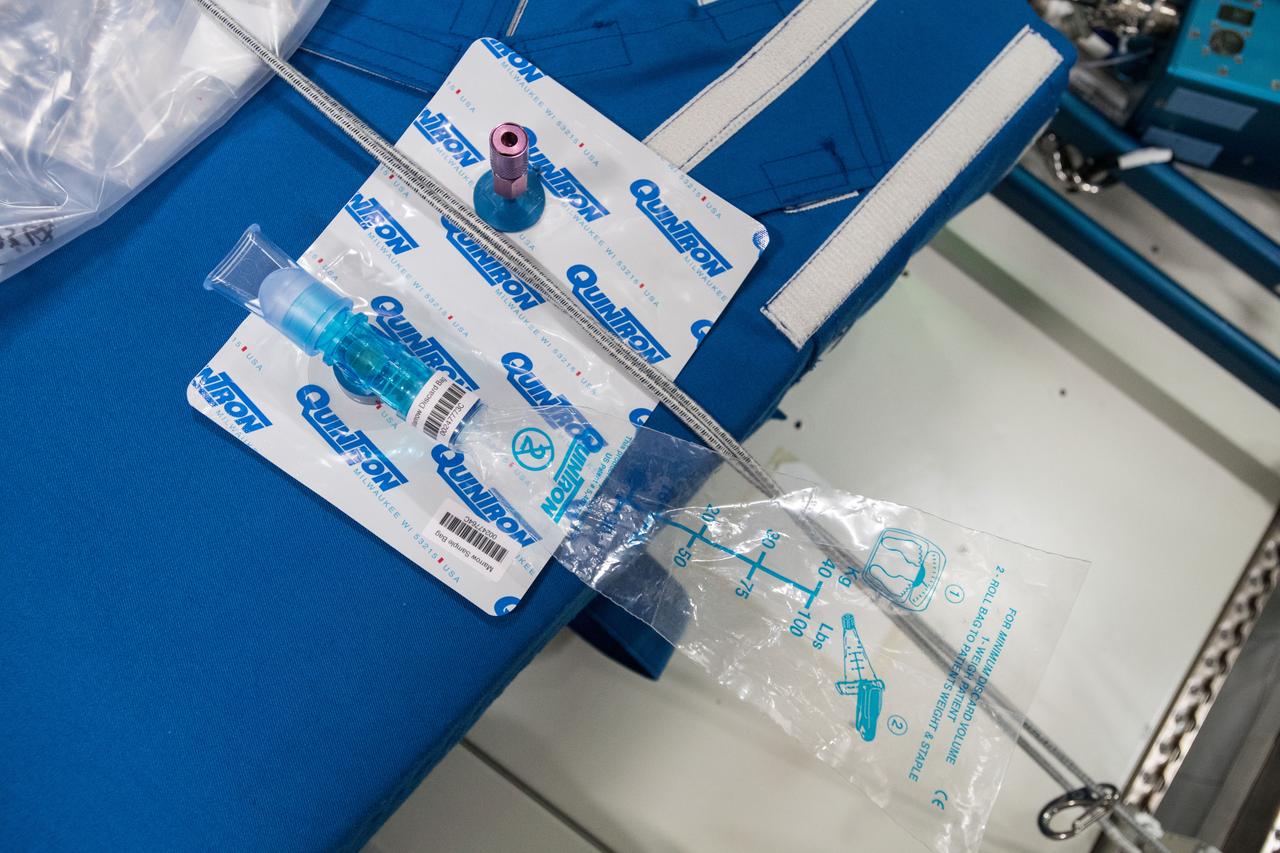
iss056e005938 (6/10/2018) --- Air sample collection hardware for The MARROW Study (Bone Marrow Adipose Reaction: Red or White?). The Marrow investigation looks at the effects of microgravity on bone marrow and analyzes breath samples to measure red blood cell function to help doctors understand how blood cell production is altered in microgravity. Results may improve the health of astronauts on long-term missions and help patients on Earth with mobility and age-related issues.
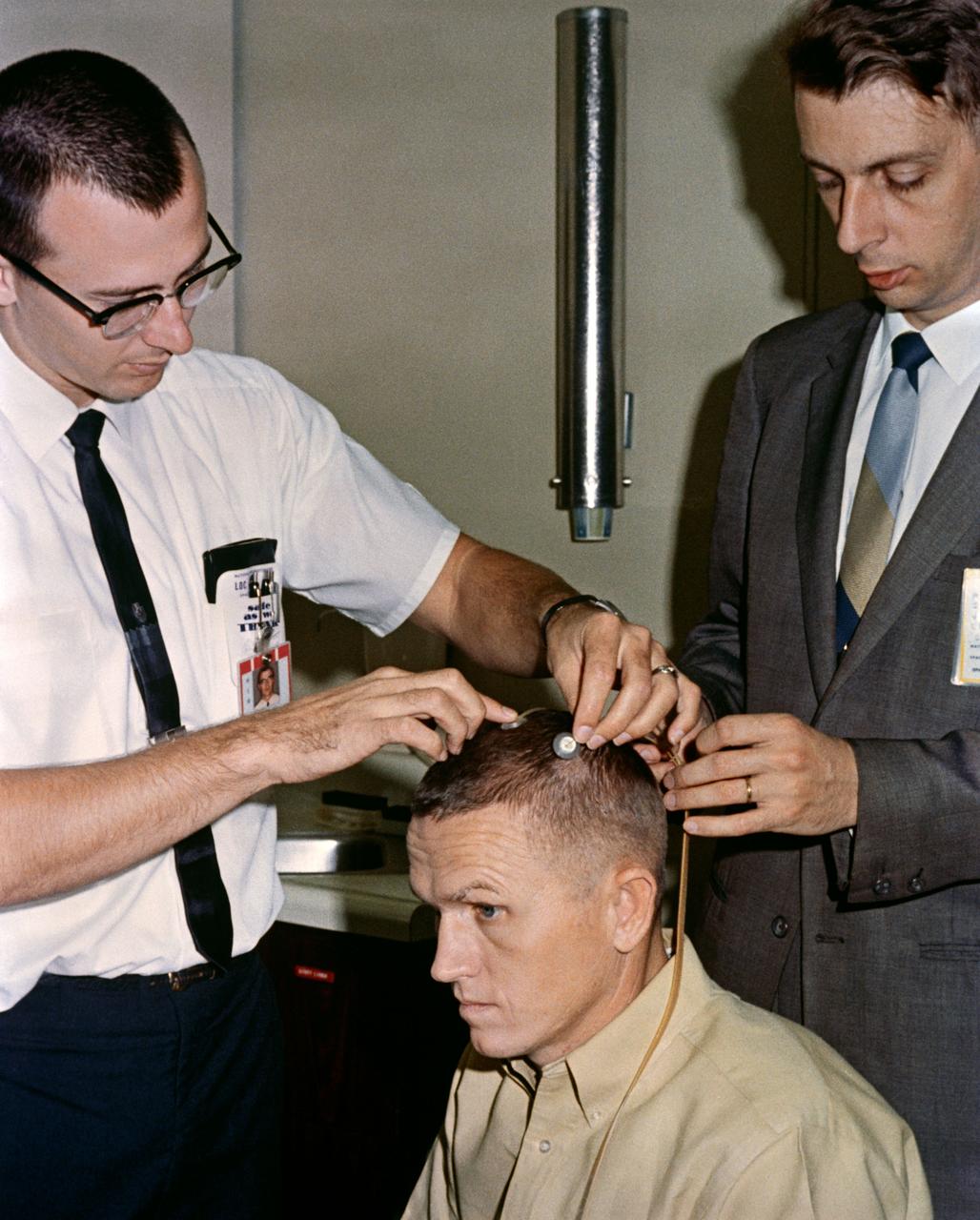
S65-60603 (2 Dec. 1965) --- Astronaut Frank Borman, Gemini-7 command pilot, sits attentively as two scalp electrodes are attached to his head. The electrodes will allow doctors to record electrical activity of the astronaut's cerebral cortex during periods of weightlessness. The objectives of this in-flight experiment are to assess state of alertness, levels of consciousness, and depth of sleep. Photo credit: NASA
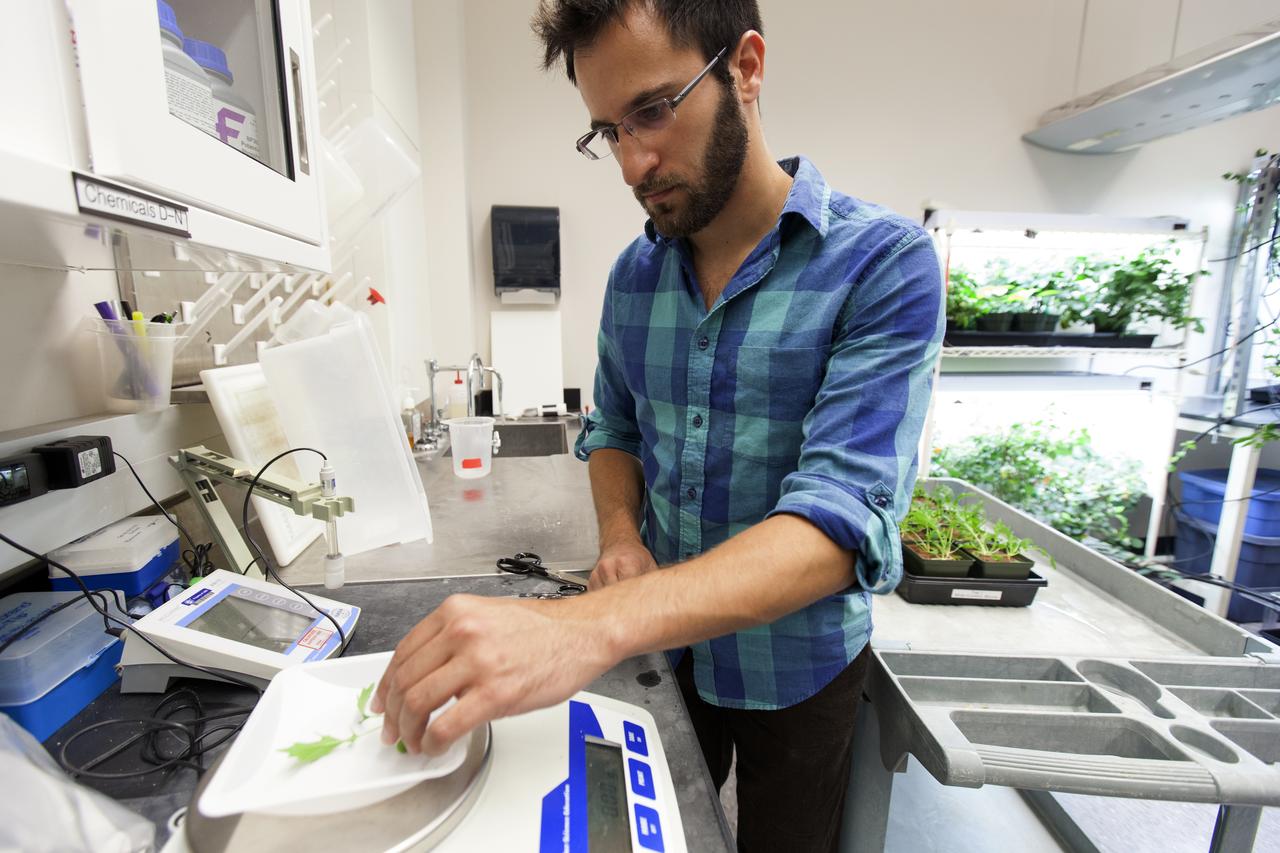
In the Space Life Sciences Laboratory at NASA's Kennedy Space Center in Florida, student interns such as Alex Litvin are joining agency scientists, contributing in the area of plant growth research for food production in space. Litvin is pursuing doctorate in horticulture at Iowa State University. The agency attracts its future workforce through the NASA Internship, Fellowships and Scholarships, or NIFS, Program.

STS-87 Mission Specialist Kalpana Chawla, Ph.D., sits in her launch and entry suit in the Operations and Checkout Building before she and the five other crew members of STS-87 depart for Launch Pad 39B. There, the Space Shuttle Columbia awaits liftoff on a 16-day mission to perform microgravity and solar research. Born in Karnal, India, Dr. Chawla received her doctorate of philosophy in aerospace engineering from the University of Colorado in 1988. This is Chawla’s first mission for NASA
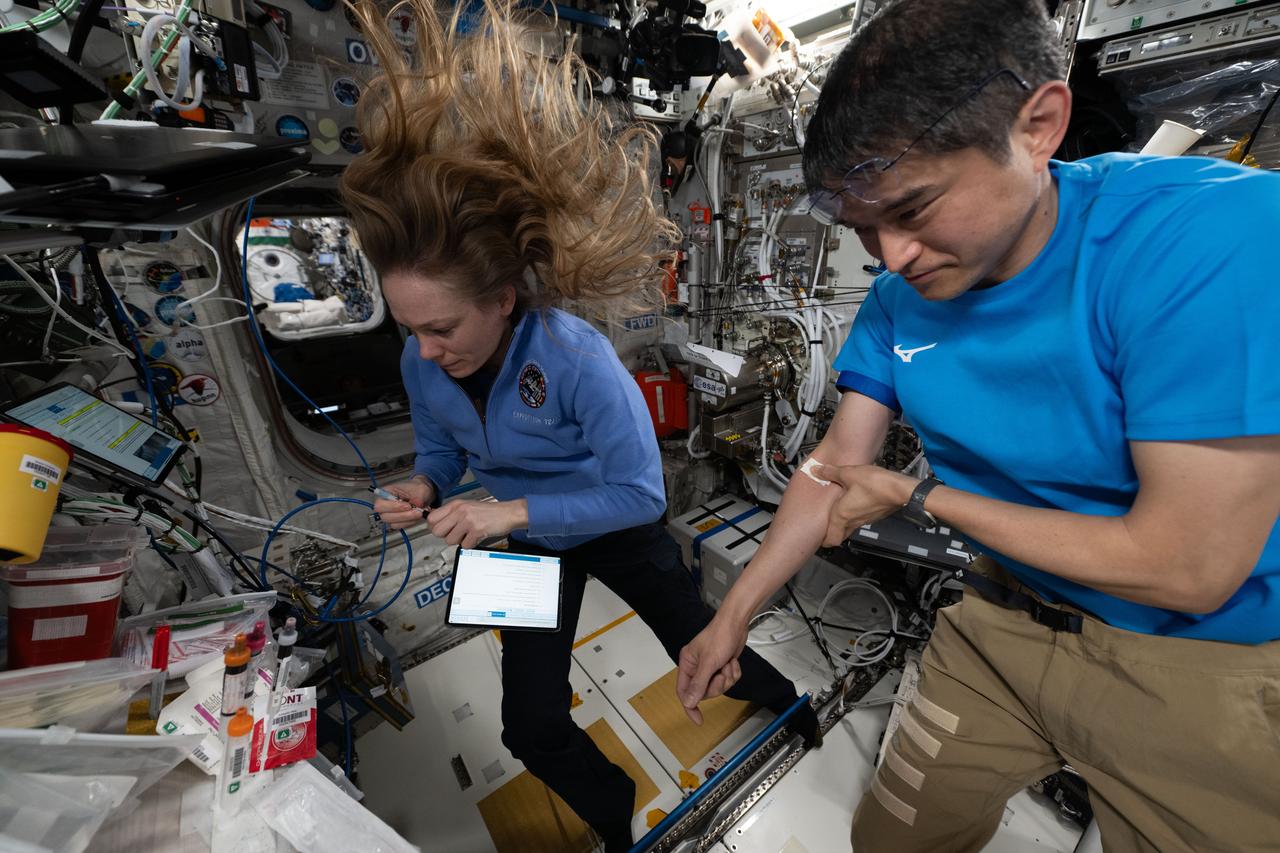
iss073e0284440 (July 8, 2025) --- Expedition 73 Flight Engineer Nichole Ayers of NASA and International Space Station Commander Takuya Onishi of JAXA (Japan Aerospace Exploration Agency) collect blood samples for the Immunity Assay human research investigation. The study will analyze the blood samples for signs of space-caused stress on cellular immune function to help doctors monitor crew health and keeps crews healthy on long term space missions.
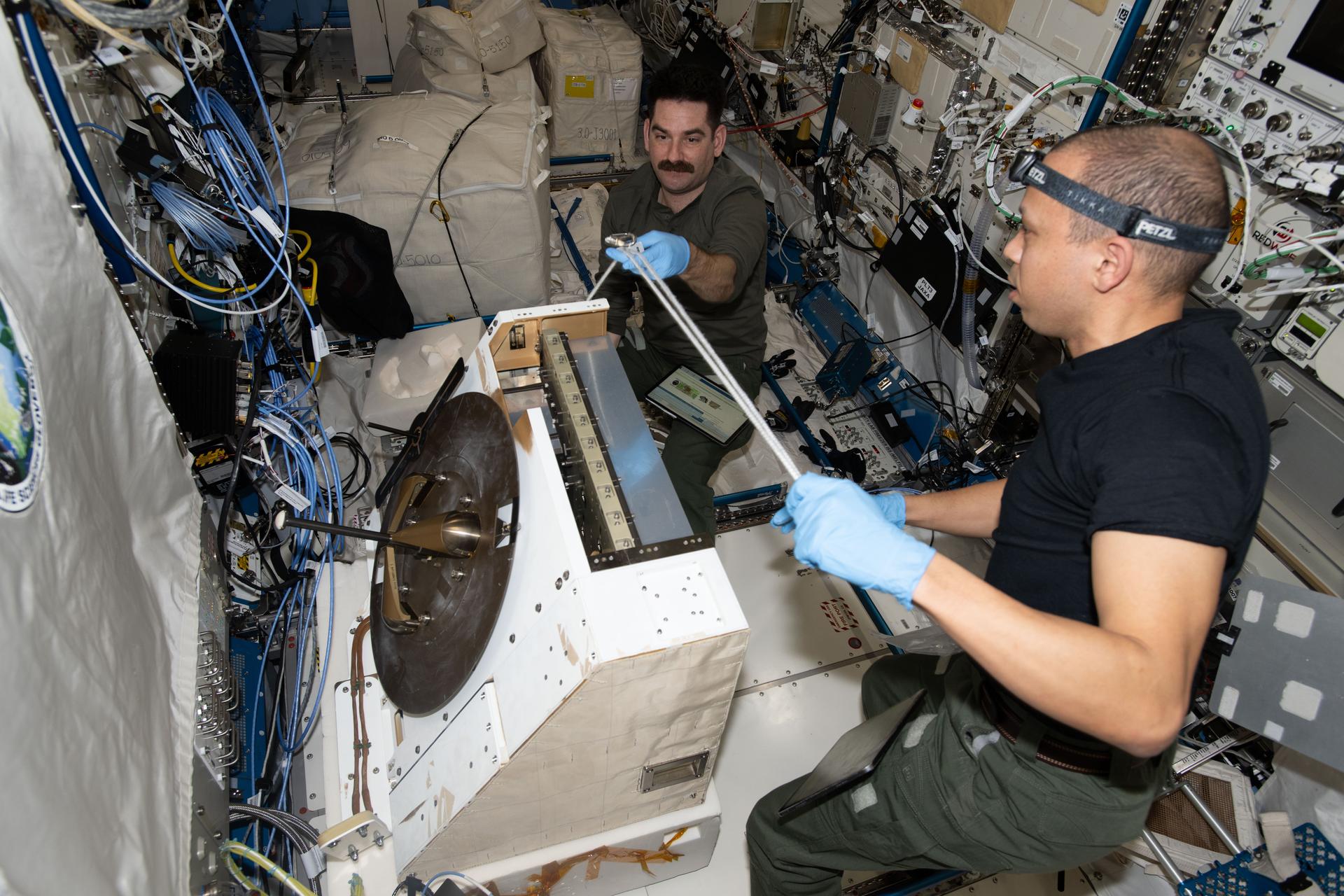
iss074e0491189 (April 20, 2026) --- NASA astronauts Jack Hathaway and Chris Williams, both Expedition 74 flight engineers, prepare the NanoRacks External Platform—carrying three scientific payloads—for installation inside the Kibo laboratory module’s airlock where it will be placed outside in the vacuum of space. The payloads will test ultra‑high‑resolution hyperspectral imagery, measure radio signals passing through Earth’s ionosphere, and help doctors identify space‑sensitive proteins while evaluating mobility and neuromuscular health therapies. Credit: NASA/Jack Hathaway
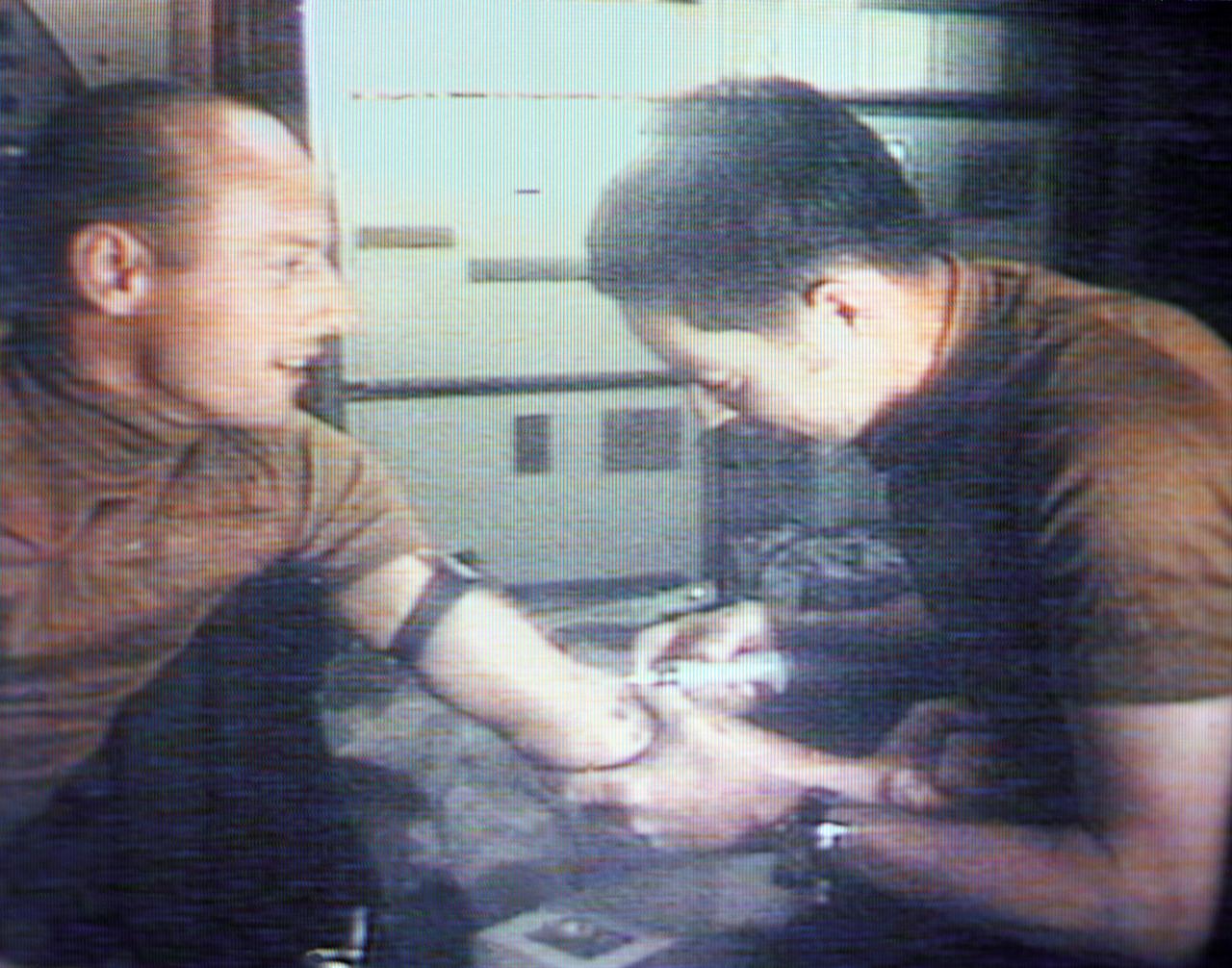
S73-27509 (6 June 1973) --- Scientist-astronaut Joseph P. Kerwin (right), Skylab 2 science pilot and a doctor of medicine, takes a blood sample from astronaut Charles Conrad Jr., Skylab 2 commander, as seen in this reproduction taken from a color television transmission made by a TV camera aboard the Skylab 1 and 2 space station cluster in Earth orbit. The blood sampling was part of the Skylab Hematology and Immunology Experiment M110 series. Photo credit: NASA
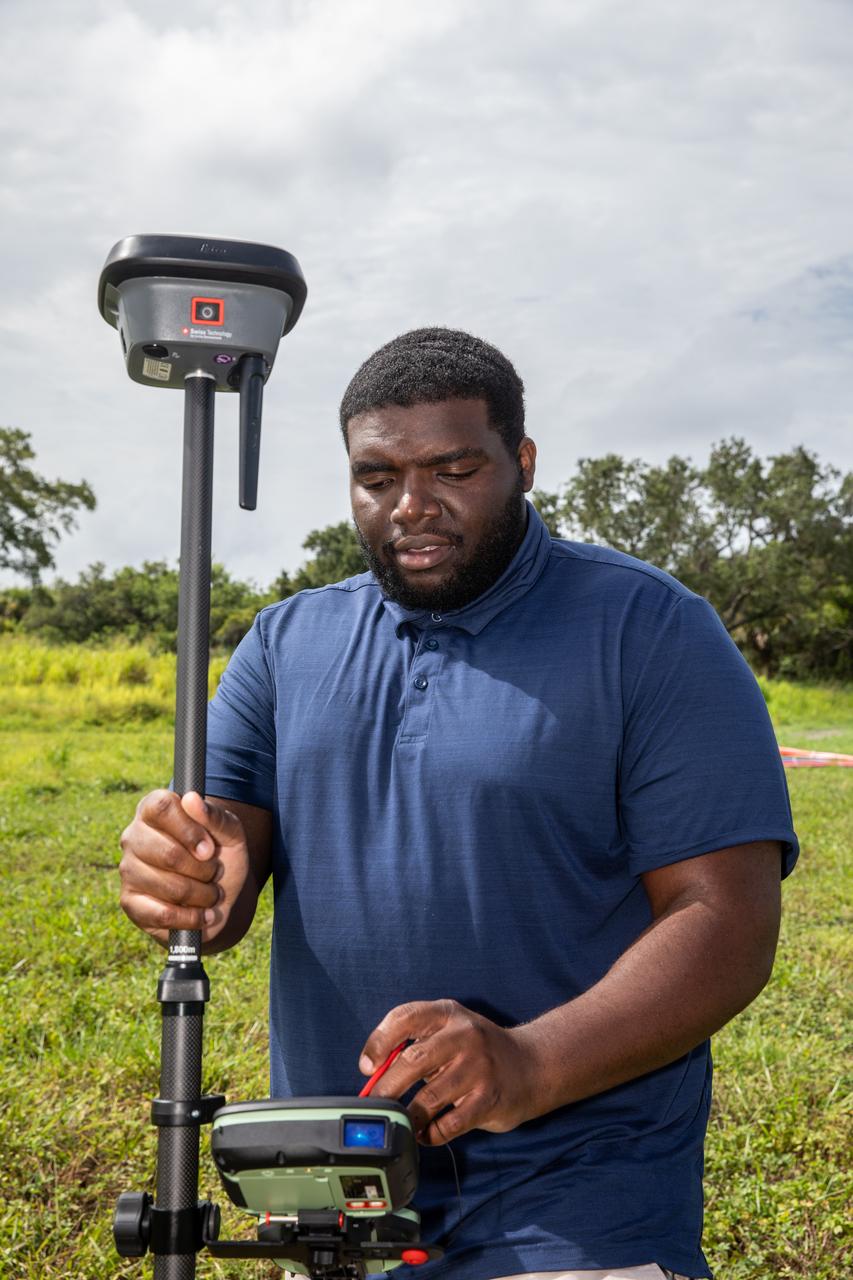
Rayshaun Wheeler said he created “forever-lasting memories” during his 10-week work experience at NASA’s Kennedy Space Center in Florida. A Farmville, Virginia, native, Wheeler is about halfway through his doctoral course work at the University of Virginia. At Kennedy, he worked under mentor Jason Schuler at Kennedy’s Granular Mechanics and Regolith Operations Lab in the center’s Swamp Works facility.
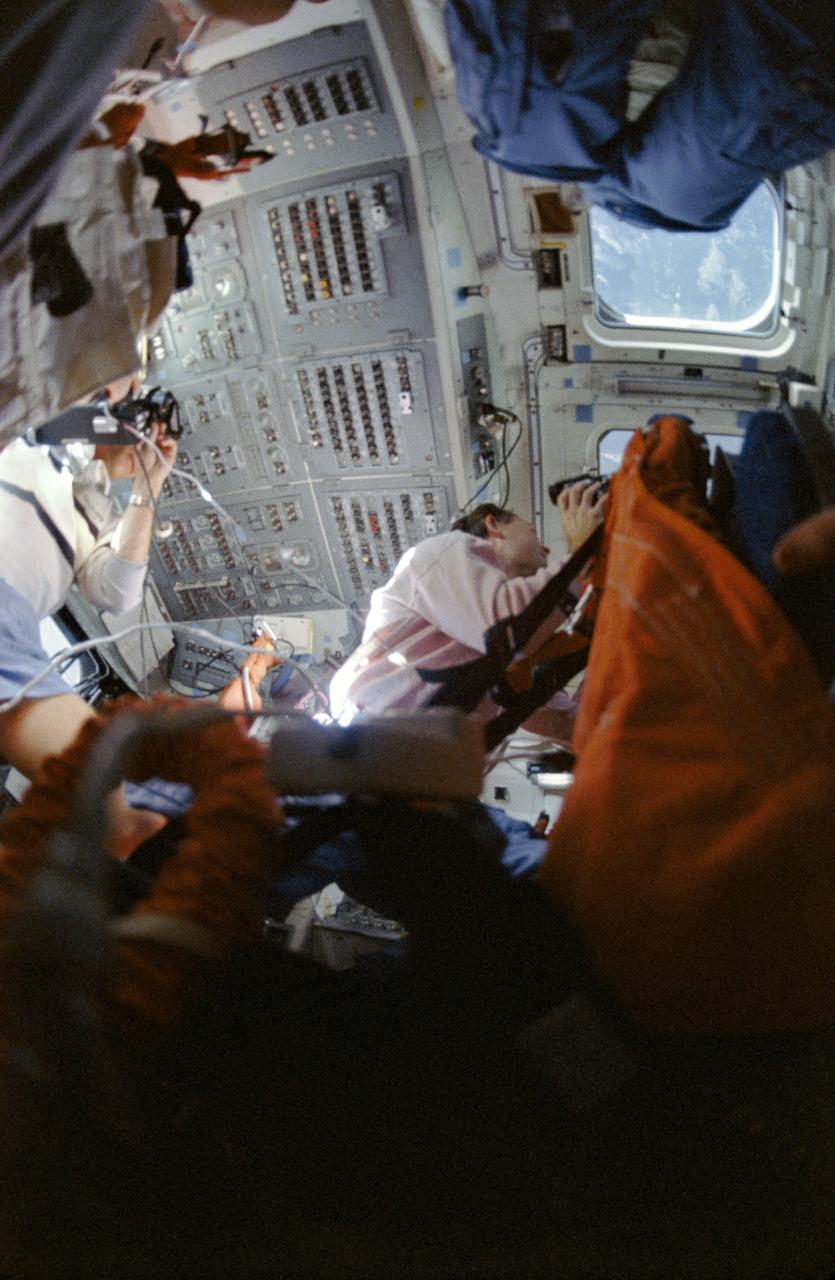
STS033-05-014A (22-27 Nov 1989) --- A low-angle view of STS-33's two astronaut medical doctors doubling as photographers and Earth observers on the flight deck of the Earth-orbiting Space Shuttle Discovery. Astronauts Story Musgrave, left, and Manley L. Carter and three other crewmembers shared five days aboard the Discovery for this DOD-devoted mission.
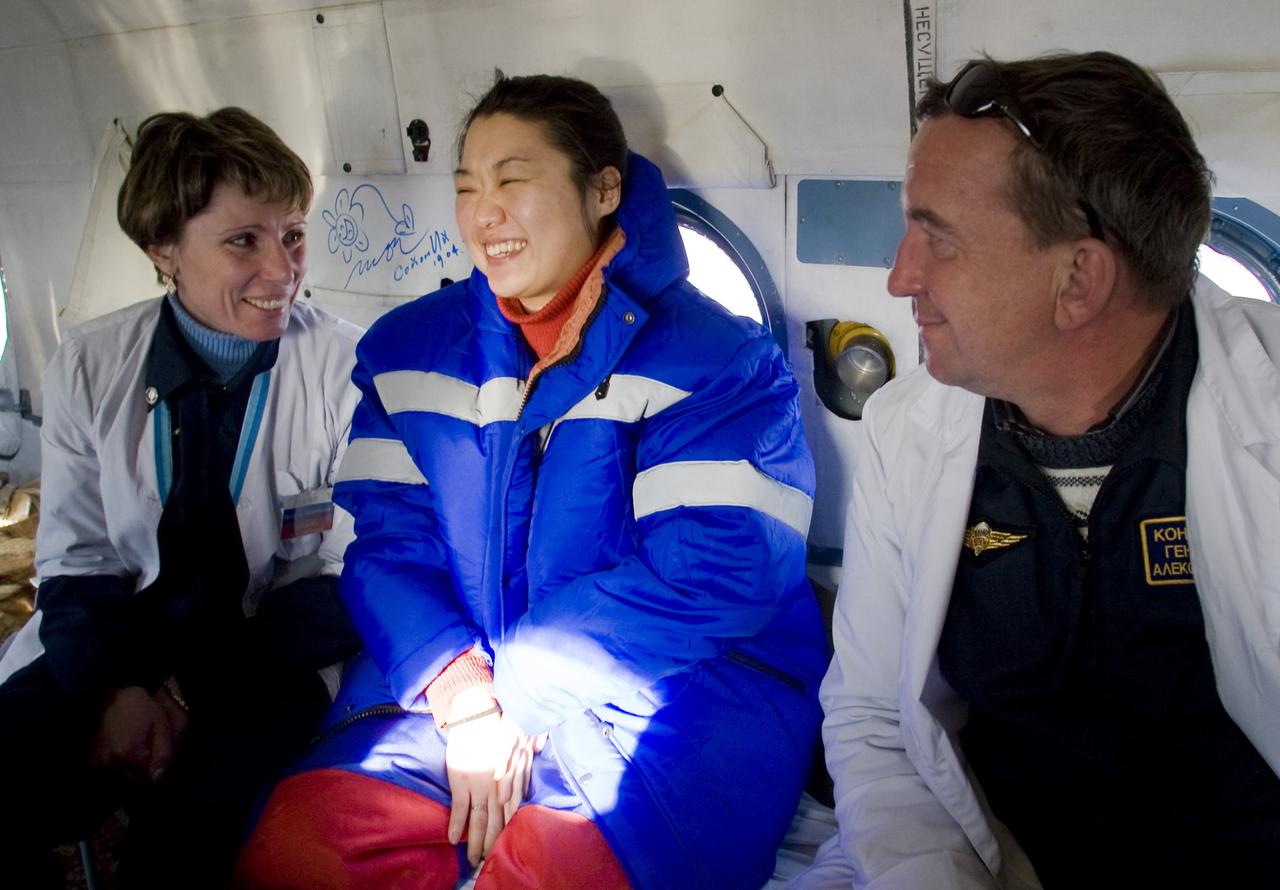
South Korean spaceflight participant So-Yeon YI jokes with Russian doctors in a helicopter after she and fellow crew members Expedition 16 Commander Peggy Whitson and Flight Engineer and Soyuz Commander Yuri Malenchenko landed their Soyuz TMA-11 capsule, Friday, April 19, 2008, in central Kazakhstan. Whitson and Malenchenko completed 192 days in space and Yi 11 days in orbit. Photo Credit: (NASA/Reuters/Pool)
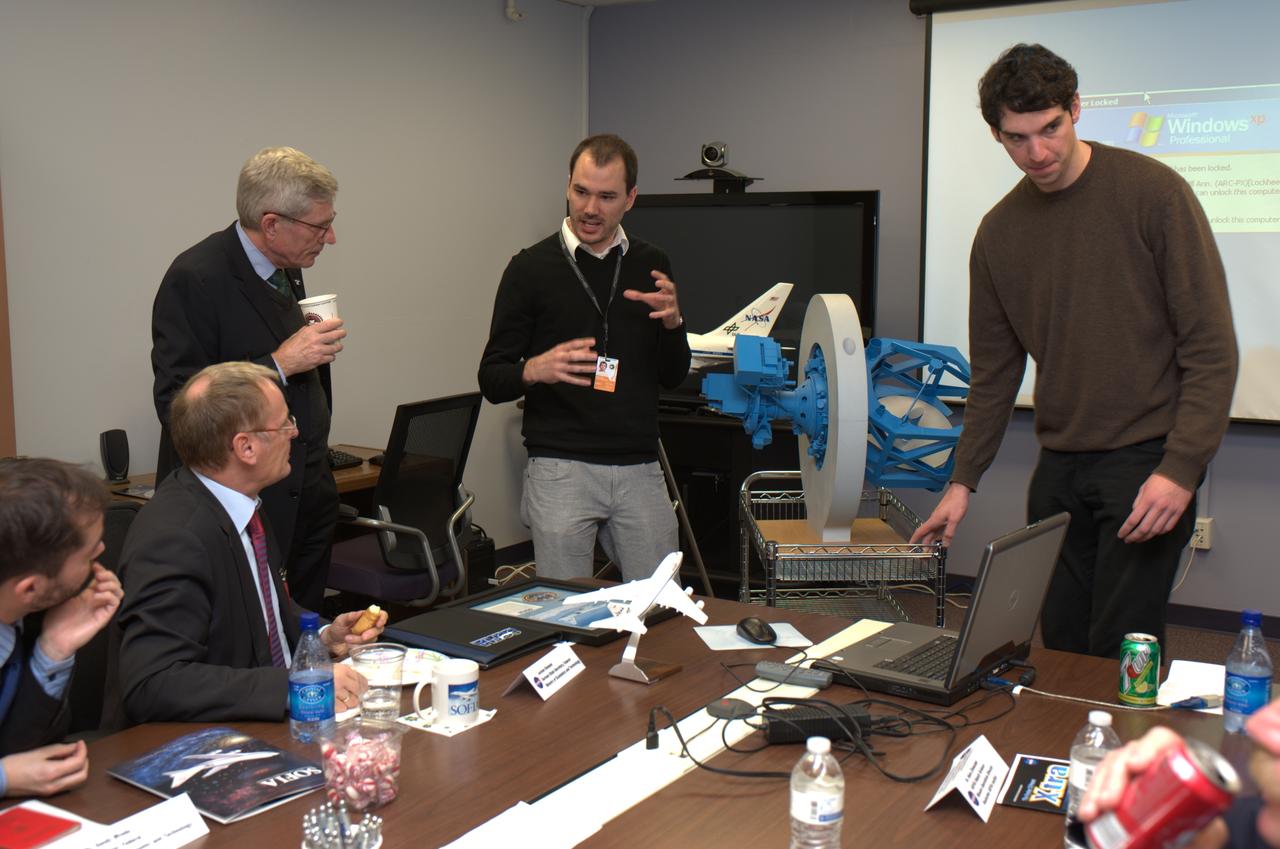
German Deligation visits Ames SOFIA Science Office for briefing. Left to right Jochen Homann, German State Secretary Federal Ministry of Economics and Technology, Dr. Benno Bunse, President & CEO, German American Chamber of Commerce, New York, Manuel Wiedemann, post-doctorate student from the Deutsches SOFIA Institute, University of Stuttgart.
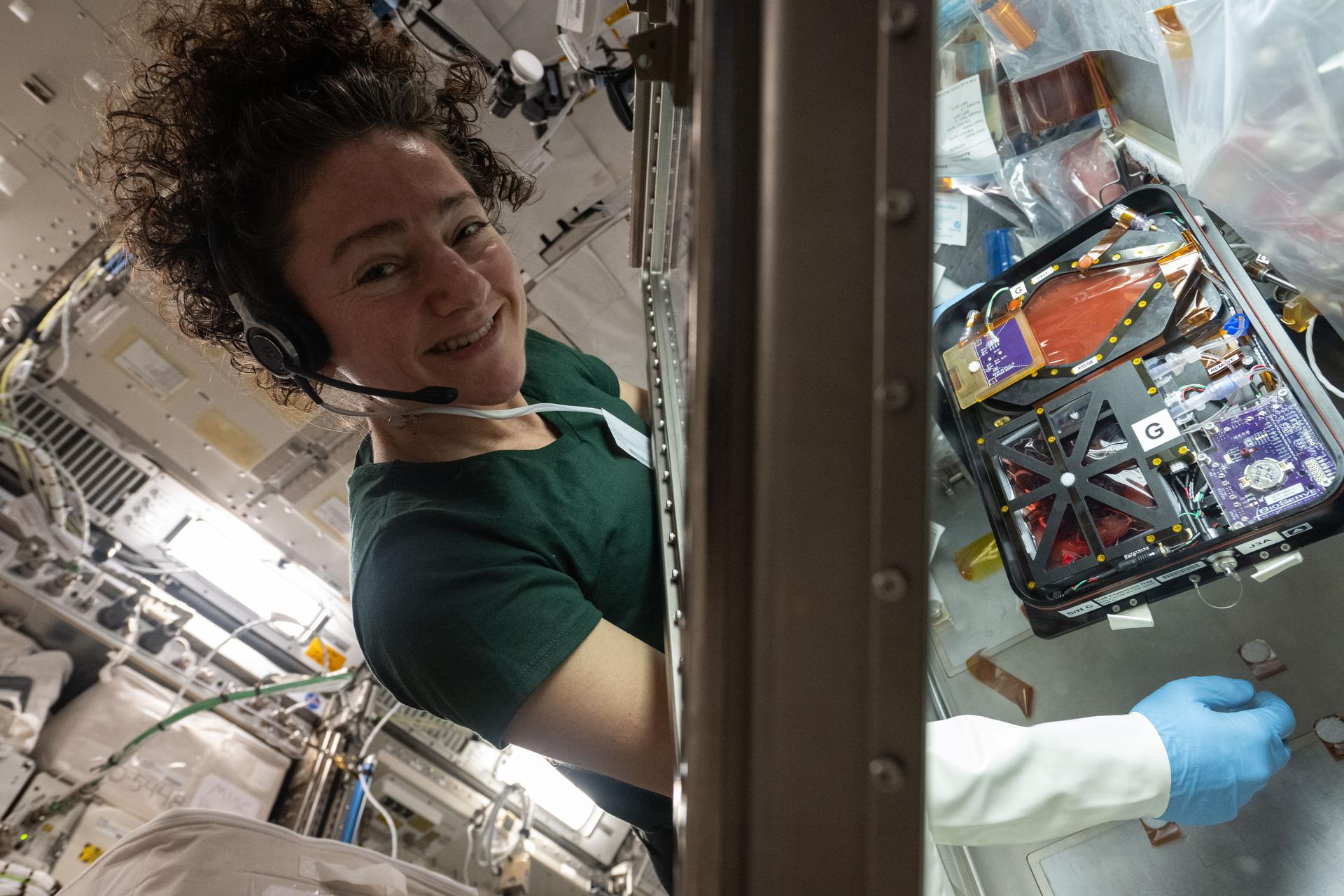
iss074e0669779 (June 4, 2026) --- NASA astronaut and Expedition 74 flight engineer Jessica Meir works inside the Kibo laboratory module's Life Science Glovebox setting up research hardware for a blood stem cell investigation. Meir would later nourish the stem cells that are growing inside a research incubator to help doctors learn how to manufacture and commercialize space-designed therapies for a variety of blood cancers and immune diseases. Credit: NASA/Jack Hathaway
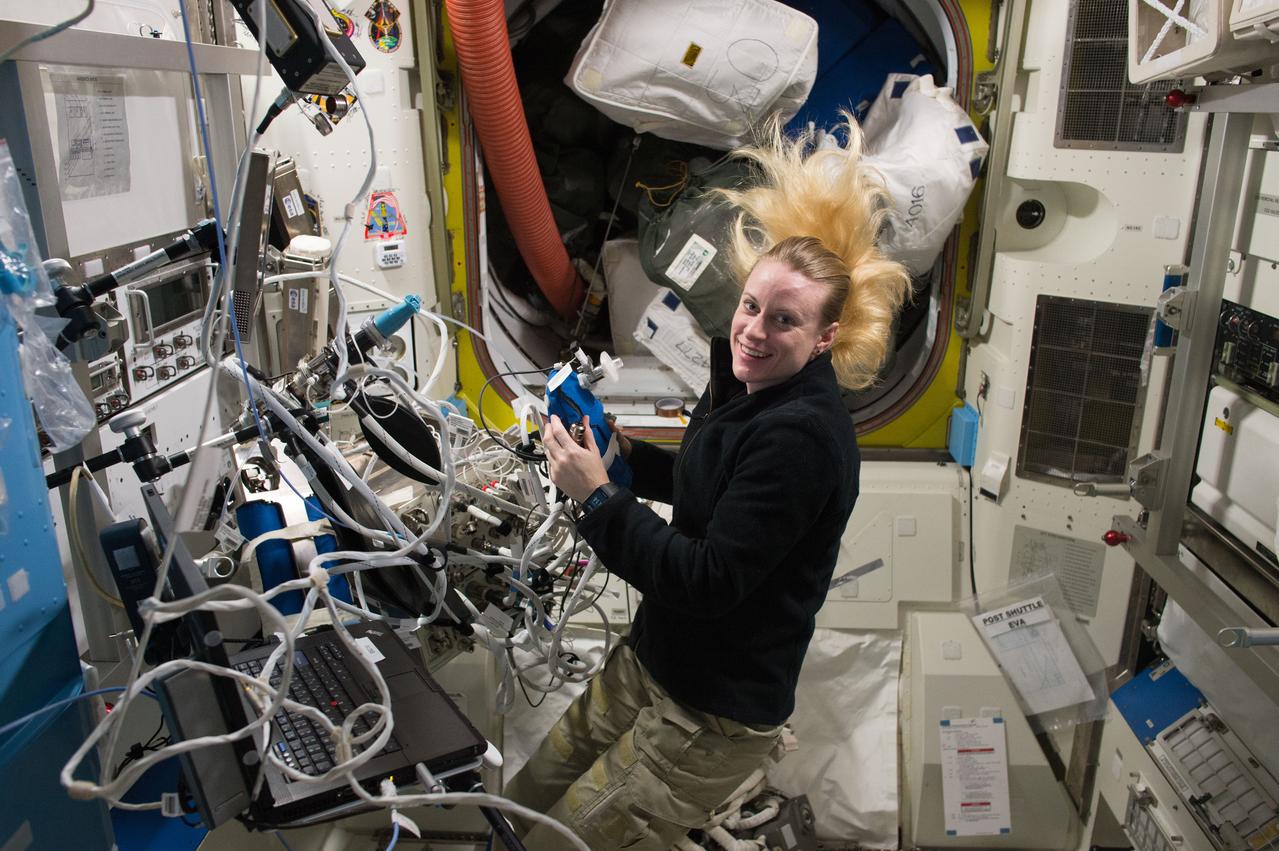
iss049e045997 (10/25/2016) --- NASA Astronaut Kate Rubins as she begans the measurement of the European Space Agency (ESA) Airway Monitoring experiment in the Quest airlock. The investigation studies the occurrence and indicators of airway inflammation in crew members to help flight surgeons plan safer, long-term missions to the moon, Mars and beyond. Results may also help doctors treat patients on Earth with asthma or other airway inflammatory diseases.
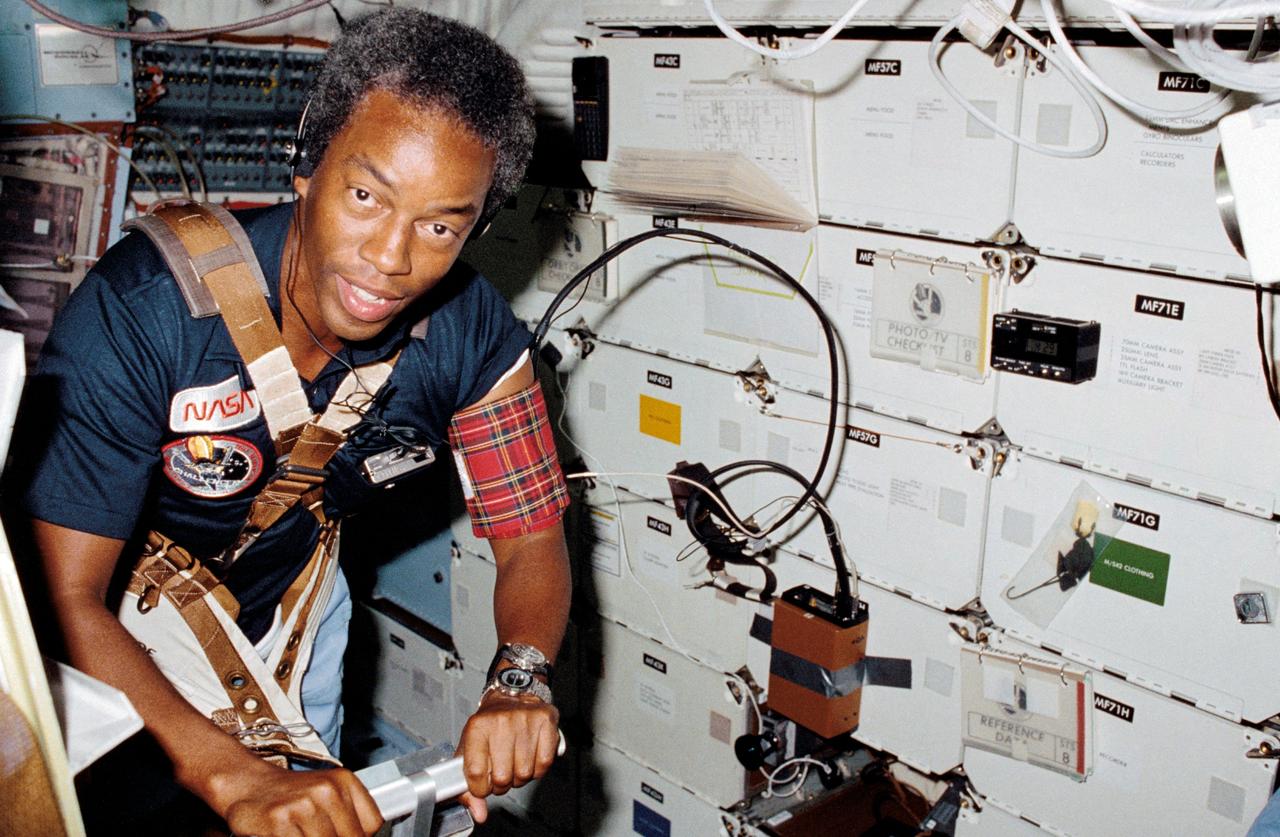
STS008-13-0361 (30 Aug.-5 Sept. 1983) --- Astronaut Guion S. Bluford, STS-8 mission specialist, assists Dr. William E. Thornton (out of frame) with a medical test that requires use of the treadmill exercising device designed for spaceflight by the STS-8 medical doctor. This frame was shot with a 35mm camera. Photo credit: NASA
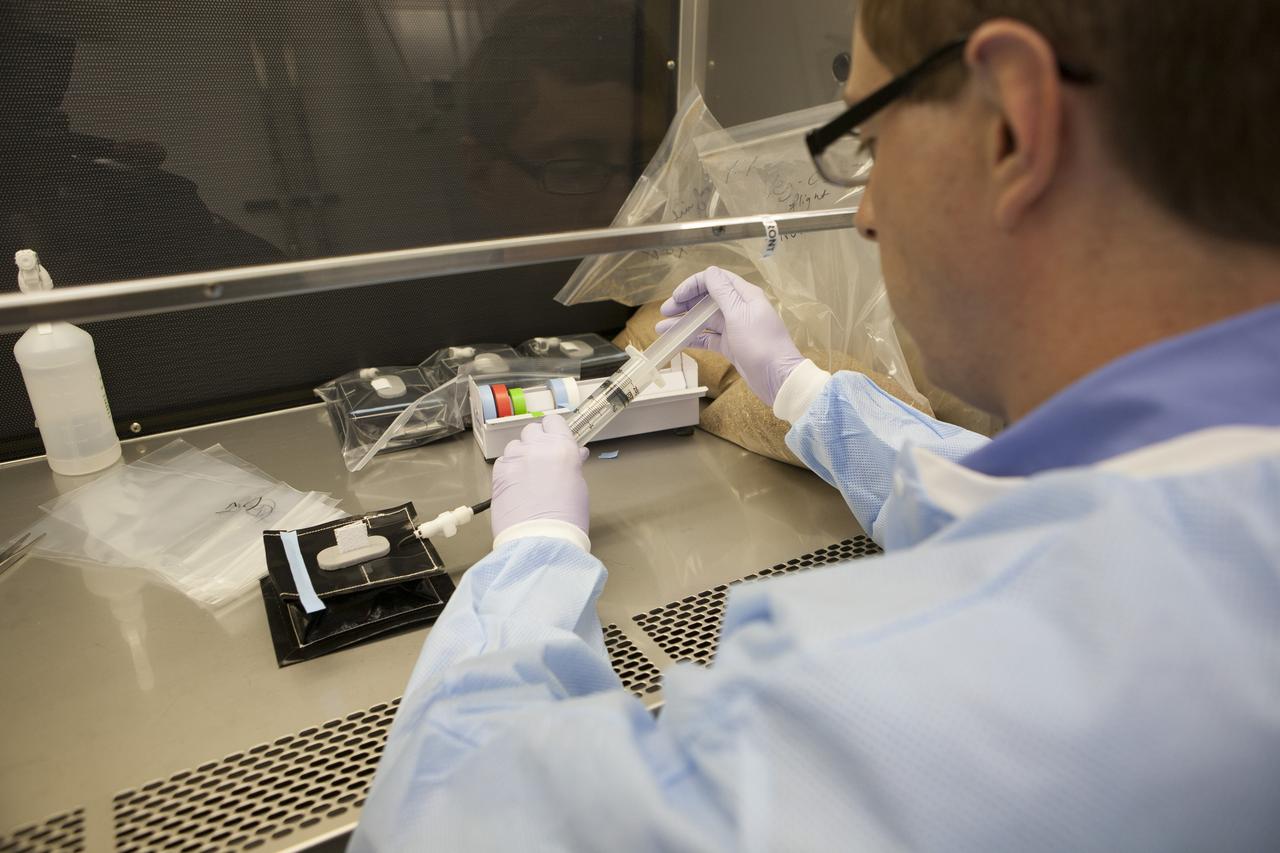
Inside a laboratory in the Space Station Processing Facility at NASA’s Kennedy Space Center in Florida, research scientists prepare the plant pillows for the Veg-03 experiment that will be delivered to the International Space Station aboard the eighth SpaceX Dragon commercial resupply mission. Dr. Mathew Mickens, a post-doctoral researcher, inserts a bonding agent into one of the Veg-03 plant pillows. The Veg-03 plant pillows will contain ‘Tokyo Bekana’ cabbage seeds and lettuce seeds for NASA’s third Veggie plant growth system experiment. The experiment will continue NASA’s deep space plant growth research to benefit the Earth and the agency’s journey to Mars.

iss071e019819 (April 22, 2024) --- Expedition 71 Flight Engineer and NASA astronaut Mike Barratt processes brain organoid samples inside the Life Science Glovebox for a neurodegenerative disorder study. Doctors will use the results from the investigation to learn how protect a crew member’s central nervous system and provide treatments for neurodegenerative conditions on Earth. The Human Brain Organoid Models for Neurodegenerative Disease & Drug Discovery (HBOND) investigation studies 3D neuroglial organoids derived from the induced pluripotent stem cells (IPSCs) of patients with Parkinson’s disease and primary progressive multiple sclerosis. Results may improve understanding of neurodegenerative disease and accelerate the development of new treatments.
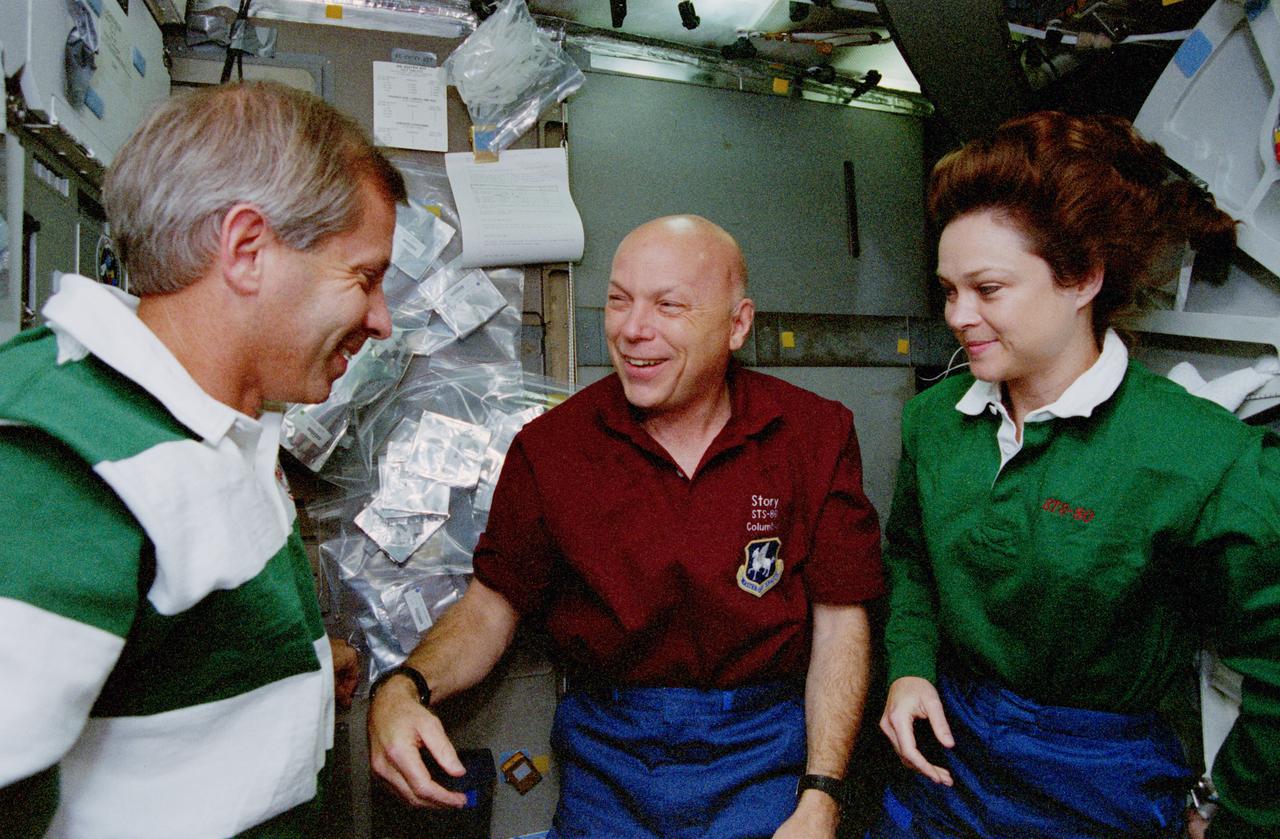
STS080-375-023 (19 Nov.-7 Dec. 1996) --- Astronauts Kenneth D. Cockrell, STS-80 mission commander, and Tamara E. Jernigan, payload commander, share a moment of off-duty time with astronaut Story Musgrave on the middeck of the Earth-orbiting space shuttle Columbia. Musgrave was making his sixth flight aboard the Space Shuttle as a mission specialist. His fellow crewmembers presented him with a patch that reads, "Master of Space." Before and during his 30 years with NASA, Musgrave obtained several academic degrees, including several Masters, a medical doctorate and several Ph.D.
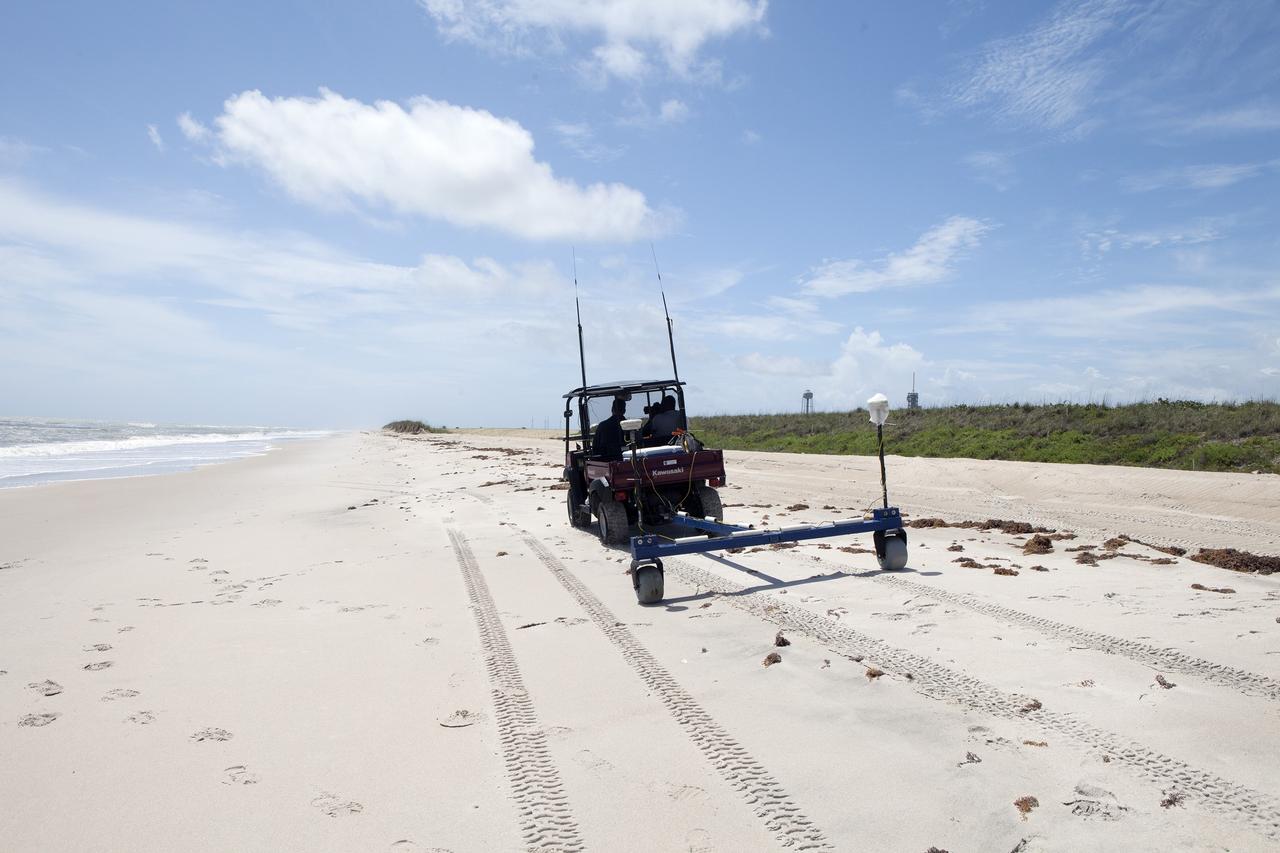
CAPE CANAVERAL, Fla. -- Rich MacKenzie, who earned a doctorate in geological sciences at the University of Florida, collects Global Positioning System survey measurements along a restored 1.2 mile stretch of shoreline near Launch Pads 39A and B. Experts from University of Florida are working with NASA scientists to better understand beach erosion. Constant pounding from tropical storms, such as Hurricane Sandy in October of 2012, other weather systems and higher than usual tides, destroyed sand dunes protecting infrastructure at the spaceport. Photo credit: NASA/Dan Casper
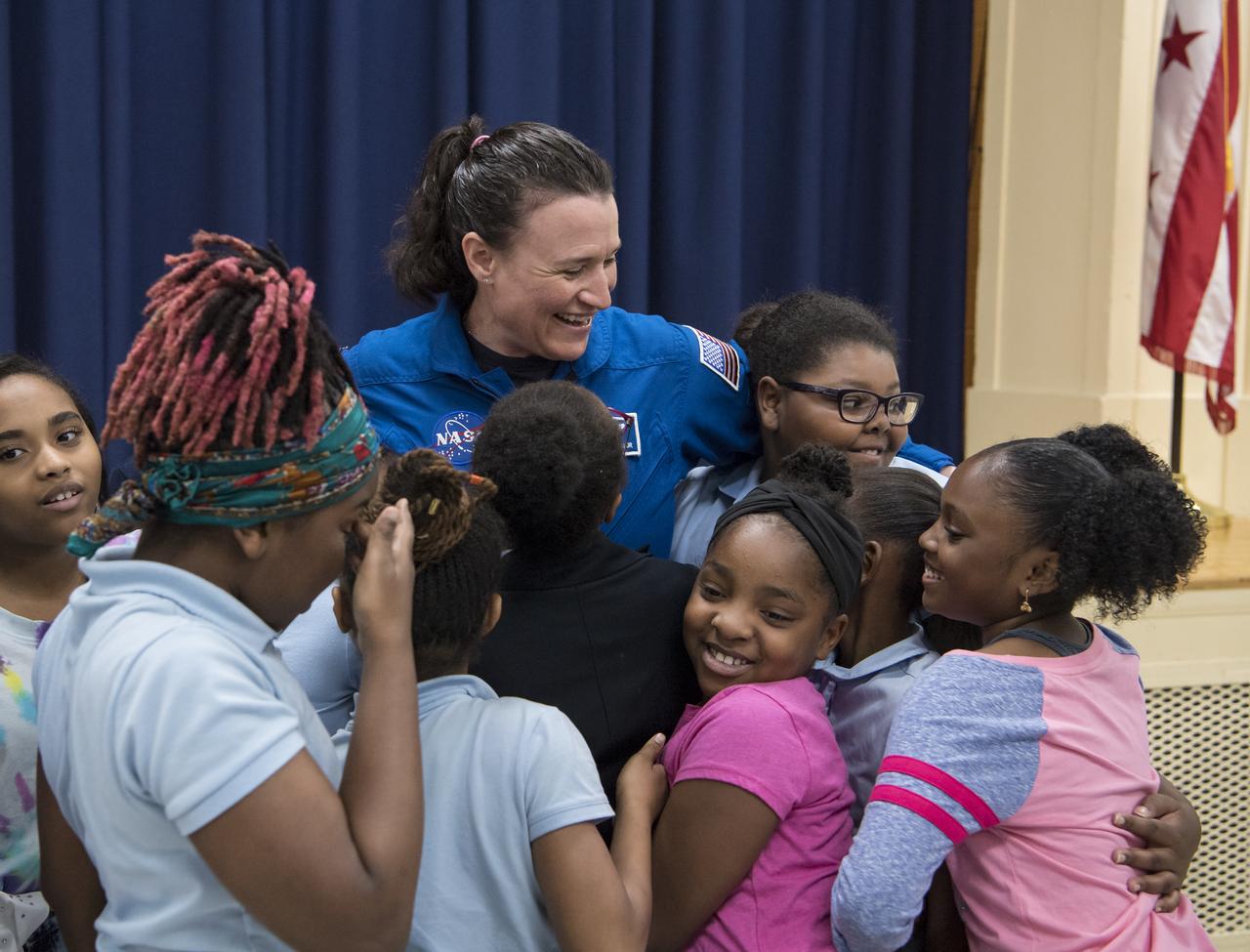
NASA astronaut Dr. Serena Auñón-Chancellor is hugged by students after a presentation about her experience on Expeditions 56 and 57 onboard the International Space Station (ISS) at Excel Academy Public Charter School, Monday, June 10, 2019 in Washington, DC. Auñón-Chancellor spent 197 days living and working onboard the ISS and contributed to hundreds of experiments in biology, biotechnology, physical science, and Earth science while there. She is also a doctor and started her career with NASA as a flight surgeon in 2006. Photo Credit: (NASA/Aubrey Gemignani)
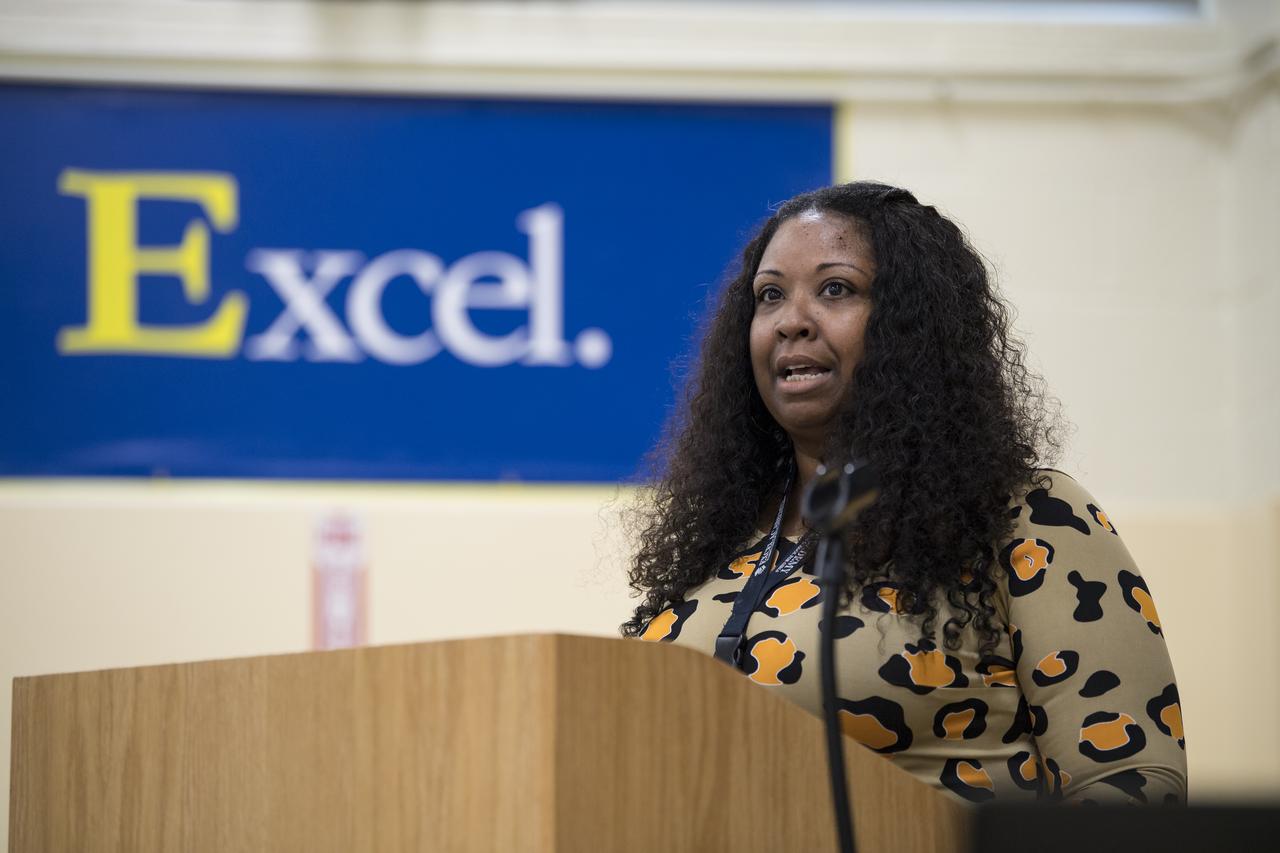
Excel Academy Principle, Tenia Pritchard, introduces NASA astronaut Dr. Serena Auñón-Chancellor to speak about her experience on Expeditions 56 and 57 onboard the International Space Station (ISS) at Excel Academy Public Charter School, Monday, June 10, 2019 in Washington, DC. Auñón-Chancellor spent 197 days living and working onboard the ISS and contributed to hundreds of experiments in biology, biotechnology, physical science, and Earth science while there. She is also a doctor and started her career with NASA as a flight surgeon in 2006. Photo Credit: (NASA/Aubrey Gemignani)
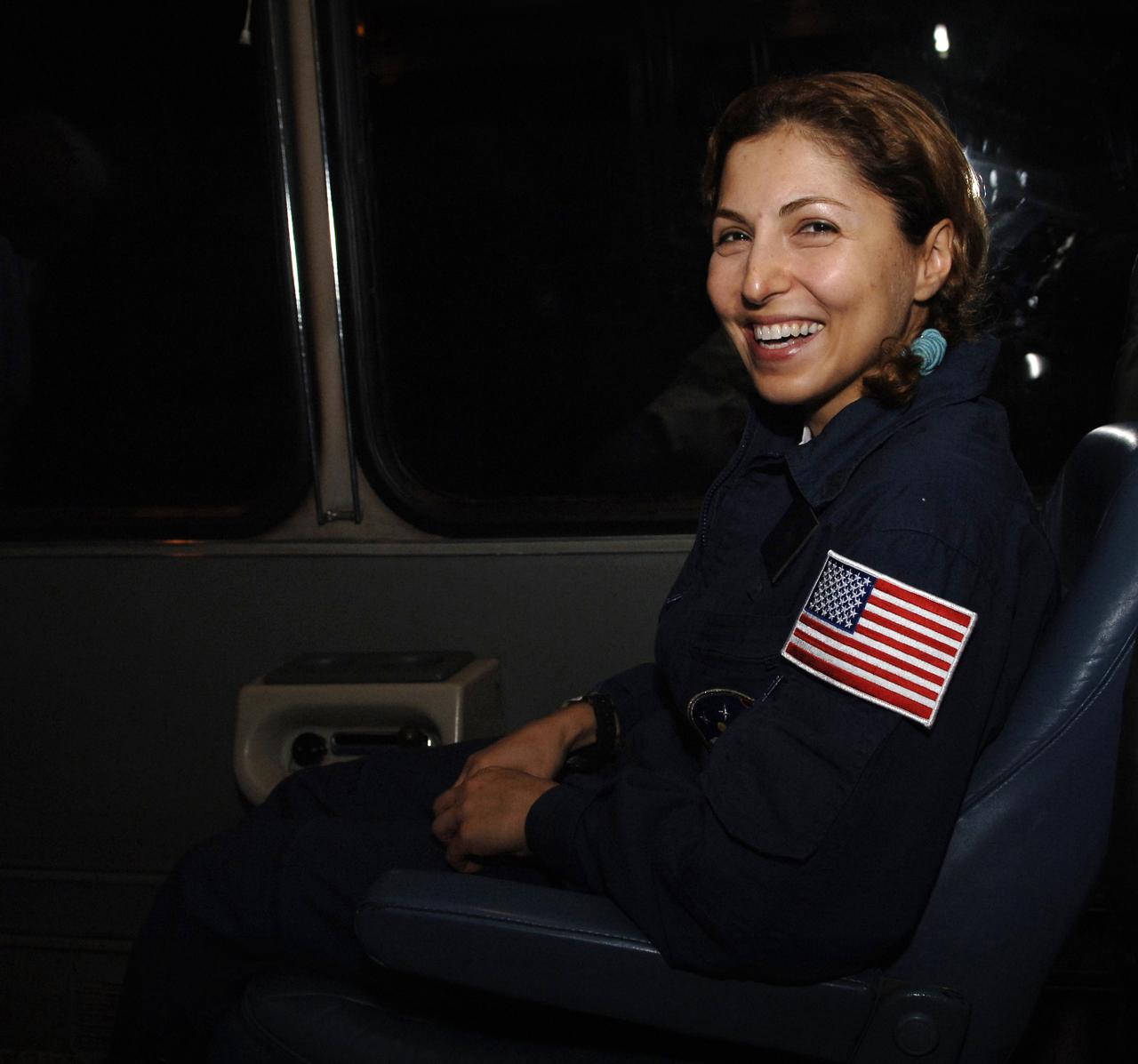
American spaceflight participant Anousheh Ansari rides the bus with doctors and her fellow crew mates from the Cosmonaut Hotel to building 254 at the Baikonur Cosmodrome where they will suit up for launch, Monday, Sept. 18, 2006, in Kazakhstan. The Soyuz TMA-9 spacecraft launched from the Baikonur Cosmodrome at 10:09 a.m. local time carrying Expedition 14 Commander Michael Lopez-Alegria, Soyuz Commander and Expedition 14 Flight Engineer Mikhail Tyurin and American spaceflight participant Anousheh Ansari, who will spend nine days on the International Space Station under a commercial agreement with the Russian Federal Space Agency. Photo Credit: (NASA/Bill Ingalls)
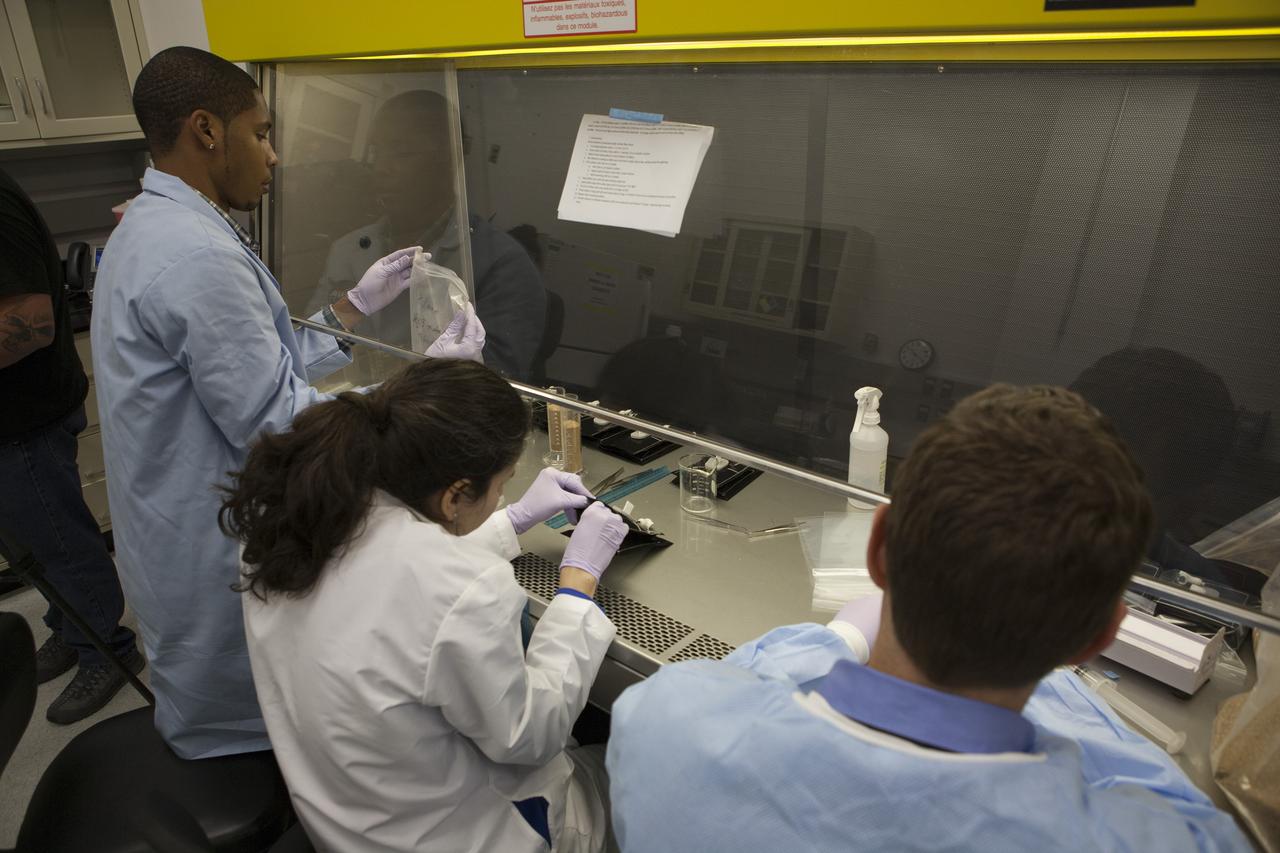
Inside a laboratory in the Space Station Processing Facility at NASA’s Kennedy Space Center in Florida, research scientists prepare the plant pillows for the Veg-03 experiment that will be delivered to the International Space Station aboard the eighth SpaceX Dragon commercial resupply mission. From left, are Matt Romeyn, NASA pathways intern; Dr. Gioia Massa, NASA payload scientist for Veggie; and Dr. Mathew Mickens, a post-doctoral researcher. The Veg-03 plant pillows will contain ‘Tokyo Bekana’ cabbage seeds and lettuce seeds for NASA’s third Veggie plant growth system experiment. The experiment will continue NASA’s deep space plant growth research to benefit the Earth and the agency’s journey to Mars.
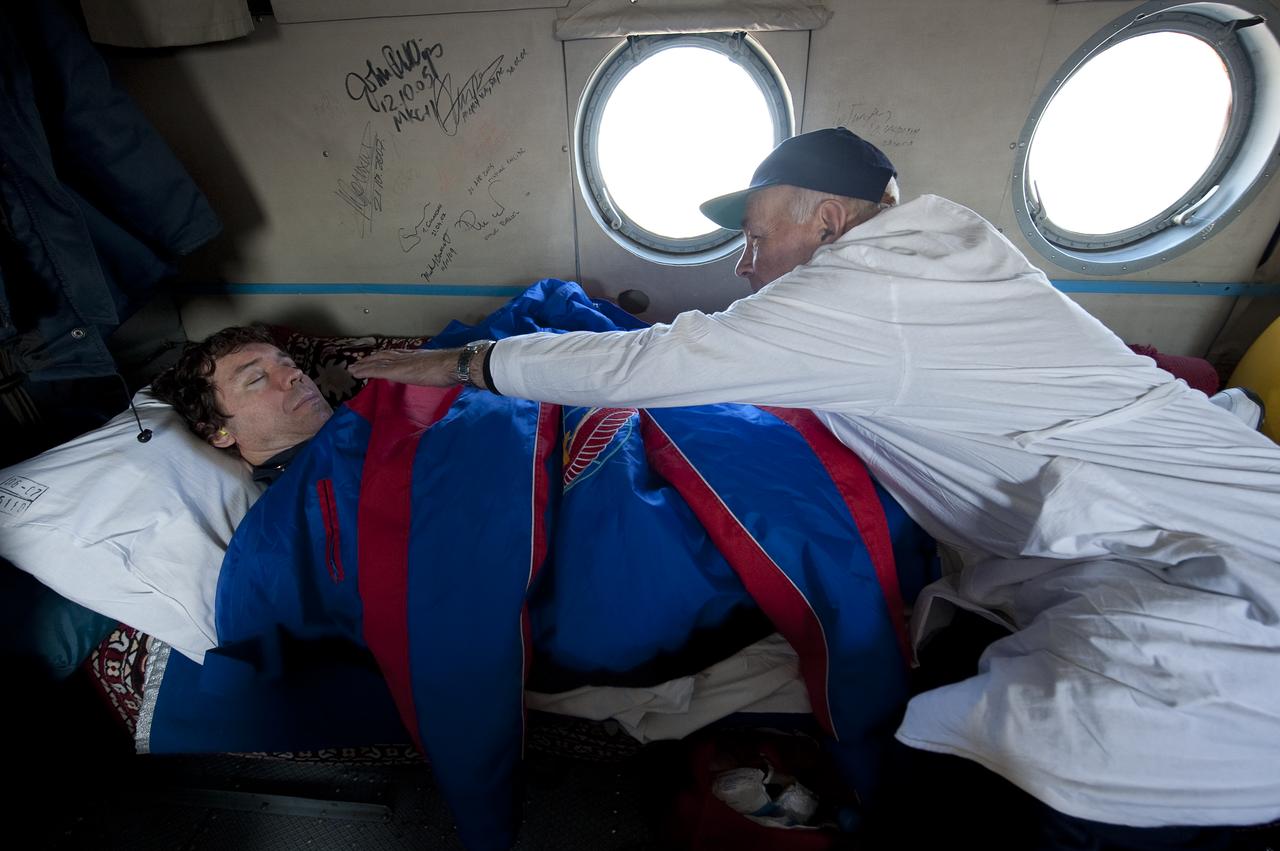
A Russian doctor monitors Expedition 20 Flight Engineer Michael Barratt onboard a helicopter heading to Kustanay, Kazakhstan shortly after Barratt, Expedition 20 Commander Gennady Padalka, and spaceflight participant Guy Laliberté landed their Soyuz TMA-14 capsule near the town of Arkalyk, Kazakhstan on Sunday, Oct. 11, 2009. Padalka and Barratt are returning from six months onboard the International Space Station, along with Laliberté who arrived at the station on Oct. 2 with Expedition 21 Flight Engineers Jeff Williams and Maxim Suraev aboard the Soyuz TMA-16 spacecraft. Photo Credit: (NASA/Bill Ingalls)
Expedition 34 Commander Kevin Ford of NASA walks from a Russian Search and Rescue helicopter with NASA flight doctors, David Alexander, left, and Blake Chamberlain after flying from his Soyuz TMA-06M spacecraft landing site outside the town of Arkalyk to Kustanay, Kazakhstan on Saturday, March 16, 2013. Ford, along with Russian Soyuz Commander Oleg Novitskiy and Flight Engineer Evgeny Tarelkin of Russia returned from 142 days onboard the International Space Station where they served as members of the Expedition 33 and 34 crews. Photo Credit: (NASA/Bill Ingalls)
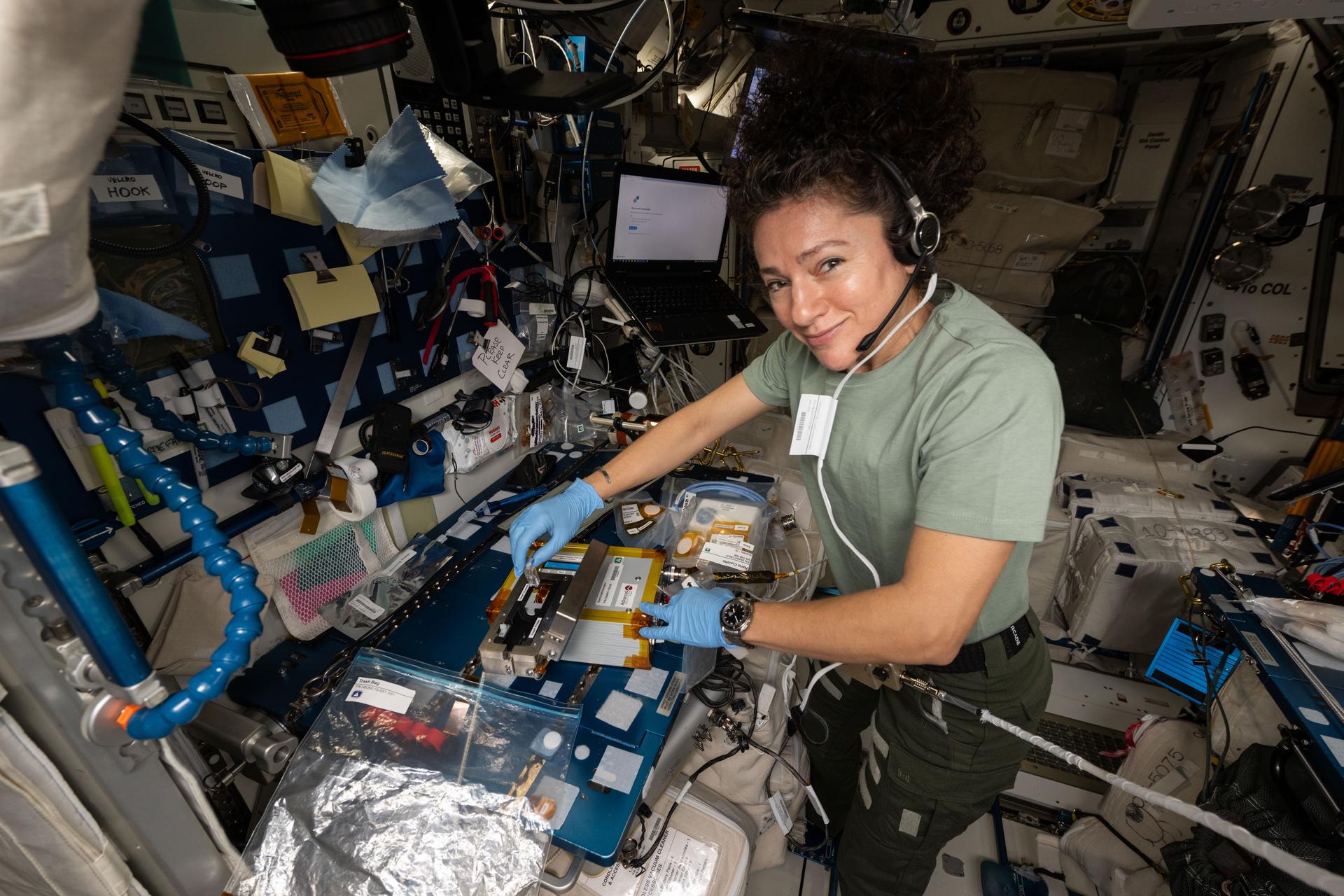
iss074e0573327 (May 7, 2026) --- NASA astronaut and Expedition 74 flight engineer Jessica Meir works inside the International Space Station's Harmony module conducting a biotechnology investigation to observe how tiny, engineered materials that mimic DNA behave in microgravity. Meir pointed a light-measuring device, called a spectrophotometer, at the DNA-like sample materials housed in small transparent containers to analyze their ability to form stable structures. Doctors on Earth will use the research data to learn how to improve and develop future treatments, or nano-therapies, that target cancer cells more precisely. Credit: NASA/Jessica Meir
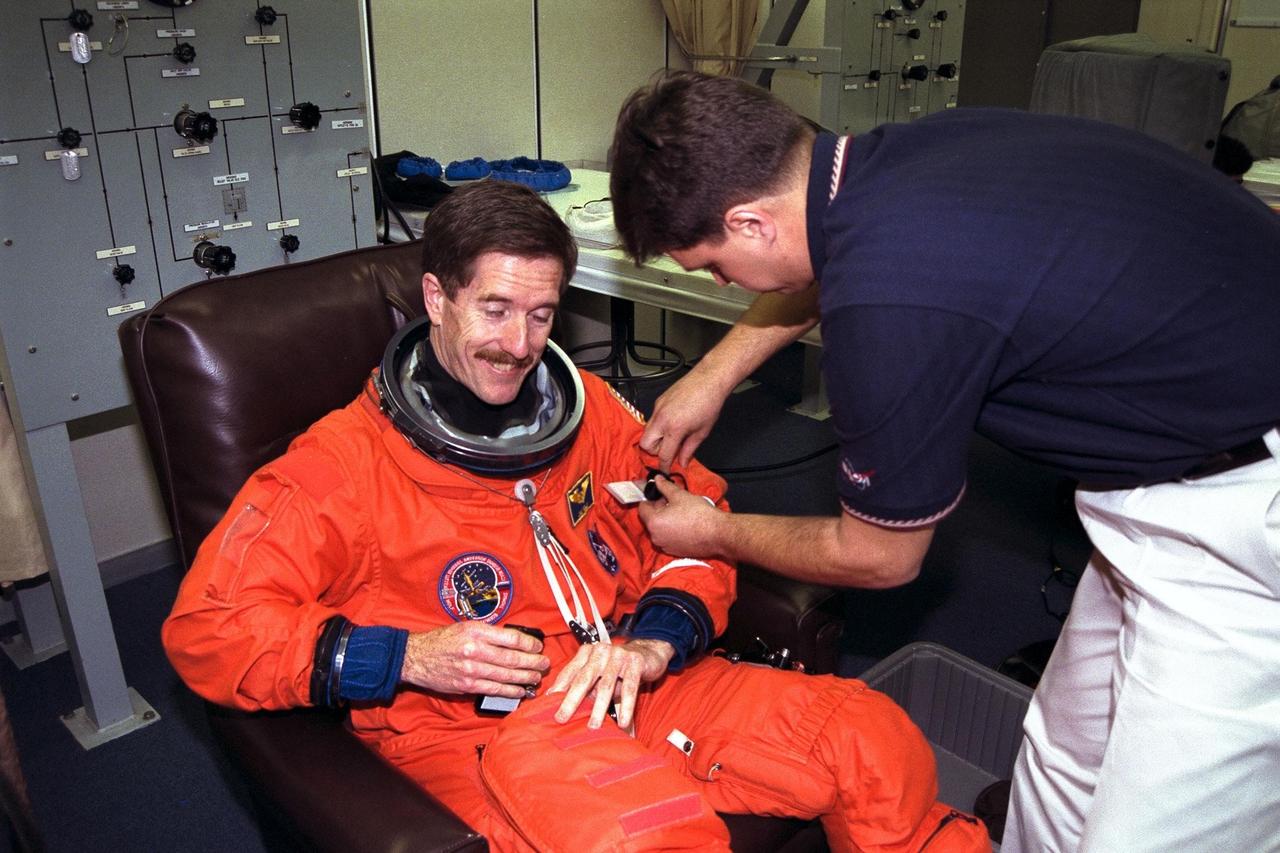
STS-89 Mission Specialist James Reilly, Ph.D., smiles as he completes the donning of his launch/entry suit in the Operations and Checkout (O&C) Building. He holds a doctorate in geosciences. He and six fellow crew members will shortly depart the O&C and head for Launch Pad 39A, where the Space Shuttle Endeavour will lift off during a launch window that opens at 9:43 p.m. EST, Jan. 22. STS-89 is the eighth of nine planned missions to dock the Space Shuttle with Russia's Mir space station

Dr. Kurt H. Debus, Kennedy Space Center's First Director: A doctor of philosophy in engineering from Darmstadt University, Debus was selected by Dr. Wernher von Braun to direct the Experimental Missile Firing Branch which began launching missiles from Cape Canaveral in 1953. Dr. Debus became the first Center Director for the new independent Launch Operations Center, and it was his job to put Saturn/Apollo into space. His tenure at Kennedy Space Center spanned 13 years, from 1962 to 1974. Poster designed by Kennedy Space Center Graphics Department/Greg Lee. Credit: NASA
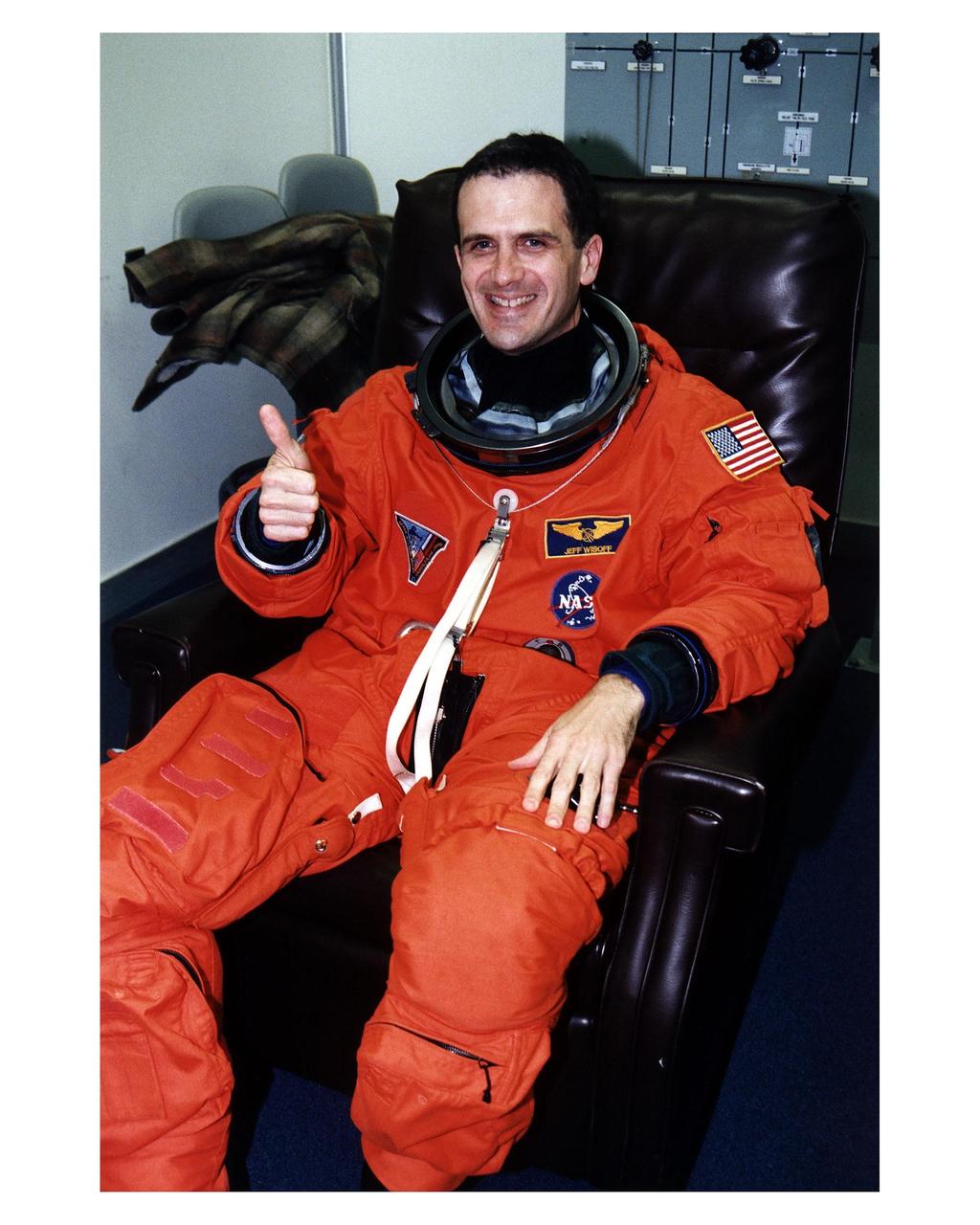
STS-81 Mission Specialist Peter J. K. "Jeff" Wisoff prepares for the fifth ShuttleMir docking as he waits in the Operations and Checkout (O&C) Building for the operation to fit him into his launch/entry suit to be completed. He conducted a spacewalk on his on his first Shuttle mission, STS57 and holds a doctorate degree in applied physics with an emphasis on lasers and semiconductor materials. He and five crew members will shortly depart the O&C and head for Launch Pad 39B, where the Space Shuttle Atlantis will lift off during a 7-minute window that opens at 4:27 a.m. EST, January 12
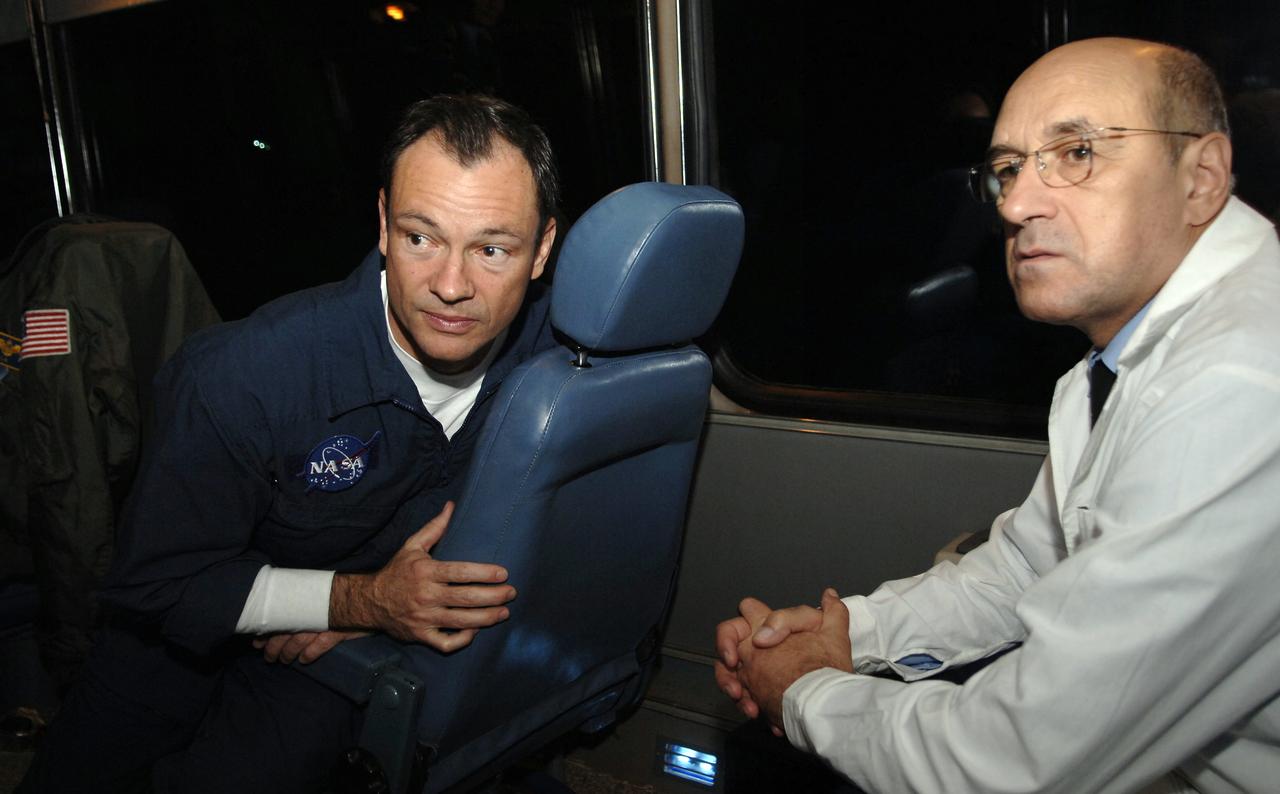
Expedition 14 Commander Michael Lopez-Alegria, left, rides the bus with doctors and his fellow crew mates from the Cosmonaut Hotel to building 254 at the Baikonur Cosmodrome where they will suit up for launch, Monday, Sept. 18, 2006 in Kazakhstan. The Soyuz TMA-9 spacecraft launched from the Baikonur Cosmodrome at 10:09 a.m. local time carrying Expedition 14 Commander Michael Lopez-Alegria, Soyuz Commander and Expedition 14 Flight Engineer Mikhail Tyurin and American spaceflight participant Anousheh Ansari, who will spend nine days on the International Space Station under a commercial agreement with the Russian Federal Space Agency. Photo Credit: (NASA/Bill Ingalls)
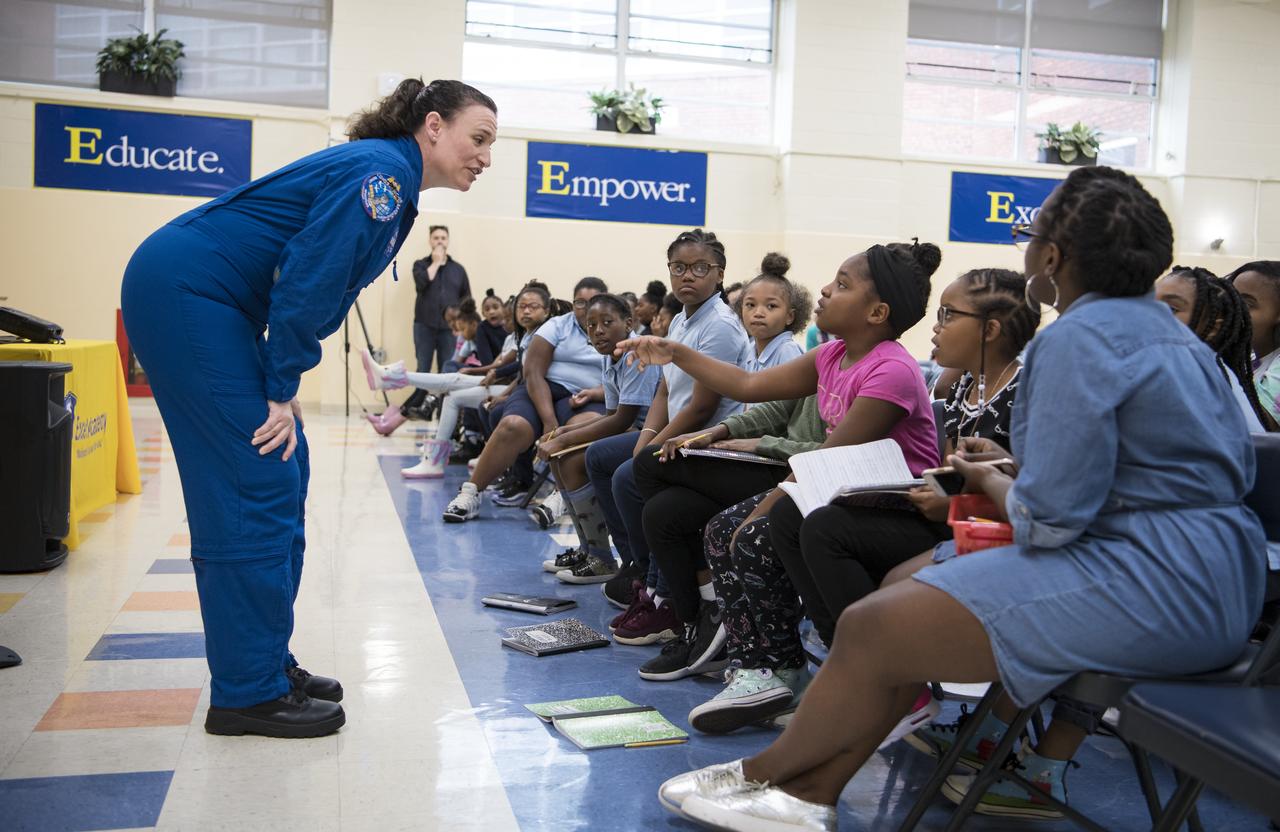
NASA astronaut Dr. Serena Auñón-Chancellor listens as a student asks her a question about her experience on Expeditions 56 and 57 onboard the International Space Station (ISS) at Excel Academy Public Charter School, Monday, June 10, 2019 in Washington, DC. Auñón-Chancellor spent 197 days living and working onboard the ISS and contributed to hundreds of experiments in biology, biotechnology, physical science, and Earth science while there. She is also a doctor and started her career with NASA as a flight surgeon in 2006. Photo Credit: (NASA/Aubrey Gemignani)
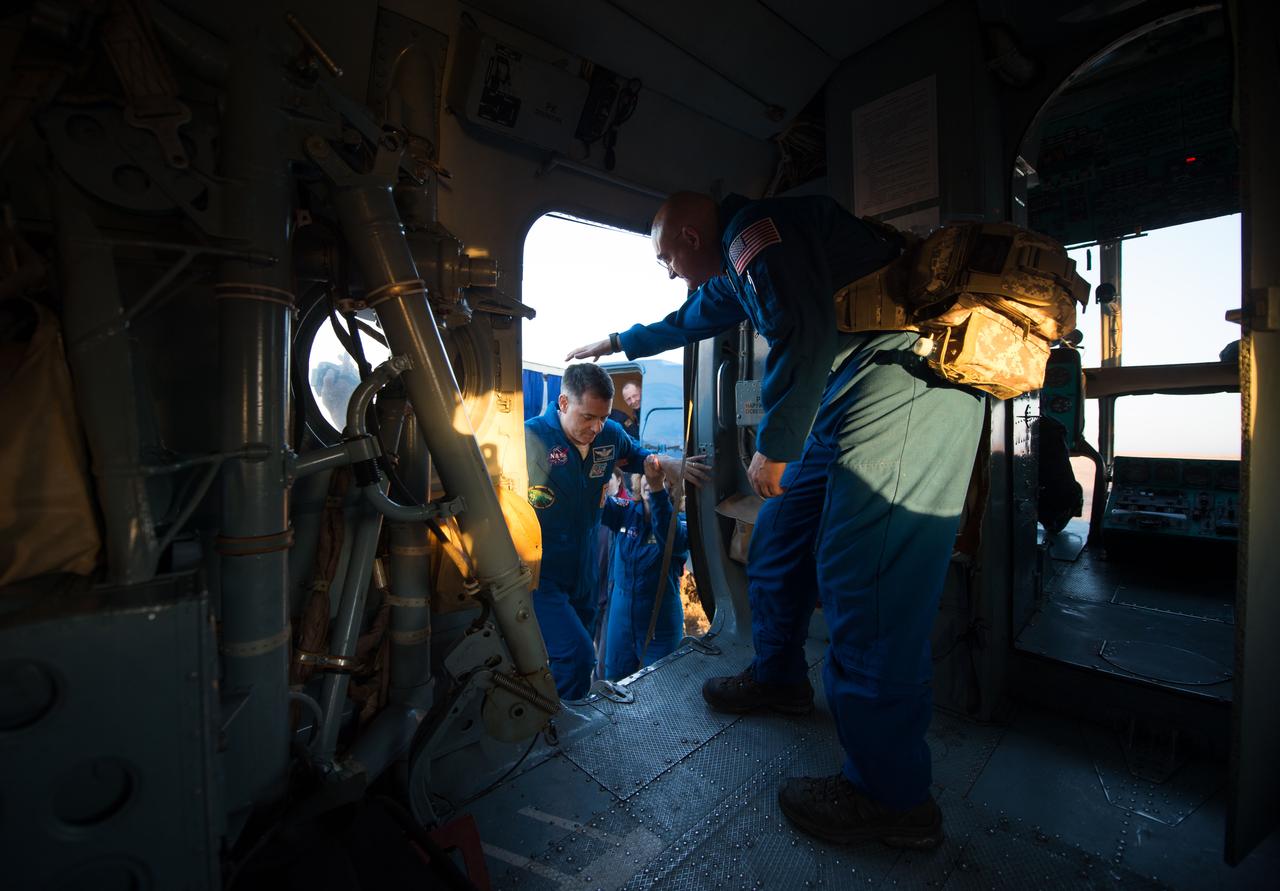
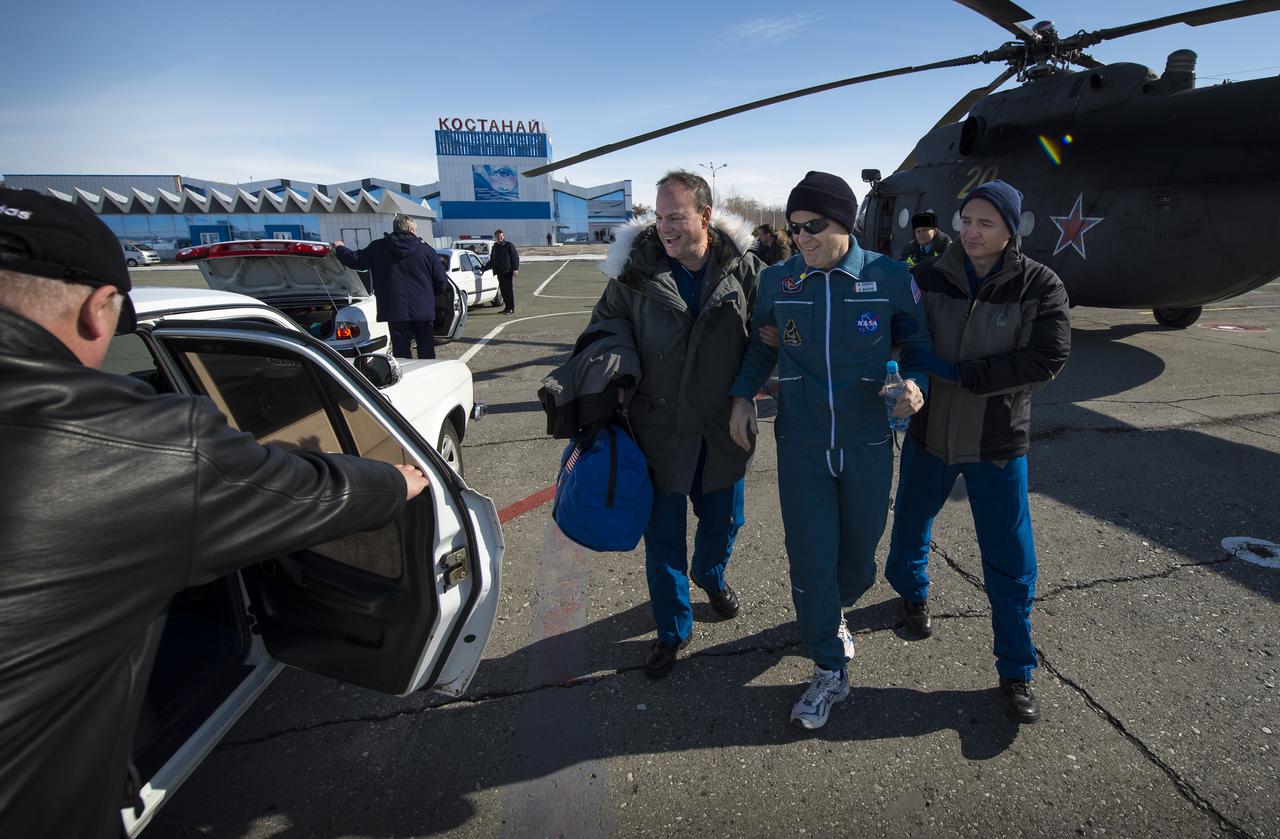
nhq201704100045 (April 10, 2017) --- NASA astronaut Shane Kimbrough, left, is helped into an awaiting Russian MI-8 helicopter by NASA flight doctor Blake Chamberlain shortly after he, Russian cosmonaut Sergey Ryzhikov of Roscosmos, and Russian cosmonaut Andrey Borisenko of Roscosmos landed in their Soyuz MS-02 spacecraft in a remote area near the town of Zhezkazgan, Kazakhstan on Monday, April 10, 2017 (Kazakh time). Kimbrough, Ryzhikov, and Borisenko are returning after 173 days in space where they served as members of the Expedition 49 and 50 crews onboard the International Space Station. Photo Credit: (NASA/Bill Ingalls)
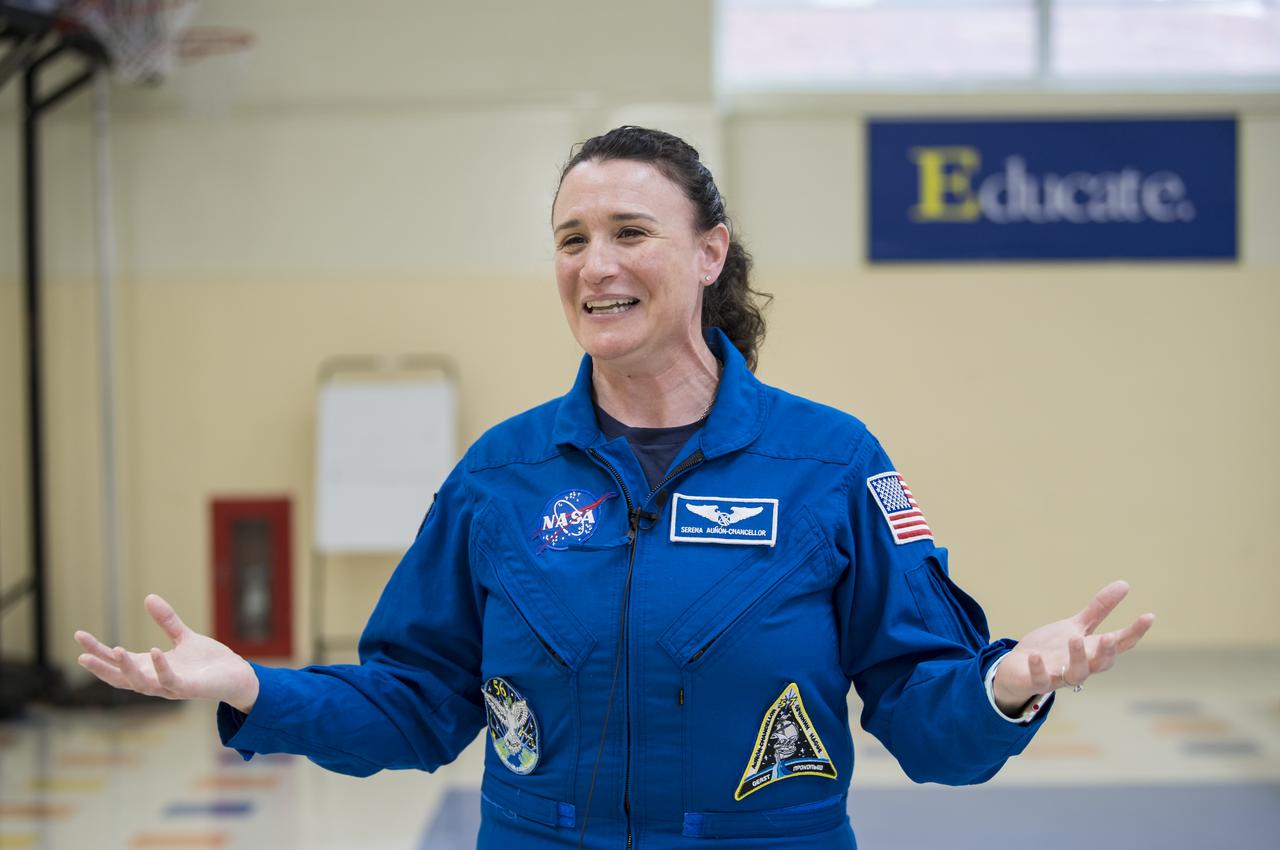
NASA astronaut Dr. Serena Auñón-Chancellor speaks about her experience on Expeditions 56 and 57 onboard the International Space Station (ISS), during an interview, at Excel Academy Public Charter School, Monday, June 10, 2019 in Washington, DC. Auñón-Chancellor spent 197 days living and working onboard the ISS and contributed to hundreds of experiments in biology, biotechnology, physical science, and Earth science while there. She is also a doctor and started her career with NASA as a flight surgeon in 2006. Photo Credit: (NASA/Aubrey Gemignani)
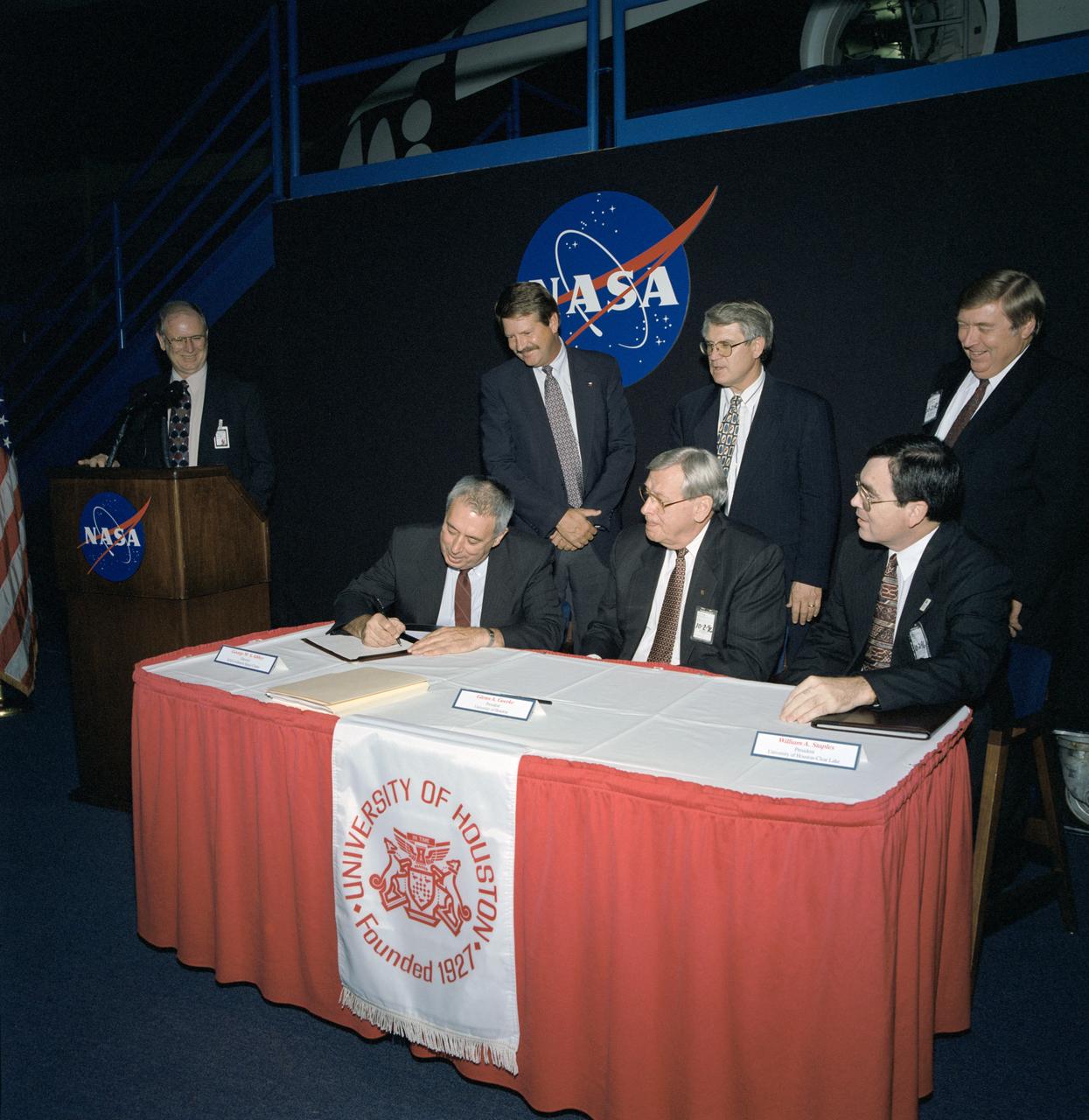
NASA/University of Houston (UH) signing of memorandum of understanding. Johnson Space Center (JSC) Director George Abbey signs a memorandum of understanding with University of Houston's President Glenn Goerke and University of Houston Clear Lake President Williams Staples. UH will supply post-doctoral researchers to JSC for more than 15 projects of scientific interest to both JSC and the university. Seated from left are, Abbey, Goerke and Staples. Standing from left are David Criswell, director of the Institute of Space Systems Operations; Texas State Representatives Michael Jackson, Robert Talton and Talmadge Heflin. View appears in Space News Roundup v35 n41 p4, 10-18-96.
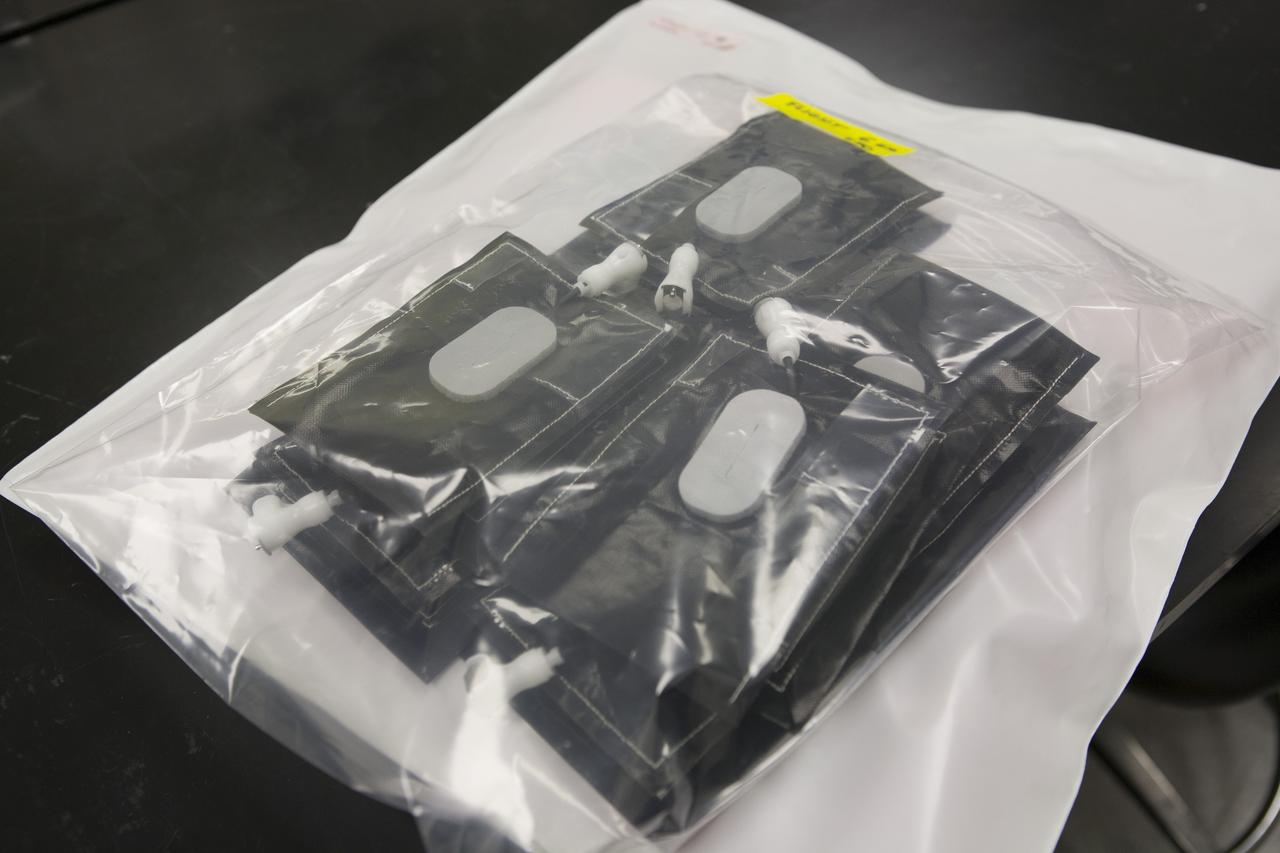
Inside a laboratory in the Space Station Processing Facility at NASA’s Kennedy Space Center in Florida, plant pillows for the Veg-03 experiment are prepared for delivery to the International Space Station aboard the eighth SpaceX Dragon commercial resupply mission. Dr. Mathew Mickens, a post-doctoral researcher, inserts a bonding agent into one of the Veg-03 plant pillows. The Veg-03 plant pillows will contain ‘Tokyo Bekana’ cabbage seeds and lettuce seeds for NASA’s third Veggie plant growth system experiment. The experiment will continue NASA’s deep space plant growth research to benefit the Earth and the agency’s journey to Mars.
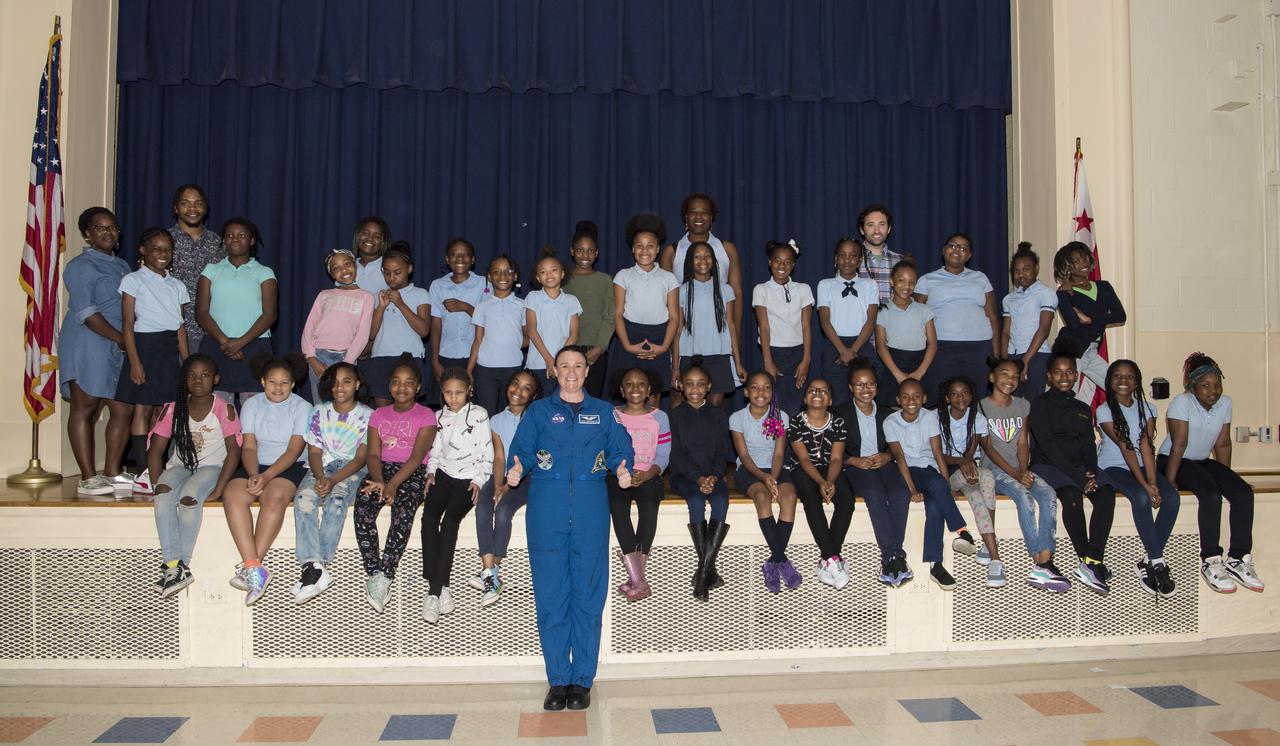
NASA astronaut Dr. Serena Auñón-Chancellor poses for a group photo after a presentation about her experience on Expeditions 56 and 57 onboard the International Space Station (ISS) at Excel Academy Public Charter School, Monday, June 10, 2019 in Washington, DC. Auñón-Chancellor spent 197 days living and working onboard the ISS and contributed to hundreds of experiments in biology, biotechnology, physical science, and Earth science while there. She is also a doctor and started her career with NASA as a flight surgeon in 2006. Photo Credit: (NASA/Aubrey Gemignani)
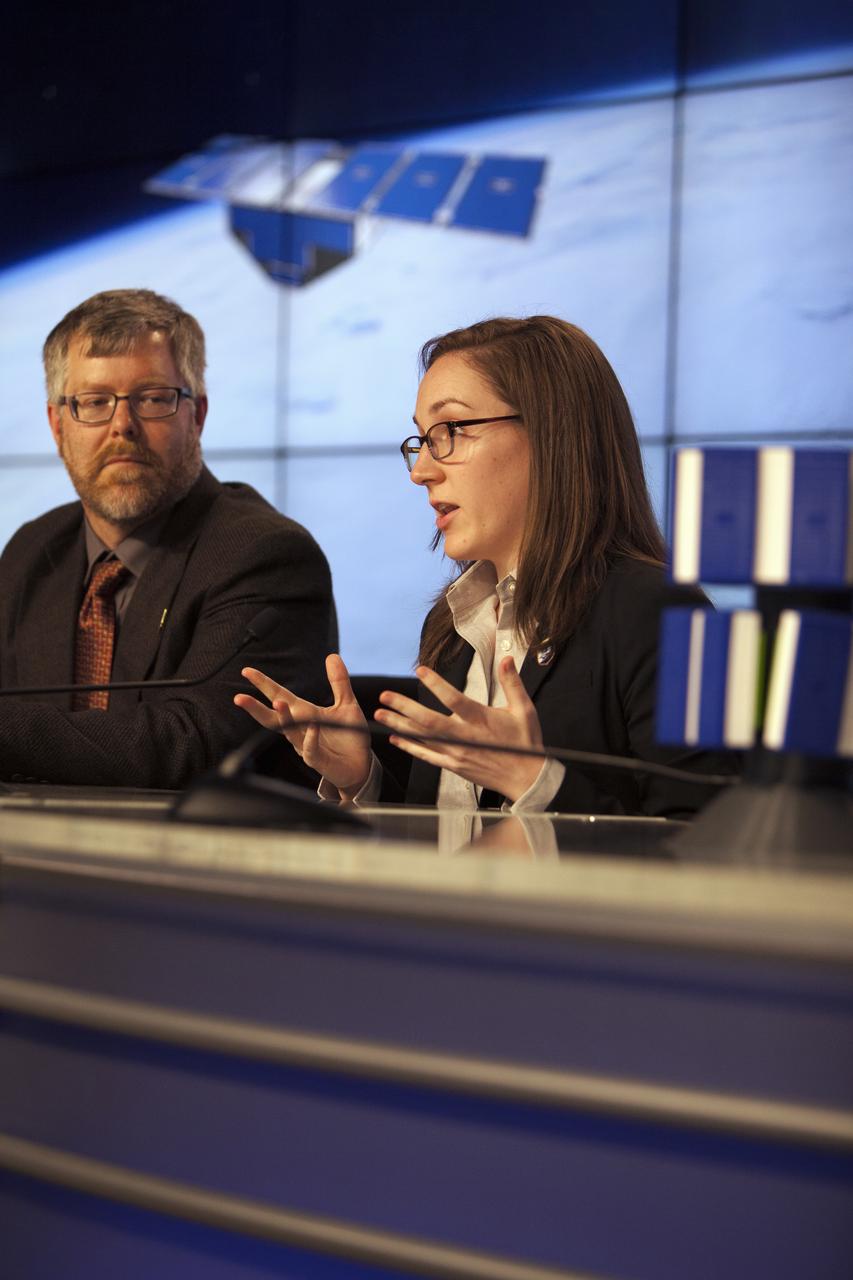
In the Kennedy Space Center’s Press Site auditorium, NASA and industry leaders speak to members of the media during a mission science briefing for the agency’s Cyclone Global Navigation Satellite System, or CYGNSS, spacecraft. From left are: Aaron Ridley, CYGNSS constellation scientist in the Climate and Space Department at the University of Michigan in Ann Arbor, Michigan; and Mary Morris, doctoral student in the Department of Climate and Space Sciences and Engineering at the University of Michigan. The eight CYGNSS satellites will make frequent and accurate measurements of ocean surface winds throughout the life cycle of tropical storms and hurricanes. The data will help scientists probe key air-sea interaction processes that take place near the core of storms, which are rapidly changing and play a crucial role in the beginning and intensification of hurricanes.
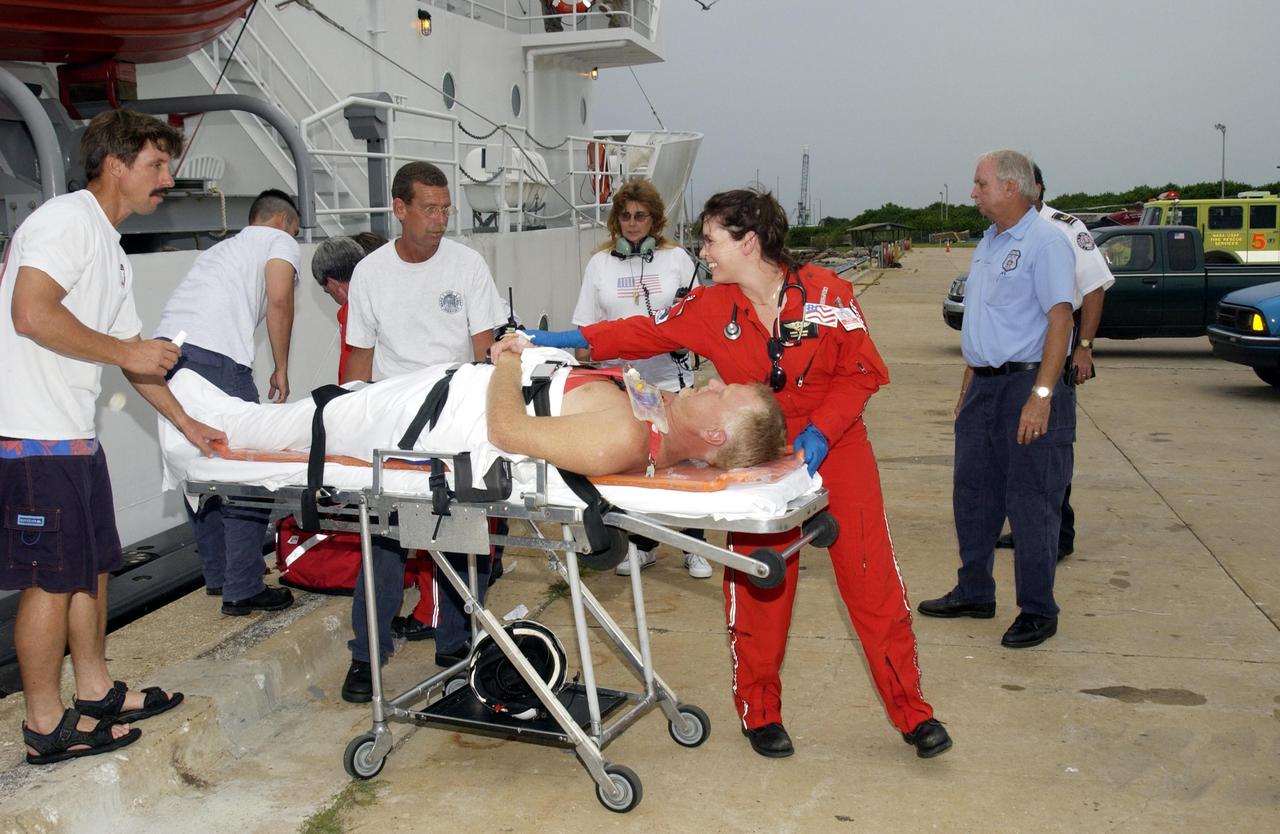
KENNEDY SPACE CENTER, FLA. - United Space Alliance workers on board the Freedom Star, one of the Shuttle Rocket Booster retrieval ships, release a distressed lobster diver to an Air Care Team from Orlando for transfer to a hospital. The ship and its dive team, including a diver medical technician, Andy Fish, were instrumental in rescuing the diver off Cape Canaveral Sept. 11. The ship was on a certification exercise and near the location of a lobster diving boat that radioed the U.S. Coast Guard for help when one of the divers experienced difficulty breathing on his return to the surface. Hearing the call for help, the captain of the Freedom Star offered to help. Fish stayed with the diver in the recompression chamber aboard the Freedom Star until the ship reached Port Canaveral where a KSC Occupational Health doctor waited. The diver was stabilized and then taken to Florida Hospital.
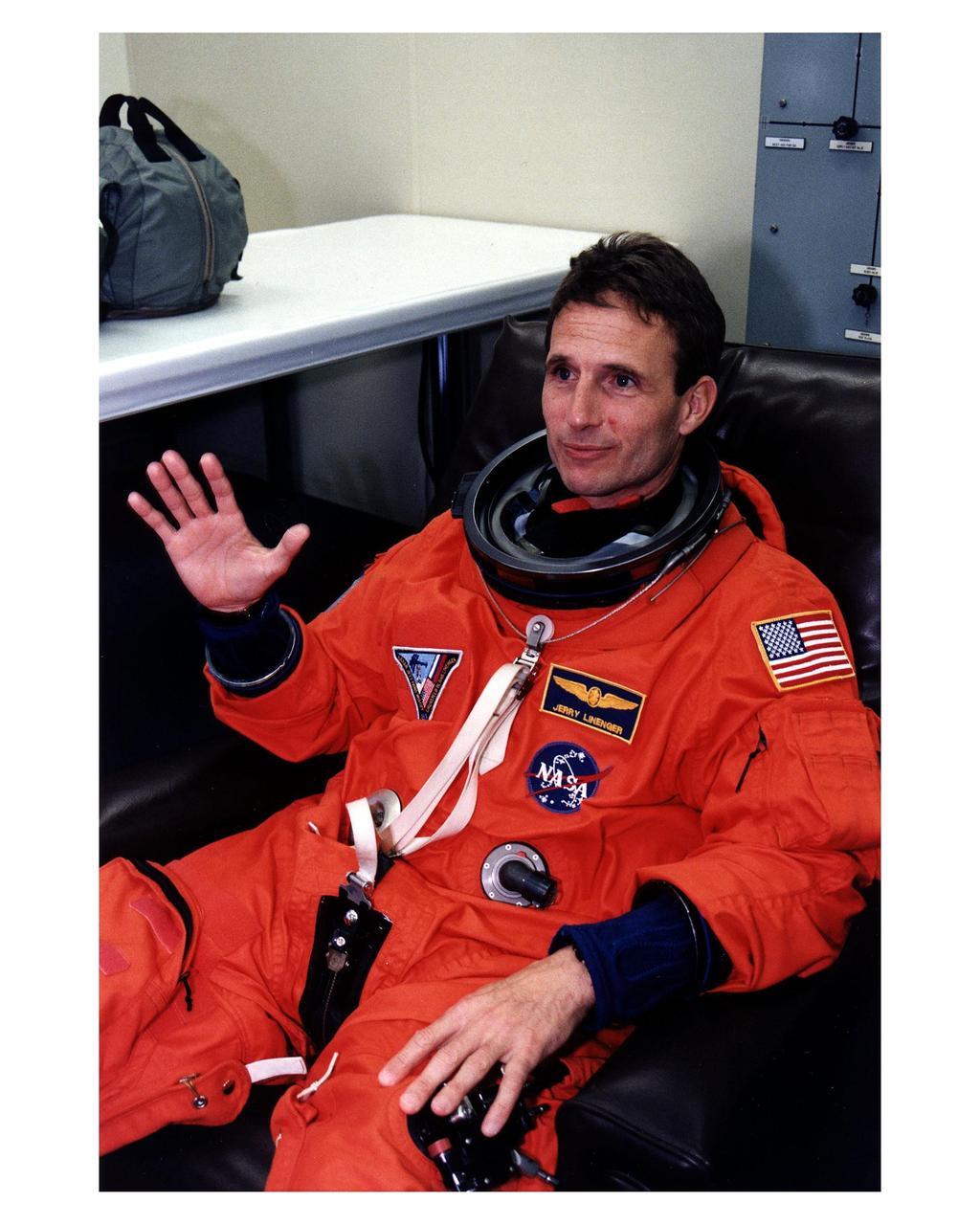
STS-81 Mission Specialist Jerry Linenger waves to the camera in his launch/entry suit and helmet in the suitup room of the Operations and Checkout (O&C) Building. He is on his second Shuttle flight and has been an astronaut since 1992. Linenger will become a member of the Mir 22 crew and replace astronaut John Blaha on the Russian space station for a four-month stay after the Space Shuttle orbiter Atlantis docks with the orbital habitat on flight day 3. A medical doctor and an exercise buff, Linenger will conduct physiological experiments during his stay on Mir. He and five crew members will shortly depart the O&C and head for Launch Pad 39B, where the Space Shuttle Atlantis will lift off during a 7-minute window that opens at 4:27 a.m. EST, January 12