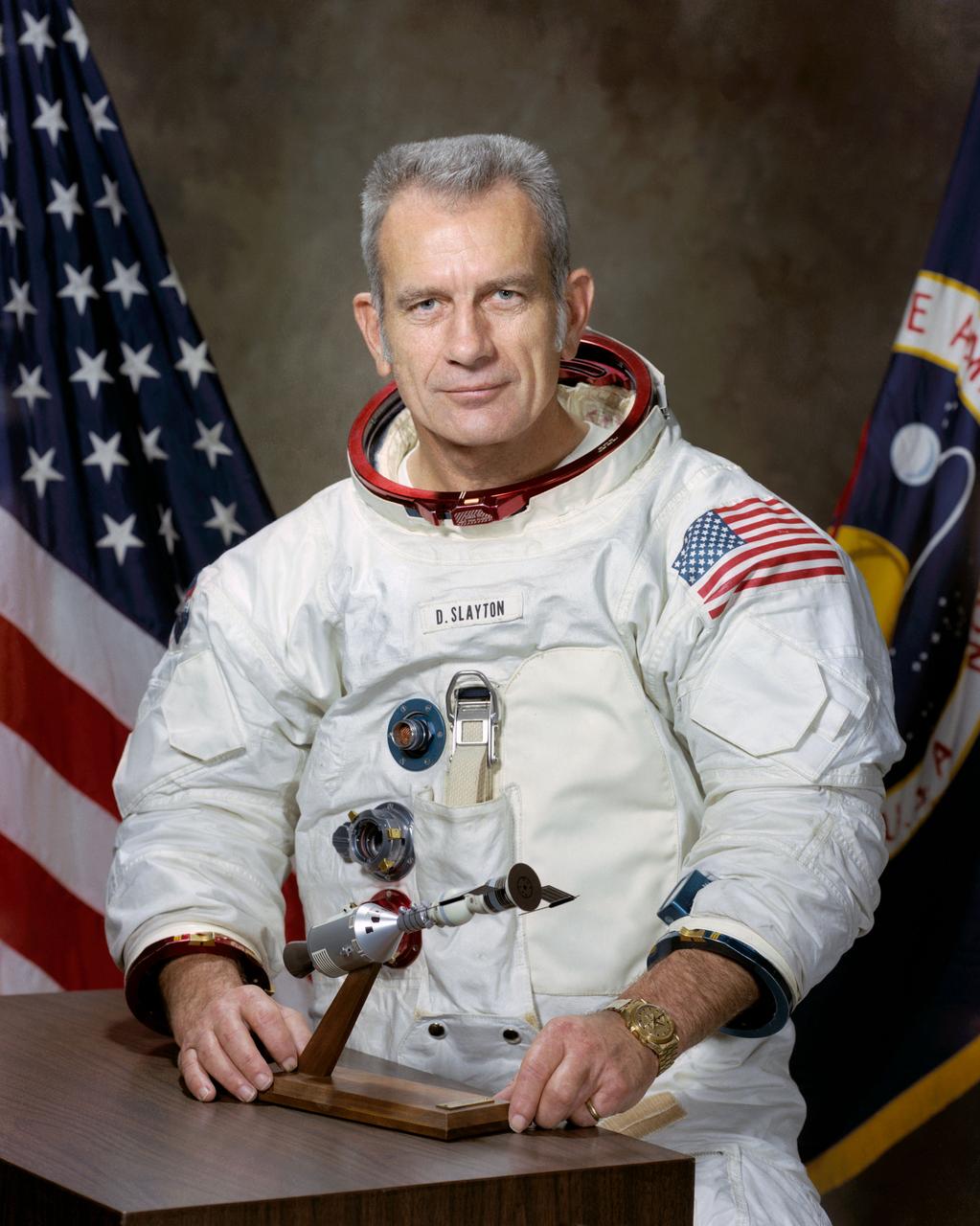
S74-15240 (December 1973) --- Astronaut Donald K. Slayton

AST-05-290 (17-19 July 1975) --- Astronaut Donald K. Slayton, docking module pilot of the American ASTP crew, is seen in the hatchway leading between the Apollo Docking Module and the Soyuz Orbital Module during the joint U.S.-USSR Apollo-Soyuz Test Project docking mission in Earth orbit. The 35mm camera was looking from the Soyuz into the Docking Module.
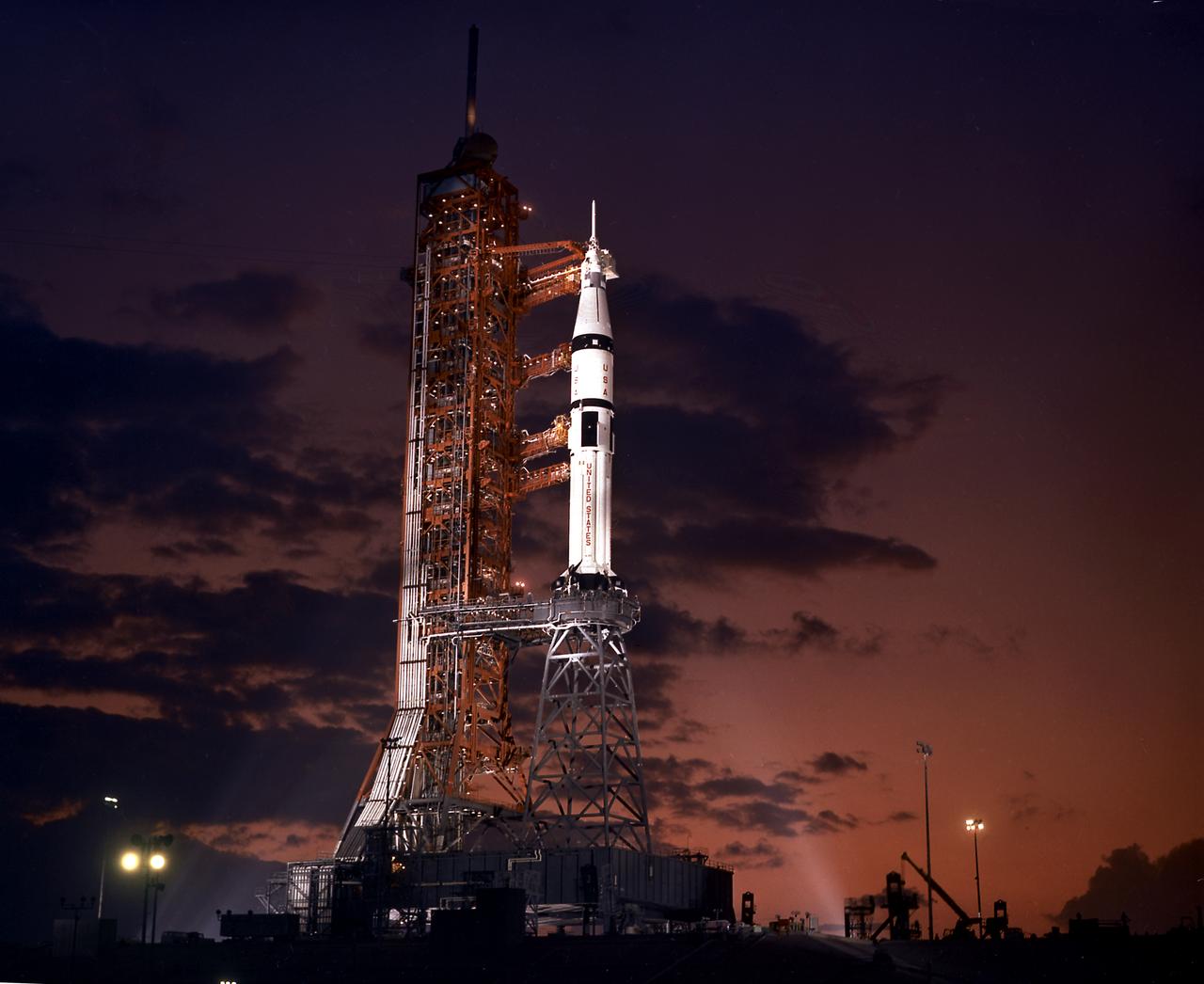
SA-210 Apollo-Soyuz Test Project (ASTP) awaits the launch scheduled on July 15, 1975 on the launch pad at the Kennedy Space Center, the ASTP mission with astronauts Thomas Stafford, Vance Brand, and Donald "Deke" Slayton. The Saturn IB, developed under the direction of the Marshall Space Flight Center (MSFC), launched five manned Earth-orbital missions between 1968 and 1975: Apollo 7, Skylab 2, Skylab 3, Skylab 4, and the Apollo-Soyuz Test Project .
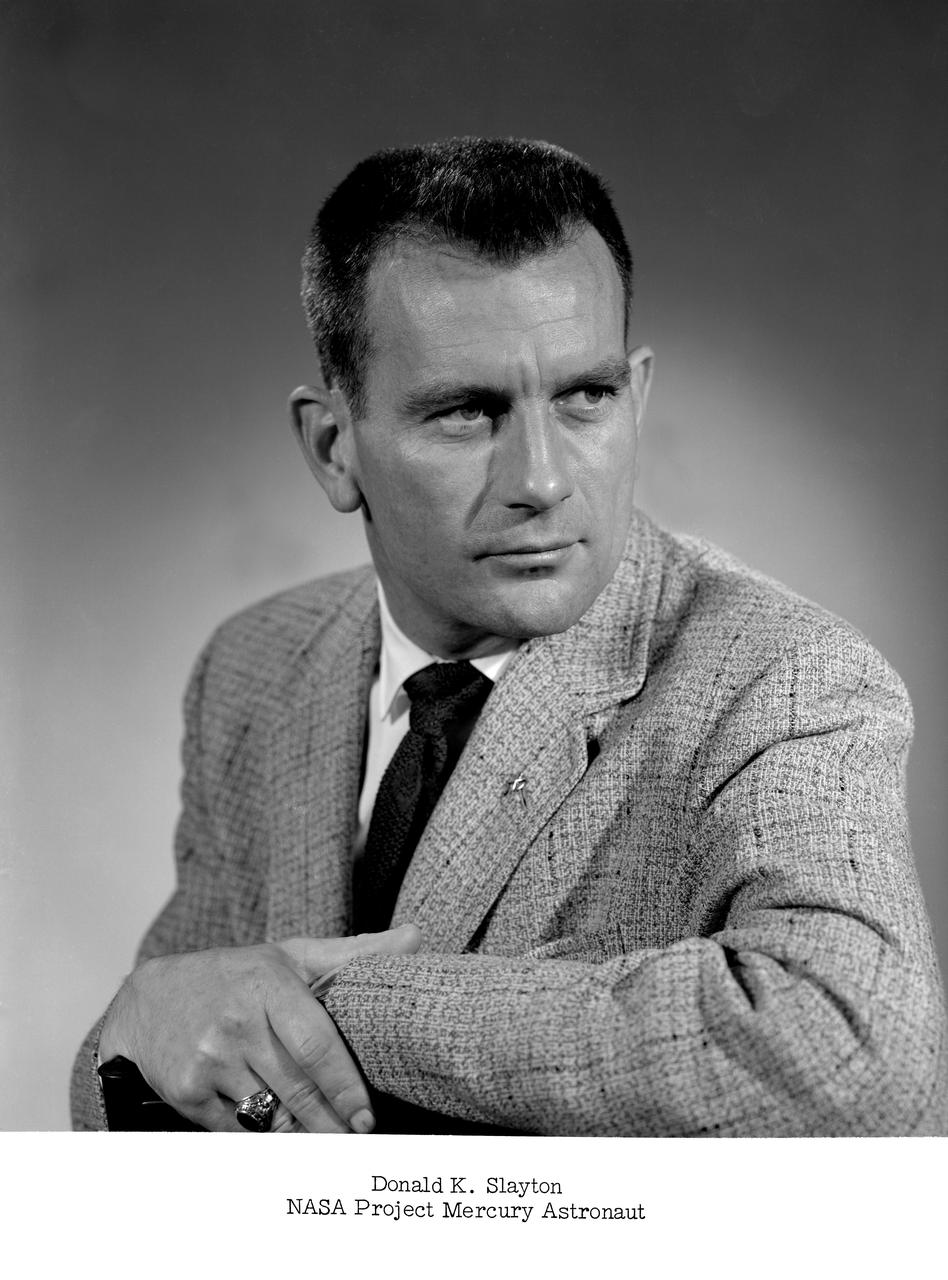
NASA Project Mercury astronaut -- Slayton was later known as Deke.
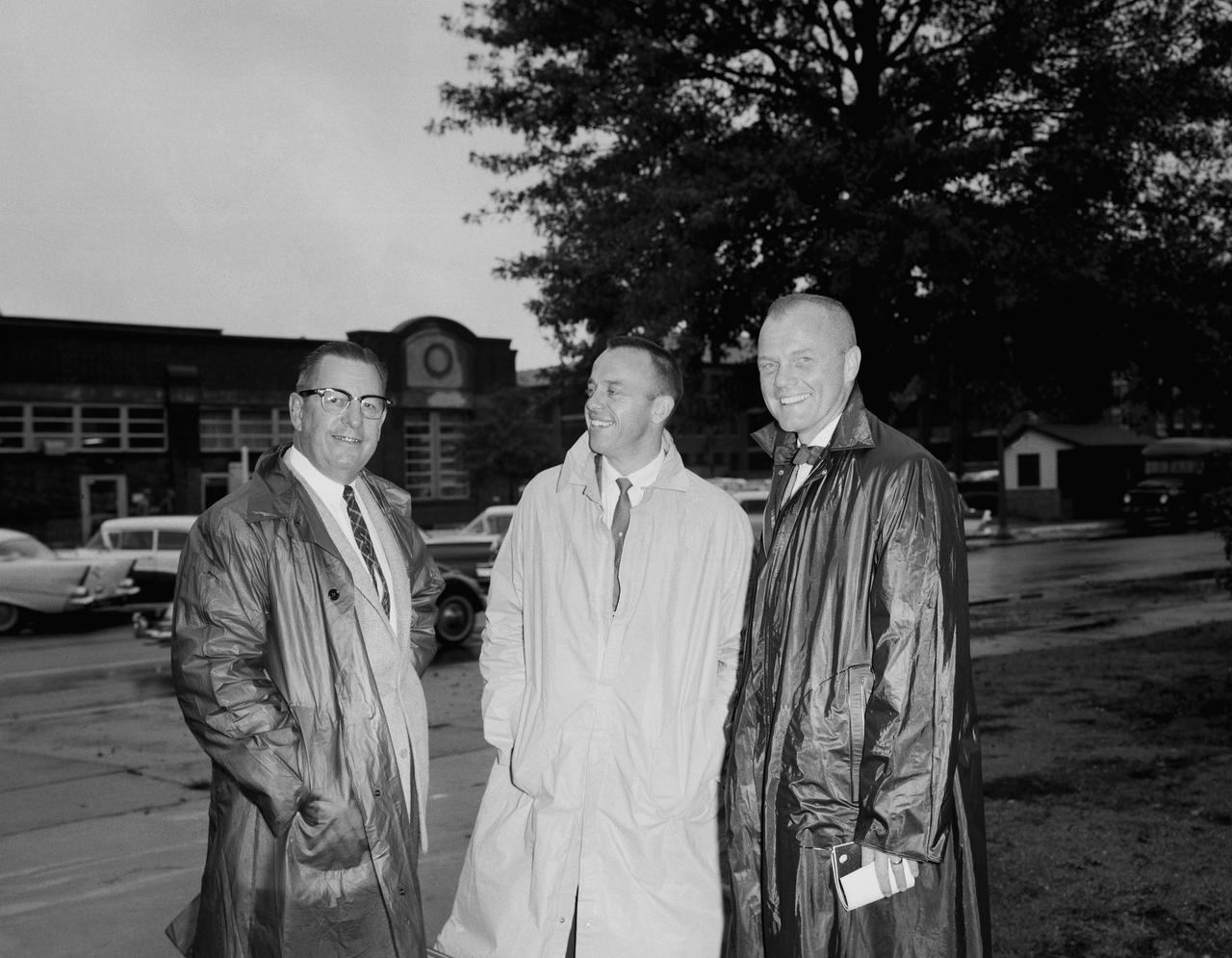
Astronauts at 1959 Langley Inspection. Astronauts at 1959 Langley Inspection: The seven are shown in the Unitary Plan Wind Tunnel NASA Langley. The astronauts left to right: John H. Glenn Jr., M.Scot Carpenter, Virgil I.Grissom, Walter M. Schirra Jr., L. Gordon Cooper, Alan B. Shepard Jr.and Donald K. Slayton.
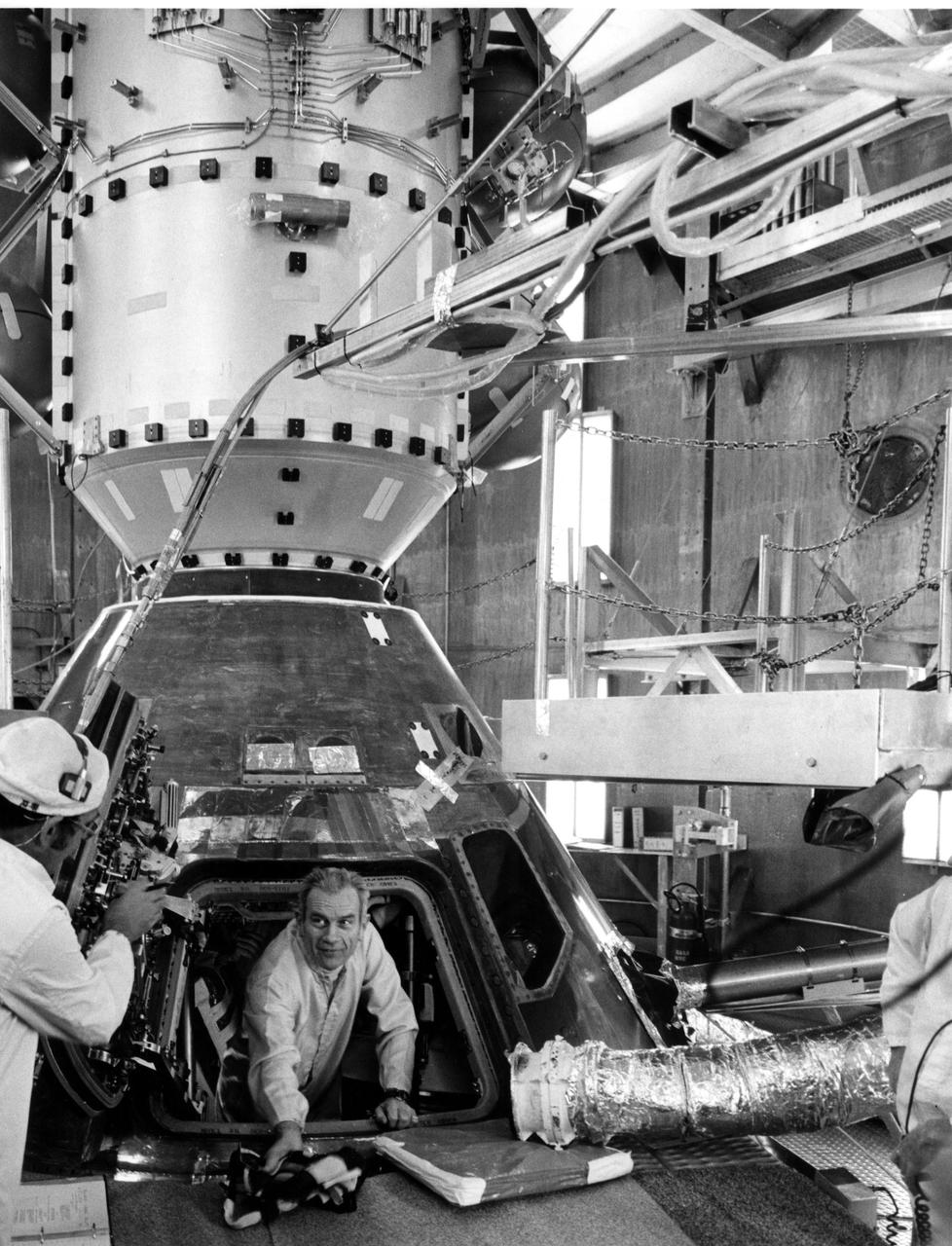
KENNEDY SPACE CENTER, FLA. -- Astronaut Donald Slayton is shown in the Apollo Command Module for July's Apollo-Soyuz Test Project space mission. Slayton was at KSC for fit checks between the Apollo and the Docking Module, which will be used during the mission as a link between the Soviet Soyuz and American Apollo.
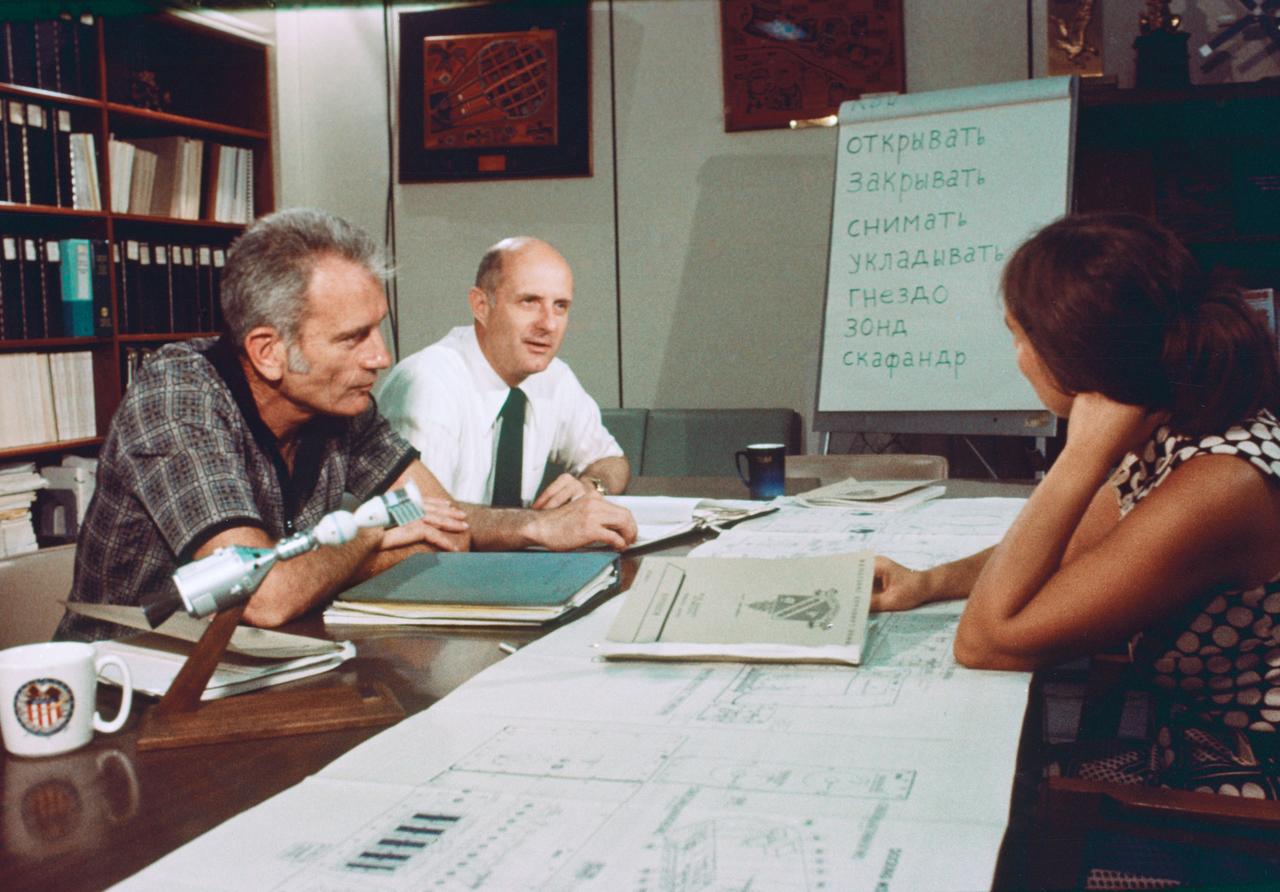
Apollo Soyuz Test Project (ASTP) astronauts Donald K. Slayton, docking module pilot; and Thomas P. Stafford, commander are photographed during ASTP Russian language class.
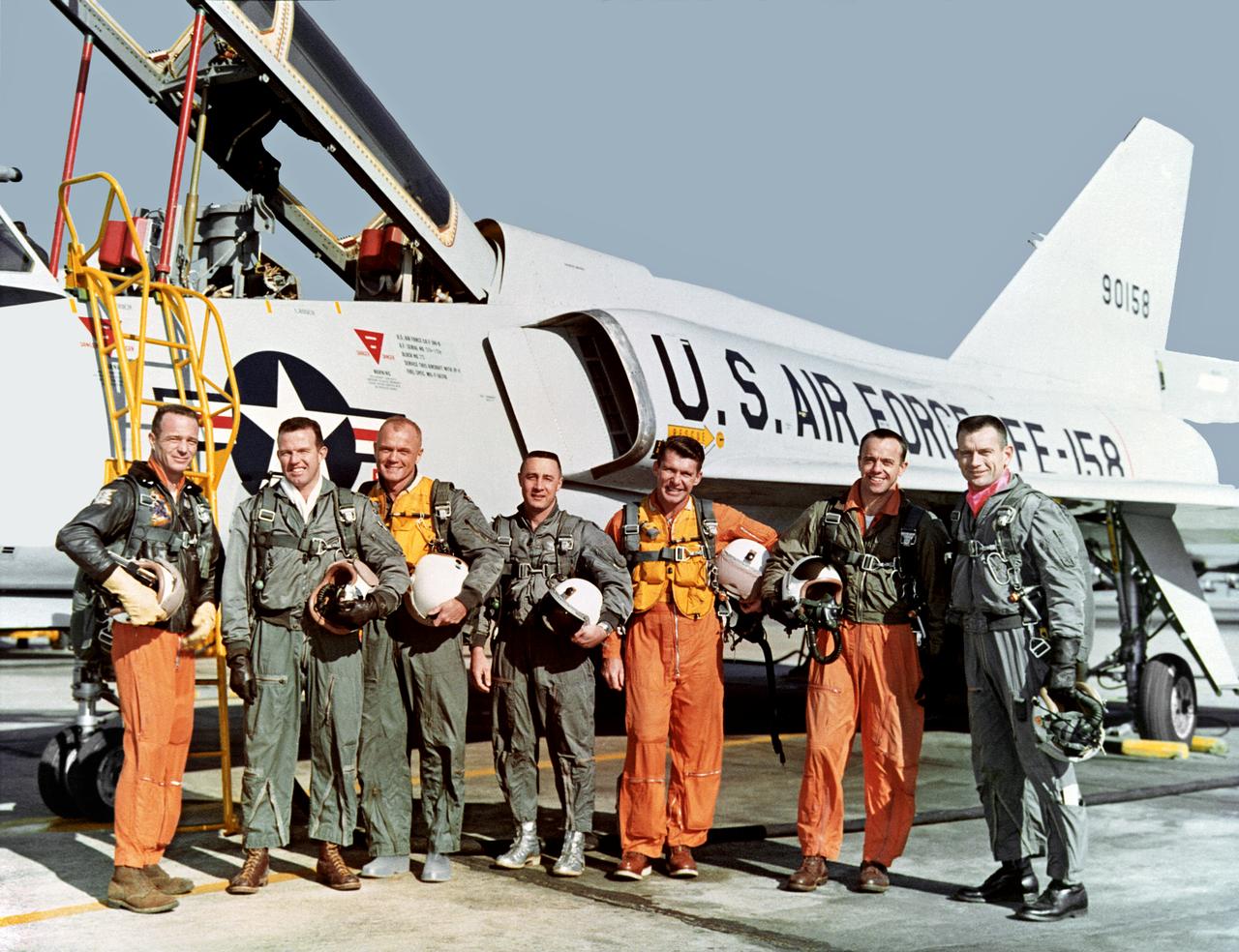
The original seven Mercury astronauts during training at NASA Langley Research Center Project Mercury. The original seven astronauts trained at NASA Langley Research Center. Chosen from among hundreds of applicants, the seven men were all test pilots. Standing in front of the U.S. Air Force Convair F-106B aircraft, the astronauts are, from left, Lt. M. Scott Carpenter, Capt. Gordon Cooper, Col. John H. Glenn Jr., Capt. Virgil "Gus" Grissom, Lt. Comdr. Walter Schirra, Lt. Comdr. Alan B. Shepard Jr. and Capt. Donald K. "Deke" Slayton. While familiarizing the astronauts with the Mercury set-up, Langley employees helped them to specialize in the technical areas crucial to the overall success of Project Mercury. Langley people also guided and monitored the astronauts activities through the many spaceflight simulators and other training devices built at the Center expressly for the manned space program. In less than three years, Project Mercury proved that men could be sent into space and returned safely to Earth, setting the stage for the longer duration Gemini flights and the Apollo lunar landings. This photograph was originally taken on 01/20/1961 and is published in Spaceflight Revolution NASA Langley Research Center from Sputnik to Apollo, NASA SP-4308, by James R. Hansen, 1995, page 40.
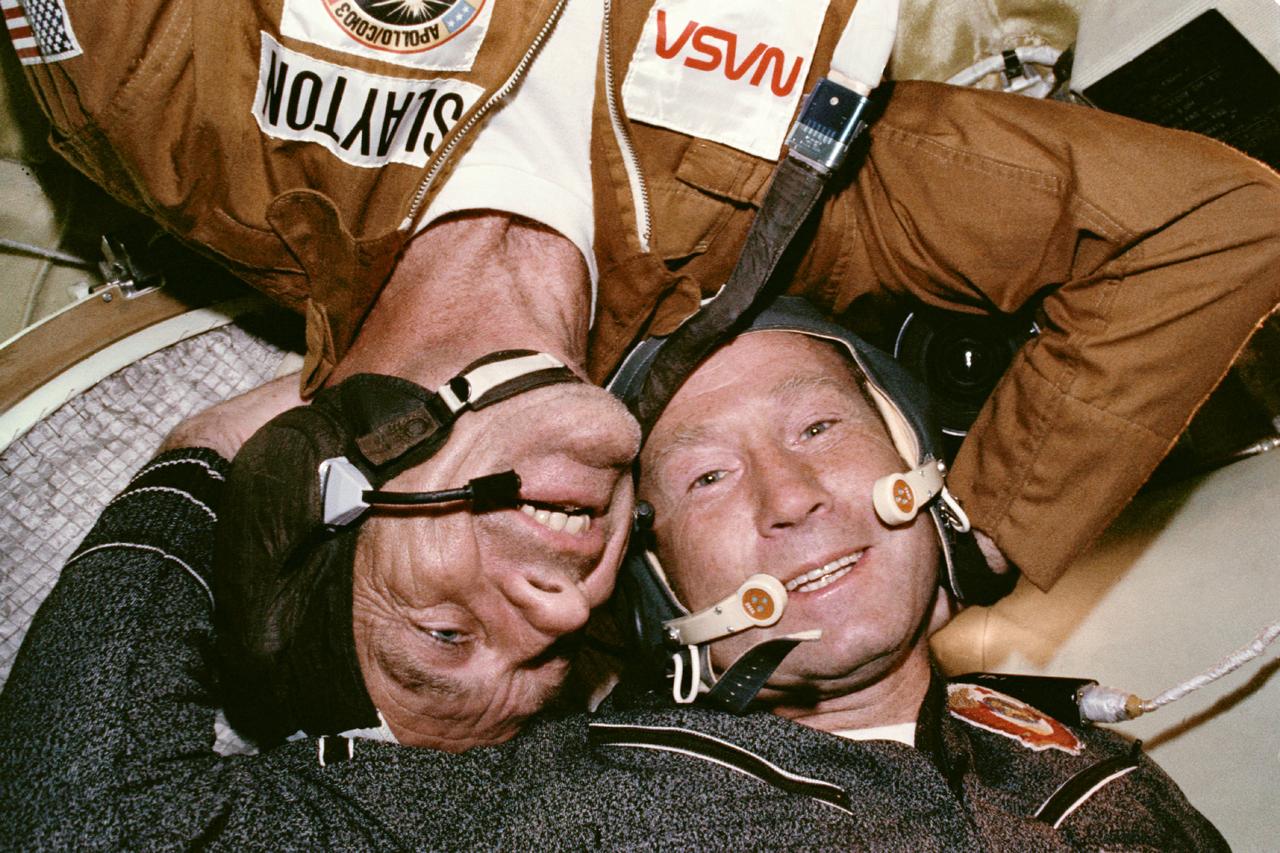
AST-05-298 (17-19 July 1975) --- Astronaut Donald K. Slayton and cosmonaut Aleksey A. Leonov are seen together in the Soyuz Orbital Module during the joint U.S.-USSR Apollo-Soyuz Test Project docking mission in Earth orbit. Slayton is the docking module pilot of the American crew. Leonov is the Soviet crew commander. This picture was taken with a 35mm camera.
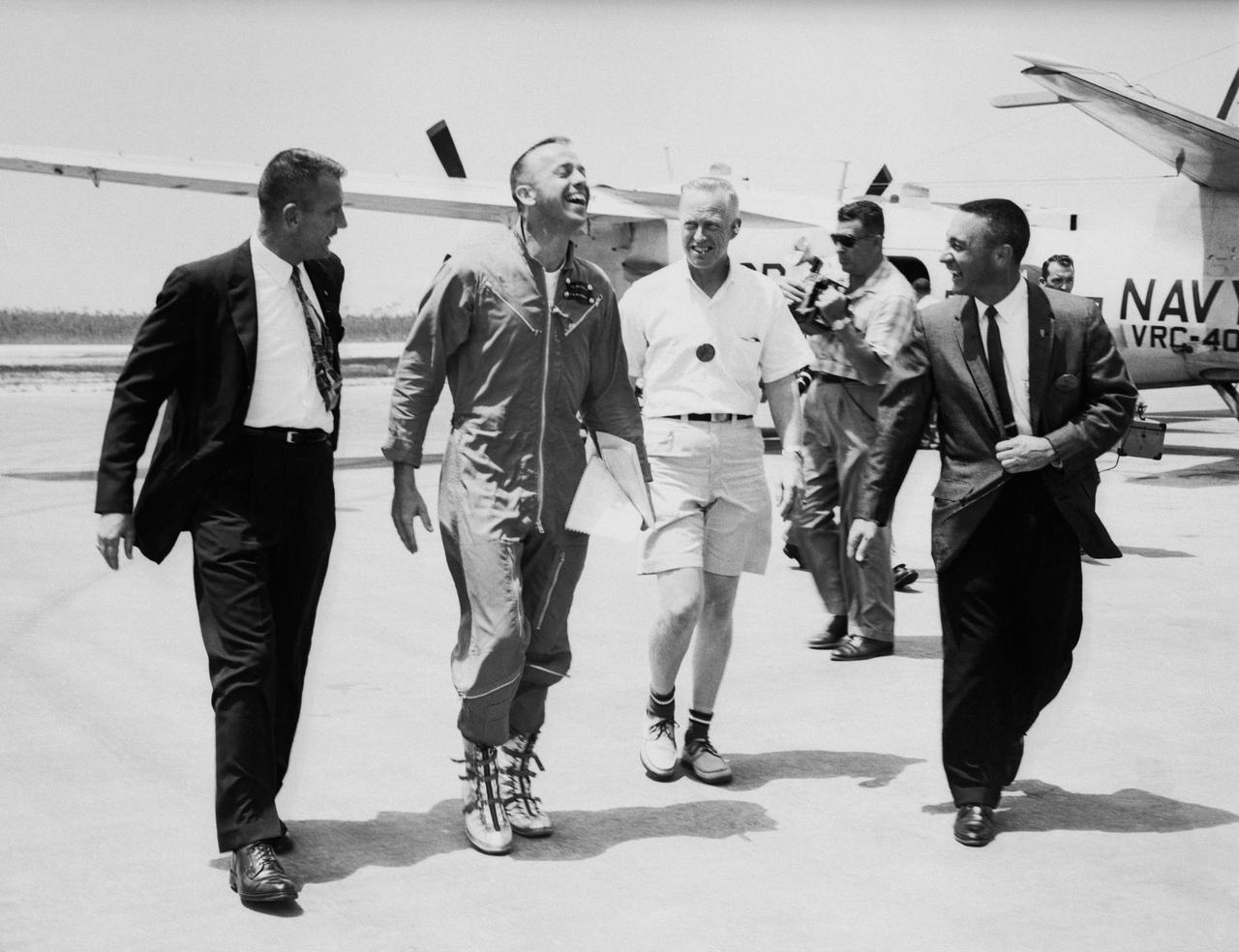
S61-02385 (5 July 1961) --- Astronaut Alan B. Shepard Jr. arrives at Grand Bahamas Island and is greeted by astronauts Virgil I. (Gus) Grissom (right) and Donald Slayton (left) and also by Keith Lindell (between Shepard and Grissom) after the first American suborbital flight. He will participate in a press conference with Grissom and Slayton. Photo credit: NASA or National Aeronautics and Space Administration
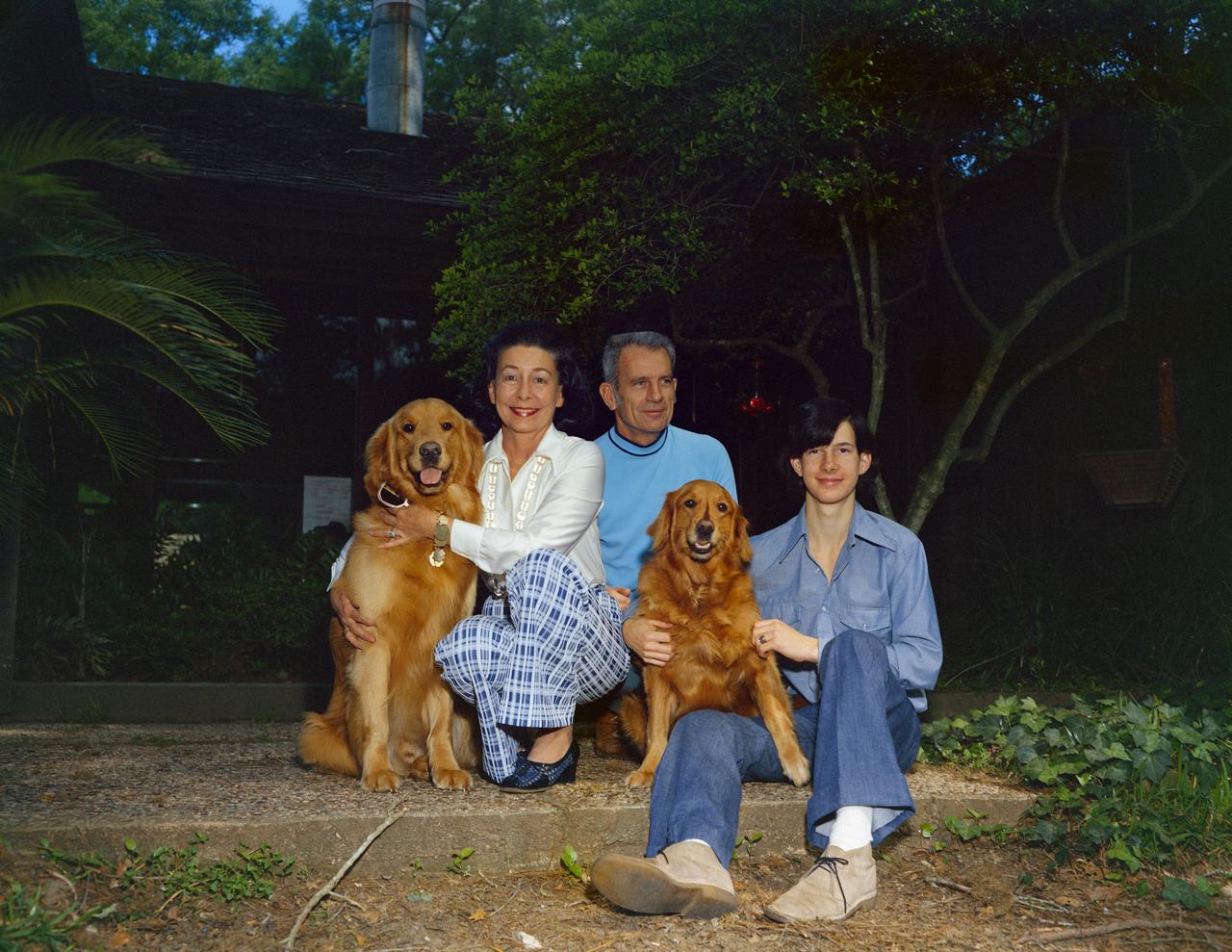
S74-19495 (January 1974) --- Astronaut Donald K. Slayton is shown with his wife, Marjorie, and their son, Kent, 17, at their home in Friendswood, Texas. Slayton is the Director of Flight Crew Operations at NASA's Johnson Space Center. He will be the Docking Module Pilot of the American Crew of the joint U.S.-USSR Apollo-Soyuz Test Project (ASTP) mission. This portrait includes two family pets.
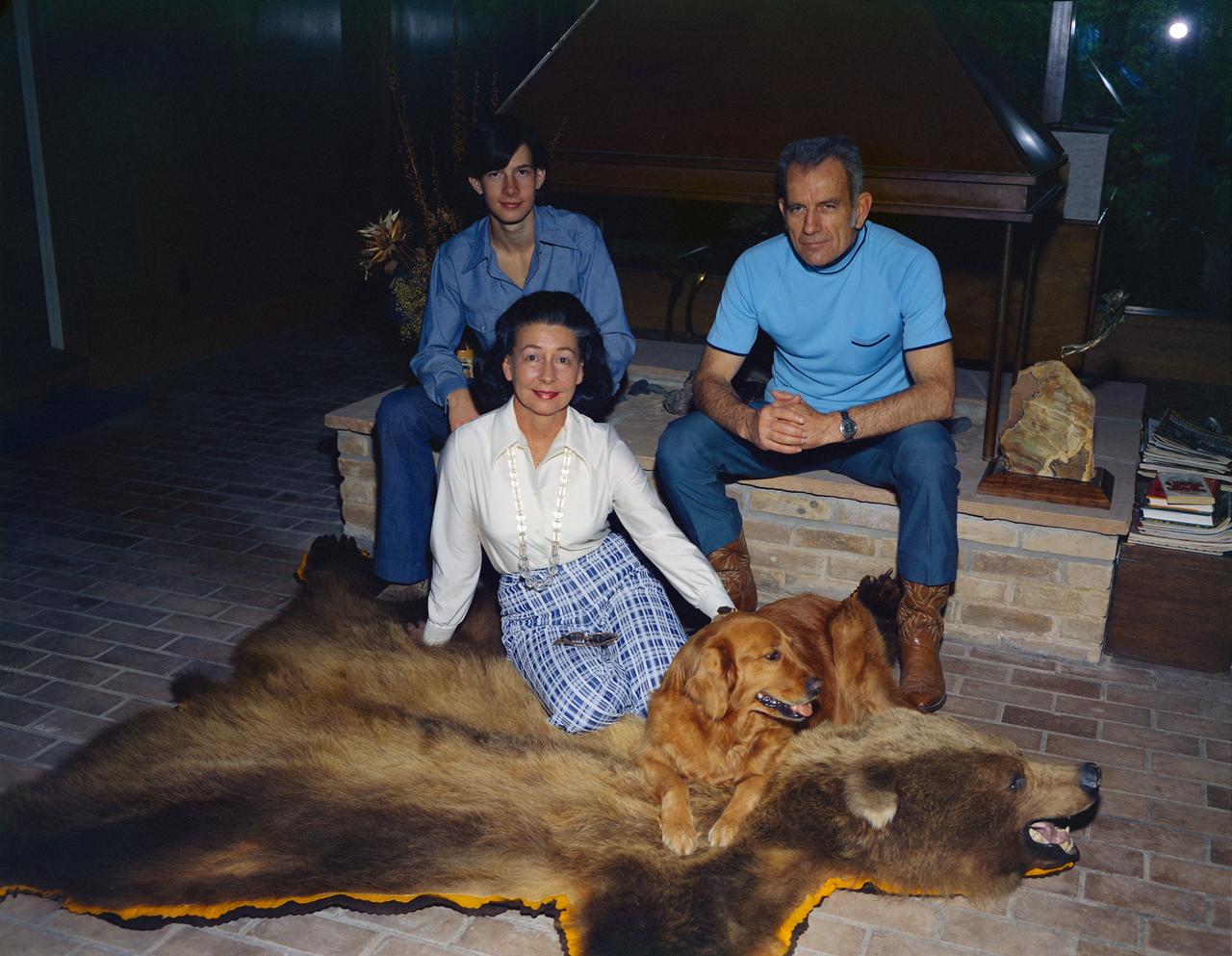
S74-19497 (January 1974) --- Astronaut Donald K. Slayton is shown with his wife, Marjorie, and their son, Kent, 17, at their home in Friendswood, Texas. Slayton is the Director of Flight Crew Operations at NASA's Johnson Space Center. He will be the Docking Module Pilot of the American Crew of the Joint U.S.-USSR Apollo-Soyuz Test Project (ASTP) mission. This portrait includes one of the family pets.
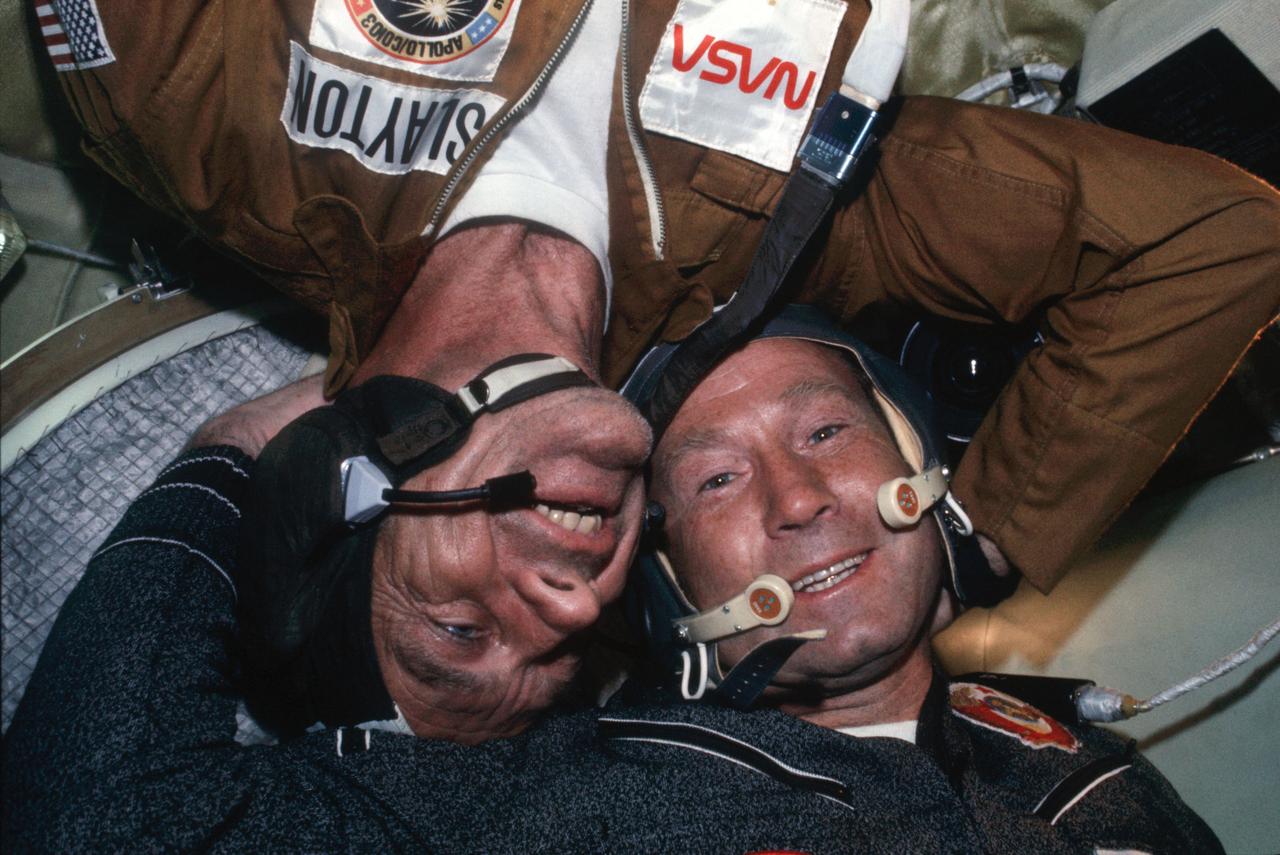
AST-05-298 (17-19 July 1975) --- Astronaut Donald K. Slayton and cosmonaut Aleksey A. Leonov are seen together in the Soyuz Orbital Module during the joint U.S.-USSR Apollo-Soyuz Test Project docking mission in Earth orbit. Slayton is the docking module pilot of the American crew. Leonov is the Soviet crew commander. This picture was taken with a 35mm camera.
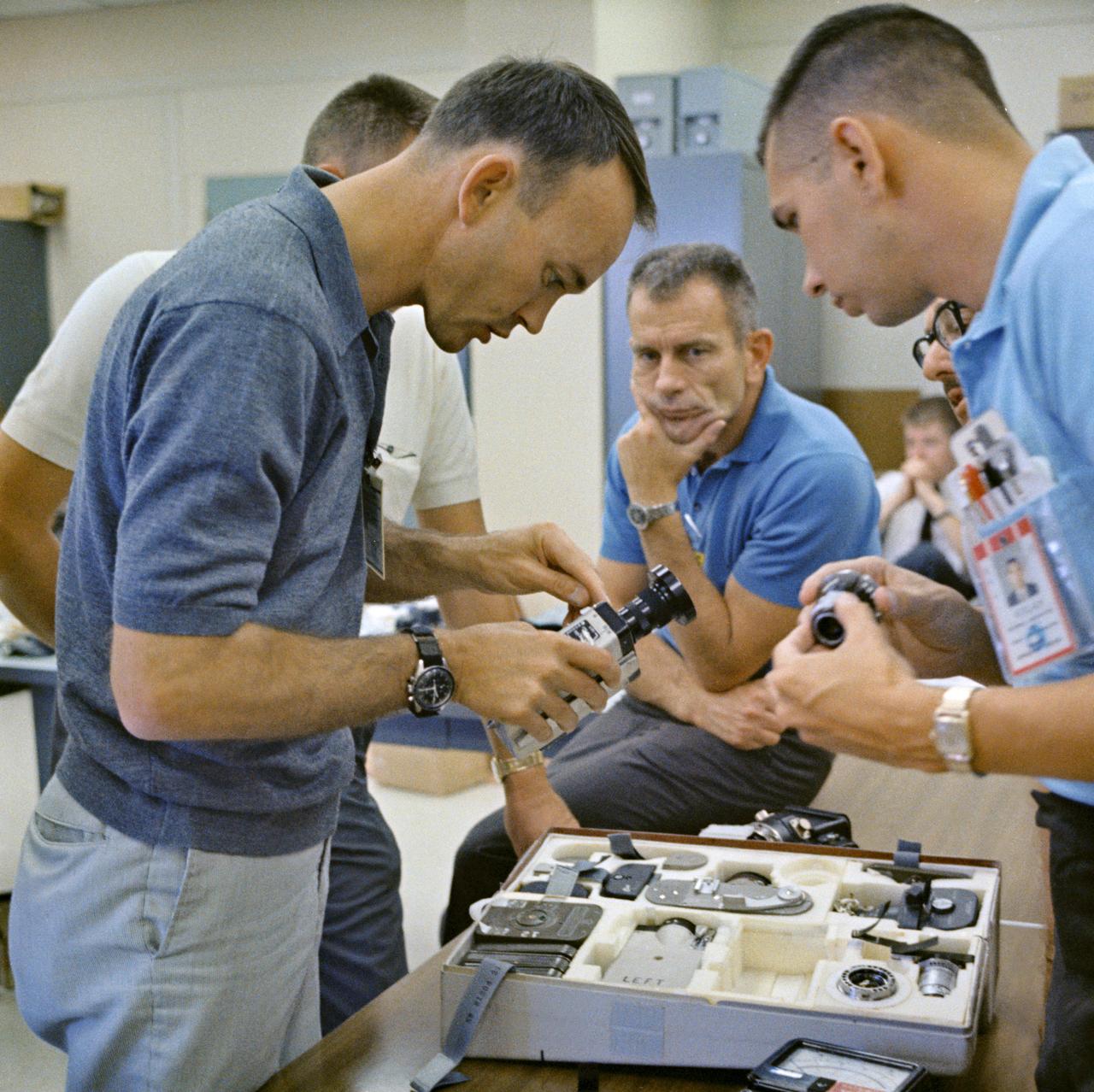
S66-42763 (18 July 1966) --- Astronaut Michael Collins (left), Gemini-10 prime crew pilot, inspects a camera during prelaunch activity at Cape Kennedy, Florida. In center background is Dr. Donald K. Slayton, Manned Spacecraft Center (MSC) Director of Flight Crew Operations. Photo credit: NASA

The original seven astronauts for the Mercury Project pose in front of an Air Force Jet. From left to right: Scott Carpenter, L. Gordon Cooper, John H. Glenn, Virgil I. Gus Grissom, Walter M. Wally Schirra, Alan B. Shepard, and Donald K. Deke Slayton.
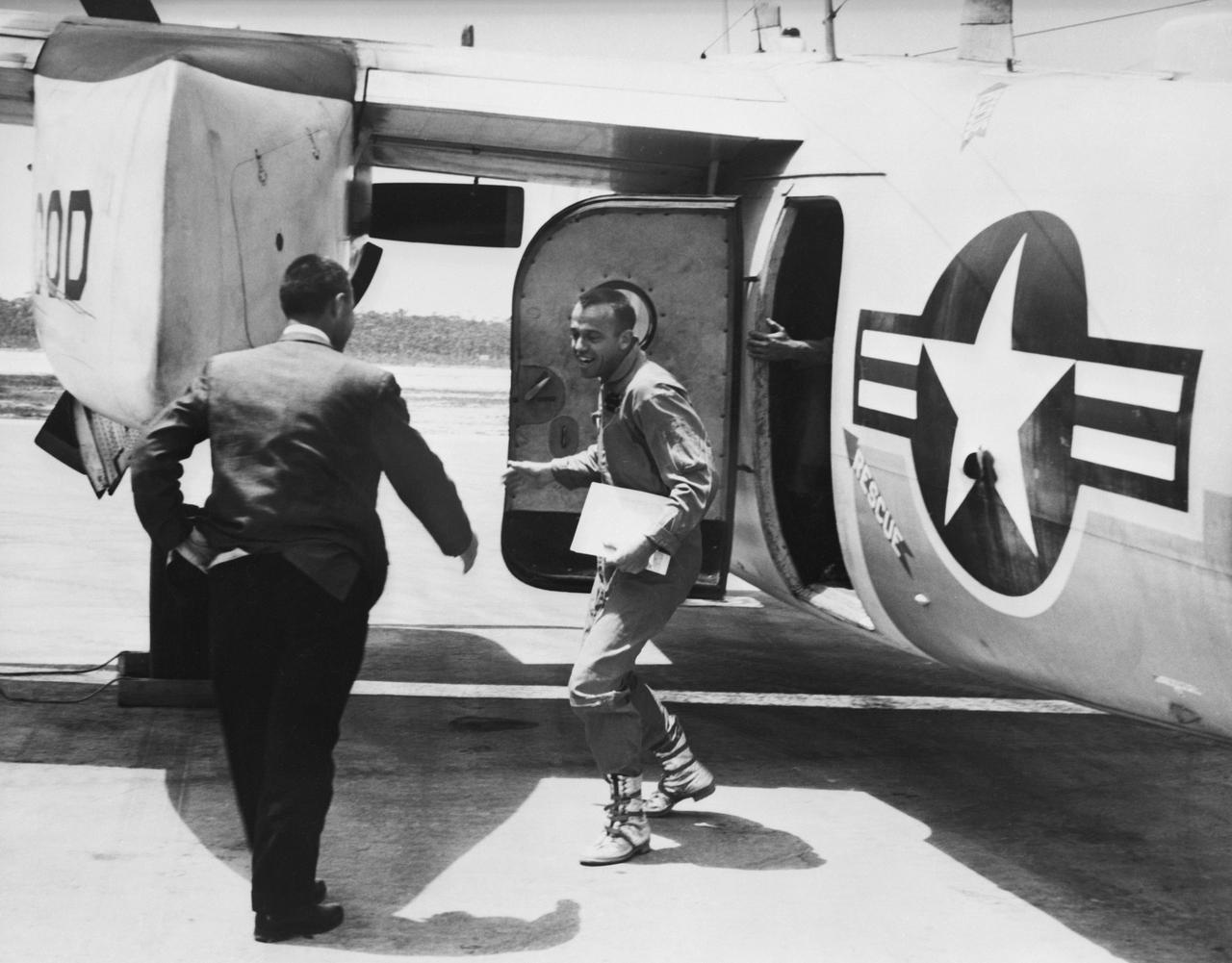
S61-02731 (5 May 1961) --- Astronaut Alan B. Shepard Jr. arrives at Grand Bahamas Island and is greeted by astronaut Virgil I. (Gus) Grissom after the first American suborbital flight. He will participate in a press conference with Grissom and Donald Slayton. Photo credit: NASA or National Aeronautics and Space Administration
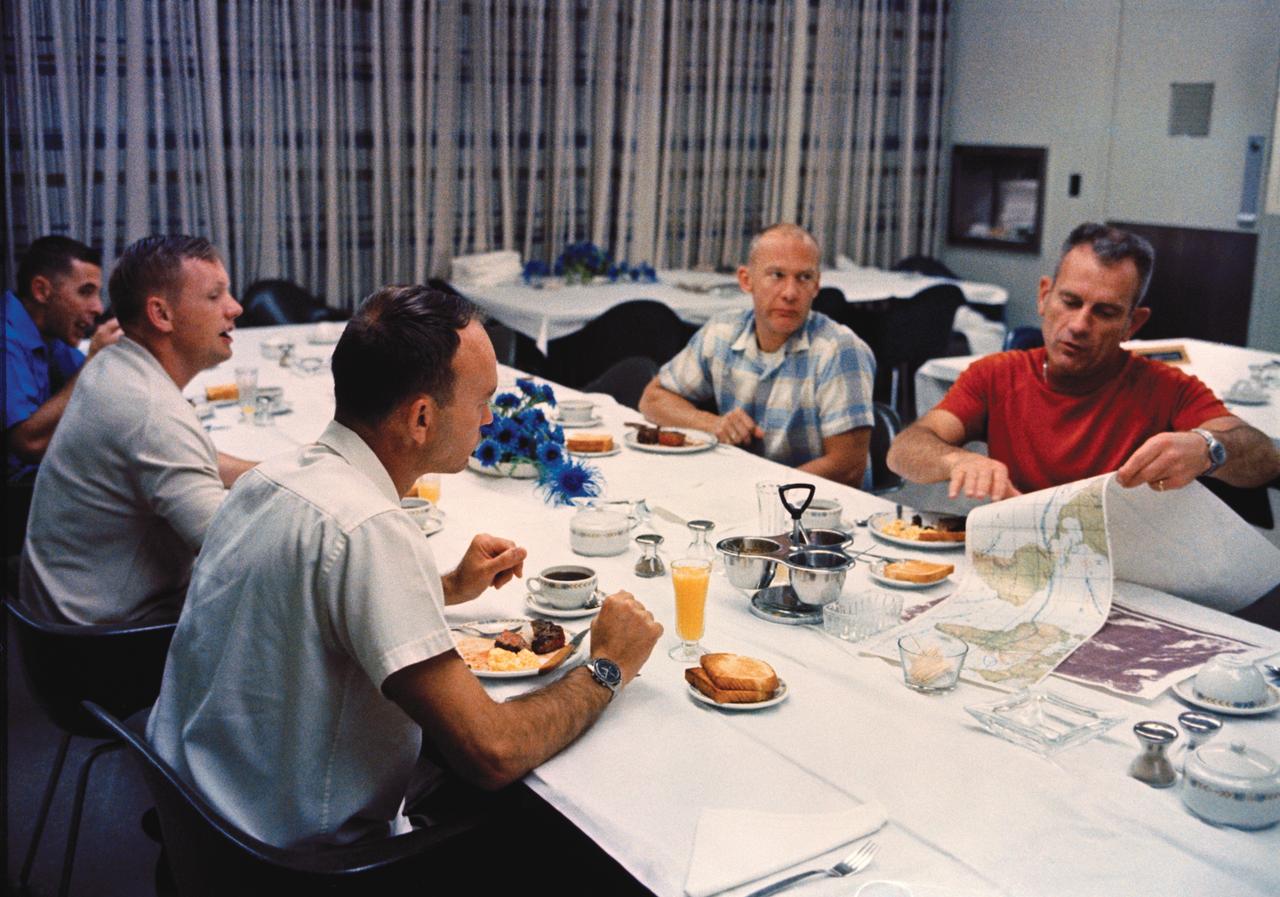
CAPE CANAVERAL, Fla. – Apollo 11 astronauts Neil Armstrong, second from left, Michael Collins and Buzz Aldrin eat breakfast with Donald "Deke" Slayton, in red shirt, on launch day, July 16, 1969. Photo credit: NASA
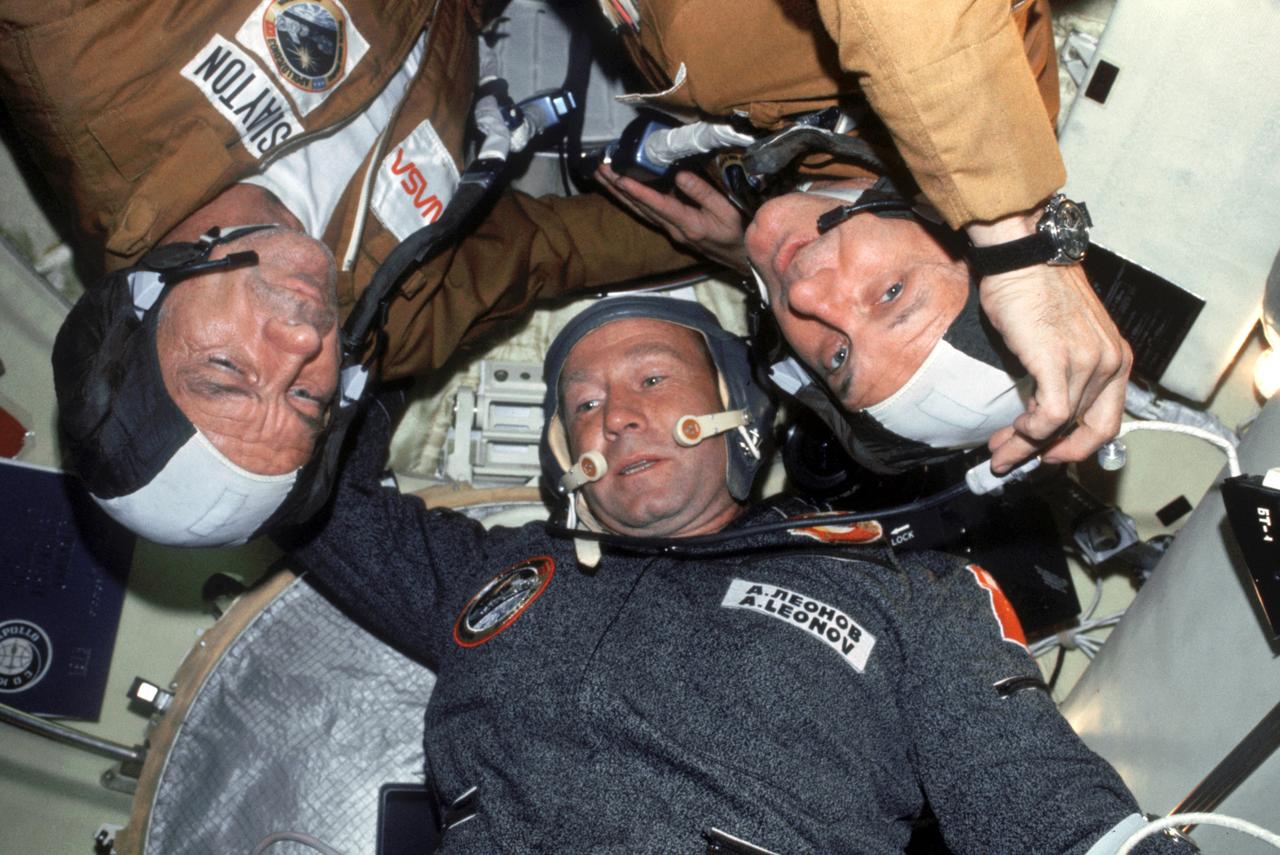
AST-05-301 (17-19 July 1975) --- Astronaut Donald K. Slayton, cosmonaut Aleksey A. Leonov and astronaut Thomas P. Stafford are photographed in the Soviet Soyuz during the Apollo-Soyuz Test Project docking mission in Earth orbit. This picture was taken with a 35mm camera.
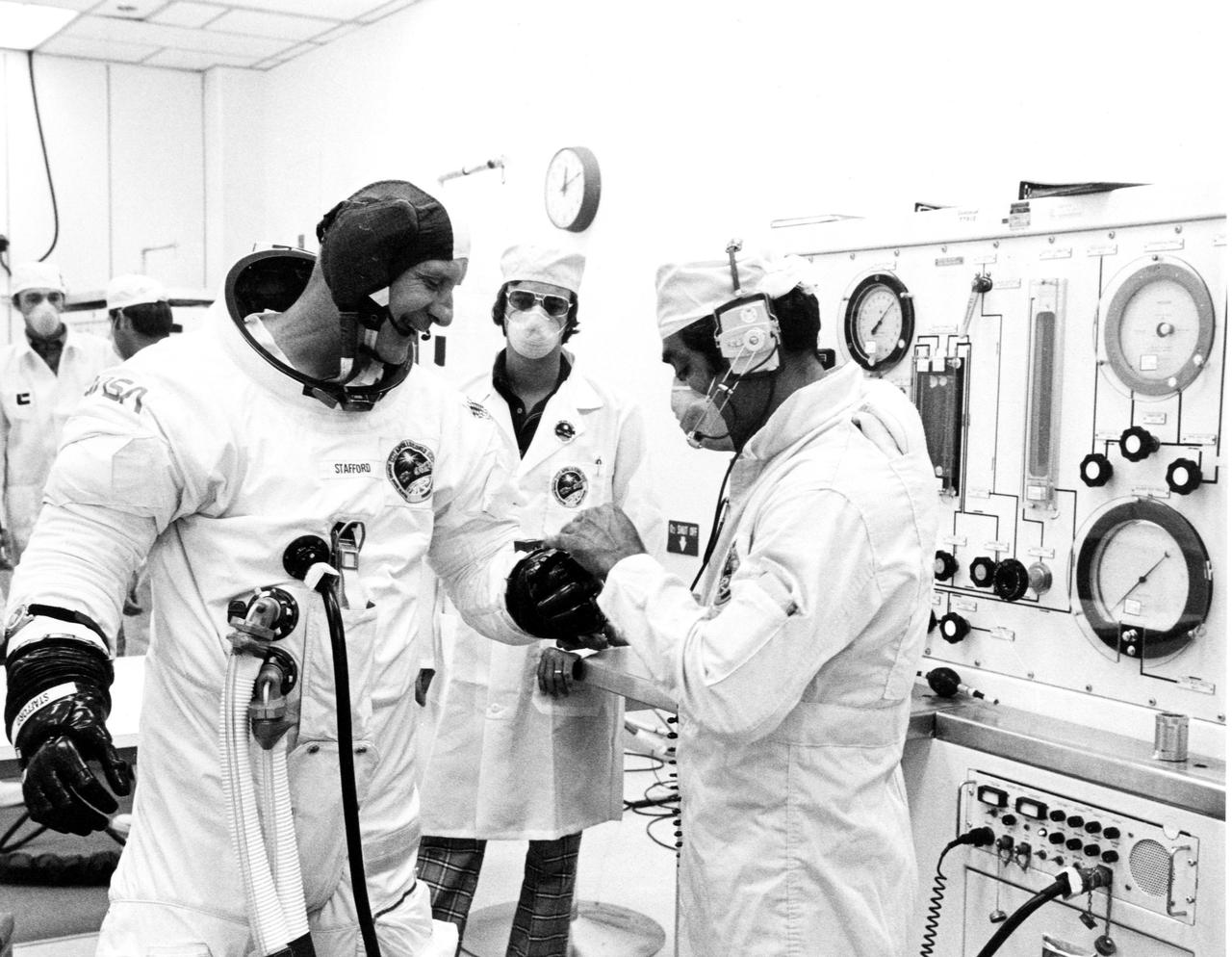
KENNEDY SPACE CENTER, FLA. -- A suit technician helps ASTP astronaut Thomas Stafford don his pressure suit. After suitup, Stafford and crewmen Vance Brand and Donald Slayton walked to the transfer van for the trip to the launch pad.
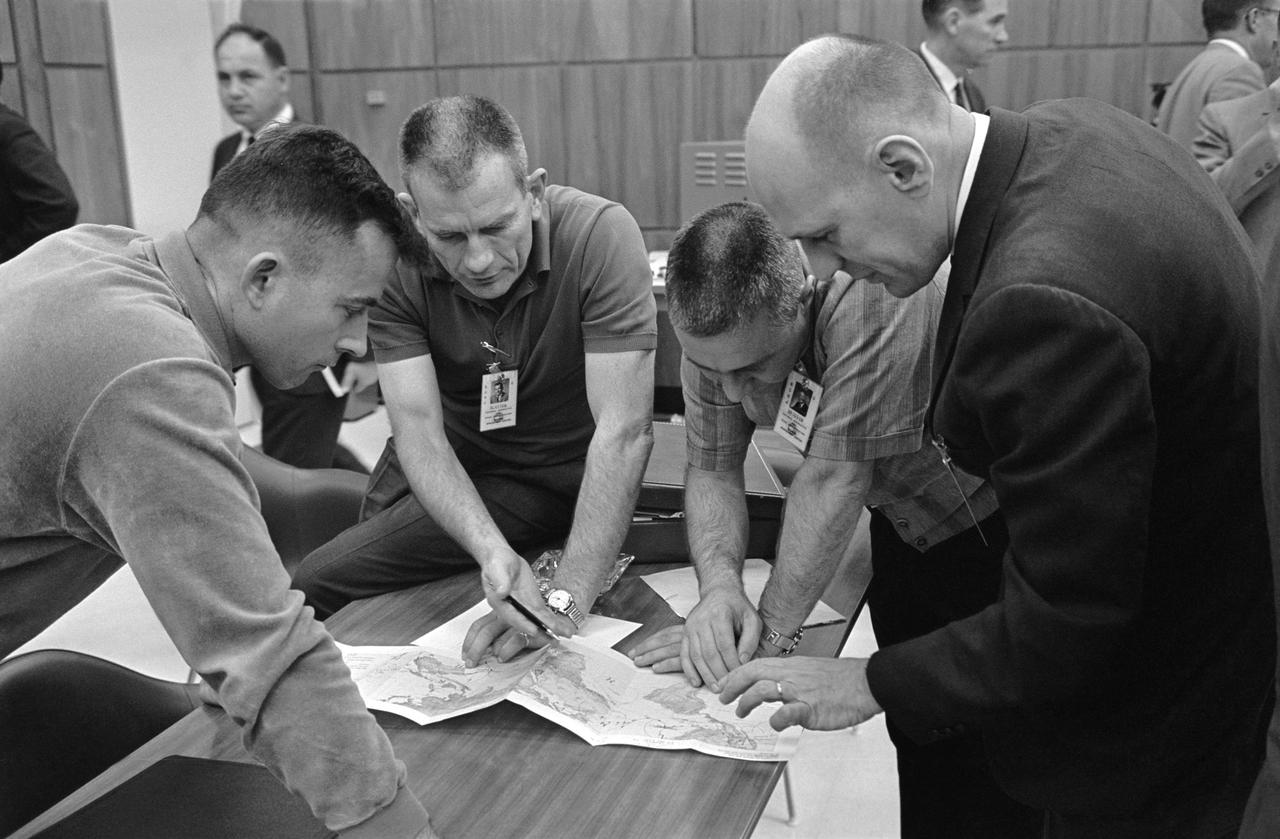
S65-20627 (20 March 1965) --- Crew members for the NASA Gemini-Titan 3 mission go over the map of the orbital track with Donald K. Slayton, assistant director for Flight Crew Operations, Manned Spacecraft Center. Shown (left to right) are astronauts John W. Young, pilot; Slayton; Virgil I. Grissom, command pilot; and Ken Nagler, U.S. Weather Bureau. The group got together at the GT-3 mission review meeting on March 20, 1965, in the Manned Spacecraft Operations Building on Merritt Island, Florida. Items covered at the review included mission description, spacecraft, launch vehicle, experiments, world-wide tracking network, recovery and weather.
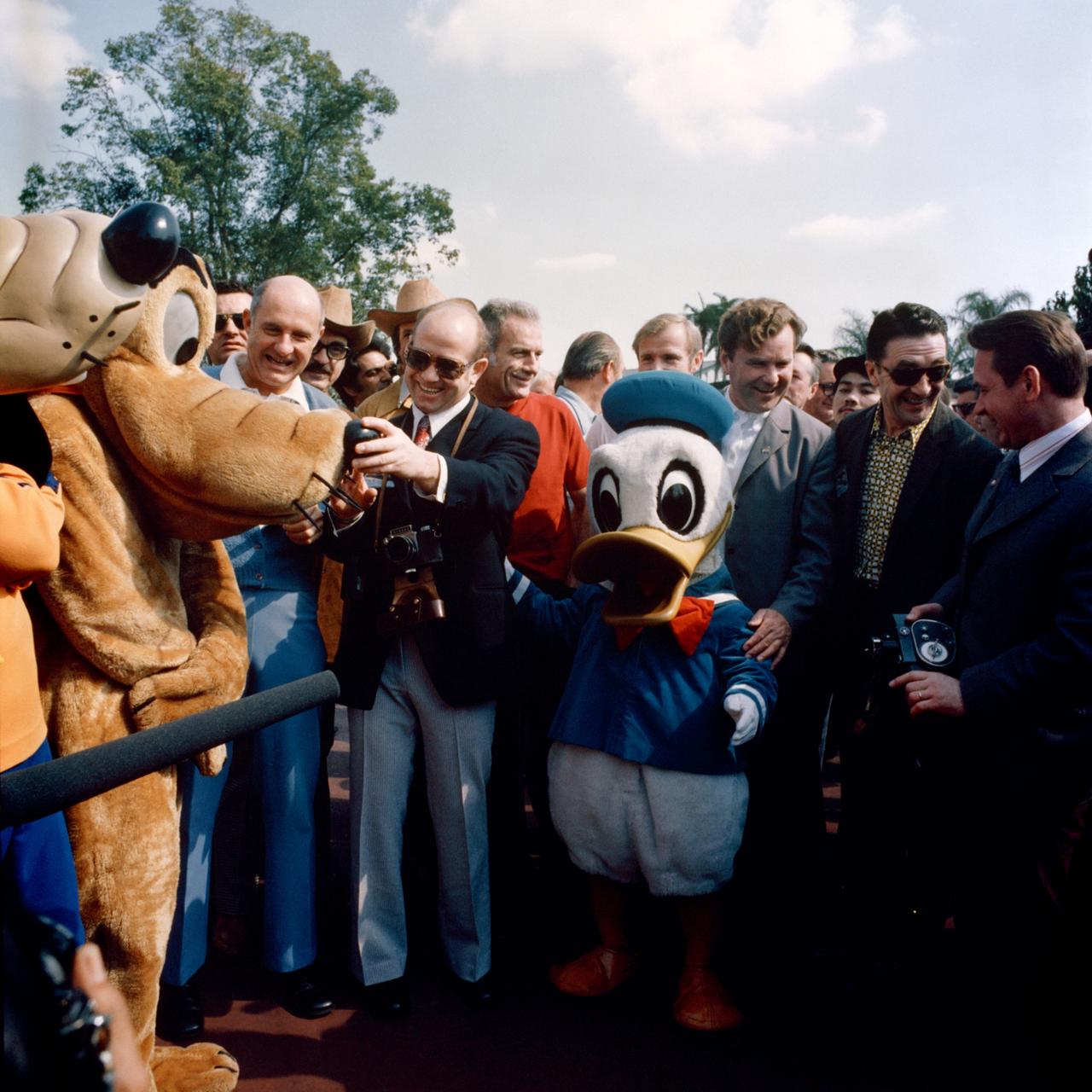
S75-24114 (8-10 Feb. 1975) --- Two Walt Disney comic cartoon characters, Donald Duck and Pluto, were on hand to greet a group of Apollo-Soyuz Test Project (ASTP) crewmen on their arrival at Disney World near Orlando. From left, are interpreter K. S. Samofal, interpreter Nicholas Timacheff, cosmonaut Vladimir A. Shatalov, astronaut Vance D. Brand, astronaut Donald K. Slayton, cosmonaut Aleksey A. Leonov (squeezing Pluto's nose) and astronaut Thomas P. Stafford. The astronauts and cosmonauts were in Florida for a three-day inspection tour of NASA's Kennedy Space Center where they looked over ASTP launch facilities and flight hardware.
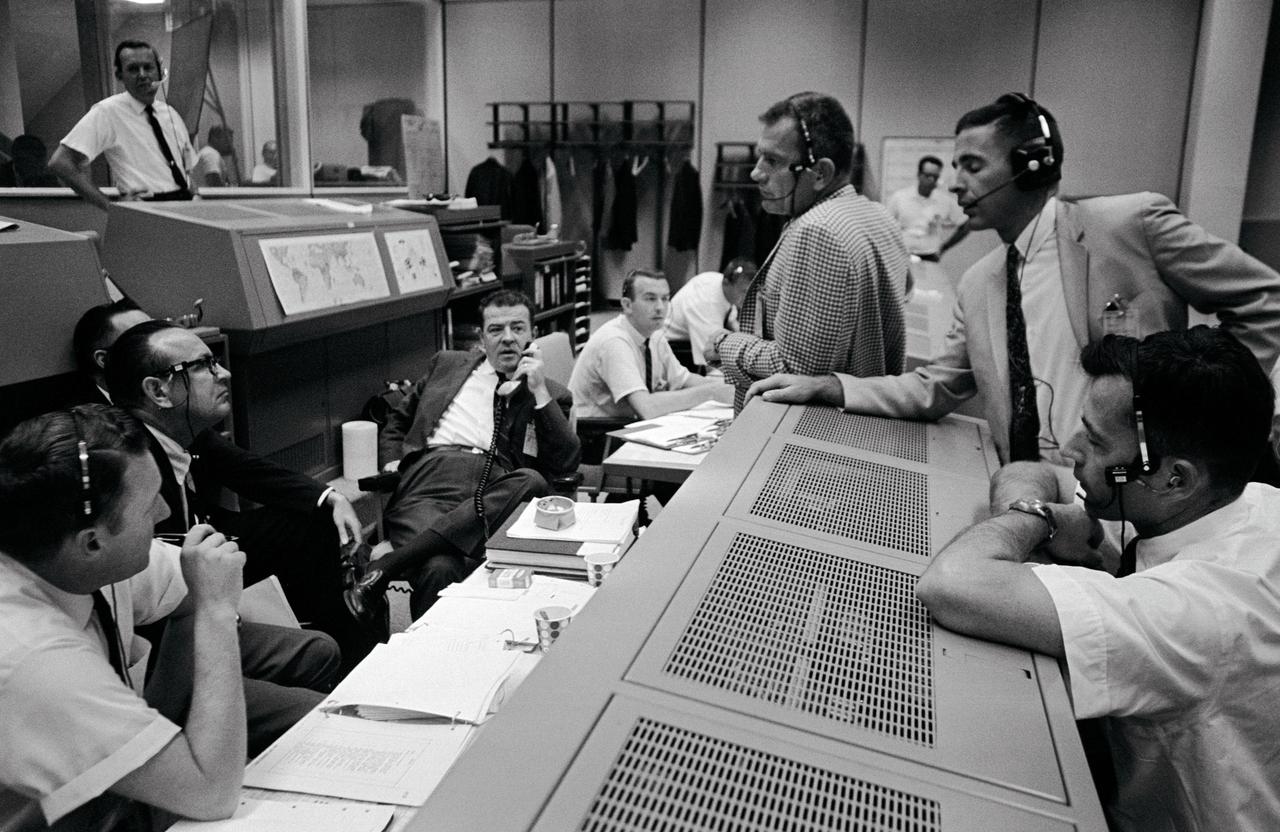
S66-52157 (12 Sept. 1966) --- Discussing the Gemini-11 spaceflight in the Mission Control Center are: (left to right) Christopher C. Kraft Jr., (wearing glasses), Director of Flight Operations; Charles W. Mathews (holding phone), Manager, Gemini Program Office; Dr. Donald K. Slayton (center, checked coat), Director of Flight Crew Operations; astronaut William A. Anders, and astronaut John W. Young. Photo credit: NASA
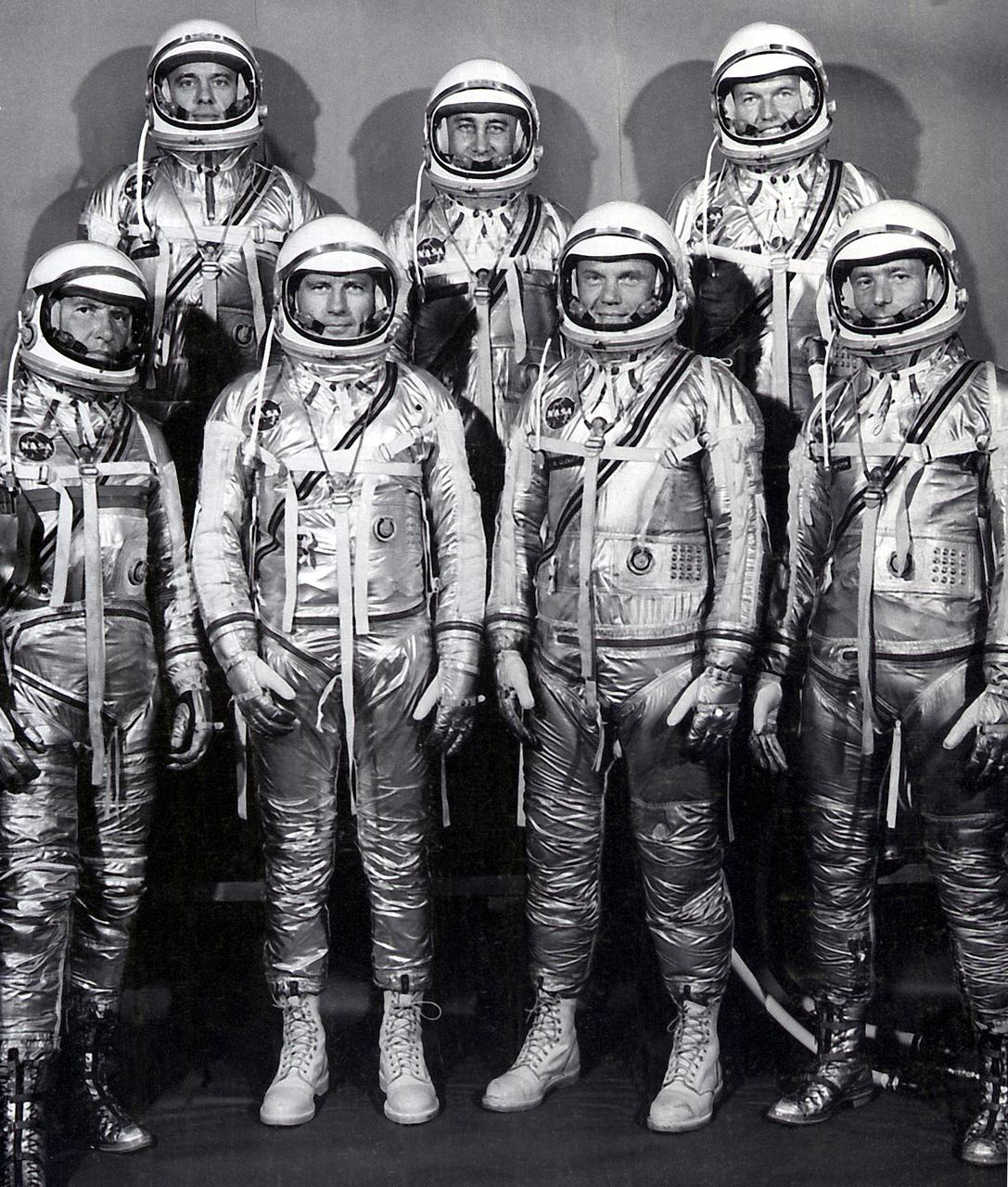
The group portrait of the original seven astronauts for the Mercury Project. NASA selected its first seven astronauts on April 27, 1959. Left to right at front: Walter M. Wally Schirra, Donald K. Deke Slayton, John H. Glenn, Jr., and Scott Carpenter. Left to right at rear: Alan B. Shepard, Virgil I. Gus Grissom, and L. Gordon Cooper, Jr.
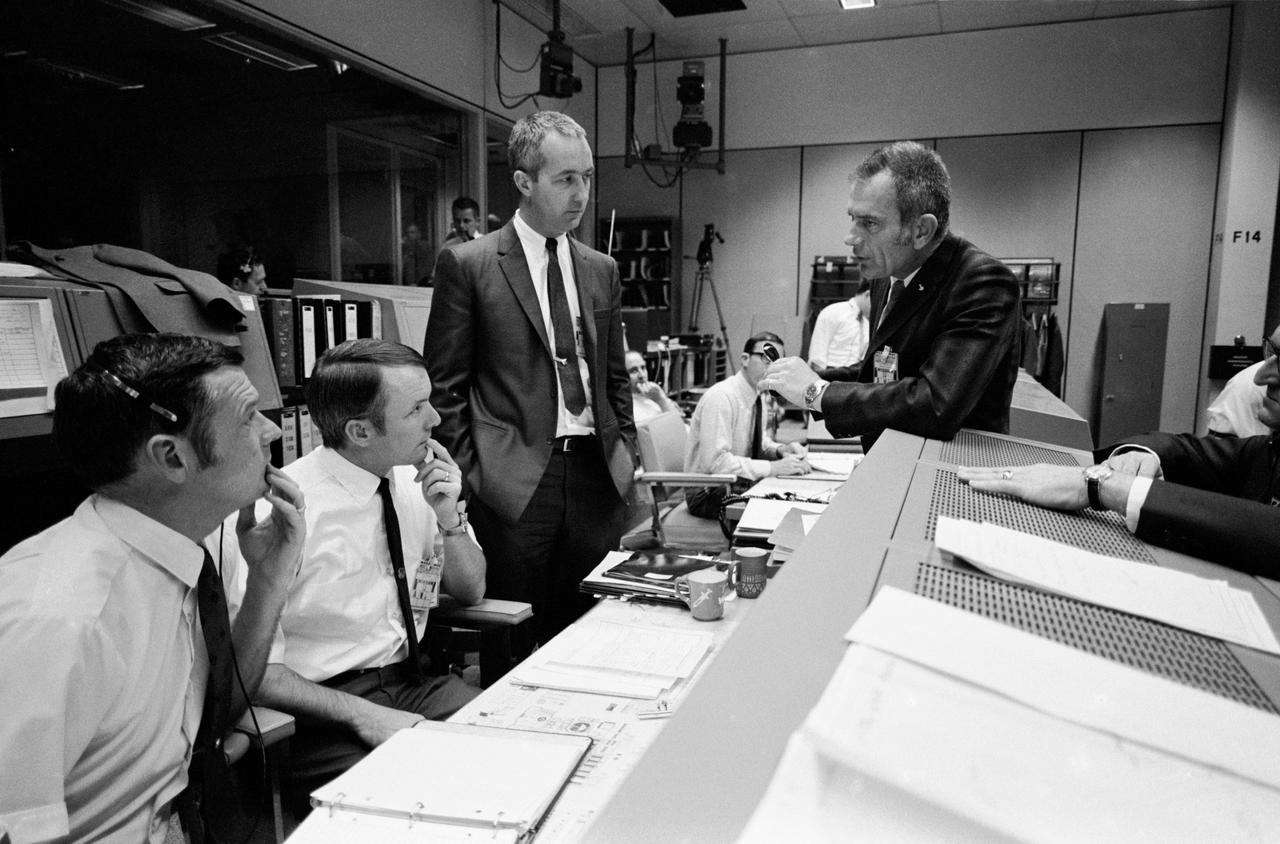
S70-35369 (16 April 1970) --- Discussion in the Mission Operations Control Room (MOCR) dealing with the Apollo 13 crewmen during their final day in space. From left to right are Glynn S. Lunney, Shift 4 flight director; Gerald D. Griffin, Shift 2 flight director; astronaut James A. McDivitt, manager, Apollo Spacecraft Program, MSC; Dr. Donald K. Slayton, director of Flight Crew Operations, MSC; and Dr. Willard R. Hawkins, M.D., Shift 1 flight surgeon.
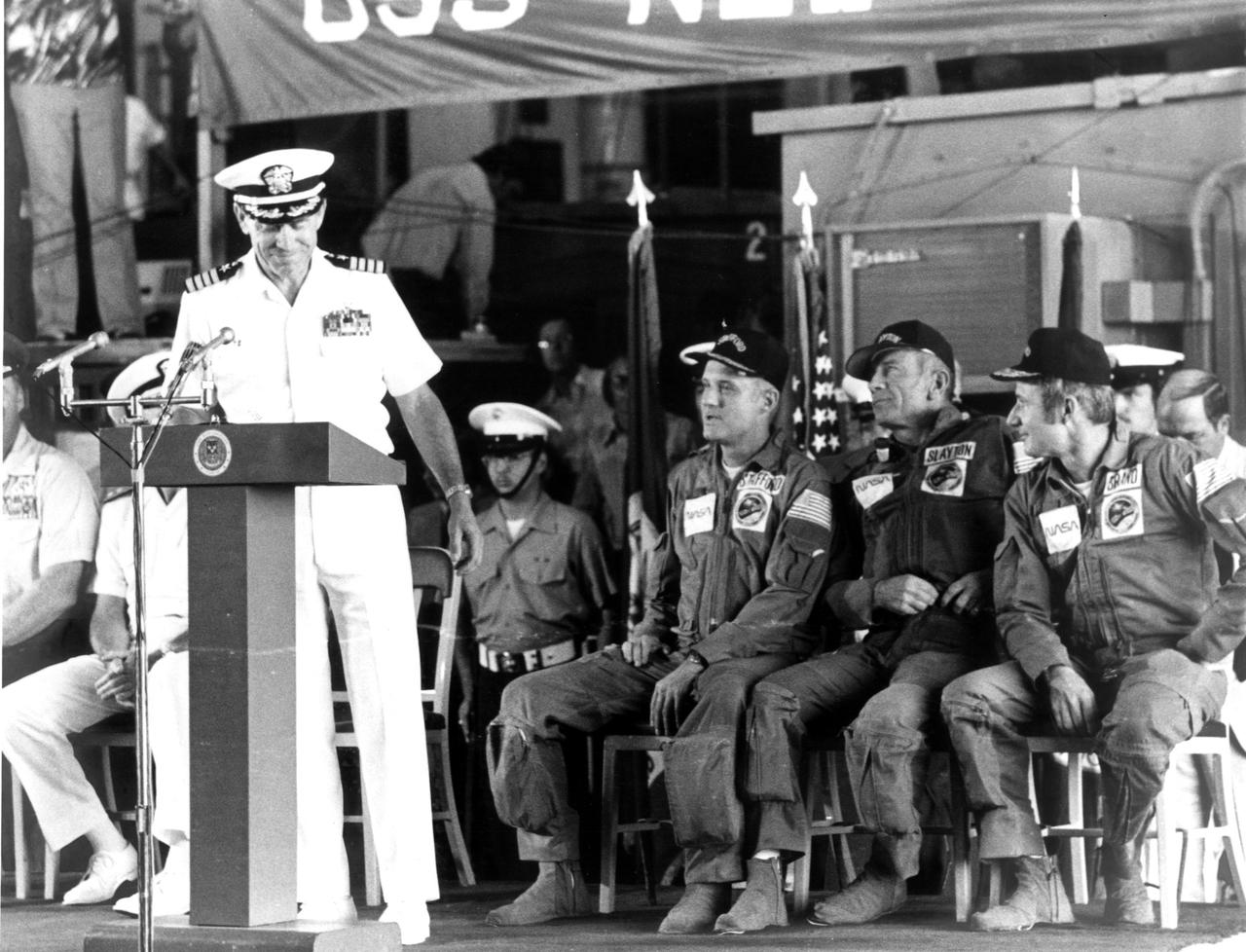
KENNEDY SPACE CENTER, FLA. -- The Commanding Officer of the USS New Orleans, Captain Ralph E. Neiger, welcomes aboard ASTP astronauts Thomas Stafford, Donald Slayton and Vance Brand. The astronauts splashed down in the Pacific Ocean west of Hawaii at 5:18 p.m. today, ending the nine-day ASTP mission. Themission was highlighted by the rendezvous and docking with a Soviet Soyuz spacecraft in Earth orbit.
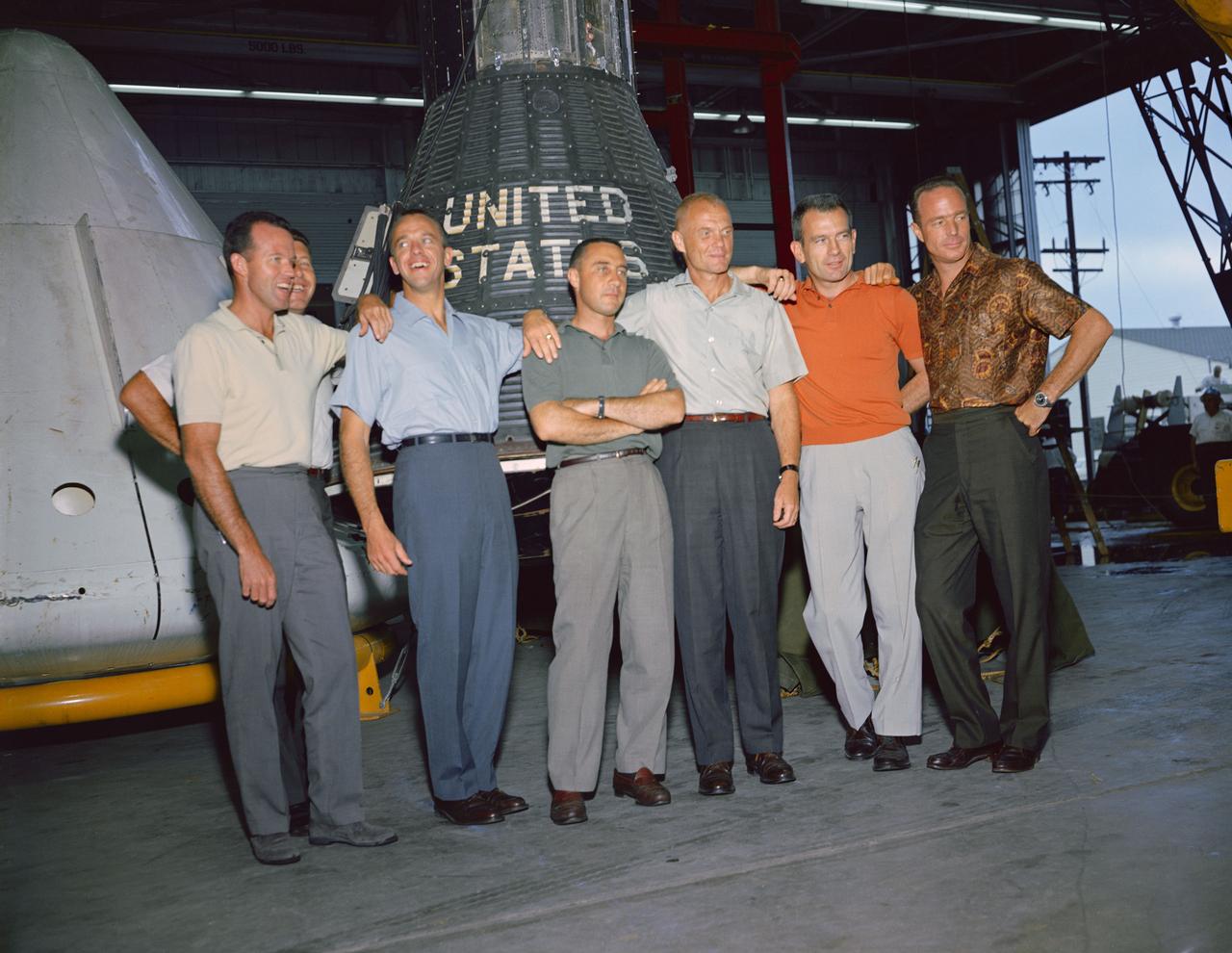
S63-18853 (1963) --- Group shot of the original Mercury astronauts taken at the Manned Spacecraft Center (MSC), Houston, Texas. The astronauts are left-to-right: L. Gordon Cooper Jr., Walter M. Schirra, Alan B. Shepard Jr., Virgil I. Grissom, John H. Glenn Jr., Donald K. Slayton and M. Scott Carpenter. Photo credit: NASA
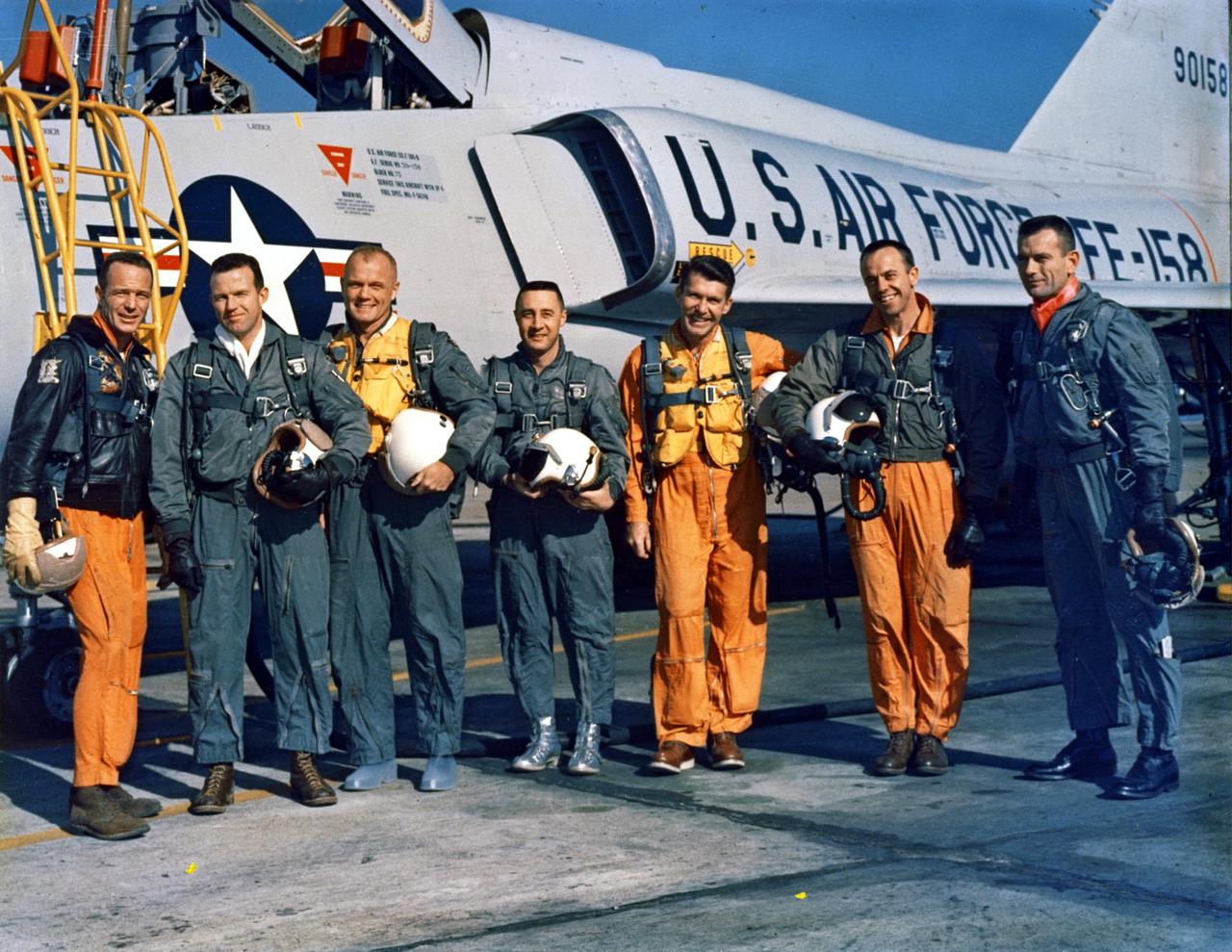
CAPE CANAVERAL, FLA. -- The Original Seven Mercury Astronauts pose beside an Air Force F-102 jet. Standing, left to right, are M. Scott Carpenter, L. Gordon Cooper, John H. Glenn Jr., Virgil I. 'Gus' Grissom, Walter M. Schirra Jr., Alan B. Shepherd Jr., and Donald K. 'Deke' Slayton.
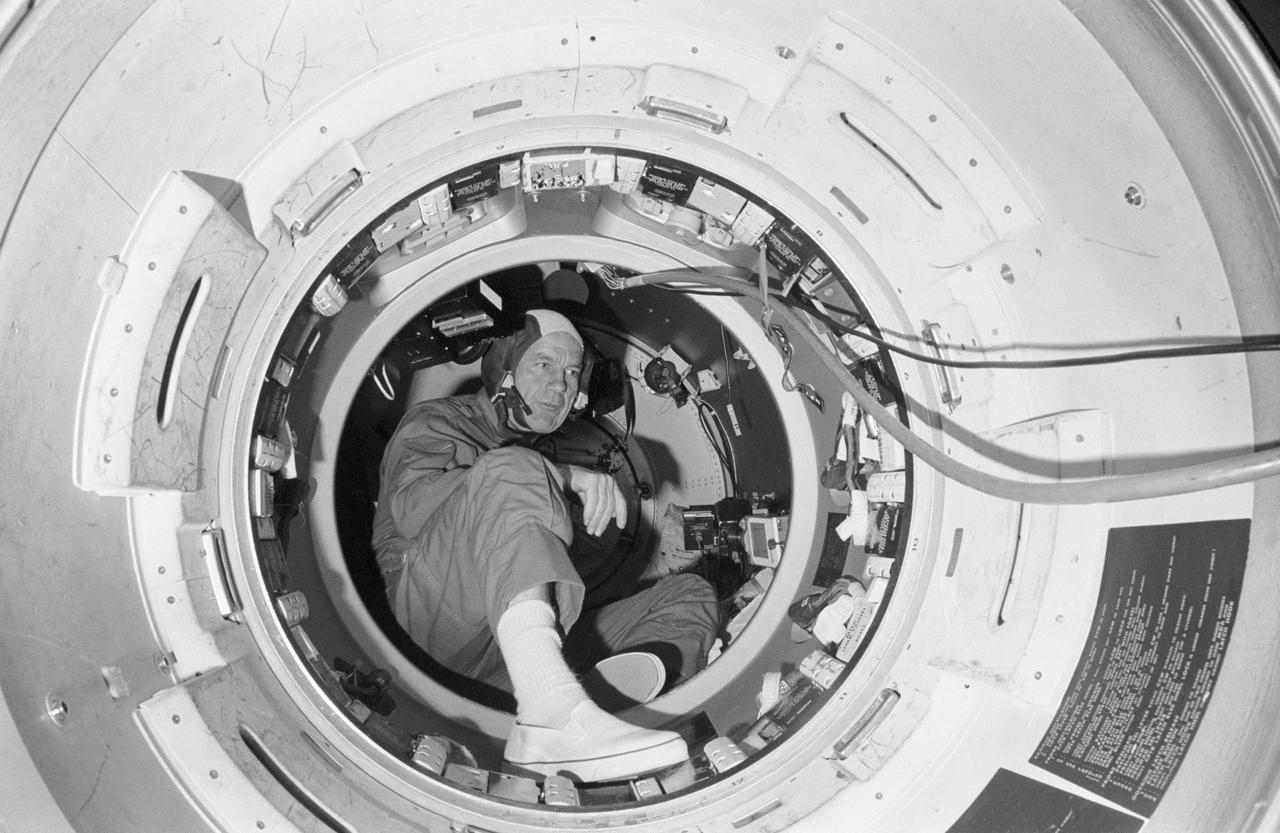
S75-21674 (17 Feb. 1975) --- Astronaut Donald K. Slayton, docking module pilot on the American ASTP prime crew, participates in Apollo-Soyuz Test Project joint crew training in Building 35 at the Johnson Space Center. He is in the Docking Module mock-up. The training simulated activities on the first day in Earth orbit.
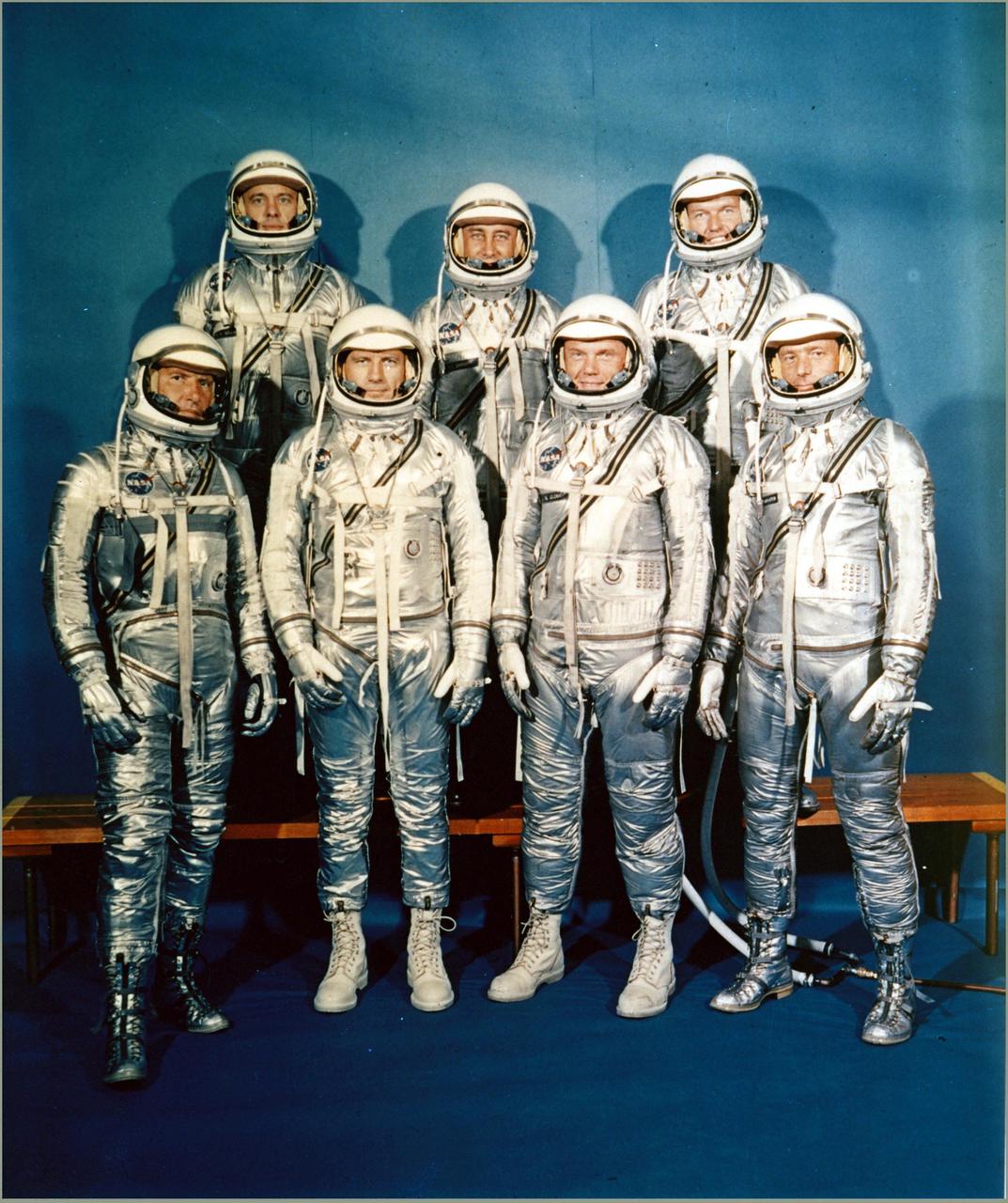
MANNED SPACECRAFT CENTER, HOUSTON, TX. -- FIRST ASTRONAUT TEAM -- Project Mercury Astronauts, whose selection was announced on April 9, 1959, only six months after the National Aeronautics and Space Administration was formally established on Oct. 1, 1958, included: front row, left to right, Walter H. Schirra Jr., Donald K. Slayton, John H. Glenn Jr., and Scott Carpenter back row, Alan B. Shepard Jr., Virgil I. 'Gus' Grissom, and L. Gordon Cooper.
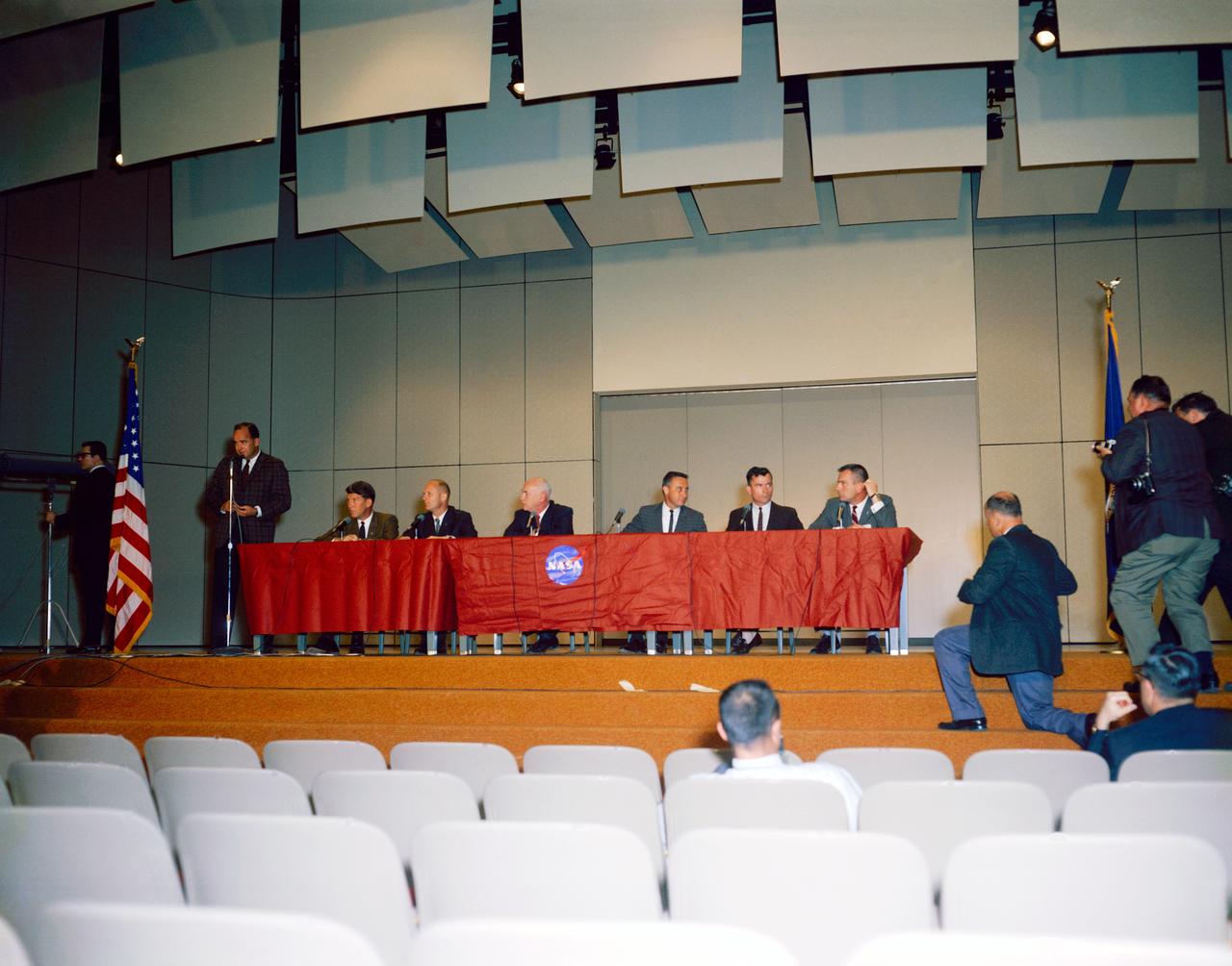
S64-19466 (13 April 1964) --- A press conference was held in the Bldg. 1 auditorium at the NASA Manned Spacecraft Center to announce the first Gemini astronaut selections. Shown left to right are Paul Haney, MSC Public Affairs Officer (standing); astronauts Walter Schirra and Thomas Stafford; Dr. Robert Gilruth, director of MSC; astronauts Virgil Grissom and John Young; and Donald K. Slayton, assistant director of Flight Crew Operations at MSC.
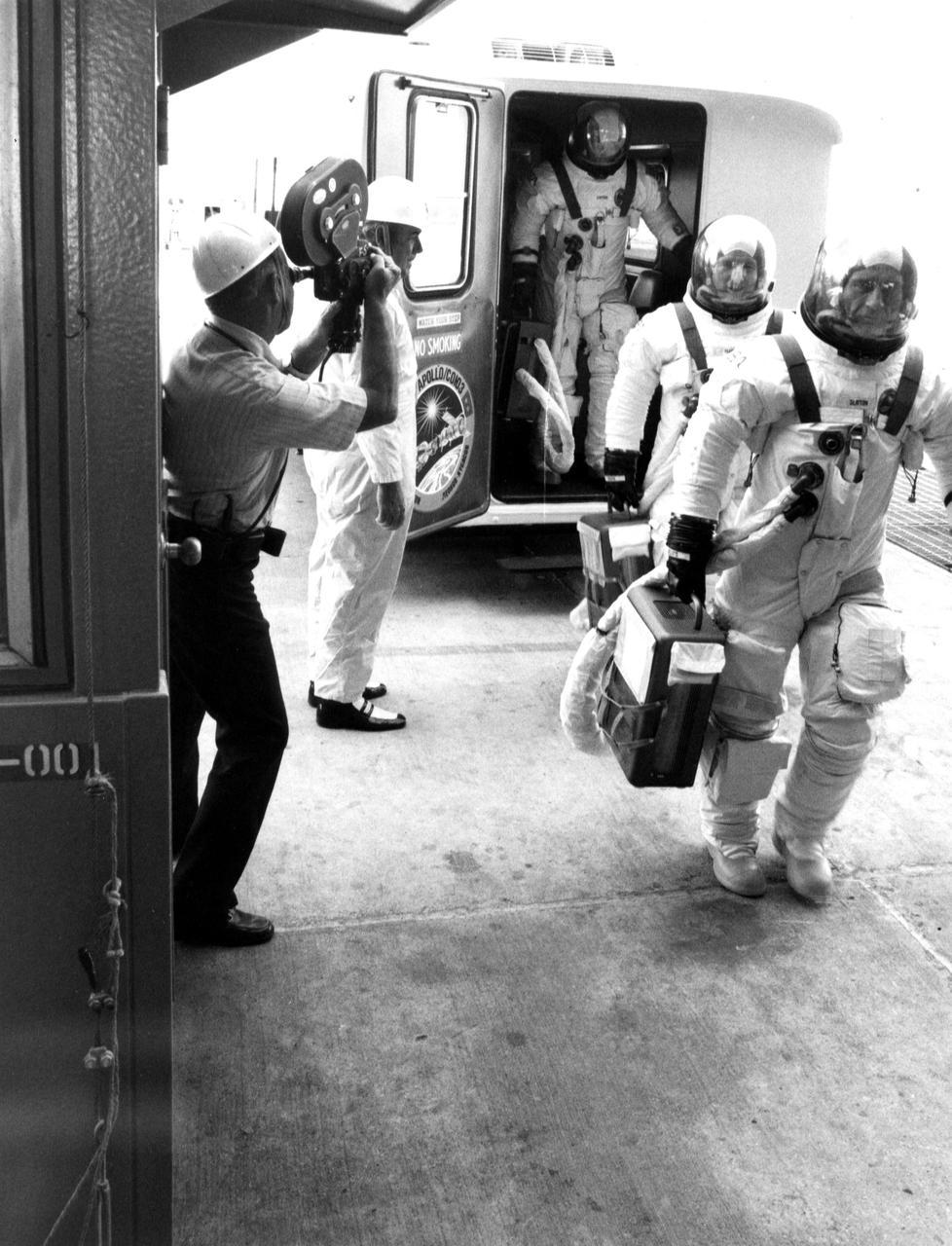
KENNEDY SPACE CENTER, FLA. -- ASTP asstronauts Donald slayton, Vance Brand and Thomas Stafford leave the transfer van at Complex 39's Pad B and enter the pad elevator during the Countdown Demonstration Test. The test, a step-by-step dress rehearsal for the July 15 launch, simulates the actual countdown but without the propellants in the Saturn IB launch vehicle's fuel tanks. The fueled portion of the test was conducted yesterday.
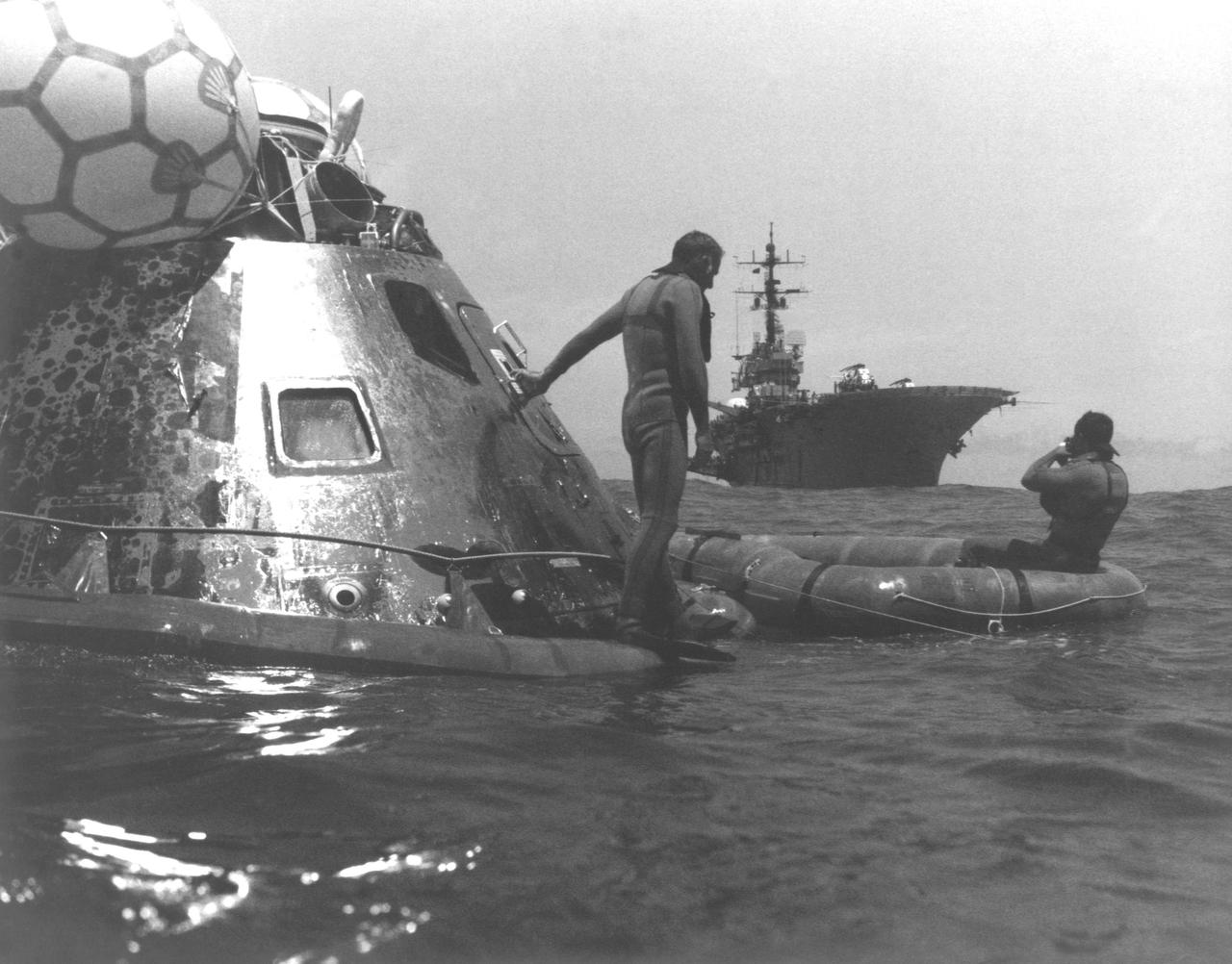
KENNEDY SPACE CENTER, FLA. -- Members of the Pacific Recovery Task Force secure the ASTP Apollo spacecraft as the USS New Orleans approaches to pick up the spacecraft and astronauts Thomas Stafford, Vance Brand and Donald Slayton. The Apollo splashed down in the Pacific Ocean, west of Hawaii, at 5:18 p.m., ending the nine-day joint US_USSR space mission.
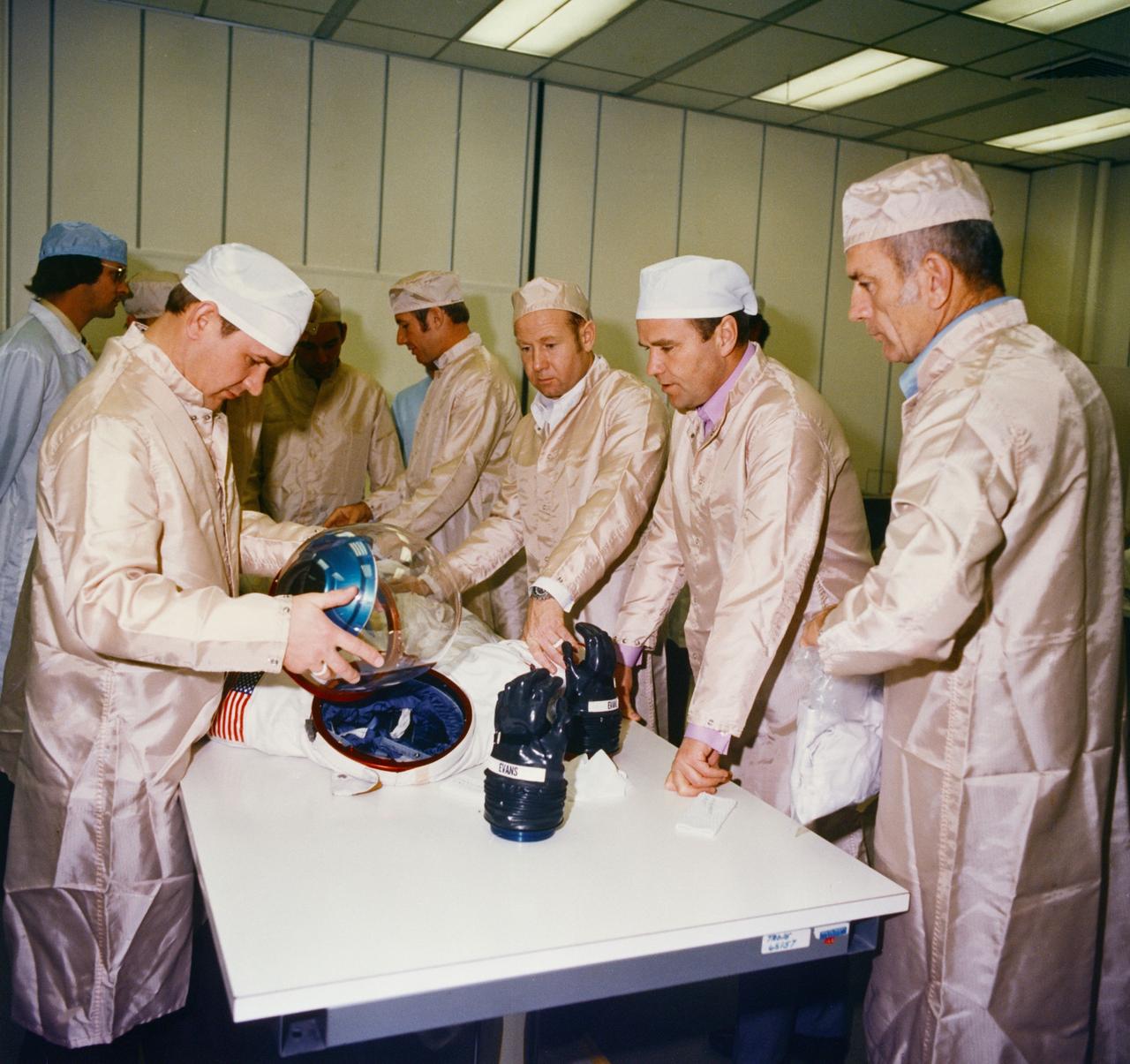
S75-24108 (8-10 Feb. 1975) --- A group of Apollo-Soyuz Test Project crewmen inspects an Apollo spacesuit during a three-day tour of NASA's Kennedy Space Center. They were at KSC to look over ASTP launch facilities and flight hardware. The six men wearing white caps are, left to right, cosmonaut Valeriy N. Kubasov, interpreter K.S. Samofal (far end of table), astronaut Vance D. Brand, cosmonaut Aleksey A. Leonov, cosmonaut Vladimir A. Shatalov and astronaut Donald K. Slayton.
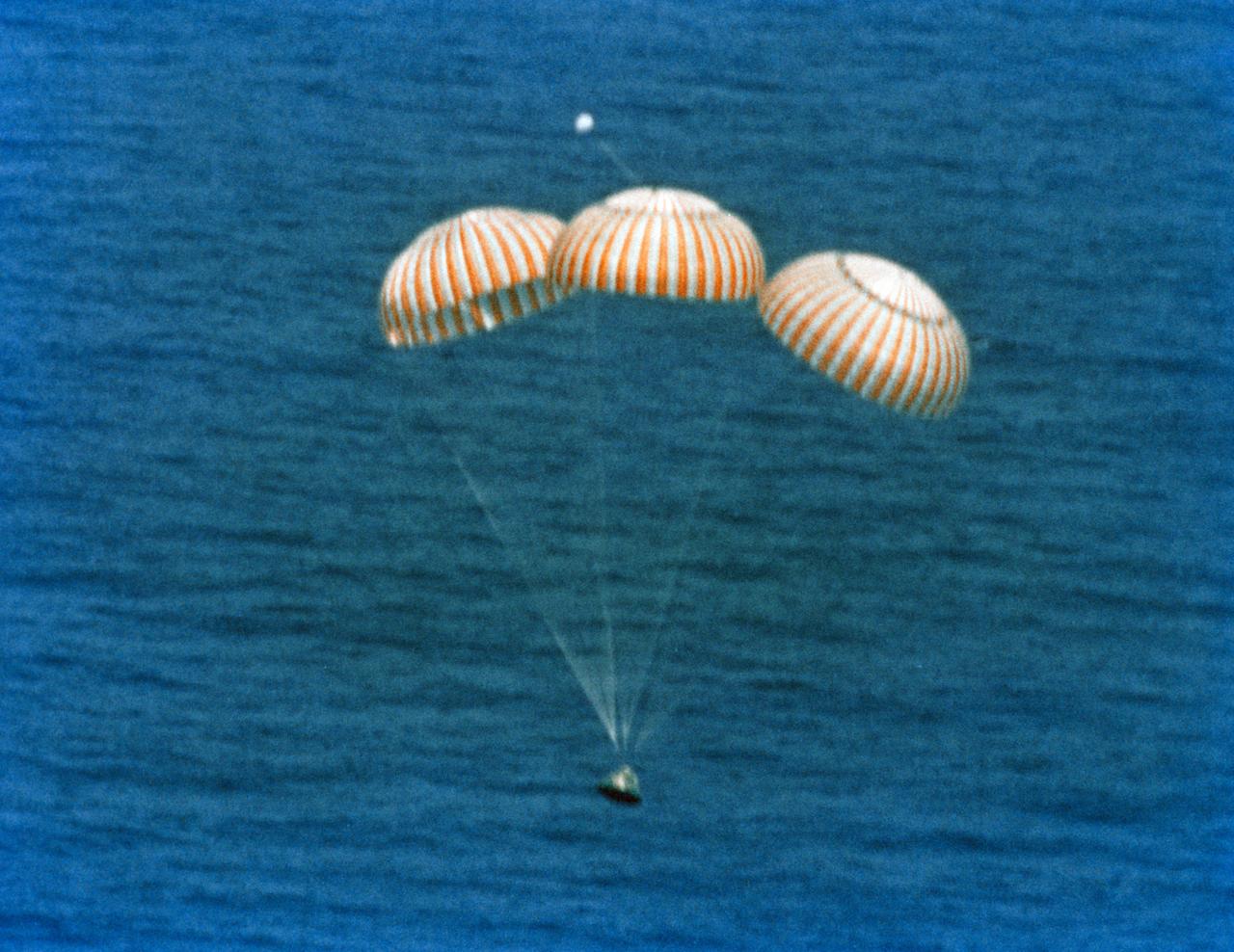
S75-29719 (24 July 1975) --- The ASTP Apollo Command Module, with astronauts Thomas P. Stafford, Vance D. Brand and Donald K. Slayton aboard, nears a touchdown in the Central Pacific Ocean to conclude the historic joint U.S.-USSR Apollo-Soyuz Test Project docking mission in Earth orbit. The spacecraft splashed down in the Hawaiian Islands area at 4:18 p.m. (CDT), July 24, 1975.
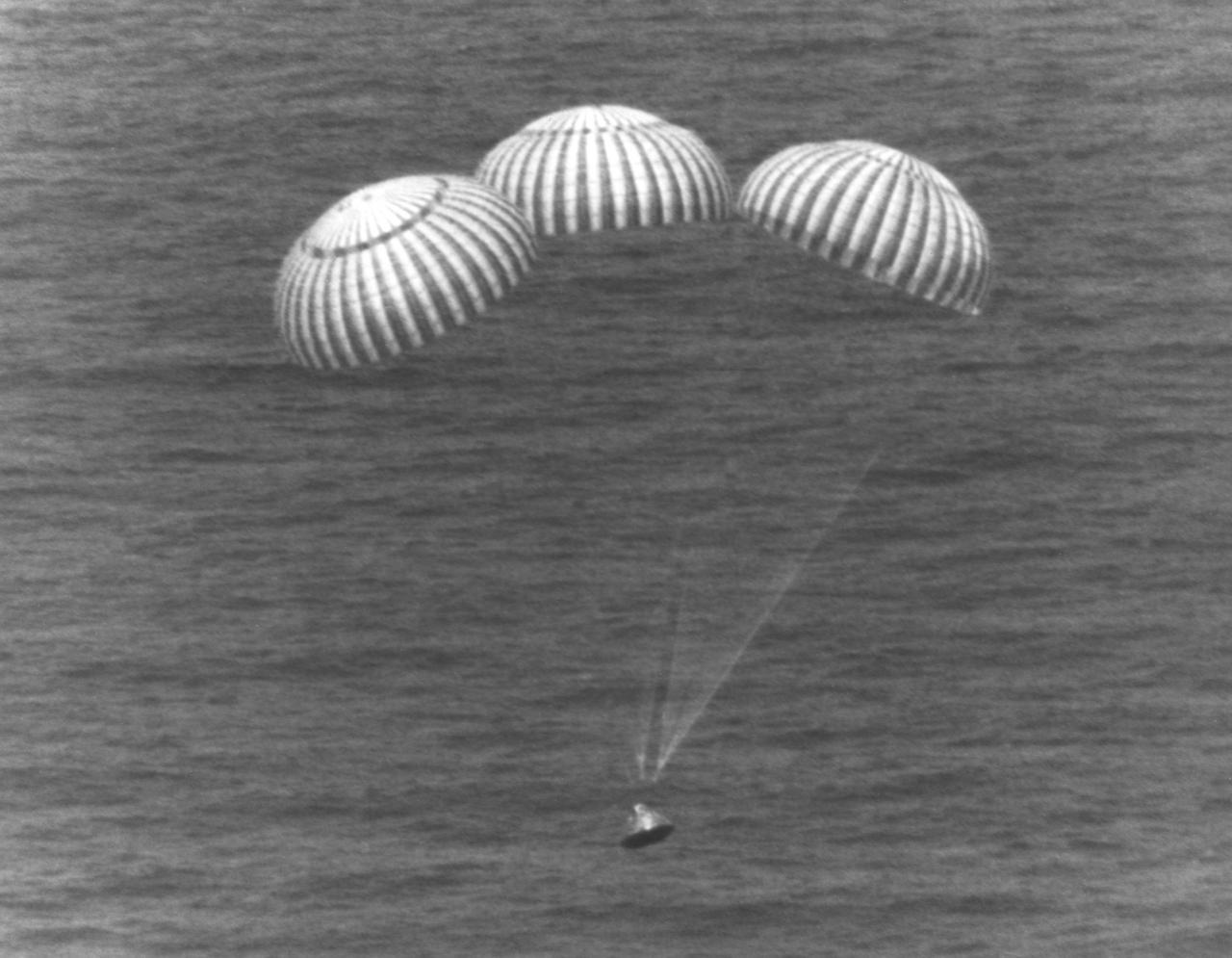
KENNEDY SPACE CENTER, FLA. -- The three main parachutes lower the ASTP Apollo Command Module into the Pacific Ocean west of Hawaii. The splashdown at 5:18 p.m. ended the nine-day mission for ASTP astronauts Thomas Stafford, Vance Brand and Donald Slayton. The Apollo was picked up by the USS New Orleans after which the crewmen participated in ceremonies on the ship's deck.
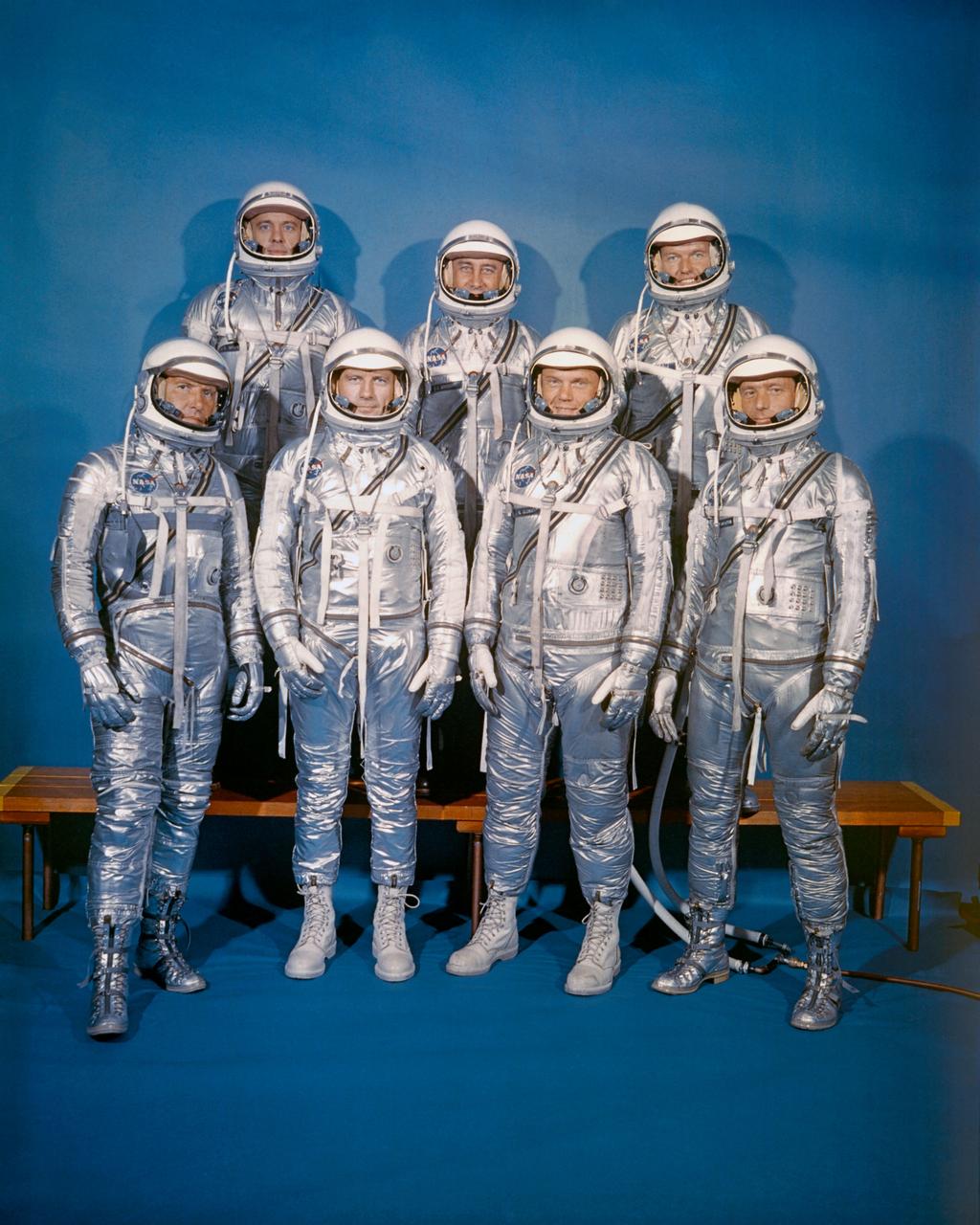
S62-08774 (July 1960) --- These seven men, wearing spacesuits in this portrait, composed the first group of astronauts announced by the National Aeronautics and Space Administration (NASA). They were selected in April of 1959 for the Mercury Program. Front row, left to right, are Walter M. Schirra Jr., Donald K. Slayton, John H. Glenn Jr., and M. Scott Carpenter. Back row, left to right, are Alan B. Shepard Jr., Virgil I. Grissom and L. Gordon Cooper Jr. Photo credit: NASA
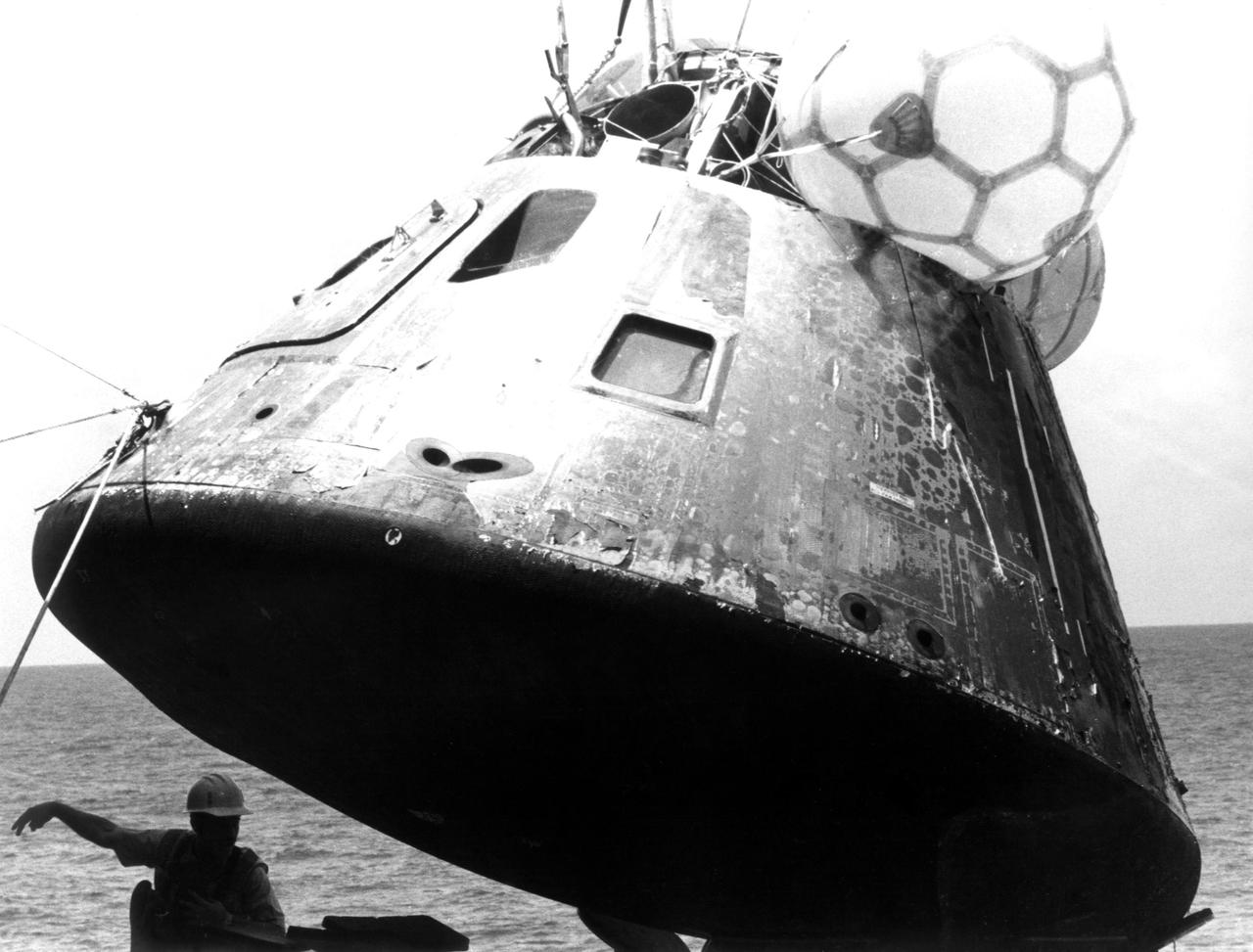
KENNEDY SPACE CENTER, FLA. -- The ASTP Apollo Command Module is lowered onto the deck of the USS New Orleans following splashdown in the Pacific Ocean, west of Hawaii, at 5:18 p.m. today. Once aboard the ship, the ASTP astronauts Thomas Stafford, Vance Brand, and Donald Slayton emerged from the spacecraft and participated in ceremonies during which they spoke by telephone to President Gerald Ford. The splashdown ended the crew's historic nine-day mission, highlighted by their rendezvous and docking with a Soviet Soyuz spacecraft while in Earth orbit.
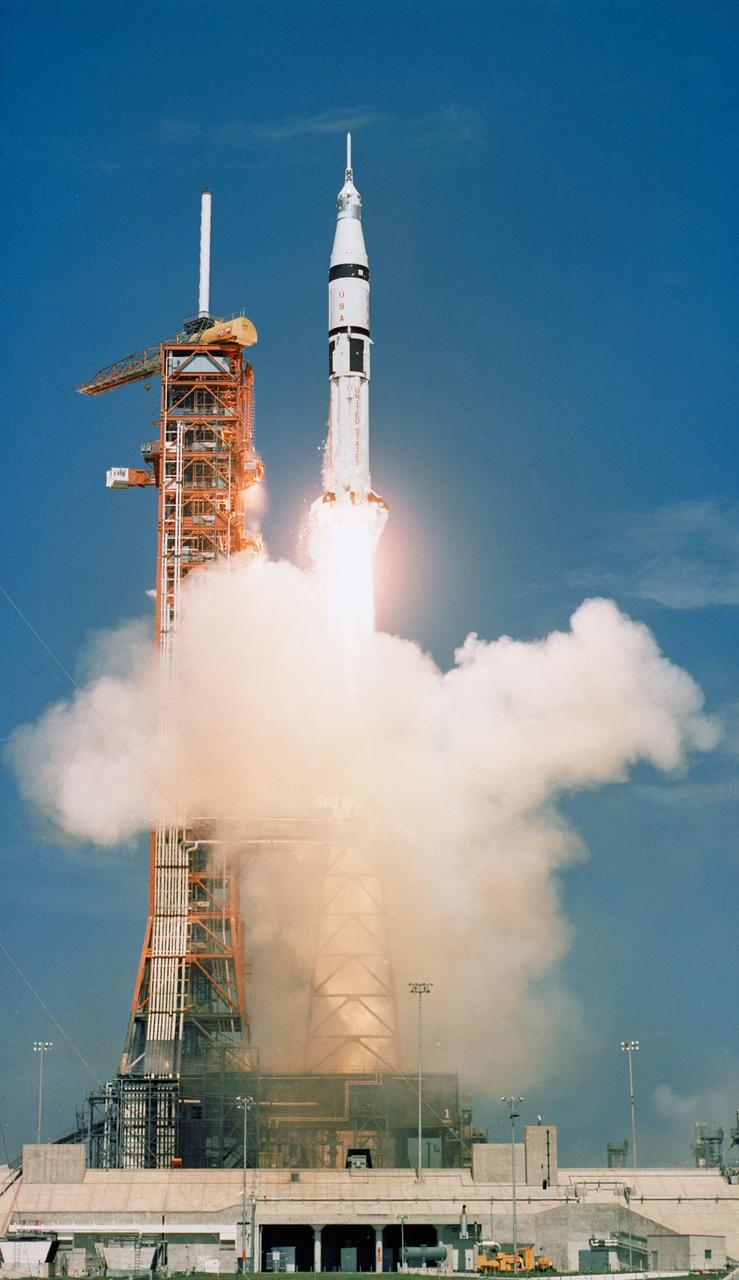
S75-28550 (15 July 1975) --- The Apollo-Soyuz Test Project's (ASTP) NASA Apollo/Saturn 1B space vehicle is launched from Pad B, Launch Complex 39, Kennedy Space Center (KSC), Florida, at 3:50 p.m. (EDT), July 15, 1975, to begin Apollo's catch-up journey toward the already Earth-orbiting Soviet Soyuz spacecraft. Aboard the Apollo spacecraft were astronauts Thomas P. Stafford, Vance D. Brand and Donald K. (Deke) Slayton.
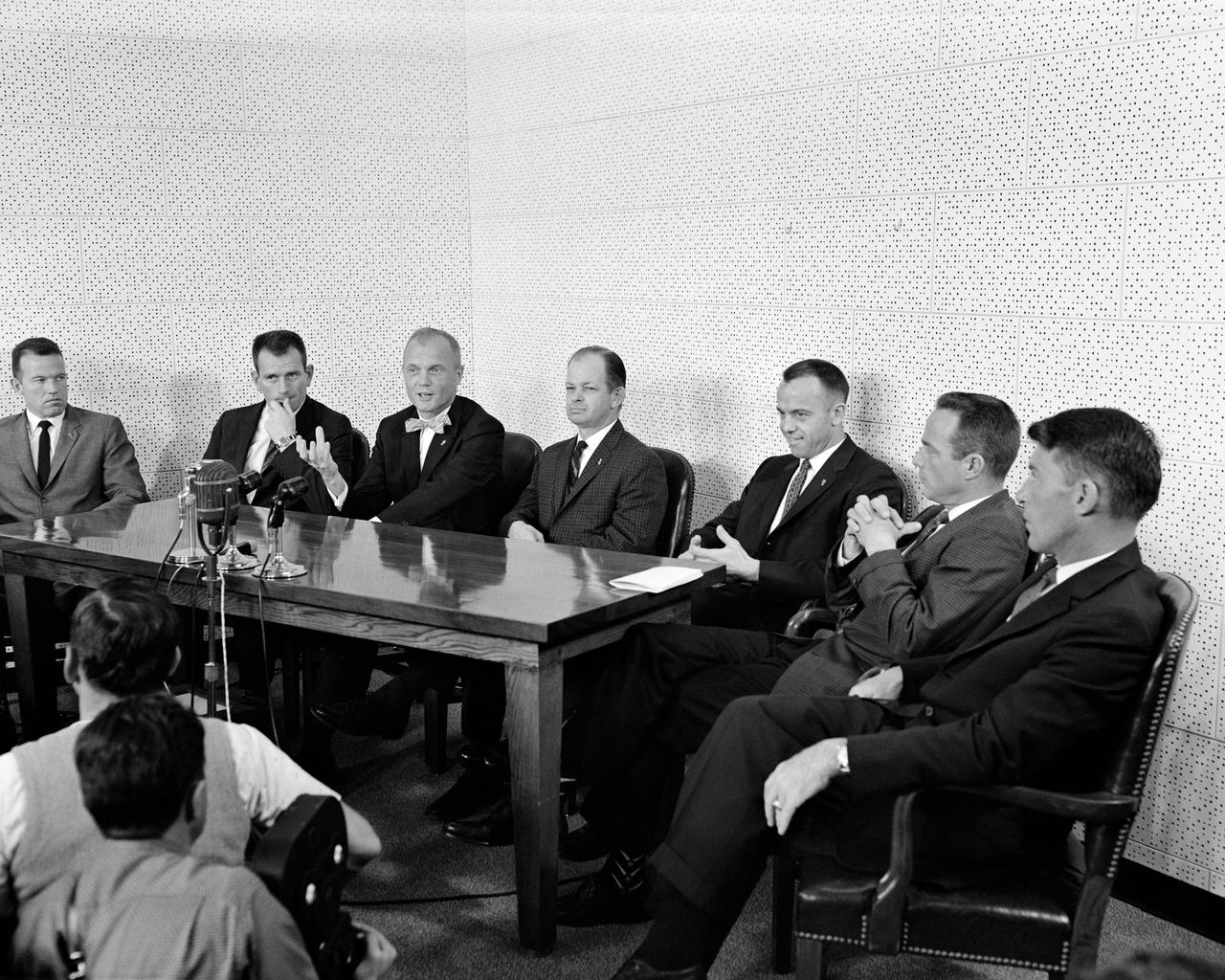
S61-00246 (25 July 1961) --- Photo of the original Mercury astronauts with Col. John A. (Shorty) Powers seated around a table talking to the news media. From left to right are: L. Gordon Cooper, Donald K. Slayton, John H. Glenn Jr., Col. Powers, Alan B. Shepard Jr., M. Scott Carpenter and Walter M. Schirra Jr. Virgil I. Grissom is out of the frame. Photo credit: NASA
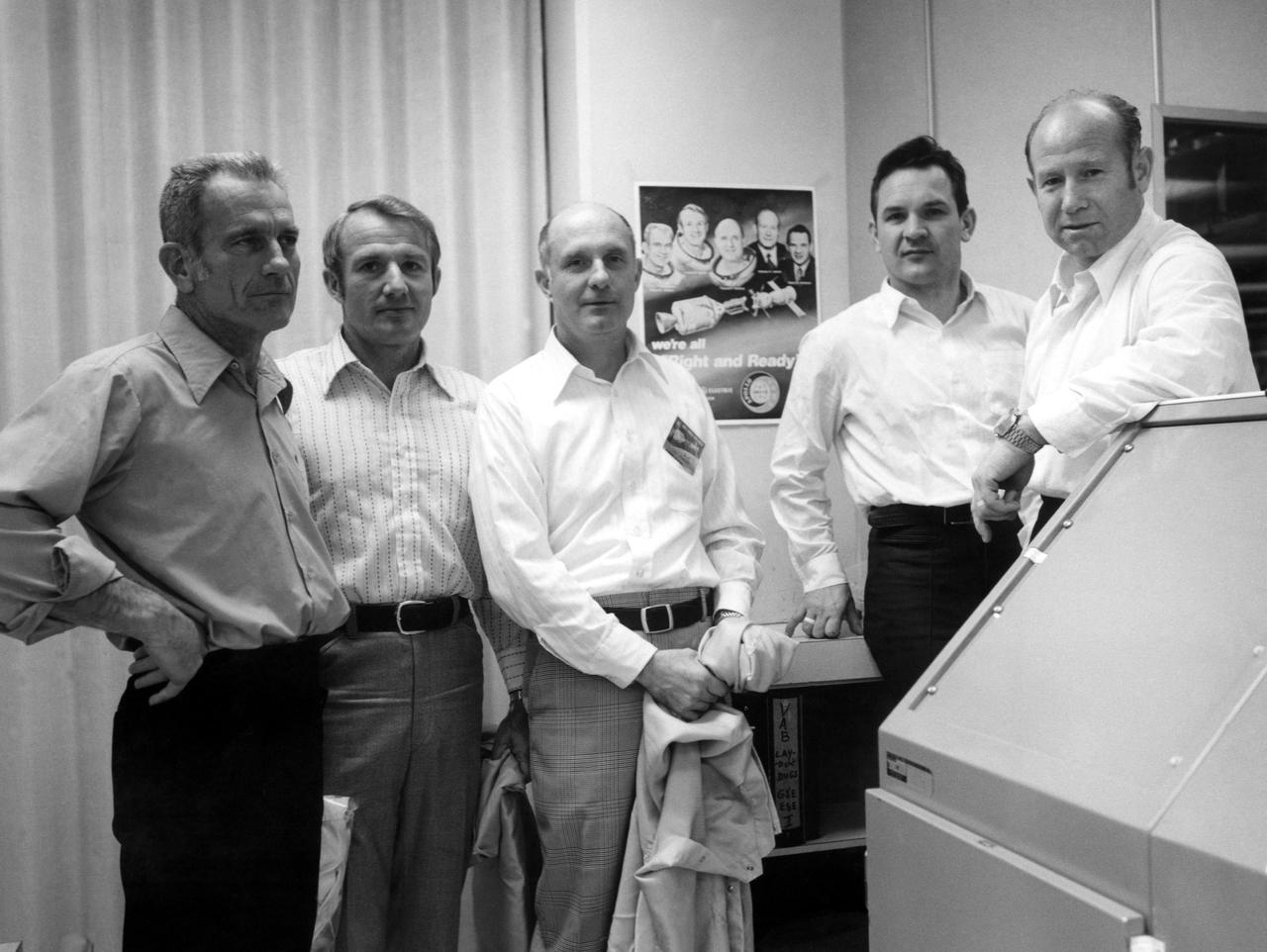
KENNEDY SPACE CENTER, FLA. -- Soviet Cosmonaut tour of KSC. United States, Soviet Union, prime crews for Apollo Soyuz Test Project inspect spacecraft checkout facilities in Manned Spacecraft Operations Building ACE Station. From left are astronauts Donald K. Slayton, Vance D. Brand and Thomas P. Stafford; cosmonauts Valeriy Kubasov and Aleksey Leonov.
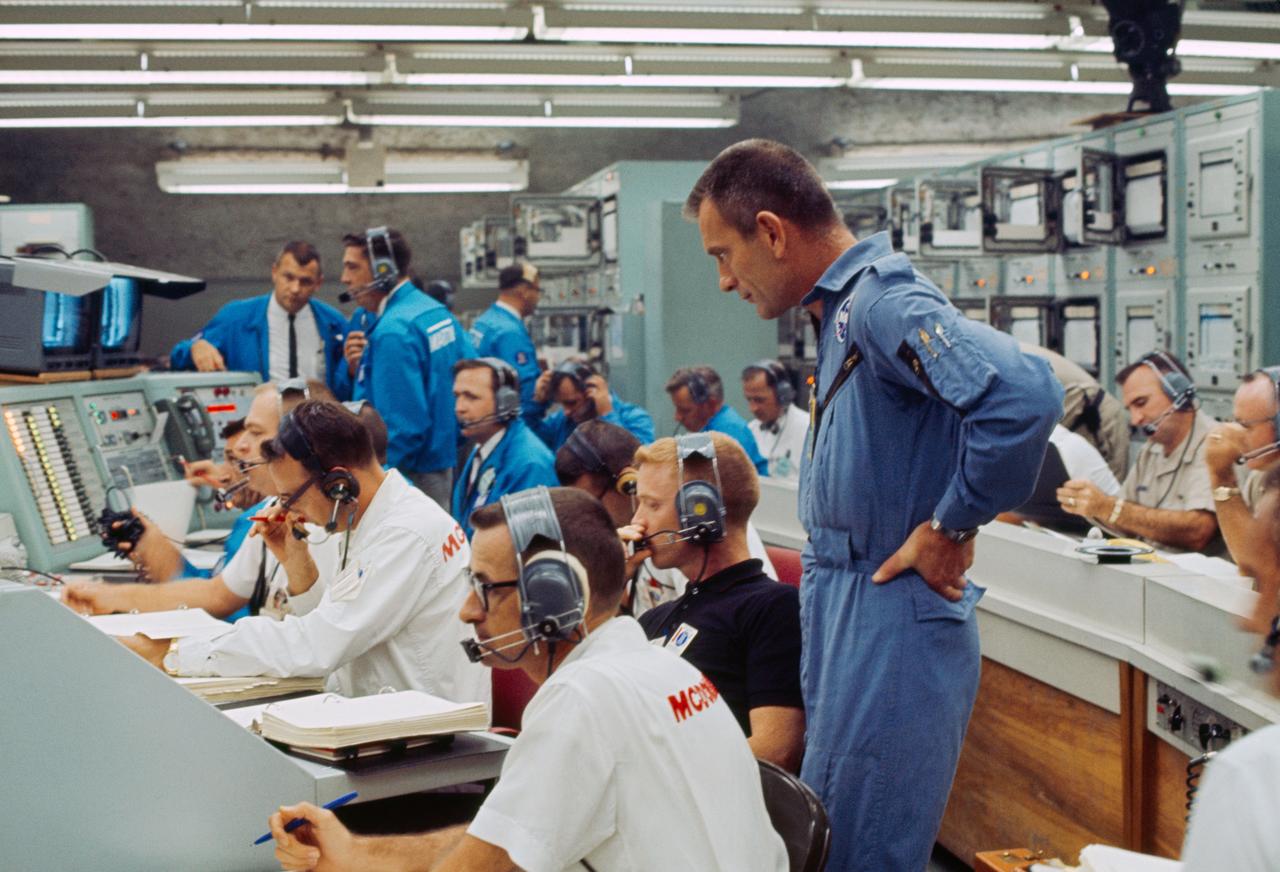
S65-28742 (21 Aug. 1965) --- View of Mission Control Center at Cape Kennedy, Florida, moments after the Gemini-5 spacecraft was launched from Pad 19 on Aug. 21, 1965. Standing at right is astronaut Donald K. Slayton, assistant director for Flight Crew Operations, Manned Spacecraft Center. Seated (wearing dark shirt) is astronaut Russell L. Schweickart. Other NASA and McDonnell Aircraft Col. personnel also monitor the progress of the flight.
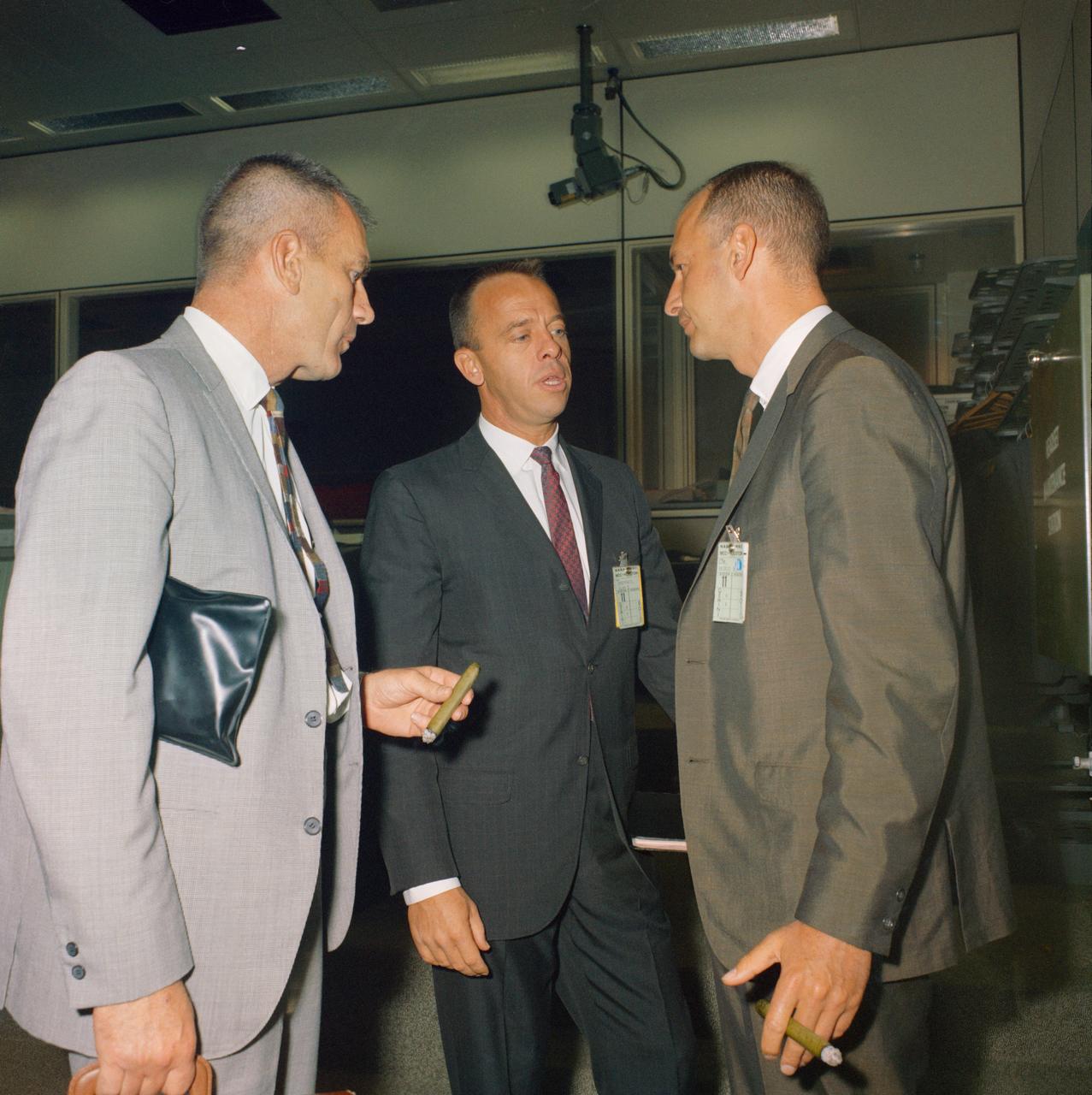
S66-52754 (12 Sept. 1966) --- Three key Manned Spacecraft Center (MSC) officials hold discussion in the Mission Control room during Gemini-11 activity. Left to right, are Donald K. Slayton, MSC Director of Flight Crew Operations; astronaut Alan B. Shepard Jr., Chief, MSC Astronaut Office; and George M. Low, MSC Deputy Director. Photo credit: NASA
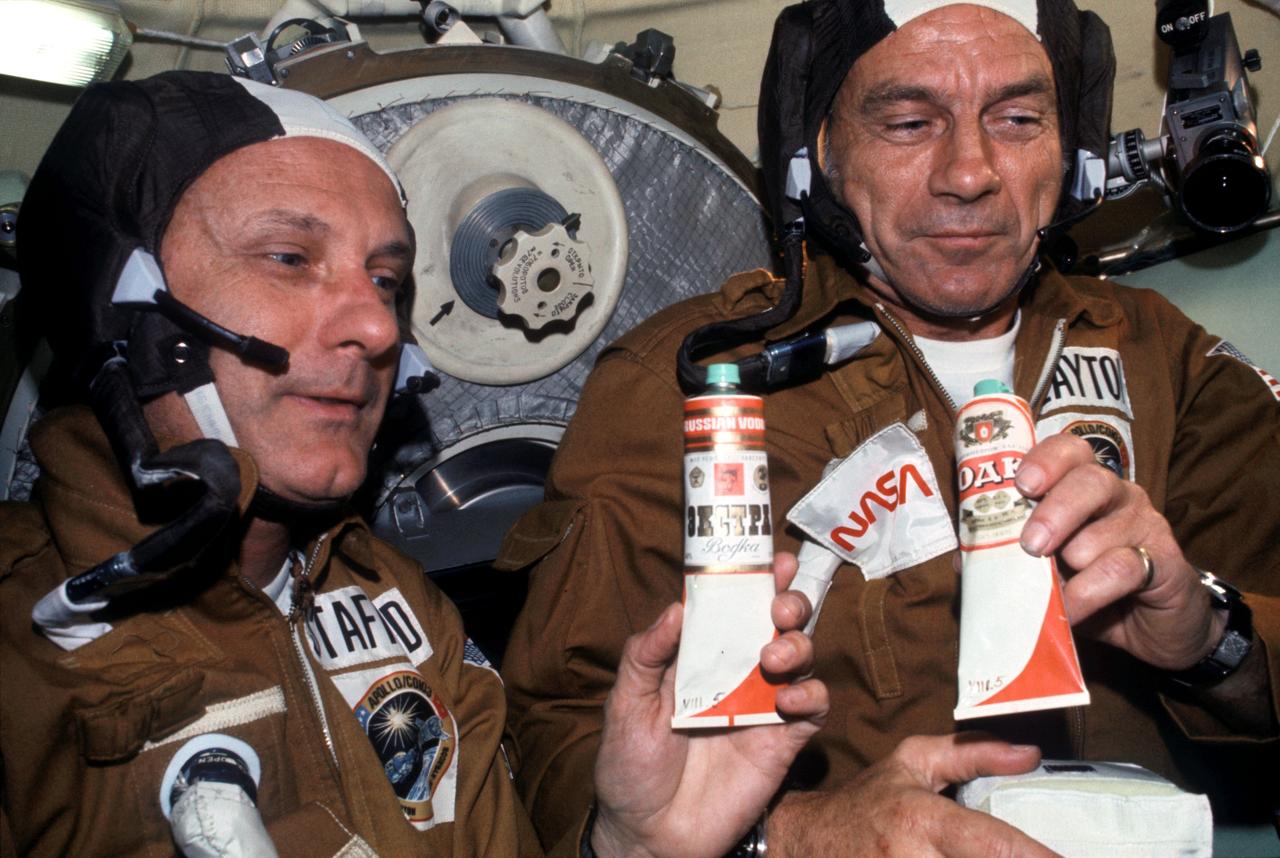
AST-03-175 (17-19 July 1975) --- Astronauts Thomas P. Stafford (left) and Donald K. Slayton hold containers of Soviet space food in the Soyuz Orbital Module during the joint U.S.-USSR Apollo-Soyuz Test Project docking mission in Earth orbit. The containers hold borsch (beet soup) over which vodka labels have been pasted. This was the crews' way of toasting each other.
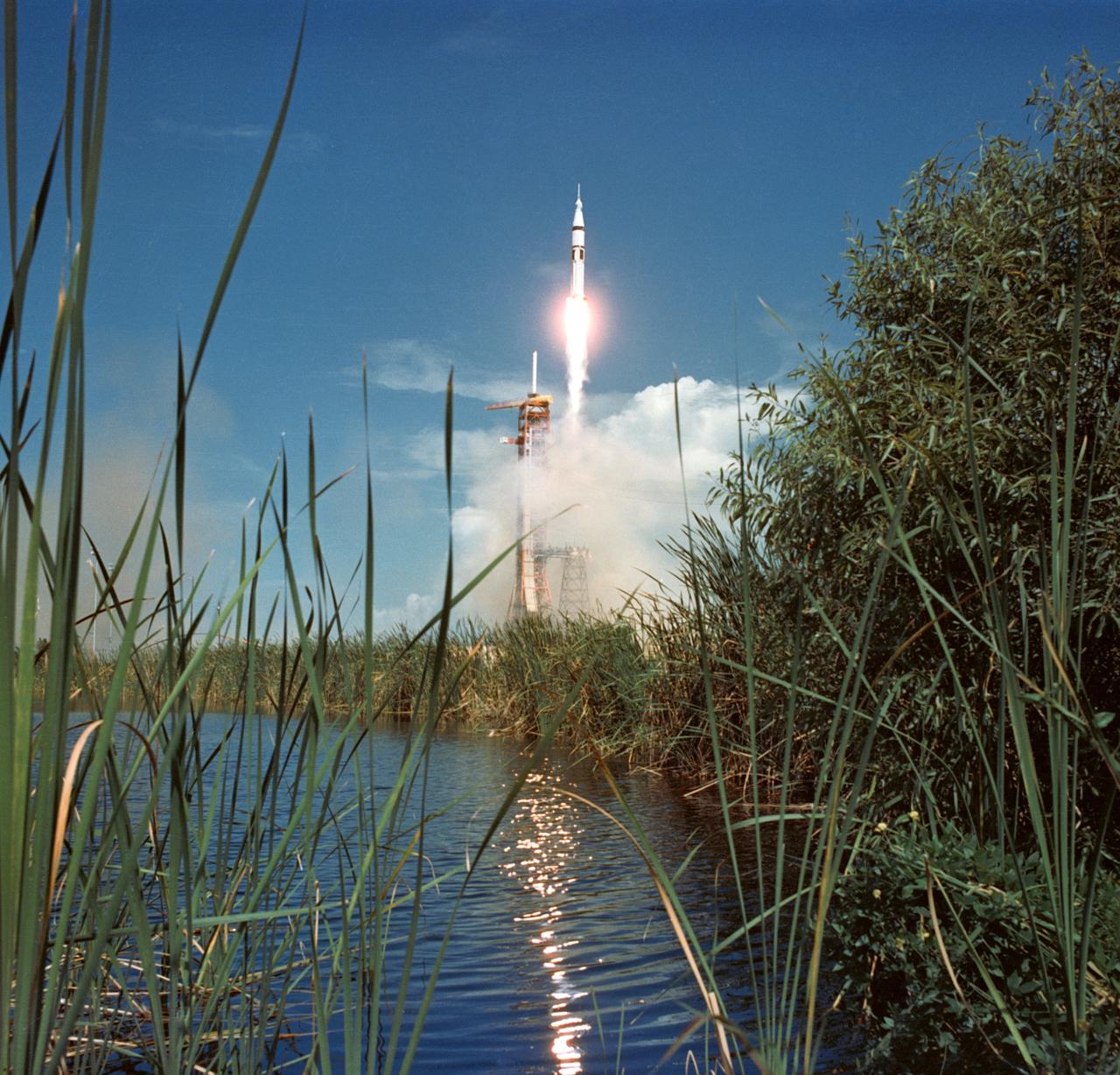
S75-28547 (15 July 1975) --- The Apollo-Soyuz Test Project's (ASTP) NASA Apollo/Saturn 1B space vehicle is launched from Pad B, Launch Complex 39, Kennedy Space Center (KSC), Florida, at 3:50 p.m. (EDT), July 15, 1975, to begin Apollo's catch-up journey toward the already Earth-orbiting Soviet Soyuz spacecraft. Aboard the Apollo spacecraft were astronauts Thomas P. Stafford, Vance D. Brand and Donald K. (Deke) Slayton.
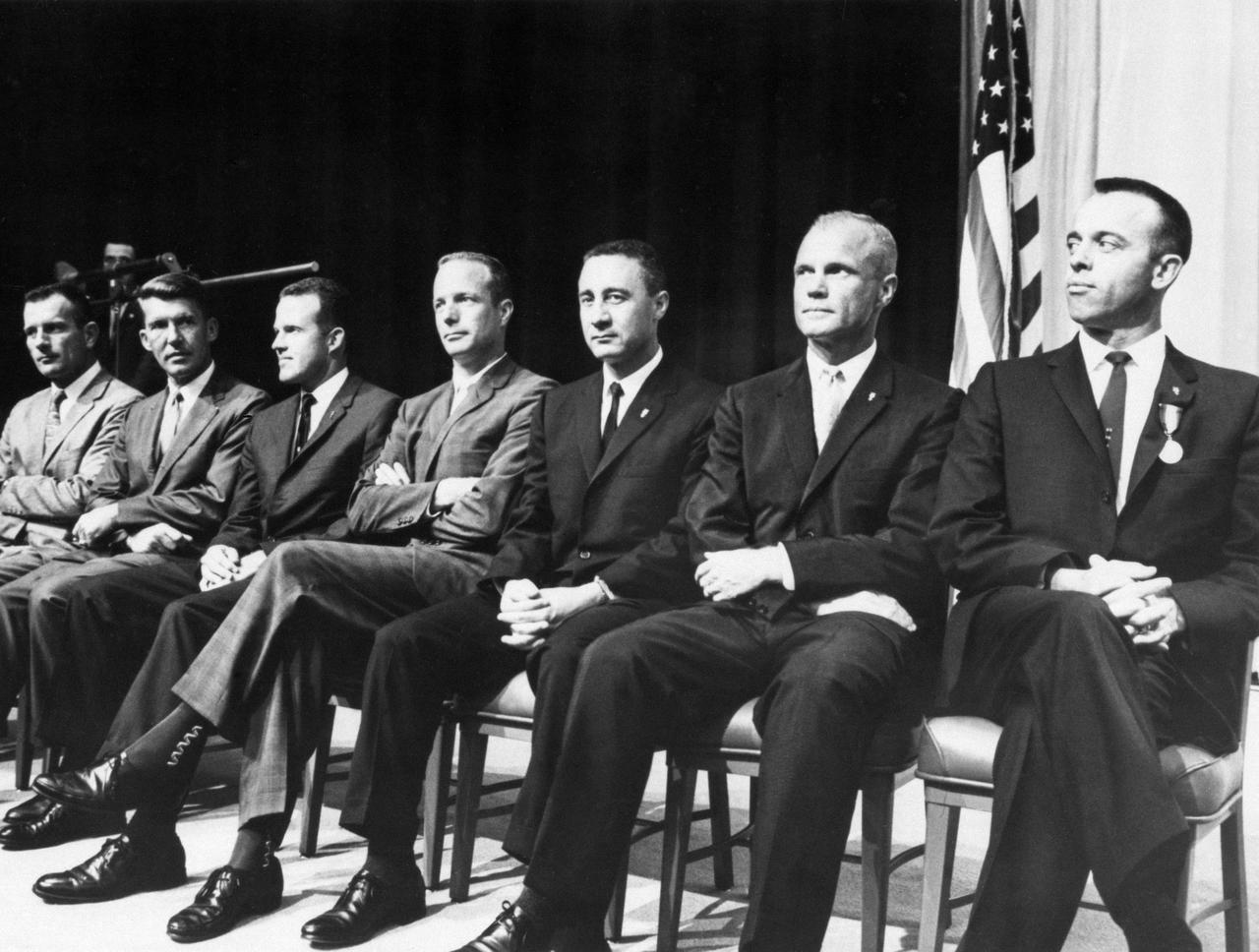
S61-02357 (8 May 1961) --- The original seven Mercury astronauts at the State Department Auditorium on May 8, 1961. The astronauts are (left to right) Donald K. Slayton, Walter M. Schirra, Jr., L. Gordon Cooper, Jr., M. Scott Carpenter, Virgil I. Grissom, John H. Glenn, Jr. and Alan B. Shepard, Jr. Earlier President John F. Kennedy had presented astronaut Shepard with the NASA Distinguished Service Medal (note it on his lapel) in the White House Rose Garden.
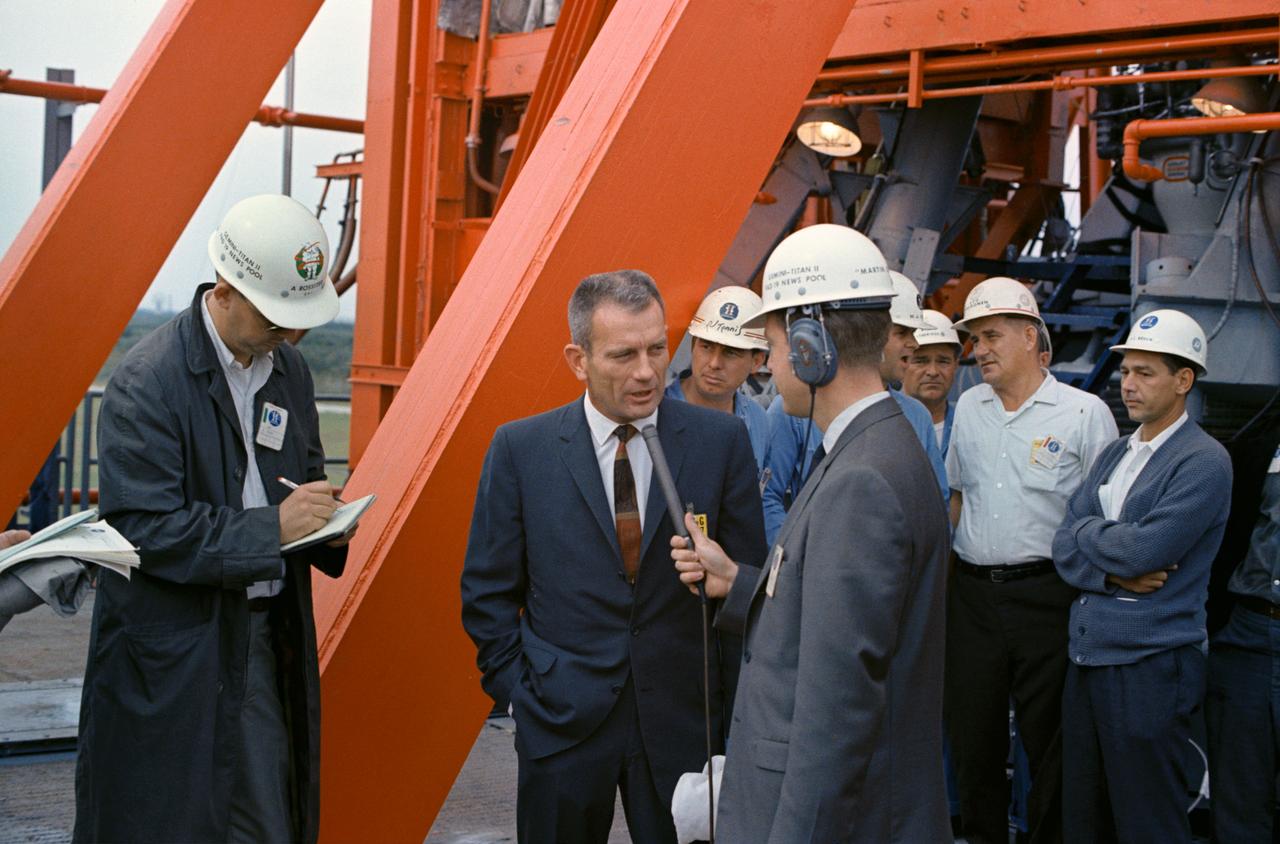
S65-61846 (5 Dec. 1965) --- Donald K. Slayton, assistant director for Flight Crew Operations, talks with newsmen after examining damage to Pad 19 at Kennedy Space Center, following liftoff of the Gemini-7 spacecraft on Dec. 4, 1965. Damage was slight and will be repaired quickly for the planned launch of Gemini-6. Photo credit: NASA
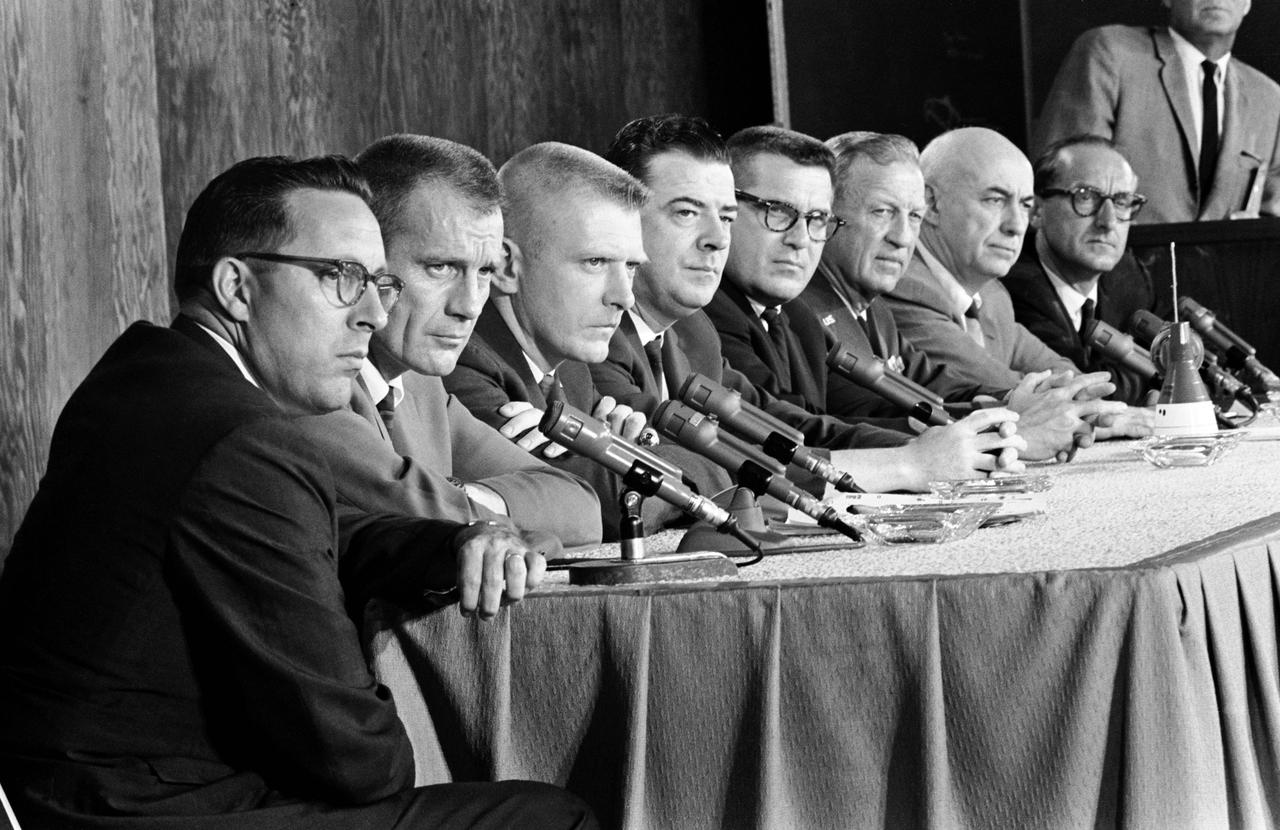
S66-32629 (1966) --- Left to right are Dr. Charles A. Berry, MSC Medical Director; Dr. Donald K. (Deke) Slayton, Director of Flight Crew Operations; Eugene F. Kranz, Flight Director; Charles W. Mathews, Gemini Program Manager, Manned Spacecraft Center; William C. Schneider, Gemini Mission Manager, NASA Headquarters; General Leighton Davis; Dr. Robert R. Gilruth, MSC Director; and Dr. George E. Mueller, Associate Administrator for Manned Space Flight, NASA Headquarters.
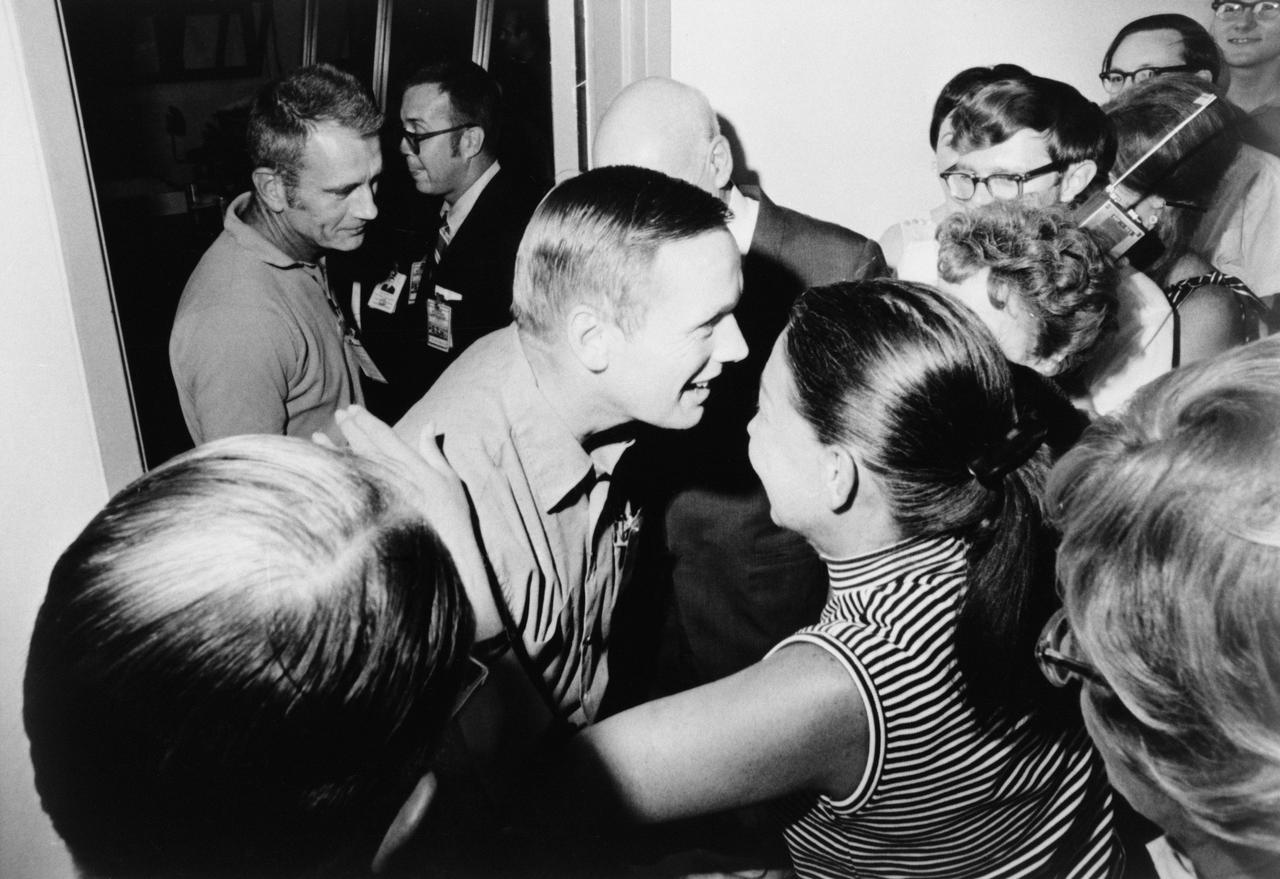
Astronaut Neil A. Armstrong (center), is greeted by friends in the crew reception area of the Lunar Receiving Laboratory. Dr. Gilruth is pictured just to right of Armstrong. Donald K. Slayton, Director of Space Flight Crew Operations, is behind ArmstrongThe Apollo 11 crew left the crew reception area of the Lunar Receiving Laboratory at 9 p.m., Aug. 10, 1969.
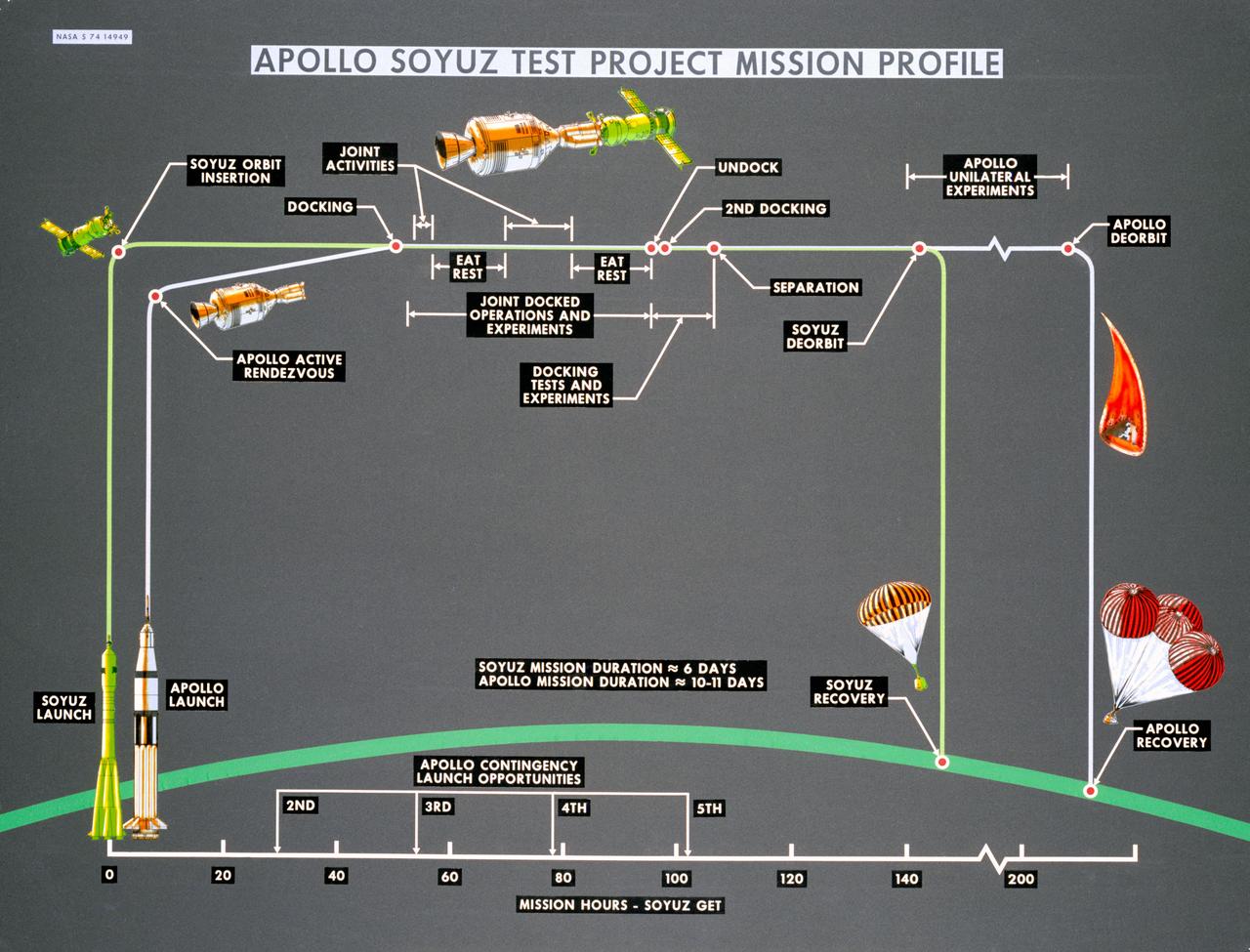
S74-14949 (October 1974) --- Artist?s drawings and call-outs depict phases of the joint U.S.-USSR Apollo-Soyuz Test Project, an Earth-orbital mission which will feature rendezvous and docking of the respective spacecraft of the two nations. ASTP crewmen for the USSR include Aleksey A. Leonov and Valeriy N. Kubasov. The astronaut team includes astronauts Thomas P. Stafford, Vance D. Brand and Donald K. Slayton. The mission is scheduled to take place in summer 1975.
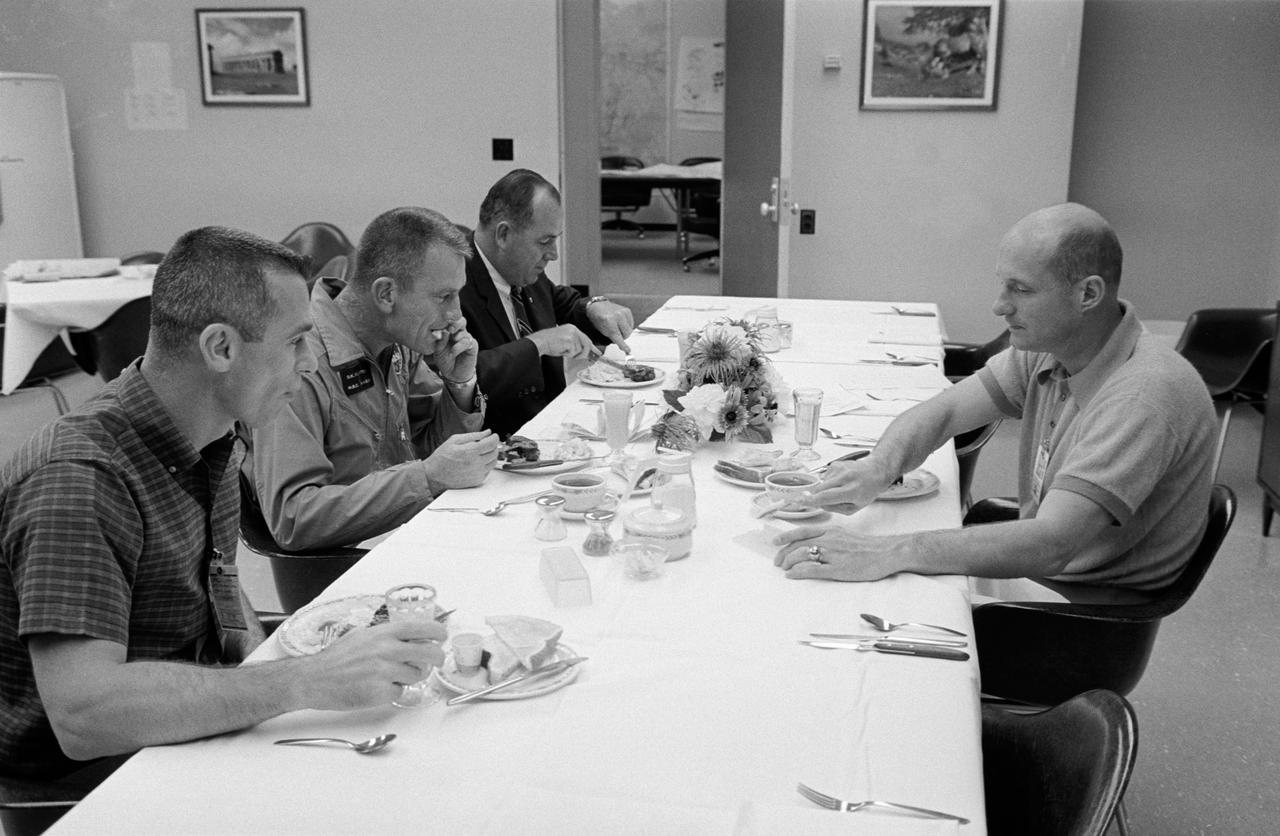
S66-34069 (3 June 1966) --- Gemini-9A prime crew enjoy a breakfast of steak and eggs on the morning of the Gemini-9A launch. Left to right, are astronaut Eugene A. Cernan, pilot; Donald K. Slayton, MSC Director of Flight Crew Operations; Charles Buckley, KSC Security; and astronaut Thomas P. Stafford, command pilot. Photo credit: NASA
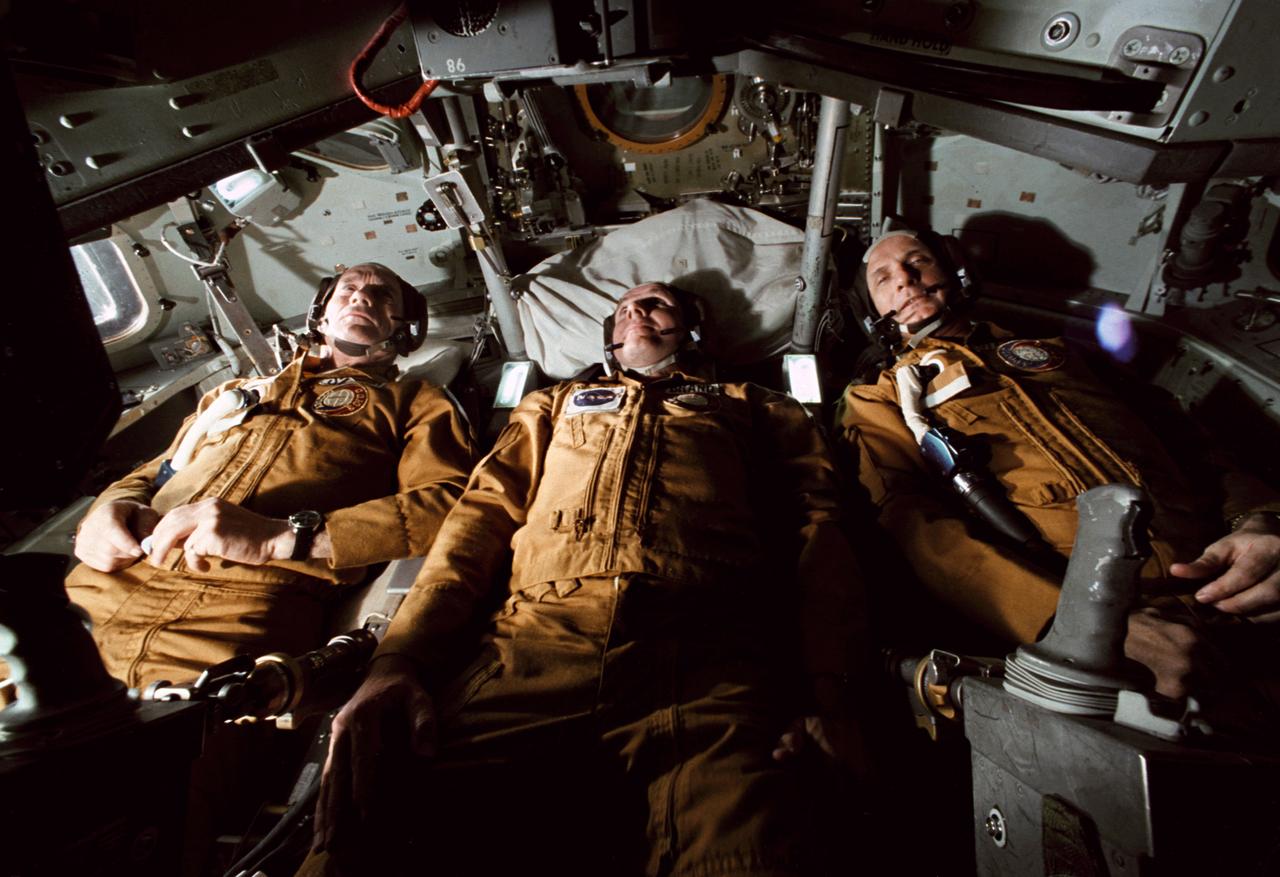
S75-22747 (25 Feb. 1975) --- An interior view of the Apollo Command Module trainer in Building 35 showing the three American ASTP prime crewmen lying in their couches during Apollo-Soyuz Test Project training at NASA's Johnson Space Center. They are, left to right, astronauts Donald K. Slayton, docking module pilot; Vance D. Brand, command module pilot; and Thomas P. Stafford, commander.
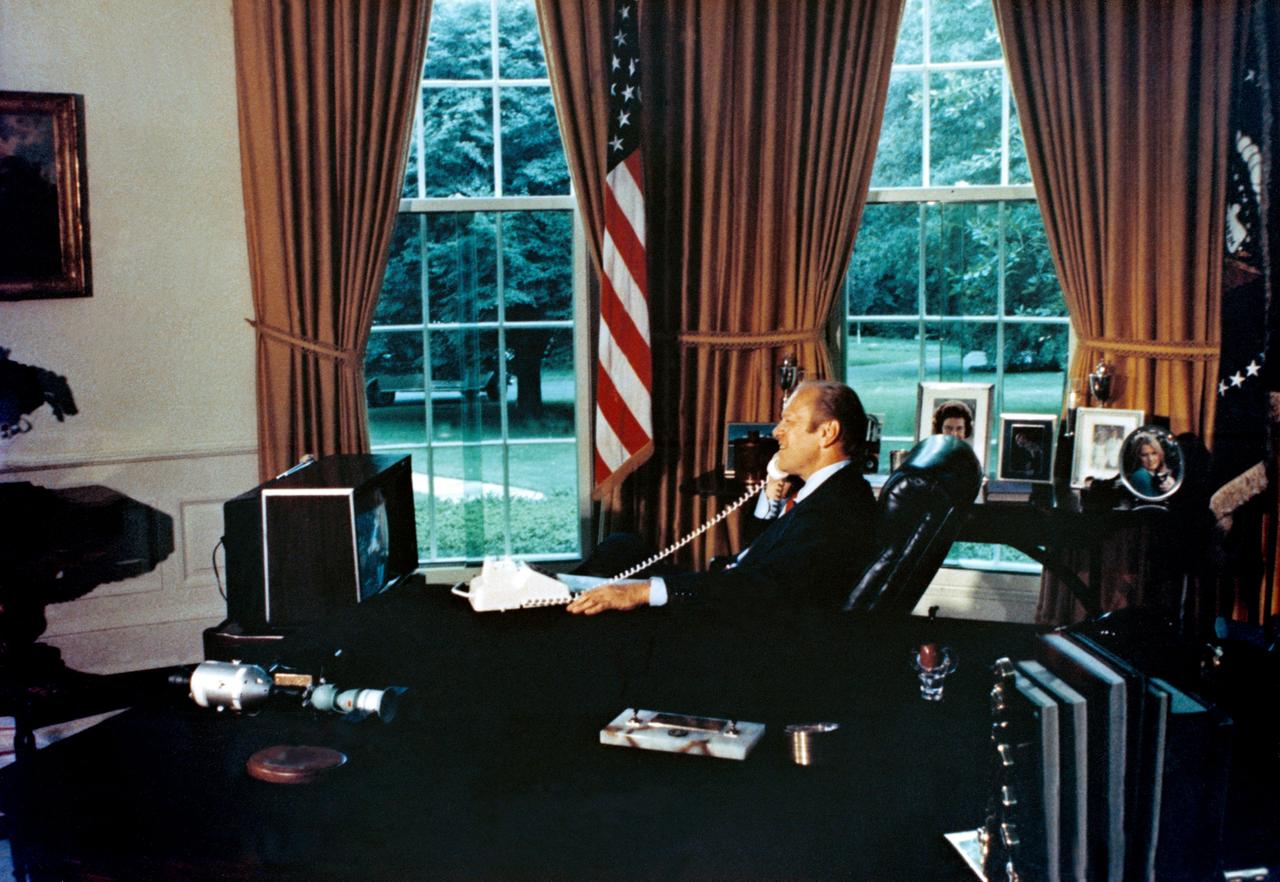
S75-30515 (18 July 1975) --- President Gerald R. Ford watches ASTP crewmen Thomas P. Stafford, Donald K. Slayton and Valeriy N. Kubasov on television as he talks to them via radio-telephone while they orbited Earth on July 18, 1975. The American Apollo spacecraft and Soviet Soyuz spacecraft were docked. The five ASTP crewmen visited each other?s spacecraft while the Soyuz and Apollo were linked in space.
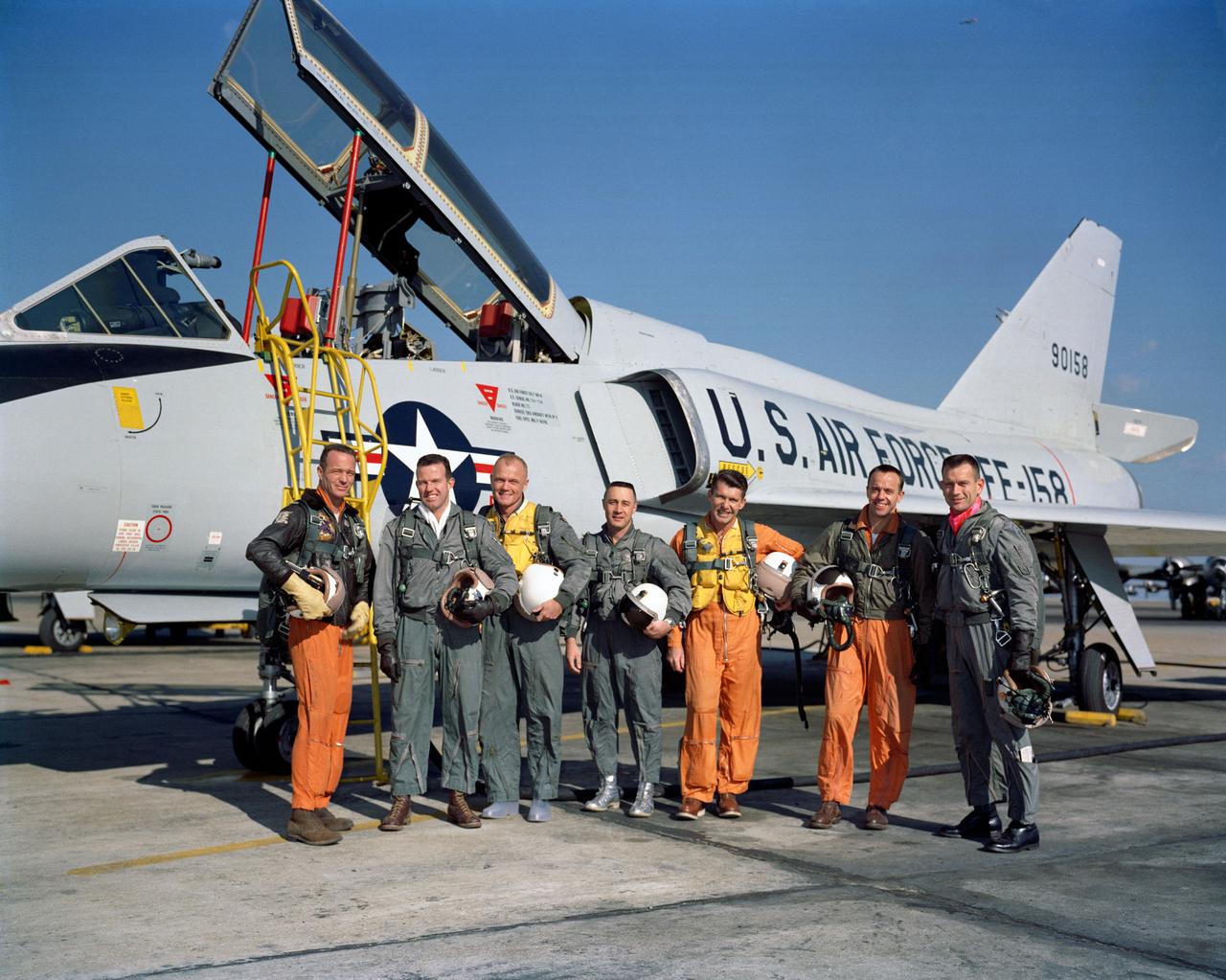
S61-01250 (20 Jan. 1961) --- Photo of the Mercury astronauts standing beside a Convair 106-B aircraft. They are, left to right, M. Scott Carpenter, L. Gordon Cooper Jr., John H. Glenn Jr., Virgil I. Grissom, Walter M. Schirra Jr., Alan B. Shepard Jr. and Donald K. Slayton. EDITOR'S NOTE: Astronaut Gus Grissom died in the Apollo 1 -- Apollo/Saturn (AS-204) -- fire at Cape Kennedy, Florida on Jan. 27, 1967. Astronaut Deke Slayton died from complications of a brain tumor, in League City, Texas on June 13, 1993. Astronaut Shepard died after a lengthy illness in Monterey, California, on July 21, 1998. As of Jan. 1, 1977 none of the seven astronauts remained with the NASA Space Program. However, in October 1998, United States Senator Glenn (Democrat-Ohio) flew as payload specialist on the STS-95 mission. Photo credit: NASA
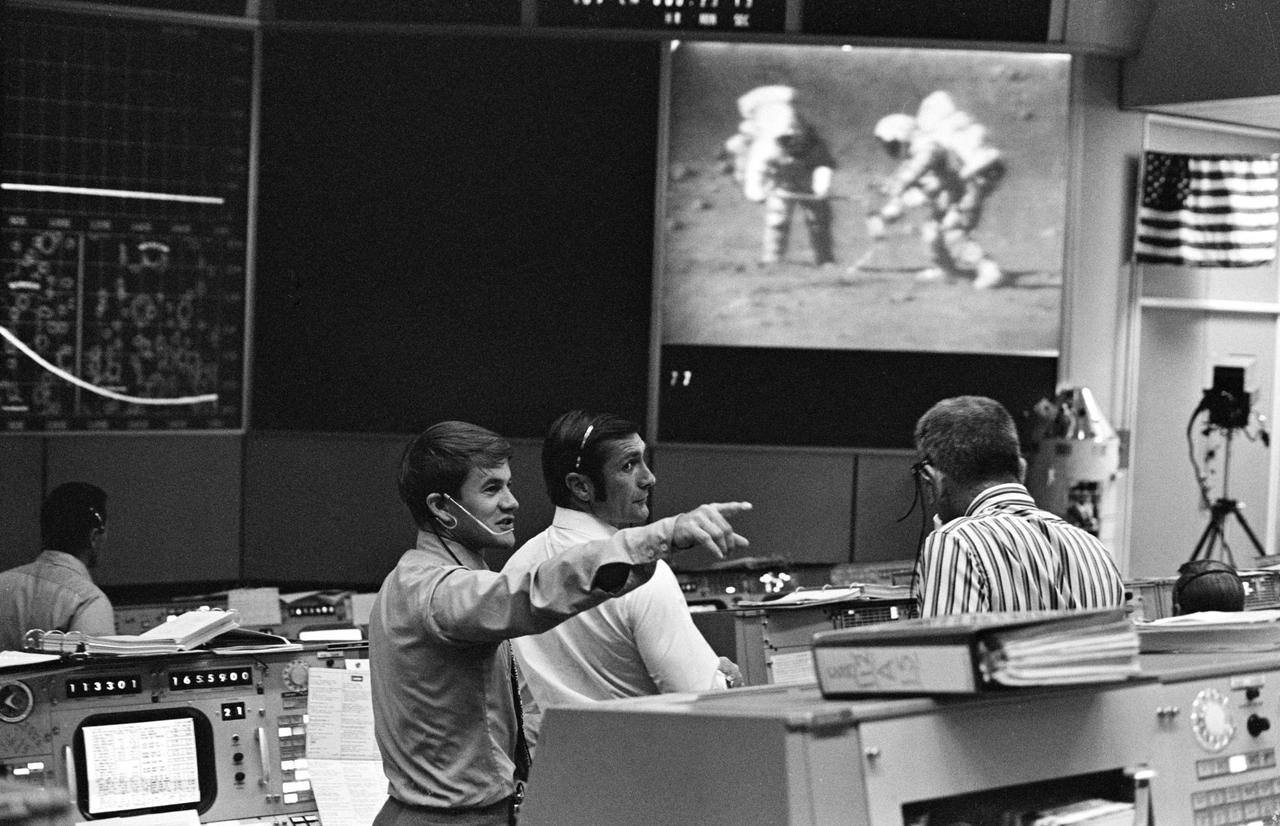
S71-41836 (2 Aug. 1971) --- Scientist-astronaut Joseph P. Allen, left, directs the attention of astronaut Richard F. Gordon Jr., to an occurrence out of view at right in the Mission Control Center's (MCC) Mission Operations Control Room (MOCR), while Dr. Donald K. (Deke) Slayton, on right with back to camera, views activity of Apollo 15 on a large screen at the front of the MOCR. Astronauts David R. Scott and James B. Irwin are seen on the screen performing tasks of the mission's third extravehicular activity (EVA), on Aug. 2, 1971. Dr. Slayton is director of Flight Crew Operations, NASA-MSC; Gordon is Apollo 15 backup commander; and Dr. Allen is an Apollo 15 spacecraft communicator.
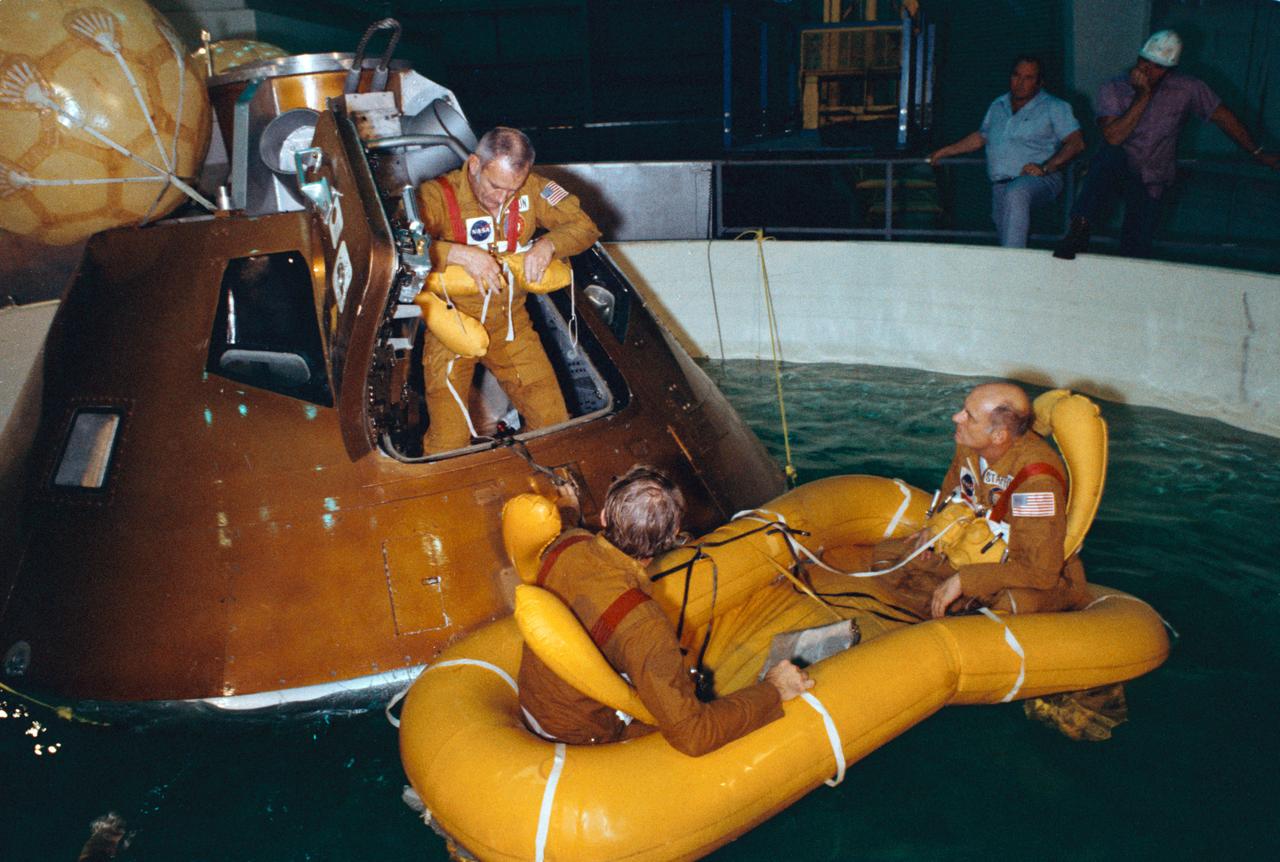
S75-23431 (8 March 1975) --- Astronaut Donald K. Slayton attaches his life preserver as he egresses an Apollo Command Module trainer in a water tank in Building 260 during water egress training at NASA's Johnson Space Center. The crewmen exit through the hatch when the CM is in this stable I (apex up) position; and they egress through the tunnel when the CM is in a stable II (apex down) position. Astronauts Vance D. Brand (on left) and Thomas P. Stafford have already egressed the trainer and are seated in a three-man life raft. This training session was part of the preparations for the joint U.S.-USSR Apollo-Soyuz Test Project docking mission in Earth orbit scheduled for July 1975. These three men compose the American ASTP prime crew. Stafford is the commander, Brand is the command module pilot, and Slayton is the docking module pilot.
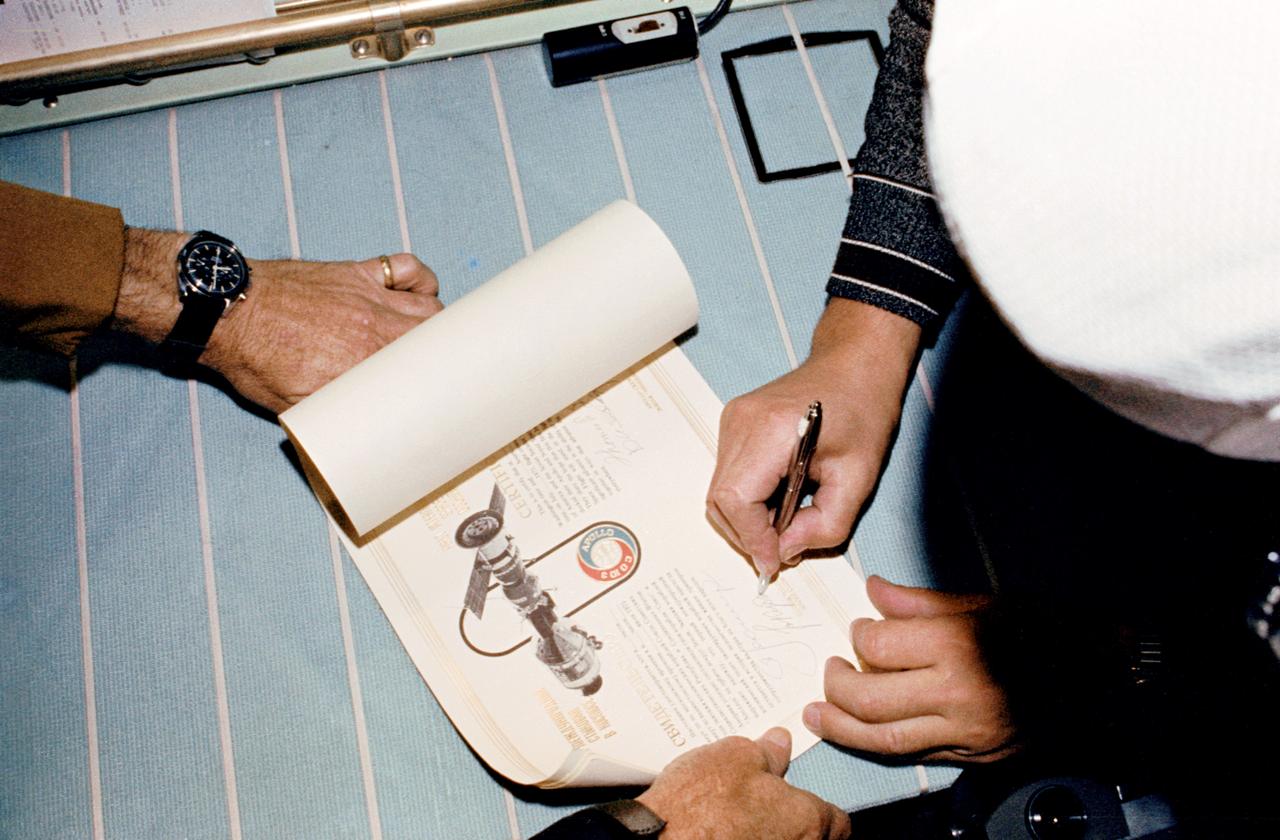
AST-03-171 (17 July 1975) --- The hands of cosmonaut Valerly N. Kubasov are seen as the ASTP engineer adds his name to the signature on the Soviet side of the official joint certificate marking an historical moment during the rendezvous day of the Apollo-Soyuz Test Project. The left hand of astronaut Donald K. Slayton, NASA's docking module pilot, is seen at left. The certificate had earlier been signed by astronauts Thomas P. Stafford, American crew commander; Slayton and cosmonaut Aleksey A. Leonov, Soviet crew commander, and it awaits the signature of astronaut Vance D. Brand, NASA's command module pilot who remained in the CM while the others signed in the Soviet Orbital Module of the Soyuz.
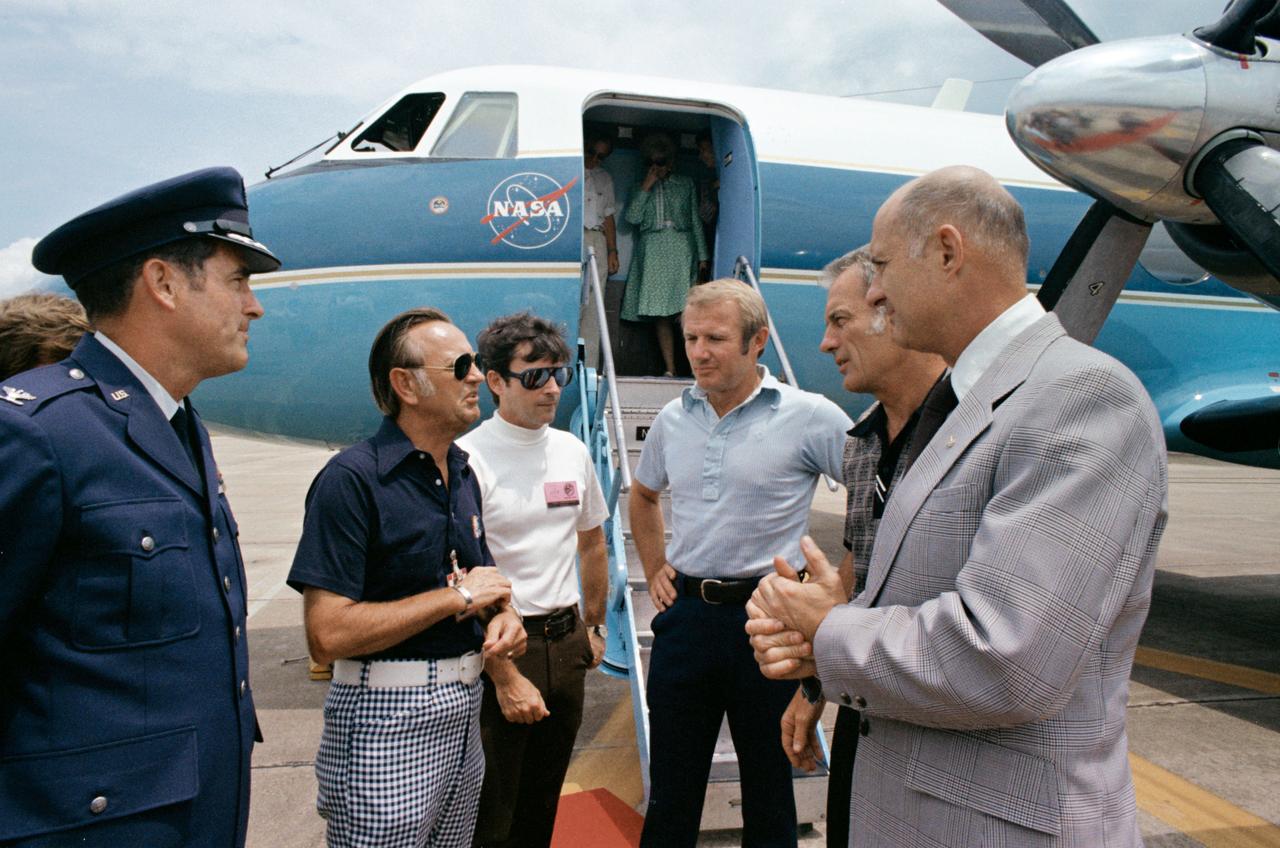
S75-30109 (10 Aug. 1975) --- Dr. Christopher C. Kraft Jr. (second from left), JSC Director, chats with the three ASTP crewmen on the runway at Ellington Air Force Base after their arrival home from the Pacific recovery area. The six men are, left to right, Col. Donald Robinson, EAFB commander; Dr. Kraft; astronaut John W. Young, Chief of the Astronaut Office at JSC; astronaut Vance D. Brand, command module pilot of the crew; astronaut Donald K. Slayton, docking module pilot of the crew; and astronaut Thomas P. Stafford, crew commander. This picture was taken prior to the official welcoming ceremonies. The crewmen?s wives are still aboard the plane. Medical treatment in Hawaii delayed the return of the crew to JSC. They suffered a pulmonary irritation from inhalation of a toxic gas minutes before splashdown on July 24, 1975.
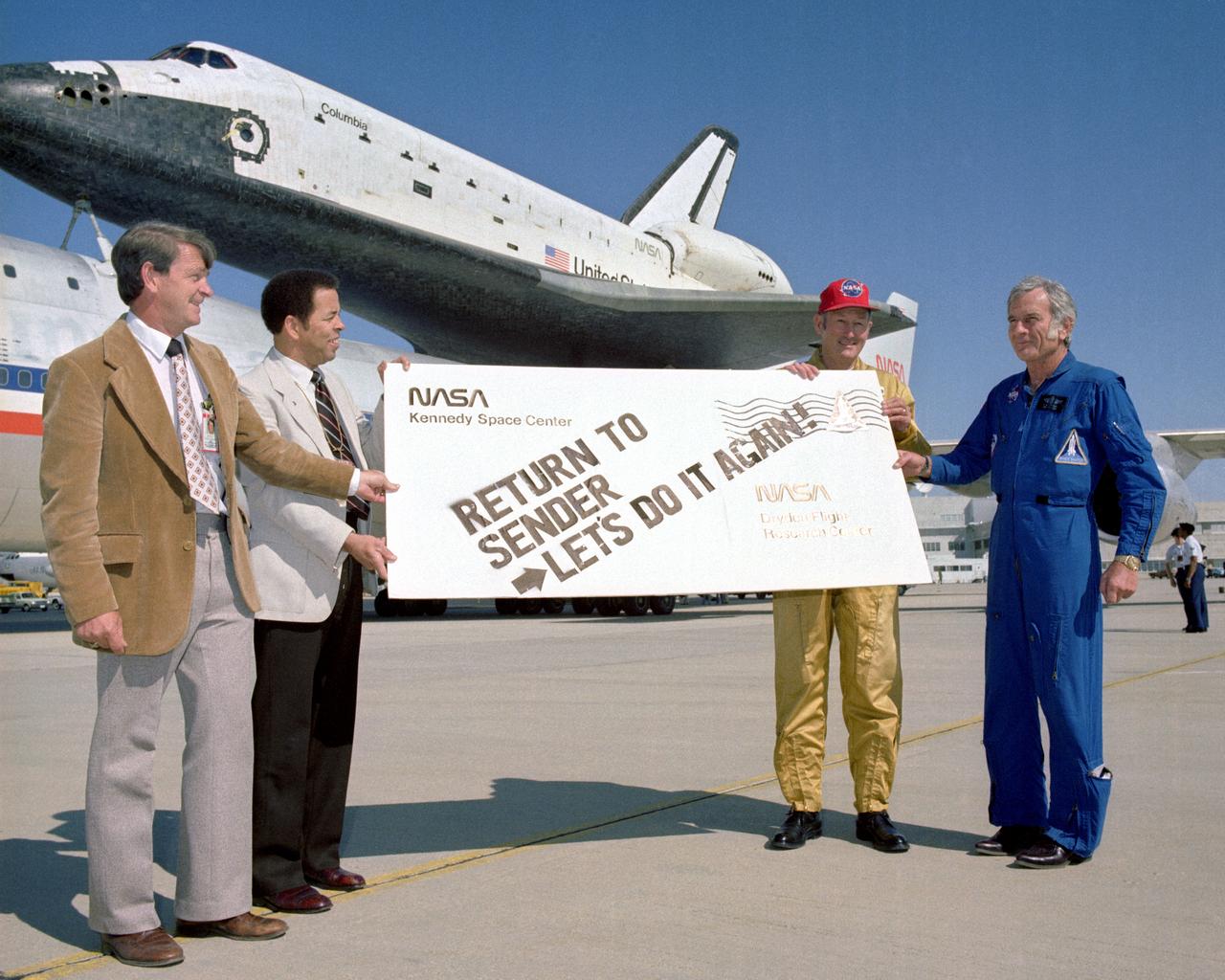
After completing it's first orbital mission with a landing at Edwards Air Force Base on April 14, 1981, Space Shuttle Columbia received a humorous sendoff before it's ferry flight atop a modified 747 back to the Kennedy Space Center in Florida. Holding the sign are, left to right: Melvin Burke, DFRC Orbital Flight Test (OFT) Program Manager; Isaac 'Ike' Gillam, DFRC Center Director; Fitzhugh 'Fitz' L. Fulton Jr., NASA DFRC 747 SCA Pilot; and Donald K. 'Deke' Slayton, JSC OFT Project Manager.
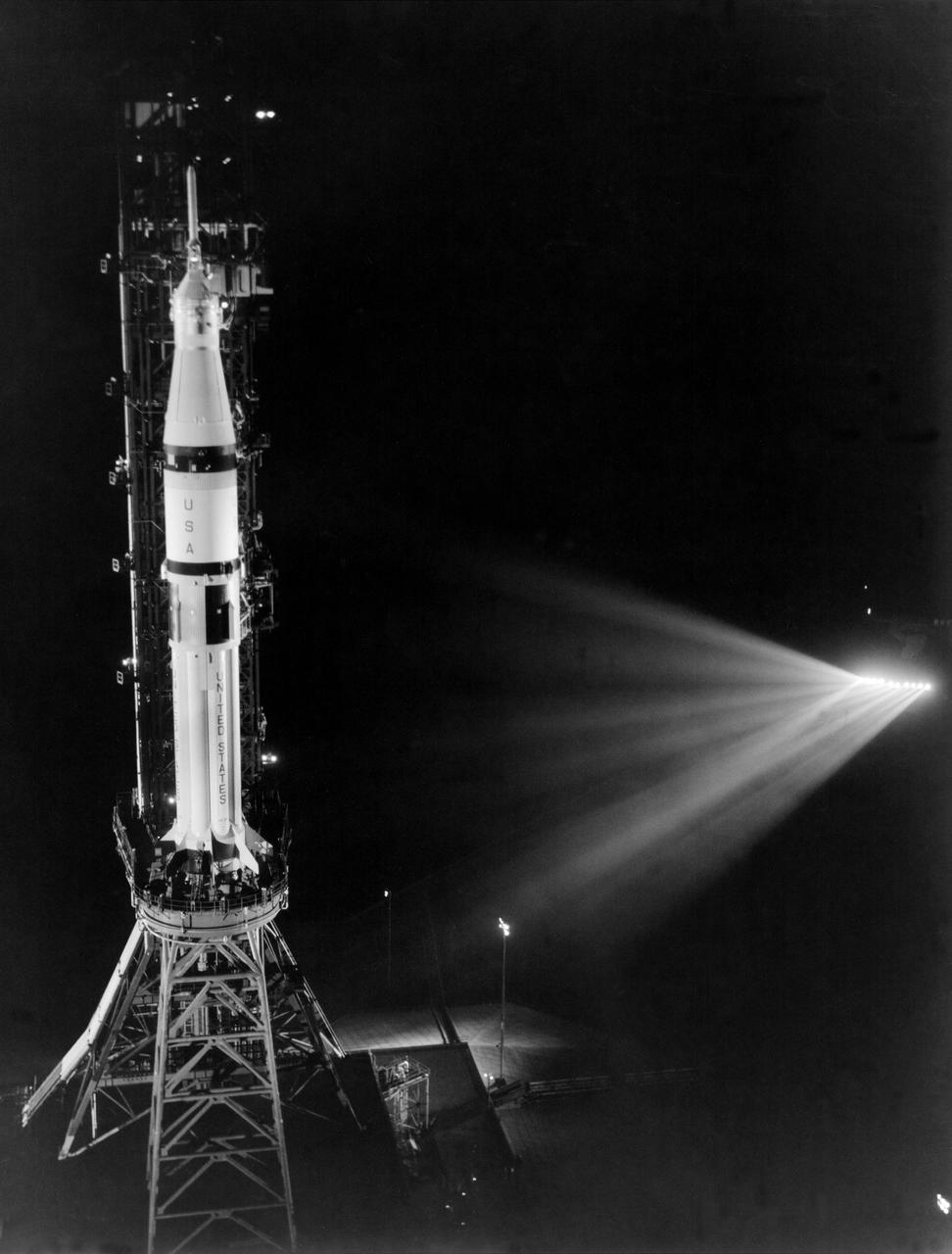
KENNEDY SPACE CENTER, FLA. -- As seen from the Mobile Service Structure as it is being rolled back to its park site, the ASTP Saturn IB launch vehicle sits on its pedestal during the Countdown Demonstration Test. The test is a step-by-step dress rehearsal for the July 15 mission, which culminates with a simulated T-zero and launch with the stages of the rocket fueled as they will be on launch day. Following the simulated launch, the propellants will be offloaded. The terminal portion of the test will be repeated tomorrow with the ASTP astronauts Thomas Stafford, Vance Brand and Donald Slayton aboard the spacecraft.
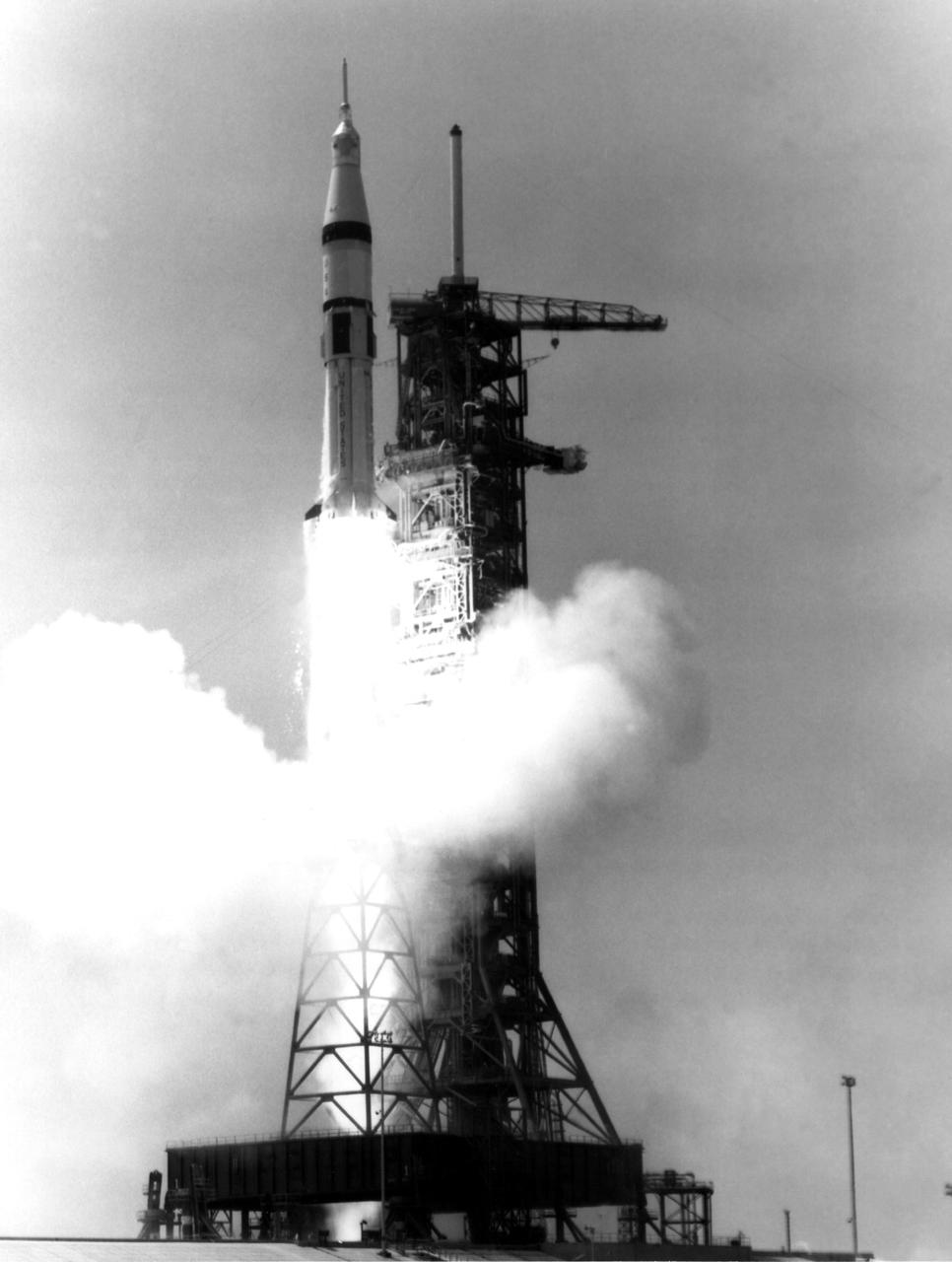
KENNEDY SPACE CENTER, FLA. -- The Apollo Soyuz Test Project Saturn IB launch vehicle thundered away from KSC's Launch Complex 39B at 3:50 p.m. today. Aboard the Apollo Command Module were ASTP astronauts Thomas Stafford, Vance Brand and Donald Slayton. The astronauts will rendezvous and dock with a Soyuz spacecraft, launched this morning from the Baykonur launch facility in the Soviet Union, carrying Soviet cosmonauts Aleksey Leonov and Valeriy Kubasov. The ASTP launches mark the first time that manned spacecraft of two nations have met in space for joint engineering and scientific investigations.
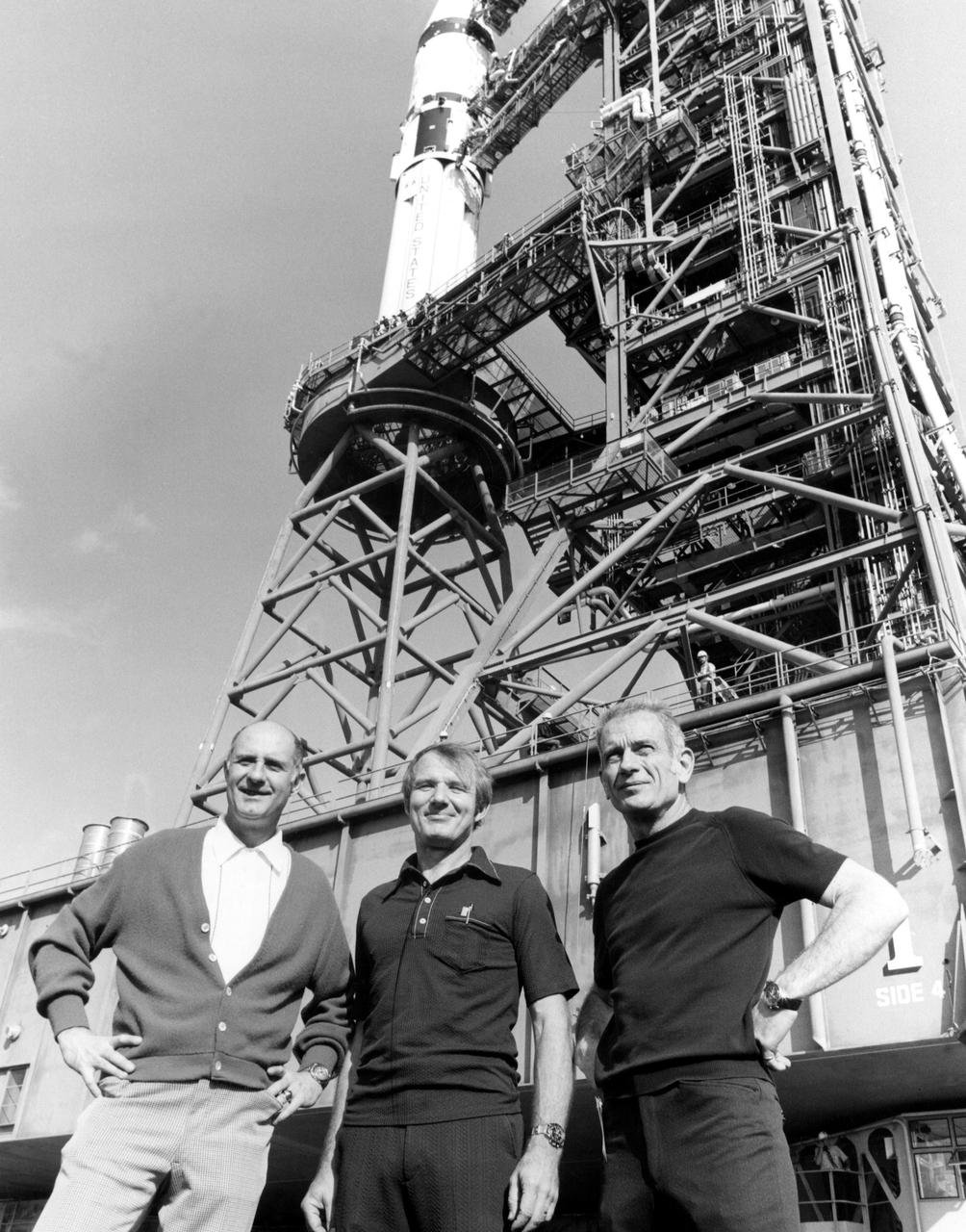
KENNEDY SPACE CENTER, FLA. -- U.S. astronauts Thomas Stafford (left), Vance Brand (center) and Donald Slayton pose in front of their Apollo Soyuz Test Project space vehicle during rollout ceremonies at KSC. The 224-foot-tall Saturn IB launch vehicle began its five-mile journey from the Vehicle Assembly Building to Complex 39's Pad at 8 a.m. The ASTP launch is scheduled for 3:50 p.m. EDT on July 15. During the mission the U.S. Apollo spacecraft will rendezvous and dock with the Soviet Soyuz spacecraft. It will be history's first international manned space flight.
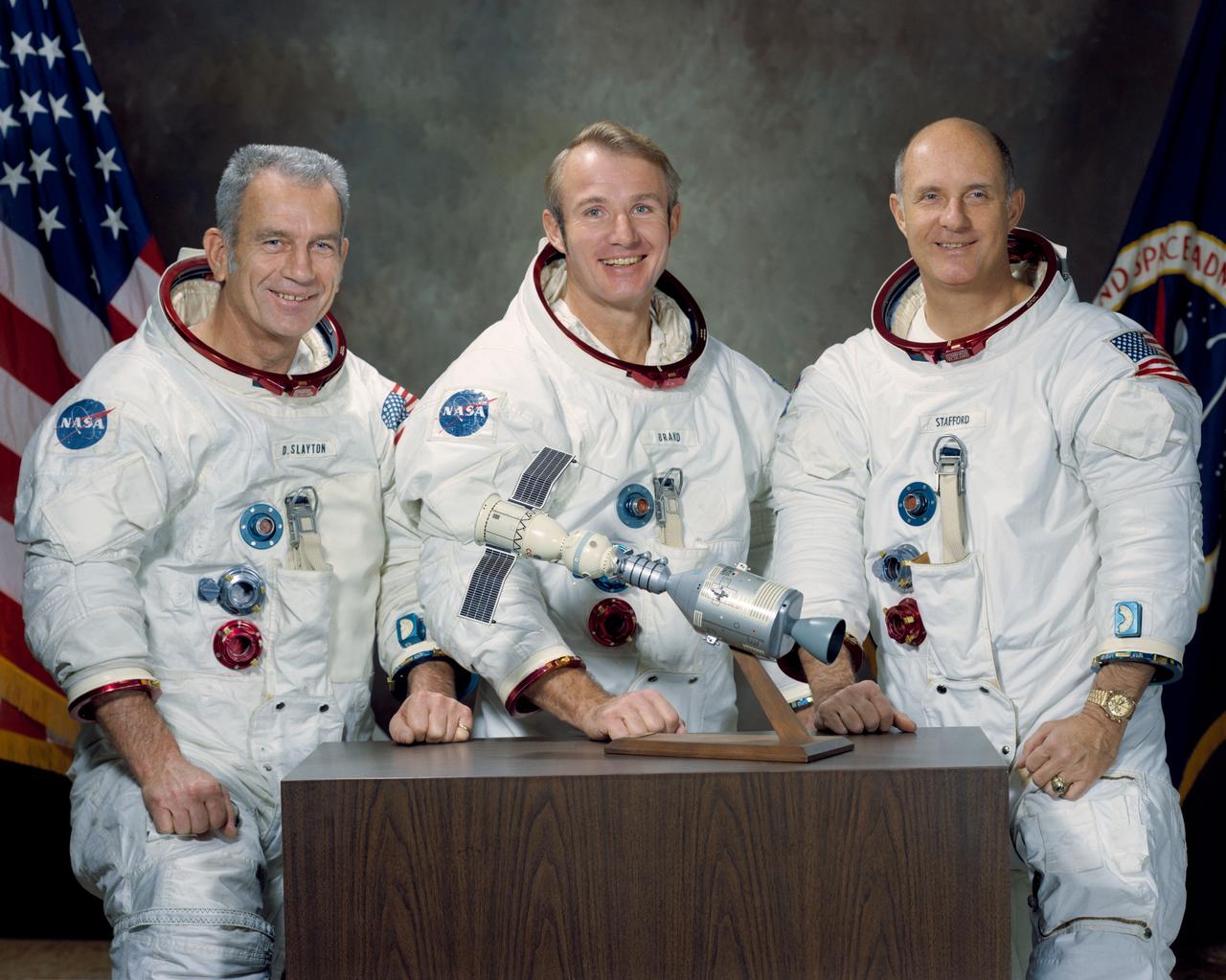
S74-15241 (January 1974) --- These three NASA astronauts are the United States flight crew for the 1975 Apollo-Soyuz Test Project (ASTP) mission. The prime crew members for the joint United States - Soviet Union spaceflight are, left to right, Donald K. Slayton, docking module pilot; Vance D. Brand, command module pilot; and Thomas P. Stafford, commander. The American and Soviet crews will visit one another?s spacecraft while the Soyuz and Apollo are docked in Earth orbit for a maximum of two days. The ASTP mission is designed to test equipment and techniques that will establish international crew rescue capability in space, as well as permit future cooperative scientific missions.
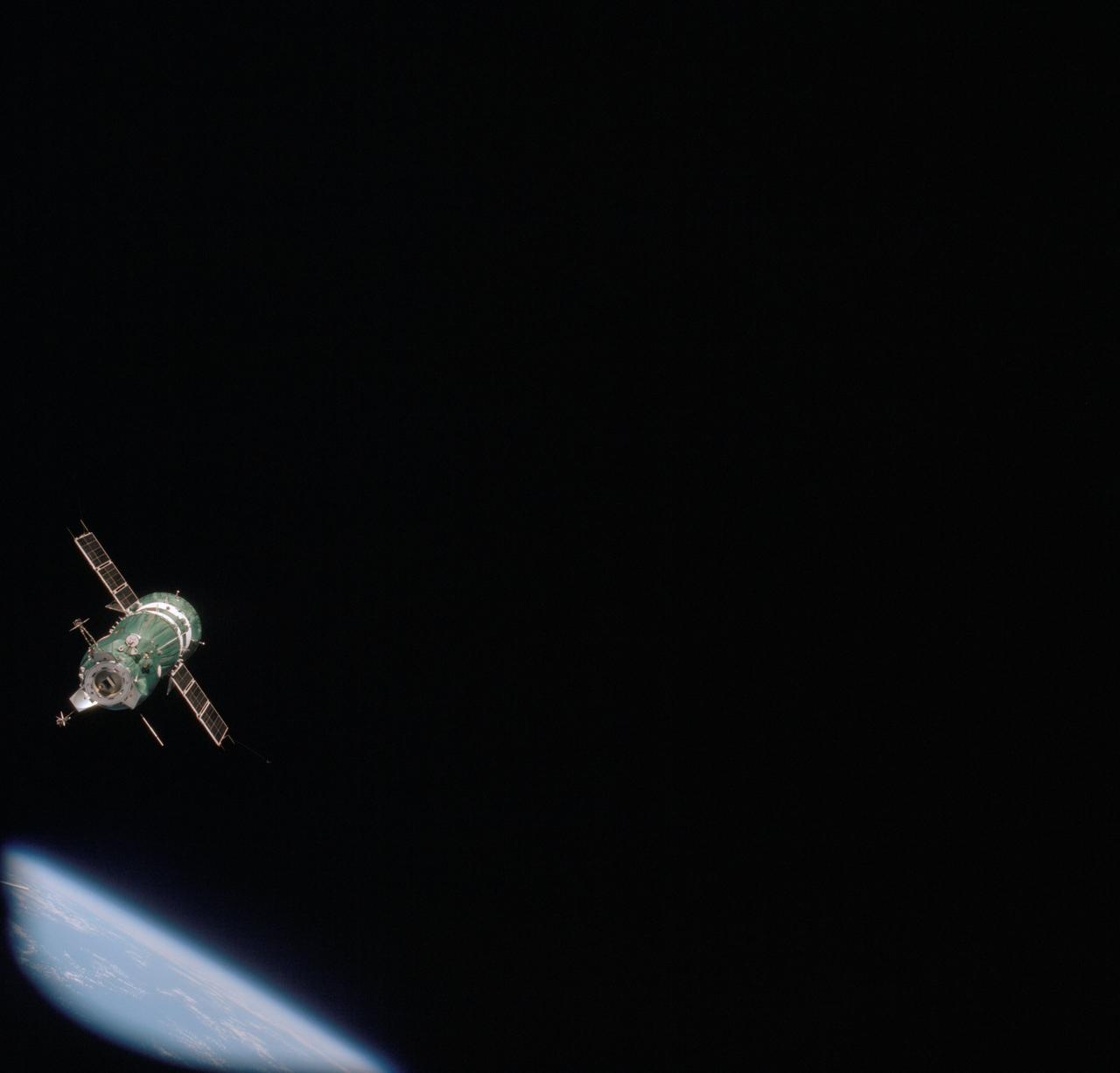
AST-09-572 (17-18 July 1975) --- The Soviet Soyuz 19 spacecraft is photographed from the American Apollo spacecraft during the joint U.S.-USSR Apollo-Soyuz Test Project (ASTP) docking mission in Earth orbit. Earth is visible in the lower left corner. This picture was taken with a 70mm camera. The Apollo crew consisted of astronauts Thomas P. Stafford, commander; Donald K. "Deke" Slayton, docking module pilot; and Vance D. Brand, command module pilot. The Soyuz 19 crew consisted of cosmonauts Aleksei A. Leonov, command pilot; and Valeri N. Kubasov, flight engineer.
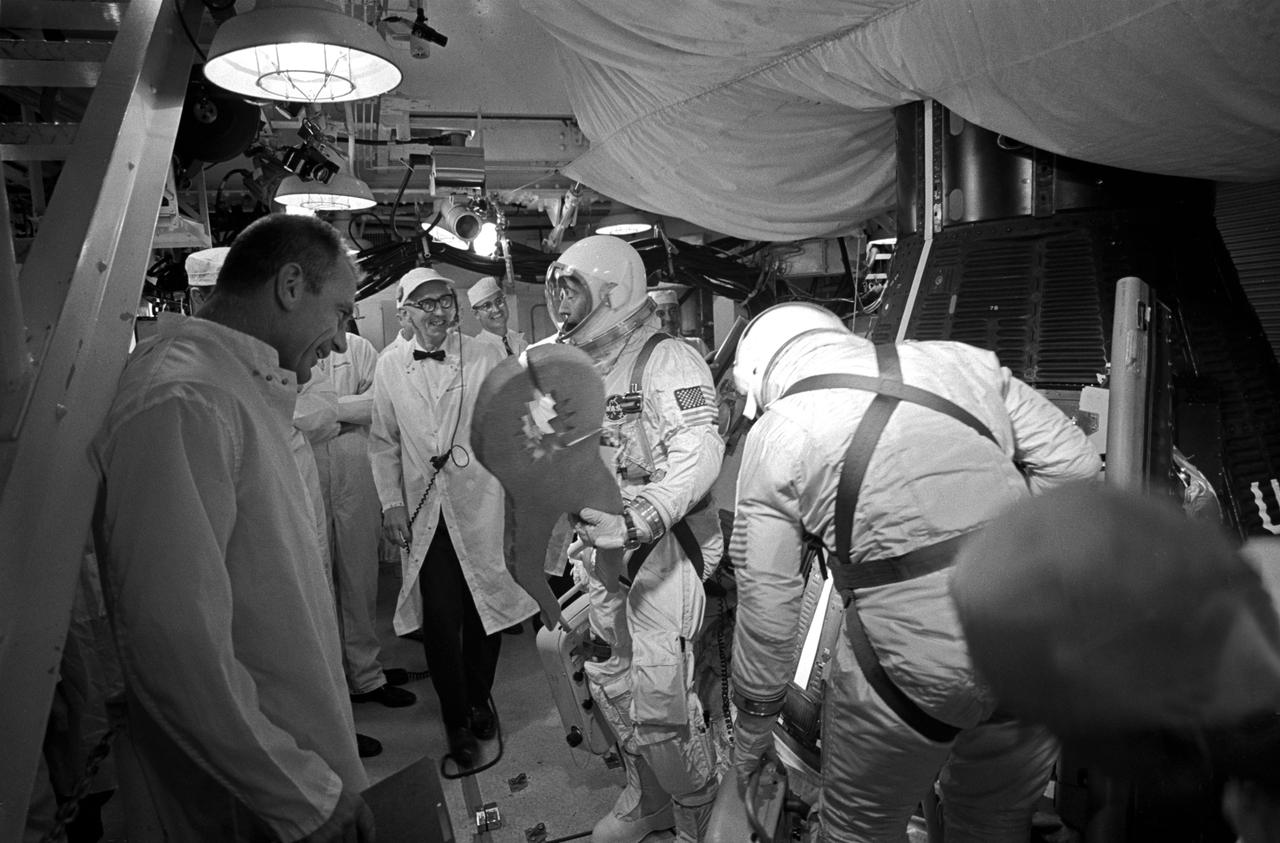
S66-42738 (18 July 1966) --- Astronaut John W. Young, Gemini-10 command pilot, holds a pair of king-size pliers presented to him by the crew at Pad 19 for in-flight first-echelon maintenance of a spacecraft utility power cord Young earlier had difficulty in connecting. Gunther Wendt (right center background), Pad 19 leader, jokes with Young about the pliers. At right is Dr. Donald K. Slayton, MSC Director of Flight Crew Operations. At left is astronaut Michael Collins, Gemini-10 pilot. Photo credit: NASA
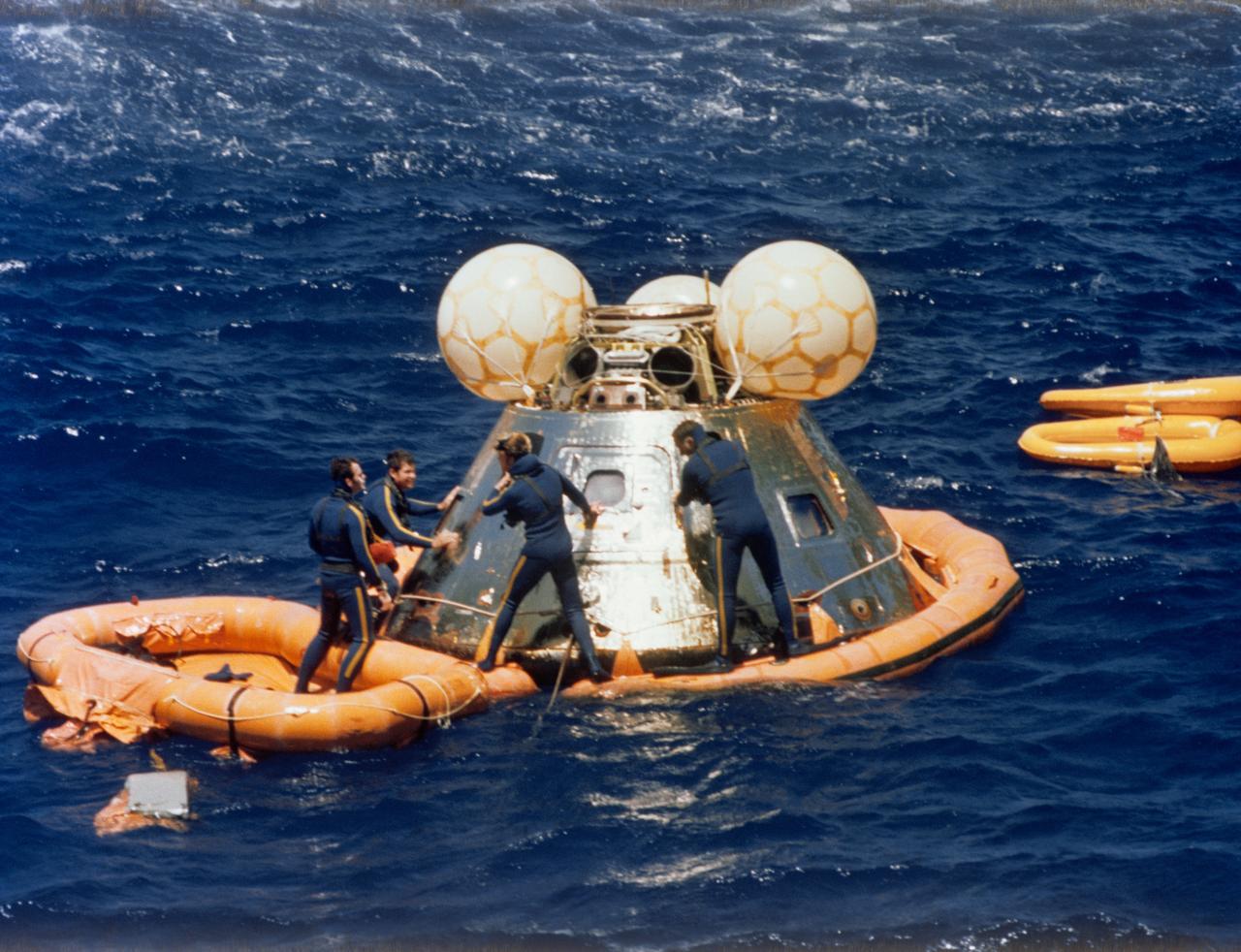
S75-29715 (24 July 1975) --- A team of U.S. Navy swimmers assists with the recovery of the ASTP Apollo Command Module following its splashdown in the Central Pacific Ocean to conclude the historic joint U.S.-USSR Apollo-Soyuz Test Project docking mission in Earth orbit. The swimmers have already attached a flotation collar to the spacecraft. The CM touched down in the Hawaiian Islands area at 4:18 p.m. (CDT), July 24, 1975. The crewmen, astronauts Thomas P. Stafford, Vance D. Brand and Donald K. Slayton, remained in the CM until it was hoisted aboard the prime recovery ship, the USS New Orleans.
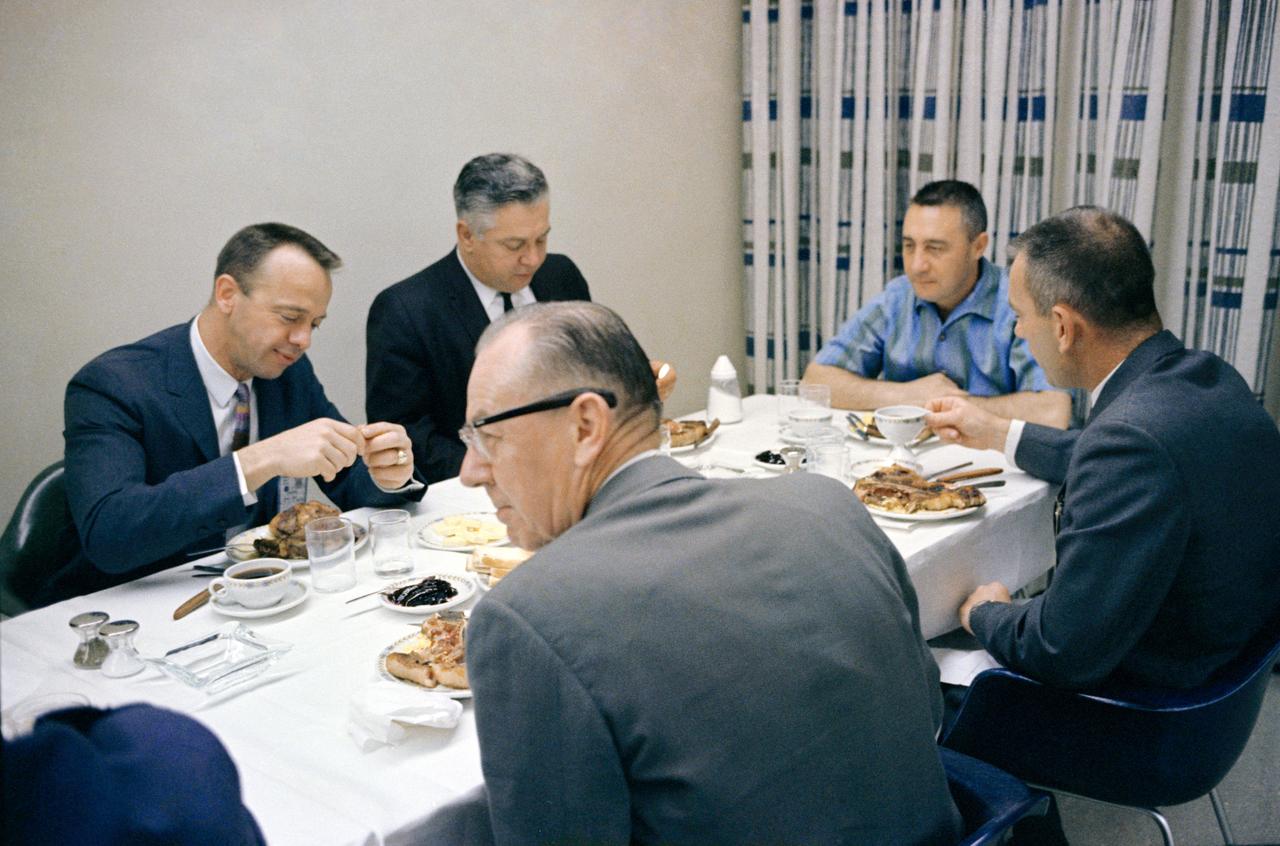
S65-21093 (23 March 1965) --- Astronaut Virgil I. Grissom (facing camera at right), command pilot of the Gemini-Titan 3 flight, is shown during a steak breakfast which he was served about two hours prior to the 9:24 a.m. (EST) GT-3 launch on March 23, 1965. Pictured in the foreground are Donald K. Slayton (right), assistant director for Flight Crew Operations; and Walter Burke, general manager of McDonnell Aircraft Corporation Spacecraft and Missiles. Pictured in the background are astronaut Alan B. Shepard Jr. (left) and Walter C. Williams, former deputy director of the Manned Spacecraft Center, now with a private aerospace firm.
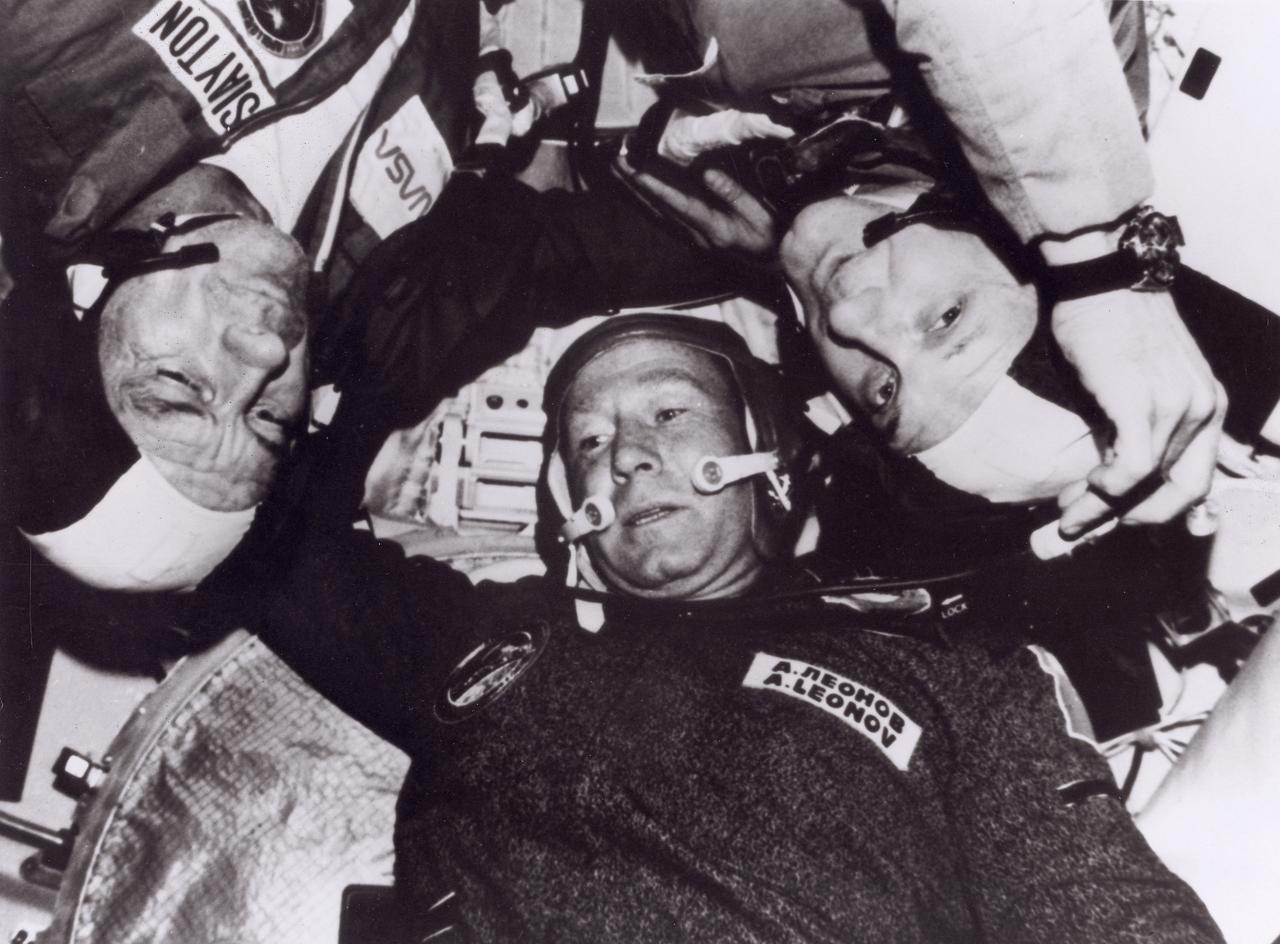
The final launch of a Saturn rocket came on July 15, 1975 as part of the Apollo-Soyuz Test Project. Earlier that day, a Russian Soyuz spacecraft lifted off its launch pad at a Soviet launch site carrying three cosmonauts. Seven and one-half hours later, the U.S. Apollo spacecraft was launched with its crew of American astronauts. Rendezvous and docking of the two ships were accomplished on July 17. The two ships remained docked for two days, conducting joint experiments and exchanging national mementos. In this photograph, astronauts Donald Slayton and Thomas Stafford chat with cosmonaut Alexei Leonov during their visit to the Soyuz Orbital Module.
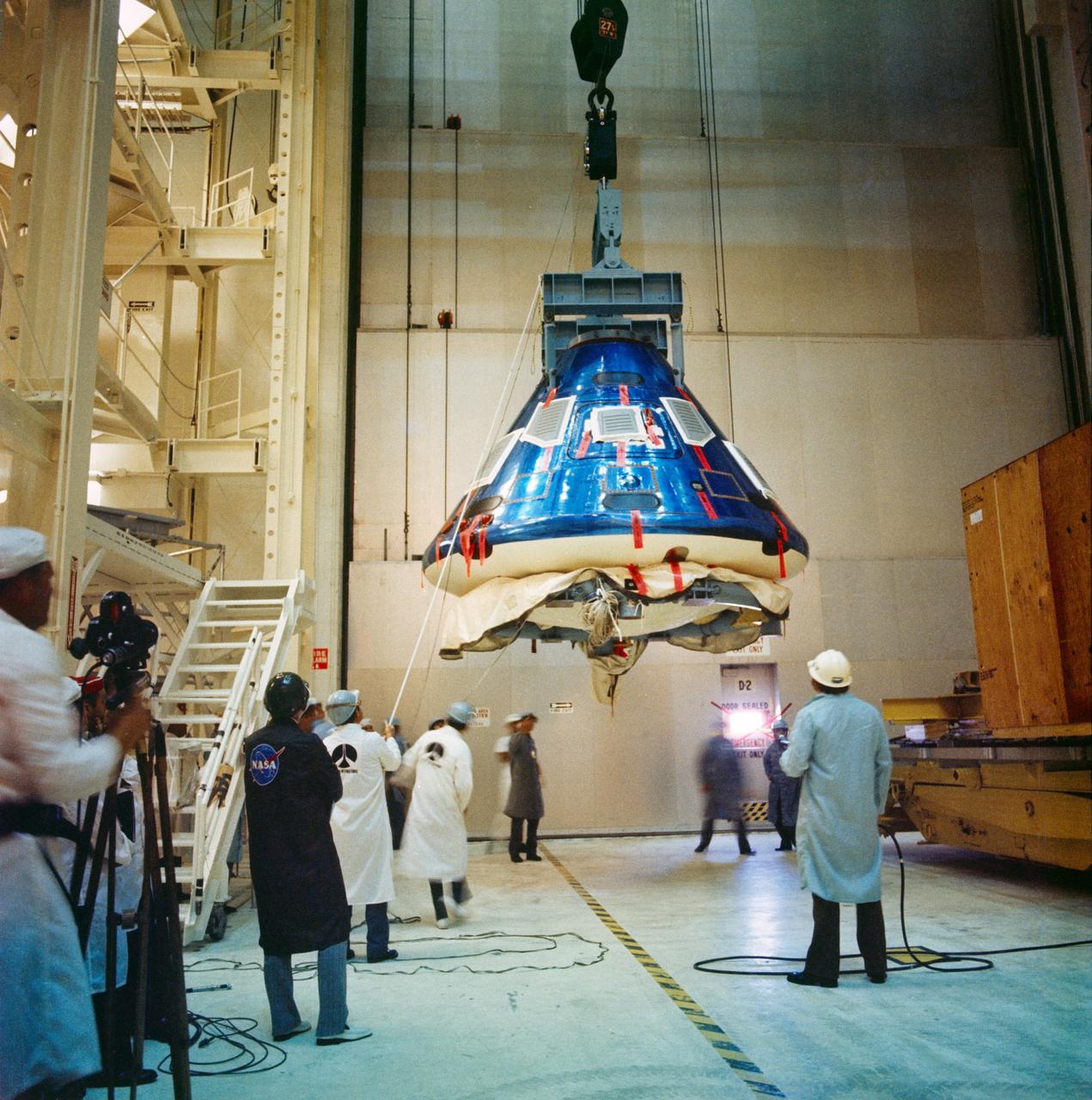
S74-32049 (8 Sept. 1974) --- The Apollo Command Module for the Apollo-Soyuz Test Project mission goes through receiving, inspection and checkout procedures in the Manned Spacecraft Operations Building at the Kennedy Space Center. The spacecraft had just arrived by air from the Rockwell International plant at Downey, California. The Apollo spacecraft (Command Module, Service Module and Docking Module), with astronauts Thomas P. Stafford, Vance D. Brand and Donald K. Slayton aboard, will dock in Earth orbit with a Soviet Soyuz spacecraft during the joint U.S.-USSR ASTP flight scheduled for July 1975. The Soviet and American crews will visit one another?s spacecraft.
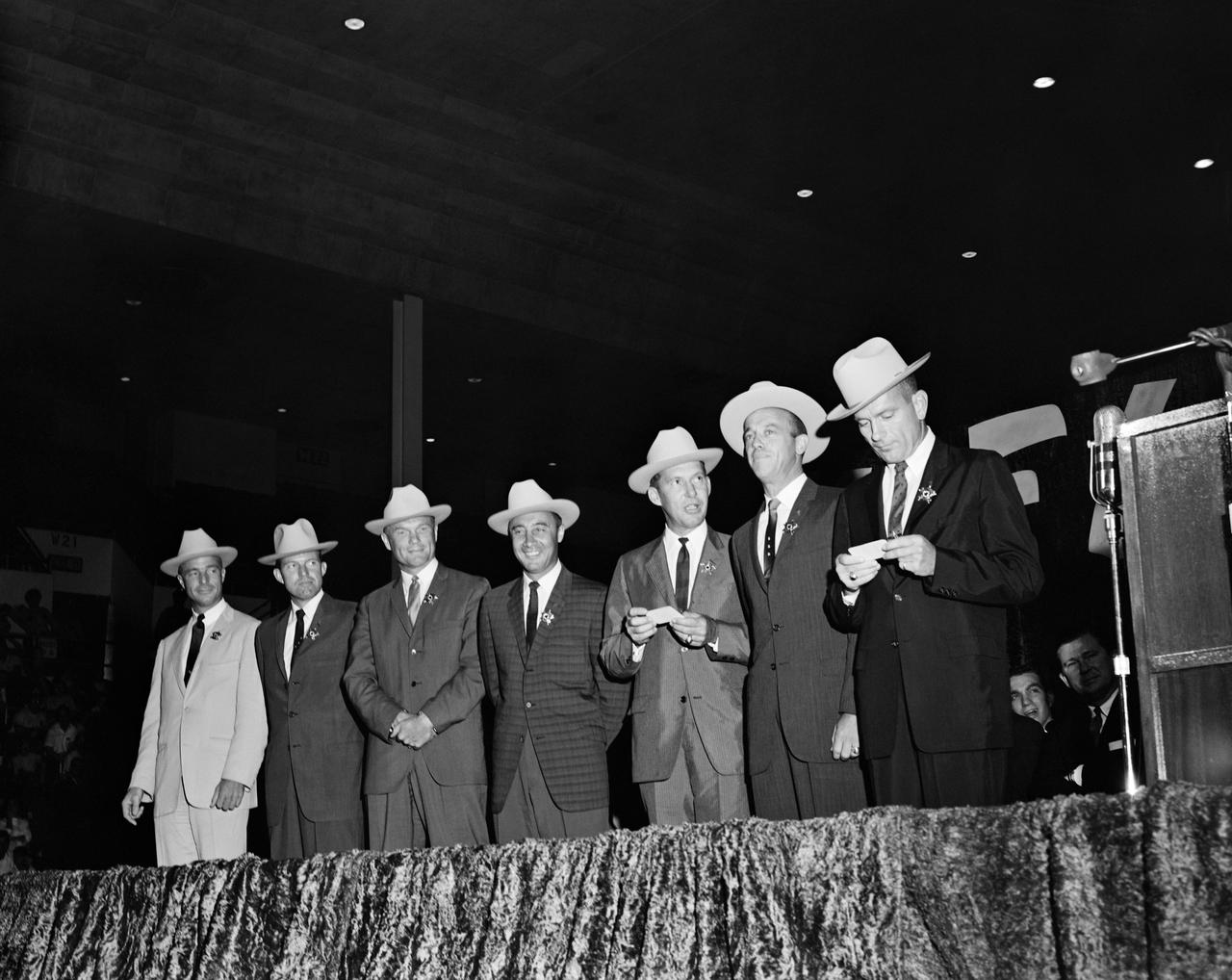
S62-03709 (4 July 1962) --- The original seven Mercury astronauts, each wearing new cowboy hats and a badge in the shape of a star, are pictured on stage at the Sam Houston Coliseum. A large crowd was on hand to welcome them to Houston, Texas. Left to right are astronauts M. Scott Carpenter, L. Gordon Cooper Jr., John H. Glenn Jr., Virgil I. Grissom, Walter M. Schirra Jr., Alan B. Shepard Jr., and Donald K. Slayton. Sen. John Tower (R.-Texas) is seen in far right background. Photo credit: NASA
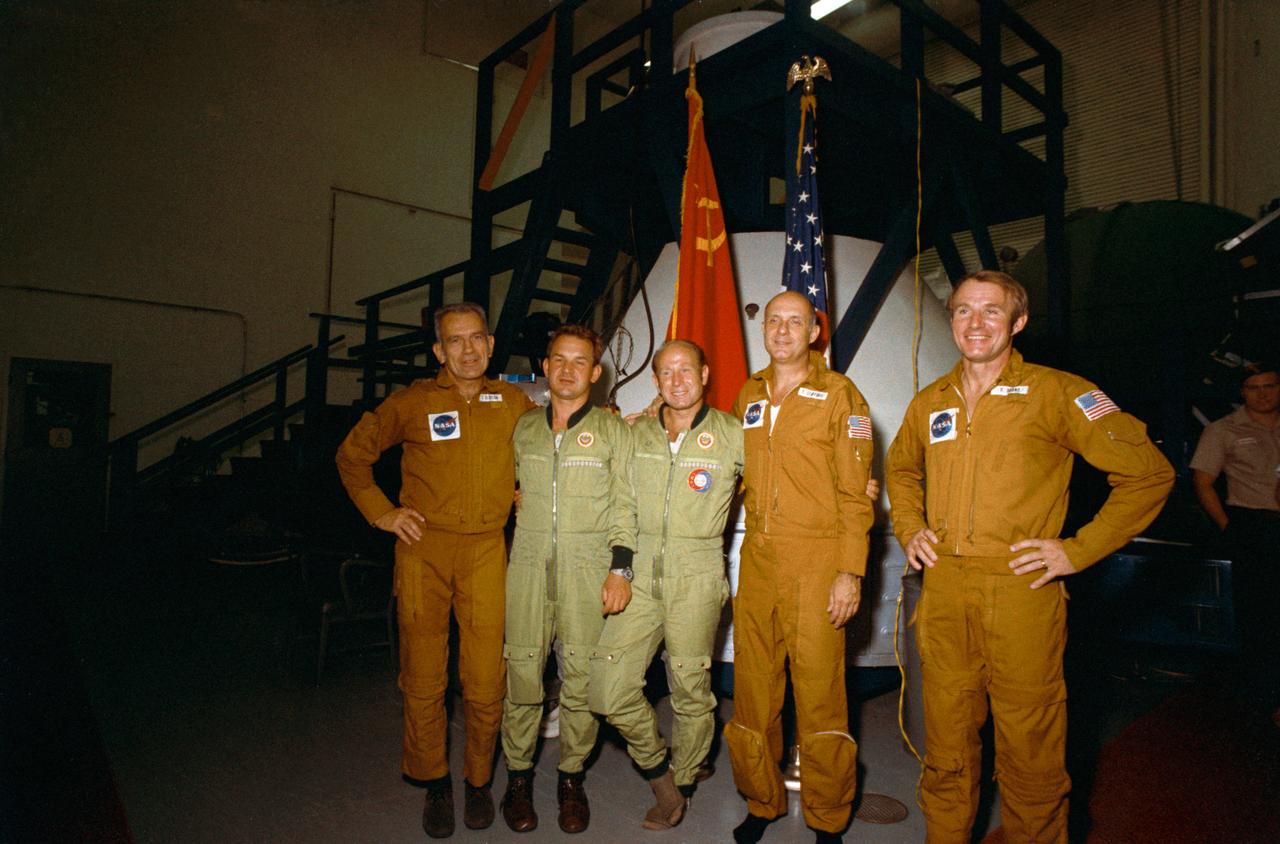
S74-28811 (23 Sept. 1974) --- The five prime crewmen of the joint U.S.-USSR Apollo-Soyuz Test Project mission are photographed in the Flight Crew Training Facility, Building 35, at the Johnson Space Center during ASTP crew training activity. They are, left to right, astronaut Donald K. Slayton, docking module pilot of the American crew; cosmonaut Valeriy N. Kubasov, engineer on the Soviet crew; cosmonaut Aleksey A. Leonov, commander of the Soviet crew; astronaut Thomas P. Stafford, commander of the American crew; and astronaut Vance D. Brand, command module pilot of the American crew.
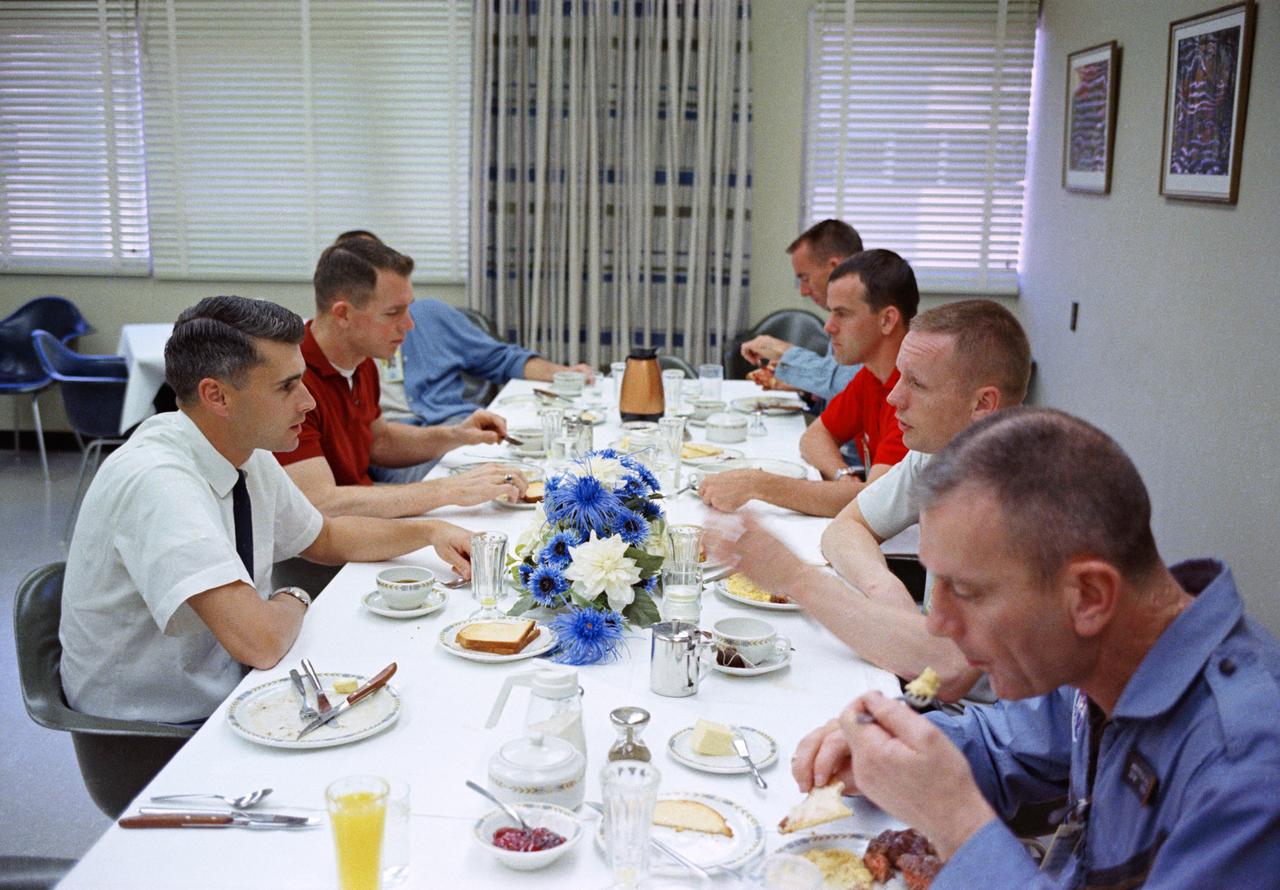
S66-24439 (16 March 1966) --- The Gemini-8 prime crew, along with several fellow astronauts, have a hearty breakfast of steak and eggs on the morning of the Gemini-8 launch. Seated clockwise around the table, starting at lower left, are Donald K. Slayton, Manned Spaceflight Center (MSC) Assistant Director for Flight Crew Operations; astronaut Neil A. Armstrong, Gemini-8 command pilot; scientist-astronaut F. Curtis Michel; astronaut R. Walter Cunningham; astronaut Alan B. Shepard Jr. (face obscured), Chief, MSC Astronaut Office; astronaut David R. Scott, Gemini-8 pilot; and astronaut Roger B. Chaffee. Photo credit: NASA
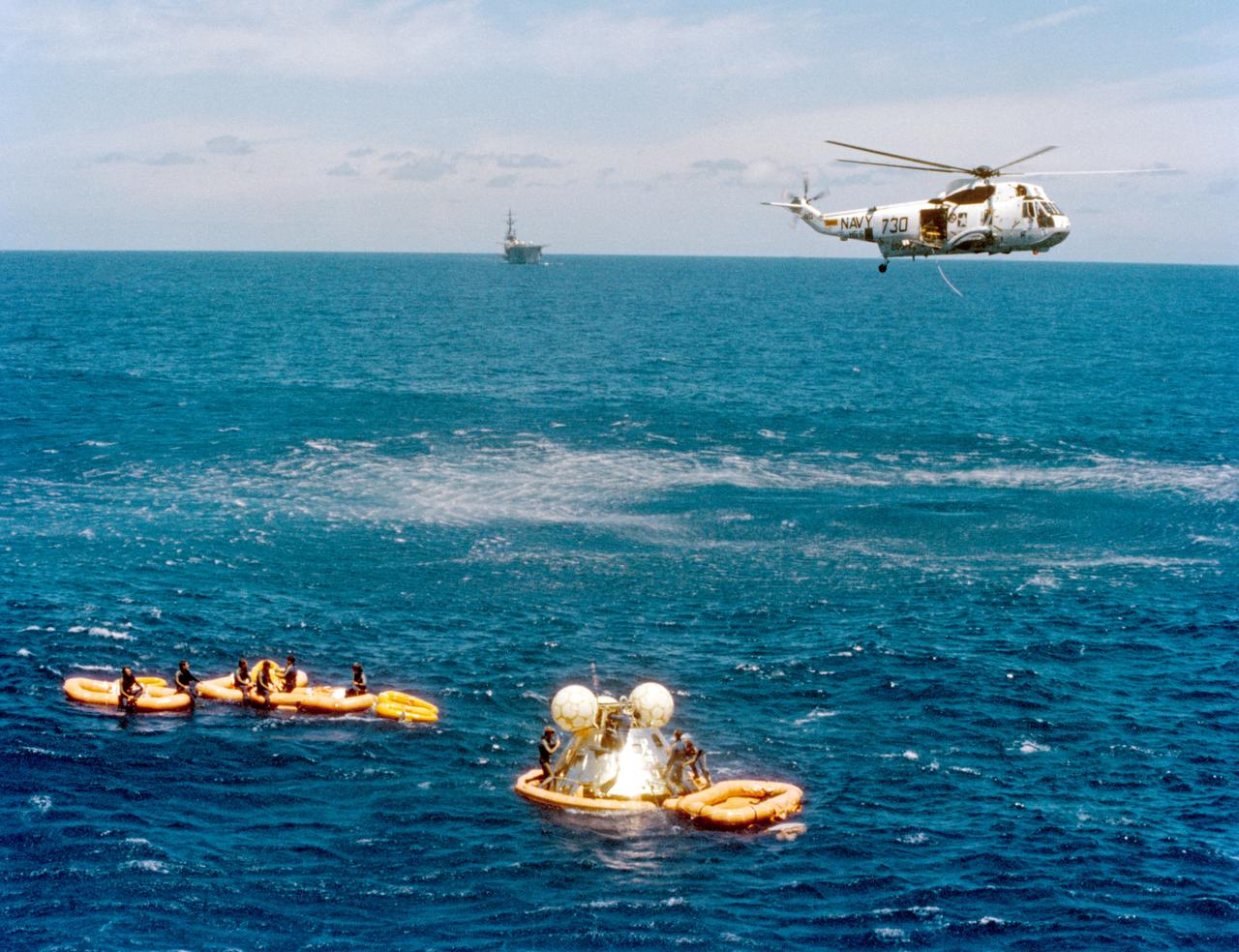
S75-29717 (24 July 1975) --- The ASTP Apollo Command Module, with astronauts Thomas P. Stafford, Vance D. Brand and Donald K. Slayton still inside, awaits pickup by the prime recovery ship, the USS New Orleans, following splashdown in the Central Pacific Ocean to conclude the historic joint U.S.-USSR Apollo-Soyuz Test Project docking mission in Earth orbit. The CM touchdown occurred in the Hawaiian Islands area at 4:18 p.m. (CDT), July 24, 1975. A team of U.S. Navy swimmers assists with the recovery operations. A recovery helicopter hovers overhead.
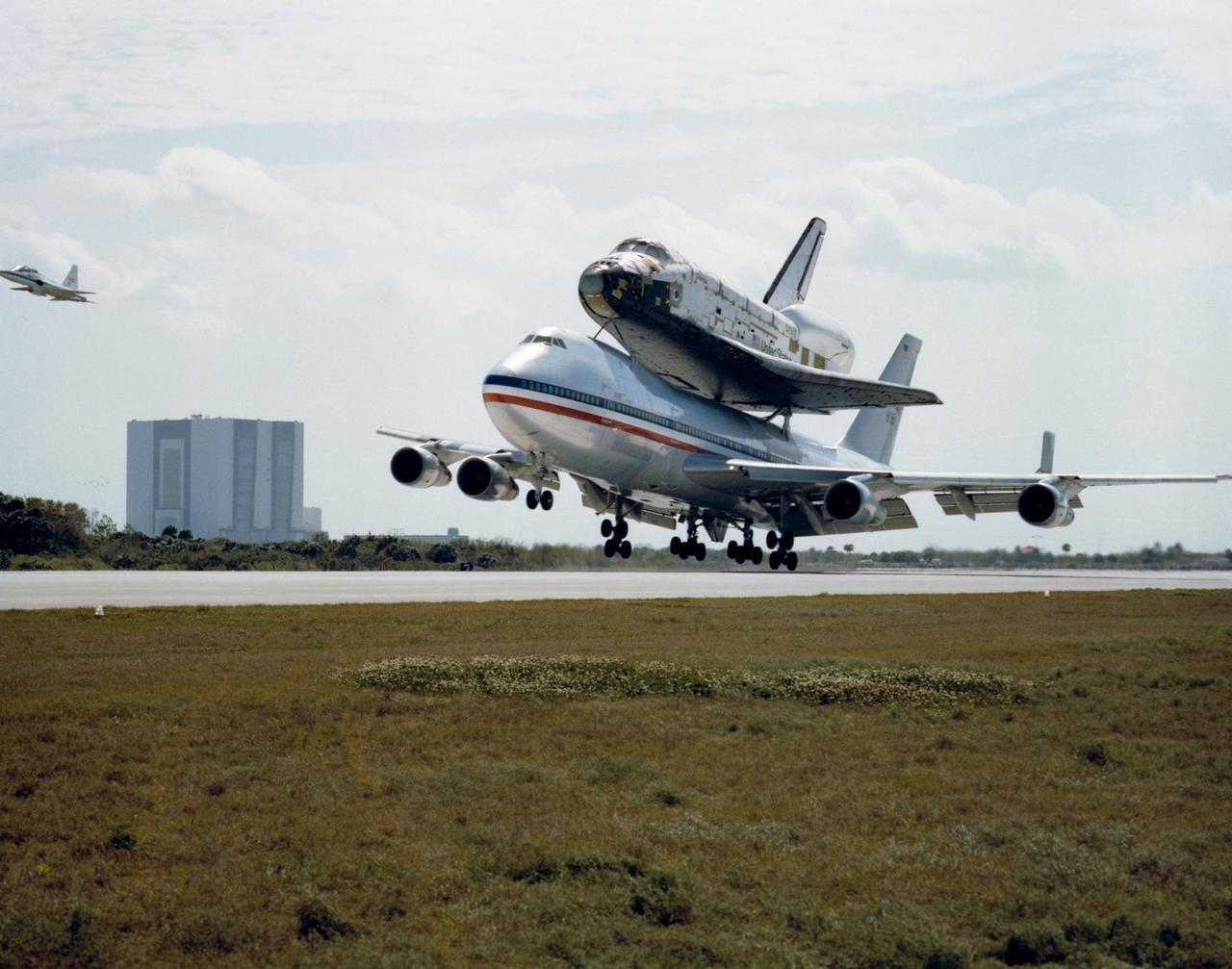
S79-30819 (24 March 1979) --- The space shuttle orbiter 102 Columbia riding ?piggyback? on NASA 905, a 747 carrier aircraft, is only seconds away from landing on Kennedy Space Center?s Shuttle landing facility, ending a 2,400-mile ferry flight from California. The T-38 chase plane at left is flown by Donald K. Slayton, manager for the orbital fight test (OFT) program. Columbia will be used for the OFT program, and it will be manned by astronauts John W. Young and Robert L. Crippen the first time it flies in space. The vehicle assembly building (VAB) is in right background. Photo credit: NASA
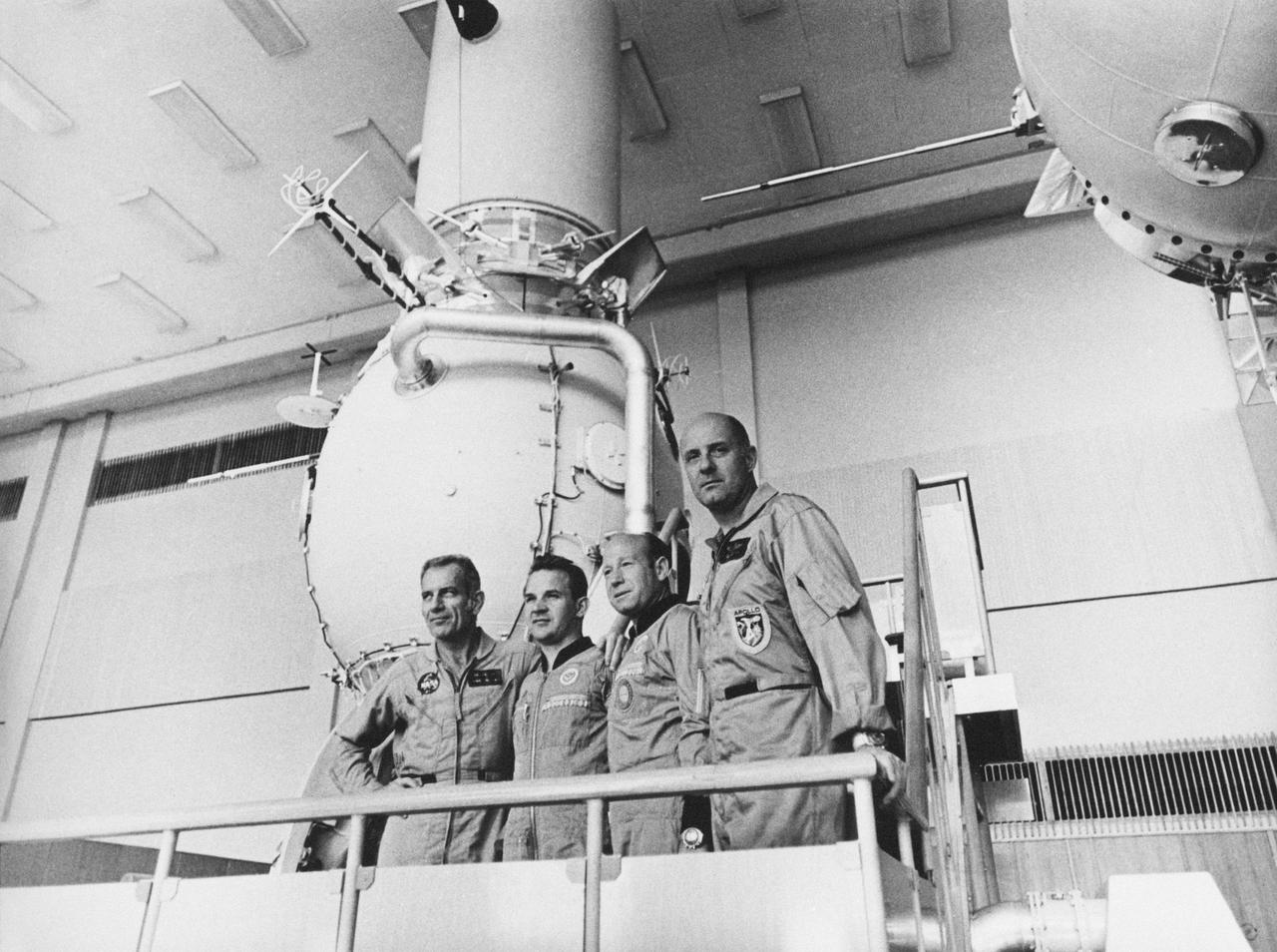
S74-25259 (June 1974) --- Four crewmen of the joint U.S.-USSR Apollo-Soyuz Test Project mission are photographed beside a Soyuz spacecraft trainer during ASTP crew training activity at the Cosmonaut Training Center (Star City) near Moscow. They are, left to right, astronaut Donald K. Slayton, docking module pilot of the American ASTP prime crew; cosmonaut Valeriy N. Kubasov, engineer of the Soviet ASTP first (prime) crew; cosmonaut Aleksey A. Leonov, commander of the Soviet ASTP first (prime) crew; and astronaut Thomas P. Stafford, commander of the American ASTP prime crew.
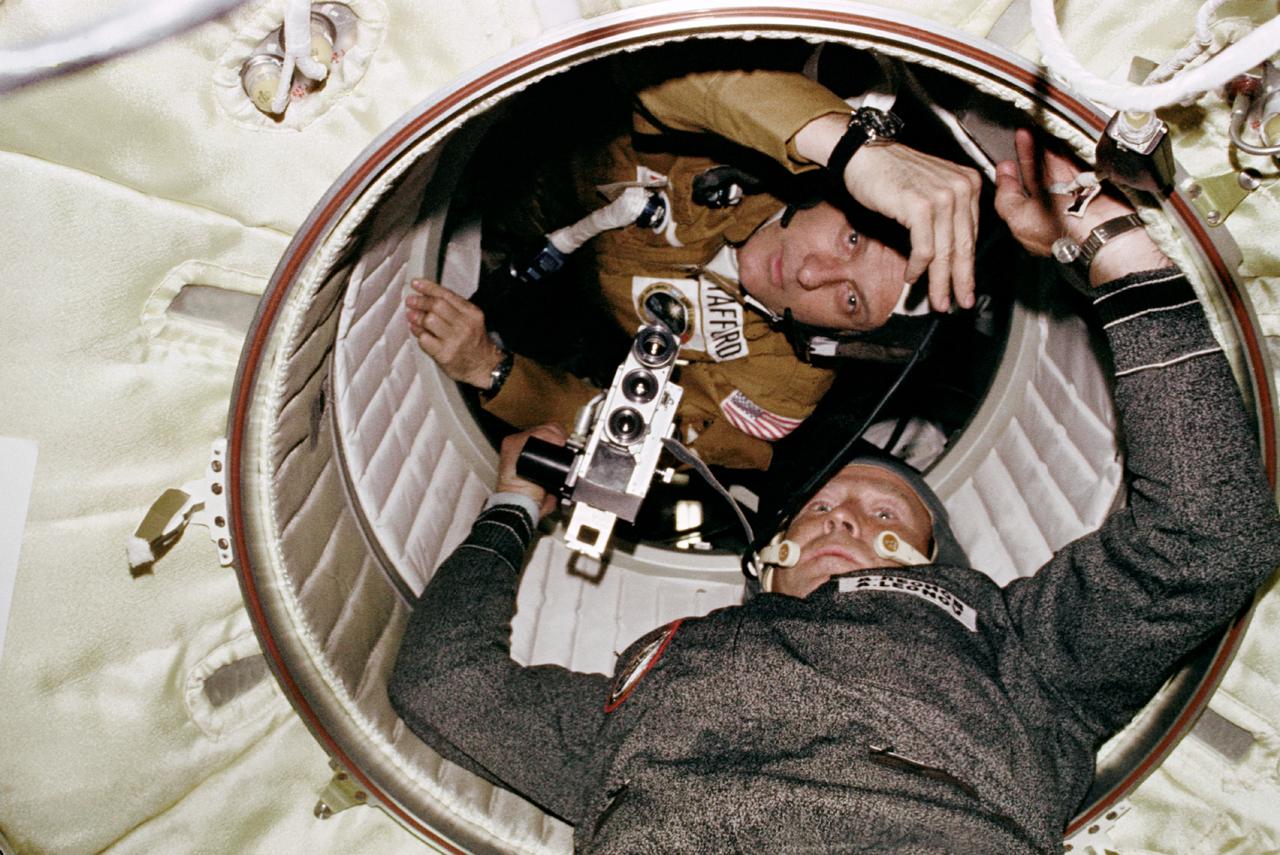
AST-03-191 (17-19 July 1975) --- Astronaut Thomas P. Stafford and cosmonaut Aleksei A. Leonov are seen at the hatchway leading from the Apollo Docking Module (DM) to the Soyuz Orbital Module (OM) during the joint U.S.-USSR Apollo Soyuz Test Project (ASTP) docking mission in Earth orbit. Cosmonaut Leonov is in the OM and astronaut Stafford is in the DM. Leonov holds a camera. The Apollo crew consisted of astronauts Stafford, commander; Donald K. "Deke" Slayton, docking module pilot; Vance D. Brand, command module pilot. The Soyuz 19 crew consisted of cosmonauts Leonov, command pilot; and Valeri N. Kubasov, flight engineer.
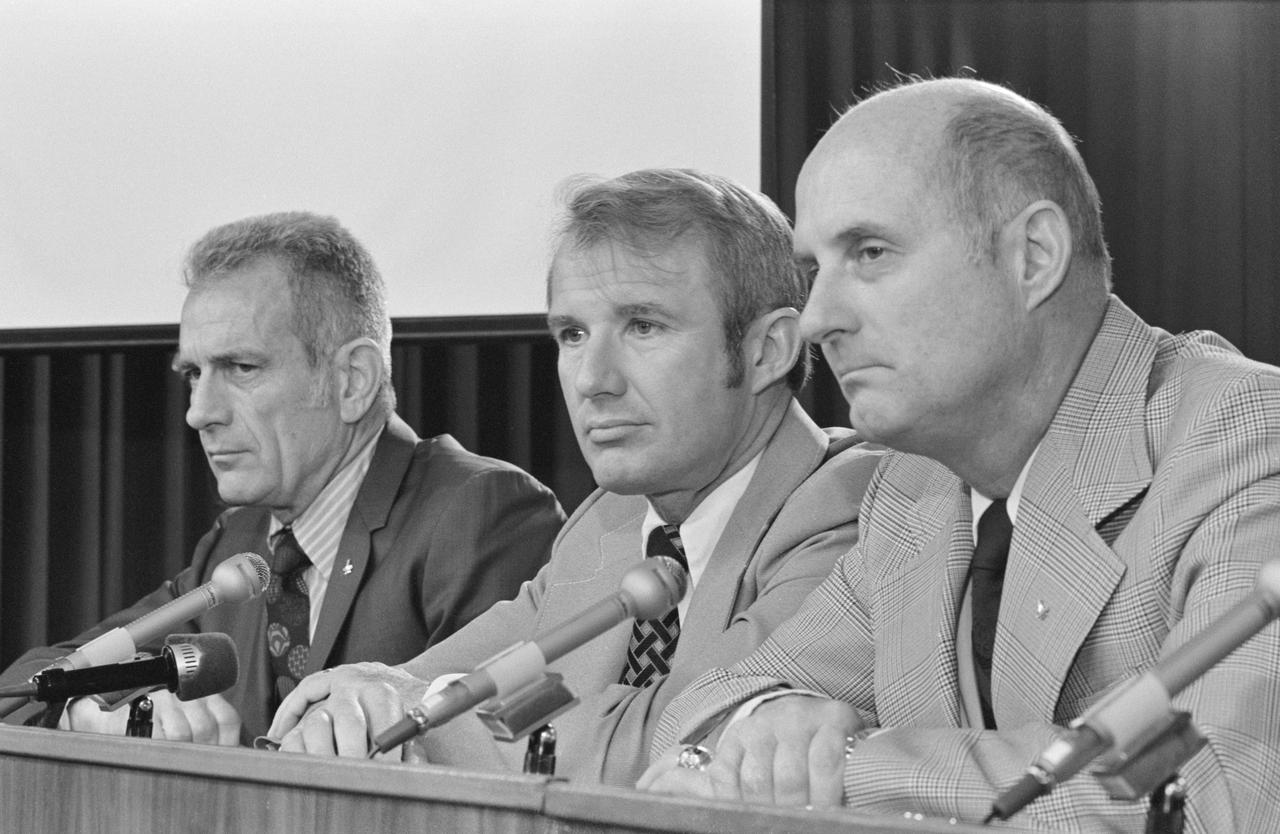
S75-26573 (14 May 1975) --- The three members of the American ASTP prime crew participate in an Apollo-Soyuz Test Project press conference conducted on May 14, 1975 in the Building 2 briefing room at NASA's Johnson Space Center. They are, left to right, Donald K. Slayton, docking module pilot; Vance D. Brand, command module pilot; and Thomas P. Stafford, commander. The astronauts discussed with the news media their recent ASTP joint training session in the Soviet Union, and the crew?s tour of the USSR?s Baikonur launch complex in Kazakhstan.
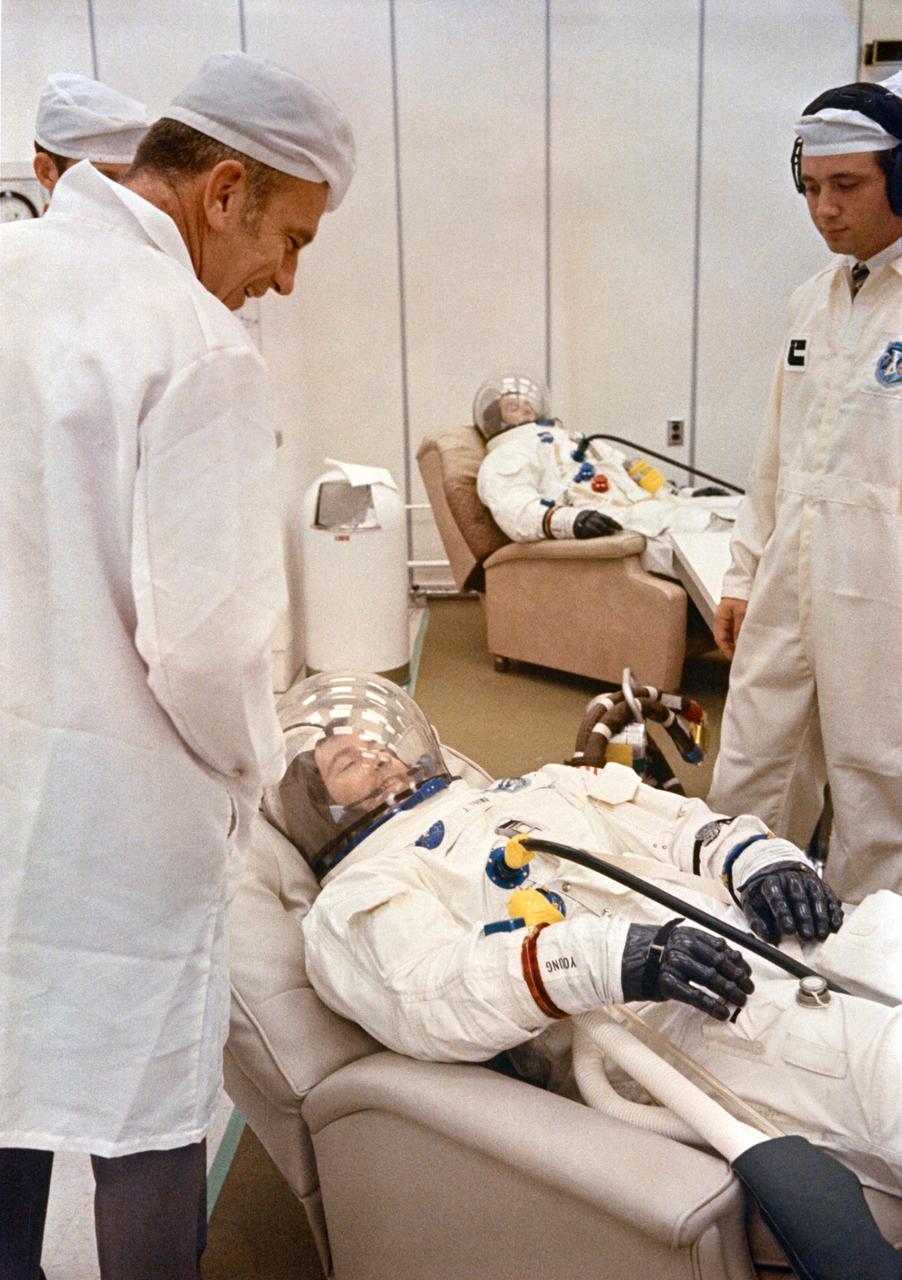
S69-34482 (18 May 1969) --- Astronaut John W. Young, Apollo 10 command module pilot, jokes with Donald K. Slayton (standing left), director of Flight Crew Operations, Manned Spacecraft Center, during Apollo 10 suiting up operations. On couch in background is astronaut Eugene A. Cernan, lunar module pilot. Astronauts Young; Cernan; and Thomas P. Stafford, commander, rode a transfer van from the Manned Spacecraft Operations Building over to Pad B, Launch Complex 39 where their spacecraft awaited them. Liftoff was at 12:49 p.m. (EDT), May 18, 1969.
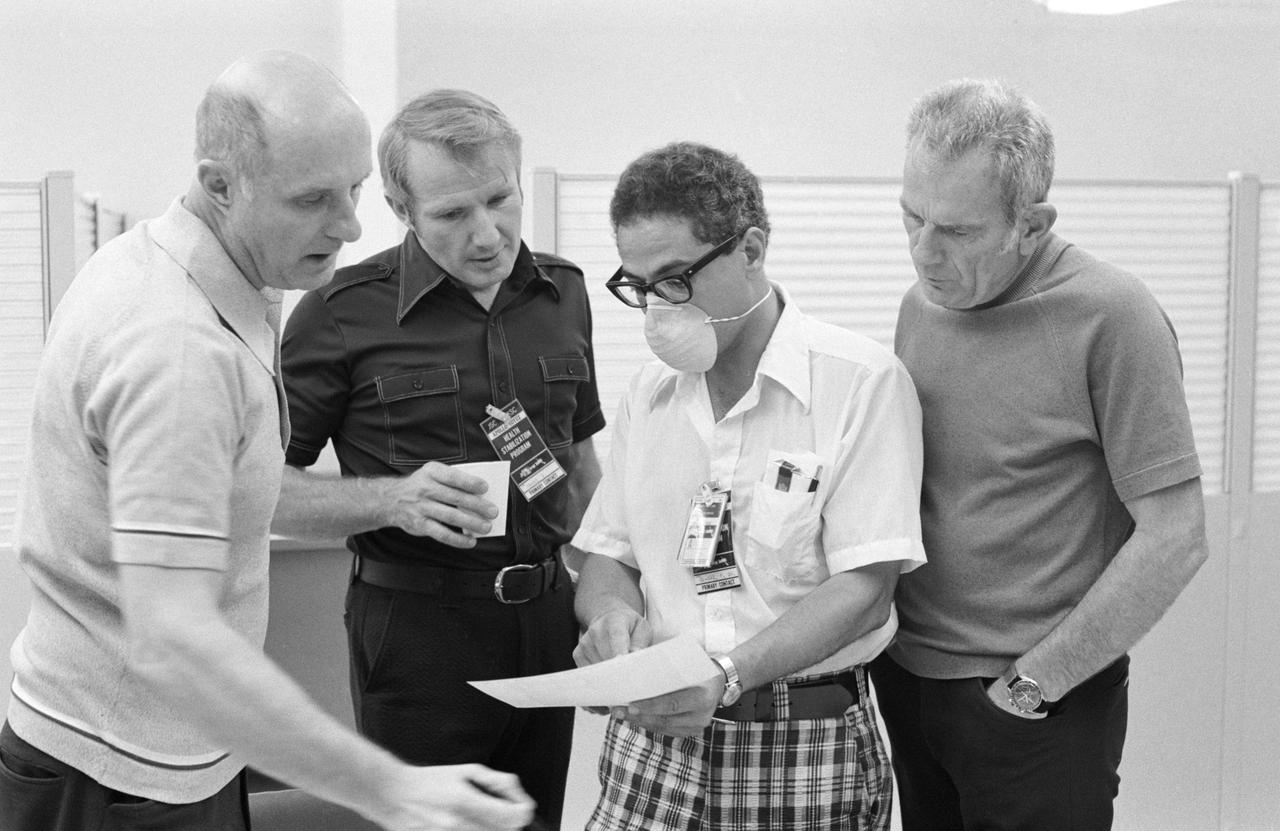
S75-28229 (8 July 1975) --- The three American ASTP prime crew astronauts participate in a photography mission briefing in Building 5 with Dr. Farouk El-Baz (wearing face mask) during Apollo-Soyuz Test Project preflight activity at NASA's Johnson Space Center. They are, left to right, Thomas P. Stafford, commander; Vance D. Brand, command module pilot; Dr. El-Baz; and Donald K. Slayton, docking module pilot. Dr. El-Baz is with the Center for Earth and Planetary Studies, National Air and Space Museum, Smithsonian Institution. The face mask is to protect the crewmen from possible exposure to disease prior to launch time. Photo credit: NASA
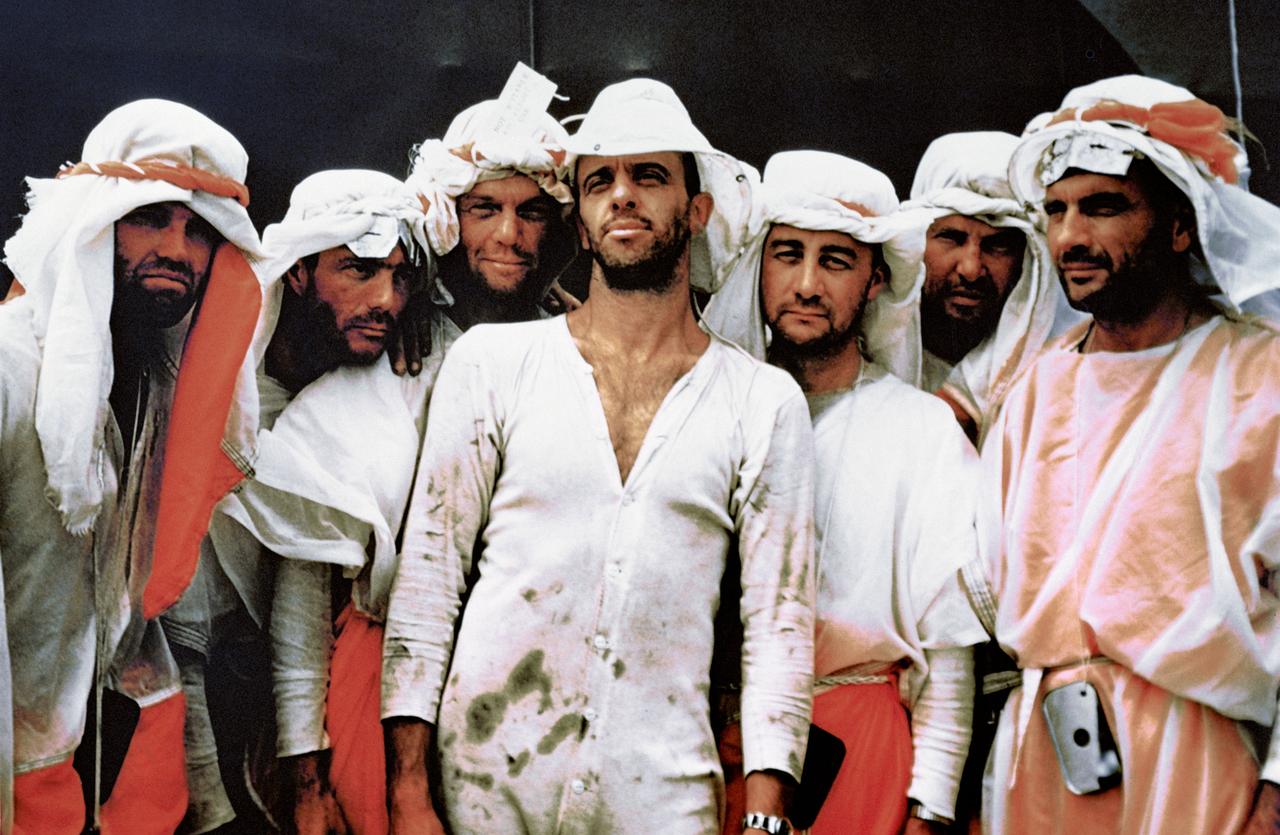
S88-31375 (1960) --- Although more easily recognized in their spacesuits, these seven men are actually NASA astronauts participating in a U.S. Air Force survival school at Stead Air Force Base in Nevada. The original seven Mercury astronauts are, left to right, L. Gordon Cooper Jr.; M. Scott Carpenter; John H. Glenn Jr.; Alan B. Shepard Jr.; Virgil I. Grissom; Walter M. Schirra Jr. and Donald K. Slayton. Portions of their clothing have been fashioned from parachute material. Photo credit: NASA
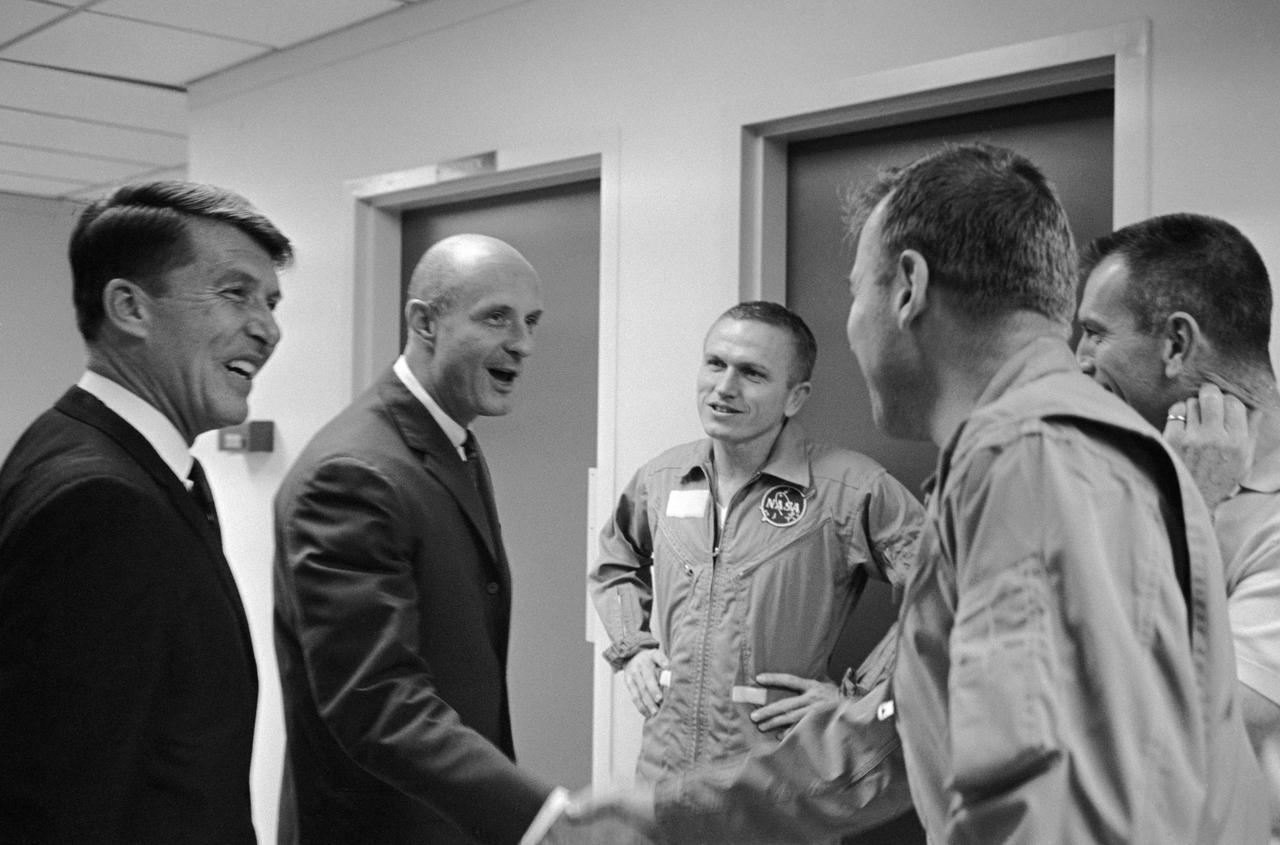
S65-66728 (19 Dec. 1965) --- This happy round of handshakes took place in the Manned Spacecraft Operations Building crew quarters, Merritt Island, as the Gemini-6 crew (left) welcomed the Gemini-7 crew back to the Kennedy Space Center. Left to right, are astronauts Walter M. Schirra Jr., Gemini-6 command pilot; Thomas P. Stafford, Gemini-6 pilot; Frank Borman, Gemini-7 command pilot; James A. Lovell Jr., Gemini-7 pilot; and Donald K. Slayton (partially hidden behind Lovell), assistant director for Flight Crew Operations, Manned Spacecraft Center, Houston. Photo credit: NASA
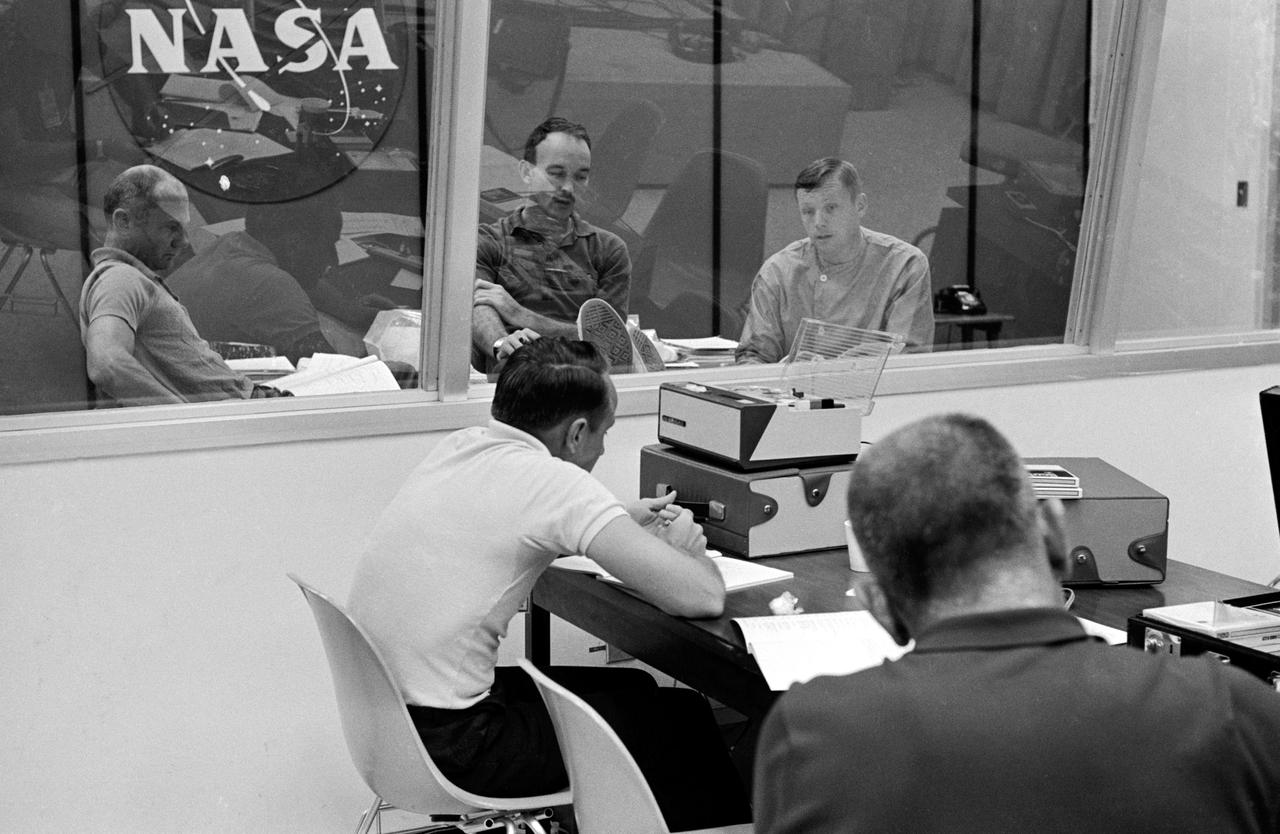
S69-40209 (27 July 1969) --- The crewmen of the Apollo 11 lunar landing mission go through their post flight debriefing session on Sunday, July 27, 1969. Left to right, are astronauts Edwin E. Aldrin Jr., lunar module pilot; Michael Collins, command module pilot; and Neil A. Armstrong, commander. They are seated in the debriefing room of the Crew Reception Area of the Lunar Receiving Laboratory at the Manned Spacecraft Center (MSC). In the foreground are Donald K. Slayton (right), MSC Director of Flight Crew Operations; and Lloyd Reeder, training coordinator.
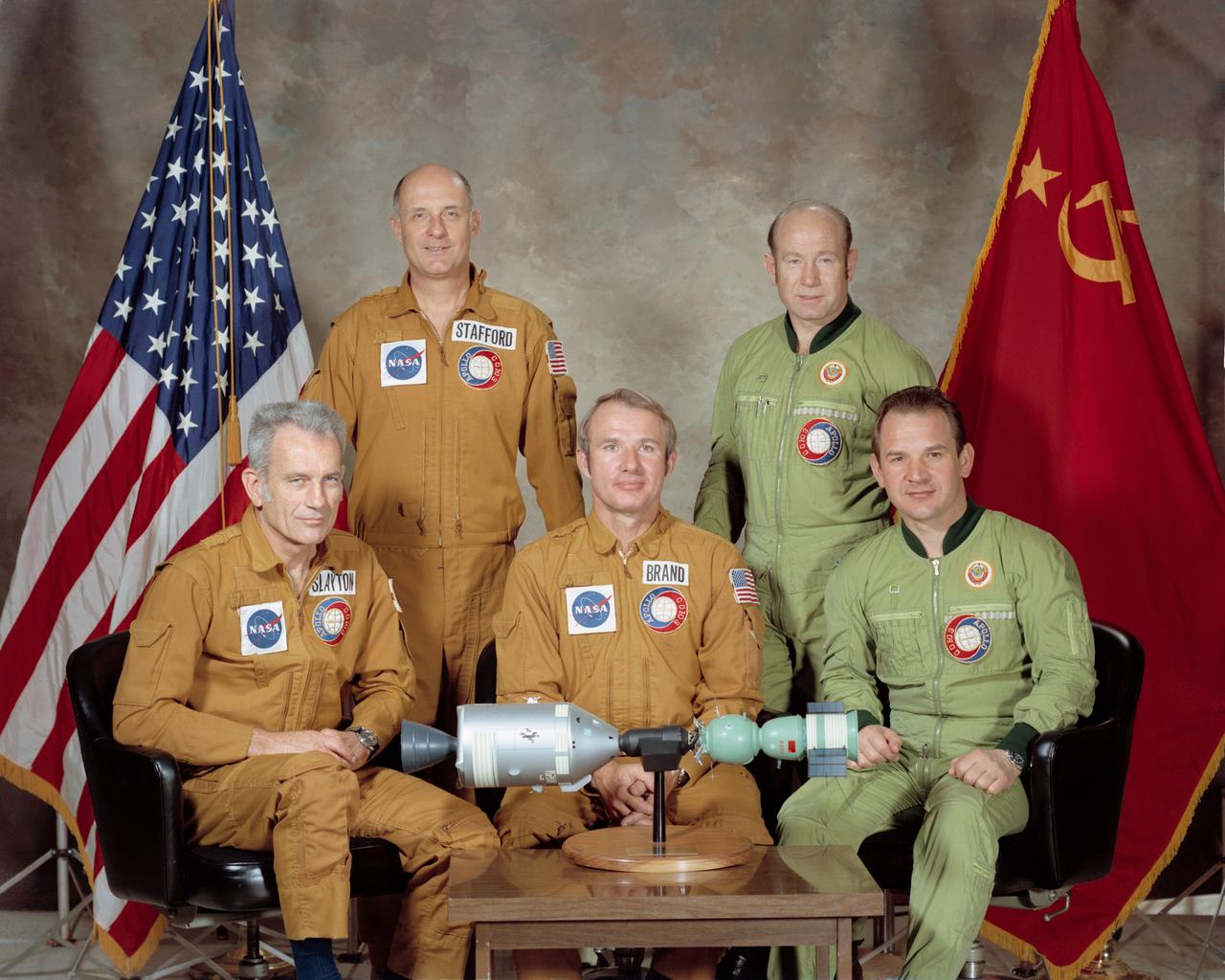
S75-22410 (March 1975) --- These five men compose the two prime crews of the joint United States-USSR Apollo-Soyuz Test Project (ASTP) docking mission in Earth orbit scheduled for July 1975. They are astronaut Thomas P. Stafford (standing on left), commander of the American crew; cosmonaut Aleksey A. Leonov (standing on right), commander of the Soviet crew; astronaut Donald K. Slayton (seated on left), docking module pilot of the American crew; astronaut Vance D. Brand (seated center), command module pilot of the American crew; and cosmonaut Valeriy N. Kubasov (seated on right), engineer on the Soviet crew.
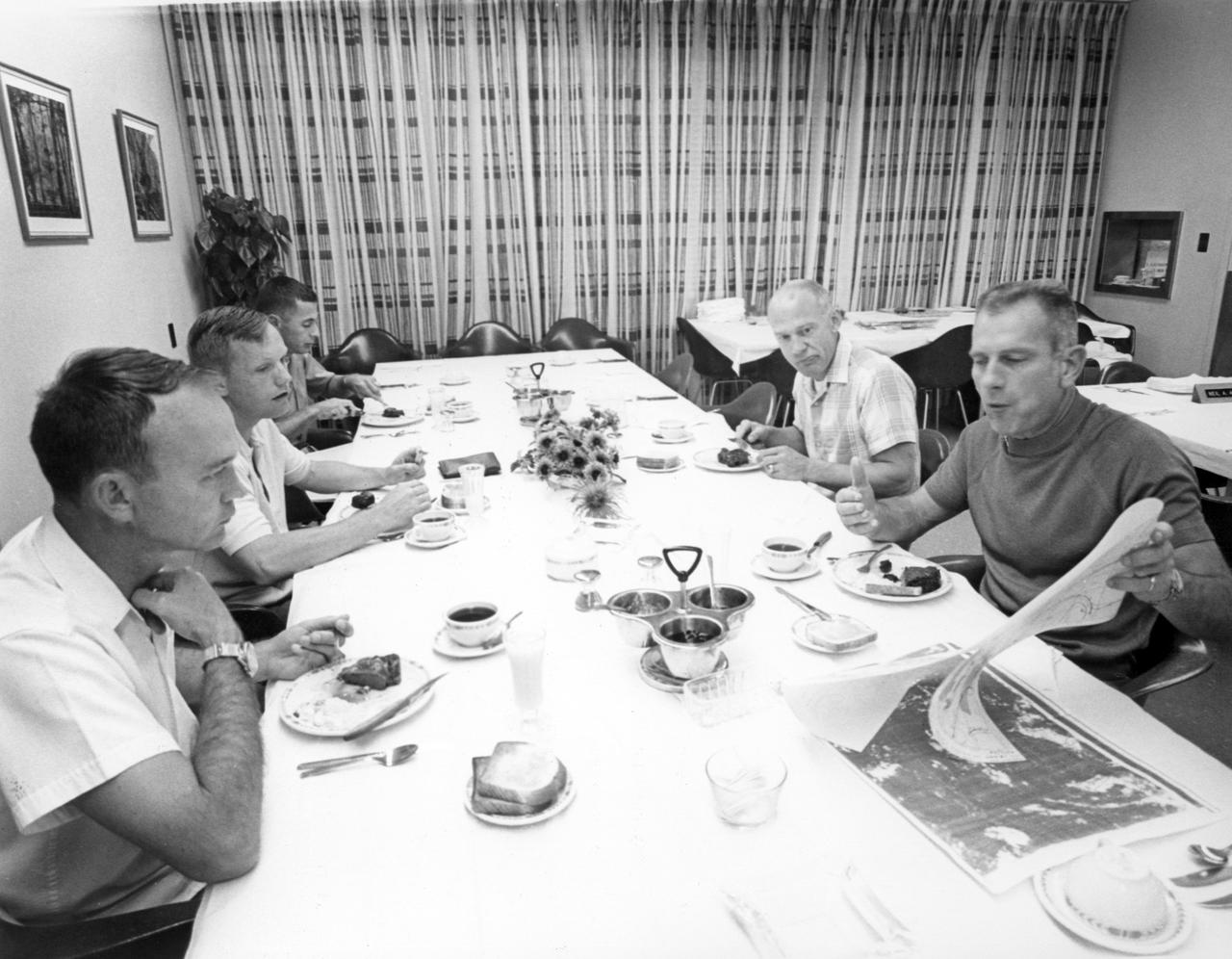
Chief astronaut and director of flight crew operations, Donald K. Slayton (right front) reviews lunar charts with Apollo 11 astronauts Michael Collins (left), Neil Armstrong, and Edwin Aldrin (next to Slayton) during breakfast a short time before the three men launched for the first Moon landing mission. Sharing breakfast with the crew was William Anders (left rear), Lunar Module pilot for the Apollo 8 lunar orbit mission. The Apollo 11 mission launched from the NASA Kennedy Space Center (KSC) in Florida via the Marshall Space Flight Center (MSFC) developed Saturn V launch vehicle on July 16, 1969 and safely returned to Earth on July 24, 1969. The CM, “Columbia”, piloted by Collins, remained in a parking orbit around the Moon while the LM, “Eagle’’, carrying astronauts Armstrong and Aldrin, landed on the Moon. On July 20, 1969, Armstrong was the first human to ever stand on the lunar surface, followed by Aldrin. During 2½ hours of surface exploration, the crew collected 47 pounds of lunar surface material for analysis back on Earth. With the success of Apollo 11, the national objective to land men on the Moon and return them safely to Earth had been accomplished.
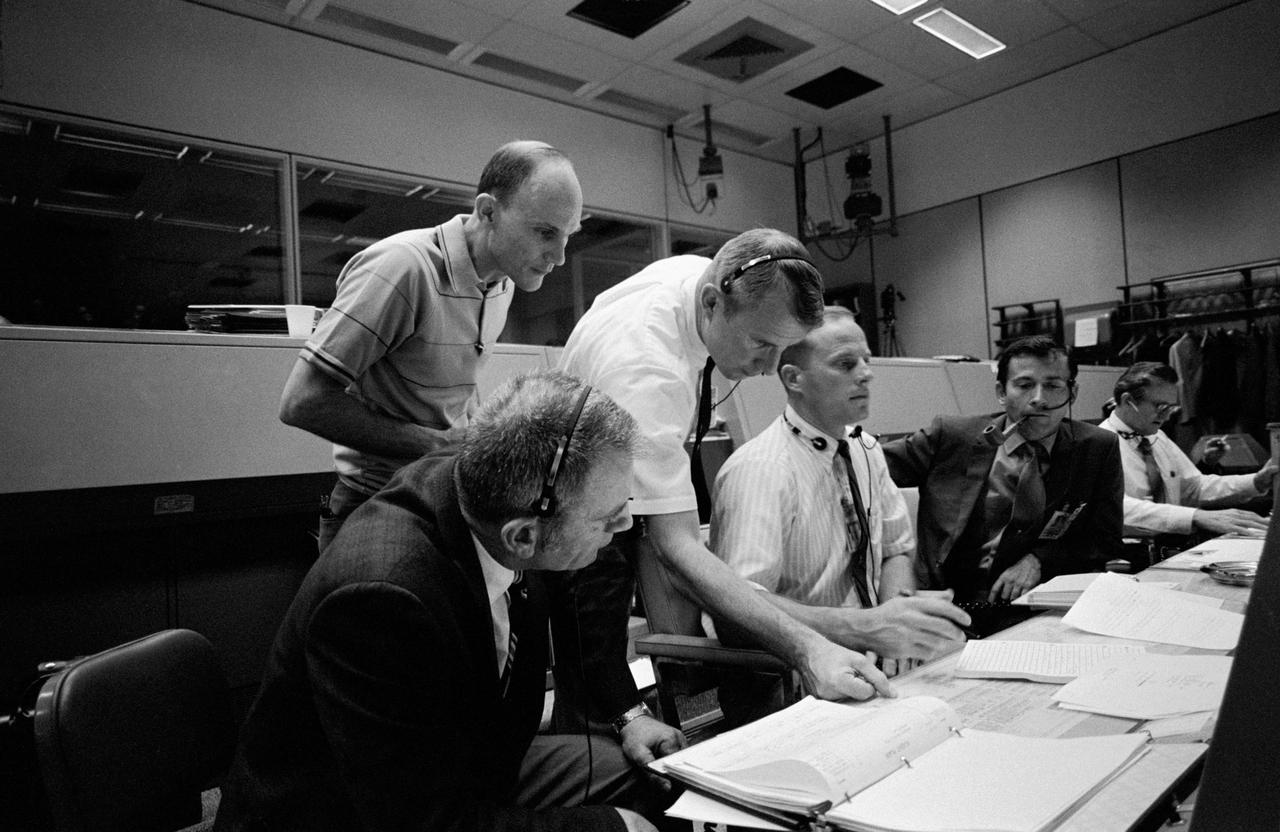
S70-34902 (14 April 1970) --- Several persons important to the Apollo 13 mission, at consoles in the Mission Operations Control Room (MOCR) of the Mission Control Center (MCC). Seated at consoles, from left to right, are astronauts Donald K. Slayton, director of flight crew operations; astronaut Jack R. Lousma, Shift 3 spacecraft communicator; and astronaut John W. Young, commander of the Apollo 13 backup crew. Standing, left to right, are astronaut Tom K. Mattingly II, who was replaced as Apollo 13 command module pilot after it was learned he may come down with measles, and astronaut Vance D. Brand, Shift 2 spacecraft communicator. Several hours earlier, in the late evening hours of April 13, crew members of the Apollo 13 mission reported to MCC that trouble had developed with an oxygen cell on their spacecraft.
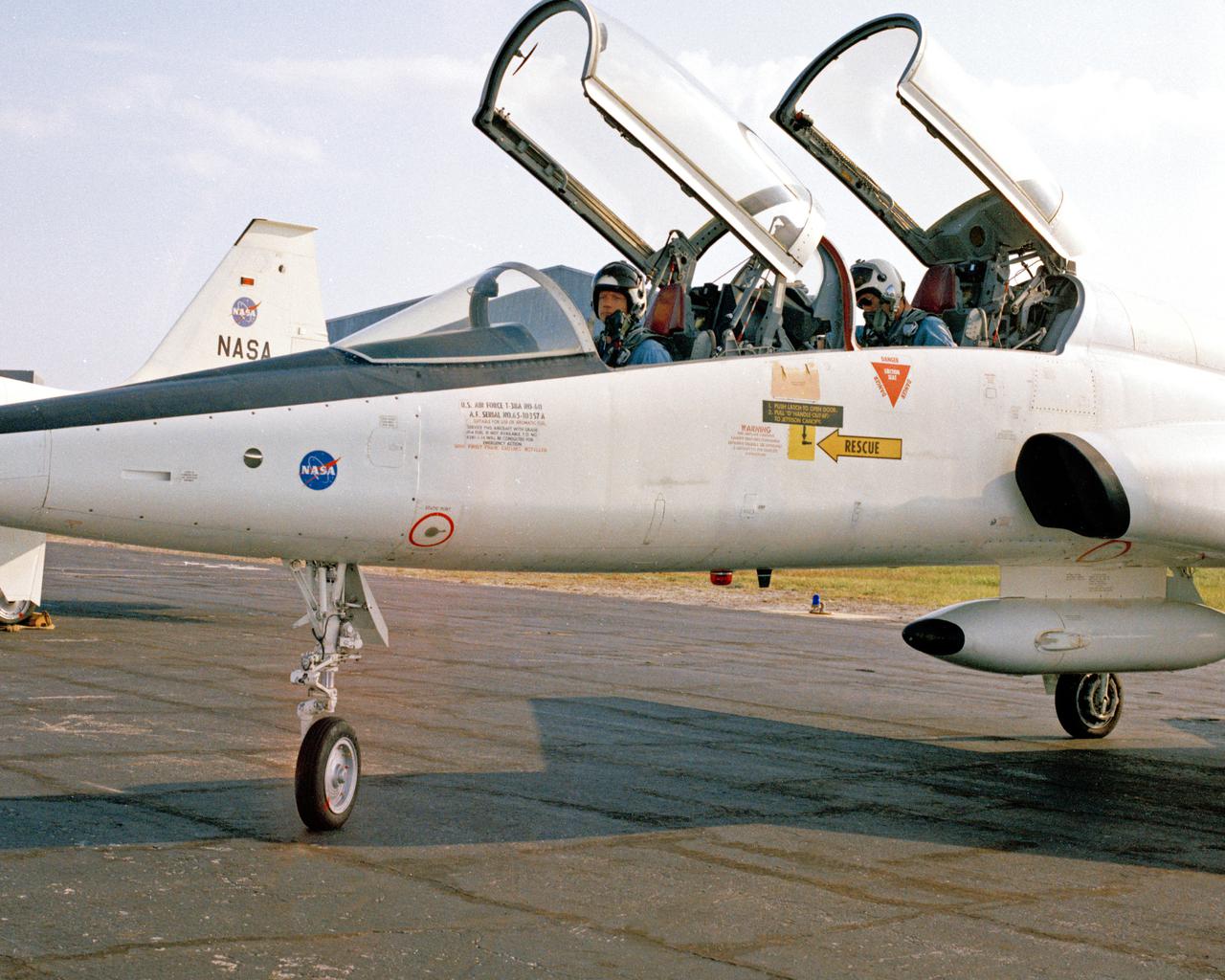
PATRICK AFB, Fla. – In preparation of the nation’s first lunar landing mission, Apollo 11 crew members arrive at Patrick Air Force Base, Florida. Mission commander Neil A. Armstrong is in the front seat of the T-38 jet, with chief astronaut and director of flight crew operations, Donald K. Slayton, in the back. Lift off atop a Saturn V launch vehicle is scheduled for July 16, 1969. During Apollo 11 the command module, Columbia, will remain in orbit around the moon while the lunar module, Eagle, carrying Armstrong and Aldrin, lands on the lunar surface. During 2½ hours of surface exploration, the crew plans to collect lunar surface material for analysis back on Earth. For more: http:__www-pao.ksc.nasa.gov_history_apollo_apollo-11_apollo-11.htm Photo credit: NASA

S63-00562 (February 1963) --- Portrait of astronaut groups 1 and 2. The original seven Mercury astronauts selected by NASA in April 1959, are seated (left to right): L. Gordon Cooper Jr., Virgil I. Grissom, M. Scott Carpenter, Water M. Schirra Jr., John H. Glenn Jr., Alan B. Shepard Jr., and Donald K. Slayton. The second group of NASA astronauts, which were named in September 1962, are standing (left to right): Edward H. White II, James A. McDivitt, John W. Young, Elliot M. See Jr., Charles Conrad Jr., Frank Borman, Neil A. Armstrong, Thomas P. Stafford, and James A. Lovell Jr. Photo credit: NASA or National Aeronautics and Space Administration
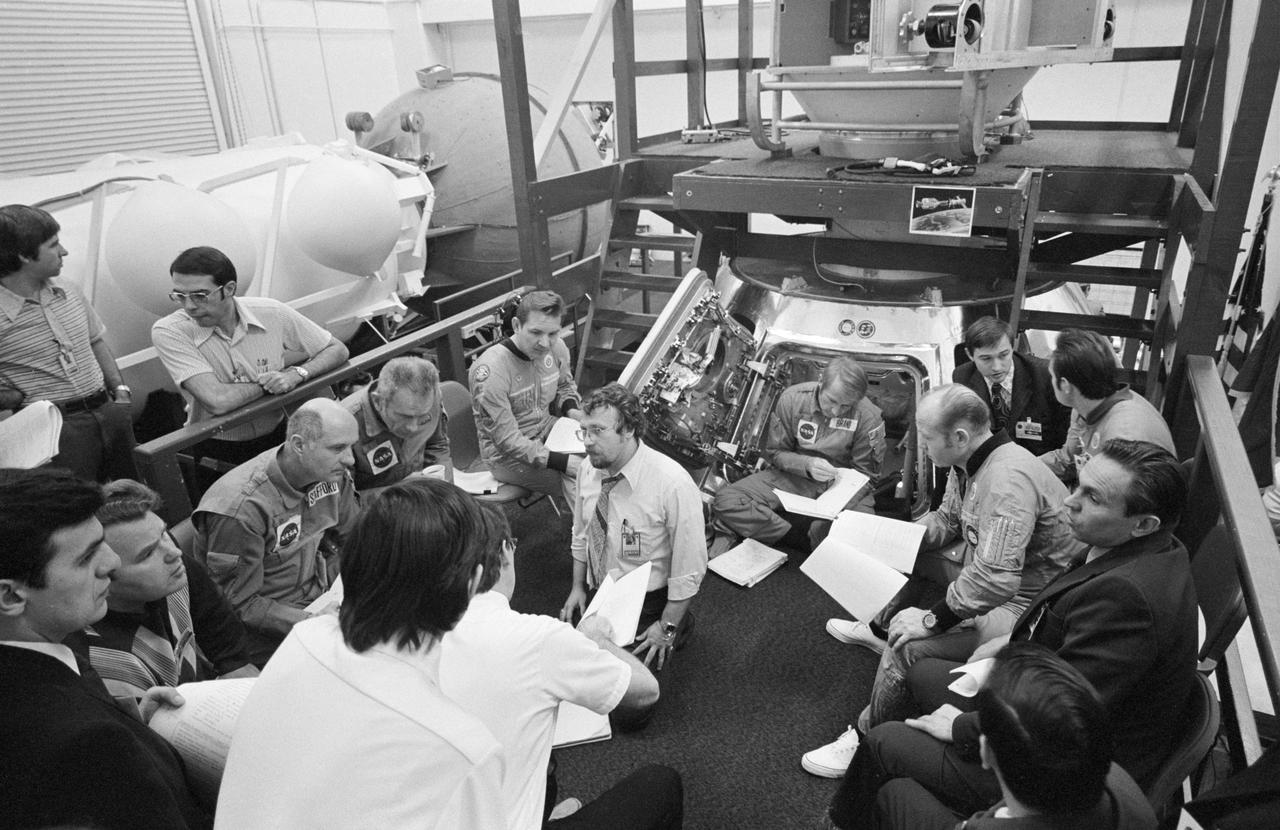
S75-21599 (12 Feb. 1975) --- Six Apollo-Soyuz Test Project crewmen participate in joint crew training in Building 35 at the Johnson Space Center. They are (wearing flight suits), left to right, astronaut Thomas P. Stafford, commander of the American ASTP prime crew; astronaut Donald K. Slayton, docking module pilot on Stafford?s crew; cosmonaut Valeriy N. Kubasov, engineer on the Soviet ASTP first (prime) crew; astronaut Vance D. Brand, command module pilot on Stafford?s crew; cosmonaut Aleksey A. Leonov, commander of the Soviet ASTP first (prime) crew; and cosmonaut Vladimir A. Dzhanibekov, commander of the Soviet ASTP third (backup) crew. Brand is seated next to the hatch of the Apollo Command Module trainer. This picture was taken during a ?walk-through? of the first day?s activities in Earth orbit. The other men are interpreters and training personnel.
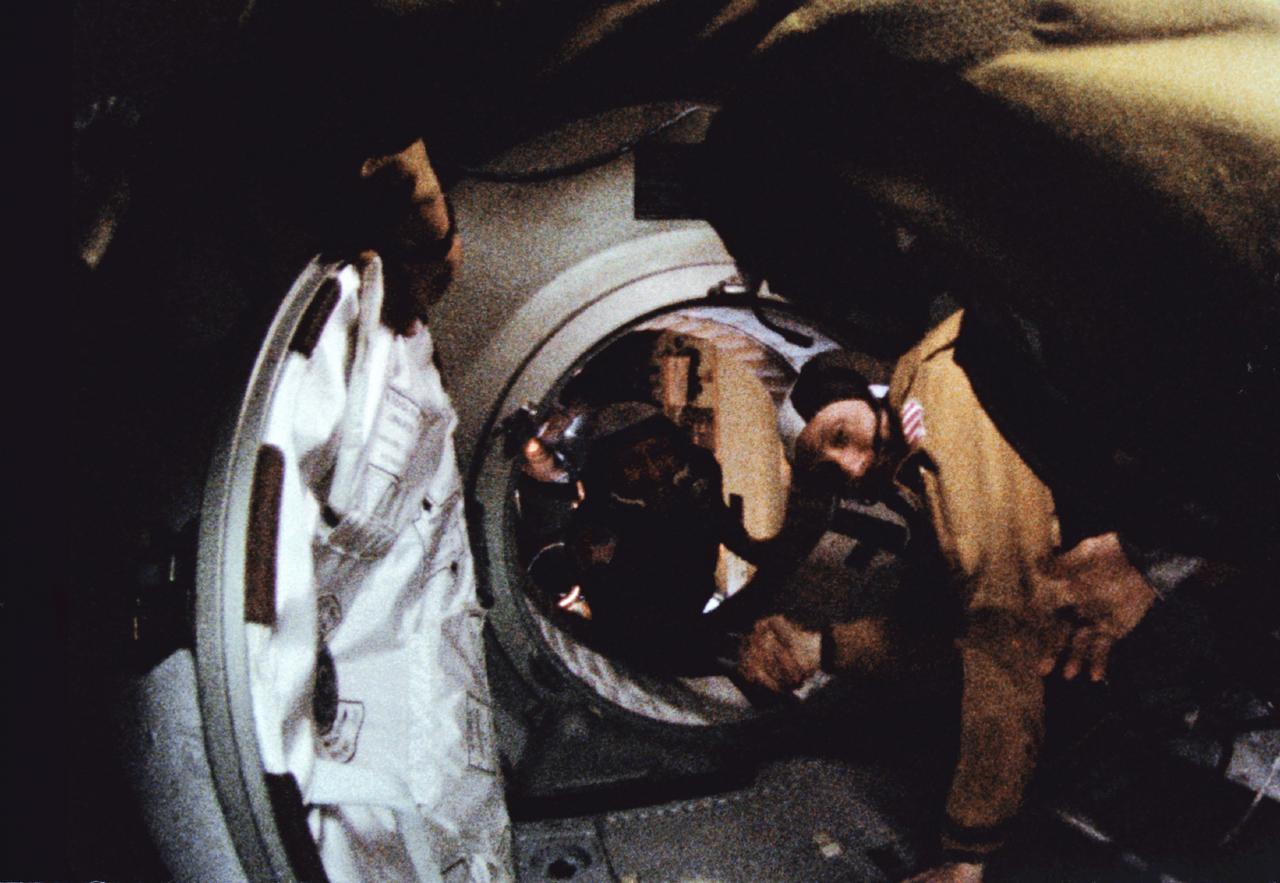
S75-29432 (17 July 1975) --- Astronaut Thomas P. Stafford (in foreground) and cosmonaut Aleksei A. Leonov make their historic handshake in space on July 17, 1975 during the joint U.S.-USSR Apollo Soyuz Test Project (ASTP) docking mission in Earth orbit. This picture was reproduced from a frame of 16mm motion picture film. The American and Soviet spacecraft were joined together in space for approximately 47 hours on July 17th, 18th, 19th, 1975. The Apollo crew consisted of astronauts Thomas P. Stafford, commander; Donald K. "Deke" Slayton, docking module pilot; Vance D. Brand, command module pilot. The Soyuz 19 crew consisted of cosmonauts Aleksei A. Leonov, command pilot; and Valeri N. Kubasov, flight engineer.
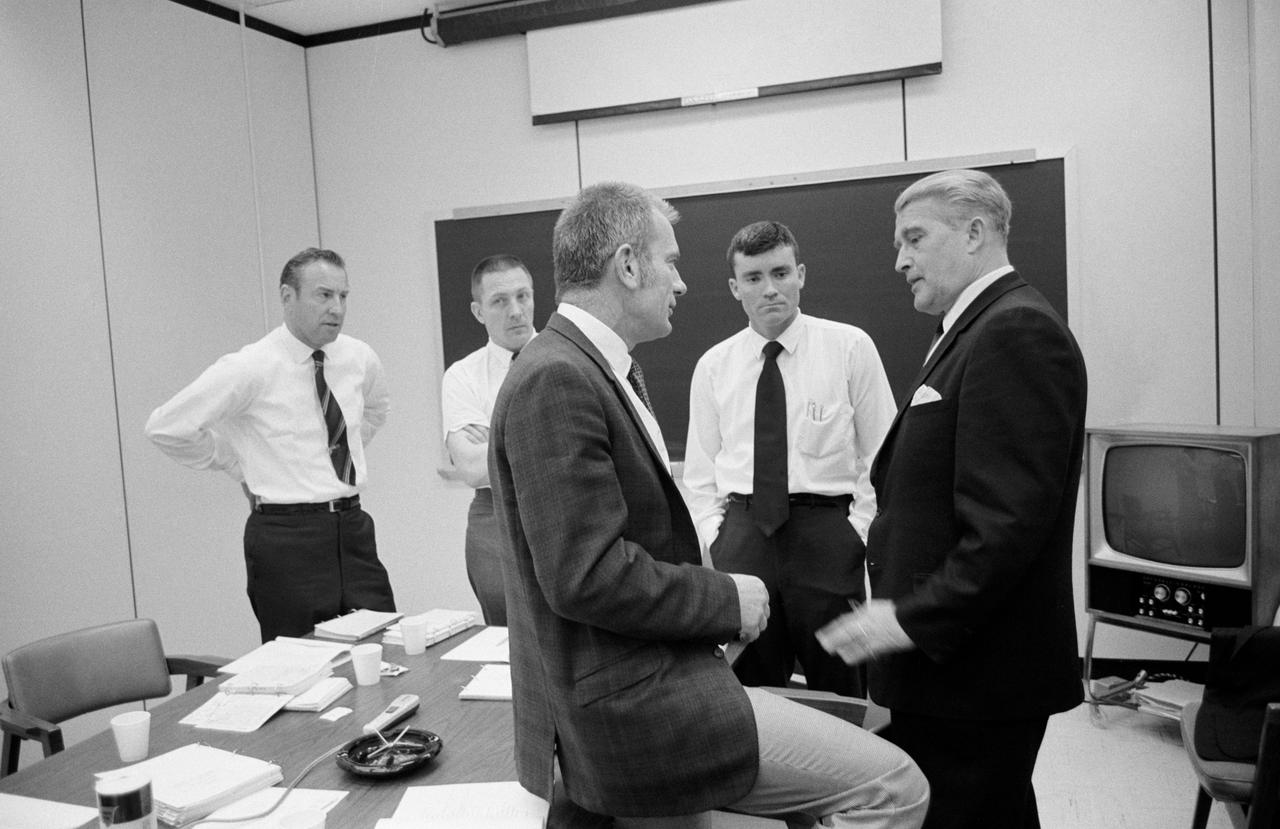
S70-35748 (20 April 1970) --- Dr. Donald K. Slayton (center foreground), MSC director of flight crew operations, talks with Dr. Wernher von Braun (right), famed rocket expert, at an Apollo 13 postflight debriefing session. The three crewmen of the problem-plagued Apollo 13 mission (left to right) in the background are astronauts James A Lovell Jr., commander; John L. Swigert Jr., command module pilot; and Fred W. Haise Jr., lunar module pilot. The apparent rupture of oxygen tank number two in the Apollo 13 Service Module (SM) and the subsequent damage forced the three astronauts to use the Lunar Module (LM) as a "lifeboat" to return home safely after their moon landing was canceled. Dr. von Braun is the deputy associate administrator for planning of the National Aeronautics and Space Administration (NASA).
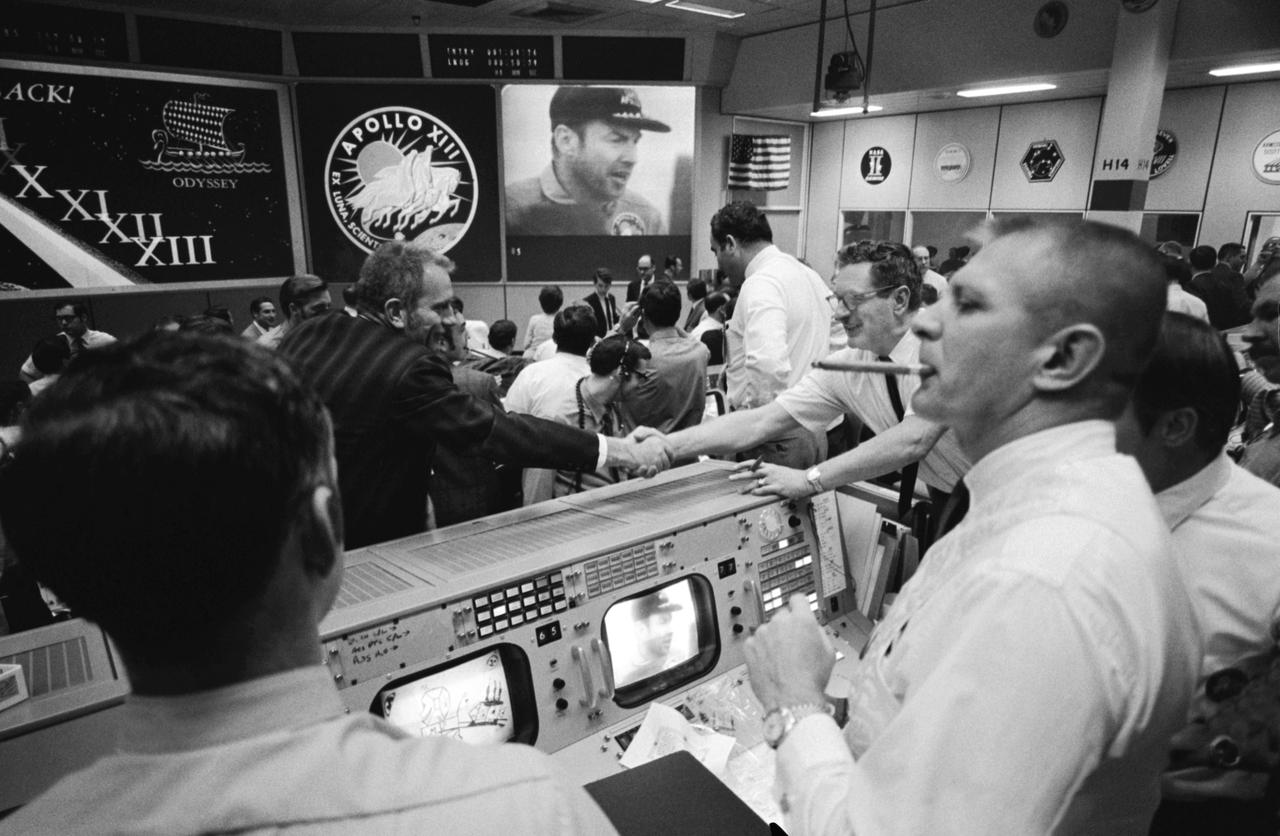
S70-35145 (17 April 1970) --- Overall view of Mission Operations Control Room in Mission Control Center at the Manned Spacecraft Center (MSC) during the ceremonies aboard the USS Iwo Jima, prime recovery ship for the Apollo 13 mission. Dr. Donald K. Slayton (in black shirt, left of center), director of Flight Crew Operations at MSC, and Chester M. Lee of the Apollo Program Directorate, Office of Manned Space Flight, NASA Headquarters, shake hands, while Dr. Rocco A. Petrone, Apollo program director, Office of Manned Space Flight, NASA Headquarters (standing, near Lee), watches the large screen showing astronaut James A. Lovell Jr., Apollo 13 commander, during the onboard ceremonies. In the foreground, Glynn S. Lunney (extreme left) and Eugene F. Kranz (smoking a cigar), two Apollo 13 flight directors, view the activity from their consoles.
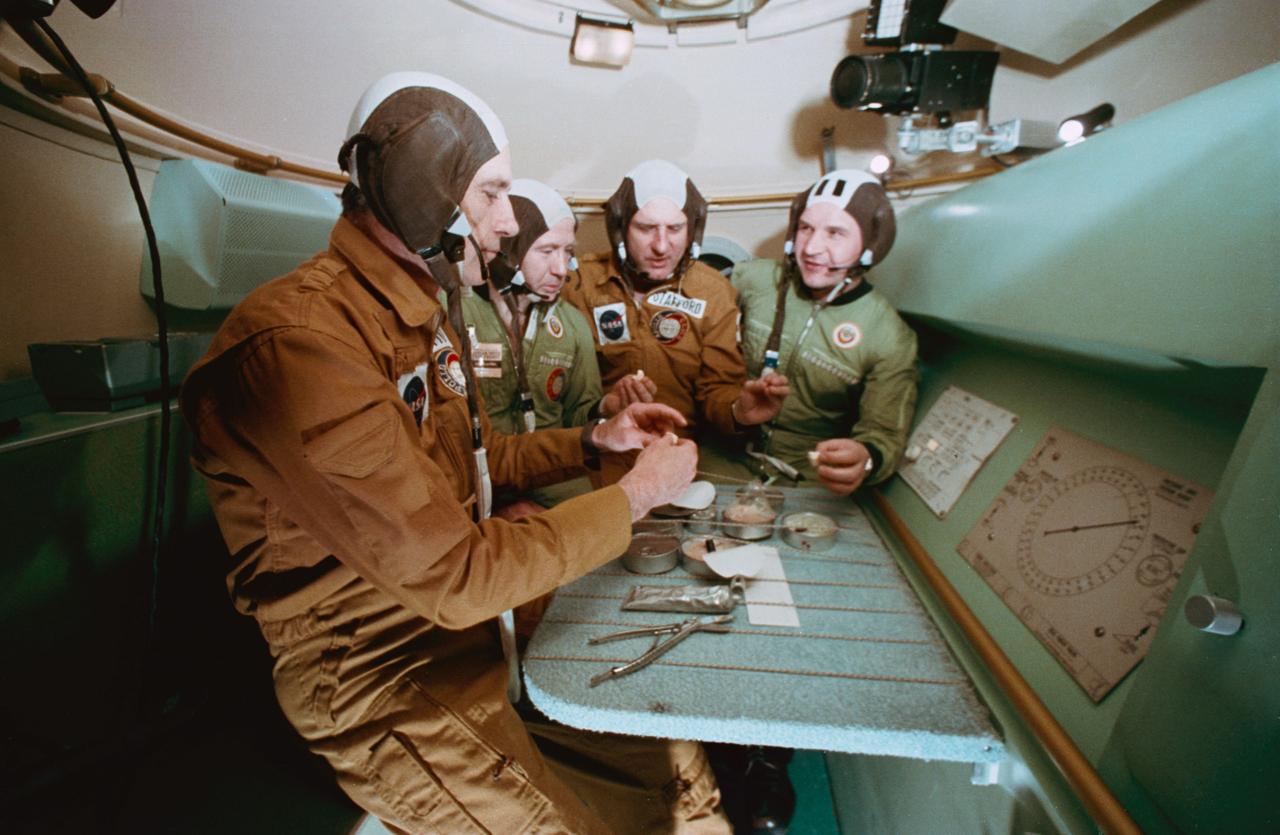
S75-22770 (25 Feb. 1975) --- Two American ASTP prime crewmen have a meal with the Soviet ASTP first (prime) crewmen during Apollo-Soyuz Test Project joint crew training at NASA's Johnson Space Center. The four are inside the Soyuz orbital module mock-up in Building 35. They are, left to right, astronaut Donald K. Slayton, docking module pilot of the American crew; cosmonaut Aleksey A. Leonov, commander of the Soviet crew; astronaut Thomas P. Stafford, commander of the American crew; and cosmonaut Valeriy N. Kubasov, engineer on the Soviet crew. The training session simulated activities on the second day in Earth orbit. During the actual mission the other American crewmen, astronaut Vance D. Brand, command module pilot, would be in the Command Module.
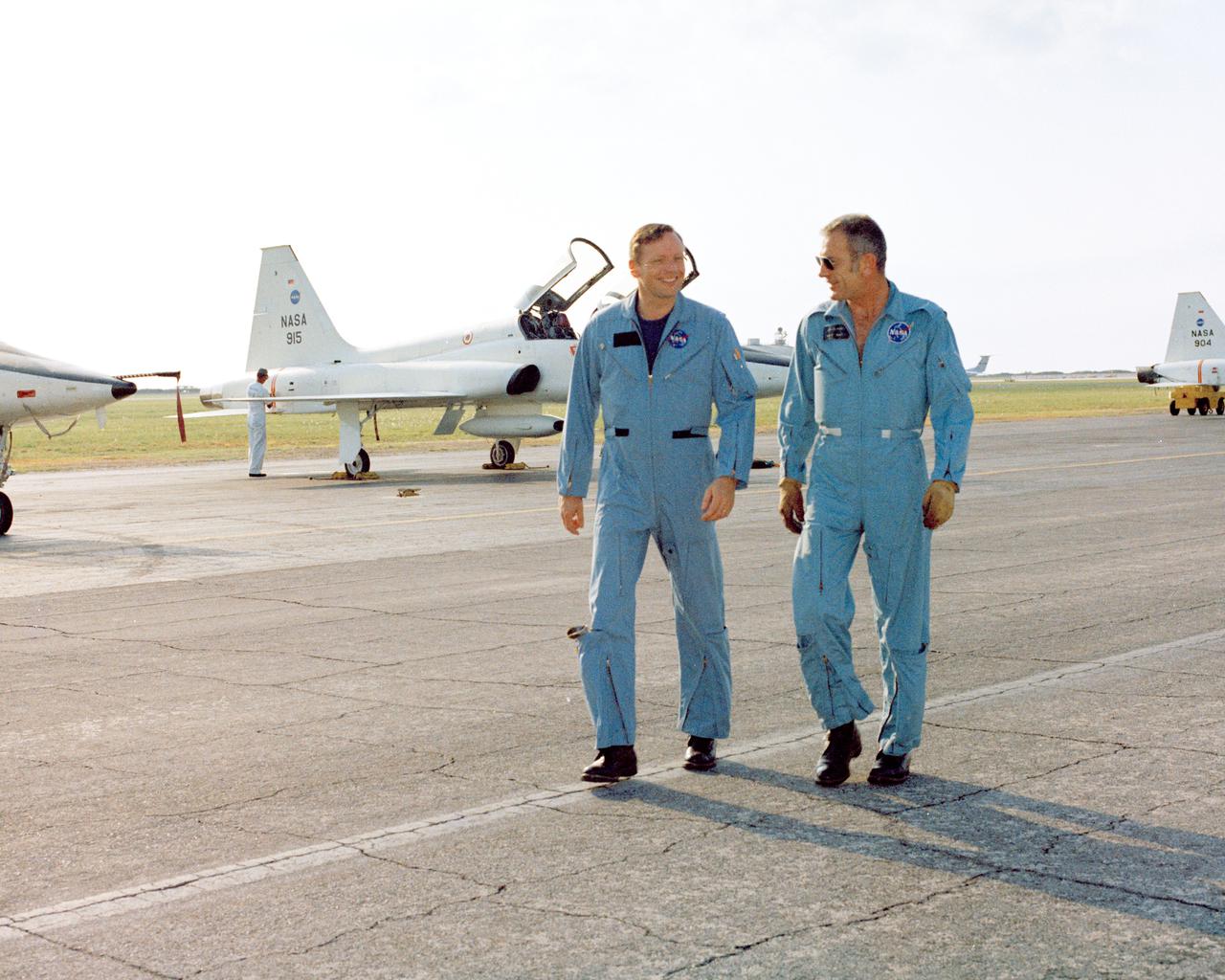
PATRICK AFB, Fla. – Apollo 11 commander Neil A. Armstrong, left, and Donald K. Slayton, chief astronaut and director of flight crew operations, just arrived at Patrick Air Force Base in a T-38 jet in preparation of the nation’s first lunar landing mission. Lift off atop a Saturn V launch vehicle is scheduled for July 16, 1969. During Apollo 11 the command module, Columbia, will remain in orbit around the moon while the lunar module, Eagle, carrying Armstrong and Aldrin, lands on the lunar surface. During 2½ hours of surface exploration, the crew plans to collect lunar surface material for analysis back on Earth. For more: http:__www-pao.ksc.nasa.gov_history_apollo_apollo-11_apollo-11.htm Photo credit: NASA
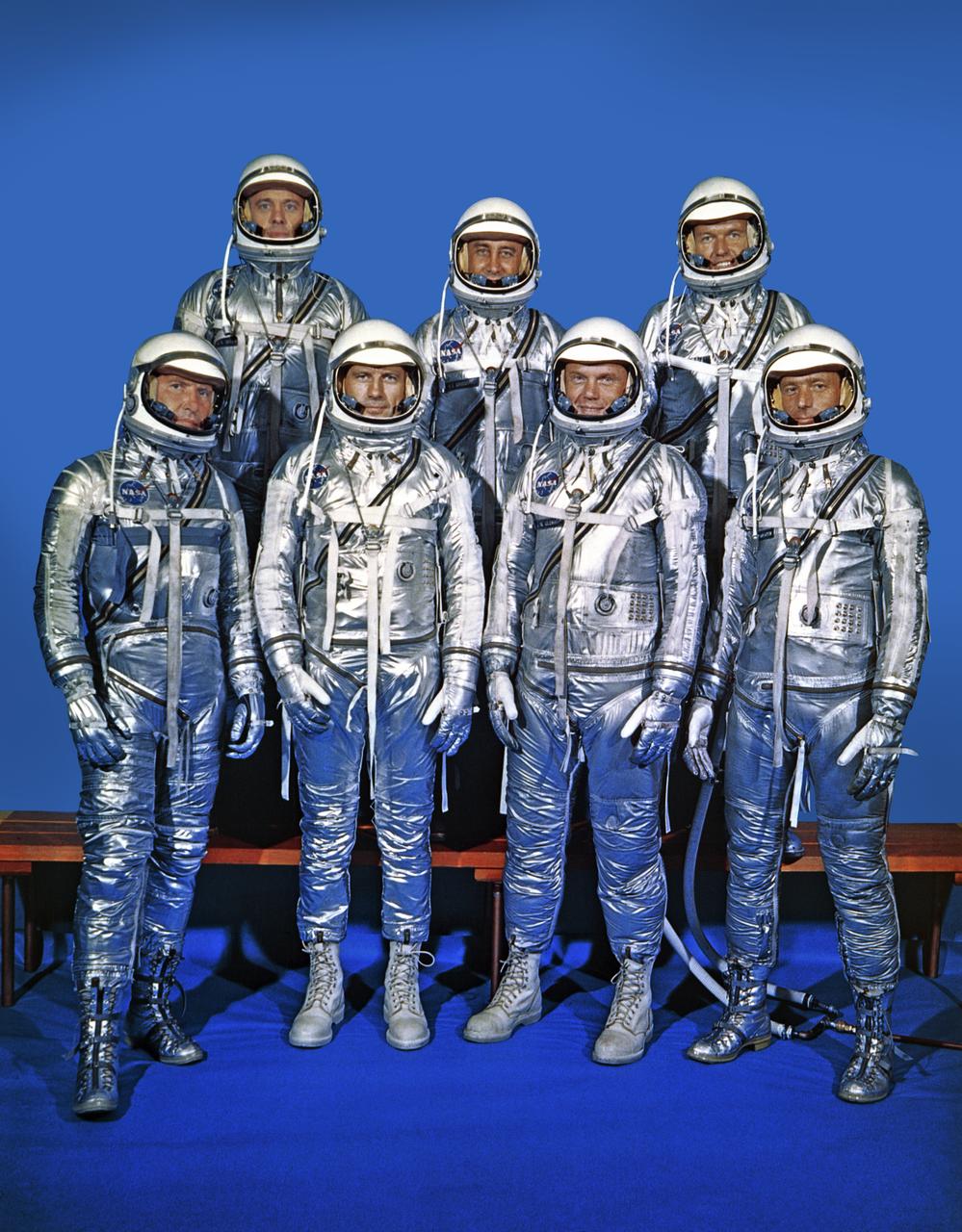
Press release information, September 13, 1968: "FIRST ASTRONAUT TEAM: Project Mercury Astronauts, whose selection was announced on April 9, 1959, only six months after the National Aeronautics and Space Administration was formally established on Oct. 1, 1958, Included: Front row, left to right, Walter M. Schirra, Jr., Donald K. Slayton, John H. Glenn, Jr., and M. Scott Carpenter; back row, Alan B. Shepard, Jr., Virgil I. "Gus" Grissom and L. Gordon Cooper. (1962), *89-361 Also in B&W. This copy of original negative was edited without shadows in the background. Photo taken at NASA Langley Research Center by Life Magazine photographer and negative copied for other centers.
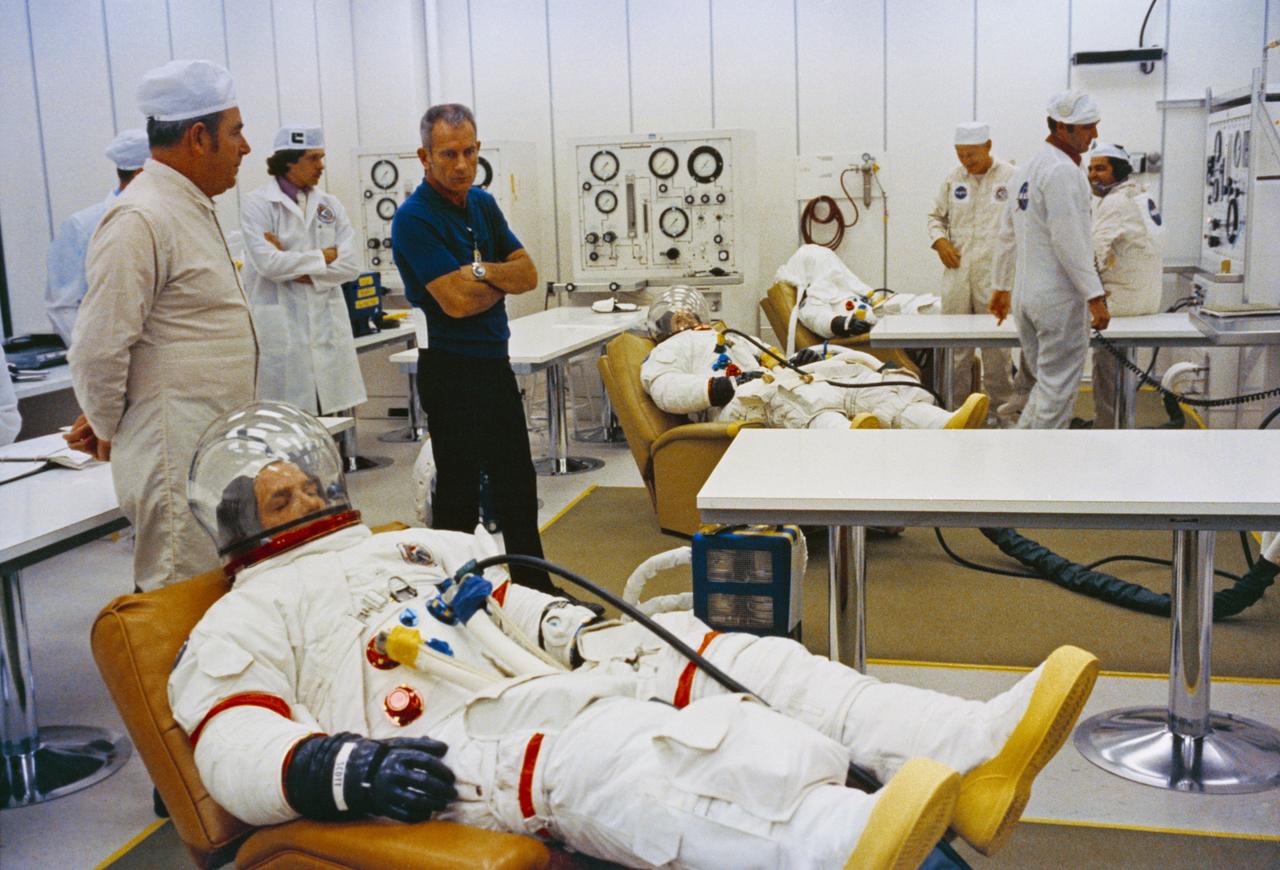
S71-41408 (26 July 1971) --- The three Apollo 15 astronauts go through suiting up operations in the Kennedy Space Center's (KSC) Manned Spacecraft Operations Building (MSOB) during the Apollo 15 prelaunch countdown. They are David R. Scott (foreground), commander; Alfred M. Worden (center), command module pilot; and James B. Irwin (background), lunar module pilot. Minutes later the crew rode a special transport van over to Pad A, Launch Complex 39, where their spacecraft awaited them. With the crew was Dr. Donald (Deke) K. Slayton (wearing dark blue sport shirt), director of Flight Crew Operations, Manned Spacecraft Center (MSC). The Apollo 15 space vehicle was launched at 9:34:00:79 a.m. (EDT), July 26, 1971, on a lunar landing mission.
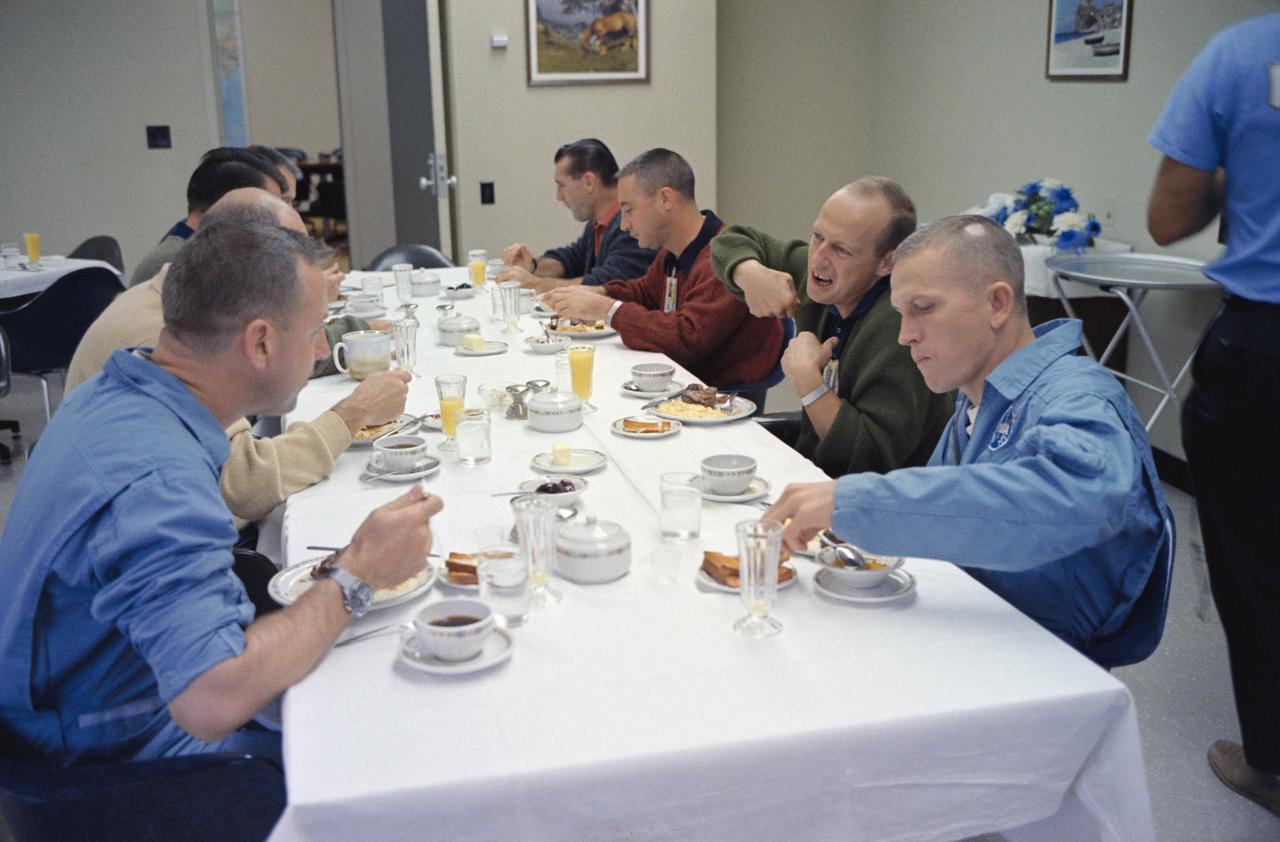
S65-59927 (4 Dec. 1965) --- Fellow astronauts join the Gemini-7 prime crew for breakfast in the Manned Spacecraft Operations Building, Merritt Island, on the day of the Gemini-7 launch. Clockwise around the table, starting lower left, are astronauts James A. Lovell Jr., Gemini-7 prime crew pilot; Walter M. Schirra Jr., Gemini-6 prime crew command pilot; Donald K. Slayton, MSC assistant director for Flight Crew Operations; Virgil I. Grissom, Gemini-6 backup crew command pilot; Charles Conrad Jr., Gemini-5 prime crew pilot; and Frank Borman, Gemini-7 prime crew command pilot. Photo credit: NASA
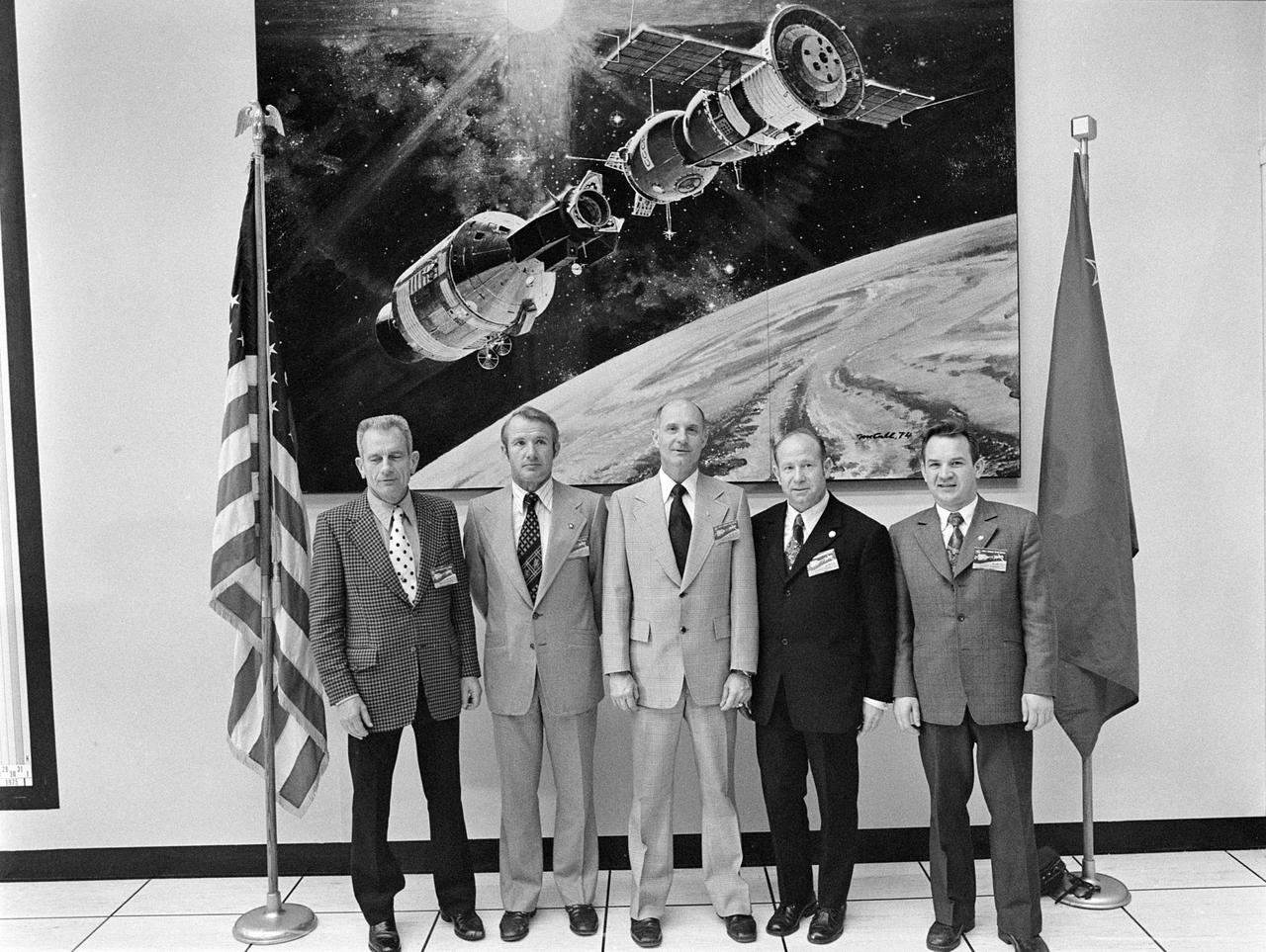
S75-24030 (8-10 Feb. 1975) --- The five prime crew members of the Apollo-Soyuz Test Project (ASTP) mission pose for a group photograph while at NASA's Kennedy Space Center (KSC) for a three-day inspection tour. They are, left to right, astronaut Donald K. (Deke) Slayton, docking module pilot of the American crew; astronaut Vance D. Brand, command module pilot of the American crew; astronaut Thomas P. Stafford, commander of the American crew; cosmonaut Aleksey A. Leonov, commander of the Soviet crew; and cosmonaut Valeriy N. Kubasov, engineer of the Soviet crew. They were at KSC to look over launch facilities and flight hardware. They are standing in front of artist Robert McCall?s painting of an ASTP docking in Earth orbit.
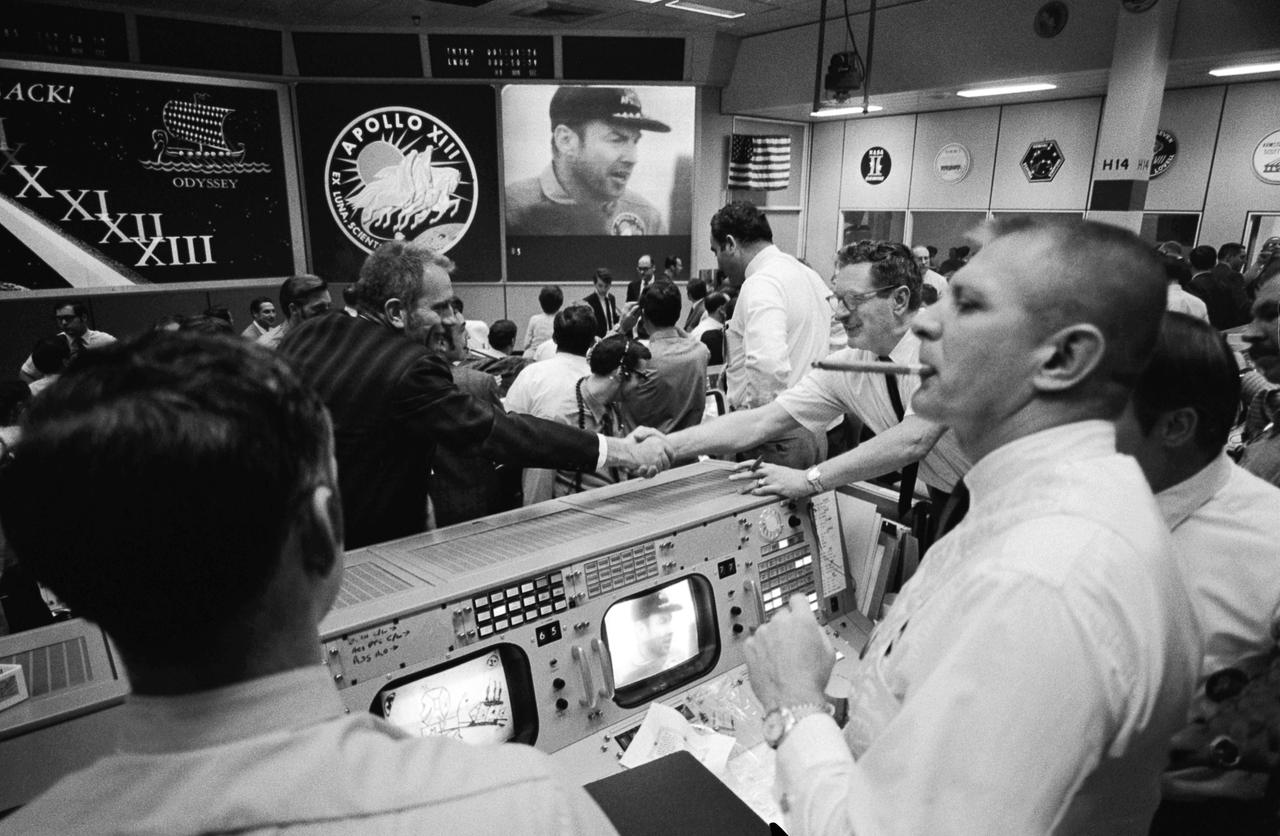
S70-35145 (17 April 1970) --- Overall view of Mission Operations Control Room in Mission Control Center at the Manned Spacecraft Center (MSC) during the ceremonies aboard the USS Iwo Jima, prime recovery ship for the Apollo 13 mission. Dr. Donald K. Slayton (in black shirt, left of center), director of Flight Crew Operations at MSC, and Chester M. Lee of the Apollo Program Directorate, Office of Manned Space Flight, NASA Headquarters, shake hands, while Dr. Rocco A. Petrone, Apollo program director, Office of Manned Space Flight, NASA Headquarters (standing, near Lee), watches the large screen showing astronaut James A. Lovell Jr., Apollo 13 commander, during the onboard ceremonies. In the foreground, Glynn S. Lunney (extreme left) and Eugene F. Kranz (smoking a cigar), two Apollo 13 flight directors, view the activity from their consoles.
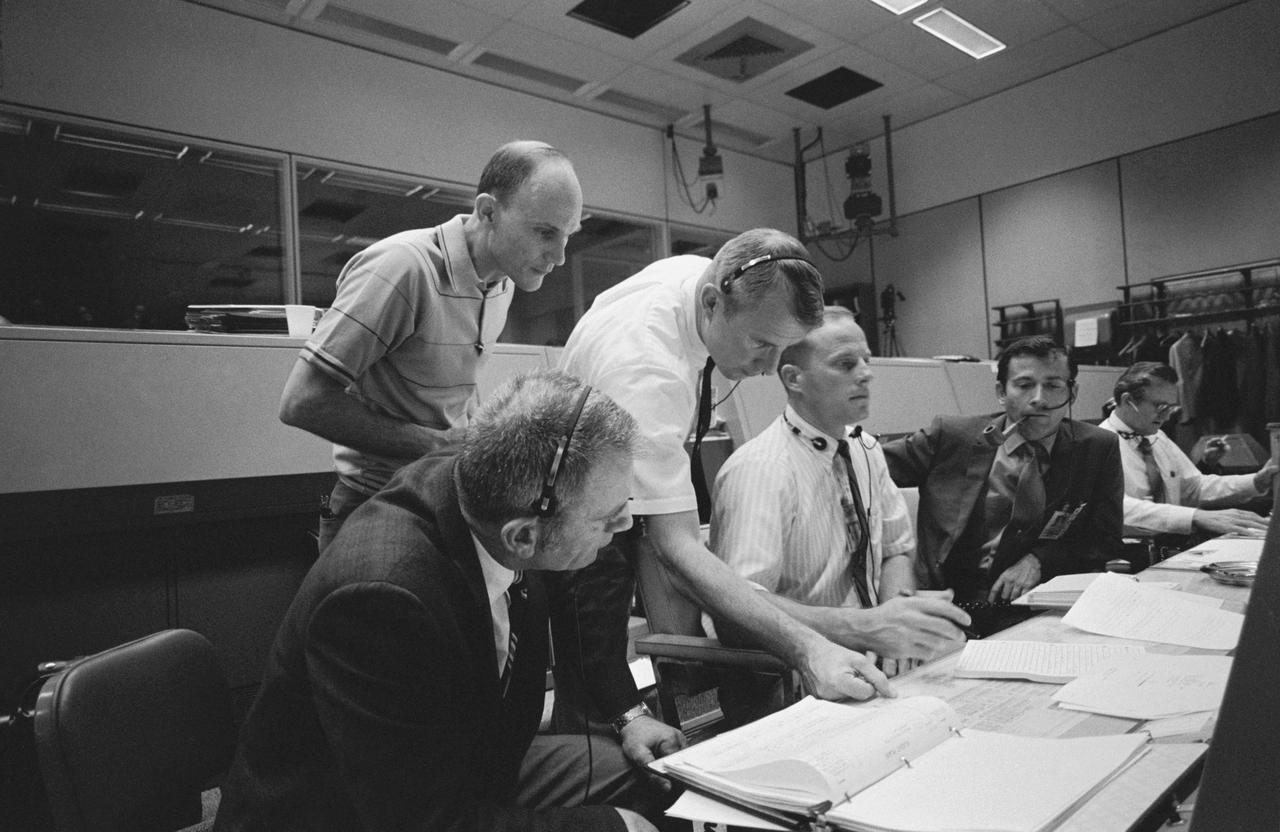
S70-34902 (14 April 1970) --- Several persons important to the Apollo 13 mission, at consoles in the Mission Operations Control Room (MOCR) of the Mission Control Center (MCC). Seated at consoles, from left to right, are astronauts Donald K. Slayton, director of flight crew operations; astronaut Jack R. Lousma, Shift 3 spacecraft communicator; and astronaut John W. Young, commander of the Apollo 13 backup crew. Standing, left to right, are astronaut Tom K. Mattingly II, who was replaced as Apollo 13 command module pilot after it was learned he may come down with measles, and astronaut Vance D. Brand, Shift 2 spacecraft communicator. Several hours earlier, in the late evening hours of April 13, crew members of the Apollo 13 mission reported to MCC that trouble had developed with an oxygen cell on their spacecraft.
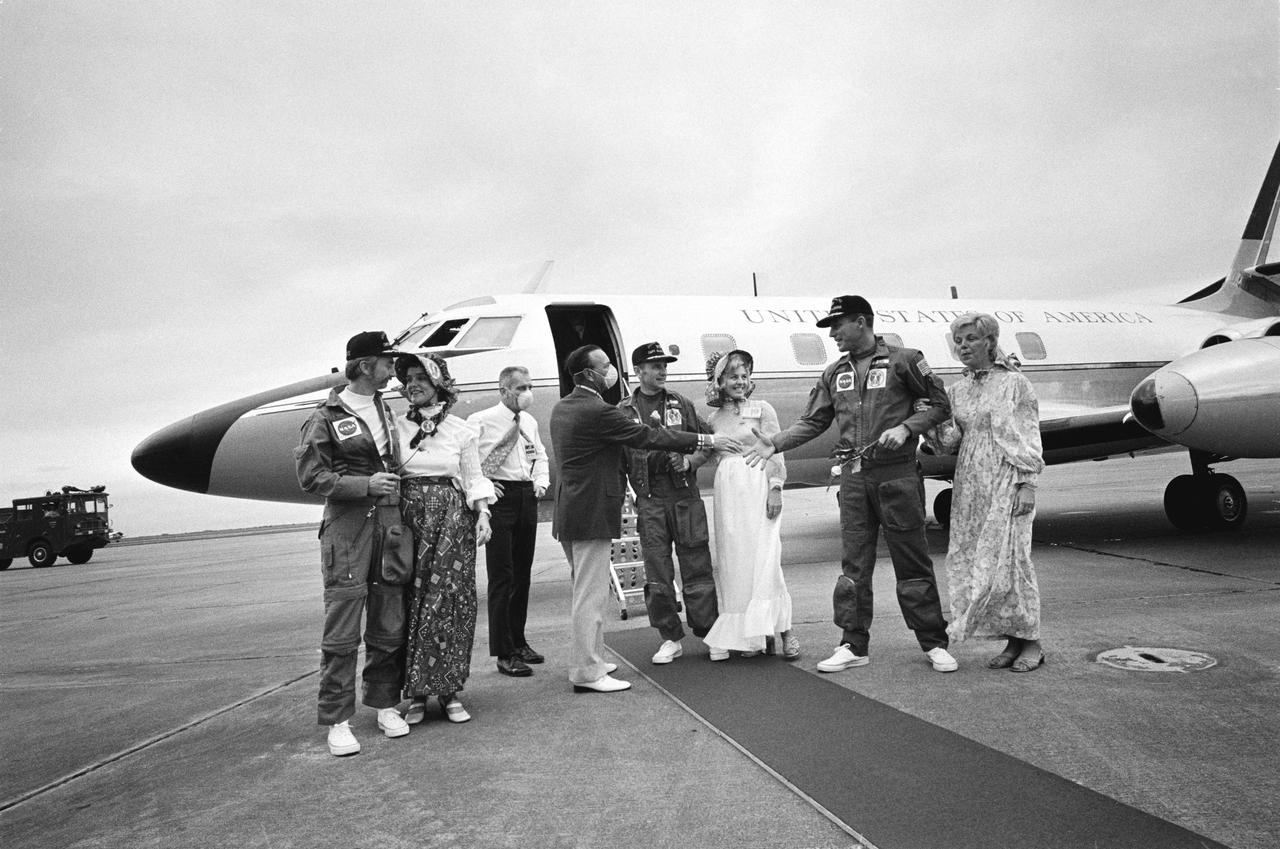
S73-34615 (27 Sept. 1973) --- Dr. Christopher C. Kraft Jr., center, shakes hands with astronaut Jack R. Lousma, Skylab 3 pilot, during welcome ceremonies following crew arrival at Ellington Air Force Base. The crewmen greet their wives after spending 59.5 days in the Skylab space station cluster in Earth orbit. From left to right are scientist-astronaut Owen K. Garriot, science pilot; Mrs. Garriott; Dr. Donald K. Slayton, Director of Flight Crew Operations at JSC; Dr. Kraft; astronaut Alan L. Bean, commander; Mrs. Bean; and the Lousmas. The group stands in front of the VC-140 (Jet Star) which flew the crewmen from San Diego to Ellington Air Force Base. Photo credit: NASA
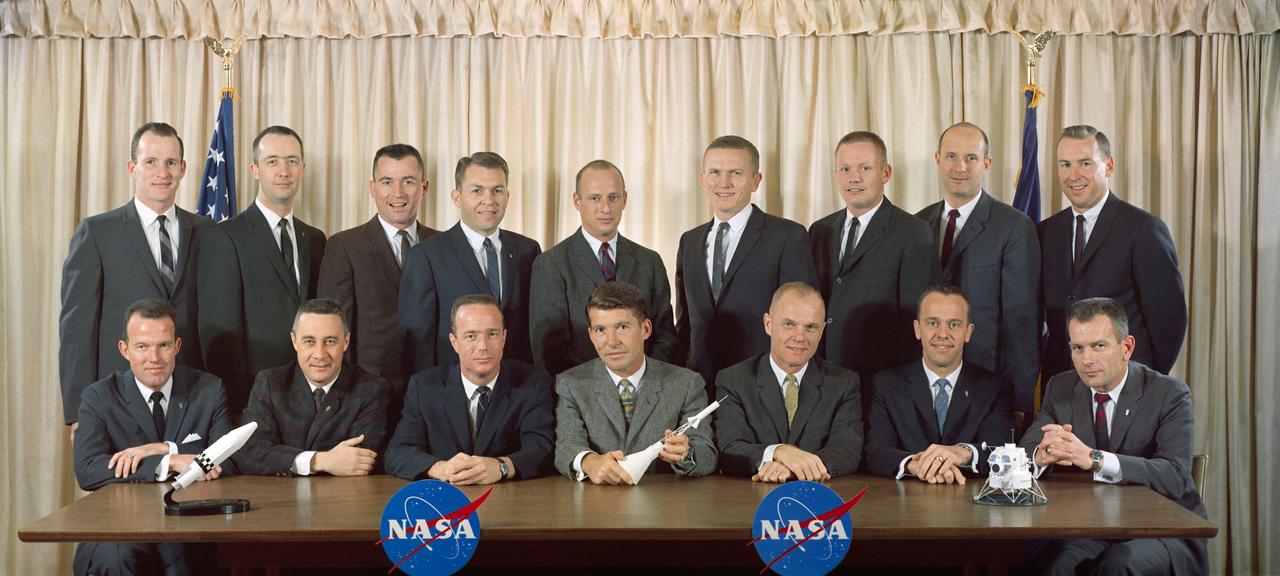
S63-01419 (1963) --- The first two groups of astronauts selected by the National Aeronautics and Space Administration (NASA). The original seven Mercury astronauts, selected in April 1959, are seated left to right, L. Gordon Cooper Jr., Virgil I. Grissom, M. Scott Carpenter, Walter M. Schirra Jr., John H. Glenn Jr., Alan B. Shepard Jr. and Donald K. Slayton. The second group of NASA astronauts, named in September 1962 are, standing left to right, Edward H. White II, James A. McDivitt, John W. Young, Elliot M. See Jr., Charles Conrad Jr., Frank Borman, Neil A. Armstrong, Thomas P. Stafford and James A. Lovell Jr. Photo credit: NASA