
The Tropospheric Doppler Radar Wind Profiler (TDRWP), located at Kennedy Space Center, is the only instrument of its kind in operation. Consisting of 640 antennae and occupying five acres near the Launch and Landing Facility, the TDRWP operates at nearly 50 MHz. It will be used as a primary instrument to measure upper level winds for NASA’s Artemis missions, which will launch from the Florida spaceport. The instrument has the ability to provide data from 6,000 to 62,000 feet, every five minutes, far outpacing weather balloons.
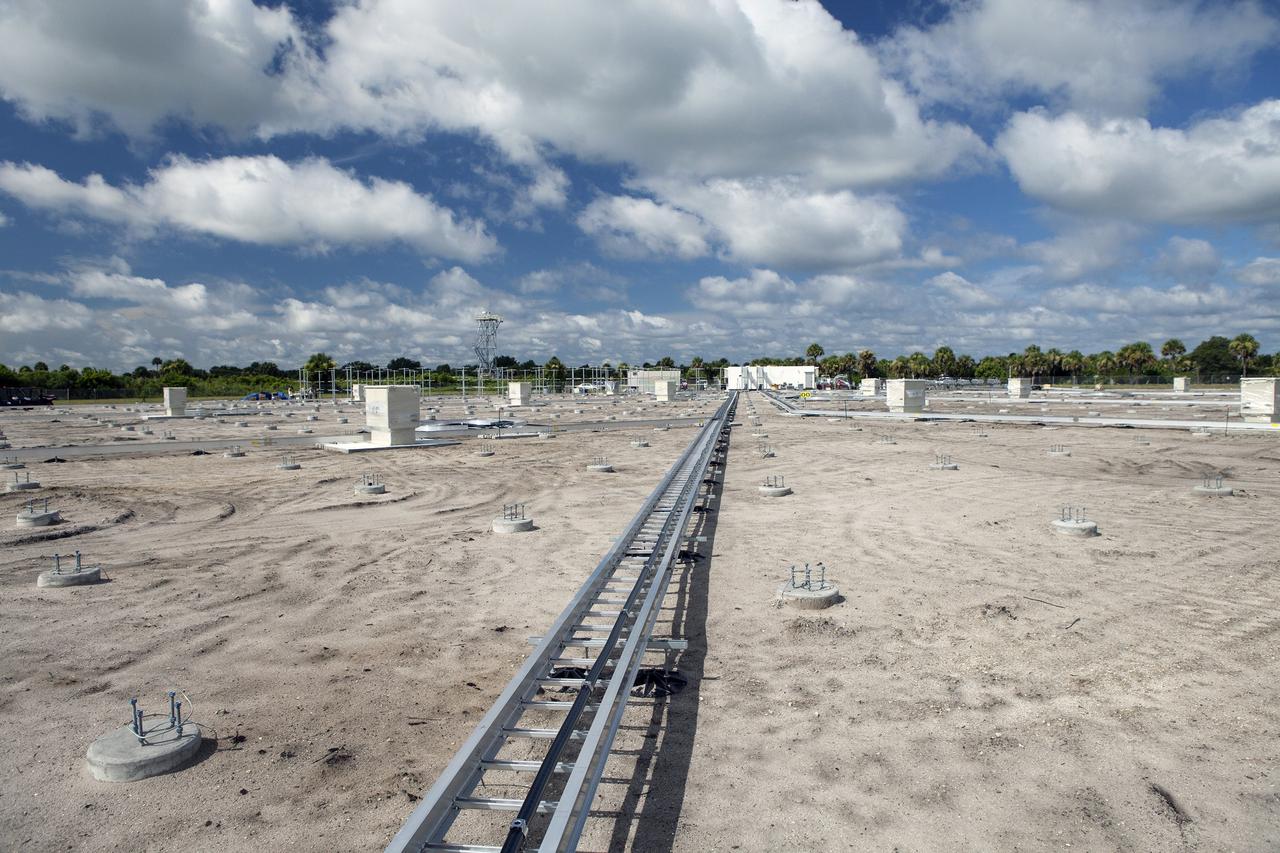
CAPE CANAVERAL, Fla. – Several new antennas are in place across the antenna field for NASA Kennedy Space Center’s Doppler radar wind profiler. Located near the spaceport’s Shuttle Landing Facility runway, the profiler is being upgraded to a new, state-of-the-art version that will help forecasters and launch teams characterize upper-level winds in the area. This profiler will help in the detection of wind-shear conditions during launch. Photo credit: NASA/Ben Smegelsky

CAPE CANAVERAL, Fla. – New antennas are in place in the antenna field for NASA Kennedy Space Center’s Doppler radar wind profiler. Located near the spaceport’s Shuttle Landing Facility runway, the profiler is being upgraded to a new, state-of-the-art version that will help forecasters and launch teams characterize upper-level winds in the area. This profiler will help in the detection of wind-shear conditions during launch. Photo credit: NASA/Ben Smegelsky
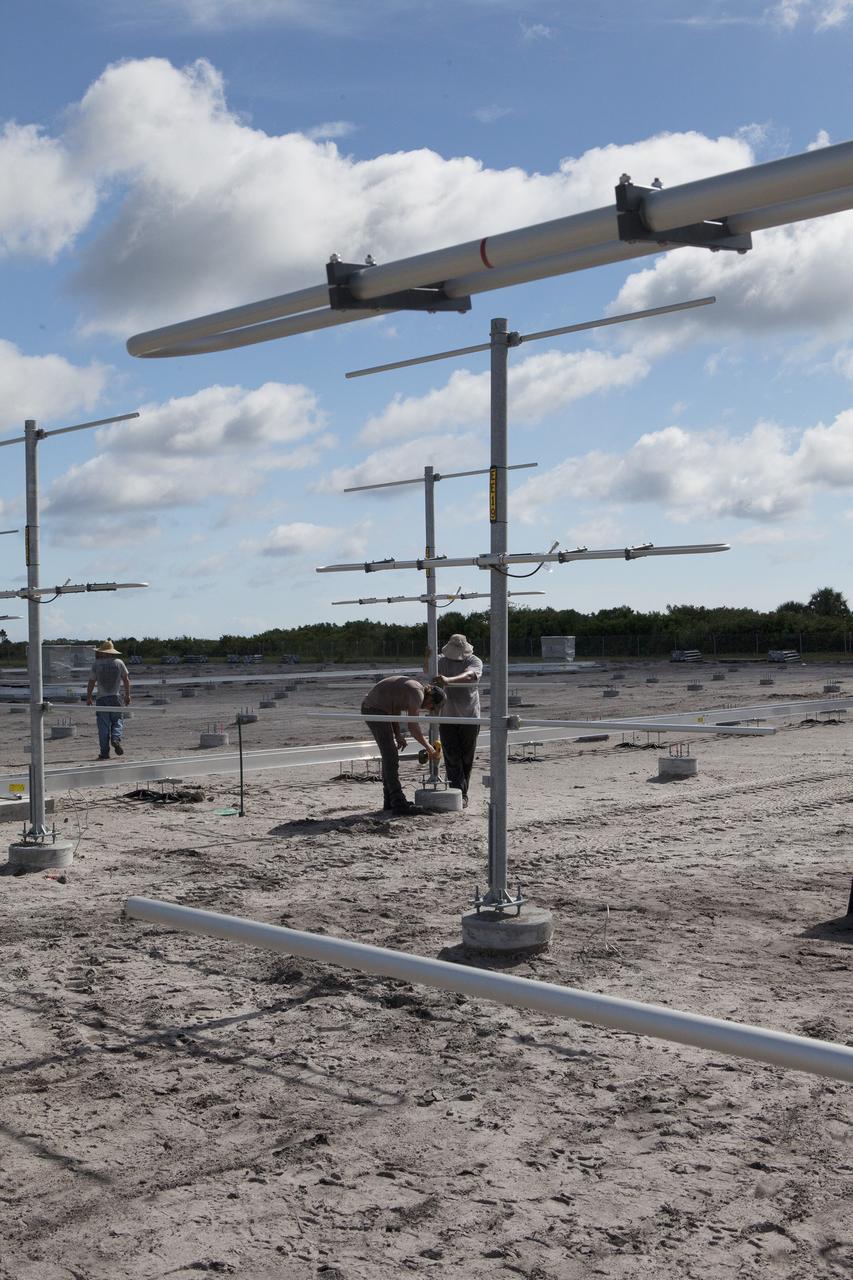
CAPE CANAVERAL, Fla. – From left, Robert Novak, Jacob Walls and Felix Gamez of Qinetiq North America work on the installation of new antennas in the antenna field for NASA Kennedy Space Center’s Doppler radar wind profiler. Located near the spaceport’s Shuttle Landing Facility runway, the profiler is being upgraded to a new, state-of-the-art version that will help forecasters and launch teams characterize upper-level winds in the area. This profiler will help in the detection of wind-shear conditions during launch. Photo credit: NASA/Ben Smegelsky

CAPE CANAVERAL, Fla. – Hardware is being installed at the antenna field for NASA Kennedy Space Center’s Doppler radar wind profiler. Located near the spaceport’s Shuttle Landing Facility runway, the profiler is being upgraded to a new, state-of-the-art version that will help forecasters and launch teams characterize upper-level winds in the area. This profiler will help in the detection of wind-shear conditions during launch. Photo credit: NASA/Ben Smegelsky
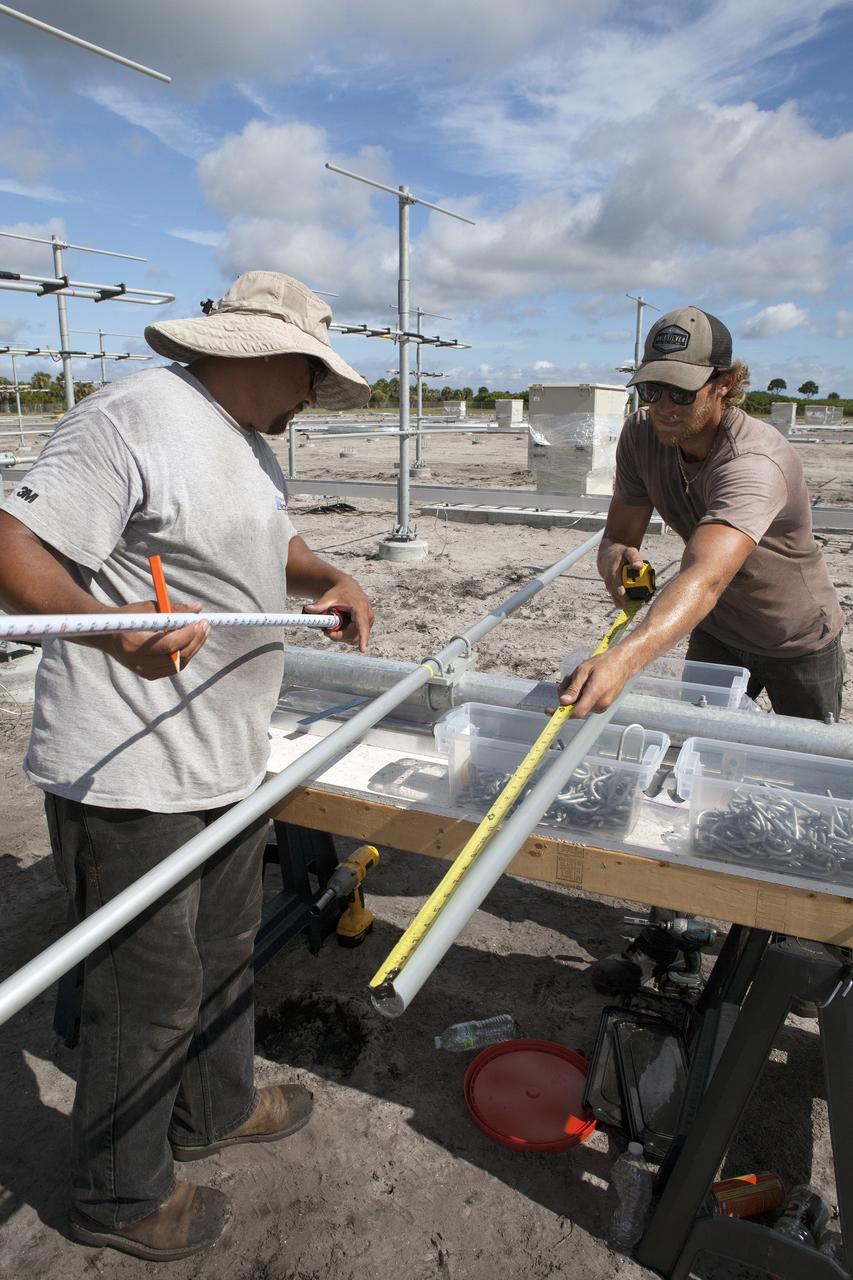
CAPE CANAVERAL, Fla. – Felix Gamez and Jacob Walls, right, of Qinetiq North America take measurements as they prepare to install an antenna in the antenna field for NASA Kennedy Space Center’s Doppler radar wind profiler. Located near the spaceport’s Shuttle Landing Facility runway, the profiler is being upgraded to a new, state-of-the-art version that will help forecasters and launch teams characterize upper-level winds in the area. This profiler will help in the detection of wind-shear conditions during launch. Photo credit: NASA/Ben Smegelsky
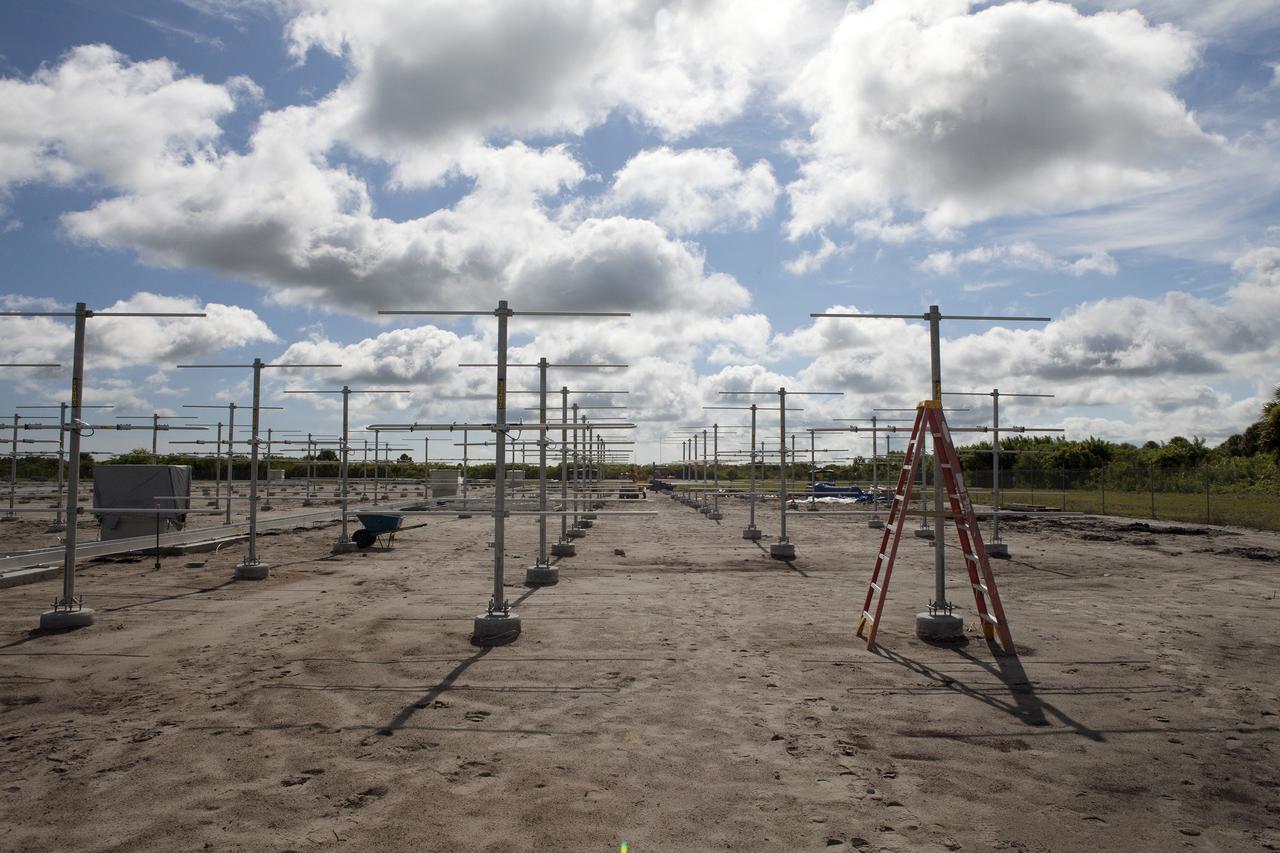
CAPE CANAVERAL, Fla. – New antennas are in place in the antenna field for NASA Kennedy Space Center’s Doppler radar wind profiler. Located near the spaceport’s Shuttle Landing Facility runway, the profiler is being upgraded to a new, state-of-the-art version that will help forecasters and launch teams characterize upper-level winds in the area. This profiler will help in the detection of wind-shear conditions during launch. Photo credit: NASA/Ben Smegelsky
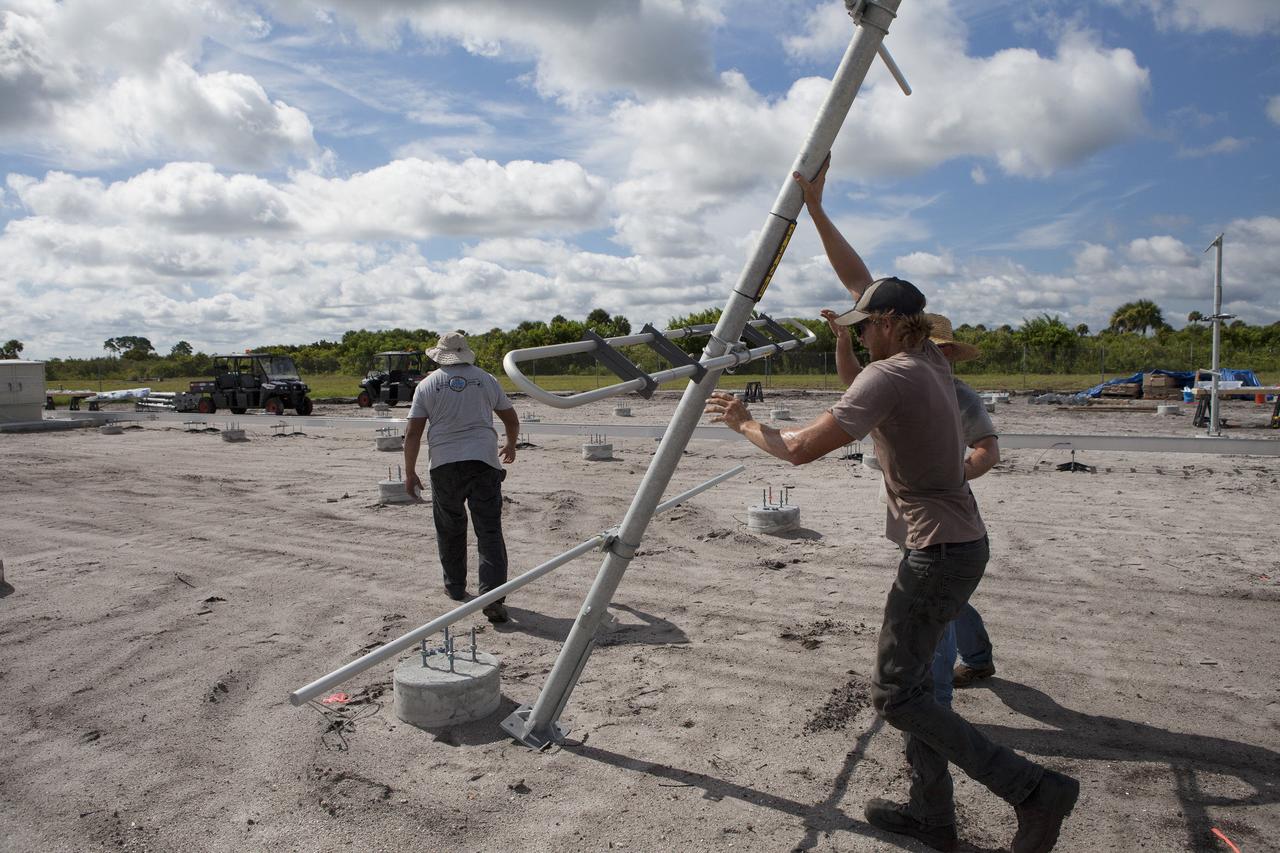
CAPE CANAVERAL, Fla. – Jacob Walls, right, and Robert Novak of Qinetiq North America raise a new antenna in position prior to its installation in the antenna field for NASA Kennedy Space Center’s Doppler radar wind profiler. Located near the spaceport’s Shuttle Landing Facility runway, the profiler is being upgraded to a new, state-of-the-art version that will help forecasters and launch teams characterize upper-level winds in the area. This profiler will help in the detection of wind-shear conditions during launch. Photo credit: NASA/Ben Smegelsky
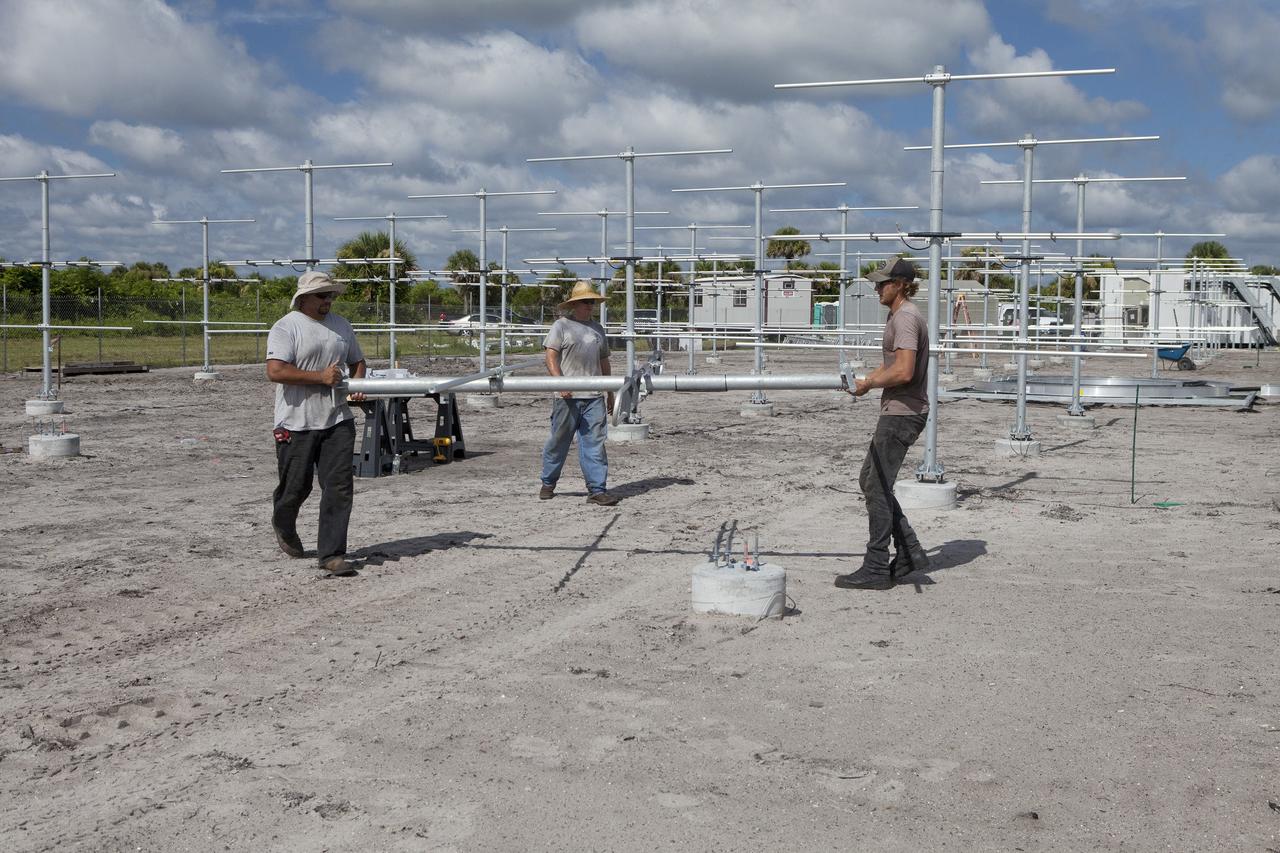
CAPE CANAVERAL, Fla. – From left, Felix Gamez, Robert Novak and Jacob Walls of Qinetiq North America prepare to install an antenna in the antenna field for NASA Kennedy Space Center’s Doppler radar wind profiler. Located near the spaceport’s Shuttle Landing Facility runway, the profiler is being upgraded to a new, state-of-the-art version that will help forecasters and launch teams characterize upper-level winds in the area. This profiler will help in the detection of wind-shear conditions during launch. Photo credit: NASA/Ben Smegelsky
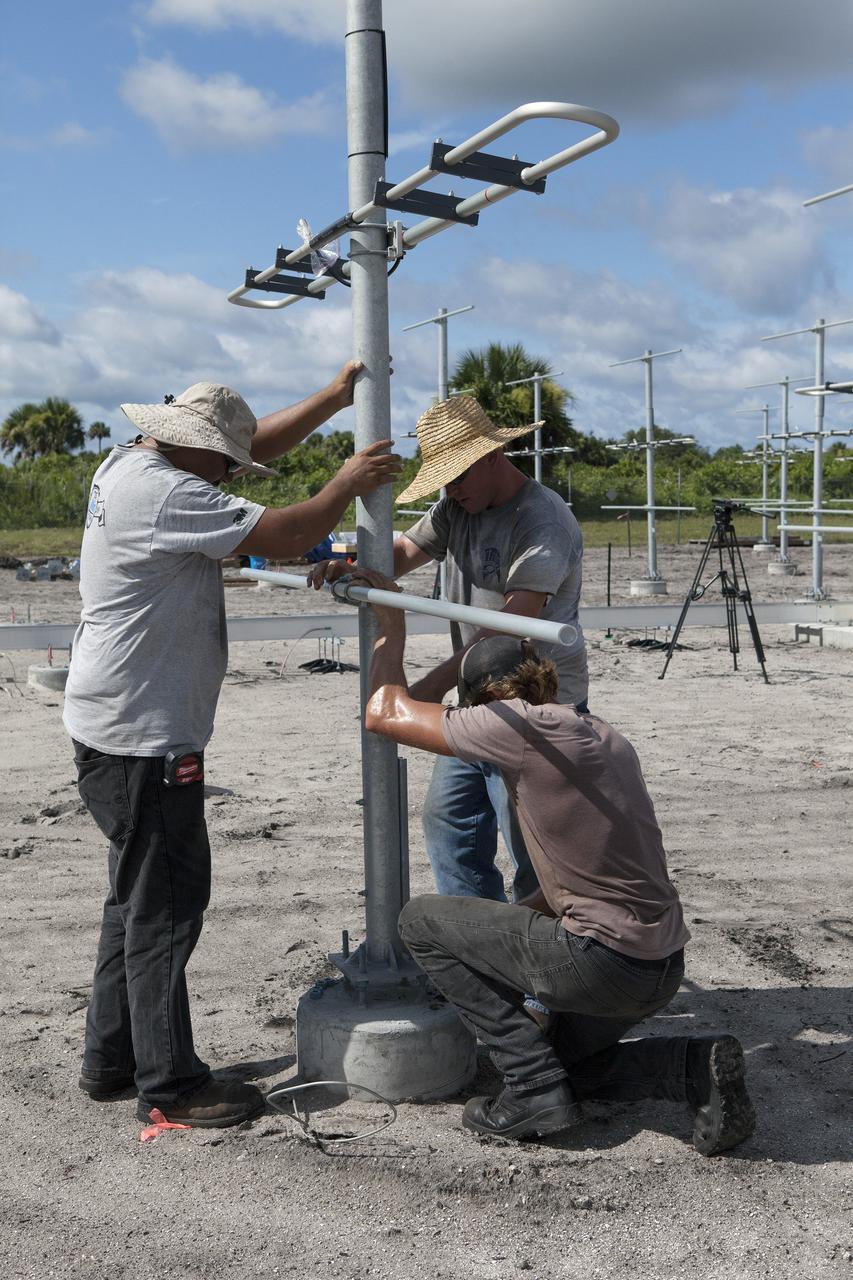
CAPE CANAVERAL, Fla. – A new antenna is secured into place by Felix Gamez, left, Robert Novak and Jacob Walls of Qinetiq North America. The new antenna is part of NASA Kennedy Space Center’s Doppler radar wind profiler. Located near the spaceport’s Shuttle Landing Facility runway, the profiler is being upgraded to a new, state-of-the-art version that will help forecasters and launch teams characterize upper-level winds in the area. This profiler will help in the detection of wind-shear conditions during launch. Photo credit: NASA/Ben Smegelsky
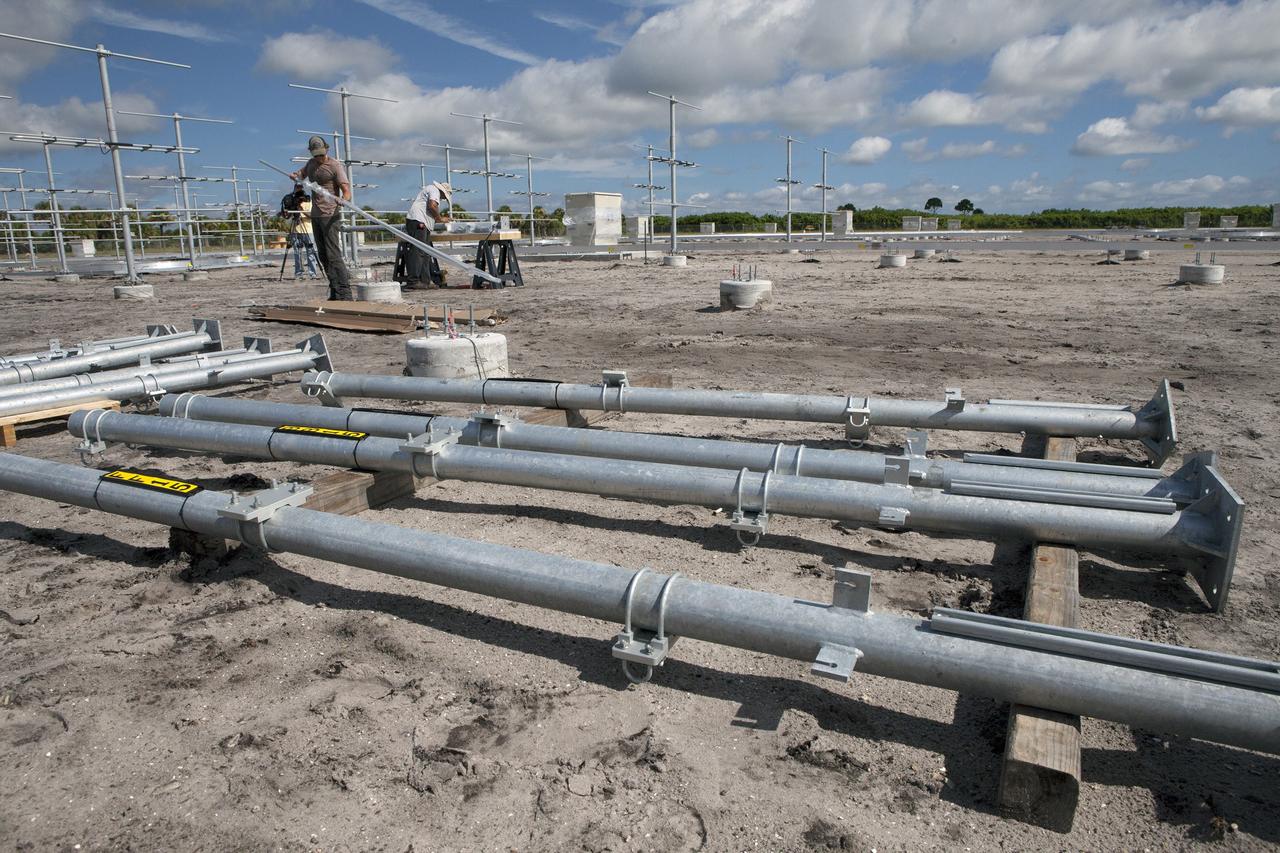
CAPE CANAVERAL, Fla. – From left, Jacob Walls and Felix Gamez of Qinetiq North America work on the installation of new antennas in the antenna field for NASA Kennedy Space Center’s Doppler radar wind profiler. Located near the spaceport’s Shuttle Landing Facility runway, the profiler is being upgraded to a new, state-of-the-art version that will help forecasters and launch teams characterize upper-level winds in the area. This profiler will help in the detection of wind-shear conditions during launch. Photo credit: NASA/Ben Smegelsky
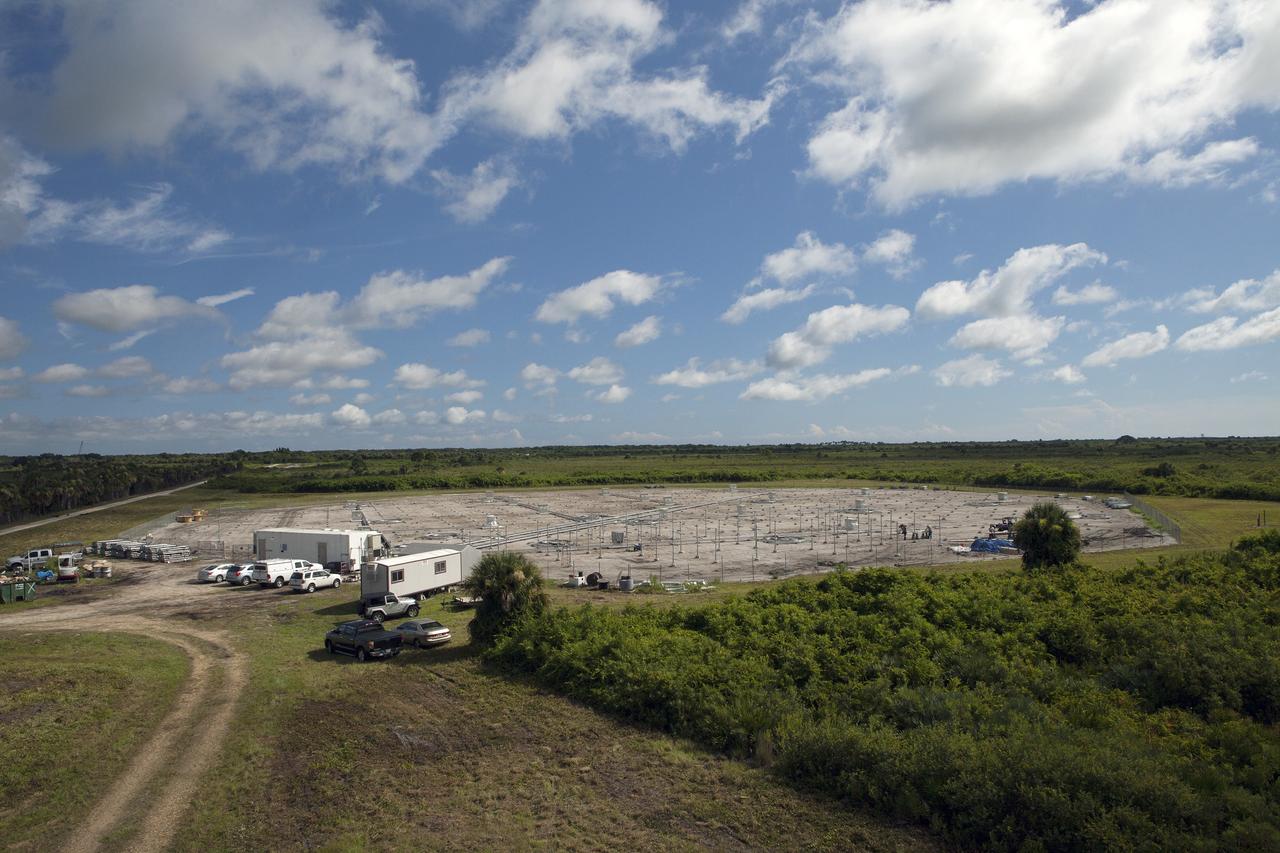
CAPE CANAVERAL, Fla. – The antenna field for NASA Kennedy Space Center’s Doppler radar wind profiler is seen in this aerial photo. Located near the spaceport’s Shuttle Landing Facility runway, the profiler is being upgraded to a new, state-of-the-art version that will help forecasters and launch teams characterize upper-level winds in the area. This profiler will help in the detection of wind-shear conditions during launch. Photo credit: NASA/Ben Smegelsky
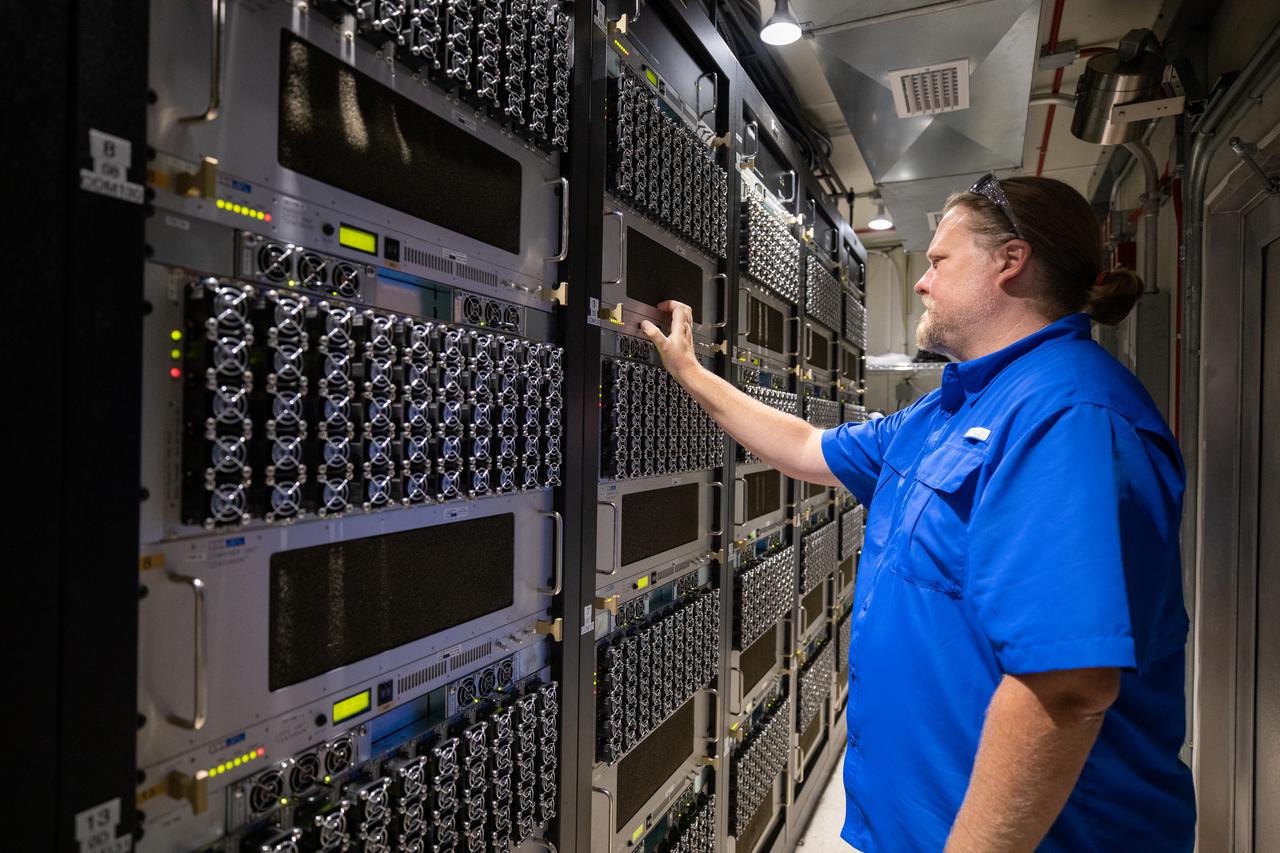
Weather Instrumentation Engineer Nick O’Connor works with the Tropospheric Doppler Radar Wind Profiler at Kennedy Space Center in Florida during an Artemis I weather simulation on Nov. 3, 2021. The simulation involved teams from Kennedy, Cape Canaveral Space Force Station, Johnson Space Center in Texas, and Marshall Space Flight Center in Alabama. The radar wind profiler delivers data – from 6,000 to 62,000 feet – every five minutes. It will be used as the primary upper level wind instrument for NASA’s Artemis missions, including Artemis I, the first launch of the agency’s Space Launch System rocket and the Orion spacecraft on a flight beyond the Moon.
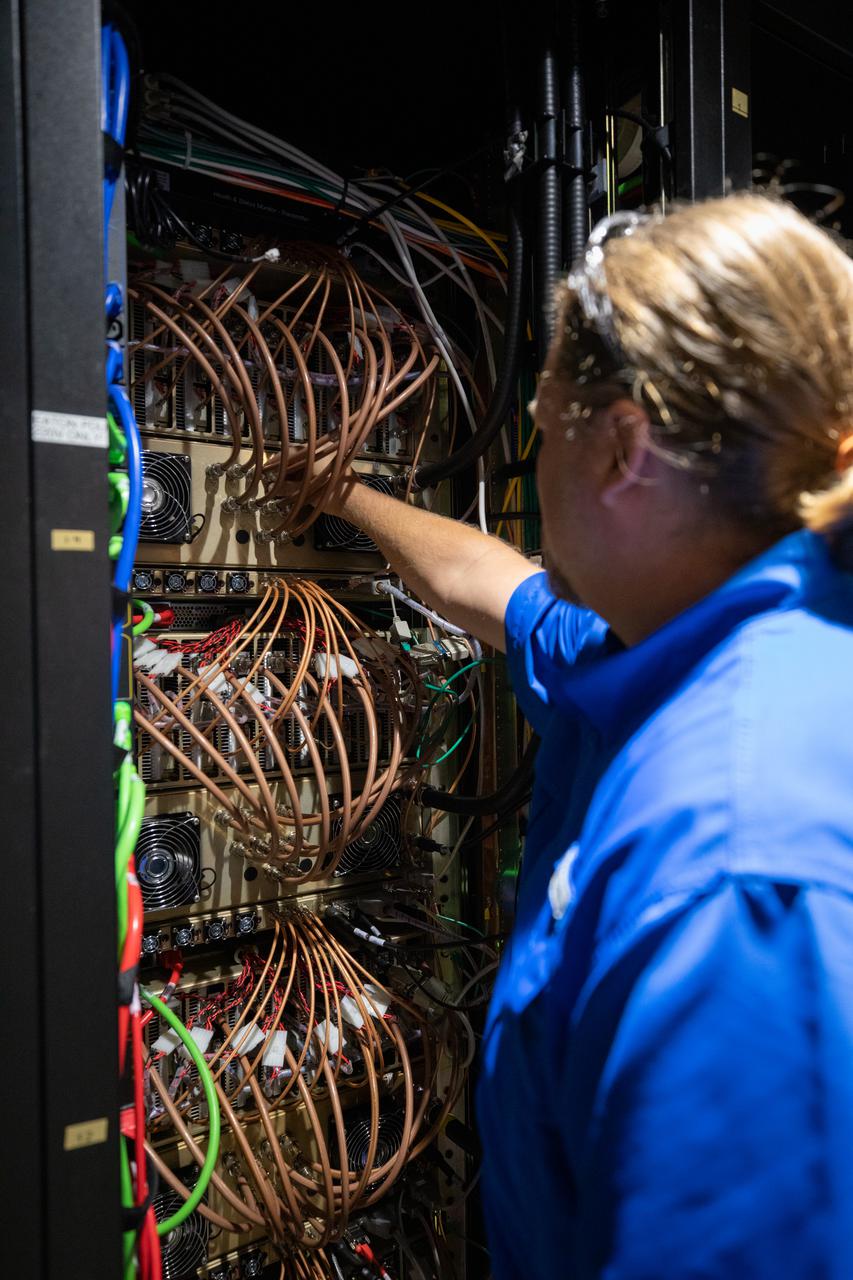
Weather Instrumentation Engineer Nick O’Connor works with the Tropospheric Doppler Radar Wind Profiler at Kennedy Space Center in Florida during an Artemis I weather simulation on Nov. 3, 2021. The simulation involved teams from Kennedy, Cape Canaveral Space Force Station, Johnson Space Center in Texas, and Marshall Space Flight Center in Alabama. The radar wind profiler delivers data – from 6,000 to 62,000 feet – every five minutes. It will be used as the primary upper level wind instrument for NASA’s Artemis missions, including Artemis I, the first launch of the agency’s Space Launch System rocket and the Orion spacecraft on a flight beyond the Moon.
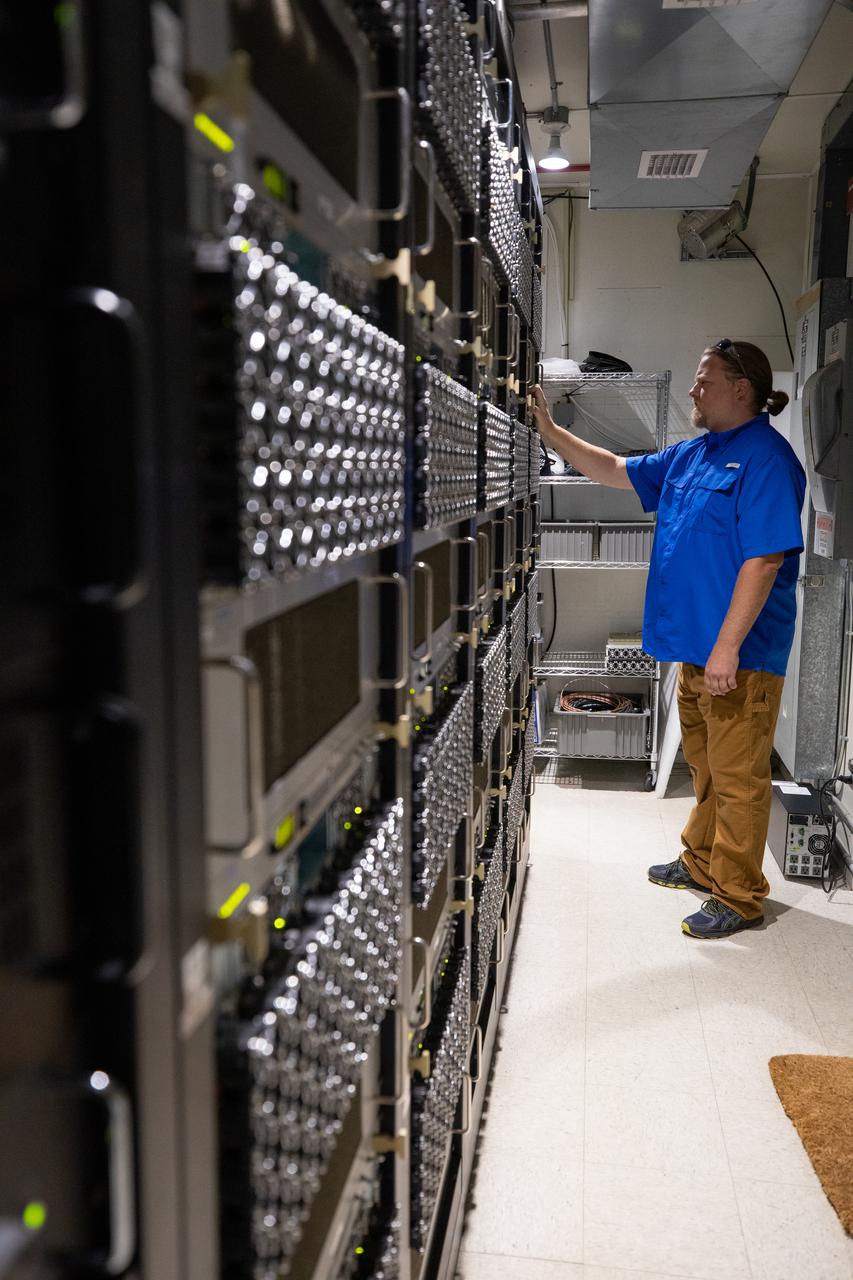
Weather Instrumentation Engineer Nick O’Connor works with the Tropospheric Doppler Radar Wind Profiler at Kennedy Space Center in Florida during an Artemis I weather simulation on Nov. 3, 2021. The simulation involved teams from Kennedy, Cape Canaveral Space Force Station, Johnson Space Center in Texas, and Marshall Space Flight Center in Alabama. The radar wind profiler delivers data – from 6,000 to 62,000 feet – every five minutes. It will be used as the primary upper level wind instrument for NASA’s Artemis missions, including Artemis I, the first launch of the agency’s Space Launch System rocket and the Orion spacecraft on a flight beyond the Moon.

Meteorological Data Specialist Michael Boyer prepares weather balloons for release at the Cape Canaveral Space Force Station (CCSFS) Weather Station in preparation for an Artemis I weather simulation on Nov. 3, 2021. The event involved teams from CCSFS, Kennedy Space Center, Johnson Space Center in Texas, and Marshall Space Flight Center in Alabama. Weather balloons provided data below 6,000 feet and above 62,000 feet, while Kennedy’s Tropospheric Doppler Radar Wind Profiler delivered data from 6,000 to 62,000 feet. The radar wind profiler will be used as the primary upper level wind instrument for NASA’s Artemis missions, including Artemis I, the first launch of the agency’s Space Launch System rocket and the Orion spacecraft on a flight beyond the Moon.
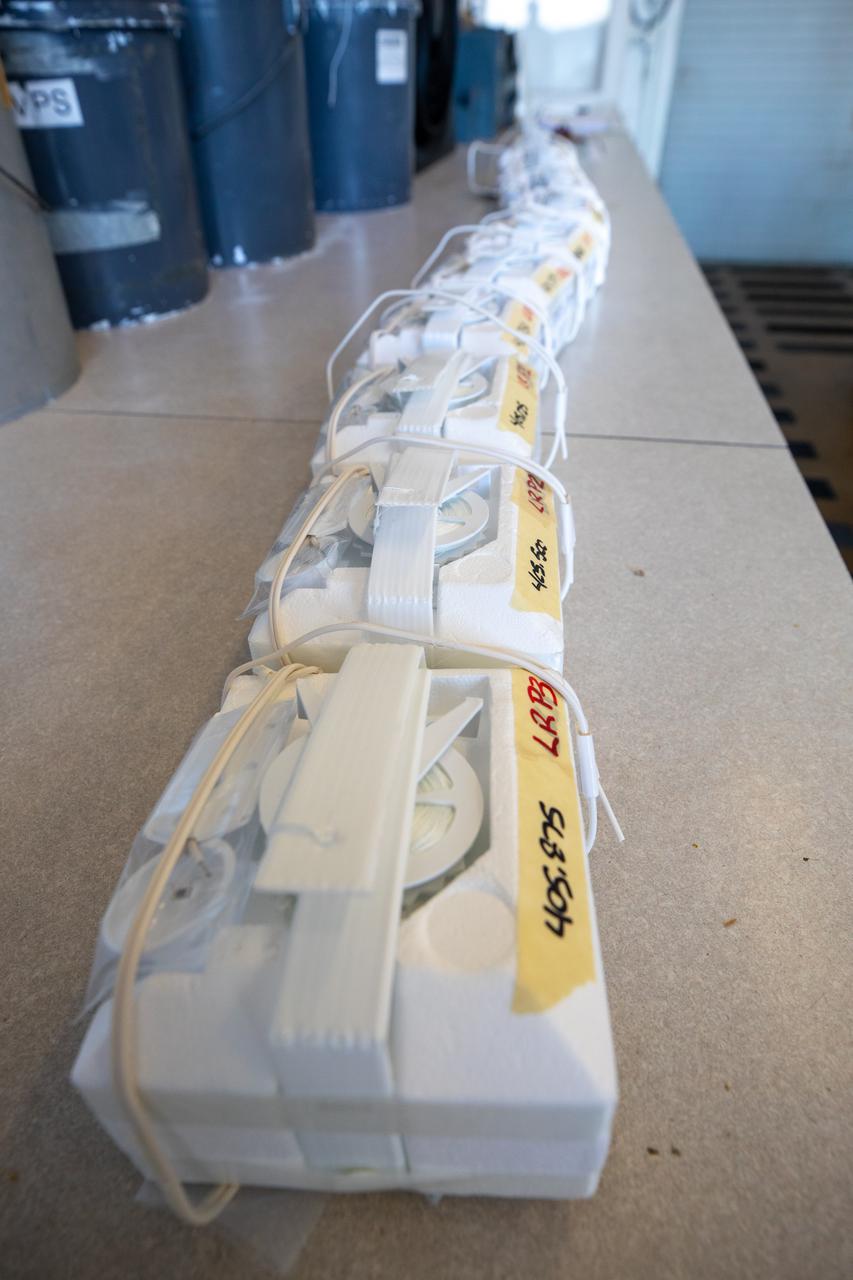
Weather balloons are lined up prior to release at the Cape Canaveral Space Force Station (CCSFS) Weather Station in preparation for an Artemis I weather simulation on Nov. 3, 2021. The event involved teams from CCSFS, Kennedy Space Center, Johnson Space Center in Texas, and Marshall Space Flight Center in Alabama. Weather balloons provided data below 6,000 feet and above 62,000 feet, while Kennedy’s Tropospheric Doppler Radar Wind Profiler delivered data from 6,000 to 62,000 feet. The radar wind profiler will be used as the primary upper level wind instrument for NASA’s Artemis missions, including Artemis I, the first launch of the agency’s Space Launch System rocket and the Orion spacecraft on a flight beyond the Moon.
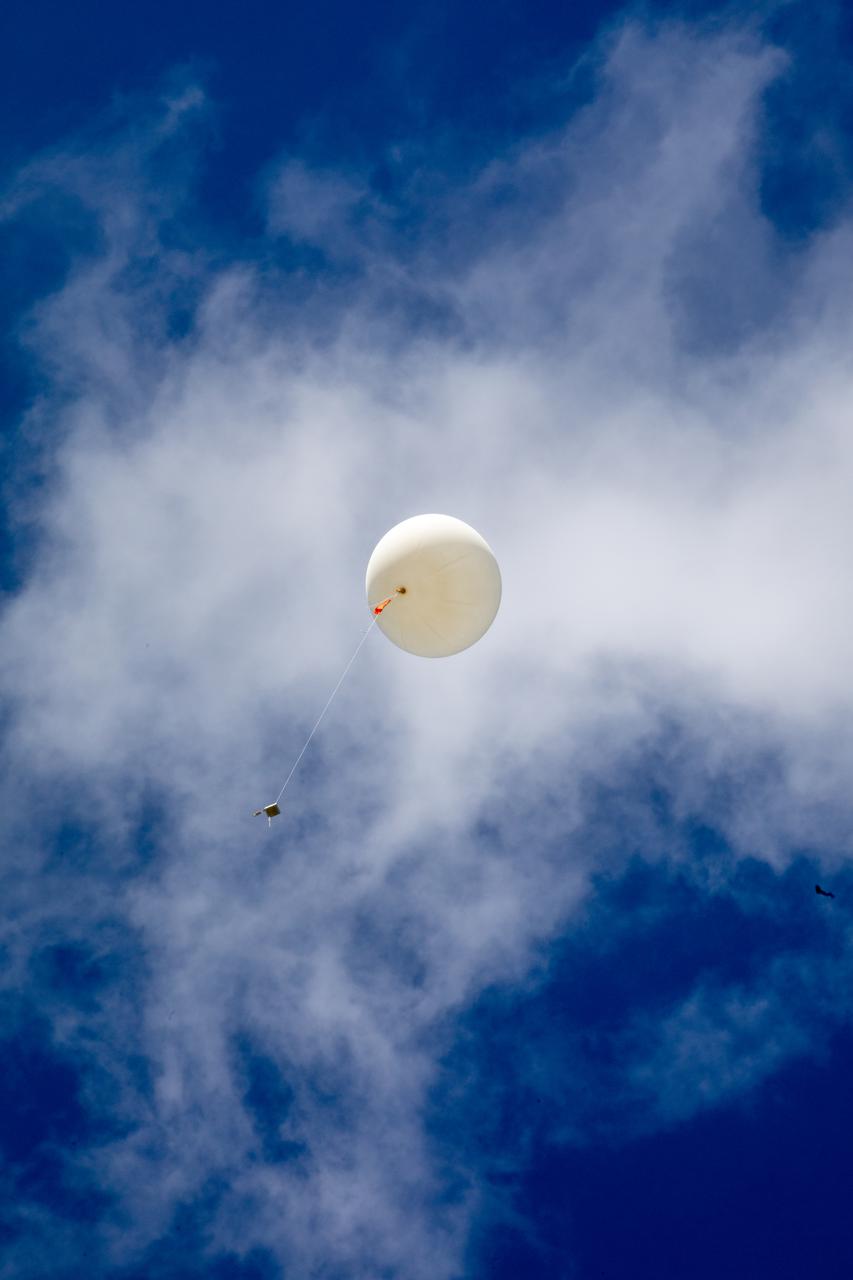
Meteorological Data Specialist Michael Boyer releases a weather balloon at the Cape Canaveral Space Force Station (CCSFS) Weather Station during an Artemis I weather simulation on Nov. 3, 2021. The event involved teams from CCSFS, Kennedy Space Center, Johnson Space Center in Texas, and Marshall Space Flight Center in Alabama. Weather balloons provided data below 6,000 feet and above 62,000 feet, while Kennedy’s Tropospheric Doppler Radar Wind Profiler delivered data from 6,000 to 62,000 feet. The radar wind profiler will be used as the primary upper level wind instrument for NASA’s Artemis missions, including Artemis I, the first launch of the agency’s Space Launch System rocket and the Orion spacecraft on a flight beyond the Moon.
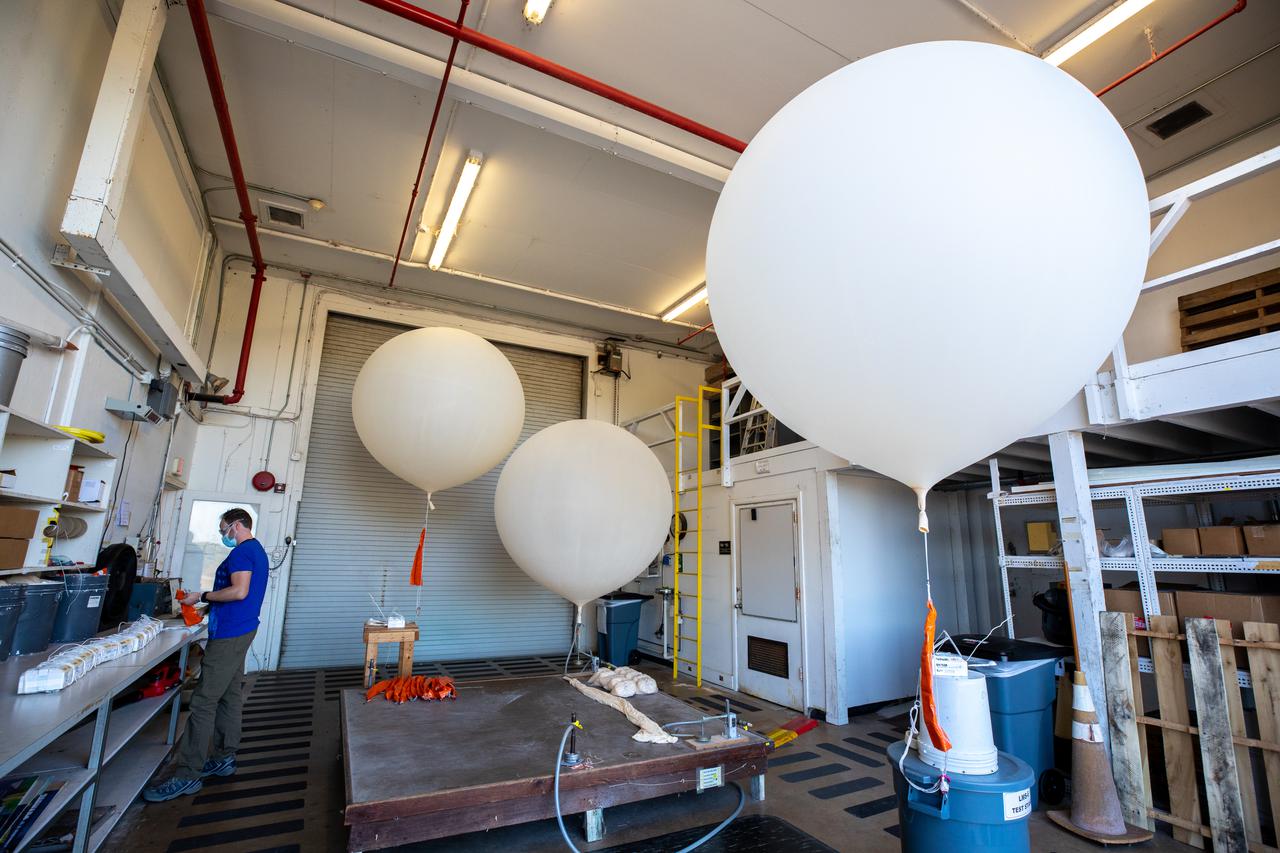
Meteorological Data Specialist Michael Boyer prepares weather balloons for release at the Cape Canaveral Space Force Station (CCSFS) Weather Station in preparation for an Artemis I weather simulation on Nov. 3, 2021. The event involved teams from CCSFS, Kennedy Space Center, Johnson Space Center in Texas, and Marshall Space Flight Center in Alabama. Weather balloons provided data below 6,000 feet and above 62,000 feet, while Kennedy’s Tropospheric Doppler Radar Wind Profiler delivered data from 6,000 to 62,000 feet. The radar wind profiler will be used as the primary upper level wind instrument for NASA’s Artemis missions, including Artemis I, the first launch of the agency’s Space Launch System rocket and the Orion spacecraft on a flight beyond the Moon.
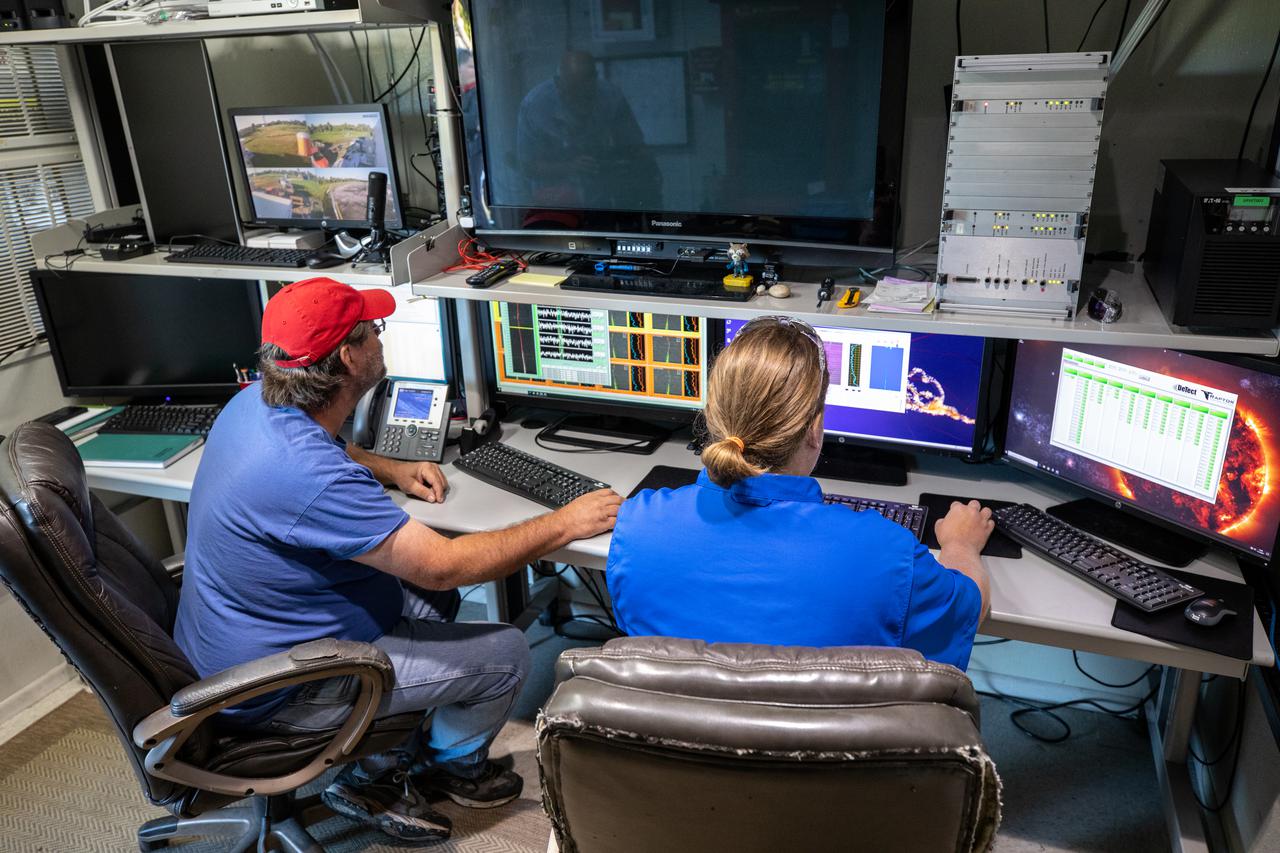
Weather Instrumentation Technician Gavin Oglesby, left, and Weather Instrumentation Engineer Nick O’Connor work with the Tropospheric Doppler Radar Wind Profiler at Kennedy Space Center in Florida during an Artemis I weather simulation on Nov. 3, 2021. The simulation involved teams from Kennedy, Cape Canaveral Space Force Station, Johnson Space Center in Texas, and Marshall Space Flight Center in Alabama. The radar wind profiler delivers data – from 6,000 to 62,000 feet – every five minutes. It will be used as the primary upper level wind instrument for NASA’s Artemis missions, including Artemis I, the first launch of the agency’s Space Launch System rocket and the Orion spacecraft on a flight beyond the Moon.
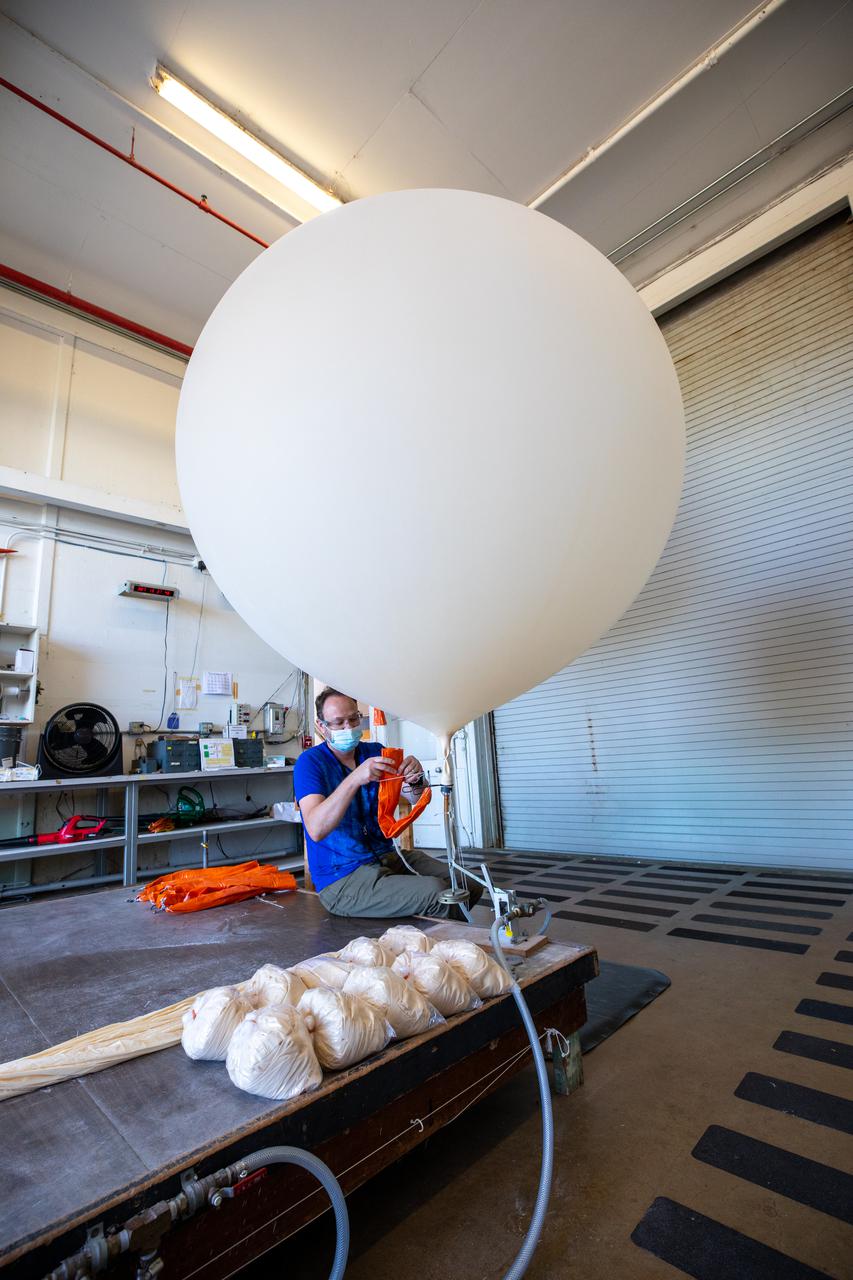
Meteorological Data Specialist Michael Boyer prepares weather balloons for release at the Cape Canaveral Space Force Station (CCSFS) Weather Station in preparation for an Artemis I weather simulation on Nov. 3, 2021. The event involved teams from CCSFS, Kennedy Space Center, Johnson Space Center in Texas, and Marshall Space Flight Center in Alabama. Weather balloons provided data below 6,000 feet and above 62,000 feet, while Kennedy’s Tropospheric Doppler Radar Wind Profiler delivered data from 6,000 to 62,000 feet. The radar wind profiler will be used as the primary upper level wind instrument for NASA’s Artemis missions, including Artemis I, the first launch of the agency’s Space Launch System rocket and the Orion spacecraft on a flight beyond the Moon.
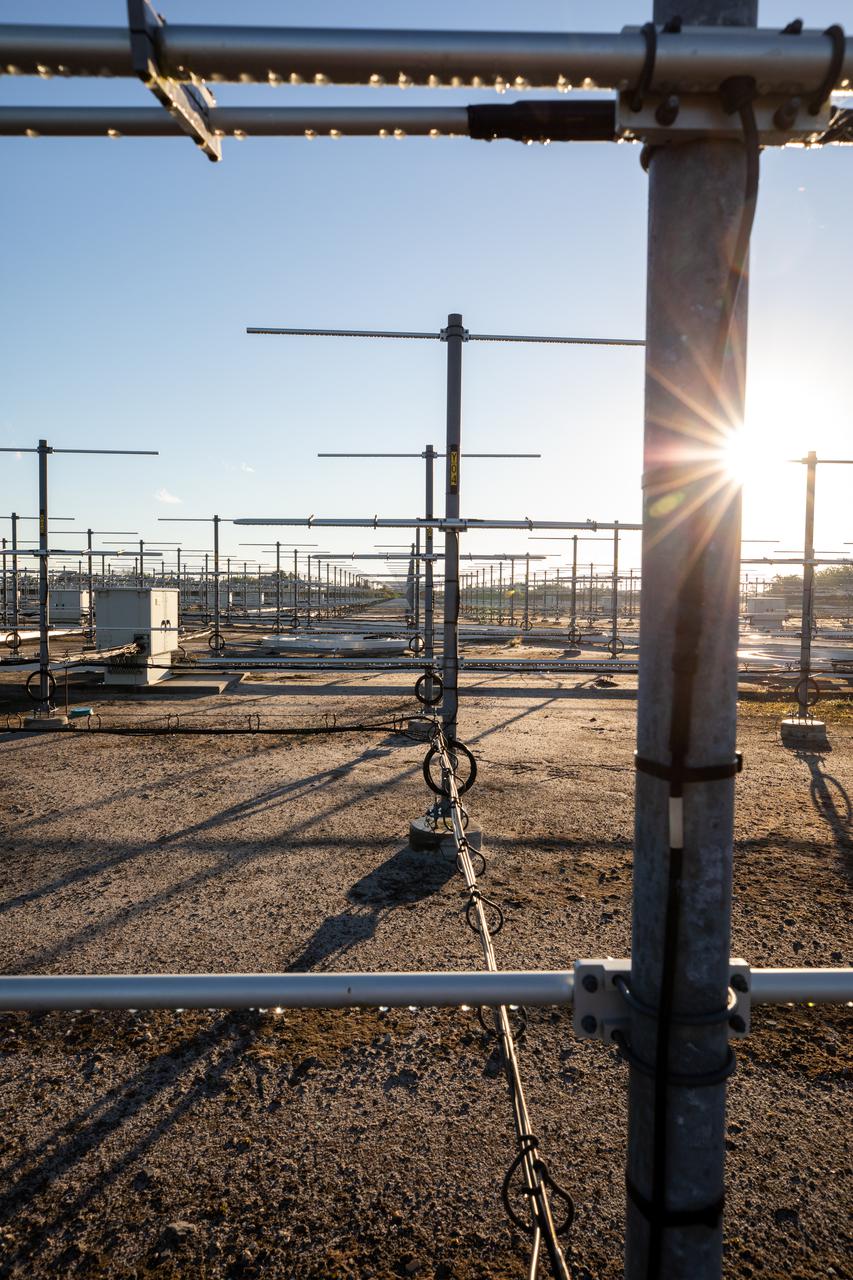
The Tropospheric Doppler Radar Wind Profiler, located on five acres near the Launch and Landing Facility at Kennedy Space Center in Florida, is shown during an Artemis I weather simulation on Nov. 3, 2021. The simulation involved teams from Kennedy, Cape Canaveral Space Force Station, Johnson Space Center in Texas, and Marshall Space Flight Center in Alabama. The radar wind profiler consists of 640 antennae and delivers data – from 6,000 to 62,000 feet – every five minutes. The instrument will be used as the primary upper level wind instrument for NASA’s Artemis missions, including Artemis I, the first launch of the agency’s Space Launch System rocket and the Orion spacecraft on a flight beyond the Moon.

Meteorological Data Specialist Michael Boyer prepares to release a weather balloon at the Cape Canaveral Space Force Station (CCSFS) Weather Station during an Artemis I weather simulation on Nov. 3, 2021. The event involved teams from CCSFS, Kennedy Space Center, Johnson Space Center in Texas, and Marshall Space Flight Center in Alabama. Weather balloons provided data below 6,000 feet and above 62,000 feet, while Kennedy’s Tropospheric Doppler Radar Wind Profiler delivered data from 6,000 to 62,000 feet. The radar wind profiler will be used as the primary upper level wind instrument for NASA’s Artemis missions, including Artemis I, the first launch of the agency’s Space Launch System rocket and the Orion spacecraft on a flight beyond the Moon.

Meteorological Data Specialist Michael Boyer releases a weather balloon at the Cape Canaveral Space Force Station (CCSFS) Weather Station during an Artemis I weather simulation on Nov. 3, 2021. The event involved teams from CCSFS, Kennedy Space Center, Johnson Space Center in Texas, and Marshall Space Flight Center in Alabama. Weather balloons provided data below 6,000 feet and above 62,000 feet, while Kennedy’s Tropospheric Doppler Radar Wind Profiler delivered data from 6,000 to 62,000 feet. The radar wind profiler will be used as the primary upper level wind instrument for NASA’s Artemis missions, including Artemis I, the first launch of the agency’s Space Launch System rocket and the Orion spacecraft on a flight beyond the Moon.
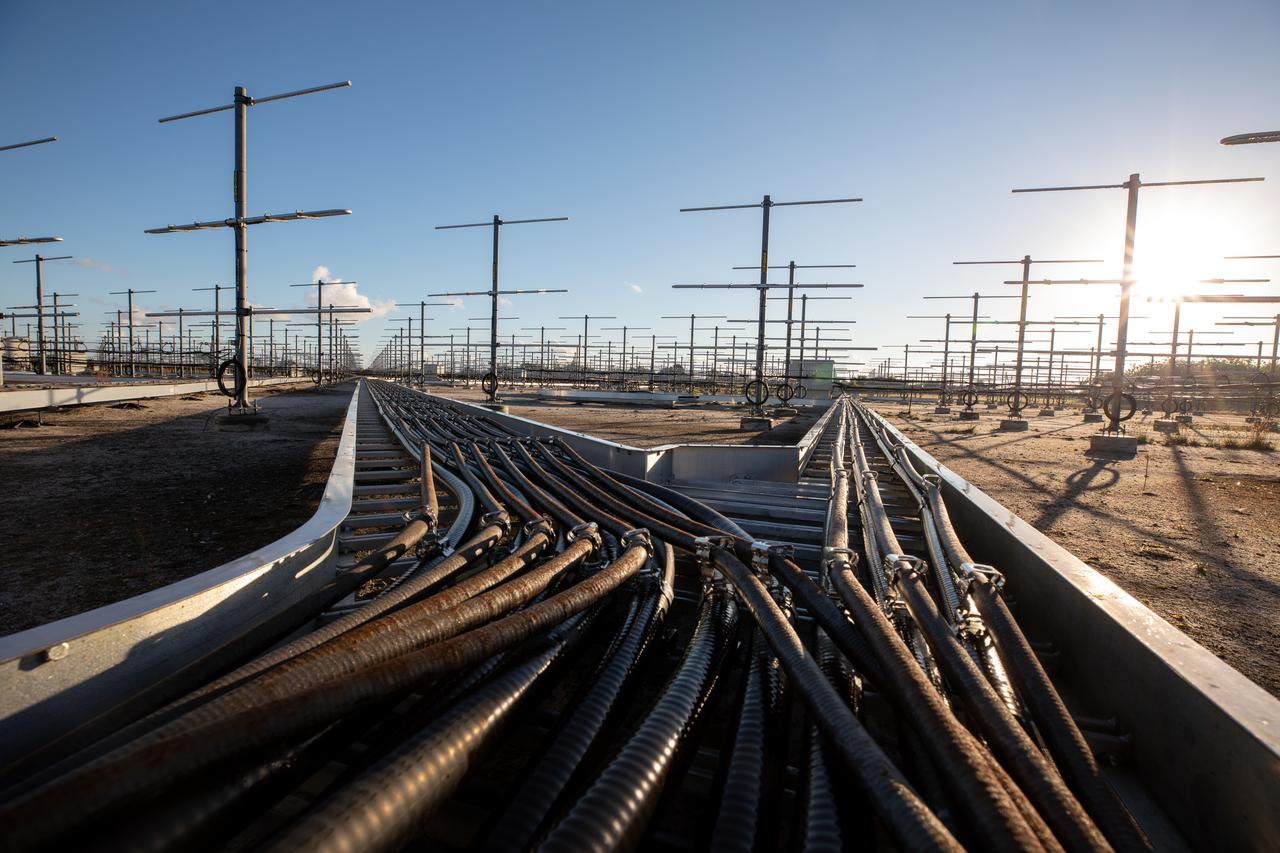
The Tropospheric Doppler Radar Wind Profiler, located on five acres near the Launch and Landing Facility at Kennedy Space Center in Florida, is shown during an Artemis I weather simulation on Nov. 3, 2021. The simulation involved teams from Kennedy, Cape Canaveral Space Force Station, Johnson Space Center in Texas, and Marshall Space Flight Center in Alabama. The radar wind profiler consists of 640 antennae and delivers data – from 6,000 to 62,000 feet – every five minutes. The instrument will be used as the primary upper level wind instrument for NASA’s Artemis missions, including Artemis I, the first launch of the agency’s Space Launch System rocket and the Orion spacecraft on a flight beyond the Moon.
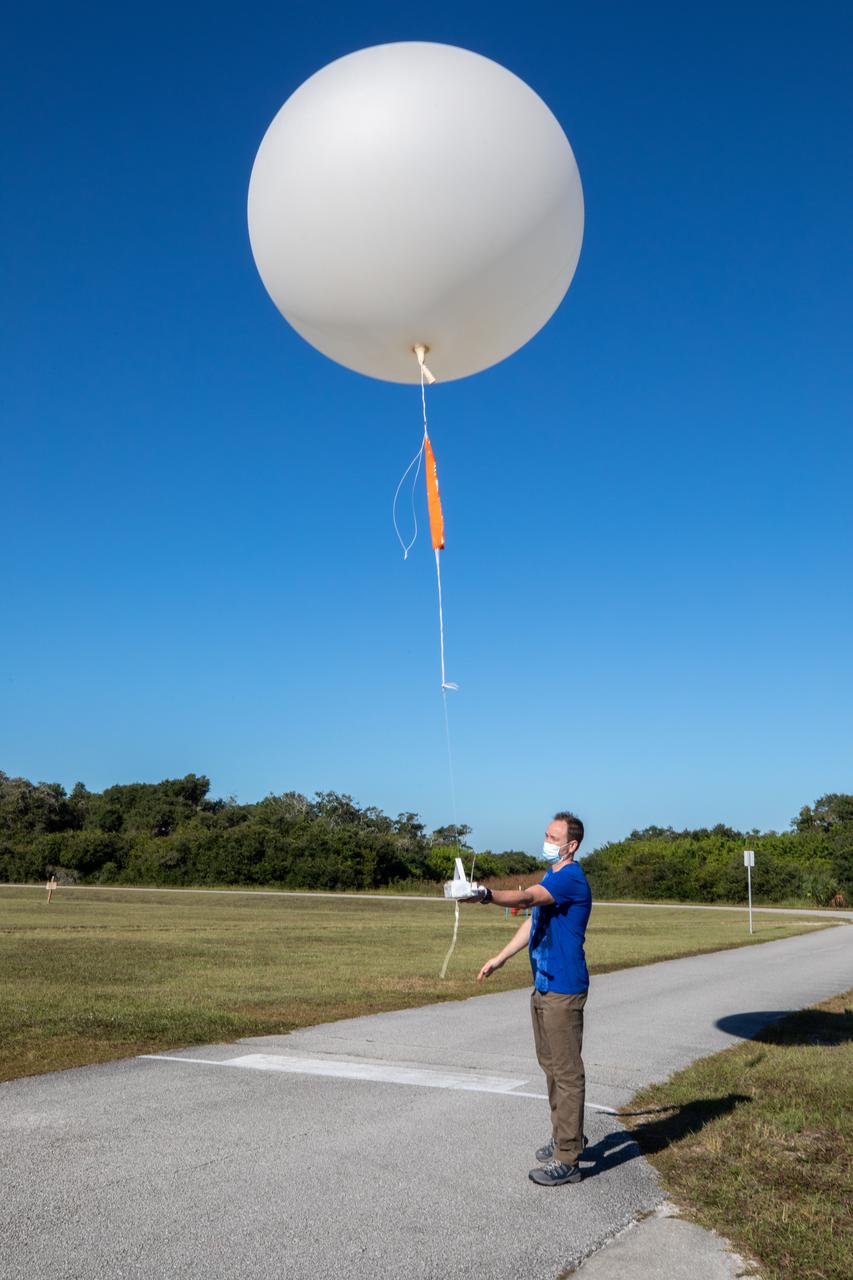
Meteorological Data Specialist Michael Boyer releases a weather balloon at the Cape Canaveral Space Force Station (CCSFS) Weather Station during an Artemis I weather simulation on Nov. 3, 2021. The event involved teams from CCSFS, Kennedy Space Center, Johnson Space Center in Texas, and Marshall Space Flight Center in Alabama. Weather balloons provided data below 6,000 feet and above 62,000 feet, while Kennedy’s Tropospheric Doppler Radar Wind Profiler delivered data from 6,000 to 62,000 feet. The radar wind profiler will be used as the primary upper level wind instrument for NASA’s Artemis missions, including Artemis I, the first launch of the agency’s Space Launch System rocket and the Orion spacecraft on a flight beyond the Moon.
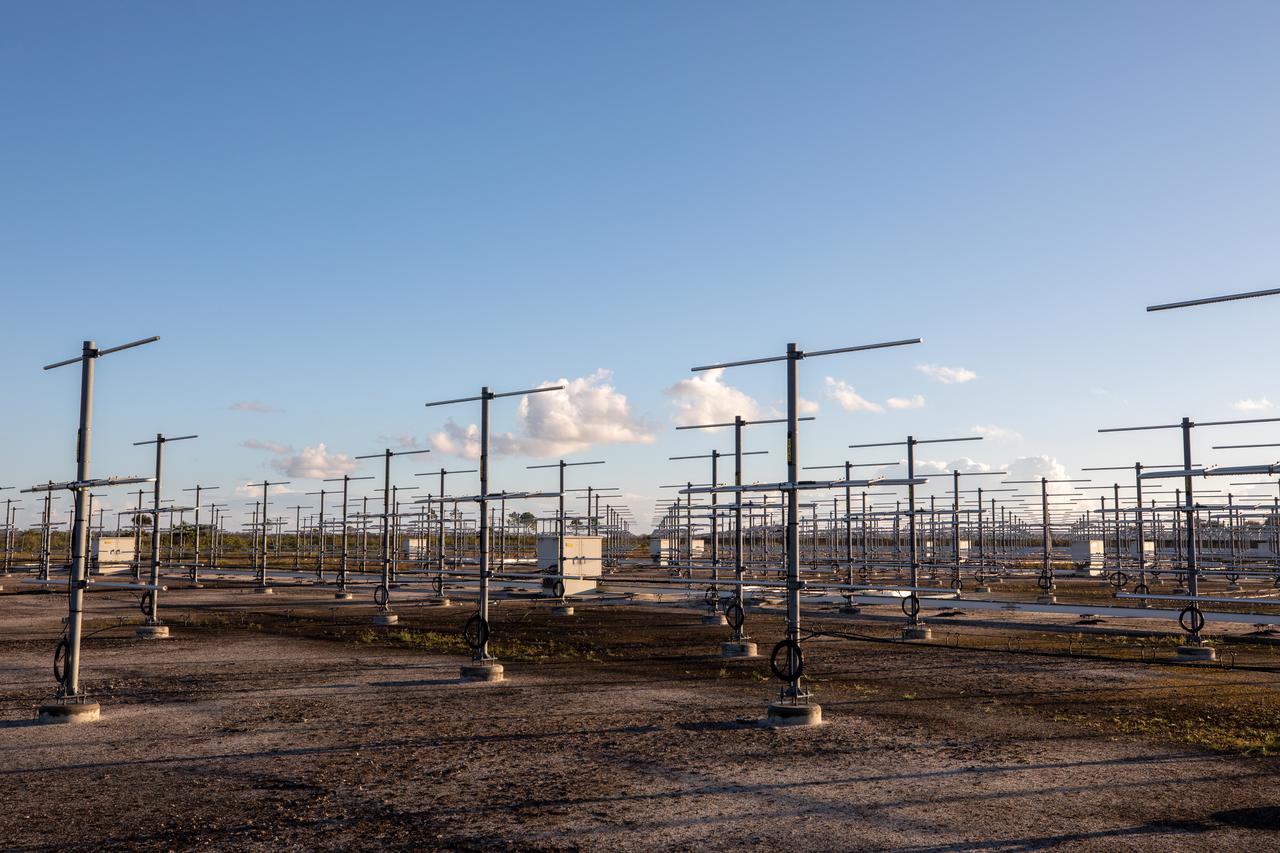
The Tropospheric Doppler Radar Wind Profiler, located on five acres near the Launch and Landing Facility at Kennedy Space Center in Florida, is shown during an Artemis I weather simulation on Nov. 3, 2021. The simulation involved teams from Kennedy, Cape Canaveral Space Force Station, Johnson Space Center in Texas, and Marshall Space Flight Center in Alabama. The radar wind profiler consists of 640 antennae and delivers data – from 6,000 to 62,000 feet – every five minutes. The instrument will be used as the primary upper level wind instrument for NASA’s Artemis missions, including Artemis I, the first launch of the agency’s Space Launch System rocket and the Orion spacecraft on a flight beyond the Moon.
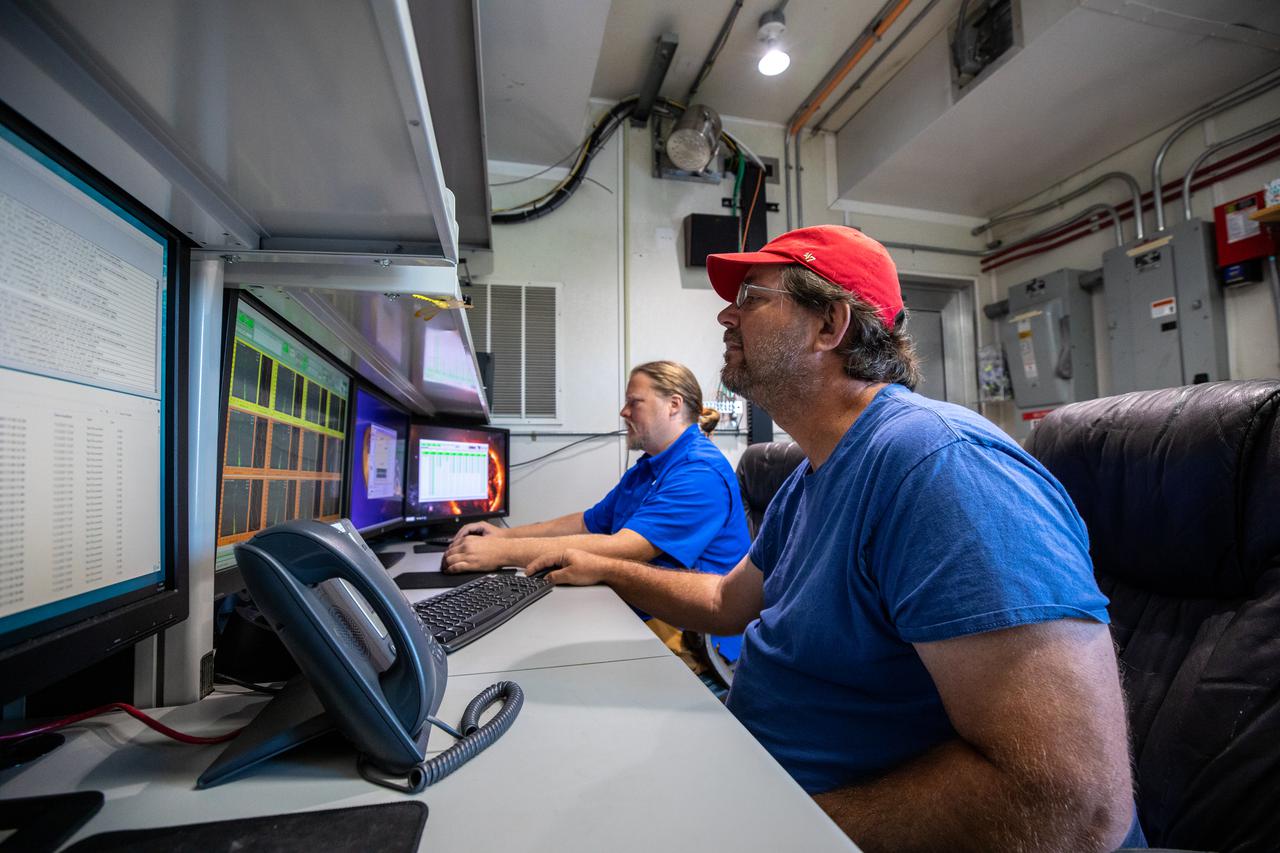
Weather Instrumentation Technician Gavin Oglesby, left, and Weather Instrumentation Engineer Nick O’Connor work with the Tropospheric Doppler Radar Wind Profiler at Kennedy Space Center in Florida during an Artemis I weather simulation on Nov. 3, 2021. The simulation involved teams from Kennedy, Cape Canaveral Space Force Station, Johnson Space Center in Texas, and Marshall Space Flight Center in Alabama. The radar wind profiler delivers data – from 6,000 to 62,000 feet – every five minutes. It will be used as the primary upper level wind instrument for NASA’s Artemis missions, including Artemis I, the first launch of the agency’s Space Launch System rocket and the Orion spacecraft on a flight beyond the Moon.
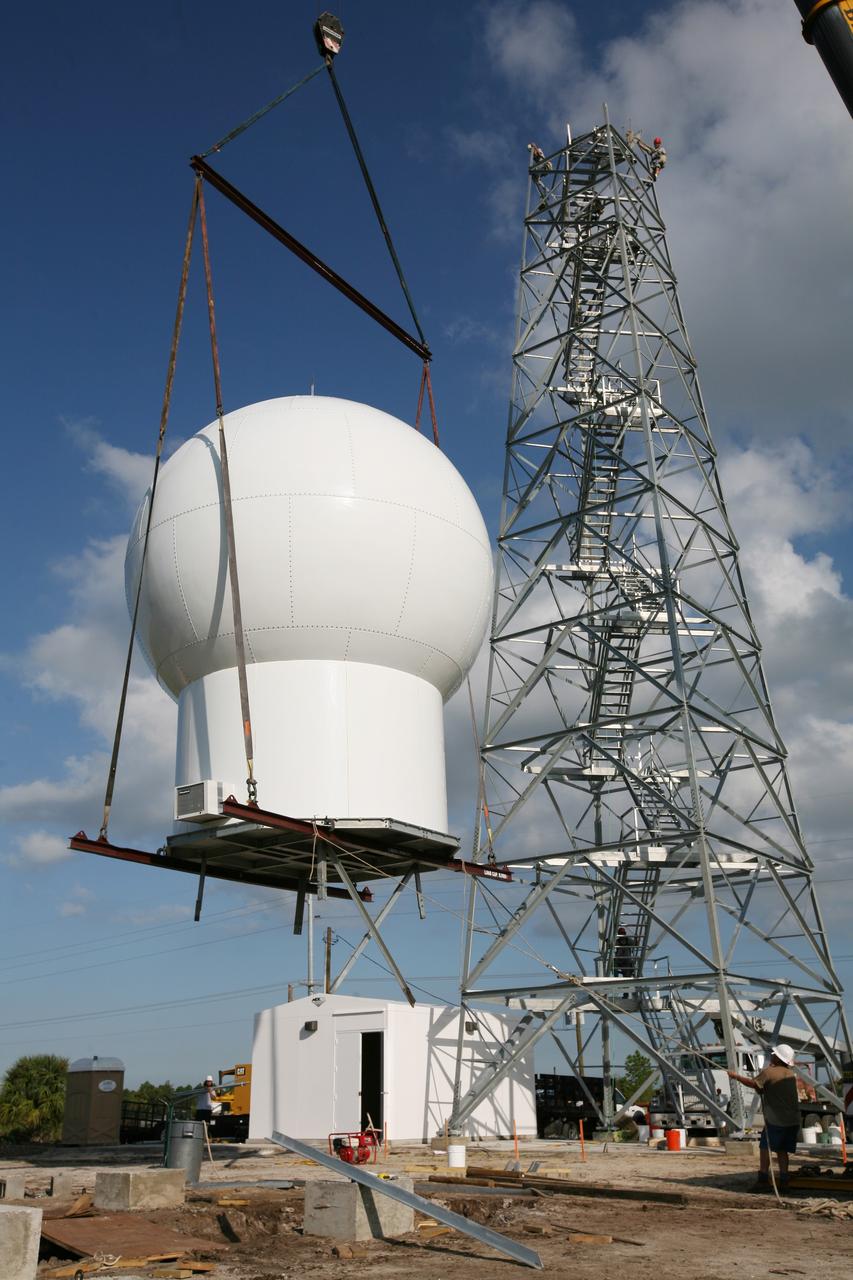
CAPE CANAVERAL, Fla. - A crane lifts the radome to the top of a new Doppler weather radar tower being built in an area near S.R. 520 in Orange County, Fla. The dome houses the weather radar dish and pedestal and protects them from the elements. The new tower will replace one at nearby Patrick Air Force Base and will be used by NASA's Kennedy Space Center, the 45th Space Wing and their customers. The tower will be able to monitor weather conditions directly above the launch pads at Kennedy. The weather radar is essential in issuing lightning and other severe weather warnings and vital in evaluating lightning launch commit criteria. The new radar, replacing what was installed 25 years ago, includes Doppler capability to detect winds and identify the type, size and number of precipitation particles. The site is ideally distant from the launch pads and has unobstructed views of Cape Canaveral Air Force Station and Kennedy. Photo credit: NASA/Dimitri Gerondidakis
CAPE CANAVERAL, Fla. - The radome is secured atop a new Doppler weather radar tower being built in an area near S.R. 520 in Orange County, Fla. The dome houses the weather radar dish and pedestal and protects them from the elements. The new tower will replace one at nearby Patrick Air Force Base and will be used by NASA's Kennedy Space Center, the 45th Space Wing and their customers. The tower will be able to monitor weather conditions directly above the launch pads at Kennedy. The weather radar is essential in issuing lightning and other severe weather warnings and vital in evaluating lightning launch commit criteria. The new radar, replacing what was installed 25 years ago, includes Doppler capability to detect winds and identify the type, size and number of precipitation particles. The site is ideally distant from the launch pads and has unobstructed views of Cape Canaveral Air Force Station and Kennedy. Photo credit: NASA/Dimitri Gerondidakis
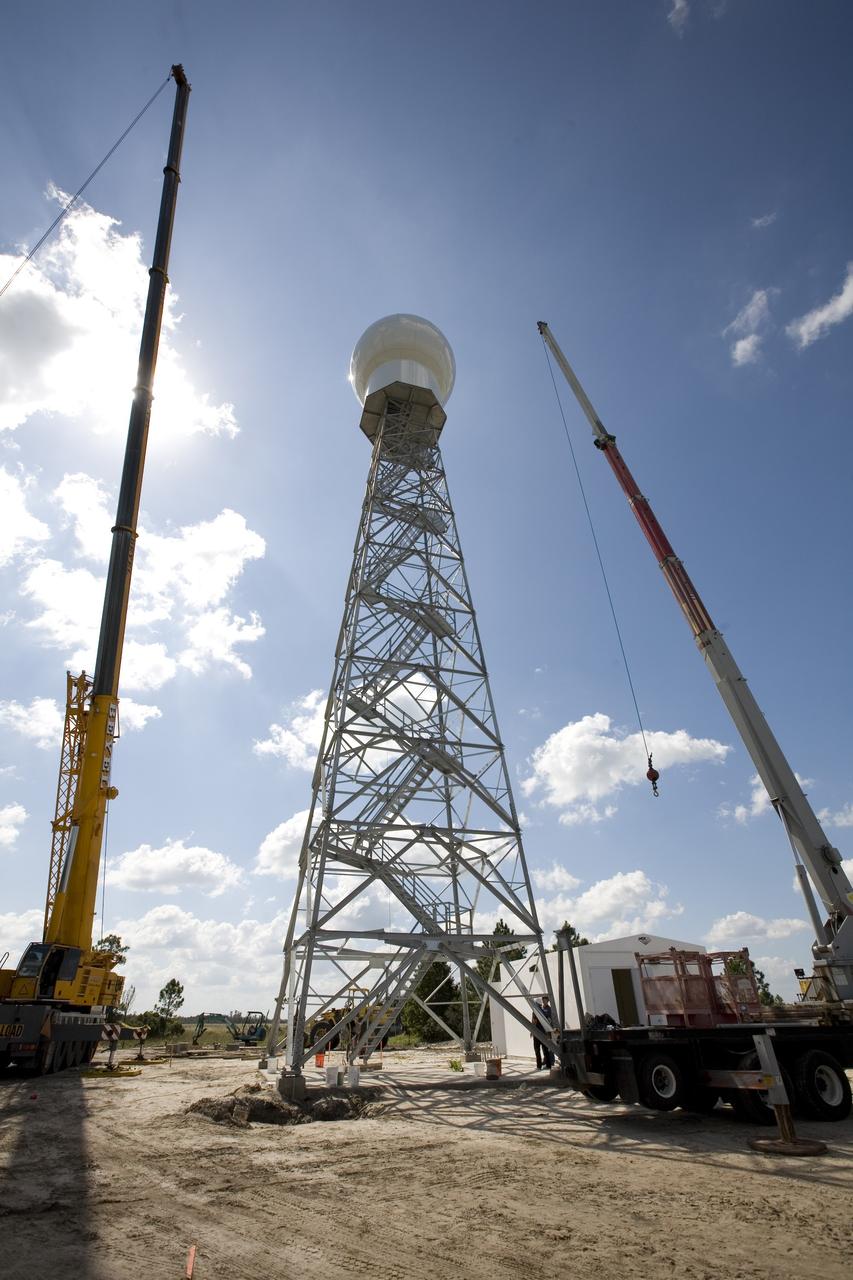
CAPE CANAVERAL, Fla. - The radome is secured atop a new Doppler weather radar tower being built in an area near S.R. 520 in Orange County, Fla. The dome houses the weather radar dish and pedestal and protects them from the elements. The new tower will replace one at nearby Patrick Air Force Base and will be used by NASA's Kennedy Space Center, the 45th Space Wing and their customers. The tower will be able to monitor weather conditions directly above the launch pads at Kennedy. The weather radar is essential in issuing lightning and other severe weather warnings and vital in evaluating lightning launch commit criteria. The new radar, replacing what was installed 25 years ago, includes Doppler capability to detect winds and identify the type, size and number of precipitation particles. The site is ideally distant from the launch pads and has unobstructed views of Cape Canaveral Air Force Station and Kennedy. Photo credit: NASA/Dimitri Gerondidakis
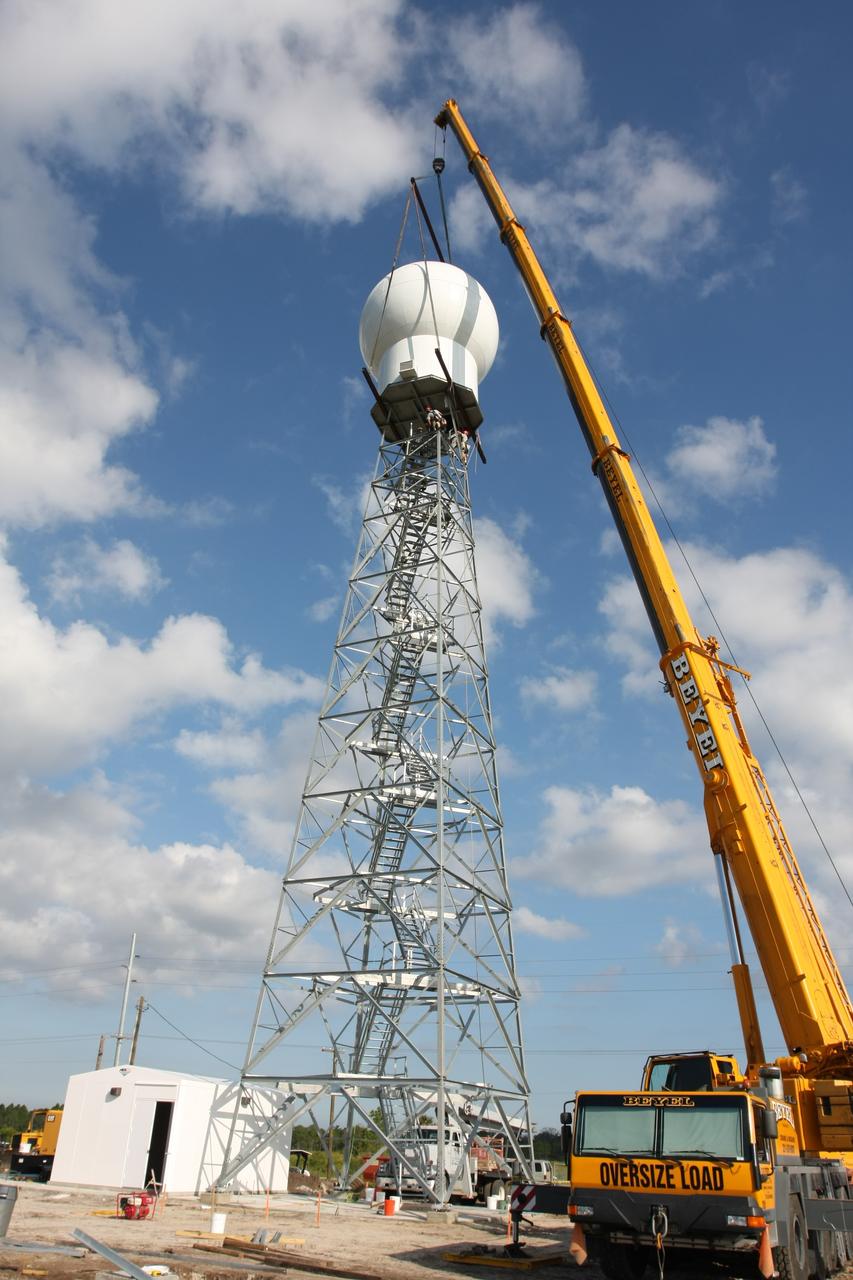
CAPE CANAVERAL, Fla. - A crane positions the radome on top of a new Doppler weather radar tower being built in an area near S.R. 520 in Orange County, Fla. The dome houses the weather radar dish and pedestal and protects them from the elements. The new tower will replace one at nearby Patrick Air Force Base and will be used by NASA's Kennedy Space Center, the 45th Space Wing and their customers. The tower will be able to monitor weather conditions directly above the launch pads at Kennedy. The weather radar is essential in issuing lightning and other severe weather warnings and vital in evaluating lightning launch commit criteria. The new radar, replacing what was installed 25 years ago, includes Doppler capability to detect winds and identify the type, size and number of precipitation particles. The site is ideally distant from the launch pads and has unobstructed views of Cape Canaveral Air Force Station and Kennedy. Photo credit: NASA/Dimitri Gerondidakis
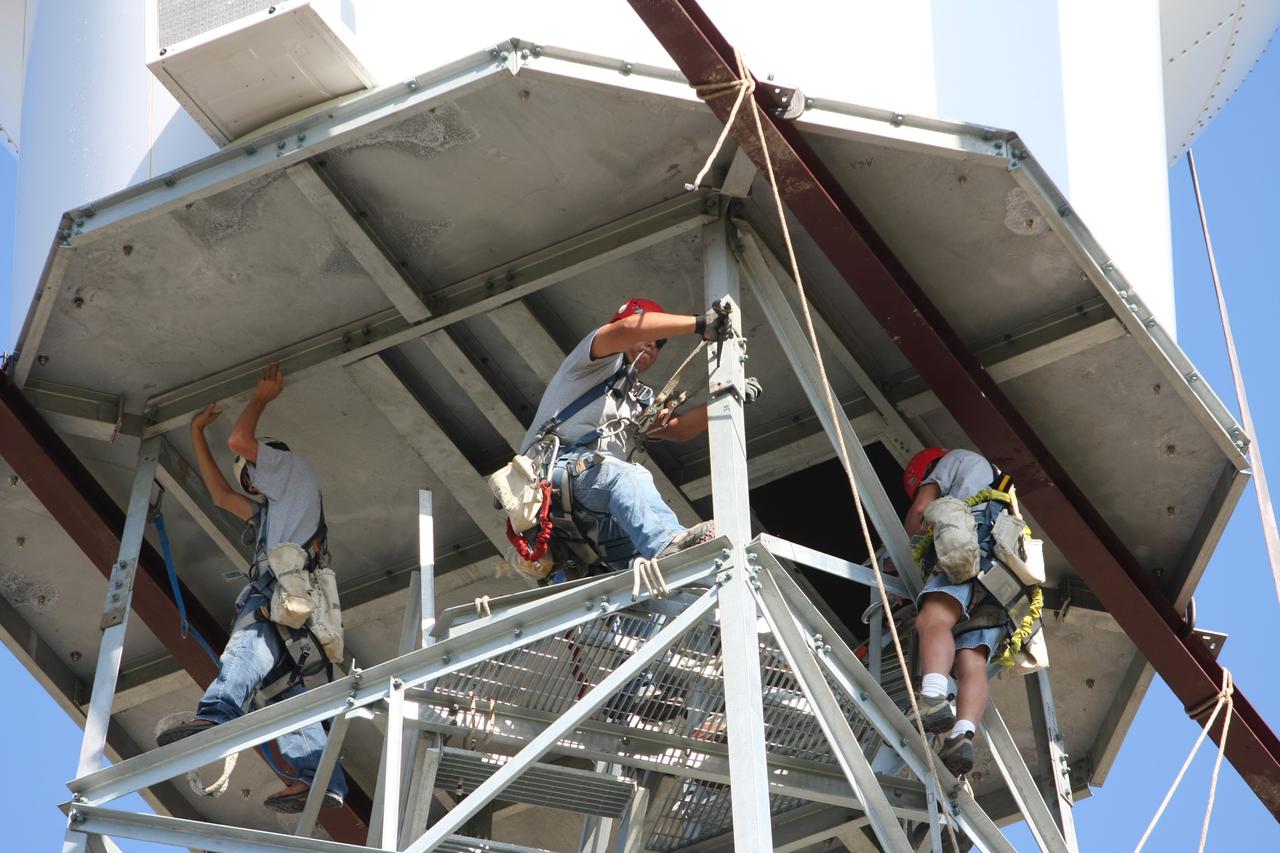
CAPE CANAVERAL, Fla. - Workers secure the radome to the top of a new Doppler weather radar tower being built in an area near S.R. 520 in Orange County, Fla. The dome houses the weather radar dish and pedestal and protects them from the elements. The new tower will replace one at nearby Patrick Air Force Base and will be used by NASA's Kennedy Space Center, the 45th Space Wing and their customers. The tower will be able to monitor weather conditions directly above the launch pads at Kennedy. The weather radar is essential in issuing lightning and other severe weather warnings and vital in evaluating lightning launch commit criteria. The new radar, replacing what was installed 25 years ago, includes Doppler capability to detect winds and identify the type, size and number of precipitation particles. The site is ideally distant from the launch pads and has unobstructed views of Cape Canaveral Air Force Station and Kennedy. Photo credit: NASA/Dimitri Gerondidakis
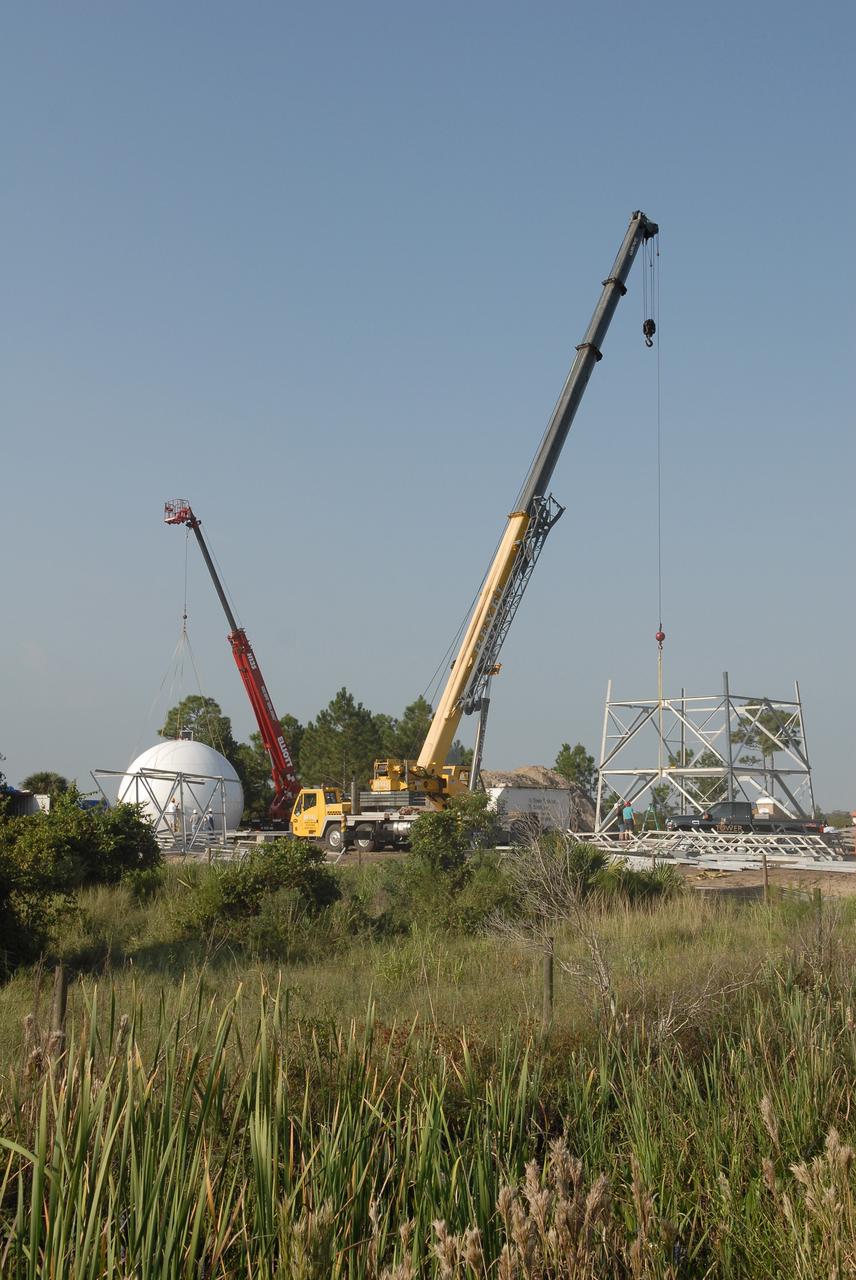
CAPE CANAVERAL, Fla. - Construction continues on the Doppler weather radar facility for the 45th Weather Squadron being built in an area near S.R. 520 in Orange County, Florida. The new site will replace one at Patrick Air Force Base and will be used by NASA's Kennedy Space Center, the 45th Space Wing and their customers. The site will be able to monitor weather conditions directly above the launch pads at Kennedy. The weather radar is essential in issuing lightning and other severe weather warnings and vital in evaluating lightning launch commit criteria. The new radar, replacing what was installed 25 years ago at Patrick Air Force Base, includes Doppler capability to detect winds and identify the type, size and number of precipitation particles. The site is ideally distant from the launch pads and has unobstructed views of Cape Canaveral Air Force Station and Kennedy. The radar will be used by forecasters at the USAF 45th Weather Squadron. Photo credit: NASA/Troy Cryder
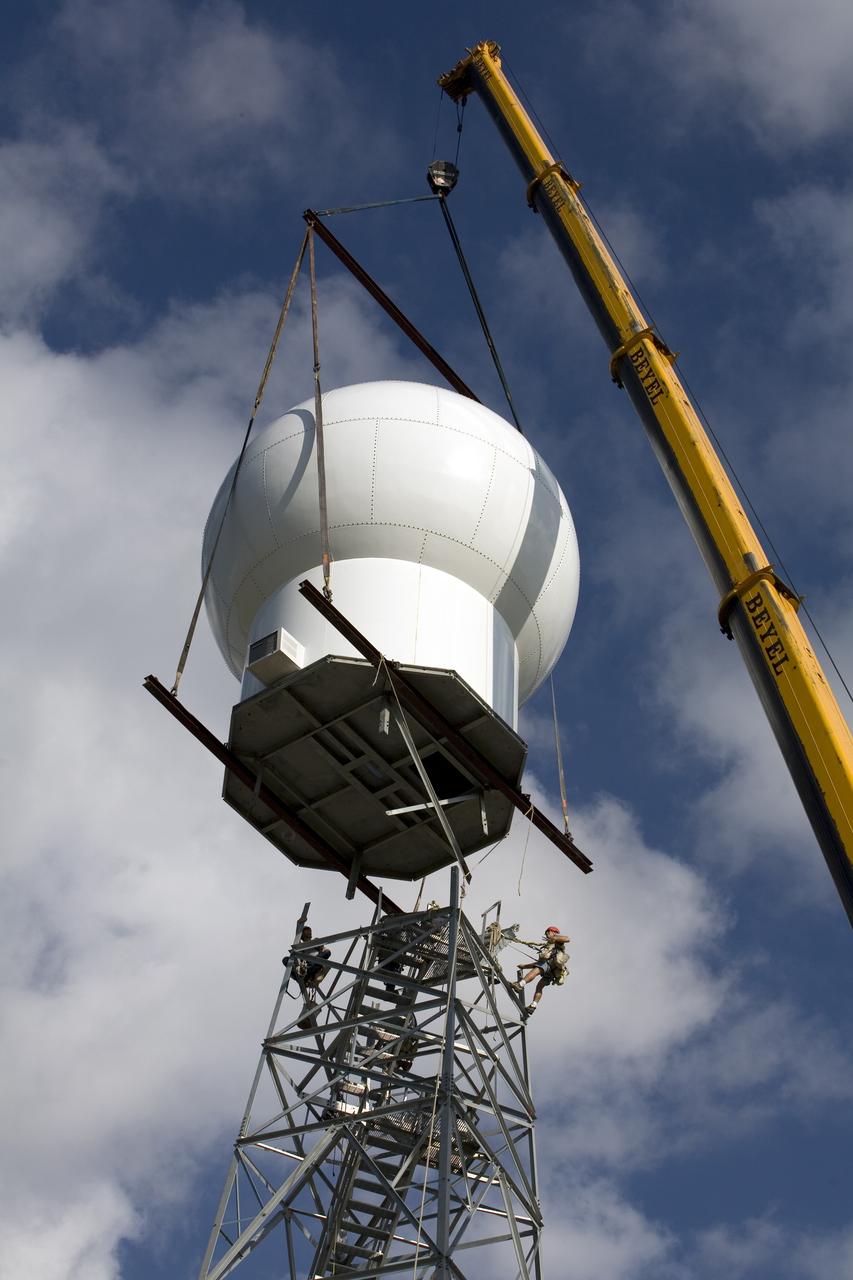
CAPE CANAVERAL, Fla. - A crane positions the radome on top of a new Doppler weather radar tower being built in an area near S.R. 520 in Orange County, Fla. The dome houses the weather radar dish and pedestal and protects them from the elements. The new tower will replace one at nearby Patrick Air Force Base and will be used by NASA's Kennedy Space Center, the 45th Space Wing and their customers. The tower will be able to monitor weather conditions directly above the launch pads at Kennedy. The weather radar is essential in issuing lightning and other severe weather warnings and vital in evaluating lightning launch commit criteria. The new radar, replacing what was installed 25 years ago, includes Doppler capability to detect winds and identify the type, size and number of precipitation particles. The site is ideally distant from the launch pads and has unobstructed views of Cape Canaveral Air Force Station and Kennedy. Photo credit: NASA/Dimitri Gerondidakis

CAPE CANAVERAL, Fla. - A new Doppler weather radar dome is being built in an area near S.R. 520 in Orange County, Florida. The new tower will replace one at nearby Patrick Air Force Base. The site will be used by NASA's Kennedy Space Center, the 45th Space Wing and their customers. The tower will be able to monitor weather conditions directly above the launch pads at Kennedy. The weather radar is essential in issuing lightning and other severe weather warnings and vital in evaluating lightning launch commit criteria. The new radar, replacing what was installed 25 years ago, includes Doppler capability to detect winds and identify the type, size and number of precipitation particles. The site is ideally distant from the launch pads and has unobstructed views of Cape Canaveral Air Force Station and Kennedy. Photo credit: NASA/Kim Shiflett
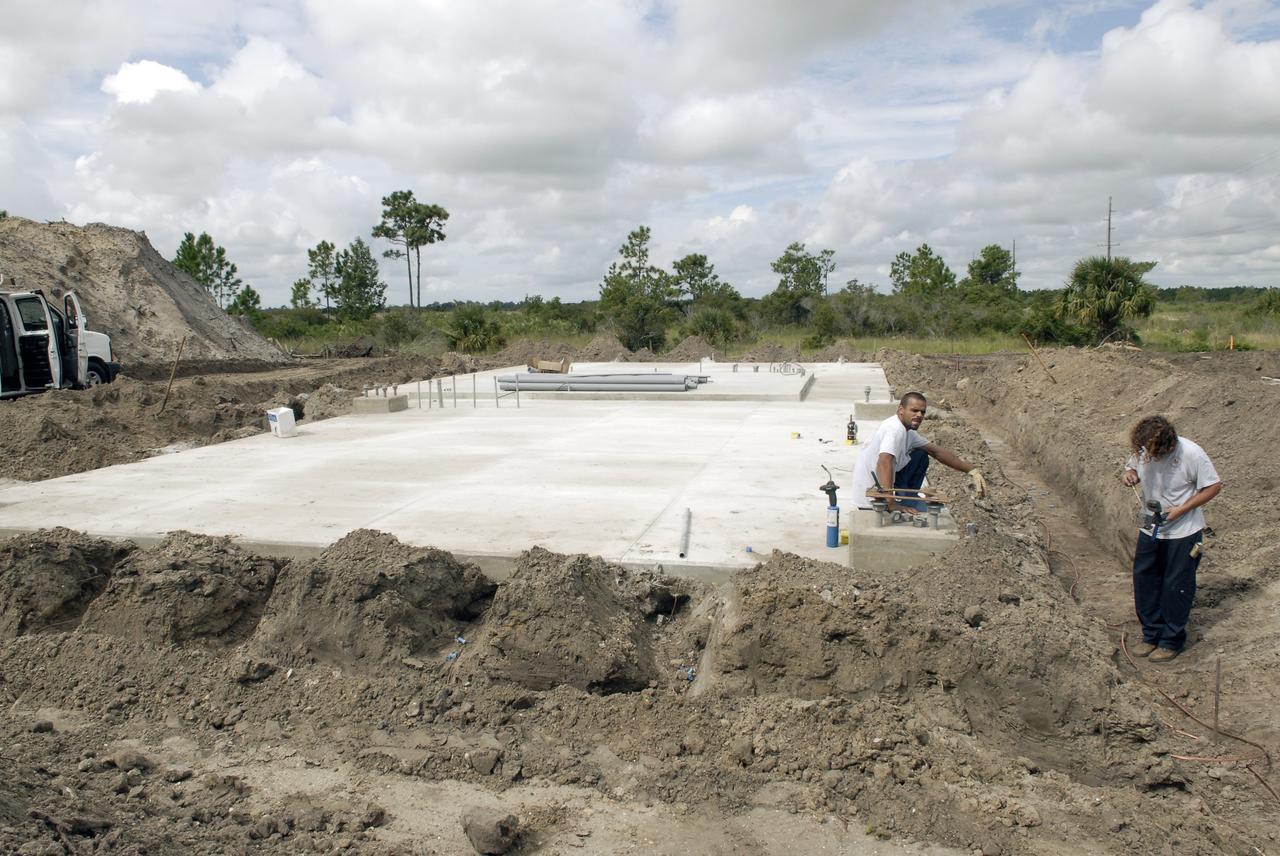
CAPE CANAVERAL, Fla. - The foundation is laid for a new Doppler weather radar tower being built in an area near S.R. 520 in Orange County, Florida. The new tower will replace one at nearby Patrick Air Force Base. The site will be used by NASA's Kennedy Space Center, the 45th Space Wing and their customers. The tower will be able to monitor weather conditions directly above the launch pads Kennedy. The weather radar is essential in issuing lightning and other severe weather warnings and vital in evaluating lightning launch commit criteria. The new radar, replacing what was installed 25 years ago, includes Doppler capability to detect winds and identify the type, size and number of precipitation particles. The site is ideally distant from the launch pads and has unobstructed views of Cape Canaveral Air Force Station and Kennedy. Photo credit: NASA/Kim Shiflett
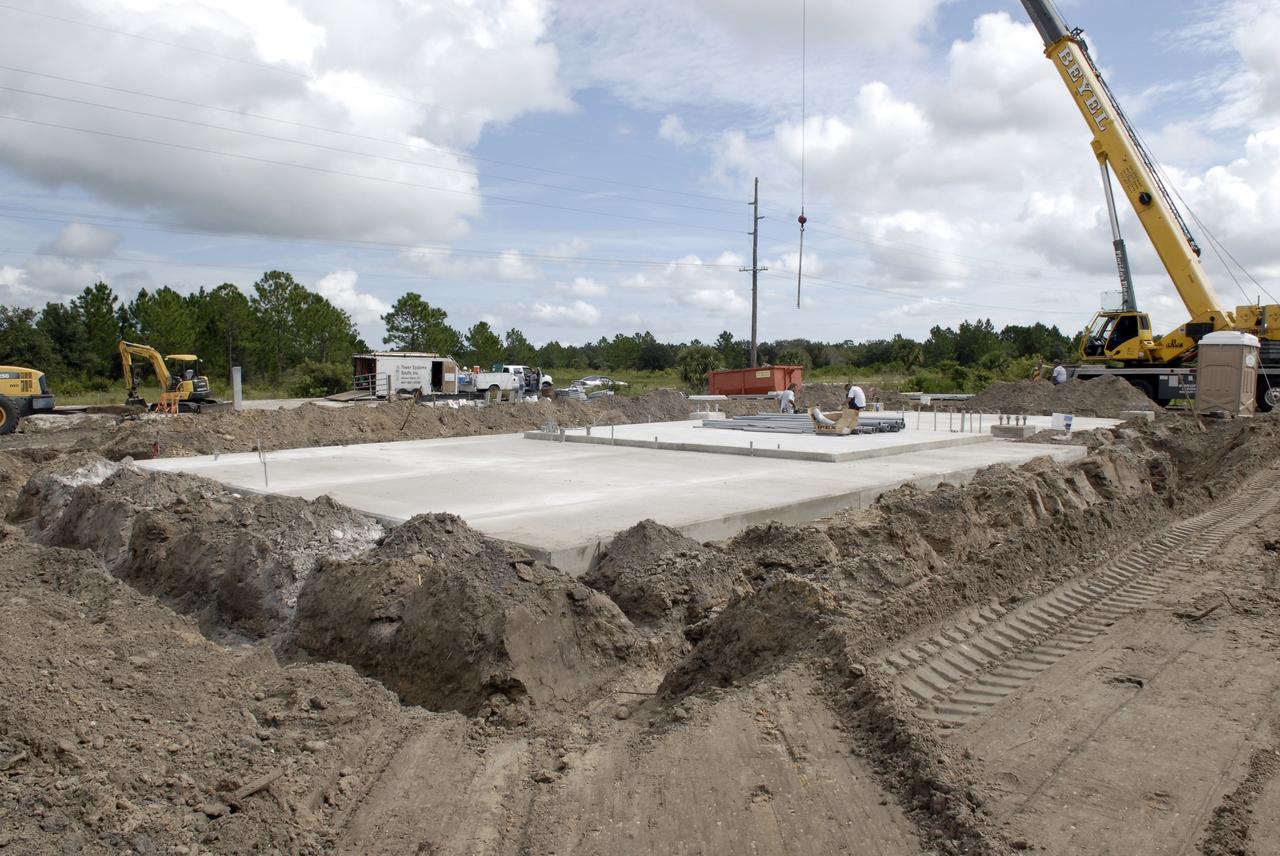
CAPE CANAVERAL, Fla. - A new Doppler weather radar tower is being built in an area near S.R. 520 in Orange County, Florida. The new tower will replace one at nearby Patrick Air Force Base. The site will be used by NASA's Kennedy Space Center, the 45th Space Wing and their customers. The tower will be able to monitor weather conditions directly above the launch pads Kennedy. The weather radar is essential in issuing lightning and other severe weather warnings and vital in evaluating lightning launch commit criteria. The new radar, replacing what was installed 25 years ago, includes Doppler capability to detect winds and identify the type, size and number of precipitation particles. The site is ideally distant from the launch pads and has unobstructed views of Cape Canaveral Air Force Station and Kennedy. Photo credit: NASA/Kim Shiflett
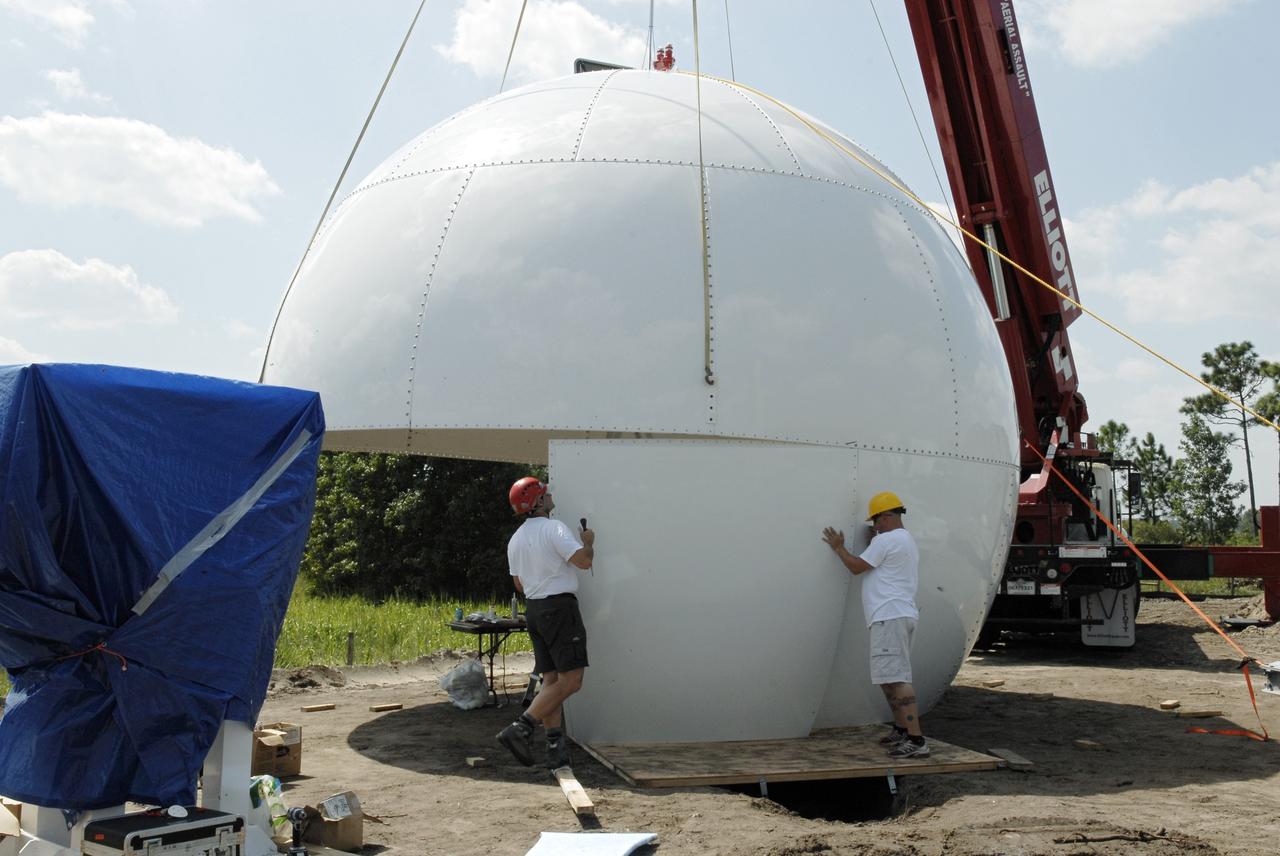
CAPE CANAVERAL, Fla. - A new Doppler weather radar dome is being built in an area near S.R. 520 in Orange County, Florida. The new tower will replace one at nearby Patrick Air Force Base. The site will be used by NASA's Kennedy Space Center, the 45th Space Wing and their customers. The tower will be able to monitor weather conditions directly above the launch pads at Kennedy. The weather radar is essential in issuing lightning and other severe weather warnings and vital in evaluating lightning launch commit criteria. The new radar, replacing what was installed 25 years ago, includes Doppler capability to detect winds and identify the type, size and number of precipitation particles. The site is ideally distant from the launch pads and has unobstructed views of Cape Canaveral Air Force Station and Kennedy. Photo credit: NASA/Kim Shiflett

CAPE CANAVERAL, Fla. - A new Doppler weather radar dome is being built in an area near S.R. 520 in Orange County, Florida. The new tower will replace one at nearby Patrick Air Force Base. The site will be used by NASA's Kennedy Space Center, the 45th Space Wing and their customers. The tower will be able to monitor weather conditions directly above the launch pads at Kennedy. The weather radar is essential in issuing lightning and other severe weather warnings and vital in evaluating lightning launch commit criteria. The new radar, replacing what was installed 25 years ago, includes Doppler capability to detect winds and identify the type, size and number of precipitation particles. The site is ideally distant from the launch pads and has unobstructed views of Cape Canaveral Air Force Station and Kennedy. Photo credit: NASA/Kim Shiflett
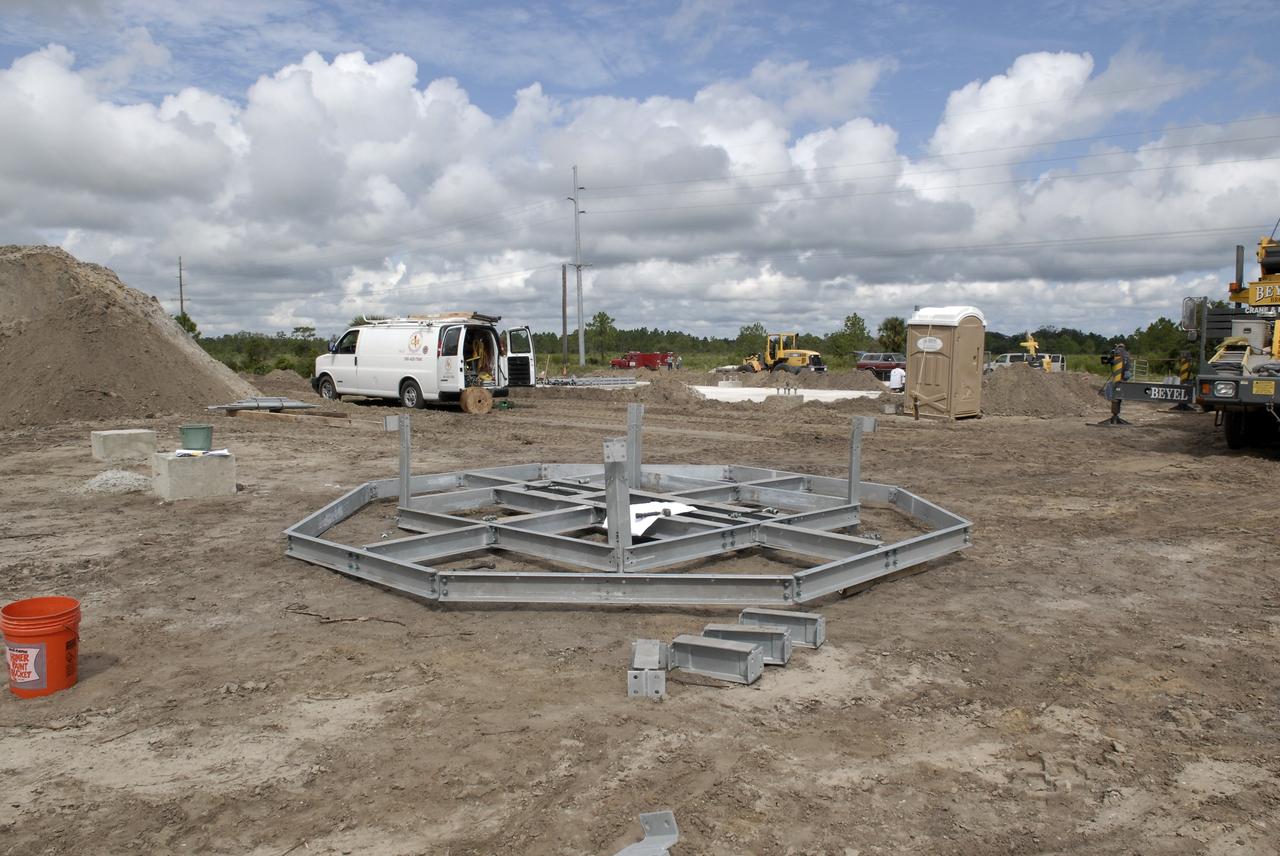
CAPE CANAVERAL, Fla. - A new Doppler weather radar tower is being built in an area near S.R. 520 in Orange County, Florida. The new tower will replace one at nearby Patrick Air Force Base. The site will be used by NASA's Kennedy Space Center, the 45th Space Wing and their customers. The tower will be able to monitor weather conditions directly above the launch pads Kennedy. The weather radar is essential in issuing lightning and other severe weather warnings and vital in evaluating lightning launch commit criteria. The new radar, replacing what was installed 25 years ago, includes Doppler capability to detect winds and identify the type, size and number of precipitation particles. The site is ideally distant from the launch pads and has unobstructed views of Cape Canaveral Air Force Station and Kennedy. Photo credit: NASA/Kim Shiflett
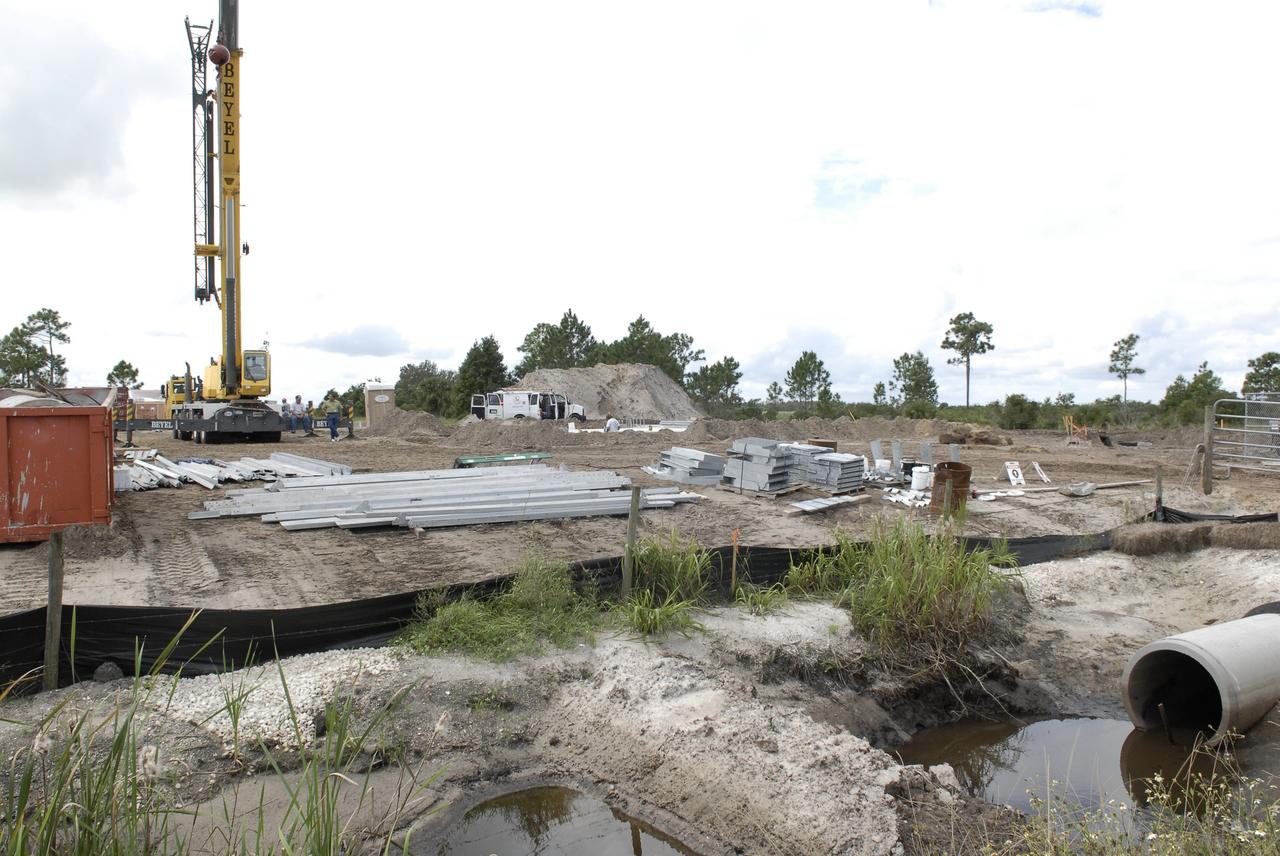
CAPE CANAVERAL, Fla. - The groundwork is being done in an area near S.R. 520 in Orange County, Florida, for a new Doppler weather radar tower. The new tower will replace one at nearby Patrick Air Force Base. The site will be used by NASA's Kennedy Space Center, the 45th Space Wing and their customers. The tower will be able to monitor weather conditions directly above the launch pads Kennedy. The weather radar is essential in issuing lightning and other severe weather warnings and vital in evaluating lightning launch commit criteria. The new radar, replacing what was installed 25 years ago, includes Doppler capability to detect winds and identify the type, size and number of precipitation particles. The site is ideally distant from the launch pads and has unobstructed views of Cape Canaveral Air Force Station and Kennedy. Photo credit: NASA/Kim Shiflett

CAPE CANAVERAL, Fla. - A new Doppler weather radar tower is being built in an area near S.R. 520 in Orange County, Florida. The new tower will replace one at nearby Patrick Air Force Base. The site will be used by NASA's Kennedy Space Center, the 45th Space Wing and their customers. The tower will be able to monitor weather conditions directly above the launch pads at Kennedy. The weather radar is essential in issuing lightning and other severe weather warnings and vital in evaluating lightning launch commit criteria. The new radar, replacing what was installed 25 years ago, includes Doppler capability to detect winds and identify the type, size and number of precipitation particles. The site is ideally distant from the launch pads and has unobstructed views of Cape Canaveral Air Force Station and Kennedy. Photo credit: NASA/Kim Shiflett
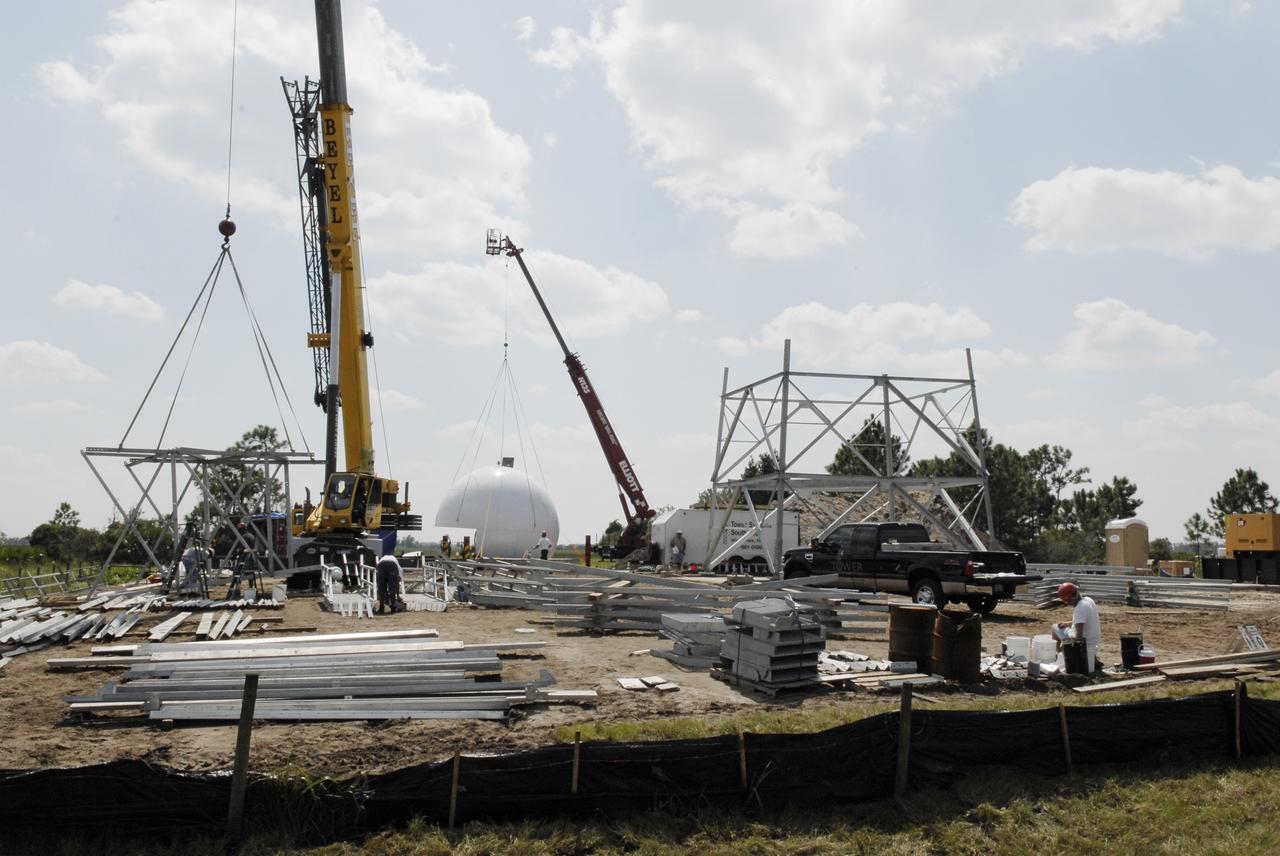
CAPE CANAVERAL, Fla. - A new Doppler weather radar tower is being built in an area near S.R. 520 in Orange County, Florida. The new tower will replace one at nearby Patrick Air Force Base. The site will be used by NASA's Kennedy Space Center, the 45th Space Wing and their customers. The tower will be able to monitor weather conditions directly above the launch pads at Kennedy. The weather radar is essential in issuing lightning and other severe weather warnings and vital in evaluating lightning launch commit criteria. The new radar, replacing what was installed 25 years ago, includes Doppler capability to detect winds and identify the type, size and number of precipitation particles. The site is ideally distant from the launch pads and has unobstructed views of Cape Canaveral Air Force Station and Kennedy. Photo credit: NASA/Kim Shiflett
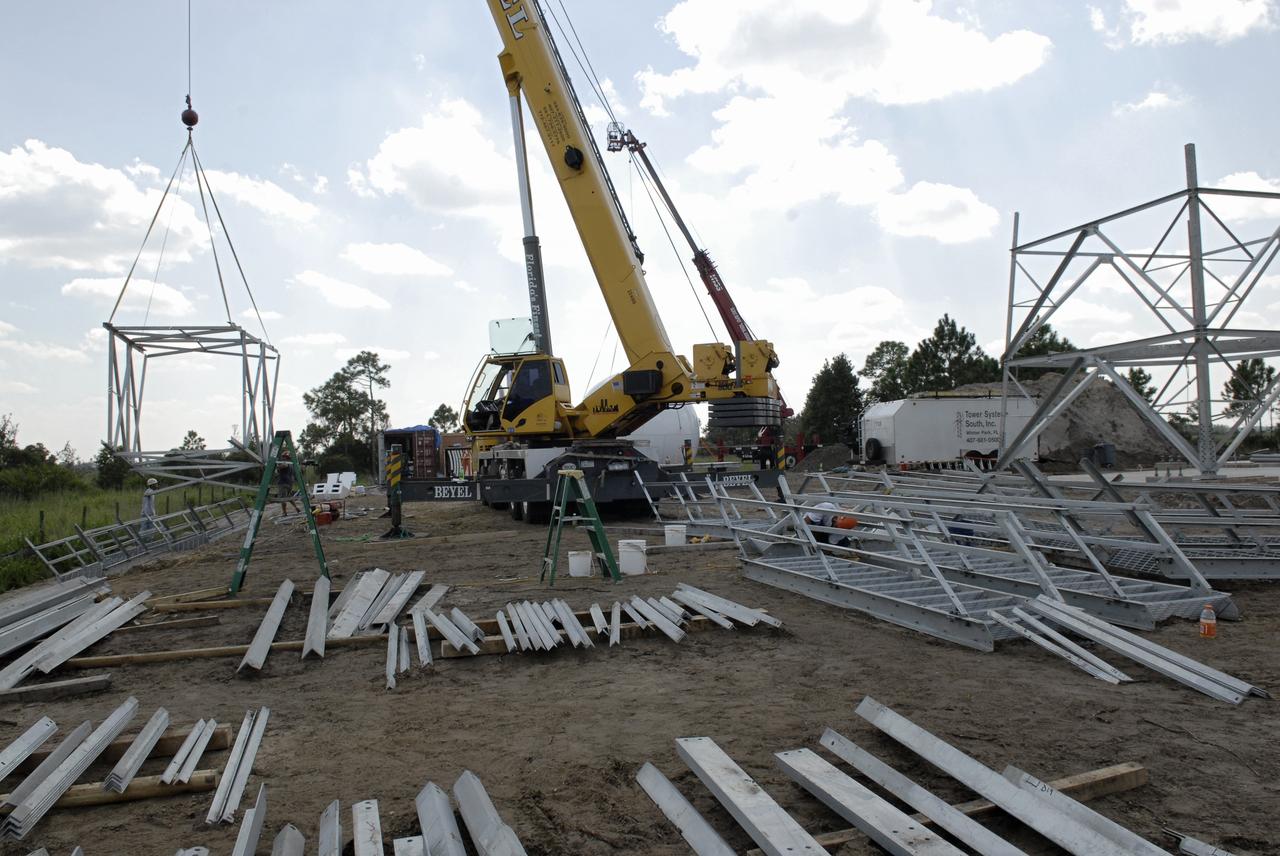
CAPE CANAVERAL, Fla. - A new Doppler weather radar tower is being built in an area near S.R. 520 in Orange County, Florida. The new tower will replace one at nearby Patrick Air Force Base. The site will be used by NASA's Kennedy Space Center, the 45th Space Wing and their customers. The tower will be able to monitor weather conditions directly above the launch pads at Kennedy. The weather radar is essential in issuing lightning and other severe weather warnings and vital in evaluating lightning launch commit criteria. The new radar, replacing what was installed 25 years ago, includes Doppler capability to detect winds and identify the type, size and number of precipitation particles. The site is ideally distant from the launch pads and has unobstructed views of Cape Canaveral Air Force Station and Kennedy. Photo credit: NASA/Kim Shiflett
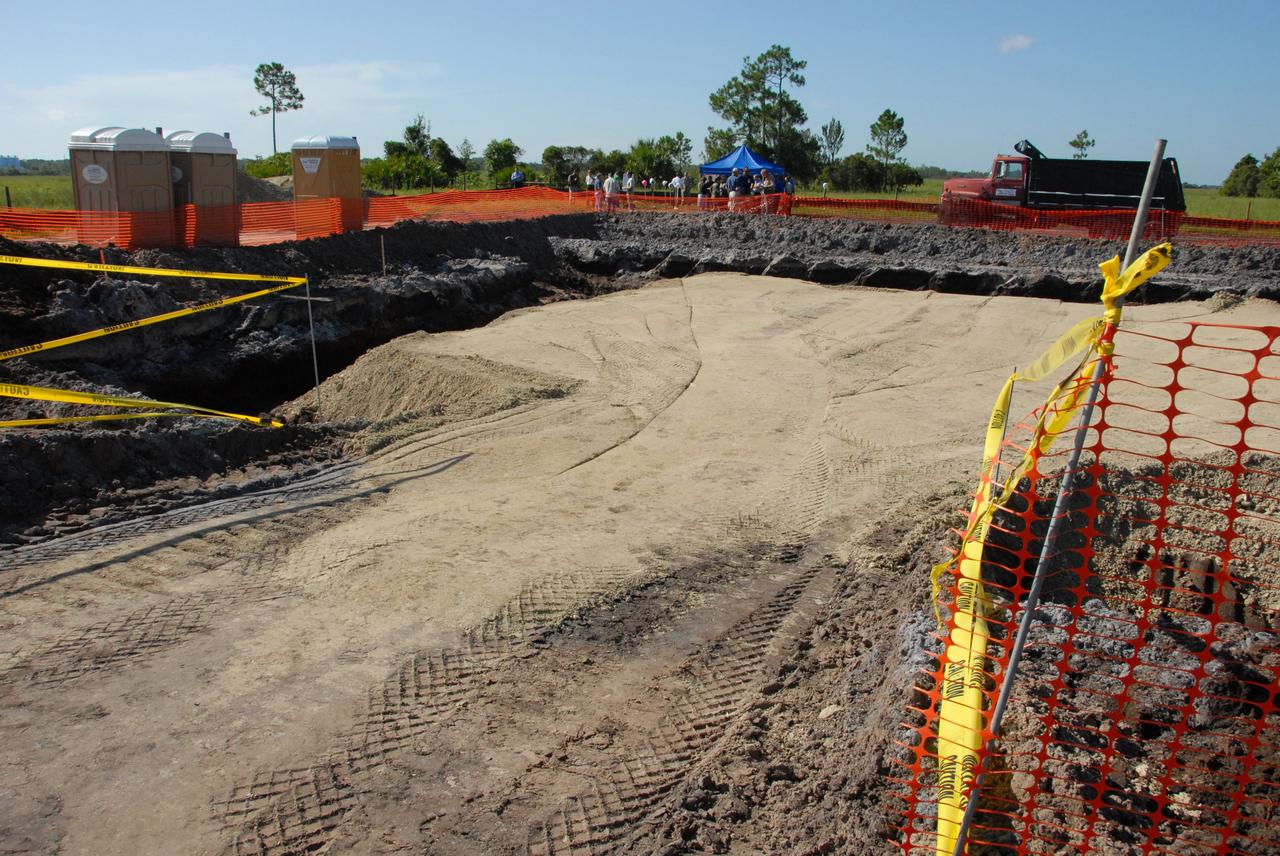
CAPE CANAVERAL, Fla. - The construction site is leveled for a new weather radar to be used by NASA's Kennedy Space Center, the 45th Space Wing and their customers. In the background is the location where a mock ground-breaking ceremony was held. The weather radar is essential in issuing lightning and other severe weather warnings and vital in evaluating lightning launch commit criteria. The new radar, replacing what was installed 25 years ago, includes Doppler capability to detect winds and identify the type, size and number of precipitation particles. The site is ideally distant from the launch pads and has unobstructed views of Cape Canaveral Air Force Station and Kennedy. Photo credit: NASA/Amanda Diller
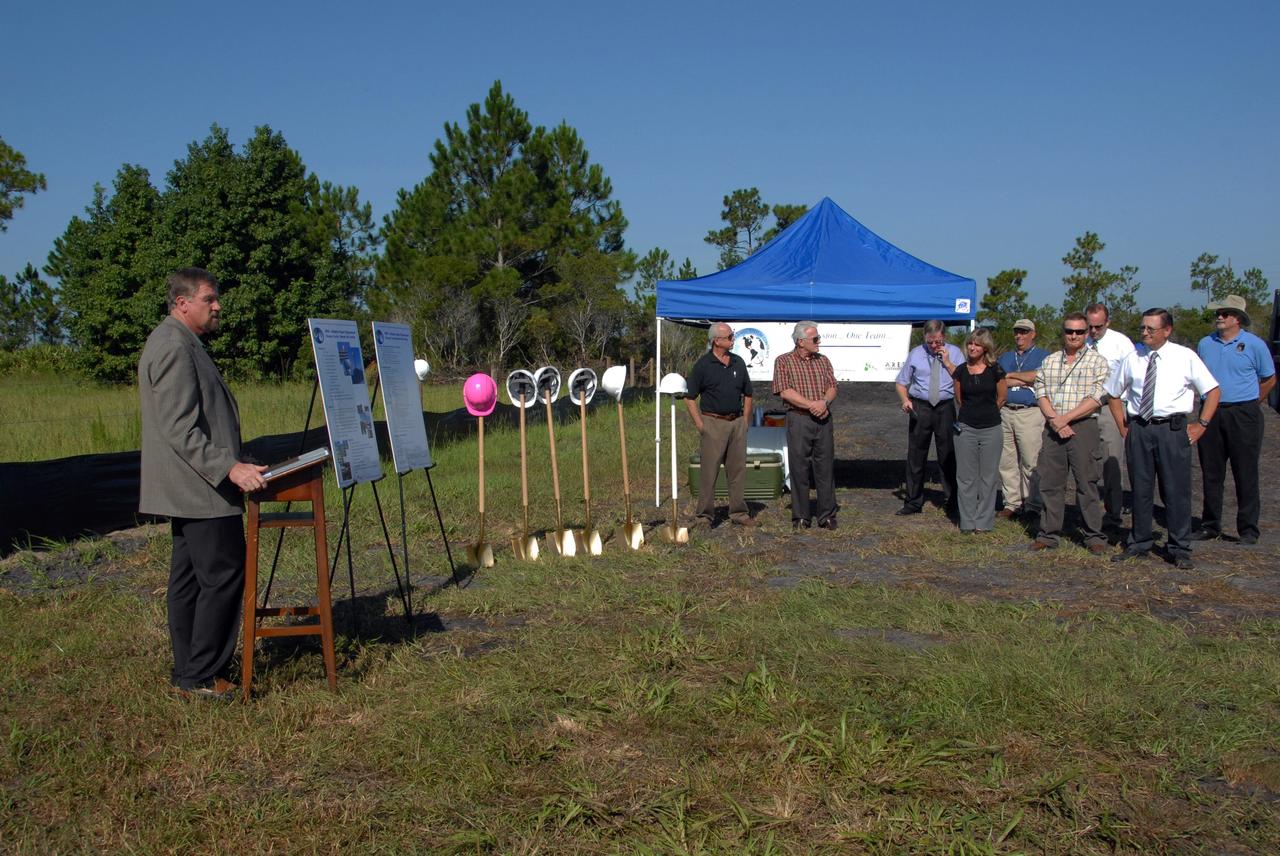
CAPE CANAVERAL, Fla. - A new weather radar site is dedicated with a mock ground-breaking ceremony. At the podium is Pat Carr, SLRSC program director with ITT. The site will be used by NASA's Kennedy Space Center, the 45th Space Wing and their customers. The weather radar is essential in issuing lightning and other severe weather warnings and vital in evaluating lightning launch commit criteria. The new radar, replacing what was installed 25 years ago, includes Doppler capability to detect winds and identify the type, size and number of precipitation particles. The site is ideally distant from the launch pads and has unobstructed views of Cape Canaveral Air Force Station and Kennedy. Photo credit: NASA/Amanda Diller
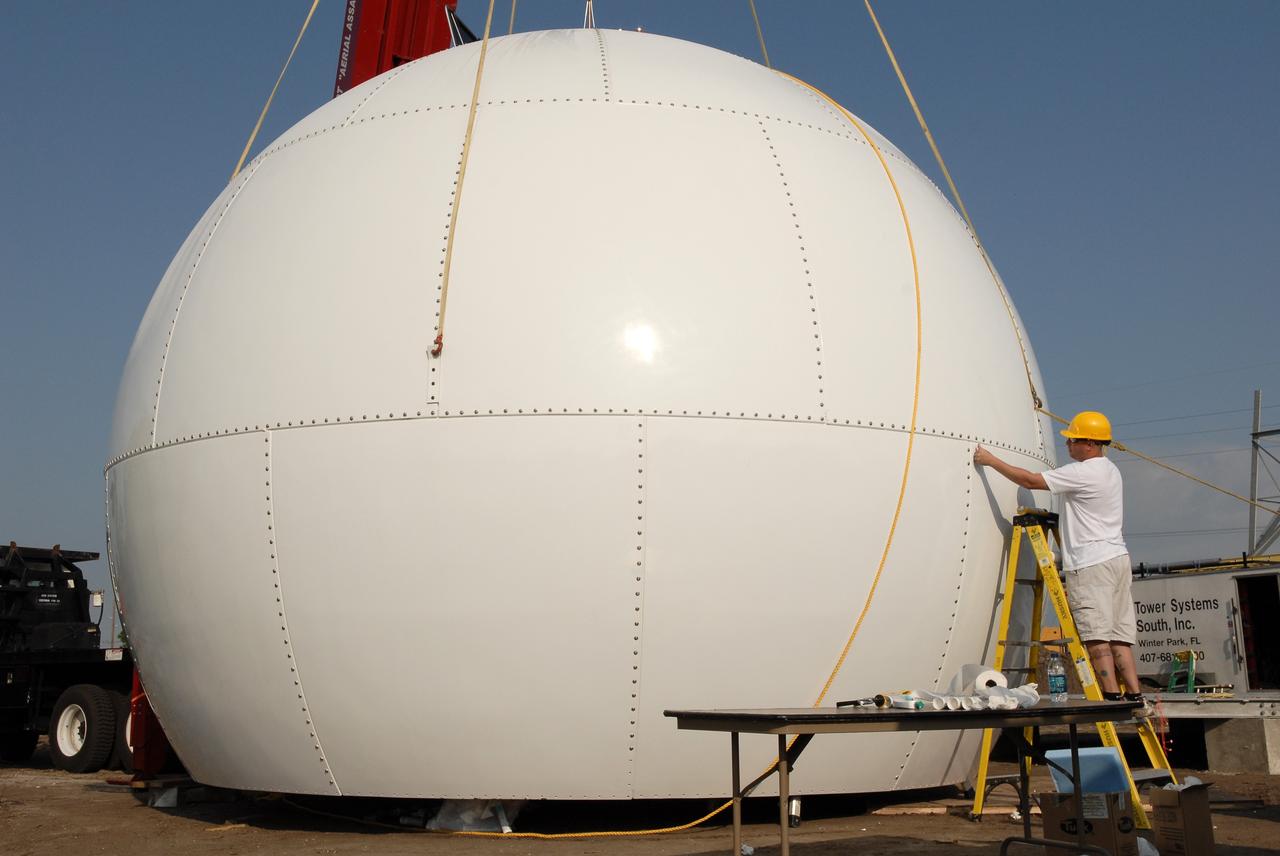
CAPE CANAVERAL, Fla. - At a site near S.R. 520 in Orange County, Florida, a radar dome, or radome, is being completed before moving it to its base. It is part of a new Doppler weather radar facility for the 45th Weather Squadron, replacing one at Patrick Air Force Base and will be used by NASA's Kennedy Space Center, the 45th Space Wing and their customers. The site will be able to monitor weather conditions directly above the launch pads at Kennedy. The weather radar is essential in issuing lightning and other severe weather warnings and vital in evaluating lightning launch commit criteria. The new radar, replacing what was installed 25 years ago at Patrick Air Force Base, includes Doppler capability to detect winds and identify the type, size and number of precipitation particles. The site is ideally distant from the launch pads and has unobstructed views of Cape Canaveral Air Force Station and Kennedy. The radar will be used by forecasters at the USAF 45th Weather Squadron. Photo credit: NASA/Troy Cryder
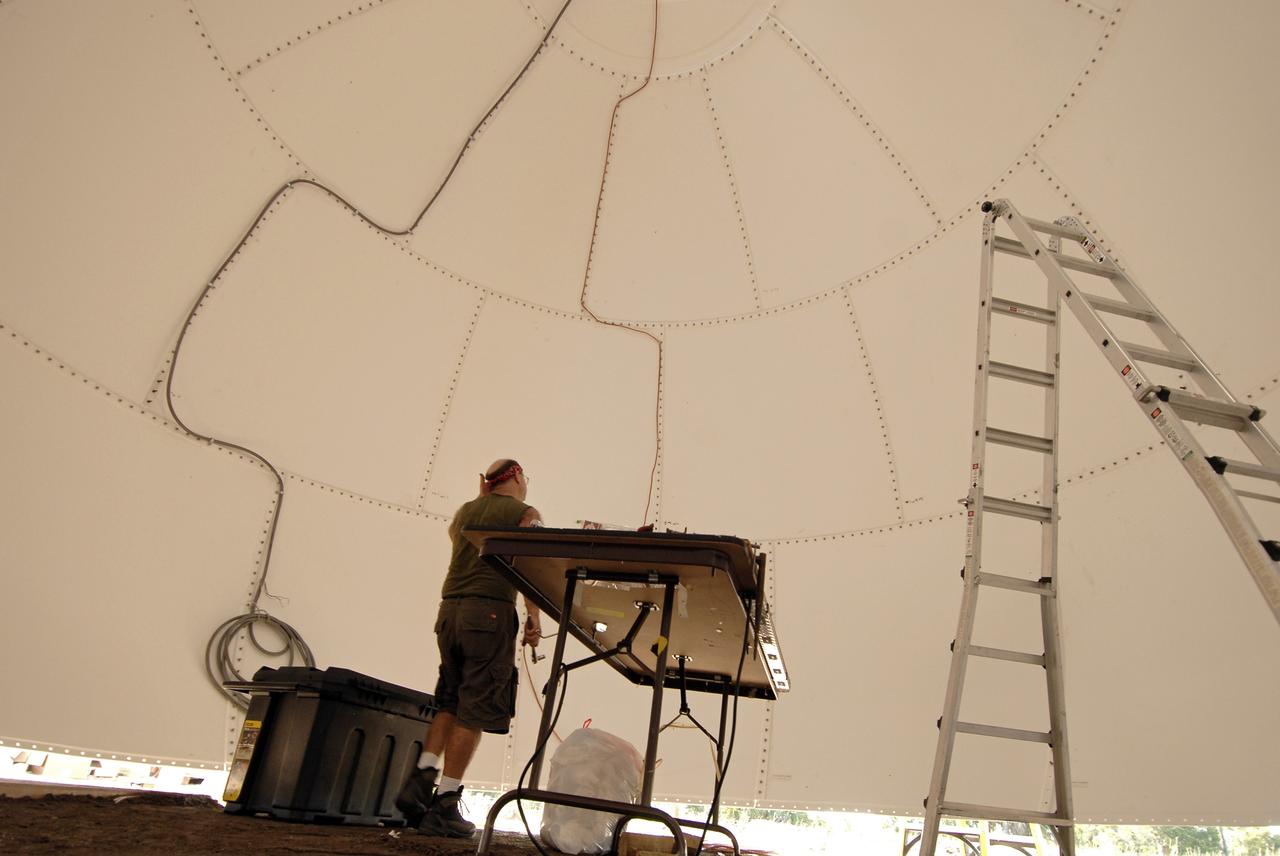
CAPE CANAVERAL, Fla. - A worker inside the radar dome, or radome, monitors equipment before it is lifted onto its base. The dome is part of a new Doppler weather radar facility for the 45th Weather Squadron in an area near S.R. 520 in Orange County, Florida, replacing one at Patrick Air Force Base. It will be used by NASA's Kennedy Space Center, the 45th Space Wing and their customers. The site will be able to monitor weather conditions directly above the launch pads at Kennedy. The weather radar is essential in issuing lightning and other severe weather warnings and vital in evaluating lightning launch commit criteria. The new radar, replacing what was installed 25 years ago at Patrick Air Force Base, includes Doppler capability to detect winds and identify the type, size and number of precipitation particles. The site is ideally distant from the launch pads and has unobstructed views of Cape Canaveral Air Force Station and Kennedy. The radar will be used by forecasters at the USAF 45th Weather Squadron. Photo credit: NASA/Troy Cryder
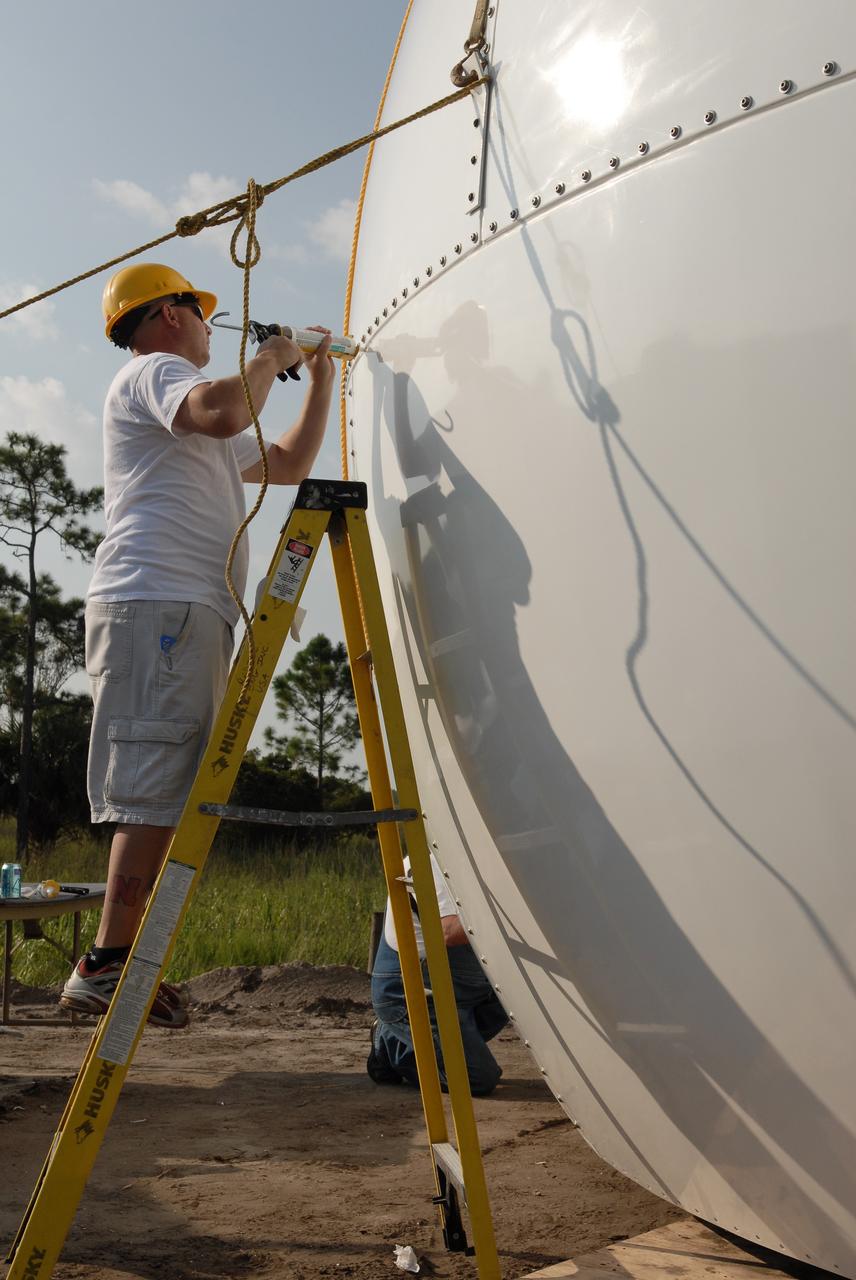
CAPE CANAVERAL, Fla. - A worker seals an area of the radar dome, or radome, under construction on the Doppler weather radar facility for the 45th Weather Squadron being built in an area near S.R. 520 in Orange County, Florida. The new site will replace one at Patrick Air Force Base and will be used by NASA's Kennedy Space Center, the 45th Space Wing and their customers. The site will be able to monitor weather conditions directly above the launch pads at Kennedy. The weather radar is essential in issuing lightning and other severe weather warnings and vital in evaluating lightning launch commit criteria. The new radar, replacing what was installed 25 years ago at Patrick Air Force Base, includes Doppler capability to detect winds and identify the type, size and number of precipitation particles. The site is ideally distant from the launch pads and has unobstructed views of Cape Canaveral Air Force Station and Kennedy. The radar will be used by forecasters at the USAF 45th Weather Squadron. Photo credit: NASA/Troy Cryder
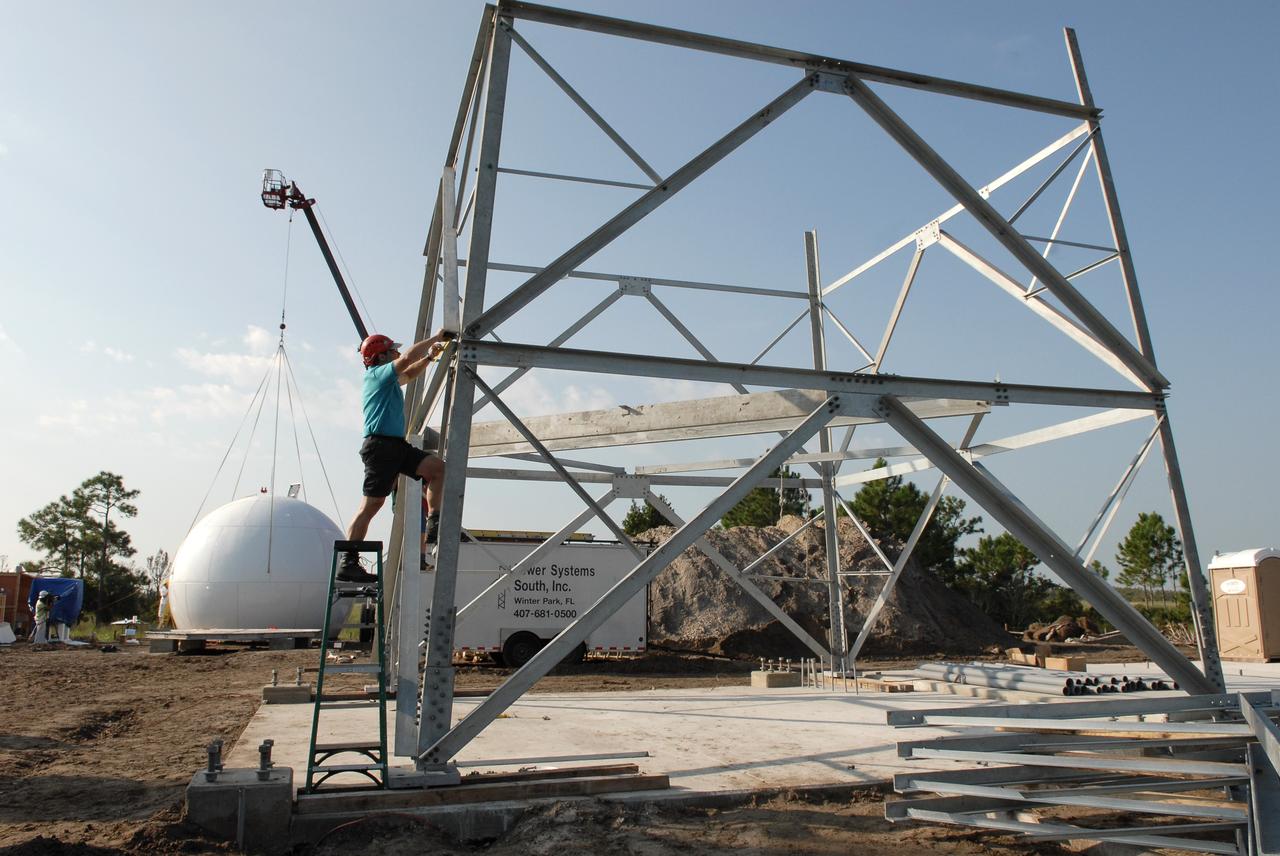
CAPE CANAVERAL, Fla. - Construction continues on the Doppler weather radar facility for the 45th Weather Squadron being built in an area near S.R. 520 in Orange County, Florida. In the background, left, is the radar dome, or radome, being prepared to lift. In the foreground is the tower being put together for the radome. The new site will replace one at Patrick Air Force Base and will be used by NASA's Kennedy Space Center, the 45th Space Wing and their customers. The site will be able to monitor weather conditions directly above the launch pads at Kennedy. The weather radar is essential in issuing lightning and other severe weather warnings and vital in evaluating lightning launch commit criteria. The new radar, replacing what was installed 25 years ago at Patrick Air Force Base, includes Doppler capability to detect winds and identify the type, size and number of precipitation particles. The site is ideally distant from the launch pads and has unobstructed views of Cape Canaveral Air Force Station and Kennedy. The radar will be used by forecasters at the USAF 45th Weather Squadron. Photo credit: NASA/Troy Cryder
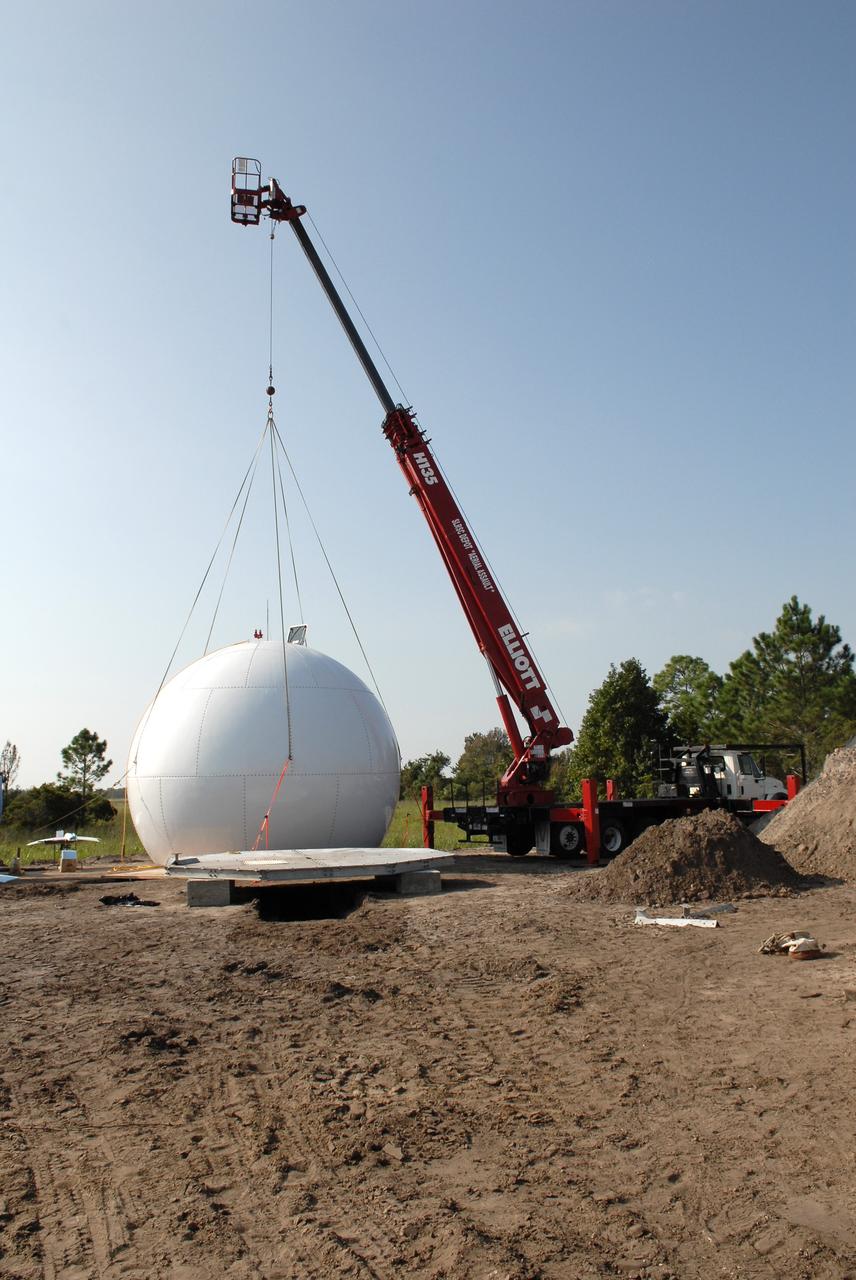
CAPE CANAVERAL, Fla. -In an area near S.R. 520 in Orange County, Florida, a crane begins lifting a radar dome, or radome, which is part of a new Doppler weather radar facility for the 45th Weather Squadron. The new site replaces one at Patrick Air Force Base. It will be used by NASA's Kennedy Space Center, the 45th Space Wing and their customers. The site will be able to monitor weather conditions directly above the launch pads at Kennedy. The weather radar is essential in issuing lightning and other severe weather warnings and vital in evaluating lightning launch commit criteria. The new radar, replacing what was installed 25 years ago at Patrick Air Force Base, includes Doppler capability to detect winds and identify the type, size and number of precipitation particles. The site is ideally distant from the launch pads and has unobstructed views of Cape Canaveral Air Force Station and Kennedy. The radar will be used by forecasters at the USAF 45th Weather Squadron. Photo credit: NASA/Troy Cryder
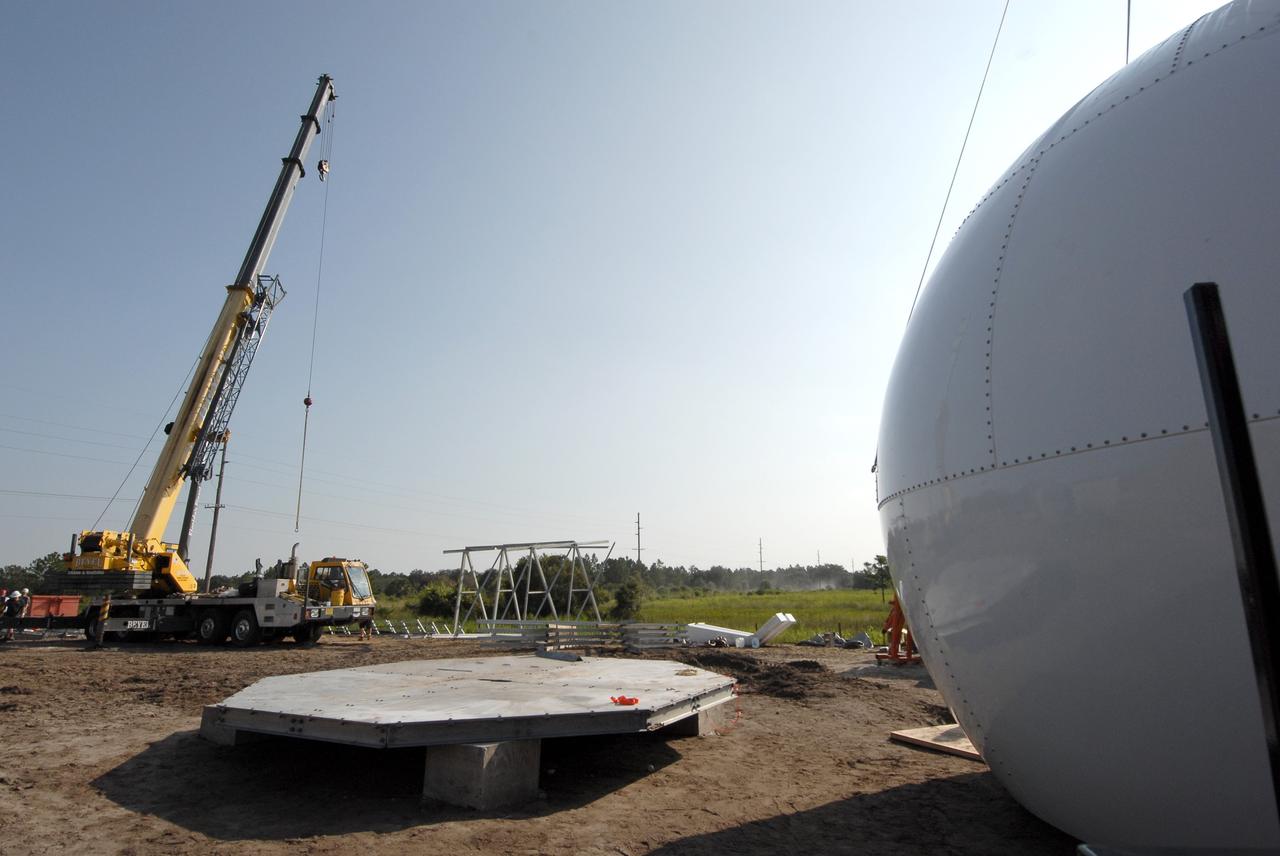
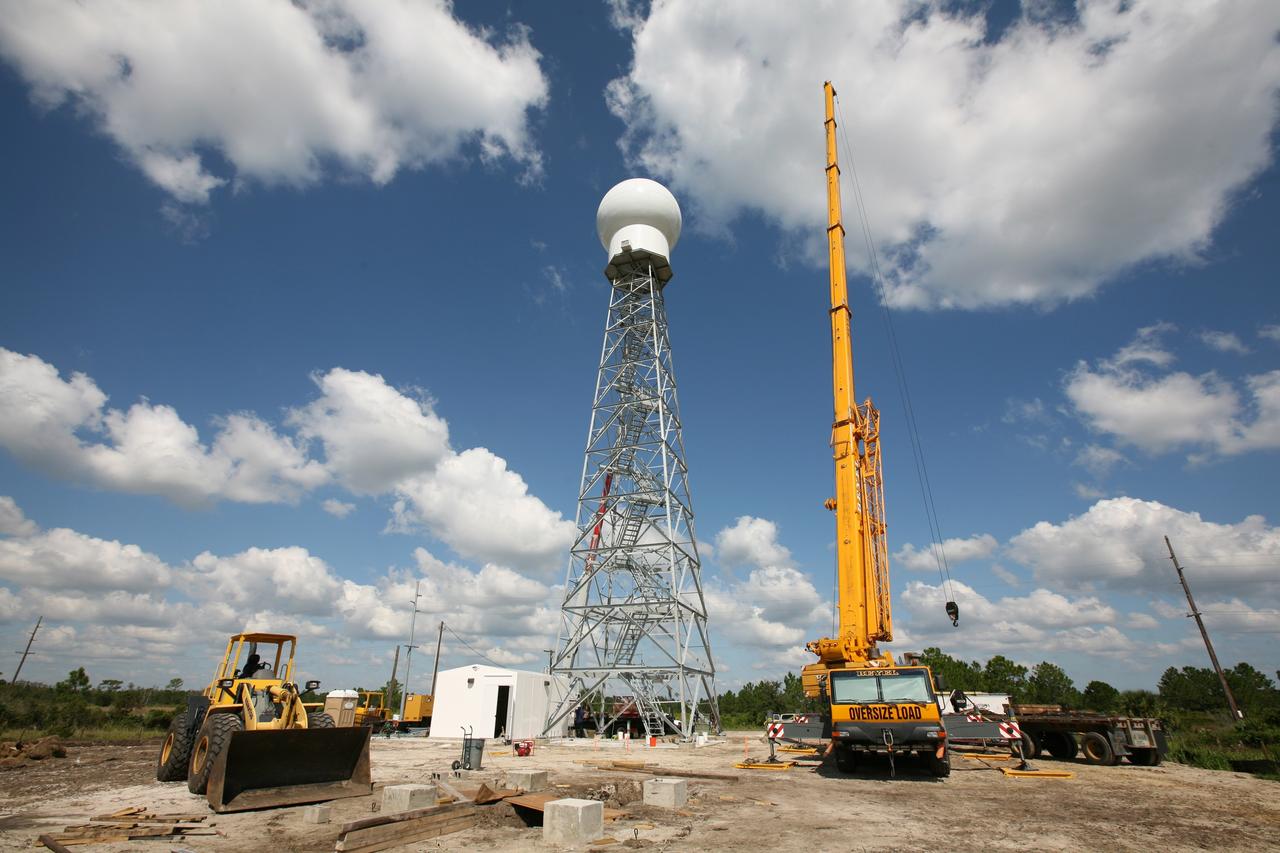
CAPE CANAVERAL, Fla. - Construction continues on the Doppler weather radar facility for the 45th Weather Squadron being built in an area near S.R. 520 in Orange County, Florida. At right is a radar dome, or radome; in the background is the tower being built for the radome. The new site will replace one at Patrick Air Force Base and will be used by NASA's Kennedy Space Center, the 45th Space Wing and their customers. The site will be able to monitor weather conditions directly above the launch pads at Kennedy. The weather radar is essential in issuing lightning and other severe weather warnings and vital in evaluating lightning launch commit criteria. The new radar, replacing what was installed 25 years ago at Patrick Air Force Base, includes Doppler capability to detect winds and identify the type, size and number of precipitation particles. The site is ideally distant from the launch pads and has unobstructed views of Cape Canaveral Air Force Station and Kennedy. The radar will be used by forecasters at the USAF 45th Weather Squadron. Photo credit: NASA/Troy Cryder
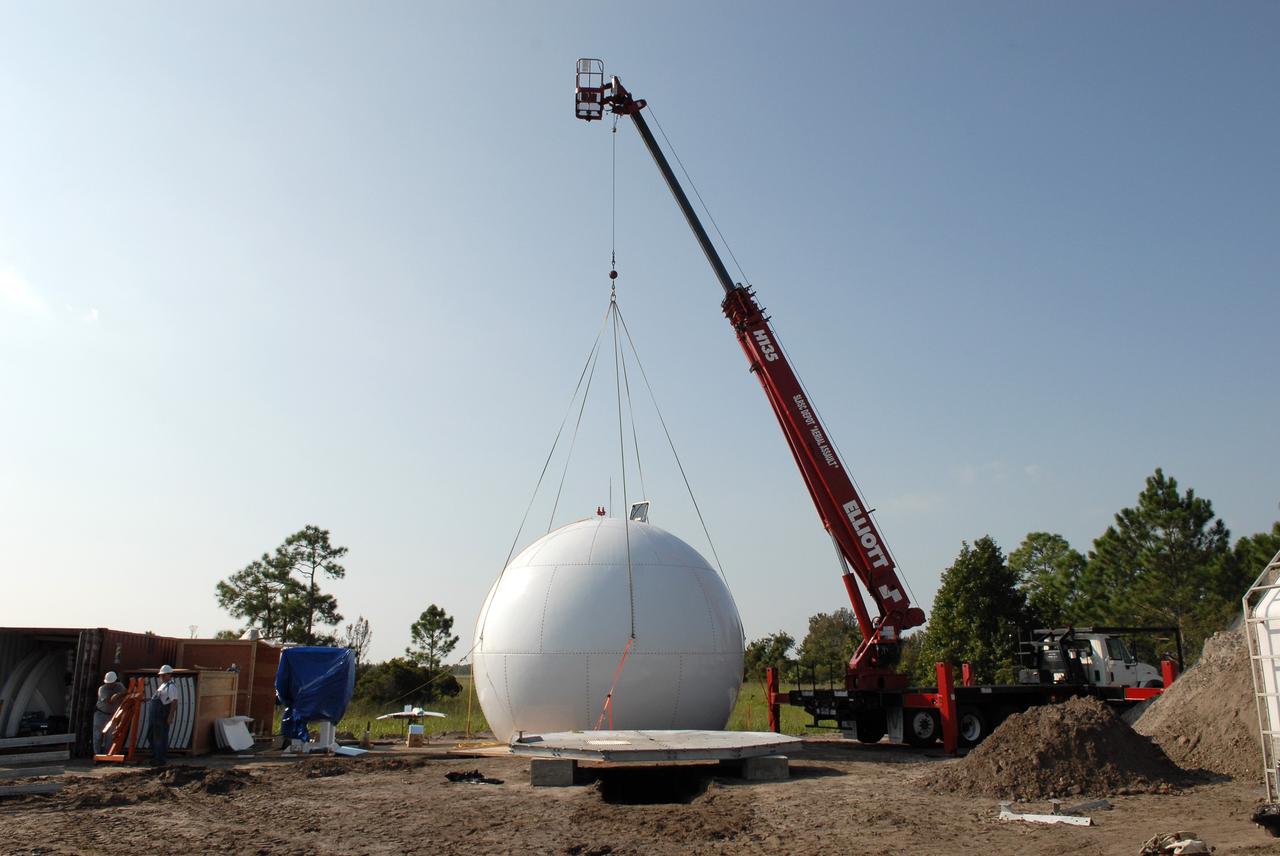
CAPE CANAVERAL, Fla. - In an area near S.R. 520 in Orange County, Florida, a crane begins lifting a radar dome, or radome, which is part of a new Doppler weather radar facility for the 45th Weather Squadron. The new site replaces one at Patrick Air Force Base. It will be used by NASA's Kennedy Space Center, the 45th Space Wing and their customers. The site will be able to monitor weather conditions directly above the launch pads at Kennedy. The weather radar is essential in issuing lightning and other severe weather warnings and vital in evaluating lightning launch commit criteria. The new radar, replacing what was installed 25 years ago at Patrick Air Force Base, includes Doppler capability to detect winds and identify the type, size and number of precipitation particles. The site is ideally distant from the launch pads and has unobstructed views of Cape Canaveral Air Force Station and Kennedy. The radar will be used by forecasters at the USAF 45th Weather Squadron. Photo credit: NASA/Troy Cryder
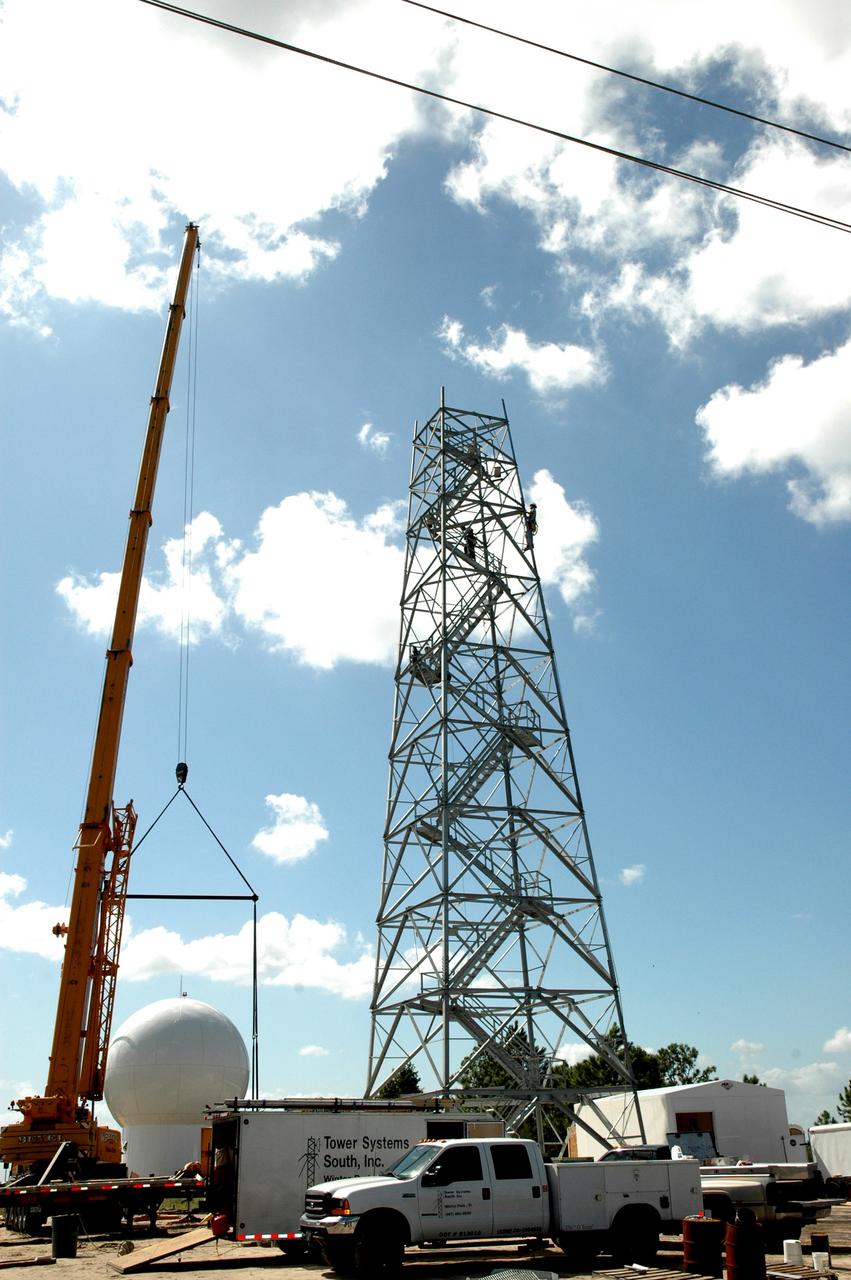
CAPE CANAVERAL, Fla. – In an area near S.R. 520 in Orange County, Florida, the steel tower for a Doppler weather radar facility for the 45th Weather Squadron is nearly complete. At left is the radome that will go on top of the tower, enclosing the radar. The new site replaces one at Patrick Air Force Base and will be used by NASA's Kennedy Space Center, the U.S. Air Force's 45th Space Wing and their customers. The facility will be able to monitor weather conditions directly above and surrounding the launch pads at Kennedy. The weather radar is essential in issuing lightning and other severe weather warnings and vital in evaluating lightning launch commit criteria. Replacing what was installed 25 years ago at Patrick Air Force Base, the new radar includes Doppler capability to detect winds and identify the type, size and number of precipitation particles. The site is ideally distant from the launch pads and has unobstructed views of Cape Canaveral Air Force Station and Kennedy. The radar will be used by forecasters at the USAF 45th Weather Squadron. Photo credit: NASA/Jim Grossmann
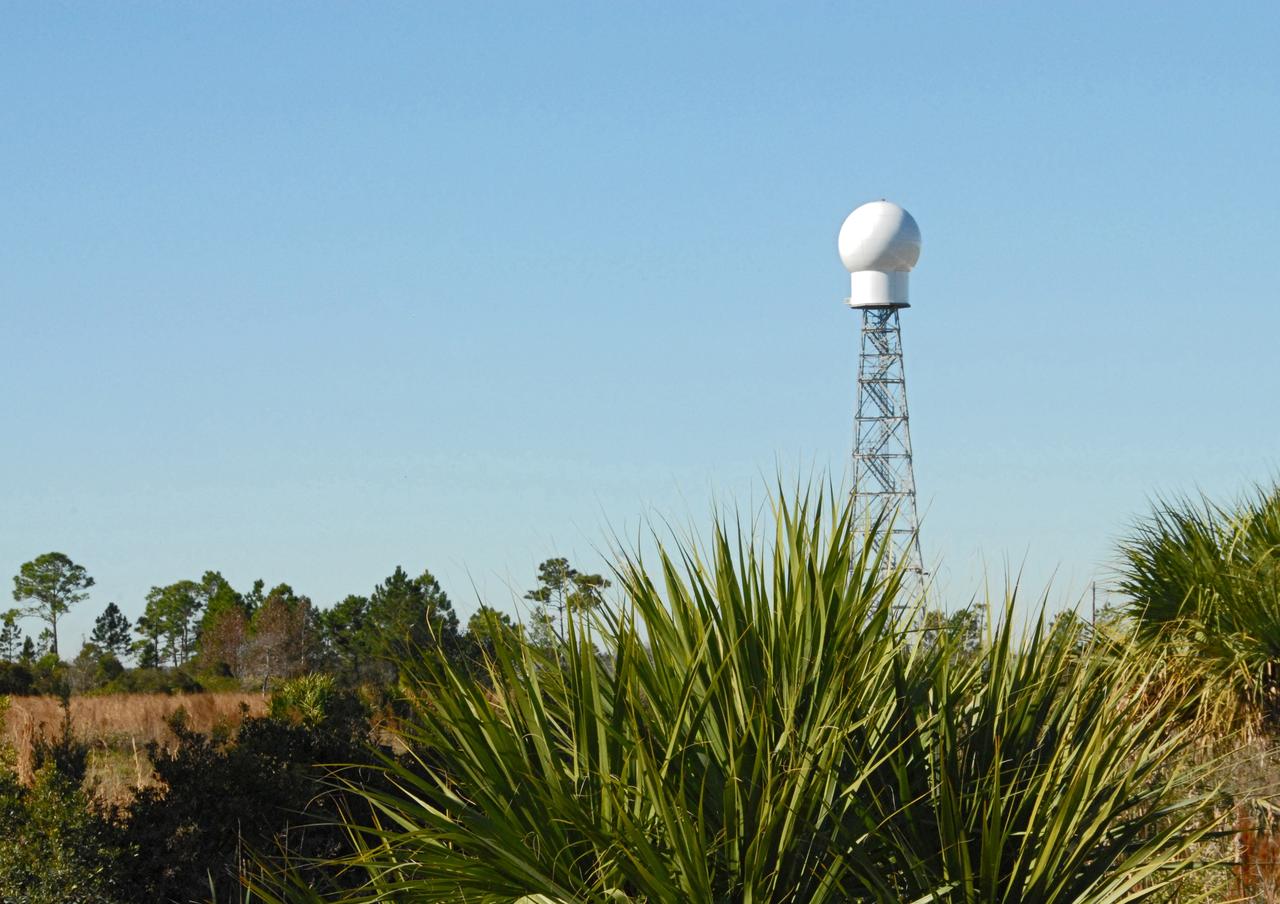
CAPE CANAVERAL, Fla. -- A replacement weather Doppler radar has been installed on top of this tower in a remote field located west of NASA's Kennedy Space Center in Florida. The radome houses the rotating antenna and pedestal and protects them from the elements. The tower is 100 feet high; the radome is 22 feet in diameter, the antenna 14 feet in diameter. It rotates at 6 rpm. The structure can withstand 130 mph winds. It is undergoing initial testing and expected to become operational in the summer. The weather radar is essential in issuing lightning and other severe weather warnings and vital in evaluating lightning launch commit criteria for space shuttle and rocket launches. Photo credit: NASA/Troy Cryder
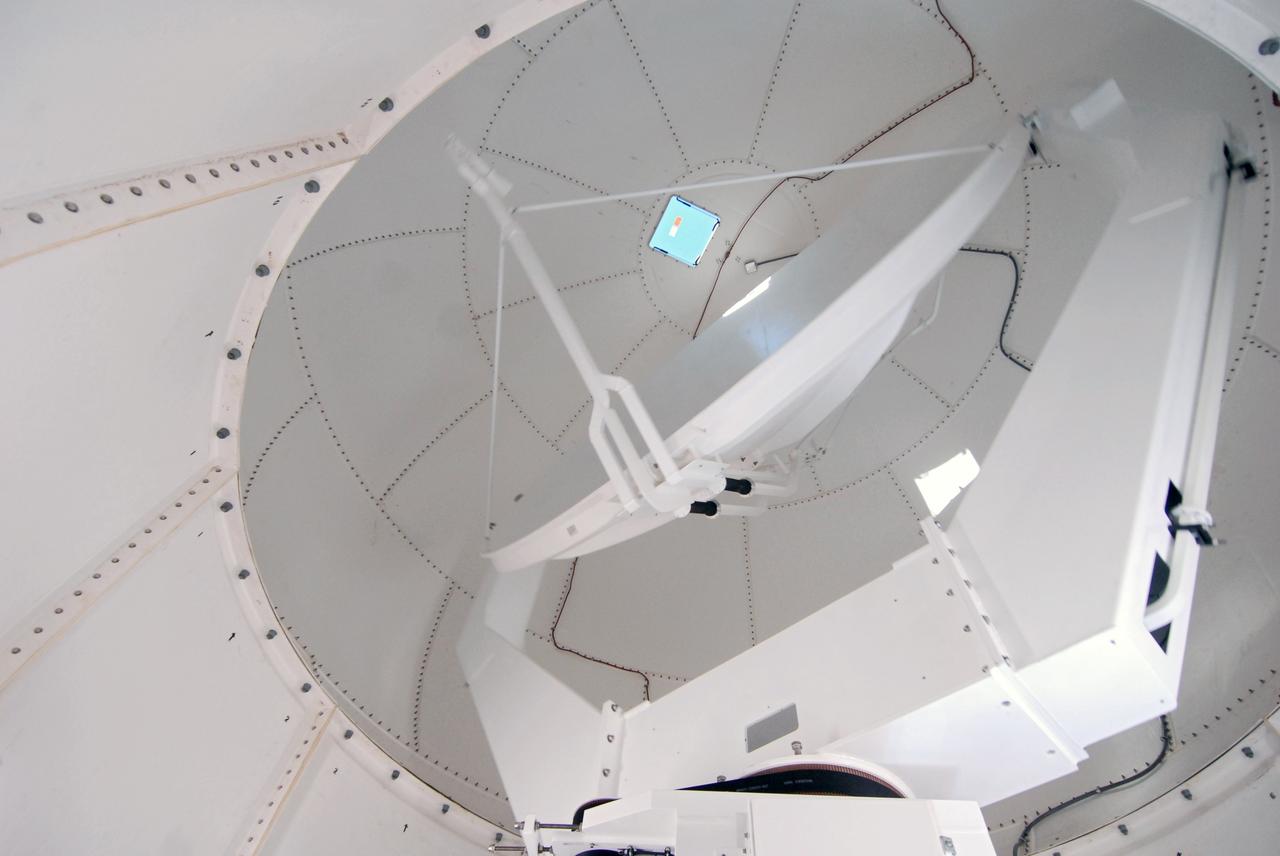
CAPE CANAVERAL, Fla. -- A closeup of the replacement weather Doppler radar being installed in a remote field located west of NASA's Kennedy Space Center in Florida. The tower is 100 feet high; the radome is 22 feet in diameter, the antenna 14 feet in diameter. It rotates at 6 rpm. The structure can withstand 130 mph winds. It is undergoing initial testing and expected to become operational in the summer. The weather radar is essential in issuing lightning and other severe weather warnings and vital in evaluating lightning launch commit criteria for space shuttle and rocket launches. Photo credit: NASA/Troy Cryder
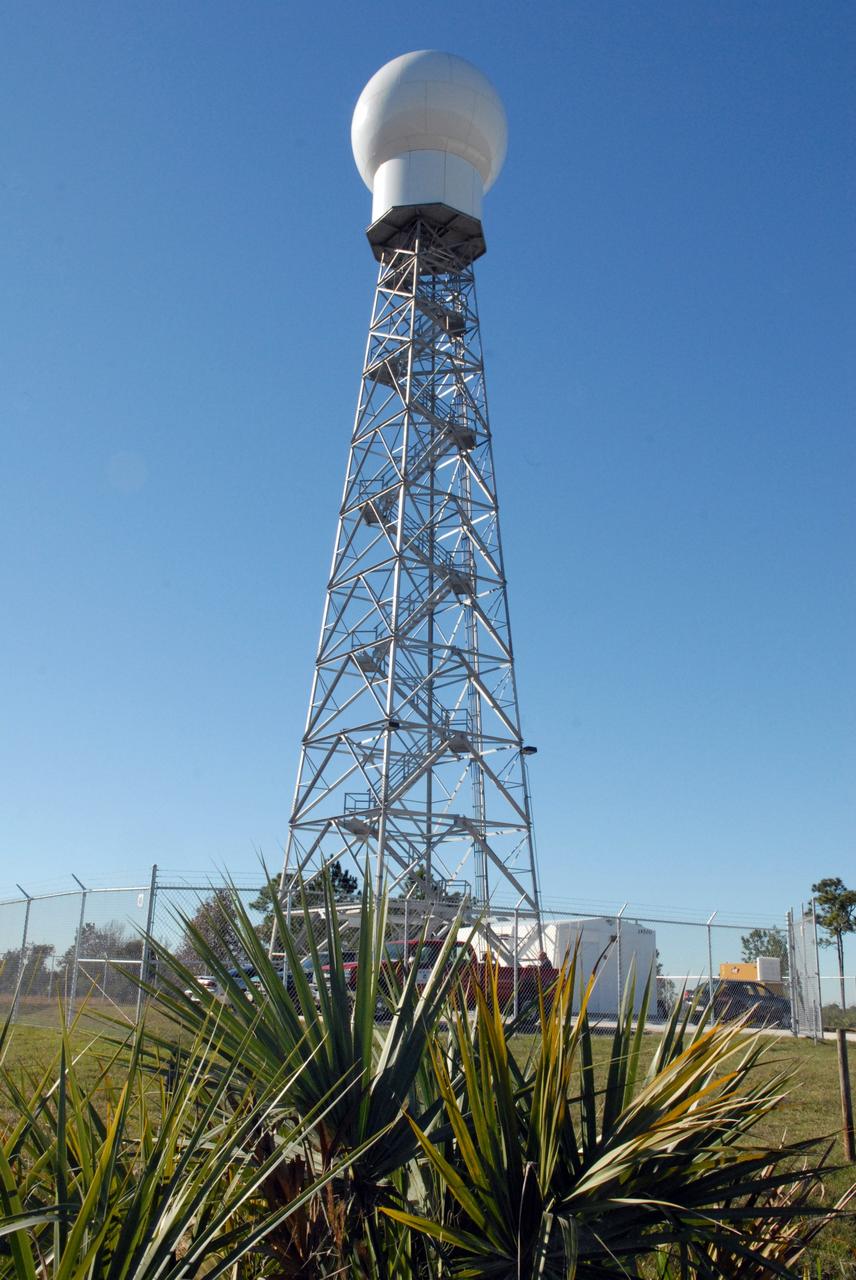
CAPE CANAVERAL, Fla. -- A replacement weather Doppler radar has been installed on top of this tower in a remote field located west of NASA's Kennedy Space Center in Florida. The radome houses the rotating antenna and pedestal and protects them from the elements. The tower is 100 feet high; the radome is 22 feet in diameter, the antenna 14 feet in diameter. It rotates at 6 rpm. The structure can withstand 130 mph winds. It is undergoing initial testing and expected to become operational in the summer. The weather radar is essential in issuing lightning and other severe weather warnings and vital in evaluating lightning launch commit criteria for space shuttle and rocket launches. Photo credit: NASA/Troy Cryder
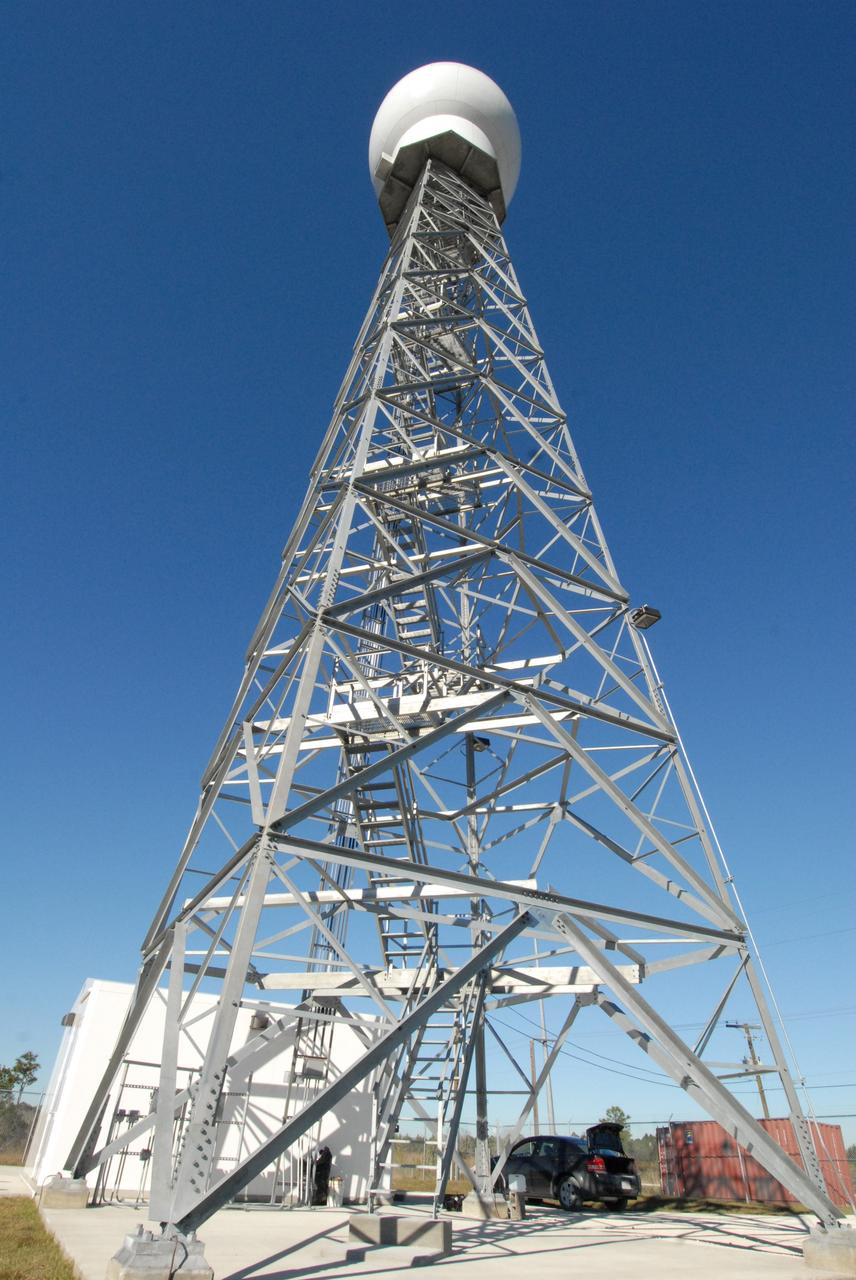
CAPE CANAVERAL, Fla. -- A replacement weather Doppler radar has been installed in the radome on top of this tower in a remote field located west of NASA's Kennedy Space Center in Florida. The dome houses the rotating antenna and pedestal and protects them from the elements. The tower is 100 feet high; the radome is 22 feet in diameter, the antenna 14 feet in diameter. It rotates at 6 rpm. The structure can withstand 130 mph winds. It is undergoing initial testing and expected to become operational in the summer. The weather radar is essential in issuing lightning and other severe weather warnings and vital in evaluating lightning launch commit criteria for space shuttle and rocket launches. Photo credit: NASA/Troy Cryder
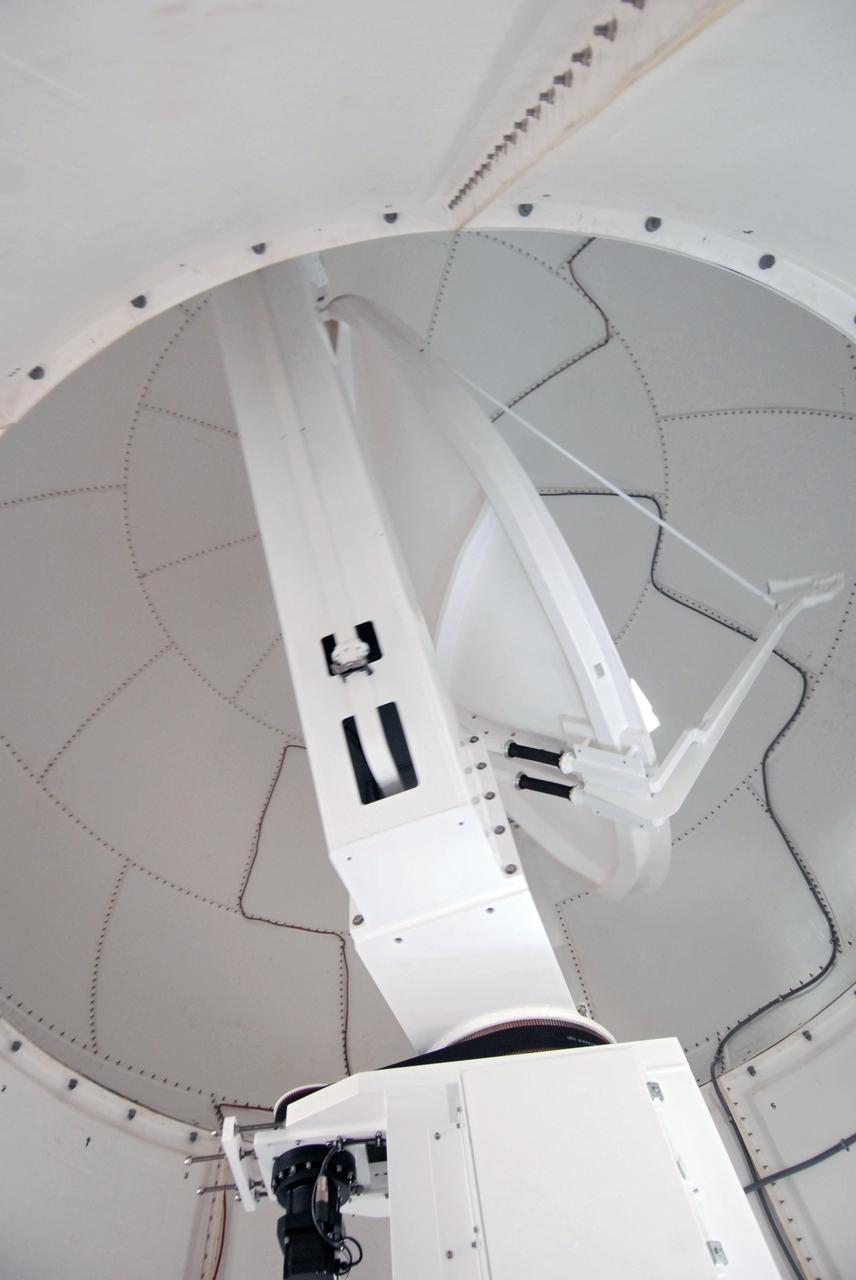
CAPE CANAVERAL, Fla. -- A closeup of the replacement weather Doppler radar being installed in a remote field located west of NASA's Kennedy Space Center in Florida. The tower is 100 feet high; the radome is 22 feet in diameter, the antenna 14 feet in diameter. It rotates at 6 rpm. The structure can withstand 130 mph winds. It is undergoing initial testing and expected to become operational in the summer. The weather radar is essential in issuing lightning and other severe weather warnings and vital in evaluating lightning launch commit criteria for space shuttle and rocket launches. Photo credit: NASA/Troy Cryder
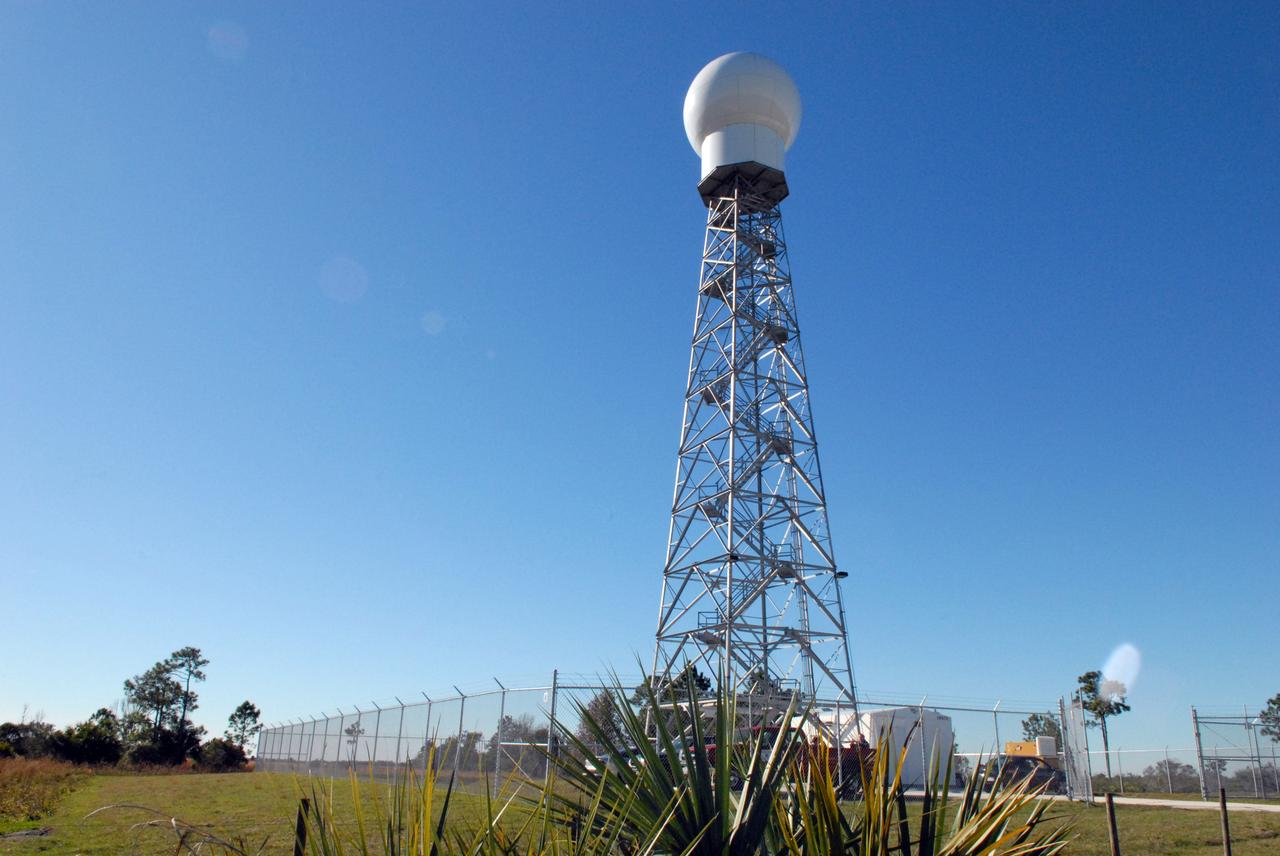
CAPE CANAVERAL, Fla. -- A replacement weather Doppler radar has been installed on top of this tower in a remote field located west of NASA's Kennedy Space Center in Florida. The radome houses the rotating antenna and pedestal and protects them from the elements. The tower is 100 feet high; the radome is 22 feet in diameter, the antenna 14 feet in diameter. It rotates at 6 rpm. The structure can withstand 130 mph winds. It is undergoing initial testing and expected to become operational in the summer. The weather radar is essential in issuing lightning and other severe weather warnings and vital in evaluating lightning launch commit criteria for space shuttle and rocket launches. Photo credit: NASA/Troy Cryder
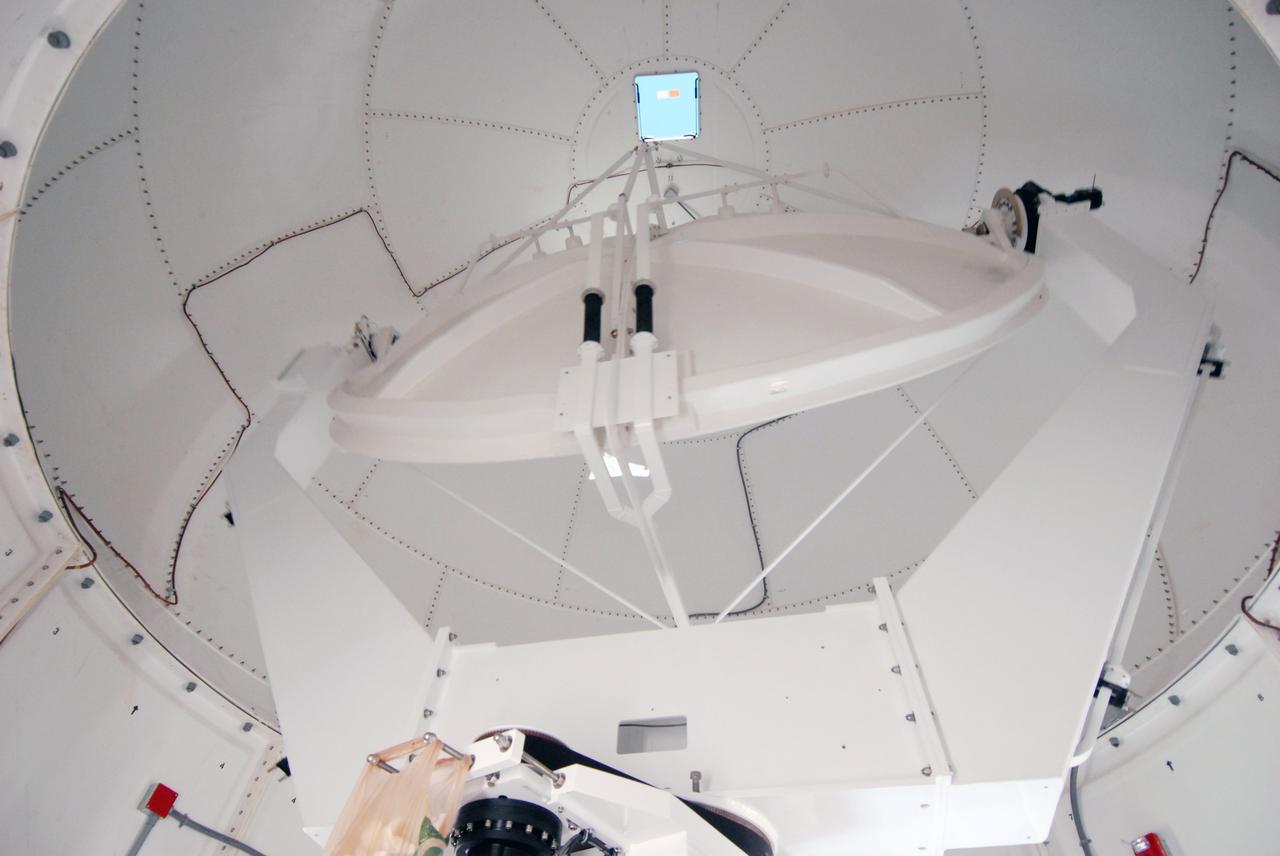
CAPE CANAVERAL, Fla. -- A closeup of the replacement weather Doppler radar being installed in a remote field located west of NASA's Kennedy Space Center in Florida. The tower is 100 feet high; the radome is 22 feet in diameter, the antenna 14 feet in diameter. It rotates at 6 rpm. The structure can withstand 130 mph winds. It is undergoing initial testing and expected to become operational in the summer. The weather radar is essential in issuing lightning and other severe weather warnings and vital in evaluating lightning launch commit criteria for space shuttle and rocket launches. Photo credit: NASA/Troy Cryder
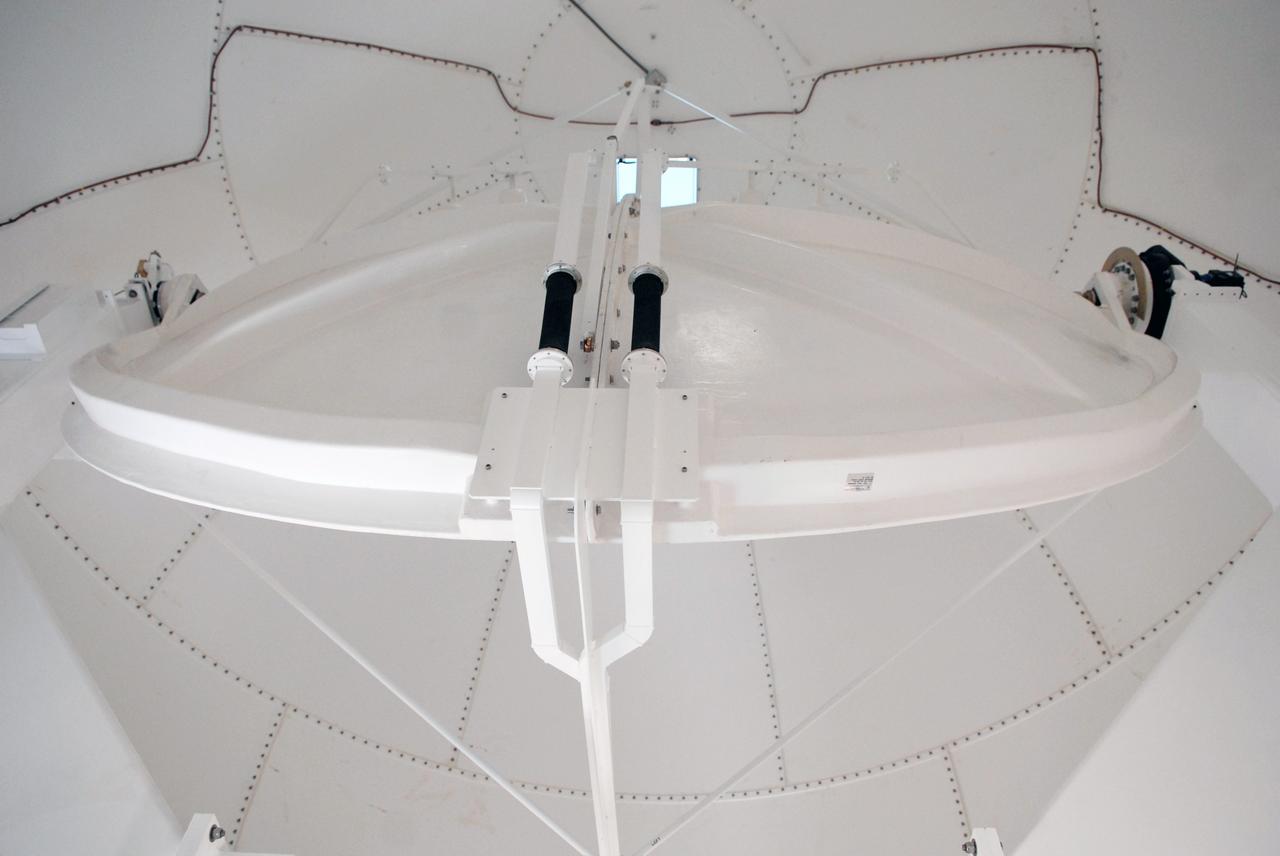
CAPE CANAVERAL, Fla. -- A closeup of the replacement weather Doppler radar being installed in a remote field located west of NASA's Kennedy Space Center in Florida. The tower is 100 feet high; the radome is 22 feet in diameter, the antenna 14 feet in diameter. It rotates at 6 rpm. The structure can withstand 130 mph winds. It is undergoing initial testing and expected to become operational in the summer. The weather radar is essential in issuing lightning and other severe weather warnings and vital in evaluating lightning launch commit criteria for space shuttle and rocket launches. Photo credit: NASA/Troy Cryder
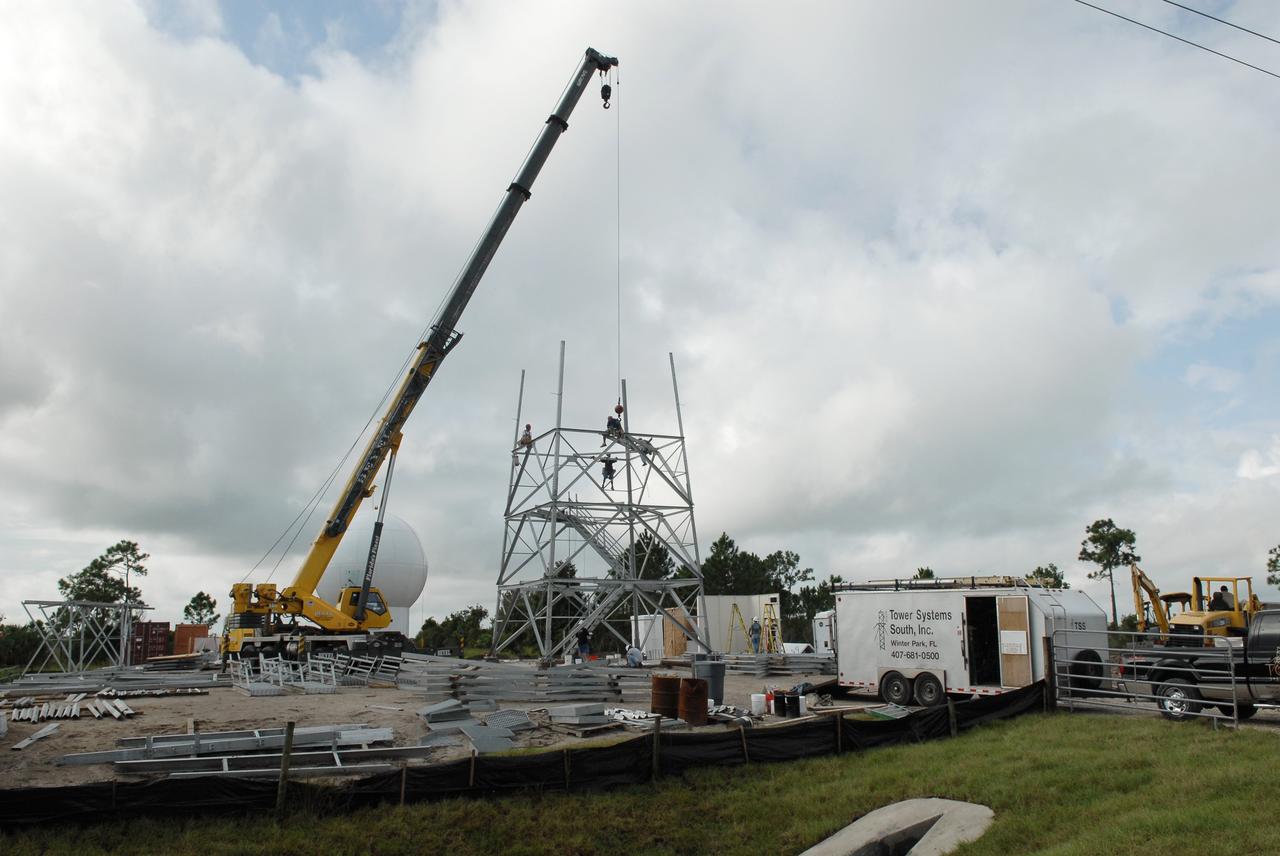
CAPE CANAVERAL, Fla. – In an area near S.R. 520 in Orange County, Florida, a crane is being used to lift steel beams for a new Doppler weather radar tower for the 45th Weather Squadron. In the background at left is the radome that will be on top of the tower. The new site replaces one at Patrick Air Force Base. It will be used by NASA's Kennedy Space Center, the 45th Space Wing and their customers. The site will be able to monitor weather conditions directly above and surrounding the launch pads at Kennedy. The weather radar is essential in issuing lightning and other severe weather warnings and vital in evaluating lightning launch commit criteria. The new radar, replacing what was installed 25 years ago at Patrick Air Force Base, includes Doppler capability to detect winds and identify the type, size and number of precipitation particles. The site is ideally distant from the launch pads and has unobstructed views of Cape Canaveral Air Force Station and Kennedy. The radar will be used by forecasters at the USAF 45th Weather Squadron. Photo credit: NASA/Troy Cryder
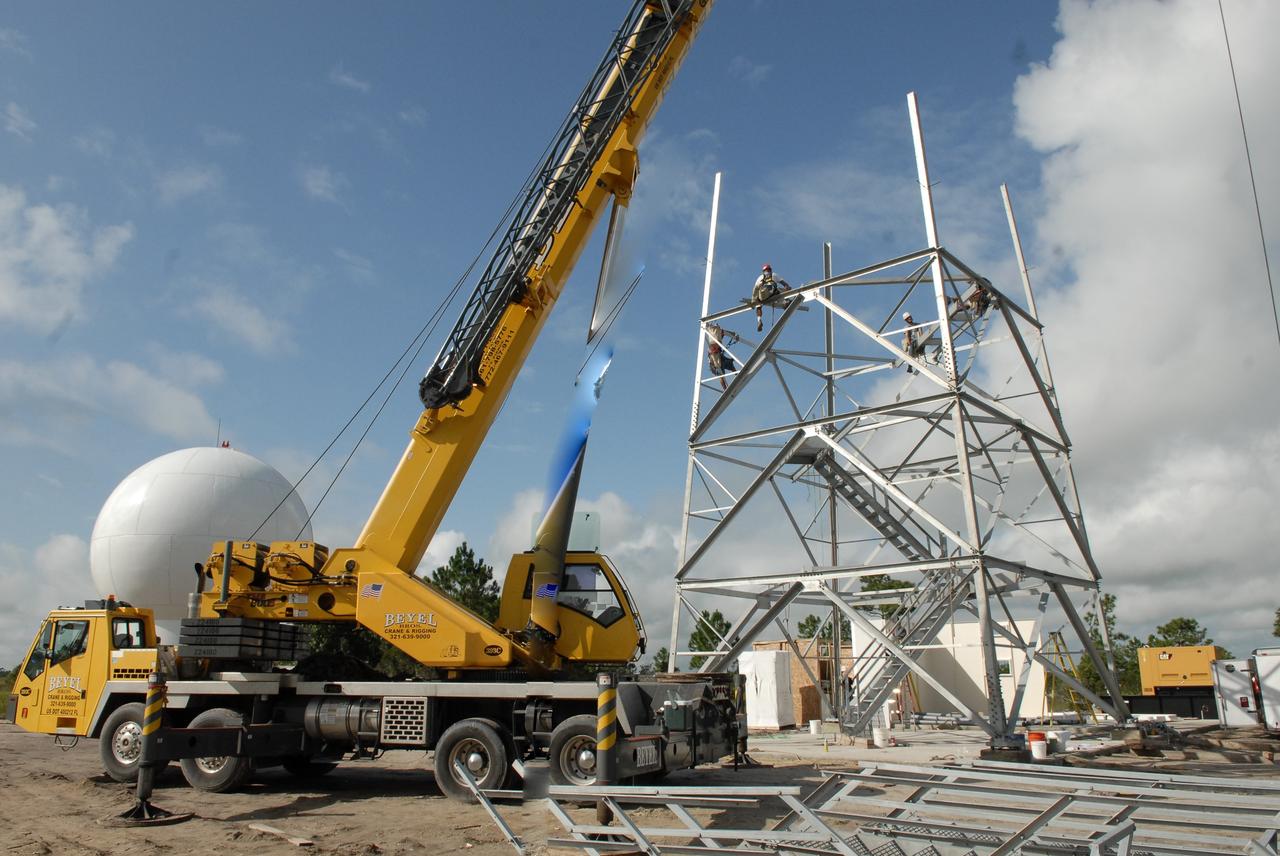
CAPE CANAVERAL, Fla. – In an area near S.R. 520 in Orange County, Florida, workers are constructing a steel tower for a Doppler weather radar facility for the 45th Weather Squadron. At left is the radome that will be on top of the tower. The new site replaces one at Patrick Air Force Base. It will be used by NASA's Kennedy Space Center, the 45th Space Wing and their customers. The site will be able to monitor weather conditions directly above and surrounding the launch pads at Kennedy. The weather radar is essential in issuing lightning and other severe weather warnings and vital in evaluating lightning launch commit criteria. The new radar, replacing what was installed 25 years ago at Patrick Air Force Base, includes Doppler capability to detect winds and identify the type, size and number of precipitation particles. The site is ideally distant from the launch pads and has unobstructed views of Cape Canaveral Air Force Station and Kennedy. The radar will be used by forecasters at the USAF 45th Weather Squadron. Photo credit: NASA/Troy Cryder
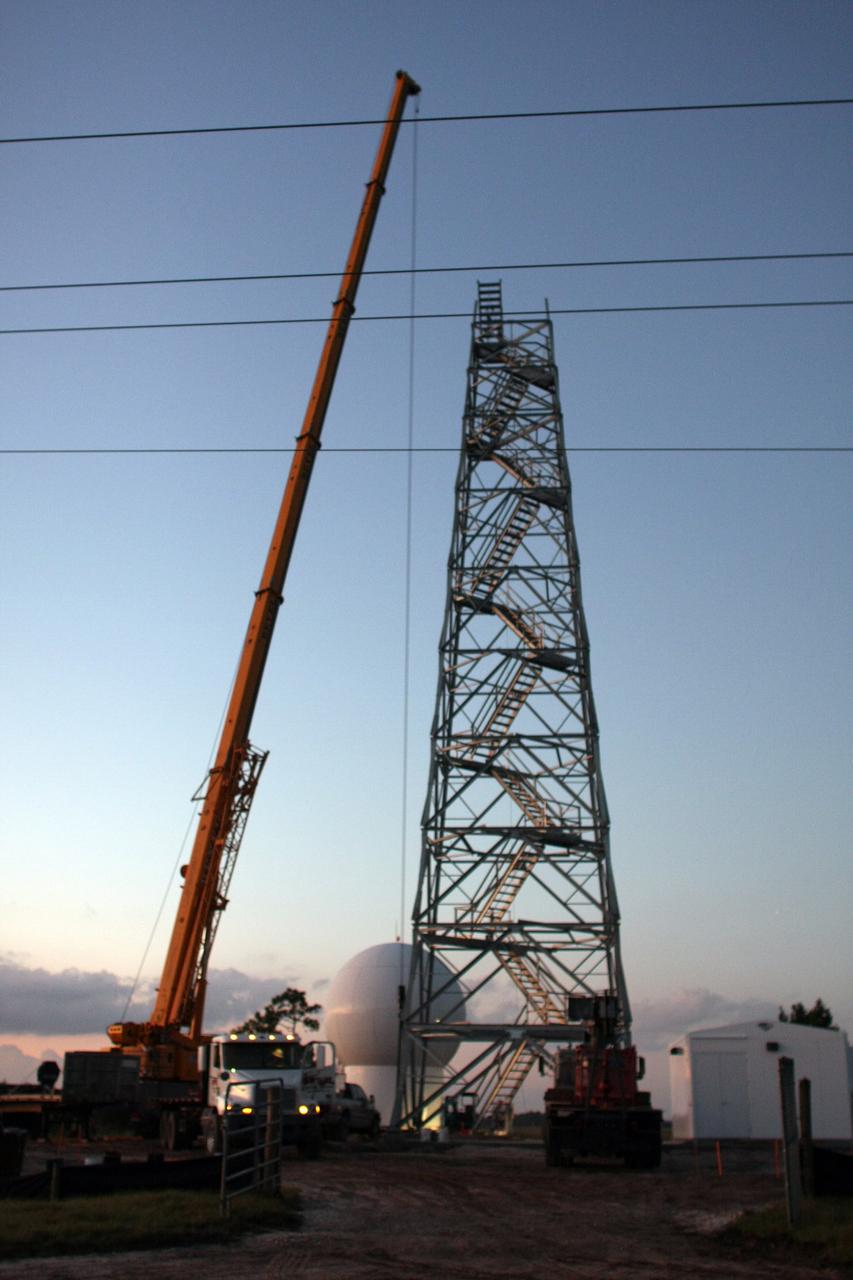
CAPE CANAVERAL, Fla. - A crane is prepared to lift the radome to the top of a new Doppler weather radar tower being built in an area near S.R. 520 in Orange County, Fla. The dome houses the weather radar dish and pedestal and protects them from the elements. The new tower will replace one at nearby Patrick Air Force Base and will be used by NASA's Kennedy Space Center, the 45th Space Wing and their customers. The tower will be able to monitor weather conditions directly above the launch pads at Kennedy. The weather radar is essential in issuing lightning and other severe weather warnings and vital in evaluating lightning launch commit criteria. The new radar, replacing what was installed 25 years ago, includes Doppler capability to detect winds and identify the type, size and number of precipitation particles. The site is ideally distant from the launch pads and has unobstructed views of Cape Canaveral Air Force Station and Kennedy. Photo credit: NASA/Dimitri Gerondidakis
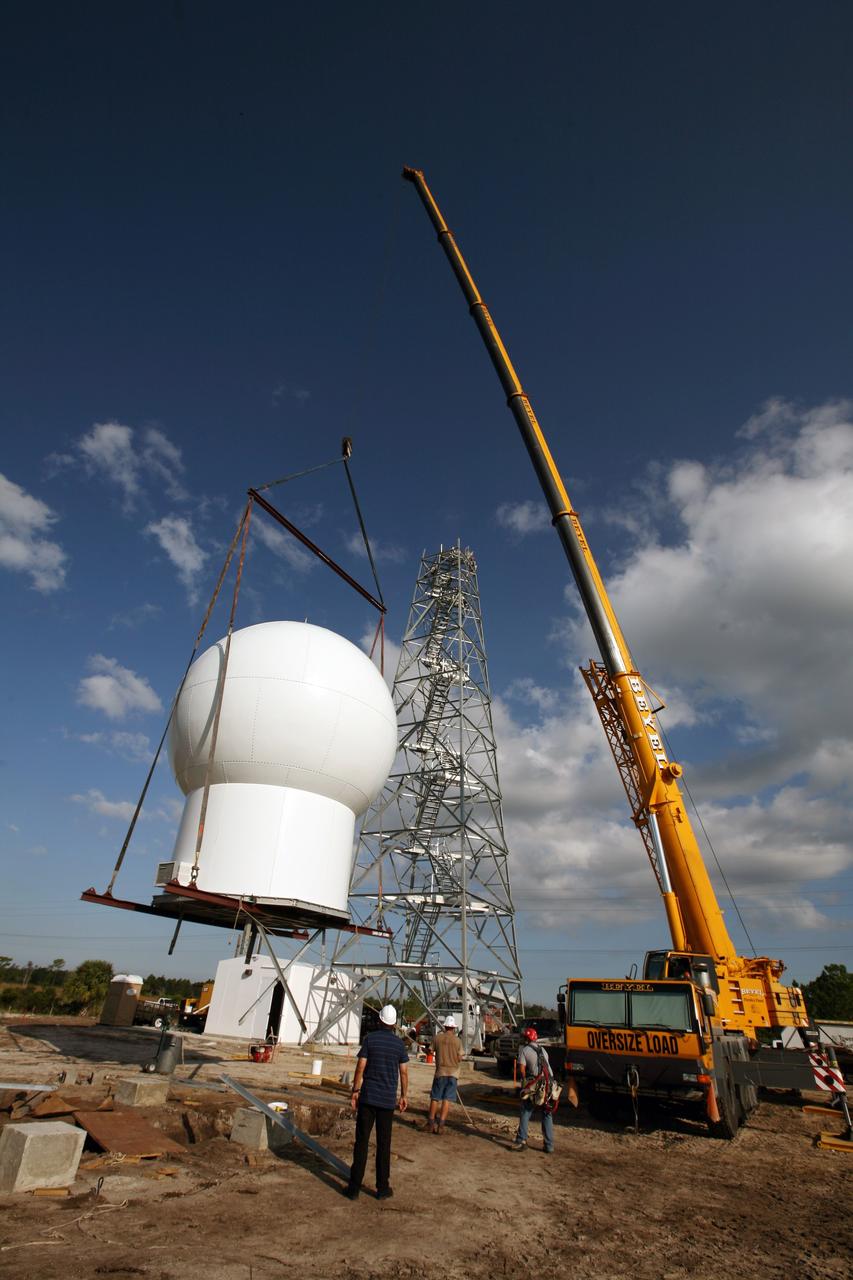
CAPE CANAVERAL, Fla. - Joe Buchanan (left), project lead with the ITT Corporation for the 45th Space Wing, supervises the lift of the radome to the top of a new Doppler weather radar tower being built in an area near S.R. 520 in Orange County, Fla. The dome houses the weather radar dish and pedestal and protects them from the elements. The new tower will replace one at nearby Patrick Air Force Base and will be used by NASA's Kennedy Space Center, the 45th Space Wing and their customers. The tower will be able to monitor weather conditions directly above the launch pads at Kennedy. The weather radar is essential in issuing lightning and other severe weather warnings and vital in evaluating lightning launch commit criteria. The new radar, replacing what was installed 25 years ago, includes Doppler capability to detect winds and identify the type, size and number of precipitation particles. The site is ideally distant from the launch pads and has unobstructed views of Cape Canaveral Air Force Station and Kennedy. Photo credit: NASA/Dimitri Gerondidakis
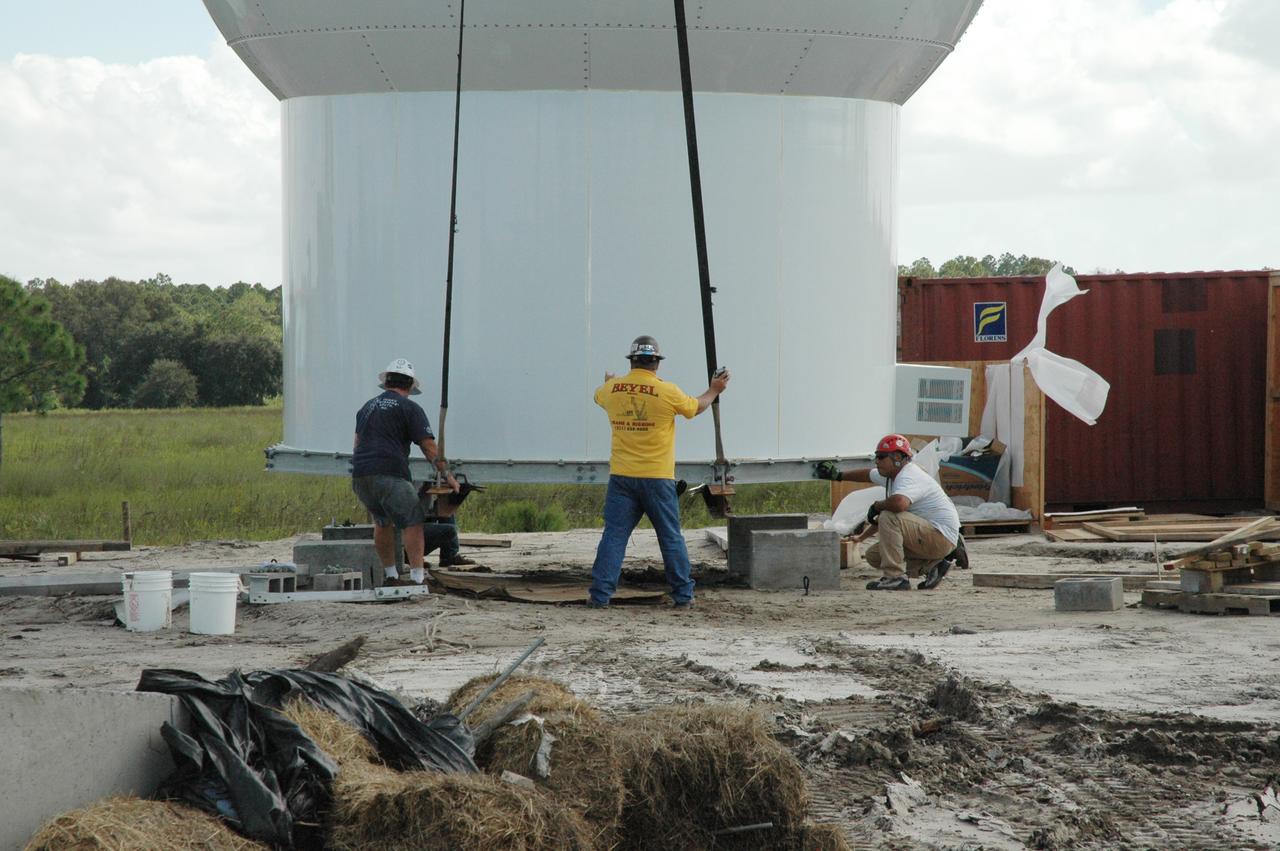
CAPE CANAVERAL, Fla. – In an area near S.R. 520 in Orange County, Florida, workers help guide the cables on a crane lifting a radome onto concrete blocks. The radome will be lifted onto a steel tower constructed for a Doppler weather radar for the 45th Weather Squadron. The new site replaces one at Patrick Air Force Base and will be used by NASA's Kennedy Space Center, the U.S. Air Force's 45th Space Wing and their customers. The facility will be able to monitor weather conditions directly above and surrounding the launch pads at Kennedy. The weather radar is essential in issuing lightning and other severe weather warnings and vital in evaluating lightning launch commit criteria. Replacing what was installed 25 years ago at Patrick Air Force Base, the new radar includes Doppler capability to detect winds and identify the type, size and number of precipitation particles. The site is ideally distant from the launch pads and has unobstructed views of Cape Canaveral Air Force Station and Kennedy. The radar will be used by forecasters at the USAF 45th Weather Squadron. Photo credit: NASA/Jim Grossmann
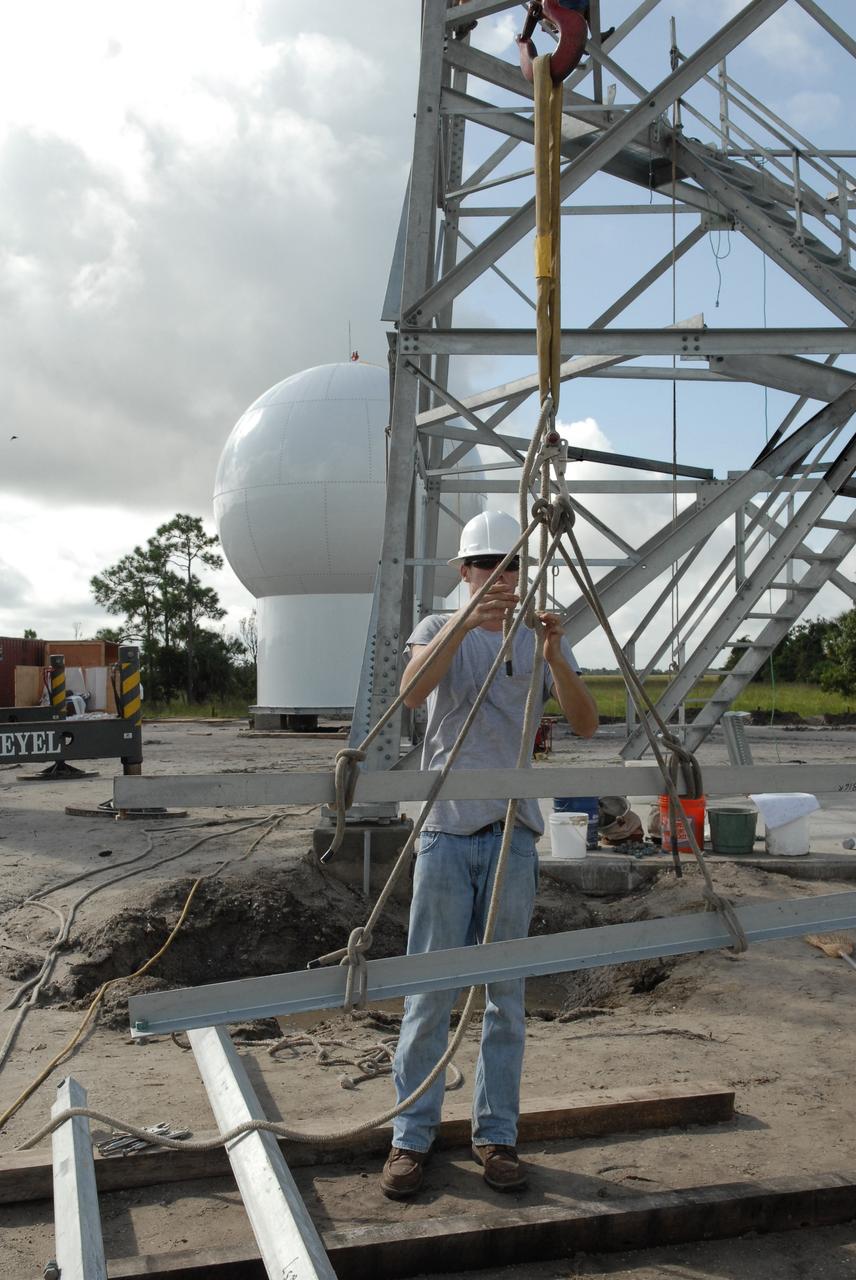
CAPE CANAVERAL, Fla. – In an area near S.R. 520 in Orange County, Florida, a worker finishes tying a line to a steel beam that will be added to a tower being constructed for a Doppler weather radar facility for the 45th Weather Squadron. In the background is the radome that will be on top of the tower. The new site replaces one at Patrick Air Force Base. It will be used by NASA's Kennedy Space Center, the 45th Space Wing and their customers. The site will be able to monitor weather conditions directly above and surrounding the launch pads at Kennedy. The weather radar is essential in issuing lightning and other severe weather warnings and vital in evaluating lightning launch commit criteria. The new radar, replacing what was installed 25 years ago at Patrick Air Force Base, includes Doppler capability to detect winds and identify the type, size and number of precipitation particles. The site is ideally distant from the launch pads and has unobstructed views of Cape Canaveral Air Force Station and Kennedy. The radar will be used by forecasters at the USAF 45th Weather Squadron. Photo credit: NASA/Troy Cryder
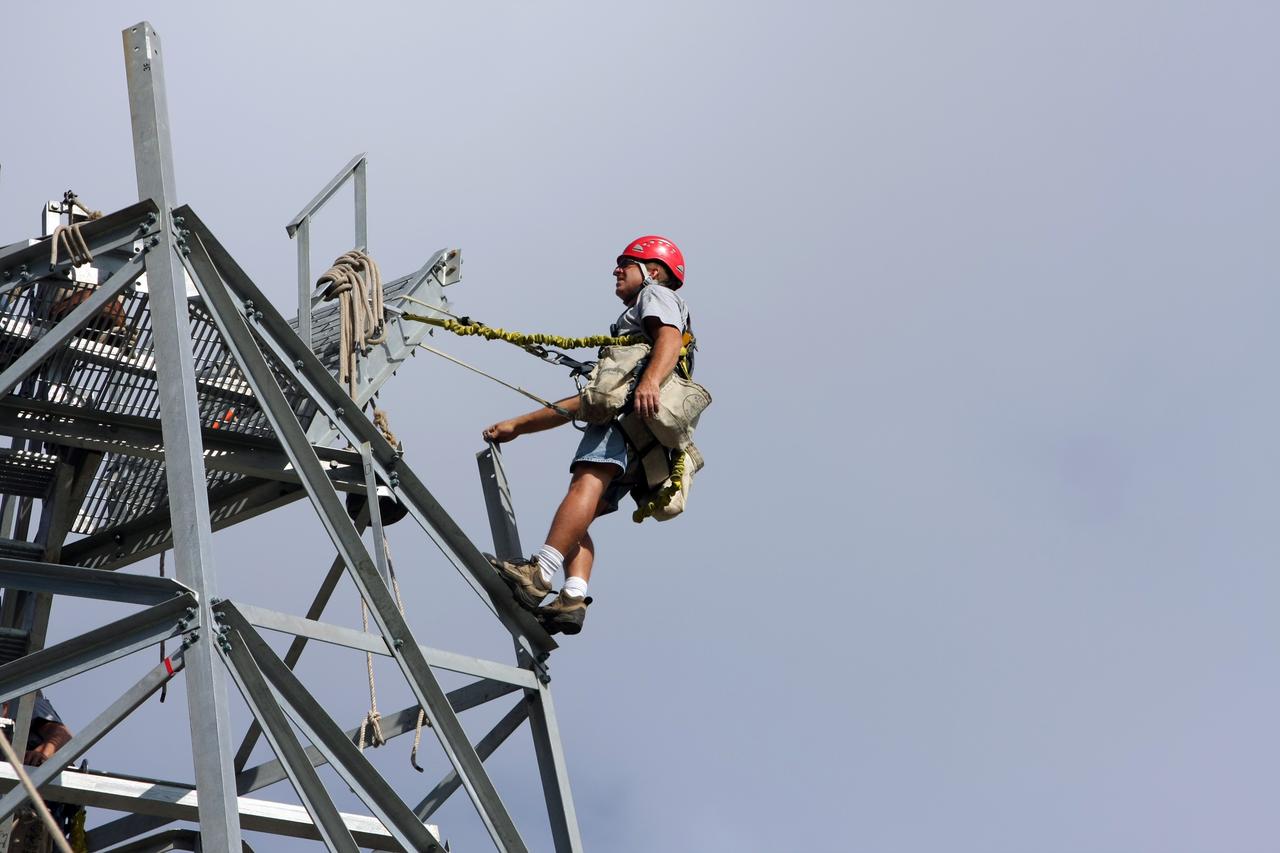
CAPE CANAVERAL, Fla. - A worker awaits the delivery by crane of the radome to the top of a new Doppler weather radar tower being built in an area near S.R. 520 in Orange County, Fla. The dome houses the weather radar dish and pedestal and protects them from the elements. The new tower will replace one at nearby Patrick Air Force Base and will be used by NASA's Kennedy Space Center, the 45th Space Wing and their customers. The tower will be able to monitor weather conditions directly above the launch pads at Kennedy. The weather radar is essential in issuing lightning and other severe weather warnings and vital in evaluating lightning launch commit criteria. The new radar, replacing what was installed 25 years ago, includes Doppler capability to detect winds and identify the type, size and number of precipitation particles. The site is ideally distant from the launch pads and has unobstructed views of Cape Canaveral Air Force Station and Kennedy. Photo credit: NASA/Dimitri Gerondidakis
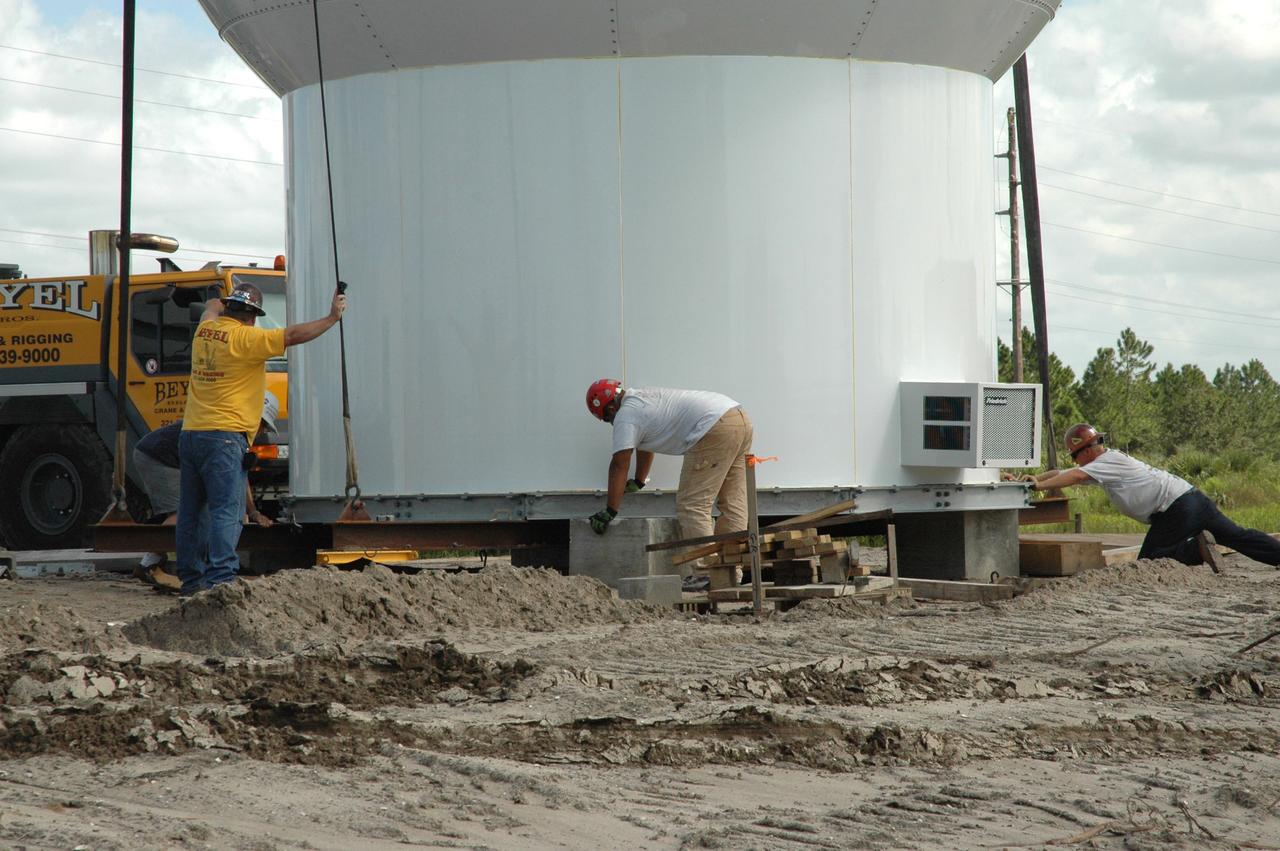
CAPE CANAVERAL, Fla. – In an area near S.R. 520 in Orange County, Florida, workers help position a radome onto concrete blocks. The radome will be lifted onto a steel tower constructed for a Doppler weather radar for the 45th Weather Squadron. The new site replaces one at Patrick Air Force Base and will be used by NASA's Kennedy Space Center, the U.S. Air Force's 45th Space Wing and their customers. The facility will be able to monitor weather conditions directly above and surrounding the launch pads at Kennedy. The weather radar is essential in issuing lightning and other severe weather warnings and vital in evaluating lightning launch commit criteria. Replacing what was installed 25 years ago at Patrick Air Force Base, the new radar includes Doppler capability to detect winds and identify the type, size and number of precipitation particles. The site is ideally distant from the launch pads and has unobstructed views of Cape Canaveral Air Force Station and Kennedy. The radar will be used by forecasters at the USAF 45th Weather Squadron. Photo credit: NASA/Jim Grossmann
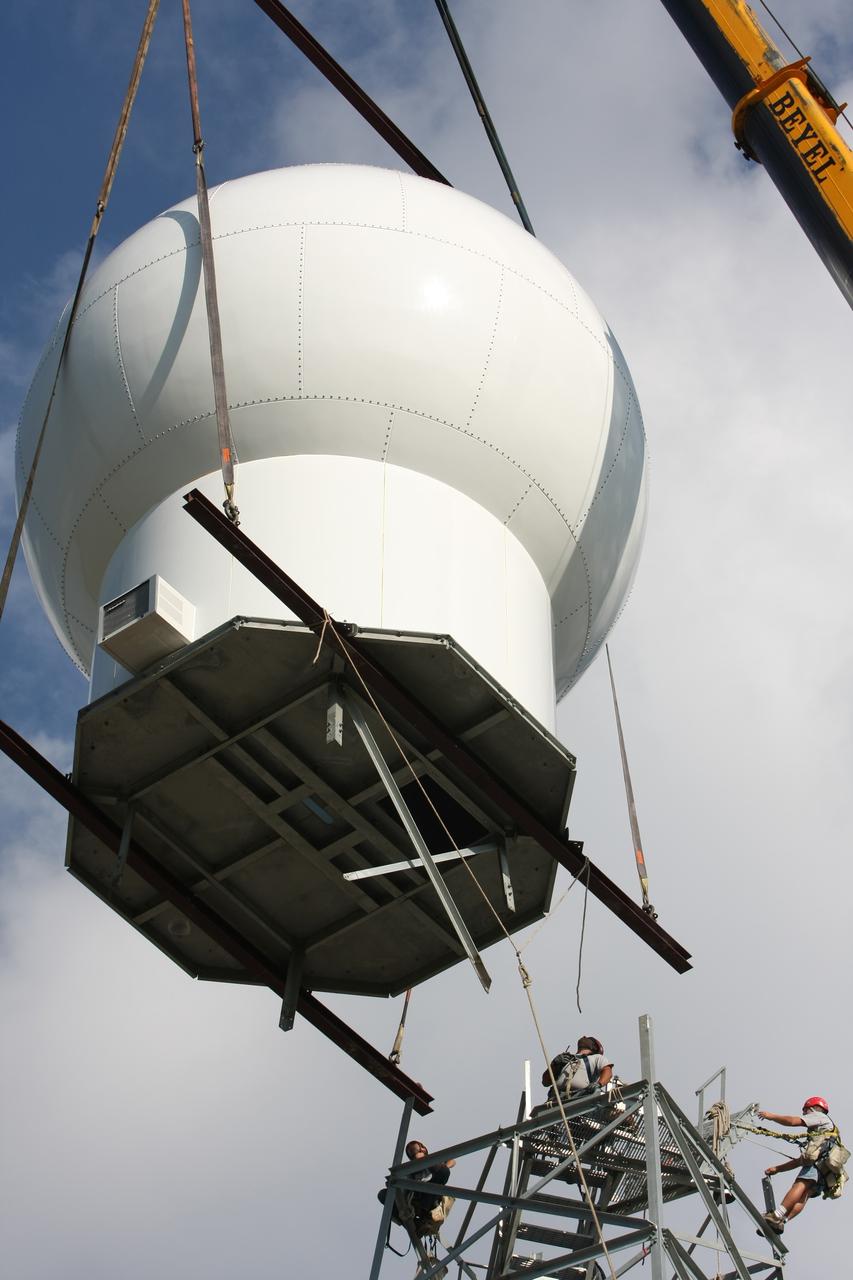
CAPE CANAVERAL, Fla. - Workers watch as the radome is delivered by crane to the top of a new Doppler weather radar tower being built in an area near S.R. 520 in Orange County, Fla. The dome houses the weather radar dish and pedestal and protects them from the elements. The new tower will replace one at nearby Patrick Air Force Base and will be used by NASA's Kennedy Space Center, the 45th Space Wing and their customers. The tower will be able to monitor weather conditions directly above the launch pads at Kennedy. The weather radar is essential in issuing lightning and other severe weather warnings and vital in evaluating lightning launch commit criteria. The new radar, replacing what was installed 25 years ago, includes Doppler capability to detect winds and identify the type, size and number of precipitation particles. The site is ideally distant from the launch pads and has unobstructed views of Cape Canaveral Air Force Station and Kennedy. Photo credit: NASA/Dimitri Gerondidakis
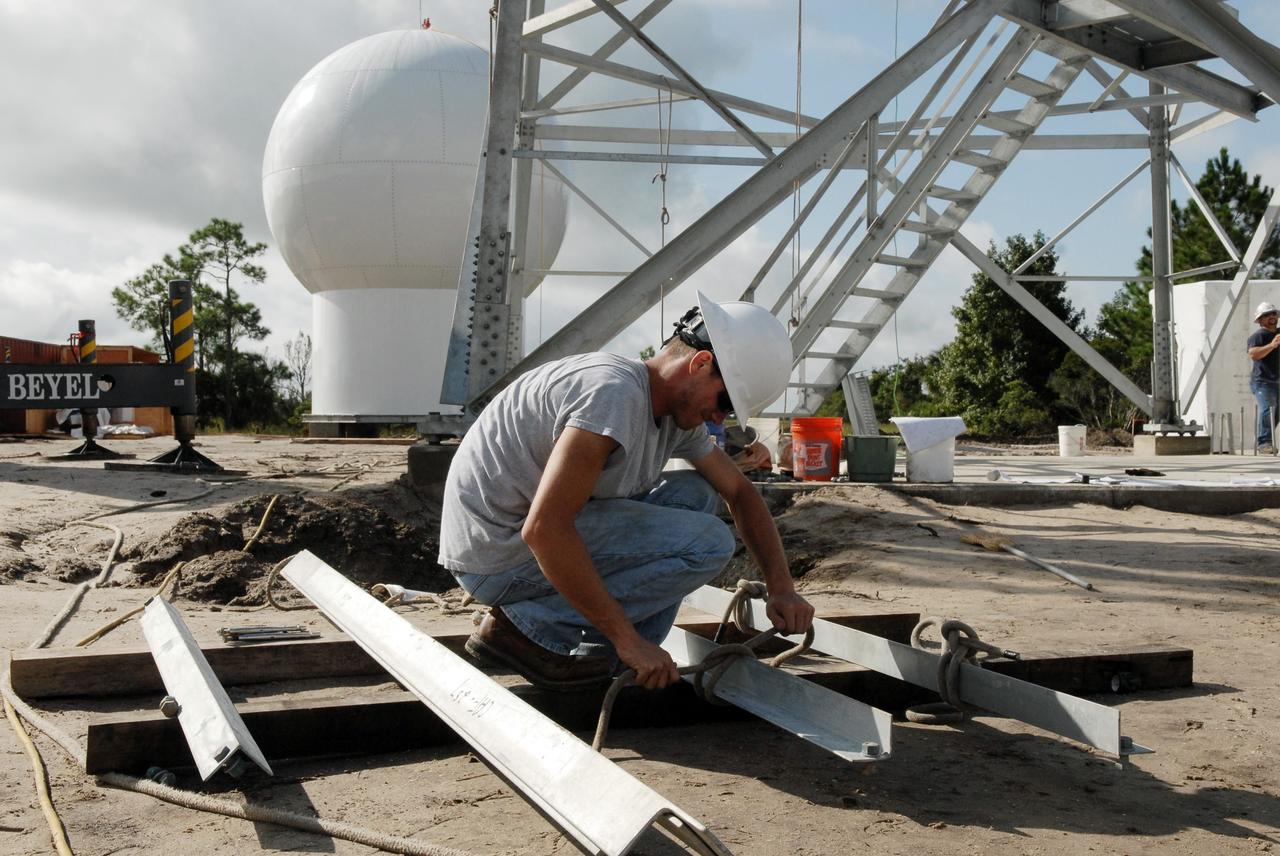
CAPE CANAVERAL, Fla. – In an area near S.R. 520 in Orange County, Florida, a worker ties a line to a steel beam that will be added to a tower being constructed for a Doppler weather radar facility for the 45th Weather Squadron. In the background is the radome that will be on top of the tower. The new site replaces one at Patrick Air Force Base. It will be used by NASA's Kennedy Space Center, the 45th Space Wing and their customers. The site will be able to monitor weather conditions directly above and surrounding the launch pads at Kennedy. The weather radar is essential in issuing lightning and other severe weather warnings and vital in evaluating lightning launch commit criteria. The new radar, replacing what was installed 25 years ago at Patrick Air Force Base, includes Doppler capability to detect winds and identify the type, size and number of precipitation particles. The site is ideally distant from the launch pads and has unobstructed views of Cape Canaveral Air Force Station and Kennedy. The radar will be used by forecasters at the USAF 45th Weather Squadron. Photo credit: NASA/Troy Cryder
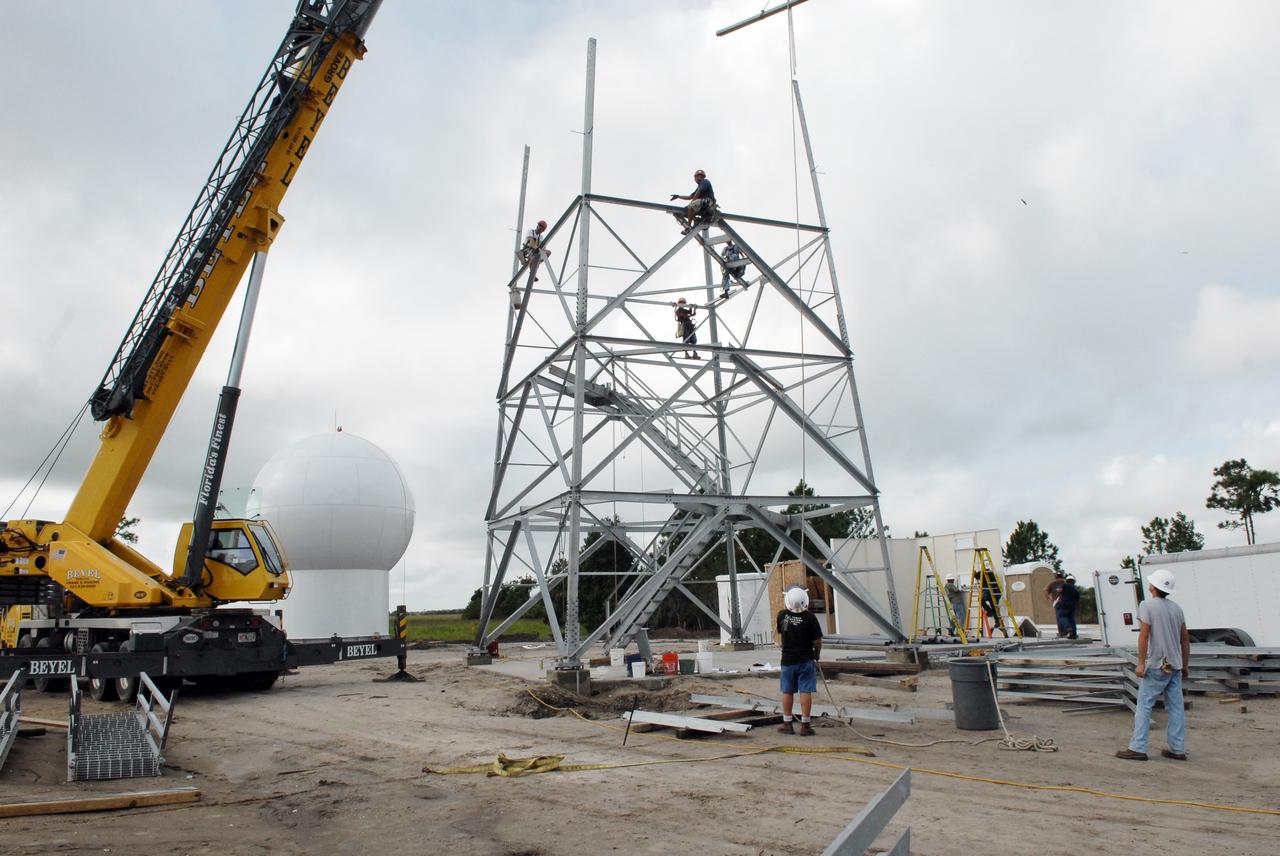
CAPE CANAVERAL, Fla. – In an area near S.R. 520 in Orange County, Florida, workers are constructing a steel tower for a Doppler weather radar facility for the 45th Weather Squadron. At left is the radome that will be on top of the tower. The new site replaces one at Patrick Air Force Base. It will be used by NASA's Kennedy Space Center, the 45th Space Wing and their customers. The site will be able to monitor weather conditions directly above and surrounding the launch pads at Kennedy. The weather radar is essential in issuing lightning and other severe weather warnings and vital in evaluating lightning launch commit criteria. The new radar, replacing what was installed 25 years ago at Patrick Air Force Base, includes Doppler capability to detect winds and identify the type, size and number of precipitation particles. The site is ideally distant from the launch pads and has unobstructed views of Cape Canaveral Air Force Station and Kennedy. The radar will be used by forecasters at the USAF 45th Weather Squadron. Photo credit: NASA/Troy Cryder
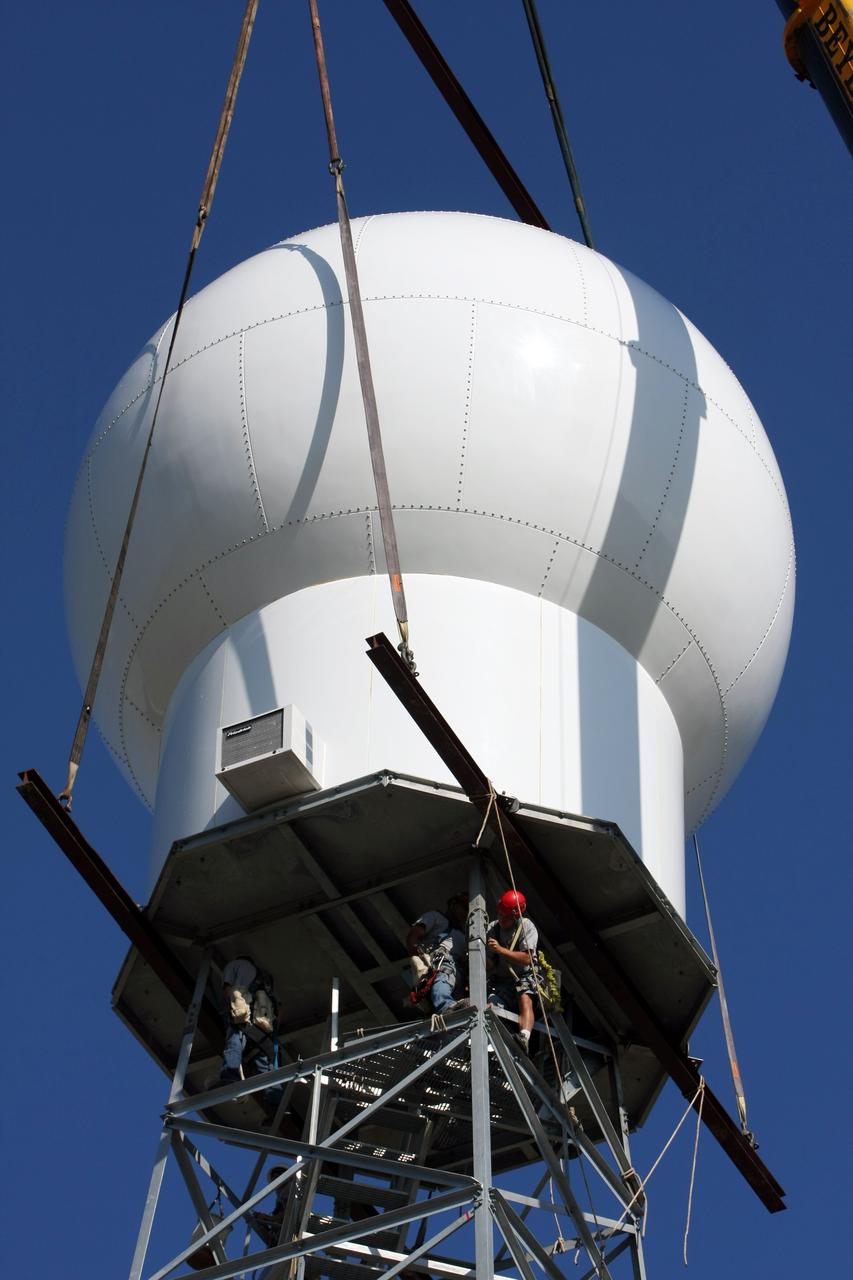
CAPE CANAVERAL, Fla. - Workers install the radome onto the top of a new Doppler weather radar tower being built in an area near S.R. 520 in Orange County, Fla. The dome houses the weather radar dish and pedestal and protects them from the elements. The new tower will replace one at nearby Patrick Air Force Base and will be used by NASA's Kennedy Space Center, the 45th Space Wing and their customers. The tower will be able to monitor weather conditions directly above the launch pads at Kennedy. The weather radar is essential in issuing lightning and other severe weather warnings and vital in evaluating lightning launch commit criteria. The new radar, replacing what was installed 25 years ago, includes Doppler capability to detect winds and identify the type, size and number of precipitation particles. The site is ideally distant from the launch pads and has unobstructed views of Cape Canaveral Air Force Station and Kennedy. Photo credit: NASA/Dimitri Gerondidakis
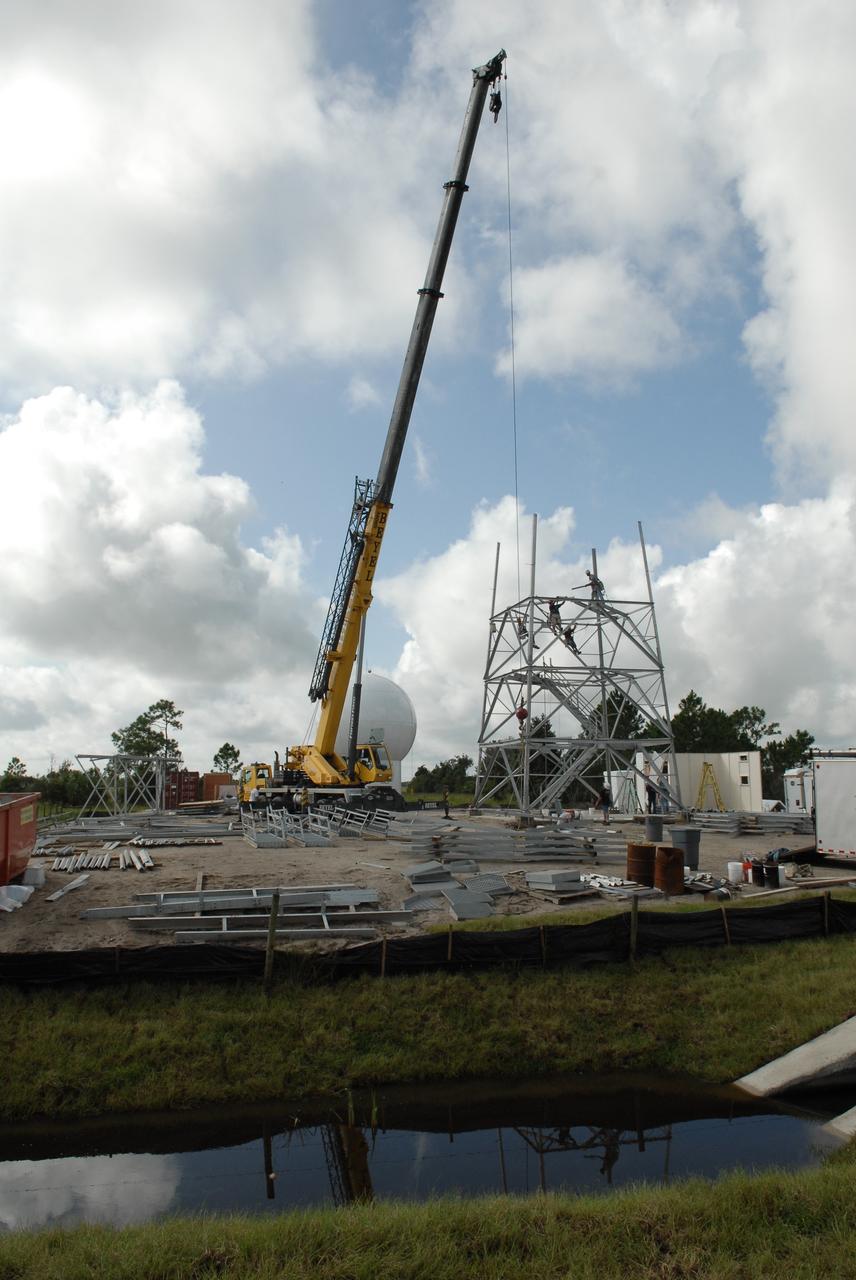
CAPE CANAVERAL, Fla. – In an area near S.R. 520 in Orange County, Florida, a crane lifts a steel beam that will be added to the being constructed for a Doppler weather radar facility for the 45th Weather Squadron. In the background is the radome that will be on top of the tower. The new site replaces one at Patrick Air Force Base. It will be used by NASA's Kennedy Space Center, the 45th Space Wing and their customers. The site will be able to monitor weather conditions directly above and surrounding the launch pads at Kennedy. The weather radar is essential in issuing lightning and other severe weather warnings and vital in evaluating lightning launch commit criteria. The new radar, replacing what was installed 25 years ago at Patrick Air Force Base, includes Doppler capability to detect winds and identify the type, size and number of precipitation particles. The site is ideally distant from the launch pads and has unobstructed views of Cape Canaveral Air Force Station and Kennedy. The radar will be used by forecasters at the USAF 45th Weather Squadron. Photo credit: NASA/Troy Cryder
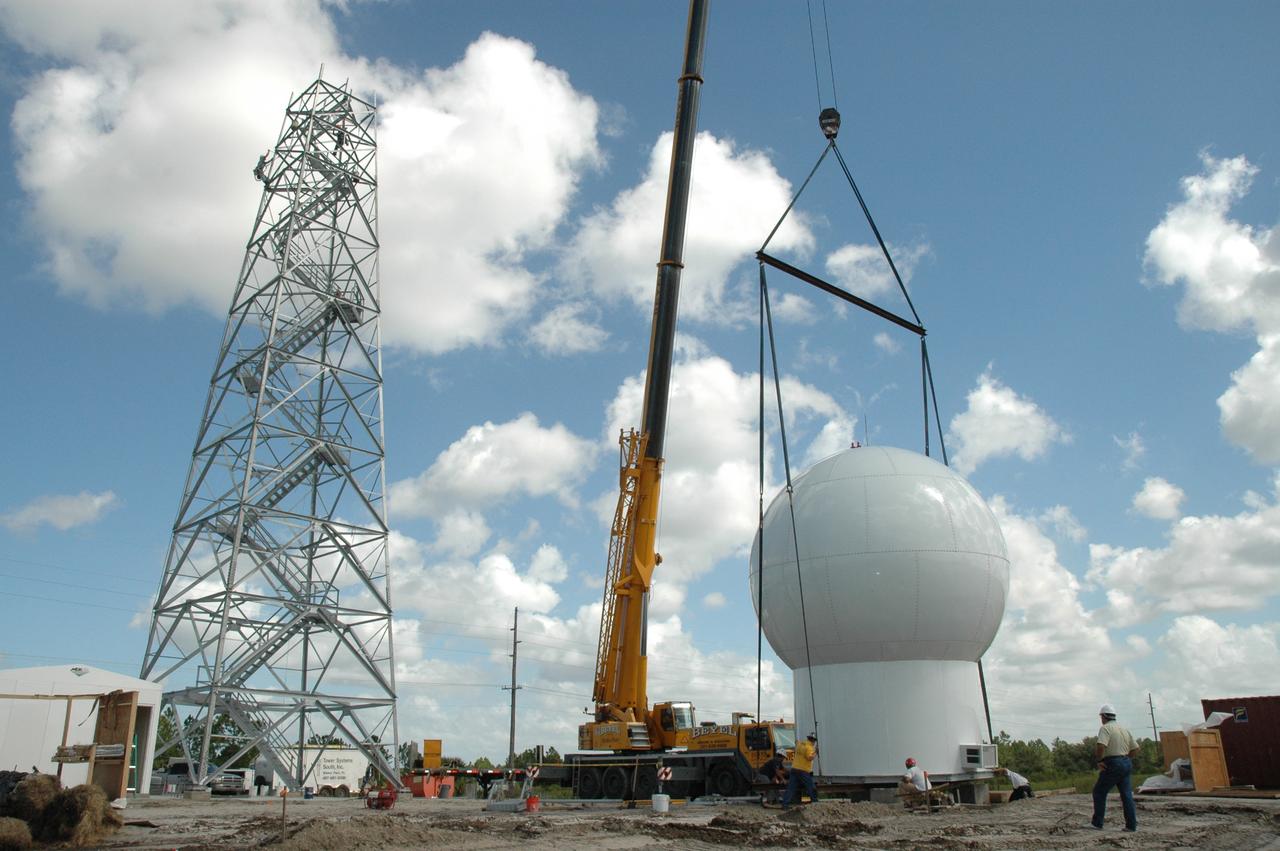
CAPE CANAVERAL, Fla. – In an area near S.R. 520 in Orange County, Florida, workers help guide the cables on a crane lifting a radome onto concrete blocks. The radome will be lifted onto a steel tower constructed for a Doppler weather radar for the 45th Weather Squadron. The new site replaces one at Patrick Air Force Base and will be used by NASA's Kennedy Space Center, the U.S. Air Force's 45th Space Wing and their customers. The facility will be able to monitor weather conditions directly above and surrounding the launch pads at Kennedy. The weather radar is essential in issuing lightning and other severe weather warnings and vital in evaluating lightning launch commit criteria. Replacing what was installed 25 years ago at Patrick Air Force Base, the new radar includes Doppler capability to detect winds and identify the type, size and number of precipitation particles. The site is ideally distant from the launch pads and has unobstructed views of Cape Canaveral Air Force Station and Kennedy. The radar will be used by forecasters at the USAF 45th Weather Squadron. Photo credit: NASA/Jim Grossmann
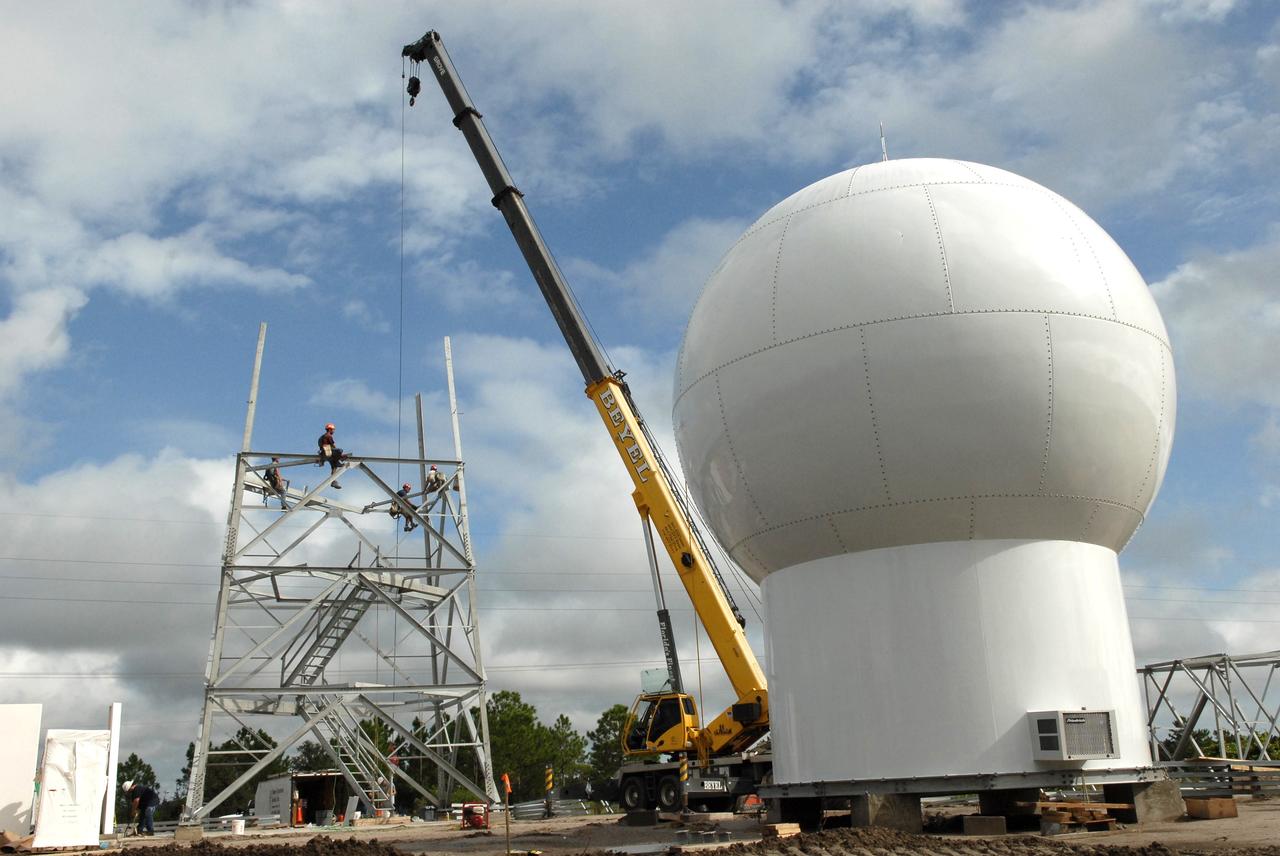
CAPE CANAVERAL, Fla. – In an area near S.R. 520 in Orange County, Florida, workers are constructing a steel tower for a Doppler weather radar facility for the 45th Weather Squadron. At right is the radome that will be on top of the tower. The new site replaces one at Patrick Air Force Base. It will be used by NASA's Kennedy Space Center, the 45th Space Wing and their customers. The site will be able to monitor weather conditions directly above and surrounding the launch pads at Kennedy. The weather radar is essential in issuing lightning and other severe weather warnings and vital in evaluating lightning launch commit criteria. The new radar, replacing what was installed 25 years ago at Patrick Air Force Base, includes Doppler capability to detect winds and identify the type, size and number of precipitation particles. The site is ideally distant from the launch pads and has unobstructed views of Cape Canaveral Air Force Station and Kennedy. The radar will be used by forecasters at the USAF 45th Weather Squadron. Photo credit: NASA/Troy Cryder
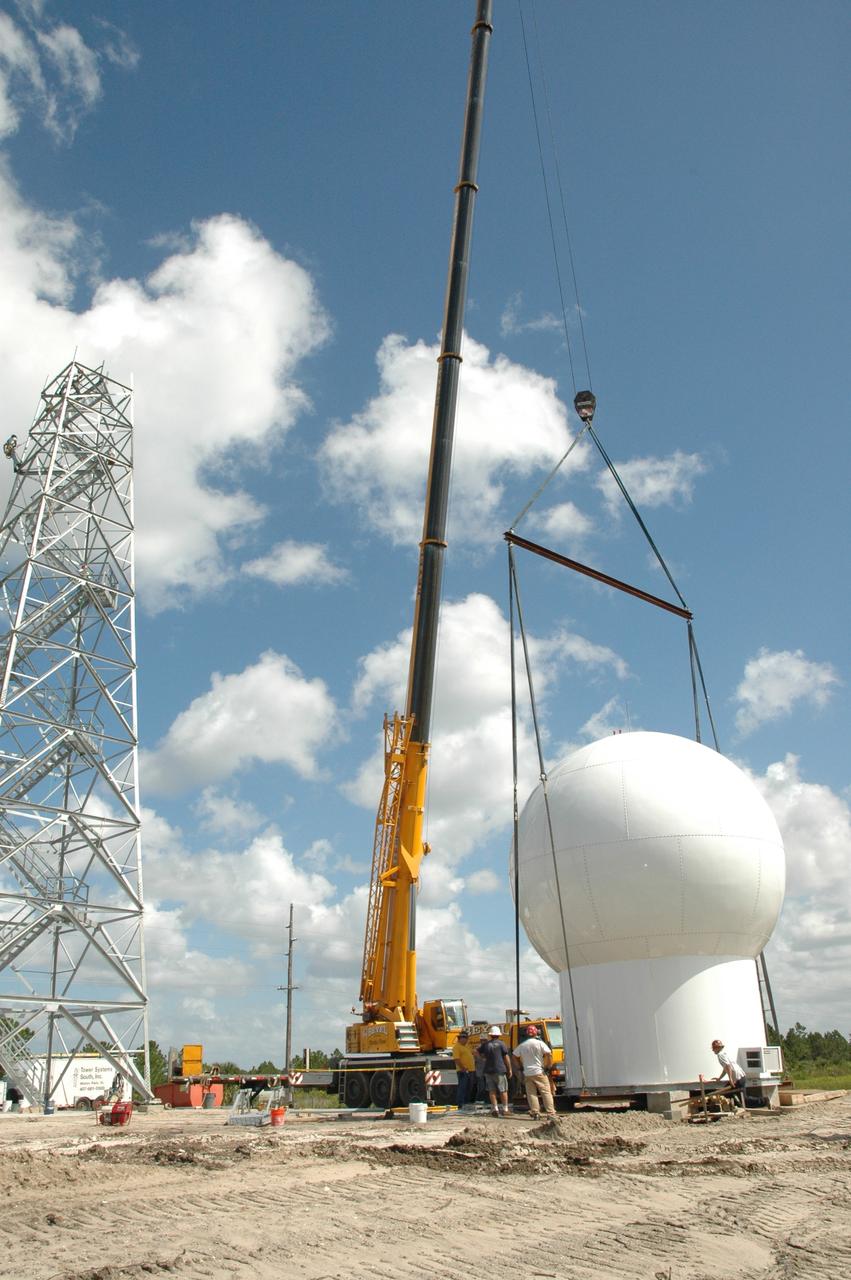
CAPE CANAVERAL, Fla. – In In an area near S.R. 520 in Orange County, Florida, a crane is used to position a radome on concrete blocks. The radome will be lifted onto a steel tower constructed for a Doppler weather radar for the 45th Weather Squadron. The new site replaces one at Patrick Air Force Base and will be used by NASA's Kennedy Space Center, the U.S. Air Force's 45th Space Wing and their customers. The facility will be able to monitor weather conditions directly above and surrounding the launch pads at Kennedy. The weather radar is essential in issuing lightning and other severe weather warnings and vital in evaluating lightning launch commit criteria. Replacing what was installed 25 years ago at Patrick Air Force Base, the new radar includes Doppler capability to detect winds and identify the type, size and number of precipitation particles. The site is ideally distant from the launch pads and has unobstructed views of Cape Canaveral Air Force Station and Kennedy. The radar will be used by forecasters at the USAF 45th Weather Squadron. Photo credit: NASA/Jim Grossmann
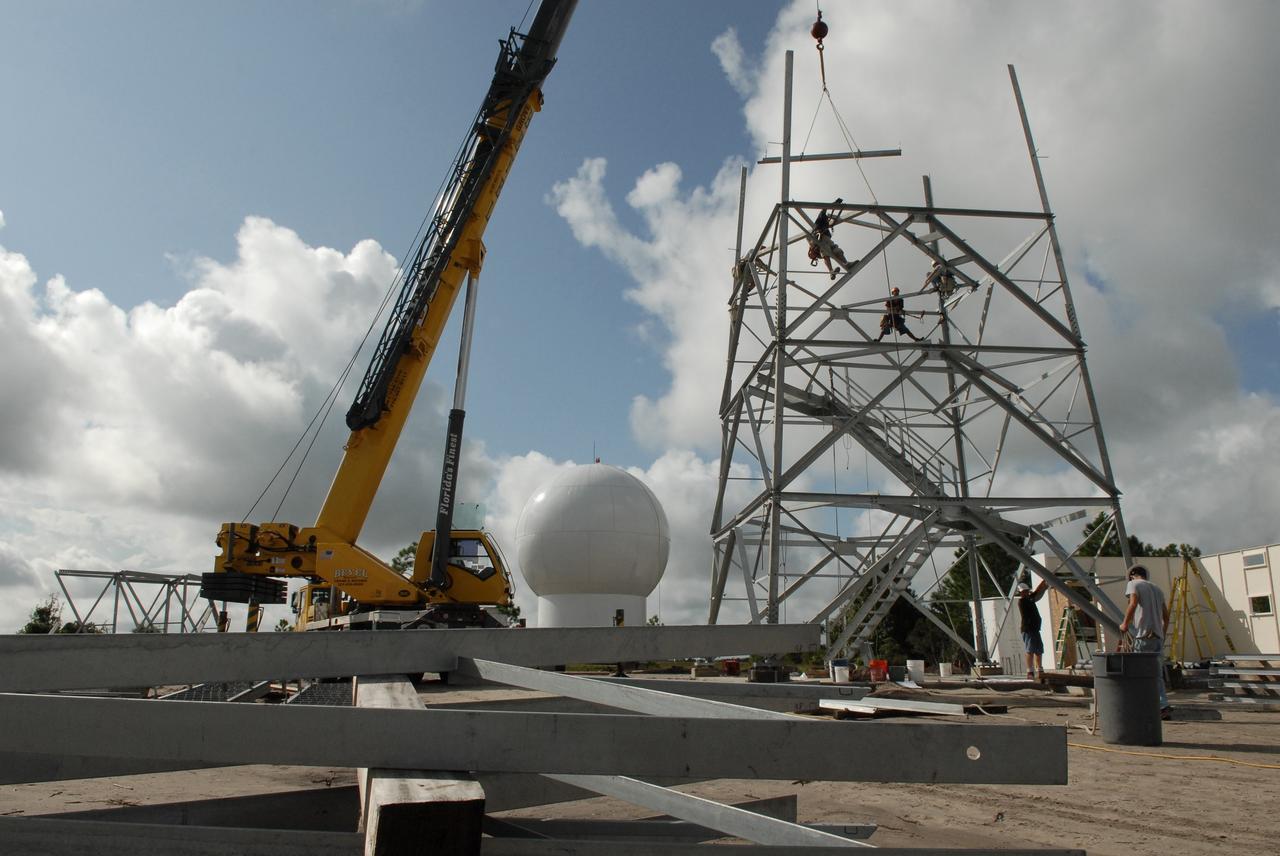
CAPE CANAVERAL, Fla. – In an area near S.R. 520 in Orange County, Florida, a crane lifts a steel beam that will be added to the being constructed for a Doppler weather radar facility for the 45th Weather Squadron. In the background is the radome that will be on top of the tower. The new site replaces one at Patrick Air Force Base. It will be used by NASA's Kennedy Space Center, the 45th Space Wing and their customers. The site will be able to monitor weather conditions directly above and surrounding the launch pads at Kennedy. The weather radar is essential in issuing lightning and other severe weather warnings and vital in evaluating lightning launch commit criteria. The new radar, replacing what was installed 25 years ago at Patrick Air Force Base, includes Doppler capability to detect winds and identify the type, size and number of precipitation particles. The site is ideally distant from the launch pads and has unobstructed views of Cape Canaveral Air Force Station and Kennedy. The radar will be used by forecasters at the USAF 45th Weather Squadron. Photo credit: NASA/Troy Cryder
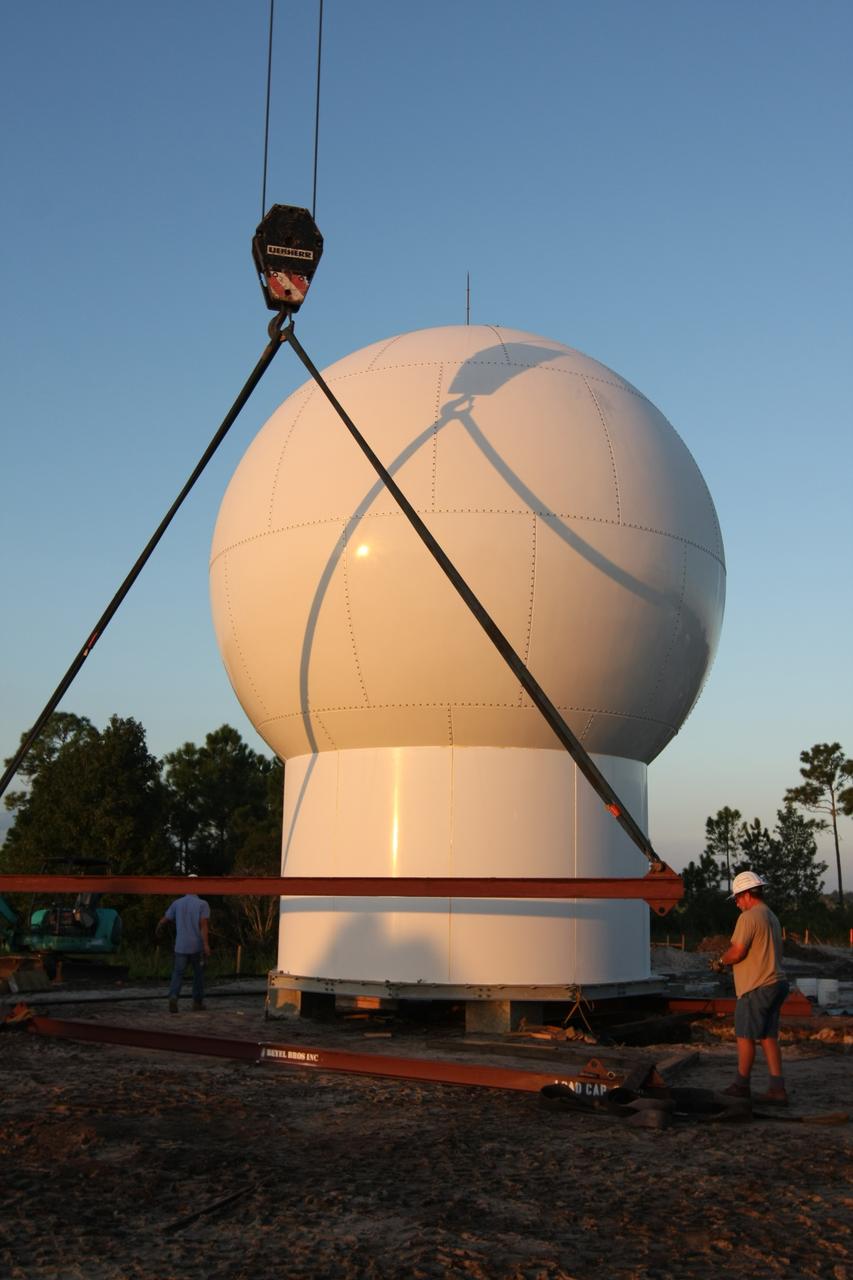
CAPE CANAVERAL, Fla. - Workers prepare the radome to be lifted by a crane to the top of a new Doppler weather radar tower being built in an area near S.R. 520 in Orange County, Fla. The dome houses the weather radar dish and pedestal and protects them from the elements. The new tower will replace one at nearby Patrick Air Force Base and will be used by NASA's Kennedy Space Center, the 45th Space Wing and their customers. The tower will be able to monitor weather conditions directly above the launch pads at Kennedy. The weather radar is essential in issuing lightning and other severe weather warnings and vital in evaluating lightning launch commit criteria. The new radar, replacing what was installed 25 years ago, includes Doppler capability to detect winds and identify the type, size and number of precipitation particles. The site is ideally distant from the launch pads and has unobstructed views of Cape Canaveral Air Force Station and Kennedy. Photo credit: NASA/Dimitri Gerondidakis
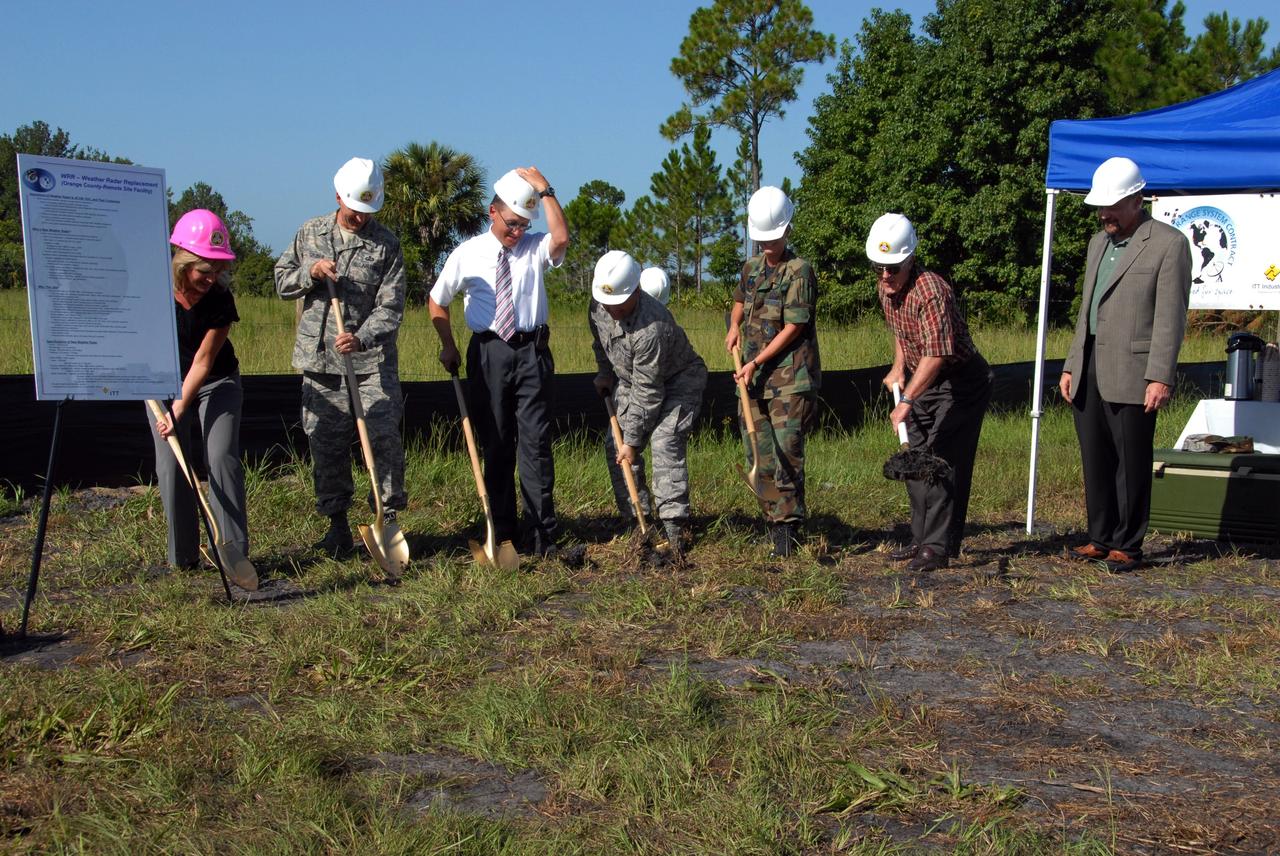
CAPE CANAVERAL, Fla. - Breaking ground in a mock ceremony for a new weather radar site are (left to right) Project Lead Kim Gwaltney, with SLRSC; 45th Space Wing Operations Group Commander Col. Bernard Gruber; Range Systems Support Manager Walt Danewood; Lt. Col. Stacy Exum with the 45th Space Wing; Lt. Col. Jennifer Alexander with the 45th Space Wing; Harry Earl with Heard Construction and Pat Carr, SLRSC program director with ITT. The site will be used by NASA's Kennedy Space Center, the 45th Space Wing and their customers. The weather radar is essential in issuing lightning and other severe weather warnings and vital in evaluating lightning launch commit criteria. The new radar, replacing what was installed 25 years ago, includes Doppler capability to detect winds and identify the type, size and number of precipitation particles. The site is ideally distant from the launch pads and has unobstructed views of Cape Canaveral Air Force Station and Kennedy. Photo credit: NASA/Amanda Diller