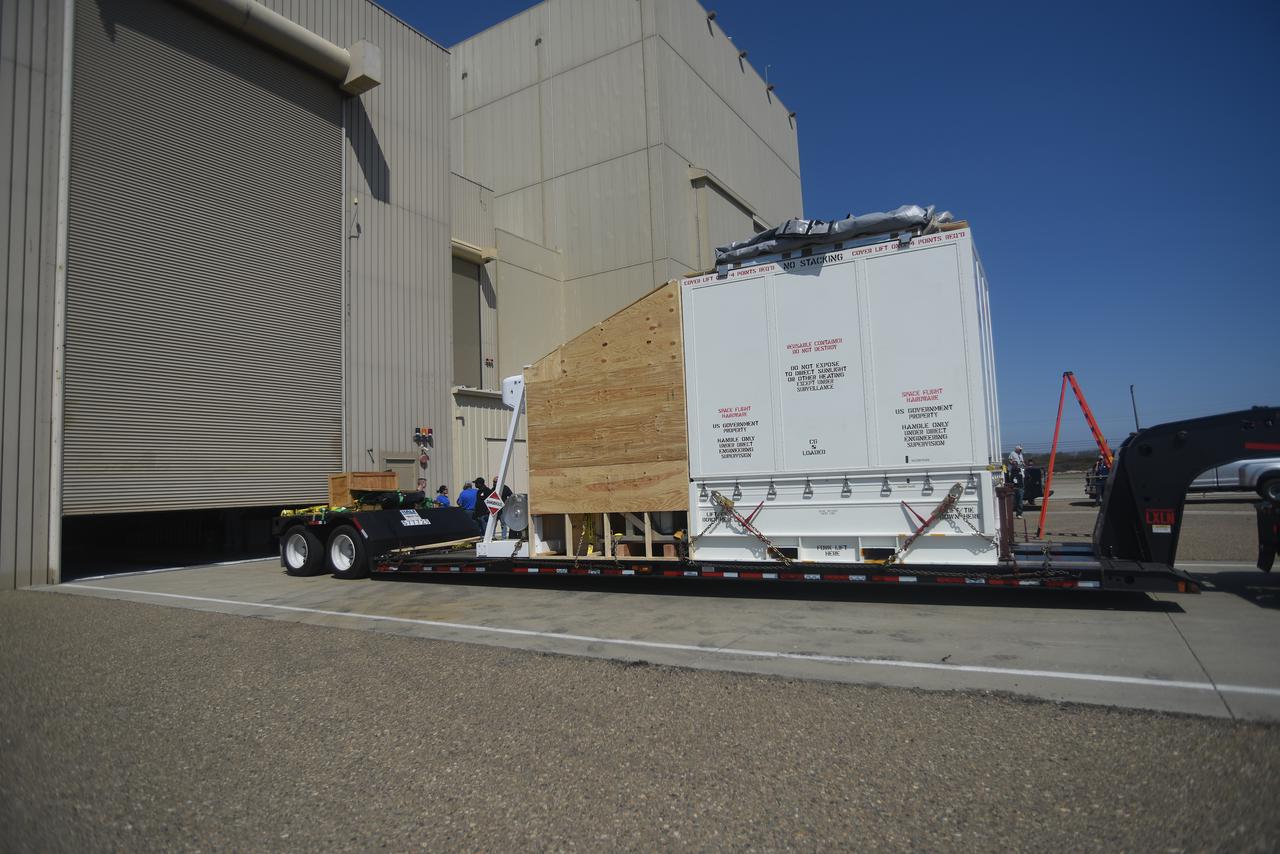
NASA’s Double Asteroid Redirection Test (DART) spacecraft, packed in its shipping container, arrives by truck at the entrance to the Astrotech Space Operations Facility at Vandenberg Space Force Base in California on Oct. 2, 2021. Inside the facility, workers will unpack the spacecraft and complete a series of final tests and checkouts to confirm it is ready for launch. DART is the first mission to test technologies for preventing an impact of Earth by a hazardous asteroid. The mission is targeted to launch on Nov. 23, 2021, aboard a SpaceX Falcon 9 rocket from Vandenberg. NASA’s Launch Services Program, based at Kennedy Space Center, America’s multi-user spaceport, is managing the launch.
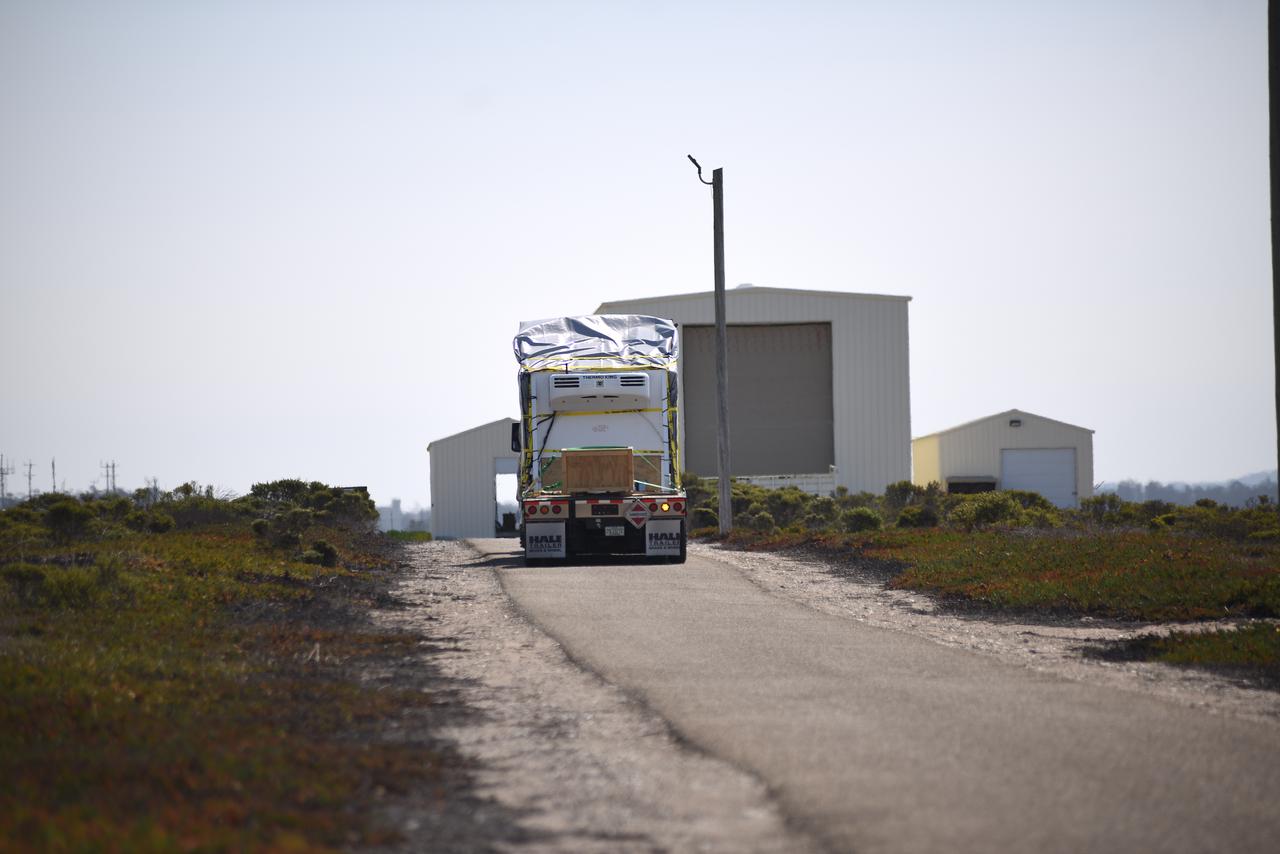
NASA’s Double Asteroid Redirection Test (DART) spacecraft, packed in its shipping container, arrives by truck at Vandenberg Space Force Base in California on Oct. 2, 2021. DART will be transported to the Astrotech Space Operations Facility where workers will put the spacecraft through a series of final tests and checkouts to confirm it is ready for launch. DART is the first mission to test technologies for preventing an impact of Earth by a hazardous asteroid. The mission is targeted to launch on Nov. 23, 2021, aboard a SpaceX Falcon 9 rocket from Vandenberg. NASA’s Launch Services Program, based at Kennedy Space Center, America’s multi-user spaceport, is managing the launch.
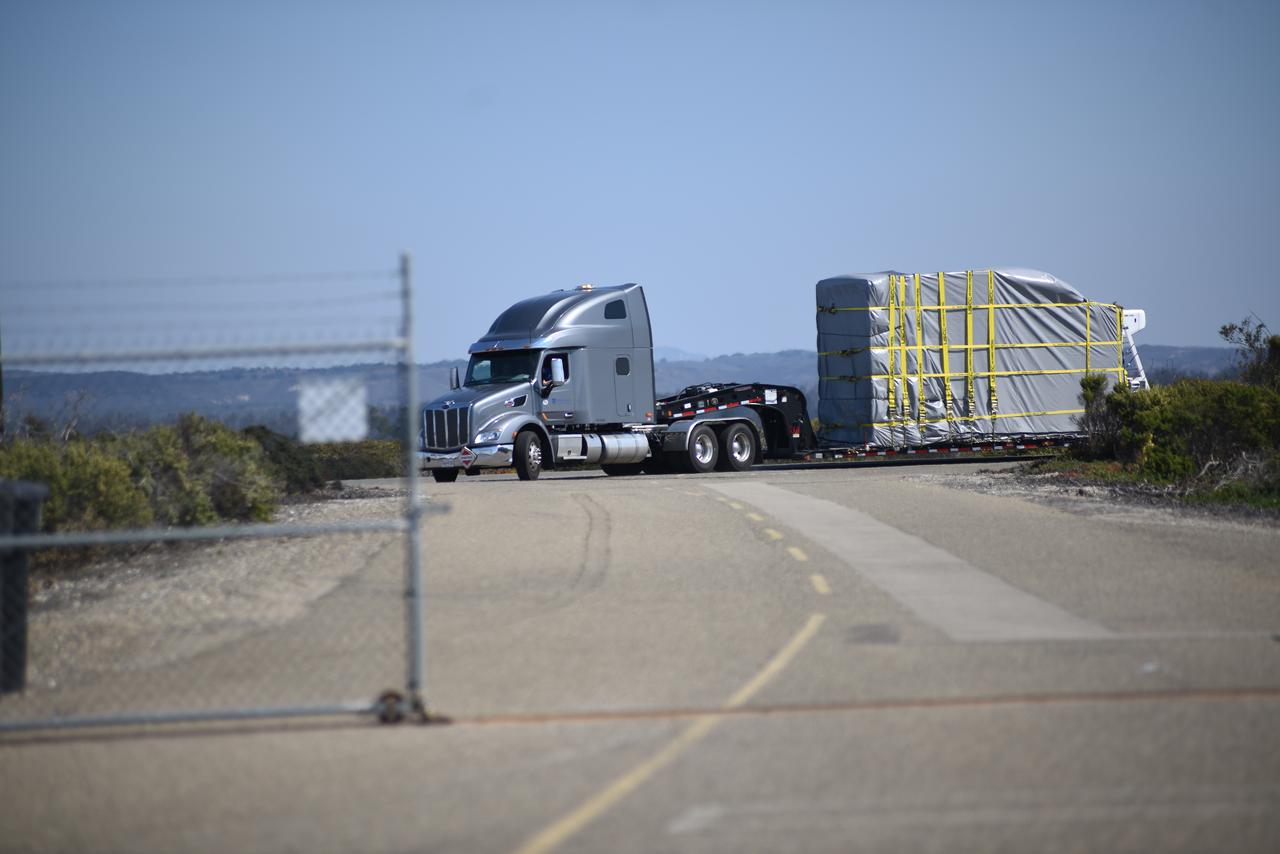
NASA’s Double Asteroid Redirection Test (DART) spacecraft, packed in its shipping container, arrives by truck at the entrance to Vandenberg Space Force Base in California on Oct. 2, 2021. DART will be transported to the Astrotech Space Operations Facility where workers will put the spacecraft through a series of final tests and checkouts to confirm it is ready for launch. DART is the first mission to test technologies for preventing an impact of Earth by a hazardous asteroid. The mission is targeted to launch on Nov. 23, 2021, aboard a SpaceX Falcon 9 rocket from Vandenberg. NASA’s Launch Services Program, based at Kennedy Space Center, America’s multi-user spaceport, is managing the launch.
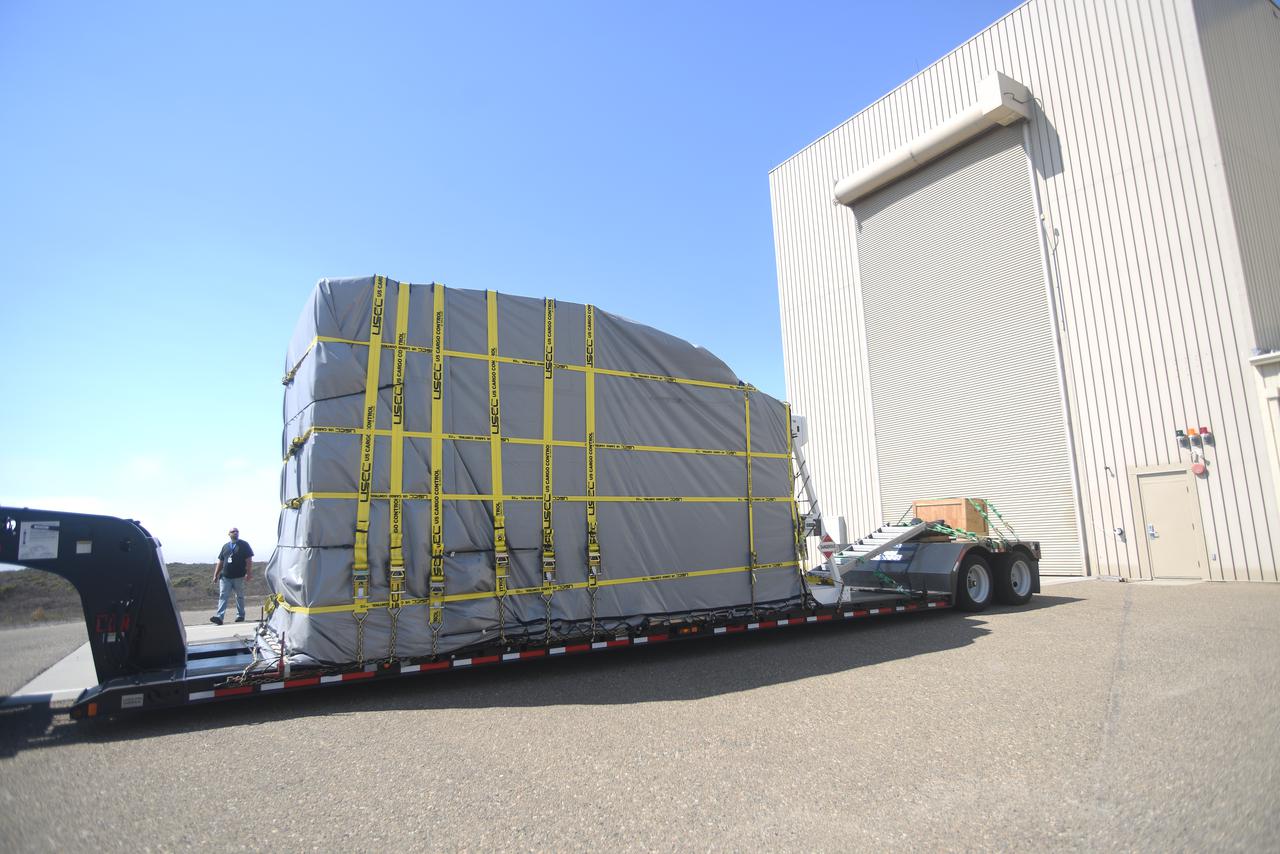
NASA’s Double Asteroid Redirection Test (DART) spacecraft, packed in its shipping container, arrives by truck at the entrance to the Astrotech Space Operations Facility at Vandenberg Space Force Base in California on Oct. 2, 2021. Inside the facility, workers will unpack the spacecraft and complete a series of final tests and checkouts to confirm it is ready for launch. DART is the first mission to test technologies for preventing an impact of Earth by a hazardous asteroid. The mission is targeted to launch on Nov. 23, 2021, aboard a SpaceX Falcon 9 rocket from Vandenberg. NASA’s Launch Services Program, based at Kennedy Space Center, America’s multi-user spaceport, is managing the launch.
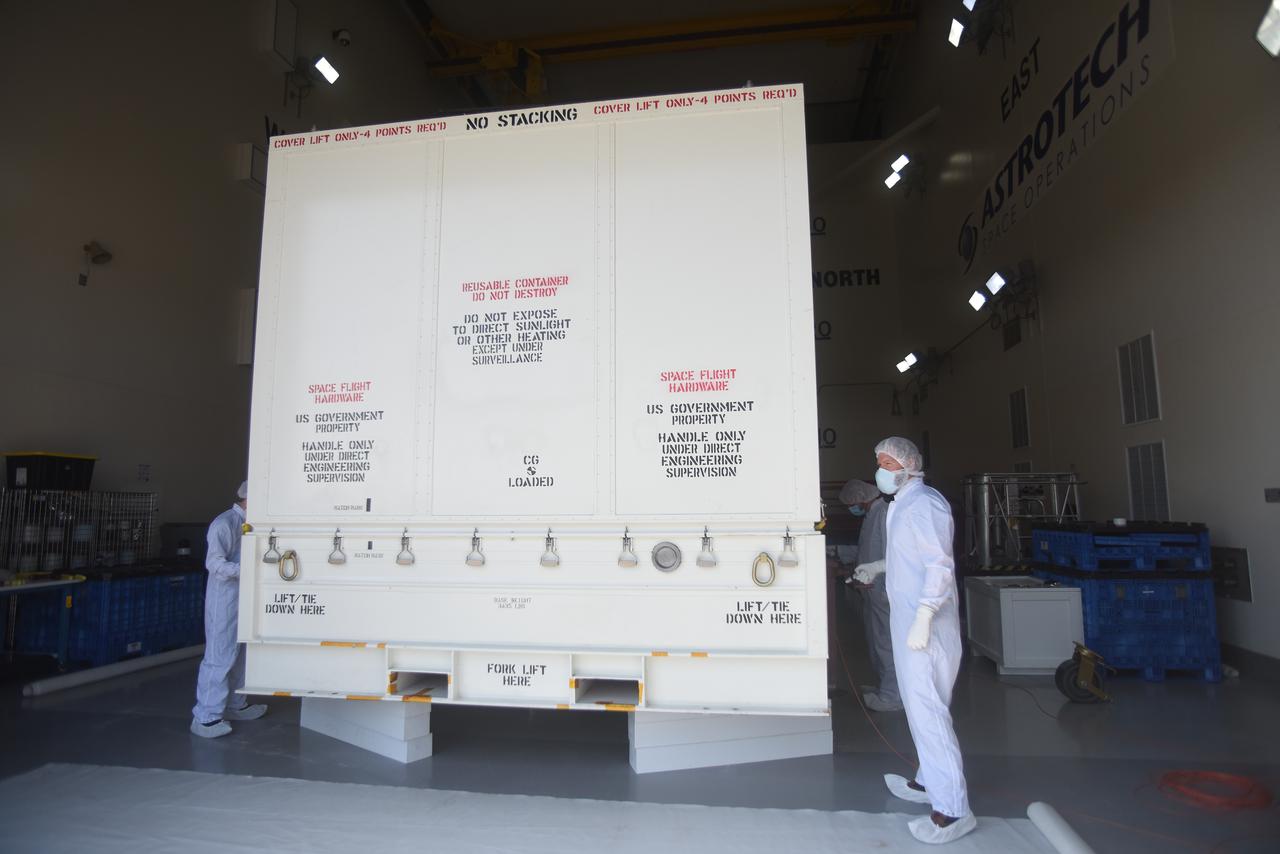
NASA’s Double Asteroid Redirection Test (DART) spacecraft, packed in its shipping container, is inside the Astrotech Space Operations Facility at Vandenberg Space Force Base in California on Oct. 2, 2021. Inside the facility, workers will unpack the spacecraft and complete a series of final tests and checkouts to confirm it is ready for launch. DART is the first mission to test technologies for preventing an impact of Earth by a hazardous asteroid. The mission is targeted to launch on Nov. 23, 2021, aboard a SpaceX Falcon 9 rocket from Vandenberg. NASA’s Launch Services Program, based at Kennedy Space Center, America’s multi-user spaceport, is managing the launch.
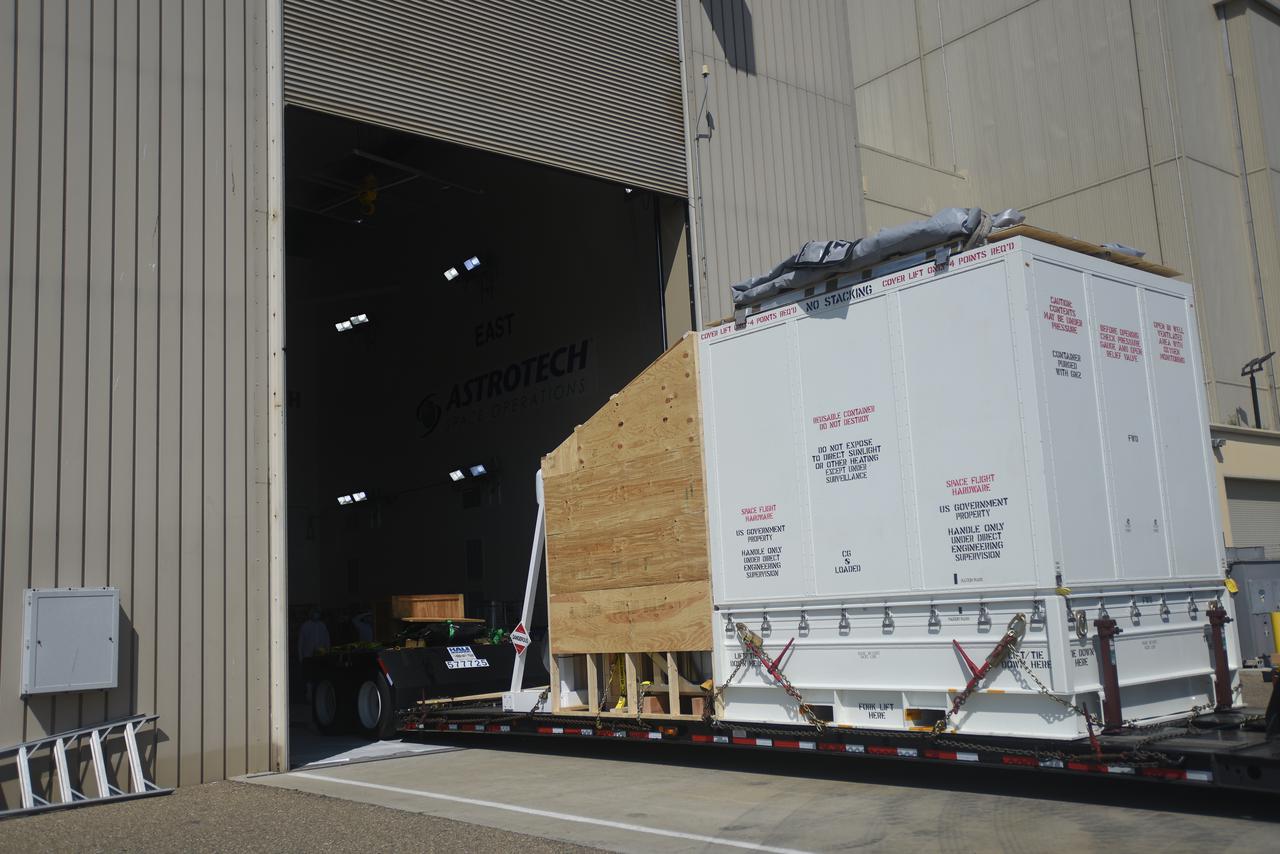
NASA’s Double Asteroid Redirection Test (DART) spacecraft, packed in its shipping container, is moved into the Astrotech Space Operations Facility at Vandenberg Space Force Base in California on Oct. 2, 2021. Inside the facility, workers will unpack the spacecraft and complete a series of final tests and checkouts to confirm it is ready for launch. DART is the first mission to test technologies for preventing an impact of Earth by a hazardous asteroid. The mission is targeted to launch on Nov. 23, 2021, aboard a SpaceX Falcon 9 rocket from Vandenberg. NASA’s Launch Services Program, based at Kennedy Space Center, America’s multi-user spaceport, is managing the launch.
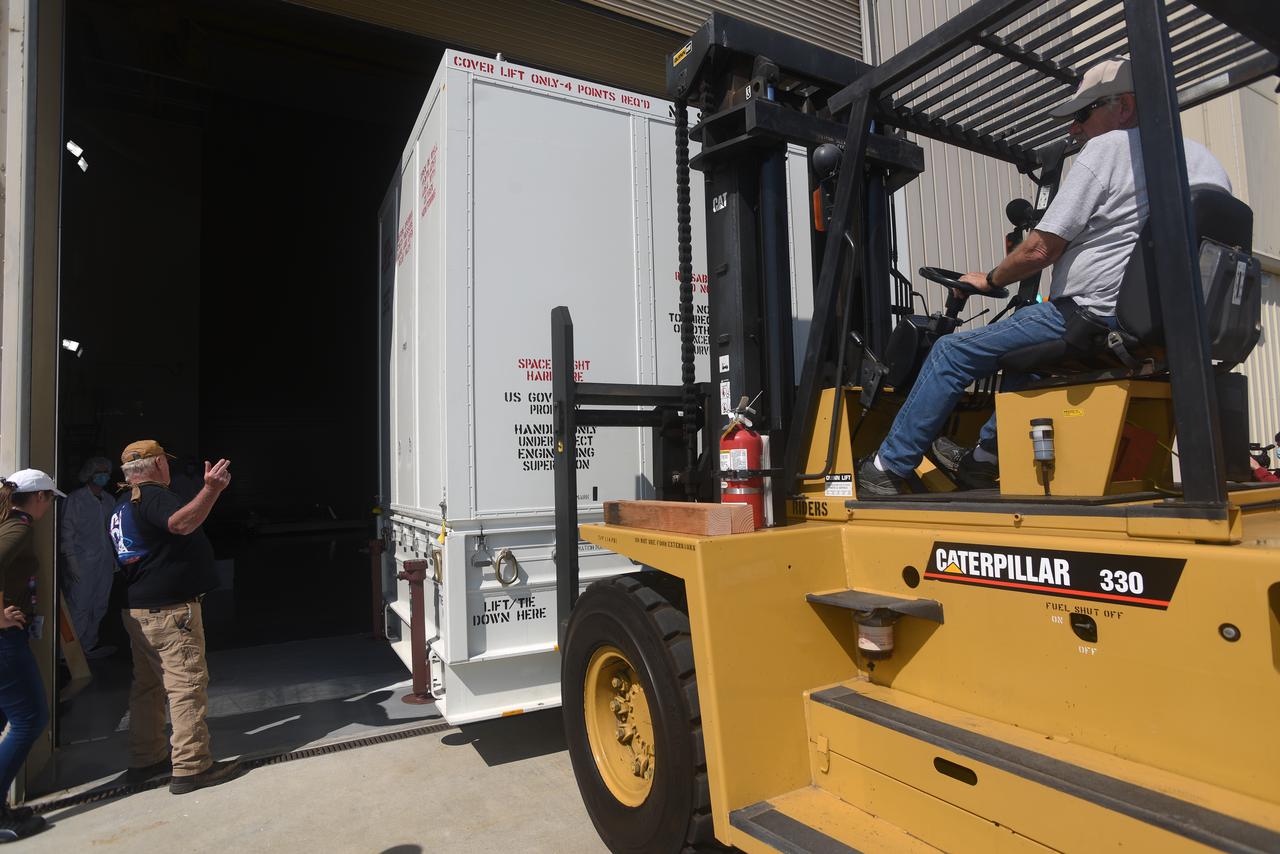
NASA’s Double Asteroid Redirection Test (DART) spacecraft is moved into the Astrotech Space Operations Facility at Vandenberg Space Force Base in California on Oct. 2, 2021. Inside the facility, workers will unpack the spacecraft and complete a series of final tests and checkouts to confirm it is ready for launch. DART is the first mission to test technologies for preventing an impact of Earth by a hazardous asteroid. The mission is targeted to launch on Nov. 23, 2021, aboard a SpaceX Falcon 9 rocket from Vandenberg. NASA’s Launch Services Program, based at Kennedy Space Center, America’s multi-user spaceport, is managing the launch.

NASA Administrator Jim Bridenstine delivers a keynote speech at the sixth International Academy of Astronautics Planetary Defense Conference, Monday, April 29, 2019 at The Hotel at the University of Maryland in College Park Maryland. The conference brings together experts from around the world to present the latest research on Near-Earth Objects and will highlight the development of the first-ever mission to demonstrate an asteroid defection technique for planetary defense, NASA’s Double Asteroid Redirection Test (DART). Photo Credit: (NASA/Joel Kowsky)

NASA Administrator Jim Bridenstine delivers a keynote speech at the sixth International Academy of Astronautics Planetary Defense Conference, Monday, April 29, 2019 at The Hotel at the University of Maryland in College Park Maryland. The conference brings together experts from around the world to present the latest research on Near-Earth Objects and will highlight the development of the first-ever mission to demonstrate an asteroid defection technique for planetary defense, NASA’s Double Asteroid Redirection Test (DART). Photo Credit: (NASA/Joel Kowsky)

NASA Administrator Jim Bridenstine delivers a keynote speech at the sixth International Academy of Astronautics Planetary Defense Conference, Monday, April 29, 2019 at The Hotel at the University of Maryland in College Park Maryland. The conference brings together experts from around the world to present the latest research on Near-Earth Objects and will highlight the development of the first-ever mission to demonstrate an asteroid defection technique for planetary defense, NASA’s Double Asteroid Redirection Test (DART). Photo Credit: (NASA/Joel Kowsky)
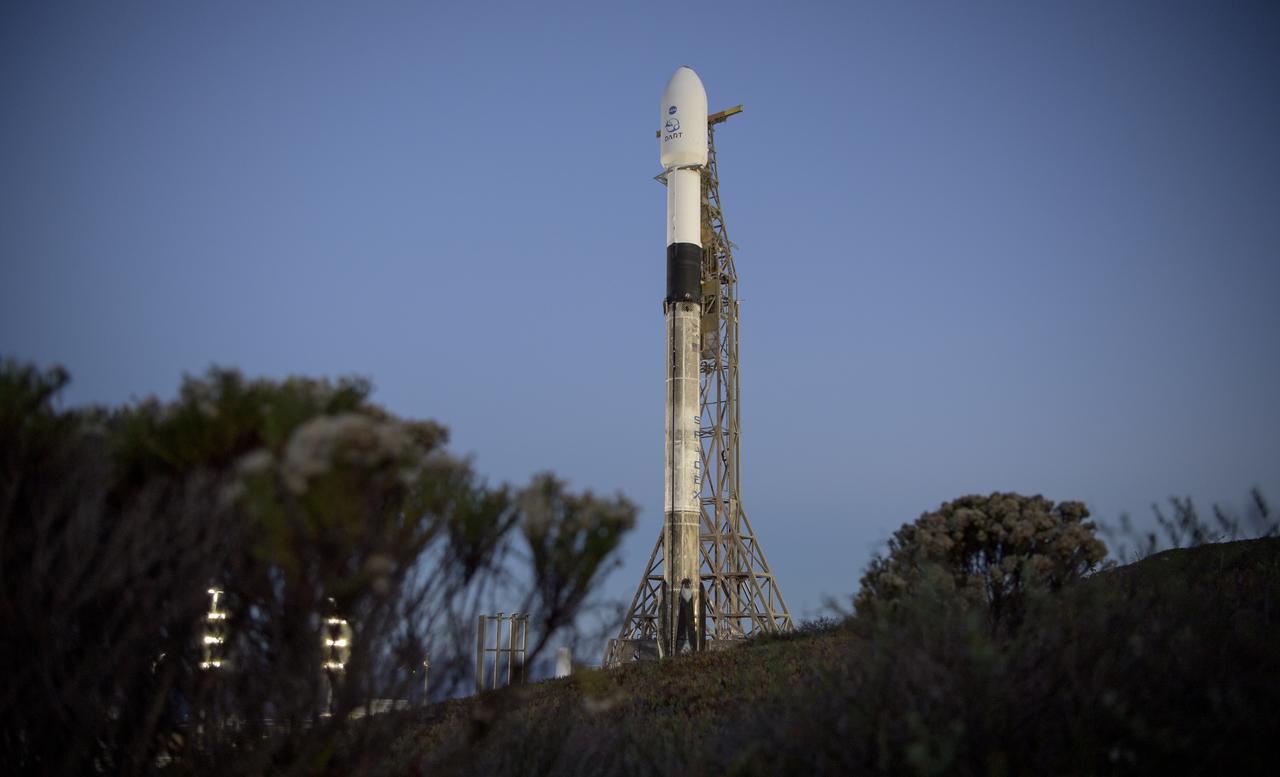
The SpaceX Falcon 9 rocket with the Double Asteroid Redirection Test, or DART, spacecraft onboard, is seen during sunrise, Tuesday, Nov. 23, 2021, at Space Launch Complex 4E, Vandenberg Space Force Base in California. DART is the world’s first full-scale planetary defense test, demonstrating one method of asteroid deflection technology. The mission was built and is managed by the Johns Hopkins APL for NASA’s Planetary Defense Coordination Office. Photo Credit: (NASA/Bill Ingalls)
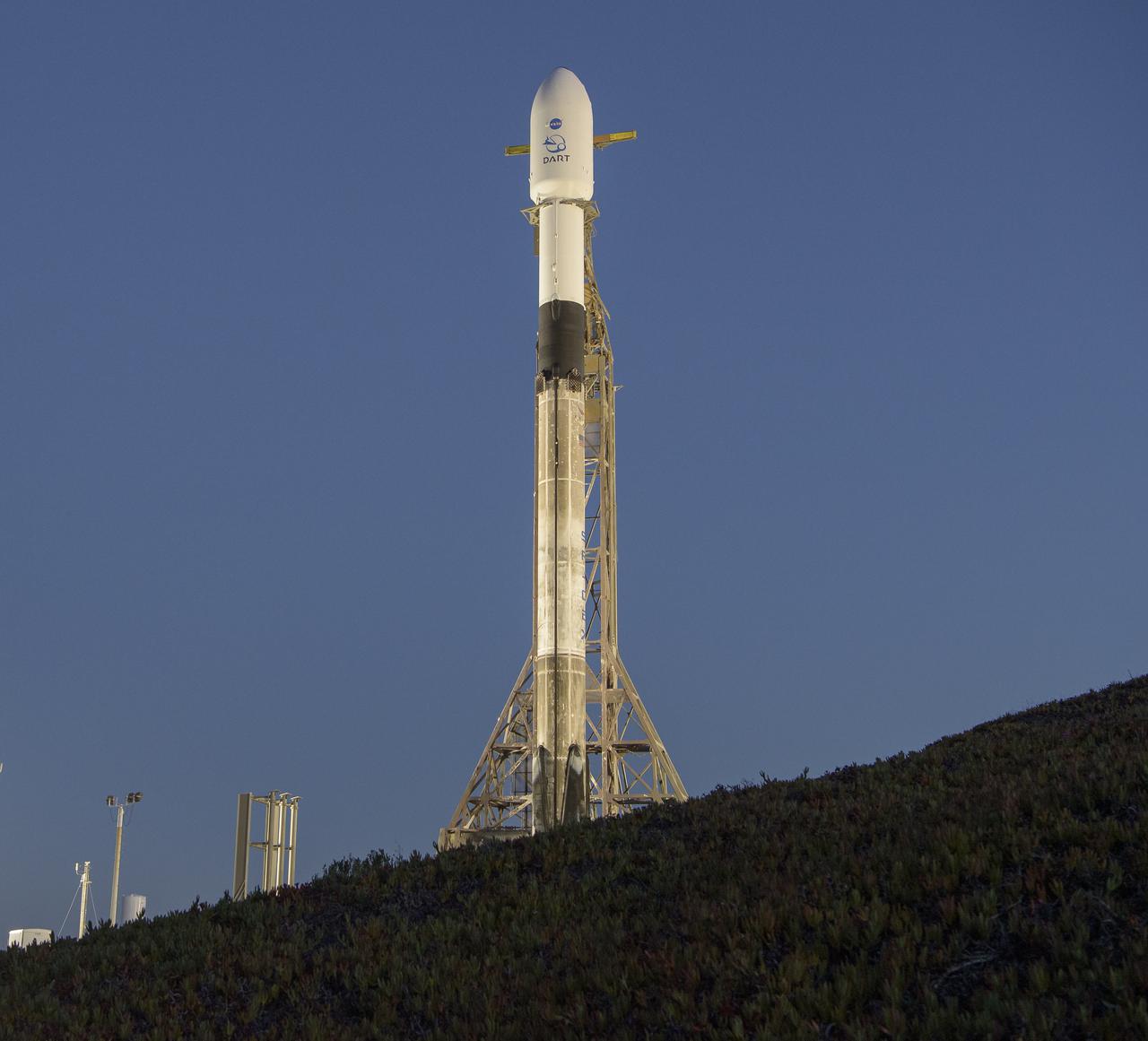
The SpaceX Falcon 9 rocket with the Double Asteroid Redirection Test, or DART, spacecraft onboard, is seen during sunrise, Tuesday, Nov. 23, 2021, at Space Launch Complex 4E, Vandenberg Space Force Base in California. DART is the world’s first full-scale planetary defense test, demonstrating one method of asteroid deflection technology. The mission was built and is managed by the Johns Hopkins APL for NASA’s Planetary Defense Coordination Office. Photo Credit: (NASA/Bill Ingalls)
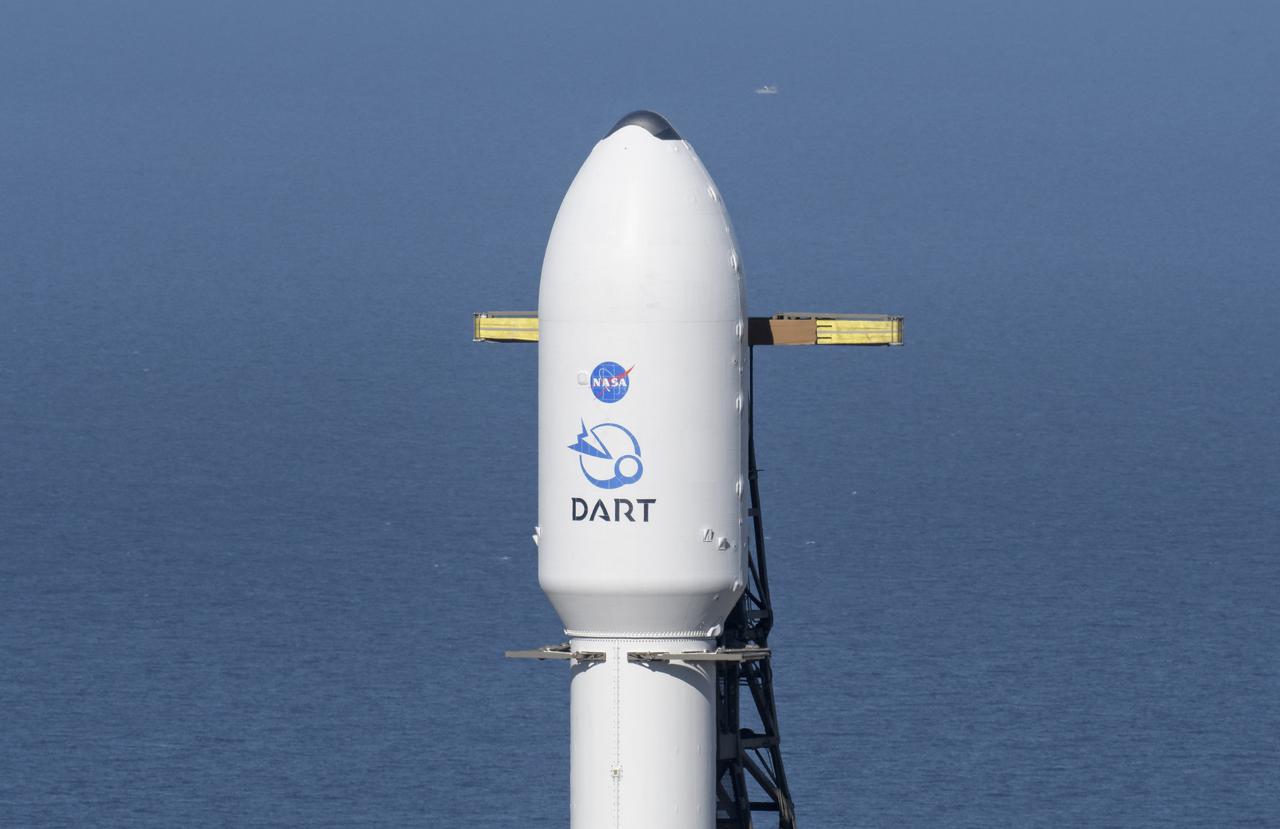
The SpaceX Falcon 9 rocket with the Double Asteroid Redirection Test, or DART, spacecraft onboard, is seen, Tuesday, Nov. 23, 2021, at Space Launch Complex 4E, Vandenberg Space Force Base in California. DART is the world’s first full-scale planetary defense test, demonstrating one method of asteroid deflection technology. The mission was built and is managed by Johns Hopkins APL for NASA’s Planetary Defense Coordination Office. Photo Credit: (NASA/Bill Ingalls)
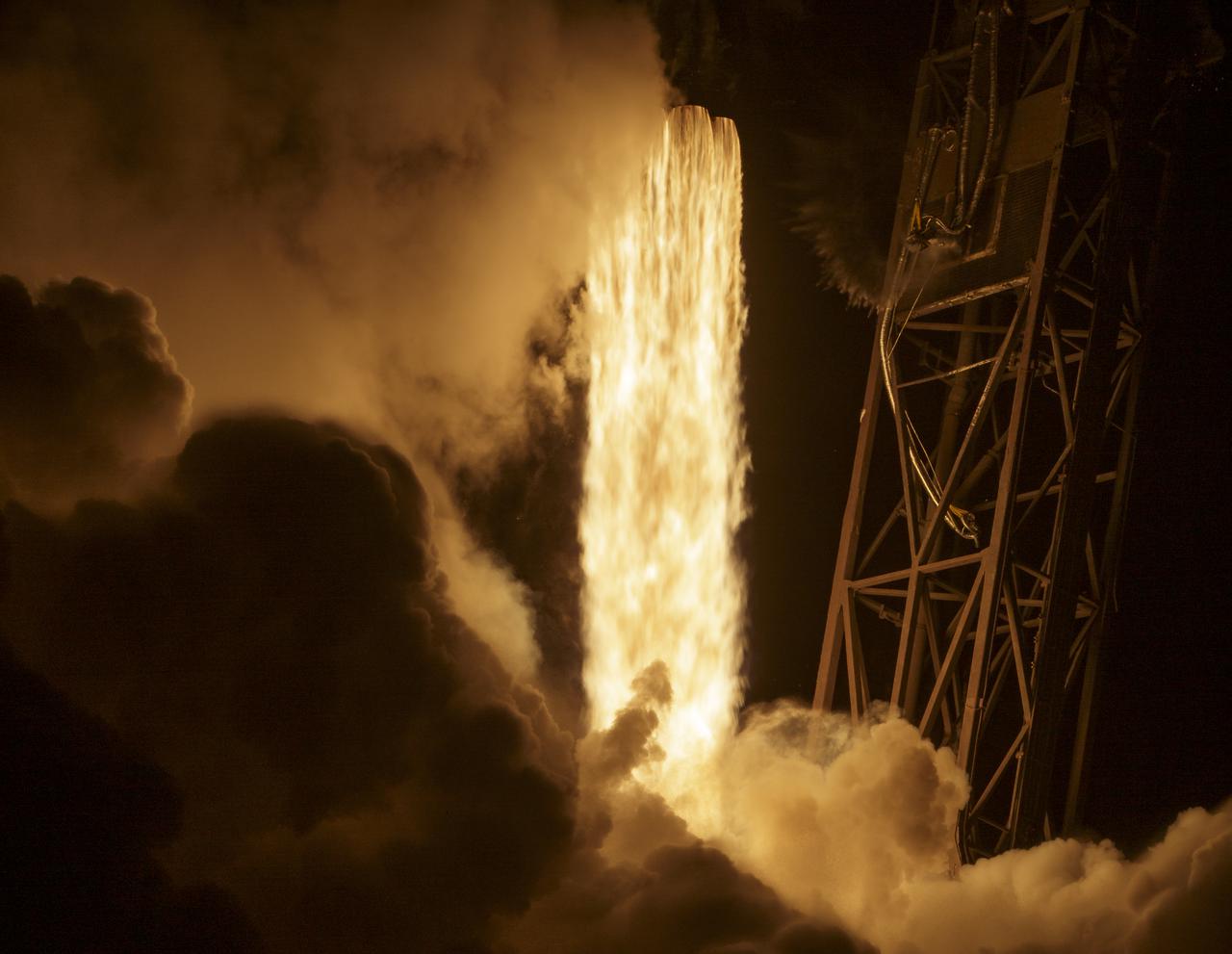
The SpaceX Falcon 9 rocket launches with the Double Asteroid Redirection Test, or DART, spacecraft onboard, Tuesday, Nov. 23, 2021, Pacific time (Nov. 24 Eastern time) from Space Launch Complex 4E at Vandenberg Space Force Base in California. DART is the world’s first full-scale planetary defense test, demonstrating one method of asteroid deflection technology. The mission was built and is managed by Johns Hopkins APL for NASA’s Planetary Defense Coordination Office. Photo Credit: (NASA/Bill Ingalls)
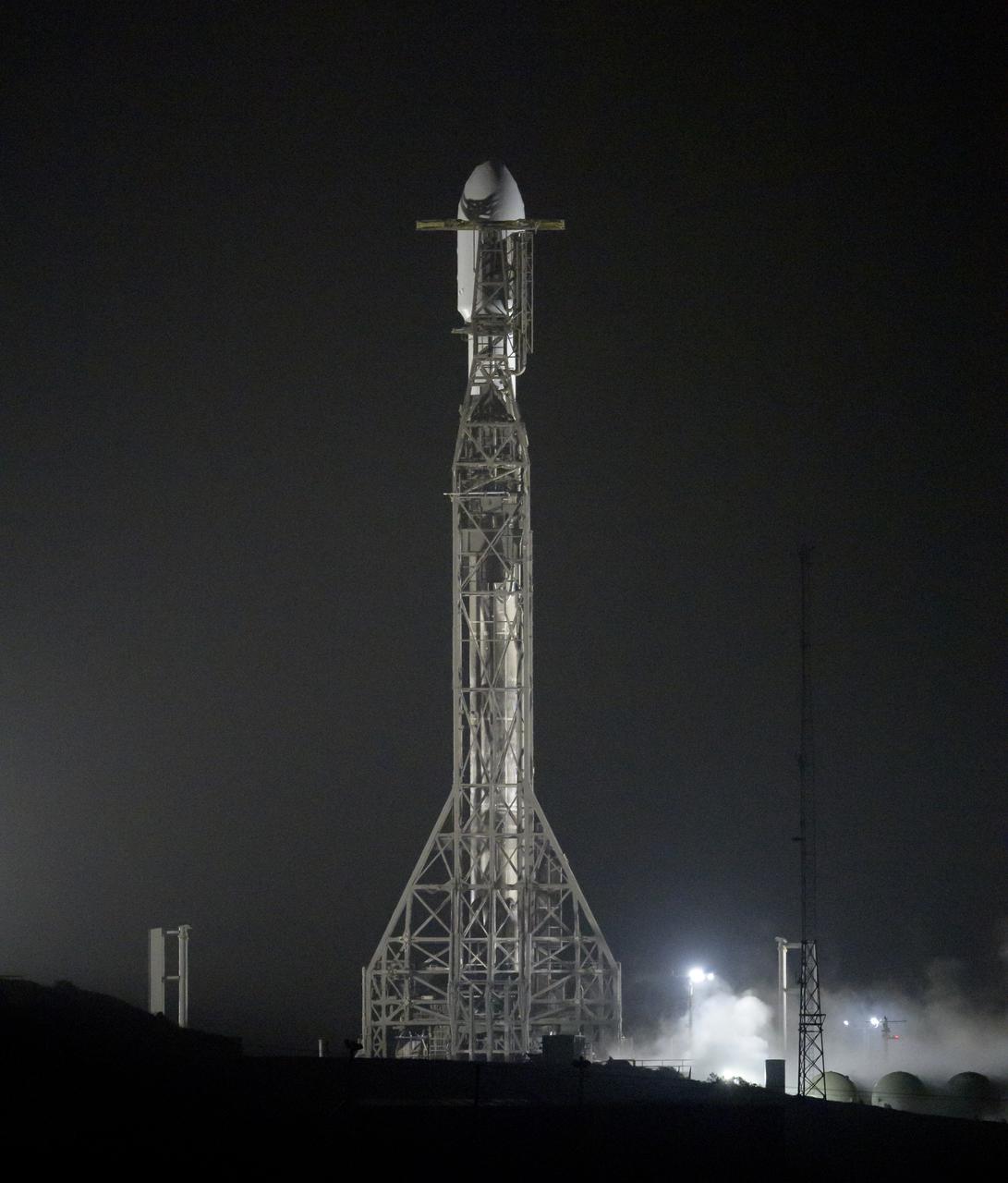
The SpaceX Falcon 9 rocket with the Double Asteroid Redirection Test, or DART, spacecraft onboard, is seen ready for launch, Tuesday, Nov. 23, 2021, at Space Launch Complex 4E, Vandenberg Space Force Base in California. DART is the world’s first full-scale planetary defense test, demonstrating one method of asteroid deflection technology. The mission was built and is managed by Johns Hopkins APL for NASA’s Planetary Defense Coordination Office. Photo Credit: (NASA/Bill Ingalls)
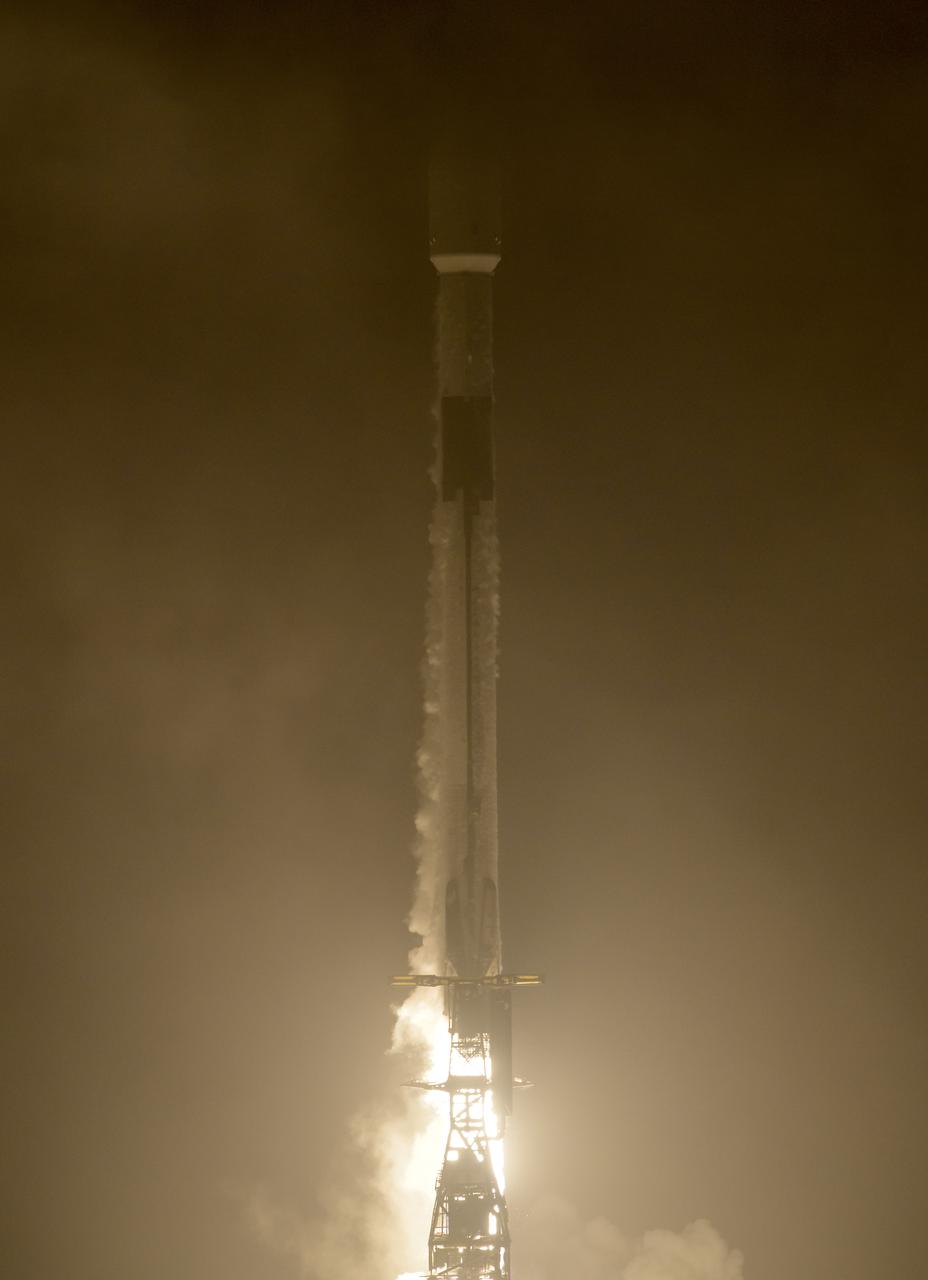
The SpaceX Falcon 9 rocket launches with the Double Asteroid Redirection Test, or DART, spacecraft onboard, Tuesday, Nov. 23, 2021, Pacific time (Nov. 24 Eastern time) from Space Launch Complex 4E at Vandenberg Space Force Base in California. DART is the world’s first full-scale planetary defense test, demonstrating one method of asteroid deflection technology. The mission was built and is managed by Johns Hopkins APL for NASA’s Planetary Defense Coordination Office. Photo Credit: (NASA/Bill Ingalls)
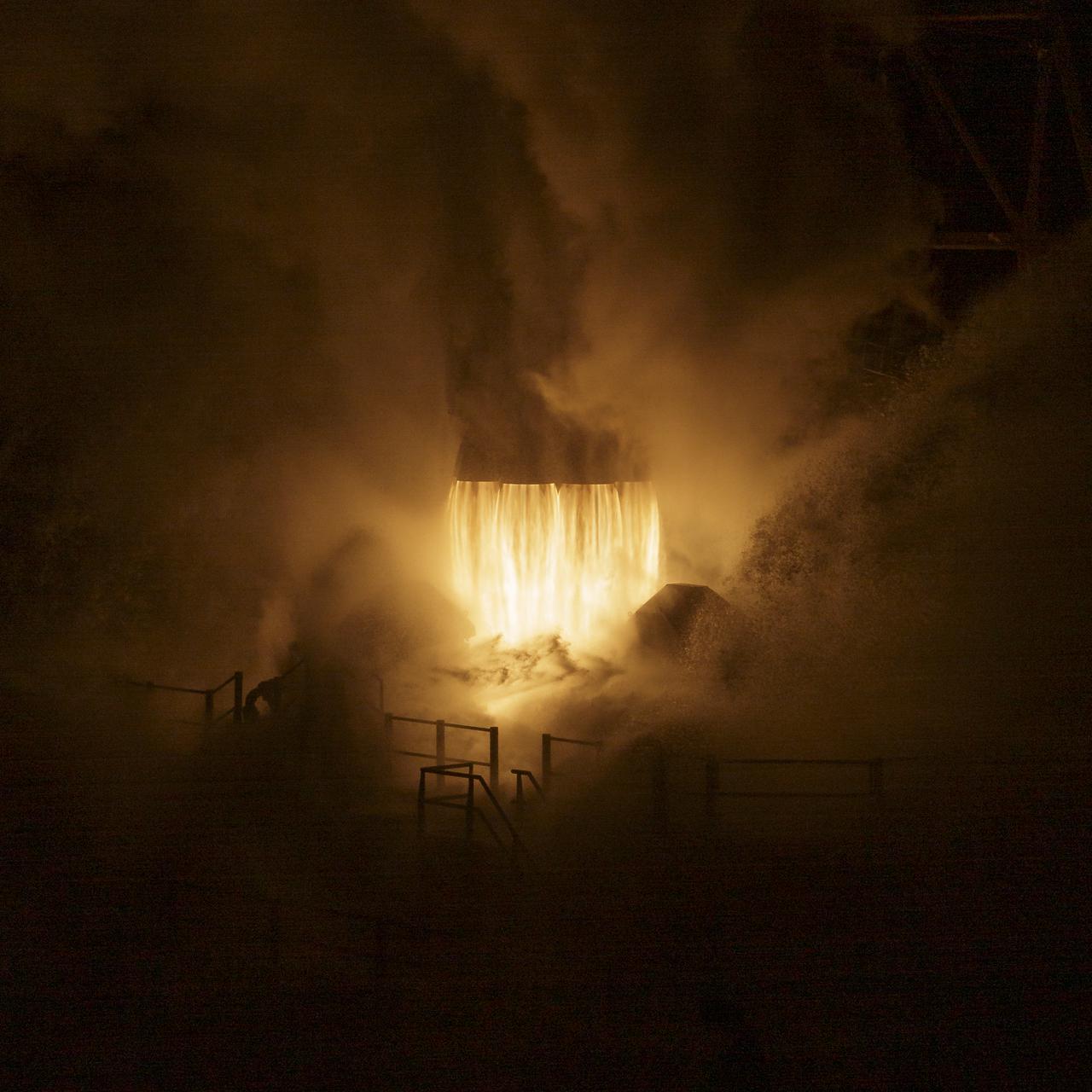
The SpaceX Falcon 9 rocket launches with the Double Asteroid Redirection Test, or DART, spacecraft onboard, Tuesday, Nov. 23, 2021, Pacific time (Nov. 24 Eastern time) from Space Launch Complex 4E at Vandenberg Space Force Base in California. DART is the world’s first full-scale planetary defense test, demonstrating one method of asteroid deflection technology. The mission was built and is managed by Johns Hopkins APL for NASA’s Planetary Defense Coordination Office. Photo Credit: (NASA/Bill Ingalls)
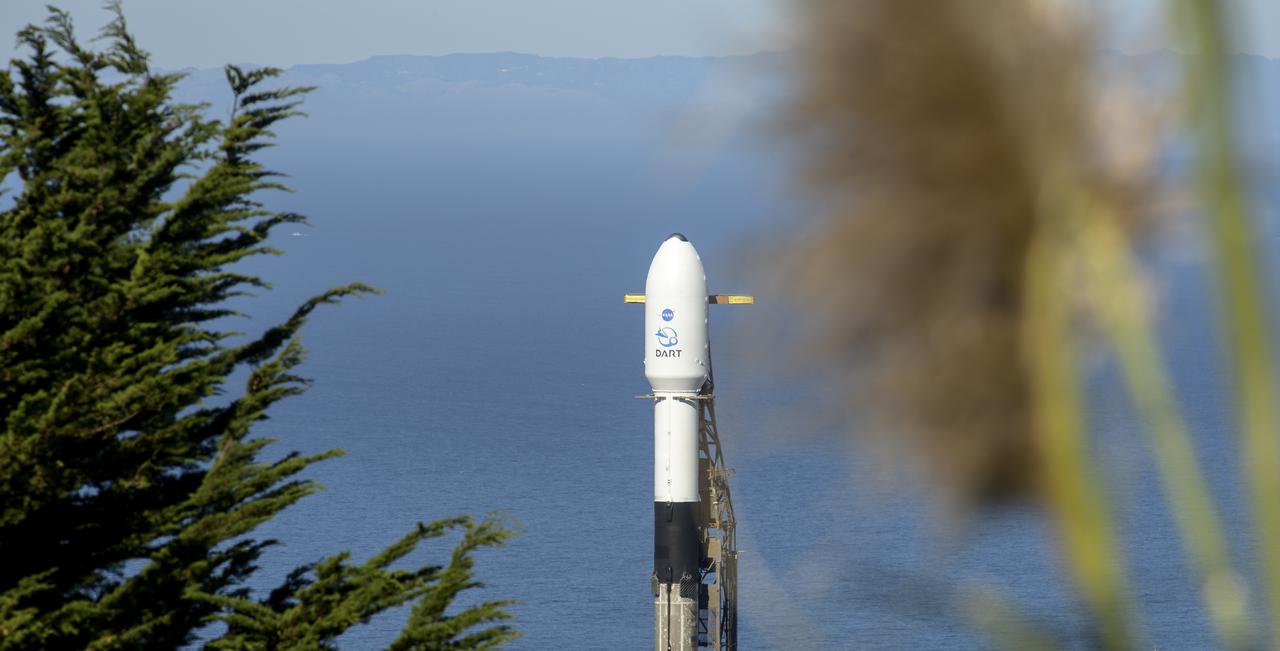
The SpaceX Falcon 9 rocket with the Double Asteroid Redirection Test, or DART, spacecraft onboard, is seen, Tuesday, Nov. 23, 2021, at Space Launch Complex 4E, Vandenberg Space Force Base in California. DART is the world’s first full-scale planetary defense test, demonstrating one method of asteroid deflection technology. The mission was built and is managed by Johns Hopkins APL for NASA’s Planetary Defense Coordination Office. Photo Credit: (NASA/Bill Ingalls)
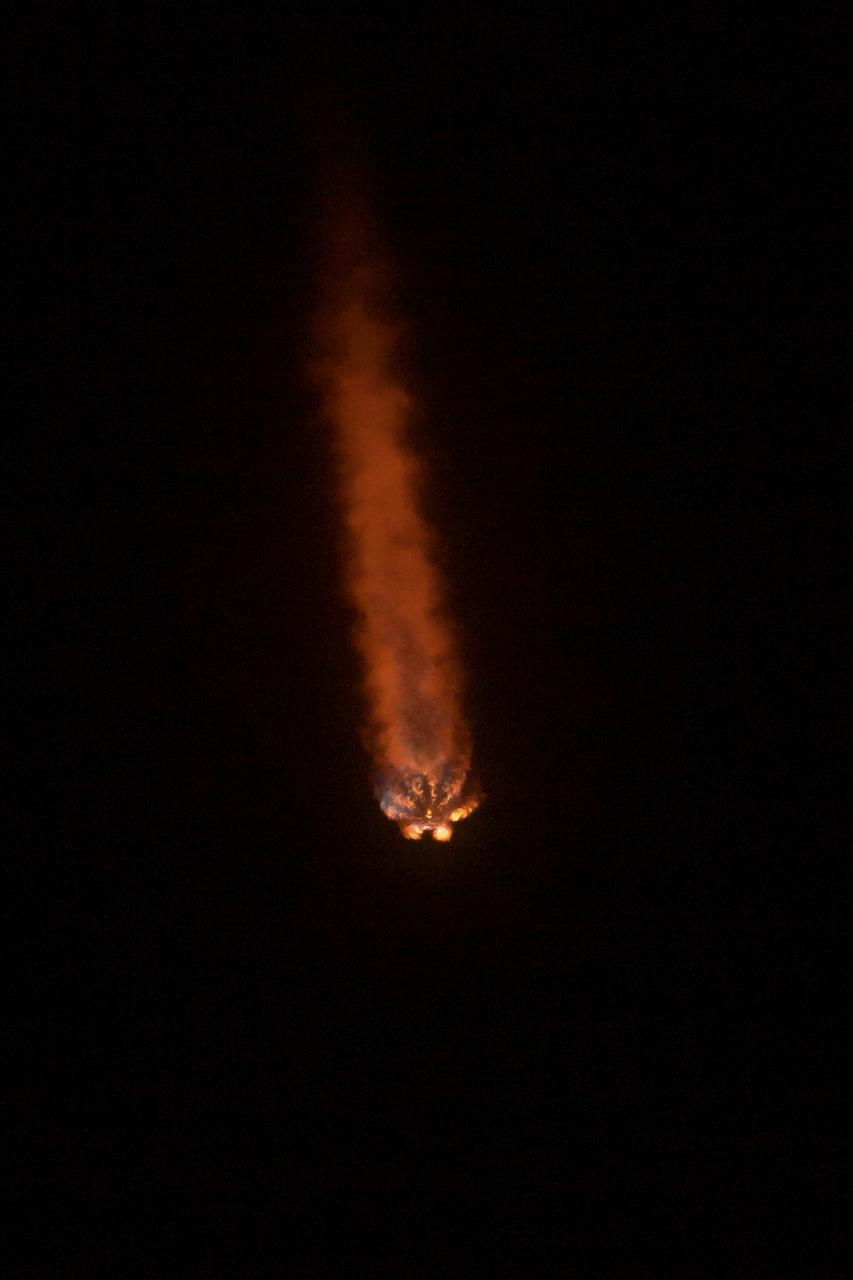
The SpaceX Falcon 9 rocket launches with the Double Asteroid Redirection Test, or DART, spacecraft onboard, Tuesday, Nov. 23, 2021, Pacific time (Nov. 24 Eastern time) from Space Launch Complex 4E at Vandenberg Space Force Base in California. DART is the world’s first full-scale planetary defense test, demonstrating one method of asteroid deflection technology. The mission was built and is managed by Johns Hopkins APL for NASA’s Planetary Defense Coordination Office. Photo Credit: (NASA/Bill Ingalls)
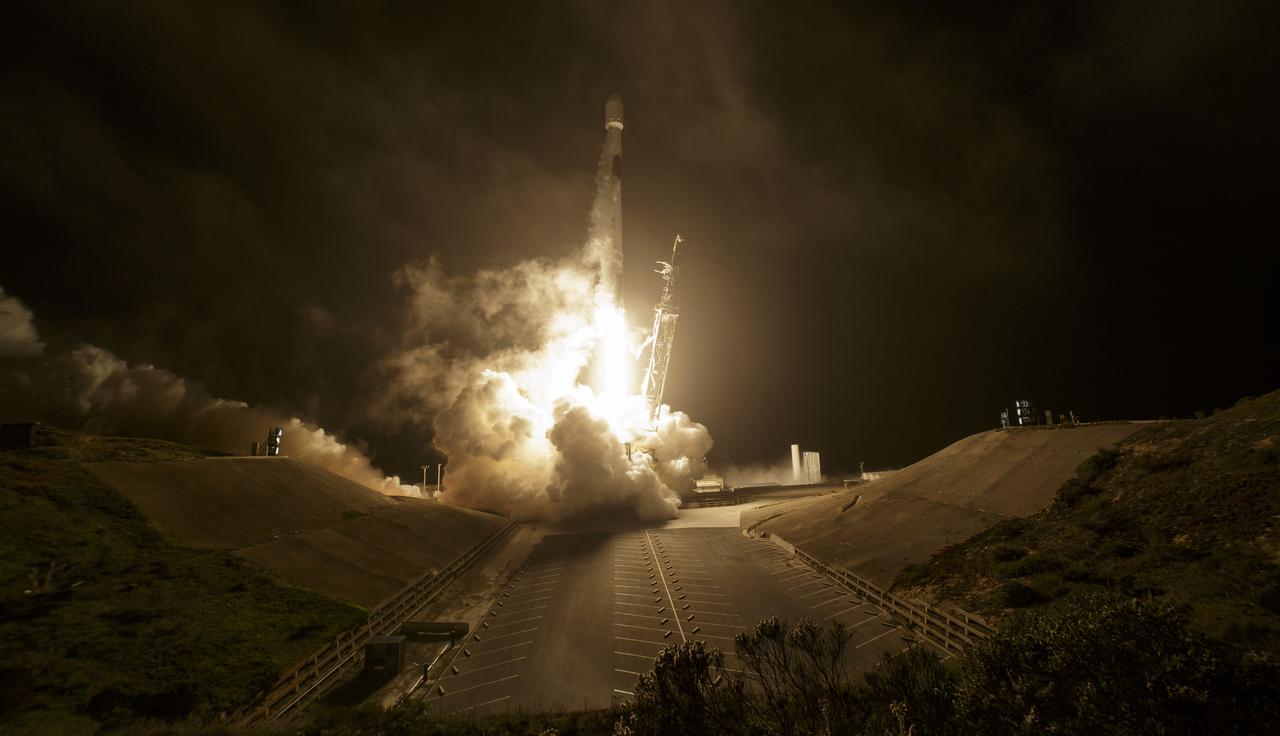
The SpaceX Falcon 9 rocket launches with the Double Asteroid Redirection Test, or DART, spacecraft onboard, Tuesday, Nov. 23, 2021, Pacific time (Nov. 24 Eastern time) from Space Launch Complex 4E at Vandenberg Space Force Base in California. DART is the world’s first full-scale planetary defense test, demonstrating one method of asteroid deflection technology. The mission was built and is managed by Johns Hopkins APL for NASA’s Planetary Defense Coordination Office. Photo Credit: (NASA/Bill Ingalls)
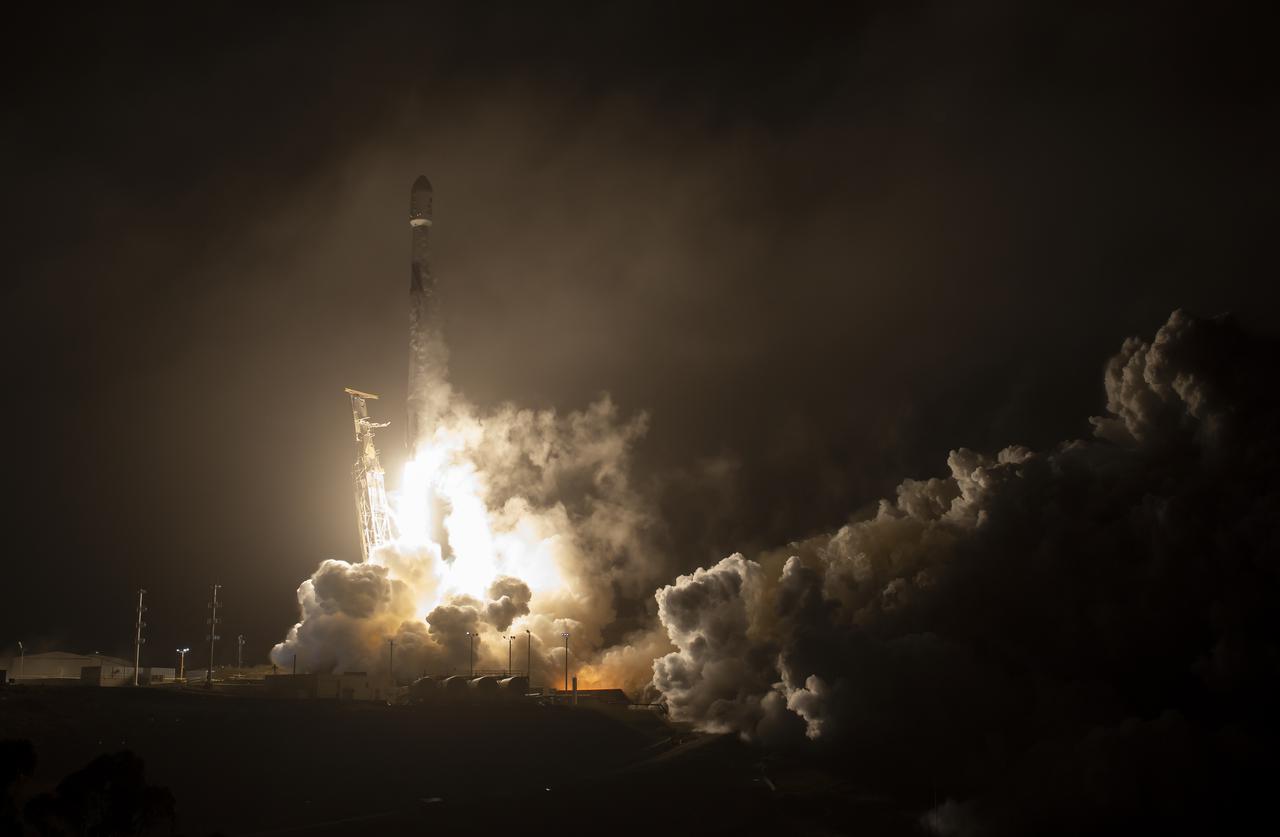
The SpaceX Falcon 9 rocket launches with the Double Asteroid Redirection Test, or DART, spacecraft onboard, Tuesday, Nov. 23, 2021, Pacific time (Nov. 24 Eastern time) from Space Launch Complex 4E at Vandenberg Space Force Base in California. DART is the world’s first full-scale planetary defense test, demonstrating one method of asteroid deflection technology. The mission was built and is managed by Johns Hopkins APL for NASA’s Planetary Defense Coordination Office. Photo Credit: (NASA/Bill Ingalls)
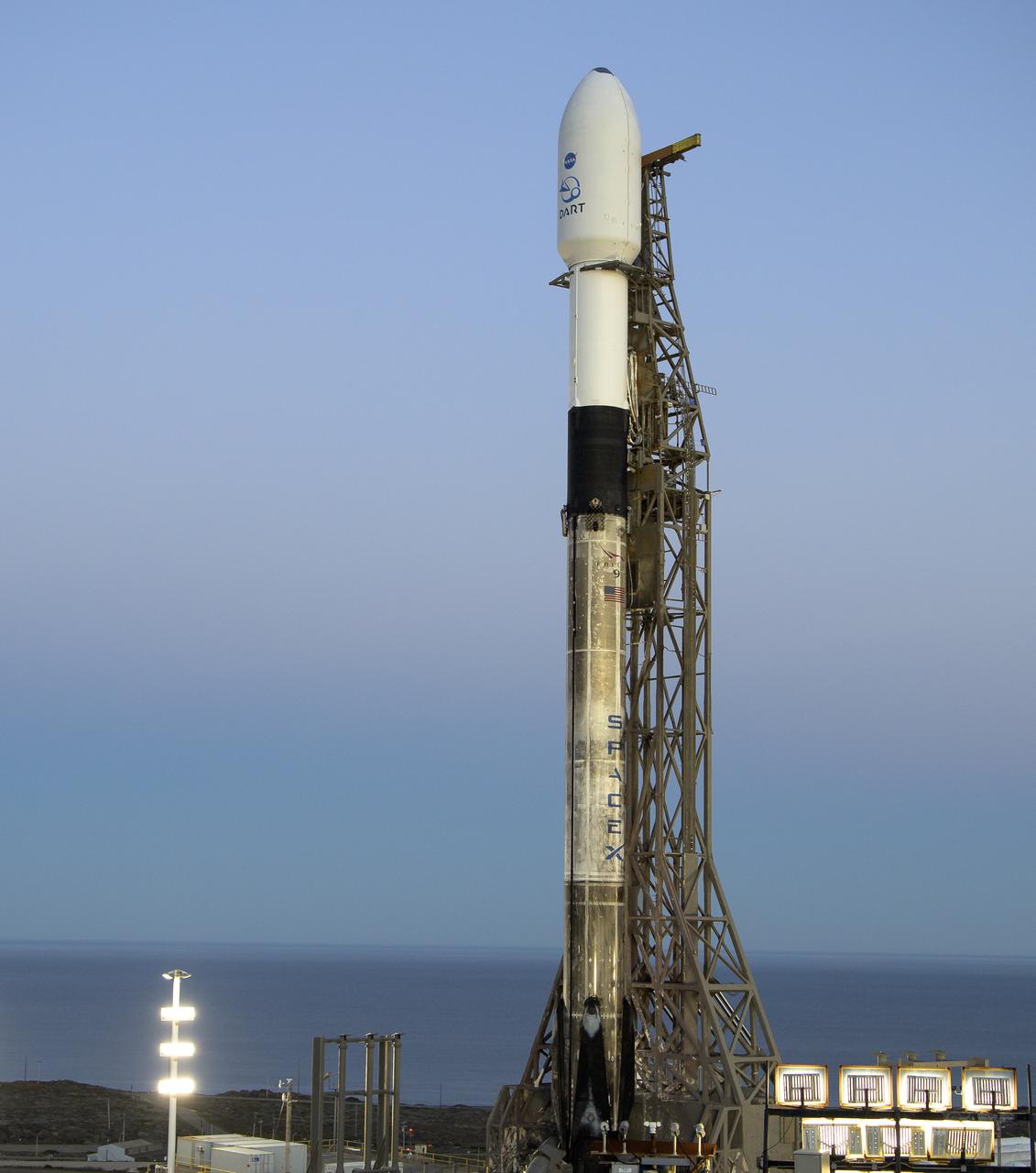
The SpaceX Falcon 9 rocket with the Double Asteroid Redirection Test, or DART, spacecraft onboard, is seen during sunrise, Tuesday, Nov. 23, 2021, at Space Launch Complex 4E, Vandenberg Space Force Base in California. DART is the world’s first full-scale planetary defense test, demonstrating one method of asteroid deflection technology. The mission was built and is managed by the Johns Hopkins APL for NASA’s Planetary Defense Coordination Office. Photo Credit: (NASA/Bill Ingalls)

NASA Administrator Jim Bridenstine delivers a keynote speech at the sixth International Academy of Astronautics Planetary Defense Conference, Monday, April 29, 2019 at The Hotel at the University of Maryland in College Park Maryland. The conference brings together experts from around the world to present the latest research on Near-Earth Objects and will highlight the development of the first-ever mission to demonstrate an asteroid defection technique for planetary defense, NASA’s Double Asteroid Redirection Test (DART). Photo Credit: (NASA/Joel Kowsky)
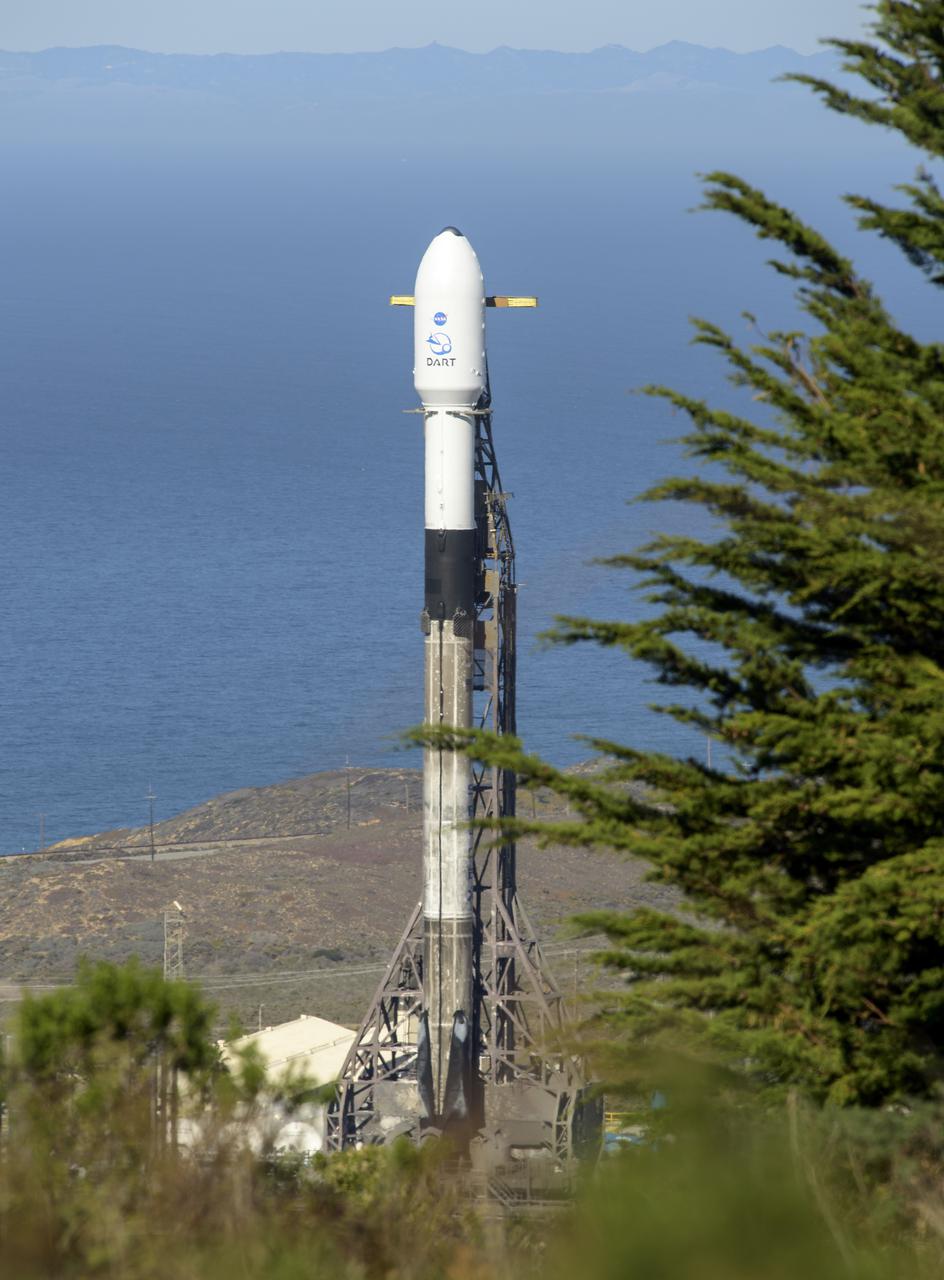
The SpaceX Falcon 9 rocket with the Double Asteroid Redirection Test, or DART, spacecraft onboard, is seen, Tuesday, Nov. 23, 2021, at Space Launch Complex 4E, Vandenberg Space Force Base in California. DART is the world’s first full-scale planetary defense test, demonstrating one method of asteroid deflection technology. The mission was built and is managed by Johns Hopkins APL for NASA’s Planetary Defense Coordination Office. Photo Credit: (NASA/Bill Ingalls)
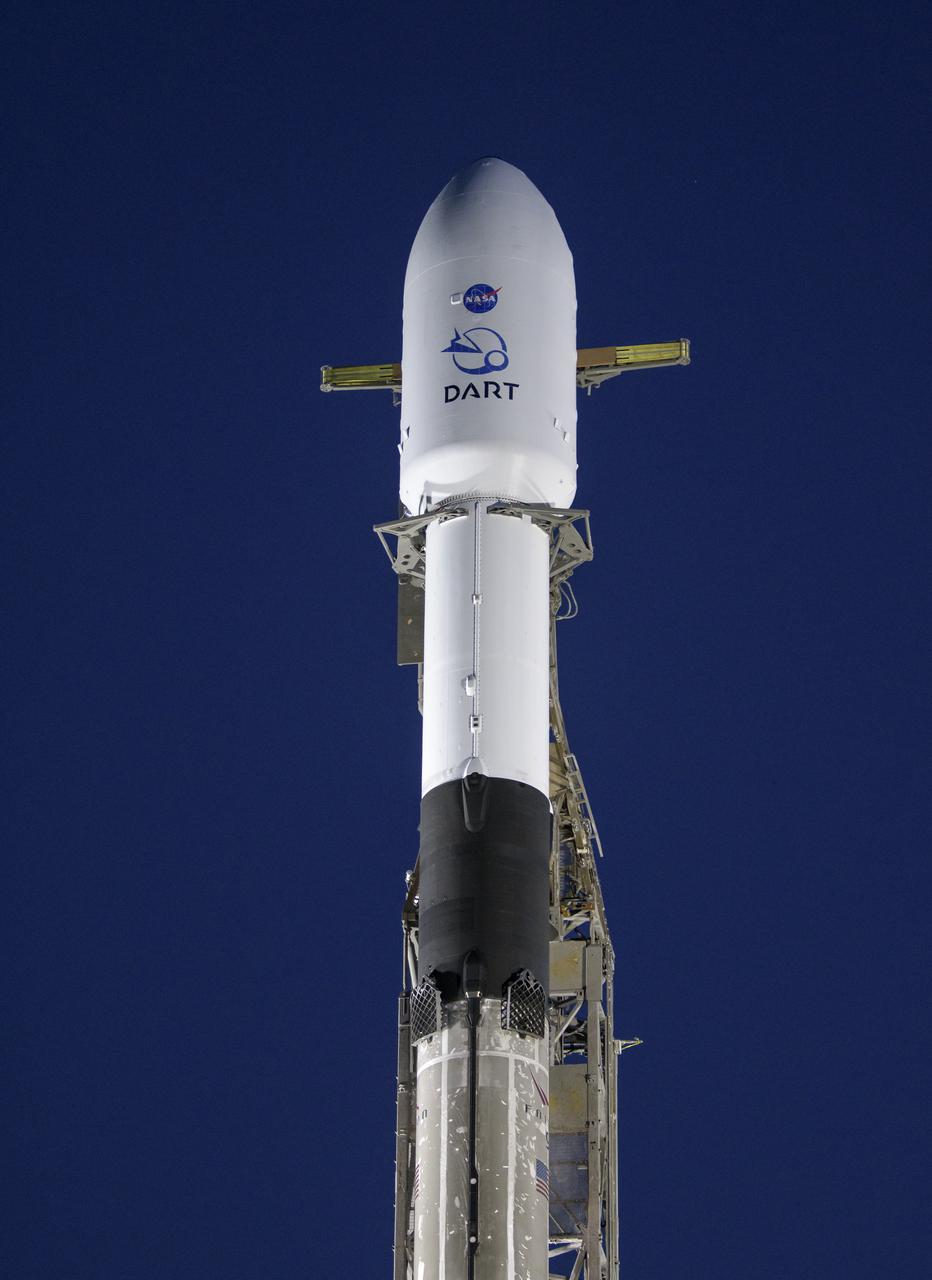
The SpaceX Falcon 9 rocket with the Double Asteroid Redirection Test, or DART, spacecraft onboard, is seen during sunrise, Tuesday, Nov. 23, 2021, at Space Launch Complex 4E, Vandenberg Space Force Base in California. DART is the world’s first full-scale planetary defense test, demonstrating one method of asteroid deflection technology. The mission was built and is managed by the Johns Hopkins APL for NASA’s Planetary Defense Coordination Office. Photo Credit: (NASA/Bill Ingalls)
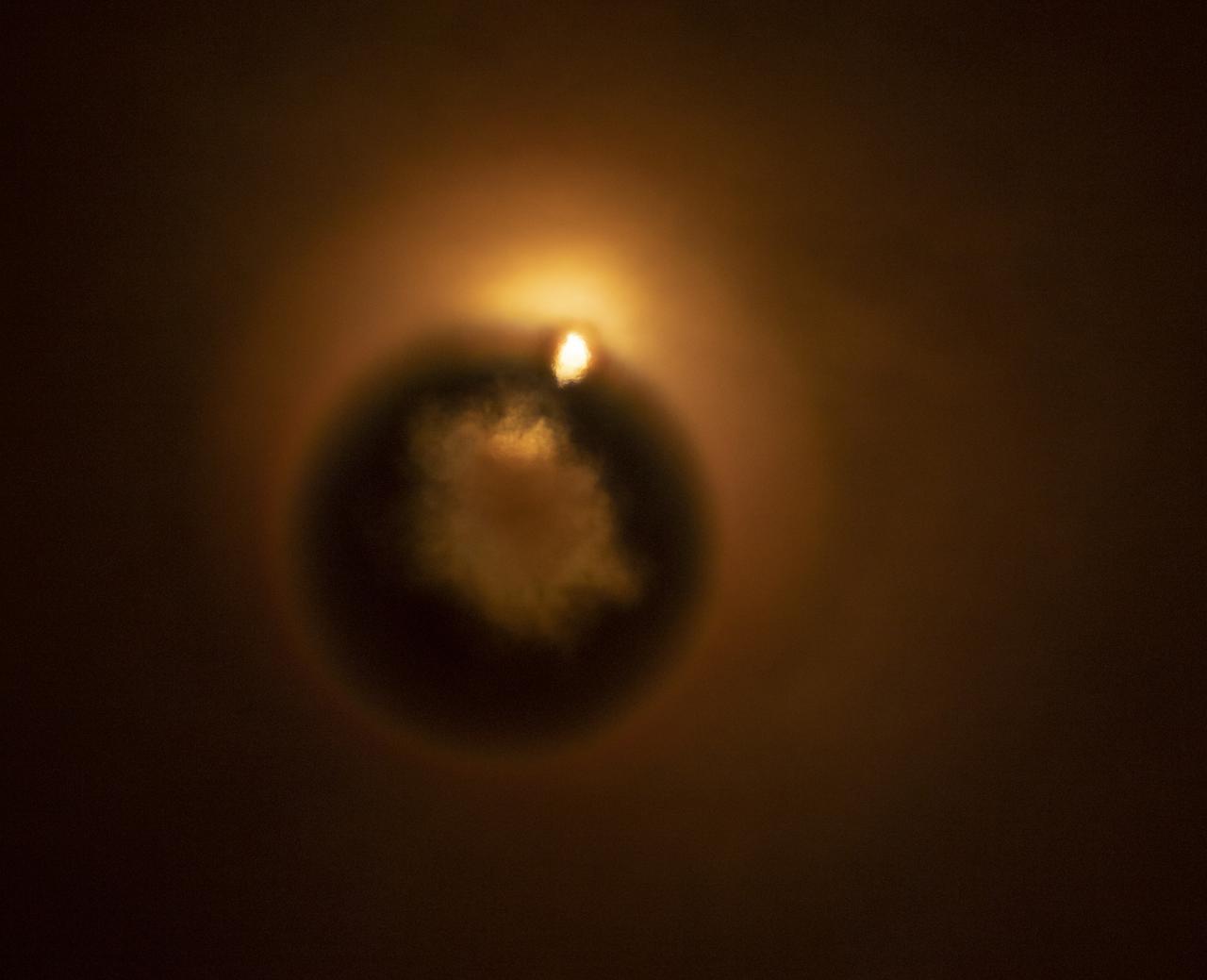
The SpaceX Falcon 9 rocket launches with the Double Asteroid Redirection Test, or DART, spacecraft onboard, Tuesday, Nov. 23, 2021, Pacific time (Nov. 24 Eastern time) from Space Launch Complex 4E at Vandenberg Space Force Base in California. DART is the world’s first full-scale planetary defense test, demonstrating one method of asteroid deflection technology. The mission was built and is managed by Johns Hopkins APL for NASA’s Planetary Defense Coordination Office. Photo Credit: (NASA/Bill Ingalls)
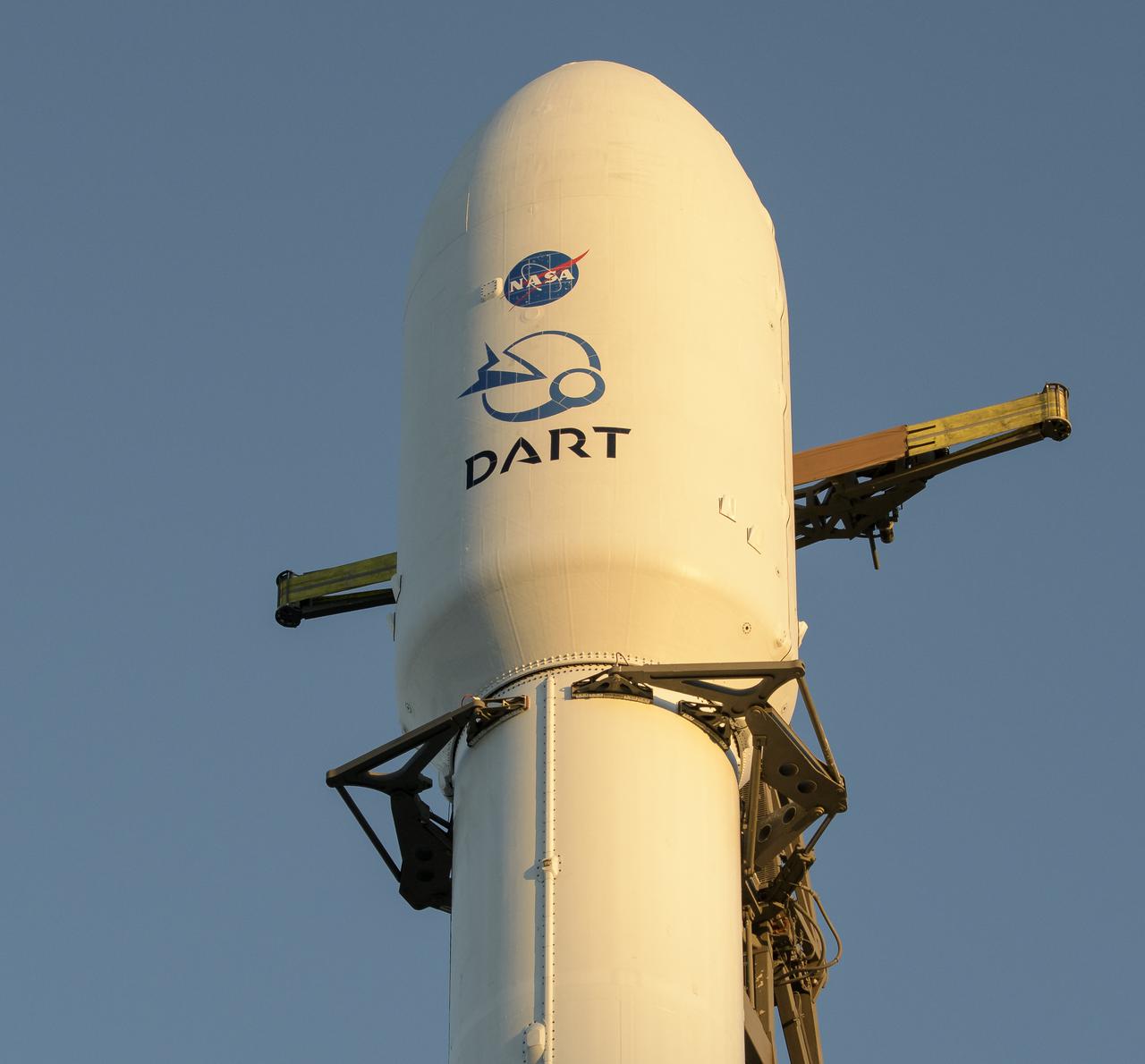
The SpaceX Falcon 9 rocket with the Double Asteroid Redirection Test, or DART, spacecraft onboard, is seen during sunrise, Tuesday, Nov. 23, 2021, at Space Launch Complex 4E, Vandenberg Space Force Base in California. DART is the world’s first full-scale planetary defense test, demonstrating one method of asteroid deflection technology. The mission was built and is managed by the Johns Hopkins APL for NASA’s Planetary Defense Coordination Office. Photo Credit: (NASA/Bill Ingalls)
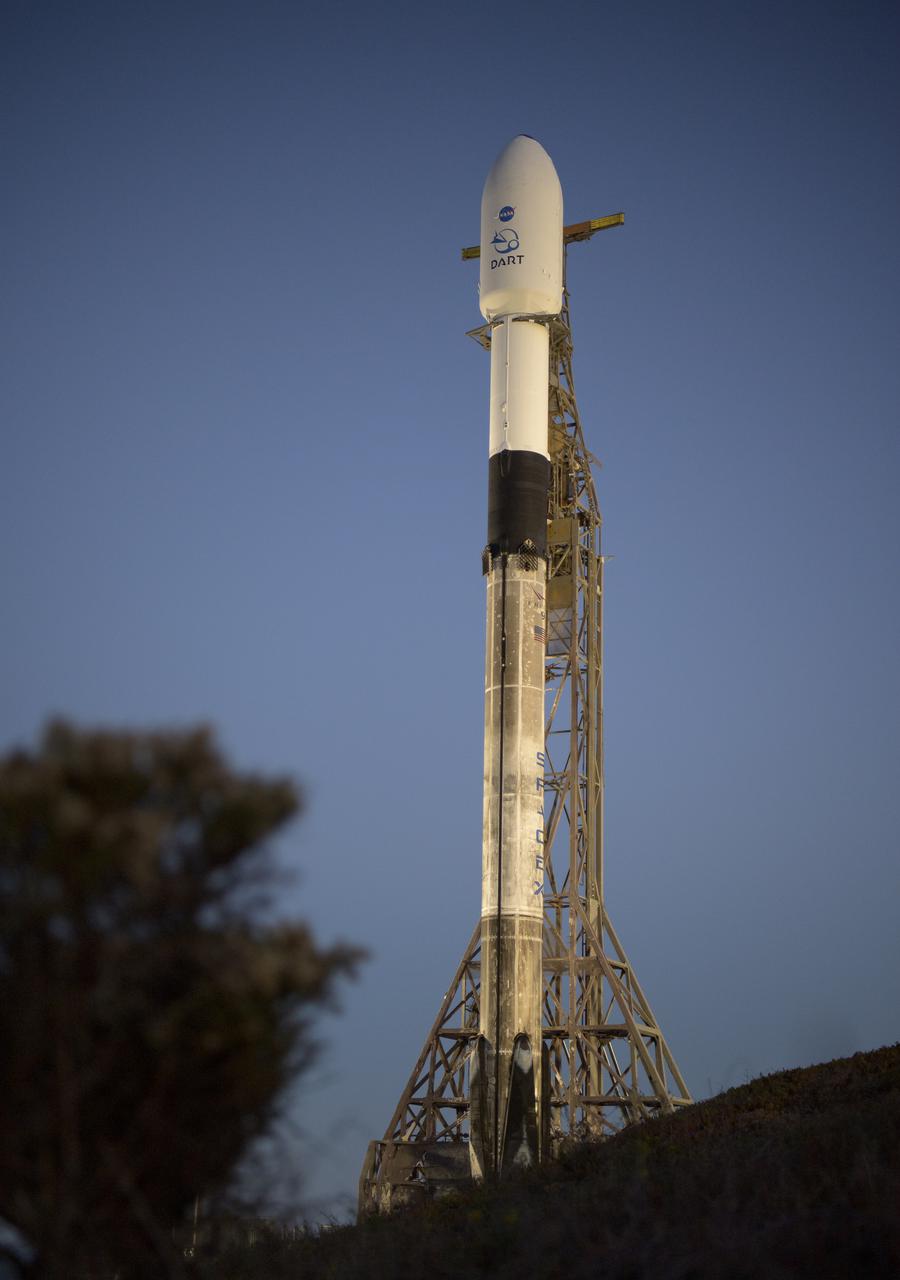
The SpaceX Falcon 9 rocket with the Double Asteroid Redirection Test, or DART, spacecraft onboard, is seen during sunrise, Tuesday, Nov. 23, 2021, at Space Launch Complex 4E, Vandenberg Space Force Base in California. DART is the world’s first full-scale planetary defense test, demonstrating one method of asteroid deflection technology. The mission was built and is managed by the Johns Hopkins APL for NASA’s Planetary Defense Coordination Office. Photo Credit: (NASA/Bill Ingalls)
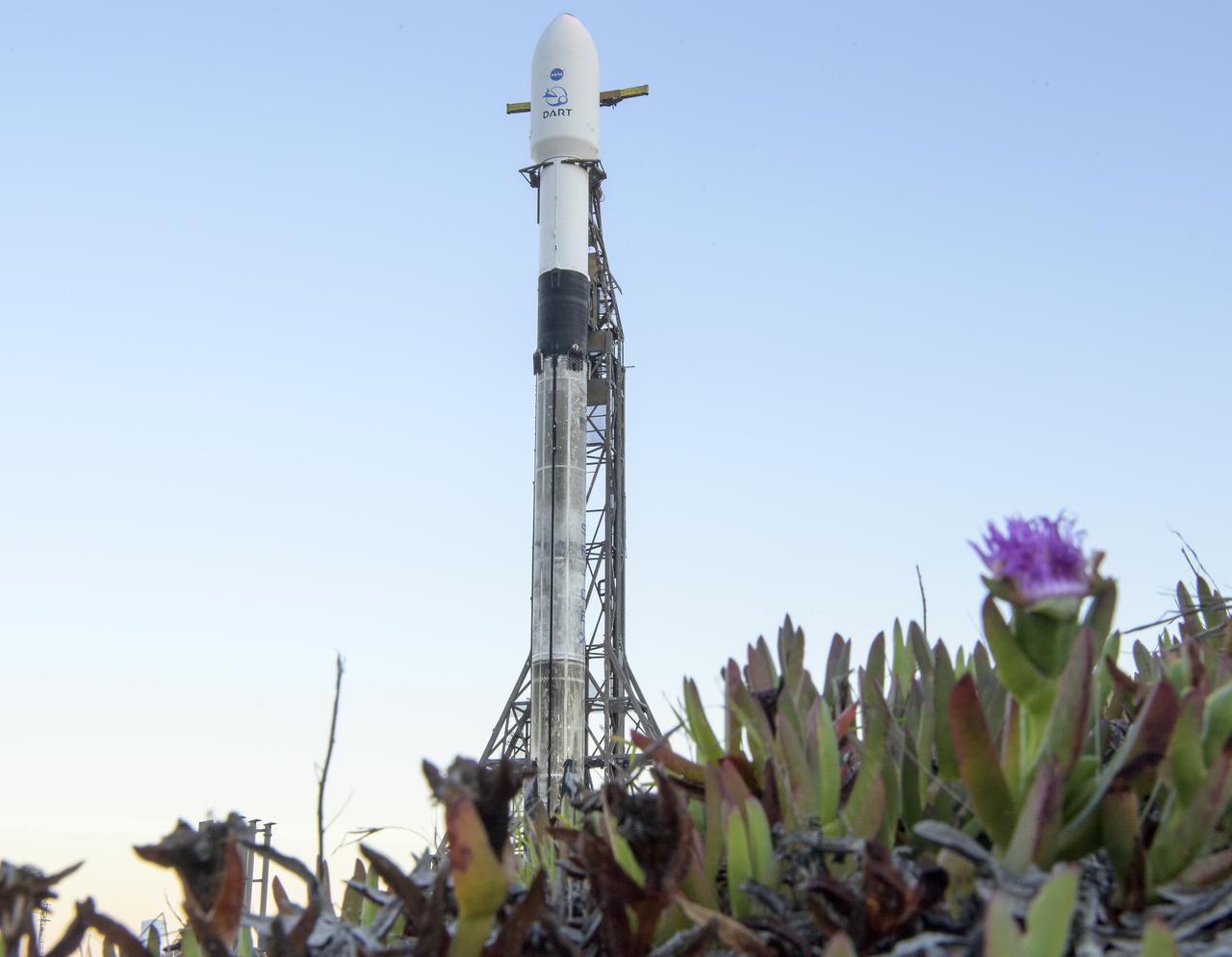
The SpaceX Falcon 9 rocket with the Double Asteroid Redirection Test, or DART, spacecraft onboard, is seen during sunrise, Tuesday, Nov. 23, 2021, at Space Launch Complex 4E, Vandenberg Space Force Base in California. DART is the world’s first full-scale planetary defense test, demonstrating one method of asteroid deflection technology. The mission was built and is managed by the Johns Hopkins APL for NASA’s Planetary Defense Coordination Office. Photo Credit: (NASA/Bill Ingalls)
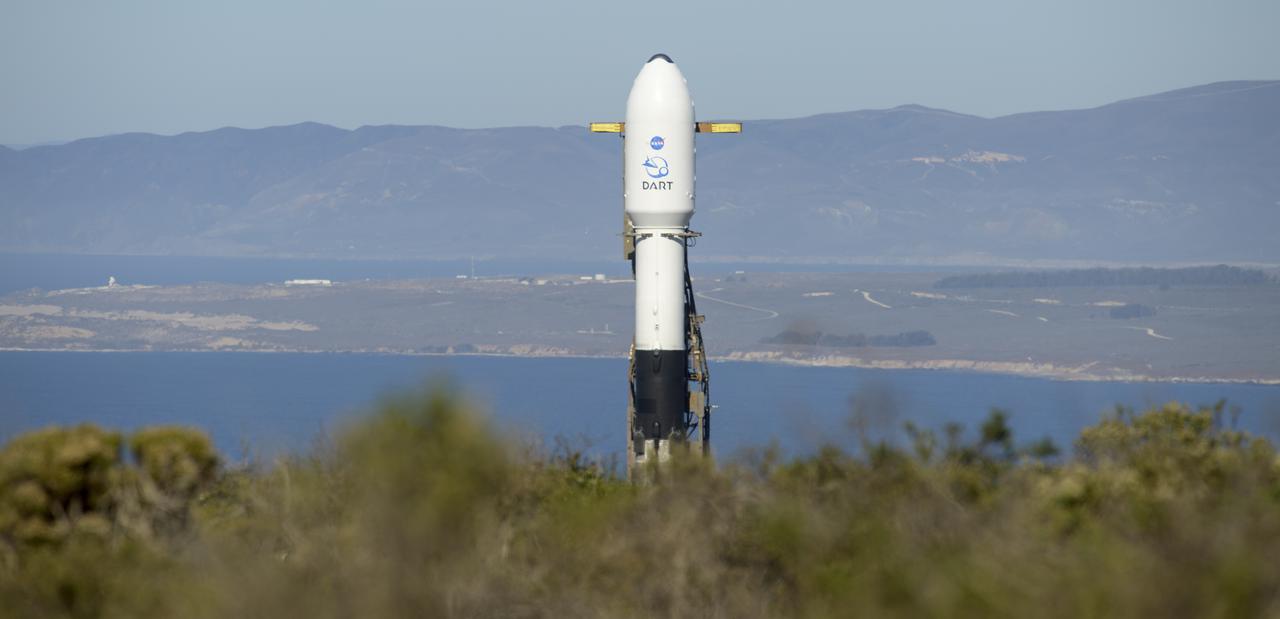
The SpaceX Falcon 9 rocket with the Double Asteroid Redirection Test, or DART, spacecraft onboard, is seen, Tuesday, Nov. 23, 2021, at Space Launch Complex 4E, Vandenberg Space Force Base in California. DART is the world’s first full-scale planetary defense test, demonstrating one method of asteroid deflection technology. The mission was built and is managed by Johns Hopkins APL for NASA’s Planetary Defense Coordination Office. Photo Credit: (NASA/Bill Ingalls)
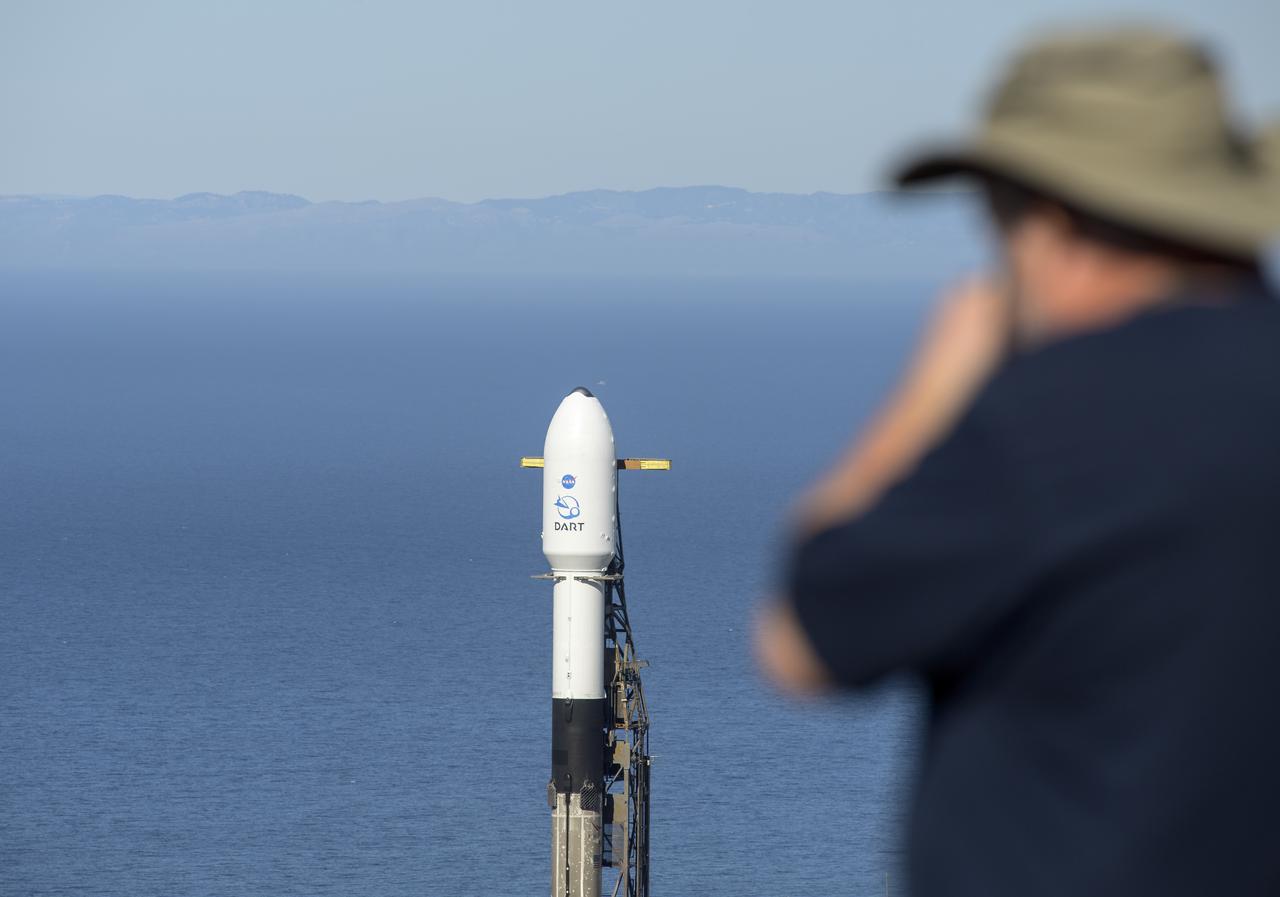
The SpaceX Falcon 9 rocket with the Double Asteroid Redirection Test, or DART, spacecraft onboard, is seen, Tuesday, Nov. 23, 2021, at Space Launch Complex 4E, Vandenberg Space Force Base in California. DART is the world’s first full-scale planetary defense test, demonstrating one method of asteroid deflection technology. The mission was built and is managed by Johns Hopkins APL for NASA’s Planetary Defense Coordination Office. Photo Credit: (NASA/Bill Ingalls)
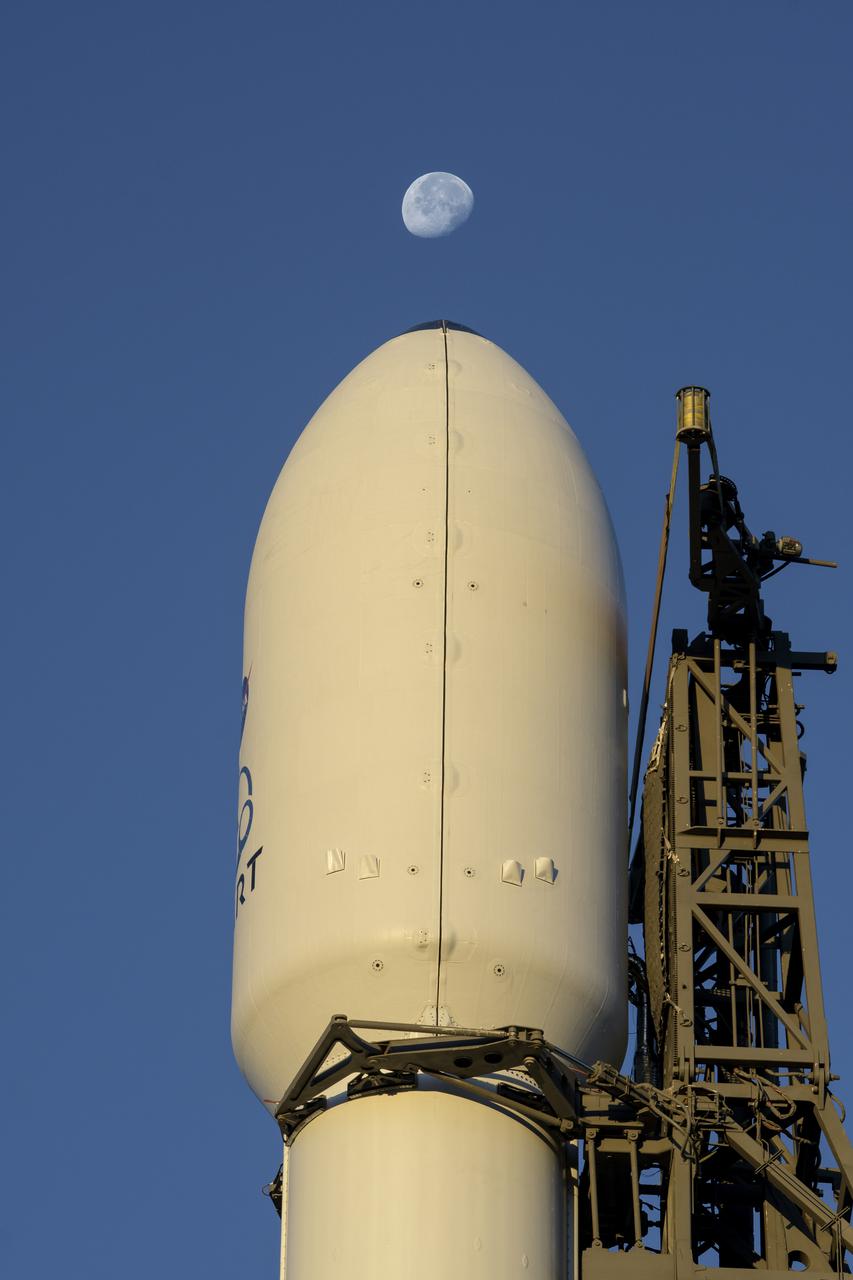
The SpaceX Falcon 9 rocket with the Double Asteroid Redirection Test, or DART, spacecraft onboard, is seen during sunrise, Tuesday, Nov. 23, 2021, at Space Launch Complex 4E, Vandenberg Space Force Base in California. DART is the world’s first full-scale planetary defense test, demonstrating one method of asteroid deflection technology. The mission was built and is managed by the Johns Hopkins APL for NASA’s Planetary Defense Coordination Office. Photo Credit: (NASA/Bill Ingalls)
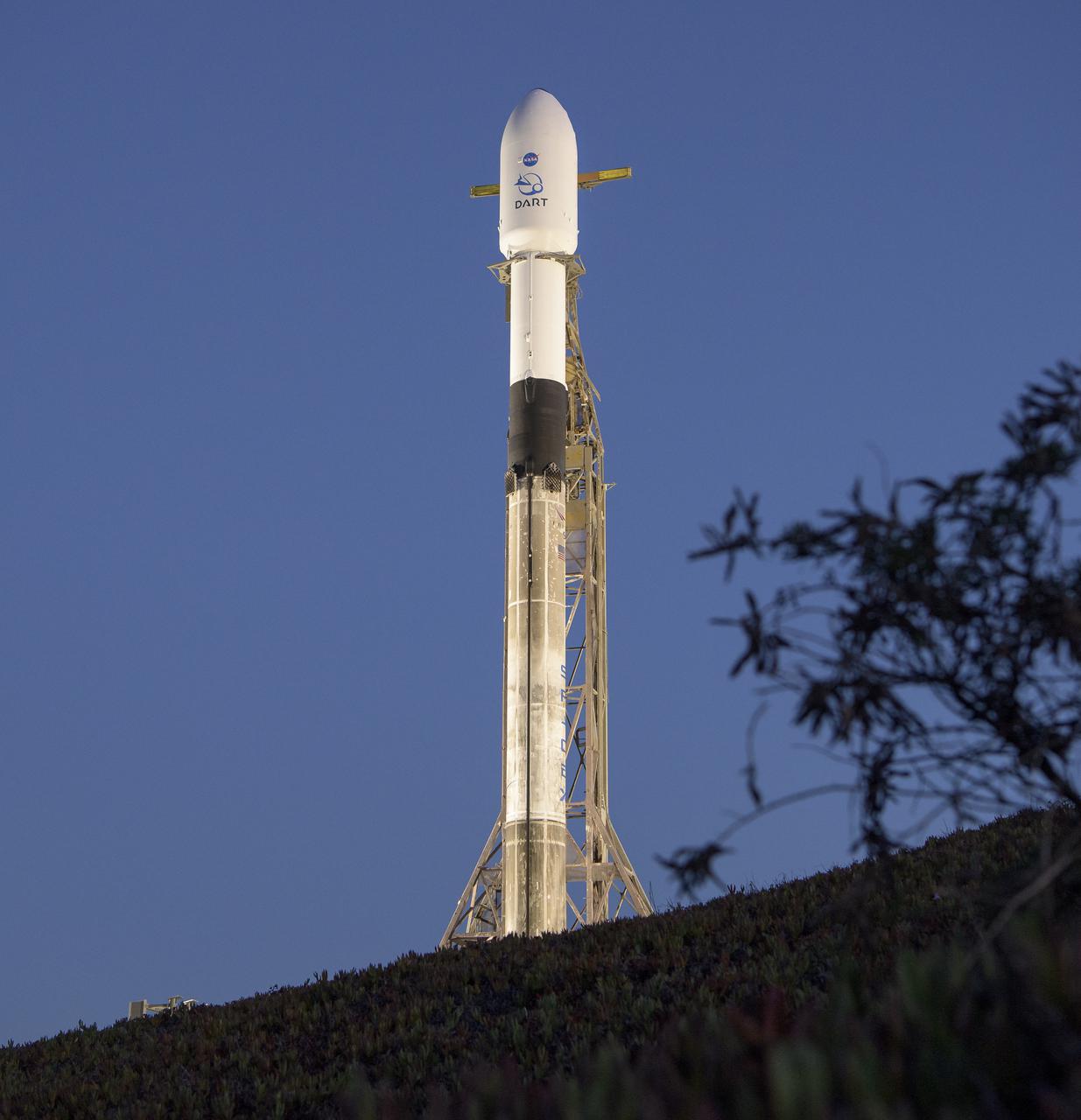
The SpaceX Falcon 9 rocket with the Double Asteroid Redirection Test, or DART, spacecraft onboard, is seen during sunrise, Tuesday, Nov. 23, 2021, at Space Launch Complex 4E, Vandenberg Space Force Base in California. DART is the world’s first full-scale planetary defense test, demonstrating one method of asteroid deflection technology. The mission was built and is managed by the Johns Hopkins APL for NASA’s Planetary Defense Coordination Office. Photo Credit: (NASA/Bill Ingalls)
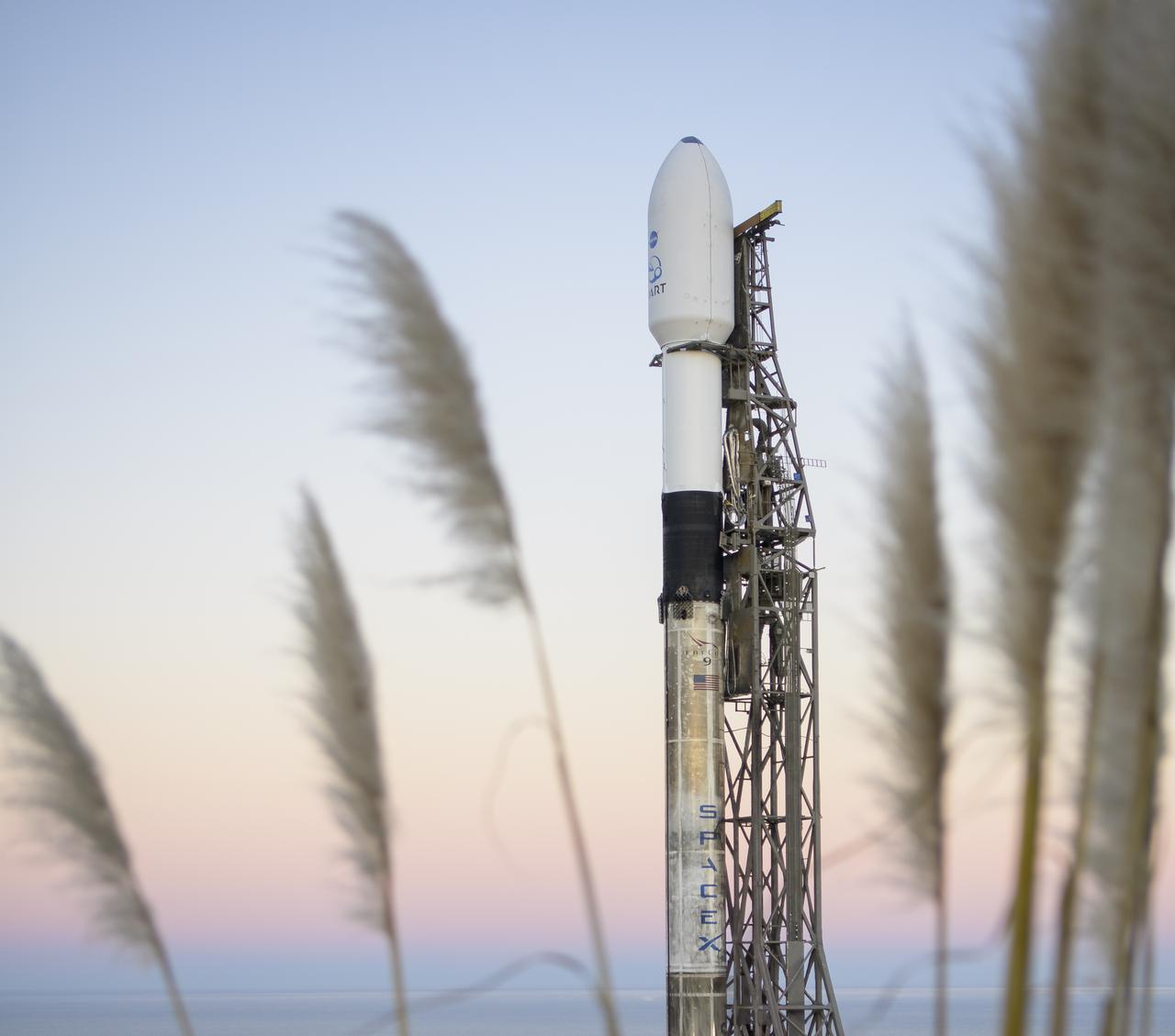
The SpaceX Falcon 9 rocket with the Double Asteroid Redirection Test, or DART, spacecraft onboard, is seen during sunrise, Tuesday, Nov. 23, 2021, at Space Launch Complex 4E, Vandenberg Space Force Base in California. DART is the world’s first full-scale planetary defense test, demonstrating one method of asteroid deflection technology. The mission was built and is managed by the Johns Hopkins APL for NASA’s Planetary Defense Coordination Office. Photo Credit: (NASA/Bill Ingalls)
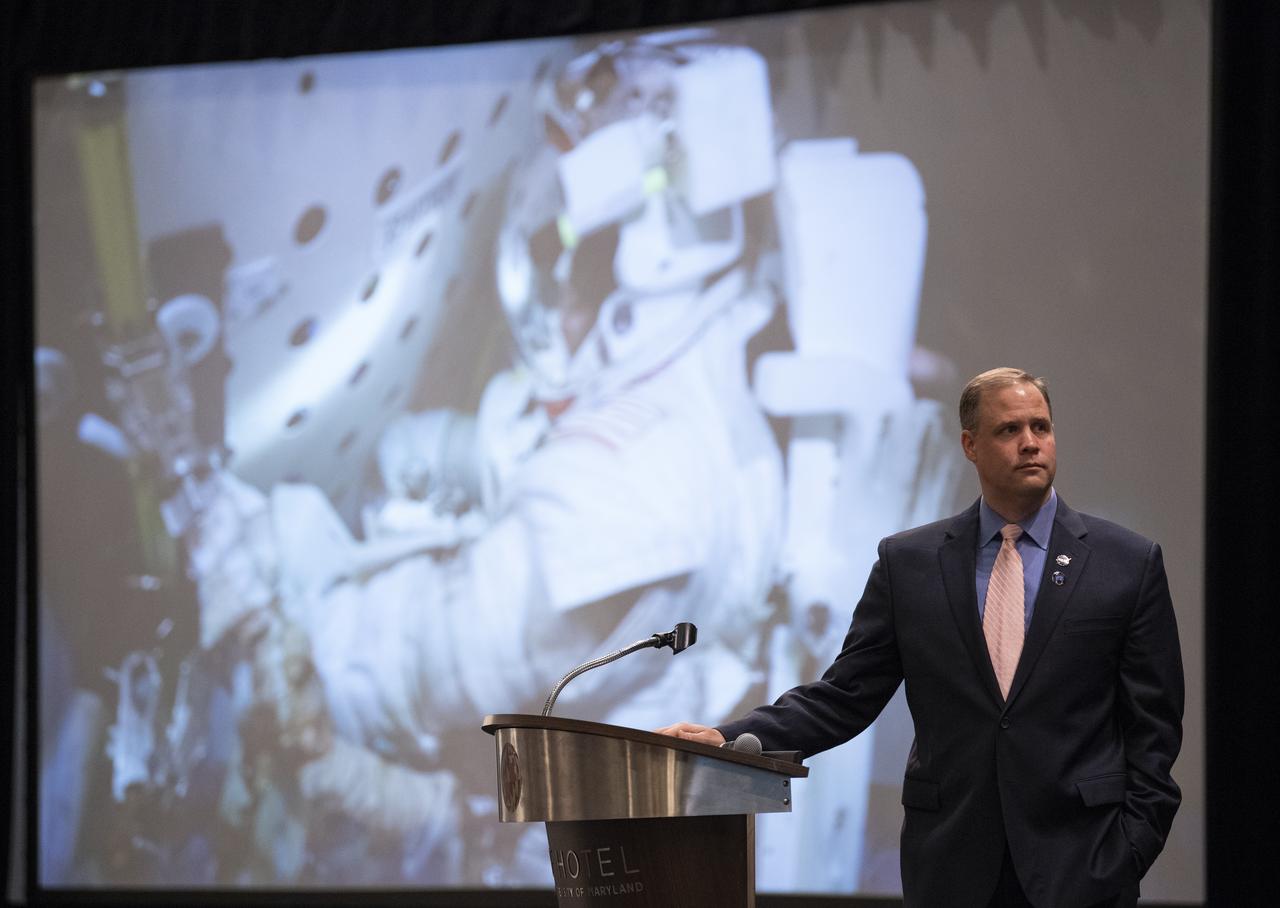
NASA Administrator Jim Bridenstine watches a short video as part of his keynote speech at the sixth International Academy of Astronautics Planetary Defense Conference, Monday, April 29, 2019 at The Hotel at the University of Maryland in College Park Maryland. The conference brings together experts from around the world to present the latest research on Near-Earth Objects and will highlight the development of the first-ever mission to demonstrate an asteroid defection technique for planetary defense, NASA’s Double Asteroid Redirection Test (DART). Photo Credit: (NASA/Joel Kowsky)
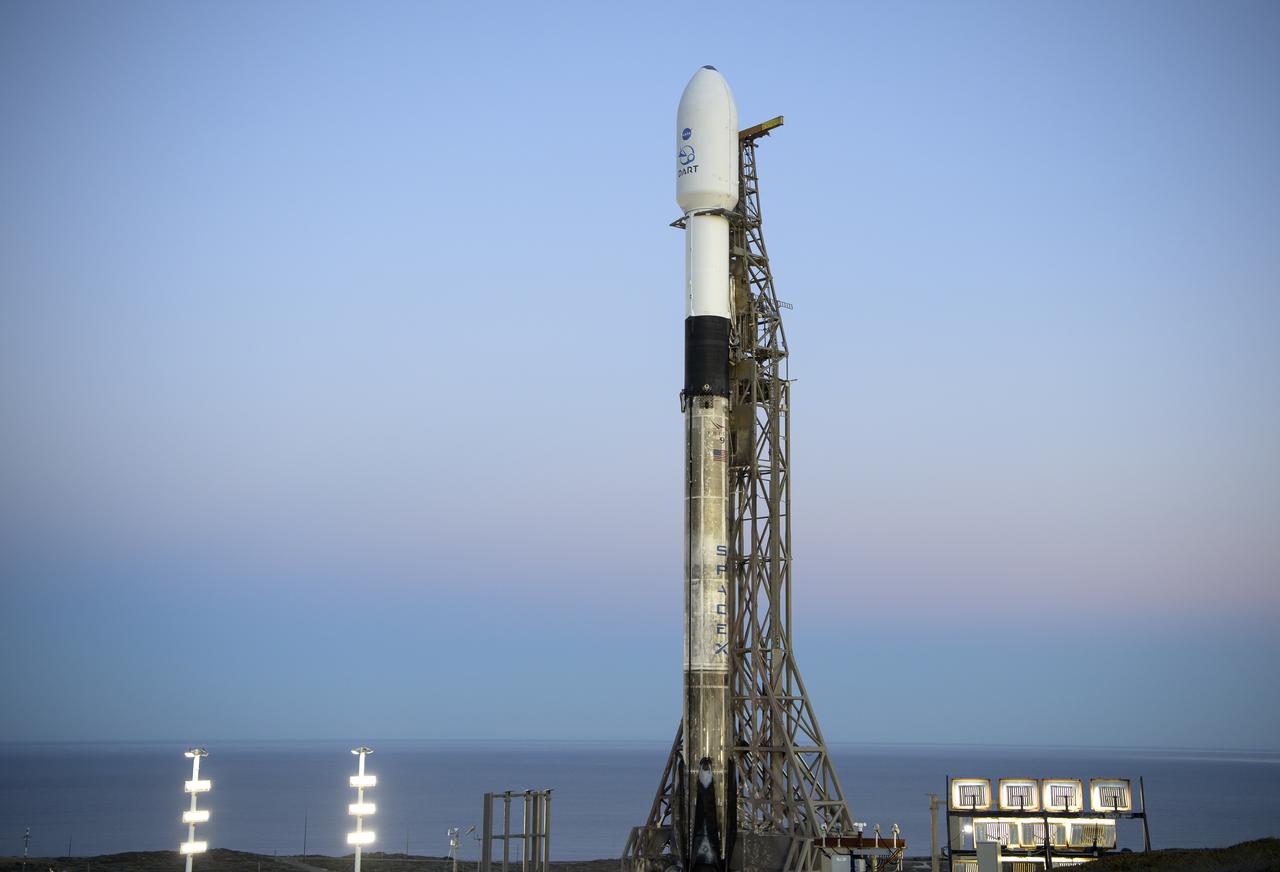
The SpaceX Falcon 9 rocket with the Double Asteroid Redirection Test, or DART, spacecraft onboard, is seen during sunrise, Tuesday, Nov. 23, 2021, at Space Launch Complex 4E, Vandenberg Space Force Base in California. DART is the world’s first full-scale planetary defense test, demonstrating one method of asteroid deflection technology. The mission was built and is managed by the Johns Hopkins APL for NASA’s Planetary Defense Coordination Office. Photo Credit: (NASA/Bill Ingalls)
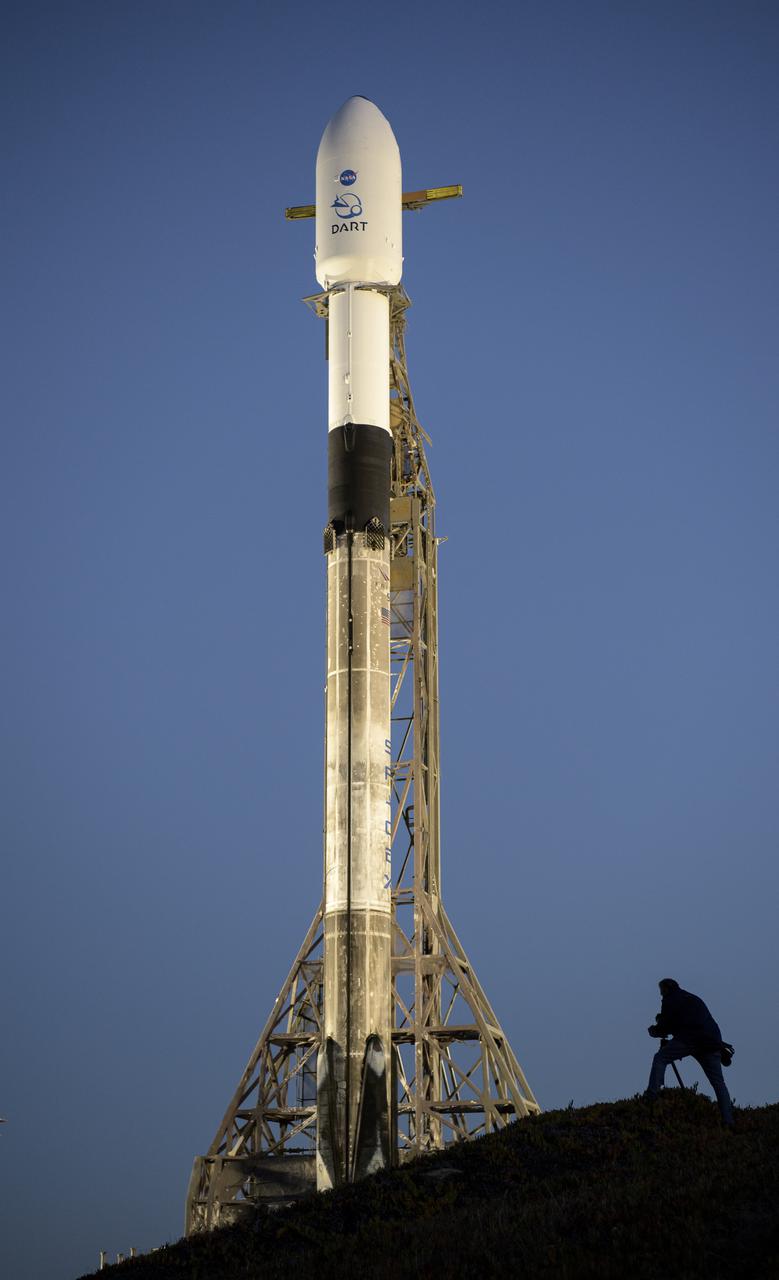
The SpaceX Falcon 9 rocket with the Double Asteroid Redirection Test, or DART, spacecraft onboard, is seen during sunrise, Tuesday, Nov. 23, 2021, at Space Launch Complex 4E, Vandenberg Space Force Base in California. DART is the world’s first full-scale planetary defense test, demonstrating one method of asteroid deflection technology. The mission was built and is managed by the Johns Hopkins APL for NASA’s Planetary Defense Coordination Office. Photo Credit: (NASA/Bill Ingalls)
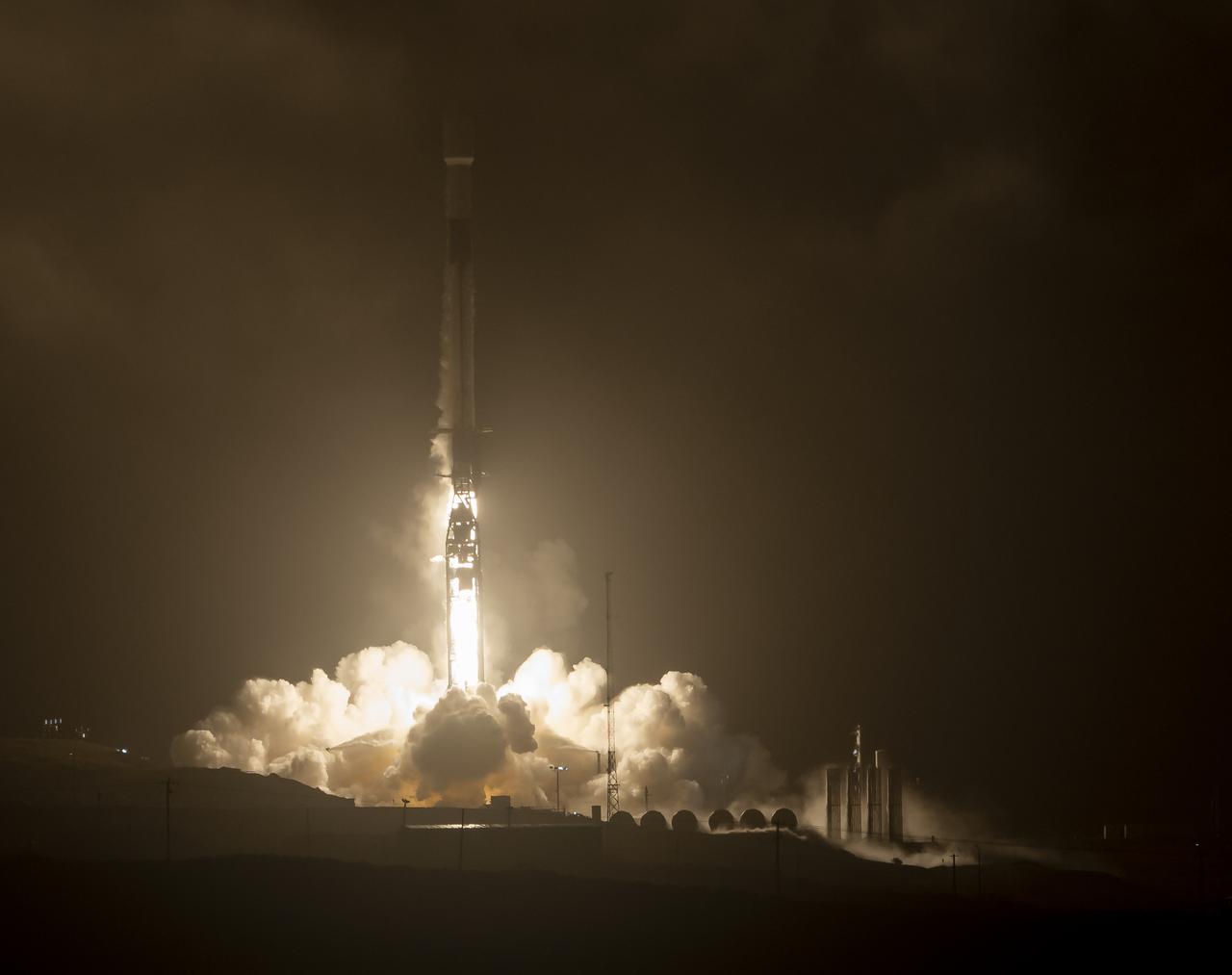
The SpaceX Falcon 9 rocket launches with the Double Asteroid Redirection Test, or DART, spacecraft onboard, Tuesday, Nov. 23, 2021, Pacific time (Nov. 24 Eastern time) from Space Launch Complex 4E at Vandenberg Space Force Base in California. DART is the world’s first full-scale planetary defense test, demonstrating one method of asteroid deflection technology. The mission was built and is managed by Johns Hopkins APL for NASA’s Planetary Defense Coordination Office. Photo Credit: (NASA/Bill Ingalls)

NASA Administrator Jim Bridenstine delivers a keynote speech at the sixth International Academy of Astronautics Planetary Defense Conference, Monday, April 29, 2019 at The Hotel at the University of Maryland in College Park Maryland. The conference brings together experts from around the world to present the latest research on Near-Earth Objects and will highlight the development of the first-ever mission to demonstrate an asteroid defection technique for planetary defense, NASA’s Double Asteroid Redirection Test (DART). Photo Credit: (NASA/Joel Kowsky)
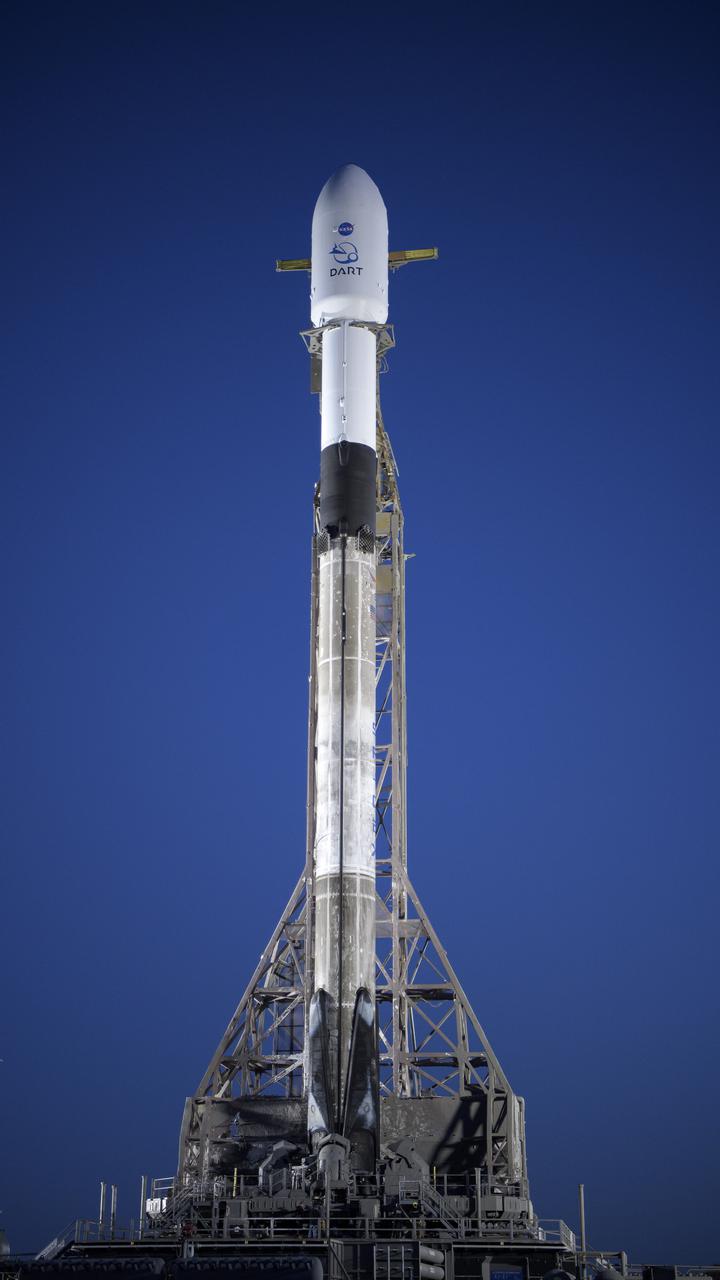
The SpaceX Falcon 9 rocket with the Double Asteroid Redirection Test, or DART, spacecraft onboard, is seen during sunrise, Tuesday, Nov. 23, 2021, at Space Launch Complex 4E, Vandenberg Space Force Base in California. DART is the world’s first full-scale planetary defense test, demonstrating one method of asteroid deflection technology. The mission was built and is managed by the Johns Hopkins APL for NASA’s Planetary Defense Coordination Office. Photo Credit: (NASA/Bill Ingalls)
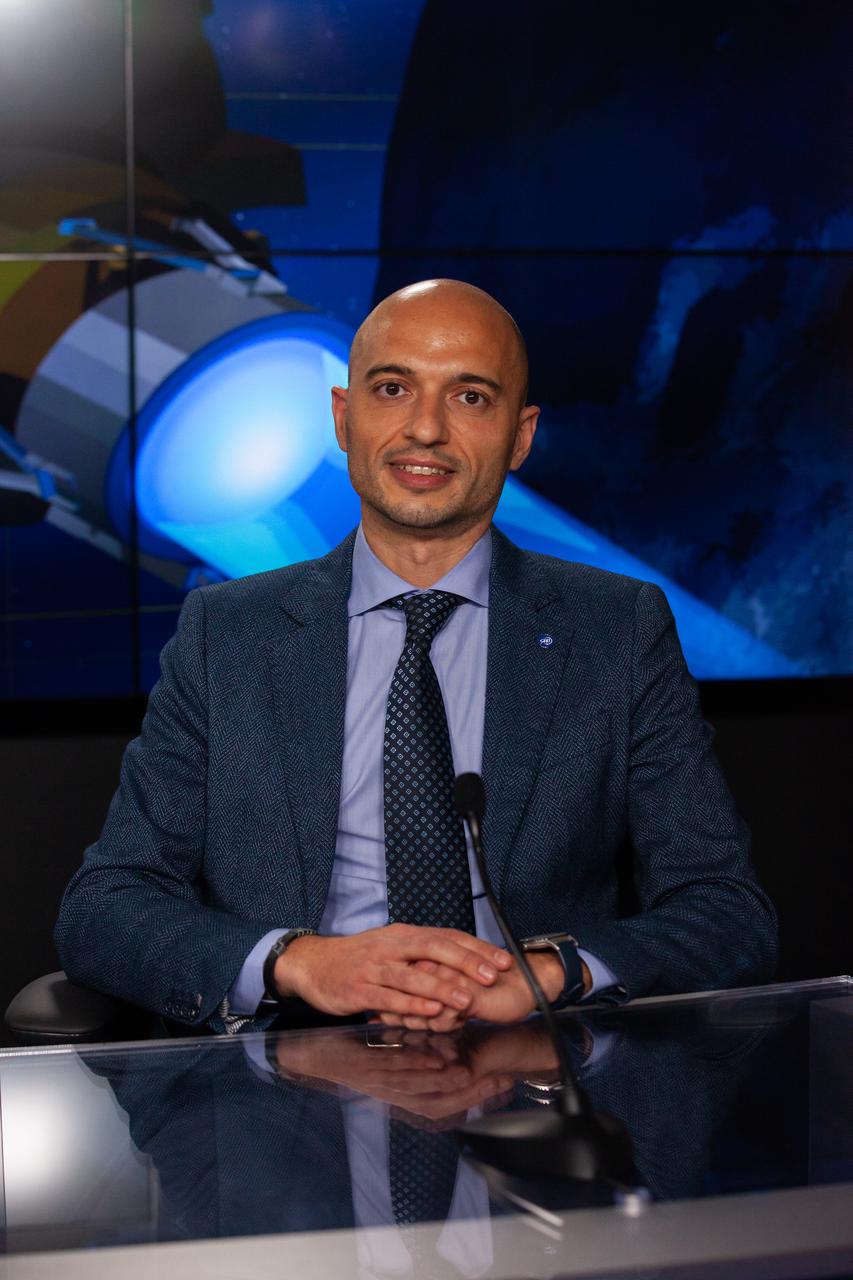
Simone Pirrotta, Light Italian CubeSat for Imaging of Asteroids (LICIACube) project manager for the Italian Space Agency, participates in an engineering briefing for NASA’s Double Asteroid Redirection Test (DART) mission at Vandenberg Space Force Base in California on Nov. 21, 2021. DART is the first mission to test technologies for preventing an impact of Earth by a hazardous asteroid. The mission is scheduled to launch no earlier than 1:21 a.m. EST Wednesday, Nov. 24 (10:21 p.m. PST Tuesday, Nov. 23), aboard a SpaceX Falcon 9 rocket from Vandenberg. NASA's Launch Services Program based at Kennedy Space Center in Florida, America's multi-user spaceport, is managing the launch.

Lori Glaze, director of NASA’s Science Mission Directorate’s Planetary Science Division, participates in an engineering briefing for the agency’s Double Asteroid Redirection Test (DART) mission at Vandenberg Space Force Base in California on Nov. 21, 2021. DART is the first mission to test technologies for preventing an impact of Earth by a hazardous asteroid. The mission is scheduled to launch no earlier than 1:21 a.m. EST Wednesday, Nov. 24 (10:21 p.m. PST Tuesday, Nov. 23), aboard a SpaceX Falcon 9 rocket from Vandenberg. NASA's Launch Services Program based at Kennedy Space Center in Florida, America's multi-user spaceport, is managing the launch.

Thomas Zurbuchen, associate administrator for NASA’s Science Mission Directorate, participates in a prelaunch news conference for the agency’s Double Asteroid Redirection Test (DART) mission at Vandenberg Space Force Base in California on Nov. 22, 2021. DART is the first mission to test technologies for preventing an impact of Earth by a hazardous asteroid. The mission is scheduled to launch no earlier than 1:21 a.m. EST Wednesday, Nov. 24 (10:21 p.m. PST Tuesday, Nov. 23), aboard a SpaceX Falcon 9 rocket from Vandenberg. NASA's Launch Services Program based at Kennedy Space Center in Florida, America's multi-user spaceport, is managing the launch.
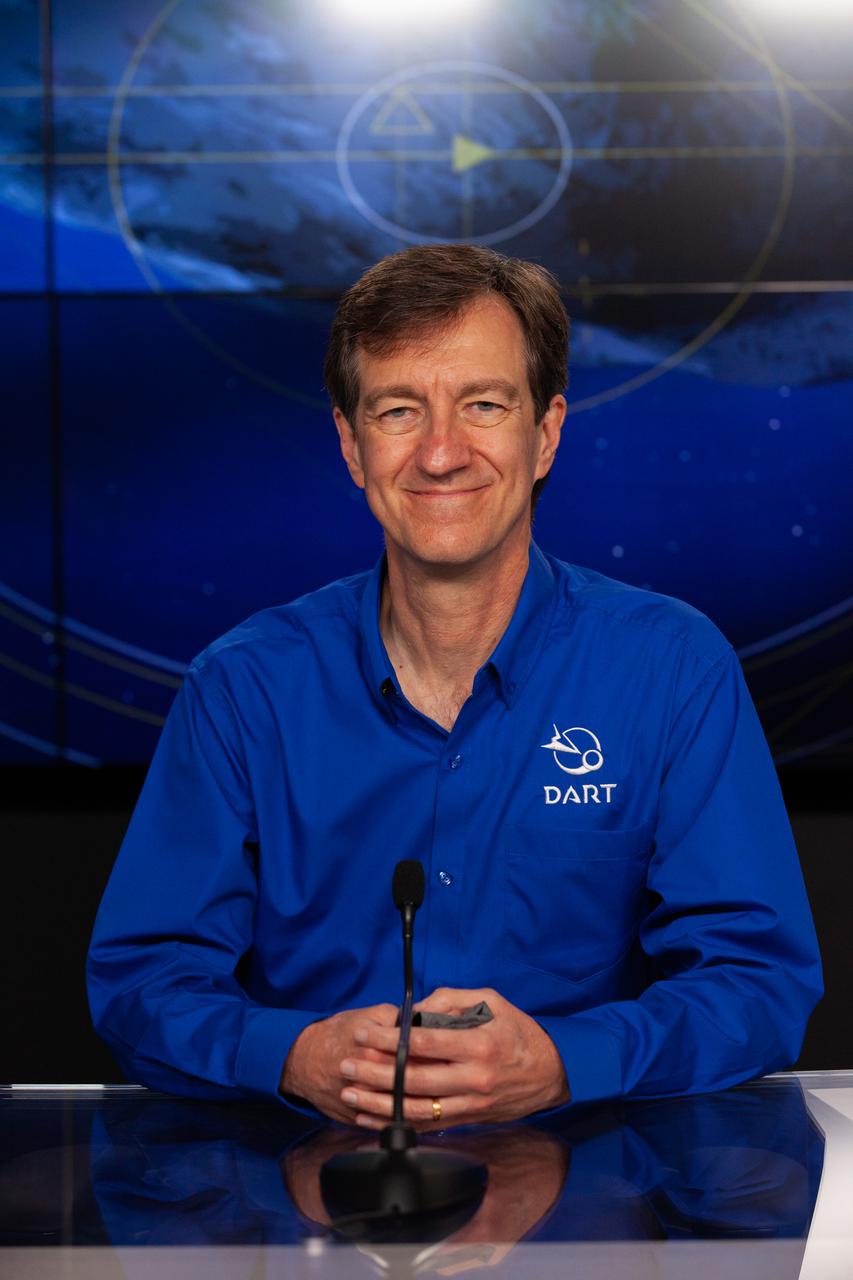
Tom Statler, Double Asteroid Redirection Test (DART) program scientist for NASA’s Science Mission Directorate’s Planetary Science Division, participates in an engineering briefing for the agency’s DART mission at Vandenberg Space Force Base in California on Nov. 21, 2021. DART is the first mission to test technologies for preventing an impact of Earth by a hazardous asteroid. The mission is scheduled to launch no earlier than 1:21 a.m. EST Wednesday, Nov. 24 (10:21 p.m. PST Tuesday, Nov. 23), aboard a SpaceX Falcon 9 rocket from Vandenberg. NASA's Launch Services Program based at Kennedy Space Center in Florida, America's multi-user spaceport, is managing the launch.

Julianna Scheiman, director for civil satellite missions for SpaceX, participates in a prelaunch news conference for NASA’s Double Asteroid Redirection Test (DART) mission at Vandenberg Space Force Base in California on Nov. 22, 2021. DART is the first mission to test technologies for preventing an impact of Earth by a hazardous asteroid. The mission is scheduled to launch no earlier than 1:21 a.m. EST Wednesday, Nov. 24 (10:21 p.m. PST Tuesday, Nov. 23), aboard a SpaceX Falcon 9 rocket from Vandenberg. NASA's Launch Services Program based at Kennedy Space Center in Florida, America's multi-user spaceport, is managing the launch.
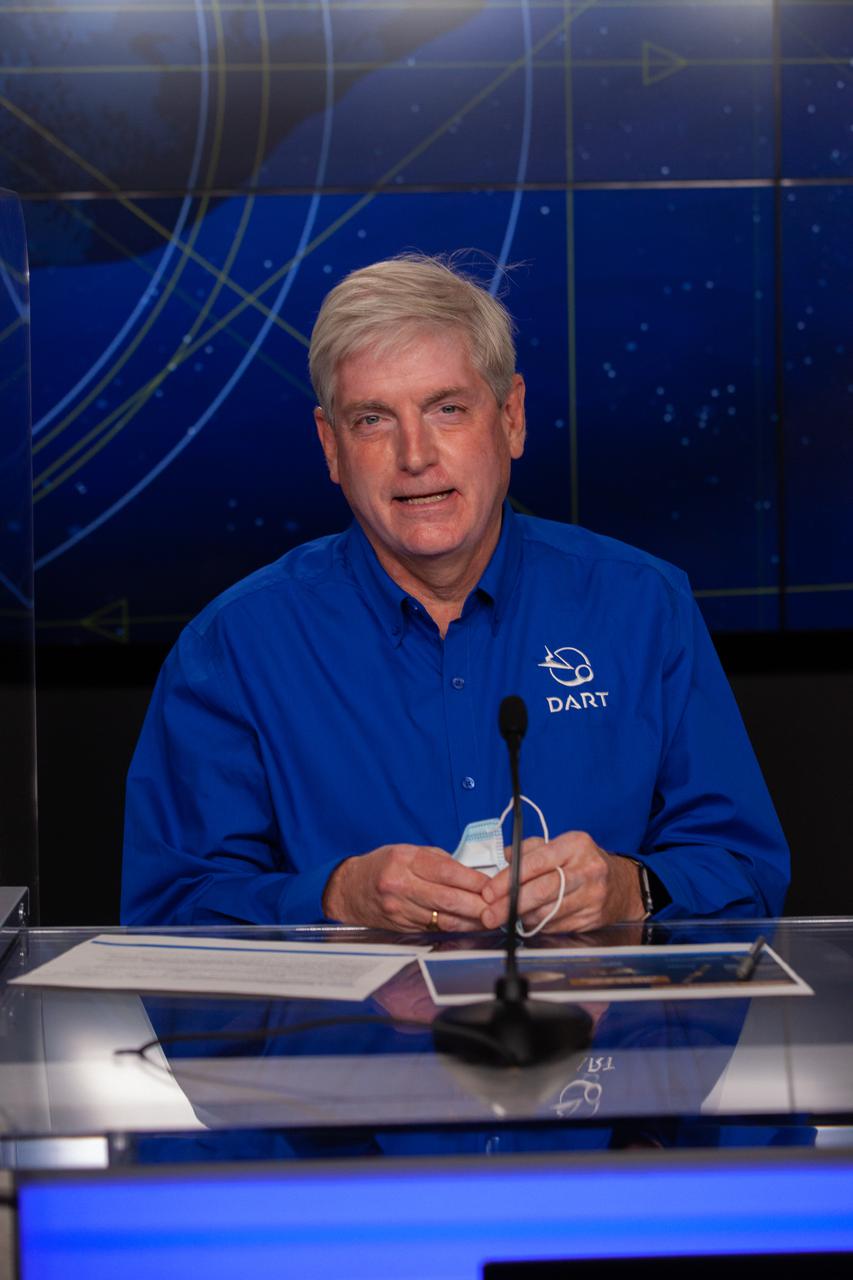
Ed Reynolds, Double Asteroid Redirection Test (DART) project manager for Johns Hopkins Applied Physics Laboratory, participates in a prelaunch news conference for NASA’s DART mission at Vandenberg Space Force Base in California on Nov. 22, 2021. DART is the first mission to test technologies for preventing an impact of Earth by a hazardous asteroid. The mission is scheduled to launch no earlier than 1:21 a.m. EST Wednesday, Nov. 24 (10:21 p.m. PST Tuesday, Nov. 23), aboard a SpaceX Falcon 9 rocket from Vandenberg. NASA's Launch Services Program based at Kennedy Space Center in Florida, America's multi-user spaceport, is managing the launch.
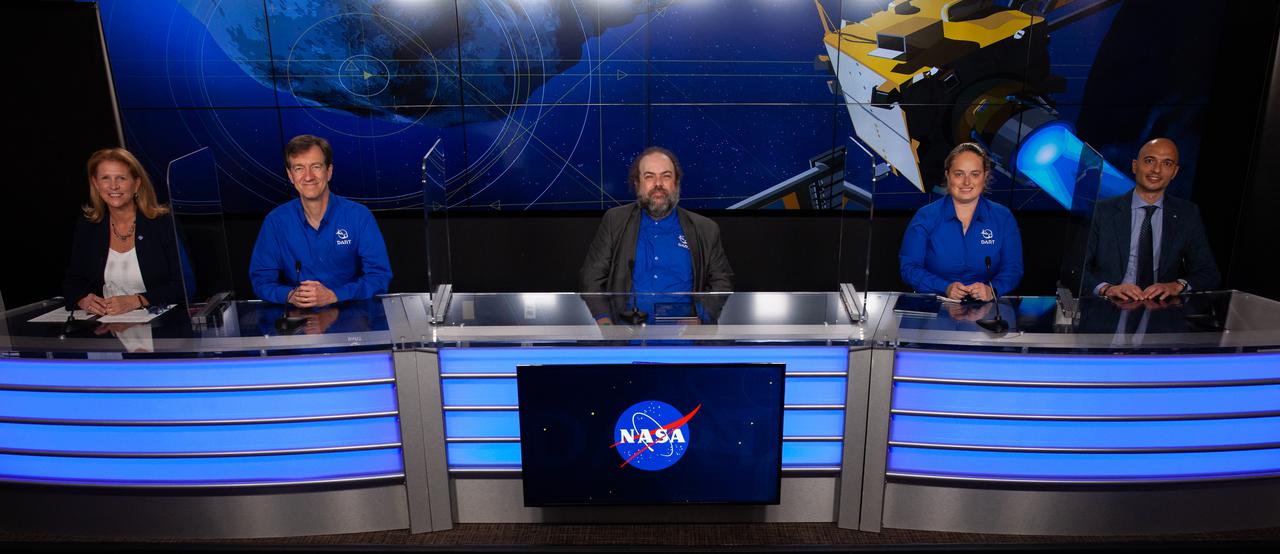
From left, Lori Glaze, Tom Statler, Andy Rivkin, Betsy Congdon, and Simone Pirrotte participate in an engineering briefing for the agency’s Double Asteroid Redirection Test (DART) mission at Vandenberg Space Force Base in California on Nov. 21, 2021. DART is the first mission to test technologies for preventing an impact of Earth by a hazardous asteroid. The mission is scheduled to launch no earlier than 1:21 a.m. EST Wednesday, Nov. 24 (10:21 p.m. PST Tuesday, Nov. 23), aboard a SpaceX Falcon 9 rocket from Vandenberg. NASA's Launch Services Program based at Kennedy Space Center in Florida, America's multi-user spaceport, is managing the launch.
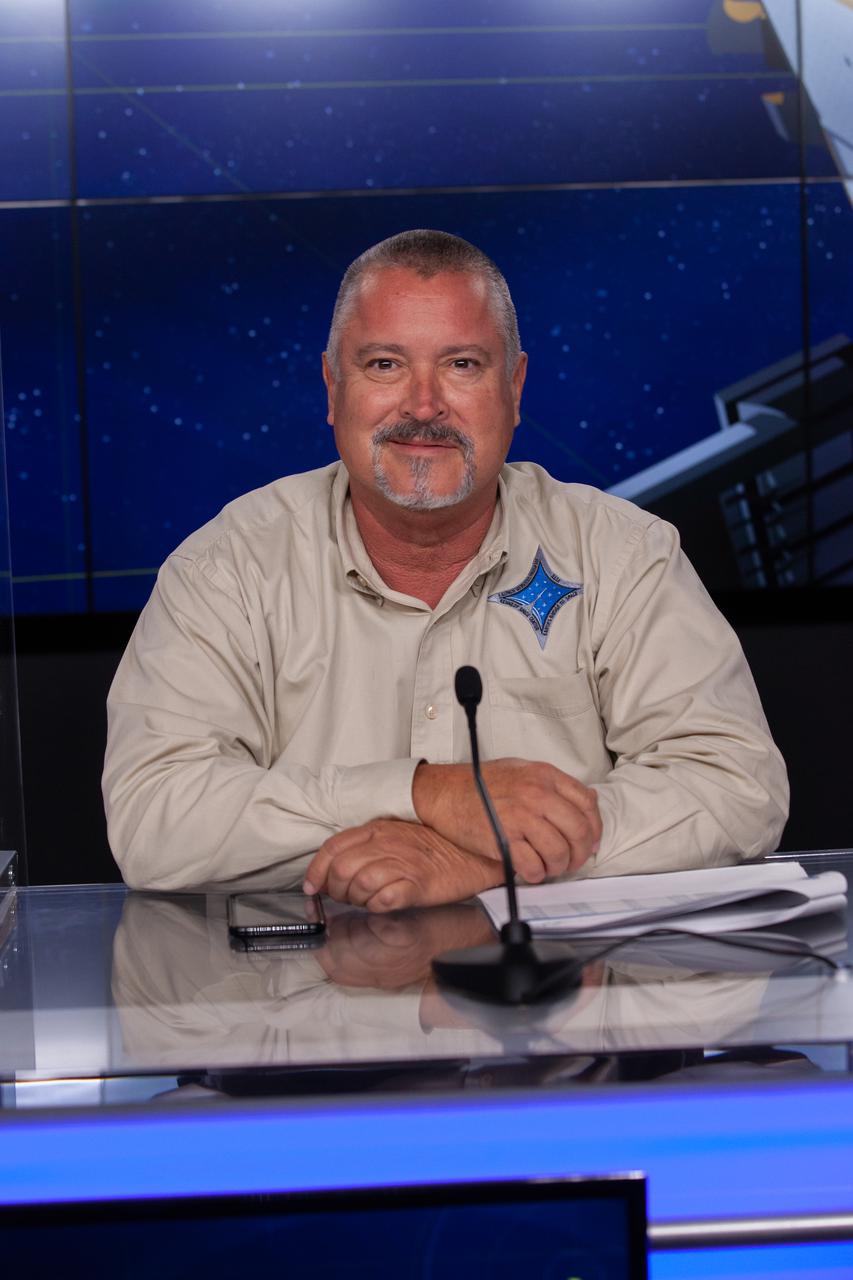
Omar Baez, senior launch director for NASA’s Launch Services Program, participates in a prelaunch news conference for the agency’s Double Asteroid Redirection Test (DART) mission at Vandenberg Space Force Base in California on Nov. 22, 2021. DART is the first mission to test technologies for preventing an impact of Earth by a hazardous asteroid. The mission is scheduled to launch no earlier than 1:21 a.m. EST Wednesday, Nov. 24 (10:21 p.m. PST Tuesday, Nov. 23), aboard a SpaceX Falcon 9 rocket from Vandenberg. NASA's Launch Services Program based at Kennedy Space Center in Florida, America's multi-user spaceport, is managing the launch.
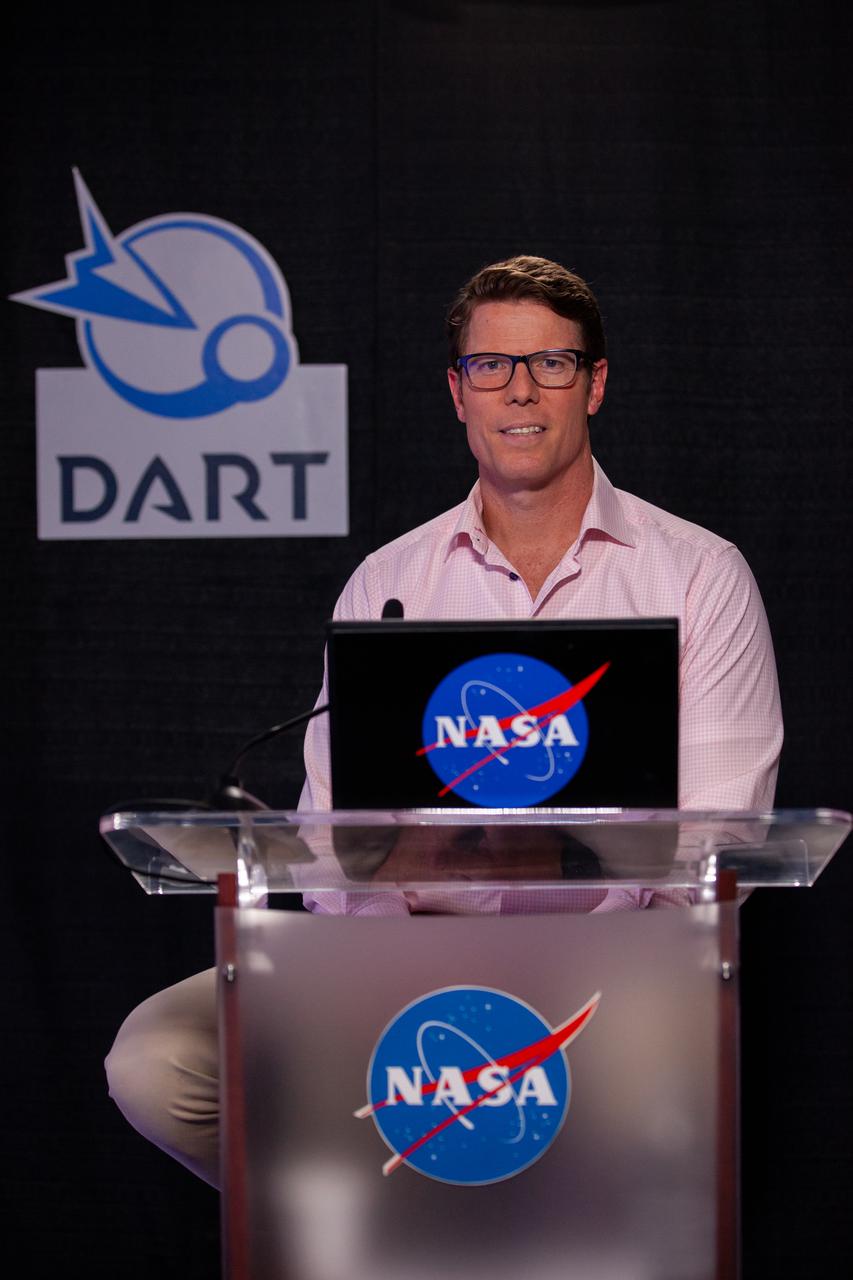
Derrol Nail, NASA Communications, moderates a prelaunch news conference for the agency’s Double Asteroid Redirection Test (DART) mission at Vandenberg Space Force Base in California on Nov. 22, 2021. DART is the first mission to test technologies for preventing an impact of Earth by a hazardous asteroid. The mission is scheduled to launch no earlier than 1:21 a.m. EST Wednesday, Nov. 24 (10:21 p.m. PST Tuesday, Nov. 23), aboard a SpaceX Falcon 9 rocket from Vandenberg. NASA's Launch Services Program based at Kennedy Space Center in Florida, America's multi-user spaceport, is managing the launch.

Andy Rivkin, Double Asteroid Redirection Test (DART) investigation team lead for Johns Hopkins Applied Physics Laboratory, participates in an engineering briefing for NASA’s DART mission at Vandenberg Space Force Base in California on Nov. 21, 2021. DART is the first mission to test technologies for preventing an impact of Earth by a hazardous asteroid. The mission is scheduled to launch no earlier than 1:21 a.m. EST Wednesday, Nov. 24 (10:21 p.m. PST Tuesday, Nov. 23), aboard a SpaceX Falcon 9 rocket from Vandenberg. NASA's Launch Services Program based at Kennedy Space Center in Florida, America's multi-user spaceport, is managing the launch.
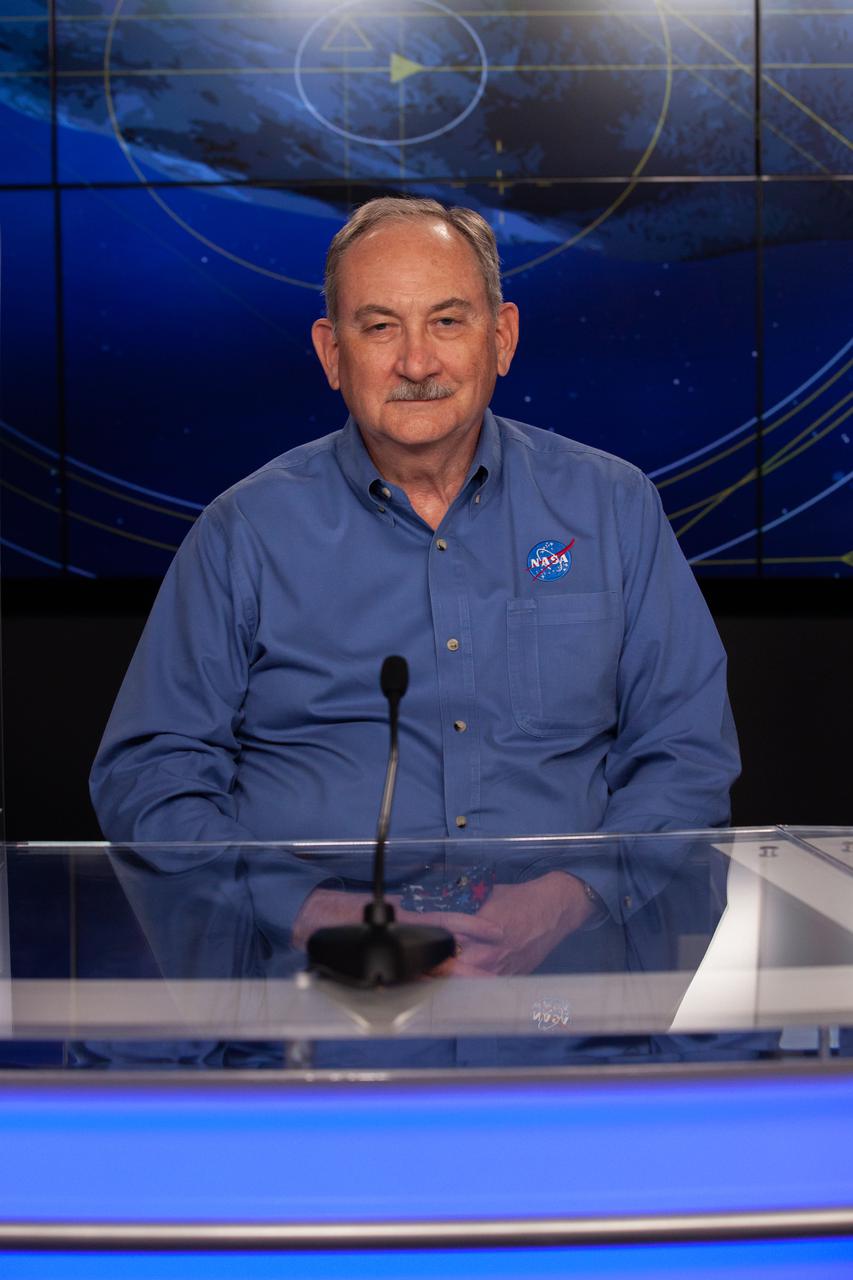
Lindley Johnson, planetary defense officer for NASA’s Planetary Defense Coordination Office, participates in a prelaunch news conference for the agency’s Double Asteroid Redirection Test (DART) mission at Vandenberg Space Force Base in California on Nov. 22, 2021. DART is the first mission to test technologies for preventing an impact of Earth by a hazardous asteroid. The mission is scheduled to launch no earlier than 1:21 a.m. EST Wednesday, Nov. 24 (10:21 p.m. PST Tuesday, Nov. 23), aboard a SpaceX Falcon 9 rocket from Vandenberg. NASA's Launch Services Program based at Kennedy Space Center in Florida, America's multi-user spaceport, is managing the launch.

Capt. Maximillian Rush, weather officer for Space Launch Delta 30, participates in a prelaunch news conference for NASA’s Double Asteroid Redirection Test (DART) mission at Vandenberg Space Force Base in California on Nov. 22, 2021. DART is the first mission to test technologies for preventing an impact of Earth by a hazardous asteroid. The mission is scheduled to launch no earlier than 1:21 a.m. EST Wednesday, Nov. 24 (10:21 p.m. PST Tuesday, Nov. 23), aboard a SpaceX Falcon 9 rocket from Vandenberg. NASA's Launch Services Program based at Kennedy Space Center in Florida, America's multi-user spaceport, is managing the launch.
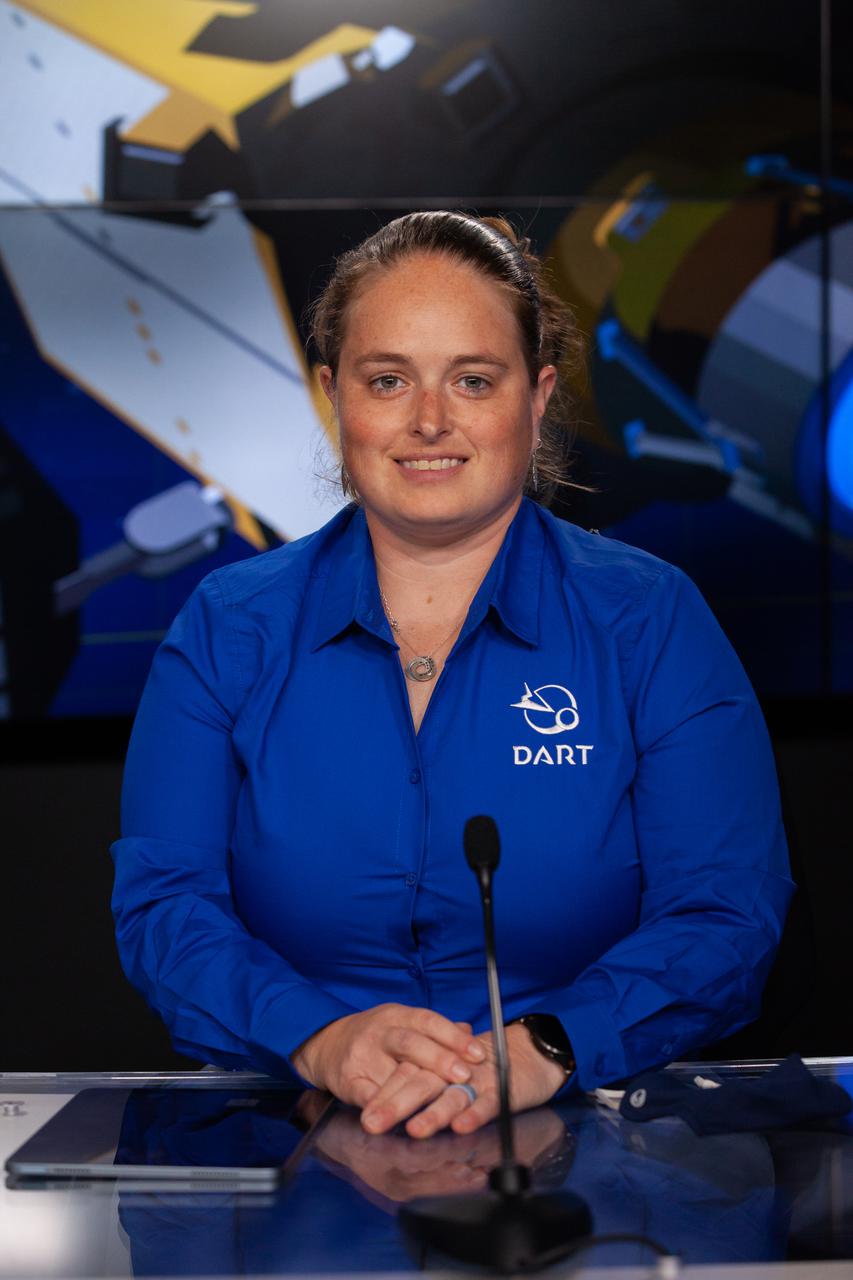
Betsy Congdon, Double Asteroid Redirection Test (DART) mechanical systems engineer for Johns Hopkins Applied Physics Laboratory, participates in an engineering briefing for NASA’s DART mission at Vandenberg Space Force Base in California on Nov. 21, 2021. DART is the first mission to test technologies for preventing an impact of Earth by a hazardous asteroid. The mission is scheduled to launch no earlier than 1:21 a.m. EST Wednesday, Nov. 24 (10:21 p.m. PST Tuesday, Nov. 23), aboard a SpaceX Falcon 9 rocket from Vandenberg. NASA's Launch Services Program based at Kennedy Space Center in Florida, America's multi-user spaceport, is managing the launch.
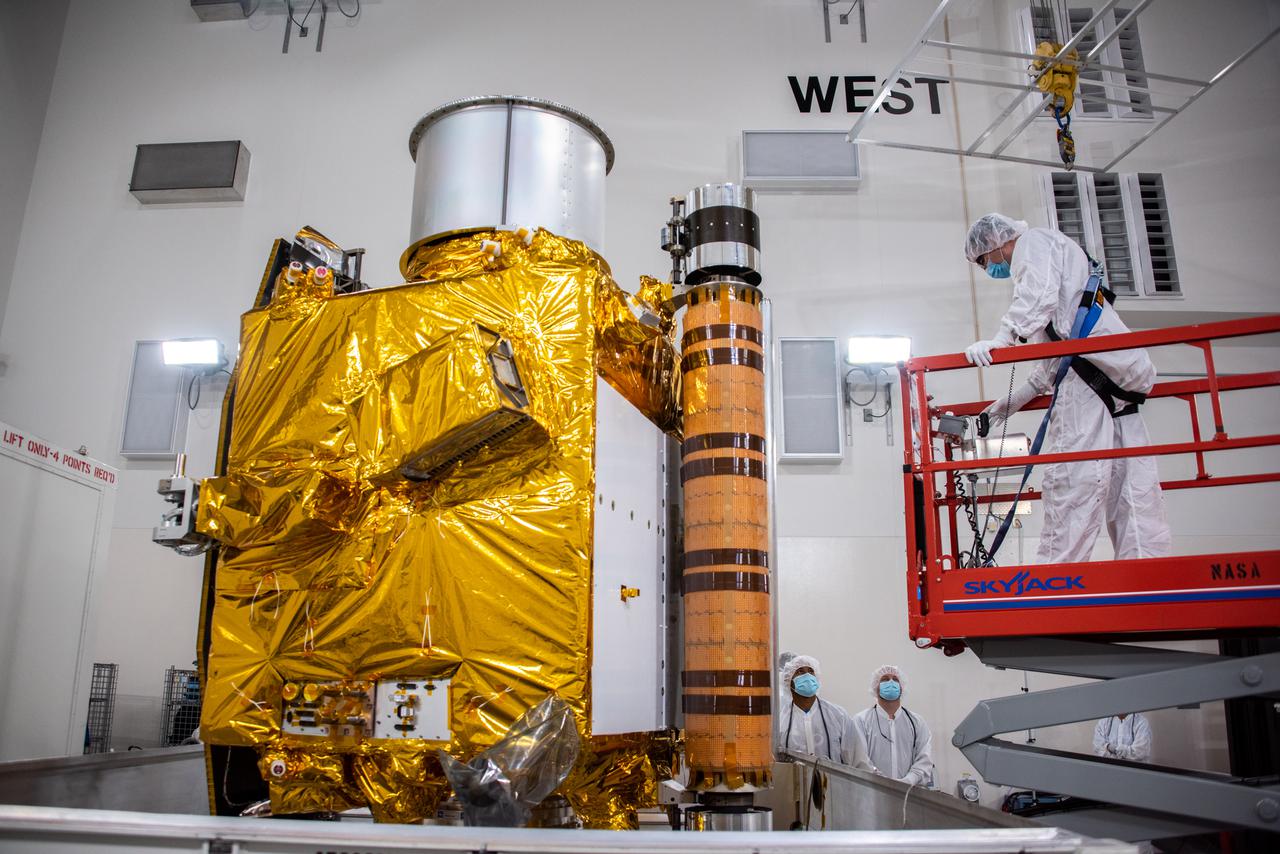
Technicians prepare to move NASA’s Double Asteroid Redirection Test (DART) spacecraft onto a work stand inside the Astrotech Space Operations Facility at Vandenberg Space Force Base in California following its arrival at the facility on Oct. 4, 2021. Once secured on its stand, the spacecraft will undergo a series of tests and checkouts to confirm it is ready for launch. DART is the first mission to test technologies for preventing an impact of Earth by a hazardous asteroid. The mission is targeted to launch on Nov. 23, 2021, aboard a SpaceX Falcon 9 rocket from Vandenberg. NASA’s Launch Services Program, based at Kennedy Space Center, America’s multi-user spaceport, is managing the launch.
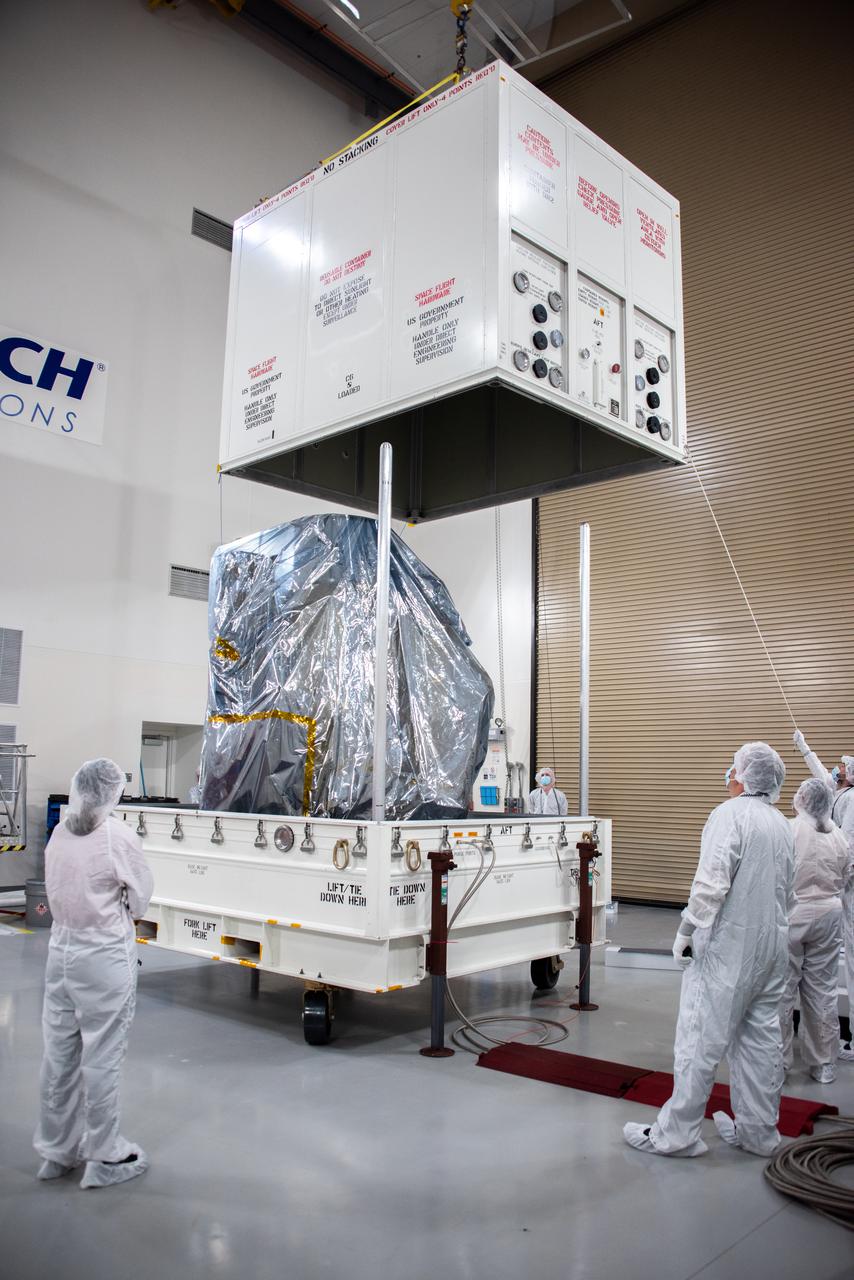
Technicians remove NASA’s Double Asteroid Redirection Test (DART) spacecraft from its shipping container inside the Astrotech Space Operations Facility at Vandenberg Space Force Base in California on Oct. 4, 2021. Once fully unpacked, the spacecraft will undergo a series of tests and checkouts to confirm it is ready for launch. DART is the first mission to test technologies for preventing an impact of Earth by a hazardous asteroid. The mission is targeted to launch on Nov. 23, 2021, aboard a SpaceX Falcon 9 rocket from Vandenberg. NASA’s Launch Services Program, based at Kennedy Space Center, America’s multi-user spaceport, is managing the launch.
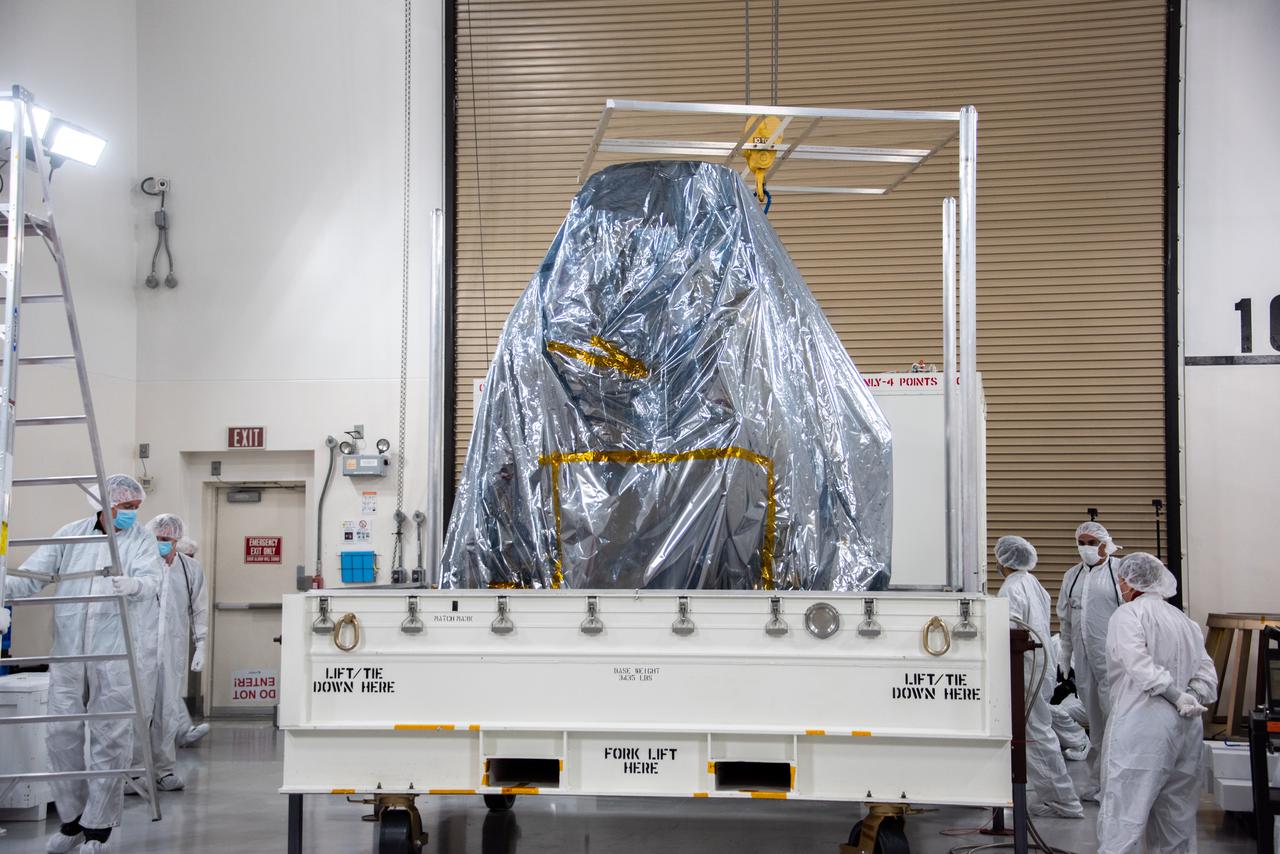
Technicians remove NASA’s Double Asteroid Redirection Test (DART) spacecraft from its shipping container inside the Astrotech Space Operations Facility at Vandenberg Space Force Base in California on Oct. 4, 2021. Once fully unpacked, the spacecraft will undergo a series of tests and checkouts to confirm it is ready for launch. DART is the first mission to test technologies for preventing an impact of Earth by a hazardous asteroid. The mission is targeted to launch on Nov. 23, 2021, aboard a SpaceX Falcon 9 rocket from Vandenberg. NASA’s Launch Services Program, based at Kennedy Space Center, America’s multi-user spaceport, is managing the launch.
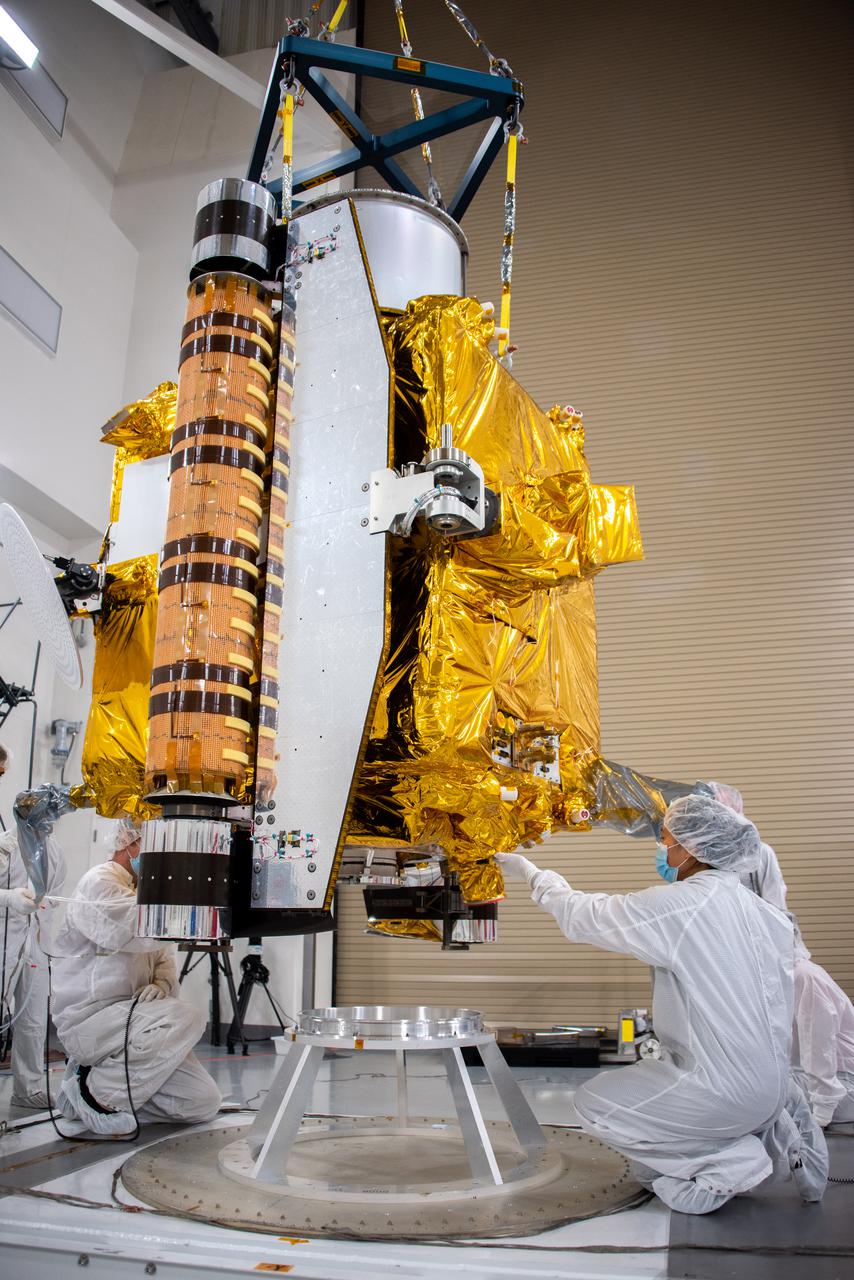
Technicians lower NASA’s Double Asteroid Redirection Test (DART) spacecraft onto a work stand inside the Astrotech Space Operations Facility at Vandenberg Space Force Base in California on Oct. 4, 2021. Once secured on its stand, the spacecraft will undergo a series of tests and checkouts to confirm it is ready for launch. DART is the first mission to test technologies for preventing an impact of Earth by a hazardous asteroid. The mission is targeted to launch on Nov. 23, 2021, aboard a SpaceX Falcon 9 rocket from Vandenberg. NASA’s Launch Services Program, based at Kennedy Space Center, America’s multi-user spaceport, is managing the launch.
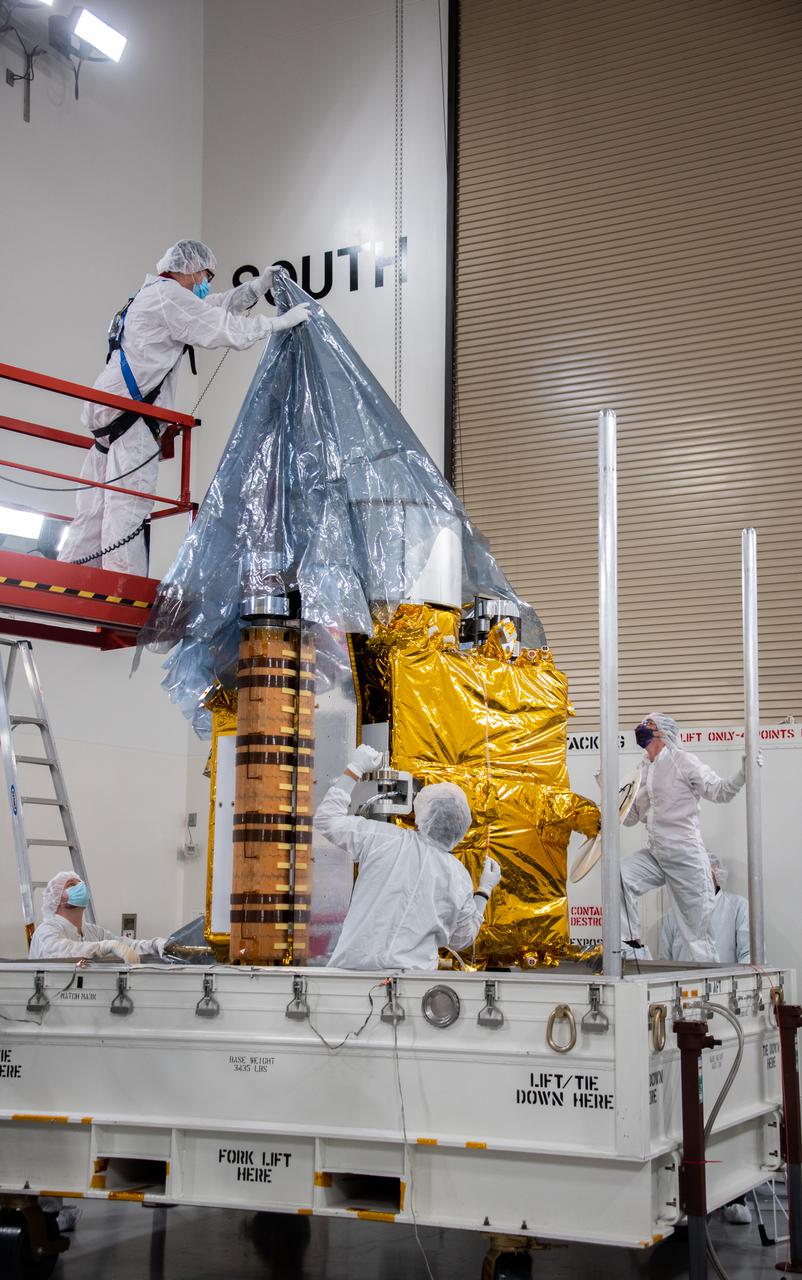
Technicians remove the wrapping from NASA’s Double Asteroid Redirection Test (DART) spacecraft that protected it during transport to the Astrotech Space Operations Facility at Vandenberg Space Force Base in California on Oct. 4, 2021. Once fully unpacked, the spacecraft will undergo a series of tests and checkouts to confirm it is ready for launch. DART is the first mission to test technologies for preventing an impact of Earth by a hazardous asteroid. The mission is targeted to launch on Nov. 23, 2021, aboard a SpaceX Falcon 9 rocket from Vandenberg. NASA’s Launch Services Program, based at Kennedy Space Center, America’s multi-user spaceport, is managing the launch.
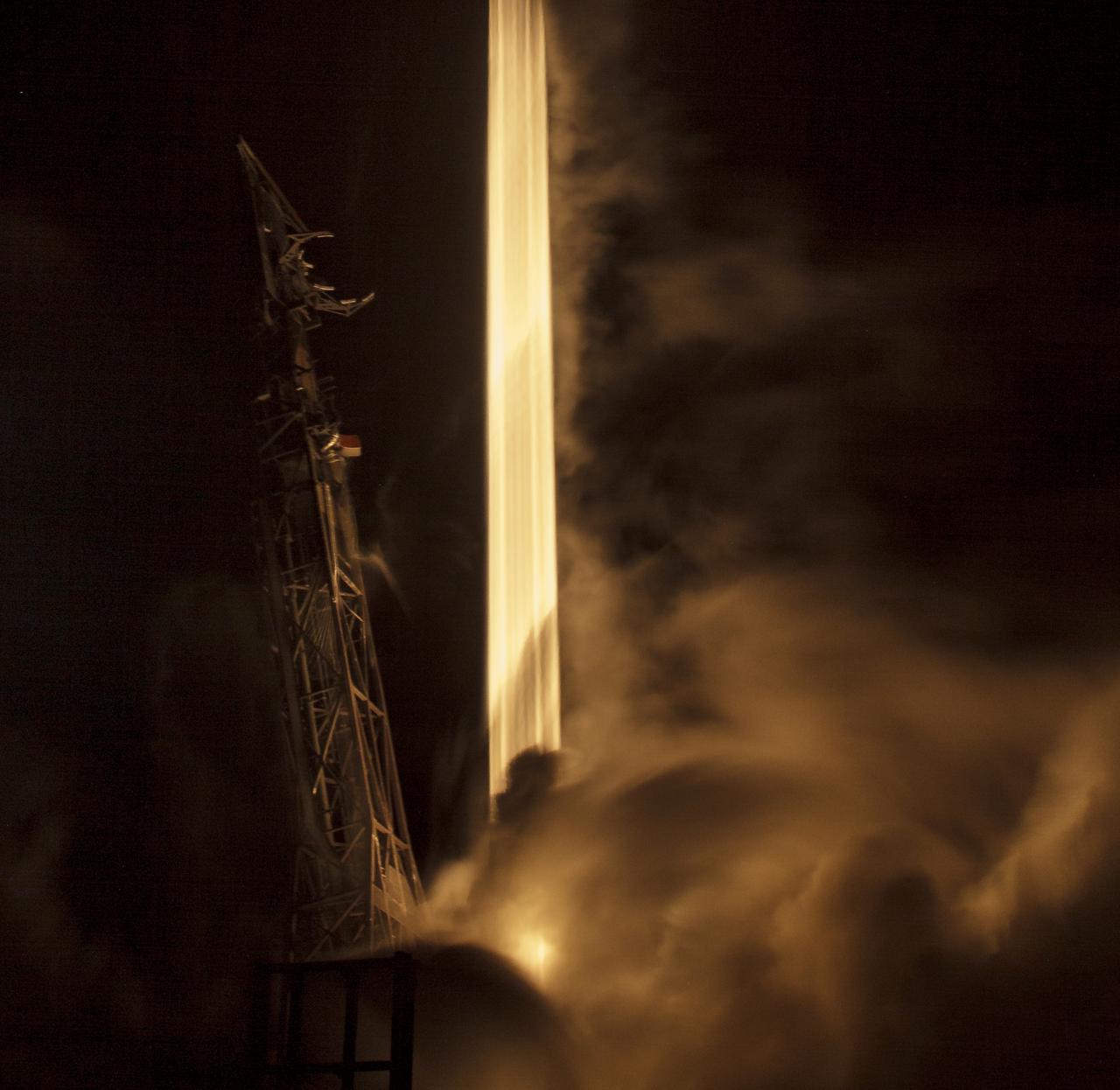
The SpaceX Falcon 9 rocket is seen in this 30-second exposure photograph as it launches with the Double Asteroid Redirection Test, or DART, spacecraft onboard, Tuesday, Nov. 23, 2021, Pacific time (Nov. 24 Eastern time) from Space Launch Complex 4E at Vandenberg Space Force Base in California. DART is the world’s first full-scale planetary defense test, demonstrating one method of asteroid deflection technology. The mission was built and is managed by Johns Hopkins APL for NASA’s Planetary Defense Coordination Office. Photo Credit: (NASA/Bill Ingalls)
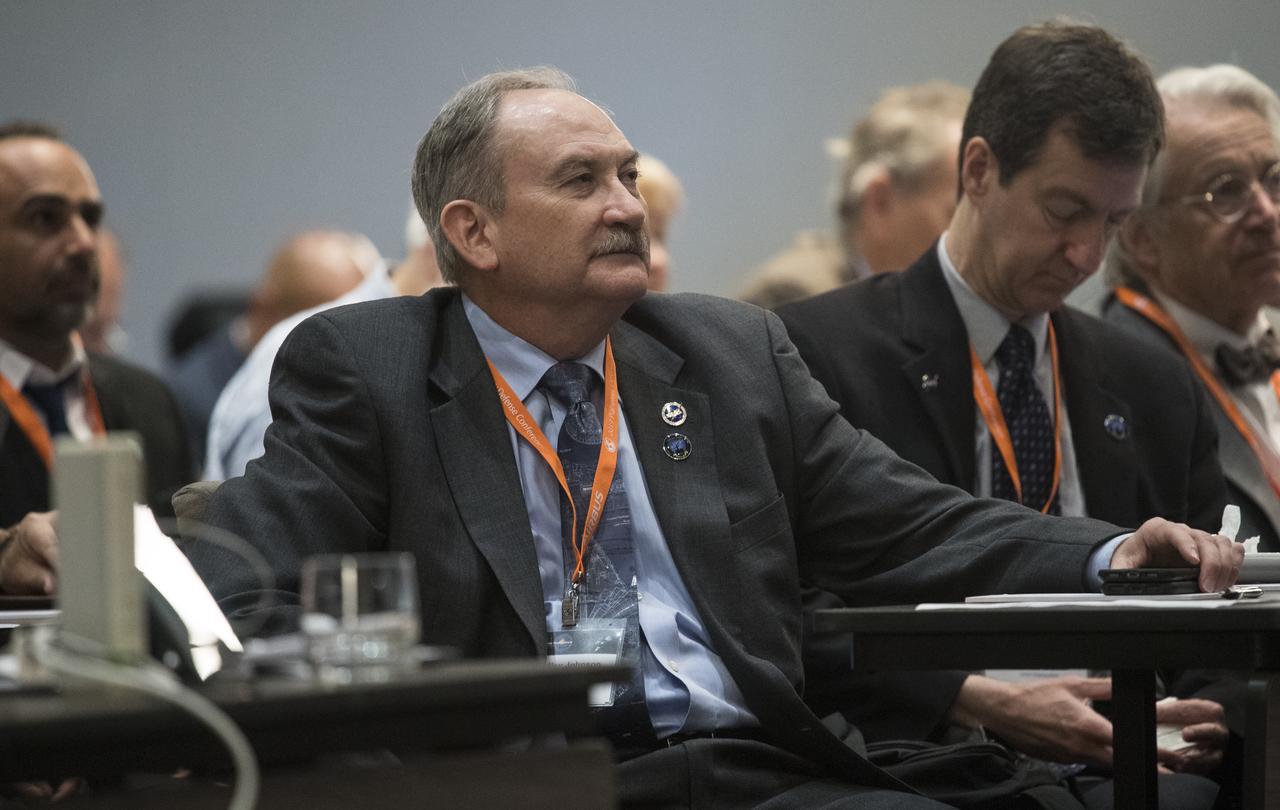
Lindley Johnson, NASA’s Planetary Defense Officer and Program Executive of the Planetary Defense Coordination Office (PDCO), is seen in the audience at the sixth International Academy of Astronautics Planetary Defense Conference, Monday, April 29, 2019 at The Hotel at the University of Maryland in College Park Maryland. The conference brings together experts from around the world to present the latest research on Near-Earth Objects and will highlight the development of the first-ever mission to demonstrate an asteroid defection technique for planetary defense, NASA’s Double Asteroid Redirection Test (DART). Photo Credit: (NASA/Joel Kowsky)
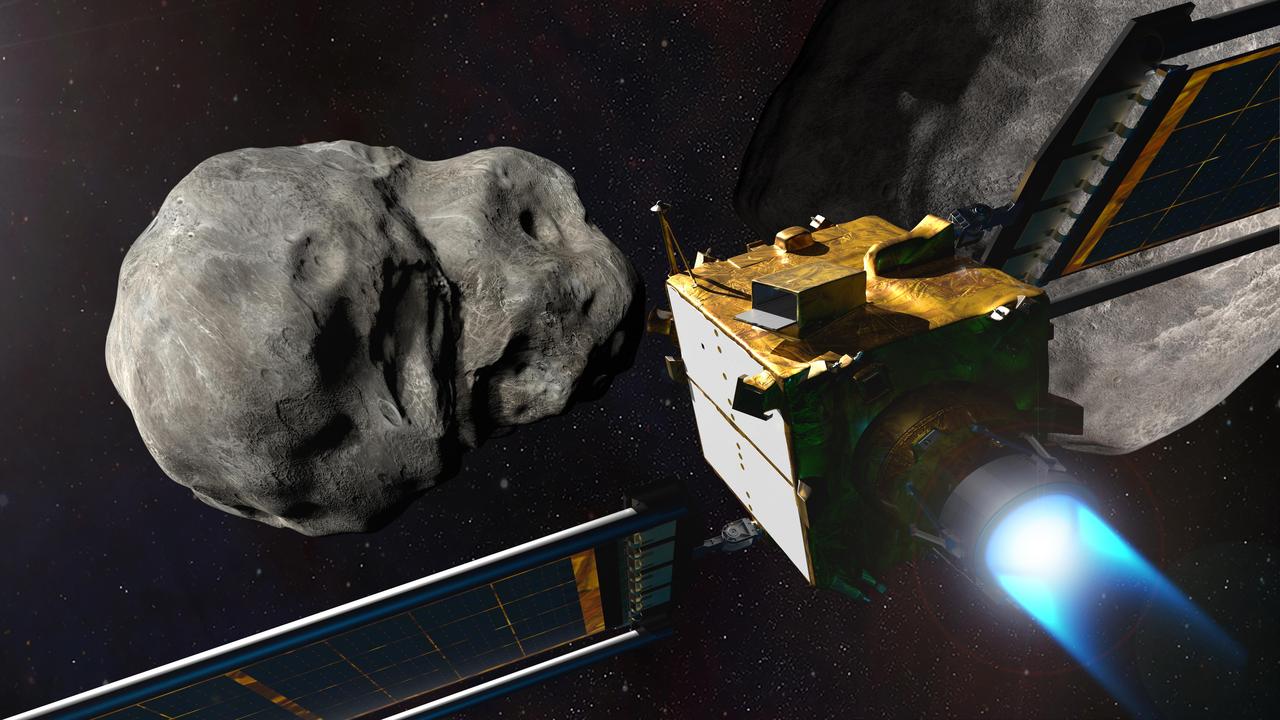
This illustration depicts NASA's Double Asteroid Redirection Test (DART) spacecraft prior to impact at the Didymos binary asteroid system. DART's target asteroid is the moonlet Dimorphos, which orbits the larger asteroid Didymos; the pair are not a threat to Earth. This asteroid system will be a testing ground to see if intentionally crashing a spacecraft into an asteroid is an effective way to change its course, should an Earth-threatening asteroid be discovered in the future. The Johns Hopkins Applied Physics Laboratory in Laurel, Maryland, manages the DART mission for NASA's Planetary Defense Coordination Office as a project of the agency's Planetary Missions Program Office. DART is the world's first planetary defense test mission, intentionally executing a kinetic impact into Dimorphos to slightly change its motion in space. While the asteroid does not pose any threat to Earth, the DART mission will demonstrate that a spacecraft can autonomously navigate to a kinetic impact on a relatively small asteroid and prove this is a viable technique to deflect an asteroid on a collision course with Earth if one is ever discovered. DART will reach its target on Sept. 26, 2022. https://photojournal.jpl.nasa.gov/catalog/PIA25329
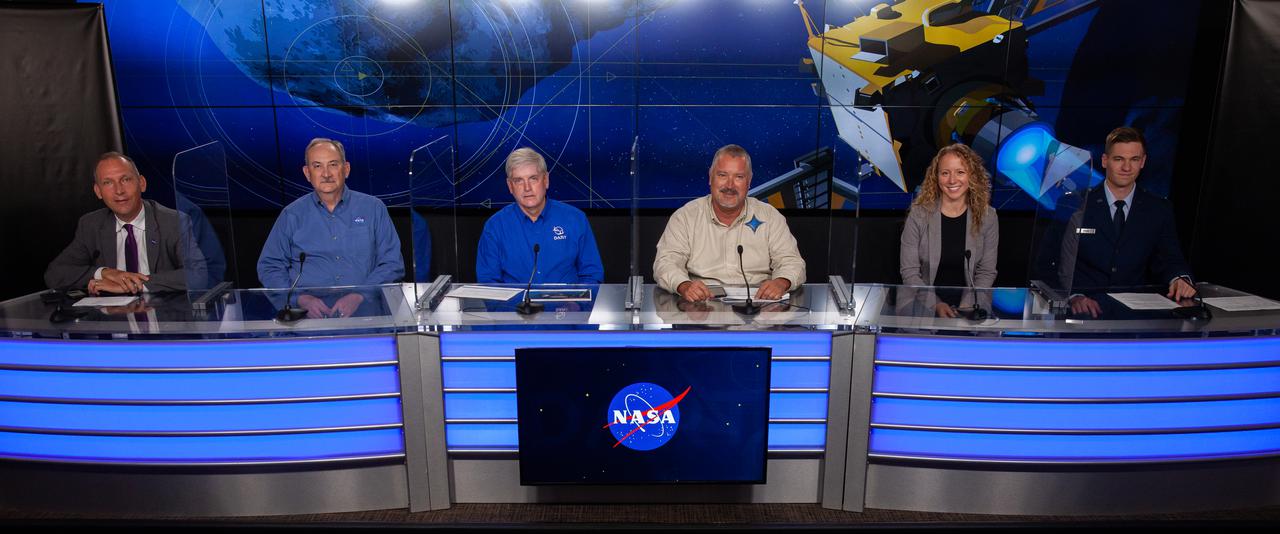
From left, Dr Thomas Zurbuchen, Lindley Johnson, Ed Reynolds, Omar Baez, Julianna Scheiman, and Capt. Maximillian Rush participate in a prelaunch news conference on Nov. 22, 2021, at Vandenberg Space Force Base in California in preparation for the agency’s Double Asteroid Redirection Test (DART) launch. DART is the first mission to test technologies for preventing an impact of Earth by a hazardous asteroid. The mission is scheduled to launch no earlier than 1:21 a.m. EST Wednesday, Nov. 24 (10:21 p.m. PST Tuesday, Nov. 23), aboard a SpaceX Falcon 9 rocket from Vandenberg. NASA's Launch Services Program based at Kennedy Space Center in Florida, America's multi-user spaceport, is managing the launch.
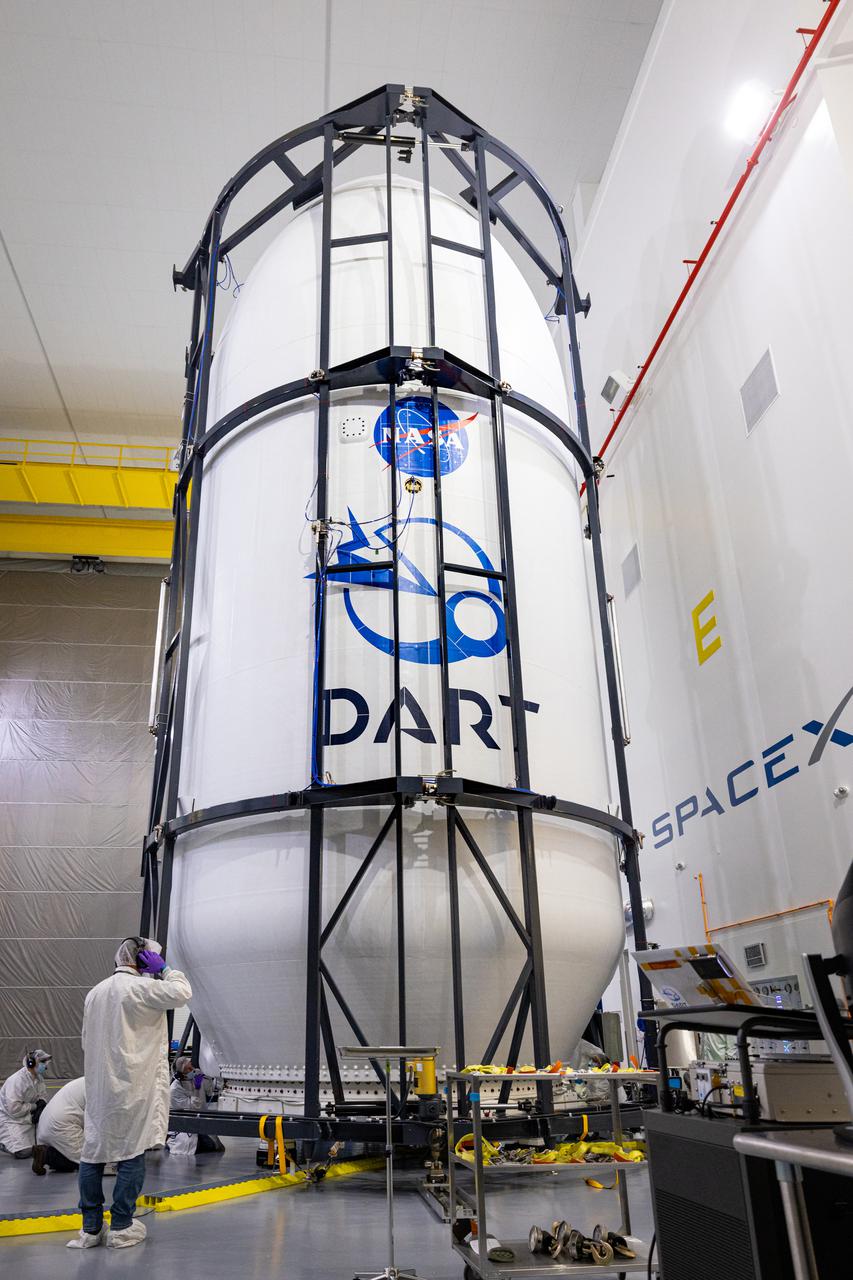
Inside SpaceX’s Payload Processing Facility at Vandenberg Space Force Base in California, both halves of the Falcon 9 rocket’s protective payload fairing are secured around NASA’s Double Asteroid Redirection Test (DART) spacecraft on Nov. 16, 2021. The payload fairing, with the spacecraft securely inside, will be attached to the top of the Falcon 9 and will protect the spacecraft during launch and ascent. DART is the first mission to test technologies for preventing an impact of Earth by a hazardous asteroid. The mission is scheduled to launch no earlier than 1:21 a.m. EST Wednesday, Nov. 24 (10:21 p.m. PST Tuesday, Nov. 23), from Vandenberg’s Space Launch Complex 41. NASA's Launch Services Program based at Kennedy Space Center in Florida, America's multi-user spaceport, is managing the launch.
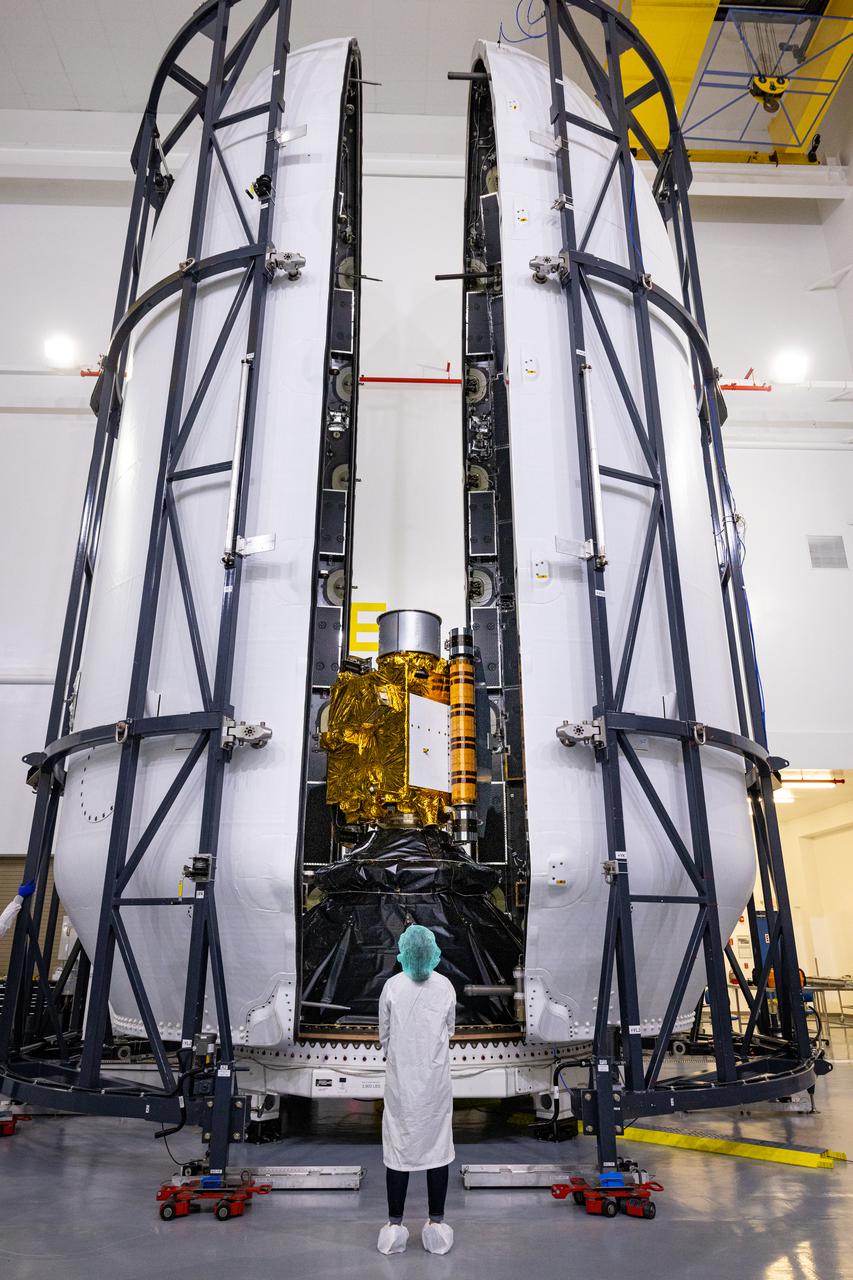
Inside SpaceX’s Payload Processing Facility at Vandenberg Space Force Base in California, both halves of the Falcon 9 rocket’s protective payload fairing move toward NASA’s Double Asteroid Redirection Test (DART) spacecraft on Nov. 16, 2021. The payload fairing, with the spacecraft securely inside, will be attached to the top of the Falcon 9 and will protect the spacecraft during launch and ascent. DART is the first mission to test technologies for preventing an impact of Earth by a hazardous asteroid. The mission is scheduled to launch no earlier than 1:21 a.m. EST Wednesday, Nov. 24 (10:21 p.m. PST Tuesday, Nov. 23), from Vandenberg’s Space Launch Complex 41. NASA's Launch Services Program based at Kennedy Space Center in Florida, America's multi-user spaceport, is managing the launch.
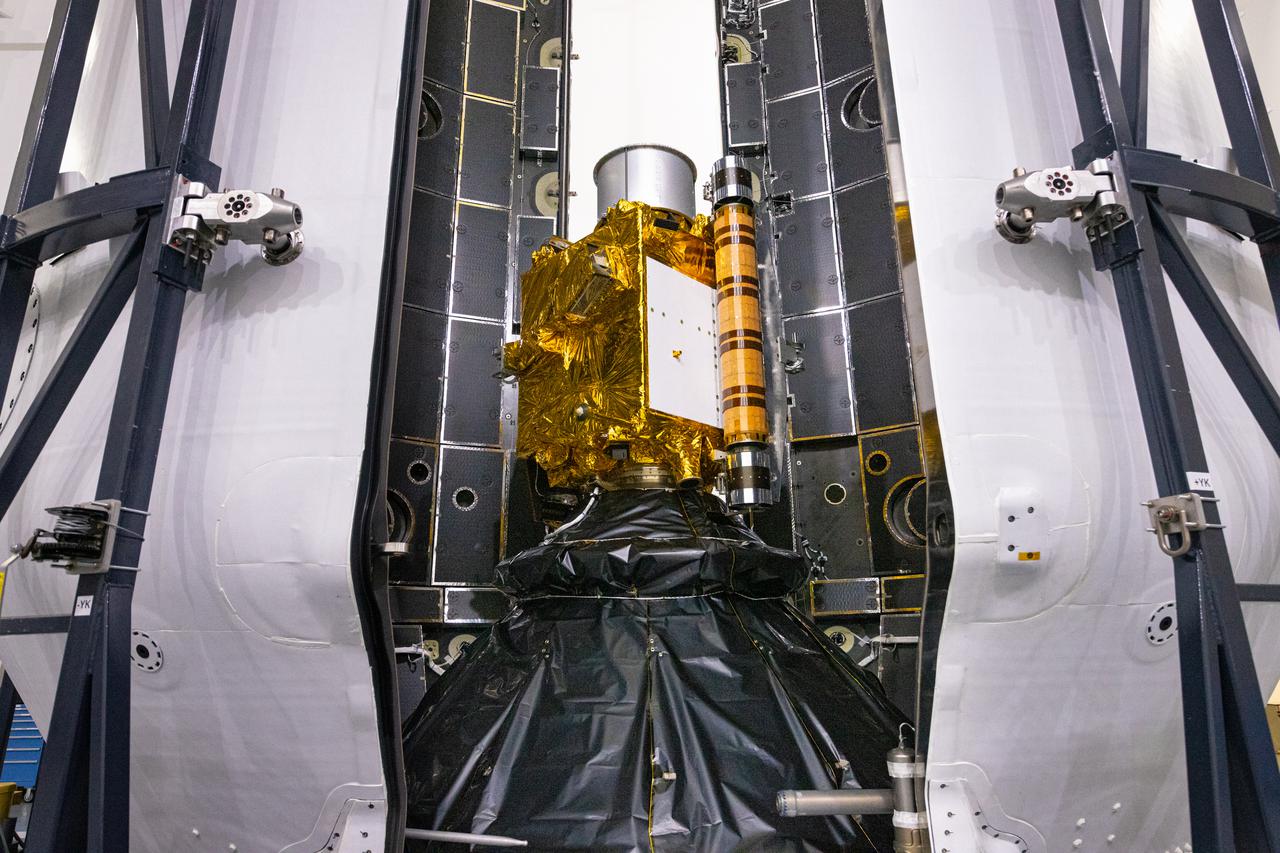
Inside SpaceX’s Payload Processing Facility at Vandenberg Space Force Base in California, both halves of the Falcon 9 rocket’s protective payload fairing move toward NASA’s Double Asteroid Redirection Test (DART) spacecraft on Nov. 16, 2021. The payload fairing, with the spacecraft securely inside, will be attached to the top of the Falcon 9 and will protect the spacecraft during launch and ascent. DART is the first mission to test technologies for preventing an impact of Earth by a hazardous asteroid. The mission is scheduled to launch no earlier than 1:21 a.m. EST Wednesday, Nov. 24 (10:21 p.m. PST Tuesday, Nov. 23), from Vandenberg’s Space Launch Complex 41. NASA's Launch Services Program based at Kennedy Space Center in Florida, America's multi-user spaceport, is managing the launch.
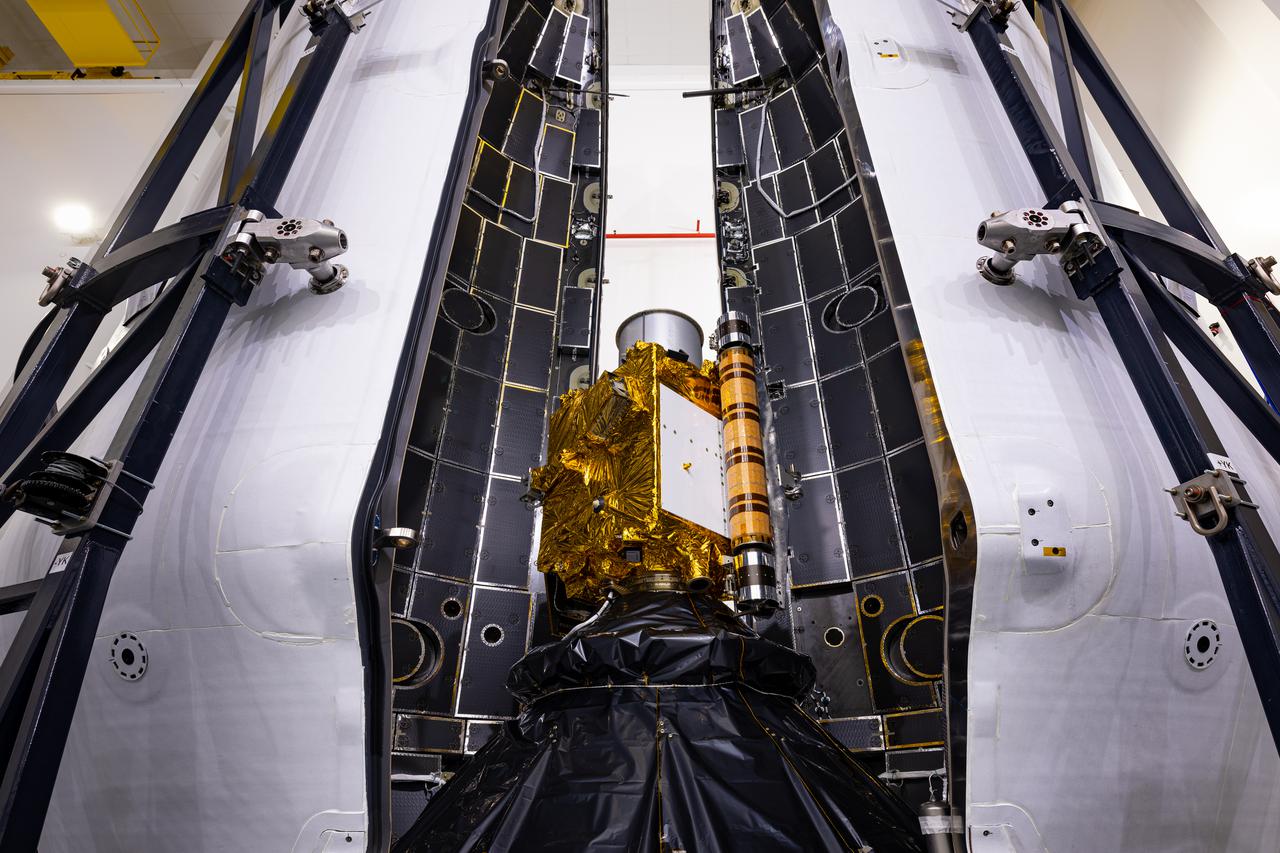
Inside SpaceX’s Payload Processing Facility at Vandenberg Space Force Base in California, both halves of the Falcon 9 rocket’s protective payload fairing move toward NASA’s Double Asteroid Redirection Test (DART) spacecraft on Nov. 16, 2021. The payload fairing, with the spacecraft securely inside, will be attached to the top of the Falcon 9 and will protect the spacecraft during launch and ascent. DART is the first mission to test technologies for preventing an impact of Earth by a hazardous asteroid. The mission is scheduled to launch no earlier than 1:21 a.m. EST Wednesday, Nov. 24 (10:21 p.m. PST Tuesday, Nov. 23), from Vandenberg’s Space Launch Complex 41. NASA's Launch Services Program based at Kennedy Space Center in Florida, America's multi-user spaceport, is managing the launch.
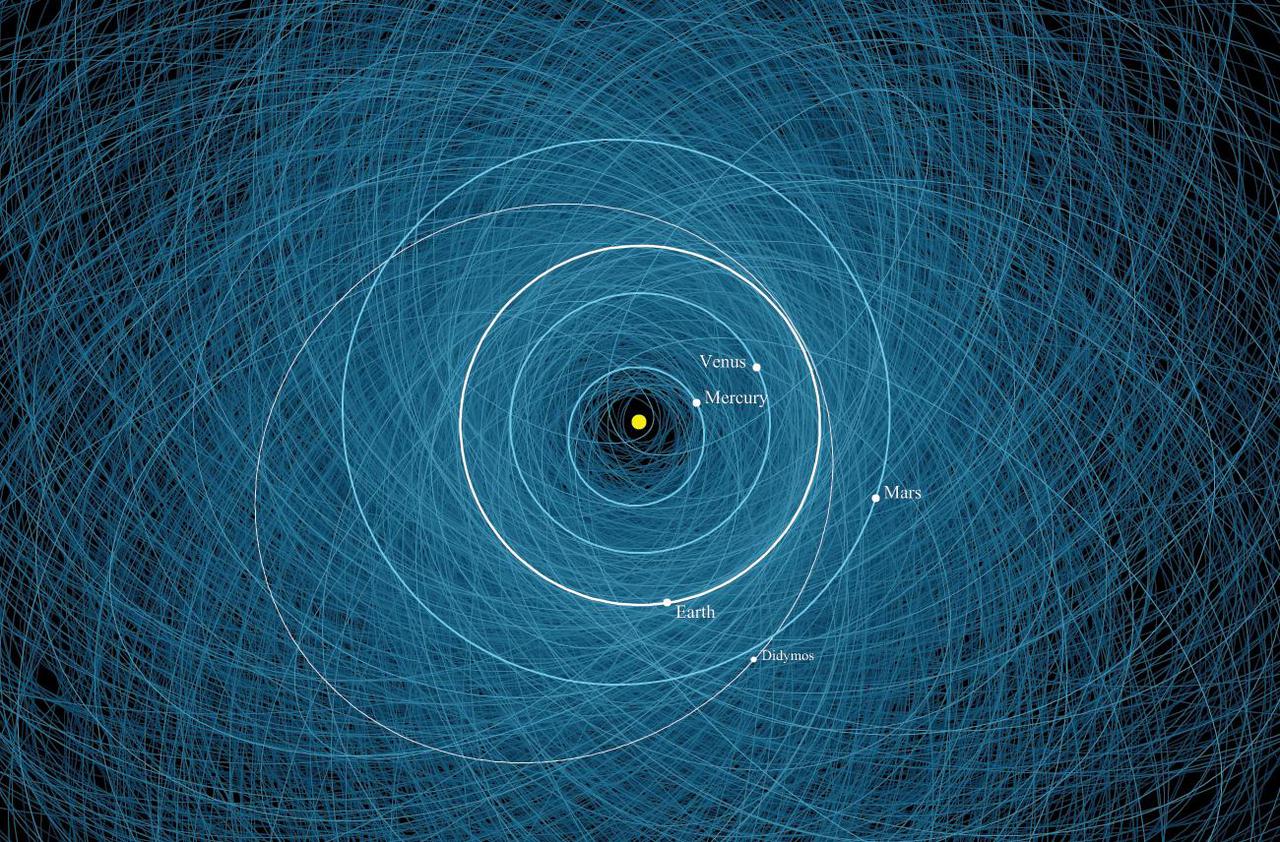
This diagram shows the orbit of binary asteroid Didymos around the Sun. Didymos consists of a large, nearly half-mile-wide (780-meter-wide) asteroid orbited by a smaller, 525-foot-wide (160-meter-wide) asteroid, or moonlet. Didymos' orbital path around the Sun is shown as the thin white ellipse and Earth's orbit is the thick white line. In the background are the orbits for 2,200 other known potentially hazardous asteroids. A potentially hazardous asteroid is classified as an asteroid wider than about 460 feet (140 meters) with an orbit that brings it within 5 million miles (8 million kilometers) of Earth's orbit. Didymos' smaller asteroid is the target of NASA's Double Asteroid Redirect Test (DART) mission. The DART spacecraft is a kinetic impactor designed to collide with the moonlet to see how its orbit around the larger asteroid will be changed by the impact. The outcome of this mission will help NASA determine whether the method could be used to modify the trajectory of an asteroid should one threaten Earth in the future. Didymos is not a danger to our planet. This orbital diagram was produced by the Center for Near Earth Object Studies (CNEOS), which is managed by NASA's Jet Propulsion Laboratory in Southern California. CNEOS characterizes every known near-Earth asteroid (NEA) orbit to improve long-term impact hazard assessments in support of NASA's Planetary Defense Coordination Office (PDCO). https://photojournal.jpl.nasa.gov/catalog/PIA24565