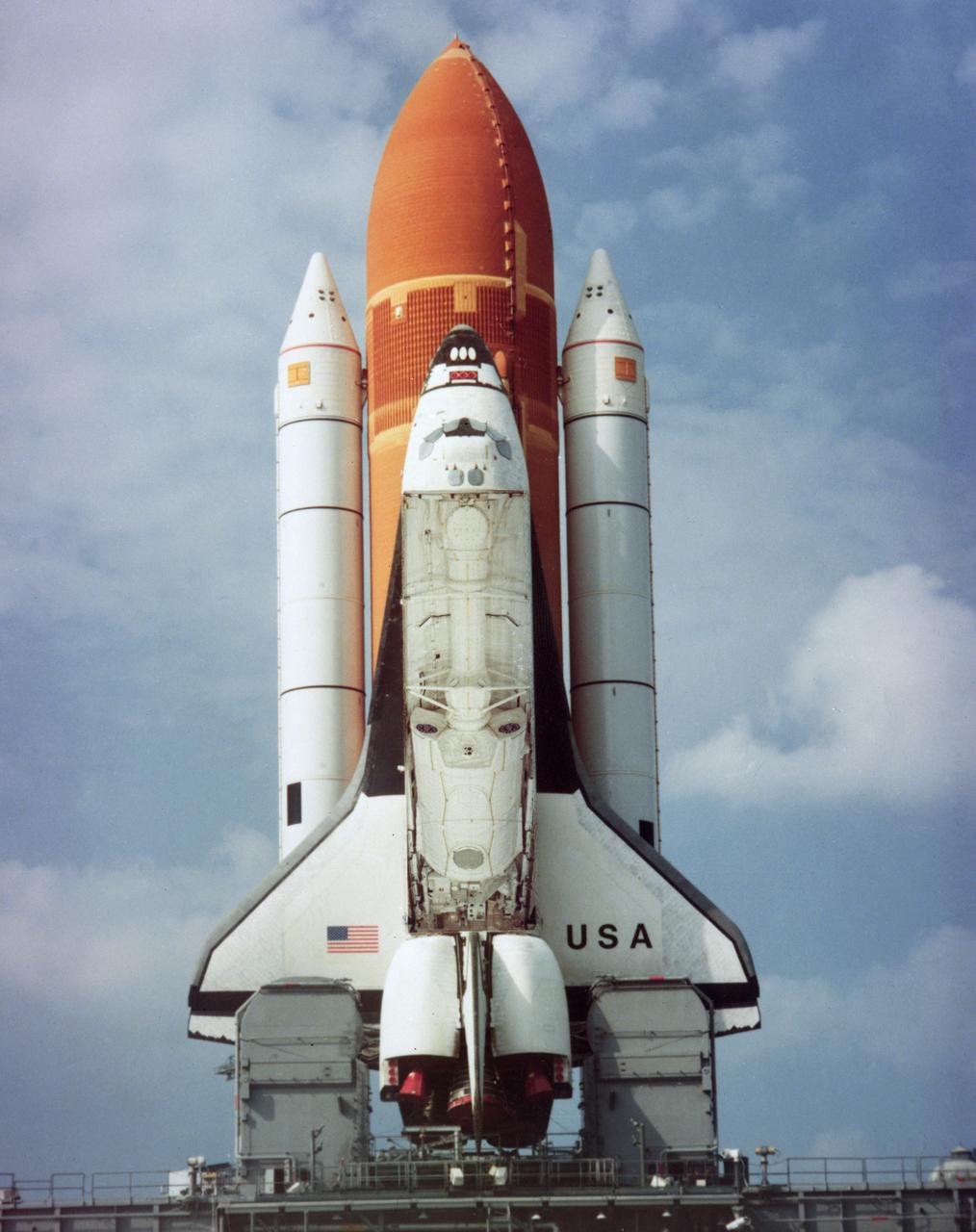
This double exposure image shows Spacelab-1 in the cargo bay of orbiter Columbia. From top to bottom inside the cargo bay are the Spacelab Access Turnel, which is connected to the mid-deck of the orbiter; the Spacelab module, a pressurized module in which scientists conduct experiments not possible on Earth; and Spacelab pallets, which can hold instruments for the experiments requiring direct exposure to space. The first Spacelab mission, Spacelab-1, sponsored jointly and shared equally by NASA and the European Space Agency, was a multidisciplinary mission; that is, investigations were performed in several different fields of scientific research. The overall goal of the mission was to verify Spacelab performance through a variety of scientific experiments. The disciplines represented by these experiments were astronomy and solar physics, earth observations, space plasma physics, materials sciences, atmospheric physics, and life sciences. International in nature, Spacelab-1 conducted experiments from the United States, Japan, the Netherlands, United Kingdom, Beluga, France, Germany, Italy, and Switzerland. Spacelab-1 was launched from the Kennedy Space Center on November 28, 1983 aboard the orbiter Columbia (STS-9). The Marshall Space Flight Center was responsible for managing the Spacelab missions.
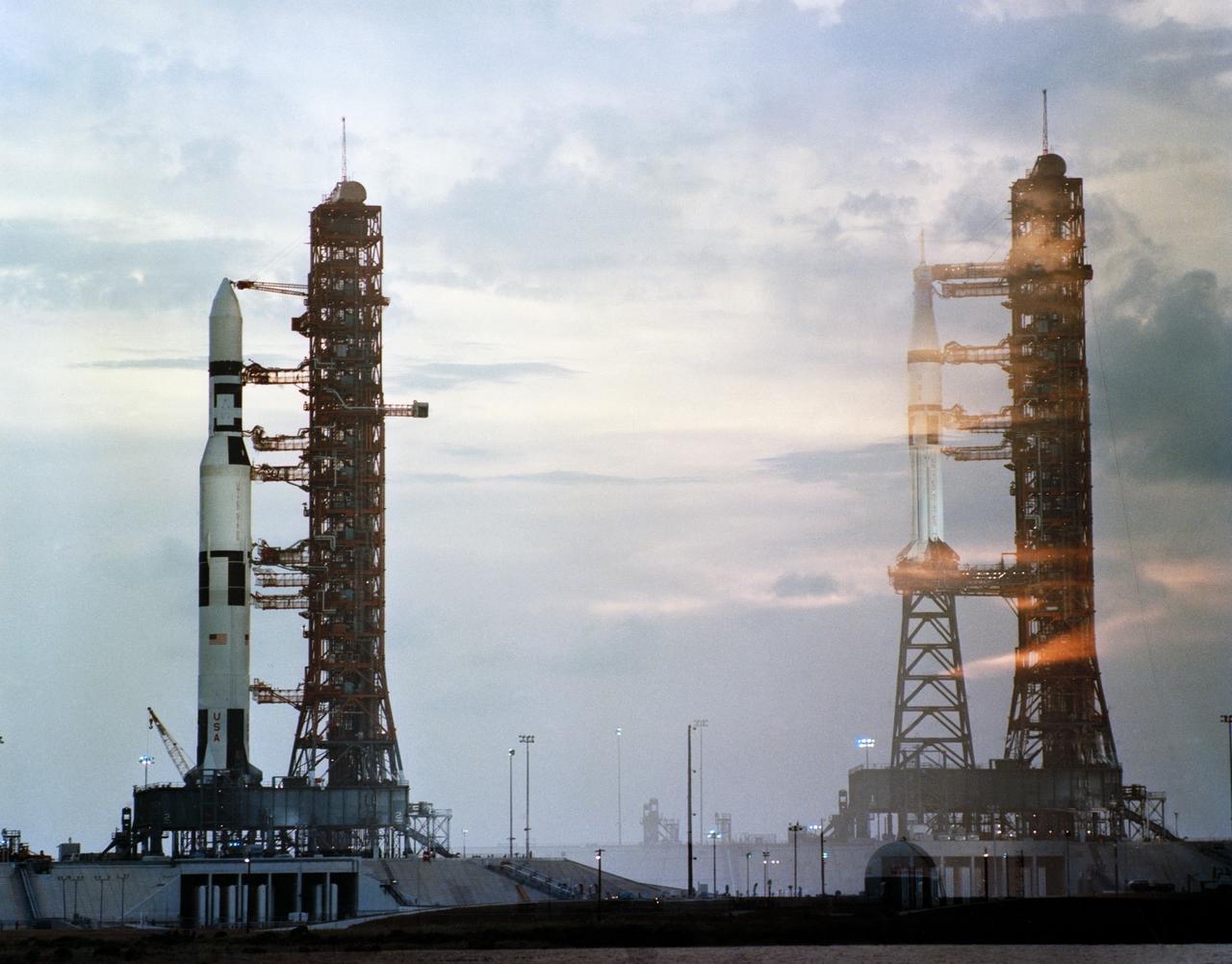
S73-25654 (7 May 1973) --- A deliberate double exposure to help illustrate the comparative sizes and configurations of the Skylab 1 and Skylab 2 space vehicles at Launch Complex 39, Kennedy Space Center, Florida. The double exposure creates an illusion that the rockets are side by side, though actually they are one and a half miles apart. The Skylab 1/ Saturn 1B space vehicle on Pad A is on the left. On the right is the Skylab 2/ Saturn 1B space vehicle on Pad B. The Skylab 1 payload is the space station cluster. The Skylab 2 payload will be an Apollo Command/Service Module (CSM) with astronauts Charles Conrad Jr., Joseph P. Kerwin and Paul J. Weitz aboard. The Saturn V launch vehicle is composed of a Saturn V first (S-1C) stage, a Saturn V second (S-11) stage, and the Skylab payload. The Saturn 1B launch vehicle consists of a Saturn 1B first (S-1B) stage, a Saturn 1B second (S-1VB) stage, and the CSM payload including its launch escape system. Photo credit: NASA
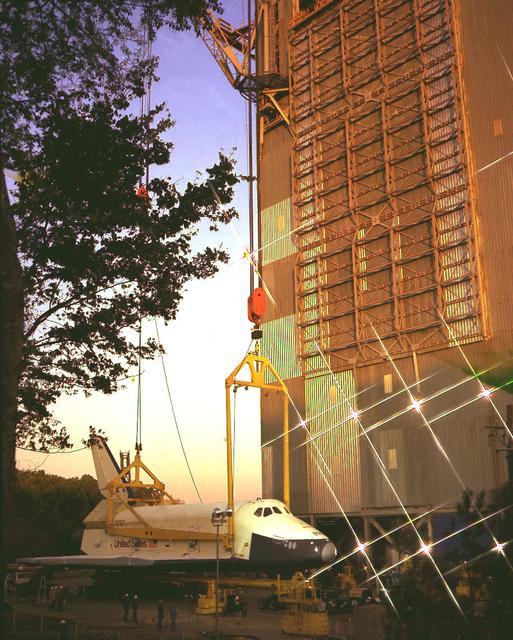
This is a double exposure of the Shuttle Orbiter Enterprise on the strong back of the Dynamic Test Stand at Marshall Space Flight Center's building 4550 as it undergoes a Mated Vertical Ground Vibration Test (MVGVT). One exposure depicts a sunset view, while the other depicts a post-sunset view.
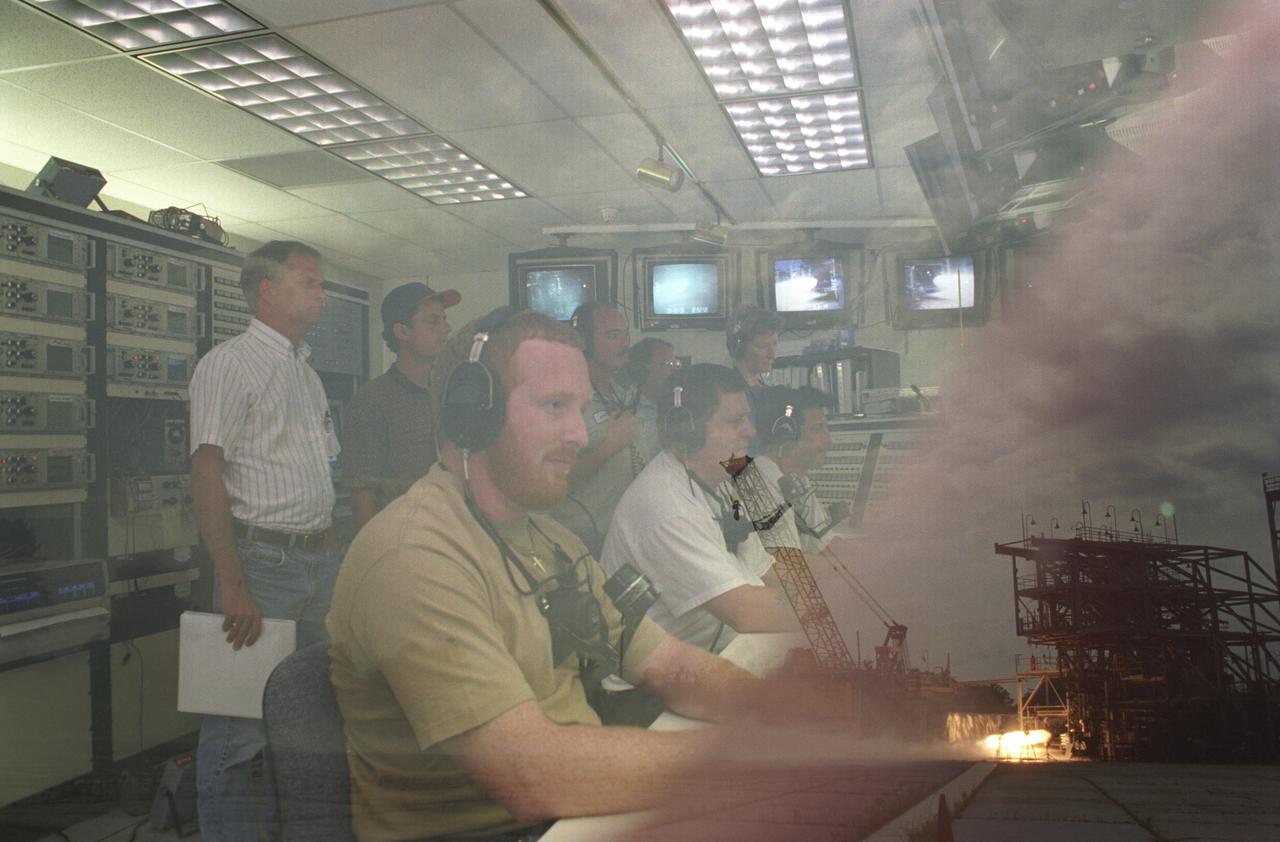
This double exposure depicts Marshall Space Flight Center's (MSFC) Test Stand 116 hosting a 60K Bantam Fastrac thrust chamber assembly test. The lower right exposure shows the engine firing in the test stand while the center exposure reveals workers monitoring the test in the interior block house of the test facility. The thrust chamber assembly is only part of the Fastrac engine project to build a low-cost engine for the X-34, an alternate light-weight unmarned launch vehicle. Both the nozzle and the engine for Fastrac are being manufactured at MSFC.
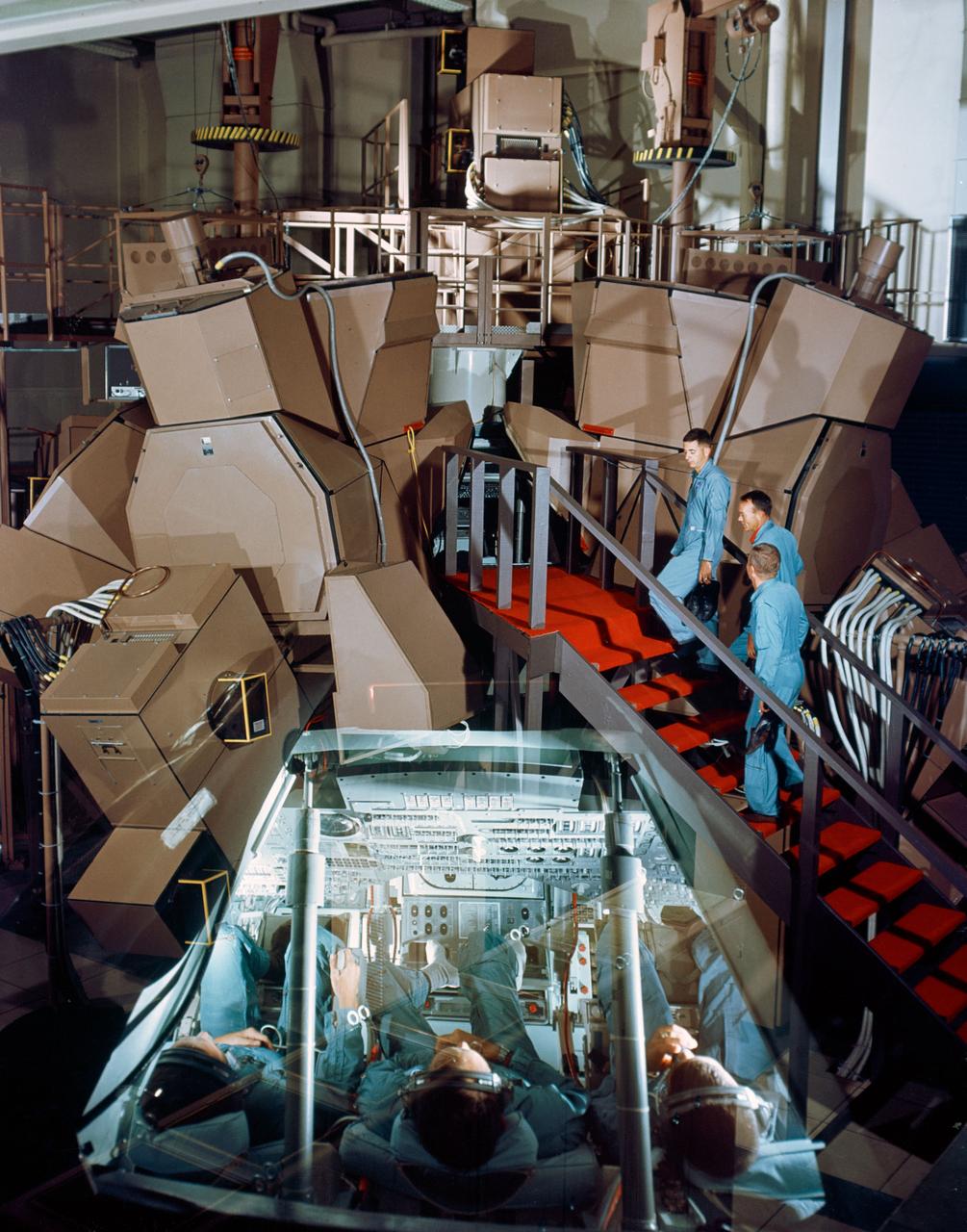
S67-50585 (1967) --- This is an intentional double exposure showing the Apollo Mission Simulator in the Mission Simulation and Training Facility, Building 5 at the Manned Spacecraft Center. In the exterior view astronauts William A. Anders, Michael Collins, and Frank Borman (reading from top of stairs) are about to enter the simulator. The interior view shows the three astronauts in the simulator. They are (left to right) Borman, Collins, and Anders. Photo credit: NASA
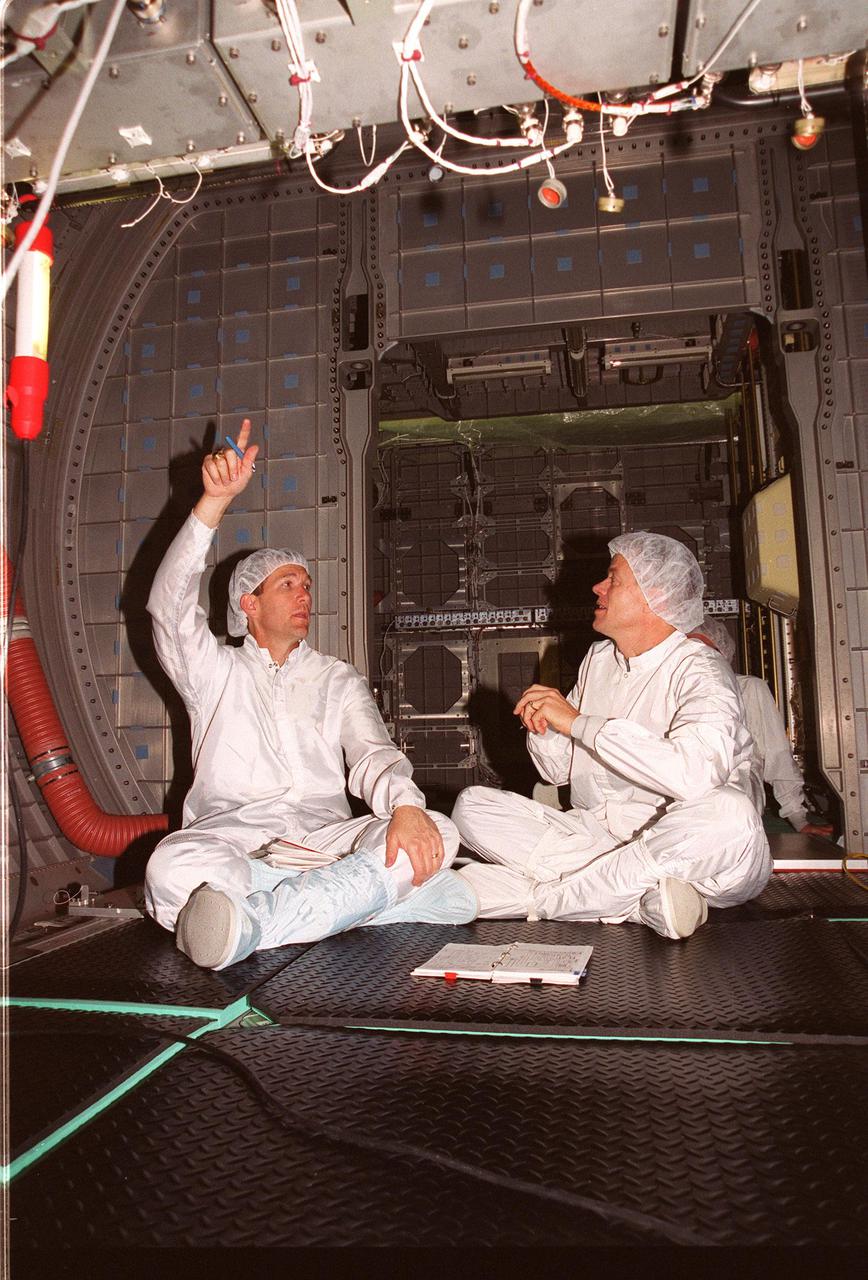
KENNEDY SPACE CENTER, Fla. -- - STS-107 Commander Rick D. Husband (left) and Pilot William C. McCool train in the SPACHEAB Double Module that will fly on their mission. Husband, McCool and other crew members Payload Commander Michael P. Anderson; Mission Specialists Laurel Blair Salton Clark and David M. Brown; and Payload Specialist Ilan Ramon, of Israel, are at SPACEHAB, Cape Canaveral, Fla., to take part in Crew Equipment Interface Test (CEIT) activities. The CEIT enables the crew to perform certain flight operations, operate experiments in a flight-like environment, evaluate stowage locations and obtain additional exposure to specific experiment operations. As a research mission, STS-107 will carry the SPACEHAB Double Module in its first research flight into space and a broad collection of experiments ranging from material science to life science. STS-107 is scheduled for launch May 23, 2002
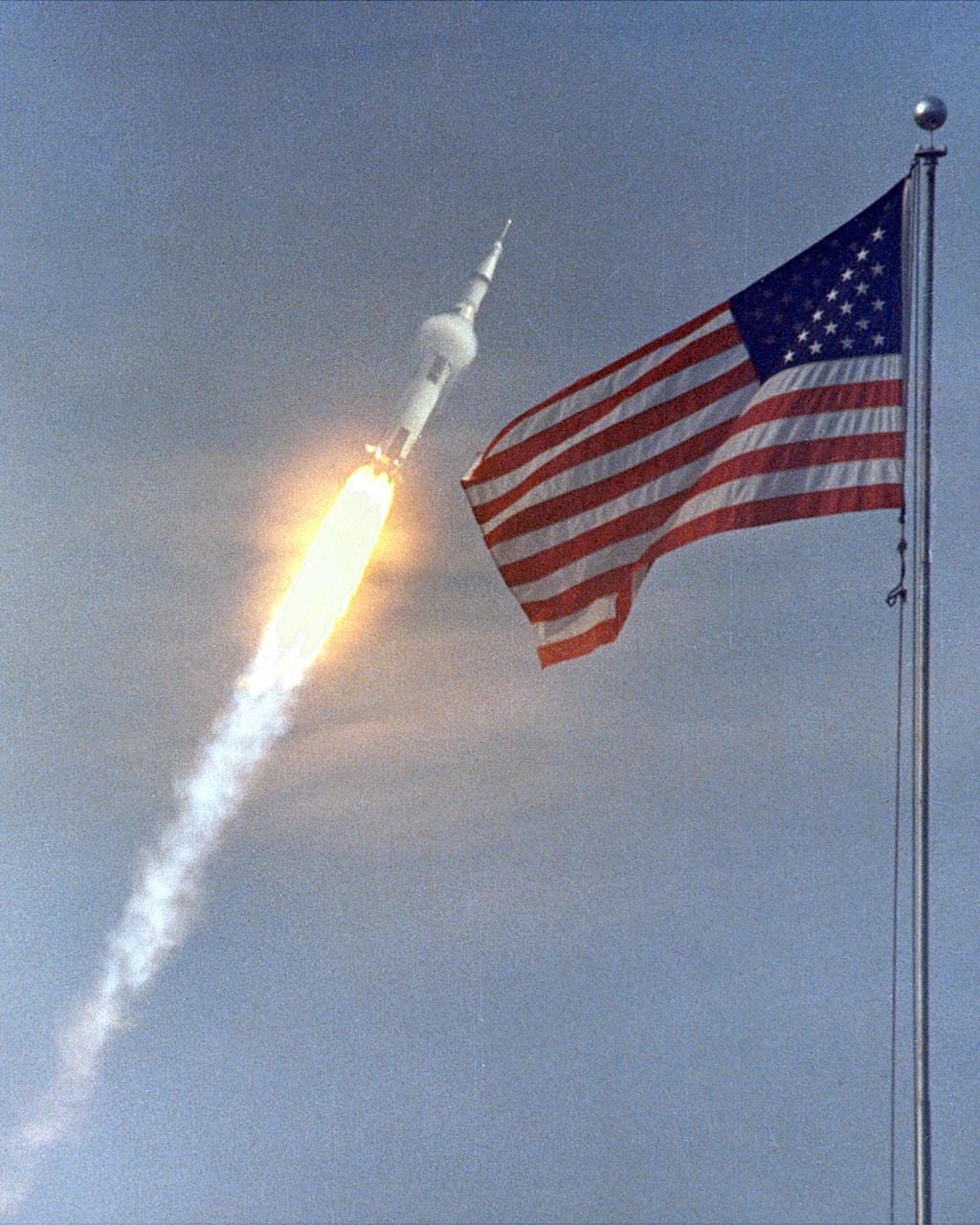
CAPE CANAVERAL, Fla. -- The American Flag heralds the flight of Apollo 11, man's first lunar landing mission. This double exposure was made with a 1,000 mm lens. The photograph was taken from Cape Kennedy, adjacent to Kennedy Space Center, where Apollo 11 lifted off from pad 39A at 9:32 a.m. EDT. This image was imposed upon the image of hte flag, filmed a day earlier. In the photo, the rocket at an alititude of about 5,000 feet. A band of super-cold propellants seems to circle the rocket near its center. The effect is caused by the difference in temperature between the propellants and the atmosphere. Photo credit: NASA
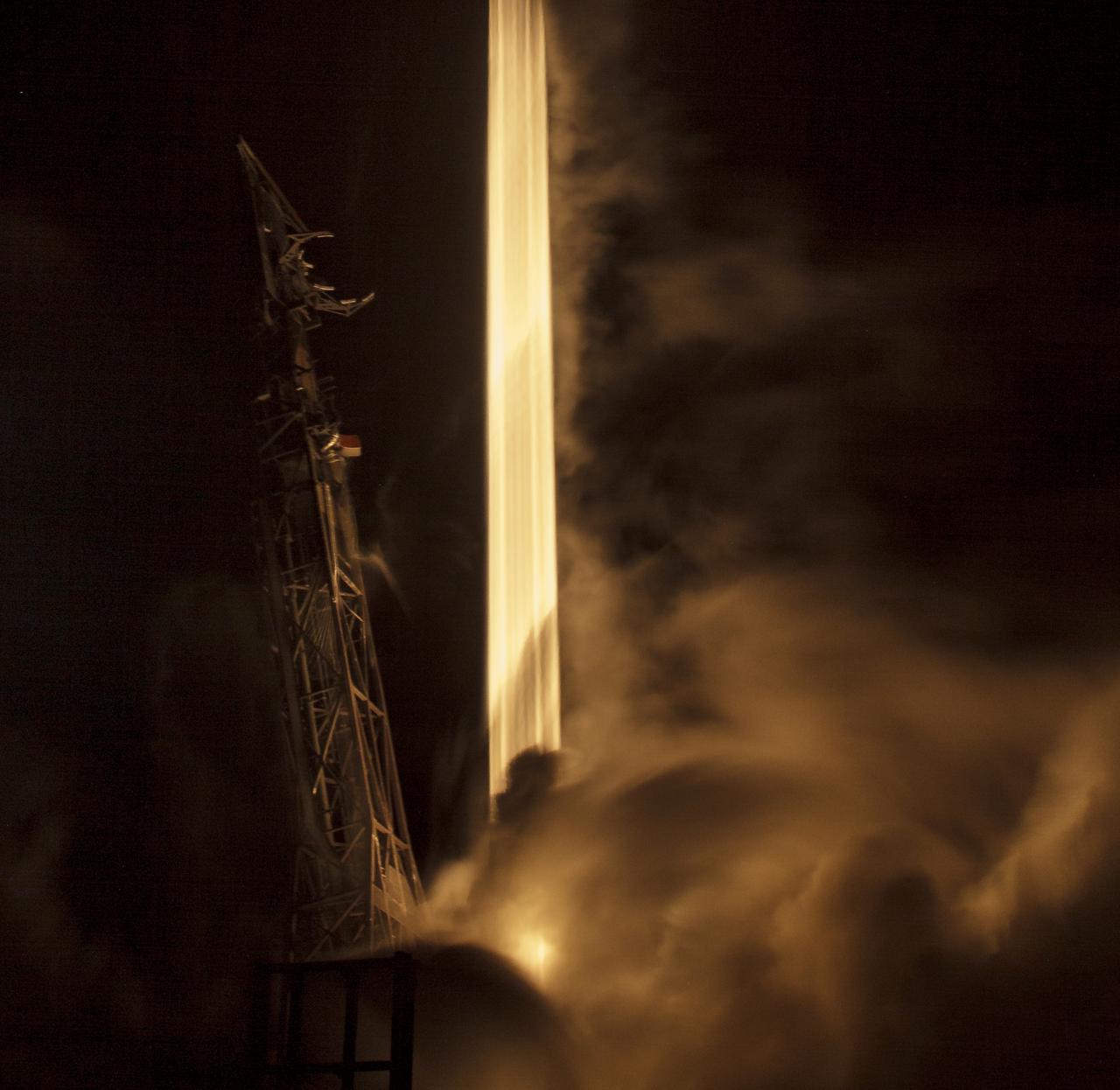
The SpaceX Falcon 9 rocket is seen in this 30-second exposure photograph as it launches with the Double Asteroid Redirection Test, or DART, spacecraft onboard, Tuesday, Nov. 23, 2021, Pacific time (Nov. 24 Eastern time) from Space Launch Complex 4E at Vandenberg Space Force Base in California. DART is the world’s first full-scale planetary defense test, demonstrating one method of asteroid deflection technology. The mission was built and is managed by Johns Hopkins APL for NASA’s Planetary Defense Coordination Office. Photo Credit: (NASA/Bill Ingalls)
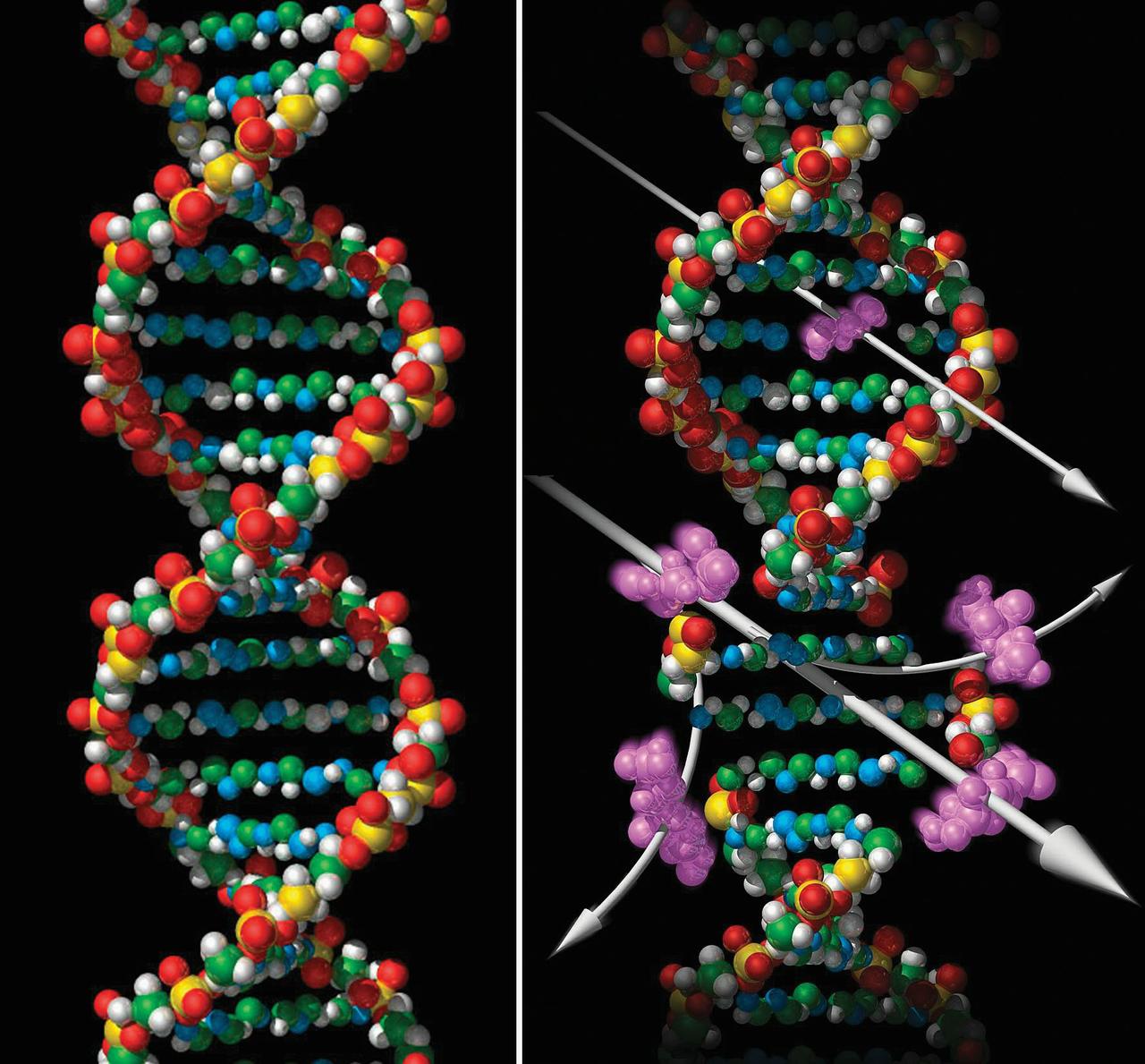
The blueprint of life, DNA's double helix is found in the cells of everything from bacteria to astronauts. Exposure to radiation(depicted at right) such as X-rays (upper) or heavy ion particles (lower), can damage DNA and cause dire consequences both to the organism itself and to future generations. One of NASA's main goals is to develop better radiation shielding materials to protect astronauts from destructive radiation in space. This is particularly important for long space missions. NASA has selected researchers to study materials that provide better shielding. This research is managed by NASA's Office of Biological and Physical Research and is supported by the Microgravity Science and Applications Department at NASA's Marshall Center. During International Space Station Expedition Six, the Extravehicular Activity Radiation Monitoring (EVARM) will continue to measure radiation dosage encountered by the eyes, internal organs and skin during specific spacewalks, and relate it to the type of activity, location and other factors. An analysis of this information may be useful in mitigating potential exposure to space walkers in the future. (Illustration by Dr. Frank Cucinotta, NASA/Johnson Space Center, and Prem Saganti, Lockheed Martin)
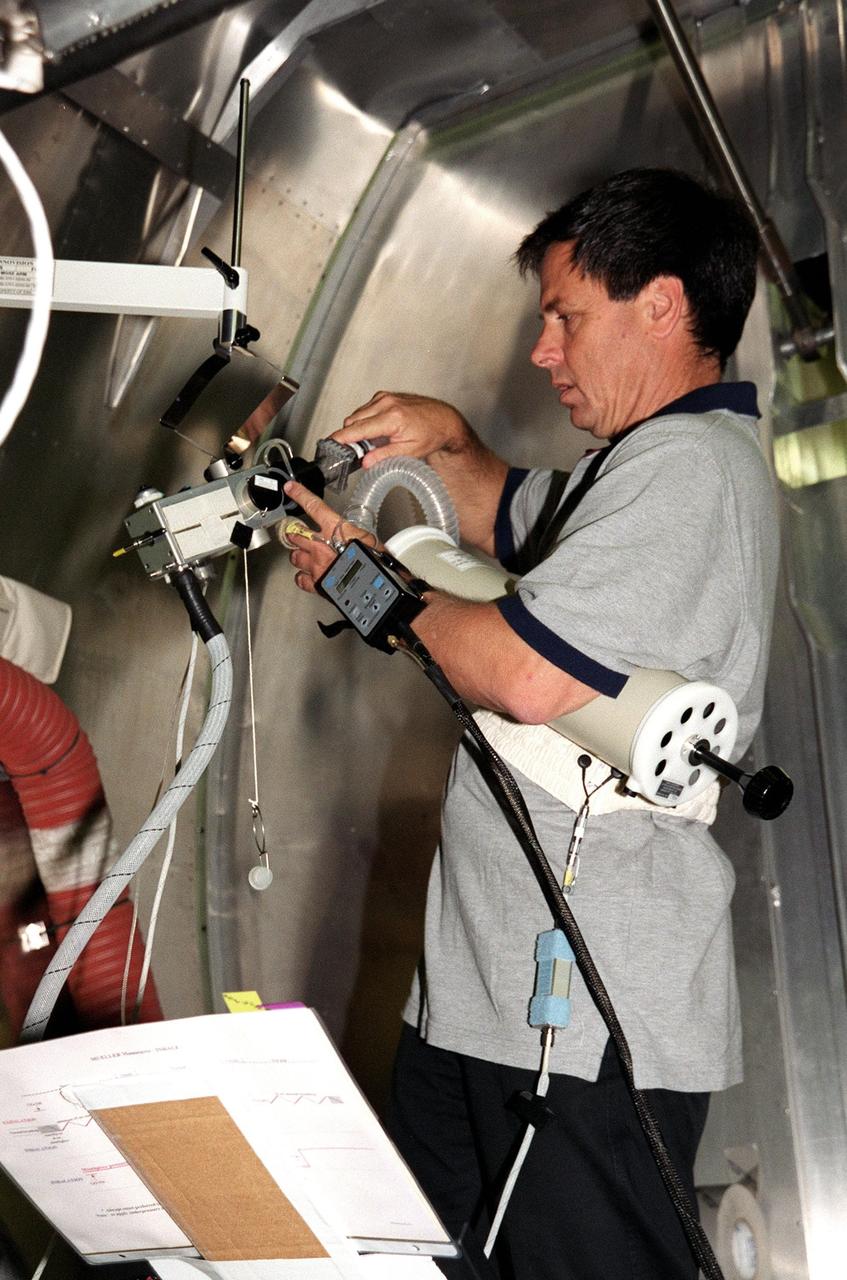
KENNEDY SPACE CENTER, Fla. -- STS-107 Payload Specialist Ilan Ramon, of Israel, manipulates a piece of equipment in the Spacehab module. He and other crew members are taking part in Crew Equipment Interface Test (CEIT) activities at SPACEHAB, Cape Canaveral, Fla. As a research mission, STS-107 will carry the Spacehab Double Module in its first research flight into space and a broad collection of experiments ranging from material science to life science. The CEIT activities enable the crew to perform certain flight operations, operate experiments in a flight-like environment, evaluate stowage locations and obtain additional exposure to specific experiment operations. Other STS-107 crew members are Commander Rick Douglas Husband, Pilot William C. McCool; Payload Commander Michael P. Anderson; and Mission Specialists Kalpana Chawla, Laurel Blair Salton Clark and David M. Brown. STS-107 is scheduled for launch May 23, 2002
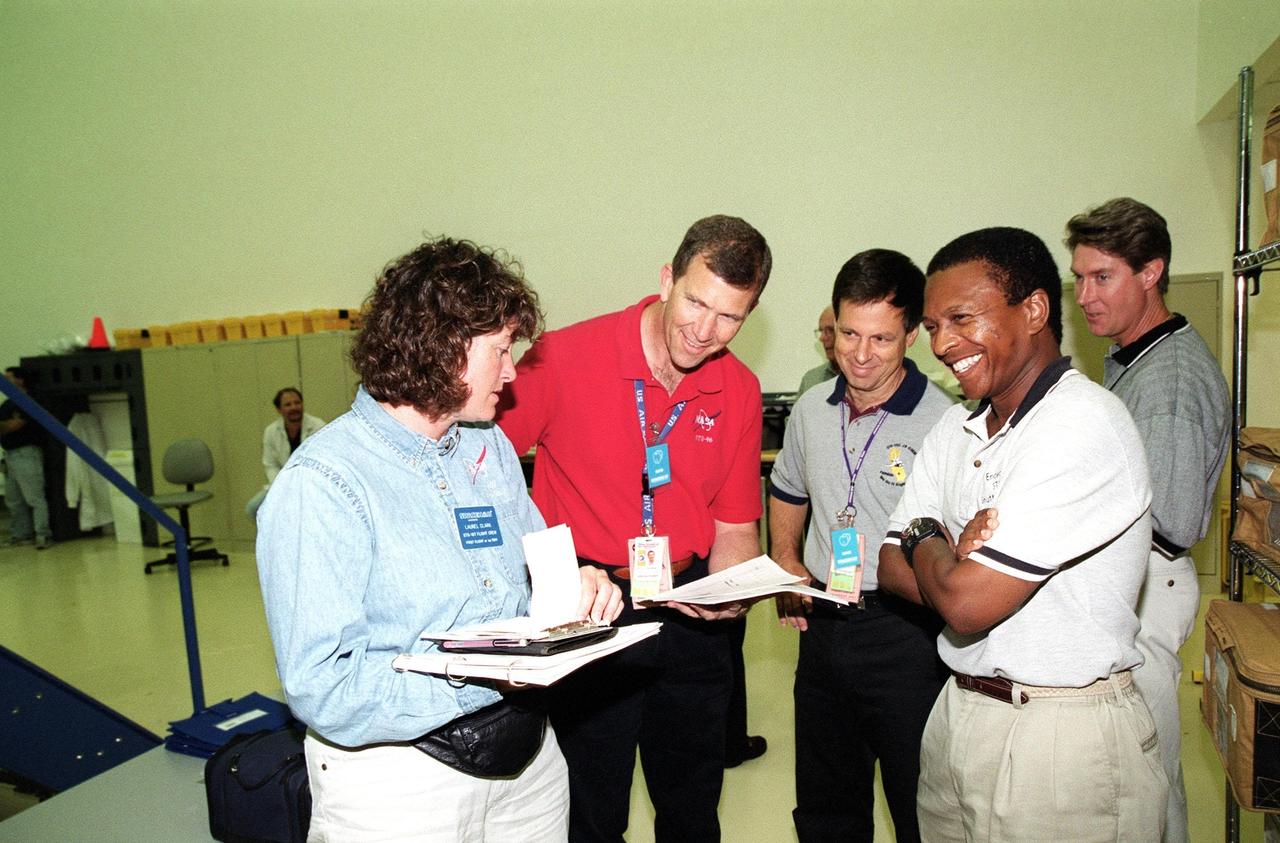
KENNEDY SPACE CENTER, Fla. -- At SPACEHAB, Cape Canaveral, Fla., the STS-107 crew takes part in Crew Equipment Interface Test (CEIT) activities. From left are Mission Specialist Laurel Blair Salton Clark, Commander Rick Douglas Husband, Payload Specialist Ilan Ramon, of Israel, and Payload Commander Michael P. Anderson. A trainer is at far right. As a research mission, STS-107 will carry the Spacehab Double Module in its first research flight into space and a broad collection of experiments ranging from material science to life science. The CEIT activities enable the crew to perform certain flight operations, operate experiments in a flight-like environment, evaluate stowage locations and obtain additional exposure to specific experiment operations. Other STS-107 crew members are Pilot William C. McCool and Mission Specialists Kalpana Chawla and David M. Brown. STS-107 is scheduled for launch May 23, 2002
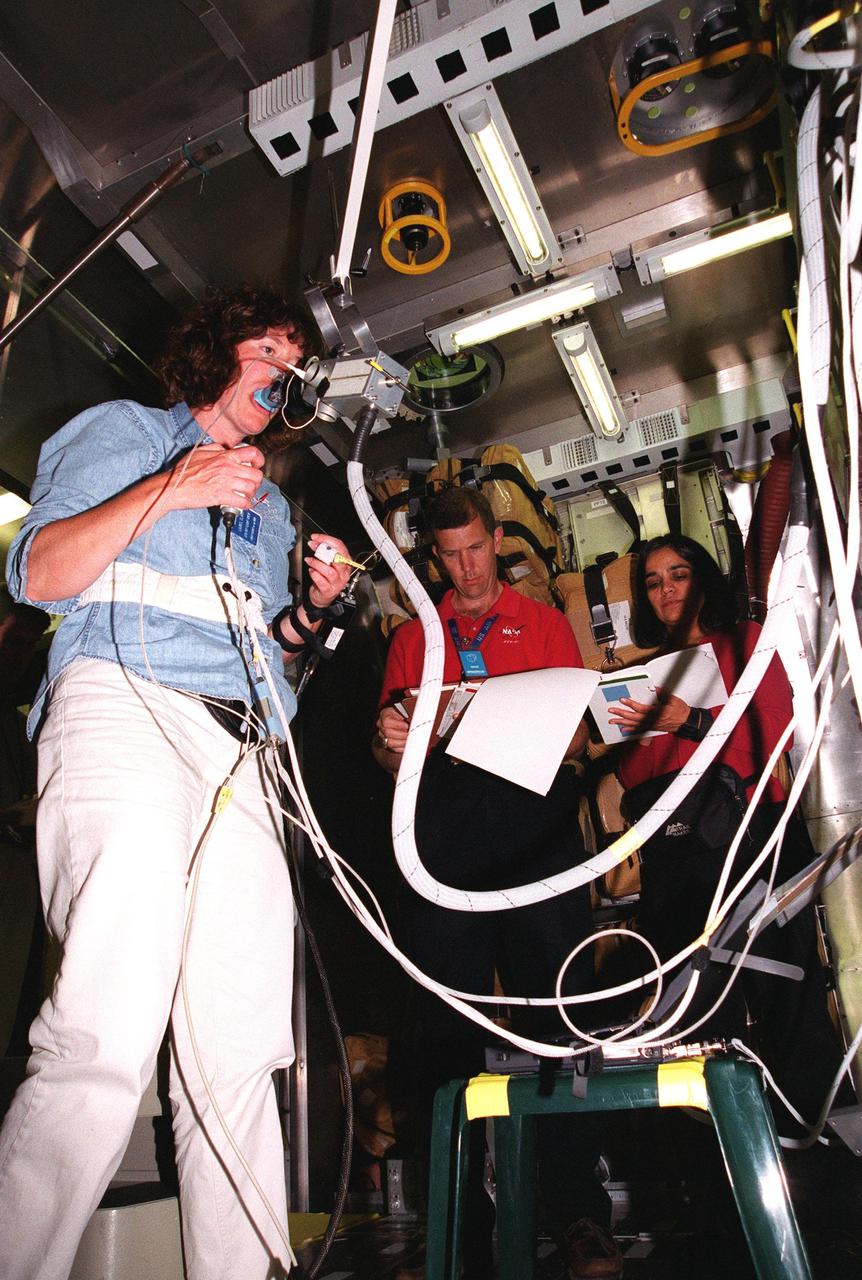
KENNEDY SPACE CENTER, Fla. -- At SPACEHAB, Cape Canaveral, Fla., Mission Specialist Laurel Blair Salton Clark practices an experiment while Commander Rick Douglas Husband and Mission Specialist Kalpana Chawla observe. They and other crew members Pilot William C. McCool; Payload Commander Michael P. Anderson; and Mission Specialists David M. Brown and Ilan Ramon, of Israel, are at SPACEHAB for Crew Equipment Interface Test (CEIT) activities. The CEIT enables the crew to perform certain flight operations, operate experiments in a flight-like environment, evaluate stowage locations and obtain additional exposure to specific experiment operations. As a research mission, STS-107 will carry the Spacehab Double Module in its first research flight into space and a broad collection of experiments ranging from material science to life science. STS-107 is scheduled for launch May 23, 2002
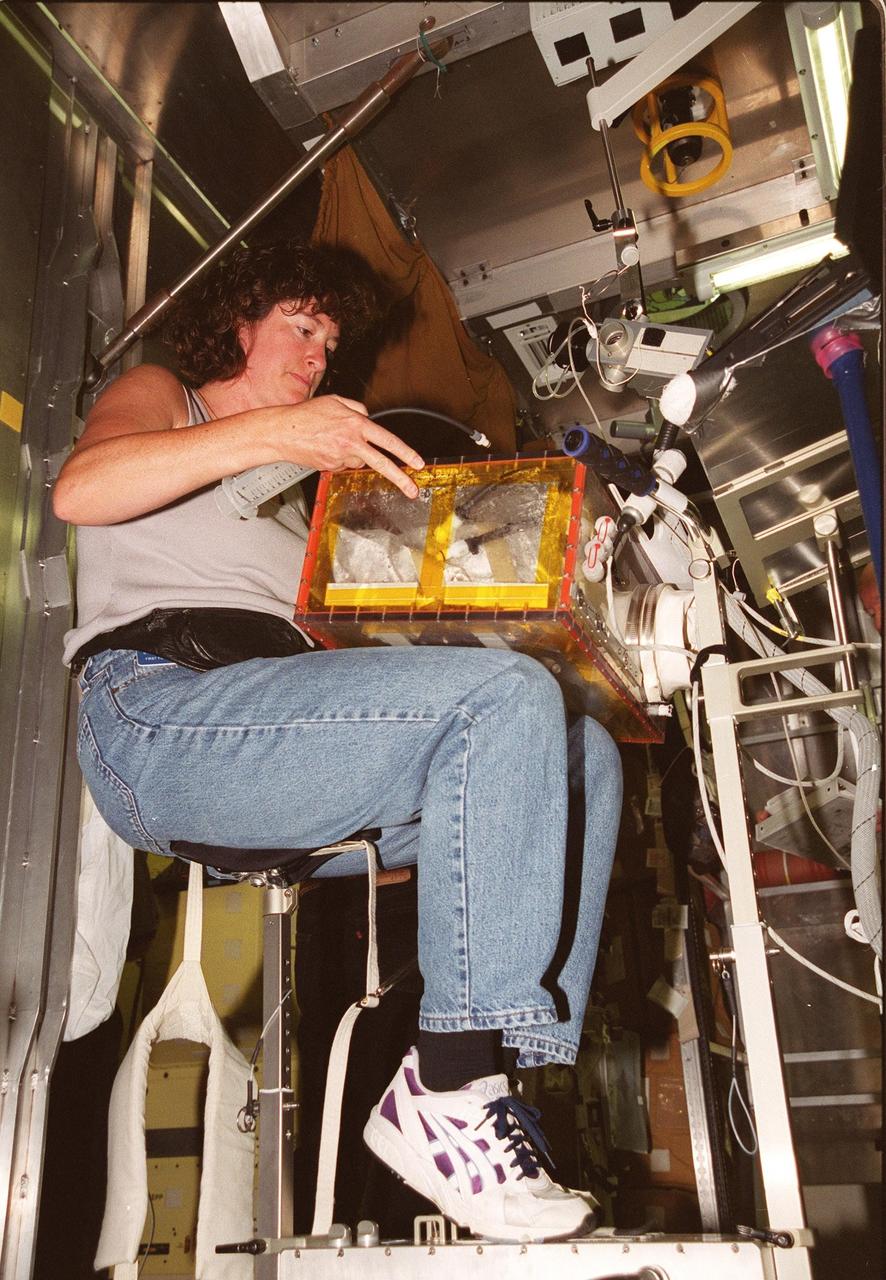
KENNEDY SPACE CENTER, Fla. -- During Crew Equipment Interface Test activities at SPACEHAB, Cape Canaveral, Fla., STS-107 Mission Specialist Laurel Blair Salton Clark gets hands-on training on a glove box experiment inside the training module. As a research mission, STS-107 will carry the SPACEHAB Double Module in its first research flight into space and a broad collection of experiments ranging from material science to life science. CEIT activities enable the crew to perform certain flight operations, operate experiments in a flight-like environment, evaluate stowage locations and obtain additional exposure to specific experiment operations. Other STS-107 crew members are Commander Rick Douglas Husband; Pilot William C. McCool; Payload Commander Michael P. Anderson; Mission Specialists Kalpana Chawla and David M. Brown; and Payload Specialist Ilan Ramon, of Israel. STS-107 is scheduled for launch May 23, 2002
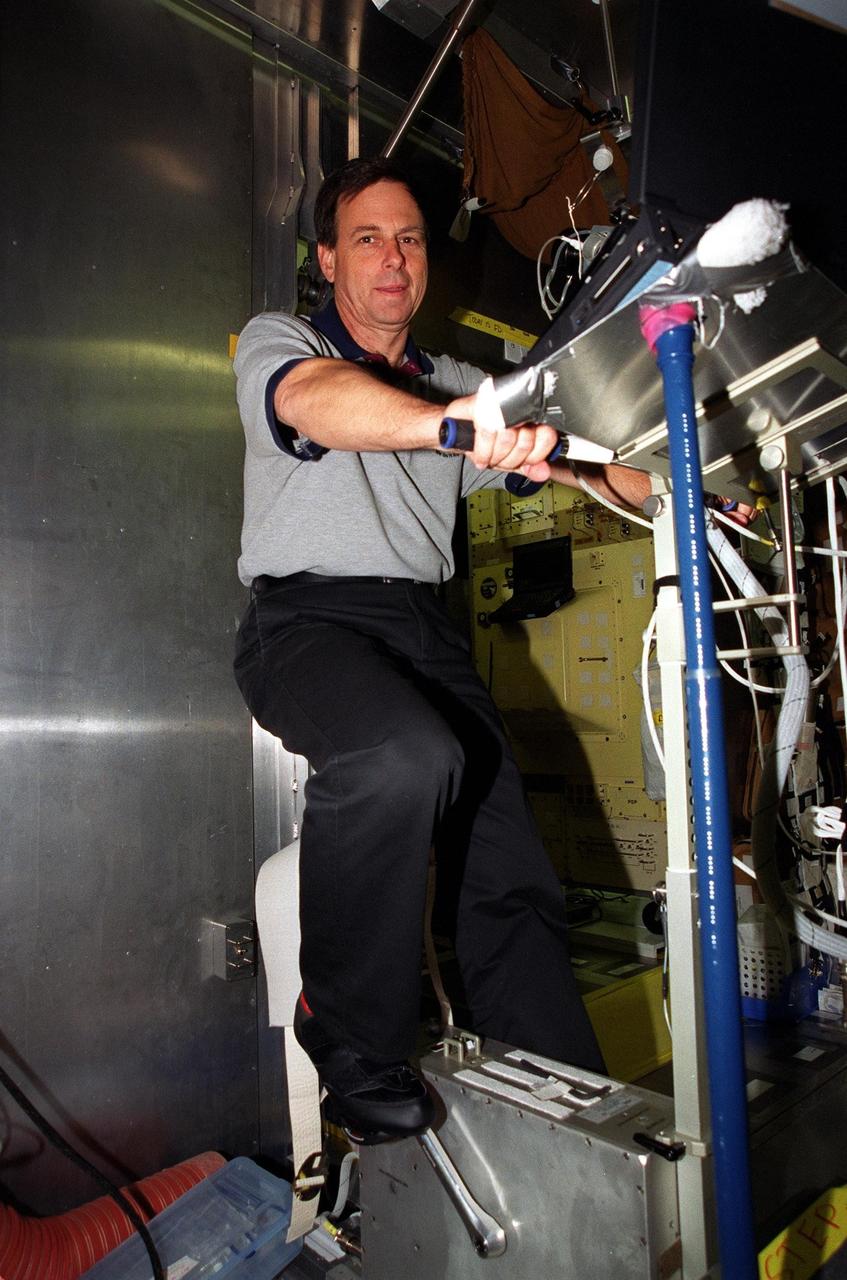
KENNEDY SPACE CENTER, Fla. -- STS-107 Payload Specialist Ilan Ramon, of Israel, trains on equipment in the training module at SPACEHAB, Cape Canaveral. Ramon and other crew members Commander Rick D. Husband, Pilot William C. McCool, Payload Commander Michael P. Anderson; and Mission Specialists Kalpana Chawla, Laurel Blair Salton Clark and David M. Brown are at SPACEHAB to take part in Crew Equipment Interface Test (CEIT) activities. The CEIT enables the crew to perform certain flight operations, operate experiments in a flight-like environment, evaluate stowage locations and obtain additional exposure to specific experiment operations. As a research mission, STS-107 will carry the SPACEHAB Double Module in its first research flight into space and a broad collection of experiments ranging from material science to life science. STS-107 is scheduled for launch May 23, 2002
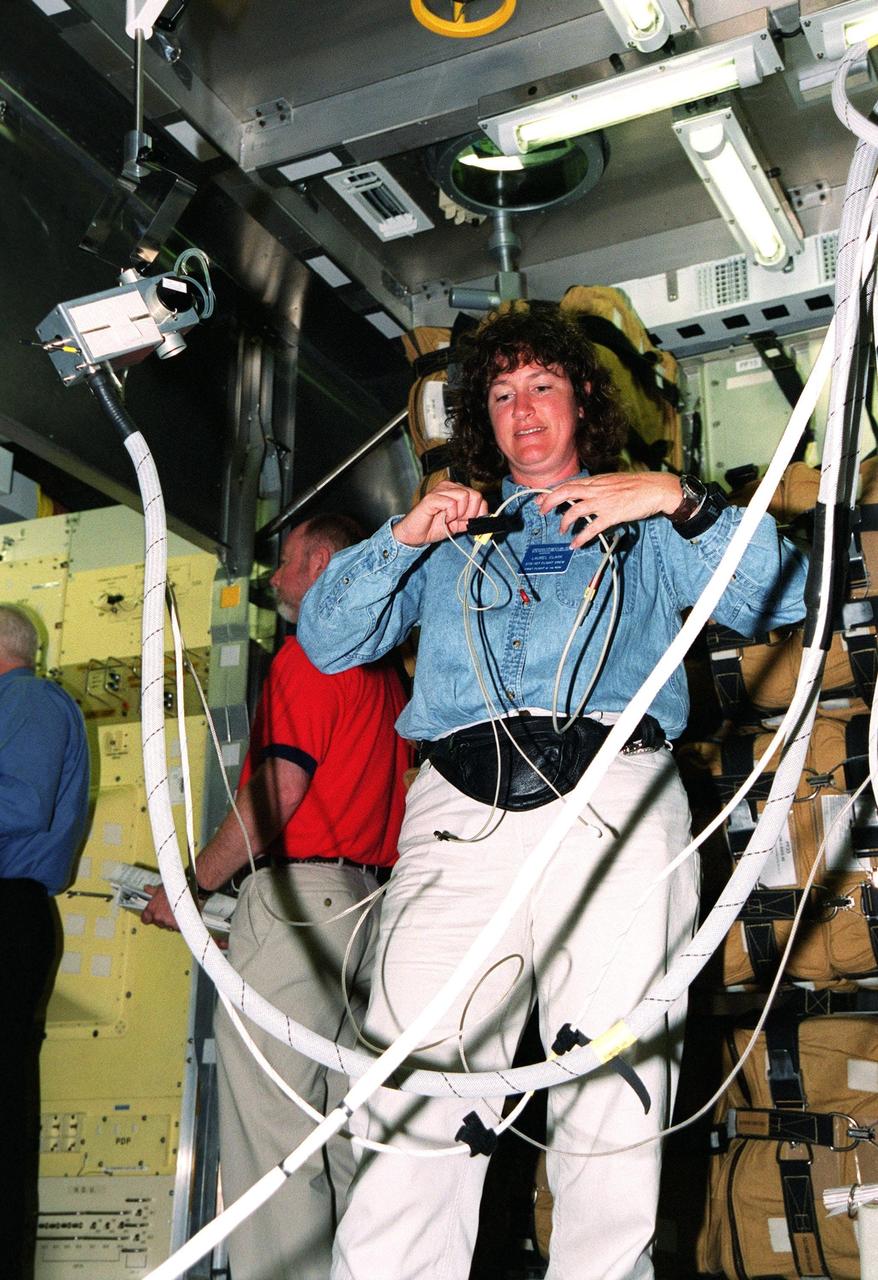
KENNEDY SPACE CENTER, Fla. -- During Crew Equipment Interface Test (CEIT)activities at SPACEHAB, Cape Canaveral, Fla., STS-107 Mission Specialist Laurel Blair Salton Clark gets hands-on training on equipment inside the Spacehab module. As a research mission, STS-107 will carry the Spacehab Double Module in its first research flight into space and a broad collection of experiments ranging from material science to life science. CEIT activities enable the crew to perform certain flight operations, operate experiments in a flight-like environment, evaluate stowage locations and obtain additional exposure to specific experiment operations. Other STS-107 crew members are Commander Rick Douglas Husband; Pilot William C. McCool; Payload Commander Michael P. Anderson; Mission Specialists Kalpana Chawla and David M. Brown; and Payload Specialist Ilan Ramon, of Israel. STS-107 is scheduled for launch May 23, 2002
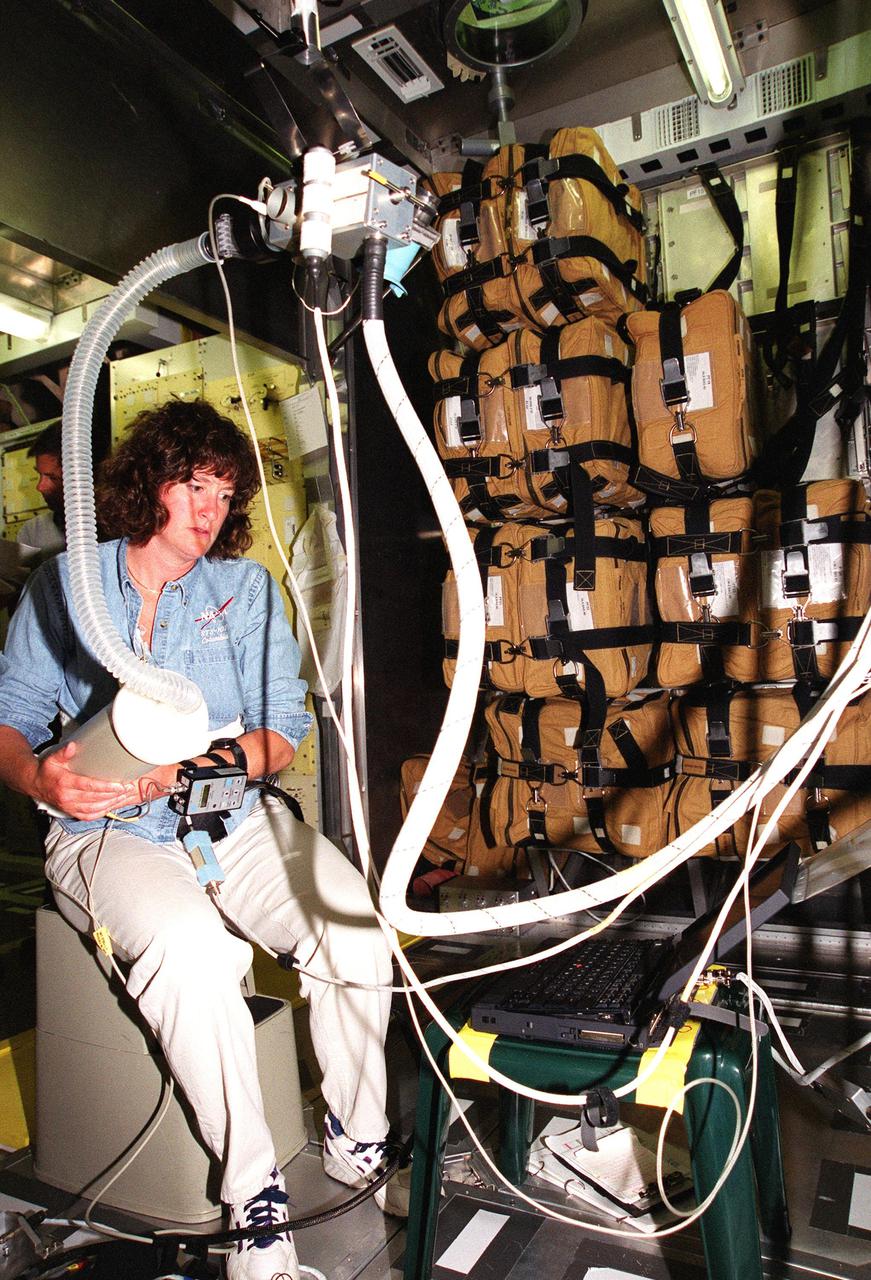
KENNEDY SPACE CENTER, Fla. -- At SPACEHAB, Cape Canaveral, Fla., STS-107 Mission Specialist Laurel Blair Salton Clark manipulates a piece of equipment. She and other crew members are at SPACEHAB, Port Canaveral, Fla., for Crew Equipment Interface Test (CEIT) activities that enable the crew to perform certain flight operations, operate experiments in a flight-like environment, evaluate stowage locations and obtain additional exposure to specific experiment operations. As a research mission, STS-107 will carry the Spacehab Double Module in its first research flight into space and a broad collection of experiments ranging from material science to life science. Other STS-107 crew members are Commander Rick Douglas Husband, Pilot William C. McCool; Payload Commander Michael P. Anderson; and Mission Specialists Kalpana Chawla, David M. Brown and Ilan Ramon, of Israel. STS-107 is scheduled for launch May 23, 2002
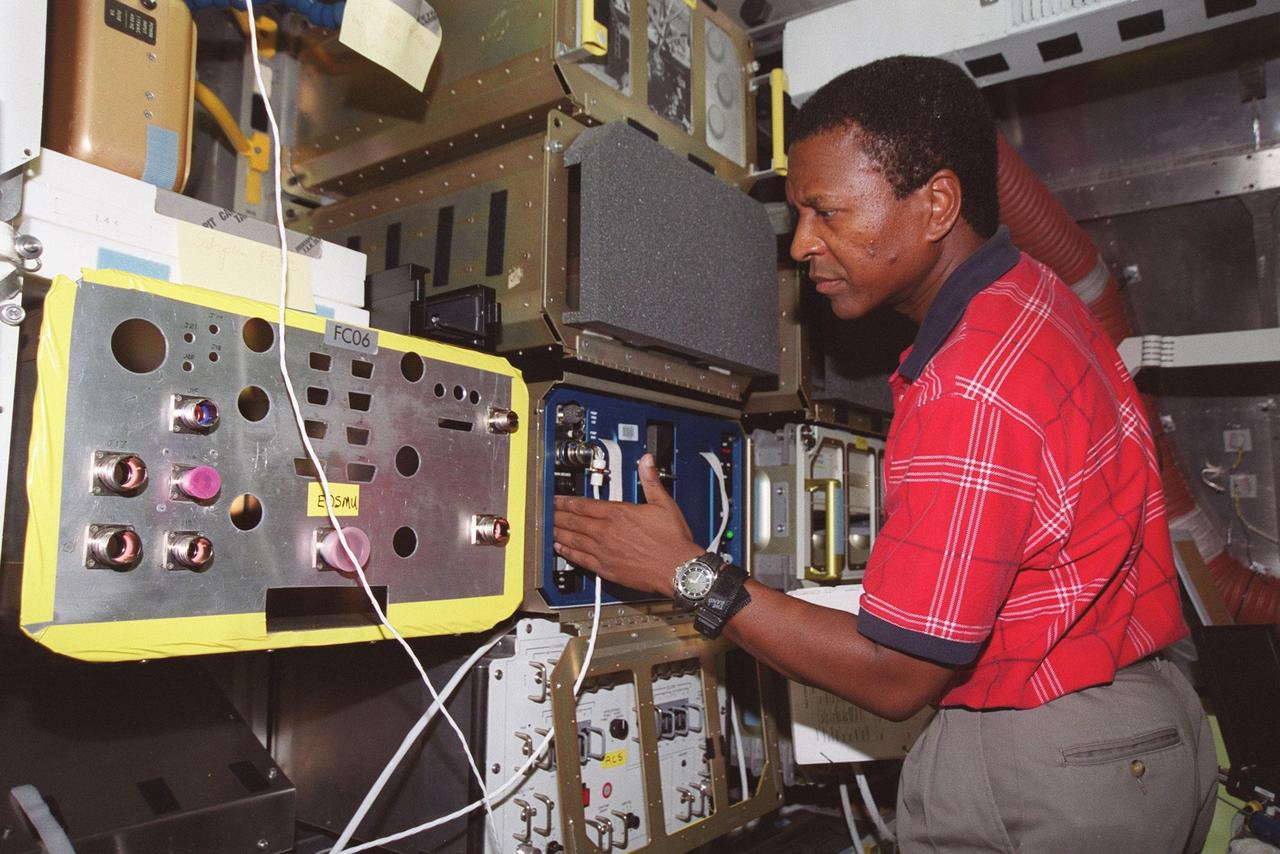
KENNEDY SPACE CENTER, Fla. -- STS-107 Payload Commander Michael Anderson trains on equipment in the training module at SPACEHAB, Cape Canaveral, Fla. Anderson and other crew members Commander Rick D. Husband, Pilot William C. McCool, Mission Specialists Kalpana Chawla, Laurel Blair Salton Clark and David M. Brown; and Payload Specialist Ilan Ramon, of Israel, are at SPACEHAB to take part in Crew Equipment Interface Test (CEIT) activities. The CEIT enables the crew to perform certain flight operations, operate experiments in a flight-like environment, evaluate stowage locations and obtain additional exposure to specific experiment operations. . As a research mission, STS-107 will carry the SPACEHAB Double Module in its first research flight into space and a broad collection of experiments ranging from material science to life science. STS-107 is scheduled for launch May 23, 2002
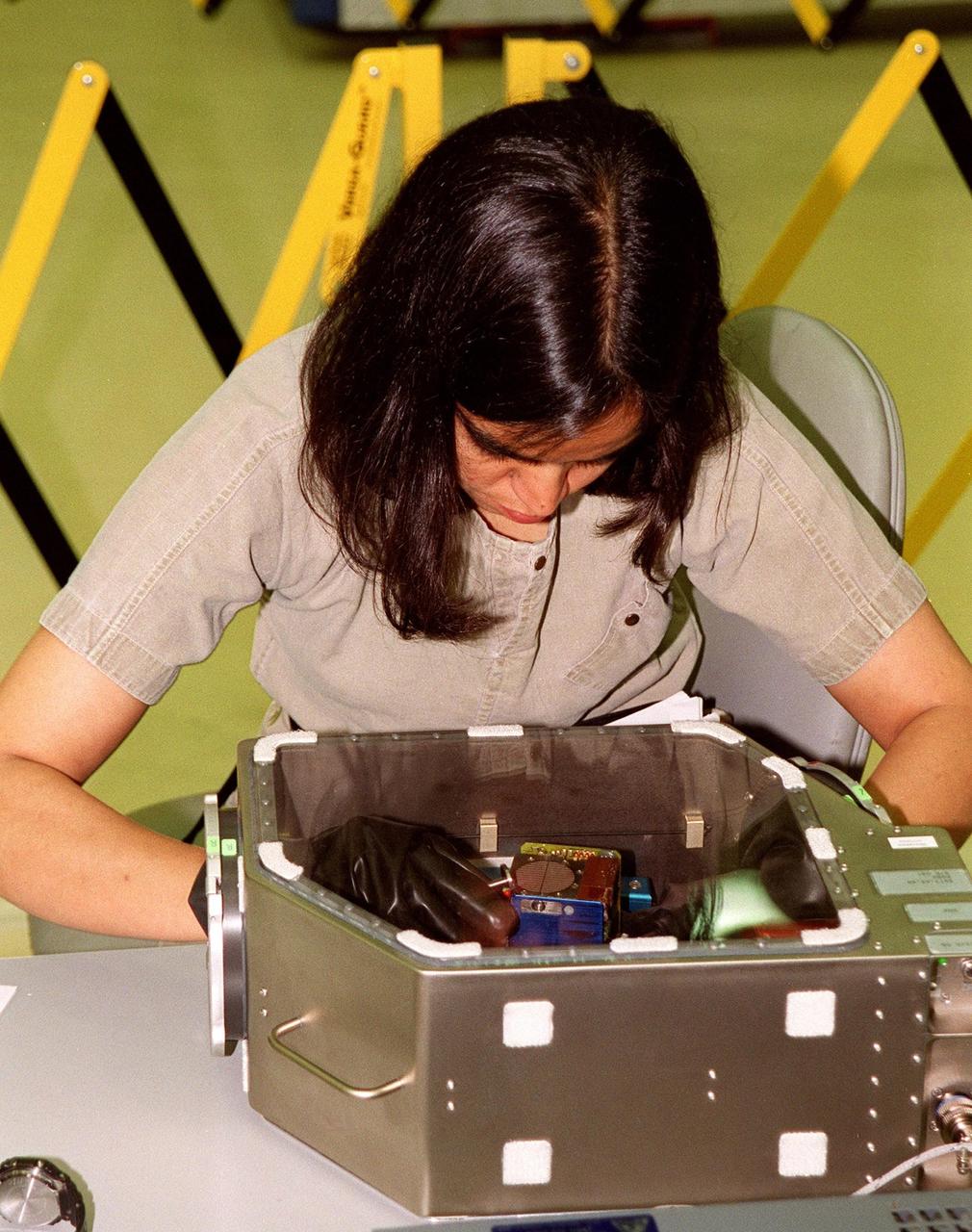
KENNEDY SPACE CENTER, Fla. -- During Crew Equipment Interface Test activities at SPACEHAB, Cape Canaveral, Fla., STS-107 Mission Specialist Kalpana Chawla trains on a glove box experiment. As a research mission, STS-107 will carry the SPACEHAB Double Module in its first research flight into space and a broad collection of experiments ranging from material science to life science. CEIT activities enable the crew to perform certain flight operations, operate experiments in a flight-like environment, evaluate stowage locations and obtain additional exposure to specific experiment operations. Other STS-107 crew members are Commander Rick Douglas Husband; Pilot William C. McCool; Payload Commander Michael P. Anderson; Mission Specialists Laurel Blair Salton Clark and David M. Brown; and Payload Specialist Ilan Ramon, of Israel. STS-107 is scheduled for launch May 23, 2002
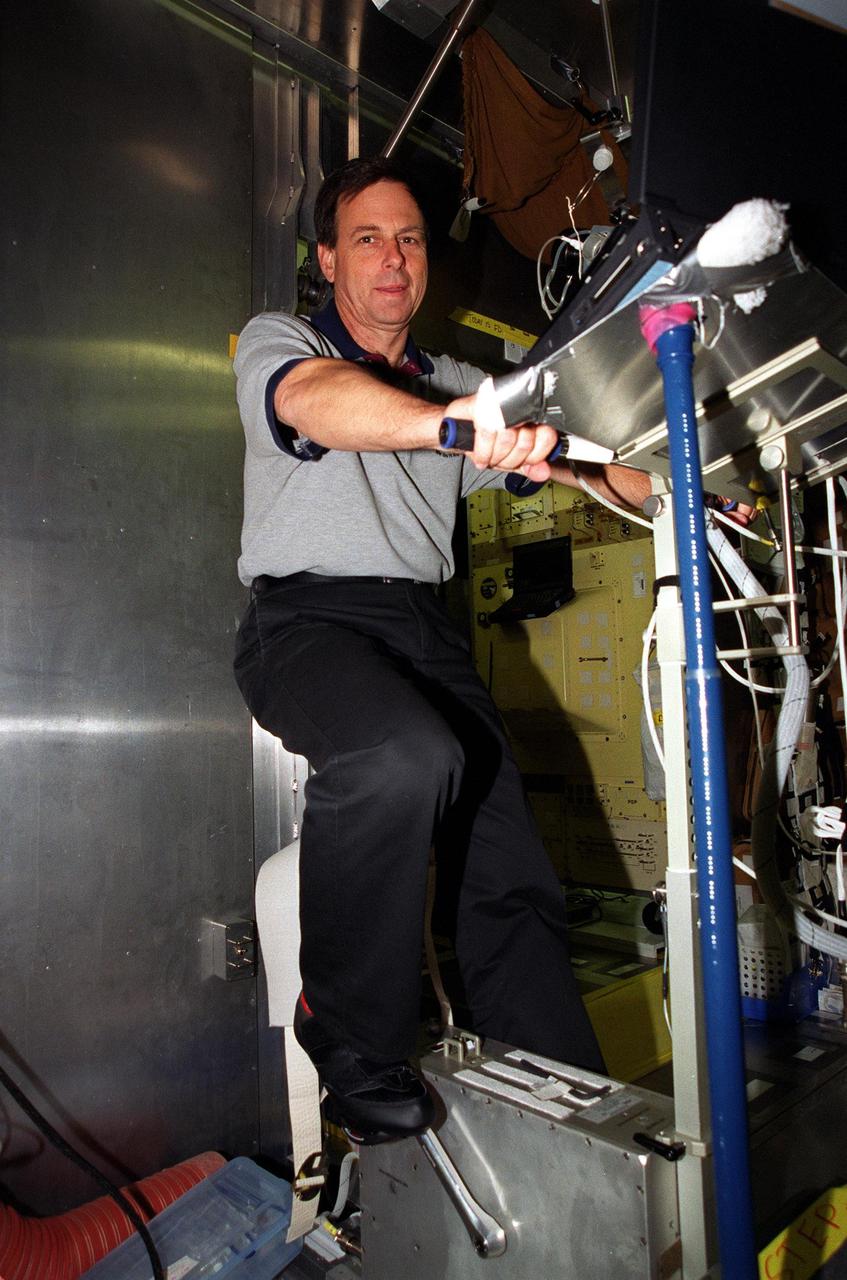
KENNEDY SPACE CENTER, Fla. -- STS-107 Payload Specialist Ilan Ramon, of Israel, trains on equipment in the training module at SPACEHAB, Cape Canaveral. Ramon and other crew members Commander Rick D. Husband, Pilot William C. McCool, Payload Commander Michael P. Anderson; and Mission Specialists Kalpana Chawla, Laurel Blair Salton Clark and David M. Brown are at SPACEHAB to take part in Crew Equipment Interface Test (CEIT) activities. The CEIT enables the crew to perform certain flight operations, operate experiments in a flight-like environment, evaluate stowage locations and obtain additional exposure to specific experiment operations. As a research mission, STS-107 will carry the SPACEHAB Double Module in its first research flight into space and a broad collection of experiments ranging from material science to life science. STS-107 is scheduled for launch May 23, 2002
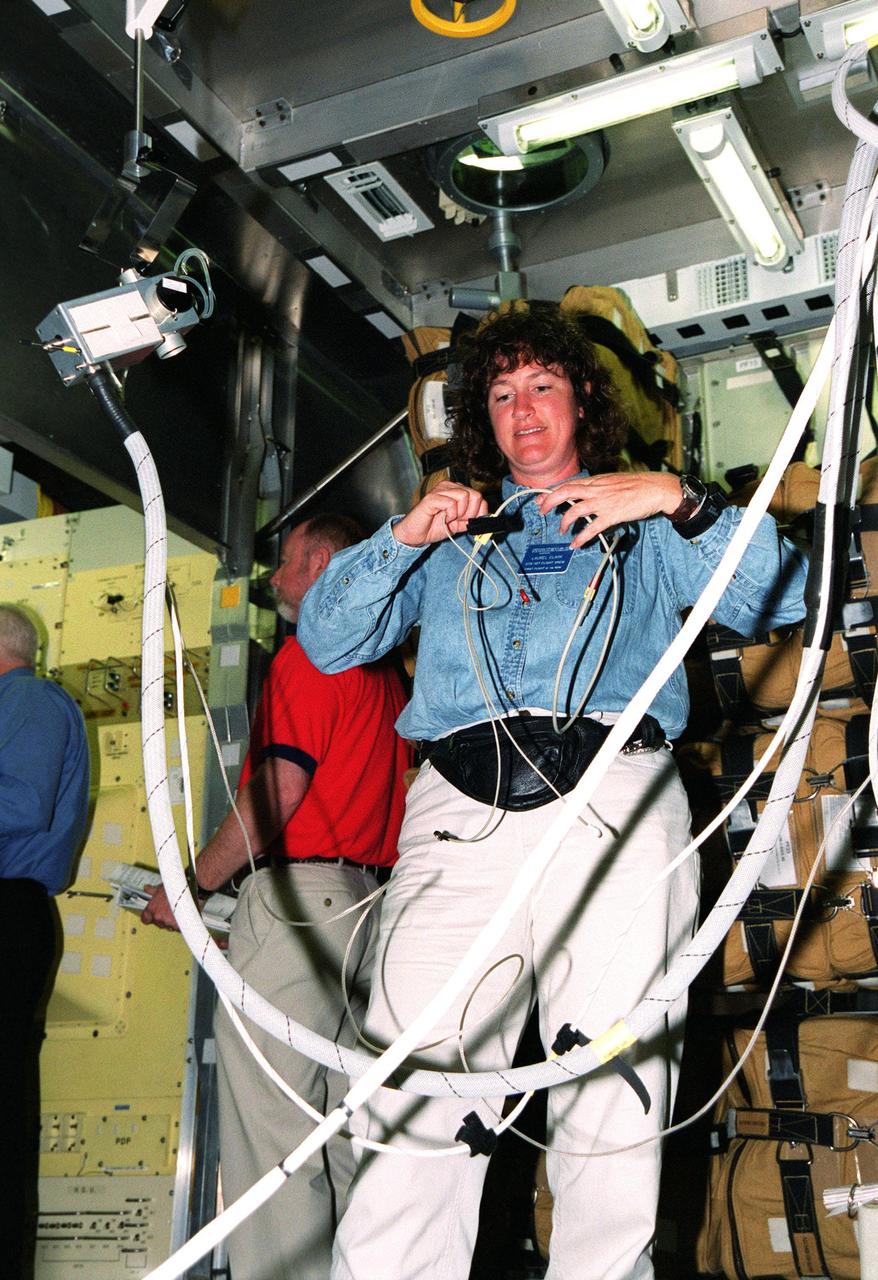
KENNEDY SPACE CENTER, Fla. -- During Crew Equipment Interface Test (CEIT)activities at SPACEHAB, Cape Canaveral, Fla., STS-107 Mission Specialist Laurel Blair Salton Clark gets hands-on training on equipment inside the Spacehab module. As a research mission, STS-107 will carry the Spacehab Double Module in its first research flight into space and a broad collection of experiments ranging from material science to life science. CEIT activities enable the crew to perform certain flight operations, operate experiments in a flight-like environment, evaluate stowage locations and obtain additional exposure to specific experiment operations. Other STS-107 crew members are Commander Rick Douglas Husband; Pilot William C. McCool; Payload Commander Michael P. Anderson; Mission Specialists Kalpana Chawla and David M. Brown; and Payload Specialist Ilan Ramon, of Israel. STS-107 is scheduled for launch May 23, 2002
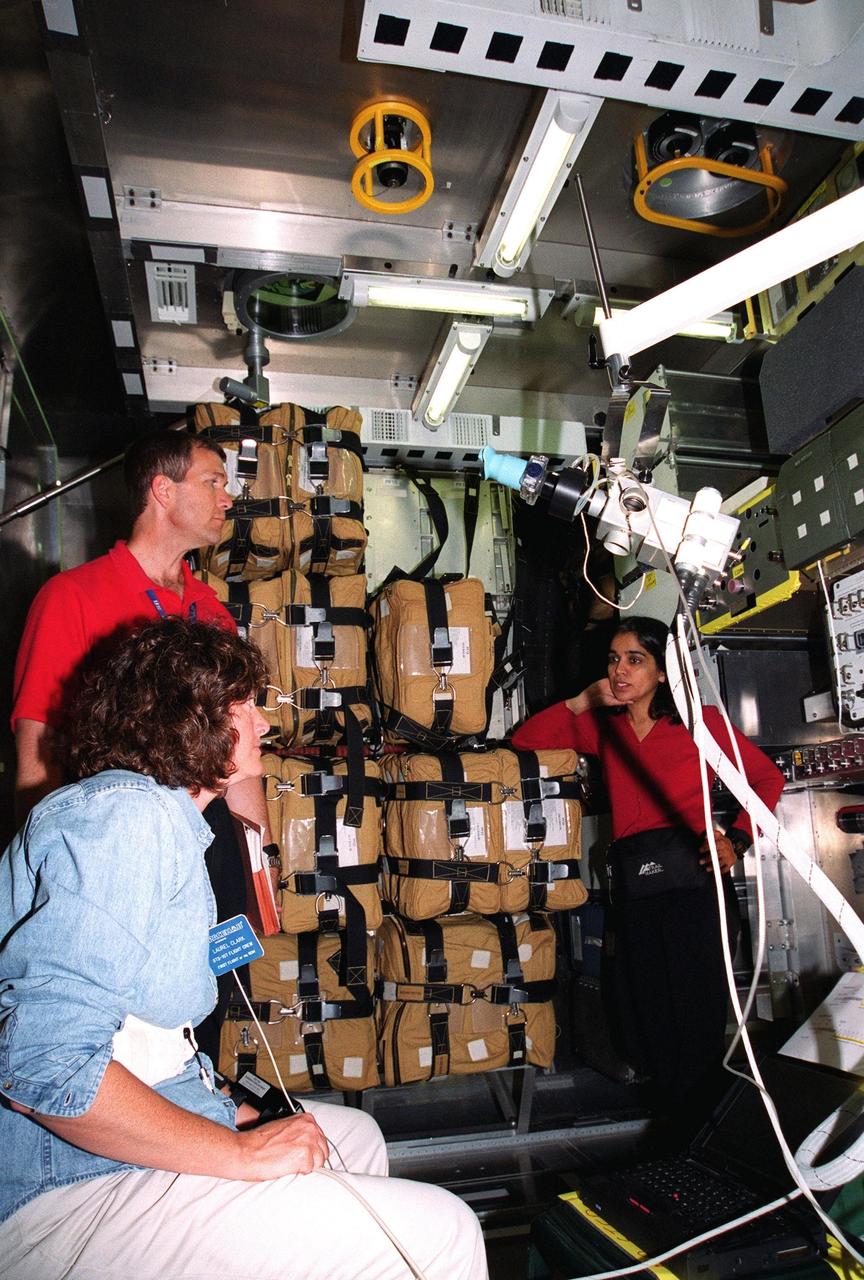
KENNEDY SPACE CENTER, Fla. -- At SPACEHAB, Cape Canaveral, Fla., members of the STS-107 crew discuss the experiments in the Spacehab module. Seated, in the foreground, is Mission Specialist Laurel Blair Salton Clark; standing behind her are Commander Rick Douglas Husband and Mission Specialist Kalpana Chawla. They and other crew members Pilot William C. McCool; Payload Commander Michael P. Anderson; and Mission Specialists David M. Brown and Ilan Ramon, of Israel, are at SPACEHAB for Crew Equipment Interface Test (CEIT) activities. The CEIT enables the crew to perform certain flight operations, operate experiments in a flight-like environment, evaluate stowage locations and obtain additional exposure to specific experiment operations. As a research mission, STS-107 will carry the Spacehab Double Module in its first research flight into space and a broad collection of experiments ranging from material science to life science. STS-107 is scheduled for launch May 23, 2002
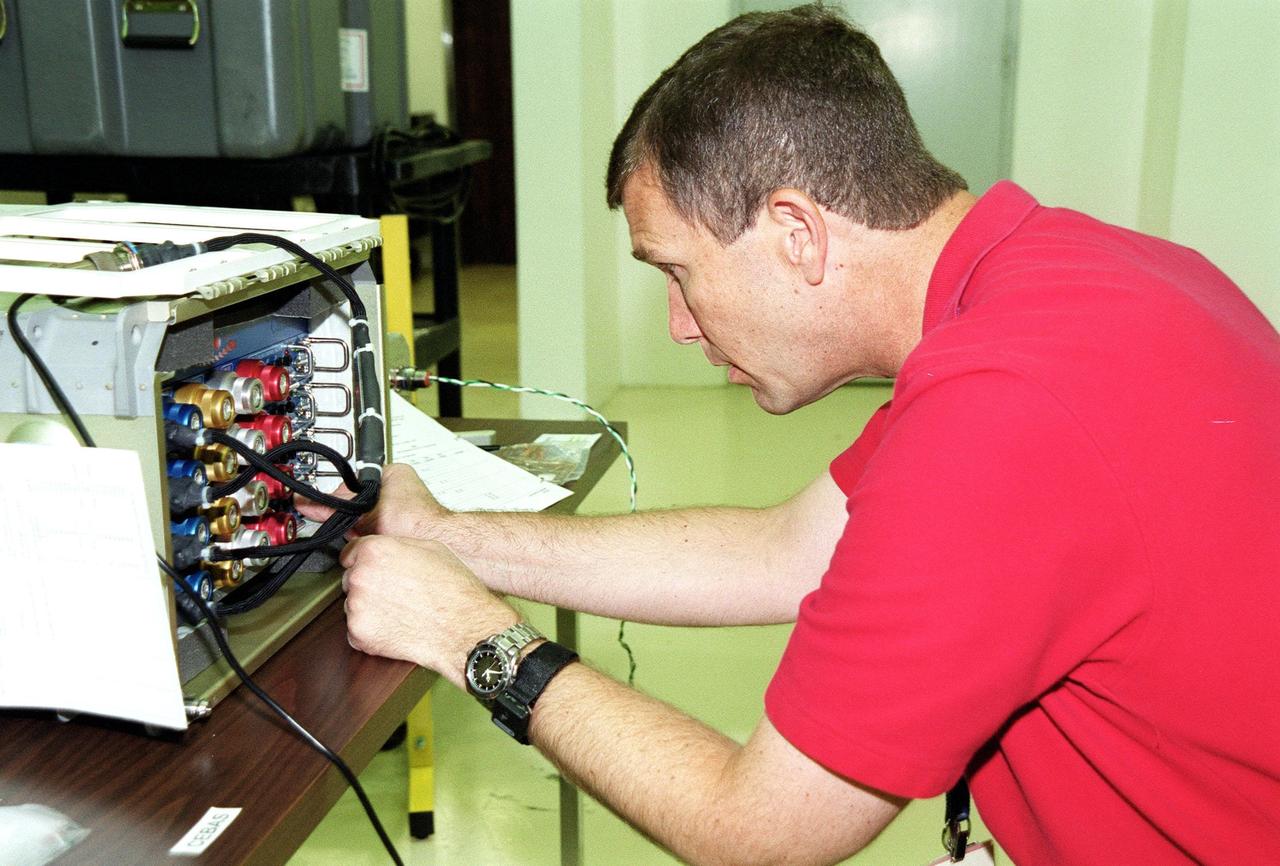
KENNEDY SPACE CENTER, Fla. -- During Crew Equipment Interface Test (CEIT)activities at Spacehab, Cape Canaveral, Fla., STS-107 Commander Rick Douglas Husband checks out a piece of equipment. As a research mission, STS-107 will carry the Spacehab Double Module in its first research flight into space and a broad collection of experiments ranging from material science to life science. The CEIT activities enable the crew to perform certain flight operations, operate experiments in a flight-like environment, evaluate stowage locations and obtain additional exposure to specific experiment operations. Other STS-107 crew members are Pilot William C. McCool; Payload Commander Michael P. Anderson; Mission Specialists Kalpana Chawla, David M. Brown and Laurel Blair Salton Clark; and Payload Specialist Ilan Ramon, of Israel. STS-107 is scheduled for launch May 23, 2002
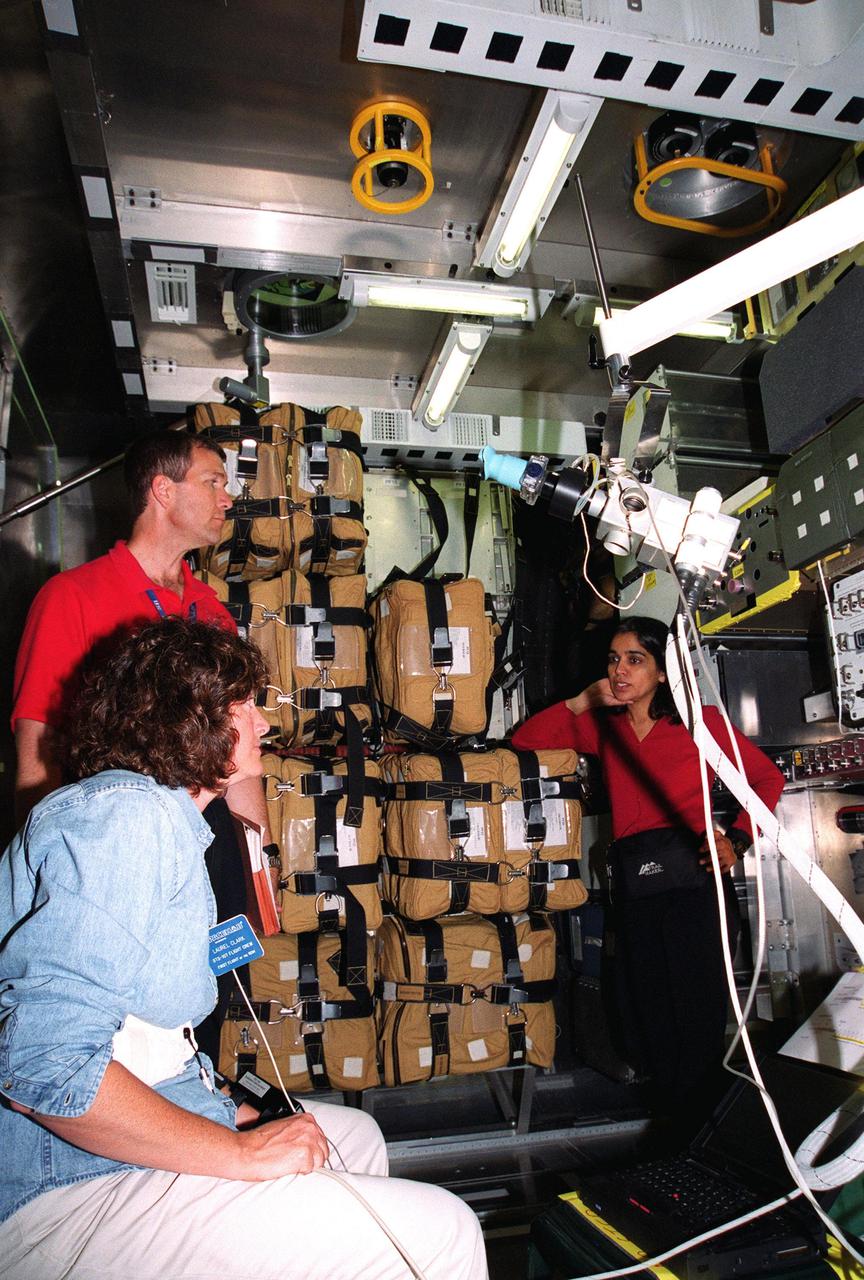
KENNEDY SPACE CENTER, Fla. -- At SPACEHAB, Cape Canaveral, Fla., members of the STS-107 crew discuss the experiments in the Spacehab module. Seated, in the foreground, is Mission Specialist Laurel Blair Salton Clark; standing behind her are Commander Rick Douglas Husband and Mission Specialist Kalpana Chawla. They and other crew members Pilot William C. McCool; Payload Commander Michael P. Anderson; and Mission Specialists David M. Brown and Ilan Ramon, of Israel, are at SPACEHAB for Crew Equipment Interface Test (CEIT) activities. The CEIT enables the crew to perform certain flight operations, operate experiments in a flight-like environment, evaluate stowage locations and obtain additional exposure to specific experiment operations. As a research mission, STS-107 will carry the Spacehab Double Module in its first research flight into space and a broad collection of experiments ranging from material science to life science. STS-107 is scheduled for launch May 23, 2002
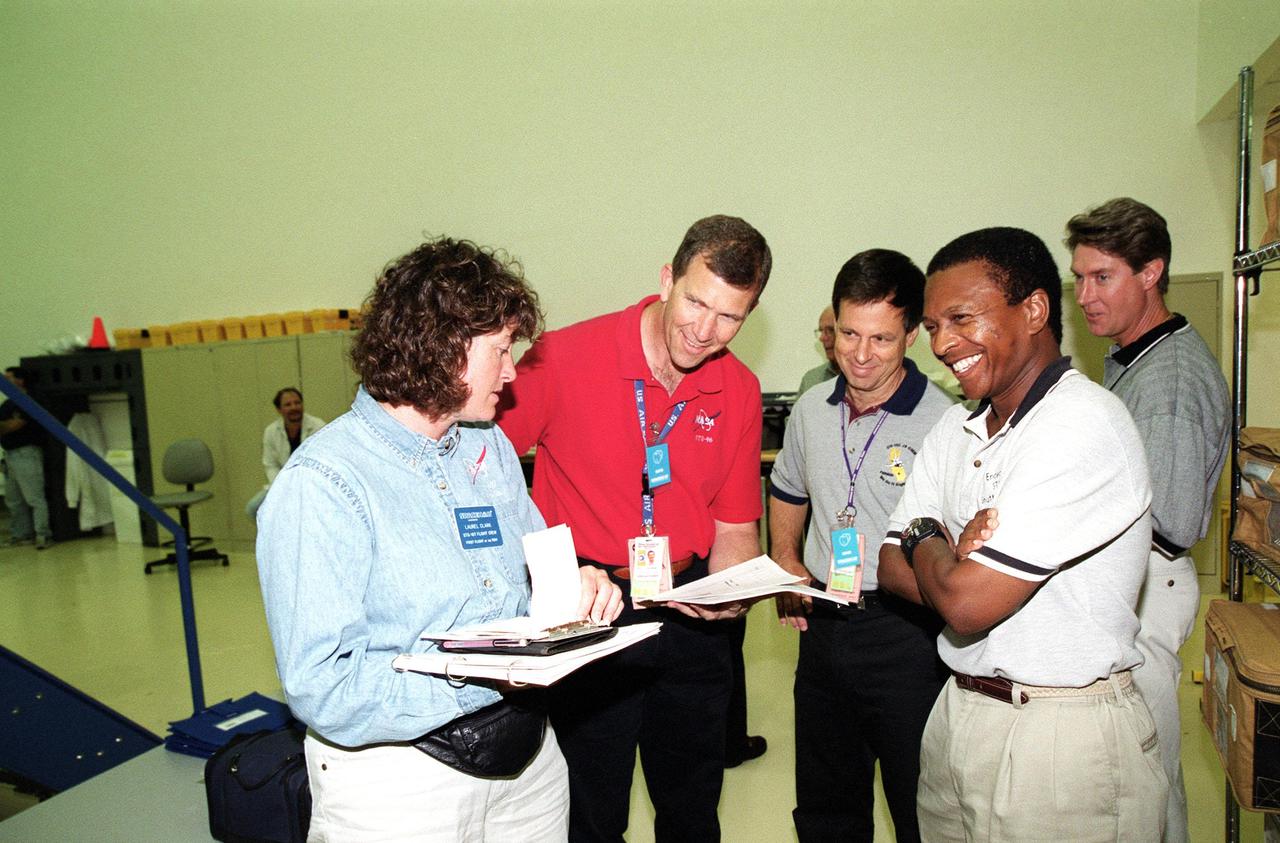
KENNEDY SPACE CENTER, Fla. -- At SPACEHAB, Cape Canaveral, Fla., the STS-107 crew takes part in Crew Equipment Interface Test (CEIT) activities. From left are Mission Specialist Laurel Blair Salton Clark, Commander Rick Douglas Husband, Payload Specialist Ilan Ramon, of Israel, and Payload Commander Michael P. Anderson. A trainer is at far right. As a research mission, STS-107 will carry the Spacehab Double Module in its first research flight into space and a broad collection of experiments ranging from material science to life science. The CEIT activities enable the crew to perform certain flight operations, operate experiments in a flight-like environment, evaluate stowage locations and obtain additional exposure to specific experiment operations. Other STS-107 crew members are Pilot William C. McCool and Mission Specialists Kalpana Chawla and David M. Brown. STS-107 is scheduled for launch May 23, 2002
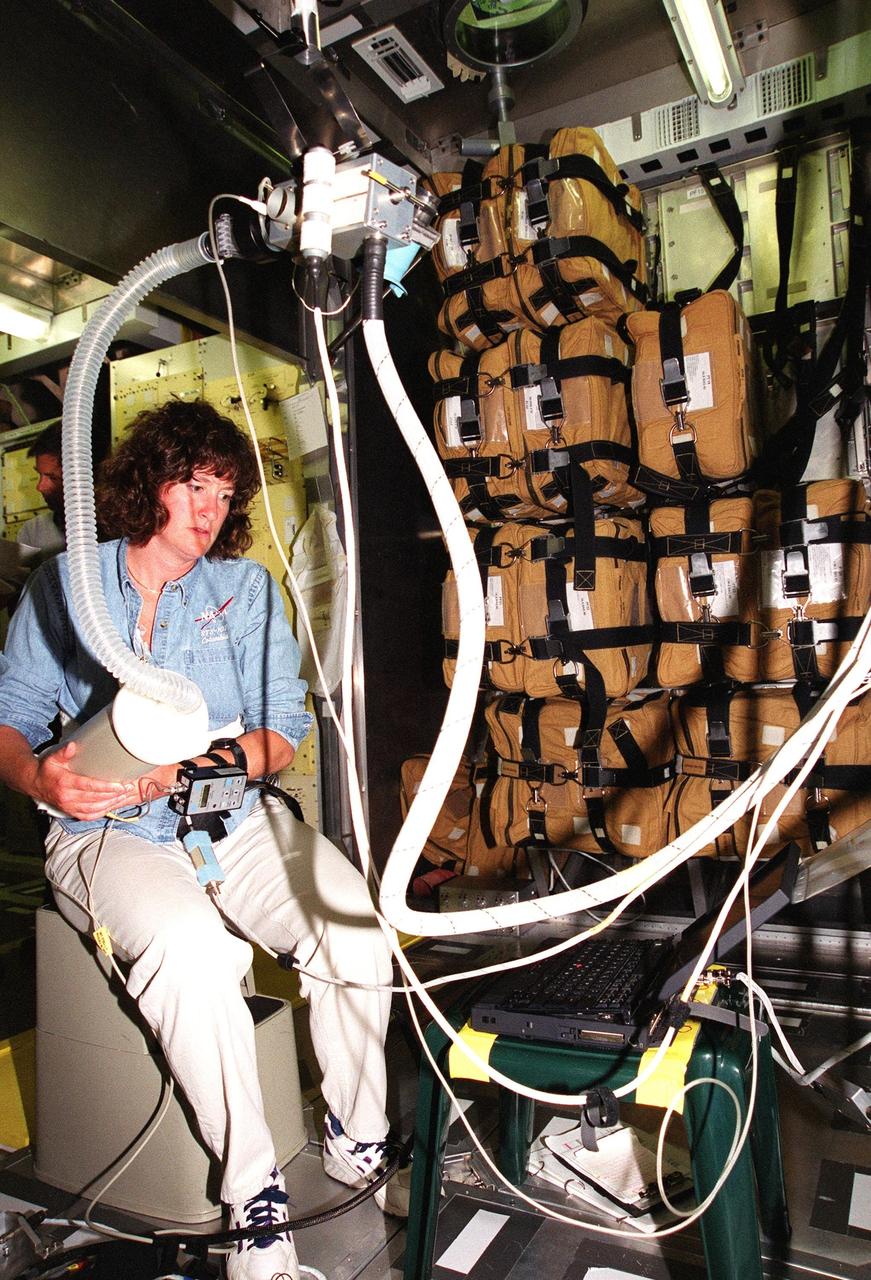
KENNEDY SPACE CENTER, Fla. -- At SPACEHAB, Cape Canaveral, Fla., STS-107 Mission Specialist Laurel Blair Salton Clark manipulates a piece of equipment. She and other crew members are at SPACEHAB, Port Canaveral, Fla., for Crew Equipment Interface Test (CEIT) activities that enable the crew to perform certain flight operations, operate experiments in a flight-like environment, evaluate stowage locations and obtain additional exposure to specific experiment operations. As a research mission, STS-107 will carry the Spacehab Double Module in its first research flight into space and a broad collection of experiments ranging from material science to life science. Other STS-107 crew members are Commander Rick Douglas Husband, Pilot William C. McCool; Payload Commander Michael P. Anderson; and Mission Specialists Kalpana Chawla, David M. Brown and Ilan Ramon, of Israel. STS-107 is scheduled for launch May 23, 2002
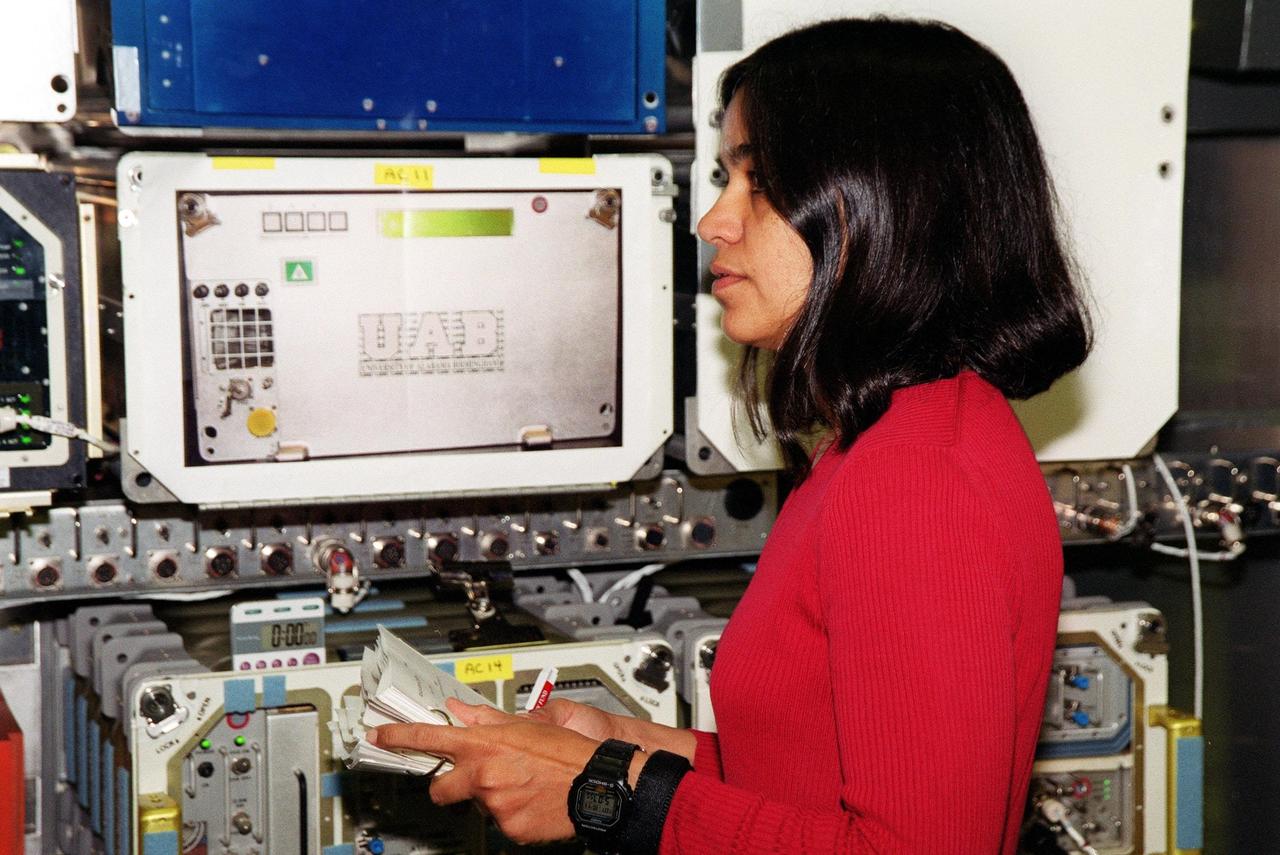
KENNEDY SPACE CENTER, Fla. -- During Crew Equipment Interface Test (CEIT)activities at SPACEHAB, Cape Canaveral, Fla., STS-107 Mission Specialist Kalpana Chawla looks over equipment inside the Spacehab module. As a research mission, STS-107 will carry the Spacehab Double Module in its first research flight into space and a broad collection of experiments ranging from material science to life science. The CEIT activities enable the crew to perform certain flight operations, operate experiments in a flight-like environment, evaluate stowage locations and obtain additional exposure to specific experiment operations. Other STS-107 crew members are Commander Rick Douglas Husband; Pilot William C. McCool; Payload Commander Michael P. Anderson; Mission Specialists Laurel Blair Salton Clark and David M. Brown; and Payload Specialist Ilan Ramon, of Israel. STS-107 is scheduled for launch May 23, 2002
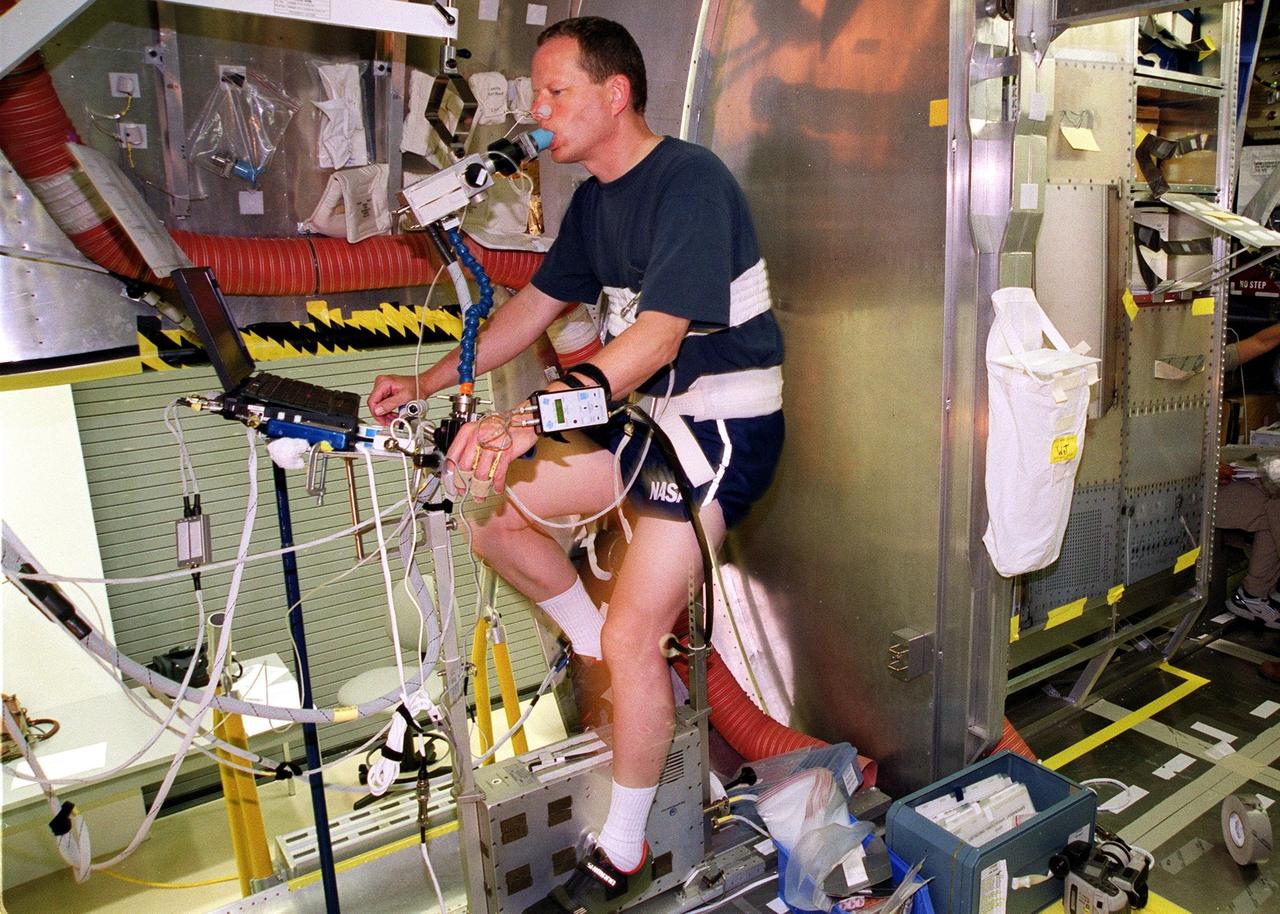
KENNEDY SPACE CENTER, Fla. -- STS-107 Mission Specialist David M. Brown trains on equipment in the training module at SPACEHAB, Cape Canaveral, Fla. Brown and other crew members Commander Rick D. Husband, Pilot William C. McCool, Payload Commander Michael P. Anderson; Mission Specialists Kalpana Chawla and Laurel Blair Salton Clark; and Payload Specialist Ilan Ramon, of Israel, are at SPACEHAB to take part in Crew Equipment Interface Test (CEIT) activities. The CEIT enables the crew to perform certain flight operations, operate experiments in a flight-like environment, evaluate stowage locations and obtain additional exposure to specific experiment operations. As a research mission, STS-107 will carry the SPACEHAB Double Module in its first research flight into space and a broad collection of experiments ranging from material science to life science. STS-107 is scheduled for launch May 23, 2002
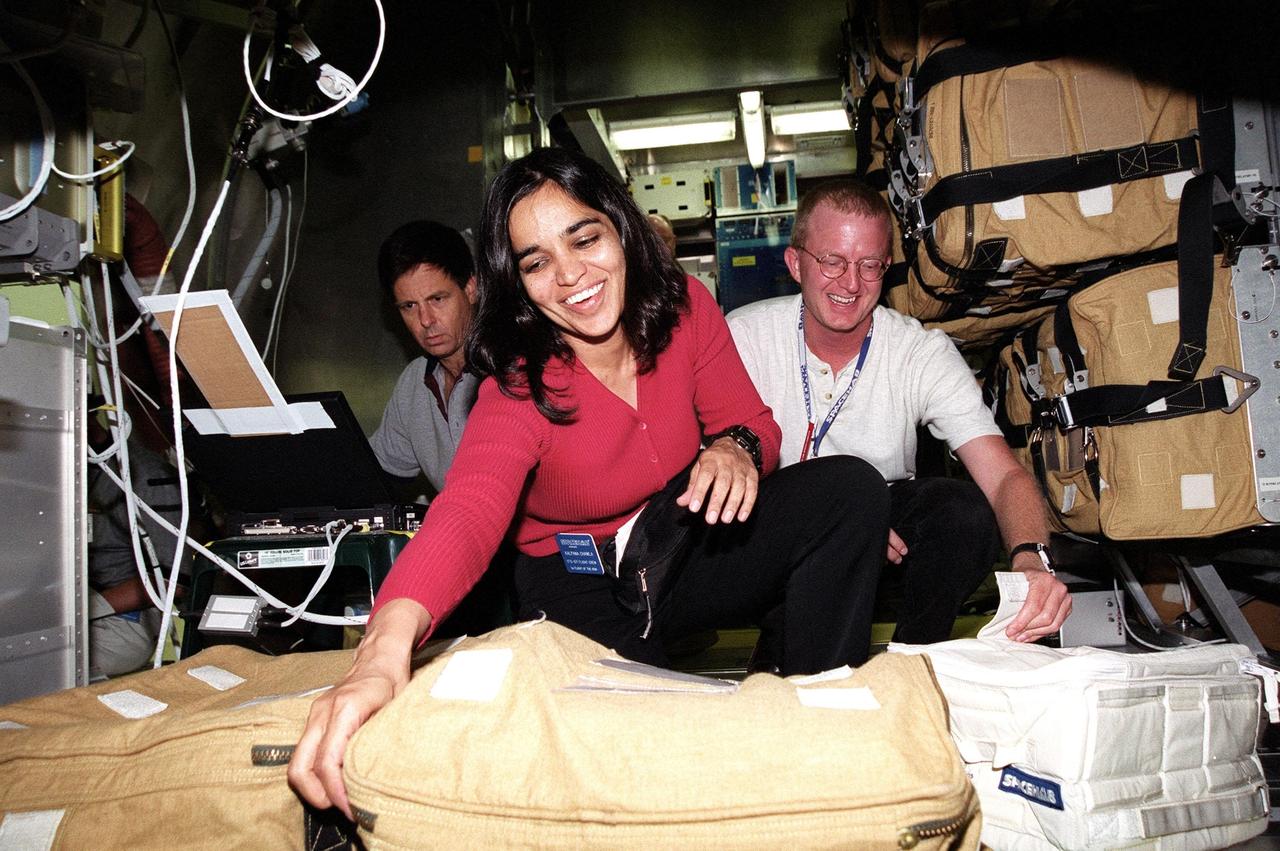
KENNEDY SPACE CENTER, Fla. -- At SPACEHAB, Cape Canaveral, Fla., STS-107 Mission Specialist Kalpana Chawla checks out items stored in the Spacehab module. Behind her, left, is Payload Specialist Ilan Ramon, of Israel, looking over a piece of equipment. At right is a trainer. The crew is taking part in Crew Equipment Interface Test (CEIT) activities at SPACEHAB, Port Canaveral, Fla. As a research mission, STS-107 will carry the Spacehab Double Module in its first research flight into space and a broad collection of experiments ranging from material science to life science. The CEIT activities enable the crew to perform certain flight operations, operate experiments in a flight-like environment, evaluate stowage locations and obtain additional exposure to specific experiment operations. Other STS-107 crew members are Commander Rick Douglas Husband, Pilot William C. McCool; Payload Commander Michael P. Anderson; and Mission Specialists Laurel Blair Salton Clark and David M. Brown. STS-107 is scheduled for launch May 23, 2002
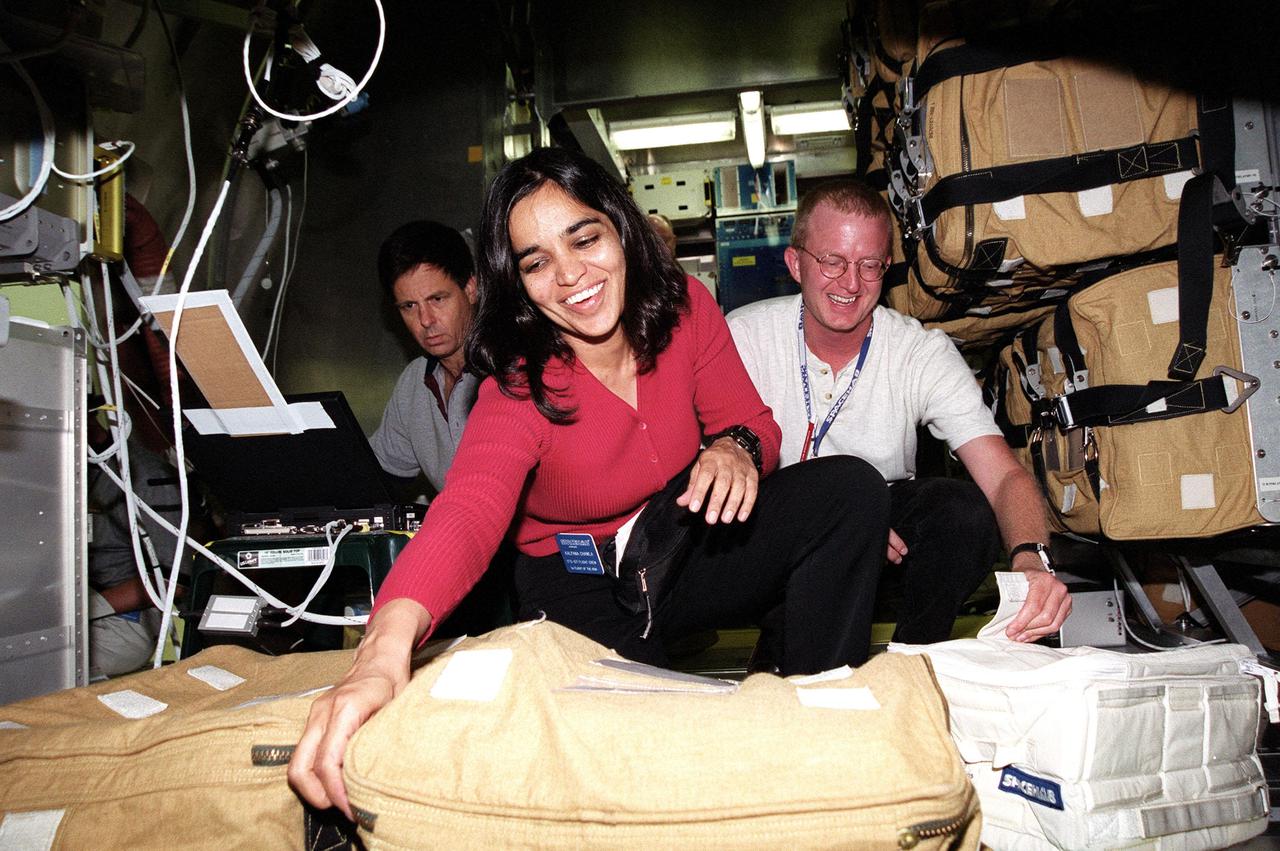
KENNEDY SPACE CENTER, Fla. -- At SPACEHAB, Cape Canaveral, Fla., STS-107 Mission Specialist Kalpana Chawla checks out items stored in the Spacehab module. Behind her, left, is Payload Specialist Ilan Ramon, of Israel, looking over a piece of equipment. At right is a trainer. The crew is taking part in Crew Equipment Interface Test (CEIT) activities at SPACEHAB, Port Canaveral, Fla. As a research mission, STS-107 will carry the Spacehab Double Module in its first research flight into space and a broad collection of experiments ranging from material science to life science. The CEIT activities enable the crew to perform certain flight operations, operate experiments in a flight-like environment, evaluate stowage locations and obtain additional exposure to specific experiment operations. Other STS-107 crew members are Commander Rick Douglas Husband, Pilot William C. McCool; Payload Commander Michael P. Anderson; and Mission Specialists Laurel Blair Salton Clark and David M. Brown. STS-107 is scheduled for launch May 23, 2002

KENNEDY SPACE CENTER, Fla. -- At SPACEHAB, Cape Canaveral, Fla., STS-107 Payload Specialist Ilan Ramon (foreground), of Israel, and Mission Specialist Kalpana Chawla (background) check out experiments inside the Spacehab module. They and other crew members are taking part in Crew Equipment Interface Test (CEIT) activities that enable the crew to perform certain flight operations, operate experiments in a flight-like environment, evaluate stowage locations and obtain additional exposure to specific experiment operations. As a research mission, STS-107 will carry the Spacehab Double Module in its first research flight into space and a broad collection of experiments ranging from material science to life science. . Other STS-107 crew members are Commander Rick Douglas Husband, Pilot William C. McCool; Payload Commander Michael P. Anderson; and Mission Specialists Laurel Blair Salton Clark and David M. Brown. STS-107 is scheduled for launch May 23, 2002
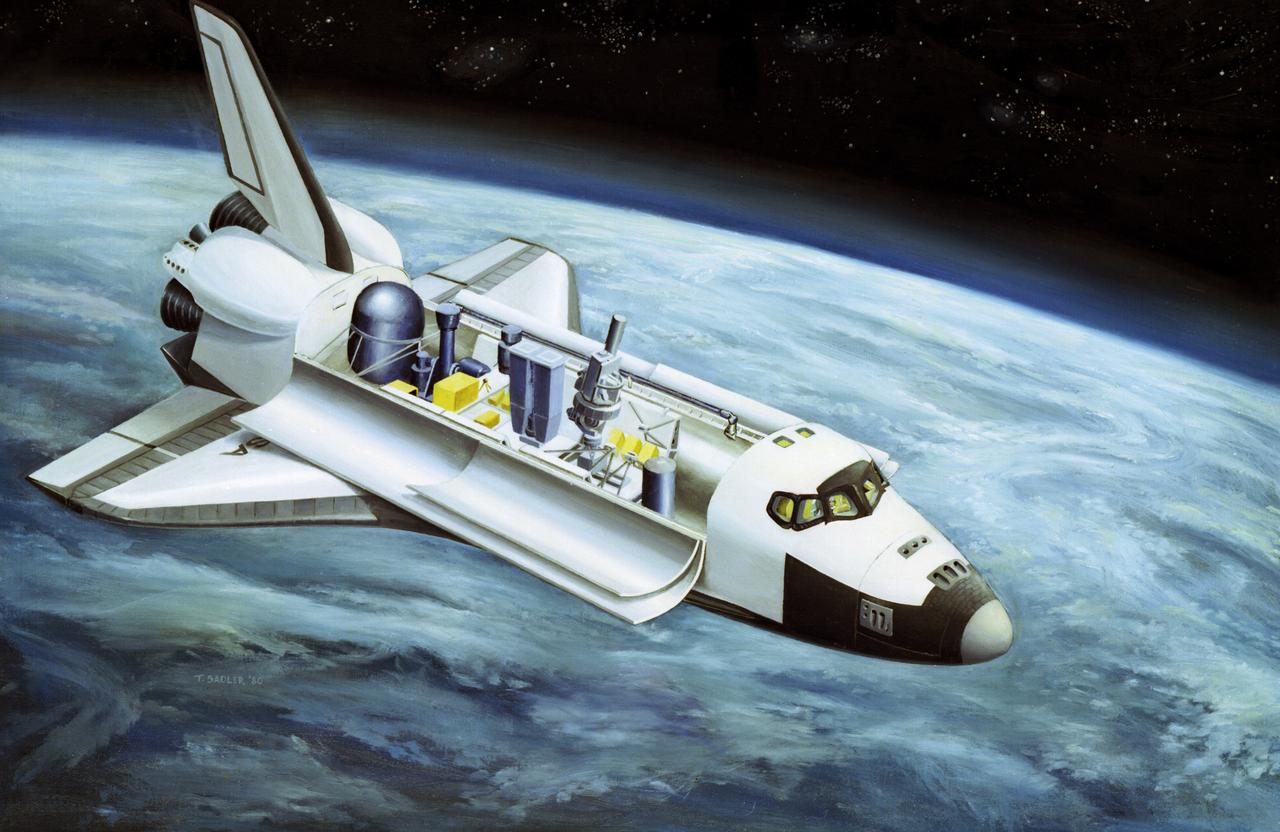
This illustration depicts the configuration of the Spacelab-2 in the cargo bay of the orbiter. Spacelab was a versatile laboratory carried in the Space Shuttle's cargo bay for scientific research flights. Each Spacelab mission had a unique design appropriate to the mission's goals. A number of Spacelab configurations could be assembled from pressurized habitation modules and exposed platforms called pallets. Spacelab-2 was the first pallet-only mission. One of the goals of the mission was to verify that the pallets' configuration was satisfactory for observations and research. Except for two biological experiments and an experiment that used ground-based instruments, the Spacelab-2 scientific instruments needed direct exposure to space. On the first pallet, three solar instruments and one atmospheric instrument were mounted on the Instrument Pointing System, which was being tested on its first flight. The second Spacelab pallet held a large double x-ray telescope and three plasma physics detectors. The last pallet supported an infrared telescope, a superfluid helium technology experiment, and a small plasma diagnostics satellite. The Spacelab-2 mission was designed to capitalize on the Shuttle-Spacelab capabilities, to launch and retrieve satellites, and to point several instruments independently with accuracy and stability. Spacelab-2 (STS-51F, 19th Shuttle mission) was launched aboard Space Shuttle Orbiter Challenger on July 29, 1985. The Marshall Space Flight Center had overall management responsibilities of the Spacelab missions.
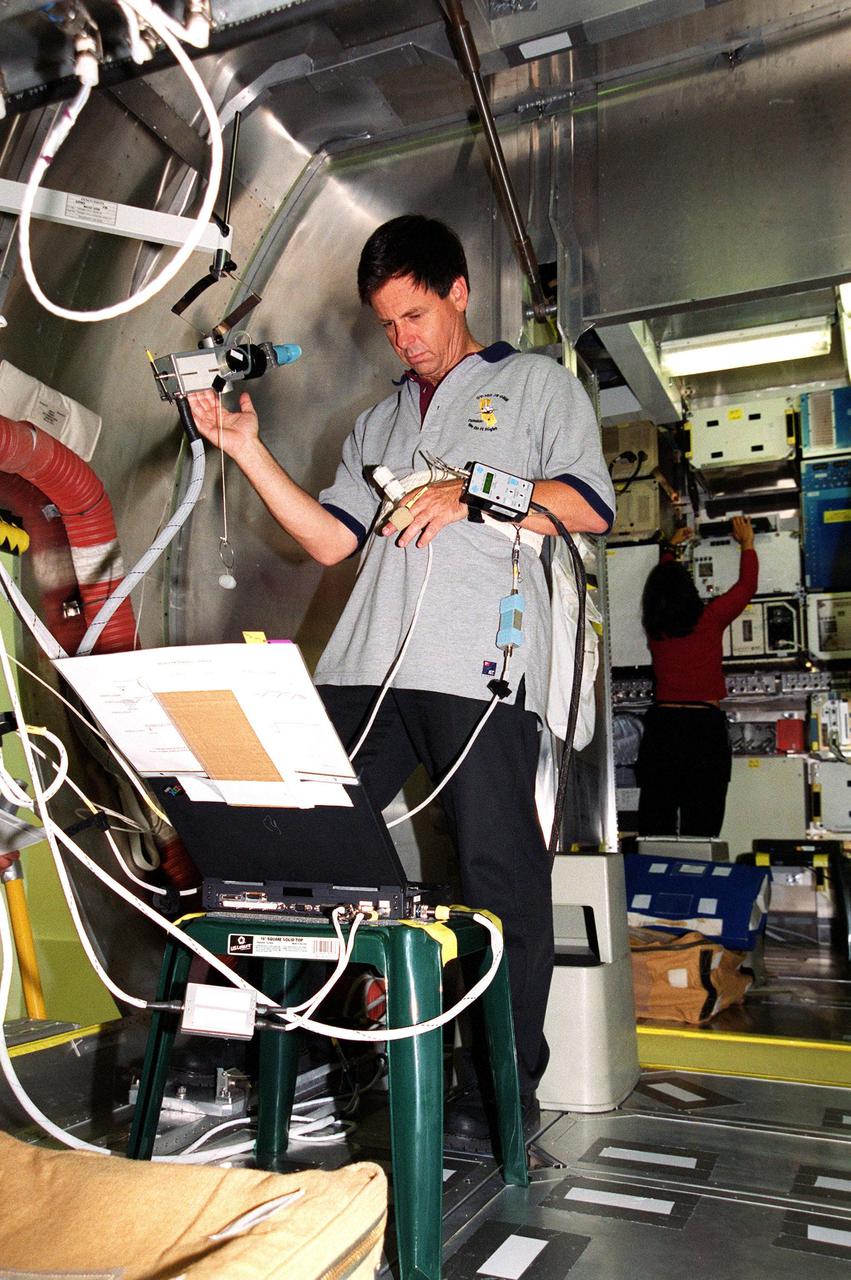
KENNEDY SPACE CENTER, Fla. -- At SPACEHAB, Cape Canaveral, Fla., STS-107 Payload Specialist Ilan Ramon (foreground), of Israel, and Mission Specialist Kalpana Chawla (background) check out experiments inside the Spacehab module. They and other crew members are taking part in Crew Equipment Interface Test (CEIT) activities that enable the crew to perform certain flight operations, operate experiments in a flight-like environment, evaluate stowage locations and obtain additional exposure to specific experiment operations. As a research mission, STS-107 will carry the Spacehab Double Module in its first research flight into space and a broad collection of experiments ranging from material science to life science. . Other STS-107 crew members are Commander Rick Douglas Husband, Pilot William C. McCool; Payload Commander Michael P. Anderson; and Mission Specialists Laurel Blair Salton Clark and David M. Brown. STS-107 is scheduled for launch May 23, 2002
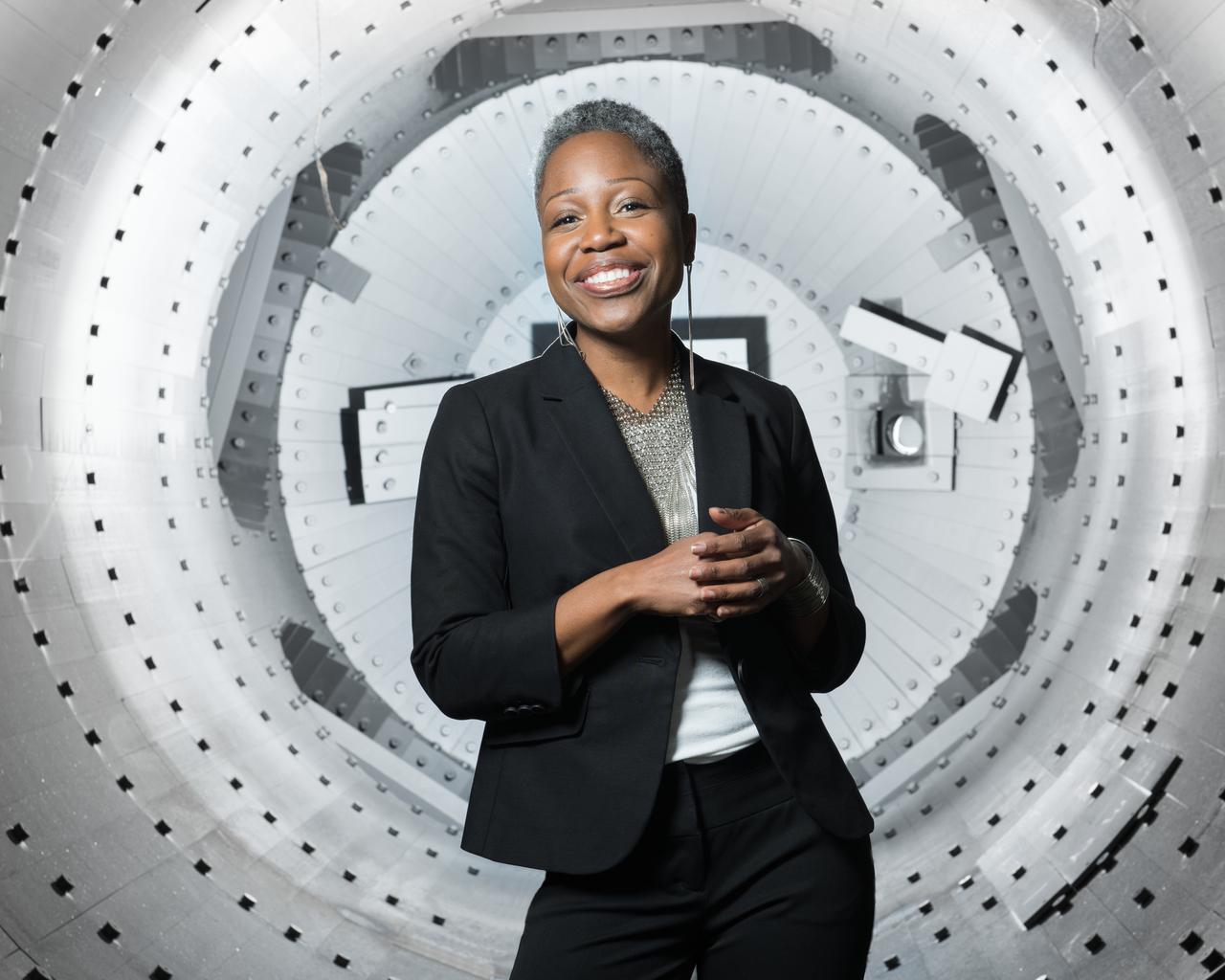
“I am a Black woman in STEM. And when I was growing up, I cannot say that I saw a lot of faces that looked like mine in STEM careers. I had some limited exposure to some notables, like Dr. Mae Jemison. But the names were few and far between of the great scientists or engineers that were Black — let alone Black females. So for me, if anybody sees my picture and says ‘yes, I see someone who looks like me working in STEM’ — that right there is very fulfilling. Just to be seen and to be visible makes a difference. "I also must provide words of encouragement because being in STEM can be difficult as is, let alone having to face the challenges of being a female in a male-dominated field. Or even being a double minority in the workplace. "It’s a matter of being really self-assured that you can do it, despite the fact that you’re going to have failures, that you’re going to have setbacks, and that you’re going have people who may not believe in you, for whatever reason. You have to be self-assured that this is what you want to do and that it can be done. This 4’11” Black woman achieved this, not knowing that STEM was going to be my path or that I was going to end up at NASA — I did it, and I believe that you can do it too — but you have to believe it for yourself.” — Mary Lobo, Director of Office of Technology Incubation and Innovation, Glenn Research Center The Facility Manager for the Space Simulation Facilities at Glenn Research Center, poses inside Vacuum Facility 16 (VF-16) for an Environmental Portrait. The lighting used in this portrait depicts the chamber as having an almost white interior when the chamber is actually almost black in color.