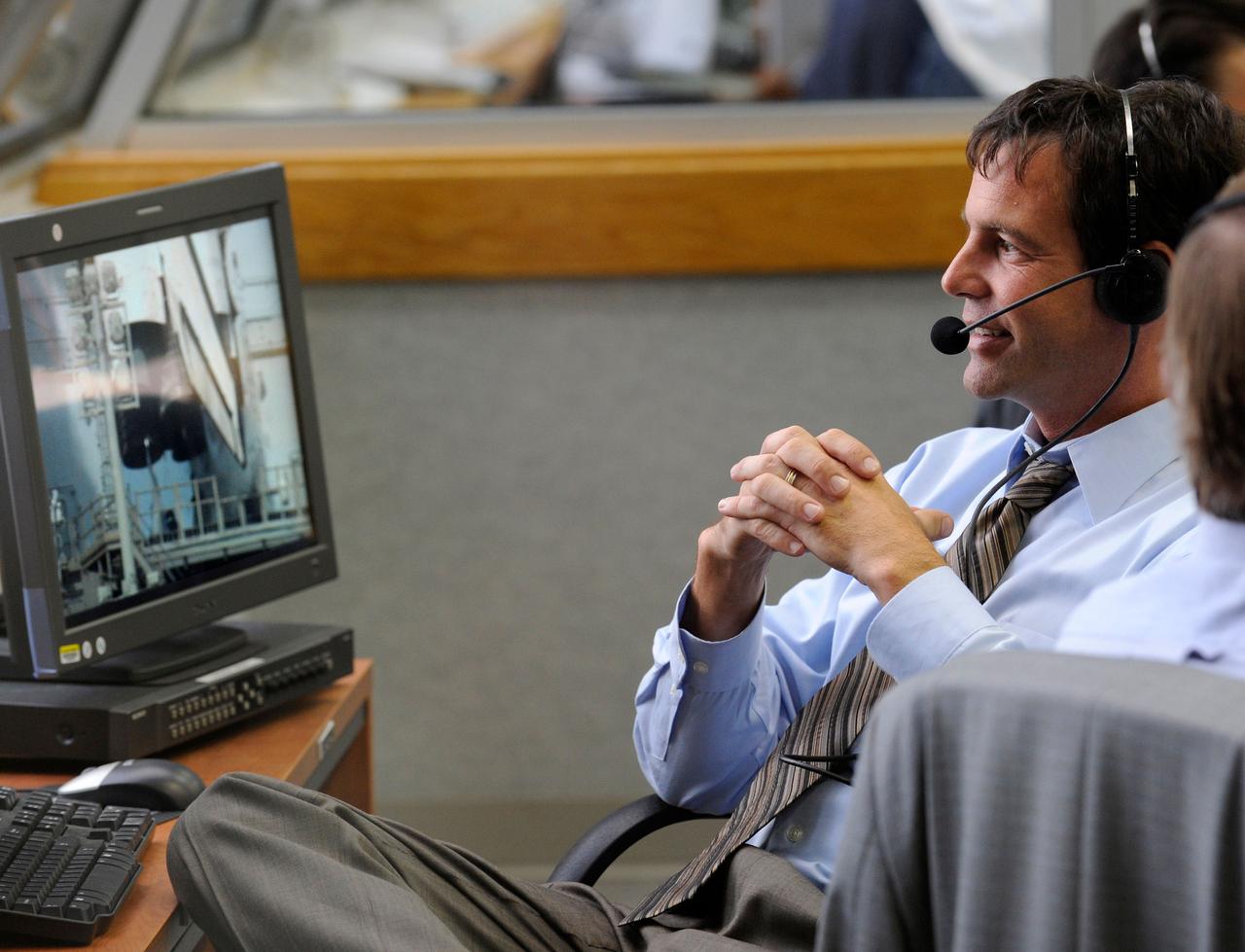
Launch Director for the space shuttle Atlantis, Doug Lyons monitors the weather and shuttle systems prior to the launch of the Space Shuttle Atlantis (STS-122) from the Launch Control Center Thursday, Feb. 7, 2008, at the Kennedy Space Center in Cape Canaveral, Fla. The Shuttle lifted off from launch pad 39A at 2:45p.m. EST. Photo Credit: (NASA/Bill Ingalls)
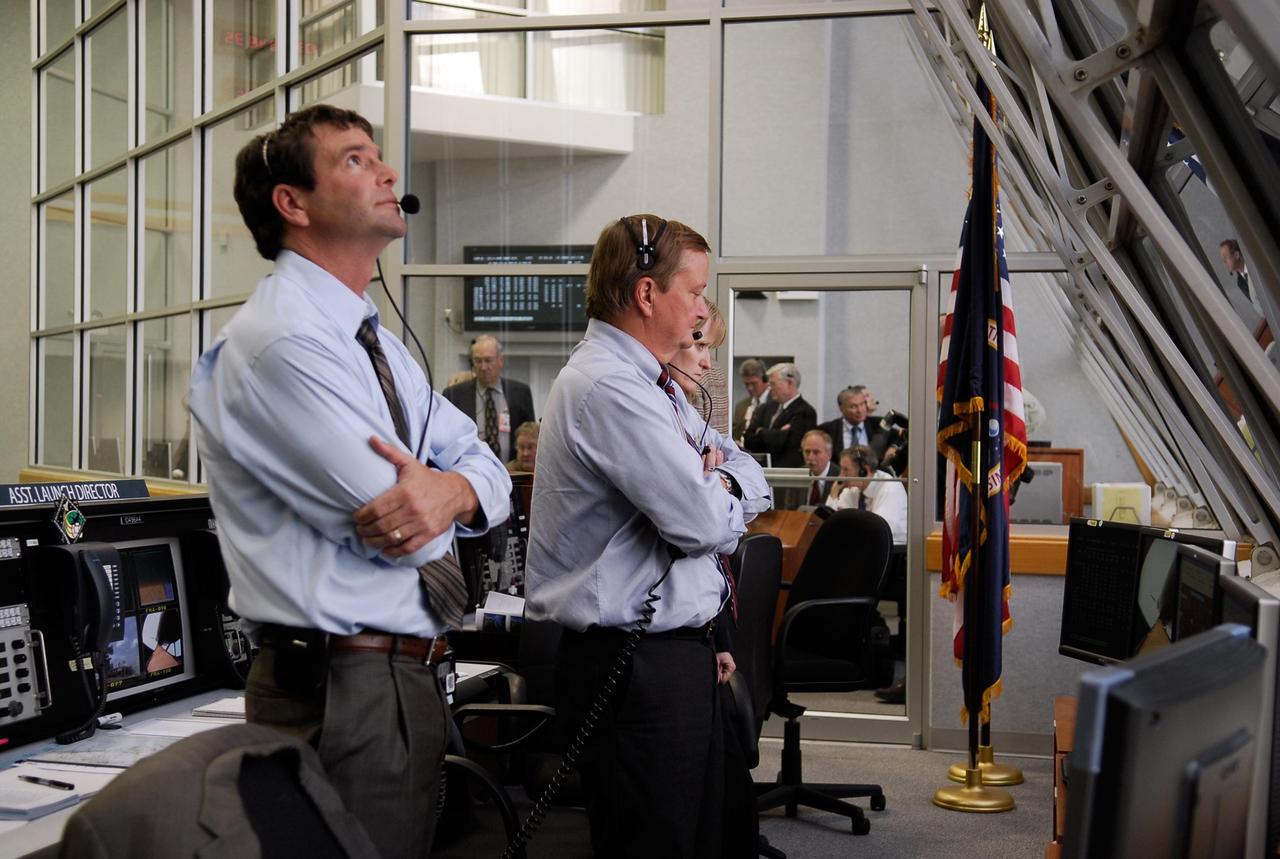
KENNEDY SPACE CENTER, FLA. -- Inside the Launch Control Center Firing Room at NASA's Kennedy Space Center, STS-122 Launch Director Doug Lyons (left) and Shuttle Launch Director Mike Leinbach watch the launch of space shuttle Atlantis on the STS-122 mission to the International Space Station. Liftoff was on time at 2:45 p.m. EST from Launch Pad 39A. The launch is the third attempt for Atlantis since December 2007 to carry the European Space Agency's Columbus laboratory to the International Space Station. During the 11-day mission, the crew's prime objective is to attach the laboratory to the Harmony module, adding to the station's size and capabilities. Photo credit: NASA/Kim Shiflett
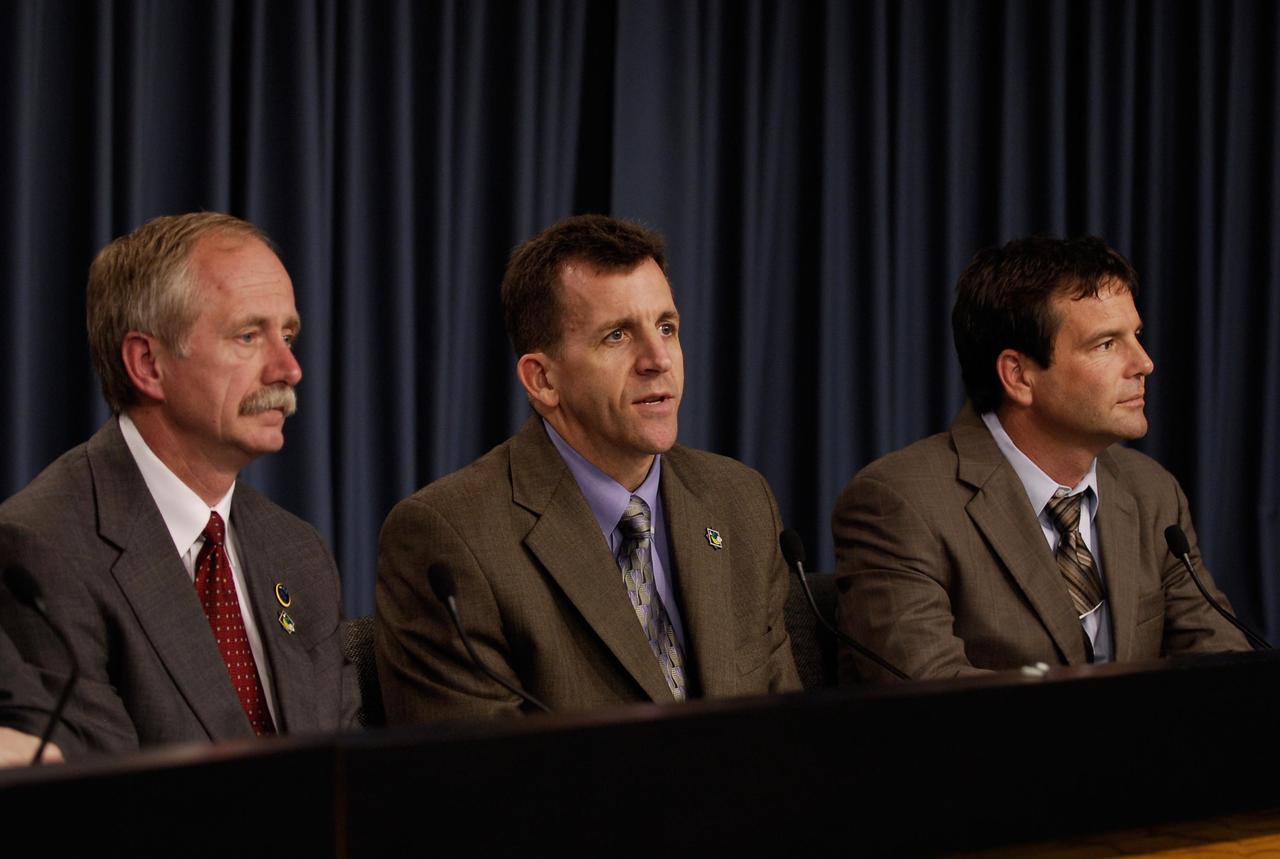
KENNEDY SPACE CENTER, FLA. -- Following the successful launch of space shuttle Atlantis on mission STS-122, NASA VIPs appear at a news conference to give their views about the launch and mission. Seen here are Associate Administrator for Space Operations Bill Gerstenmaier, Director of Mission Launch Integration LeRoy Cain and STS-122 Launch Director Doug Lyons. Also on the dais but not pictured are NASA Administrator Michael Griffin and European Space Agency Director General Jean-Jacques Dordain. During the 11-day mission, the crew's prime objective is to attach the Columbus laboratory to the Harmony module, adding to the station's size and capabilities. Photo credit: NASA/Kim Shiflett
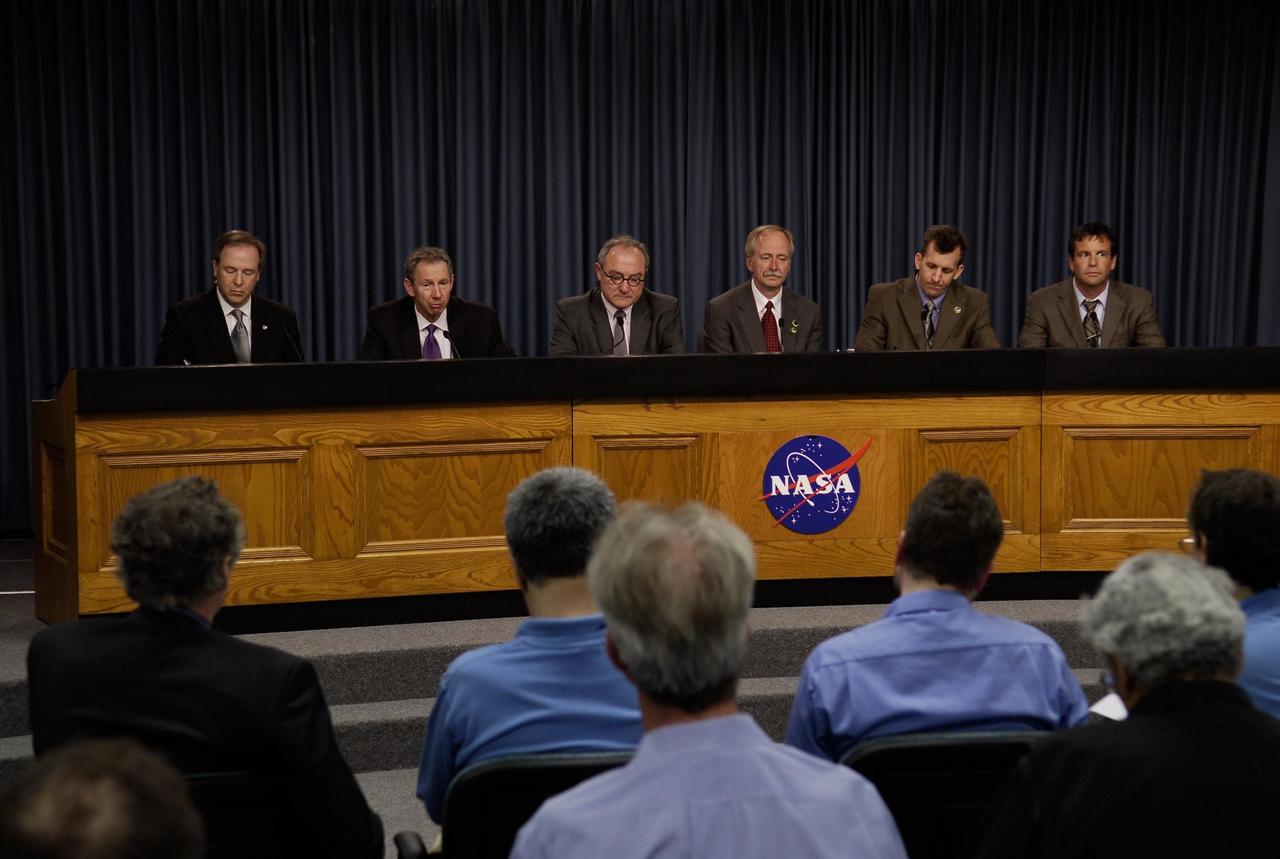
KENNEDY SPACE CENTER, FLA. -- Following the successful launch of space shuttle Atlantis on mission STS-122, NASA VIPs appear at a news conference to give their views about the launch and mission. From left are NASA Assistant Administrator for Public Affairs David Mould, NASA Administrator Michael Griffin, European Space Agency Director General Jean-Jacques Dordain, Associate Administrator for Space Operations Bill Gerstenmaier, Director of Mission Launch Integration LeRoy Cain and STS-122 Launch Director Doug Lyons. During the 11-day mission, the crew's prime objective is to attach the Columbus laboratory to the Harmony module, adding to the station's size and capabilities. Photo credit: NASA/Kim Shiflett
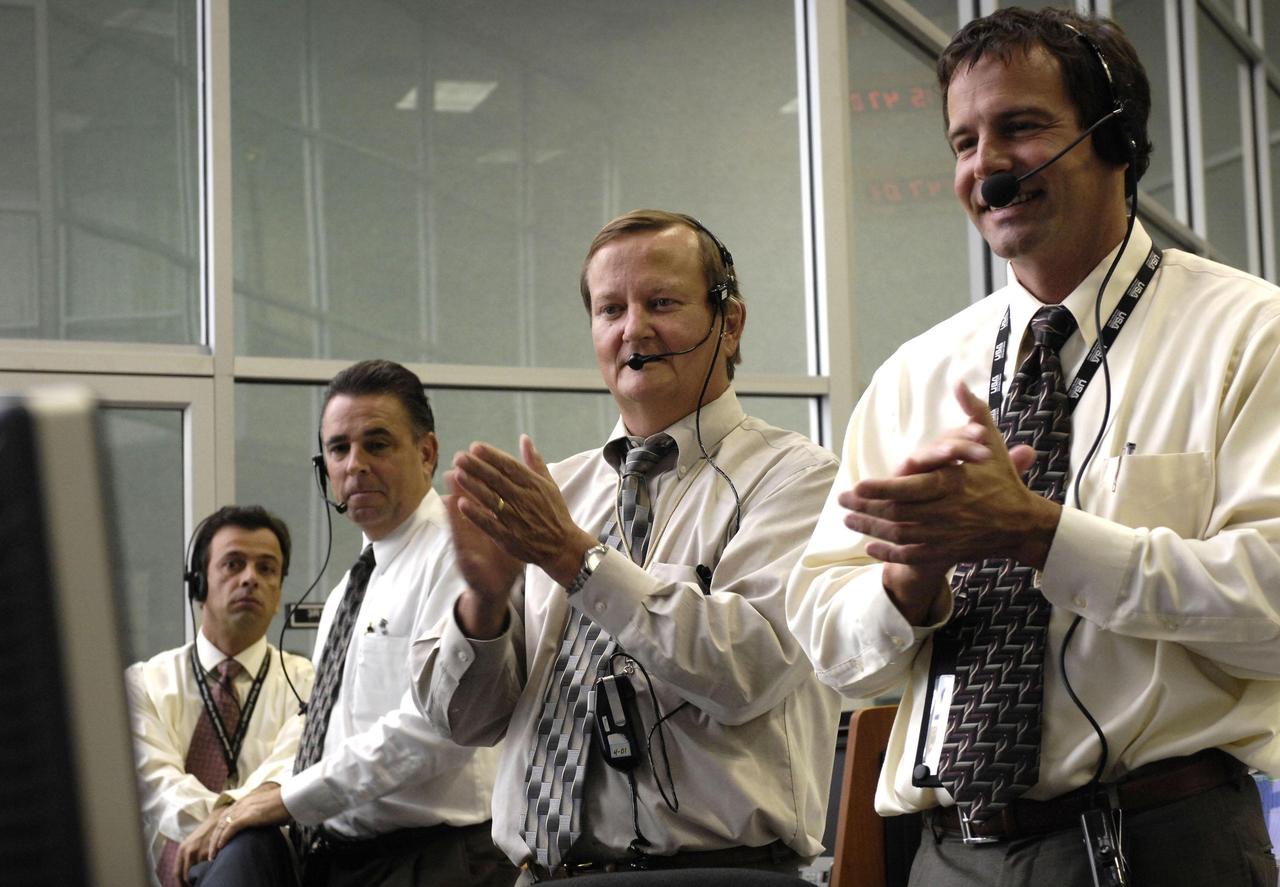
KENNEDY SPACE CENTER, FLA. -- In the firing room at NASA's Kennedy Space Center, Shuttle Launch Director Mike Leinbach (second from right) and Assistant Launch Director Doug Lyons (right) applaud the on-time launch of space shuttle Discovery on mission STS-120. Liftoff was at 11:38:19 am. EDT. Discovery carries the Italian-built U.S. Node 2, called Harmony. During the 14-day STS-120 mission, the crew will install Harmony and move the P6 solar arrays to their permanent position and deploy them. Discovery is expected to complete its mission and return home at 4:47 a.m. EST on Nov. 6. Photo credit: NASA/Bill Ingalls
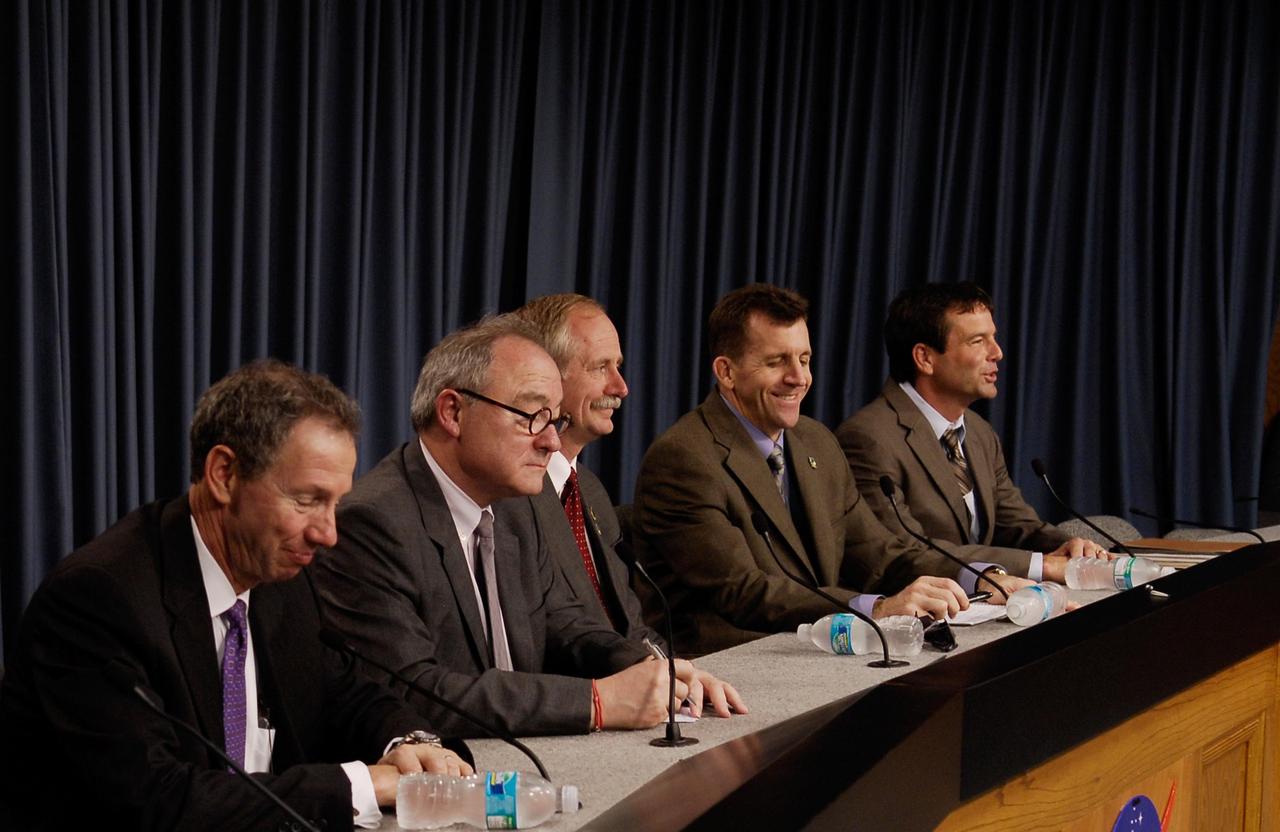
KENNEDY SPACE CENTER, FLA. -- Following the successful launch of space shuttle Atlantis on mission STS-122, NASA VIPs appear at a news conference to give their views about the launch and mission. From left are NASA Administrator Michael Griffin, European Space Agency Director General Jean-Jacques Dordain, Associate Administrator for Space Operations Bill Gerstenmaier, Director of Mission Launch Integration LeRoy Cain and STS-122 Launch Director Doug Lyons. During the 11-day mission, the crew's prime objective is to attach the Columbus laboratory to the Harmony module, adding to the station's size and capabilities. Photo credit: NASA/Kim Shiflett
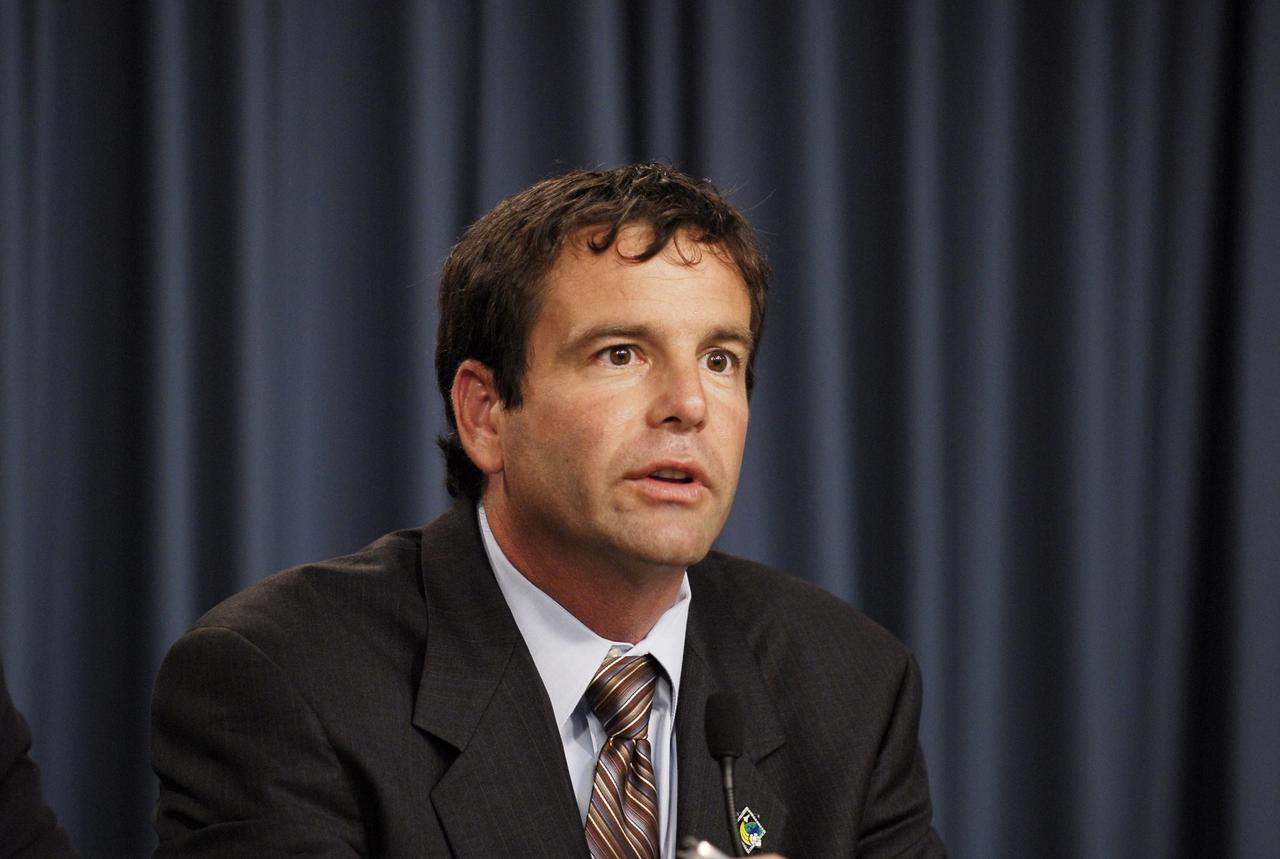
KENNEDY SPACE CENTER, FLA. -- Doug Lyons, STS-122 launch director, participates in a news briefing following the conclusion of a Mission Management Team, or MMT, meeting. The meeting followed the morning's launch scrub of the space shuttle Atlantis STS-122 mission caused by problems experienced with the external tank's engine cutoff sensor system during tanking for the second launch attempt. An announcement was made during the briefing that the STS-122 launch is postponed to no earlier than Jan. 2, 2008, to give the team time to resolve the system's problems. Atlantis will carry the Columbus Laboratory, the European Space Agency's largest contribution to the construction of the International Space Station. It will support scientific and technological research in a microgravity environment. Permanently attached to the Harmony node of the space station, the laboratory will carry out experiments in materials science, fluid physics and biosciences, as well as perform a number of technological applications. Photo credit: NASA/Kim Shiflett
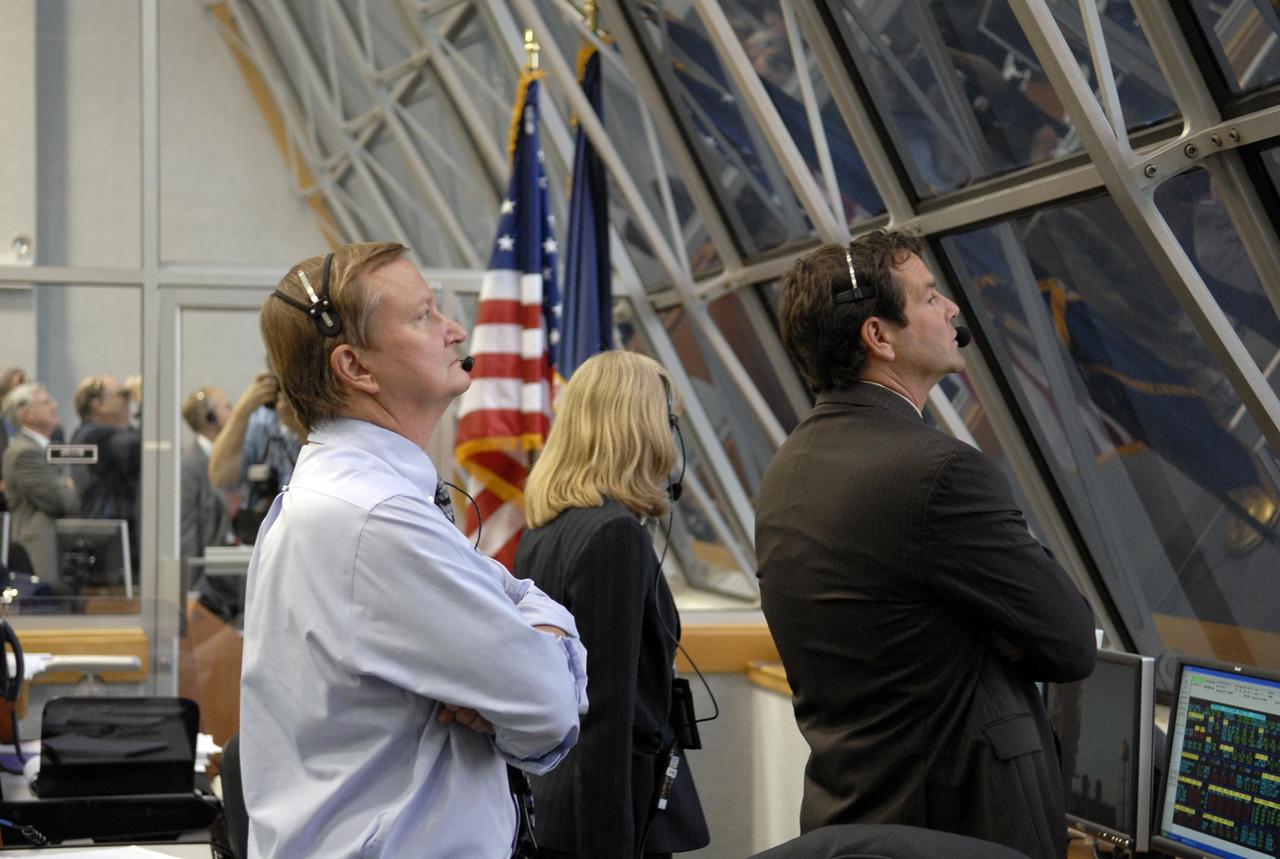
KENNEDY SPACE CENTER, FLA. -- Through the windows of the Launch Control Center, Shuttle Launch Director Mike Leinbach (left) watches the near-perfect launch of Space Shuttle Atlantis on mission STS-117 to the International Space Station. In front of him are Angie Brewer, NASA flow director for Atlantis, and Doug Lyons, assistant launch director. Liftoff from Launch Pad 39A was on-time at 7:38:04 p.m. EDT. The shuttle is delivering a new segment to the starboard side of the International Space Station's backbone, known as the truss. Three spacewalks are planned to install the S3/S4 truss segment, deploy a set of solar arrays and prepare them for operation. STS-117 is the 118th space shuttle flight, the 21st flight to the station, the 28th flight for Atlantis and the first of four flights planned for 2007. Photo credit: NASA/Kim Shiflett
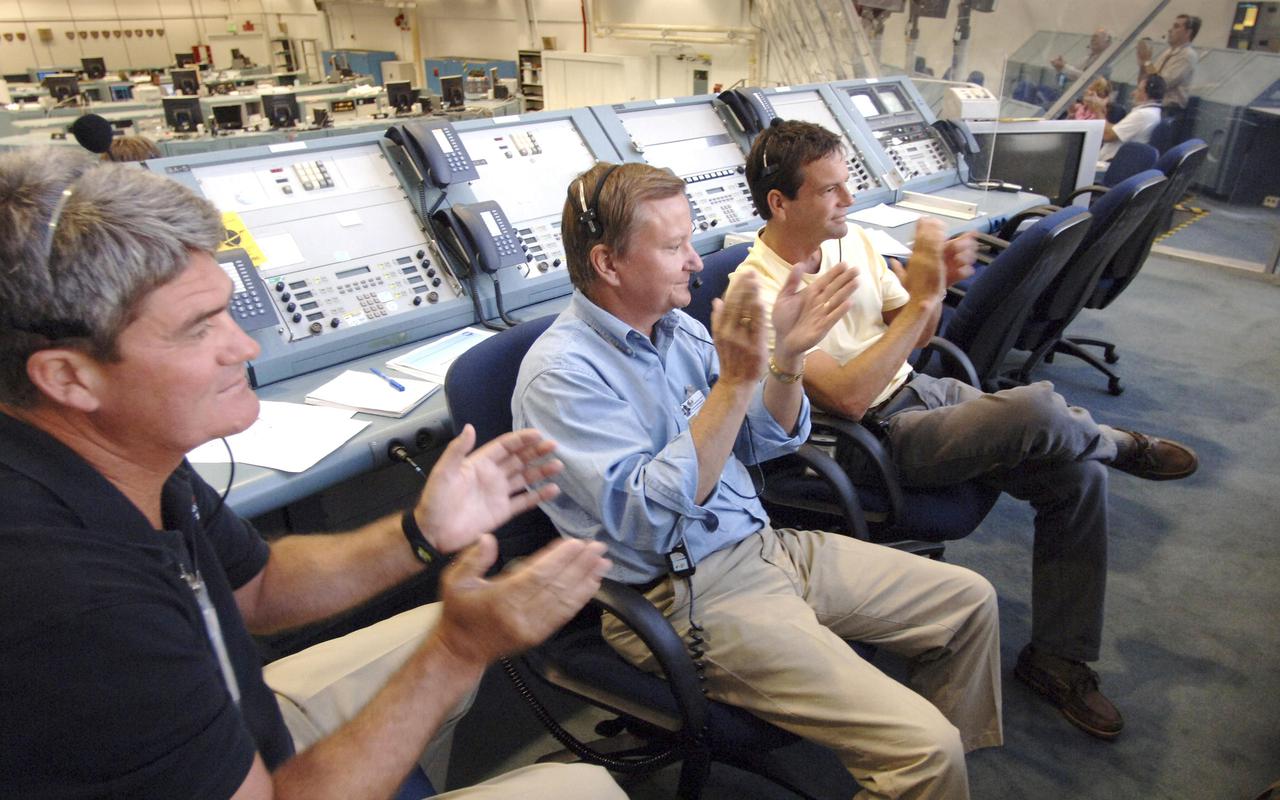
KENNEDY SPACE CENTER, FLA. - In the Firing Room of the Launch Control Center at NASA Kennedy Space Center, Space Shuttle Program Manager Bill Parsons, Shuttle Launch Director Mike Leinbach and Assistant Launch Director Doug Lyons applaud the successful landing of Space Shuttle Discovery on Runway 22 at Edwards Air Force Base in California. The landing was deferred to Edwards due to weather concerns at KSC. Landing time was 8:11:22 a.m. EDT, guided by Mission Commander Eileen Collins. Discovery spent two weeks in space on Return to Flight mission STS-114, where the crew demonstrated new methods to inspect and repair the Shuttle in orbit. The crew also delivered supplies, outfitted and performed maintenance on the International Space Station. A number of these tasks were conducted during three spacewalks. (Photo Credit: NASA_Bill Ingalls)
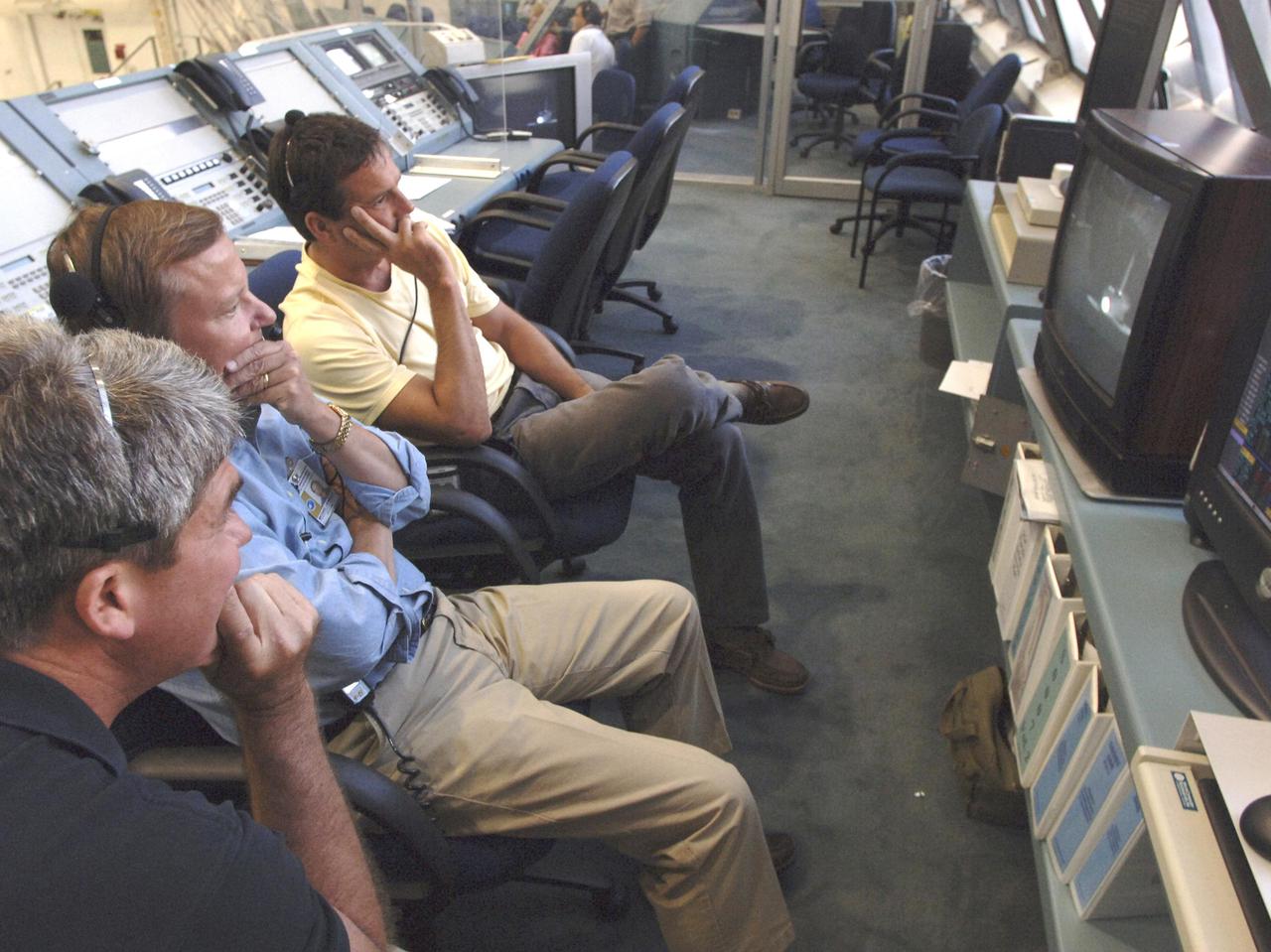
KENNEDY SPACE CENTER, FLA. - In the Firing Room of the Launch Control Center at NASA Kennedy Space Center, Space Shuttle Program Manager Bill Parsons, Shuttle Launch Director Mike Leinbach and Assistant Launch Director Doug Lyons applaud the successful landing of Space Shuttle Discovery on Runway 22 at Edwards Air Force Base in California. The landing was deferred to Edwards due to weather concerns at KSC. Landing time was 8:11:22 a.m. EDT, guided by Mission Commander Eileen Collins. Discovery spent two weeks in space on Return to Flight mission STS-114, where the crew demonstrated new methods to inspect and repair the Shuttle in orbit. The crew also delivered supplies, outfitted and performed maintenance on the International Space Station. A number of these tasks were conducted during three spacewalks. (Photo Credit: NASA_Bill Ingalls)
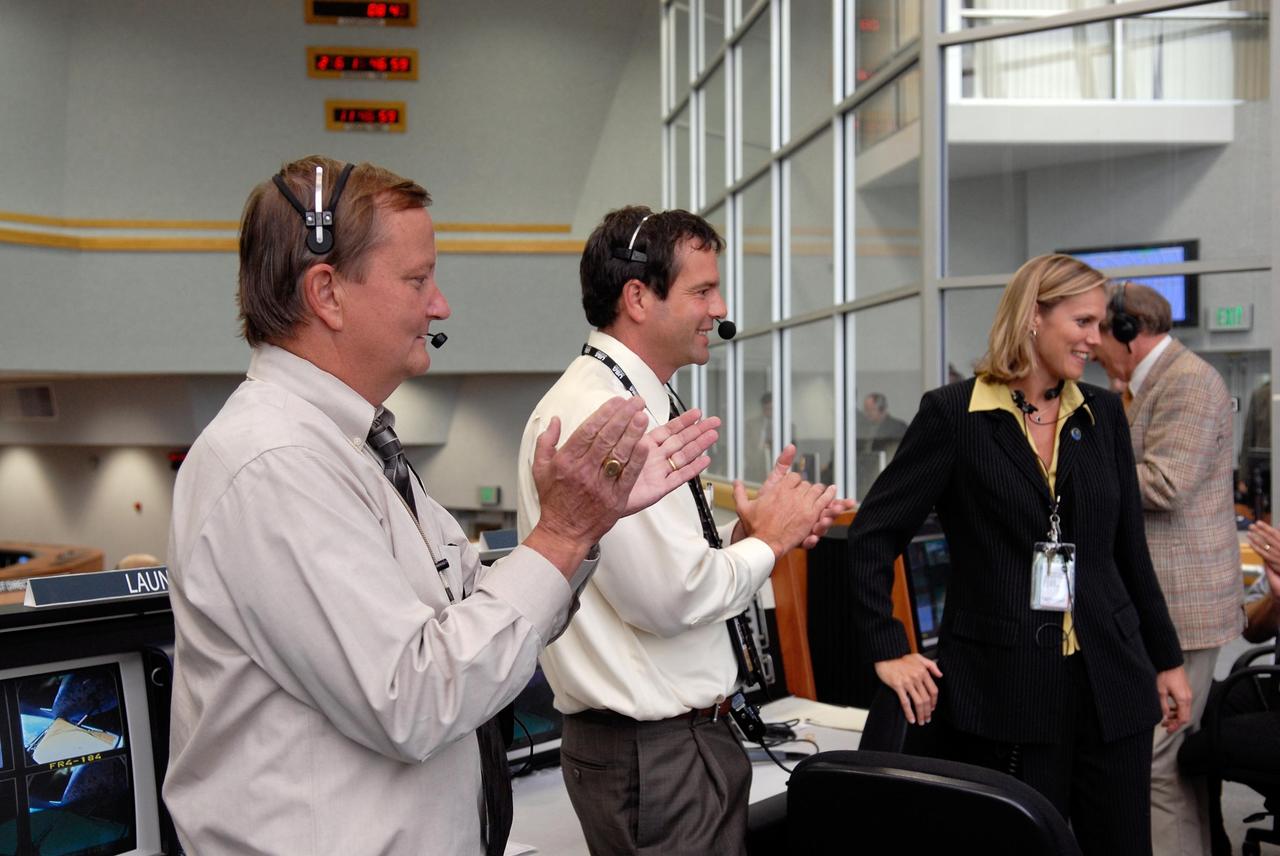
KENNEDY SPACE CENTER, FLA. -- In the firing room of the Launch Control Center at NASA's Kennedy Space Center, Shuttle Launch Director Mike Leinbach and Assistant Launch Director Doug Lyons applaud the mission team for the successful launch of space shuttle Discovery on mission STS-120. AT right is NASA Flow Director Stephanie Stilson. Liftoff was on time at 11:38:19 a.m. EDT. Discovery carries the Italian-built U.S. Node 2, called Harmony. During the 14-day STS-120 mission, the crew will install Harmony and move the P6 solar arrays to their permanent position and deploy them. Discovery is expected to complete its mission and return home at 4:47 a.m. EST on Nov. 6. Photo credit: NASA/Kim Shiflett
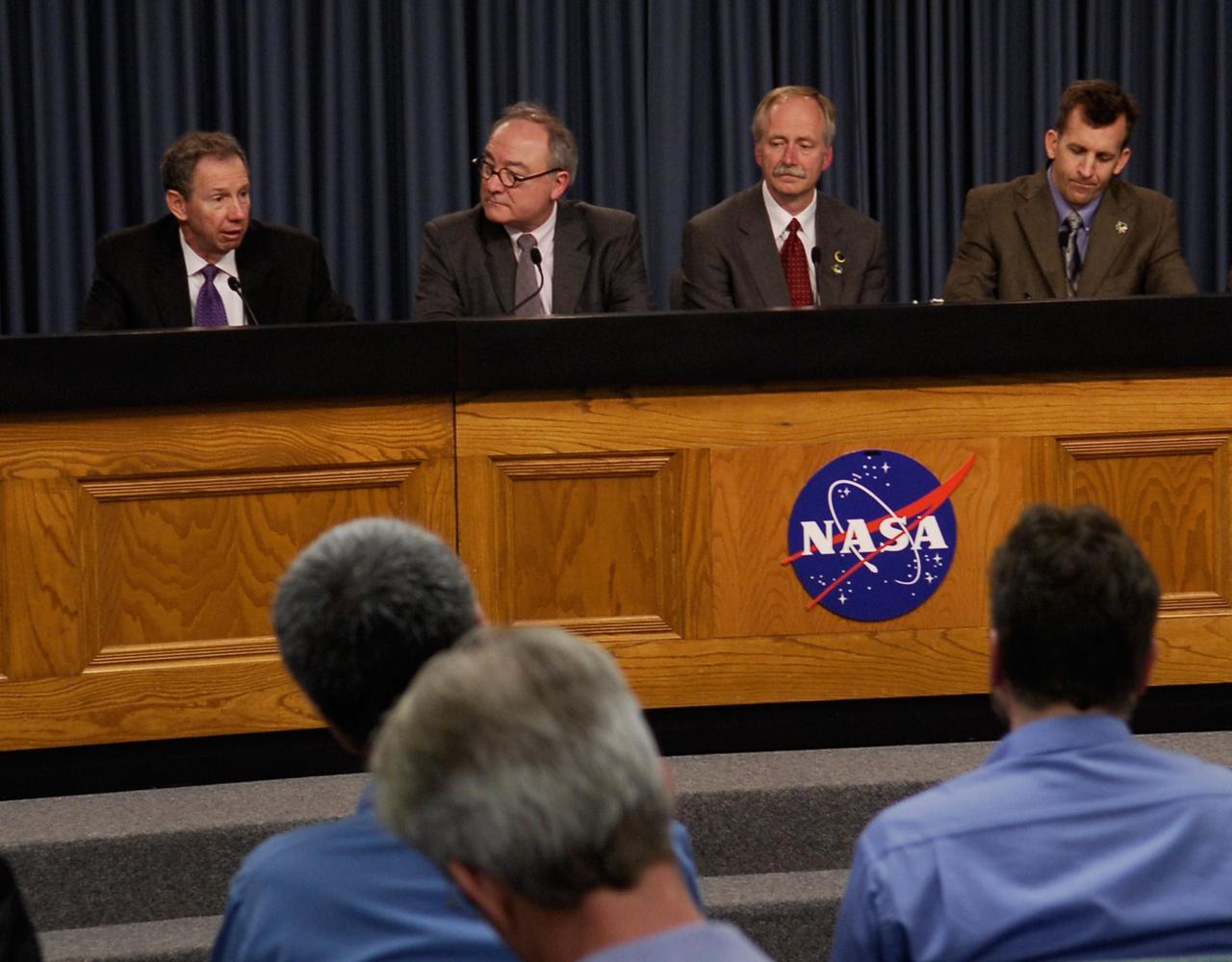
KENNEDY SPACE CENTER, FLA. -- Following the successful launch of space shuttle Atlantis on mission STS-122, NASA Administrator Michael Griffin tells the media at a news conference that the European Space Agency's (ESA) Columbus laboratory will bring a truly international capability to the International Space Station. Also seen on the dais are ESA's Director General Jean-Jacques Dordain, Associate Administrator for Space Operations Bill Gerstenmaier and Director of Mission Launch Integration LeRoy Cain. Not pictured but present at the conference is STS-122 Launch Director Doug Lyons. During the 11-day mission, the crew's prime objective is to attach the Columbus laboratory to the Harmony module, adding to the station's size and capabilities. Photo credit: NASA/Kim Shiflett
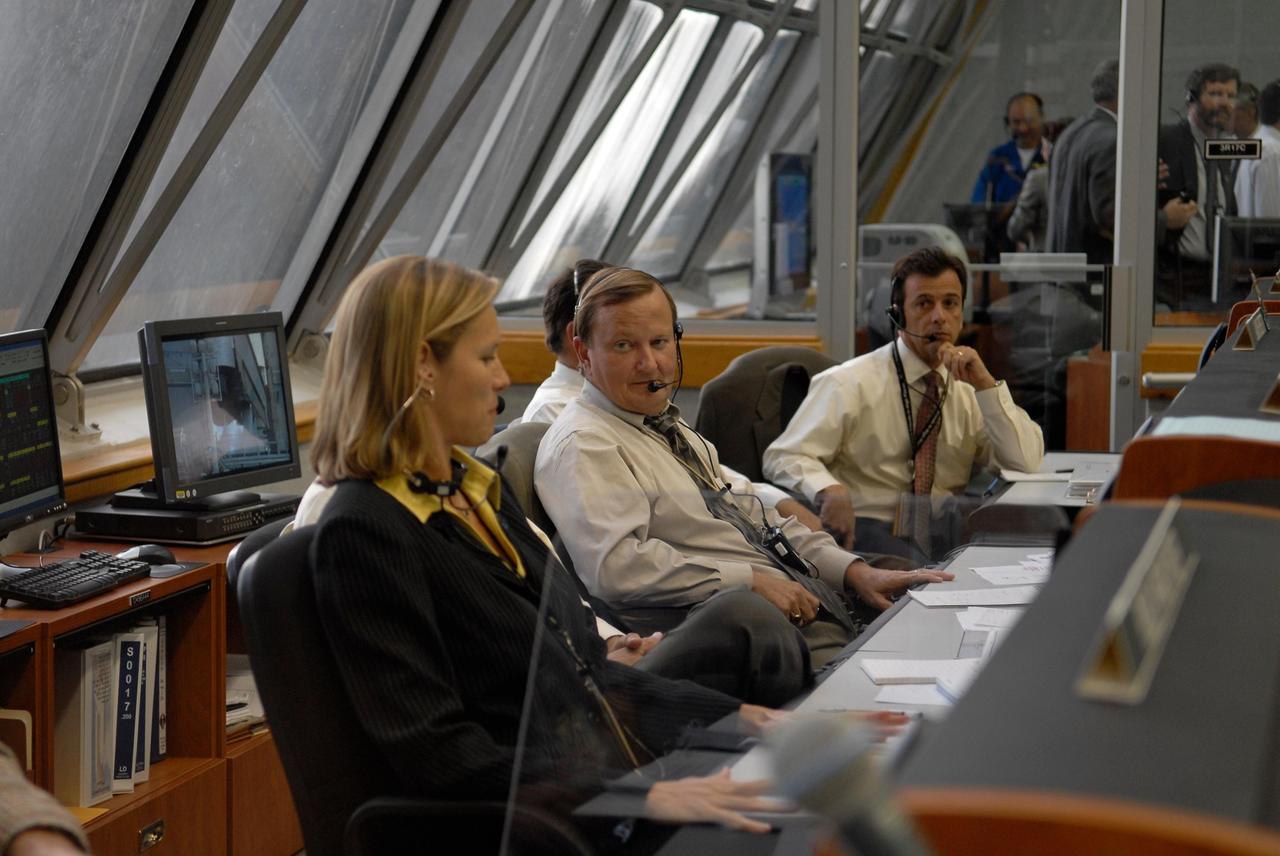
KENNEDY SPACE CENTER, FLA. -- In the firing room of the Launch Control Center at NASA's Kennedy Space Center, NASA Flow Director Stephanie Stilson (left) and Shuttle Launch Director Mike Leinbach (center) talk during the countdown for space shuttle Discovery to launch on mission STS-120. At right is Assistant Launch Director Doug Lyons. Liftoff was on time at 11:38:19 a.m. EDT. Discovery carries the Italian-built U.S. Node 2, called Harmony. During the 14-day STS-120 mission, the crew will install Harmony and move the P6 solar arrays to their permanent position and deploy them. Discovery is expected to complete its mission and return home at 4:47 a.m. EST on Nov. 6. Photo credit: NASA/Kim Shiflett
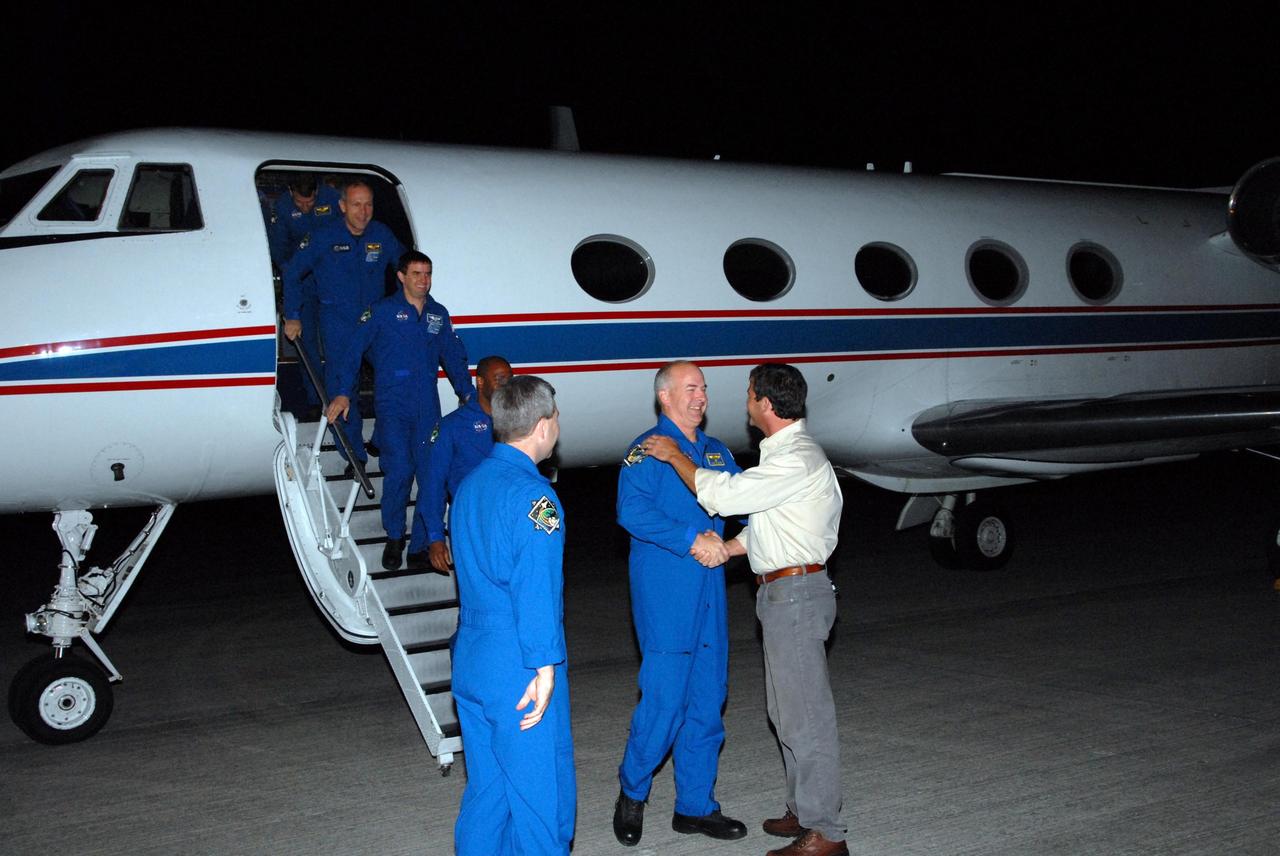
KENNEDY SPACE CENTER, FLA. -- The astronauts assigned to the space shuttle Atlantis STS-122 crew arrive at Kennedy Space Center's Shuttle Landing Facility aboard a Gulfstream shuttle training aircraft to participate in three days of terminal countdown demonstration test, or TCDT, activities. STS-122 Launch Director Doug Lyons greets Pilot Alan Poindexter as Commander Steve Frick looks on. Disembarking are Mission Specialists Leland Melvin, Rex Walheim, Hans Schlegel of the European Space Agency and Stanley Love. The TCDT provides astronauts and ground crews with equipment familiarization, emergency egress training and a simulated launch countdown. On mission STS-122, Atlantis will deliver the Columbus module to the International Space Station. The European Space Agency's largest single contribution to the station, Columbus is a multifunctional, pressurized laboratory that will be permanently attached to U.S. Node 2, called Harmony. The laboratory will expand the research facilities aboard the station, providing crew members and scientists from around the world the ability to conduct a variety of experiments in the physical, materials and life sciences. Photo credit: NASA/George Shelton
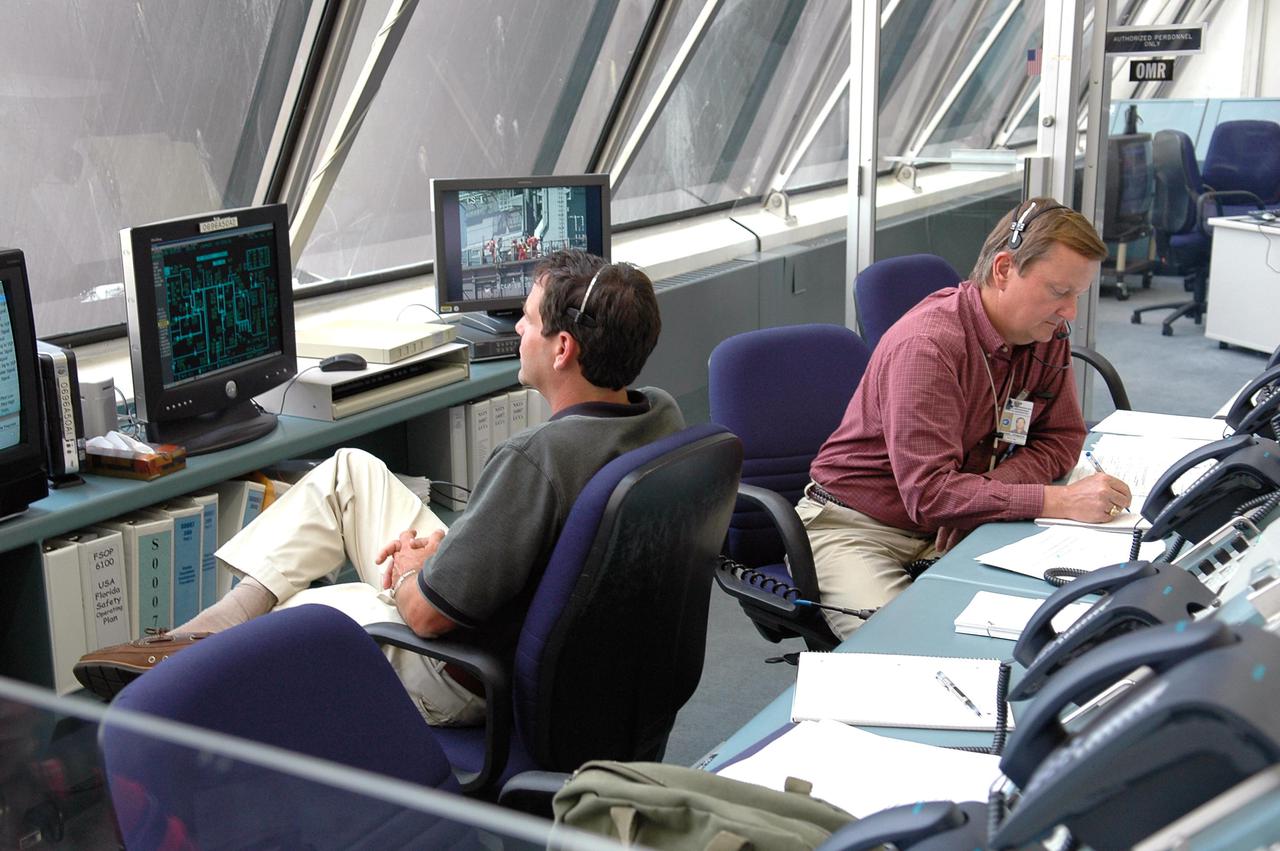
KENNEDY SPACE CENTER, FLA. - Space Shuttle launch director Michael Leinbach (right) and assistant launch director Doug Lyons support an External Tank (ET) tanking test at Launch Pad 39B from the Launch Control Center. The tanking test is designed to evaluate how the tank, orbiter, solid rocket boosters and ground systems perform under 'cryo-load,' when the tank is filled with the two ultra-low-temperature propellants. The tank filling and draining portion of the test takes about 11 hours. The test also includes a simulated countdown through the hold at T-31 seconds. The test is being conducted to troubleshoot two issues identified by a tanking test held on April 14. Data is being collected to analyze the liquid hydrogen sensors that gave intermittent readings and the liquid hydrogen pressurization relief valve that cycled more times than standard. The tanking tests are part of preparations for Space Shuttle Discovery's Return to Flight mission, STS-114, to the International Space Station. The launch window extends from July 13 through July 31.
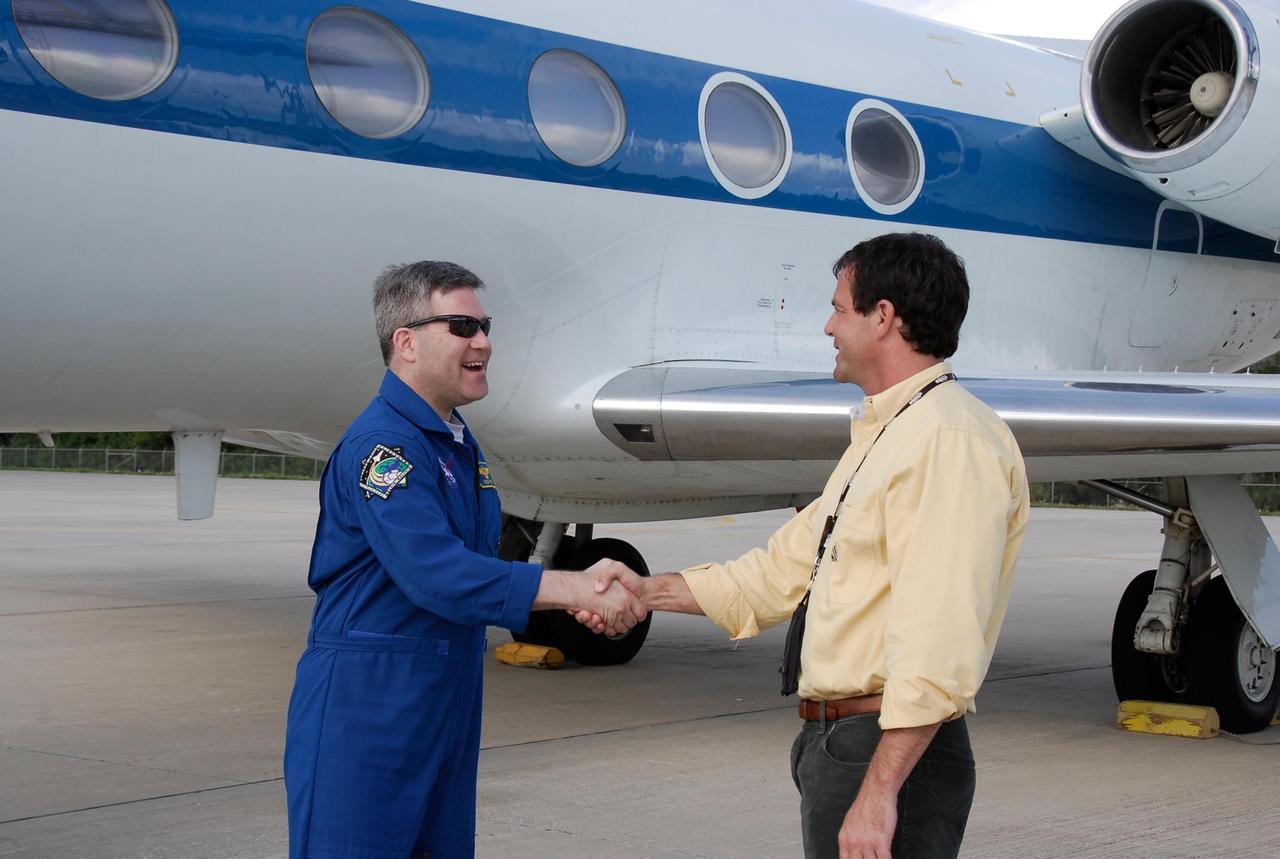
KENNEDY SPACE CENTER, FLA. -- After arriving at NASA's Kennedy Space Center, STS-122 Commander Steve Frick is greeted by Doug Lyons, launch director for STS-122 mission. The crew's arrival signals the imminent launch of space shuttle Atlantis' STS-122 mission, at 2:45 p.m. Feb. 7. This will be the third launch attempt for the mission. Some of the tank's ECO sensors gave failed readings during propellant tanking for launch attempts on Dec. 6 and Dec. 9, subsequently scrubbing further attempts until the cause could be found and repairs made. Atlantis will carry the Columbus module, Europe's largest contribution to the construction of the International Space Station. It will support scientific and technological research in a microgravity environment. Columbus is a multifunctional, pressurized laboratory that will be permanently attached to the Harmony module of the space station to carry out experiments in materials science, fluid physics and biosciences, as well as to perform a number of technological applications. Photo credit: NASA/Kim Shiflett
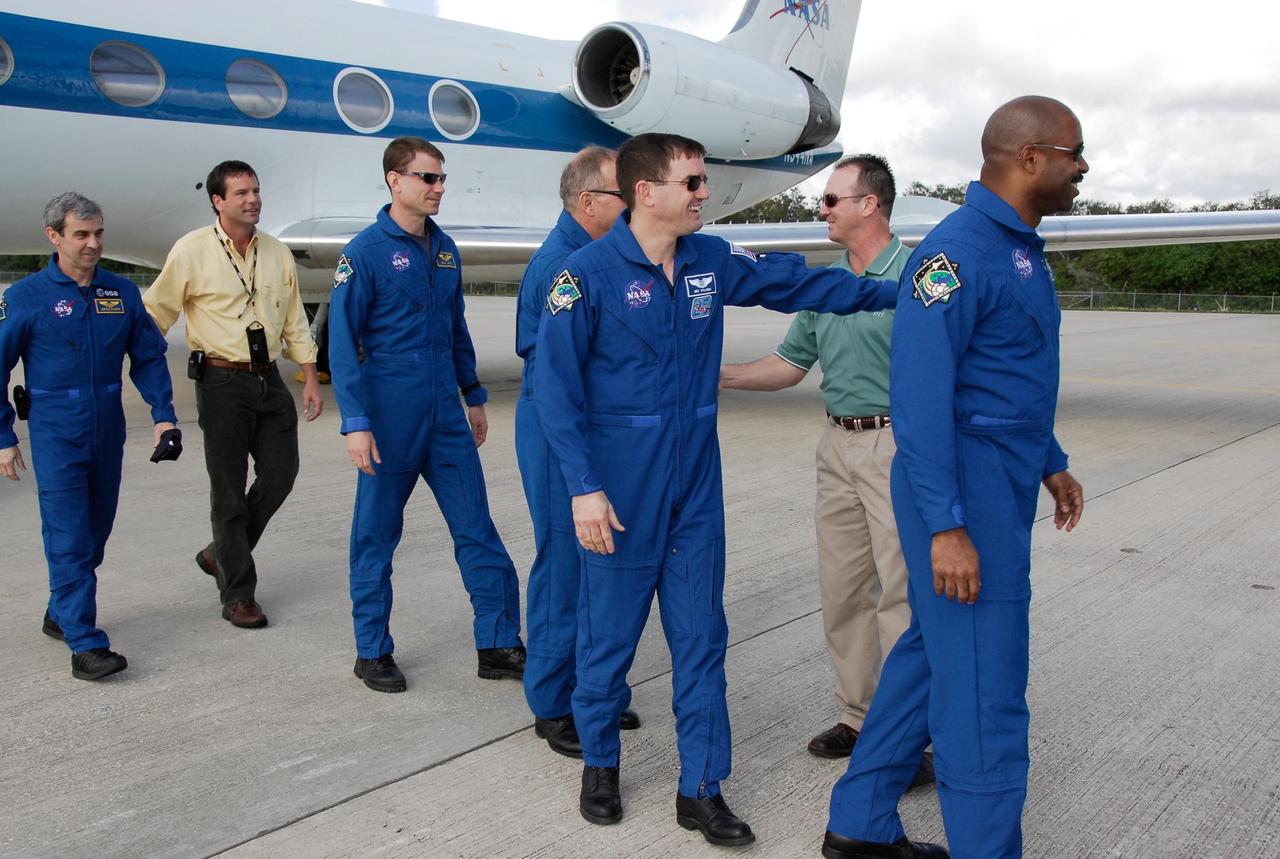
KENNEDY SPACE CENTER, FLA. -- At NASA's Kennedy Space Center, members of the STS-122 crew arrive for launch. From left are Mission Specialists Leopold Eyharts, Stanley Love, Hans Schlegel, Rex Walheim and Leland Melvin. They were greeted by Doug Lyons (left, yellow shirt), launch director for the mission, and Pete Nickolenko (right, green shirt), lead shuttle test director. Eyharts and Schlegel represent the European Space Agency. The crew's arrival signals the imminent launch of space shuttle Atlantis' STS-122 mission, at 2:45 p.m. Feb. 7. This will be the third launch attempt for the mission. Some of the tank's ECO sensors gave failed readings during propellant tanking for launch attempts on Dec. 6 and Dec. 9, subsequently scrubbing further attempts until the cause could be found and repairs made. Atlantis will carry the Columbus module, Europe's largest contribution to the construction of the International Space Station. It will support scientific and technological research in a microgravity environment. Columbus is a multifunctional, pressurized laboratory that will be permanently attached to the Harmony module of the space station to carry out experiments in materials science, fluid physics and biosciences, as well as to perform a number of technological applications. Photo credit: NASA/Kim Shiflett
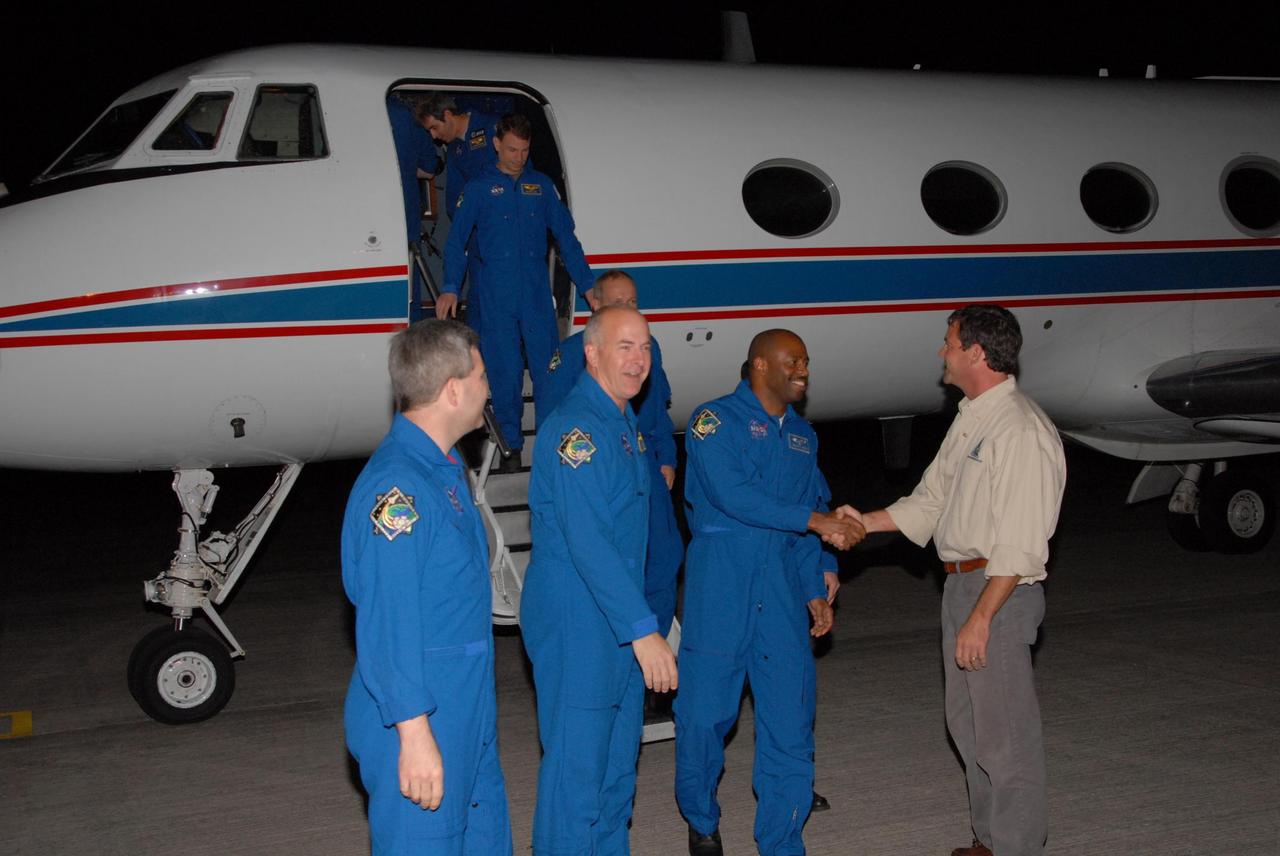
KENNEDY SPACE CENTER, FLA. -- The astronauts assigned to the space shuttle Atlantis STS-122 crew arrive at Kennedy Space Center's Shuttle Landing Facility aboard a Gulfstream shuttle training aircraft to participate in three days of terminal countdown demonstration test, or TCDT, activities. STS-122 Launch Director Doug Lyons greets Mission Specialist Leland Melvin as Commander Steve Frick and Pilot Alan Poindexter look on. Disembarking are Mission Specialists Hans Schlegel of the European Space Agency, Stanley Love and Leopold Eyharts, a European Space Agency astronaut who will remain on the International Space Station as a flight engineer for Expedition 16. The TCDT provides astronauts and ground crews with equipment familiarization, emergency egress training and a simulated launch countdown. On mission STS-122, Atlantis will deliver the Columbus module to the International Space Station. The European Space Agency's largest single contribution to the station, Columbus is a multifunctional, pressurized laboratory that will be permanently attached to U.S. Node 2, called Harmony. The laboratory will expand the research facilities aboard the station, providing crew members and scientists from around the world the ability to conduct a variety of experiments in the physical, materials and life sciences. Photo credit: NASA/George Shelton
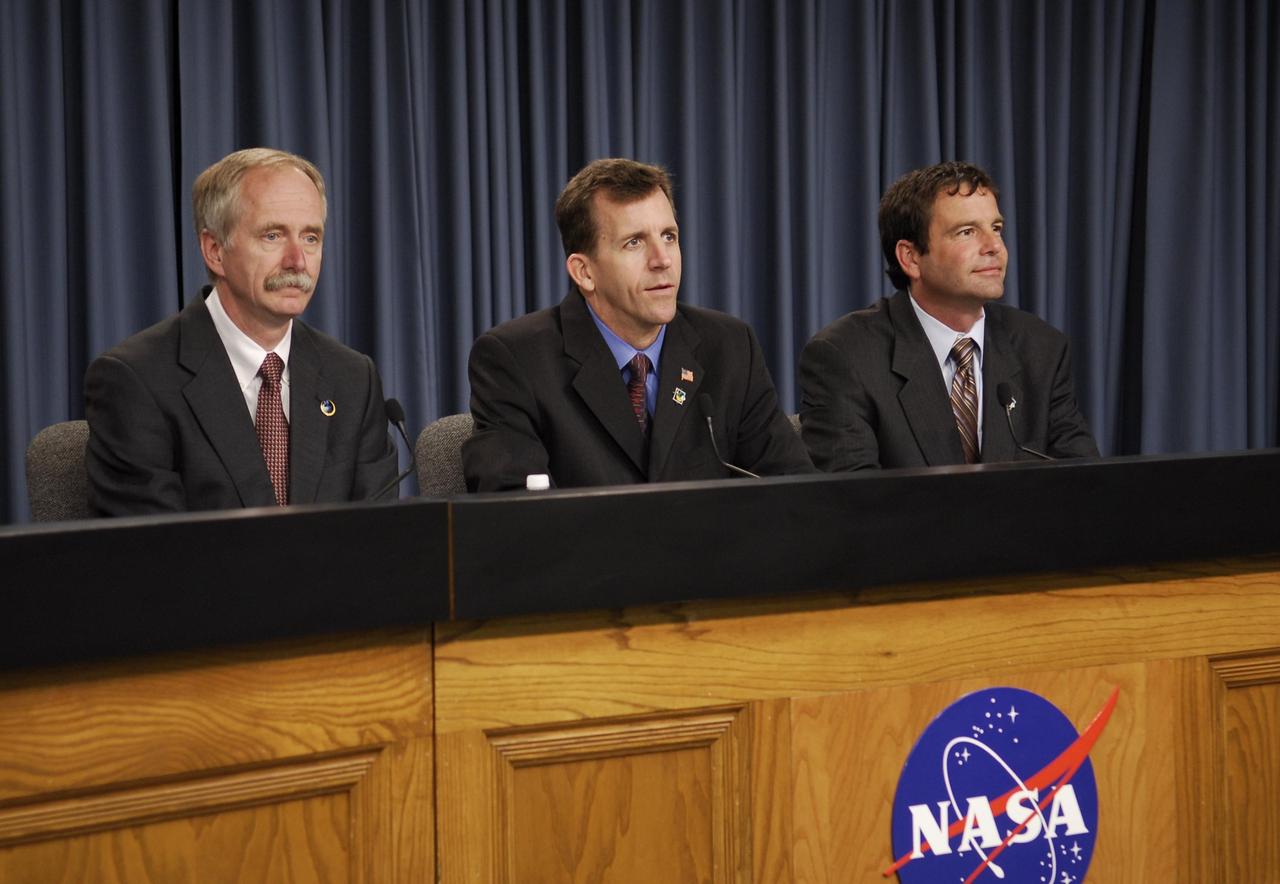
KENNEDY SPACE CENTER, FLA. -- Members of the Mission Management Team, or MMT, participate in a news briefing following the conclusion of the team's meeting. The meeting followed the morning's launch scrub of the space shuttle Atlantis STS-122 mission caused by problems experienced with the external tank's engine cutoff sensor system during tanking for the second launch attempt. From left are Bill Gerstenmaier, associate administrator for Space Operations; LeRoy Cain, MMT chairman; and Doug Lyons, STS-122 launch director. An announcement was made during the briefing that the STS-122 launch is postponed to no earlier than Jan. 2, 2008, to give the team time to resolve the system's problems. Atlantis will carry the Columbus Laboratory, the European Space Agency's largest contribution to the construction of the International Space Station. It will support scientific and technological research in a microgravity environment. Permanently attached to the Harmony node of the space station, the laboratory will carry out experiments in materials science, fluid physics and biosciences, as well as perform a number of technological applications. Photo credit: NASA/Kim Shiflett

KENNEDY SPACE CENTER, FLA. -- At NASA's Kennedy Space Center, members of the STS-122 crew are greeted by Doug Lyons (left, yellow shirt), launch director for the mission, and Pete Nickolenko (right, green shirt), lead shuttle test director, after their arrival. Crew members from left are Mission Specialists Stanley Love, Hans Schlegel, Rex Walheim and Leland Melvin, and Pilot Alan Poindexter. Schlegel represents the European Space Agency. The crew's arrival signals the imminent launch of space shuttle Atlantis' STS-122 mission, at 2:45 p.m. Feb. 7. This will be the third launch attempt for the mission. Some of the tank's ECO sensors gave failed readings during propellant tanking for launch attempts on Dec. 6 and Dec. 9, subsequently scrubbing further attempts until the cause could be found and repairs made. Atlantis will carry the Columbus module, Europe's largest contribution to the construction of the International Space Station. It will support scientific and technological research in a microgravity environment. Columbus is a multifunctional, pressurized laboratory that will be permanently attached to the Harmony module of the space station to carry out experiments in materials science, fluid physics and biosciences, as well as to perform a number of technological applications. Photo credit: NASA/Kim Shiflett
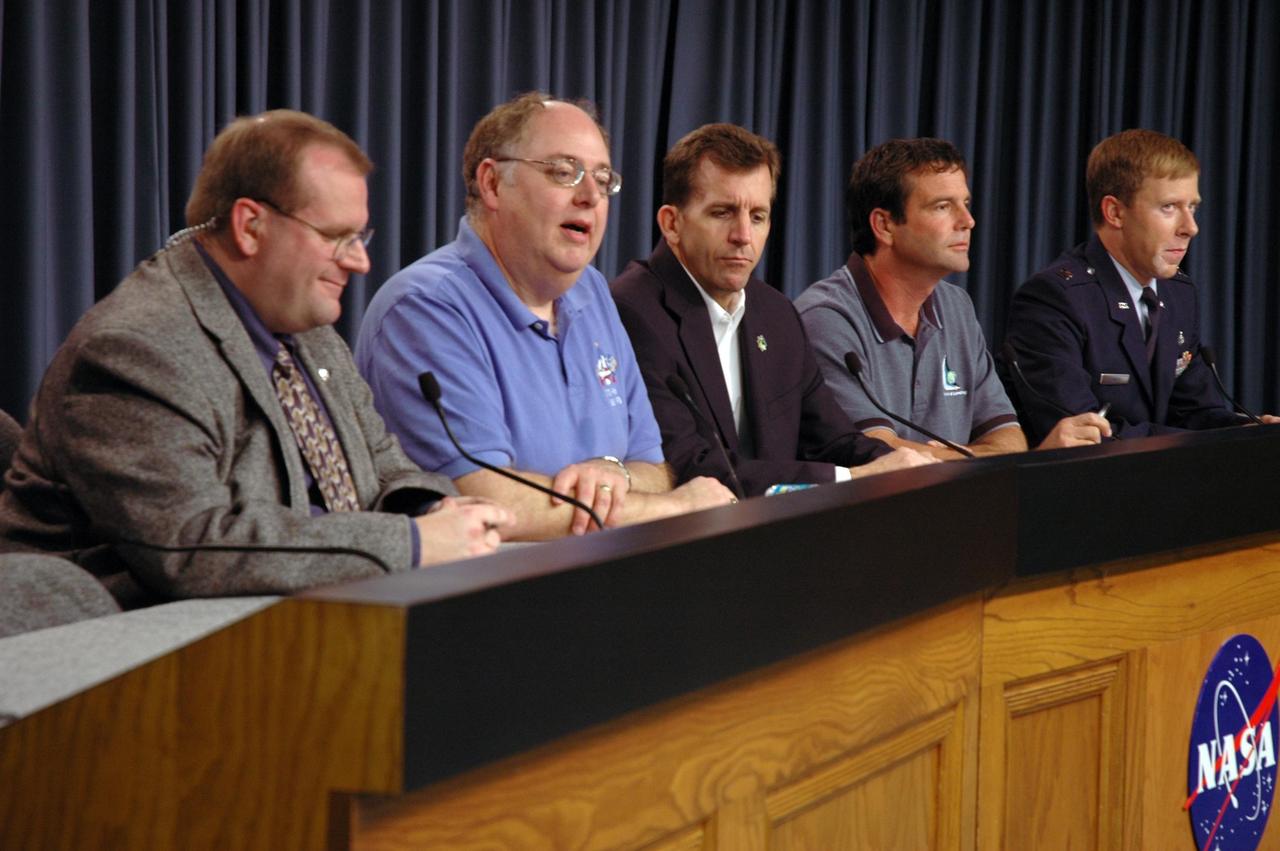
KENNEDY SPACE CENTER, FLA. -- Members of the Mission Management Team, or MMT, participate in a news briefing following the conclusion of the team's meeting. The meeting continued the discussion of the problems experienced with the space shuttle Atlantis STS-122 external tank's engine cutoff sensor system that arose during tanking on Dec. 6. From left are Allard Beutel, Kennedy Space Center news chief and briefing moderator; Wayne Hale, Space Shuttle Program manager; LeRoy Cain, MMT chairman; Doug Lyons, STS-122 launch director; and U.S. Air Force Capt. Chris Lovett, 45th Weather Squadron. An announcement was made during the briefing that the STS-122 launch, originally set for Dec. 6, was rescheduled to 3:21 p.m. Dec. 9. Atlantis will carry the Columbus Laboratory, the European Space Agency's largest contribution to the construction of the International Space Station. It will support scientific and technological research in a microgravity environment. Permanently attached to the Harmony node of the space station, the laboratory will carry out experiments in materials science, fluid physics and biosciences, as well as perform a number of technological applications. Photo credit: NASA/Cory Huston