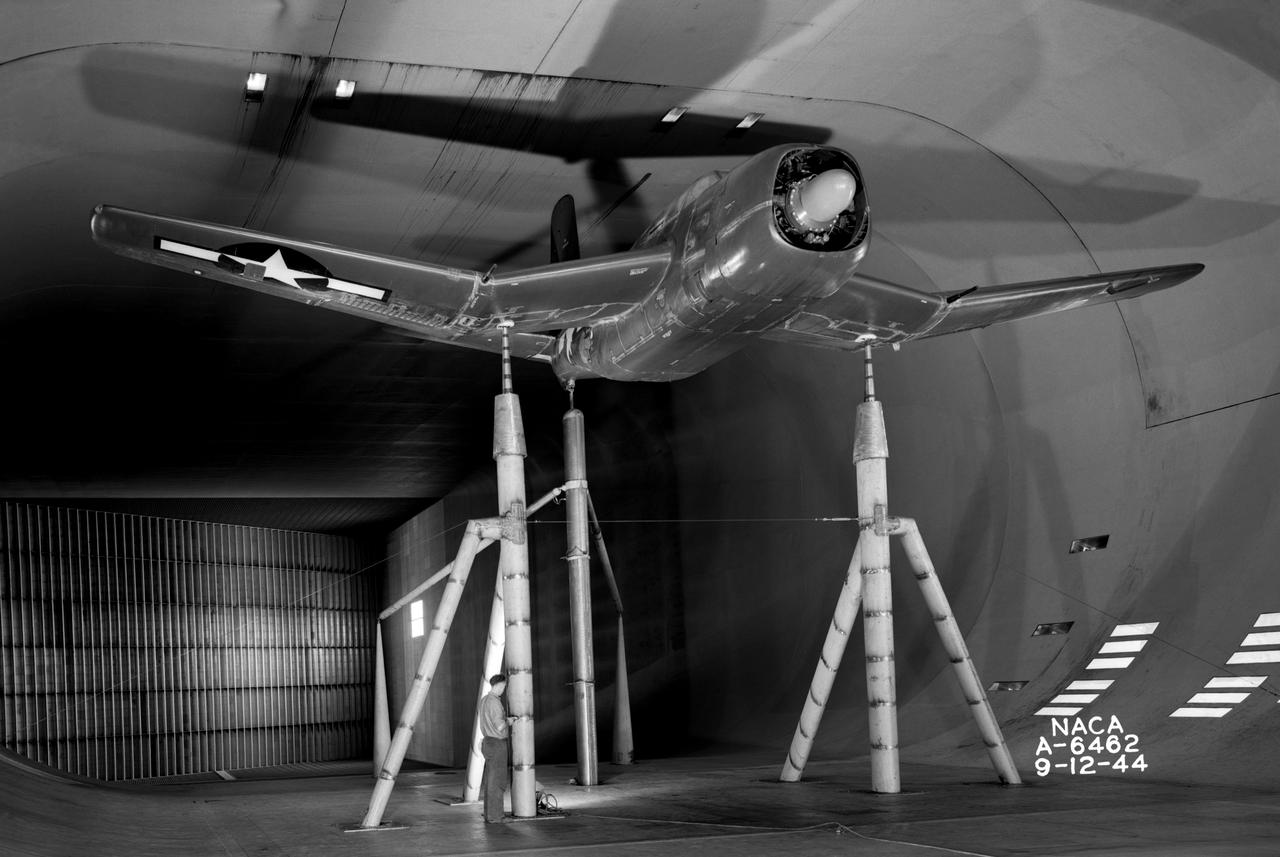
Douglas BTD-1 airplane 3/4 front view from below in Ames 40x80 foot Wind Tunnel, unseated, horizontal tail on.
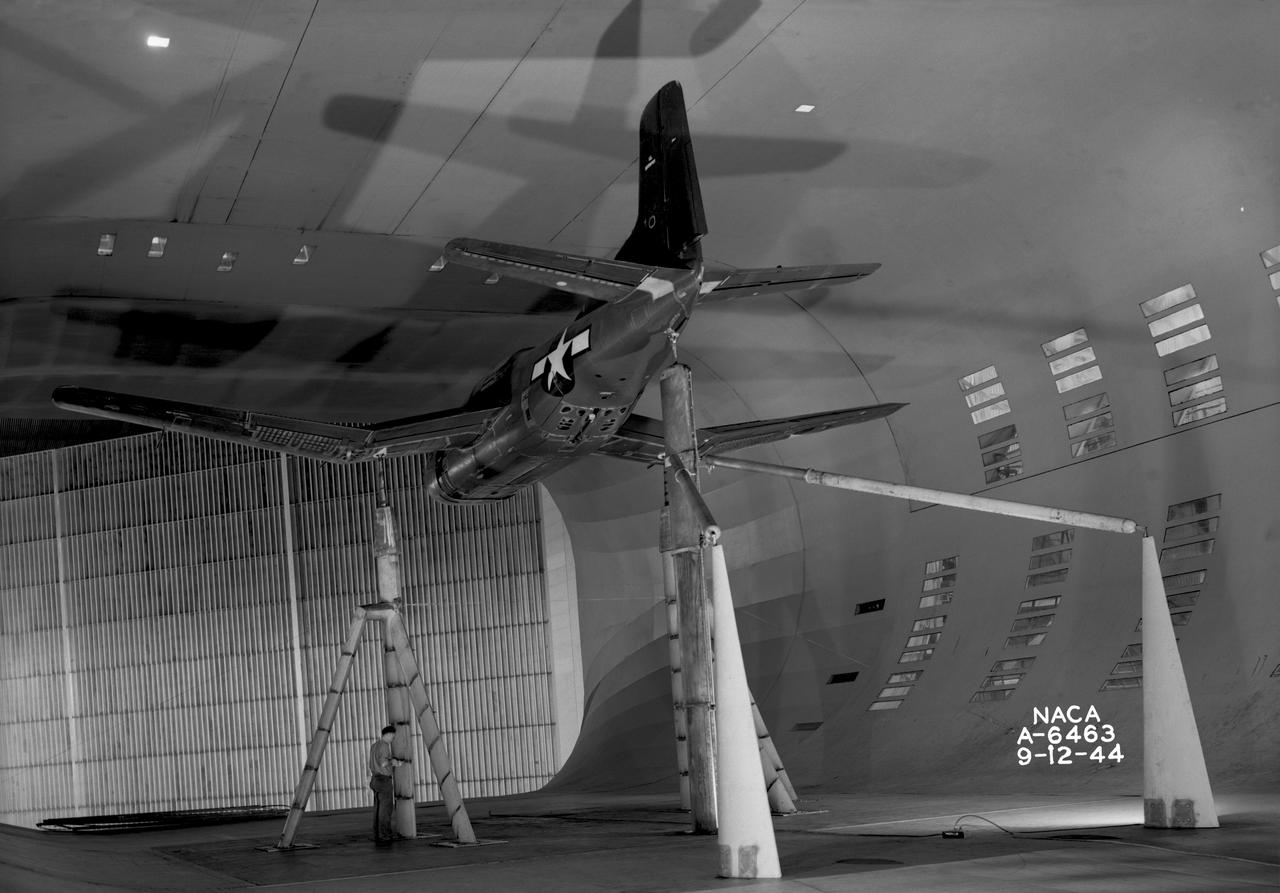
3/4 rear view from below of Douglas BTD-1 airplane in Ames 40x80 foot Wind Tunnel, unseated, horizontal tail on.
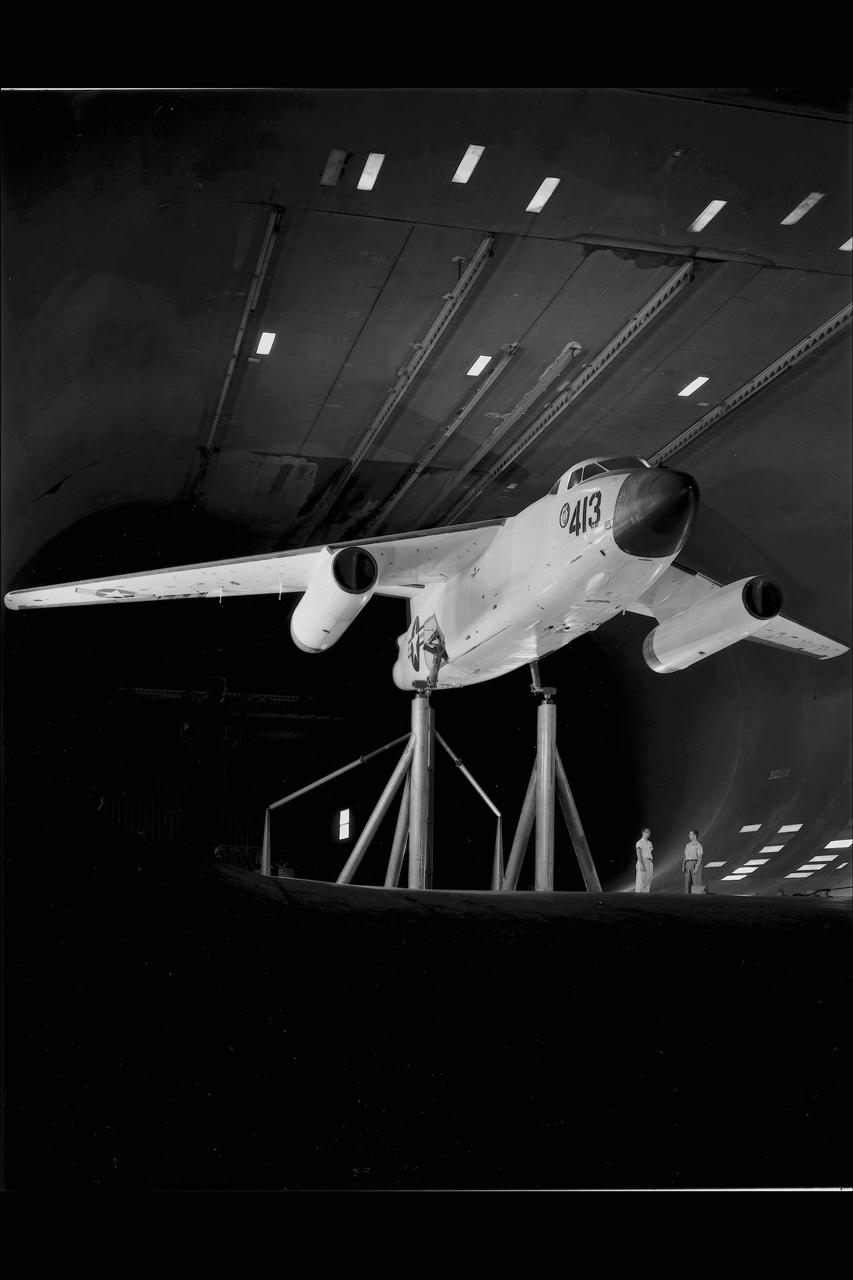
DOUGLAS XA3D-1 #413 AIRPLANE MOUNTED IN THE NACA AMES RESEARCH CENTER'S 40X80_FOOT SUBSONIC WIND TUNNEL sweptback wing Testing the wing boundary layer control of the A3D in the 40 x 80 wind tunnel. Boundary layer control was added to increase the lift of the wing for aircraft carrier take off and landing.
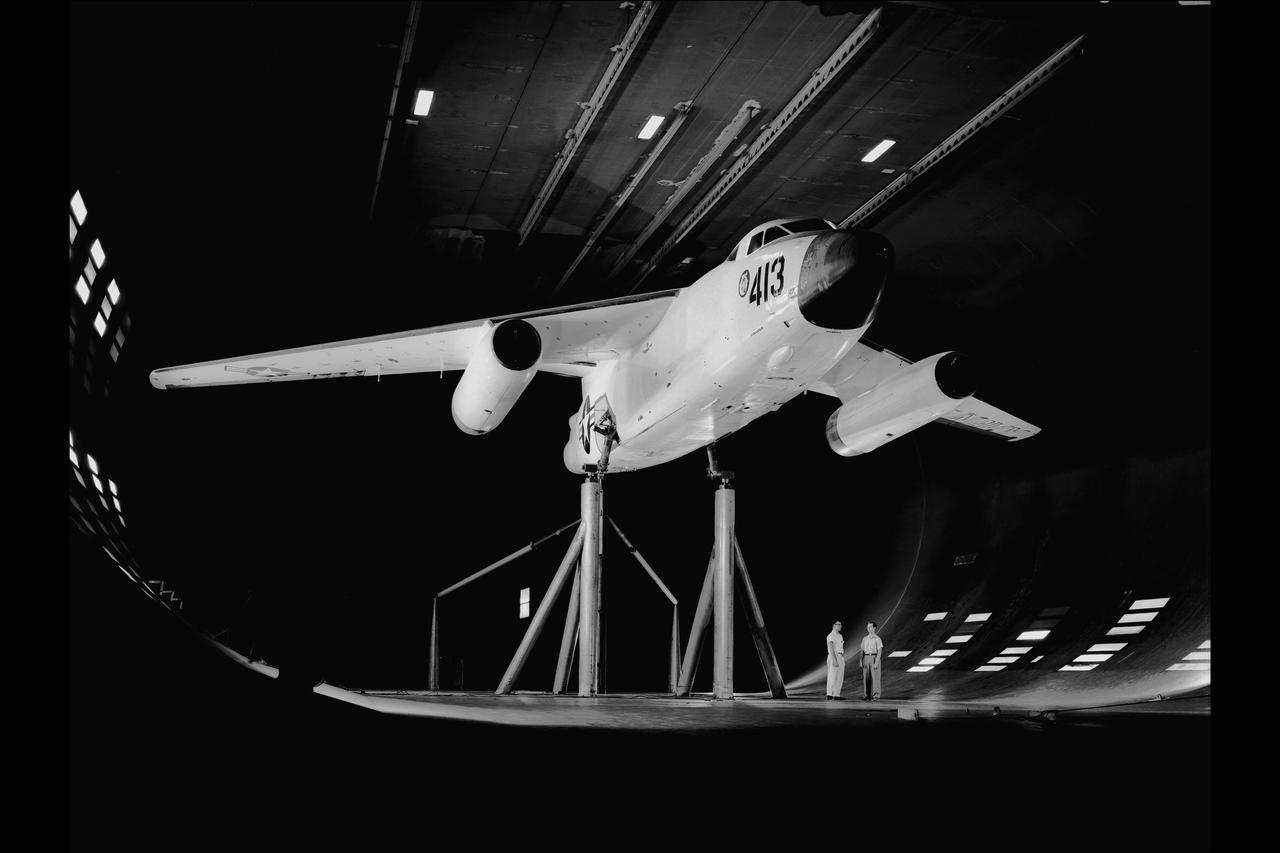
DOUGLAS XA3D-1 #413 AIRPLANE MOUNTED IN THE NACA AMES RESEARCH CENTER'S 40X80_FOOT SUBSONIC WIND TUNNEL Testing the boundary layer control of the A3D in the 40 x 80 wind tunnel. Boundary layer control was added to increase the lift of the wing for take off from an aircraft carrier.
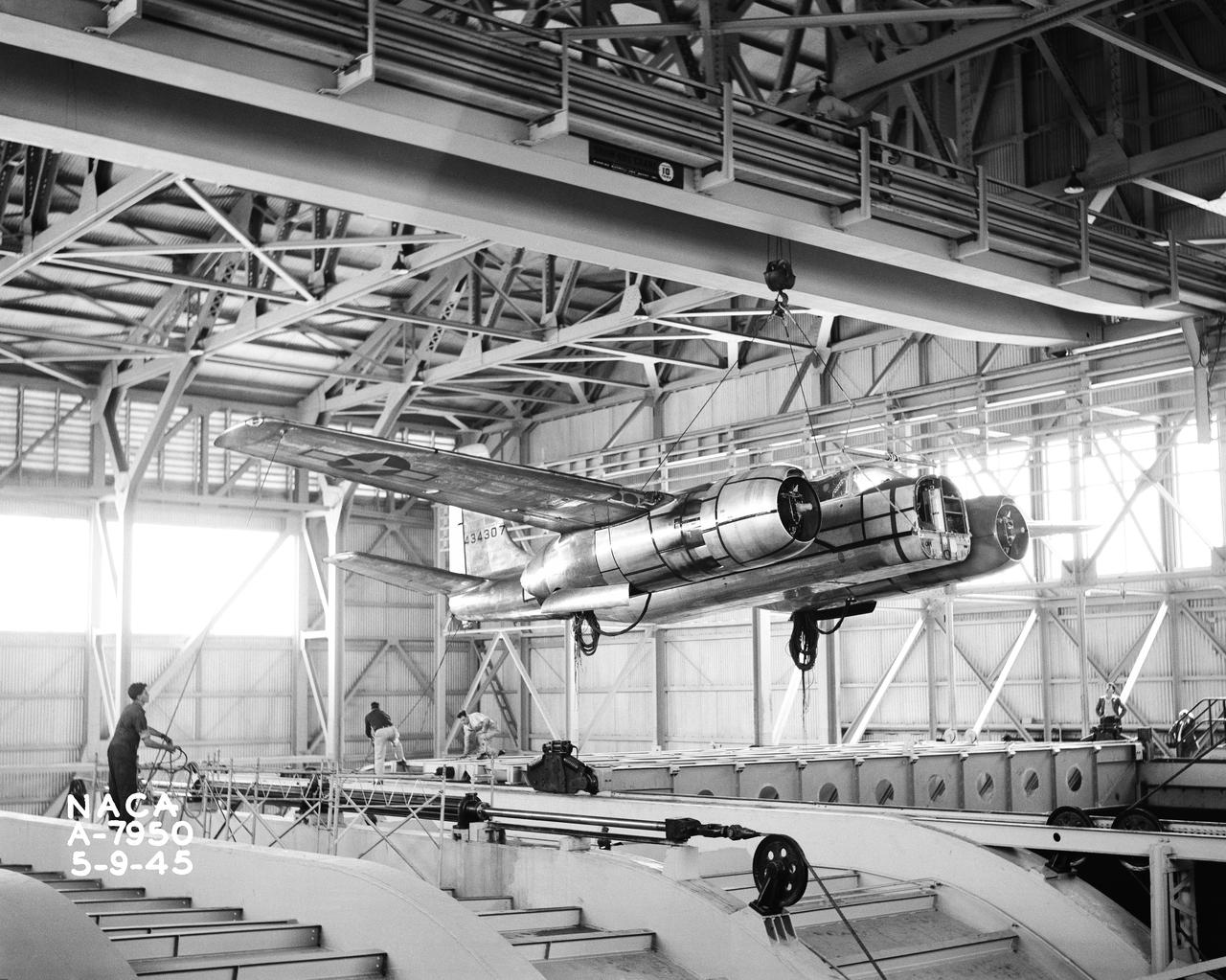
Installation of the Douglas A-26B airplane in the 40x80 foot wind tunnel at NACA's Ames Research Center. Airplane being centered over tunnel opening.
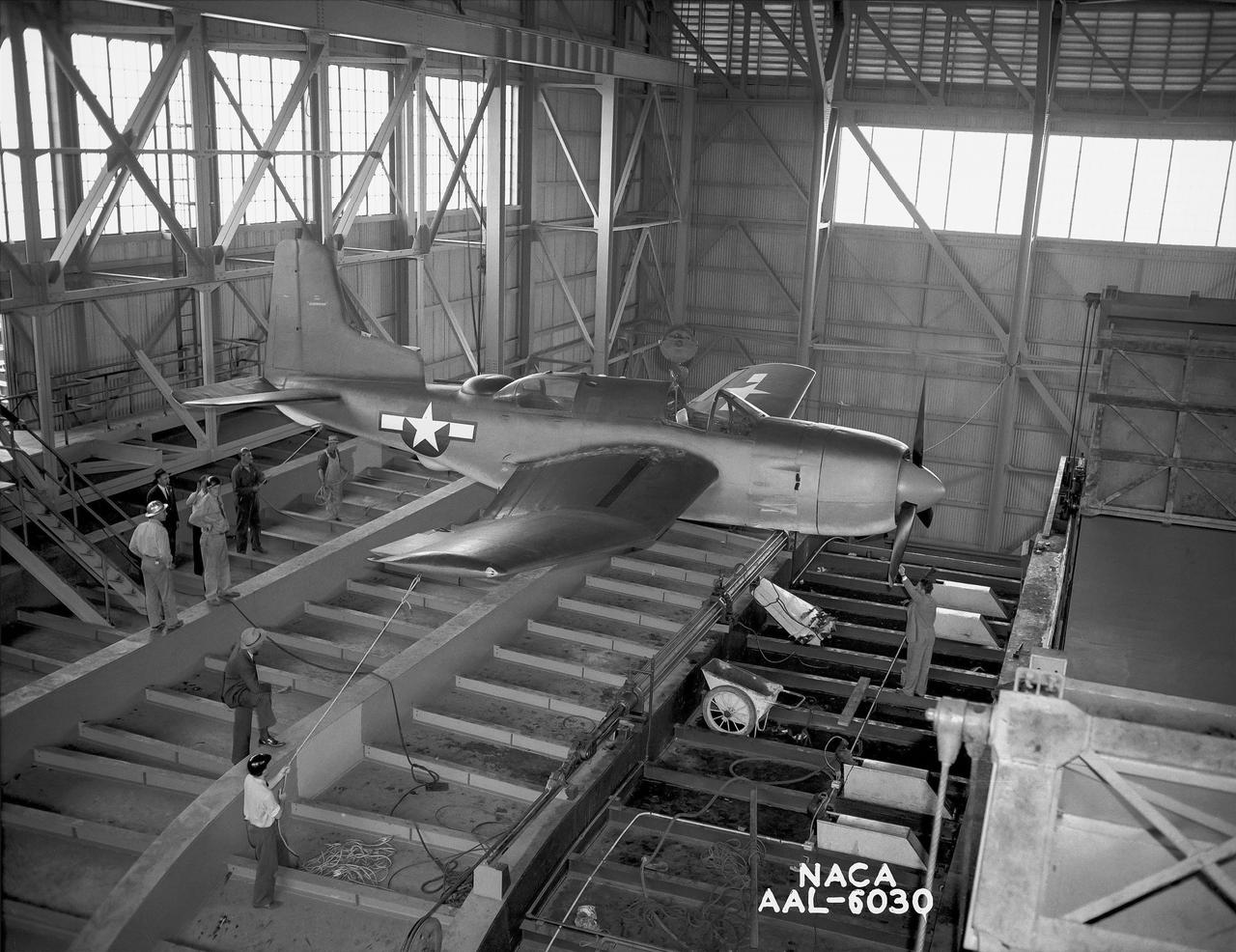
First airplane tested in the ames 40 x 80 foot wind tunnel. Douglas XSB2D-1 (Destroyer) hanging from overhead crane above the test section.
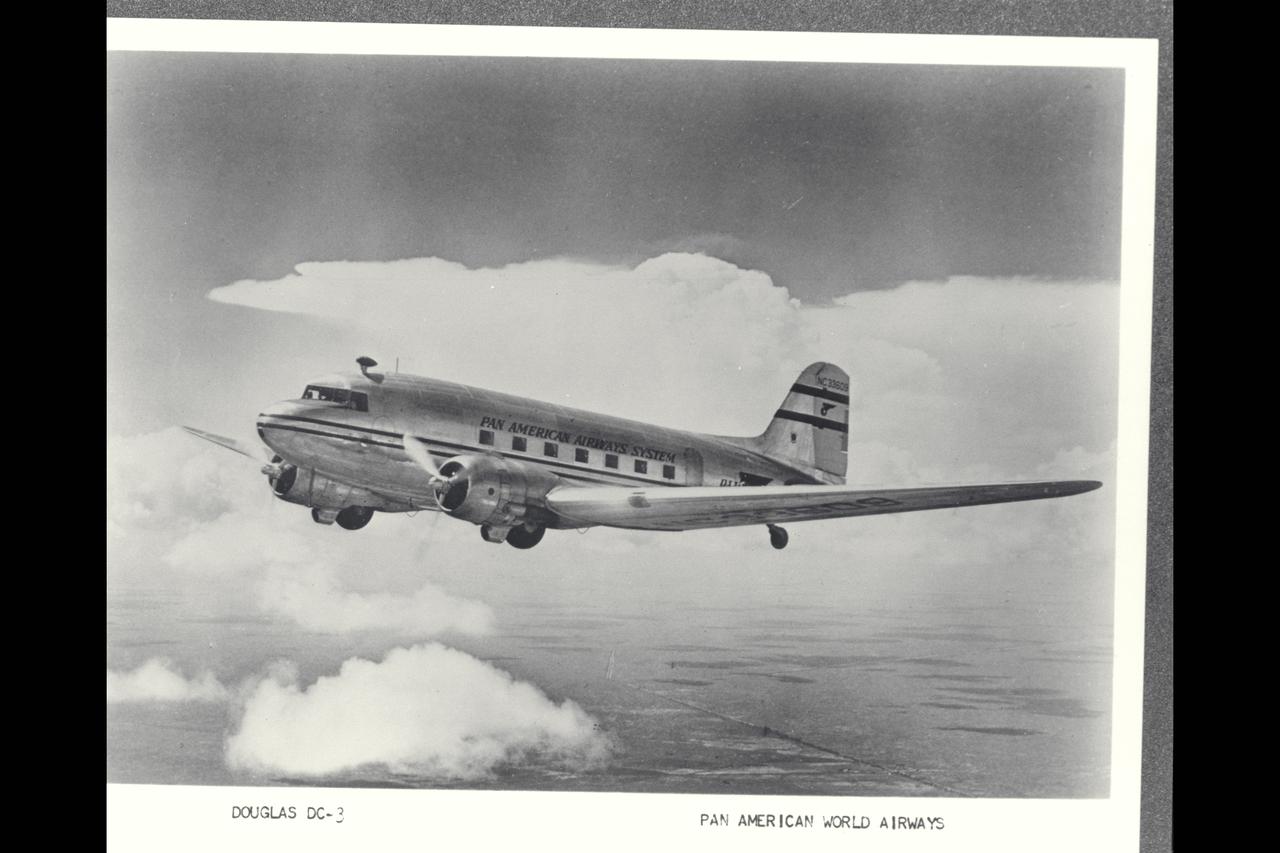
Douglas DC-3 Airplane
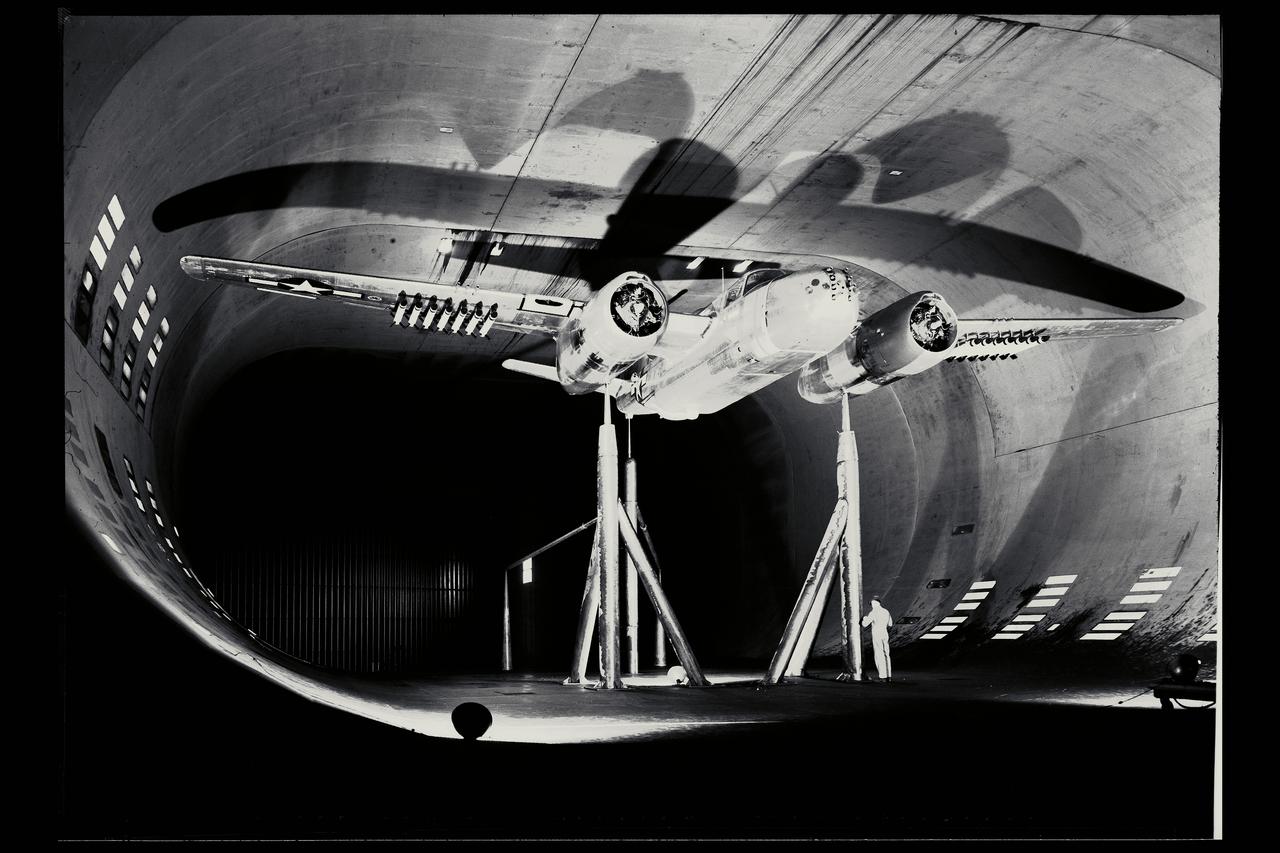
40x80ft wind tunnel testing of a modification to a Douglas A-26B Invader airplane (rockets, bomb and wing)
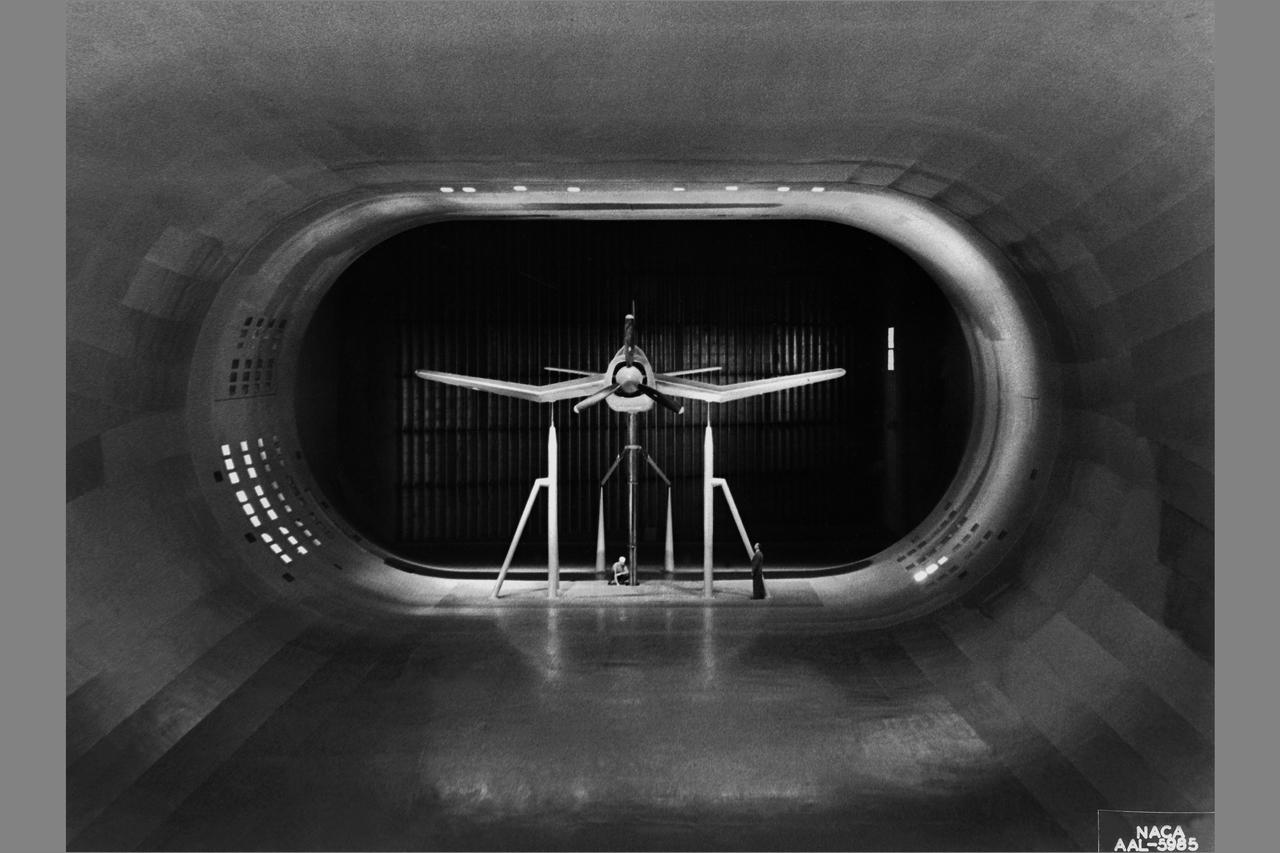
NACA Photographer XSB2D-1 Navy/Douglas Airplane mounted in 40x80ft .w.t. viewed from centerpoint in guide vanes. First model tested in 40x80ft w.t.
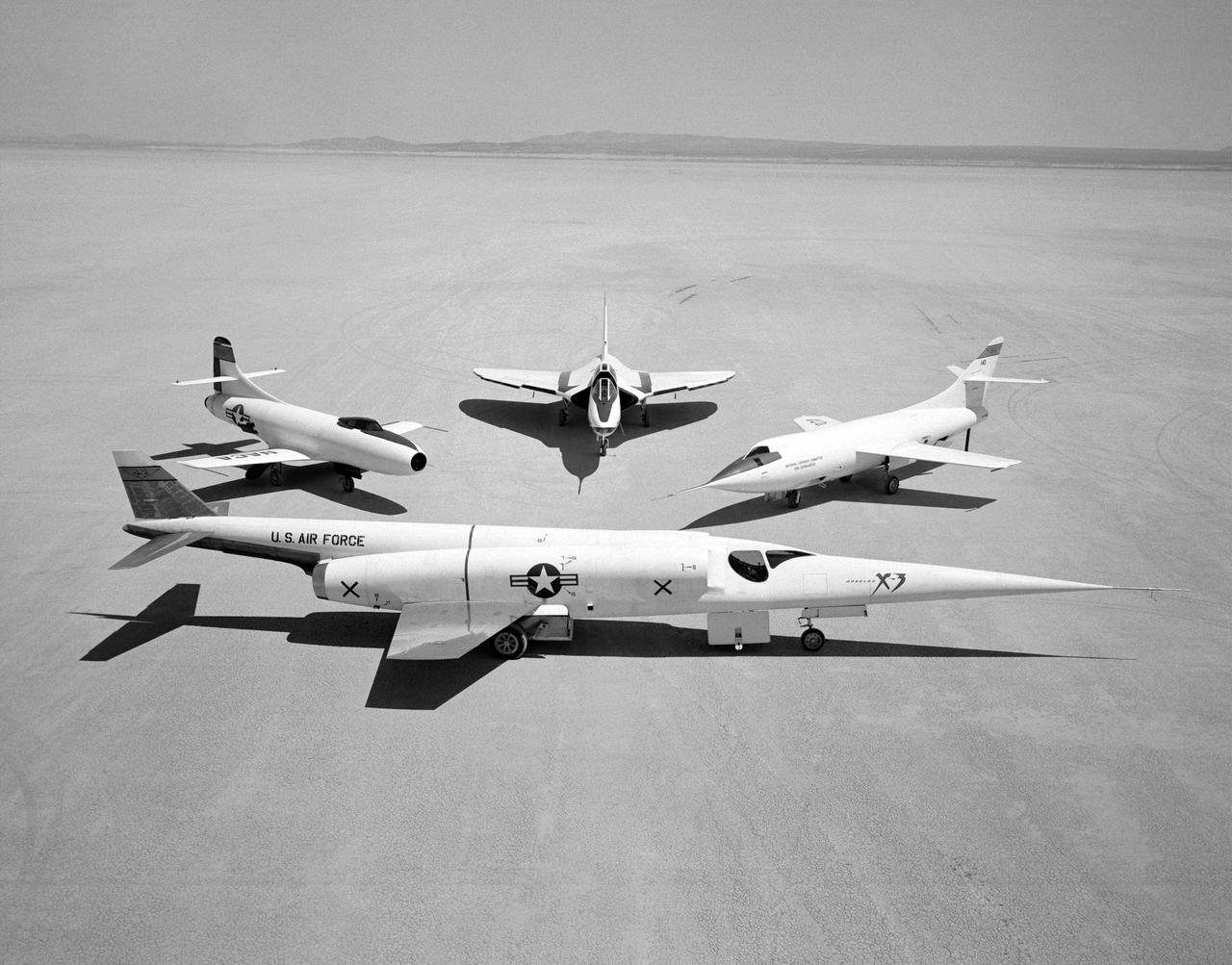
A group picture of Douglas Airplanes, taken for a photographic promotion in 1954, at what is now known as the Dryden Flight Research Center at Edwards Air Force Base, California. The photo includes the X-3 (in front--Air Force serial number 49-2892) then clockwise D-558-I, XF4D-1 (a Navy jet fighter prototype not flown by the NACA), and the first D-558-II (NACA tail number 143, Navy serial number 37973), which was flown only once by the NACA.
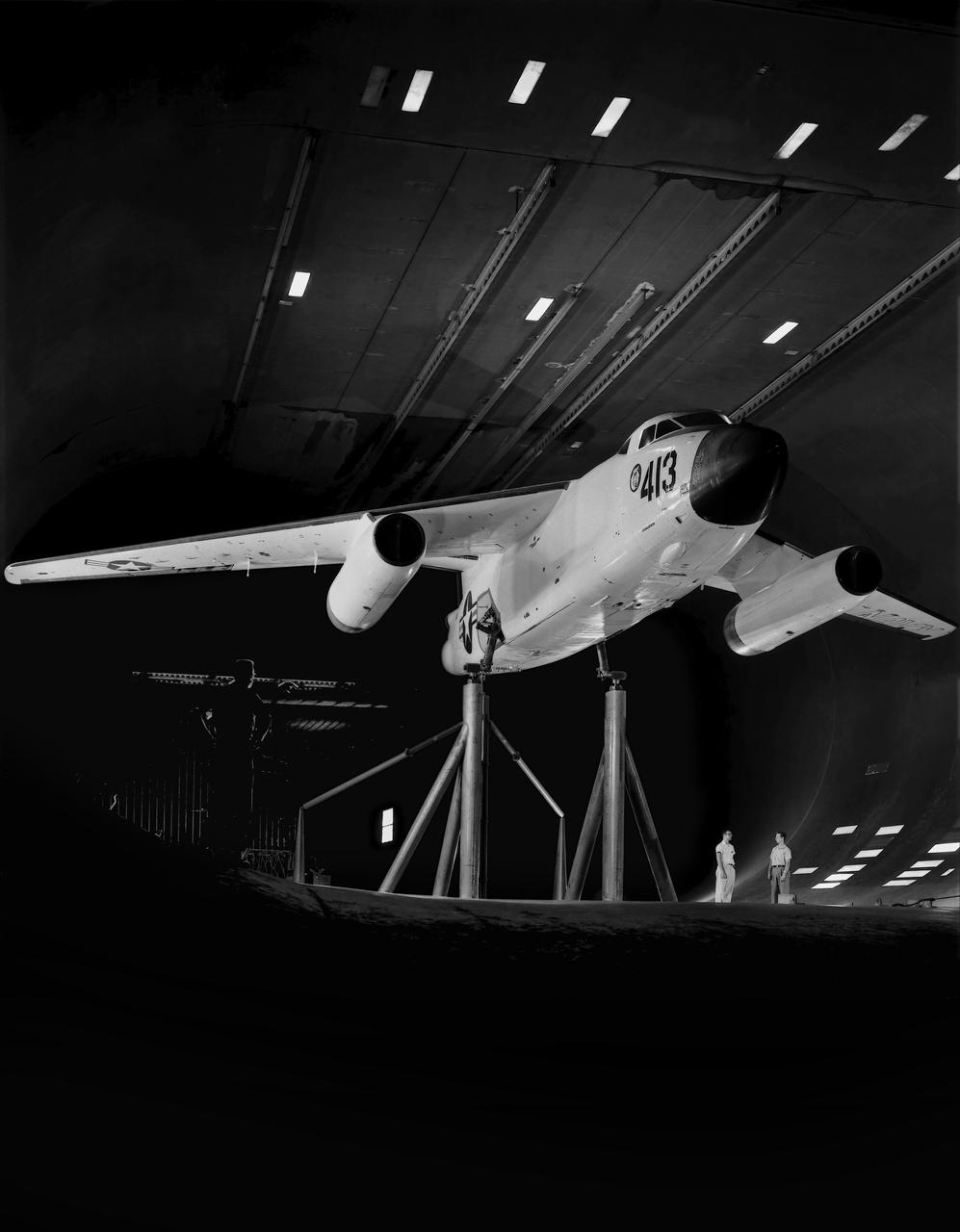
Testing the wing boundary layer control of the A3D in the 40 x 80 wind tunnel. Boundary layer control was added to increase the lift of the wing for aircraft carrier take off and landing.
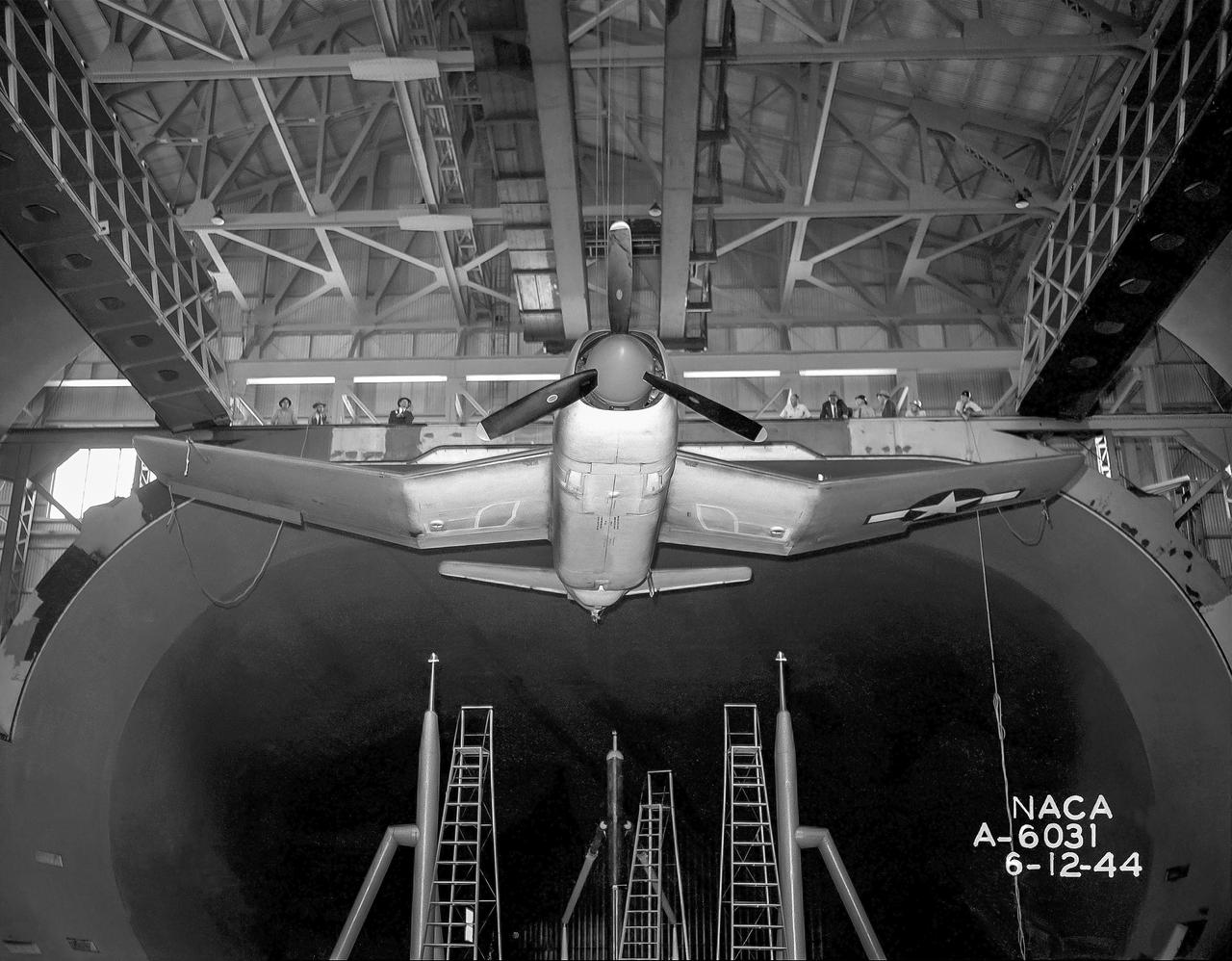
XSB2D-1 First test (no number) Aerodynamic test to forecast the take off distance. George Cooper was the A1:H73 pilot. Orchard ladders were used to access the ball socket attachments on the struts.
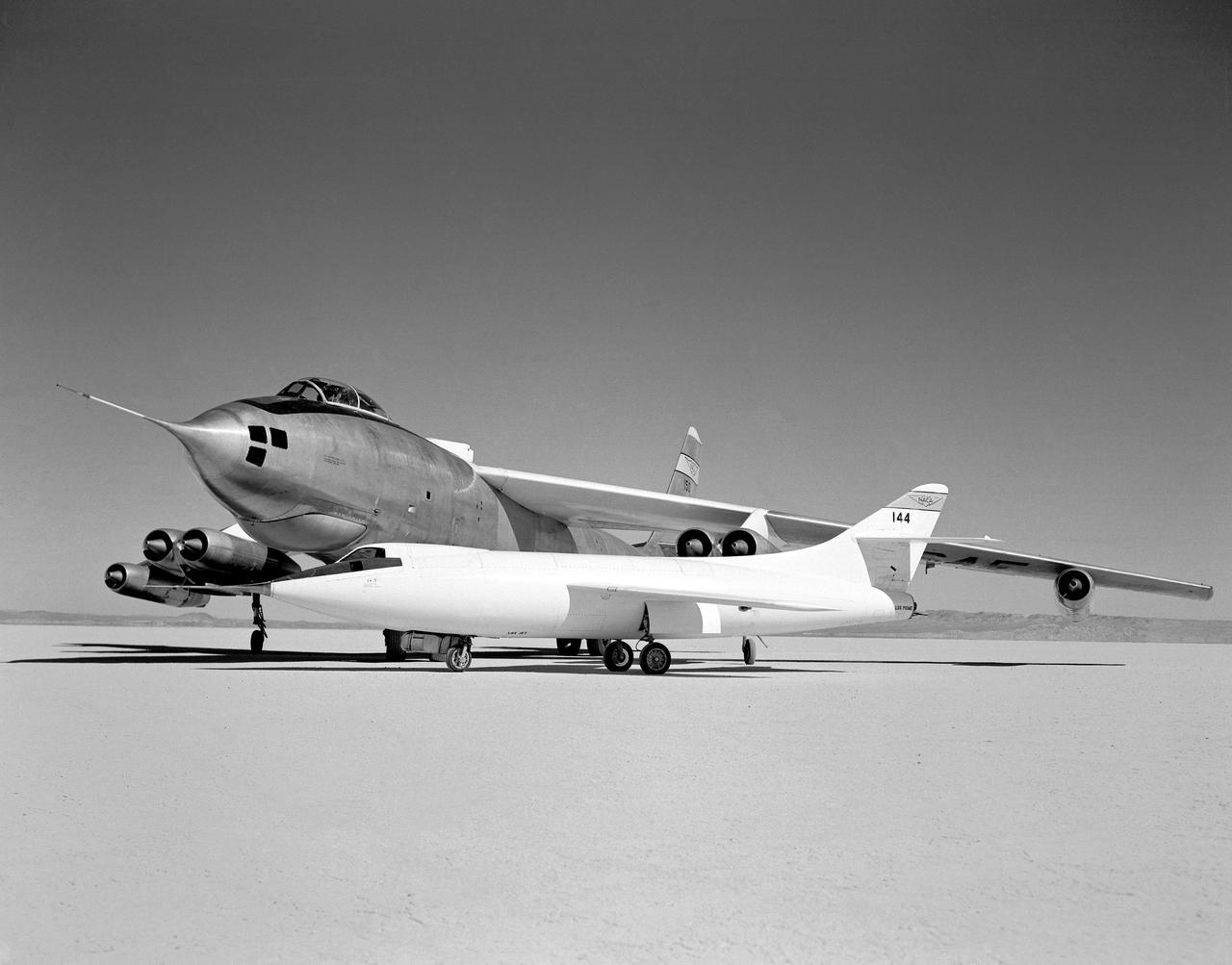
In 1954 this photo of two swept wing airplanes was taken on the ramp of NACA High-Speed Flight Research Station. The Douglas D-558-ll is a research aircraft while the Boeing B-47A Stratojet is a production bomber and very different in size. Both contributed to the studies for swept back wing research.
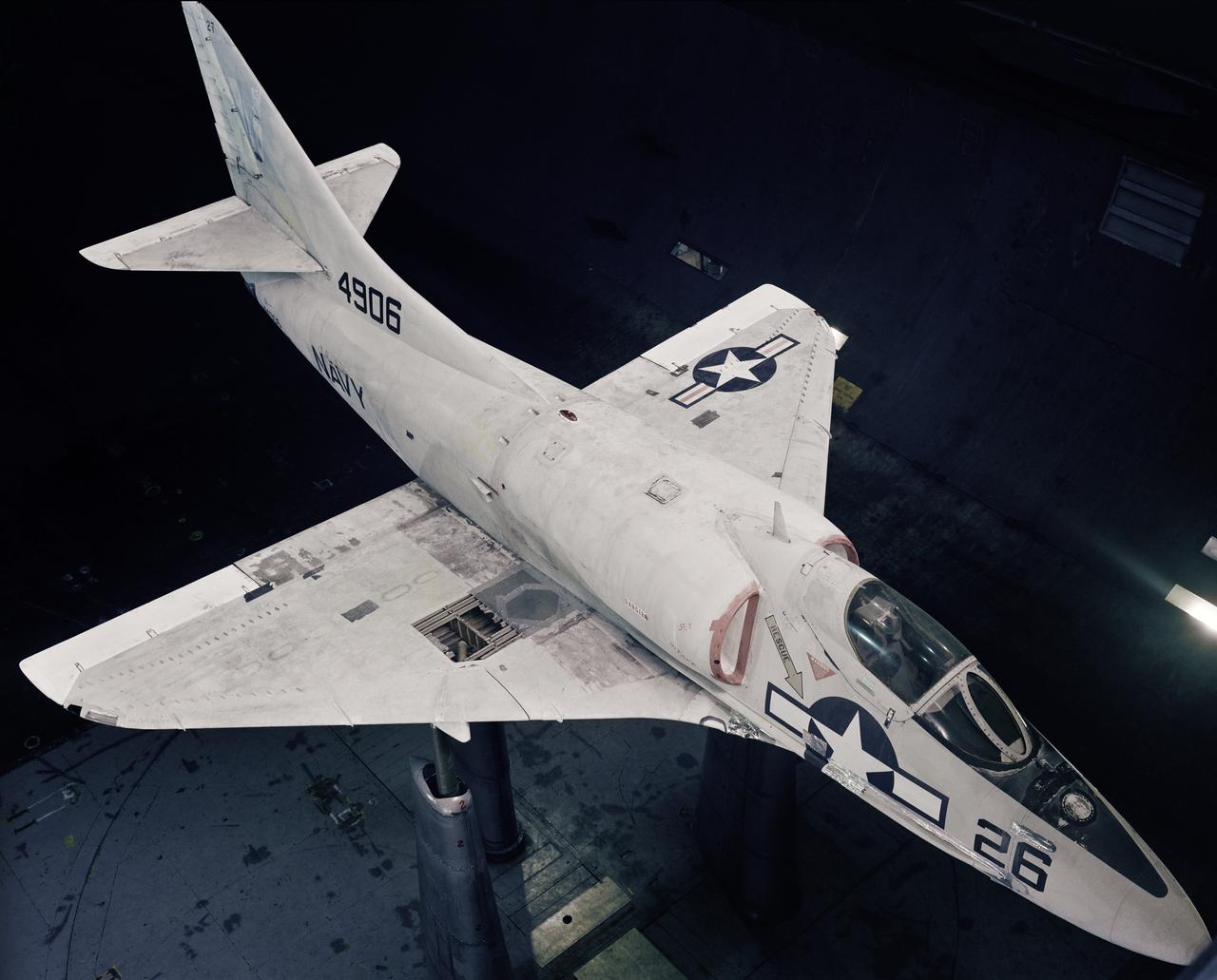
Battle Damage test conducted in the Ames 40x80ft. Subsonic Wind Tunnel, Ames Research Center Moffett Field, CA on the Navy A-4B airplane (The delta winged, single-engined Skyhawk was designed and produced by Douglas Aircraft Company model I.d. Numbers 4906 and 3A244)
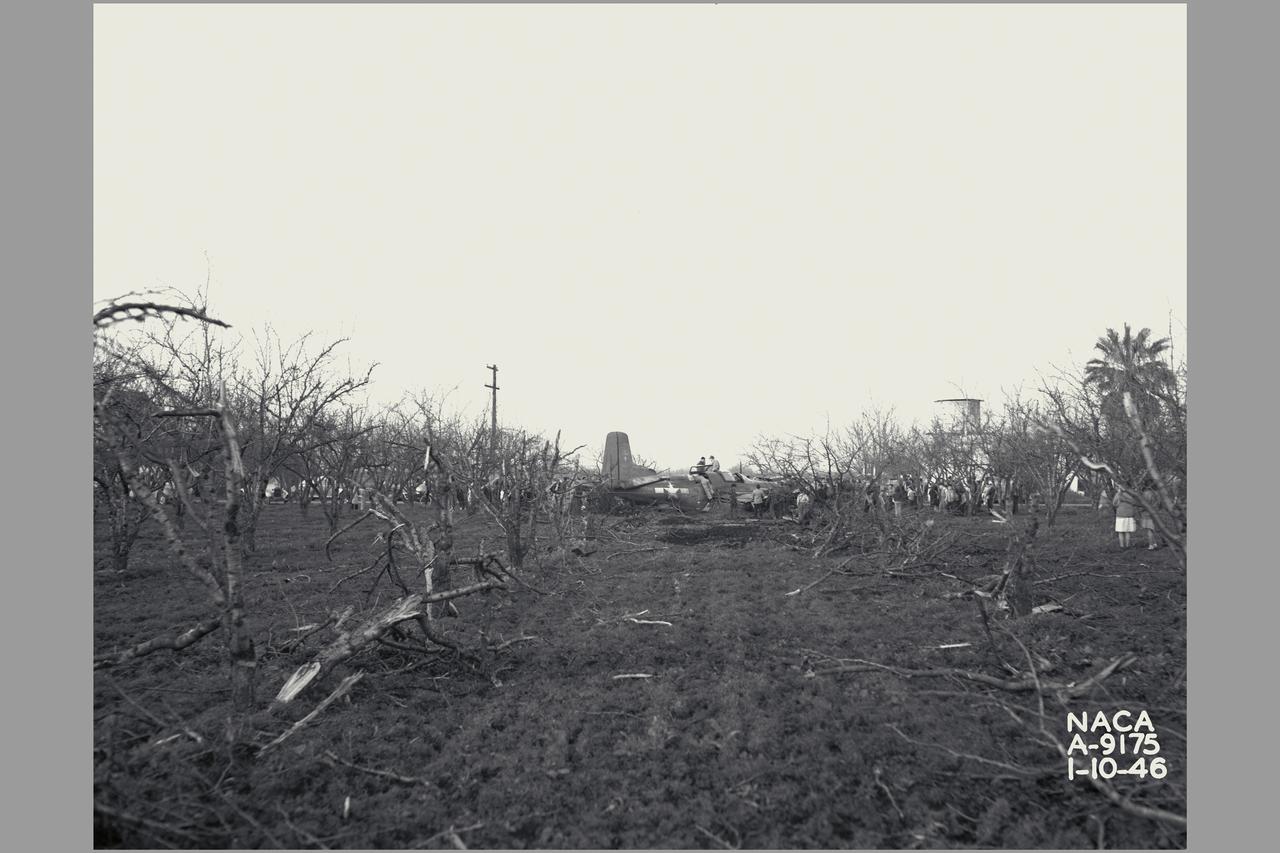
Crash of Douglas XSB2D-1 (Bu. No. 03552) airplane in a Sunnyvale , CA prune orchard caused by engine failure. Note the spectator crawling into the rear cockpit to remove the clock . Note: Used in publication Flight Research at Ames; 57 Years of Development and Validation of Aeronautical Technology NASA SP-1998-3300 fig.19
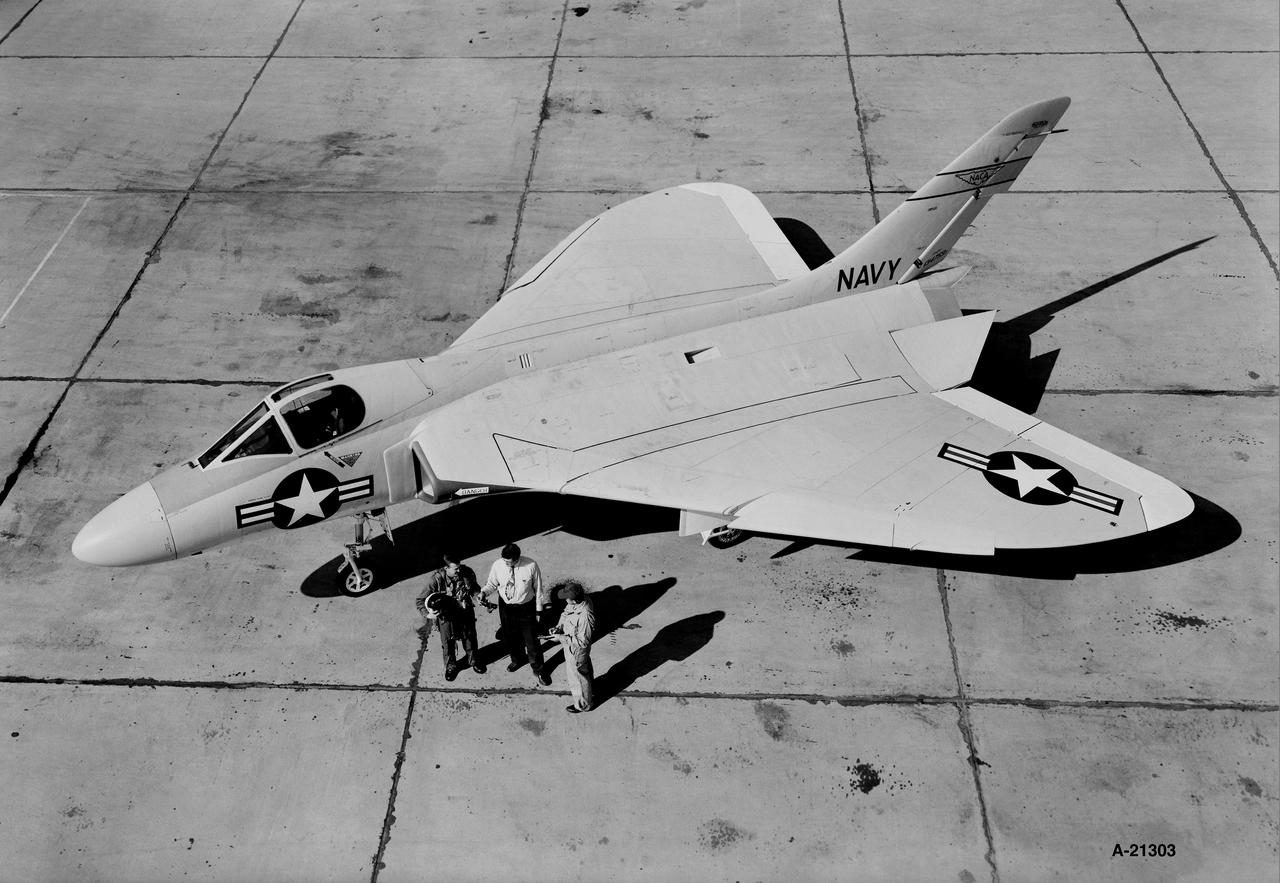
Douglas F4D-1 (Bu. No. 134759) Skyray Plan view of airplane with Ames Pilot Don R. Heinle, Engineer L. Stewart Rolls and Crew Chief Walter Liewar. Note: Used in Flight Research at Ames; 57 Years of Development and Validation of Aeronautical Technology NASA SP-1998-3300 fig.28
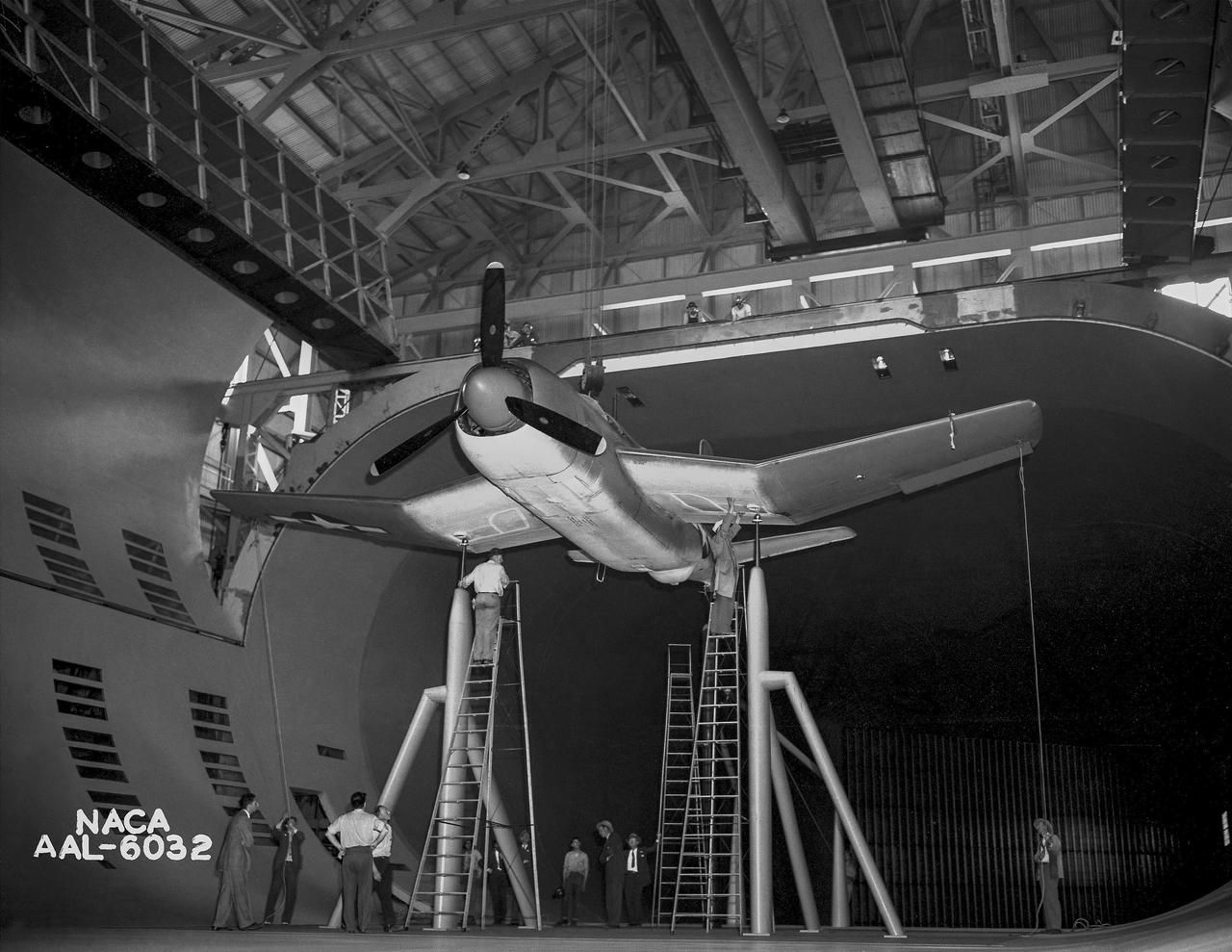
Test section of the Ames 40 x 80 foot wind tunnel with the overhead doors open. XSB2D-1 airplane being lowered onto the struts by the overhead crane. Mechanics and engineers on orchard ladders aligning the model with ball sockets on the struts. The Douglas BTD Destroyer was an American dive/ torpedo bomber developed for the United States Navy during World War II.
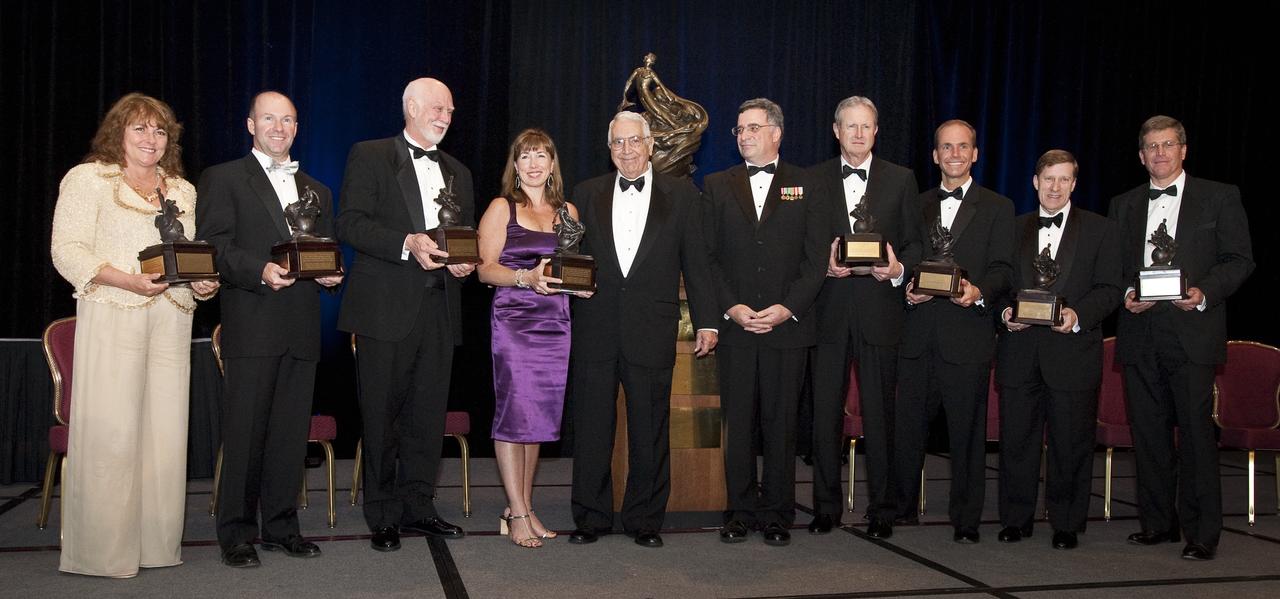
NASA and the International Space Station (ISS) team is selected as the recipient of the 2009 Robert J. Collier Trophy on Thursday, May 13, 2010, in Arlington, VA. Lori Garver, fourth from left, Deputy Administrator of NASA accepts the Collier Trophy on behalf of NASA. The ISS Team nomination consisted NASA, The Boeing Company, Draper Laboratory, Honeywell, Lockheed Martin Corporation, United Space Alliance, and United Technologies/Hamilton Sunstrand. Seen from left are: Virginia Barnes, President and CEO, United Space Alliance; Alain Bellemare, President, United Technologies/Hamilton Sunstrand; James Crocker, VP and GM, Sensing & Exploration, Lockheed Martin; Lori Garver; Wayne Boyne, Chairman, National Aeronautic Association; Jonathan Gaffney, President, National Aeronautic Association; Jim Albaugh, Executive VP of The Boeing Company, President and CEO of Boeing Commercial Airplanes; Dennis Muilenberg, Executive Vice President, The Boeing Company, President and CEO, Boeing Defense, Space and Security; James Shields, President and CEO, Draper Laboratory and Dave Douglas, Vice President, Space, Missiles and Munitions, Honeywell. Photo Credit: (NASA/Carla Cioffi)
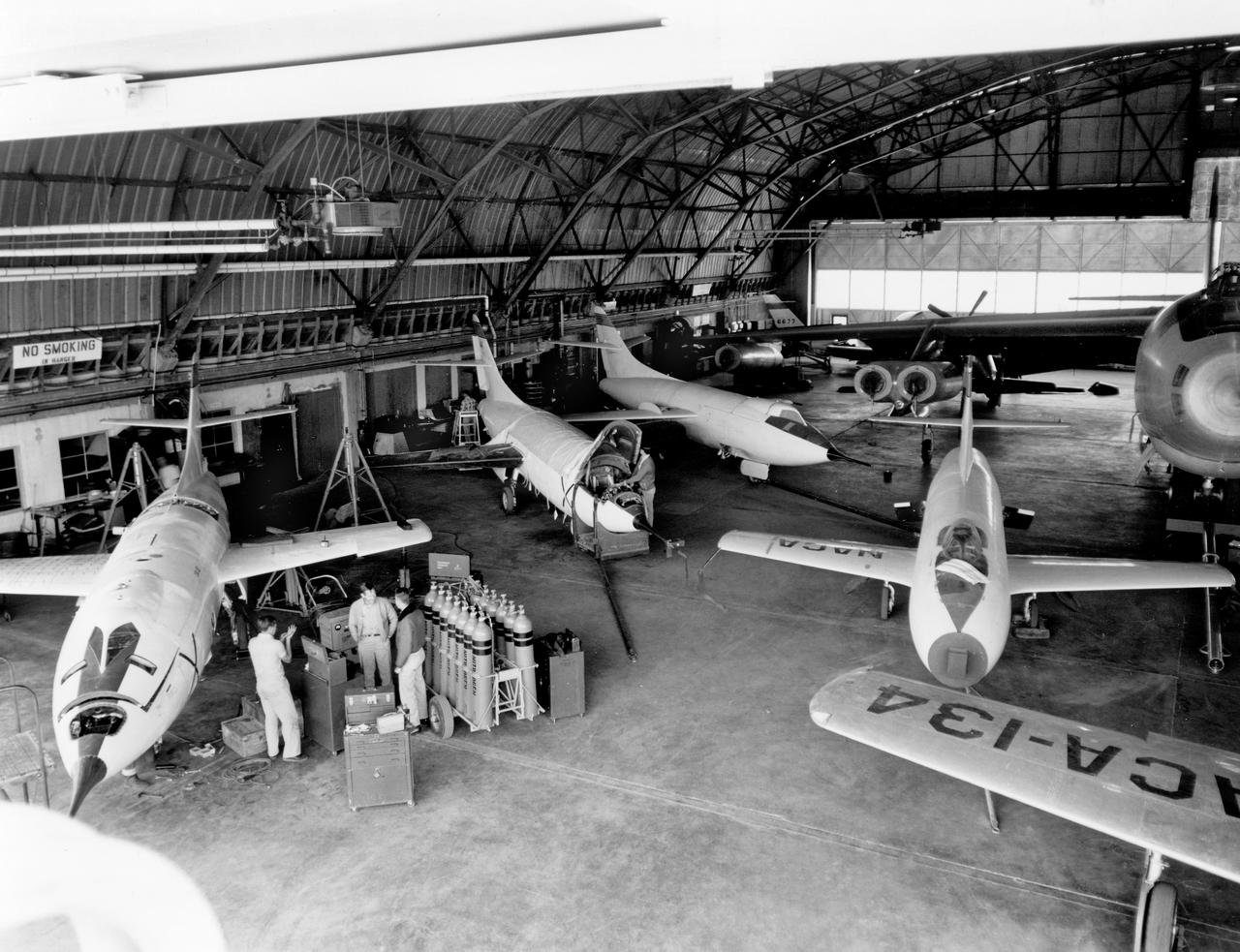
The aircraft in this 1953 photo of the National Advisory Committee for Aeronautics (NACA) hangar at South Base of Edwards Air Force Base showed the wide range of research activities being undertaken. On the left side of the hangar are the three D-558-2 research aircraft. These were designed to test swept wings at supersonic speeds approaching Mach 2. The front D-558-2 is the third built (NACA 145/Navy 37975). It has been modified with a leading-edge chord extension. This was one of a number of wing modifications, using different configurations of slats and/or wing fences, to ease the airplane's tendency to pitch-up. NACA 145 had both a jet and a rocket engine. The middle aircraft is NACA 144 (Navy 37974), the second built. It was all-rocket powered, and Scott Crossfield made the first Mach 2 flight in this aircraft on November 20, 1953. The aircraft in the back is D-558-2 number 1. NACA 143 (Navy 37973) was also carried both a jet and a rocket engine in 1953. It had been used for the Douglas contractor flights, then was turned over to the NACA. The aircraft was not converted to all-rocket power until June 1954. It made only a single NACA flight before NACA's D-558-2 program ended in 1956. Beside the three D-558-2s is the third D-558-1. Unlike the supersonic D-558-2s, it was designed for flight research at transonic speeds, up to Mach 1. The D-558-1 was jet-powered, and took off from the ground. The D-558-1's handling was poor as it approached Mach 1. Given the designation NACA 142 (Navy 37972), it made a total of 78 research flights, with the last in June 1953. In the back of the hangar is the X-4 (Air Force 46-677). This was a Northrop-built research aircraft which tested a swept wing design without horizontal stabilizers. The aircraft proved unstable in flight at speeds above Mach 0.88. The aircraft showed combined pitching, rolling, and yawing motions, and the design was considered unsuitable. The aircraft, the second X-4 built, was then used as a pilot traine