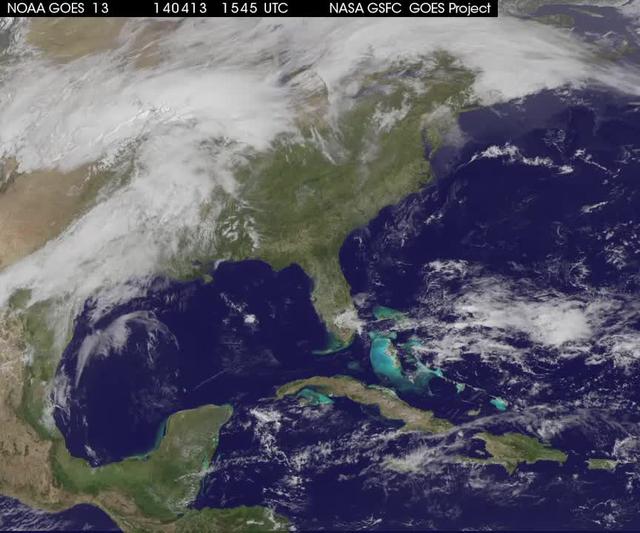
NOAA's GOES-13 satellite saw a large pesky front, one that stretched from Maine to Louisiana on April 13 at 16:15 UTC/12:15 p.m. EDT to April 16 at 12:15 p.m. EDT. This weather pattern did not bode well for people who wanted to see the lunar eclipse on April 15. The GOES-13 satellite images and animations are created at NASA/NOAA's GOES Project at the NASA Goddard Space Flight Center, Greenbelt, Md. <b><a href="http://goes.gsfc.nasa.gov/" rel="nofollow">Credit: NOAA/NASA GOES Project</a></b> <b><a href="http://www.nasa.gov/audience/formedia/features/MP_Photo_Guidelines.html" rel="nofollow">NASA image use policy.</a></b> <b><a href="http://www.nasa.gov/centers/goddard/home/index.html" rel="nofollow">NASA Goddard Space Flight Center</a></b> enables NASA’s mission through four scientific endeavors: Earth Science, Heliophysics, Solar System Exploration, and Astrophysics. Goddard plays a leading role in NASA’s accomplishments by contributing compelling scientific knowledge to advance the Agency’s mission. <b>Follow us on <a href="http://twitter.com/NASAGoddardPix" rel="nofollow">Twitter</a></b> <b>Like us on <a href="http://www.facebook.com/pages/Greenbelt-MD/NASA-Goddard/395013845897?ref=tsd" rel="nofollow">Facebook</a></b> <b>Find us on <a href="http://instagram.com/nasagoddard?vm=grid" rel="nofollow">Instagram</a></b>
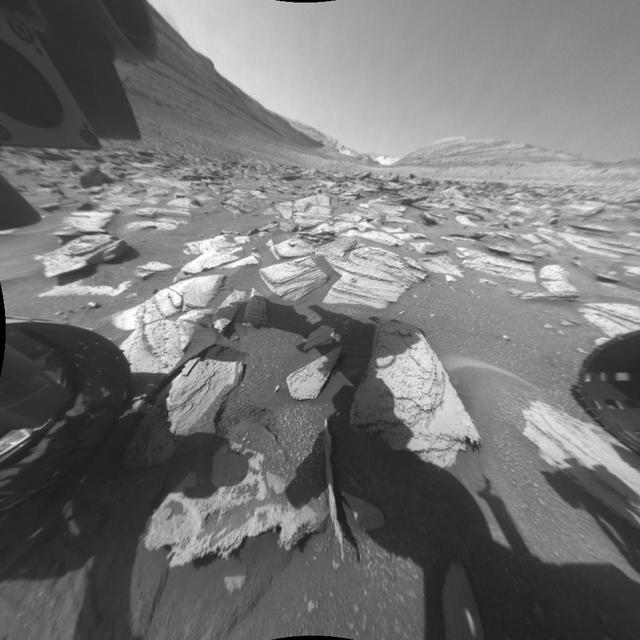
NASA's Curiosity Mars rover recorded two 25-frame videos showing the passage of 12 hours on Nov. 8, 2023, the 4,002nd Martian day, or sol, of the mission. The commands to capture the images that make up these videos were among the last that engineers beamed up to the rover before the start of Mars solar conjunction – a period of several weeks when the Sun is between Earth and Mars. Because the Sun's plasma can interfere with radio communications, NASA's Mars missions stand down from sending commands to their spacecraft during conjunction, bringing the missions to a temporary standstill. (The spacecraft still radio back their health status during this period.) The images were captured with Curiosity's front and rear Hazard-Avoidance Cameras, or Hazcams. Rover drivers use these black-and-white cameras to plan safe drive routes. A long series of images can be put together to create a video so that scientists can look for passing clouds or dust devils, which teach them more about the Martian environment. The perfect time for doing this type of work is when Curiosity is less active for long stretches, as it was during Mars solar conjunction. The lack of robotic arm motion and driving during conjunction allowed the Hazcams to image for 12 hours of a day – from 5:30 a.m. to 5:30 p.m. local Mars time – for the first time. While these Hazcam videos didn't reveal any clouds or dust activity, they did capture the passage of time as the Sun rose and set. The main video shows the front Hazcam's view looking southeast along Gediz Vallis, a valley found on Mount Sharp, the base of which Curiosity has been ascending since 2014. The sky brightens during sunrise in the east (left of image), and the shadow of the rover's stationary 7-foot (2-meter) robotic arm moves across the ground like that of a sundial. The rover's two front wheels are visible on each side of the frame; at upper left is a circular calibration target mounted on the shoulder of the robotic arm. Engineers use the target to test the accuracy of the Alpha Particle X-ray Spectrometer, an instrument that detects chemical elements on the Martian surface. In the middle of the day, the camera's autoexposure algorithm settles on exposure times of around one-third of a second; as evening turns to night, that exposure time grows to more than a minute, causing typical sensor noise known as "hot pixels" that appear as snow across the final image. Video available at https://photojournal.jpl.nasa.gov/catalog/PIA26209
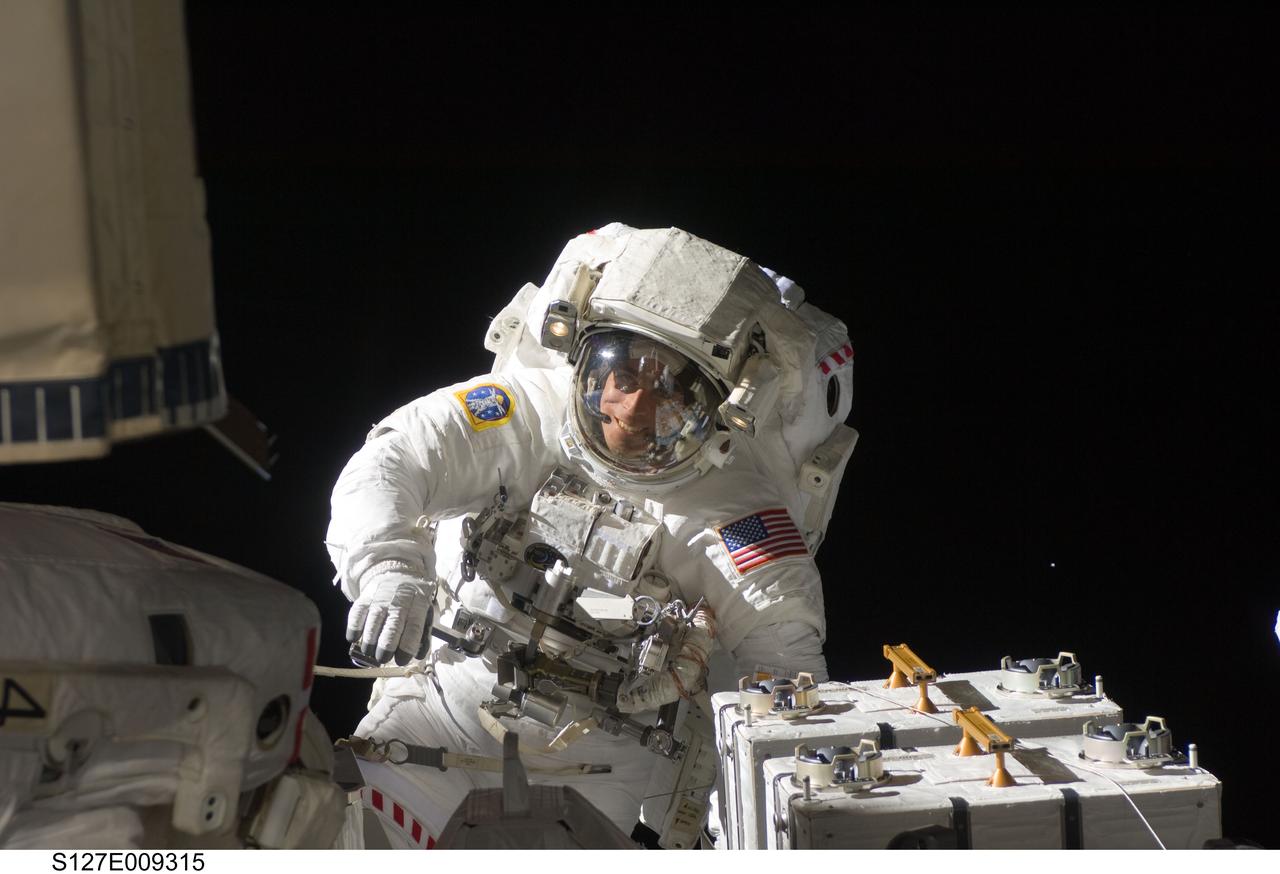
S127-E-009315 (27 July 2009) --- Astronaut Christopher Cassidy, STS-127 mission specialist, participates in the mission's fifth and final session of extravehicular activity (EVA) as construction and maintenance continue on the International Space Station. During the four-hour, 54-minute spacewalk, Cassidy and astronaut Tom Marshburn (out of frame), mission specialist, secured multi-layer insulation around the Special Purpose Dexterous Manipulator known as Dextre, split out power channels for two space station Control Moment Gyroscopes, installed video cameras on the front and back of the new Japanese Exposed Facility and performed a number of “get ahead” tasks, including tying down some cables and installing handrails and a portable foot restraint to aid future spacewalkers.
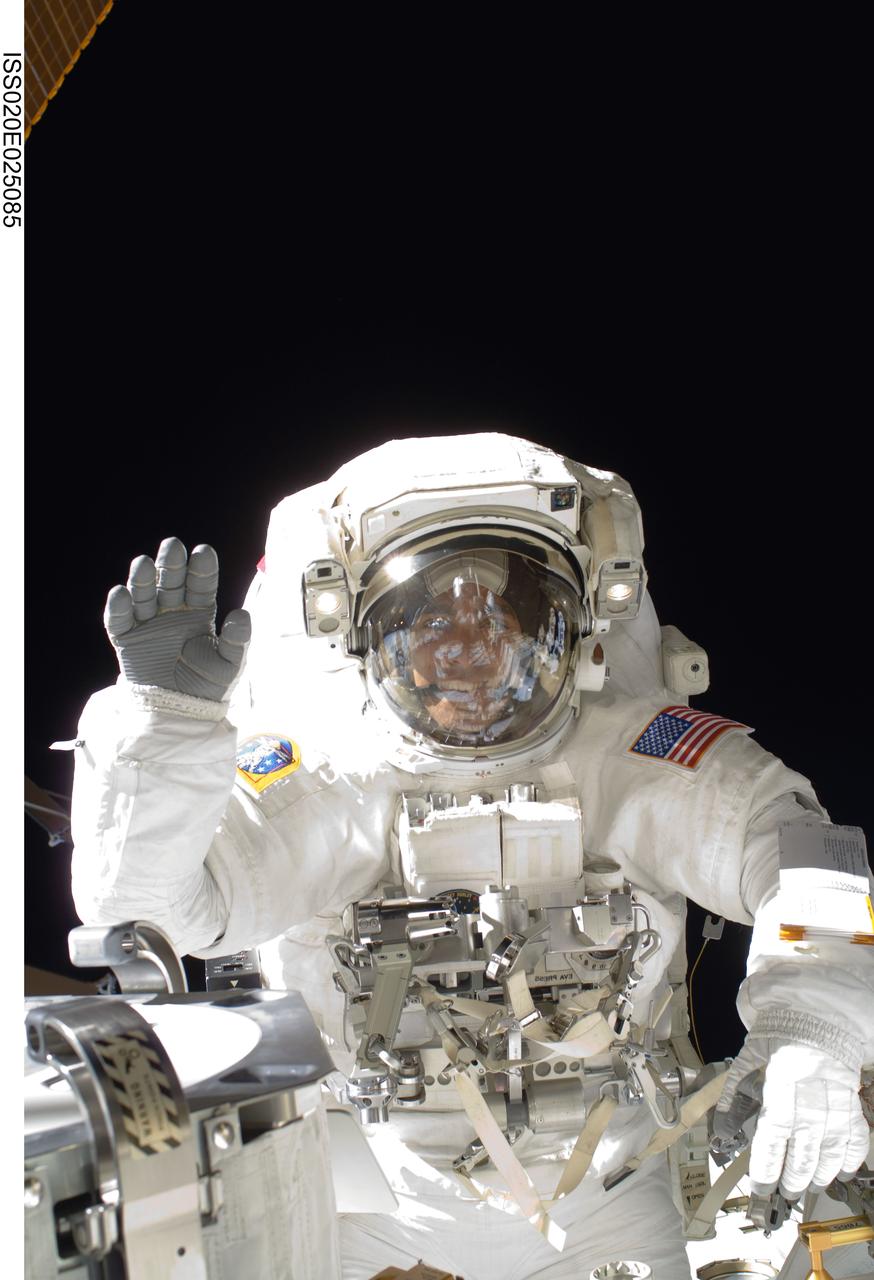
ISS020-E-025085 (27 July 2009) --- Astronaut Christopher Cassidy, STS-127 mission specialist, participates in the mission's fifth and final session of extravehicular activity (EVA) as construction and maintenance continue on the International Space Station. During the four-hour, 54-minute spacewalk, Cassidy and astronaut Tom Marshburn (out of frame), mission specialist, secured multi-layer insulation around the Special Purpose Dexterous Manipulator known as Dextre, split out power channels for two space station Control Moment Gyroscopes, installed video cameras on the front and back of the new Japanese Exposed Facility and performed a number of ?get ahead? tasks, including tying down some cables and installing handrails and a portable foot restraint to aid future spacewalkers.
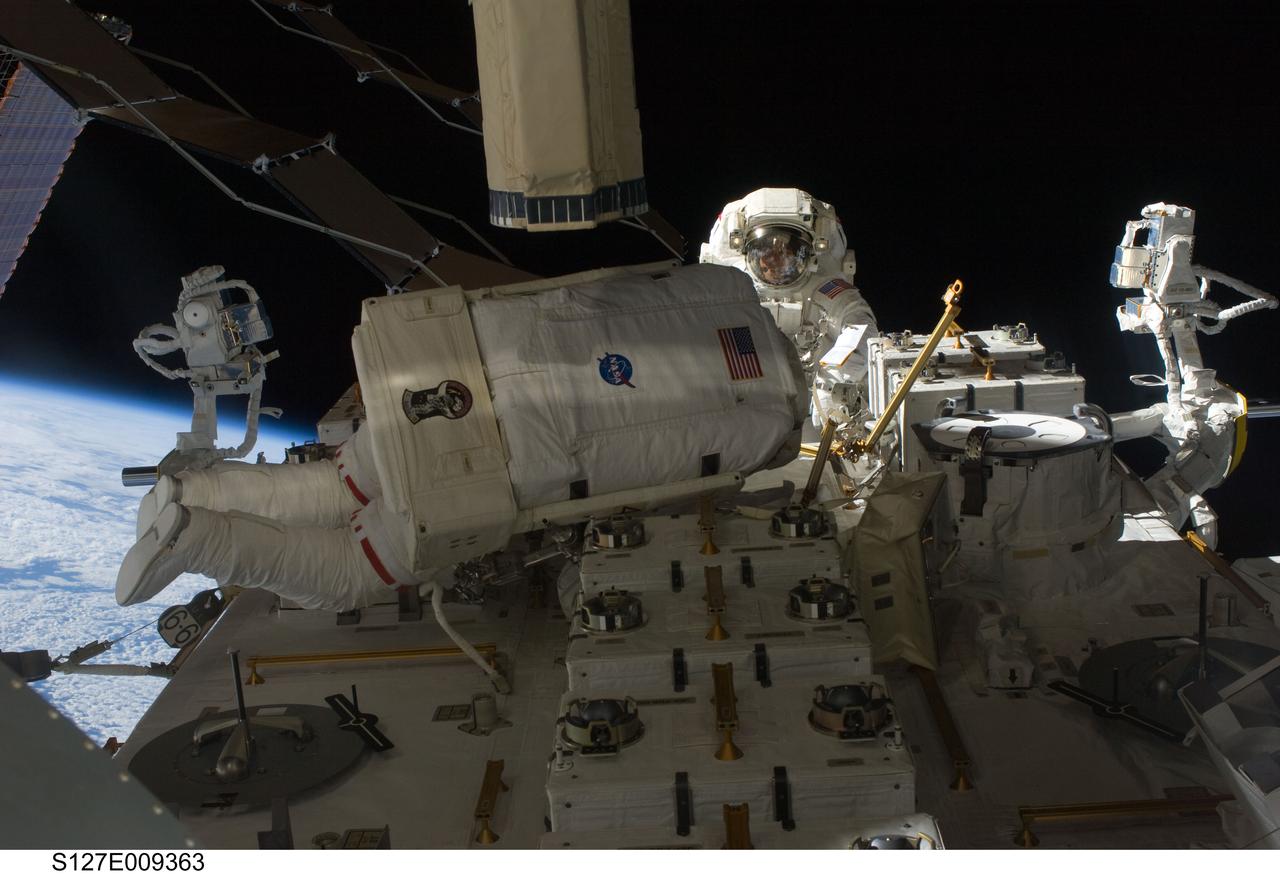
S127-E-009363 (27 July 2009) --- Astronauts Tom Marshburn (foreground) and Christopher Cassidy, both STS-127 mission specialists, participate in the mission's fifth and final session of extravehicular activity (EVA) as construction and maintenance continue on the International Space Station. During the four-hour, 54-minute spacewalk, Marshburn and Cassidy secured multi-layer insulation around the Special Purpose Dexterous Manipulator known as Dextre, split out power channels for two space station Control Moment Gyroscopes, installed video cameras on the front and back of the new Japanese Exposed Facility and performed a number of “get ahead” tasks, including tying down some cables and installing handrails and a portable foot restraint to aid future spacewalkers.
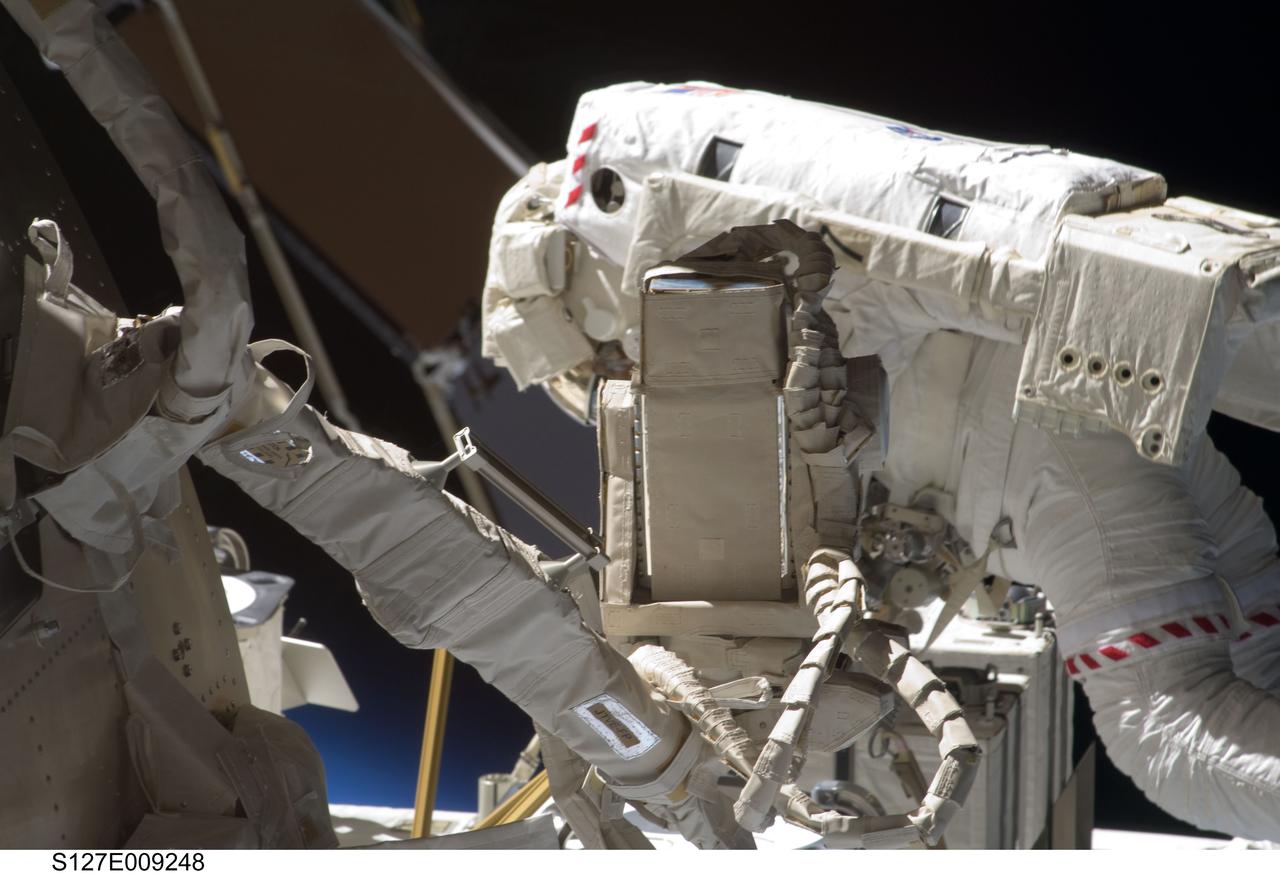
S127-E-009248 (27 July 2009) --- Astronaut Christopher Cassidy, STS-127 mission specialist, participates in the mission's fifth and final session of extravehicular activity (EVA) as construction and maintenance continue on the International Space Station. During the four-hour, 54-minute spacewalk, Cassidy and astronaut Tom Marshburn (out of frame), mission specialist, secured multi-layer insulation around the Special Purpose Dexterous Manipulator known as Dextre, split out power channels for two space station Control Moment Gyroscopes, installed video cameras on the front and back of the new Japanese Exposed Facility and performed a number of “get ahead” tasks, including tying down some cables and installing handrails and a portable foot restraint to aid future spacewalkers.
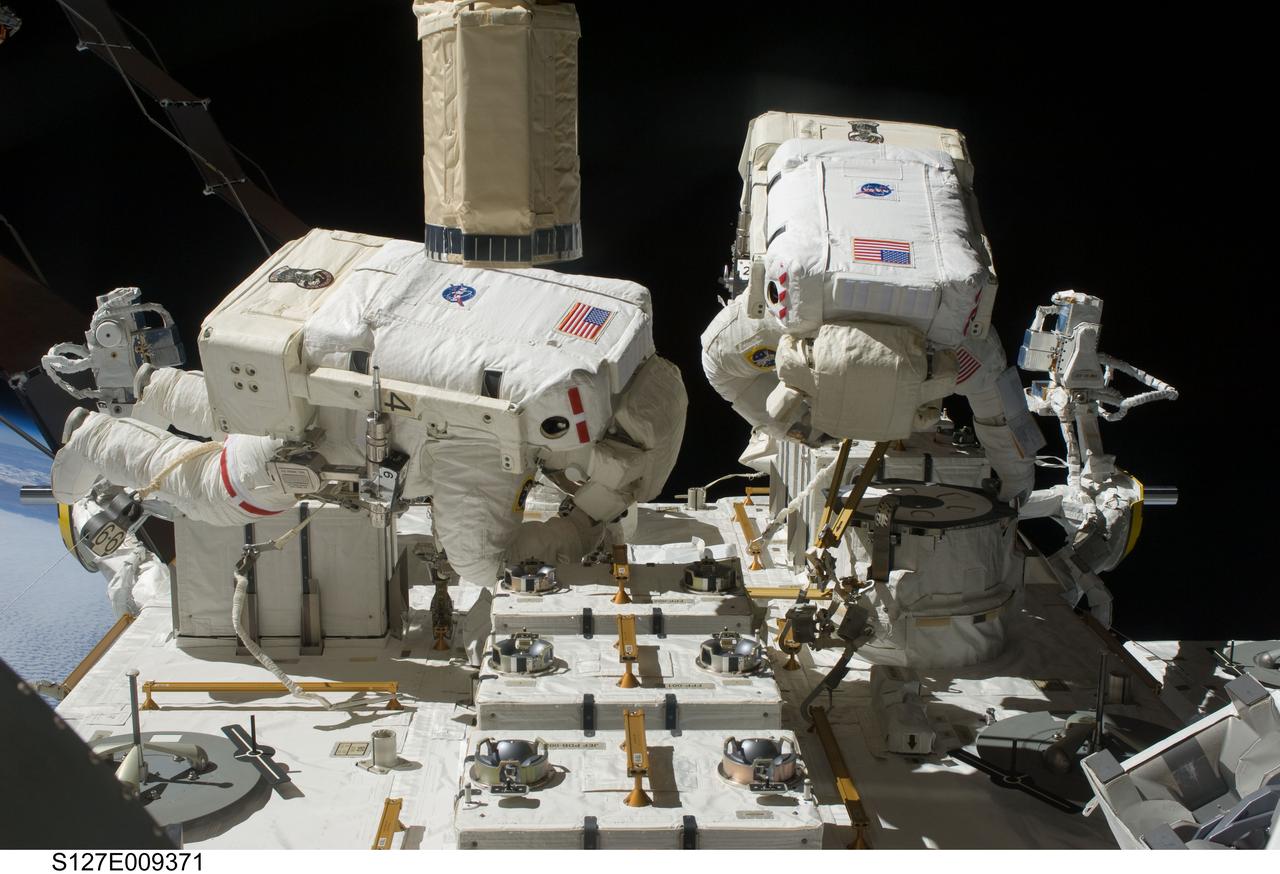
S127-E-009371 (27 July 2009) --- Astronauts Tom Marshburn (left) and Christopher Cassidy, both STS-127 mission specialists, participate in the mission's fifth and final session of extravehicular activity (EVA) as construction and maintenance continue on the International Space Station. During the four-hour, 54-minute spacewalk, Marshburn and Cassidy secured multi-layer insulation around the Special Purpose Dexterous Manipulator known as Dextre, split out power channels for two space station Control Moment Gyroscopes, installed video cameras on the front and back of the new Japanese Exposed Facility and performed a number of “get ahead” tasks, including tying down some cables and installing handrails and a portable foot restraint to aid future spacewalkers.
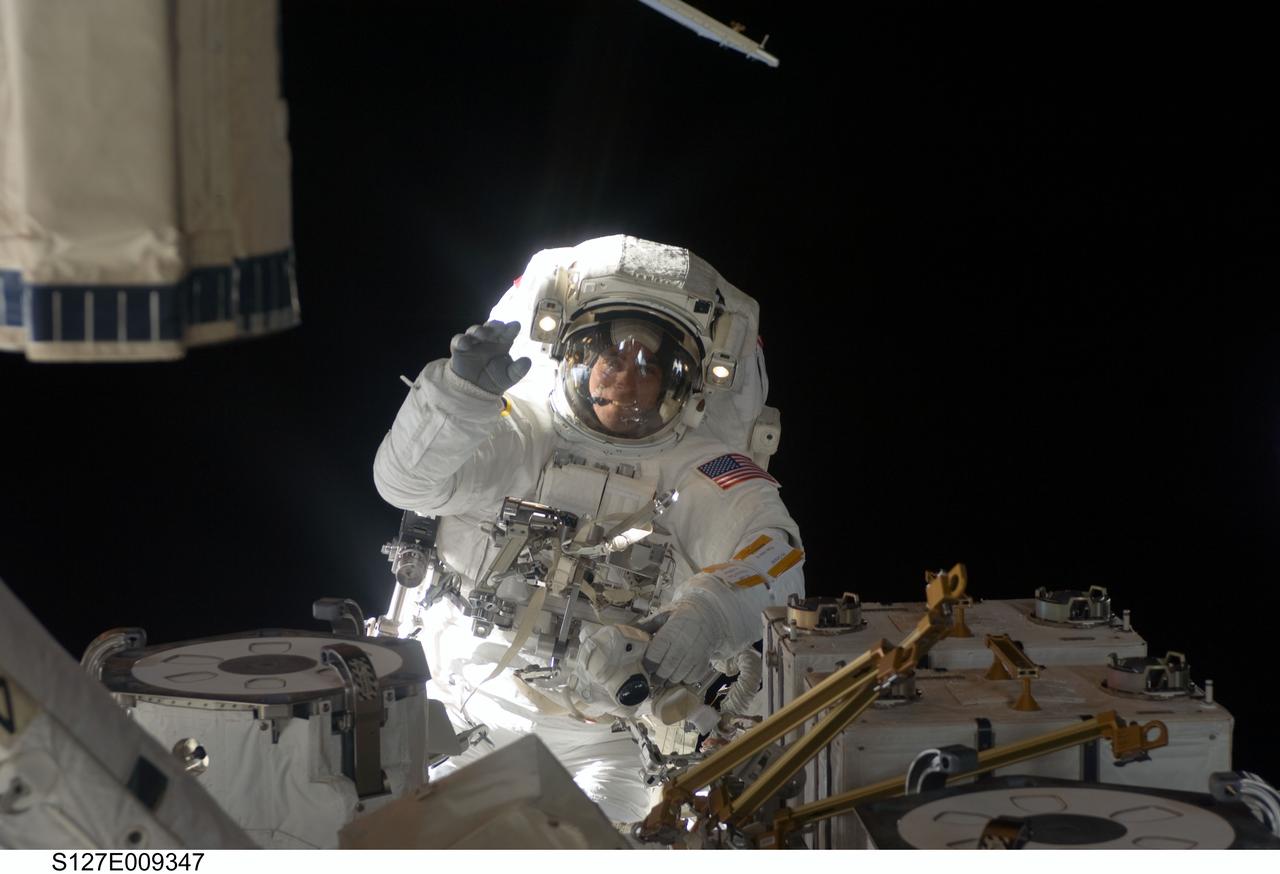
S127-E-009347 (27 July 2009) --- Astronaut Christopher Cassidy, STS-127 mission specialist, participates in the mission's fifth and final session of extravehicular activity (EVA) as construction and maintenance continue on the International Space Station. During the four-hour, 54-minute spacewalk, Cassidy and astronaut Tom Marshburn (out of frame), mission specialist, secured multi-layer insulation around the Special Purpose Dexterous Manipulator known as Dextre, split out power channels for two space station Control Moment Gyroscopes, installed video cameras on the front and back of the new Japanese Exposed Facility and performed a number of “get ahead” tasks, including tying down some cables and installing handrails and a portable foot restraint to aid future spacewalkers.
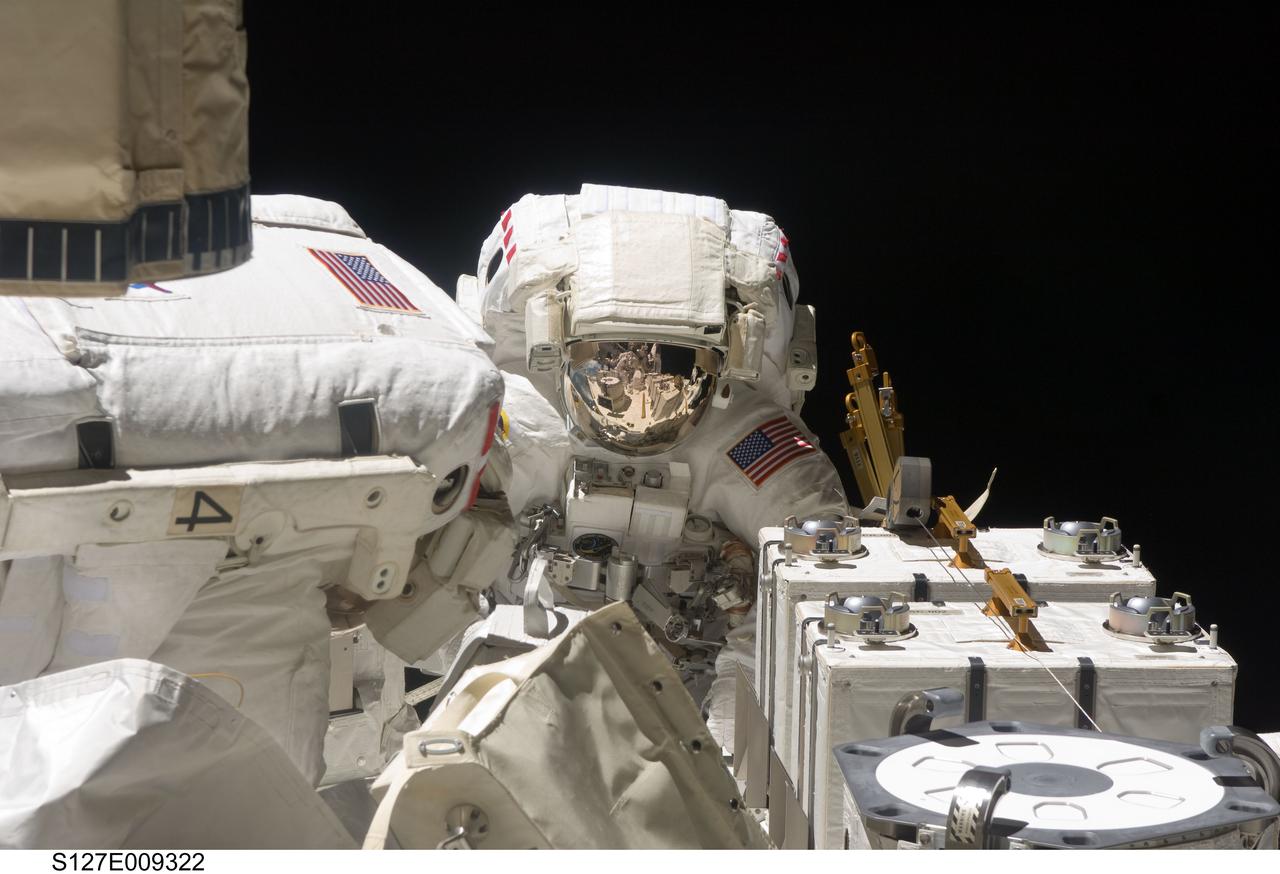
S127-E-009322 (27 July 2009) --- Astronauts Tom Marshburn (left) and Christopher Cassidy, both STS-127 mission specialists, participate in the mission's fifth and final session of extravehicular activity (EVA) as construction and maintenance continue on the International Space Station. During the four-hour, 54-minute spacewalk, Marshburn and Cassidy secured multi-layer insulation around the Special Purpose Dexterous Manipulator known as Dextre, split out power channels for two space station Control Moment Gyroscopes, installed video cameras on the front and back of the new Japanese Exposed Facility and performed a number of “get ahead” tasks, including tying down some cables and installing handrails and a portable foot restraint to aid future spacewalkers.
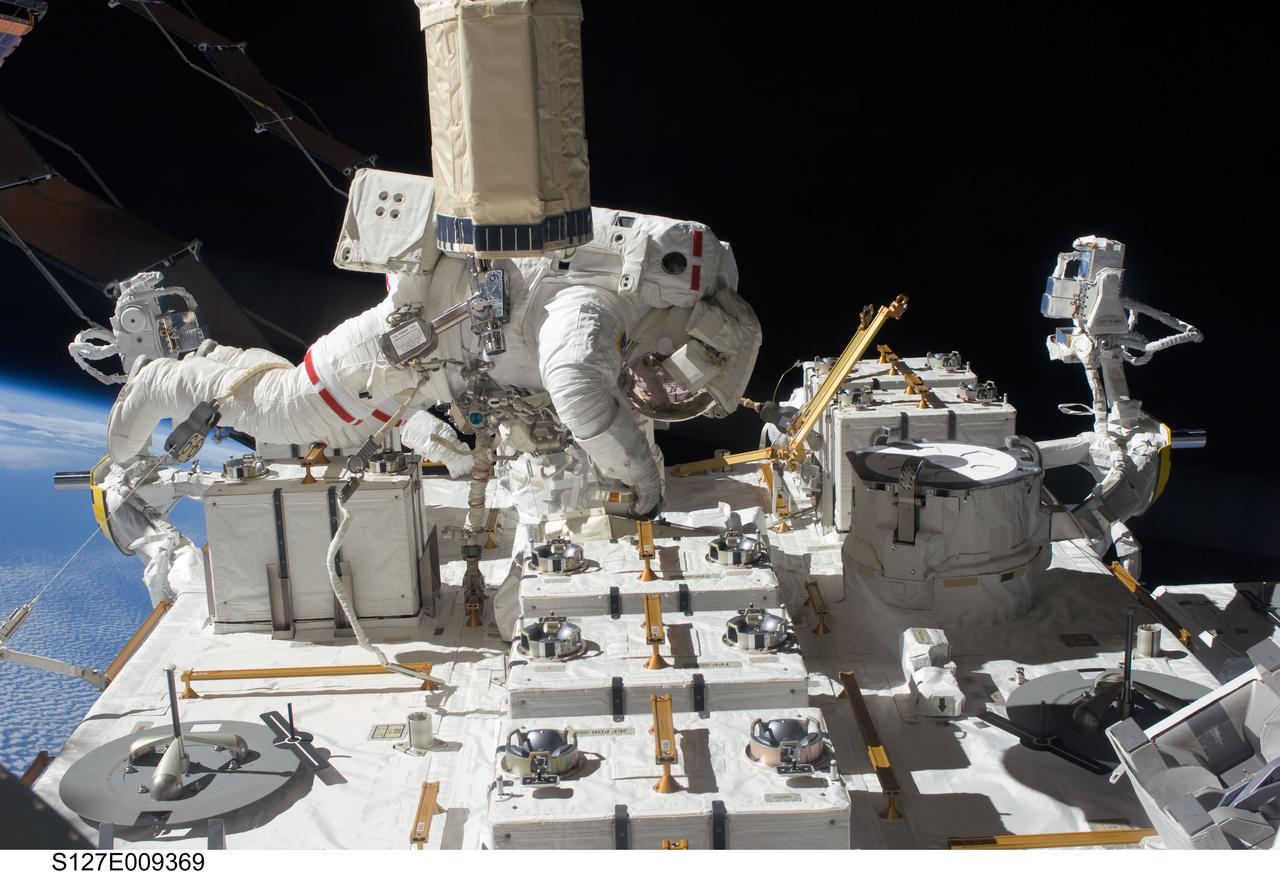
S127-E-009369 (27 July 2009) --- Astronaut Tom Marshburn, STS-127 mission specialist, participates in the mission's fifth and final session of extravehicular activity (EVA) as construction and maintenance continue on the International Space Station. During the four-hour, 54-minute spacewalk, Marshburn and astronaut Christopher Cassidy (out of frame), mission specialist, secured multi-layer insulation around the Special Purpose Dexterous Manipulator known as Dextre, split out power channels for two space station Control Moment Gyroscopes, installed video cameras on the front and back of the new Japanese Exposed Facility and performed a number of “get ahead” tasks, including tying down some cables and installing handrails and a portable foot restraint to aid future spacewalkers.
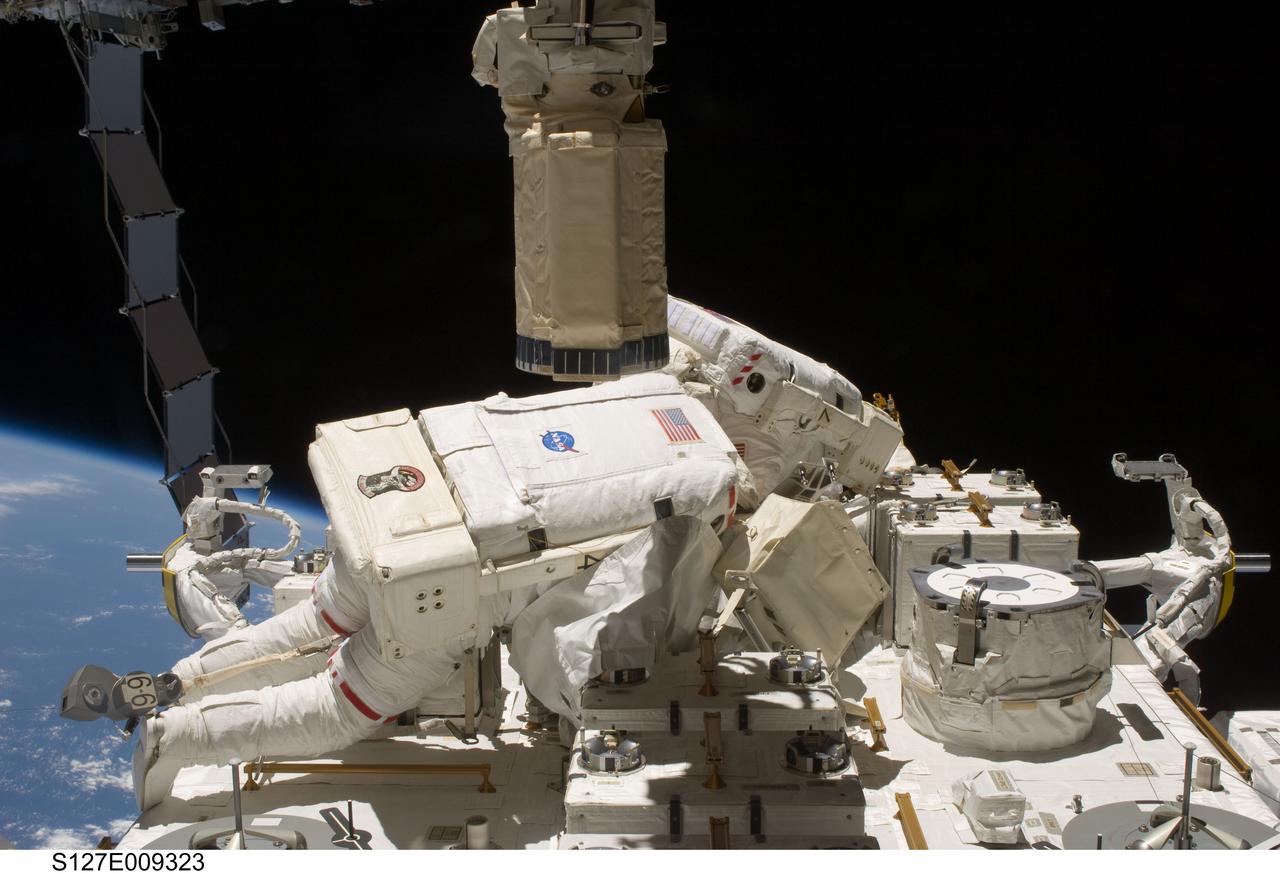
S127-E-009323 (27 July 2009) --- Astronauts Tom Marshburn (foreground) and Christopher Cassidy, both STS-127 mission specialists, participate in the mission's fifth and final session of extravehicular activity (EVA) as construction and maintenance continue on the International Space Station. During the four-hour, 54-minute spacewalk, Marshburn and Cassidy secured multi-layer insulation around the Special Purpose Dexterous Manipulator known as Dextre, split out power channels for two space station Control Moment Gyroscopes, installed video cameras on the front and back of the new Japanese Exposed Facility and performed a number of “get ahead” tasks, including tying down some cables and installing handrails and a portable foot restraint to aid future spacewalkers.
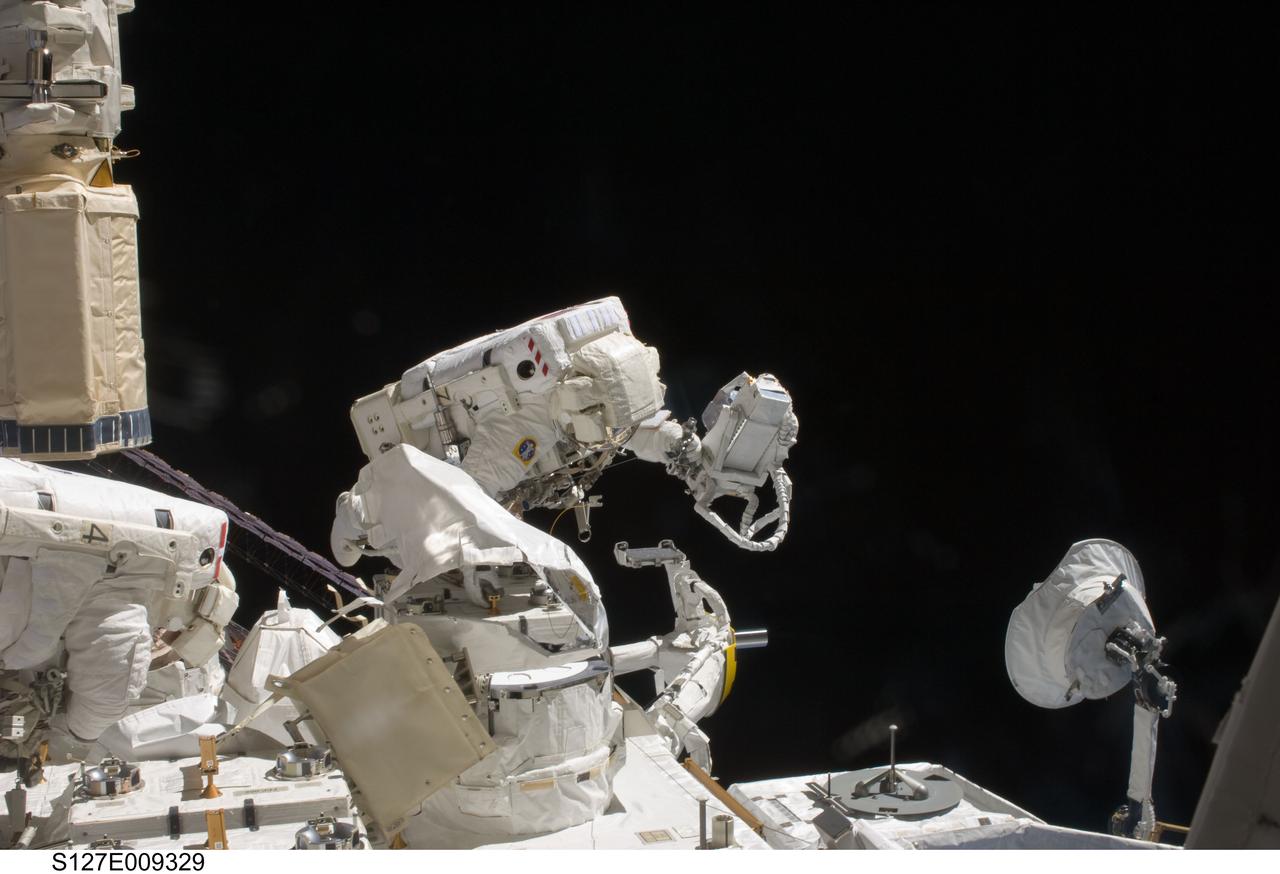
S127-E-009329 (27 July 2009) --- Astronauts Christopher Cassidy and Tom Marshburn (partially out of frame at left), both STS-127 mission specialists, participate in the mission's fifth and final session of extravehicular activity (EVA) as construction and maintenance continue on the International Space Station. During the four-hour, 54-minute spacewalk, Marshburn and Cassidy secured multi-layer insulation around the Special Purpose Dexterous Manipulator known as Dextre, split out power channels for two space station Control Moment Gyroscopes, installed video cameras on the front and back of the new Japanese Exposed Facility and performed a number of “get ahead” tasks, including tying down some cables and installing handrails and a portable foot restraint to aid future spacewalkers.
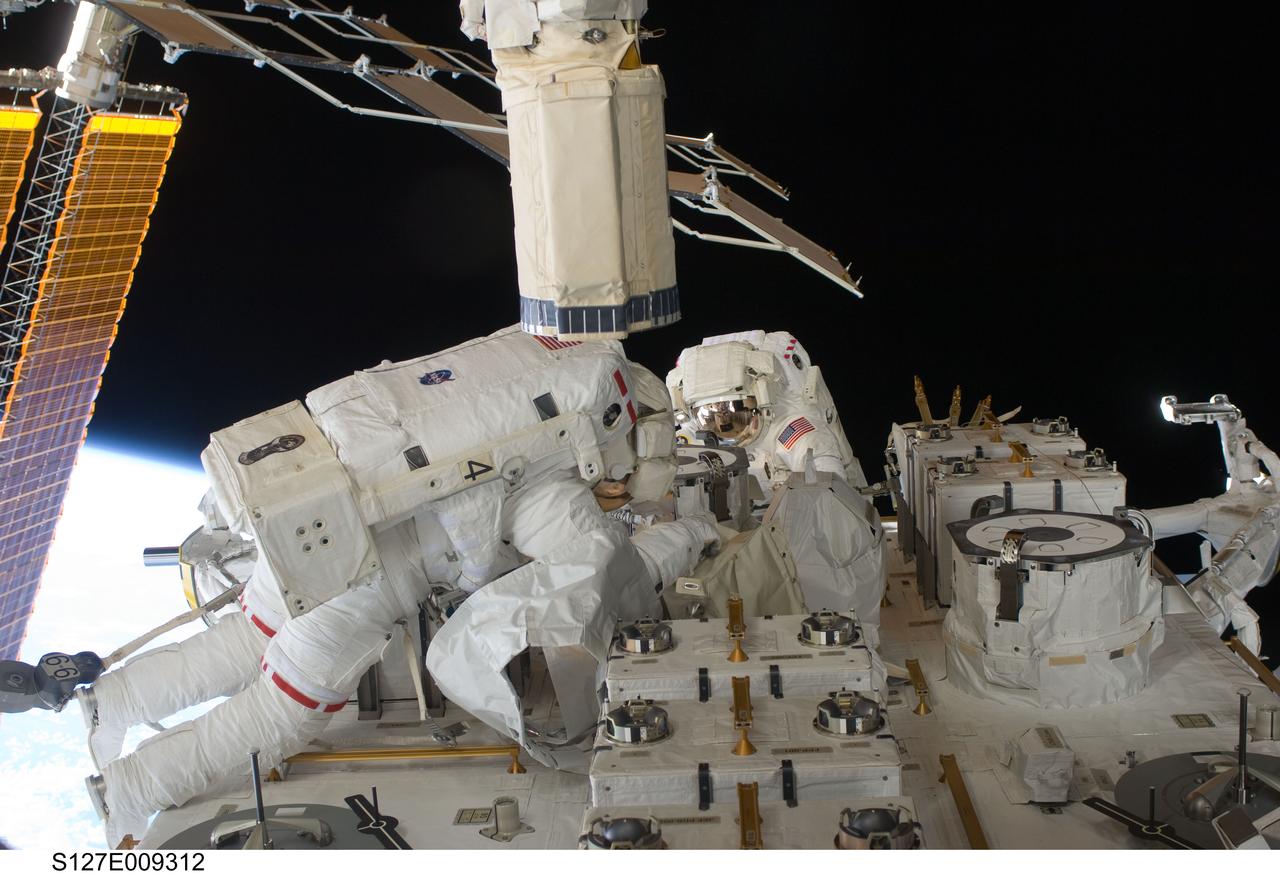
S127-E-009312 (27 July 2009) --- Astronauts Tom Marshburn (left) and Christopher Cassidy, both STS-127 mission specialists, participate in the mission's fifth and final session of extravehicular activity (EVA) as construction and maintenance continue on the International Space Station. During the four-hour, 54-minute spacewalk, Marshburn and Cassidy secured multi-layer insulation around the Special Purpose Dexterous Manipulator known as Dextre, split out power channels for two space station Control Moment Gyroscopes, installed video cameras on the front and back of the new Japanese Exposed Facility and performed a number of “get ahead” tasks, including tying down some cables and installing handrails and a portable foot restraint to aid future spacewalkers.
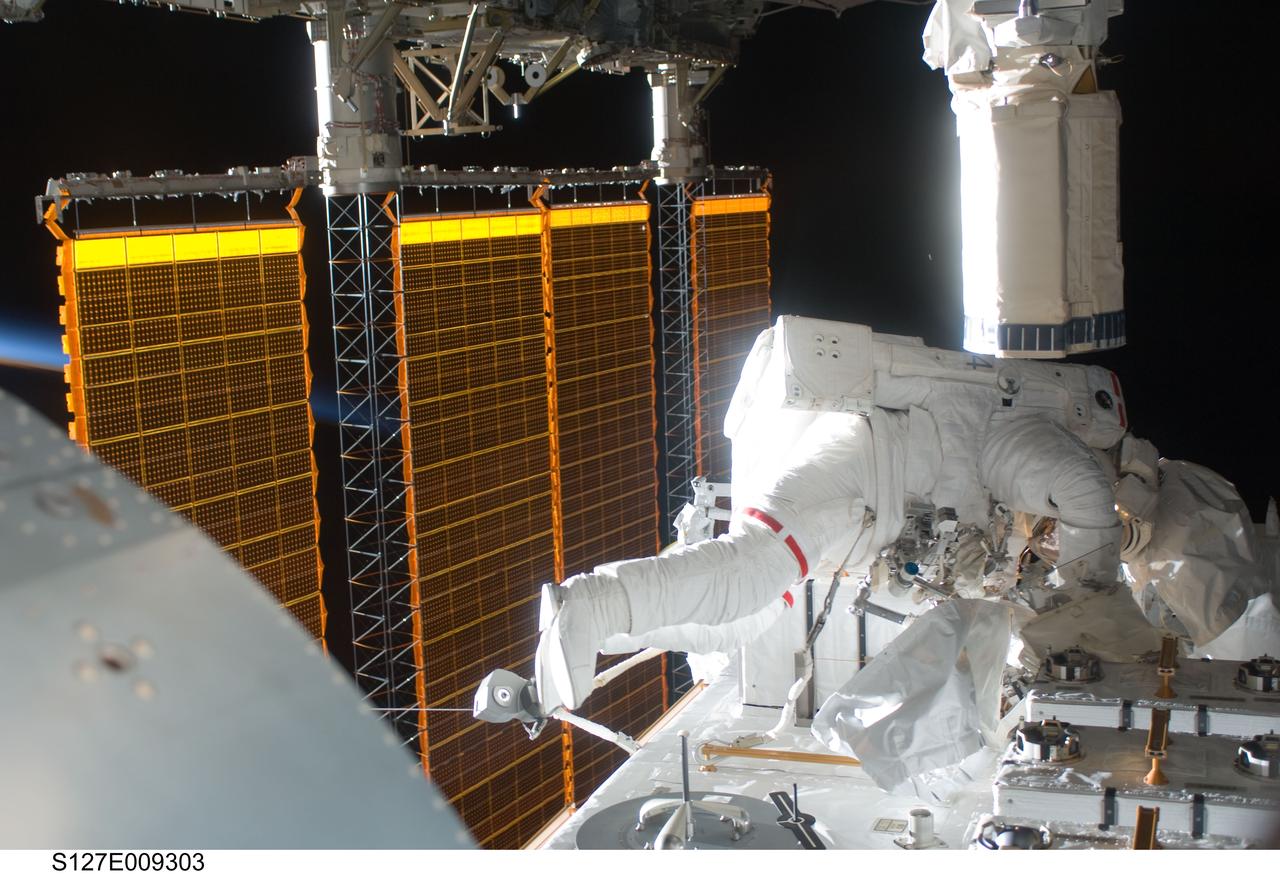
S127-E-009303 (27 July 2009) --- Astronaut Tom Marshburn, STS-127 mission specialist, participates in the mission's fifth and final session of extravehicular activity (EVA) as construction and maintenance continue on the International Space Station. During the four-hour, 54-minute spacewalk, Marshburn and astronaut Christopher Cassidy (out of frame), mission specialist, secured multi-layer insulation around the Special Purpose Dexterous Manipulator known as Dextre, split out power channels for two space station Control Moment Gyroscopes, installed video cameras on the front and back of the new Japanese Exposed Facility and performed a number of “get ahead” tasks, including tying down some cables and installing handrails and a portable foot restraint to aid future spacewalkers.
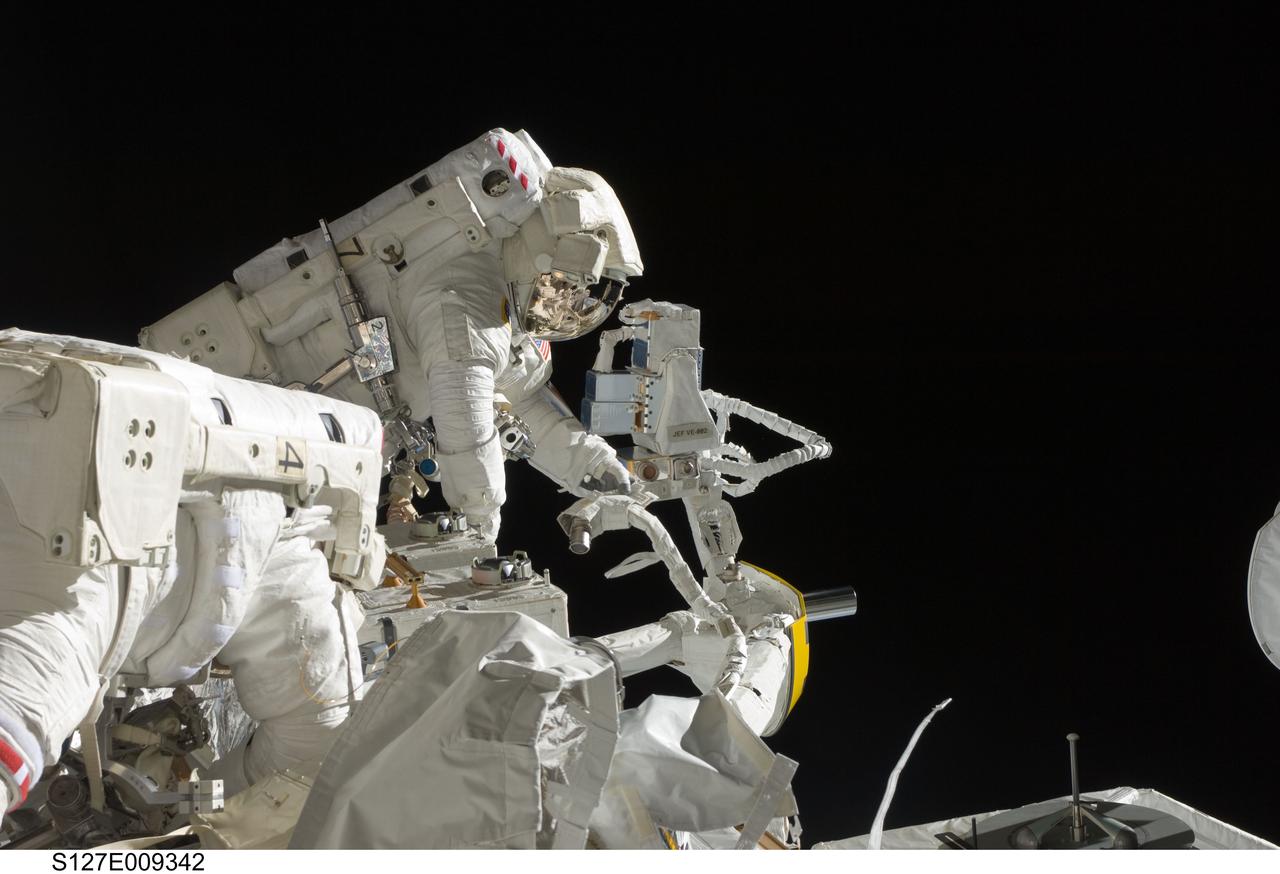
S127-E-009342 (27 July 2009) --- Astronauts Tom Marshburn (foreground) and Christopher Cassidy, both STS-127 mission specialists, participate in the mission's fifth and final session of extravehicular activity (EVA) as construction and maintenance continue on the International Space Station. During the four-hour, 54-minute spacewalk, Marshburn and Cassidy secured multi-layer insulation around the Special Purpose Dexterous Manipulator known as Dextre, split out power channels for two space station Control Moment Gyroscopes, installed video cameras on the front and back of the new Japanese Exposed Facility and performed a number of “get ahead” tasks, including tying down some cables and installing handrails and a portable foot restraint to aid future spacewalkers.
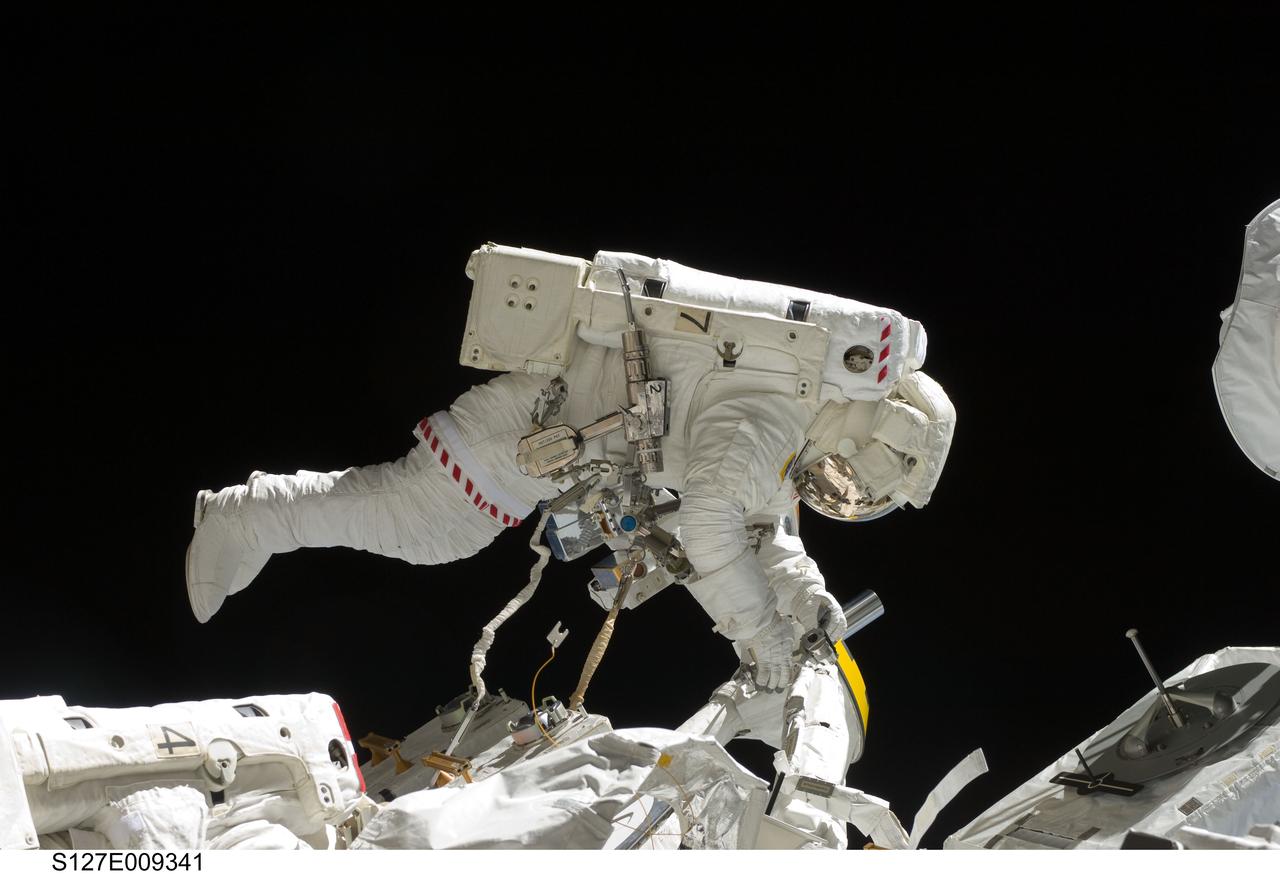
S127-E-009341 (27 July 2009) --- Astronauts Christopher Cassidy and Tom Marshburn (mostly out of frame at lower left), both STS-127 mission specialists, participate in the mission's fifth and final session of extravehicular activity (EVA) as construction and maintenance continue on the International Space Station. During the four-hour, 54-minute spacewalk, Marshburn and Cassidy secured multi-layer insulation around the Special Purpose Dexterous Manipulator known as Dextre, split out power channels for two space station Control Moment Gyroscopes, installed video cameras on the front and back of the new Japanese Exposed Facility and performed a number of “get ahead” tasks, including tying down some cables and installing handrails and a portable foot restraint to aid future spacewalkers.
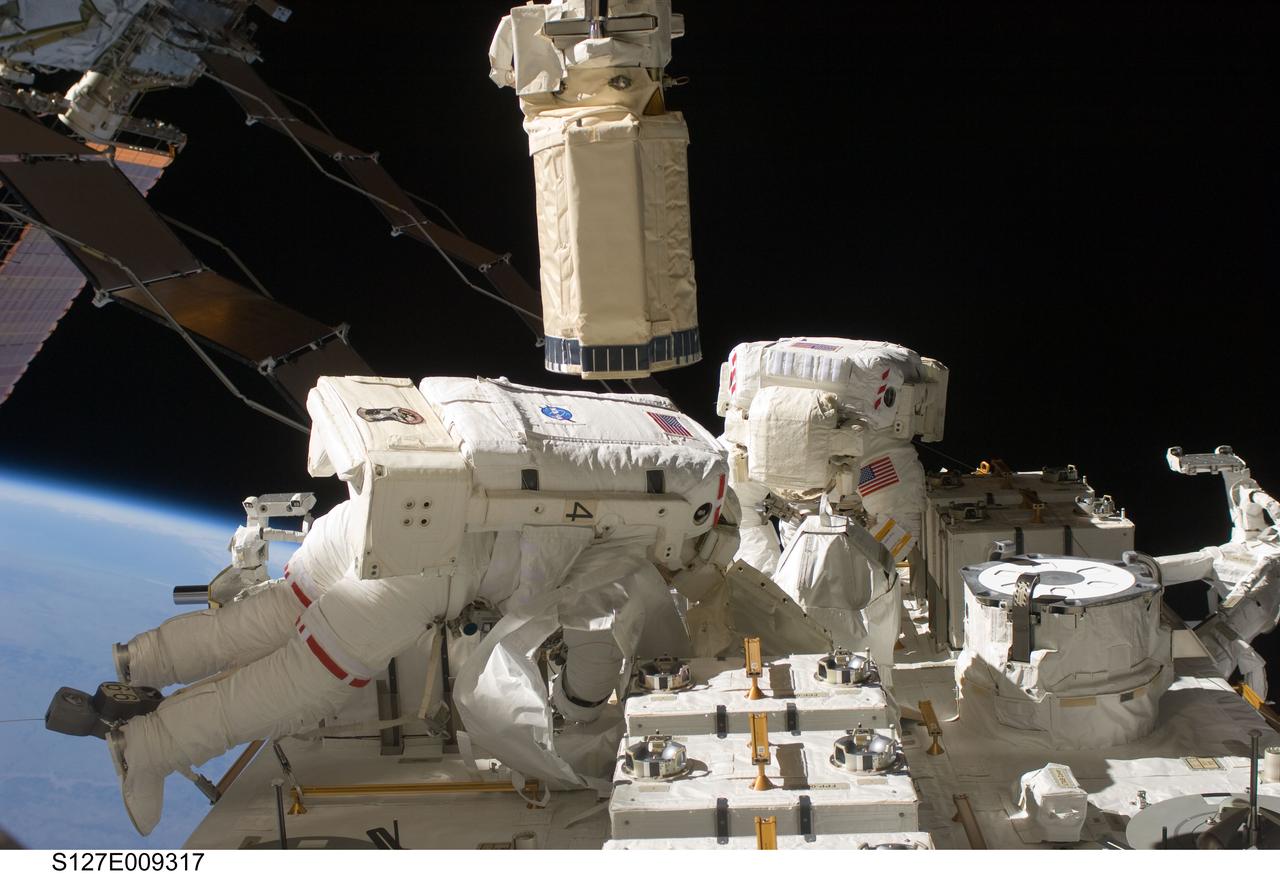
S127-E-009317 (27 July 2009) --- Astronauts Tom Marshburn (left) and Christopher Cassidy, both STS-127 mission specialists, participate in the mission's fifth and final session of extravehicular activity (EVA) as construction and maintenance continue on the International Space Station. During the four-hour, 54-minute spacewalk, Marshburn and Cassidy secured multi-layer insulation around the Special Purpose Dexterous Manipulator known as Dextre, split out power channels for two space station Control Moment Gyroscopes, installed video cameras on the front and back of the new Japanese Exposed Facility and performed a number of “get ahead” tasks, including tying down some cables and installing handrails and a portable foot restraint to aid future spacewalkers.
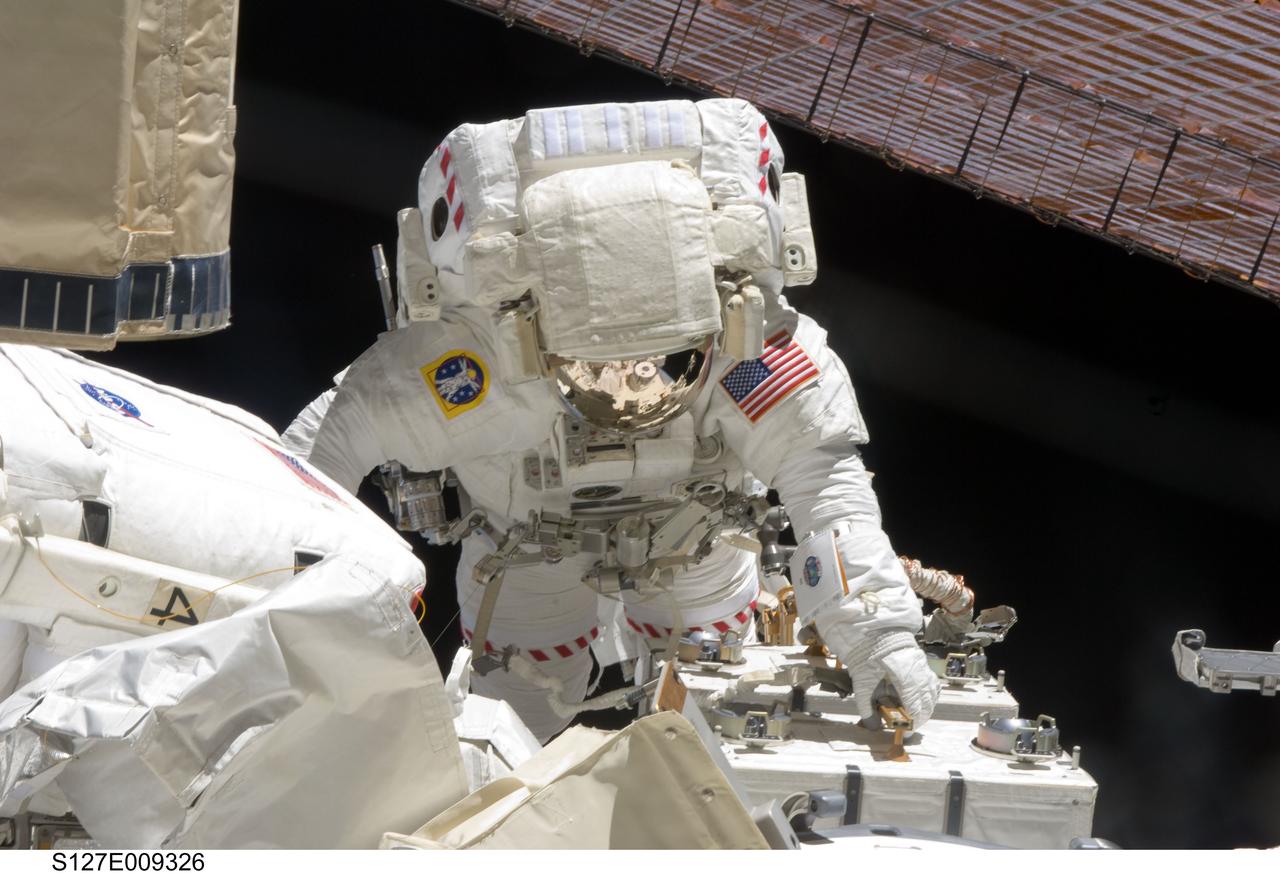
S127-E-009326 (27 July 2009) --- Astronauts Christopher Cassidy and Tom Marshburn (mostly out of frame at left), both STS-127 mission specialists, participate in the mission's fifth and final session of extravehicular activity (EVA) as construction and maintenance continue on the International Space Station. During the four-hour, 54-minute spacewalk, Marshburn and Cassidy secured multi-layer insulation around the Special Purpose Dexterous Manipulator known as Dextre, split out power channels for two space station Control Moment Gyroscopes, installed video cameras on the front and back of the new Japanese Exposed Facility and performed a number of “get ahead” tasks, including tying down some cables and installing handrails and a portable foot restraint to aid future spacewalkers.
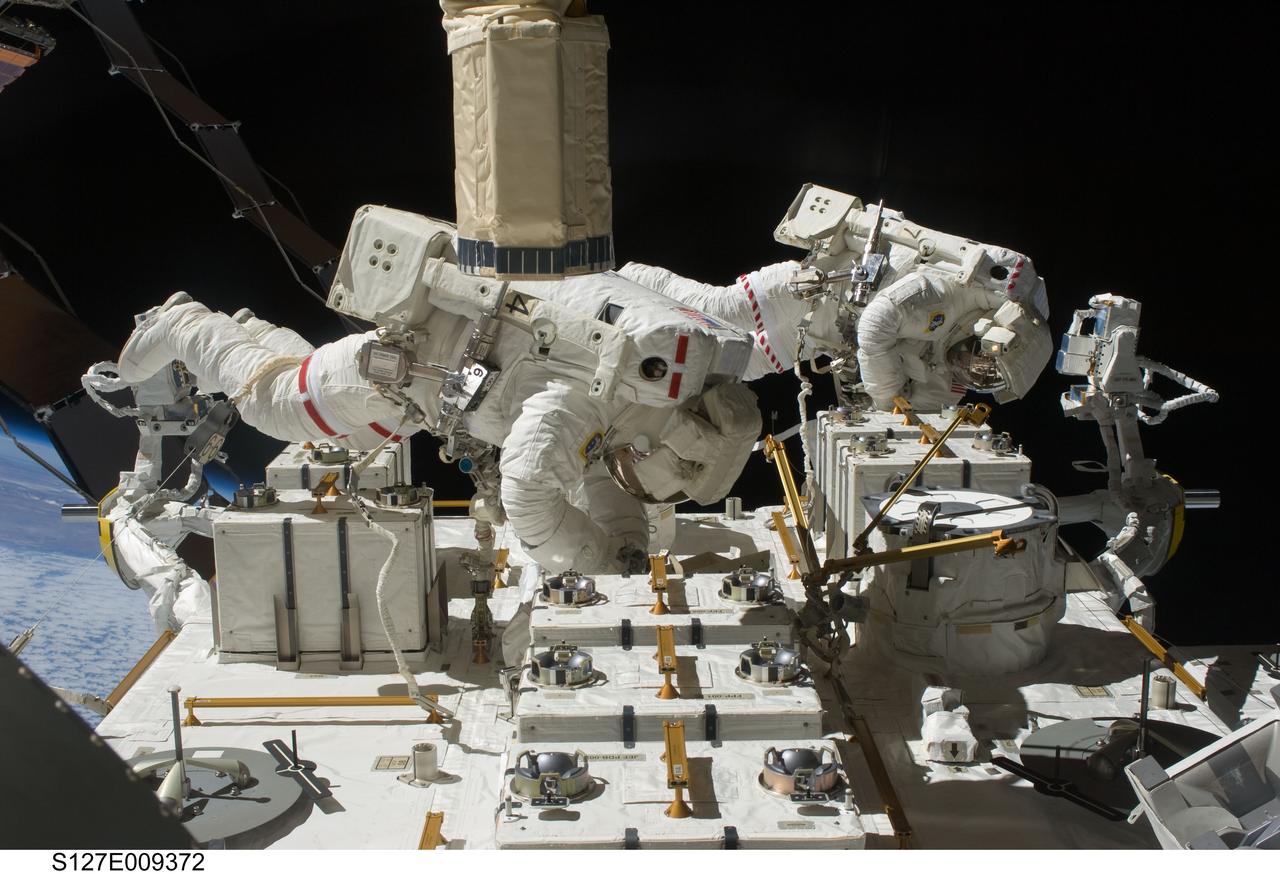
S127-E-009372 (27 July 2009) --- Astronauts Tom Marshburn (left) and Christopher Cassidy, both STS-127 mission specialists, participate in the mission's fifth and final session of extravehicular activity (EVA) as construction and maintenance continue on the International Space Station. During the four-hour, 54-minute spacewalk, Marshburn and Cassidy secured multi-layer insulation around the Special Purpose Dexterous Manipulator known as Dextre, split out power channels for two space station Control Moment Gyroscopes, installed video cameras on the front and back of the new Japanese Exposed Facility and performed a number of “get ahead” tasks, including tying down some cables and installing handrails and a portable foot restraint to aid future spacewalkers.
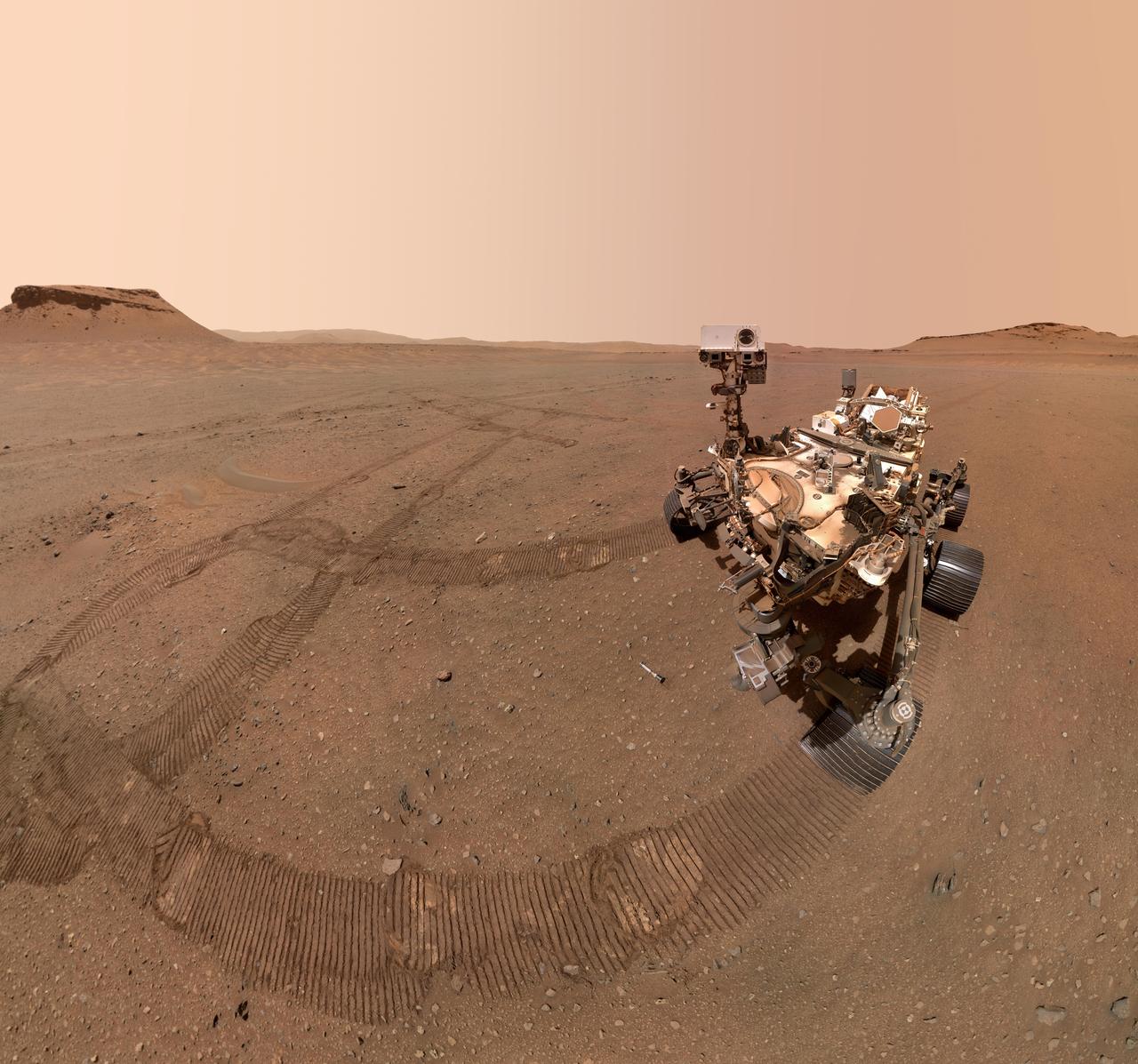
NASA's Perseverance Mars rover took a selfie with several of the 10 sample tubes it deposited at a sample depot it is creating within an area of Jezero Crater nicknamed "Three Forks." The image was taken by the WATSON (Wide Angle Topographic Sensor for Operations and eNgineering) camera on the end of the rover's robotic arm on Jan. 22, 2023, the 684th Martian day, or sol, of the mission. The ninth tube dropped during the construction of the depot, containing the sample the science team refers to as "Atsah," can be seen in front of the rover. Other sample tubes are visible in the background. In an animated GIF, the rover looks down at the "Atsah" sample then back at the camera. The selfie is composed of 59 individual WATSON images that were stitched together once they were sent back to Earth. The Curiosity rover takes similar selfies using a camera on its robotic arm; videos explaining how the rovers take their selfies can be found here. The depot marks a crucial milestone in the NASA-ESA (European Space Agency) Mars Sample Return campaign that aims to bring Mars samples to Earth for closer study. The depot will serve as a backup if Perseverance can't deliver its samples to a future robotic lander. A key objective for Perseverance's mission on Mars is astrobiology, including the search for signs of ancient microbial life. The rover will characterize the planet's geology and past climate, pave the way for human exploration of the Red Planet, and be the first mission to collect and cache Martian rock and regolith (broken rock and dust). Subsequent NASA missions, in cooperation with ESA (European Space Agency), would send spacecraft to Mars to collect these sealed samples from the surface and return them to Earth for in-depth analysis. The Mars 2020 Perseverance mission is part of NASA's Moon to Mars exploration approach, which includes Artemis missions to the Moon that will help prepare for human exploration of the Red Planet. Animation available at https://photojournal.jpl.nasa.gov/catalog/PIA25681
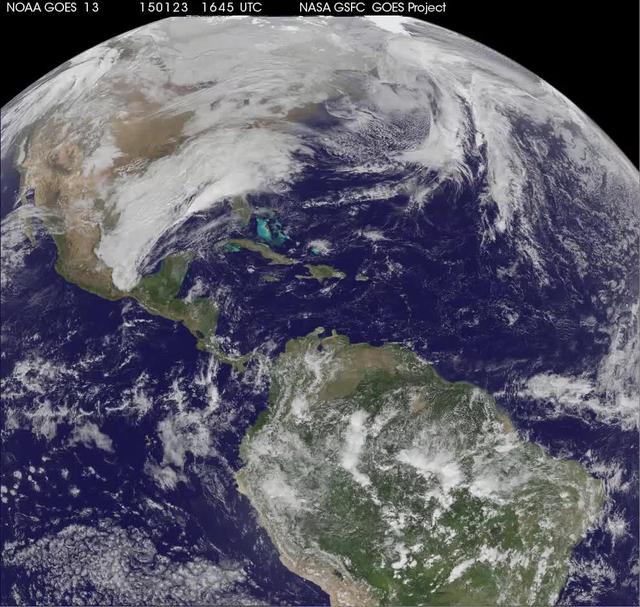
National Weather Service forecasters have been tracking a low pressure area that moved from the Midwest into the Atlantic Ocean today, and is expected to become a strong nor'easter that will bring blizzard conditions to the northeastern U.S. The path of the system was captured in a NASA movie of NOAA's GOES-East satellite imagery. An animation of visible and infrared imagery from NOAA's Geostationary Operational Environmental or GOES satellite captured over the period of January 24 through 26 showed the progression of the developing nor'easter. The satellite animation began on Jan. 24 when clouds associated with a cold front preceding the low, pushed off the U.S. East coast. The front was followed by a low pressure area that moved from the Midwest to the southeast. That low moved over the Carolinas and exited into the Atlantic Ocean on Jan. 26. NOAA's National Weather Service forecast calls for the low to intensify along the Eastern Seaboard and bring blizzard conditions to the northeastern U.S. on Monday night, January 26 and Tuesday, January 27. On Monday, January 26, 2015, the National Weather Service noted: A storm system off the East Coast will continue to strengthen as it develops into a major nor'easter on Monday. As the storm moves up the coast, it is expected to bring snowfall of 1-3 feet or more to many parts of the Northeast through Tuesday evening, including New York City and Boston. Strong, gusty winds will combine with the snow to create blizzard conditions along and near the coast. Winter storm warnings are in effect for the panhandles of West Virginia and Maryland, much of interior New England down to the northern Mid-Atlantic as well as for Nantucket Island, Massachusetts. Winter weather advisories are in effect for portions of the Ohio Valley, Mid-Atlantic and the southern Appalachians as well as a narrow area across interior New England. To create the video and imagery, NASA/NOAA's GOES Project located at NASA's Goddard Space Flight Center in Greenbelt, Maryland overlays the cloud data from NOAA's GOES-East satellite on a true-color image of land and ocean created by data from the Moderate Resolution Imaging Spectroradiometer, or MODIS, instrument that flies aboard NASA's Aqua and Terra satellites. Together, these data create the entire animation of the storm and show its movement. GOES satellites provide the kind of continuous monitoring necessary for intensive data analysis. Geostationary describes an orbit in which a satellite is always in the same position with respect to the rotating Earth. This allows GOES to hover continuously over one position on Earth's surface, appearing stationary. As a result, GOES provide a constant vigil for the atmospheric "triggers" for severe weather conditions such as tornadoes, flash floods, hail storms and hurricanes. For updated information about the storm system, visit NOAA's NWS website: <a href="http://www.weather.gov" rel="nofollow">www.weather.gov</a> For more information about GOES satellites, visit: <a href="http://www.goes.noaa.gov/" rel="nofollow">www.goes.noaa.gov/</a> or goes.gsfc.nasa.gov/ Rob Gutro NASA's Goddard Space Flight Center