Visit by Dr. Harrison H. Schmitt, Apollo 17 Astronaut
Visit by Dr. Harrison H. Schmitt, Apollo 17 Astronaut
Visit by Dr. Harrison H. Schmitt, Apollo 17 Astronaut
Visit by Dr. Harrison H. Schmitt, Apollo 17 Astronaut
Visit by Dr. Harrison H. Schmitt, Apollo 17 Astronaut
Visit by Dr. Harrison H. Schmitt, Apollo 17 Astronaut
Visit by Dr. Harrison H. Schmitt, Apollo 17 Astronaut
Visit by Dr. Harrison H. Schmitt, Apollo 17 Astronaut
Visit by Dr. Harrison H. Schmitt, Apollo 17 Astronaut
Visit by Dr. Harrison H. Schmitt, Apollo 17 Astronaut
Visit by Dr. Harrison H. Schmitt, Apollo 17 Astronaut
Visit by Dr. Harrison H. Schmitt, Apollo 17 Astronaut
Visit by Dr. Harrison H. Schmitt, Apollo 17 Astronaut
Visit by Dr. Harrison H. Schmitt, Apollo 17 Astronaut
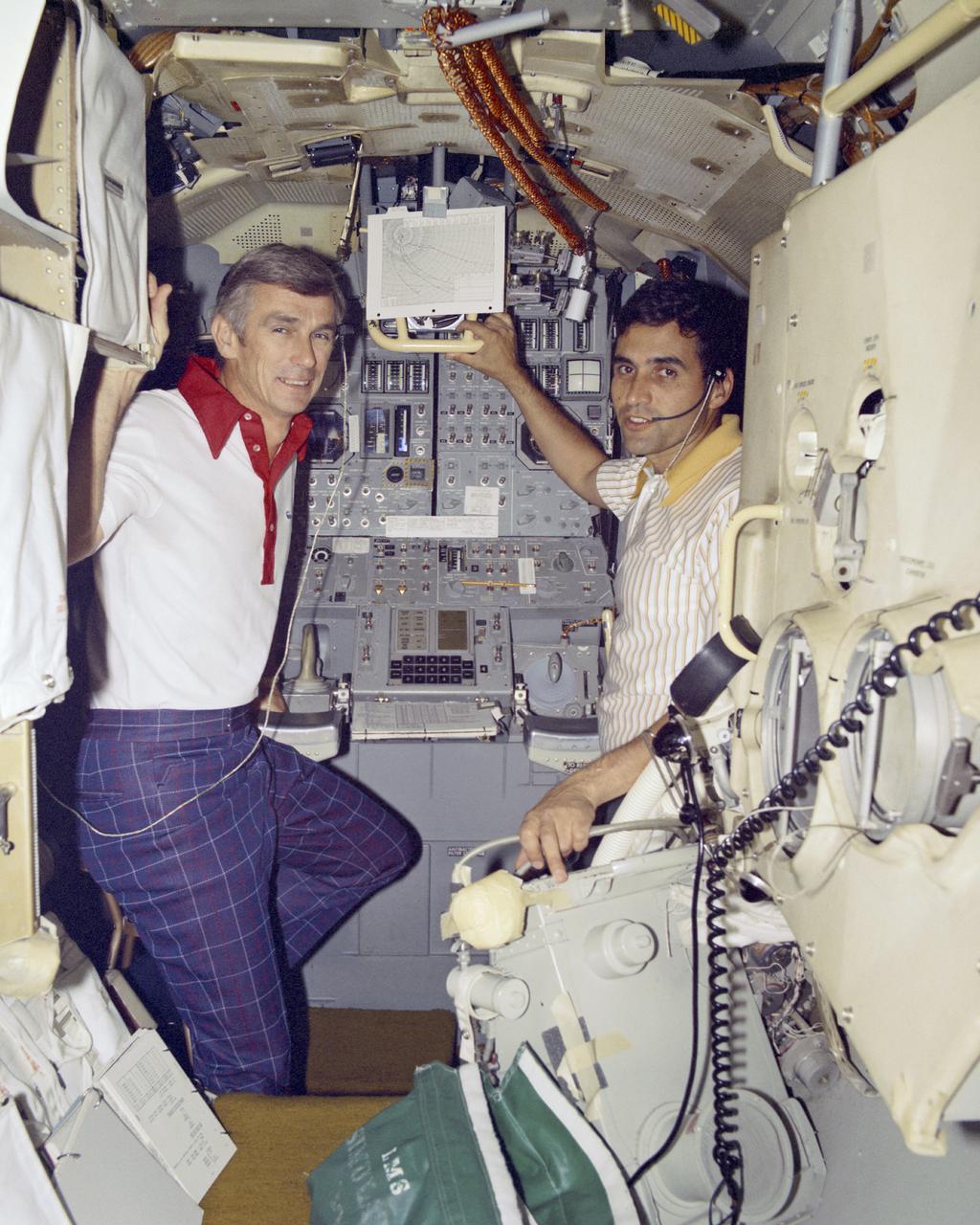
Apollo 17 Mission Commander Eugene A Cernan, a Navy Captain, and Lunar Module Pilot Dr. Harrison H. Schmitt, civilian scientist-astronaut, at right, familiarize themselves with equipment used in the Lunar Module in which they will descend to the lunar surface during December. Cernan and Dr. Schmitt are undergoing pre-launch training in the lunar Module Simulator at the Flight Crew Training Building at the Space Center. Navy Commander Ronald E. Evans, Command Module Pilot, will accompany Cernan and Schmitt on the mission.
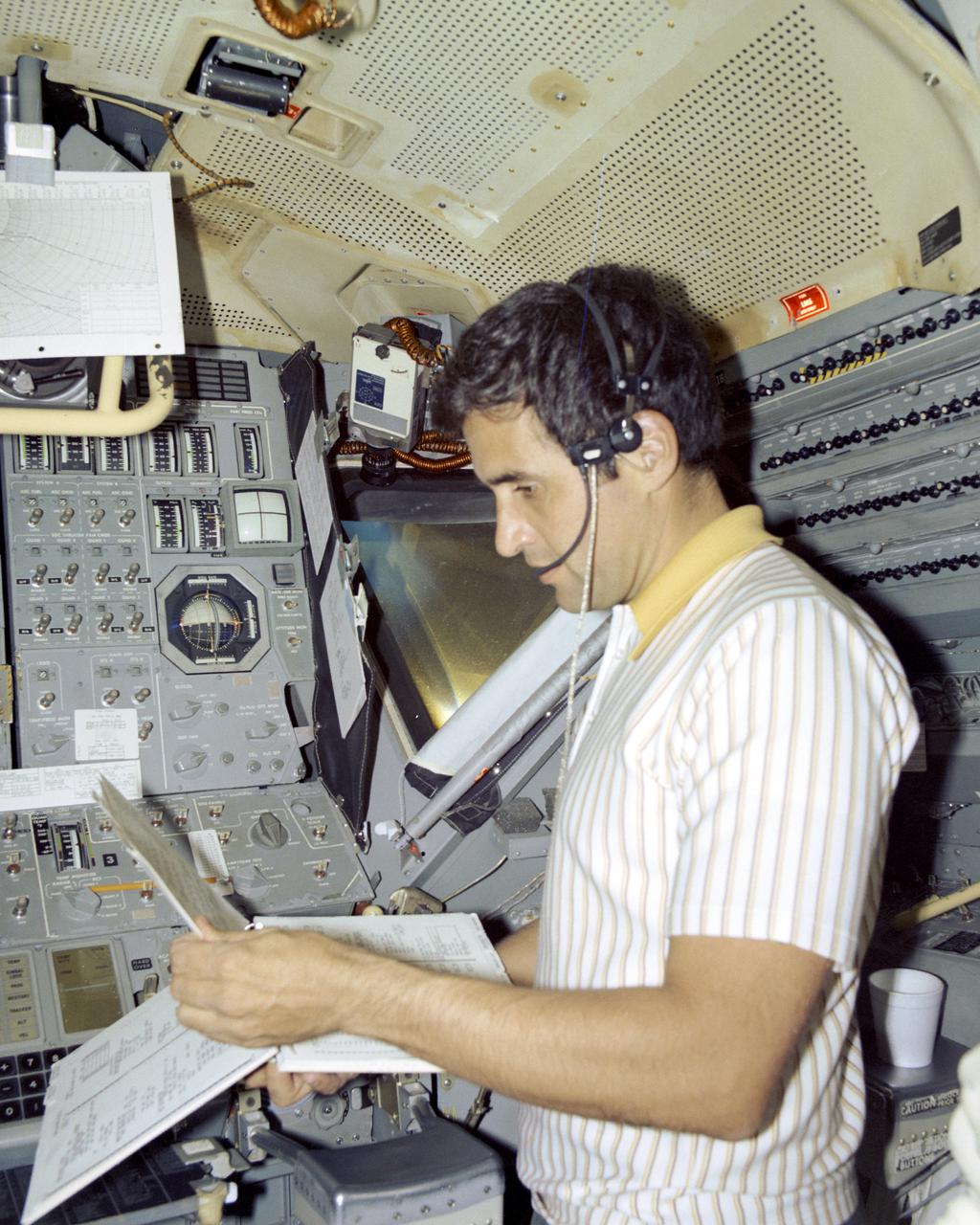
Dr. Harrison H. Schmitt, civilian scientist-astronaut, who will pilot the Lunar Module of Apollo 17 to the Moon’s Surface in December, preps for his task by undergoing training in the Lunar Module Simulator at the Flight Crew Training Building at Kennedy Space Center. Dr. Schmitt, accompanied by Commander Eugene A. Cernan and Ronald E. Evans, Command Module Pilot, will lift-off from the Center no earlier than December 6.
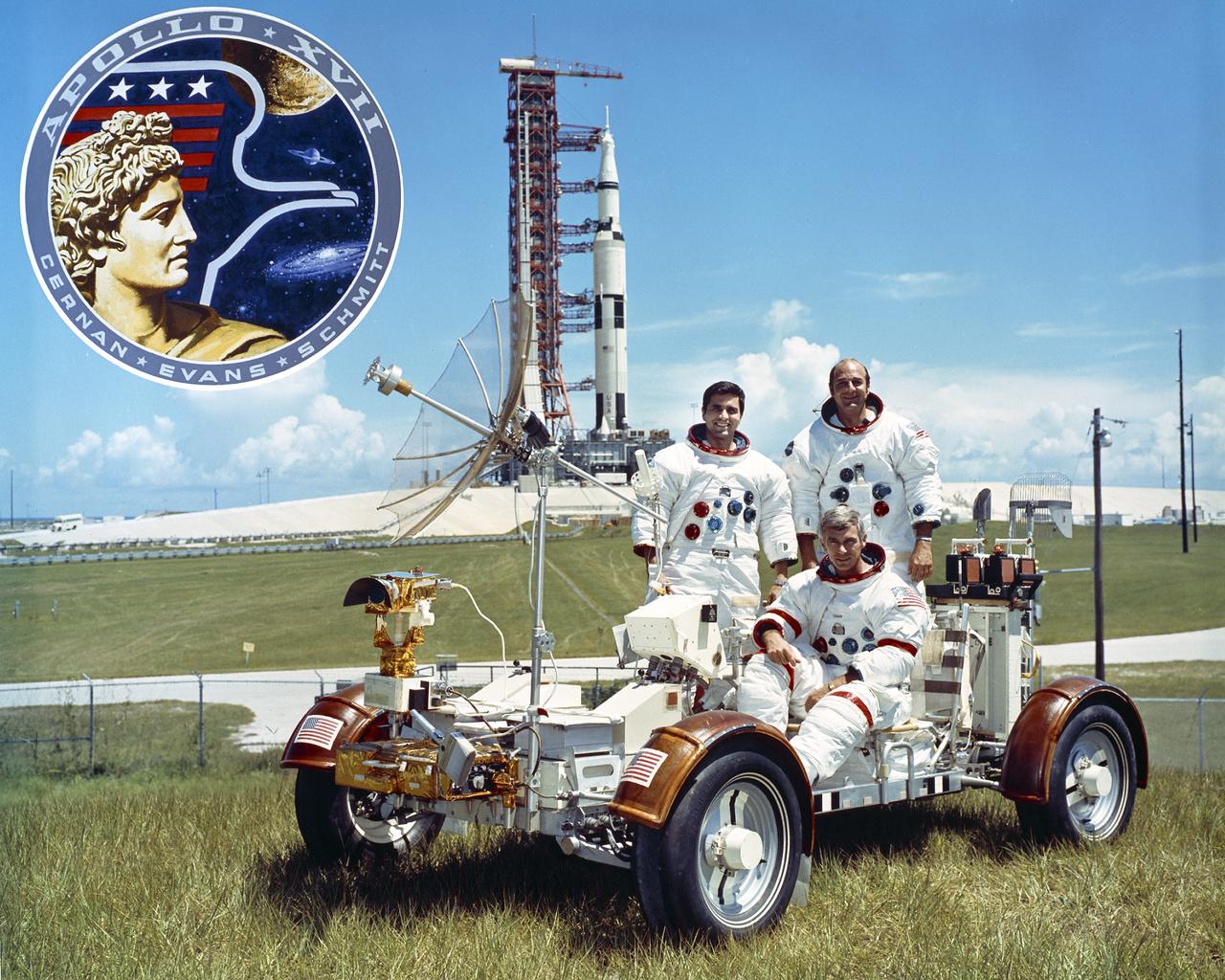
The Apollo 17 crew took time out from training for the press after the Space Vehicle for their Manned Lunar Landing Mission was moved to Complex 39A. Seated, Eugene A. Cernan, Commander standing, left to right, Dr. Harrison H. “Jack” Schmitt, Lunar Module Pilot and Ronald A. Evans, Command Module Pilot.
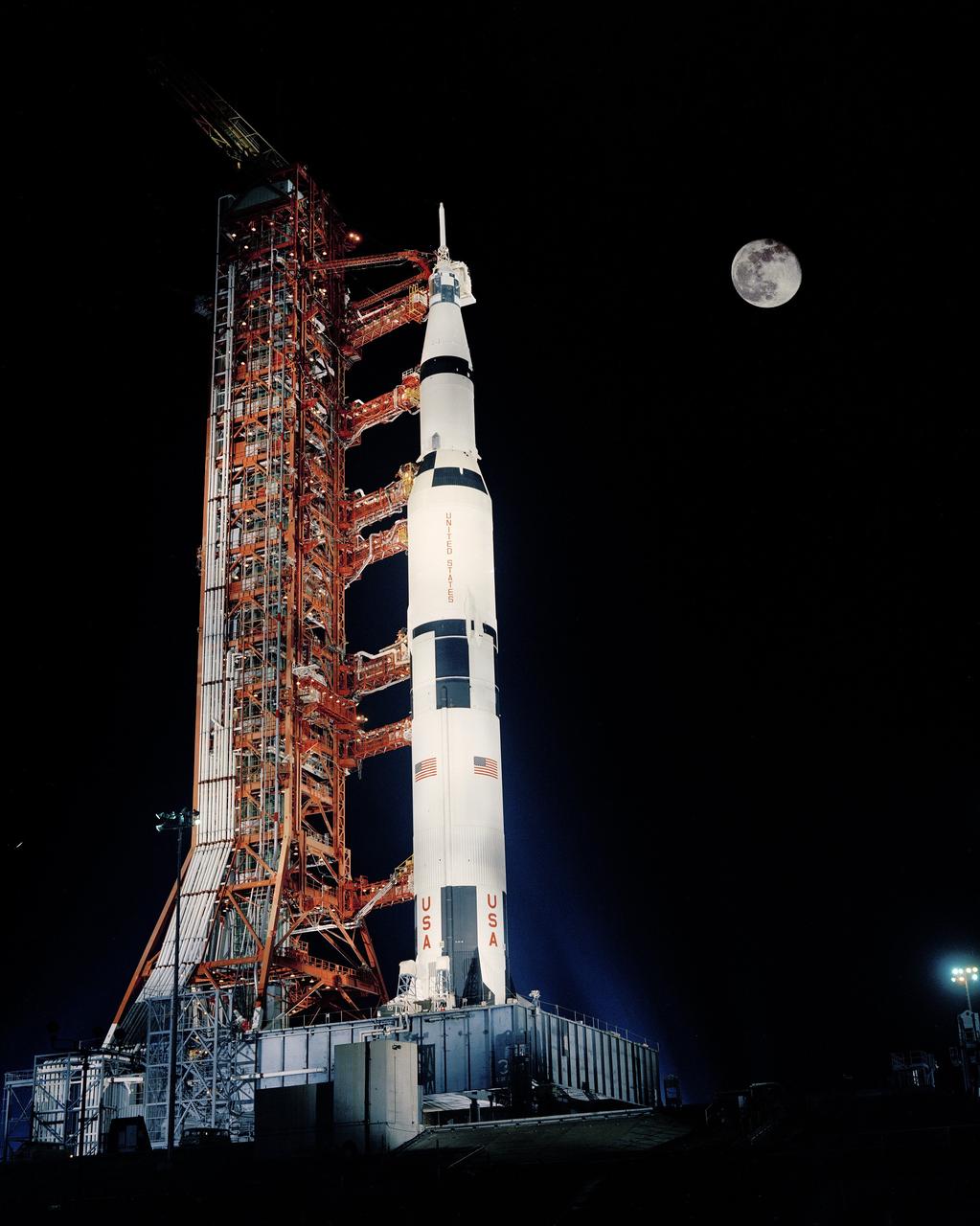
The Apollo 17 Space Vehicle sits poised beneath a full moon on Launch Pad 39A during launch countdown. Astronauts Eugene A. Cernan, Commander Ronald Evans, Command Module Pilot and Dr. Harrison "Jack" Schmitt, Lunar Module Pilot, will be the crew for the sixth U.S. manned Lunar landing mission.
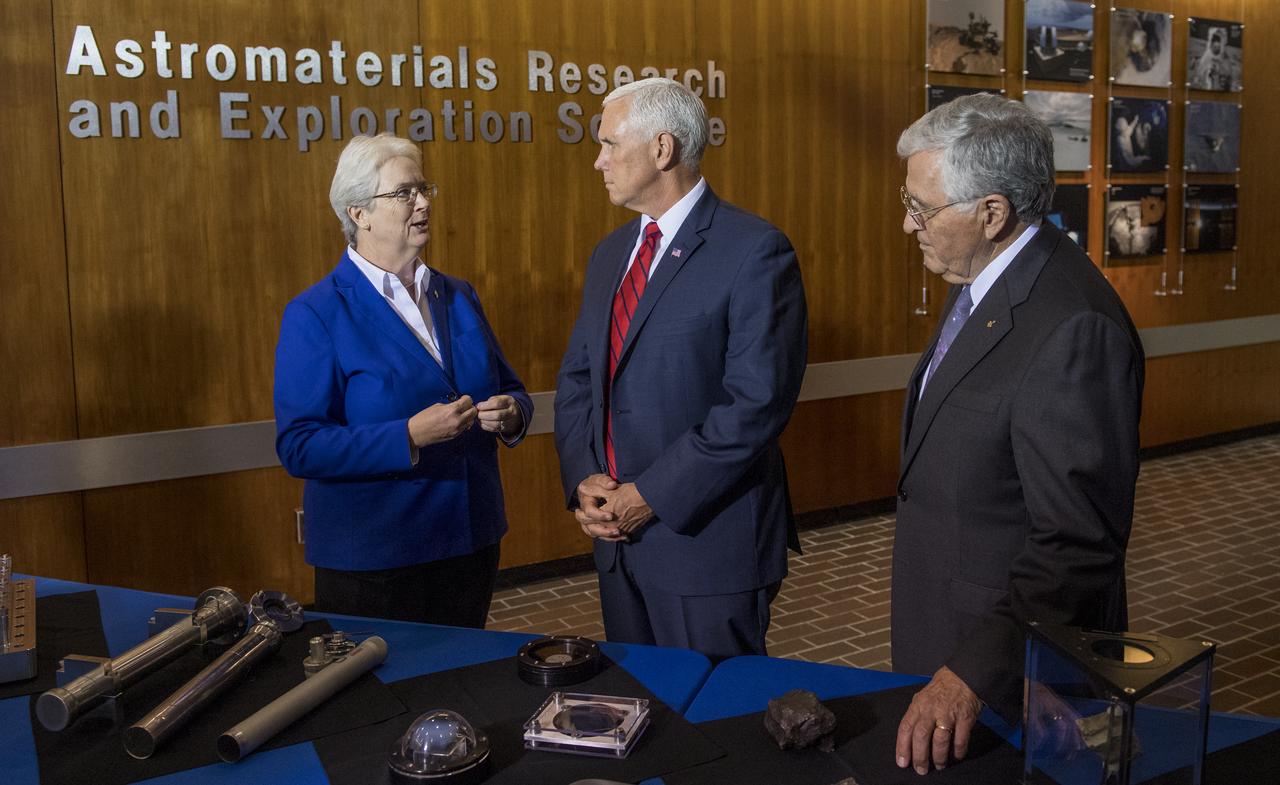
Acting director of the Exploration Integration and Science Directorate and Chief Scientist at NASA's Johnson Space Center Dr. Eileen Stansbery, right, is seen with Vice President Mike Pence and Apollo 17 astronaut and geologist Dr. Harrison Schmitt in the Astromaterials Curation Laboratory at NASA's Johnson Space Center, Thursday, Aug. 23, 2018 in Houston, Texas. Photo Credit: (NASA/Joel Kowsky)
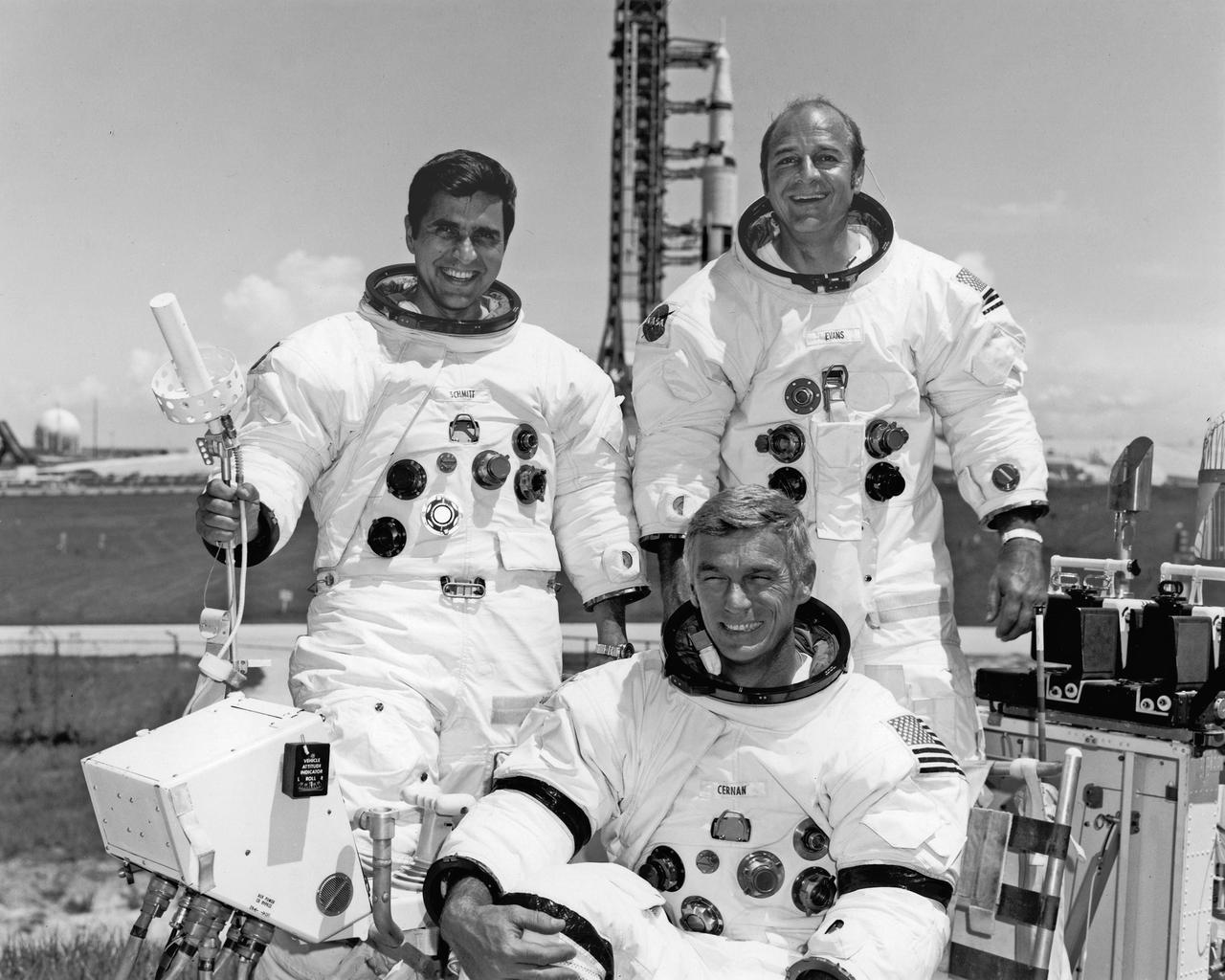
CAPE CANAVERAL, Fla. -- The Apollo 17 crew took time out from training to pose for the press after the Space Vehicle for their Manned Lunar Landing Mission was moved to Pad A, Complex 39 today. Apollo 17 Commander Eugene A Cernan sits at the controls of the One-G Lunar Roving Vehicle Simulator used to simulate operations on the Moon’s surface. With Cernan are Lunar Module Pilot Dr. Harrison H. “Jack” Schmitt, left and Command Module Plot Ronald A. Evans. The Apollo 17 Space Vehicle, scheduled for launch from KSC on the sixth U.S. Manned Lunar Landing Mission on December 6, 1972 is in the background. Photo credit: NASA
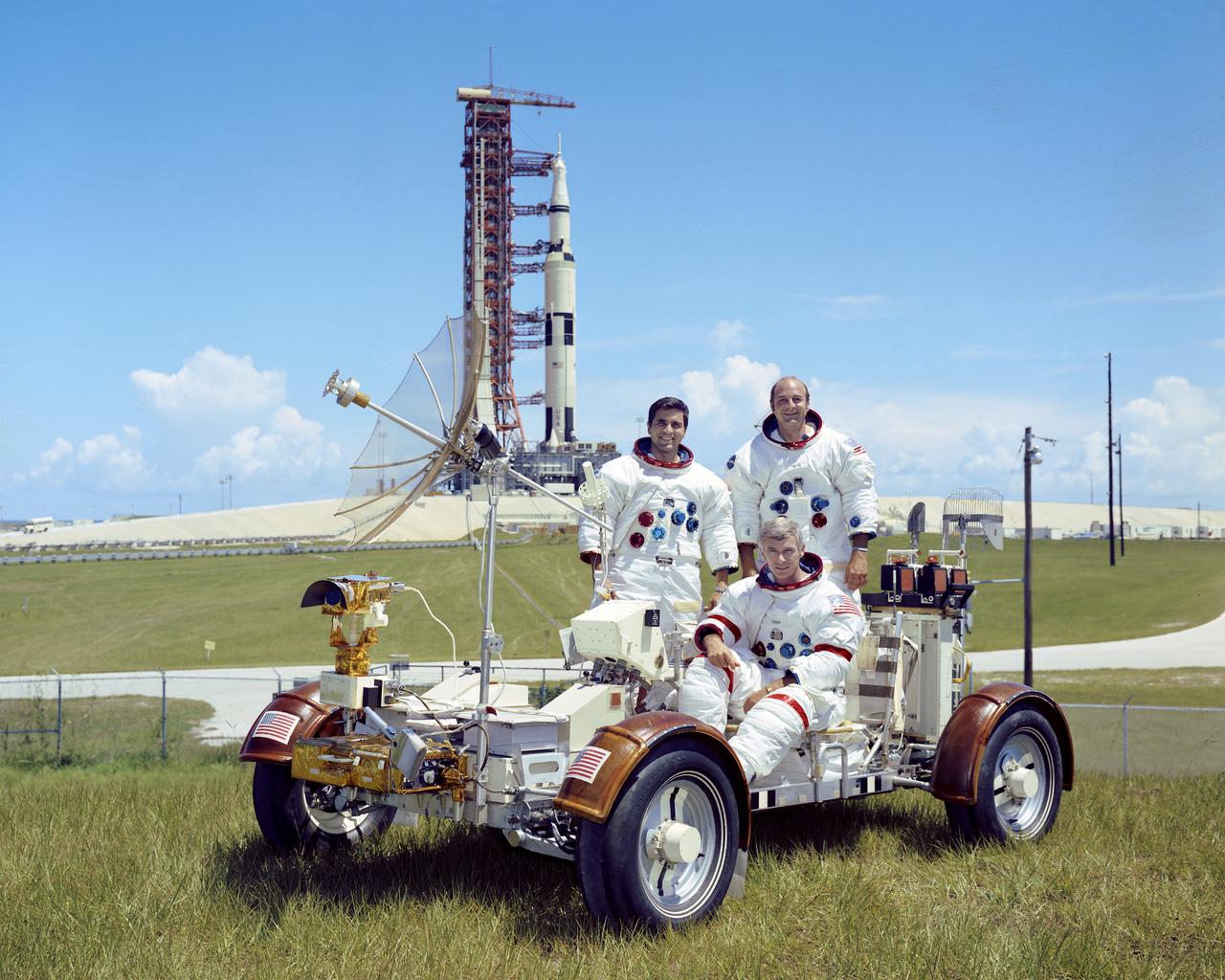
CAPE CANAVERAL, Fla. -- The Apollo 17 crew took time out from training to pose for the press after the Space Vehicle for their Manned Lunar Landing Mission was moved to Pad A, Complex 39 today. Apollo 17 Commander Eugene A Cernan sits at the controls of the One-G Lunar Roving Vehicle Simulator used to simulate operations on the Moon’s surface. With Cernan are Lunar Module Pilot Dr. Harrison H. “Jack” Schmitt, left and Command Module Plot Ronald A. Evans. The Apollo 17 Space Vehicle, scheduled for launch from KSC on the sixth U.S. Manned Lunar Landing Mission on December 6, 1972 is in the background. Photo credit: NASA
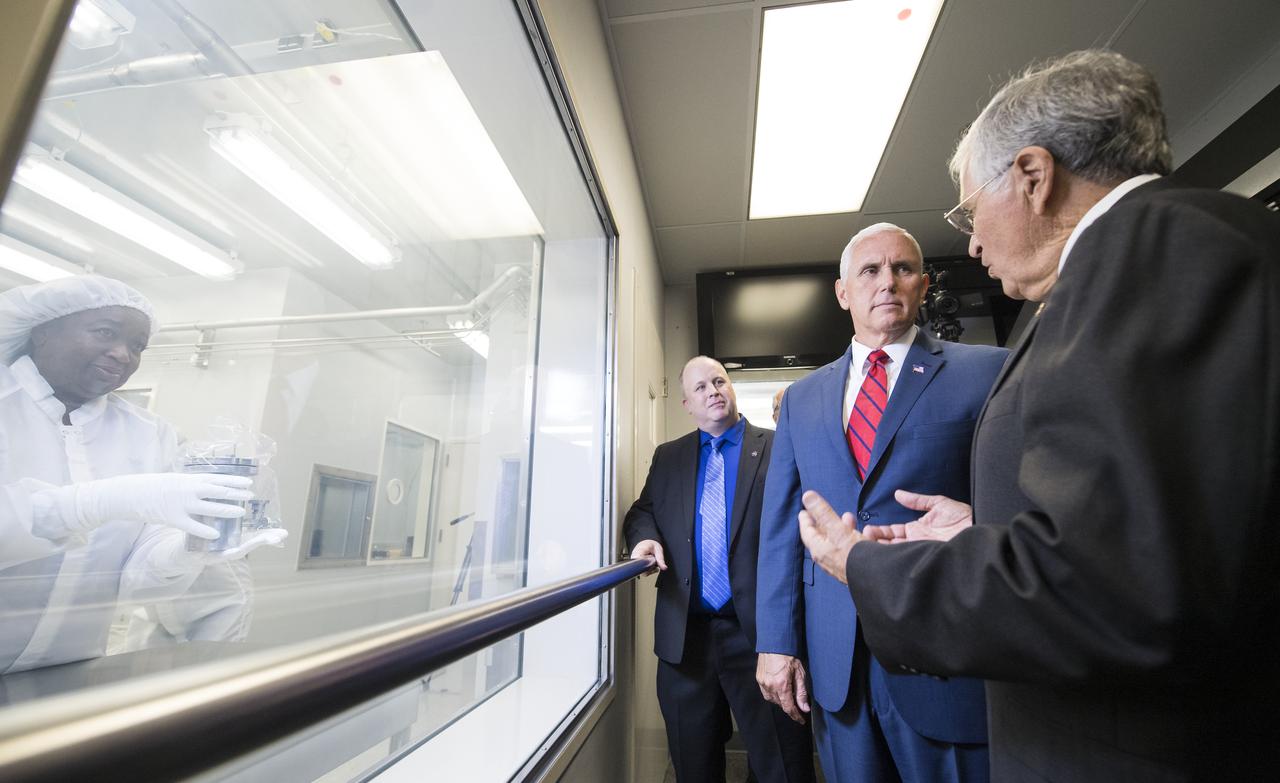
Vice President Mike Pence, center, views Sample 15014, which was collected during Apollo 15 with NASA's Apollo Sample Curator Ryan Zeigler, left, and Apollo 17 astronaut and geologist Dr. Harrison Schmitt, right, in Lunar Curation Laboratory at NASA's Johnson Space Center, Thursday, Aug. 23, 2018 in Houston, Texas. Sample 15014 is one of nine samples out of the 2,196 collected during the Apollo missions that was sealed inside its container on the Moon and still containes gasses from the Moon. Photo Credit: (NASA/Joel Kowsky)
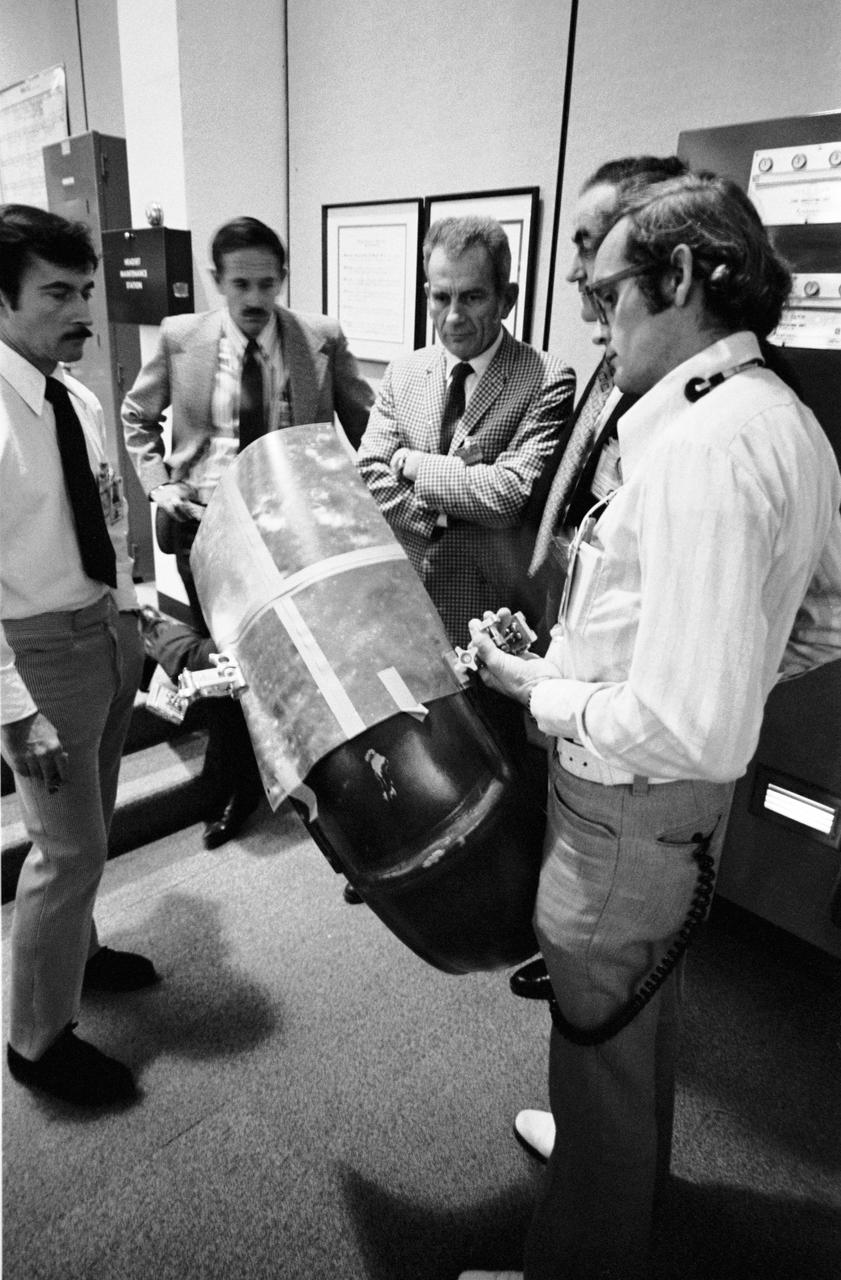
S72-55170 (11 Dec. 1972) --- These five men in the Mission Control Center ponder the solution to the problem of the damage to the right rear fender of the Apollo 17 Lunar Roving Vehicle at the Taurus-Littrow landing site. During the first lunar surface extravehicular activity a hammer got underneath the fender and a part of it was knocked off. Astronauts Eugene A. Cernan and Harrison H. Schmitt were reporting a problem with lunar dust because of the damaged fender. They sought some way to repair the broken fender. Clockwise are astronauts John W. Young and Charles M. Duke Jr., two Apollo 17 CAPCOM; Donald K. Slayton, director of flight crew operations at MSC; Dr. Roco A. Petrone, Apollo program director, Office of Manned Space Flight, NASA HQ; and Ronald V. Blevins, an EVA-1 flight controller with General Electric. They are looking over a makeshift repair arrangement which uses lunar maps and clamps from the optical alignment telescope lamp, a repair suggestion made by astronaut Young. The suggestion was relayed to Cernan and Schmitt and the repair made at the beginning of EVA-2. The problem was solved satisfactorily.

AS17-145-22157 (12 Dec. 1972) --- Scientist-astronaut Harrison Schmitt, Apollo 17 lunar module pilot, uses an adjustable sampling scoop to retrieve lunar samples during the second Apollo 17 extravehicular activity (EVA), at Station 5 at the Taurus-Littrow landing site. A gnomon is atop the large rock in the foreground. The gnomon is a stadia rod mounted on a tripod, and serves as an indicator of the gravitational vector and provides accurate vertical reference and calibrated length for determining size and position of objects in near-field photographs. The color scale of blue, orange and green is used to accurately determine color for photography. The rod of it is 18 inches long. The scoop Dr. Schmitt is using is 11 3/4 inches long and is attached to a tool extension which adds a potential 30 inches of length to the scoop. The pan portion, obscured in this view, has a flat bottom, flanged on both sides with a partial cover on the top. It is used to retrieve sand, dust and lunar samples too small for the tongs, another geological tool used by the astronauts. The pan and the adjusting mechanism are made of stainless steel and the handle is made of aluminum. Within the foreground of this scene, three lunar samples were taken--numbers 75060, 75075 and 75080. Astronaut Eugene A. Cernan, crew commander, was using a 60mm lens on the 70mm Hasselblad camera and type SO-368 film to take this photograph.