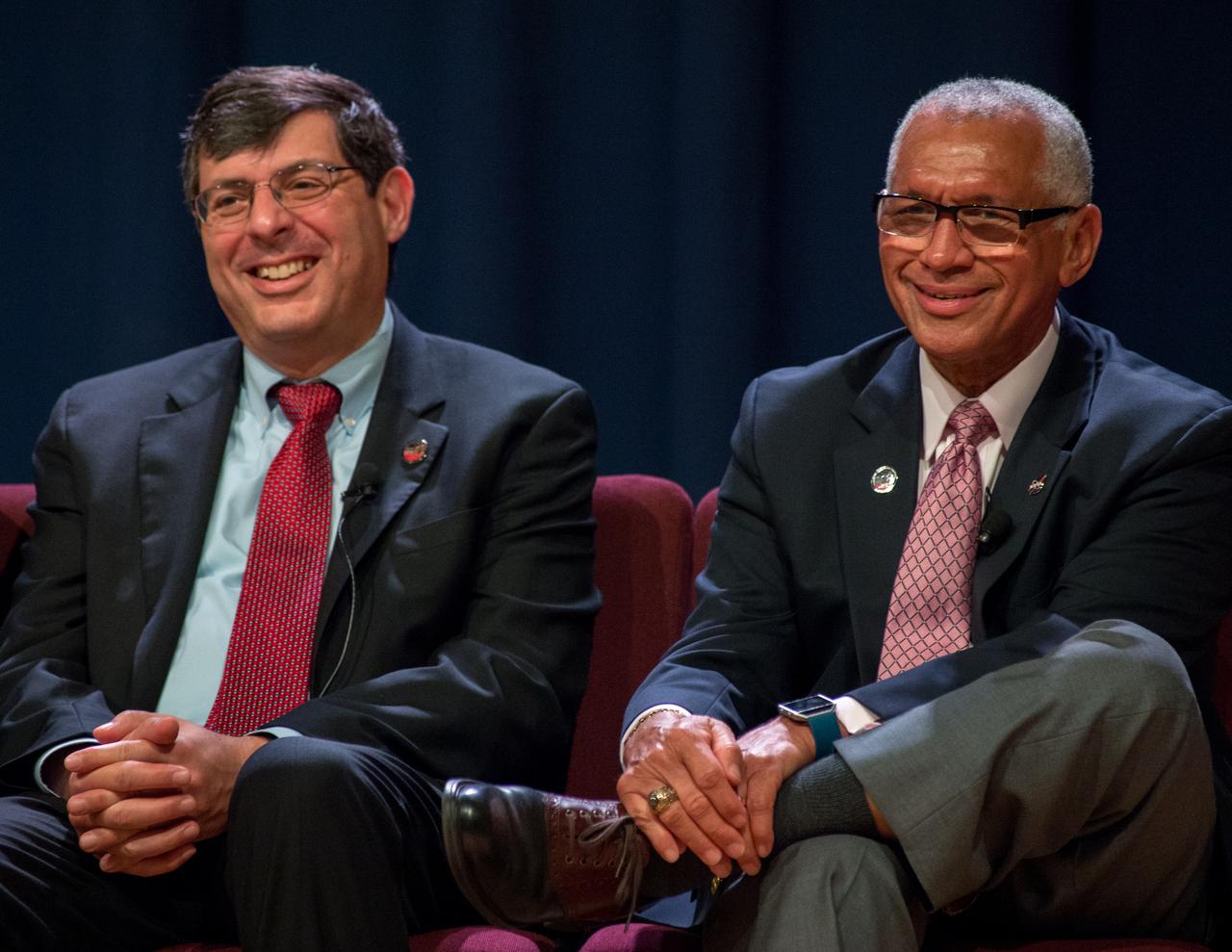
James Webb Space Telescope (JWST) Town Hall - Panel question and answer - Bill Ochs; Dr. John Mather; Dr. Eric Smith; Thomas Zurbuchen; Center Director Chris Scolese; NASA Administrator Charlie Bolden.
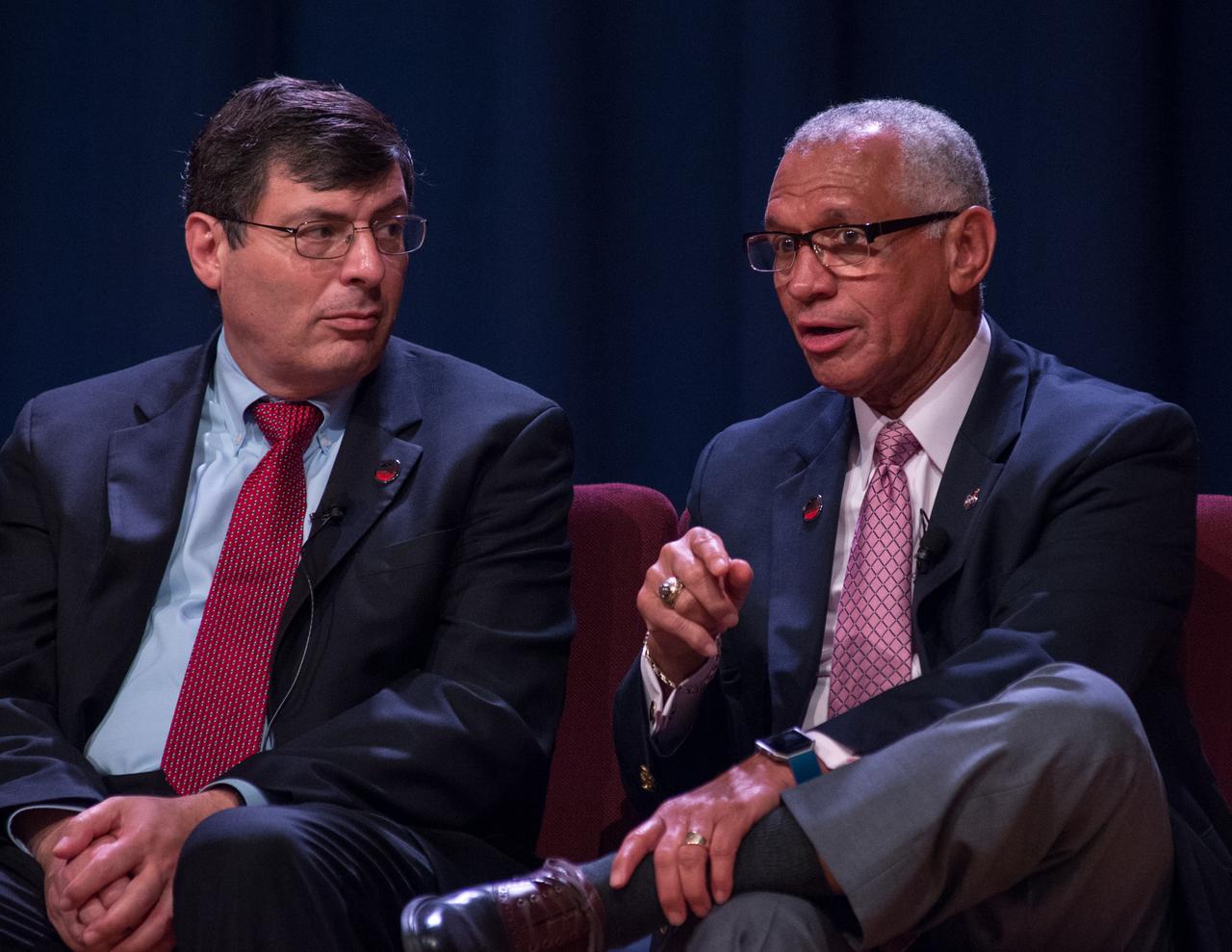
James Webb Space Telescope (JWST) Town Hall - Panel question and answer - Bill Ochs; Dr. John Mather; Dr. Eric Smith; Thomas Zurbuchen; Center Director Chris Scolese; NASA Administrator Charlie Bolden.
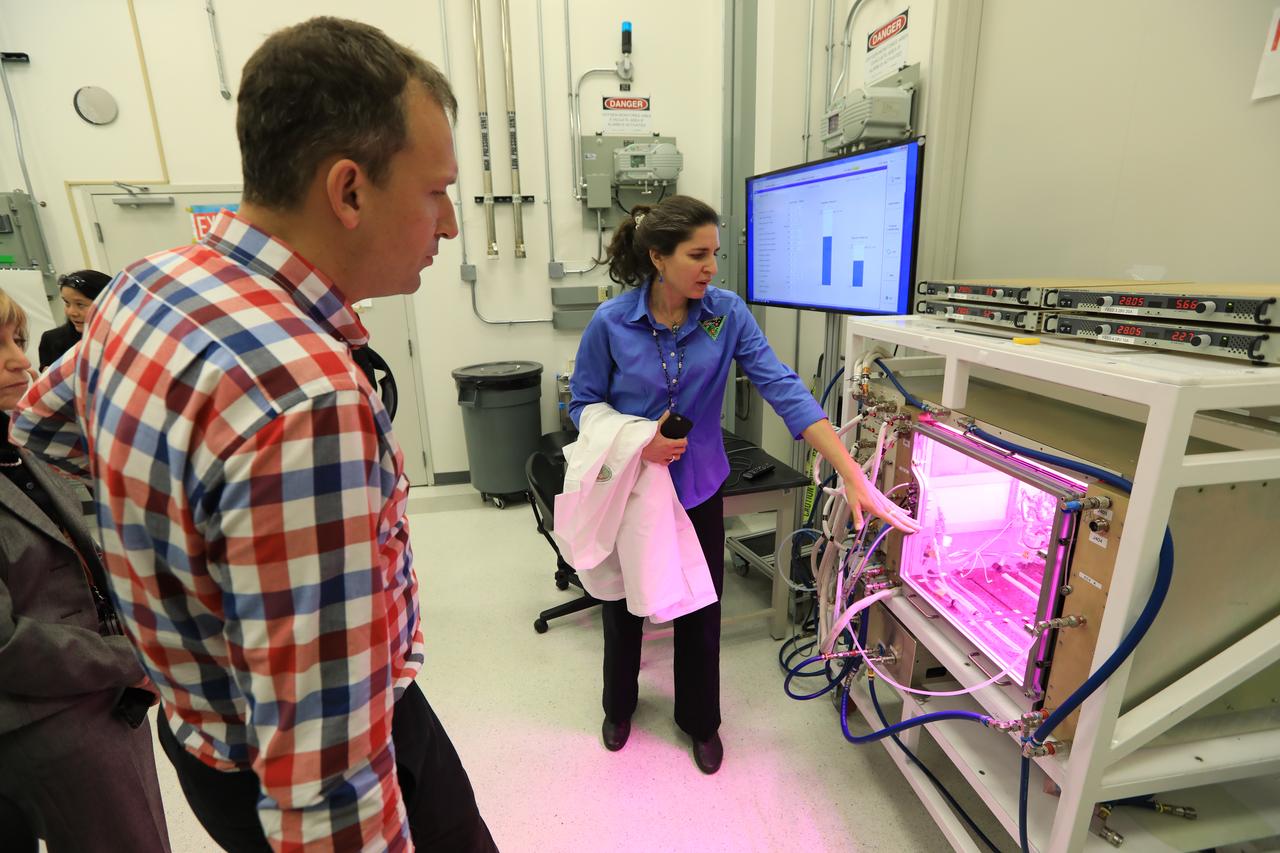
While touring the Space Station Processing Facility at NASA's Kennedy Space Center in Florida, Thomas Zurbuchen, in plaid shirt, NASA's associate administrator for the Science Mission Directorate, learns about the advanced plant habitat used to grow plants in space.
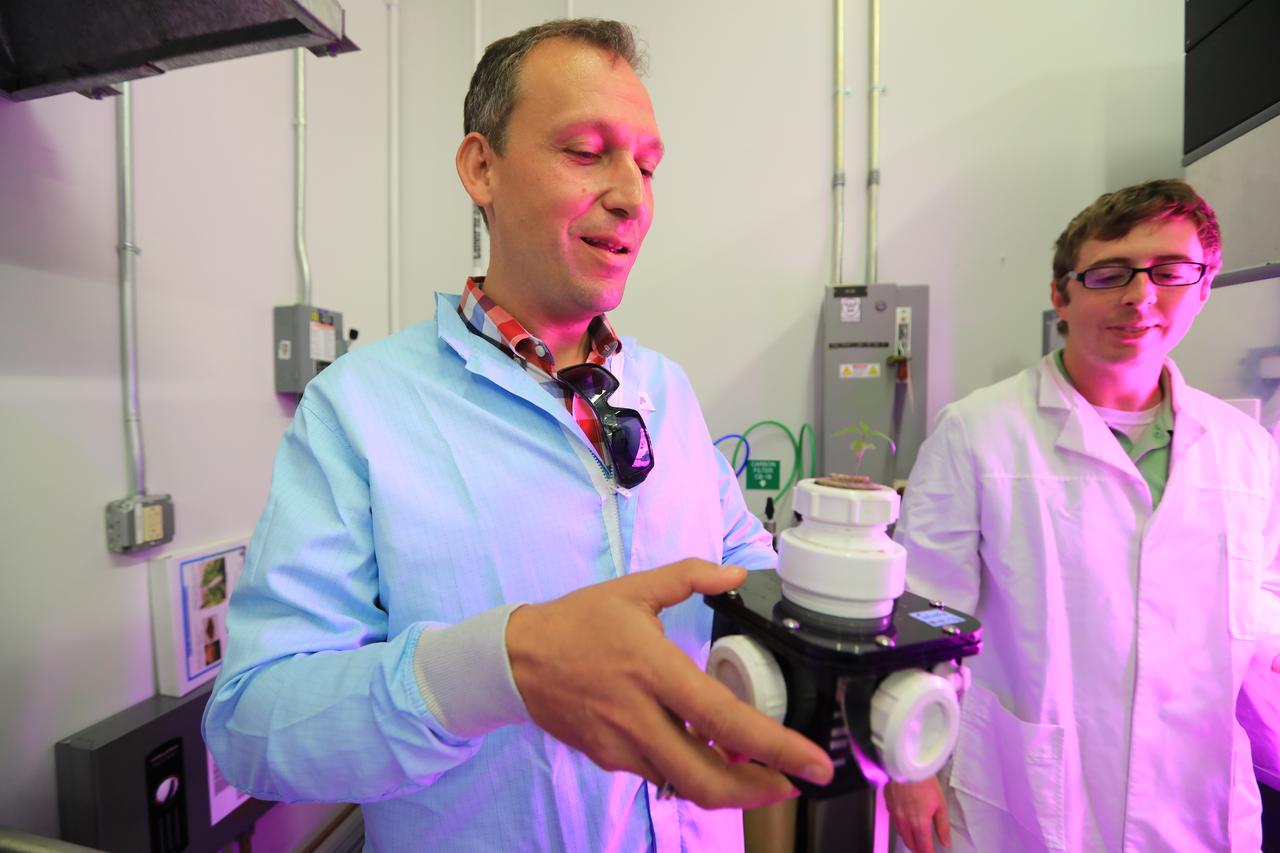
While touring the Space Station Processing Facility at NASA's Kennedy Space Center in Florida, Thomas Zurbuchen, in plaid shirt, NASA's associate administrator for the Science Mission Directorate, examines a device to grow plants in space.
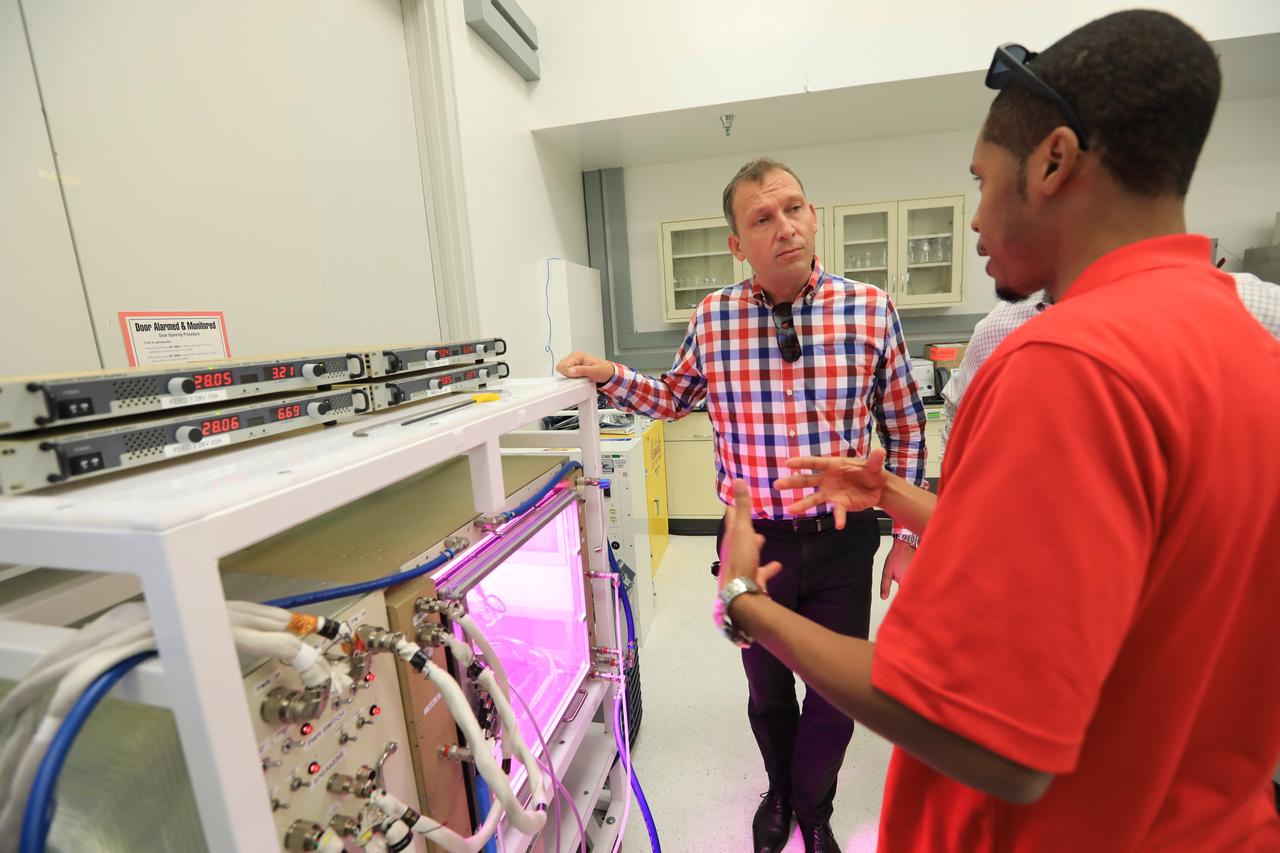
While touring the Space Station Processing Facility at NASA's Kennedy Space Center in Florida, Thomas Zurbuchen, in plaid shirt, NASA's associate administrator for the Science Mission Directorate, learns about the advanced plant habitat used to grow plants in space.
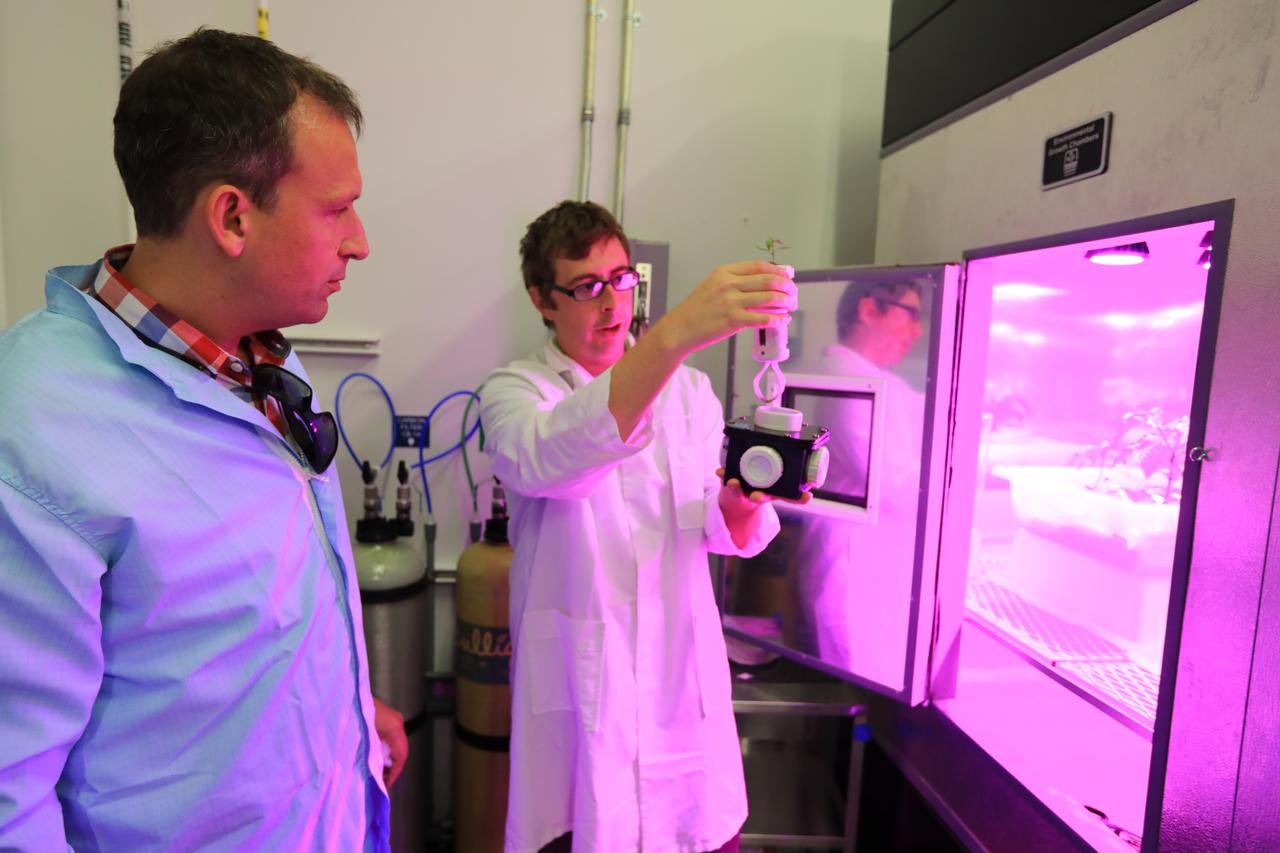
Thomas Zurbuchen, in plaid shirt, NASA's associate administrator for the Science Mission Directorate, listens to a presentation at the Space Station Processing Facility at NASA's Kennedy Space Center in Florida.
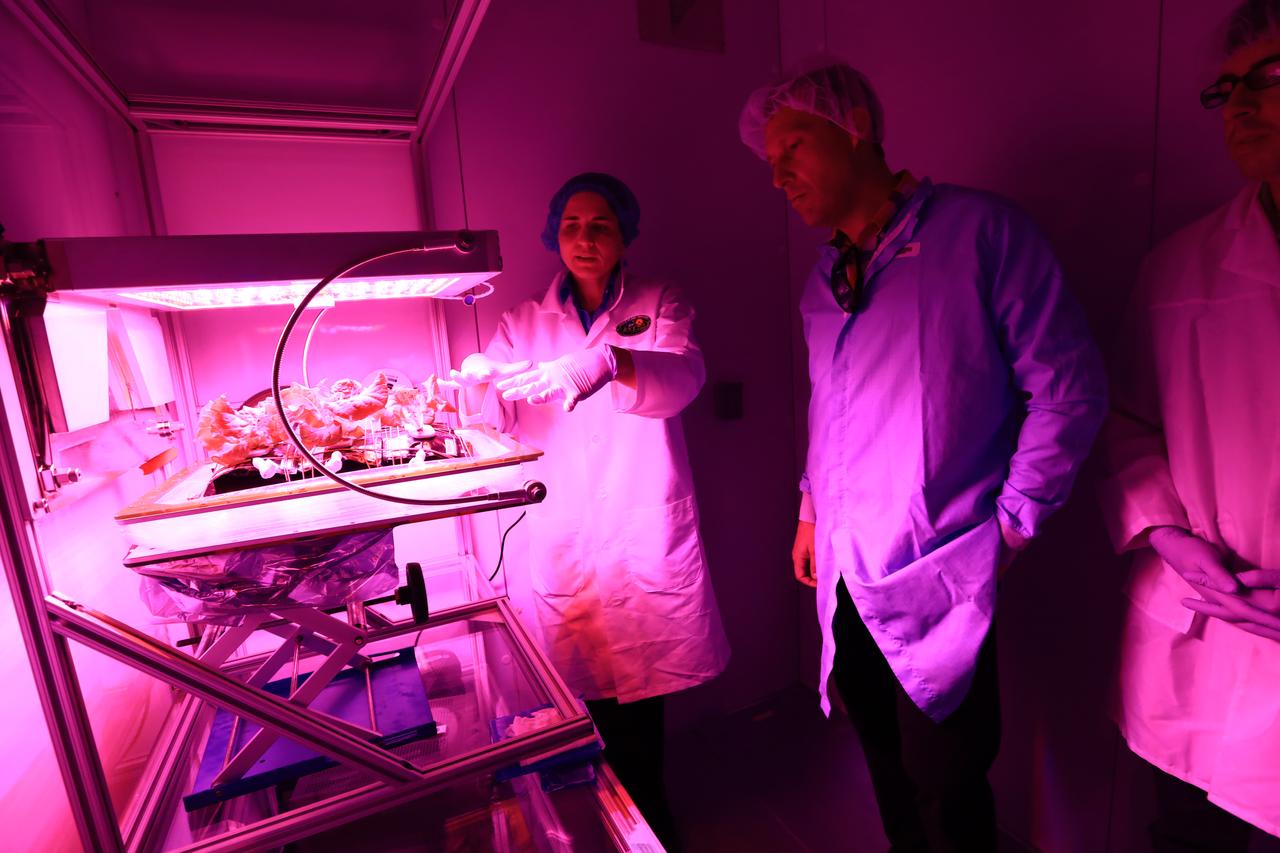
Thomas Zurbuchen, in plaid shirt, NASA's associate administrator for the Science Mission Directorate, listens to a presentation at the Space Station Processing Facility at NASA's Kennedy Space Center in Florida.
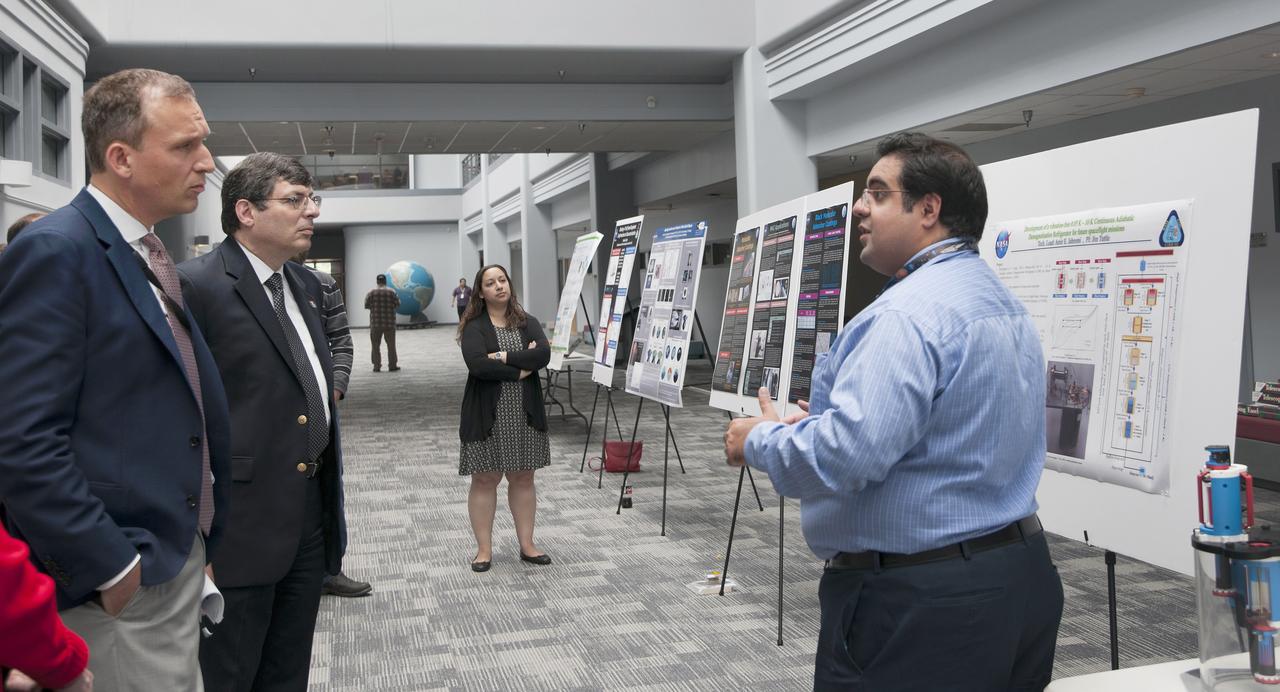
Dr. Thomas Zurbuchen Associate Administrator for Science Mission Directorate Hqs visited Goddard on May 29 2018
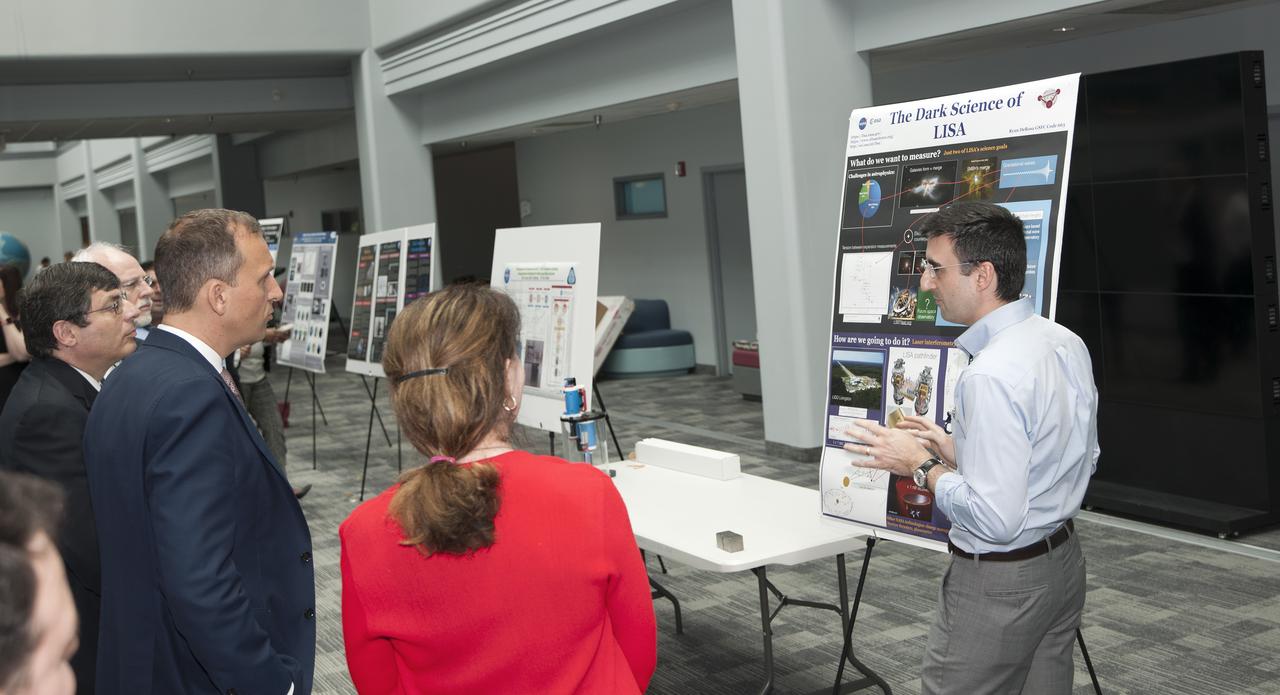
Dr. Thomas Zurbuchen ASsociate Administrator for Science Mission Directorate visited Goddard on May 29, 2018
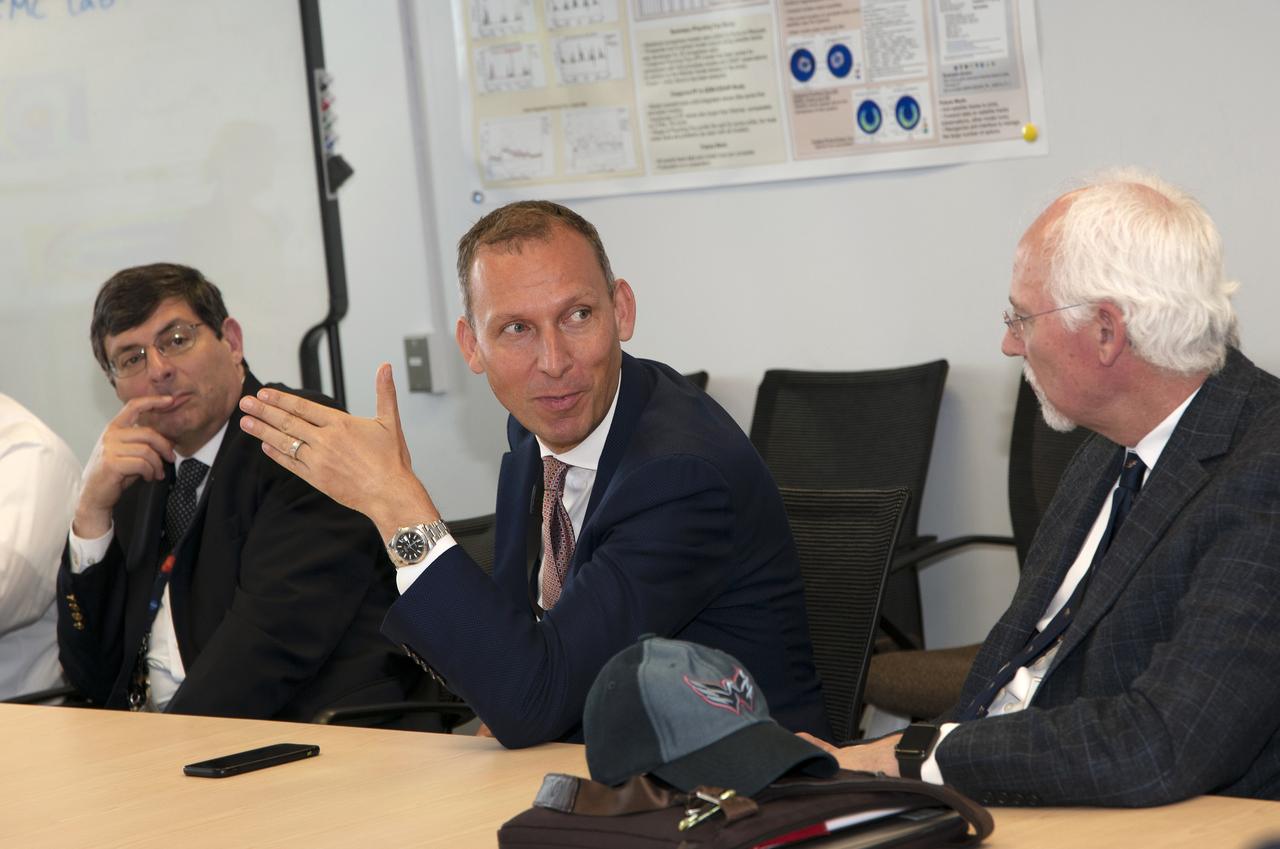
Dr. Thomas Zurbuchen Associate Administrator for Science Mission Directorate Hqs visited Goddard on May 29, 2018
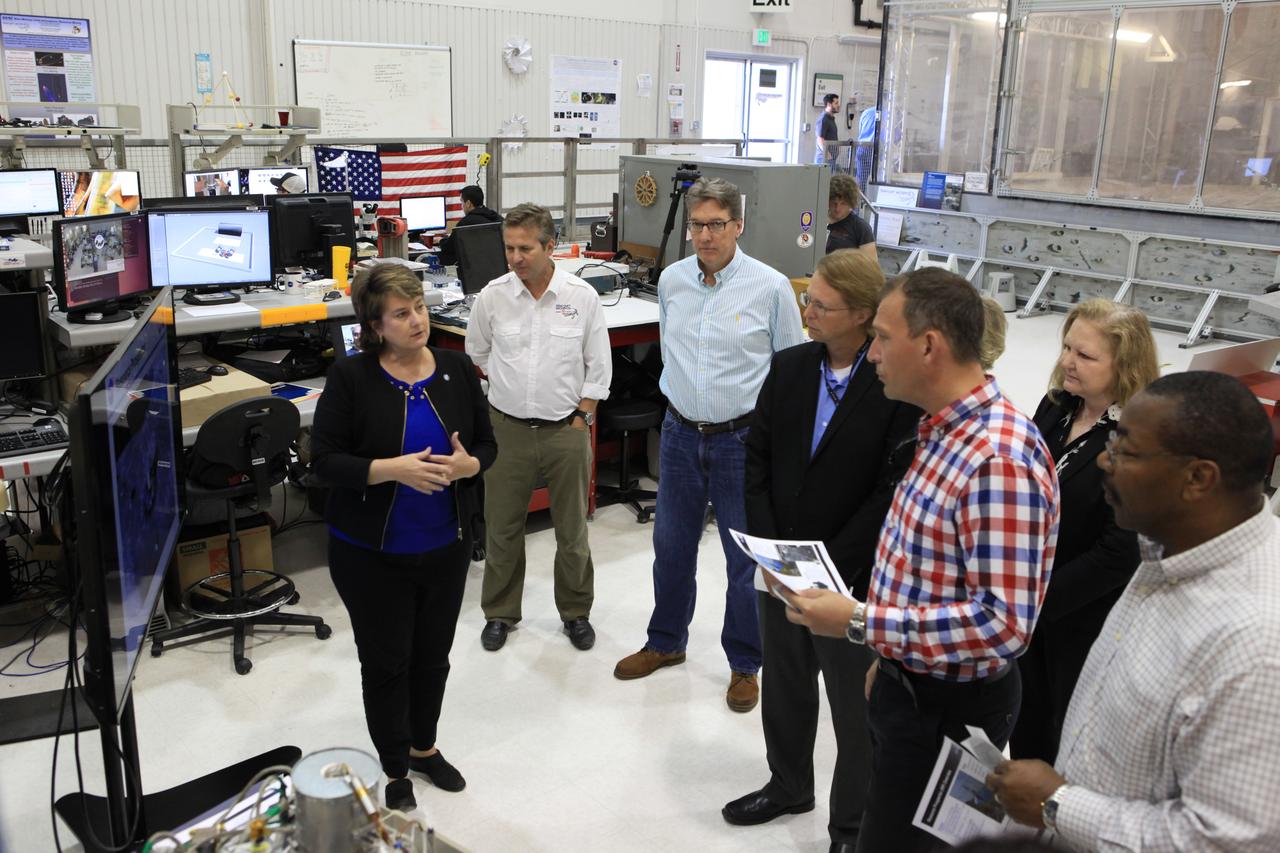
Thomas Zurbuchen, in plaid shirt, NASA's associate administrator for the Science Mission Directorate, listens to a presentation at the Swamp Works facility at NASA's Kennedy Space Center in Florida.
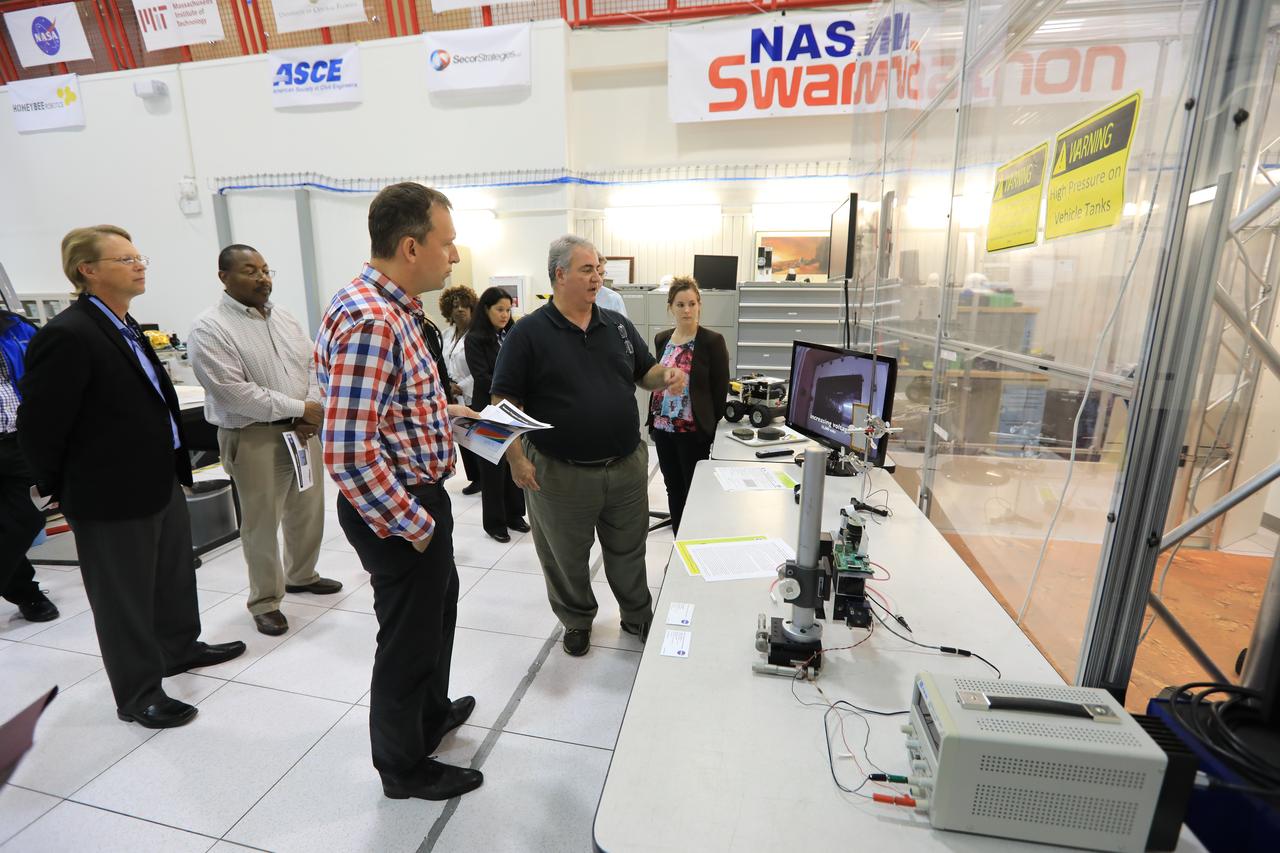
Thomas Zurbuchen, in plaid shirt, NASA's associate administrator for the Science Mission Directorate, listens to a presentation at the Swamp Works facility at NASA's Kennedy Space Center in Florida. In the foreground is a prototype robotic exploration vehicle.
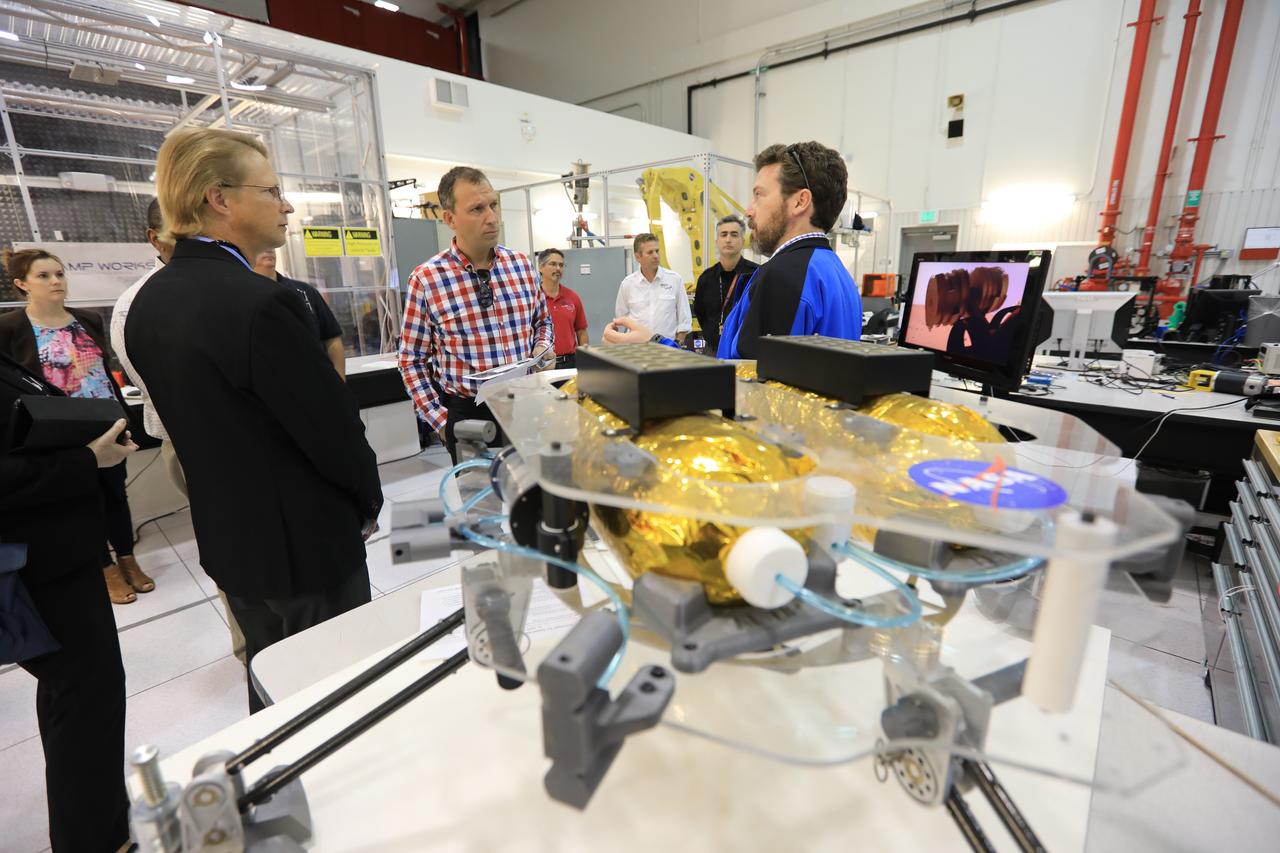
Thomas Zurbuchen, in plaid shirt, NASA's associate administrator for the Science Mission Directorate, listens to a presentation at the Swamp Works facility at NASA's Kennedy Space Center in Florida. In the foreground is a prototype robotic exploration vehicle.
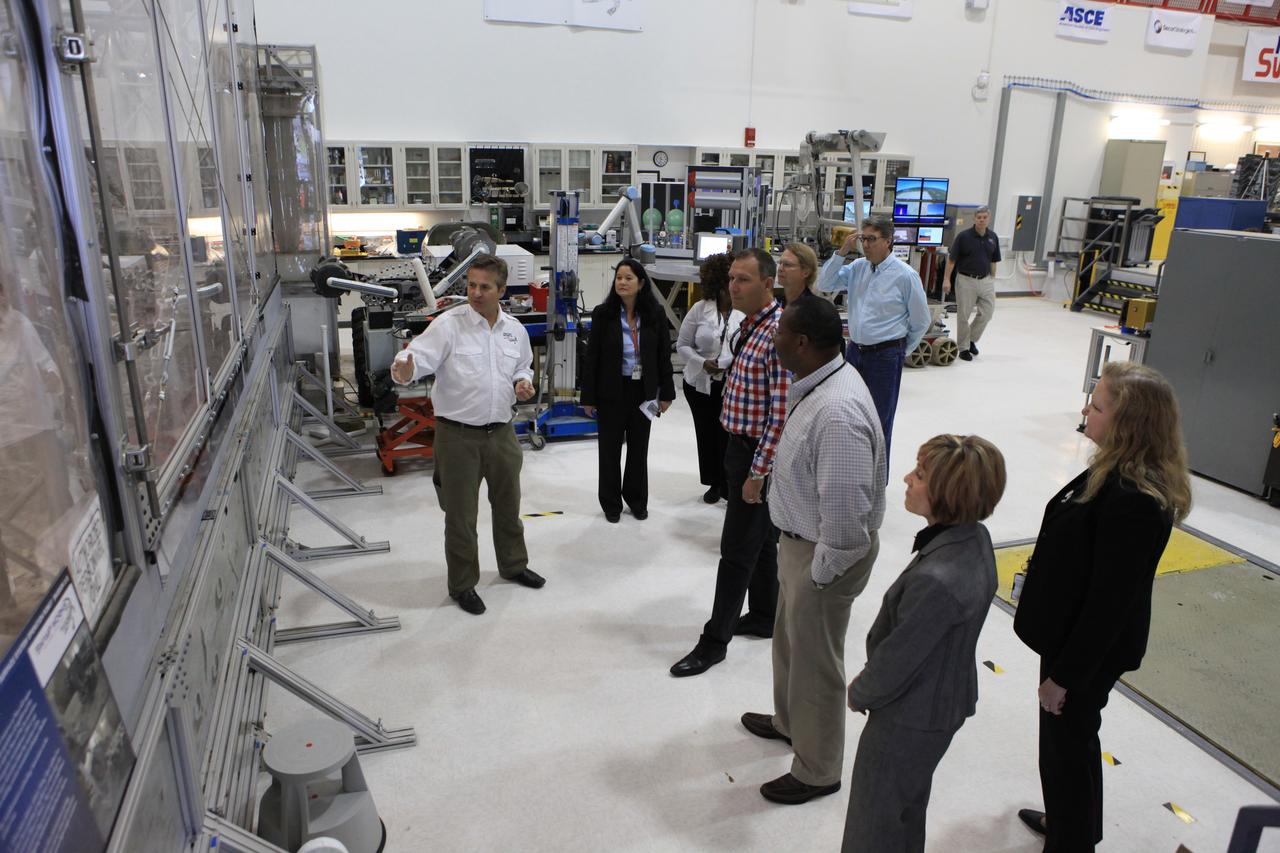
Thomas Zurbuchen, in plaid shirt, NASA's associate administrator for the Science Mission Directorate, listens to a presentation at the Swamp Works facility at NASA's Kennedy Space Center in Florida.
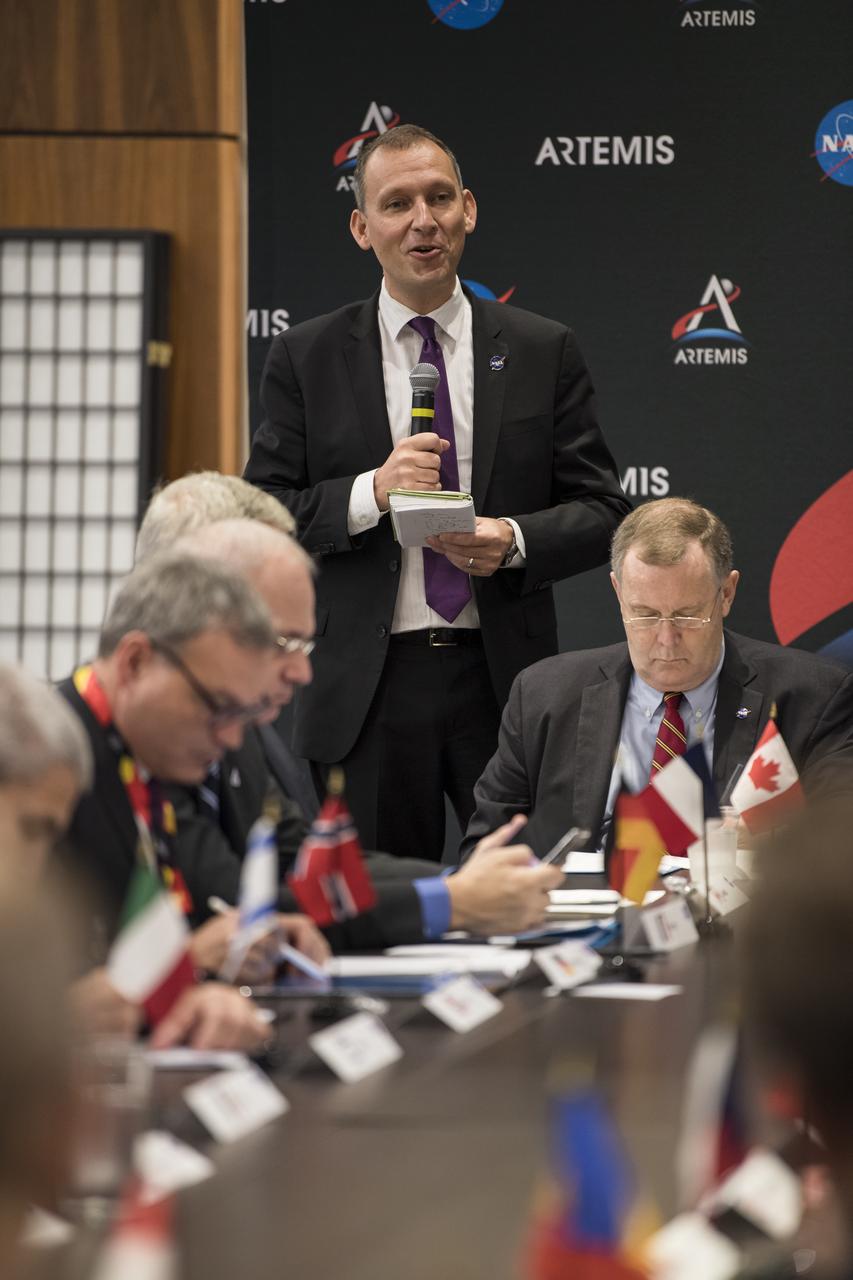
NASA Associate Administrator for the Science Mission Directorate, Dr. Thomas Zurbuchen, speaks during a multilateral meeting of the heads of space agencies at the 70th International Astronautical Congress, Tuesday, Oct. 22, 2019 in Washington. Photo Credit: (NASA/Aubrey Gemignani)

NASA associate administrator for Science, Thomas Zurbuchen, left, makes closing remarks with Dr. Michael Freilich, right, at the conclusion of a renaming ceremony for the international ocean science satellite previously known as Sentinel-6A/Jason-CS, Tuesday, January 28, 2020, at NASA Headquarters in Washington. NASA and its European partners renamed the satellite Sentinel-6 Michael Freilich after NASA’s former director of the Earth Science division, Dr. Michael Freilich. Sentinel-6A Michael Freilich will observe and record global sea level changes and will be joined by an identical satellite slated to launch in 2025 for a total of ten years of targeted observations. Photo Credit: (NASA/Aubrey Gemignani)
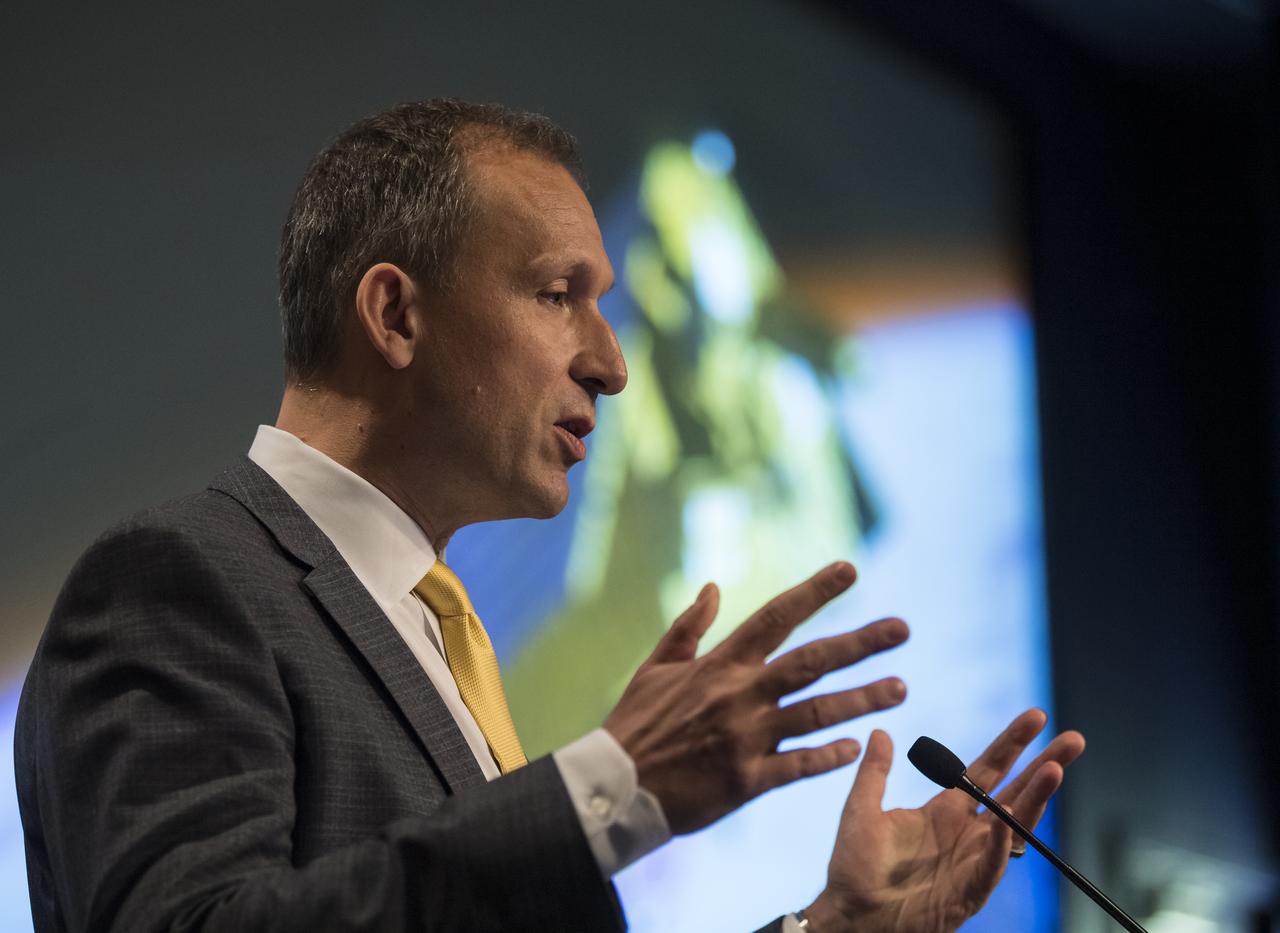
NASA associate administrator for Science, Thomas Zurbuchen, speaks at a renaming ceremony for the international ocean science satellite previously known as Sentinel-6A/Jason-CS, Tuesday, January 28, 2020, at NASA Headquarters in Washington. NASA and its European partners renamed the satellite Sentinel-6 Michael Freilich after NASA’s former director of the Earth Science division, Dr. Michael Freilich. Sentinel-6A Michael Freilich will observe and record global sea level changes and will be joined by an identical satellite slated to launch in 2025 for a total of ten years of targeted observations.” Photo Credit: (NASA/Aubrey Gemignani)
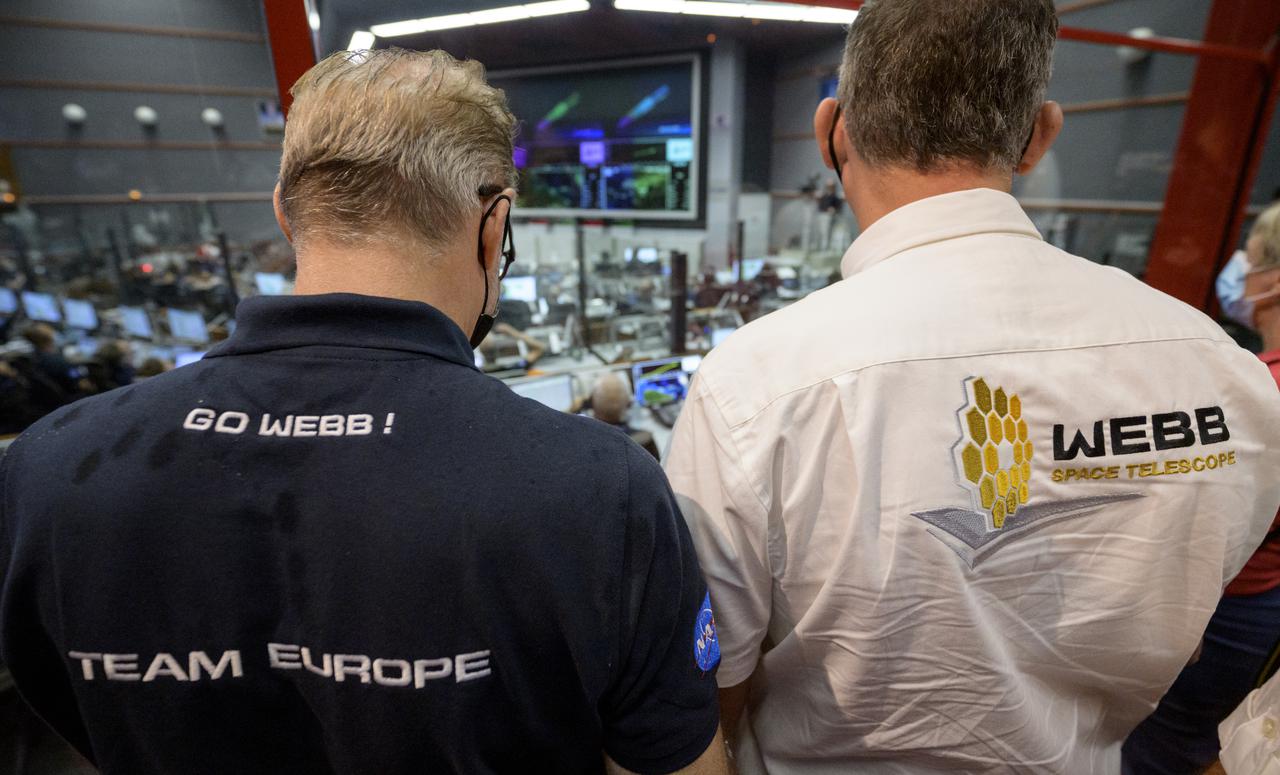
ESA (European Space Agency) Director-General Dr. Josef Aschbacher, left, and NASA Associate Administrator for the Science Mission Directorate Thomas Zurbuchen, monitor the progress of the Ariane 5 rocket delivering the James Webb Space Telescope into space, Saturday, Dec. 25, 2021, in the Jupiter Hall of the Guiana Space Centre in Kourou, French Guiana. The James Webb Space Telescope (sometimes called JWST or Webb) is a large infrared telescope with a 21.3 foot (6.5 meter) primary mirror. The observatory will study every phase of cosmic history—from within our solar system to the most distant observable galaxies in the early universe. Photo Credit: (NASA/Bill Ingalls)

NASA associate administrator for Science, Thomas Zurbuchen, speaks at a renaming ceremony for the international ocean science satellite previously known as Sentinel-6A/Jason-CS, Tuesday, January 28, 2020, at NASA Headquarters in Washington. NASA and its European partners renamed the satellite Sentinel-6 Michael Freilich after NASA’s former director of the Earth Science division, Dr. Michael Freilich. Sentinel-6A Michael Freilich will observe and record global sea level changes and will be joined by an identical satellite slated to launch in 2025 for a total of ten years of targeted observations.” Photo Credit: (NASA/Aubrey Gemignani)
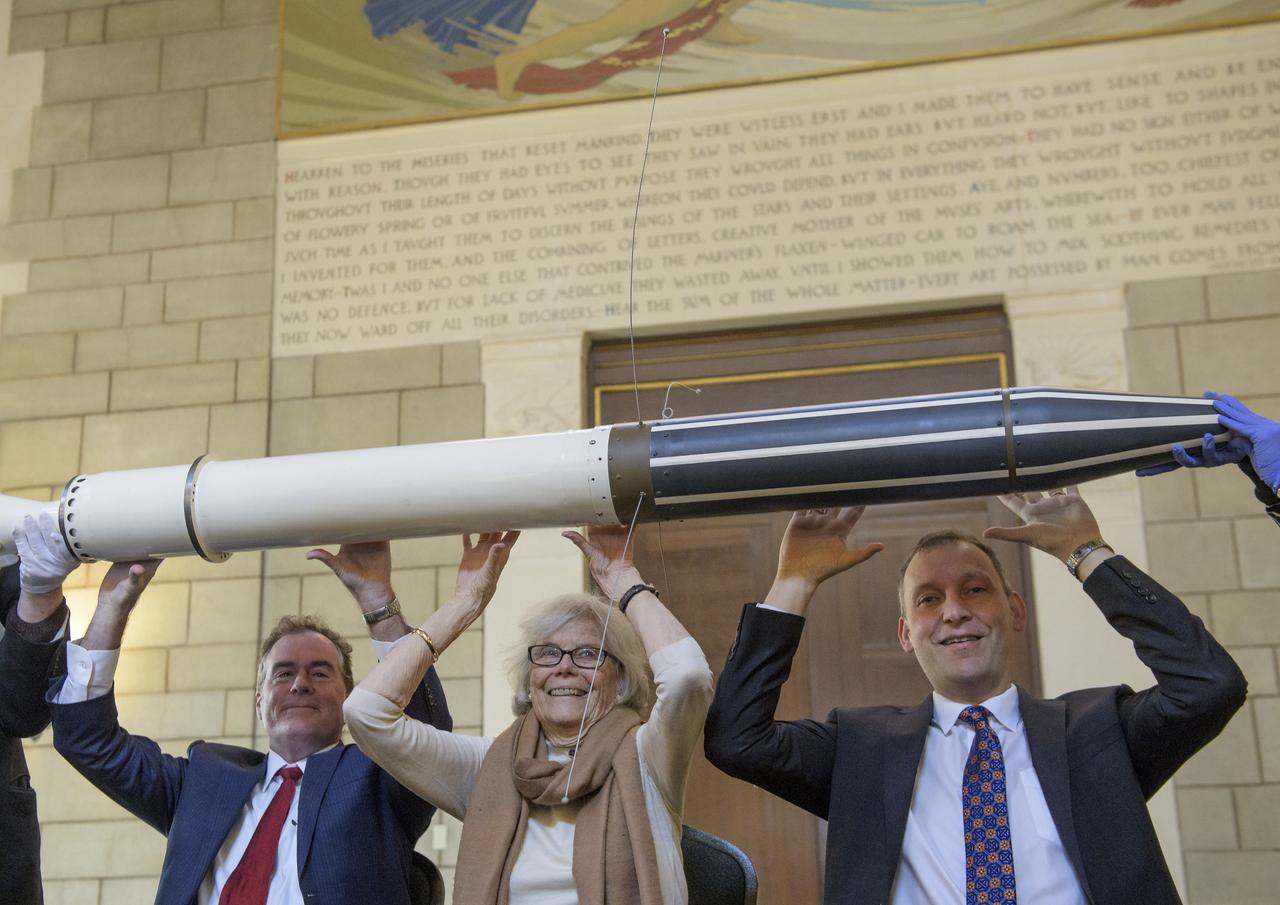
Michael Watkins, Director of NASA's Jet Propulsion Laboratory, left, Susan Finley, who began working at NASA's Jet Propulsion Laboratory in January 1958 as a "human computer", center, and Thomas Zurbuchen, Associate Administrator for NASA's Science Mission Directorate, right, reenact the famous picture of Dr. William H. Pickering, Dr. James A. van Allen, and Dr. Wernher von Braun, hoisting a model of Explorer 1 above their heads at a press conference announcing the satellite's success with a replica of the Explorer 1 satellite during an event celebrating the 60th Anniversary of the Explorer 1 mission and the discovery of Earth's radiation belts, Wednesday, Jan. 31, 2018, at the National Academy of Sciences in Washington. The first U.S. satellite, Explorer 1, was launched from Cape Canaveral on January 31, 1958. The 30-pound satellite would yield a major scientific discovery, the Van Allen radiation belts circling our planet, and begin six decades of groundbreaking space science and human exploration. (NASA/Joel Kowsky)
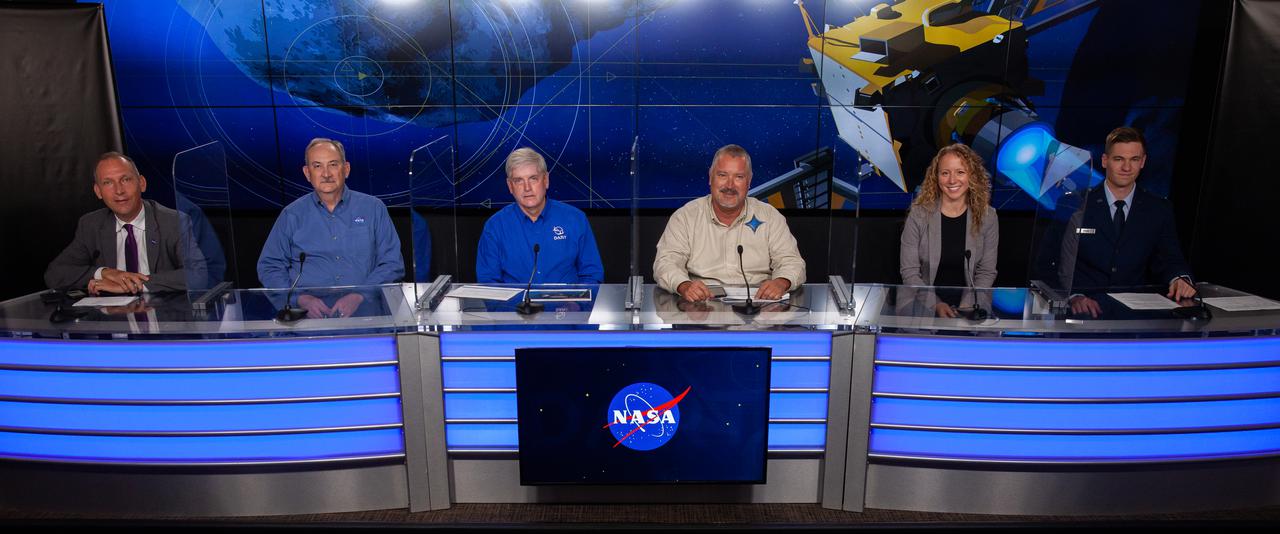
From left, Dr Thomas Zurbuchen, Lindley Johnson, Ed Reynolds, Omar Baez, Julianna Scheiman, and Capt. Maximillian Rush participate in a prelaunch news conference on Nov. 22, 2021, at Vandenberg Space Force Base in California in preparation for the agency’s Double Asteroid Redirection Test (DART) launch. DART is the first mission to test technologies for preventing an impact of Earth by a hazardous asteroid. The mission is scheduled to launch no earlier than 1:21 a.m. EST Wednesday, Nov. 24 (10:21 p.m. PST Tuesday, Nov. 23), aboard a SpaceX Falcon 9 rocket from Vandenberg. NASA's Launch Services Program based at Kennedy Space Center in Florida, America's multi-user spaceport, is managing the launch.
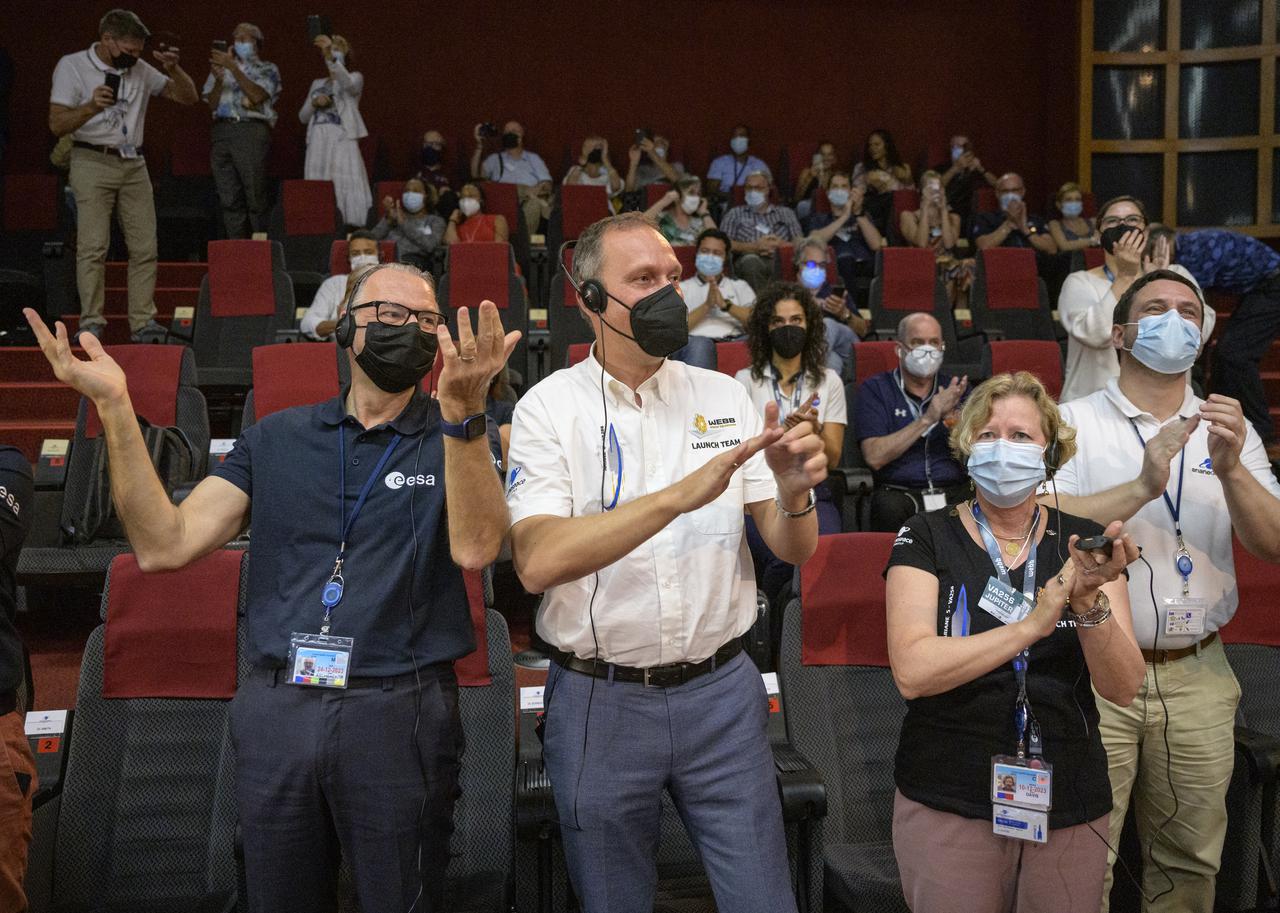
ESA (European Space Agency) Director-General Dr. Josef Aschbacher, left, NASA Associate Administrator for the Science Mission Directorate Thomas Zurbuchen, and NASA James Webb Space Telescope Program Manager Jeanne Davis, celebrate after hearing confirmation that the James Webb Space Telescope successfully deployed it’s solar arrays and the telescope had positive power, Saturday, Dec. 25, 2021, in the Jupiter Hall of the Guiana Space Centre in Kourou, French Guiana. The James Webb Space Telescope (sometimes called JWST or Webb) is a large infrared telescope with a 21.3 foot (6.5 meter) primary mirror. The observatory will study every phase of cosmic history—from within our solar system to the most distant observable galaxies in the early universe. Photo Credit: (NASA/Bill Ingalls)
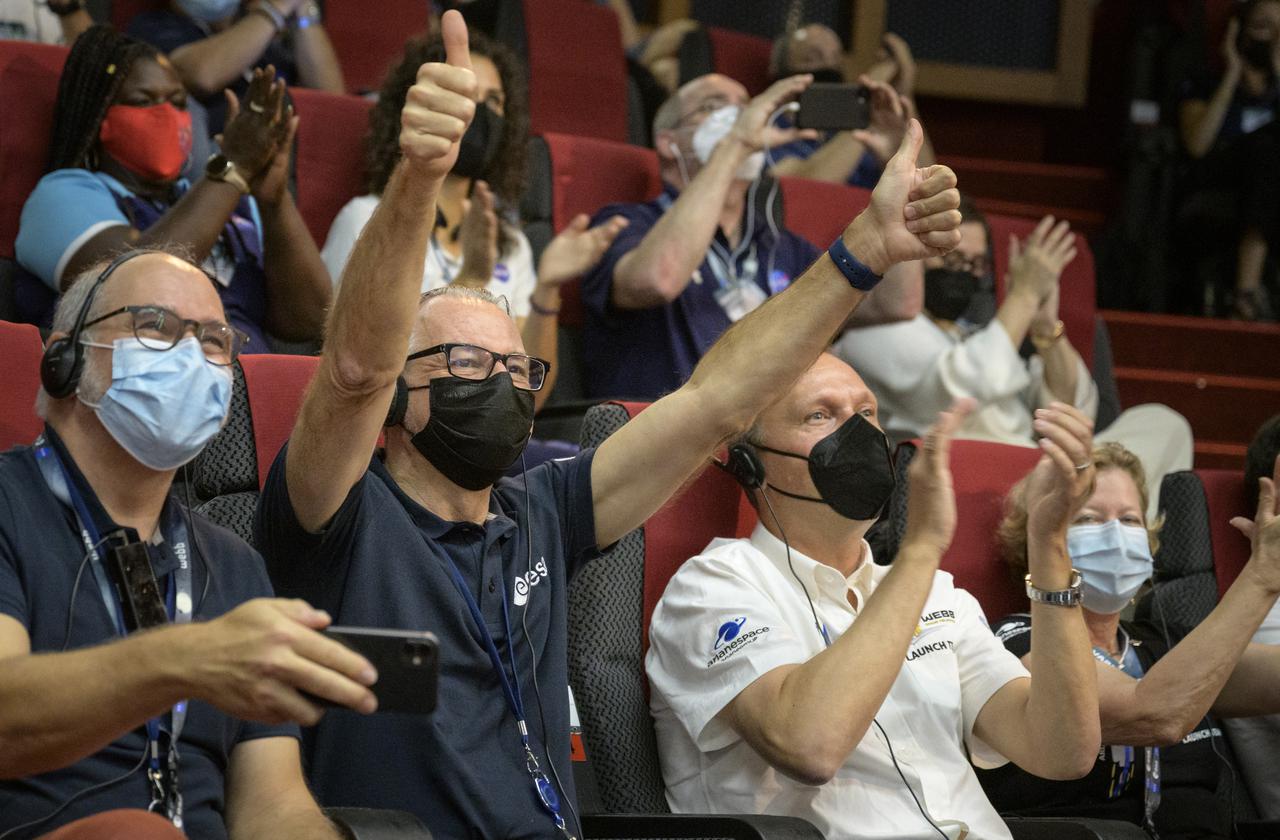
ESA (European Space Agency) Director-General Dr. Josef Aschbacher, 2nd from left, and NASA Associate Administrator for the Science Mission Directorate Thomas Zurbuchen, 3rd from left, celebrate after hearing confirmation that the James Webb Space Telescope successfully separated from the Ariane 5 rocket, Saturday, Dec. 25, 2021, in the Jupiter Hall of the Guiana Space Centre in Kourou, French Guiana. The James Webb Space Telescope (sometimes called JWST or Webb) is a large infrared telescope with a 21.3 foot (6.5 meter) primary mirror. The observatory will study every phase of cosmic history—from within our solar system to the most distant observable galaxies in the early universe. Photo Credit: (NASA/Bill Ingalls)
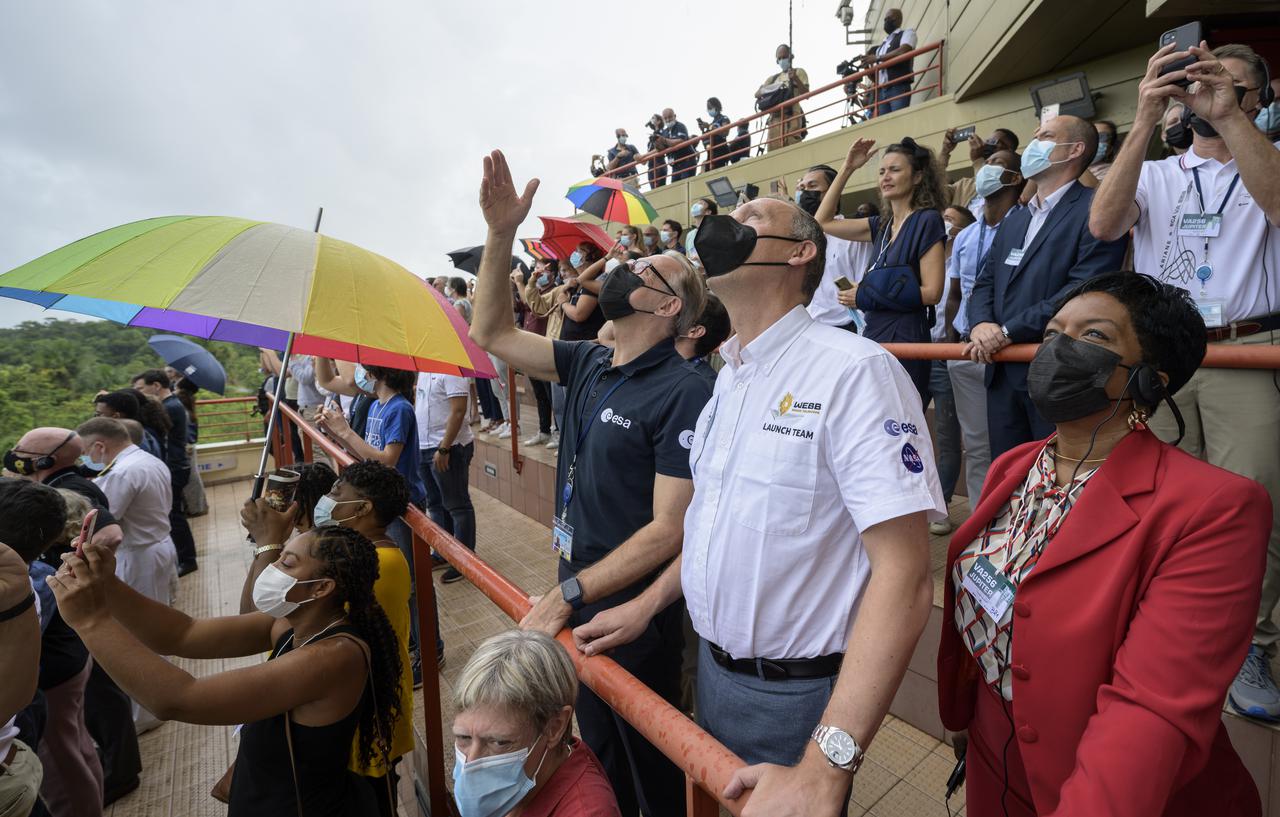
ESA (European Space Agency) Director-General Dr. Josef Aschbacher, left, and NASA Associate Administrator for the Science Mission Directorate Thomas Zurbuchen, right, watch as Arianespace's Ariane 5 rocket launches with NASA’s James Webb Space Telescope onboard, Saturday, Dec. 25, 2021, from the ELA-3 Launch Zone of Europe’s Spaceport at the Guiana Space Centre in Kourou, French Guiana. The James Webb Space Telescope (sometimes called JWST or Webb) is a large infrared telescope with a 21.3 foot (6.5 meter) primary mirror. The observatory will study every phase of cosmic history—from within our solar system to the most distant observable galaxies in the early universe. Photo Credit: (NASA/Bill Ingalls)
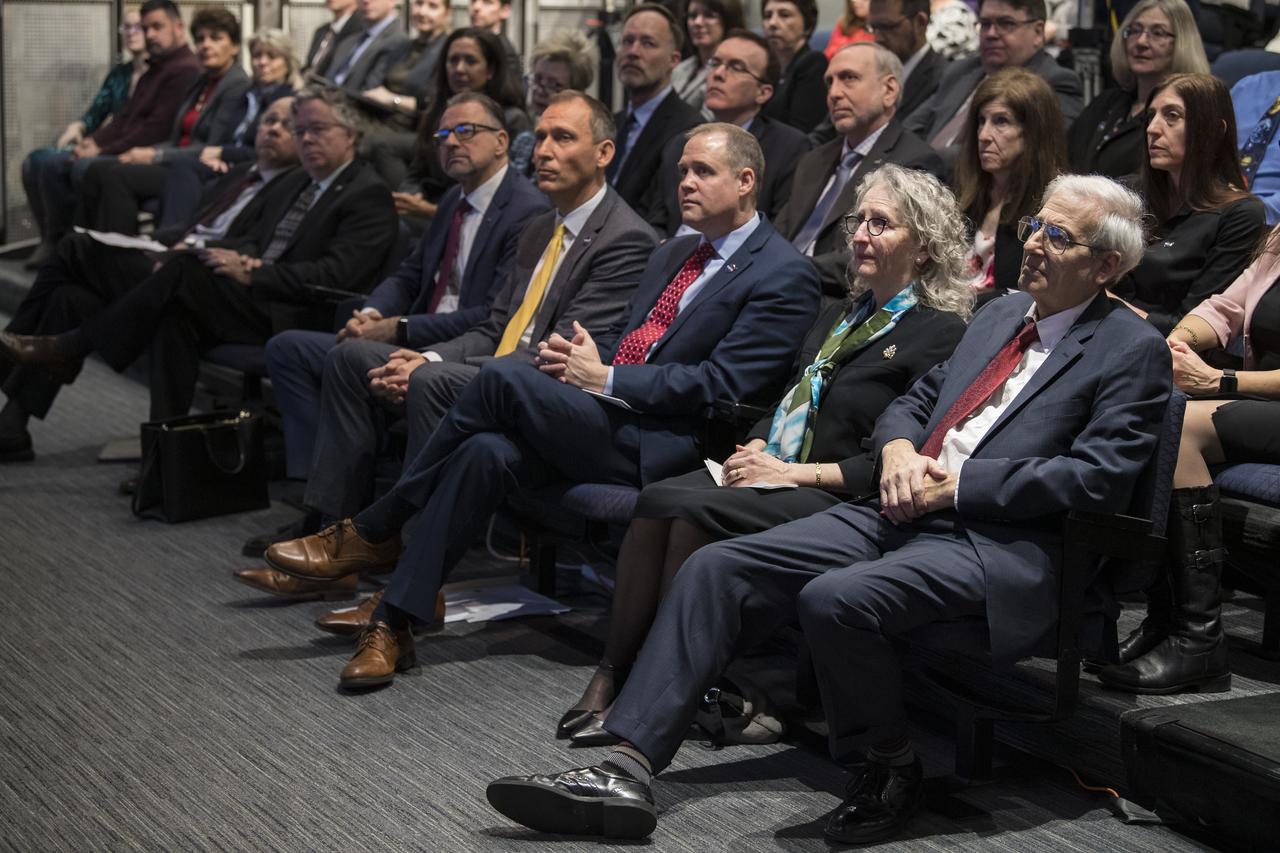
Front row, from left to right, EUMETSAT director-general, Alain Ratier; National Oceanic and Atmospheric Administration (NOAA) assistant administrator for Satellite and Information Services, Stephen Volz; ESA (European Space Agency) director of Earth Observation Programmes, Josef Aschbacher; NASA associate administrator for Science, Thomas Zurbuchen; NASA Administrator Jim Bridenstine; and Former director of NASA’s Earth Science Division, Mike Freilich and his wife are seen in the audience at a renaming ceremony for the international ocean science satellite previously known as Sentinel-6A/Jason-CS, Tuesday, January 28, 2020, at NASA Headquarters in Washington. NASA and its European partners renamed the satellite Sentinel-6 Michael Freilich after NASA’s former director of the Earth Science division, Dr. Michael Freilich. Sentinel-6A Michael Freilich will observe and record global sea level changes and will be joined by an identical satellite slated to launch in 2025 for a total of ten years of targeted observations. Photo Credit: (NASA/Aubrey Gemignani)
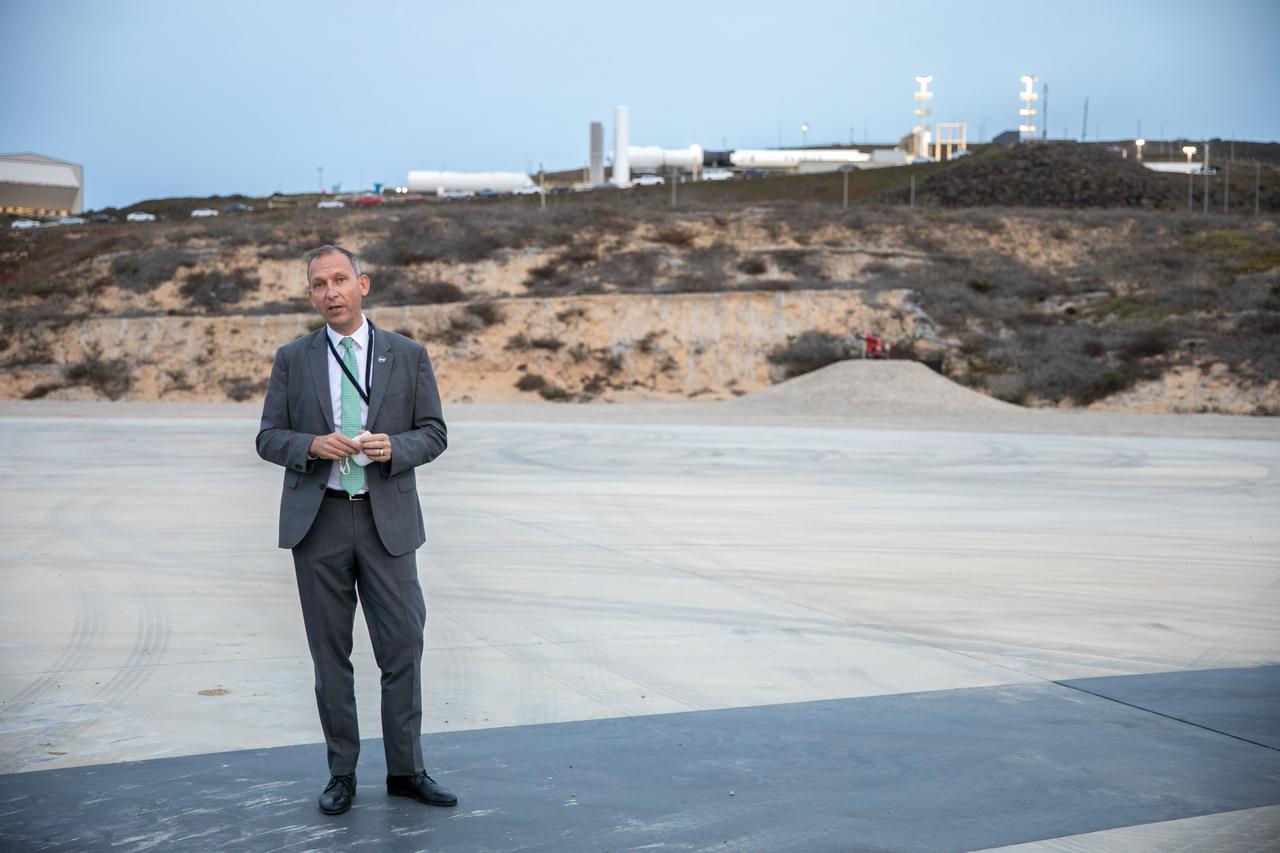
Associate Administrator for NASA’s Science Mission Directorate Thomas Zurbuchen speaks to family members of Dr. Michael Freilich, for whom the Sentinel-6 Michael Freilich satellite is named, at Vandenberg Air Force Base in California on Nov. 20, 2020, the day before the spacecraft’s planned launch atop a Falcon 9 rocket. Freilich served as director of NASA’s Earth Science Division in the Science Mission Directorate at the agency’s Headquarters from 2006 until his retirement in 2019. A tireless advocate for advancing satellite measurements of the ocean, he was instrumental in advancing ocean altimetry and helped drive the evolution of NASA Earth science from a program that launched an Earth-observing space mission every few years to one that launches several missions each year. Freilich died Aug. 5, 2020, of pancreatic cancer. Sentinel-6 Michael Freilich launched Nov. 21, 2020, at 9:17 a.m. PST (12:17 p.m. EST). NASA’s Launch Services Program at Kennedy Space Center was responsible for launch management.
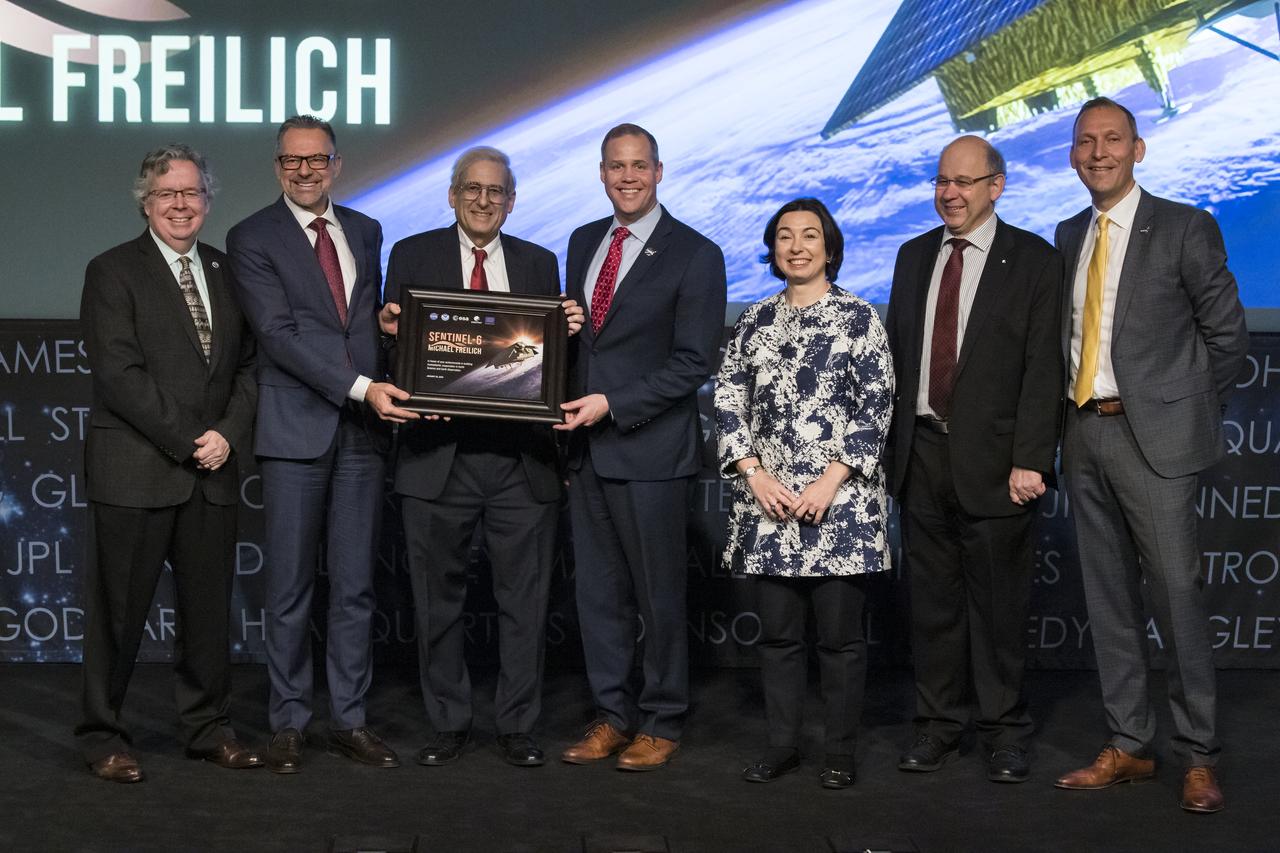
From left to right, National Oceanic and Atmospheric Administration (NOAA) assistant administrator for Satellite and Information Services, Stephen Volz; ESA (European Space Agency) director of Earth Observation Programmes, Josef Aschbacher; Former director of NASA’s Earth Science Division, Mike Freilich; NASA Administrator Jim Bridenstine; Head of Global Issues and Innovation of the European Union delegation to the United States, Mercedes Garcia Pérez; EUMETSAT director-general, Alain Ratier; and NASA associate administrator for Science, Thomas Zurbuchen pose for a group photo at the conclusion of a renaming ceremony for the international ocean science satellite previously known as Sentinel-6A/Jason-CS, Tuesday, January 28, 2020, at NASA Headquarters in Washington. NASA and its European partners renamed the satellite Sentinel-6 Michael Freilich after Dr. Freilich. Sentinel-6A Michael Freilich will observe and record global sea level changes and will be joined by an identical satellite slated to launch in 2025 for a total of ten years of targeted observations. Photo Credit: (NASA/Aubrey Gemignani)
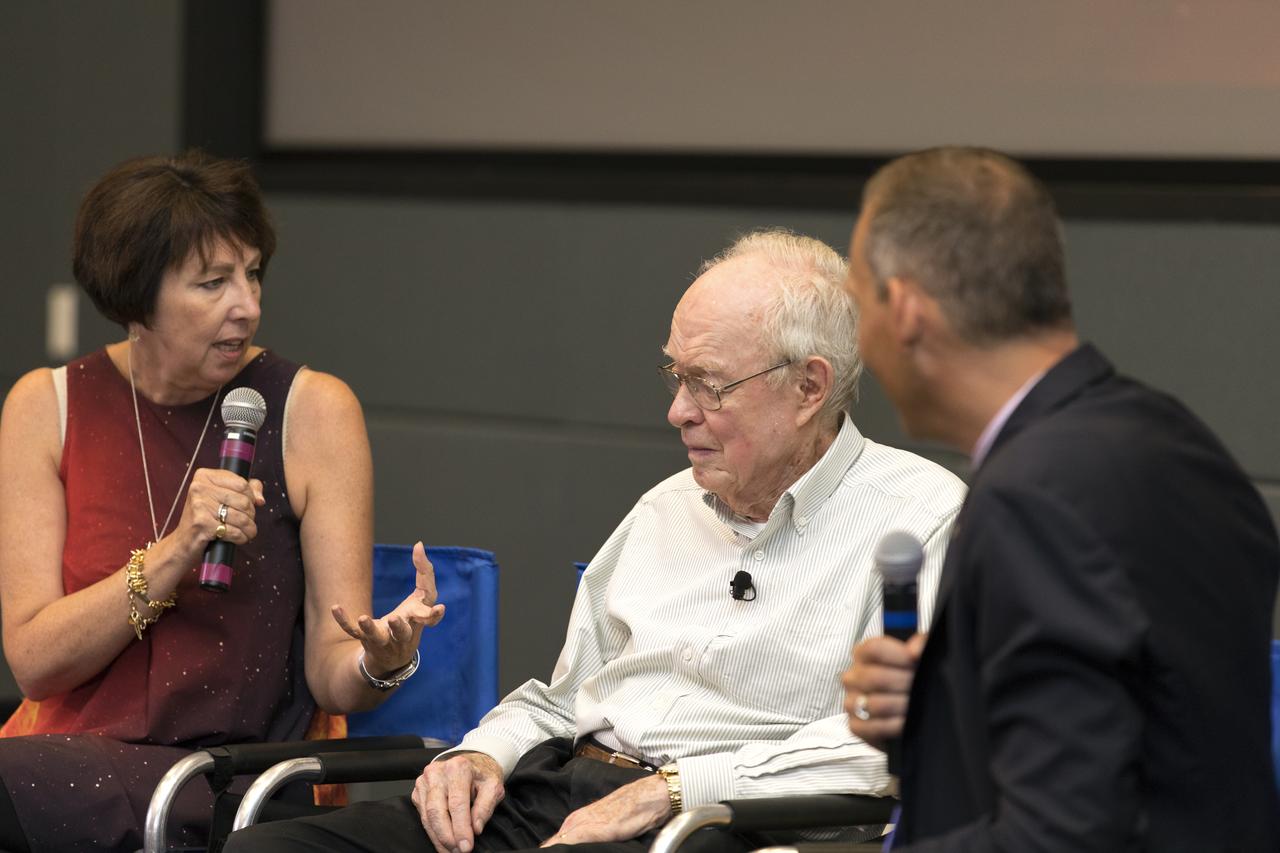
In the Kennedy Space Center's Operations and Support Building II, Thursday, Aug. 9, 2018, members of the news and social media participate in a prelaunch mission briefing on NASA's Parker Solar Probe. Briefing participants from left are: Nicky Fox, Parker Solar Probe project scientist at Johns Hopkins Applied Physics Laboratory, Dr. Eugene Parker, a pioneer in heliophysics and S. Chandrasekhar distinguished service professor emeritus for the Department of Astronomy and Astrophysics at the University of Chicago, Thomas Zurbuchen, associate administrator for NASA’s Science Mission Directorate in Washington. This is the first NASA mission named for a living person. The Parker Solar Probe is designed to provide key observations on his groundbreaking theories about the Sun. Lift off atop a United Launch Alliance Delta IV Heavy rocket will take place from Space Launch Complex 37 at Cape Canaveral Air Force Station in Florida. The spacecraft was built by Applied Physics Laboratory of Johns Hopkins University in Laurel, Maryland. The mission will perform the closest-ever observations of a star when it travels through the Sun's atmosphere, called the corona. The probe will rely on measurements and imaging to revolutionize our understanding of the corona and the Sun-Earth connection.
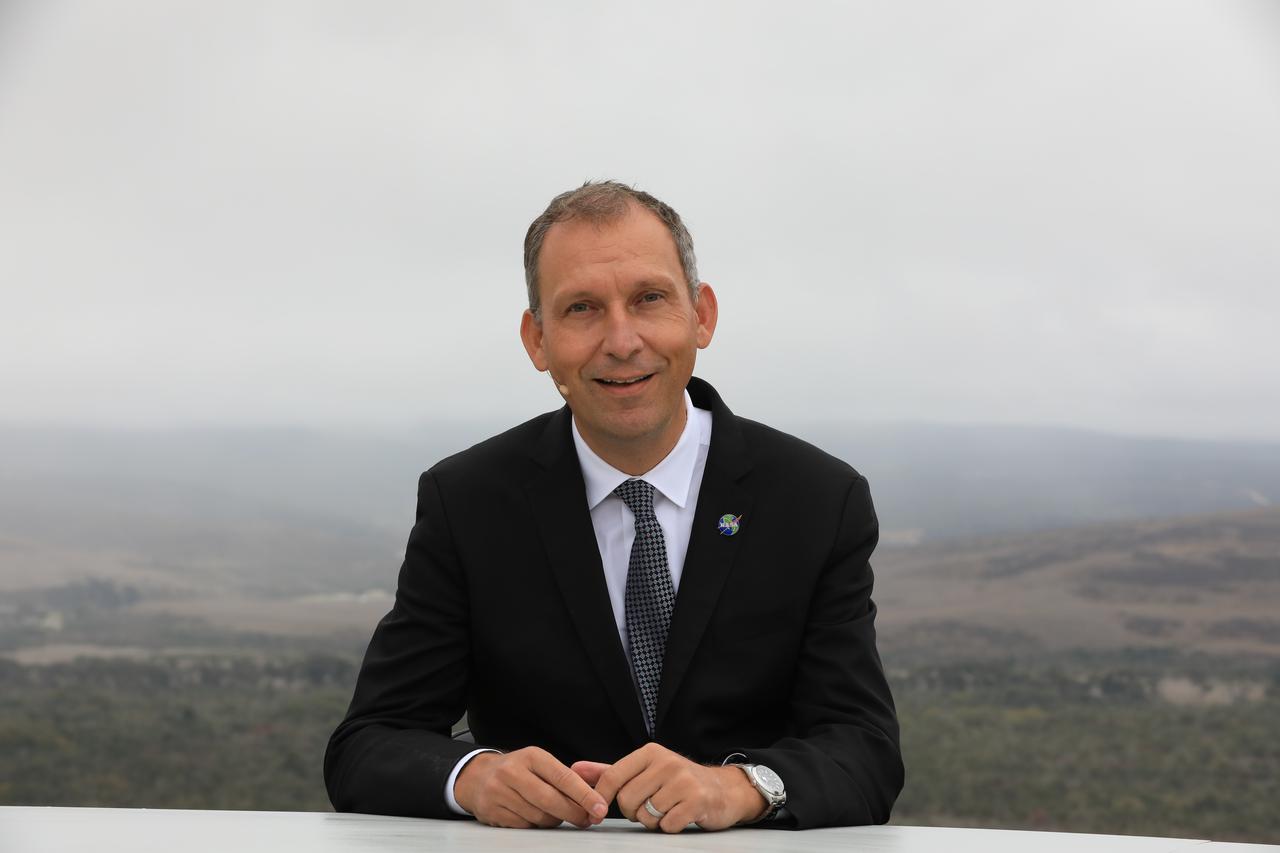
Dr. Thomas Zurbuchen, associate administrator, NASA’s Science Mission Directorate, participates in the launch broadcast for the Landsat 9 mission on Sept. 27, 2021, at Vandenberg Space Force Base in California. NASA’s Landsat 9 satellite launched on a United Launch Alliance Atlas V 401 rocket from Vandenberg's Space Launch Complex 3 at 2:12 p.m. EDT (11:12 a.m. PDT). The launch is managed by NASA’s Launch Services Program, based at the agency’s Kennedy Space Center in Florida. Landsat 9 will join its sister satellite, Landsat 8, in orbit in collecting images from across the planet every eight days. This calibrated data will continue the Landsat program’s critical role in monitoring the health of Earth and helping people manage essential resources, including crops, irrigation water, and forests. NASA Goddard manages the Landsat 9 mission. Goddard teams also built and tested one of the two instruments on Landsat 9, the Thermal Infrared Sensor 2 (TIRS-2) instrument. TIRS-2 will use thermal imaging to make measurements that can be used to estimate soil moisture and detect the health of plants.
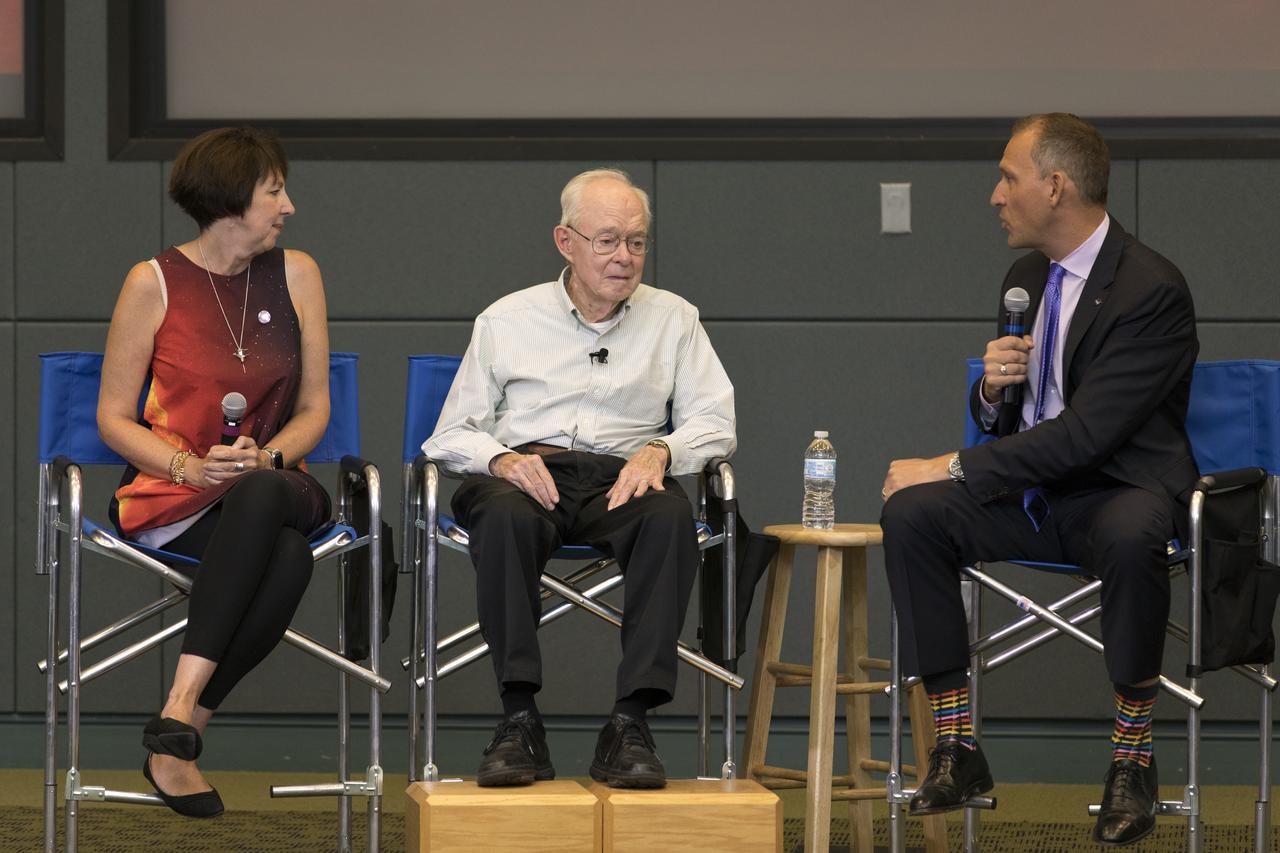
In the Kennedy Space Center's Operations and Support Building II, Thursday, Aug. 9, 2018, members of the news and social media participate in a prelaunch mission briefing on NASA's Parker Solar Probe. Briefing participants from left are: Nicky Fox, Parker Solar Probe project scientist at Johns Hopkins Applied Physics Laboratory, Dr. Eugene Parker, a pioneer in heliophysics and S. Chandrasekhar distinguished service professor emeritus for the Department of Astronomy and Astrophysics at the University of Chicago, Thomas Zurbuchen, associate administrator for NASA’s Science Mission Directorate in Washington. This is the first NASA mission named for a living person. The Parker Solar Probe is designed to provide key observations on his groundbreaking theories about the Sun. Lift off atop a United Launch Alliance Delta IV Heavy rocket will take place from Space Launch Complex 37 at Cape Canaveral Air Force Station in Florida. The spacecraft was built by Applied Physics Laboratory of Johns Hopkins University in Laurel, Maryland. The mission will perform the closest-ever observations of a star when it travels through the Sun's atmosphere, called the corona. The probe will rely on measurements and imaging to revolutionize our understanding of the corona and the Sun-Earth connection.
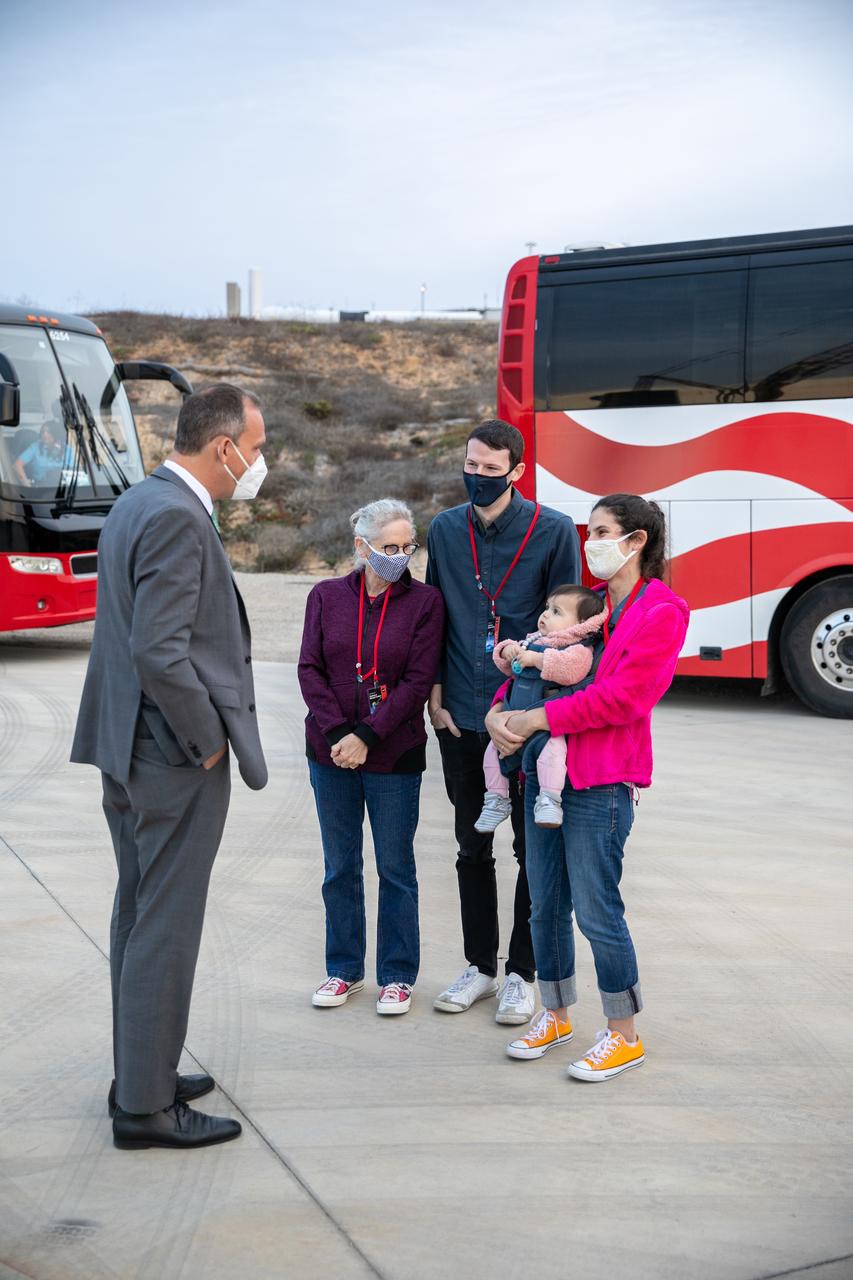
Associate Administrator for NASA’s Science Mission Directorate Thomas Zurbuchen, far left, greets family members of Dr. Michael Freilich, for whom the Sentinel-6 Michael Freilich satellite is named, at Vandenberg Air Force Base in California on Nov. 20, 2020, the day before the spacecraft’s planned launch atop a Falcon 9 rocket. From left are Freilich’s wife, Shoshannah, and their children, Daniel and Sarah. Freilich served as director of NASA’s Earth Science Division in the Science Mission Directorate at the agency’s Headquarters from 2006 until his retirement in 2019. A tireless advocate for advancing satellite measurements of the ocean, he was instrumental in advancing ocean altimetry and helped drive the evolution of NASA Earth science from a program that launched an Earth-observing space mission every few years to one that launches several missions each year. Freilich died Aug. 5, 2020, of pancreatic cancer. Sentinel-6 Michael Freilich launched Nov. 21, 2020, at 9:17 a.m. PST (12:17 p.m. EST). NASA’s Launch Services Program at Kennedy Space Center was responsible for launch management.
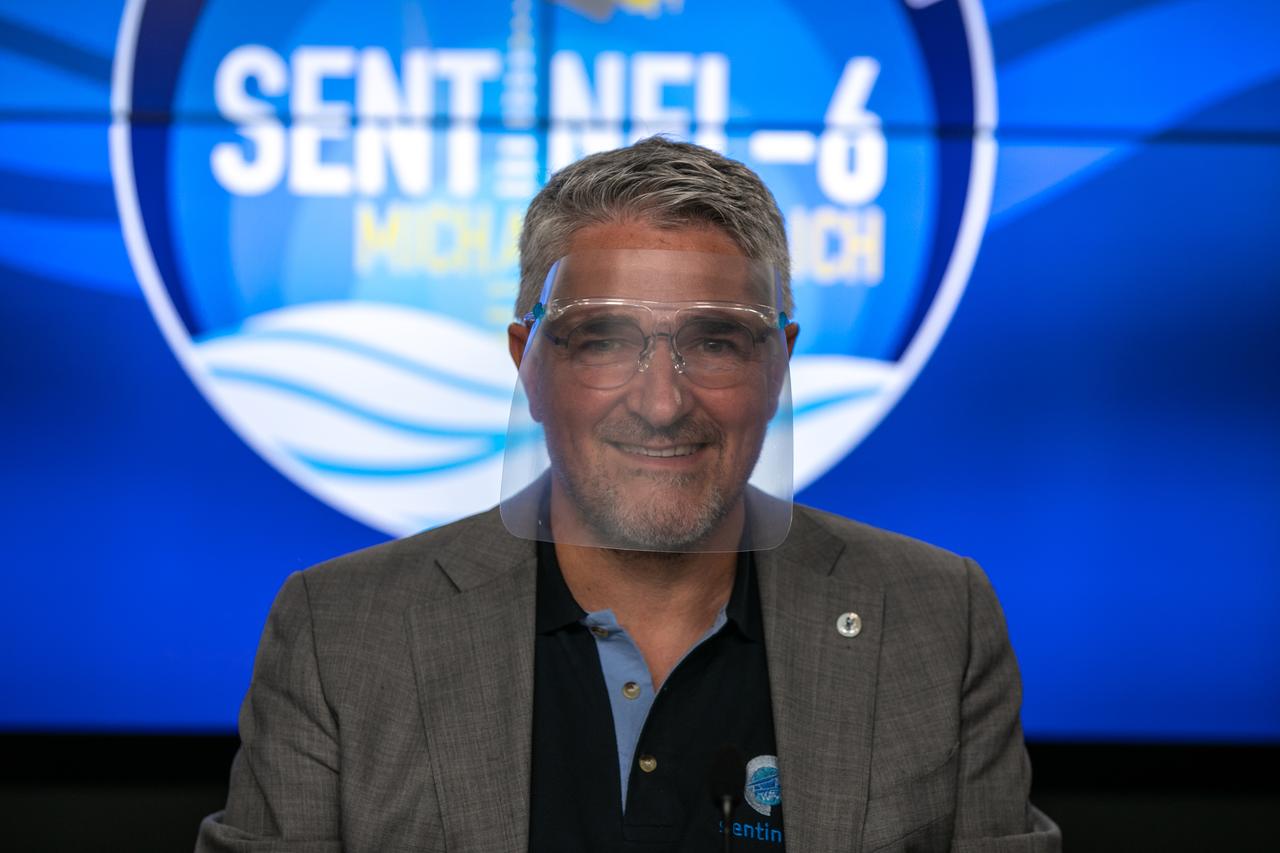
Pierrik Vuilleumier, project manager, European Space Agency (ESA), participates in a prelaunch news conference for the Sentinel-6 Michael Freilich mission at Vandenberg Air Force Base in California on Nov. 20, 2020. The Sentinel-6/Jason-CS (Continuity of Service) mission consists of the Sentinel-6 Michael Freilich satellite, which will be followed by its twin, the Sentinel-6B satellite, in 2025. The Sentinel-6/Jason-CS mission is part of Copernicus, the European Union’s Earth observation program, managed by the European Commission. Continuing the legacy of the Jason series missions, Sentinel-6/Jason-CS will extend the records of sea level into their fourth decade, collecting accurate measurements of sea surface height for more than 90% of the world’s seas, and providing crucial information for operational oceanography, marine meteorology, and climate studies. Sentinel-6 Michael Freilich launched Nov. 21, 2020, at 9:17 PST (12:17 EST). NASA’s Launch Services Program at Kennedy Space Center was responsible for launch management.
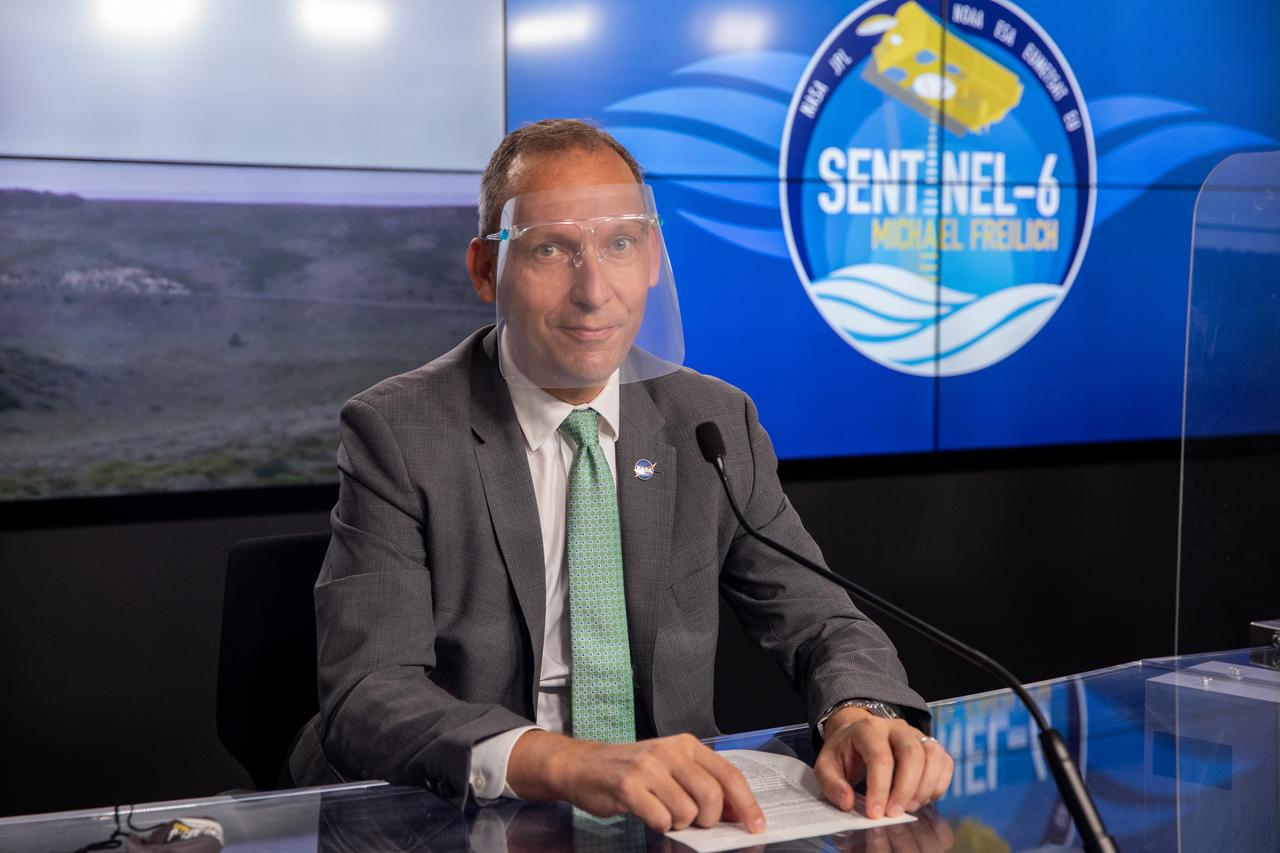
Thomas Zurbuchen, associate administrator for Science Mission Directorate at NASA Headquarters, participates in a prelaunch news conference for the Sentinel-6 Michael Freilich mission at Vandenberg Air Force Base in California on Nov. 20, 2020. The Sentinel-6/Jason-CS (Continuity of Service) mission consists of the Sentinel-6 Michael Freilich satellite, which will be followed by its twin, the Sentinel-6B satellite, in 2025. The Sentinel-6/Jason-CS mission is part of Copernicus, the European Union’s Earth observation program, managed by the European Commission. Continuing the legacy of the Jason series missions, Sentinel-6/Jason-CS will extend the records of sea level into their fourth decade, collecting accurate measurements of sea surface height for more than 90% of the world’s seas, and providing crucial information for operational oceanography, marine meteorology, and climate studies. Sentinel-6 Michael Freilich launched Nov. 21, 2020, at 9:17 PST (12:17 EST). NASA’s Launch Services Program at Kennedy Space Center was responsible for launch management.
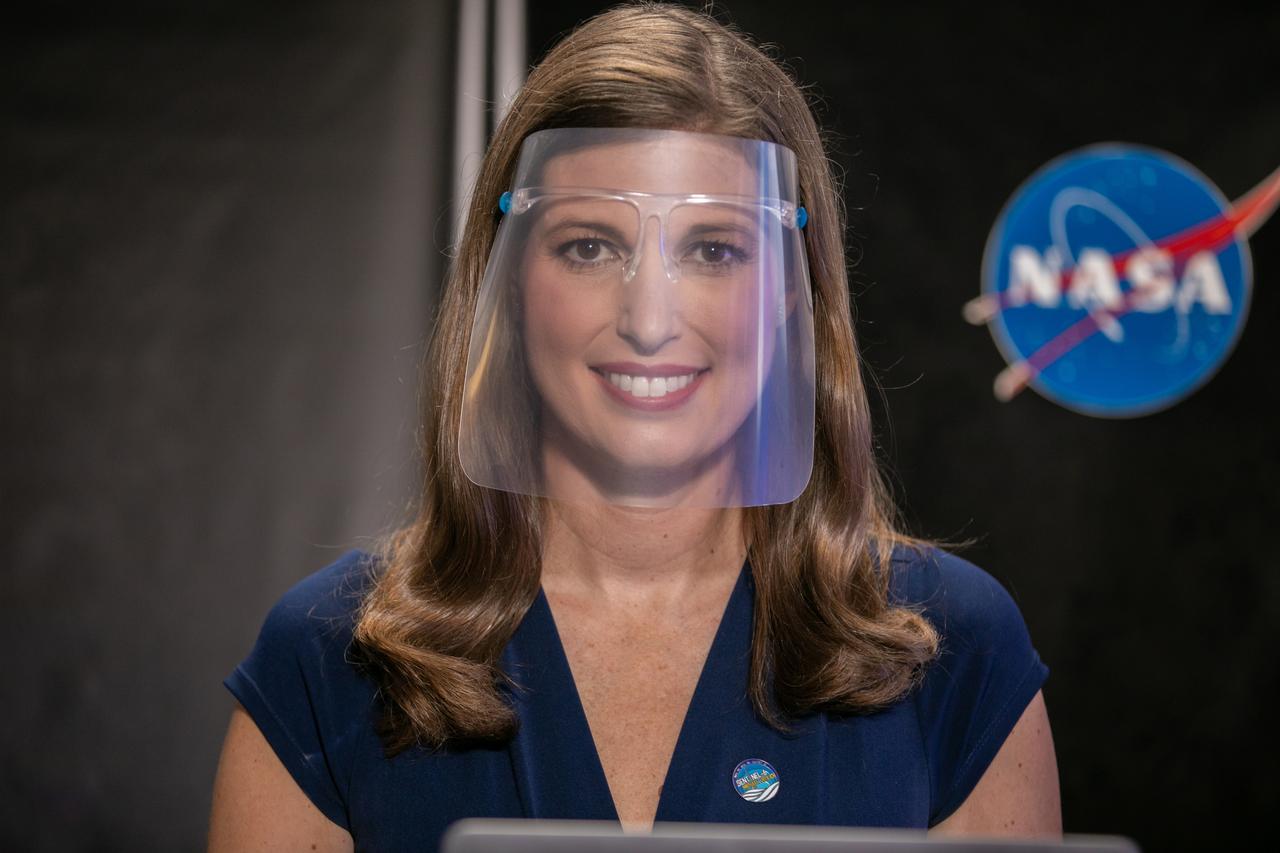
Marina Jurica of NASA’s Jet Propulsion Laboratory in Pasadena moderates a prelaunch news conference for the Sentinel-6 Michael Freilich mission at Vandenberg Air Force Base in California on Nov. 20, 2020. The Sentinel-6/Jason-CS (Continuity of Service) mission consists of the Sentinel-6 Michael Freilich satellite, which will be followed by its twin, the Sentinel-6B satellite, in 2025. The Sentinel-6/Jason-CS mission is part of Copernicus, the European Union’s Earth observation program, managed by the European Commission. Continuing the legacy of the Jason series missions, Sentinel-6/Jason-CS will extend the records of sea level into their fourth decade, collecting accurate measurements of sea surface height for more than 90% of the world’s seas, and providing crucial information for operational oceanography, marine meteorology, and climate studies. Sentinel-6 Michael Freilich launched Nov. 21, 2020, at 9:17 PST (12:17 EST). NASA’s Launch Services Program at Kennedy Space Center was responsible for launch management.
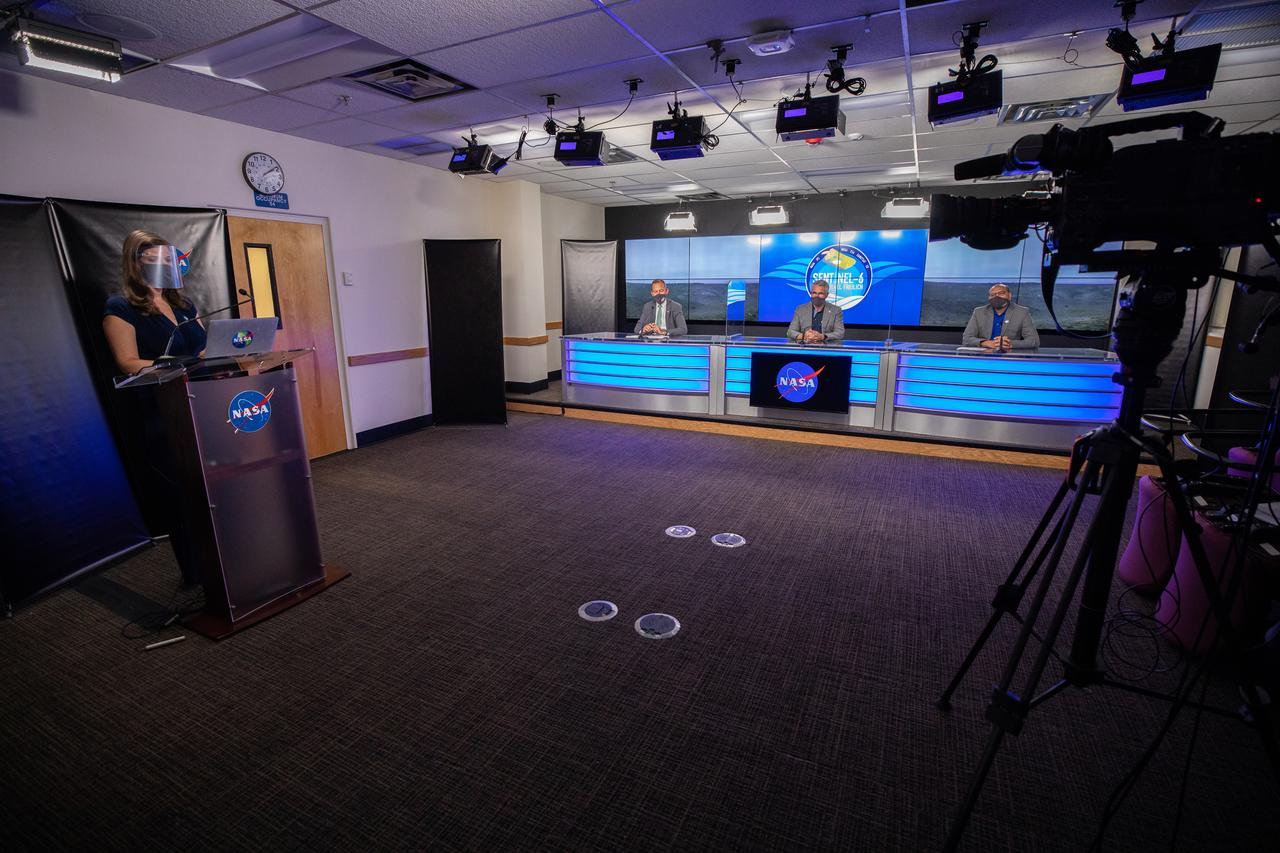
Mission and launch officials participate in a prelaunch news conference for the Sentinel-6 Michael Freilich mission at Vandenberg Air Force Base in California on Nov. 20, 2020. From left are Marina Jurica of NASA’s Jet Propulsion Laboratory in Pasadena; Thomas Zurbuchen, associate administrator for Science Mission Directorate at NASA Headquarters; Pierrik Vuilleumier, project manager, European Space Agency (ESA); and Parag Vaze, project manager, NASA’s Jet Propulsion Laboratory in Pasadena. The Sentinel-6/Jason-CS (Continuity of Service) mission consists of the Sentinel-6 Michael Freilich satellite, which will be followed by its twin, the Sentinel-6B satellite, in 2025. The Sentinel-6/Jason-CS mission is part of Copernicus, the European Union’s Earth observation program, managed by the European Commission. Continuing the legacy of the Jason series missions, Sentinel-6/Jason-CS will extend the records of sea level into their fourth decade, collecting accurate measurements of sea surface height for more than 90% of the world’s seas, and providing crucial information for operational oceanography, marine meteorology, and climate studies. Sentinel-6 Michael Freilich launched Nov. 21, 2020, at 9:17 PST (12:17 EST). NASA’s Launch Services Program at Kennedy Space Center was responsible for launch management.
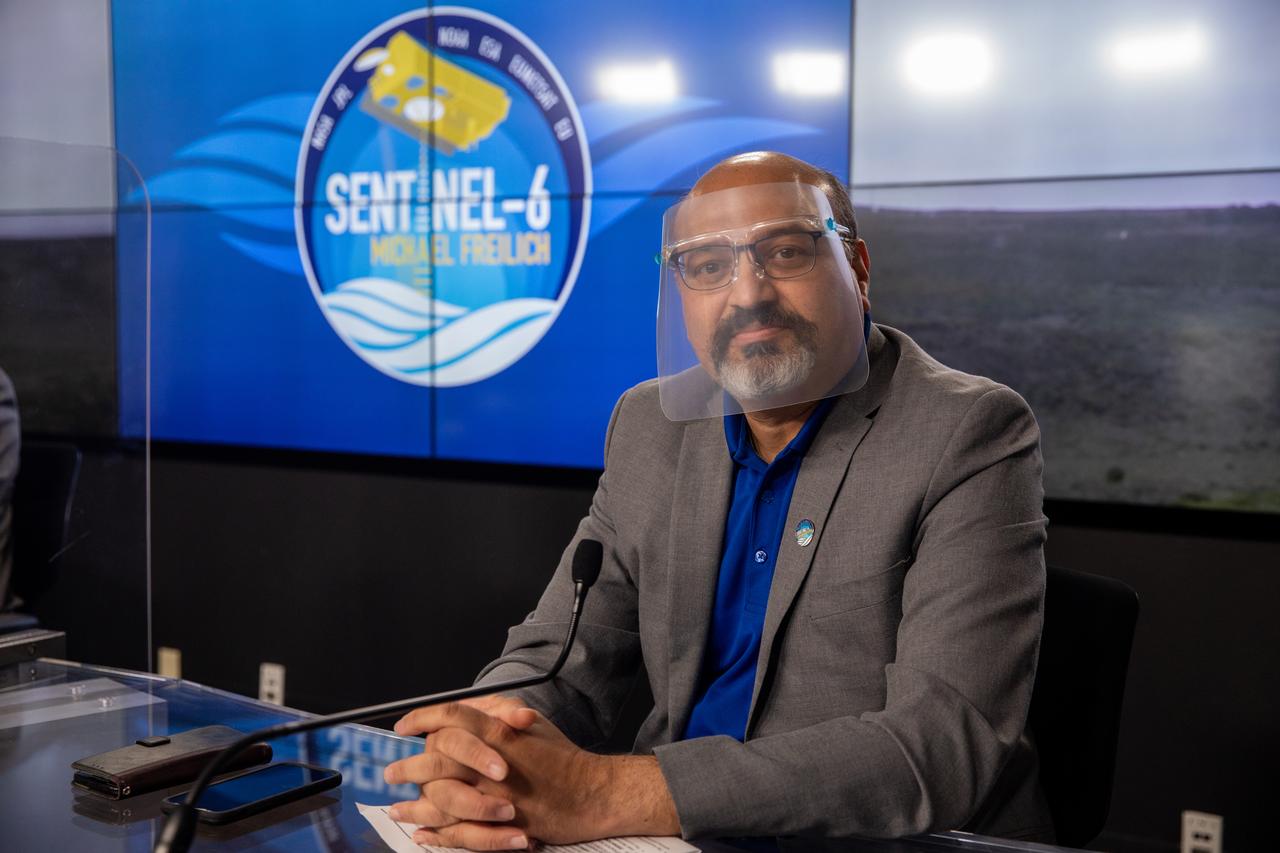
Parag Vaze, project manager, NASA’s Jet Propulsion Laboratory in Pasadena, participates in a prelaunch news conference for the Sentinel-6 Michael Freilich mission at Vandenberg Air Force Base in California on Nov. 20, 2020. The Sentinel-6/Jason-CS (Continuity of Service) mission consists of the Sentinel-6 Michael Freilich satellite, which will be followed by its twin, the Sentinel-6B satellite, in 2025. The Sentinel-6/Jason-CS mission is part of Copernicus, the European Union’s Earth observation program, managed by the European Commission. Continuing the legacy of the Jason series missions, Sentinel-6/Jason-CS will extend the records of sea level into their fourth decade, collecting accurate measurements of sea surface height for more than 90% of the world’s seas, and providing crucial information for operational oceanography, marine meteorology, and climate studies. Sentinel-6 Michael Freilich launched Nov. 21, 2020, at 9:17 PST (12:17 EST). NASA’s Launch Services Program at Kennedy Space Center was responsible for launch management.
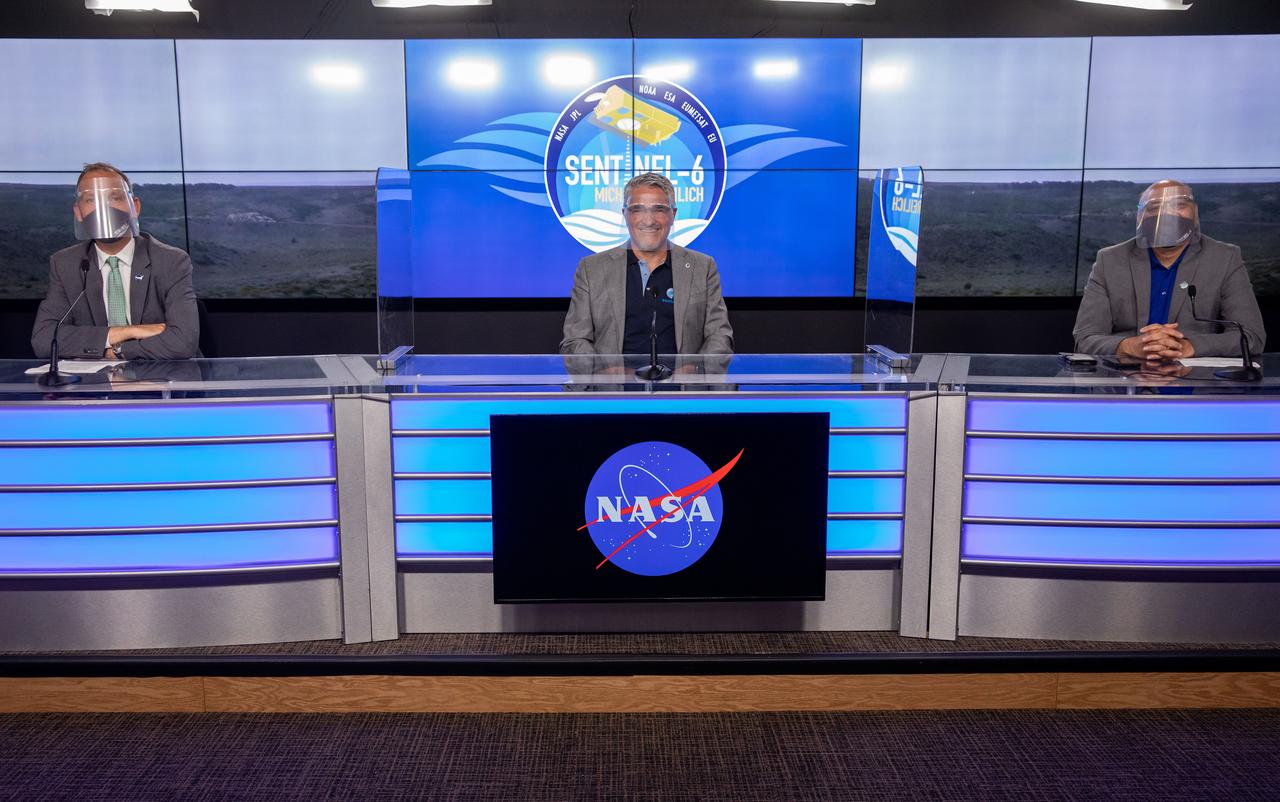
Mission and launch officials participate in a prelaunch news conference for the Sentinel-6 Michael Freilich mission at Vandenberg Air Force Base in California on Nov. 20, 2020. From left are Thomas Zurbuchen, associate administrator for Science Mission Directorate at NASA Headquarters; Pierrik Vuilleumier, project manager, European Space Agency (ESA); and Parag Vaze, project manager, NASA’s Jet Propulsion Laboratory in Pasadena. The Sentinel-6/Jason-CS (Continuity of Service) mission consists of the Sentinel-6 Michael Freilich satellite, which will be followed by its twin, the Sentinel-6B satellite, in 2025. The Sentinel-6/Jason-CS mission is part of Copernicus, the European Union’s Earth observation program, managed by the European Commission. Continuing the legacy of the Jason series missions, Sentinel-6/Jason-CS will extend the records of sea level into their fourth decade, collecting accurate measurements of sea surface height for more than 90% of the world’s seas, and providing crucial information for operational oceanography, marine meteorology, and climate studies. Sentinel-6 Michael Freilich launched Nov. 21, 2020, at 9:17 PST (12:17 EST). NASA’s Launch Services Program at Kennedy Space Center was responsible for launch management.