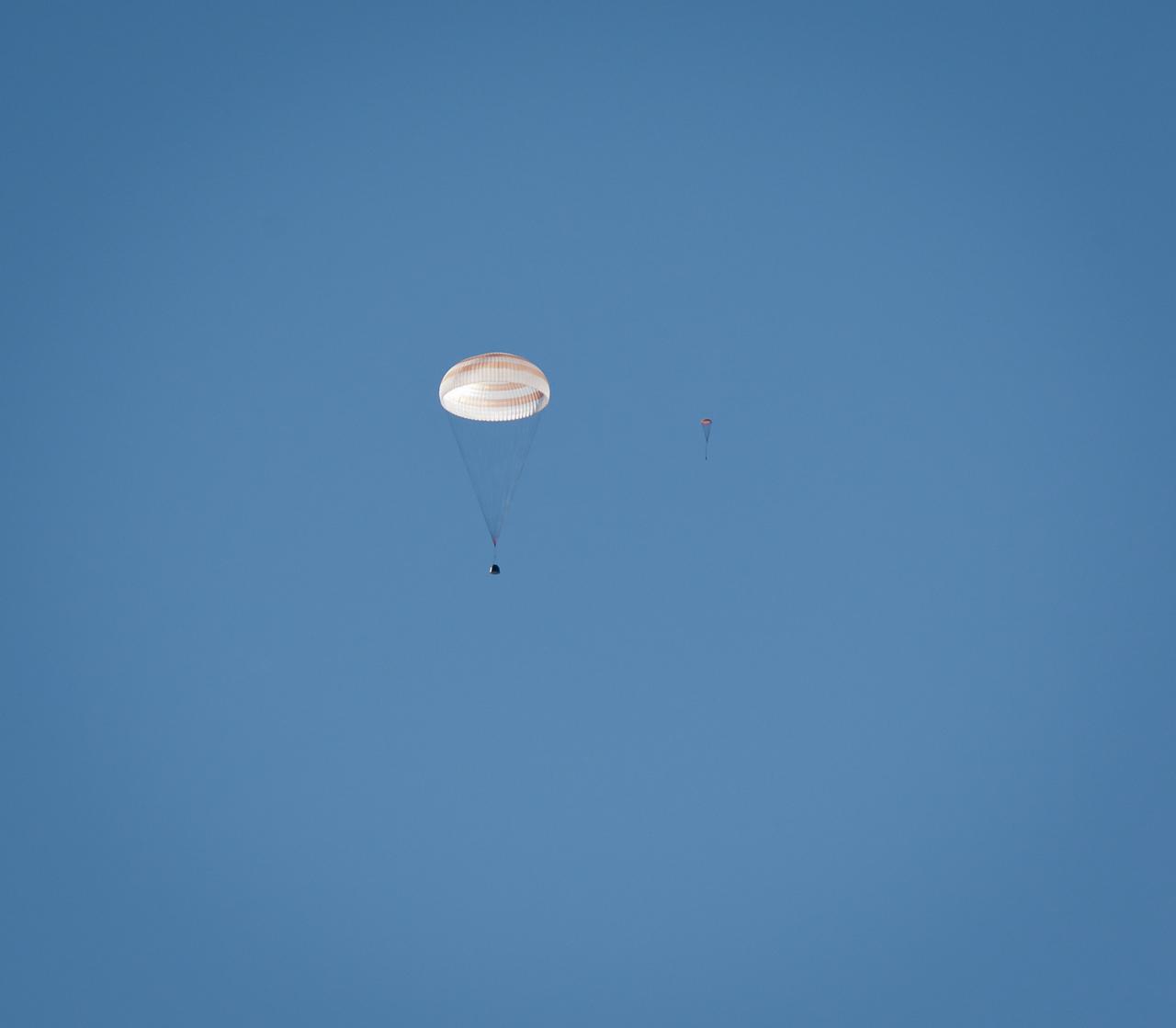
The Soyuz TMA-21 spacecraft and the drogue chute are seen during the landing with Expedition 28 Commander Andrey Borisenko, and Flight Engineers Ron Garan, and Alexander Samokutyaev in a remote area outside of the town of Zhezkazgan, Kazakhstan, on Friday, Sept. 16, 2011. NASA Astronaut Garan, Russian Cosmonauts Borisenko and Samokutyaev are returning from more than five months onboard the International Space Station where they served as members of the Expedition 27 and 28 crews. Photo Credit: (NASA/Bill Ingalls)
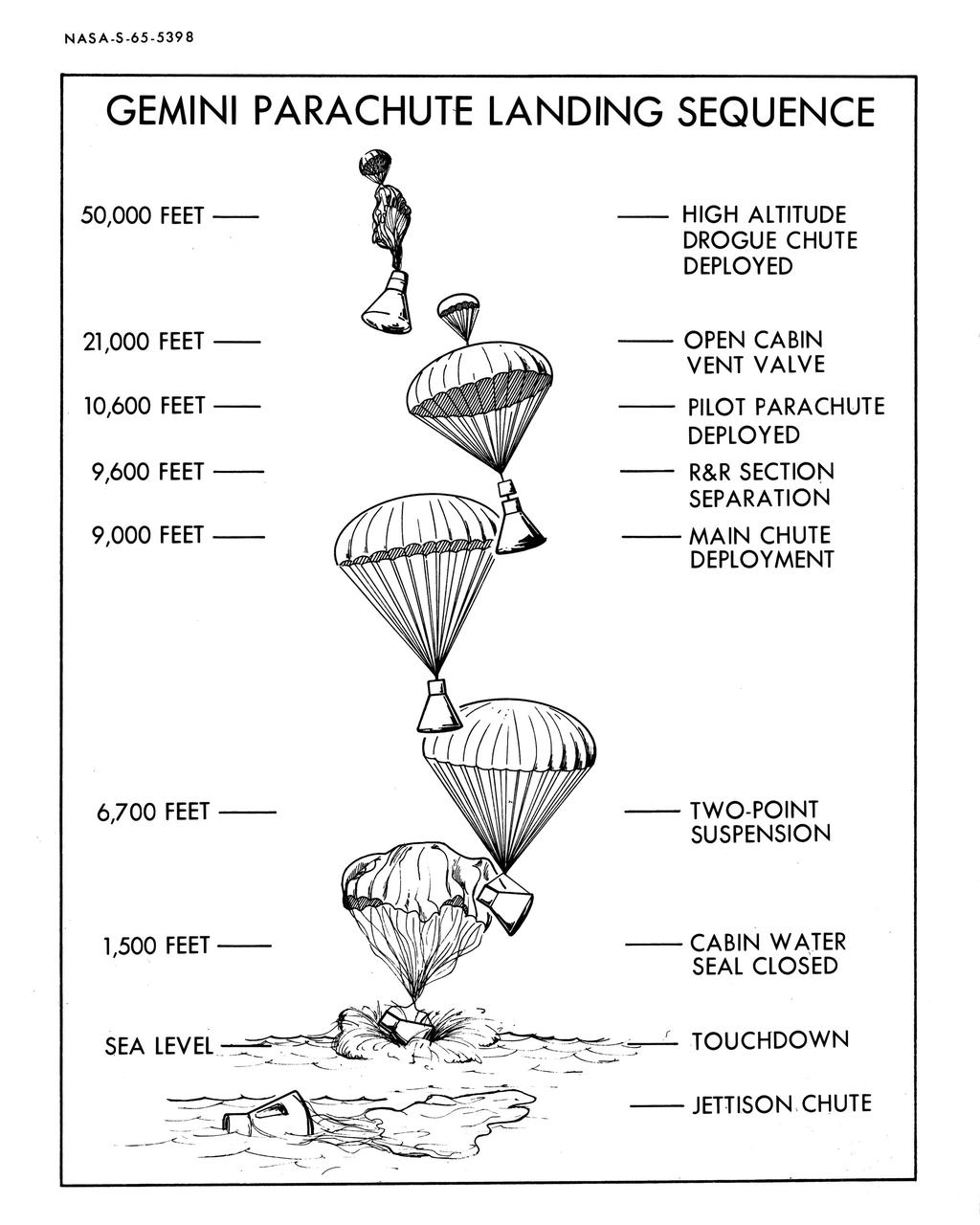
S65-05398 (1965) --- Artist concept of Gemini parachute landing sequence from high altitude drogue chute deployed to jettison of chute.
MORRO BAY, Calif. – Drogue chutes open above Dragon test article during a test to evaluate the spacecraft's parachute deployment system. The drogue chutes stabilized the vehicle, in preparation for main chute deployment as part of a milestone under SpaceX's Commercial Crew Integrated Capability agreement with NASA's Commercial Crew Program. Photo credit: NASA/Kim Shiflett
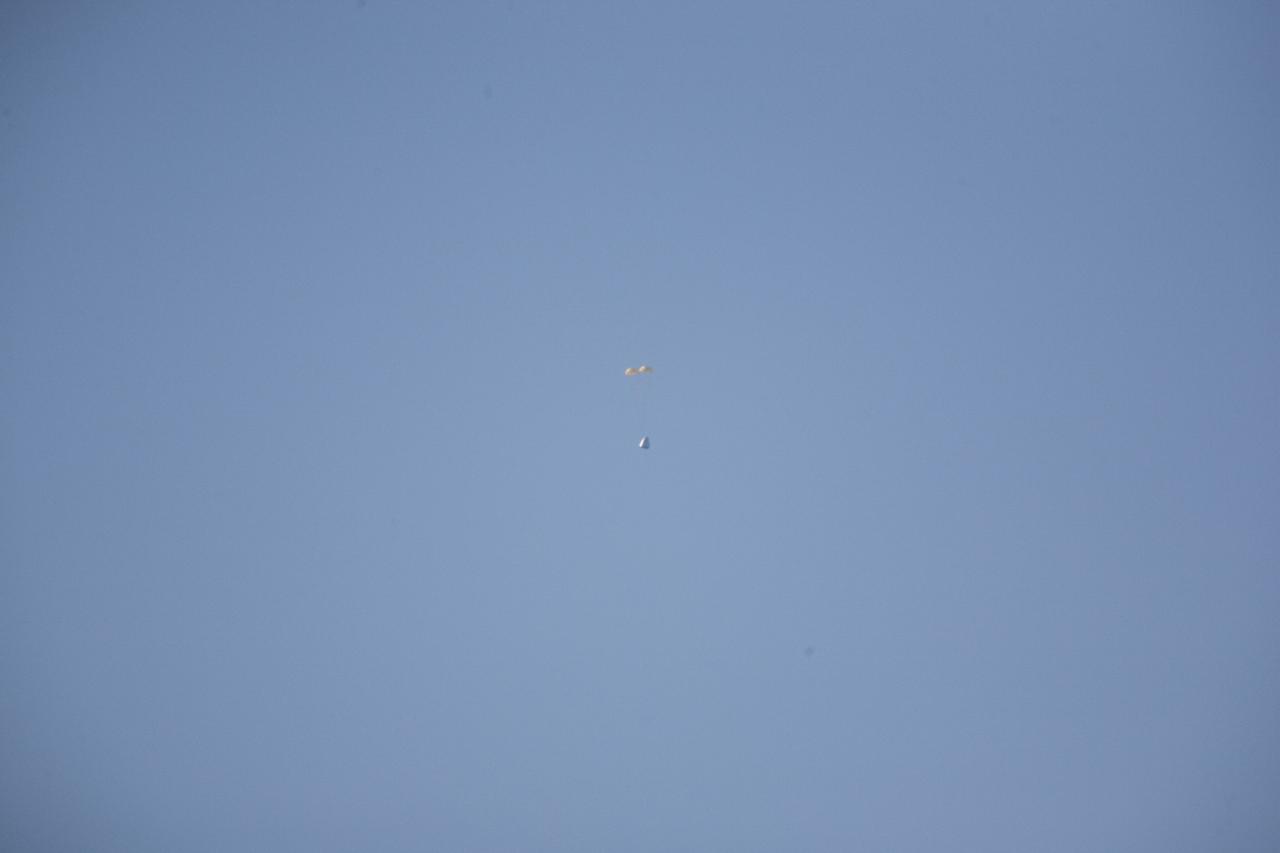
MORRO BAY, Calif. – Drogue chutes open above Dragon test article during a test to evaluate the spacecraft's parachute deployment system. The drogue chutes stabilized the vehicle, in preparation for main chute deployment as part of a milestone under SpaceX's Commercial Crew Integrated Capability agreement with NASA's Commercial Crew Program. Photo credit: NASA/Kim Shiflett
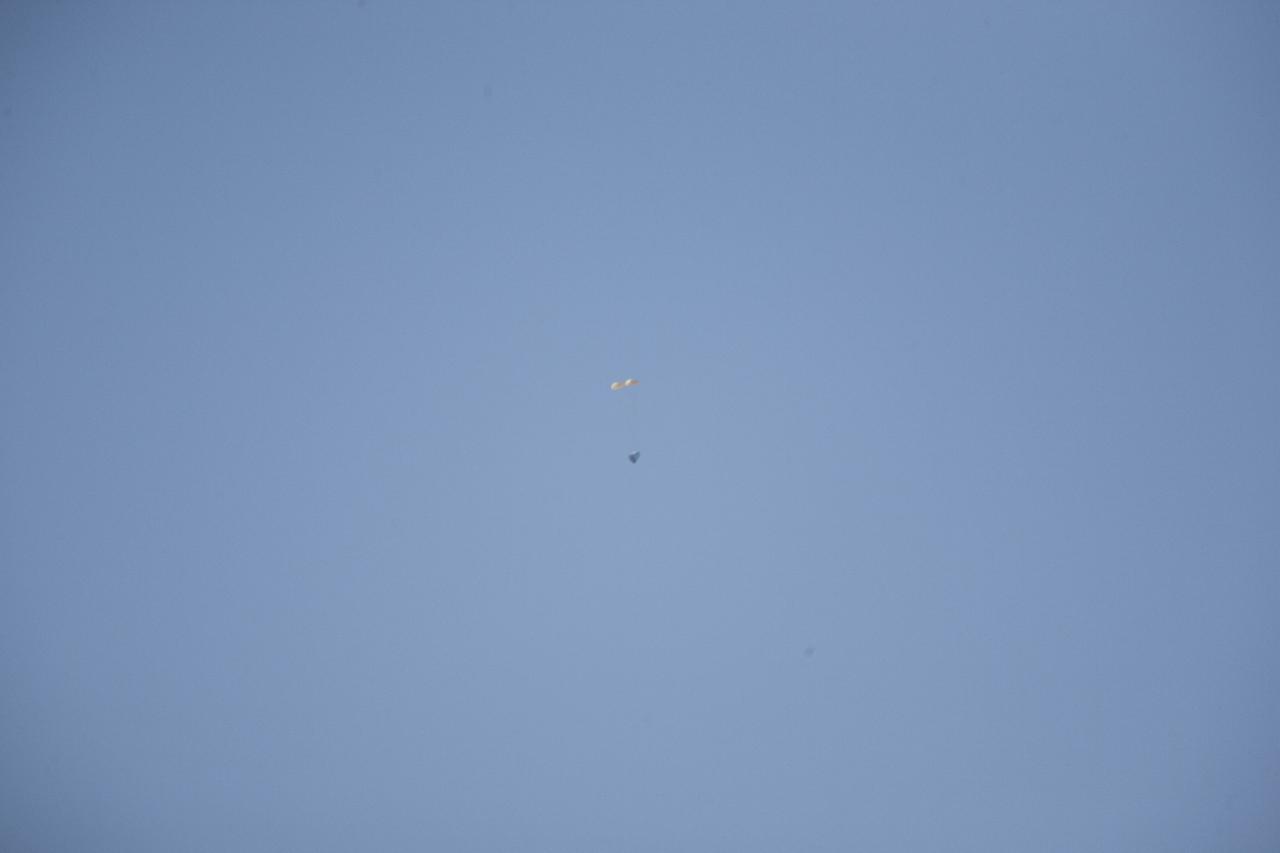
MORRO BAY, Calif. – Drogue chutes open above Dragon test article during a test to evaluate the spacecraft's parachute deployment system. The drogue chutes stabilized the vehicle, in preparation for main chute deployment as part of a milestone under SpaceX's Commercial Crew Integrated Capability agreement with NASA's Commercial Crew Program. Photo credit: NASA/Kim Shiflett
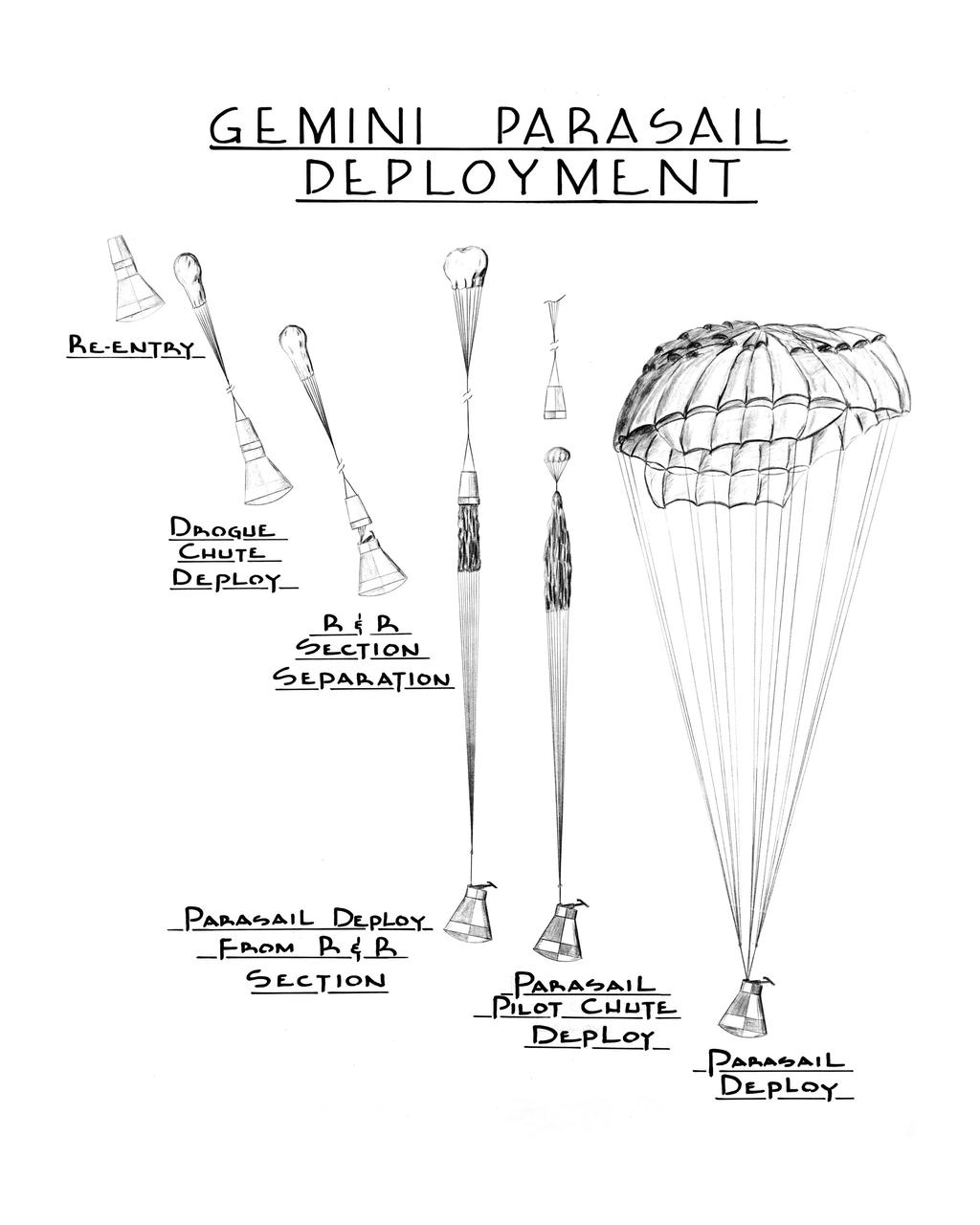
S63-12019 (1963) --- Artist concept for Gemini parasail deployment showing re-entry, drogue chute deployment, and stages of parasail deployment.
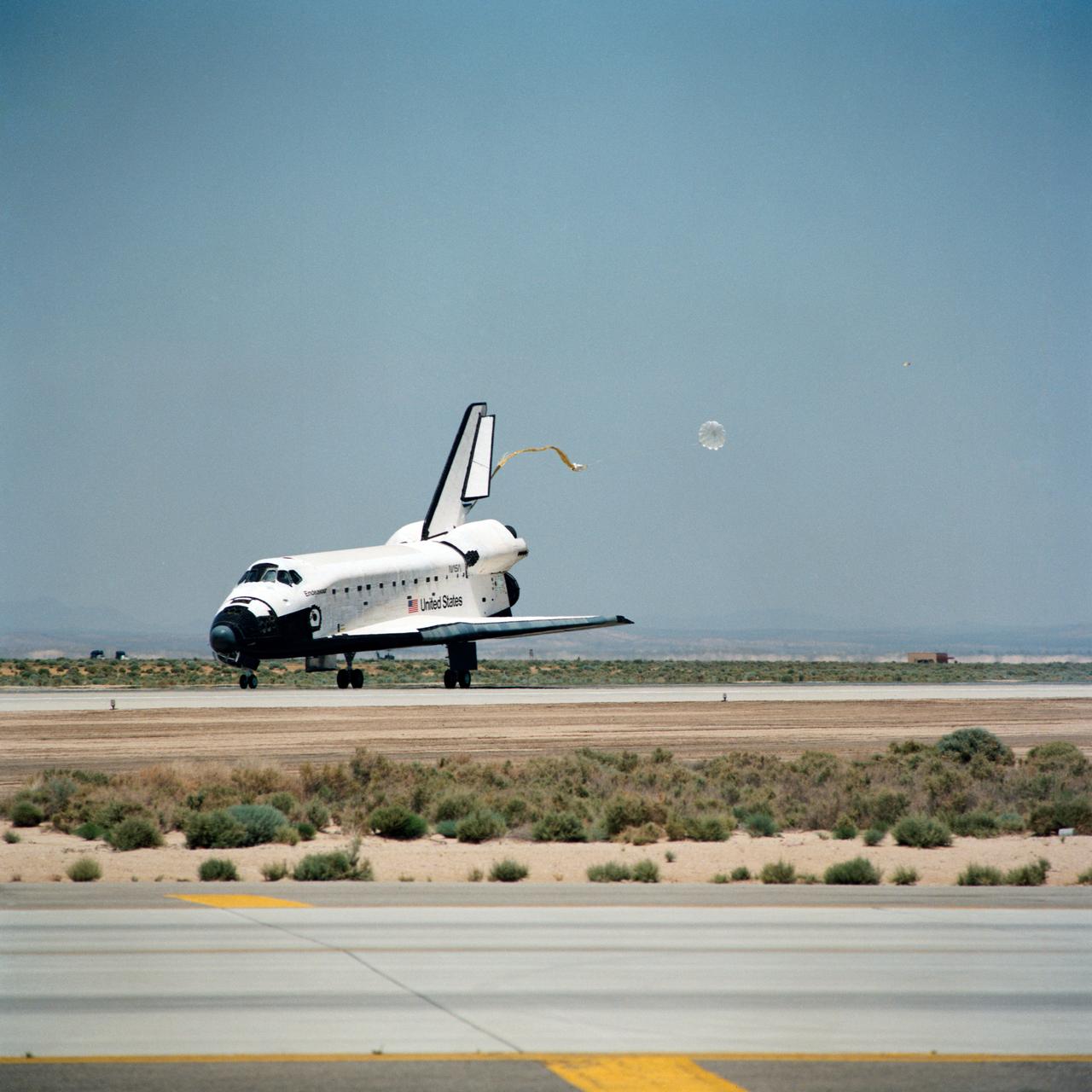
STS049-S-268 (16 May 1992) --- A three-quarter forward view of the Space Shuttle Endeavour making its first landing, following a successful nine-day mission in Earth orbit. The drogue chute precedes the main chute in NASA's first exercise of its detailed test objective (DTO-521) on the drag chute system. Main gear touchdown occurred at 1:57:38 p.m. (PDT), May 16, 1992.
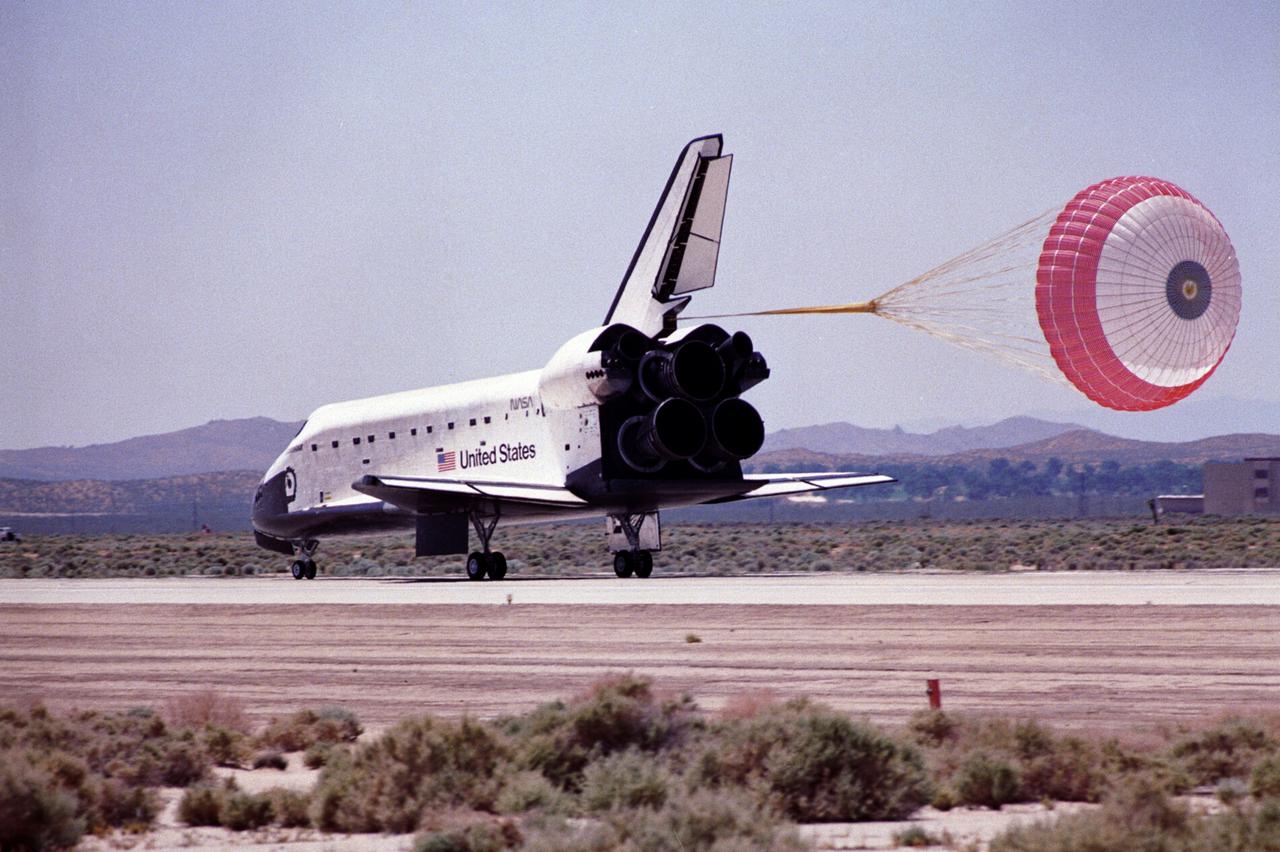
STS-49 Orbiter Endeavour landed at Edwards Air Force Base on May 16, 1992 The drogue chute precedes the main chute in NASA’s first exercise of its detailed test objective on the drag chute system. STS-49 ended its successful nine day mission dedicated to the retrieval, repair, and redeployment of the the INTELSAT VI (F-3) satellite. The communication satellite for the International Telecommunication Satellite organization had been stranded in an unusable orbit since its launch aboard the Titan rocket in March 1990. The mission marked the first time 3 astronauts worked simultaneously outside the space craft.
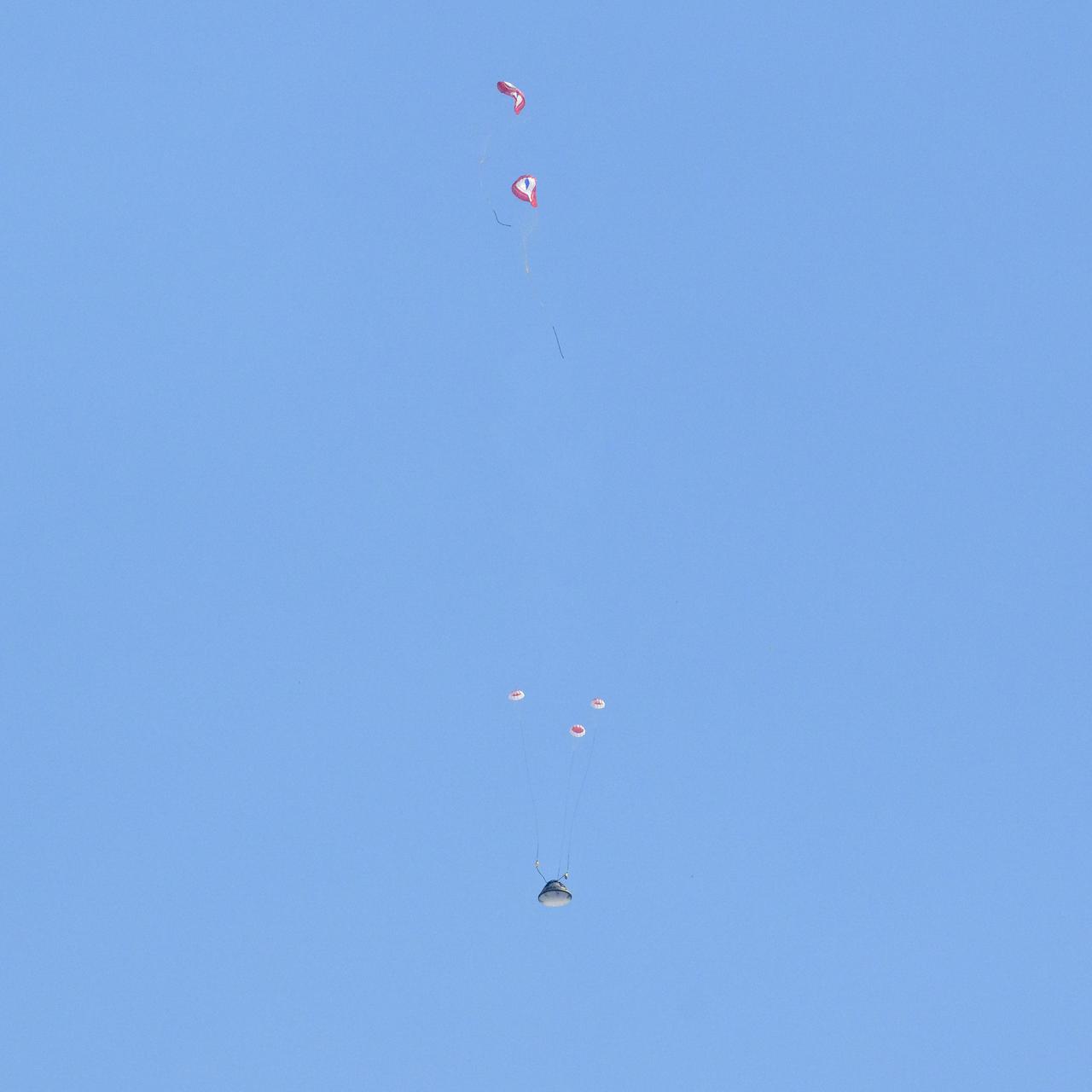
Boeing’s CST-100 Starliner spacecraft transitions to main chutes from drogue parachutes as it lands at White Sands Missile Range’s Space Harbor, Wednesday, May 25, 2022, in New Mexico. Boeing’s Orbital Flight Test-2 (OFT-2) is Starliner’s second uncrewed flight test to the International Space Station as part of NASA's Commercial Crew Program. OFT-2 serves as an end-to-end test of the system's capabilities. Photo Credit: (NASA/Bill Ingalls)
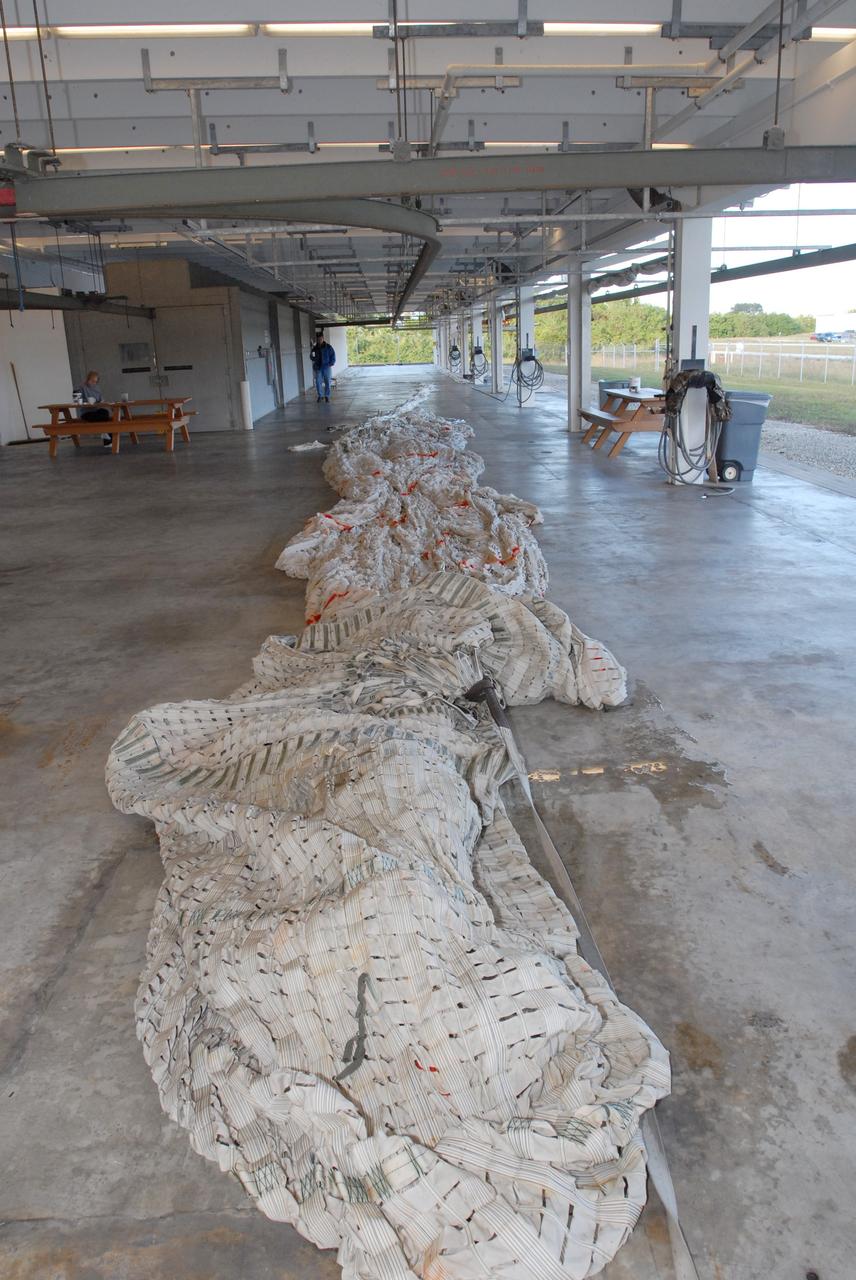
CAPE CANAVERAL, Fla. – Parachutes recovered from sea after the launch of space shuttle Endeavour on the STS-126 mission are stretched out at the Parachute Refurbishment Facility at NASA's Kennedy Space Center in Florida to detangle them. The parachutes are used to slow the descent of the solid rocket boosters that are jettisoned during liftoff. After the chutes are returned to the facility following launch, a hanging monorail system is used to transport each parachute into a 30,000-gallon washer and then into a huge dryer heated with 140-de¬gree air at 13,000 cubic feet per minute. One pilot, one drogue and three main canopies per booster slow the booster’s fall from about 360 mph to 50 mph. After the chutes are cleaned and repaired, they must be care¬fully packed into their bags so they will deploy correctly the next time they are used. Photo credit: NASA/Jim Grossmann
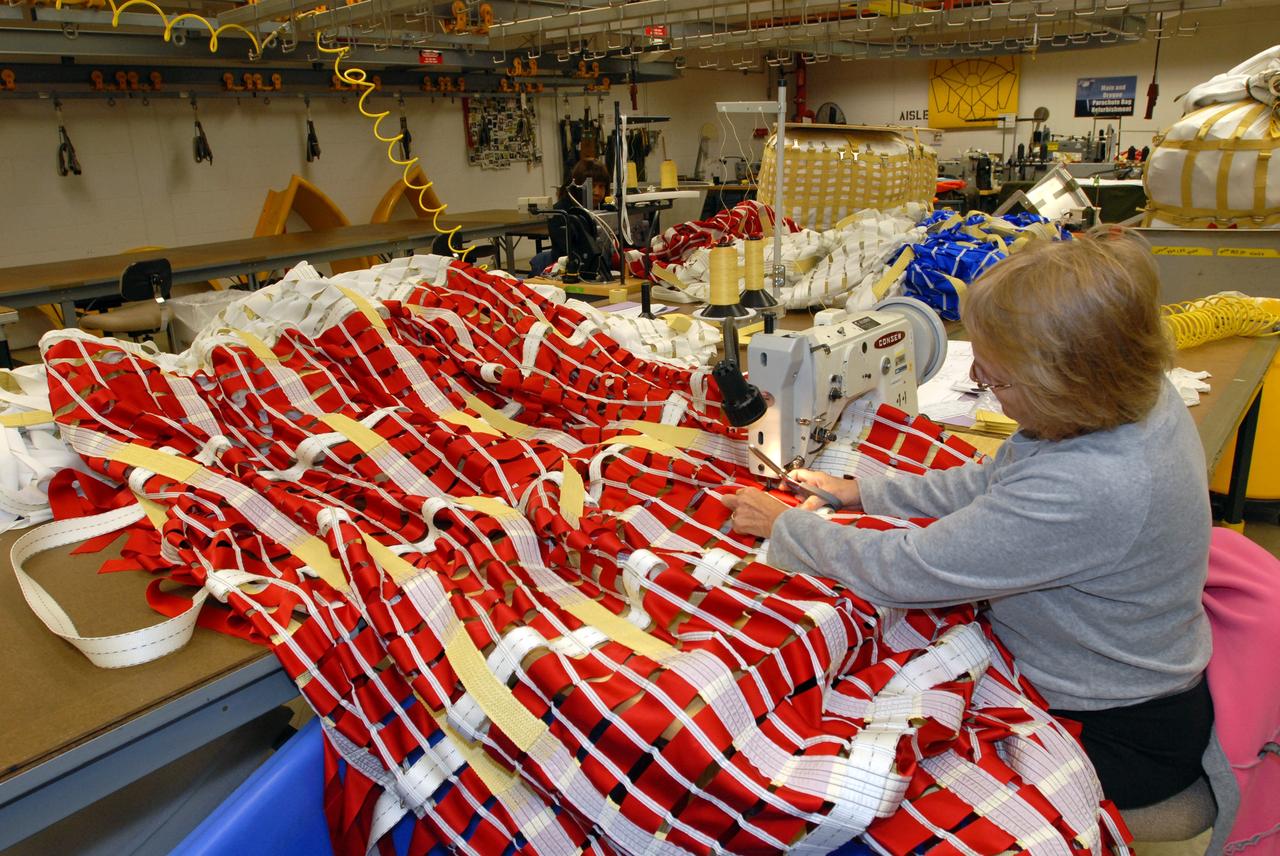
CAPE CANAVERAL, Fla. – In the Parachute Refurbishment Facility at NASA's Kennedy Space Center in Florida, workers repair the parachutes recovered from sea after the launch of space shuttle Endeavour on the STS-126 mission. Typically, each main canopy requires hundreds of repairs after each use. The smaller chutes and the parachute deployment bags they are packed in also require repairs. The parachutes are used to slow the descent of the solid rocket boosters that are jettisoned during liftoff. One pilot, one drogue and three main canopies per booster slow the booster’s fall from about 360 mph to 50 mph. After the chutes are cleaned and repaired, they must be carefully packed into their bags so they will deploy correctly the next time they are used. Photo credit: NASA/Jim Grossmann
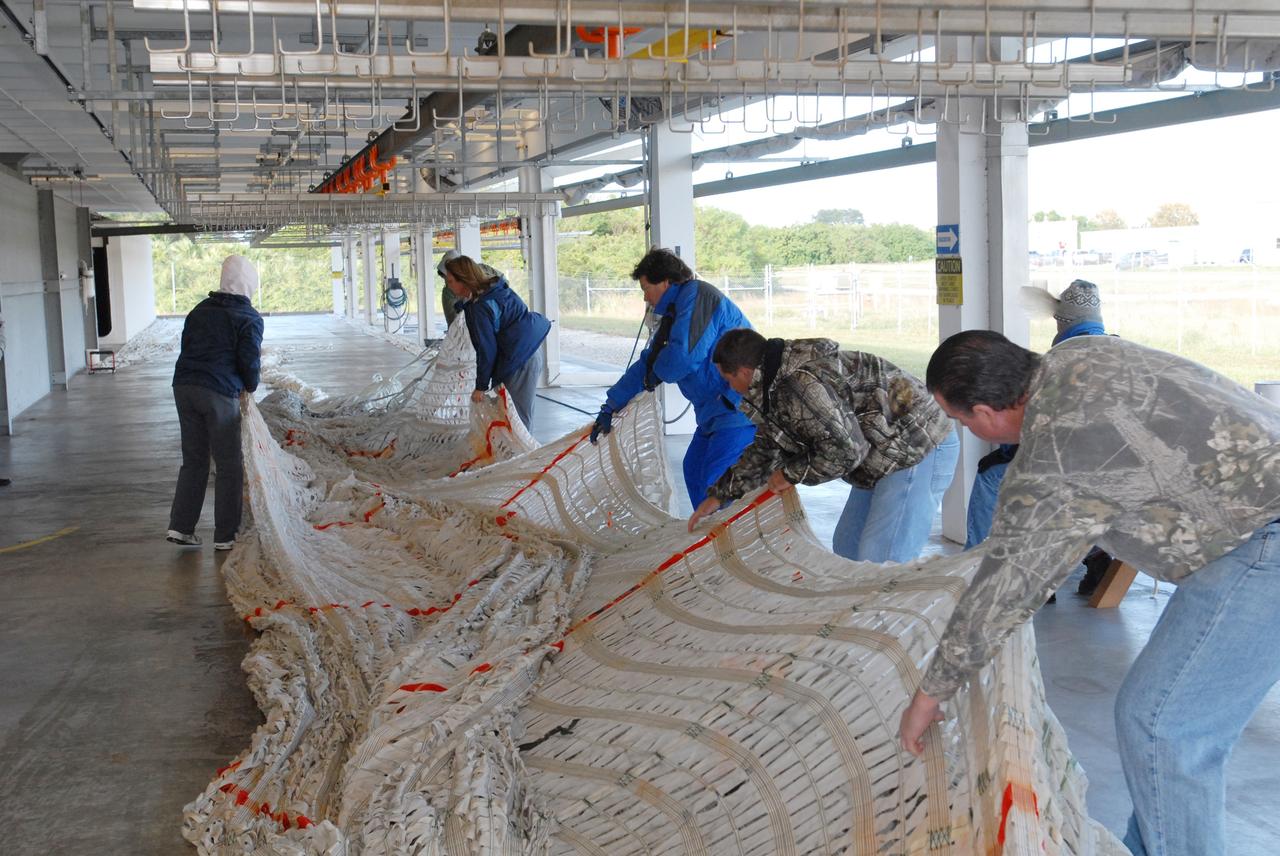
CAPE CANAVERAL, Fla. – At the Parachute Refurbishment Facility at NASA's Kennedy Space Center in Florida, workers spread out the parachutes recovered from sea after the launch of space shuttle Endeavour on the STS-126 mission to detangle them. The parachutes are used to slow the descent of the solid rocket boosters that are jettisoned during liftoff. One pilot, one drogue and three main canopies per booster slow the booster’s fall from about 360 mph to 50 mph. After the chutes are cleaned and repaired, they must be carefully packed into their bags so they will deploy correctly the next time they are used. Photo credit: NASA/Jim Grossmann
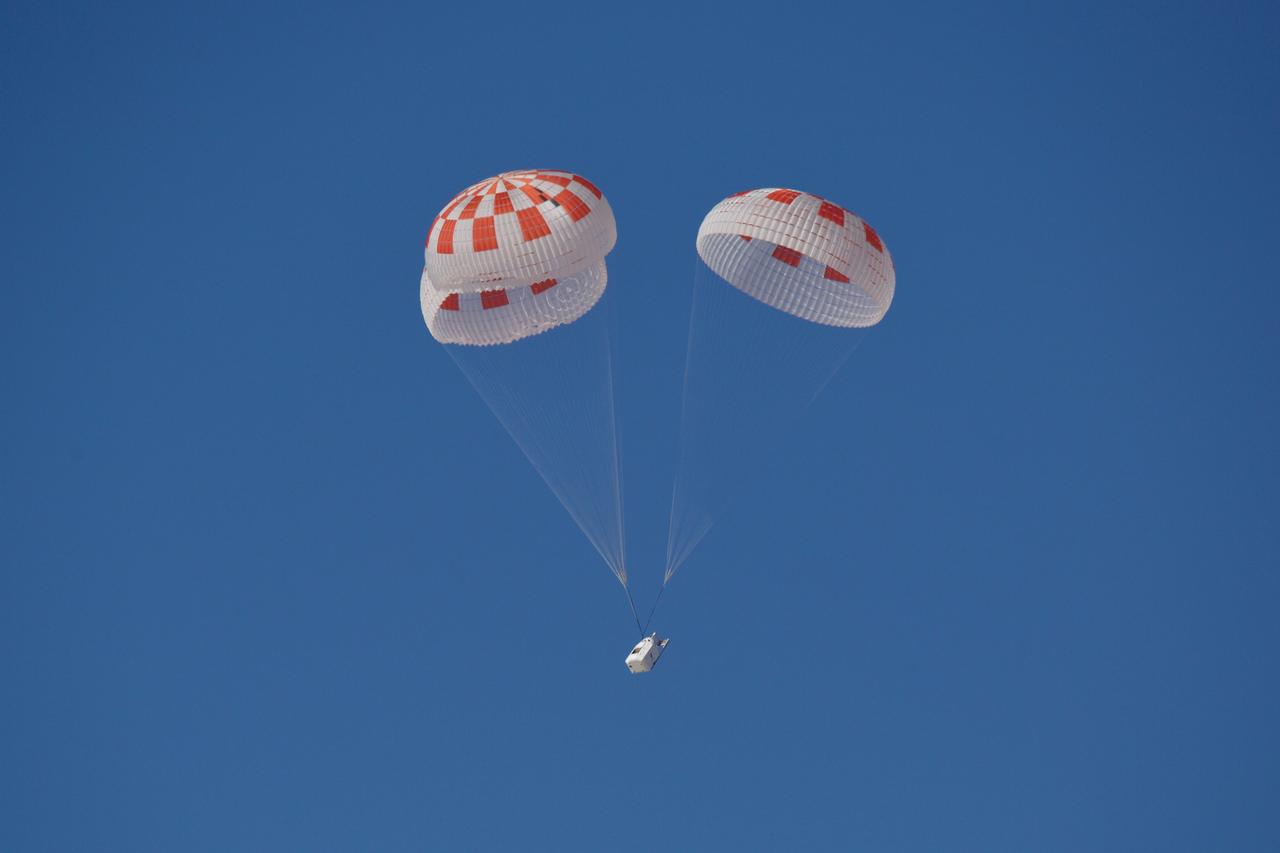
SpaceX performed its fourteenth overall parachute test supporting Crew Dragon development. This most recent exercise was the first of several planned parachute system qualification tests ahead of the spacecraft’s first crewed flight and resulted in the successful touchdown of Crew Dragon’s parachute system. During this test, a C-130 aircraft transported the parachute test vehicle, designed to achieve the maximum speeds that Crew Dragon could experience on re-entry, over the Mojave Desert in Southern California and dropped the vehicle from an altitude of 25,000 feet. The test demonstrated an off-nominal situation, deploying only one of the two drogue chutes and intentionally skipping a reefing stage on one of the four main parachutes, proving a safe landing in such a contingency scenario.
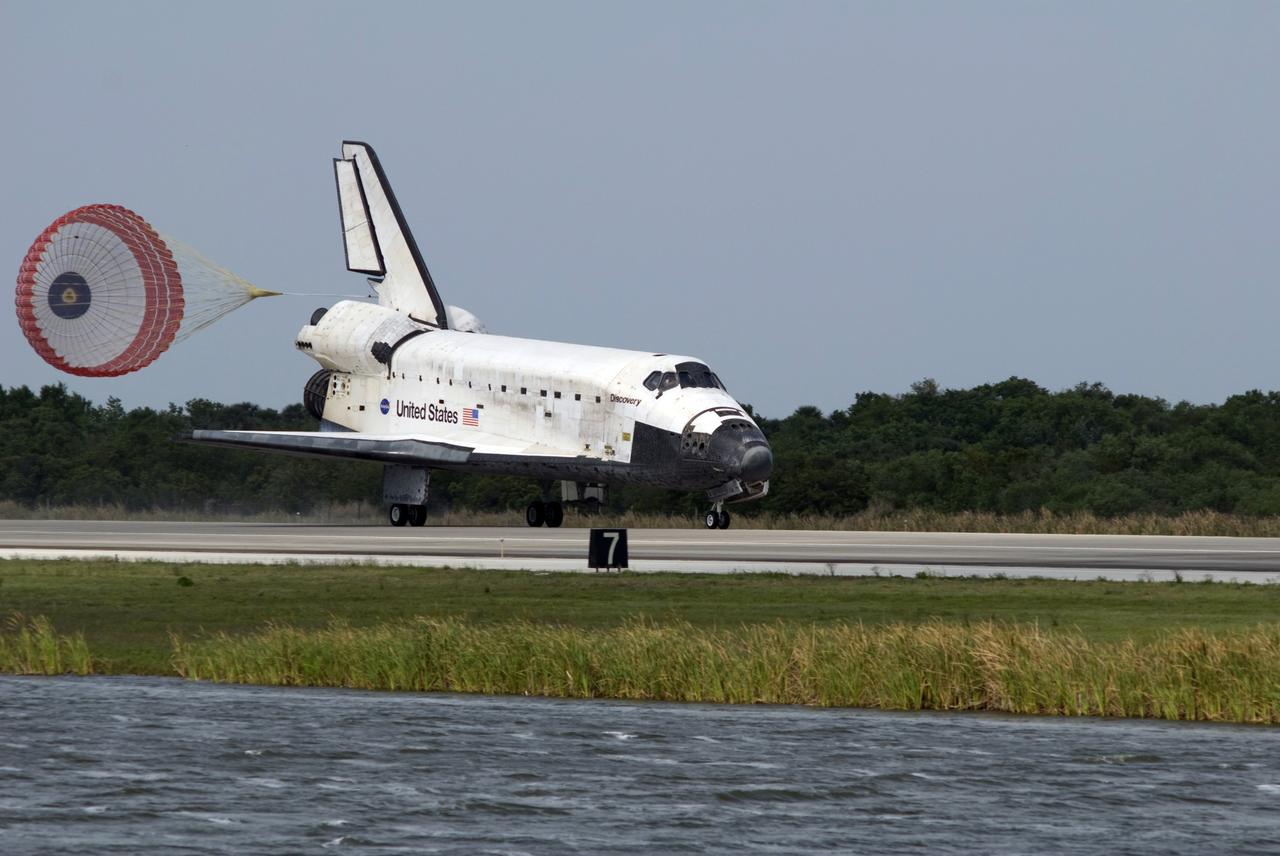
CAPE CANAVERAL, Fla. – With the aid of a drogue chute, space shuttle Discovery slows for landing on Runway 15 at NASA's Kennedy Space Center in Florida to complete the 13-day, 5.3-million mile journey on the STS-119 mission to the International Space Station. Main gear touchdown was at 3:13:17 p.m. EDT. Nose gear touchdown was at 3:13:40 p.m. and wheels stop was at 3:14:45 p.m. Discovery delivered the final pair of large power-generating solar array wings and the S6 truss segment. The mission was the 28th flight to the station, the 36th flight of Discovery and the 125th in the Space Shuttle Program, as well as the 70th landing at Kennedy. Photo credit: NASA/Tim Terry, Don Kight
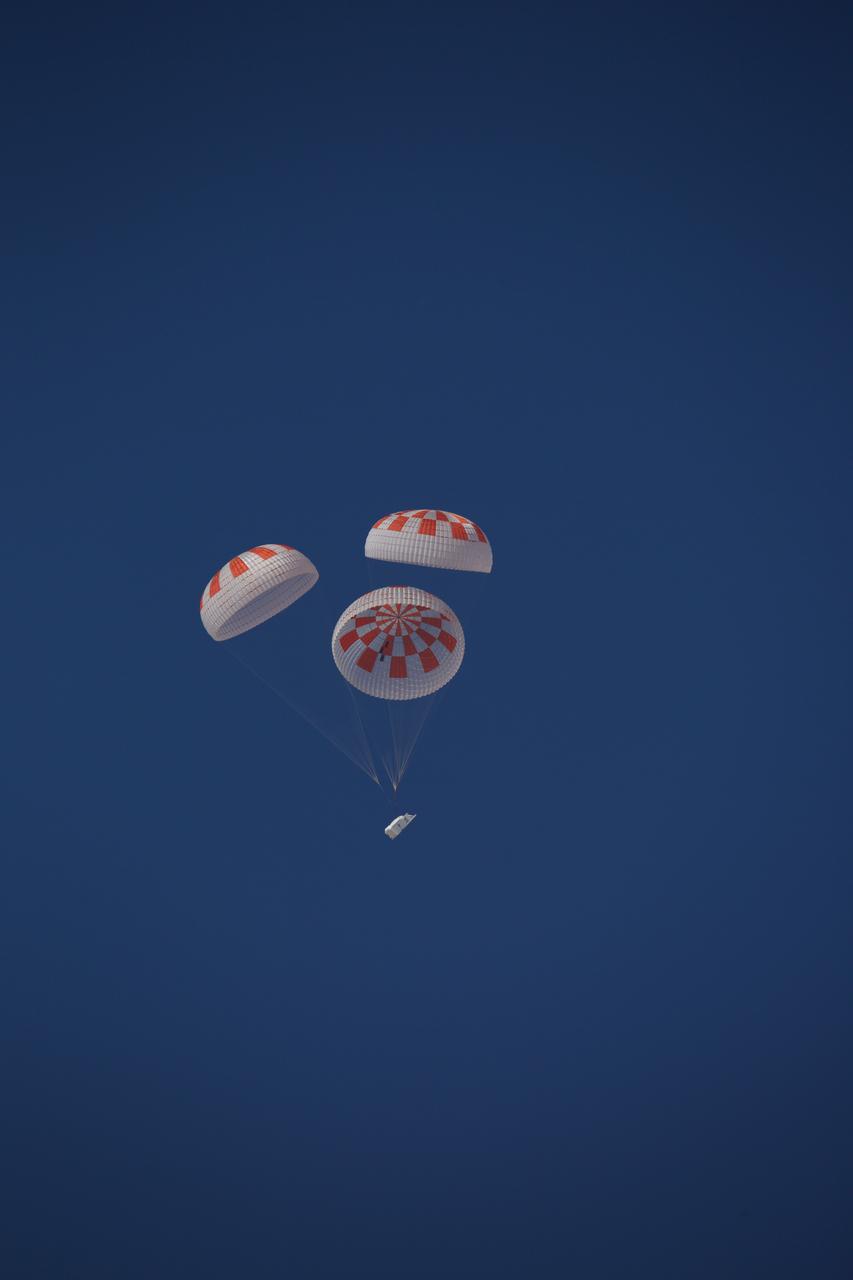
SpaceX performed its fourteenth overall parachute test supporting Crew Dragon development. This most recent exercise was the first of several planned parachute system qualification tests ahead of the spacecraft’s first crewed flight and resulted in the successful touchdown of Crew Dragon’s parachute system. During this test, a C-130 aircraft transported the parachute test vehicle, designed to achieve the maximum speeds that Crew Dragon could experience on re-entry, over the Mojave Desert in Southern California and dropped the vehicle from an altitude of 25,000 feet. The test demonstrated an off-nominal situation, deploying only one of the two drogue chutes and intentionally skipping a reefing stage on one of the four main parachutes, proving a safe landing in such a contingency scenario.
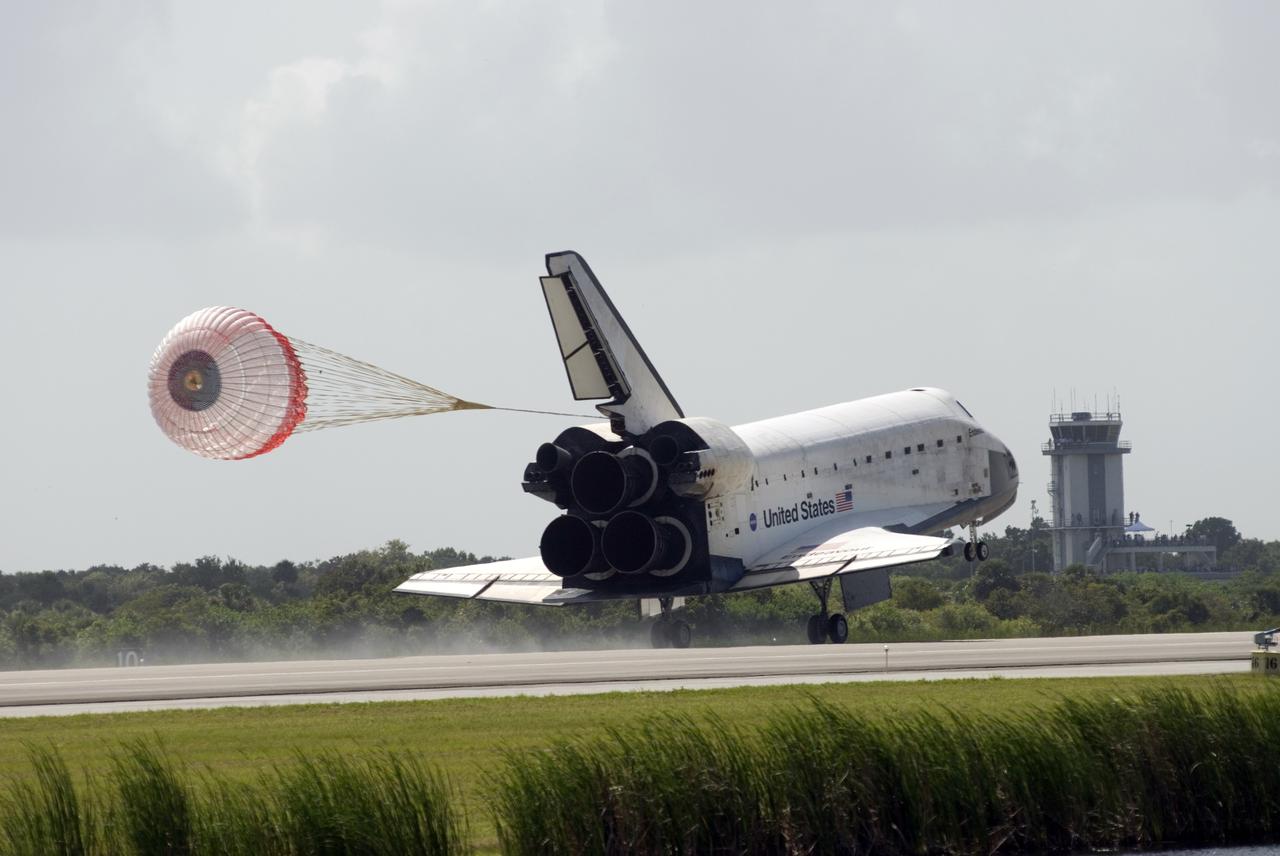
CAPE CANAVERAL, Fla. – The drogue chute slows space shuttle Endeavour on Runway 15 at NASA's Kennedy Space Center in Florida to complete the 16-day, 6.5-million mile journey on the STS-127 mission to the International Space Station. Endeavour landed on orbit 248. Main gear touchdown was at 10:48:08 a.m. EDT. Nose gear touchdown was at 10:48:21 a.m. and wheels stop was at 10:49:13 a.m. Endeavour delivered the Japanese Experiment Module's Exposed Facility and the Experiment Logistics Module-Exposed Section to the International Space Station. The mission was the 29th flight to the station, the 23rd flight of Endeavour and the 127th in the Space Shuttle Program, as well as the 71st landing at Kennedy. Photo credit: NASA/Tom Joseph
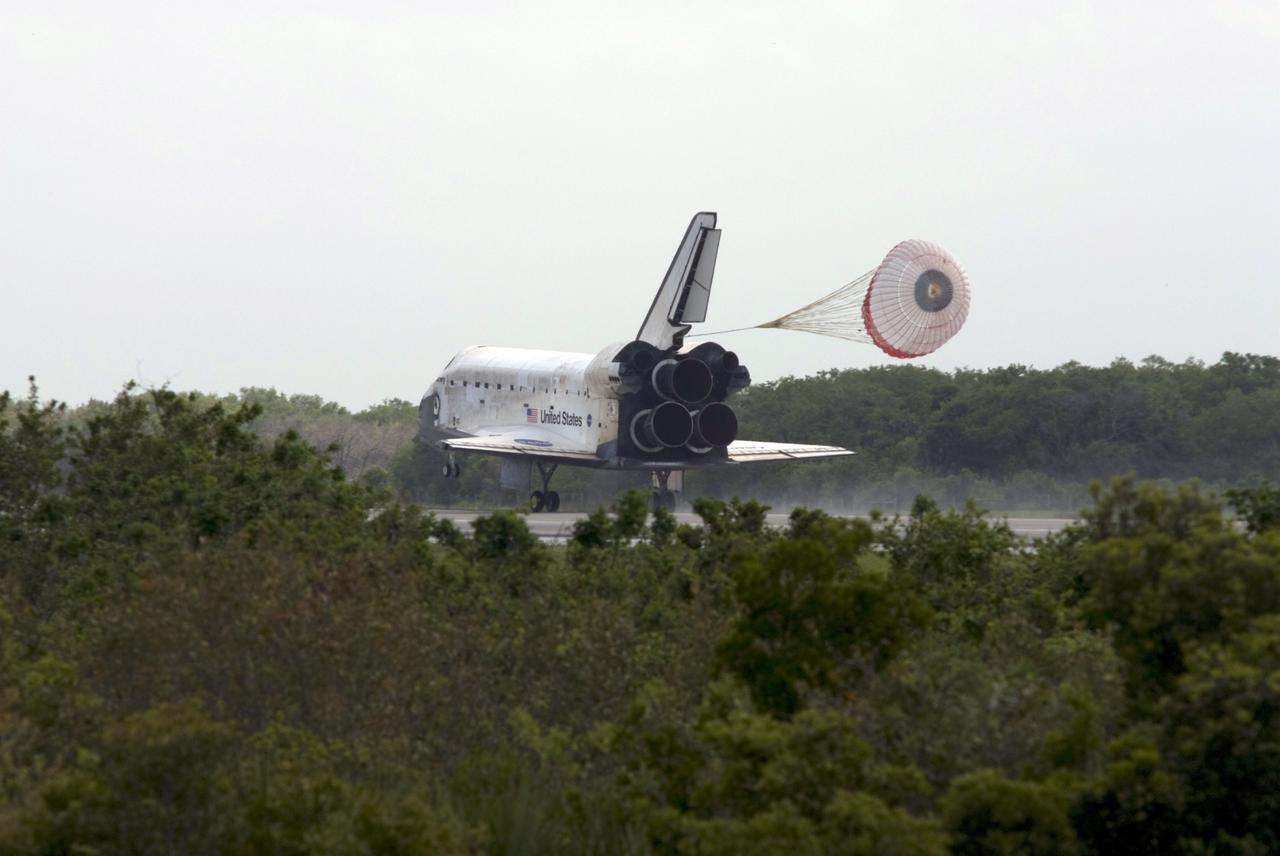
CAPE CANAVERAL, Fla. – The drogue chute unfurls behind space shuttle Discovery on Runway 15 at NASA's Kennedy Space Center in Florida. Landing of Discovery March 28, 2009, completed the 13-day, 5.3-million mile journey on the STS-119 mission to the International Space Station. Main gear touchdown was at 3:13:17 p.m. EDT. Nose gear touchdown was at 3:13:40 p.m. and wheels stop was at 3:14:45 p.m. Discovery delivered the final pair of large power-generating solar array wings and the S6 truss segment. The mission was the 28th flight to the station, the 36th flight of Discovery and the 125th in the Space Shuttle Program, as well as the 70th landing at Kennedy. Photo credit: NASA/Rick Wetherington
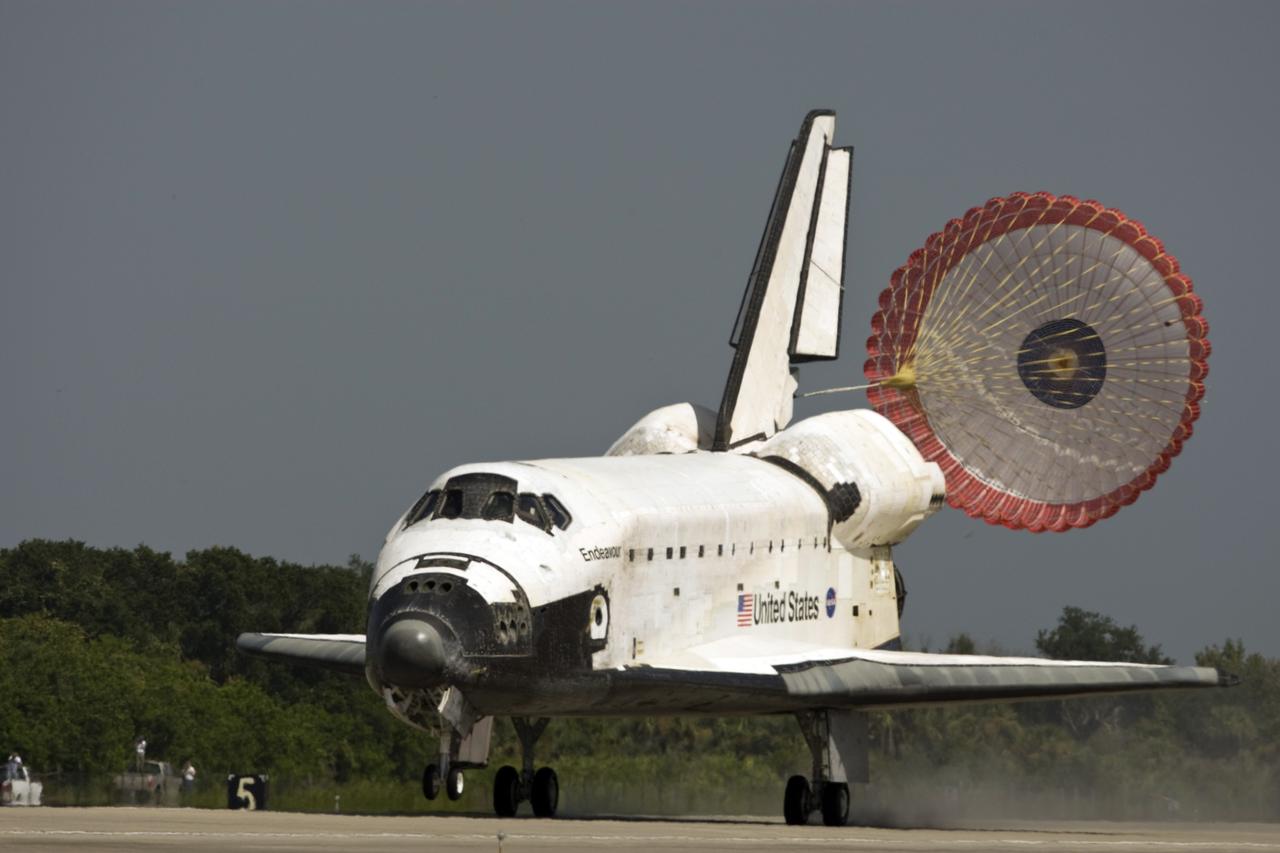
CAPE CANAVERAL, Fla. – The unfurled drogue chute slows space shuttle Endeavour as it lands on Runway 15 at NASA's Kennedy Space Center in Florida to complete the 16-day, 6.5-million mile journey on the STS-127 mission to the International Space Station. Endeavour landed on orbit 248. Main gear touchdown was at 10:48:08 a.m. EDT. Nose gear touchdown was at 10:48:21 a.m. and wheels stop was at 10:49:13 a.m. Endeavour delivered the Japanese Experiment Module's Exposed Facility and the Experiment Logistics Module-Exposed Section to the International Space Station. The mission was the 29th flight to the station, the 23rd flight of Endeavour and the 127th in the Space Shuttle Program, as well as the 71st landing at Kennedy. Photo courtesy of Scott Andrews
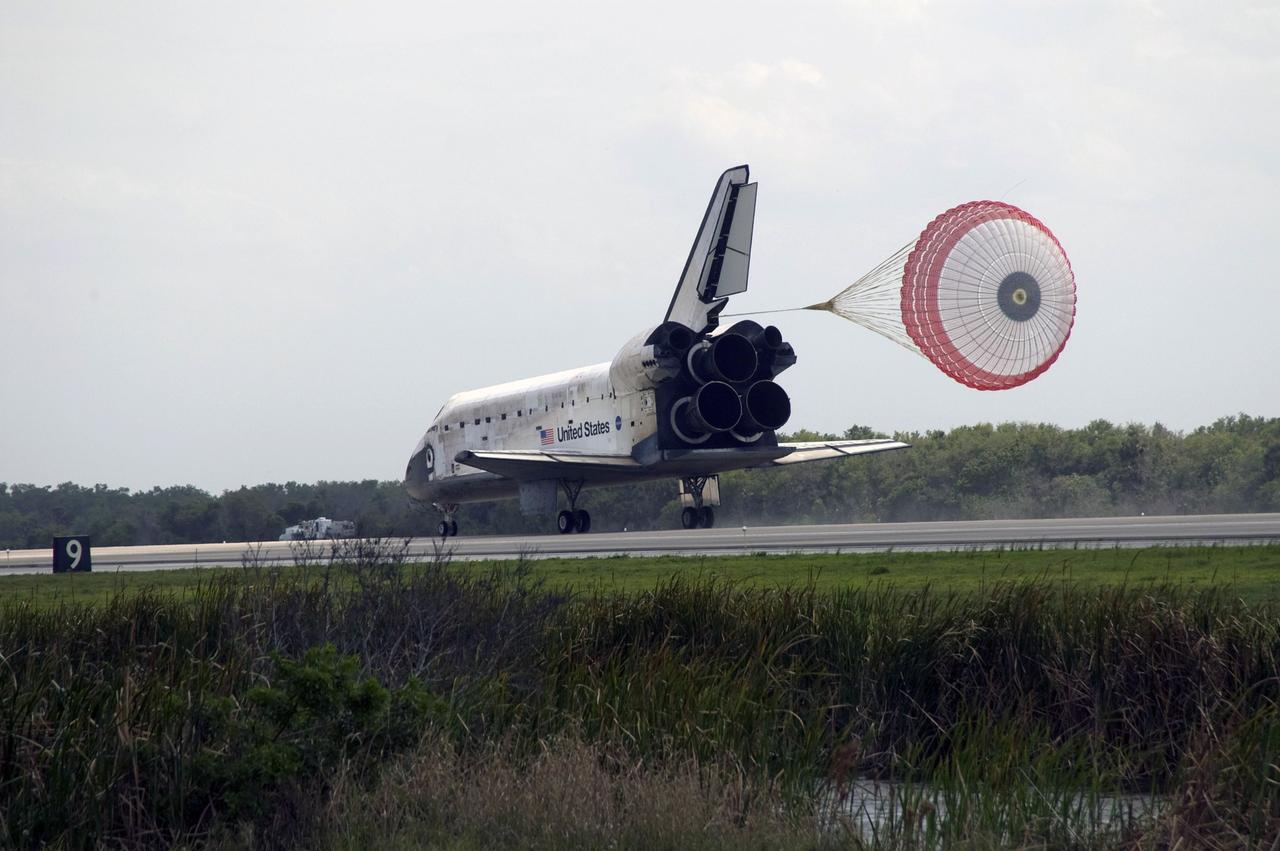
CAPE CANAVERAL, Fla. – With the aid of a drogue chute, space shuttle Discovery slows to a stop on Runway 15 at NASA's Kennedy Space Center in Florida to complete the 13-day, 5.3-million mile journey on the STS-119 mission to the International Space Station. Main gear touchdown was at 3:13:17 p.m. EDT. Nose gear touchdown was at 3:13:40 p.m. and wheels stop was at 3:14:45 p.m. Discovery delivered the final pair of large power-generating solar array wings and the S6 truss segment. The mission was the 28th flight to the station, the 36th flight of Discovery and the 125th in the Space Shuttle Program, as well as the 70th landing at Kennedy. Photo credit: NASA/Kevin O'Connell
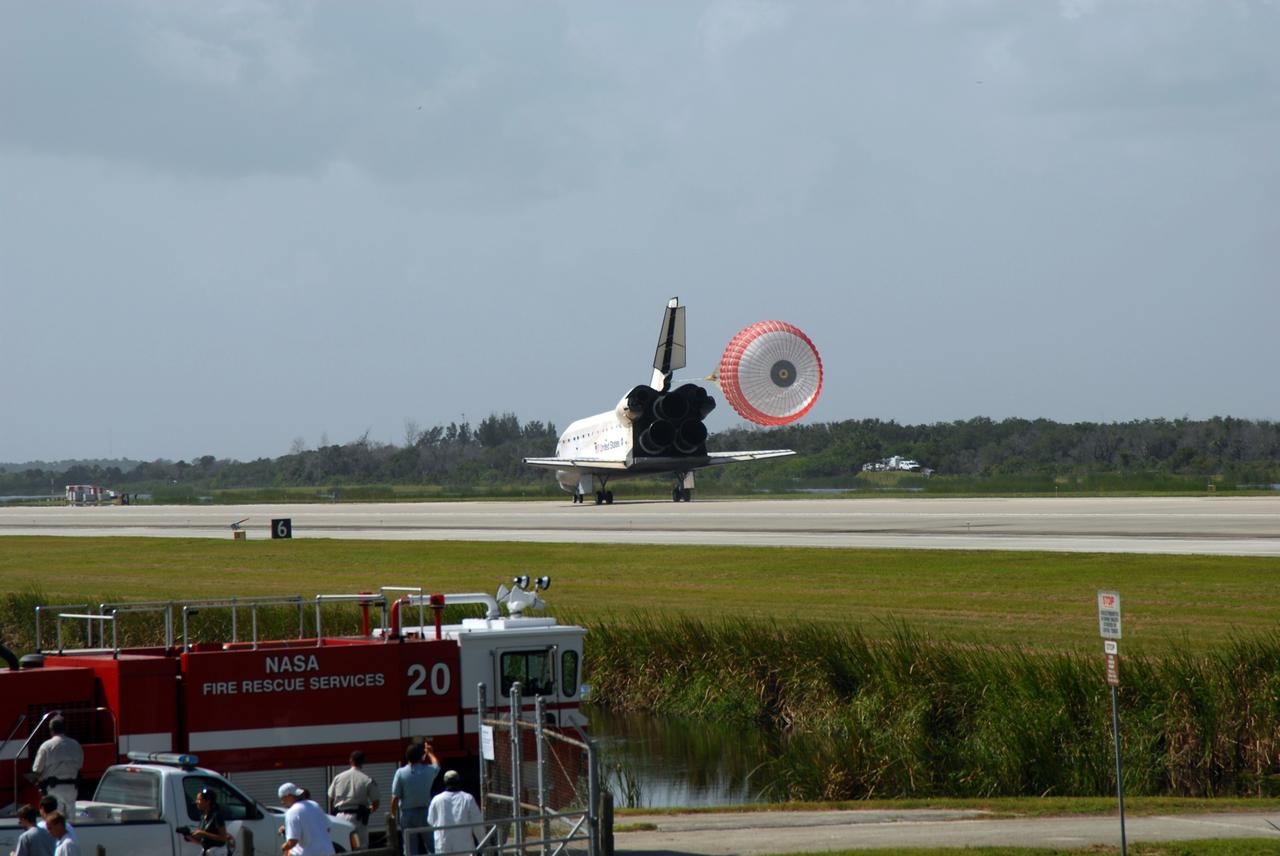
CAPE CANAVERAL, Fla. – The drogue chute slows space shuttle Endeavour on Runway 15 at NASA's Kennedy Space Center in Florida to complete the 16-day, 6.5-million mile journey on the STS-127 mission to the International Space Station. Endeavour landed on orbit 248. Main gear touchdown was at 10:48:08 a.m. EDT. Nose gear touchdown was at 10:48:21 a.m. and wheels stop was at 10:49:13 a.m. Endeavour delivered the Japanese Experiment Module's Exposed Facility and the Experiment Logistics Module-Exposed Section to the International Space Station. The mission was the 29th flight to the station, the 23rd flight of Endeavour and the 127th in the Space Shuttle Program, as well as the 71st landing at Kennedy. Photo credit: NASA/Jim Grossmann
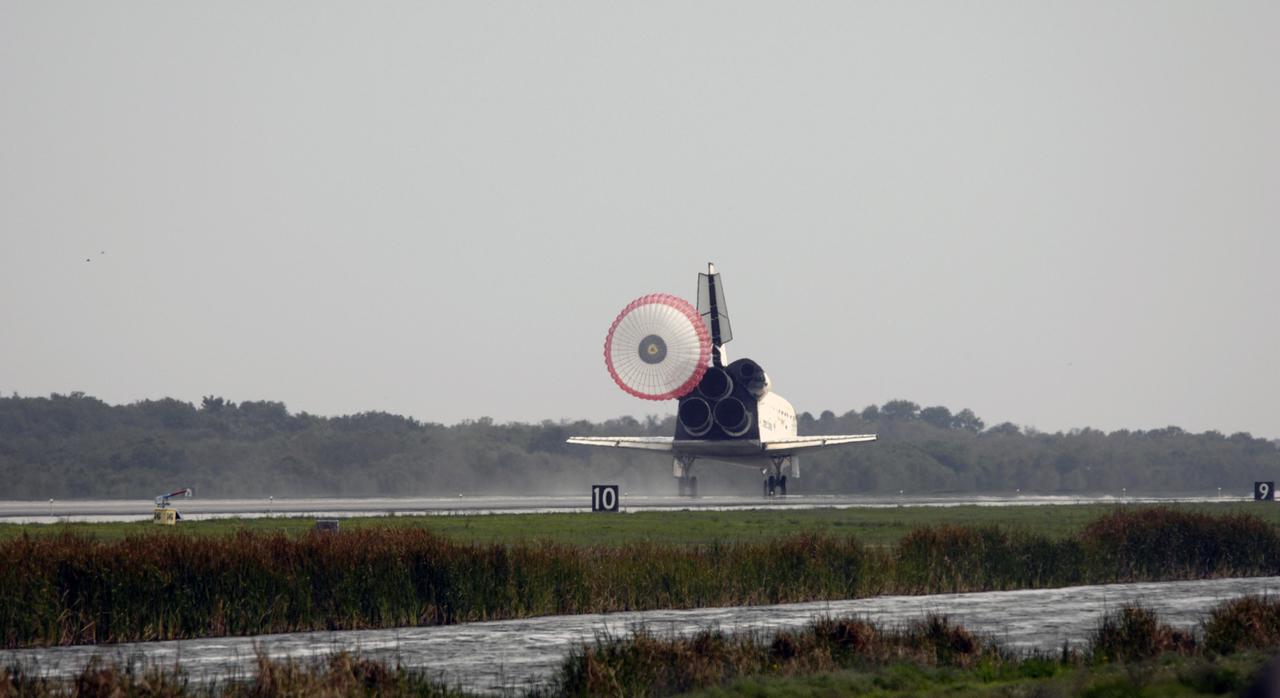
CAPE CANAVERAL, Fla. – With the aid of a drogue chute, space shuttle Discovery slows to a stop on Runway 15 at NASA's Kennedy Space Center in Florida to complete the 13-day, 5.3-million mile journey on the STS-119 mission to the International Space Station. Main gear touchdown was at 3:13:17 p.m. EDT. Nose gear touchdown was at 3:13:40 p.m. and wheels stop was at 3:14:45 p.m. Discovery delivered the final pair of large power-generating solar array wings and the S6 truss segment. The mission was the 28th flight to the station, the 36th flight of Discovery and the 125th in the Space Shuttle Program, as well as the 70th landing at Kennedy. Photo credit: NASA/Michael Kerley
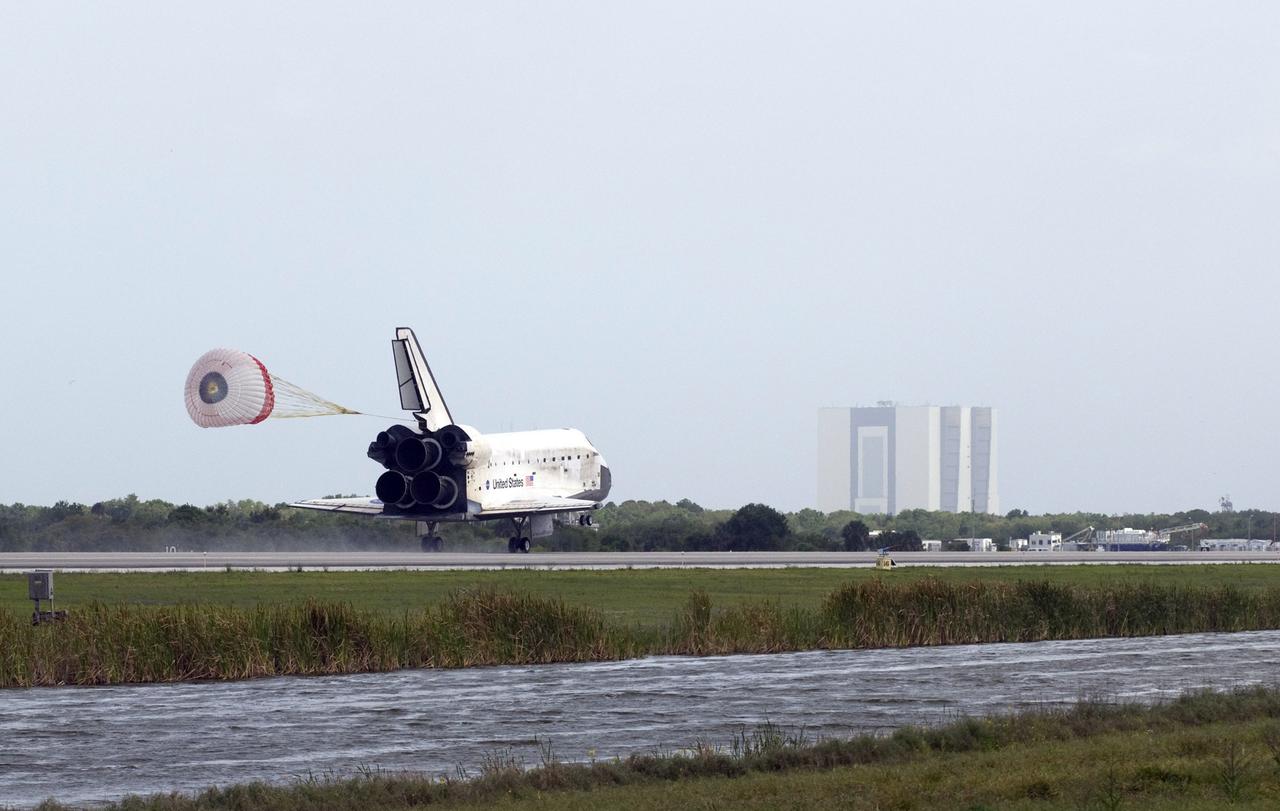
CAPE CANAVERAL, Fla. – With Launch Complex 39’s Vehicle Assembly Building as backdrop, the drogue chute unfurls behind space shuttle Discovery on Runway 15 at NASA's Kennedy Space Center in Florida. Landing of Discovery March 28, 2009, completed the 13-day, 5.3-million mile journey on the STS-119 mission to the International Space Station. Main gear touchdown was at 3:13:17 p.m. EDT. Nose gear touchdown was at 3:13:40 p.m. and wheels stop was at 3:14:45 p.m. Discovery delivered the final pair of large power-generating solar array wings and the S6 truss segment. The mission was the 28th flight to the station, the 36th flight of Discovery and the 125th in the Space Shuttle Program, as well as the 70th landing at Kennedy. Photo credit: NASA/Chuck Tintera
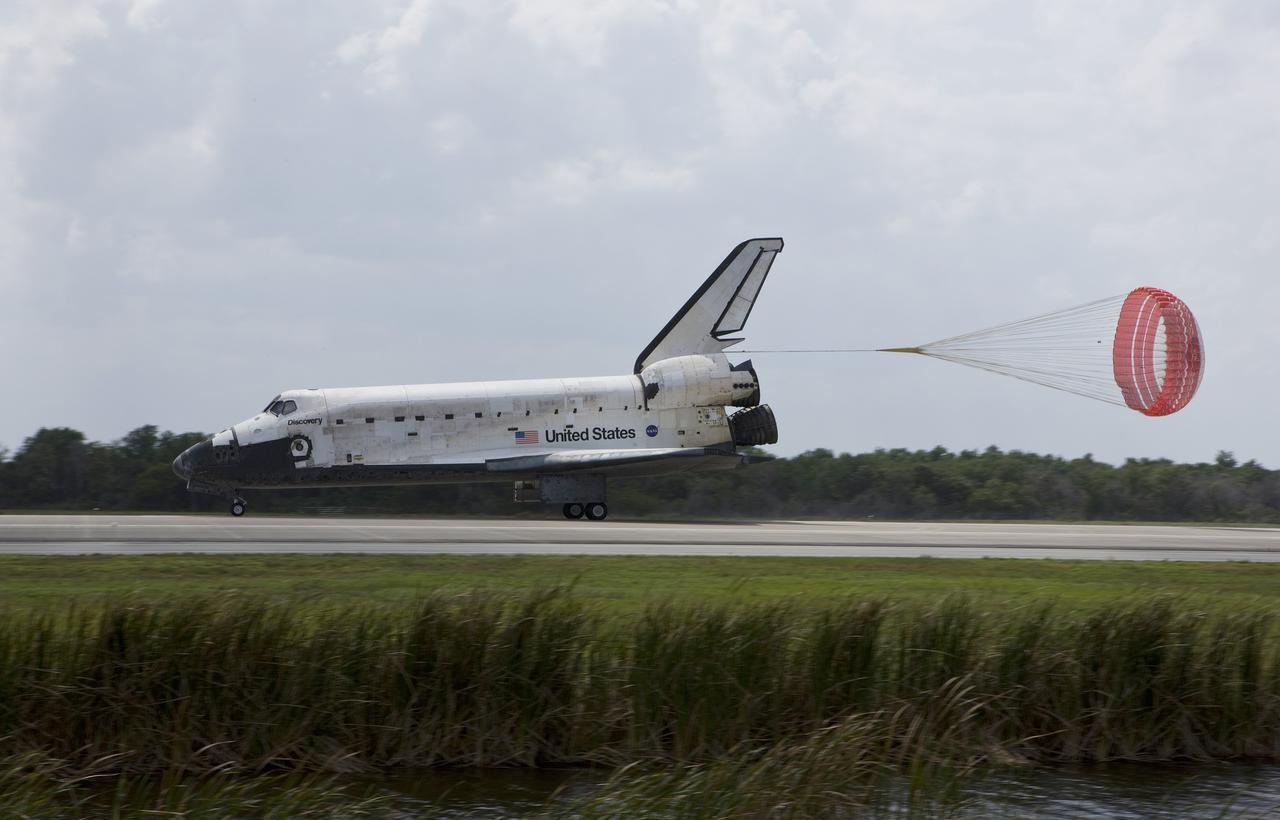
CAPE CANAVERAL, Fla. – The drogue chute unfurls behind space shuttle Discovery on Runway 15 at NASA's Kennedy Space Center in Florida. Landing of Discovery March 28, 2009, completed the 13-day, 5.3-million mile journey on the STS-119 mission to the International Space Station. Main gear touchdown was at 3:13:17 p.m. EDT. Nose gear touchdown was at 3:13:40 p.m. and wheels stop was at 3:14:45 p.m. Discovery delivered the final pair of large power-generating solar array wings and the S6 truss segment. The mission was the 28th flight to the station, the 36th flight of Discovery and the 125th in the Space Shuttle Program, as well as the 70th landing at Kennedy. Photo courtesy of Scott Andrews, Canon
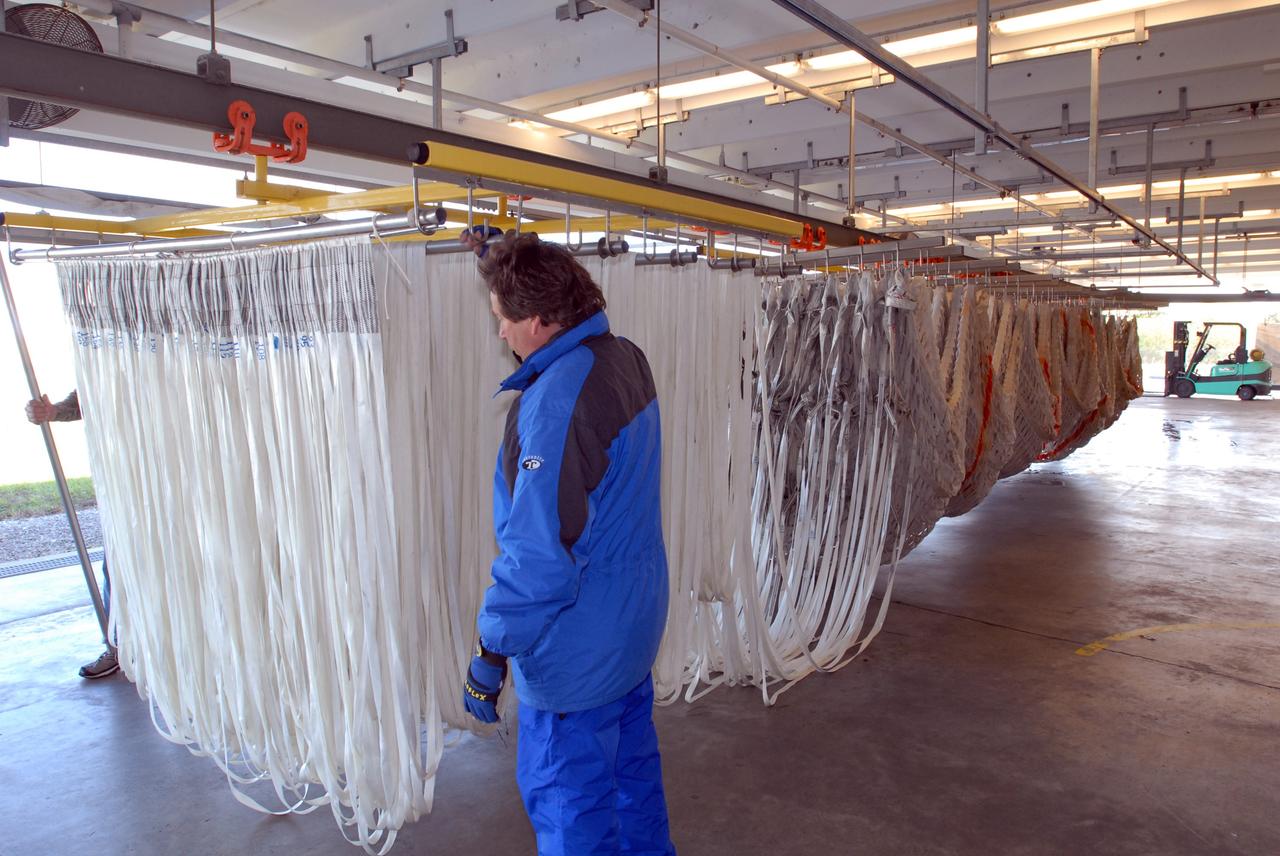
CAPE CANAVERAL, Fla. – At the Parachute Refurbishment Facility at NASA's Kennedy Space Center in Florida, a worker checks the parachute lines suspended from the monorail system. The parachutes were recovered from sea after the launch of space shuttle Endeavour on the STS-126 mission The parachutes are used to slow the descent of the solid rocket boosters that are jettisoned during liftoff. The monorail will transport each parachute into a 30,000-gallon washer and a huge dryer heated with 140-degree air at 13,000 cubic feet per minute. One pilot, one drogue and three main canopies per booster slow the booster’s fall from about 360 mph to 50 mph. After the chutes are cleaned and repaired, they must be carefully packed into their bags so they will deploy correctly the next time they are used. Photo credit: NASA/Jim Grossmann
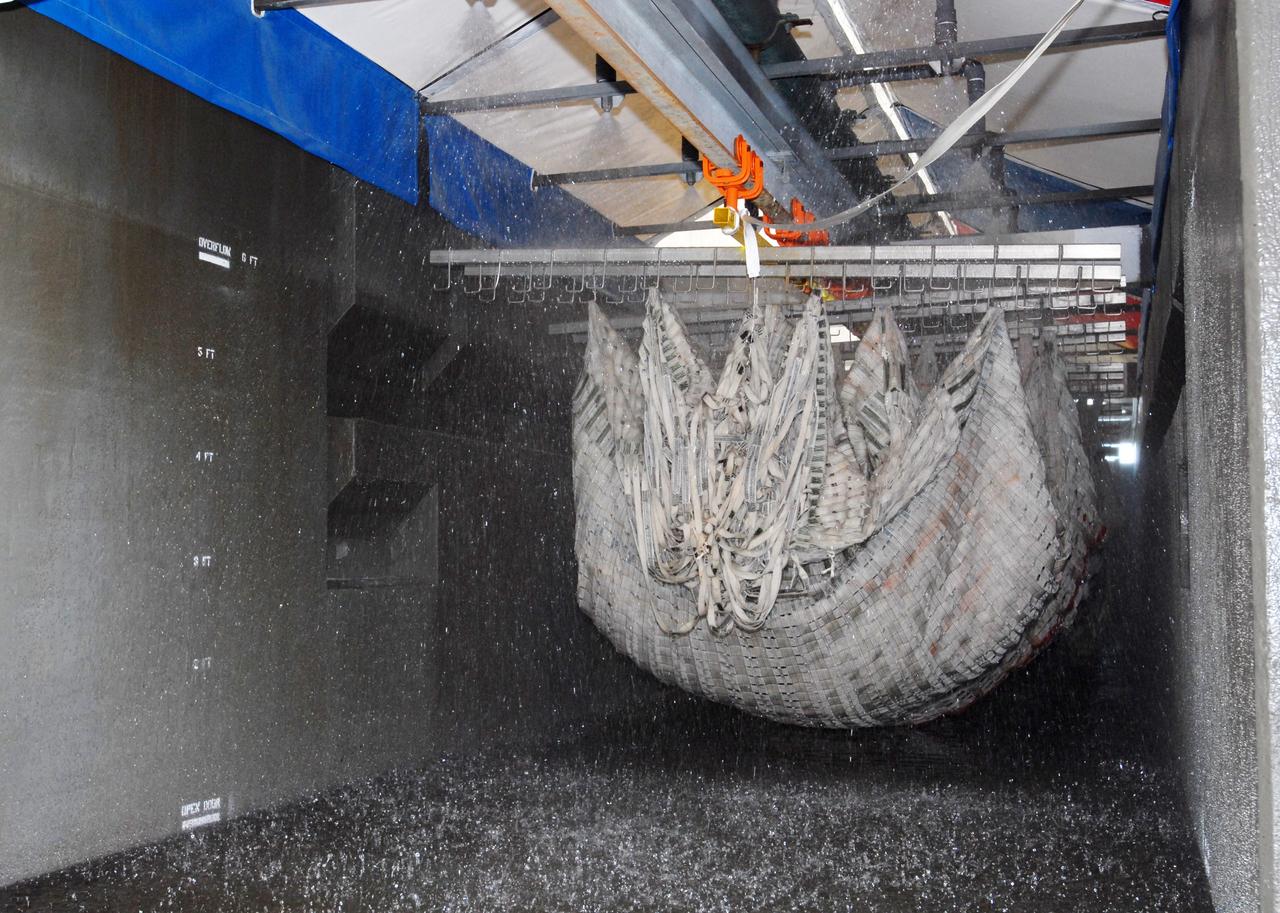
CAPE CANAVERAL, Fla. – At the Parachute Refurbishment Facility at NASA's Kennedy Space Center in Florida, the parachutes recovered from sea after the launch of space shuttle Endeavour on the STS-126 mission are moved through the 30,000-gallon washer. The parachutes are used to slow the descent of the solid rocket boosters that are jettisoned during liftoff. After washing, the monorail will move the parachutes into a huge dryer heated with 140-degree air at 13,000 cubic feet per minute. One pilot, one drogue and three main canopies per booster slow the booster’s fall from about 360 mph to 50 mph. After the chutes are cleaned and repaired, they must be carefully packed into their bags so they will deploy correctly the next time they are used. Photo credit: NASA/Jim Grossmann

CAPE CANAVERAL, Fla. – With the aid of a drogue chute, space shuttle Discovery slows to a stop on Runway 15 at NASA's Kennedy Space Center in Florida to complete the 13-day, 5.3-million mile journey on the STS-119 mission to the International Space Station. Main gear touchdown was at 3:13:17 p.m. EDT. Nose gear touchdown was at 3:13:40 p.m. and wheels stop was at 3:14:45 p.m. Discovery delivered the final pair of large power-generating solar array wings and the S6 truss segment. The mission was the 28th flight to the station, the 36th flight of Discovery and the 125th in the Space Shuttle Program, as well as the 70th landing at Kennedy. Photo credit: NASA/Ben Cooper
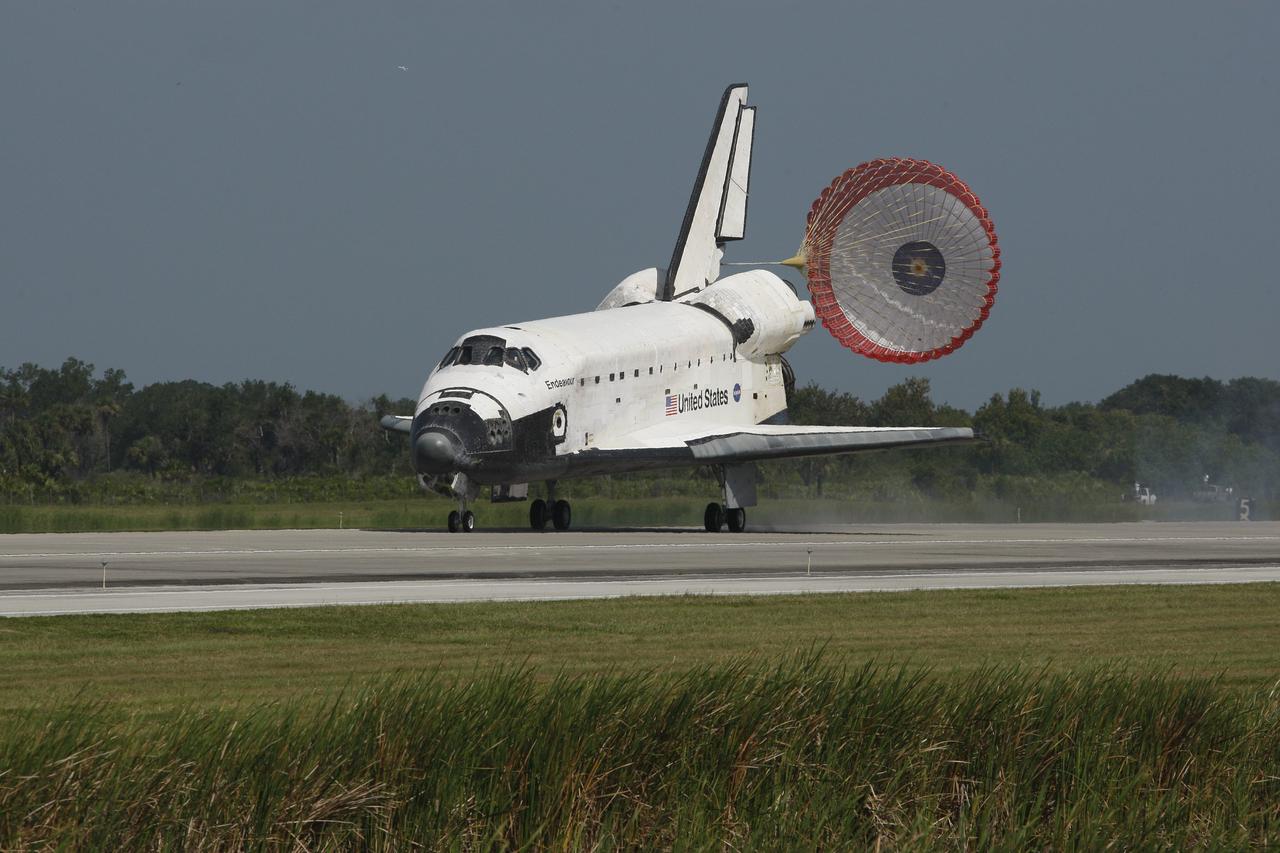
CAPE CANAVERAL, Fla. – The unfurled drogue chute slows space shuttle Endeavour as it lands on Runway 15 at NASA's Kennedy Space Center in Florida to complete the 16-day, 6.5-million mile journey on the STS-127 mission to the International Space Station. Endeavour landed on orbit 248. Main gear touchdown was at 10:48:08 a.m. EDT. Nose gear touchdown was at 10:48:21 a.m. and wheels stop was at 10:49:13 a.m. Endeavour delivered the Japanese Experiment Module's Exposed Facility and the Experiment Logistics Module-Exposed Section to the International Space Station. The mission was the 29th flight to the station, the 23rd flight of Endeavour and the 127th in the Space Shuttle Program, as well as the 71st landing at Kennedy. Photo courtesy of Scott Andrews
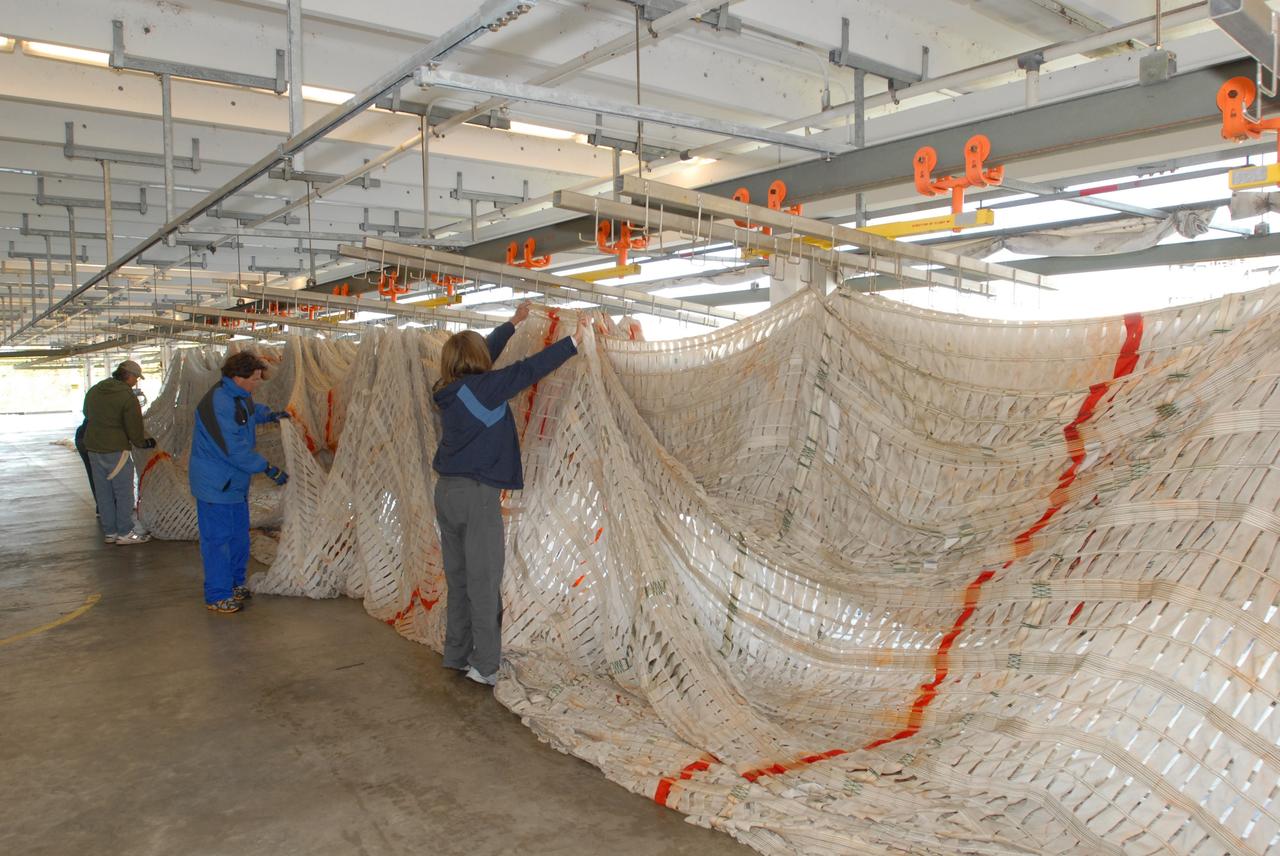
CAPE CANAVERAL, Fla. – At the Parachute Refurbishment Facility at NASA's Kennedy Space Center in Florida, workers begin hanging the parachutes recovered from sea after the launch of space shuttle Endeavour on the STS-126 mission onto a monorail system. The parachutes are used to slow the descent of the solid rocket boosters that are jettisoned during liftoff. The monorail will transport each parachute into a 30,000-gallon washer and a huge dryer heated with 140-degree air at 13,000 cubic feet per minute One pilot, one drogue and three main canopies per booster slow the booster’s fall from about 360 mph to 50 mph. After the chutes are cleaned and repaired, they must be carefully packed into their bags so they will deploy correctly the next time they are used. Photo credit: NASA/Jim Grossmann
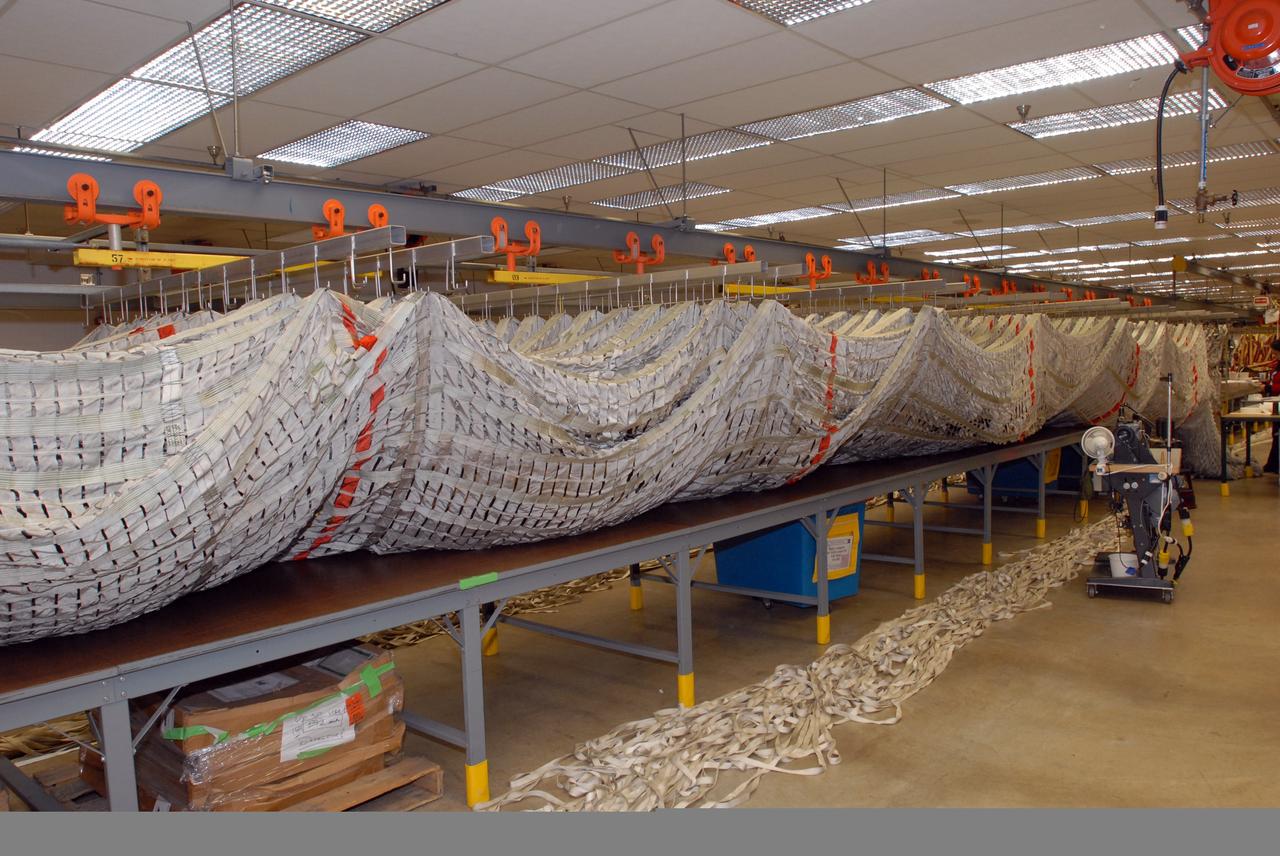
CAPE CANAVERAL, Fla. – Parachutes recovered from sea after the launch of space shuttle Endeavour on the STS-126 mission are suspended from a hanging monorail system at the Parachute Refurbishment Facility at NASA's Kennedy Space Center in Florida. The parachutes are used to slow the descent of the solid rocket boosters that are jettisoned during liftoff. The monorail will transport each parachute into a 30,000-gallon washer and a huge dryer heated with 140-degree air at 13,000 cubic feet per minute. One pilot, one drogue and three main canopies per booster slow the booster’s fall from about 360 mph to 50 mph. After the chutes are cleaned and repaired, they must be carefully packed into their bags so they will deploy correctly the next time they are used. Photo credit: NASA/Jim Grossmann
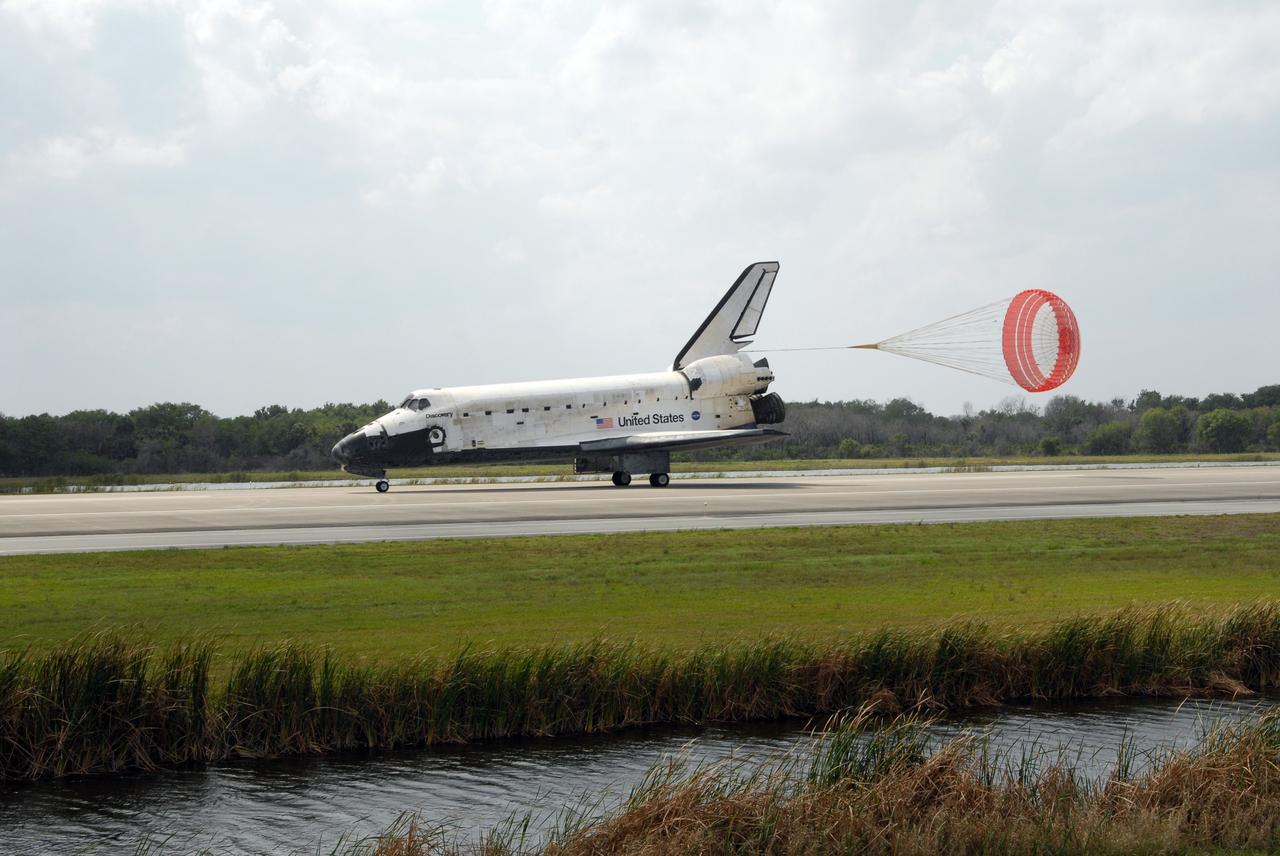
CAPE CANAVERAL, Fla. – The drogue chute unfurls behind space shuttle Discovery on Runway 15 at NASA's Kennedy Space Center in Florida. Landing of Discovery March 28, 2009, completed the 13-day, 5.3-million mile journey on the STS-119 mission to the International Space Station. Main gear touchdown was at 3:13:17 p.m. EDT. Nose gear touchdown was at 3:13:40 p.m. and wheels stop was at 3:14:45 p.m. Discovery delivered the final pair of large power-generating solar array wings and the S6 truss segment. The mission was the 28th flight to the station, the 36th flight of Discovery and the 125th in the Space Shuttle Program, as well as the 70th landing at Kennedy. Photo credit: NASA/Troy Cryder
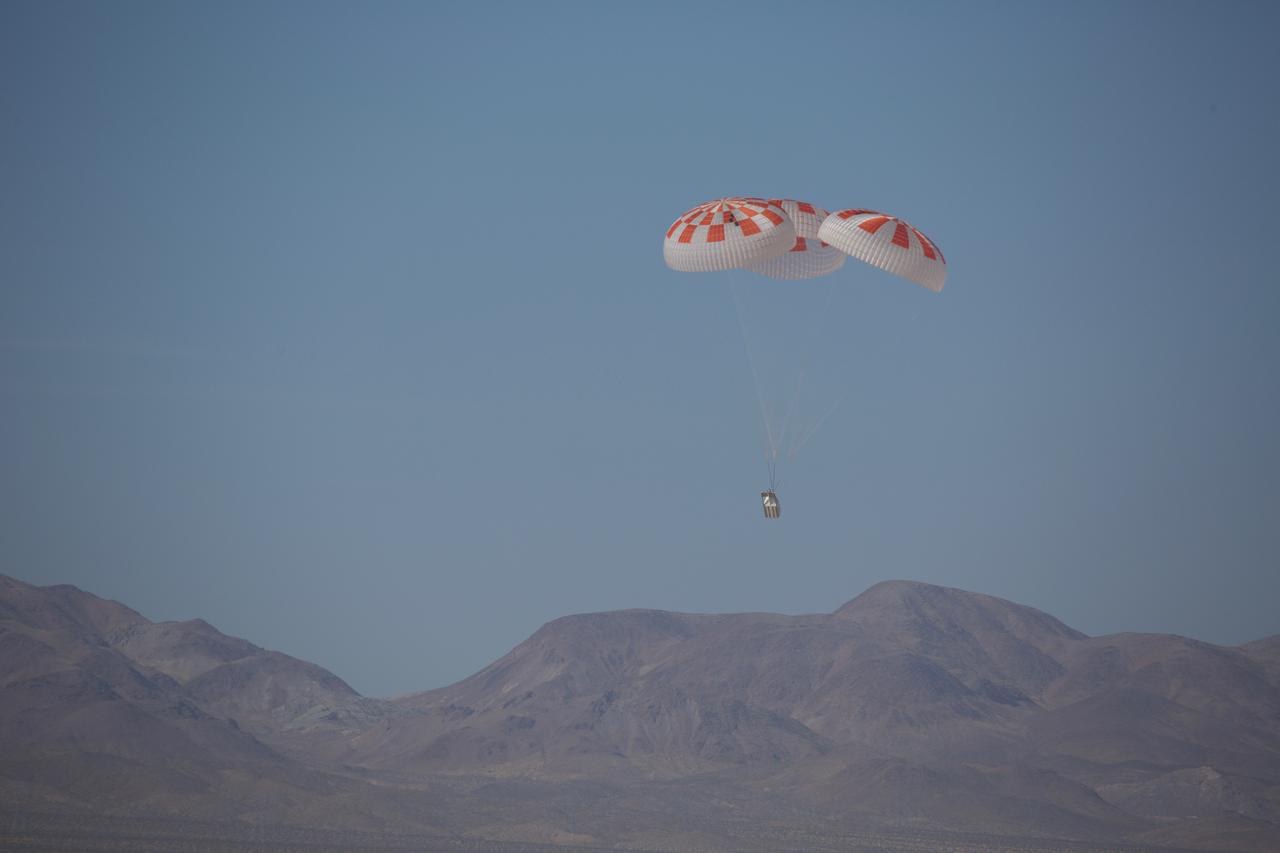
SpaceX performed its fourteenth overall parachute test supporting Crew Dragon development. This most recent exercise was the first of several planned parachute system qualification tests ahead of the spacecraft’s first crewed flight and resulted in the successful touchdown of Crew Dragon’s parachute system. During this test, a C-130 aircraft transported the parachute test vehicle, designed to achieve the maximum speeds that Crew Dragon could experience on re-entry, over the Mojave Desert in Southern California and dropped the vehicle from an altitude of 25,000 feet. The test demonstrated an off-nominal situation, deploying only one of the two drogue chutes and intentionally skipping a reefing stage on one of the four main parachutes, proving a safe landing in such a contingency scenario.
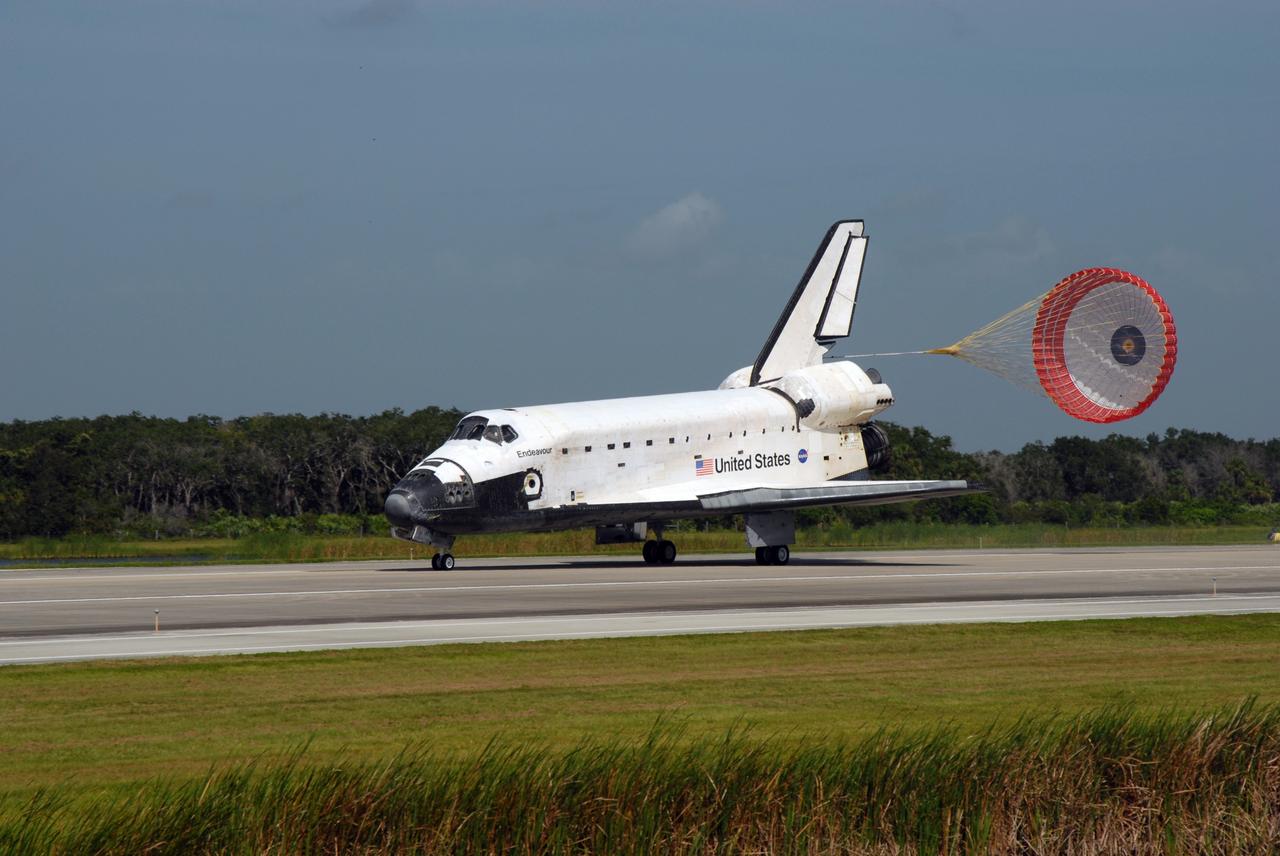
CAPE CANAVERAL, Fla. – The drogue chute slows space shuttle Endeavour on Runway 15 at NASA's Kennedy Space Center in Florida to complete the 16-day, 6.5-million mile journey on the STS-127 mission to the International Space Station. Endeavour landed on orbit 248. Main gear touchdown was at 10:48:08 a.m. EDT. Nose gear touchdown was at 10:48:21 a.m. and wheels stop was at 10:49:13 a.m. Endeavour delivered the Japanese Experiment Module's Exposed Facility and the Experiment Logistics Module-Exposed Section to the International Space Station. The mission was the 29th flight to the station, the 23rd flight of Endeavour and the 127th in the Space Shuttle Program, as well as the 71st landing at Kennedy. Photo credit: NASA/Jim Grossmann
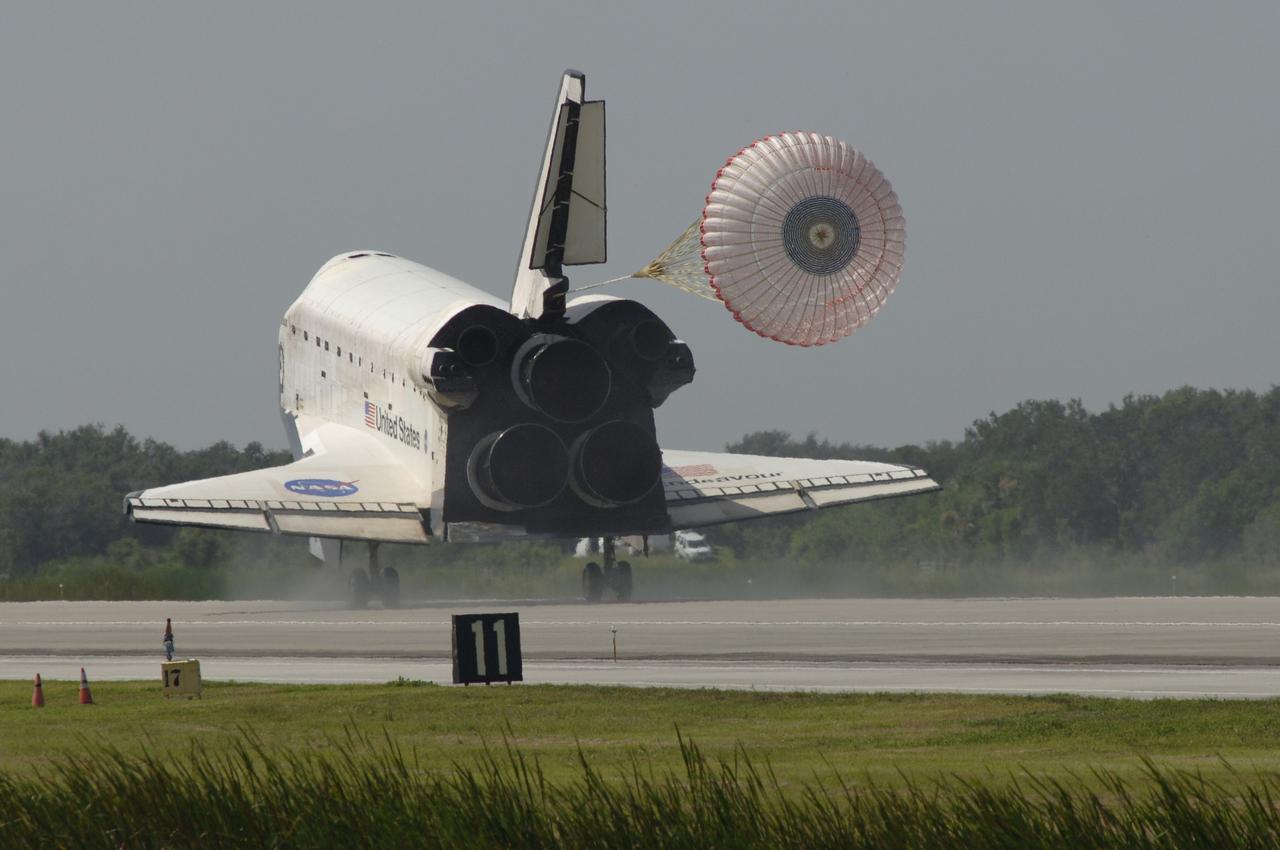
CAPE CANAVERAL, Fla. – The drogue chute unfurls behind space shuttle Endeavour on Runway 15 at NASA's Kennedy Space Center in Florida to complete the 16-day, 6.5-million mile journey on the STS-127 mission to the International Space Station. Endeavour landed on orbit 248. Main gear touchdown was at 10:48:08 a.m. EDT. Nose gear touchdown was at 10:48:21 a.m. and wheels stop was at 10:49:13 a.m. Endeavour delivered the Japanese Experiment Module's Exposed Facility and the Experiment Logistics Module-Exposed Section to the International Space Station. The mission was the 29th flight to the station, the 23rd flight of Endeavour and the 127th in the Space Shuttle Program, as well as the 71st landing at Kennedy. Photo credit: NASA/Kim Shiflett
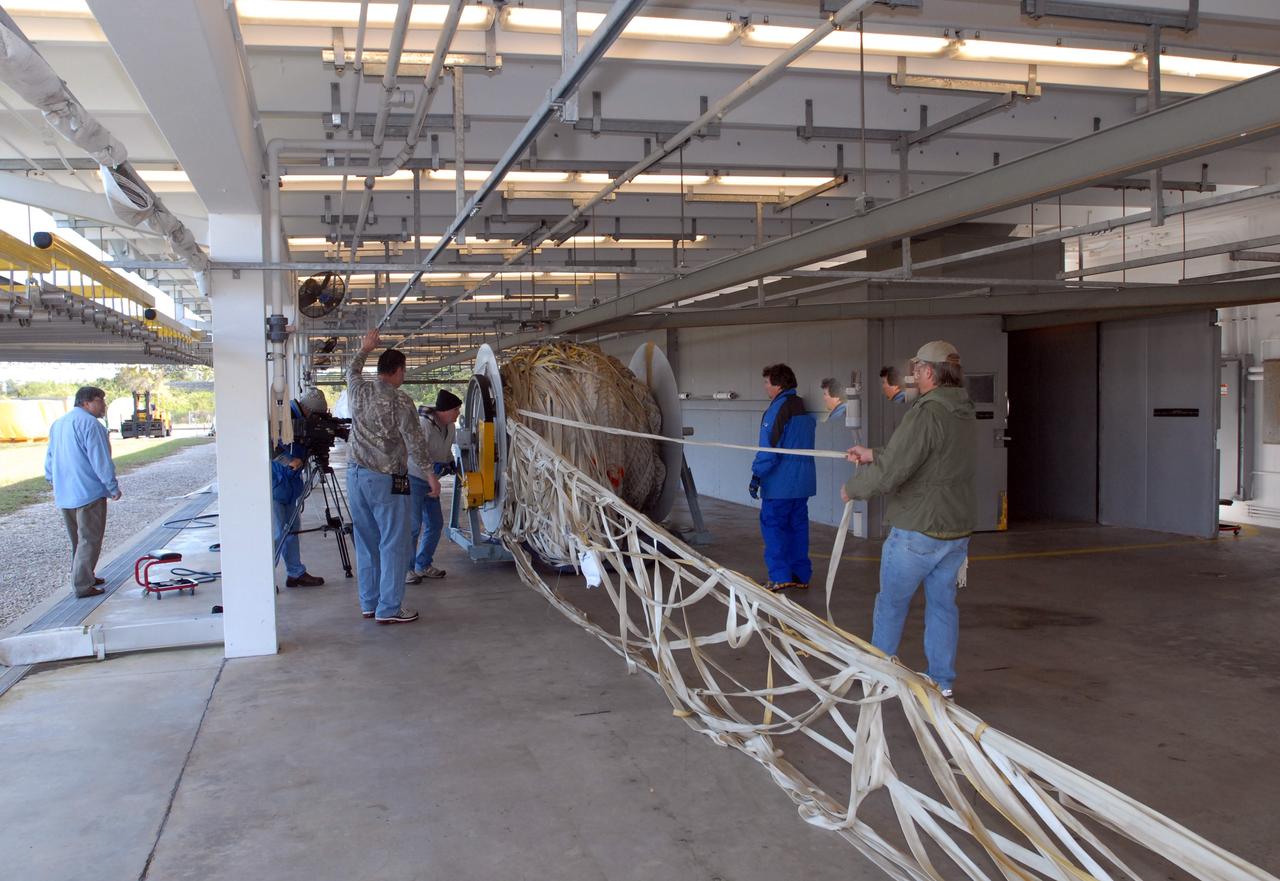
CAPE CANAVERAL, Fla. – At the Parachute Refurbishment Facility at NASA's Kennedy Space Center in Florida, another parachute recovered from sea after the launch of space shuttle Endeavour on the STS-126 mission is unwound from a large turnstile. After their recovery, the parachutes are untangled, hung on a monorail system and transported into a 30,000-gallon washer and a huge dryer heated with 140-degree air at 13,000 cubic feet per minute. The parachutes are used to slow the descent of the solid rocket boosters that are jettisoned during liftoff. One pilot, one drogue and three main canopies per booster slow the booster’s fall from about 360 mph to 50 mph. After the chutes are cleaned and repaired, they must be carefully packed into their bags so they will deploy correctly the next time they are used. Photo credit: NASA/Jim Grossmann
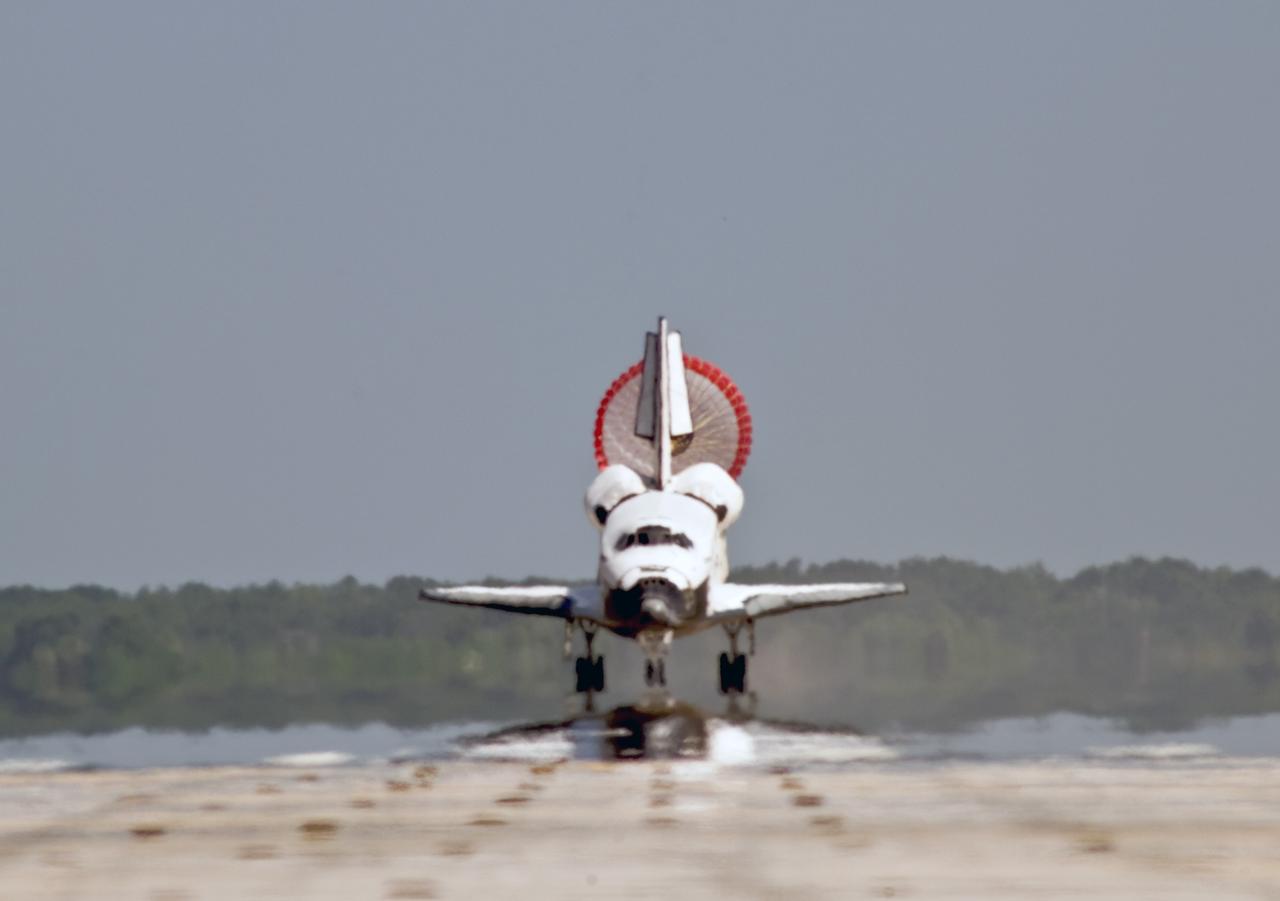
CAPE CANAVERAL, Fla. – The unfurled drogue chute slows space shuttle Endeavour as it lands on Runway 15 at NASA's Kennedy Space Center in Florida to complete the 16-day, 6.5-million mile journey on the STS-127 mission to the International Space Station. Endeavour landed on orbit 248. Main gear touchdown was at 10:48:08 a.m. EDT. Nose gear touchdown was at 10:48:21 a.m. and wheels stop was at 10:49:13 a.m. Endeavour delivered the Japanese Experiment Module's Exposed Facility and the Experiment Logistics Module-Exposed Section to the International Space Station. The mission was the 29th flight to the station, the 23rd flight of Endeavour and the 127th in the Space Shuttle Program, as well as the 71st landing at Kennedy. Photo credit: NASA/Tony Gray, Tom Farrar
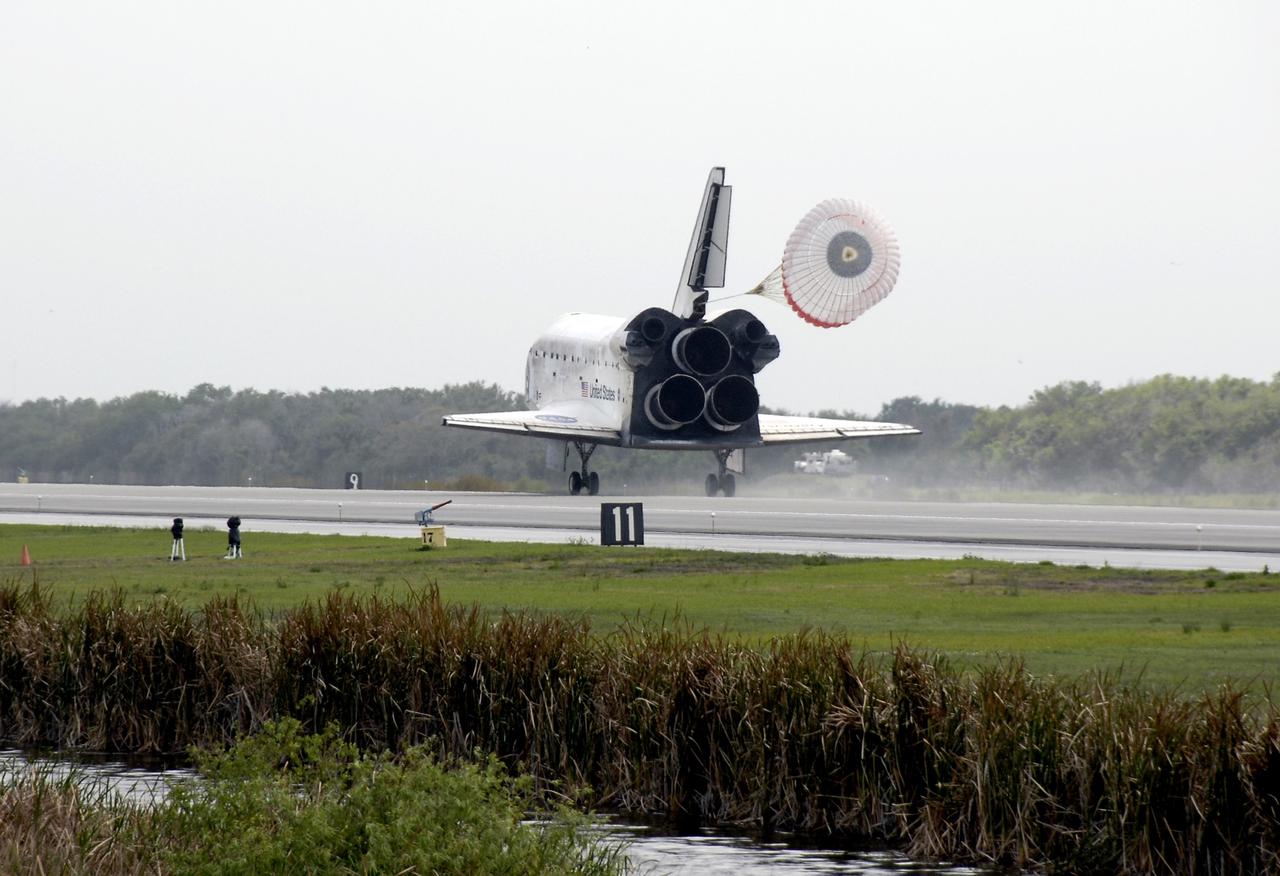
CAPE CANAVERAL, Fla. – With the aid of a drogue chute, space shuttle Discovery slows for landing on Runway 15 at NASA's Kennedy Space Center in Florida to complete the 13-day, 5.3-million mile journey on the STS-119 mission to the International Space Station. Main gear touchdown was at 3:13:17 p.m. EDT. Nose gear touchdown was at 3:13:40 p.m. and wheels stop was at 3:14:45 p.m. Discovery delivered the final pair of large power-generating solar array wings and the S6 truss segment. The mission was the 28th flight to the station, the 36th flight of Discovery and the 125th in the Space Shuttle Program, as well as the 70th landing at Kennedy. Photo credit: NASA/Kim Shiflett
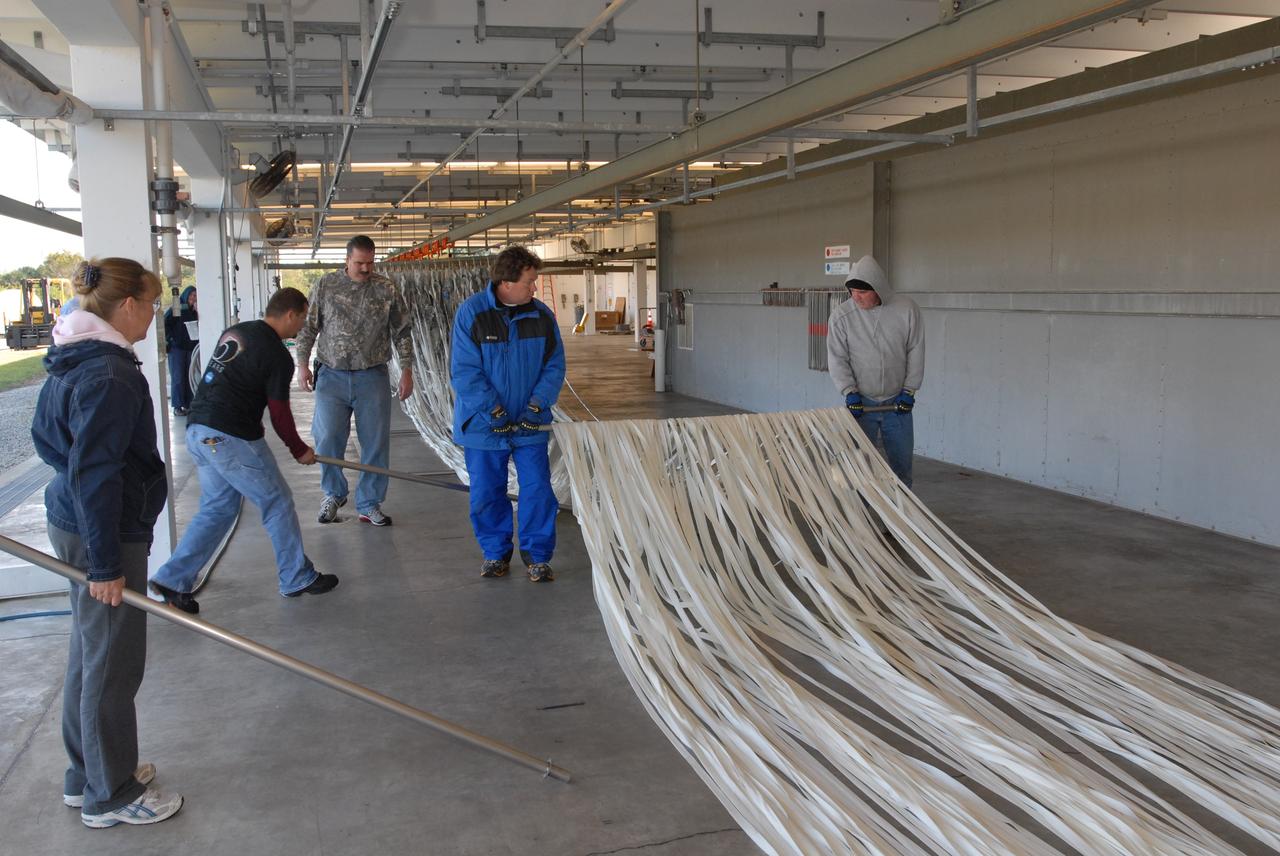
CAPE CANAVERAL, Fla. – At the Parachute Refurbishment Facility at NASA's Kennedy Space Center in Florida, workers place rods under the lines of the parachutes recovered from sea after the launch of space shuttle Endeavour on the STS-126 mission to hang them on a monorail system. Behind them, the parachutes are suspended from the monorail. The parachutes are used to slow the descent of the solid rocket boosters that are jettisoned during liftoff. The monorail will transport each parachute into a 30,000-gallon washer and a huge dryer heated with 140-degree air at 13,000 cubic feet per minute. One pilot, one drogue and three main canopies per booster slow the booster’s fall from about 360 mph to 50 mph. After the chutes are cleaned and repaired, they must be carefully packed into their bags so they will deploy correctly the next time they are used. Photo credit: NASA/Jim Grossmann
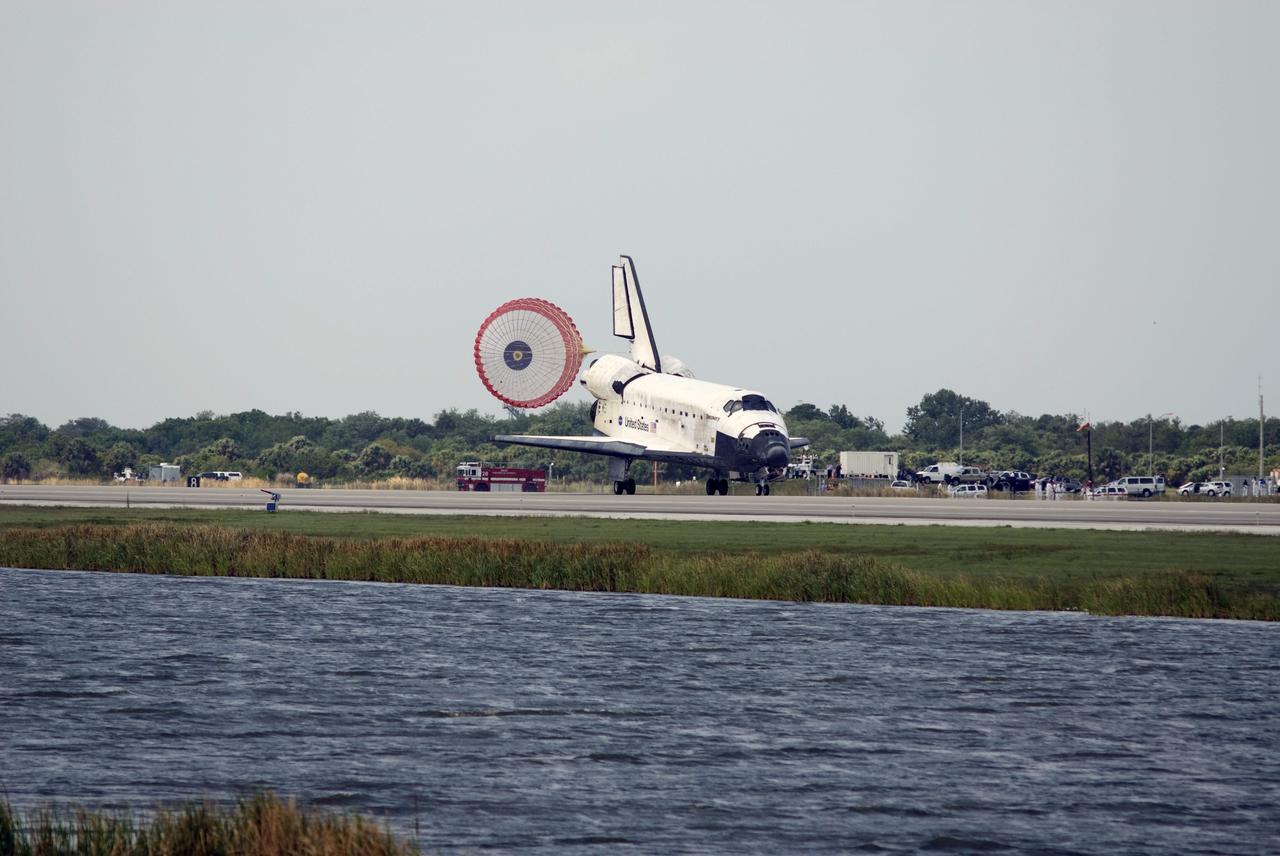
CAPE CANAVERAL, Fla. – A Fire Rescue Services vehicle stands by as the drogue chute unfurls behind space shuttle Discovery on Runway 15 at NASA's Kennedy Space Center in Florida. Landing of Discovery March 28, 2009, completed the 13-day, 5.3-million mile journey on the STS-119 mission to the International Space Station. Main gear touchdown was at 3:13:17 p.m. EDT. Nose gear touchdown was at 3:13:40 p.m. and wheels stop was at 3:14:45 p.m. Discovery delivered the final pair of large power-generating solar array wings and the S6 truss segment. The mission was the 28th flight to the station, the 36th flight of Discovery and the 125th in the Space Shuttle Program, as well as the 70th landing at Kennedy. Photo credit: NASA/Tim Powers
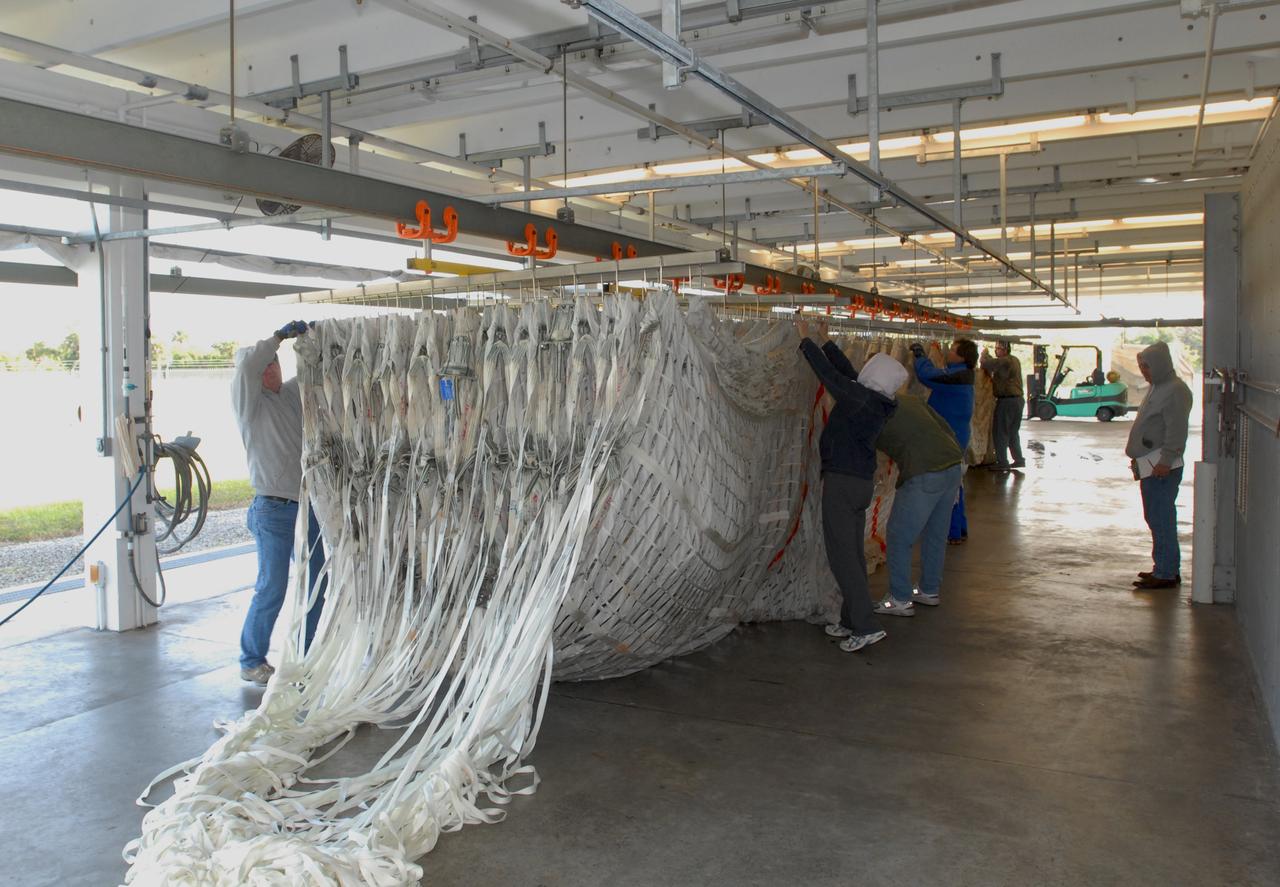
CAPE CANAVERAL, Fla. – At the Parachute Refurbishment Facility at NASA's Kennedy Space Center in Florida, workers begin hanging the parachutes recovered from sea after the launch of space shuttle Endeavour on the STS-126 mission onto a monorail system. The parachutes are used to slow the descent of the solid rocket boosters that are jettisoned during liftoff. The monorail will transport each parachute into a 30,000-gallon washer and a huge dryer heated with 140-degree air at 13,000 cubic feet per minute. One pilot, one drogue and three main canopies per booster slow the booster’s fall from about 360 mph to 50 mph. After the chutes are cleaned and repaired, they must be carefully packed into their bags so they will deploy correctly the next time they are used. Photo credit: NASA/Jim Grossmann
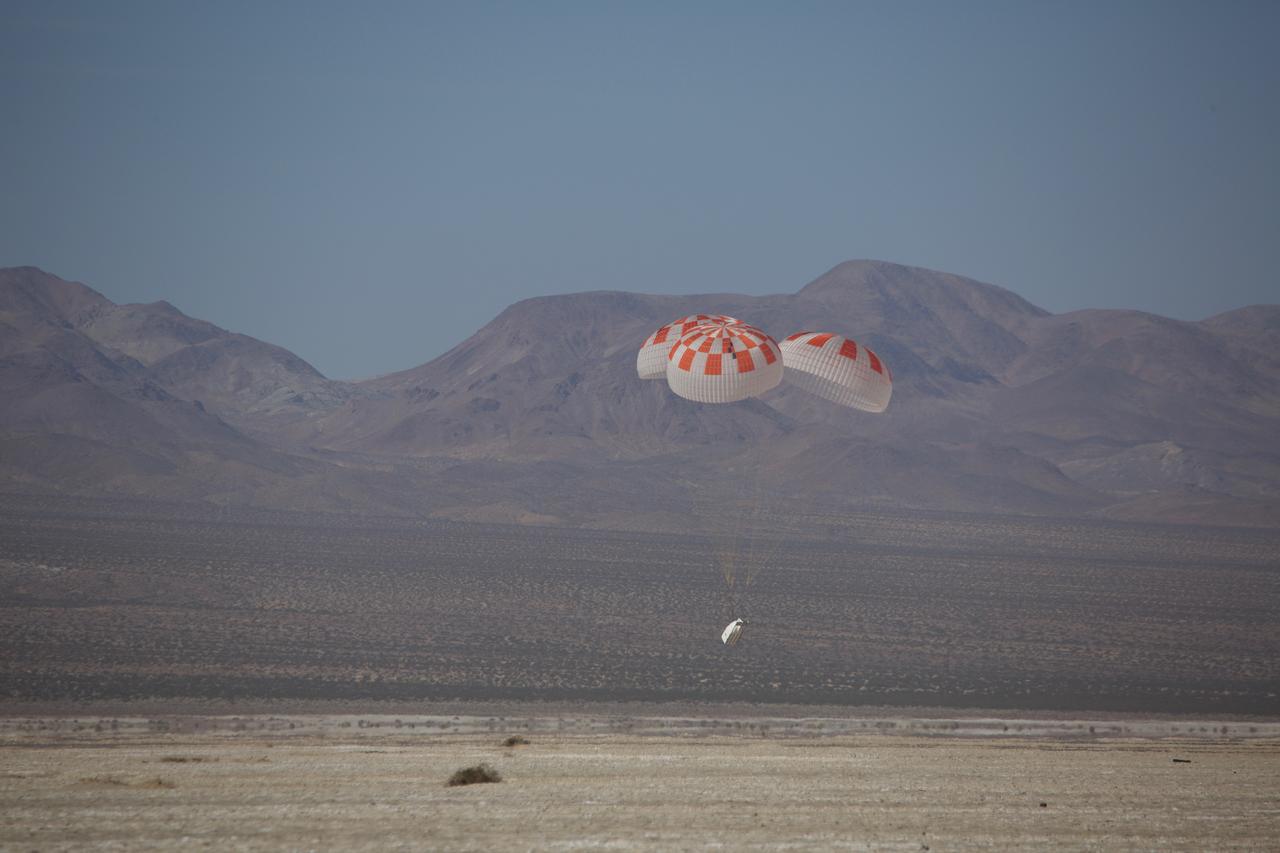
SpaceX performed its fourteenth overall parachute test supporting Crew Dragon development. This most recent exercise was the first of several planned parachute system qualification tests ahead of the spacecraft’s first crewed flight and resulted in the successful touchdown of Crew Dragon’s parachute system. During this test, a C-130 aircraft transported the parachute test vehicle, designed to achieve the maximum speeds that Crew Dragon could experience on re-entry, over the Mojave Desert in Southern California and dropped the vehicle from an altitude of 25,000 feet. The test demonstrated an off-nominal situation, deploying only one of the two drogue chutes and intentionally skipping a reefing stage on one of the four main parachutes, proving a safe landing in such a contingency scenario.

CAPE CANAVERAL, Fla. – At the Parachute Refurbishment Facility at NASA's Kennedy Space Center in Florida, a worker checks the parachute lines, recovered from sea after the launch of space shuttle Endeavour on the STS-126 mission, as they move into the 30,000-gallon washer. The parachutes are used to slow the descent of the solid rocket boosters that are jettisoned during liftoff. After washing, the monorail will move the parachutes into a huge dryer heated with 140-degree air at 13,000 cubic feet per minute. One pilot, one drogue and three main canopies per booster slow the booster’s fall from about 360 mph to 50 mph. After the chutes are cleaned and repaired, they must be carefully packed into their bags so they will deploy correctly the next time they are used. Photo credit: NASA/Jim Grossmann
Under the goals of the Vision for Space Exploration, Ares I is a chief component of the cost-effective space transportation infrastructure being developed by NASA's Constellation Program. This transportation system will safely and reliably carry human explorers back to the moon, and then onward to Mars and other destinations in the solar system. The Ares I effort includes multiple project element teams at NASA centers and contract organizations around the nation, and is managed by the Exploration Launch Projects Office at NASA's Marshall Space Flight Center (MFSC). ATK Launch Systems near Brigham City, Utah, is the prime contractor for the first stage booster. ATK's subcontractor, United Space Alliance of Houston, is designing, developing and testing the parachutes at its facilities at NASA's Kennedy Space Center in Florida. NASA's Johnson Space Center in Houston hosts the Constellation Program and Orion Crew Capsule Project Office and provides test instrumentation and support personnel. Together, these teams are developing vehicle hardware, evolving proven technologies, and testing components and systems. Their work builds on powerful, reliable space shuttle propulsion elements and nearly a half-century of NASA space flight experience and technological advances. Ares I is an inline, two-stage rocket configuration topped by the Crew Exploration Vehicle, its service module, and a launch abort system. In this HD video image, the first stage reentry parachute drop test is conducted at the Yuma, Arizona proving ground. The parachute tests demonstrated a three-stage deployment sequence that included the use of an Orbiter drag chute to properly stage the unfurling of the main chute. The parachute recovery system for Orion will be similar to the system used for Apollo command module landings and include two drogue, three pilot, and three main parachutes. (Highest resolution available)
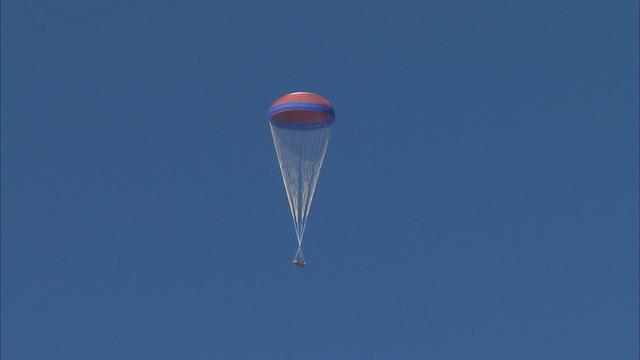
Under the goals of the Vision for Space Exploration, Ares I is a chief component of the cost-effective space transportation infrastructure being developed by NASA's Constellation Program. This transportation system will safely and reliably carry human explorers back to the moon, and then onward to Mars and other destinations in the solar system. The Ares I effort includes multiple project element teams at NASA centers and contract organizations around the nation, and is managed by the Exploration Launch Projects Office at NASA's Marshall Space Flight Center (MFSC). ATK Launch Systems near Brigham City, Utah, is the prime contractor for the first stage booster. ATK's subcontractor, United Space Alliance of Houston, is designing, developing and testing the parachutes at its facilities at NASA's Kennedy Space Center in Florida. NASA's Johnson Space Center in Houston hosts the Constellation Program and Orion Crew Capsule Project Office and provides test instrumentation and support personnel. Together, these teams are developing vehicle hardware, evolving proven technologies, and testing components and systems. Their work builds on powerful, reliable space shuttle propulsion elements and nearly a half-century of NASA space flight experience and technological advances. Ares I is an inline, two-stage rocket configuration topped by the Crew Exploration Vehicle, its service module, and a launch abort system. In this HD video image, the first stage reentry parachute drop test is conducted at the Yuma, Arizona proving ground. The parachute tests demonstrated a three-stage deployment sequence that included the use of an Orbiter drag chute to properly stage the unfurling of the main chute. The parachute recovery system for Orion will be similar to the system used for Apollo command module landings and include two drogue, three pilot, and three main parachutes. (Highest resolution available)