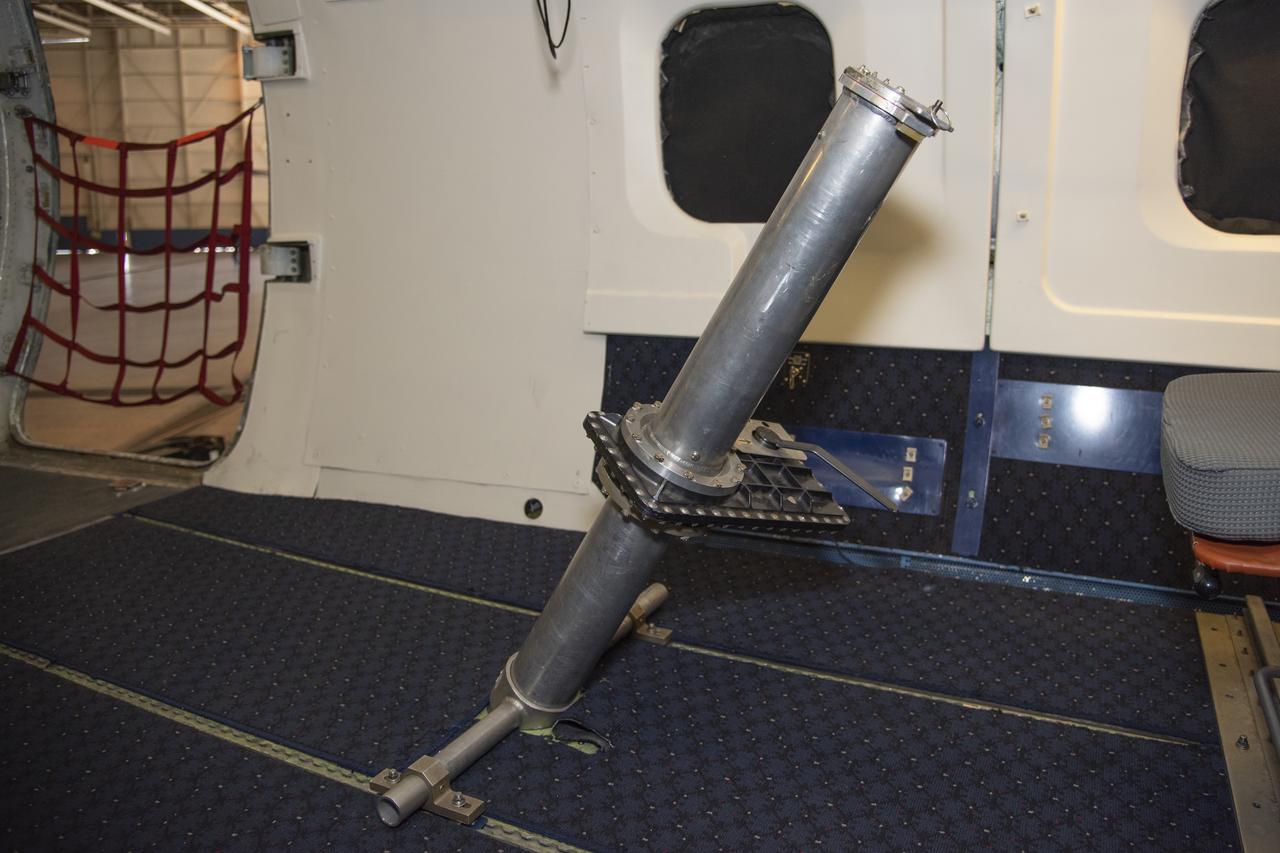
To verify the lidar data they're collecting on the DC-8 airborne science laboratory, Aeolus mission scientists will use dropsondes, which are devices they'll drop from this tube in the aircraft to collect wind and water vapor data.
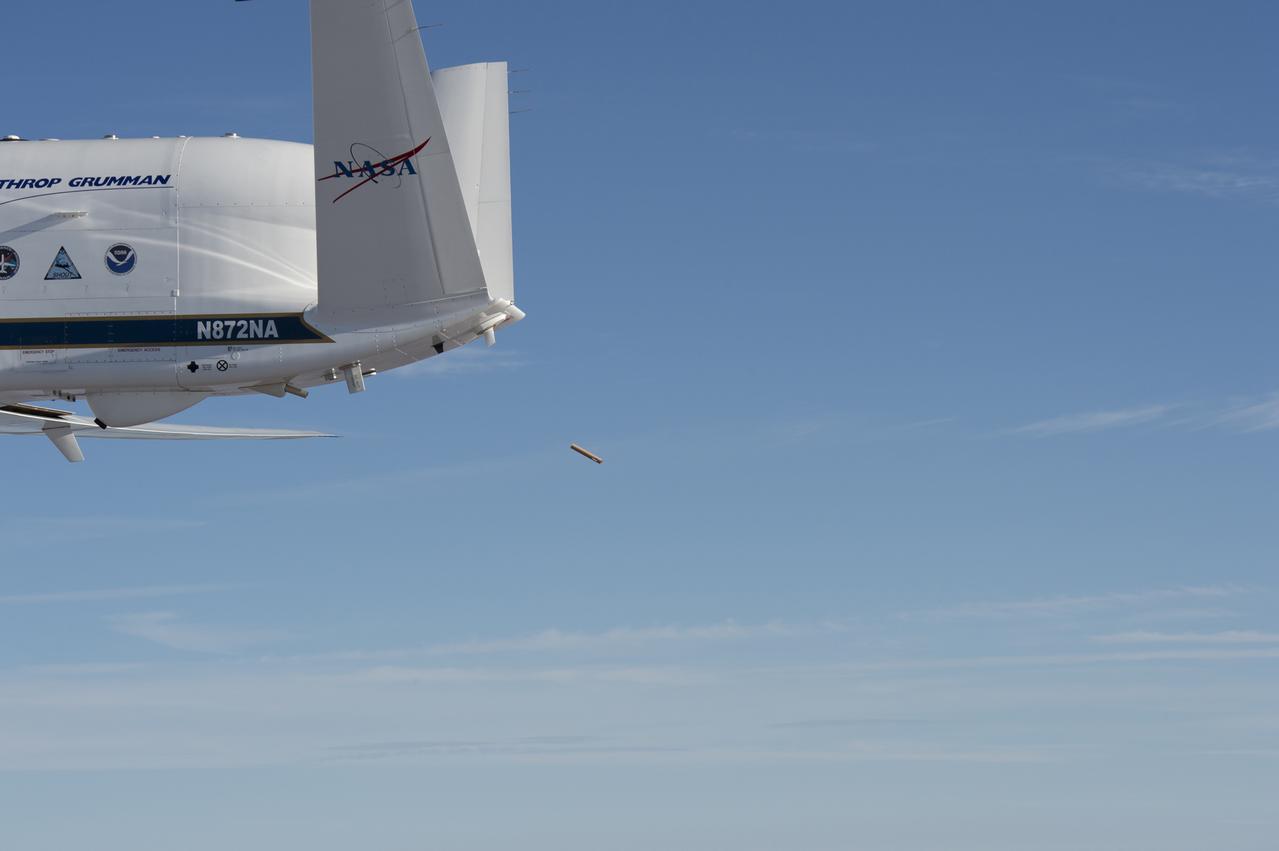
NASA’s Global Hawk aircraft deploys a dropsonde during a test flight over the Dryden Aeronautical Test Range in August 2015. The small, tube-shaped sensor will transmit data on temperature, humidity, and wind speed, which will be used to help improve weather model forecasts
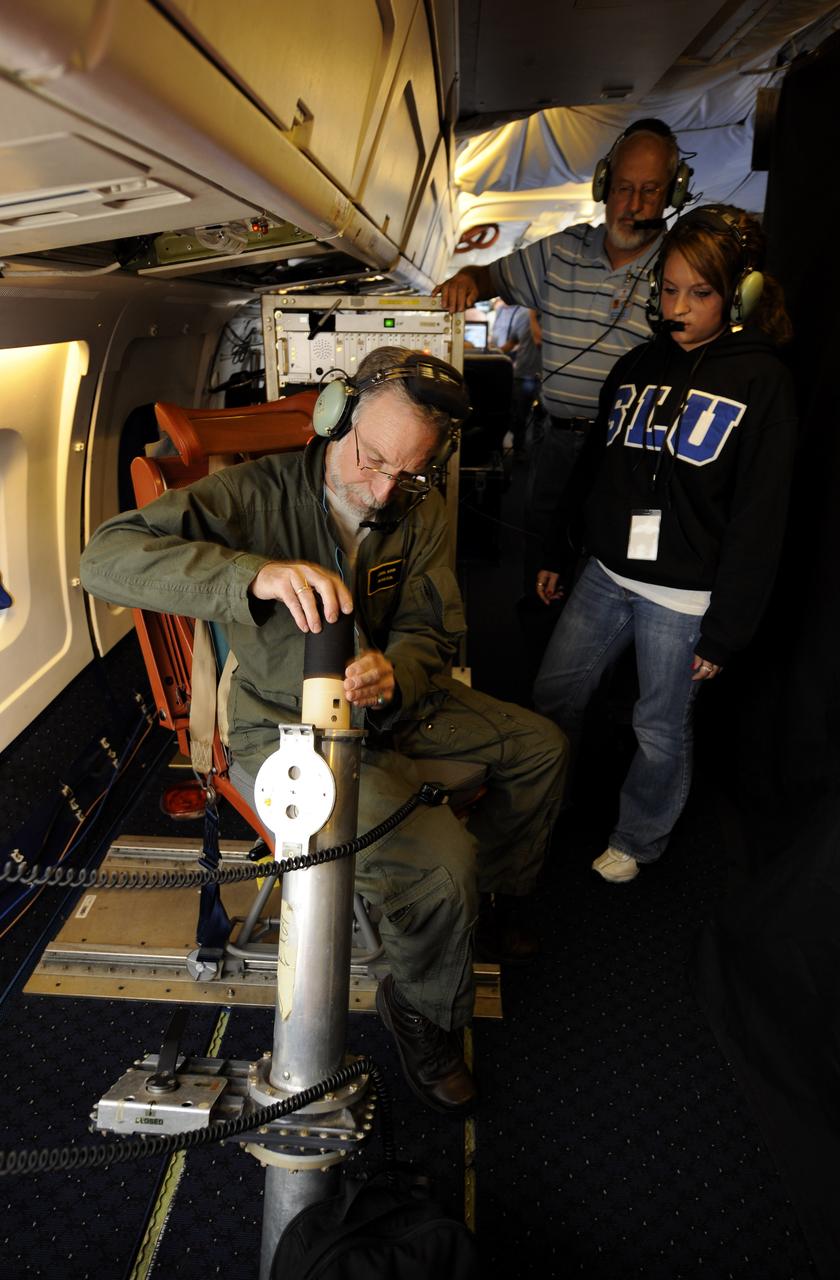
Errol Korn, seated left, deploys a dropsonde experiment over the Gulf of Mexico during a flight aboard the NASA DC-8 as Janel Thomas, a University of Maryland Baltimore County (UMBC) graduate student, and Bob Pasken, look on , Tuesday, Aug. 17, 2010. The Genesis and Rapid Intensification Processes (GRIP) experiment is a NASA Earth science field experiment in 2010 that is being conducted to better understand how tropical storms form and develop into major hurricanes. Photo Credit: (NASA/Paul E. Alers)
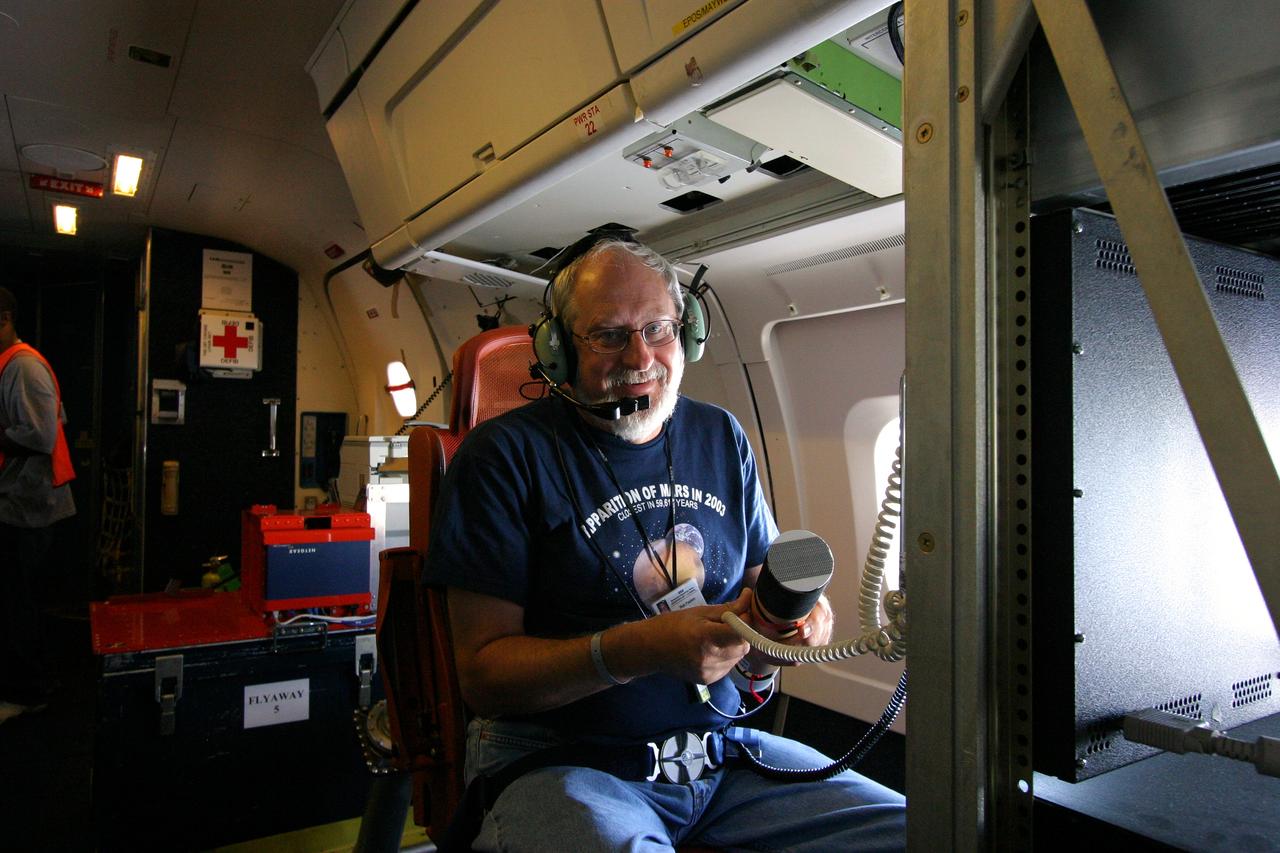
DC-8 NAMMA MISSION TO CAPE VERDE, AFRICA: Dr Robert Pasken, St Louis University, prepares to release a dropsonde from the DC-8 during a NAMMA science flight
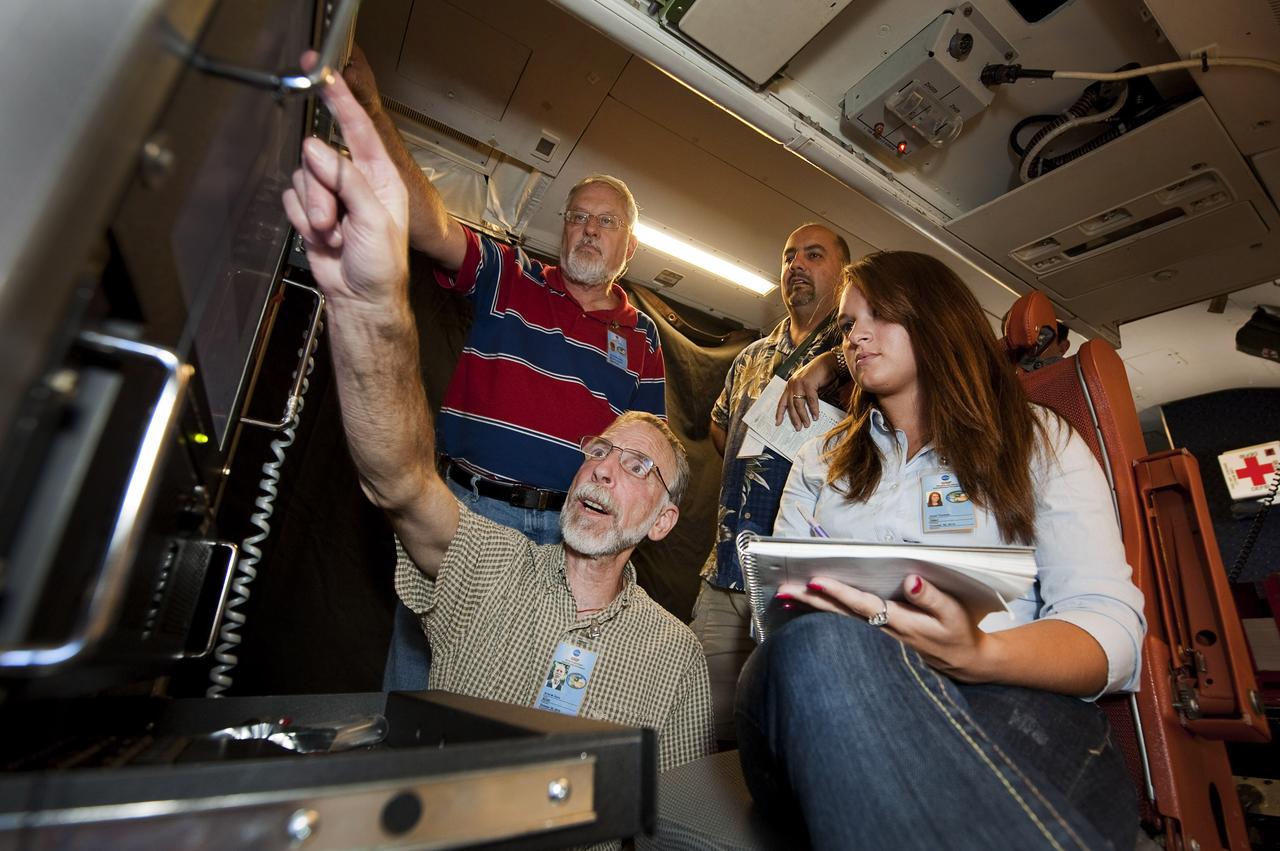
Errol Korn, lower left, explains the dropsonde experiment to Janel Thomas, a University of Maryland Baltimore County (UMBC) graduate student, seated, as Bob Pasken, standing left, and Jeff Halverson, a GRIP project scientist from UMBC, look on inside NASA's DC-8 airplane, at Fort Lauderdale International Airport in Fort Lauderdale, Fla., Sunday, Aug. 15, 2010. The Genesis and Rapid Intensification Processes (GRIP) experiment is a NASA Earth science field experiment in 2010 that is being conducted to better understand how tropical storms form and develop into major hurricanes. Credit: NASA/Paul E. Alers To read more about the GRIP Mission go <b><a href="http://www.nasa.gov/mission_pages/hurricanes/missions/grip/news/grip-quest.html" rel="nofollow"> here</a></b> or <b><a href="http://www.nasa.gov/externalflash/GRIP/" rel="nofollow"> here</a></b> for an interactive feature <b><a href="http://www.nasa.gov/centers/goddard/home/index.html" rel="nofollow">NASA Goddard Space Flight Center</a></b> is home to the nation's largest organization of combined scientists, engineers and technologists that build spacecraft, instruments and new technology to study the Earth, the sun, our solar system, and the universe. <b>Follow us on <a href="http://twitter.com/NASA_GoddardPix" rel="nofollow">Twitter</a></b> <b>Join us on <a href="http://www.facebook.com/pages/Greenbelt-MD/NASA-Goddard/395013845897?ref=tsd" rel="nofollow">Facebook</a><b></b></b>