
The Dryden Aeronautical Test Range at NASA’s Armstrong Flight Research Center in California uses radars, such as those in the photo, for tracking aircraft and spacecraft.

The Dryden Aeronautical Test Range at NASA’s Armstrong Flight Research Center in California uses radars, such as those in the photo, for tracking aircraft and spacecraft.
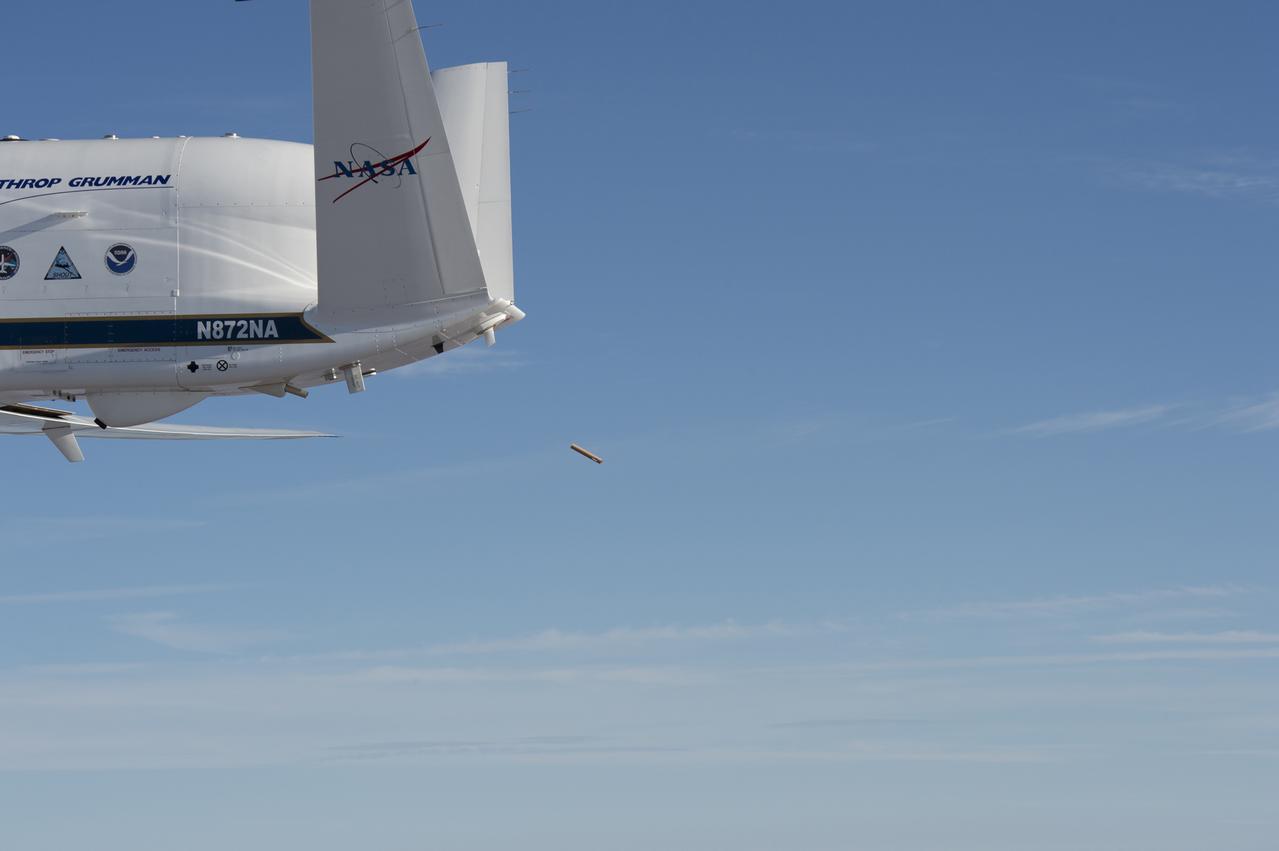
NASA’s Global Hawk aircraft deploys a dropsonde during a test flight over the Dryden Aeronautical Test Range in August 2015. The small, tube-shaped sensor will transmit data on temperature, humidity, and wind speed, which will be used to help improve weather model forecasts

The Triplex 7M telemetry antenna at far right and the two radars to the left are a few assets of the Dryden Aeronautical Test Range at NASA’s Armstrong Flight Research Center in California.

The communication antenna is used primarily for test flights to receive downlink flight data and video from test aircraft and also to support command uplink of data to test aircraft for command and control. It is one of two such assets of the Dryden Aeronautical Test Range at NASA’s Armstrong Flight Research Center in California.

The communication antenna is used primarily for test flights to receive downlink flight data and video from test aircraft and also to support command uplink of data to test aircraft for command and control. It is one of two such assets of the Dryden Aeronautical Test Range at NASA’s Armstrong Flight Research Center in California.
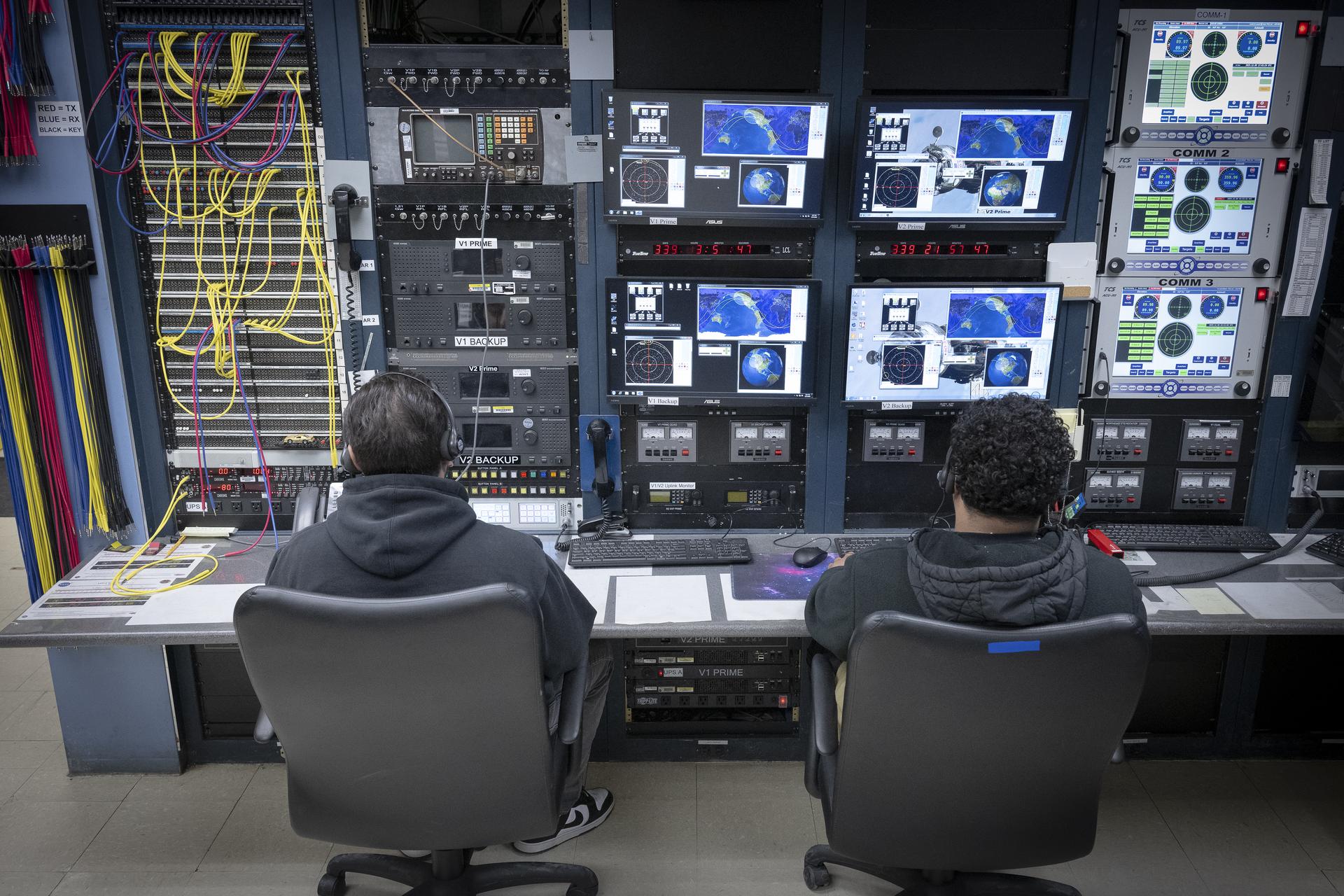
Range operators at the Dryden Aeronautical Test Range at NASA’s Armstong Flight Research Center in Edwards, California, provide voice and tracking support to the International Space Station. In this Friday, Dec. 6, 2025, photo, Alex Oganesyan, left, and Deming Ingles are shown at their workstations, where they support communications backup for space station missions.
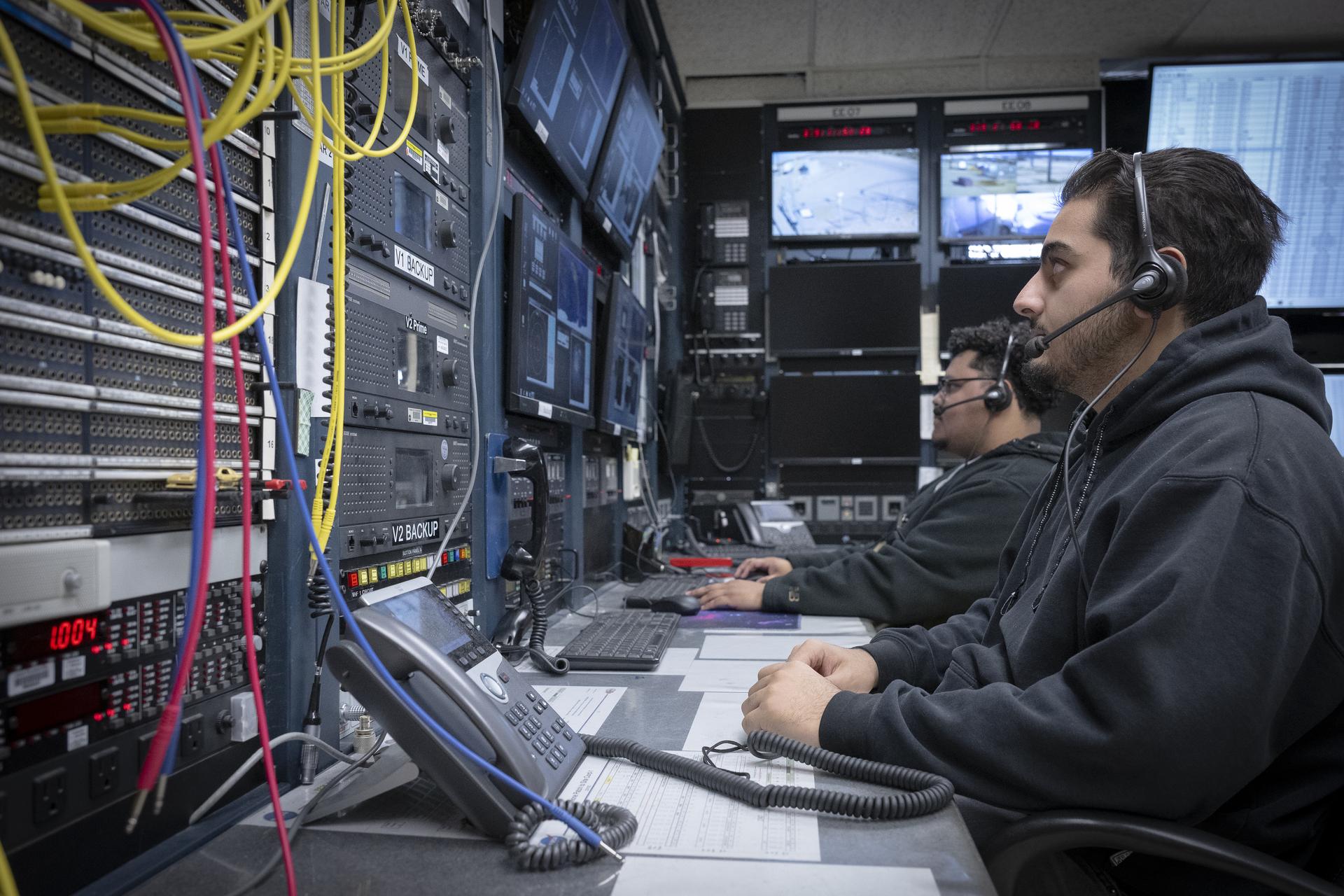
Range operators at the Dryden Aeronautical Test Range at NASA’s Armstong Flight Research Center in Edwards, California, provide voice and tracking support to the International Space Station. In this Friday, Dec. 6, 2025, photo, Alex Oganesyan, left, and Deming Ingles are shown at their workstations, where they support communications backup for space station missions.
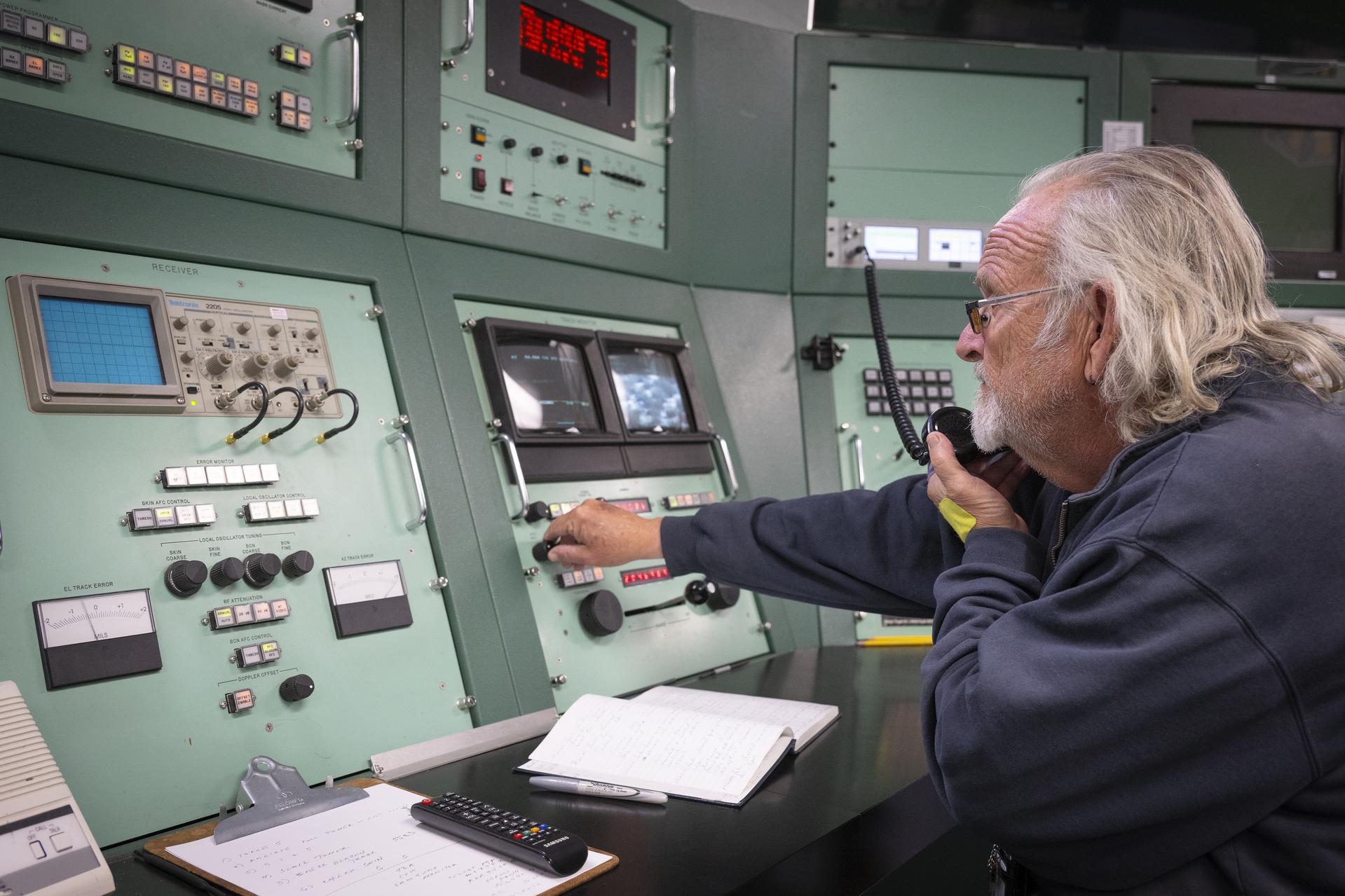
Mission operator Mike Webb sits at one of the radar stations used to track the International Space Station as it passes high above NASA’s Armstrong Flight Research Center in Edwards, California, on Sept. 30, 2025. Webb is part of the center’s Dryden Aeronautical Test Range, which provides voice and tracking support to the space station.
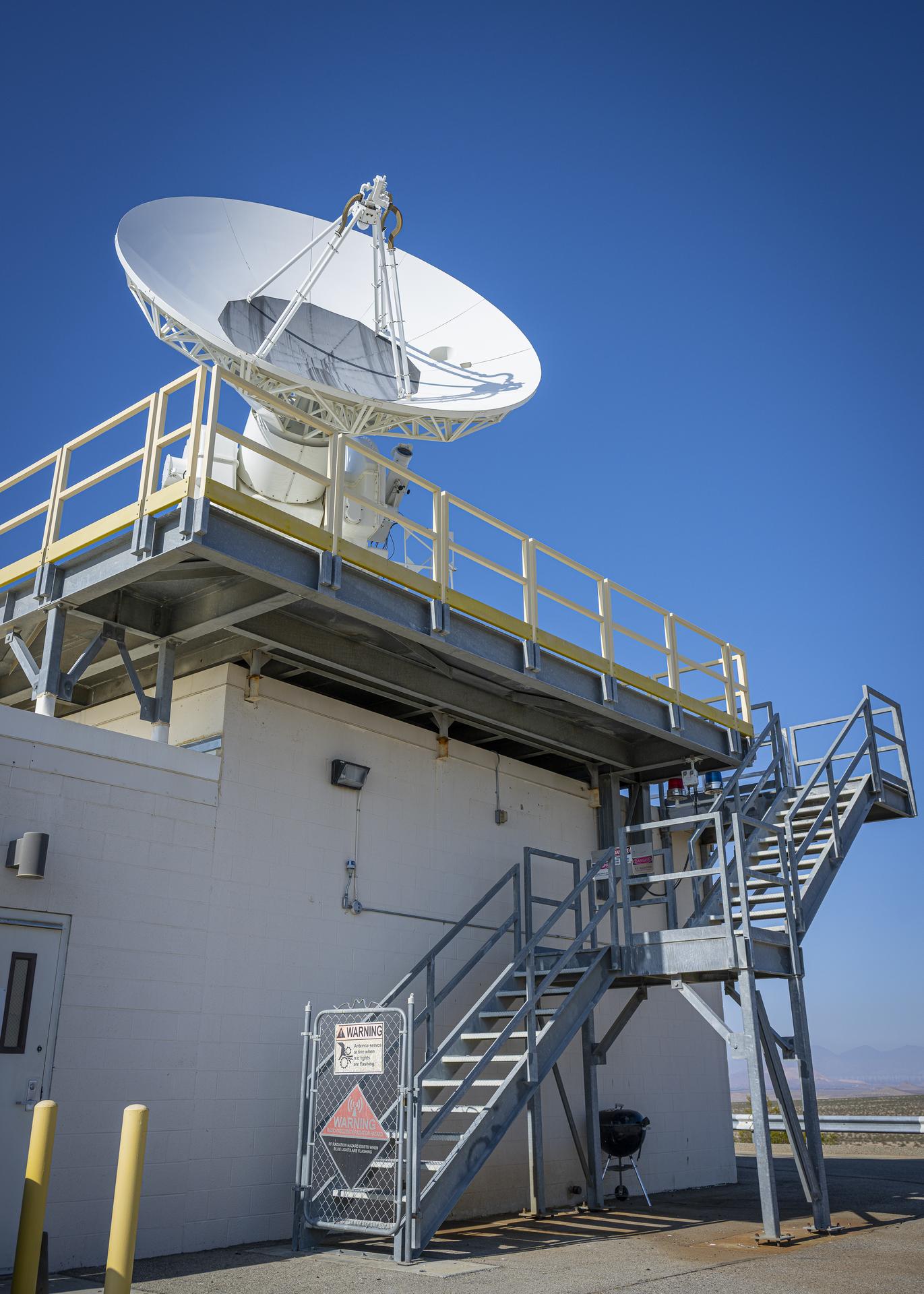
This is one of two radars that support radar tracking of the International Space Station at NASA’s Armstrong Flight Research Center in Edwards, California, on Sept. 30, 2025. Radar tracking is one of the key capabilities of the center’s Dryden Aeronautical Test Range, which provides voice and tracking support to the International Space Station.
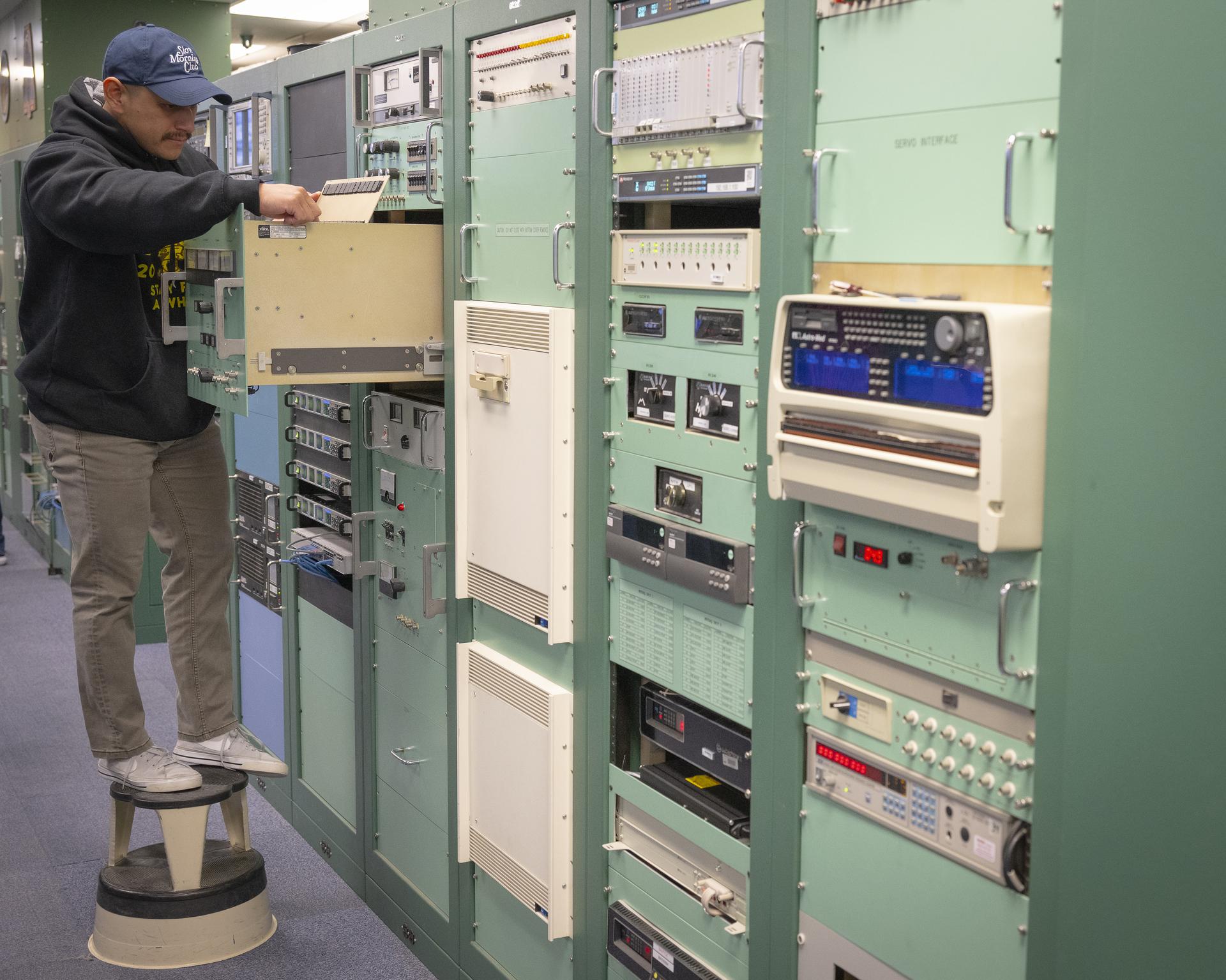
Mission technician Phillips Boche checks on components that support radar tracking at NASA’s Armstrong Flight Research Center in Edwards, California, on Sept. 30, 2025. Boche is part of the center’s Dryden Aeronautical Test Range, which provides voice and tracking support to the International Space Station.
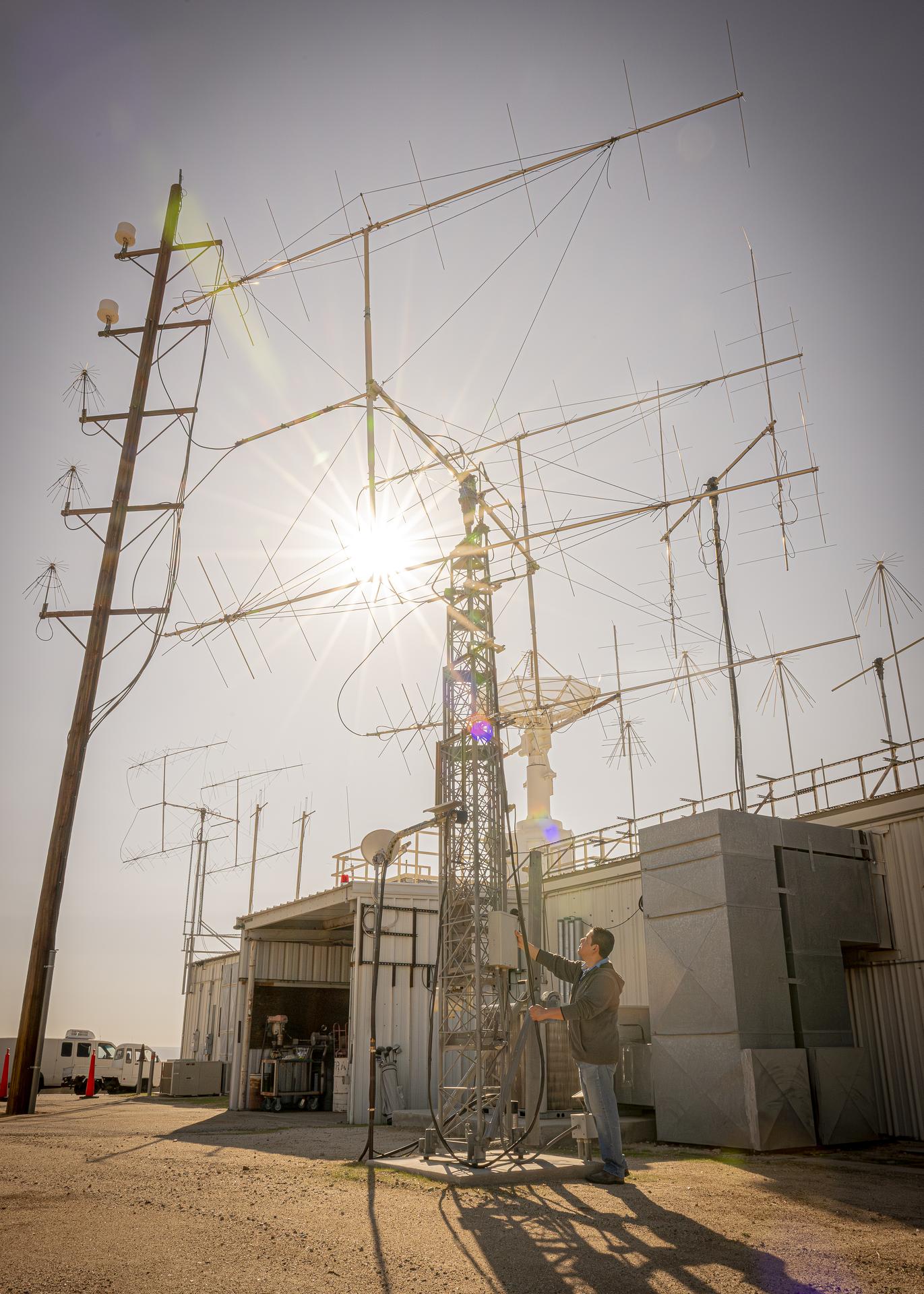
Mission operator Kelvin Menendez watches as antennas rise to track the International Space Station as it passes high above NASA’s Armstrong Flight Research Center in Edwards, California, on Sept. 30, 2025. Menendez is part of the center’s Dryden Aeronautical Test Range, which provides voice and tracking support to the space station.
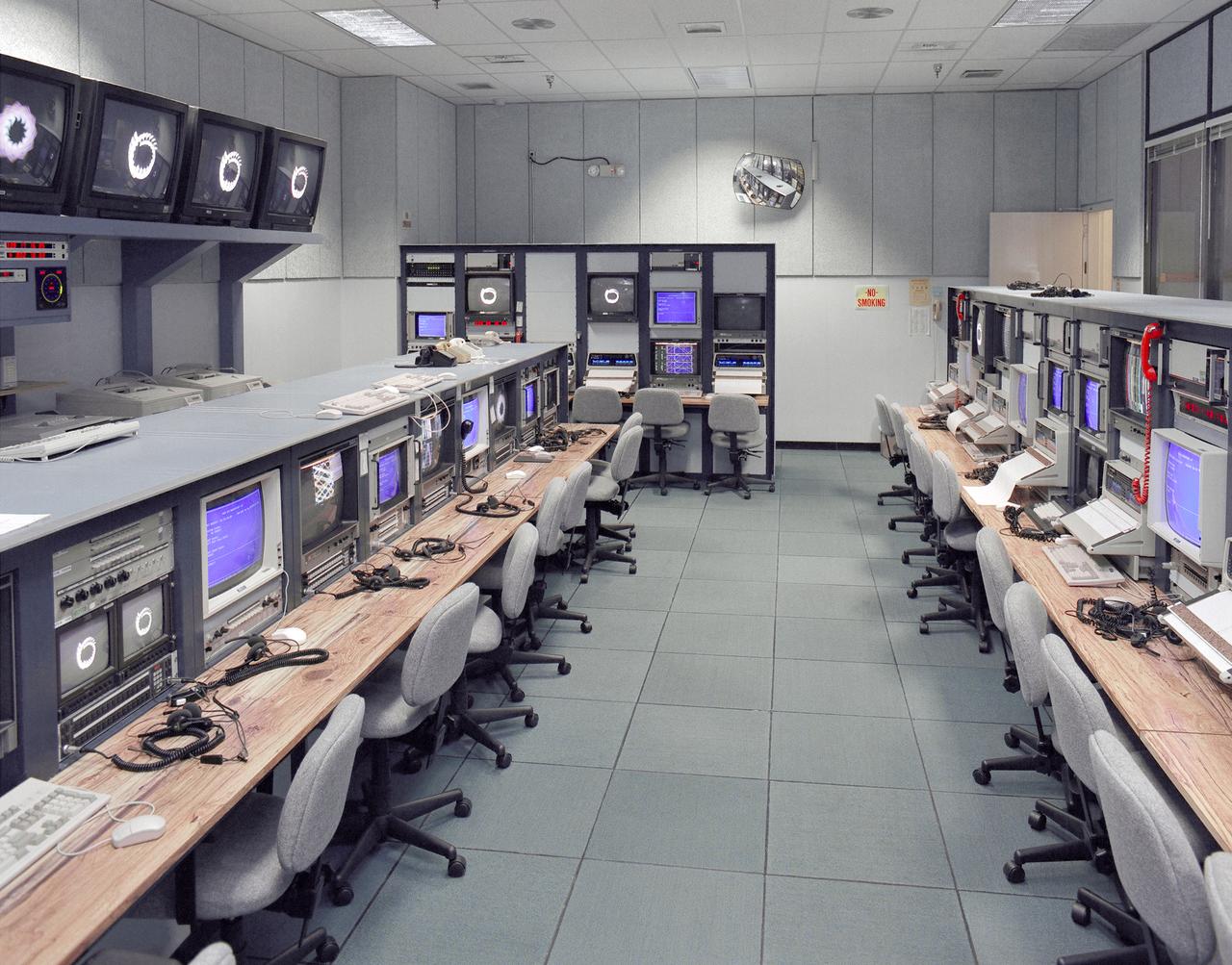
Mission control Blue Room, seen here, in building 4800 at NASA's Dryden Flight Research Center, is part of the Western Aeronautical Test Range (WATR). All aspects of a research mission are monitored from one of two of these control rooms at Dryden. The WATR consists of a highly automated complex of computer controlled tracking, telemetry, and communications systems and control room complexes that are capable of supporting any type of mission ranging from system and component testing, to sub-scale and full-scale flight tests of new aircraft and reentry systems. Designated areas are assigned for spin/dive tests, corridors are provided for low, medium, and high-altitude supersonic flight, and special STOL/VSTOL facilities are available at Ames Moffett and Crows Landing. Special use airspace, available at Edwards, covers approximately twelve thousand square miles of mostly desert area. The southern boundary lies to the south of Rogers Dry Lake, the western boundary lies midway between Mojave and Bakersfield, the northern boundary passes just south of Bishop, and the eastern boundary follows about 25 miles west of the Nevada border except in the northern areas where it crosses into Nevada.
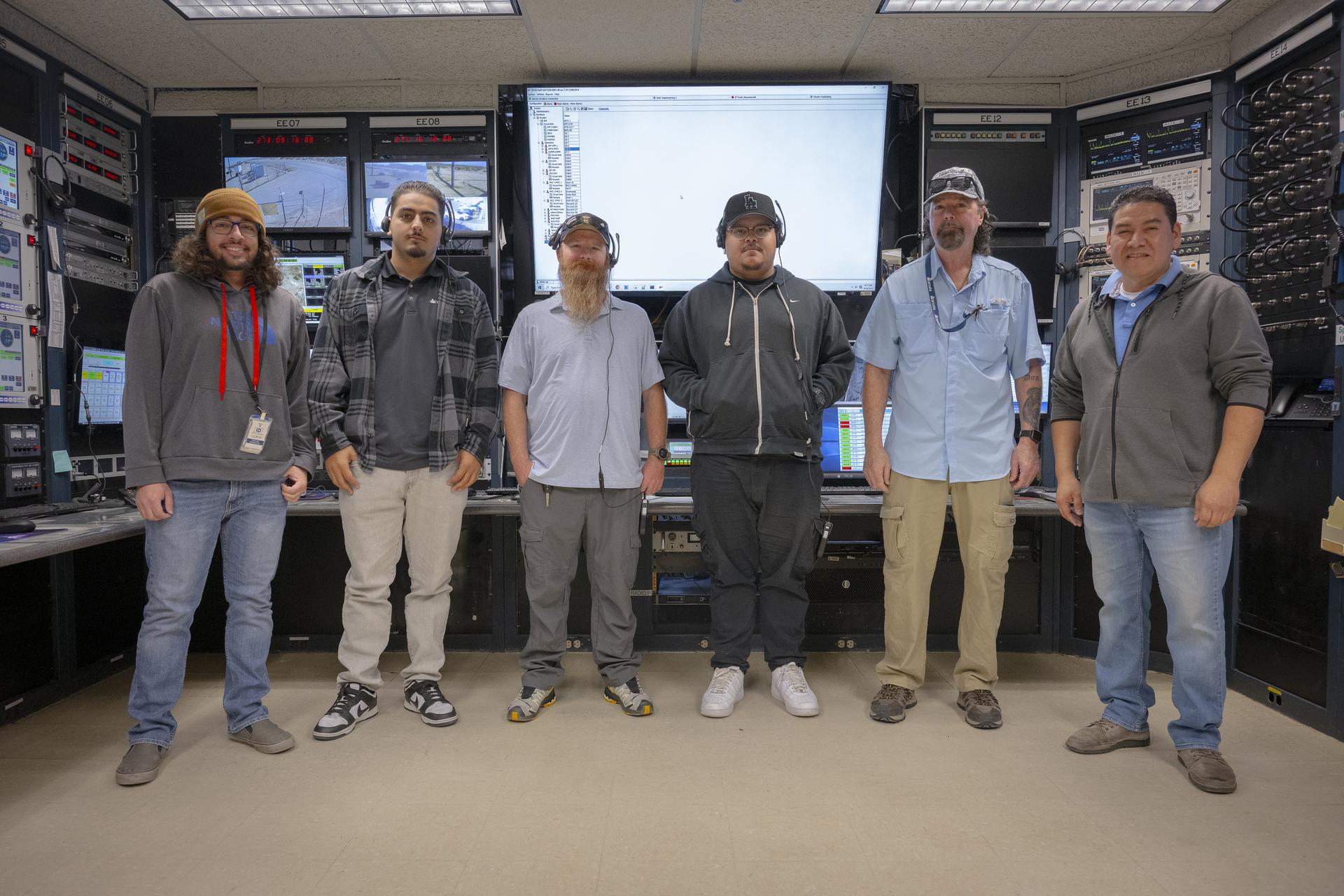
Mission technicians, from left, Adam Cataldo, Alex Oganesyan, Daniel Kelly, Deming Ingles, Mike Gibson, and Kelvin Menendez support communications backup for an International Space Station mission on Tuesday, Sept. 30, 2025, at NASA’s Armstong Flight Research Center in Edwards, California. The team is part of the center’s Dryden Aeronautical Test Range, which provides voice and tracking support to the space station.
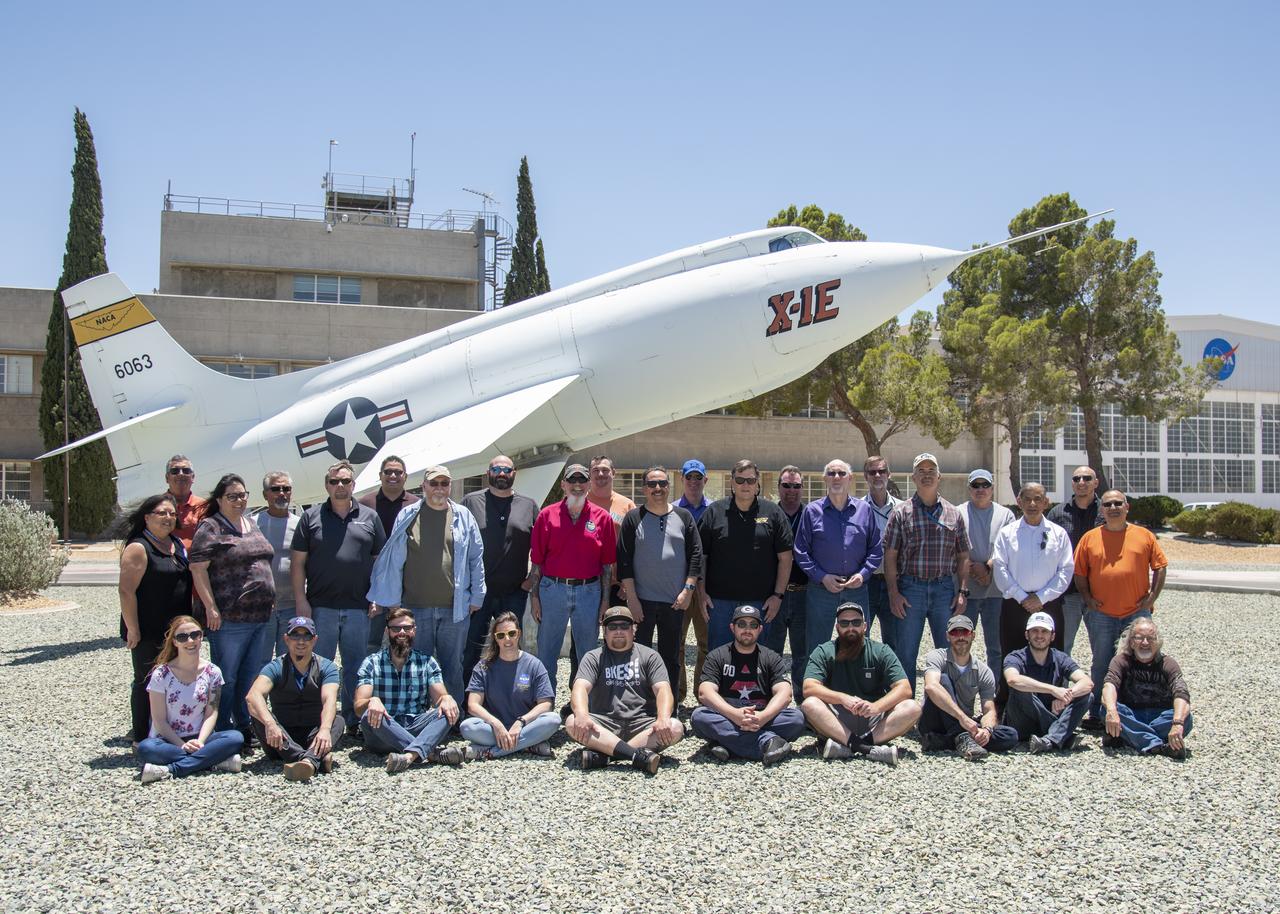
The Dryden Aeronautical Test Range staff at NASA’s Armstrong Flight Research Center in California monitor all aircraft flights from the center as well as supporting the International Space Station and Russian Soyuz missions. Sitting from left to right are Bailey Cook, Lucio Ortiz, Matt Kearns, Sonja Belcher, John Batchelor, Jeff Koenig, Will Peters, Russ Franz, Zack Springer and Mike Webb. Standing left to right are Joy Bland, Doug Boston, April Norcross, Randy Torres, Robert Racicot, Jesus Vazquez, Jim Abercromby, Steve Simison, Tracy Ackeret, Chris Birkinbine, Darryl Burkes, Joe Innis, Bruce Lipe, Pat Ray, Kevin Knutson, Greg Strombo, Bart Rusnak, Tim Burt, Al Guajardo, Feras, Abu-Issa and Hector Rodriquez.
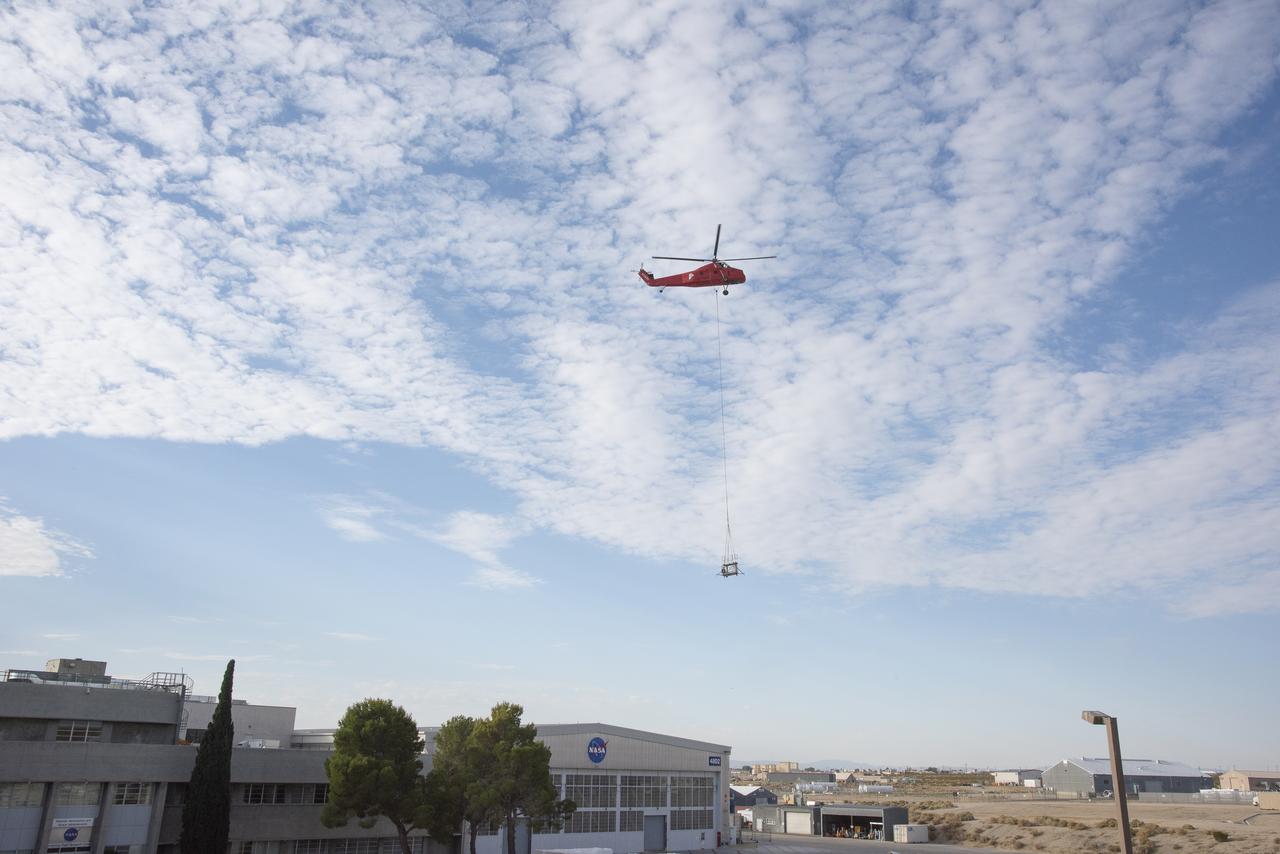
A helicopter carries a rooftop pedestal it removed from Building 4800 at NASA’s Armstrong Flight Research Center in Edwards, California, on Oct. 4, 2024. The pedestal was used since the 1950s to 2015 to house different telemetry dishes to collect data from research aircraft.
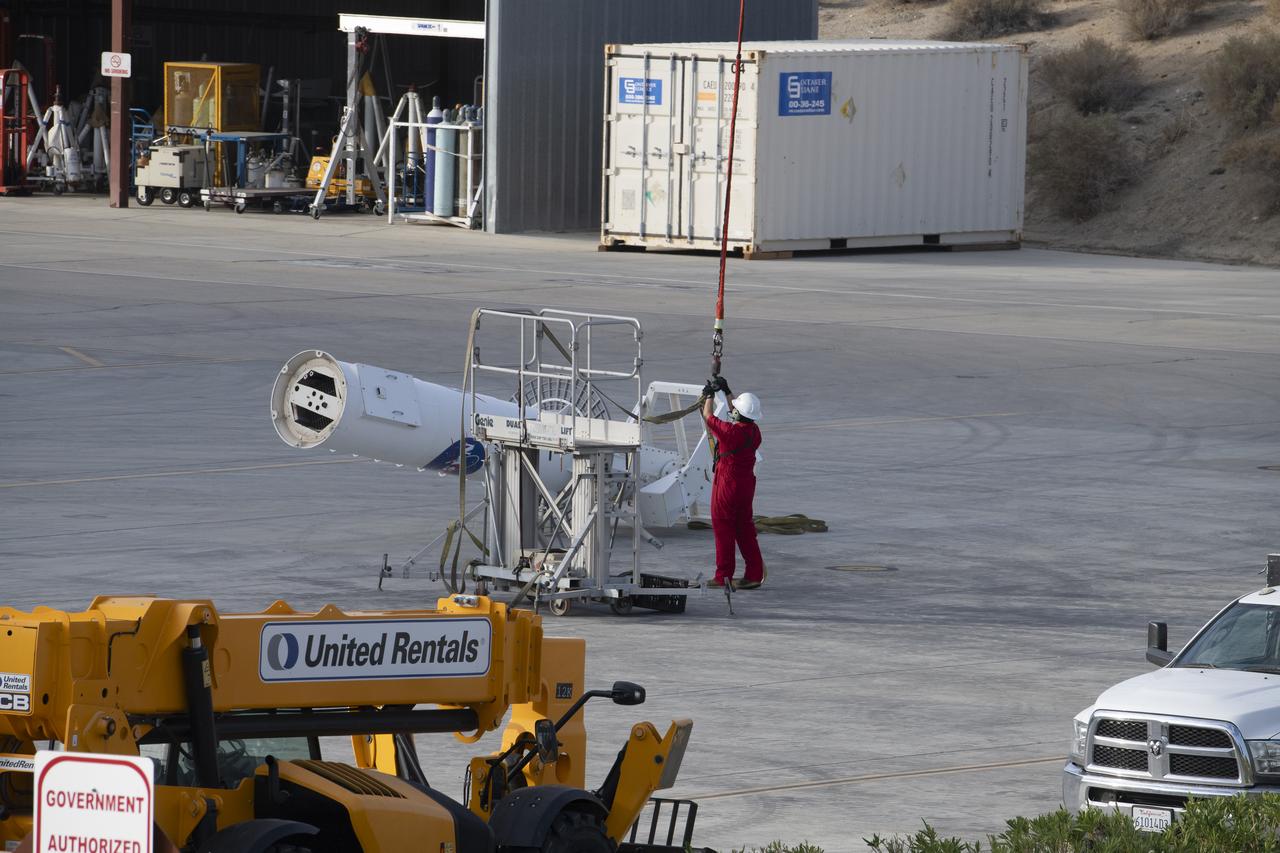
A pedestal carried by a helicopter is positioned for a gentle placement on the ground. The helicopter removed the pedestal from the rooftop of Building 4800 at NASA’s Armstrong Flight Research Center in Edwards, California, on Oct. 4, 2024. The pedestal was used since the 1950s to 2015 to house different telemetry dishes to collect data from research aircraft.
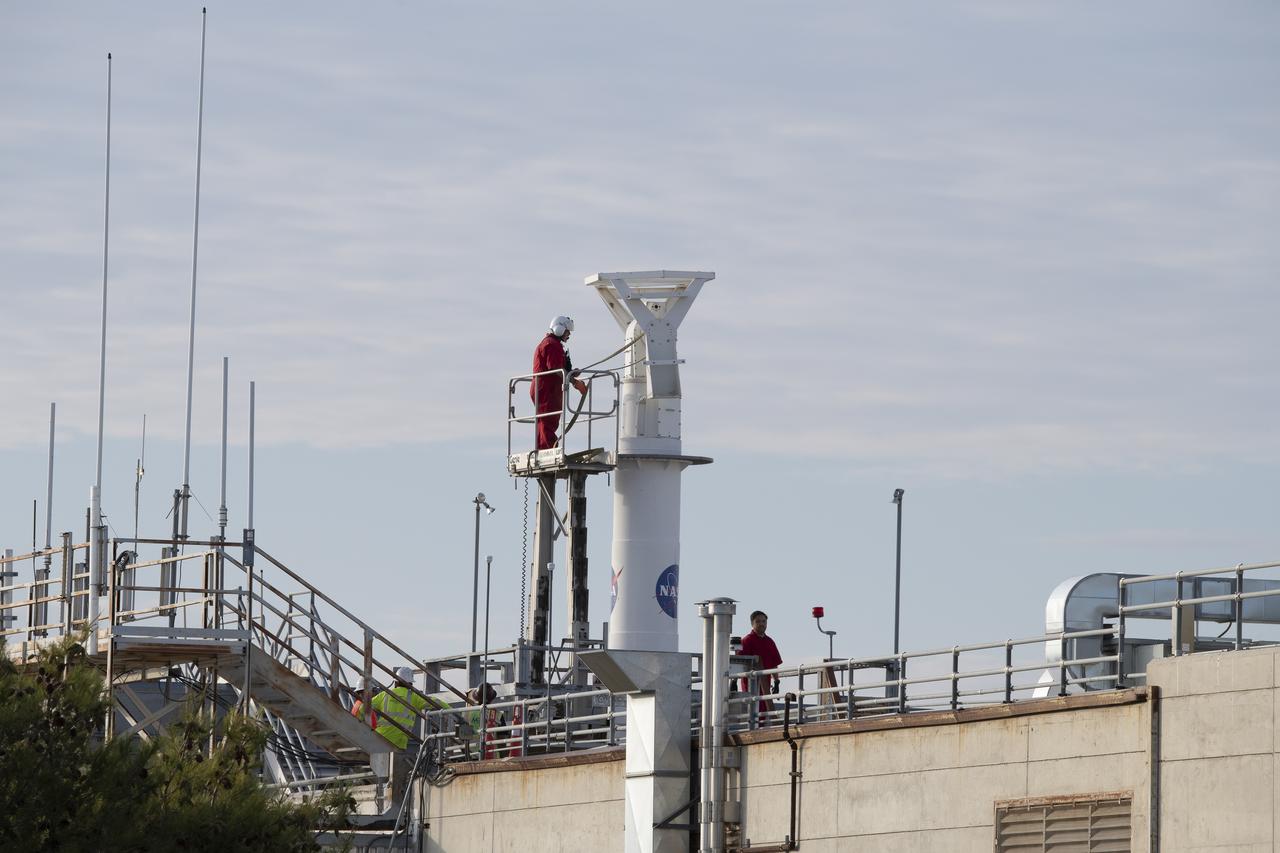
A cable is secured on a rooftop pedestal located on Building 4800 at NASA’s Armstrong Flight Research Center in Edwards, California, on Oct. 4, 2024. The pedestal, which was prepared for a helicopter lift to remove it from the roof, was used since the 1950s until 2015 to enable different telemetry dishes to collect data from research aircraft.
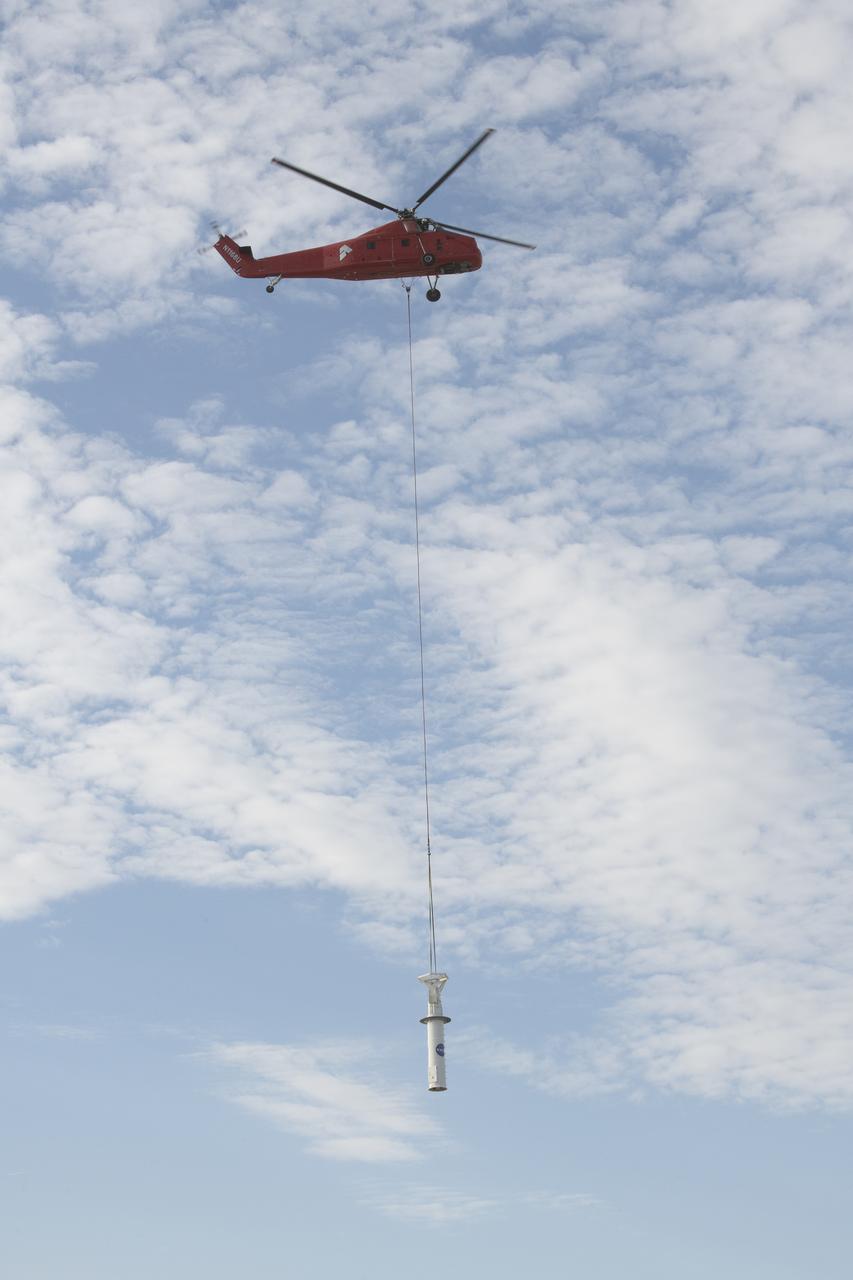
A helicopter carries a rooftop pedestal it removed from Building 4800 at NASA’s Armstrong Flight Research Center in Edwards, California, on Oct. 4, 2024. The pedestal was used since the 1950s to 2015 to house different telemetry dishes to collect data from research aircraft.
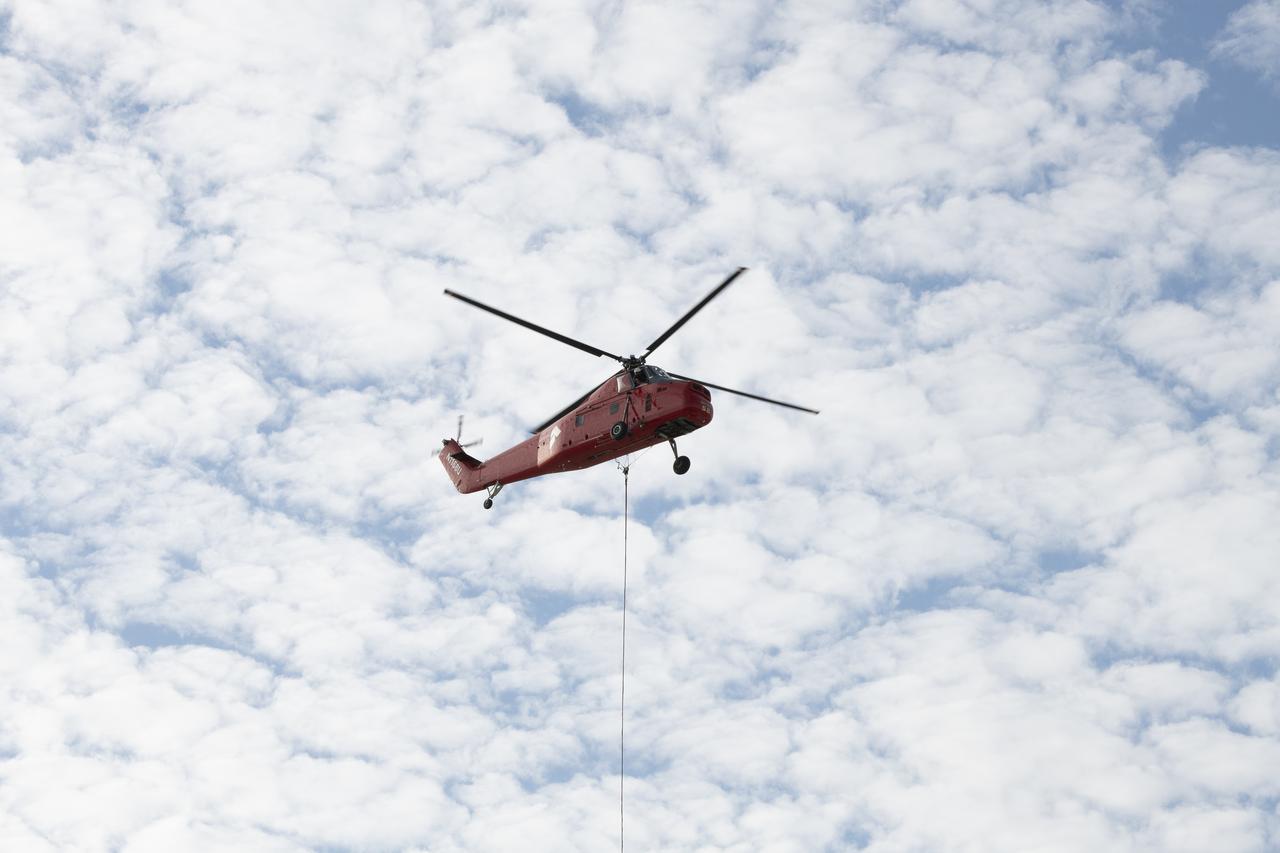
A helicopter is positioned to remove a rooftop pedestal from Building 4800 at NASA’s Armstrong Flight Research Center in Edwards, California, on Oct. 4, 2024. The pedestal was used since the 1950s to 2015 to house different telemetry dishes to collect data from research aircraft.
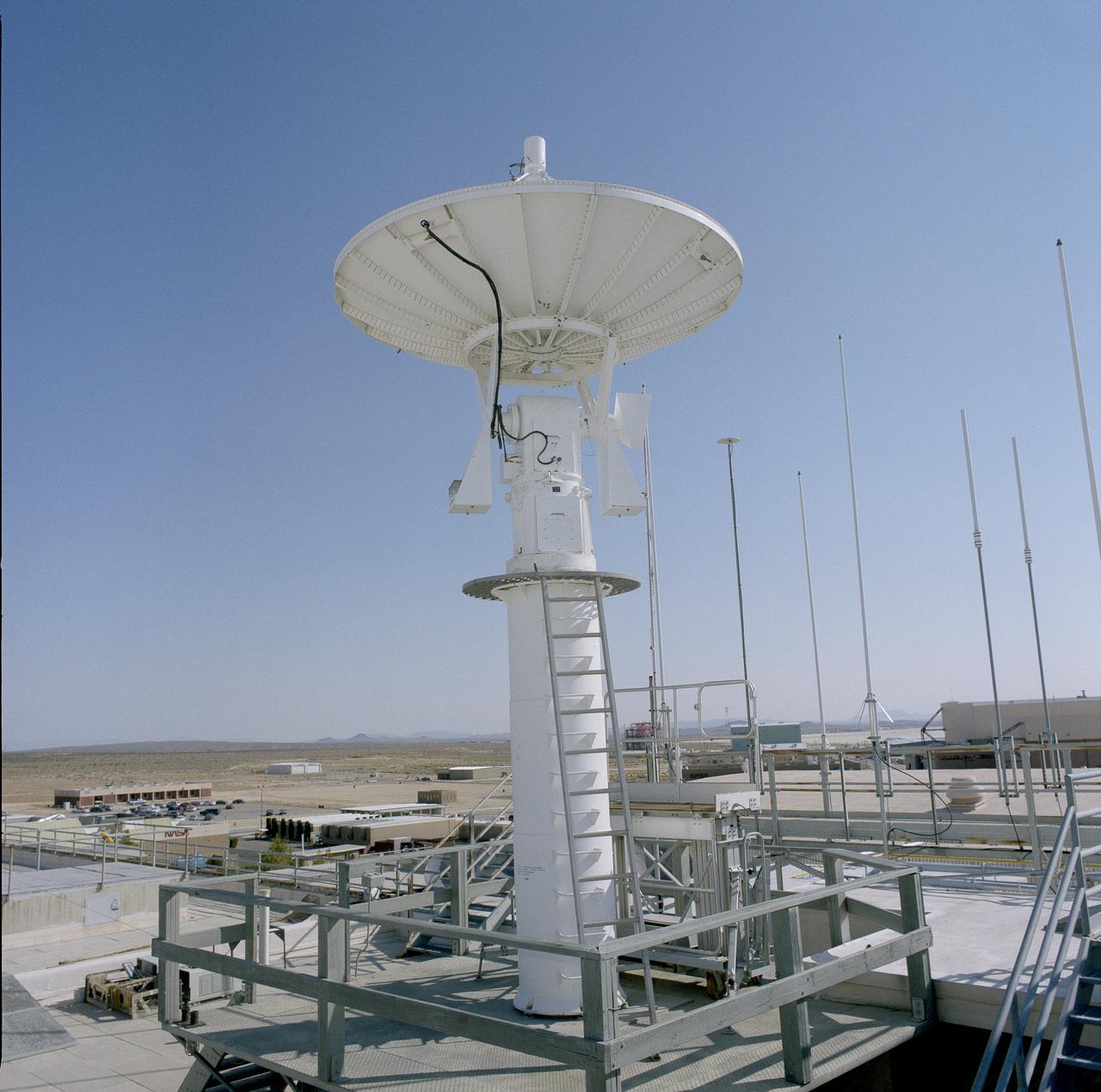
A rooftop pedestal and telemetry dish gathered information from research aircraft at Building 4800 at NASA’s Armstrong Flight Research Center in Edwards, California. The pedestal was used since the 1950s to 2015 to house different dishes to collect data from research aircraft. On Oct. 4, 2024, a helicopter was used to remove the pedestal from the roof.
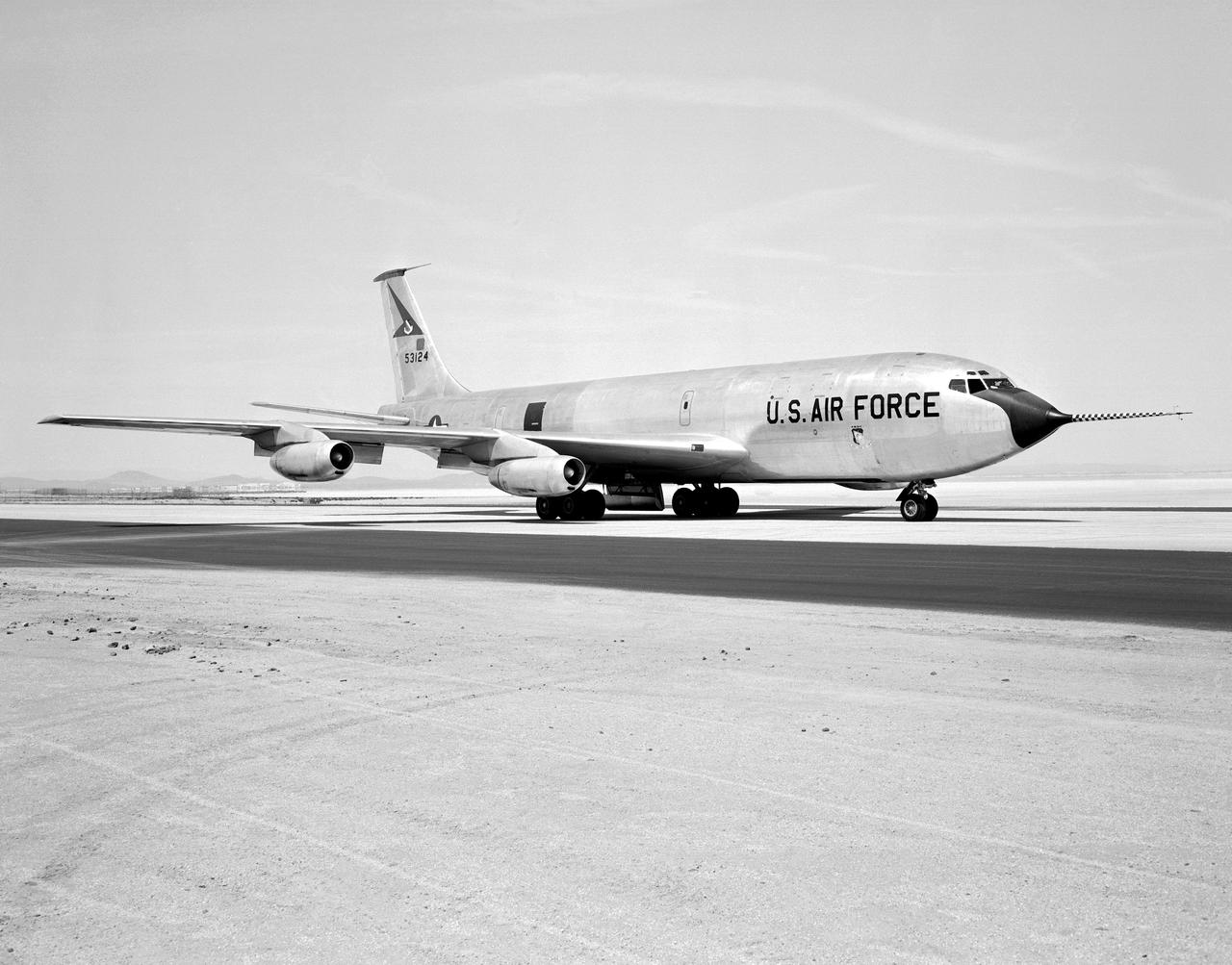
The Boeing KC-135 Stratotanker, besides being used extensively in its primary role as an inflight aircraft refueler, has assisted in several projects at the NASA Dryden Flight Research Center, Edwards, California. In 1957 and 1958, Dryden was asked by what was then the Civil Aeronautics Administration (later absorbed into the Federal Aviation Administration (FAA) in 1958) to help establish new approach procedure guidelines on cloud-ceiling and visibility minimums for Boeing's first jet airliner, the B-707. Dryden used a KC-135 (the military variant of the 707), seen here on the runway at Edwards Air Force Base, to aid the CAA in these tests. In 1979 and 1980, Dryden was again involved with general aviation research with the KC-135. This time, a special wingtip "winglet", developed by Richard Whitcomb of Langley Research Center, was tested on the jet aircraft. Winglets are small, nearly vertical fins installed on an airplane's wing tips to help produce a forward thrust in the vortices that typically swirl off the end of the wing, thereby reducing drag. This winglet idea was tested at the Dryden Flight Research Center on a KC-135A tanker loaned to NASA by the Air Force. The research showed that the winglets could increase an aircraft's range by as much as 7 percent at cruise speeds. The first application of NASA's winglet technology in industry was in general aviation business jets, but winglets are now being incorporated into most new commercial and military transport jets, including the Gulfstream III and IV business jets, the Boeing 747-400 and MD-11 airliners, and the C-17 military transport. In the 1980's, a KC-135 was used in support of the Space Shuttle program. Since the Shuttle was to be launched from Florida, researchers wanted to test the effect of rain on the sensitive thermal tiles. Tiles were mounted on special fixtures on an F-104 aircraft and a P-3 Orion. The F-104 was flown in actual rain conditions, and also behind the KC-135 spray tanker as it rel
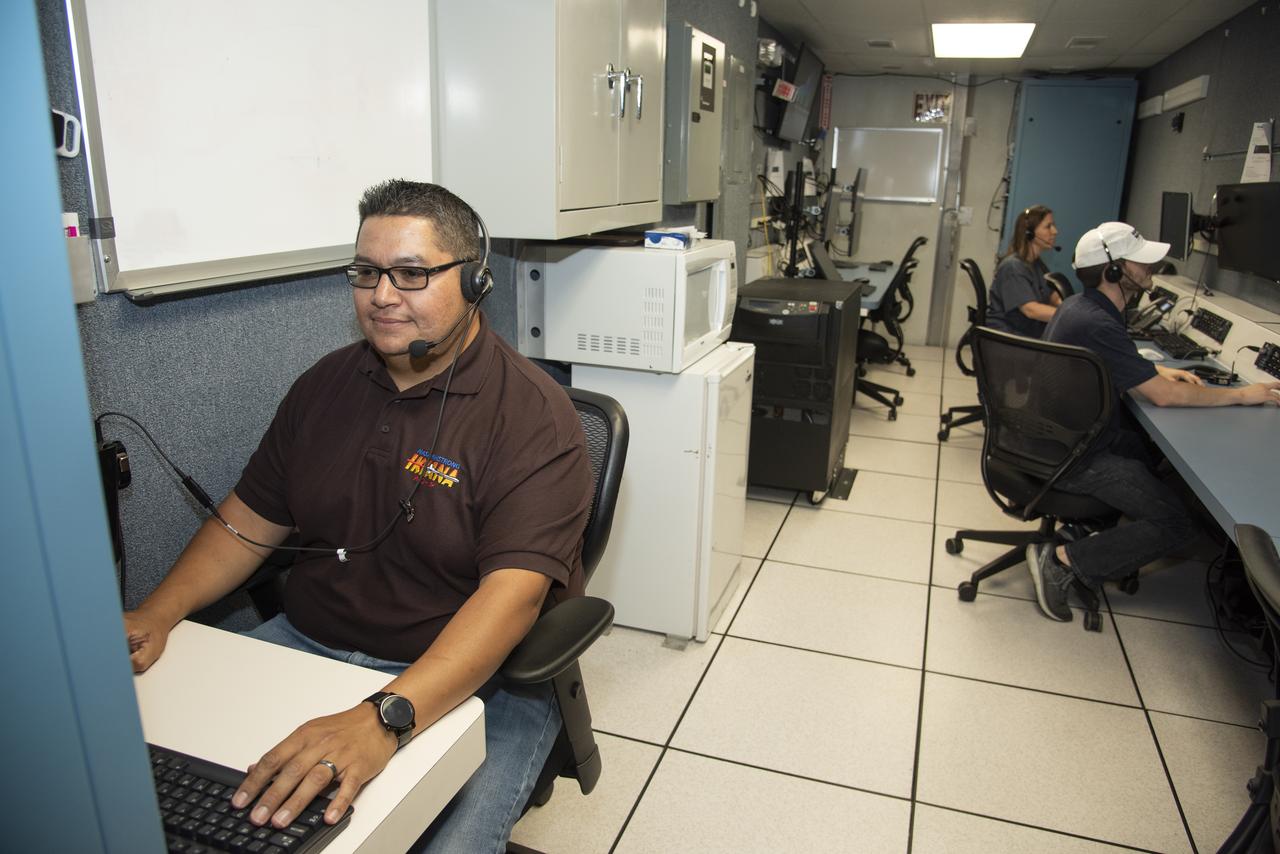
Jesus Vazquez, Zach Springer and Sonja Belcher, from left, are at stations in the Mobile Operations Facility 5 at NASA’s Armstrong Flight Research Center in California. The mobile station support included the Pad Abort-1 test of the Orion Launch Abort System at White Sands, New Mexico, the first Dream Chaser air launch and most recently supported the TigerShark remotely piloted aircraft for the Unmanned Aircraft Systems Integration in the National Airspace System flights.
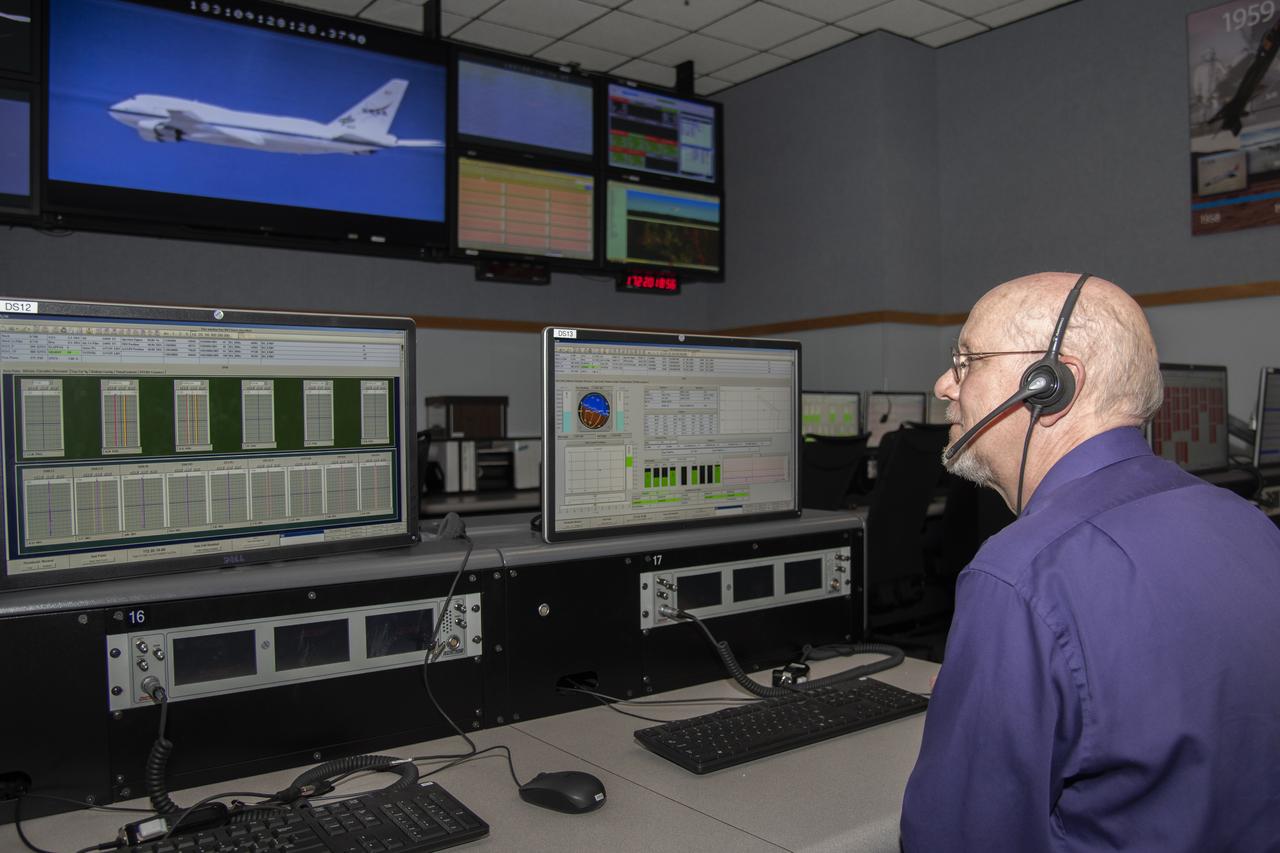
Kevin Knutson sits at a station in the main Blue Control Room at NASA’s Armstrong Flight Research Center in California used during complex flight missions to house the many technical discipline experts required to gather all of the required data and to enhance mission safety.
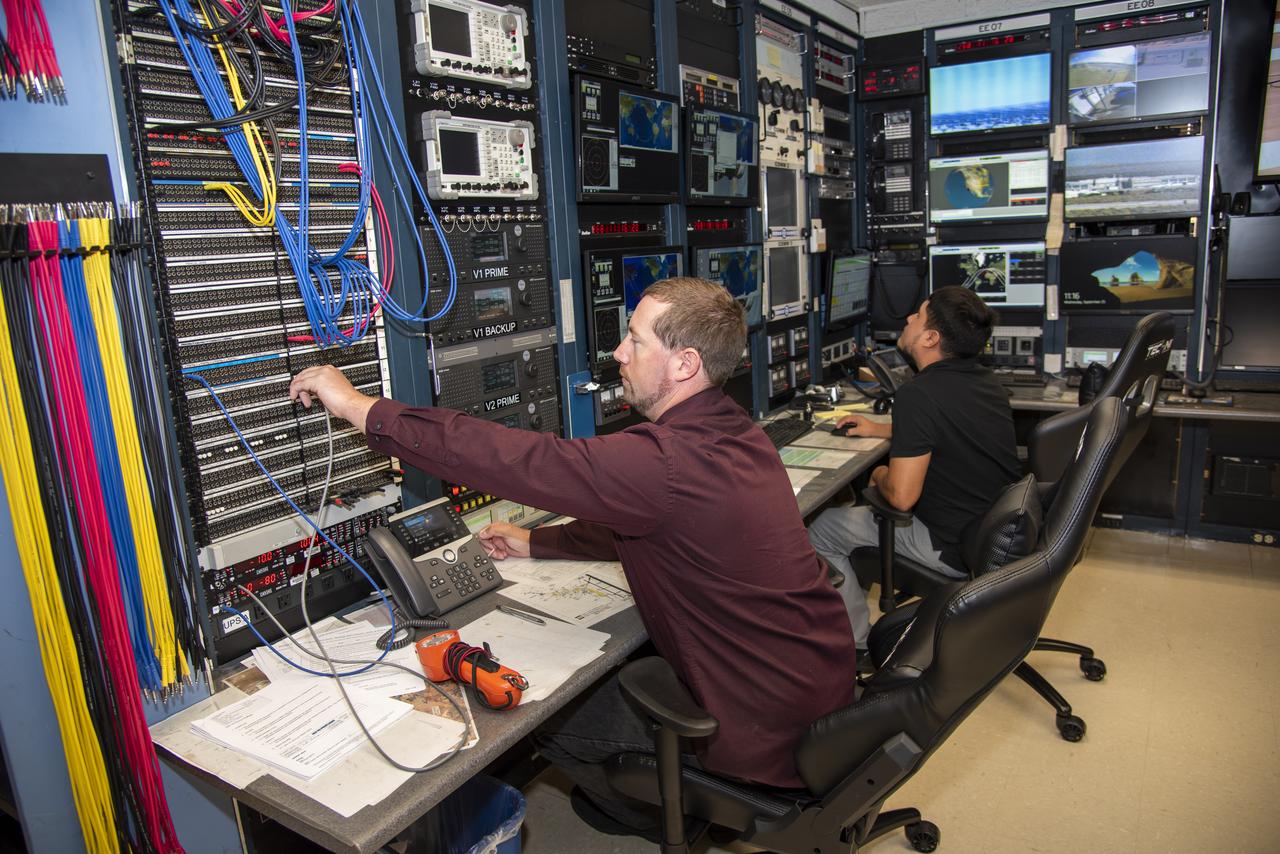
Jeff Koenig and Carlos Torres  at NASA’s Armstrong Flight Research Center in California prepare to support communications with the International Space Station and the Soyuz spacecraft scheduled for a rendezvous later that day.
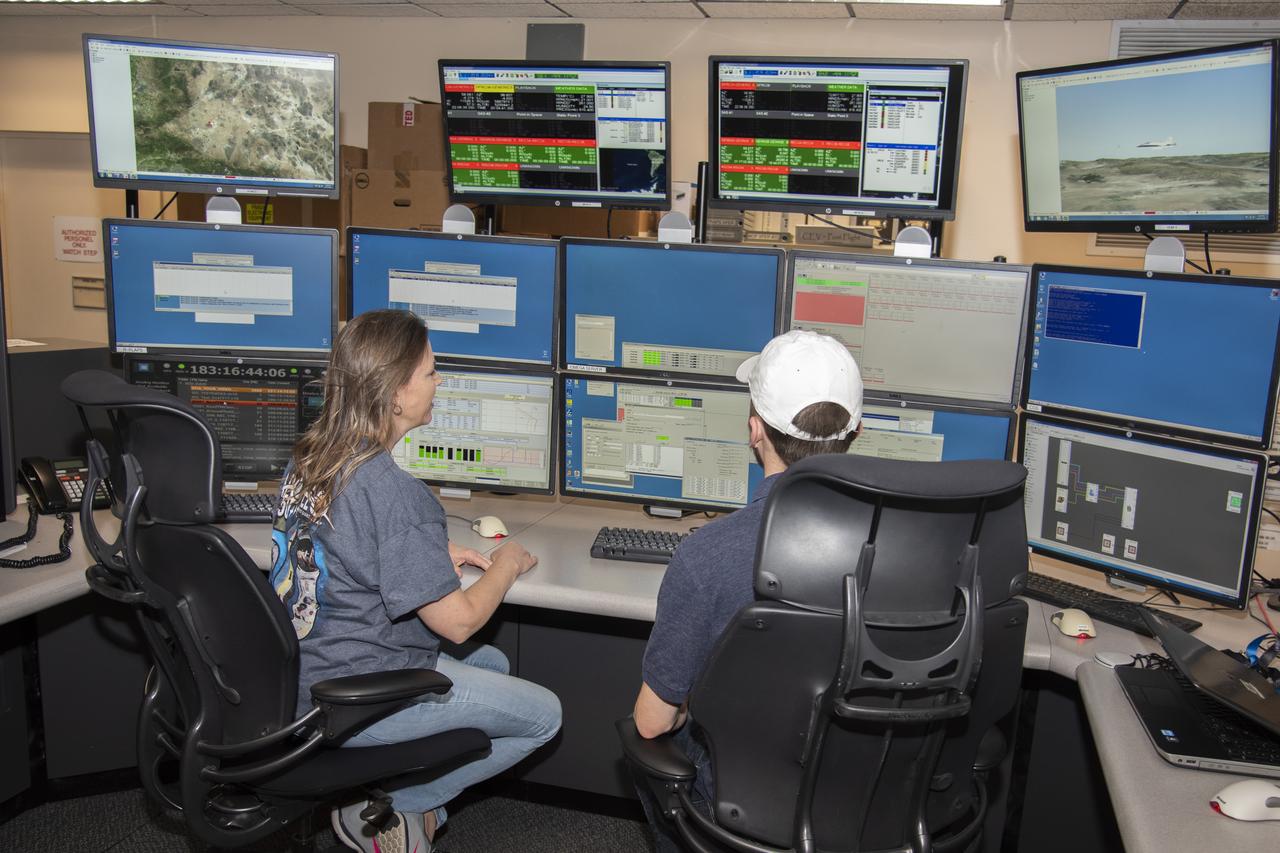
Sonja Belcher and Zach Springer show some of what they would do during a flight mission at a Telemetry and Radar Acquisition Processing System at NASA’s Armstrong Flight Research Center in California
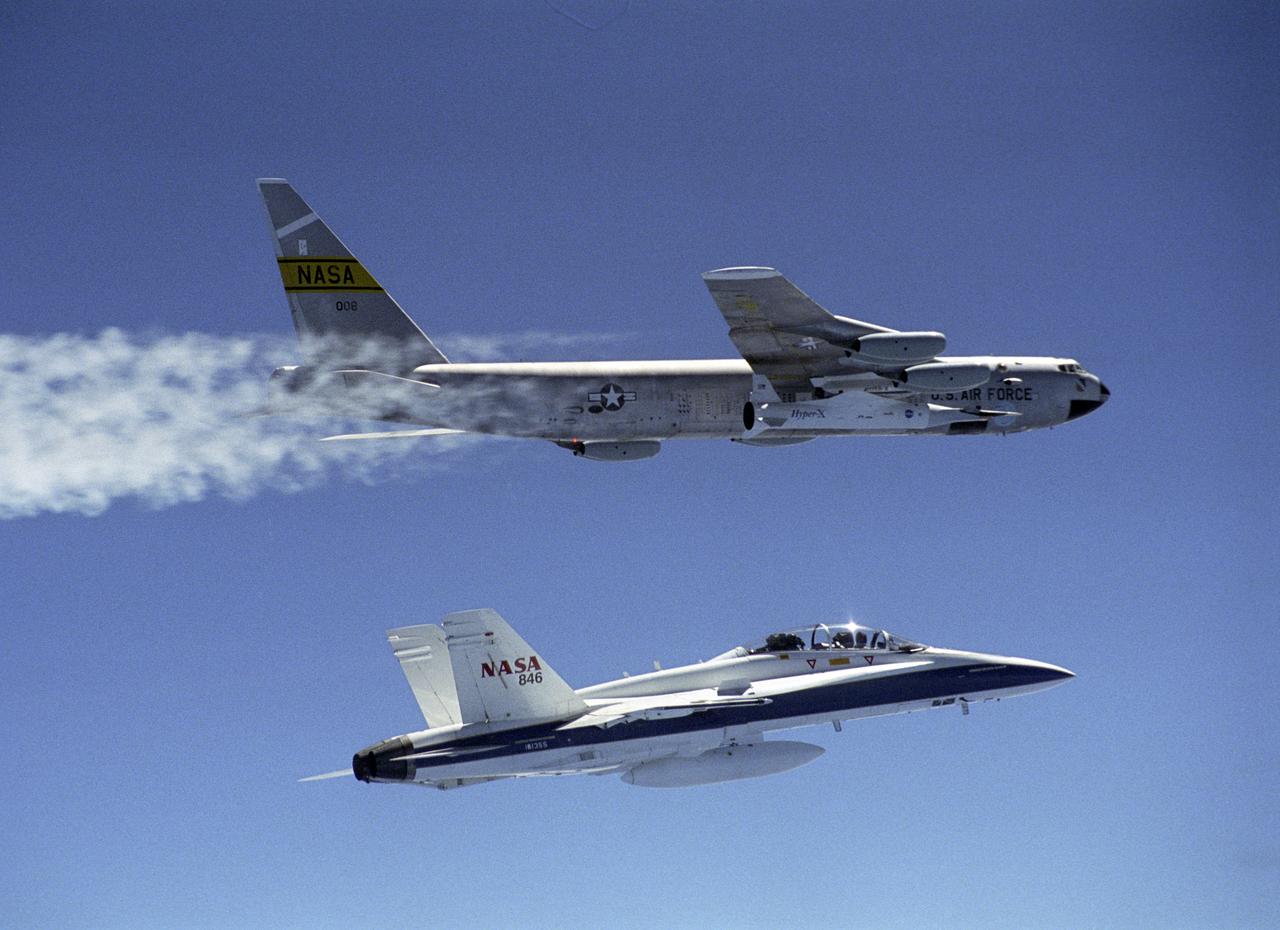
The second X-43A hypersonic research aircraft, attached to a modified Pegasus booster rocket and followed by a chase F-18, was taken to launch altitude by NASA's B-52B launch aircraft from the NASA Dryden Flight Research Center at Edwards Air Force Base, Calif., on March 27, 2004. About an hour later the Pegasus booster was released from the B-52 to accelerate the X-43A to its intended speed of Mach 7. In a combined research effort involving Dryden, Langley, and several industry partners, NASA demonstrated the value of its X-43A hypersonic research aircraft, as it became the first air-breathing, unpiloted, scramjet-powered plane to fly freely by itself. The March 27 flight, originating from NASA's Dryden Flight Research Center, began with the Agency's B-52B launch aircraft carrying the X-43A out to the test range over the Pacific Ocean off the California coast. The X-43A was boosted up to its test altitude of about 95,000 feet, where it separated from its modified Pegasus booster and flew freely under its own power. Two very significant aviation milestones occurred during this test flight: first, controlled accelerating flight at Mach 7 under scramjet power, and second, the successful stage separation at high dynamic pressure of two non-axisymmetric vehicles. To top it all off, the flight resulted in the setting of a new aeronautical speed record. The X-43A reached a speed of over Mach 7, or about 5,000 miles per hour faster than any known aircraft powered by an air-breathing engine has ever flown.
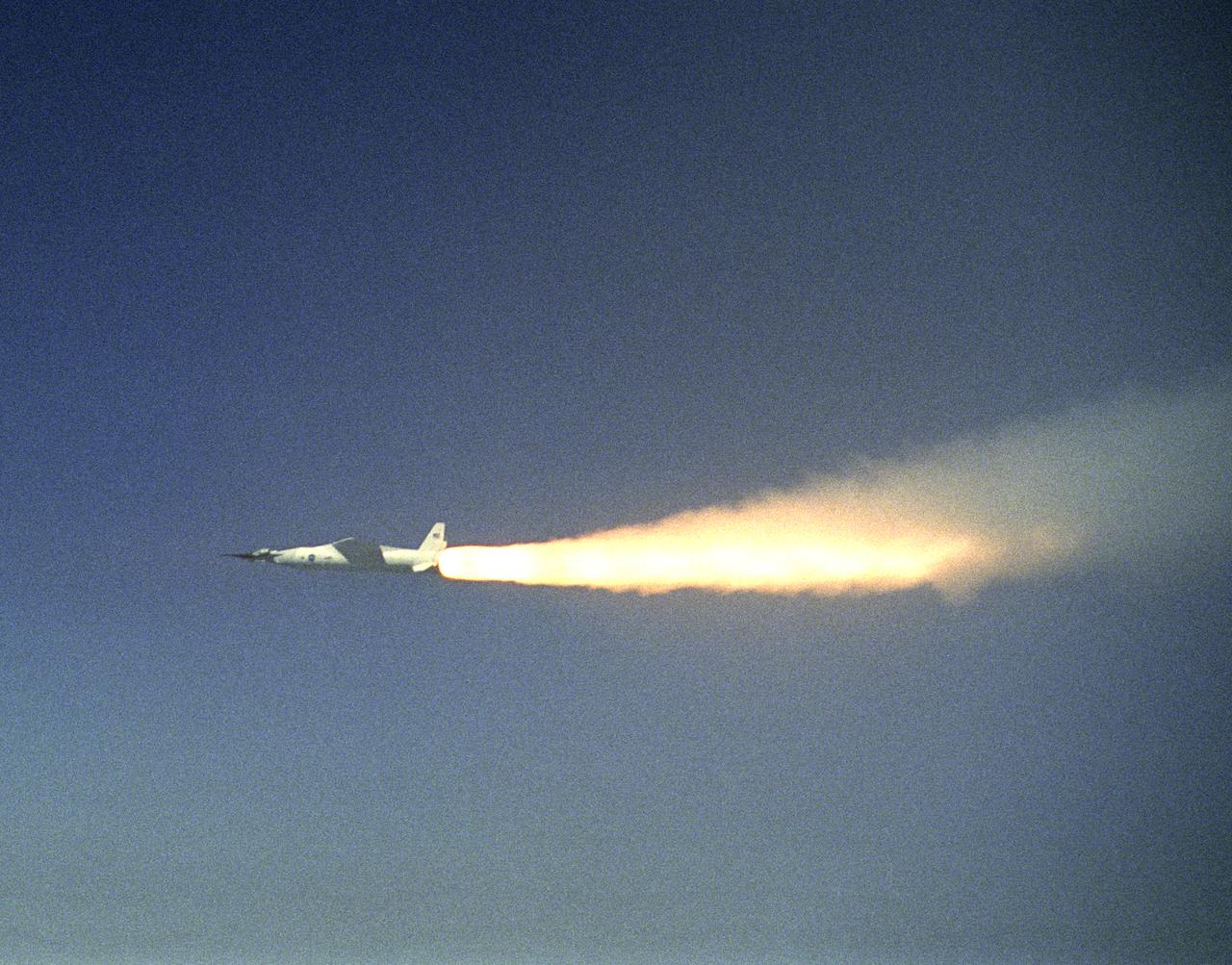
The second X-43A hypersonic research aircraft and its modified Pegasus booster rocket accelerate after launch from NASA's B-52B launch aircraft over the Pacific Ocean on March 27, 2004. The mission originated from the NASA Dryden Flight Research Center at Edwards Air Force Base, Calif. Minutes later the X-43A separated from the Pegasus booster and accelerated to its intended speed of Mach 7. In a combined research effort involving Dryden, Langley, and several industry partners, NASA demonstrated the value of its X-43A hypersonic research aircraft, as it became the first air-breathing, unpiloted, scramjet-powered plane to fly freely by itself. The March 27 flight, originating from NASA's Dryden Flight Research Center, began with the Agency's B-52B launch aircraft carrying the X-43A out to the test range over the Pacific Ocean off the California coast. The X-43A was boosted up to its test altitude of about 95,000 feet, where it separated from its modified Pegasus booster and flew freely under its own power. Two very significant aviation milestones occurred during this test flight: first, controlled accelerating flight at Mach 7 under scramjet power, and second, the successful stage separation at high dynamic pressure of two non-axisymmetric vehicles. To top it all off, the flight resulted in the setting of a new aeronautical speed record. The X-43A reached a speed of over Mach 7, or about 5,000 miles per hour faster than any known aircraft powered by an air-breathing engine has ever flown.