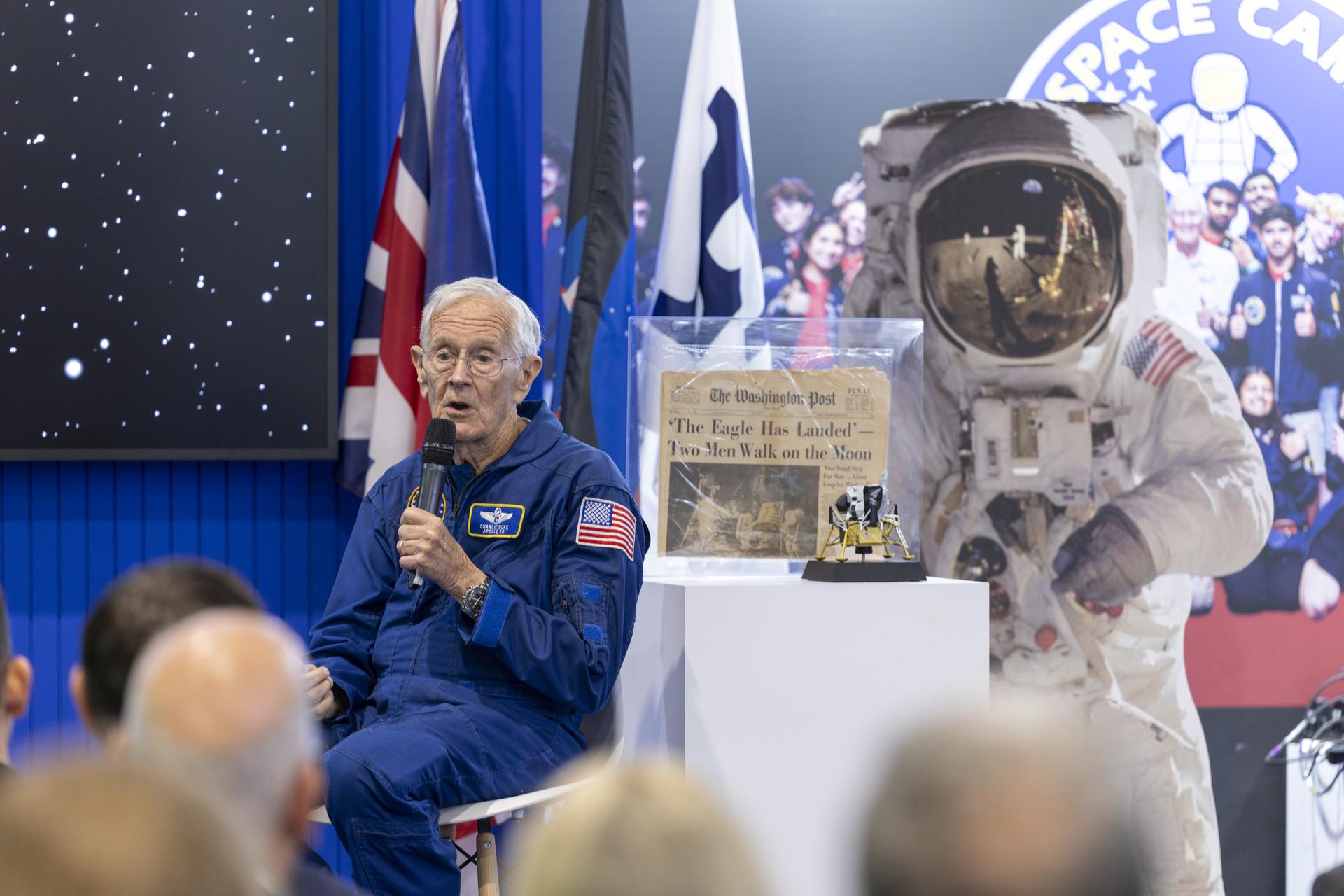
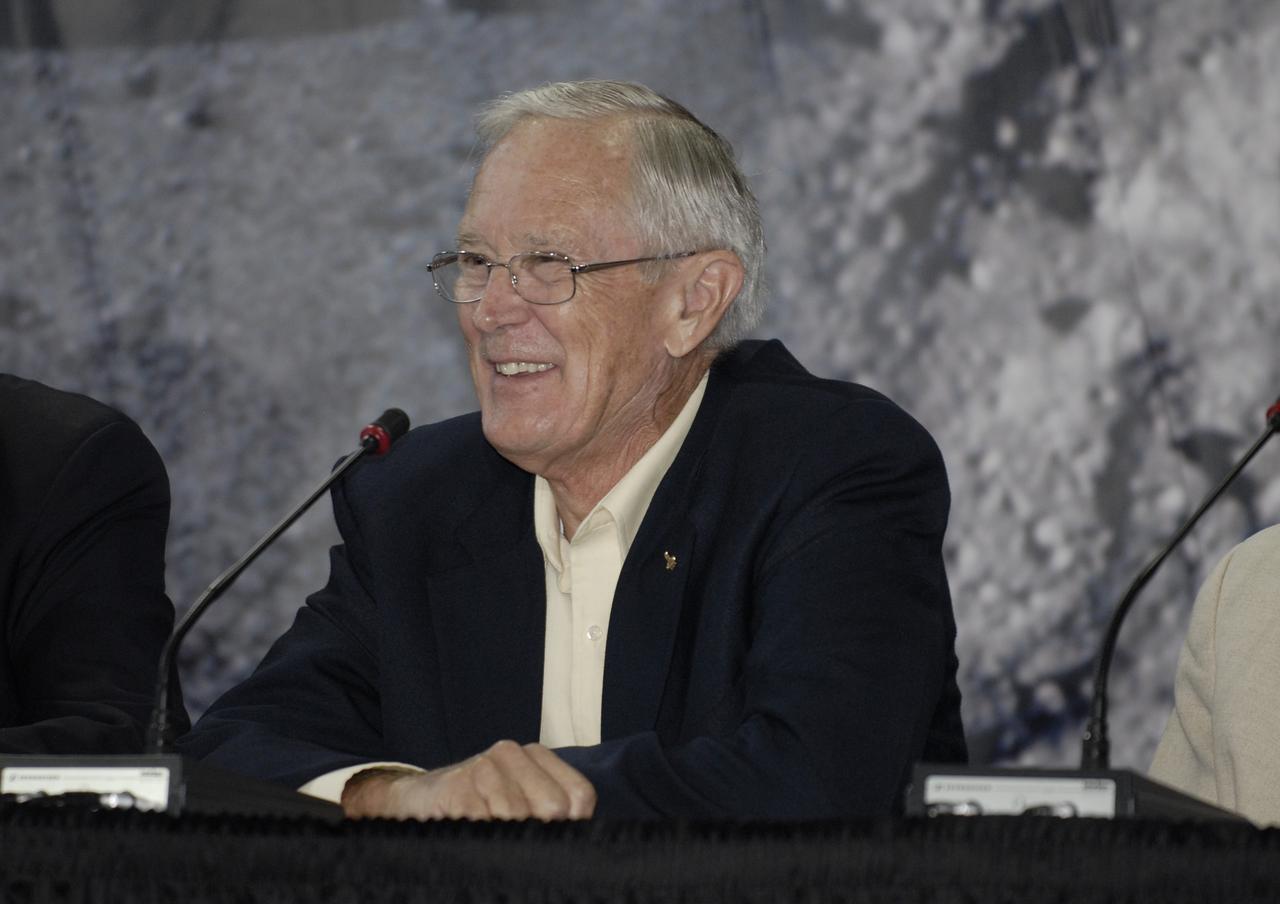
Charlie Duke speaks about the Apollo 11 landing at the U.S. Pavillion at the Farnborough International Airshow in Farnborough, UK.
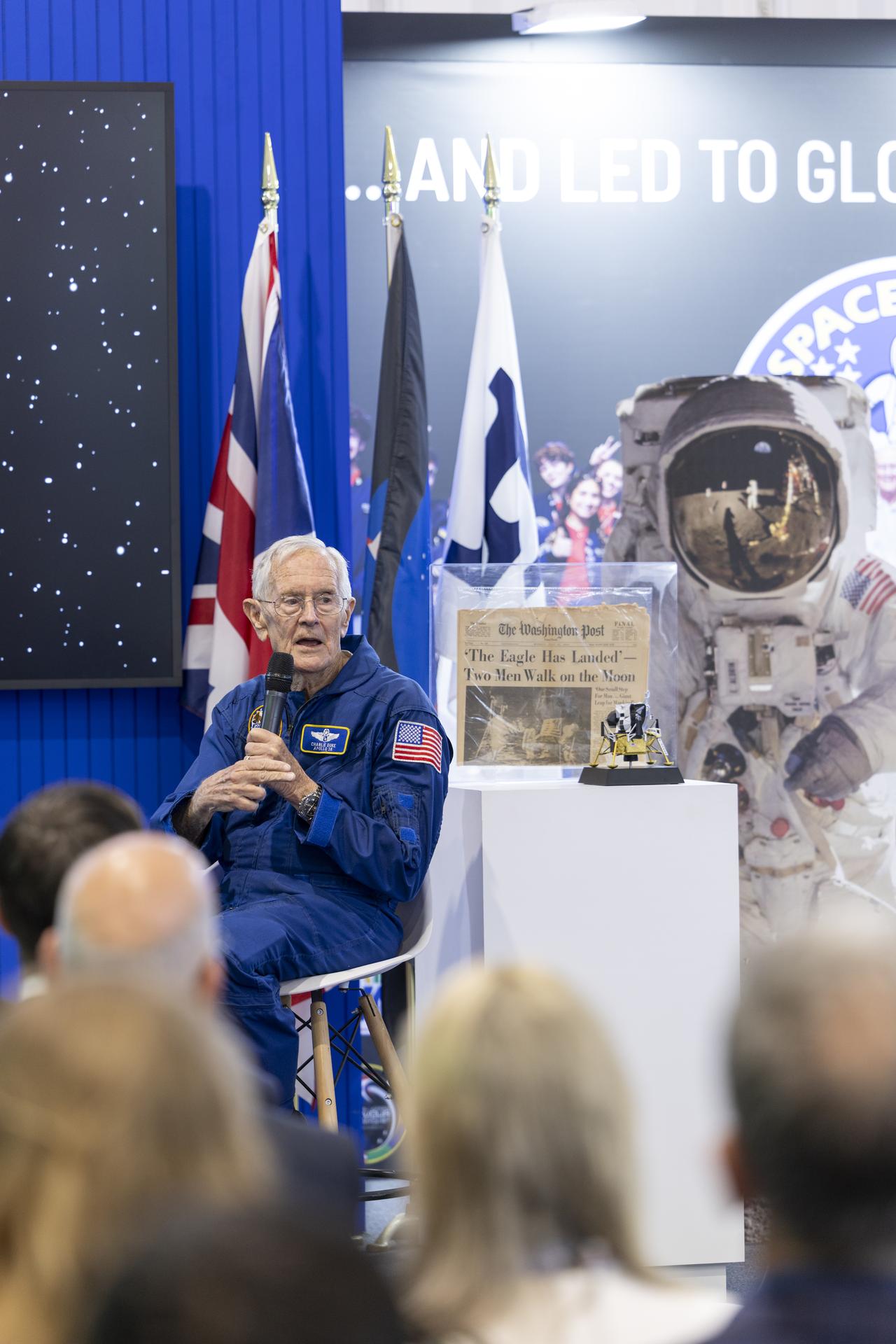
Charlie Duke speaks about the Apollo 11 landing at the U.S. Pavillion at the Farnborough International Airshow in Farnborough, UK.
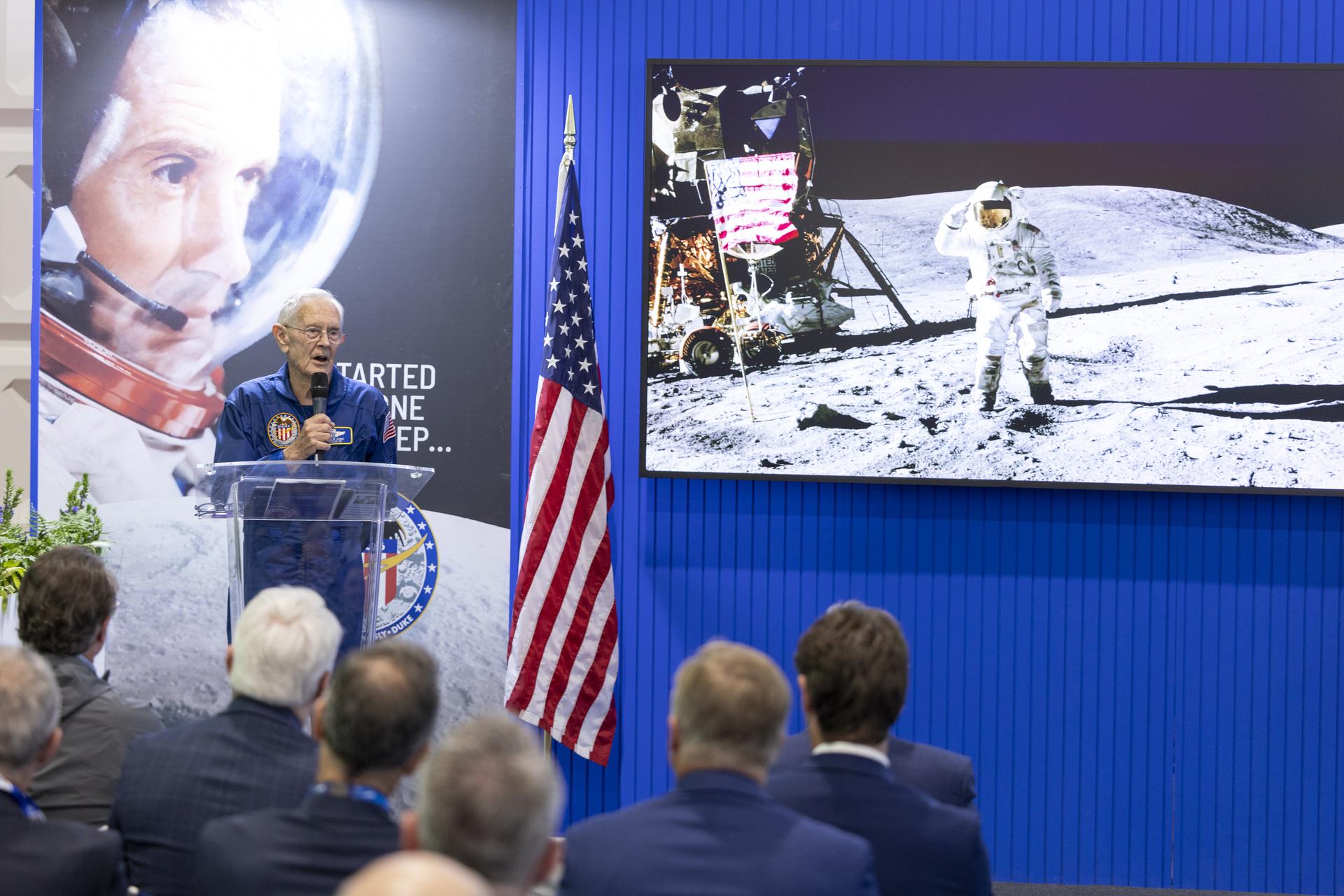
Charlie Duke speaks about the Apollo 11 landing at the U.S. Pavillion at the Farnborough International Airshow in Farnborough, UK.
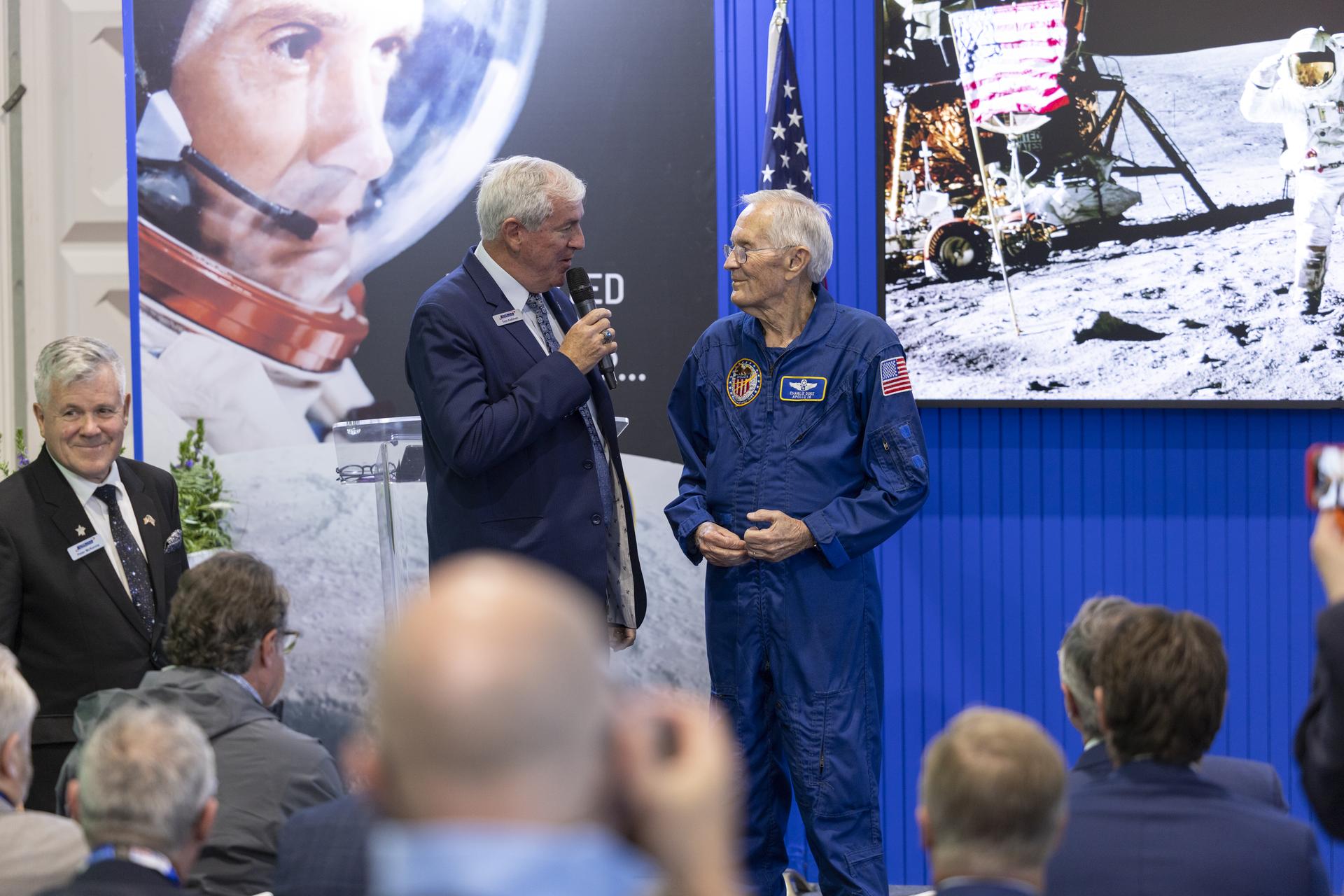
Charlie Duke speaks about the Apollo 11 landing at the U.S. Pavillion at the Farnborough International Airshow in Farnborough, UK.
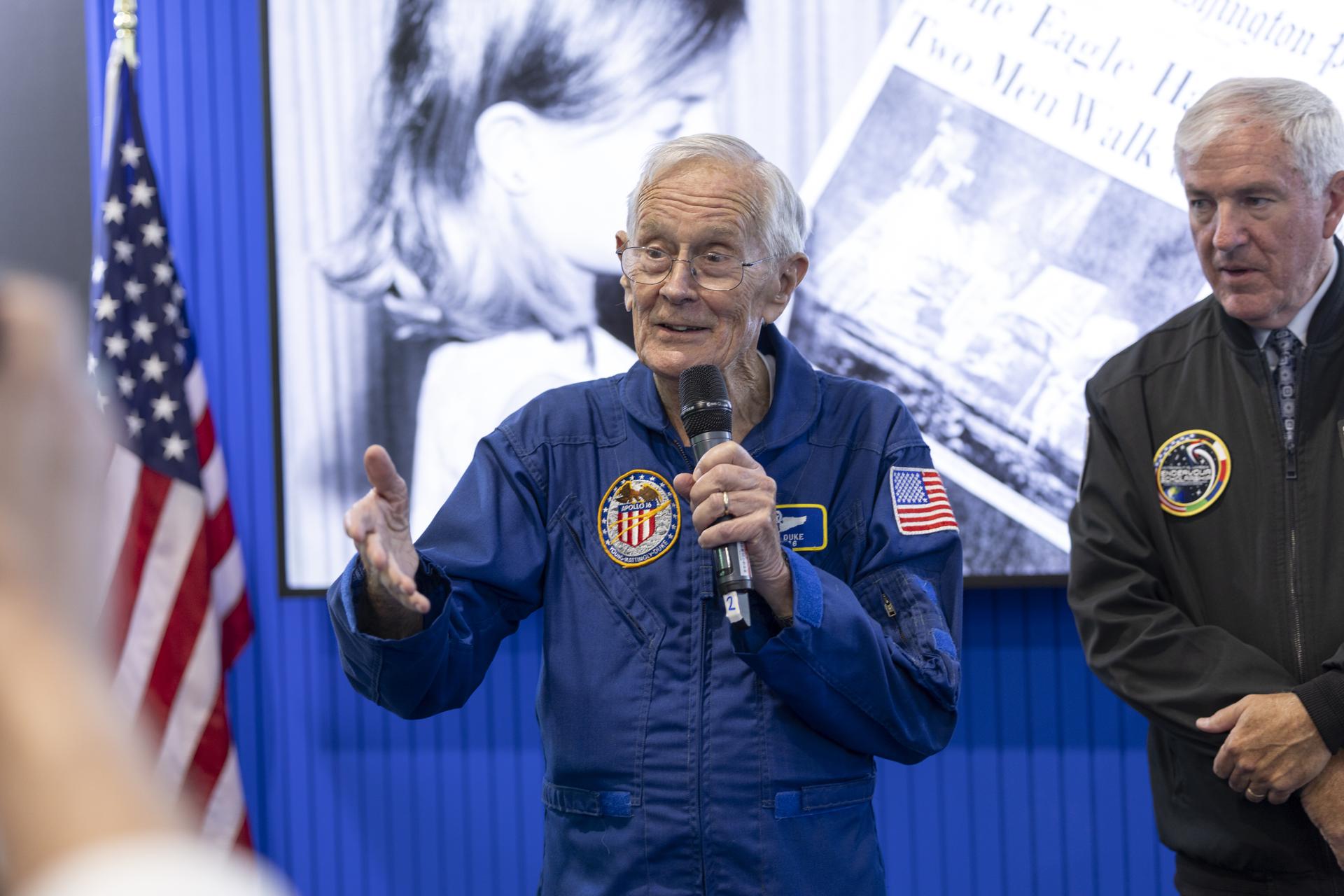
Charlie Duke speaks about the Apollo 11 landing at the U.S. Pavillion at the Farnborough International Airshow in Farnborough, UK.
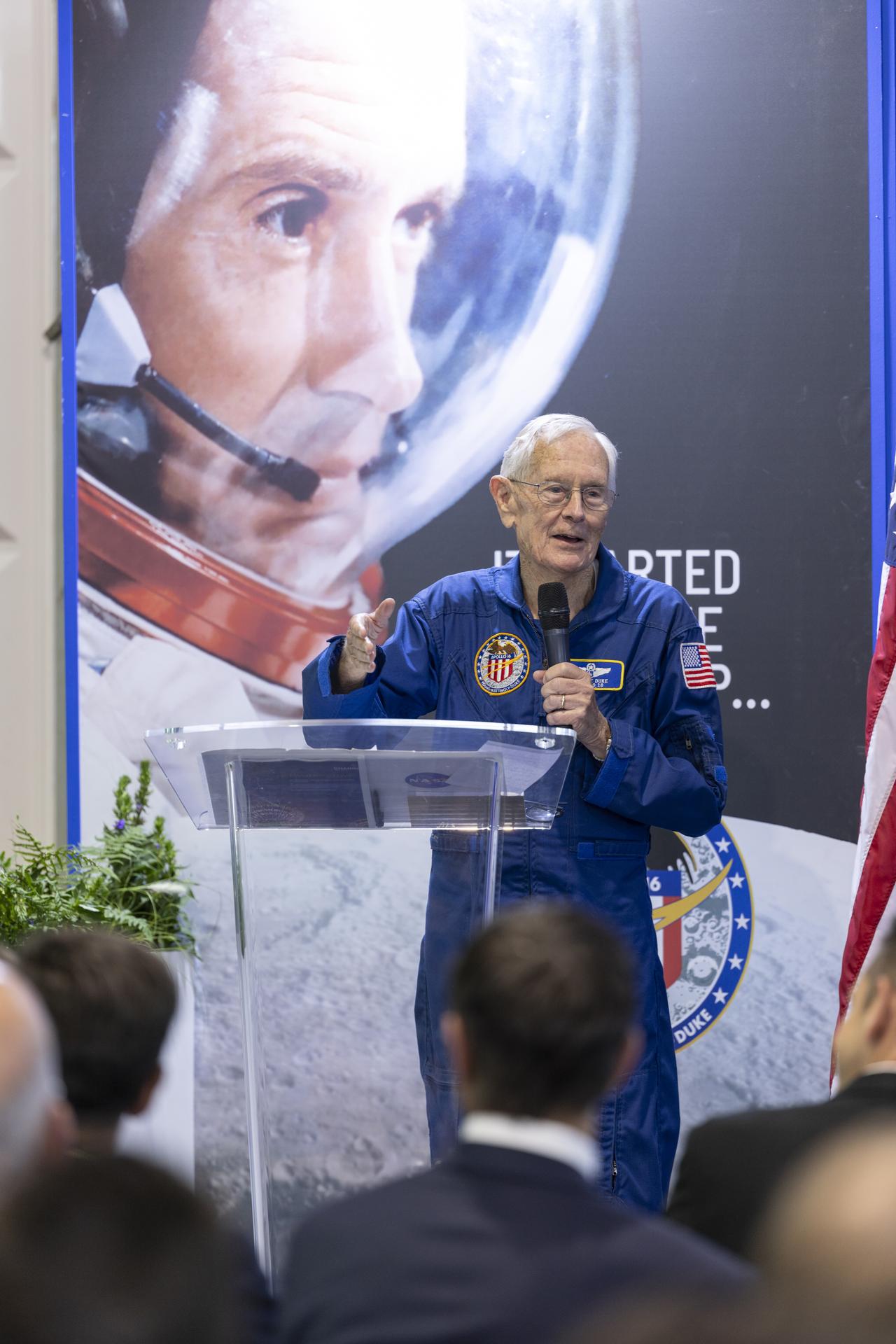
Charlie Duke speaks about the Apollo 11 landing at the U.S. Pavillion at the Farnborough International Airshow in Farnborough, UK.
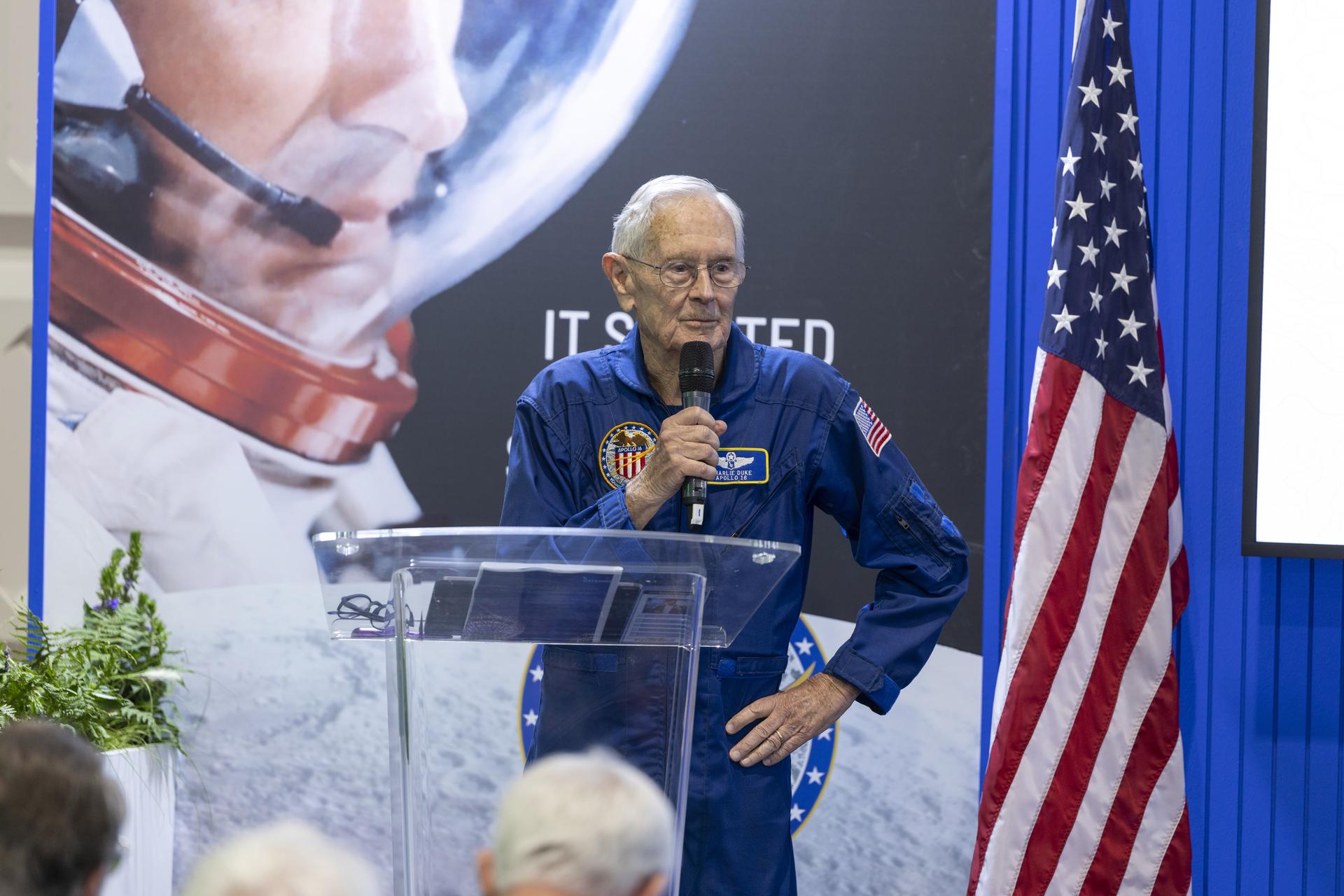
Charlie Duke speaks about the Apollo 11 landing at the U.S. Pavillion at the Farnborough International Airshow in Farnborough, UK.
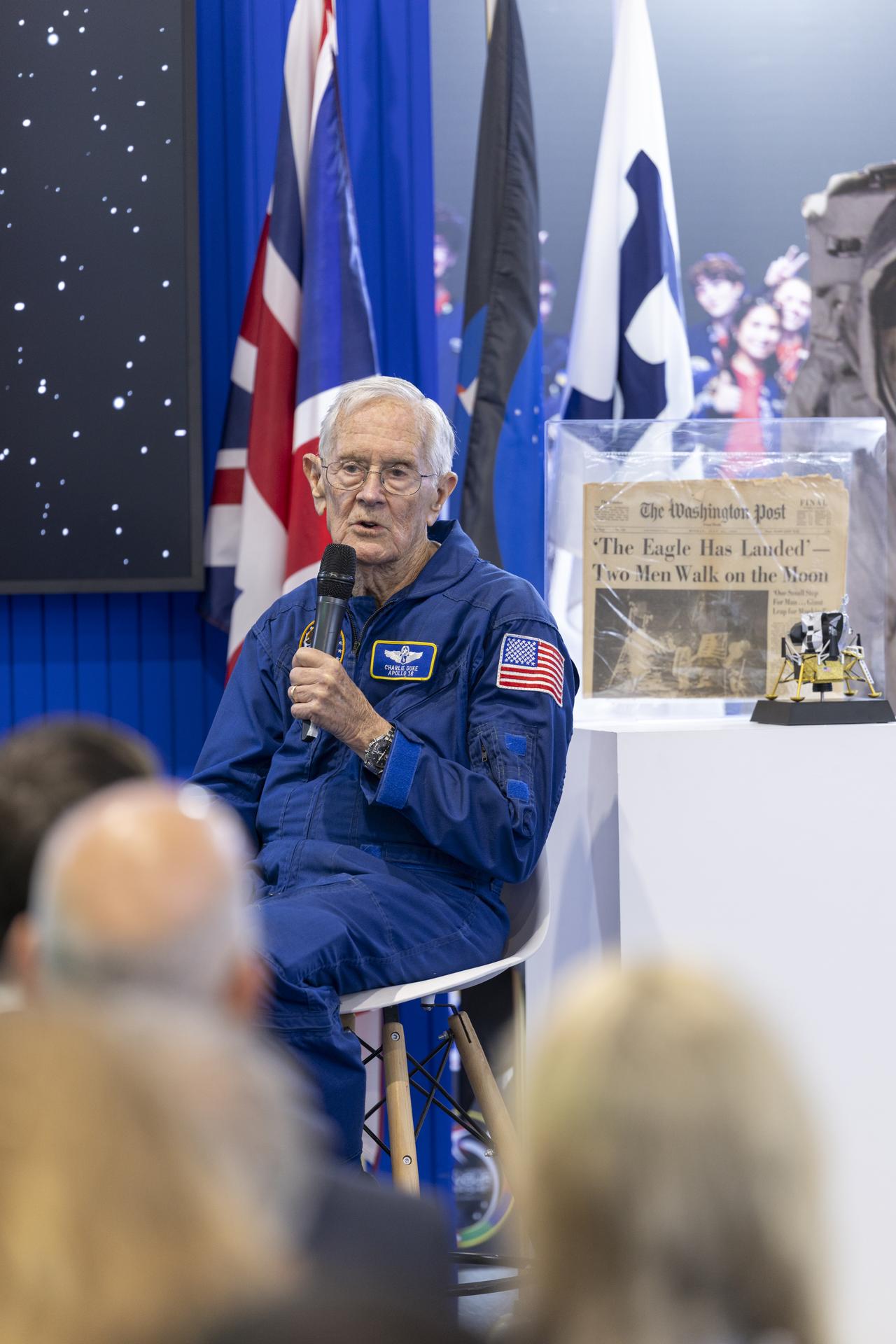
Charlie Duke speaks about the Apollo 11 landing at the U.S. Pavillion at the Farnborough International Airshow in Farnborough, UK.
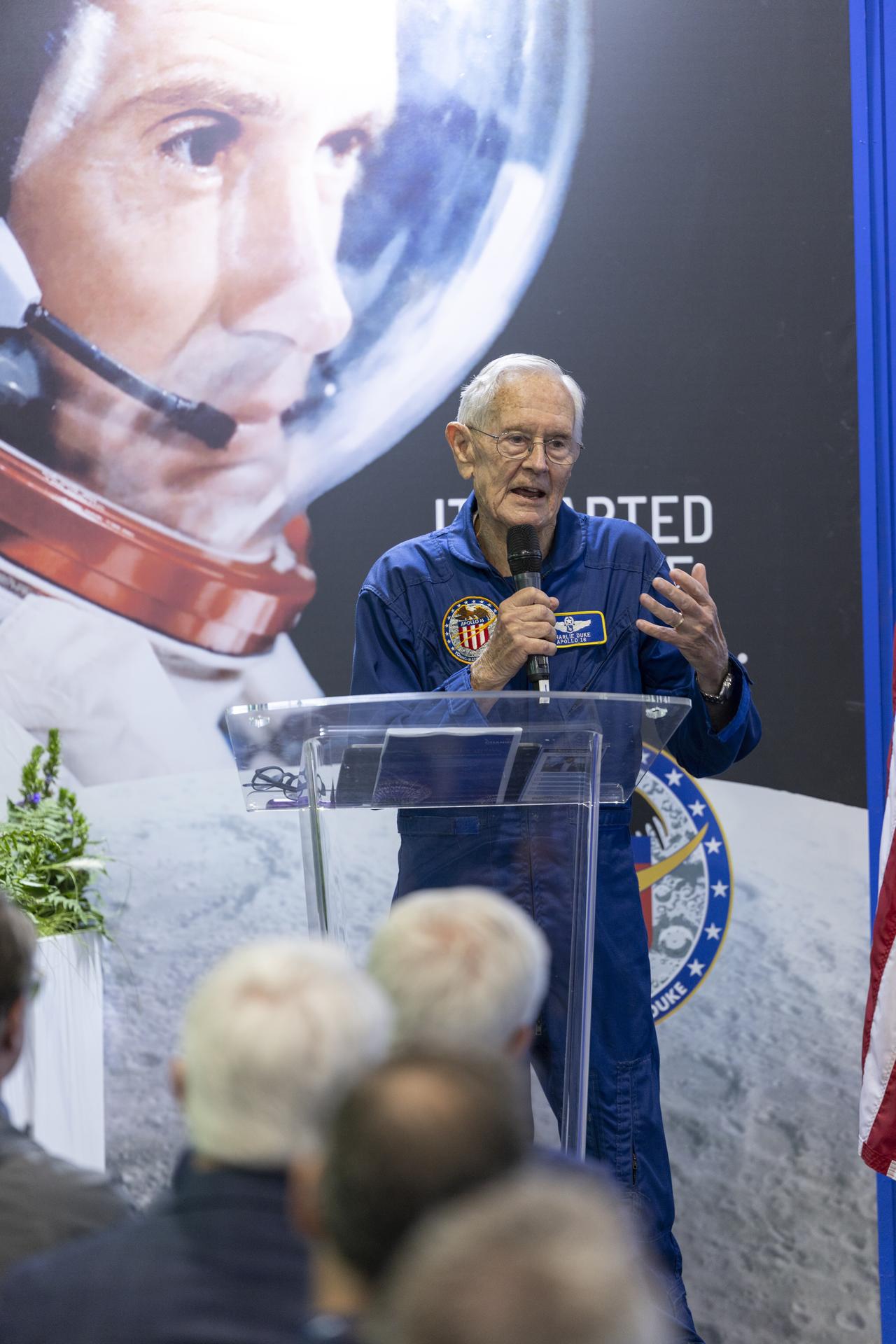
Charlie Duke speaks about the Apollo 11 landing at the U.S. Pavillion at the Farnborough International Airshow in Farnborough, UK.
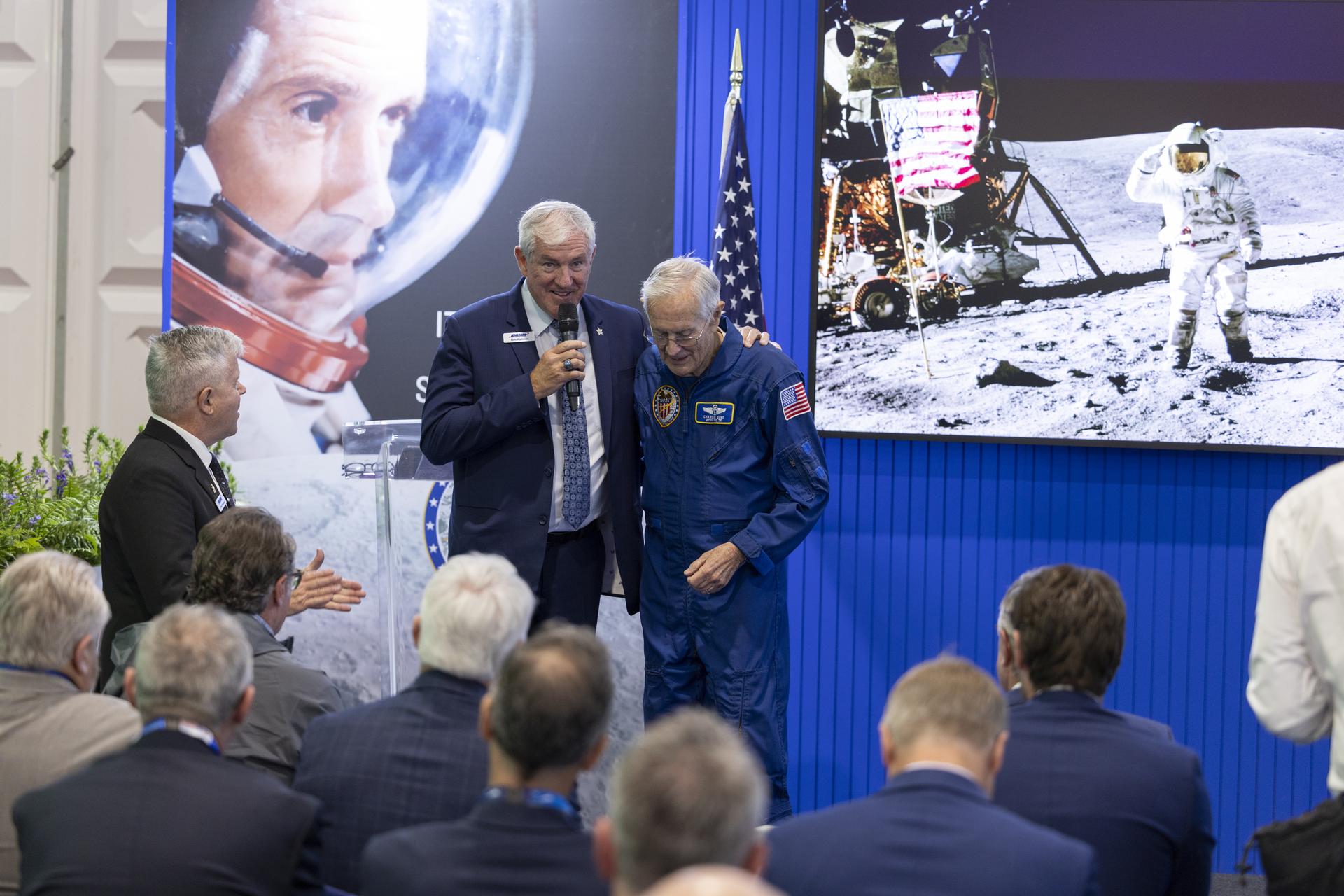
Charlie Duke speaks about the Apollo 11 landing at the U.S. Pavillion at the Farnborough International Airshow in Farnborough, UK.
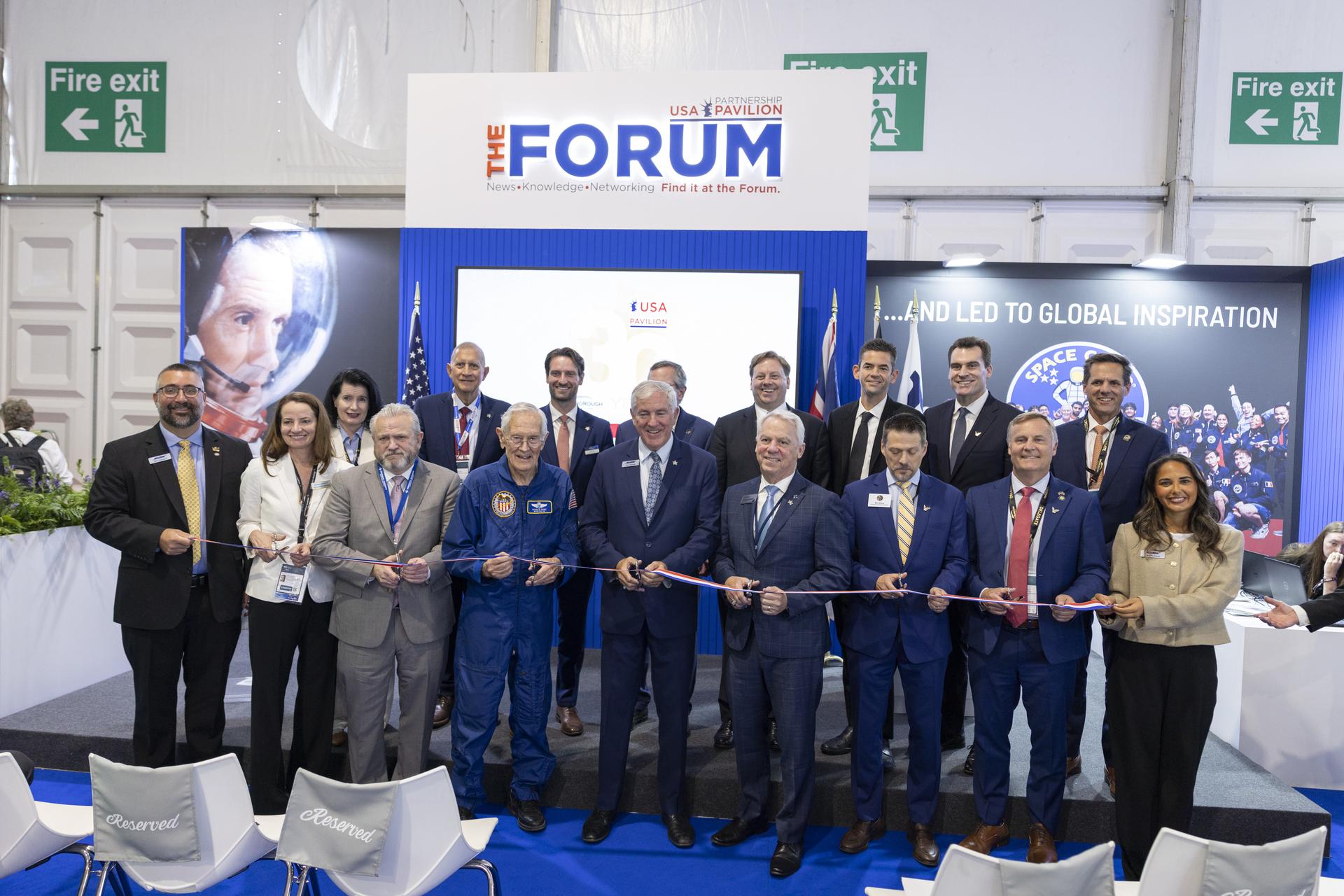
Jared Isaacman and Charlie Duke participate in the ribbon cutting for the U.S. Pavillion at Farnborough International Airshow in Farnborough, UK.
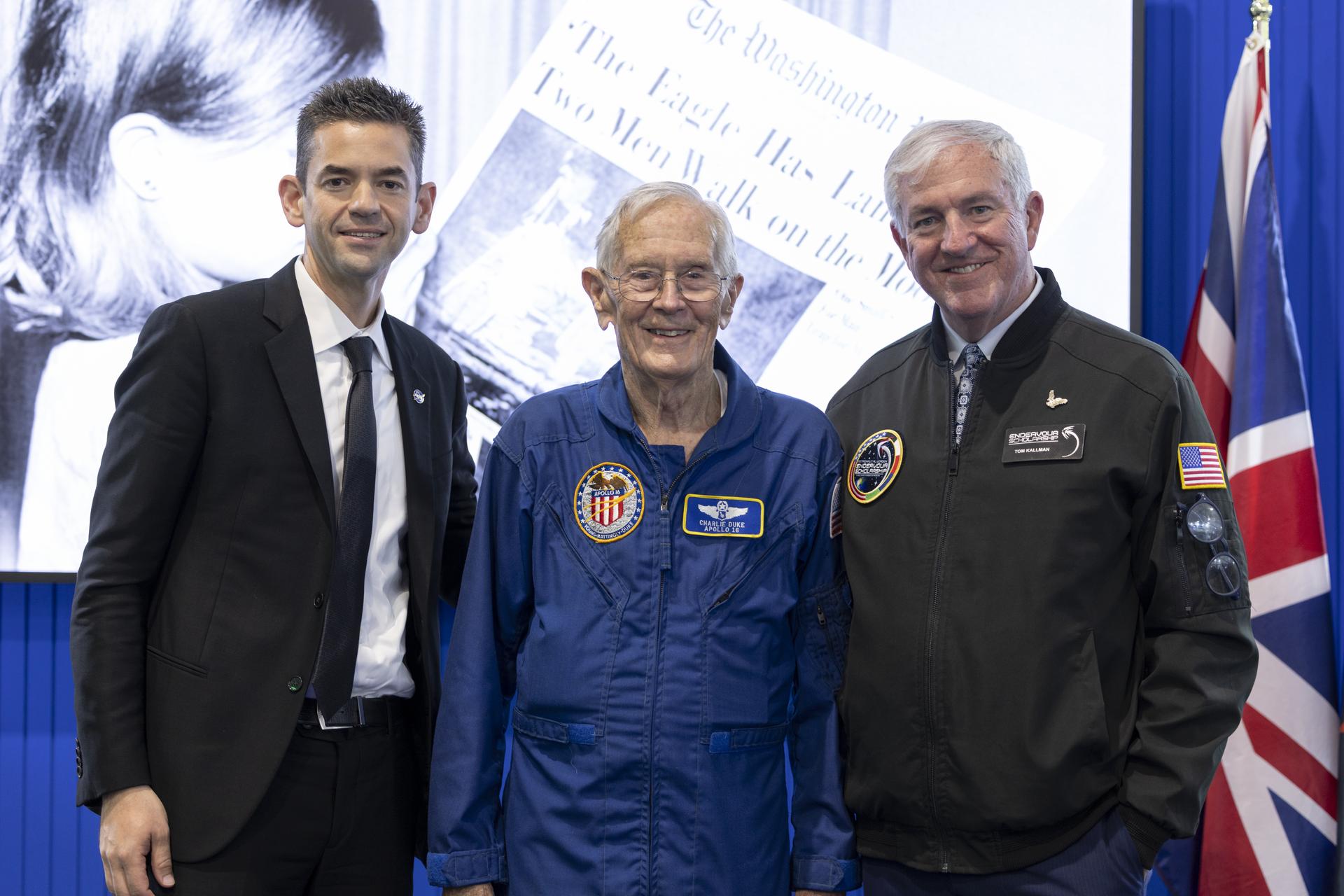
Charlie Duke speaks about the Apollo 11 landing at the U.S. Pavillion at the Farnborough International Airshow in Farnborough, UK.
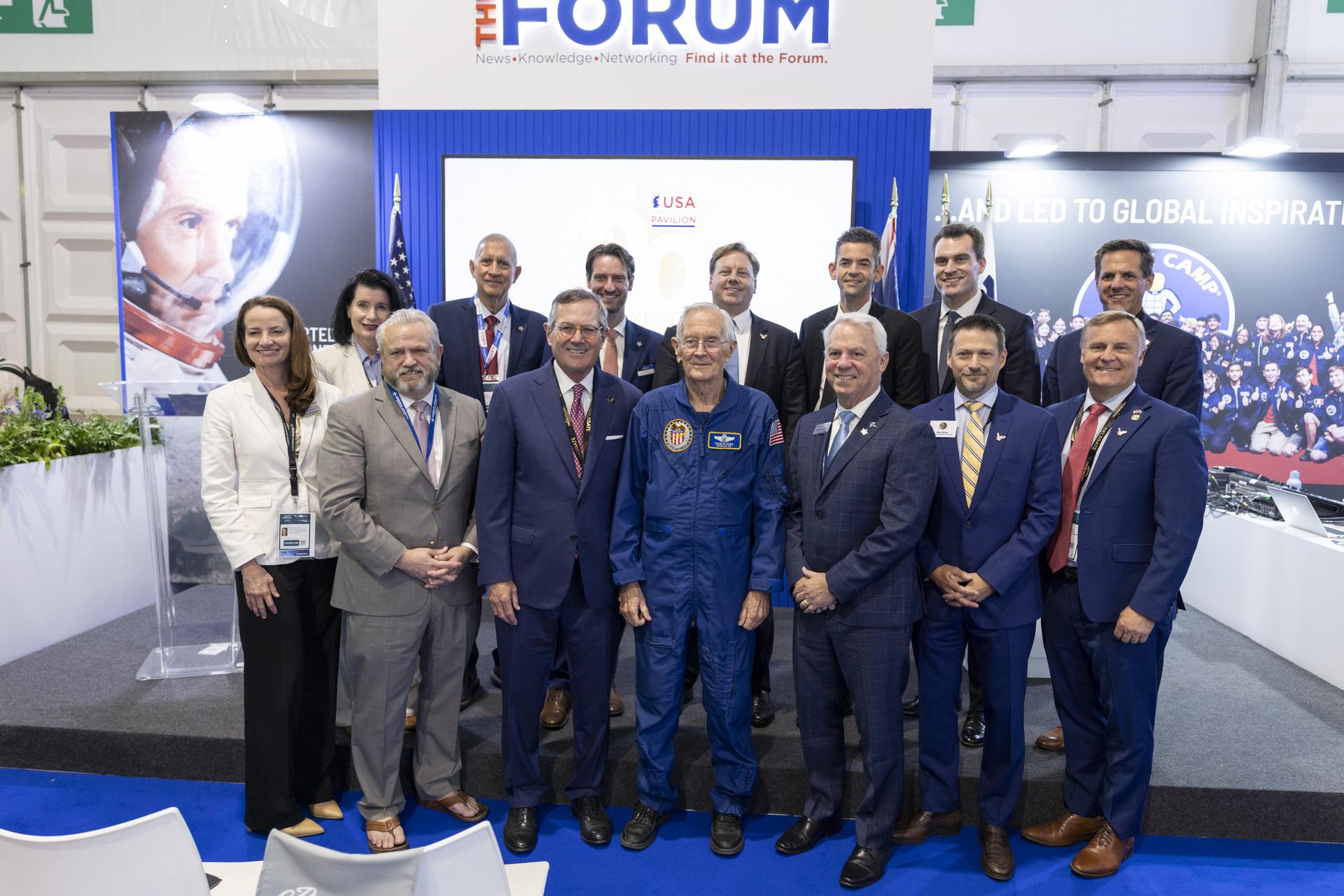
Jared Isaacman and Charlie Duke participate in the ribbon cutting for the U.S. Pavillion at Farnborough International Airshow in Farnborough, UK.
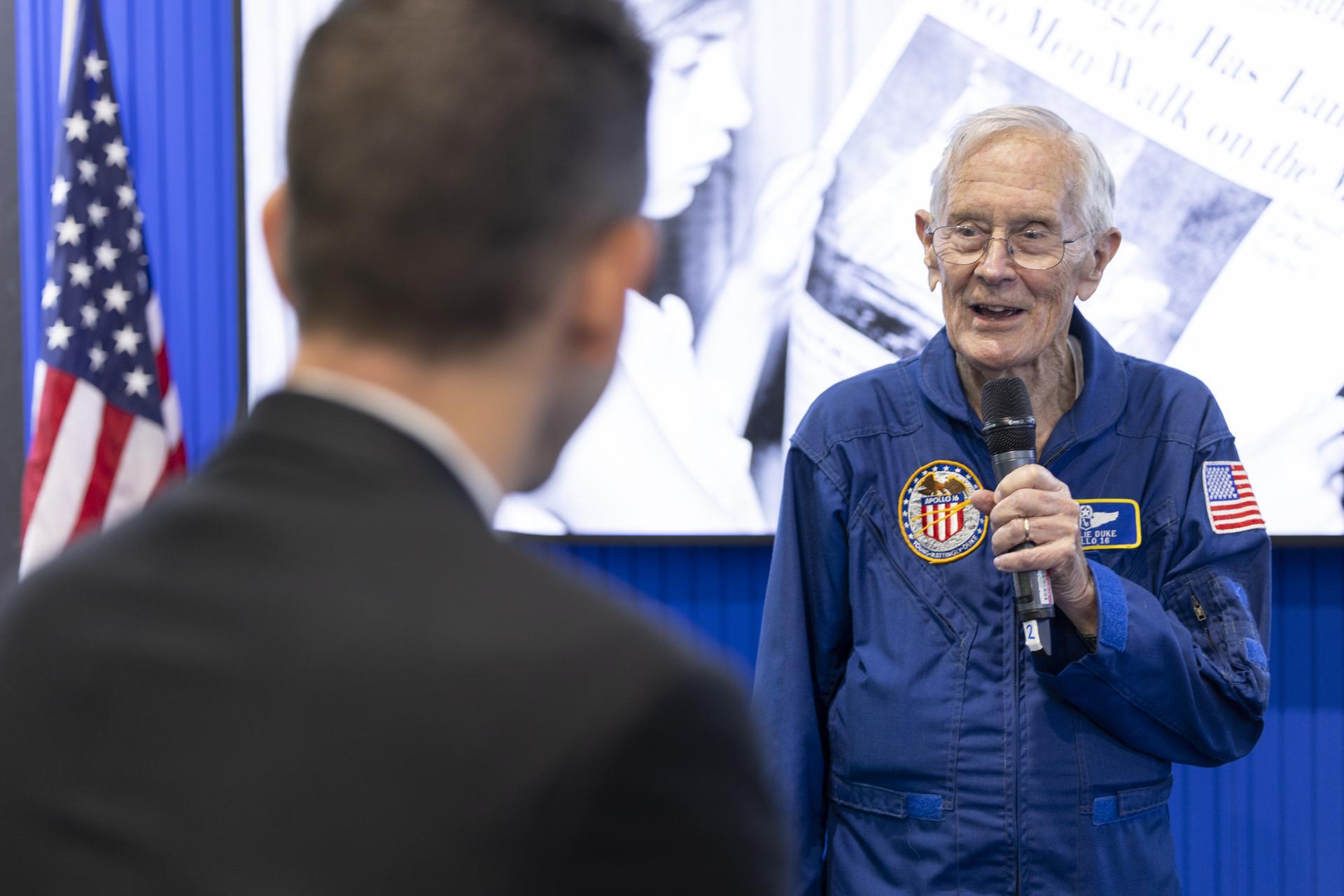
Charlie Duke speaks about the Apollo 11 landing at the U.S. Pavillion at the Farnborough International Airshow in Farnborough, UK.
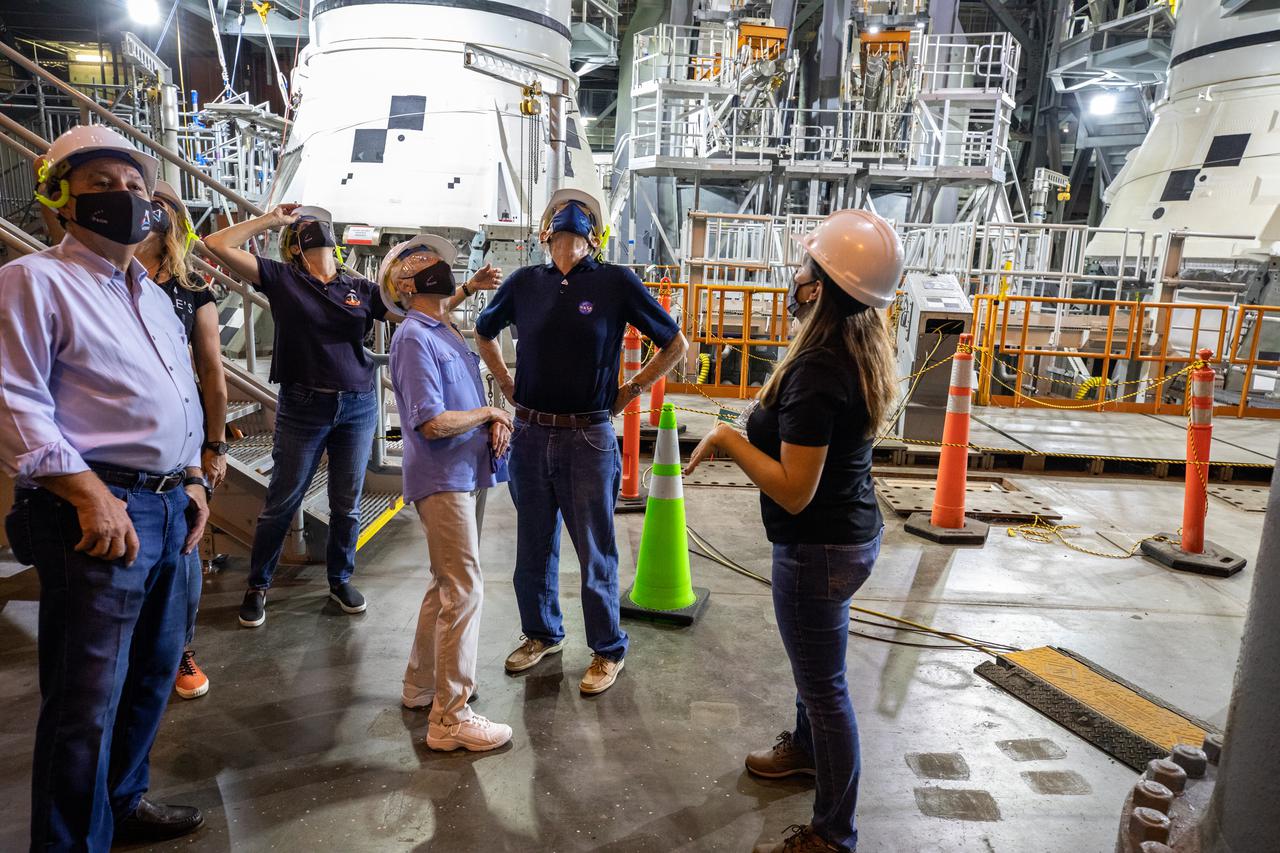
From left to right, Jim Keys, Pilot; Christina Korp, Assistant to Charlie Duke; Nicole Stott, NASA Astronaut (former); Dottie Duke, wife of Charlie Duke, Charlie Duke, NASA Astronaut (former); and Lili Villareal, Operations Flow Manager, Exploration Ground Systems tour the inside of the Vehicle Assembly Building (VAB) during a visit to NASA’s Kennedy Space Center in Florida on May 10, 2021. Visible in the background are the aft booster segments for the Space Launch System. The first in a series of increasingly complex missions, Artemis I will test Orion and SLS as an integrated system prior to crewed flights to the Moon.

From left to right, Jim Keys, Pilot; Dottie Duke, wife of Charlie Duke, Charlie Duke, NASA Astronaut (former); Christina Korp, Assistant to Charlie Duke; and Nicole Stott, NASA Astronaut (former) pose in front of the massive Space Launch System (SLS) core stage in Kennedy Space Center's Vehicle Assembly Building (VAB) in Florida on May 10, 2021. Inside the VAB, the SLS core stage is being prepared for integration with the completed stack of solid rocket boosters atop the mobile launcher ahead of the Artemis I launch. The first in a series of increasingly complex missions, Artemis I will test SLS and Orion as an integrated system prior to crewed flights to the Moon.
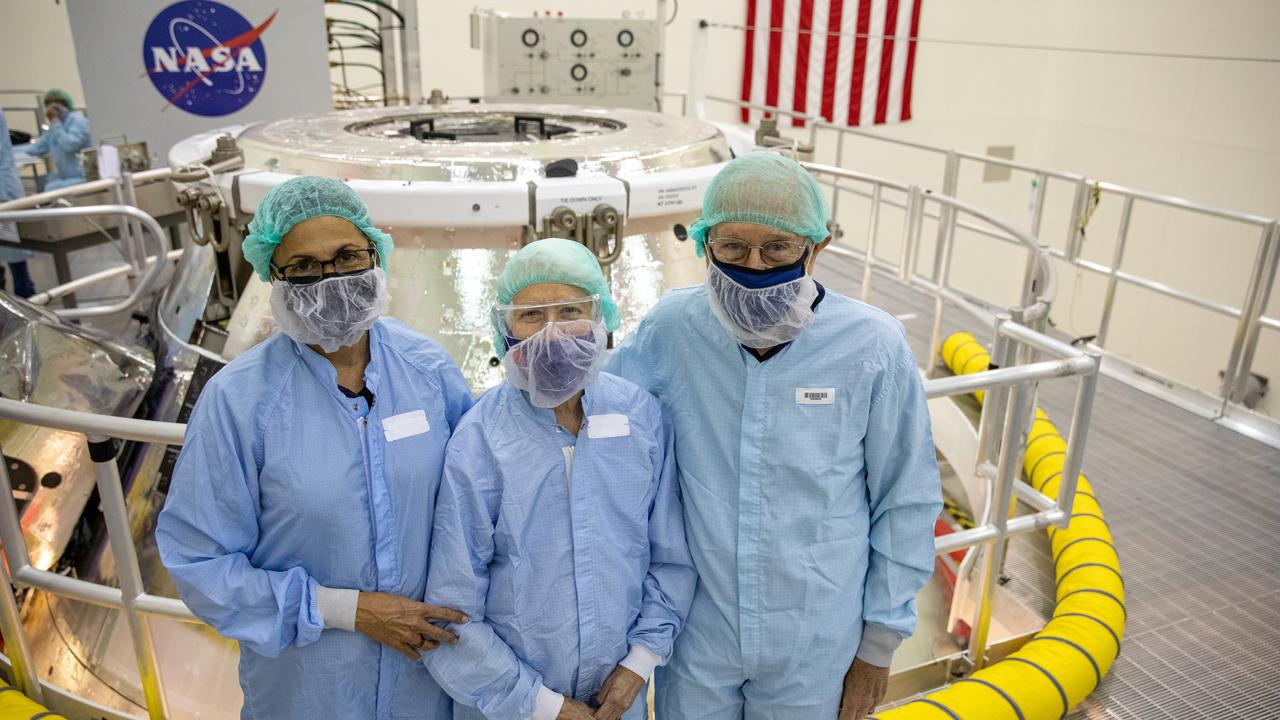
From left to right, Nicole Stott, NASA Astronaut (former); Dottie Duke, wife of Charlie Duke; and Charlie Duke, NASA Astronaut (former), shown in front of the Orion spacecraft for the Artemis I mission, inside the Multi-Payload Processing Facility (MPPF) during a visit to NASA’s Kennedy Space Center in Florida on May 10, 2021. The first in a series of increasingly complex missions, Artemis I will test Orion and the Space Launch System rocket as an integrated system prior to crewed flights to the Moon.
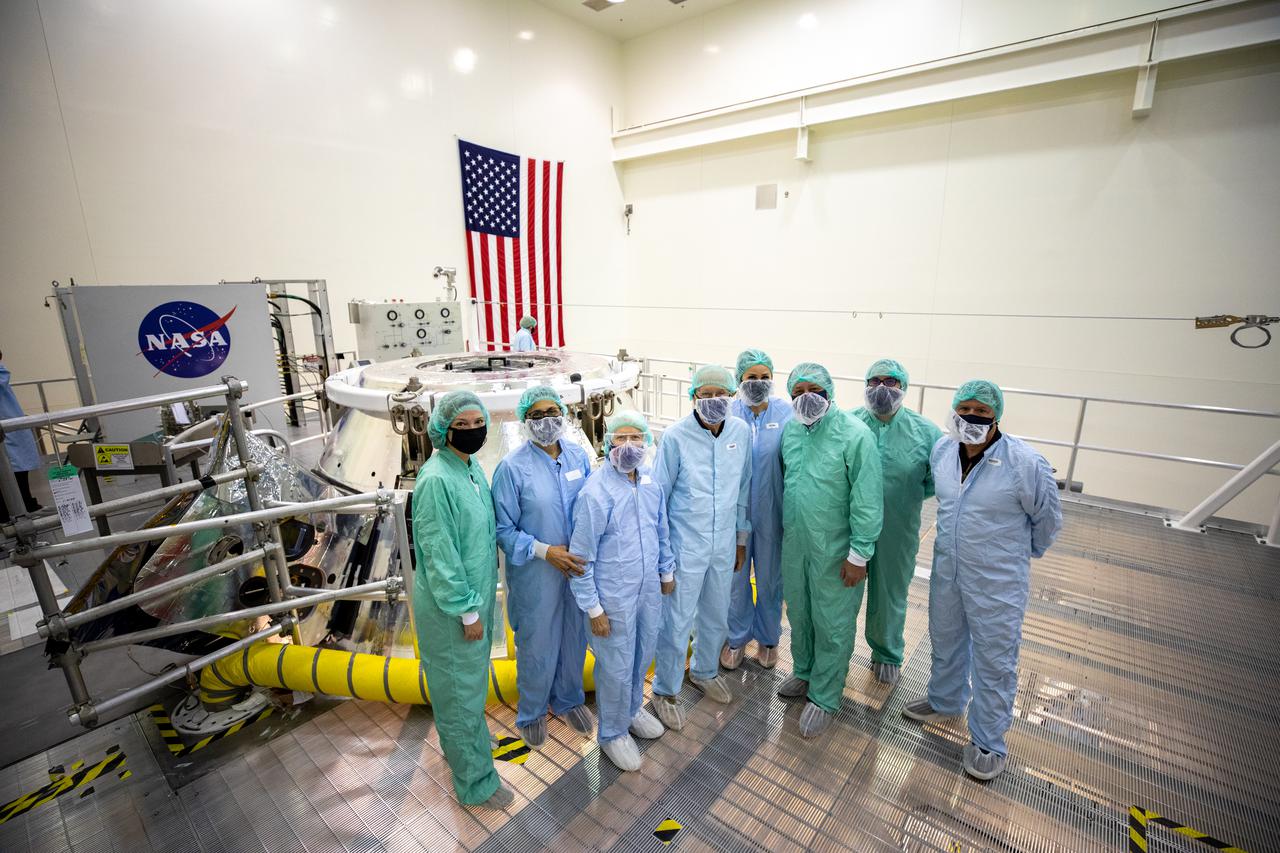
From left to right, Tiffany Nail, KSC Protocol Officer; Nicole Stott, NASA Astronaut (former); Dottie Duke, wife of Charlie Duke; Charlie Duke, NASA Astronaut (former); Christina Korp, Assistant to Charlie Duke; Jim Keys, Pilot; Adam Leppek, ARES Corporation (KLXSIII), Deputy Element Operations Manager; and Nick Kindred, Jacobs Technology, Flow Manager, shown in front of the Orion spacecraft for the Artemis I mission, inside the Multi-Payload Processing Facility (MPPF) during a visit to NASA’s Kennedy Space Center in Florida on May 10, 2021. The first in a series of increasingly complex missions, Artemis I will test Orion and the Space Launch System rocket as an integrated system prior to crewed flights to the Moon.
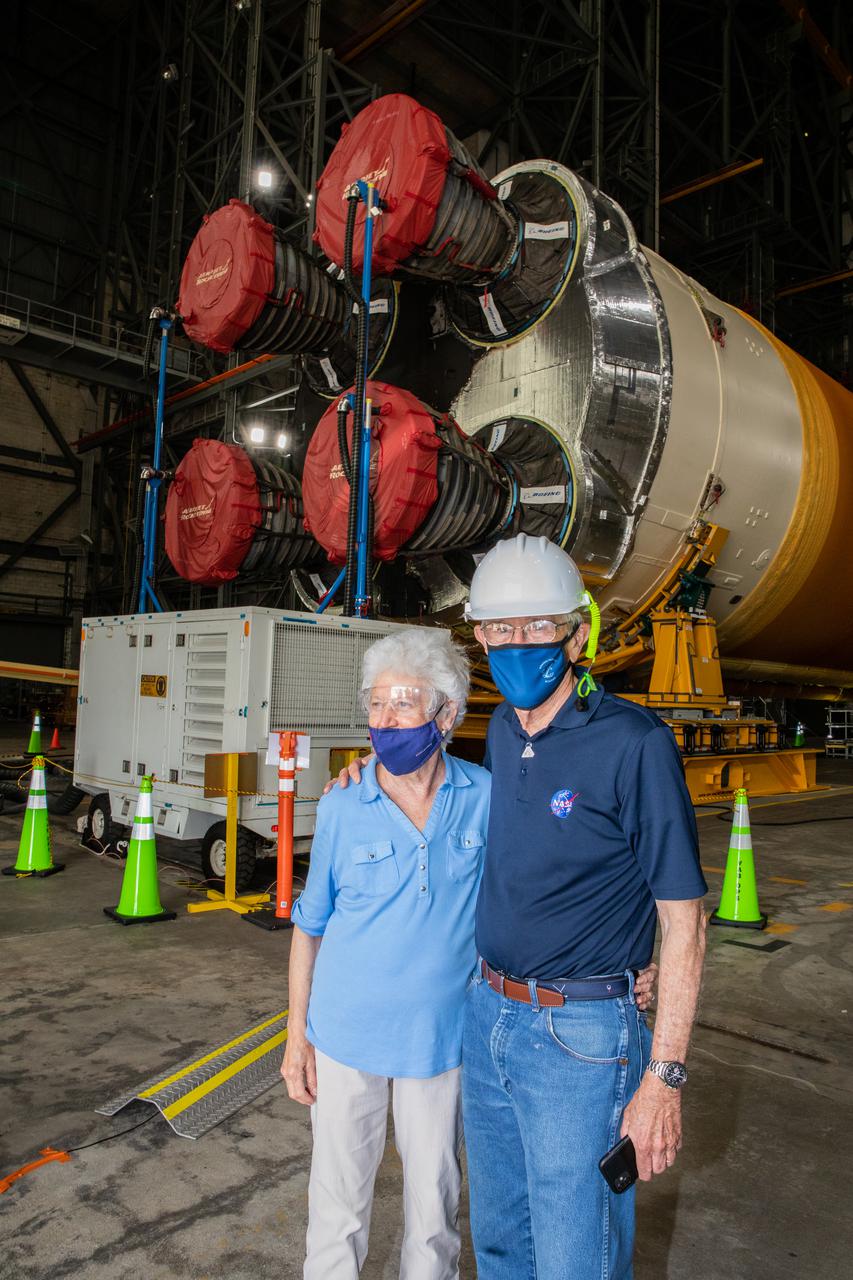
Charlie Duke, NASA Astronaut (former), and Dottie Duke, wife of Charlie Duke, shown in front of the massive Space Launch System (SLS) core stage in Kennedy Space Center's Vehicle Assembly Building (VAB) in Florida on May 10, 2021. Inside the VAB, the SLS core stage is being prepared for integration with the completed stack of twin solid rocket boosters atop the mobile launcher ahead of the Artemis I launch. The first in a series of increasingly complex missions, Artemis I will test SLS and Orion as an integrated system prior to crewed flights to the Moon.
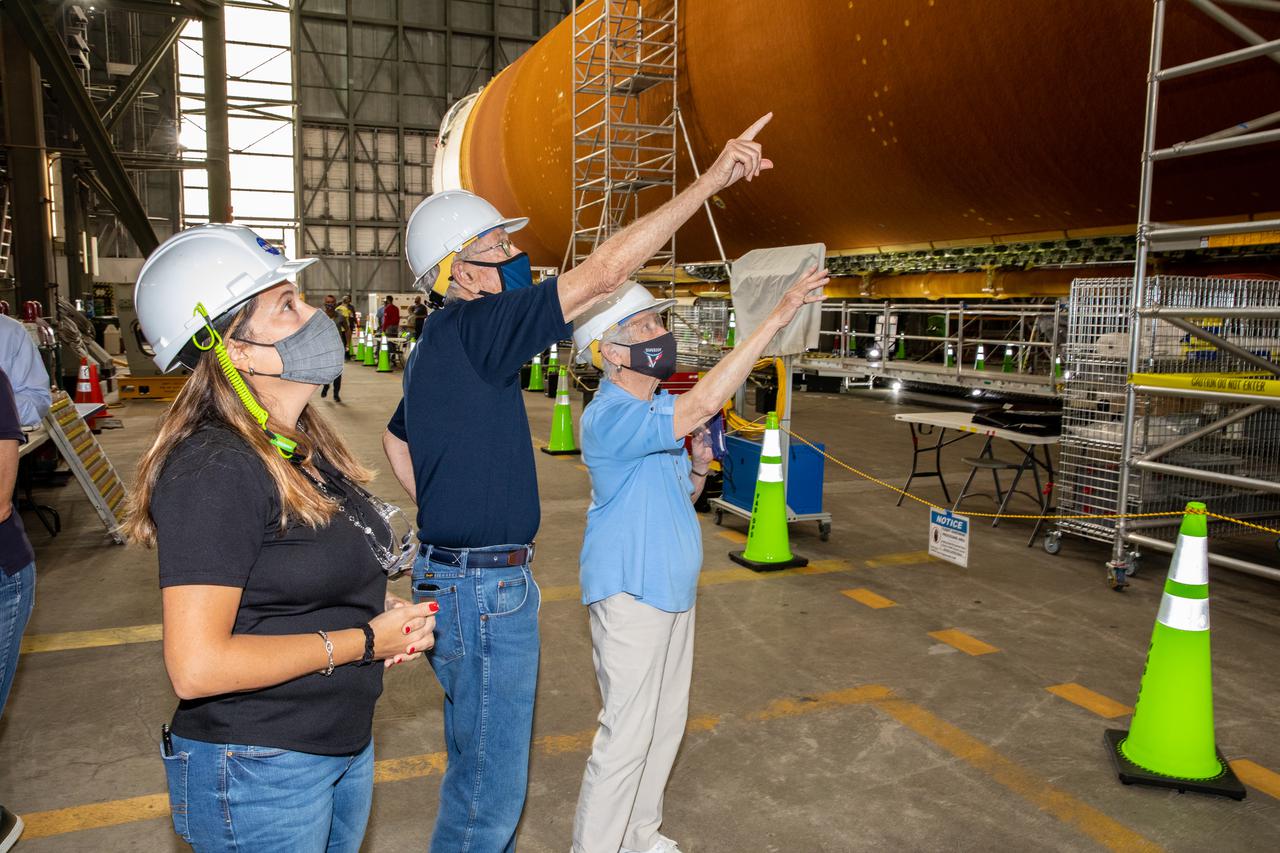
From left to right, Lili Villareal, Operations Flow Manager, Exploration Ground Systems; Charlie Duke, NASA Astronaut (former); and Dottie Duke, wife of Charlie Duke, view the massive Space Launch System (SLS) core stage in Kennedy Space Center's Vehicle Assembly Building (VAB) in Florida on May 10, 2021. Inside the VAB, the SLS core stage is being prepared for integration with the completed stack of twin solid rocket boosters atop the mobile launcher ahead of the Artemis I launch. The first in a series of increasingly complex missions, Artemis I will test SLS and Orion as an integrated system prior to crewed flights to the Moon.
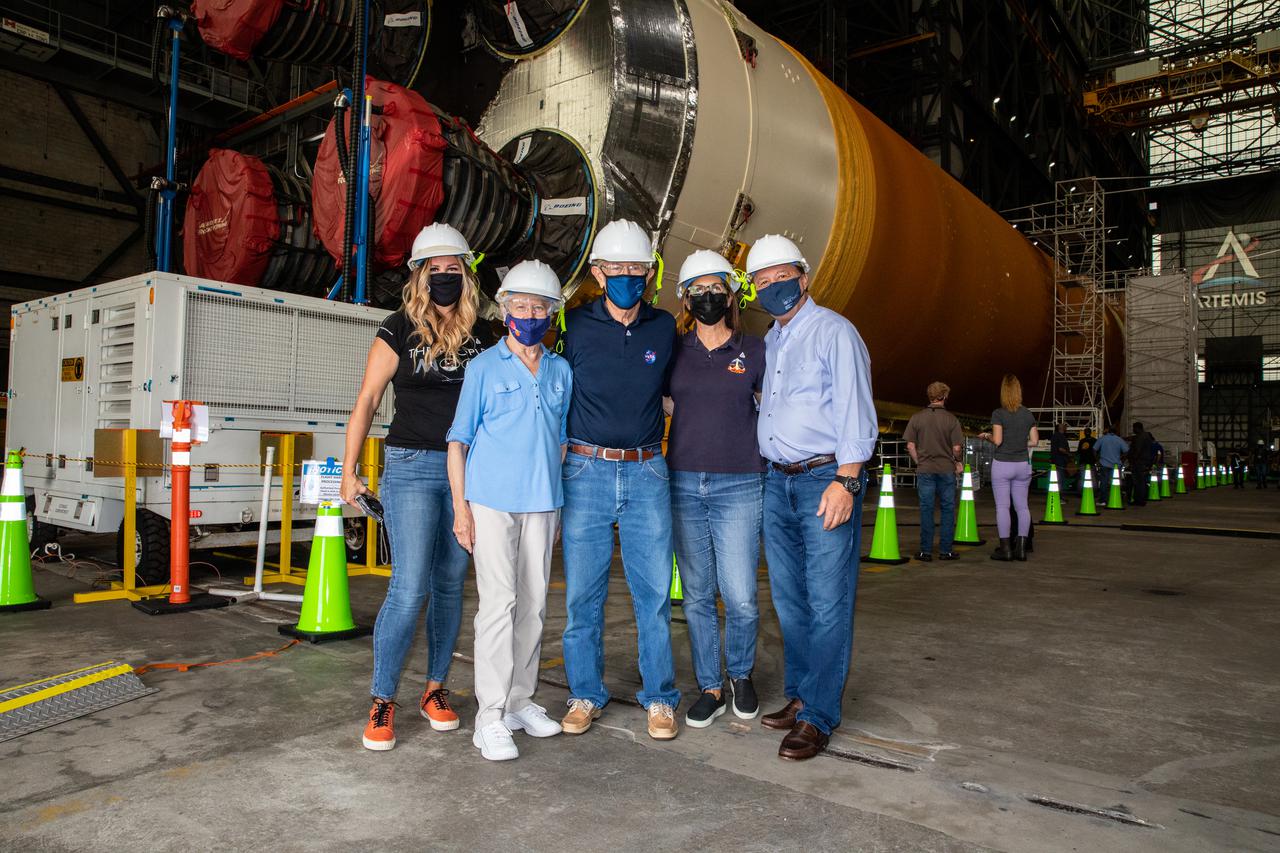
Charlie Duke and Nicole Stott visit the Multi-Payload Processing Facility (MPPF) and Vehicle Assembly Building (VAB) at NASA's Kennedy Space Center.
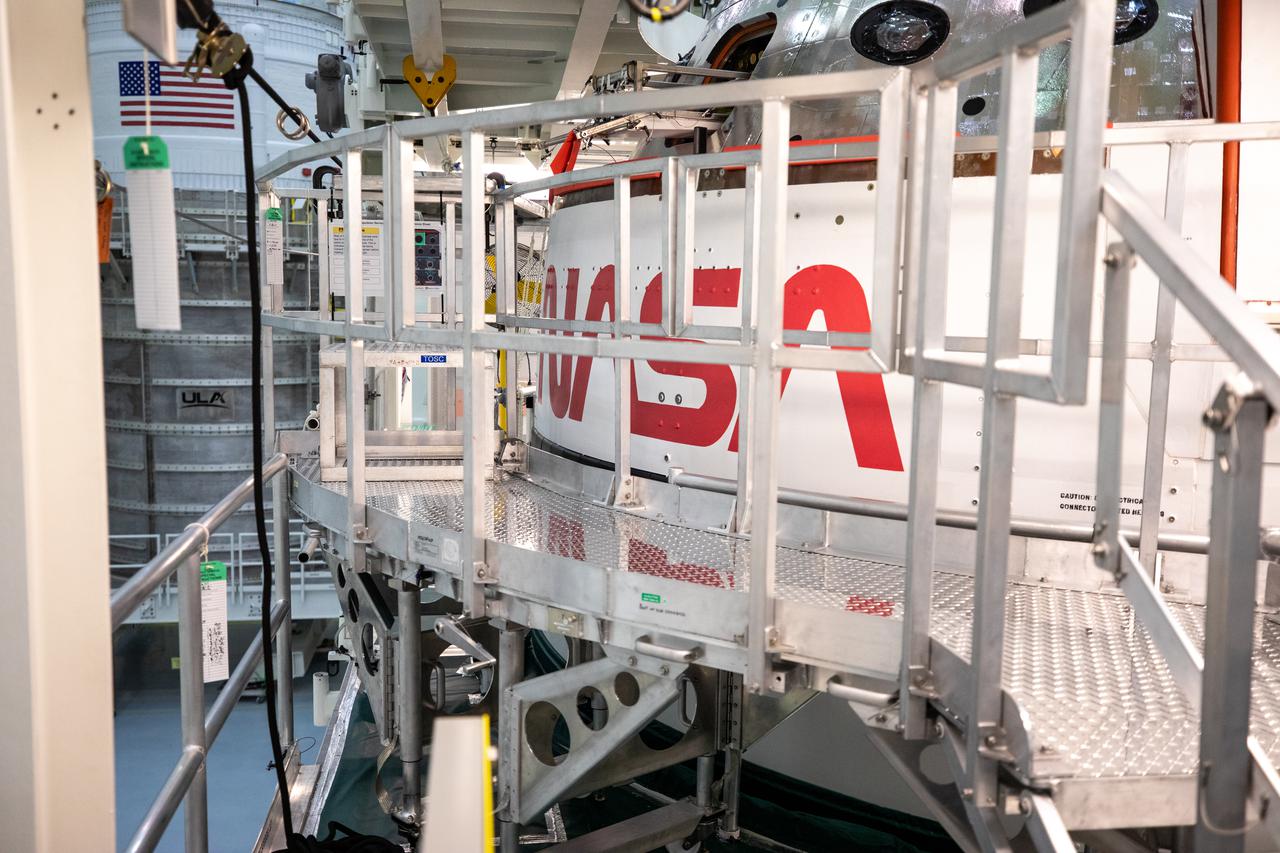
Charlie Duke and Nicole Stott visit the Multi-Payload Processing Facility (MPPF) and Vehicle Assembly Building (VAB) at NASA's Kennedy Space Center.
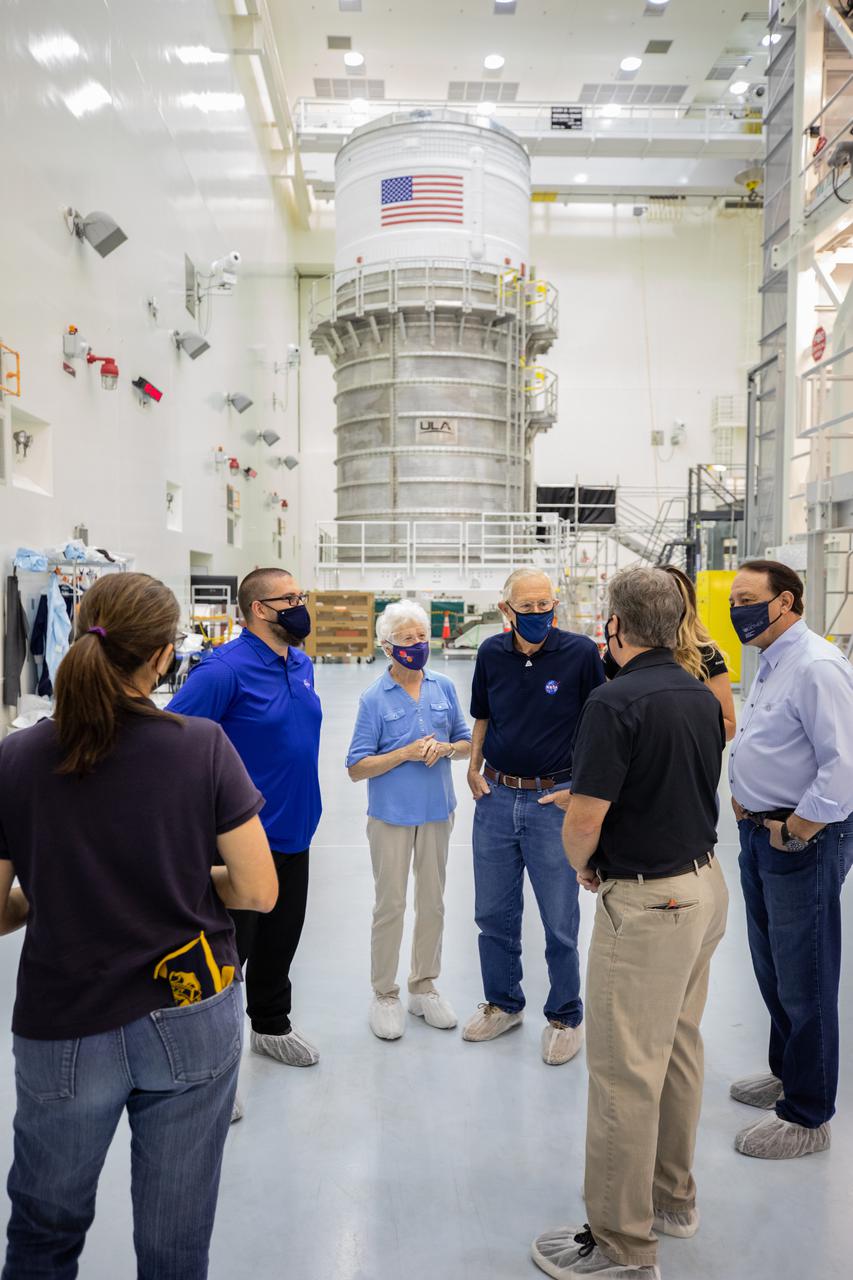
From left to right, Nicole Stott (black shirt back facing camera), NASA Astronaut (former); Adam Leppek, ARES Corporation (KLXSIII), Deputy Element Operations Manager; Dottie Duke, wife of Charlie Duke; Charlie Duke, NASA Astronaut (former); Nick Kindred, Jacobs Technology, Flow Manager; and Jim Keys, Pilot, tour the inside of the Multi-Payload Processing Facility (MPPF) during a visit to NASA’s Kennedy Space Center in Florida on May 10, 2021. Shown in the background is the Interim Cryogenic Propulsion Stage for the Artemis I mission. The first in a series of increasingly complex missions, Artemis I will test Orion and the Space Launch System rocket as an integrated system prior to crewed flights to the Moon.
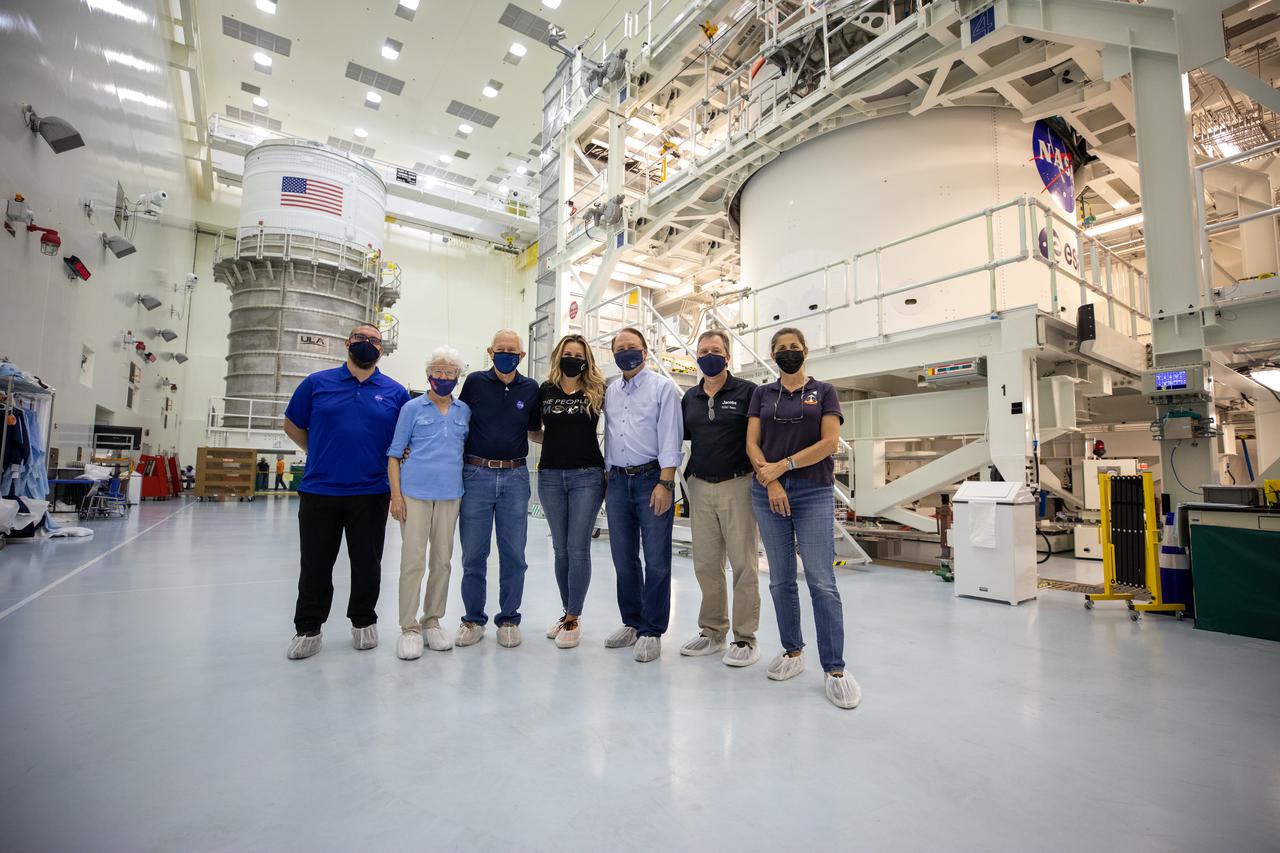
From left to right, Adam Leppek, ARES Corporation (KLXSIII), Deputy Element Operations Manager; Dottie Duke, wife of Charlie Duke; Charlie Duke, NASA Astronaut (former); Christina Korp, Assistant to Charlie Duke; Jim Keys, Pilot; Nick Kindred, Jacobs Technology, Flow Manager; and Nicole Stott, NASA Astronaut (former), shown in the Multi-Payload Processing Facility (MPPF) at NASA's Kennedy Space Center in Florida on May 10, 2021. In the background, on the left, is the Interim Cryogenic Propulsion Stage for the Space Launch System (SLS) rocket. On the right, the NASA “meatball” insignia and ESA (European Space Agency) logos on the European-built service module are visible. Both pieces of hardware will undergo fueling and servicing in the facility ahead of the Artemis I launch by teams from NASA’s Exploration Ground Systems and their primary contractor, Jacobs Technology. The first in a series of increasingly complex missions, Artemis I will test Orion and the Space Launch System rocket as an integrated system prior to crewed flights to the Moon.
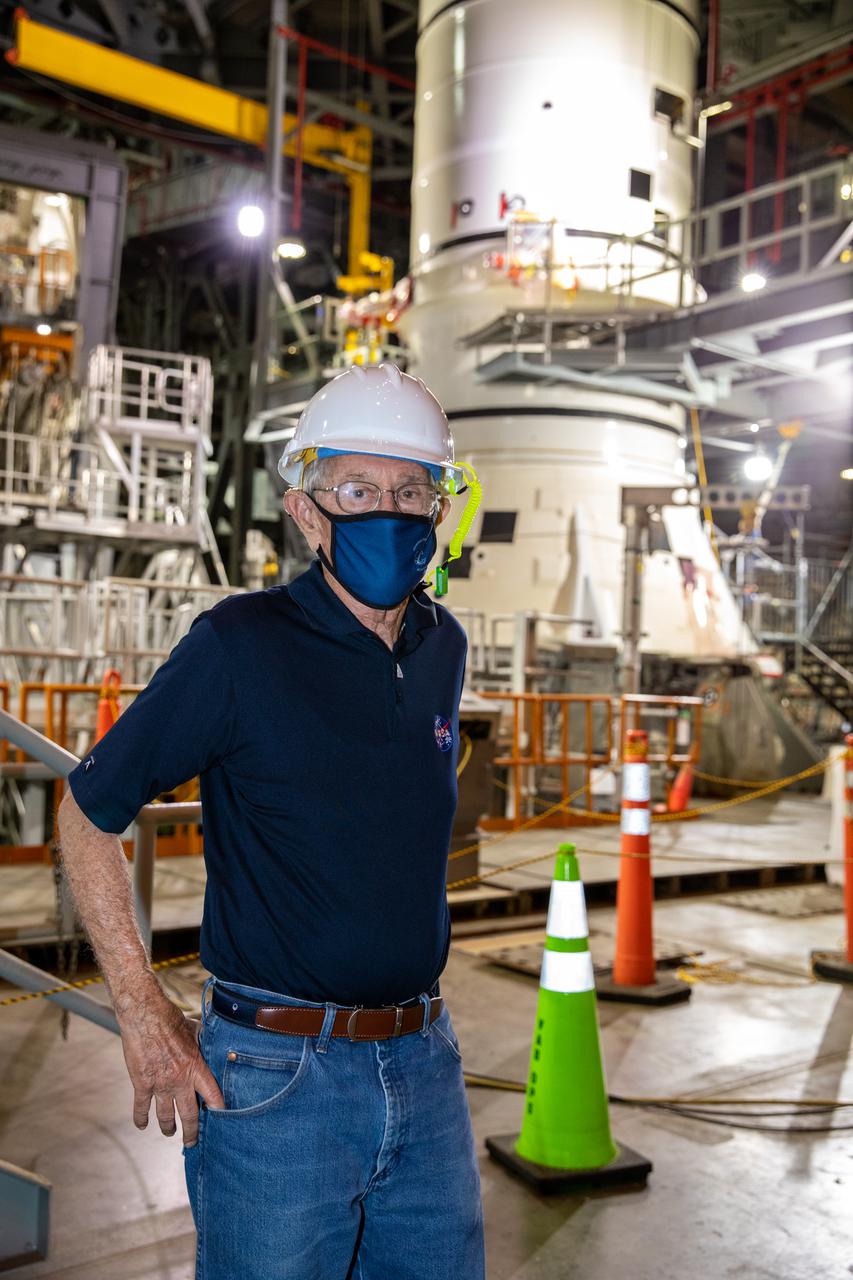
Charlie Duke, NASA Astronaut (former), shown in front of one of the aft booster segments for the Space Launch System inside the Kennedy Space Center's Vehicle Assembly Building (VAB) in Florida on May 10, 2021. Inside the VAB, the SLS core stage is being prepared for integration with the completed stack of solid rocket boosters atop the mobile launcher ahead of the Artemis I launch. The first in a series of increasingly complex missions, Artemis I will test SLS and Orion as an integrated system prior to crewed flights to the Moon.
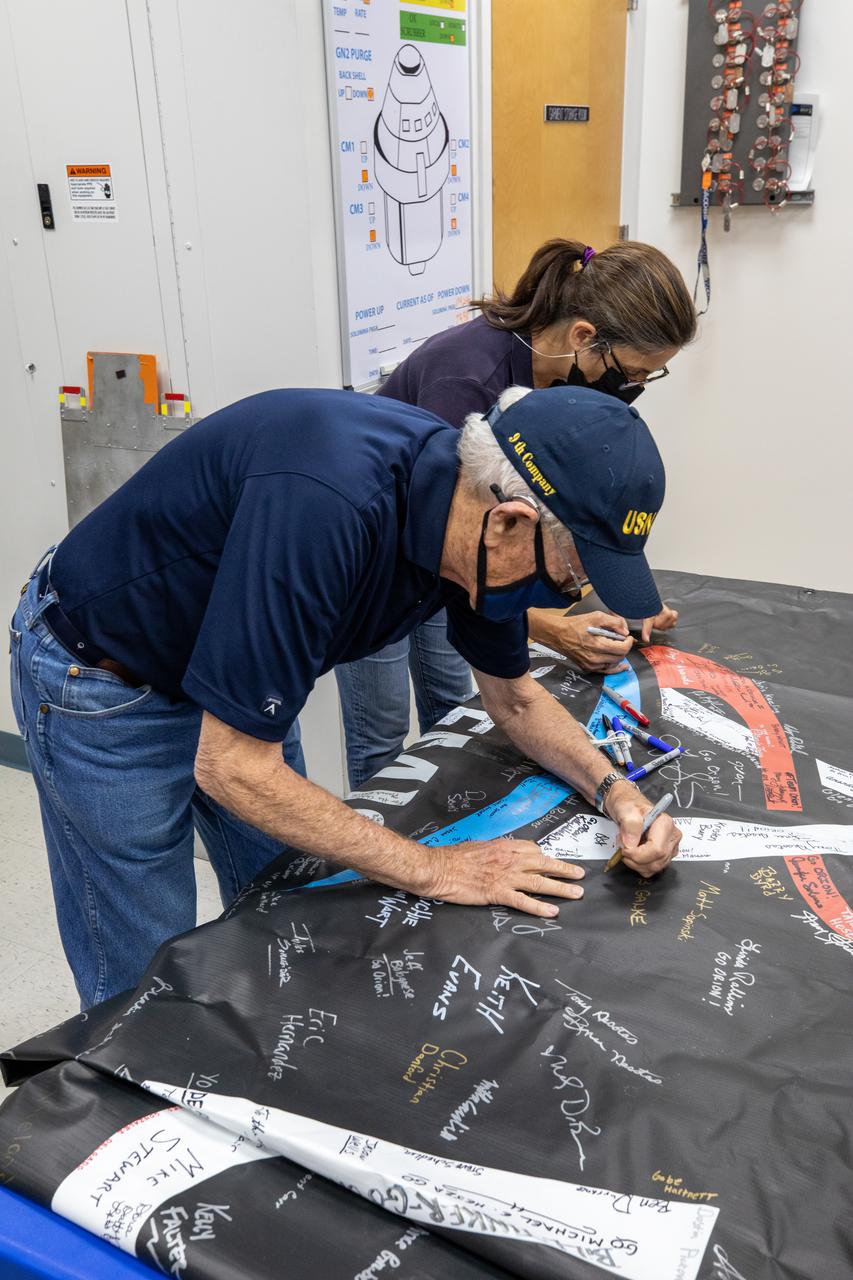
Charlie Duke, NASA Astronaut (former), and Nicole Stott, NASA Astronaut (former), add their signatures to the Artemis “We Are Going” banner inside the Multi-Payload Processing Facility (MPPF) during a visit to NASA’s Kennedy Space Center in Florida on May 10, 2021. During their time at Kennedy, they also had the opportunity to view the Orion spacecraft and Interim Cryogenic Propulsion Stage currently being serviced inside the MPPF ahead of the Artemis I launch. The first in a series of increasingly complex missions, Artemis I will test Orion and the Space Launch System rocket as an integrated system prior to crewed flights to the Moon.

S71-51289 (21 Sept. 1971) --- Astronaut Charles M. Duke Jr.

S72-16658 (January 1972) --- Astronaut Charles M. Duke Jr.
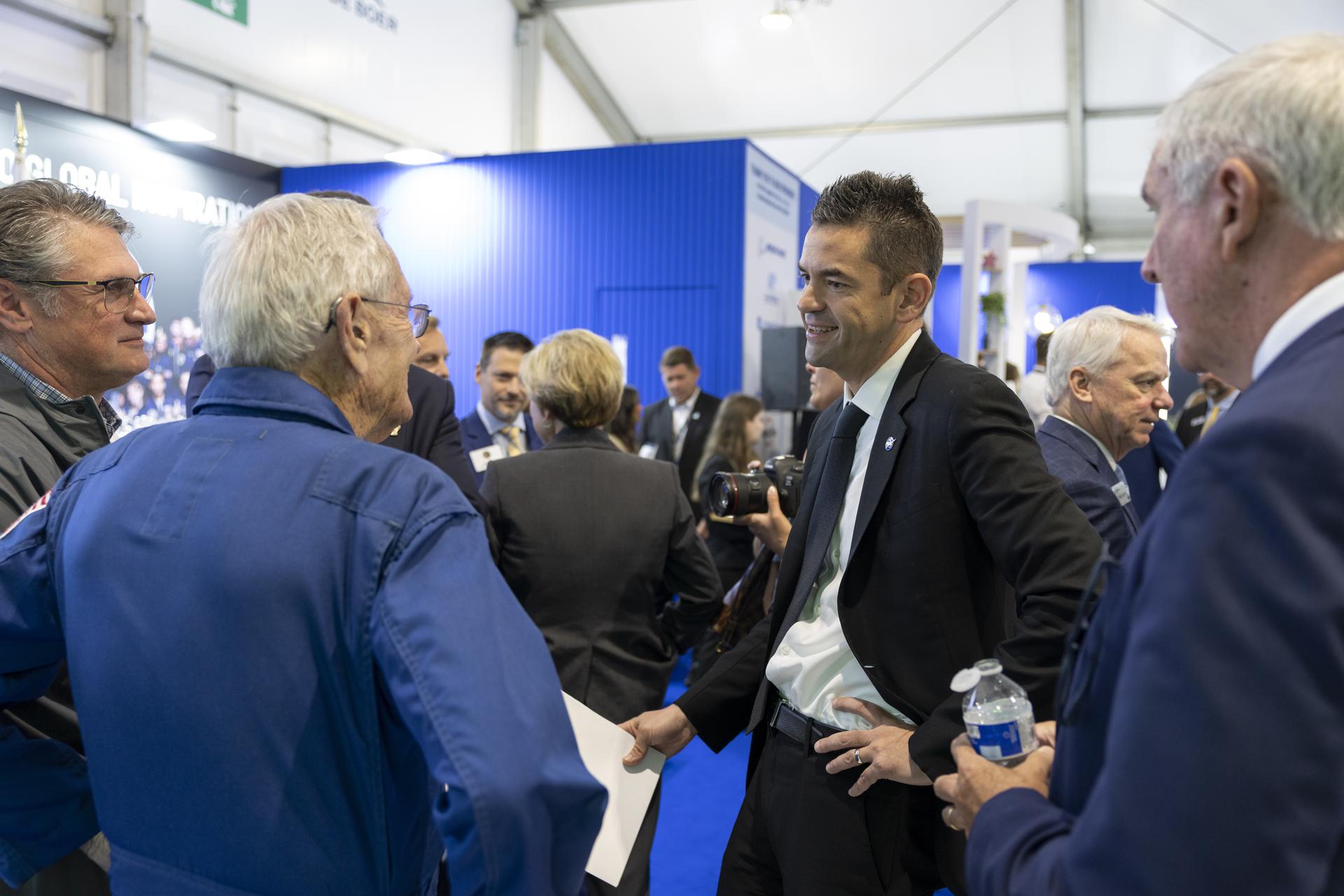
Jared Isaacman introduces Charlie Duke at the U.S. Pavillion at the Farnborough International Airshow in Farnborough, UK.
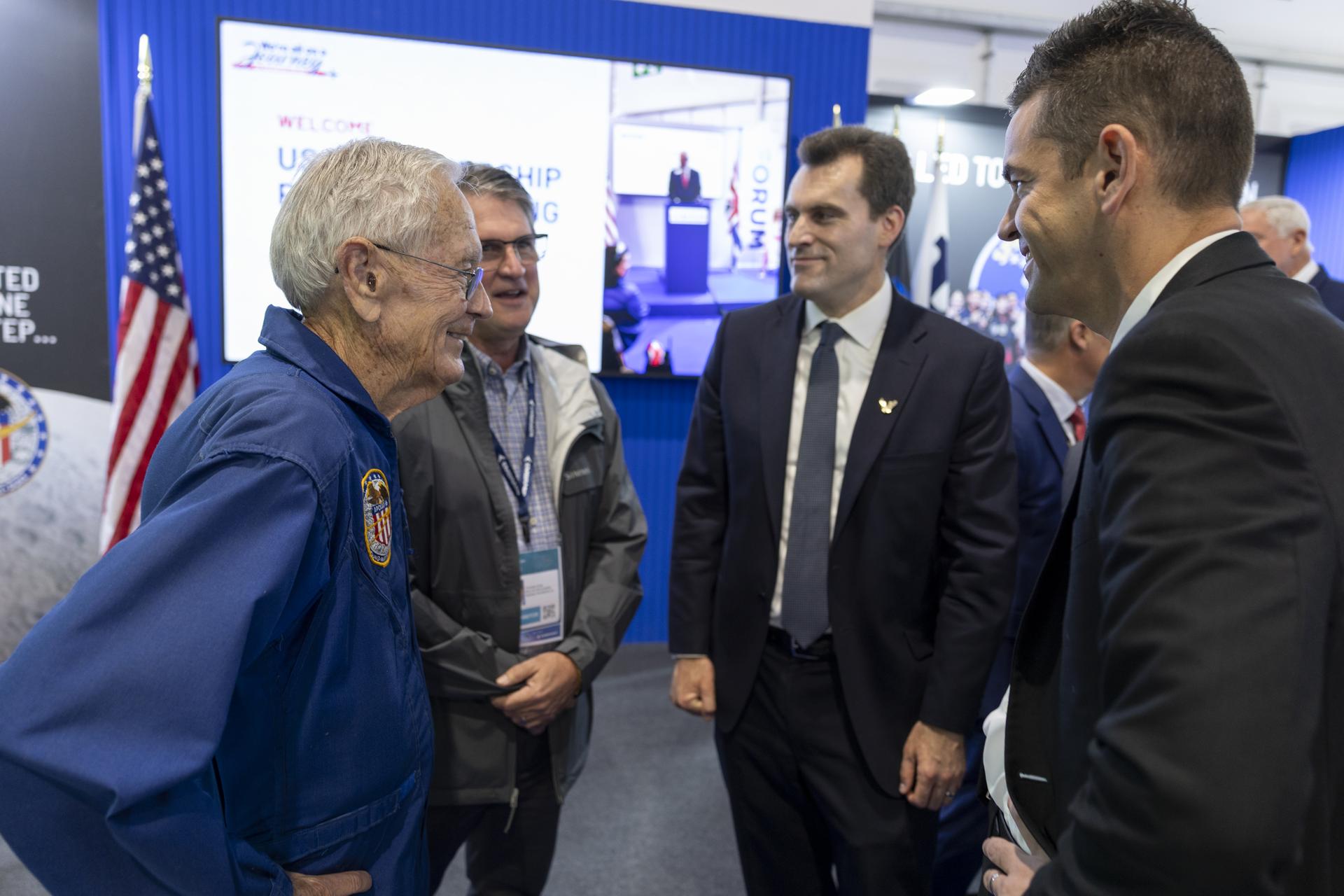
Jared Isaacman introduces Charlie Duke at the U.S. Pavillion at the Farnborough International Airshow in Farnborough, UK.

AS16-114-18423 (21 April 1972) --- Astronaut Charles M. Duke Jr., lunar module pilot, is photographed collecting lunar samples at Station No. 1, during the first Apollo 16 extravehicular activity (EVA), at the Descartes landing site. This picture, looking eastward, was taken by astronaut John W. Young, commander. Duke is standing at the rim of Plum Crater. The parked Lunar Roving Vehicle (LRV) can be seen in the left background. While astronauts Young and Duke descended in the Lunar Module (LM) "Orion" to explore the Descartes highlands region of the moon, astronaut Thomas K. Mattingly II, command module pilot, remained with the Command and Service Modules (CSM) "Casper" in lunar orbit.
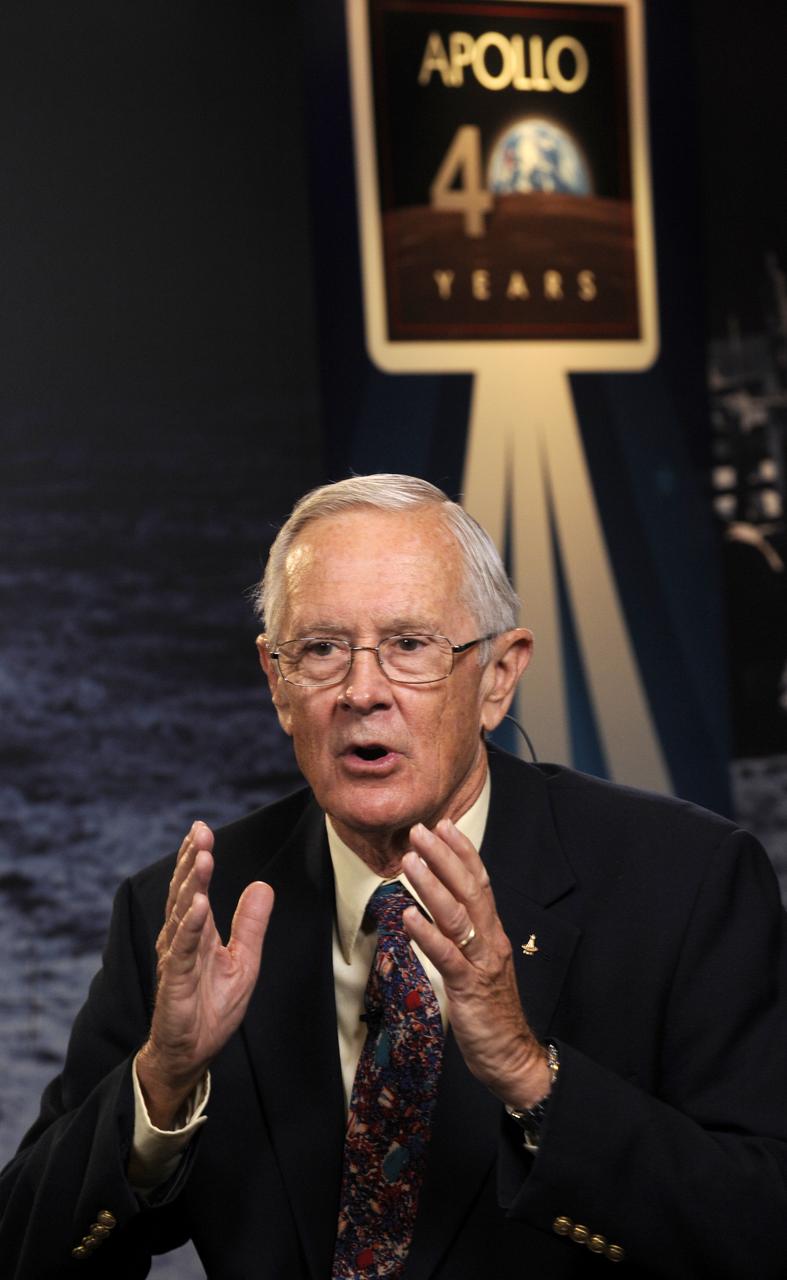
Apollo 16 astronaut Charles Duke responds to a question during a live television interview on Monday, July 20, 2009, at NASA Headquarters in Washington. Photo Credit: (NASA/Paul E. Alers)
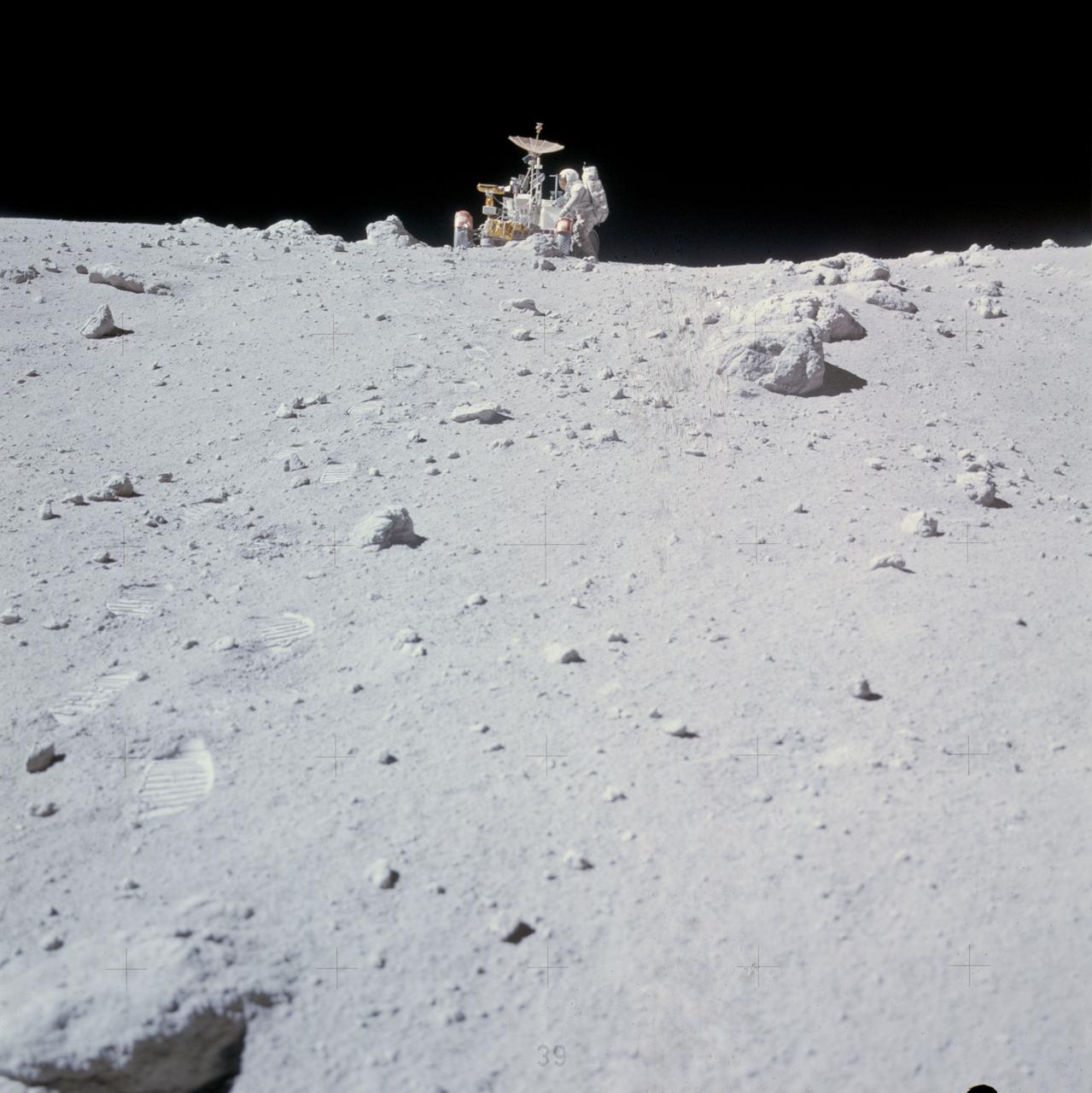
AS16-116-18607 (23 April 1972) --- Astronaut Charles M. Duke Jr. works at the front of the Lunar Roving Vehicle (LRV) parked in this rock field at a North Ray Crater geological site during the mission's third extravehicular activity (EVA) on April 23, 1972. Astronaut John W. Young took this picture with a 70mm Hasselblad camera. While astronauts Young, commander; and Duke, lunar module pilot; descended in the Apollo 16 Lunar Module (LM) "Orion" to explore the Descartes highlands landing site on the moon, astronaut Thomas K. Mattingly II, command module pilot, remained with the Command and Service Modules (CSM) "Casper" in lunar orbit.
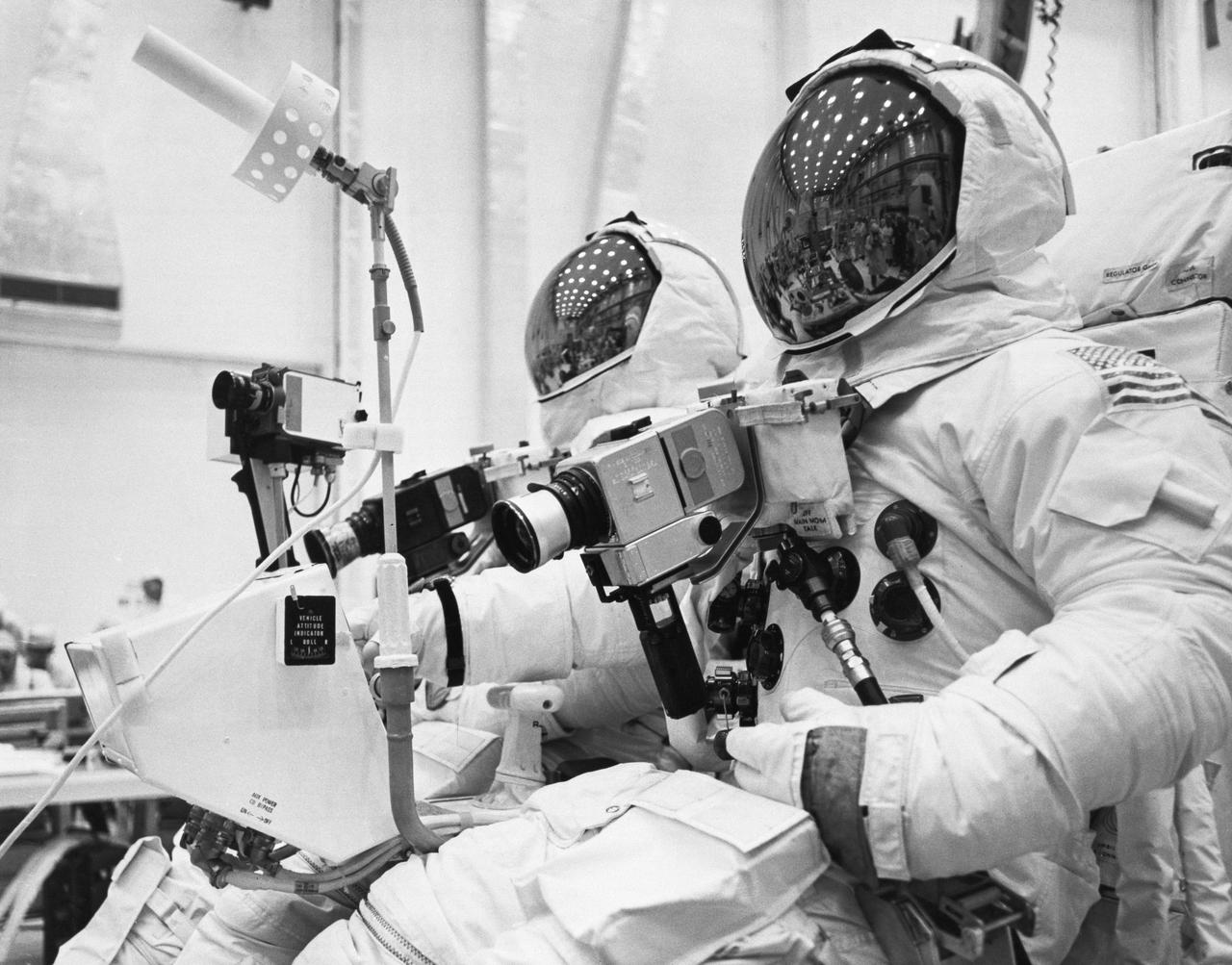
S72-33685 (22 March 1972) --- Astronauts John W. Young, Apollo 16 commander; and Charles M. Duke Jr. (nearest camera), lunar module pilot, rehearse some of the motorized phases of their scheduled extravehicular activity (EVA) assignments on the lunar surface. Young and Duke will take part in three different sessions of EVA on the moon while astronaut Thomas K. (Ken) Mattingly II, command module pilot, remains with the Command and Service Modules (CSM) in lunar orbit. The four-wheeled helper is called the Lunar Roving Vehicle (LRV).
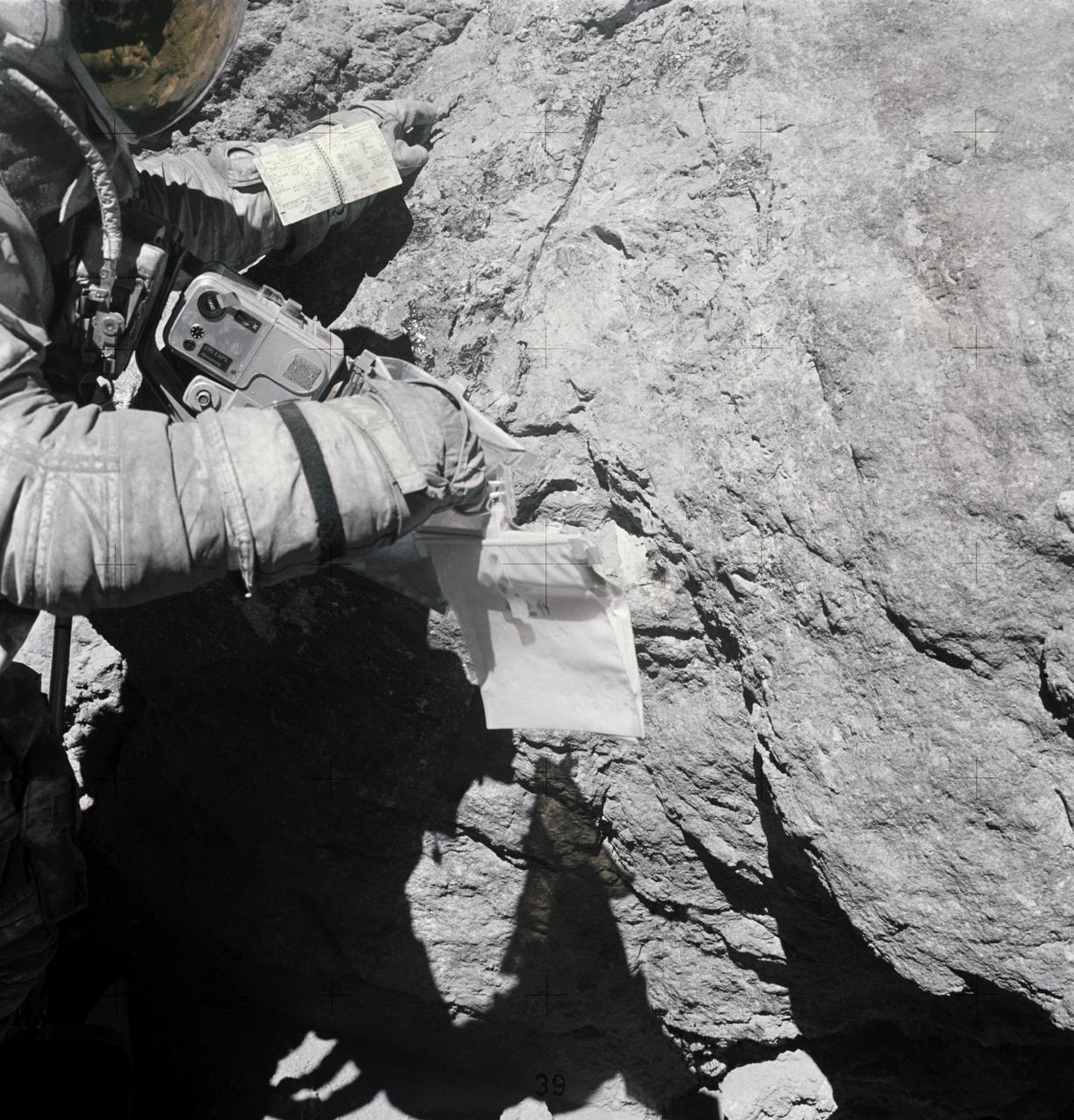
AS16-116-18649 (23 April 1972) --- Astronaut Charles M. Duke Jr., lunar module pilot of the Apollo 16 lunar landing mission, examines closely the surface of a large boulder at North Ray Crater during the third Apollo 16 extravehicular activity (EVA) at the Descartes landing site. This picture was taken by astronaut John W. Young, commander. Note the chest-mounted 70mm Hasselblad camera. While astronauts Young and Duke descended in the Apollo 16 Lunar Module (LM) "Orion" to explore the Descartes highlands landing site on the moon, astronaut Thomas K. Mattingly II, command module pilot, remained with the Command and Service Modules (CSM) "Casper" in lunar orbit.
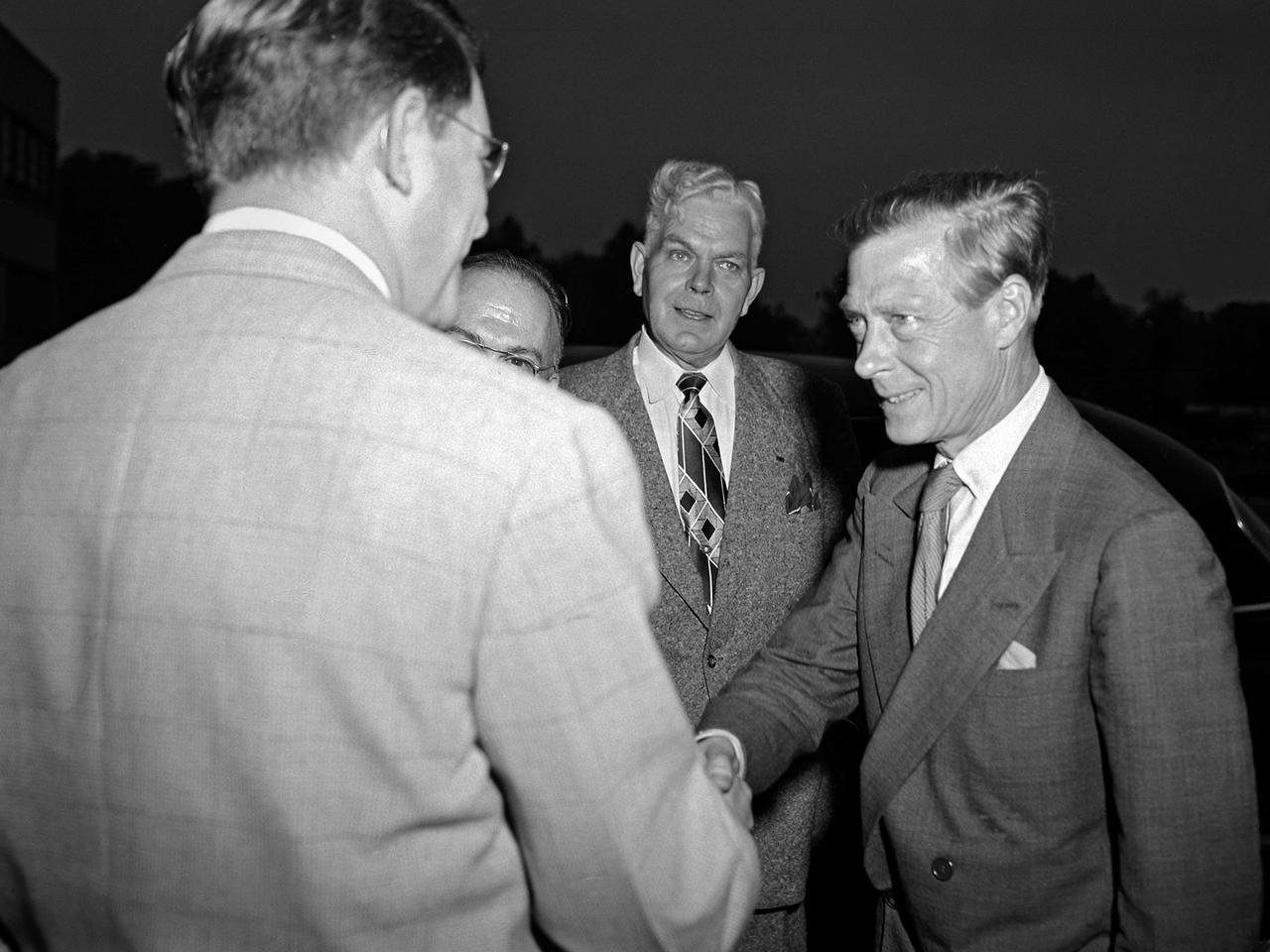
Edward Saxe-Coburg-Gotha, the Duke of Windsor, visits the National Advisory Committee for Aeronautics (NACA) Lewis Flight Propulsion Laboratory in Cleveland, Ohio. He is seen in this photograph shaking hands with Associate Director Abe Silverstein. Lewis Director Ray Sharp is in the background. Cleveland mayor Thomas Burke and other local officials were also on hand to greet Edward. Silverstein led the group on a tour of Lewis’ new 8- by 6-Foot Supersonic Wind Tunnel where the Duke inquired about the operation of the facility’s flexible walls, the types of components tested, and the generation of airflow. The Duke was in town in 1951 to promote his new autobiography, A King’s Story, at the American Booksellers Convention. Edward had assumed the British throne in January 1936, only to renounce the position less than a year later to controversially marry Wallis Simpson. Ongoing concerns over the couple’s relationship to the German government resulted in his World War II assignment to the Bahamas. Edward spent the remainder of his life in France.
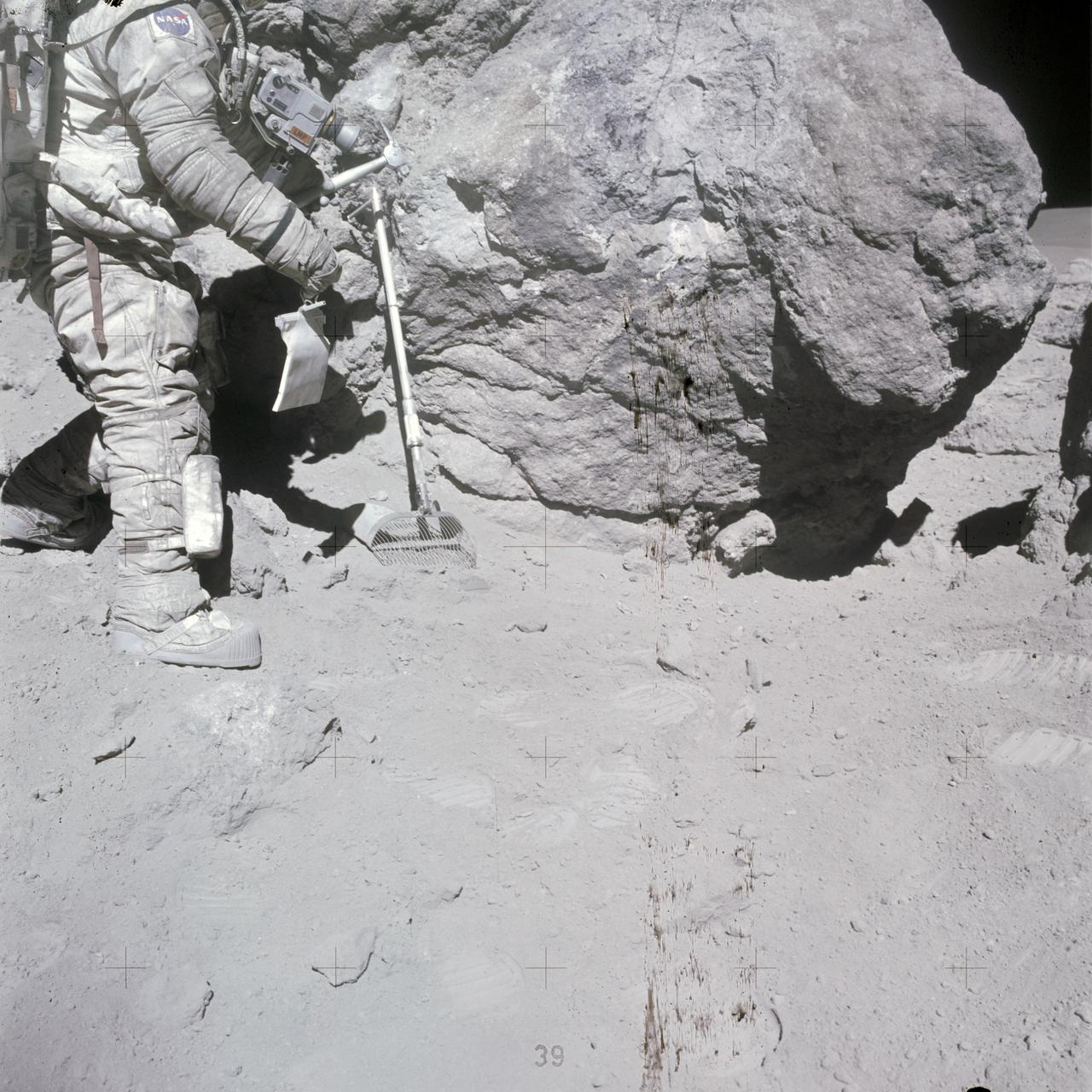
AS16-116-18653 (23 April 1972) --- Astronaut Charles M. Duke Jr., Apollo 16 lunar module pilot, stands at a big rock adjacent (south) to the huge "House Rock" (barely out of view at right edge). Note shadow at extreme right center where the two moon-exploring crew members of the mission sampled what they referred to as the "east-by-west split of House Rock" or the open space between this rock and "House Rock". At their post-mission press conference, the crewmen expressed the opinion that this rock was once a part of "House Rock" which had broken away. The two sampled the big boulder seen here also. Duke has a sample bag in his hand, and a lunar surface rake leans against the large boulder. Astronaut John W. Young, commander, exposed this view with a color magazine in his 70mm Hasselblad camera. While astronauts Young and Duke descended in the Apollo 16 Lunar Module (LM) "Orion" to explore the Descartes highlands landing site on the moon, astronaut Thomas K. Mattingly II, command module pilot, remained with the Command and Service Modules (CSM) "Casper" in lunar orbit.
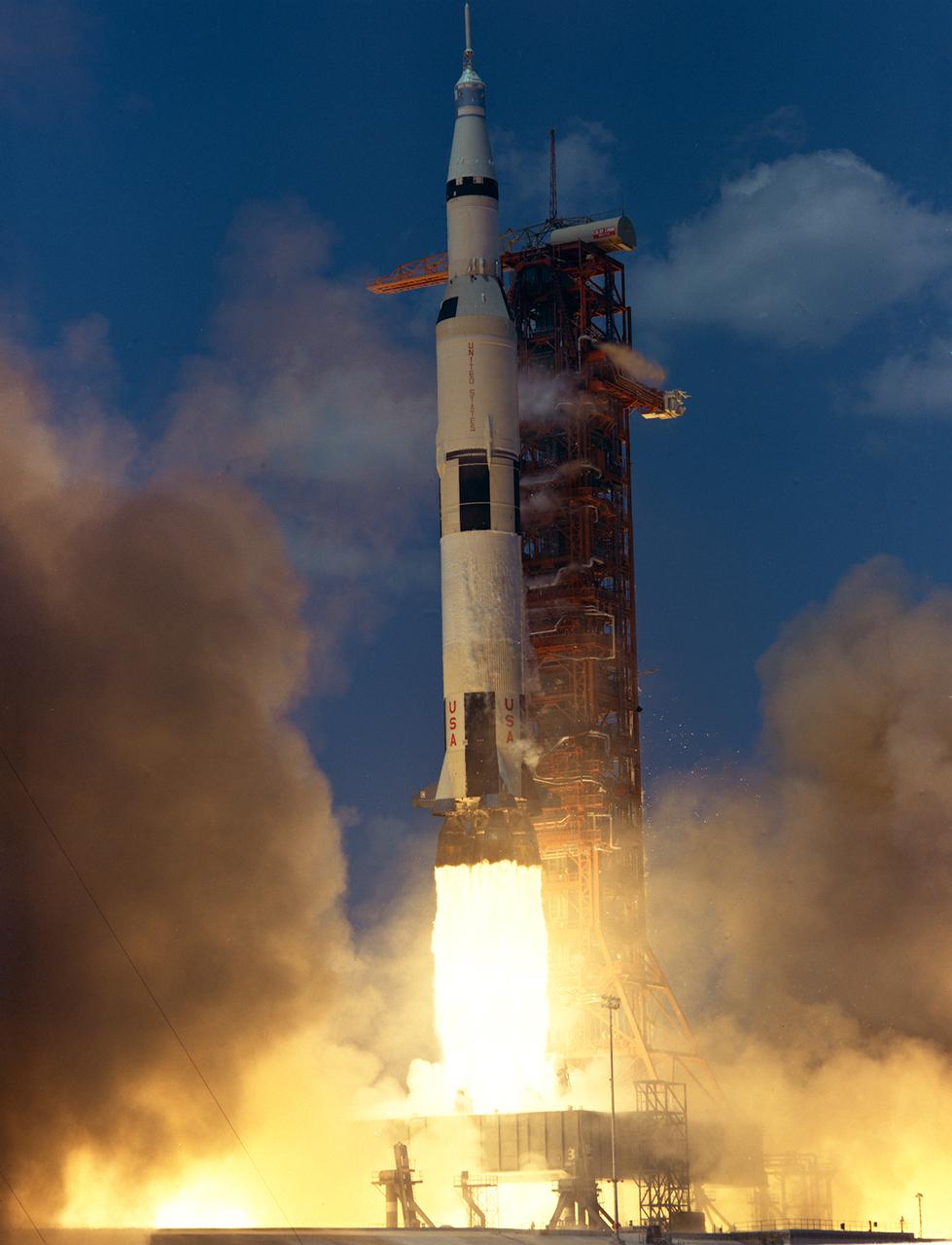
The sixth marned lunar landing mission, the Apollo 16 (SA-511), carrying three astronauts: Mission commander John W. Young, Command Module pilot Thomas K. Mattingly II, and Lunar Module pilot Charles M. Duke, lifted off on April 16, 1972. The Apollo 16 continued the broad-scale geological, geochemical, and geophysical mapping of the Moon's crust, begun by the Apollo 15, from lunar orbit. This mission marked the first use of the Moon as an astronomical observatory by using the ultraviolet camera/spectrograph. It photographed ultraviolet light emitted by Earth and other celestial objects. The Lunar Roving Vehicle was also used. The mission ended on April 27, 1972.
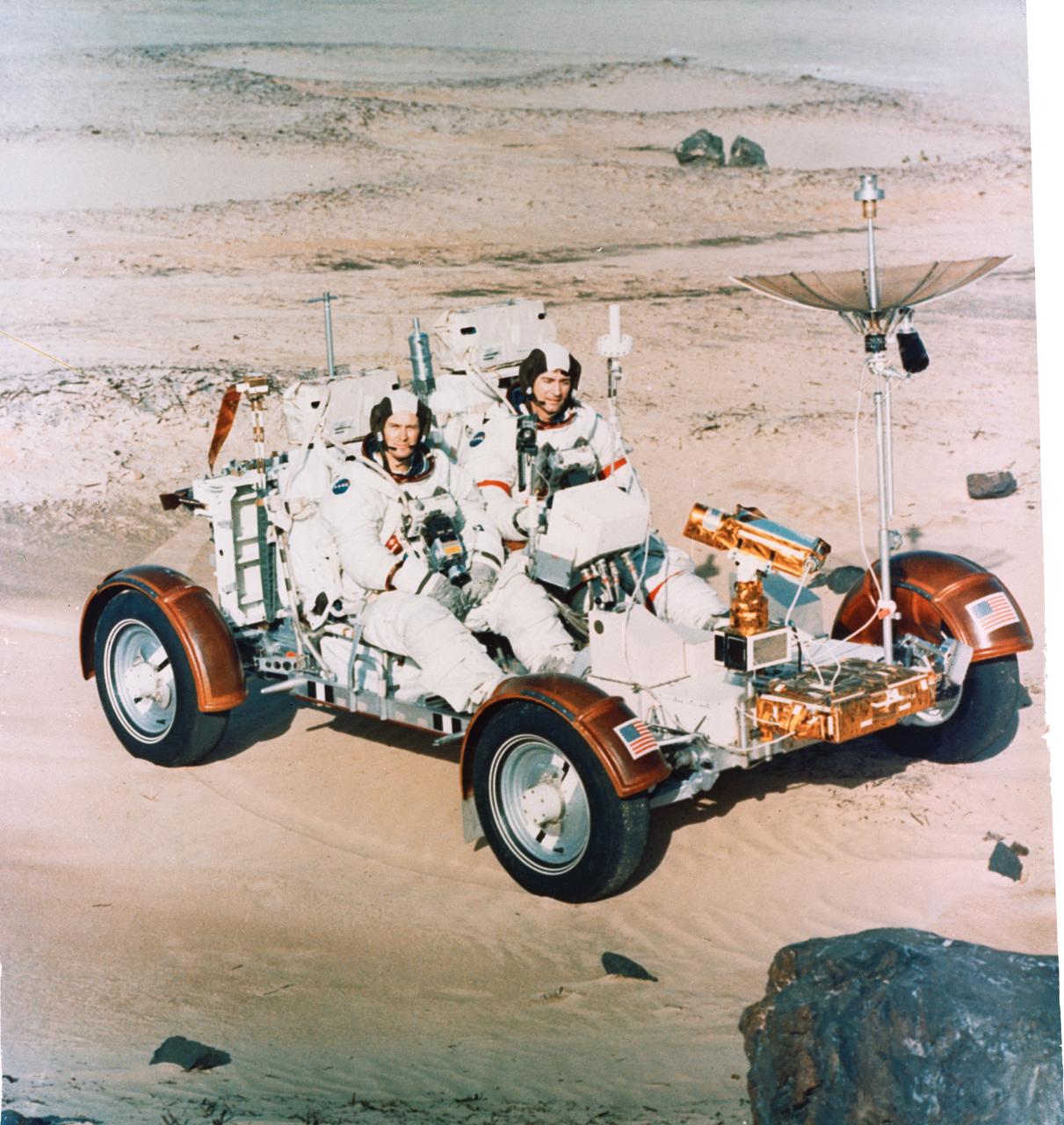
S72-30695 (22 Dec. 1971) --- Astronauts John W. Young, right, Apollo 16 commander, and Charles M. Duke Jr., lunar module pilot, maneuver a training version of the Lunar Roving Vehicle (LRV) about a field at Kennedy Space Center (KSC) simulated to represent the lunar surface. The LRV is planned to transport the two crew men around the Descartes area on the lunar surface while astronaut Thomas K. Mattingly II, command module pilot, orbits the moon in the Command and Service Modules (CSM).
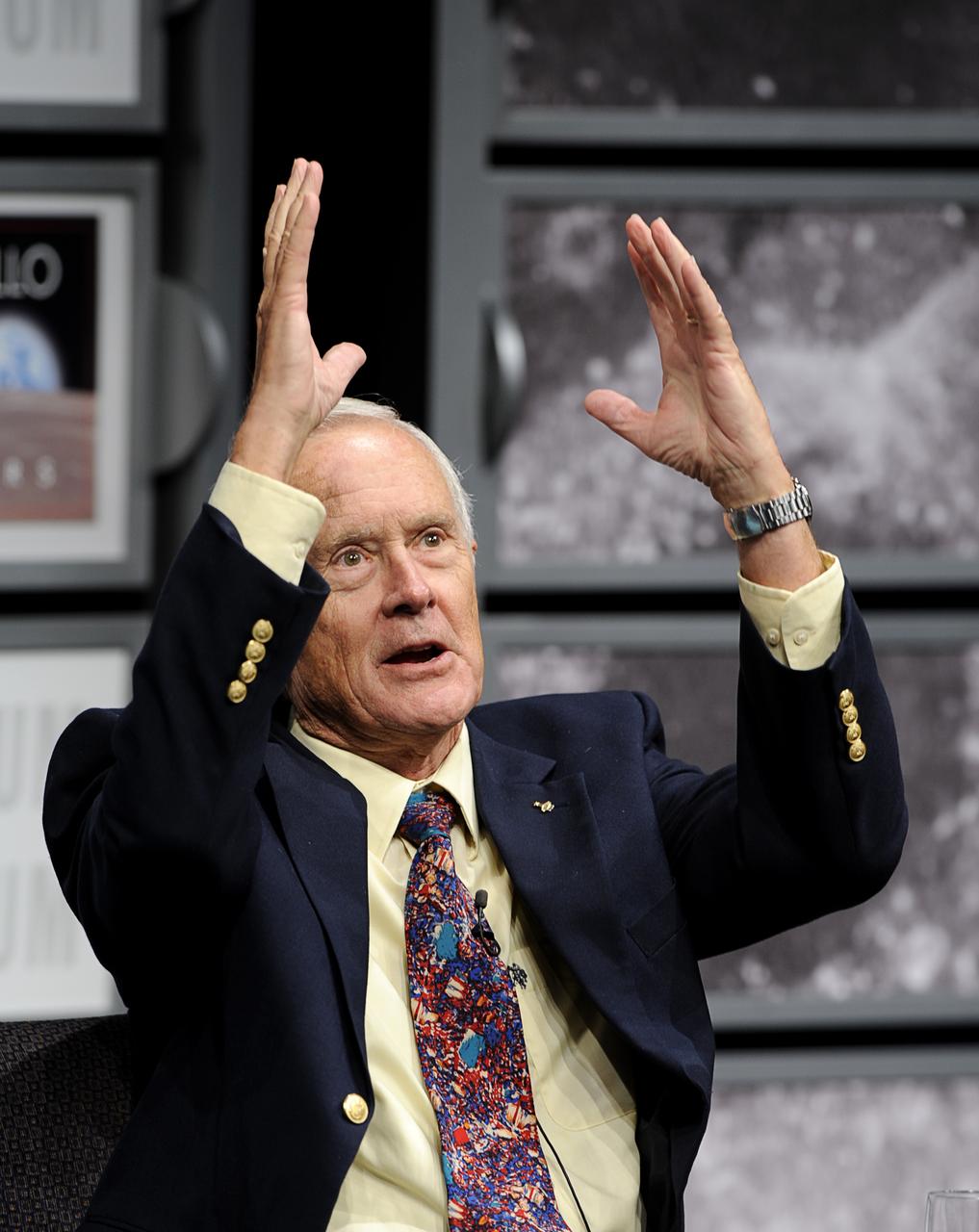
Apollo 16 astronaut Charlie Duke, the 10th person to walk on the moon who spent 71 hours on the lunar surface, talks during a panel discussion, Monday, July 20, 2009, hosted by Nick Clooney at the Newseum in Washington as part of the commemoration of the 40th Anniversary of the Apollo 11 moon landing. Photo Credit: (NASA/Bill Ingalls)
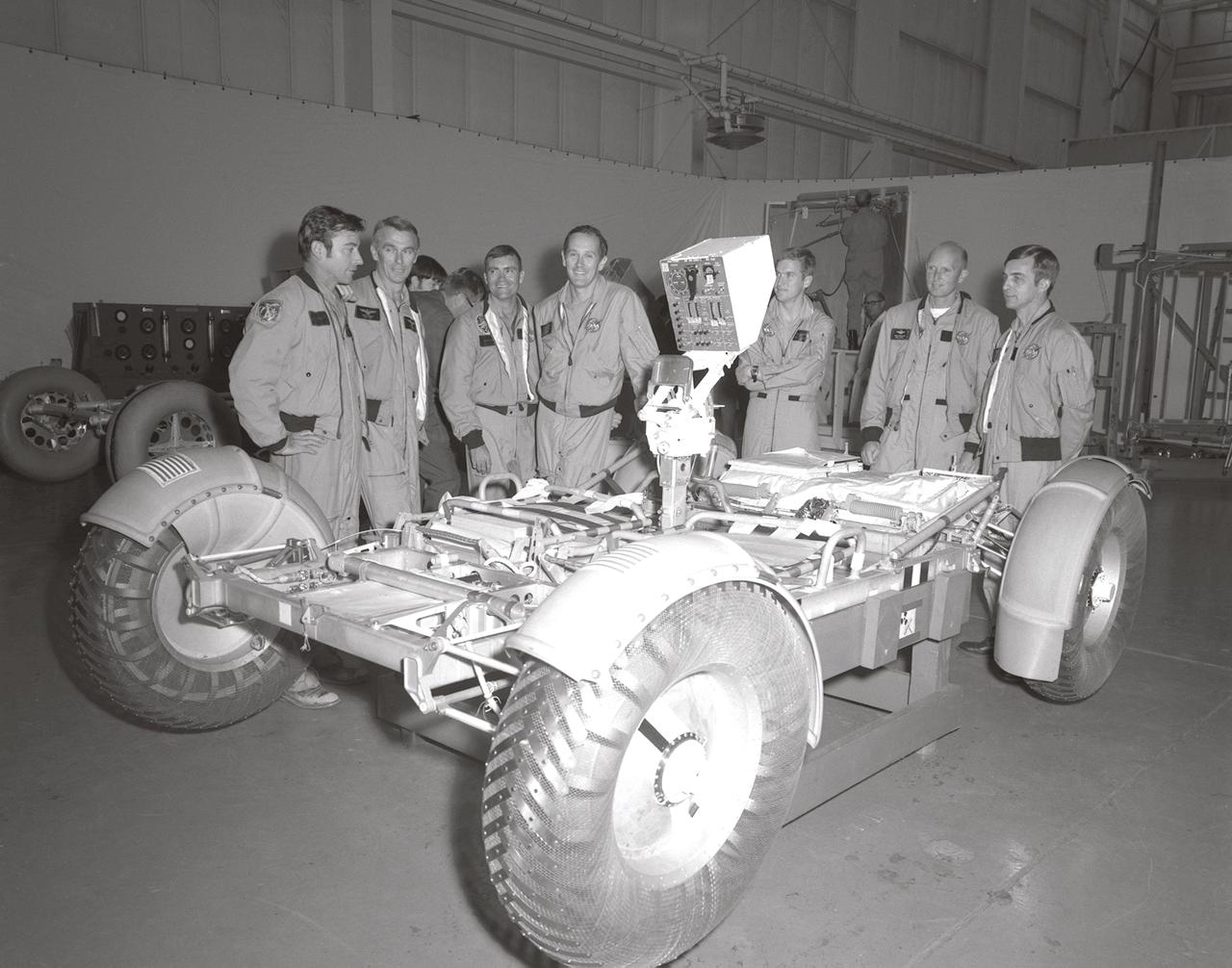
In this November 1971 photograph, (from left to right) Astronauts John Young, Eugene Cernan, Charles Duke, Fred Haise, Anthony England, Charles Fullerton, and Donald Peterson await deployment tests of the Lunar Roving Vehicle (LRV) qualification test unit in building 4649 at the Marshall Space Flight Center (MSFC). The LRV, developed under the direction of the MSFC, was designed to allow Apollo astronauts a greater range of mobility on the lunar surface during the last three lunar exploration missions; Apollo 15, Apollo 16, and Apollo 17.
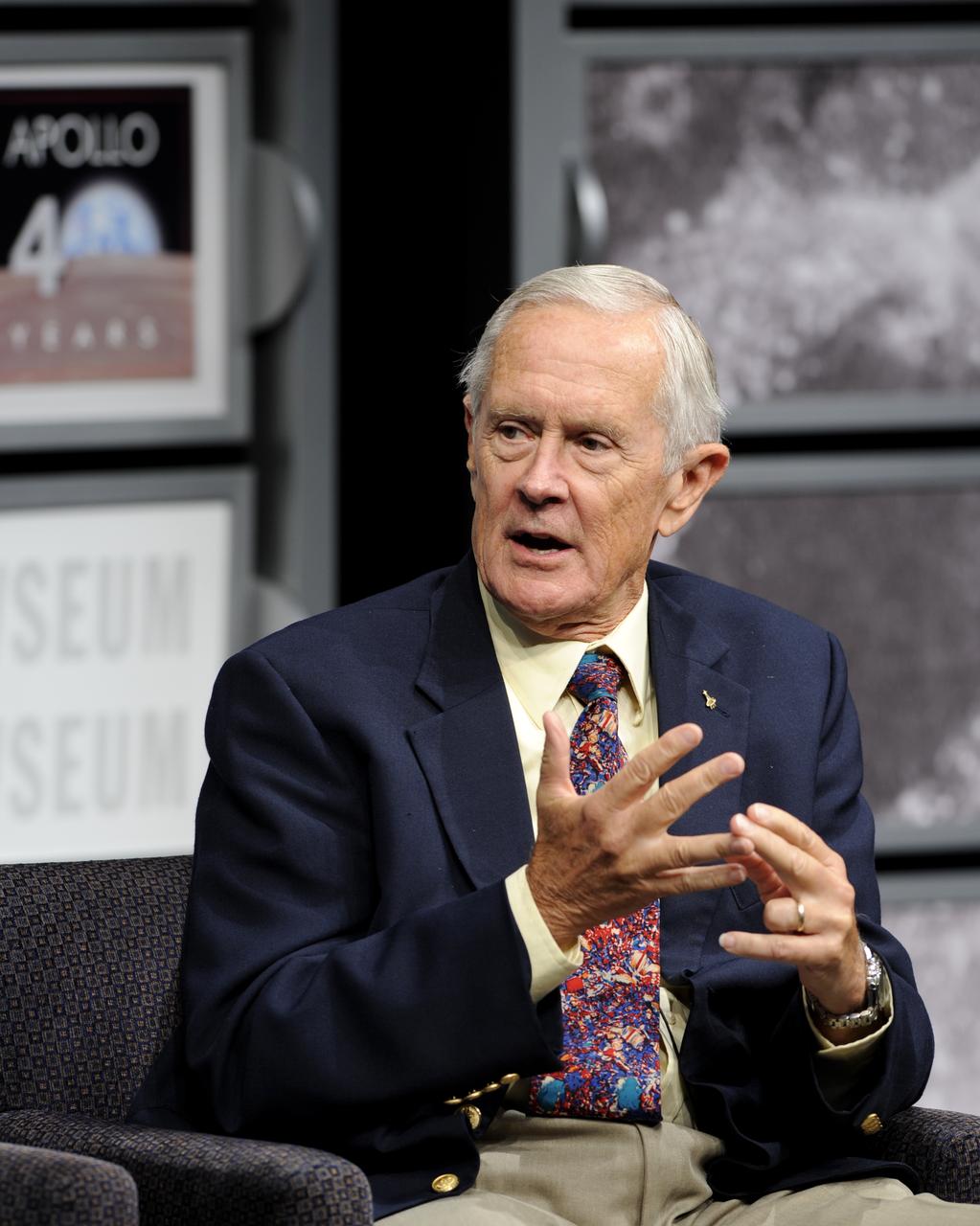
Apollo 16 astronaut Charlie Duke, the 10th person to walk on the moon who spent 71 hours on the lunar surface, talks during a panel discussion, Monday, July 20, 2009, hosted by Nick Clooney at the Newseum in Washington as part of the commemoration of the 40th Anniversary of the Apollo 11 moon landing. Photo Credit: (NASA/Bill Ingalls)
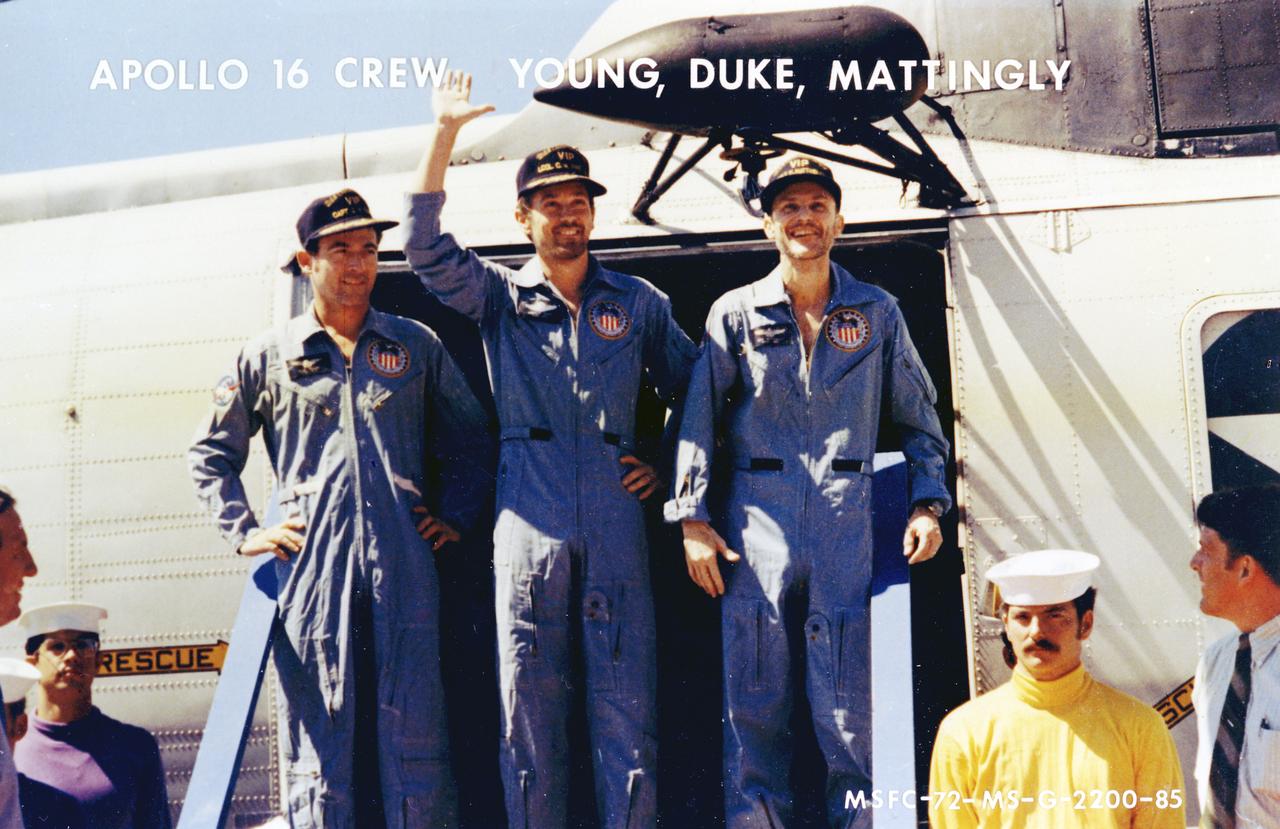
The Apollo 16 Command Module splashed down in the Pacific Ocean on April 27, 1972 after an 11-day moon exploration mission. The 3-man crew is shown here aboard the rescue ship, USS Horton. From left to right are: Mission Commander John W. Young, Lunar Module pilot Charles M. Duke, and Command Module pilot Thomas K. Mattingly II. The sixth manned lunar landing mission, the Apollo 16 (SA-511) lifted off on April 16, 1972. The Apollo 16 mission continued the broad-scale geological, geochemical, and geophysical mapping of the Moon’s crust, begun by the Apollo 15, from lunar orbit. This mission marked the first use of the Moon as an astronomical observatory by using the ultraviolet camera/spectrograph which photographed ultraviolet light emitted by Earth and other celestial objects. The Lunar Roving Vehicle, developed by the Marshall Space Flight Center, was also used.
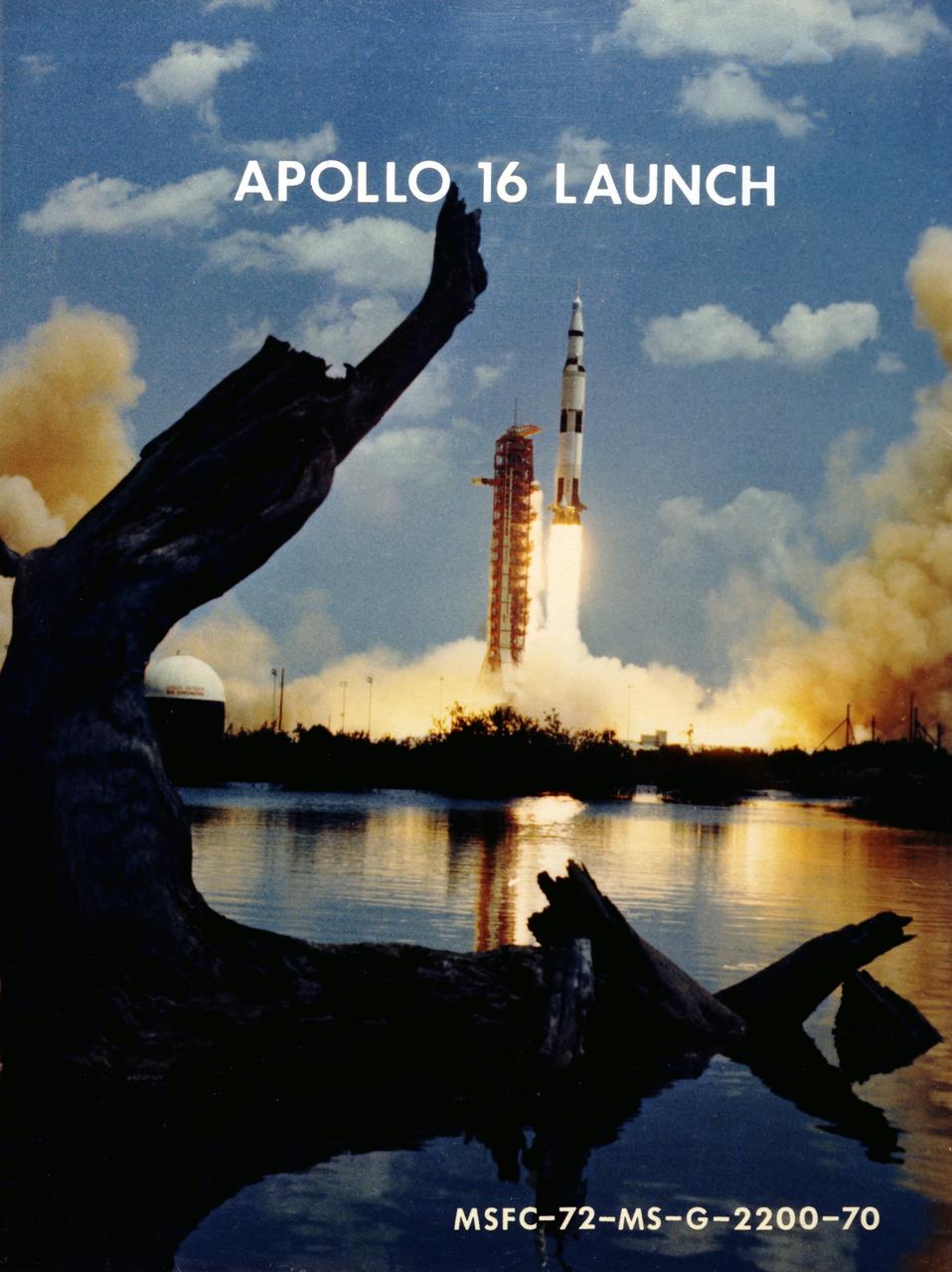
The sixth manned lunar landing mission, the Apollo 16 (SA-511), carrying three astronauts: Mission Commander John W. Young, Command Module pilot Thomas K. Mattingly II, and Lunar Module pilot Charles M. Duke, lifted off on April 16, 1972. The Apollo 16 mission continued the broad-scale geological, geochemical, and geophysical mapping of the Moon’s crust, begun by the Apollo 15, from lunar orbit. This mission marked the first use of the Moon as an astronomical observatory by using the ultraviolet camera/spectrograph which photographed ultraviolet light emitted by Earth and other celestial objects. The Lunar Roving Vehicle, developed by the Marshall Space Flight Center, was also used. The mission ended on April 27, 1972.
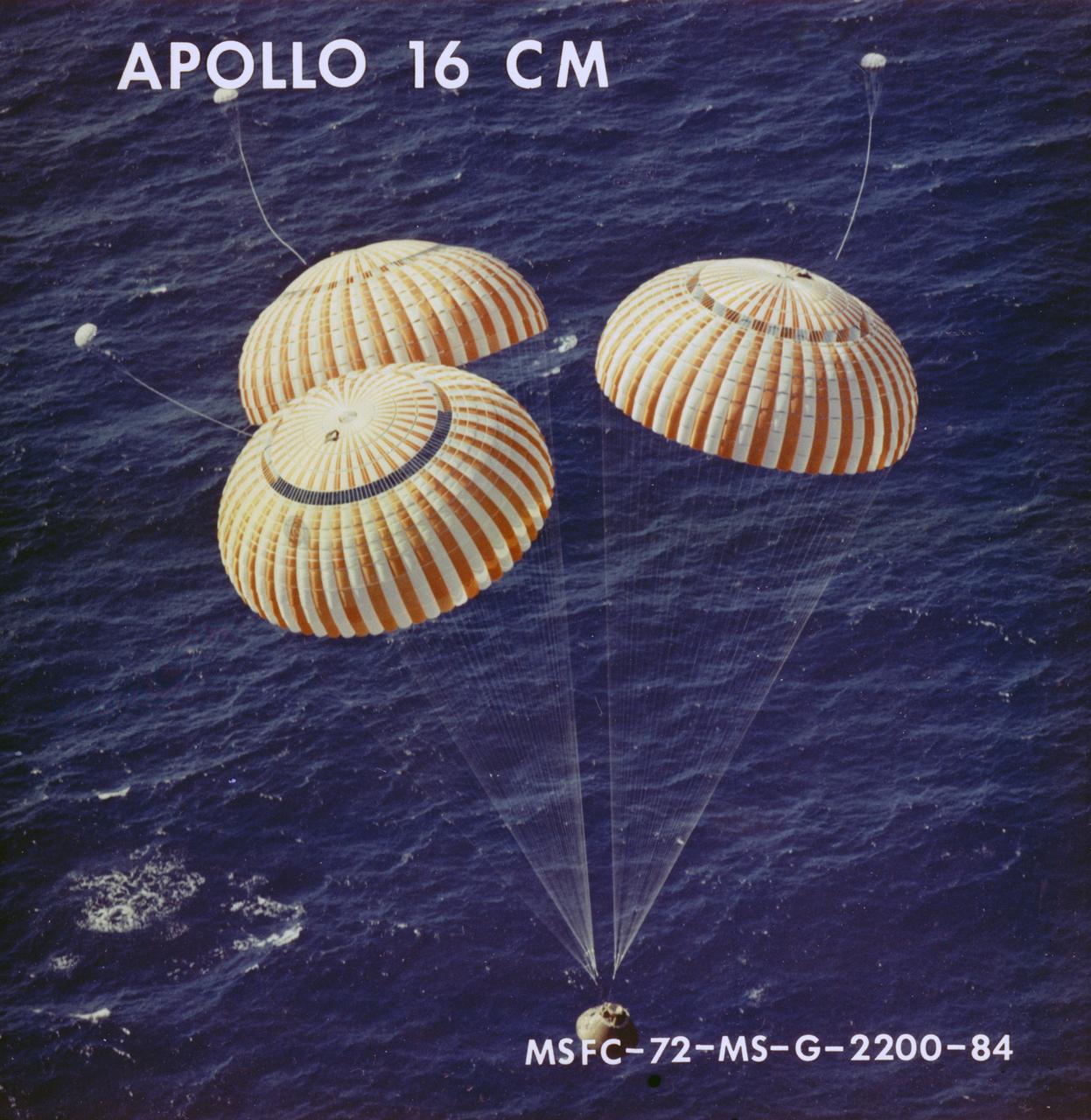
The Apollo 16 Command Module splashed down in the Pacific Ocean on April 27, 1972 after an 11-day moon exploration mission. The sixth manned lunar landing mission, the Apollo 16 (SA-511), carrying three astronauts: Mission Commander John W. Young, Command Module pilot Thomas K. Mattingly II, and Lunar Module pilot Charles M. Duke, lifted off on April 16, 1972. The Apollo 16 continued the broad-scale geological, geochemical, and geophysical mapping of the Moon’s crust, begun by the Apollo 15, from lunar orbit. This mission marked the first use of the Moon as an astronomical observatory by using the ultraviolet camera/spectrograph which photographed ultraviolet light emitted by Earth and other celestial objects. The Lunar Roving Vehicle, developed by the Marshall Space Flight Center, was also used.

AS16-113-18342 (21 April 1972) --- Astronaut Charles M. Duke Jr., Apollo 16 lunar module pilot, salutes the United States flag during the mission's first extravehicular activity (EVA), on April 21, 1972. Stone Mountain reaches five-sixths across the photo in background. The Lunar Module (LM) and Lunar Roving Vehicle (LRV) are in the background. While John W. Young, commander and Duke descended in the LM to explore the Descartes region of the moon, Thomas K. Mattingly II, command module pilot, remained with the Command and Service Modules (CSM) in lunar orbit.
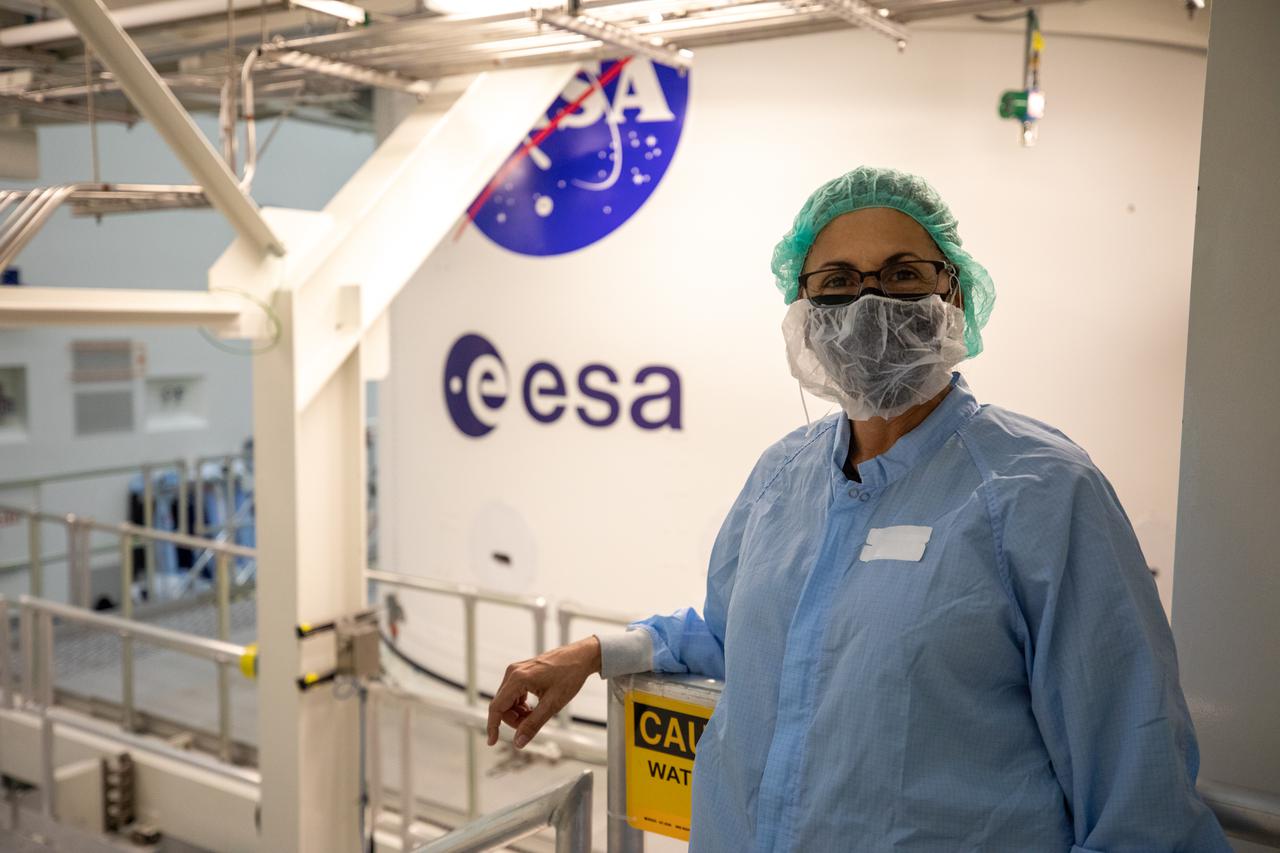
Nicole Stott, NASA Astronaut (former), shown next to the NASA “meatball” and European Space Agency insignias on the European-built service module for the Orion spacecraft, inside the Multi-Payload Processing Facility (MPPF) during a visit to NASA’s Kennedy Space Center in Florida on May 10, 2021. The first in a series of increasingly complex missions, Artemis I will test Orion and the Space Launch System rocket as an integrated system prior to crewed flights to the Moon.
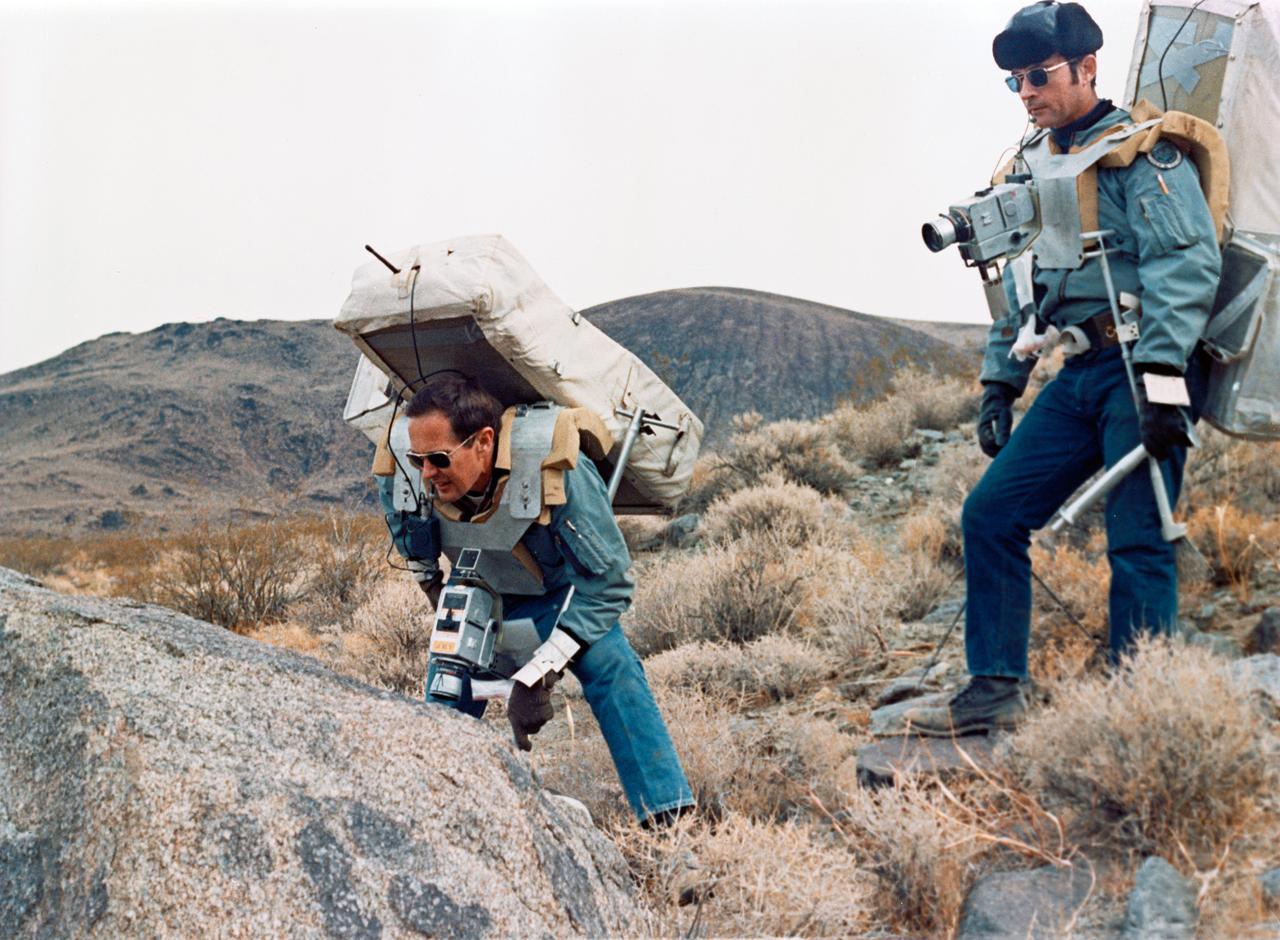
S71-59355 (17-18 Nov. 1971) --- Astronauts John W. Young, right, prime crew commander for Apollo 16, and Charles M. Duke Jr., lunar module pilot, study rock formations along their simulated lunar traverse route. The prime and backup commanders and lunar module pilots for Apollo 16 took part in the two-day geology field trip and simulations in the Coso Range, near Ridgecrest, California, about 160 miles north by northeast of Los Angeles. The training and simulations were conducted Nov. 17 and 18, 1971, at the U.S. Naval Ordnance Test Station.

Apollo astronaut Alan Bean, center, laughs at a comment made by Apollo astronaut Charles Duke, right, as Apollo astronaut Buzz Aldrin, left, looks on during a live television interview on Monday, July 20, 2009, at NASA Headquarters in Washington. Monday marked the 40th Anniversary of the historic landing of Apollo 11 on the Moon. Photo Credit: (NASA/Paul E. Alers)
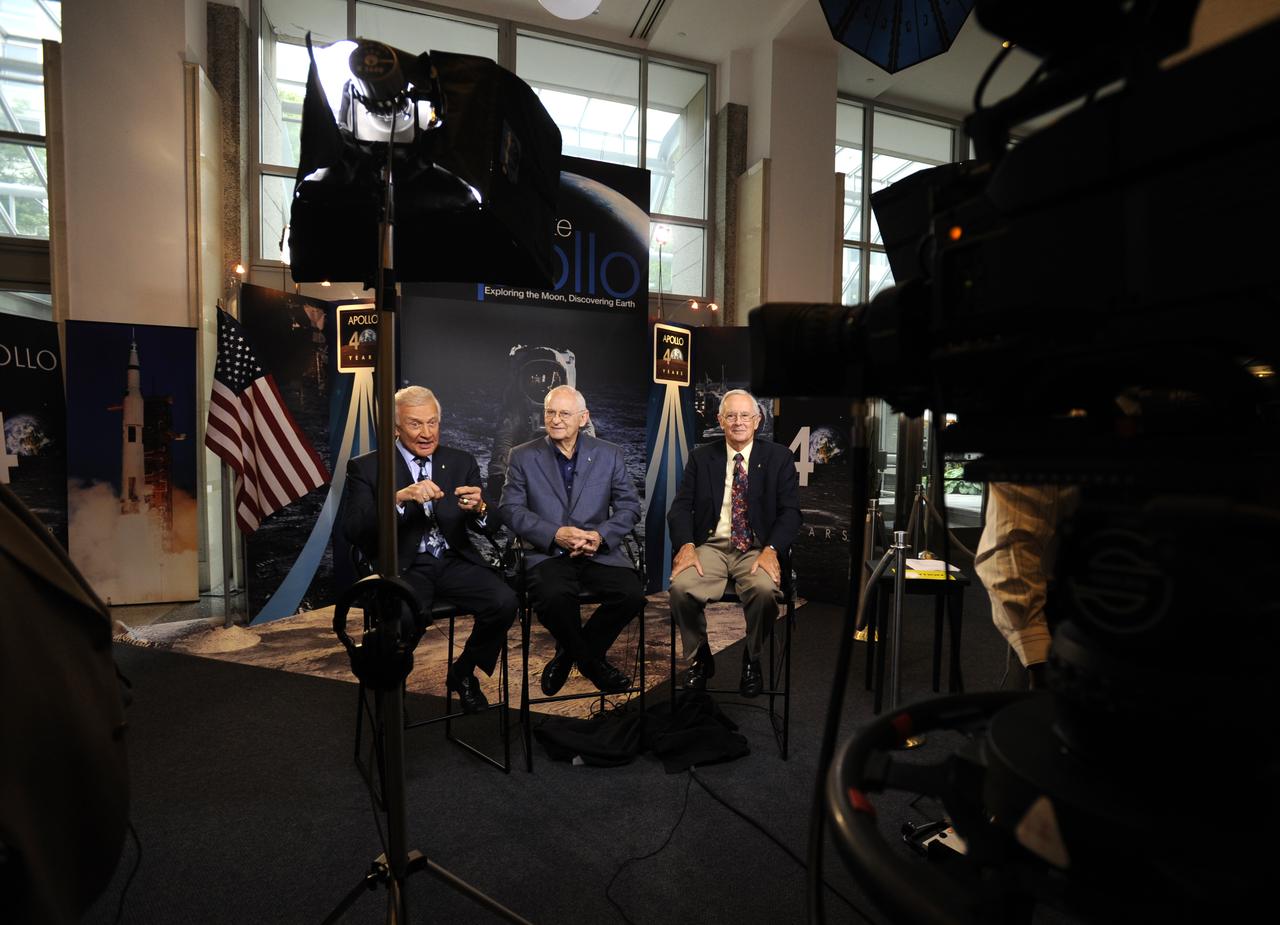
Apollo 11 astronaut Buzz Aldrin, the second man to walk on the Moon, seated left, responds to a question during a live television interview on Monday, July 20, 2009, at NASA Headquarters in Washington as Apollo 12 astronaut Alan Bean and Apollo 16 astronaut Charles Duke, right look on. The three sat in for interviews with morning talks shows covering the 40th Anniversary of the Apollo 11 landing on the Moon. Photo Credit: (NASA/Paul E. Alers)
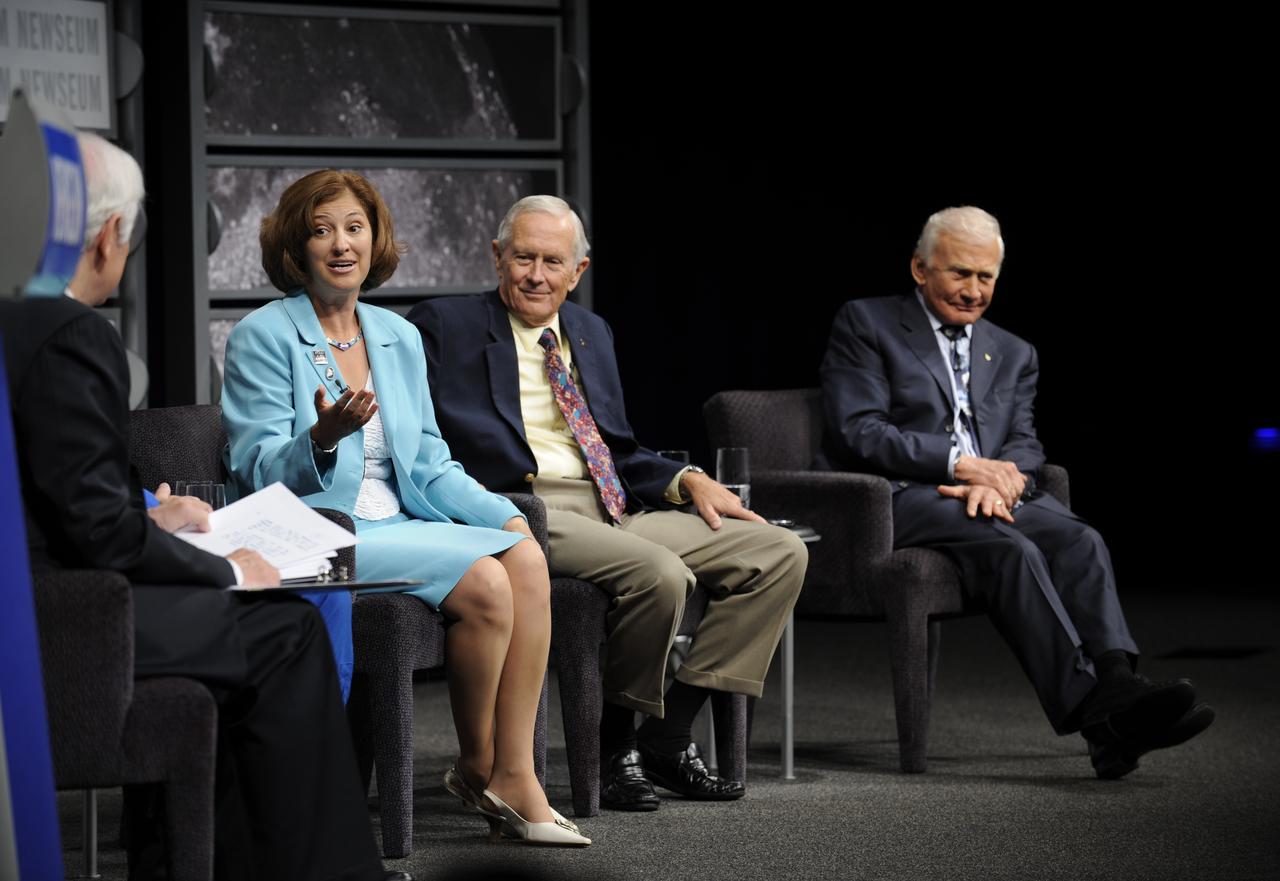
Veteran journalist Nick Clooney, seated left back to camera, moderated a panel discussion with Apollo 11 astronaut Buzz Aldrin, far right, Charlie Duke of Apollo 16, John Grunsfeld, of the recent Hubble mission, not seen and Goddard Space Flight Center deputy director Laurie Leshin, second from left, Monday, July 20, 2009, at the Newseum in Washington as part of the commemoration of the 40th Anniversary of the Apollo 11 moon landing. Photo Credit: (NASA/Bill Ingalls)
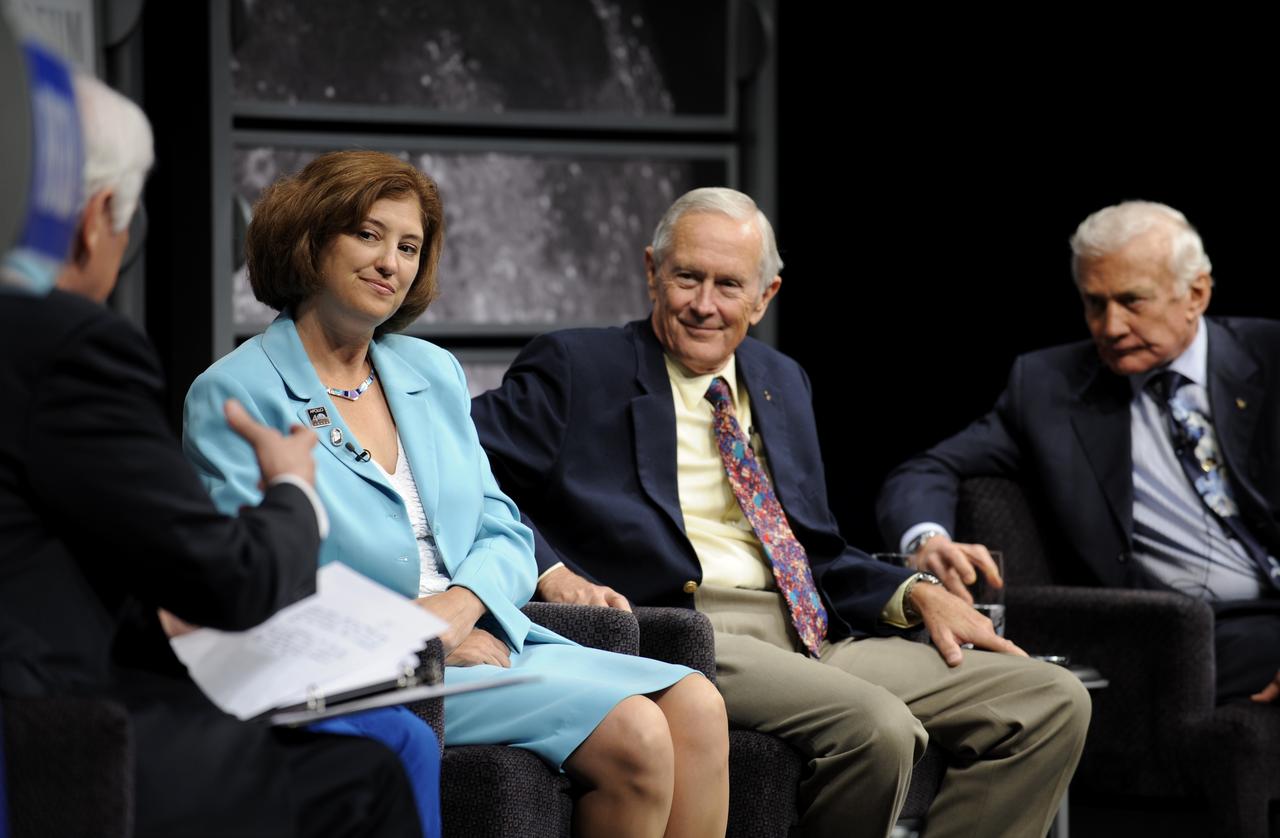
Veteran journalist Nick Clooney, seated left back to camera, moderated a panel discussion with Apollo 11 astronaut Buzz Aldrin, far right, Charlie Duke of Apollo 16, John Grunsfeld, of the recent Hubble mission, not seen, and Goddard Space Flight Center deputy director Laurie Leshin, second from left, Monday, July 20, 2009, at the Newseum in Washington as part of the commemoration of the 40th Anniversary of the Apollo 11 moon landing. Photo Credit: (NASA/Bill Ingalls)
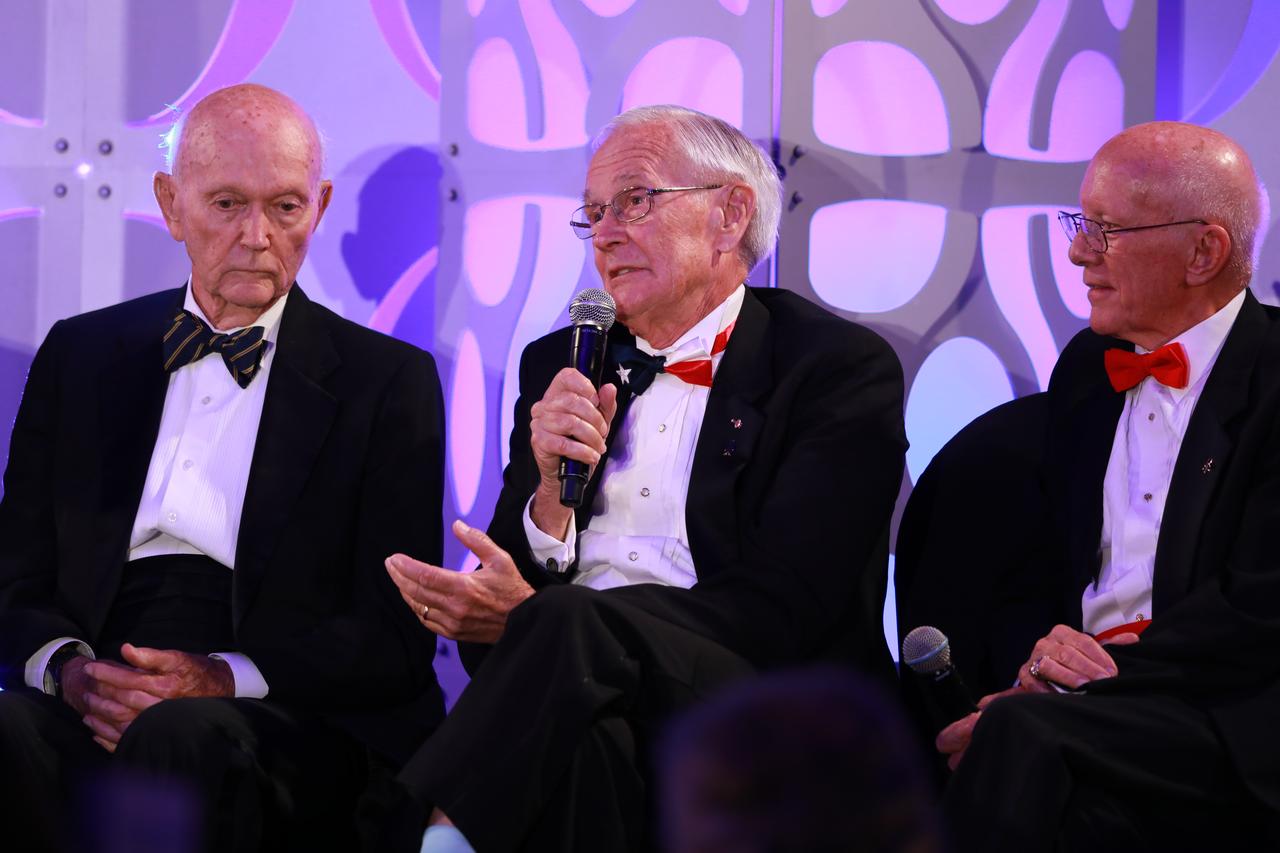
Retired NASA astronauts participate in a panel discussion during the Apollo 11 50th Gala, presented by Northrop Grumman, on July 16, 2019. The gala was held inside the Apollo/Saturn V Center at the Kennedy Space Center Visitor Complex in Florida. From left, are Apollo 11 astronaut Michael Collins, Apollo 16 astronaut Charlie Duke, and Apollo Flight Director Gerry Griffin.
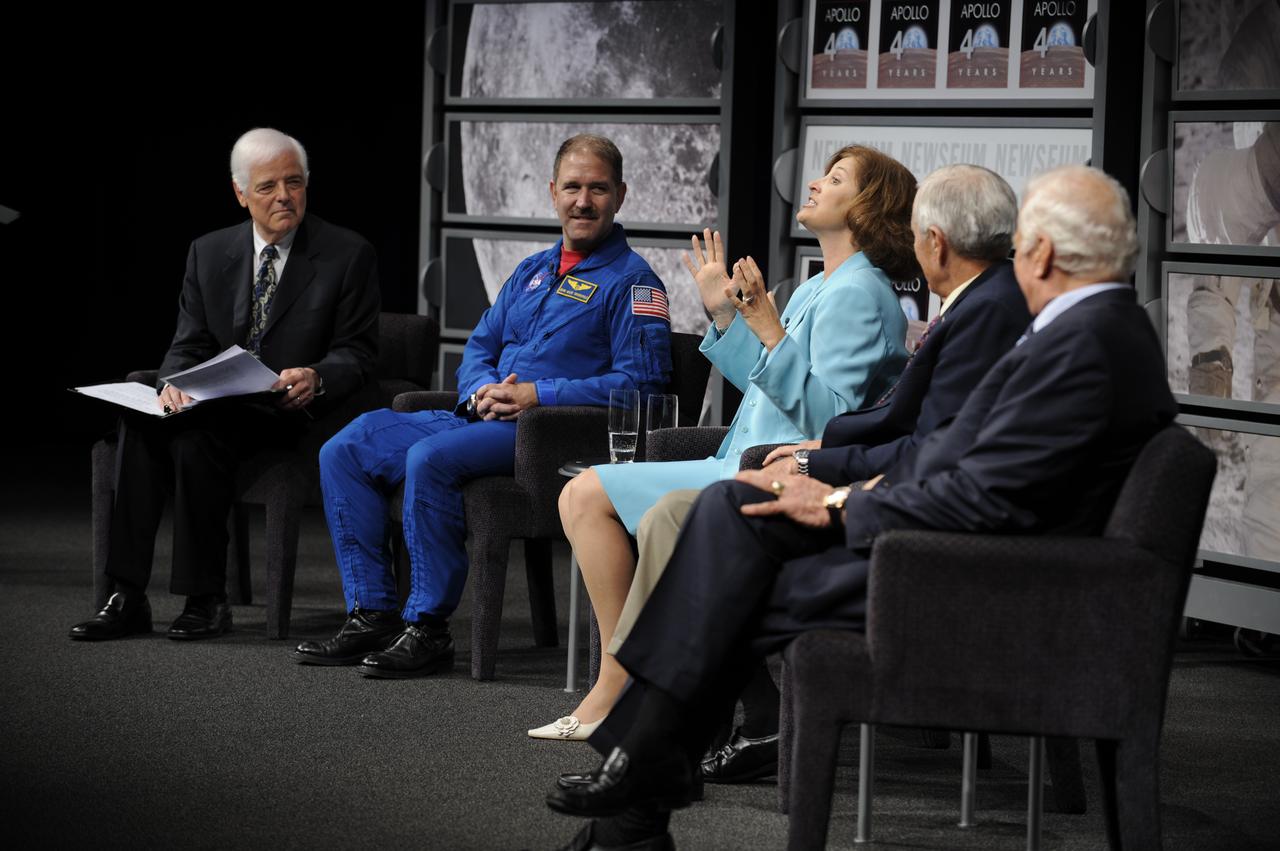
Veteran journalist Nick Clooney, seated left, moderated a panel discussion with Apollo 11 astronaut Buzz Aldrin, far right, Charlie Duke of Apollo 16, John Grunsfeld, of the recent Hubble mission, and Goddard Space Flight Center deputy director Laurie Leshin, Monday, July 20, 2009, at the Newseum in Washington as part of the commemoration of the 40th Anniversary of the Apollo 11 moon landing. Photo Credit: (NASA/Bill Ingalls)
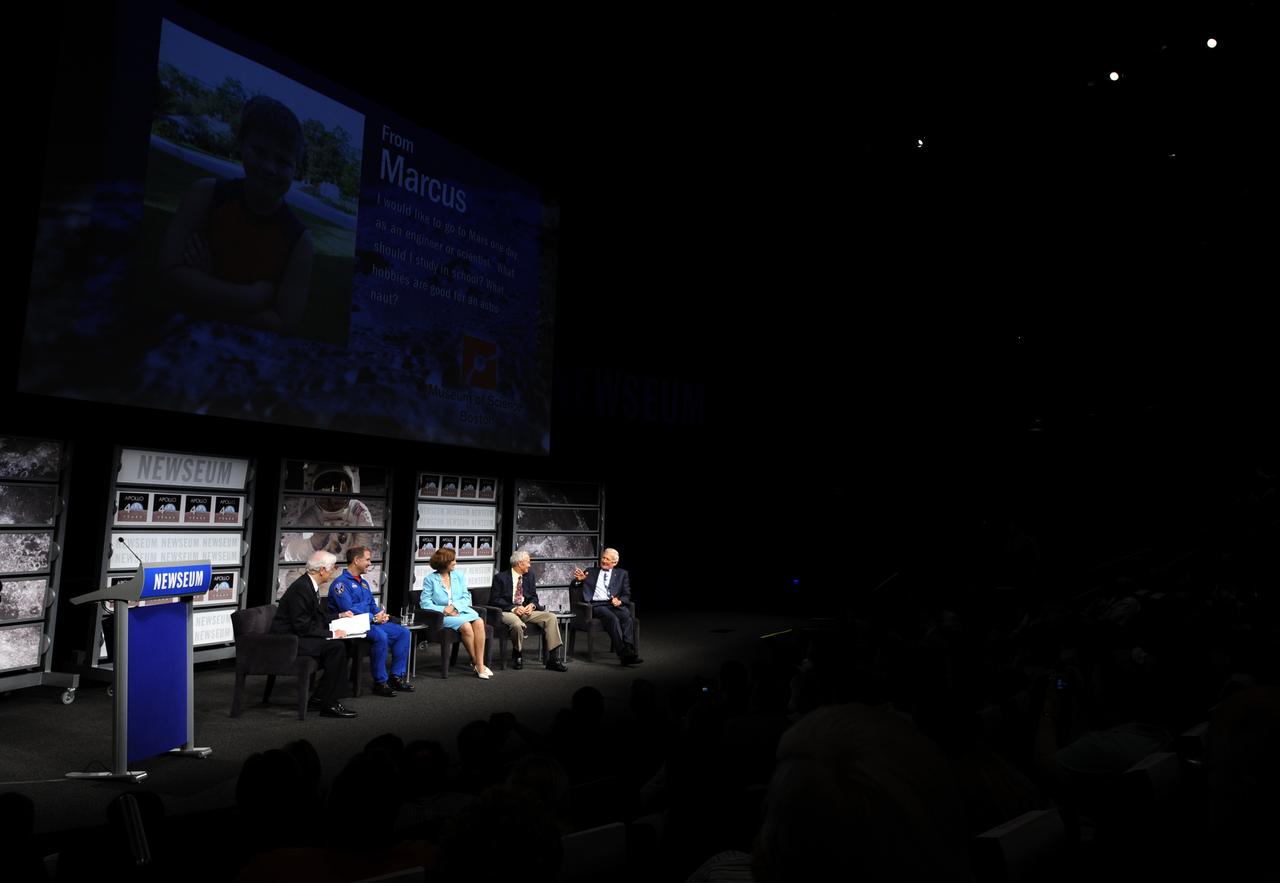
Veteran journalist Nick Clooney, seated left, moderated a panel discussion with Apollo 11 astronaut Buzz Aldrin, far right, Charlie Duke of Apollo 16, John Grunsfeld, of the recent Hubble mission, and Goddard Space Flight Center deputy director Laurie Leshin, Monday, July 20, 2009, at the Newseum in Washington as part of the commemoration of the 40th Anniversary of the Apollo 11 moon landing. Photo Credit: (NASA/Bill Ingalls)
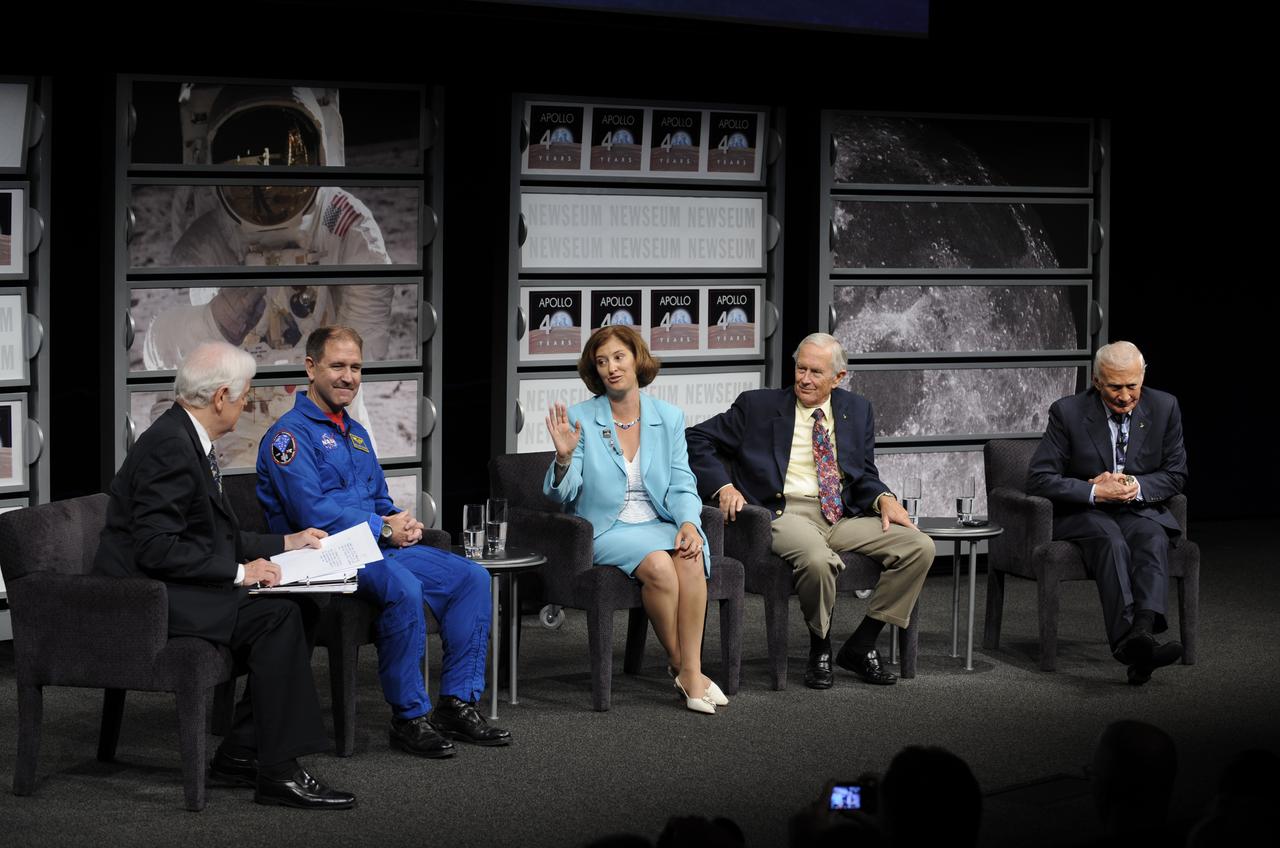
Veteran journalist Nick Clooney, seated left, moderated a panel discussion with Apollo 11 astronaut Buzz Aldrin, far right, Charlie Duke of Apollo 16, John Grunsfeld, of the recent Hubble mission, and Goddard Space Flight Center deputy director Laurie Leshin, Monday, July 20, 2009, at the Newseum in Washington as part of the commemoration of the 40th Anniversary of the Apollo 11 moon landing. Photo Credit: (NASA/Bill Ingalls)

Physicist Brian Cox serves as the moderator for a panel discussion with Apollo astronauts during the Apollo 11 50th Gala on July 16, 2019. The gala, presented by Northrop Grumman, was held inside the Apollo/Saturn V Center at the Kennedy Space Center Visitor Complex. From left, are Apollo 9 astronaut Rusty Schweichart, Apollo 11 astronaut Michael Collins, Apollo 16 astronaut Charlie Duke, and Apollo Flight Director Gerry Griffin.
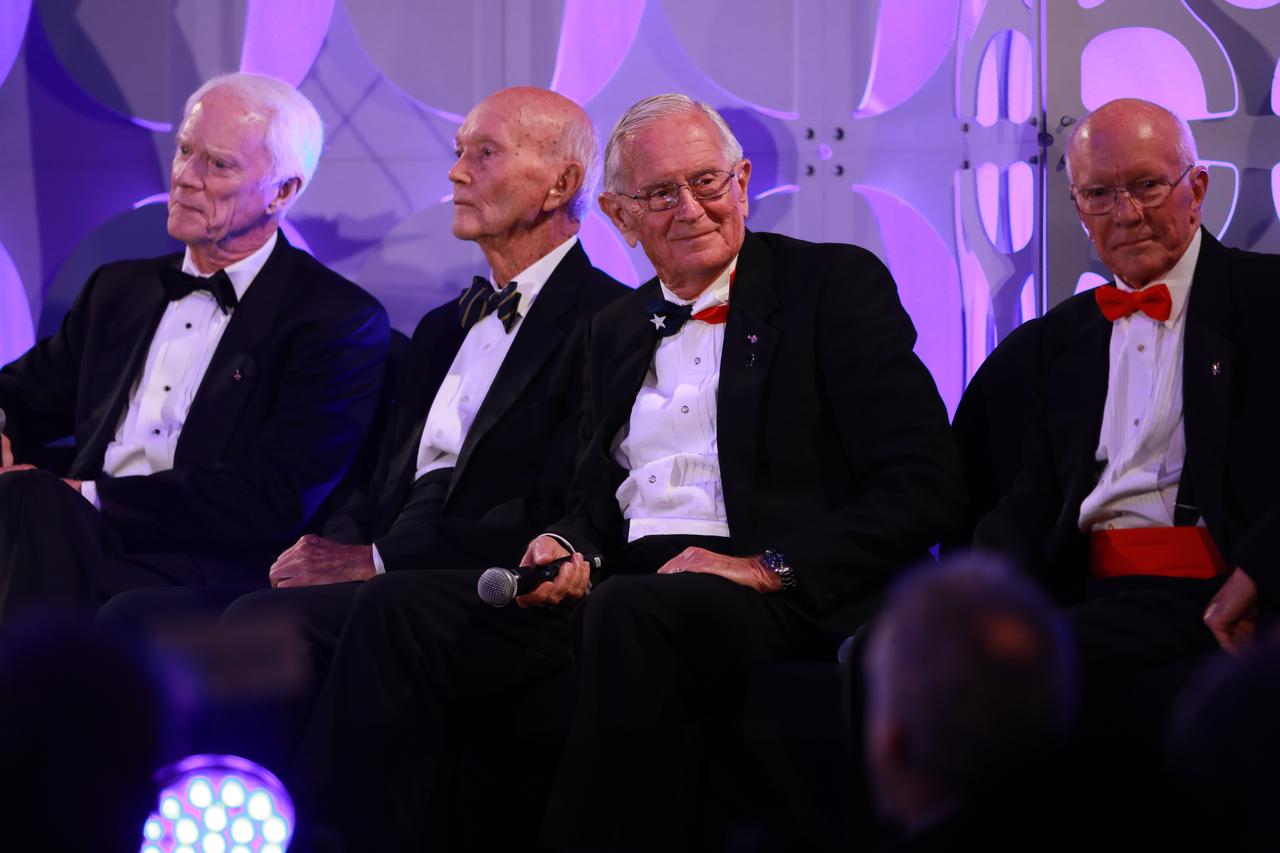
A panel discussion with Apollo astronauts took place during the Apollo 11 50th Gala, present by Northop Grumman, inside the Apollo/Saturn V Center at the Kennedy Space Center Visitor Complex in Florida on July 16, 2019. From left, are Apollo 9 astronaut Rusty Schweickart, Apollo 11 astronaut Michael Collins, Apollo 16 astronaut Charlie Duke, and Apollo Flight Director Gerry Griffin.
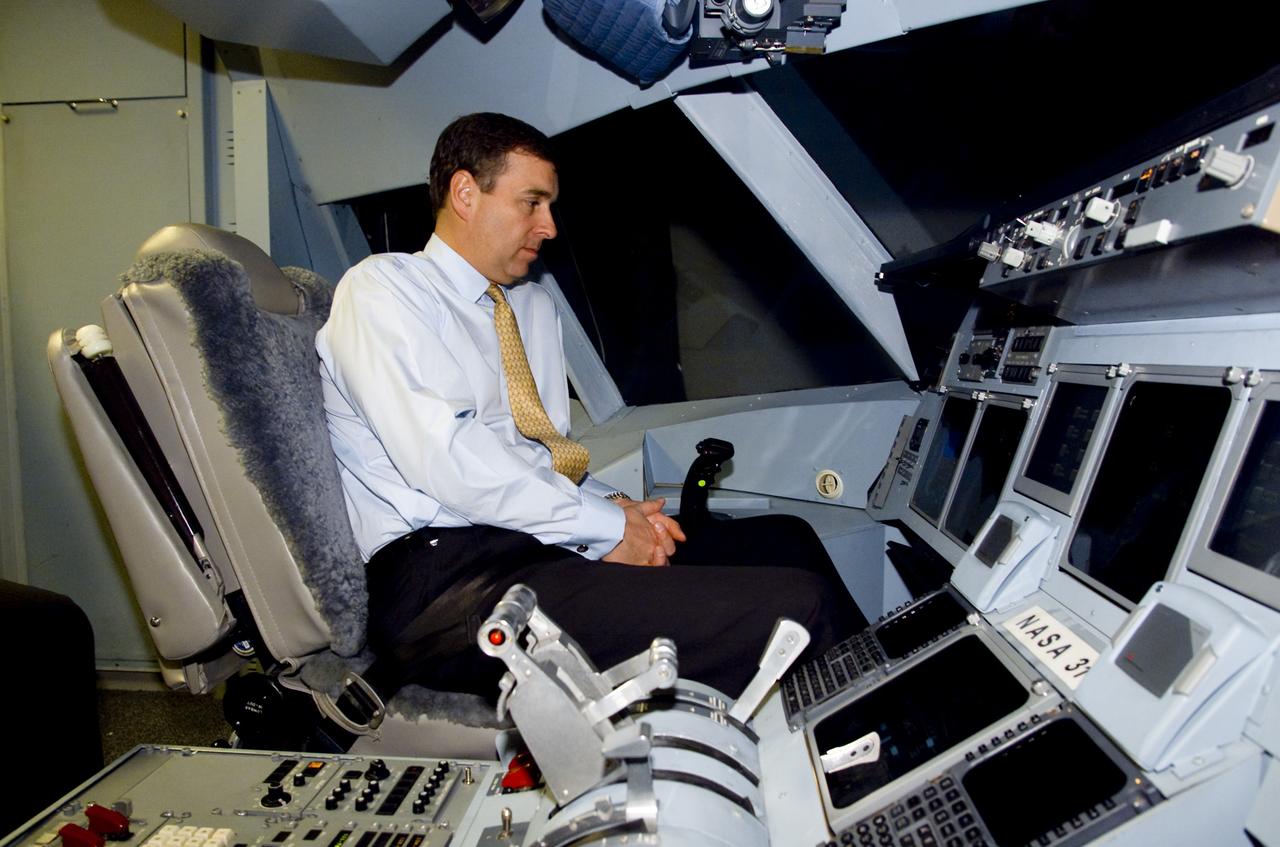
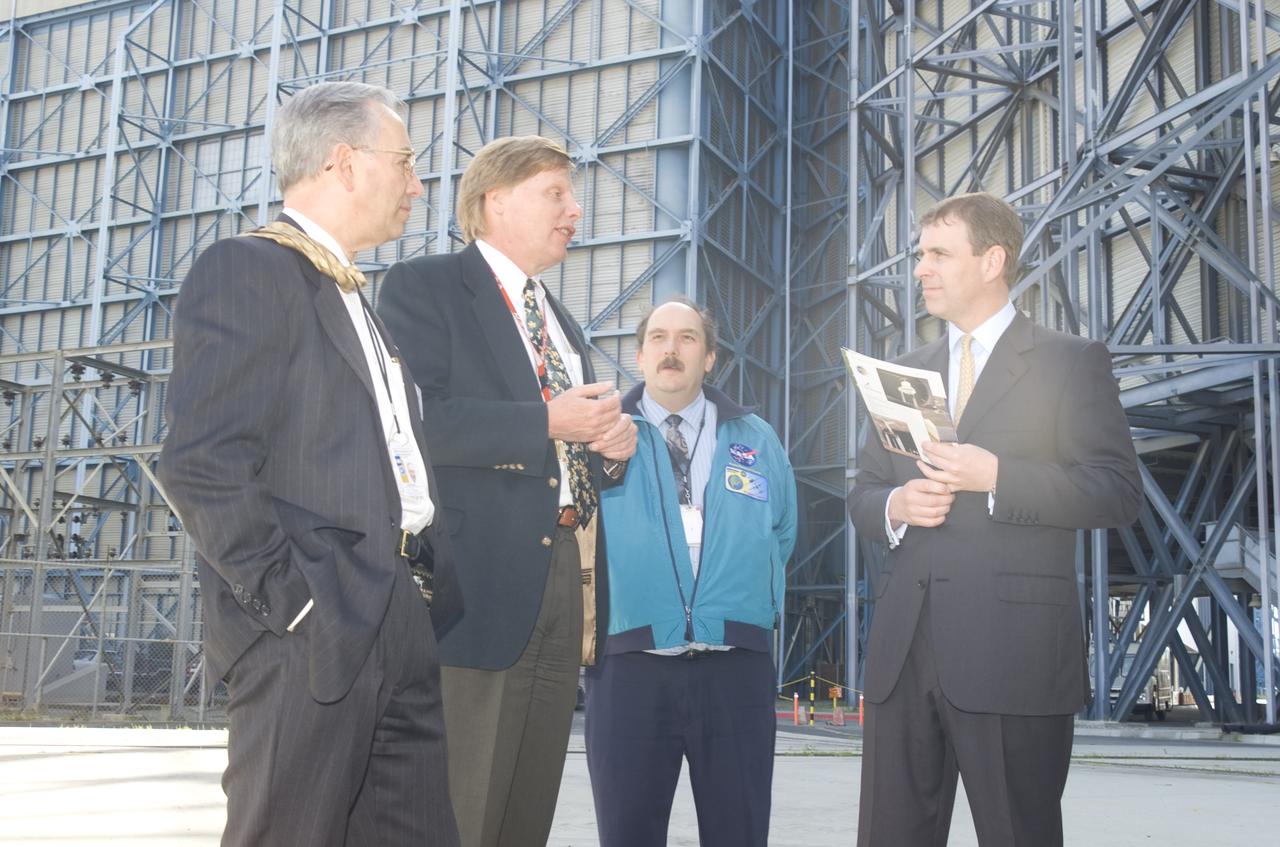
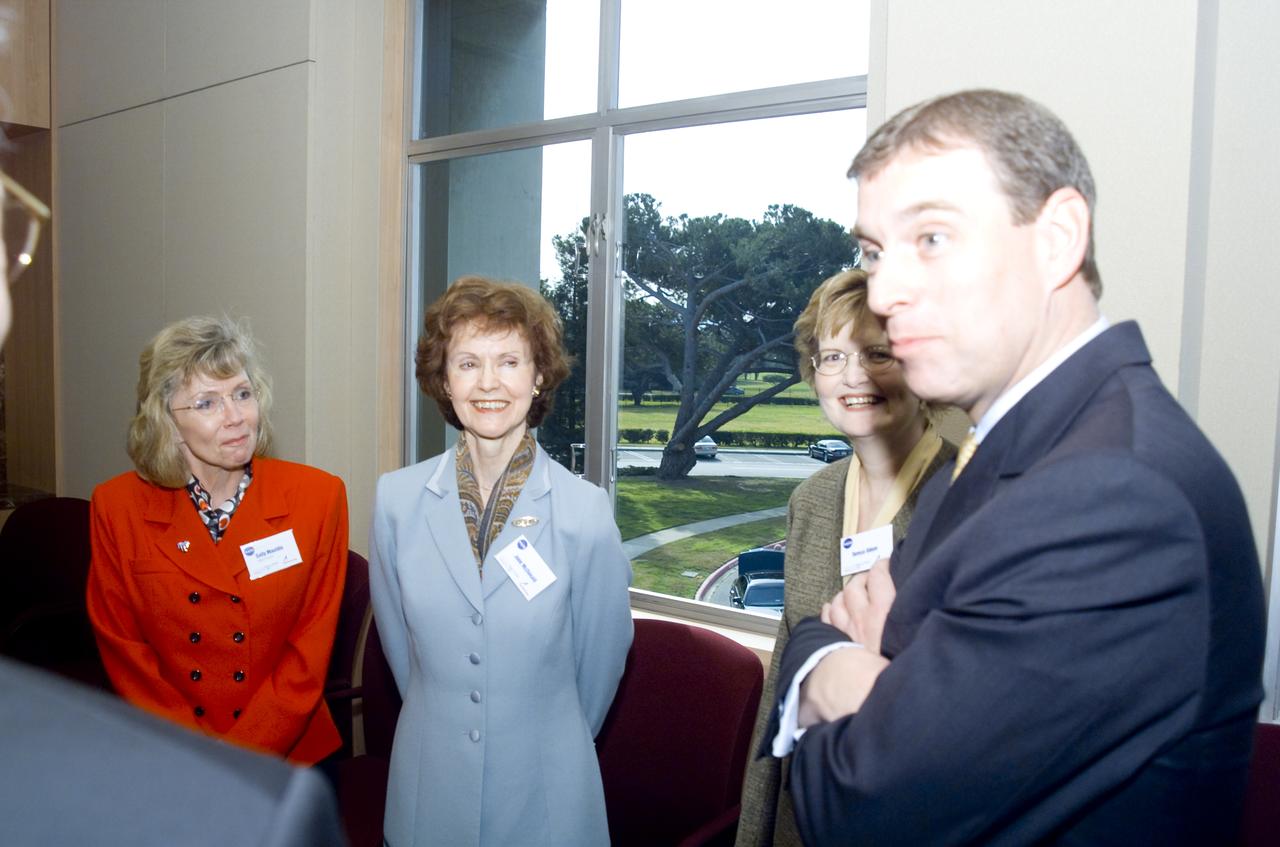
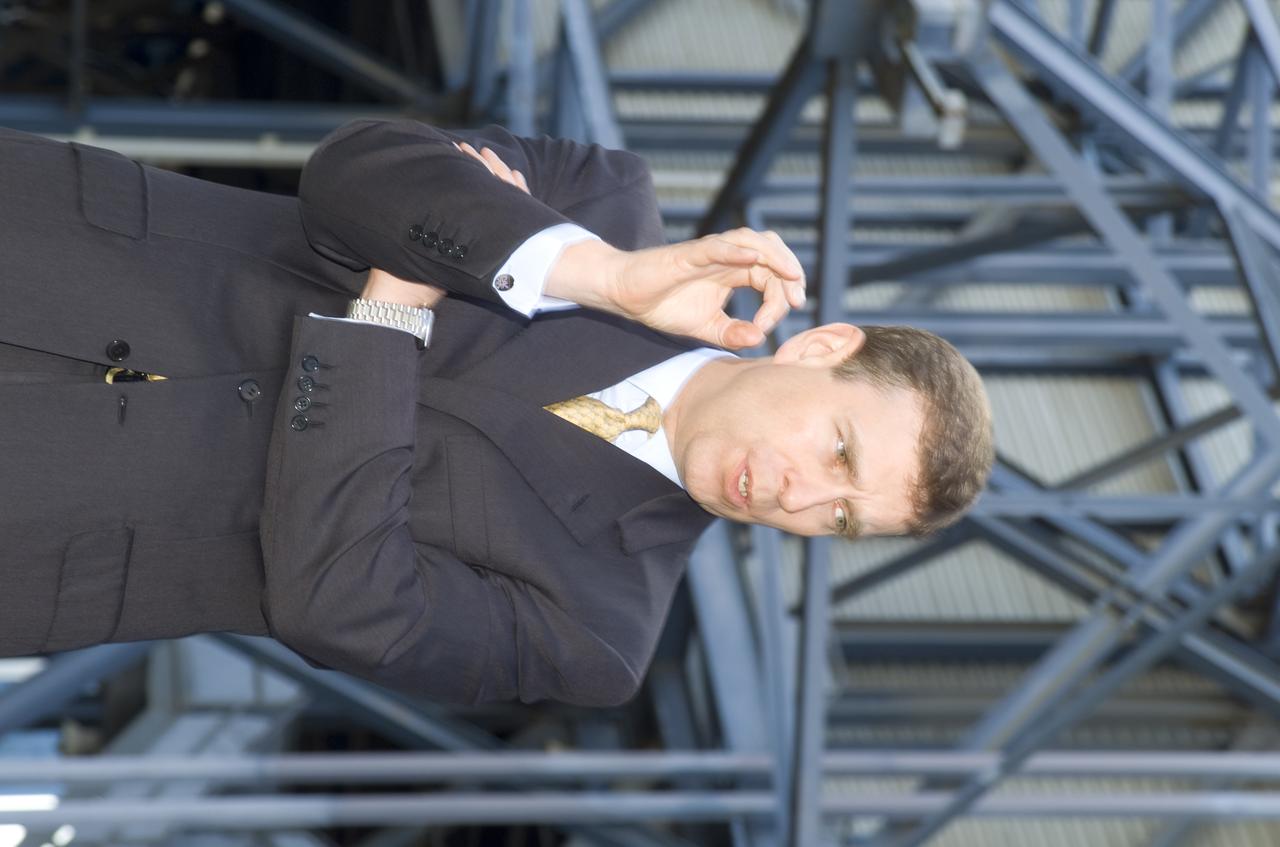
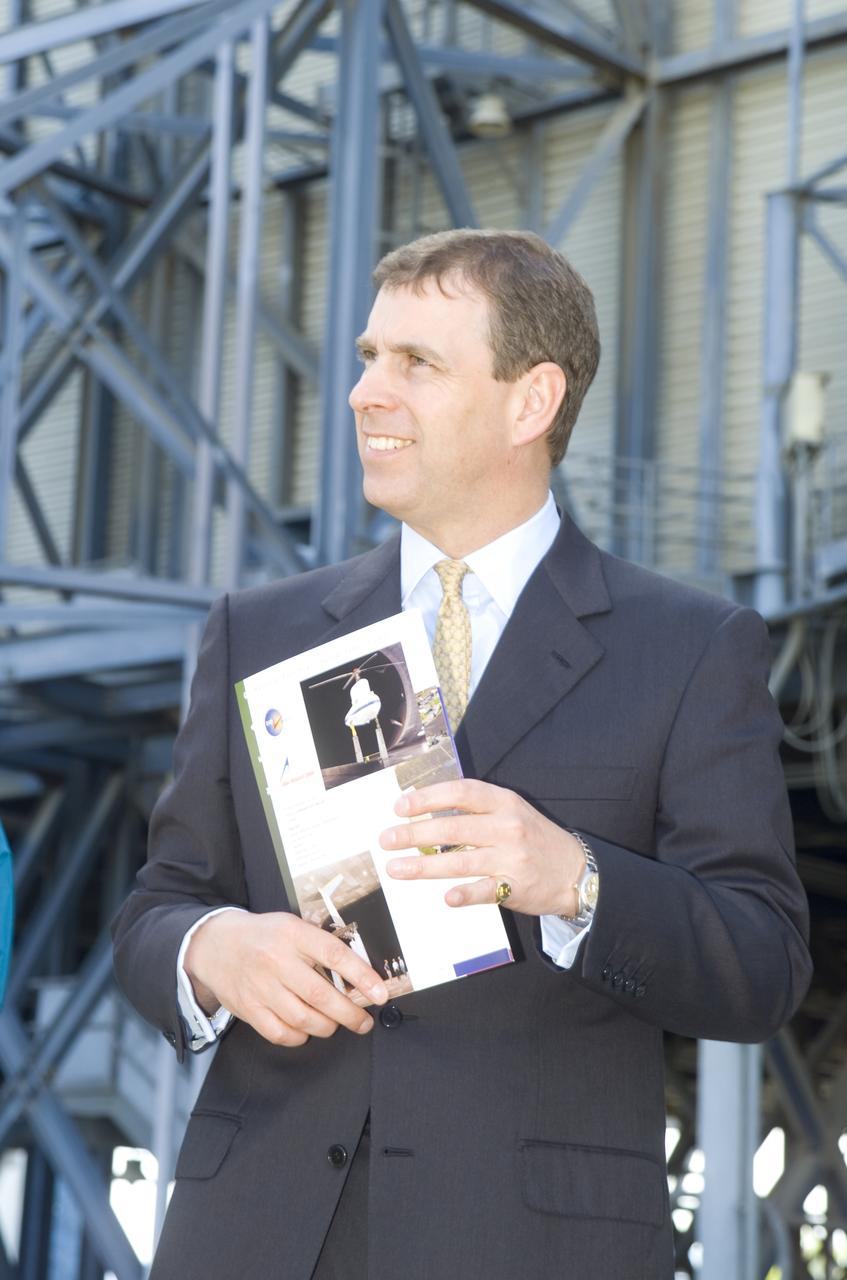
British royalty visits Ames; Prince Andrew, Duke of York on tour of CVSRF

British royalty visits Ames; Prince Andrew, Duke of York on tour
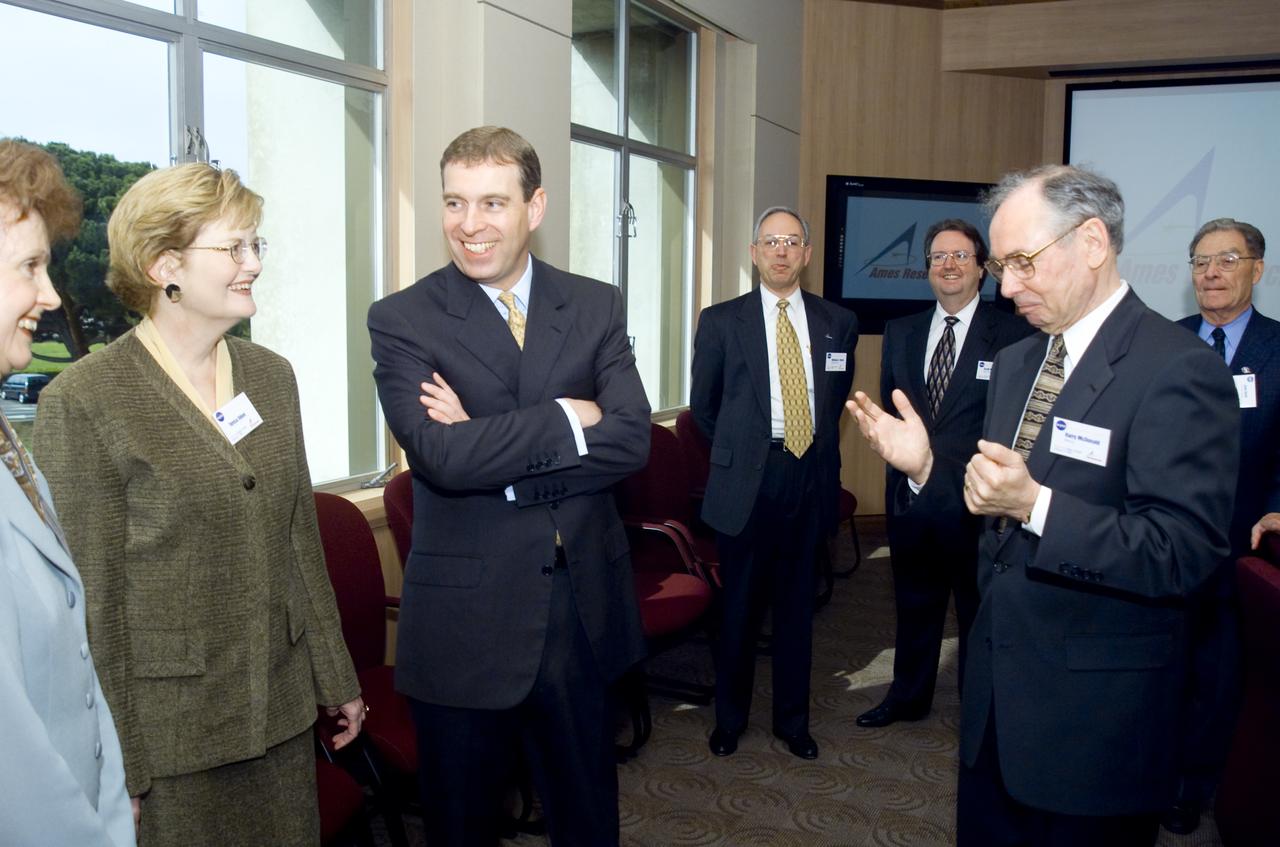
British royalty visits Ames; Prince Andrew, Duke of York on tour
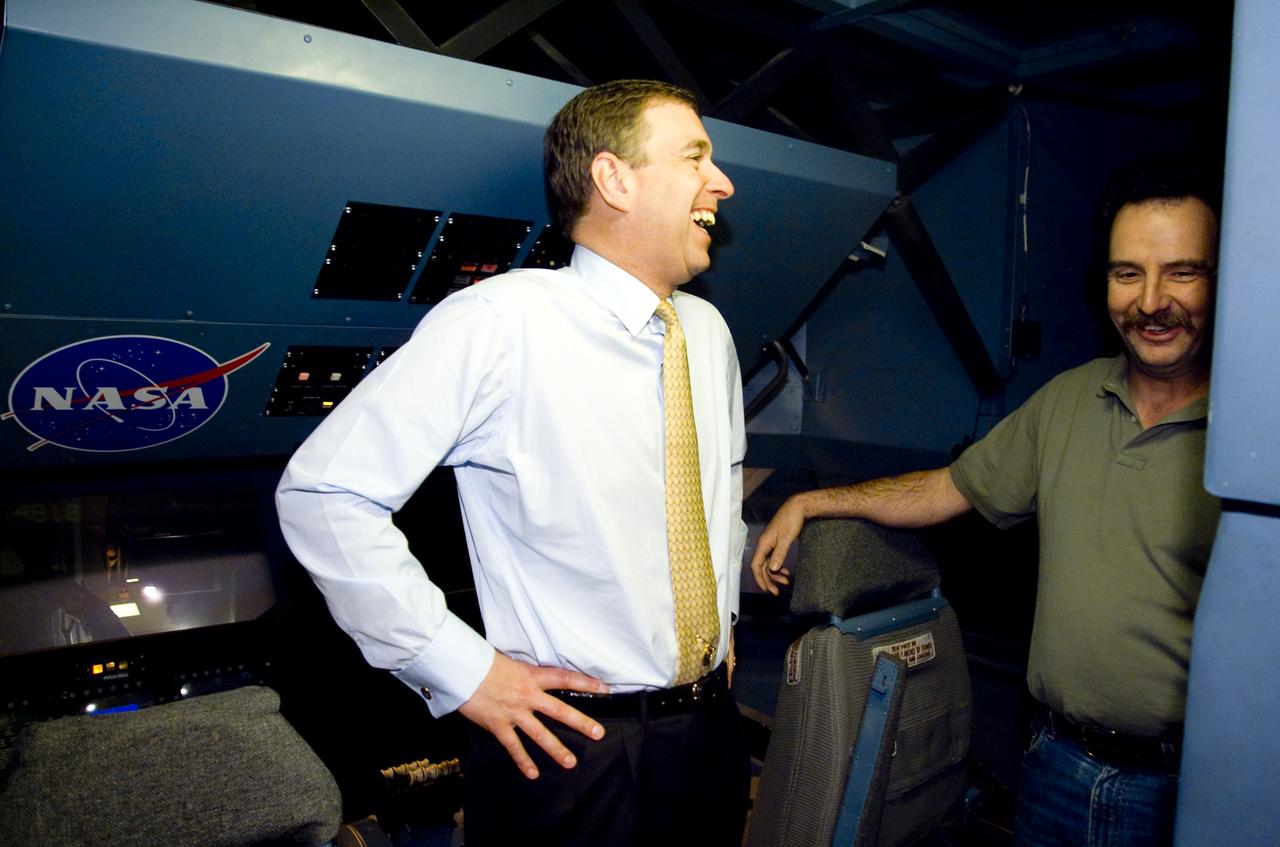
British royalty visits Ames; Prince Andrew, Duke of York on tour of VMS
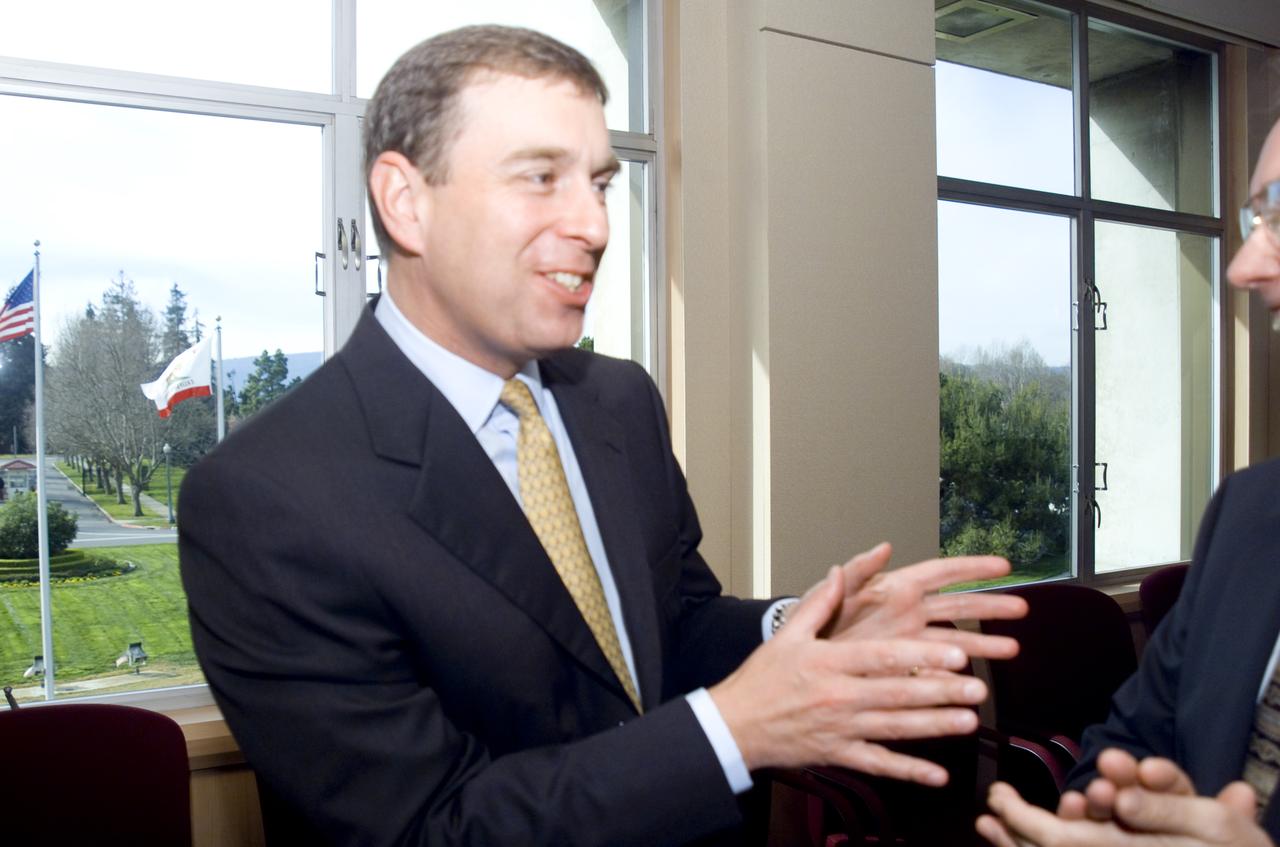
British royalty visits Ames; Prince Andrew, Duke of York on tour
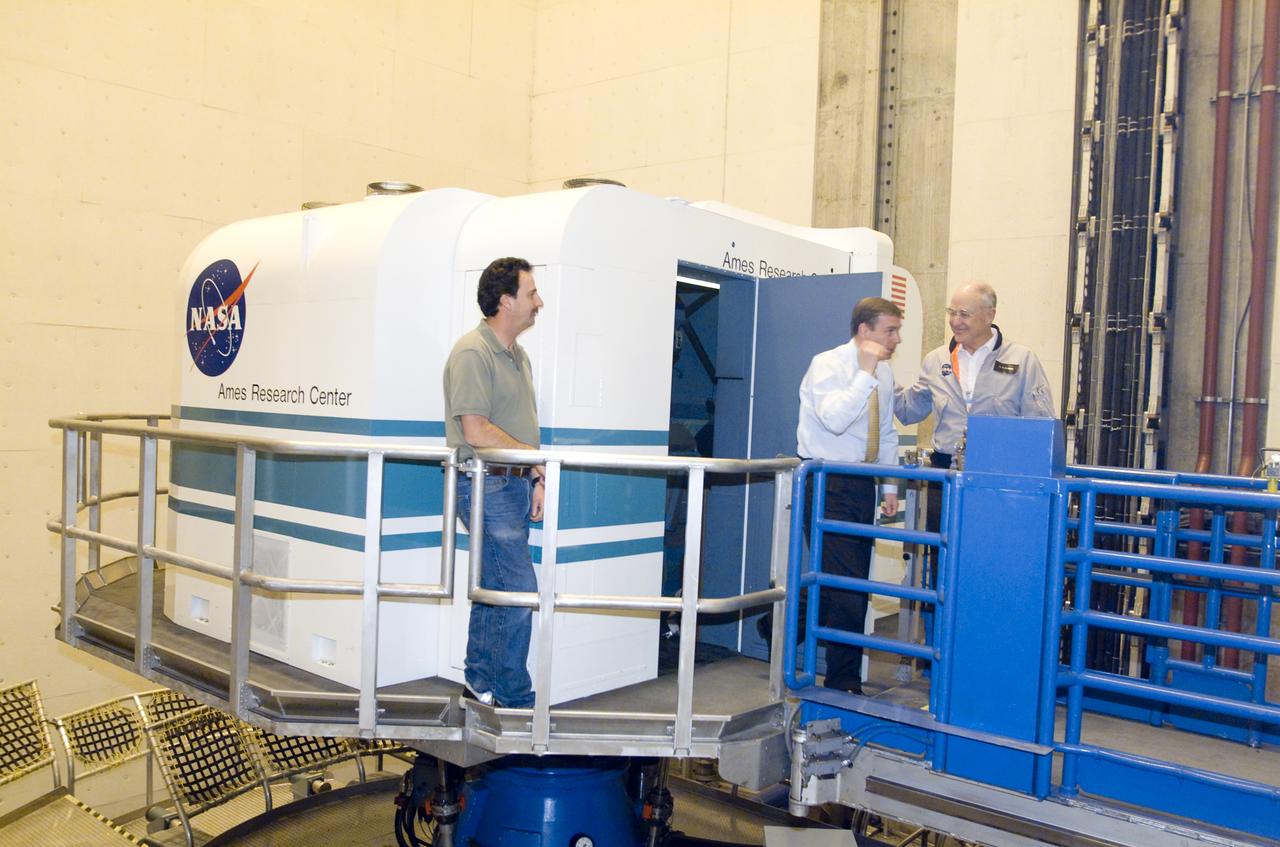
British royalty visits Ames; Prince Andrew, Duke of York on tour of VMS
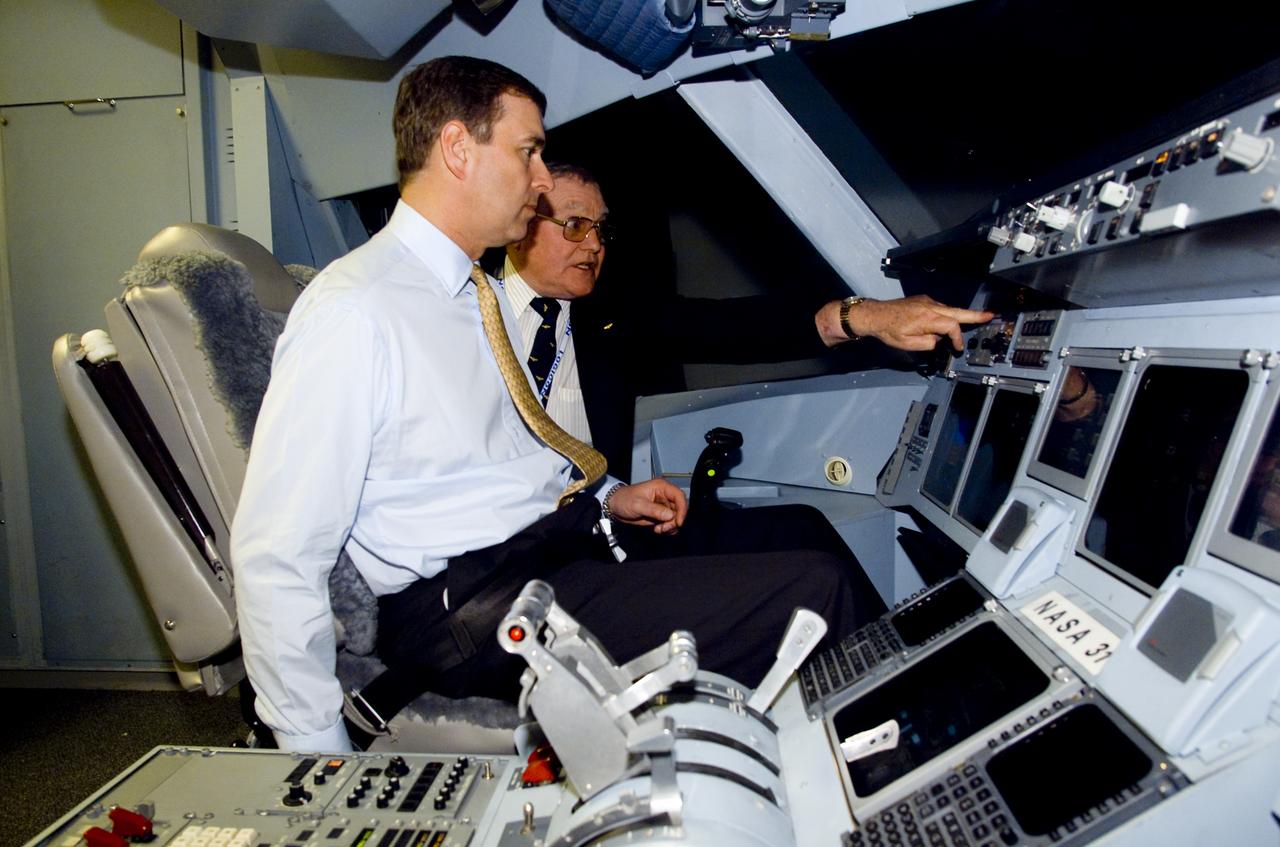
British royalty visits Ames; Prince Andrew, Duke of York on tour in CVSRF
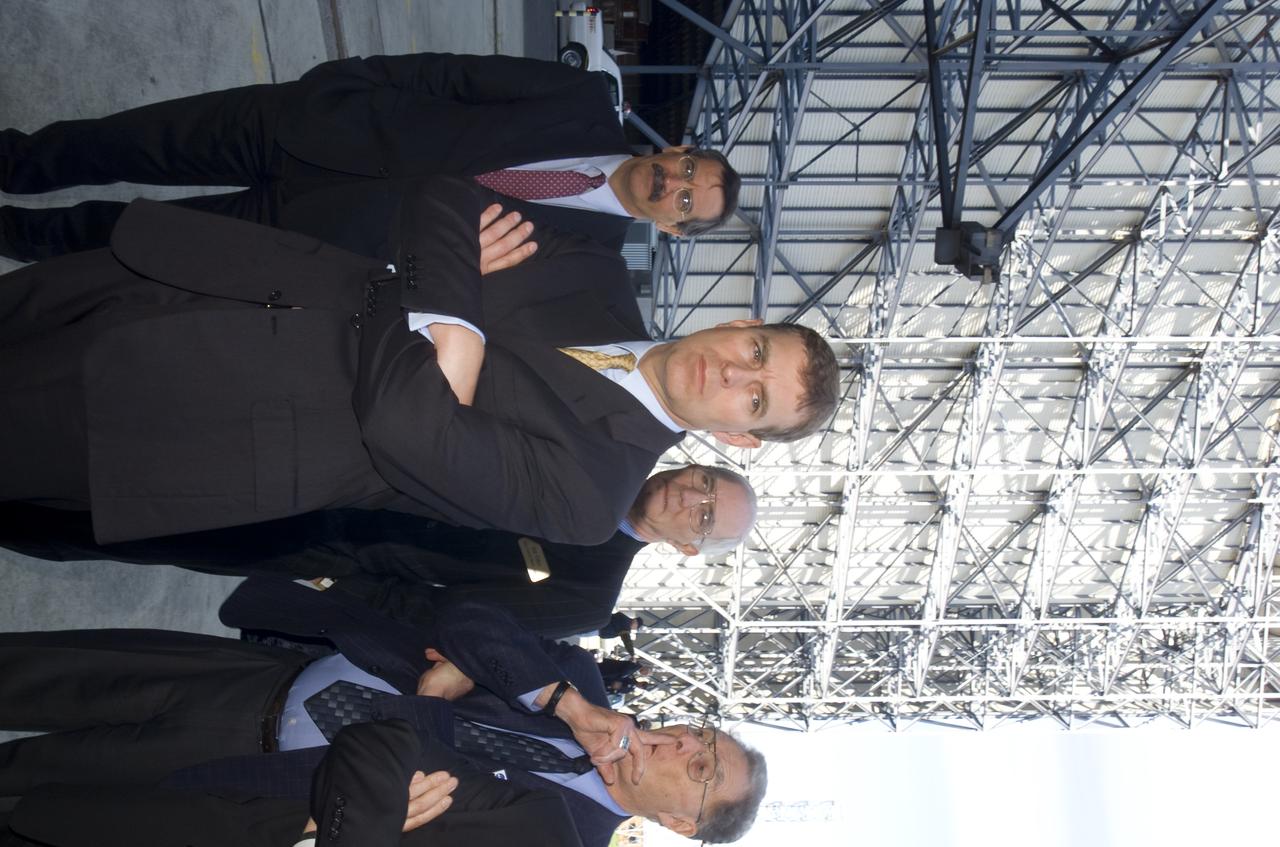
British royalty visits Ames; Prince Andrew, Duke of York on tour
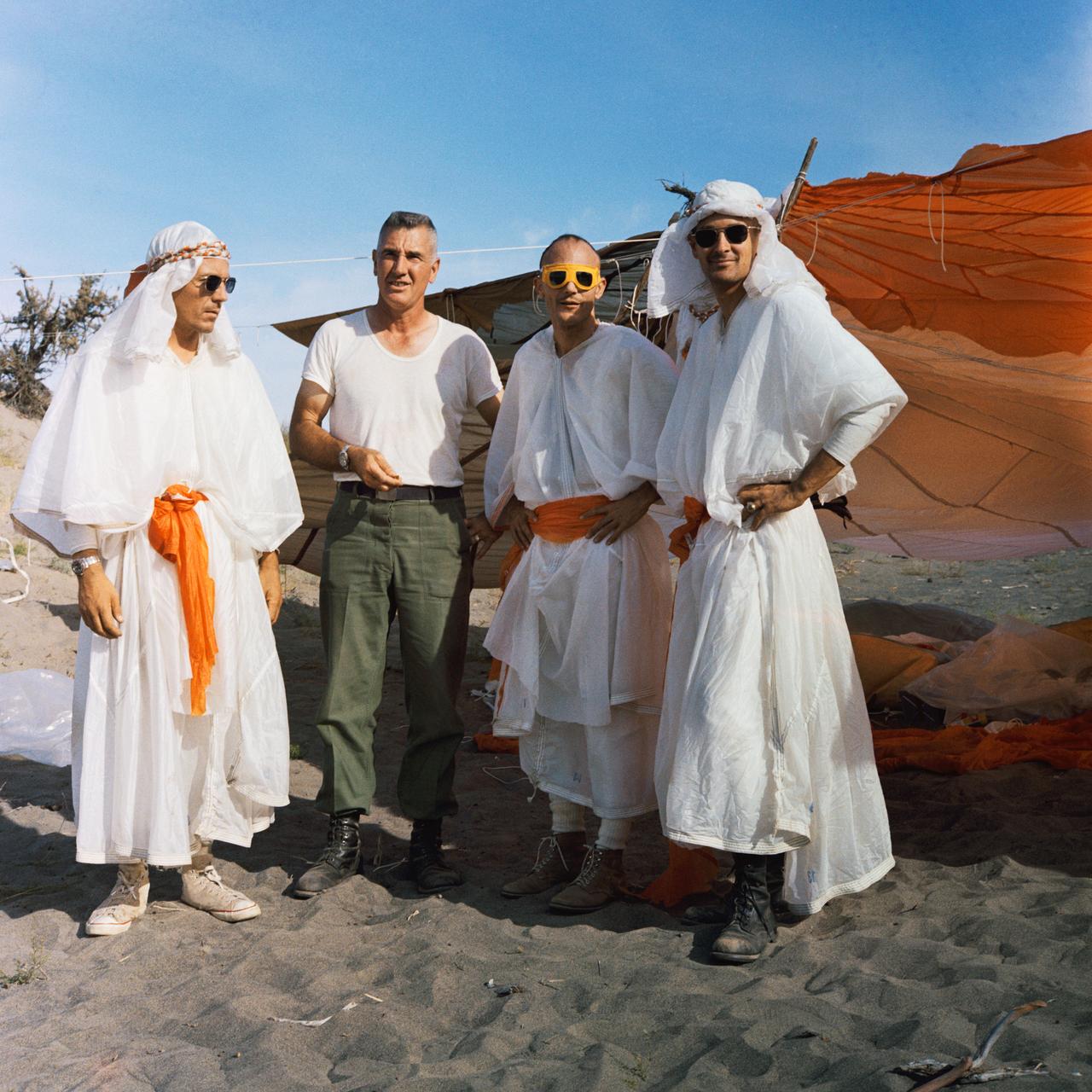
Desert Survival Training Pasco, Washington - Duke, Mattingly, Col. Bohart, Swigert
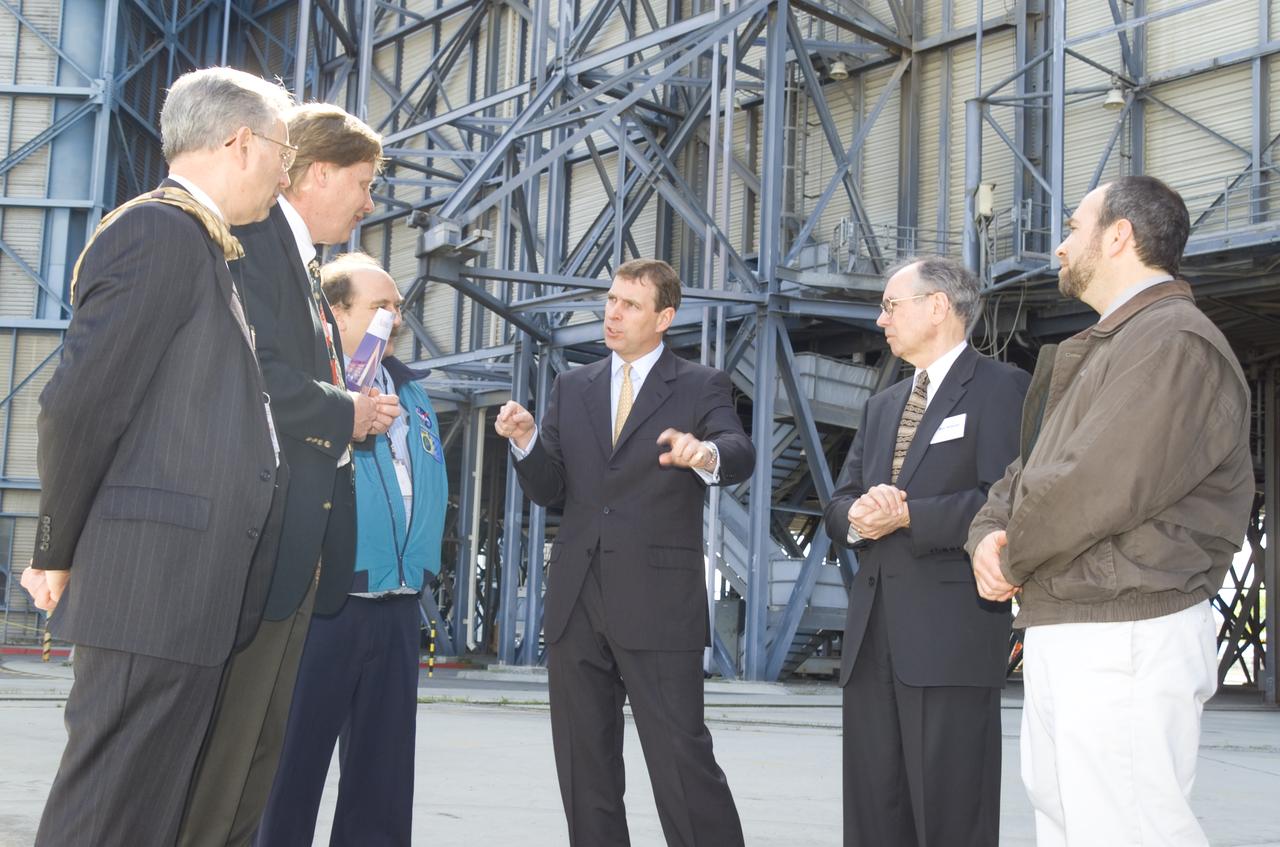
British royalty visits Ames; Prince Andrew, Duke of York on tour
British royalty visits Ames; Prince Andrew, Duke of York on tour
British royalty visits Ames; Prince Andrew, Duke of York on tour
British royalty visits Ames; Prince Andrew, Duke of York on tour
British royalty visits Ames; Prince Andrew, Duke of York on tour
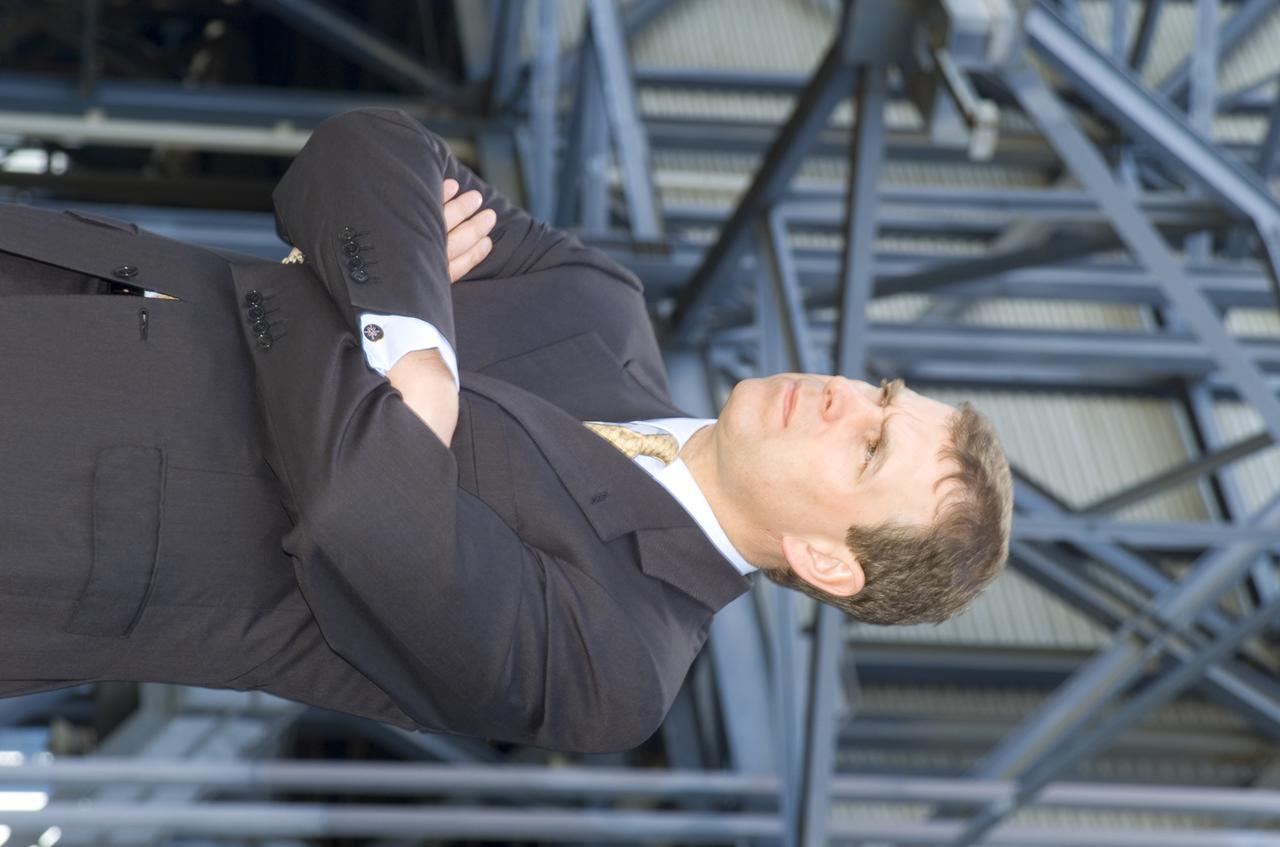
British royalty visits Ames; Prince Andrew, Duke of York on tour
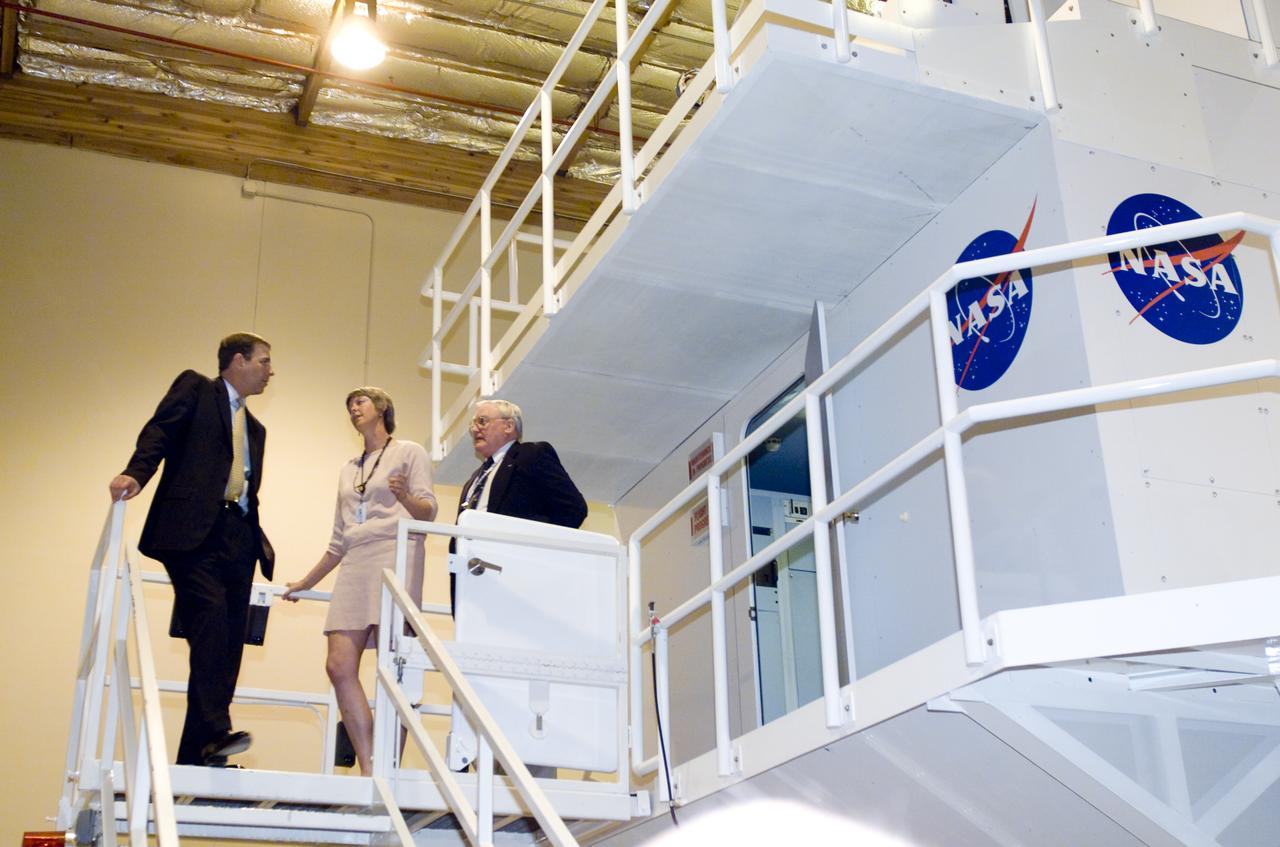
British royalty visits Ames; Prince Andrew, Duke of York on tour of CVSRF
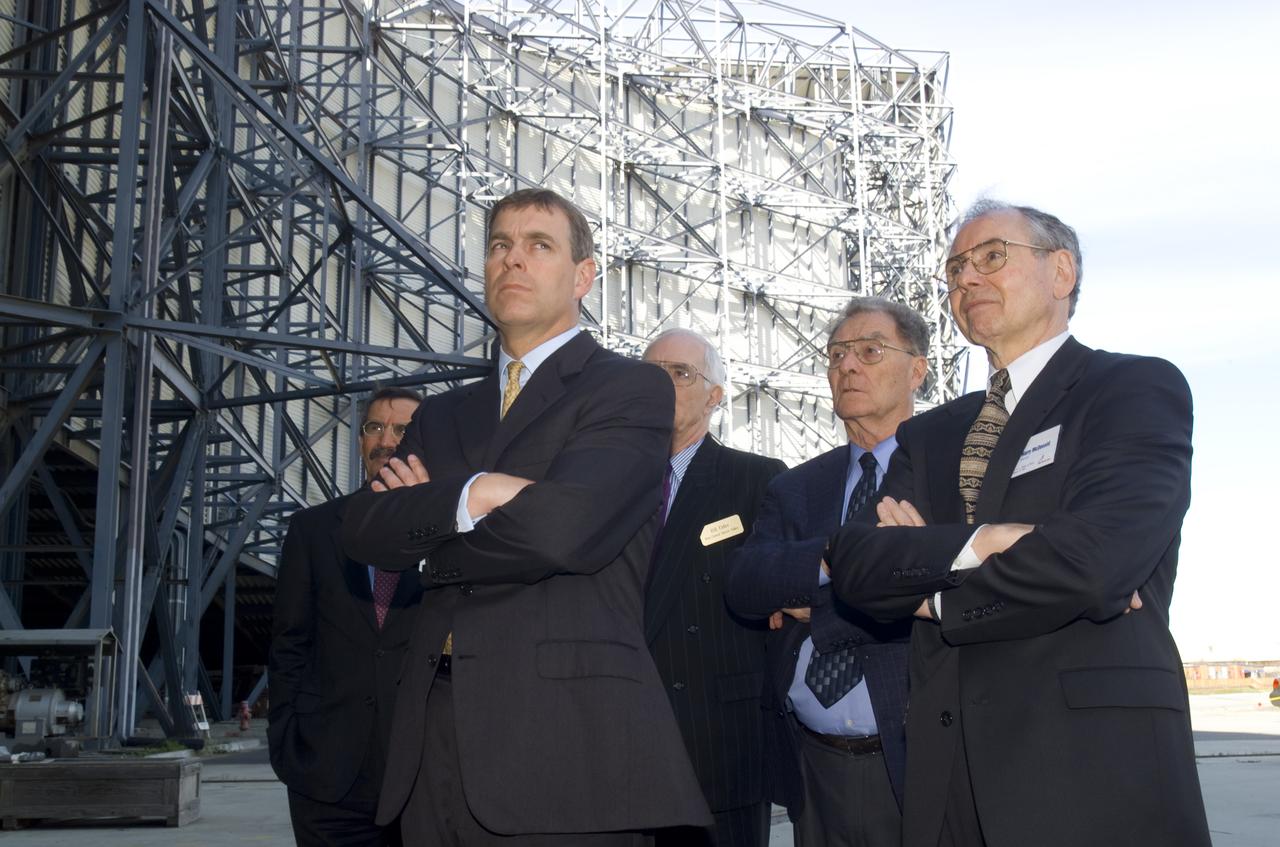
British royalty visits Ames; Prince Andrew, Duke of York on tour
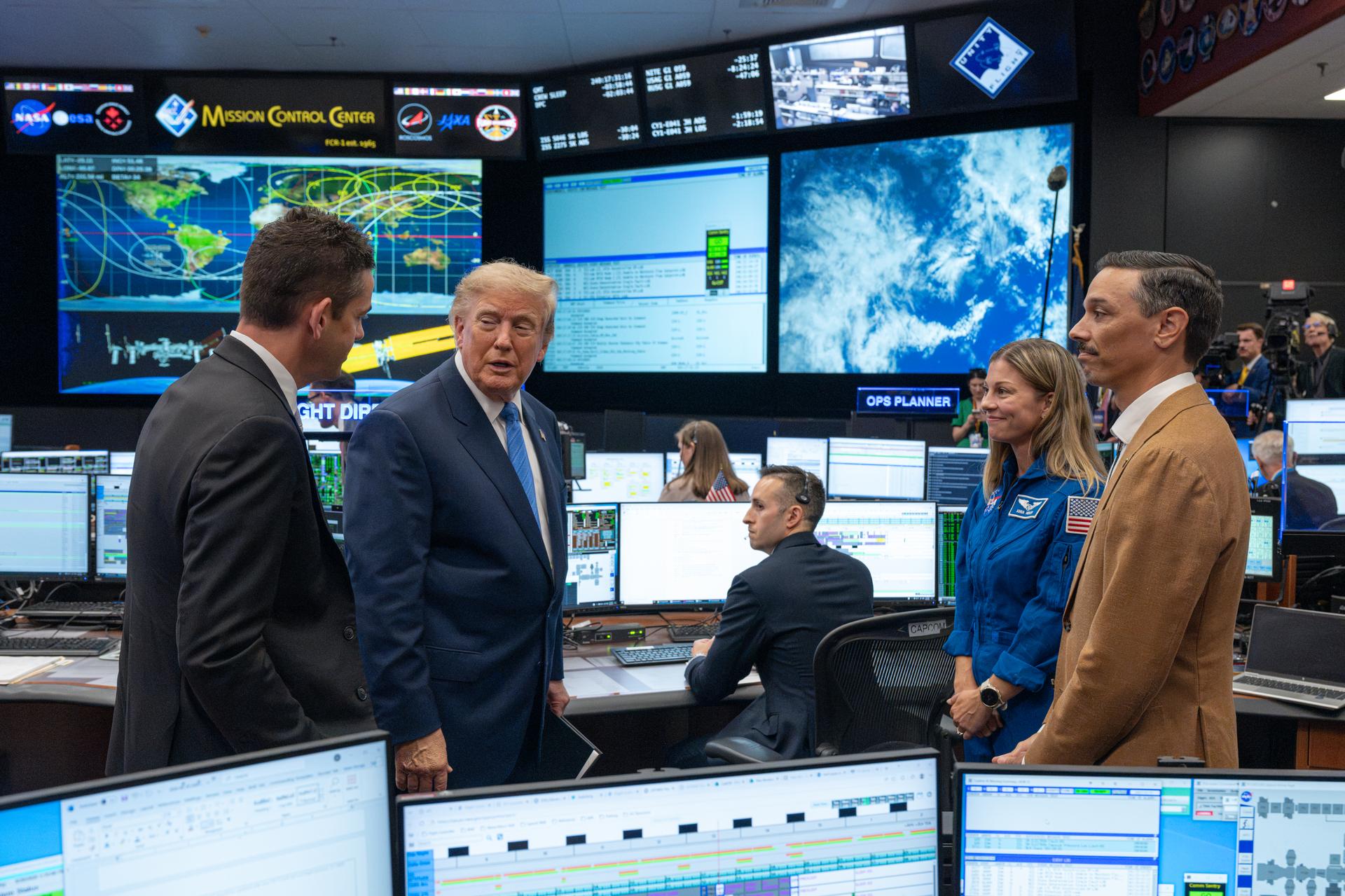
President Donald Trump and NASA Administrator Jared Isaacman greet NASA astronaut candidate Anna Menon, spouse of Expedition 75 crew member Anil Menon, and Duke Brady, spouse of Expedition 75 crew member Jessica Meir, during a visit to the Christopher C. Kraft Jr. Mission Control Center, Friday, Aug. 28, 2026, at NASA’s Johnson Space Center in Houston, Texas. Photo Credit: (NASA/John Kraus)
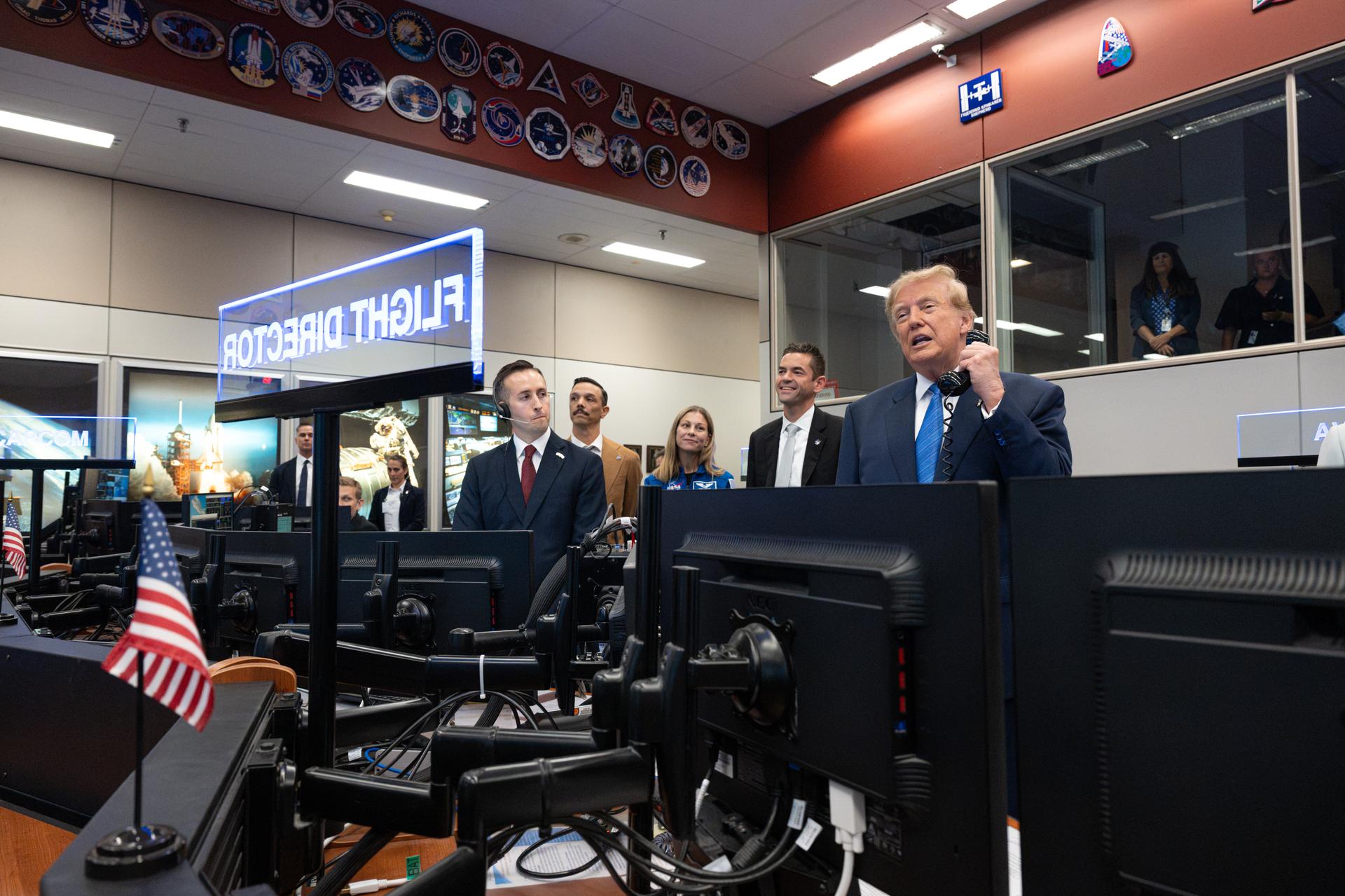
President Donald Trump speaks with Expedition 75 crewmembers Jack Hathaway, Anil Menon, and Jessica Meir on board the International Space Station during a visit to the Christopher C. Kraft Jr. Mission Control Center as NASA Administrator Jared Isaacman and Expedition 75 spouses Duke Brady and NASA astronaut candidate Anna Menon listen, Friday, Aug. 28, 2026, at NASA’s Johnson Space Center in Houston, Texas. Photo Credit: (NASA/John Kraus)
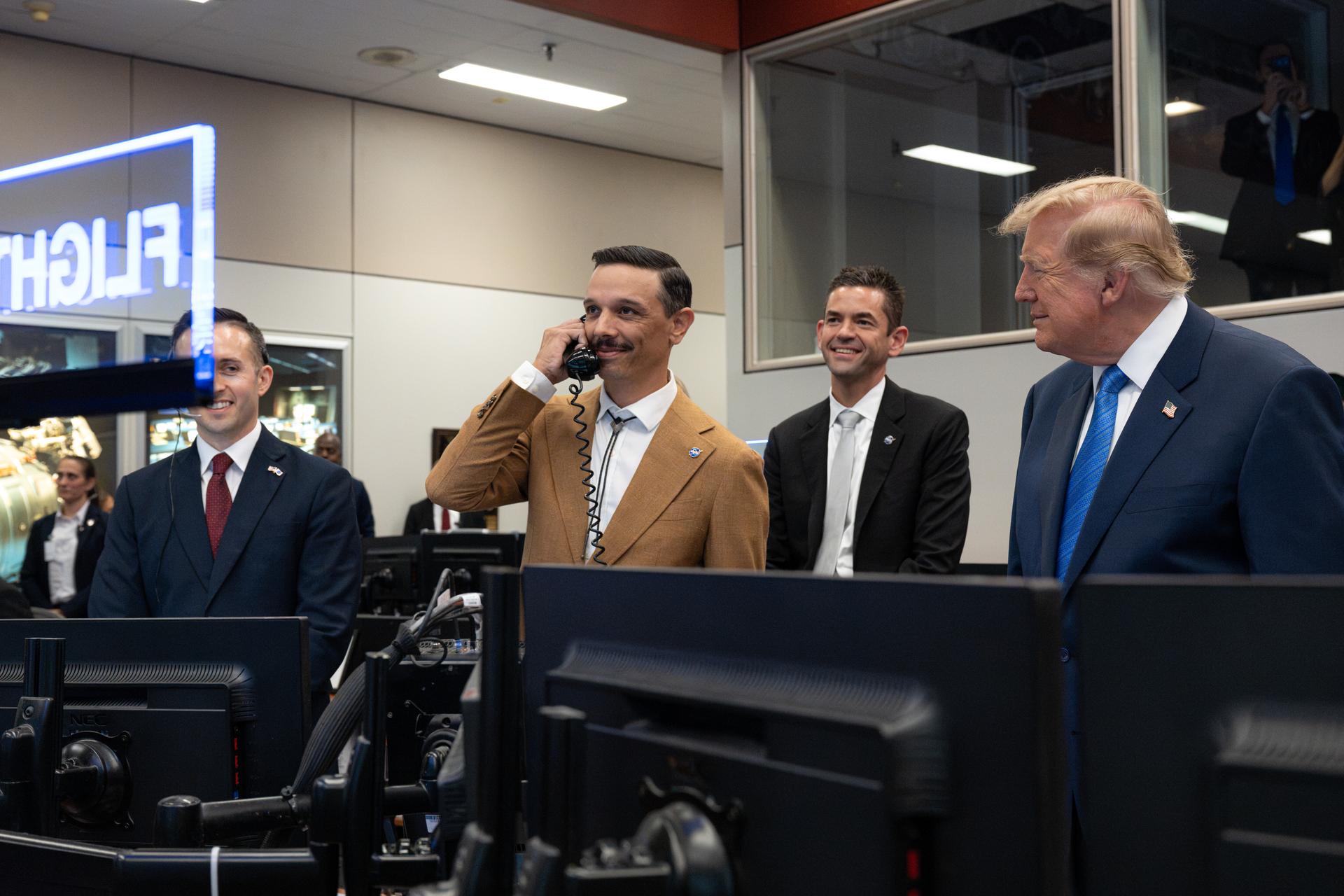
President Donald Trump and NASA Administrator Jared Isaacman listen as Duke Brady, spouse of Expedition 75 crew member Jessica Meir, speaks with Expedition 75 crewmembers Jack Hathaway, Anil Menon, and Jessica Meir on board the International Space Station during a visit to the Christopher C. Kraft Jr. Mission Control Center, Friday, Aug. 28, 2026, at NASA’s Johnson Space Center in Houston, Texas. Photo Credit: (NASA/John Kraus)
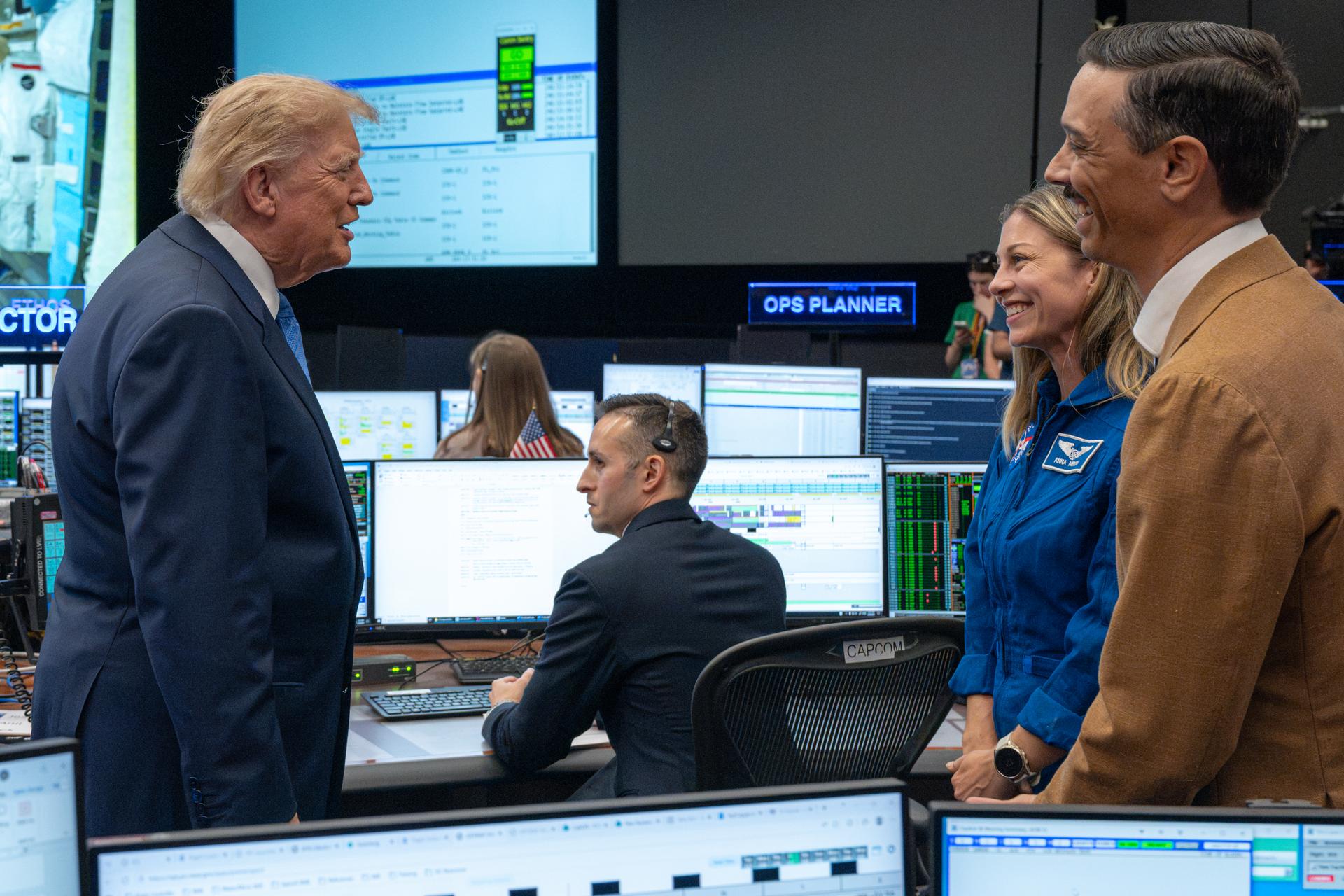
President Donald Trump greets NASA astronaut candidate Anna Menon, spouse of Expedition 75 crew member Anil Menon, and Duke Brady, spouse of Expedition 75 crew member Jessica Meir, during a visit to the Christopher C. Kraft Jr. Mission Control Center, Friday, Aug. 28, 2026, at NASA’s Johnson Space Center in Houston, Texas. Photo Credit: (NASA/John Kraus)
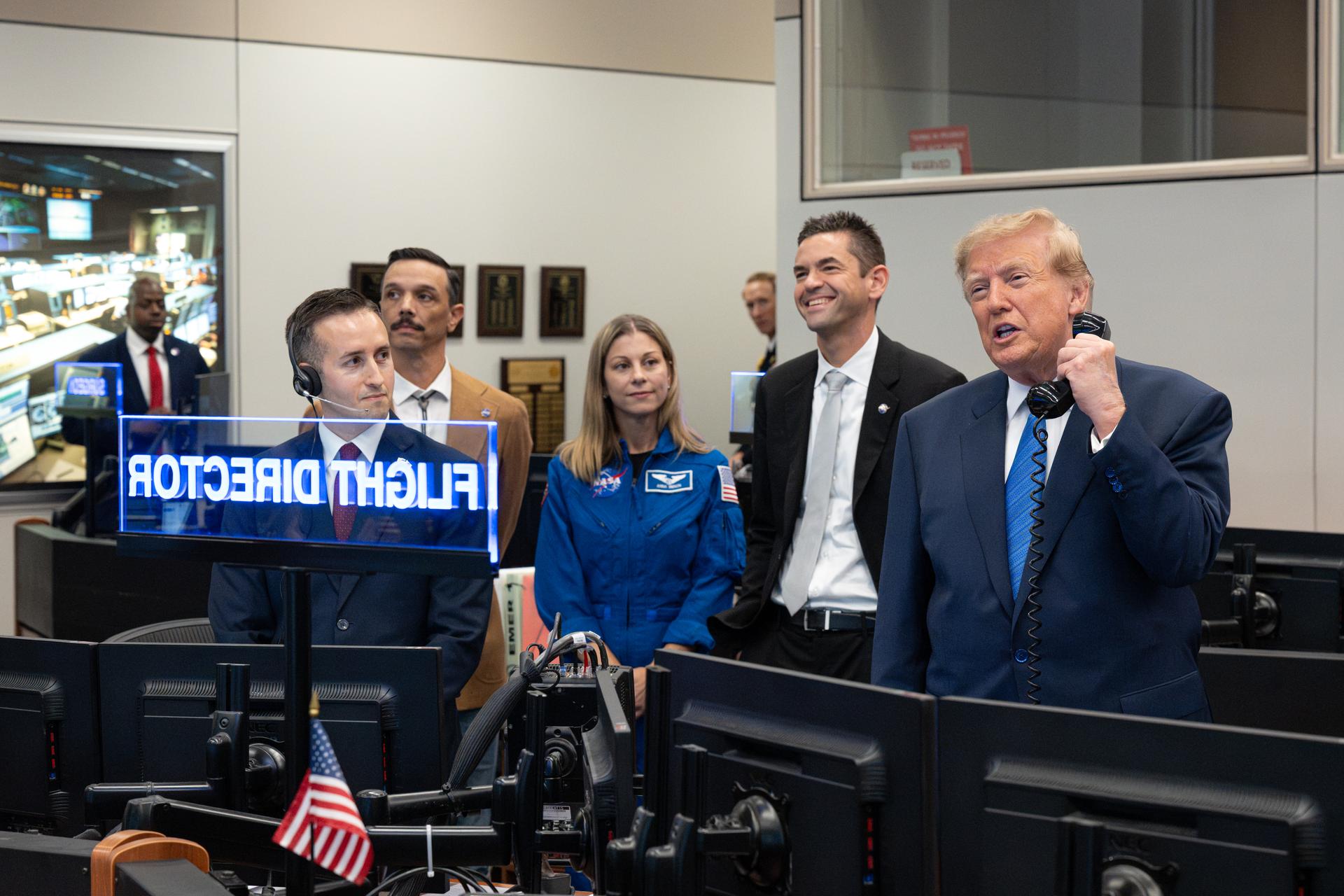
President Donald Trump speaks with Expedition 75 crewmembers Jack Hathaway, Anil Menon, and Jessica Meir on board the International Space Station during a visit to the Christopher C. Kraft Jr. Mission Control Center as NASA Administrator Jared Isaacman and Expedition 75 spouses Duke Brady and NASA astronaut candidate Anna Menon listen, Friday, Aug. 28, 2026, at NASA’s Johnson Space Center in Houston, Texas. Photo Credit: (NASA/John Kraus)
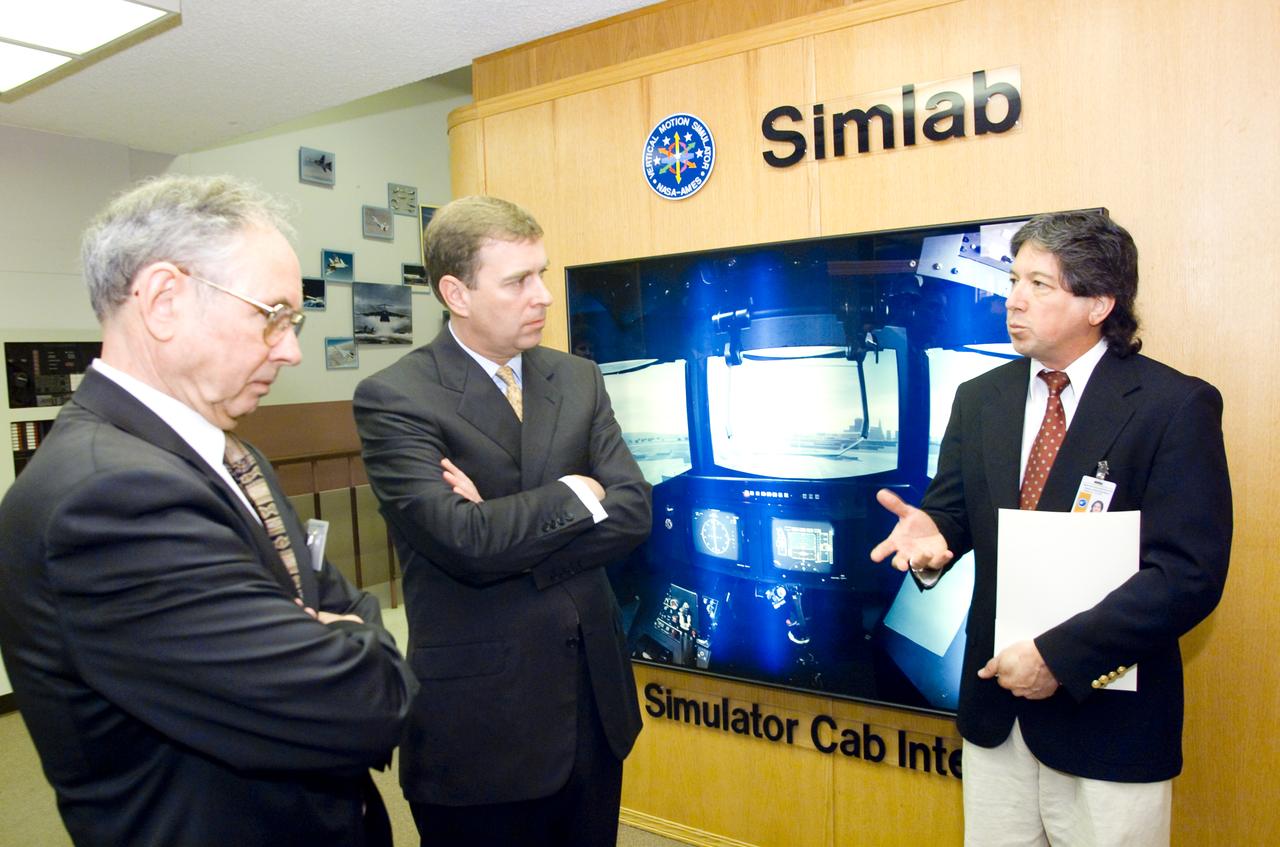
British royalty visits Ames; Prince Andrew, Duke of York on tour of Vertical Motion Simulator Facilities (VMS)
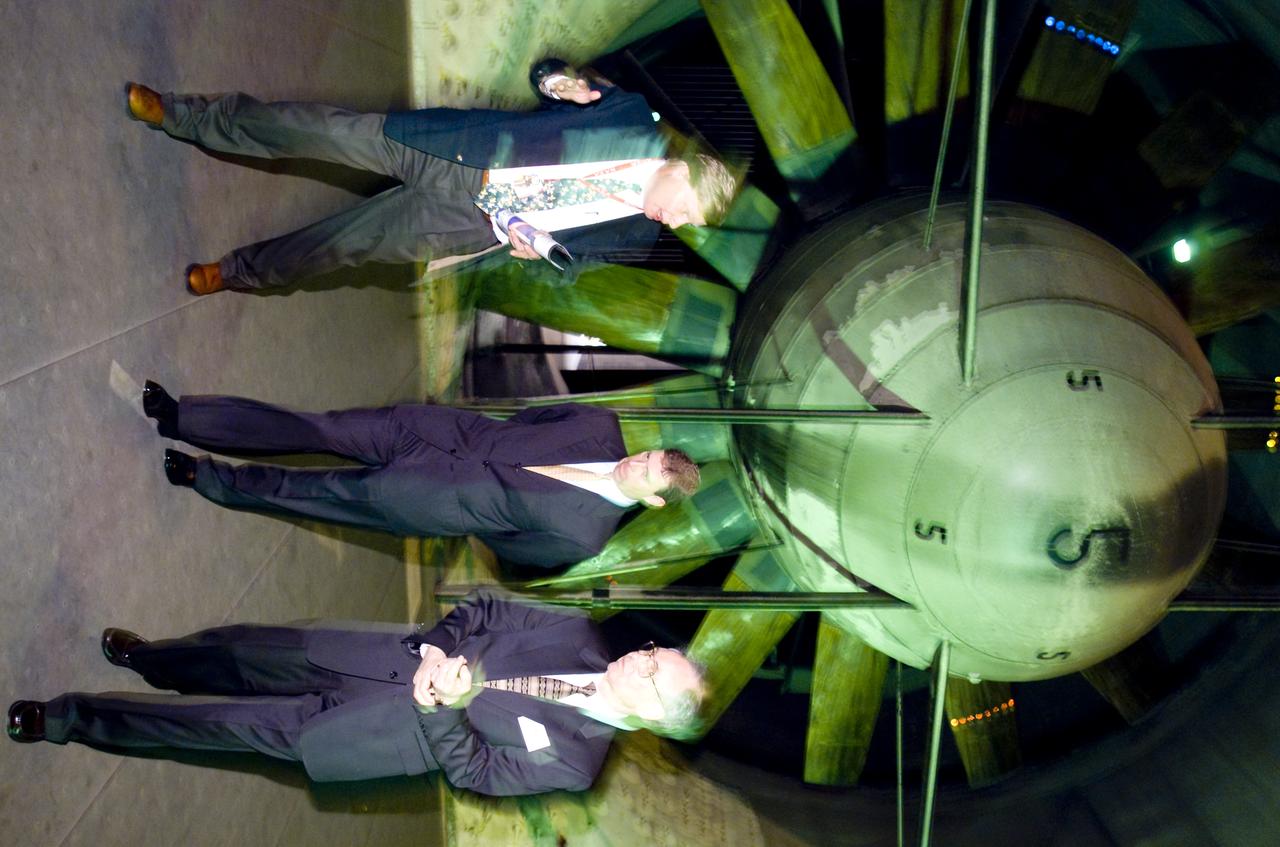
British royalty visits Ames; Prince Andrew, Duke of York on tour of NFAC (40x80x120ft w.t.)
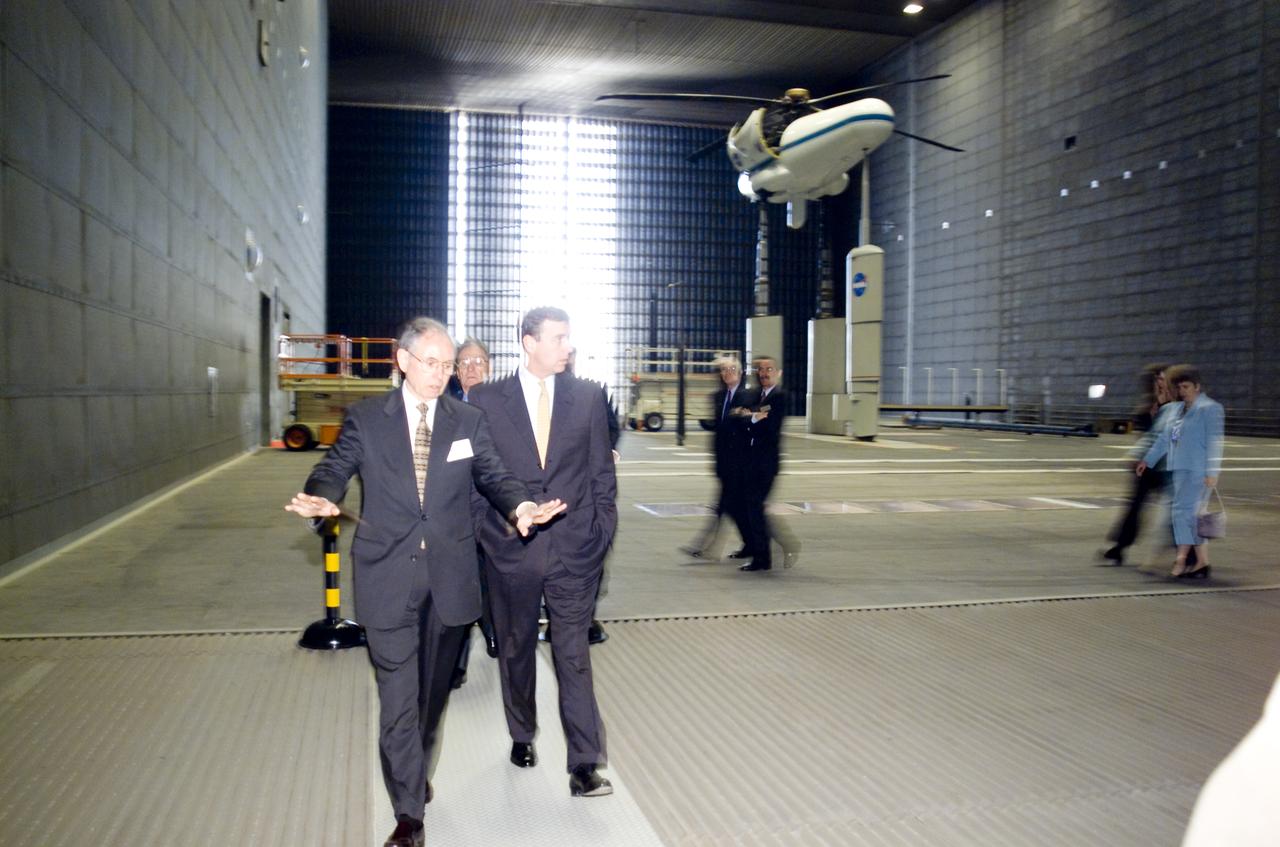
British royalty visits Ames; Prince Andrew, Duke of York on tour of 80x120ft Wind Tunnel
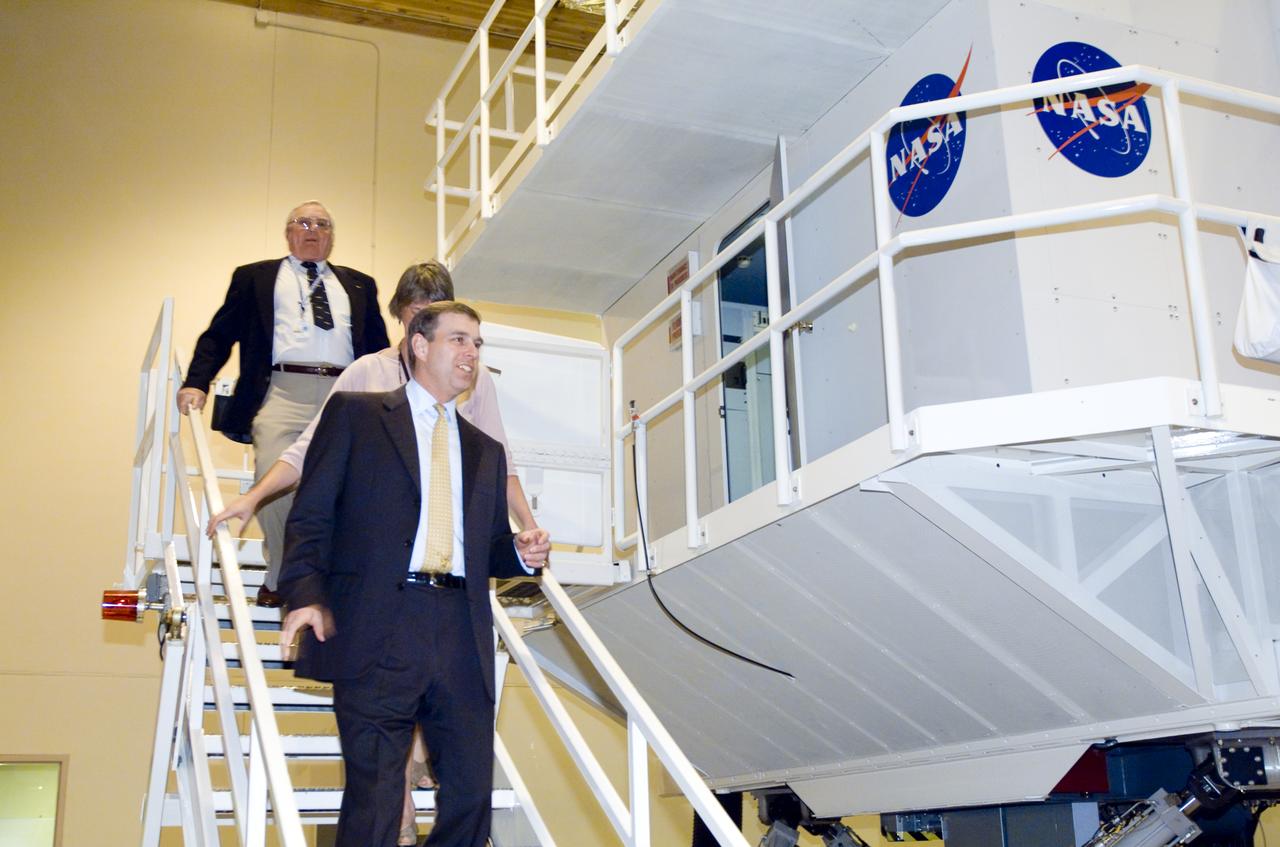
British royalty visits Ames; Prince Andrew, Duke of York on tour of CVSRF (Crew Vehicle Systems Research Facililty) simulators
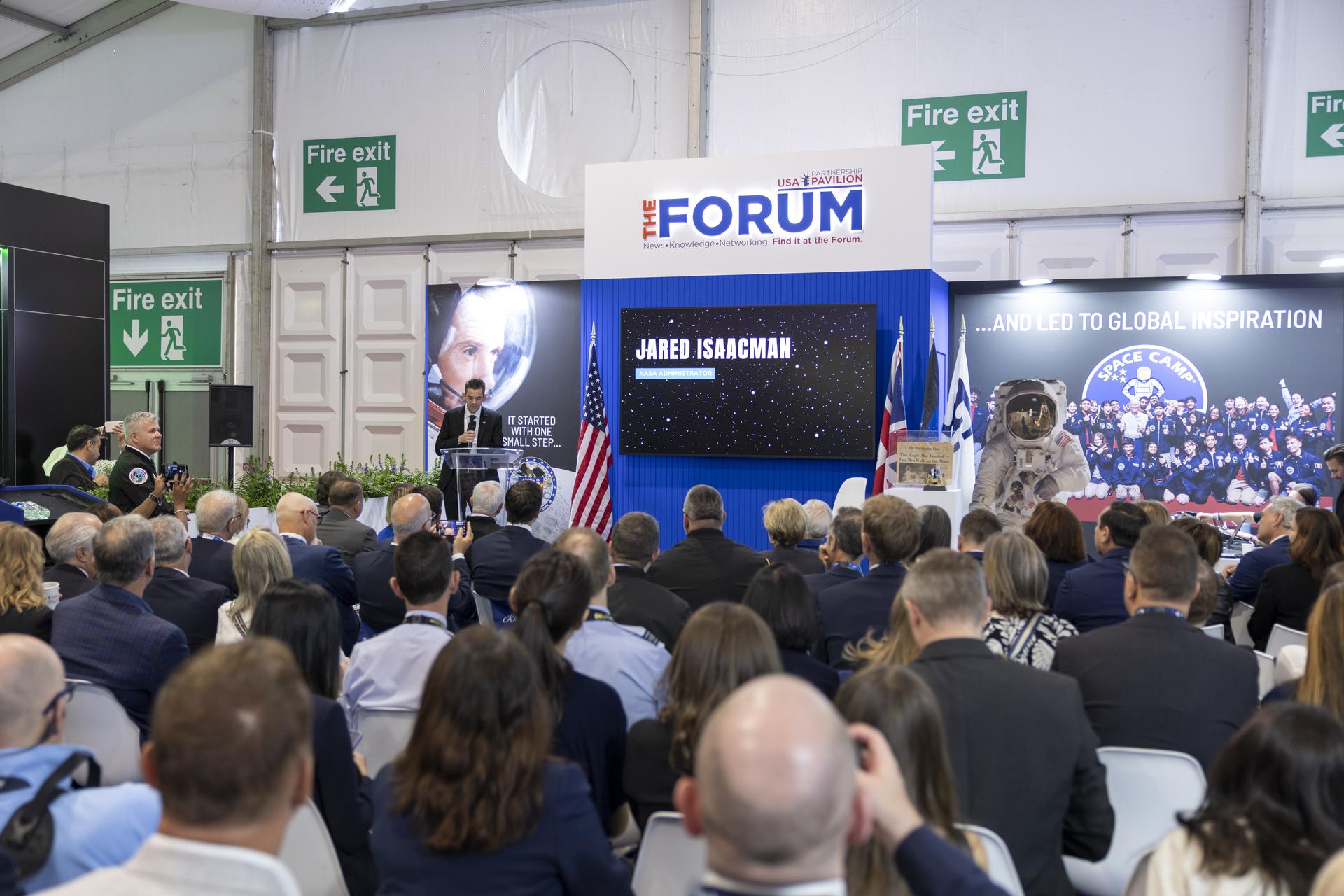
Jared Isaacman introduces Charlie Duke at the U.S. Pavillion at the Farnborough International Airshow in Farnborough, UK.

British royalty visits Ames; Prince Andrew, Duke of York on tour in 80x120ft w.t.
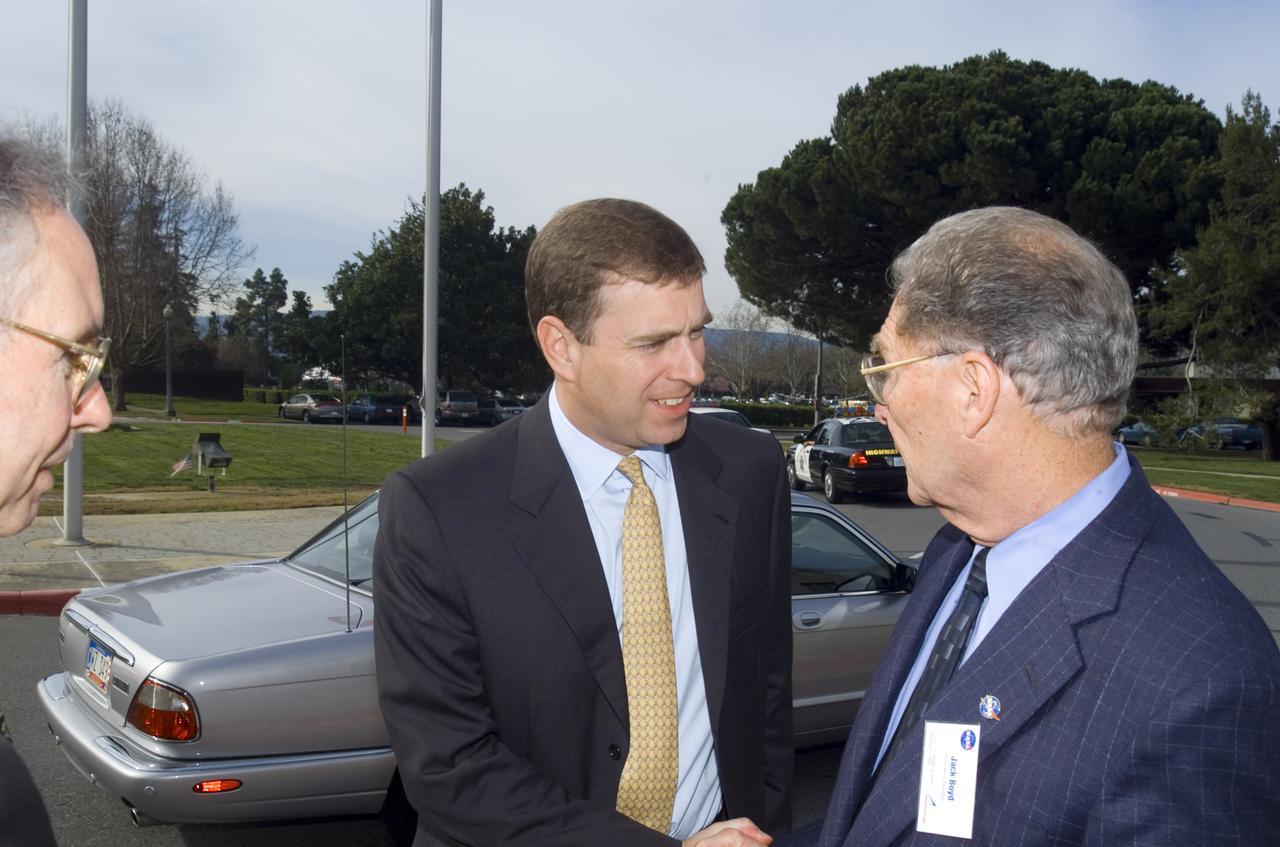
British royalty visits Ames; Prince Andrew, Duke of York greeted by Jack Boyd, Executive Assistant of Center Director
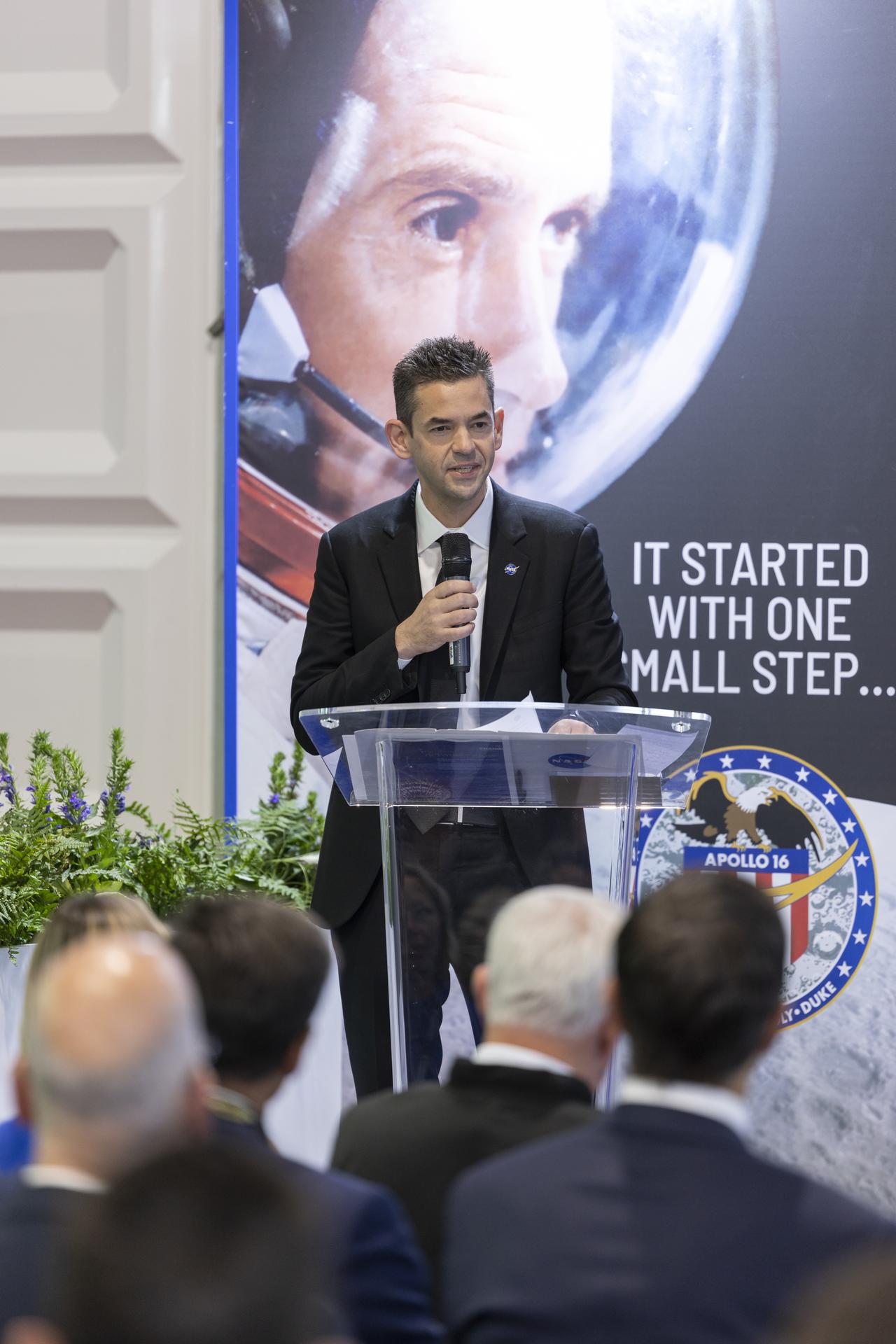
Jared Isaacman introduces Charlie Duke at the U.S. Pavillion at the Farnborough International Airshow in Farnborough, UK.
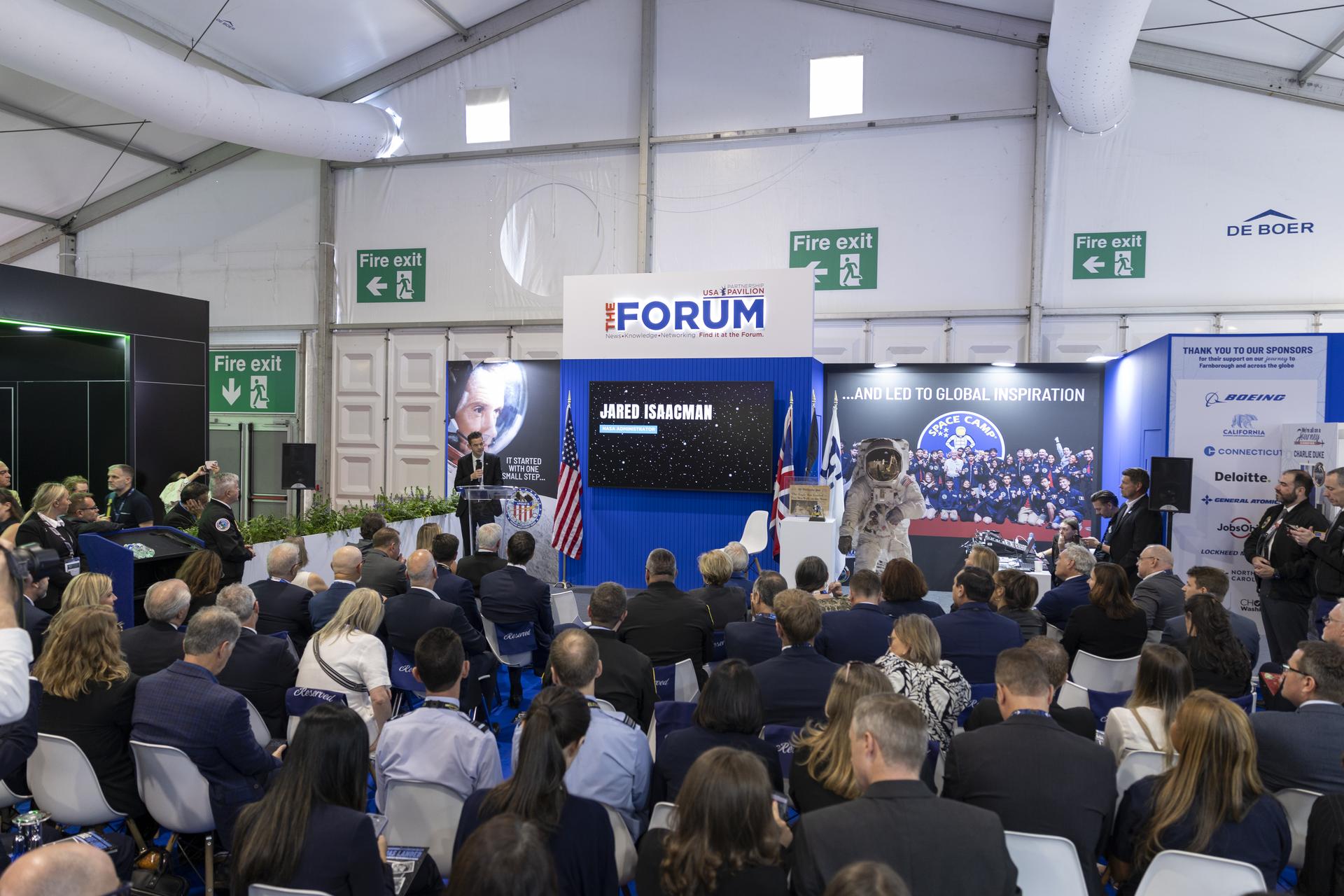
Jared Isaacman introduces Charlie Duke at the U.S. Pavillion at the Farnborough International Airshow in Farnborough, UK.
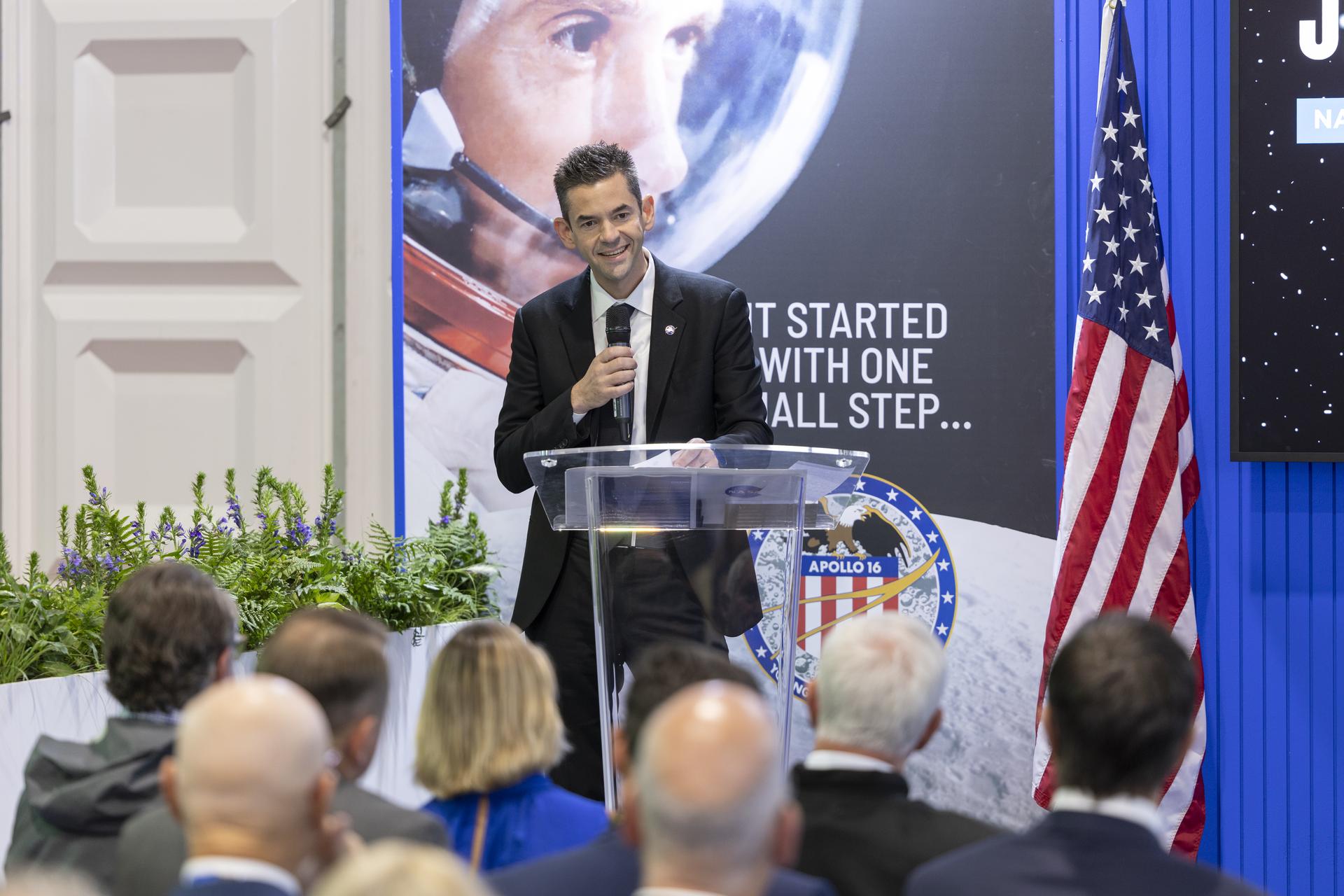
Jared Isaacman introduces Charlie Duke at the U.S. Pavillion at the Farnborough International Airshow in Farnborough, UK.
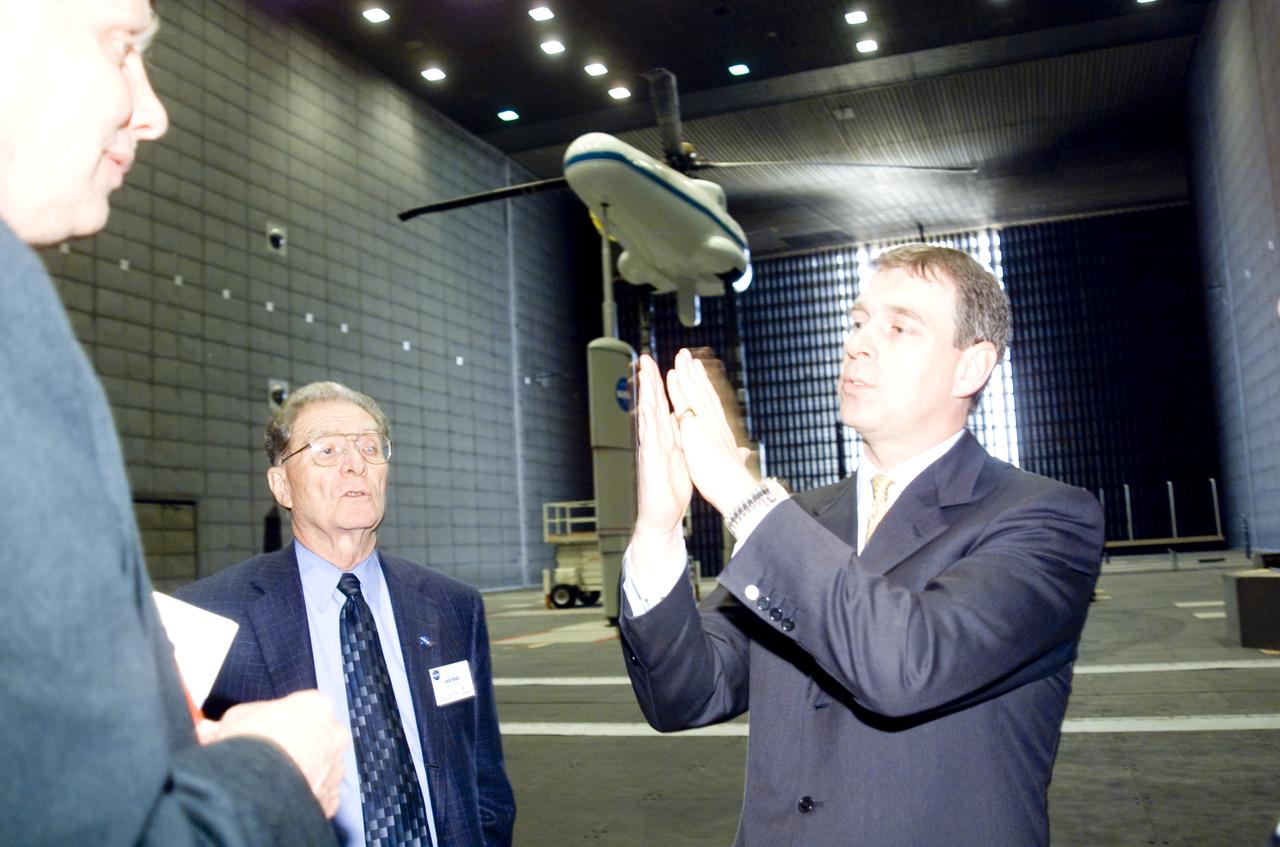
British royalty visits Ames; Prince Andrew, Duke of York on tour in 80x120ft w.t.
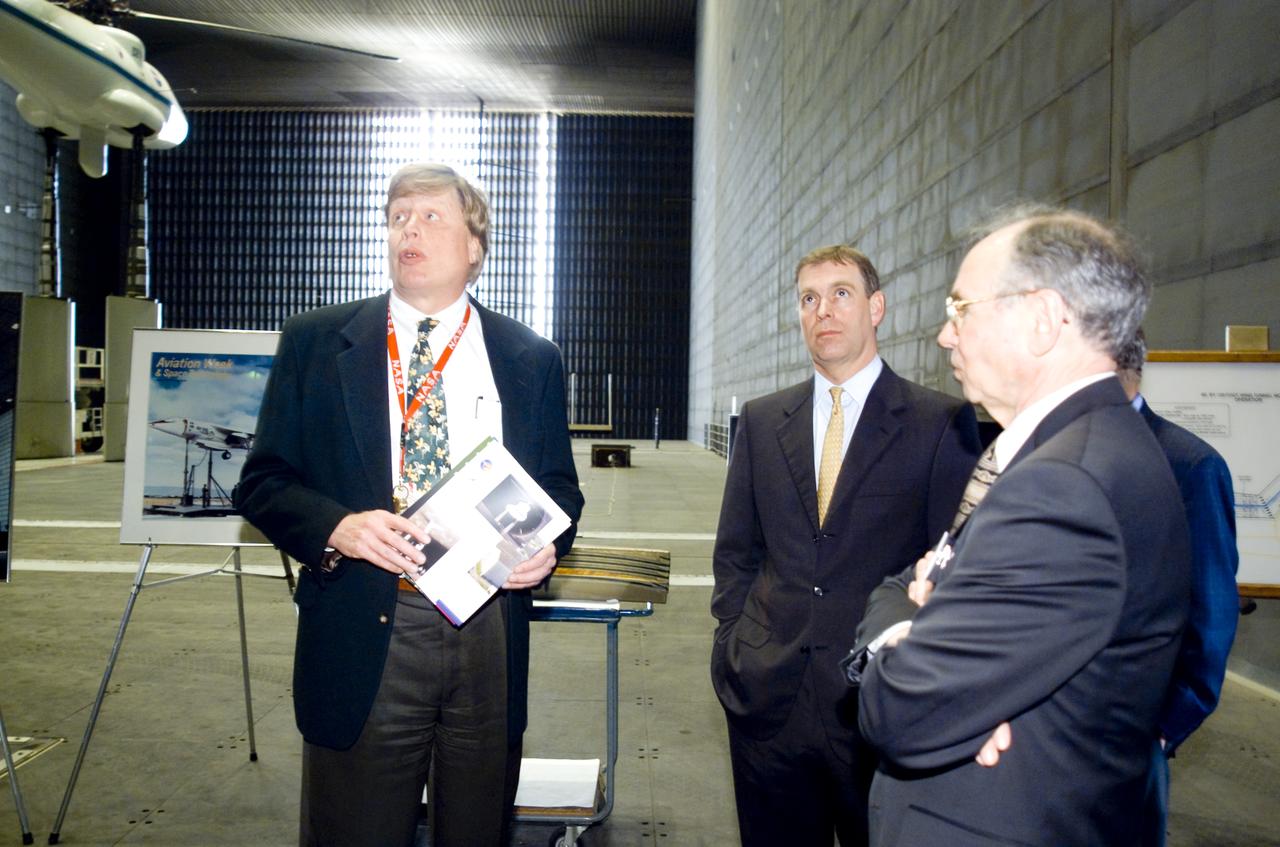
British royalty visits Ames; Prince Andrew, Duke of York on tour in 80x120ft w.t.
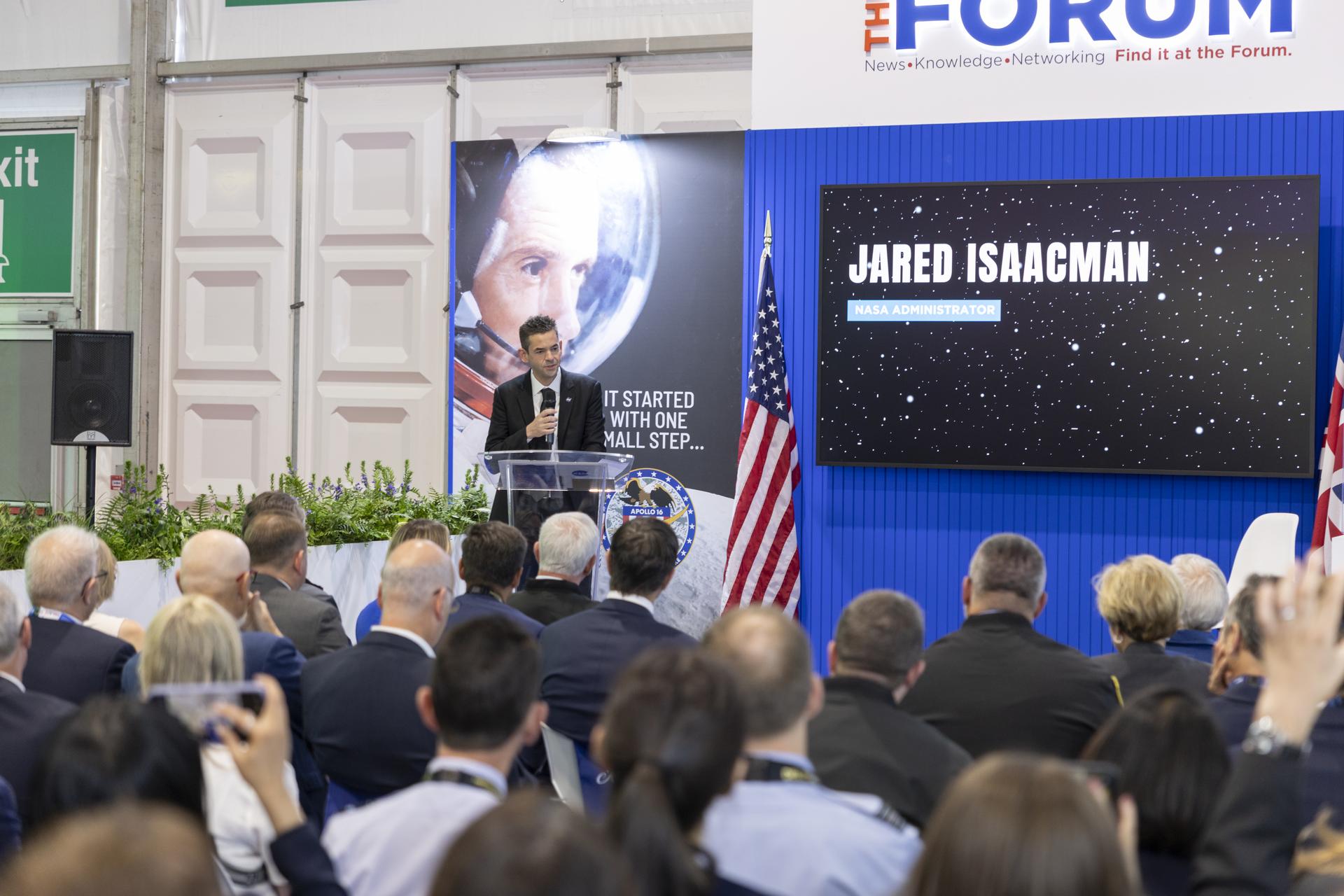
Jared Isaacman introduces Charlie Duke at the U.S. Pavillion at the Farnborough International Airshow in Farnborough, UK.
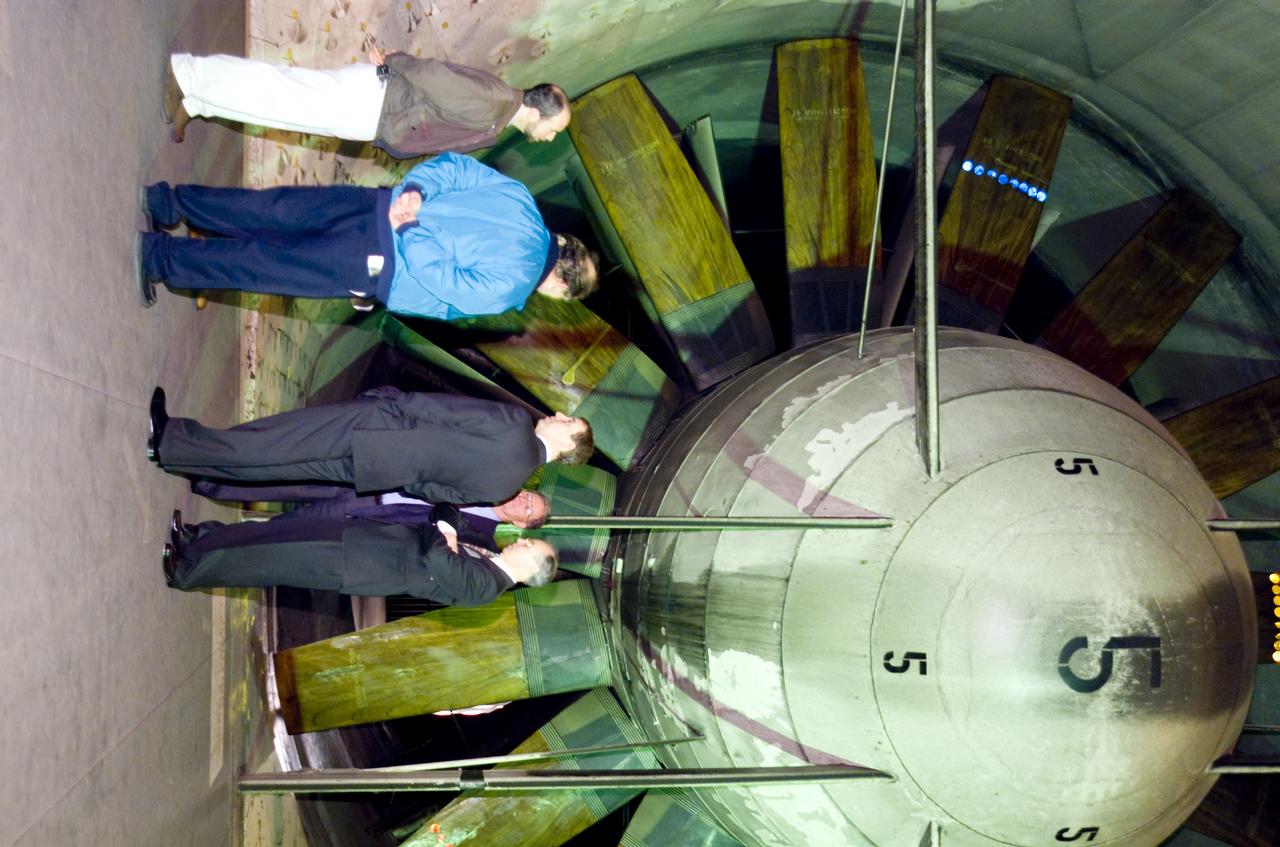
British royalty visits Ames; Prince Andrew, Duke of York on tour of the NFAC facility. (40x80x120ft Wind Tunnel)
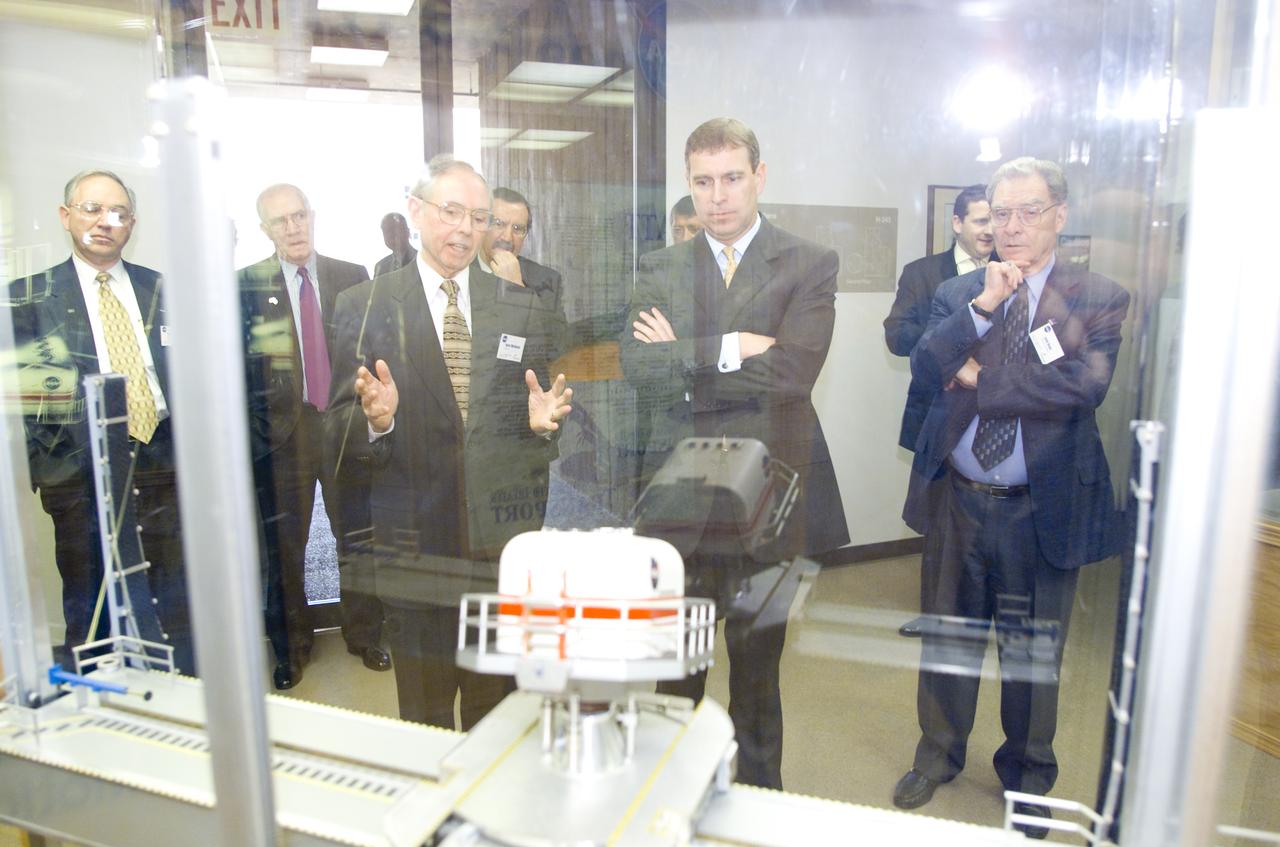
British royalty visits Ames; Prince Andrew, Duke of York on tour at the VMS (Vertical Motion Simulator)

British royalty visits Ames; Prince Andrew, Duke of York on tour, here with Dr Henry McDonald, Director of Ames Research Center presenting a memento to the Prince.
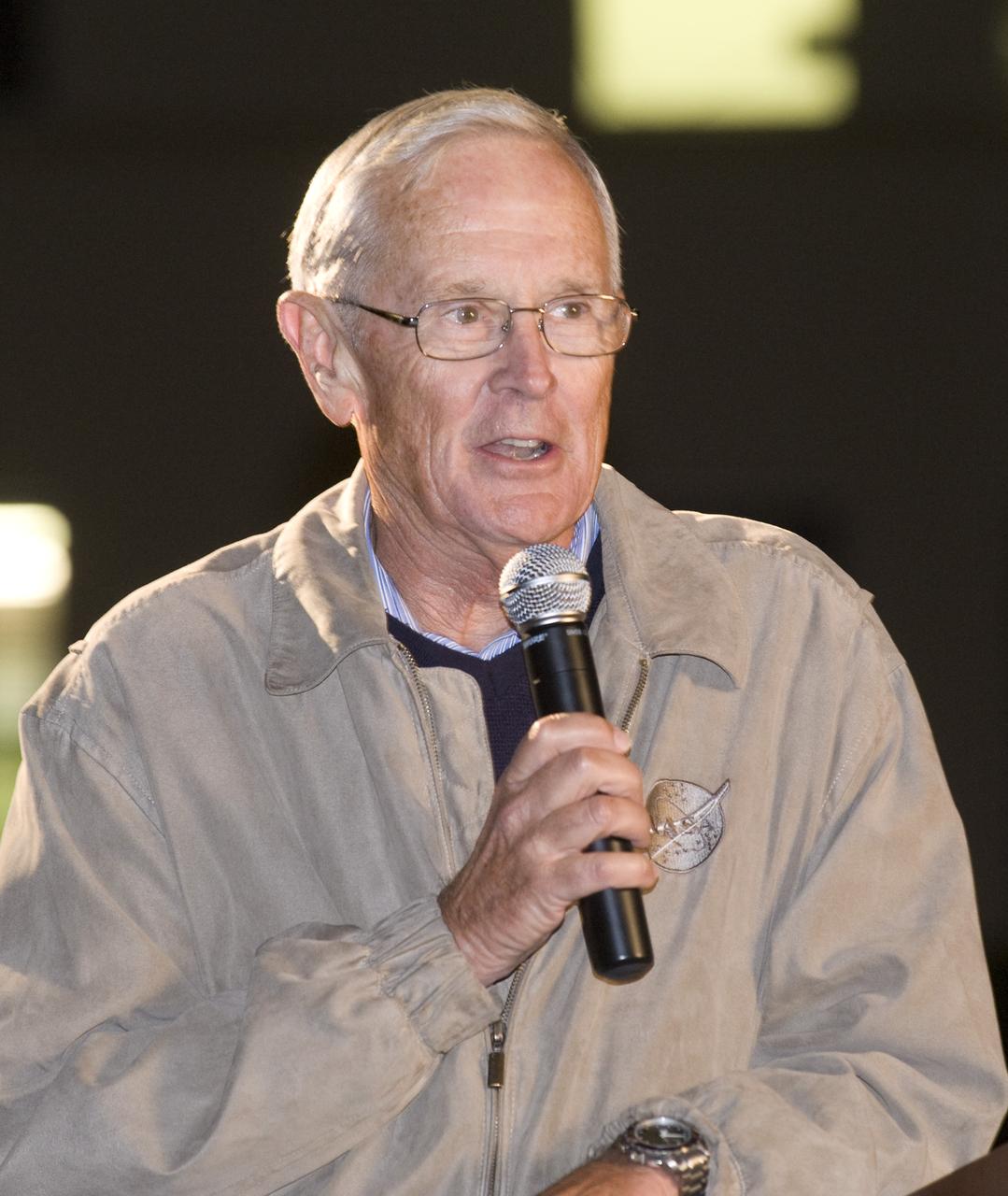
LCROSS Impact Night: Guest Speaker Charlie Duke, A pollo 16 astronaut (moonwalker) address the crowd during the all night public event.
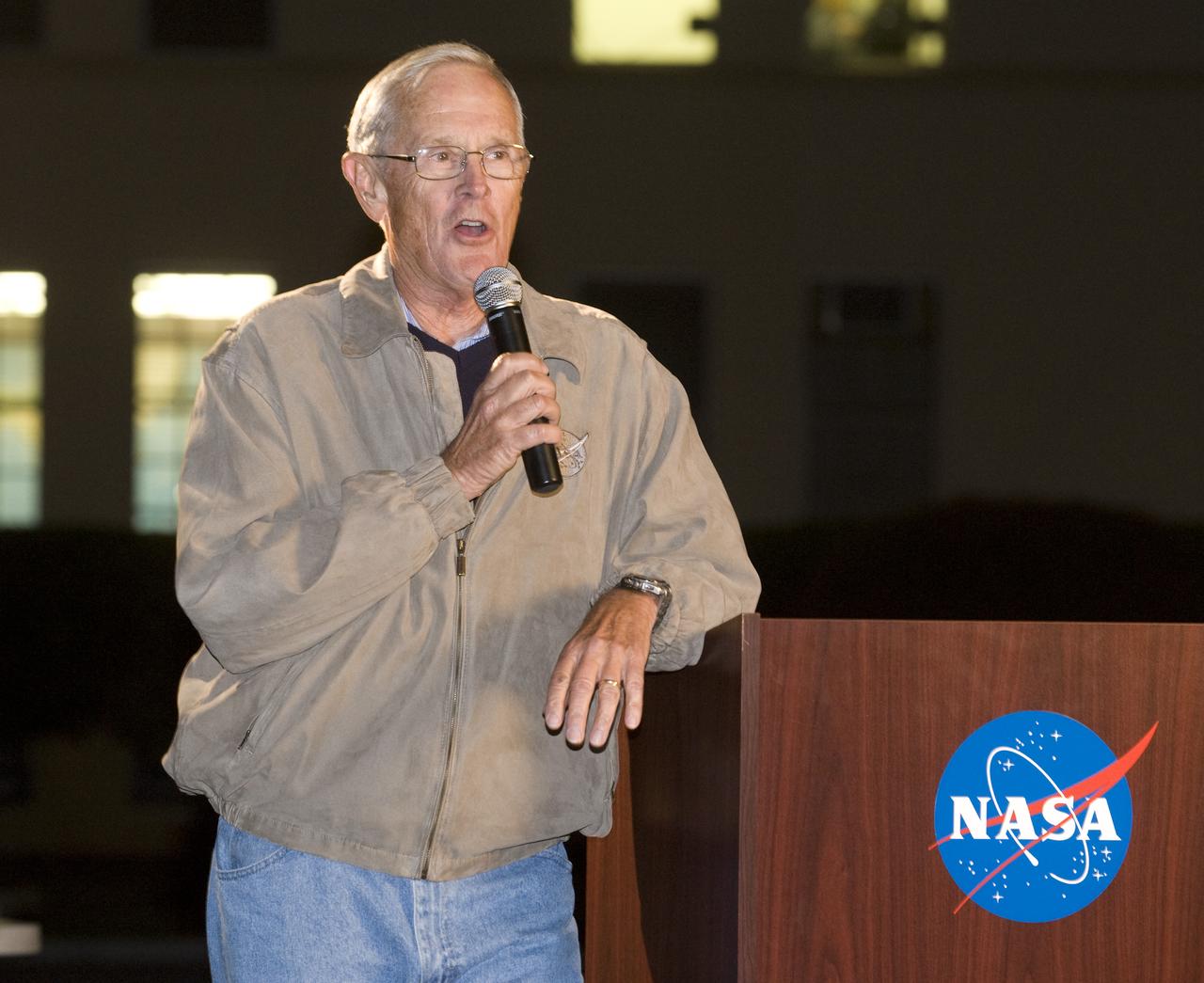
LCROSS Impact Night: Guest Speaker Charlie Duke, A pollo 16 astronaut (moonwalker) address the crowd during the all night public event.
CAPE CANAVERAL, Fla. – At the Apollo/Saturn V Center at NASA's Kennedy Space Center in Florida, Apollo astronaut Charlie Duke shares his experiences with spectators crowd gathered for NASA's 40th Anniversary of Apollo Celebration of the July 1969 launch and landing on the moon. Duke served as lunar module pilot on Apollo 16 in 1972. He and astronaut John Young set a record of 72 hours and 14 minutes on the lunar surface. Photo credit: NASA/Kim Shiflett

S72-33898 (22 March 1972) --- Astronaut Charles M. Duke Jr., Apollo 16 lunar module pilot, trains on a simulated lunar surface area at Kennedy Space Center (KSC), with a core tube with a hammer. Astronauts Duke and John W. Young, commander, will take part in three extravehicular activities on the moon while astronaut Thomas K. Mattingly II, command module pilot, remains with the Command and Service Modules (CSM) in lunar orbit.