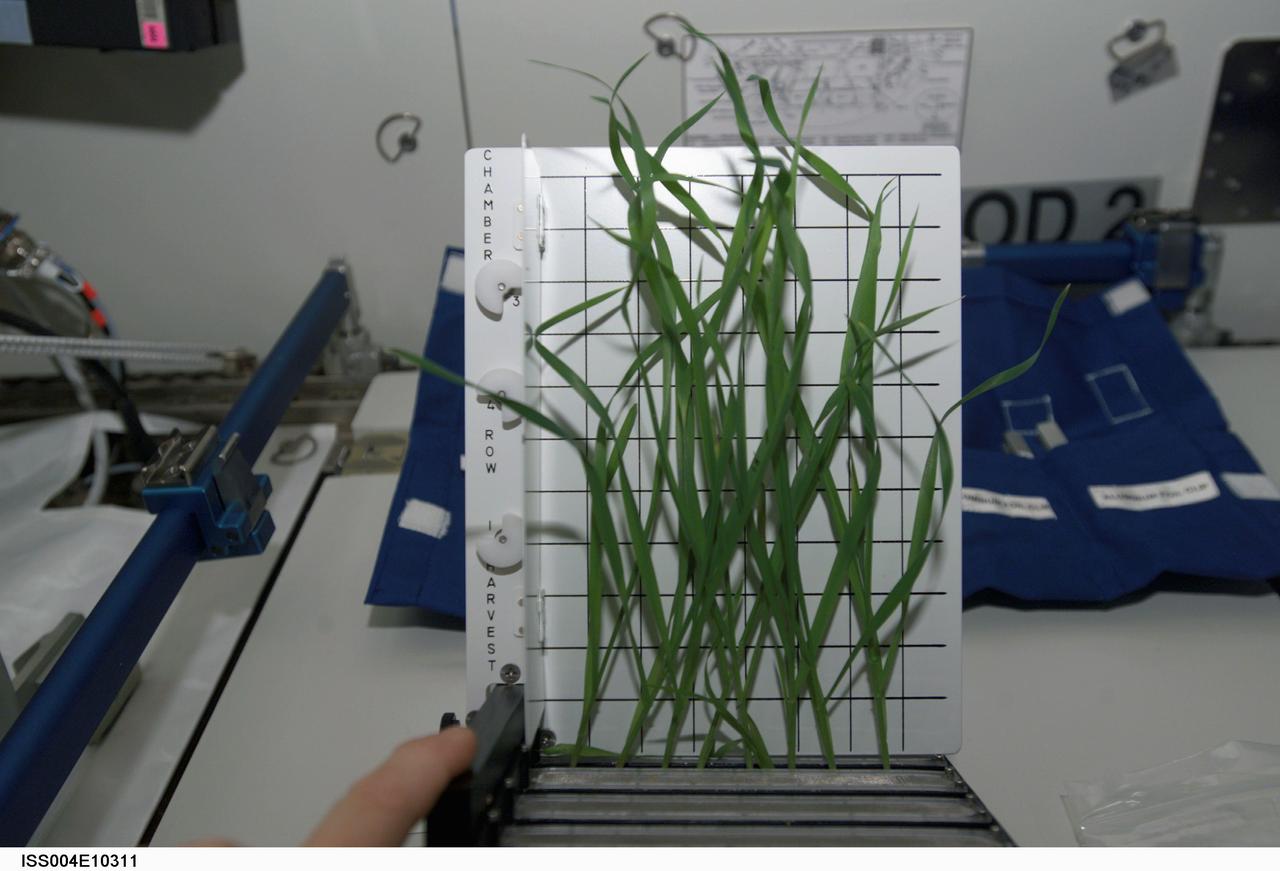
Dwarf wheat were photographed aboard the International Space Station in April 2002. Lessons from on-orbit research on plants will have applications to terrestrial agriculture as well as for long-term space missions. Alternative agricultural systems that can efficiently produce greater quantities of high-quality crops in a small area are important for future space expeditions. Also regenerative life-support systems that include plants will be an important component of long-term space missions. Data from the Biomass Production System (BPS) and the Photosynthesis Experiment and System Testing and Operations (PESTO) will advance controlled-environment agricultural systems and will help farmers produce better, healthier crops in a small area. This same knowledge is critical to closed-loop life support systems for spacecraft. The BPS comprises a miniature environmental control system for four plant growth chambers, all in the volume of two space shuttle lockers. The experience with the BPS on orbit is providing valuable design and operational lessons that will be incorporated into the Plant Growth Units. The objective of PESTO was to flight verify the BPS hardware and to determine how the microgravity environment affects the photosynthesis and metabolic function of Super Dwarf wheat and Brassica rapa (a member of the mustard family).

iss055e001919 (Mar. 12, 2018) --- Dwarf wheat plants in the Advanced Plant Habitat Facility, a facility to conduct plant bioscience research on the International Space Stations (ISS).
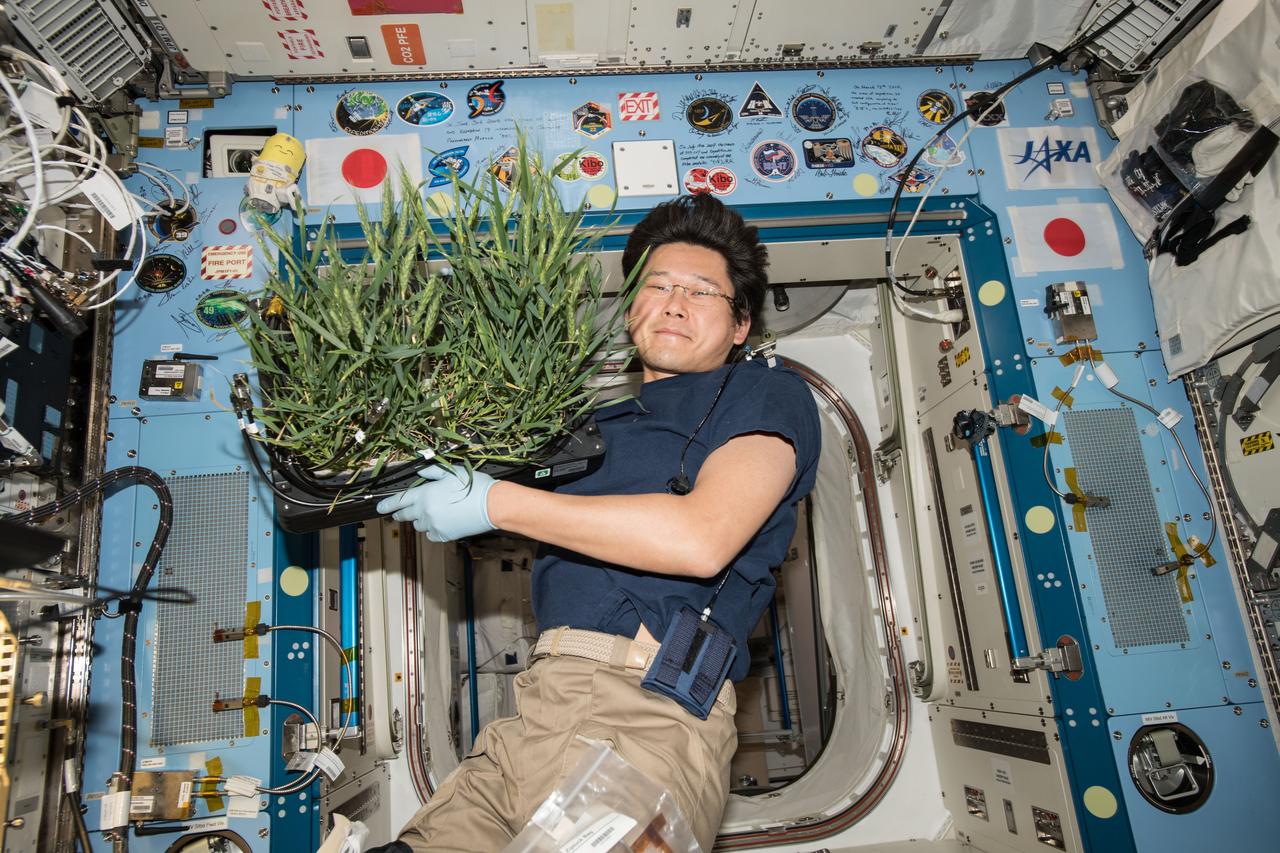
iss055e001961 (March 12, 2018) --- Astronaut Norishige Kanai, of the Japan Aerospace Exploration Agency, holds dwarf wheat plants grown inside the Plant Habitat growth chamber located in Japan's Kibo laboratory module.
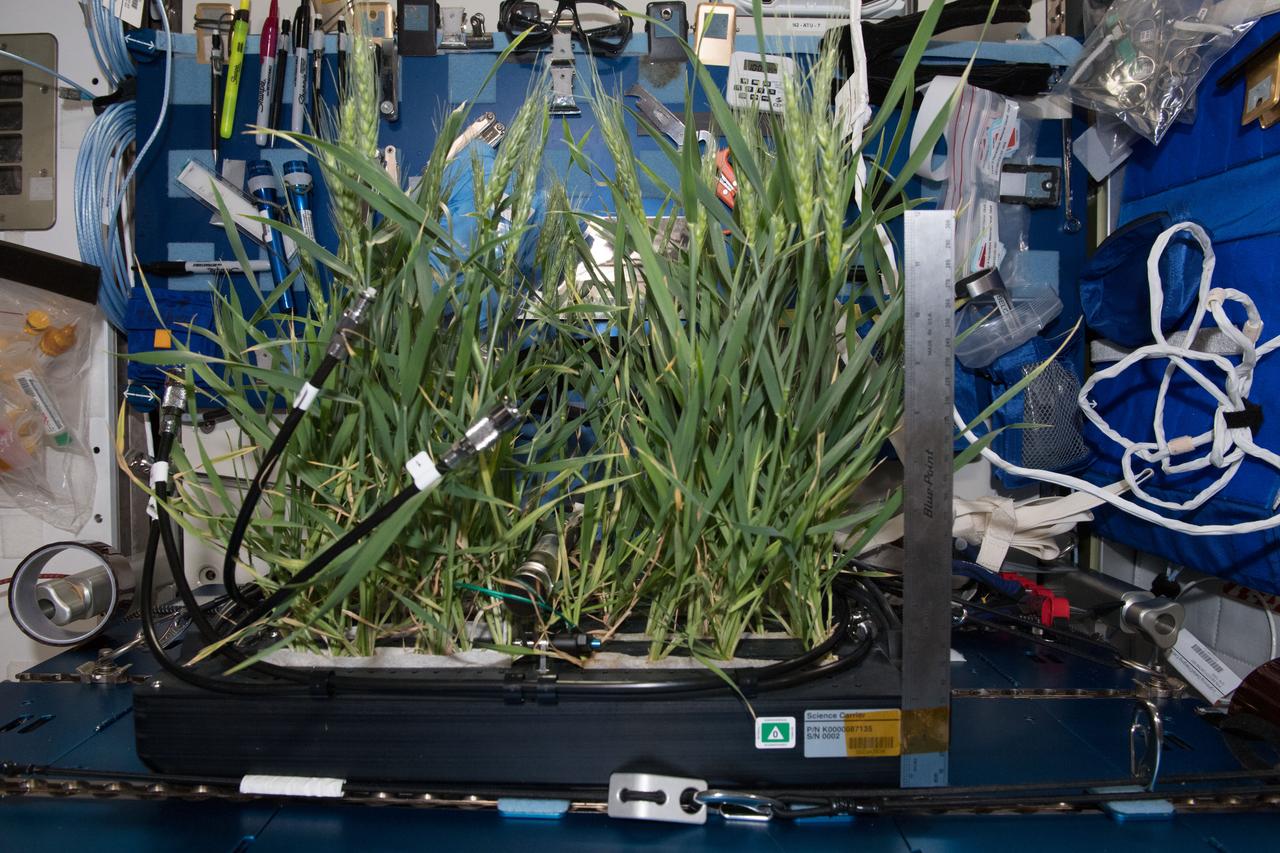
iss055e001931 (Mar. 12, 2018) --- Dwarf wheat plants during routine cleaning in the Advanced Plant Habitat Facility, a facility to conduct plant bioscience research on the International Space Stations (ISS).
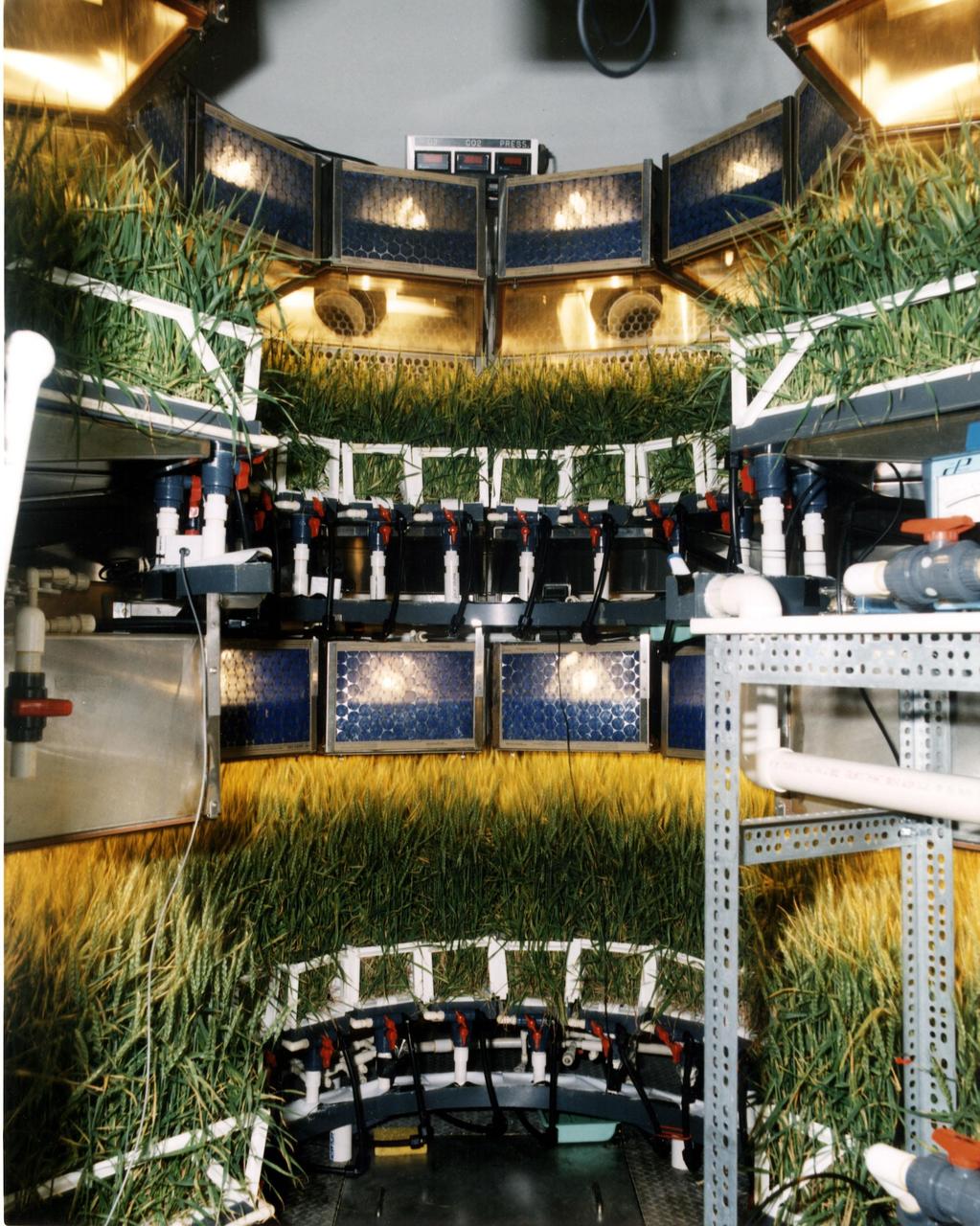
Original photo and caption dated June 22, 1988: "A dwarf wheat variety known as Yecoro Rojo flourishes in KSC's Biomass Production Chamber. Researchers are gathering information on the crop's ability to produce food, water and oxygen, and then remove carbon dioxide. The confined quarters associated with space travel require researchers to focus on smaller plants that yield proportionately large amounts of biomass. This wheat crop takes about 85 days to grow before harvest."

A test unit, or prototype, of NASA's Advanced Plant Habitat (APH) with its first initial grow test in the Space Station Processing Facility at the agency's Kennedy Space Center in Florida. The taller plants pictured are dwarf wheat and the smaller plants are Arabidopsis. Developed by NASA and ORBITEC of Madison, Wisconsin, the APH is the largest plant chamber built for the agency. It is a fully automated plant growth facility that will be used to conduct bioscience research on the International Space Station. The APH will be delivered to the space station aboard future Commercial Resupply Services missions.
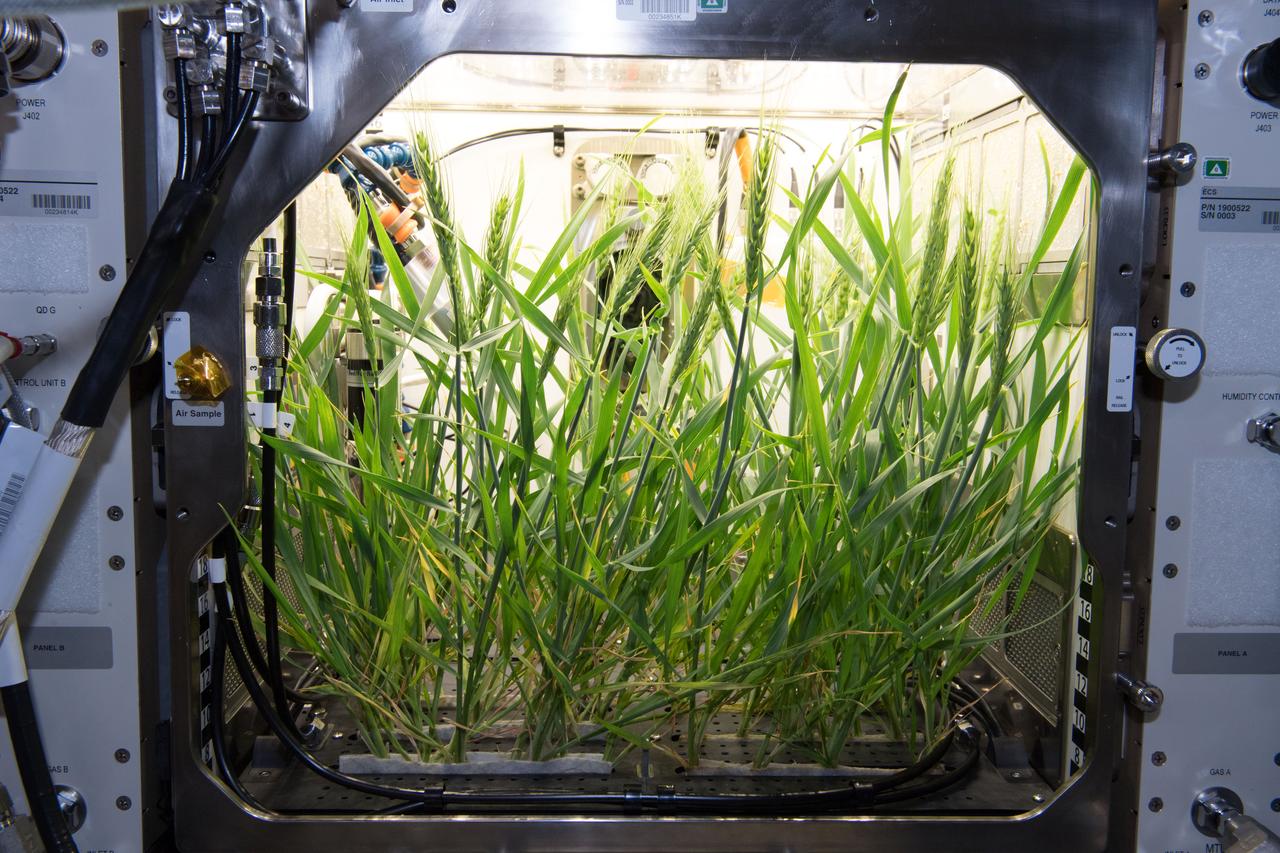
The first growth test of crops in the Advanced Plant Habitat aboard the International Space Station yielded great results. Arabidopsis seeds – small flowering plants related to cabbage and mustard – grew for about six weeks and the dwarf wheat for five weeks. The APH is now ready to support large plant testing on ISS. APH is a fully enclosed, closed-loop system with an environmentally controlled growth chamber. It uses red, blue and green LED lights, and broad spectrum white LED lights. The system's more than 180 sensors will relay real-time information, including temperature, oxygen content and moisture levels back to the team at Kennedy Space Center.
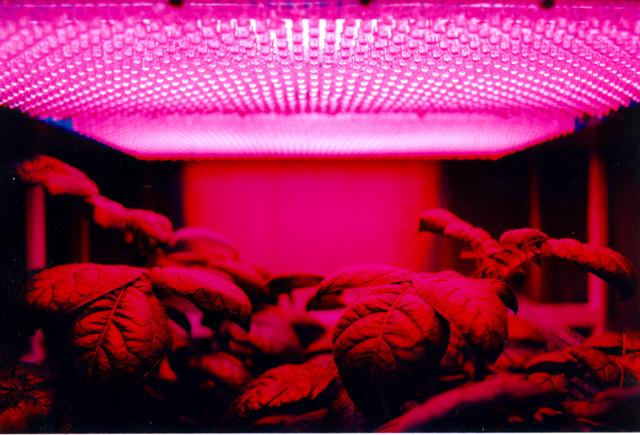
Astroculture is a suite of technologies used to produce and maintain a closed controlled environment for plant growth. The two most recent missions supported growth of potato, dwarf wheat, and mustard plants and provided scientists with the first opportunity to conduct true plant research in space. Light emitting diodes have particular usefulness for plant growth lighting because they emit a much smaller amount of radiant heat than do conventional lighting sources and because they have potential of directing a higher percentage of the emitted light onto plants surfaces. Furthermore, the high output LED's have emissions in the 600-700 nm waveband, which is of highest efficiency for photosynthesis by plants.
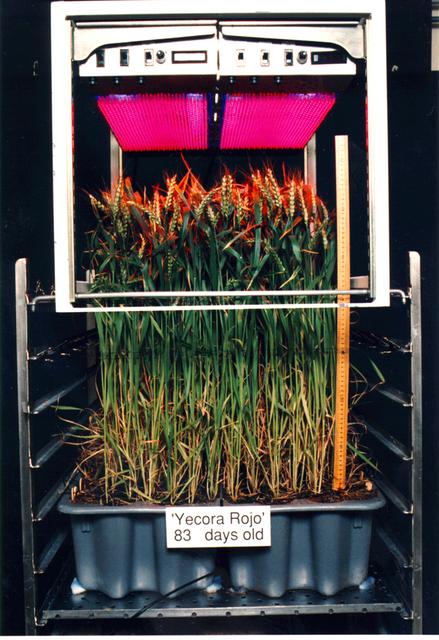
Astroculture is a suite of technologies used to produce and maintain a closed controlled environment for plant growth. The two most recent missions supported growth of potato, dwarf wheat, and mustard plants, and provided scientists with the first opportunity to conduct true plant research in space. Light emitting diodes have particular usefulness for plant growth lighting because they emit a much smaller amount of radiant heat than do conventional lighting sources and because they have potential of directing a higher percentage of the emitted light onto plants surfaces. Furthermore, the high output LED's have emissions in the 600-700 nm waveband, which is of highest efficiency for photosynthesis by plants.