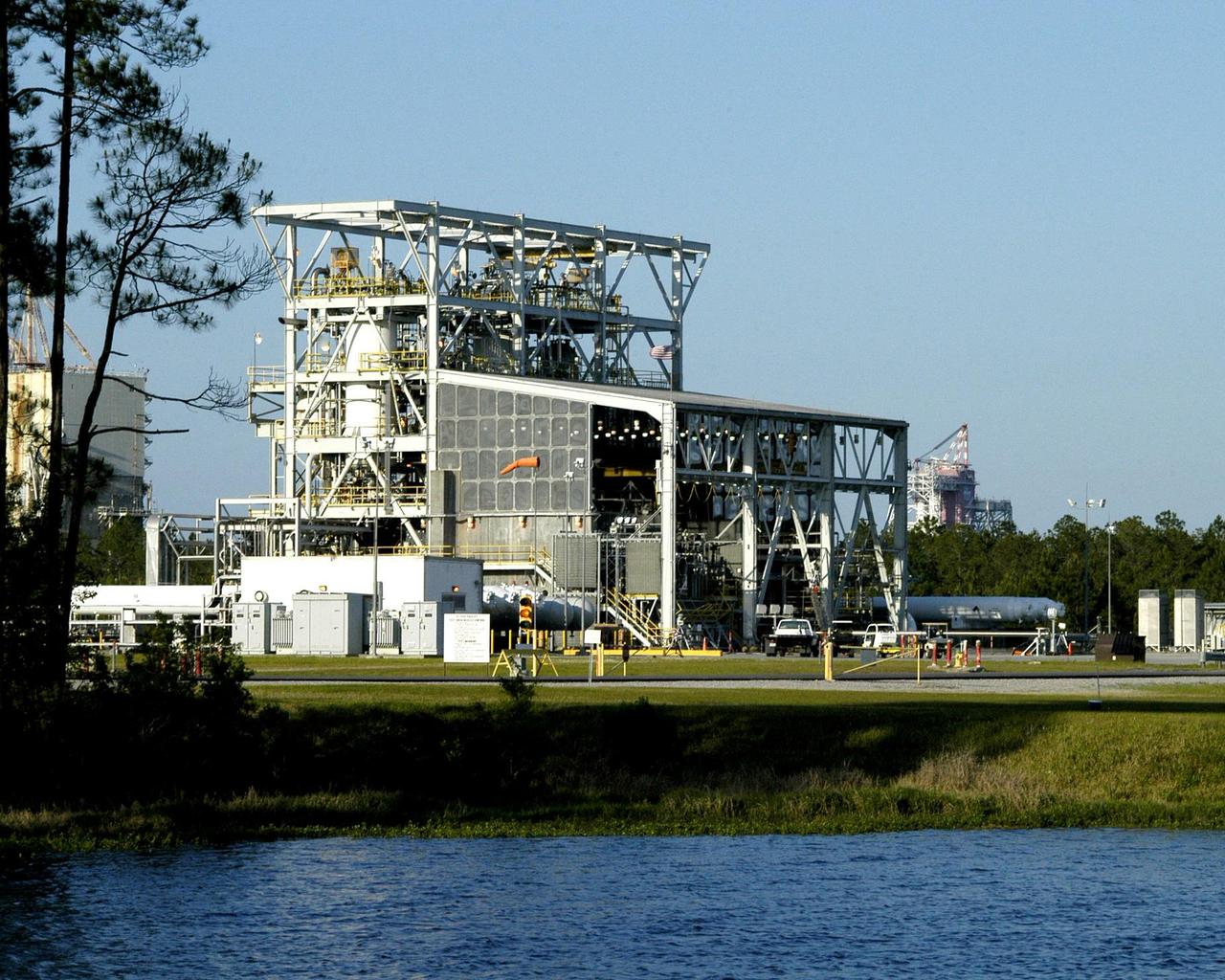
The E Test Complex is SSC's versatile, three-stand complex that includes seven separate test cells capable of testing that involves ultra high-pressure gases and cryogenic fluids.

NASA John C. Stennis Space Center employee Dustan Ladner (left) assists tanker driver David Velasco in transferring RP-1 fuel to a 20,000-gallon underground tank at the E-1 Test Stand during a March 30 delivery. The rocket propellant will be used for testing Aerojet AJ26 rocket engines beginning this summer. Stennis is testing the engines for Orbital Sciences Corporation, which has partnered with NASA to provide eight supply missions to the International Space Station through 2015. The partnership is part of NASA's Commercial Orbital Transportation Services initiative to work closer with companies to provide commercial space transport once the space shuttle is retired later this year.
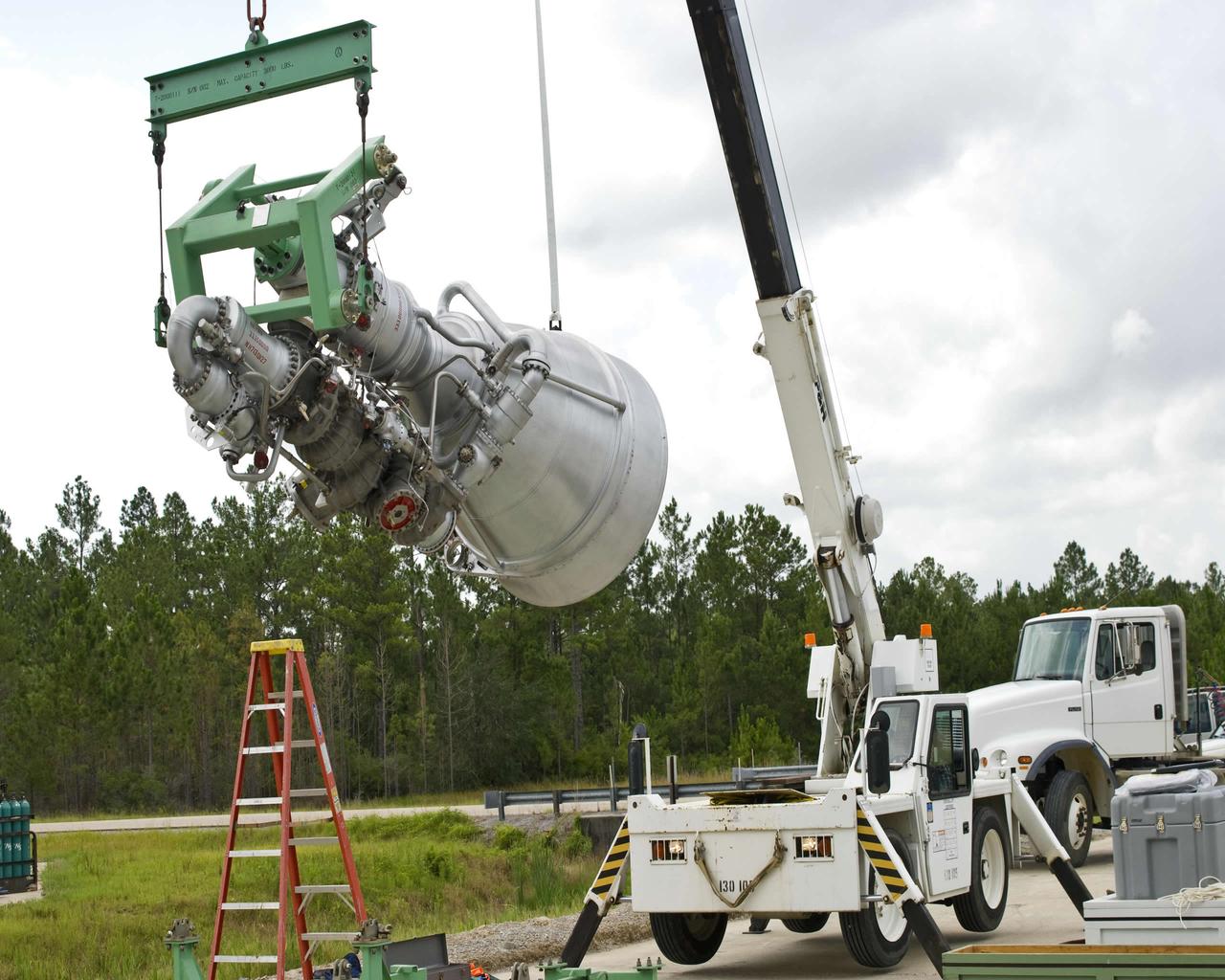
An Aerojet AJ26 rocket engine is hoisted for installation at Stennis Space Center's E-1 Test Stand on July 19. Stennis operators have been preparing the E-1 stand for testing AJ26 engines since April 2009. Modifications included construction of a 27-foot-deep flame deflection trench.
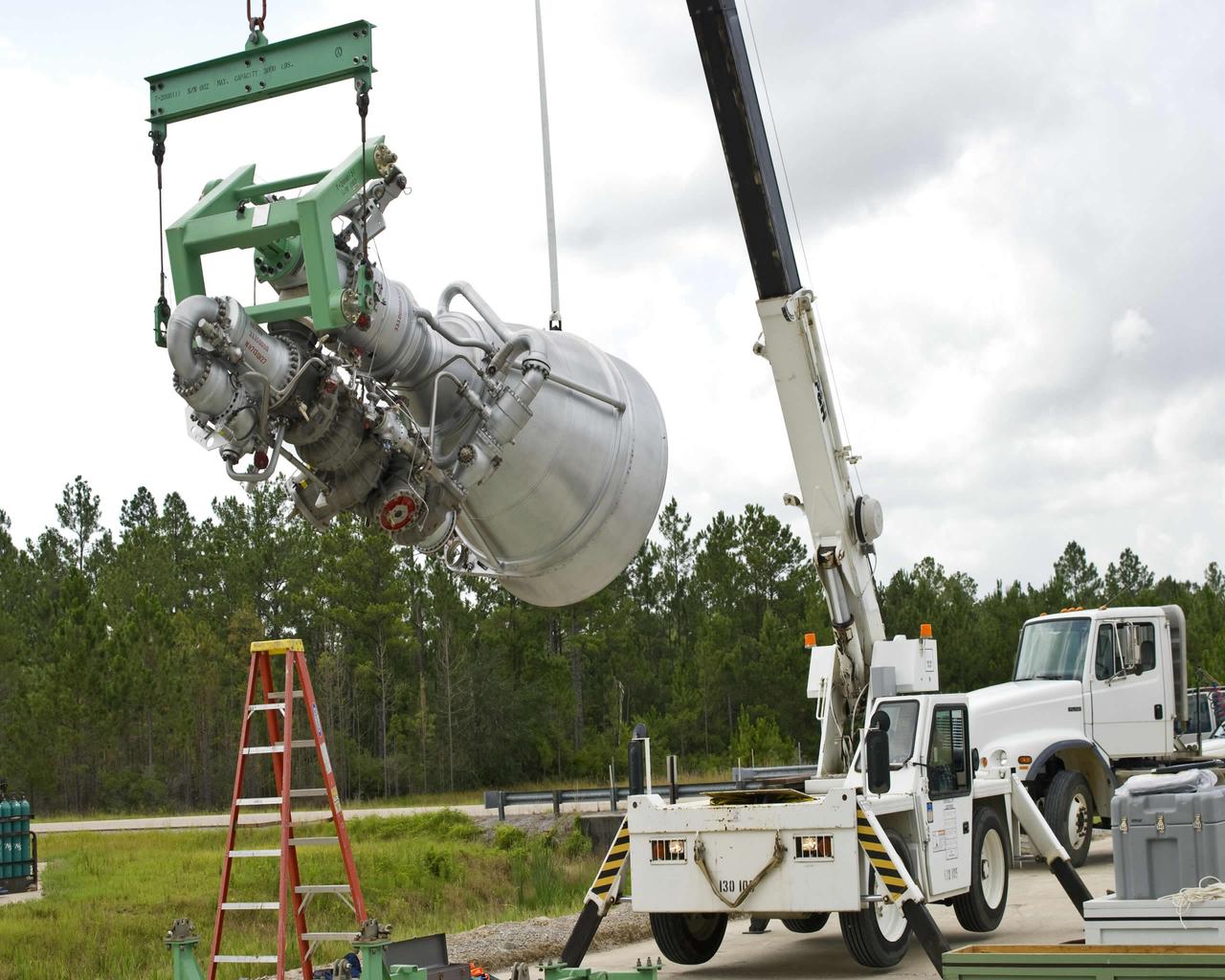
An Aerojet AJ26 rocket engine is hoisted for installation at Stennis Space Center's E-1 Test Stand on July 19. Stennis operators have been preparing the E-1 stand for testing AJ26 engines since April 2009. Modifications included construction of a 27-foot-deep flame deflection trench.
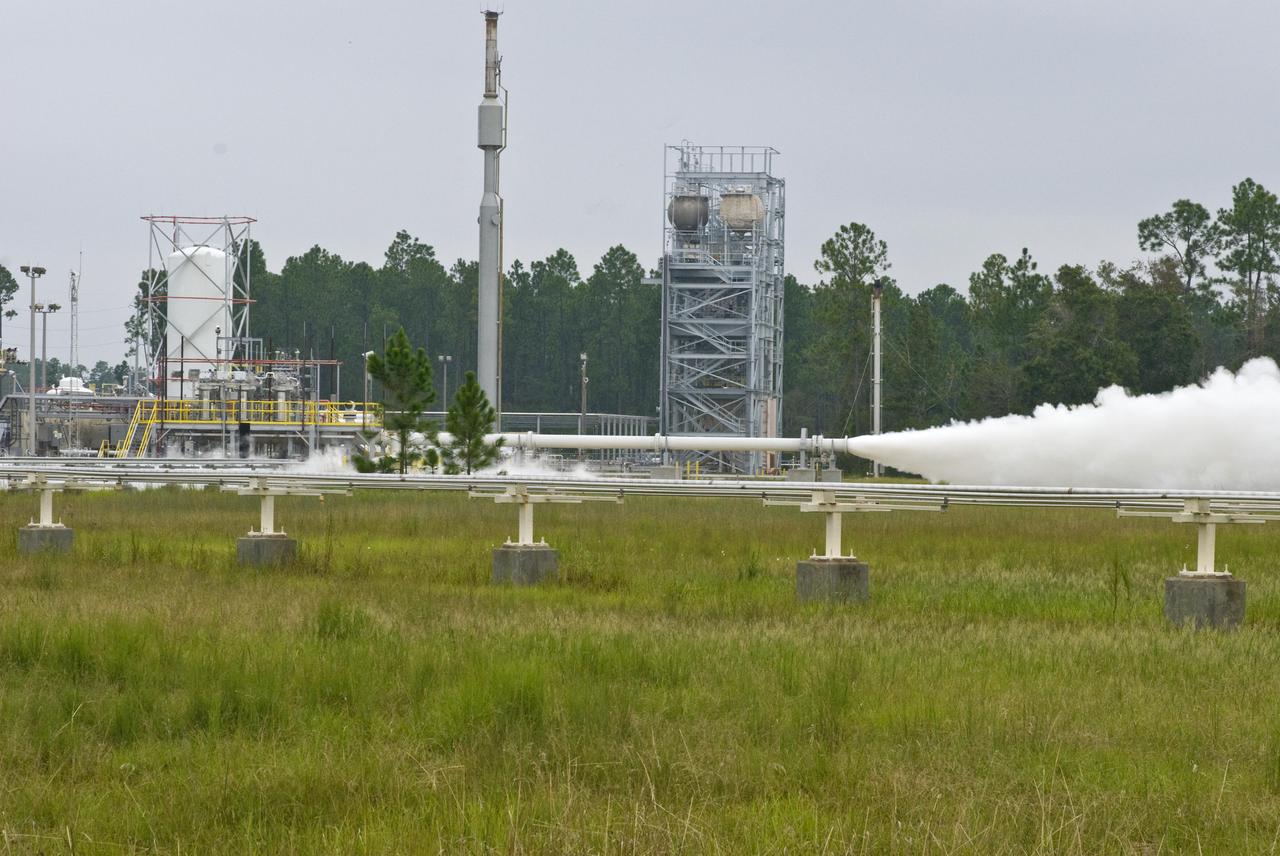
E-2 Test Stand team members at Stennis Space Center conducted their first series of tests on a three-module chemical steam generator unit Sept. 15. All three modules successfully fired during the tests. The chemical steam generator is a critical component for the A-3 Test Stand under construction at Stennis.
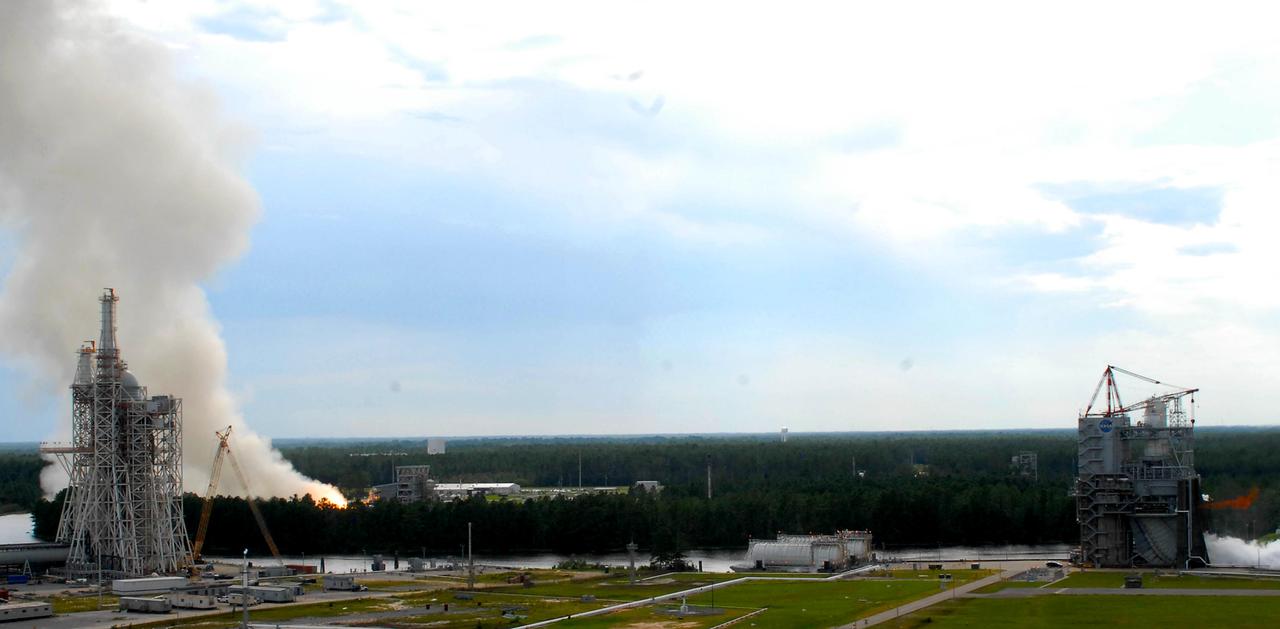
Two large-engine tests were conducted simultaneously for the first time at Stennis Space Center on Aug. 16. A plume on the left indicates a test on the facility's E-1 Test Stand. On the right, a finger of fire indicates a test under way on the A-1 Test Stand. In another first, both tests were conducted by female engineers. The image was taken from atop the facility's A-2 Test Stand, offering a panoramic view that includes the new A-3 Test Stand under construction to the left.
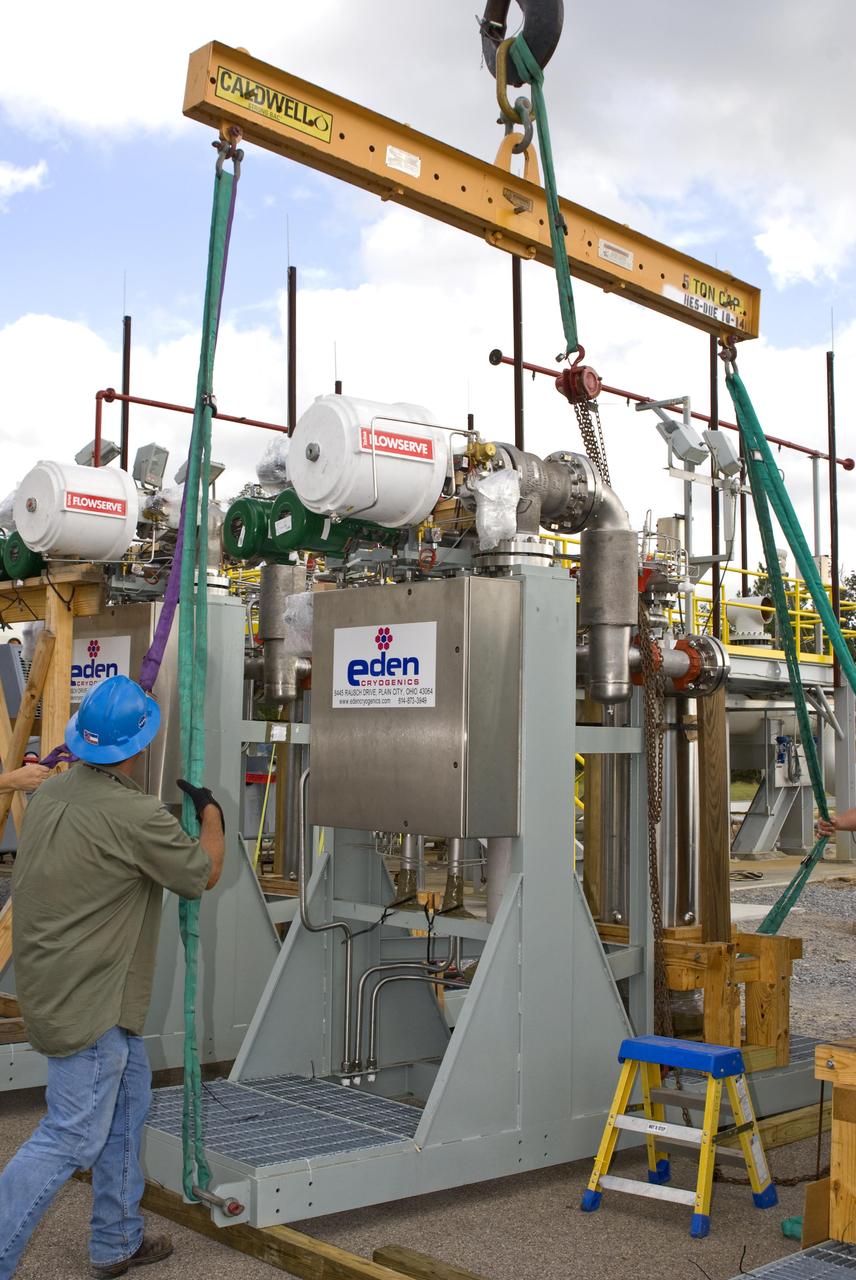
The first of nine chemical steam generator (CSG) units that will be used on the A-3 Test Stand is prepared for installation Oct. 24, 2010, at John C. Stennis Space Center. The unit was installed at the E-2 Test Stand for verification and validation testing before it is moved to the A-3 stand. Steam generated by the nine CSG units that will be installed on the A-3 stand will create a vacuum that allows Stennis operators to test next-generation rocket engines at simulated altitudes up to 100,000 feet.
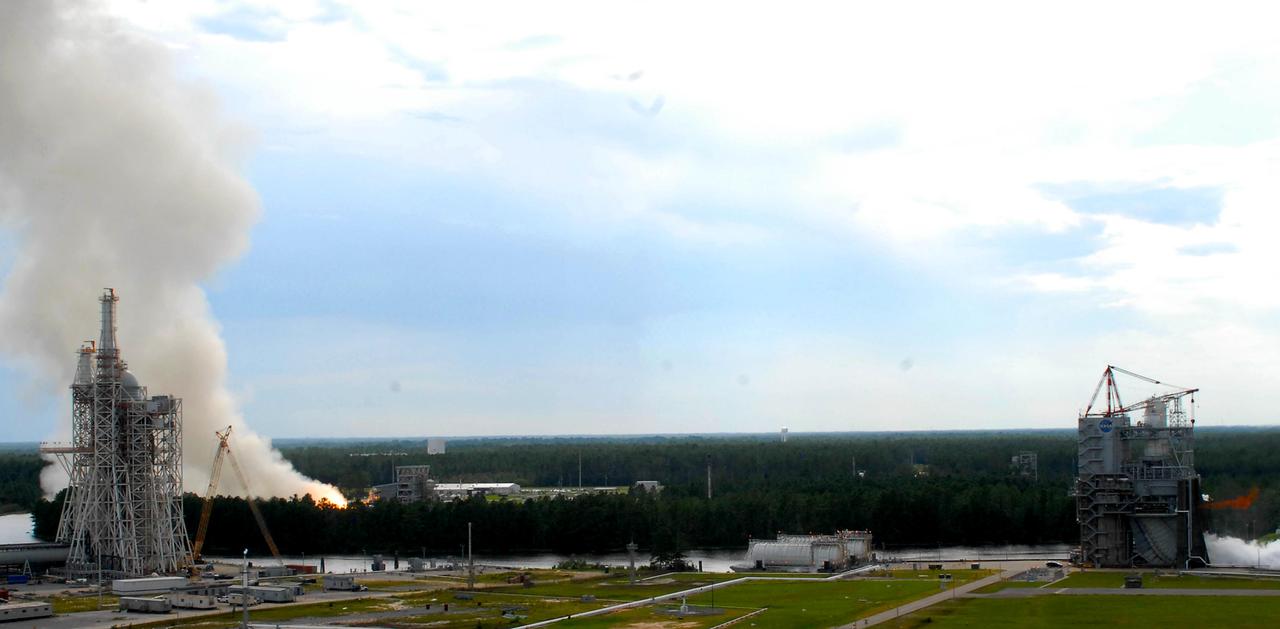
Two large-engine tests were conducted simultaneously for the first time at Stennis Space Center on Aug. 16. A plume on the left indicates a test on the facility's E-1 Test Stand. On the right, a finger of fire indicates a test under way on the A-1 Test Stand. In another first, both tests were conducted by female engineers. The image was taken from atop the facility's A-2 Test Stand, offering a panoramic view that includes the new A-3 Test Stand under construction to the left.
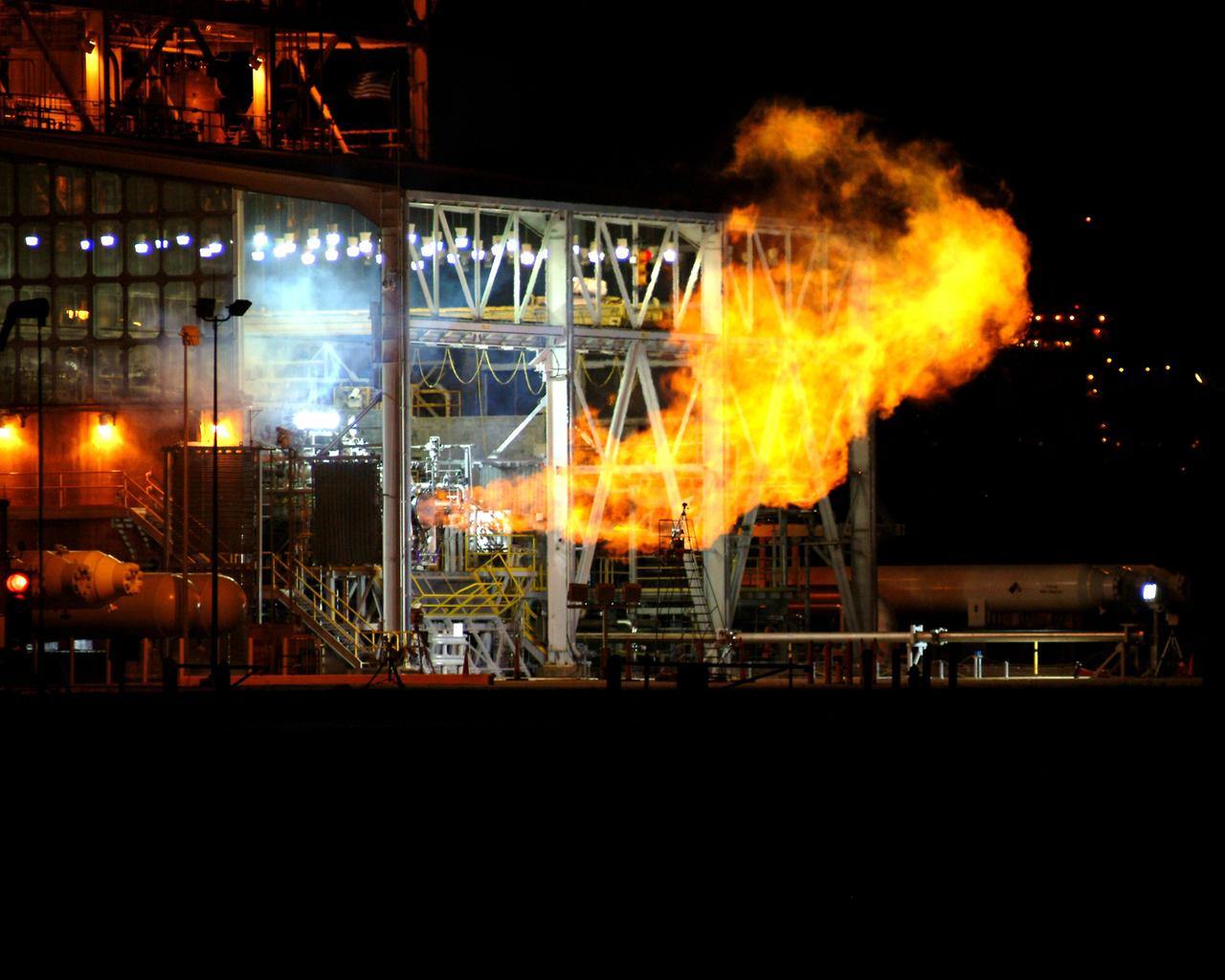
A plume of fire lights up the night during a test of the Integrated Powerhead Demonstrator at Stennis Space Center's E-1 Test Stand.
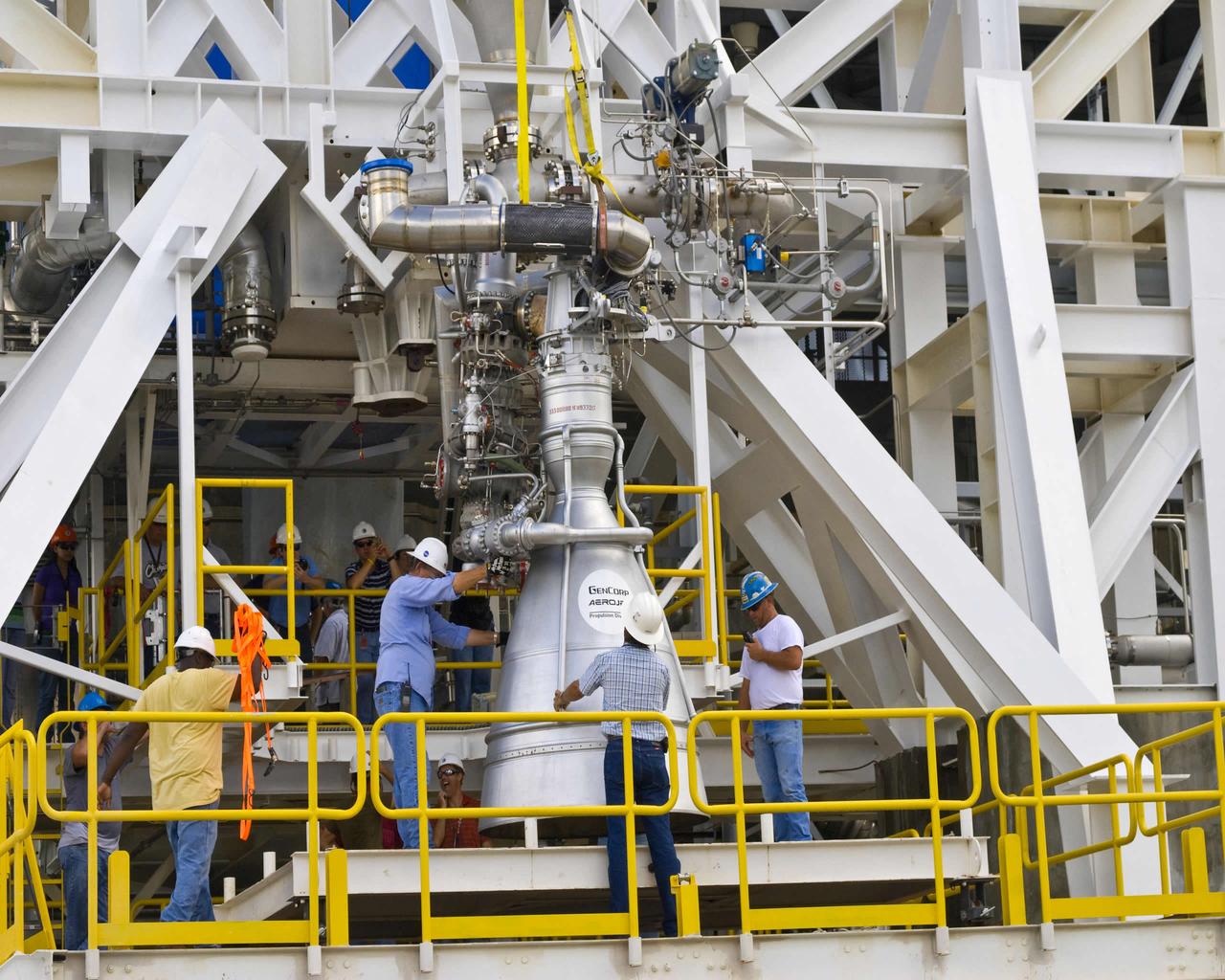
Stennis employees at the E-1 Test Stand position an Aerojet AJ26 rocket engine in preparation for a series of early tests. Stennis has partnered with Orbital Sciences Corporation to test the rocket engine for the company's commercial cargo flights to the International Space Station.
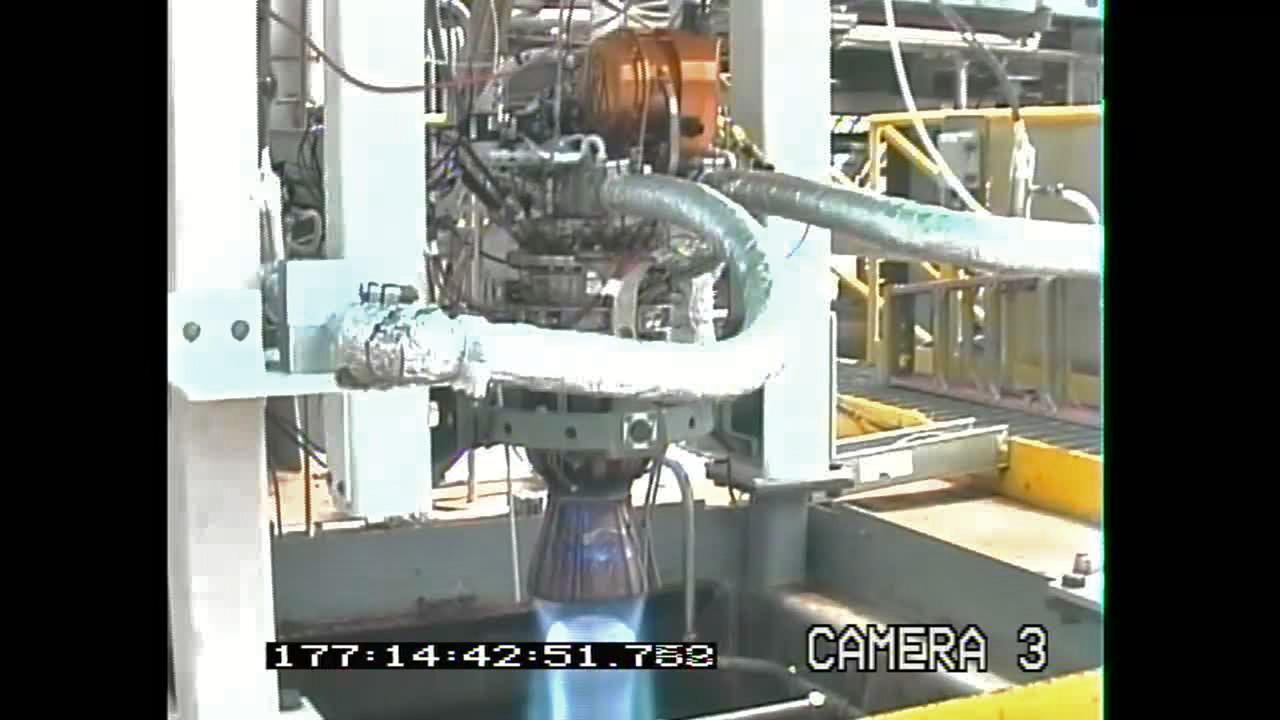
A frame grab from a mounted video camera on the E-3 Test Stand at Stennis Space Center documents testing of the new Project Morpheus engine. The new liquid methane, liquid oxygen engine will power the Morpheus prototype lander, which could one day evolve to carry cargo safely to the moon, asteroids or Mars surfaces.
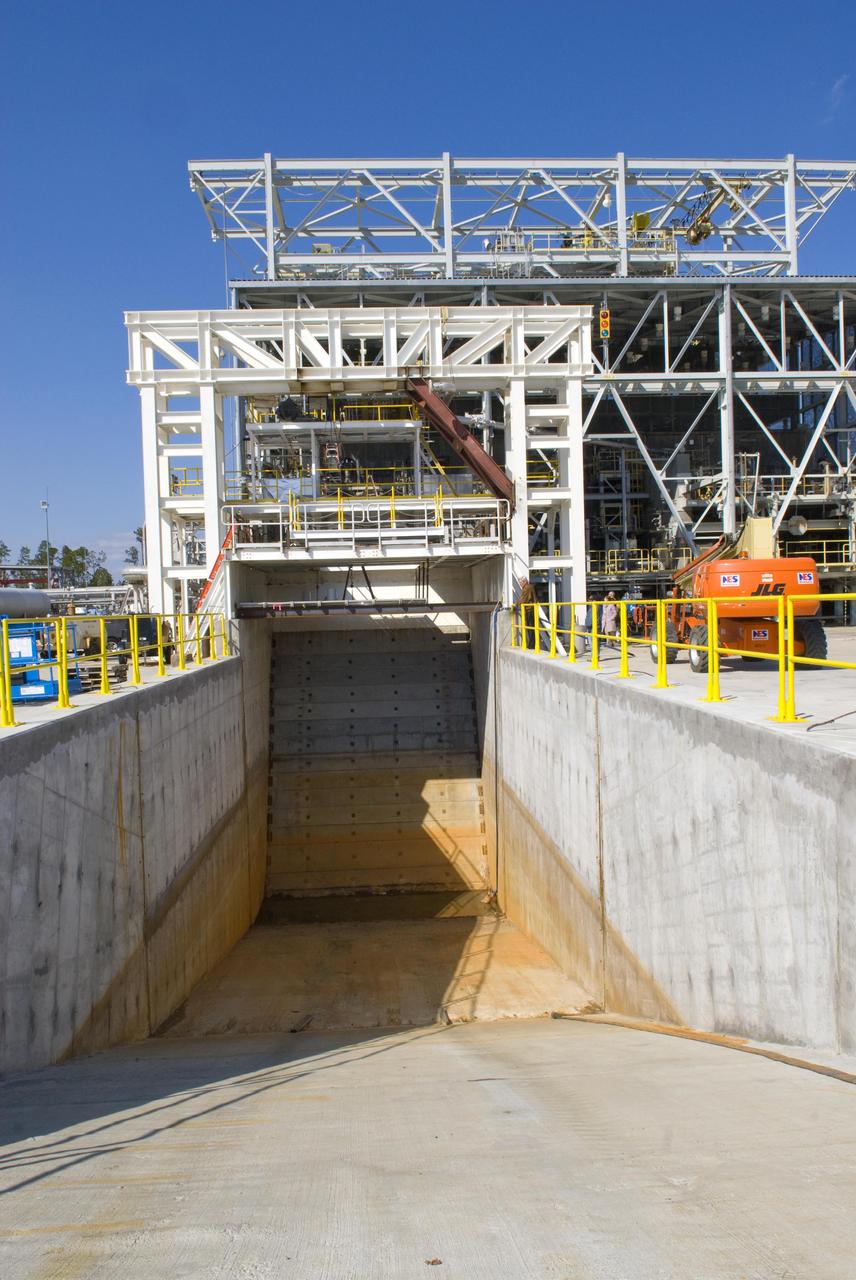
Operators at NASA's John C. Stennis Space Center are completing modifications to the E-1 Test Stand to begin testing Aerojet AJ26 rocket engines in early summer of 2010. Modifications include construction of a 27-foot-deep flame deflector trench. The AJ26 rocket engines will be used to power Orbital Sciences Corp.'s Taurus II space vehicles to provide commercial cargo transportation missions to the International Space Station for NASA. Stennis has partnered with Orbital to test all engines for the transport missions.
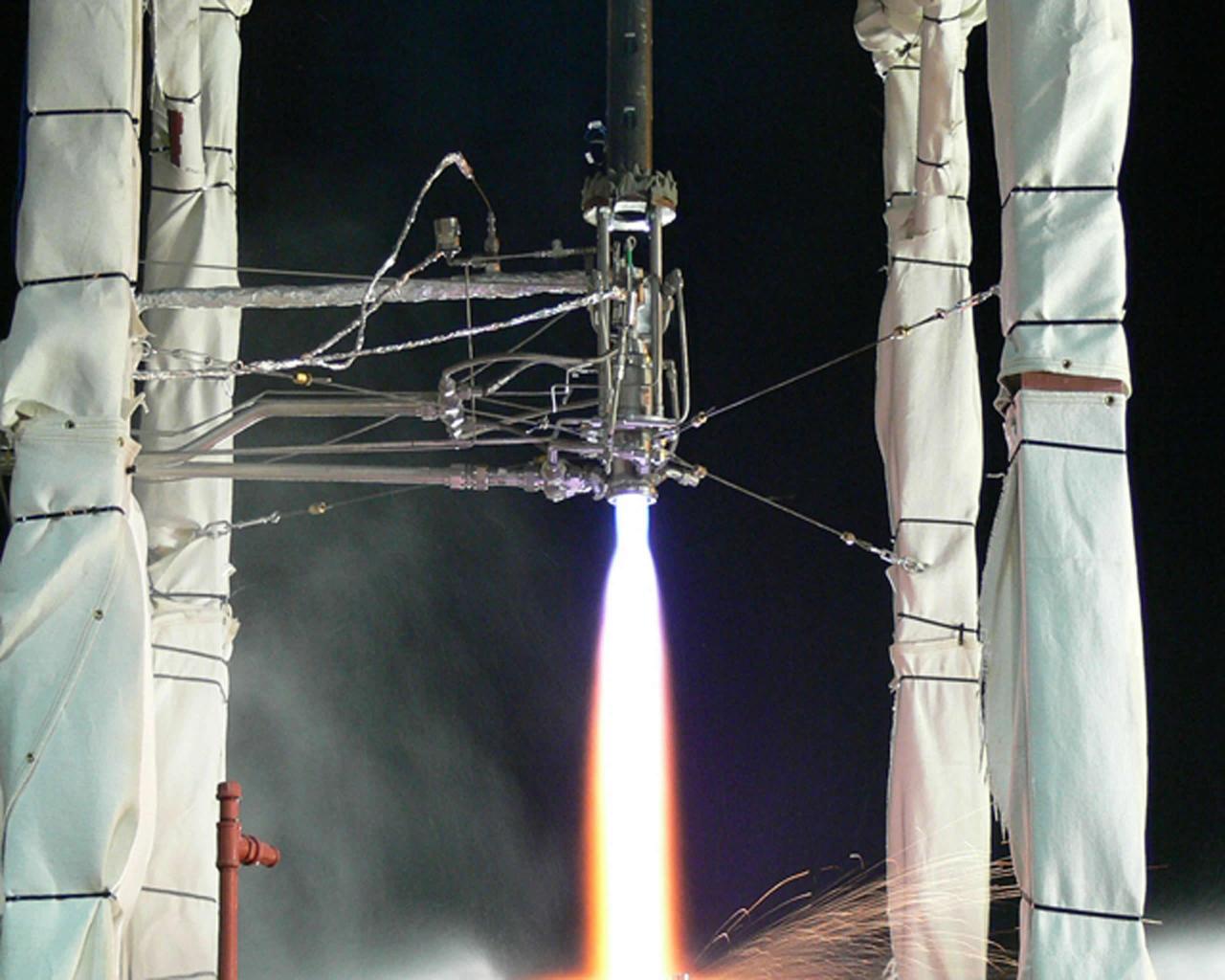
Operators at the E-3 Test Stand at NASA's John C. Stennis Space Center completed 32 acoustics tests April 16-28, designed to gather critical information for future space launches. Stennis operators investigated lift-off acoustics that can damage space vehicle components by testing the benefits of injecting water onto the upper surface of the launch pad to suppress sound. The Stennis tests provided critical data to determine what can be gained from this approach.
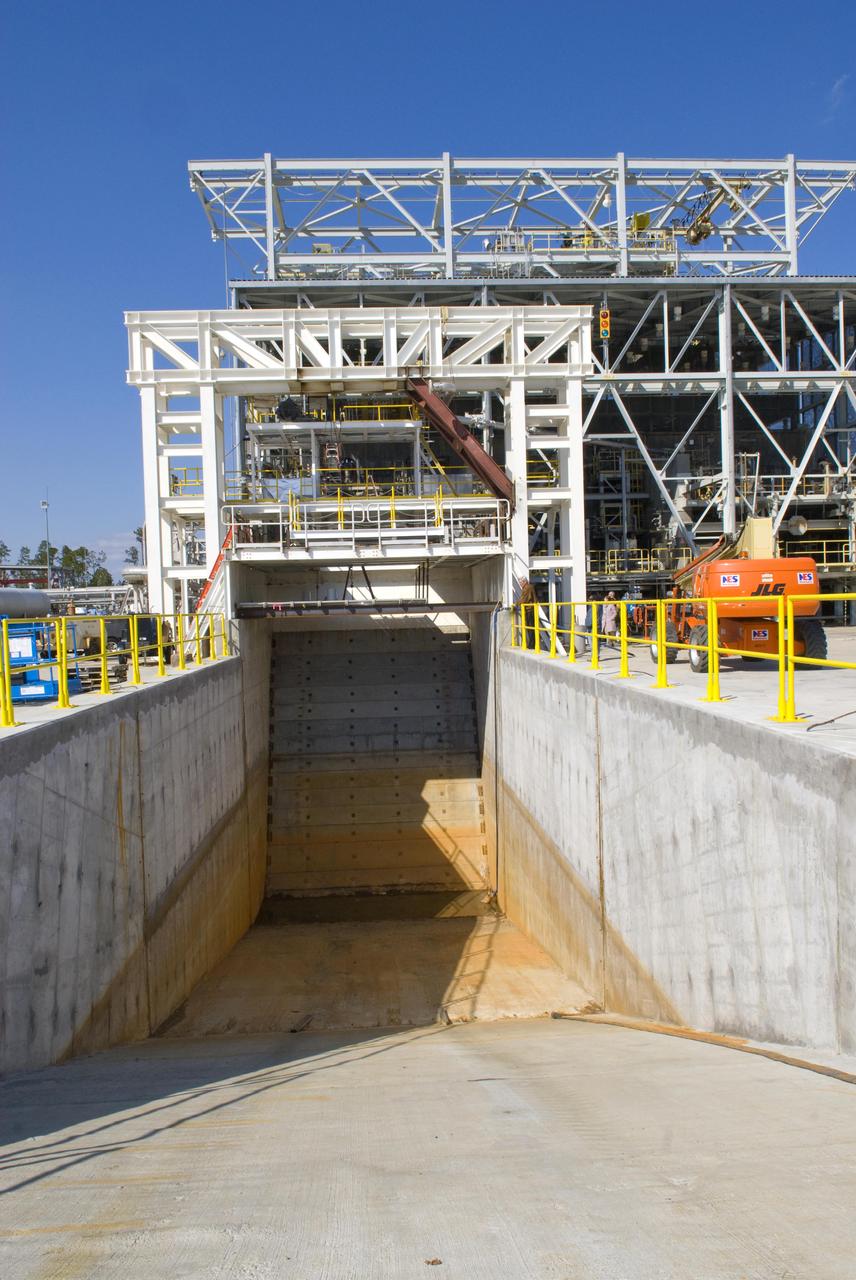
Operators at NASA's John C. Stennis Space Center are completing modifications to the E-1 Test Stand to begin testing Aerojet AJ26 rocket engines in early summer of 2010. Modifications include construction of a 27-foot-deep flame deflector trench. The AJ26 rocket engines will be used to power Orbital Sciences Corp.'s Taurus II space vehicles to provide commercial cargo transportation missions to the International Space Station for NASA. Stennis has partnered with Orbital to test all engines for the transport missions.
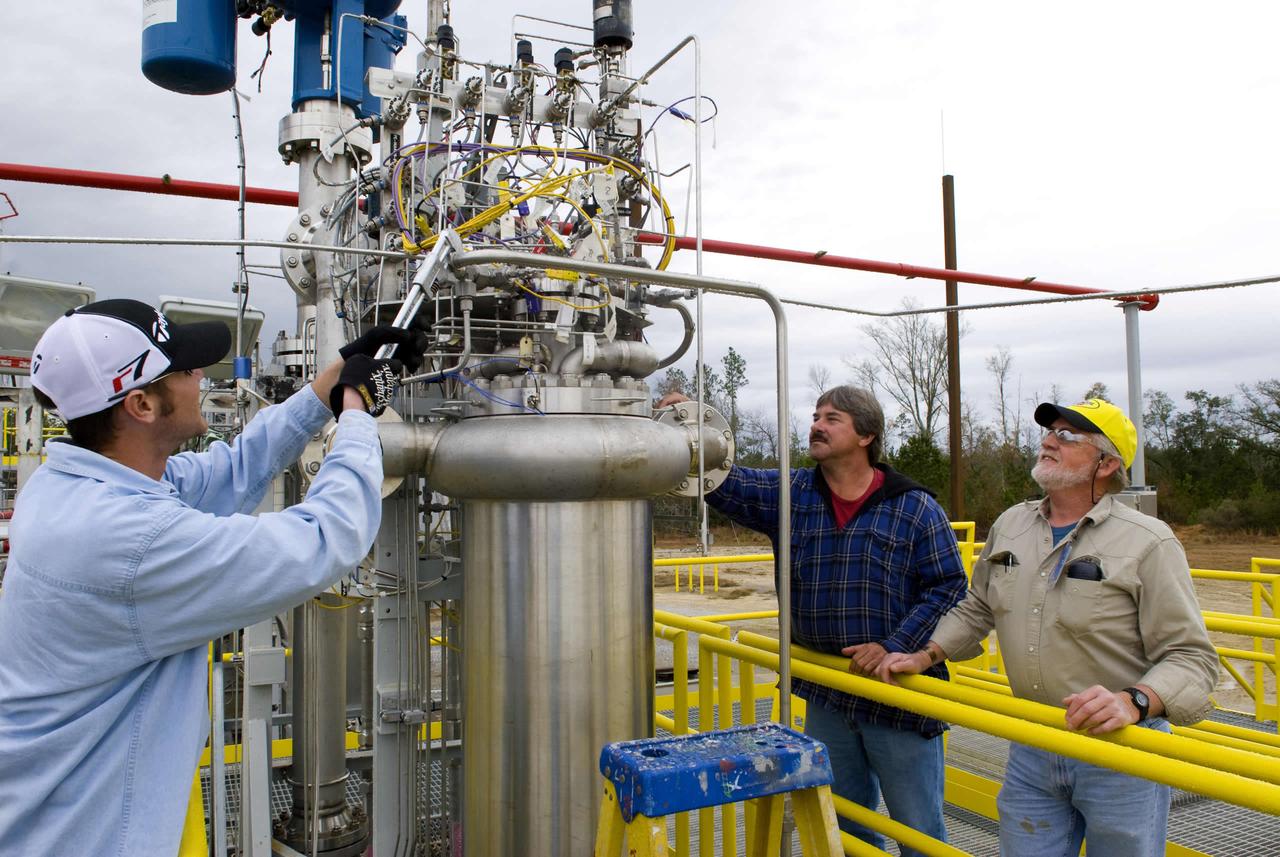
Kanaly Slade, Pat Guidry and Danny Tarter, all of Jacobs NTOG, make adjustments to the chemical steam generator installed on the E-2 Test Stand.
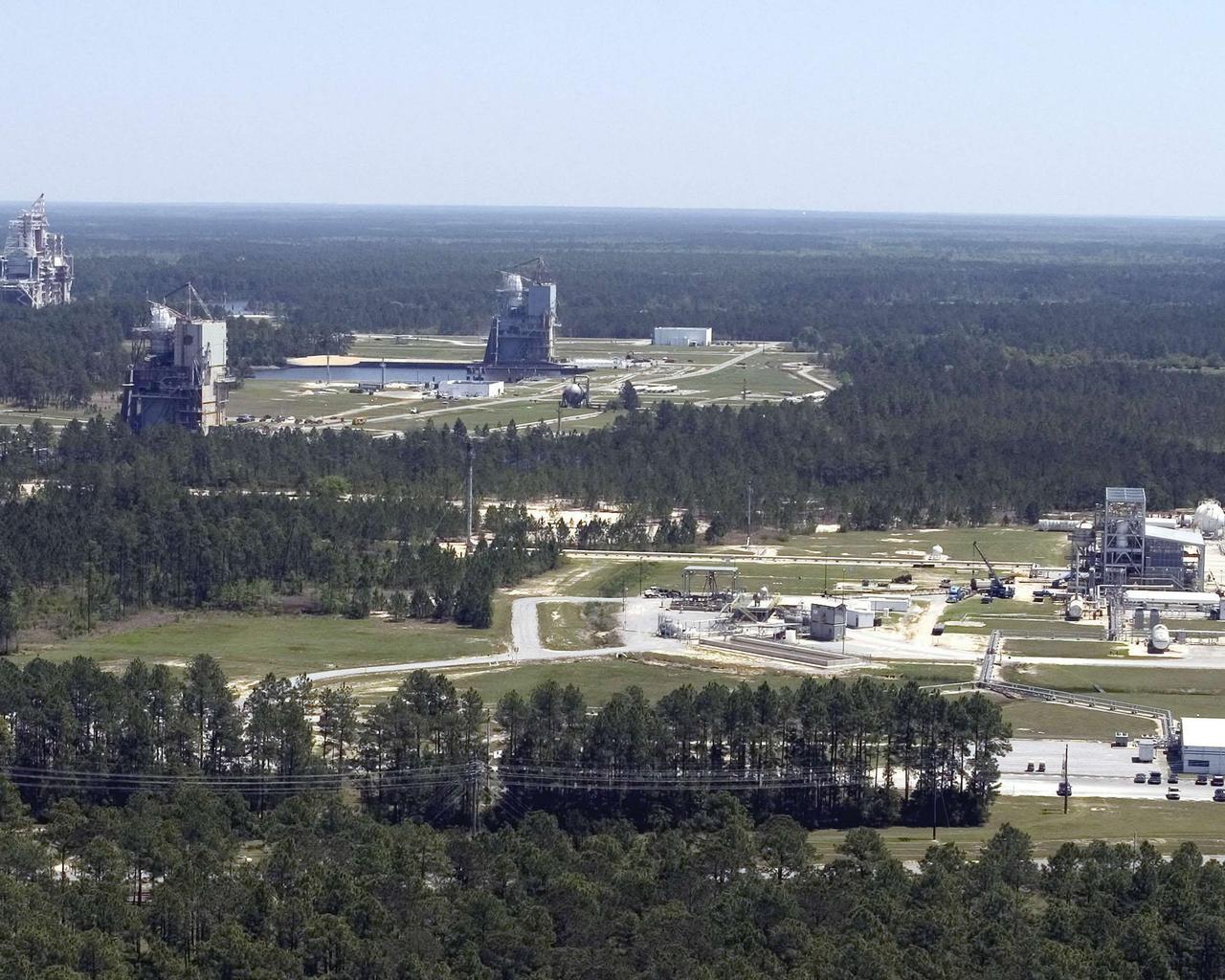
SSC's rocket engine test complex and its four unique test stands provide test operations for the development and certification of propulsion systems, subsystems and components.
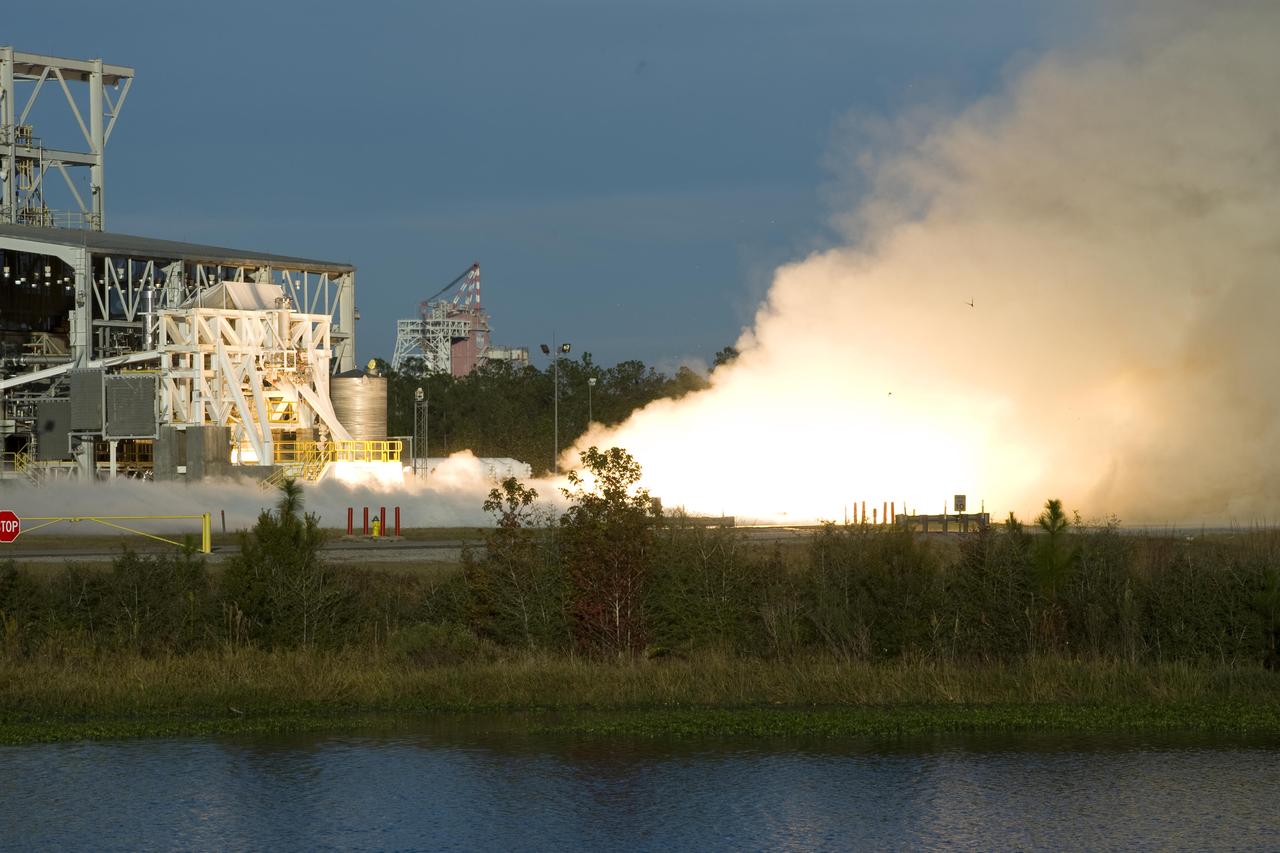
Fire and steam signal a successful test firing of Orbital Sciences Corporation's Aerojet AJ26 rocket engine at John C. Stennis Space Center. AJ26 engines will be used to power Orbital's Taurus II space vehicle on commercial cargo flights to the International Space Station. On Nov. 10, operators at Stennis' E-1 Test Stand conducted a 10-second test fire of the engine, the first of a series of three verification tests. Orbital has partnered with NASA to provide eight missions to the ISS by 2015.
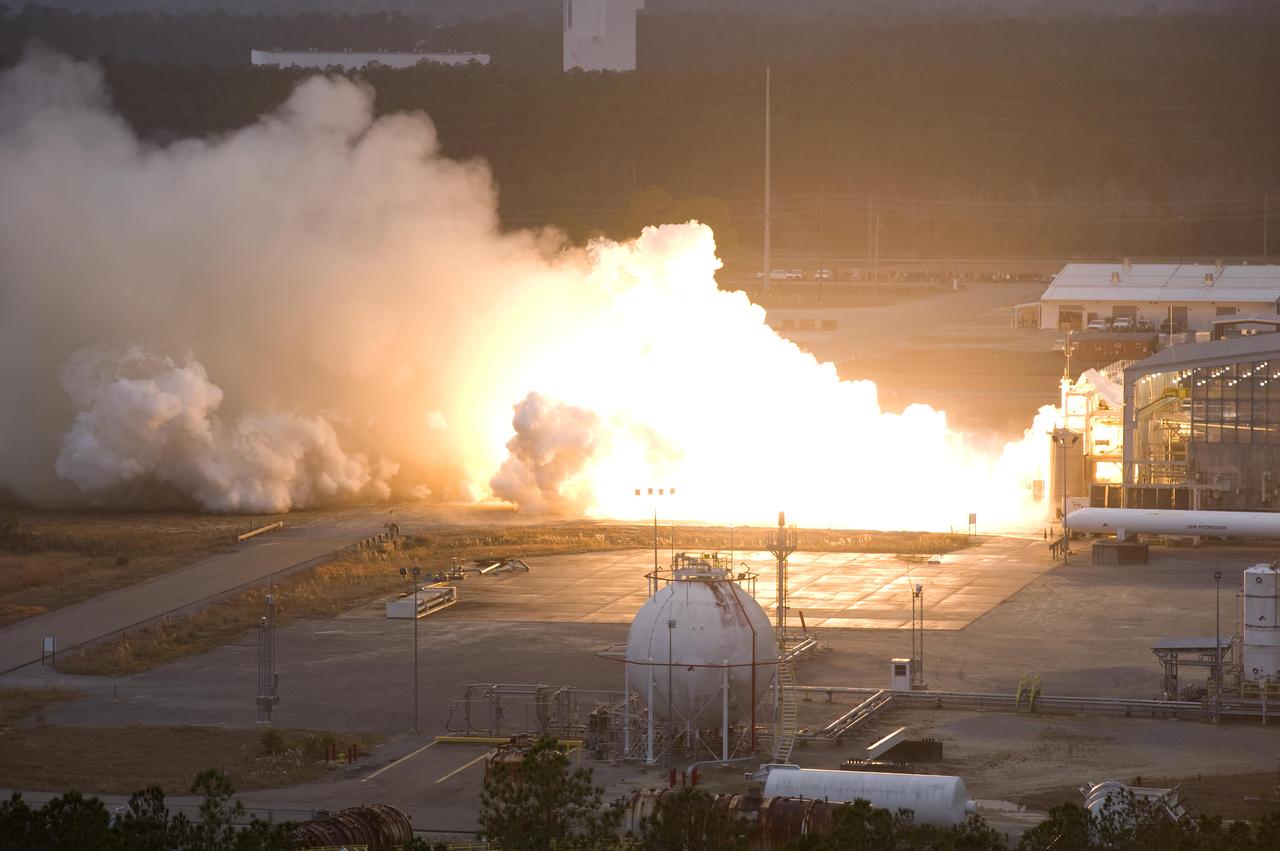
John C. Stennis Space Center engineers conduct a 55-second test fire of Aerojet's liquid-fuel AJ26 rocket engine that will power the first stage of Orbital Sciences Corporation's Taurus II space launch vehicle. The Dec. 17, 2010 test was conducted on the E-1 Test Stand at Stennis in support of NASA's Commercial Transportation Services partnerships to enable commercial cargo flights to the International Space Station. Orbital is under contract with NASA to provide eight cargo missions to the space station through 2015.
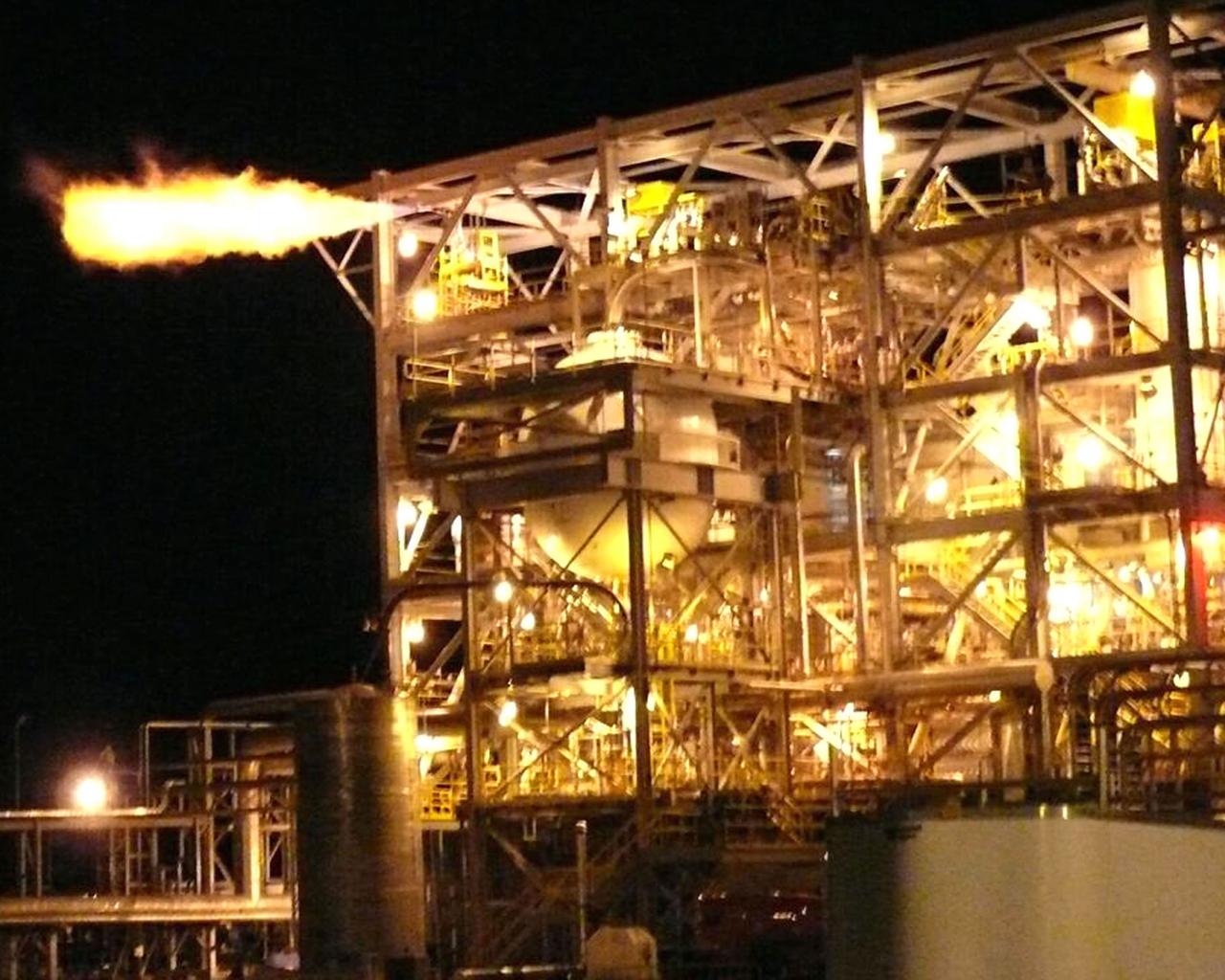
Flames burst from the E-1 Test Stand as Stennis Space Center engineers perform one of dozens of shuttle flow valve tests in early February. Stennis engineers teamed with Innovative Partnership Program partners to perform the tests after NASA officials delayed the launch of the STS-119 mission because of concerns with the shuttle part.
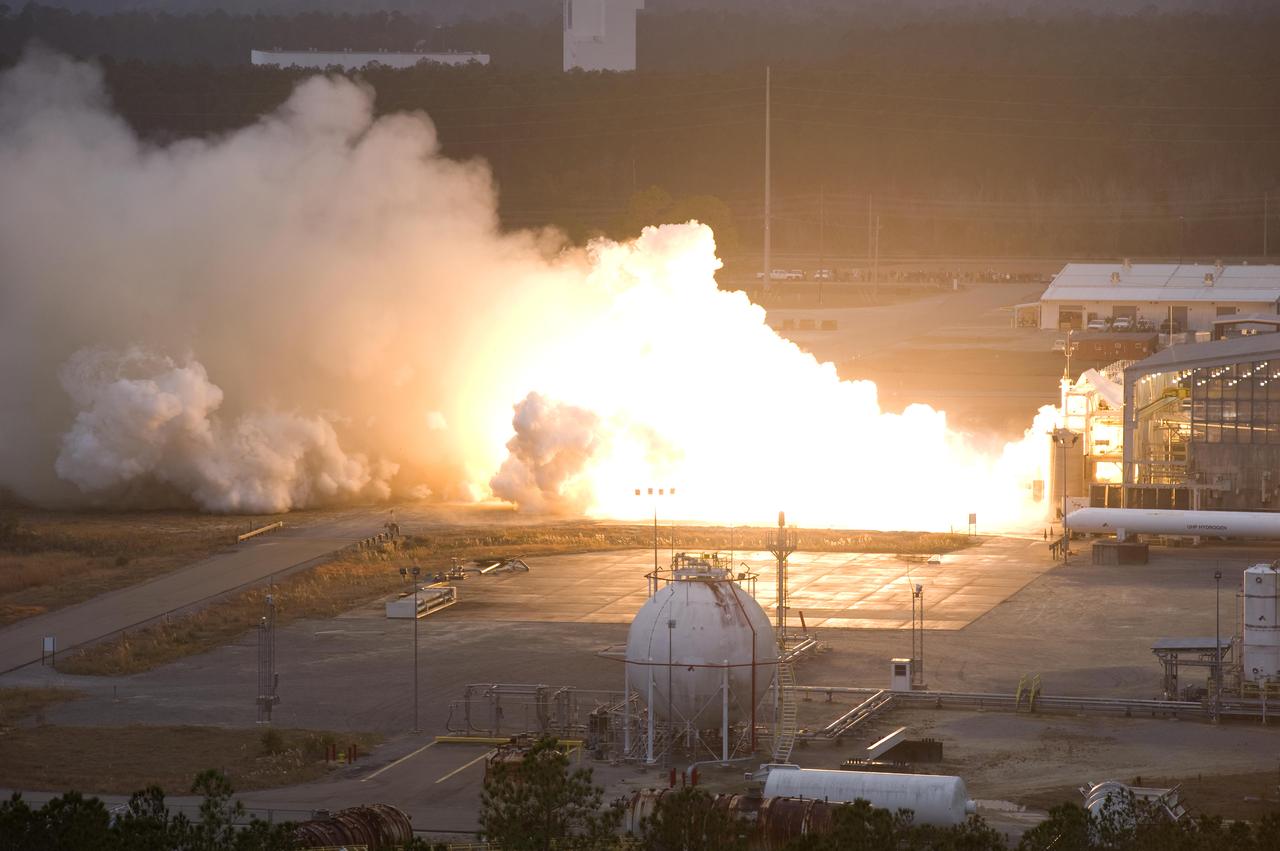
John C. Stennis Space Center engineers conduct a 55-second test fire of Aerojet's liquid-fuel AJ26 rocket engine that will power the first stage of Orbital Sciences Corporation's Taurus II space launch vehicle. The Dec. 17, 2010 test was conducted on the E-1 Test Stand at Stennis in support of NASA's Commercial Transportation Services partnerships to enable commercial cargo flights to the International Space Station. Orbital is under contract with NASA to provide eight cargo missions to the space station through 2015.
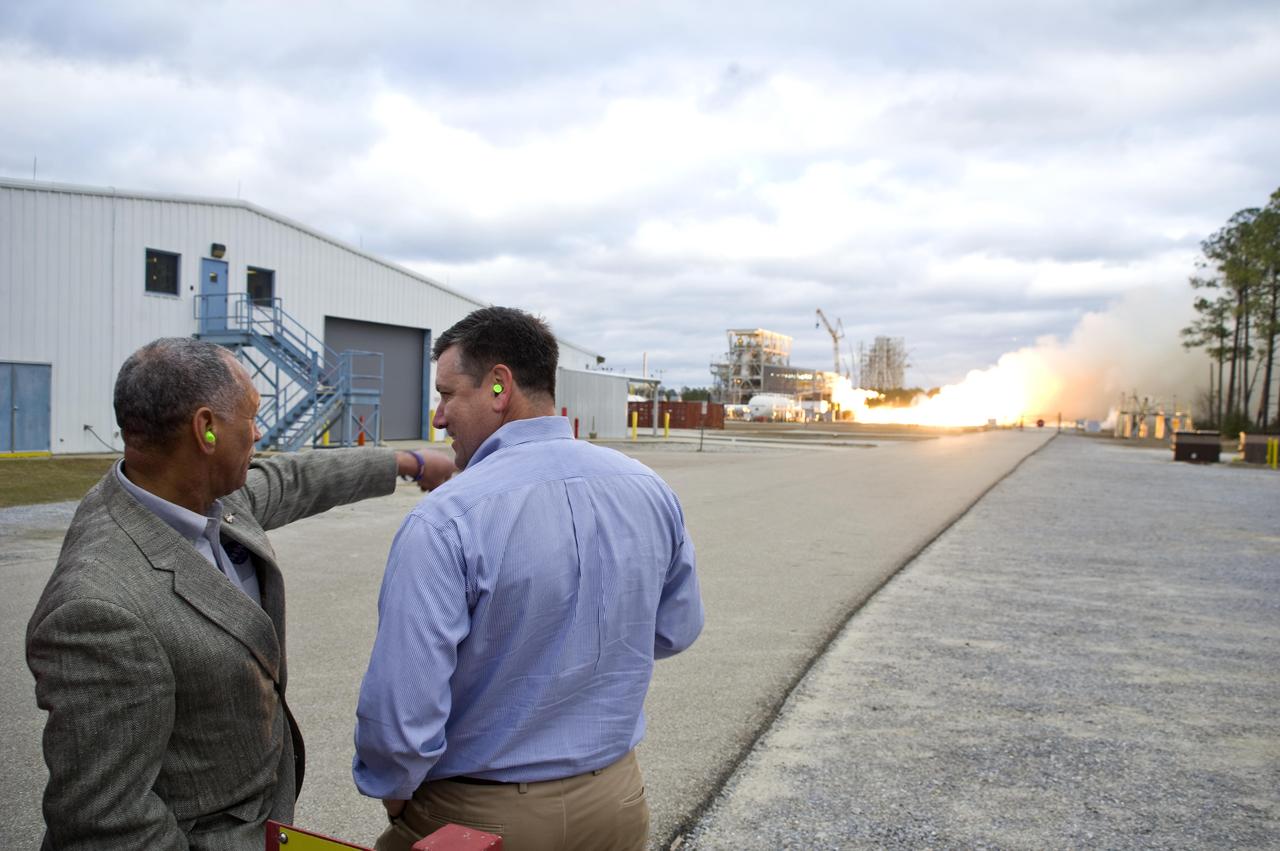
NASA Administrator Charles Bolden (l) and John C. Stennis Space Center Director Patrick Scheuermann watch the successful test of the first Aerojet AJ26 flight engine Feb. 7, 2011. The test was conducted on the E-1 Test Stand at Stennis. The engine now will be sent to Wallops Flight Facility in Virginia, where it will be used to power the first stage of Orbital Sciences Corporation's Taurus II space vehicle. The Feb. 7 test supports NASA's commitment to partner with companies to provide commercial cargo flights to the International Space Station. NASA has partnered with Orbital to carry out the first of eight cargo missions to the space station in early 2012.
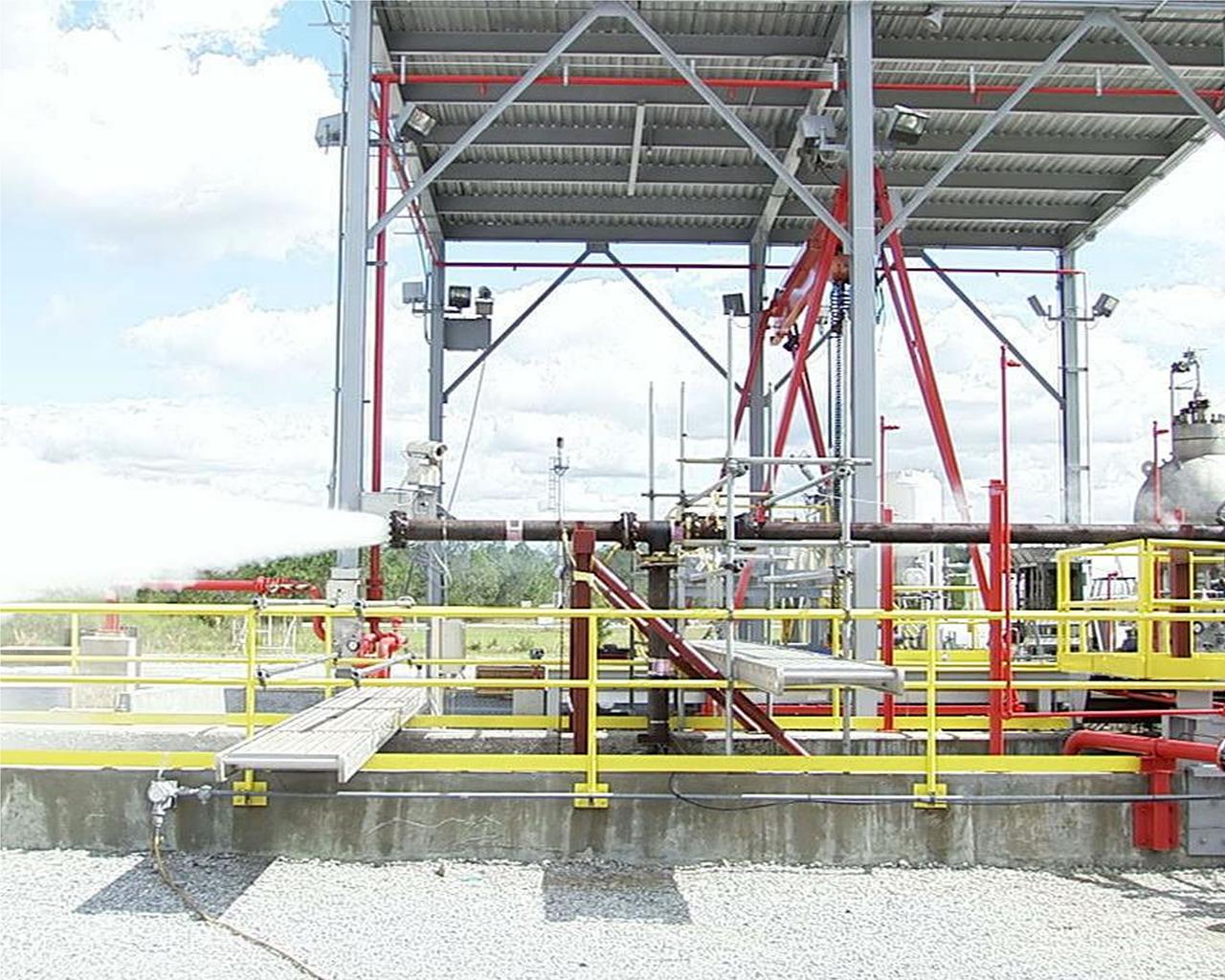
Phase 2 of the A-3 Test Facility Subscale Diffuser Risk Mitigation Project at Stennis Space Center reached a milestone Oct. 25 when the E-3 Test Facility produced superheated (500+ degrees) steam for approximately 3 seconds at more than 400 psi. The test team, led by Barry Robinson of NASA's Test Projects Office, followed that success with further tests to lengthen the duration of steam production. On Nov. 1, they were able to maintain a consistent pressure and temperature of steam for 60 seconds. In December, the team began Phase 3 of the testing, providing data for the design and procurement to build the full-scale version of the steam diffuser for SSC's A-3 Test Stand.
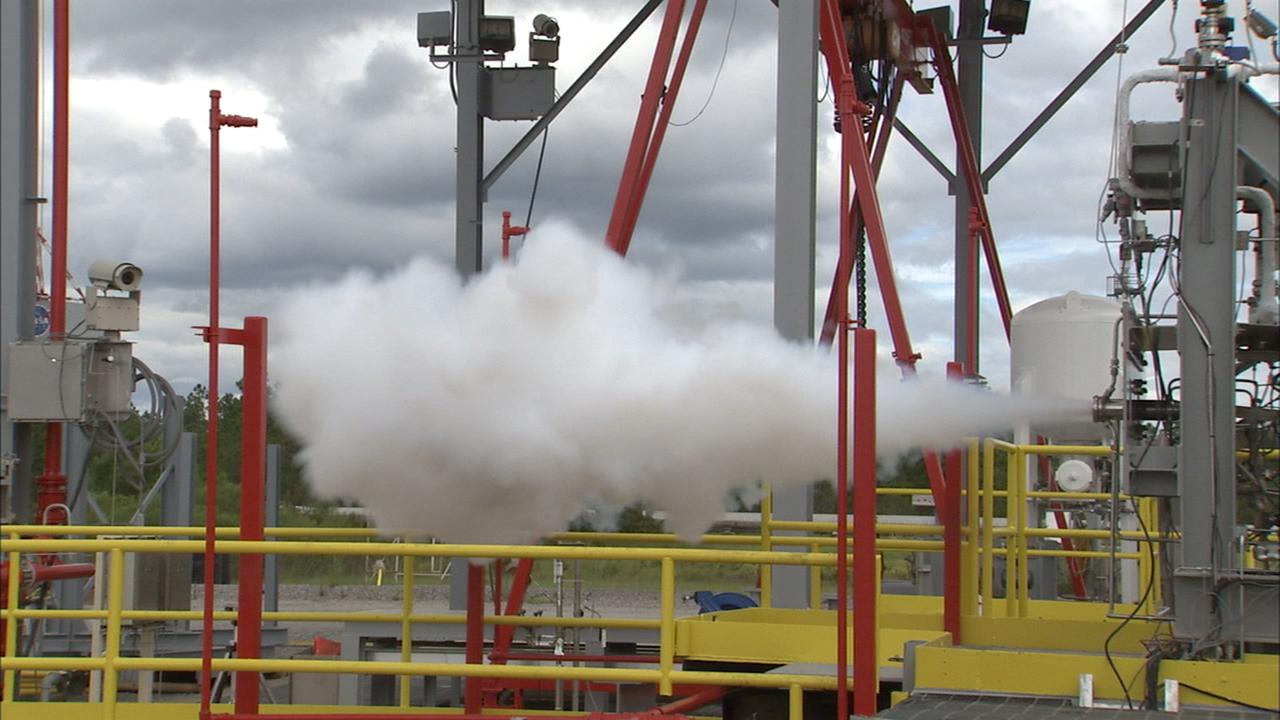
Tests begun at Stennis Space Center's E Complex Sept. 13 evaluated a liquid oxygen lead for engine start performance, part of the A-3 Test Facility Subscale Diffuser Risk Mitigation Project at SSC's E-3 Test Facility. Phase 1 of the subscale diffuser project, completed Sept. 24, was a series of 18 hot-fire tests using a 1,000-pound liquid oxygen and gaseous hydrogen thruster to verify maximum duration and repeatability for steam generation supporting the A-3 Test Stand project. The thruster is a stand-in for NASA's developing J-2X engine, to validate a 6 percent scale version of A-3's exhaust diffuser. Testing the J-2X at altitude conditions requires an enormous diffuser. Engineers will generate nearly 4,600 pounds per second of steam to reduce pressure inside A-3's test cell to simulate altitude conditions. A-3's exhaust diffuser has to be able to withstand regulated pressure, temperatures and the safe discharge of the steam produced during those tests. Before the real thing is built, engineers hope to work out any issues on the miniature version. Phase 2 testing is scheduled to begin this month.
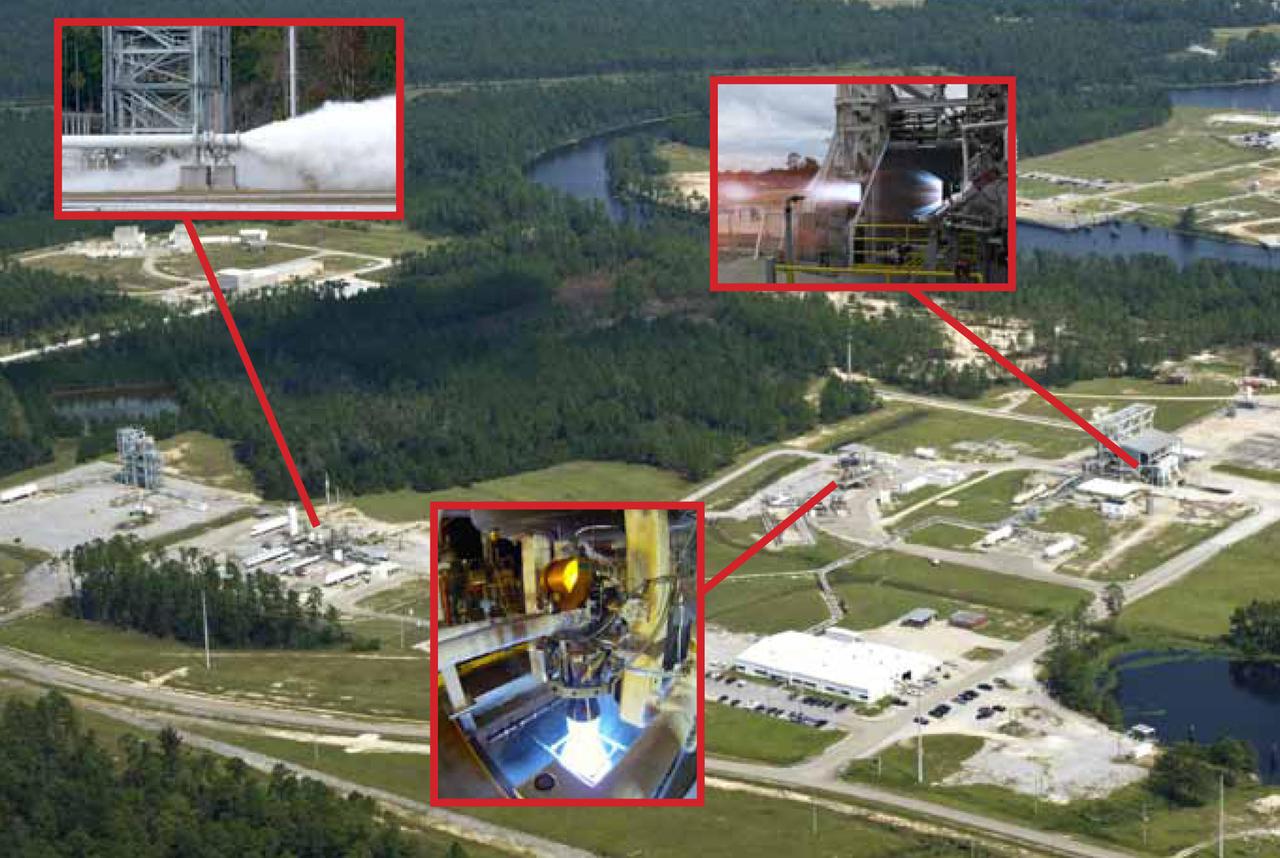
NASA recorded a historic week Nov. 5-9, conducting tests on all three stands in the E Test Complex at John C. Stennis Space Center. Inset images show the types of tests conducted on the E-1 Test Stand (right), the E-2 Test Stand (left) and the E-3 Test Stand (center). The E-1 photo is from an early October test and is provided courtesy of Blue Origin. Other photos are from tests conducted the week of Nov. 5.
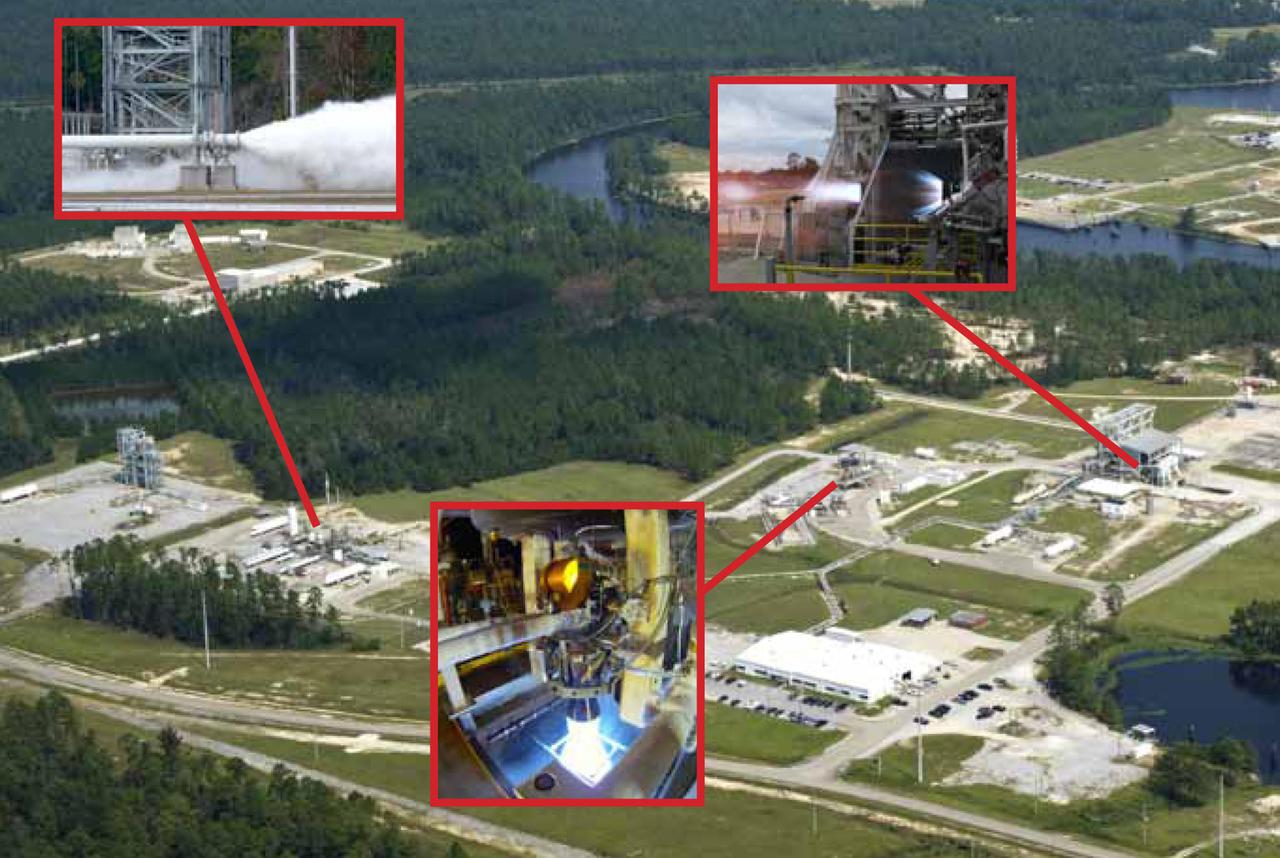
NASA recorded a historic week Nov. 5-9, conducting tests on all three stands in the E Test Complex at John C. Stennis Space Center. Inset images show the types of tests conducted on the E-1 Test Stand (right), the E-2 Test Stand (left) and the E-3 Test Stand (center). The E-1 photo is from an early October test and is provided courtesy of Blue Origin. Other photos are from tests conducted the week of Nov. 5.
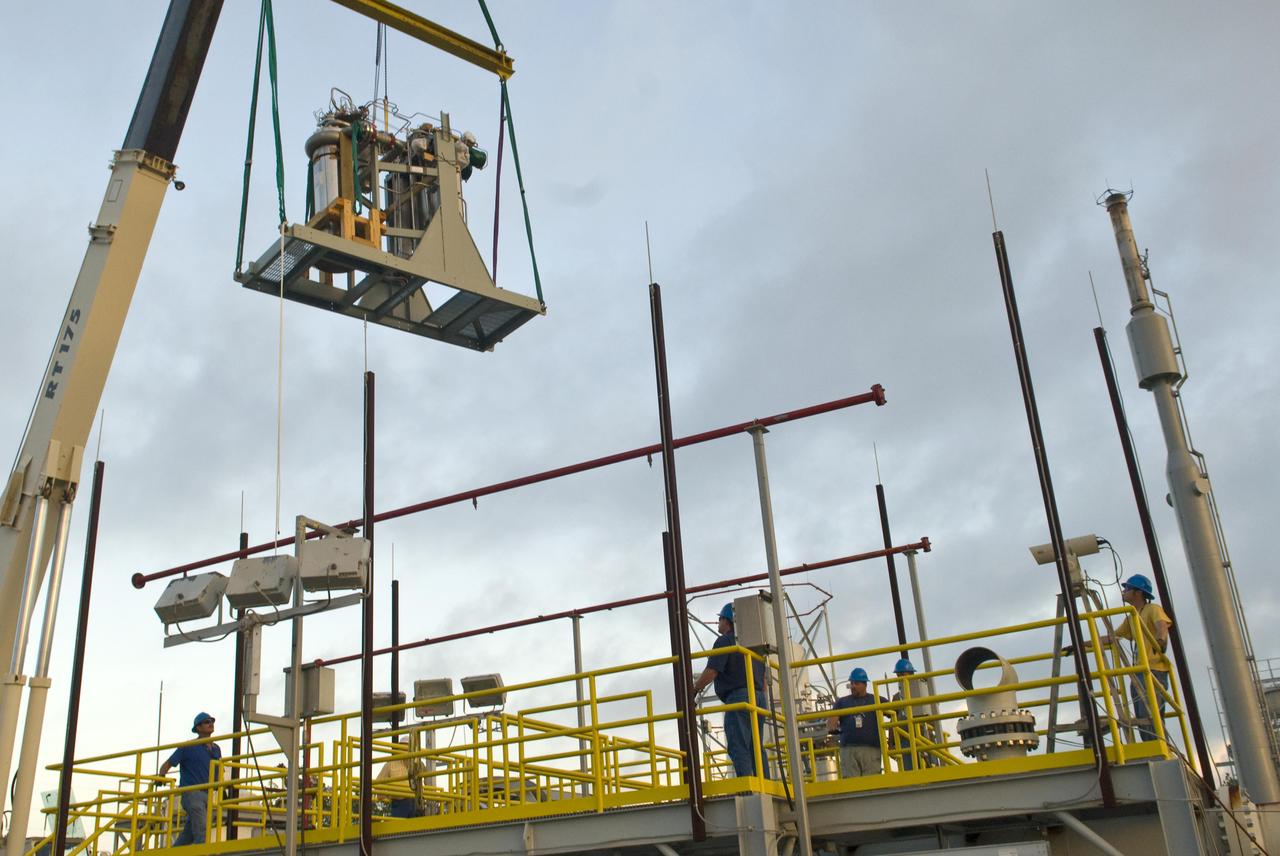
The first of nine chemical steam generator (CSG) units that will be used on the A-3 Test Stand is hoisted into place at the E-2 Test Stand at John C. Stennis Space Center on Oct. 24, 2010. The unit was installed at the E-2 stand for verification and validation testing before it is moved to the A-3 stand. Steam generated by the nine CSG units that will be installed on the A-3 stand will create a vacuum that allows Stennis operators to test next-generation rocket engines at simulated altitudes up to 100,000 feet.

John C. Stennis Space Center employees complete installation of a chemical steam generator (CSG) unit at the site's E-2 Test Stand. On Oct. 24, 2010. The unit will undergo verification and validation testing on the E-2 stand before it is moved to the A-3 Test Stand under construction at Stennis. Each CSG unit includes three modules. Steam generated by the nine CSG units that will be installed on the A-3 stand will create a vacuum that allows Stennis operators to test next-generation rocket engines at simulated altitudes up to 100,000 feet.

A team of engineers from NASA's John C. Stennis Space Center, Orbital Sciences Corporation and Aerojet conduct a successful test of an Aerojet AJ26 rocket engine on March 19. Stennis is testing AJ26 engines for Orbital Sciences to power commercial cargo missions to the International Space Station. Orbital has partnered with NASA through the Commercial Orbital Transportation Services initiative to carry out eight cargo missions to the space station by 2015, using Taurus II rockets.
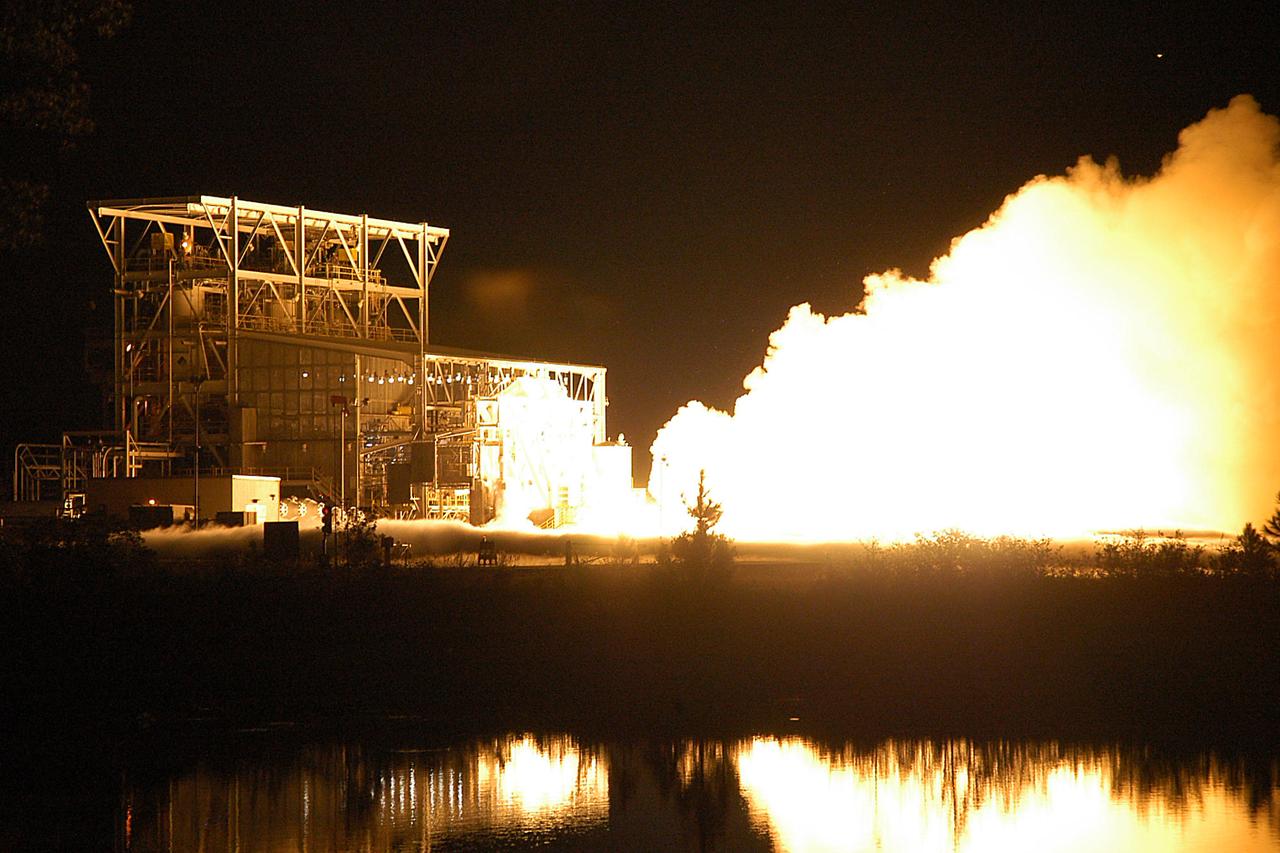
A team of engineers at Stennis Space Center conducted a test firing of an Aerojet AJ26 flight engine Nov. 17, providing continued support to Orbital Sciences Corporation as it prepares to launch commercial cargo missions to the International Space Station. AJ26 engines will power Orbital's Taurus II rocket on the missions.
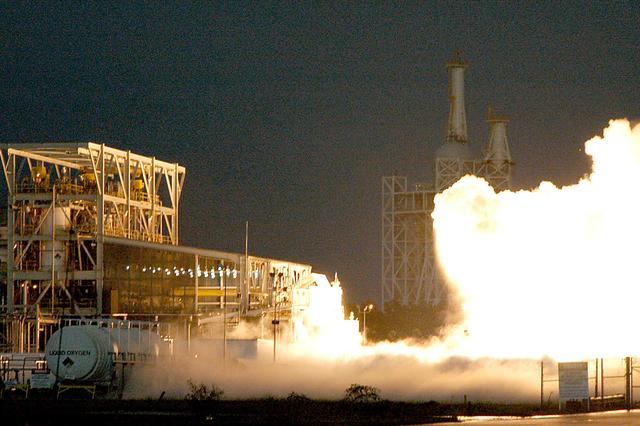
NASA conducted a Sept. 28 test of an Aerojet AJ26 flight engine that will power the first stage of Orbital Sciences Corporation's Taurus II space launch vehicle, continuing progress in a key commercial space transport partnership. Orbital is scheduled to begin commercial cargo flights to the International Space Station in 2012.
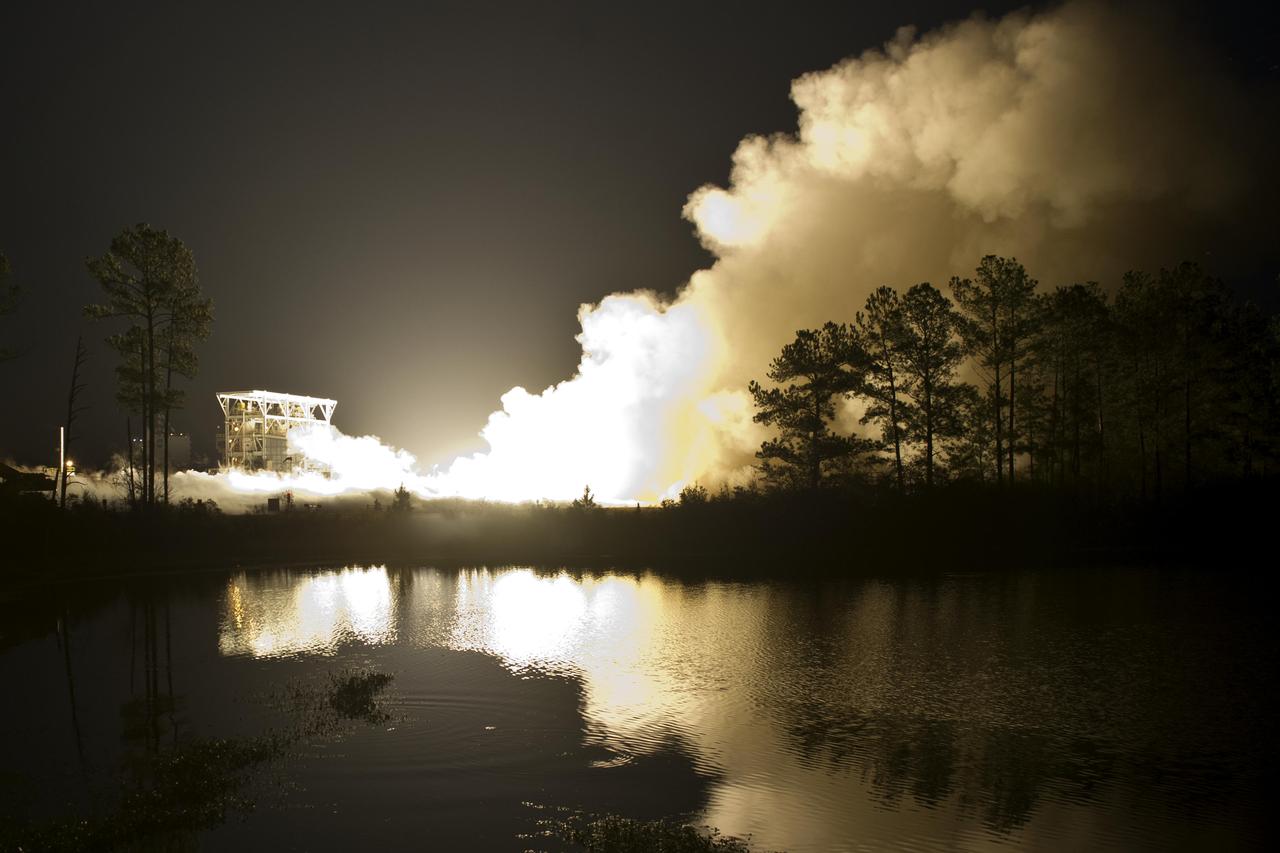
Stennis Space Center test-fired Aerojet AJ26 flight engine No. 8 on Dec. 15, continuing a commercial partnership with Orbital Services Corporation. Orbital has partnered with NASA to provide commercial cargo flights to the International Space Station. The AJ26 engines tested at Stennis will power the company's Taurus II space launch vehicle on the flights.
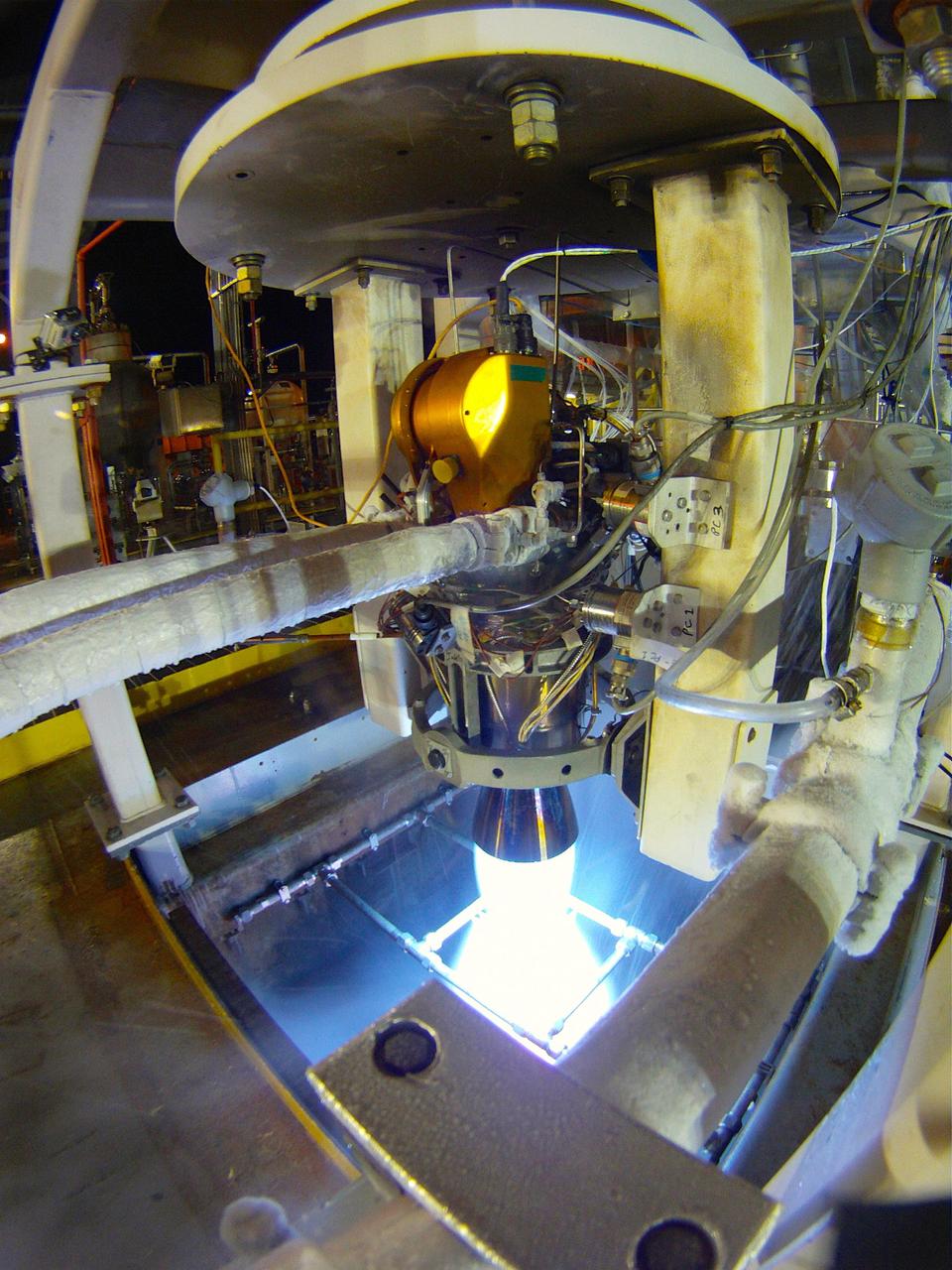
A test of NASA's liquid oxygen, liquid methane Project Morpheus engine is conducted Nov. 8 on the E-3 Test Stand at John C. Stennis Space Center. The test was one of 27 conducted in Stennis' E Test Complex the week of Nov. 5. Twenty-seven tests were conducted in a three-day period during the week, on three different rocket engines/components and on three E Complex test stands.
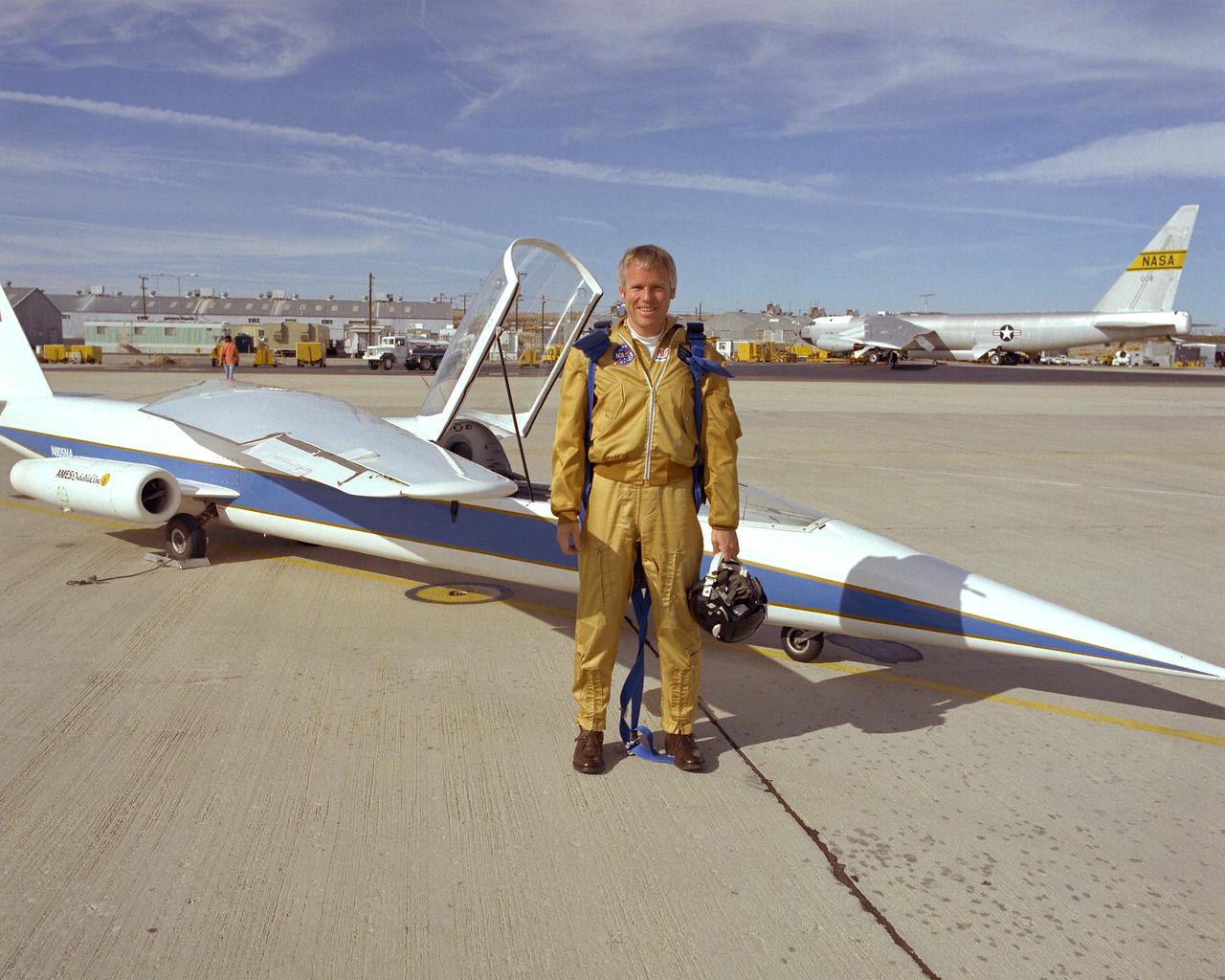
Research pilot Richard E. Gray, standing in front of the AD-1 Oblique Wing research aircraft.
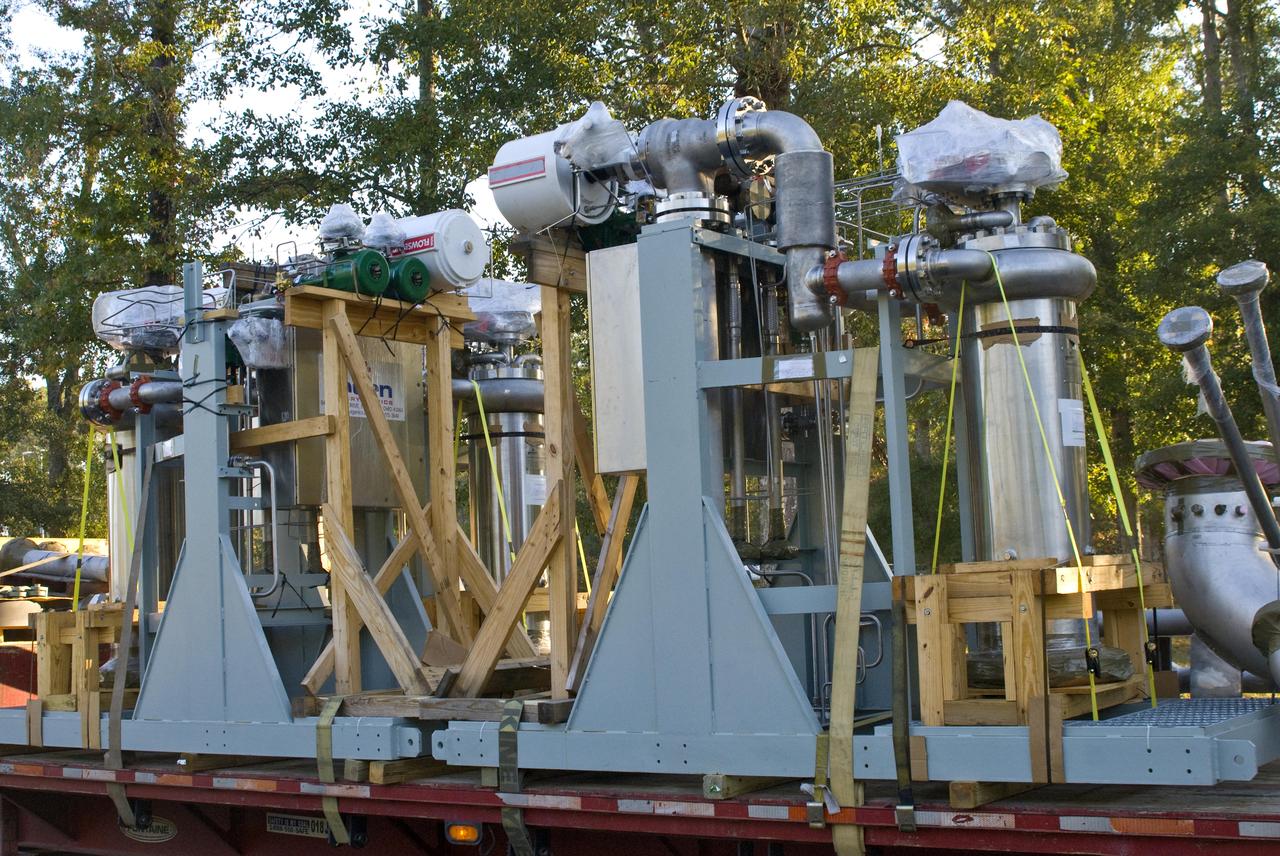
The first of nine chemical steam generator (CSG) units that will be used on the A-3 Test Stand arrived at John. C. Stennis Space Center on Oct. 22, 2010. The unit was installed at the E-2 Test Stand for verification and validation testing before it is moved to the A-3 stand. Steam generated by the nine CSG units that will be installed on the A-3 stand will create a vacuum that allows Stennis operators to test next-generation rocket engines at simulated altitudes up to 100,000 feet.
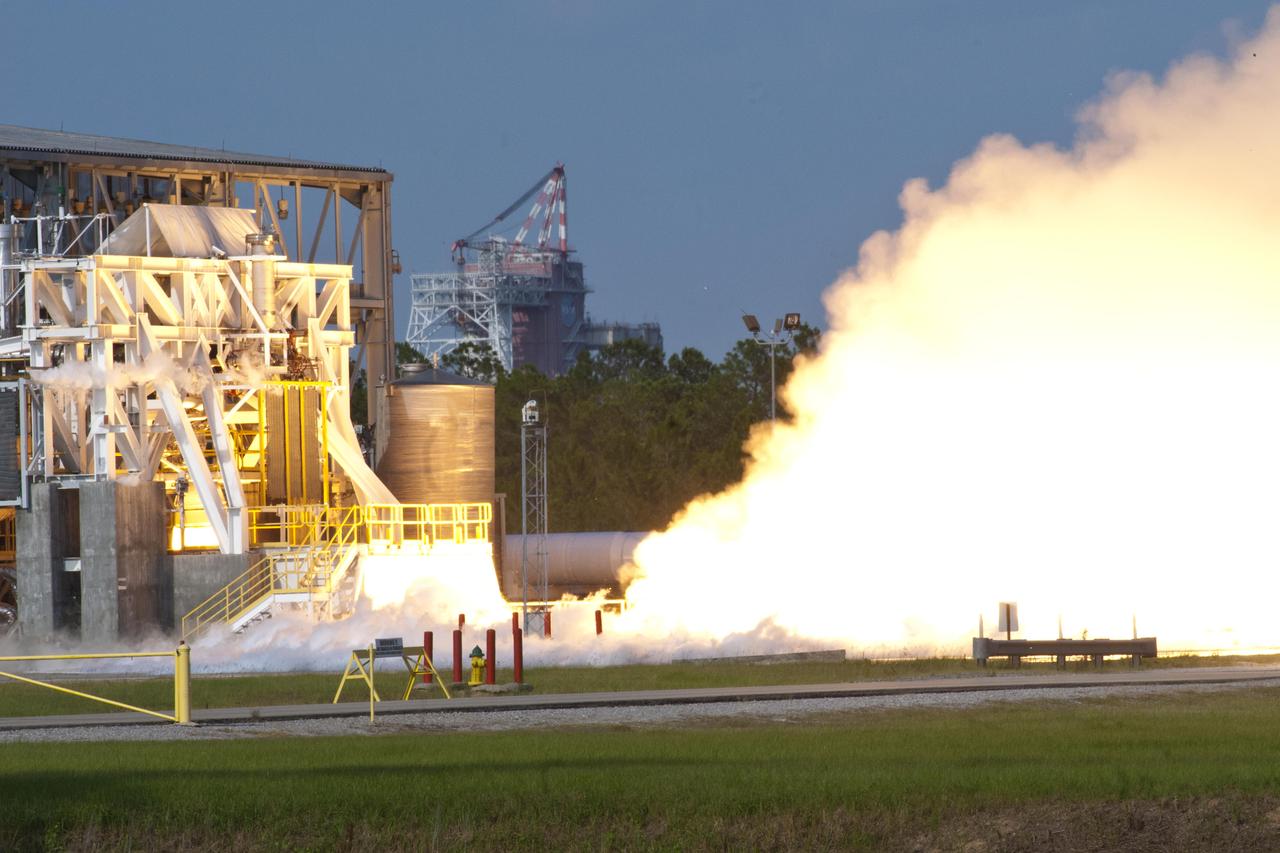
NASA engineers tested an Aerojet AJ26 rocket engine on the E-1 Test Stand at Stennis Space Center on June 25, 2012, against the backdrop of the B-1/B-2 Test Stand. The engine will be used by Orbital Sciences Corporation to power commercial cargo flights to the International Space Station.
A plume of fire lights up the night during a test of the Integrated Powerhead Demonstrator at Stennis Space Center's E-1 Test Stand.

NASA engineers test a chemical steam generator (CSG) unit on the E-2 Test Stand at John C. Stennis Space Center on Nov. 6. The test was one of 27 conducted in Stennis' E Test Complex the week of Nov. 5. Twenty-seven CSG units will be used on the new A-3 Test Stand at Stennis to produce a vacuum that allows testing of engines at simulated altitudes up to 100,000 feet.
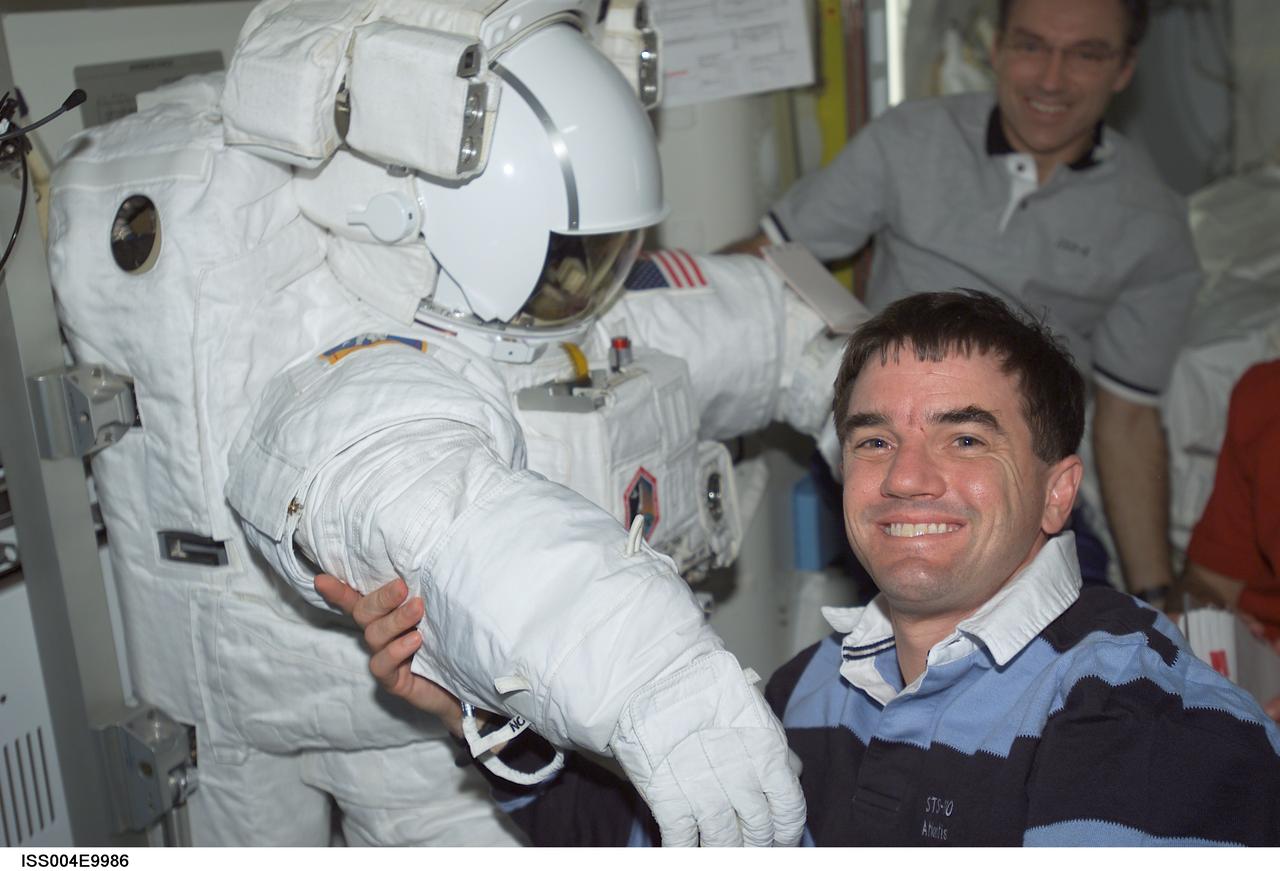
ISS004-E-9986 (10 April 2002) --- Astronaut Rex J. Walheim, STS-110 mission specialist, stands near an Extravehicular Mobility Unit (EMU) space suit in the Quest Airlock on the International Space Station (ISS). Astronaut Carl E. Walz, Expedition Four flight engineer, is visible in the background.
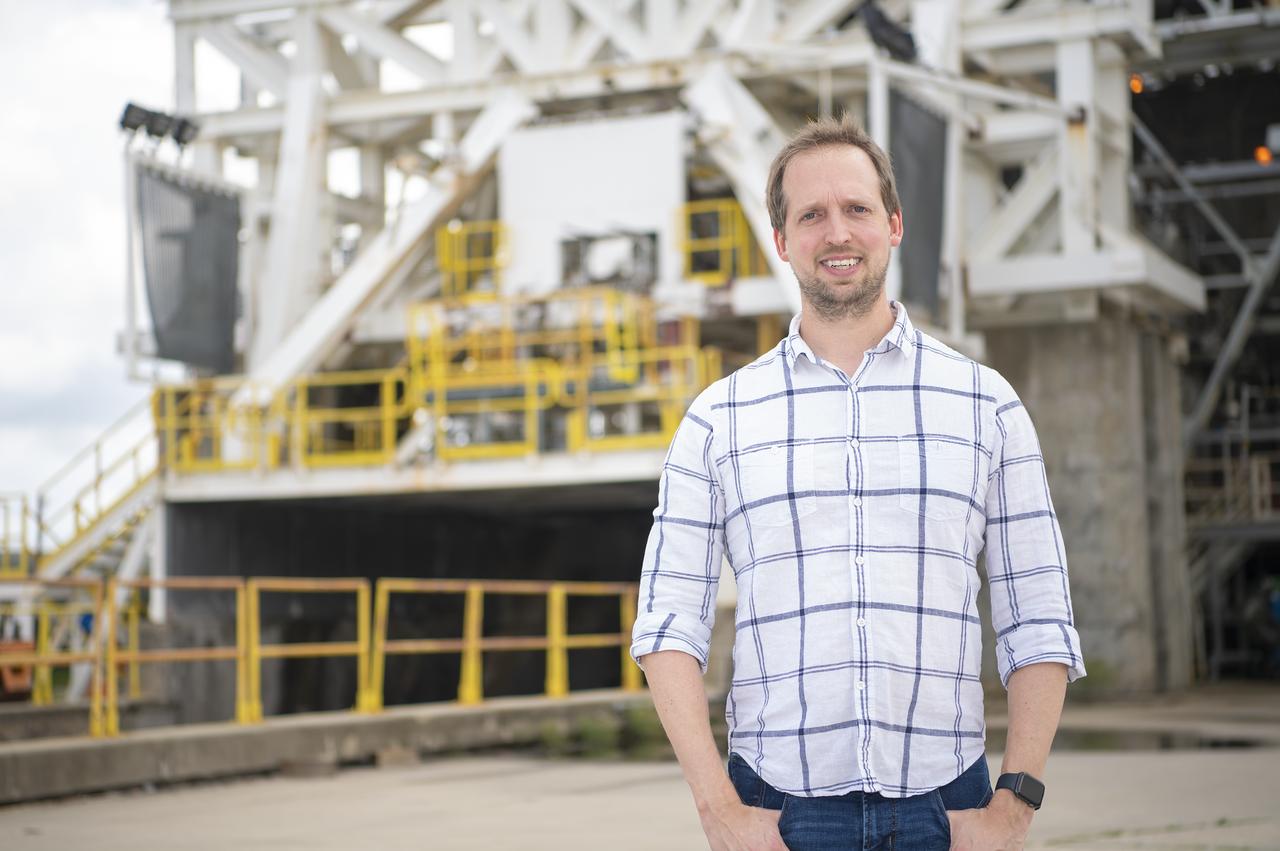
Chris Barnett-Woods is shown at the E-1 Test Stand at NASA’s Stennis Space Center near Bay St. Louis, Mississippi, where NASA Stennis accelerates the exploration and commercialization of space and innovates to benefit NASA and industry.
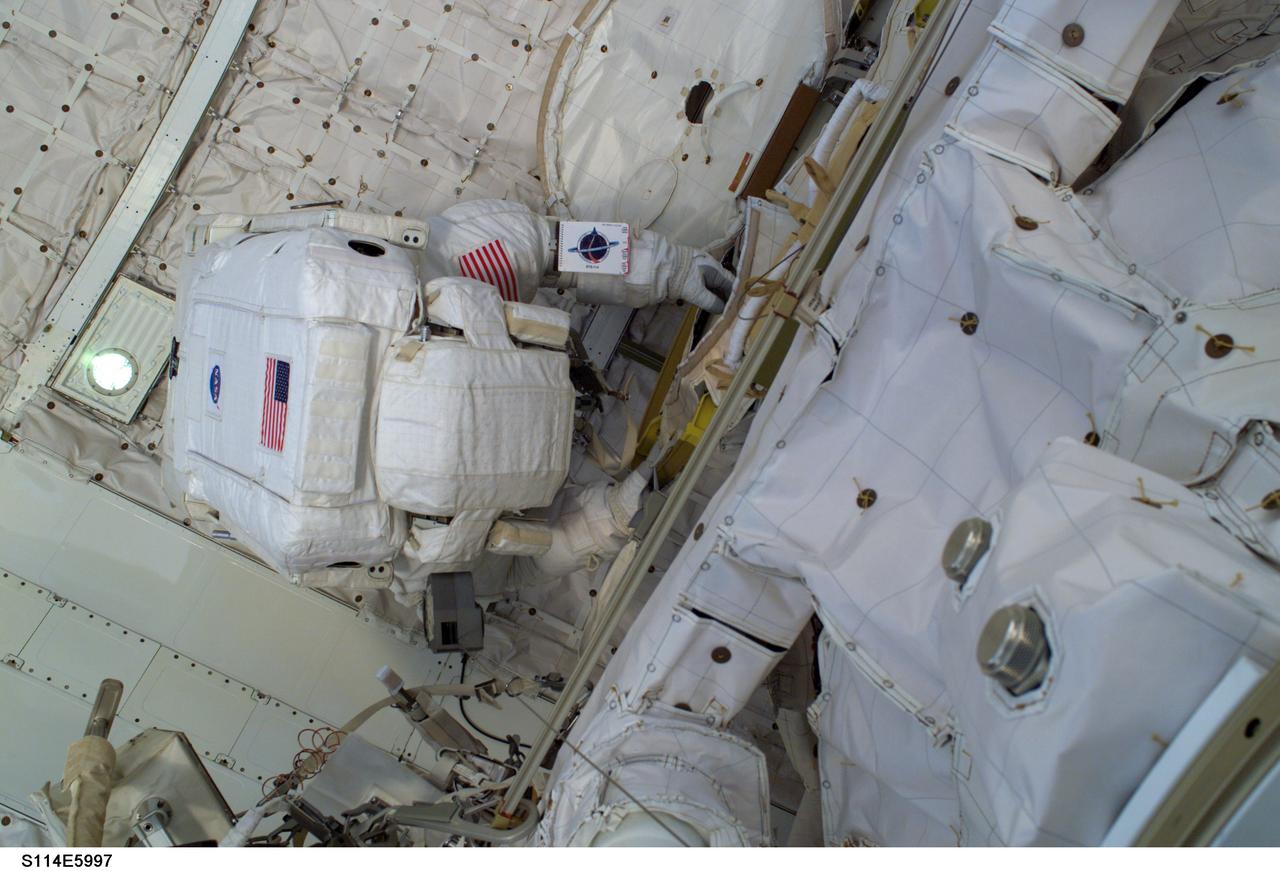
S114-E-5997 (1 August 2005) --- Astronaut Stephen K. Robinson, mission specialist, stands in the cargo bay near Discovery's airlock during the second scheduled spacewalk for STS-114.
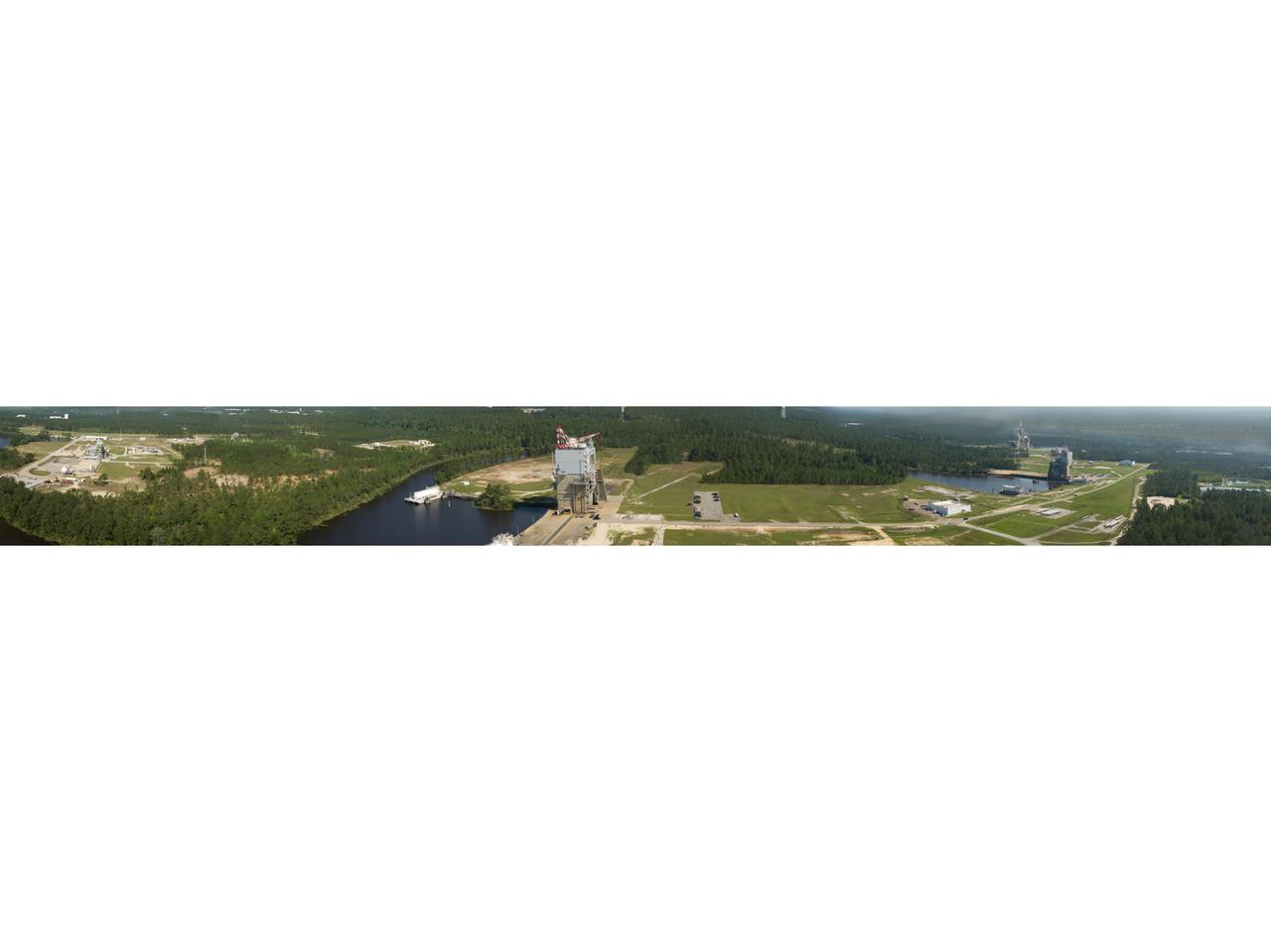
photo taken from the top of the new A-3 Test Stand at Stennis Space Center offers a panoramic view of the A, B and E test complexes at the south Mississippi faci
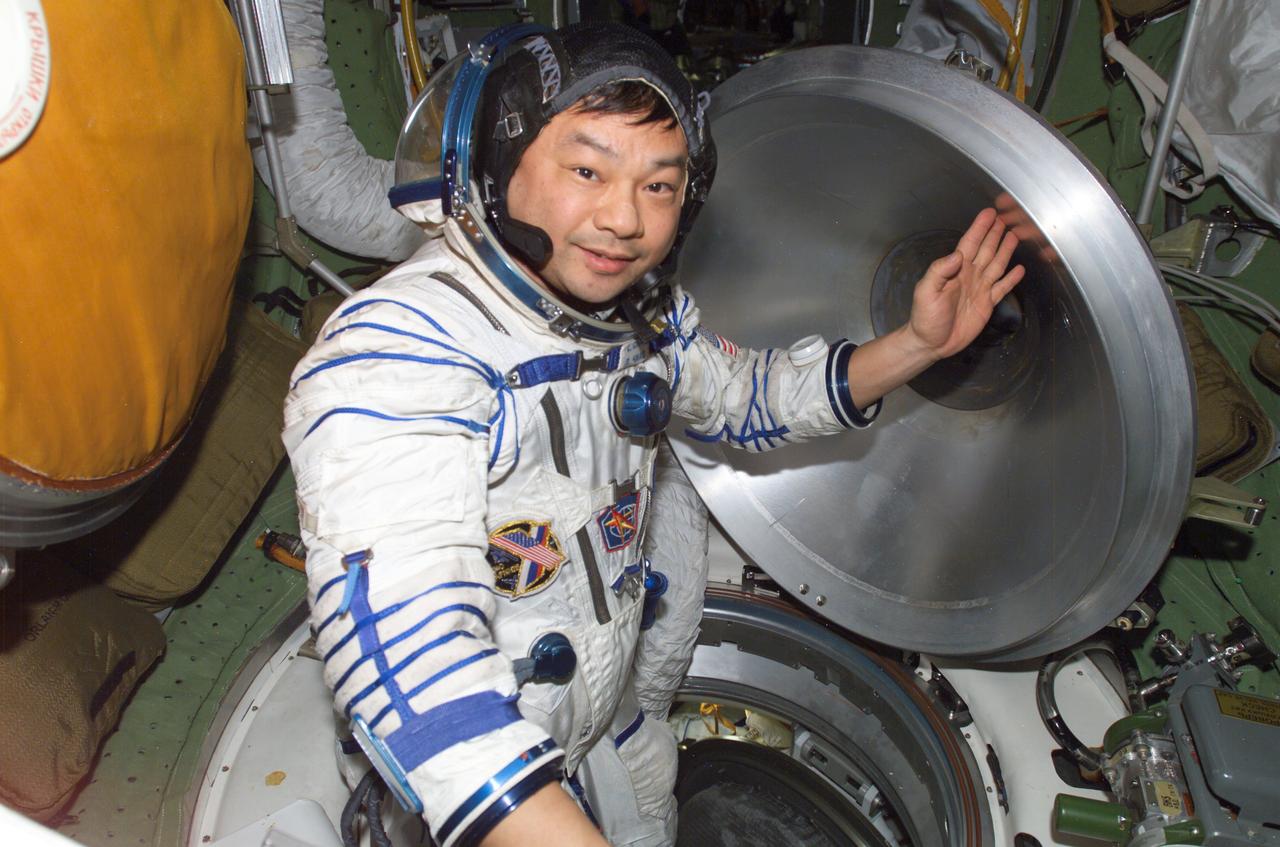
ISS010-E-15373 (1 February 2005) --- Astronaut Leroy Chiao, Expedition 10 commander and Space Station science officer, stands in the transfer compartment of the Zvezda Service Module. Chiao is wearing a Russian Sokol suit.
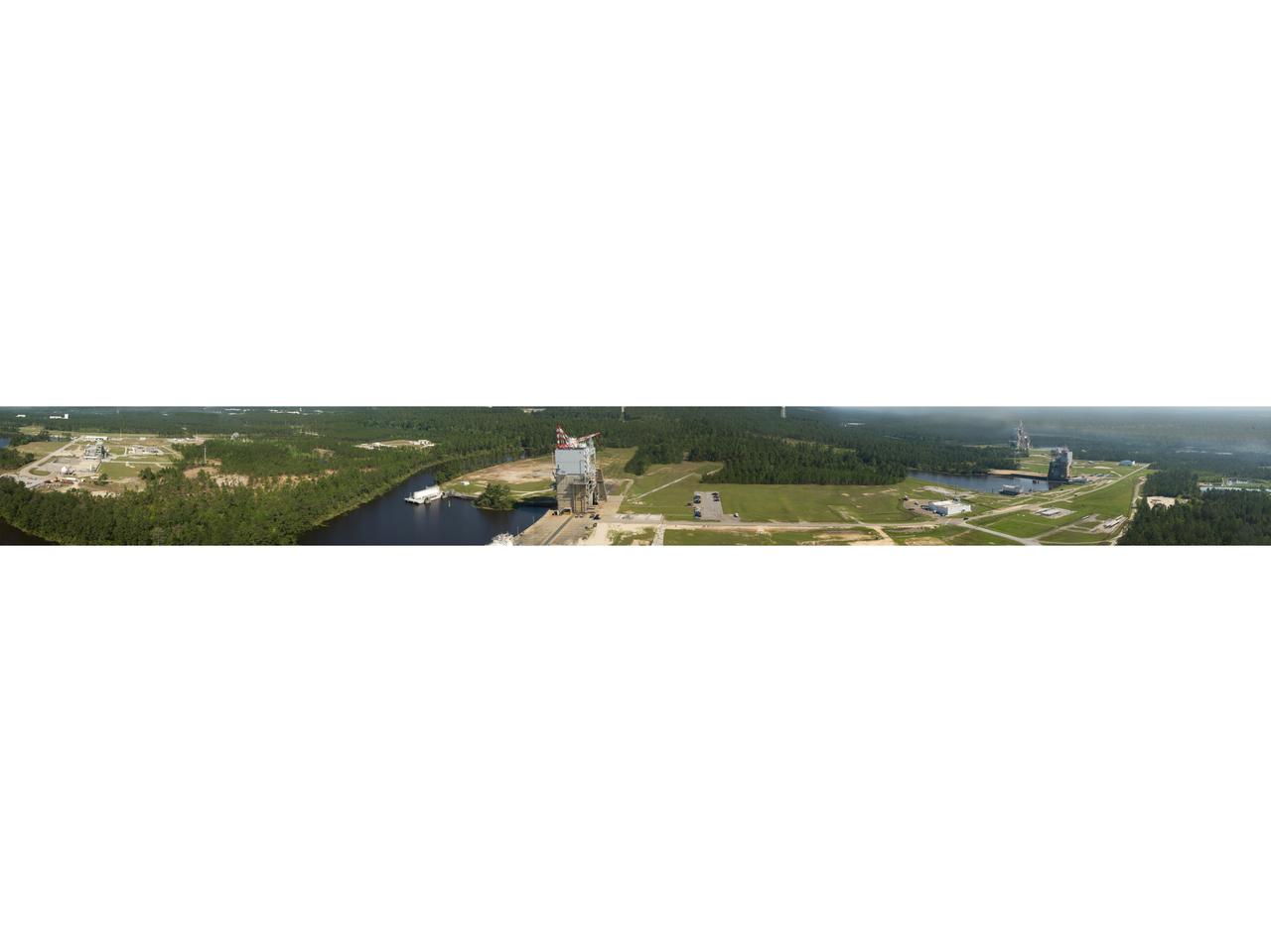
A photo taken from the top of the new A-3 Test Stand at Stennis Space Center offers a panoramic view of the A, B and E test complexes at the south Mississippi facility.
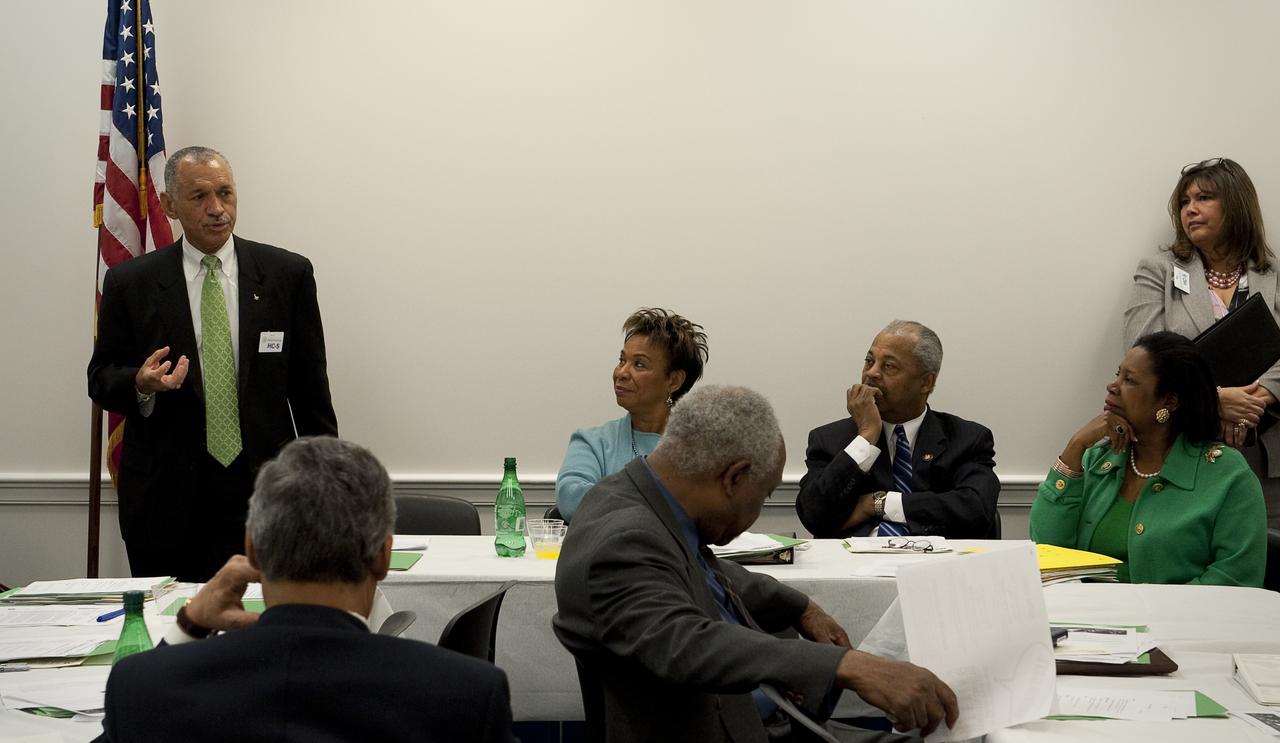
NASA Administrator Charles Bolden, left standing, speaks to members of the Congressional Black Caucus during their weekly meeting at the U.S. Capitol in Washington, Wednesday, Jan. 13, 2010. Photo Credit: (NASA/Paul E. Alers)
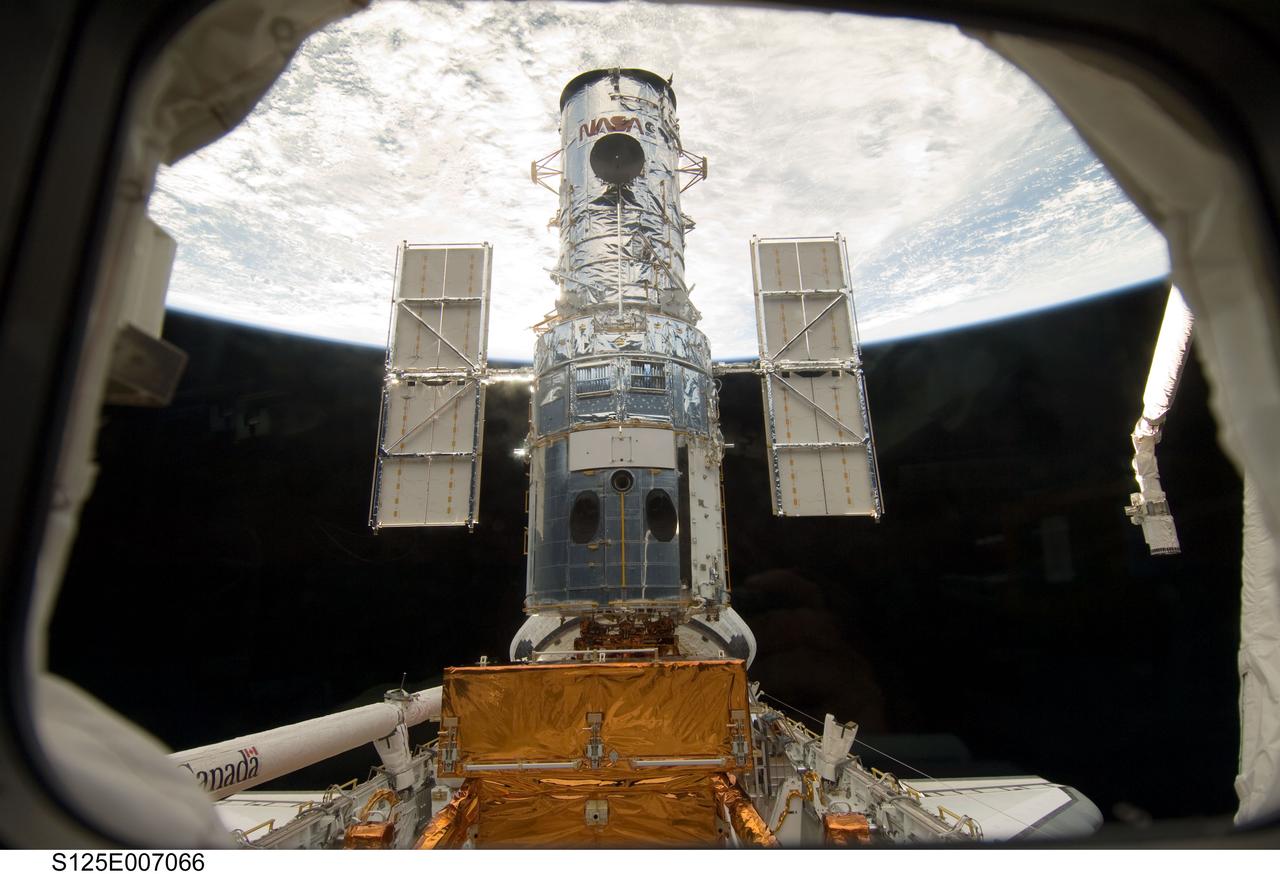
S125-E-007066 (13 May 2009) --- The Hubble Space Telescope stands tall in the cargo bay of the Space Shuttle Atlantis following its capture and lock-down in Earth orbit
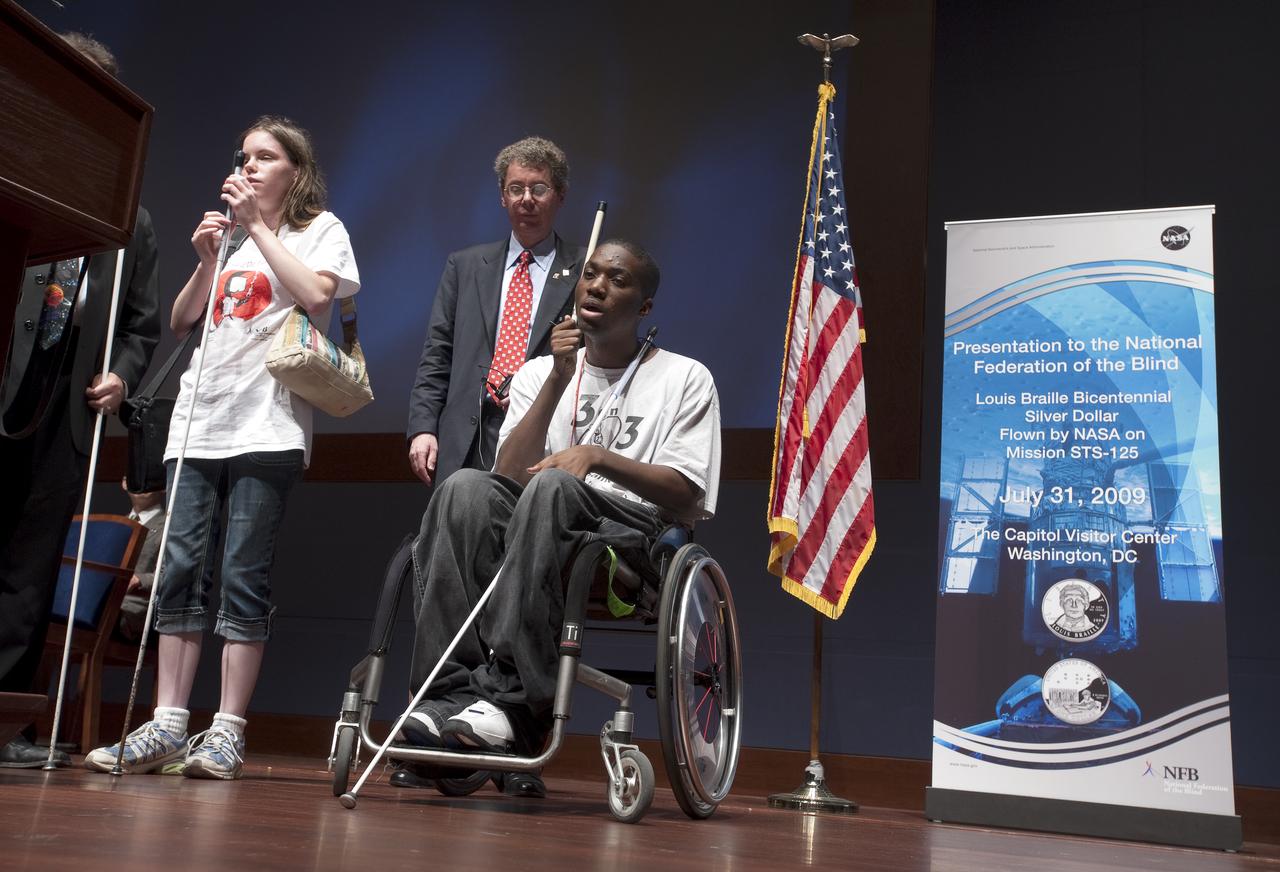
Derrick Tuff, right in wheelchair, and Kayla Weathers, standing left, deliver remarks at a ceremony where senior NASA officials presented the National Federation of the Blind with two Louis Braille Bicentennial Silver Dollars that flew on Space Shuttle Atlantis' mission (STS-125) to the Hubble Space Telescope in May 2009, Friday evening, July 31, 2009, at the Capitol Visitors Center in Washington. Man standing at center is unidentified. Photo Credit: (NASA/Paul E. Alers)

98-E-04404 (8 May 1998) --- U.S. Sen. John H. Glenn Jr. (D.-Ohio) takes a picture with a 35mm camera while standing in front of one of the Shuttle mockup/training facilities at the Johnson Space Center (JSC). Glenn, the first American to orbit Earth (over 36 years ago) and assigned to fly as a payload specialist aboard the Space Shuttle Discovery later this year, stands in front of the full fuselage trainer (FFT) in the systems integration facility.
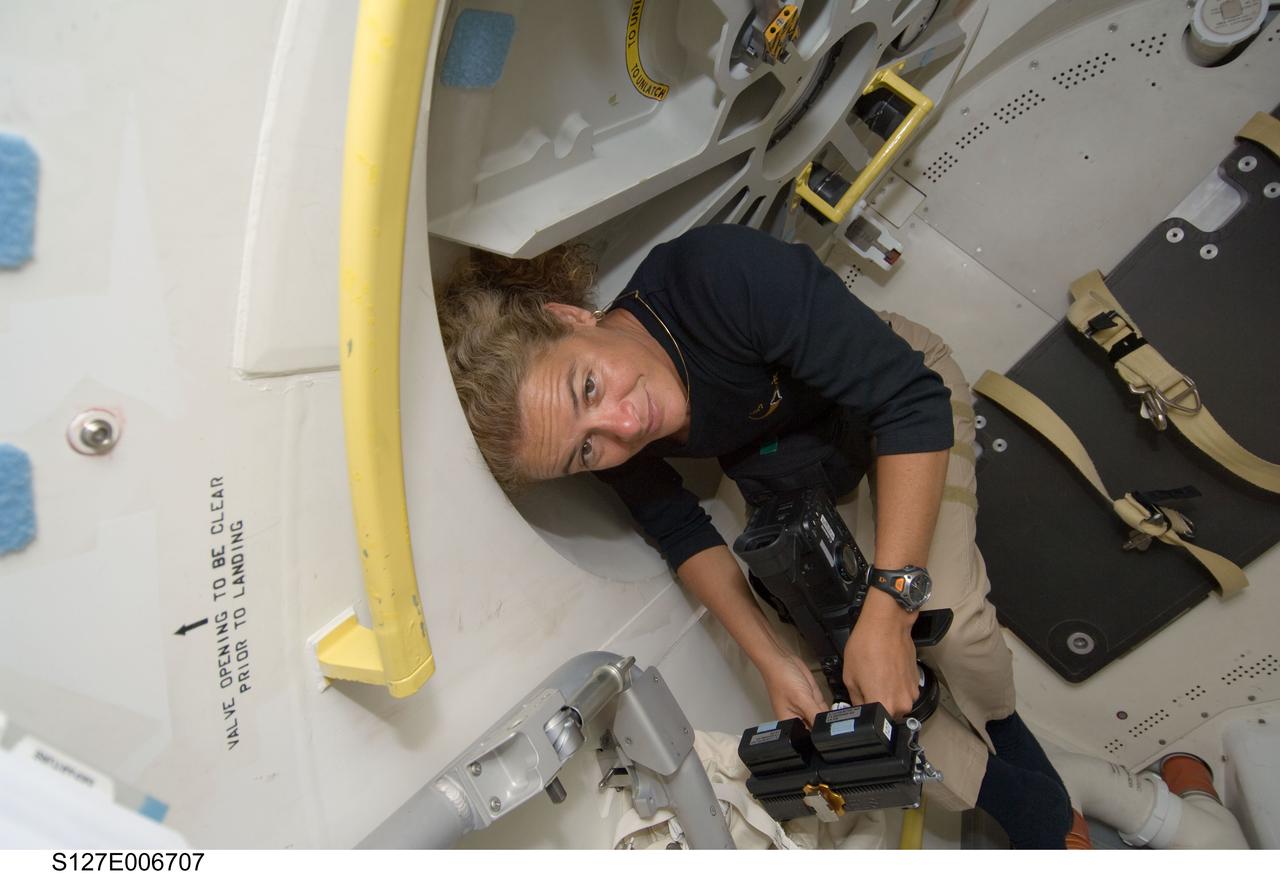
S127-E-006707 (17 July 2009) --- Canadian Space Agency astronaut Julie Payette, STS-127 mission specialist, stands by with a camera as she awaits the opening of the hatch that separates the STS-127 crew members from their hosts aboard the International Space Station.
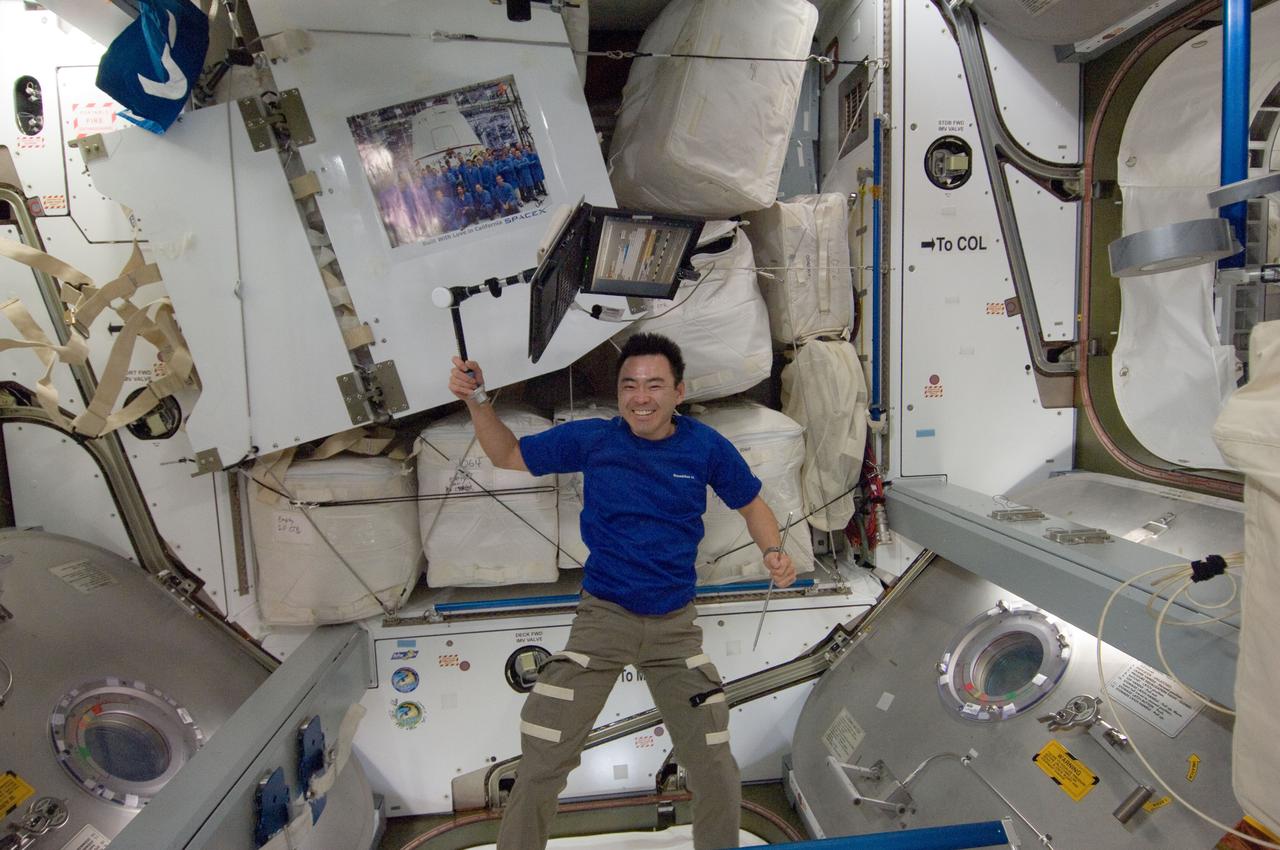
ISS033-E-013091 (14 Oct. 2012) --- Japan Aerospace Exploration Agency astronaut Aki Hoshide, Expedition 33 flight engineer, holds a computer attached to a stand in the Harmony node of the International Space Station. A signed poster of SpaceX personnel floats freely at upper left.
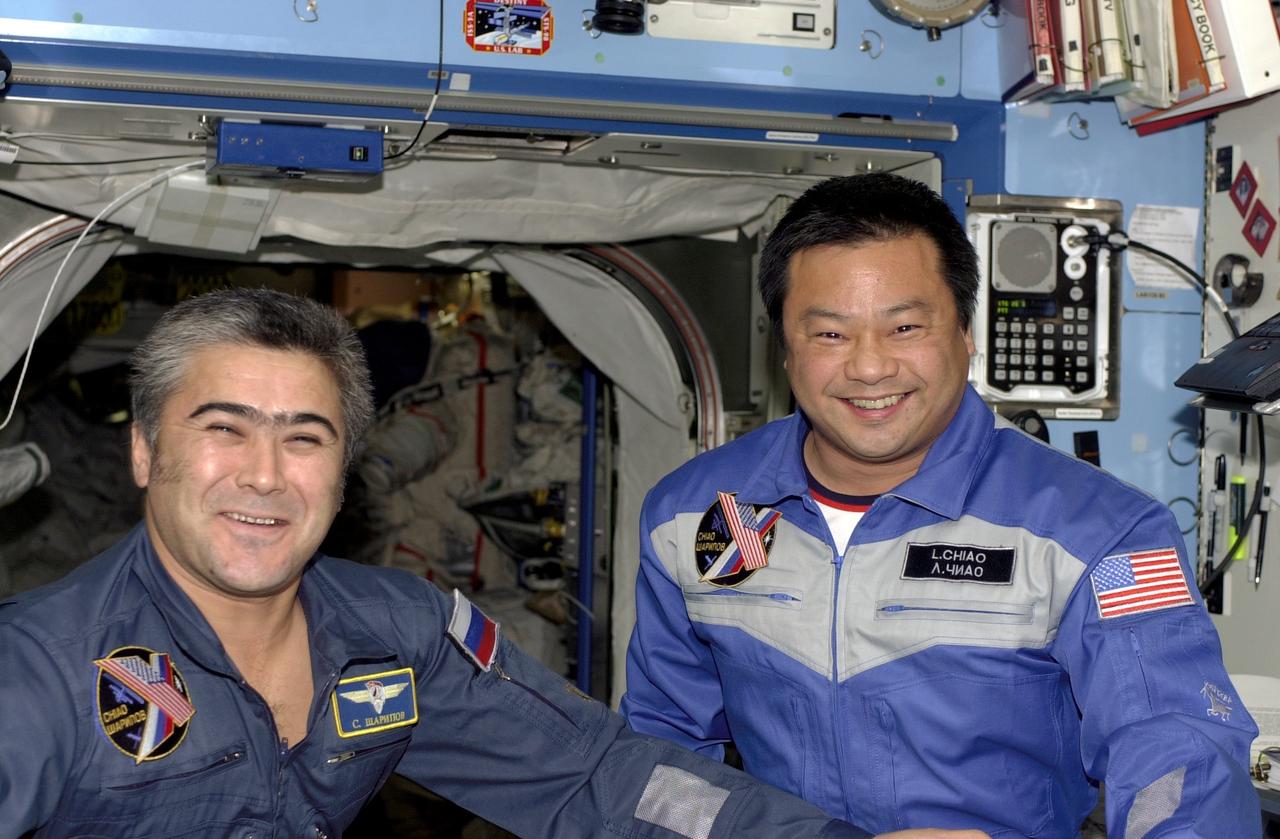
ISS010-E-18943 (23 November 2004) --- Cosmonaut Salizhan S. Sharipov (left), Expedition 10 flight engineer, and astronaut Leroy Chiao, commander and NASA Space Station science officer, appear to be enjoying their work in the early stages of their tenure aboard the orbiting complex. They stand near the hatchway for the Destiny Laboratory.
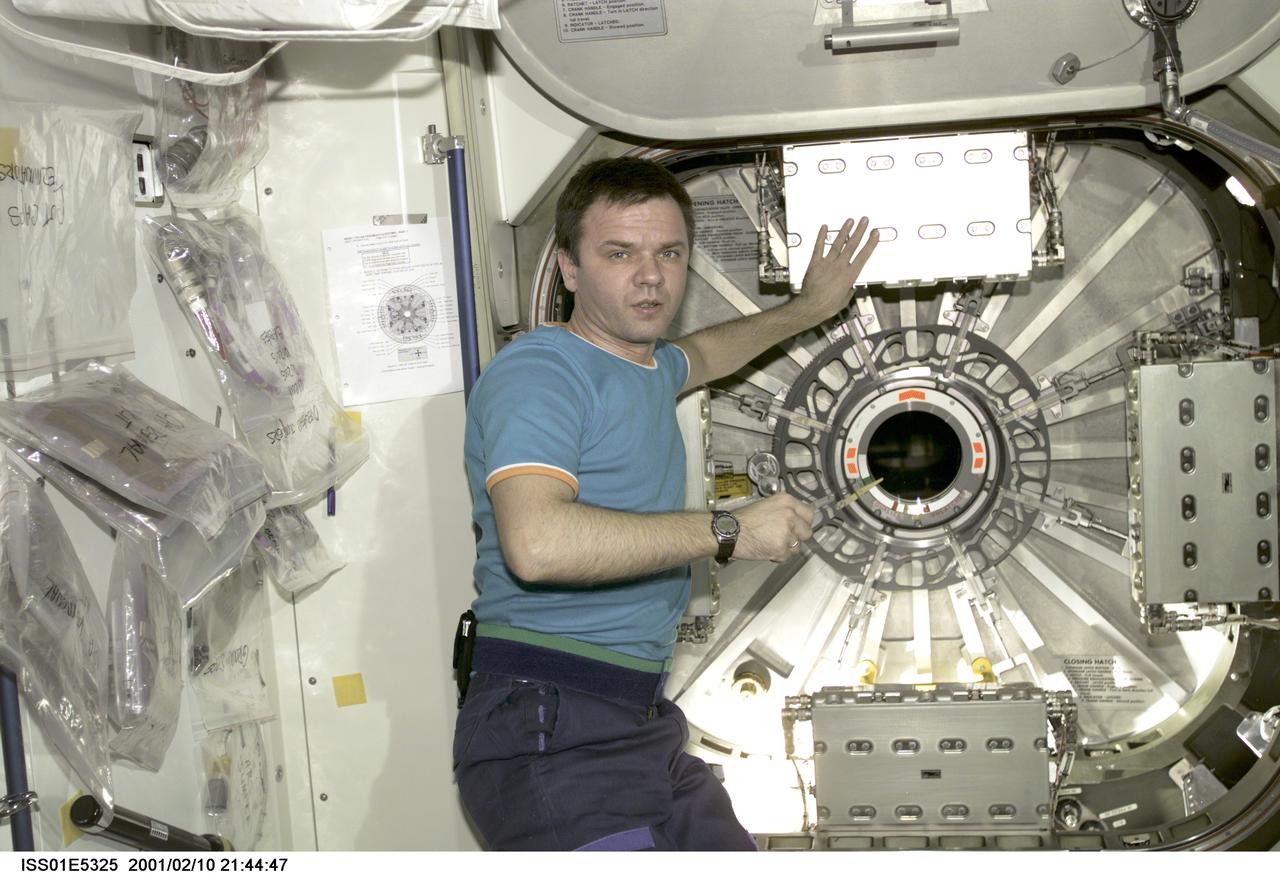
ISS01-E-5325 (10 February 2001) --- Cosmonaut Yuri P. Gidzenko, Expedition One Soyuz commander, stands near the hatch leading from the Unity node into the newly attached Destiny laboratory aboard the International Space Station (ISS). The picture was recorded with a digital still camera on the day the hatch was initially opened.
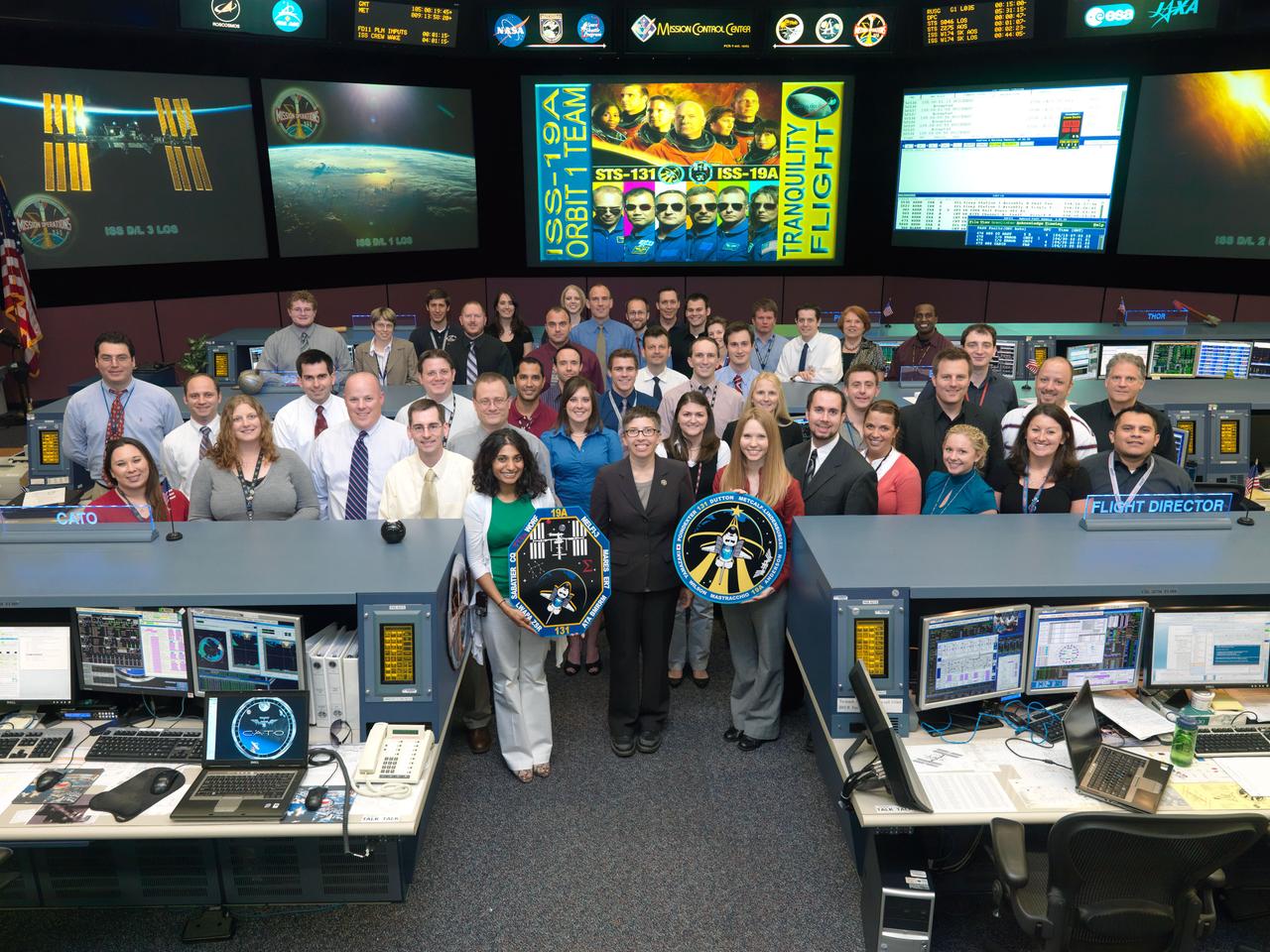
JSC2010-E-052979 (14 April 2010) --- The members of the STS-131/19A ISS Orbit 1 flight control team pose for a group portrait in the space station flight control room in the Mission Control Center at NASA's Johnson Space Center. Flight director Courtenay McMillan (center) stands on the front row.
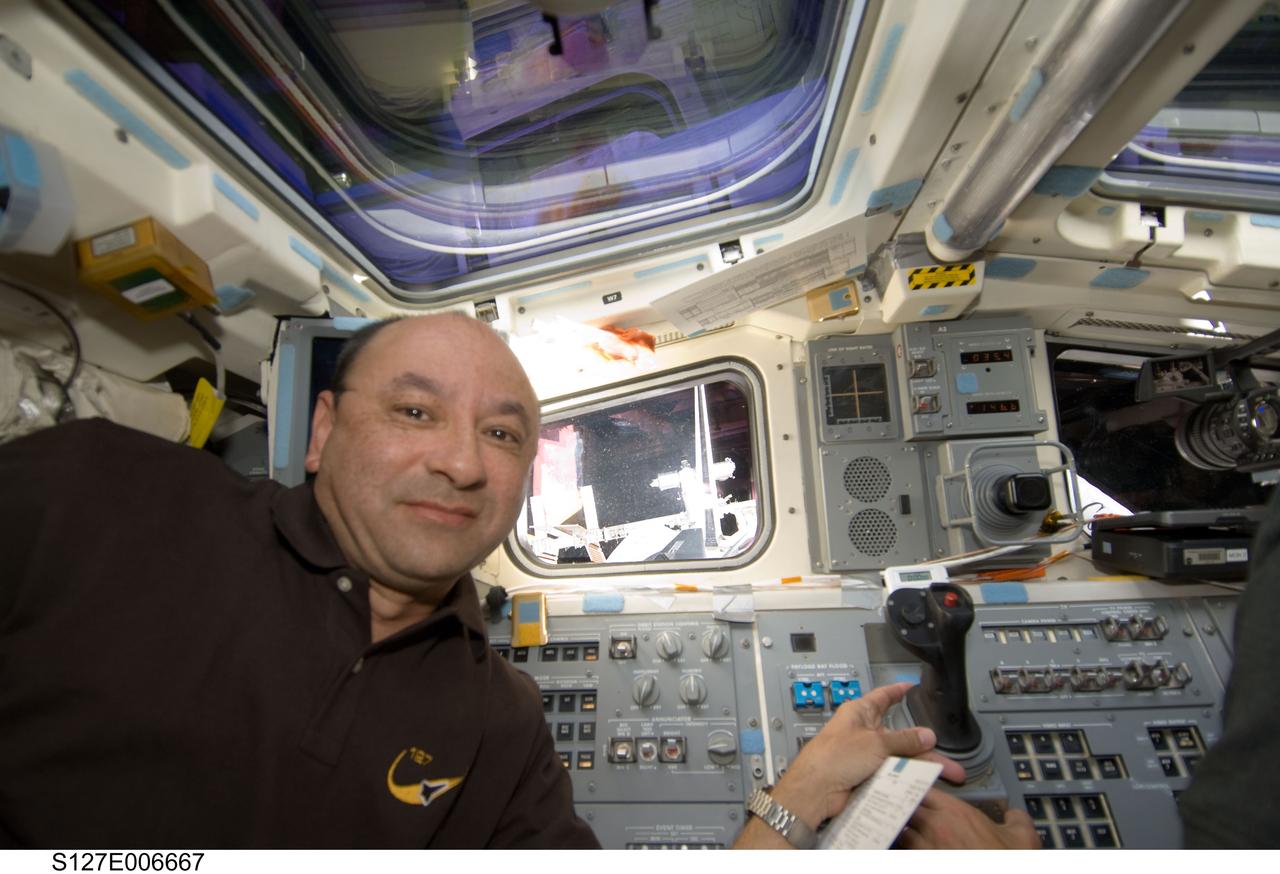
S127-E-006667 (17 July 2009) --- Astronaut Mark Polansky, STS-127 commander, stands near the aft flight deck controls of the Space Shuttle Endeavour during rendezvous and docking activities on flight day three. The International Space Station can be seen through the starboard window.
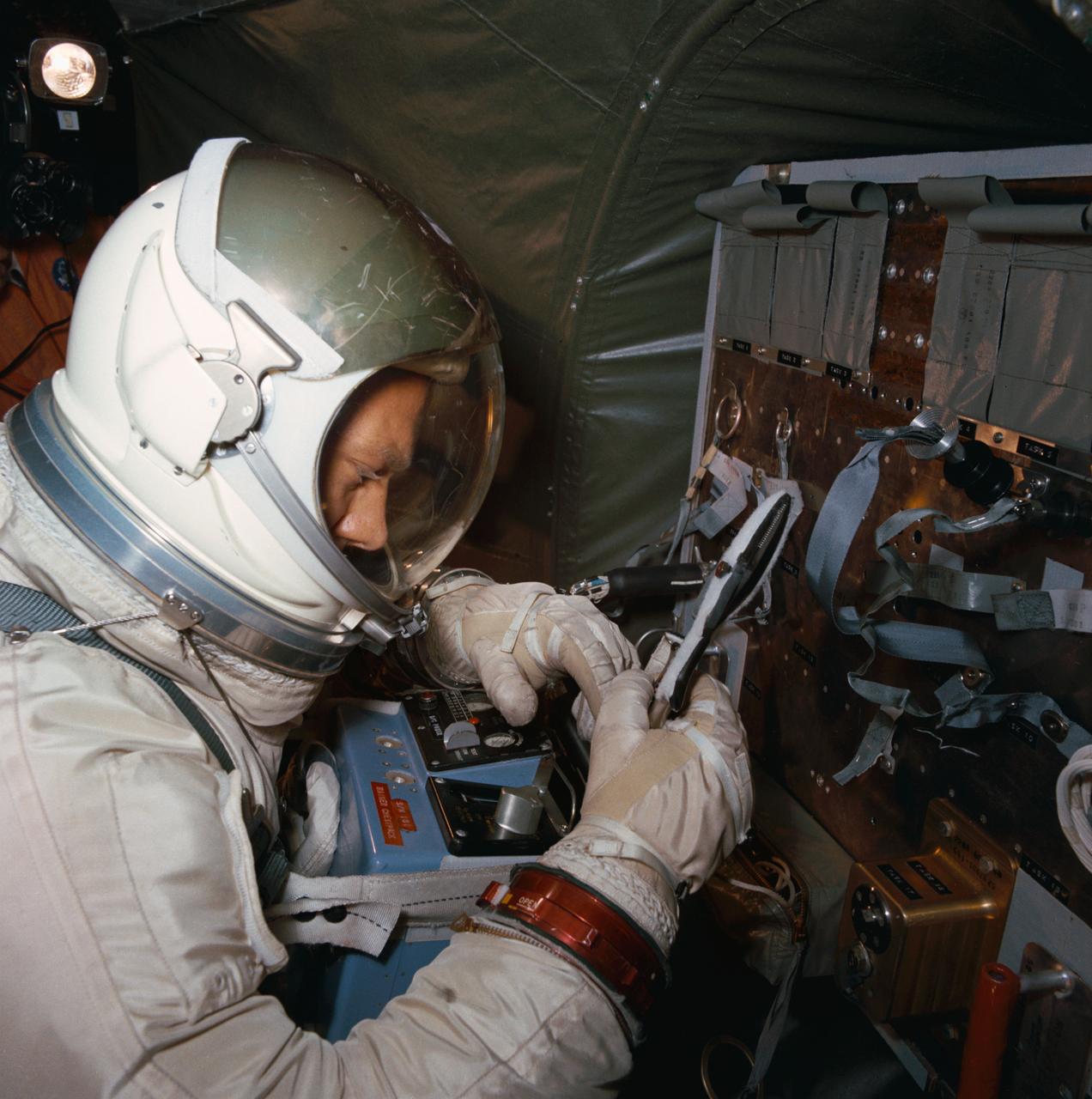
S66-57365 (13 Oct. 1966) --- Astronaut Edwin E. Aldrin Jr., pilot for the Gemini-12 spaceflight, practices work tasks during zero-gravity training. He is standing in a mock-up of the Gemini spacecraft's adapter section onboard an Air Force KC-135 jet aircraft. Photo credit: NASA
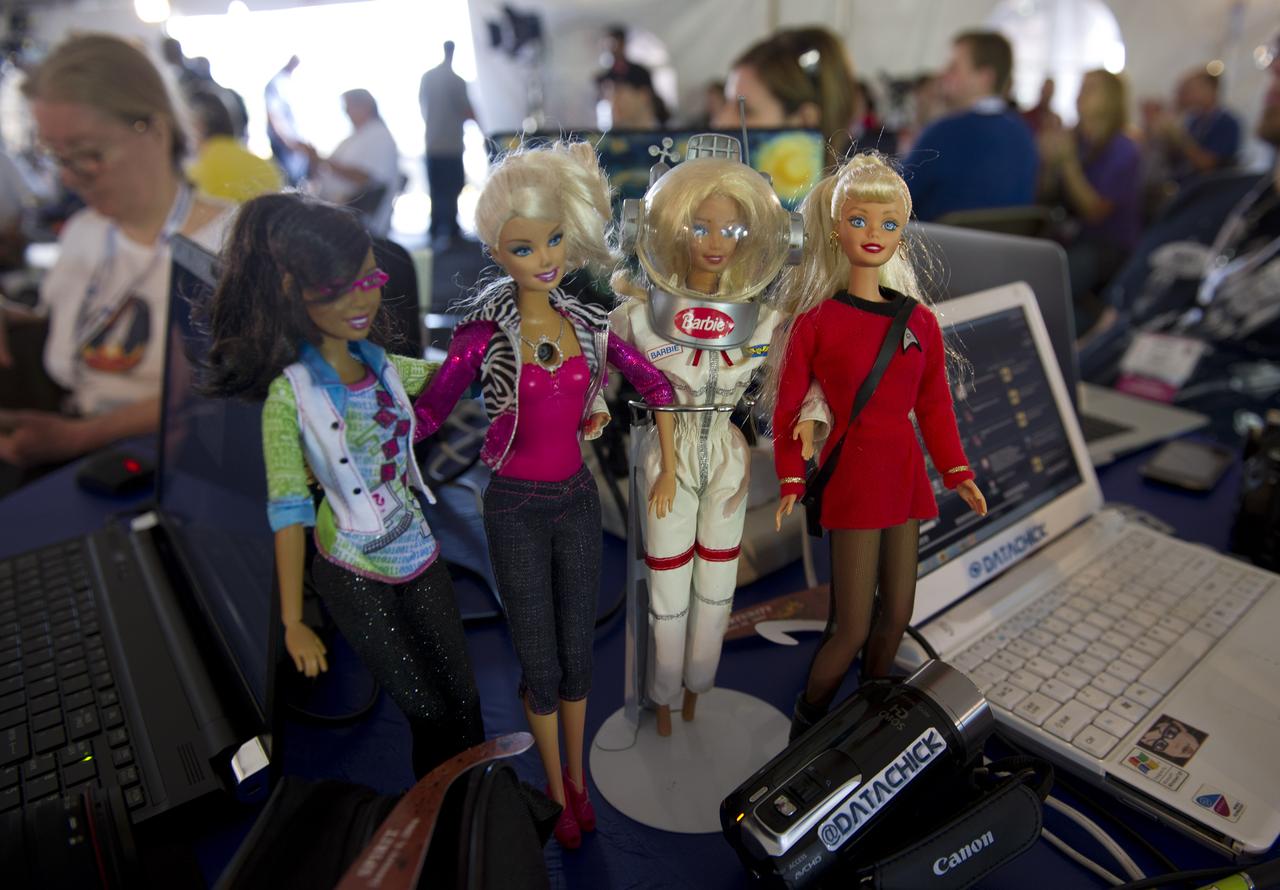
Barbie Dolls stand by during the STS-134 Tweetup, Thursday, April 28, 2011, at Kennedy Space Center in Cape Canaveral, Fla. About 150 NASA Twitter followers attended the event. Photo Credit: (NASA/Paul E. Alers)
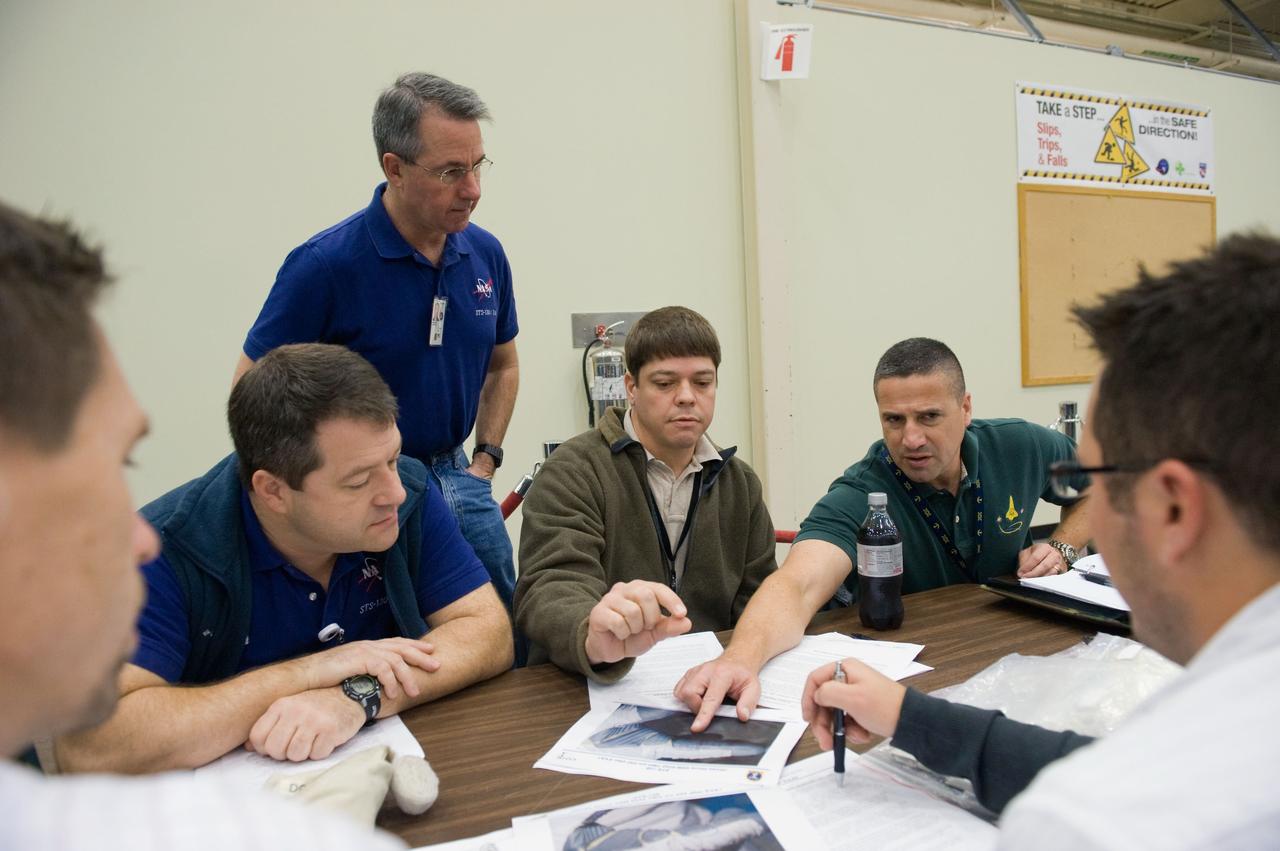
JSC2009-E-244192 (23 Nov. 2009) --- Astronaut George Zamka (right), STS-130 commander; along with astronauts Robert Behnken (center), Stephen Robinson (standing) and Nicholas Patrick, all mission specialists, participate in a training session in the Space Vehicle Mockup Facility at NASA's Johnson Space Center.
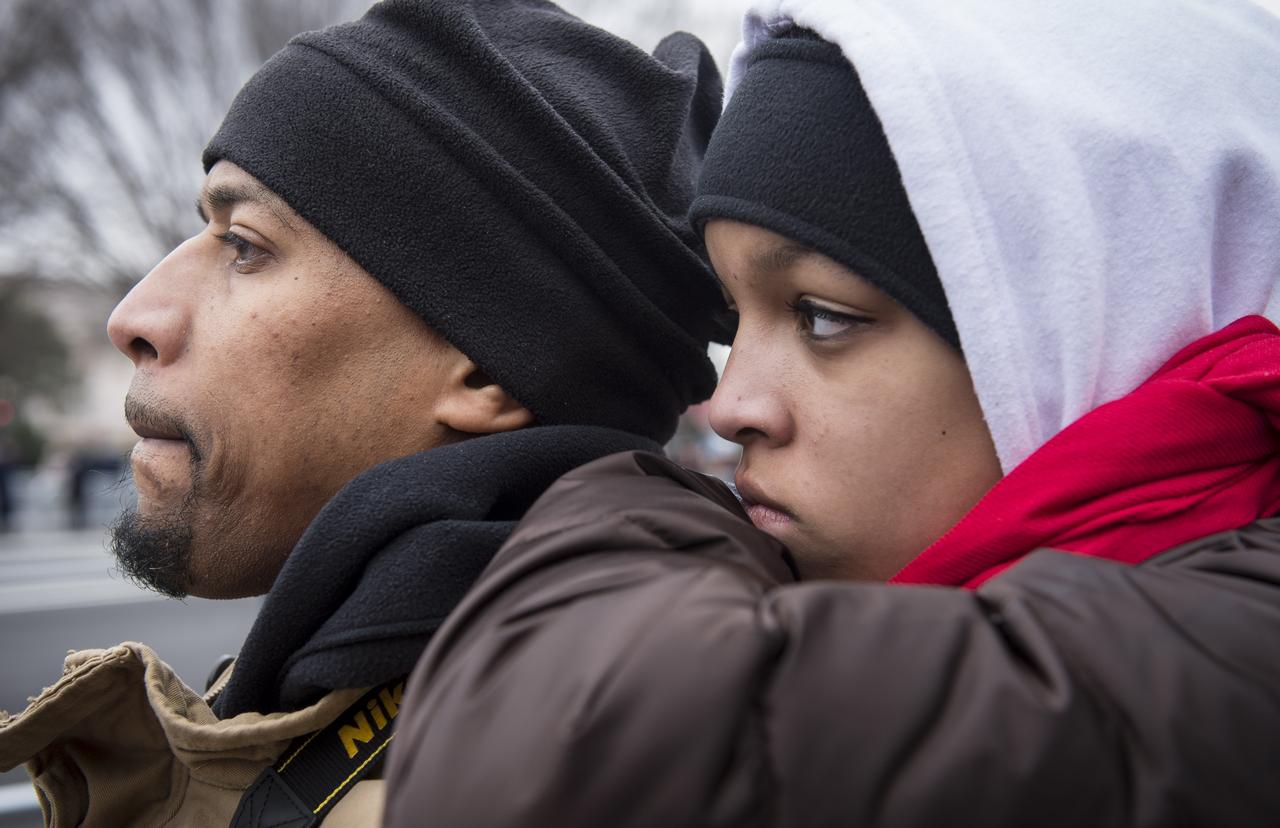
Ken Wheeler and his daughter Kayla listen intently to President Barack Obama's speech following his swearing in as they stand along Pennsylvania Avenue in Washington, Monday, Jan. 21, 2013. The Wheeler's traveled from Cincinnati, Ohio to attend the event. Photo Credit: (NASA/Paul E. Alers)
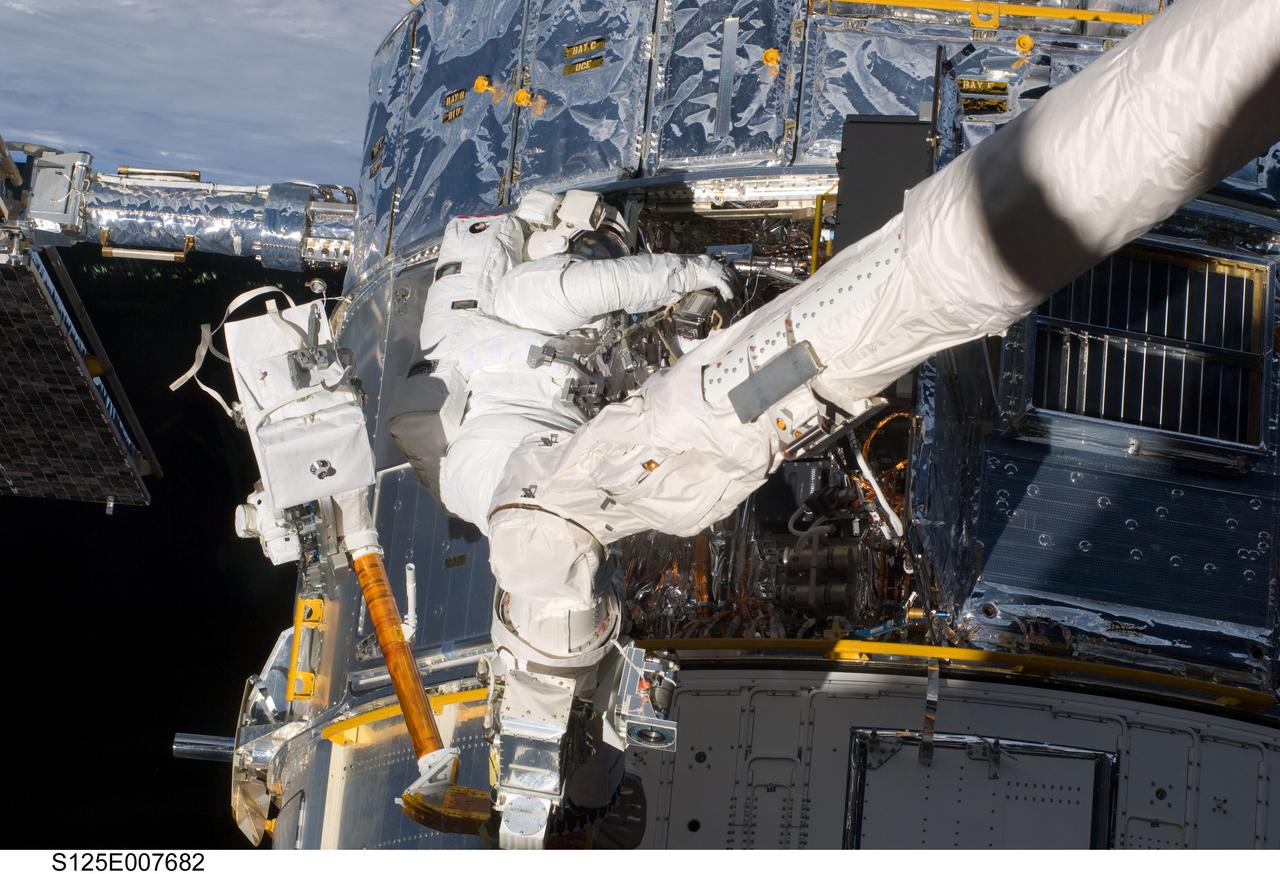
S125-E-007682 (15 May 2009) --- While standing on the end of Atlantis' remote manipulator system arm, astronaut Michael Good, STS-125 mission specialist, uses a power tool to perform work on the Hubble Space Telescope.
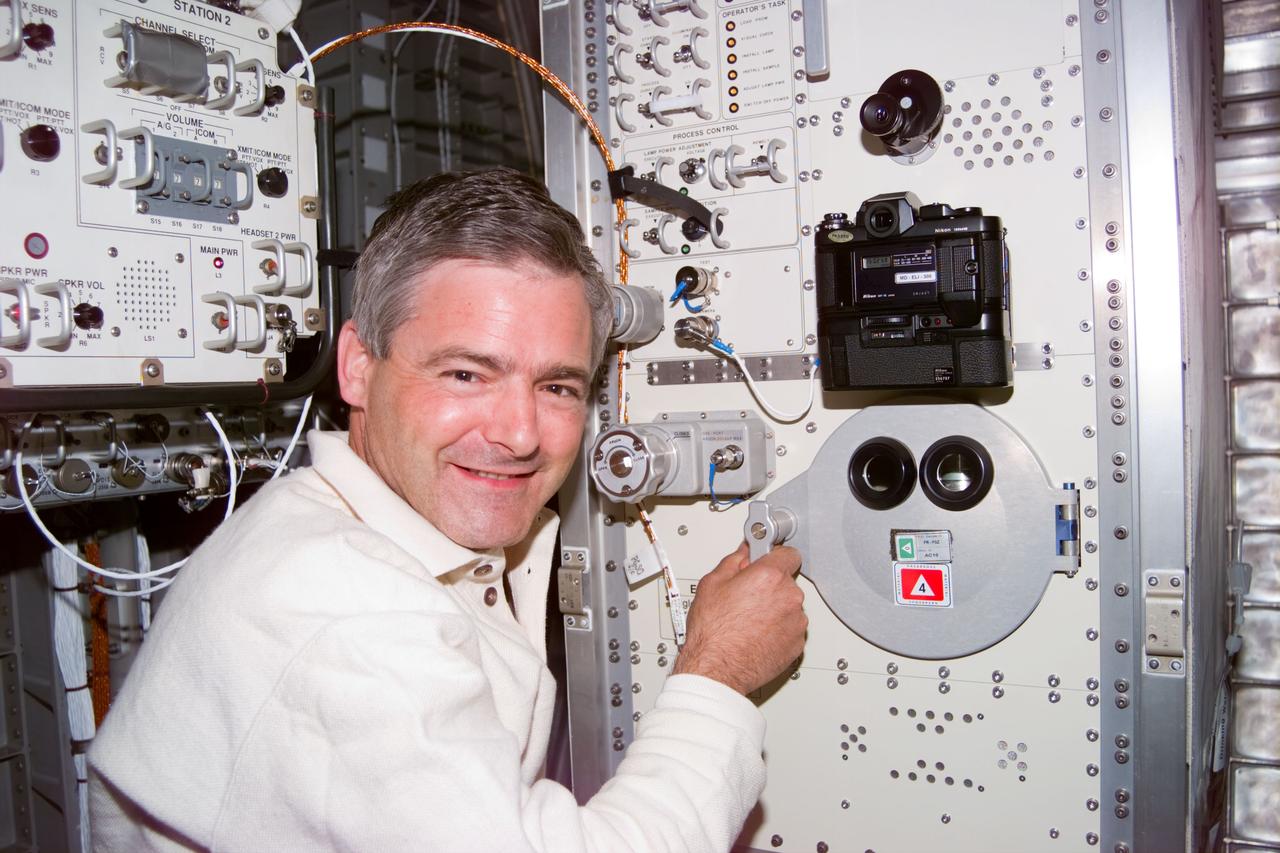
S77-E-5094 (25 May 1996) --- Astronaut Marc Garneau, mission specialist representing the Canadian Space Agency (CSA), stands at the Commercial Float Zone Furnace (CFZF) in the Spacehab Module onboard the Earth-orbiting Space Shuttle Endeavour.

ISS040-E-011868 (14 June 2014) --- The dark waters of the Salton Sea stand out against neighboring cultivation and desert sands in the middle of the Southern California desert, as photographed by one of the Expedition 40 crew members aboard the Earth-orbiting International Space Station on June 14, 2014.
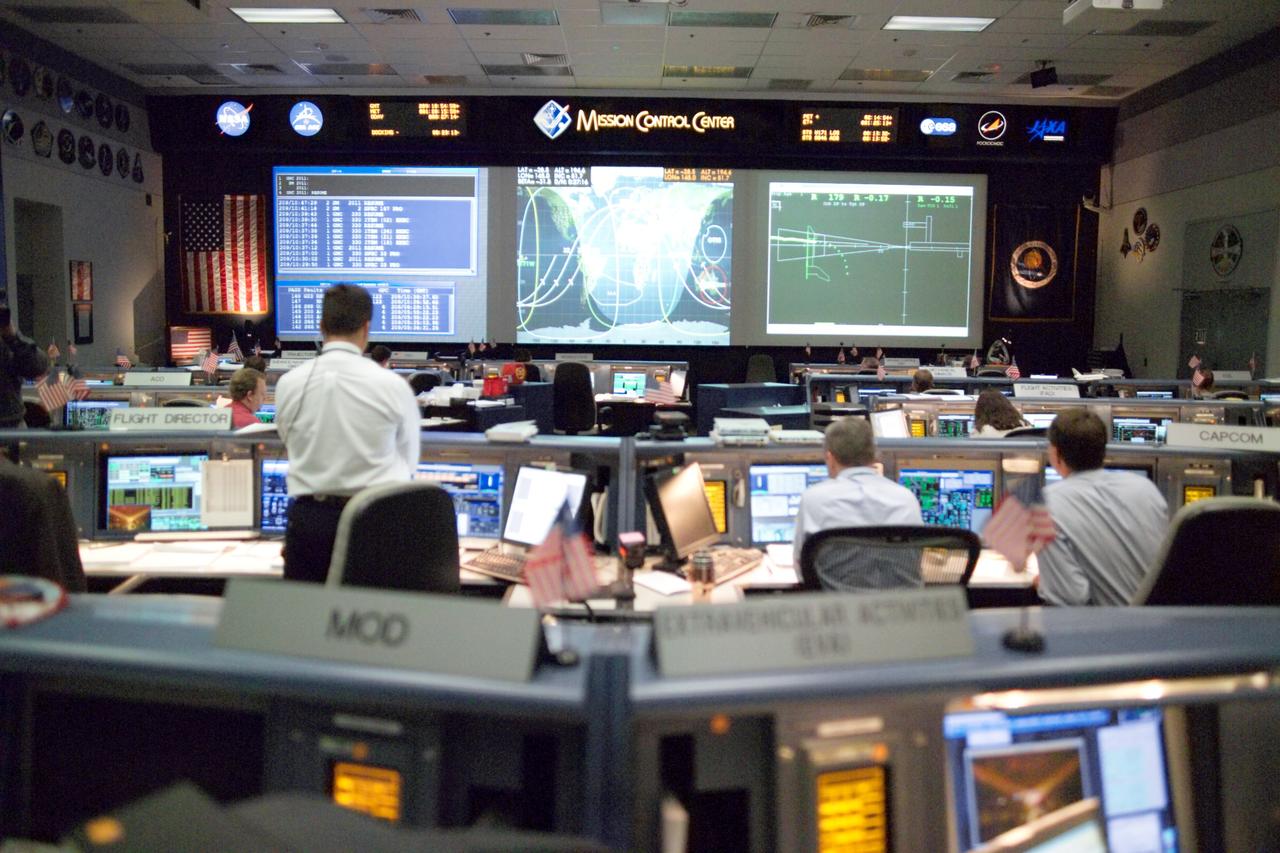
JSC2005-E-30649 (28 July 2005) --- In this wide shot of the Space Shuttle (White) Control Room, STS-114 Lead Flight Director Paul Hill stands at his console during the very busy rendezvous and docking activities between the Discovery and International Space Station.
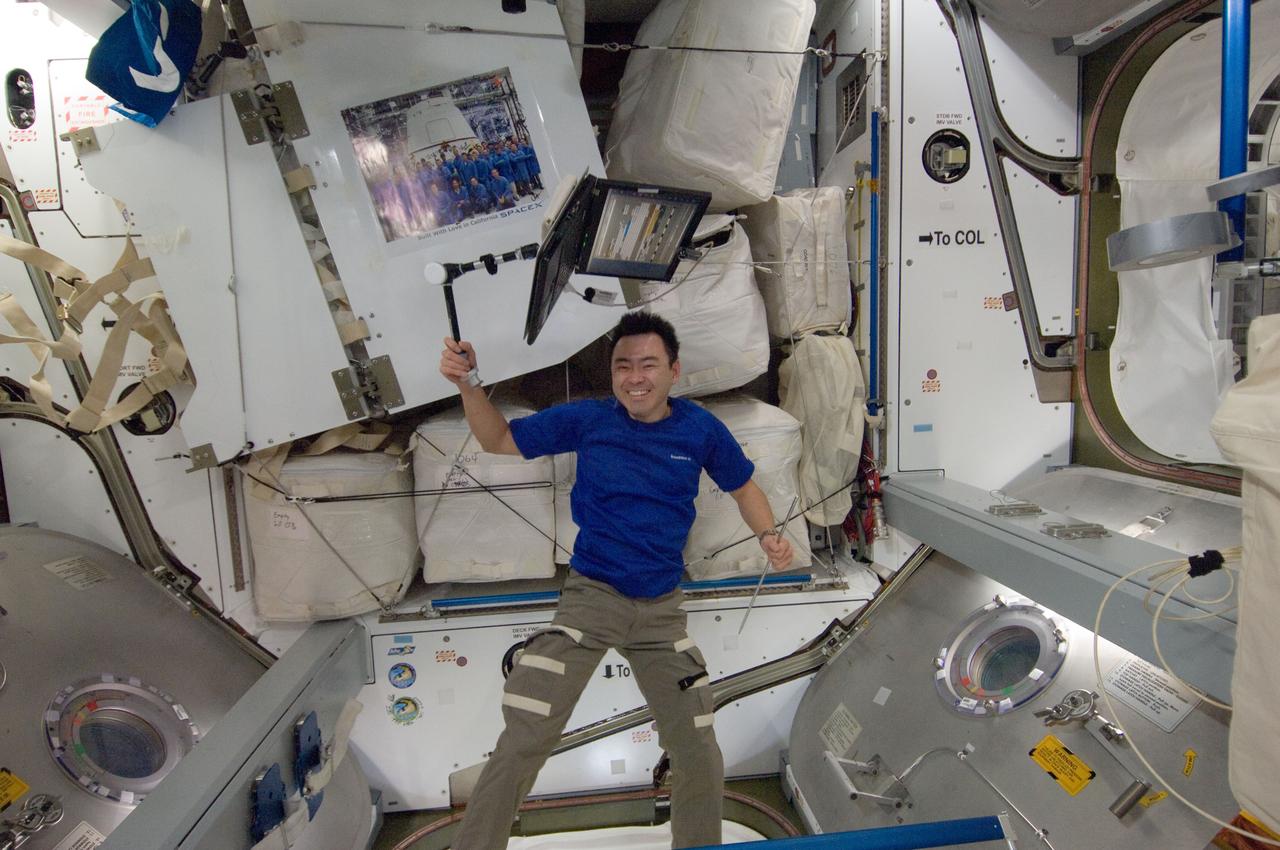
ISS033-E-013092 (14 Oct. 2012) --- Japan Aerospace Exploration Agency astronaut Aki Hoshide, Expedition 33 flight engineer, holds a computer attached to a stand in the Harmony node of the International Space Station. A signed poster of SpaceX personnel floats freely at upper left.
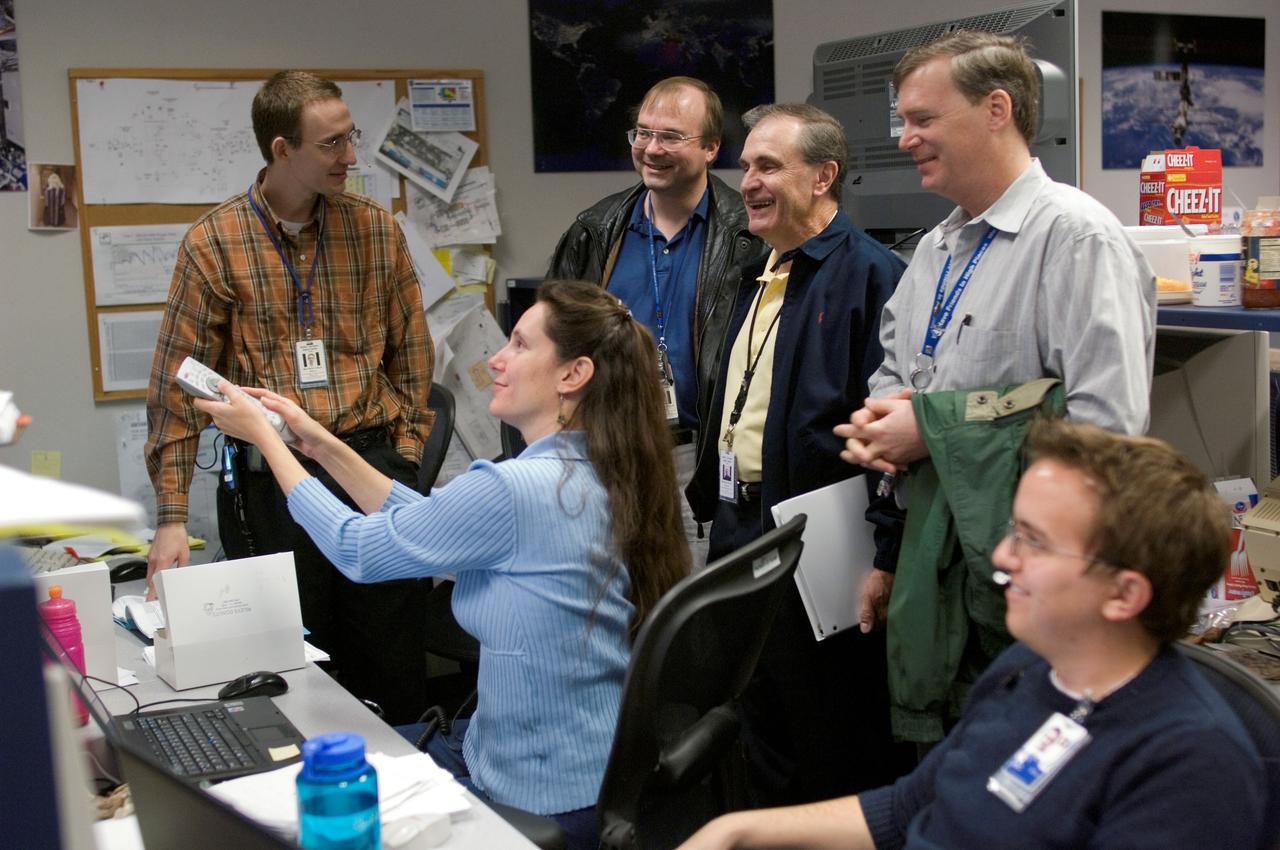
JSC2006-E-54262 ( ) --- MERLIN console operators review the Environmental Control and Life Support (ECLS) system status with ECLS management in preparation for the IMMT. Standing, from the left, are Brandon Dick , Matthew Davis, Richard Reysa and Greg Gentry. Seated are Karen Meyers (left) and Chris Matty.
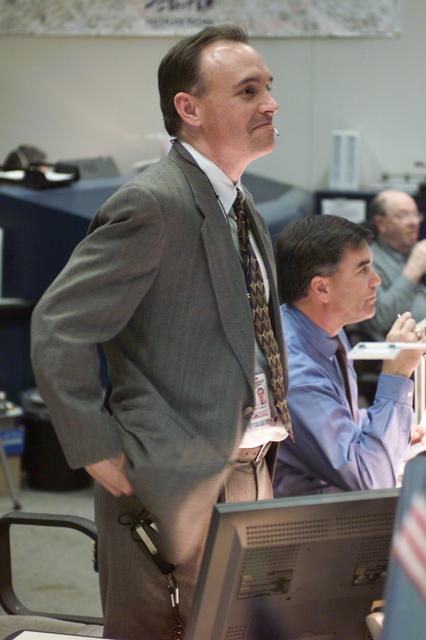
JSC2002-E-08460 (7 March 2002) --- Flight directors Jeff Hanley (standing) and Bryan P. Austin watch the large screens from their consoles in the shuttle flight control room (WFCR) in Houston;s Mission Control Center (MCC) during the STS-109 Hubble Space Telescope (HST) servicing mission.
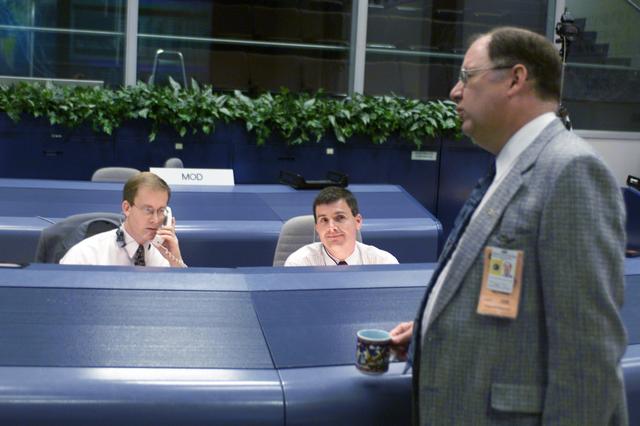
JSC2001-E-25434 (21 August 2001) --- STS-105 flight directors John Shannon (left) and Steve Stich, monitor data at their consoles in the shuttle flight control room (WFCR) in Houston’s Mission Control Center (MCC). Wayne Hale of the Mission Operations Directorate (MOD) is photographed standing in the foreground.

A monument in honor of cosmonaut Yuriy A. Gagarin, the first human to fly in space, stands in front of a cosmonaut apartment building at the Gagarin Cosmonaut Training Center in Star City, Russia. At the time this photo was taken, NASA astronauts Norman E. Thagard and Bonnie J. Dunbar were in Russia for training.
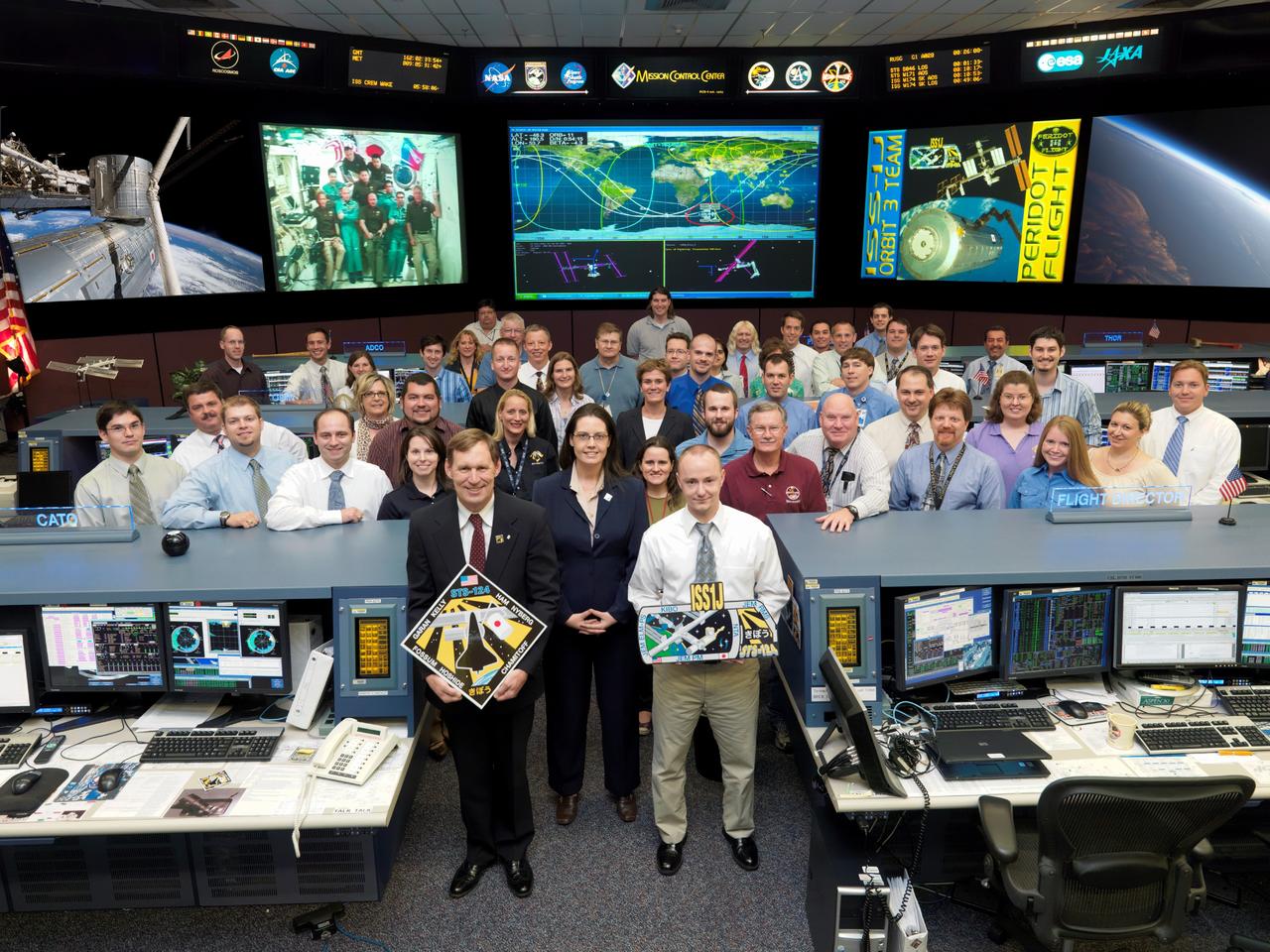
JSC2008-E-045777 (9 June 2008) --- The members of the STS-124/1J ISS Orbit 3 flight control team pose for a group portrait in the space station flight control room in the Mission Control Center at NASA's Johnson Space Center. Flight director Emily Nelson stands in the center foreground.
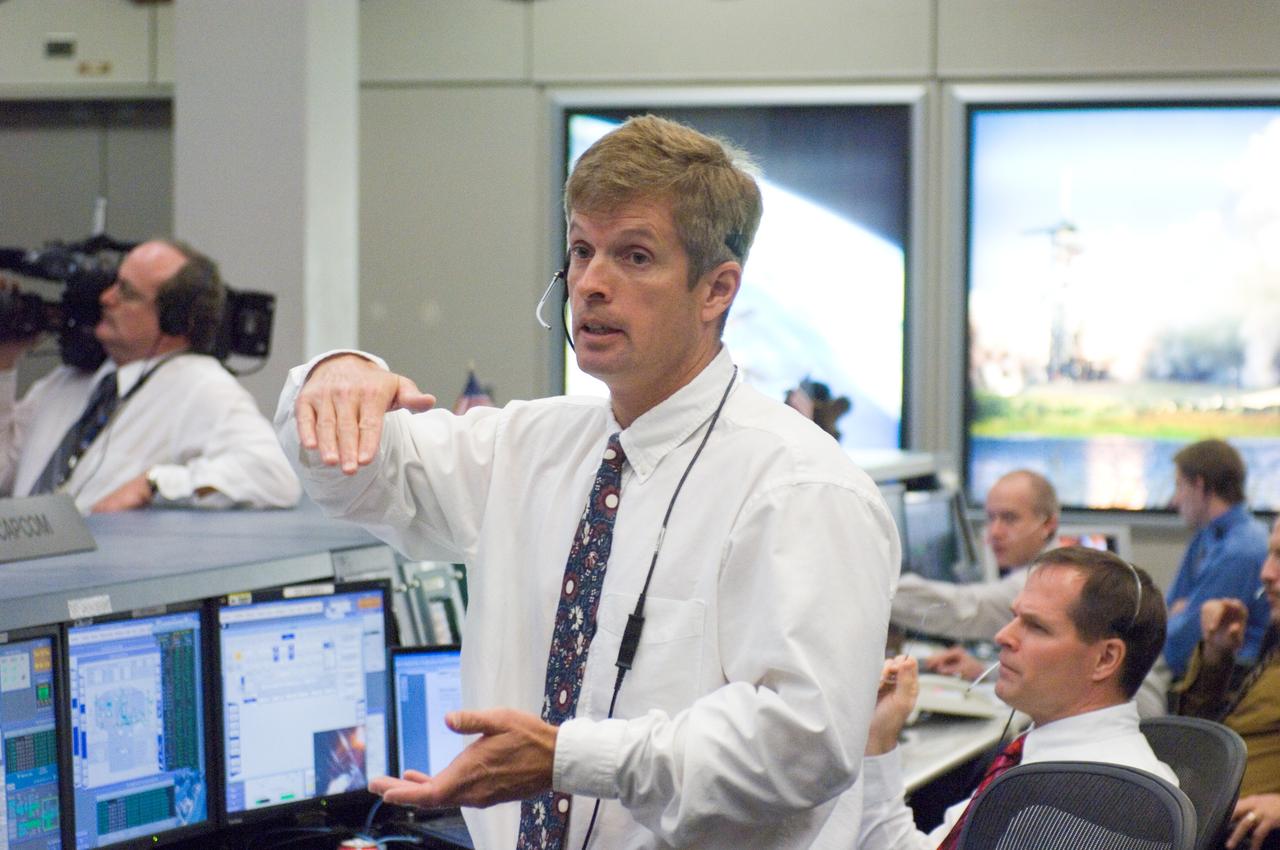
JSC2007-E-095996 (3 Nov. 2007) ---Astronaut Steve Swanson, standing near the spacecraft communicator (CAPCOM) console in the space station control room of JSC's Mission Control Center, communicates with astronauts in space during the Nov. 3 spacewalk planned to repair a tear in a solar panel on the International Space Station.
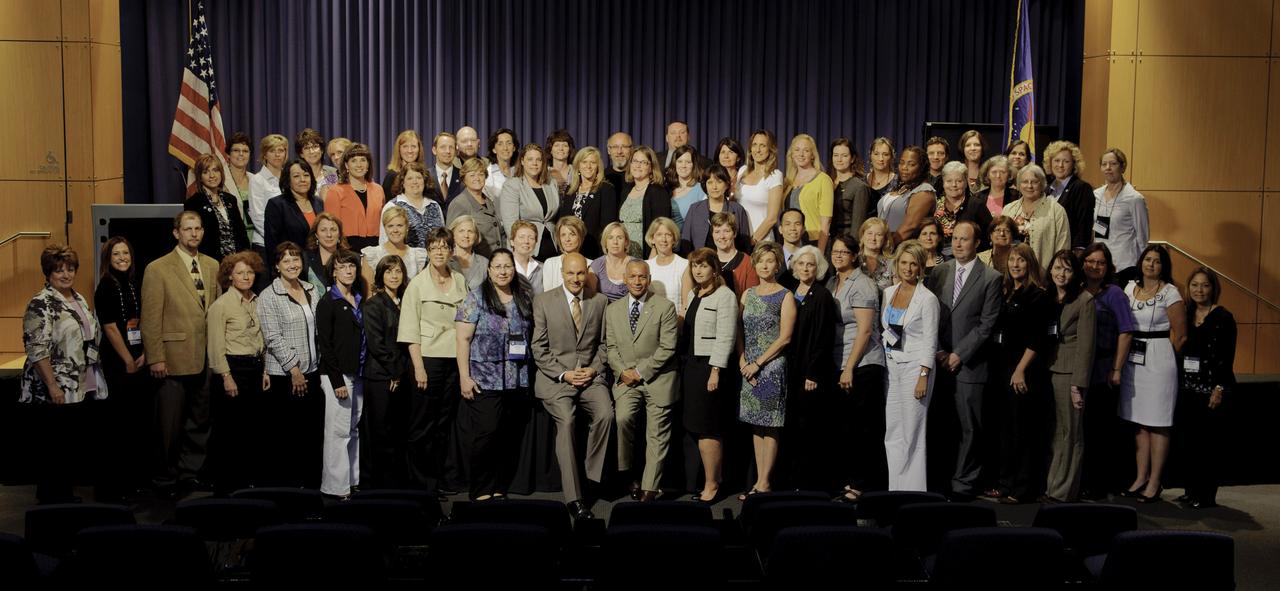
Recipients of the Presidential Award for Excellence in Mathematics and Science Teaching stand together with NASA Administrator Charles Bolden and chief scientist Waleed Abdalati, center, at NASA Headquarters in Washington on Wednesday, May 19, 2011. Photo Credit: (NASA/Paul E. Alers)
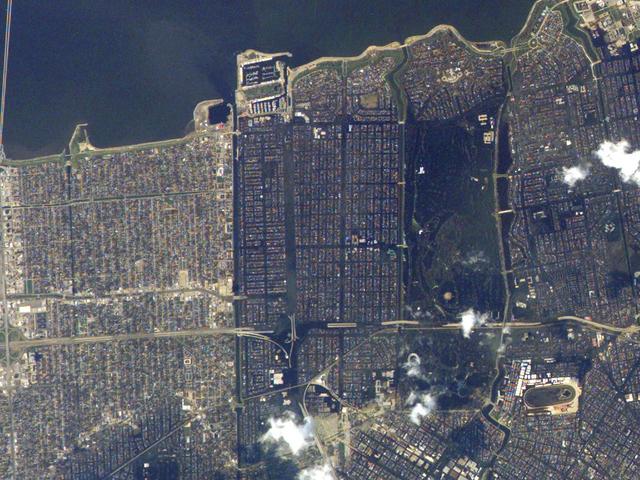
JSC2005-E-37989 (8 September 2005)--- Extensive flooding of neighborhoods to the east of the 17th Street Canal (left center, oriented north-south) is evident in this image acquired on September 8, 2005 from the International Space Station. Standing water in the street grid imparts a dark greenish brown coloration to the inundated regions. Flooded portions of I-610 (extending east-west) are clearly visible in the center of the image. Image is cropped from original ISS011-E-12527 and is oriented with north to the top.
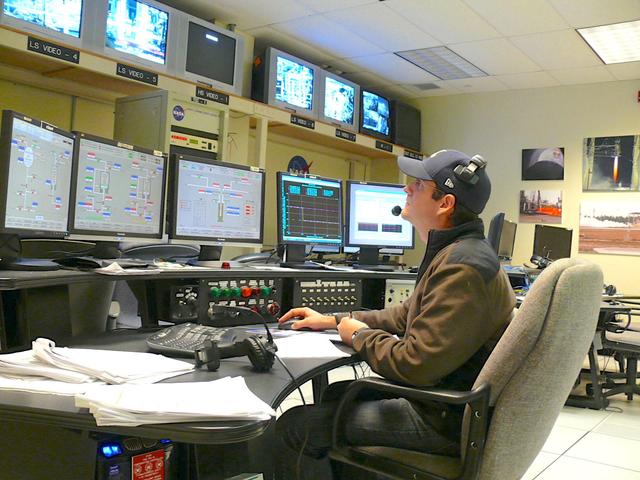
NASA engineer Andy Guymon studies data in the E-3 Test Stand Control Center at John C. Stennis Space Center during testing of NASA's Project Morpheus engine. Nov. 8. The test of the liquid oxygen, liquid methane engine was one of 27 conducted in Stennis' E Test Complex the week of Nov. 5.
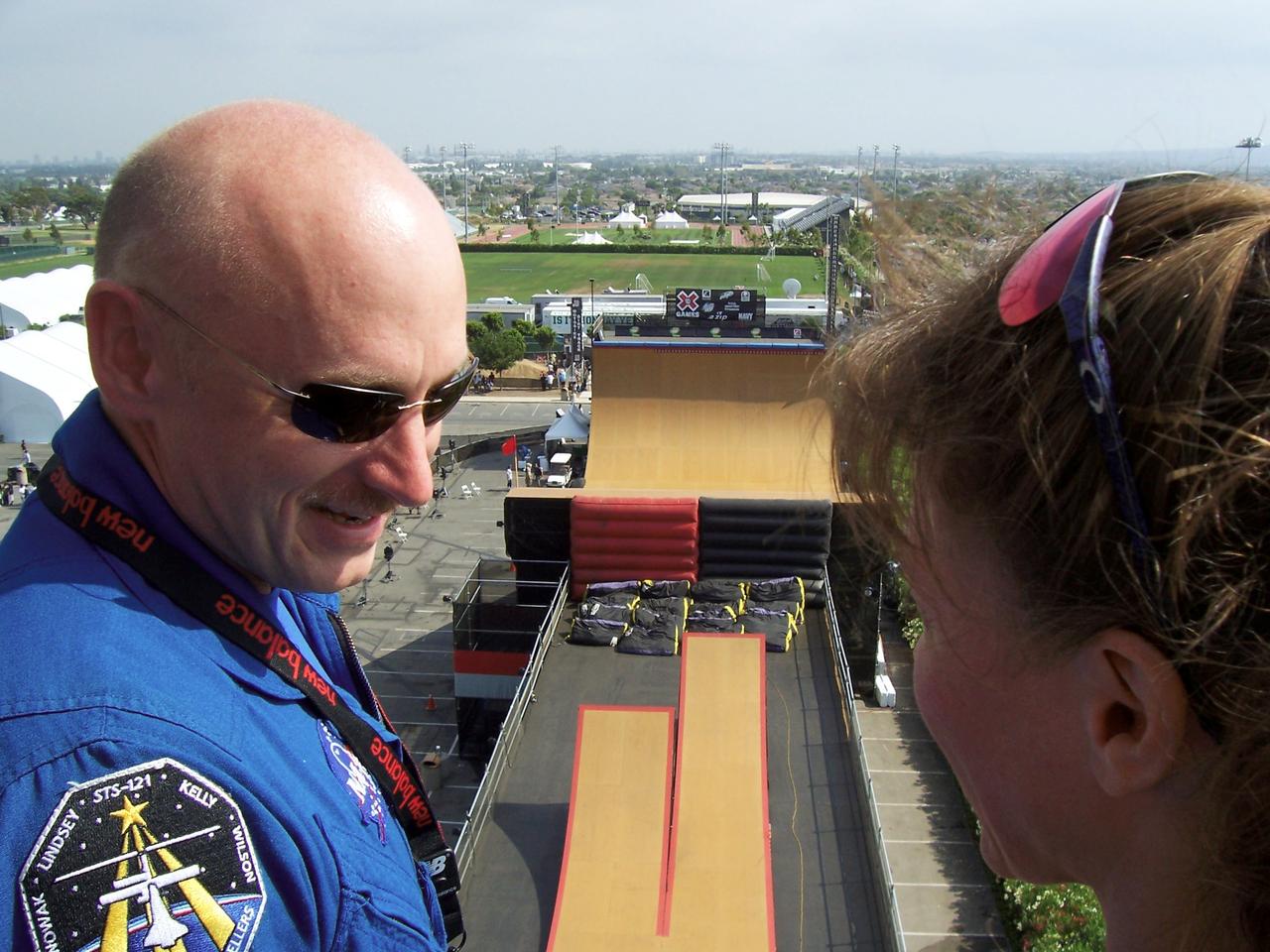
JSC2006-E-32814 (3 August 2006) --- The crew of STS-121 attended opening day of the 12th "X Games" in Los Angeles Aug. 3, discussing their recent mission to the International Space Station with students and athletes. Astronaut Mark E. Kelly, pilot, stands at the edge of the signature 80 foot high "Big Air Jump" skateboarding ramp - location for one of the event highlights. The crew's visit also included presentations at the Jet Propulsion Laboratory and the California Science Center.
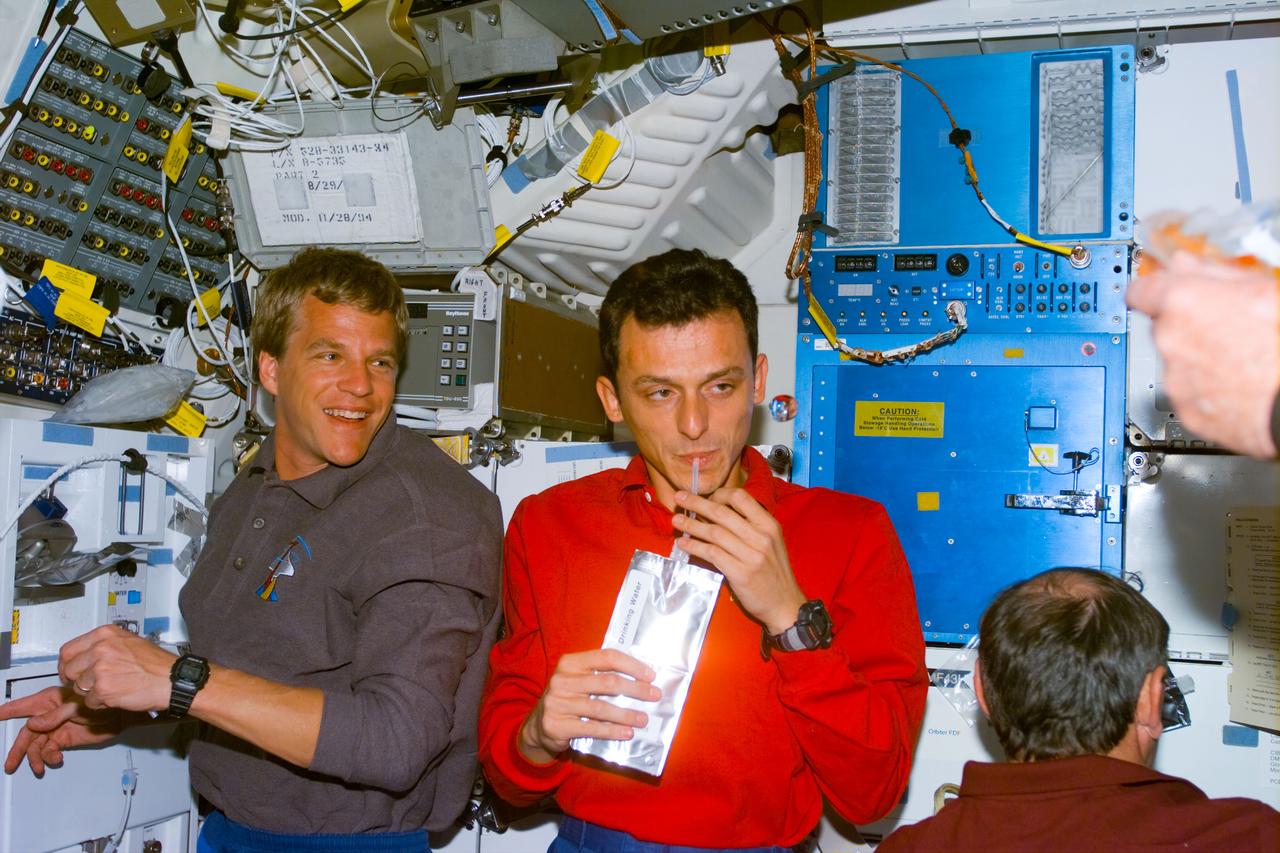
S95-E-5004 (29 Oct. 1998) --- Astronauts Scott E. Parazynski (left) and Pedro Duque, both STS-95 mission specialists, look toward astronaut Curtis L. Brown, commander, on Discovery's middeck during flight day one activity. Parazynski stands next to the galley, which Duque, who represents the European Space Agency (ESA), used to rehydrate the beverage container he holds. The photo was made with an electronic still camera (ESC) at 10:05:27 GMT, Oct. 29.
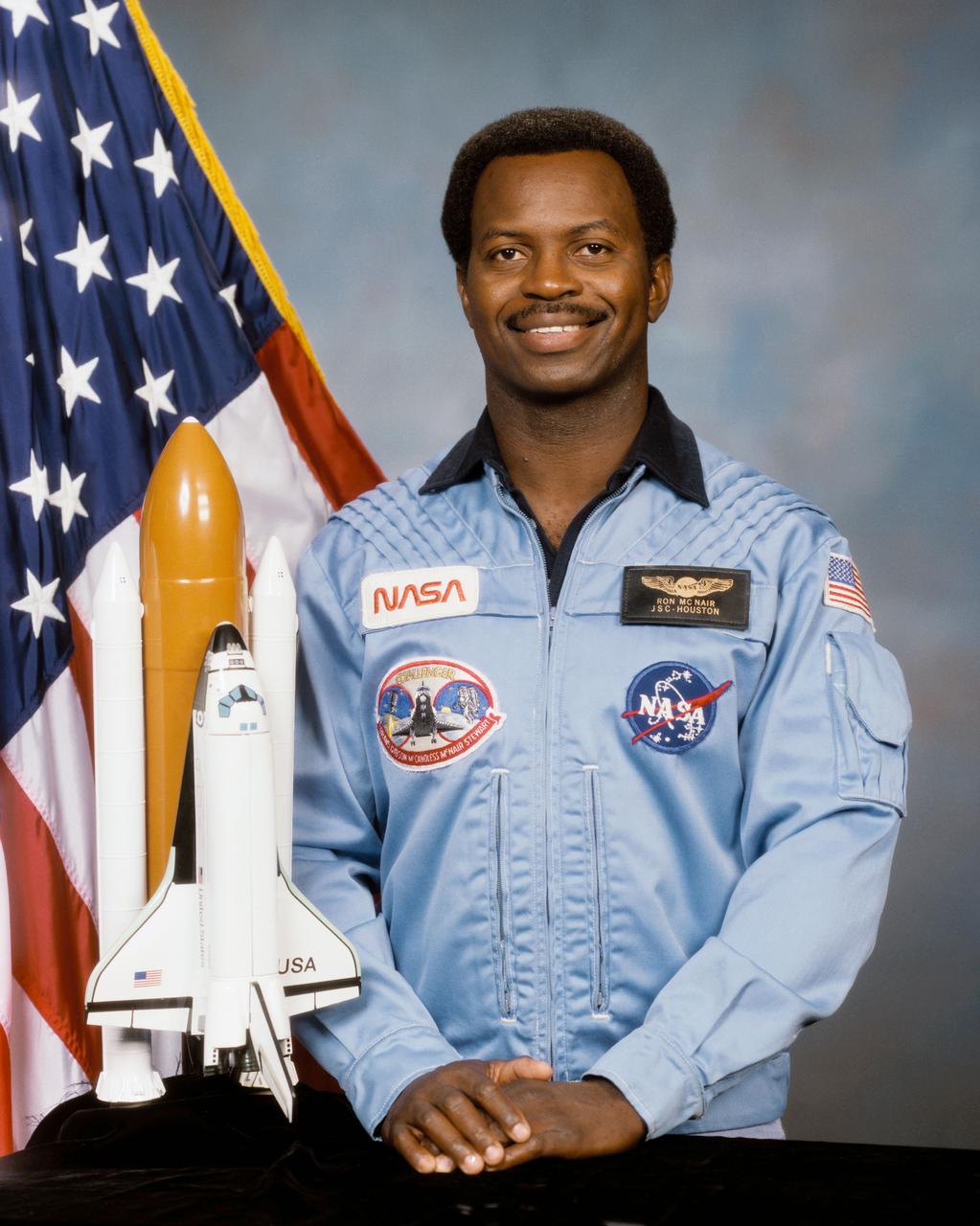
S85-36539 (2 July 1985) --- Official portrait photograph of Astronaut Ronald E. McNair. Dr. McNair is in the blue Shuttle flight suit, standing in front of a table which holds a model of the Space Shuttle. An American flag is visible behind him.Astronaut Ronald E. McNair, mission specialist. Photo credit: NASA (NOTE: Astronaut McNair died in the STS-51L space shuttle Challenger accident, Jan. 28, 1986.)
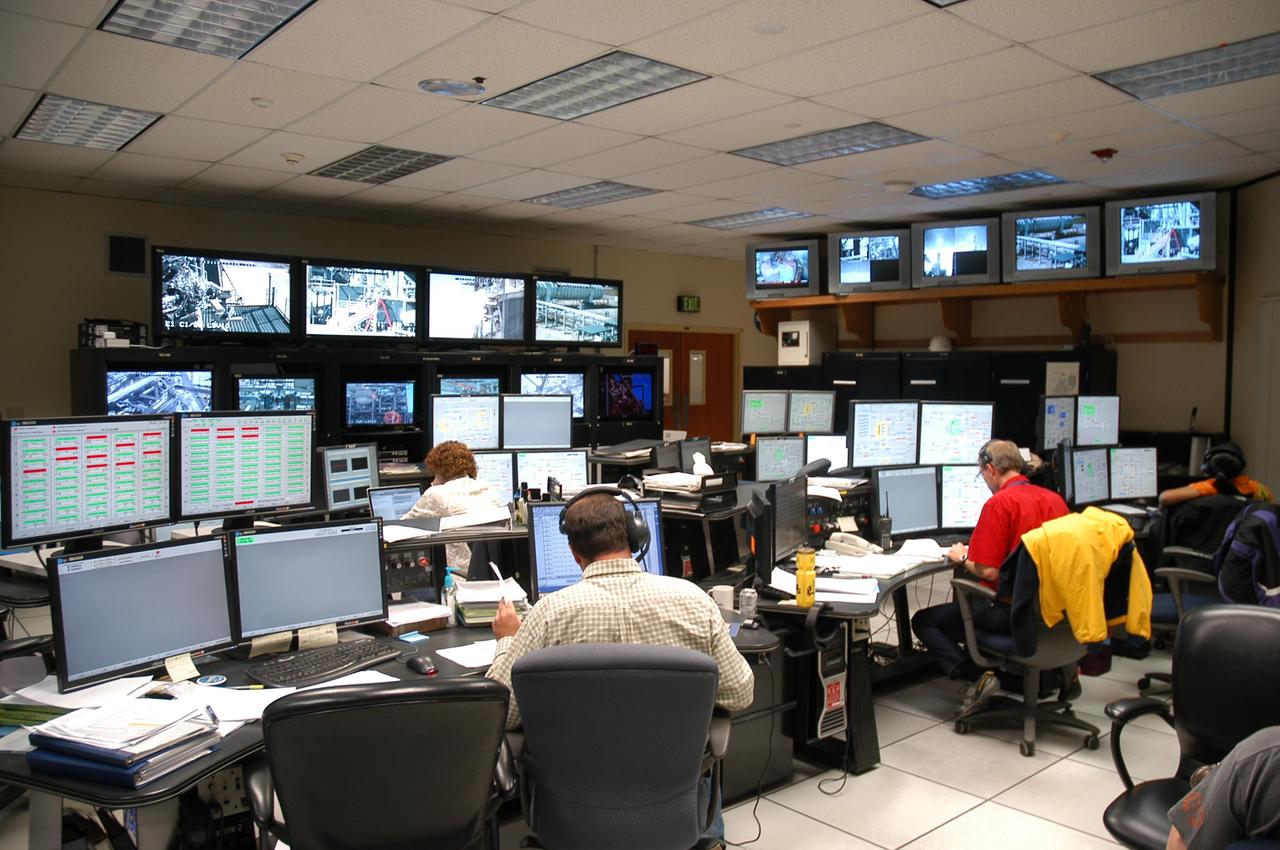
Jason Hopper of NASA (front row), Jody Ladner of Lockheed Martin (back row, left) and Chris Mulkey of NASA prepare to test the Blue Origin BE-3 engine thrust chamber in the E-1 Test Stand Control Center at John C. Stennis Space Center on Nov. 8. The test was one of 27 conducted in Stennis' E Test Complex the week of Nov. 5.
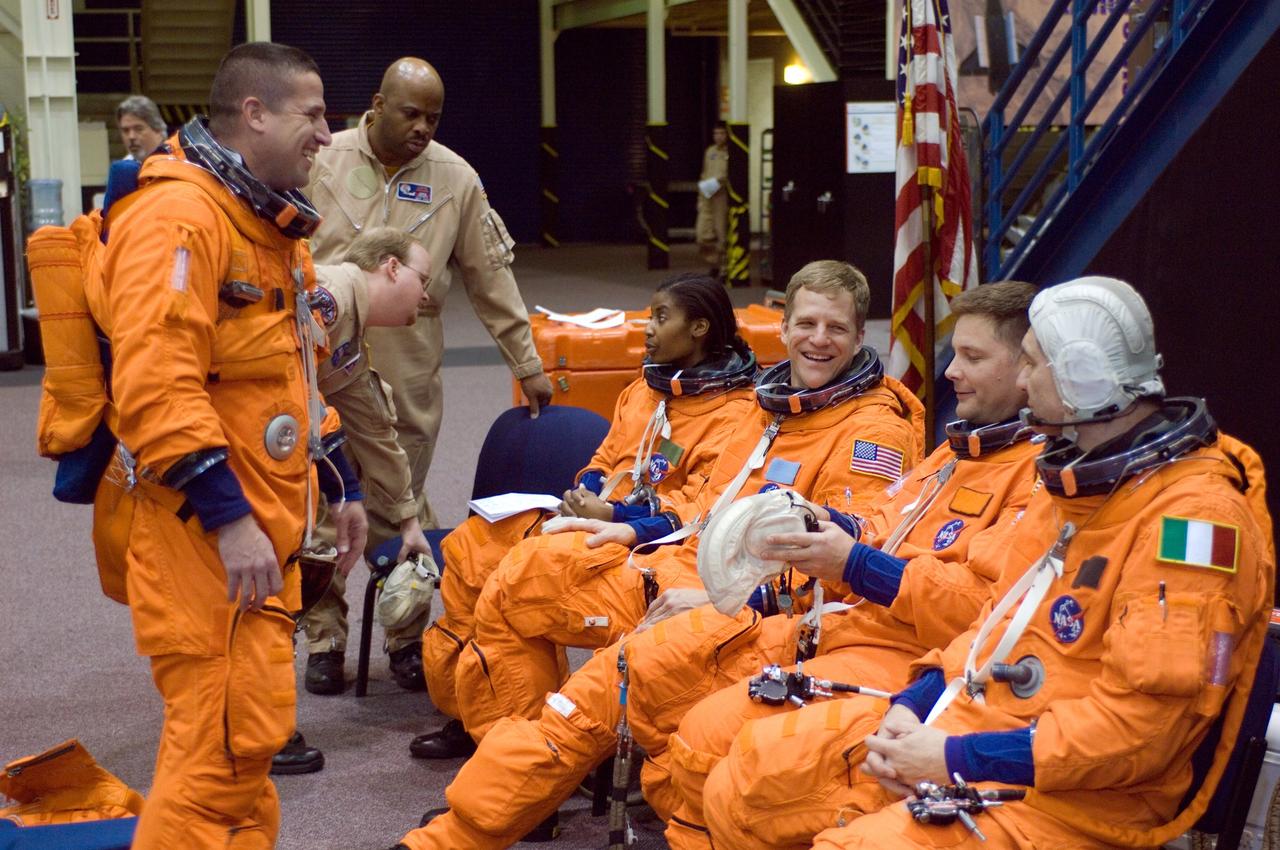
JSC2007-E-08823 (7 Feb. 2007) --- Attired in training versions of their shuttle launch and entry suit, STS-120 crewmembers enjoy a light moment as they await the start of a post insertion/de-orbit training session in one of the full-scale trainers (out of frame) in the Space Vehicle Mockup Facility at Johnson Space Center. Pictured are astronauts George D. Zamka (standing), pilot; Stephanie D. Wilson (seated, left), Scott E. Parazynski, Douglas H. Wheelock and European Space Agency's (ESA) Paolo Nespoli, all mission specialists. Also pictured (background) are United Space Alliance (USA) suit technicians Daniel E. Palmer and Andre Denard.
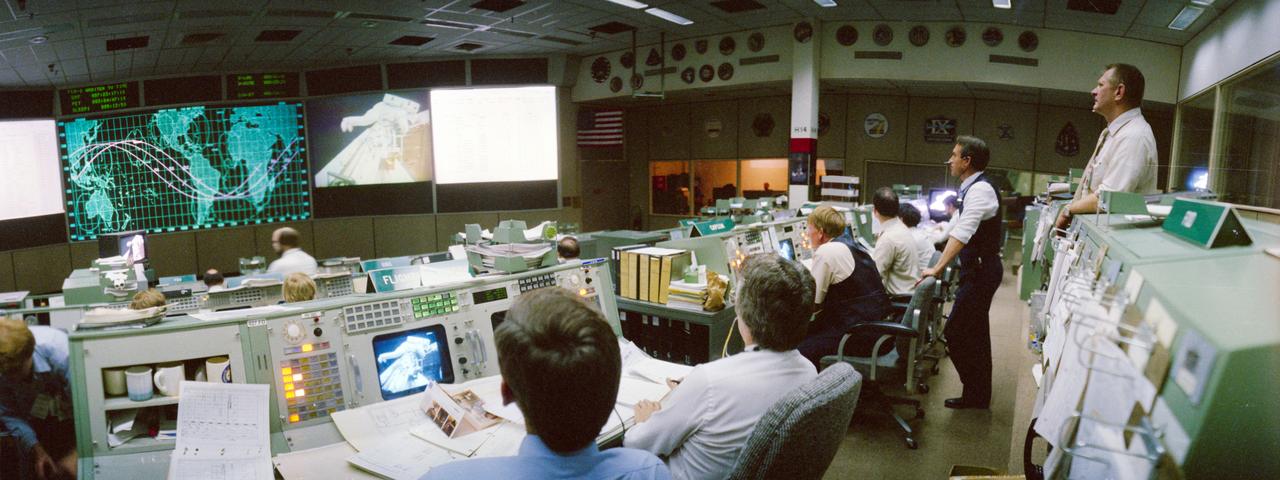
This is a wide-angle view of flight controllers in the MOCR of Mission Control Center (MCC) during the STS-6 Extravehicular Activity (EVA). They are watching the large monitor in the front of the MOCR and small ones at individual consoles as Astronaut Donald H. Peterson translates along the Challenger's port side longerons. Flight Directors Gary E. Coen (left) and Harold M. Draughon are in the foreground. Astronauts John A. McBride and Guy S. Gardner man the Spacecraft Communicator (CAPCOM) Console near center frame. Standing behind the CAPCOM Console is Astronaut William F. Fisher. Eugene F. Kranz, Director of Mission Operations, stands at right near the Flight Operations Directorate Console. JSC, Houston, TX
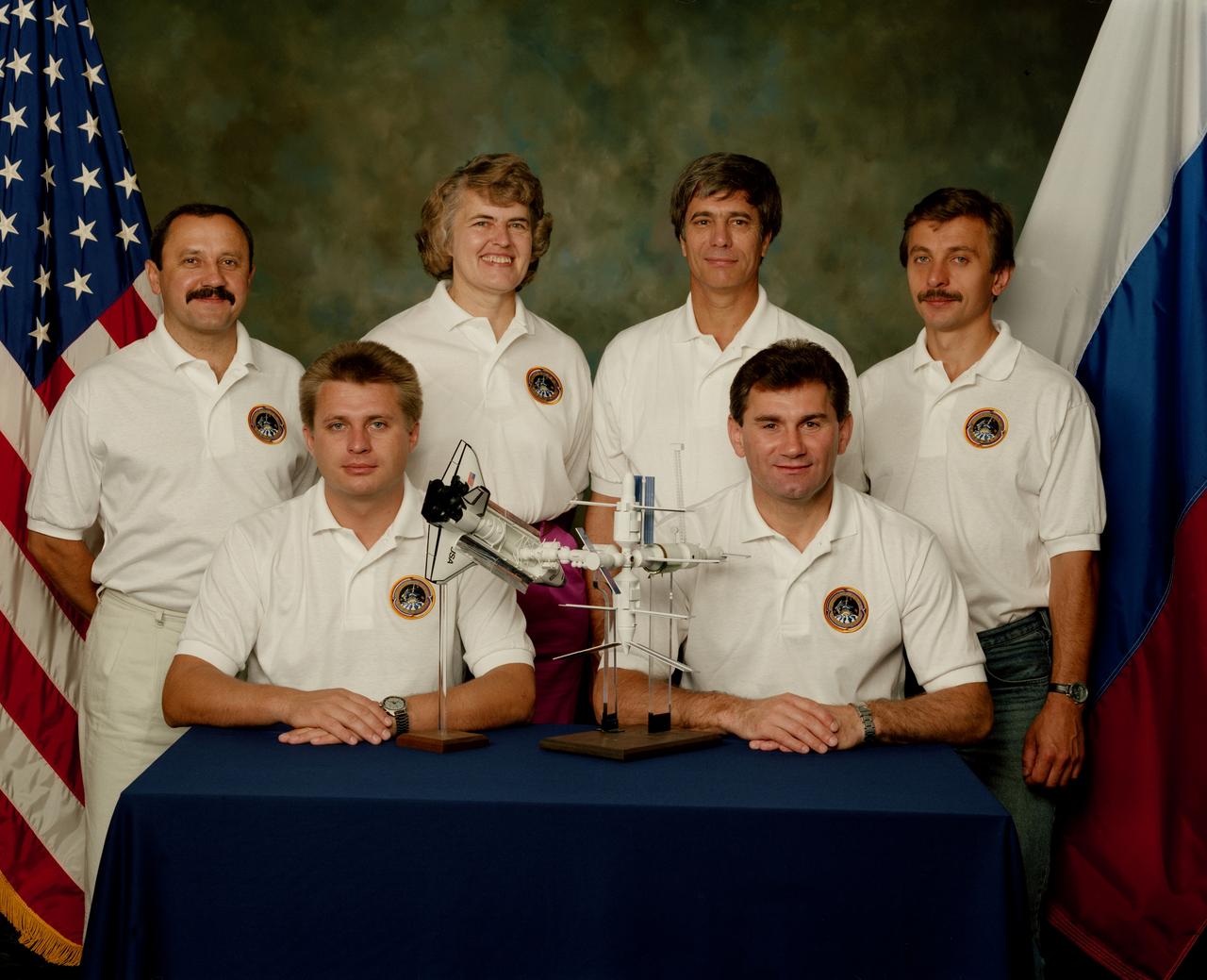
S95-16674 (14 July 1995) --- On the left is the Mir-21 crew consisting of cosmonaut Yuriy V. Usachov (standing), flight engineer; Yuriy I. Onufriyenko (seated), commander; and Shannon W. Lucid, cosmonaut guest researcher. On the right side is the Mir-23 crew consisting of John E. Blaha (standing), cosmonaut guest researcher; Vasili V. Tsibliyev (seated), commander; and Aleksandr I. Lazutkin, flight engineer. NASA astronauts Lucid and Blaha each will go into space to board Russia's Mir Space Station for lengthy research on their respective missions. Lucid will board the Mir during the STS-76 mission. Blaha will replace Lucid onboard the Mir during the STS-79 mission.
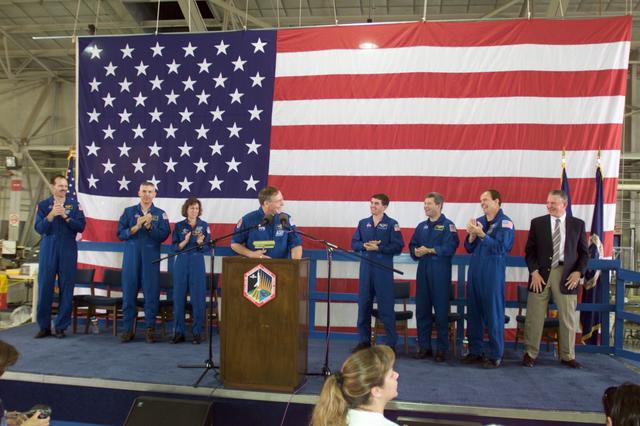
JSC2002-E-14078 (20 April 2002) --- Astronaut Jerry L. Ross, STS-110 mission specialist, speaks from the lectern in Hangar 990 at Ellington Field during the crew return ceremonies. From the left (standing behind Ross) are astronauts Steven L. Smith, Lee M. E. Morin, Ellen Ochoa, Rex J. Walheim, all mission specialists; Stephen N. Frick, pilot; Michael J. Bloomfield, mission commander; and Johnson Space Center’s (JSC) Director Jefferson D. Howell, Jr.
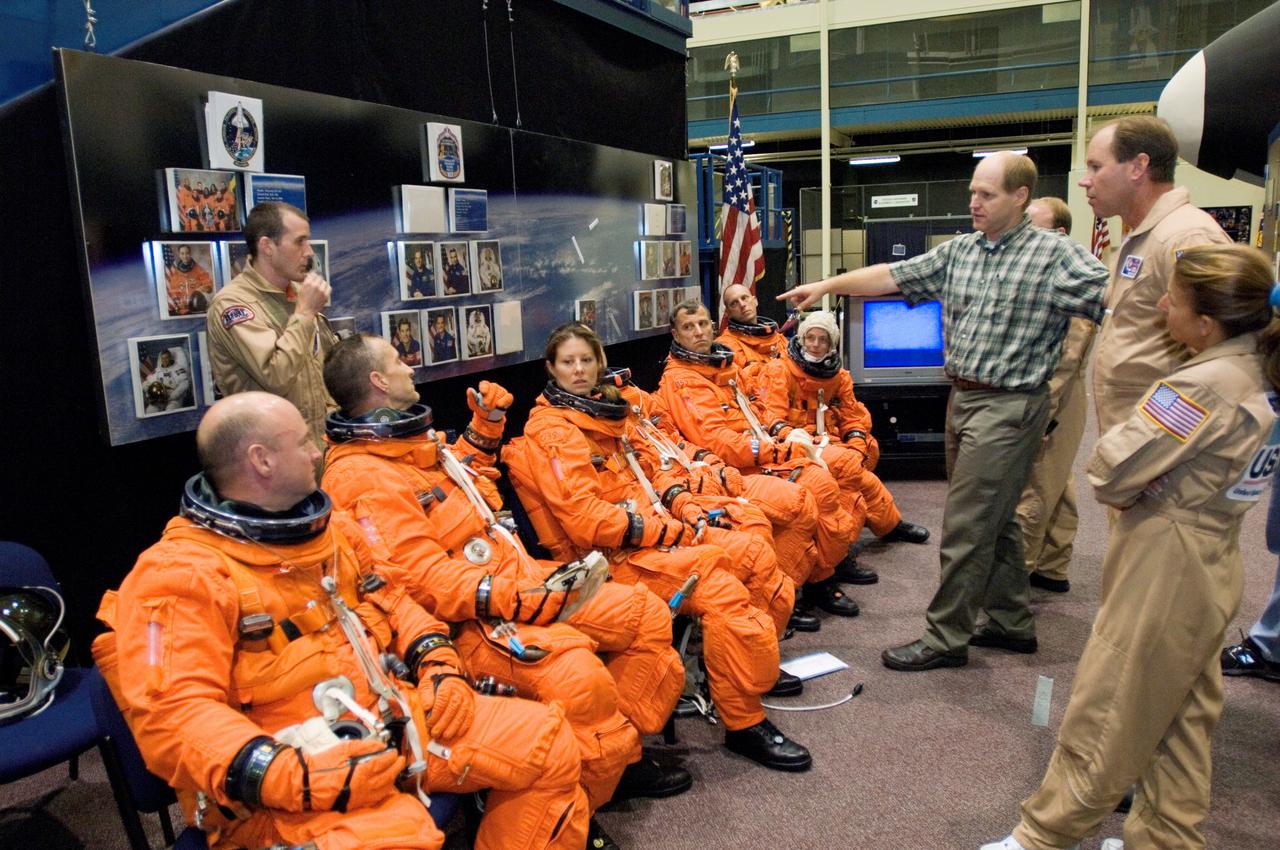
JSC2006-E-43734 (4 Oct. 2006) --- Crew trainer Bob Behrendsen (standing, right background) briefs astronauts Scott J. Kelly (seated left), STS-118 commander; Charles O. Hobaugh, pilot; Tracy E. Caldwell and Richard A. (Rick) Mastracchio, mission specialists; Dafydd R. (Dave) Williams, mission specialist representing the Canadian Space Agency; Barbara R. Morgan, mission specialist; and Clayton C. Anderson, Expedition 15 NASA space station science officer and flight engineer; during a training session in the Space Vehicle Mockup Facility at the Johnson Space Center. The crewmembers are attired in training versions of their shuttle launch and entry suits.
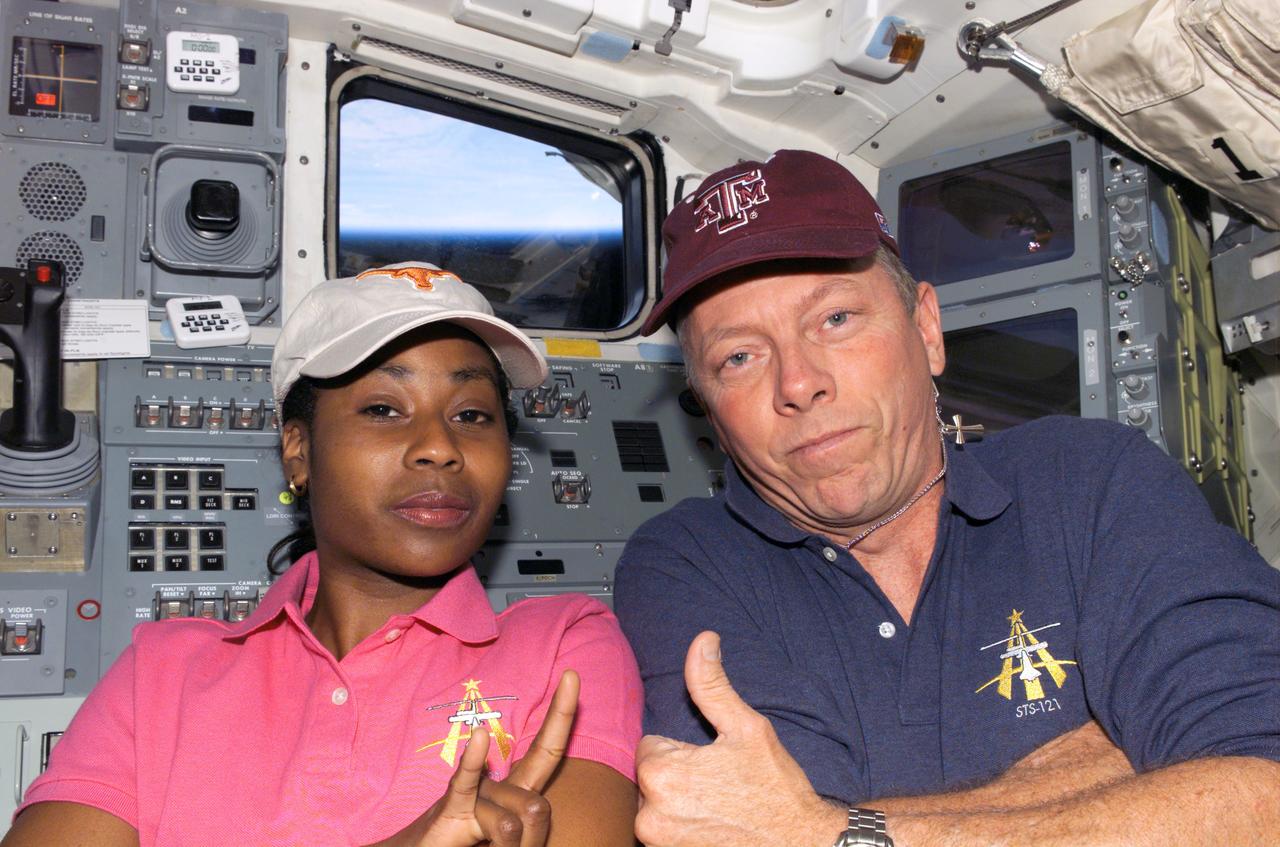
S121-E-08024 (16 July 2006) --- Astronauts Stephanie D. Wilson and Michael E. Fossum, STS-121 mission specialists, pose for a photo on the aft flight deck of the Space Shuttle Discovery. Fossum, a graduate of Texas A&M University, flashes the traditional "Gig 'Em, Aggies!" sign and wears an A&M cap, while UT alumnus Wilson gives the "Hook 'Em, Horns!" sign and wears the Longhorn cap. The two joked about the long-standing rivalry of their respective alma maters and have expressed looking forward to the Nov. 24 matchup between the two Big Twelve powers.
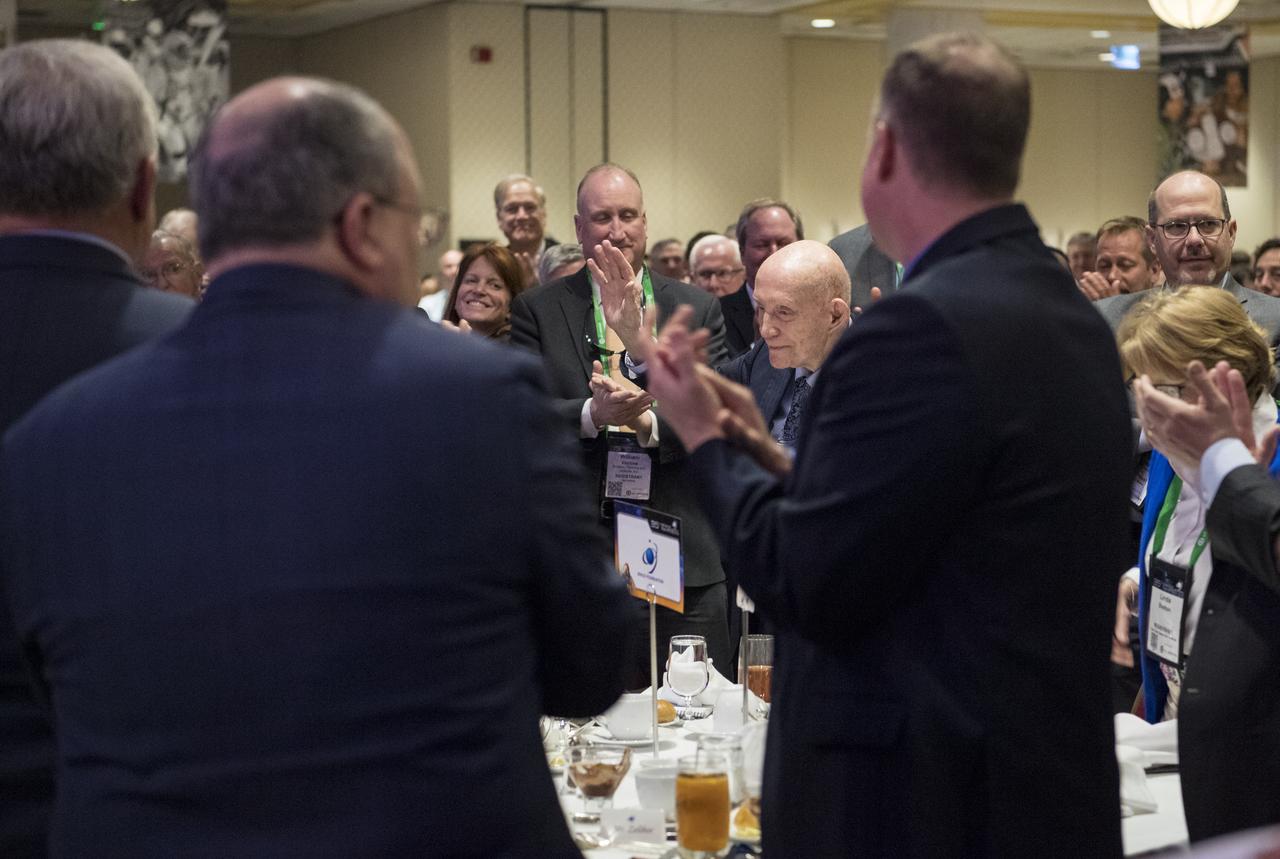
The audience stands and applauds for General Thomas Patten Stafford, former NASA astronaut, Air Force officer and test pilot after he received the General James E. Hill Lifetime Achievement Award, at the Space Symposium, Tuesday, April 9, 2019, at Broadmoor Hall in Colorado Springs, Colorado. Photo credit: (NASA/Aubrey Gemignani)
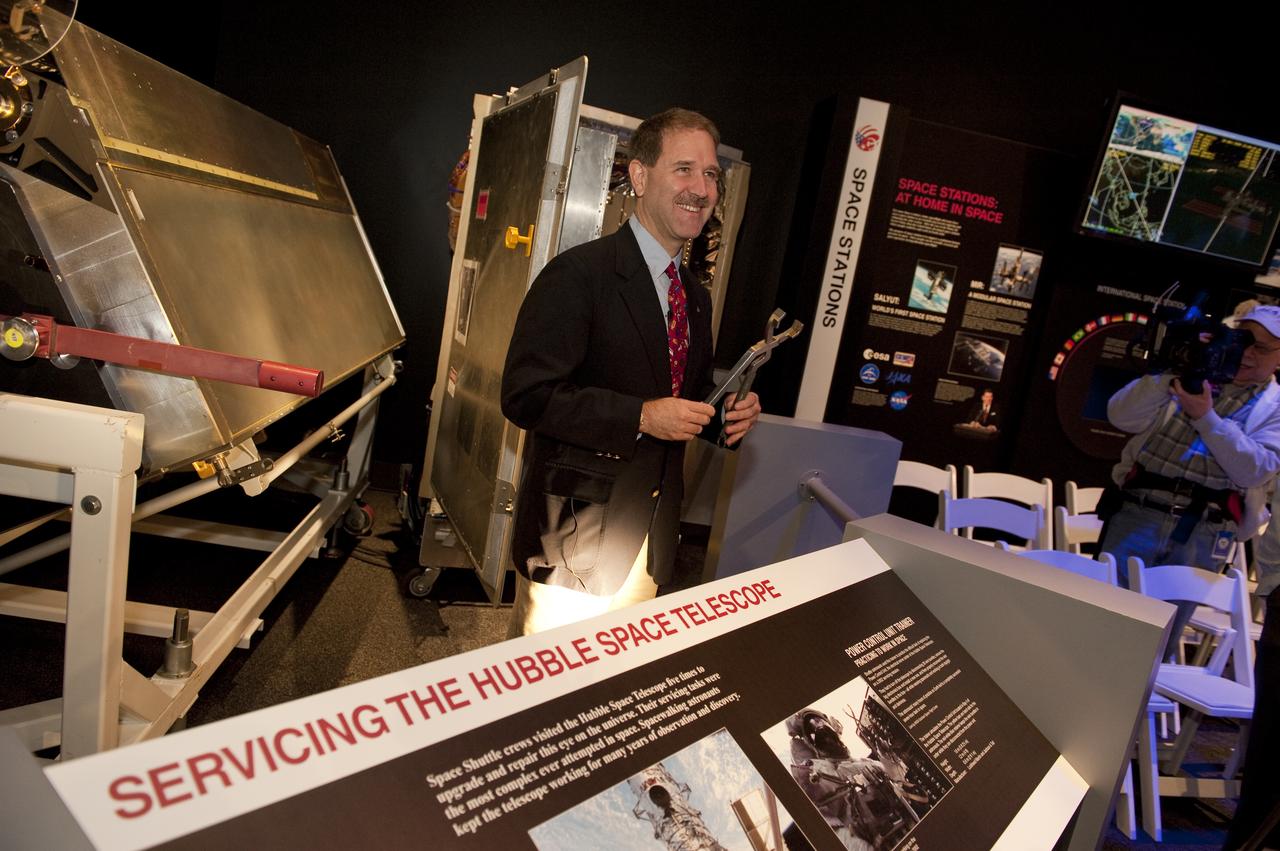
STS-125 astronaut John Grunsfeld stands behind a display of Hubble memorabilia during a press briefing at the new "Moving Beyond Earth," a new exhibition at the National Air and Space Museum in Washingon, Wednesday, Nov. 18, 2009. Moving Beyond Earth is an immersive exhibition that places visitors “in orbit” in the shuttle and space-station era to explore recent human spaceflight and future possibilities. Photo Credit: (NASA/Paul E. Alers)
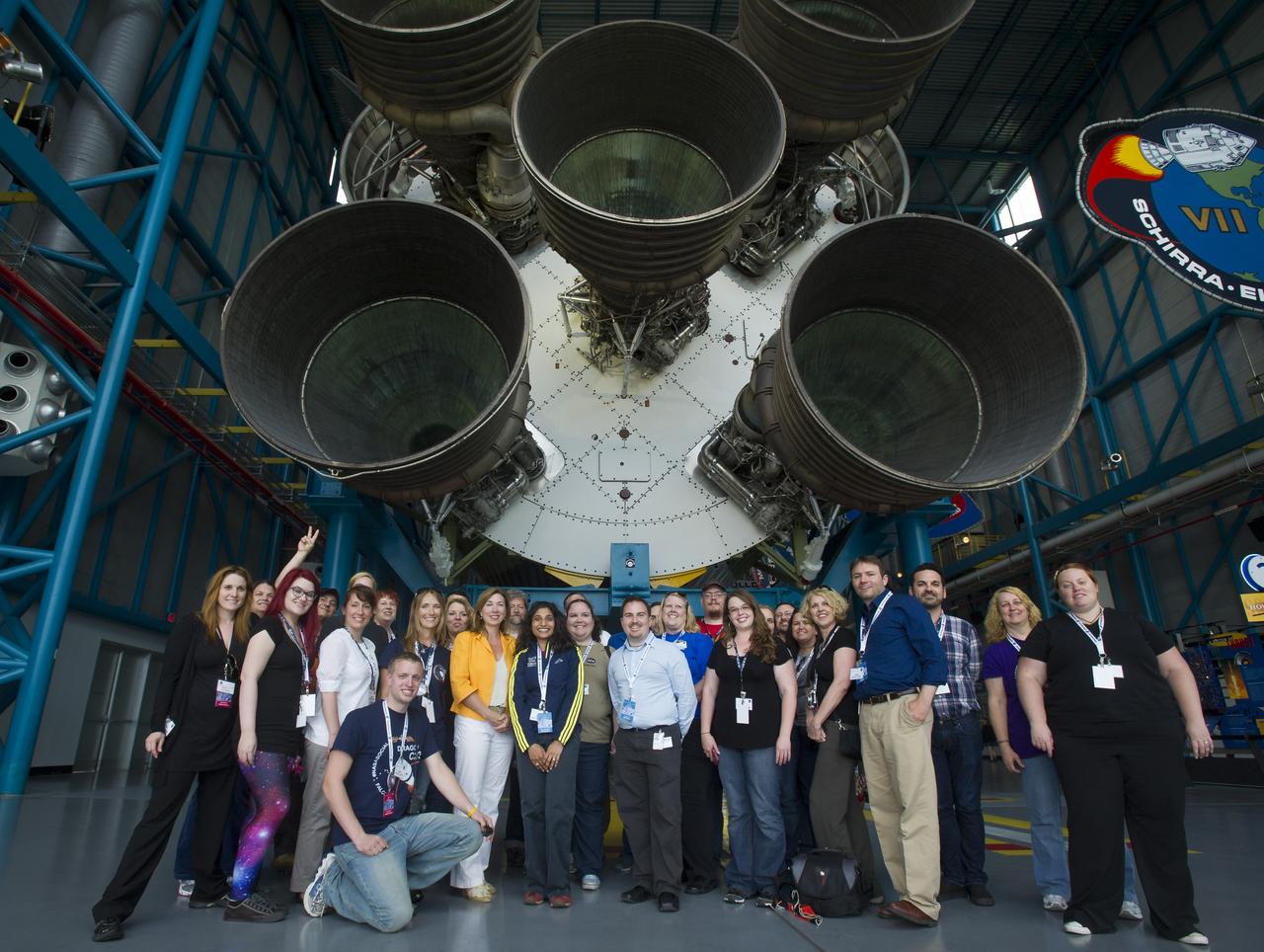
NASA Deputy Administrator Lori Garver, in yellow jacket, stands with participants from the NASA Social underneath the engines of the Saturn V rocket at the Apollo Saturn V visitor center, Thursday, May 18, 2012, at Kennedy Space Center in Cape Canaveral, Fla. About 50 NASA Social followers attended an event as part of activities surrounding the launch of Space Exploration Technologies, or SpaceX, demonstration mission of the company's Falcon 9 rocket to the International Space Station. Photo Credit: (NASA/Paul E. Alers)

NASA Administrator Charles Bolden, right, and Doug Comstock, left, stand with David Masten, of Masten Space Systems, during a ceremony for winners and participants of NASA’s 2009 Centennial Challenges, Friday, Feb. 26, 2010, at NASA Headquarters in Washington. The year-long competition addresses a range of technical challenges that support NASA's missions in aeronautics and space with a goal of encouraging novel solutions from non-traditional sources. Photo Credit: (NASA/Paul E. Alers)
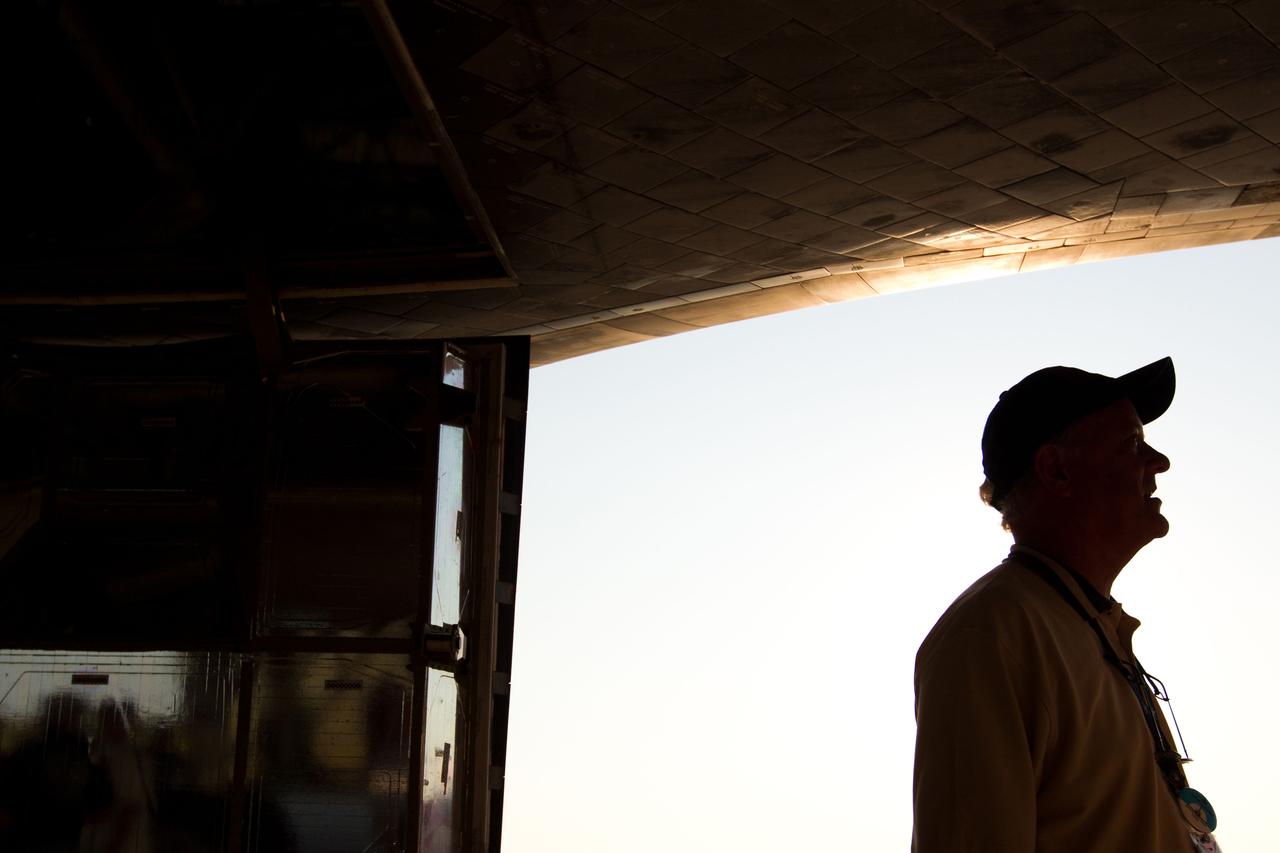
JSC2011-E-068012 (21 July 2011) --- Milt Heflin, associate director (technical) of the Johnson Space Center, stands under the wing of the space shuttle Atlantis after it landed on July 21, 2011 at the Kennedy Space Center in Florida. The landing completed STS-135, the final mission of the NASA Space Shuttle Program. Photo credit: NASA Photo/Houston Chronicle, Smiley N. Pool
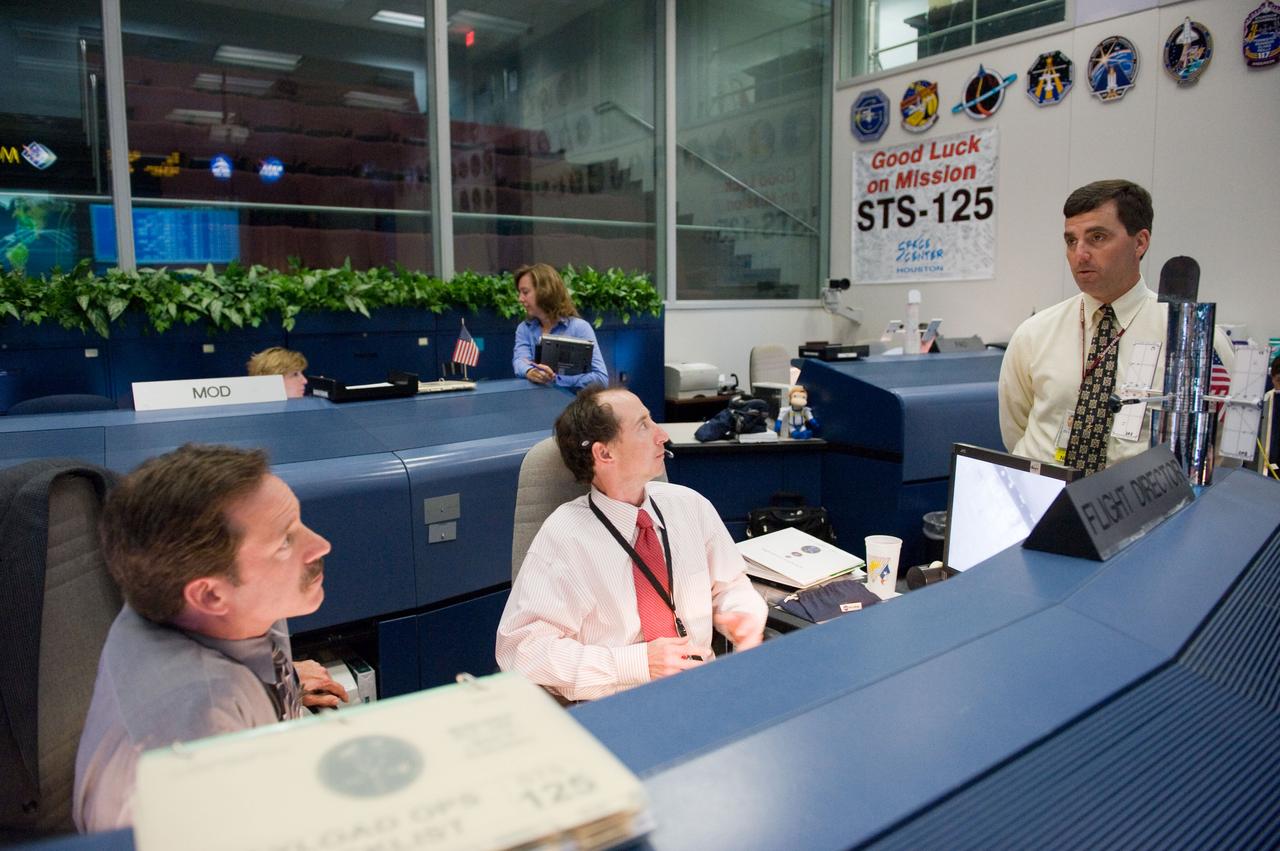
JSC2009-E-119383 (12 May 2009) --- Flight directors Rick LaBrode (left) and Chris Edelen; along with Paul Hill (standing at right), Space Shuttle Mission Operations manager, are pictured in the space shuttle flight control room in the Mission Control Center at NASA's Johnson Space Center during STS-125 flight day two activities.
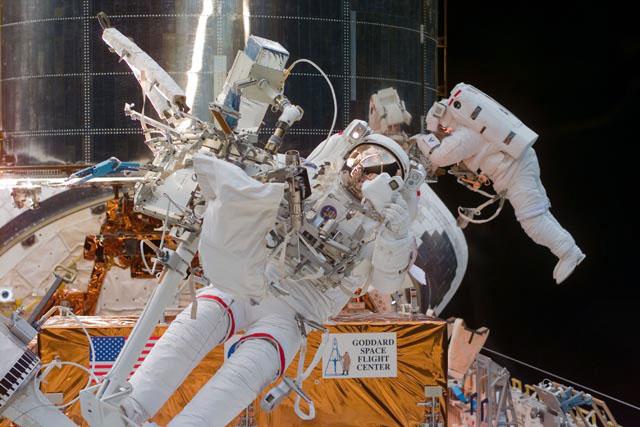
S103-E-5347 (24 December 1999) --- Astronaut Steven L. Smith, payload commander, prepares to use a 35mm camera during the final space walk of the STS-103 mission. Smith is standing on a foot restraint connected to the end of Discovery's remote manipulator system (RMS) robot arm. Astronaut John M. Grunsfeld, mission specialist, translates along a handrail system on the Hubble Space Telescope (HST) in the background.
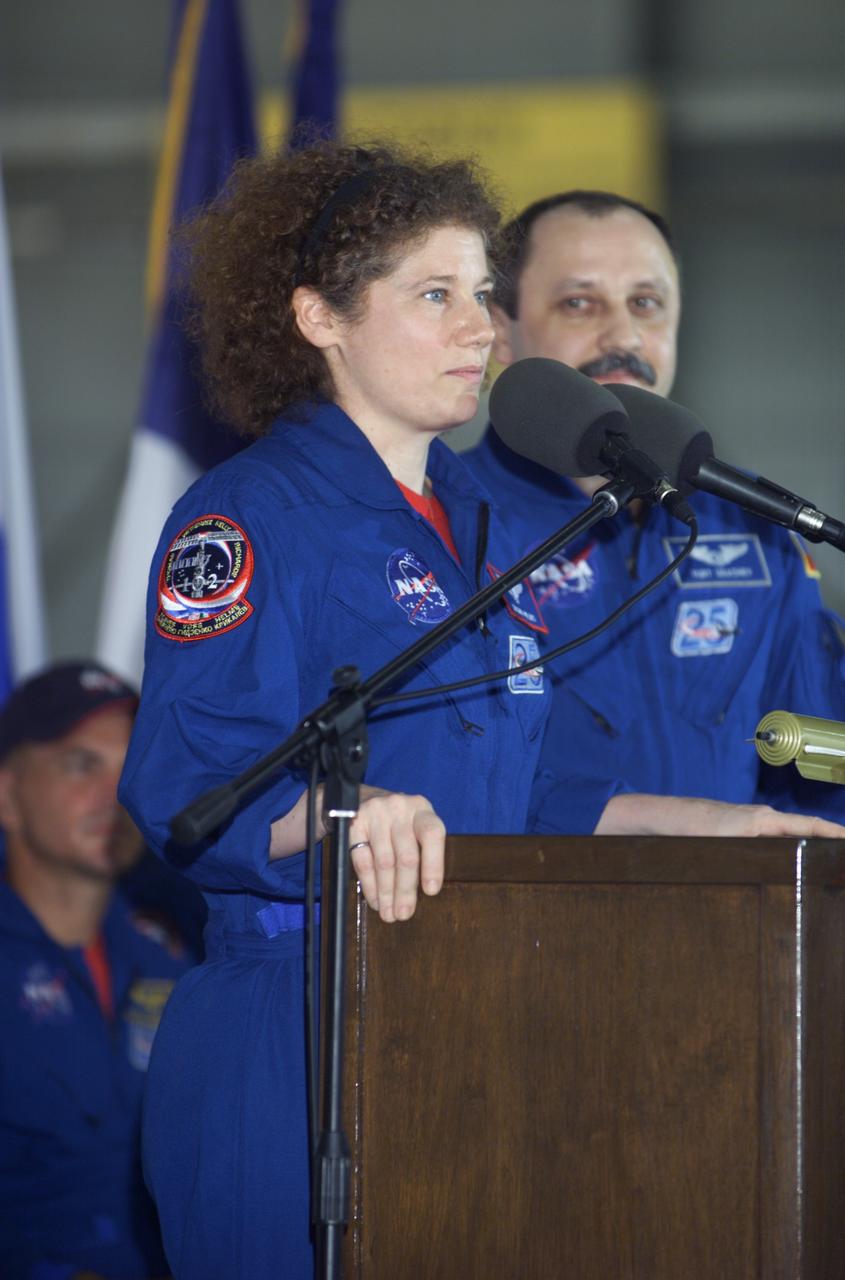
JSC2001-E-25813 (23 August 2001) --- Susan J. Helms, Expedition Two flight engineer, speaks from the podium in Hangar 990 at Ellington Field during the STS-105 and Expedition Two crew return ceremonies. Yury V. Usachev of Rosaviakosmos, Expedition Two mission commander, stands to Helms' left. Helms, Usachev and fellow Expedition Two crewmember James S. Voss spent five months aboard the International Space Station (ISS).
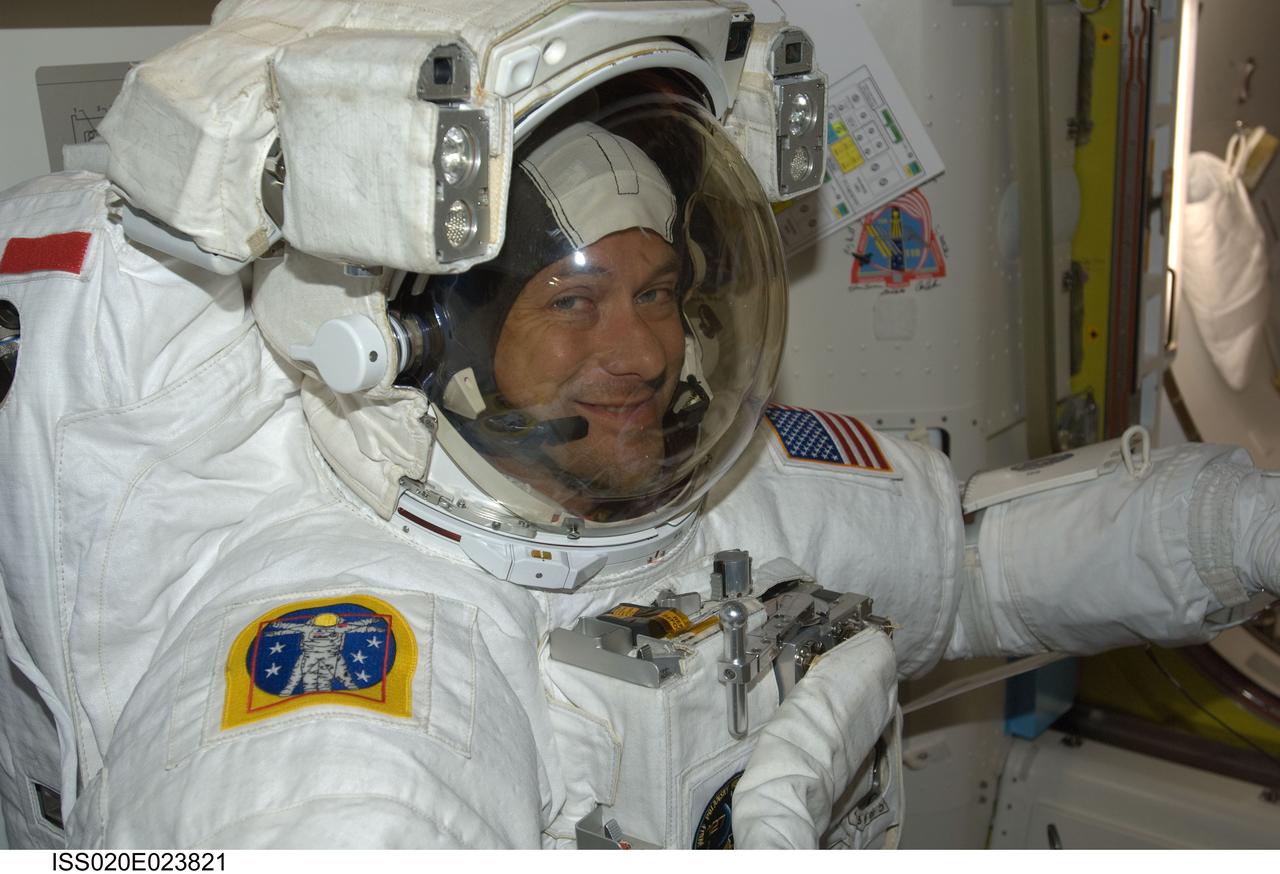
ISS020-E-023821 (24 July 2009) ---Astronaut Tom Marshburn stands suited and almost ready to participate in the July 24 flight day 10 spacewalk. He and astronaut Christopher Cassidy (out of frame) are also scheduled to wrap up the EVA work with a fifth overall session on July 27. The two mission specialists are part of a 13-member aggregation of astronauts and cosmonauts currently onboard the orbital outpost while its crew of six plays host to Endeavour's crew of seven.
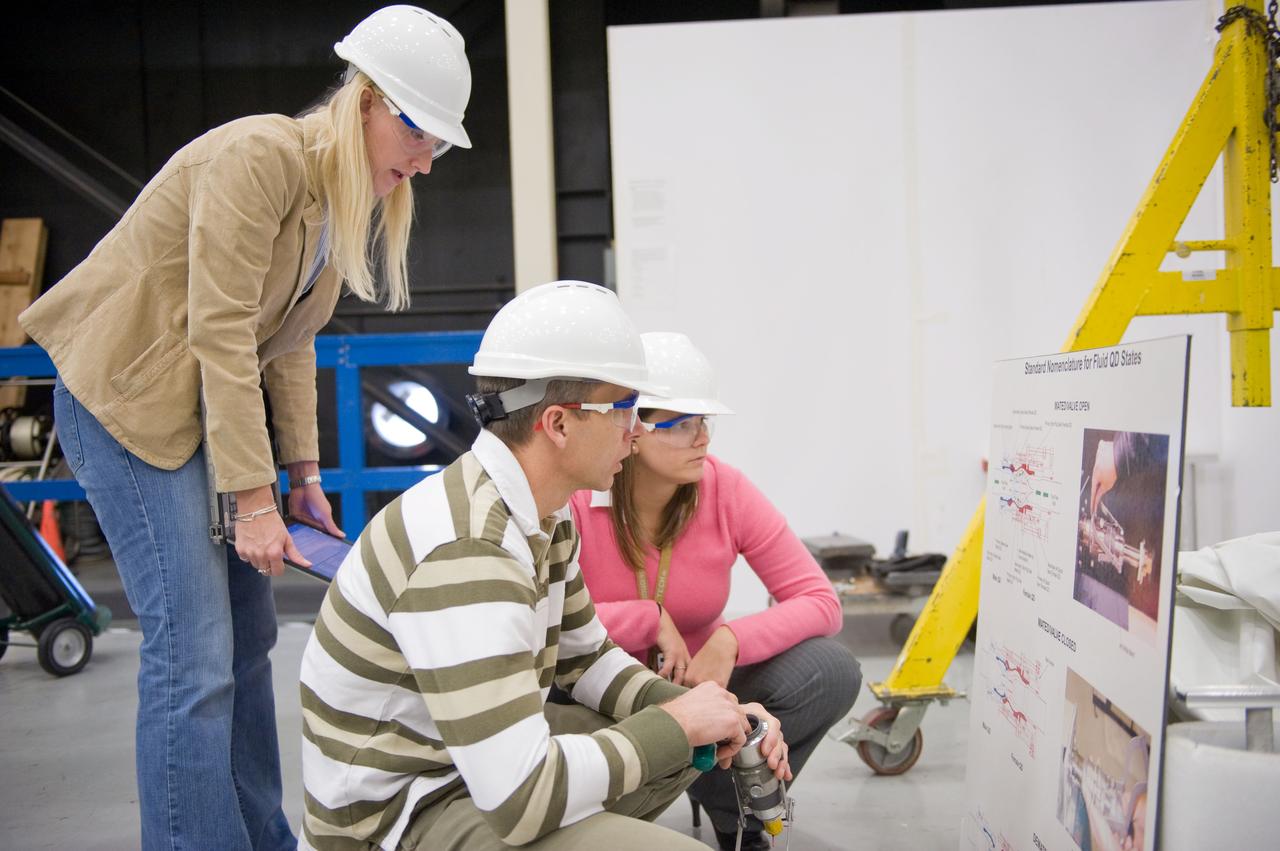
JSC2010-E-193913 (1 Dec. 2010) --- NASA astronaut Andrew Feustel, STS-134 mission specialist, participates in an extravehicular activity (EVA) training session in the Partial Gravity Simulator (POGO) test area in the Space Vehicle Mock-up Facility at NASA?s Johnson Space Center. Crew instructors Allison Bolinger (standing) and Vickie Otto assisted Feustel. Photo credit: NASA or National Aeronautics and Space Administration

S69-40307 (30 July 1969) --- The crewmen of the historic Apollo 11 lunar landing mission stand in the serving line as they prepare to dine in the Crew Reception Area of the Lunar Receiving Laboratory, Building 37, Manned Spacecraft Center. Left to right, are astronauts Edwin E. Aldrin Jr., Michael Collins, and Neil A. Armstrong. They are continuing their postflight debriefings. The three astronauts will be released from quarantine on Aug. 11, 1969.
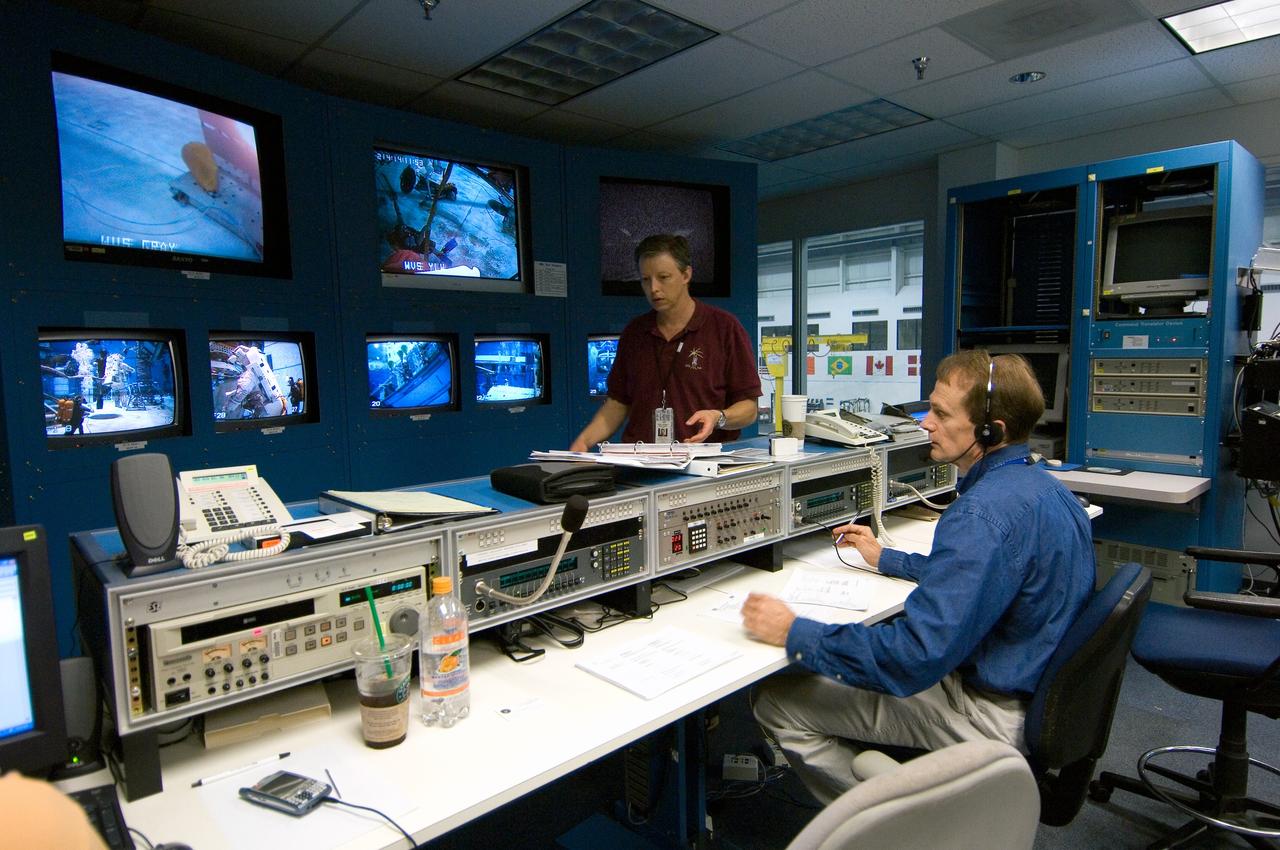
JSC2006-E-31904 (2 Aug. 2006) --- Astronaut Steven G. MacLean (seated), STS-115 mission specialist representing the Canadian Space Agency, observes training activities of his crewmates from the simulation control area in the Neutral Buoyancy Laboratory (NBL) at the Sonny Carter Training Facility (SCTF) near Johnson Space Center. EVA instructor John V. Ray stands nearby to offer assistance.
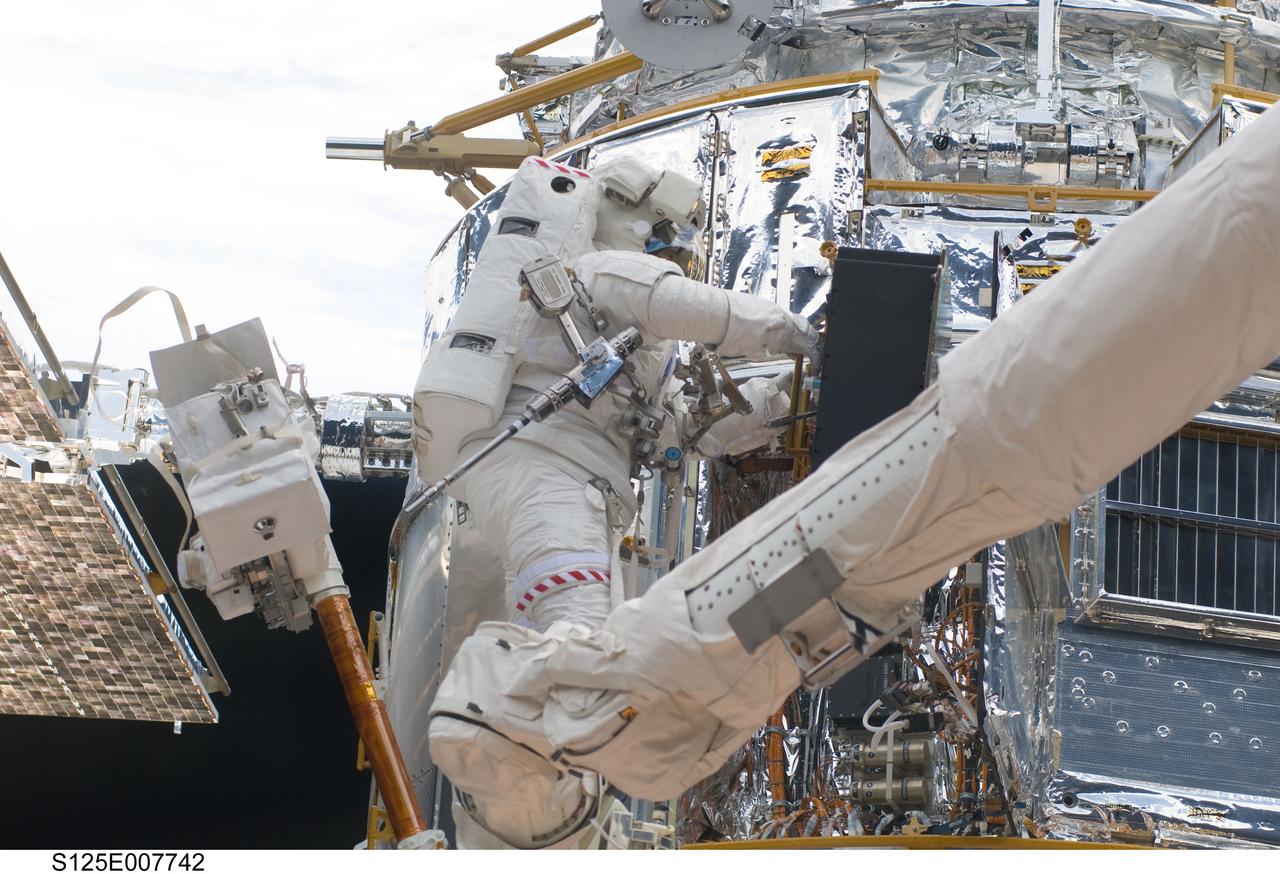
S125-E-007742 (15 May 2009) --- While standing on the end of Atlantis' remote manipulator system arm, astronaut Michael Good, STS-125 mission specialist, works on the Hubble Space Telescope. Astronauts Good and Mike Massimino (out of frame), mission specialist, continue work on the Hubble Space Telescope, locked down in the orbiter's cargo bay. After their May 15 tasks were completed, three more sessions of extravehicular activity, on back to back to back days, awaited the seven-person crew.
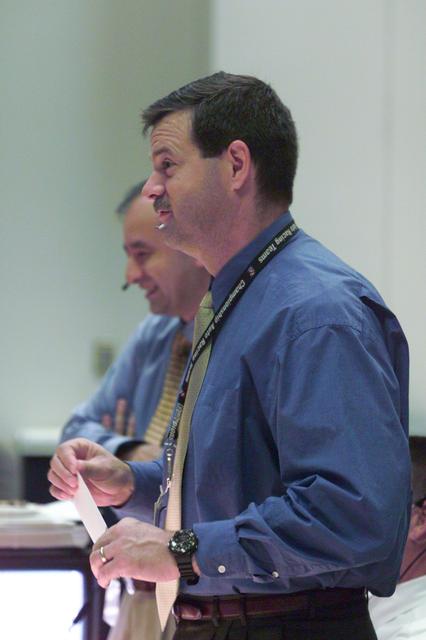
JSC2001-E-12122 (19 April 2001) --- Astronaut Scott D. Altman (foreground), STS-100 ascent spacecraft communicator (CAPCOM), stays on top of pre-launch activities at his console in the shuttle flight control room of Houston's Mission Control Center (MCC). Astronaut Mark L. Polansky stands beside Altman. Six astronauts and a cosmonaut, meanwhile, were strapped into their seats in the crew cabin of the Space Shuttle Endeavour several hundred miles away in Florida.
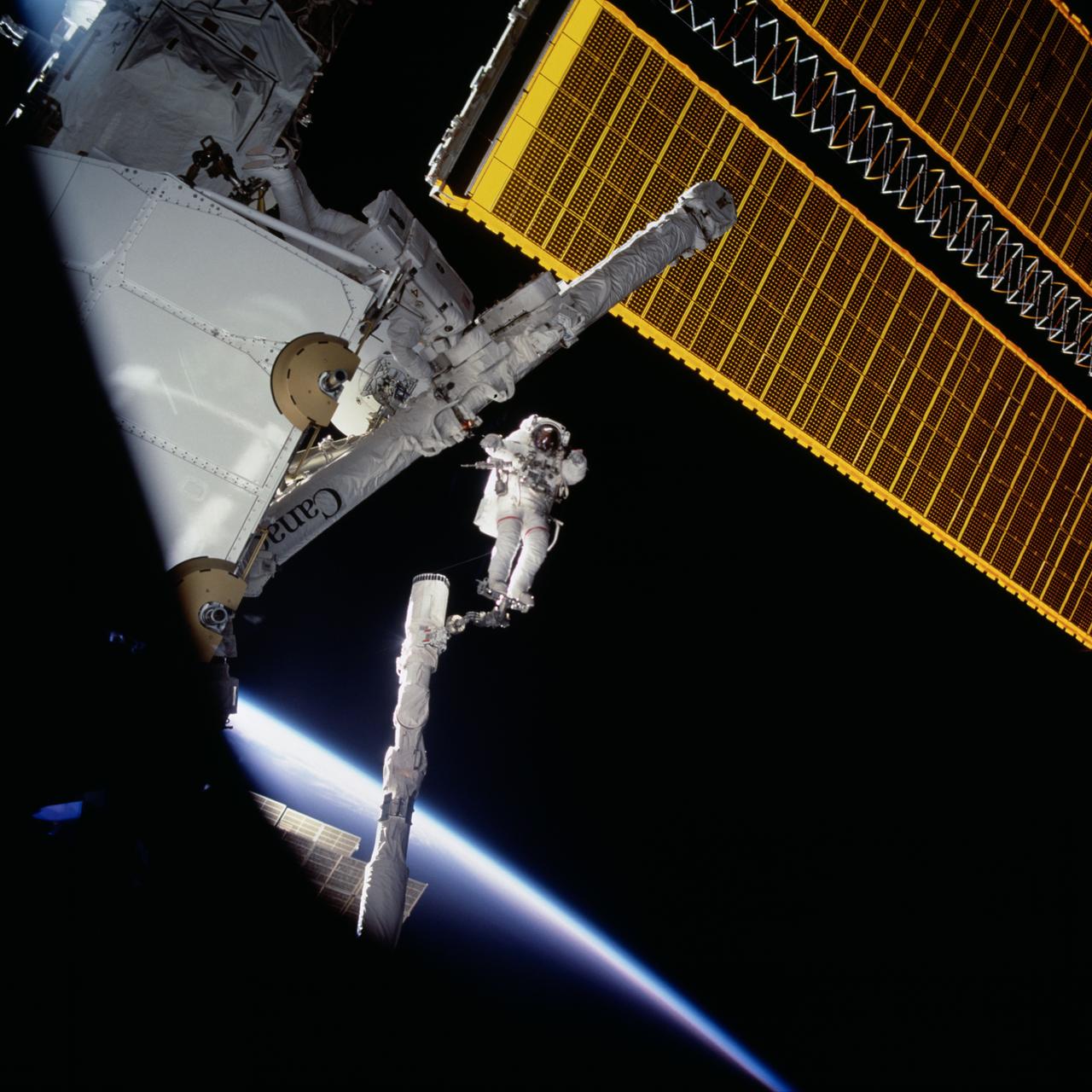
STS100-714-027 (19 April-1 May 2001) --- Astronaut Chris A. Hadfield, mission specialist representing the Canadian Space Agency (CSA), stands on the portable foot restraint (PFR) connected to the Endeavour's remote manipulator system (RMS) robotic arm, during one of the two days of extravehicular activity (EVA) on the STS-100 mission. Astronaut Scott E. Parazynski, mission specialist, is seen at left near the Spacelab pallet.
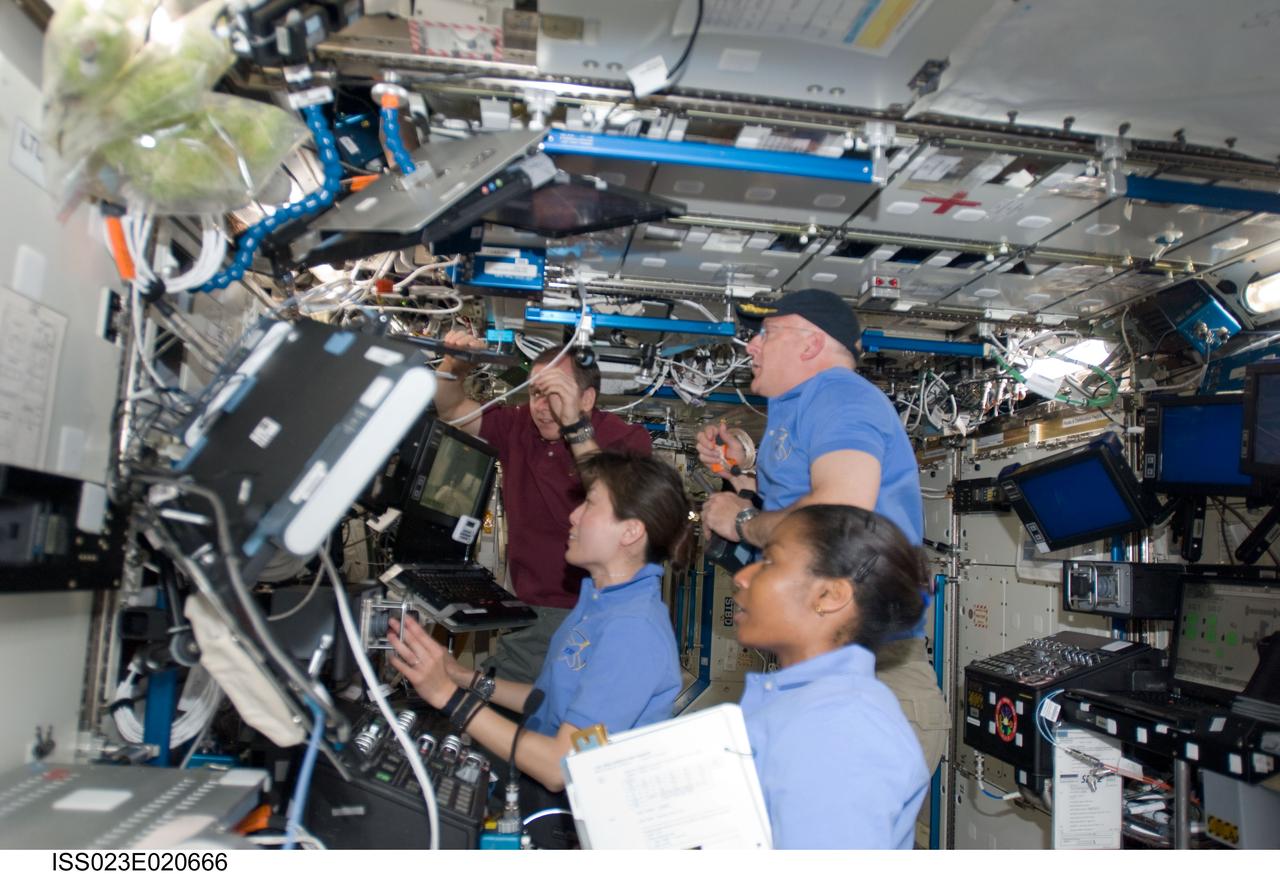
ISS023-E-020666 (7 April 2010) --- Japan Aerospace Exploration astronaut Naoko Yamazaki (near frame center) joins NASA astronauts Stephanie Wilson (foreground), Alan Poindexter (blue jersey, standing) and T.J. Creamer in the "busy" Destiny laboratory aboard the International Space Station. Creamer is Expedition 23 flight engineer, Poindexter is STS-131 commander and Yamazaki and Wilson are mission specialists for STS-131.
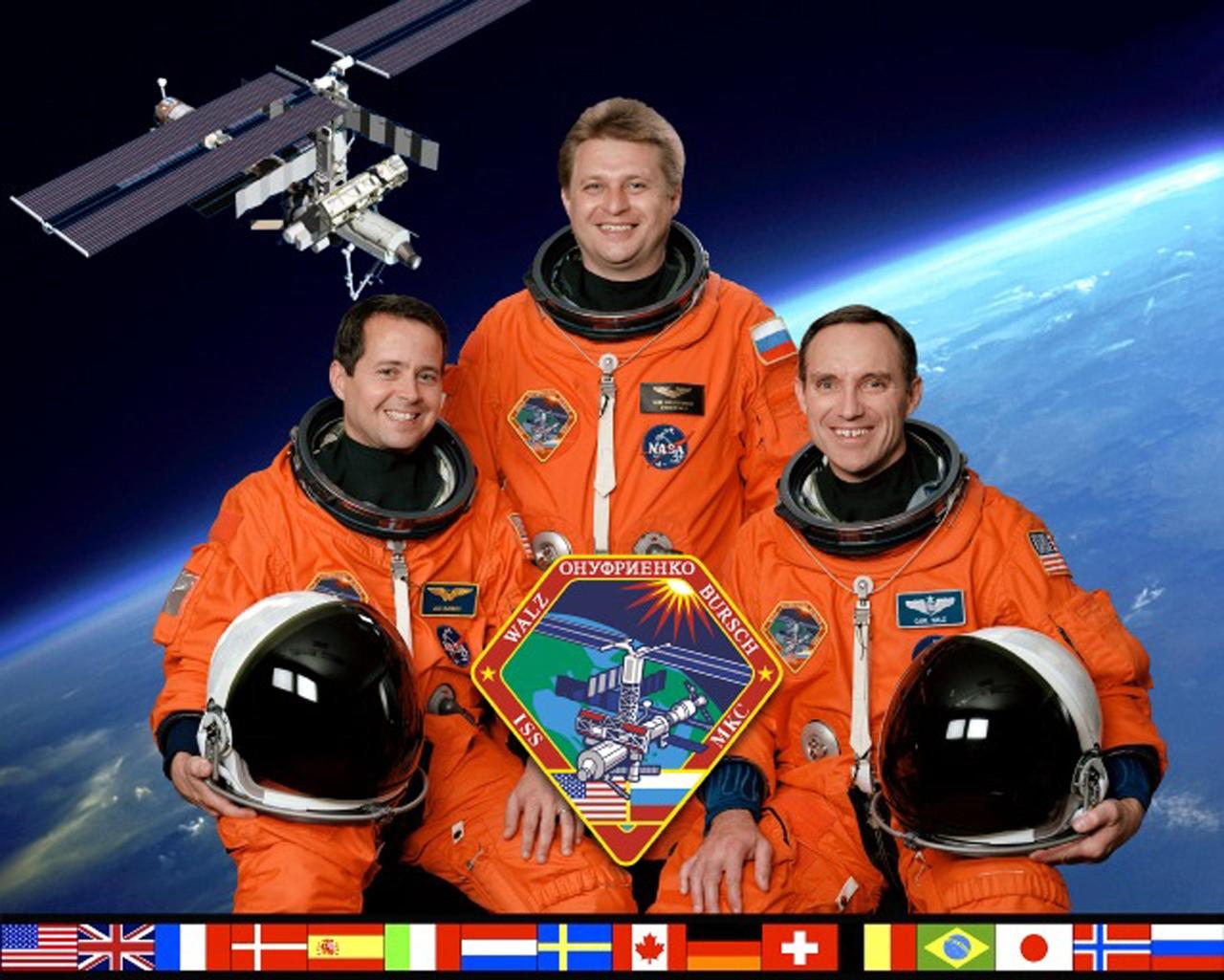
JOHNSON SPACE CENTER, HOUSTON, TEXAS -- EXPEDITION FOUR CREW PORTRAIT -- (ISS04-5-002) -- Expedition Four crew members take a break from training for their scheduled upcoming stay aboard the International Space Station (ISS) to pose for the traditional pre-flight crew portrait. Cosmonaut Yuri I. Onufrienko (standing at center), mission commander, is flanked by astronauts Daniel W. Bursch (left) and Carl E. Walz, both flight engineers. The national flags of the International Partners are at the bottom of the portrait
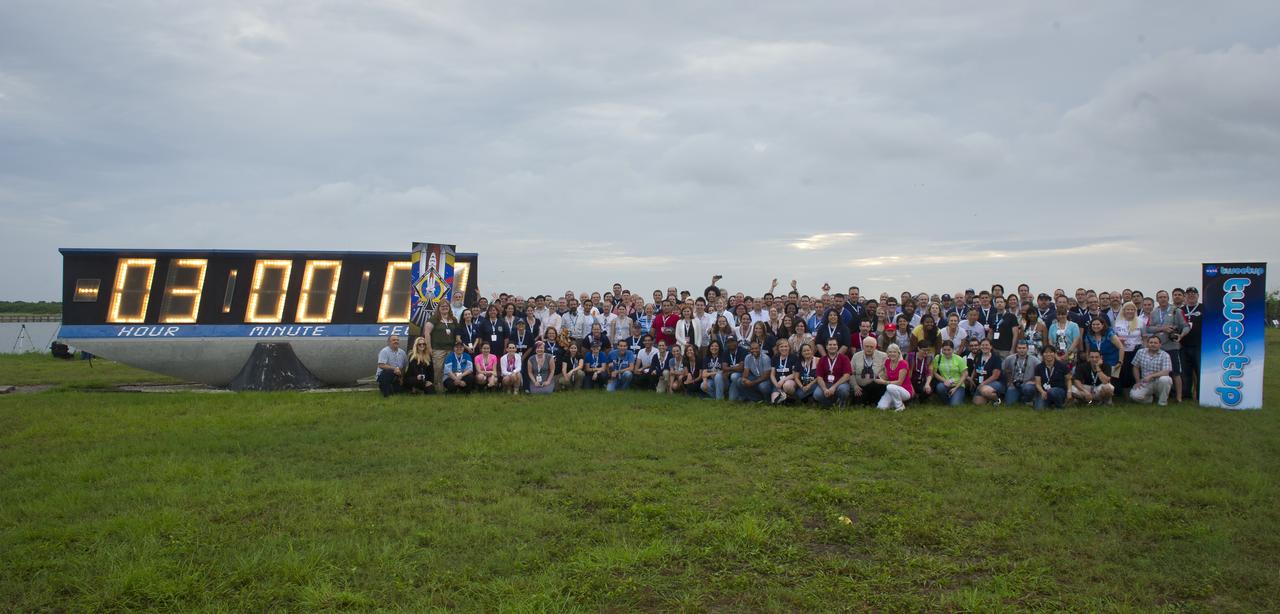
NASA Tweetup participants stand at the launch clock, Friday, July 8, 2011, prior to the launch of the space shuttle Atlantis (STS-135) at Kennedy Space Center in Cape Canaveral, Fla. Space shuttle Atlantis is set to launch on the final flight of the shuttle program on a 12-day mission to the International Space Station. The STS-135 crew will carry the Raffaello multipurpose logistics module containing supplies and spare parts for the space station. Photo Credit: (NASA/Paul E. Alers)
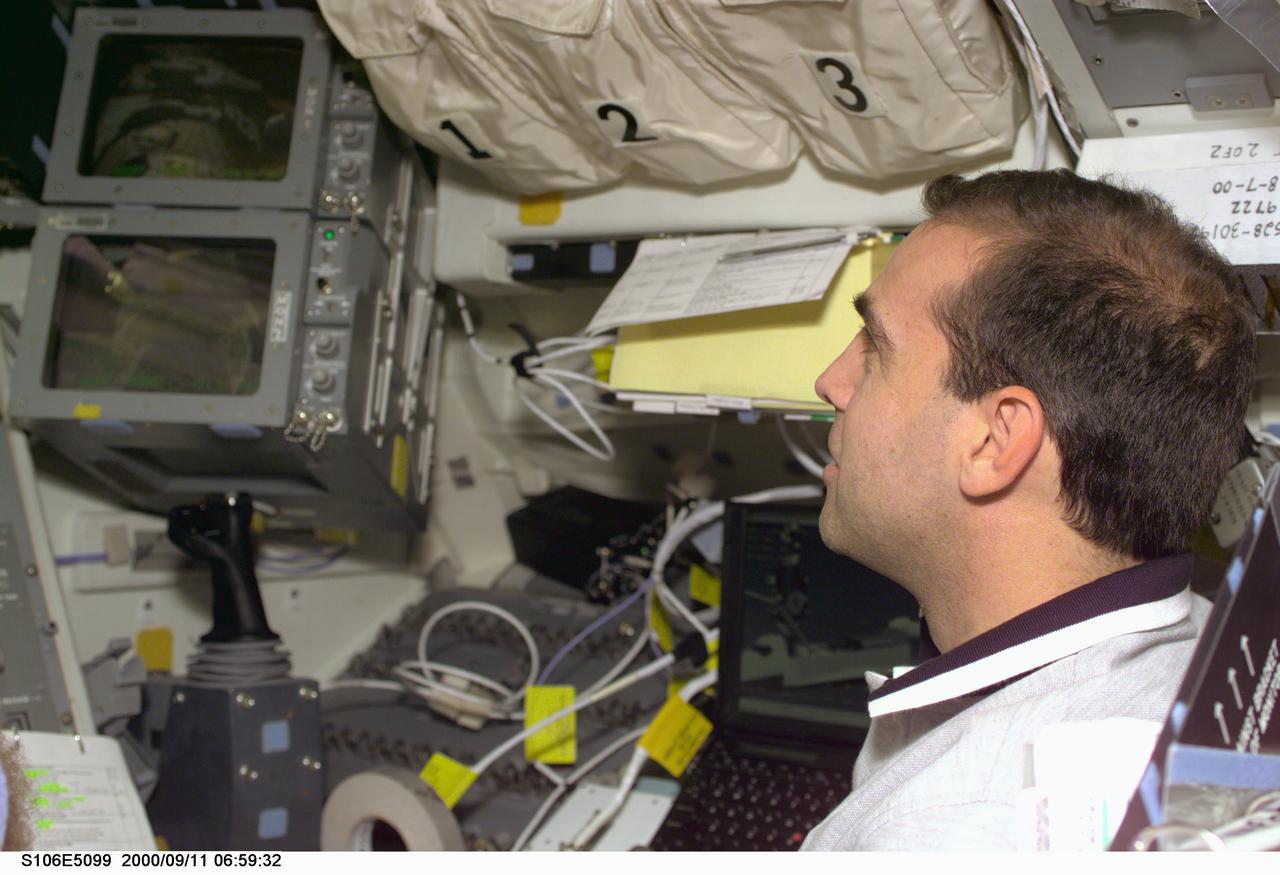
STS106-E-5099 (11 September 2000) --- Astronaut Richard A. Mastracchio, mission specialist, stands near viewing windows, video monitors and the controls for the remote manipulator system (RMS) arm (out of frame at left) on the flight deck of the Earth-orbiting Space Shuttle Atlantis during Flight Day 3 activity. Atlantis was docked with the International Space Station (ISS) when this photo was recorded with an electronic still camera (ESC).